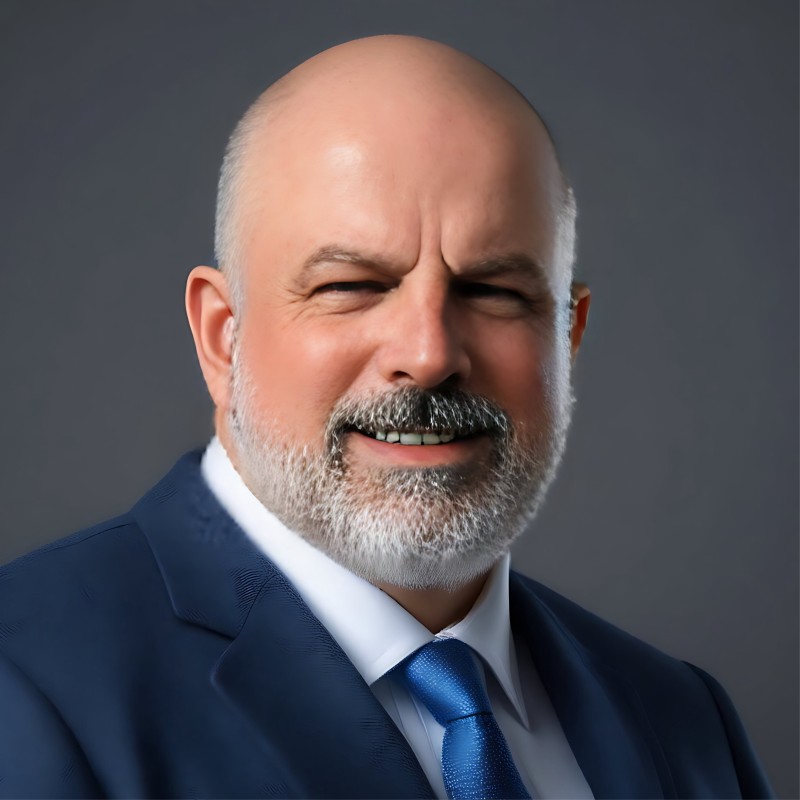
Semex Alliance’s architect and first general manager died Tuesday, fourteen days before World Dairy Expo was to hand him its International Person of the Year award in Madison. Every index you culled on this morning is his argument, still winning.
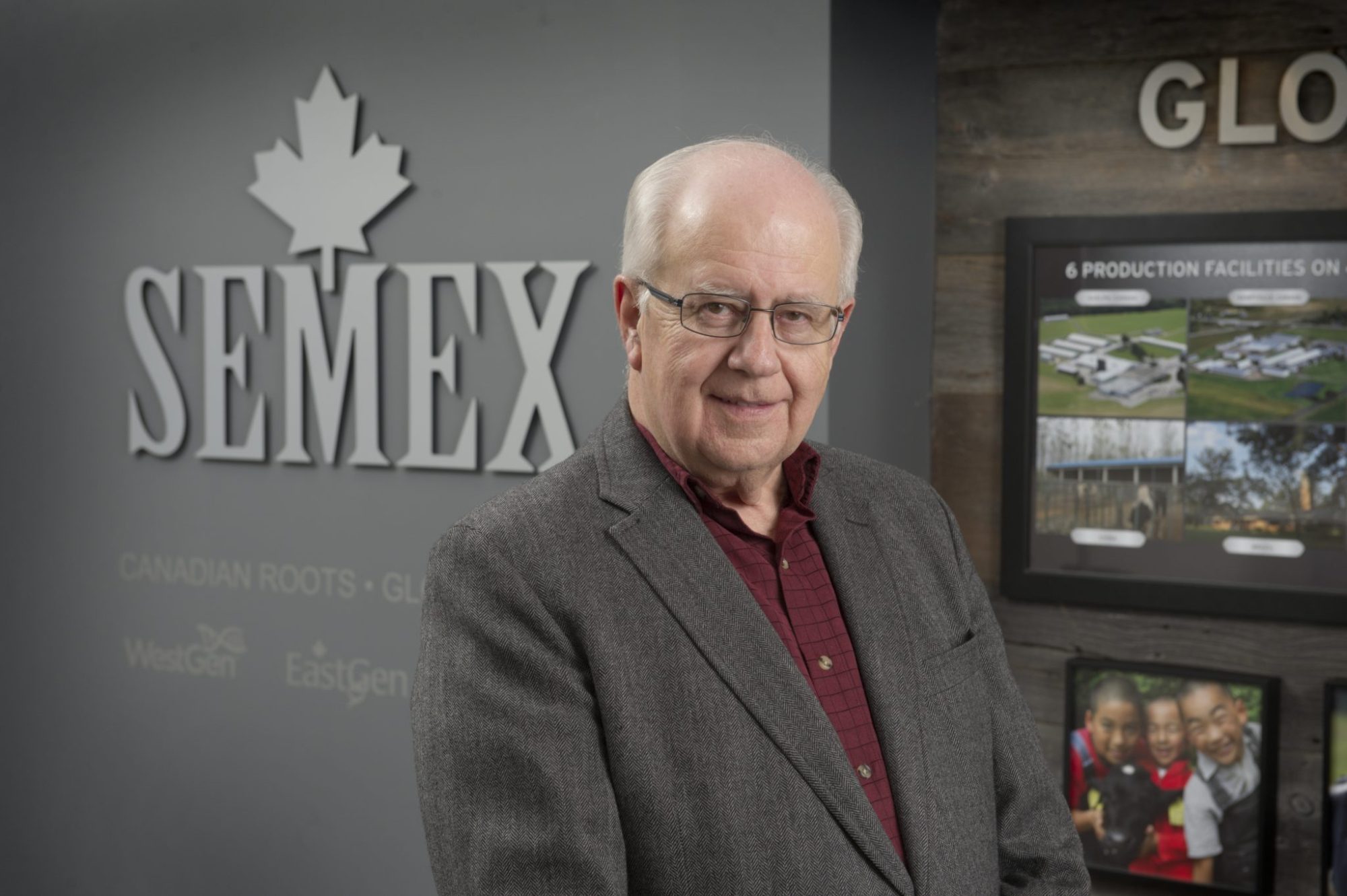
He was supposed to be in Madison on September 29.
World Dairy Expo announced in April that Robert Chicoine — the man who built the Semex Alliance and became its first general manager — would receive the 2026 International Person of the Year award at the Recognition Awards Banquet on Tuesday, September 29. Semex announced Tuesday that he had died. He was 83.
Fourteen days. There’s no consolation in that arithmetic. There is this, though: the industry decided to honour him while he could still hear it, and he spent the months afterward doing exactly what he’d done since 1966 — explaining, patiently, why the numbers work.
It started with a magazine his uncle had already finished reading
Chicoine was born in 1943 at Saint-Pie-de-Bagot, Quebec (Ordre national du Québec), on a mixed farm he described to us as 15 to 20 dairy cows, laying hens, apple trees and a sugar bush. The milk cheque paid for the rest.
An uncle who belonged to the Holstein Association of Canada noticed the boy’s interest and began passing along each monthly issue of the Holstein-Friesian Journal once he’d read it himself. Chicoine studied the advertised names, the individual lactations, the lifetime totals, the fat percentages. He told us, in the interview behind our January feature Robert Chicoine and the Bull Nobody Wanted: “For me, this was the most beautiful gift I could receive.”
Then he did the thing almost no child does with a hobby. He ran a controlled experiment. The family kept Bantam chickens in assorted colours, so he built a second flock where he decided which male bred which hens, and he watched the colours come through the offspring.
“My little experiments with the Bantam chickens demonstrated to me with certainty that a breeding male can influence an entire herd, and even a whole segment of a population with the use of artificial insemination.”
A farm kid in Saint-Pie had just stated the entire premise of the industry he would spend the next forty years building.
He was hired to sell farmers the opposite of everything they’d been told
Chicoine took a B.Sc. in animal science at Université Laval in 1964 and a master’s in 1966, researching under Dr. C.G. “Charlie” Hickman at the Ottawa Experimental Farm (Ordre national du Québec). A student summer at the Centre d’insémination artificielle du Québec settled the rest of his life — he described that summer as being in heaven.
On March 22, 1966, he walked into CIAQ with one mandate: build Quebec’s young sire proving program. For more than twenty years, extension had told farmers exactly one thing about bull selection — use proven bulls. Chicoine’s job was to visit those same barns and ask breeders to commit 40 per cent of their breedings to unproven young bulls, on the strength of University of Guelph work by Murray Hunt showing that a 40/60 split against proven sires maximized genetic gain.
“It was a great challenge,” he told us. That is a Quebec agronomist’s way of saying it was very nearly impossible.
So he taught. Articles explaining Contemporary Comparison — daughters measured against herdmates of the same age, in the same barns, in the same season, so that management stops masquerading as genetics. Presentations at insemination club and breed association annual meetings across Quebec, some reached by small aircraft. Breeder information days alongside Holstein Canada’s Raymond Corriveau, arguing over whether raw production alone should qualify a cow as a bull mother. “Which often created good discussions!”
And the mailings. Every time CIAQ took on a new young bull, its pedigree and photograph went into the mail to every breeder whose herd qualified for genetic evaluations.
“Over the years, several breeders confided in me that when they were young, they waited impatiently for the arrival by mail of the pedigrees of these young bulls. Thus, a bond of loyalty to the program was created from one generation to the next.”
That’s the whole man in one sentence. He didn’t win the argument by being right. He won it by putting something in the mailbox every month until a generation of farm kids grew up trusting what was inside.
Three of the first seven young bulls into his program earned Holstein Canada’s EXTRA designation. He became CIAQ’s general manager in 1981 (Le Bulletin des agriculteurs).
Two bulls, one lesson
The famous one is Hanoverhill Starbuck. No genomics, no test — two men on a farm visit, stopping at Hanover Hill in Port Perry, Ontario, looking at a calf under a month old.
“There was a young male calf that was barely born. He was less than a month old when we saw him, and even then, we were struck by his exceptional appearance for his age,” Chicoine told Farmtario in April. They took an option and waited to see him develop, with health tests to follow. Born in April, delivered to CIAQ in November.
CIAQ went on to sell 685,000 doses of Starbuck semen into 45 countries, and Le Bulletin des agriculteurs describes the bull as an ancestor of 95 per cent of Quebec’s cows (Le Bulletin). What that dynasty did to the breed is its own story, and we’ve told it in Hanoverhill Starbuck’s DNA Dynasty.
But the bull that explains Chicoine is the one nobody wanted.
In the fall of 1967, working off a Holstein World advertisement for the Harris Wilcox dispersal in New York State, CIAQ bought a young son out of a cow with modest records, a bad photograph and a speckled coat — in an era when breeders hand-drew every calf’s markings on the registration application, which made mottled cattle a nuisance. The dam looked wrong to everyone who saw the picture. The pedigree read right: Sevens Burke Skylark on top, Osborndale Ivanhoe behind the dam, positive production and conformation indices stacked up the male line. “I had never seen such an eloquent pedigree on the male side,” Chicoine told us.
So CIAQ sent someone to the sale to look at the dam in the flesh before bidding. She was far better than her photograph, with an excellent mammary system. They bought her son.
Then almost nobody sampled him. 73HO101 Craiglen Sevens Senator earned EXTRA recognition from Holstein Canada in 1978, and his daughter Proulade Ruth Senator was Grand Champion at the Quebec provincial exhibition in 1981.
Trust the index over the photograph. That was the argument of his life, and he won it so completely that we now run whole herds on genomic values for traits no camera can see.
Boviteq, and the alliance that nearly didn’t happen
In 1986, at the request of the CIAQ board, Chicoine founded Boviteq to do on the female side what the AI centre was mandated to do on the male side (Le Bulletin). He chaired its board from 1991 to 1996, per Semex’s own account of his career. Every sexed-embryo conversation happening in your barn this year runs back through that research infrastructure.
The alliance was harder. It began in September 1988, at a seminar on Canadian genetics in Rennes, France, in a conversation between Chicoine and Doug Blair of Western Breeders Service about sharing income among Canadian centres according to each one’s share of breed numbers. That produced Genexcel by January 1990. Then Western Breeders’ move into Alta Genetics put a proposal on the table to fold Semex Canada into a global distribution system the remaining Canadian partners would not control. The talks broke. Semex Canada’s general manager resigned and left the same day.
“It was quite a dramatic situation,” Chicoine told us.
His answer, worked out with Gordon Souter, was to pool ownership of every bull into a single new legal entity — and, unlike Genexcel with its one-year exit notice, to build it so that walking out was almost impossible. The Semex Alliance became real on January 1, 1997, with CIAQ as principal owner at 45 per cent and Chicoine as first general manager until he retired in 2000.
He justified the whole manoeuvre in four words: “Necessity is the law.” Then, characteristically, he refused to let the phrase off easy. “It has nothing to do with not respecting the law. In a difficult situation, seeking to find the best possible solution becomes the rule to which one must adhere without hesitation.”
Semex says his work now shapes breeding decisions in more than 80 countries (Semex).
He spent a career multiplying genetics, then spent his retirement making sure none were lost
This is the line on the résumé that says the most about him and gets mentioned the least.
After leaving Semex in 2000, the man who had industrialized the spread of a handful of elite sires went to work as vice-president of the Canadian Farm Animal Genetic Resources Foundation, pressing Ottawa to conserve farm animal genetics — not just Holsteins, every breed (Canadian Agricultural Hall of Fame).
“It eventually paid off, since there is now a center at the University of Saskatchewan in Saskatoon with that mandate,” he said.
He understood the bill that comes attached to his own success. Get very good at multiplying the best animals and the population narrows behind you. He didn’t leave that for somebody else to solve. He worked on it for eight more years and finished for good in 2008.
The honours, in order
| Year | Recognition |
|---|---|
| 1998 | Doctorat ès sciences honoris causa, Université Laval |
| 2001 | Temple de la renommée de l’agriculture du Québec |
| 2005 | Canadian Agricultural Hall of Fame |
| 2008 | Industry Distinction Award for dairy cattle improvement, Canadian Dairy Network |
| 2010 | Knight of the Ordre national du Québec, presented by Premier Jean Charest on June 3 |
| 2026 | World Dairy Expo International Person of the Year |
Sources: Ordre national du Québec, Le Bulletin des agriculteurs, Semex.
His last argument was that the system should outlive the bull
After Madison named him, Chicoine sat down with host Peggy Coffeen on the Uplevel Dairy Podcast and was asked how much faster genetic progress moves now than when he was building the young sire program.
He wouldn’t put a number on it — “it’s difficult to have a number, really, [we] would need some research, I suppose.” Then he explained the difference anyway, and it is the sharpest thing anyone has said about genomics in a while.
Back then, he said, you identified a proven sire and “he could have been used for 10 years after that, but it was the same potential. It didn’t improve over the years. It was the same.” Now, with genomics, “they look at numbers all the time and they try to have available the young bulls that have the best numbers. So it’s improving all the time, instead of — it was more static before than it is now.”
Sit with that. The man credited with finding Starbuck, one of the most influential bulls ever born, spent his last recorded interview arguing that no single bull should be the point. The system that keeps replacing your best bull is the point. That is not the ego of a man who wanted a monument. That is a builder describing something designed to keep improving after he stopped touching it.
What he actually left in your barn
Not a bull. A habit of mind.
When you cull on an index instead of an eye. When you sample a young sire on a genomic value and a pedigree rather than a photograph. When you buy Canadian genetics from a co-operative that survived a merger fight thirty years ago because one man deliberately designed the exit door too heavy to open. When you sort through health traits, or component values, or a methane figure, and accept a number you cannot see with your own eyes — you are using the argument Robert Chicoine made from 1966 onward, one insemination club meeting at a time, to farmers who had every reason to tell him no.
He also left instructions, which almost nobody asks a genetics man for. “Surround yourself with the most competent people possible, create a healthy and warm working climate, and analyze regularly and seriously the challenges that the company must face as well as the opportunities offered by the industry.” And: “After having planned a project well and executed it rigorously, one should not throw in the towel too quickly if the results do not meet expectations.”
Then he got the last word on himself, before any of us needed it.
“I can summarize my career by saying that I am blessed to have always been passionate about my work. I went to work with enthusiasm daily.”
On September 29 in Madison, the Recognition Awards Banquet will call his name and he won’t stand up. The room should stay standing a long time on his behalf.
Robert Chicoine’s own account of his career, in his words and at length, is in our January 2026 feature Robert Chicoine and the Bull Nobody Wanted: The Data Revolution That Lives in Your Herd’s DNA. Funeral and visitation details will be added here when the family releases them. If you worked with Robert — at CIAQ, at Boviteq, at Semex, or across a kitchen table with a pedigree between you — we want your remembrance for the tribute we’ll publish next.
 The Sunday Read Dairy Professionals Don’t Skip.
 The Sunday Read Dairy Professionals Don’t Skip.
Every week, thousands of producers, breeders, and industry insiders open Bullvine Weekly for genetics insights, market shifts, and profit strategies they won’t find anywhere else. One email. Five minutes. Smarter decisions all week.