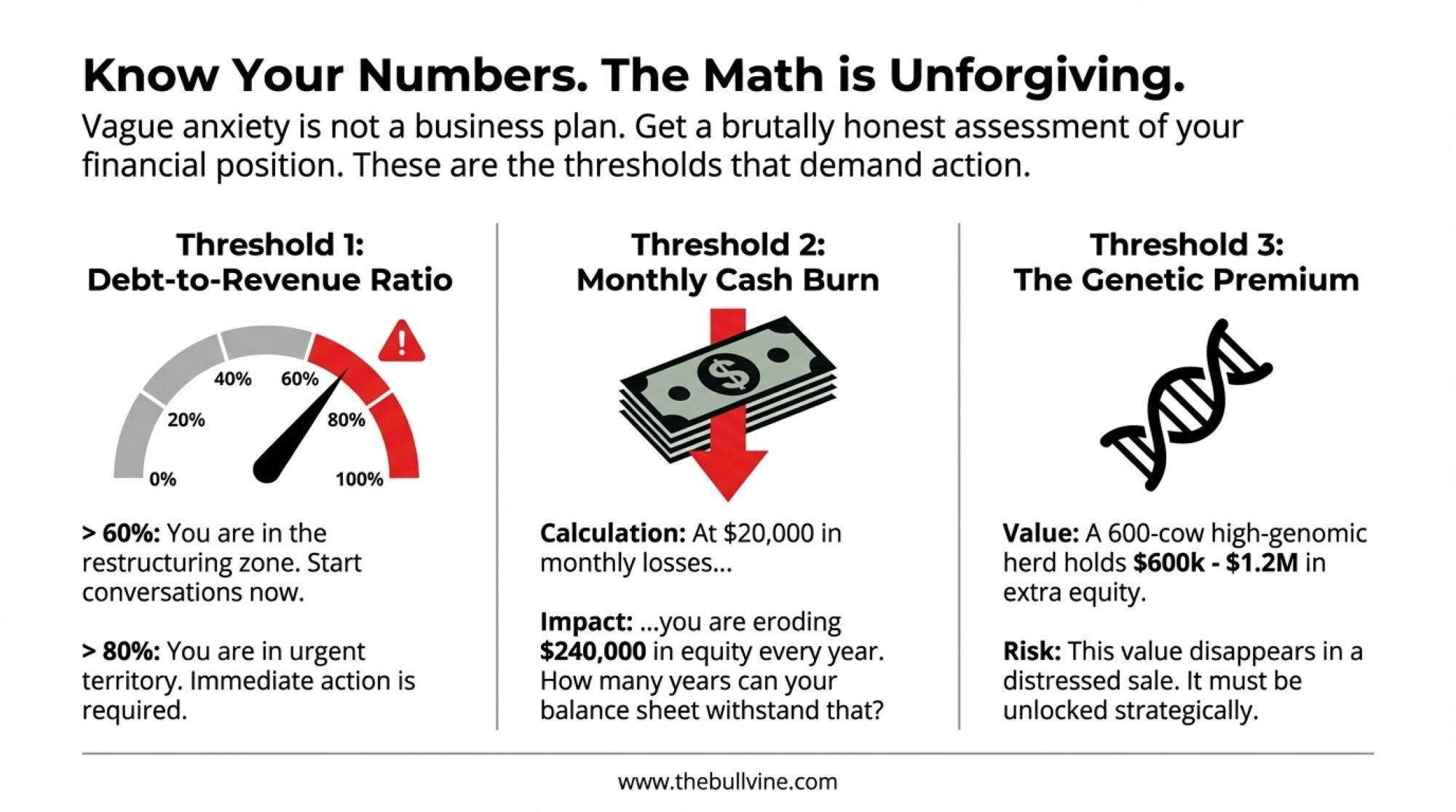


Archive for Management

Squeezed Out? A 12-Month Decision Guide for 300-1,000 Cow Dairies

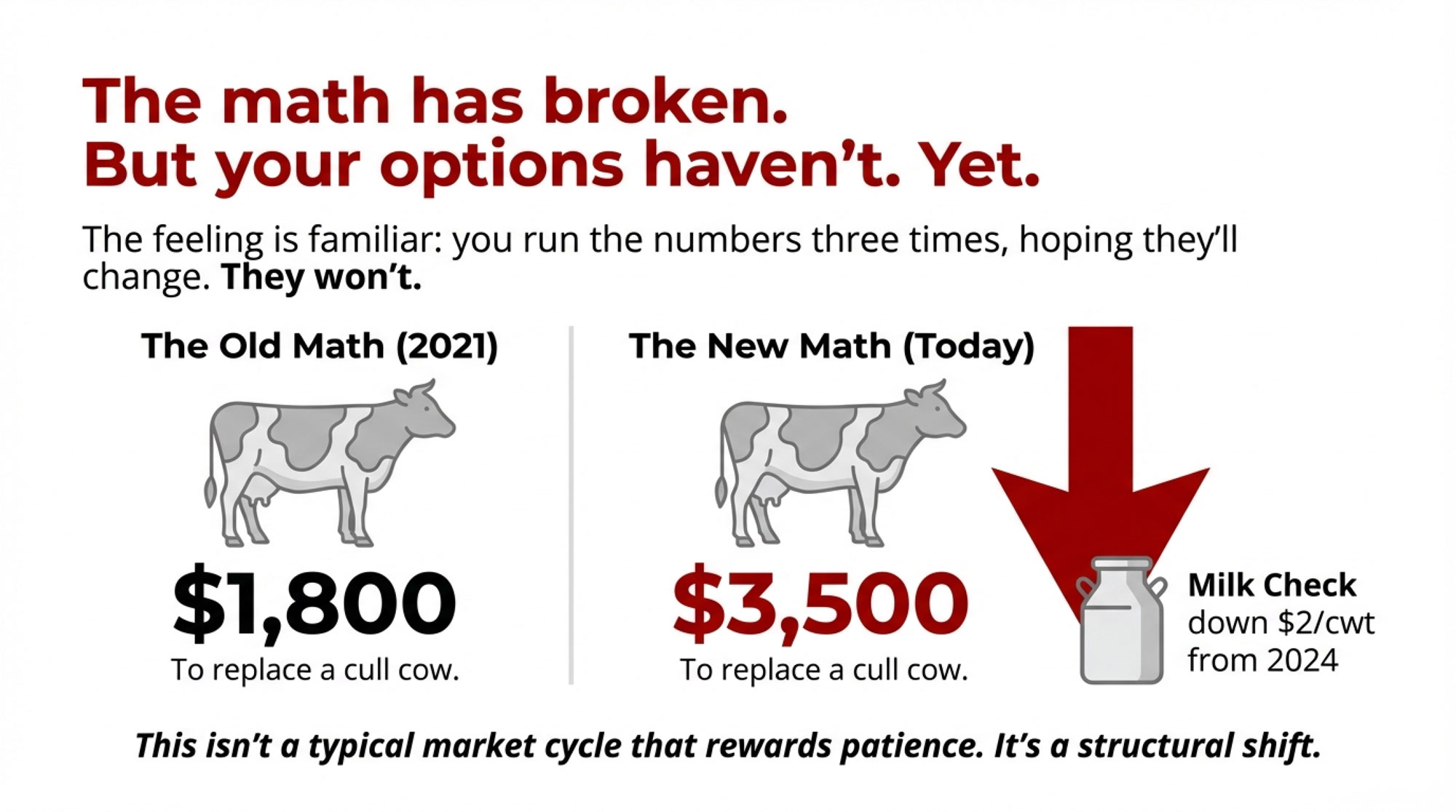
You’ve run the numbers three times, hoping they’d change. They won’t. For 300-1,000 cow dairies, the math has broken—but your options haven’t. Yet.

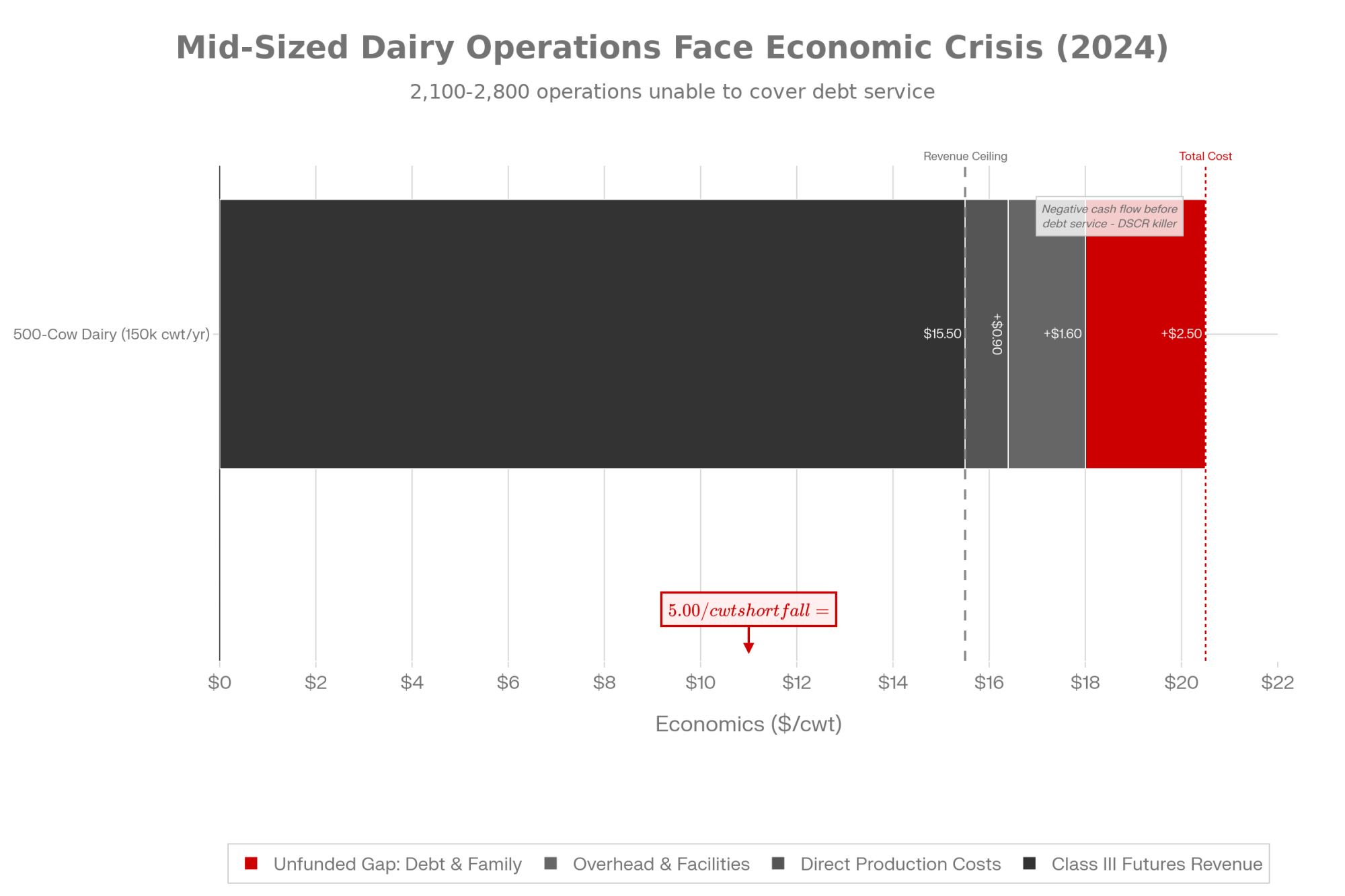
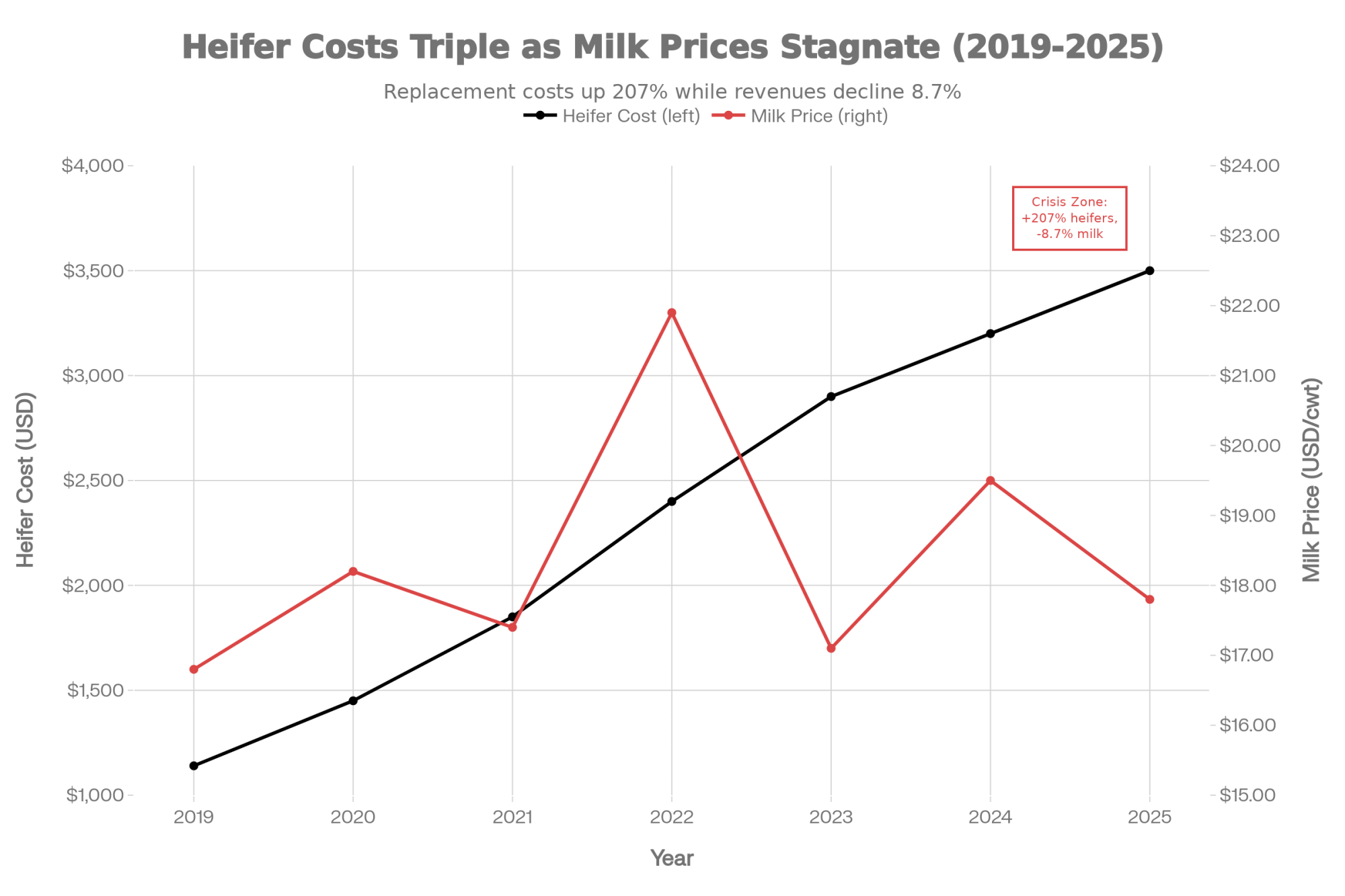
Executive Summary: The economics that sustained mid-size dairy farming are disappearing faster than most producers realize. Heifer prices have tripled since 2019, milk is down $2/cwt from 2024, and component pricing is shifting from butterfat to protein—meaning genetics selected two years ago are now optimized for a vanishing market. For 300-1,000 cow operations, this creates a structural squeeze: too large for specialty positioning, too small for automation to be economically viable. With USDA reporting the lowest heifer inventory since 1978 and Rabobank projecting 2,800 farm closures this year, the pressure is real and accelerating. The paths forward—organic transition, cooperative processing, strategic scaling, or well-timed exit—all require decisions within 12 months. Here’s the verified data, honest analysis, and practical framework you need to choose your path while options remain open.

Dairy Structural Shift 2025

You know that feeling when you run the numbers three times, hoping they’ll come out different? I was sitting with a third-generation Wisconsin dairy farmer last month, and he did exactly that—pulled out his calculator, punched in the same figures again, shook his head.

“Three years ago, I could replace a cull cow for eighteen hundred dollars and still make it work,” he told me. “Now I’m looking at thirty-five hundred, and my milk check is down almost two dollars from where it was. Something fundamental has shifted.”

He’s right. And here’s what I’ve been seeing across the industry this year: what’s happening right now isn’t a typical market cycle that rewards patience. Several structural forces are converging at once, creating conditions that favor operations at the extreme ends of the scale spectrum—the very large and the strategically small—while putting real pressure on the traditional middle that’s defined family dairy farming for generations.

I share that not to be pessimistic, but because I think you deserve honest information while meaningful options are still available. And frankly, there are options worth exploring.

What’s Actually Going On

Let me walk through what the data shows, because the way these factors connect matters as much as any single one.

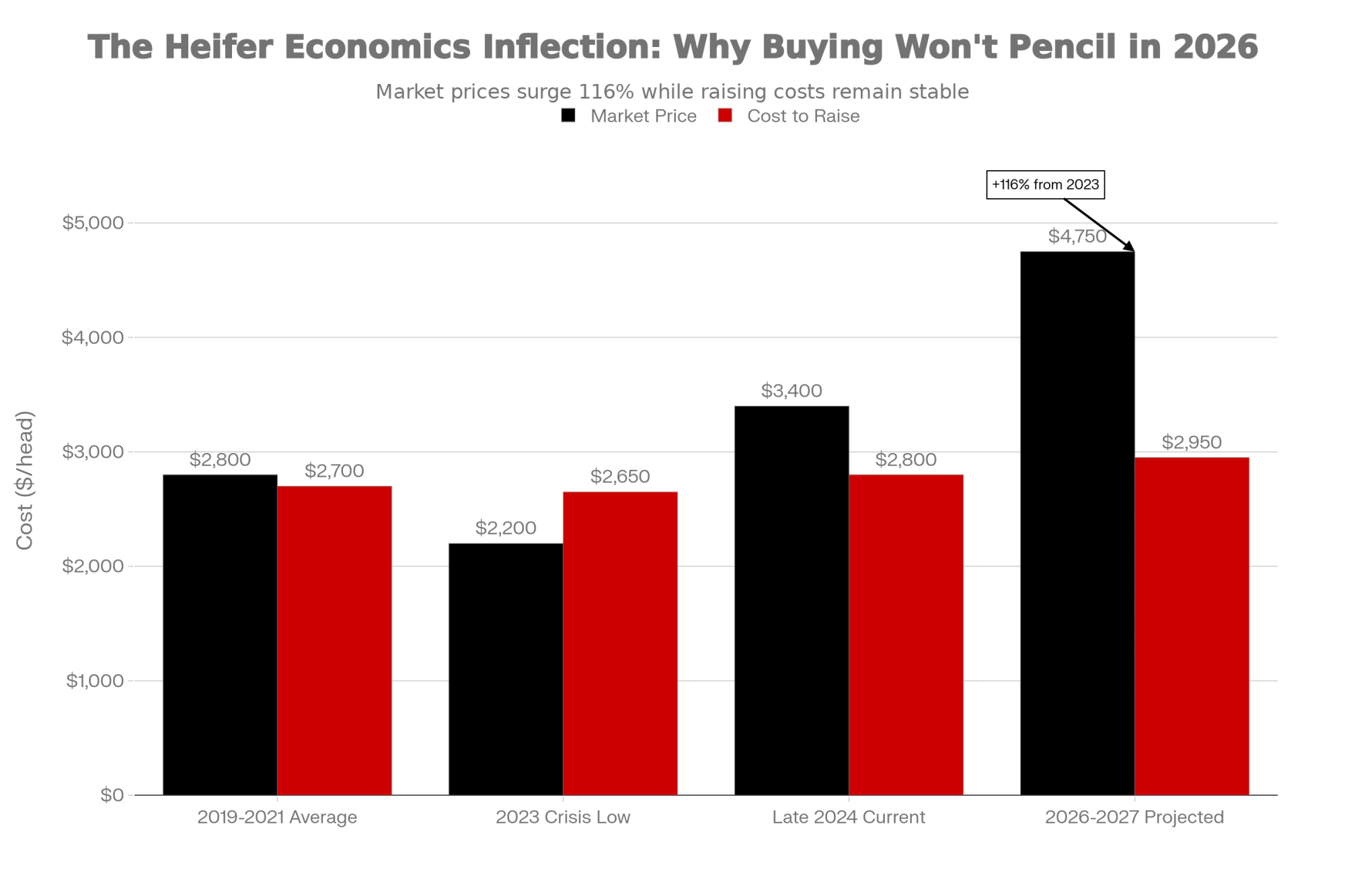
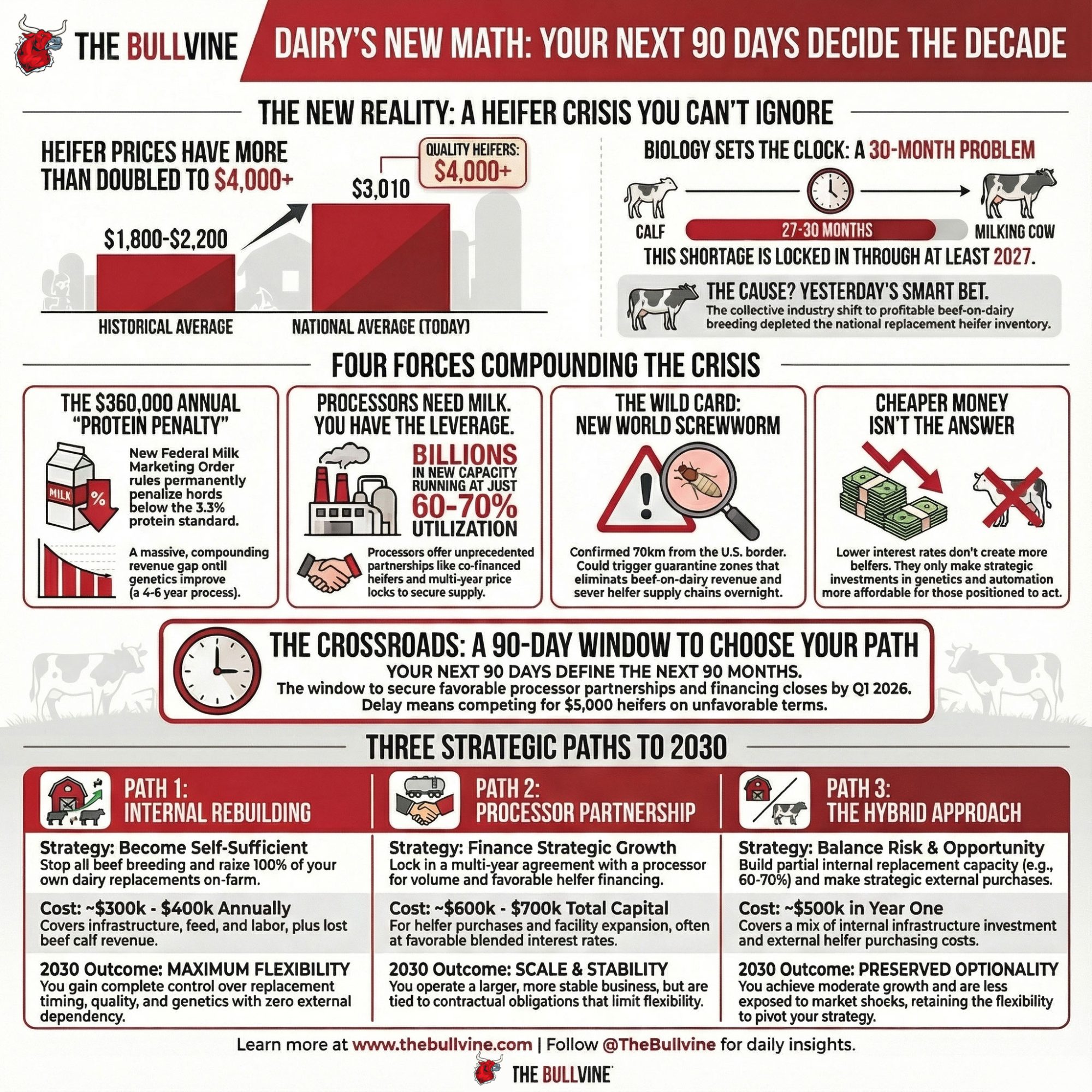
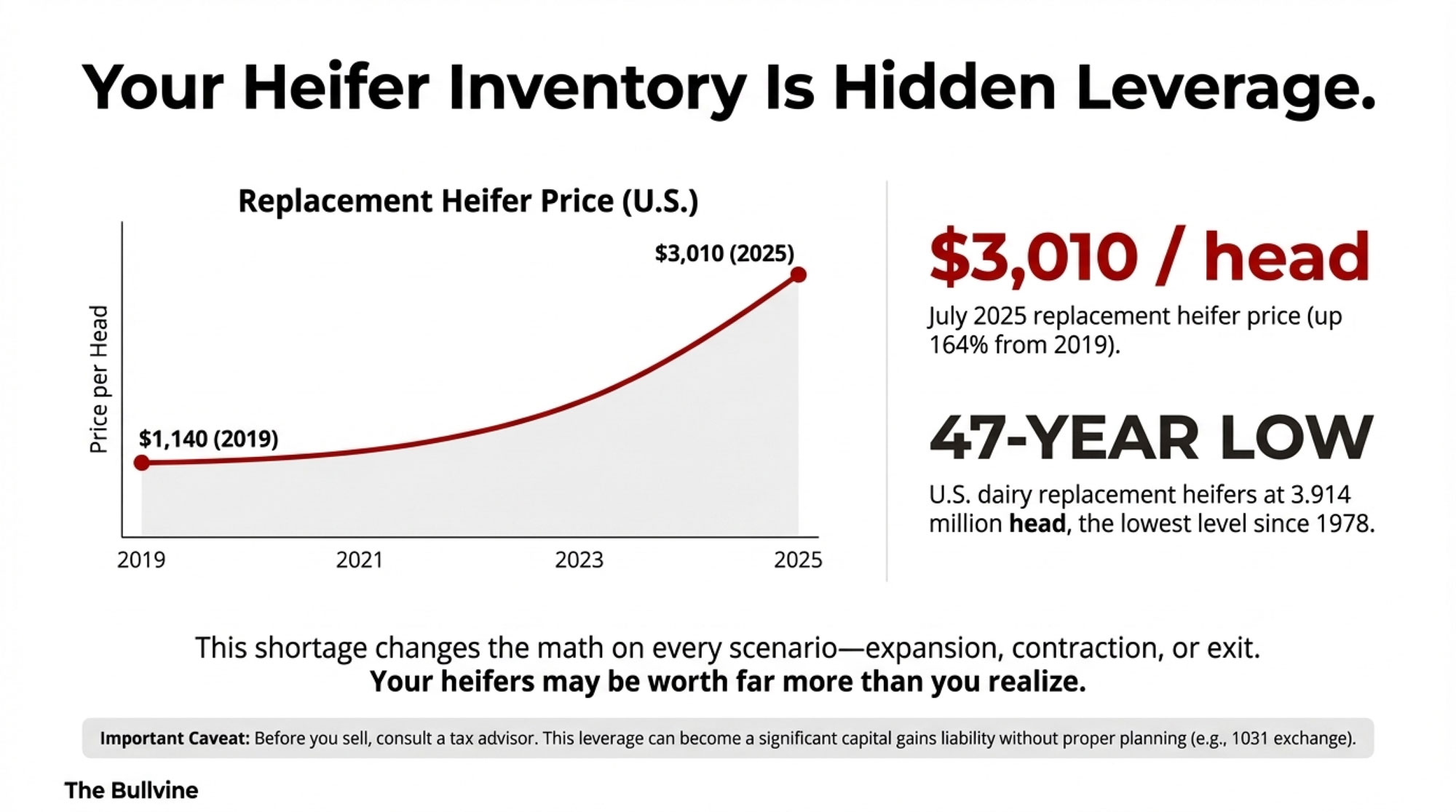
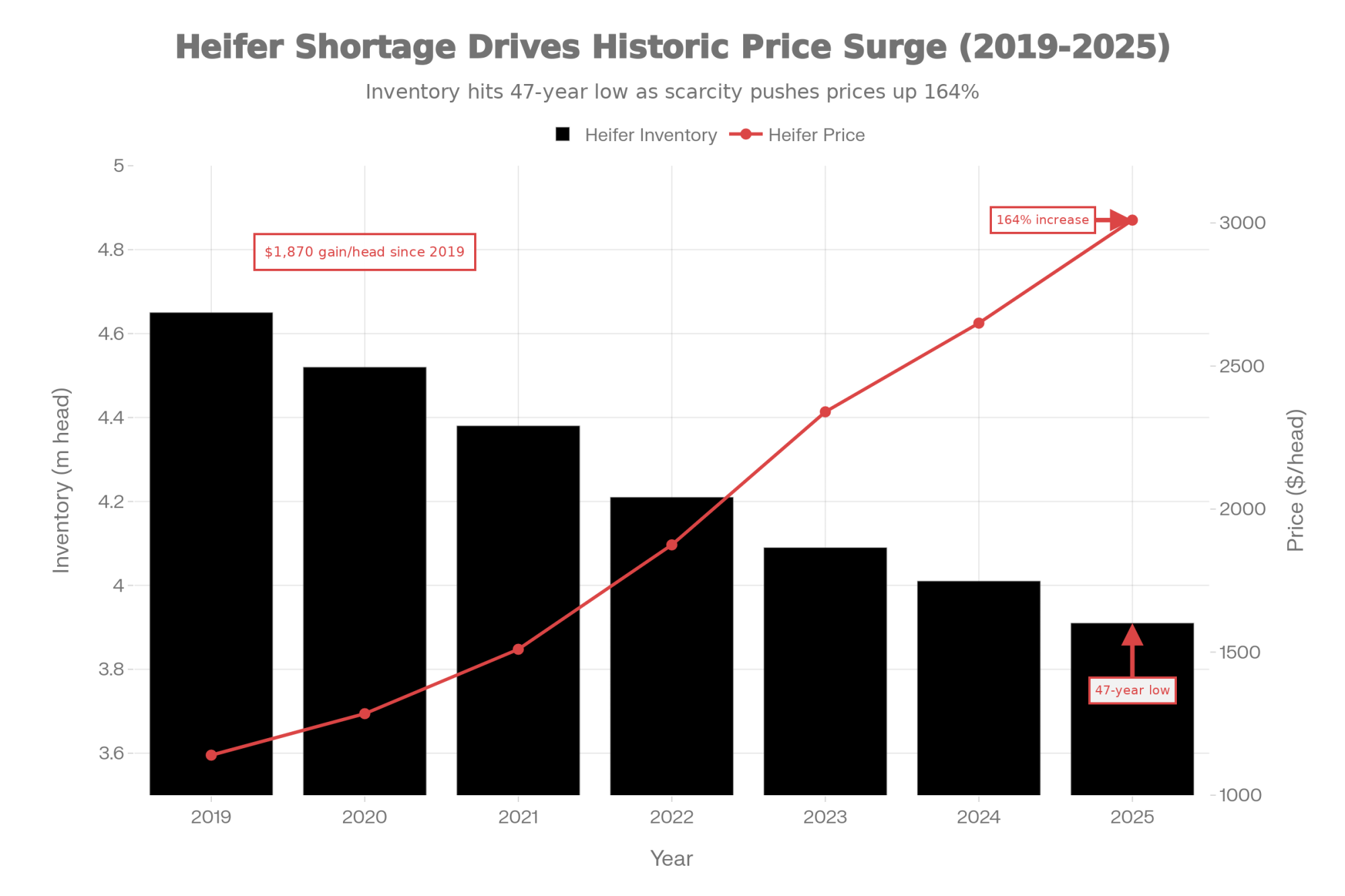
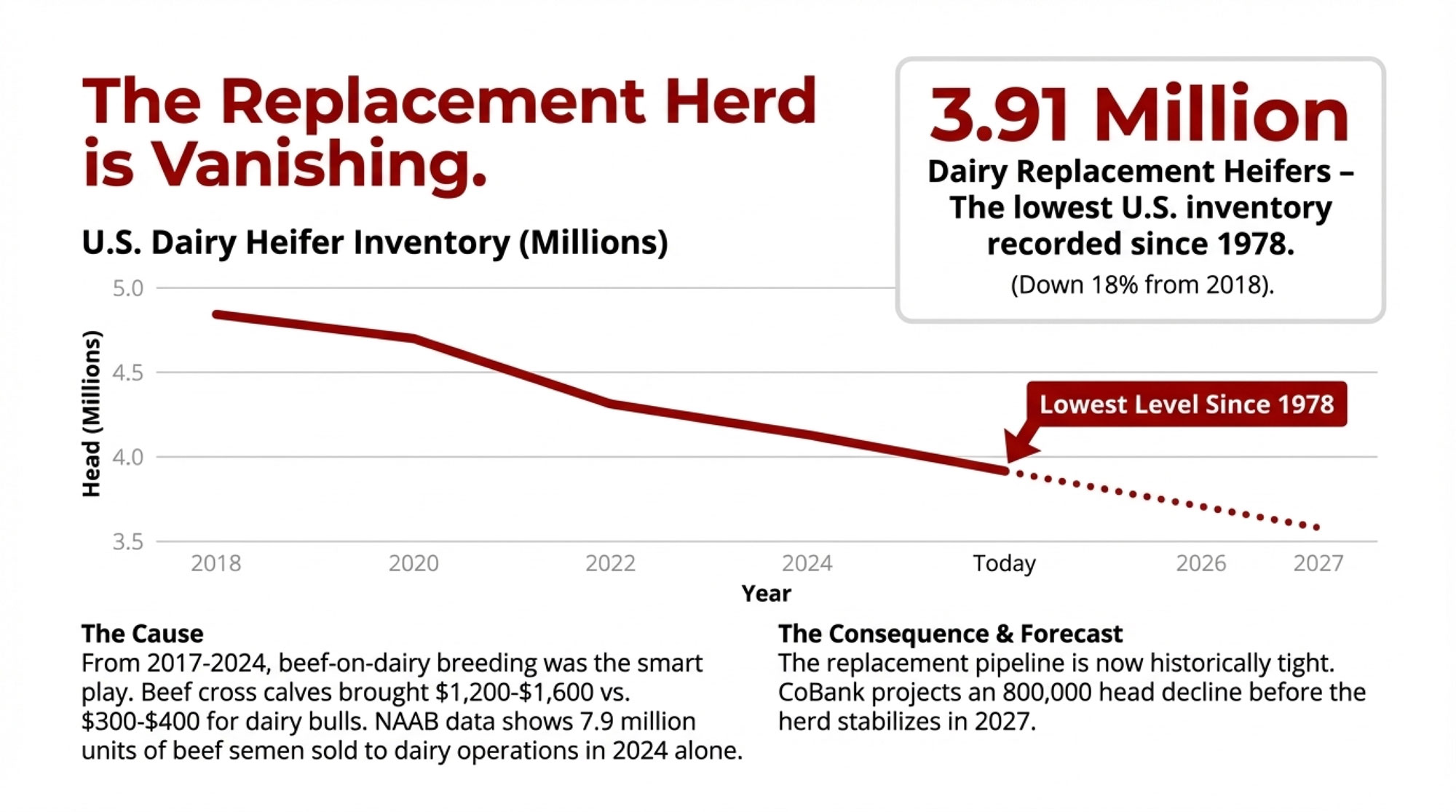
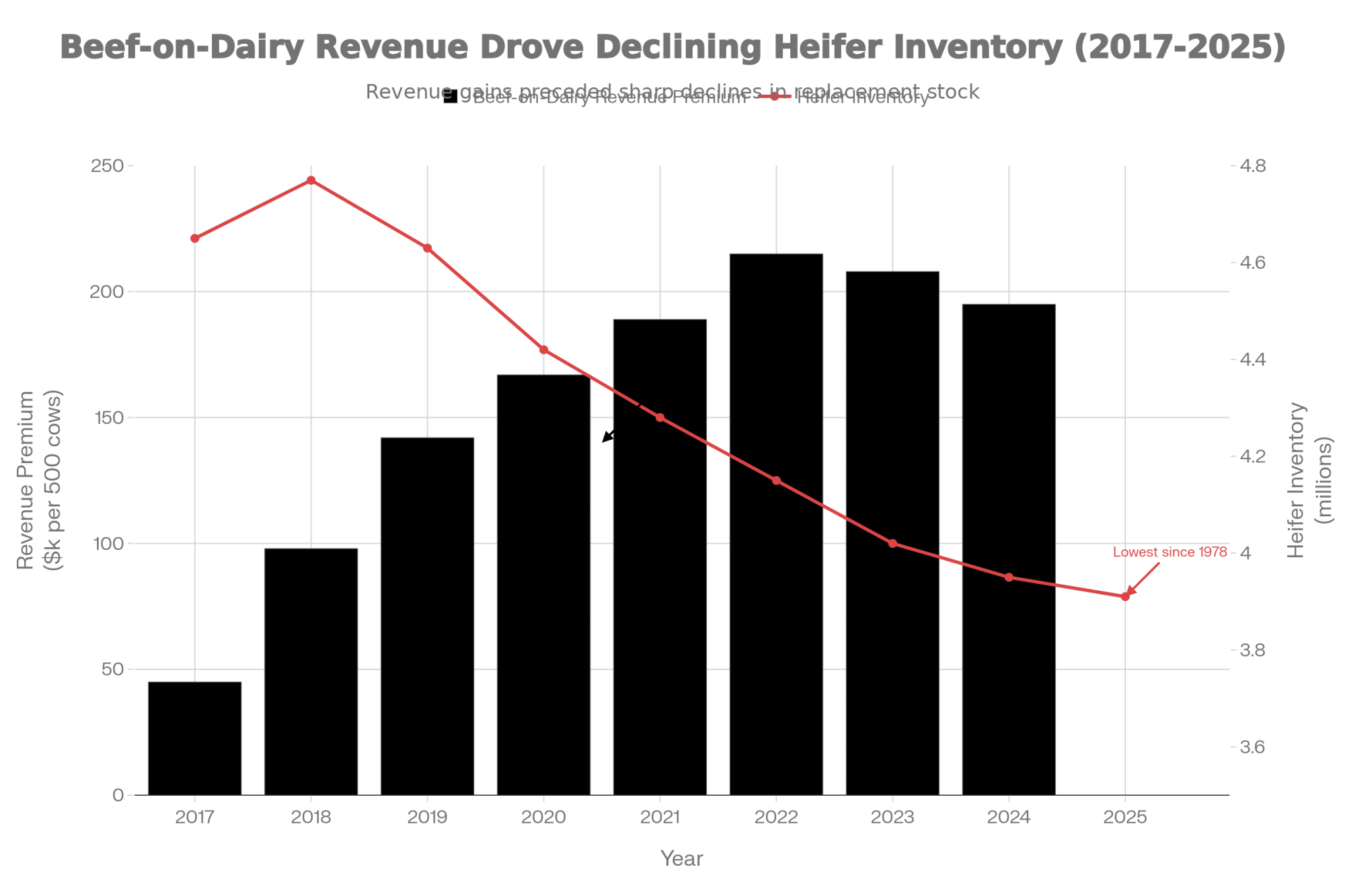
The heifer situation is tighter than most folks realize. USDA’s January 2025 cattle inventory came in at 3.91 million dairy replacement heifers—that’s the lowest level we’ve recorded since 1978. We’re down 18% from 2018 levels. CoBank’s August analysis suggests we’ll see another 800,000 head decline over the next couple of years before things stabilize, probably sometime in 2027.

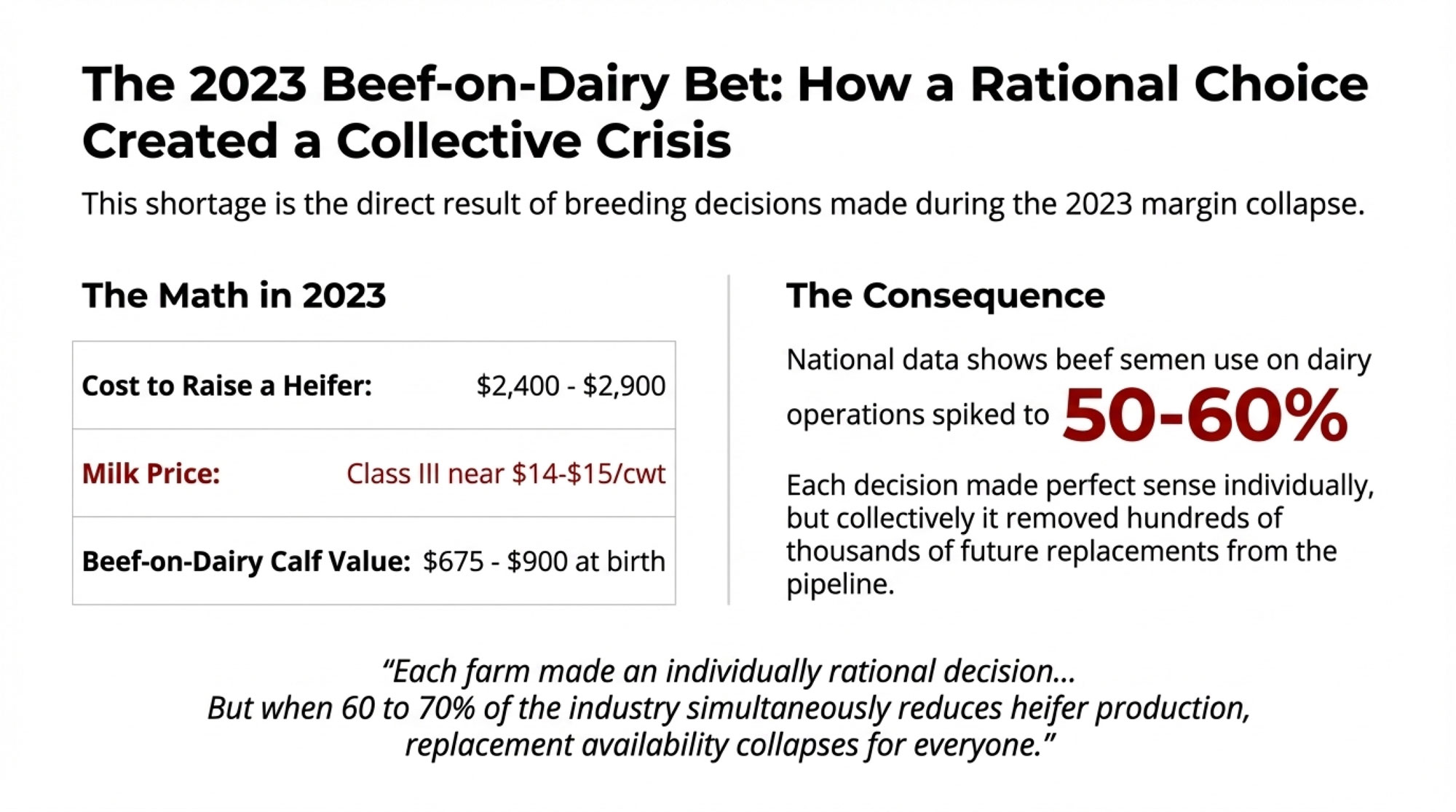
Now, here’s what’s interesting about how we got here. Between 2017 and 2024, beef-on-dairy breeding took off because the math was genuinely compelling—you probably saw this in your own operation or talked with neighbors who did. Dairy bull calves were bringing $300-$400 at auction, while those beef crossbreds commanded $1,200-$1,600. For a 500-cow operation, that difference meant an extra $200,000 or more in annual calf revenue. Hard to argue with those economics at the time. The National Association of Animal Breeders reported 7.9 million units of beef semen sold to dairy operations in 2024 alone.

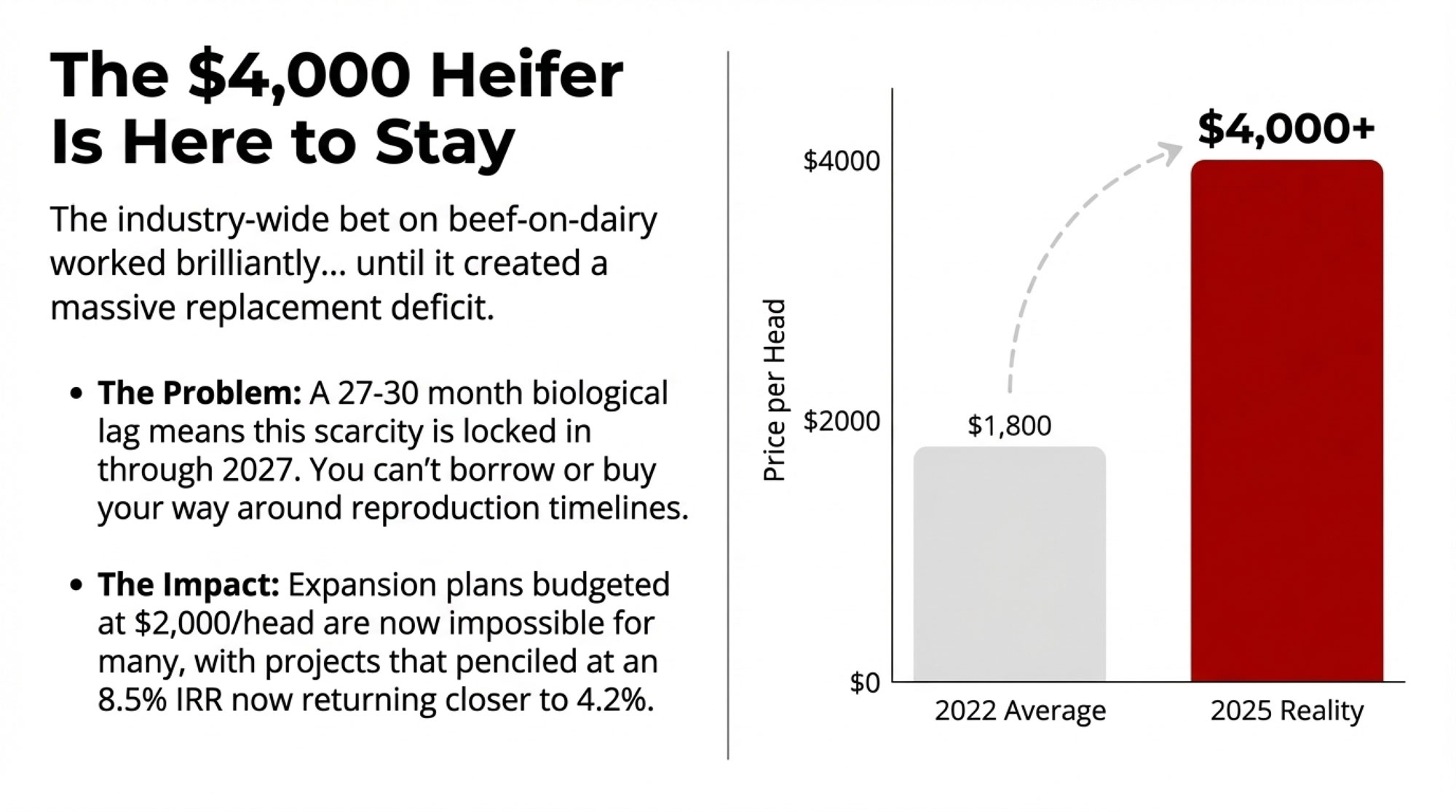
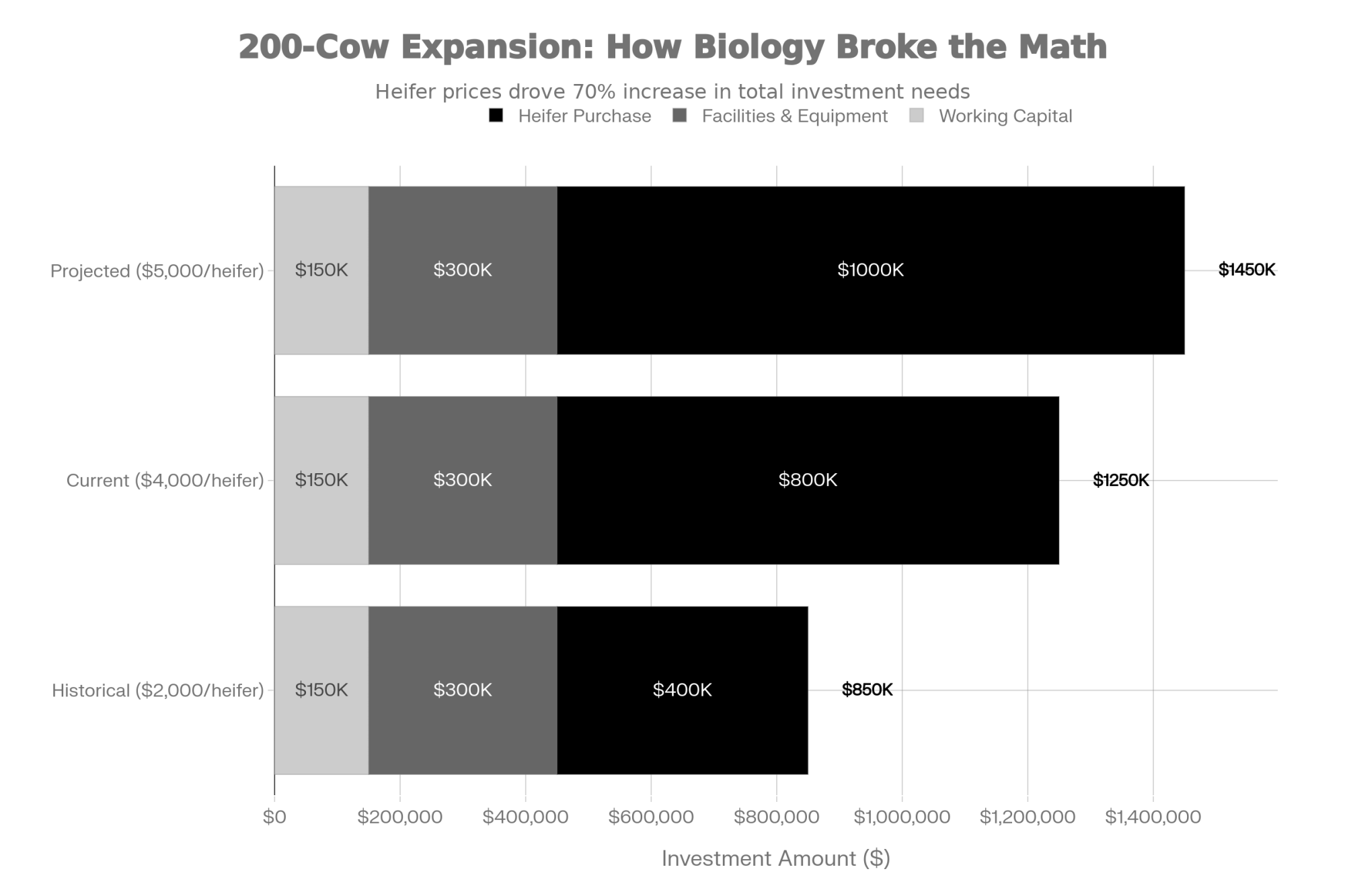
The consequence of those decisions—rational as they were—is now arriving. Heifer prices have climbed from roughly $1,140 back in 2019 to $3,000-$4,000 at current auctions. For operations trying to maintain herd size through normal culling cycles, the replacement math looks very different from what it was even two years ago.

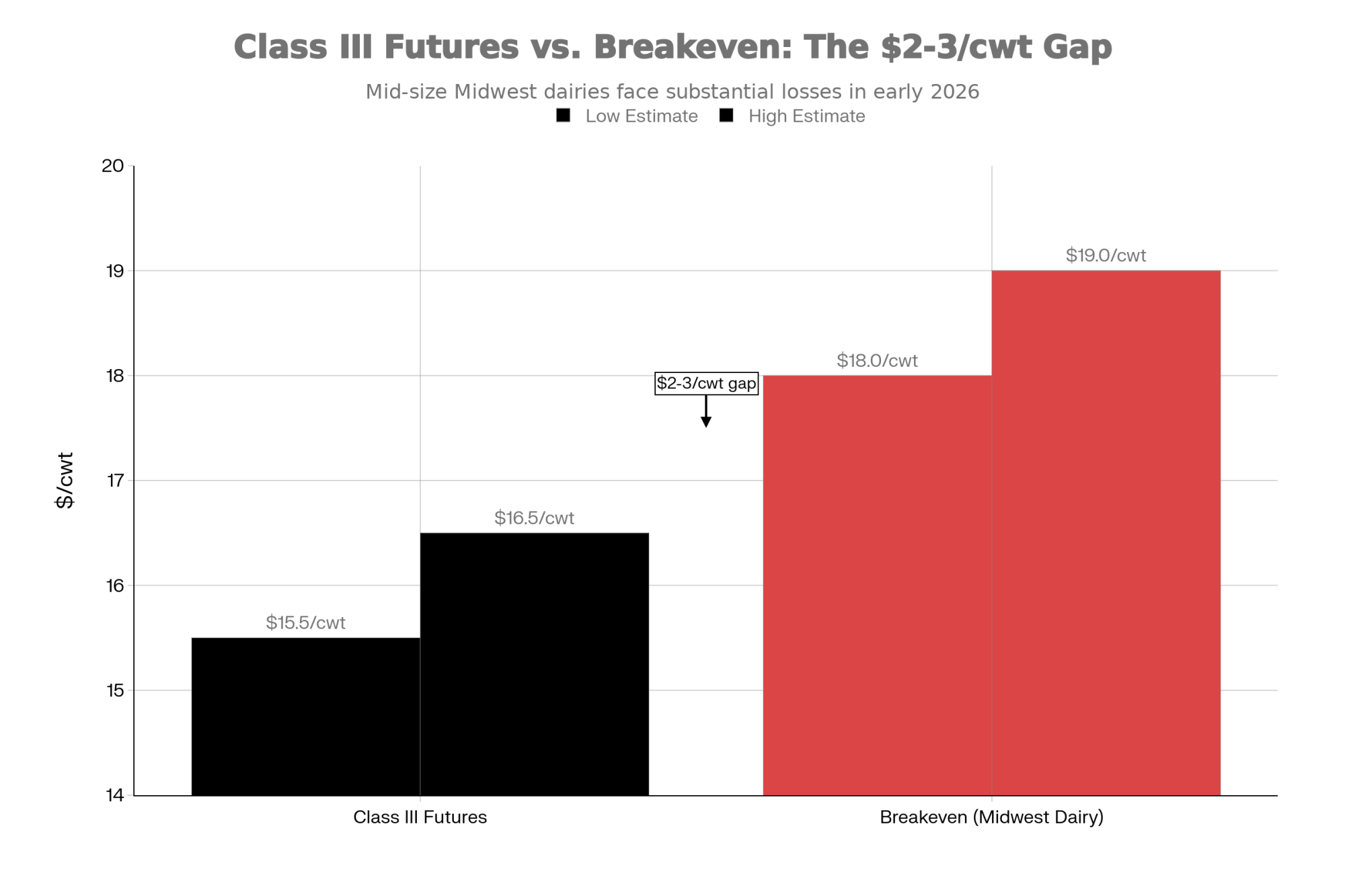
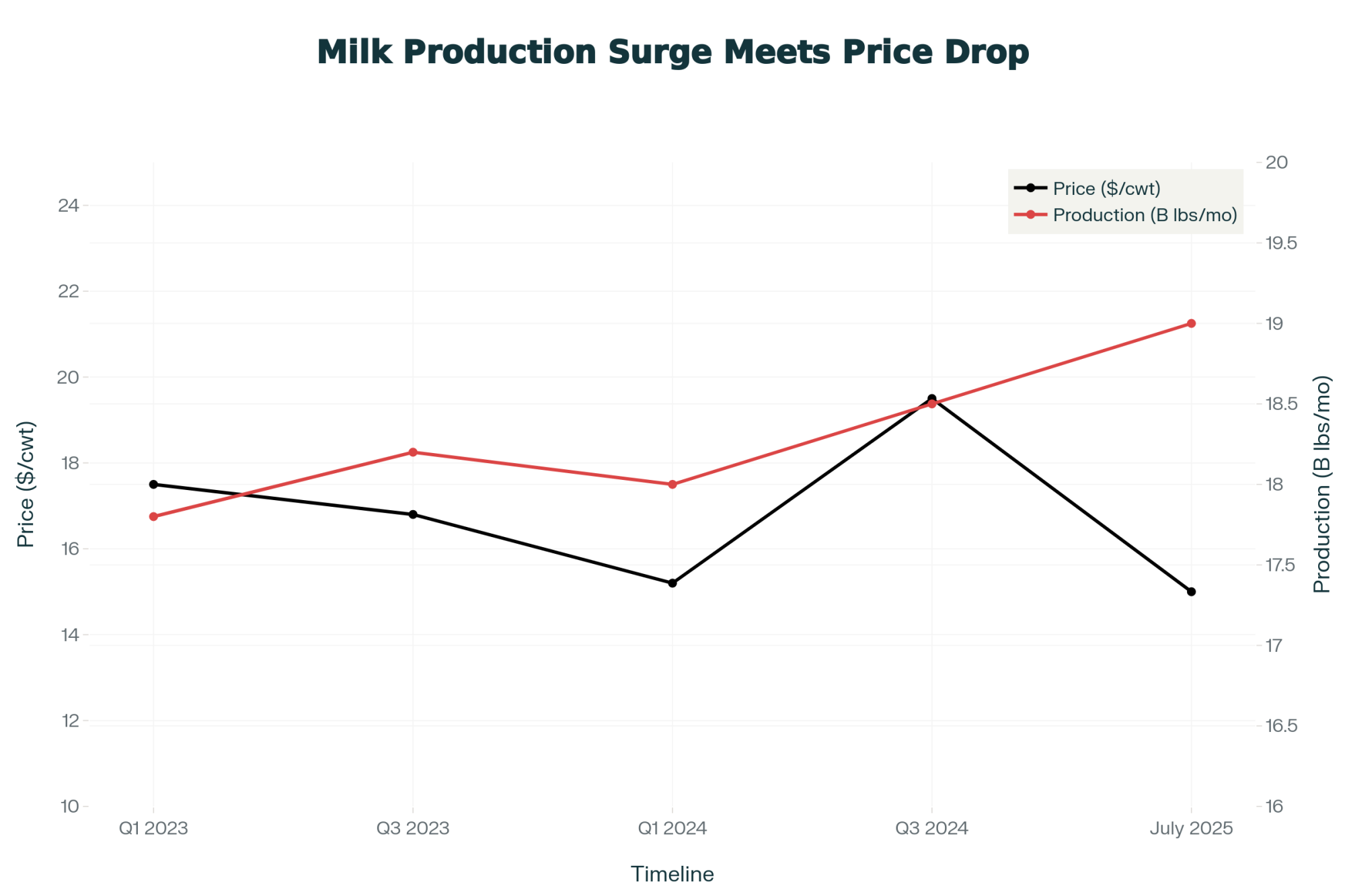
Milk pricing has found a new range. Class III has been trading in that $17-20/cwt corridor through 2025—some months dipping toward the lower end, others pushing higher, but the overall pattern sits $1.50-$2.50 below where we were in 2024. What I find myself thinking about isn’t the decline itself—we’ve all weathered price cycles. It’s the structural factors that suggest this might be more of a new baseline than a temporary dip.

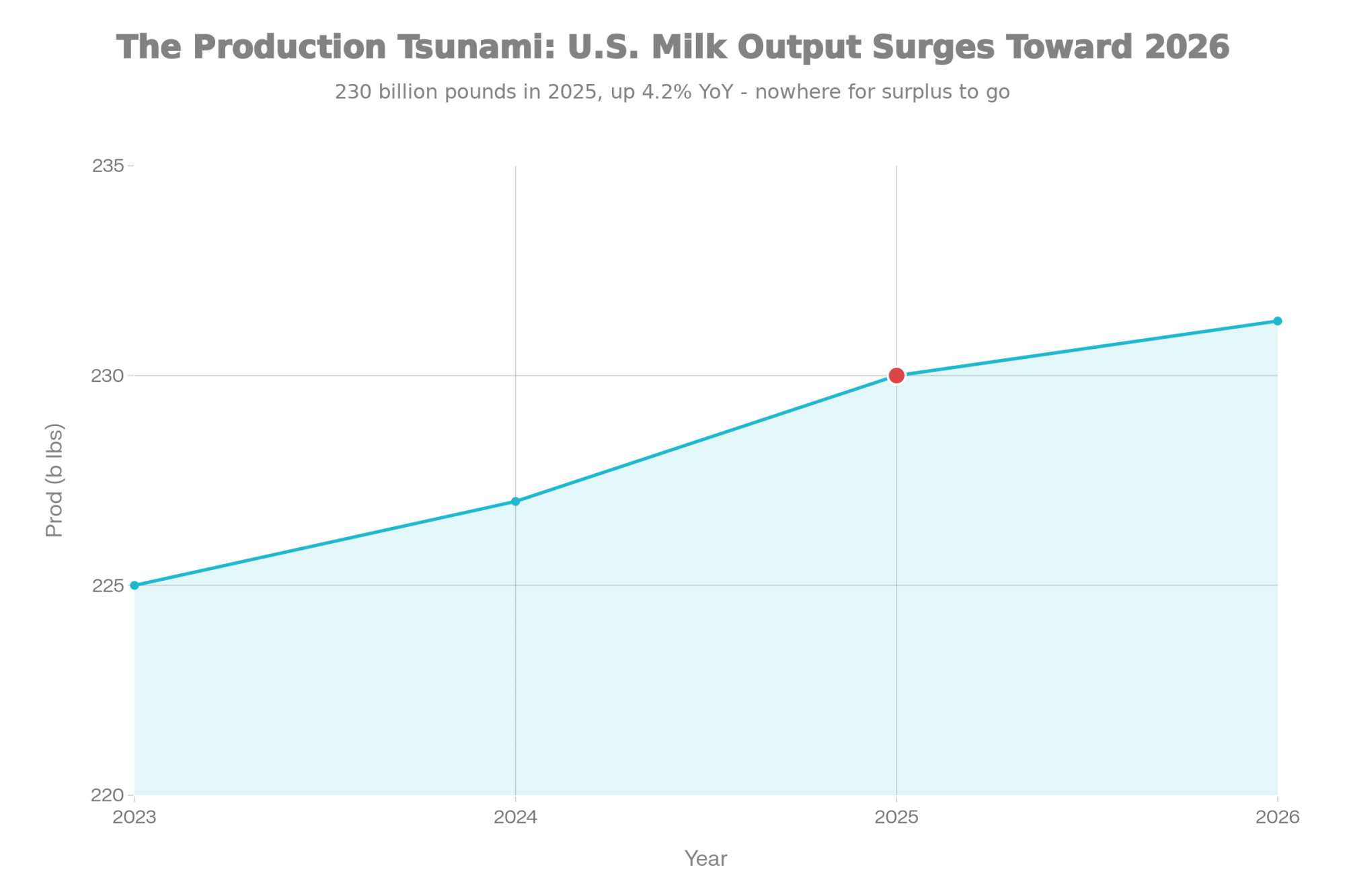
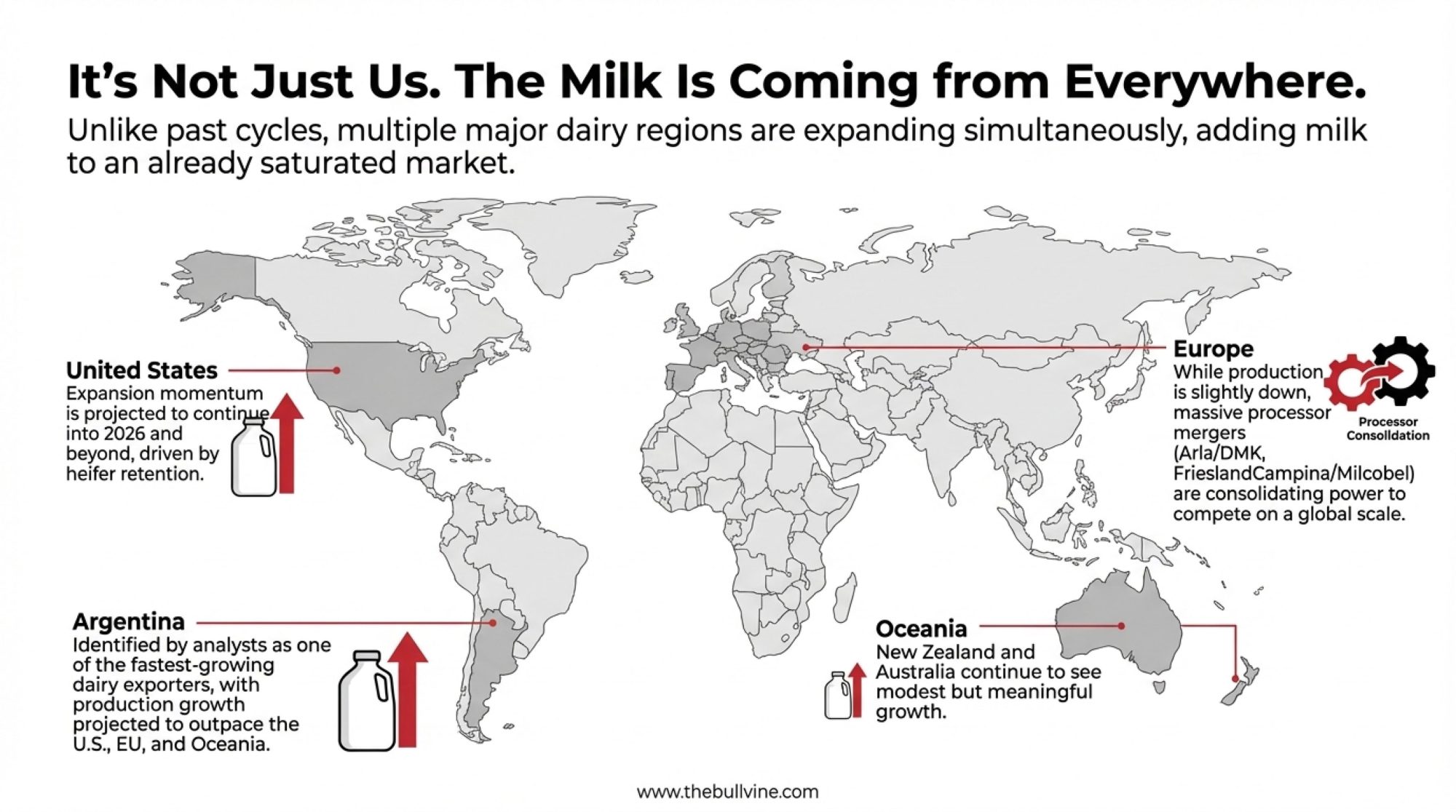
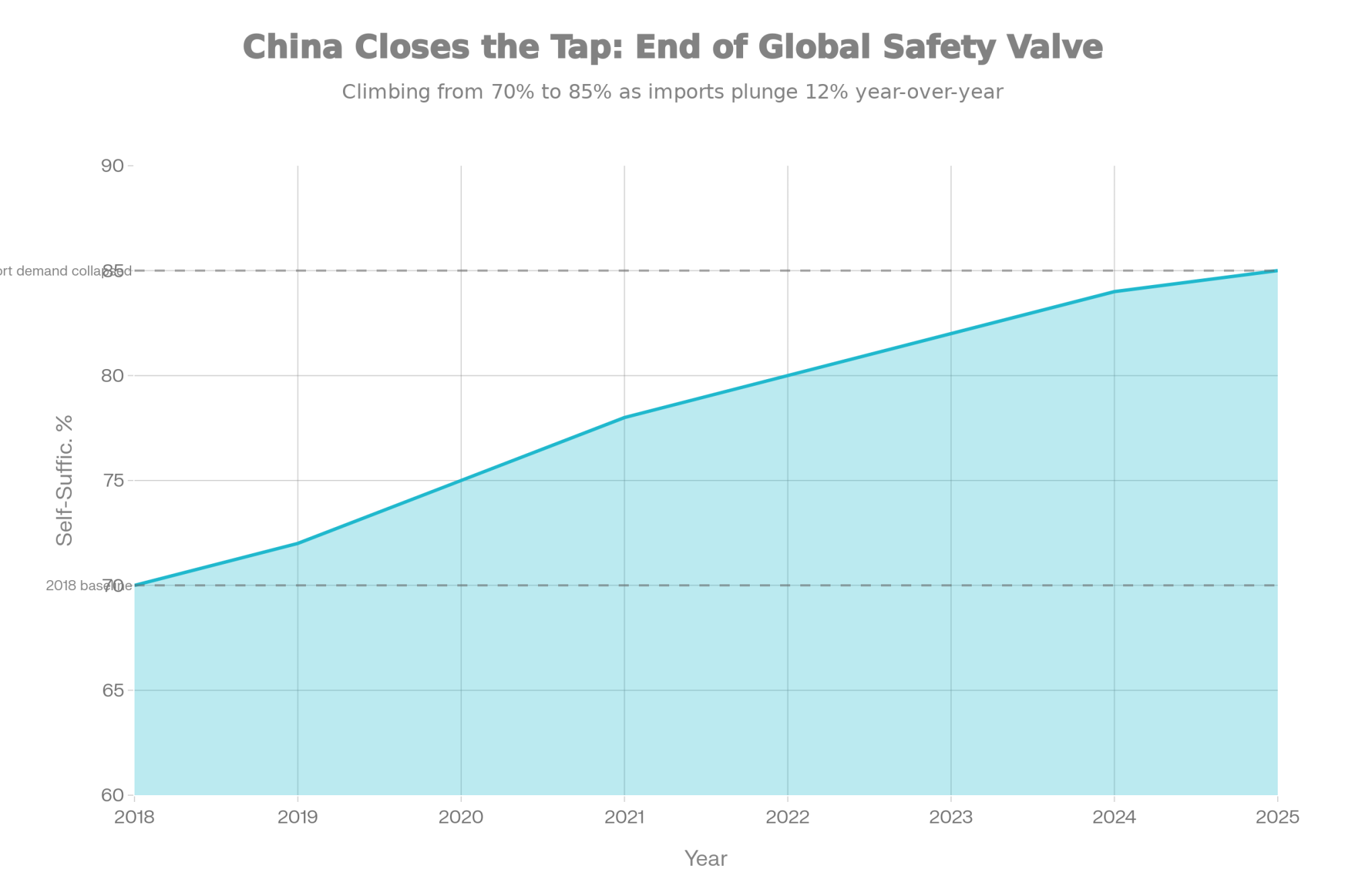
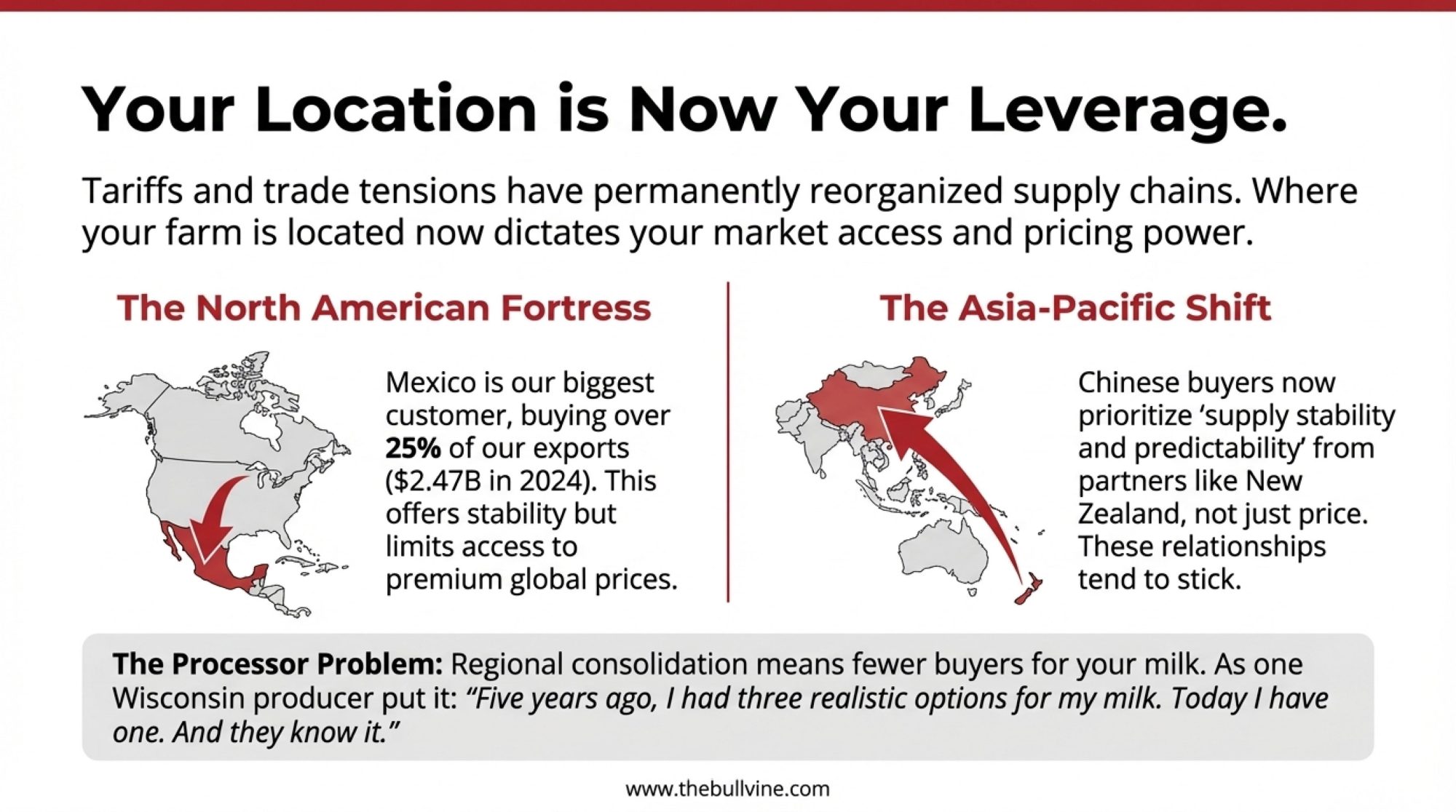
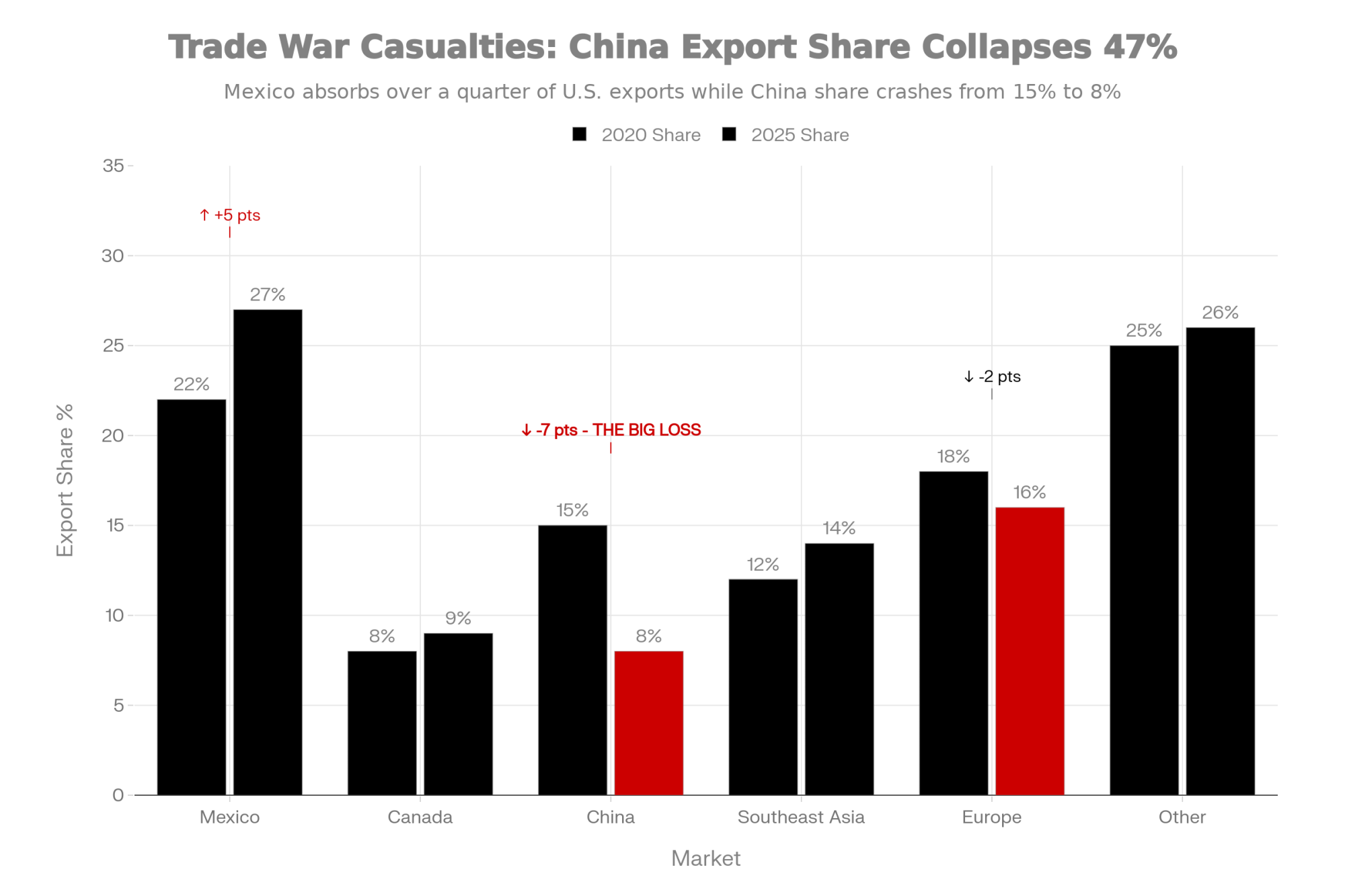
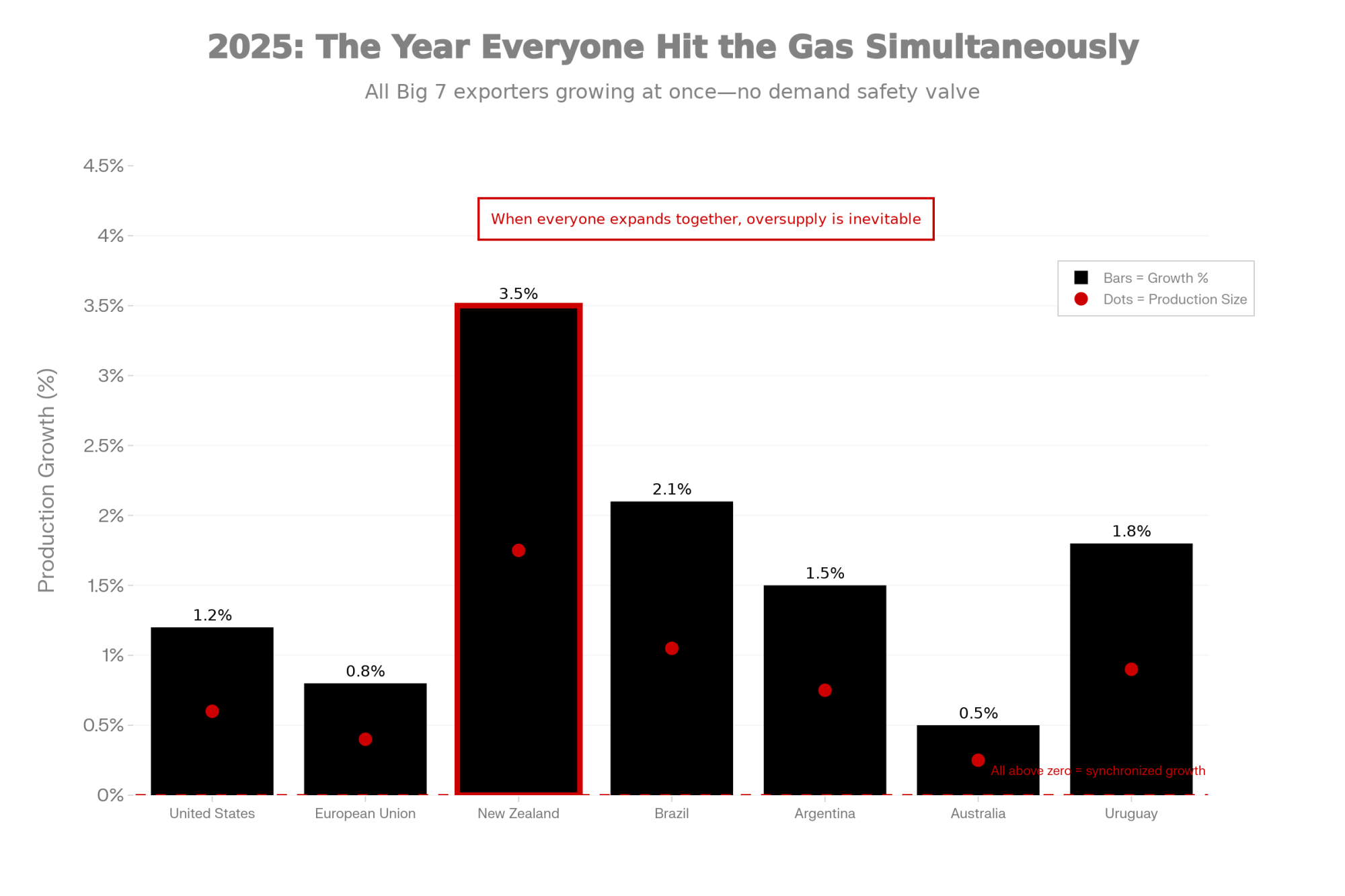
China’s domestic dairy production has expanded significantly, reaching roughly 85% self-sufficiency according to the USDA Foreign Agricultural Service tracking. That compresses what had been a growing export opportunity for U.S. producers. Meanwhile, domestic production continues to expand even as farm numbers decline—larger operations are adding capacity faster than smaller ones are exiting.

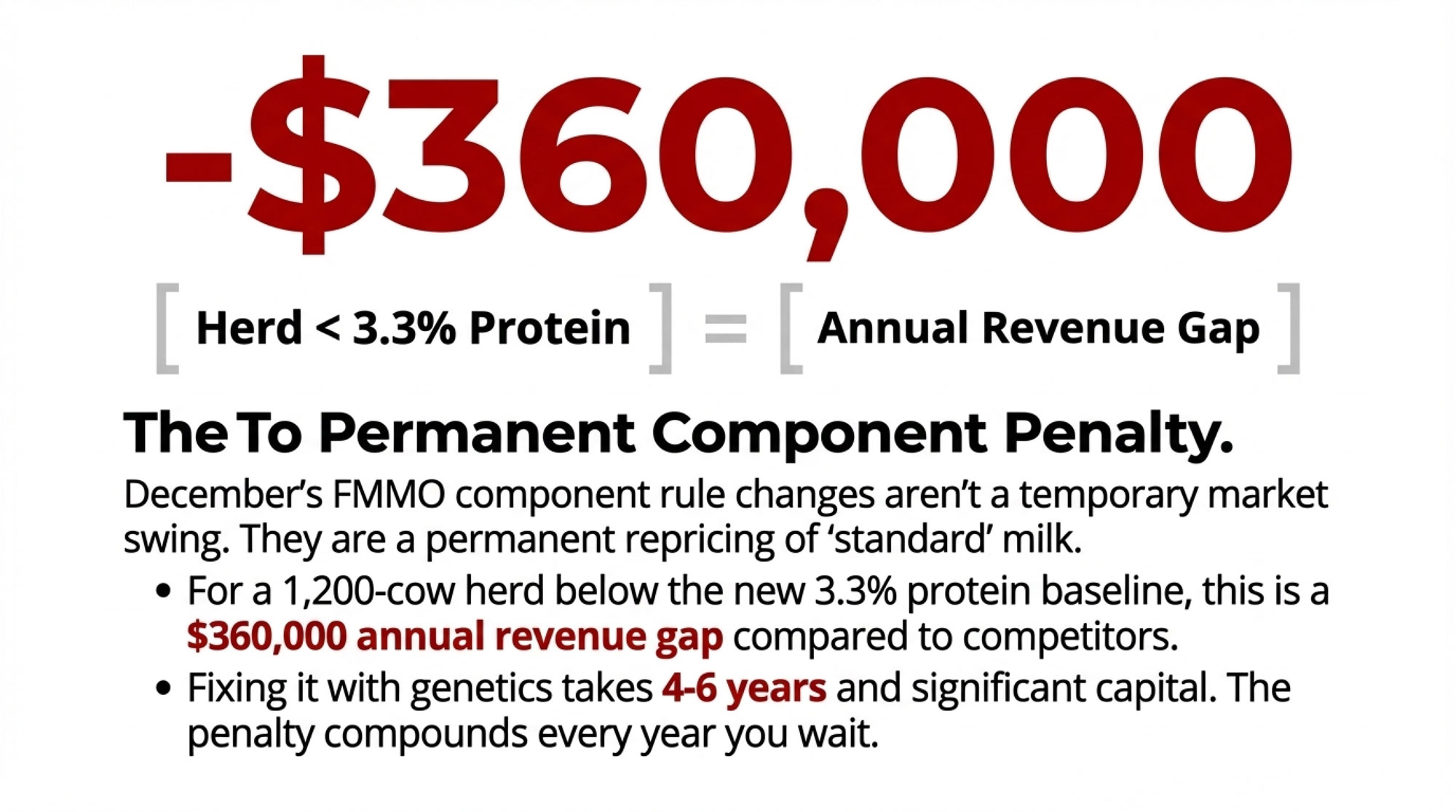
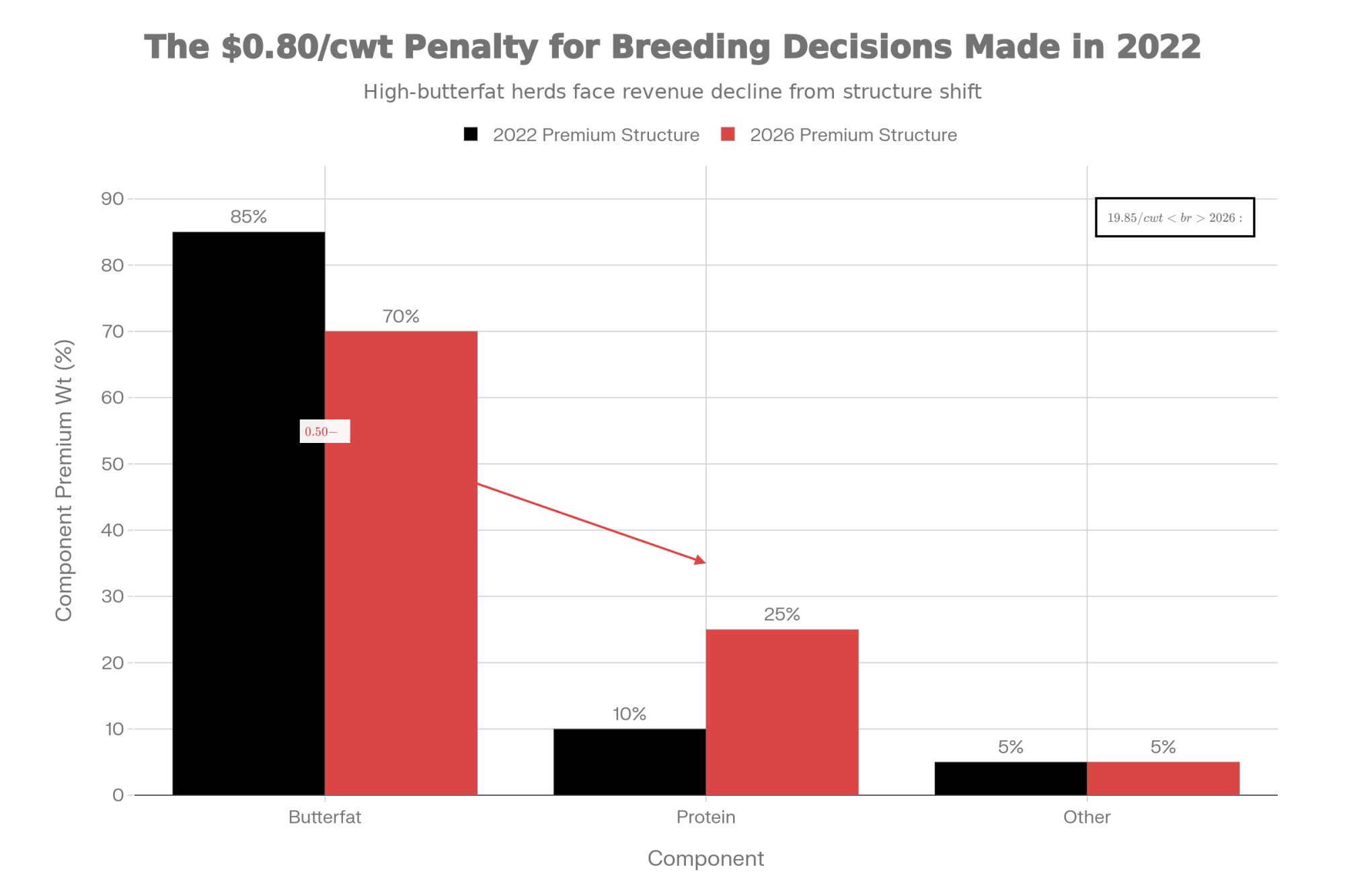
Component economics are shifting in ways that matter. This one’s been on my radar because it affects breeding decisions many of us made years ago. Western Canada’s milk marketing boards announced in October that, effective April 1, 2026, component pricing will move from roughly 85% butterfat emphasis to a 70/25/5 split that weights protein significantly higher than historical norms. You can find the details on the BC Milk Marketing Board’s website.

American processors are beginning to explore similar adjustments. Producers in Wisconsin and Minnesota have mentioned contract offers with $0.30-$0.50/cwt premiums tied to protein content above 3.4%—something that would have seemed unusual three years ago when butterfat commanded all the attention.

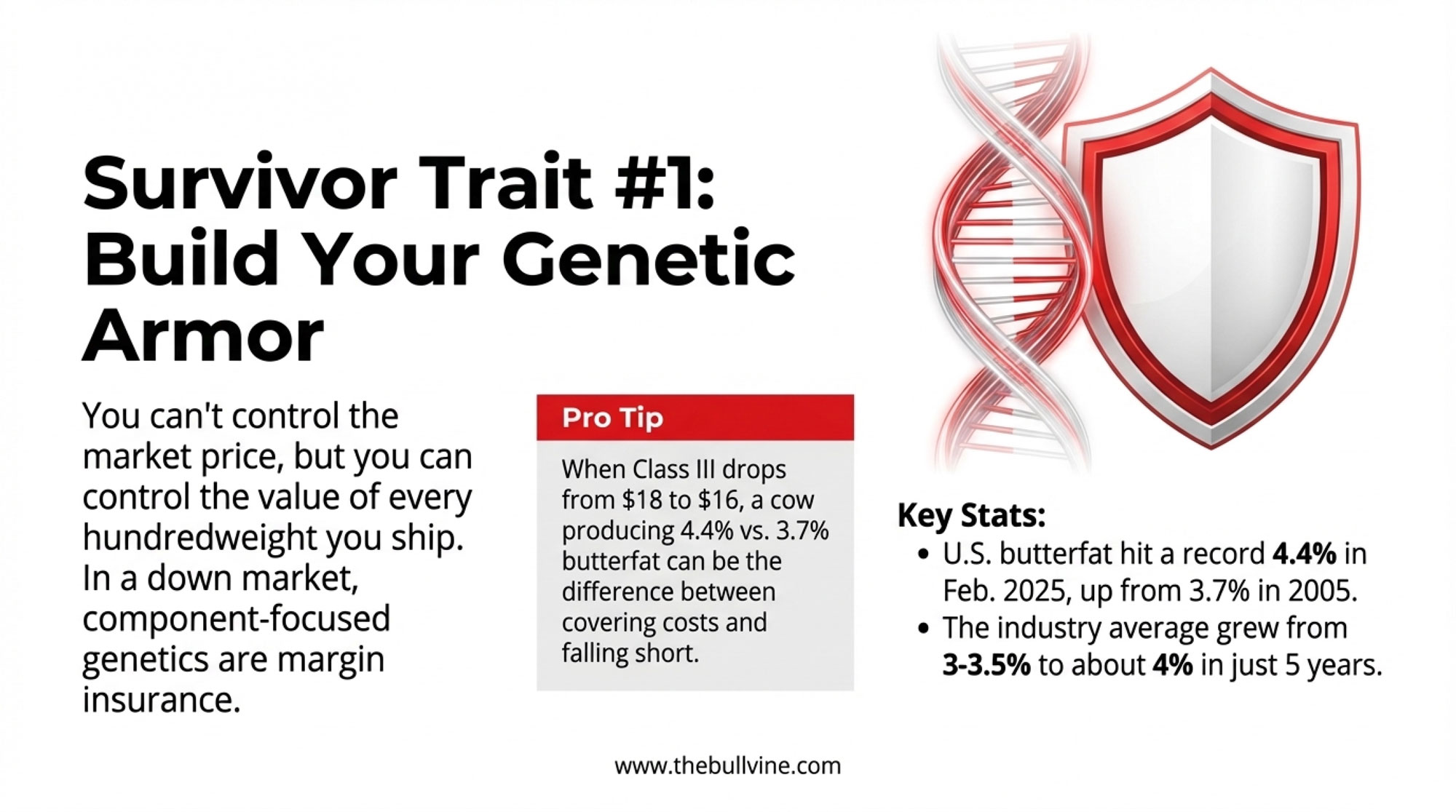
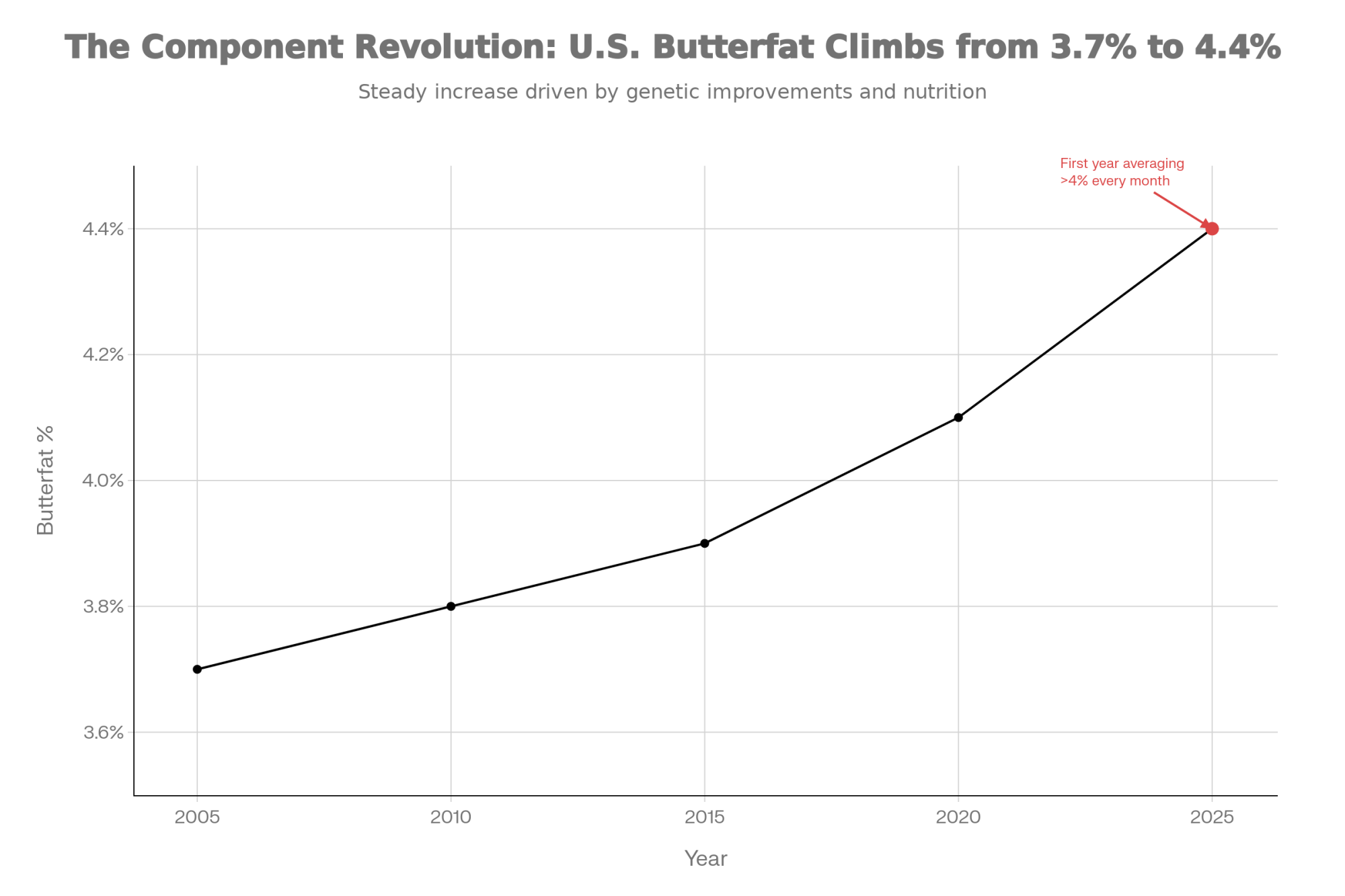
Why does this matter right now? Those genetic decisions we made in 2022-2023 are entering the milking herd. They were overwhelmingly butterfat-focused because that’s what the market rewarded at the time. If your tank average is still chasing butterfat because of the bulls you picked in 2022, you’re optimizing for a market that is rapidly evaporating. The premium is moving to protein.

The biological reality of a 24-36 month lag between breeding decisions and production outcomes means some operations may find themselves locked into yesterday’s pricing signals for another full cycle. It’s worth reviewing your current breeding program with this shift in mind—not panic, but awareness and action.

The GLP-1 Factor: A Genuine Shift in Consumer Behavior

Here’s something genuinely interesting from the demand side that I think deserves thoughtful attention.

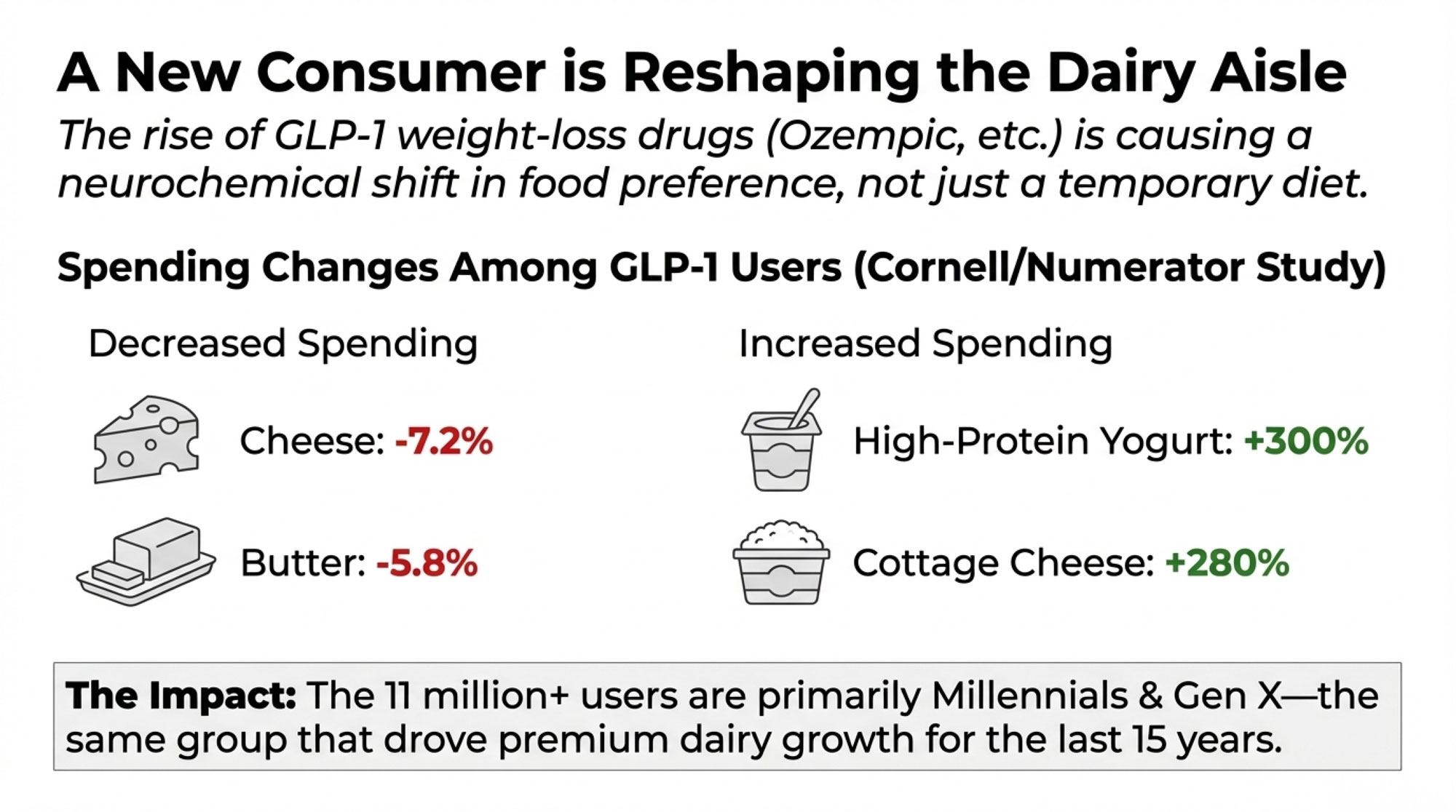
A collaborative research effort between Cornell University and Numerator, which tracks household purchasing data across more than 100,000 households, published findings analyzing how consumers using GLP-1 weight-loss medications are changing their eating habits. The patterns were notable:

  • Cheese spending down 7.2%
  • Butter down 5.8%
  • Ice cream down 5.5%
  • High-protein yogurt up nearly triple
  • Cottage cheese purchases up 280%

As of mid-2025, IQVIA data shows approximately 11 million Americans are actively using GLP-1 medications, with that number steadily increasing. Now, there’s been confusion about Medicare coverage—let me clarify what actually happened. The Trump administration declined to extend Medicare coverage for weight-loss-only indications back in April 2025. But commercial coverage continues expanding, costs are moderating, and most healthcare analysts expect the user base to keep growing through 2026.

What makes this different from typical diet trends is the underlying mechanism. These medications don’t just suppress appetite temporarily—they appear to shift food preferences by affecting dopamine pathways.

“Users report that high-fat foods simply become less appealing. That’s a different kind of demand pattern.”

We’re not talking about willpower or temporary restriction. We’re talking about neurochemical changes that persist as long as patients remain on medication—and many of these drugs are prescribed long-term.

The demographic profile matters too. According to the Numerator data, 71% of GLP-1 users taking these drugs for weight loss are Millennials or Gen X—the same consumer groups that drove premium dairy category growth over the past fifteen years.

What’s encouraging is the flip side of this data: protein-focused dairy is growing dramatically. Operations positioned to serve that demand—high-protein yogurt, cottage cheese, protein-enhanced products—are seeing real opportunity. The question becomes whether your operation can participate in that shift.

Labor Economics: A Threshold Worth Understanding

Farms have always dealt with labor challenges—that’s nothing new. But the current cost structure warrants careful examination.

The H-2A program restructuring established tiered wage requirements. In Michigan—a reasonable proxy for Midwest dairy regions—the Adverse Effect Wage Rate for experienced agricultural workers is $18.15/hour, according to Department of Labor data. But that base wage significantly understates actual costs.

Once you factor in employer-provided housing (required under H-2A), transportation, insurance, payroll taxes, and turnover replacement costs… many operations I’ve talked with are seeing all-in costs of $19-$21/hour. A 600-cow dairy requiring 2.5 full-time-equivalent milking positions now faces annual labor costs exceeding $140,000 just for parlor staffing.

What’s interesting is how this interacts with scale. Larger operations spread specialized positions across more cows, reducing per-unit labor cost. They can also more readily justify automation investments—which brings me to a topic that deserves nuanced discussion.

The Automation Question at Different Scales

The numbers here tell a more complicated story than equipment marketing materials often suggest.

For a 100-130 cow operation, a two-robot system (Lely, DeLaval, or comparable) plus barn modifications, feed integration, and installation runs somewhere in the $430,000-$740,000 range based on late 2025 dealer quotes. That’s getting fully operational with adequate support infrastructure.

For a 600-cow dairy, you’re looking at 8-10 robots minimum—now we’re talking $1.5-$2.5 million in total investment. The per-cow economics shift dramatically depending on how that fixed cost gets distributed.

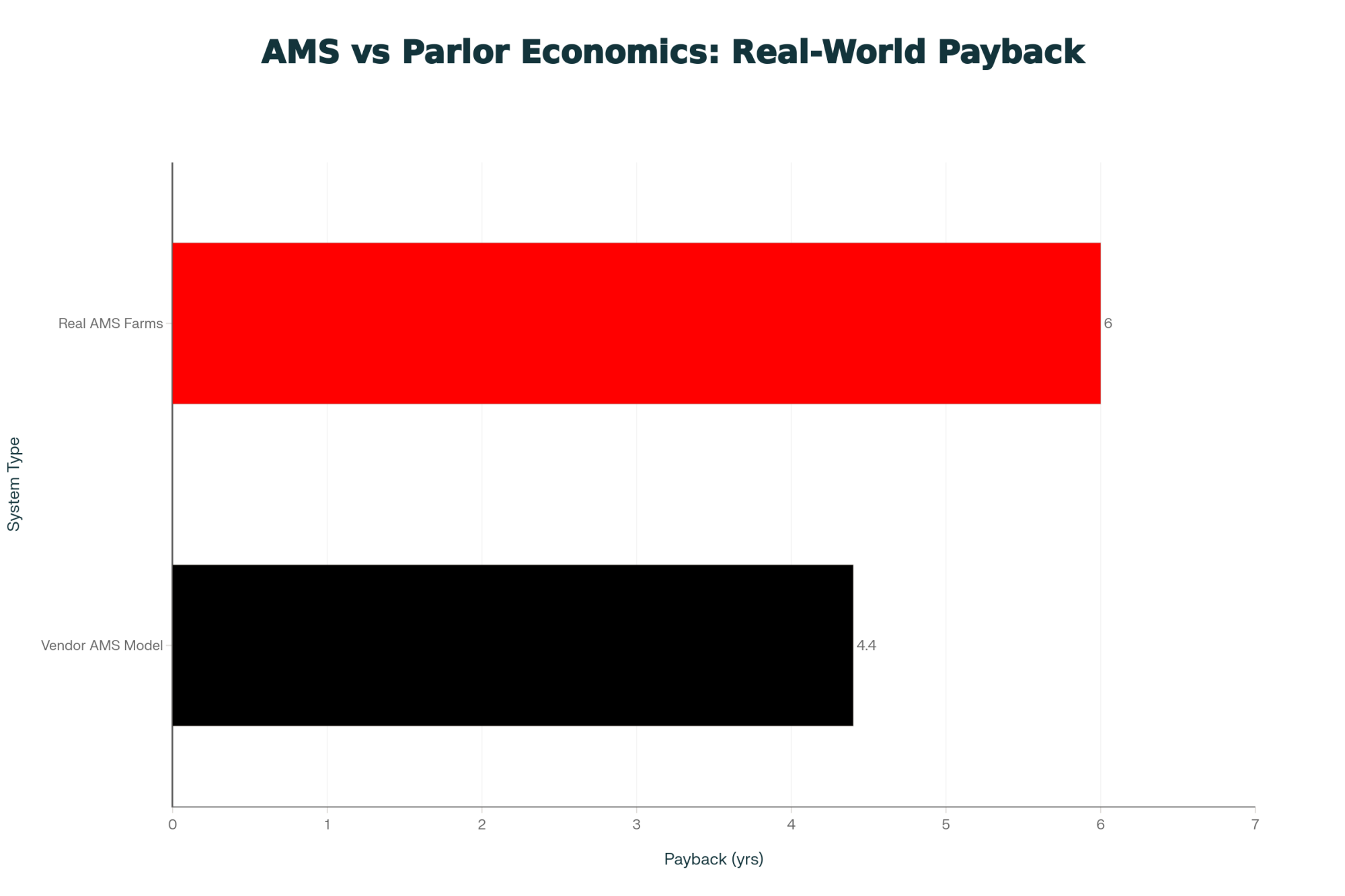
Industry research and extension analyses suggest payback periods vary significantly with herd size. Smaller operations often face 15-20+ year payback at current financing rates, while larger operations with 2,000+ cows may achieve returns in under 10 years. These aren’t hard rules—individual circumstances matter enormously—but the pattern is worth understanding.

And there’s the financing dimension. A dairy lender I spoke with (he asked to remain anonymous, given client relationships) put it directly: “We’re looking at debt service coverage ratios very carefully. A producer comes in wanting financing for robotics, but their margins have compressed significantly over the past two years. That’s a challenging loan to structure, even when the long-term investment thesis makes sense.”

This isn’t to say automation is wrong for mid-size operations—some are making it work beautifully. But the economics require an honest assessment of your specific situation.

What Processors Are Building Toward

The processing side of this equation often gets discussed abstractly. Let me make it more concrete.

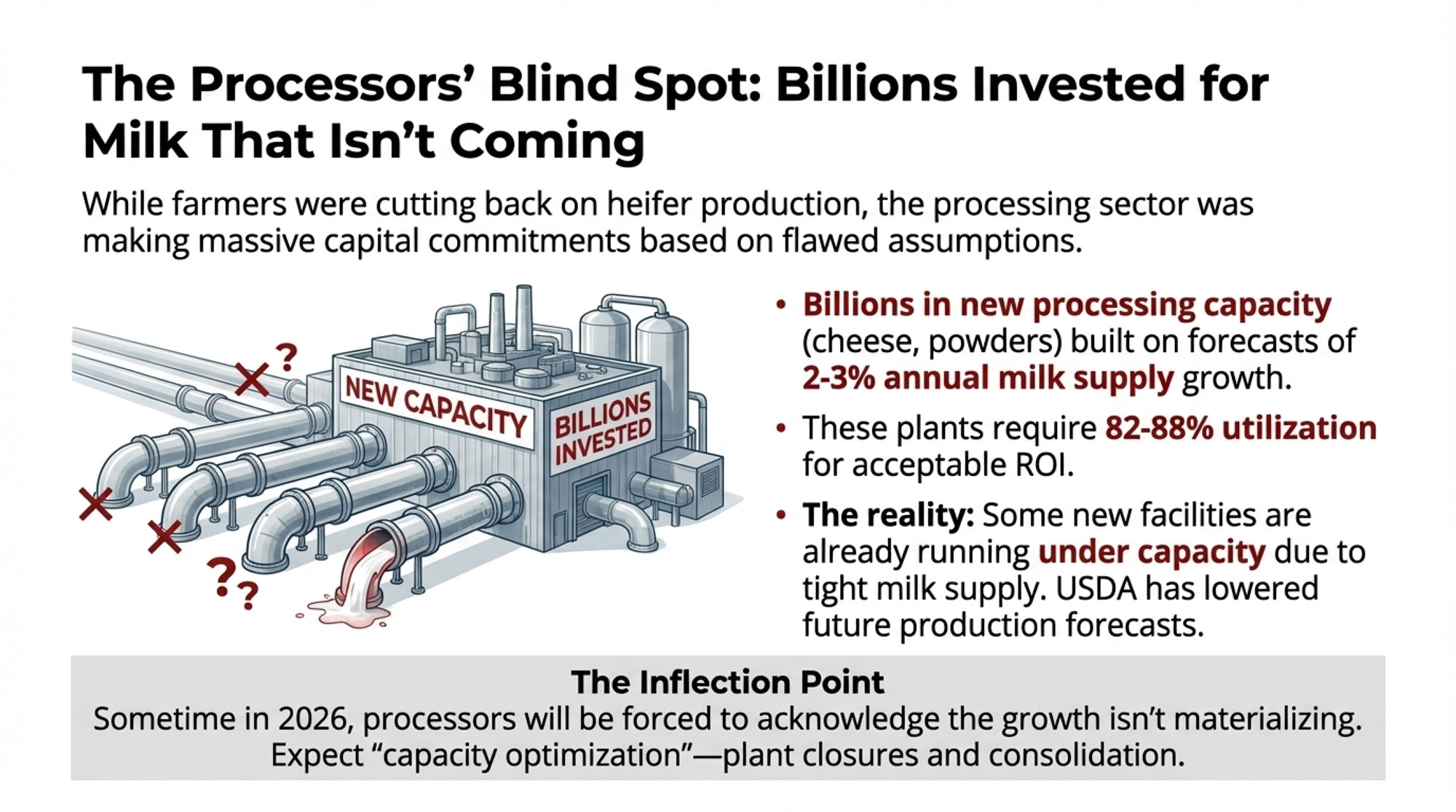
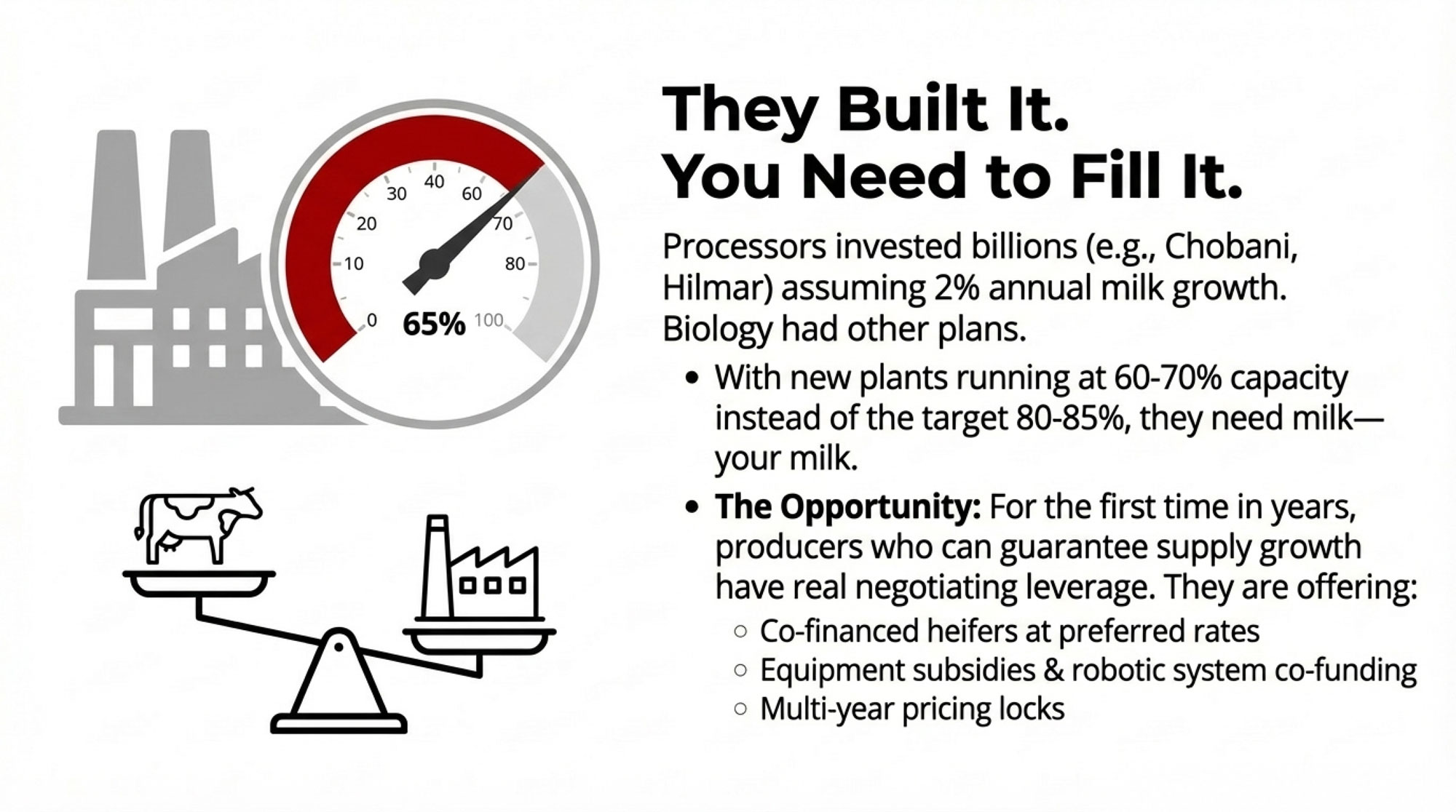
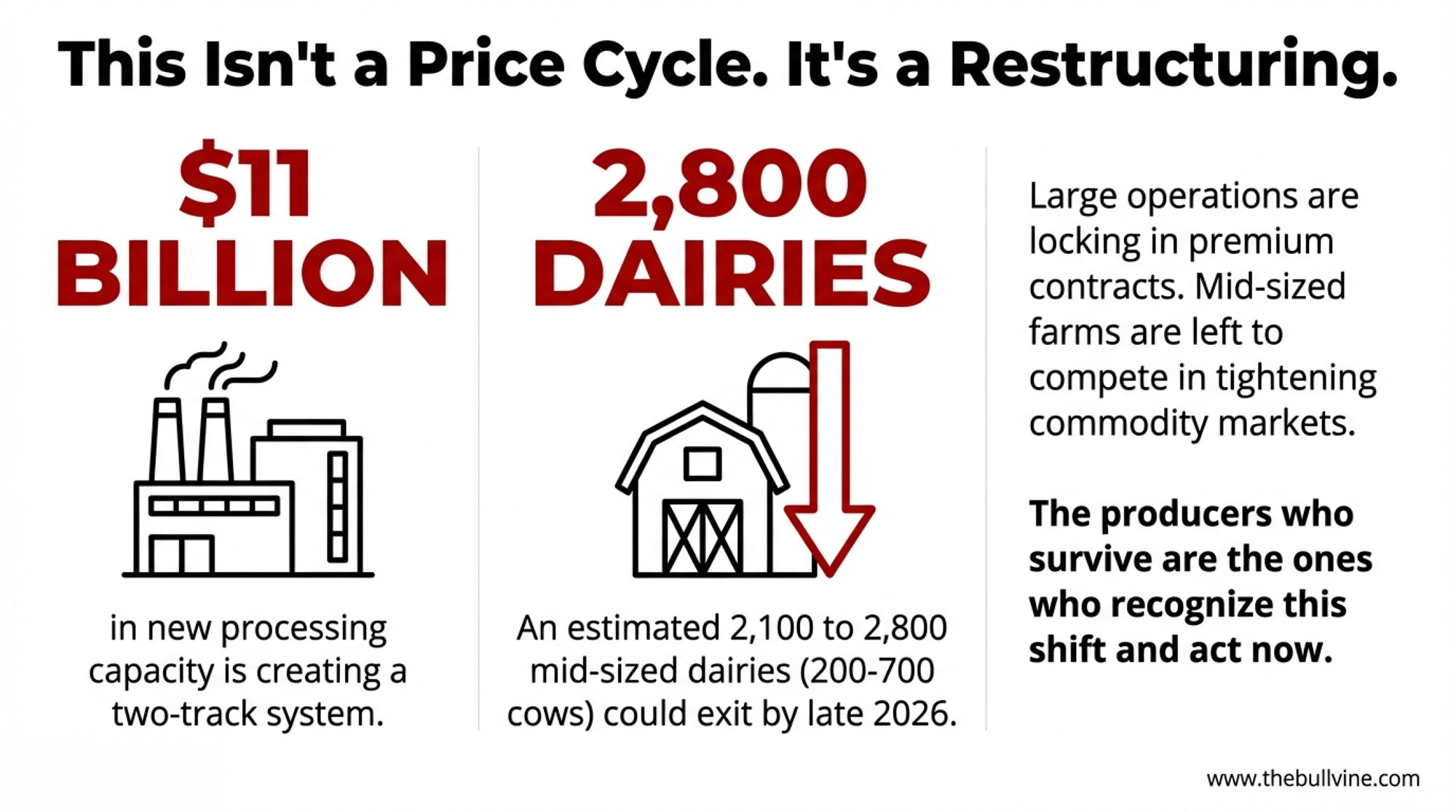
The International Dairy Foods Association released October data showing that between 2024 and 2027, U.S. dairy processing capacity expansion totals more than $11 billion in announced investments across 19 states. New cheese plants, expanded fluid milk processing, protein isolation facilities—substantial infrastructure.

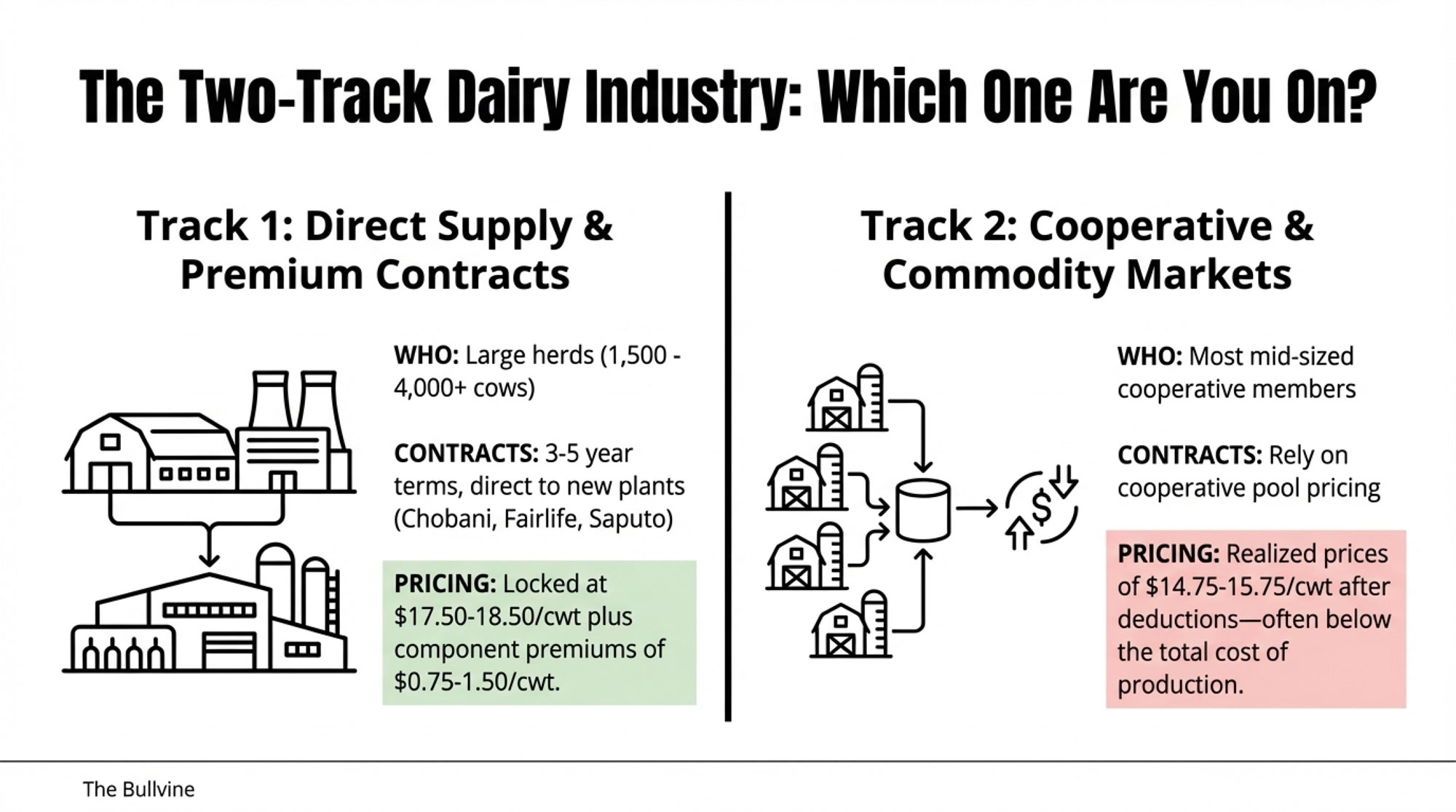
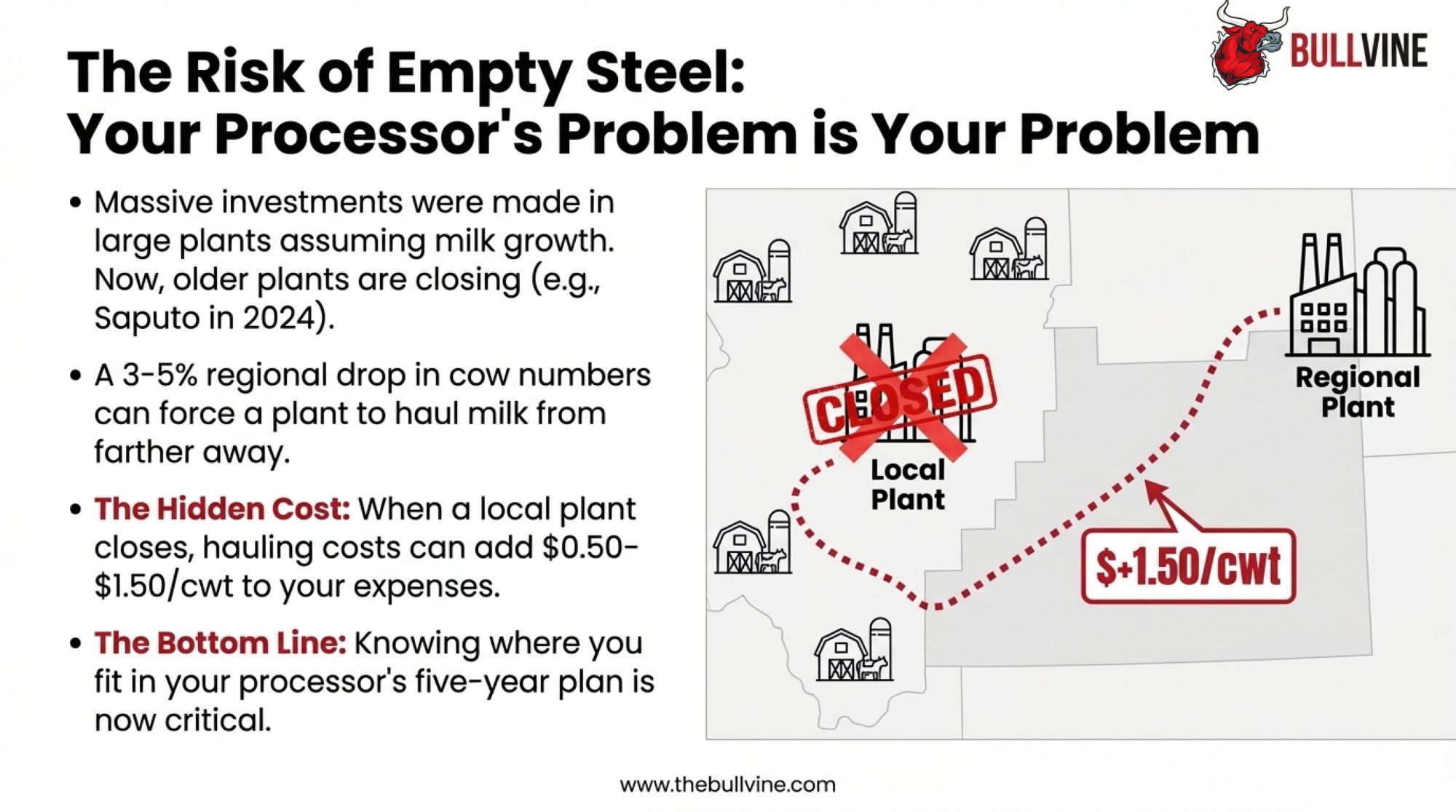
What’s particularly noteworthy isn’t the investment volume alone. It’s the supply relationship structure underlying it. Major facility expansions—Hilmar in Kansas, Valley Queen in South Dakota, Glanbia and Leprino projects—are largely being built around long-term supply agreements with operations milking 2,000 cows or more.

A dairy cooperative field representative in the Upper Midwest explained the underlying economics: “A 600-cow operation represents maybe 60,000 pounds of milk daily. For a plant processing 8 million pounds, that’s less than 1% of the supply. The transaction costs of managing that relationship—quality monitoring, logistics, payment processing—are roughly the same whether it’s 60,000 pounds or 600,000 pounds.”

He was careful to add that cooperatives remain committed to their member base. “But producers need to understand the economics their buyers are navigating. The pressure toward consolidation has structural roots.”

So What Does “Viable” Actually Mean Right Now?

This is where I want to be careful to distinguish between what the data clearly show and what represents my analytical interpretation.

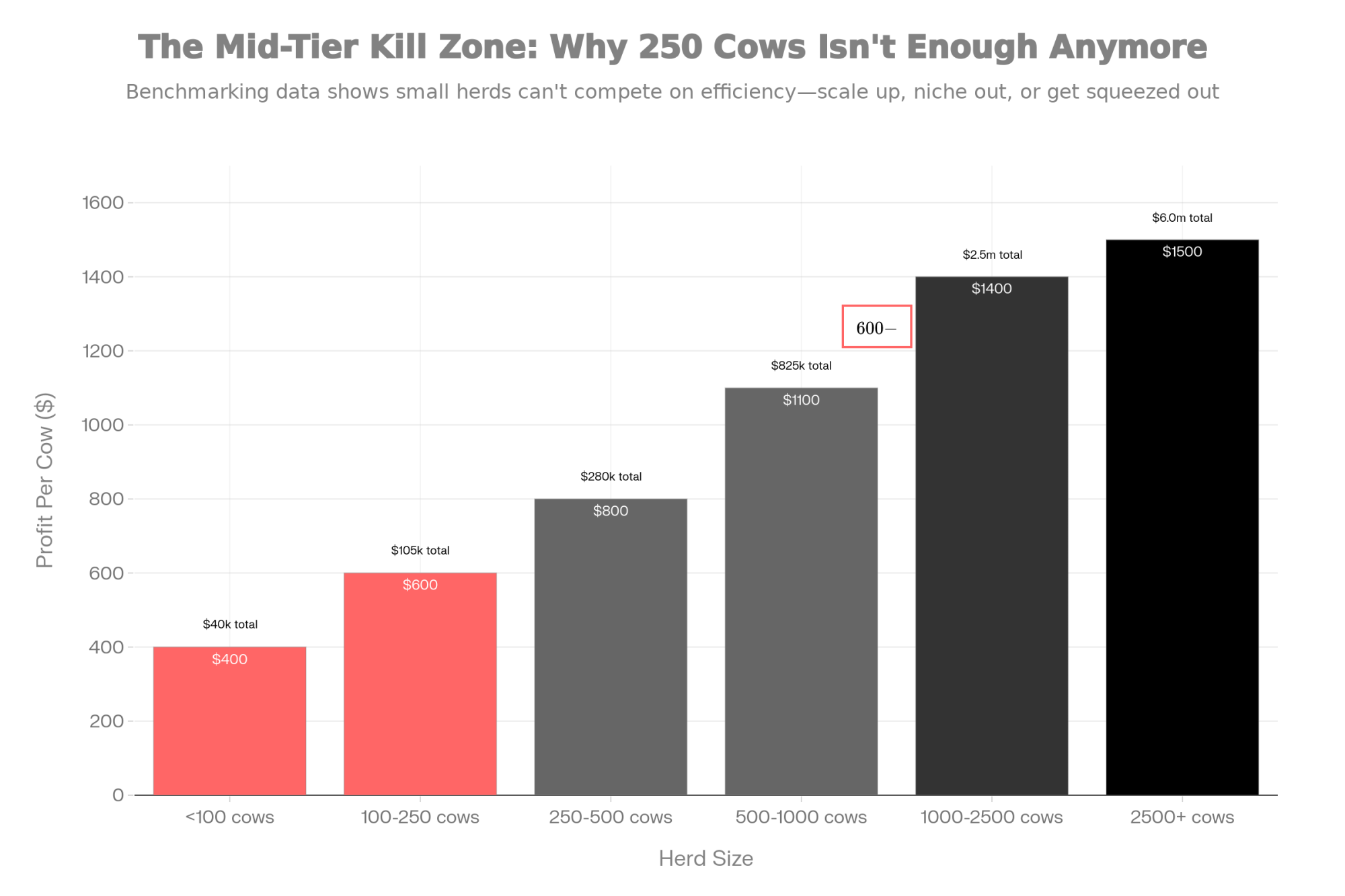
Operation SizePer-Cow Labor CostAutomation ROI PaybackProcessor LeveragePremium Access2025 Viability Status
<100 cows$520/cow/year20+ years (not viable)MinimalDirect-to-consumer, organicViable if specialty
100-300 cows$465/cow/year15-20 yearsLowOrganic, grassfed possibleTransition required
300-600 cows$410/cow/year12-18 yearsModerateLimited at current scale⚠️ High pressure zone
600-1,000 cows$385/cow/year10-15 yearsModerateScale too large for specialty⚠️ Severe structural squeeze
1,000-2,500 cows$315/cow/year8-12 yearsStrongComponent optimization focusStructurally advantaged
2,500+ cows$245/cow/year6-10 yearsPreferred supplierContract leverageDominant position

The data shows that operations above 1,000 cows have structural advantages in the current environment—lower per-unit fixed costs, automation ROI that pencils out more readily, processor leverage, and stronger capital access. The data also shows that specialty operations under 300 cows can achieve premium pricing that fundamentally changes the economics—several dollars per hundredweight above conventional for organic, significantly more for direct-to-consumer channels.

What I can’t tell you with precision is exactly how many operations will exit or consolidate, or over what timeline. When I suggest that traditional 400-1,000 cow conventional commodity operations face structural rather than cyclical challenges, that’s my analytical conclusion from watching these forces converge—not an official forecast from USDA or university research.

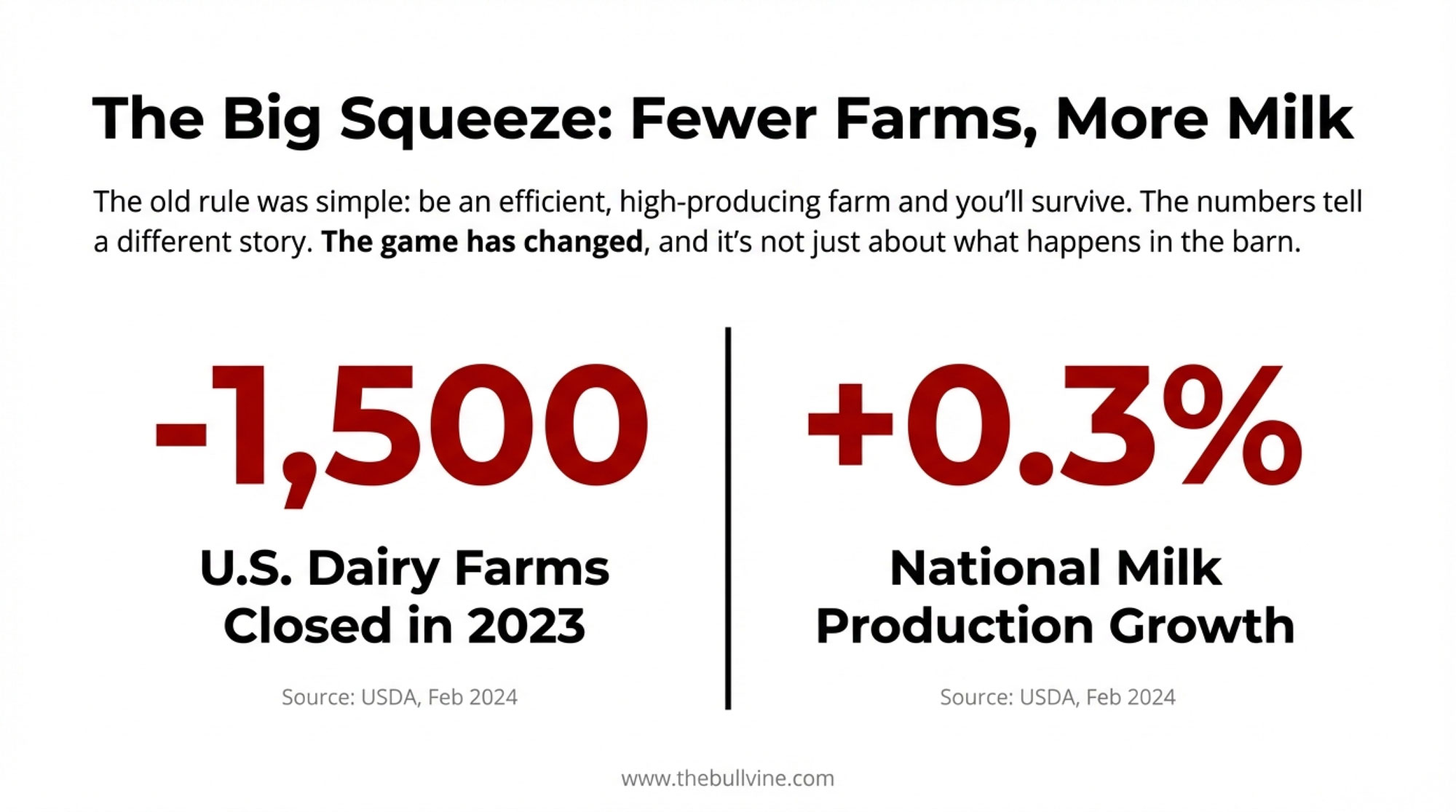
The trajectory raises legitimate questions. Rabobank’s analysis projects that approximately 2,800 dairy operations will close in 2025. If structural factors continue operating as they have—and I don’t see any obvious near-term reversal mechanisms—exit rates could remain elevated.

Dairy CategoryGLP-1 User Consumption ChangeCurrent U.S. GLP-1 UsersProjected Annual Market ImpactStrategic Implication
Cheese-7.2% ⚠️11 million-$840M category pressureDeclining demand for commodity cheese milk
Butter-5.8% ⚠️11 million-$320M category pressureButterfat premium erosion accelerating
Ice Cream-5.5% ⚠️11 million-$675M category pressureHigh-fat dessert categories vulnerable
Fluid Milk (whole)-3.1% ⚠️11 million-$180M category pressureCommodity fluid milk continues secular decline
Greek Yogurt+185% ✓11 million+$920M category opportunityProtein-focused growth accelerating
Cottage Cheese+280% ✓11 million+$450M category opportunityDramatic protein-demand spike
High-Protein Beverages+195% ✓11 million+$615M category opportunityEmerging premium protein channel
Skyr / Icelandic Yogurt+220% ✓11 million+$285M category opportunityUltra-high protein positioning working

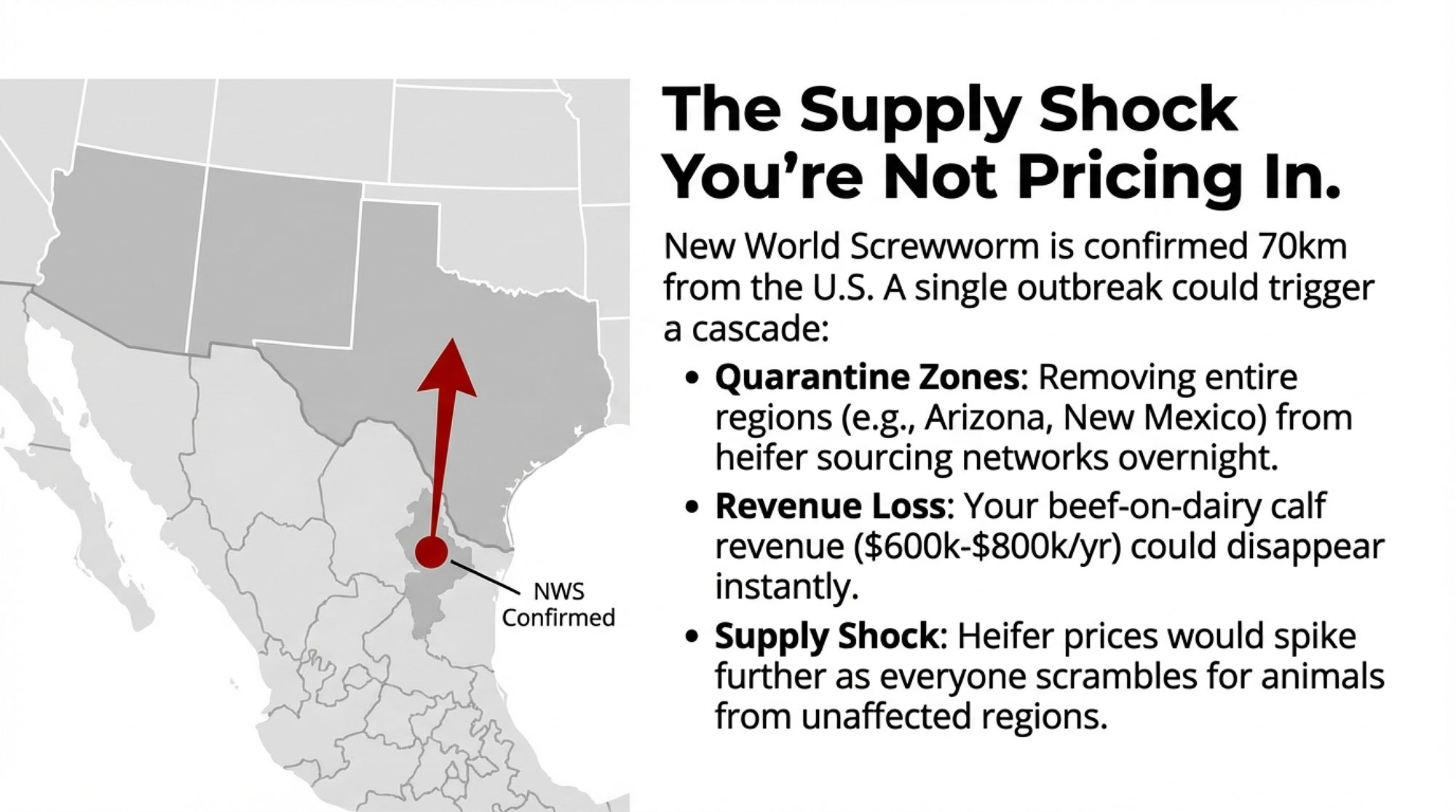
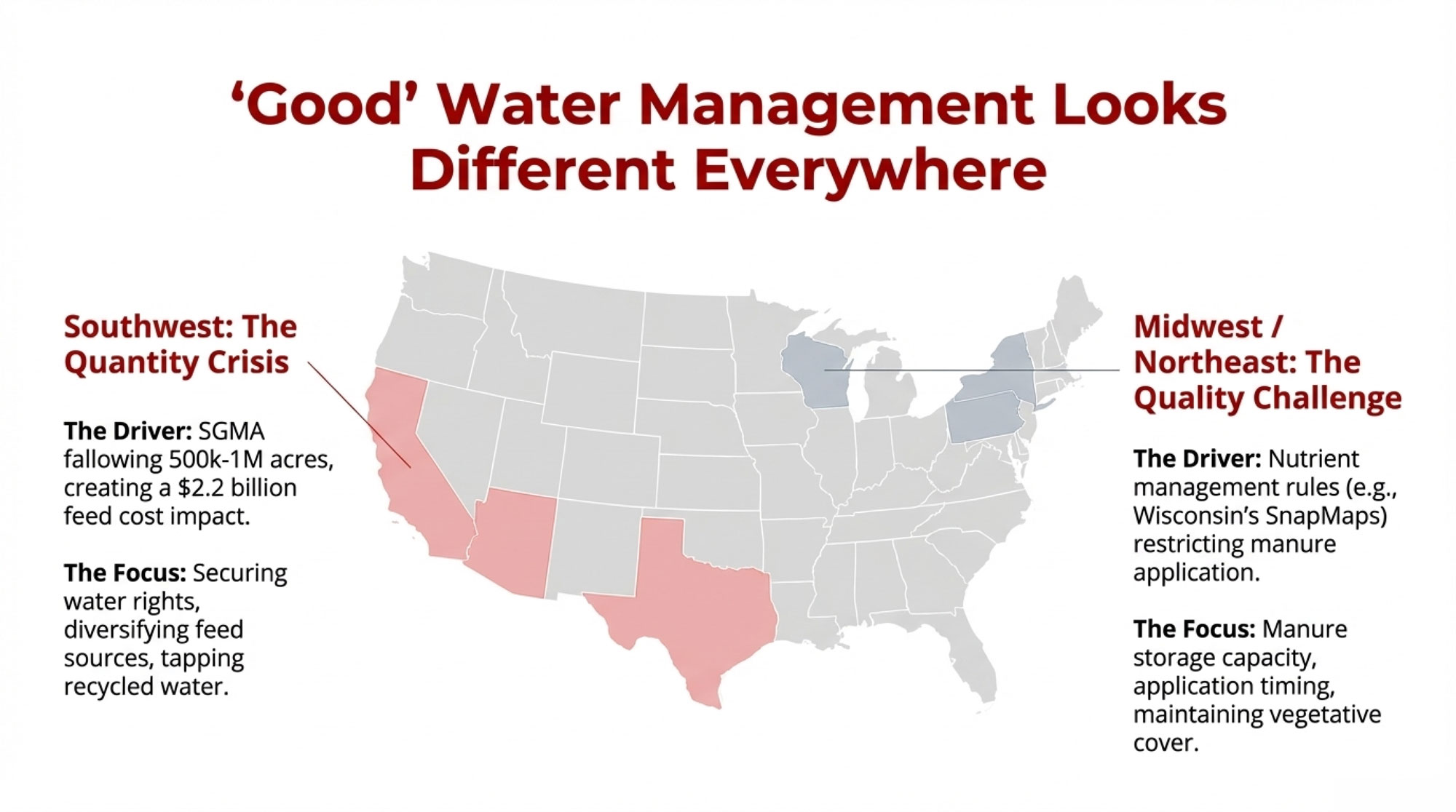
The dynamics play out somewhat differently across regions. California operations face additional water cost and regulatory pressures that compound the structural challenges we’ve discussed. Idaho’s rapid consolidation has created different competitive patterns, with fewer mid-size operations surviving the squeeze. Texas and New Mexico dairies navigate the economic impacts of heat stress, which affect both production and labor. But the underlying forces—hierarchal costs, component shifts, processor consolidation, labor thresholds—are similar across geographies.

Here’s what’s equally important to acknowledge: different producers in different circumstances will navigate this very differently. I’ve talked with 800-cow conventional operations in Wisconsin, genuinely optimistic about their positioning—strong processor relationships, manageable debt, recent automation investment. I’ve talked with 500-cow operations in the same region that see no viable path forward without fundamental restructuring. Context matters enormously.

Paths That Are Working

Let me share what I’m observing in operations as they find viable paths forward, because genuine success stories exist alongside the challenges.

The organic transition continues to offer meaningful premium for operations willing to commit to production system changes. Operating margins for organic dairy typically exceed conventional operations substantially—though specific returns vary considerably by region, market relationships, and transition management. Several producers who converted from larger conventional operations emphasized that they had to reduce herd size significantly to make organic economics work long-term.

One Vermont organic producer—she runs about 200 cows and has been active in regional organic dairy advocacy—described her experience: “We ran 450 conventional cows for fifteen years. When we converted in 2019, we dropped to 200 and actually increased net income. The gross revenue decline was scary initially, but the margin improvement proved real.”

The transition period requires careful planning and an adequate financial runway. It’s not a quick fix, but it’s working for operations that approach it strategically.

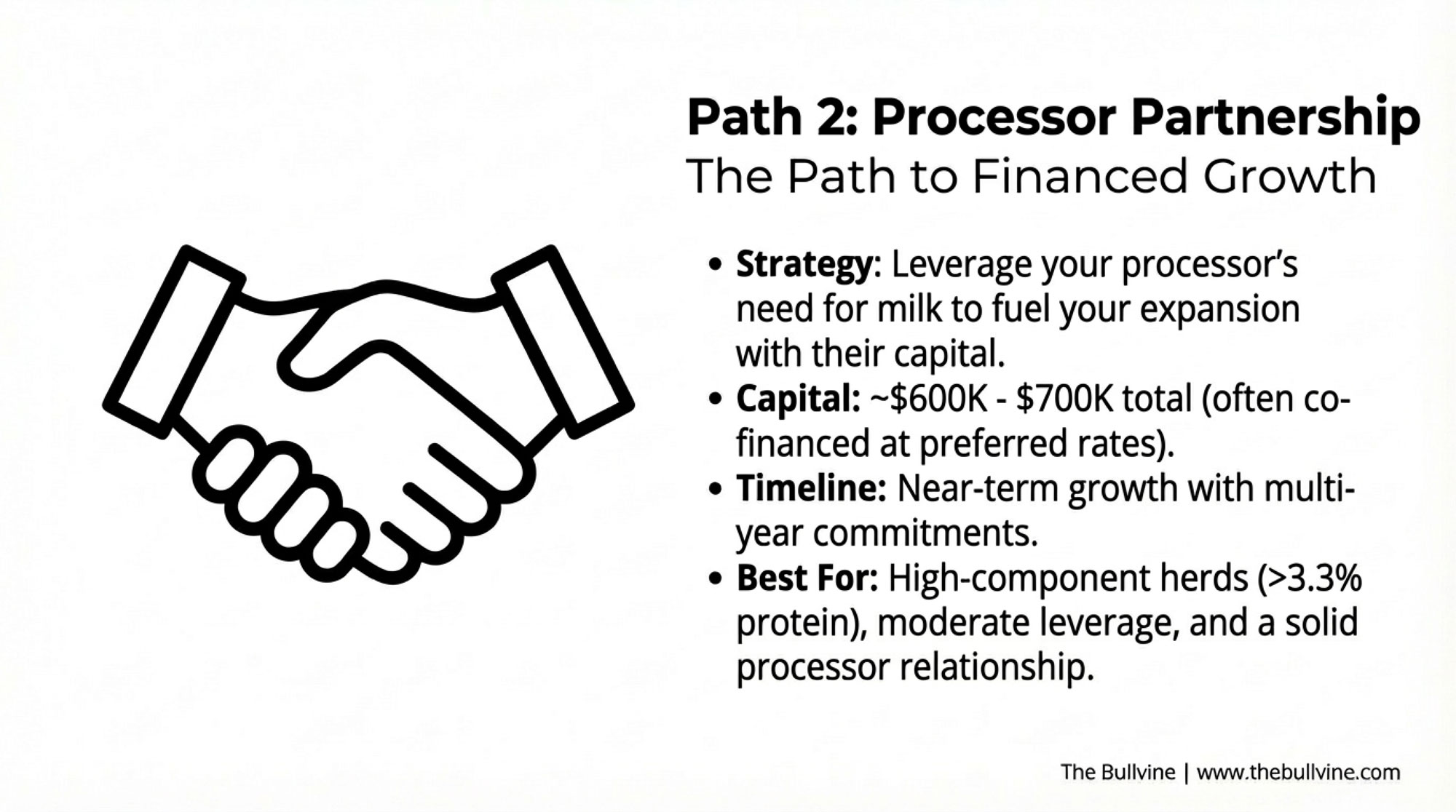
Cooperative processing models are emerging in several regions and merit attention. The concept: multiple mid-size operations collectively invest in processing capacity—typically Greek yogurt, high-protein products, or specialty cheese—to capture value-added margins on a portion of their milk.

One Minnesota cooperative involving four farms with a combined 1,800 cows reports routing 25% of collective production through a small processing facility they financed together. That portion generates roughly twice the commodity price. The remaining 75% continues through traditional channels.

“We didn’t have the scale individually to make processing investment work,” one participating farmer explained. “Together we did.”

This model won’t fit every situation, but it represents creative thinking worth exploring.

Strategic positioning toward protein-focused products is another path to gaining traction. Some operations are pivoting toward products that align with GLP-1-influenced consumption patterns—high-protein yogurt, cottage cheese, protein-enhanced beverages. Rather than resisting the demand shift, they’re moving with it.

Strategic PathCapital RequiredTimeline to ViabilityPrimary Risk FactorIdeal Candidate ProfileAction This Week
Organic Transition$50,000-$150,000 (certification, transition feed)18-24 months (transition period)⚠️ Market access / buyer contracts<300 cows, manageable debt, pasture access, 12-month cash runwayContact state organic certification agency for feasibility assessment
Cooperative Processing$200,000-$500,000 (shared facility investment)24-36 months (facility build-out)⚠️ Partner alignment / governance structure3-5 operations, 250-600 cows each, geographic proximity, complementary goalsInitiate conversation with neighboring operations about joint feasibility study
Strategic Scaling$2M-$5M+ (automation, expansion, acquisition)12-24 months (installation, ramp-up)⚠️ Debt service in compressed margin environment>800 cows, strong processor relationship, expansion capacity, lender supportRequest processor meeting on long-term supply agreement; lender pre-qualification
Strategic Exit$25,000-$75,000 (professional planning, legal, transition)6-18 months (orderly liquidation)⚠️⚠️ Asset value erosion if market floods300-1,000 cows, elevated debt, no succession plan, limited specialty pivot options→ Confidential consultation with ag financial advisor and equipment appraiser

A Necessary Conversation About Timing

I want to address something directly that industry coverage sometimes avoids.

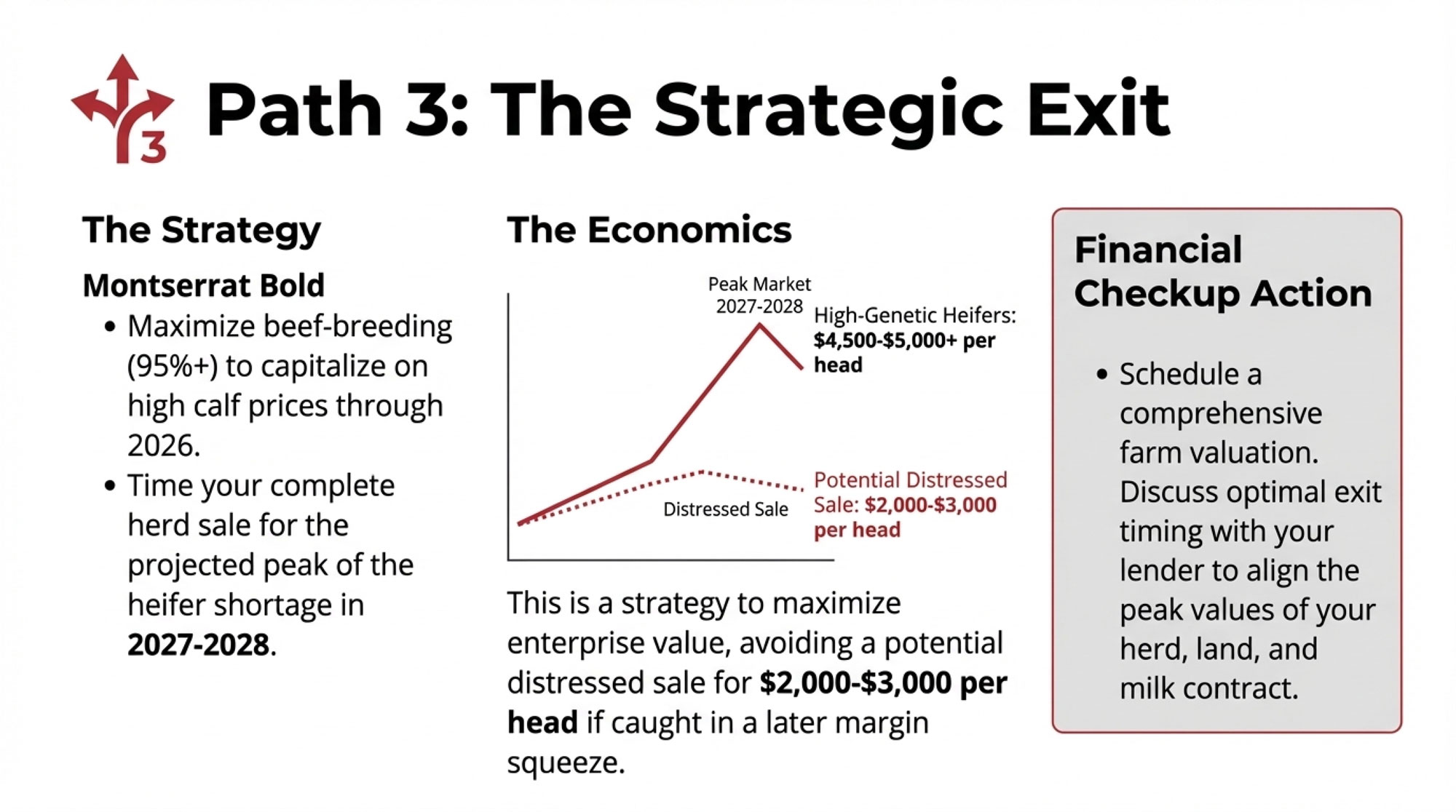
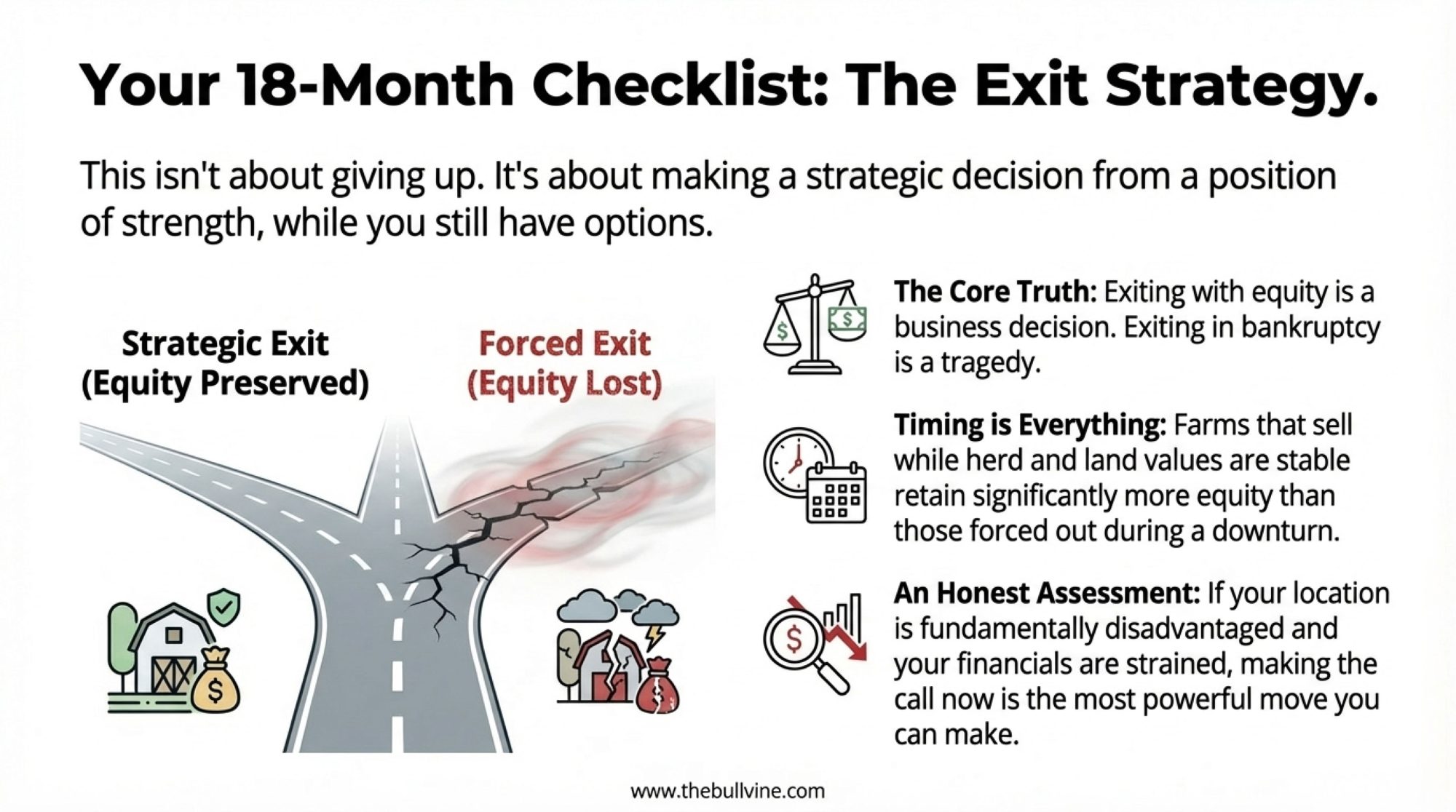
For some operations facing the structural challenges discussed here—compressed margins, elevated replacement costs, processor relationship pressure, automation economics that don’t pencil out, no clear specialty pivot—strategic exit while asset values remain elevated may represent the soundest financial decision available.

Choosing to exit under these circumstances isn’t failure. It’s asset management.

It’s recognition that structural economics have shifted in ways that particular operational configurations can’t accommodate. The industry changing isn’t any individual producer’s fault.

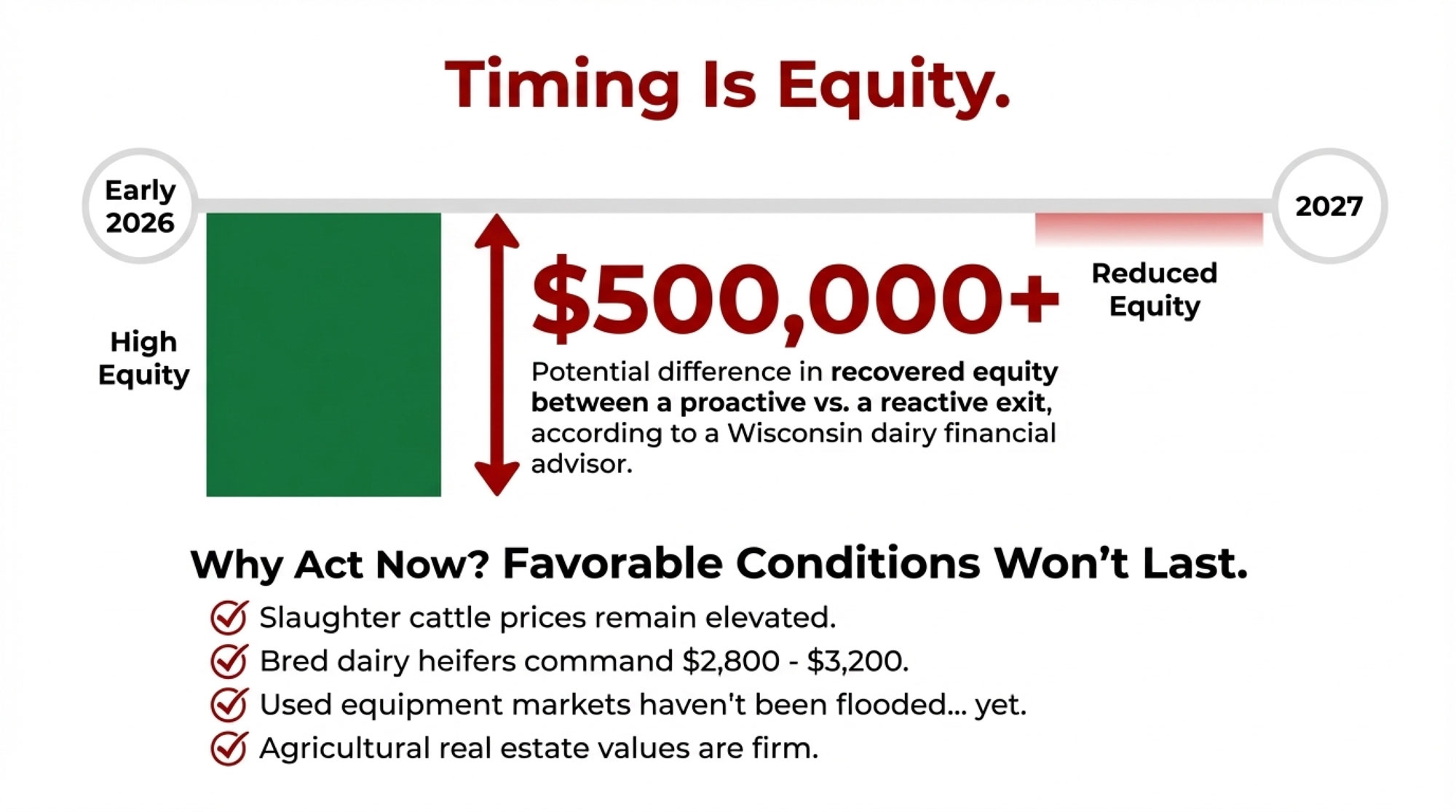
Current asset values remain relatively favorable. USDA market data shows slaughter cattle prices elevated, with bred dairy heifers commanding $2,800-$3,200 at many auctions. Used equipment markets haven’t yet flooded with liquidation inventory. Agricultural real estate values in productive regions remain firm.

These conditions won’t persist indefinitely if exit rates accelerate as structural pressures suggest they might.

A financial advisor working exclusively with Wisconsin dairy operations framed it this way: “The difference between a proactive exit in early 2026 and a reactive exit in 2027 can exceed half a million dollars in recovered equity for a mid-size operation. That’s not about farming ability—it’s about timing.”

What I’d Tell Someone Navigating This

If I were sitting across from you working through these realities—and I’ve had many such conversations this year—here’s what I’d want you to understand:

The structural forces are real, but they’re not uniform. Your specific circumstances—debt levels, processor relationships, facility condition, labor situation, geographic positioning, family involvement, personal goals—matter enormously. There’s no single right answer that applies universally.

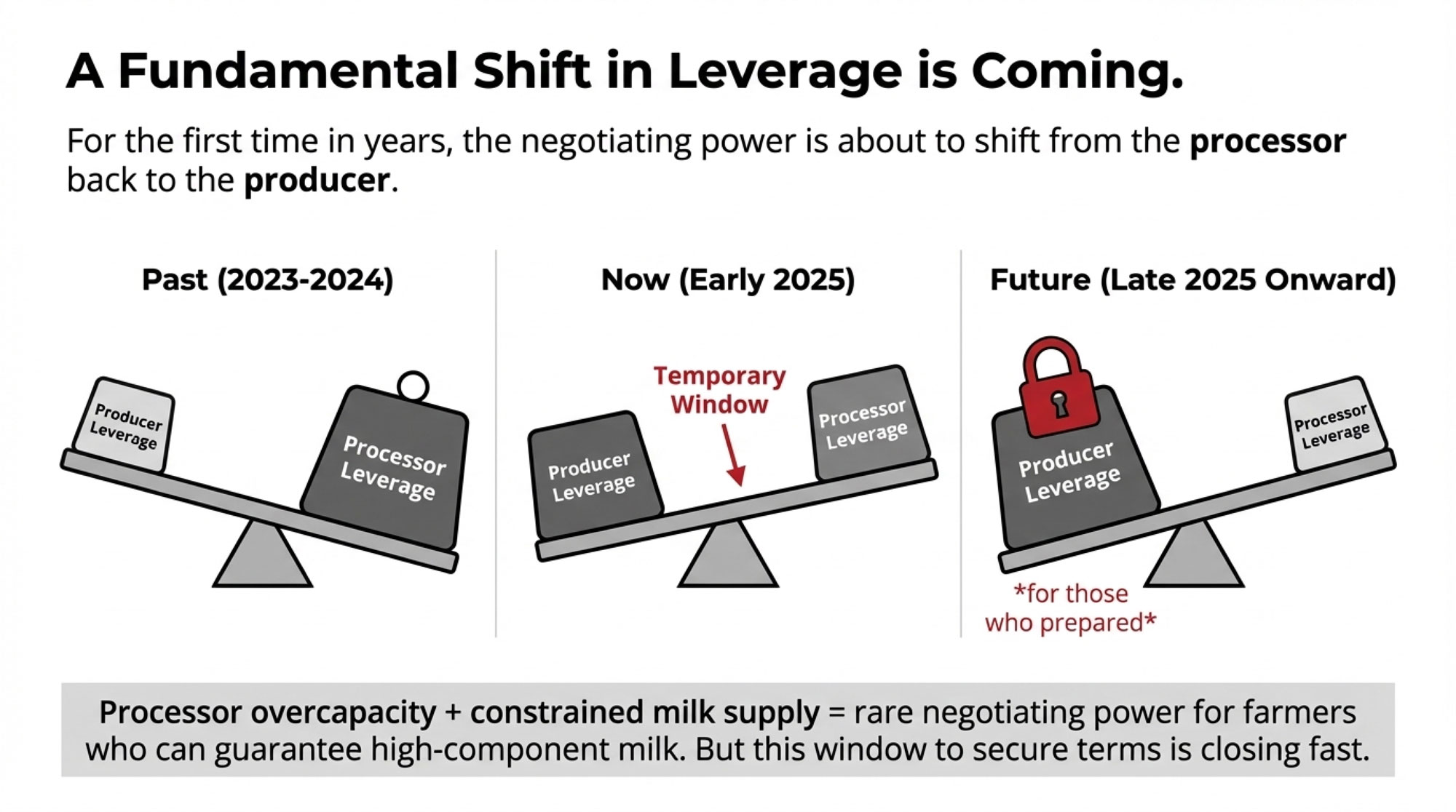
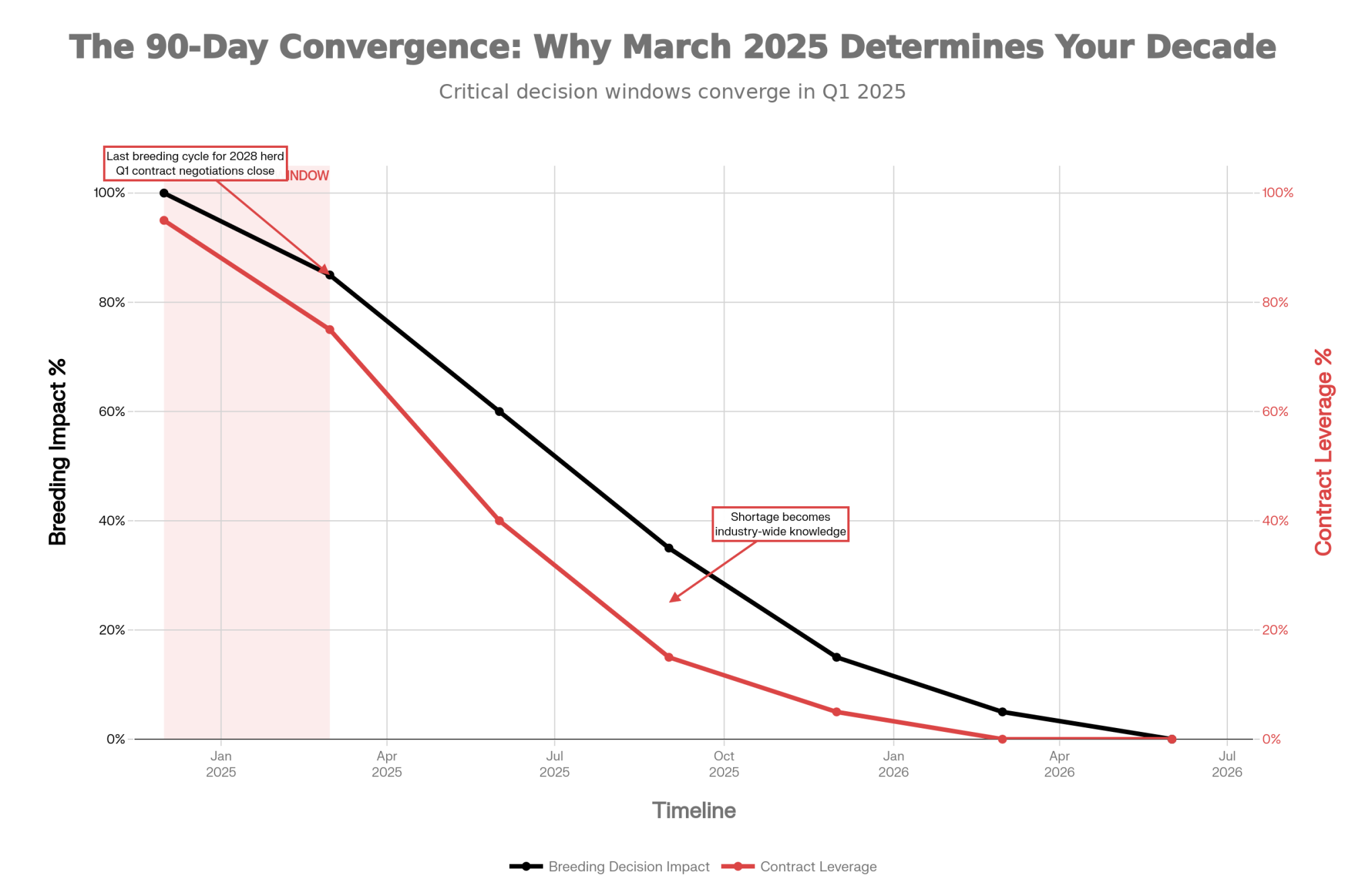
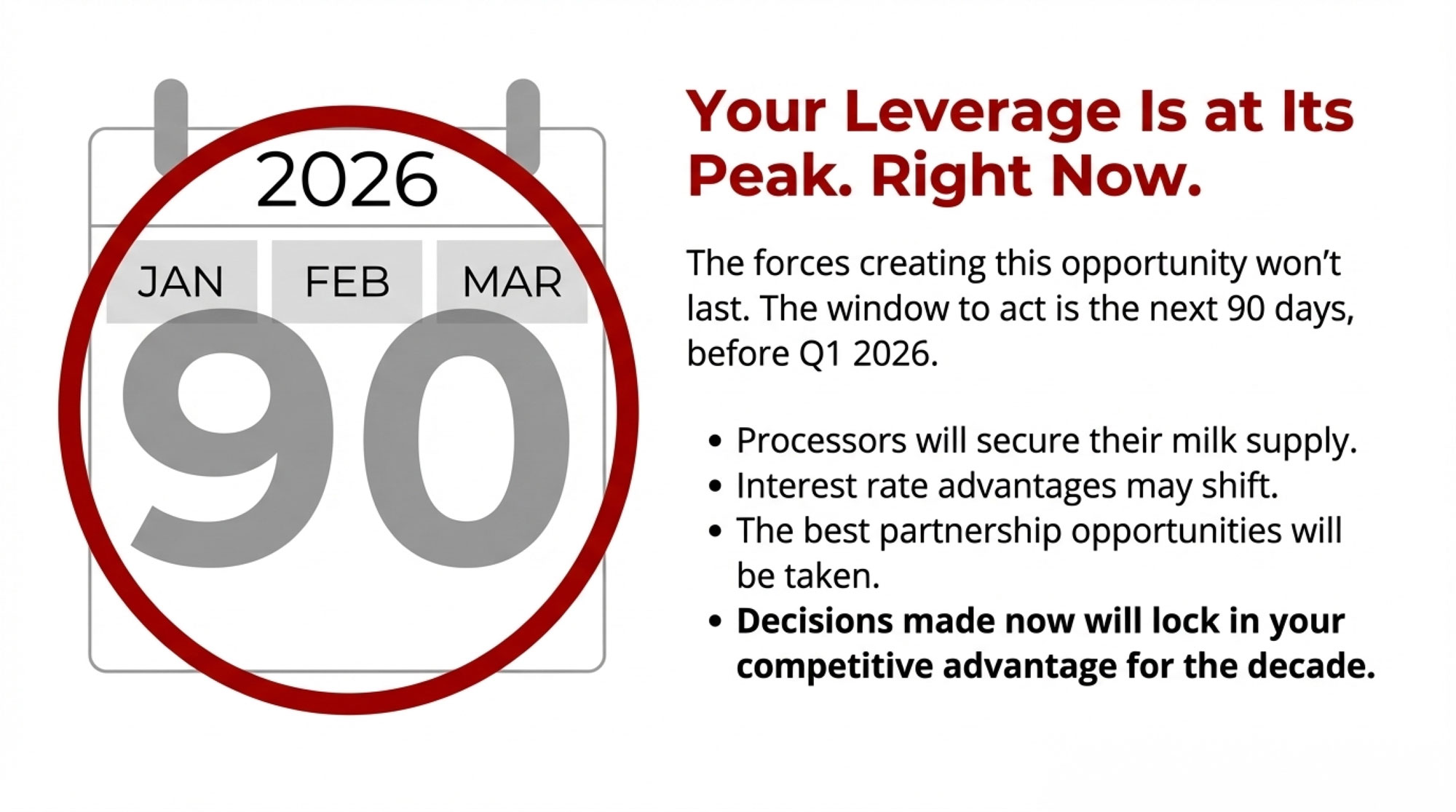
The timeline for proactive decision-making appears compressed. Whether you’re considering specialty transition, cooperative participation, strategic investment, or planned exit, the window for making deliberate choices rather than reacting to crisis seems to be the next six to twelve months. Asset values, credit access, and market options tend to deteriorate once financial stress becomes externally visible.

Professional guidance matters more than usual. This isn’t a moment for figuring everything out alone. State agricultural extension services offer transition planning resources—Wisconsin’s Center for Dairy Profitability and Cornell’s PRO-DAIRY program have developed tools specifically for this environment. The Farm Financial Standards Council maintains directories of qualified agricultural financial consultants. USDA’s Farm Service Agency administers loan programs supporting organic transition or operational restructuring.

Consider what you actually want. Beyond financial analysis lies a personal question: What do you want your life to look like in three years? Five years? Sometimes the right answer is to continue farming dairy under restructured circumstances. Sometimes it means preserving the equity you’ve built and redirecting it elsewhere. Both can represent good decisions depending on your situation and values.

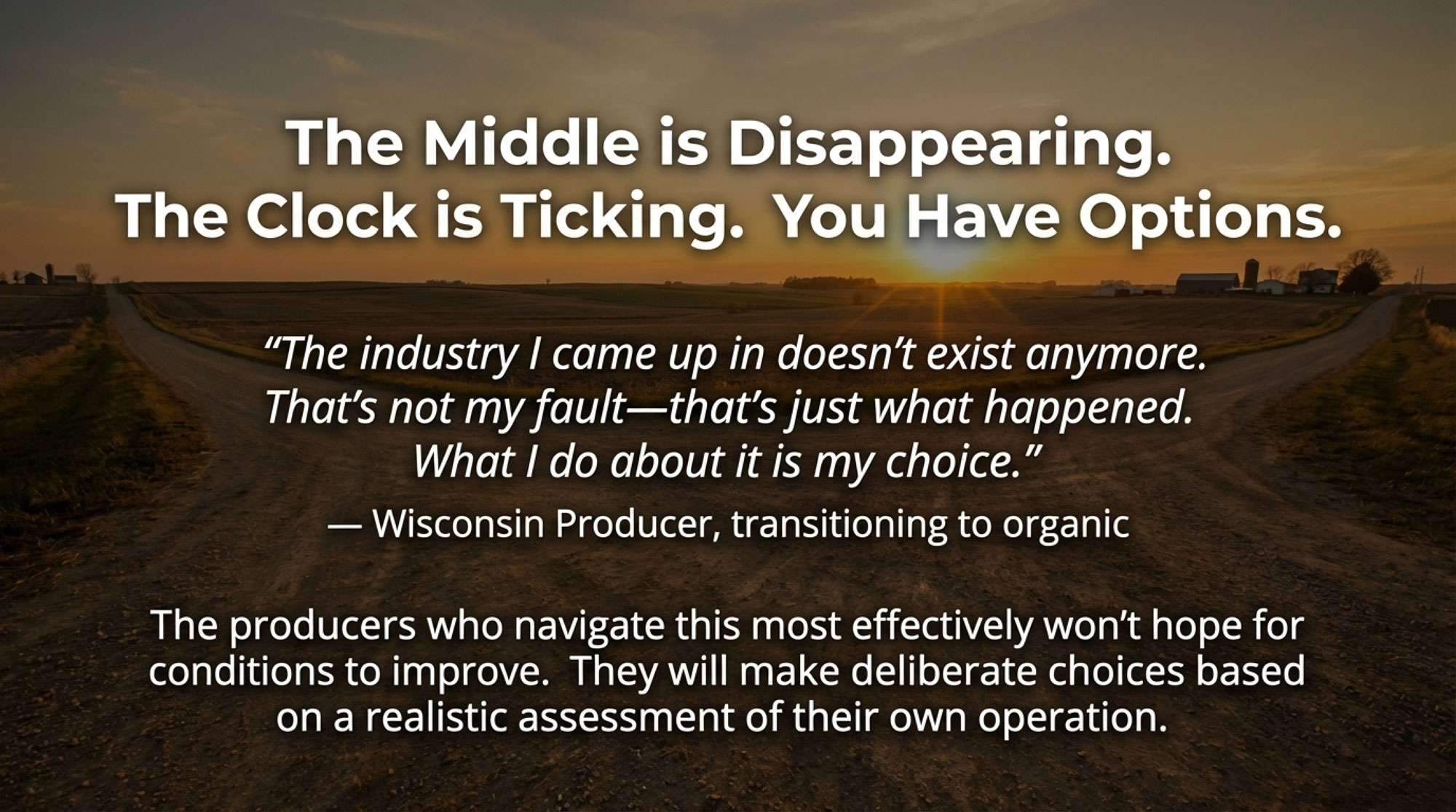
A producer working through organic transition planning after thirty years in conventional dairy offered a perspective that’s stayed with me: “The industry I came up in doesn’t exist anymore. That’s not my fault—that’s just what happened. What I do about it is my choice.”

Practical Considerations by Operation Size

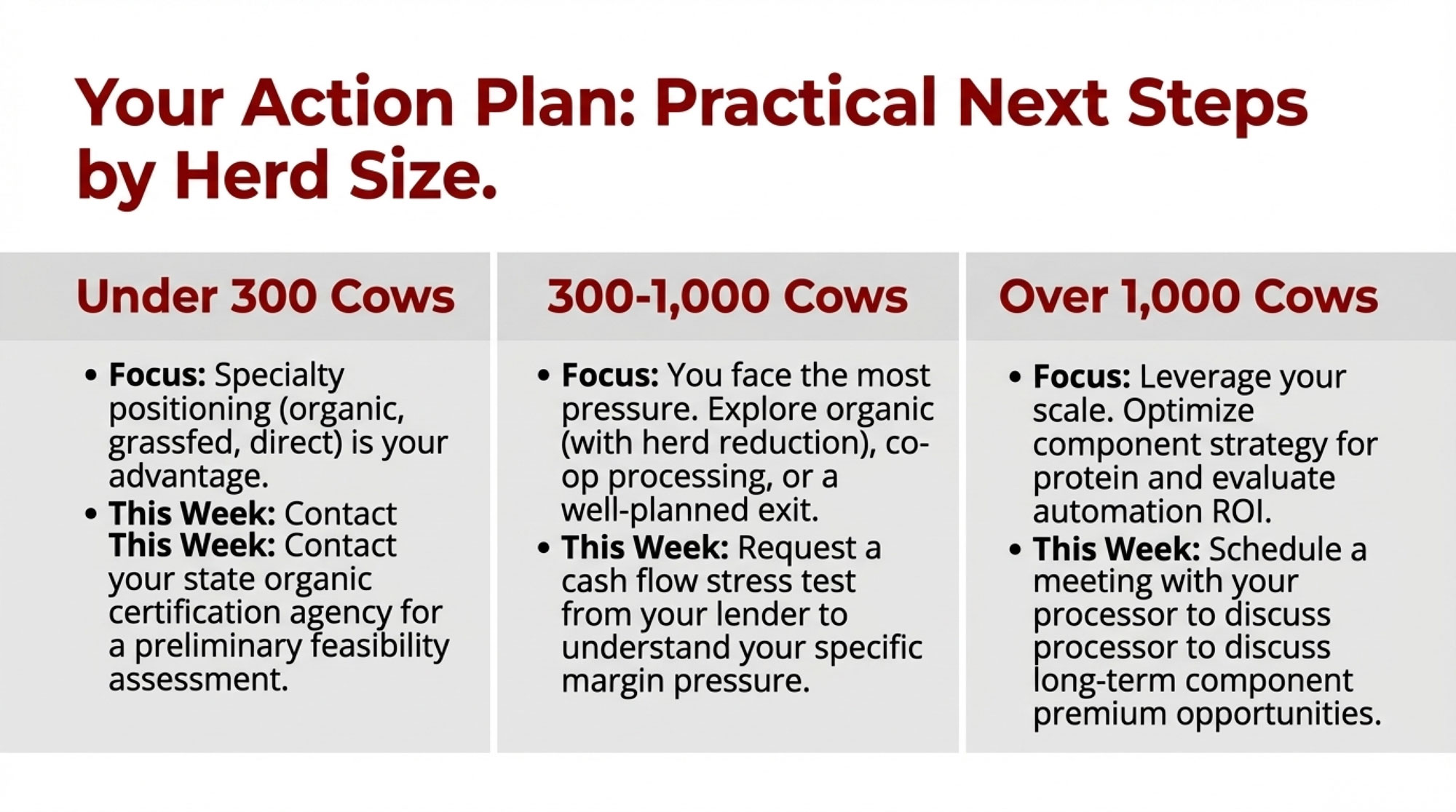
For operations under 300 cows:

  • Specialty positioning—organic, grassfed, direct-to-consumer—offers economics that commodity production increasingly struggles to match
  • Your scale disadvantage in commodity markets can become an advantage where authenticity and direct relationships matter
  • Organic certification typically requires 18-24 months of transition planning; raw milk licensing varies significantly by state
  • State organic certification agencies and NODPA offer valuable transition guidance
  • This week: Contact your state organic certification agency to request a preliminary feasibility assessment for your operation

For operations of 300-1,000 cows:

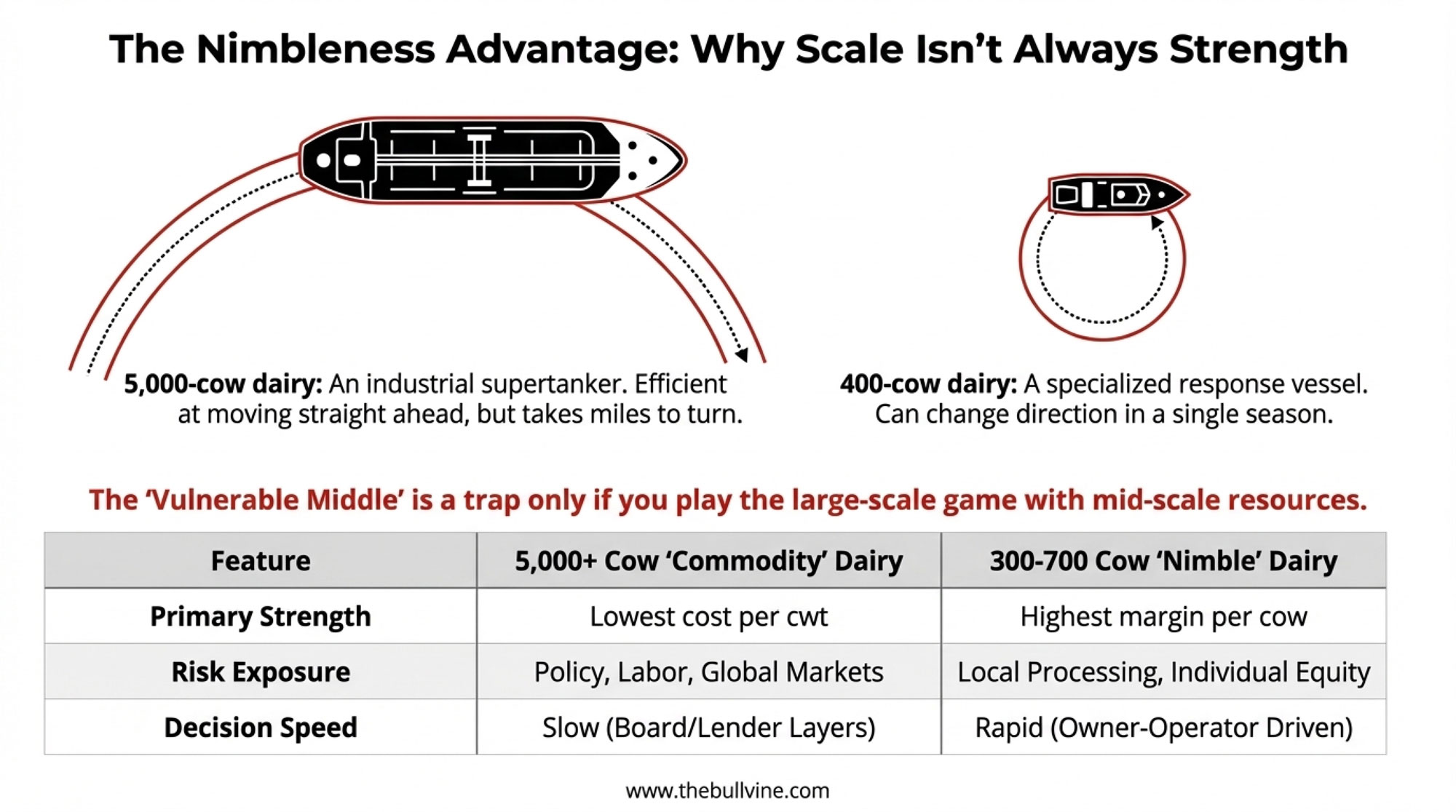
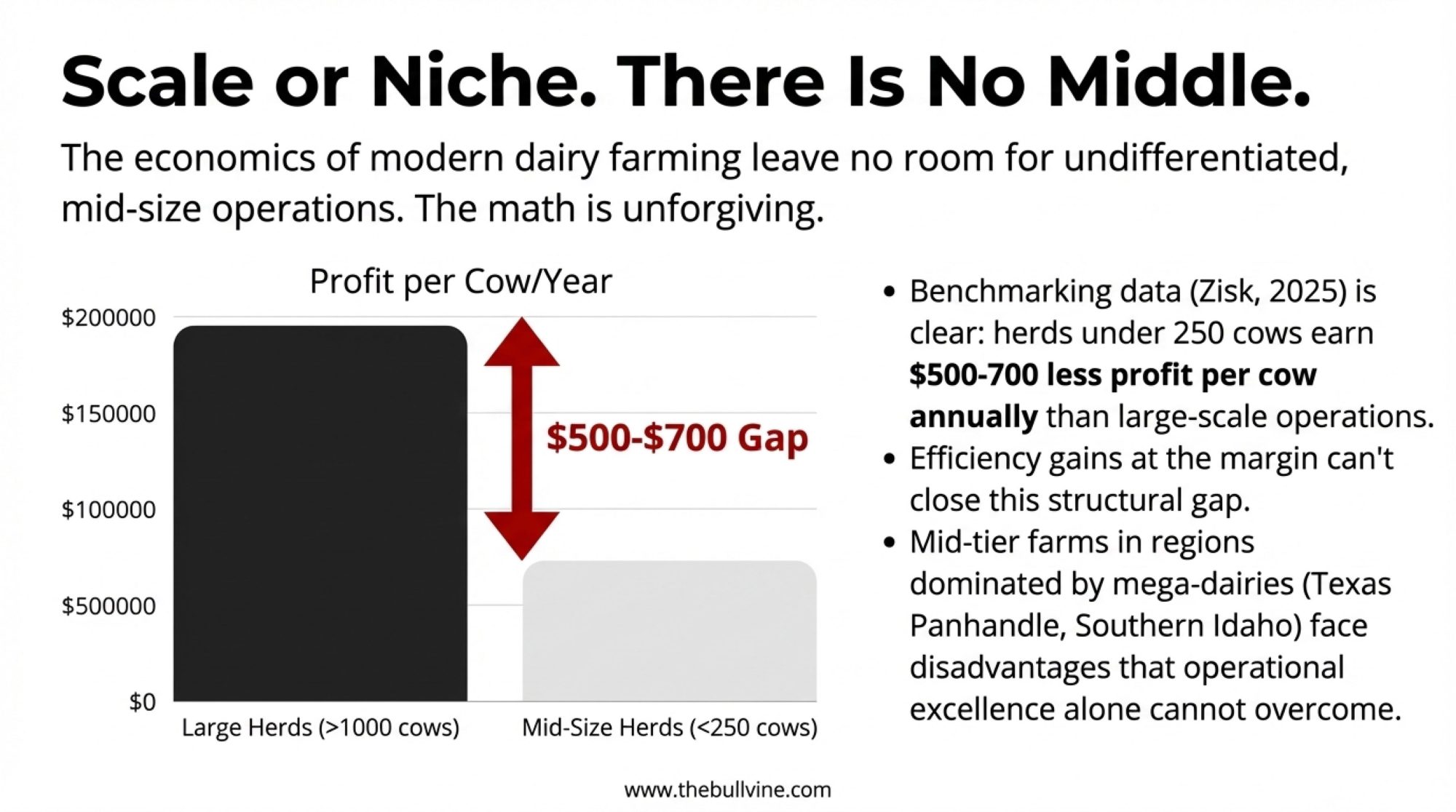
  • This scale faces the most significant structural pressure—large enough that specialty positioning at current capacity is difficult, but not large enough for automation economics to work straightforwardly
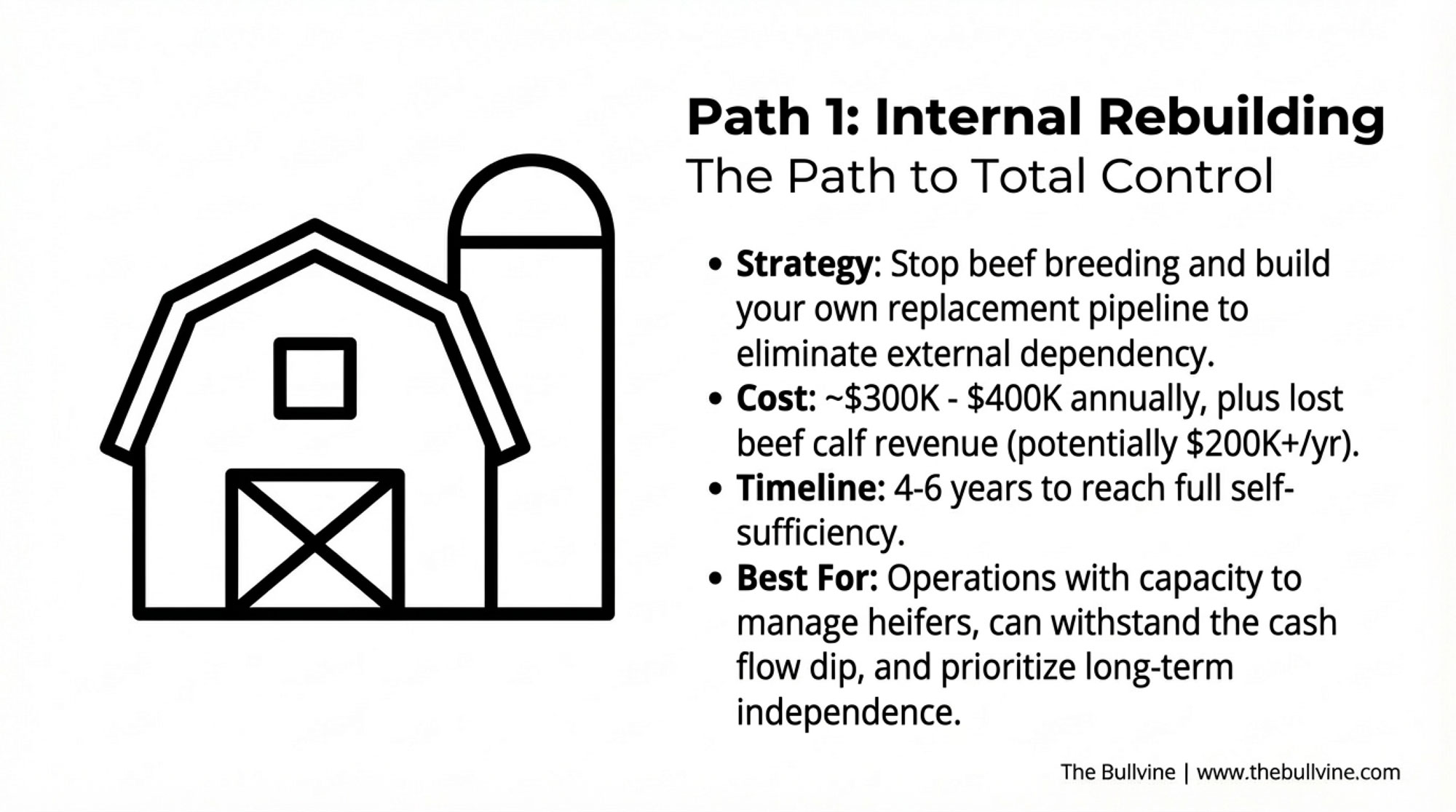
  • Viable paths worth exploring: organic conversion with strategic herd reduction, cooperative processing partnerships, or well-planned exit
  • Timeline for decision-making matters; consultation with dairy financial specialists before mid-2026 seems prudent
  • Conversations with neighboring operations about cooperative arrangements may reveal unexpected opportunities
  • This week: Request a cash flow stress test from your lender or farm financial consultant to understand your specific margin pressure under various price scenarios

For operations above 1,000 cows:

  • Automation ROI becomes more favorable at this scale; systematic robotics evaluation is appropriate if not already undertaken
  • Processor relationships and component optimization—particularly protein—represent strategic priorities worth attention
  • Structural advantages in labor efficiency, purchasing leverage, and capital access provide meaningful flexibility
  • Expansion through the acquisition of exiting operations may warrant consideration depending on circumstances
  • This week: Schedule a meeting with your processor contact to discuss long-term supply relationship options and component premium opportunities

For all operations regardless of size:

  • Breeding program review with attention to emerging component economics favoring protein
  • Forward projections incorporating $3,000+ heifer replacement costs
  • Recognition that GLP-1 demand impacts appear structural rather than cyclical
  • Early lender conversations if refinancing or restructuring might become necessary

The dairy industry has weathered profound changes before and will continue producing the milk, cheese, and products consumers depend on. What’s shifting is who produces them and at what scale—and that transition is happening faster than many anticipated.

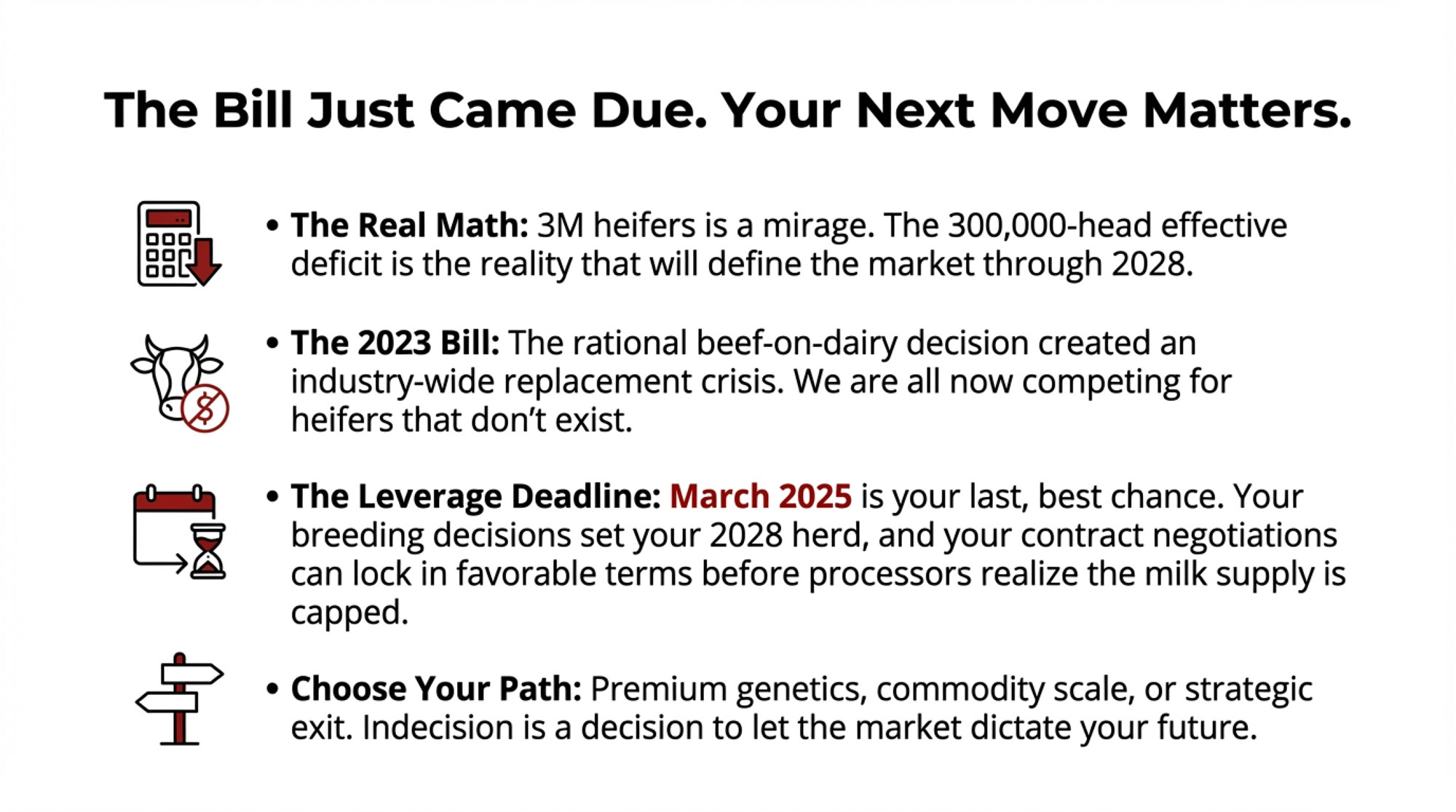
For individual producers, the essential insight is this: the forces reshaping dairy economics appear structural rather than cyclical. Making strategic decisions—whether restructuring toward specialty production, joining cooperative arrangements, investing in scale and automation, or executing an orderly exit—tends to preserve options and equity that waiting erodes.

The producers who navigate this most effectively share a common characteristic: they make deliberate choices based on a realistic assessment of their specific circumstances rather than hoping that general conditions will improve on their own.

The choice belongs to each of you. The information needed to make it wisely is increasingly available.

Key Takeaways:

  • Heifer economics have flipped: Prices tripled ($1,140 → $3,500+), and inventory is at its lowest since 1978. Every replacement costs $2,000+ more than it did three years ago.
  • Protein is overtaking butterfat: Component premiums are shifting. Review your breeding program now—genetics from 2022 may be optimized for a vanishing market.
  • The middle is disappearing: 300-1,000 cow operations face a structural squeeze—too large for specialty pivots, too small for automation ROI to work.
  • Four paths, one timeline: Organic transition, cooperative processing, strategic scaling, or planned exit. All require action before mid-2026.
  • Timing is equity: Asset values favor decisions made now. The difference between proactive and reactive exit can exceed $500,000 in recovered value.

Complete references and supporting documentation are available upon request by contacting the editorial team at editor@thebullvine.com.

Learn More:

Join the Revolution!

Join over 30,000 successful dairy professionals who rely on Bullvine Weekly for their competitive edge. Delivered directly to your inbox each week, our exclusive industry insights help you make smarter decisions while saving precious hours every week. Never miss critical updates on milk production trends, breakthrough technologies, and profit-boosting strategies that top producers are already implementing. Subscribe now to transform your dairy operation’s efficiency and profitability—your future success is just one click away.
NewsSubscribe
First
Last
Consent

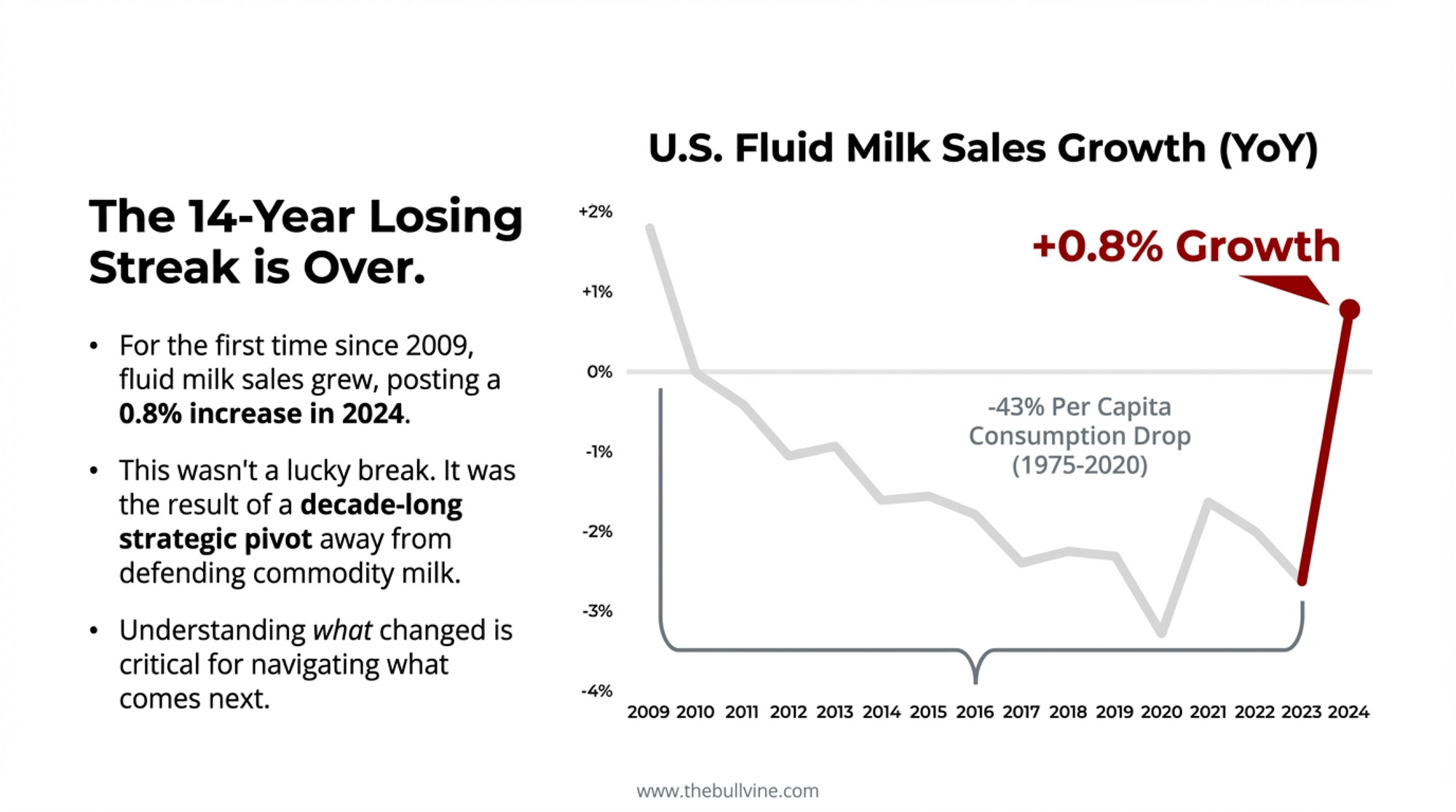
From -43% to +0.8%: The Genetic Shift Powering Dairy’s First Fluid Milk Growth Since 2009

How Net Merit changes, fairlife’s $7.4 billion success, and the premium pivot are reshaping what your genetics are worth.

Dairy Genetic Shift

Executive Summary:  For the first time since 2009, fluid milk sales grew in 2024—up 0.8%, ending a 14-year decline. The turnaround didn’t come from better marketing of commodity milk; it came from building what consumers actually wanted: lactose-free, high-protein, premium products that command real price premiums. fairlife proved the model works spectacularly, generating $7.4 billion in total value for Coca-Cola and reshaping the value of dairy genetics. The April 2025 Net Merit revision tells the story: butterfat emphasis jumps to 31.8% while protein drops to 13.0%—volume-only genetics are losing economic ground. But here’s the hard truth: 40% of U.S. dairy farms exited between 2017 and 2022, and premium market access isn’t equally distributed. The strategic question for every producer is no longer whether this shift is real—it clearly is—but whether your operation’s genetics, scale, and processor relationships position you to capture value from it.

After decades of falling fluid milk sales, the industry posted growth in 2024 for the first time since 2009. The story behind that turnaround holds lessons for every farmer making decisions today.

By the Numbers: Dairy’s Turnaround at a Glance

MetricThenNow
Per capita fluid milk consumption247 lbs (1975)141 lbs (2020)
2024 fluid milk sales vs. 202314-year decline+0.8% growth
U.S. dairy farms39,303 (2017)24,082 (2022)
Milk from farms with 1,000+ cows60% (2017)68% (2022)
Holstein butterfat average3.9% (2019)4.23% (2024)
fairlife annual retail sales$90M (2015)$1B+ (2022)
Net Merit protein emphasis19.6% (2021)13.0% (April 2025)
Net Merit butterfat emphasis28.6% (2021)31.8% (April 2025)

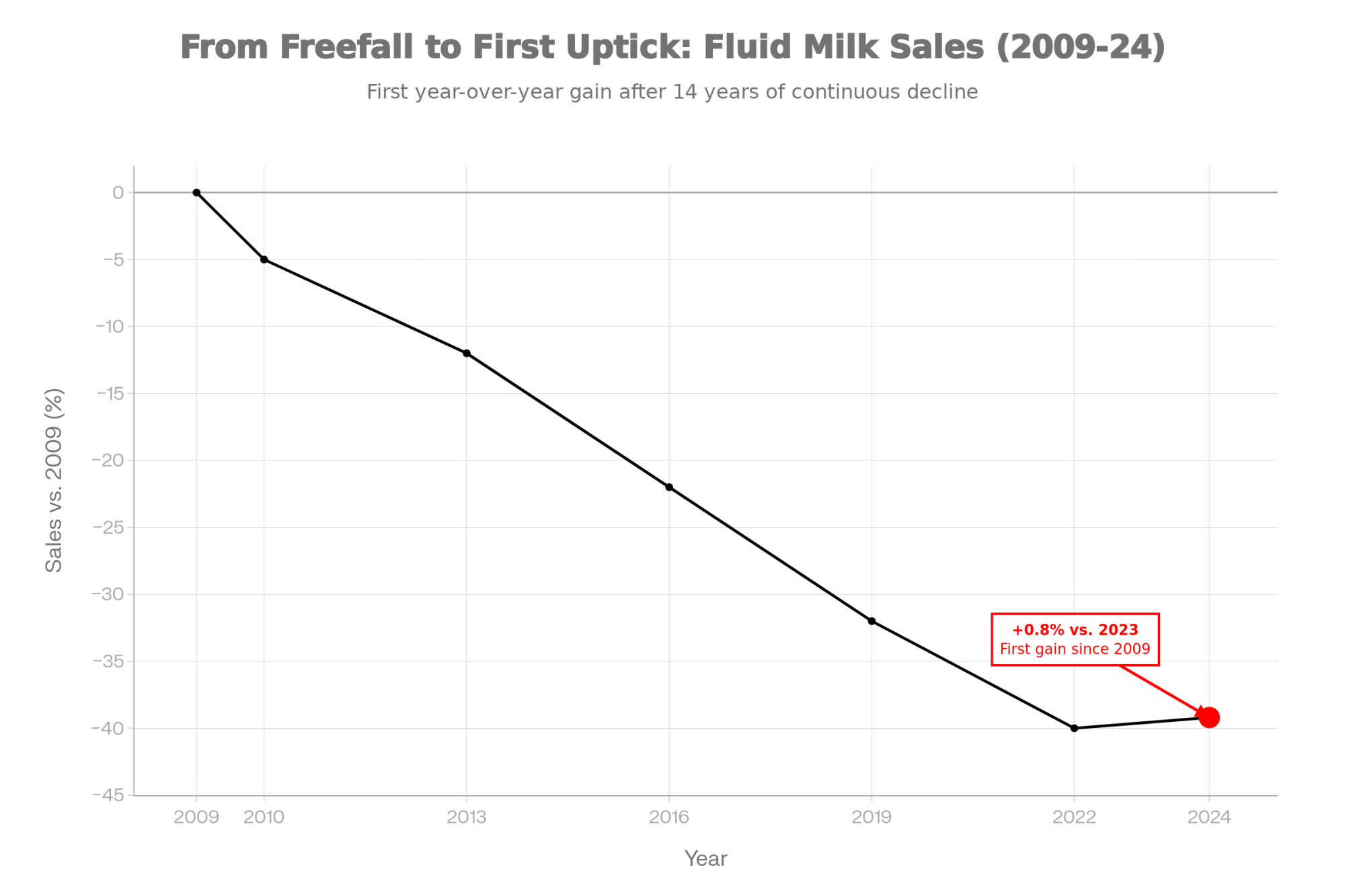
Here’s something that caught a lot of people off guard last year. Fluid milk sales actually grew in 2024—not just stabilized, but genuinely increased. USDA data show total U.S. fluid milk sales were up about 0.8% from 2023, ending a 14-year streak of annual declines. The National Milk Producers Federation called it the first year-over-year gain since 2009.

That’s worth sitting with for a moment.

What’s interesting here isn’t just the number itself. It’s what had to happen to get there. This wasn’t a lucky break or some temporary consumer fad. The growth came after roughly a decade of strategic decisions that ran counter to almost everything the dairy industry had believed about competition and survival.

I’ve been watching this unfold for years now. The more you dig into what actually changed, the more you realize there’s a playbook here that matters to producers navigating what comes next.

Understanding How Deep the Decline Really Was

To make sense of the comeback, you need to understand how challenging things had gotten. Not just the headlines—the structural shift that was reshaping the entire category.

Between 1975 and 2020, per capita fluid milk consumption in the United States dropped by nearly 43%, according to Federal Milk Market Administrator data. We went from around 247 pounds annually down to about 141 pounds per person. Penn State Extension’s dairy trends research shows similar figures—they tracked a decline from 247 pounds in 1975 to 134 pounds by 2021. That’s not a temporary dip. That’s a generational shift away from a product that used to be on every breakfast table in America.

The reasons were accumulating, as many of us observed firsthand. Beverage options multiplied—sports drinks, bottled water, energy drinks, and the expanding coffee culture. Plant-based alternatives began to claim serious shelf space in the mid-2010s. Younger consumers, especially, seemed to be reconsidering whether dairy belonged in their daily routine.

And the financial pressure kept building. Class III prices dropped below $14 per hundredweight multiple times during 2018 and 2019. The Class III average for 2018 was just $14.61, the lowest in years. If you were shipping milk during those months, you remember.

Then came Dean Foods. The largest fluid milk processor in the country filed for Chapter 11 bankruptcy on November 12, 2019, in the Southern District of Texas—USDA’s Agricultural Marketing Service confirmed the filing date in subsequent proceedings. When a company of that size goes down, it sends a signal about industry direction. Or at least, that’s what everyone assumed at the time.

The Strategic Pivot: Asking a Different Question

The turning point, looking back, came when industry leadership started asking a fundamentally different question.

Instead of “How do we convince people to drink more regular milk?”—which promotion campaigns had been attempting for years—they asked: “What do modern consumers actually want that dairy could provide better than alternatives?”

Why does that distinction matter? Because it shifts the entire strategic framework.

Dairy Management Inc., the organization that manages the national dairy checkoff, commissioned extensive consumer research starting around 2014-2015. According to DMI’s published partnership reports, what they found reshaped the entire strategic approach.

Here’s what the research revealed: consumers weren’t rejecting dairy’s core benefits—protein, nutrition, taste. They were rejecting the format and the limitations. The National Institutes of Health estimates that somewhere between 30 and 50 million American adults are lactose intolerant—MedlinePlus and federal health resources have consistently cited this range. Many of those people wanted dairy’s nutritional benefits but couldn’t tolerate conventional milk. Others wanted higher protein for fitness goals, lower sugar for health reasons, or longer shelf life for convenience.

This consumer insight work became the foundation for everything that followed. DMI announced more than $500 million in fluid milk partnerships with seven major companies—Dairy Herd and other industry publications covered the announcement extensively. What’s particularly noteworthy is the leverage structure: most of that investment came from partners putting money into processing plants and infrastructure, while the checkoff’s direct commitment was about $30 million. That ratio—partners investing roughly $15 for every checkoff dollar—represents a fundamental strategic pivot from defending commodity milk to building new categories where dairy had natural advantages.

The fairlife Case Study

No single product illustrates the transformation better than fairlife, which has become Coca-Cola’s fastest-growing brand acquisition. The timeline is worth examining because it shows what patient long-term investment actually looks like in practice.

fairlife launched as a joint venture in 2012 between Select Milk Producers—a Texas-based dairy cooperative with just 99 member farms, as confirmed by multiple industry sources, including the Texas Agricultural Council and the University of Guelph—and Coca-Cola, which took an initial 42.5% ownership stake. The product uses ultrafiltration technology (not new technology exactly, but newly commercialized at scale) to concentrate protein, remove lactose, and reduce sugar while maintaining dairy’s nutritional profile.

National rollout came in late 2014, after test markets in Denver showed something remarkable. Coca-Cola’s Mike Saint John, speaking to industry groups, noted that the Denver test showed fairlife driving a 4% increase in fluid milk sales—not just capturing share from other brands, but actually growing the category. That distinction matters considerably when you’re trying to reverse a multi-decade decline.

The growth trajectory tells the story. By the mid-2010s, fairlife had reached about $90 million in annual sales. Industry estimates put 2019 sales at around $500 million. In January 2020, Coca-Cola acquired the remaining 57.5% stake for $979 million, according to SEC filings.

Here’s where the economics get striking. fairlife surpassed $1 billion in annual retail sales by 2021-2022, as Dairy Reporter and Coca-Cola’s earnings communications confirmed. The company’s SEC filings now show that total payments for fairlife—including the original acquisition plus performance-based earnouts—have reached approximately $7.4 billion. That earnout structure meant Coca-Cola paid more because fairlife exceeded financial targets.

YearRetail sales (USD billions)Cumulative value/investment (USD billions)
20150.090.50
20190.501.50
20221.005.00
20241.207.40

Today, fairlife sells at a clear premium to conventional milk in most retailers. High Ground Dairy’s analysis highlights these strong price premiums, while USDA retail price tracking shows conventional milk averaging about $4.39 per gallon in 2024. Consumers are paying meaningful premiums for a product delivering 50% more protein, 50% less sugar, no lactose, and a longer shelf life.

But Can Other Cooperatives Replicate This?

Here’s the question many producers are asking: Is the fairlife playbook actually replicable, or do you need Coca-Cola’s balance sheet to make it work?

The honest answer is complicated.

fairlife didn’t just have good milk—it had a partner with essentially unlimited capital, global distribution networks, and decades of beverage marketing expertise. Select Milk Producers brought the supply chain and dairy knowledge; Coca-Cola brought everything else. That’s not a model most regional cooperatives can simply copy.

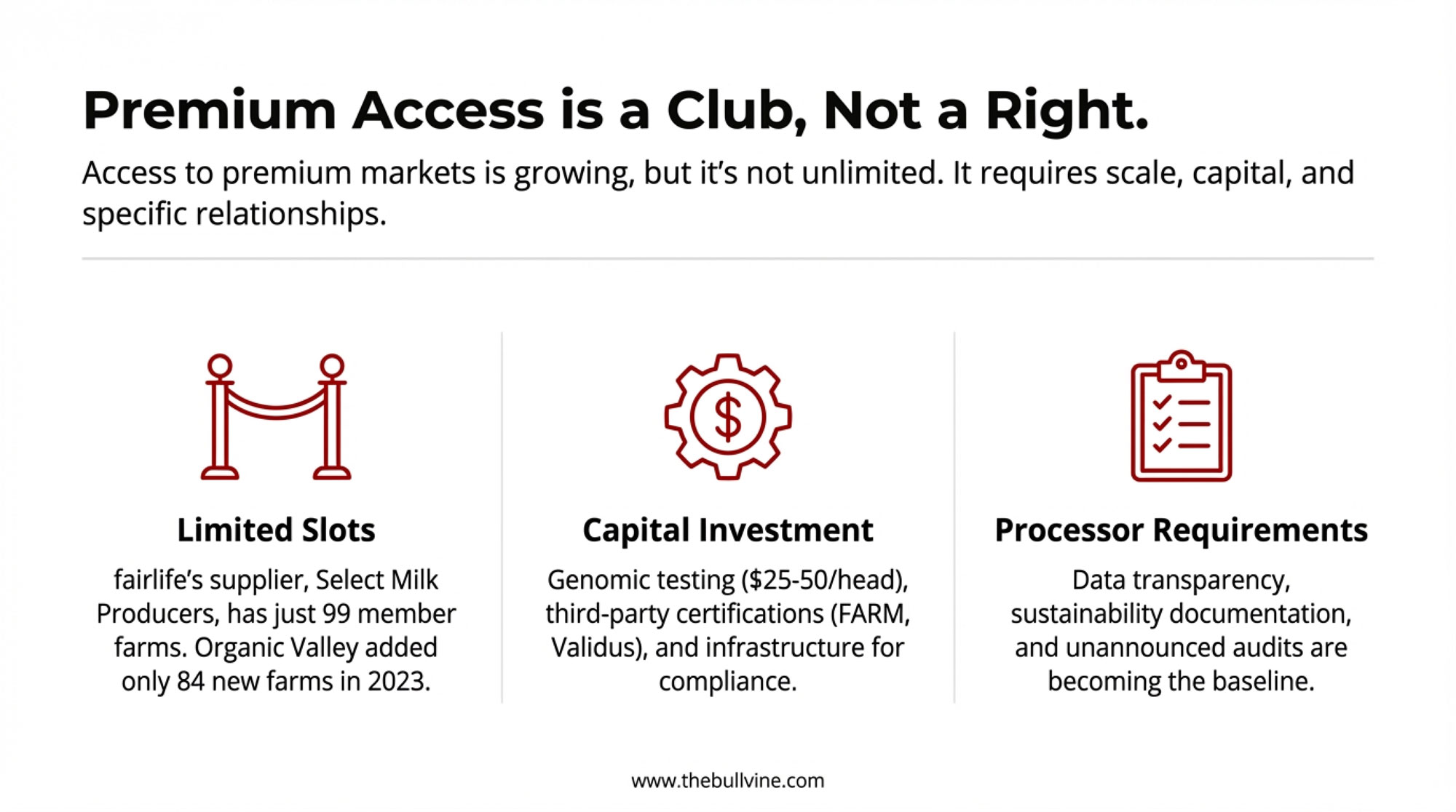
fairlife’s own FAQ clarifies the supply structure: “As a milk processor, fairlife does not own farms or cows. We partner with dairy co-ops in geographies where we have plant locations to source milk.” All supplying farms must meet fairlife’s specific animal care requirements and maintain both FARM and Validus third-party certifications. That creates a meaningful barrier for farms not already connected to fairlife’s supply network.

Consider this: Select Milk Producers has just 99 member farms. That’s a deliberately small, carefully managed supplier base—not an open door for any operation wanting premium market access. And when Organic Valley, the largest organic dairy cooperative in the country, added new farms in 2023, they brought on just 84 operations, according to Dairy Herd reporting. Premium market access is growing, but it’s not unlimited.

For mid-sized cooperatives exploring this space, the entry barriers are substantial: processing infrastructure for ultrafiltration runs into the tens of millions; third-party certification programs require ongoing investment; and finding a retail or foodservice partner willing to commit long-term distribution adds another layer of complexity.

That said, some regional cooperatives are finding their own paths. Cobblestone Milk Cooperative in Virginia built its model around exceptionally high-quality standards—bacteria and somatic cell counts far below industry norms, as Dairy Herd has documented—creating differentiation without the use of ultrafiltration technology. The approach requires different capabilities than the fairlife model, but it shows there’s more than one route to premium positioning.

The key insight: fairlife’s success proves the premium fluid milk market exists and can grow. Replicating it requires either a massive corporate partnership or finding alternative differentiation strategies appropriate to your cooperative’s scale and capabilities.

The Genetics Angle: Why “Volume-Only” Selection Is Losing Ground

For Bullvine readers, here’s where the story gets especially relevant. The shift toward premium, composition-focused products isn’t just changing processor strategies—it’s fundamentally reshaping what genetics are worth money.

The April 2025 Net Merit revision from CDCB clearly tells the story. According to the official USDA-AGIL research document “Net merit as a measure of lifetime profit: 2025 revision,” the updated NM$ formula shifts emphasis significantly:

Trait2021 NM$ WeightApril 2025 NM$ WeightDirection
Protein19.6%13.0%↓ Decreased
Fat28.6%31.8%↑ Increased
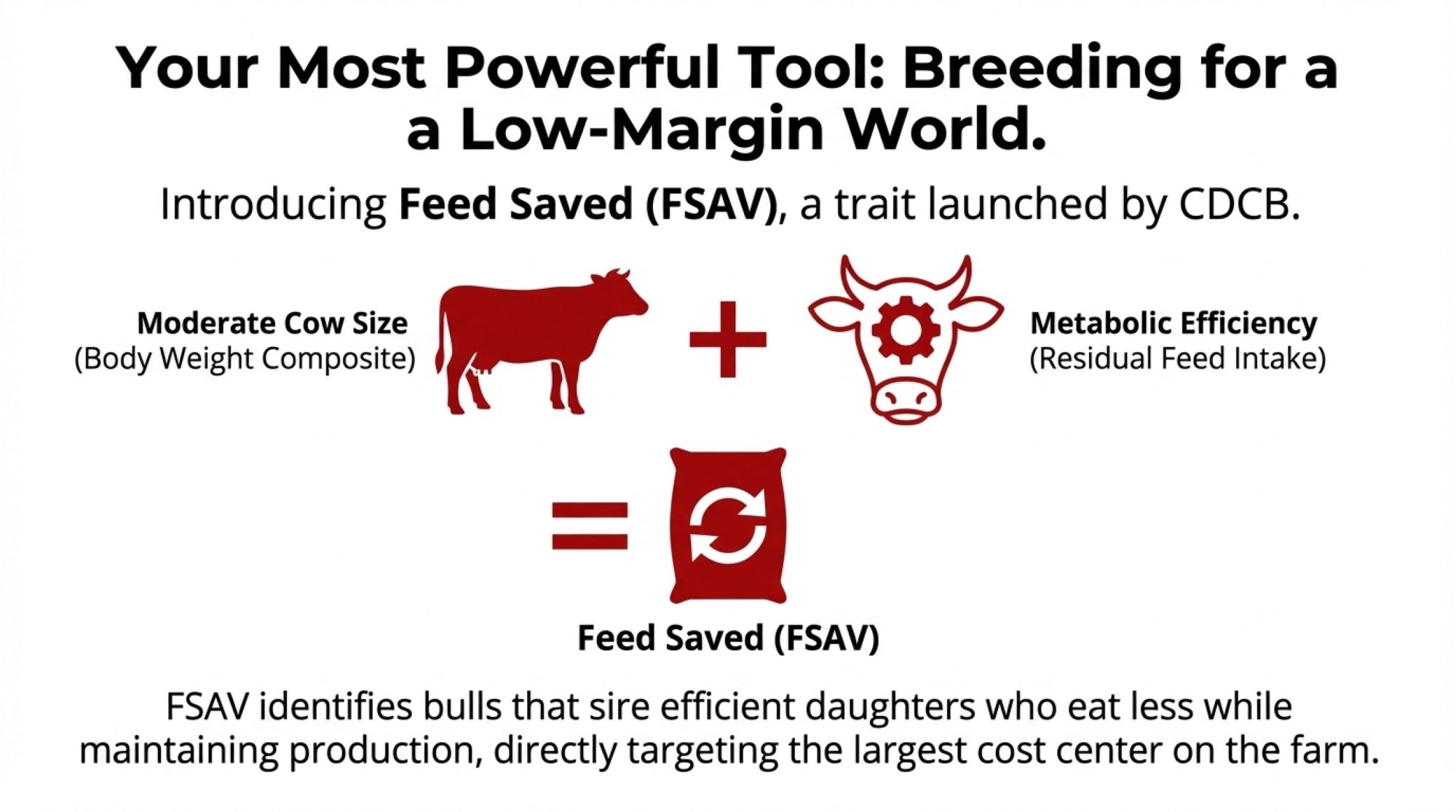
Feed Saved12.0%17.8%↑ Increased
Productive Life11.0%8.0%↓ Decreased

Why the shift? Dr. Paul VanRaden, Research Geneticist at USDA and lead author of the Net Merit revision, describes NM$ 2025 as “a strategic response to the evolving dairy industry,” integrating recent economic data and market signals. Butterfat emphasis increased because consumer demand for butter and high-fat dairy products has strengthened. Protein emphasis decreased partly because the cheese market has matured, and premium fluid products like fairlife actually remove some protein during ultrafiltration.

The real-world expression of these genetic shifts is already visible. Corey Geiger with CoBank told Brownfield Ag News that Holstein butterfat levels reached a record 4.23% in 2024, while protein levels were 3.29%. The April 2025 genetic base change reflects this: Holsteins saw a 45-pound rollback on butterfat—that’s 87.5% higher than the 24-pound adjustment in 2020, and the largest base change in the breed’s genetic history. Protein rolled back 30 pounds.

Geiger’s projection is striking: he told Brownfield he believes butterfat levels “could pass five percent in the next decade” based on current consumer demand and genetic momentum.

What this means practically: bulls selected purely for milk volume without strong component percentages are becoming less valuable relative to high-component, high-health-trait sires. TPI formula adjustments reflect similar trends—Holstein Association USA has been increasing emphasis on fat and protein pounds while rebalancing type traits.

For breeding decisions today, the implications are clear:

  • Component percentages matter more than ever. A sire with +0.10% Protein and +0.35% Fat commands attention in ways volume-only genetics don’t.
  • Feed efficiency is gaining weight. The Feed Saved emphasis increase from 12% to 17.8% in NM$ reflects tighter margins and environmental pressure.
  • Health and longevity traits remain important but are being rebalanced against productivity gains.

The premium pivot isn’t just about finding a processor who’ll pay more for your milk. It’s about recognizing that the entire genetic selection framework is shifting toward what those premium products require.

The Two-Tiered Reality: Who Actually Benefits?

This brings us to what might be the most uncomfortable part of the story. The premium pivot and genetic evolution I’ve been describing don’t affect all operations equally. In fact, there’s a reasonable argument that these trends are accelerating the exit of smaller producers who can’t afford the entry costs.

The numbers are sobering. The 2022 USDA Census of Agriculture found just 24,082 U.S. dairy farms—down from 39,303 in 2017. That’s nearly a 40% decline in five years, as Brownfield Ag News and Dairy Reporter both reported. Lucas Fuess, senior dairy analyst at Rabobank, points out that 68% of U.S. milk now comes from farms with 1,000 or more cows—operations that represent only 8% of total farms.

Category20172022
Number of U.S. dairy farms39,30324,082
Share of milk from farms with 1,000+ cows60%68%
Estimated share of farms with 1,000+ cows6%8%
Cost advantage of >2,000-cow farms vs. 100–199$8/cwt cheaper$10/cwt cheaper

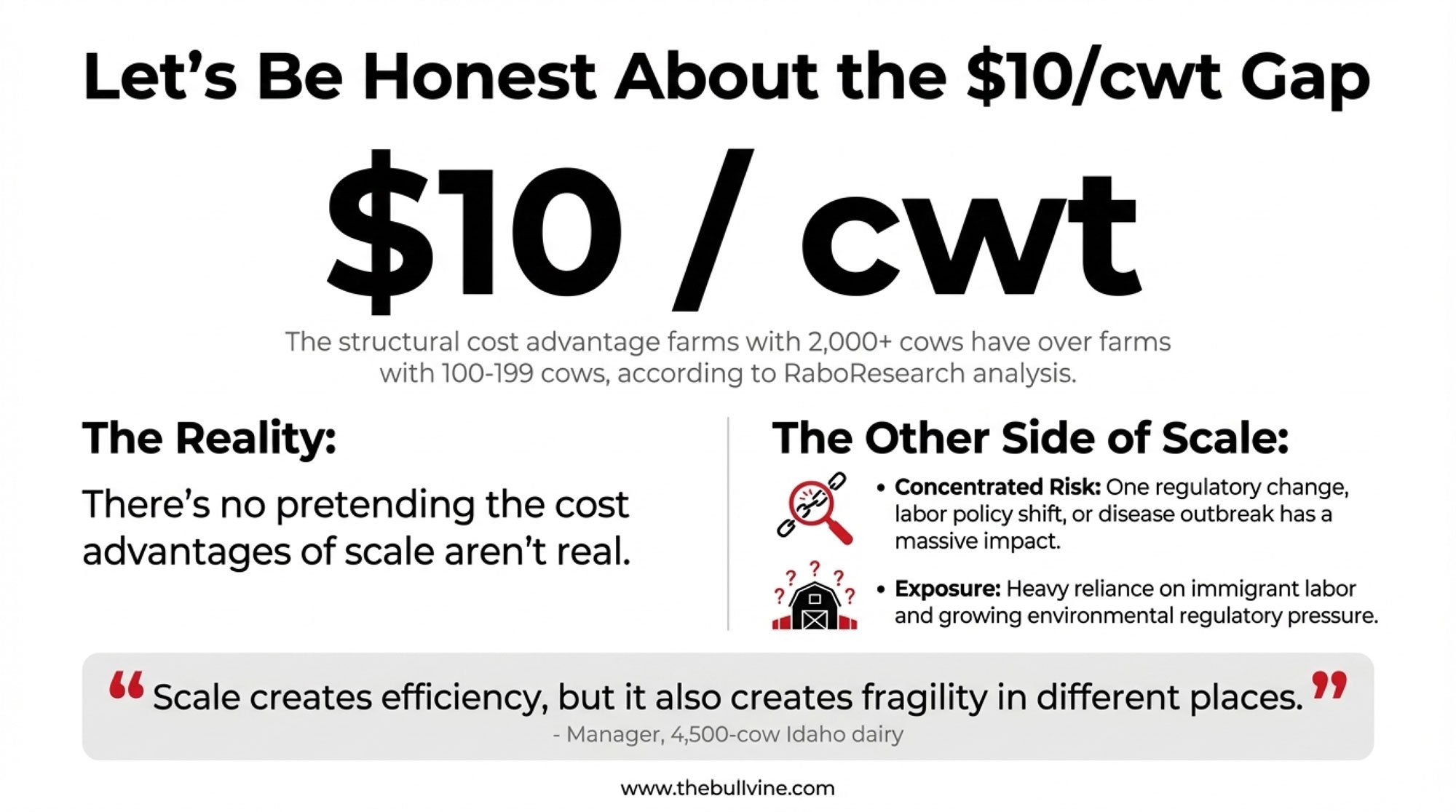
The cost dynamics are stark. USDA data show farms milking more than 2,000 cows can operate roughly $10 per hundredweight cheaper than farms with 100-199 cows. That’s not a small gap—it’s the difference between profitability and struggling to break even.

Meanwhile, the 50-99 cow category—traditionally the heart of family dairy—has seen dramatic declines according to USDA census data, with the segment nearly halving between 2017 and 2022. Dr. Frank Mitloehner at UC Davis has noted that one of the main reasons smaller dairy farms are disappearing is “ever-tightening profit margins,”—and larger farms’ cost advantages enable them to “achieve much higher net returns,” as Dairy Global reported.

Peter Vitaliano, economist for the National Milk Producers Federation, told Brownfield that 2023 saw nearly 6% of licensed dairy farms exit, and he expected “an even higher rate of dairy farm closures” in 2024. Industry analysts project that this consolidation trend will continue, with production increasingly concentrated on the largest operations.

So when we talk about genomic testing at $25-50 per head, third-party certification programs, and processor relationships that require data transparency and infrastructure investment—who can actually afford that?

For a 2,000-cow California operation, genomic testing the replacement heifer crop might run $50,000-100,000 annually—a meaningful but manageable investment against a multi-million dollar revenue base. The same testing for a 150-cow Vermont farm costs $3,750-7,500—proportionally similar, but coming out of a much tighter margin with far less negotiating leverage on the premium side.

The infrastructure requirements for premium programs add another layer. FARM certification, video monitoring at handling points, sustainability documentation, and unannounced audit preparation—these require administrative capacity that larger operations can absorb more easily than smaller ones running lean.

Does “Collaborative Competition” Help the Small Producer?

The DMI partnership model—where checkoff dollars leverage private investment—has clearly grown the premium category. But does that growth help the 150-cow operation, or does it primarily benefit the large farms and cooperatives already positioned to capture that value?

The evidence is mixed.

On one hand, composition-based pricing tiers are expanding across cooperatives of various sizes. FarmFirst, Foremost Farms, and DFA all have programs that, in theory, reward any member farm that ships high-component milk. Genetic improvement is available to everyone who chooses to pursue it.

On the other hand, premium market access often requires scale. fairlife’s supplier base is deliberately limited to 99 member farms in Select Milk Producers. Organic Valley added just 84 farms in 2023 despite significant producer interest. The infrastructure investments driving premium product growth—like fairlife’s $650 million Webster, New York facility—create jobs and markets, but they don’t automatically open doors for every nearby farm.

The most honest assessment: the premium pivot has created new opportunities, but those opportunities aren’t equally accessible. Farms with existing cooperative relationships, geographic proximity to premium processors, capital for certification and genetic investment, and administrative capacity for compliance requirements are better positioned than those without. The “collaborative competition” model has grown the pie, but the slices aren’t being distributed equally.

For smaller operations, the strategic question becomes: what premium pathways are actually accessible given your scale, location, and cooperative membership? Direct-to-consumer sales, farmstead processing, local food networks, and quality-differentiated regional cooperatives like Cobblestone may offer more realistic paths than trying to break into fairlife’s supply chain.

Navigating the Fair Oaks Crisis

Every turnaround has a moment where the whole thing nearly falls apart. For dairy’s innovation strategy, that moment came in June 2019.

The Animal Recovery Mission, an animal welfare organization, released undercover footage from Fair Oaks Farms—one of fairlife’s primary milk suppliers in Indiana. The footage showed systematic mistreatment of calves, and Dairy Reporter, along with other trade publications, covered the story extensively.

The response from retailers was immediate. Industry reporting confirmed that major chains, including Jewel-Osco, Tony’s Fresh Market, and several others, pulled fairlife from shelves within days. Consumer boycotts gained momentum. Class action lawsuits were filed alleging deceptive marketing around animal welfare claims.

What happened next offers lessons for crisis management across the industry.

Rather than minimize the situation or deflect blame, fairlife and Coca-Cola chose transparency. They immediately suspended all milk deliveries from Fair Oaks Farms. Dairy Reporter confirmed they increased unannounced audits at supplier farms from once annually to 24 times per year—a dramatic escalation in oversight. They installed video monitoring systems at animal handling points and commissioned independent investigations of all supplying farms.

fairlife’s 2024 Animal Stewardship Report, as covered by Food Dive, notes the company has invested, along with its suppliers, nearly $30 million in its animal welfare program since the crisis. The company eventually paid $21 million to settle related litigation—Food Dive called it one of the largest settlements ever in an animal welfare labeling case.

It was expensive. It was risky—admitting failure often accelerates brand damage in the short term. But the approach preserved something more valuable: trust in the brand and in the category. By 2020-2021, fairlife had returned to most retail shelves. By 2022, it reached $1 billion in sales.

Practical Implications for Producers

So that’s the industry-level narrative. But what does it mean for someone actually running a dairy operation? That’s the question that matters most.

The shift affecting producers most directly is the changing economics around milk composition. The traditional model rewarded volume—more pounds shipped meant more revenue. The emerging model increasingly rewards components and quality characteristics that premium products require.

I’ve talked with several Upper Midwest producers who are seeing this play out in real time. Farms focusing on protein percentage and butterfat rather than volume alone are reporting meaningful improvements in their milk checks—even when shipping slightly less total volume. It requires a different way of thinking about what you’re actually producing.

Here’s the practical reality. Current Class III prices have been running in the mid-to-upper teens per hundredweight according to USDA milk pricing data, with month-to-month variation. Farms meeting premium composition targets through preferred supplier programs can access additional premiums, though specific rates vary considerably by processor and region.

MetricHerd A – Volume FocusHerd B – Premium Components
Avg. milk shipped/cow/day90 lb82 lb
Butterfat / Protein test3.7% F / 3.05% P4.2% F / 3.25% P
Base milk price$18.00/cwt$18.00/cwt
Component & quality premiums$0.40/cwt$1.30/cwt
Net mailbox price$18.40/cwt$19.30/cwt

Regional dynamics matter here. Upper Midwest cooperatives like FarmFirst and Foremost Farms have been building out composition-based pricing tiers, according to their published producer communications. California’s larger operations often negotiate directly with processors. Southeastern producers working through DFA have seen new preferred supplier programs emerge over the past couple of years. Pacific Northwest operations shipping to Darigold have their own regional dynamics. The opportunity exists, but access varies.

What many producers are discovering is that capturing these premiums requires intentional decisions rather than hoping the bulk tank tests well:

Genomic testing is typically the starting point. Testing replacement heifers for protein traits, A2 beta-casein status, and kappa-casein genotype generally runs in the $25-50 range per animal through commercial services, though prices vary by service level and volume. University extension dairy genetics research confirms these trait associations translate to real composition differences in the bulk tank over time. For a 100-heifer crop, you’re looking at a few thousand dollars—an investment that can return value within the first year of improved milk checks if you’re making culling and breeding decisions based on the results.

Sire selection follows from testing—and this is where the Net Merit shifts become directly actionable. Bulls ranking high on protein percentage, fat percentage, A2A2 genetics, and kappa-casein BB genotypes are increasingly valuable. A2A2 milk commands premiums in some markets because consumers perceive it as easier to digest. Research published in the Journal of Dairy Science confirms that kappa-casein BB genetics improve the processing characteristics of milk for ultra-filtered products.

Given the April 2025 NM$ revision, which emphasizes butterfat (+31.8% weight) and feed efficiency (+17.8% weight) while de-emphasizing protein pounds, sire selection strategies should reflect these economic realities. Volume-only genetics—high milk pounds without strong component percentages—are losing ground in the index and in the marketplace.

It’s worth noting that these genetic shifts take time. We’re talking about a 3-5 year timeline before you see the full expression in your herd. Decisions made today won’t show up meaningfully in bulk tank averages until 2028-2030. That’s the reality of cattle genetics—no shortcuts available.

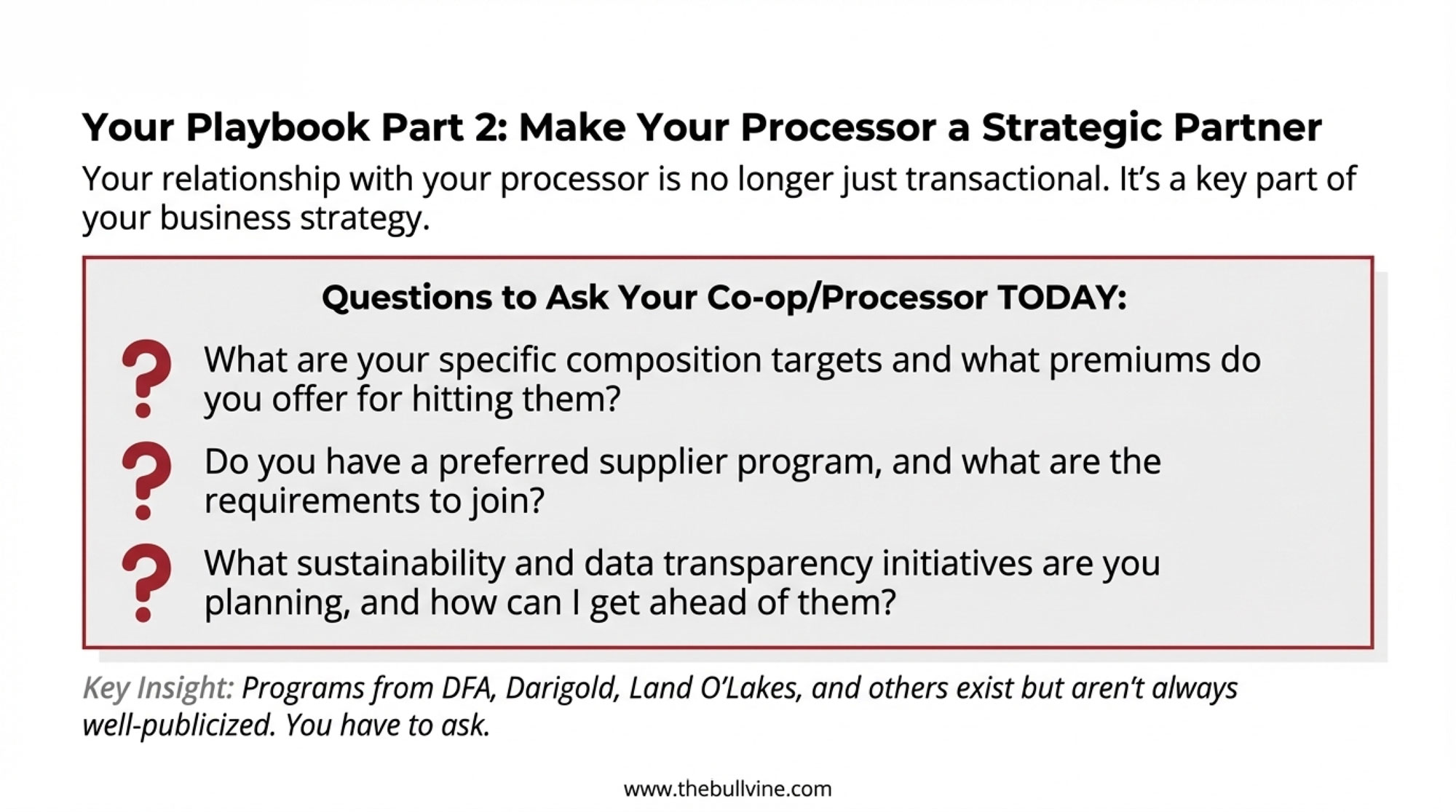
Processor relationships are becoming strategic rather than purely transactional. I’d encourage any producer reading this to contact your processor’s sourcing or sustainability department and ask directly: What composition targets are you looking for? What premiums do you offer for hitting them? Do you have a preferred supplier program?

Some processors—DFA, Darigold, Land O’Lakes, and others—have formal programs that offer price premiums, contract stability, and technical support to farms that commit to composition targets and data transparency. These programs aren’t always well-publicized, but they exist.

Certification requirements are expanding as well. fairlife, Horizon Organic, and other premium brands increasingly require third-party sustainability verification from their suppliers. FARM certification, DHI participation, and documented environmental practices are becoming baseline expectations rather than differentiators.

Challenges and Uncertainties Ahead

It would be incomplete to discuss this turnaround without acknowledging the challenges that remain. Success creates its own vulnerabilities.

  • Capacity constraints are affecting the market right now. fairlife is production-limited, according to Coca-Cola’s Q3 2024 earnings commentary. CEO James Quincey explicitly stated they couldn’t meet demand until new capacity comes online. Cowsmo reported on a 745,000-square-foot, $650 million facility under construction in Webster, New York, that should help, but it’s been a bottleneck.
  • Policy changes create uncertainty. The Federal Milk Marketing Order reform, taking effect in 2025, is expected to affect milk pricing in various ways. The exact impact depends on your region and class utilization, so it’s worth checking with your cooperative or university extension for current projections specific to your situation.
  • Plant-based competition continues. The category keeps growing, with various market research firms projecting continued expansion through the early 2030s. Growth has moderated from the rapid 2018-2020 period, but oat milk in particular continues gaining ground with younger consumers.
  • Consolidation pressure isn’t easing. The trajectory from the 2022 census—40% fewer farms in five years—continues to pressure mid-size operations caught between the flexibility of small farms and the cost advantages of large ones.
  • Complacency may be the biggest risk. The discipline that built the turnaround—long-term research investment, consumer-centric product development, collaborative strategy—is exactly what successful industries tend to abandon once growth returns. If checkoff boards redirect funding from innovation to short-term promotion, or if processors reduce R&D as margins improve, the momentum could stall.

The Underlying Lesson

Looking at this entire arc, there’s a counterintuitive insight that applies beyond dairy.

The instinct when an industry faces decline is to work harder at the existing business. Cut costs. Improve efficiency. Fight for market share. Promote more aggressively.

Dairy tried all of that for years. It wasn’t sufficient—because when the market itself is shifting away from your core product, being better at the old thing only delays the inevitable.

What changed around 2014-2015 was a fundamental acceptance that commodity fluid milk, as traditionally sold, was unlikely to return to growth. Instead of fighting that reality, industry leaders asked what they could build that consumers actually wanted, using the infrastructure and supply chain already in place.

Same farms. Same cows. Same processing facilities. But instead of trying to sell more commodity milk at mid-teens per hundredweight, the focus shifted to creating categories where dairy had genuine advantages: ultra-filtered, lactose-free, high-protein, composition-specific products commanding meaningful premiums.

Volume is flat or slightly declining. Revenue per farm is higher. Margin per cow improved. Farm sustainability is better—for those who can access the premium markets.

That last qualifier matters. The turnaround is real, but its benefits aren’t flowing equally to all producers. The strategic question for any individual operation isn’t whether the premium pivot worked at the industry level—it clearly did—but whether and how you can position to capture some of that value given your specific scale, location, genetics, and cooperative relationships.

The Bottom Line

The dairy industry in late 2025 sits at an interesting inflection point. The turnaround appears real—2024’s growth wasn’t an anomaly, and analysis suggests the trajectory is continuing. Premium categories are expanding. Consumer perceptions of dairy are improving among key demographics. Genetic selection is evolving to support composition-focused production.

But the foundational work isn’t complete. New processing capacity is still coming online. Composition-focused genetics will take another 3-5 years to express in herds that are now fully selecting. Policy and trade uncertainty could affect even well-planned operations. And the consolidation pressure that’s eliminated 40% of U.S. dairy farms since 2017 shows no sign of reversing.

For producers, the practical implications come down to several key considerations:

  • Assess your herd’s genetic profile if you haven’t already. The information shapes every breeding decision going forward. With NM$ now emphasizing butterfat and feed efficiency more heavily, your selection criteria may need updating.
  • Initiate conversations with your processor about composition premiums. Programs exist but aren’t always well-publicized. Ask specifically what they’re seeking and what they offer for hitting targets.
  • Be realistic about premium market access. Not every farm can break into fairlife’s supply chain or join Organic Valley. Understand which premium pathways are actually accessible given your scale and cooperative membership—and consider alternatives, such as quality-focused regional cooperatives or direct marketing—if the major premium programs aren’t realistic options.
  • Plan for the 2028-2030 timeframe, not just next year’s milk check. Genetic decisions compound over time. Processor relationships require time to develop. The farms positioned well three years from now are making those decisions today.
  • Watch the consolidation dynamics. If you’re a mid-size operation, clearly understand whether your cost structure and market access can remain competitive as larger operations continue to gain share.

The turnaround didn’t happen because someone discovered a compelling marketing message that made consumers embrace commodity milk again. It happened because the industry stopped trying to preserve something consumers had moved past and started building what they actually wanted.

That’s perhaps the most transferable insight here. Not the specific technology or product. The willingness to accept that what worked for 50 years may not work for the next 20—and to build something new while there’s still time.

Key Takeaways

  • The 15-year decline is over. Fluid milk sales grew 0.8% in 2024—driven by premium products like fairlife, not commodity milk marketing.
  • Your genetics are being repriced. April 2025 Net Merit boosts butterfat to 31.8% and cuts protein to 13.0%. Volume-only bulls are losing economic ground.
  • $7.4 billion proves the premium model. Coca-Cola’s total fairlife investment shows the upside is real—but capturing it requires scale, certifications, and cooperative positioning most farms don’t have.
  • 40% of U.S. dairy farms are already gone. Operations dropped from 39,303 (2017) to 24,082 (2022). Premium market benefits are concentrating in larger herds.
  • The question has changed. It’s no longer whether this shift is real—it’s whether your operation’s genetics, processor relationships, and market access position you to benefit from it. The farms winning in 2028 are making those decisions now.

Complete references and supporting documentation are available upon request by contacting the editorial team at editor@thebullvine.com.

Learn More:

Join the Revolution!

Join over 30,000 successful dairy professionals who rely on Bullvine Weekly for their competitive edge. Delivered directly to your inbox each week, our exclusive industry insights help you make smarter decisions while saving precious hours every week. Never miss critical updates on milk production trends, breakthrough technologies, and profit-boosting strategies that top producers are already implementing. Subscribe now to transform your dairy operation’s efficiency and profitability—your future success is just one click away.
NewsSubscribe
First
Last
Consent

Profitable but Drowning: The Interest Rate Crisis Reshaping Mid-Size Dairy

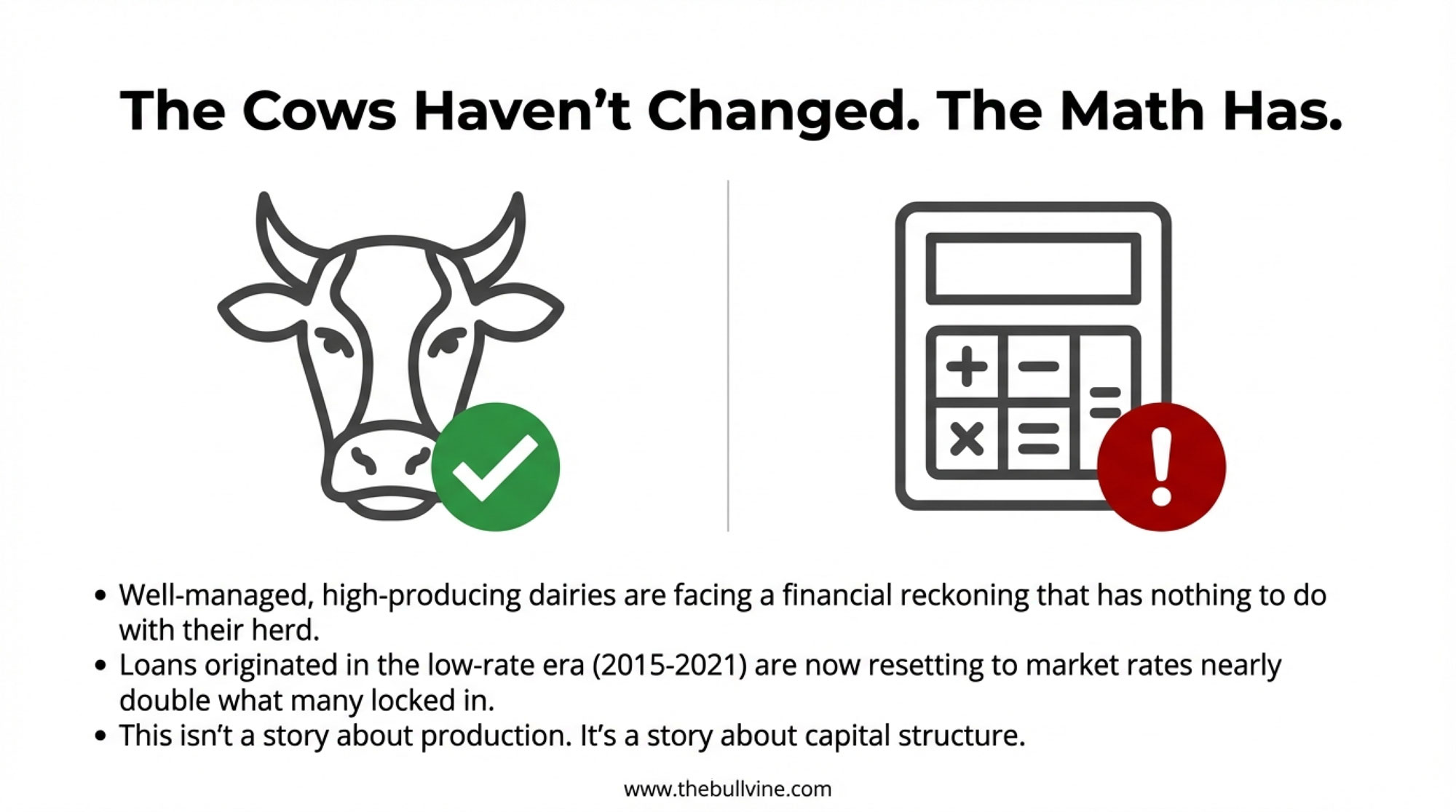
The cows haven’t changed. The math has. Why good dairies are suddenly fighting to survive.

Executive Summary: Well-managed mid-size dairies are facing a reckoning that has nothing to do with their cows. As loans from the low-rate era (2015-2021) reset to current markets—the Chicago Fed shows operating rates now at 7.73%, nearly double what many locked in—debt service is jumping 25-30% overnight. For a 400-cow dairy with typical leverage, that translates to $120,000 in added annual costs before a single operational change. Here’s what catches producers off guard: even farms current on every payment can trigger technical default when covenant ratios slip due to rate-driven debt increases, not management problems. More than 1,400 U.S. dairies closed in 2024, per USDA—Wisconsin alone lost 400. The path forward requires calculating your true breakeven at new rates, engaging lenders proactively with specific proposals, and recognizing that planned transitions preserve far more family wealth than forced exits ever do.

I’ve been having a lot of conversations lately that start the same way. A producer messages me after seeing their repricing notice, and the story sounds remarkably similar each time.

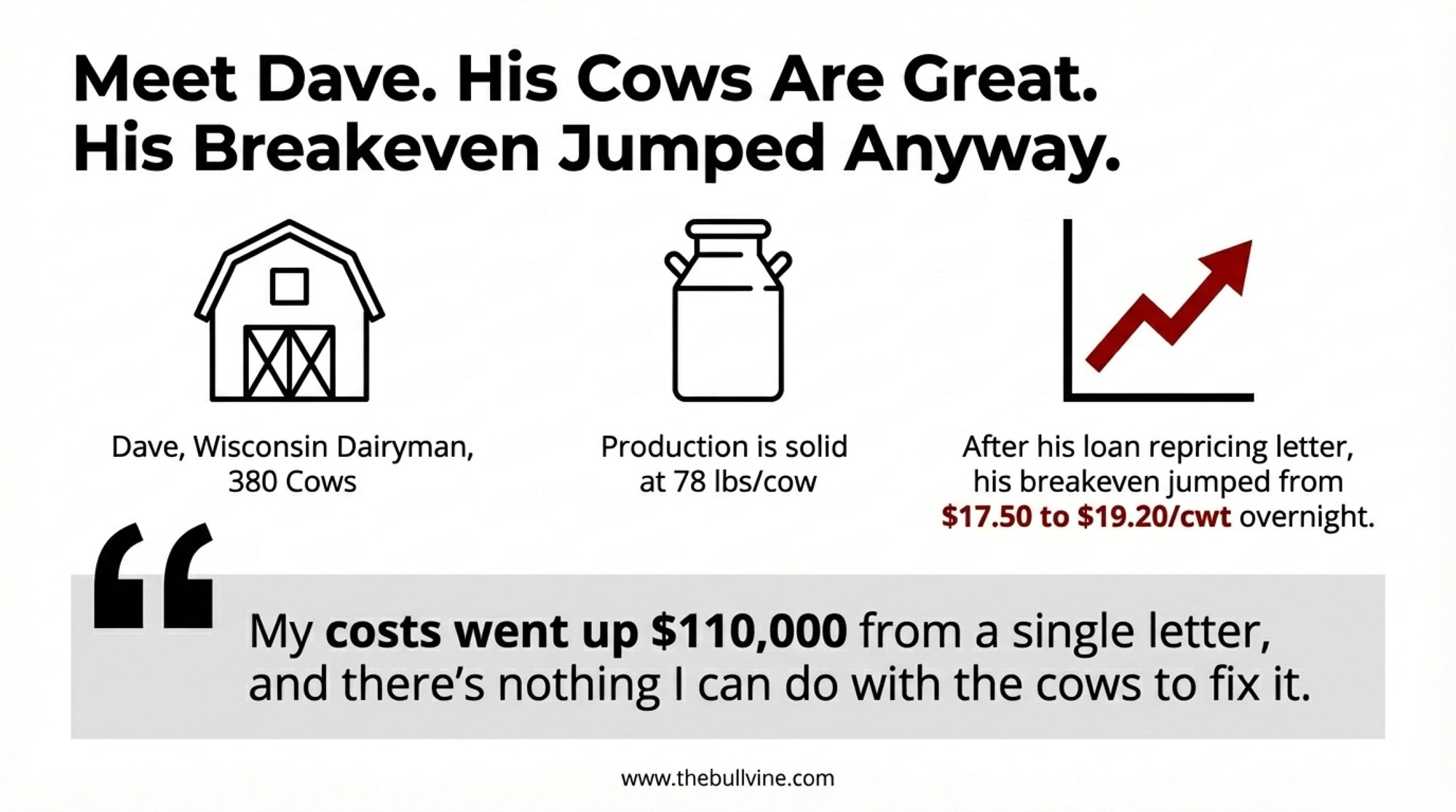
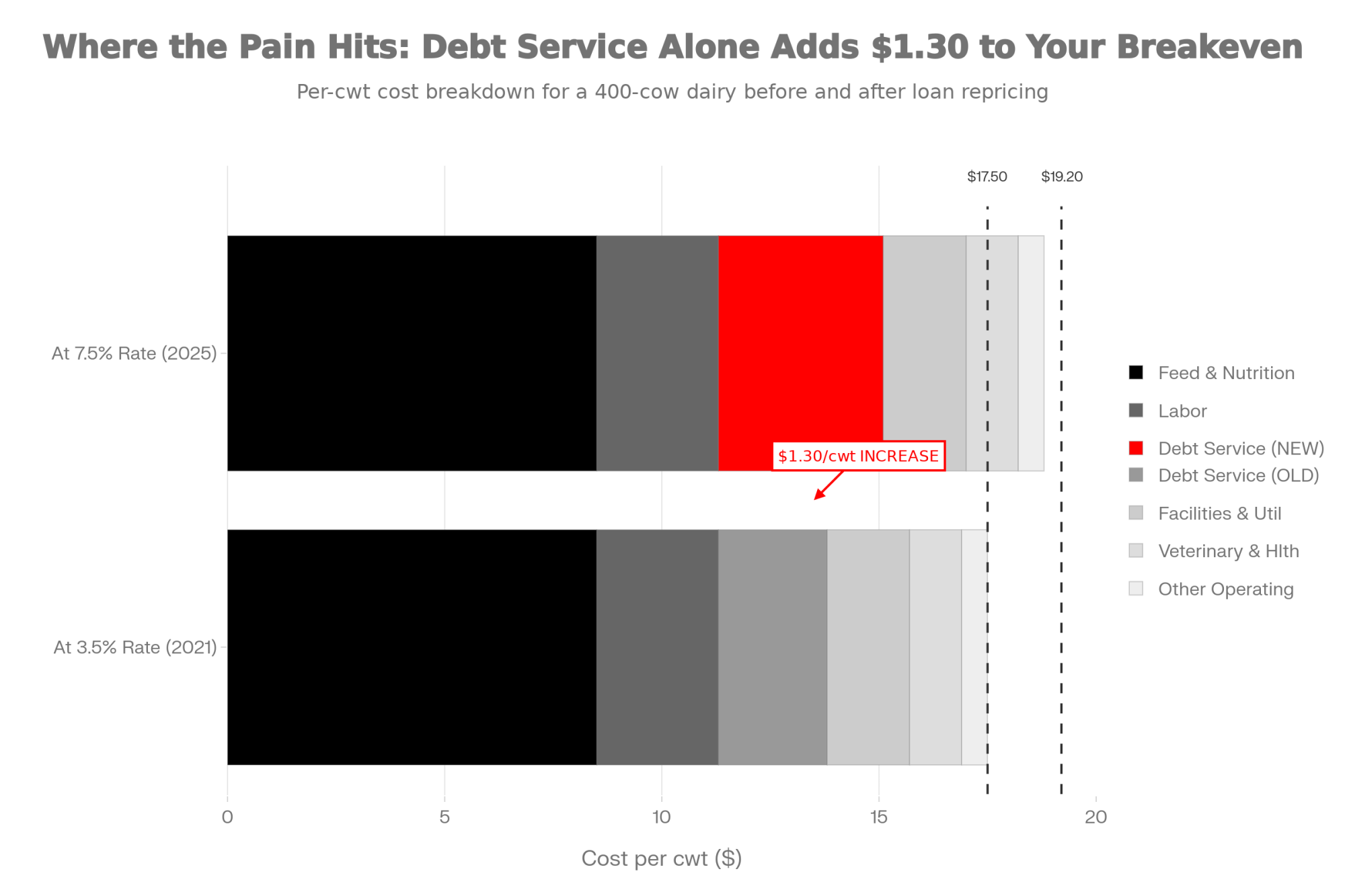
Take Dave, a Wisconsin dairyman I spoke with. When he ran his numbers after getting the repricing letter on his real estate loan, he discovered his breakeven had jumped from $17.50 to $19.20 per hundredweight. Nothing about his 380-cow operation had changed. The cows were still averaging 78 pounds. His nutrition program was dialed in. His fresh cow protocols were solid, and his transition period management hadn’t slipped. But the math had fundamentally shifted.

“I’ve been through bad milk prices before,” Dave told me. “I know how to tighten things up when we’re looking at $14 milk. But this feels different. My costs went up $110,000 from a single letter, and there’s nothing I can do with the cows to fix it.”

What struck me about that conversation—and the dozens like it I’ve had since—is how it captures something important about this moment. The challenge facing many mid-size operations isn’t about milk prices, feed costs, or management. It’s about debt structures that made perfect sense in one interest rate environment but don’t pencil out in another.

Understanding how this works can help you think through your own situation more clearly, whether you’re facing repricing directly or trying to plan around it.

How Dairy Loan Repricing Works

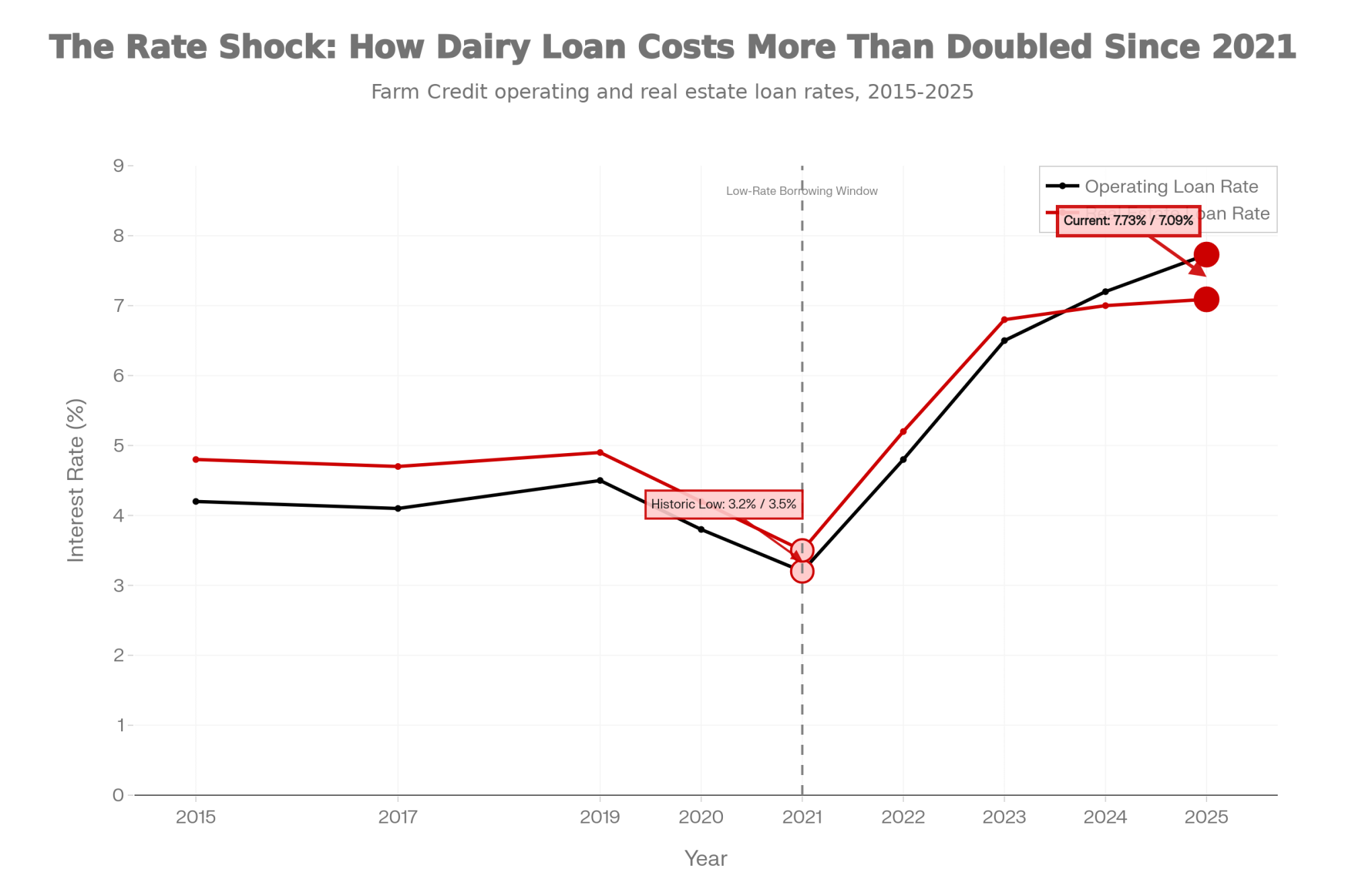
Here’s the backstory. During that stretch from roughly 2015 to 2021, agricultural lenders originated an enormous volume of dairy farm debt at rates between 3% and 4.5%. These loans financed the expansions, land purchases, parlor upgrades, and equipment investments that allowed mid-size operations to modernize and grow. It was, by most measures, a reasonable time to borrow.

Most of these loans were structured with 5-to-7-year terms before repricing—standard practice for agricultural real estate and equipment financing. What that means, practically speaking, is that a significant wave of debt is now resetting to current market rates. Federal Reserve Bank surveys throughout 2025 have documented this transition, with the Minneapolis Fed noting weakening credit conditions and declining farm incomes across the Ninth District.

The rate environment has changed substantially. The Chicago Fed’s agricultural credit survey from early 2025 shows operating loans averaging 7.73% and real estate loans at 7.09%. That’s roughly double what many producers locked in five or six years ago.

To put some numbers to this, consider a fairly typical 400-cow dairy carrying $4.5 million in total debt—the kind of balance sheet you’d see on a farm that expanded or did major capital improvements during that low-rate window:

The Repricing Impact: A Side-by-Side Comparison

Debt CategoryOriginal Rates (2020-2021)Repriced Rates (2025)Annual Increase
Real Estate Debt (15-year)3.5% → $232,000/yr7.5% → $300,000/yr+$68,000
Equipment Debt (7-year)4.0% → $197,000/yr7.0% → $217,000/yr+$20,000
Operating Line3.0% → $18,000/yr8.0% → $48,000/yr+$30,000
TOTAL ANNUAL DEBT SERVICE$446,000$566,000+$120,000 (+27%)

Based on a representative 400-cow dairy with $4.5 million total debt. Actual figures vary by operation.

That $120,000 difference translates to roughly $1.30 per hundredweight across a year’s production. For operations already running on tight margins, that kind of shift can consume the entire profit cushion that existed under the previous rate structure.

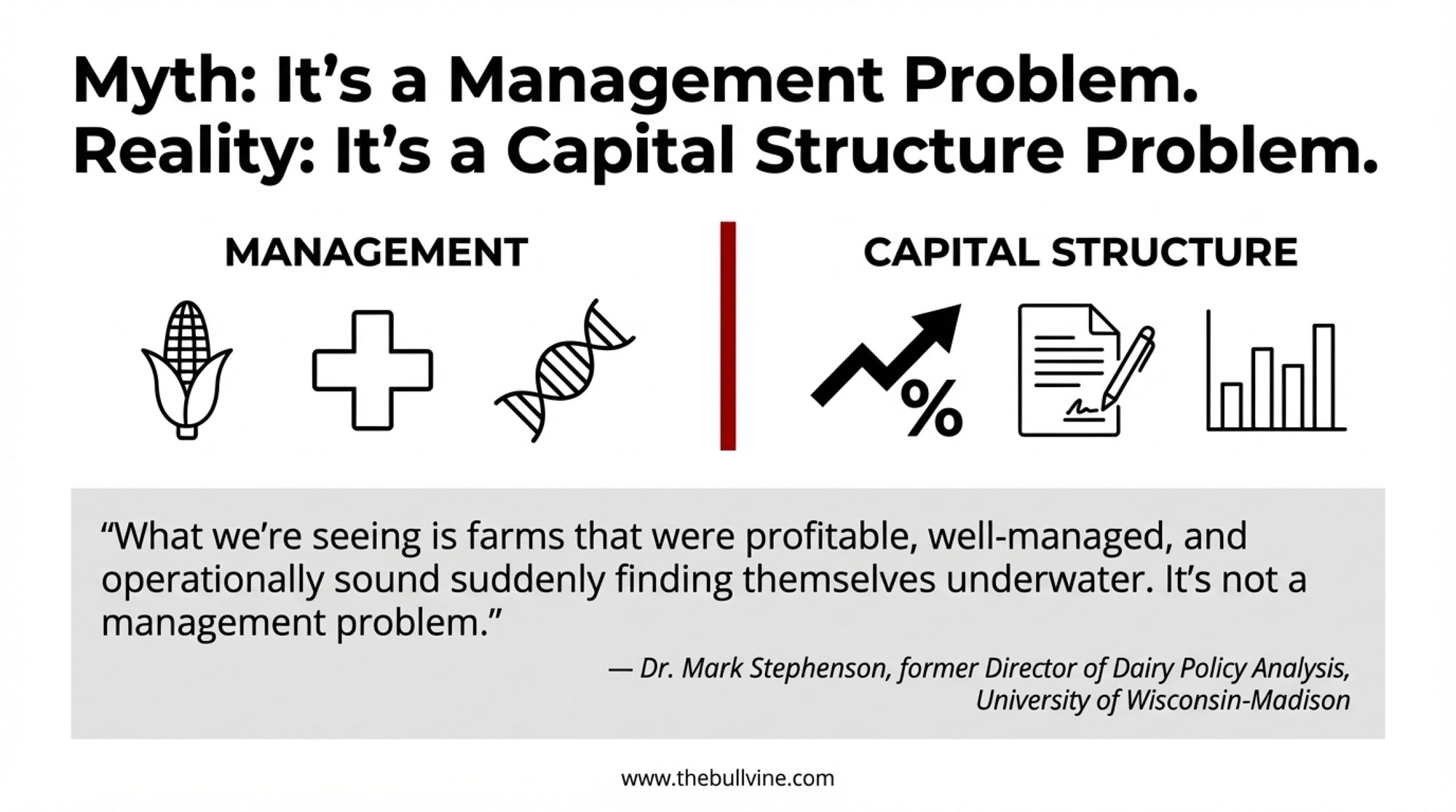
Dr. Mark Stephenson, the former Director of Dairy Policy Analysis at the University of Wisconsin-Madison, frames it this way: “What we’re seeing is farms that were profitable, well-managed, and operationally sound suddenly finding themselves underwater. It’s not a management problem. It’s a capital structure problem that originated in decisions made by both borrowers and lenders five to seven years ago.”

That framing matters. This isn’t about who’s a good farmer. It’s about financial structures adapting to changing conditions.

Which Dairy Farms Face the Greatest Repricing Risk

Operations under the greatest pressure tend to share certain characteristics. They’re typically in the 200 to 600 cow range—large enough to carry significant debt, but not quite large enough to achieve the per-unit cost advantages that help buffer larger operations against margin compression. They’re generally carrying debt-to-asset ratios between 65% and 70%, which means they’re leveraged enough that repricing creates covenant pressure, but weren’t in distress before rates moved. And most originated their loans between 2017 and 2021, during that window of historically low rates.

Geographically, the pressure seems most concentrated in traditional dairy regions. I’m hearing the most concern in Wisconsin, Michigan, Minnesota, New York, Pennsylvania, and parts of California and Idaho. The dynamics play out somewhat differently in Western dry-lot operations, where scale economics and distinct cost structures create distinct patterns. And in Canadian quota provinces, the supply management system provides some insulation, though producers there face their own version of capital intensity challenges.

The broader context here is important. The 2022 Census of Agriculture documented that approximately 65% of the nation’s dairy herd now lives on operations with 1,000 or more cows—up from just 17% back in 1997. That trajectory has been building for decades, but the current rate environment appears to be accelerating it.

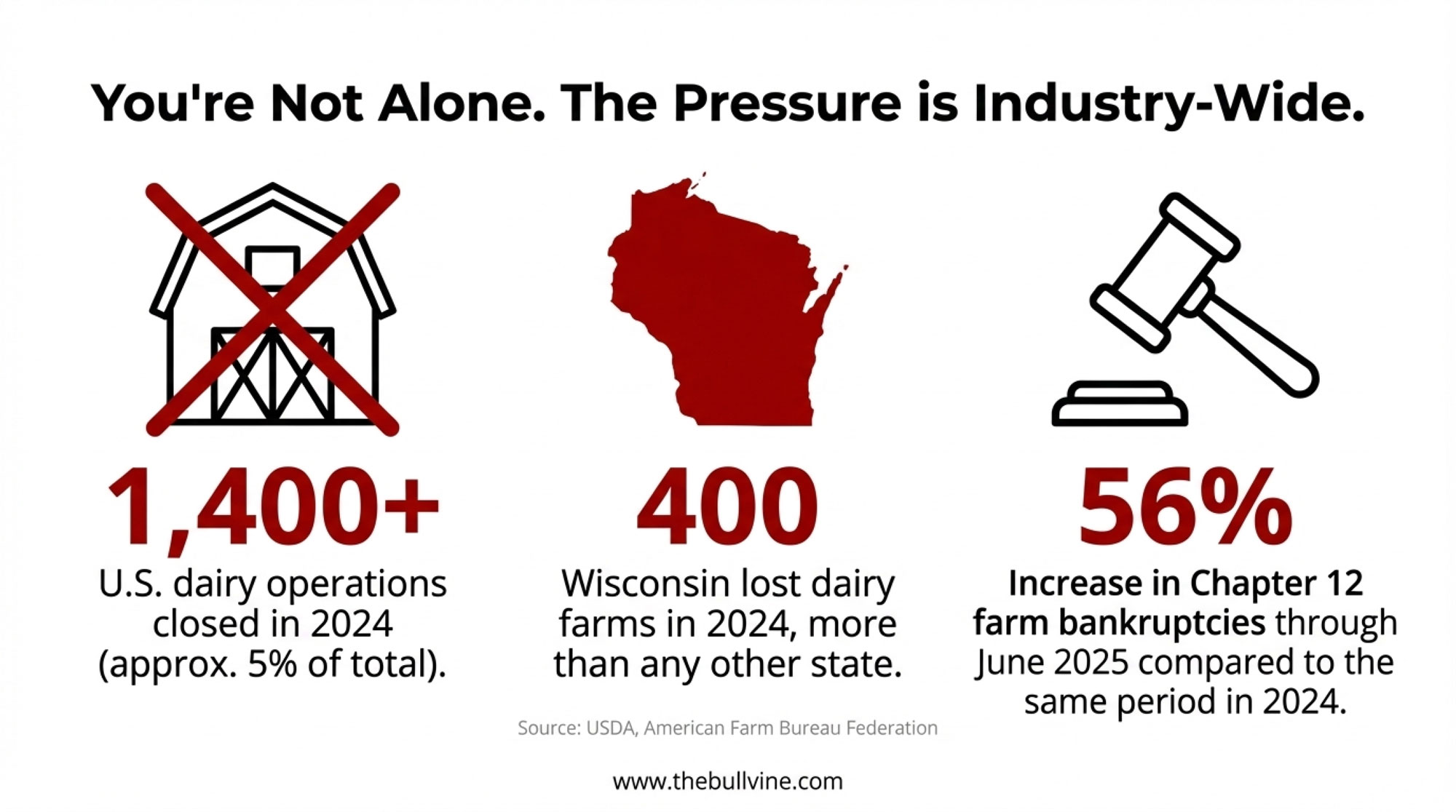
USDA’s February 2025 milk production report showed that more than 1,400 U.S. dairy operations closed in 2024—about 5% of the national total. Wisconsin lost approximately 400 dairy farms that year, more than any other state, followed by Minnesota with 165 closures. Those aren’t just statistics. Each one represents a family working through some very difficult decisions.

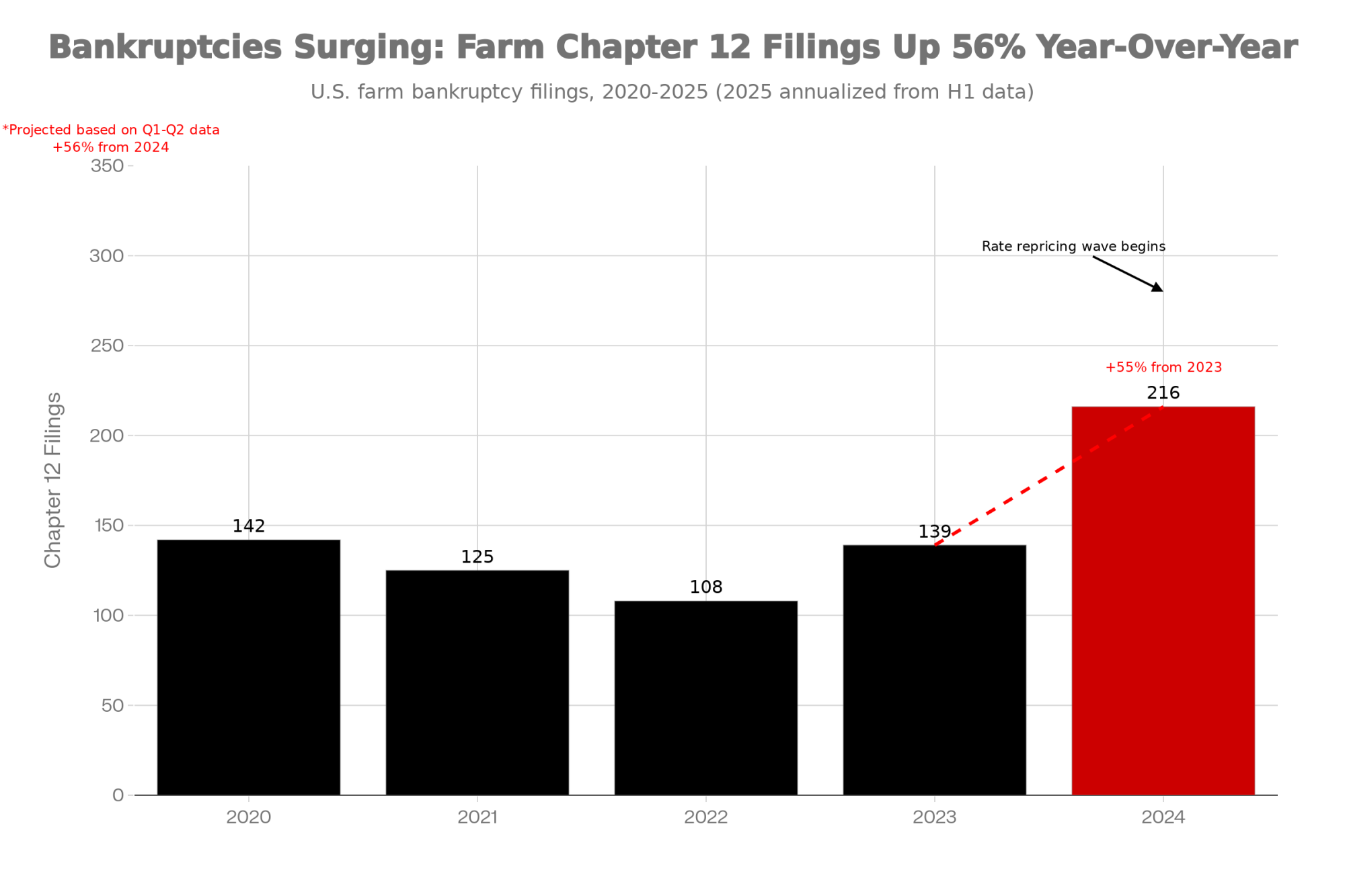
The stress extends beyond dairy. The American Farm Bureau Federation reported that Chapter 12 farm bankruptcies—the filing type designed specifically for family operations—were up 56% through June 2025 compared to the same period in 2024. For all of 2024, there were 216 Chapter 12 filings nationally, up 55% from 2023. The Kansas City Fed noted in their mid-2025 agricultural finance report that farm loan delinquency rates have increased for the second consecutive year, though they remain low by historical standards.

These indicators don’t necessarily predict a crisis, but they do suggest the farm economy is under meaningful pressure that warrants attention.

The Loan Covenant Trap Many Producers Miss

This is an area where I think many producers could benefit from a clearer understanding, because it often becomes relevant before anyone expects it.

Most agricultural loans include financial covenants—requirements that borrowers maintain certain ratios to remain in good standing. The common ones include:

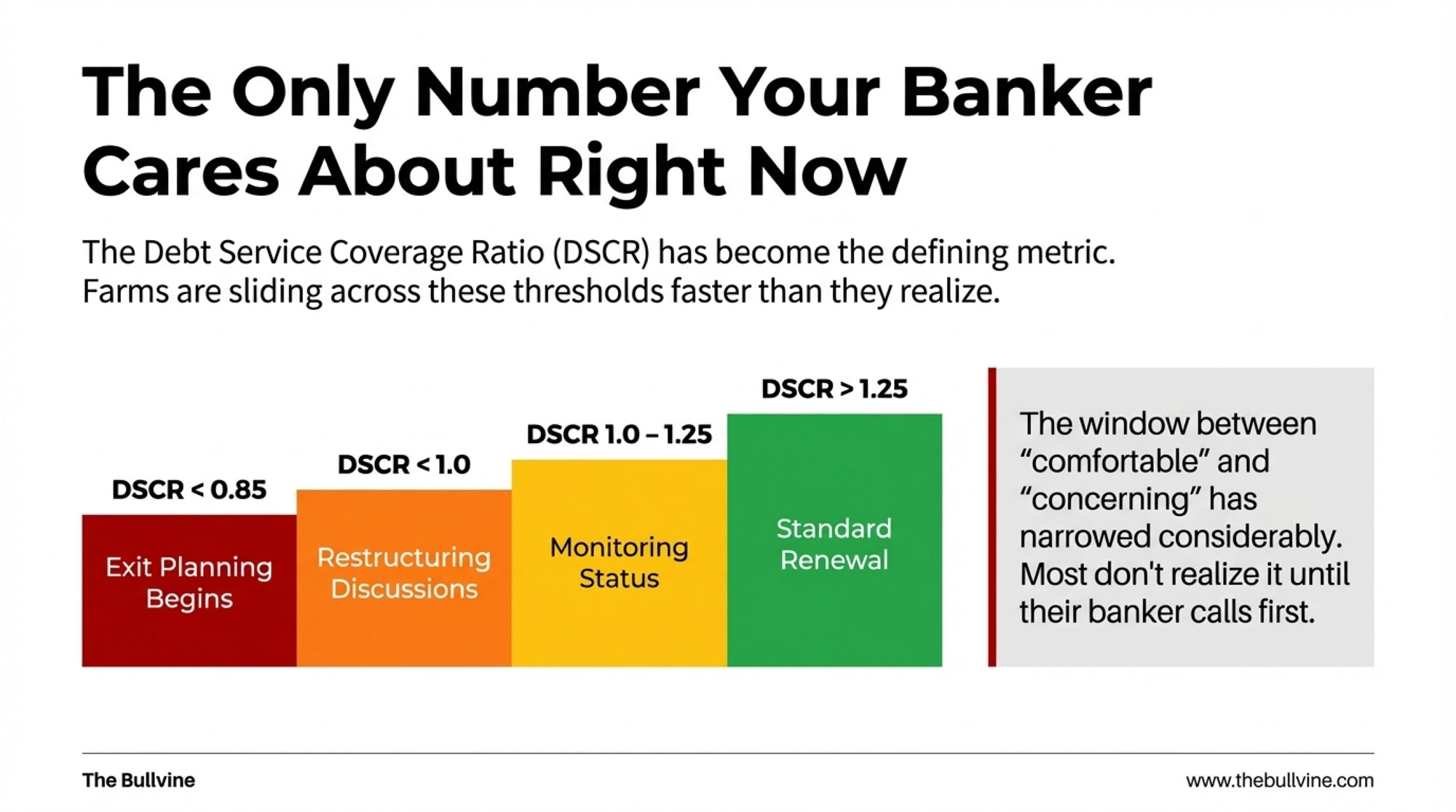
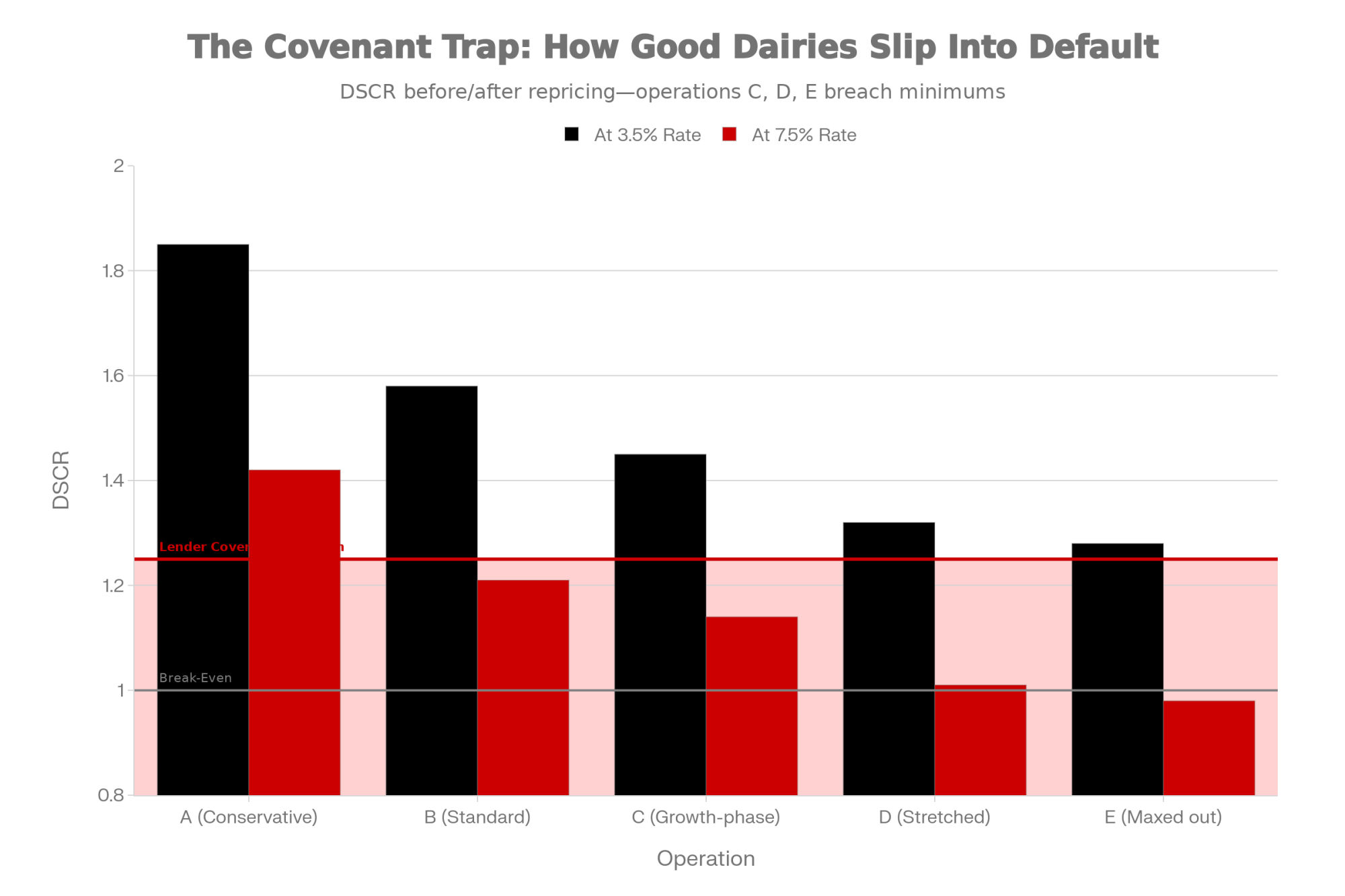
  • Debt Service Coverage Ratio: Typically 1.25x minimum, meaning net farm income needs to exceed debt payments by at least 25%
  • Current Ratio: Often 1.5x minimum, measuring working capital adequacy
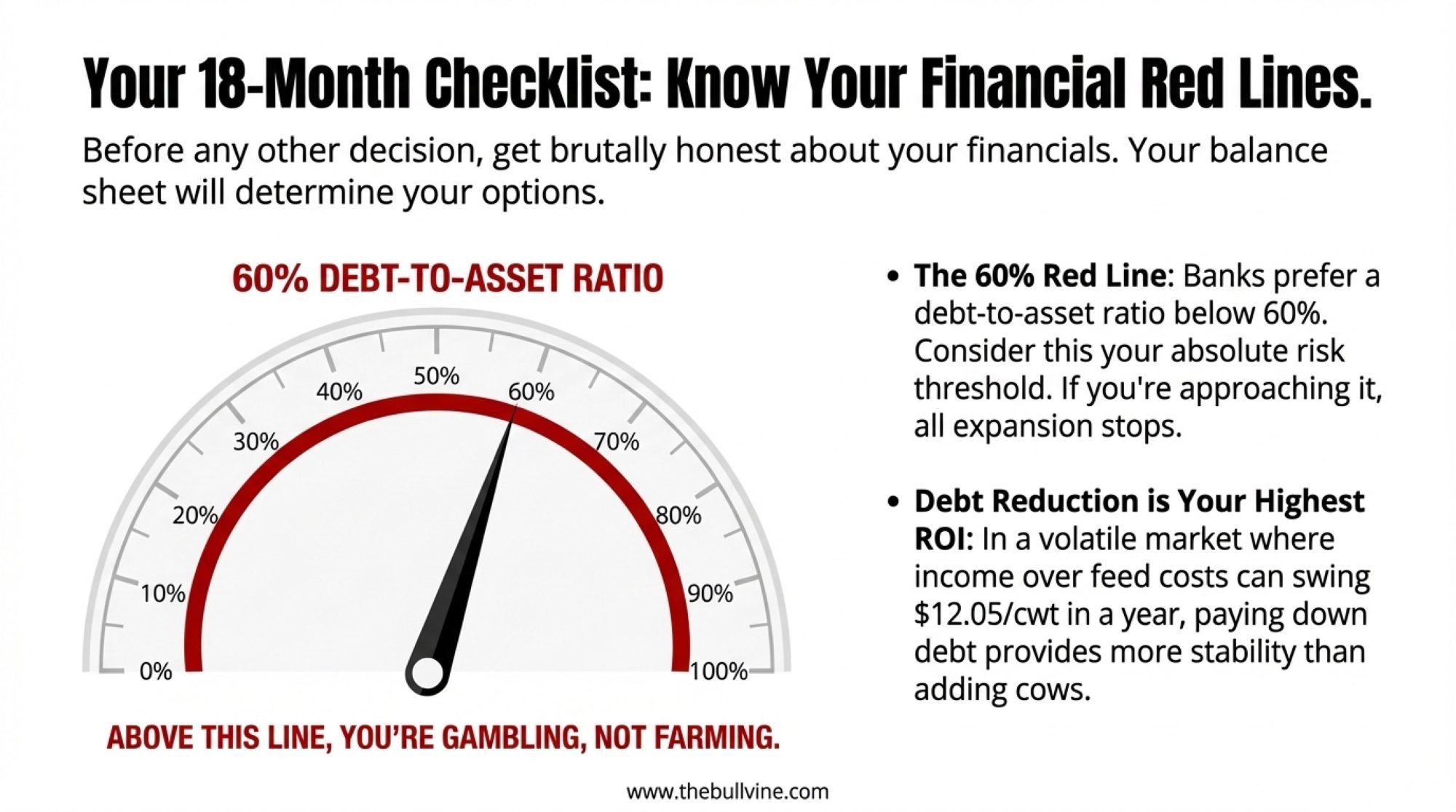
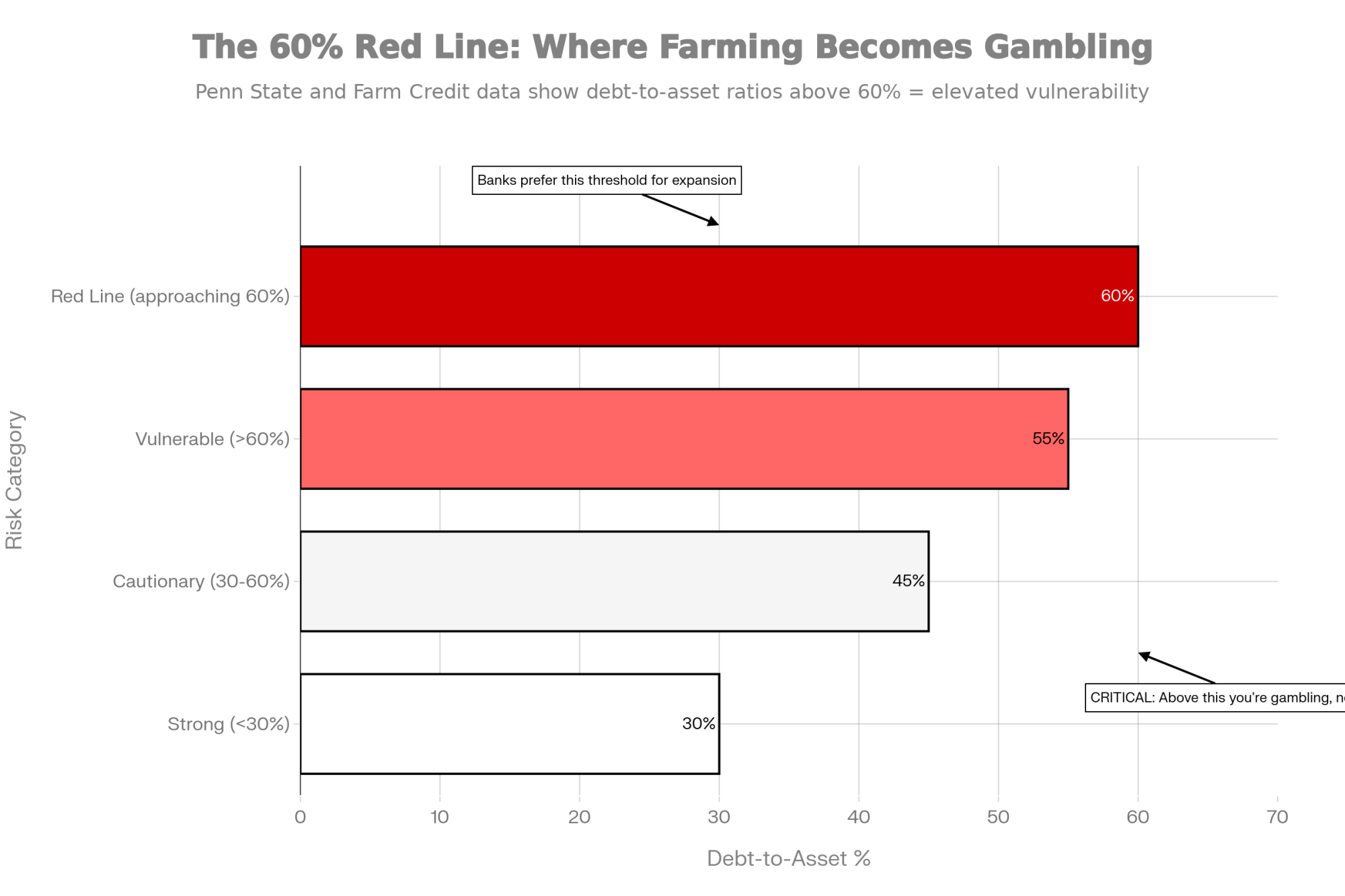
  • Debt-to-Asset Ratio: Usually capped at around 60%

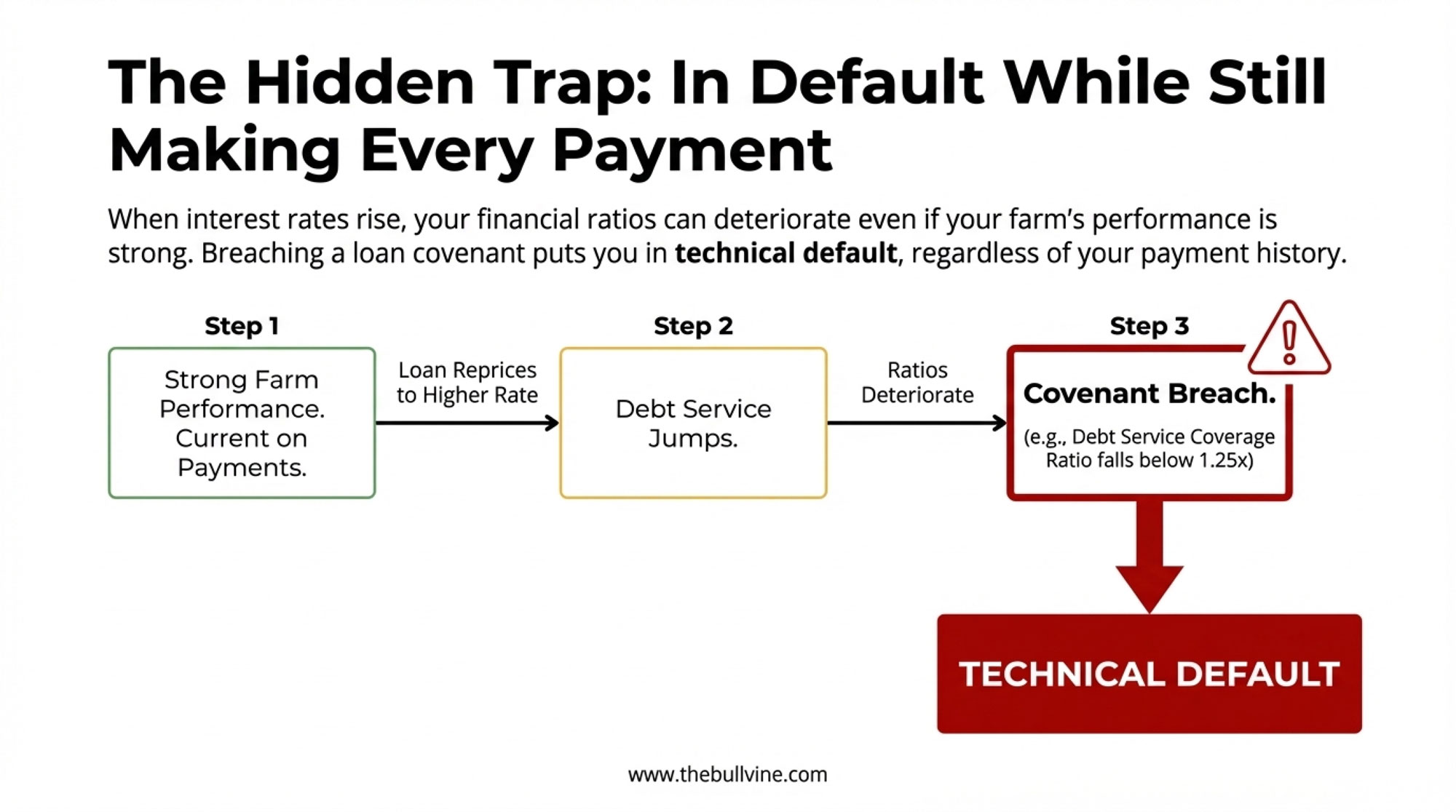
Here’s what’s worth understanding: when interest rates rise and debt service increases, these ratios can deteriorate even when operational performance remains strong. A dairy that comfortably met a 1.45x debt service coverage ratio at old rates might find itself at 1.14x after repricing—technically in covenant breach, even though production, costs, and management quality haven’t changed.

The wrinkle that surprises many producers is that once a covenant is breached, the loan is technically in default regardless of whether payments are current. This can trigger a sequence of lender responses.

I’ve spoken with agricultural lending professionals at several Farm Credit associations across the Midwest about how this plays out. As one loan officer with more than two decades of experience described it: “The farm could be making every payment on time, the cows could be performing beautifully, and they’re still in technical default. Those are hard conversations to have with producers who are doing everything right operationally.”

The typical progression involves enhanced reporting requirements first—monthly financials instead of quarterly. Then restrictions on capital expenditures and owner draws. If covenant compliance doesn’t improve, there may be requests for equity contributions or principal reduction. In more serious cases, loan acceleration becomes possible.

None of this is inevitable, and many lenders work constructively with borrowers to find solutions. But understanding the framework helps in planning how to approach these conversations.

Strategic Options and What They Can Realistically Achieve

I want to be straightforward here. There’s no simple fix for a structural repricing challenge. But some approaches can help, and understanding both their potential and their limitations is valuable.

Comparing Your Options

StrategyPotential Annual SavingsKey Limitation
Amortization Extension (15→25 yr)$80,000–$100,000Doesn’t reduce principal; extends total interest paid
Strategic Herd Reduction (15-25%)$60,000–$80,000Revenue declines proportionally with a smaller herd
Operational Efficiency Gains$55,000–$74,000Rarely sufficient alone for $120K repricing gap
FSA Refinancing (4.625%–5.75%)Varies by exposure$600K ownership / $400K operating caps
Private Ag LendersCovenant flexibilityRates are often comparable or higher than repricing levels

Savings estimates based on a representative 400-cow operation. Individual results vary significantly.

Engaging Your Lender Early

This consistently emerges as the most effective intervention. Producers who engage their lenders before repricing notices arrive—rather than after covenant issues develop—generally report more constructive conversations and better outcomes.

The difference between proactive and reactive discussions is substantial. When a producer approaches their lender with a thought-out plan before being flagged in the system, there’s typically more flexibility to work with. Once an account is classified as a problem asset, institutional constraints tend to narrow the options. That’s not a criticism of lenders—it’s just how credit administration typically works.

Approaches that seem to help include extending amortization from 15 years to 20-25 years (which can reduce annual payments by $80,000 to $100,000), requesting covenant modifications that reflect rate-driven rather than operational changes, and presenting cash flow projections based on realistic milk prices in that $18 to $19 per hundredweight range rather than more optimistic scenarios.

One thing I’d suggest: come to that meeting with a specific proposal rather than a list of possibilities. Demonstrate that you’ve carefully worked through the numbers. And focus on the financial analysis rather than the emotional weight of the situation—lenders work from models, and you’ll communicate more effectively if you engage on those terms.

Considering Herd Adjustments

Some operations are finding that a deliberate reduction in herd size—typically 15% to 25%—can restore financial stability when combined with proportional debt reduction.

The arithmetic: selling 80 cows from a 400-cow operation might generate $600,000 to $800,000 in proceeds, depending on cow values and quota where applicable. Applied directly to debt reduction, this can decrease annual debt service by $60,000 to $80,000—a meaningful offset against repricing impact.

The trade-off is real, though. Revenue declines with a smaller herd. This approach works better as a bridge to stability than as a permanent solution. A 320-cow operation carrying $3.8 million in debt at current rates still faces challenging economics. You’re creating breathing room, not resolving the underlying situation.

Operational Improvements

Focused attention on cost reduction absolutely has value, but it’s important to be realistic about what’s achievable:

  • Nutrition optimization: Working with a skilled nutritionist to refine rations typically yields savings of $0.30 to $0.50 per cwt. On a 92,000 cwt annual production, that’s $27,600 to $46,000—meaningful, but not transformative against a $120,000 repricing impact.
  • Labor efficiency: Workflow improvements without major capital investment might capture $0.15 to $0.25 per cwt.
  • Component and quality premiums: Optimizing butterfat and protein capture can add $0.20 to $0.30 per cwt if there’s room for improvement. Many operations have already pushed hard on this.

Combined realistic potential runs $0.60 to $0.80 per cwt—roughly $55,000 to $74,000 annually. That’s valuable and worth pursuing regardless of the rate environment. But it’s typically not sufficient on its own to offset a $1.30 per cwt repricing impact.

Alternative Financing Sources

Some producers are exploring options beyond traditional bank and Farm Credit financing:

USDA Farm Service Agency loans currently offer competitive rates—4.625% for direct operating loans and 5.750% for direct farm ownership loans as of December 2025. The constraint is dollar limits: FSA caps direct farm ownership loans at $600,000 and direct operating loans at $400,000. For a farm needing to refinance $2.7 million in real estate debt, these programs can help with a portion, but won’t address the full exposure.

Private agricultural lenders like AgAmerica and Rabo AgriFinance may offer more flexibility on covenant structures. Rates tend to be comparable to or somewhat higher than traditional sources, so this is more about terms than cost savings.

Realistic combined capital access from these alternative sources typically runs $300,000 to $600,000—helpful for bridging gaps, but generally not sufficient to resolve a seven-figure repricing exposure.

A Framework for Making These Decisions

What I’ve found most valuable in conversations with producers facing these decisions is an honest, numbers-first assessment. The emotional weight of these situations is real—often we’re talking about multi-generational operations and family identity. But the financial analysis needs to proceed on its own terms.

This is where working with good advisors makes a difference. Farm transition specialists, agricultural attorneys, and CPAs who understand dairy operations can help families see the full picture and evaluate options they might not have considered.

Some questions worth working through carefully:

  • What’s your true breakeven at new rates? This means debt service, operating costs, family living, and a realistic allowance for capital replacement. Calculate it precisely rather than estimating.
  • How does that breakeven compare to realistic price expectations? If you’re pushing above $19 per hundredweight, there’s very little margin for the unexpected.
  • Do you have access to meaningful outside capital? This could be family resources, off-farm assets, or other sources—but it needs to be real and accessible, not theoretical.
  • What signals is your lender sending? There’s often a gap between what we hope they mean and what they actually communicate. Try to hear the latter clearly.
  • What does the next generation want? If successors aren’t committed to the operation, the calculus changes significantly.

For operations where the breakeven is pushing toward $20 per cwt, debt-to-asset exceeds 70%, and there’s no access to outside capital, the outlook is genuinely difficult regardless of how well the cows are managed. In those situations, a planned transition—executed while meaningful equity remains—typically preserves substantially more family wealth than a forced exit 18 to 24 months later. Farm transition specialists consistently find that strategic exits preserve considerably more equity than distressed sales—often amounting to several hundred thousand dollars for families with significant remaining assets.

That kind of decision isn’t giving up. It’s sound financial management applied to a difficult situation.

The Other Side of This Story

It’s worth acknowledging that this environment doesn’t affect everyone the same way. Producers who maintained conservative balance sheets through the low-rate years—those who resisted the temptation to expand aggressively or who paid down debt rather than refinancing—find themselves in a very different position today.

For well-capitalized operations with strong working capital and minimal leverage, the current environment may actually present opportunities. Land that wouldn’t have come to market is becoming available. Equipment can be acquired at more favorable prices. Some producers are finding strategic growth opportunities they couldn’t access two years ago.

That’s not meant to minimize what leveraged operations are facing. But it’s a reminder that market stress always creates a range of outcomes. Where you land depends heavily on decisions made years ago—and on the decisions you make now.

What This Means for the Industry

Beyond individual farm decisions, the repricing wave is accelerating structural changes that have been building for some time.

The consolidation trend toward larger operations will likely continue. We’ve already seen the share of cows on 1,000-plus operations climb from 17% in 1997 to 65% in 2022, according to the Census of Agriculture. The mid-size family dairy is becoming an increasingly uncommon business model, particularly in regions without quota systems or other structural supports.

From the processor perspective, the picture is mixed. One Midwest cooperative executive described it this way: consolidation creates certain efficiencies in milk collection and quality consistency. “But we’re also watching our supplier base shrink faster than anyone planned for. When you lose 400 farms in a region over a few years, that’s infrastructure—roads, services, veterinary capacity—that doesn’t rebuild easily.”

Industry organizations are responding. The National Milk Producers Federation has advocated for expanded FSA lending authority, and the PACE Act was reintroduced in Congress in March 2025. If enacted, it would increase the caps on direct farm ownership loans from $600,000 to $1.5 million and on direct operating loans from $400,000 to $800,000. Whether any of this moves quickly enough to help farms facing near-term repricing remains uncertain.

There’s a broader consideration worth noting. As mid-size operations exit, the industry loses independent decision-makers who have historically contributed resilience through diversity of approach. Dr. Marin Bozic, an agricultural economist who spent a decade studying dairy markets at the University of Minnesota, has described this as “trading resilience for efficiency.” That trade-off works well under normal conditions. It becomes a vulnerability when circumstances deviate from what the models anticipated.

Practical Next Steps

For producers facing repricing in the next 12 months:

  • Know your numbers precisely. Calculate your exact breakeven cost at new rates—not an estimate, an actual calculation. That number anchors everything else.
  • Engage your lender before they engage you. Come with a specific proposal and realistic projections. The conversation is different when you initiate it.
  • Build your advisory team now. Connect with a farm transition specialist, an agricultural CPA, and potentially an ag attorney, even if you’re planning to continue. Understanding your options strengthens your position.

For those considering expansion or major capital investment:

  • Model everything at current rates. The 3% environment from 2019 isn’t returning in any relevant timeframe. Plan accordingly.
  • Stress-test at challenging milk prices. See how your projections hold at $17 to $18 per cwt, not just at more optimistic levels.
  • Understand that comfortable leverage at 4% becomes uncomfortable at 7-8%. The production side of your operation doesn’t change, but the financial dynamics shift considerably.

The Bottom Line

What’s unfolding now isn’t primarily about who’s skilled at producing milk. Many capable operations are exiting not because they can’t compete on the production floor, but because debt structures that worked in one rate environment don’t pencil out in another.

We’re going to see more good dairy families work through difficult transitions over the next couple of years. Not because they couldn’t manage cows or run tight operations, but because the financial landscape shifted in ways that were partly foreseeable and partly not.

But here’s something worth remembering: dairy has always adapted. The industry that emerges from this period will look different, yes. Some of the changes will feel like losses. But there will also be opportunities—for those who navigate successfully, for new models that emerge, for the next generation that finds ways to make the economics work.

The families who approach this period with clear financial thinking, good advice, and honest assessment of their situations will be best positioned—whether that means restructuring successfully, transitioning on their own terms, or finding paths forward that none of us have fully anticipated yet.

Understanding the dynamics at play is the first step. What you do with that understanding is up to you.

Key Takeaways

  • The cows haven’t changed—the math has: Loans repricing from 3.5% to 7.5% add ~$120,000 annually to a typical mid-size operation, or $1.30/cwt onto breakeven
  • You can be current and still default: Covenant breaches trigger technical default even when payments are on time—it’s the ratios, not missed payments, that trip the wire
  • Efficiency alone won’t close this gap: Operational improvements typically yield $0.60-$0.80/cwt; helpful, but not sufficient against a $1.30/cwt repricing hit
  • Talk to your lender before they talk to you: Proactive conversations with specific restructuring proposals consistently produce better outcomes than reactive ones
  • Planned exits beat forced ones: Strategic transitions preserve significantly more family equity than fighting until liquidation becomes the only option

Complete references and supporting documentation are available upon request by contacting the editorial team at editor@thebullvine.com.

Learn More:

Join the Revolution!

Join over 30,000 successful dairy professionals who rely on Bullvine Weekly for their competitive edge. Delivered directly to your inbox each week, our exclusive industry insights help you make smarter decisions while saving precious hours every week. Never miss critical updates on milk production trends, breakthrough technologies, and profit-boosting strategies that top producers are already implementing. Subscribe now to transform your dairy operation’s efficiency and profitability—your future success is just one click away.
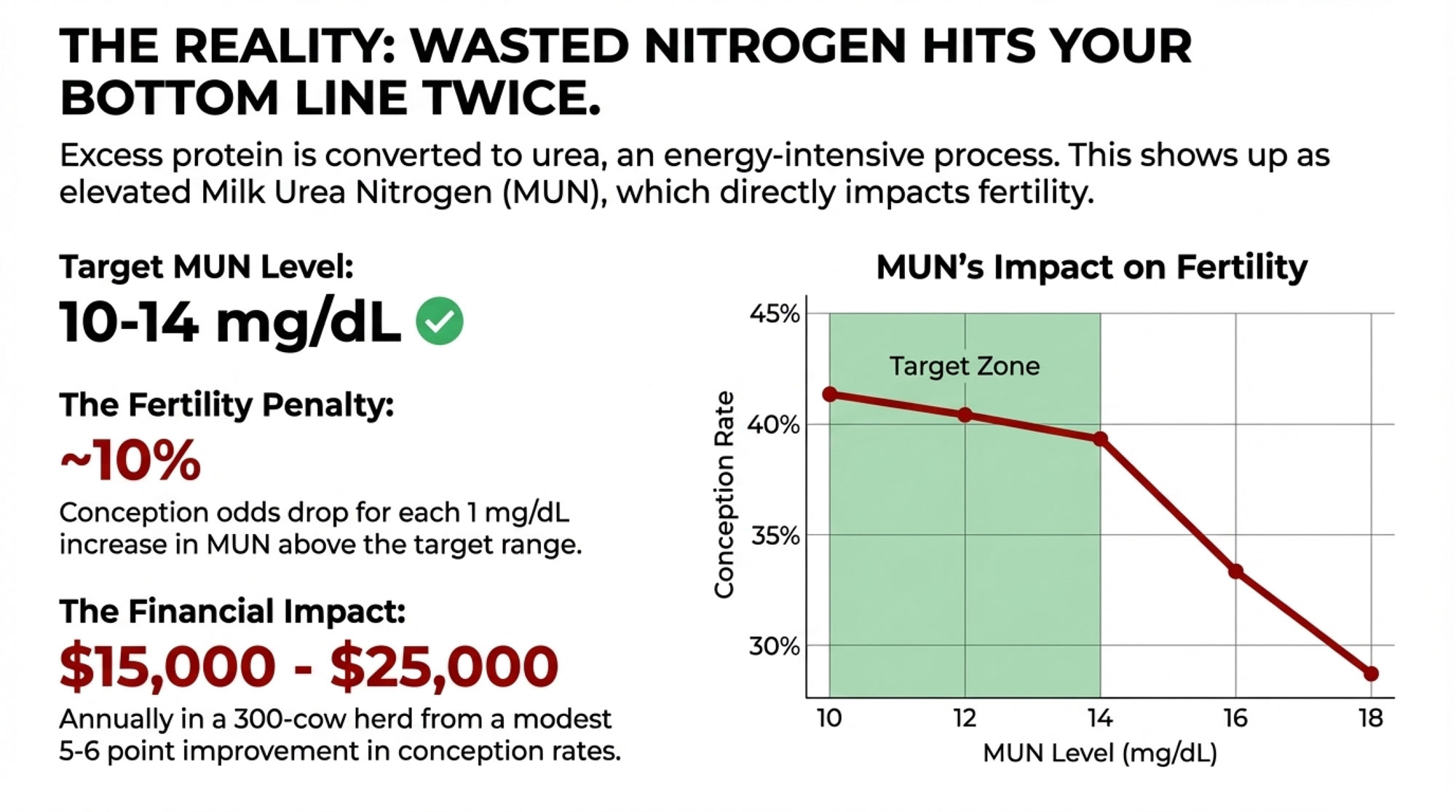
NewsSubscribe
First
Last
Consent

The $42,000 Transition Mistake: Why Blanket Protocols Are Failing Your Best Cows

What if your transition disease rate isn’t 20%—it’s 35%? That measurement gap costs $42K/year. Worse: your best cows pay the genetic price.

EXECUTIVE SUMMARY: Most dairy operations estimate their transition disease rate at 20%—but farms that actually measure often find it’s closer to 35%. That gap represents roughly $42,000 in annual losses on a 400-cow dairy: lost milk, extra treatments, reproductive delays, and elite cows that never reach their genetic potential. The research points to a clear fix. Work from Guelph, Minnesota, Ohio State, and Wisconsin Extension consistently shows that risk-stratified protocols outperform blanket approaches—intensive care for high-risk mature cows, reduced spending on heifers who don’t need it. The numbers back it up: $500 per disease case, $1,000 for multiple diseases, and subclinical hypocalcemia hitting 73% of mature cows at $150 each. For operations investing in superior genetics, every cow that struggles through transition is a cow whose breeding value may never reach the bulk tank—or produce the next generation of your herd’s best females. The research-backed first step? Stop bolusing first-lactation heifers and redirect those resources where they’ll actually make a difference.

transition cow management

Here’s something that catches a lot of producers off guard. Walk into almost any dairy operation—doesn’t matter if it’s a 200-cow tie-stall in Vermont, a 3,000-cow freestall in California’s Central Valley, or a grazing operation in New Zealand—and ask about fresh cow disease rate. You’ll probably hear something like “Oh, we’re running around 20%, maybe 22%.” Reasonable estimate. Feels about right based on what they’re seeing day to day.

But when farms actually start measuring… well, that’s when things get interesting.

I’ve heard from producers who decided to track every single fresh cow event for 90 days—metritis cases, DAs, milk fever, ketosis treatments, all of it—and discovered their numbers were way off. One Wisconsin dairyman figured he was running about 23%. His actual number? North of 34%. And he’s not alone. When farms start systematically tracking every treatment event, every cow that doesn’t quite hit her stride in early lactation, that 20% estimate often turns out to be closer to 30% or higher.

Farm Type & RegionProducer’s EstimateActual Measured RateDisease Rate GapAnnual Cost Gap (400-cow herd)
200-cow tie-stall, Vermont20%34%+14 percentage points$39,200
400-cow freestall, Wisconsin22%35%+13 percentage points$36,400
800-cow freestall, Minnesota18%31%+13 percentage points$72,800
3,000-cow freestall, California21%33%+12 percentage points$252,000
600-cow grazing operation, New Zealand19%29%+10 percentage points$42,000

Dr. Eduardo de Souza Ribeiro, over at the University of Guelph, puts it pretty directly: cows with a poorer transition produce less milk, take longer to get pregnant, and are more likely to lose a pregnancy or be culled from the herd. That adds up to substantial economic losses. And here’s what’s sobering—his review of the research, published in Dairy Global, found that roughly one-third of dairy cows in Western herds experience at least one disease process in the first three weeks after calving. That’s not outliers. That’s typical across the industry.

So what does that cost? Work by Carvalho and colleagues back in 2019 tried to put a price tag on it, estimating about $500 for a single postpartum disease case and around $1,000 when a cow has multiple problems during that critical window. On a 400-cow dairy, it doesn’t take many extra disease cases to add up to tens of thousands of dollars in lost milk, extra treatments, and reproductive delays—even if the exact number varies by herd and region.

What’s interesting—and honestly, a bit frustrating—is that the research showing how to cut those disease rates significantly has been accumulating for over two decades. The barrier isn’t knowledge. It’s how that knowledge moves (or doesn’t) from research journals to actual farm practice.

“You can have the best genetics in the world, but if your cows can’t get through transition healthy, you’ll never see that potential expressed in the bulk tank or the breeding program.”

The Measurement Gap Nobody Talks About

The foundation of any improvement starts with a surprisingly basic question: What’s your actual disease rate?

You know, most dairies have never systematically answered this. They track individual treatments, sure. They know when a cow develops metritis or throws a DA. But calculating an overall incidence rate—the percentage of cows experiencing any metabolic or reproductive disease in the first 21 days—that’s different. And without that number, you’re essentially flying blind.

Why does this matter so much? Multiple sources—University of Maryland Extension, Dairy Global, research published in Frontiers in Veterinary Science—all point to the same finding: about 75% of health problems in dairy cows occur during the transition period. That’s the window from roughly two weeks before calving to four weeks after. Three-quarters of your health challenges, concentrated in about six weeks. That’s a massive concentration of risk in a pretty short timeframe, whether you’re running a confinement operation in the Midwest or a pasture-based system in the Southeast.

When farms start systematically tracking, many discover their disease rates are higher than they’d estimated. A 2019 study in the Journal of Dairy Science looked specifically at barriers to successful transition management and found that variation in both farmer attitude and veterinarian involvement significantly affects outcomes. One of the key barriers they identified? Simply not having a clear picture of what’s actually happening. Hard to fix a problem you haven’t quantified.

Now, break down the disease by parity, and the picture gets even clearer. This is where it gets really practical for protocol decisions. Field data and NAHMS surveys consistently show that disease risk climbs with parity—first-lactation animals typically have substantially lower rates of metabolic and reproductive disease than third- and fourth-lactation cows. Research showed subclinical hypocalcemia affecting around 47% of second-or-greater lactation cows but only about 25% of first-lactation heifers. Clinical milk fever follows the same pattern—it’s far more common in older cows than in first-lactation animals.

Disease TypeFirst-Lactation HeifersSecond-Lactation CowsThird+ Lactation CowsRisk Multiplier (3rd+ vs. 1st)
Subclinical Hypocalcemia25%54%73%2.9×
Clinical Milk Fever2%6%12%6.0×
Hyperketonemia (elevated BHB)8%15%22%2.8×
Displaced Abomasum3%5%9%3.0×
Metritis12%18%25%2.1×
Average Treatment Cost/Cow$82$156$2473.0×

Here’s what that tells us: many operations treat all fresh cows identically—same calcium bolus protocol, same propylene glycol regimen, same monitoring intensity. But different animals have dramatically different risk profiles. And the research is pretty clear that they respond differently to interventions too. So why are we treating a first-calf heifer the same as a fourth-lactation cow? That’s the question worth asking.

What the Research Actually Shows

The scientific literature on transition cow management has reached a level of maturity that’s frankly unusual in agricultural research. We’re not talking about preliminary findings or single studies here. We’re talking about meta-analyses combining decades of data from operations across North America, Europe, and beyond.

On calcium supplementation: Research consistently shows multiparous cows benefit significantly from calcium support, while first-lactation heifers show minimal response. A 2024 review in the journal Animals noted that dairy cows are at considerable risk for hypocalcemia at the onset of lactation, when daily calcium excretion suddenly increases from about 10 grams to 30 grams per day. Think about that—tripling calcium output almost overnight. But—and this is important—that risk concentrates heavily in mature cows, not heifers.

Dr. Luciano Caixeta at the University of Minnesota has noted that subclinical hypocalcemia (the kind you don’t see clinically but still causes problems) has been reported to affect as many as 73% of dairy cows in third or higher lactations, costing an average of about $150 per case. Researchers at the University of Guelph found that herds with a higher incidence of subclinical hypocalcemia experienced an 8.36-pound reduction in milk production on the first test day and a 30% reduction in the odds of pregnancy on the first AI. That’s real money—and real reproductive performance—left on the table.

Dr. Mark van der List, a veterinarian with Boehringer Ingelheim who’s spoken at numerous industry events on this topic, explains the supplementation approach this way: administering an oral calcium supplement to cows at calving, and again 12 hours later, provides much-needed calcium when blood levels are at their lowest. He also cautions about reading product labels carefully—watch out for products containing calcium carbonate, which is limestone. It’s the cheapest form of calcium, but it’s too slowly absorbed to really make a difference when you need rapid uptake.

On negative DCAD diets: This is one where the research is really solid. University of Wisconsin Extension confirms that feeding a negative DCAD diet during the pre-fresh dry period—that last 21 days before calving—successfully increases blood calcium levels before and immediately after calving. The result is a lower incidence of both clinical and subclinical milk fever.

Meta-analyses and field trials show that properly formulated negative DCAD diets can cut the risk of clinical milk fever by well over half. Some studies report relative risks in the 0.2-0.4 range compared with neutral DCAD diets. That’s substantial protection for your high-risk animals.

But here’s the nuance that matters for your operation—and this is where a lot of folks are spending money they don’t need to spend. The same Wisconsin Extension research notes that while negative DCAD diets can benefit heifers in some ways, studies have shown their impact on productive performance has been either neutral or negative. Heifers have a much lower risk of developing milk fever than multiparous cows, so feeding them a negative DCAD diet is likely unnecessary. That’s a cost you can redirect elsewhere.

On propylene glycol: A 2025 study published in Frontiers in Veterinary Science demonstrated that a targeted propylene glycol protocol effectively decreased ketosis incidence from 33.3% in control cows to 6.7% in treated cows at 14 days postpartum. The research confirms propylene glycol’s efficacy—but notice that word “targeted.” When used appropriately and aimed at cows that actually need it, rather than blanket-treating everyone, the results are strong.

What’s emerging from all this research is a consistent pattern: targeted, risk-stratified protocols generally outperform blanket treatment approaches, both economically and in terms of animal outcomes. Treat the cows that need treatment. Don’t treat the ones that don’t. Seems obvious, but it requires knowing who falls into which category.

Body Condition: The Early Warning System Many Farms Miss

This is where things get really practical—and where, honestly, a lot of farms are leaving money on the table.

Kirby Krogstad at Ohio State has been doing some fascinating work on the connections between body condition score, hyperketonemia, and downstream health outcomes. His research, published in the Journal of Dairy Science, tracked approximately 900 cows and found some pretty compelling relationships that should inform how we manage transition cows.

Here’s what stood out: cows who lost more than 0.375 BCS in early lactation were nearly five times more likely to lose their pregnancy. Five times. That’s not a subtle effect—that’s a flashing warning sign. And mature cows—third lactation and beyond—testing above 1.2 mmol/L of BHB produced about 11.8 pounds less milk per day than their non-hyperketonemic counterparts. On a 400-cow dairy with even modest prevalence of hyperketonemia in older cows, that adds up fast.

BCS Loss (units)Milk Production (lbs/day)Pregnancy Rate (%)
0.08645
0.258242
0.3757838
0.57432
0.756826
1.06222

Key Benchmarks (Krogstad, Ohio State): Target ≤10% of 2nd-lactation cows and ≤20% of 3rd+ lactation cows with elevated BHB in week one. Exceeding these thresholds signals protocol problems.

What’s particularly useful is Krogstad’s benchmark recommendations for the first week in milk. He suggests that 10% or less of second-lactation cows should show elevated BHB, and 20% or less of third-plus lactation cows. If your herd exceeds these thresholds, that’s a signal worth paying attention to. It’s a simple metric you can track that tells you whether your transition protocols are working.

Dr. Ribeiro at Guelph recommends that body condition scoring at dry-off should be moderate—3.0 to 3.25 on a 1-to-5 scale—and maintained through calving. The intervention point, importantly, is 100-plus days before calving, not at calving itself. By the time a cow reaches the close-up pen, overconditioned, you’re already playing catch-up. The time to manage body condition is back in late lactation, not when she’s three weeks from freshening.

I’ve heard from California producers who started scoring every cow at 200 DIM and adjusting rations for the overconditioned ones. Several report noticeable drops in fresh cow disease within a couple of lactation cycles. Not because they were doing anything fancy at calving—they were just preventing the problem from developing in the first place. That kind of proactive approach works whether you’re in a dry lot system in the Southwest or a freestall barn in the upper Midwest.

Why This Matters for Your Elite Genetics

Here’s something that doesn’t get talked about enough in the transition cow conversation: the genetic implications.

If you’re investing in elite genetics—whether that’s genomic-tested heifers, embryo transfer calves from proven cow families, or semen from high-ranking sires—transition disease can undermine that entire investment. A cow from an exceptional dam line who struggles through her first lactation due to ketosis or metritis may never express her true genetic potential. Worse, she might get culled before she ever gets a chance to prove herself or contribute daughters to the herd.

Think about it this way: that heifer calf from your best cow family represents years of breeding decisions. She carries genetics for high components, longevity, fertility—whatever traits you’ve been selecting for. But if she hits the fresh pen and immediately battles subclinical hypocalcemia followed by a DA, her first lactation becomes a salvage operation rather than a showcase of her genetic merit.

The research from Guelph on subclinical hypocalcemia showed a 30% reduction in the odds of pregnancy at first AI. For a cow you’re counting on to produce the next generation of your herd’s genetics, that reproductive hit is devastating. You need her pregnant early to get that next heifer calf. You need her healthy to produce enough milk to justify keeping her. Transition disease compromises both.

Dr. Ribeiro’s point about cows with poor transitions being “more likely to get culled from the herd” hits especially hard when you’re talking about animals carrying superior genetics. Every elite cow that leaves the herd early due to transition-related complications represents not just lost milk revenue but lost genetic progress. Her potential replacement heifers never get born. Her genomic contribution to your herd’s improvement disappears.

This is why getting transition management right matters beyond just the immediate economics. It’s about protecting your genetic investment and ensuring your best animals live long enough, and stay healthy enough to reach their potential and pass those genetics forward.

Building Momentum: The First Move That Actually Works

For operations looking to bridge the gap between current practice and what research supports, the question becomes practical: where do you actually start?

The answer, based on both research and what we’re seeing on progressive farms from the Northeast to the Pacific Northwest, might surprise you. Rather than overhauling everything at once (which rarely sticks anyway), the highest-confidence first move is often the simplest: stop bolusing first-lactation heifers while maintaining supplementation for multiparous cows.

The economics here are modest but illustrative. A 400-cow dairy with 33% heifer rotation spends roughly $1,300 to $1,500 annually on heifer calcium boluses. Research suggests this spending produces minimal benefit because heifers face naturally low hypocalcemia risk—remember that Wisconsin Extension finding about neutral or negative performance impacts? You’re spending money for essentially no return.

But more valuable than the direct savings is what this change accomplishes organizationally:

  • It’s reversible. If heifer disease somehow increases—unlikely based on research, but possible—you restart the protocol immediately. No permanent commitment required.
  • It’s measurable. Track the heifer disease rate before and after. You’ll have concrete evidence of whether it works for your specific operation, your genetics, and your facilities.
  • It builds collaborative relationships. Approaching your vet with “Can we try this as a 60-day test?” creates a partnership rather than conflict. You’re not challenging their expertise; you’re inviting them into an experiment.
  • It establishes a template. Successfully implementing one evidence-based change creates permission—and confidence—for the next.

Dr. van der List emphasizes this collaborative approach: ask your veterinarian about blood calcium testing, he suggests. They can help you evaluate the results and develop the right supplementation strategies for your herd. That kind of data-driven partnership is exactly what makes protocol changes stick long-term.

The farms achieving the best transition outcomes didn’t get there through revolutionary overnight changes. They built systematic improvement through sequential small wins. One protocol adjustment at a time, measuring as they went.

The Three-Tier Framework: How It Works in Practice

Operations that have successfully reduced fresh cow disease often employ some version of risk stratification. The basic principle is straightforward: different animals get different protocols based on their probability of developing disease. Here’s how one common framework breaks down.

Tier 1 (Low Risk): First-lactation heifers and multiparous cows with body condition under 3.5 and no disease history

  • Standard dry cow nutrition without DCAD manipulation
  • No calcium supplementation at calving
  • Propylene glycol only if clinical signs emerge
  • Standard monitoring protocols

These are your low-maintenance animals. They don’t need aggressive intervention, and providing it anyway just costs money without improving outcomes.

Tier 2 (Moderate Risk): Multiparous cows with normal body condition (3.0-3.5) or single-episode disease history

  • Negative DCAD diet for the final 21 days prepartum
  • Single calcium bolus at calving
  • Propylene glycol is based on ketone testing, not blanket treatment
  • Enhanced daily observation during the fresh period

This is probably your largest group numerically. They need targeted support, based on what we know works.

Tier 3 (High Risk): Overconditioned cows (BCS above 3.5), fourth-plus lactation cows, or those with multiple disease episodes

  • Controlled-energy ration beginning at 150 days in milk (because you’re managing body condition early)
  • Aggressive DCAD protocol for 21-plus days prepartum
  • Multiple calcium boluses (at calving and 12 hours post-calving)
  • Propylene glycol protocol from day -7 to +21
  • Blood ketone testing days 5-9 postpartum
  • Intensive daily monitoring
Protocol CategoryTier 1: Low Risk (1st-lactation heifers, BCS <3.5)Tier 2: Moderate Risk (Multiparous, normal BCS)Tier 3: High Risk (BCS >3.5, 4th+ lactation, disease history)
DCAD Diet (Prepartum)Standard dry cow rationNegative DCAD for final 21 daysAggressive negative DCAD for 21+ days
Calcium SupplementationNone at calvingSingle bolus at calvingMultiple boluses (calving + 12 hrs post)
Propylene GlycolOnly if clinical signs emergeBased on ketone testing, not blanketProtocol from day -7 to +21
Body Condition ManagementStandard monitoringMonitor at dry-off and calvingControlled-energy ration starting 150 DIM
Monitoring IntensityStandard fresh cow checksEnhanced daily observationBlood ketone testing days 5–9; intensive daily monitoring
Estimated Annual Cost/Cow$18$62$147
Target Disease Rate<8%<15%<25% (vs. 45%+ without intervention)

These are your problem children—the cows you know are going to struggle if you don’t get ahead of it. They deserve the intensive protocols because, for them, it actually pays off. And if these happen to be your highest-genetic-merit animals in their fourth or fifth lactation, protecting them through transition protects your breeding program.

The ROI Snapshot: Tier 3 cows receive significantly more intervention, but overall spending frequently decreases because low-risk animals no longer receive unnecessary treatment. You’re reallocating resources, not adding them.

A note on infrastructure: Implementing this kind of stratification does require some basic capabilities. Lactanet’s housing guidelines for dry and transition cows note that well-designed facilities are built with a transition and calving management strategy in mind, addressing factors such as management group sizing, cattle movement, and health needs for different groups.

At minimum, you’ll want the ability to separate close-up cows into at least two groups—or clearly identify high-risk individuals within a mixed group—plus access to DCAD ration formulation through your nutritionist and either cow-side ketone testing or a protocol with your vet for blood work.

Now, I know what some of you are thinking: “We don’t have separate pens for that.” Fair enough. Operations without separate close-up pen capacity can still implement modified stratification by identifying and flagging high-risk individuals for enhanced monitoring and intervention. Some farms use colored leg bands. Others use separate feeding times or headlock sorting. Robotic milking operations sometimes leverage their existing cow identification systems to trigger different supplement protocols. It’s not as clean as separate pens, but it works. The principle matters more than the specific implementation.

A note on seasonality: If you’re running a seasonal calving operation—spring calving in the Upper Midwest, fall calving in parts of the South—you’ll want to think about how heat stress or cold stress might compound transition challenges. The tier assignments don’t change, but your monitoring intensity during environmental stress periods probably should. Summer calvings, in particular, tend to have elevated disease rates even in otherwise healthy cows.

An example scenario for a 400-cow herd might look something like this:

ApproachAnnual Intervention CostDisease EventsDisease CostTotal Cost
Blanket Protocol~$12,000~140~$70,000~$82,000
Stratified Protocol~$10,000~60~$30,000~$40,000
Potential Annual Savings   ~$42,000

Your actual numbers will depend on your baseline disease rate, local costs, milk price, and specific herd conditions. But the general principle holds: targeting resources toward high-risk cows while reducing unnecessary interventions in low-risk animals tends to improve both outcomes and economics. It’s not magic—it’s just matching the intervention to the animal that needs it.

Quick Reference: Key Benchmarks

BHB targets (Krogstad, Ohio State, Journal of Dairy Science):

  • ≤10% of 2nd-lactation cows with elevated BHB in week 1
  • ≤20% of 3rd+ lactation cows with elevated BHB in week 1

Body condition targets (Ribeiro, University of Guelph):

  • 3.0-3.25 BCS at dry-off (1-5 scale)
  • Maintain through calving; intervene at 200 DIM if needed

Disease cost estimates (Carvalho et al., 2019):

  • ~$500 per single disease case
  • ~$1,000 for multiple diseases in the same cow

Subclinical hypocalcemia cost (Caixeta, University of Minnesota):

  • ~$150 per case
  • Affects up to 73% of 3rd+ lactation cows

DCAD timing (University of Wisconsin Extension):

  • Final 21 days prepartum for multiparous cows
  • Generally unnecessary for first-lactation heifers

When Good Enough Is Good Enough: Knowing Your Optimization Limit

One finding worth noting: operations that substantially reduce their disease rates often shift their optimization focus. Rather than continuing to push on disease reduction, many move toward production and reproduction metrics.

This makes economic sense when you think about it. Some level of transition disease is simply unavoidable—due to genetics, environment, and factors unrelated to nutrition. Retained placenta and certain cases of metritis aren’t fully preventable with nutritional protocols alone. More than 35% of all dairy cows have at least one clinical disease event during the first 90 days in milk, as Dr. Caixeta at Minnesota has noted. Some of that is just the biology we’re working with. You can optimize, but you can’t eliminate.

The research frontier is increasingly focused on inflammation management and precision monitoring technologies. There’s growing evidence that we’ll have more refined best management practices in the coming years—approaches that address dry matter drop, metabolic stress, and inflammation together, because all three are interconnected. Penn State and other extension programs are actively working in this space. It’s worth watching.

The return on investment for moving from high disease rates down to more moderate levels is typically substantial—that’s the $40,000 or more we’ve been discussing. But at some point, the economics of further disease optimization start to diminish relative to improvements in production and reproduction. You’ve reached a point of diminishing returns in disease prevention, and your attention is better directed elsewhere.

What progressive operations tend to optimize once they’ve addressed the big disease issues:

  • Early lactation production—targeting 80-plus pounds per day at first DHI test
  • Days to conception—pushing below 80 days versus the industry standard of around 100
  • Heifer development—getting fresh heifers producing at 90-plus percent of mature cow potential within the first few months

These become your next frontiers once transition health is reasonably controlled.

Why Knowledge Transfer Takes So Long

Perhaps the most thought-provoking aspect of transition cow research is how long it takes proven practices to reach widespread adoption. Negative DCAD feeding was demonstrated to be effective in the late 1980s. More than three decades later, many dairies still don’t use it consistently. Why is that?

That 2019 Journal of Dairy Science study on barriers to successful transition management found something interesting: the lack of a single definition of the transition period emerged as one barrier to improvement. Everyone’s talking about “transition cows,” but not everyone means the same timeframe or the same priorities. And barriers varied significantly across farms, suggesting that a tailored approach is required to achieve meaningful change. There’s no one-size-fits-all solution here—which makes extension work and consulting more challenging.

A 2025 study of Ontario dairy veterinarians published in the Journal of Dairy Science found that trust and communication emerged as critical components of veterinarian-client relationships—and it was acknowledged that these relationships take time to build. The researchers noted that veterinarians observed that proactive producers who implemented preventive strategies achieved better outcomes, whereas others exhibited greater resistance to change, often shaped by multigenerational traditions and economic constraints.

And you know what? None of these dynamics reflect bad intentions. They reflect the practical reality that changing established practices requires more than just evidence—it requires aligned incentives, collaborative relationships, and operational systems that support implementation. A protocol that works great in theory but doesn’t fit your labor situation or facility layout won’t actually be implemented.

What seems to accelerate adoption, based on what we’re seeing across the industry:

  • Producers who measure baseline disease rates and calculate their own economics (hard to argue with your own numbers)
  • Veterinarians who engage with current literature on transition research
  • Nutritionist partnerships focused on outcomes rather than product volume
  • Peer networks where successful protocol changes get shared and validated (sometimes the neighbor’s experience is more convincing than any research paper)

The operations achieving the best transition outcomes typically share a common characteristic: they’ve developed collaborative relationships with their advisory team where data-driven protocol adjustments are welcomed rather than resisted. It’s not adversarial—it’s problem-solving together.

Practical Takeaways

Start with measurement. Before changing any protocol, establish your actual disease rate by parity. The exercise takes about 60 days and requires only consistent tracking. Many operations discover rates higher than they’d estimated—and that discovery itself often motivates change.

Consider the parity difference. First-lactation heifers face fundamentally different metabolic challenges than fourth-lactation cows. The research is clear that treating them identically often leaves money on the table. Match your protocols to your animals.

Begin with low-risk changes. Discontinuing calcium supplementation for first-lactation heifers represents one of the lowest-risk, highest-confidence first moves. Frame it as a 60-day test with your veterinarian. Collect data. See what happens.

Collaborate rather than confront. Successful protocol changes typically emerge from partnerships between producers and their advisors. Come with data and questions rather than demands. As the Ontario veterinarian research found, trust and communication are the foundation.

Assess your infrastructure honestly. Stratified protocols work best with separate close-up pen capability, but modified approaches can work with careful individual-cow identification even in mixed groups. Don’t let perfect be the enemy of good.

Protect your genetic investment. Your best cows—the ones carrying the genetics you’ve spent years developing—deserve protocols that keep them healthy through transition. A cow that can’t get through the fresh period without complications may never show you what she’s capable of producing or passing on.

Calculate your specific economics. The general principle—that targeted protocols tend to outperform blanket approaches—is well-supported by the research. Your specific numbers will vary, but they’re worth calculating. It’s hard to prioritize what you haven’t quantified.

There’s a real gap between what the research shows and what’s actually happening on many farms—and that gap represents opportunity. The knowledge is there. The economics generally work out. What remains is finding the right starting point for your operation and building from there.

For operations willing to invest the time in systematic measurement and collaborative protocol development, the research suggests meaningful improvement is available—not through revolutionary change, but through thoughtful, evidence-based adjustments applied consistently over time. Small wins, stacked up, become significant results.

The Bullvine brings dairy producers research-backed insights for informed decision-making. For detailed guidance on transition cow protocols, consult with your herd veterinarian and review resources from university extension programs, including University of Wisconsin, Penn State, University of Minnesota, and University of Guelph.

Learn More:

Join the Revolution!

Join over 30,000 successful dairy professionals who rely on Bullvine Weekly for their competitive edge. Delivered directly to your inbox each week, our exclusive industry insights help you make smarter decisions while saving precious hours every week. Never miss critical updates on milk production trends, breakthrough technologies, and profit-boosting strategies that top producers are already implementing. Subscribe now to transform your dairy operation’s efficiency and profitability—your future success is just one click away.
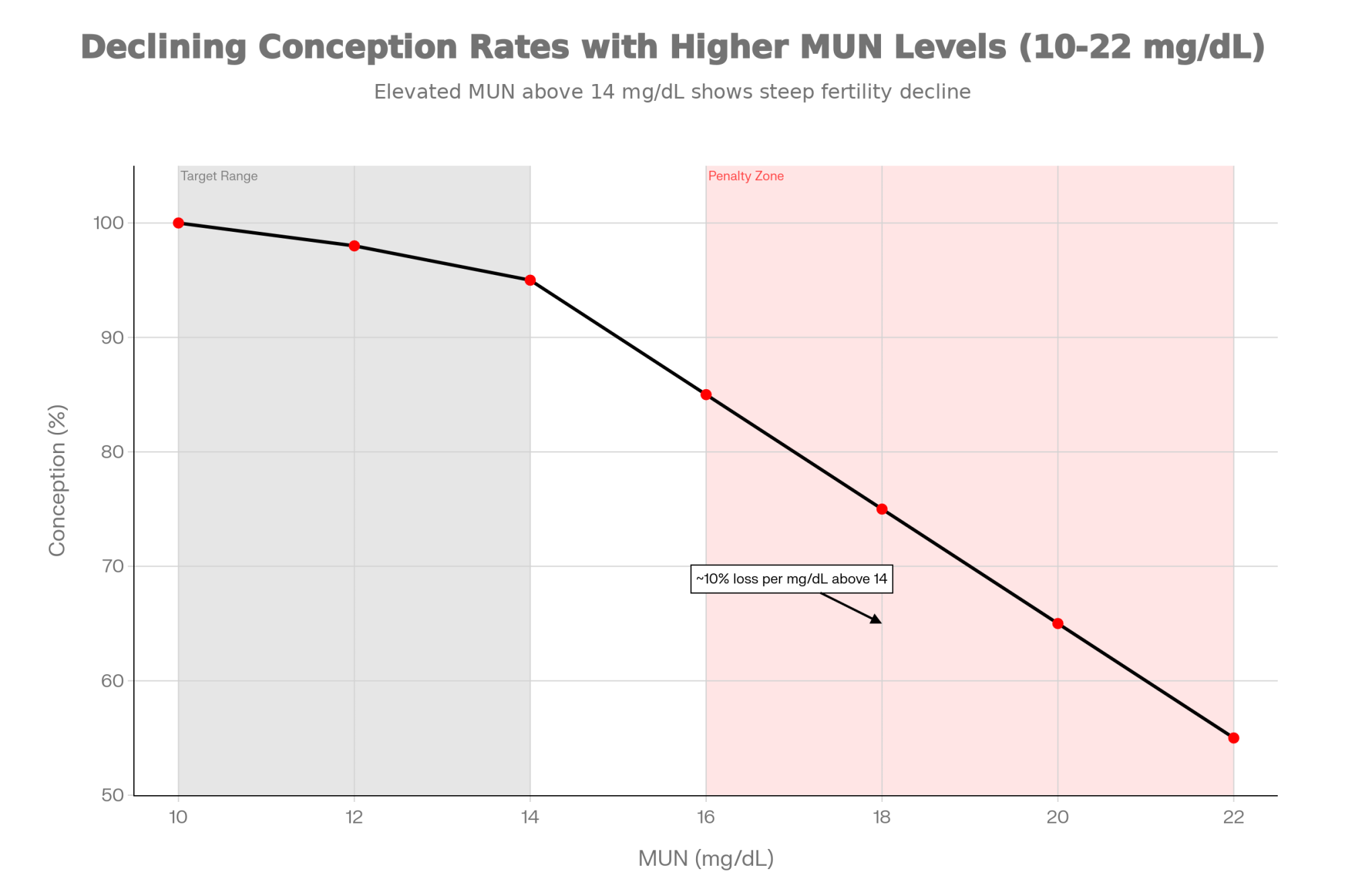
NewsSubscribe
First
Last
Consent

Zero Mastitis Tubes Since March: The Protocol Change That’s Emptying Hospital Pens

Your antibiotics aren’t failing. The bacteria are hiding—in fortresses 1,000x stronger than the treatment you’re using. Here’s how farmers are finally winning.

You know that cow that keeps showing up in your hospital pen? The one where you treat the mastitis, she looks better for a week or two, then boom—same quarter, same problem.

We’ve all got them. And we’ve all accepted them as part of doing business.

But here’s what’s changing: More operations are reporting dramatically fewer of these chronic cases. Some, like Trevor Nutcher’s California dairy, haven’t used a mastitis tube in months since switching protocols. “We haven’t used a mastitis tube since switching to AHV,” Nutcher says, and the surprise in his voice tells you everything.

What’s happening isn’t just a matter of tweaking protocol. It’s a complete rethinking of why some cows become permanent residents in the hospital pen.

The Science Behind Those Repeat Offenders

The frustrating reality of chronic mastitis finally has a biological explanation that makes sense.

According to field trial data from AHV International’s research team, bacteria living in biofilms can be 10 to 1,000 times more resistant to antibiotics than the same bacteria floating free.

Dr. Geoff Ackaert, their technical director, puts it in terms we can all understand: “The bacteria aren’t just hanging out in the udder tissue—they’re building fortresses.”

Think about the difference between hosing fresh manure off concrete versus trying to clean it after it’s been baked on for a week. Same bacteria, completely different challenge.

Rather than developing stronger antibiotics—which only lead to more resistance—researchers are now focusing on preventing biofilms from forming in the first place. They’re disrupting a process called quorum sensing, essentially cutting the communication lines bacteria use before they can organize their defenses.

The Results Farmers Are Actually Seeing

What’s compelling about biofilm prevention isn’t the science alone—it’s what’s happening on farms that have made the switch.

Peter Smith from LT Smith & Sons saw his udder health culling drop from one-in-three to one-in-seven after implementing AHV’s biofilm prevention protocols. That’s a dramatic shift in how many cows stay productive versus getting shipped early.

“Our udder health culling went from one-in-three to one-in-seven. Come back in 5 years, and I’m extremely confident we’ll still be using these protocols.” – Peter Smith, LT Smith & Sons

From Permanent Residents to Empty Hospital Pens – Peter Smith’s 1,700-cow operation slashed udder health culling from 1-in-3 to 1-in-7 after implementing biofilm prevention protocols, adding 10-12 cows to daily production while emptying the hospital pen

And then there’s Nutcher’s experience—no mastitis tubes at all since the protocol change. His hospital pen, which used to have a rotating cast of chronic cases, now sits empty most days.

These aren’t isolated examples. Across AHV’s field trials, farms implementing biofilm prevention protocols are reporting significant reductions in chronic mastitis recurrence.

Why Farmers Are Taking Notice: The Economics

So let’s talk about what really matters—the numbers.

For a typical 100-cow operation, based on data from multiple AHV field trials, here’s how it breaks down:

MetricTraditional Antibiotic TubesBiofilm Prevention Protocol
Upfront Cost (per cow)$26.71$54.02
Milk Withdrawal4–10 days (Discarded)0 days (Saleable)
Labor RequirementHigh (Daily sorting/stripping)Low (Reduced handling)
Chronic RecurrenceCommon (“Repeat Offenders”)Rare (Fortress disrupted)
Annual Net ReturnBaseline+$26,764 per 100 cows

The “Hidden” ROI: Labor and Peace of Mind 

Beyond the milk checks, consider the labor savings that don’t always show up on a ledger: fewer hours spent hauling stubborn cows to the hospital pen, zero time spent scrubbing antibiotic residue out of lines, and the elimination of the “accidental tank spike” risk. Farmers are currently struggling with labor more than almost anything else; a protocol that keeps cows in the main line is a protocol that saves man-hours.

Based on field trial calculations from AHV’s economic analysis (assuming milk prices around $20/cwt):

  • Additional milk revenue from 5.5-pound daily gain: $20,075 annually
  • Treatment cost reductions: $5,988 saved
  • Eliminated withdrawal losses: $982 recovered
  • Improved reproductive performance: $2,450 value

Conservative total benefit: $29,495 Net return after costs: $26,764

Most farms break even within 3-4 months, with year-two returns typically exceeding 200% of the initial investment. Individual results may vary based on baseline health and the quality of implementation. Even if you’re skeptical and cut these projections in half, the math still works.

For larger operations—say 500 cows or more—the dynamics shift even more dramatically. Fixed costs get diluted while benefits compound.

The Dry-Off Question: Where Does Biofilm Prevention Fit?

We need to talk about Selective Dry Cow Therapy (SDCT).

It’s become a cornerstone of industry sustainability efforts, and deservedly so—treating only the quarters that need it at dry-off is a sensible way to reduce antibiotic use. But it’s worth examining how it fits with biofilm prevention.

The consideration worth raising: selective therapy is inherently reactive. It assumes an antibiotic treatment at dry-off will address whatever issues the cow carried through lactation.

But if bacteria are established in biofilms, the treatment may not reach them effectively. As Dr. Ackaert explains, “If you haven’t disrupted the biofilm before she hits the dry pen, that infection may persist through dry-off and re-emerge at freshening when the immune system is under pressure.”

This doesn’t mean SDCT isn’t valuable—it absolutely is. The question is sequencing. Progressive operations are finding that using biofilm disruption during lactation helps ensure the udder is truly clear, making their selective dry cow protocols significantly more effective.

It’s not either/or. It’s getting the order right.

Implementation Realities: Who Sees Results (And Who Doesn’t)

Let’s be honest here—this doesn’t work for everyone.

Based on conversations with producers who’ve made this transition, field observations suggest maybe 5 to 10 percent don’t see these dramatic improvements.

Farms that struggle typically share certain patterns:

  • Protocol costs exceed 2-3% of their milk revenue
  • They’ve got severe existing problems (over 50 mastitis cases per 100 cows)
  • Owner-operators trying to manage everything without dedicated support
  • They’re implementing during a crisis rather than preventively

Success seems most likely with:

  • Moderate baseline challenges (20-40 cases per 100 cows)
  • Systematic health monitoring is already in place
  • Accessible technical support
  • Veterinary collaboration—or at least neutrality
  • Operations of any size, but particularly those with 100+ cows, where fixed costs dilute better

What I find most telling is that it’s less about operational size than about management capacity and timing.

Regional Differences Matter More Than You Think

What works in California doesn’t automatically translate to operations in Wisconsin or Vermont.

A Wisconsin producer dealing with -20°F winters recently told me they had to adjust their protocols significantly. “Those temperature swings hit the immune system differently than California’s steady weather,” he explained. Makes sense when you think about it.

Where Prevention Works Best: Implementation Success Patterns – While success rates vary by region (65-90%), biofilm prevention protocols work across diverse climates when properly adapted. Northeast premium markets show highest adoption (90%), while Southeast operations on tighter margins require longer ROI timelines

Producers report water quality makes a real difference too—iron content and mineral profiles seem to influence protocol effectiveness, though we’re still documenting the specifics.

Northeast operations serving premium markets face entirely different economics. One Vermont producer shared that their premium contract requirements made the switch almost mandatory. Meanwhile, Southeast producers operating on tighter margins might lack the financial flexibility to make higher upfront investments, even with strong projected returns.

And if you’re export-focused in the West? Antibiotic-free certification is increasingly becoming table stakes for international contracts.

Questions Worth Asking Your Advisor

Before making any protocol changes, here’s what you need to nail down:

  • What are your actual baseline costs? Not industry averages—your specific treatment costs per case.
  • What measurable improvements would justify this investment? By month six, what would convince you it’s working?
  • Is qualified technical assistance available? How does your vet view these approaches?
  • How do these protocols compare with other improvements you’re considering?

The Real Implementation Timeline

Based on producer experiences documented in AHV case studies, here’s what to expect:

  • Months 1-2: Learning curve. Staff skepticism is normal. Document everything for true baselines.
  • Months 3-4: Early indicators emerge. Hospital pen populations might start declining. If you’re seeing nothing by month four, check your implementation.
  • Month 6: Decision time. You should see improvement in at least two metrics: mastitis rates, conception rates, and production.
  • Month 12: Full economic analysis, including hidden costs. Most producers wish they’d started earlier, though some realize their timing wasn’t right.

Why Environmental Impact Matters to Your Bottom Line

Beyond the economic considerations, a regulatory angle is emerging here as well.

Reduced antibiotic use means less runoff into watersheds. That matters increasingly for permit compliance. Consumer perception, too. Some milk buyers are already asking about antibiotic reduction protocols—and that list is growing.

Sponsored Post

Making the Decision That’s Right for You

Every operation faces unique circumstances.

For dairies with moderate mastitis challenges and reasonable financial flexibility, the documented economics appear compelling. Operations with severe problems or immediate cash flow pressures might need to address fundamentals first.

The key insight? Chronic mastitis isn’t necessarily inevitable. Understanding biofilm-protected bacteria changes how we evaluate every protocol going forward.

Looking Forward

The empty hospital pen is becoming less unusual across the industry.

Whether you’re ready for changes today or still evaluating, recognizing that some of those “permanent” problems might actually be preventable—that opens new possibilities for all of us.

You know those cows we started talking about? The repeat offenders that seem to live in the hospital pen? Maybe it’s time we stopped accepting them as inevitable. Because for a growing number of operations, they’re becoming a thing of the past.

And that’s progress worth understanding.

The Bottom Line

That cow you keep treating for mastitis—same quarter, same problem, every few weeks—isn’t incurable. You’ve just been fighting the wrong battle. Research from AHV International reveals that bacteria in biofilms are up to 1,000 times more resistant to antibiotics, explaining why chronic cases never fully heal, no matter how many tubes you use. Biofilm prevention takes a different approach: disrupting bacterial communication before these protective “fortresses” can form. The proof is in the results—Trevor Nutcher hasn’t touched a mastitis tube in months, while Peter Smith cut udder health culling from one-in-three to one-in-seven. The economics work too: protocols cost double upfront ($54 vs $27/cow), but deliver $26,764 net return per 100 cows annually, with most farms breaking even in 3-4 months. For dairies tired of accepting chronic mastitis as “part of the business,” empty hospital pens are finally within reach. Ask your technical advisor for a Biofilm Audit.

Key Takeaways

  • Why chronic cases never heal: Bacteria in biofilms are 1,000x more resistant to antibiotics—you’re not failing, you’re fighting fortresses
  • Proof it works: Trevor Nutcher hasn’t touched a mastitis tube in months; Peter Smith cut udder health culling from 1-in-3 to 1-in-7
  • The economics: Double the upfront cost ($54 vs $27/cow), but $26,764 net return per 100 cows—most farms break even in 3-4 months
  • Success factors: Works best with moderate baseline problems (20-40 cases/100 cows), systematic monitoring, and preventive implementation—not crisis response
  • The shift: Chronic mastitis isn’t inevitable. Empty hospital pens are becoming normal for farms that stop treating symptoms and start preventing biofilms

Complete references and supporting documentation are available upon request by contacting the editorial team at editor@thebullvine.com.

Join the Revolution!

Join over 30,000 successful dairy professionals who rely on Bullvine Weekly for their competitive edge. Delivered directly to your inbox each week, our exclusive industry insights help you make smarter decisions while saving precious hours every week. Never miss critical updates on milk production trends, breakthrough technologies, and profit-boosting strategies that top producers are already implementing. Subscribe now to transform your dairy operation’s efficiency and profitability—your future success is just one click away.

NewsSubscribe
First
Last
Consent

$15 Milk Is Coming: The German Butter Signal Every Dairy Farmer Needs to See

German butter at €0.77. U.S. milk at $15. The math is already done—now it’s decision time.

Executive Summary: German butter crashed to €0.77—down 35% in five months—and that price signal typically reaches North American milk checks within 90 days. Class III futures have already fallen to $15.50-$16.50/cwt for early 2026, leaving most mid-size dairies $2-3/cwt underwater. At a 1.3x Debt Service Coverage Ratio, you still control your options; wait until 1.0x, and your lender starts making the calls. That timing gap alone can cost a farm family $200,000 to $400,000. The operations surviving this squeeze share three things: component-focused genetics (U.S. butterfat hit 4.4% this year, up from 3.7% two decades ago), peer accountability groups, and the willingness to make structural decisions while flexibility remains. The signals are clear—what matters now is what you do with them.

You know what catches my attention when I’m scanning global dairy markets? It’s not always the headline numbers. Sometimes it’s a farmer walking through a grocery store and doing math in his head.

A dairy producer in Lower Saxony—runs about 85 cows outside Cloppenburg—told Agrarheute this month that he saw butter priced at €0.77 per 250g block at his local Aldi. Down from €1.19 just five months ago. He knows what that kind of retail movement typically means for his milk check come February or March. “When retail goes this low for this long, we feel it,” he said. And based on what economists have been tracking, he’s probably right.

German butter prices crashed 35% in five months—from €1.19 to €0.77. This price signal typically reaches North American milk checks within 60-120 days. Understanding this global transmission is the difference between proactive decisions and reactive scrambling.

That farmer’s instinct aligns with patterns that agricultural economists have been documenting across European markets. Here’s what I find interesting for those of us watching from Wisconsin, California, or the Northeast: Germany’s butter aisle may offer something more valuable than headlines. It’s essentially a 3-6 month preview of the financial pressure that often works its way through global supply chains.

How Retail Price Wars Travel Back to the Farm Gate

Let me walk through how this mechanism typically works, because once you see the pattern, it becomes easier to spot in your own markets.

Germany’s grocery market operates differently than what most North American producers experience. Discount retailers—led by Aldi and the Schwarz Group (which owns Lidl and Kaufland)—account for over 36% of German grocery retail sales, according to USDA Foreign Agricultural Service data. When they drop butter prices—as they did dramatically this fall—competitors tend to follow within days.

Dr. Holger Thiele at the ife Institute for Food Economics in Kiel calls this “retail-driven margin compression.” His analysis shows that butter retailing at €0.77 per 250g implies a wholesale equivalent of roughly €3,080 per tonne—while actual wholesale butter was trading around €4,150 on European exchanges. Retailers are absorbing over €1,000 per tonne in losses on butter alone.

Why would retailers accept losses on butter?

Butter is what retail analysts call a traffic driver. Shoppers notice butter prices. A €0.77 price point gets customers through the door, and they leave with €80 in groceries. The loss on butter becomes a customer acquisition cost.

Here’s where it connects to farm economics. Sustained retail price drops typically show up in farmgate milk contracts 60-120 days later, depending on cooperative payment structures. German milk prices declined meaningfully in late 2024, according to AMI Agrarmarkt Informations-Gesellschaft data. Meanwhile, Arla Foods reported a net profit of €401 million in 2024, up 5.5% from €380 million the year before. The margin didn’t disappear—it shifted upstream, away from farmers.

The Global Connection: Why Wisconsin Feels Berlin

StepMarket EventTypical TimeframeImpact on You
1German retail butter crashes (€1.19 → €0.77)ImmediateRetail price wars begin
2European wholesale butter softens (€7,200 → €4,150/tonne)2–4 weeksProcessors adjust buying
3Global Dairy Trade auctions reflect weakness4–6 weeksNZ/AU prices drop
4U.S. Class III/IV futures decline ($18 → $15.50/cwt)6–8 weeksYour risk management window
5Your milk check drops60–120 days$2-3/cwt below breakeven

What keeps me watching these markets closely is how quickly price signals travel internationally:

  • European butter and powder prices influence Global Dairy Trade auction results in New Zealand
  • GDT results affect Fonterra’s farmgate payments
  • Fonterra prices set informal benchmarks that ripple through Australian and American contract negotiations

Dr. Mark Stephenson, who directs Dairy Policy Analysis at the University of Wisconsin-Madison, has tracked this transmission mechanism for over a decade. His November 2025 Dairy Situation and Outlook report noted that European market softness is putting downward pressure on U.S. Class III and Class IV prices, with a typical lag of 60-90 days.

Class III futures are pricing early 2026 milk at $15.50-$16.50/cwt. Breakeven for mid-size Midwest dairies: $18-$19/cwt. The math is broken—and waiting won’t fix it. Farms at DSCR 1.3x still have options. Farms shipping milk underwater for six months don’t.

Current Market Snapshot:

MarketCurrent LevelContext
German retail butterBelow €1/250gDown ~33% from summer peaks
European wholesale butter€4,150/tonneDown from €7,200+ in early 2024
Australian farmgate milkA$8.00-$9.00/kg MSRabobank/Dairy Australia 2025-26 forecast
U.S. Class III futures$15.50-$16.50/cwtBelow the USDA’s $17.50 December WASDE projection

For context, University of Wisconsin extension cost-of-production benchmarks put average COP at $18-19/cwt for mid-size Midwest dairies. That gap between market prices and production costs is where the financial stress lives.

The Genetics Response: Why Component Breeding Matters More Now

Here’s something worth considering for those thinking about breeding decisions in the current environment. When fluid milk prices soften, operations that have invested in high-component genetics tend to weather the storm better.

Why? Because Class III and Class IV pricing formulas reward butterfat and protein by the pound—not by volume. As Kevin Jorgensen, senior Holstein sire analyst at Select Sires in Ohio, explained to Dairy Global: “We try to strike a balance. We select for the highest possible combined fat and protein in the milk without sacrificing fertility and health.”

The numbers tell an encouraging story for producers who’ve been making component-focused breeding decisions:

  • Butterfat has climbed dramatically: From 3.7% in February 2005 to 4.4% in February 2025, according to USDA AMS data and 2024 was the first year U.S. milk averaged above 4.0% butterfat for every single month in recorded history
  • Protein continues rising: From 3.04% in 2004 to 3.29% in 2024, based on Federal Milk Marketing Order data cited by CoBank
  • Genetic progress is accelerating: The April 2025 Holstein base change rolled back 45 pounds on butterfat—nearly double any previous adjustment in the breed’s history, per Council on Dairy Cattle Breeding data

Pro Tip: Component Math in a Soft Market

Twenty years of consistent genetic progress: U.S. butterfat has climbed from 3.7% (2005) to 4.4% (2025). In a $15 milk market, component-focused genetics aren’t a luxury—they’re margin insurance. Every tenth of a percent matters when Class III compresses.

When Class III prices drop from $18 to $16/cwt, a cow producing 4.4% butterfat versus 3.7% butterfat can mean the difference between covering costs and falling short. Every tenth of a percent matters more when base prices compress.

Within about 5 years, the average Holstein milk fat percentage has grown from 3-3.5% to about 4%. There is now a wide variety of ‘higher-fat Holstein bulls’, and whether the customer is buying semen or embryos, nobody wants low-fat genetics.

Emily Bosch, senior communications manager at Holstein Association USA, expects this trend to continue: “The genetic trends for milk, fat, and protein production are extremely favourable for Holstein cattle, so we expect to see these increases to continue in the future.”

For operations evaluating their breeding programs during this margin squeeze:

  • Prioritize combined fat and protein (CFP) over milk volume in sire selection
  • Consider the updated Net Merit (NM$) index weightings released in 2025
  • Balance component emphasis with fertility and health traits—as Jorgensen notes, “The balanced cow is what we should be striving for.”
  • Review your herd’s current component averages against regional benchmarks

The CoBank Knowledge Exchange research suggests butterfat could pass 5% within the next decade if genetic selection continues at the current pace. Operations positioned for that future may find themselves better insulated against volatile prices.

Financial Warning Signs: What to Watch

I’ve been talking with producers and ag lenders over the past few months, and a pattern keeps emerging. Farmers know their numbers are tight. What many aren’t tracking as closely is where they sit relative to the specific thresholds that tend to determine financing options 12-18 months down the road.

Debt Service Coverage Ratio (DSCR) — the single most important number your lender watches:

DSCR RangeStatusWhat It Typically Means
Above 1.5xHealthyMultiple strategic options available
1.25-1.5xAcceptableLenders generally remain flexible
1.15-1.25xCautionNew financing becomes difficult
Below 1.15xConstrainedRestructuring conversations likely
Below 1.0xCrisisIncome can’t service existing debt

Debt-to-Asset Ratio — your leverage position:

D/A RangeStatusPractical Implication
Below 30%StrongExpansion financing available
30-50%AcceptableStandard lending terms
50-60%CautionLimited flexibility
Above 60%ConstrainedOne bad year erodes equity fast

Current Ratio — can you meet obligations due within 12 months?

Current RatioStatusWhat It Means
Above 2.0xStrongSolid seasonal buffer
1.5-2.0xAdequateCan weather normal volatility
1.2-1.5xVulnerableSeasonal stress likely
Below 1.2xPressureNear-term liquidity concerns

Key Insight from Extension Educators

The difference between making proactive decisions at 1.3x DSCR versus reactive decisions at 1.0x DSCR can be $200,000 to $400,000 in family wealth, based on farm exit data over the past five years.

A Pattern Worth Recognizing

Here’s something I’ve noticed in conversations with producers across different regions, and I think it’s worth naming because awareness can help.

Dr. David Kohl at Virginia Tech, who’s studied farmer financial decision-making for over 40 years, calls it “cycle-based thinking.” Farmers who’ve survived previous downturns—2009, 2015-2016, 2020—have learned that prices eventually recover. That creates a reasonable expectation that current pressure is temporary.

The basic dynamic:

  • Farmers anchor to the highest prices they’ve experienced
  • When Class III hit $23/cwt in 2022, that became the psychological reference point
  • Current prices feel like temporary deviations rather than potential new baselines

This isn’t a criticism—it’s how human cognition works under uncertainty. But it can create a gap between when stress becomes visible in metrics and when farmers act.

Neither approach is guaranteed right or wrong. But having a clear framework for when you’ll act tends to produce better outcomes than deciding in the moment.

What’s Working: Farms Finding Margin

MoDak Dairy, South Dakota: Greg Moes runs a 500-cow operation that started building its beef-on-dairy program in 2023—before milk prices softened. Moes explained: “Beef-on-dairy carried us when milk prices were low. We’re getting $800-$1,000 per calf on those crosses, and that income doesn’t care what Class III is doing.”

High-Performing Australian Operations: Dairy Australia’s Focus Farm program findings show top-quartile farms share common characteristics:

  • Pasture utilization rates above 80%
  • Concentrate feeding below 2.5 tonnes per cow
  • Focus on profit per hectare over production volume
  • 15%+ return on assets
MetricTop-Quartile FarmsAverage Farms
Pasture Utilization Rate>80%60–70%
Concentrate Feeding<2.5 tonnes/cow3.0–3.5 tonnes/cow
Return on Assets (ROA)15%+5–8%
Profit FocusPer hectarePer cow (volume)
Fertility/Health EmphasisHigh (balanced breeding)Moderate (volume-first)

Multi-Generational Wisconsin Dairies: The operations that have maintained stability through multiple downturns tend to treat succession not as a single event but as a continuous business infrastructure. Active next-generation involvement typically starts 5-10 years before formal transition.

Building Accountability: What Peer Groups Look Like

One of the most effective tools I’ve encountered for maintaining financial discipline is structured peer accountability. The Farmer-to-Farmer Education Act, reintroduced by Senators Luján and Moran in May 2025, is based on USDA research showing that over 50% of producers sought business education from other farmers rather than traditional extension services.

Effective peer group structure:

  • 4-6 farms in similar situations (size, region, production system)
  • Quarterly meetings with a neutral financial analyst
  • Each farm brings actual numbers: DSCR, debt-to-asset ratio, current ratio, IOFC
  • Group discusses trajectories honestly; farms commit to specific decisions

Why This Works

Extension educators who’ve run these programs report that farms that stay accountable to a peer group tend to make structural decisions 6-12 months earlier than farms that rely solely on individual analysis. That timing difference is often the gap between restructuring on your terms versus your lender’s terms.

Understanding the Lender Perspective

Agricultural lenders continuously monitor DSCR, debt-to-asset ratios, and liquidity. The American Bankers Association’s November 2025 agricultural lending survey found that only 52% of farm borrowers are expected to remain profitable in 2025, with “credit quality deterioration” flagged as lenders’ top concern.

This isn’t villainy—it’s fiduciary responsibility. But it does mean farmers need their own early warning systems built around farmer interests, not lender portfolio management.

A 90-Day Framework

If you’re at DSCR 1.3x or lower—or if current market conditions would push you there—here’s a practical framework:

Days 1-30: Establish Financial Clarity

  • Get a clean, accrual-based financial statement (not just tax returns)
  • Calculate DSCR, debt-to-asset ratio, and current ratio
  • Document your breakeven milk price under the current cost structure
  • If breakeven exceeds $17/cwt with futures at $15-$16, that gap needs attention now

Days 31-60: Evaluate Strategic Options

Model three scenarios:

  • Scale: What would expansion require to achieve meaningful per-unit cost advantages?
  • Specialize: Could you restructure toward pasture-based, beef-on-dairy, or component-focused premium markets?
  • Transition: What does a planned exit look like while you still have equity?

Days 61-90: Commit and Build Accountability

  • Choose one direction and document a 24-month plan with milestones
  • Form or join a peer accountability group
  • Schedule your first peer meeting with real numbers on the table

What This Means for Your Operation

German butter below €1 is a signal. Class III futures in the $15- $16 range are a signal. These aren’t just interesting data points—they’re telling us something about where margins are heading over the next 6-12 months.

How you interpret those signals is your decision. You can read them as background noise or as useful information for checking your numbers while you have options.

The farms that remain viable through industry transitions tend to establish clear decision frameworks, build accountability systems, and act when indicators suggest action—rather than waiting for certainty that never quite arrives.

If you’re at DSCR 1.3x right now, your decision window is measured in quarters, not years. That’s not meant to create panic—it’s meant to be useful information for planning.

The math of farm finance isn’t complicated. The decisions it implies are rarely easy. But at DSCR 1.3x, those decisions are still substantially yours to make. That’s worth protecting.

For farmers seeking financial benchmarking resources: University extension dairy programs in most states offer confidential farm financial analysis. The Center for Dairy Profitability at UW-Madison publishes annual benchmarking studies. Many regional cooperatives now offer member financial planning services. The key is to engage these resources while your financial position remains flexible.

Key Takeaways 

  • 90-day signal: German butter crashed 35%—U.S. milk prices typically follow within 3 months
  • The math is broken: Class III at $15.50 vs. $18+ breakeven puts most dairies underwater
  • DSCR 1.3x is your window: Act now or lose $200K-$400K in family wealth waiting until 1.0x
  • Components beat volume: 4.4% butterfat is margin insurance when prices compress
  • Build accountability: Farms in peer groups make hard decisions 6-12 months faster

Complete references and supporting documentation are available upon request by contacting the editorial team at editor@thebullvine.com.

Learn More:

Join the Revolution!

Join over 30,000 successful dairy professionals who rely on Bullvine Weekly for their competitive edge. Delivered directly to your inbox each week, our exclusive industry insights help you make smarter decisions while saving precious hours every week. Never miss critical updates on milk production trends, breakthrough technologies, and profit-boosting strategies that top producers are already implementing. Subscribe now to transform your dairy operation’s efficiency and profitability—your future success is just one click away.
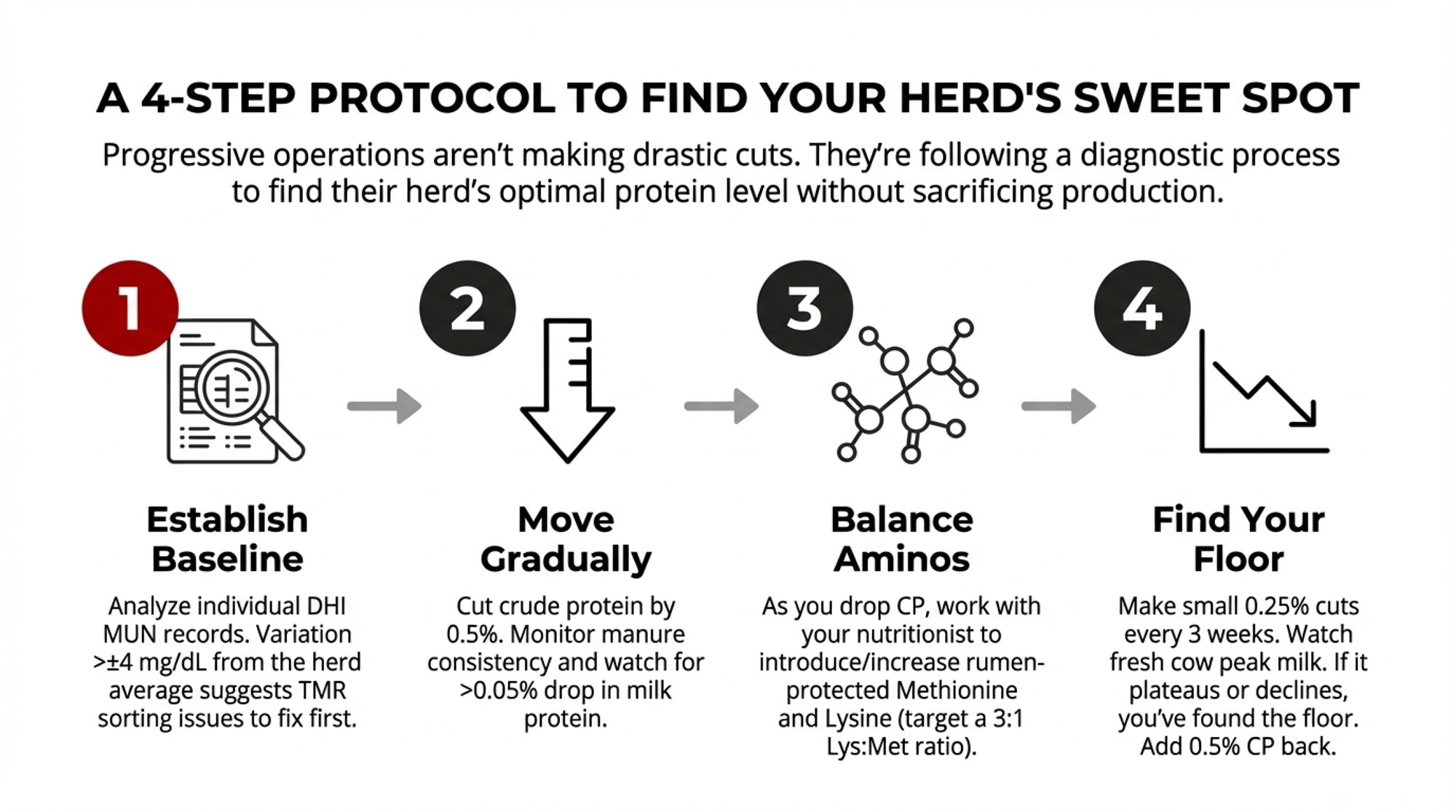
NewsSubscribe
First
Last
Consent

The $16/CWT Reality: Why Mid-Size Dairies Can’t Out-Work Structural Economics – And What Actually Works

Mid-size dairies face a $16/cwt cost gap against mega-operations. You can’t out-work structural economics. But you might out-think them.

Executive Summary: The gap between thriving dairies and struggling ones isn’t about who works harder—it’s structural. Mid-size operations (250-1,000 cows) face a cost disadvantage of up to $16 per hundredweight compared to mega-dairies, driven by differences in labor efficiency, purchasing power, and organizational capacity that longer hours alone can’t bridge. These aren’t cyclical pressures waiting to pass; USDA data shows 40% of dairy farms exited between 2017 and 2022, while operations with 1,000+ cows now produce 68% of U.S. milk. Three strategies are helping producers navigate this divide: beef-on-dairy breeding programs capturing significant calf revenue, component-driven culling aligned with today’s pricing, and precision feeding that compounds efficiency gains over time. For farms facing margin pressure, timing proves critical—acting early preserves substantially more equity than waiting for conditions that may not improve. Understanding these dynamics won’t guarantee any particular outcome, but it enables clearer decisions while meaningful options still exist.

dairy profitability strategies

There’s a number from the latest Zisk Report that’s worth pausing on. Looking at their 2025 profitability projections, operations milking more than 5,000 cows were expected to earn around $1,640 per cow. Smaller herds under 250 cows in the Southeast? Roughly $531 per cow. That’s not just a performance gap you can chalk up to management differences. It reflects fundamentally different economic realities.

What makes this moment feel different from the cyclical downturns we’ve weathered before is that this gap isn’t closing. The farms caught in the middle—those 250- to 1,000-cow operations that have traditionally formed the backbone of American dairy—face a structural squeeze that traditional approaches alone may not address.

I want to be clear about something upfront. This isn’t a story about who deserves what outcome. It’s about understanding what’s actually driving profitability, why certain strategic moves create compounding advantages, and what realistic options exist for operations navigating an increasingly challenging landscape.

The Scale of Change Already Underway

Before digging into strategy, it’s worth sitting with how much has already shifted. USDA’s 2022 Census of Agriculture shows licensed dairy farms with off-farm milk sales declining from 39,303 in 2017 to 24,082 in 2022—a reduction of almost 40%. University of Illinois economists at Farmdoc Daily noted that it was the largest decline between adjacent Census periods since 1982.

The consolidation squeeze: Total dairy farms dropped 59% between 2012-2022, while mega-operations now control 68% of U.S. milk production—up from 52% a decade ago

Here’s the part that surprises people: total milk production actually increased slightly during that same period.

Why? Because remaining farms are larger, more productive, and increasingly concentrated. Rabobank’s analysis of the Census data estimates that farms with 1,000 or more cows—roughly 2,000 operations—now produce about 68% of U.S. milk, up from 60% in 2017. Meanwhile, farms with fewer than 500 cows account for about 86% of all operations but contribute only about 22% of total production.

The profitability chasm: Large dairies earn triple what mid-size operations make per cow, driven by structural cost advantages rather than management quality

The profitability breakdown by herd size tells the story. According to Zisk’s 2025 projections, those massive 5,000+ cow herds were looking at $1,640 per cow, with profitability declining steadily as herd size decreased. Their 2026 projections suggest smaller herds will continue to lag, with sub-250-cow farms hovering near break-even and mid-size herds projected somewhere in the low hundreds per cow.

These aren’t random variations. They reflect structural cost advantages that compound at scale—advantages in labor efficiency, feed purchasing, risk management infrastructure, and capital access that mid-size operations struggle to replicate, regardless of management quality.

The “No-Man’s Land” Problem: Why 750 Cows Is the New 100

Here’s something I’ve been thinking about a lot lately. Back when I started paying attention to this industry, a 100-cow operation was considered the minimum viable scale for a full-time dairy. Based on current cost structures and margin realities, that threshold has shifted dramatically upward.

Mid-size operations—those running roughly 250 to 1,000 cows—find themselves stuck in what I’d call economic no-man’s land. They’re too big to run primarily on family labor, the way smaller operations can. But they’re not big enough to justify the specialized management teams, dedicated risk managers, and infrastructure investments that large operations deploy.

Consider what a 300-cow operation still needs:

  • Full-time hired labor (family alone can’t handle 24/7 milking schedules)
  • Modern parlor equipment and maintenance
  • Compliance infrastructure for environmental and labor regulations
  • Professional nutritional consulting
  • Financial management beyond basic bookkeeping

But that same 300-cow operation typically can’t afford:

  • A dedicated herd manager separate from the owner
  • Full-time HR staff to handle employee recruitment and retention
  • A risk management specialist monitoring DRP enrollment and forward contracts
  • The volume discounts in feed purchasing that large operations secure

University of Minnesota Extension data in FINBIN show the math clearly: herds with up to 50 cows face costs of around $20.22 per cwt, compared to $16.70 for herds over 500 cows. That gap of several dollars per hundredweight? It often represents the entire margin at current milk prices.

At stressed margins, a mid-size operation can lose approximately $15,000-$20,000 per month, according to industry analysis. That’s not a sustainable position, and no amount of 80-hour weeks changes the structural economics.

Reality Check: The Cost of Waiting

The hardest conversation I have with producers involves timing. Industry analysis from agricultural lenders suggests that farms making strategic decisions during months 8-10 of financial stress preserve significantly more equity—often hundreds of thousands of dollars more—than those waiting until months 16-18.

The cost of waiting: Farms that delay strategic decisions until month 18 preserve half the equity of those acting at month 12—a difference often exceeding $200,000 in lost family wealth

Every month of delayed decision-making at stressed margins burns equity that families will never recover. The pattern is consistent across regions: waiting for conditions to improve when structural forces are at work rarely improves outcomes.

The difficult truth is that the only wrong choice is often no choice at all.

Understanding What Creates the Cost Gap

When we talk about economies of scale, it can sound abstract. On working farms, though, this shows up in tangible ways.

Structural Cost Comparison: Mid-Size vs. Large Operations

Cost FactorMid-Size Operation (250-1,000 cows)Large Scale (5,000+ cows)
Total Cost per CWT$19-22 (University of Minnesota FINBIN)$16-18 (USDA ERS, Cornell data)
Labor StructureOwner + generalist hired workersSpecialized department managers
Risk ManagementOwner-operated, part-time attentionDedicated full-time staff
Feed SourcingMarket price/spot purchasesContracted volume discounts
Genomic TestingSelective/occasional useUniversal/systematic across the herd
Equipment Cost per CowHigher (fixed costs spread across fewer animals)Lower (fixed costs spread across more animals)

Sources: University of Minnesota FINBIN, USDA ERS milk cost studies, Cornell

Where the Differences Come From

Cost ComponentMid-Size Operations (250-1,000 cows)Large Scale (5,000+ cows)Gap Impact
Labor Cost per CWT$4.50$2.80$1.70 disadvantage
Feed Cost per CWT$11.20$9.90$1.30 disadvantage
Equipment Cost per CWT$3.50$2.00$1.50 disadvantage
Total Operating Cost per CWT$20.22$16.70$3.52 total gap
Net Cost Disadvantage+$3.52BASELINE21% higher costs

Labor efficiency represents the most significant structural gap. MSU Extension research found labor costs ranging from less than $3 per cwt on well-organized, larger farms to more than $4.50 per cwt on operations averaging around 258 cows. University benchmarking consistently shows large herds support substantially more cows per full-time worker—often roughly double the cows per FTE compared to smaller family operations.

Think about what this means practically. A 500-cow farm requiring 10 employees at an average cost of $45,000 runs $450,000 in labor annually. A 3,000-cow operation with better labor efficiency spends significantly less per cow. And there’s only so much you can do about this—someone still needs to be monitoring fresh cows at 2 AM, whether you’re milking 400 or 4,000.

Feed purchasing power compounds the advantage. What I’ve found, talking with nutritionists and lenders, is that larger dairies consistently secure meaningful volume discounts on purchased feed compared to smaller buyers who purchase at spot prices. With feed typically accounting for the majority of operating costs, even modest percentage savings translate into real-dollar advantages.

Capital costs follow similar patterns. Equipment amortization illustrates this well: the same piece of equipment costs more per cow annually when spread across 350 animals than when spread across 3,000. That’s not about management quality—it’s pure math. And it affects everything from parlor systems to feed storage to manure handling.

When you stack these factors together, USDA ERS research found that dairy farms with fewer than 50 cows had total economic costs of $33.54 per cwt while herds of 2,500+ cows achieved costs of $17.54 per cwt. That’s a $16 difference—nearly the entire milk price in some months.

The Organizational Capacity Challenge

Here’s something that doesn’t get discussed enough, and honestly, it’s an aspect I didn’t fully appreciate until digging into this data: organizational infrastructure may matter as much as any single cost factor.

Organizational Comparison: Who’s Managing What?

Critical FunctionMid-Size (250-1,000 cows)Large Scale (5,000+ cows)Impact
Risk ManagementOwner part-timeDedicated marketing staffLower DRP enrollment
Genetic Program StrategyAI tech recommendationsIn-house geneticistReactive vs. systematic
Nutritional ManagementConsultant quarterly visitsFull-time on-staff nutritionistSlower optimization
Employee Recruitment & TrainingOwner handlesHR departmentHigher turnover costs
Financial Planning & AnalysisAnnual lender meetingCFO with monthly analysisDelayed interventions
Regulatory ComplianceOwner learns as neededCompliance officerViolation risk

Consider risk management specifically. Large dairy operations increasingly employ dedicated staff for milk marketing, futures hedging, and Dairy Revenue Protection enrollment. A much higher share of large operations actively use DRP and forward contracting than mid-size farms do. What’s interesting is that the tools themselves are identical—DRP costs the same per hundredweight regardless of herd size.

So why the adoption gap?

The answer comes down to organizational capacity. Effective risk management requires:

  • Accurate cost-of-production projections 6-12 months forward
  • Quarterly decision-making discipline for DRP enrollment
  • Understanding of basis risk and Class III correlations
  • Coordination between the lender, the nutritionist, and the marketing decisions

Large operations have staff dedicated to these functions. Mid-size farms have owner-operators trying to manage risk alongside daily operations, employee supervision, equipment maintenance, and family responsibilities. As extension economists often note, it’s not that mid-size farms can’t afford the premiums—they don’t have the bandwidth to execute consistently. And inconsistent execution often performs worse than no strategy at all.

From the Field: A Wisconsin Operation’s Strategic Pivot

I recently spoke with operators running a 480-cow dairy in Dane County, Wisconsin, who implemented beef-on-dairy breeding starting in early 2024. They moved from modest bull calf revenue to well over $200,000 in beef-cross calf sales within 18 months. The key was starting with genomic testing to identify which cows warranted investment in sexed semen. “Once we knew our top 35% genetically, the breeding decisions got clearer. We’re not guessing anymore.” They acknowledged that the transition took about two complete breeding cycles before they felt the system was truly optimized.

Three Strategic Moves Separating Top Performers

What are genuinely successful operations doing differently? Three specific strategies keep appearing among farms outperforming their peer groups. These aren’t theoretical—they’re moves I’m seeing executed on working dairies right now.

Beef-on-Dairy as a Revenue Strategy

The shift toward beef-on-dairy breeding represents one of the most significant strategic pivots in dairy today. American Farm Bureau analysis describes beef-on-dairy crossbreeding as one of the fastest-growing trends in dairy genetics, with a substantial share of commercial herds now breeding part of the milking string to beef sires.

The traditional approach—breeding all cows to dairy sires and selling bull calves for whatever the market offers—often yields disappointing returns. Top performers instead use genomic testing to identify their top 35-40% of cows genetically, breed those with sexed semen for replacement heifers, and breed the remainder to beef sires.

USDA Agricultural Marketing Service reports show that well-grown beef-cross calves bring several hundred dollars more than straight dairy bull calves at auction. Recent sale barn data often shows beef-on-dairy calves trading in the low four figures while dairy bull calves bring a fraction of that (depending on weight and region).

Based on current price differentials, that gap can translate into substantial additional annual calf revenue—potentially six figures for a 500-cow herd, depending on local market conditions.

The beef-on-dairy revenue multiplier: A 500-cow herd switching to strategic beef breeding can add $225,000 in annual calf revenue—enough to cover several full-time employees

Execution requires infrastructure that many mid-size farms lack, though:

  • Genomic testing: $35-55 per head, depending on test panel (one producer reported average costs around $38)
  • Breeding discipline: Consistent heat detection and sexed semen protocols
  • Market development: Building feedlot relationships that value beef-on-dairy genetics
  • Timeline: 2-3 years to fully optimize the program

Component-Driven Culling Decisions

Traditional culling logic focuses on milk volume: keep high producers and cull low producers. What I’m seeing among top performers is a shift to income-over-feed-cost analysis that accounts for component value—and it’s changing which cows stay and which go.

Why does this matter more now than it did five years ago? Federal order component pricing in 2025 has rewarded solids heavily, with butterfat prices often in the $2.50-2.70 per pound range and protein in the low-to-mid $2.00s per pound. It’s worth noting there’s been significant month-to-month volatility—August 2025 saw butterfat above $2.70, while October dropped closer to $1.80. That kind of swing matters for planning.

This pricing structure means a cow producing 60 pounds daily with average components generates different revenue than one producing 48 pounds at notably higher butterfat and protein tests. In many cases, that “lower-producing” high-component cow delivers more monthly value than her high-volume counterpart.

Recent USDA/NAHMS-based summaries indicate the typical overall cull rate runs about 37% of the lactating herd annually, with roughly 73% of those culls classified as involuntary in Northeast datasets—driven by reproductive failure, mastitis, and lameness. Penn State Extension reported similar figures. Extension specialists emphasize that moving more culling into the voluntary category (strategically removing low-IOFC cows rather than reacting to health breakdowns) improves long-term herd economics.

Here’s a number worth sitting with: it takes more than three lactations to recoup the cost of raising a replacement heifer—about $2,000 per head—but average productive life currently runs about 2.7 lactations. That gap between investment and return is where considerable money quietly disappears.

Precision Feeding Implementation

Emerging technology enables individual-cow nutritional optimization rather than pen-based feeding. While still early in adoption, farms implementing precision feeding systems report meaningful gains in milk income minus feed costs, with results varying by implementation quality and starting-point efficiency.

Systems like Nedap or SCR by Allflex integrate with automated milking and grain dispensers, continuously analyzing individual cow data to optimize nutrient delivery. Initial investment varies significantly by herd size and configuration, representing a substantial capital commitment for mid-size operations.

Early adopters are building optimization data that compounds into structural advantages as the technology matures. This isn’t something you implement overnight—farms report 12-18 months before fully realizing efficiency gains.

The Premium Market Reality

For struggling mid-size operations, “go premium” often sounds like an obvious solution. Organic, grass-fed, and A2 milk command notable premiums. So why not transition?

The economics prove more complicated than they appear.

Organic transition requires 2-3 years of certification, during which farms follow organic protocols while selling at conventional prices. Case studies and extension reports note that transition periods typically involve lower yields, higher purchased-feed costs, and additional capital investments. Producers and lenders describe the certification window as a period of thinner or negative margins, with favorable returns often appearing only after full certification and stable market access.

That’s a considerable risk for farms already under financial pressure.

Market access presents additional challenges. Organic Valley, the largest organic dairy cooperative, added 84 farms to its membership in 2023—meaningful, but limited given interest levels. What’s encouraging for the broader market: USDA AMS data show organic fluid milk accounting for around 7.1% of total U.S. fluid milk sales by early 2024-2025, up from 3.3% in 2010. The market continues growing, but processor capacity limits how quickly supply can expand.

Regional dynamics matter considerably. Premium markets concentrate near urban population centers. A farm in central Wisconsin faces different market access than one in Pennsylvania’s Lehigh Valley or New York’s Hudson Valley. Transportation costs for specialty products often determine viability as much as production capability.

Regional Realities: How Geography Shapes Options

The geographic dimension of this profitability divide deserves more attention than it typically receives. Recent USDA data shows milk production expanding in parts of the High Plains—Texas reached 699,000 head of dairy cows this year, the most in the state since 1958, according to the USDA. Production in Texas has increased approximately 8-10% year-over-year.

Meanwhile, California output has flattened under higher costs, water constraints, and tightening environmental regulations. I recently spoke with a Central Valley producer running 1,200 cows who noted their cost structure has shifted dramatically—water costs alone have nearly doubled over five years, and labor competition keeps pushing wages higher.

Mid-size operations in expanding regions face structural disadvantages when competing with neighbors that are rapidly adding scale. Your region shapes strategic options more than generic industry advice typically acknowledges.

Understanding Decision Timelines

For operations facing compressed margins without premium market access or scale advantages, understanding realistic timelines becomes essential. This is difficult territory, I know. For families who’ve farmed for generations, these calculations extend beyond spreadsheets to identity, legacy, and community.

Industry data from Farm Credit Services and agricultural lenders suggests the progression from sustained negative margins to necessary transition decisions typically spans 18-36 months, depending on starting financial position.

Months 1-6: Working capital reserves absorb losses. Operators often don’t recognize the structural nature of the challenge—it feels like a temporary downturn, another cycle to ride out.

Months 6-12: Operating lines get drawn, and lenders request more frequent reporting. Equity erosion accelerates in ways that become clear on balance sheets.

Months 12-18: The decision window opens. Farms acting during this period typically preserve substantially more equity through planned transitions—strategic sales to neighboring operations, partnership restructuring, or managed wind-downs.

After month 18: Options narrow significantly. Crisis liquidation scenarios preserve far less—often a difference of hundreds of thousands of dollars.

What economists and lenders consistently emphasize: timing matters as much as the decisions themselves. Farms that recognize structural challenges early and act decisively preserve substantially more equity than those that wait for conditions to improve.

The Labor Factor Reshaping Everything

Beyond financial metrics, labor availability increasingly shapes farm viability in ways that profitability data doesn’t fully capture. This is something I’ve been watching closely, and the implications concern me.

National Milk Producers Federation research (conducted by Texas A&M) found that immigrant employees make up about 51% of the U.S. dairy workforce, with farms employing immigrant labor contributing roughly 79% of the nation’s milk supply. UW-Extension confirmed these figures remain current in their 2024 workforce research. Unlike seasonal crop agriculture, dairy can’t access H-2A visa programs—the program specifically excludes year-round operations. This leaves the industry uniquely exposed to changes in immigration policy.

What I’m noticing among top-performing operations is aggressive automation investment—not primarily for current efficiency gains, but as hedges against labor volatility. Automated milking systems, robotic feeders, and activity monitoring reduce labor dependency while maintaining or improving productivity.

For mid-size operations, meaningful automation investments require careful analysis. But farms that view automation solely through current efficiency metrics may be underweighting the risk-management dimension.

Practical Guidance Based on Where You Stand

Understanding these dynamics creates opportunities for informed decision-making. Here’s how I’d think about next steps based on the current situation.

For operations with 18+ months of financial runway:

  • Take beef-on-dairy seriously as a revenue strategy—budget $35-55 per head for genomic testing and expect 2-3 breeding cycles before full optimization
  • Know your actual cost-of-production within a dollar per hundredweight
  • Consider organizational partnerships—shared services, consulting relationships, and peer learning groups provide capacity that individual operations struggle to build alone
  • Evaluate automation economics as risk management, not just efficiency

For operations facing immediate financial pressure:

  • Act earlier rather than later—the equity preservation difference between early and delayed decisions often runs hundreds of thousands of dollars
  • Understand your full range of options—strategic sales, partnership structures, and planned transitions typically preserve more value than crisis liquidations
  • Engage advisors before crisis mode, not during
  • Look at succession realistically—if it’s uncertain, that should factor into timing decisions

For operations positioned for growth:

  • The acquisition environment favors prepared buyers with capital access and clear expansion plans
  • Infrastructure quality matters more than simple herd additions
  • Acquiring cows from liquidating operations while building modern infrastructure often outperforms acquiring aging facilities

Questions Worth Discussing With Your Advisor

  • What’s our precise break-even milk price, and how does it compare to current projections?
  • Are we capturing full value from our genetic program through beef-on-dairy or other strategies?
  • What’s our debt service coverage ratio, and what milk price would put us below 1.0?
  • Do we have a written plan for labor disruption scenarios?
  • If we needed to transition the operation in 18 months, what would that look like?

The Bottom Line

The profitability divide reshaping American dairy isn’t primarily about who works hardest or cares most about their cows. It’s about structural economics, organizational capacity, and strategic positioning in a rapidly evolving industry.

Understanding these dynamics won’t guarantee any particular outcome—but it helps you make decisions with a clear vision. And in an industry where timing and positioning increasingly determine outcomes, that understanding may be the most valuable asset available.

Key Takeaways:

  • The gap is structural, not cyclical. Mid-size dairies face up to $16/cwt in cost disadvantages that longer hours can’t close—driven by differences in labor efficiency, purchasing power, and organizational capacity.
  • 750 cows is the new 100. Operations running 250-1,000 cows are caught in economic no-man’s land: too large to run on family labor, too small to support specialized management teams.
  • Three strategies are creating real separation: Beef-on-dairy breeding, adding significant calf revenue, component-driven culling optimized for current pricing, and precision feeding that compounds gains over time.
  • Timing matters more than optimism. Farms acting early in financial stress preserve substantially more equity than those waiting for conditions to improve—often by hundreds of thousands of dollars.
  • Labor is the underpriced risk. With immigrant workers comprising 51% of dairy labor and producing 79% of U.S. milk, workforce disruption could reshape the industry faster than consolidation.

Complete references and supporting documentation are available upon request by contacting the editorial team at editor@thebullvine.com.

Learn More:

Join the Revolution!

Join over 30,000 successful dairy professionals who rely on Bullvine Weekly for their competitive edge. Delivered directly to your inbox each week, our exclusive industry insights help you make smarter decisions while saving precious hours every week. Never miss critical updates on milk production trends, breakthrough technologies, and profit-boosting strategies that top producers are already implementing. Subscribe now to transform your dairy operation’s efficiency and profitability—your future success is just one click away.
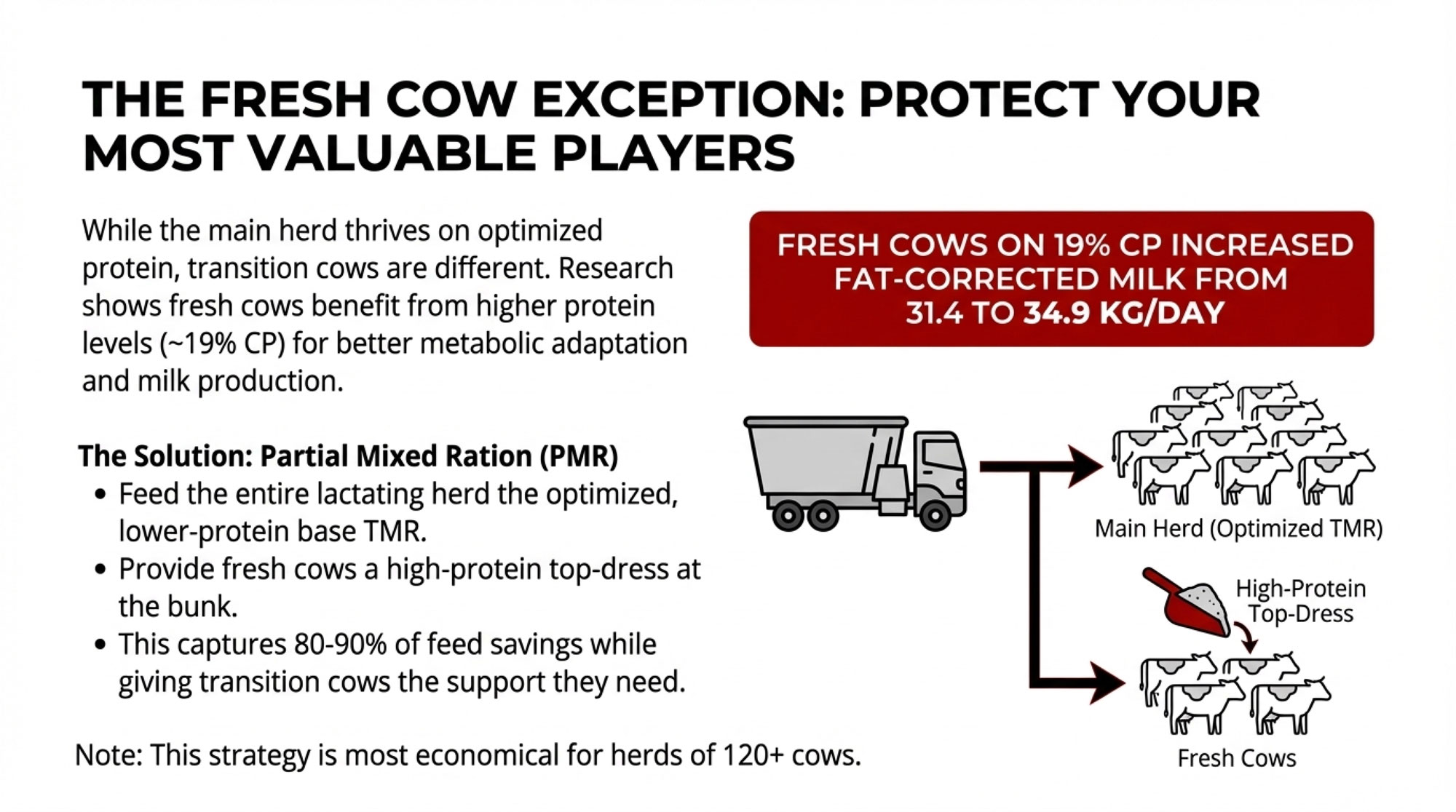
NewsSubscribe
First
Last
Consent

Manure Gas Killed a Father and His Two Sons in Minutes. A $200 Monitor Could Have Stopped It.

A father. Two sons. Four coworkers. All dead from manure gas in minutes. The monitor that could have saved them? $200. Why does this keep happening?

Executive Summary: In August 2025, manure gas killed six workers at a Colorado dairy in minutes—including a father and his two sons. Hydrogen sulfide can spike to deadly concentrations within the first hour of agitation, and at high levels, it paralyzes your sense of smell before you know you’re in trouble. The equipment that could have prevented this? Portable gas monitors cost $140 to $300. Retrieval systems that would have saved the coworkers who rushed in to help run $2,000 to $5,000. We’ve known about this hazard for decades, the technology is affordable, and we’re still losing families to something entirely preventable. This article covers what happened, what the science tells us, and five steps you can take this week to make sure your operation isn’t next.

You know, some stories just stop you cold. Among the six workers who died at Prospect Valley Dairy in Keenesburg, Colorado, on August 20, 2025, was 17-year-old Oscar Espinoza Leos, working alongside his father, Alejandro Espinoza Cruz, and his older brother Carlos Espinoza Prado. All three were lost that day. The Weld County Coroner’s October report confirmed what safety professionals had suspected from the beginning—acute hydrogen sulfide poisoning killed all six within minutes.

I’ve been in this industry long enough to remember similar incidents. The Wisconsin cases back in the 1990s. That string of fatalities across the Midwest that prompted the original extension bulletins, many of us still reference. And every time, the conversation that follows sounds remarkably similar: we know the hazard exists, we know the solutions exist, yet somehow the gap between awareness and implementation persists.

This isn’t about pointing fingers. It really isn’t. It’s about understanding what’s actually getting in the way—and learning from producers who’ve figured out how to close that gap on their own operations.

Understanding the Hazard: What Makes Hydrogen Sulfide Different

If you’ve worked around manure storage for any length of time, you’re familiar with that distinctive rotten-egg smell at low concentrations. That’s hydrogen sulfide—H₂S—produced naturally when manure breaks down in anaerobic conditions. Covered pits, deep storage facilities, pump stations, and, especially, freshly agitated slurry all create an oxygen-free environment where this gas accumulates.

H₂S Concentration (ppm)Effects on HumansTime to IncapacitationAction Required
<10Rotten egg odor detectable; no health effectsN/ANormal operation; monitor if agitating
10-100Eye irritation, respiratory distress, nauseaMinutes to hoursEvacuate area immediately; activate alarm
100-400IDLH threshold; loss of smell, dizziness, confusion1-5 minutesNo entry without SCBA; treat as life-threatening
400-700Rapid unconsciousness, respiratory arrest30-60 secondsDeath imminent; non-entry rescue only
700+Immediate collapse, death within 1-2 breaths<10 secondsUnsurvivable without immediate extraction

What makes hydrogen sulfide particularly dangerous—and this is something I don’t think gets emphasized enough in standard safety talks—is how it behaves at different concentrations. The CDC and NIOSH have established clear thresholds every producer should understand:

  • 10 ppm → Recommended alarm threshold; evacuate the area
  • 100 ppm → NIOSH “Immediately Dangerous to Life or Health” (IDLH)
  • 400+ ppm → Rapid unconsciousness, often within seconds
  • 700+ ppm → Death within one or two breaths

Here’s the part that catches people off guard: at high concentrations, H₂S paralyzes your sense of smell before you notice anything’s wrong. The warning sign disappears right when you need it most. So telling workers to “be careful” or “watch for the smell” doesn’t really account for how this hazard actually behaves.

Research from Penn State’s Department of Agricultural and Biological Engineering has documented concentration spikes well above the 100 ppm danger threshold during the first 30-60 minutes of agitation, reaching levels immediately dangerous to life and health—especially on operations using gypsum bedding. The danger isn’t a gradual buildup that gives workers time to respond. It’s rapid spikes that can incapacitate someone before they even realize there’s a problem.

Peak danger happens in minutes, not hours. 

Penn State Extension specialists report that producers who’ve used monitors during agitation are consistently surprised by how quickly concentrations spike—often reaching several hundred ppm within the first 10-15 minutes. There’s something about watching those numbers climb in real time that makes the abstract hazard very, very concrete.

The Rescue Effect: Why Single Incidents Become Multiple Fatalities

One pattern that appears to have occurred in Colorado—and this is something safety professionals have documented extensively over the years—is the “rescue effect” or “cascade phenomenon.”

According to NIOSH data, approximately 60 percent of confined-space fatalities are rescuers who enter to save others. Think about that for a moment.

Incident TypePrimary VictimFirst RescuerAdditional RescuersTotal
Single-Victim40%0%0%40%
Two-Victim15%15%0%30%
Three+ Victim10%10%10%30%

A comprehensive study examining incidents from 1980-1989 documented 670 deaths in 585 confined space incidents during that period, with rescuers consistently dying at higher rates than initial victims when atmospheric hazards were involved.

The pattern is remarkably consistent:

  1. A worker is overcome and collapses
  2. Coworkers see someone in distress and rush to help
  3. Without respiratory protection or retrieval equipment, they’re overcome by the same hazard
  4. Others follow

Dan Neenan, who directs the National Educational Center for Agricultural Safety, frames it in terms that resonate with anyone who’s worked on a farm: “You see your coworker, your friend, maybe your family member go down, and every instinct you have says to help. That’s not a training problem you can solve by telling people to suppress their instincts.”

And that’s exactly right. That’s why the focus has to be on systems design rather than just awareness. You can’t train people not to care about each other—nor would you want to. The goal is providing tools that make safe rescue possible when that instinct kicks in.

Equipment Options: What’s Actually Available and What It Costs

The good news here—and I think this deserves more attention than it typically gets—is that the technology for preventing these tragedies isn’t exotic or prohibitively expensive. We’re not talking about the kind of capital investment required for a new milking parlor or feed center.

Atmospheric Monitoring

Portable hydrogen sulfide monitors have come down significantly in price. Based on current distributor pricing from suppliers like Grainger and MSA Safety:

Equipment TypeCost Range
Single-gas H₂S monitors$140–$300
Multi-gas detectors (H₂S, methane, ammonia, O₂)$600–$1,200
Weekly rental options$30–$50

These devices provide real-time concentration readings and can be programmed to alarm at 10 ppm—well below the danger zone.

What producers are finding is that the monitoring itself changes behavior. Once you actually see the numbers during agitation, you understand why the guidelines exist. The data itself is educational in a way that safety talks and warning signs just aren’t.

The practical side: monitors require regular calibration and bump-testing before each use. But honestly, these aren’t complicated maintenance items for anyone already managing activity meters, automatic calf feeders, or other technology that’s become standard in modern operations.

Retrieval Systems

Non-entry rescue equipment—designed to extract an incapacitated worker from outside the confined space—typically includes a tripod, mechanical winch, harness, and lifeline. Complete systems run $2,000 to $5,000, depending on configuration.

The concept is straightforward: when a worker wearing a harness connected to a retrieval line is overcome, an operator outside the space can mechanically extract them—without anyone else entering the hazardous atmosphere. This breaks the rescue cascade.

Dr. William Field at Purdue, who’s studied farm confined space incidents for over three decades, puts it simply: “It’s the difference between having an option and not having one. When the only tool available is your own body, that’s what people use. Give them equipment that works from outside, and the dynamics change completely.”

Cost-sharing options:

  • Partner with neighboring farms to share retrieval equipment
  • Connect with local fire departments to ensure rescue teams know about on-farm confined spaces
  • Check with your cooperative about group purchasing programs

Written Programs and Documentation

Beyond equipment, effective confined space safety requires documented procedures. This is where some producers push back—and I get it. Nobody got into dairy farming because they love paperwork. But the discipline of a written program catches oversights that informal approaches miss.

The Canadian Centre for Occupational Health and Safety offers free, downloadable templates that work well for U.S. operations. A complete program covers:

  • Hazard identification for all confined spaces
  • Atmospheric testing protocols
  • Entry permit systems
  • Rescue procedures and emergency contacts
  • Training documentation

The entry permit piece is worth emphasizing. Before anyone enters a confined space, a permit gets completed documenting atmospheric test results, equipment in place, and emergency procedures. It sounds like bureaucracy, but producers who use permits consistently tell me the checklist discipline is exactly what prevents the “I’ll just be a second” shortcuts that lead to trouble.

The Training Challenge: Reaching a Changing Workforce

Here’s something that doesn’t get enough attention in industry conversations about safety: the disconnect between how training is typically delivered and how many dairy workers actually learn.

Research from the Migrant Clinicians Network and studies published in Frontiers in Public Health have documented significant challenges:

  • Language barriers consistently rank as a major safety issue among Latino dairy workers
  • Formal safety training reaches fewer workers than most producers realize
  • Most learning happens from coworkers rather than structured programs

The workforce reality has evolved faster than training infrastructure in many regions. Dr. Robert Hagevoort at New Mexico State University Extension has documented that, on many southwestern dairies, approximately one-third of workers now speak K’iche’, an indigenous Mayan language from Guatemala, as their primary language. Not Spanish. Not English. K’iche’.

As Dr. Hagevoort explained, during standard training, they were missing one out of every three employees.

What’s proving more effective:

  • Training delivered in the workers’ primary language by fluent speakers
  • Hands-on demonstration rather than written materials
  • Assessment of actual comprehension, not just attendance
  • Visual aids and practical exercises that don’t depend on literacy
  • Repeated reinforcement across multiple sessions

New Mexico State actually developed voice-over translations for dairy safety training in K’iche’—work that required coordination with native speakers, since the language lacks a standardized written alphabet. It’s a model worth considering as workforce demographics continue shifting.

This isn’t just a southwestern issue. Operations in Wisconsin, Minnesota, and across the Northeast are navigating similar workforce transitions. The producers handling it best are treating communication as a core management challenge rather than a box to check.

The Regulatory Reality: What You Need to Know

Let me give you the quick version on regulations, because this matters for your decision-making.

The federal picture:

  • Farms with 10 or fewer non-family employees are largely exempt from OSHA enforcement (1976 appropriations rider, renewed annually)
  • According to The Atlantic’s analysis, 93% of farms with outside employees meet this exemption
  • OSHA can’t conduct routine inspections or issue citations on exempt operations—even after a fatality

State variations:

  • California: Cal/OSHA covers all agricultural operations regardless of size
  • Oregon & Washington: Active agricultural safety programs
  • Most other states: Minimal agricultural-specific requirements

The bottom line: Most dairy operations face no federal regulatory requirement for confined space safety programs. But here’s the thing—absence of regulation doesn’t mean absence of consequences.

A $200 monitor versus a $1.5 million wrongful death settlement. 

Workers’ compensation claims, civil liability exposure, and operational disruption from incidents can far exceed the costs of prevention. Some agricultural insurers are beginning to factor confined space protocols into premium calculations. It’s worth asking your carrier what documentation they consider.

One thing to watch: Legislative efforts to eliminate the small farm OSHA exemption continue. The most recent push in 2023 didn’t advance, but producers planning long-term should factor potential regulatory changes into their thinking.

Learning from What’s Worked Before: The Milk Quality Parallel

Here’s a comparison I find useful—not to criticize anyone, but to understand what this industry is capable of.

The transformation: In the 1980s, bulk tank somatic cell counts routinely exceeded 1 million cells/mL. Today, many operations achieve counts below 200,000. That happened within the working memory of producers still active in the industry.

What made it work:

  • Universal standards that applied to every farm
  • Enforcement with real consequences (lose market access)
  • Economic alignment (processor bonuses/penalties tied to SCC)
  • Investment in testing infrastructure

The industry demonstrated it could drive systematic change when the mechanisms aligned. Safety presents different challenges—the “return” on prevention is invisible until something goes wrong. But the organizational capacity clearly exists.

Some producer groups and cooperatives are beginning to explore whether similar frameworks could work for worker safety. It’s early, but the conversation is happening in ways it wasn’t five years ago.

What Implementation Actually Looks Like

I’ve been asking around what comprehensive programs look like in practice—not the textbook version, but the operations that are actually doing them.

Pre-Agitation Protocols

  • Test atmospheric conditions before any manure disturbance
  • Establish “no-go” zones during the first 60-90 minutes (highest-risk window per Penn State research)
  • Communicate clearly when agitation is occurring
  • One Wisconsin operation uses a simple flag system: red flag up = stay clear of the pit area

Seasonal Timing

  • Most northern operations schedule agitation during the spring and fall
  • Warmer temperatures accelerate gas production
  • With increasingly hot Midwest summers, some producers are being more cautious about late-spring timing

Equipment Deployment

  • Gas monitors worn by workers near manure storage during agitation
  • Retrieval systems set up before any planned entry
  • Emergency response kits at confined space access points

Training Integration

  • Safety briefings in workers’ primary languages
  • Hands-on practice—not just showing equipment but having workers use it
  • Regular drills, quarterly or more frequent
  • One California producer: “The drills feel excessive until you need them. The first real scare we had, everyone knew exactly where to go.”

Documentation

  • Entry permits are required before any confined space work
  • Training records for all personnel
  • Near-miss reporting to catch hazards before they become tragedies

The Economics: Making Sense of the Numbers

First-year implementation costs:

ItemCost Range
Atmospheric monitoring$300–$800
Retrieval system$2,000–$5,000
Training (including multilingual)$1,000–$3,000
Written program development$500–$1,500 (less with free templates)
Total first-year investment$4,000–$10,000
Annual maintenance/training$500–$1,000

What incidents actually cost:

ConsequenceCost Range
Medical expenses (serious H₂S exposure)$50,000–$200,000
Workers’ comp claim (fatality)$500,000–$1.5 million
Civil liability settlements$1–$5 million
Average workplace fatality (NSC 2023 data)$1.46 million

Research from the Institute for Work and Health in Ontario found ROI on safety investments ranging from 24% in manufacturing to over 100% in transportation when prevented incidents are factored in.

When you look at equipment costs comparable to routine operating expenses—less than a decent replacement heifer—the math starts to look different than many producers assume.

Regional Risk Factors to Consider

Risk levels aren’t uniform. Here’s what affects how much attention confined space protocols warrant for your specific operation:

Risk FactorHigher Risk ProfileLower Risk ProfileRecommended EquipmentEstimated Investment
ClimateSouthern states; hot, humid summersModerate temps; cooler regionsMulti-gas monitor, ventilation fans$800-$1,500
Storage DesignBelow-grade covered pits, limited airflowAbove-ground, open-top, natural ventilationH₂S monitor, retrieval tripod$2,200-$5,300
Bedding TypeGypsum (high sulfur content)Sand, sawdust, other low-sulfurContinuous monitoring, rescue gear$3,000-$6,000
WorkforceHigh turnover, multilingual, seasonalStable, experienced, consistentMultilingual training, frequent drills$1,200-$3,000 annually
Emergency AccessRural, 30+ min from hospital/rescueNear town; rescue services <15 minFull retrieval system, SCBA$4,000-$7,500

Your Next Steps: Start This Week

Don’t let this become another article you read and forget. Here are five things you can do in the next seven days:

1. Walk your operation tomorrow. Identify every manure pit, pump station, and storage facility where atmospheric hazards could develop. Make a list. You can’t manage what you haven’t identified.

2. Order a gas monitor this week. Go to Grainger.com or call your local safety equipment supplier. Get an actual quote for a single-gas H₂S monitor. Seeing a real number—likely under $200—changes the conversation.

3. Download a free template. Visit ccohs.ca and download their confined space program template. Even if you don’t implement it immediately, having it on your computer is a start.

4. Call your insurance carrier. Ask one question: “Do you offer any premium consideration for documented confined space safety programs?” The answer might surprise you—and might save you money.

5. Talk to your extension office. Call Penn State, Purdue, Wisconsin, or your state’s land-grant university extension. Ask what confined space resources they have available. Many offer free on-farm consultations you’ve probably never heard about.

The Bottom Line

The Colorado tragedy reminds us that the knowledge to prevent manure pit deaths has been available for decades. The technology is proven and increasingly affordable. The training methods are documented.

What remains is the work of translating awareness into action.

For the families of those six workers—including Alejandro Espinoza Cruz and his two sons Oscar and Carlos, who died together that August morning—that work needed to happen sooner.

For the rest of us, the tools and knowledge exist, and what happens next comes down to the choices we make in our own operations—starting this week.

Resources

Free Templates & Training Materials:

Regulatory Information:

Equipment Suppliers:

Key Takeaways

  • A $200 monitor could have saved six lives—including a father and two sons who died together at a Colorado dairy in August 2025
  • 60% of confined space deaths are would-be rescuers; you can’t train away the instinct to help, but you can equip for safe rescue
  • H₂S kills your sense of smell before it kills you—at high concentrations, the warning sign vanishes when you need it most
  • Peak danger: the first 60 minutes after agitation starts; establish no-go zones and test the air before anyone approaches
  • Start this week: Identify your confined spaces, price a monitor (~$150), and download free CCOHS templates

Complete references and supporting documentation are available upon request by contacting the editorial team at editor@thebullvine.com.

Learn More:

Join the Revolution!

Join over 30,000 successful dairy professionals who rely on Bullvine Weekly for their competitive edge. Delivered directly to your inbox each week, our exclusive industry insights help you make smarter decisions while saving precious hours every week. Never miss critical updates on milk production trends, breakthrough technologies, and profit-boosting strategies that top producers are already implementing. Subscribe now to transform your dairy operation’s efficiency and profitability—your future success is just one click away.
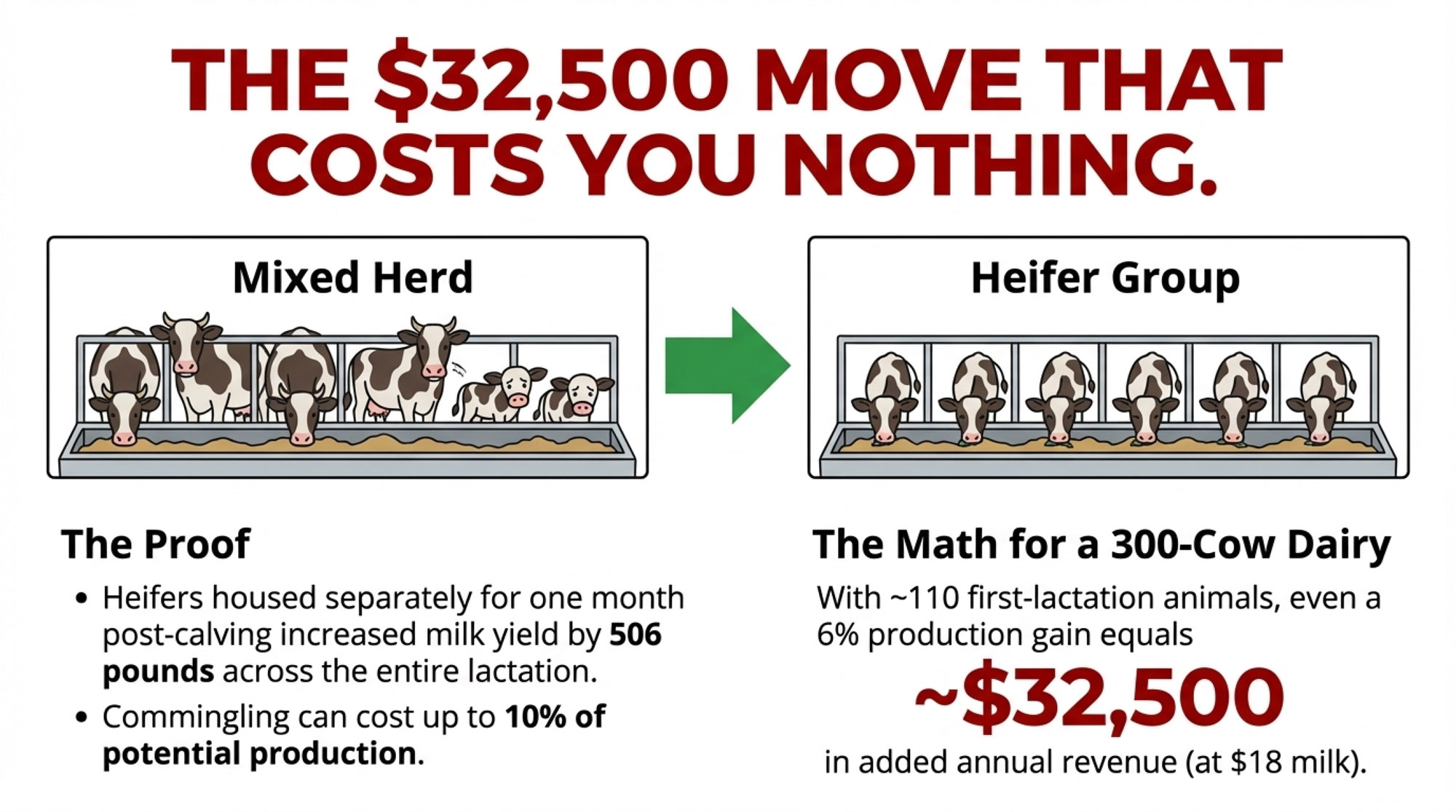
NewsSubscribe
First
Last
Consent

The Triple Cushion Trap: Why 2025’s Strong Margins Won’t Save You in 2026

Three things propping up your dairy. All temporary. The window to reposition closes in weeks, not months.

Executive Summary: Three temporary forces are keeping mid-size dairies profitable: beef-on-dairy premiums, cheap feed, and strong margins. All three face pressure by late 2026. Here’s the structural problem underneath: the U.S. herd has grown to 9.58 million head—highest since 1993—while only 2.5 million heifers are expected to calve in 2025, the lowest in 22 years of USDA tracking. Producers are stretching the cow productive life to cover the gap. That strategy has a ceiling, and we’re approaching it. When the cushions deflate, operations with costs above $20/cwt face margin compression that could erase six figures annually. The window to act—contract review, strategic herd adjustment, revenue diversification—is weeks, not months.

Something unusual is happening in U.S. dairy right now. Mid-size operations are stacking up real financial advantages from multiple directions at once—beef-on-dairy premiums, cheaper feed, and risk management support all landing in the same year. We haven’t seen this kind of alignment since around 2014.

That’s the good news.

Here’s what should concern you: three temporary economic cushions are masking a structural transformation that will reshape this entire industry. The producers who understand what’s actually happening—and position now—will come out ahead. Those who don’t may find out the hard way that 2025’s profits were a trap.

The Three Cushions (And Why They Won’t Last)

Cushion #1: Beef-on-Dairy Revenue

The beef-cross breeding revolution has fundamentally changed calf economics. Market experts like Mike North of Ever.Ag report some beef-on-dairy calves bringing close to $1,000 just a few days after birth—a world away from the often double-digit prices traditional dairy bull calves have brought in many markets over the years.

For a 500-cow operation running a meaningful percentage of beef breedings, that’s tens of thousands of dollars in additional annual revenue that simply didn’t exist five years ago.

“Those beef calves are paying my property taxes and then some.” — Wisconsin dairy producer

Why do these premiums exist? Simple supply and demand. USDA’s January 2025 Cattle Inventory Report shows total cattle at 86.7 million head—the lowest since 1951. Beef cows were at about 27.9 million, the fewest since 1961. When feeder cattle supplies are this tight, dairy-beef crosses fill a real gap.

The part that can sneak up on you: Canadian and U.S. cattle market outlooks in 2025 point to the early stages of beef herd rebuilding, with some analysts expecting modest beef cow number increases to start showing up in 2026. When that happens, feeder prices will likely soften. Your high-value beef calves may not stay quite so high-value.

Cushion #2: Cheap Feed

What’s encouraging on the cost side: USDA’s August 2025 DMC calculations showed feed costs at $9.38 per hundredweight—the lowest since October 2020. Corn’s been averaging around $4.00 per bushel based on the USDA’s recent estimates. That puts feed at roughly 45% of the milk check versus the 50-55% range that usually squeezes margins hard.

As recent USDA-based reports have highlighted, premium alfalfa has ranged from about $175 per ton in Idaho to around $380 per ton in Pennsylvania, depending on region and quality. If you’re in a favorable feed region, you’re feeling some real breathing room right now.

What could change: Any return to $5.00-plus corn—and remember, we saw that as recently as 2022—would add meaningful cost back to your operation. For a mid-size dairy, we’re talking six figures in additional annual expense. Weather remains the wildcard nobody can predict.

Feed costs are low—until they aren’t. Corn at $4.00/bushel in 2025 feels stable, but the 2021–22 spike above $6.50 cost a 350-cow operation over $120,000 in additional annual expense. The window to build working capital reserves closes fast when everyone realizes the risk at the same time.

Cushion #3: DMC Payments

Dairy Margin Coverage provided solid support through 2024 and into early 2025. With margins now above the $9.50 trigger at standard coverage levels, payments have become more intermittent.

Worth remembering: DMC is insurance, not income. When margins compress, the safety net helps—but it won’t save an operation that’s structurally unprofitable at the cost levels it’s running.

The Paradox: How Do You Grow a Herd While Running Out of Replacements?

Here’s what should keep you up at night.

The U.S. dairy herd has grown to about 9.58 million head according to the USDA’s October 2025 Milk Production Report—the highest since 1993. Meanwhile, replacement heifer inventory has fallen to 3.914 million head, the lowest since 1978.

The Replacement Crisis: Record Herd, Historic Low Heifers

And the number that really matters: only 2.5 million heifers are projected to calve in 2025—the lowest in the 22-year history of USDA tracking this metric.

The math doesn’t work long-term. Producers everywhere are extending cow productive life to cover the gap—keeping older, proven cows in the milking string rather than cycling through replacements. USDA reports replacement cow prices up 29% year-over-year to $2,660 per head in January 2025.

That strategy has a ceiling. We’re approaching it.

Real Numbers From a Working Operation

Meet “Heartland Family Dairy”—a composite I’ve put together based on conversations with producers across Wisconsin and Pennsylvania. 350 cows, second-generation, parents approaching retirement.

MetricTheir Numbers
Milk revenue$1.65 million/year at $20.50/cwt
Beef-cross calf revenue$35,000-40,000
Operating costs$20.48/cwt
Annual debt service$175,000
Working capital6-8 weeks

On paper, they’re breaking even. The cushions are keeping them viable.

The question: What happens when beef premiums slip? When feed costs spike? When milk prices compress?

If multiple cushions deflate at once—and that’s entirely plausible for 2026-2027—operations running costs above $20/cwt are going to feel real pressure. The kind of pressure that forces hard decisions.

The Benchmarks That Separate Survivors From Everyone Else

Jason Karszes, the dairy farm management specialist with Cornell University’s PRO-DAIRY program, has been studying profitability patterns for years. His finding that sticks with me most:

A well-managed 150-cow dairy in the top profitability quartile often earns more annual profit than a poorly-managed 500-cow dairy in the bottom quartile—sometimes by $100,000 or more.

Scale matters. Management matters more. That’s actually encouraging if you think about it.

Where Do You Stand?

Survivor ZoneDanger Zone
Operating costs below $18.50/cwtOperating costs above $20.00/cwt
Labor efficiency 50+ cows/FTEBelow 45 cows/FTE
Production 26,000+ lbs/cowBelow 24,000 lbs
Cull rates 30-33%Above 38%
Debt-to-asset below 50%Above 60%
Working capital 6+ monthsBelow 3 months

Component optimization matters too. USDA’s November 2025 data shows butterfat at $1.71 per pound, protein at $3.01 per pound. Butterfat has come down from the highs we saw in late 2023, but current component prices still reward higher butterfat and protein performance. Top-component herds consistently see a noticeably higher milk check per cow than herds running average components—money that doesn’t depend on base milk price.

Performance TierButterfat %Protein %Annual Revenue/Cow
Average herd3.80%3.05%$4,510
Above-average herd4.10%3.25%$4,685
Top-quartile herd4.40%3.50%$4,875

Operations hitting these benchmarks can weather significant margin compression. Those falling short face difficult decisions regardless of herd size. That’s the terrain we’re all working with now.

Three Moves to Make Before Year-End

The coming weeks offer a window for strategic repositioning. Here’s what I’m hearing from advisors, lenders, and producers who’ve navigated tough cycles before.

Move #1: Get Your Milk Contract Reviewed

Cost: $1,500-$3,000 for a professional review. ROI: Avoiding liability exposure that could cost you many times that amount.

Before December 31, verify:

  • Written volume guarantees with clear pricing formulas
  • Liability caps at reasonable levels
  • Termination provisions with 60-90 day notice minimums
  • Whether coordinating with neighbors creates negotiating leverage

Verbal understandings don’t hold up when things get tight. An agricultural attorney familiar with dairy contracts will spot issues you’ll miss.

Move #2: Run the Numbers on Strategic Herd Reduction

This feels counterintuitive. Hear me out.

Cull cow prices are near record levels—USDA-based forecasts suggest 2025 average prices around $145 per cwt, following a record annual average near $127 per cwt in 2024. Replacement heifers averaging $2,660 per head. A 400-cow operation reducing to 300 head can generate substantial cull revenue while improving per-cow profitability and labor efficiency.

A producer in Pennsylvania described it to me as “right-sizing rather than downsizing.” She dropped from 280 to 220 cows. Net income actually improved because labor costs fell faster than revenue.

This isn’t a retreat. It’s repositioning—setting yourself up to rebuild selectively when heifer prices moderate, probably sometime in 2027-2028 if current trends continue.

Move #3: Diversify Revenue Streams

Operations capturing additional value through beef genetics contracts, component premiums, and quality programs are building resilience that pure commodity producers don’t have.

Options worth exploring:

  • Direct relationships with feeders for documented-genetics calves (premium pricing for known sires and health records)
  • Component value pricing from processors paying separately on butterfat and protein
  • Quality premiums through SCC management and milk quality certifications

For Heartland Family Dairy, executing two of these three moves could shift their position from “surviving on cushions” to “sustainable regardless of market conditions.”

The Performance Factor Nobody Talks About

Here’s something the spreadsheets miss: you can’t manage a 500-cow herd effectively if you’re burning out.

Research led by Dr. Andria Jones-Bitton at the University of Guelph has documented that farmers experience significantly elevated stress, anxiety, depression, and burnout compared to the general population. The 3 a.m. payment worries, the strain on marriages, the guilt about whether to encourage the kids toward this business or away from it—this isn’t just personal. It’s a management problem.

Burned-out operators make worse decisions. They miss the cull that should have happened. They defer maintenance. They don’t catch the fresh cow problem early enough. Mental health directly impacts the benchmarks that determine whether your operation survives.

The business case for planned transitions: Farm transition specialists consistently report that families who plan their exits while they still have equity and control over timing preserve significantly more wealth than those forced into distressed sales. The difference can be substantial.

Both staying and exiting can be the right choices. The wrong choice is drifting into a decision you didn’t make.

The Industry in 2030

The direction is reasonably clear, even if the exact numbers aren’t. Continued consolidation. Larger operations are capturing a larger share of production. Southwest and Northern Plains are gaining ground. Traditional dairy regions in the Upper Midwest and Northeast are under ongoing pressure.

Operations that can consistently cash flow in the high teens per hundredweight generally have far more flexibility than those needing $20-plus milk just to break even—especially in a more volatile pricing environment.

Bottom Line

For operations committed to long-term dairy:

  • Audit costs against survivor benchmarks. Sub-$18.50/cwt is the target.
  • Get contracts reviewed before year-end
  • Build 12-18 months working capital
  • Run the strategic herd reduction numbers

For operations weighing options:

  • Strong cull prices and land values favor orderly transitions now
  • Have the succession conversation before a crisis forces it
  • December 2025 positioning beats mid-2026

For everyone:

  • The industry is restructuring, not just cycling
  • Decisions made in the next few months shape outcomes for years
  • Make an active choice before circumstances choose for you

The cushions won’t last. The question isn’t whether the industry restructures—it’s whether you’ll be positioned favorably when it does.

For families like Heartland Family Dairy, the next few months matter more than usual. The decisions aren’t easy. But they’re a lot easier to make while you still have choices.

“Heartland Family Dairy” is a composite based on producer conversations across Wisconsin, Pennsylvania, and other traditional dairy regions. Financial scenarios reflect real conditions facing mid-size operations in late 2025. Work with your own advisors for decisions specific to your situation.

Key Takeaways 

  • Three cushions. All temporary. Beef premiums, cheap feed, and strong margins—all face pressure by late 2026
  • The paradox nobody’s solving: Biggest U.S. herd since 1993. Fewest heifers to calve in 22 years. The math has an expiration date.
  • Know your cost. Operations above $20/cwt face real pressure when cushions deflate. Where do you stand?
  • Three moves before December 31: Contract review. Herd right-sizing numbers. Component premium strategy.
  • Weeks, not months. Reposition now while you still have choices—or react later when you don’t.

Complete references and supporting documentation are available upon request by contacting the editorial team at editor@thebullvine.com.

Learn More:

Join the Revolution!

Join over 30,000 successful dairy professionals who rely on Bullvine Weekly for their competitive edge. Delivered directly to your inbox each week, our exclusive industry insights help you make smarter decisions while saving precious hours every week. Never miss critical updates on milk production trends, breakthrough technologies, and profit-boosting strategies that top producers are already implementing. Subscribe now to transform your dairy operation’s efficiency and profitability—your future success is just one click away.

NewsSubscribe
First
Last
Consent

Your Fresh Cow Problems Started 6 Weeks Ago: The $70K Dry Period Fix

Metritis Day 5 = Dry pen Day -45. Elite dairies know this. Average dairies pay $70K/year, learning it the hard way. Which are you?

Executive Summary: That fresh cow disease you’re treating today started 6 weeks ago in your dry pen. Research from Barry Bradford at Michigan State and Jessica McArt at Cornell confirms that immune suppression begins around Day -35 and hits bottom at calving—by the time metritis appears on Day 5, the conditions were established on Day -45. This timing gap costs average 400-cow dairies $50,000-$70,000 annually in treatment, lost milk, and reproductive failure. Elite operations running disease rates below 10% have figured this out: instead of reacting to fresh cow problems, they invest upstream in negative DCAD diets (-100 to -150 mEq/kg), dry pen density management, and teat sealants that cut infection rates by 52-70%. Farms making this shift typically see disease rates drop from 35-40% to under 20% within a year. The dry period isn’t downtime between lactations—it’s where your transition success or failure gets decided.

The farms with the best fresh-cow outcomes aren’t doing more in the fresh pen—they’re obsessing over the dry pen.

I know that feels backwards. We pour so much energy into treating ketosis, monitoring for metritis, and dealing with fresh-cow problems after they show up. But here’s what the research keeps telling us: by the time you see disease in the fresh pen, the damage was done 4-6 weeks earlier. That metritis case on Day 5? It started around Day -45.

Work from Cornell and other land-grant universities puts the cost of preventable fresh-cow disease at $50,000 to $70,000 annually for a 400-cow dairy. Elite operations running disease rates below 10% capture that value. Average operations? They’re paying what amounts to a “mediocrity tax” every single year.

So what are the top performers actually doing differently? That’s what we’re digging into.

Disease Rate CategoryFresh Cow Disease RateAnnual Cases (400 cows)Cost per CaseTotal Annual Loss
Elite Performance10%40$450$18,000
High Performance15%60$450$27,000
Industry Average35%140$450$63,000
Poor Performance40%160$450$72,000

The Real Cost—It’s Bigger Than You Think

Garrett Oetzel at Wisconsin has documented how transition costs cascade, and the numbers are worth understanding. Treatment for metritis, mastitis, and clinical ketosis runs $80-$150 per case. But that’s just the visible part.

Lost milk hits harder. Jessica McArt’s research team at Cornell found that subclinical ketosis (BHBA ≥1.2 mmol/L) decreased milk production by 0.5 kg/day during the first 30 days of lactation. And here’s what caught my attention: each 0.1 mmol/L increase in BHBA also raised the risk of displaced abomasum and early culling. That’s not a sick cow for a week—that’s damage following her through the entire lactation.

Reproduction takes a hit, too. Research from Overton’s group at Cornell showed cows with elevated NEFA or BHBA had 13-19% lower pregnancy probability within 70 days of the voluntary waiting period. At roughly $4 per day open, you can see how the math compounds pretty quickly.

Mortality clusters early. Industry data consistently shows dairy cow deaths are disproportionately concentrated in the early lactation period, with transition complications as a leading cause.

When you add it all up, the total cost per case of transition disease ranges from $300 to $700, depending on severity and what else goes wrong downstream.

Here’s a quick way to see what this might mean for your operation:

Herd size × disease rate × $450 = annual transition losses

400 cows at 38% disease rate: 400 × 0.38 × $450 = $68,400/year

400 cows at 15% disease rate: 400 × 0.15 × $450 = $27,000/year

The difference: over $41,000 in recoverable value—not theoretical savings.

The $115 treatment you see vs the $385 in damage you don’t.

“Most producers don’t calculate these costs because they’re scattered across multiple categories,” Tom Overton at Cornell has observed. “The treatment expense is visible. The lost milk shows up gradually. The impact of reproduction doesn’t surface for months. But when you put it all together, transition disease is often the single largest controllable cost on the dairy.

That’s worth sitting with for a minute.

The Biology: What’s Actually Happening

Here’s where things get interesting—and where the conventional approach starts to look incomplete.

Barry Bradford (now at Michigan State) and Lorraine Sordillo have mapped the immune trajectory around calving in considerable detail. The timeline matters more than most of us realized.

The Immune Suppression Timeline

TimeframeWhat’s Happening
Day -35 to -21Inflammatory responses triggered by rapid fetal growth begin suppressing immune function
Day -21 to -7Metabolic stress intensifies as the cow shifts into negative energy balance; feed changes disrupt rumen microbiota
Day -7 to calvingEnvironmental stressors peak—overcrowding, pen moves, and heat stress all compound the immune suppression
Day 0 to +3Immune function hits its lowest point—this is when infections take hold
Day +5 to +14Clinical disease appears—but the conditions were set weeks earlier

As Bradford explains it: “The inflammatory cascade that compromises immune function starts with fetal cortisol release and metabolic changes that happen well before we see clinical signs. By the time a cow develops metritis on Day 7, the conditions that allowed that infection were established three to four weeks earlier.

By the time you’re treating disease, immune collapse happened 10 days ago.

The implication is pretty clear: you can’t fix fresh-cow disease in the fresh pen. You prevent it in the dry pen.

From what I’ve observed across Midwest and Northeast operations, average farms dedicate 60-70% of transition attention to fresh cows and maybe 25-35% to dry cows. The elite performers? They often flip that ratio entirely.

What High Performers Actually Do

When you talk to veterinarians, nutritionists, and managers at farms achieving consistently strong transition outcomes, certain patterns keep showing up.

Measurement Discipline

The biggest difference between average and elite isn’t fancy technology—it’s measurement.

Top farms track fresh-cow disease weekly by condition. They compare the first DHI test against genetic expectations. They run BHBA blood tests to catch subclinical ketosis before it becomes clinical. They review days open monthly with their vet team.

Average farms? Most can’t tell you their actual disease rate. They’re estimating. And you probably know this already, but without measurement, it’s nearly impossible to know if you’re improving—or to identify which interventions are actually working.

“The farms that turn this around always start the same way,” Jessica McArt has observed. “They commit to measuring outcomes systematically before they change anything else. You need that baseline, or you’re just guessing.

Written Protocols

This sounds almost too simple, but elite operations develop written disease definitions and treatment protocols with their veterinarians. Exact criteria for each condition. Standardized treatments. Clear escalation triggers.

Why does this matter so much? Consistency. It doesn’t depend on who’s working that day. It’s a repeatable process that survives staff turnover—and staff always turns over eventually.

Dedicated Monitoring Time

Here’s where commitment becomes tangible. High-performing farms dedicate 1.5-2 hours daily specifically to fresh-cow monitoring. Structured screening with documented results—not casual observation while doing other tasks.

The daily routine typically includes appetite assessment, attitude evaluation, discharge observation, udder examination, and locomotion scoring. Results get to the manager each morning for same-day decisions.

Catching subclinical ketosis on Day 3 rather than clinical ketosis on Day 7 changes outcomes dramatically. But you can’t catch what you’re not systematically looking for.

Dry-Period Investments That Pay Forward

Farms achieving elite transition outcomes share common approaches to dry-period management. This is where the real leverage exists—and where I often see the widest gap between what farms think they’re accomplishing and what’s actually happening.

Nutrition Fundamentals

Negative DCAD diets for close-up cows—most commonly targeting -100 to -150 mEq/kg—keep calcium metabolism on track through calving. Jose Santos’ 2019 meta-analysis of 42 experiments in the Journal of Dairy Science found that negative DCAD significantly reduces hypocalcemia, retained placenta, and metritis while improving postpartum feed intake and milk yield in multiparous cows.

DCAD Program ElementTarget RangeMonitoring MethodFrequencyOut-of-Spec Consequence
Dietary DCAD-100 to -150 mEq/kgRation analysisMonthlyInadequate calcium mobilization
Urine pH (Holstein)5.5 to 6.0pH strips or meterWeekly (10-12 cows)Program not working – adjust immediately
Urine pH (Jersey)5.8 to 6.2pH strips or meterWeekly (10-12 cows)Higher target than Holsteins – breed difference
Vitamin E2,000-3,000 IU/daySupplement auditWeeklyImmune function compromised
Selenium0.5-1.0 mg/daySupplement audit + blood testWeekly audit / Quarterly bloodRetained placenta risk increases 35%

Some operations target more aggressive levels (-150 to -200 mEq/kg), particularly in higher-risk multiparous cows. The key is monitoring urine pH weekly to verify cows are responding appropriately—target urine pH of 5.5-6.0 for Holsteins indicates the program is working. Assumptions about ration performance tend to drift from reality over time.

Vitamin E and selenium supplementation (2,000-3,000 IU vitamin E daily; 0.5-1.0 mg selenium) supports immune function heading into calving. Cost: $2- $5 per cow, monthly.

“The mineral piece is where I see the biggest gap between what farms think they’re doing and what’s actually happening,” Bill Weiss at Ohio State has noted. “Testing forage mineral content and adjusting supplementation—it sounds basic, but most farms don’t do it consistently.

Density Management

Overcrowding during the dry period—exceeding 100-110% of bunk space and lying area—creates chronic stress that suppresses immune function. Research from Rick Grant at the Miner Institute shows cows in overcrowded dry pens eat less, have elevated cortisol, and reduced lying times.

Regional considerations matter here. Heat stress complicates close-up management significantly in the Southeast, where summer humidity compounds the metabolic burden. Large Western operations face different scale challenges around pen design and monitoring logistics. Upper Midwest farms deal with seasonal extremes in both housing and nutrition.

The fundamentals stay consistent, but the application requires regional adaptation.

Teat Sealants at Dry-Off

One of the highest-ROI interventions that’s still underutilized on many farms.

Meta-analyses in Animal Health Research Reviews show that internal teat sealants reduce new intramammary infections during the dry period by 52-70% when used with proper technique. Simon Dufour’s 2019 analysis showed a 52% reduction in risk compared with untreated controls.

The math: $10-$20 per cow prevents infections costing $300-$500 to treat post-calving.

A Wisconsin producer managing about 1,200 cows shared a story I’ve heard many times: “We fought teat sealants for years because we’d tried them early and had problems. Turned out we were just rushing through, not being careful enough about prep. Once we committed to proper technique and gave people enough time, our fresh cow mastitis dropped by half within a year.

That pattern—initial frustration followed by success after protocol refinement—repeatedly shows up in conversations with producers who eventually embraced the practice.

💡 PRO TIP: How Cohort Grouping Changes the Math

Instead of continuous cow flow through transition pens (animals entering and leaving daily), consider moving to weekly cohort systems. All cows due within a 7-14 day window group together and move as a unit.

Why this works:

  • Reduces social disruption from constant pen changes
  • Allows thorough cleaning between groups
  • Matches capacity to actual weekly calving numbers rather than random peaks

Example: A farm averaging 20 calvings weekly but peaking at 28 needs capacity for 28 under continuous flow. With cohort grouping, the same pen accommodates 20 at near-full utilization, then empties and refills. You often end up with better per-cow space during actual occupancy.

Some farms discover that adjusting herd size to match facility capacity actually improves profitability. A 350-cow dairy at 15% fresh-cow disease may generate better returns than a 400-cow operation struggling with 40% disease in undersized facilities. That’s not always comfortable math to confront, but it’s worth examining honestly.

When Other Priorities Make Sense

I should acknowledge something important here: not every operation is positioned to make transition management their primary focus right now. Farms managing heavy debt, facing generational transitions, or operating in severely compressed markets may reasonably direct capital elsewhere.

A California producer I spoke with recently put it plainly: “We know transition matters, but right now we’re dealing with water costs that threaten our whole operation. First things first.”

That’s a legitimate constraint that deserves respect rather than dismissal.

The question isn’t whether transition management matters—it clearly does—but whether it’s the highest-return use of limited capital for your operation at this specific moment. That’s a calculation each farm needs to make, honestly.

But don’t assume you’re in that category by default. Many farms have more room to improve without major capital investment than they initially think. The first steps—measuring baseline disease rates, writing down protocols, restructuring time allocation—require commitment more than cash.

Realistic Timelines

For producers ready to pursue meaningful improvement, understanding realistic timelines helps maintain momentum when progress feels slow.

Months 1-3: Foundation Baseline measurements, written protocols, daily screening, BHBA testing, and close-up nutrition review. Realistic outcome: Disease drops from 35-40% to 25-30%. Investment: Approximately $5,000-$8,000.

Months 4-12: Optimization Protocol refinement based on emerging data, facility adjustments, and staff training for consistency. Realistic outcome: Disease reaches 18-24%.

Year 2+: Building Culture Transition metrics integrated into regular management review. Genetic selection for health traits. Facility improvements where economically justified. Best performers: 10-15% disease. Most committed: Single digits—but that typically takes 3-5 years of sustained focus.

PhaseTimelineManagement ActionsInvestment RequiredExpected Disease Rate
BaselineWeek 1Measure current disease rate by condition – this is non-negotiable$500 (records + BHBA testing)35-40% (typical average)
FoundationMonths 1-3Written protocols, daily screening, DCAD nutrition review, teat sealants$5,000-$8,00028-32% (visible progress)
OptimizationMonths 4-12Protocol refinement, facility adjustments, staff training for consistency$8,000-$15,00018-24% (the slow middle)
Culture BuildYear 2+Transition metrics in regular mgmt review, genetic selection, dedicated monitoring labor$35,000-$45,000/year (labor)10-15% (high performance)
EliteYear 3-5System becomes self-sustaining, continuous improvement mindset embeddedOngoing operational cost<10% (elite – single digits)

The Labor Reality

Here’s something that deserves honest discussion: sustainable transition improvement requires dedicated labor.Farms that try adding monitoring to already-full staff schedules typically see the effort erode within a few months.

A dedicated fresh-cow monitoring position runs approximately $35,000-$42,000 annually, including benefits. That’s substantial, particularly for smaller operations.

But consider the math differently. Prevented disease losses of $30,000-$50,000 annually often justify the expense within the first year. Add better reproduction and longer productive life, and the investment calculation shifts considerably.

Farms that can’t make this commitment may still achieve meaningful improvement through protocol discipline alone—perhaps reaching 25-28% disease incidence rather than 35-40%. Understanding those realistic ceilings helps set appropriate goals for your situation.

“I tell producers to think about it as an investment decision, not an expense decision,” Tom Overton suggests. “Would you spend $40,000 to capture $50,000 in value? Most would say yes. But when it’s framed as ‘hiring another person,’ suddenly it feels impossible.”

That reframing is worth considering.

Quick Self-Assessment

Before wrapping up, it might be useful to reflect on a few questions:

  • Do you know your actual fresh-cow disease rate by condition? Or are you estimating?
  • What percentage of your transition attention goes to the dry period versus the fresh period?
  • Are treatment protocols written down—or do they depend on who’s working that day?
  • When did you last verify your DCAD program with urine pH testing?
  • If you use teat sealants, are you giving staff adequate time for proper technique?

There’s no judgment in these questions—just an invitation to consider where opportunities might exist.

The Bottom Line

The transition period is where money is made or lost. Farms that measure outcomes, implement protocols, invest appropriately in monitoring, and recognize that the dry period determines fresh-cow success are capturing $30,000-$50,000 in value that average operations leave on the table every year.

The top performers stopped seeing fresh-cow disease as an inevitable form of bad luck. They started seeing it as a management outcome they can actually influence.

The dry period isn’t a holding pattern between lactations. It’s the foundation for everything that follows.

You’re leaving money in the dry pen. Run the numbers this week—or keep paying the “average dairy” tax.

The choice is yours.

Key Takeaways:

  • The timing is backwards: That metritis case on Day 5 started on Day -45. Fresh cow disease begins in the dry pen—not the fresh pen.
  • The cost is massive: Average 400-cow dairies lose $50,000-$70,000 annually to preventable transition disease. Elite herds running <10% disease rates capture that value instead.
  • The solution is upstream: Negative DCAD diets (-100 to -150 mEq/kg), dry pen stocking under 110%, and teat sealants that cut new infections by 52-70%.
  • The results are proven: Disease rates typically drop from 35-40% to under 20% within Year 1. Top performers reach single digits by Year 3—with first-year investments of $5,000-$8,000 returning $30,000-$50,000 in prevented losses.

Complete references and supporting documentation are available upon request by contacting the editorial team at editor@thebullvine.com.

Learn More:

Join the Revolution!

Join over 30,000 successful dairy professionals who rely on Bullvine Weekly for their competitive edge. Delivered directly to your inbox each week, our exclusive industry insights help you make smarter decisions while saving precious hours every week. Never miss critical updates on milk production trends, breakthrough technologies, and profit-boosting strategies that top producers are already implementing. Subscribe now to transform your dairy operation’s efficiency and profitability—your future success is just one click away.
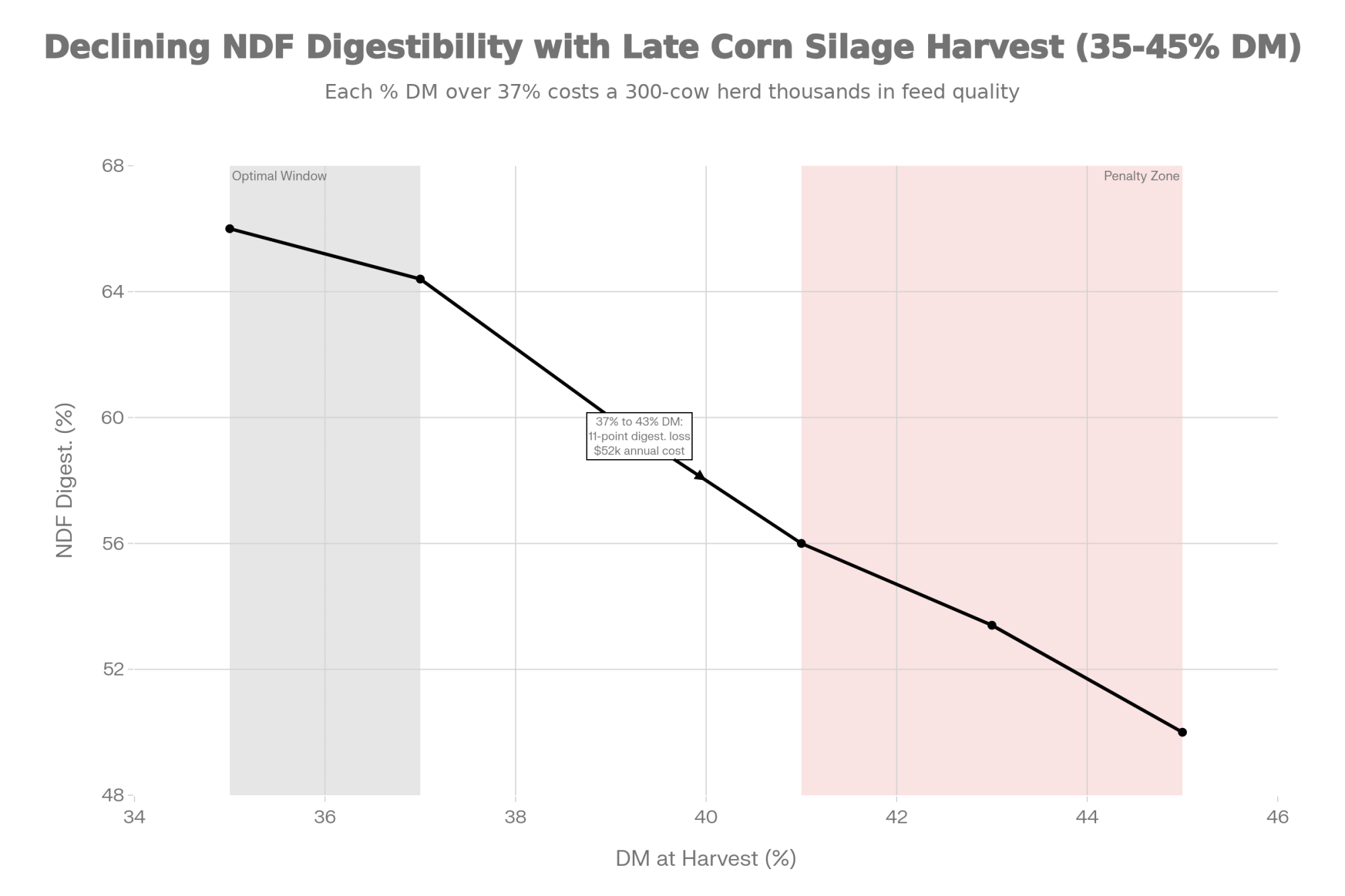
NewsSubscribe
First
Last
Consent

The 18-Month Window: Why Your Lender Knows Your Dairy’s in Trouble Before You Do

The math says 2,800 dairies will close this year. Your lender already knows if you’re one of them. Do you?

There’s a conversation happening in bank offices and cooperative boardrooms right now that most of us aren’t part of—at least not early enough to matter. I was reminded of this recently when talking with a 400-cow operator in central Wisconsin who’d just come from a meeting with his lender. “Nobody told me the runway was this short,” he said. That conversation is really what prompted me to put this piece together.

What I want to walk through today isn’t about whether dairy consolidation is coming, as many of us have observed over recent years, that question has largely been answered by economics. It’s about understanding the timeline and making decisions while meaningful choices still exist. Because there’s a real difference between strategic planning and crisis management, even when the underlying numbers look similar on paper.

What the Current Data Shows

Let’s start with what we actually know. Rabobank’s dairy analysts have been projecting 7 to 9 percent annual farm exits through 2027 in their global dairy outlook reports. On a base of roughly 39,000 U.S. dairy operations, that works out to approximately 2,800 farms closing in 2025 alone.

Now, I want to be clear—that’s a projection, not a guaranteed outcome. Projections have been wrong before, sometimes dramatically. But it aligns with what many of us are observing in our own communities. Wisconsin and Minnesota have seen steady attrition among mid-sized herds. California’s Central Valley operations are navigating their own pressures around water and labor costs. Northeast family dairies face familiar questions about scale and succession. Even in Texas, where dairy has been expanding, the growth is concentrated in larger operations, while smaller producers face the same margin pressures as elsewhere. Pacific Northwest dairies tell similar stories.

What’s particularly noteworthy about this cycle is the picture of processor investment. The International Dairy Foods Association announced in October 2025 that processors have committed more than $11 billion in new and expanded manufacturing capacity across 19 states, with more than 50 individual building projects scheduled through early 2028.

I spoke with a dairy economist last month who offered some useful context: those facilities aren’t being designed for the farm structure we have today—they’re being built for a landscape where the median supplier is considerably larger. That’s neither inherently good nor bad. It’s simply the direction capital is flowing, and understanding that helps inform planning decisions.

The timing also coincides with recent regulatory changes. The Federal Milk Marketing Order amendments took effect in June 2025, and according to American Farm Bureau Federation analysis from September, producers experienced more than $337 million in combined pool value reduction during the first three months under the new rules. Class price reductions from the make allowance changes ranged from 85 to 93 cents per hundredweight.

To put that in practical terms for daily planning: a 300-cow operation shipping around 680,000 pounds monthly is looking at roughly $5,800 to $6,300 per month in reduced revenue—before any operational changes. That’s meaningful money that affects everything from cash flow planning to equipment decisions.

Four Metrics Worth Watching

So how do you assess where your operation actually stands? What I’ve found helpful—and this comes from conversations with producers, lenders, and consultants across different regions—is focusing on four metrics that, taken together, give you a reasonable read on financial trajectory.

Financial MetricHealthy RangeMonitor CloselyHigh Risk
Margin Over Feed Cost$12.00+/cwt$8.50–$11.99/cwtBelow $8.50/cwt
Replacement Rate30–35% annually36–40% annuallyAbove 40% annually
Debt-to-Equity RatioBelow 60%60–75%Above 75%
Component Gap to PremiumWithin 5¢/cwt of threshold6–15¢/cwt below16¢+/cwt below
  • Margin over feed cost is probably the most familiar to all of us. The Dairy Margin Coverage program uses this calculation, and USDA Farm Service Agency data showed margins peaked at $15.57 per hundredweight back in September 2024. Since then, they’ve compressed in many regions. Extension economists generally suggest that when margins drop below about $12 per hundredweight, equity building slows significantly. Drop below $8.50, and many operations start drawing on reserves. But these are benchmarks, not hard rules—a farm with owned land operates on a different baseline than one that pays rent on everything.
  • Replacement rate deserves more attention in financial discussions than it typically receives. Extension programs benchmark healthy rates at 30-35%. When rates push above 35 to 38 percent, it often signals underlying challenges—fresh cow management issues, transition period problems, or breeding decisions that aren’t holding up. What makes this tricky during financial stress is the cascade effect: you keep marginal cows longer, which affects bulk tank components, further tightening margins.
  • Component position matters more now than it did five years ago. With the FMMO changes emphasizing component values differently, farms producing milk below regional butterfat and protein premium thresholds leave revenue on the table each month. The gap varies by market, but in some areas we’re talking 15 to 25 cents per hundredweight—over millions of pounds annually, that adds up fast.
  • The debt-to-equity ratio ultimately determines your lender flexibility. Generally, once you’re above 65 percent, lenders monitor more closely. Above 75 to 80 percent, you’re at the edge of most lenders’ comfort zone. What many producers don’t appreciate is that your lender sees trends in these ratios before you notice them—they’re benchmarking across their entire portfolio.
USDA Dairy Margin Coverage data shows margins peaked at $15.57/cwt in September 2024 and have compressed to the $8.50-$9.00 range by fall 2025—crossing from surplus territory into the crisis zone where operations draw on reserves rather than building equity. Extension economists consistently identify $12/cwt as the threshold where equity building slows significantly, and below $8.50 as the point where financial stress becomes acute. 

A producer I know in Michigan’s thumb region described the replacement rate trap perfectly:

“Trying to save money in ways that actually cost money.”

That observation has stuck with me.

The Scale Economics Question

This is probably the most difficult part of the conversation, but understanding the underlying economics matters for good decision-making. USDA Economic Research Service data has consistently shown that operations with 2,500-plus cows produce milk at roughly $3 to $4 per hundredweight less than farms running 300 to 500 head. Earlier ERS research found farms with 200 to 499 cows realized production costs about 21 percent above average costs at farms with at least 2,500 head.

I want to be thoughtful about how we interpret this, because management quality absolutely matters. A well-run 300-cow operation with excellent forage programs, tight fresh cow protocols, and careful cost control can achieve impressive efficiency. I’ve visited operations that size doing remarkable work—outstanding butterfat levels, minimal death loss, excellent transition cow outcomes. These farms demonstrate what’s possible with focused management.

But even excellent smaller operations typically face a structural cost advantage that’s difficult to overcome fully through management alone. The reasons are fairly intuitive: labor efficiency improves as herds grow, equipment costs spread across more production, feed procurement benefits from volume, and technology investments that don’t pencil at 300 cows become obvious choices at 2,000.

USDA Economic Research Service data reveals that operations with 2,500+ cows produce milk at $7.50/cwt, while 300-499 cow dairies average $10.50/cwt—a permanent structural disadvantage of $3-4/cwt that excellent management can narrow but not eliminate. This isn’t about working harder; it’s about physics: labor efficiency, equipment utilization, and purchasing power all scale non-linearly.

This doesn’t mean mid-sized operations can’t succeed—many do, and through various strategies. But pure commodity milk production at 300 to 700 cows does face structural headwinds that typically require either exceptional efficiency, premium market access, or diversified revenue streams to address effectively.

The scale reality in summary:

  • 2,500+ cow operations: approximately $7-8/cwt production cost
  • 300-500 cow operations: approximately $10.50-11/cwt production cost
  • The gap: $3-4/cwt regardless of management quality

That gap is structural. It doesn’t close on its own through harder work or better decisions.

How Exits Actually Unfold

U.S. Courts data shows 361 Chapter 12 bankruptcy cases were filed in the first half of 2025—a 55 percent increase from the previous year, according to American Farm Bureau Federation analysis. That’s significant, and it’s worth taking seriously.

But here’s some useful context: bankruptcies represent roughly 12 to 13 percent of total farm exits. The rest follow different paths, and the path matters considerably for what families ultimately preserve.

Some operations execute strategic exits—selling while herds are healthy, equipment is maintained, and there’s time to market properly. Farm transition specialists report these families typically preserve considerably more equity than those managing crisis liquidations. The difference often amounts to several hundred thousand dollars, depending on farm size and condition.

Exit PathwayTypical TimelineEquity PreservedDecision ControlFamily Legacy Impact
Strategic Exit(Proactive sale while healthy)12–18 months70–85% of farm valueFull control over timing, buyers, termsPositive: Exit on own terms, resources preserved
Crisis Liquidation(Forced sale under pressure)3–6 months30–45% of farm valueLimited: Time pressure forces discountsMixed: Reduced resources, stressful transition
Chapter 12 Bankruptcy(Court-managed)6–12 months (court-supervised)15–30% of farm valueCourt-supervised: Loss of autonomyNegative: Public record, damaged relationships

Others pursue operational pivots. Beef-on-dairy programs have gained traction across the Midwest, with operations reducing milking herds and breeding maternal animals to beef sires. I recently spoke with a 350-cow producer in eastern Iowa who made this transition 18 months ago—he’s cautiously optimistic about where it’s heading, though he’s quick to note the learning curve was steeper than expected. Some pursue organic certification, though that 18 to 36 month transition creates its own cash flow challenges. Northeast operations near population centers have explored direct sales and farmstead processing. California dairies have developed specialty cheese partnerships. Southwest grazing operations have found niches that work for their land and climate.

These pivots can work well—I’ve seen successful examples across regions. But they require capital investment when cash tends to be tight, and stabilization often takes 12 to 18 months or longer.

And then there are forced liquidations—equipment sold under time pressure, herds moved when buyers understand the circumstances, and real estate that can’t be marketed appropriately. The value erosion in these scenarios is substantial, and often avoidable with earlier planning.

The Information Timing Challenge

One pattern that’s become clearer through conversations with producers, lenders, and advisors is that most operators learn they’re in serious difficulty only late. The familiar progression: milk prices are down, but we’ve weathered down markets before. Margins are tight, but they’ll improve when feed costs moderate. The cooperative newsletter says conditions should stabilize…

Meanwhile, lenders are watching debt service coverage ratios and benchmarking against peer operations. Cooperatives analyzed the implications of the FMMO changes, while producers focused on getting hay put up. Processors investing $11 billion modeled which farm configurations will supply those facilities in 2028.

Farm financial research consistently shows lenders recognize deteriorating dairy operations 6-9 months before producers fully acknowledge the severity—they’re benchmarking your debt service coverage against hundreds of other dairies in their portfolio while you’re focused on daily operations. Processors and co-ops see trouble at months 2-4 through volume trends and quality patterns. By the time financial stress feels undeniable to the producer (months 6-9), the strategic decision window is already half-closed. 

This isn’t coordinated—it’s simply that different actors have access to different information at different times. Lenders see portfolio-wide trends. Cooperatives analyze regulatory changes as part of their core business. Processors model supply chains before major capital commitments.

Research on farm financial decision-making suggests that lenders often recognize deteriorating conditions 6 to 9 months before producers do. That gap represents real dollars—the difference between proactive planning and reactive crisis management.

What Canada’s Experience Suggests

There’s an interesting parallel north of the border worth considering. Dr. Sylvain Charlebois, a food policy researcher at Dalhousie University, has projected Canada could lose nearly half of its remaining dairy farms by 2030. What makes this striking is it’s happening under supply management—the system designed to prevent exactly this outcome.

The economics are instructive. Alberta quota costs have ranged from $52,000 to $58,000 per kilogram on the open exchange, according to provincial marketing board data. For a 100-cow operation, quota value alone can exceed $20 million—before purchasing animals or building facilities.

Consider succession in that context. A next-generation farmer faces quota obligations that can dwarf the productive capacity of what they’re acquiring. Even with Canada’s higher milk prices—roughly double U.S. levels—the math often doesn’t work. Quebec now produces roughly 40 percent of Canadian milk from a province with just over 20 percent of the population.

The insight for U.S. producers isn’t whether supply management is good or bad—reasonable people disagree, and there are legitimate arguments on multiple sides. It’s that price protection alone doesn’t automatically preserve mid-sized operations. Supply management changed the consolidation mechanism without preventing consolidation itself. The underlying economics still favor scale, just through different pathways.

Practical Steps Worth Considering

If you’re running a mid-sized operation and recent milk checks have been lighter than expected, what’s productive? Based on conversations with producers who’ve navigated similar situations, here’s what seems to help.

This week: Calculate your actual margin over feed cost using current figures. Pull recent milk statements, total feed invoices including purchased forages, and run the numbers. Know whether you’re at $11, $9, or somewhere else. This baseline matters before other conversations make sense.

Within a couple of weeks: Have a direct conversation with your lender. Ask specifically: “Based on my current numbers and what you’re seeing across your dairy portfolio, what’s my realistic runway? What trends should I understand? What options do you see for operations like mine?” Good lenders engage honestly with direct questions, and their perspective provides important context.

Within 60 days: Make a directional decision. Not necessarily final, but clarity about which path you’re exploring.

The paths vary by situation. Strategic exit while equity remains—preserving resources for retirement, education, or new directions. Operational pivot toward specialty markets or diversified production—requiring capital investment while credit remains available. Scaling to 1,200-plus cows, where region and finances support it. Partnership with larger operations—trading some independence for stability.

What tends not to work is continuing commodity production at 300 cows while waiting for prices to overcome structural cost differentials. That math rarely resolves through price alone.

The Decision Window

Based on farm financial data and exit patterns, the window for strategic decisions on mid-sized operations typically runs 12 to 18 months from when margins first compress below sustainable levels. After that, options narrow. By month nine or ten of sustained pressure, responses often become reactive rather than proactive.

European research published in the European Review of Agricultural Economics found that only about 5 to 8 percent of at-risk farmers make proactive decisions before circumstances force their hand. Most wait—sometimes for understandable reasons, sometimes because they lack good information earlier.

I mention this as context, not criticism. These decisions involve multi-generational history and deep personal identity. But recognizing your situation while options remain open positions you better than most.

The Bottom Line

The consolidation unfolding in dairy represents structural change—not simply cyclical pressure that patience will outlast. Processors are building infrastructure sized for larger suppliers. Scale advantages of $3 to $4 per hundredweight persist regardless of management quality. Information reaches different actors at different times.

None of this reflects poorly on anyone running a 300-cow operation. The business models that sustained earlier generations operated in different economic environments. That’s industry evolution, even when consequences feel personal.

The families who navigate this successfully will largely be those who recognized their situation early and made strategic choices—not those who recognized it later, when options had narrowed.

The math doesn’t care about your farm’s history. But you do. You have a 60-day window to look at the numbers before your lender makes the decision for you.

Current Dairy Margin Coverage data is available through the USDA Farm Service Agency at fsa.usda.gov. Regional cost-of-production benchmarks can be found through university extension programs, including the Center for Dairy Profitability at UW-Madison, Cornell PRO-DAIRY, and FINBIN at the University of Minnesota. California-specific analysis is available through UC Davis Cooperative Extension. Provincial marketing boards, including Alberta Milk and Dairy Farmers of Ontario, publish Canadian quota pricing. The International Dairy Foods Association tracks processor investment information at idfa.org.

Key Takeaways:

  • Your lender knows first: Financial trouble is visible to lenders 6-9 months before most producers see it—ask about your runway this week
  • The cost gap won’t close: 2,500+ cow operations produce milk $3-4/cwt cheaper; strong management helps, but the structural disadvantage remains
  • Your window is 12-18 months: From first margin compression to limited options—most families recognize trouble too late to act strategically
  • Decide within 60 days: Calculate your actual margins, talk to your lender, and choose a path—exit, pivot, scale, or partner
  • $11 billion says it all: Processor investment in new capacity is designed for larger suppliers; plan accordingly

Executive Summary: 

Your lender likely sees your dairy’s financial trouble 6-9 months before you do—and processors investing $11 billion in new capacity have already decided which farm sizes fit their future. This information gap is costing mid-sized producers critical decision-making time, as Rabobank estimates that 2,800 farms will close in 2025. The economics are structural: USDA data show that operations with 2,500+ cows produce milk at $3-4/cwt less than those with 300-500 cows, a disadvantage that excellent management can narrow but not eliminate. June 2025’s FMMO changes have intensified pressure, pulling $337 million from the producer pool value in three months. For operations experiencing compressed margins, the window for strategic decisions—exit, pivot, scale, or partner—runs 12-18 months before options narrow dramatically. The priority now: know your numbers, talk to your lender, and choose a direction within 60 days.

Complete references and supporting documentation are available upon request by contacting the editorial team at editor@thebullvine.com.

Learn More:

Join the Revolution!

Join over 30,000 successful dairy professionals who rely on Bullvine Weekly for their competitive edge. Delivered directly to your inbox each week, our exclusive industry insights help you make smarter decisions while saving precious hours every week. Never miss critical updates on milk production trends, breakthrough technologies, and profit-boosting strategies that top producers are already implementing. Subscribe now to transform your dairy operation’s efficiency and profitability—your future success is just one click away.
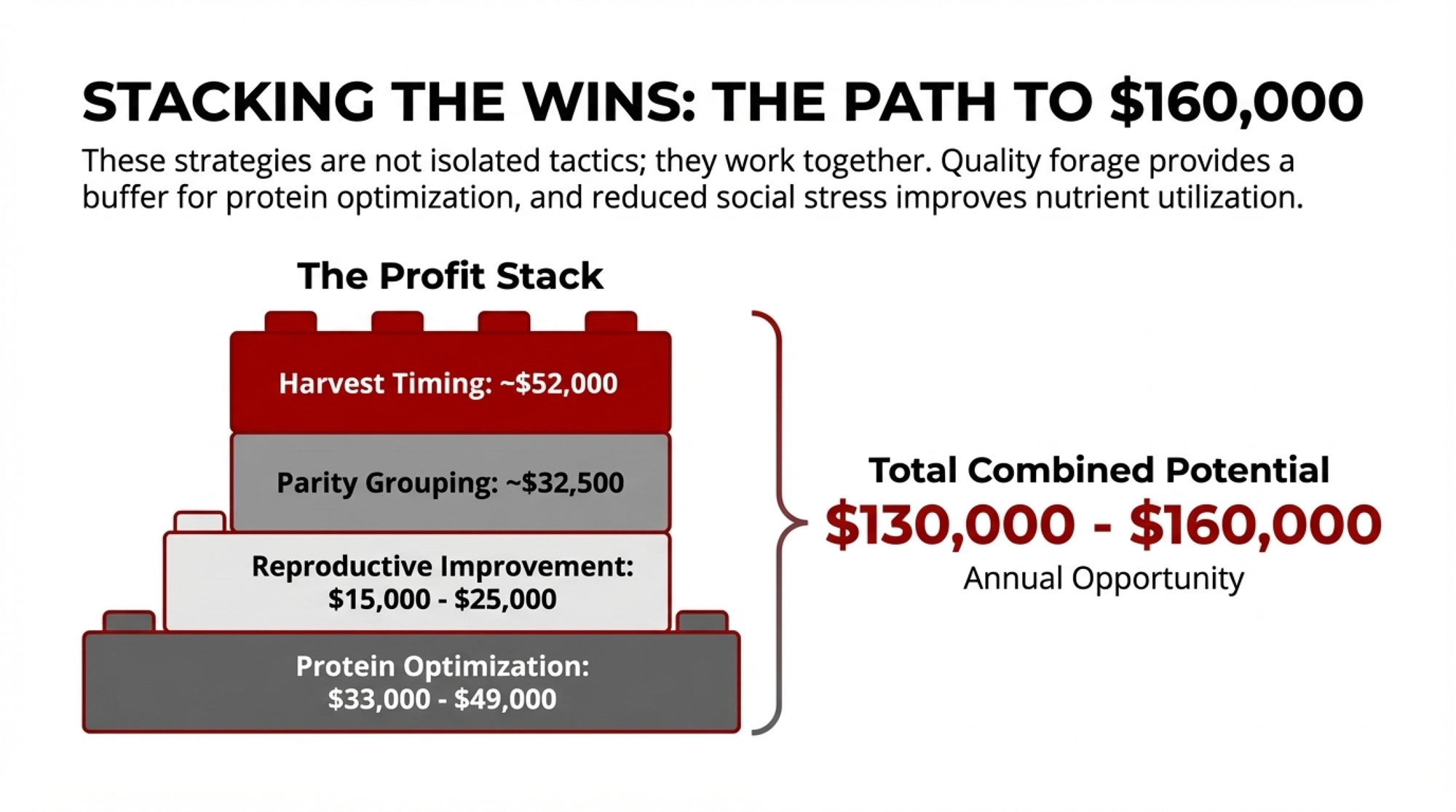
NewsSubscribe
First
Last
Consent

The Efficiency Trap: How Mid-Sized Dairies Can Win the 18-Month Asset Race

63% of U.S. milk now comes from 1,000+ cow operations. For mid-sized farms, the next 18 months are about turning assets into options—before you’re forced to.

EXECUTIVE SUMMARY: Mid-sized dairy operations (300-2,000 cows) are caught in an efficiency trap: simultaneous productivity gains across all regions create oversupply that compresses margins despite record component levels. With 2,500-2,800 farms exiting annually and federal policy favoring consolidation over direct payments, the next 18 months represent a critical decision window. Four pathways remain strategically viable: Chapter 12 debt restructuring, strategic sale before distress, value-added market pivots, or separating herd sale from land retention. High-genomic herds offer crucial advantages—GTPI 2,800+ animals command $2,500-4,000 per head versus $1,500-2,000 for commercial genetics, representing $600,000-1.2 million in additional equity for a 600-cow operation. Decision factors include geography (Southwest water constraints, Upper Midwest cooperative dynamics), debt-to-asset ratios (above 60% signals restructuring need), and family goals around land preservation versus operational continuity. Success five years from now won’t mean staying largest or most efficient—it will mean acting strategically while equity exists, rather than being forced into distressed decisions after losses erase options.

Mid-Sized Dairy Survival Strategies

Look, something is happening in dairy right now that we need to talk about honestly. If you’re running anywhere from 300 to 2,000 cows, you’re feeling it every time you look at your milk check. Margins that were tight 18 months ago? They’ve gotten tighter. Markets that looked uncertain coming into this year? Still haven’t cleared up. And meanwhile, the whole structure of the industry keeps shifting underneath us—new processing plants going up, big cooperatives talking expansion, federal support flowing to row crops while dairy operates in a fundamentally different policy environment.

What I’ve been tracking over the past year—and what keeps coming back in conversations with producers from Wisconsin to California, lenders across the Midwest, and Extension folks in multiple regions—is that this isn’t just another rough patch we need to weather. It’s something more fundamental. We’re watching a full-scale experiment on whether U.S. dairy can consolidate faster than its physical and financial constraints catch up. And mid-sized family operations are right in the middle of that experiment, whether we signed up for it or not.

Here’s what matters most: understanding what’s happening systemically doesn’t change the fact that you might be losing real money every month. But it does change how you think about the decisions you face over the next 18 months. Because that window? It matters more than most people realize right now.

So let’s walk through three questions: What system are we actually operating in? Who’s positioned to benefit from how things are currently structured? And most importantly—what real options do mid-sized operations have before that 18-month window closes?

How We Got Here: The Policy Shift Nobody’s Talking About

Federal agricultural support policy over the past few years has increasingly emphasized assistance for row crop growers dealing with trade disruptions and tariff impacts. Dairy has received proportionally less direct relief, with policy focus shifting toward what Washington calls “structural solutions”—market access improvements, processing investments, labor reform.

And you know what? This wasn’t entirely surprising if you’d been watching the patterns develop.

The 2018-2019 Market Facilitation Program showed us how this plays out. Eric Belasco and his colleagues at Montana State published research in Food Policy that found payments were concentrated on larger farms receiving higher per-acre payments, even when the formulas appeared neutral on paper. The Government Accountability Office documented in their September 2020 report GAO-20-563 that less than 10 percent of those payments went to farms producing specialty crops, dairy, or hogs—despite these sectors representing significant chunks of the farm economy.

But here’s what really caught everyone’s attention, and it’s worth understanding because it shaped how policymakers think about farm support now. Jason Hancock at The Missouri Independent documented in January 2023 how giant fertilizer companies hauled in hundreds of millions in net earnings right after those payments went out. One major producer saw earnings jump more than 1,000% in the first nine months of 2022. Farmers were spending nearly four out of every ten dollars of corn production costs on fertilizer.

I remember reading Tim Dufault’s testimony to the House Ways and Means Committee back in September 2020. He’s a wheat and soy farmer from Polk County, Minnesota, and he put it plainly: “While we are being paid not to sell to one of the fastest growing markets in the world, our competitors are filling the void. Our loss is Canada, Brazil, Russia, and Australia’s gain. In the past two years, Canada’s wheat exports to China have increased 400% while ours have fallen.”

So policymakers saw all this—the concentration effects, the value capture by input suppliers, the competitive losses—and you can understand why there’s now a different view in Washington. There’s a growing sense that big, one-time relief checks don’t fundamentally fix structural issues. They might soften the blow short-term, but they can also delay necessary adjustments, disproportionately strengthen the largest operations, and leave producers more leveraged when the next downturn hits.

The strategy shifted toward processing investment incentives, trade access efforts, stronger labor policy, and pricing reforms. From a policy perspective, the bet is that if the system’s infrastructure and markets get “right-sized,” profitability will eventually follow. Whether that’s the right bet or not—well, we’re living through that experiment right now.

For a mid-sized farm losing serious money each month? That’s a very slow boat to wait for.

The Consolidation Numbers: What the Data Actually Shows

The numbers tell a clear story if you’re willing to look at them honestly, and I think it’s important to separate what we know from what we’re still figuring out.

USDA’s 2022 Agricultural Census came out in early 2024 and confirmed what most of us already felt: the continued acceleration of the decades-long consolidation trend. Operations with more than 1,000 cows now produce roughly 63% of U.S. milk. The total number of dairy farms continues declining—about 2,500 to 2,800 operations exiting annually in recent years, according to USDA NASS data. That’s roughly seven farms disappearing each day, every day.

And here’s what’s particularly interesting from a production standpoint: USDA’s 2024 dairy outlook projected modest milk production growth continuing, with total production expected to remain above 226 billion pounds. That growth comes from both modest herd expansion and productivity gains. Per-cow production keeps climbing—better genetics, precision feeding, improved management across the board.

Component levels have hit historic highs, too. USDA Dairy Market News documented through 2024 that butterfat tests were reaching above 4.3% and protein pushing past 3.3%. These are multi-decade peaks in milk quality. Total milk solids are up even as volume growth stays more modest.

On paper, that looks like the efficiency story everyone talks about, right? More output from fewer cows and fewer farms should mean lower costs and better margins. That’s the theory.

But the margin story hasn’t followed that script, and this is where it gets complicated. University of Wisconsin Extension data documented compressed milk-over-feed margins through 2024. I’ve talked with producers from Michigan to New York who reported some of their tightest margins in years. Farm Bureau analysis through 2024 noted that despite strong component production, dairy producers were navigating compressed margins, with milk prices failing to keep pace with elevated feed, labor, and compliance costs.

What’s creating the squeeze is something bigger than any individual farm’s decisions—it’s simultaneous production growth across all major exporting regions. Recent global dairy market analysis has documented this unusual pattern: milk output growing in the U.S., EU, New Zealand, and South America all at the same time. Typically, at least one part of the world is dealing with some limiting factor—weather, disease, margins, something—that reduces milk growth. Not this time. Everyone’s pedal is down at once.

“When everyone increases efficiency simultaneously without matching demand growth, you get what agricultural economists call an ‘efficiency trap.’ Each farm individually makes rational decisions—better genetics, improved feeding, automation. But collectively, the industry ends up with more high-quality milk than global markets can absorb at profitable prices.”

This was clearly evident in Global Dairy Trade auction results through late 2024: prices fell as milk supply outpaced demand.

That’s the environment mid-sized farms are navigating right now. Not because anyone did anything wrong—because everyone did what made sense individually.

Processing Investments: Opportunity or Lock-In?

Layered on top of consolidation is a significant wave of new processing construction, and I think this deserves careful attention because it’s shaping market access in ways that aren’t immediately obvious.

Industry estimates point to seven to eleven billion dollars in new dairy processing investments announced or underway across multiple states, with completion timelines running through 2028. That’s a massive amount of capital flowing into the sector.

On one hand, this represents real confidence in dairy’s long-term prospects. More capacity can mean new products, better export-oriented manufacturing, and improved balancing for regions with seasonally heavy production. I’ve talked with producers near some of these new facilities who see a genuine opportunity to access premium markets they couldn’t reach before.

Herd SizeAvg Annual Profit per CowCost of ProductionDebt-to-Asset RatioExit Rate (Annual)
Small (Under 250)$200-$400$22-$24/cwt25-35%2-3%
Mid-Size (300-2,000)-$100 to $600$19-$22/cwt40-60%5-7%
Large (2,000+)$800-$1,200$16-$18/cwt30-45%<1%

On the other hand—and here’s where it gets complicated for mid-sized operations—these plants come with minimum-volume requirements that shape which farms can participate profitably. Hoard’s Dairyman noted back in August 2021 that modern processing facilities operate most efficiently at high throughput rates. A plant designed to run four to five million pounds per day doesn’t pencil well at 40 or 60 percent capacity utilization. The economics simply don’t work.

That reality pushes facilities to secure milk from large, consistent suppliers—typically very large herds or tightly aligned cooperative members. Companies aren’t investing hundreds of millions in new plants and then wondering where they’ll get the milk from. Most locked in future milk supply commitments before construction even started. If you weren’t part of those early conversations, you might find yourself on the outside looking in when the plant fires up.

This creates both opportunity and constraint, depending on where you sit. If you’re a mid-sized farm near new capacity and you can scale up or partner effectively, there may be room to grow into those supply relationships. But if you’re in a less favored location, or can’t meet the volume consistency these plants need, you might find premium markets or long-term contracts harder to secure than they were five years ago.

There’s also a timing risk worth thinking about, and I say this recognizing we don’t have perfect foresight here. If global demand stays soft—if China doesn’t significantly increase imports, if domestic consumption grows slowly—the industry could reach a point in a few years where there’s more processing capacity in the ground than profitable milk to run through it.

We’ve seen this scenario play out elsewhere. Industry observers in Ireland have documented chronic underutilization challenges in their dairy processing sector. All the capacity is needed for only a few peak weeks during the year. The rest of the time, plants run well below optimum levels, with some facilities even shutting down during quieter winter months. Whether we’re headed for something similar here remains to be seen, but the risk is real enough to factor into your planning.

From a farm-gate perspective, this creates a double bind. Short-term, plants need milk to fill capacity—that can feel like an opportunity if you’re positioned right. But long-term, if enough mid-sized operations exit and prices don’t recover, the system may find itself with stranded investment, fewer independent producers, and greater dependence on highly leveraged mega-dairies.

Understanding the Incentive Structure

It’s worth taking a calm look at who’s structurally aligned with consolidation and these processing investments. This isn’t about pointing fingers or assigning blame—it’s about understanding incentives so you can make better decisions for your own operation. Because when you understand the incentives, the patterns start making more sense.

Large cooperatives and integrated processors sit in an interesting position. When an organization both aggregates milk from member farms and owns processing plants, it effectively participates on both sides of the transaction. Take DFA as an example—according to their annual disclosures and public filings, they control roughly 30% of U.S. milk production while operating 44 processing facilities they’ve acquired over the years, including that $433 million Dean Foods asset purchase back in 2020.

DFA’s leadership has been pretty direct in its industry communications about the need for consolidation to maintain competitive positioning in today’s market. And from their perspective, you can see why. When farms consolidate, and more milk flows through fewer, larger plants, these integrated organizations gain scale efficiencies, widen their influence over pricing and contracts, and strengthen their position with retailers and export buyers. If you’re running a cooperative with processing assets, consolidation makes a lot of business sense.

Input suppliers and technology providers also benefit from the capital requirements. Moving from 500 to 2,000 cows, or from 2,000 to 5,000, typically requires a significant investment in genetics programs, robotic systems, precision feeding, and health-monitoring technologies. These sectors tend to capture a meaningful portion of any cash that flows into the system, whether from stronger prices or government programs. We saw that pattern documented pretty clearly after the 2018-2019 MFP program, and there’s no reason to think it would be different next time.

Asset CategoryInvestment RangeMonthly ROIPayback Period18-Month Priority
Beef-on-Dairy Program$50-$120/cow+$35-$55/cow2-3 monthsCRITICAL
Herd Genetics (GTPI 2,800+)$150-$300/cow+$25-$45/cow6-8 monthsCRITICAL
Debt ConsolidationVaries+$180-$450/cowImmediateCRITICAL if >60% D/A
Milking System Upgrades$2,500-$4,000/cow+$60-$90/cow36-48 monthsHIGH
Feed Efficiency Tech$80K-$150K total+$15-$30/cow18-24 monthsMEDIUM

Financial institutions and land investors have also found opportunities in the transition. Agricultural economists have documented how, as mid-sized family farms struggle, farmland and facilities often change hands—sometimes to neighboring farms looking to expand, sometimes to outside investors who then lease land back to operators. Over time, this can separate land ownership from day-to-day farm control, shifting more value toward outside capital.

Federal Reserve agricultural credit surveys through 2024—particularly from the Chicago and Kansas City districts, which cover major dairy regions—showed farmland values holding relatively stable but with notable variation. Quality dairy farmland in growth regions maintained strong values, while more marginal dairy land in areas experiencing significant farm exits saw softer demand. The market’s making distinctions now that it didn’t make ten years ago.

None of this suggests these players are acting maliciously or even unethically. They’re responding to the same market signals and economic pressures as farmers—looking for growth, efficiency, and risk management. But it does matter for you to understand that the system isn’t automatically set up to protect or preserve mid-sized, family-owned, commodity-oriented dairies. That’s not the system’s design, and recognizing that fact is the first step toward making better decisions.

The default path—continue as is and wait for a better year—assumes the system wants you to succeed in your current form. The evidence suggests otherwise.

Geography Shapes Your Options More Than You’d Think

Before we get into specific strategic paths, here’s something that often gets glossed over in national conversations about dairy consolidation: your location matters enormously. What makes sense in one region might be completely impractical in another.

In the Southwest—Texas, New Mexico, Arizona—consolidation has gone furthest. Large operations dominate, feeding relies heavily on irrigated crops, and water availability is becoming the limiting constraint. Dairy Herd noted last November that optimism about Texas dairy’s growth potential comes with a significant caveat: USGS data shows the Ogallala Aquifer dropping by 2 to 3 feet annually in stressed areas, and NOAA climate data confirms the Panhandle receives only 12 to 18 inches of rain per year.

A producer I talked with last month near Muleshoe runs 4,500 cows and has been farming that same ground for three generations. He’s watching his wells drop year after year. “We’ve got maybe 15, 20 years at current draw rates,” he told me. “After that, we’re either drilling deeper—if there’s anything left to drill to—or we’re done.” That reality is shaping every expansion decision, every equipment purchase, every long-term plan. It’s not an abstract policy discussion. It’s water levels measured in feet per year.

In the Upper Midwest—Wisconsin, Minnesota, Michigan—cooperative density and processing capacity create different dynamics. Proximity to multiple buyers can provide negotiating leverage that farms in more isolated regions don’t have. But relationships matter here, and they can shift. That 2017 situation when DFA terminated marketing for 225 independent producers in the Midwest—documented in Farm and Dairy that May—reminded everyone that cooperative relationships aren’t permanent fixtures. Market access you have today isn’t guaranteed tomorrow.

In the Northeast—New York, Pennsylvania, Vermont—seasonal production patterns, smaller average farm sizes, and closer proximity to fluid milk markets create distinct opportunities and constraints. Organic and grass-based systems are more common here, partly because of climate and topography, but also because direct-to-consumer markets are more accessible when you’re within a couple of hours of major population centers. I’ve seen mid-sized operations in this region successfully transition to grass-based organic production in ways that simply wouldn’t work in the Southwest or upper Plains.

In the Southeast—Georgia, Florida, Tennessee—operations often work in hot, humid conditions that require different facility designs and management approaches. Heat stress management becomes a year-round consideration, not just a summer challenge. But population growth in regional markets can create local market opportunities that export-oriented regions don’t have. A 600-cow operation I know outside Atlanta pivoted three years ago to supplying local schools and restaurants with bottled milk. They’re capturing $5 to $7 per gallon at retail, versus $3.50 to $4 for commodity milk. It requires handling, processing, distribution, and compliance with food safety standards—a completely different business model. But proximity to that growing metro market made it viable in ways it wouldn’t be for an operation in rural Kansas.

The point isn’t to map every regional difference—it’s to recognize that a strategic decision framework that works for a 1,000-cow operation in west Texas might not make sense for a 400-cow farm in central Wisconsin or a 600-cow operation in upstate New York. As you read through what’s ahead, filter it through your regional context, market access, climate constraints, and local land values.

Why the Next 18 Months Matter So Much

Most mid-sized producers I’ve talked to over the past year find themselves in a similar spot. Margins are negative or barely breakeven. Debt levels are uncomfortable but not catastrophic yet. Land still holds meaningful equity. And everyone—kids, employees, lenders—is looking for clarity about the farm’s future.

The 18-month horizon that keeps coming up in conversations isn’t a promise of recovery. It’s better understood as a decision window—long enough to execute a major transition, but short enough that passive waiting can quickly eat through remaining equity or liquidity. And I want to be careful here because I’m not predicting what will happen in 18 months. What I am saying is that waiting 18 months to start making decisions could leave you with significantly fewer options than you have today.

“What producers are discovering is that the most important asset in 2026 and 2027 may not be cows or equipment—it’s flexibility.”

The operations that keep options open, preserve capital, and move deliberately will be in a much better position to react when the longer-term shape of the industry becomes clearer.

Here’s why timing matters: by mid-to-late 2027, several things will likely be clearer than they are today.

We’ll know whether those processing investments we talked about are filling up with committed supply or struggling to source milk. We’ll have a better sense of whether China reopens meaningfully as an export market or continues favoring New Zealand and EU suppliers. We’ll understand whether water constraints in the Southwest are manageable or becoming acute enough to force consolidation there, slowing or reversing them. We’ll see whether mega-dairy expansion continues at current rates or runs into financial constraints as debt service becomes more challenging in a compressed margin environment.

If you’re still in decision mode in late 2027—still trying to figure out your direction—your options narrow considerably. Land markets may have softened if there’s been a wave of distressed exits. Bankruptcy courts may be backlogged if many farms hit crisis simultaneously, which means the relief that tool can provide becomes slower and less predictable. Buyers looking to expand may already have their supply commitments locked in with those new processing facilities, so they’re not actively seeking additional milk or land.

But if you move thoughtfully in 2026 and early 2027, you position yourself with capital and options to make choices based on what actually unfolds, rather than being forced into whatever’s left available. That’s the fundamental difference between proactive and reactive decision-making in this environment.

Four Strategic Paths Worth Serious Consideration

Every farm’s situation is different, but in conversations with lenders, advisors, and producers across multiple regions, four broad strategies keep emerging for operations in that 300 to 2,000 cow range. None of them are easy. All involve tradeoffs. All require difficult family conversations. But each one can preserve options better than passively continuing operations at monthly losses.

1. Structured Debt Relief: Using Chapter 12 Strategically

Chapter 12 bankruptcy is a specialized form of reorganization explicitly designed for family farms. It’s not liquidation by default—it’s a legal tool to restructure terms with creditors, reduce overall debt loads in some cases, and continue operating under court-supervised plans that give you breathing room to get back to profitability.

And it’s being used more. Agricultural finance professionals and court observers have noted increased Chapter 12 bankruptcy activity among dairy operations over the past year or so. What’s particularly noteworthy is that producers who use this tool strategically—before crisis forces their hand—have been able to preserve substantial capital—often in the six-figure range—that would otherwise have been lost to creditors in unmanaged default situations.

I recently spoke with a producer in Wisconsin who filed Chapter 12 about 18 months ago. His debt-to-revenue ratio had climbed above 75%, he was burning through equity every month, but the underlying operation was productive and could have been viable with a cleaner balance sheet. Chapter 12 allowed him to restructure payment terms, reduce some debt principal through negotiations with secured creditors, and continue operating. He’s not out of the woods yet, but he’s got a path forward that didn’t exist before filing.

This option warrants serious consideration if your debt-to-revenue ratio is high—say, above 60 or 70 percent—your liquidity is tight, but you genuinely believe the underlying operation is productive and could be viable with a cleaner balance sheet. That last part is critical. Chapter 12 doesn’t fix a structurally unprofitable operation. It fixes an operation that’s temporarily struggling under a debt load accumulated during better times or from expansion decisions that didn’t work out as planned.

What it requires: good legal and financial advice from professionals who specialize in agricultural bankruptcy, honest and conservative projections about future profitability (courts don’t accept optimistic fairy tales), and willingness to work through court processes that can feel invasive and uncomfortable. There are tax implications, too—canceled debt can create taxable income that you need to plan for. But for farms where the alternative is losing the operation entirely, those are manageable problems.

The timing piece matters here, too, and this is something your attorney will likely emphasize. Bankruptcy courts are currently processing dairy cases relatively quickly. If the number of filings continues to accelerate—and there’s reason to think it might—processing times could lengthen significantly. Filing while courts still have capacity, and while you have equity to protect, gives you better leverage in negotiations with creditors than waiting until crisis forces your hand and your equity is already gone.

MetricChapter 12Consolidation/Direct PaymentStrategic Sale
Milk Price Breakeven$18.50/cwt$20.50/cwtN/A
Monthly Cash Flow Impact+$15,000-$25,000-$5,000 to +$5,000N/A – exited
Feed Cost Sensitivity BufferModerate – 30%High Risk – 10%N/A
Equity After 5 Years55-65%30-40%70-80% recovered

2. Strategic Sale While Equity Still Exists

For other operations—especially where land is highly valuable, family members aren’t committed to long-term dairy, or facilities would require major capital investment to stay competitive—a deliberate sale before the operation becomes distressed can preserve far more value than waiting.

According to USDA NASS Land Values data and Federal Reserve agricultural surveys through 2024, quality dairy farmland was holding value relatively well, with Midwest dairy ground in the $6,000 to $8,000 per acre rangedepending on location and quality. But there was an important variation that matters for your planning. Prime farmland in areas with strong demand—near growing processing capacity, in regions with good water, in counties experiencing population growth—saw stable or slightly rising values. More marginal dairy land in areas experiencing significant farm exits saw softer pricing. The market’s making distinctions.

The key insight here is separating the decision about the operating dairy from the decision about the underlying land asset. They’re related, obviously, but they’re not the same decision. Sometimes the best move is to market the farm to buyers who want to expand, want the land for cropping, or might be willing to lease facilities back to you for a transition period.

Structure the sale to convert equity into cash for debt repayment, retirement planning, or next-generation flexibility. Consider sale-leaseback arrangements that let you convert equity to cash, continue farming for a period as tenants while you transition to other work or activities, and maintain some connection to the land and community.

Let me give you a hypothetical example that mirrors situations I’ve seen recently:

Say you’re running 600 cows on 500 acres. Your land is worth $7,500 per acre in the current market—that’s $3.75 million. Buildings and equipment might bring $800,000 to $1.2 million, depending on condition, age, and how well you’ve maintained them.

Here’s where your herd genetics matter more than many producers realize. If you’re running 600 cows with strong genomic profiles—animals averaging GTPI above 2,800 or genomic NM$ above $1,000—you’re sitting on a significantly more liquid and valuable asset than a commercial herd at similar production levels. Council on Dairy Cattle Breeding data shows that high-genomic animals consistently command premiums in dispersal sales, often bringing $2,500 to $4,000 per head to breeders and operations looking to upgrade genetics quickly. That’s compared to $1,500 to $2,000 for quality-producing cows without distinguished genetic merit.

Breeding StrategyInitial InvestmentComponent Increase (12mo)Revenue Impact (18mo)
High-GTPI Elite (2,800+)$85/cow4.5%$280/cow
Commercial Genomic Bulls$45/cow2.8%$150/cow
Conventional Breeding$25/cow1.2%$60/cow

For a 600-cow herd, that genetic premium can represent an additional $600,000 to $1.2 million in sale value—a substantial difference when you’re trying to preserve equity. I’ve seen operations with high-genomic herds market animals through private treaty sales to multiple buyers seeking specific genetic lines, often achieving better prices than auction or wholesale dispersal would.

Total asset value in our example sits around $4.5 to 5 million, potentially reaching $5.5 to 6 million with a high-genomic herd. If your debt sits at $4 million, you’ve got roughly $550,000 to $950,000 in remaining equity with an average herd, or potentially $1.5 to $2 million with superior genetics.

A strategic sale now, while that equity still exists and before you’ve been in financial distress, could let you pay off debt completely, walk away with substantial liquid capital, potentially lease back the operation for two to three years to generate transition income while you figure out next steps, and position younger family members to make their own choices without the burden of an underwater dairy operation hanging over them.

Now compare that outcome to continuing operations at, say, $20,000 per month losses. Six months erodes $120,000 from that equity cushion. A year takes $240,000. Within 18 to 24 months, the equity buffer is gone, and you’re in crisis mode with far fewer options. The sale happens anyway, but now it’s distressed, rushed, and buyers know you’re desperate. The price reflects that reality. And if you’ve got high-genomic animals, distressed sales rarely capture their full genetic value—you’re more likely to get commercial pricing when you’re forced to move quickly.

This is emotionally difficult—I’m not minimizing that at all. Nobody goes into dairy planning to sell. But for some families, it’s the path that best balances debt repayment, retirement security for an older generation, and flexibility for the next generation to find their own path in agriculture or elsewhere.

3. Pivoting to Niche Markets and Value-Added Production

A smaller but growing set of operations are taking a different route: stepping off the commodity treadmill altogether and finding ways to capture more value per unit of milk produced. This builds on what we’ve seen in specialty agriculture for decades—differentiation creates pricing power.

Farms pursuing this route are considering several approaches, and what works depends heavily on location, family interests, and market access.

Organic or grass-fed milk contracts can command premiums of 30 to 60 percent over conventional commodity milk. I know of a 250-cow operation in Vermont that transitioned to certified organic, grass-fed production in 2021. They invested 18 months in the three-year certification process while managing the transition, adjusted their feeding program and grazing systems, and now capture an $ 8-per-hundredweight premium over conventional pricing. That premium more than covers their lower per-cow production and the additional management complexity. For them, producing 16,000 pounds per cow annually at a premium beats producing 22,000 pounds at commodity pricing.

But the transition takes time and commitment. You’ve got that three-year organic certification process. You’re changing your feeding program, your management systems, and possibly your facilities. And the organic milk market has had its own challenges with supply-demand imbalances in recent years, so you can’t assume premium pricing will last forever. Do your homework on current market conditions before making this leap.

On-farm processing for cheese, yogurt, or bottled milk offers even higher potential margins, but it comes with substantially higher complexity. Here’s the basic math from dairy science: roughly ten pounds of milk yields one pound of cheese. So 50,000 pounds of milk converted to cheese gives you about 5,000 pounds of finished product. At $4 to $6 per pound retail, that’s $20,000 to $30,000 in gross revenue versus maybe $8,000 to $9,000 if sold as fluid milk at current commodity pricing.

But—and this is a big but—you’re adding processing costs, labor, marketing expenses, regulatory compliance, food safety systems, and all the complexity of becoming a food manufacturer and retailer rather than just a milk producer. I’ve seen operations do this successfully, but they’re almost always near population centers, they’ve got family members genuinely energized by the business-building aspects, and they’re willing to invest two to three years getting established before the economics really work.

Agritourism, farm experiences, and educational programs represent another revenue stream that some operations near population centers are tapping into. I know of farms generating $50,000 to $150,000 annually from farm stays, tours, farm-to-table events, and educational programming. This typically pairs with a smaller herd—100 to 300 cows—but creates real revenue diversification that helps during commodity market downturns.

Renewable energy side income from biogas digesters, solar installations, or wind easements can add $50,000 to $200,000 annually once installed. But they require significant upfront capital—often $200,000 to $500,000—and you’re banking on energy prices, incentive programs, and utility contracts staying favorable for 15 to 20 years to justify the investment.

The common thread across all these approaches: reduce or stabilize herd size, shift focus from volume to margin per unit, and invest heavily in marketing, relationships, and brand rather than just production facilities. You’re becoming a different type of business than a commodity dairy farm.

YearSmall HerdsMid-Size (300-2,000)Large Herds (2,000+)Profit Gap
2024$350$420$950$530
2025$280$380$1,020$640
2026$220$290$1,080$790
2028$150$180$1,180$1,000
2030$100$110$1,280$1,170

This route makes the most sense when you’re near a population center, when one or more family members are genuinely interested in entrepreneurship and direct sales rather than just dairy production, and when your balance sheet can support a 2- to 3-year transition in which cash flow stays tight while you build market presence and customer relationships.

It’s not a quick fix—most successful transitions take two to three years of careful planning and execution. But for operations with the right location, family interest, and financial runway, it’s been a way to stay in dairy on their own terms while commodity markets churn.

4. Selling the Herd, Keeping the Land

One other path that’s quietly gaining traction is decoupling from daily milking operations while retaining the land asset. This recognizes that, for many operations, the land is where most of the equity lies and that it has value beyond dairy production.

The core idea: sell your milking herd and specialized dairy equipment to a larger operation looking to expand or to a regional buyer aggregating cattle. Keep ownership of the land. Transition to cash crops, custom heifer growing, forage production for neighboring dairies, or long-term leases to mega-operations that want land nearby for manure application and feed production.

Here’s how the math might work in practice:

If you’re running 400 cows, that herd has real value to processors and expanding farms—potentially $600,000 to $800,000 for a quality, productive herd, depending on genetics, production levels, and market conditions. That’s at typical valuations of $1,500 to $2,000 per cow for good producing animals. And again, if you’ve invested in superior genetics—animals with high genomic merit for production, health traits, or specific breed characteristics—you may be able to capture significantly more value by marketing to breeders or genetic-focused operations rather than selling through traditional channels.

Keep your 500 acres of land, worth maybe $3.75 million at $7,500 per acre. Lease it at market rate—say $75 to $100 per acre depending on your region and land quality—and you’re generating $37,500 to $50,000 per year, roughly $3,000 to $4,000 per month.

Now I know what you’re thinking: that doesn’t sound like much compared to milk income. But here’s the key comparison. If you’re currently losing $20,000 per month on the dairy operation, stepping to $3,000 to $4,000 per month in positive cash flow while eliminating all operational stress, labor challenges, and market risk represents a $23,000 to $24,000 per month swing in your financial position. That’s the difference between burning through equity and preserving it.

This approach can stop operational losses immediately, preserve the family’s most valuable asset, maintain income streams through rent or cropping that cover property taxes, insurance, and remaining debt service, and give younger family members time to figure out how they want to be involved in agriculture without the daily pressure and financial stress of milking cows in a negative margin environment.

Industry analysts have noted that when regional processors faced challenges or closures, farms with land assets and flexibility to pivot had far better outcomes than those fully committed to dairy-only operations with no land base. That flexibility increasingly looks like an asset worth preserving, especially given the uncertainty about long-term dairy market structure.

Strategic PathwayEquity PreservedTimelineInvestment
Strategic Sale Pre-Distress85%6 months$0
Value-Added Market Pivot75%18 months$600,000
Aggressive Asset Optimization70%12 months$250,000
Chapter 12 Bankruptcy60%12 months$0 (legal fees)

What You Shouldn’t Do Right Now

Just as important as knowing your options is understanding what to avoid during this window, because some decisions can lock you into worse outcomes.

Avoid investing significant new capital into expansion or major facility upgrades unless you have crystal-clear market access—specific contracts or relationships with processors—and can withstand two to three more years at current margin levels. Agricultural finance advisors have been pretty direct on this point: taking on substantial new debt in a compressed margin environment is the fastest way to convert a struggling operation into an insolvent one. The math is unforgiving.

Be cautious about assuming margin recovery is coming in the near term. The U.S. Dairy Export Council indicated in 2024 market communications that while they’re confident Chinese dairy consumption will eventually return to a growth trend, the timing remains uncertain. Even industry optimists are generally talking 2026 or 2027 for meaningful improvements, and that’s if trade relationships normalize and other market factors align favorably. Making decisions based on assumed recovery is a bet, not a plan.

Don’t count on government relief specific to dairy arriving to change your situation. The policy signals over the past couple of years have been reasonably clear: the focus is on structural solutions rather than direct payments. That could change with different political dynamics, but you can’t build your financial strategy around maybes.

Don’t rely on cooperative leadership or industry organizations to specifically fight to preserve commodity-oriented mid-sized farms. Their incentives may not align with yours, and recent organizational developments have shown where priorities sit in the current environment. That’s not a criticism—it’s just recognizing the structure we’re operating in.

What you should do instead:

Get a brutally honest financial assessment now. Not an optimistic projection that assumes better markets next year—a conservative stress test that asks: what if margins stay at current levels through 2027? Can we survive that? For how long? At what cost to our equity position?

Understand your true equity position based on current market values for land, facilities, and livestock. Not appraisal values from better times, not what you think things should be worth, but what they’d actually bring in today’s market. And if you’ve got high-genomic animals, get a realistic assessment of their genetic value separate from their production value—that differential could matter significantly in your planning.

Talk to your lenders about restructuring options before the crisis hits. The best time to negotiate is while you’re current on payments and have options. Once you’re in default, your leverage disappears, and the conversation becomes much more difficult.

“Model your debt-to-revenue ratio honestly. If it’s above 60 percent, you’re in the zone where restructuring may be necessary. Above 80 percent, you’re in urgent territory that requires immediate action.”

A Decision Framework You Can Implement This Week

Theory and analysis help understand the environment, but what actually matters is what you do next. Here’s a practical sequence you can start implementing this week, not months from now.

Step 1: Get an Unflinching Financial Picture (Next 60 to 90 Days)

Sit down with your accountant, lender, or trusted advisor and answer these questions with hard numbers, not estimates or hopes:

What’s our true cost of production per hundredweight, including family labor valued at market rates and realistic depreciation that reflects actual equipment replacement timelines? At today’s milk price and current expense levels, what’s our actual monthly profit or loss? How many months of losses at current rates can we sustain before we exhaust operating credit lines or begin meaningfully eroding land equity? What’s our debt-to-revenue ratio, calculated conservatively?

Knowing these numbers precisely turns vague anxiety into concrete decision points. You might find your situation’s better than you feared, and that knowledge gives you confidence to weather the storm. Or you might discover you’re closer to crisis than you thought, and that knowledge pushes you to act while you still have options. Either way, you need to know where you stand.

Step 2: Clarify Your Equity and Exit Value (Next 60 to 90 Days)

Work with someone who knows current markets—a farm real estate professional, an auctioneer who specializes in dairy, an appraiser familiar with your region—to establish realistic values:

What would your land actually sell for today? Not top-of-market hopes or what it was worth three years ago, but realistic pricing based on recent comparable sales in your county. What’s the difference between the cull value for your herd and what you might get selling to another dairyman who wants producing cows? And critically—if you’ve invested in superior genetics, what’s the potential premium you could capture by marketing those animals to breeders or genetic-focused buyers rather than through conventional channels? What would your buildings and equipment bring—auction value versus going-concern value if sold as part of a functioning farm?

This tells you whether a structured sale could preserve significant equity, whether Chapter 12 would protect or destroy more value in your specific situation, and how much capital might be available for a business pivot, retirement funding, or providing next-generation flexibility.

Step 3: Align Strategy with Your Family’s Actual Goals (Next 30 to 60 Days)

This is often the hardest conversation, but it’s also the most important. You need honest answers to difficult questions:

Does the next generation actually want to be dairy, or do they want to farm in some other way? Are they saying what they think you want to hear, or expressing what they genuinely want? Is someone in the family energized by value-added work, direct sales, entrepreneurship, or does everyone just want to produce milk and have someone else handle marketing?

What’s the real priority here: preserving land ownership across generations? Preserving the dairy operation specifically? Preserving family health, relationships, and quality of life? Because in the current environment, you might not be able to preserve all three.

There’s no single right answer to these questions. But the financial and market context we’ve walked through can help keep this family conversation grounded in reality rather than hope, guilt, or assumptions about what previous generations would have wanted.

Step 4: Choose a Path and Set a Timeline (Next 90 to 180 Days)

Once you have clarity on your financial position, your equity situation, and your family’s actual goals, translate that into a concrete plan with specific decision points and dates:

If you’re leaning toward restructuring, schedule consultations with an agricultural bankruptcy attorney and your lender about Chapter 12 and other restructuring options. Set a clear decision deadline: if margins and cashflow don’t improve by this specific date, we file. Start preparing the financial documentation you’ll need so you’re not scrambling when the deadline arrives.

If you’re leaning toward sale or leaseback, quietly begin exploring interest with neighbors, regional operators, or land investors. Prepare clean financials and facility information so you can move quickly when the right opportunity appears.  If you have high-genomic animals, connect with breed associations, genetic marketplaces, genetic marketers, or consultants who can help you capture maximum value for those genetics rather than accepting commodity pricing in rushed sales.

If you’re leaning toward a niche pivot—organic, grass-fed, or value-added production—start serious market research right now. Who are the actual buyers? What are the real regulatory requirements and costs? What’s realistic pricing based on current market conditions, not aspirational projections? Explore available grants and cost-share programs through NRCS or state agriculture departments. Sketch a two-to-three-year investment and cashflow plan with conservative assumptions, then stress-test it against downside scenarios before committing.

If you’re considering exiting dairy while keeping the land, identify potential lessees now—neighboring operations seeking additional ground, incoming farmers needing land to rent, and regional mega-dairies requiring nearby acreage for manure management and feed production. Research alternative enterprises that fit your land: what cash crops make sense given your soil types and climate? Are there conservation programs, such as CRP or wetland easements, that provide stable income? Calculate honestly whether lease income, combined with lower-intensity farming, can sustain land ownership over the long term.

The common thread across all these paths: no option is pain-free, and all require difficult decisions. But every proactive option—acting while you still have choices—beats being forced into a rushed, distressed exit after another year or two of heavy losses.

Looking Ahead: Making Decisions You Can Live With. The consolidation pressures, policy dynamics, and global trade patterns hitting dairy right now are bigger than any individual farm can control. You can’t personally fix milk pricing formulas or change how international competitors behave.

But you can recognize the system you’re actually operating in. You can use the next 18 months intentionally. And you can protect the capital and options that will let your family make real choices in 2027 and beyond—whatever those choices turn out to be.

Success in this environment doesn’t always mean staying bigger or staying in dairy. Sometimes it means preserving hard-earned equity, protecting family relationships, and positioning the next generation to chart their own path. The farms still standing five years from now will be the ones whose operators had the courage to make hard decisions while they still had options.

That window’s open now. It won’t stay that way forever.

KEY TAKEAWAYS

  • The efficiency trap crushes margins through no fault of your own: When all regions improve simultaneously, collective productivity creates oversupply that compresses prices—even for well-managed operations executing perfectly.
  • High-genomic genetics = undervalued equity: GTPI 2,800+ animals command $2,500-4,000/head vs. $1,500-2,000 commercial. For 600 cows: $600K-1.2M in additional value, but only if marketed strategically before distress forces discount pricing.
  • Know your financial thresholds now: Debt-to-revenue above 60% = restructuring territory | Above 80% = urgent action required | $20K monthly losses = $240K annual equity erosion. The math is unforgiving.
  • Four strategic pathways, different circumstances: Chapter 12 restructuring (productive operation + heavy debt) | Strategic sale (preserve equity before crisis) | Niche market pivot (proximity + entrepreneurial interest) | Land-retention/herd-sale (immediate loss prevention).
  • Strategic action beats waiting for recovery: The farms operating successfully in 2030 won’t be the biggest or most efficient—they’ll be those who moved decisively while equity existed, rather than hoping margins would rebound.

Complete references and supporting documentation are available upon request by contacting the editorial team at editor@thebullvine.com.

Learn More:

Join the Revolution!

Join over 30,000 successful dairy professionals who rely on Bullvine Weekly for their competitive edge. Delivered directly to your inbox each week, our exclusive industry insights help you make smarter decisions while saving precious hours every week. Never miss critical updates on milk production trends, breakthrough technologies, and profit-boosting strategies that top producers are already implementing. Subscribe now to transform your dairy operation’s efficiency and profitability—your future success is just one click away.
NewsSubscribe
First
Last
Consent

The Next 18 Months Will Decide Who’s Still Milking in 2030 – Here’s Your Checklist

60% debt-to-asset. That’s the red line. Above it, you’re gambling. Below it, you might survive 2026.

Executive Summary: The dairy industry you’ve built your life around is heading into 18 months that will decide who’s still milking in 2030. U.S. production jumped 4.2% year-over-year in September 2025, and with China now 85% self-sufficient, the world’s biggest surplus sponge has dried up. Trade has splintered into regional blocs—Mexico now absorbs over a quarter of our exports, and if that relationship falters, most farms have no backup plan. The math is unforgiving for mid-size operations: Benchmarking data shows herds under 250 cows earning $500-700 less per cow annually than large-scale competitors. If your debt-to-asset ratio is creeping toward 60%, you’re approaching the red line. This analysis delivers a practical checklist for the decisions that matter most—while you still have the runway to make them.

You know, I’ve been talking with producers across the country lately, and there’s a common thread in those conversations that’s worth paying attention to. One third-generation Wisconsin dairy farmer I spoke with recently—he’s running around 200 cows in the south-central part of the state—put it pretty well.

“It’s not just about milk prices anymore,” he told me. “It’s about whether the whole system we’ve built our lives around is going to exist in five years.”

Now, I’ve heard concerns like this before during tough market cycles. But after spending considerable time digging into the data and talking with economists, producers, and industry analysts… I think he’s onto something. The global dairy industry is approaching a point that feels genuinely different from the cyclical ups and downs we’ve all weathered before. And the decisions farmers make over the next 18 months—about expansion, processing investments, market relationships, and yes, whether to keep milking—will shape who’s still in business when things settle out.

So let me walk through what’s actually happening beneath the headline noise. Some of this you probably know already. Some of it might surprise you.

The Supply Picture Building for 2026

Here’s what caught my attention when I started looking at the production numbers: we’re not seeing one region expand while others pull back. Multiple major dairy regions are growing at the same time—and that matters more than people realize.

The U.S. expansion is real and shows no signs of slowing. USDA’s fall 2025 Milk Production reports show cow numbers and output running well above year-ago levels. The September numbers were particularly striking—production in the 24 major states came in 4.2% higher than September 2024, with gains in both cow numbers and milk per cow. And here’s what’s worth paying attention to: industry analysts looking at heifer retention data suggest this expansion momentum is likely to carry into 2026 and possibly beyond. That means production volumes keep climbing even if nobody adds another cow starting tomorrow.

The Production Tsunami: U.S. milk production climbs relentlessly toward 231.3 billion pounds in 2026, with September 2025’s 4.2% year-over-year spike revealing unstoppable momentum—even as traditional export markets evaporate

Dr. Mark Stephenson, who served as Director of Dairy Policy Analysis at the University of Wisconsin-Madison before his recent retirement, has been tracking these trends for decades. As he’s noted in recent industry discussions, we’re looking at production growth momentum that’ll take a year to 18 months to work through the system, regardless of what current price signals might suggest.

Meanwhile, Rabobank’s global dairy analysts point to modest growth continuing in New Zealand and Australia over the next couple of seasons. Not huge numbers, but meaningful when you’re adding milk to markets that are already well-supplied.

And Argentina? That’s the one I think deserves more attention than it’s getting. Industry analysts identify Argentina as one of the fastest-growing dairy exporters today, with milk production projected to grow faster than in the U.S., the EU, or Oceania. They’re expanding capacity and targeting export markets that traditionally absorbed surplus from other regions.

Europe’s situation is a bit different. The European Commission’s recent short-term outlook projects EU production will edge slightly lower in 2025—dropping cow numbers, tight margins, environmental regulations, and disease outbreaks are all playing roles there. But the mega-cooperative mergers happening on that side of the Atlantic—Arla combining with DMK to create roughly a 25-billion-liter entity with combined revenues around €19 billion, FrieslandCampina merging with Milcobel to form another giant with about 16,000 member farms—those are consolidating processing capacity in ways that’ll reshape how things work over there.

Why does simultaneous expansion in the Americas and Oceania matter so much? Because the traditional safety valves for oversupply aren’t available this time.

Three Things Making This Different

Market cycles come and go. I’ve seen enough of them to know that what feels unprecedented often isn’t. But three structural changes make what’s building for 2026 genuinely different from previous downturns.

First, inventory dynamics have shifted. USDA Cold Storage reports show U.S. butter inventories in 2025 near multi-year highs—well above levels seen in 2022 and 2023. European cheese stocks are similarly elevated. In past cycles, processors moved inventory quickly to avoid storage costs. Today’s more regionalized trade structure lets them hold product longer, waiting for better conditions rather than clearing markets on our timeline. What that means practically: don’t expect inventory liquidation to relieve price pressure as fast as we’ve seen historically.

Second—and this is the big one—China’s role has fundamentally changed. From roughly 2010 to 2020, China was the growth market. The safety valve. When global supply got heavy, Chinese demand absorbed it. That chapter’s closed.

Rabobank’s Mary Ledman has been tracking this closely, and what she’s documented is significant: China’s dairy self-sufficiency has climbed from around 70% to roughly 85% over just a few years. Their imports fell around 12% year over year in recent data. The market that once absorbed surplus production is now competing as a supplier.

China Closes the Tap: From 2018’s 70% self-sufficiency to 2025’s 85%, China transformed from the dairy industry’s biggest customer into a competitor, erasing the safety valve that absorbed global oversupply for a decade

And here’s what’s interesting—even though China’s domestic milk production has actually declined slightly, their import demand isn’t growing. Consumption remains weak despite that massive population. Government policy explicitly prioritized domestic production, aiming to expand output over the coming years.

Third, tariff structures have pushed trade toward regional patterns. When trade tensions escalated in early 2025, it didn’t just affect prices temporarily—it reorganized supply chains. Chinese buyers shifted to New Zealand suppliers with preferential trade access. European exporters lost U.S. market share.

I’ve talked with agricultural economists about this dynamic, including folks at Cornell who study the impacts of trade policy. The consensus is sobering: once supply chains reorganize and buyers establish new purchasing patterns, those structures tend to persist even when tariff rates change. Trade policy forces realignment that often sticks.

That’s worth sitting with for a moment. The relationships being built now aren’t necessarily temporary adjustments.

Geography as Destiny

One dynamic I’ve been watching closely is the emergence of distinct regional trading patterns. Where your farm sits within these patterns increasingly shapes your market access and pricing power.

North America’s More Protected Market

The U.S. dairy market has become more insulated through tariff protection. Mexico remains our biggest customer—industry data from CoBank and the U.S. Dairy Export Council shows they bought roughly $2.47 billion of U.S. dairy in 2024, representing well over a quarter of our total export value, which was approximately $8.2 billion.

Trade War Casualties: Between 2020 and 2025, U.S. dairy exports to China collapsed from 15% to 8% of total volume—a 47% plunge—as tariffs and China’s self-sufficiency push restructured global trade flows, forcing regional consolidation around Mexico and Canada

Here’s what’s interesting about this structure: when tariffs affect trade with Mexico and Canada, our whole North American market adjusts without outside supply filling the gaps. The University of Wisconsin’s Center for Dairy Profitability has examined this dynamic in their trade analyses.

What emerges is something like forced regional integration. U.S., Mexican, and Canadian markets operate somewhat independently from global commodity pricing. For farmers here, that means milk prices tend to stabilize around domestic supply and demand rather than global competition.

Former USDA Secretary Tom Vilsack has been vocal about these tradeoffs. In remarks to Brownfield Ag News last October, he warned that continued tariffs could cause lasting damage to U.S. agricultural trade relationships, noting concerns about losing customers to competitors such as Brazil and Argentina, which are “eager to take that business.” Trade protection provides some stability, but it also limits opportunities and creates long-term relationship risks.

That’s a fair summary of the situation. You’re cushioned from global oversupply to some degree, but you also can’t easily capture premium pricing when Asian markets are paying up.

The Asia-Pacific Shift

New Zealand now supplies nearly half of China’s dairy imports through preferential trade access. Australia is positioning aggressively as an alternative supplier, with its dairy council projecting market-share gains in Southeast Asia.

What’s notable is why they’re winning. This isn’t primarily about price competition. It’s geopolitical stability and access to trade agreements that create advantages others can’t easily match.

Recent industry reporting quotes Chinese buyers explicitly prioritizing “supply stability and predictability” over price. Once those supply chains get rebuilt around preferred partners, the relationships tend to persist even when trade conditions change.

For American farmers hoping Asian demand eventually absorbs our domestic oversupply… this is worth serious thought.

Europe’s Consolidation Strategy

Europe’s massive processor consolidation tells you something important: they’re consolidating because they can’t achieve global market dominance, not because they’re winning.

U.S. tariffs hit EU dairy with 15-20% duties, while New Zealand faces around 10% and Australia even less. Recent trade frameworks have provided only limited tariff-free access—far below historical trade volumes.

European dairy is increasingly focused on serving the EU domestic market (where per capita consumption is actually declining), exporting to Africa and adjacent regions with existing trade agreements, and competing for remaining global market share at compressed margins.

The mega-mergers make sense in that context. When you can’t grow externally, you consolidate to survive internally.

The Demand Puzzle

Something that puzzled me initially: global dairy demand actually is growing. The OECD-FAO Agricultural Outlook and various market research firms project steady consumption growth over the next decade, with Asia-Pacific expected to post some of the fastest gains.

So why doesn’t this help producers in North America and Europe?

The growth is geographically misaligned with where we’re producing milk.

The UK’s Agriculture and Horticulture Development Board put out a good analysis on this last summer. Per capita dairy consumption in Southeast Asia remains well below 20 kilograms annually, compared with around 300 kilograms in developed markets. That sounds like massive upside potential.

But building the cold chains, retail networks, and consumer habits takes a decade or more. Our cows produce milk today. Every day. That milk needs a market this month, not in 2035.

Meanwhile, consumption in developed markets continues to slide.

You probably know this already, but USDA data shows per capita fluid milk intake has been falling for decades—we’re now drinking roughly 90-100 pounds less per person annually than folks did in the mid-1980s.

Dr. Glynn Tonsor, Professor of Agricultural Economics at Kansas State University, has studied this extensively. As he’s noted in industry presentations, this isn’t a temporary consumer preference—it’s a generational dietary shift. People born in the 1980s and 1990s drink significantly less milk than previous generations, and that pattern isn’t reversing.

The numbers are pretty simple: producers in Wisconsin, California, Europe, and New Zealand can’t wait a decade for Asian demand to scale. Today’s production floods into commodity channels, putting pressure on prices while structural demand slowly builds in distant markets.

Understanding Processor Dynamics

Let me be careful here because there’s a tendency to frame processor relationships in adversarial terms. That’s not especially helpful. Processors are responding to the same structural forces farmers face. But understanding the dynamics helps explain why farmgate prices don’t always improve even when retail dairy prices rise.

In more regionalized markets, external competition doesn’t constrain processor pricing the way it once did. Think about what that means practically. If your cooperative’s pricing feels inadequate, what’s your alternative? In a truly global market, you could theoretically explore other buyers or export channels. In a regionalized setup? Options narrow considerably.

The Australian Competition and Consumer Commission examined this dynamic in their dairy industry inquiry reports from 2018-2020. What they found isn’t surprising: when fewer processors operate in a region, farmers have fewer switching options, and that correlates with lower farmgate prices.

The U.S. processor landscape has consolidated quite a bit over the decades. While exact historical counts vary by how you define processors, the trend is unmistakable—far fewer processors compete for farmers’ milk today than did a generation ago.

A mid-size Wisconsin producer I spoke with—he asked to remain anonymous to discuss business relationships candidly—described his experience this way: “Five years ago, I had three realistic options for my milk. Today I have one. And they know it. The conversation around pricing is just different when everyone understands you can’t leave.”

The cooperative model is evolving in complex ways.

Dairy Farmers of America now channels a substantial share of its member milk through DFA-owned processing plants. That vertical integration creates tensions. When your cooperative is also your processor, the interests don’t always align cleanly.

This isn’t universal among cooperatives. Organic Valley has maintained farmer-centric governance and stable pricing for its member farms. But they operate in a premium niche. The commodity milk cooperative model faces different pressures.

Alternative Strategies: An Honest Look

When commodity prices compress, many producers consider alternatives such as on-farm processing, direct-to-consumer sales, and specialty products. I’ve talked with farmers pursuing each path. Here’s what the experience and research actually show.

The capital requirement is substantial.

Case studies from Wisconsin, Vermont, and New York—documented through their respective extension programs—show that small cheese rooms or bottling facilities frequently carry six-figure price tags when you combine equipment, building work, and regulatory compliance. On a 200-300 cow operation, that investment can easily equal a sizable chunk of annual gross revenue.

One organic producer in Wisconsin who added on-farm cheese processing about five years ago described the decision as “terrifying” at the time. But she had the scale to absorb it and proximity to Madison’s premium market. A 100-cow farm two hours from any metro area? The math works very differently, she pointed out.

Geography matters more than many folks realize.

Extension and marketing research—including work from the University of Vermont’s Center for Sustainable Agriculture—repeatedly shows that successful direct sales tend to cluster near higher-income, higher-population areas, often within easy driving distance of a metro market.

A producer in rural South Dakota faces fundamentally different market access than one 30 minutes from Minneapolis or Denver. Farms succeeding at direct sales often get $12-20 per gallon versus commodity pricing—but only with the right customer base within practical driving distance.

That geographic constraint excludes many farms from serious consideration for direct-to-consumer strategies, regardless of capability or willingness.

Farms that make alternative strategies work tend to share certain characteristics.

Based on extension research and documented case studies, they typically have enough scale to absorb the capital investment—often 100-plus cows. They’re located within a reasonable distance of processing infrastructure or premium consumer markets. The operators are willing and able to work in sales and marketing, not just production. They have existing capital reserves or credit access. And they’re patient—these transitions generally take three to five years to reach profitability.

For farms meeting those criteria, alternative strategies genuinely can work. For farms missing two or more factors, pursuing alternatives may delay rather than prevent exit.

Decision PathCapital RequiredTimeline to ProfitabilityRisk LevelTarget Profit/CowCritical Success FactorGeographic AdvantageTypical Farm Profile
Scale Up (1000+ cows)$5M – $15M+3-5 yearsHigh (debt load)$1,400 – $1,500Access to capital + cheap feedID, TX, NM, SDCurrent 500-800 cows, <40% debt
Niche Out (Specialty)$150K – $500K3-5 yearsMedium (market)$1,800 – $2,500Premium markets within 60 milesNear metro areasCurrent <200 cows, near city
Right-Size + Tech$250K – $750K1-2 yearsMedium (execution)$1,000 – $1,200Management excellenceWI, MI, PA, NYCurrent 200-600 cows, family labor
Exit with Equity$0 (liquidation)ImmediateLow (opportunity cost)N/ATiming + existing equityAnyCurrent <250 cows, >50% debt

What Determines Mid-Tier Survival

A question I hear constantly: what about the 100-500 cow operations? Not mega-dairies, but not small enough to pivot easily to direct sales. What separates the ones likely to make it from those who won’t?

I’ve spent considerable time looking at this segment, and some patterns emerge.

Financial structure is often the clearest predictor.

Penn State Extension notes that banks generally prefer a debt-to-asset ratio below 60% for farms considering expansion—and that threshold serves as a reasonable risk benchmark more broadly. Farm Credit analyses similarly suggest that operations carrying ratios above that level face elevated vulnerability during prolonged price downturns. Farms that weather extended margin compression typically carry ratios well below that threshold.

Labor has become a critical factor as well.

This is something that doesn’t always get enough attention in these discussions. Mid-tier operations often sit in an awkward spot—too large for family labor alone, but not large enough to offer the wages, housing, and advancement opportunities that larger operations can. Immigration policy uncertainty has made workforce planning even more challenging. The farms that navigate this successfully tend to invest in employee retention: better housing, competitive pay, and clear advancement paths. It’s not just about finding workers anymore—it’s about keeping them.

Processor relationships matter enormously at this scale.

What I’ve noticed talking with mid-tier survivors: most have some form of arrangement with their processor, whether a formal contract or long-standing relationship. The most vulnerable farms sell essentially into spot markets—milk goes wherever the co-op sends it at whatever price the co-op offers.

Jim Goodman, a former Wisconsin dairy farmer who’s been active on farm policy issues and has been featured in agricultural publications, has made this observation: the mid-size farms that survive have often figured out they’re in the relationship business, not just the milk business. They know their processor’s field rep by name. They attend every meeting. They’re not invisible.

Regional concentration tells you something important.

Surviving mid-tier operations cluster in specific geographies: south-central Wisconsin, Michigan’s western lower peninsula, parts of California’s central valley, and pockets of the Northeast near processing infrastructure.

Mid-tier farms in regions dominated by large operations—such as the Texas Panhandle, southern Idaho, and New Mexico—face structural disadvantages that operational excellence alone can’t overcome. If you’re running a 250-cow operation where the average dairy has 2,000-plus cows, you’re not competing on the same terms. Feed costs per ton run higher, labor efficiency runs lower, and processor leverage is minimal.

The successful mid-tier operators I’ve met share a mindset.

They’re not trying to become mega-dairies. They’re not romanticizing small-scale farming either. They’ve made realistic assessments about what their operation can achieve and optimized it within those constraints.

They’ve typically identified one or two specific advantages—exceptional forage production, low-cost facilities, family labor flexibility, proximity to a specialty buyer—and built a strategy around protecting those advantages rather than chasing scale they can’t realistically achieve.

A Mid-Tier Success Story Worth Noting

Not everything in this analysis points toward consolidation and exit. I talked with a 320-cow operation in Michigan’s Thumb region that’s actually positioned well for what’s coming—and their approach offers some useful lessons.

They made three strategic decisions over the past decade that now look prescient. First, they aggressively paid down debt during the strong milk price years of 2022-2024, bringing their debt-to-asset ratio below 40%. Second, they locked in a five-year component-based contract with a regional cheese processor that values their high-protein milk. Third, they invested in employee housing and retention rather than herd expansion.

“Everyone around us was adding cows when prices were good,” the operator told me. “We added a duplex for our two key employees instead. Those guys have been with us for seven years now. That stability is worth more than another hundred cows.”

They’re not immune to what’s coming—nobody is. But they’ve built resilience through relationships, financial discipline, and knowing what they’re good at. That’s a model worth considering.

What the Next Five Years Likely Looks Like

Let me share what the structural forces and consolidation trends point toward. I want to be clear that these are projections based on current patterns—not certainties. Markets can surprise us, and policy changes could shift the trajectory. But the direction seems reasonably clear if present trends continue.

Farm numbers will likely decline substantially.

If current exit rates persist, several industry and academic analysts estimate U.S. dairy farm numbers could fall significantly by 2030—potentially into the low tens of thousands, down from somewhere around 25,000-28,000 today. Similar consolidation pressures are projected in Canada—some observers suggest a substantial portion of their remaining farms could exit over the coming years if trends continue.

Scale concentration will likely increase further.

Current USDA and industry analyses show that large herds—often 1,000 or more cows—already produce the majority of U.S. milk. Most observers expect that share to keep climbing. Mid-tier operations that survive will generally do so through geographic advantage, quality differentiation, or secure relationships with processors.

Smaller operations face steep structural headwinds.

I don’t say this to be discouraging, but to be realistic: farms with under 100 cows face structural challenges that operational improvements alone often can’t overcome. Historical exit rates among smaller herds have frequently ranged from 4% to 7% annually. If anything like that pace continues, a large majority of sub-100-cow operations could exit commercial production over the next decade.

Some will transition to specialty or direct-to-consumer models. Most will exit through gradual herd reduction and eventual sale.

Geography will shape regional outcomes.

The traditional Dairy Belt—Wisconsin, Michigan, California, Idaho, Texas, South Dakota—has concentrated processing infrastructure. Consolidation will continue, but the industry will survive with large-scale producers intact.

Peripheral regions—New England, Mid-Atlantic, Plains states, Southeast—have more limited processing infrastructure and smaller average farm sizes. Exit rates may run higher there. Surviving operations in those areas will likely be scattered and specialty-focused.

Is Change Possible?

Can anything alter this trajectory? Mechanisms exist to slow or shift consolidation, but implementing them requires confronting uncomfortable realities about power, politics, and collective action.

Organized farmer action has shown real influence in some settings.

In Ireland, farmer pushback against Dairygold’s recent price reductions—including coordinated attendance at a key supplier meeting organized through social media—demonstrated that organized producers can influence cooperative decisions on milk pricing. That worked partly because Dairygold operates as a true cooperative with farmer-shareholders who have voting rights and equity stakes. Collective organization gave them genuine leverage.

That model differs meaningfully from structures where farmers supply milk but don’t own equity. The leverage differs accordingly.

Antitrust enforcement shows some activity.

Recent European court decisions have found that coordinated pricing behavior by major dairy buyers did depress farmgate prices, with courts quantifying significant producer losses. Here in the U.S., the USDA and the Justice Department announced a joint initiative last September to investigate agricultural market concentration. That represents progress, though antitrust cases typically take years to work through the system.

Political constraints remain substantial.

Those with the power to implement structural solutions often benefit from current arrangements. Large cooperatives and mega-farms gain from consolidation. Farmer political voice tends toward large-operation representation. Unified action is difficult when most milk flows through a handful of competing cooperatives.

Dr. Marin Bozic, a dairy economist at the University of Minnesota, has summarized this challenge in industry presentations: the mechanisms for change exist, but the political will and farmer coordination required to implement them are the limiting factors.

That’s probably a fair assessment of where things stand.

Your 18-Month Checklist

Based on everything I’ve looked at, here’s your checklist for the next 18 months:

Ruthless Geographic Assessment. If you’re 200 miles from a processor and they drop you, do you have a Plan B? If not, you’re gambling, not farming. Farms within a reasonable distance of major processing infrastructure have structural advantages that operational improvements alone can’t replicate. If location is fundamentally disadvantaged for commodity milk or direct sales, that reality needs to inform every other decision you make.

Scale or Niche—There Is No Middle. USDA and industry profitability analyses consistently show significant differences in production costs between small and large operations. Zisk data from 2025 benchmarking shows that herds under 250 cows earn $500-700 less profit per cow annually than large operations across all regions. If you’re running 80 cows and you aren’t bottling it yourself, breeding high-genomic bulls for A.I. studs, or pursuing some other differentiated strategy, the math is working against you. Efficiency improvements help at the margin but generally don’t close the structural gap.

The Mid-Tier Kill Zone: Benchmarking reveals herds under 250 cows earn $500-700 less per cow annually than large-scale competitors—a structural disadvantage that operational excellence alone cannot overcome

Financial Red Lines. Penn State Extension notes that banks prefer debt-to-asset ratios below 60% for farms considering expansion—and that threshold serves as your risk benchmark more broadly. If you’re approaching that line, stop expanding. Debt reduction is your highest-ROI activity right now. The University of Wisconsin’s Center for Dairy Profitability data shows that income over feed costs swung $12.05 per cwt from peak to trough in just over a year. Operations with heavy debt loads don’t survive that kind of volatility.

The 60% Red Line: Penn State Extension and Farm Credit analyses identify debt-to-asset ratios above 60% as the critical threshold where farms shift from strategic risk to existential gambling during prolonged margin compression

Genetics as a Financial Tool. Reassess your breeding priorities. In a quota-restricted or processor-limited world, pounds of solids per stall is the metric that matters most. The industry is shifting its focus from milk volume to milk solids output. Pounds of butterfat and protein per stall—not just total milk volume—increasingly determines which operations stay profitable. Given that feed historically accounts for around half of production expenses, genetic selection for efficiency is critical. Research on genomic evaluations shows that selecting for residual feed intake (RFI) can deliver annual feed savings of over $250 per cow.

The Exit Strategy. Exiting with equity is a business decision. Exiting in bankruptcy is a tragedy. If the writing is on the wall, sell while herd and land values are still holding. Farms that exit during relative market stability typically retain significantly more equity than those forced out due to financial distress. This isn’t about giving up—it’s about making decisions while you still have options.

Don’t Neglect Workforce Stability. Labor turnover is expensive and disruptive. Farms that invest in employee retention—housing, wages, advancement opportunities—often find that stability pays dividends well beyond the direct costs. That Michigan operation I mentioned didn’t add cows when prices were good; they added housing for key employees. Seven years later, that decision looks brilliant.

Validate Before You Invest. If you’re considering on-farm processing or direct sales, validate demand before buying equipment. Successful on-farm processors I’ve talked with didn’t start with a cheese vat. They surveyed potential customers, secured committed buyers at premium prices, and validated the market. Then they invested. The failures typically reversed that sequence.

The Bottom Line

The dairy industry is working through structural changes that will leave us with different farm structure, processor concentration, and geographic organization than we have today. Understanding these dynamics doesn’t guarantee survival, but it provides a foundation for informed decisions about whether to adapt, invest, or exit on your own terms.

That Wisconsin farmer I mentioned at the start is still evaluating his options. “I’m not ready to quit,” he told me. “But I’m also not going to pretend the numbers don’t say what they say. My grandfather could afford to be stubborn. I can’t.”

That clear-eyed pragmatism—neither false optimism nor premature surrender—seems like the right posture for where we are.

The next 18 months represent a meaningful decision window. By late 2026, when production increases, and work through commodity markets, and regional trading patterns solidify further, options narrow. Farmers who thoughtfully evaluate their position now—with honest assessment of capital, location, scale, and market relationships—can make strategic decisions while they still have agency.

The industry will look different in 2030. The question is whether you’re positioned where you want to be when it does.

Key Takeaways:

  • The global safety valve is gone. China hit 85% self-sufficiency and stopped absorbing surplus. U.S. production keeps climbing 4%+ annually, with nowhere for extra milk to go.
  • Your location is your leverage. Farms far from processors or premium markets face structural disadvantages that no efficiency gains can fix. If your processor dropped you tomorrow, do you have a Plan B?
  • 60% debt-to-asset is the red line. Above it, you’re gambling on margins that aren’t coming. If you’re approaching that threshold, debt paydown beats expansion—every time.
  • Mid-tier is the kill zone. Hoard’s Dairyman benchmarking shows herds under 250 cows earning $500-700 less per cow annually. Scale up, carve a niche, or get squeezed out. There’s no profitable middle.
  • You have 18 months to decide. By late 2026, production surges will have flooded commodity markets and your strategic options will narrow. The farms still milking in 2030 are making these calls now.

Complete references and supporting documentation are available upon request by contacting the editorial team at editor@thebullvine.com.

Learn More:

Join the Revolution!

Join over 30,000 successful dairy professionals who rely on Bullvine Weekly for their competitive edge. Delivered directly to your inbox each week, our exclusive industry insights help you make smarter decisions while saving precious hours every week. Never miss critical updates on milk production trends, breakthrough technologies, and profit-boosting strategies that top producers are already implementing. Subscribe now to transform your dairy operation’s efficiency and profitability—your future success is just one click away.
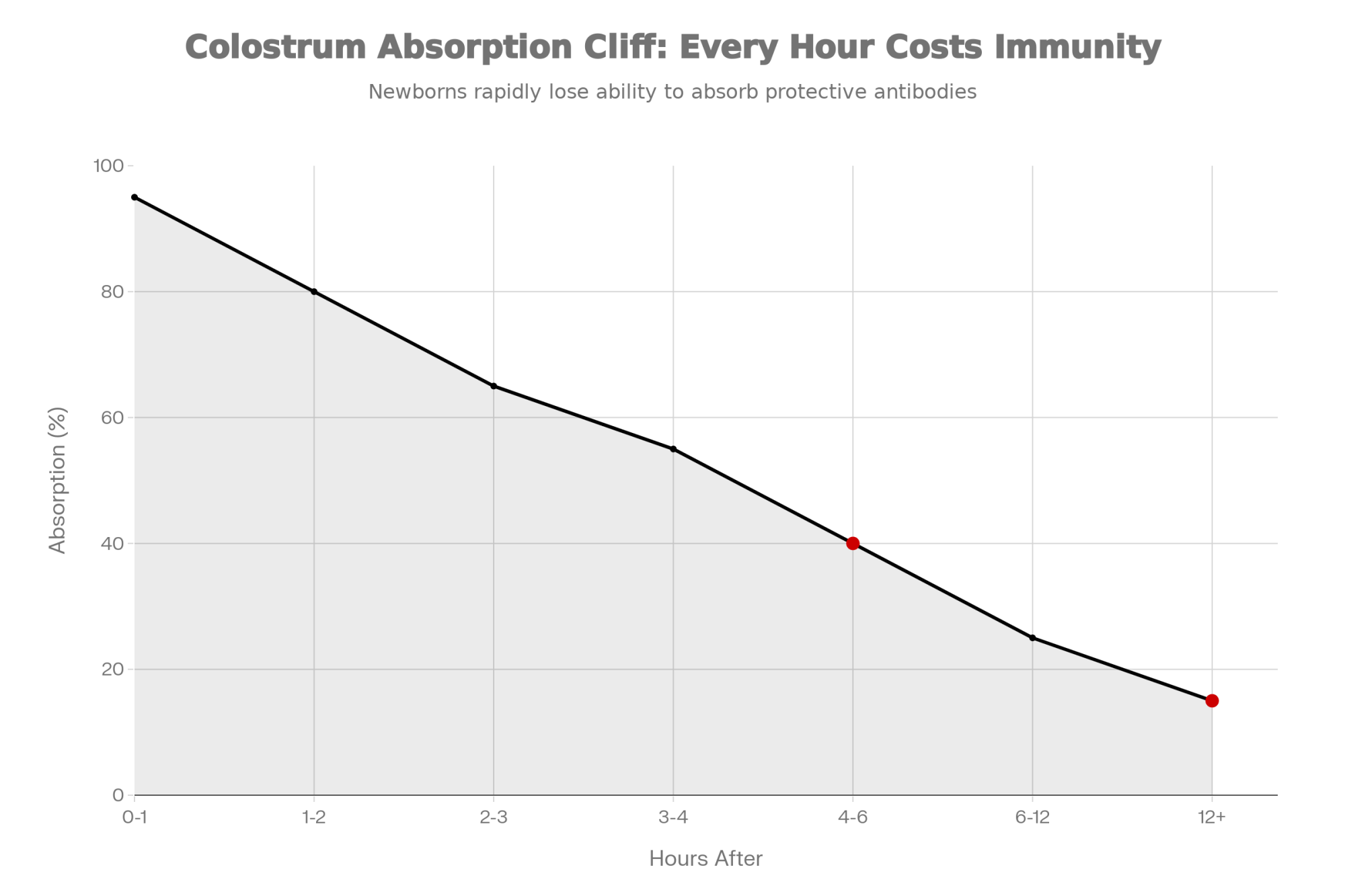
NewsSubscribe
First
Last
Consent

Butterfat Crashed. Beef Calves Hit $1,400. Now What?

$3.71 butterfat in 2023. $1.70 today. Same cows. Different math. Different future.

Executive Summary: Butterfat crashed 54%—from a record $3.71/lb in October 2023 to $1.70 today. Beef-on-dairy calves now bring $1,400; dairy bulls, maybe $800. This isn’t a down cycle. It’s the year global oversupply, China’s growing self-sufficiency, and processor consolidation collided—and the old playbook stopped working. For 300-800 cow operations, the math is forcing real choices: scale hard, capture niche premiums, or use beef-on-dairy as a planned exit over 3-5 years. This analysis delivers the diagnostic tools—breakeven thresholds, debt ratios, the five questions to ask your lender—alongside an honest look at the mental health stakes when “just hang on” becomes dangerous advice. Waiting isn’t a strategy. It’s a decision by default.

You know, looking at 2025, a lot of producers are saying the same thing over a cup of coffee: “On paper this shouldn’t be a disaster year… so why does it feel like one?” Class III futures are hovering around $17/cwt according to the latest CME data. Butterfat premiums have been cut nearly in half from their 2022–2023 peaks—USDA component pricing shows we’ve gone from above $3.00/lb down to $1.70. And here’s the kicker: beef-cross calves are commanding $1,400 a head in organized sales while the milk check shrinks.

Milk is still moving. Dairy demand hasn’t fallen off a cliff. Some export numbers even look decent based on what Rabobank’s been reporting. Yet plenty of 300–800 cow herds are staring at negative cash flow, higher debt from 2024 expansions, and kids who aren’t sure they want in.

The sentiment among multi-generation producers is a familiar one these days. They followed the signals. They invested when they were supposed to. And now many are questioning whether the playbook has fundamentally changed.

What farmers are finding is that 2025 isn’t just another low-price year. It’s the year a lot of long-standing assumptions got stress-tested all at once—about global demand, butterfat premiums, beef-on-dairy, and how much processing steel the system can really keep full. So let’s walk through what the data and real-world stories are showing us, and what that means for the mid-sized commodity herds feeling the squeeze the most.

“2025 isn’t just another low-price year. It’s the year a lot of long-standing assumptions got stress-tested all at once.”

The Year Everyone Hit the Gas at the Same Time

If you step back and look at global numbers, the first big lesson is simple: we managed to grow milk almost everywhere at once.

Rabobank’s late-2024 and 2025 global outlooks flagged something that probably should have gotten more attention. After several years of very modest growth, combined milk output from the major exporting regions—the “Big 7” of the US, EU, New Zealand, Australia, Brazil, Argentina, and Uruguay—was back in positive territory. On an annualized basis, Rabobank forecasts 2025 milk production from the Big 7 at 326.7 million metric tons—approximately 1–1.6% higher year-on-year, depending on the quarter measured—the highest annual volume gain since 2020.

Here’s why 2025 feels different: every major dairy exporter is growing production simultaneously—US, EU, New Zealand, Brazil, all in positive territory. That hasn’t happened since 2020. When the whole world expands at once and China stops absorbing the surplus, you get structural oversupply. This isn’t a down cycle. It’s a fundamental reset of the global dairy balance

United States: Volume on Top of Volume

USDA data shows the US dairy herd creeping back up toward 9.4–9.5 million cows by mid-2025, after earlier contraction. States like Texas, Kansas, and South Dakota led the way—in some periods, Texas was up by over 10% and Kansas by nearly 19%, according to USDA livestock reports. Monthly production in the first half of 2025 was regularly running several tenths of a percent to a few percent above the year before.

Here’s what’s interesting about where that growth landed. A lot of it didn’t go back into small parlor barns in traditional dairy counties. It went into dry-lot systems and large freestall complexes, specifically designed to handle high volumes of standardized milk for specific plants.

This creates a split reality we don’t talk about enough. In Texas and Kansas, expansion is still penciling out for operations built around $16 milk and economies of scale. Meanwhile, traditional dairy states like Wisconsin, New York, and Pennsylvania face a different equation entirely—higher land costs, older facilities, tighter environmental rules, and processors who may be more interested in sourcing from the new mega-plants out west.

California sits in its own category. Still a production giant, but increasingly constrained by water policy under SGMA and labor costs that have pushed some herds to relocate or downsize. Same industry, very different local math.

Europe and Oceania: Back in Expansion Mode

On the other side of the Atlantic, 2024 forecasts projected stable-to-slightly higher EU milk deliveries as margins improved from earlier lows. Ireland, Poland, and some German regions have all contributed to that uptick, offsetting declines in more constrained zones.

In New Zealand, Fonterra’s updates through late 2024 and 2025 pointed to milk collections running 2–4% ahead of the prior season in some periods. Reasonable pasture growth and a farmgate price forecast that—while trimmed at times—still kept most herds milking hard. Add in recovering output in Brazil and Argentina, and global trade reports going into 2025 were pretty consistent: exportable milk supply was growing again across the big players at the same time.

That’s our backdrop. Now layer on demand.

When the “China Safety Valve” Stopped Working the Way It Used To

For close to a decade, a lot of quiet boardroom confidence in export expansion could be summed up in one thought: “If we’re a little long on powder or whey, China will take it.” That was never entirely true, but it was true enough to guide a lot of investments.

Recent Chinese dairy outlooks from the USDA’s Foreign Agricultural Service tell a different story. Over the last several years, Chinese raw milk production has risen steadily, backed by large-scale commercial dairies and improved fresh cow management. At the same time, Chinese imports of some dairy commodities have flattened or declined—particularly whole milk powder—as domestic supply fills more of the pipeline.

Rabobank Research highlighted that net dairy product import volumes in 2024 fell by 12% from a year earlier, with skim milk powder imports dropping by nearly 37% according to their December 2024 analysis. Chinese buying is still important, but it’s no longer the automatic “pressure release” it once seemed to be.

So in 2025, we have more exportable milk from the US, EU, New Zealand, and South America… and a key customer that’s now partly replacing imports with its own production. The world is less forgiving of synchronized overproduction than it was ten years ago.

How the Component Story Flipped on High-Butterfat Herds

Now let’s zoom back into the bulk tank.

Here’s the supply crisis nobody’s talking about: butterfat production is exploding at 5.3% while milk volume crawls at 0.5%. That 10x divergence explains why cream buyers have the upper hand and why your high-fat breeding strategy from 2020 is now crushing your margins. Volume numbers lie—component pounds tell the truth

For most of the last decade, breeding and feeding for top-end butterfat performance was one of the clearest, most rational strategies available. Butter prices were strong. Fat-based milk pricing rewarded high tests. Nutrition and genetics teams encouraged ration tweaks and sire selection that reliably bumped herd butterfat 0.2–0.4 points over time.

And you know what? It worked beautifully. According to Federal Milk Marketing Order data reported by USDA, butterfat saw five consecutive months of record-breaking prices in 2022, from June to October, with prices ranging from $3.33 to $3.66 per pound. Then in October 2023, butterfat hit a new summit of $3.7144 per pound—an all-time record.

The Great Butterfat Crash reveals the brutal math facing dairy producers: a 54% price collapse from $3.71 to $1.70 per pound while protein stayed steady. This isn’t a cycle—it’s a structural reset that makes every breeding and feeding decision from the last decade suddenly obsolete

Not surprisingly, farmers responded. By late 2023, commentaries from US economists and industry consultants noted that national butterfat production had grown faster than protein output as herds and rations adjusted to these incentives. We did exactly what the market told us to do.

2025: Butterfat Comes Back to Earth

By late 2025, that story had changed dramatically. USDA’s November 2025 component price announcement shows butterfat at $1.7061 per pound—down more than 54% from that October 2023 peak. November butterfat fell almost 12 cents from October and was $1.20 less than the $2.91 per pound value from one year ago. Protein, meanwhile, has held steadier at $3.01 per pound according to USDA Dairy Market News.

One ag economist told Brownfield in October 2025 that US producers should pay more attention to protein going forward, because relative protein value was expected to play a larger role in milk checks than in recent years.

For herds that had pushed bulk tank fat to 4.3–4.5% and beyond, this doesn’t mean they were “wrong.” But it does mean the payback period on those genetic and ration decisions suddenly got longer.

What’s important to understand—and I think this gets missed sometimes—is that you can’t “un-breed” a cow in a year. It takes two or three calf crops, plus solid fresh cow and transition management, to materially shift the herd’s component profile. That lag is exactly why many producers started looking for a faster-acting lever to help the milk check in 2025: the beef-on-dairy calf.

Beef-on-Dairy: From Extra Cash to Core Margin Tool

If you want to see how quickly economics can reshape breeding philosophy, just look at the 2025 calf markets. According to Laurence Williams, dairy-beef cross development lead at Purina Animal Nutrition, beef-on-dairy calf prices averaged about $650 three years ago, compared to today’s average of $1,400 for day-old beef-on-dairy calves. A 2025 report puts current prices at $1,000 to $1,500 per head, driven by strong demand for high-quality beef and tight supplies.

Beef-on-dairy calves exploded from $650 to $1,400—a 115% gain that’s rewriting the dairy business model. Meanwhile, replacement heifers jumped 58% to $2,850, creating a profitability squeeze that forces every producer to recalculate their breeding strategy. The question isn’t whether to use beef semen anymore—it’s how much
YearBeef on Dairy Calf PriceHolstein Bull Calf PriceReplacement Heifer Price
2022650501800
20239001501990
202412006002400
202514008002850

Meanwhile, even Holstein dairy bull calves—once nearly worthless—can today fetch as much as $10 per pound at auction because of historically high beef prices, according to Christoph Wand, livestock sustainability specialist with Ontario’s Ministry of Agriculture, Food and Rural Affairs. But a dairy-beef crossbred animal commands about 50% more.

Academic and extension work backs up the economic case. A 2021 analysis in JDS Communications found that when beef calves sell at a strong premium, using beef semen on lower genetic merit cows can significantly improve whole-farm profitability—especially when sexed dairy semen is used strategically on replacements. A 2023 paper in Animals, which modeled beef-on-dairy strategies at herd and sector levels, reached similar conclusions.

As many producers have been sharing at industry meetings lately, the beef calf check in some months now rivals or exceeds net milk margin. That’s not a side hustle anymore. That’s starting to look like a business model.

What we’re all figuring out is there’s a tipping point where this shifts from “nice emergency cash” to “core business model.”

  • At 20–30% of breedings to beef, beef calves feel like a smart way to trim replacement heifer numbers and pick up needed cash. Milk remains the clear focus.
  • Somewhere around 40–60%, the beef calf check can rival or even exceed net milk income in tough years, especially for mid-sized herds.
  • Above 70% beef usage, the operation starts to resemble a confinement cow-calf system that happens to have a milk parlor attached.

That’s not a moral judgment—the cow is perfectly capable of playing both roles. The key is that this shift has downstream consequences, especially for processors and milk sheds built on the assumption of a steady dairy-only supply.

Processors, Plants, and the Risk of Empty Steel

While all of this is happening on the farm, processors are juggling their own challenges. Over the past decade, North America saw massive investment in large, efficient processing plants designed to handle millions of pounds daily. Those decisions assumed long-run milk growth and strong export markets.

At the same time, older, smaller plants keep closing. In 2024, Saputo announced closures of several US facilities as part of a network optimization plan. Regional media in 2025 highlighted more closures in the Northeast and parts of Canada.

Here’s why this matters to you: keeping plants viable depends on high utilization and dense, local milk supplies. Even a 3–5% regional reduction in cow numbers can force a plant to haul milk from farther away or cut shifts. And hauling costs have climbed—milk transport expenses now run $0.50–$1.50/cwt more when a nearby plant closes, and milk has to travel an extra 100–150 miles round-trip.

The remaining dedicated dairies—folks who want to stay 100% in milk—can end up paying part of the bill for regional consolidation, even if they themselves haven’t downsized. That’s one more reason to know where your buyer sees you fitting in their long-term supply plans.

The Quiet Load: Mental Health and Identity in a Restructuring Industry

Up to this point, we’ve mostly talked numbers. But the other part of the 2025 story—the part that doesn’t show up in USDA reports—is the mental and emotional toll of trying to navigate all this change while the bills are due every month.

Multiple studies and policy briefs over the past few years have documented that farmers, including dairy farmers, face significantly higher suicide risk than the general population. CDC data and rural health research put it at often around three-and-a-half times higher, depending on the dataset. A 2024 paper in FACETS reviewing Canadian data linked poor mental health directly to stressors such as financial pressure, weather extremes, and the feeling of being trapped between tradition and economics.

Qualitative work focused on agricultural communities has found similar themes. Farmers talk about isolation, stigma around seeking help, and the unique pain of feeling like “the generation that lost the farm.” A 2021 systematic review of farmer mental health interventions highlighted both the scale of the issue and the need for supports that actually fit farm culture and schedules.

Dairy-specific stories in 2024–2025 from farm mental health organizations describe producers who came very close to suicide during prolonged downturns, often when they felt powerless to change course or communicate with family and lenders. Many of these farmers eventually decided on a concrete plan—scaling back, changing enterprises, or exiting—that gave them what one producer called “permission to breathe again.”

“I think a lot of us tie our self-worth to the operation,” one Upper Midwest producer told a farm stress counselor in a 2025. “When the numbers say you’re failing, it feels like you’re failing—not just the business.”

From a purely business perspective, it can be tempting to say “hang on for better prices.” From a human perspective, there’s a point where “tough it out” becomes dangerous advice—especially when a farm is burning equity simply to keep operating with no clear path back to profitability.

The point isn’t that everyone should sell out. It’s that mental health and business planning are now inseparable topics. Decisions about scaling, shifting to beef-on-dairy, taking on new debt, or stepping away all have real emotional weight. And that weight deserves as much open, factual discussion as the milk-to-feed ratio.

A Simple Diagnostic for 300–800 Cow Commodity Herds

Most Bullvine readers aren’t running 30,000-cow dry lots or tiny direct-market dairies. You’re probably in that 300–800 cow band—big enough to be a full-time enterprise, small enough to feel exposed when margins shrink.

Based on extension work, lender guidance, and whole-farm modeling from land-grant universities, three numbers can really sharpen the conversation about next steps.

1. Your True All-in Breakeven

This isn’t just feed and vet. It’s everything:

All-in breakeven = (Total farm expenses + principal & interest + family living) ÷ cwt sold. Using USDA’s Dairy Margin Coverage calculations, the average dairy producer spent $9.38/cwt on feed alone in August 2025—down from $9.86/cwt in July.  August feed costs were the lowest for any month since October 2020. 2024 Northeast Dairy Farm Summary showed a net cost of production at $21.49/cwt, down $1.15 from 2023.

Studies suggest efficient herds can still produce milk in the high teens per cwt all-in, while others sit in the low 20s once all costs are honestly accounted for.

As a rough rule of thumb…

  • If your honest all-in breakeven is under $18.50/cwt, you’re positioned to consider careful growth if demand justifies it.
  • If you’re between $18.50 and $20.50, you’re in the “tight but workable” zone, where beef-on-dairy, better component focus, or cost control can make the difference.
  • If your all-in breakeven is consistently above $20.50, and local mailbox prices are expected to average well below that, then every tanker load you ship deepens the hole unless you have strong non-milk income.
The uncomfortable truth: 75% of mid-sized herds are in the squeeze zone or worse. If your breakeven is above $20.50/cwt and milk prices average $17-$18, every tanker load deepens the hole. This isn’t a chart—it’s a mirror. Which tier are you really in when you count EVERYTHING, including family living and debt service?

2. Debt-to-Asset and Working Capital

Look at your debt-to-asset ratio—using realistic values for land, cows, and facilities. Not peak boom prices. Farm financial work from universities and ag lenders generally marks 35–40% D/A as a comfortable zone, and anything over 50–60% as a caution area where new borrowing becomes riskier.

Similarly, working capital (current assets minus current liabilities) should be at least 15–20% of gross farm revenue to handle volatility safely. If you’ve slipped below 10%, even small shocks can force fire-drill decisions.

3. Matching Numbers to a Path

Once you’ve run those numbers, three broad paths look clearer.

Path 1: Scale Aggressively makes sense when costs are already competitive (breakeven in the high-teens), debt-to-asset is modest, working capital is healthy, and a processor explicitly wants additional volume. Some 2024–2025 appraisals have documented distressed facilities selling at 40–60 cents on the dollar.

Path 2: Capture Premium or Niche Value looks promising when you’re near urban markets or specialty processors for organic, A2, grass-based, or farmstead products. You need contracted premiums that justify the extra work.

Path 3: Strategic Exit or “Milk-Out” with Beef-on-Dairy deserves attention when all-in breakeven is consistently above realistic price expectations, debt-to-asset is high, and there’s no next generation eager to step in. Some herds are using beef-on-dairy as a 3–5 year glide path—selling high-value calves and older cows while avoiding the cost of raising many replacements.

Five Questions to Discuss with Your Lender in 2026

  1. “If milk prices stayed where they are for the next two years, what would our cash flow and equity position look like?”
  2. “What’s our true all-in breakeven right now—not our best year, but our honest trailing twelve months?”
  3. “Where does our processor see us in their five-year supply plan? Are we core, or are we on the margin?”
  4. “If we shifted 50% of breedings to beef and stopped raising most replacements, what does that do to our debt service capacity over 36 months?”
  5. “At what point would you advise us to exit with equity intact rather than continue operating at a loss?”

These aren’t comfortable questions. But they’re the ones that can turn a vague sense of pressure into a concrete plan—one way or another.

How This Looks in Your Region

National averages hide a lot of variation. The 2025 squeeze doesn’t hit every geography the same way.

High Plains (Texas, Kansas, New Mexico): Expansion is still happening, driven by new processing capacity and relatively low costs. If you’re already here with scale, the game is volume and efficiency. Heat stress management becomes a year-round conversation.

Upper Midwest (Wisconsin, Minnesota, Michigan): Traditional dairy country is caught in the middle. Strong infrastructure, but older facilities, tighter environmental rules, and a wave of 50–200 cow retirements. Many Midwest producers report running the beef-on-dairy numbers very seriously for the first time.

Northeast (New York, Pennsylvania, Vermont): Proximity to population centers creates niche opportunities—fluid, organic, farmstead. But commodity margins are brutal, given land and labor costs. Northeast producers often note they’re not competing with Kansas—they’re competing with the farm down the road for the same premium slot.

California: Still a powerhouse, but increasingly constrained by water policy under SGMA, labor costs, and air quality rules. Some herds are relocating; others are doubling down on efficiency or specialty markets.

Canada: Supply management provides price stability but limits growth. The pressure shows up differently—less about survival, more about succession and quota value as the next generation weighs options.

No single playbook fits everywhere. The key is understanding which forces are strongest in your specific situation.

Key Takeaways: How to Use 2025 as a Turning Point

2025 is a structural stress test, not just a price dip. Synchronized production growth, China’s partial self-sufficiency, component pricing shifts, and processing consolidation all lined up this year. Those forces are likely to return.

Beef-on-dairy has become a core margin tool. With beef-cross calves worth several times a straight dairy bull, and good research backing the economics, it’s a strategy every herd should run the numbers on. The key is deciding how far up that scale you want to go.

Component focus needs a reset, not a reversal. Butterfat had a great decade. Protein and overall solids will deserve more attention going forward. Flexibility and balance matter more than chasing a single number.

Processing relationships matter more than ever. With plant closures reshaping where milk can go, knowing your buyer’s long-term plans is as important as any ration change.

Mental health isn’t separate from business planning. High suicide rates remind us that “just toughing it out” can be far costlier than a few bad years on a tax return. Sometimes the bravest decision is to change course in time.

Policy tools exist, but face real barriers. Supply management, environmental caps, and coordinated export agreements could, in theory, dampen boom-bust cycles. In practice, structural volatility is likely to persist. Betting on policy rescue probably isn’t a sound business plan for 2026.

If there’s one encouraging thread through all of this, it’s that information and tools are better than ever. We have more transparent market data, more refined economic models, and more breeding and management options than our predecessors did. The hard part is being willing to look those numbers in the eye and let them inform decisions, even when the answers aren’t what we hoped for.

What 2025 offers, if we let it, is a chance to re-align our operations with the new reality—whether that means becoming a lean, scalable commodity producer, a differentiated value creator, or a family that chooses to step away with its equity and relationships intact.

That’s not an easy conversation. But it’s one worth having now, while there are still options on the table.

Complete references and supporting documentation are available upon request by contacting the editorial team at editor@thebullvine.com.

Learn More:

Join the Revolution!

Join over 30,000 successful dairy professionals who rely on Bullvine Weekly for their competitive edge. Delivered directly to your inbox each week, our exclusive industry insights help you make smarter decisions while saving precious hours every week. Never miss critical updates on milk production trends, breakthrough technologies, and profit-boosting strategies that top producers are already implementing. Subscribe now to transform your dairy operation’s efficiency and profitability—your future success is just one click away.
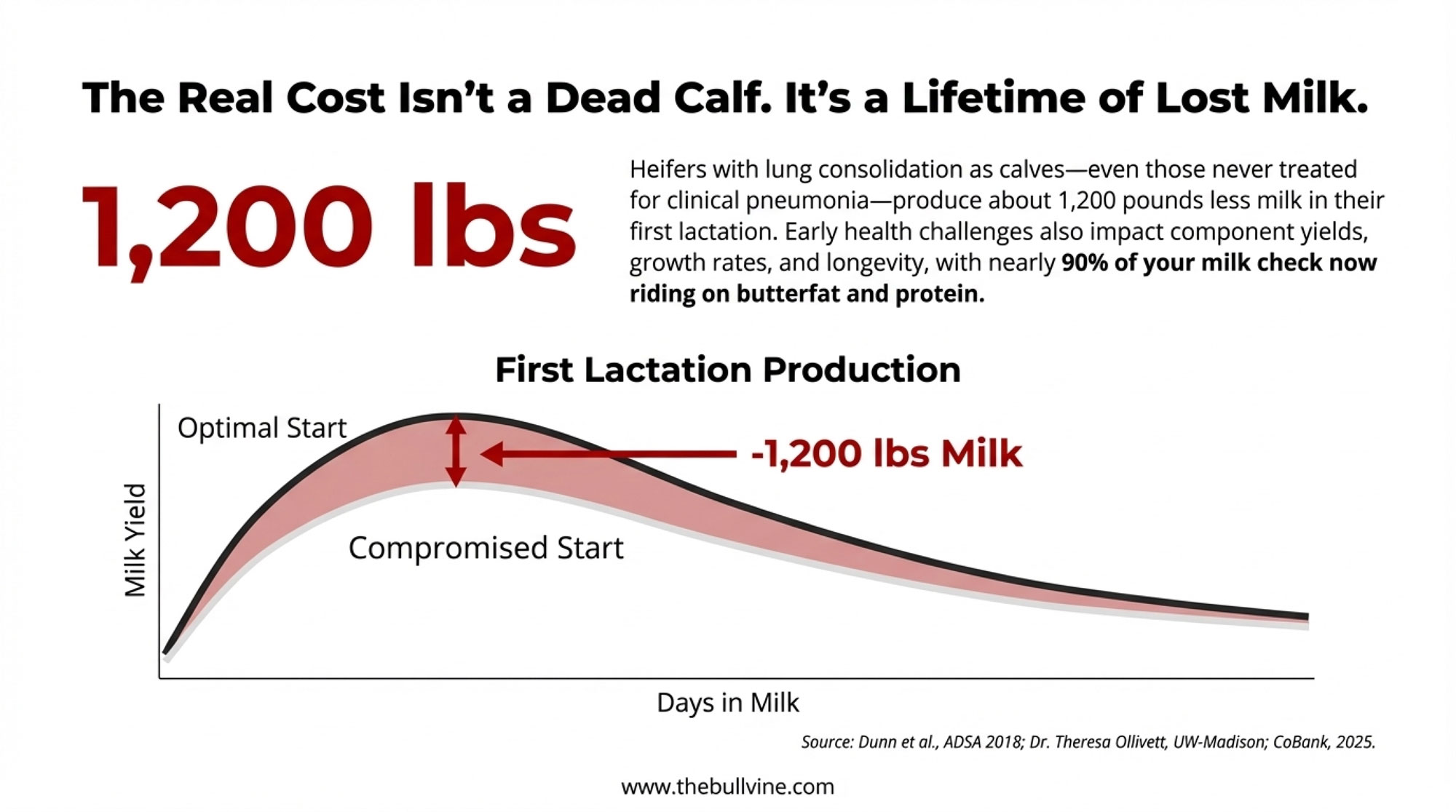
NewsSubscribe
First
Last
Consent

Ferrari Genetics, Go-Kart Support: Why 30,000-Pound Cows Are Gone by Lactation Three

Today’s dairy cows have more genetic potential than any generation before them. And yet we’re dropping race-car engines into go-karts and acting surprised when the wheels start coming off.

Executive Summary: Today’s elite Holsteins can push 30,000 pounds per lactation with butterfat above 4%—genetic firepower unthinkable a generation ago. Yet average productive life remains stuck at 2.7 lactations, costing the industry billions annually. NAHMS data shows 73% of cows leave herds due to health failures, not strategic decisions—with more than half of on-farm deaths occurring before 50 days in milk. The genetics aren’t failing. The support systems are. Barns, cooling infrastructure, and hoof care protocols were designed for smaller, lower-producing animals. Research from Wisconsin, Cornell, and Florida points to the same leverage points: lying time, heat stress, and lameness. Some herds already average 4+ lactations—proof that closing the gap is possible when infrastructure and execution match the genetics.

Dairy Herd Longevity

There’s a way to think about modern dairy genetics that goes beyond the usual comparisons floating around industry publications.

Consider NASCAR.

A NASCAR vehicle is precision-engineered from the blueprint up, designed to operate at the outer edge of mechanical capability. But here’s the thing—that vehicle only delivers its potential when supported by an elite pit crew, optimal track conditions, and infrastructure designed specifically for high-performance racing.

Modern Holsteins fit this description remarkably well. Elite herds now routinely push 30,000 pounds of milk per cow per year, and national breed averages have recently climbed above 4% butterfat for the first time in U.S. Holstein history, according to breed and DHI statistics. Compare that to the early 1980s, when high-teens production was exceptional for a show cow, and you start to appreciate the transformation genomic selection has brought to the industry.

These animals are championship-caliber machines. The question is whether we’re giving them championship-caliber support.

What keeps coming up in conversations with producers—whether I’m talking with folks in Wisconsin, California, or the Northeast—is a consistent theme: barns, cooling infrastructure, hoof care protocols, and stall dimensions on many operations were designed for a different era. For smaller cows, produced less milk, and generated less metabolic heat.

The genetics have changed dramatically. The infrastructure often hasn’t.

I spoke with a Wisconsin producer last fall who’s consistently hitting 4.2 lactation averages, and his take was illuminating: “We’re not doing anything revolutionary. We’re just doing the basics really consistently.”

Those success stories prove what’s possible when genetics and management align. The reasons more operations haven’t reached that level are complex—and as we’ll explore, often have more to do with economics than knowledge.

What the Numbers Actually Show

Before diving into specific management areas, it helps to step back and look at the broader picture.

According to Penn State Extension analysis of NAHMS data, the average dairy cow in the United States now leaves the herd at approximately 2.7 lactations. That number has been fairly stable for some time, which raises an uncomfortable question: with all the advances in genetics, nutrition, and veterinary care, why hasn’t productive life improved?

Part of the answer lies in how cows are leaving herds. Research from the Journal of Dairy Science indicates that roughly 73% of culling decisions are involuntary—meaning cows are leaving due to health problems, reproductive failure, or injury rather than strategic herd improvement decisions.

The breakdown tells the story. According to USDA data: infertility leads at about 23%, mastitis accounts for roughly 19%, and lameness drives approximately 9% of forced exits.

What’s particularly sobering—and this caught my attention when I first saw the data—is that more than half of on-farm cow deaths occur within the first 50 days in milk. These are fresh cows. Animals that haven’t yet had the opportunity to pay back their raising costs, let alone contribute to profitability.

Now, some industry observers make a fair point: shorter productive lives aren’t necessarily problematic if genetic improvement means each replacement animal is substantially better than her predecessor. Dr. Albert De Vries at the University of Florida has done extensive work on optimal replacement economics, and his models show that voluntary culling decisions should factor in the genetic merit of available replacements.

But here’s the key distinction: that logic applies to voluntary culls. When 73% of culls are forced by health and reproductive problems, we’re looking at something else entirely—and it’s worth understanding what’s driving those numbers.

The Rest and Recovery Factor

One of the clearest indicators researchers have identified for predicting cow health and productivity is surprisingly straightforward: how much time cows spend lying down.

Dr. Nigel Cook at the University of Wisconsin School of Veterinary Medicine has been studying this relationship for years. His work, along with research from colleagues at Cornell and the Miner Institute, has established a remarkably consistent finding: every additional hour of lying time (up to an optimal range of 12-14 hours daily) correlates with approximately 2-3.5 additional pounds of milk production per cow per day.

Each hour of lying time a cow loses can cost 2 to 3.5 pounds of milk per day, according to university research summaries. Every single day, that shortfall adds up.

Why does rest matter so much? The biology makes intuitive sense. When cows lie down, blood flow to the udder increases—by 25-30%, according to some estimates. Rumination is more efficient in a lying position. And hoof tissue gets time to dry and recover from constant moisture exposure in alleys and holding areas.

The challenge is that many herds aren’t hitting that 12-14 hour target. Studies using accelerometer data from commercial operations—including research from the University of British Columbia—consistently show average lying times of 8-10 hours in freestall operations. Sometimes, there is less during hot weather or when pens are overcrowded.

For a 1,000-cow herd falling 3 hours short of optimal rest… the math suggests something like 6,000-10,000 pounds of unrealized milk production daily. Over a lactation, that’s significant money left on the table.

What’s Stealing Your Cows’ Rest?

What’s causing the shortfall varies by operation. Sometimes it’s stocking density. Dr. Cook’s research shows that cows lose about 15% of their lying time when stocking density increases from 1 animal per stall to 1.5 animals per stall—a level that’s more common than many producers realize. Other times it’s stall design. Modern Holsteins are simply larger than their predecessors from 20-30 years ago, and stalls built to older specifications may be too cramped for comfortable resting.

The encouraging news? Addressing time barriers to lying often doesn’t require a massive capital investment. Adjusting stocking density, relocating neck rails, and adding bedding depth—these are relatively low-cost interventions that can yield measurable results.

A California producer I spoke with recently reduced stocking from 115% to 100% and saw a 4-pound increase in rolling herd average within 60 days. “I was skeptical,” she told me. “The math said it wouldn’t pay. But the cows told a different story.”

Bedding Systems and the Economics of Comfort

When researchers compare bedding materials, deep-bedded sand consistently ranks at the top for cow health and comfort. This finding has been replicated across studies from the University of Wisconsin, Ontario’s Ministry of Agriculture, and veterinary practices across North America.

The advantages are multi-dimensional. Sand is inorganic, so it doesn’t support bacterial growth as organic materials do. It conforms to the cow’s body, distributing weight and reducing pressure points. And it provides good traction when dry without retaining moisture against the skin.

Dr. Cook’s research has documented that herds on properly managed deep sand show lower rates of hock lesions, reduced mastitis incidence, and longer lying times compared to mattress-based systems.

So why isn’t everyone using sand?

The answer comes down to economics and operational complexity—a theme you’ll notice throughout this discussion. Retrofitting from mattresses to deep sand for a 200-cow barn involves substantial capital investment. Then there are ongoing costs: sand procurement, maintenance of the separation system, increased equipment wear from abrasive material, and additional labor for bedding management.

The payback period—typically 18-24 months when you account for production gains, reduced health costs, and extended productive life—is reasonable for a capital investment. But that upfront requirement presents real challenges, particularly for operations with limited borrowing capacity or uncertain milk price outlooks.

Here’s something worth noting, though. Mattress technology has improved considerably over the past decade. Producers using high-quality foam-topped mattresses with aggressive bedding management—keeping 2-3 inches of clean, dry material on top at all times—can achieve results closer to sand than older research might suggest.

The key, regardless of system, is management intensity. I’ve seen excellent results on sand, mattresses, and even waterbeds when attention to detail is present. And I’ve seen poor outcomes on all of them when management slips.

The Heat Stress Challenge

This is one of those areas where I think the industry conversation is finally catching up with the research—though we’re not all the way there yet.

In warm climates, heat stress is one of the largest drains on productivity and cow welfare. Anyone farming in Texas, Arizona, or California’s Central Valley knows this instinctively. But what strikes me about the economic data is how much larger the impact is than most producers estimate, even experienced ones who’ve dealt with heat stress for decades.

Heat stress costs the U.S. dairy industry $900 million to $1.5 billion annually, according to an economic analysis by the University of Florida and the USDA.

Research from the University of Florida, building on earlier USDA analyses, puts those numbers in stark terms. For individual operations in hot regions, the per-cow impact can reach $500- $700 per year when you account for all cascading effects.

The Hidden Costs Most Producers Miss

Those effects extend well beyond milk production decline during hot weather. Research published in the Journal of Dairy Science has documented reduced dry matter intake (as cows attempt to lower metabolic heat production), compromised immune function leading to higher disease incidence, and impaired reproductive performance. According to Dr. Peter Hansen at the University of Florida, conception rates can drop from 40-50% to as low as 10-20% during heat stress periods.

And there’s a dimension many producers don’t fully appreciate: the effects on developing fetuses can impact the lifetime productivity of offspring. Research increasingly suggests that in-utero heat stress creates lasting changes in immune function and milk production capacity. That’s a long tail on today’s management decisions.

What’s particularly insidious is that damage begins before it’s visually obvious. Research using Temperature-Humidity Index measurements indicates that production impacts begin around THI 68—a threshold crossed more often than many producers realize, even in traditionally “cooler” regions. Modeling and on-farm monitoring show that even in states like Wisconsin and Minnesota, herds frequently experience many days each summer above that threshold, enough to reduce milk yield and fertility measurably.

I’ve spoken with upper Midwest producers who were genuinely surprised to learn that their herds were experiencing measurable heat stress on so many summer days. We tend to think of heat as a southern issue, but the data tells a more nuanced story.

Once THI climbs past about 68, most high-producing herds start to lose milk, whether we see obvious signs or not.

The good news? Cooling infrastructure has become more sophisticated and, in many cases, more affordable relative to its impact. Holding pen cooling tends to offer the fastest payback (since cows are concentrated and often heat-stressed from walking to the milking area and waiting for milking). Feedbunk soakers combined with fans can maintain intake during hot weather. Tunnel or cross-ventilation systems provide consistent air movement but require more substantial investment.

Lameness: The Quiet Productivity Drain

If there’s one area where the gap between research knowledge and on-farm execution is most pronounced, it might be lameness prevention.

The economics are clear—almost surprisingly so. Research from multiple universities estimates the cost of a single lameness case at $90-$340, depending on severity and duration. A 2023 study by Robscis and colleagues found the average to be $336.91 per case, accounting for treatment, milk loss, and reproductive impact. That number surprised me when I first saw it—it’s considerably higher than most producers estimate when you ask them to ballpark the cost of a lame cow.

Farmers consistently underestimate lameness by 50%—missing a $337-per-case profit drain that delays breeding by a month and costs the average 200-cow herd over $13,000 annually

Research in Preventive Veterinary Medicine found that lame cows show calving-to-pregnancy intervals 30-40 days longer than sound herdmates. Perhaps most striking: a substantial portion of culls attributed to reproductive failure actually trace back to lameness as an underlying cause. When cows hurt, they don’t show heat as strongly, they’re harder to breed, and they’re more likely to leave the herd before their genetics can express.

The prevention protocol isn’t complicated. Extension recommendations consistently emphasize regular hoof trimming (2-3 times per lactation, with particular attention at dry-off and early lactation), consistent footbath protocols (4+ treatments per week with proper bath design), attention to walking surfaces, and management of stocking density to reduce the time cows spend standing in alleys.

Ohio State Extension estimates footbath costs at roughly $42 per cow annually for a properly executed copper sulfate program. Add in professional trimming, infrastructure maintenance, and labor, and a comprehensive program for a 200-cow herd runs $15,000-$25,000 per year. The return on that investment—when accounting for prevented cases and their cascading effects—typically exceeds the cost by a factor of three to five.

So why the disconnect between knowledge and action?

Research on farmer behavior points to several factors. Farmer-estimated lameness prevalence typically runs about half of the actual prevalence when researchers conduct independent scoring. Many cases simply aren’t being recognized, particularly in early stages when intervention is most effective. I’ve walked pens with producers who consider their lameness “under control,” only to find prevalence rates above 20% when we systematically score.

There’s also the challenge of sustained execution. Unlike a capital investment that pays back automatically once installed, lameness prevention requires daily attention and consistent protocols. When labor is stretched, and competing priorities emerge, footbath management and trimming schedules often slip.

This isn’t about producers being careless—it reflects the reality of managing complex biological systems with finite time and attention. But it suggests that farms with the labor capacity to implement the protocol consistently may have an underappreciated competitive advantage.

The Replacement Economics Puzzle

Behind many of the management decisions we’ve discussed lies a deeper economic reality reshaping dairy operations in fundamental ways.

The cost of raising a replacement heifer from birth to first calving now ranges from $2,500 to $3,500, depending on region and management intensity. Market prices for springing heifers have reached $2,800-$4,000 in many regions—a significant increase from 2019 levels.

The brutal math: raising a heifer costs $2,500-$3,500 and needs 3+ lactations to pay back, but average productive life is only 2.7 lactations—a structural profit drain

Here’s where the math gets challenging. Penn State Extension analysis indicates it takes over 3 lactations for a producer to recoup heifer-raising costs. Other research—including Dr. De Vries’s work at Florida—suggests that fully paying back the investment may require 5-7 lactations under some economic scenarios.

With an average productive life at 2.7 lactations, most operations are at real risk of not fully recovering their heifer-raising costs before cows leave the herd. That’s a structural problem that no amount of good management can fully overcome.

At an average of 2.7 lactations, most operations are coming uncomfortably close to losing money on the heifers they raise, once all costs are honestly accounted for.

The beef-on-dairy trend has intensified this dynamic. In many U.S. markets over the past year, day-old beef-on-dairy calves have routinely brought $700 to over $1,000, with some reports of top lots averaging close to $1,400 per head during the strongest runs. The immediate cash flow is attractive, and on a per-calf basis, the economics make sense.

But the collective effect has been dramatic. USDA cattle inventory data show U.S. dairy replacement heifer numbers at their lowest level in decades, comparable to the late 1970s. That supply constraint has driven prices to record levels, making it difficult, from an economic standpoint, to raise and buy replacements.

What this means practically is that many operations have reduced culling rates—keeping older cows in production longer because replacements are either unavailable or unaffordable. Industry reports indicate dairy cow slaughter in 2024 has run noticeably below the levels seen in many recent years, reflecting tighter replacement supplies and strong milk prices in some regions.

This isn’t necessarily negative from a longevity perspective. Keeping cows longer is, after all, what the industry has long encouraged. But it changes the management calculus. An older herd with more health challenges requires different attention than a younger herd, and operations that haven’t adjusted protocols may find themselves stretched thin.

What Operations Breaking Through Look Like

Despite these challenges, some operations achieve substantially better longevity outcomes. Looking at what they have in common offers a useful perspective.

Deliberate intensity management: Some high-longevity operations have consciously moderated peak production in favor of more sustainable output over time. Research from Germany and the Netherlands has documented herds averaging 4+ lactations with peak yields intentionally held 10-15% below maximum genetic potential. Less milk per lactation, but more lactations per cow—and the lifetime productivity often pencils out favorably.

Lower debt burden: Operations with debt-to-asset ratios below 40% are more flexible in making infrastructure investments and weathering price volatility. Highly leveraged operations often can’t afford capital improvements that would reduce their costs over time—a challenging cycle.

Strategic heifer programs: Operations raising their own replacements—particularly those using genomic testing to identify high-potential animals early—report significant cost advantages over purchasing from the market. Genomic selection can identify animals with better health and fertility genetics before substantial raising costs are incurred.

These aren’t secret formulas. They’re applications of well-understood principles—but ones that require capital access, operational flexibility, and long-term planning horizons that not every operation enjoys.

Regional Realities

Priorities look different depending on where you’re farming.

For operations in Texas, Arizona, or California’s Central Valley, heat stress mitigation typically offers the fastest return on investment. Production and reproduction losses from inadequate cooling can dwarf other management factors.

In the upper Midwest—Wisconsin, Minnesota, Michigan—heat stress matters during summer months, but lameness prevention and stall comfort often yield more consistent year-round returns. Longer housing seasons mean cows spend more time on concrete and in freestalls, making lying time and hoof health particularly important.

Northeast operations face their own considerations: older barn infrastructure, smaller average herd sizes, and proximity to premium milk markets that can support different economic calculations.

Labor markets vary significantly, too. Operations in regions with reliable labor availability may find it easier to maintain consistent lameness prevention protocols. Those facing chronic shortages might prioritize automation or simpler systems requiring less daily attention.

Generic recommendations only go so far. The right priorities depend on climate, existing infrastructure, labor situation, financial position, and herd demographics.

Where to Focus Limited Resources

Start with zero-cost stocking density fixes before spending six figures—the fastest ROI doesn’t always require the biggest checkbook

Investment Priorities at a Glance

Stocking Density Adjustment

  • Capital: $0
  • Operating: $0 (may reduce revenue short-term)
  • Payback: Immediate
  • Benefit: Lying time, herd health

Footbath Protocol Improvement

  • Capital: $3,000-$5,000
  • Operating: $8,000-$12,000/year
  • Payback: 3-6 months
  • Benefit: Lameness reduction

Holding Pen Cooling

  • Capital: $15,000-$25,000
  • Operating: $2,000-$5,000/year
  • Payback: 6-12 months
  • Benefit: Heat stress reduction

Comprehensive Barn Cooling

  • Capital: $60,000-$90,000
  • Operating: $8,000-$15,000/year
  • Payback: 12-18 months
  • Benefit: Production, reproduction

Deep Sand Retrofit

  • Capital: $80,000-$110,000
  • Operating: $15,000-$25,000/year
  • Payback: 18-24 months
  • Benefit: Udder health, comfort, longevity

All figures are based on a 200-cow herd. Costs vary by region and existing infrastructure.

Finding Your Starting Point

Check stocking density first. Running above 100% of stall capacity? That’s probably your starting point. The best facilities in the world can’t help cows that can’t access them.

Get an honest lameness assessment. Have someone other than regular staff do the scoring—research consistently shows we underestimate prevalence by half. If the true rate exceeds 15%, protocol improvements are likely to yield faster returns than facility investments.

Consider climate exposure. Does your region exceed THI 68 for 60+ days annually? Cooling infrastructure should be near the top of your list.

Evaluate lying times. Cows averaging below 11 hours daily? Look at stall comfort—dimensions, bedding depth, neck rail position.

Review fresh cow mortality. Losing animals in the first 50 days at rates above 2-3%? The issue is likely transition management, not facilities.

Consider financial position. Debt-to-asset ratio above 50%? Focus on cash-flow-positive improvements first—protocol consistency and management intensity often deliver returns without requiring additional capital.

The Bottom Line

Stepping back from all of this, what becomes clear is that the gap between genetic potential and realized performance isn’t primarily a knowledge problem. The research is available. The protocols are documented. Most producers know what best practices look like.

A lot of this comes back to structure, not just day-to-day decisions. Capital constraints limit infrastructure investment. Labor constraints limit protocol consistency. Price volatility makes long-term planning difficult. Replacement economics create challenging trade-offs between immediate cash flow and long-term herd value.

Individual operations can make meaningful improvements within these constraints—and many are doing so. Herds achieving 4+ lactation averages demonstrate that matching management to genetics is possible.

But there’s growing recognition in industry discussions that some challenges may require broader solutions: pricing systems that reward longevity, risk management tools that support infrastructure investment, cooperative models that improve capital access for mid-sized operations. These are conversations worth having, and we’ll be exploring some of these systemic questions in upcoming coverage.

In the meantime, genetics continue to improve. Each generation carries more potential than the last. The cows are ready for championship performance.

The opportunity—and it’s a real one—is building support systems to match. It won’t happen overnight. It won’t look the same on every operation. But for producers willing to honestly assess their limiting factors and strategically focus resources, meaningful progress is achievable.

One management decision at a time, the gap between genetic potential and realized performance can narrow.

The pit crew can rise to meet the machine.

Key Takeaways

What the research shows:

  • Modern genetics deliver unprecedented production potential, but the average productive life remains around 2.7 lactations
  • Lying time, heat stress management, and lameness prevention show strong connections to longevity and lifetime productivity
  • Infrastructure investments typically show 12-24 month payback periods—solid returns, but requiring upfront capital

Practical priorities:

  • Start with an honest assessment of lying time and stocking density—often the highest-impact, lowest-cost interventions
  • Regional climate should guide investment priorities
  • Consistent protocol execution may matter more than facility perfection
  • Evaluate heifer economics given current market conditions—the math has shifted significantly

The bigger picture:

  • The gap between genetic potential and realized performance is more about economics and execution than knowledge
  • Operations achieving exceptional longevity share common characteristics: manageable debt, consistent protocols, long-term planning horizons
  • Industry-level discussions about pricing and capital access will shape what’s possible going forward

Complete references and supporting documentation are available upon request by contacting the editorial team at editor@thebullvine.com.

Learn More:

Join the Revolution!

Join over 30,000 successful dairy professionals who rely on Bullvine Weekly for their competitive edge. Delivered directly to your inbox each week, our exclusive industry insights help you make smarter decisions while saving precious hours every week. Never miss critical updates on milk production trends, breakthrough technologies, and profit-boosting strategies that top producers are already implementing. Subscribe now to transform your dairy operation’s efficiency and profitability—your future success is just one click away.
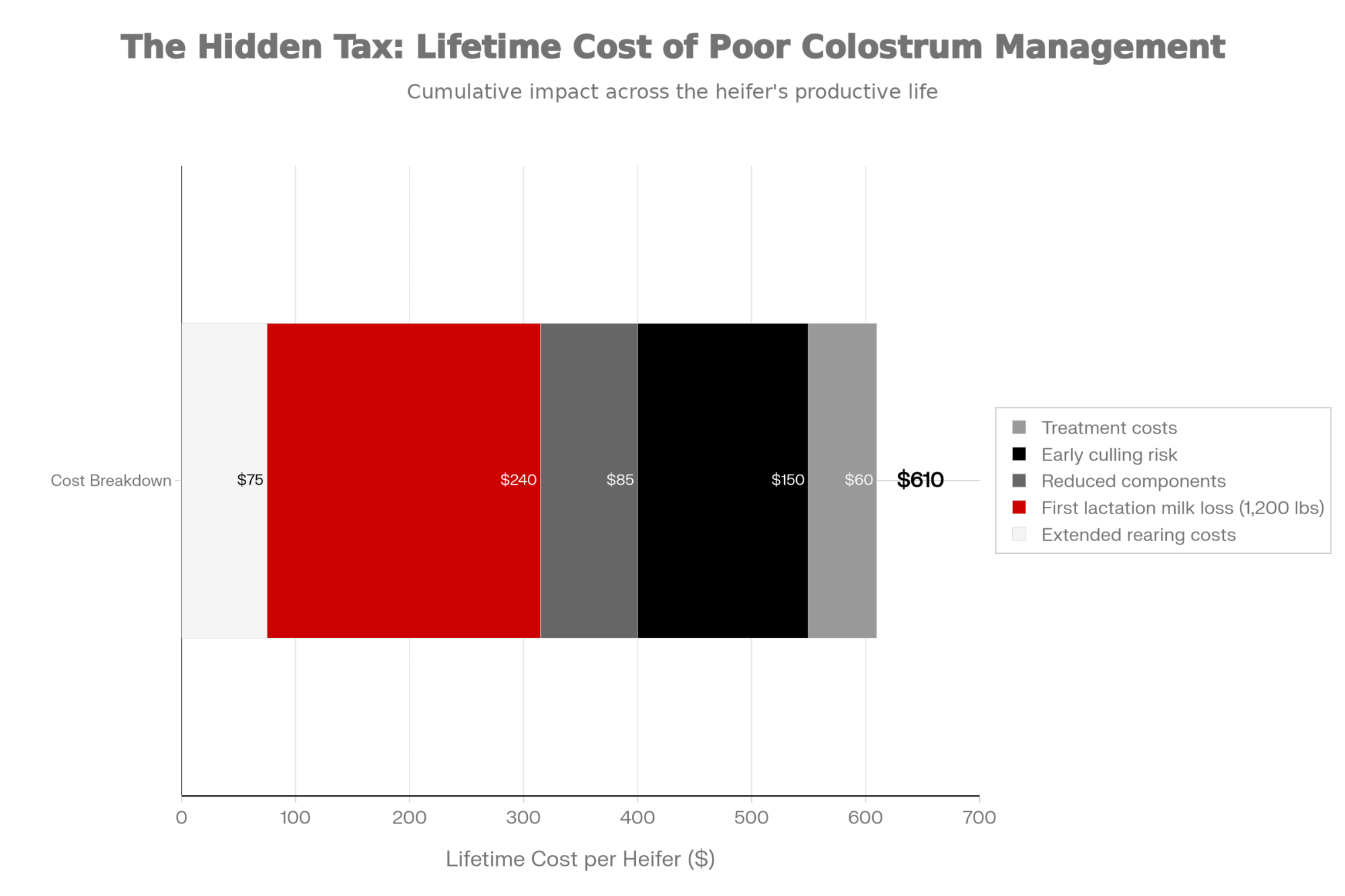
NewsSubscribe
First
Last
Consent

The $775-Per-Cow Secret: Why This California Dairy’s Hospital Pen Stays Empty

His hospital pen is empty. His antibiotic bill is zero. His cows make $775 more each. Here’s how

If you ever visit Trevor Nutcher’s dairy operation out in California’s Central Valley, something will immediately catch your eye—the hospital pen was empty. Not just quiet for the day, but consistently empty. For those of us who recall his operation a few years ago, which involved 20-plus cows cycling through treatment protocols, this is worth discussing.

What’s interesting here is that Nutcher didn’t achieve this through gradual reduction or selective dry cow therapy. He went cold turkey on antibiotics—completely eliminated them. And before you think he’s taking unnecessary risks, let me share what’s actually happened to his operation.

The Real Economics We’re Not Calculating

So here’s what I’ve been thinking about lately—we all know treating mastitis costs money, right? But it’s the hidden expenses that really add up. The milk we’re dumping during those extended withdrawal periods, the productive days lost to chronic cases, those early culling decisions we’re forced to make.

In my conversations with producers from Wisconsin to California, as well as some individuals in the Northeast and Southeast, I’m hearing that resistant cases often cost significantly more than straightforward treatments. What’s particularly interesting is that many producers are reporting higher retreatment rates than a few years ago.

A producer in Pennsylvania mentioned something that stuck with me: “We’re so focused on the treatment cost, we forget about the cow that never quite comes back.” That’s the hidden math we’re not doing.

Examining operations in Georgia and North Carolina, where heat stress exacerbates these issues, the economics become even more challenging. One producer near Athens told me his resistant cases during summer can cost three times as much as winter treatments when you factor in extended recovery.

Understanding What’s Really Happening

Dr. Geoff Ackaert, the technical director and global head of ruminants at AHV International, shared something with me that really shifted my perspective. He described our traditional approach as trying to defeat an organized army by capturing individual soldiers.

Emerging research suggests that bacterial communities form protective structures known as biofilms. You know that stubborn slime that builds up in water tanks? Same basic idea, except it’s happening in udder tissue. These biofilms function like protective shields, making bacteria 10- to 1,000-fold more resistant to traditional treatments, according to AHV’s research documentation.

Here’s what really got my attention—bacteria actually talk to each other using chemical signals. They coordinate their attacks for when the cow’s stressed. That’s why we often see mastitis blow up during transition, heat stress, or when we change the ration. The bacteria aren’t getting stronger; they’re getting better organized.

Joe Soares’ Unintentional Experiment

The Joe Soares operation gave us valuable data during last year’s H5N1 outbreak. His Chowchilla facility followed traditional protocols, including electrolyte support, aspirin powder, and B12 supplementation. Cost them $26.71 per treated cow according to their records. Meanwhile, his Turlock operation implemented AHV’s communication-disruption protocol at $54.02 per cow.

That initial cost difference would make anyone nervous. But here’s what happened: Turlock cows returned to normal production in three days. The Chowchilla group? Some took weeks, with several never returning to previous production levels. The milk production data showed that Turlock maintained 11 pounds more milk per cow per day during recovery. When you do the math, that higher upfront cost turned into a $775 advantage per cow.

What really convinced me was the collar monitoring data—Turlock cows showed measurable improvement in eating and chewing cud within 24 hours.

The Numbers That Matter:

  • Traditional protocol: $26.71/cow with weeks of recovery
  • Alternative protocol: $54.02/cow with 3-day recovery
  • Net advantage: $775 per cow when factoring in production
  • Irish trial results: 74.8% antibiotic reduction
  • Fertility improvement: 9.3% better conception, 28 fewer days open

COMPARISON AT A GLANCE:

FactorTraditional ApproachCommunication Disruption
Initial Cost$26.71/cow$54.02/cow
Recovery TimeWeeks3 days
Production LossVariable, often permanentMinimal
Retreatment RateHigh (30%+ in some operations)Low
Long-term ROIDeclining due to resistance$775/cow advantage
Works With RobotsYesYes, with monitoring benefits

How This Works (And Where It Doesn’t)

So instead of trying to kill bacteria—which just breeds tougher ones—this method scrambles their communication. Think of it like jamming their cell phone signals so they can’t coordinate.

This approach (called quorum sensing inhibition if you want the technical term) prevents bacteria from organizing their group attacks. A cow’s immune system handles individual bacteria just fine—it’s when they all attack at once that problems arise.

The field data from Ireland that AHV tracked is pretty compelling. Six farms with 1,344 cows achieved 74.8% reduction in antibiotic use. But here’s what’s really interesting—conception rates went up 9.3% and days open dropped by 28. We’re talking about overall health improvement, not just udder health.

Now, I should mention that not everyone sees these results. A Vermont grazing operation I heard about had mixed outcomes, partly because their system already had low infection rates. A 200-cow tie-stall barn in Wisconsin found it tough to implement with their setup. Some Southeast operations, which deal with year-round high humidity, report needing adjusted protocols.

For operations with robotic milking systems, there’s actually an advantage—the constant monitoring helps catch that 24-72 hour response window better than visual observation alone.

What Implementation Really Looks Like

Nutcher was candid about his transition. “Those first 72 hours test everything you’ve learned,” he told me. “You see swelling developing, and every instinct says reach for that mastitis tube.”

The difference lies in how quickly it works. Traditional antibiotics provide a familiar, quick knock-down effect within hours. Communication disruption takes 24 to 72 hours as the cow’s own immune system clears out the now-confused bacteria. It’s a different healing, not slower.

From what I’m seeing, successful transitions share these traits:

  • Start with prevention during dry-off and fresh cow periods
  • Look beyond per-treatment costs to total economics
  • Get your vet on board early

Several producers have mentioned that once they calculated milk dump plus early culling, the economics became clearer. But if you’re just comparing tube prices? Yeah, it’s harder to justify.

Dr. Sarah Mitchell, a practicing veterinarian in Wisconsin who has worked with three operations making this transition, told me, “The biggest challenge isn’t the science—it’s changing 30 years of muscle memory when you see that first swollen quarter.”

Is Your Operation Ready?

This approach may not be suitable for every situation. If you’re exiting dairy within two years, you may not recoup your investments. Small operations with fewer than 100 cows may find the per-cow investment challenging. But for operations that keep getting the same cows sick over and over? That’s when it becomes compelling.

Examining different regions reveals varying economic conditions. Texas operations dealing with heat stress see different results than Idaho’s large-scale dairies or New Mexico’s dry lot systems. Grazing operations in the Southeast—places like Tennessee and Kentucky—report different outcomes than large freestall barns out West. Florida producers dealing with year-round humidity face unique challenges that require a different approach.

Consider market access, too. Premium contracts for antibiotic-free milk vary widely by region and processor. Even modest premiums can add up to real money when you’re shipping year-round.

Based on documented trials, operations can see significant reductions in treatment needs—those Irish farms achieved nearly a 75% reduction. Though results vary by system.

What You Can Do Today

For operations considering change, here’s a practical timeline:

  • Month 1-2: Start tracking current treatment costs using the calculator below
  • Month 3: Begin with dry-off protocols
  • Month 4-6: Expand to fresh cow management
  • Month 7-12: Full implementation with ongoing monitoring

HIDDEN COST CALCULATOR:

Calculate Your True Treatment Cost Per Case:

1. Direct Treatment Expense

  • Cost of tubes/medications: $_____
  • Labor (hours × hourly rate): $_____

2. Lost Milk Revenue

  • Days of dumped milk: _____ days
  • Daily production × milk price: $_____/day
  • Total milk loss: $_____

3. Future Production Impact

  • Expected production drop: _____ lbs/day
  • Days of reduced production: _____ days
  • Production loss value: $_____

4. Culling Risk Cost

  • Increased culling probability: _____ %
  • Replacement cost – cull value: $_____
  • Risk-adjusted culling cost: $_____

5. TOTAL TRUE COST PER CASE: $_____

Even if you’re maintaining current protocols, track failure rates carefully. Document retreatment rates, identify chronic cases, and calculate true per-incident costs using the calculator above. This baseline data proves invaluable whether you transition now or later.

Sponsored Post

The Bottom Line

What we’re witnessing here is something fundamental—the conversation shifting from “How do we kill bacteria?” to “How do we prevent them from organizing?” That’s more than a technical change. It’s a whole new way of thinking about animal health.

The producers successfully navigating this aren’t abandoning proven practices completely. They’re combining new understanding with established principles. Sure, it requires education, patience, and sometimes stepping away from familiar protocols. But for operations embracing evidence-based innovation, the rewards look compelling.

The dairy industry has consistently evolved through cycles of innovation. Bacterial communication disruption may represent the next significant advance. Producers exploring these approaches today? They’re writing the management playbooks others will follow tomorrow.

As we all know, change in dairy comes slowly, then suddenly. That empty hospital pen at Nutcher’s operation might be showing us what sudden change looks like when it finally arrives. And for those of us still figuring out our path, it’s worth remembering—we don’t all have to take the same route, but understanding the options? That’s just good business.

KEY TAKEAWAYS

  •  Zero sick cows is achievable: Trevor Nutcher’s hospital pen went from 20+ cows to consistently empty—no antibiotics—by disrupting bacterial communication instead of fighting bacteria directly
  • $775 per cow ROI is documented: Joe Soares proved this during H5N1 with 3-day recoveries versus weeks and 11 lbs more daily milk production
  • Benefits go beyond mastitis: Irish trials (1,344 cows) achieved 74.8% antibiotic reduction while improving conception by 9.3% and cutting 28 days open
  • This rewards high-challenge herds most: Operations with already-low infection rates reported mixed results—know your baseline before investing
  • Your first step: calculate true costs: Most producers underestimate what chronic mastitis really costs when you add milk dump, retreatment, and early culling

EXECUTIVE SUMMARY: 

Trevor Nutcher’s hospital pen used to hold 20+ sick cows—now it stays empty, and he hasn’t used an antibiotic tube since switching protocols. The breakthrough: instead of killing bacteria (which breeds resistance), this approach disrupts their communication, preventing them from coordinating attacks. Real-world proof came during Joe Soares’ H5N1 outbreak—cows on the new protocol recovered in 3 days versus weeks, produced 11 pounds more milk daily, and delivered a $775-per-cow advantage. Irish trials across 1,344 cows documented a 74.8% reduction in antibiotics, while improving conception by 9.3% and cutting days open by 28. This approach isn’t universal—operations with already-low infection rates and small tie-stall setups report mixed results. But for dairies trapped in chronic retreatment cycles, the economics of bacterial communication disruption are becoming impossible to ignore.

Complete references and supporting documentation are available upon request by contacting the editorial team at editor@thebullvine.com.

Learn More:

Join the Revolution!

Join over 30,000 successful dairy professionals who rely on Bullvine Weekly for their competitive edge. Delivered directly to your inbox each week, our exclusive industry insights help you make smarter decisions while saving precious hours every week. Never miss critical updates on milk production trends, breakthrough technologies, and profit-boosting strategies that top producers are already implementing. Subscribe now to transform your dairy operation’s efficiency and profitability—your future success is just one click away.
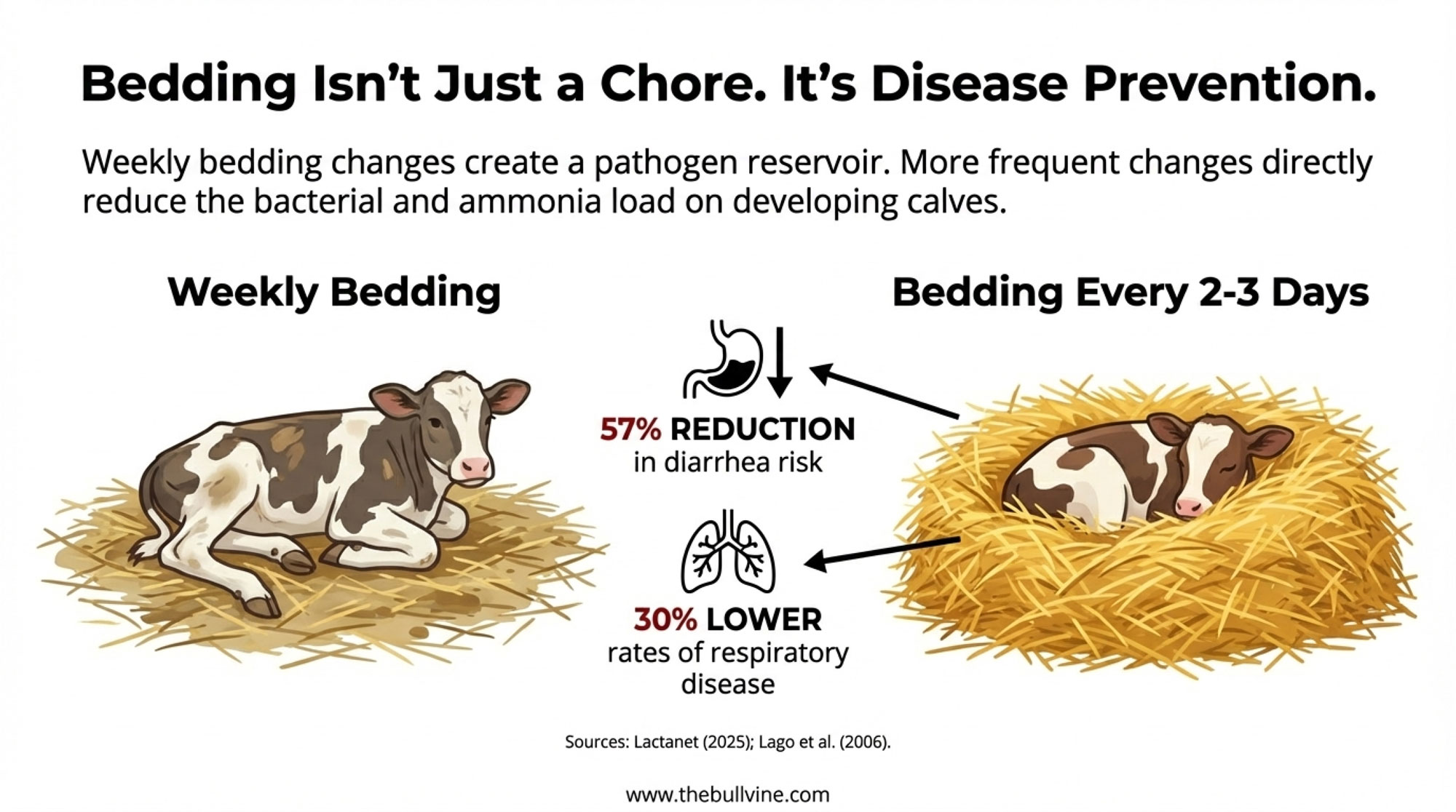
NewsSubscribe
First
Last
Consent

Beyond Cows Per Hour: The Cow-Time Truth That’s Changing Large Herd Robot Math

2,000-cow dairies are learning something from robots that has nothing to do with labor: cows can’t make milk while standing in line.

Executive Summary: Large dairies have measured success in cows per hour for decades. Operations that thrive with robots have flipped that metric—they manage by cow time instead. The biology is clear: high producers need 12–14 hours of lying time daily, and every hour lost to walking or waiting costs 1.5–3.5 pounds of milk. On many 3x parlors, that’s 3–5 hours of hidden loss every day. Robot herds that nail the fundamentals—55–60 cows per unit, proper heifer training, solid hoof health—report 3–8% higher milk per cow after stabilization. But the economics demand honesty: real payback runs 5–7 years, not the 3.8–5 years in vendor models. Recent research adds a key insight: milking speed is 42% heritable, but willingness to visit the robot is almost entirely management-driven. For 2,000-cow operators, the question isn’t robots vs. parlors—it’s whether you’re ready to build around cow biology, not just throughput.

Large herd robotic milking

You know the drill. On a lot of big dairies, the proud number is still the same: “We run 450–500 cows an hour through this parlor.” And to be fair, that’s impressive steel and scheduling. But here’s what’s interesting—as more large herds adopt automatic milking systems, a different story is emerging. Cows per hour and true cow productivity? They’re not always pointing in the same direction.

What farmers are finding is that robots aren’t just a different way to get cows milked. They’re shining a light on hidden time losses, showing how much genetic potential may still be sitting on the table, and prompting a more honest look at labor risk and management discipline.

And here’s the thing—the biggest differences between successful and struggling AMS herds rarely come down to the brand of robot. They come down to cow time, barn design, and how well you run the people side of the business.

Looking at This Trend Through Cow Time, Not Steel

If you strip everything back, a dairy cow still lives on a 1,440‑minute clock every day. Extension specialists keep coming back to the same basic targets you’ve probably heard at meetings.

High‑producing Holsteins and Jerseys should be getting at least 10–12 hours of lying time, with 12–14 hours often cited as the ideal target for top performance and hoof health. The research on this is fairly consistent—according to time-budget studies summarized by multiple land-grant universities, each hour of lying time you lose can cost you roughly 1.5–3.5 pounds of milk per cow per day, depending on stage of lactation and environmental conditions.

Time away from stalls—walking, standing in headlocks, sitting in a holding pen—comes straight out of that lying and ruminating budget.

On many large 3x parlors, especially those with long alleys or dry lot systems feeding into a central milk center, total time away from stalls can run 3–5 hours per day when you add up walk time, holding, and actual milking. When you layer on 4–6 hours of feeding and watering, plus social and transition time, you can see how quickly you approach that 12‑hour rest target.

Every extra hour cows spend out of stalls quietly strips 1.5–3.5 pounds of milk per cow per day. By the time many 3x parlors hit 3–5 hours of walking and waiting, they’re effectively giving up a full milking’s worth of production without ever touching the parlor controls.

I was talking with a nutritionist recently who works across several large California operations. The way she put it was simple: “Most producers don’t realize how much milk they’re leaving on the table until they actually track where their cows spend their hours.”

And the data backs that up. Studies that track both lying time and milk yield tell a consistent story—cows losing just 2 hours of rest per day commonly give 3–7 pounds less milk, and first‑lactation animals tend to be even more sensitive to this.

Tightening time budgets in a parlor can claw back a few points of milk per cow, but the real jump shows up when robots are managed to feed extra milkings to your best genetics. The winners aren’t “robot herds” or “parlor herds”—they’re the people who obsess over minutes, not metal.

What’s particularly noteworthy is that when herds later install robots, whether on part of the herd or across the board, many report 3–8% higher milk per cow once the system stabilizes, even when they end up milking fewer total cows. The common thread? Cows reclaim time for lying and ruminating instead of standing in concrete alleys.

Tightening time budgets in a parlor can claw back a few points of milk per cow, but the real jump shows up when robots are managed to feed extra milkings to your best genetics. The winners aren’t “robot herds” or “parlor herds”—they’re the people who obsess over minutes, not metal.

Now, that doesn’t mean every robot install boosts milk. But it does highlight just how significant those quiet time‑budget losses can be.

The Bimodal Milk Curve Challenge

There’s another factor in high‑throughput parlors that only shows up when you examine milk‑flow curves. And it does not get talked about enough.

Biologically, most cows need about 90–120 seconds between effective teat stimulation and full oxytocin release for a complete milk letdown. But in fast parlors—and many of us have walked through them—it’s common to strip, dip, wipe, and attach in 30–60 seconds, especially when crews are working to hit those cows‑per‑hour targets.

On‑farm flow meters and research trials have documented what happens in these situations.

You get a quick spike as cisternal milk is removed. Then there’s a flat or low‑flow phase while the cow is still waiting hormonally for full letdown. Finally, a second rise once oxytocin finally peaks.

That “start–stop–start” pattern is what we call a bimodal curve. And here’s what the field studies suggest—when you don’t allow enough time for effective letdown, cows can noticeably reduce daily milk harvest, especially high‑yielding, early‑lactation animals who have the most to give.

What I’ve observed in some very fast parlors is that the graphs look great for turns per hour, but not nearly as strong when judged by milk per milking minute.

Robots don’t automatically solve this, but the software makes it easier to respect biology. AMS units can apply consistent stimulation—often with brushes or controlled vacuum—and then wait the full lag period before expecting peak flow. When you look at their flow curves, you generally see a single, smooth peak rather than the “double hump,” suggesting a more complete harvest.

What Farmers Are Finding About Genetics and Milking Frequency

Genetic progress has outpaced a lot of our old assumptions. And this is something worth sitting with for a moment.

Between 1970 and 2020, combined fat and protein production in U.S. Holstein populations increased by more than 900 pounds per cow, with national evaluations crediting about 60–65% of that gain to genetics when you separate out management and environment. Jerseys have shown similar patterns for component yield and feed‑efficiency traits.

The challenge is that realizing that genetic potential depends heavily on milking frequency and cow comfort.

Controlled studies and on‑farm trials provide some useful guideposts. Moving from 2x to 3x milking often increases yield by 8–15% in controlled settings, particularly during early and peak lactation.

Short periods of 4x milking in early lactation can create persistent yield benefits across the whole lactation—because of how additional milkings affect mammary cell activity. And cows differ genetically in their response to higher frequency. Some families show much larger gains than others.

In a conventional 3x parlor, your top and bottom cows are on the same schedule. A high‑genetic‑merit cow that could profitably be milked 4 or 5 times a day stands in line with a late‑lactation cow you’re trying to dry off clean. Both take the same parlor time, even though the return on that time is very different.

What robots change, when managed well, is the flexibility to match milking frequency to each cow’s potential.

In free‑flow AMS barns, peak cows often visit robots 3.5–4.5 times per day, while late‑lactation or lower‑producing cows may be permitted 2–2.5 milkings. Permissions can be adjusted cow by cow based on days in milk, udder health, and butterfat performance.

One illustration worth noting is Countyline LLC in California’s Central Valley—one of the largest robotic Jersey projects in North America, with 32 robots designed for roughly 2,000+ Jerseys, transitioning from a conventional double‑32 parlor. Public profiles indicate strong per‑cow production for first‑ and second‑lactation animals, with the high components you’d expect from intensively managed Jersey herds.

What this development suggests is that, in a robotic setup, “robot minutes” become a resource you allocate to the cows with the best genetic and economic returns, rather than treating all cows equally in terms of time.

Here’s something else worth noting on the genetics front—and it’s one of those details that doesn’t get enough attention. According to research published in the Journal of Dairy Science in 2023, milking speed traits show remarkably high heritability. Average milk flow rate runs 0.43–0.52, and maximum flow rate hits 0.47–0.58 in the AMS data. The new CDCB Milking Speed evaluation released in August 2025 estimates heritability at 42% based on conventional parlor data, making it the highest heritability of any of the 50 traits they publish. The reason both parlor and AMS data point in the same direction is straightforward: how fast a cow lets down milk is fundamentally biological, not system-dependent.

By contrast, behavioral traits like robot visit frequency and milking interval show much lower heritability—around 0.08–0.10, according to a July 2025 Journal of Dairy Science study—indicating they are more management-driven than genetics-driven.

Milking speed and flow sit near the top of the heritability charts, which means you can move the needle fast with the right sires. But robot visit frequency and milking interval barely clear 0.1 h²—proof that you can’t breed your way out of weak barn design, poor training, or chronic lameness.

The practical takeaway? You can select fairly quickly for cows that milk efficiently, but willingness to visit the robot voluntarily depends more on training, facility design, and hoof health than on pedigree.

What Robots Really Change Economically

When a 2,000‑cow operator looks at a capital plan and sees a multi‑million‑dollar robot build versus a more modest investment in a rotary or expanded parallel, payback is naturally front and center. It’s also where vendor projections and independent analyses sometimes diverge.

University extension economists in the U.S. and Canada have built a range of AMS vs parlor budgets. According to economic analyses from Minnesota, Wisconsin, and Canadian extension programs, under good design and strong management, payback for robots often falls in the 3.8–5-year range, driven mostly by labor savings and modest production gains.

But on real farms? Those same teams report that it’s more common to see 5–7 years, especially when you include a realistic transition period.

Vendor spreadsheets often promise payback in under five years, but real, 2,000‑cow AMS herds rarely settle out that fast. Once you count transition headaches, learning‑year dips, and full maintenance costs, a 5–7‑year payback is far more honest—and still defensible when labor risk is brutal.

Looking at those models and field reports side by side, three economic factors consistently emerge:

Labor savings. Studies and case farms typically show milking‑related labor dropping 25–30%, with pounds of milk shipped per full‑time equivalent often rising from around 1.5 million to about 2.2 million pounds per worker per year in AMS herds.

Milk per cow. Once cows and people get through the adjustment period, many robot herds in reviews and surveys report 3–8% higher milk per cow, driven by smoother time budgets, more consistent routines, and higher milking frequency for the top animals.

Overhead considerations. Depreciation, maintenance contracts, electricity, and consumables are higher per cow in a robotic setup than in a parlor, which offsets part of the labor savings.

A multi‑country review comparing AMS and conventional herds over five years found that average profitability was often similar when you adjusted for milk price, scale, and stocking rate. In other words, robots didn’t automatically outperform parlors—the farms that did well in each system tended to be the ones with tight management and good facilities.

So why is this significant? Because it suggests the decision isn’t purely economic for many operators.

In a 2023 peer-reviewed survey of large U.S. farms using seven or more robots, producers identified their top reasons for adopting AMS as chronic difficulty finding and keeping qualified parlor employees, concerns about future wage and regulatory changes, desire for more consistent milking procedures and teat prep, and interest in shifting employees into roles focused on fresh cow management, herd health, and reproduction.

This aligns with what economists are now saying—that robots function as a labor‑risk management tool as much as a production tool. It also explains why some herds are comfortable with a 7–10 year real payback if the alternative is an increasingly uncertain labor situation.

At the same time, extension guidance is clear that in regions where labor remains relatively available and affordable, and where regulatory conditions are different, a well‑designed rotary or parallel parlor may still be the most economical choice—especially for herds that are already efficient on cows‑per‑hour and milk quality.

I’ve seen herds in the Upper Midwest and Southwest with strong local workforces choose a new rotary and perform very well, precisely because their challenge wasn’t labor risk but something like cow flow, parlor age, or heat‑stress management.

A Snapshot from the Pacific Northwest

To make this more concrete, let’s look at one example from the Pacific Northwest that’s been profiled in industry publications.

A Washington State dairy milking around 1,100 cows installed roughly 20 robots in a retrofit scenario, driven largely by labor shortages and a desire for more manageable schedules for both owners and employees.

According to reports from Dairy Herd Management and follow‑up coverage on robotic cow flow, they initially struggled with cow traffic and fetch rates—especially among first‑lactation heifers—and saw milk per cow dip during the first months.

Over time, they made three significant adjustments. They reworked the pen design to create clearer, free‑flow traffic patterns. They invested more heavily in heifer training and hoof health before calving. And they reduced cows per robot into the mid‑50s, even though that meant fewer total cows in milk.

Two to three years in, they reported that milk per cow had recovered and surpassed pre‑robot levels, milking labor had dropped significantly, and owner lifestyle was more sustainable—though maintenance costs were higher than initially expected.

This “dip‑and‑recover” pattern appears fairly typical on well‑managed AMS transitions. A challenging learning year, followed by a more stable, data‑driven routine. It’s something worth keeping in mind if you’re considering the switch.

Understanding Fetch Cows and Building “Robot‑Ready” Herds

Once the new system is running, many managers quickly realize that a significant part of their day is determined by one number: how many cows walk themselves to the robot.

A fetch cow is a cow that doesn’t visit the AMS within the target interval and has to be brought by staff. Extension guidelines and AMS consultants commonly set a goal of no more than 5% of the herd on the fetch list on a given day—roughly three cows per robot—to preserve labor savings and minimize cow stress.

In herds that are struggling with the transition? It’s not unusual to see fetch rates of 15–25%, which can turn “automatic milking” into a time‑consuming cow‑management challenge.

And here’s what’s interesting—fetch cows aren’t random. Several consistent factors show up in both the research and on real farms.

The 4 Primary Causes of Fetching

1. Personality and Temperament Research in Europe and South America has used standardized behavioral tests to classify cow personalities. Cows that are bolder and moderately active tend to adapt faster to robots and end up on fetch lists less often. Very fearful or highly reactive cows typically need more support during the transition.

2. Heifer Training (or Lack Thereof) Studies on “phantom robot” training—where heifers are exposed to the robot area and its sounds before calving—show lower fetching during the first weeks of lactation and better early milk letdown compared with untrained heifers. Many AMS advisors now treat heifer training as a required piece of fresh cow management, not an optional extra.

3. Lameness Lame cows are far less inclined to walk to a robot voluntarily. Reviews from industry publications and North American extension programs connect higher lameness prevalence to higher fetch rates and lower milk per cow. Lame cows in AMS herds are often roughly twice as likely to show up on fetch lists as sound cows.

4. Stocking Density and Barn Design Pushing 70–80 cows per robot to “maximize utilization” tends to mean longer robot queues, more competition, and more timid or subordinate cows giving up on voluntary visits. According to facility guidelines from Wisconsin extension and Lactanet, 55–60 cows per robot is a realistic upper limit for high‑producing herds. Some of the most successful operations intentionally stay a bit lower in fresh or high‑yield pens.

Genetics is part of the picture, too. Analyses of AMS data in North American Holsteins have estimated moderate heritability—0.10–0.15—for traits such as number of successful robot visits and milking interval, with higher heritability for milking speed and teat/udder traits that affect attachment.

This means over time we can genuinely select for “robot‑ready” cows—those that move well, milk quickly, and have udders suited to the technology.

In herds that make robots work well, a common pattern emerges. They run 50–60 cows per robot, especially in fresh and high groups. They emphasize sand‑bedded freestalls, regular hoof trimming, and alley cleanliness before and during the transition. They build structured heifer training into their fresh cow management program. And they make timely culling decisions on chronic fetch cows, regardless of pedigree.

Why Some Large Herds Struggle—or Step Back

It’s worth acknowledging that not every large herd that installs robots ends up satisfied with the decision. In Europe and New Zealand, there are documented cases of farms decommissioning robots and returning to parlors after several difficult years, usually due to a combination of design challenges, unrealistic expectations, and management strain.

Looking at the available data and field experience, a few patterns keep recurring.

Retrofitting Robots into Parlor‑Designed Barns

You probably know this one. The 2023 peer-reviewed survey of large U.S. AMS herds—those with seven robots or more—found that about one‑third of producers said they would change barn design decisions if they could do it again, especially around robot placement and traffic lanes.

Retrofitting robots into barns built around straight‑through parlor flow often creates narrow alleys and “pinch points” near robot rooms, robots positioned in corners rather than integrated into main cow paths, and pen layouts that require cows to move against group flow to reach the milking area.

These issues then manifest as higher fetch rates, reduced lying time, and more variable production—problems that are very difficult to address once the concrete is poured.

Overstocking Robots

On paper, putting 75 cows on a robot instead of 55 looks like an efficient way to spread capital cost. But from the cow’s perspective, it often means longer queues in front of the robot, dominant cows monopolizing access, and timid, lame, or fresh heifers being pushed out and becoming chronic fetch cows.

AMS facility guidelines from Lactanet and university extension programs consistently recommend designing for 55–60 cows per robot for high‑producing Holstein or Jersey herds, with flexibility to run lighter stocking in certain pens when conditions warrant.

Underestimating the Learning Curve

Several studies following farms through AMS transitions report that it typically takes 6–12 months for milk yield, robot utilization, and daily routines to stabilize.

During that period, herds may see a temporary dip in production, elevated somatic cell counts while prep and attachment protocols are refined, and more labor devoted to training cows and staff than initial budgets anticipated.

Case studies and reviews suggest that operations expecting immediate labor relief and a smooth transition tend to experience the most frustration, while those who plan for a “learning year” are more likely to report satisfaction by year two or three.

Data Engagement and Management Approach

The same hardware can produce very different results depending on how it’s managed.

Performance reviews highlight that successful herds check robot and cow data daily—milkings per cow, refusals, failed attachments, activity, conductivity, lying time—and use those numbers to adjust grouping, feeding, and hoof care.

Less successful herds often log in less frequently, focus primarily on bulk tank output, and treat robot alerts as nuisances rather than diagnostic information.

What I’ve observed is that the large herds thriving with robots were typically already comfortable managing by data—tracking fresh‑cow performance, pen‑level butterfat, reproductive metrics, and time budgets—before they ever contacted a robot dealer. Robots don’t compensate for management gaps. They tend to amplify whatever approach is already in place.

Different Regions, Different Right Answers

It’s worth remembering that not every region is facing the same set of pressures.

In parts of the U.S. and Canada where labor is tight, wages are rising, and regulatory requirements are expanding, robots can be a way to convert unpredictable labor costs into more predictable capital and maintenance expenses, even if the margin over feed is similar. In those situations, producers often tell me they value stability as much as financial returns.

In other regions—where there’s still a reliable, reasonably priced local workforce and where dry lot systems and centralized parlors align well with climate and land base—a new rotary or expanded parallel, paired with strong management, can absolutely remain the right choice.

I’ve seen herds in the Upper Midwest, Southwest, and Latin America achieve excellent milk, health, and labor metrics with conventional parlors because they were designed around cow flow and time budgets just as thoughtfully as any robot barn. One Wisconsin operation I visited last year had just installed a new 60‑stall rotary, and they’re hitting numbers that would make any robot farm proud—because they obsessed over time budgets, stall comfort, and consistent protocols.

Seasonal considerations matter too. In hot summers, for example, extra time in holding pens or long walks from dry lots can push cows past their heat‑stress threshold more quickly, whether they’re going to a parlor or a robot. That’s one more reason why time budgets and cow comfort form the foundation, regardless of which milking system you choose.

The broader trend is that the margin for loose time management and inconsistent protocols is narrowing on both sides of the technology discussion. Whether you choose a rotary or robots, cows still need adequate lying time, clean stalls, smooth, fresh cow management, and consistent routines.

Key Considerations for 2,000‑Cow Operators

So, if you’re operating in that 2,000‑cow range and genuinely evaluating your options, what should you take from all this?

Start by measuring time, not by shopping for equipment. Before committing to any major investment, spend several months tracking time away from stalls, lying time, and lock‑up duration in your current system. That exercise alone will reveal how much opportunity—or hidden cost—exists in your current operation.

Recognize that genetics need the right schedule to deliver. Today’s Holstein and Jersey genetics can produce impressive milk and components, but only when milking frequency, comfort, and fresh-cow management align with their capabilities.

Frame robots as a risk‑management decision, not purely an efficiency calculation. Economic models suggest a 3.8–5 year payback is achievable under favorable conditions, but many real farms land closer to 5–7 years, and some take longer. Whether that timeline makes sense depends significantly on your labor outlook and long‑term operational plans.

Take fetch cows, lameness, and heifer training seriously. These three factors will largely determine how “automatic” your automatic milking actually feels. If you’re not prepared to invest in hoof health, stall comfort, and structured training before the robots arrive, your payback will likely be slower regardless of which system you choose.

Be honest about your management approach. If your team already operates from data—milk weights, butterfat performance, reproductive metrics, time budgets—you’re better positioned to succeed with AMS. If decisions are made primarily by intuition, the first investment might need to be in people and processes rather than technology.

Accept that there isn’t a single “right” answer. In some regions and operational contexts, a new rotary with excellent cow flow may be the most sensible long‑term investment. In others, robots will be the best path forward, given labor-market realities unlikely to reverse.

The Bottom Line

What’s interesting about this moment in the industry is that robots are prompting all of us—whether we ever purchase one or not—to think more carefully about how cows spend their time, how we develop and retain our people, and how we build systems capable of performing well over the next 10–15 years.

If this discussion helps you ask better questions, whether you ultimately install a new rotary, a row of robots, or neither, then it’s served its purpose.

KEY TAKEAWAYS

  • Track cow time, not cows per hour: High producers need 12–14 hours of lying time daily. Every hour lost costs 1.5–3.5 lbs of milk—and on many 3x parlors, cows lose 3–5 hours to walking and waiting.
  • Robots recover time, and time recovers milk: Well-managed AMS herds report 3–8% higher production per cow by giving back the hours that parlor routines take away.
  • Use honest economics: Real payback runs 5–7 years, not the 3.8–5 in vendor models. Budget for a 6–12 month learning curve before expecting stable results.
  • Nail the fundamentals before install: 55–60 cows per robot maximum, structured heifer training, and excellent hoof health aren’t optional—they separate success from struggle.
  • Select for speed, train for visits: Milking speed is 42% heritable—breed for it. Willingness to visit the robot is almost entirely management-driven—design and train for it.

Complete references and supporting documentation are available upon request by contacting the editorial team at editor@thebullvine.com.

Learn More:

Join the Revolution!

Join over 30,000 successful dairy professionals who rely on Bullvine Weekly for their competitive edge. Delivered directly to your inbox each week, our exclusive industry insights help you make smarter decisions while saving precious hours every week. Never miss critical updates on milk production trends, breakthrough technologies, and profit-boosting strategies that top producers are already implementing. Subscribe now to transform your dairy operation’s efficiency and profitability—your future success is just one click away.

NewsSubscribe
First
Last
Consent

The $4.6 Million Mistake: Why the Smartest Dairy Move Comes from Beef

47% to 83%. No new tech. No new genetics. Just stopped fighting biology.

EXECUTIVE SUMMARY: Fighting biology is the most expensive thing you do—it just doesn’t show up as a line item. Australia’s largest cattle operation proved this by boosting weaning from 47% to 83% with zero new genetics and zero new technology. They stopped fighting natural cycles and started profiting from alignment. Sound irrelevant to dairy? Your summer breeding crashes, transition cow disasters, and never-ending replacement costs are the same problem wearing different clothes. Beef-on-dairy just hit $1,400/calf—up from $250 three years ago. Seasonal calving economics are flipping faster than lenders realize. The farms still standing in 2035 won’t be the ones with the most milk. They’ll be the ones that stopped fighting biology and started working with it.

You know, I was at a conference recently when someone brought up Consolidated Pastoral Company—that Australian outfit running 300,000 cattle across 3.2 million hectares. And here’s what’s interesting: they’re dealing with the exact same biological constraints that are probably killing your margins right now.

What I’ve found is they’ve taken their northern Australian beef operations from 47% weaning rates to over 80%, and the Meat & Livestock Australia folks have documented every step. No miracle genetics, mind you. No Silicon Valley nonsense. Just a complete rethink of how they work with biology.

Sound familiar? Because I’ll bet you’re fighting the same battles with lactation cycles, heat stress, and those impossible summer breeding windows. The difference is… well, they stopped fighting and started profiting.

“From 47% to 83% weaning rates through biological alignment—not technology, not genetics, but working with natural cycles instead of against them.”

Infrastructure: Spending Millions to Make Millions

So I was talking to a producer recently who couldn’t wrap his head around CPC dropping $3.5 million on basic infrastructure. We’re talking fences and water points here. Not robots. Not anything fancy.

But here’s what every dairy farmer needs to understand—and this is important—while a TMR mixer is obviously different from a water point in the Outback, the principle is exactly the same. Capital expenditure is worthless unless it unlocks biological potential. Think about it… you’ve probably spent more on that new parlor than CPC spent on their entire fencing project.

Now, northern Australian cattle country is absolutely brutal. The Queensland Department of Agriculture research shows the soil is so phosphorus-deficient that the pasture has maybe a third of what cattle actually need just for maintenance. And during the dry season—we’re talking April through November—lactating cows are literally starving while surrounded by grass. Can you imagine?

The conventional response has always been to just… accept it. Run continuous breeding. Live with those 47% weaning rates. That’s what everyone does, right?

But CPC said no. They put in 200 kilometers of new fencing at about nine grand per kilometer. Thirty water points at sixty thousand each. And here’s the kicker—they’re spending between four hundred thousand and nine hundred thousand annually just on pregnancy testing and moving cattle around.

The payoff, though? For a 20,000-cow operation, that’s 7,200 additional calves every single year. At $650 per weaner—and that’s November 2024 prices, so pretty current—we’re looking at $4.68 million in additional annual revenue. The Northern Territory government’s analysis shows a payback period of less than a year. Less than a year!

So think about your own place for a minute. What biological constraint are you just accepting as “the way it is”? Summer heat stress that everyone complains about, but nobody really fixes? Those transition cow disasters we all pretend are normal? That 60-day voluntary waiting period that, let’s be honest, everyone follows because… well, because everyone follows it?

Turning Red Tape into Premium Pricing

Here’s where it gets really interesting. When Indonesia mandated that 20% of imported cattle be breeding stock in 2017, the whole industry basically panicked. And for good reason—Australia’s export standards couldn’t even certify that an animal could breed. This gap is all documented in the Northern Australia Beef Industry reports, if you want to look it up.

Most exporters, as you’d expect, just shipped whatever they could get away with. Matt Brann from ABC Rural reported in 2018 how Indonesian importers were getting these so-called “breeding cattle” with reproductive problems that went straight to feedlots anyway.

But CPC… they did something clever. They created their own breeding soundness protocols that went beyond what either country required. And now? Indonesian buyers actually pay premiums for that documentation.

This is exactly what’s happening with A2A2 milk, grass-fed certification, all those regenerative agriculture claims we’re seeing. The regulations don’t exist yet, but the producers creating their own verification systems? They’re capturing premiums while everyone else sits around waiting for the government to tell them what to do.

The $500 Calf That Makes Perfect Sense

Okay, this one’s going to sound crazy at first. CPC’s Santori Jabung facility in Indonesia produces calves at a cost of $500 each. Compare that to maybe $60-70 on Australian rangelands. I know, I know—sounds insane.

But Dr. Simon Quigley from the University of Queensland documented what was happening. They had mortality rates exceeding 25-30% when they tried to apply temperate management to tropical conditions. It’s just like your summer pneumonia outbreaks or those heat stress breeding failures we all deal with—wrong system for the environment.

So they made three changes that transformed everything:

First, they set up dedicated colostrum management with round-the-clock monitoring. Any calf that doesn’t nurse within three hours gets bottle-fed in temperature-controlled housing. And get this—mortality dropped from that 25-30% range down to 6-8%.

Second—and the efficiency experts hate this—they concentrated 80% of their calving into just three months. But you know what? Results speak louder than theories.

Third, they got strategic with supplementation. Only during late pregnancy and early lactation. That tiny bump in body condition—from 3.0 to 3.3—cut their days open from 217 to 118. Think about that for a minute.

Indonesia’s $500-per-calf intensive system crushed mortality from 27.5% to 7%, cut days open by 99, and achieved 72% pregnancy rates in brutal tropical conditions—proving biology-first spending beats efficiency-first spending

The result? They’re getting 72% pregnancy rates in absolutely brutal tropical conditions. Your transition barn—that critical period when fresh cows are moving from dry to lactating status—could probably learn something here. Just as those fresh cows need intensive management for a successful transition, these tropical operations need intensive intervention at critical biological moments.

Carbon Credits: The Drought Insurance You’re Missing

Let’s talk carbon for a minute. Australian Carbon Credit Units are trading at $36-42 per tonne according to the Clean Energy Regulator’s latest quarterly report. That works out to about $36-42 per head annually for operations doing regenerative grazing.

Now, it’s not transformative money. But here’s what’s interesting—Garrawin Station’s carbon revenue literally kept them alive during the 2019 drought when their cattle income completely vanished. And for dairy operations, we’re seeing similar opportunities with methane digesters generating credits, cover crop programs building soil carbon, and even manure management improvements qualifying for offset programs in some states.

So let me ask you this: your milk check isn’t guaranteed forever. What’s your backup plan?

“Every dollar spent fighting biology is profit bleeding out. Start asking yourself: what constraints am I accepting that I shouldn’t be?”

Virtual Fencing: Why Silicon Valley Fails on the Farm

You’ve probably heard about virtual fencing. Dr. Richard Rawnsley at the University of Tasmania showed it works great in small paddocks—94-99% containment. Sounds perfect, right?

But then Dr. Dana Campbell at CSIRO found something concerning—9% reduced daily gains under virtual fencing rotations. That’s fifteen bucks per head you’re losing.

That said, I’ve seen it work well for specific dairy applications. There’s a 400-cow grass-based operation in Vermont using virtual fencing just for keeping cows out of wetland areas—it works perfectly for that limited scope. Another Wisconsin farm uses it for temporary paddock divisions during their managed grazing rotation. Small, targeted uses where the technology makes sense.

But at $500-800 per collar for whole-herd implementation? The math just doesn’t work for big operations. It’s like robotic milkers—great technology, but not for everyone.

The Dairy Revolution Hiding in Plain Sight

Alright, here’s where it gets real for us dairy folks.

Your 14-month lactation cycle—you know, calving through milking to dry period and back again—it creates all these problems we just accept as normal. Breeding during negative energy balance. Those heat-stress-related disasters occur every summer. Year-round replacement heifer costs that never end.

Most dairies fight these constraints with more inputs, more technology, more complexity. And let’s be honest… it’s not really working, is it?

I’ve been visiting operations experimenting with seasonal calving—there’s some interesting work happening in Vermont, Ohio, and out in Idaho. Different farms, different approaches, but they’re all aligning their calving with either pasture availability or specific market demands. One Idaho operation I know of is timing fall calving to hit those holiday cheese plant premiums.

And they’re all riding this beef-on-dairy wave too. You’ve seen the prices—$250 three years ago, $1,400 today, according to USDA market reports. Some markets are seeing even higher premiums this year.

“The operations that survived the 2009 and 2020 milk price crashes weren’t necessarily the most efficient—they were the most adaptable.”

Here’s what concentrated calving can deliver:

  • Your peak lactation hits during the highest component periods
  • Breeding happens when cows aren’t dying from heat stress
  • Replacement heifer management that actually makes economic sense
  • Predictable milk composition so you can negotiate premium contracts
  • Lower feed costs because you’re not lactating through garbage forage months

Now, the biggest barrier isn’t biology—it’s the banker. Shifting to seasonal calving absolutely terrifies lenders who are used to those monthly milk checks. But here’s the thing… as feed costs keep climbing, that “steady check” might actually be a steady loss.

The folks in New Zealand figured this out decades ago. Sure, their market structure’s different, but the biology? The biology’s the same.

Making It Work at Your Scale

So what does this mean for your operation?

1. If you’re under 500 cows: Start small. Maybe try a 20% seasonal calving pilot—just see what happens. And definitely look at beef-on-dairy for your bottom-tier genetics. Those premiums are real and, according to USDA outlook reports, they’re not going away. Focus on the no-cost changes first, like optimizing breeding timing for your specific climate and conditions.

2. For 500-2,000 cow operations: Any reproduction improvement that pays back in under two years deserves serious consideration. Start building alternative revenue streams now, before you desperately need them. Could be custom heifer raising, beef-on-dairy, or direct marketing. Just… have something. And remember, operations this size in the Upper Midwest are seeing real success with partial seasonal systems—you don’t have to go all-in immediately.

3. Over 2,000 cows: You’ve got the scale to model a full seasonal transition with beef-on-dairy bridging those dry periods. If you own enough land, carbon programs might actually pencil out despite the volatility. But most importantly, document everything. The next generation needs to know what worked and what didn’t. Large operations in California and Idaho are already testing these models—you won’t be the first.

The Hard Truth Nobody Wants to Hear

CPC’s been around since 1879. That’s 146 years of surviving everything the market could throw at them. And here’s their secret: resilience beats efficiency every time.

Their Indonesian feedlots? Currently losing money. Their breeding systems? Modest margins at best. Carbon projects? Who knows what they’ll return.

But together? Together, they survive everything.

Every dollar you’re spending fighting biology—maintaining production through terrible seasons, managing those heat stress breeding disasters, carrying replacement heifers forever—that’s profit just bleeding out.

The question isn’t whether you can afford to change. Given where input costs are going, environmental regulations, market volatility… can you really afford not to?

Start small if you need to. Test things. Learn what works for your specific situation. But start now, before external pressure forces you into bad decisions.

The Bullvine Bottom Line

We’ve spent fifty years breeding cows to ignore the seasons. Maybe it’s time we stopped ignoring the math. You don’t need 3.2 million hectares to realize that fighting biology is the most expensive line item on your P&L. Whether it’s beef-on-dairy, seasonal calving, or aggressive heat abatement, the farms that survive the next decade won’t be the ones with the most milk—they’ll be the ones with the highest margins.

KEY TAKEAWAYS:

  • Fighting biology is your priciest line item. Those summer breeding failures and transition cow wrecks aren’t bad luck—they’re the cost of working against natural cycles. Australian operations showed that improvements of 47% to 83% come from alignment, not more inputs.
  • Beef-on-dairy hit $1,400/calf. Up from $250 three years ago, per USDA data. For your bottom-third genetics, this isn’t a side gig—it’s a margin strategy.
  • Your “steady” milk check may be a steady loss. Seasonal calving terrifies lenders. But as feed costs rise, that monthly revenue is increasingly monthly red ink. Run your own numbers.
  • Capital without a biological purpose is waste. New parlor won’t fix heat stress conception crashes. Robots can’t solve the negative-energy-balance breeding problem. Spend where biology says yes.
  • Adaptability beats efficiency. The farms standing after 2009 and 2020 weren’t the biggest. They had options when the market didn’t.

Complete references and supporting documentation are available upon request by contacting the editorial team at editor@thebullvine.com.

Learn More:

Join the Revolution!

Join over 30,000 successful dairy professionals who rely on Bullvine Weekly for their competitive edge. Delivered directly to your inbox each week, our exclusive industry insights help you make smarter decisions while saving precious hours every week. Never miss critical updates on milk production trends, breakthrough technologies, and profit-boosting strategies that top producers are already implementing. Subscribe now to transform your dairy operation’s efficiency and profitability—your future success is just one click away.
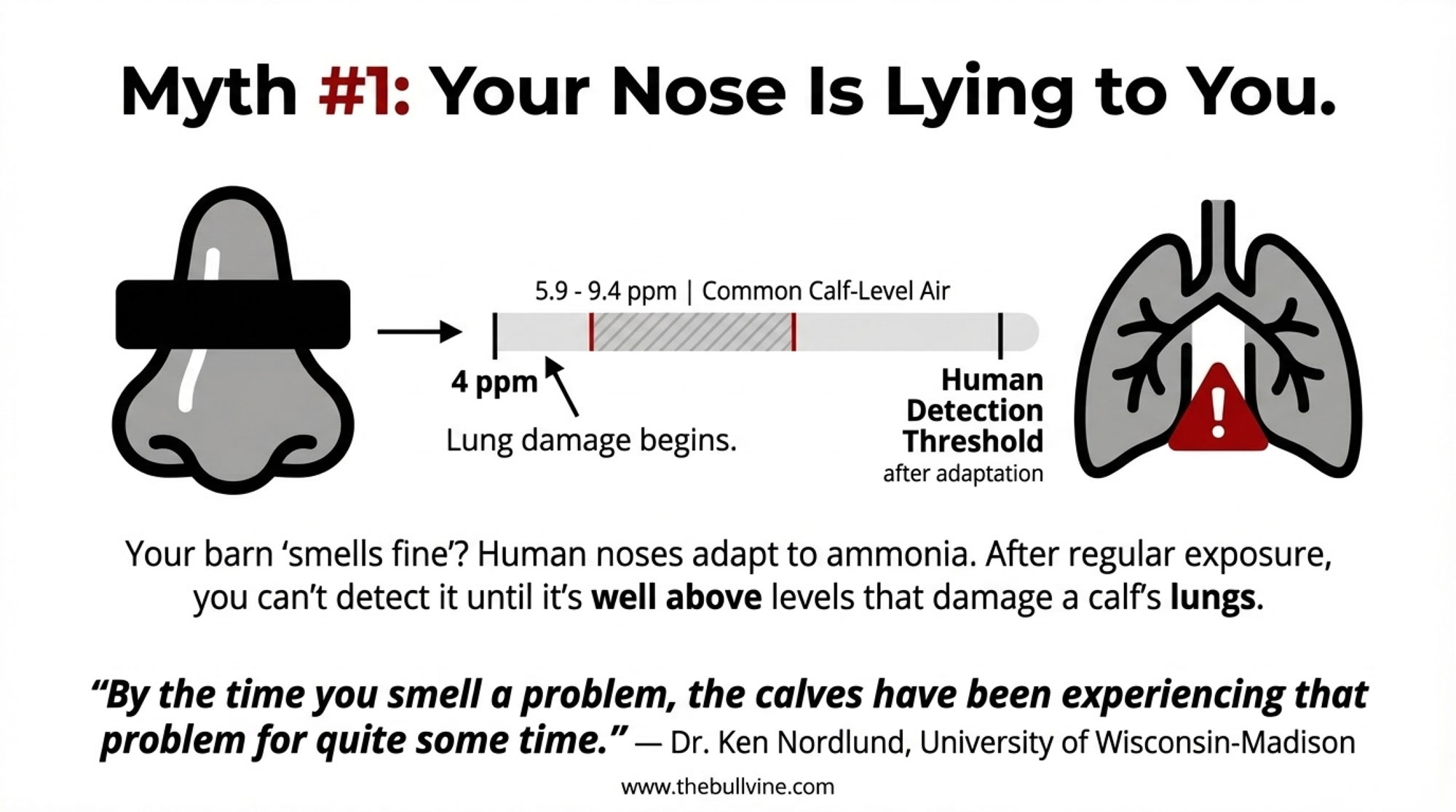
NewsSubscribe
First
Last
Consent

Your Data, Their Premium: The Sustainability Math Every Dairy Farmer Needs to See

Retailers get sustainability claims. Processors land premium contracts. Farmers get… a benchmarking report.

EXECUTIVE SUMMARY: Retailers want sustainability data. Processors are landing premium contracts. Farmers are doing the assessments—and asking a fair question: what’s coming back to the farm? The economics reveal a structural gap worth understanding. Programs like FARM Environmental Stewardship deliver genuine environmental progress, but while producers absorb the time investment and compliance costs, the marketing value and buyer relationships flow primarily upstream to cooperatives and processors. Technology economics follow a similar pattern: digesters can pay back in under five years for large operations in favorable policy states, but mid-size farms elsewhere often find lower-capital alternatives offer more practical returns. This analysis breaks down the real costs, maps where value flows, and provides a framework of questions to work through—helping farmers evaluate which sustainability opportunities actually make sense for their operation.

You know that feeling when your co-op asks you to complete another assessment, and you’re already behind on breeding decisions, that heifer pen needs attention, and you haven’t caught up on feed inventory in two weeks? You’re certainly not alone in feeling that tension.

I’ve been talking with producers across the Midwest and Northeast who are running mid-size operations—the 200- to 500-cow range—and hearing remarkably similar stories. One Wisconsin producer I spoke with recently shared his experience: he spent the better part of three days pulling together feed records, energy bills, manure management documentation, and herd data for his cooperative’s sustainability assessment. His co-op got metrics to share with their retail partners. He got a benchmarking report and a request to do it again next year.

“I’m not against tracking our environmental footprint,” he told me. “But when I added up my time and what the assessment cost, I’d invested close to two thousand dollars. The report told me things I mostly already knew. Meanwhile, my co-op is using that data to land contracts with grocery chains.”

That’s the heart of the issue. These programs aren’t inherently problematic—many drive genuine environmental improvements that benefit the entire industry’s reputation. But the economics work differently than farmers sometimes expect. Retailers get sustainability claims for their marketing. Processors get preferred supplier status. And farmers get… a benchmarking report.

Understanding that dynamic matters when you’re making decisions about your operation.

The Real Cost of Participation

Let me walk you through what these programs actually cost when you add everything up—not just the line items that show up on invoices.

The FARM Environmental Stewardship program has completed more than 4,000 on-farm assessments across 42 states since it launched, with the broader FARM Animal Care program covering approximately 99% of U.S. milk production. That’s according to the National Dairy FARM Program’s 2023 Year in Review, which notes that assessments cover operations ranging from 10 to over 35,000 lactating cows. Direct assessment costs vary by region and evaluator, but producers I’ve spoken with report fees ranging from a few hundred dollars for basic assessments to well over a thousand for comprehensive lifecycle evaluations.

But here’s what often gets overlooked: the time investment.

Dr. Greg Thoma, who directs the Agricultural Modeling and Lifecycle Assessment program at Colorado State University’s AgNext initiative, has noted that comprehensive farm-level data collection requires significant farmer involvement. We’re not talking about clicking a few buttons. Initial assessments typically run from half a day to two full days of farmer time for data gathering, verification, and review—depending on how your record-keeping systems are organized.

What’s that time actually worth? If you value your management hours at fifty to seventy-five dollars—and honestly, that’s conservative for someone juggling fresh cow protocols, transition period monitoring, feed inventory, and labor scheduling—you’re looking at several hundred to over a thousand dollars in opportunity cost before counting direct fees.

A farm business consultant who works with dairy operations across the Upper Midwest put it plainly: “The assessment process is useful for industry positioning, but provides limited direct benefit for the farmer completing it.”

Who Captures the Value You Create?

This brings me to something worth understanding, regardless of how you feel about sustainability initiatives generally.

When a cooperative aggregates sustainability data from member farms, they create several distinct value streams. According to the FARM ES Program documentation, aggregated data helps “demonstrate dairy’s environmental benefits to customers and consumers” and supports “cooperative, processor and national level” sustainability claims.

Let’s be direct about what that means: your operational data—the information you spent days compiling between morning milking and dealing with that problem fresh cow—becomes raw material for marketing claims that help your processor land contracts with Walmart, Kroger, and institutional buyers. It feeds into ESG reports that satisfy institutional investors. It supports premium positioning that benefits everyone in the supply chain above you.

Here’s a concrete example. In August 2020, Dairy Farmers of America became the first U.S. dairy cooperative to have emissions targets validated by the Science Based Targets initiative. DFA is committed to reducing greenhouse gas emissions across its supply chain by 30% by 2030, relative to a 2018 baseline. That’s built on data from member farms. Then, in September 2022, DFA received up to $45 million in USDA grant funding through the Partnerships for Climate-Smart Commodities program.

That represents real industry progress. But $45 million flowed to the cooperative level. What flowed back to the farms that provided the data and implemented the practices? Access to benchmarking reports and potential eligibility for future incentive programs.

I should be fair here: cooperatives are responding to legitimate market pressures. Retailers have made sustainability documentation a condition of doing business, and someone has to aggregate and verify that data. The question isn’t whether this work should happen—it’s whether the current value distribution makes sense for farmers.

Technology Economics: Finding What Actually Pencils Out

When it comes to capital investments for emissions reduction, the economics vary dramatically. And here’s what I’ve noticed: the solutions receiving the most policy attention aren’t always the best fit for every operation.

Technology Comparison at a Glance

Anaerobic Digesters

  • Capital: $2-5 million full-scale; $125K-500K mini systems
  • Operating: $20,000-51,000 annually
  • Methane reduction: 25-35% from storage
  • Payback without grants: Can exceed 22 years
  • Payback with full grants: Under 5 years possible
  • Best fit: 500+ cow operations in LCFS states

Alternative Manure Treatment Systems

  • Capital: Varies significantly; generally lower than digesters
  • Operating: Lower ongoing costs
  • Methane reduction: Up to 97-99% from treated streams
  • Payback without grants: Generally 4-7 years
  • Payback with grants: 3-5 years
  • Best fit: Various sizes, most regions

Feed Additives (3-NOP)

  • Capital: Minimal infrastructure
  • Operating: $40-60 per cow annually
  • Methane reduction: 25-30% enteric
  • Payback: Ongoing operational cost
  • Best fit: Any size, immediate impact

Sources: Penn State Extension, March 2025; Bioresource Technology Reports, June 2022

The Digester Reality Check

Digesters have dominated the sustainability technology conversation, and for good reason—they can generate meaningful revenue streams on the right operation. But the financial threshold is steeper than many producers initially realize.

Penn State Extension’s March 2025 analysis—titled “Enhancing Digester Profitability: Strategies for Farmers”—lays out the numbers clearly. Without grant funding, payback periods can stretch to 22 years or more. In challenging scenarios, payback could exceed 50 years. That’s longer than most of us plan to be milking cows.

With substantial grant funding, the picture changes dramatically. Payback can drop to under five years, and under optimal conditions with full grant coverage, Penn State documented payback periods as short as 1.3 years.

So the practical question becomes: can your operation access that level of grant funding? Farms in California benefit from Low Carbon Fuel Standard credits that create additional revenue streams. Operations in Wisconsin, New York, or Pennsylvania are working with a different policy landscape entirely.

The result is that digester economics work particularly well for larger operations—generally 500 cows or more—in favorable policy environments. For everyone else, the math often doesn’t work.

Looking at Economic Alternatives

This is where mid-size operations need to think creatively. Research published in Bioresource Technology Reports in June 2022 found that alternative manure treatment approaches—including biological systems—can achieve 97-99% methane reduction from treated streams at substantially lower capital requirements. The California Dairy Research Foundation has funded multiple demonstration projects through CDFA’s Alternative Manure Management Program with promising results.

Payback periods for these systems generally range from 4 to 7 years, often achievable without major subsidies.

The point isn’t that one technology is universally better than another—it’s that farmers should evaluate the full range of options rather than defaulting to whatever solution has the most policy momentum. For mid-size operations in states without LCFS programs, lower-capital alternatives may offer more practical economics. It’s worth exploring what actually fits your situation rather than what fits the policy conversation.

Government Support: Helpful, But Don’t Build Your Strategy Around It

Federal sustainability funding has expanded significantly. The Partnerships for Climate-Smart Commodities program allocated $2.8 billion across 70 projects, with USDA announcing support reaching more than 50,000 farms.

Those are meaningful numbers. But here’s the context that matters for individual operations.

Of that $2.8 billion, dairy-specific allocation represents roughly $500-600 million—the remainder flows to row crops, beef, specialty crops, and other commodities. Divide dairy funding across approximately 24,000 U.S. dairy farms (USDA NASS data), and you get a theoretical availability of around $22,000 per farm.

In practice, several factors reduce that figure. Program administration requires resources. Competition for applications means not every eligible farm accesses available support. And let’s be honest—grant-writing capacity matters. Larger operations with professional staff have real advantages in navigating application processes that 200-cow family operations simply don’t have.

Government support can help on the margins. But building your sustainability strategy around grant funding you may or may not receive is a risky proposition.

Corporate Partnerships: Read the Fine Print

Major food companies are investing substantial resources in the sustainability of the dairy supply chain. In February 2025, Mars announced a $27 million commitment over five years to support Fonterra’s farmer sustainability initiatives in New Zealand, with Nestlé backing additional incentive payments through the same partnership. The stated goal: reduce dairy-related emissions by 150,000 metric tons by 2030.

According to ESG News reporting, farmers who achieve significant emissions reductions—30% or more compared to the industry average—become eligible for per-kilogram incentive payments ranging from NZ$0.10 to NZ$0.25 per kgMS. That’s meaningful compensation for documented environmental improvements.

But there’s a structural element worth understanding. When these programs involve carbon “insetting”—where farmers sell their emissions reductions to their processor rather than on open markets—you permanently transfer that environmental attribute. You can’t sell the same carbon reduction to another buyer. You can’t use it to market your operation independently.

The processor gets to claim the carbon reduction in their corporate sustainability reports. You get a per-kilogram payment. Whether that’s a fair exchange depends on how the market develops—but it’s worth understanding before you sign.

What Happens When Corporate Priorities Shift

In August 2021, 89 organic dairy farmers across Maine, Vermont, New Hampshire, and parts of New York received termination letters from Horizon Organic, with their contracts set to end by August 2022. Around the same time, another 46 farms were dropped by Maple Hill Creamery—documented by Dairy Reporter and the Northeast Organic Dairy Producers Alliance.

These were established operations—multi-generational family farms that had invested substantially in organic certification, infrastructure changes, and the three-year transition period. They’d met all program requirements. They’d done everything asked of them.

When Danone decided to consolidate supply around fewer, larger operations closer to processing facilities, none of that mattered. The terminations reflected corporate supply chain optimization, not farmer performance.

What happened next offers an encouraging counterpoint. Organic Valley—the farmer-owned cooperative with more than 1,600 member farms producing over 30% of U.S. organic milk—stepped in. According to their reporting, 50 farms from the affected states joined as new members, with another 15 farms joining earlier that year.

Two lessons here. First, concentrated market relationships create real vulnerability. Second, farmer-controlled alternatives can provide meaningful options when corporate priorities shift.

Models Worth Understanding

Not every sustainability structure concentrates value away from farmers.

Organic Valley’s cooperative ownership structure shapes how they respond to challenges. When feed costs increased significantly during 2021-2023, they mobilized member support through task forces, deployed field staff for technical assistance, and invested in tools helping farmers maximize on-farm feed production. Their sustainability programs include farmer compensation for sequestration and avoided emissions, with farmer governance over program evolution.

In Europe, farmer-controlled data cooperatives offer another model. The JoinData approach in the Netherlands allows farmers to retain ownership of their operational data, authorize each use individually, and receive compensation when their data generates commercial value.

These aren’t the only valid approaches—conventional cooperative relationships and corporate partnerships provide real value for many operations. But knowing alternatives exist helps you evaluate what structure works best for your situation.

Questions to Work Through Before Signing

Based on conversations with producers who’ve navigated these decisions:

On costs and time:

  • What’s the total annual commitment—assessment fees, data platform costs, and your time at realistic hourly rates?
  • Does the potential return justify that investment?
  • How does timing align with your busiest seasons?

On value distribution:

  • Who captures the marketing value from your participation?
  • What specific benefits are guaranteed versus contingent on future development?
  • Are you comfortable with the exchange you’re making?

On data:

  • What do contract terms say about data ownership and use?
  • Can your data be aggregated for purposes beyond your direct benefit?
  • What compensation exists when your data supports others’ sustainability claims?

On technology:

  • Does the promoted solution match your operation’s scale and capital access?
  • What alternatives might offer better economics?
  • Does the investment make sense without grant funding?

On market relationships:

  • What notice period does your buyer have for relationship changes?
  • How dependent are you on a single market channel?
  • What options exist if current arrangements become unfavorable?

The Bottom Line

The dairy industry’s sustainability transformation is real and likely to continue. Consumer expectations, retailer requirements, and regulatory pressures create market dynamics that aren’t going away. Farms that can document and improve their environmental performance will generally have better positioning over time.

But how you participate matters enormously.

Right now, a lot of the sustainability conversation asks farmers to provide data, implement practices, and absorb costs—while the marketing value and premium positioning flow primarily to other parts of the supply chain. That’s not necessarily wrong, but it’s worth seeing clearly.

The producers who feel good about their sustainability investments share some common approaches. They understood the full economics before committing. They maintained diverse market relationships. They chose technologies that fit their scale and geography. And they asked direct questions about value distribution before signing anything.

That’s not cynicism—it’s the same analysis that characterizes good management decisions in any area of the operation. What does this cost? What do I receive? Who else benefits, and by how much?

The sustainability conversation doesn’t change those fundamentals. If anything, it makes asking them more important than ever.

Have experiences with sustainability programs that might help other producers? We’re interested in hearing what’s working—and what isn’t—across different operations and regions.

KEY TAKEAWAYS:

  • Know the exchange you’re making: Your data and compliance work enable sustainability claims that benefit the entire supply chain—be clear on what returns to your farm before committing
  • Technology economics are operation-specific: Digesters pay back quickly for 500+ cow farms in favorable policy states; mid-size operations elsewhere often find lower-capital alternatives pencil out better
  • Build strategy around economics, not grants: Federal programs are competitive and favor operations with professional staff—assume you won’t get funding and be pleasantly surprised if you do
  • Market concentration creates vulnerability: When Horizon and Maple Hill dropped 135 organic farms in 2021-2022, performance wasn’t the issue—farms with multiple buyer relationships recovered fastest
  • Programs deliver real value; distribution is the question: Sustainability initiatives drive genuine environmental progress—the issue worth examining is whether farmers share fairly in the value they help create

Complete references and supporting documentation are available upon request by contacting the editorial team at editor@thebullvine.com.

Learn More:

  • Profitability vs. Sustainability: Can You Have Both? – Challenges the assumption that environmental goals must come at the expense of your bottom line. This analysis breaks down strategies for aligning green initiatives with black ink, ensuring your operation remains financially viable while meeting modern market demands.
  • Feed Efficiency: The Single Greatest Opportunity to Improve Profitability and Sustainability – Moves beyond the hype to practical genetics. This guide demonstrates how selecting for feed efficiency reduces input costs and methane output simultaneously, offering a proven, low-capital tactic to improve your sustainability metrics without massive infrastructure investments.
  • Is Technology the Answer to the Labor Crisis? – Examines the ROI of automation beyond just milking cows. Learn how data-driven systems can reclaim the management hours lost to manual record-keeping—directly addressing the “opportunity cost” of time highlighted in our sustainability analysis.

Join the Revolution!

Join over 30,000 successful dairy professionals who rely on Bullvine Weekly for their competitive edge. Delivered directly to your inbox each week, our exclusive industry insights help you make smarter decisions while saving precious hours every week. Never miss critical updates on milk production trends, breakthrough technologies, and profit-boosting strategies that top producers are already implementing. Subscribe now to transform your dairy operation’s efficiency and profitability—your future success is just one click away.
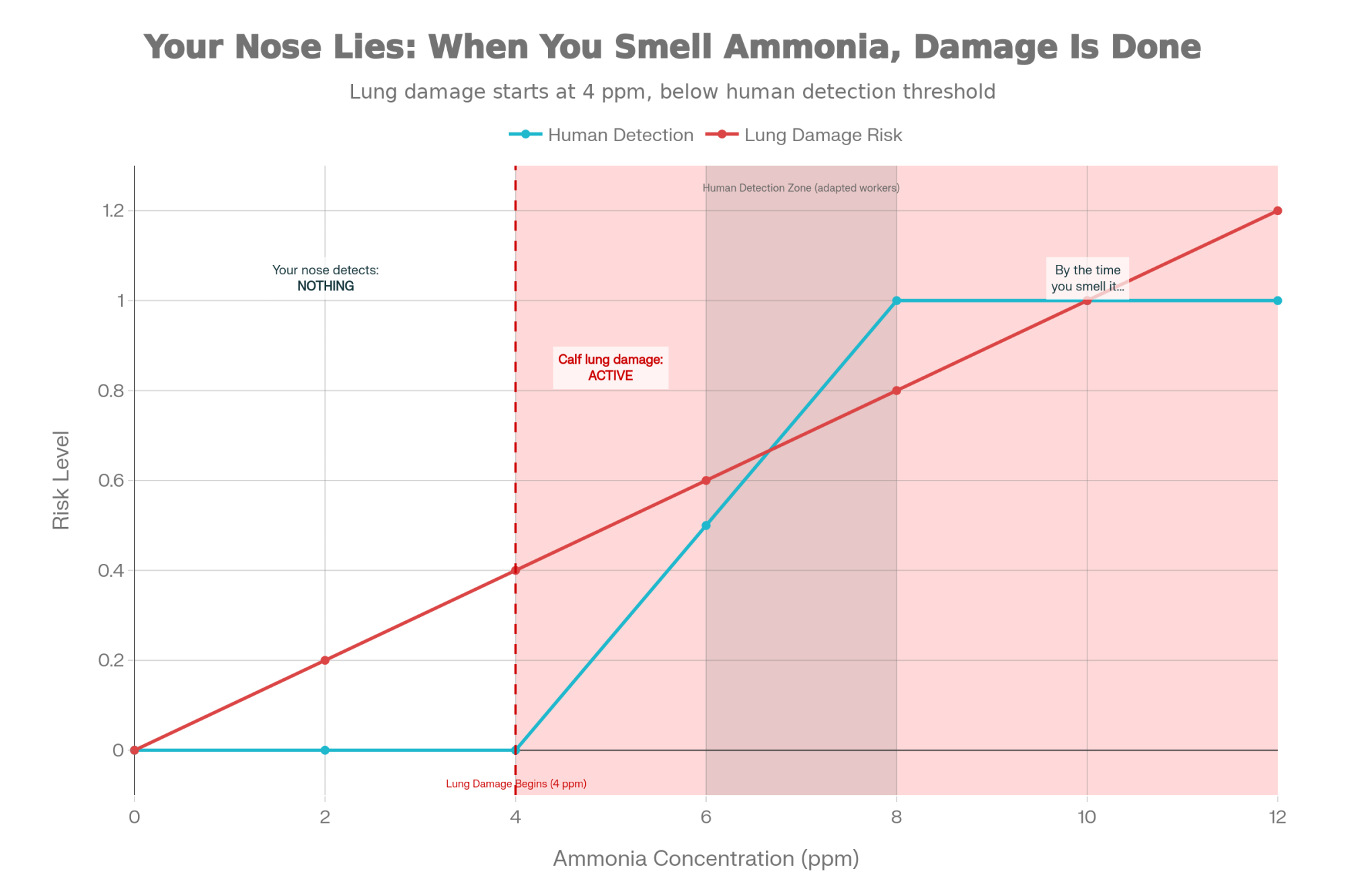
NewsSubscribe
First
Last
Consent

$2,000 Cull Cows Are Exposing Dairy’s Biggest Lie: Management Can’t Save You Anymore

Cull cow: $2,000. Daily milk profit: $2. You’re not failing – you’ve been lied to about what survival actually requires.

EXECUTIVE SUMMARY: The management myth just died. USDA’s October 2025 data confirms what the numbers have been screaming: your location now determines your profitability more than your skills ever will. Cull cows are fetching $2,000 as beef while daily milk margins scrape by at $2-3 per cow—and the smart money has noticed. Federal Milk Marketing Order data shows cheese-oriented regions pulling $1.00-1.50/cwt more than powder areas, handing some operations a $50,000+ annual advantage their neighbors can’t touch, no matter how hard they work. The heifer shortage—at 1970s lows—has flipped from crisis to cash flow, with producers breeding surplus heifers now banking $100,000+ annually. Billions in new processor investments are creating what analysts call “permanent regional stratification,” and lenders are already tightening credit windows. Strategic repositioning isn’t a five-year plan anymore—it’s a five-month decision. October’s culling data proves the reshuffling has already begun, and the producers who act now will be the ones still standing when the dust settles.

The USDA’s October 2025 Milk Production report confirms what we’ve all been feeling in our gut: The national herd is shrinking, but you know what? The reasons have fundamentally changed. This isn’t just about milk prices anymore—we’re watching a restructuring that’s making everything we thought we knew about good management seem… well, less relevant than it used to be.

Here’s the math we’re all looking at. October’s Class III milk was hovering in the mid-$16s per hundredweight, according to CME Group’s daily settlement data. Take your typical cow producing around 65 pounds daily—she’s bringing in maybe $11 in gross revenue. Feed costs? Using the USDA Farm Service Agency’s Dairy Margin Coverage calculations from October, we’re looking at roughly $8 to $9 daily per cow. That doesn’t leave much after labor, utilities, and keeping the lights on…

Meanwhile—and here’s what has everyone talking over morning coffee—that same cow is worth close to $2,000 as beef. USDA’s Agricultural Marketing Service weekly reports show cull cows bringing $1.60 to $1.70 per pound in some regions. A decent 1,200-pound cow? Do the math.

As one Extension economist down in Mississippi who tracks livestock markets put it to me, “When you’re looking at these beef prices, producers are asking themselves some pretty rational questions.”

But this goes deeper than just comparing milk checks to beef prices, doesn’t it? What October’s really showing us is the start of something bigger—where geography, genetics, and who you’re shipping to will matter more than ever. Management excellence? I hate to say it, but it’s becoming less relevant in the face of structural disadvantages.

The New Revenue Stream: Breeding for the Market, Not Just the Milking String

Here’s something clever that’s changing the entire breeding game—and I think more of us need to be talking about this. If you breed 20-25% more heifers than you need for replacements and sell the extras at these premium prices… well, as many of us have figured out, a 600-cow herd selling 30 surplus heifers at around $3,500 each? That’s roughly $100,000 in additional annual revenue. We’re talking about turning what most see as a constraint into a profit center.

USDA’s January 2025 Cattle inventory report shows dairy heifer numbers at historically low levels—we haven’t seen this level since the late ’70s. All those years of breeding for beef-on-dairy when milk prices were tough? Well, now we’re seeing the consequences—or maybe the opportunities.

Recent auction reports from key dairy states show good springers regularly trading above $3,000 per head, with top groups occasionally pushing past $4,000 per head. I spoke with an extension specialist at the University of Florida who’s been tracking this closely. “The consistency of these high prices,” he said, “that’s what’s remarkable. We’re not seeing the usual seasonal dips.”

A lending specialist at CoBank pointed out something fascinating—and think about this—the shortage that prevents you from expanding also prevents your competition from growing. Operations that might have expanded to grab market share? They simply can’t get the heifers at prices that make sense. It’s creating this forced discipline in the market that we haven’t seen before.

Smart producers are figuring out different ways to optimize. Can’t solve problems through expansion anymore—that playbook’s out the window. Instead, you’ve got to improve within your existing footprint. Genetic selection becomes crucial when you can’t add cows. I’m seeing more genomic testing than ever before.

I recently heard from a 480-cow operation in central Wisconsin that made the switch to component-based optimization last spring. They’re seeing an extra $3,800 monthly just from butterfat premiums alone, even with slightly lower volume. “We’re producing less milk but making more money,” the owner told me. “That’s not something I thought I’d ever say.”

How Geography Trumps Management

You know, the old wisdom was that efficient operations outlast downturns. We’ve all believed that, right? But what I’m seeing now challenges that thinking in ways most of us haven’t fully grasped yet.

Federal Milk Marketing Order data from October 2025 shows some cheese-oriented regions getting roughly $1.00 to $1.50 more per hundredweight than powder-oriented areas. Think about that for a minute—if you’re running a thousand cows, that gap could mean $50,000 or more annually. That’s not something you can just manage your way around, no matter how good you are at what you do.

And the driver behind these gaps? It’s these massive processor investments we’re seeing. The International Dairy Foods Association’s October 2025 capital investment tracking report shows billions in new and expanded dairy processing projects—dozens of facilities either under construction or recently announced across multiple states through the rest of this decade.

The concentration is what gets me. Texas is seeing major cheese facilities go in, including that big Leprino project near Lubbock everyone’s talking about. New York’s seeing major expansions in yogurt and premium milk. Idaho’s getting more cheese capacity around Twin Falls with Glanbia’s expansion. Wisconsin continues to add to its cheese infrastructure, with multiple expansion projects underway. Even the California Central Valley, despite its challenges, is seeing selective investment in specialized products.

What dairy economists at universities like Cornell and Wisconsin are telling me is this creates something like “permanent regional advantage.” Makes sense when you think about it. If you’re near these new cheese plants, you’re capturing premiums. If you’re shipping to butter and powder? Those challenges compound every month.

The producers in growth states—places like Idaho and Texas, where this new capacity promises good premiums—they culled selectively in October to upgrade genetics. Smart move.

But in other regions? Southwest dairy operations dealing with water restrictions, or Southeast producers managing not just heat stress but increasingly volatile feed costs and limited local grain production—that culling represented something different. Those folks are reducing exposure to what’s becoming a tougher competitive environment.

Building Your Bridge Through What’s Coming

For operations trying to navigate current challenges while positioning for better times, I’ve been collecting strategies from extension folks and producers who are making it work. From Southeast dairy operations dealing with heat stress and feed availability challenges to Upper Midwest producers managing seasonal variations, to California Central Valley farms wrestling with water costs.

First thing—and this is crucial—you need to understand your true economics beyond just that all-milk price everyone talks about. Several dairy economists at land-grant universities keep emphasizing this, and they’re right. With current component premiums, if you’re optimizing for volume rather than components, you could be leaving tens of thousands annually on the table, even for a modest-sized herd.

Component optimization matters more than ever. With butterfat premiums running anywhere from 50 cents to over a dollar per hundredweight above base in some areas—especially Upper Midwest operations shipping to cheese plants—if you’re still focusing on volume over components, you’re leaving serious money on the table.

Here’s what’s gaining traction based on my conversations:

You need to secure working capital lines now, while your operation still looks stable to lenders. Several ag lenders, including Farm Credit Services and regional banks, are telling me they expect to become more cautious about new working capital over the next year or so. Some are even talking about focusing more on financing acquisitions and restructurings if margins stay tight. That window? It’s narrowing faster than most folks realize.

The Dairy Margin Coverage program makes sense, too. According to the USDA’s Risk Management Agency, October 2025 updates, depending on your coverage level and production history, premiums often run from a few dimes to maybe 70 cents per hundredweight. But that cash flow protection when margins get really tight? Could make all the difference between weathering the storm and… well, not.

And here’s something livestock economists at universities like Kentucky and Kansas State are watching—CME feeder cattle futures have pulled back sharply since mid-October. Producers who locked in their beef-on-dairy calf values earlier are feeling pretty good right now. Consider hedging at least half your production to protect what’s become crucial revenue.

What’s interesting is that the operations doing these things aren’t expecting prosperity if milk prices drop to the $14-16 range that the USDA’s World Agricultural Supply and Demand Estimates suggest for next year. They’re building resilience to stay independent through what could be a tough stretch before things improve.

The Technology Factor and Labor Reality

The technology piece matters here too—and it’s changing the labor equation dramatically. Robotic milking systems, which can cost $150,000-250,000 per stall, are becoming more feasible for larger operations that can spread those fixed costs.

But here’s what’s interesting: these systems aren’t just about milking efficiency. They’re addressing the chronic labor shortage that’s hitting dairy farms nationwide.

One Pennsylvania producer running four robots told me, “We went from needing six milkers to basically one herd manager. In a market where finding reliable labor costs $18-22 per hour plus benefits, that math changes everything.”

For mid-sized farms, though, the capital requirements are creating another pressure point that’s accelerating consolidation decisions. And for those sub-300 cow operations? The technology investment rarely pencils out unless you’re adding significant value through on-farm processing or direct marketing.

Why Processors Keep Building While We’re Struggling

This apparent contradiction—processors pouring billions into new capacity while we’re dealing with tight margins—it makes more sense when you look at the longer game they’re playing.

Several outlooks from groups like Rabobank’s Q3 2025 Global Dairy Quarterly point to some interesting dynamics. The International Dairy Federation’s World Dairy Situation report is talking about potential gaps between global supply and demand later in the decade if trends continue.

Recent trade data from USDA’s Foreign Agricultural Service shows Chinese imports of cheese and whole milk powder running well ahead of year-ago levels. Countries like Indonesia are expanding school milk programs that could add meaningful demand over the coming years. And with EU production constrained by environmental regulations, the U.S. is positioned well as a growth supplier.

Gregg Doud, who served as U.S. chief agricultural trade negotiator and now works with Aimpoint Research, explained it well at the recent World Dairy Expo: “Processors aren’t building for today’s prices. They’re looking at where they think we’ll be in 2028, 2030. The current downturn? It actually helps their positioning by limiting competitive expansion.”

What’s less visible—and this is based on industry analysis from groups like CoBank and what I’m hearing through the grapevine—is that a large share of new processing capacity appears to be already tied up in multi-year arrangements with larger farms. Contracts negotiated when prices were recovering in ’23 and ’24, locking in supply regardless of current spot conditions. It’s creating this two-tier market that not everyone fully grasps yet.

The Information Gap That’s Hurting Smaller Operations

One challenge I keep hearing about from mid-sized operations is what university economists call “information asymmetry.” Basically, larger farms dealing directly with processors often see market shifts months before that information reaches smaller producers through traditional channels.

This gap shows up in several ways. Larger operations often have earlier visibility into processor needs and plans. They might subscribe to proprietary research from firms like Terrain or StoneX, which costs tens of thousands of dollars annually. Meanwhile, smaller operations rely on cooperative communications that, honestly, can lag market realities by quite a bit.

A Pennsylvania producer managing 600 cows—a fifth-generation dairy farmer—put it to me straight: “We thought October’s price drop was temporary. We didn’t realize how much had already been decided about where the industry’s headed. By the time we understood, our lender was already getting cautious about new credit.”

The practical impact? By the time many producers recognize these fundamental shifts, the window for smart positioning has already narrowed considerably.

Regional Winners and What’s Creating Lasting Advantages

The geographic distribution of new processing investment is creating what analysts at CoBank call “permanent regional stratification.” Strong words, but they’re not wrong.

Looking at Federal Milk Marketing Order data from October 2025 and processor announcements, here’s who’s seeing sustained advantages:

Idaho’s Magic Valley continues to benefit from expansions in cheese infrastructure. USDA National Agricultural Statistics Service data shows Idaho among the fastest-growing milk states, with many operations reporting solid annual gains. The Texas Panhandle’s seeing competitive pricing from multiple cheese plants.

Kansas—and this surprised me—has emerged as a real growth story, with some of the strongest percentage gains in the country according to USDA data. Central New York’s premium milk and yogurt facilities are creating genuine competition for local supplies.

But then you’ve got regions facing structural challenges. The Pacific Northwest remains primarily powder-oriented with limited cheese processing. California’s Central Valley operations are dealing with both water costs and a commodity-focused product mix that limit pricing upside.

Southwest dairy producers face increasing water restrictions and rising costs for heat-stress management. Southeast operations are wrestling with not just heat stress but also limited local feed production and basis challenges that add $30-40 per ton to feed costs. The Upper Northeast faces geographic isolation that creates significant transportation penalties that can substantially erode margins.

The hard truth? And this is tough for many of us to accept—operational excellence can’t overcome a structural pricing gap of $1 or more per hundredweight by geography. That recognition is driving some of October’s herd adjustments.

Practical Steps Depending on Your Situation

Based on what’s emerging from October’s data and conversations with folks making it work, here’s what I’m seeing:

If You’re in a Growth Region:

Focus on genetic improvement within your existing herd rather than expansion. A Texas producer near one of the new cheese plants told me, “We’re genomic testing everything and being selective like never before.”

Work on developing direct processor relationships where possible. Several Idaho producers tell me they’re having success negotiating directly rather than relying only on their co-op. And consider partnerships with neighboring operations—achieve some scale advantages without individual expansion.

If You’re in a Challenged Region:

You need an honest evaluation of your long-term position given structural disadvantages. Run scenarios at different milk prices—$14, $16, $18—to really understand your breakevens. It’s sobering but necessary.

Look at diversification that reduces dependence on commodity pricing. I know Northeast producers are finding success with on-farm processing, agritourism—not for everyone, but worth considering. California Central Valley operations are exploring specialty milk products that command premiums despite the region’s challenges.

For those sub-300 cow operations, the math gets even tougher. But I’m seeing some find success through direct marketing, value-added products, or transitioning to organic, where premiums can offset scale disadvantages. Others are forming producer groups to share resources and negotiate collectively.

And assess whether relocating might work, though as one Wisconsin friend said, “The math on moving with current land and heifer prices? Brutal.”

Universal Strategies That Work:

Secure financial flexibility now while credit’s available. Every lender I’ve talked to expects standards to tighten over the next year.

Implement component-focused production aligned with how your processor actually pays. This means regular ration work, good DHI records.

And develop non-milk revenue streams. Despite some recent softening, beef-on-dairy remains profitable according to cattle market folks at the Chicago Mercantile Exchange. Every bit helps.

The Consolidation Already Underway

Let’s be honest about what’s happening here. Consolidation isn’t some future possibility—it’s here, right now. USDA’s 2022 Census of Agriculture shows dairy farm numbers in the mid-30,000s, and USDA Economic Research Service economists expect that to continue declining as the industry consolidates.

What’s driving this? ERS research consistently shows larger herds tend to have lower costs per hundredweight than smaller ones—often by several percentage points. Processors prefer fewer, larger suppliers to reduce complexity.

Technology adoption, especially robotic milking systems that can run $150,000-250,000 per stall, requires capital that favors bigger operations. The labor savings alone—reducing milking staff by 60-80% while addressing the chronic shortage of qualified dairy workers—makes automation almost mandatory for operations planning to survive long-term.

And the heifer shortage prevents smaller operations from achieving competitive scale, even if they wanted to.

Rather than viewing consolidation as failure—and this is important—many are recognizing it as evolution. As one university dairy economist at Wisconsin explained, “Operations that position strategically, whether through improvements, repositioning, or thoughtful exit timing, preserve more value than those forced into decisions.”

The Bottom Line

Several outlooks, including the Food and Agricultural Policy Research Institute’s baseline projections, suggest better price prospects later in the decade if global demand continues growing and herd size stays in check—though these are projections, not guarantees, as we all know.

Factors that could support recovery: The heifer shortage physically constrains expansion for a while. Global demand appears to be growing faster than supply, according to FAO data. Environmental regulations limit expansion in some major producing regions. And all this new processing capacity will need higher milk prices to generate returns.

But—and this matters—recovery probably won’t benefit everyone equally. Operations with secured processor relationships, geographic advantages, and superior genetics will likely capture premiums. Others might find that even recovered prices don’t fully offset their structural disadvantages.

What October’s Really Telling Us

After looking at the data and talking with folks across the industry, several lessons emerge pretty clearly.

Geography increasingly determines destiny. Those regional pricing gaps reflect structural realities that great management can’t overcome. If you’re in a disadvantaged region, that needs to factor into your planning—like it or not.

The heifer shortage creates both constraint and opportunity. Operations that optimize within their existing footprint while potentially monetizing excess production can turn the shortage to their advantage. Creative producers are making this work.

Information and relationships matter more than ever. Direct processor relationships and access to good market intelligence increasingly separate operations that thrive from those that struggle. Better information pays—literally.

Financial positioning can’t wait. Every lender emphasizes this—the window for securing working capital and risk management tools is months, not years. Wait until you need flexibility, and it might not be there.

Strategic positioning beats stubborn persistence. Whether improving for independence, positioning for acquisition on good terms, or planning an orderly exit, proactive decisions preserve more value than reactive ones. There’s no shame in strategic repositioning—it’s smart business.

We’ve weathered dramatic transitions before—from diversified farms to specialized operations, through technological changes and trade upheavals. This is another transition. What’s different is both the speed and the degree to which these advantages are becoming structural. Operations that recognize and adapt, rather than hope for a return to old patterns, are best positioned.

October’s strategic culling by forward-thinking producers shows something important: successful operations aren’t waiting for change to happen to them. They’re actively positioning for whatever comes next.

For those still evaluating, October’s message seems clear—the time for strategic decisions is now, while you’ve got options and can preserve value through thoughtful positioning.

The path forward won’t be identical for everyone—and that’s fine. But understanding the forces reshaping our industry helps inform decisions. In a world where change keeps accelerating, maybe the biggest risk is standing still.

For more specific information on programs mentioned, producers can check with their local USDA Service Center, university extension offices, or agricultural lenders.

KEY TAKEAWAYS 

  • Your zip code now outweighs your work ethic: Cheese regions earn $1.00-1.50/cwt more than powder areas—that’s $50,000+ annually, no amount of great management will ever close
  • The heifer shortage is now your profit center: Breeding 20-25% surplus heifers generates $100,000+ annually while locking competitors out of expansion at today’s prices
  • Your lender’s flexibility has an expiration date: Working capital windows slam shut by mid-2026—secure financing now, not when you desperately need it
  • This is a five-month decision, not a five-year plan: October’s culling data proves the reshuffling has begun—producers positioning now will be the ones still milking in 2027

Complete references and supporting documentation are available upon request by contacting the editorial team at editor@thebullvine.com.

Learn More:

Join the Revolution!

Join over 30,000 successful dairy professionals who rely on Bullvine Weekly for their competitive edge. Delivered directly to your inbox each week, our exclusive industry insights help you make smarter decisions while saving precious hours every week. Never miss critical updates on milk production trends, breakthrough technologies, and profit-boosting strategies that top producers are already implementing. Subscribe now to transform your dairy operation’s efficiency and profitability—your future success is just one click away.
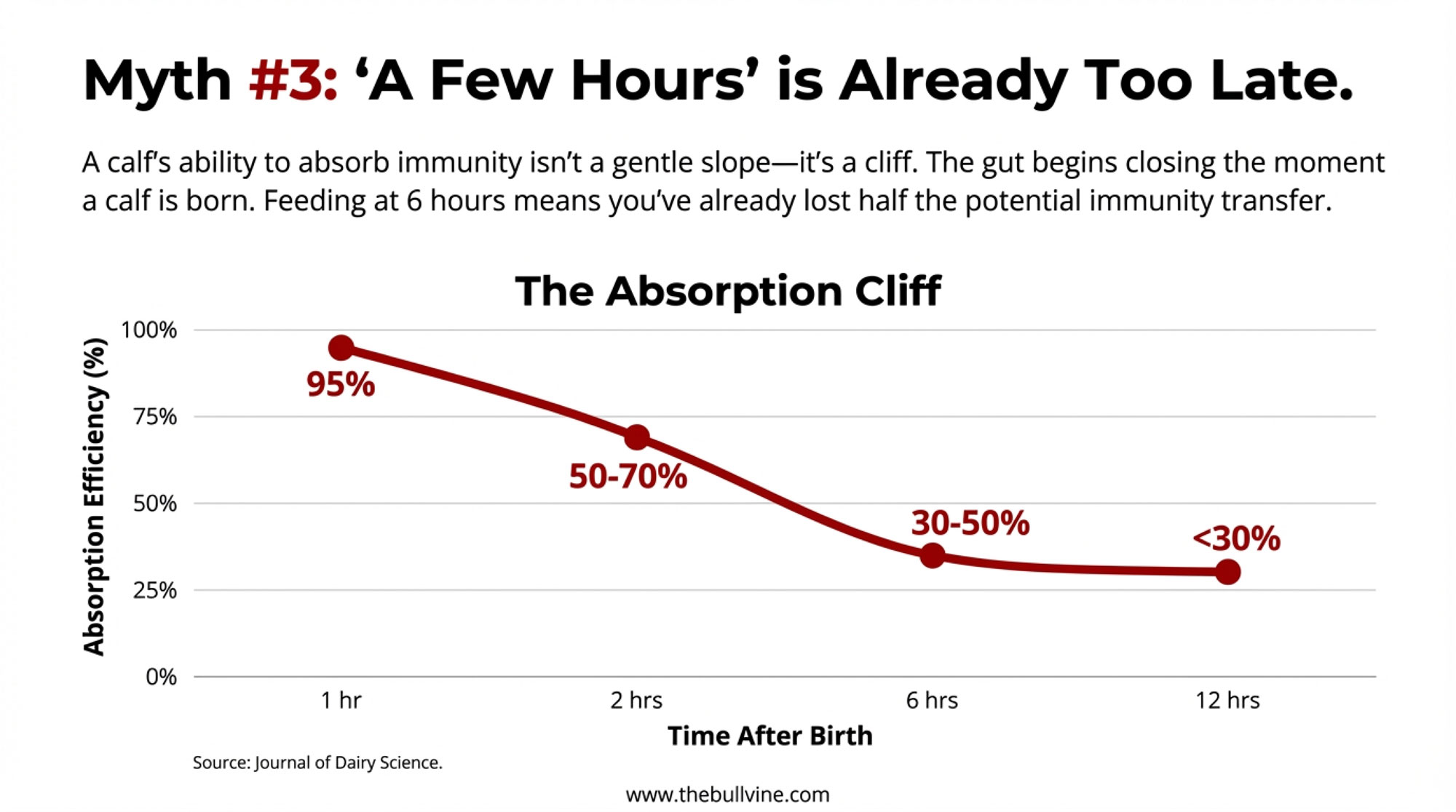
NewsSubscribe
First
Last
Consent

The $500 Transition Gap: Why Your Neighbor’s Fresh Cows May Outperform Yours by Next Winter

Next winter, one dairy will have fewer sick fresh cows and better margins. Yours or your neighbor’s? The gap starts now.

You know that feeling when you’re doing morning checks and spot a cow that’s just… off? Maybe she’s standing away from the bunk, head low, looking like she’d rather be anywhere else.

We’ve all been there. And we all know what comes next—that cow’s probably about to cost you anywhere from three hundred to a thousand dollars, depending on whether she develops ketosis, metritis, or decides to really complicate your week with multiple problems.

So here’s what’s interesting about the research coming out of Penn State lately. Adrian Barragan and his team over in their veterinary school think they’ve found a better way to prevent these crashes before they happen—and the thing is, they’re not asking you to buy fancy new equipment or send blood samples to a lab every week.

They’re using information most of us already collect.

THE ECONOMICS: Clinical ketosis costs $300-$350 per case in treatment plus 600-800 pounds of lost milk, while metritis runs $300-$500 per case—based on foundational research adjusted for current costs

You probably know the basic economics already, but it’s worth laying out just how expensive transition problems really are. Foundational research by McArt and colleagues, adjusted for current feed and treatment costs, estimates clinical ketosis at $300-$350 per case. And that’s before you count the 600 to 800 pounds of milk you’re typically losing over that lactation.

Metritis? Cornell and other research groups have been tracking this for years. More recent estimates put the true cost at $300 to $500 per case when you factor in treatment, lost production, and downstream fertility impacts.

And here’s the kicker—when a cow gets multiple diseases (and research shows that happens about 35% of the time in that first month), you’re looking at losses that easily top a thousand dollars per cow. Makes you think, doesn’t it?

But—and this is where it gets complicated—the farms that could benefit most from this approach are often the ones that can’t actually implement it. Let me explain what I mean.

Understanding Which Cows Need Help (And When)

What farmers are finding with targeted cow management is that it’s surprisingly straightforward, at least in theory. Barragan’s framework focuses on three windows we’re all managing anyway: dry-off (about 60 days before calving), close-up (those critical two to three weeks before), and calving itself.

At each of these points, there are specific red flags that predict trouble ahead.

Take dry-off, for instance. We all know overconditioned cows are trouble—anyone with a body condition score of 3.75 or higher is asking for metabolic problems. Penn State tracked thousands of cow lactations over several years, and these cows produced about 560 pounds less milk during the first 16 weeks of their next lactation. Plus, they have 10% more health events.

That’s not exactly news to most of us. But having the hard numbers helps justify why we need to manage the condition more carefully.

Here’s another risk factor worth watching: high producers at dry-off. Cows still making 45 pounds or more when you’re trying to dry them off face increased risk of milk leakage and intramammary infections. The combination of high production and high body condition at dry-off? That’s your highest-risk group right there.

And then there’s the somatic cell piece. Pam Ruegg at Michigan State and Noelia Silva del Rio out at UC Davis have both shown that cows over 200,000 cells at dry-off have compromised colostrum quality. Their calves end up with lower antibody levels. These cows will produce about 1,000 fewer pounds of milk over the first 16 weeks, too.

Quick Reference: Targeted Cow Risk Windows

  • Dry-off (60 days before calving): Flag cows with BCS ≥3.75, high production (>45 lbs/day), or SCC >200,000
  • Close-up (21-14 days before): Watch for feed intake drops >30%, pen moves, DCAD balance issues
  • Calving: First-calf heifers, twins, and dystocia cases need immediate targeted protocols

Why Timing Changes Everything in Transition Management

Looking at this from a different angle, we’ve always known intuitively that some cows need more attention than others. Good managers—you know the type—they have that sixth sense about which cows are going to crash.

What’s fascinating here is how precision transition research actually quantifies what we’ve suspected all along. The same cow might need completely different interventions depending on when you catch her.

The anti-inflammatory work is particularly revealing. In peer-reviewed trials, Barragan’s team tested meloxicam at multiple time points. First-calf heifers treated a day or two before expected calving showed remarkable responses—up to 10 to 11 pounds more milk per day over the early lactation period in some trials, though results do vary by herd and individual cow.

A quick regulatory note here: meloxicam use in dairy cattle is considered extra-label in the United States, meaning it requires a valid veterinarian-client-patient relationship and prescription. This isn’t something you can pick up at the farm store—work with your vet if you’re considering this protocol.

Even at the conservative end, we’re talking 450 to over 1,500 pounds of extra milk over 150 days. At current market values averaging around $20 per hundredweight, that’s real money. And what really got my attention—stillbirth rates in these treated heifers dropped by about 20 percentage points in Penn State’s research.

But here’s where it gets interesting. Older cows? They showed a different pattern. They didn’t show the same positive response to prepartum treatment and, in some trials, showed no economic benefit from blanket prepartum protocols. Mike Overton from Elanco has been tracking these protocols on commercial dairies, and he’s finding that the timing question really matters by parity.

So that one-size-fits-all protocol we’ve been using for years? Turns out we need to be smarter about it.

The Reality Check: Making This Work on Real Farms

Let’s have an honest conversation about implementation. Knowing what to do and actually getting it done consistently are two completely different animals, right?

I’ve been tracking operations from Vermont to New Mexico, trying to implement these precision protocols, and here’s where things typically fall apart. First, somebody has to reliably score body condition—every cow, every time. Research from Wisconsin and other land-grant schools shows that when two people score the same cow, they disagree by half a point or more, roughly a third of the time. That’s enough to misclassify a cow completely.

Then you need to track which cows got flagged. Your feed crew needs different TMR specs for different risk groups. The fresh cow team needs to know which protocol applies to whom.

And here’s what nobody talks about at conferences—when José takes a few days off, and Miguel covers his shift, does Miguel know that cow 1847 is on the high-risk protocol? In many cases, probably not.

Marcia Endres at the University of Minnesota has been a leader in precision dairy research for years. What her work consistently shows is that farms with integrated herd management software—where BCS scores, milk weights, and health events flow into a single system—have significantly higher adoption rates for precision protocols than farms that try to manage everything in spreadsheets.

The gap is substantial. That tells you something right there.

The Economics: Traditional vs. Targeted Approaches

KEY FINDING: Field trials show farms implementing targeted transition protocols can achieve $200-$500 net benefit per cow per lactation through reduced disease and improved milk production

Looking at actual implementation data from extension-supported trials, the numbers tell a compelling story.

With traditional blanket treatment, you’re treating every cow the same at dry-off. Costs you about $45 to $60 per cow across your whole herd. Fresh cow disease rates typically run 27 to 35% in the first 60 days (that’s from NAHMS data), and you’re losing 600 to over 1,500 pounds of milk per affected cow.

Now with the targeted approach, you’re identifying high-risk cows at each transition point and customizing what they get. Low-risk cows might only need $15 to $25 worth of attention. High-risk animals receive $65 to $95 in targeted support.

What happens? Disease rates can drop to 18-24% in the critical first 60 days—we’re talking a 25-30% reduction, based on what extension programs are seeing in the field. And you’re recovering 500 to 1,000 pounds of milk per prevented case.

When it all shakes out, farms are seeing net benefits of about $200 to $500 per cow per lactation. But—and Chuck Guard from Cornell’s ambulatory clinic emphasizes this—that’s only if you can execute consistently. Big “if” there.

Why 80% of Farms Can’t Jump on This Yet

Here’s something we need to address head-on. Most of us are running on razor-thin margins right now. USDA’s latest economic outlook shows roughly half of dairy farms are projected to be profitable this year.

The all-milk price averaging around $20 per hundredweight sounds okay until you factor in elevated feed costs and labor shortages, pushing wages up into the double digits from recent years. Suddenly, that margin disappears real quick.

When you’re worried about making December’s feed payment, investing in new management protocols—even ones that pencil out great on paper—feels like a luxury you can’t afford.

There’s also the behavioral economists’ “prevention paradox.” Jennifer Van Os over at Wisconsin has been studying how farmers make decisions, and it’s fascinating. When you prevent ketosis, nothing visible happens. The cow doesn’t get sick. There’s no vet bill. No treatment record. It’s… psychologically unsatisfying, if that makes sense.

But when you miss one, and she crashes? That’s immediate, visible, and it sticks with you.

I heard an illustrative story at a recent producer meeting that captures this perfectly. A Wisconsin dairyman shared anonymously: “We tried targeted dry-off protocols for six months. Caught most of the high-risk cows. But we lost one valuable genomic heifer that we misclassified. That $3,000 loss is what I remember—not the dozen we saved.” Whether that’s one producer’s experience or a composite of many I’ve heard, it reflects a genuine psychological barrier that the research confirms is widespread.

Lessons from Europe’s Regulatory Push

You want to know what actually drives industry-wide change? Europe’s experience with selective dry cow therapy offers a masterclass.

The EU implemented Regulation 2019/6, which banned prophylactic antibiotic use—including blanket dry cow therapy—effective January 28, 2022. That date matters because it forced a complete industry shift.

According to European research, about two-thirds of Italian dairy farms had transitioned to selective protocols by the end of 2022. The Netherlands has become the gold standard, going from relatively low adoption to over 80% in just a few years.

The difference? Farmers changed because they had to.

But here’s what’s encouraging—Volker Krömker from Copenhagen University has been tracking outcomes, and after some initial resistance, Dutch farmers using selective protocols actually saw mastitis rates drop below what they had with blanket treatment. The whole infrastructure adapted: vet schools started requiring SDCT training, milk buyers provided protocol support, and software companies built decision trees right into their platforms.

Meanwhile, U.S. voluntary adoption is sitting at roughly one in four farms. The contrast is pretty striking.

Where Targeted Management Actually Works Today

Despite all the challenges, certain operations are making these protocols work brilliantly. What separates them?

Looking at successful implementations from Maine to California, you see patterns. Scale helps, but it’s not everything. Sure, a 3,000-cow operation in Idaho finds it easier to justify the cost of dedicated transition management software. But I’m also seeing 300-400 cow herds in places like Wayne County, Ohio, succeeding because their co-op provides shared advisory support.

Regional variations matter too. Down in New Mexico and Arizona, where heat stress just compounds everything, producers like Tom Barcellos out in Tulare County tell me precision management becomes even more critical. As he puts it, “When it’s 110°F in July, you can’t afford to guess which cows need extra support.”

In Florida, where the humidity is brutal, a group near Okeechobee adapted the protocols to conduct twice-daily body condition scoring during summer. Over in Texas, some of the larger operations near Stephenville are finding that targeted protocols help offset the stress of their long summers. Up in Vermont, where winter housing gets tight, farms are focusing more on the close-up pen management side of things.

And out in the Pacific Northwest—you know how wet it gets there—the larger dairies near Yakima Valley are finding targeted protocols help manage the stress that mud and moisture put on transition cows. One producer in Sunnyside told me they flag any cow that spent more than 2 weeks in the hospital pen during the last lactation. Those girls automatically get extra attention at dry-off, regardless of other metrics.

What do successful operations have in common? Three things keep coming up: integrated data systems (increasingly using cameras for BCS scoring), strong veterinary partnerships for ongoing tweaks, and what Nigel Cook from Wisconsin calls “implementation discipline”—basically, someone owns the process and reviews outcomes every month without fail.

Implementation Timeline: What to Really Expect

  • Weeks 1-4: Set up protocols, train your team, get baseline numbers
  • Weeks 5-12: Work out the bugs, build staff confidence
  • Months 3-4: Don’t panic—temporary plateau is normal
  • Months 5-6: Positive trends start showing up, fine-tune protocols
  • Month 7+: Full ROI kicks in, system runs itself

Making Targeted Protocols Work on Your Farm

After watching dozens of operations try this, here’s my practical advice if you’re thinking about it.

Start ridiculously simple. Pick ONE intervention for 90 days. I’d suggest dry-off BCS flagging. Now, this next part is my own practical recommendation, not part of any formal research protocol: get yourself an orange livestock marker. Every cow over 3.75 gets an orange stripe on her tailhead. That’s it. Everyone knows orange means “controlled energy dry cow ration.” Simple, cheap, and visible to every person who walks through that pen.

Set realistic expectations. Research on implementation curves suggests the average time to positive ROI is around five to six months. Some farms see a temporary production dip in month two as systems adjust. You need to budget for that.

And here’s crucial—involve your entire team from day one. Not a memo. Not a meeting where half the guys are checking their phones. A hands-on session where your feeders, fresh cow crew, and whoever does dry-off physically walk through the process together. Gustavo Schuenemann from Ohio State found that farms with hands-on training show significantly better compliance with protocols than those using written SOPs alone.

Track only what matters. Pick three things: fresh disease rate (shoot for under 20%), 60-day milk average (watch the trend, not the absolute number), and days to first service (target under 70). Review them monthly. Ignore everything else at first—you’ll drive yourself crazy otherwise.

The Hard Truth About Implementation Readiness

I need to be direct here. If you’re struggling to cover operating expenses, targeted transition management shouldn’t be your priority right now. This approach works best for farms with positive cash flow and at least six months of operating capital in reserve.

It’s one of those cruel ironies—the farms that most need efficiency gains are often least equipped to implement them. Chris Wolf, the ag economist at Cornell, calls this the “productivity trap.” The bottom 40% of farms by profitability are producing at significantly higher cost than the top 40%, but they lack the capital to make improvements that would close that gap.

Critical Limitations to Consider

Let’s be clear—targeted transition management isn’t universally applicable. Genetic differences matter. Jersey herds show different risk thresholds than Holsteins. Kent Weigel’s genomic research at Wisconsin shows cows with high genetic merit for health traits may show less dramatic response to targeted interventions—they’re already more resilient.

Facility design impacts success, too. Farms with two-row freestalls and adequate bunk space see better results than overcrowded three-rows. Peter Krawczel from Tennessee documented that overcrowded facilities—stocking densities in the 110-120% range and above—negate a significant portion of targeted protocol benefits as the stress from overcrowding overwhelms the precision interventions.

And geographic factors can’t be ignored. What works in Wisconsin’s climate needs adjustment for Louisiana’s humidity or Colorado’s altitude. You’ve got to calibrate locally.

What Would Accelerate Industry Adoption

Three things could shift targeted management from “interesting option” to “this is how we do things now.”

First, processor requirements. If the big co-ops like DFA or Land O’Lakes started requiring transition management documentation for quality premiums, adoption would happen overnight. Tillamook’s already doing this with SCC-based dry-off protocols for their suppliers.

Second, cooperative infrastructure. When your co-op provides training, software access, and shared advisory as part of membership, smaller farms can suddenly access the same tools as the big guys. Organic Valley’s vet support program is a good model for this.

Third, federal support. USDA’s got significant funds allocated for precision agriculture through 2027. If they added transition management to their cost-share eligibility, it would substantially lower barriers.

The Bottom Line for Your Dairy

The transition period drives the majority of our health problems. We’ve known this for decades. What targeted cow management offers is a systematic way to identify and prevent these problems before they turn into expensive disasters.

But as we’ve talked about, knowing what to do and being able to do it are vastly different challenges. The science is solid. The economics work. Whether this becomes standard practice really depends on how the industry chooses to support implementation.

My advice? If you’re interested, start small. One protocol. One risk factor. Track your results religiously. And definitely get your vet and nutritionist involved from day one—this isn’t something you figure out alone.

The cows that need help are already in your barn. You walk past them every day. The question is whether you can build a system to identify and support them before each one costs you $500 to $1,000.

Some operations can absolutely do this today. Others need infrastructure development first. Understanding which category you’re in—honestly, without wishful thinking—that might be the most valuable assessment you make this year.

And here’s the thing that keeps me up at night: if you won’t pick one simple flag and execute it for 90 days, your neighbor probably will. In a year from now, one of you will have lower fresh-cow disease, better butterfat levels, and a stronger balance sheet.

Which one do you want to be? 

Key Takeaways:

  • The savings are proven: Farms executing targeted transition protocols cut fresh cow disease rates by 25-30%, saving $200-$500 per cow per lactation—and the gap between early adopters and everyone else is widening
  • Inaction costs more than you think: Ketosis runs $300-$350 per case, metritis $300-$500, and over a third of fresh cows develop multiple problems in their first month
  • Most dairies aren’t ready yet: Roughly 80% of U.S. operations lack integrated herd software or the cash reserves to implement precision protocols consistently—but that’s changing
  • The science scales: European farms mandated to adopt selective dry cow therapy in 2022 now report lower mastitis rates than they had with blanket treatment
  • Start with one thing: Flag cows with BCS ≥3.75 at dry-off, track outcomes for 90 days, and involve your vet—simple execution beats sophisticated plans that never happen

Executive Summary: 

Transition cow crashes are quietly draining dairy profits—ketosis and metritis each cost $300-$500 per case, and over a third of fresh cows develop multiple problems in their first month. Research from Penn State, Cornell, and Wisconsin shows that targeted protocols identifying high-risk cows at dry-off can cut disease rates by 25-30%, saving $200-$500 per cow per lactation. The challenge? Roughly 80% of U.S. dairies lack the integrated data systems or financial reserves to execute these approaches consistently. European farms mandated to adopt selective protocols in 2022 now report lower mastitis rates than they had with blanket treatment—proof that the science works at scale. Successful U.S. operations share three factors: integrated herd software, strong veterinary partnerships, and someone who owns protocol review every month. The realistic starting point is straightforward: flag body condition scores at dry-off and track outcomes for 90 days. By next winter, the gap between farms preventing fresh cow crashes and those still reacting to them will show up clearly on the balance sheet.

Complete references and supporting documentation are available upon request by contacting the editorial team at editor@thebullvine.com.

Learn More:

Join the Revolution!

Join over 30,000 successful dairy professionals who rely on Bullvine Weekly for their competitive edge. Delivered directly to your inbox each week, our exclusive industry insights help you make smarter decisions while saving precious hours every week. Never miss critical updates on milk production trends, breakthrough technologies, and profit-boosting strategies that top producers are already implementing. Subscribe now to transform your dairy operation’s efficiency and profitability—your future success is just one click away.
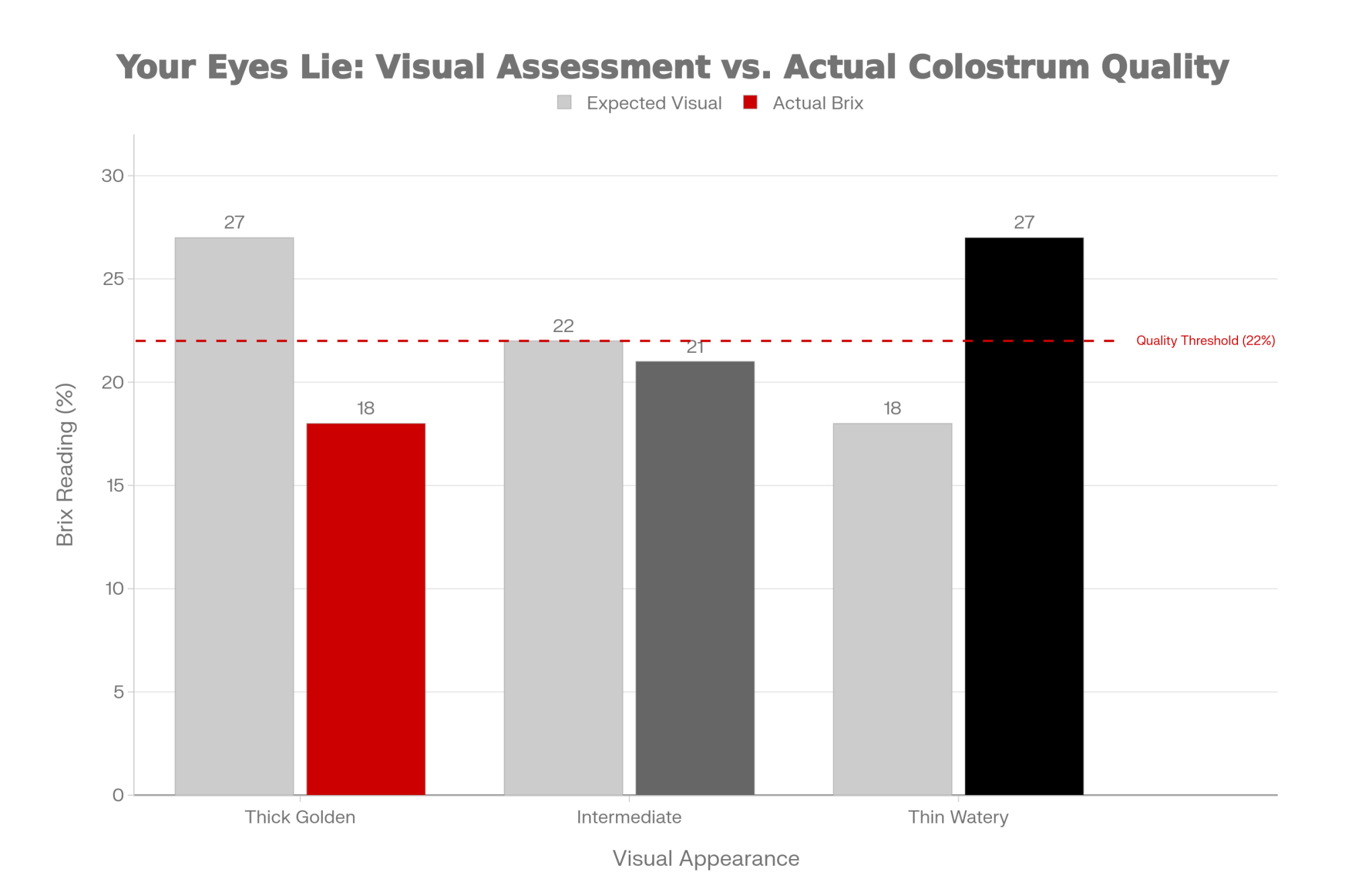
NewsSubscribe
First
Last
Consent

The Wall of Milk: Making Sense of 2025’s Global Dairy Crunch

This downturn feels different because it is. Four major exporters expanded at once, and $15 milk is testing every assumption. Here’s what the resilient dairies know.

EXECUTIVE SUMMARY: When producers say this downturn feels different, they’re right. For the first time, the U.S., EU, New Zealand, and Argentina all expanded production within the same window—creating a “wall of milk” that pushed July 2025 output to 19.0 billion pounds while Class III dropped from the $20s to around $15. Here’s what makes it unusual: exports are at record levels, confirming this is a supply squeeze, not a demand collapse. Dairy’s 24-month biological timeline means decisions that made complete sense at $22 milk are now delivering into a $15 market, with no quick reversal possible. Beef-on-dairy has added real value but also reduced the number of replacement heifers to 3.9 million head—the lowest since 1978—limiting culling flexibility when some operations need it most. The dairies navigating this effectively share common strategies: precision culling using income-over-feed-cost data, margin protection through DMC and Dairy Revenue Protection, and breeding for feed efficiency using traits like Feed Saved. This cycle will accelerate consolidation, but producers who know their numbers and deploy available tools will emerge stronger when markets rebalance.

As milk checks tightened through 2025, I kept hearing the same thing from producers across the country: “We’ve seen low prices before, but this one feels different.” And as many of you have probably sensed on your own operations, they’re right. This isn’t just one region working through a rough patch. The U.S., the European Union, New Zealand, and key South American exporters all pushed production higher within a fairly tight window. A lot of that milk is now competing for the same buyers at the same time.

The 24‑month lag exposed: production peaks just as prices crash, proving this downturn is about too much milk, not weak demand

What makes this cycle particularly challenging is that feed, labor, interest, and environmental compliance costs haven’t returned to the levels we saw a decade ago. That’s especially true in higher-cost regions like California and parts of Western Europe. So you’ve got more milk hitting the market, softer world prices, and cost structures that remain stubbornly elevated. That combination is creating what many are calling the “wall of milk.”

In this piece, we’ll walk through what farmers and analysts are learning about this cycle: how the 24-month expansion lag plays out in practice, how beef-on-dairy has delivered real benefits while also creating some unexpected ripple effects, why lenders and processors kept supporting growth even as signals shifted, how different regions are experiencing this downturn in very different ways, and what the operations navigating this well seem to have in common. The goal is to offer a clearer view of the bigger picture so the decisions you’re making—about cows, facilities, or risk management—are grounded in how this system actually works.

Why This Cycle Really Does Feel Different

Let’s start with the production numbers and work back toward the parlor.

USDA’s Milk Production reports paint a stark picture:

  • July 2025 Output (24 major states): 18.8 billion pounds initially, revised to 19.0 billion
  • Year-Over-Year Growth: +4.2%—the strongest since 2021
  • Total National Production: 19.6 billion pounds
  • Cow Numbers: Approaching the highest levels seen in decades

On the infrastructure side, the industry has been busy. More than 50 new or expanded dairy plants—particularly cheese and powder facilities in the Upper Midwest, Texas, and the High Plains—have come online, representing roughly $8 billion in capital investment over the past several years.

Leonard Polzin, the Dairy Economist and Farm Management Outreach Specialist at UW-Madison Division of Extension, framed it well at the 2025 Wisconsin Agricultural Outlook Forum. He noted that the industry is seeing “a substantial increase in processing capacity,” with an estimated $8 billion in gross investment creating new demand for milk. The challenge, as he pointed out, is that policy uncertainties—including potential tariffs and questions about labor availability—could affect prices before that demand fully materializes.

The picture looks similar in other major producing regions:

  • European Union: EU Milk Market Observatory data show deliveries climbing modestly in 2024, with product stocks building in early 2025 as cheese, butter, and powder production outpaced demand growth
  • New Zealand: Fonterra’s 2025/26 season forecast shows milk solids volumes running several percent ahead of the prior year, with farmgate payouts around NZ$10 per kg of milksolids
  • Argentina: Ministry data and Tridge reports show national milk output in early 2025 running 10.9% above the same period in 2024, with March posting gains of 15.9% year-over-year

Here’s where it gets interesting on the demand side. Exports have actually performed well:

  • July 2025 U.S. Exports: 1.6 billion pounds (milk-fat basis)
  • Year-Over-Year Export Growth: +53%—a record for any single month
  • Yet Class III/IV Futures: Trading in the mid-teens through much of 2025, below full-cost breakeven for many conventional operations
July 2025 was the strongest export month in U.S. history, with shipments up 53% year‑over‑year—yet total production still outran demand by another 4.2%. That’s not a demand collapse; it’s too much milk from too many exporters at once.

The takeaway? World demand hasn’t collapsed. Exports are actually quite strong. But supply from multiple major exporting regions has grown faster than demand can absorb in the near term. That’s what makes this feel different from the regional downturns many of us have worked through before.

The 24-Month Expansion Timeline: When Biology Meets Economics

One of the lessons this cycle keeps reinforcing is how much dairy expansion is a commitment you can’t easily unwind. The biology and capital requirements simply don’t move on futures-market time.

Think back to 2023 and early 2024. Milk prices were strong, butterfat levels were excellent across many herds, and balance sheets looked healthier than they had in years. In that environment, deciding to add a pen, upgrade the parlor, or build out the dry cow facilities made a lot of sense. The numbers supported it.

Land-grant extension economists who model these decisions describe a fairly predictable timeline. In those first few months, you’re signing contracts, ordering equipment, and closing on financing. As one University of Wisconsin farm management publication notes, by the time the ink is dry, most of the financial risk is already committed—even though no extra milk has shipped yet.

Through months four to twelve, the facility goes up while you’re either buying bred heifers or ramping up your own replacement program with sexed semen. Cash is flowing out, but the additional milk revenue hasn’t started. Then in months thirteen through twenty-four, those heifers freshen, pens fill, and milk per stall climbs. The challenge is that the broader market—running on that same 18-24 month biological timeline—may have shifted considerably since you started.

Peter Vitaliano, who served as Vice President of Economic Policy and Market Research at the National Milk Producers Federation before retiring at the end of 2024, was already flagging concerns back in February 2024. He noted that “due to a number of factors, we’ll probably see a larger drop than usual” in dairy farm numbers, partly because USDA counts were likely collected before additional farms closed at the end of 2023 due to margin pressure. He added that any margin improvement wouldn’t “constitute anywhere near a full recovery from the financial stress that dairy farms, pretty much of all sizes, are experiencing.”

The 24-Month Trap in Action

I’ve been hearing about situations like this from lenders and consultants: a 900-cow Wisconsin operation signed expansion contracts in early 2024 for 300 additional stalls, with heifers due to freshen by mid-2025. By the time that barn was full, Class III had dropped from the low $20s to around $15.

The extra milk revenue is real, but so is the debt service. Over six months, the gap between projected and actual margins consumed roughly $180,000 in working capital that had been earmarked for feed prepays and equipment upgrades.

The family isn’t in crisis, but there’s no cushion left. They’re working with their lender on revised cash-flow projections and tightening culling criteria to protect equity.

Decisions that made complete sense at $22 milk are now playing out in a $15 world.

Beef-on-Dairy: Real Benefits with Some Unexpected Effects

Beef-on-dairy has been one of the more significant developments in recent years, and it’s delivered genuine value to many operations. At the same time, as it’s scaled across the industry, it’s also changed some dynamics that historically helped balance supply. What I’ve noticed talking with producers is that most understand the benefits clearly—but the systemic effects are only now becoming apparent.

Where the Value Has Been Clear

The research and market data are consistent on this: well-managed beef-on-dairy programs substantially increase calf value compared to straight dairy bull calves. Day-old beef-cross calves often fetch several hundred dollars more, and in program relationships where carcass performance is documented, they can approach native beef calf values.

With milk prices softening in the first half of 2025, beef has become a driver of dairy farm profitability through both cull cows and dairy-beef calves. For many operations, this revenue stream has made a meaningful difference in a tight-margin year.

Some Effects Worth Understanding

What’s become clearer over the past year is how beef-on-dairy interacts with culling decisions and replacement availability when prices fall.

Consider the culling dynamic. A few years ago, that seven- or eight-year-old cow with middling production and some foot issues—bred to a dairy bull and carrying a $50-100 calf—was an easier decision when milk prices dropped. Today, if she’s carrying a beef pregnancy that could bring four figures at calving, the economics pull toward keeping her “one more lactation.” Across a larger herd, those decisions on the bottom 15-20 percent of cows can add meaningful volume that wouldn’t have been in the tank in previous downturns.

Culling DecisionDaily Milk RevenueDaily Direct CostsDaily Net MarginStrategic Action
Keep Low Performer$9.00$8.00$1.00Deferred culling
Replace with High Performer$13.00$9.00$4.00Aggressive culling
Daily Margin Difference+$4.00+$1.00+$3.00Per stall advantage
Impact Over 6 Months$540Single cow (180 days)
Scale: 30 Cows in 600-Cow Herd$16,20030 decisions

On the replacement side, the numbers tell a striking story:

  • January 2025 USDA Cattle Report: Dairy replacement heifers over 500 pounds dropped to just 3.914 million head—the lowest since 1978
  • Heifer-to-Cow Ratio: 41.9%, the smallest since 1991 (per CoBank lead dairy economist Corey Geiger)
  • Primary Driver: More matings going to beef semen, fewer dairy heifer calves being raised

That pruning made sense when heifer-raising costs were high, and beef calves commanded strong premiums. But it also means some operations that would like to cull more aggressively now don’t have the springers available to maintain stall utilization.

From windfall to choke point:” day‑old beef‑cross calves jumped from roughly $650 to $1,400, replacement heifers surged past $3,000, and heifer inventories fell nearly 20%. The same strategy that rescued margins is now what’s limiting culling options in a $15 milk world.

And there’s a productivity element worth noting. Because the heifers that are raised tend to come from the top of the genetic pool—identified through genomic testing—they often bring stronger milk and component performance than the animals they replace. Leonard Polzin noted at the 2025 Wisconsin Ag Forum that “despite a 0.35 percent year-to-date decline in total milk production, calculated milk solids production increased by 1.35 percent.” The industry is meeting demand “more quickly than in the past,” even with somewhat fewer total gallons.

None of this suggests beef-on-dairy is problematic. It’s been valuable for many operations. The consideration is managing it as part of an overall herd and business strategy rather than simply as a breeding decision.

Understanding Why Growth Continued

A reasonable question producers ask is why banks, co-ops, and processors kept supporting expansion even as supply signals shifted. You know, it’s easy to look back and wonder what everyone was thinking. But looking at the incentive structures helps explain the pattern—and honestly, it makes more sense than it might first appear.

The Lender Perspective

Ag lenders work within risk models and regulatory frameworks that emphasize historical cash flow, current balance sheet strength, and collateral values. In 2022-2023, many dairy clients showed multiple years of positive returns and improved equity. Land values in dairy regions were firm. Cull cow and breeding stock values had recovered.

Farm finance research consistently shows that lenders lean heavily on these historical and collateral metrics rather than attempting to time commodity cycles. Add competitive pressure—banks and farm credit systems competing for the same well-run operations—and you can see how turning down an expansion with strong historical numbers often meant losing that relationship to a lender willing to proceed.

From the credit committee’s perspective at the time, financing expansion with their strongest clients appeared reasonable and well-supported by the available data. The depth of the 2025 correction wasn’t yet visible in those metrics.

The Processor View

For processors, the math centers on fixed costs and throughput. Depreciation, labor, and energy don’t decline proportionally when a plant runs below capacity. With billions invested in new cheese, powder, and specialty facilities over the past decade, plant managers face pressure to run at high utilization, spread fixed costs effectively, and maintain market share.

That creates incentives to encourage volume growth from existing shippers, sign new suppliers, and move cautiously on base-excess programs that might push producers toward competitors. Some buyers have implemented tiered pricing systems that discount over-base milk, but these tools are often adopted late in the cycle and rarely coordinate across an entire region.

The result is a system in which internal metrics rewarded growth and utilization, even as external data pointed to a building supply. That’s not a criticism—it’s recognizing how institutional incentives shape behavior.

Regional Variations: Same Prices, Different Realities

One aspect that gets lost in national averages is how differently the same price environment affects operations across locations. As many of us have seen firsthand, cost structure, regulatory environment, and market access all matter enormously.

California: Navigating Significant Headwinds

California operations face several overlapping pressures this cycle.

Water constraints continue tightening. Implementation of the Sustainable Groundwater Management Act and new dairy waste discharge requirements from the State Water Resources Control Board are limiting groundwater pumping and establishing stricter nitrate standards in parts of the Central Valley. Environmental compliance costs—for covered lagoons, digesters, and monitoring systems—continue adding capital and operating expenses. And labor costs, housing prices, and land values remain substantially higher than in most other dairy regions.

When Class IV prices are in the low teens and world butter and powder prices are soft, those structural costs make breakeven difficult, particularly for operations that recently invested in facility upgrades. Understandably, some families are evaluating whether another 20-year investment cycle makes sense in that regulatory and cost environment.

Upper Midwest: Cost Structure Advantages

Wisconsin and neighboring states present a different picture.

A November 2024 University of Wisconsin-Madison study found that dairy contributes about $52.8 billion annually to Wisconsin’s economy, with substantial value coming through processing rather than just farm-level milk sales. The region’s processing network has grown considerably, with cheese plant expansions and new facilities drawing milk from an expanding geography. Feed costs benefit from local production, and land and labor costs, while rising, remain below coastal levels.

Low Class III prices continue to pressure margins, and smaller operations face ongoing consolidation. But many Upper Midwest producers describe having a cost structure that provides a path through this downturn with good management, even if it’s not comfortable.

New Zealand: Low Costs, High Exposure

New Zealand’s pasture-based system delivers meaningful cost advantages—solids produced with less purchased feed and lower energy use in favorable seasons. The 2025/26 forecast payout around NZ$10 per kgMS suggests many operations are maintaining positive margins, though narrower than recent years.

The trade-off is exposure. New Zealand sells the vast majority of its production into export markets. Shifts in Chinese demand, Southeast Asian buying patterns, or currency movements translate quickly into payout adjustments. Low production costs provide resilience, but global market volatility is a constant factor.

Europe and South America: Policy and Economic Dynamics

EU production has edged modestly higher overall, but policy pressure to limit cow numbers in high-density areas for environmental reasons is influencing regional patterns. The bloc appears to be shifting toward cheese and higher-value products while moderating output of commodity powders and butter.

Argentina’s production surge—that 10.9 percent first-quarter increase—reflects improved weather and on-farm economics. But Argentine producers also navigate inflation, policy uncertainty, and volatile input costs that can shift margins dramatically in short periods.

The point is that $15 milk creates very different situations in Tulare, Green County, Canterbury, and Santa Fe. Regional context matters enormously.

The Breeding Solution: Selecting for Feed Efficiency in a Low-Margin World

Here’s something that deserves more attention in these conversations: your genetic decisions today are one of the most powerful tools you have for navigating tight margins over the next decade. And there are now specific, measurable traits designed exactly for this environment.

Feed Saved: A Trait Built for This Moment

The Council on Dairy Cattle Breeding (CDCB) launched Feed Saved (FSAV) back in December 2020, and it’s become increasingly relevant as margins compress. The trait combines two components:

  • Body Weight Composite (BWC): Selecting for moderate-sized cows that require less feed for maintenance
  • Residual Feed Intake (RFI): Identifying cows that are metabolically more efficient—eating less than expected based on their production and body weight

According to Holstein USA’s April 2025 TPI formula update, every pound of feed saved returns approximately $0.13 per cow per lactation. That might sound modest, but across a 500-cow herd over multiple generations, the cumulative impact is substantial.

What’s particularly interesting is the research backing this. A November 2024 study published in Frontiers in Geneticsexamining genomic evaluation of RFI in U.S. Holsteins found that the difference between the most and least efficient first-lactation cows averaged 4.6 kg of dry matter intake per day—while producing similar amounts of milk. Over a 305-day lactation, that’s a significant difference in feed costs. The same study found even larger spreads in second-lactation animals.

How the Industry Is Weighting Efficiency

The April 2025 Net Merit update from CDCB reflects this shift. As Holstein Association USA’s TPI formula now shows:

  • Production (including Feed Efficiency): 46% of total index weight
  • Feed Efficiency $ Index: Combines production efficiency, lower maintenance costs from moderate body weight, and better feed conversion (RFI)

What’s encouraging is that research shows meaningful genetic variation in feed efficiency—the November 2024 Frontiers in Genetics study found RFI heritability in lactating U.S. Holsteins at approximately 0.43 (43%), indicating substantial potential for genetic progress through selection. That’s higher than many health and fertility traits, which means you can actually move the needle on this.

Efficiency MetricDaily Feed (lbs DM)Annual Feed Cost @ $0.12/lbMilk Production (lbs/day)Breeding Strategy Impact
Standard Efficiency Cow55$2,40985Baseline
High Efficiency Cow (Feed Saved)50$2,19085RFI + Feed Saved traits
Annual Advantage per Cow-5 lbs/day$219 savedSame outputImmediate selection
500-Cow Herd Annual Impact$109,500Same outputHerd-wide savings
10-Year Genetic Improvement$1,095,000Same outputCompound benefits

Practical Application

For producers looking to incorporate feed efficiency into their breeding programs:

  • Look for bulls with positive Feed Saved (FSAV) values in their genomic evaluations
  • Consider Body Weight Composite alongside production traits—extreme frame size increases maintenance costs
  • Balance feed efficiency with health and fertility traits; the most efficient cow isn’t profitable if she doesn’t breed back or stay healthy
  • Work with your AI representative or genetics consultant to model how different selection emphases might affect your herd’s economics over 5-10 years

This isn’t about abandoning production goals. It’s about recognizing that in a low-margin environment, the cow that produces 85 pounds while eating 10% less feed may be more profitable than the cow producing 90 pounds at average efficiency.

What the More Resilient Operations Have in Common

Every downturn separates operations that preserve equity and position well for the recovery from those that don’t. Several patterns are emerging among farms navigating this cycle effectively—and what’s encouraging is that most of these are things within a producer’s control.

Making Culling Decisions with Better Data

Operations that are doing well are generally bringing greater precision to culling. That means tracking income over feed cost by pen or individual cow, using parlor data and feed records to identify animals that are not covering their direct costs, plus a reasonable share of overhead. It means using genomic information and reproductive performance to spot heifers and cows unlikely to generate positive returns. And it means connecting culling plans to realistic replacement availability rather than culling until pens feel empty and then scrambling for springers.

The math consultants’ walk-through is straightforward: a cow generating $9 in milk revenue and consuming $7 in feed, plus $1 in bedding, breeding, and health costs, clears $1 in labor, debt, and margin costs. Replace her with a fresher or higher-producing animal netting $4 daily above direct costs, and over six months, that stall contributes $720 more. Scale that to 30 similar decisions in a 600-cow herd, and the difference exceeds $20,000 in half a year. That kind of analysis is making some producers more willing to make uncomfortable culling decisions earlier.

Managing Margins Rather Than Guessing Prices

Another pattern is shifting from attempting to call price tops to protecting survivable margin ranges.

Dairy Margin Coverage continues providing value for eligible operations, particularly smaller herds. A 2025 Government Accountability Office review noted that USDA paid out nearly $2.7 billion more to DMC participants than it collected in premiums from 2019 through 2024—significant catastrophic protection.

More operations are using Dairy Revenue Protection to establish floors on portions of future production, sometimes combined with feed contracts that define at least a rough margin band. The approach isn’t about optimizing returns; it’s about narrowing the range of outcomes to avoid truly damaging quarters.

Suppose you haven’t explored these tools recently. In that case, your local FSA office or an extension dairy specialist can walk you through current enrollment options and help you model how different coverage levels might fit your operation’s risk profile.

Treating Beef-on-Dairy as a Managed Program

Operations that consistently achieve value from beef-on-dairy tend to approach it systematically rather than opportunistically. That means selecting sires with documented growth, feed efficiency, and carcass data—often aligned with specific feedlot or packer programs. It means coordinating with buyers on calving timing, health protocols, and genetics to capture available premiums. And it means maintaining enough high-merit dairy genetics to ensure replacement availability as conditions change.

This program approach doesn’t eliminate beef market volatility, but it improves the odds of consistent returns and preserves flexibility on the dairy side. If you’re looking to establish these relationships, many breed associations and AI companies now maintain lists of feedlots and packers actively seeking dairy-beef partnerships.

Continuous Focus on Feed Efficiency

Feed remains the largest expense for most operations, and in low-margin periods, every pound of dry matter needs to perform. The farms that manage well keep returning to fundamentals: grouping by lactation stage so rations match requirements, reducing shrink through bunker management and feed-handling practices, and monitoring feed efficiency as a core metric.

Relatively modest improvements—a tenth or two-tenths improvement in feed efficiency, a few percentage points less silage waste—can represent $0.50-1.00 per hundredweight in income over feed cost. Across millions of pounds of annual production, that compounds into meaningful dollars.

Looking Toward 2027-2028: Reasonable Expectations

Forecasting specific prices years out isn’t realistic, but we can identify directions based on current trends and policy trajectories. These are scenarios, not predictions—individual outcomes will vary considerably.

The consolidation pattern is well-documented. Lucas Fuess, Senior Dairy Analyst at Rabobank, noted in his analysis of the 2022 Census of Agriculture that the U.S. lost nearly 40 percent of its dairy farms between 2017 and 2022—from about 39,300 to around 24,000—while total production rose because “larger farms show lower production costs.” This downturn will likely accelerate that trend.

By the late 2020s, several developments seem probable:

The total number of licensed U.S. dairies may fall below 20,000, with an increasing share of national volume coming from herds milking several hundred to several thousand cows. Regional patterns may sharpen, with lower-cost areas—much of the Upper Midwest and Central Plains—holding or gaining share, while higher-cost, more regulated regions see gradual declines in cow numbers as families choose not to reinvest. Beef-on-dairy will likely remain prevalent but may stratify further between well-structured programs that capture consistent premiums and undifferentiated approaches that face greater volatility.

Globally, New Zealand will remain important in the powder and butterfat markets, while the EU continues to shift toward cheese and value-added products within environmental constraints.

The Bottom Line

These are the conversations I’m hearing producers have with their teams, advisers, and families. Every operation faces unique circumstances, and general advice only goes so far—but these questions seem to be helping people think through their situation:

  • Where are you in your own expansion timeline? How many heifers are scheduled to freshen over the next 18-24 months? Do those numbers align with what your facilities, labor, feed base, and market access can profitably support at current price levels?
  • Do you have clear visibility on cow-level economics? Which animals are covering feed plus a reasonable share of labor, debt, and overhead—and which aren’t? What would tightening culling criteria by 5-10 percent look like, and is your replacement pipeline ready for that?
  • How much of your margin is protected versus hoped for? What portion of the next 12-24 months could you realistically put under DMC, DRP, or forward contracts? Have you had direct conversations with your lender about your risk management approach?
  • Is your beef-on-dairy program intentional? Do you know what your calf buyers specifically want, and are you breeding to those specifications? Are you confident that your current approach will leave enough high-quality dairy replacements for the herd you want to be running in three years?
  • Are your genetic criteria aligned with a low-margin reality? Are you selecting strictly for high production, or are you also prioritizing Feed Saved, moderate frame size through Body Weight Composite, and Residual Feed Intake to lower lifetime maintenance costs? In an environment where feed represents 50-60% of production costs, breeding decisions made today will shape your cost structure for the next decade.
  • Are you making decisions for this week or for the next several years? Culling, breeding, feeding, capital allocation, and even family succession—are these being decided tactically or within a longer-term framework?

This cycle is demonstrating that individually sensible decisions—expanding when returns were strong, adding beef value to calves, filling new processing capacity—can produce collective oversupply when everyone responds to the same signals simultaneously. None of us individually controls global supply and demand. What each operation can control is understanding its position within the bigger picture, knowing its own numbers thoroughly, and using available tools—biological, genetic, and financial—to improve the odds of still being here, on your own terms, when conditions improve.

KEY TAKEAWAYS 

  • This is a global supply collision, not a demand problem. The U.S., EU, New Zealand, and Argentina all expanded at once—yet exports hit record highs. Pure oversupply.
  • The 24-month trap is unforgiving. Decisions that made sense at $22 milk are now delivering into a $15 market. Biology doesn’t wait for prices to recover.
  • Beef-on-dairy reshaped the culling equation. Replacement heifers dropped to 3.9 million—the lowest since 1978—limiting flexibility exactly when operations need it most.
  • Resilient dairies share three priorities: precision culling based on income over feed cost, margin protection through DMC and DRP, and breeding for feed efficiency traits.
  • Consolidation will accelerate—preparation separates outcomes. Producers who know their numbers and deploy available tools now will emerge stronger when markets turn.

Complete references and supporting documentation are available upon request by contacting the editorial team at editor@thebullvine.com.

Learn More:

Join the Revolution!

Join over 30,000 successful dairy professionals who rely on Bullvine Weekly for their competitive edge. Delivered directly to your inbox each week, our exclusive industry insights help you make smarter decisions while saving precious hours every week. Never miss critical updates on milk production trends, breakthrough technologies, and profit-boosting strategies that top producers are already implementing. Subscribe now to transform your dairy operation’s efficiency and profitability—your future success is just one click away.
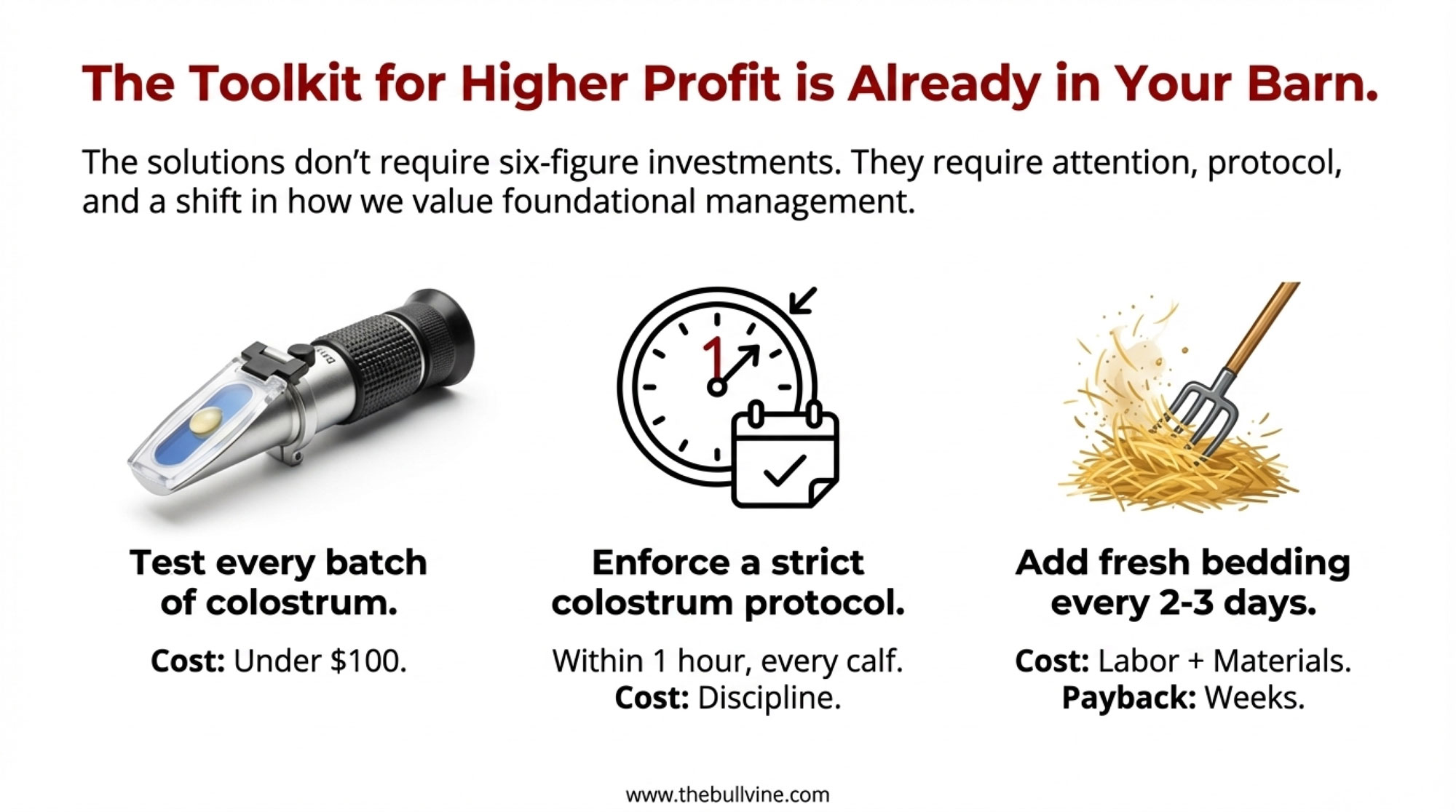
NewsSubscribe
First
Last
Consent

The €27,000 Question 80% of Dairy Farmers Can’t Answer (This Winter, You Will)

80% of dairy farmers can’t answer a €27,000 question. After this winter, you won’t be one of them.

EXECUTIVE SUMMARY: There’s a €27,000 (~$29,000 USD) question that 80% of dairy farmers can’t answer: What’s your feed efficiency ratio? That single number determines whether your operation’s biggest expense—50-70% of costs according to USDA data—generates profit or disappears into the manure pit. The math is compelling: improving from 1.4 to 1.6 efficiency captures €281 per cow annually without new genetics, additional cows, or capital investment. Research from Iowa State’s Dr. Lance Baumgard, Cornell’s transition cow program, and Penn State Extension reveals three proven strategies: systematic measurement, silage preservation, and metabolic optimization. Winter 2025-2026 is your measurement window—housed cattle, stable rations, no heat stress confounding your baseline. All you need: seven days, a bathroom scale, and a moisture tester. The bottom line is simple: you can’t deposit milk production; you deposit margin.

Growing numbers of progressive dairy operations are discovering that a single metric—feed efficiency—holds the key to capturing thousands in additional profit without producing more milk. Here’s what the industry’s efficiency pioneers are finding, and how your operation can benefit from their insights.

The question caught the experienced dairy farmer off guard during a routine consultation last winter: “What’s your current feed efficiency ratio?” After successfully managing 100 cows for 15 years, producing a respectable 35 kilograms of milk per cow daily, he couldn’t answer. Like many in the industry, he knew total feed costs and milk production, but not the critical ratio connecting them.

What happened next transformed his operation. Within twelve months of implementing systematic efficiency measurement, his farm captured over €15,000 (~$16,200 USD) in additional profit—without buying a single additional cow or increasing milk production. His story reflects a broader awakening across the dairy industry: improvements in feed efficiency from 1.4 to 1.6 generate approximately €270 (~$290 USD) per cow annually, based on current commodity prices of €0.25 per kilogram dry matter and €0.40 per kilogram milk. For a typical 100-cow operation, we’re talking about €27,000 (~$29,000 USD) in potential improvement.

This builds on what we’ve seen in operations worldwide. Farms implementing comprehensive efficiency strategies report remarkably consistent results. With feed costs accounting for 50-70% of operational expenses, according to USDA Economic Research Service data, understanding this metric has become fundamental to sustainable dairy farming.

Understanding the Industry’s Relationship with Efficiency Data

What’s particularly noteworthy is how sophisticated we’ve become in certain areas—genomic testing, milk component analysis, reproductive protocols—while feed efficiency remains a blind spot for many successful operations. I find this fascinating, actually.

Industry consultants Jacques Bernard and Christine Massfeller regularly encounter this pattern. When they ask fundamental questions about dry matter consumption or cost per kilogram of energy-corrected milk, even experienced producers often pause. This isn’t about capability—it reflects how our industry has traditionally measured success.

Recent industry observations suggest that while most farms diligently track milk production and components, regular efficiency calculation remains less common. The gap between what we measure and what drives profitability deserves our attention.

THE GOLDEN RATIOS: Know Your Efficiency Targets

GroupTarget
Whole Herd> 1.5
High-Producing Group> 1.7
First-Lactation Heifers> 1.6
Late Lactation> 1.2

⚠️ WARNING: Fresh Cows (First 21 Days) Above 1.5 = Metabolic Danger Zone

Fresh cows with efficiency above 1.5 are actually experiencing a dangerous negative energy balance, mobilizing body reserves at an unsustainable rate despite appearing to be top producers. Cornell University’s transition cow management resources indicate that these animals face a substantially higher risk of metabolic disease.

The Economics Behind Efficiency Improvement

Let me walk through some practical mathematics that illustrates why this matters so much to your bottom line. Consider a standard scenario with 35 kg of daily milk production at a milk price of €0.40 per kilogram and a dry matter feed cost of €0.25 per kilogram.

Metric1.4 Efficiency1.6 EfficiencyDaily Difference
Dry Matter Intake25.0 kg21.9 kg-3.1 kg
Feed Cost (€0.25/kg)€6.25€5.48€0.77 Saved
Income Over Feed Cost€7.75€8.52+€0.77 Profit
Annual Impact (100 Cows)+€28,100 (~$30,350 USD)

The difference—€0.77 per cow daily—accumulates to €281 annually per animal. Scale that across 100 cows, and you understand why progressive producers are prioritizing this metric.

I recently spoke with a Wisconsin producer who shared an interesting perspective. His cows are producing 2 kg less milk than three years ago, yet his operation is significantly more profitable because feed costs dropped by double digits through efficiency improvement. Sometimes the path to profitability isn’t about maximum production—it’s about optimal conversion.

Learning from Poultry and Swine: A Different Approach

The contrast between dairy and monogastric operations offers valuable lessons. Poultry and swine producers monitor feed conversion with remarkable precision, whereas dairy producers have traditionally focused elsewhere. Why this difference?

Part of it comes down to the simplicity of measurement. Tracking tissue growth in a broiler is straightforward compared to partitioning nutrients across milk components, body condition, and reproduction in dairy cattle. Their shorter production cycles provide rapid feedback, and integrated technology has become standard infrastructure.

Modern broiler facilities employ AI-powered systems, achieving impressive precision in automated monitoring. Swine operations use real-time tracking for weight, growth, and intake patterns. This isn’t futuristic—it’s current standard practice enabling continuous optimization.

What’s encouraging is dairy’s technological evolution. The Cattle Feed Intake System developed at the University of Wisconsin-Madison uses 3D cameras and deep learning for individual cow monitoring. Early adopters report payback within 18 months through efficiency gains alone. We’re catching up, and the results are promising.

Recognizing Efficiency Problems: Key Indicators

If you’re observing these signs, it’s time for closer examination:

  • Consistent whole corn kernels in manure—beyond occasional presence
  • Warm silage face—noticeably above ambient temperature, sometimes steaming
  • Severe TMR sorting—refusals predominantly long stems while grain disappears
  • Variable manure consistency within pens—suggesting diet variation
  • Body condition variance exceeding 0.75 points within groups
  • Reduced cud chewing—below the target 7-10 hours daily
  • Long particle predominance in refusals—above 19mm

Penn State Extension’s feed management resources indicate that multiple symptoms typically correlate with efficiency below 1.3.

Three Complementary Strategies for Efficiency Improvement

The evolution of nutrition strategies over the past decade has been remarkable. What started as competing philosophies has matured into complementary systems addressing different efficiency aspects.

Strategy 1: The Measurement Foundation (Data > Assumptions)

Improvement starts with accurate data. German-based AHRHOFF GmbH, operating across multiple countries since 1996, exemplifies this approach. Feed advisor Rainer Kossmann describes their priority as helping clients develop an intuitive understanding of herd consumption through systematic measurement.

The systematic approach incorporates digital tracking for precise dry matter intake, Penn State Particle Separator analysis for sorting behavior, manure evaluation for passage rate assessment, and regular moisture testing for ration accuracy. This foundation reveals the actual difference between assumed and actual intake—often a 10-15% gap worth thousands of dollars annually.

Strategy 2: Preserving Feed Value (The Hidden Rumen Driver)

Forage quality determines rumen function potential—and this is where many operations unknowingly leak profit. Luis Queiros from Lallemand Animal Nutrition explains how energy preservation during storage and feedout represents an often-overlooked opportunity.

Quality inoculant technology, incorporating specific bacterial strains like Lactobacillus buchneri and L. hilgardii, delivers measurable benefits. Research consistently demonstrates typical responses of 1.5 kg additional dry matter intake and nearly 2 kg increased fat-corrected milk. Properly treated silage maintains stability for over two weeks after opening, compared to just days for untreated material. The investment math is compelling: €4,500 (~$4,860 USD) in inoculant typically returns €12,600 (~$13,600 USD) in preserved feed value, before accounting for production benefits.

Strategy 3: Metabolic Optimization (The Stress-Efficiency Connection)

Research from Iowa State University’s animal science department, led by Dr. Lance Baumgard and published in the Journal of Dairy Science, demonstrates how metabolic stress fundamentally compromises efficiency. When cows experience heat stress, transition challenges, or subclinical acidosis, gut barrier function deteriorates. This “leaky gut” response triggers immune activation, consuming glucose equivalent to 25-30 liters of milk—energy that could otherwise support milk synthesis.

University of Florida’s dairy science team has quantified the opportunity through heat abatement studies. Operations implementing comprehensive cooling protocols during summer months recovered 8-12% of heat-stress-related efficiency losses. The key insight: stress management isn’t separate from nutrition—it’s foundational to feed conversion.

Cornell University’s transition cow program reinforces this connection. Their research shows that cows experiencing inflammation during the transition period allocate more nutrients to immune function and less to milk production. Targeted interventions—proper close-up nutrition, minimizing social stress, optimizing stocking density—can shift this balance back toward production. Some operations implementing comprehensive transition protocols report efficiency improvements of 0.1-0.2 points within the first 60 days in milk.

Strategic Timing: Why Winter Matters for Measurement

Over years of consulting, I’ve observed that operations that begin efficiency programs in winter consistently achieve superior results compared to those that start in summer. The science supports this pattern.

Winter provides measurement advantages that summer simply can’t match. Housed cattle consuming consistent TMR eliminate the variables inherent in grazing systems. Research from the University of Minnesota demonstrates that TMR-to-pasture transitions can initially reduce intake by nearly 30%, making accurate efficiency calculations challenging during grazing seasons.

Temperature effects matter enormously. When the Temperature Humidity Index exceeds 72, production impacts begin. USDA data from southwestern operations shows average decreases of around 12%, with severe heat causing dramatic drops. Winter measurement reveals true biological capacity rather than heat adaptation.

By mid-winter, silage has stabilized post-fermentation but hasn’t deteriorated. Moisture content remains consistent week to week—essential for calculation accuracy. Plus, without fieldwork pressure, you have bandwidth for careful measurement and analysis. As Dr. Jane Sayers from Northern Ireland’s CAFRE observes, winter provides an opportunity to focus on intake monitoring, which is often overlooked during busier seasons.

Regional Considerations and Operational Realities

Different systems require different approaches—what works for California’s Central Valley operations won’t necessarily translate to Irish grazing systems or Wisconsin tie-stalls.

Pasture-based operations in Ireland, New Zealand, and parts of the Netherlands face unique measurement challenges. Daily efficiency can swing 0.2-0.3 points based on grass quality and weather. These farms benefit from establishing winter baselines during housing, then using those benchmarks to evaluate grazing performance.

Large confined operations in California, Arizona, and emerging markets have measurement consistency advantages but face greater heat stress challenges. These systems often achieve dramatic efficiency gains from metabolic support strategies, particularly during the summer months.

Smaller operations sometimes question whether efficiency improvement justifies investment. The percentage gains remain consistent regardless of scale—a 30-cow herd capturing €8,100 (~$8,750 USD) annually still achieves excellent returns. The key is appropriate implementation: perhaps weekly rather than daily measurement, creative use of existing equipment, and acceptance that progress beats perfection.

Organic producers face intervention restrictions but consistently achieve respectable efficiency through careful forage management and natural fermentation optimization. Several Northeast organic operations report 1.55+ efficiency using approved methods exclusively.

Your 7-Day Efficiency Startup Checklist

Starting efficiency measurement doesn’t require sophisticated infrastructure. Here’s a practical approach using equipment most farms already have:

Day 1: The Weigh-In. Establish your weighing system—a bathroom scale with a bucket works initially. Conduct your first dry matter test using microwave methods validated by extension services. Record pen populations and milk production with components. This is your baseline moment.

Days 2-6: The Data Gather. Continue recording delivered feed from your mixer display, weigh refusals, and test moisture. Calculate daily intake and efficiency while watching for patterns. Don’t chase perfection here—consistency matters more than precision initially. You’re building a habit, not writing a research paper.

Day 7: The Reckoning. Calculate weekly averages by group. Fresh cow efficiency above 1.5 or a herd average below 1.3 warrants immediate consultation with a nutritionist—these indicate intervention needs. This is the number that tells you whether you’re leaving money on the table.

The calculations are straightforward: Dry matter intake equals delivered feed times dry matter percentage, minus refusals times their dry matter percentage, divided by cow count. Energy-corrected milk calculators from Cornell or Penn State handle standardization. Efficiency equals ECM divided by DMI.

Investment Reality and Return Expectations

Transparency about costs builds trust. Based on current market conditions, here’s the realistic investment requirements:

Measurement systems require approximately €3,500 (~$3,780 USD) initially, €2,200 (~$2,375 USD) annually for feed management software, moisture testing equipment, particle separation tools, and scales.

Silage preservation runs €4,500 (~$4,860 USD) annually for inoculant at typical application rates. This investment consistently returns triple value in feed preservation alone, before production benefits.

Transition and metabolic support through quality mineral programs and stress mitigation protocols costs around €3,500 (~$3,780 USD) annually for 100 cows. University research suggests that even modest improvements in transition cow health can recover this investment within the first lactation.

Investment CategoryYear 1Ongoing
Measurement Systems€3,500 (~$3,780)€2,200 (~$2,375)
Silage Preservation€4,500 (~$4,860)€4,500 (~$4,860)
Transition & Metabolic Support€3,500 (~$3,780)€3,500 (~$3,780)
Total€11,500 (~$12,420)€10,200 (~$11,015)
Conservative Benefit€20,000-27,000 (~$21,600-29,160)
Typical Payback5-7 months

Industry Evolution and Future Considerations

The dairy industry faces an interesting crossroads in measuring and reporting efficiency.

Major processors across Europe—Danone, Arla, FrieslandCampina—are incorporating efficiency metrics into sustainability programs and payment structures. While specific program details continue evolving, the direction is clear: efficiency measurement is transitioning from optional to essential.

Carbon market developments offer additional opportunity. Regulatory frameworks in California and Europe are beginning to assign value to efficiency improvements as methane reduction strategies. Operations achieving 1.6+ efficiency may access substantial additional revenue through emerging carbon credit markets.

Within several years, industry observers expect efficiency reporting will become standard for premium market access, sustainability program participation, and competitive financing. Progressive lenders already incorporate these metrics into risk assessment.

Practical Takeaways for Your Operation

The €27,000 annual opportunity exists within your current genetics through management improvement. Unlike genetic selection, requiring years, management delivers returns within months. Each month’s delay represents approximately €2,250 (~$2,430 USD) in foregone benefit.

Starting simple with consistent measurement beats waiting for perfect systems. Basic tools—scale, moisture tester, spreadsheet—combined with two hours weekly effort can generate substantial efficiency gains.

Winter timing provides optimal measurement conditions. January through March offers stable feeding without heat stress or grazing variables, establishing accurate baselines for year-round improvement.

Sequential implementation maximizes success. Begin with a measurement to understand current performance. Address forage quality to secure your input foundation. Then optimize metabolic health through evidence-based transition protocols. Each phase builds on previous improvements.

The 1.5 efficiency threshold separates sustainable from struggling operations. Below 1.3 indicates a crisis requiring immediate attention. Above 1.5 provides a foundation for optimization toward 1.6+ targets where premium opportunities emerge.

As one experienced consultant observed: “Weekly efficiency calculation drives profitable decisions. Annual calculation generates excuses. Never calculating ensures slow decline without understanding why.”

KEY TAKEAWAYS

  • €281 per cow. €27,000 per herd. Every year. Moving from 1.4 to 1.6 efficiency captures this without new genetics, additional cows, or capital investment. It’s management money—yours to take or leave.
  • Fresh cows above 1.5 efficiency aren’t stars—they’re sirens. High early efficiency signals dangerous mobilization of body reserves, not superior genetics. These cows are heading for ketosis. Monitor them; don’t celebrate them.
  • Three strategies. One system. No shortcuts. Measurement reveals your baseline. Silage preservation protects your inputs. Metabolic optimization unlocks conversion. Skip one, and the others underdeliver.
  • Winter 2025-2026 is your measurement window—use it. Housed cattle, stable rations, no heat stress skewing numbers. January through March gives you the cleanest baseline you’ll get all year.
  • The barrier to €27,000? Seven days and a bathroom scale. Add a microwave for moisture testing and a spreadsheet. That’s it. Start this week. Stop guessing. Start weighing.

The Bullvine Bottom Line

You can’t deposit milk production; you deposit margin. Genetic potential means nothing if your conversion is poor. For the cost of a bathroom scale and a moisture tester, you can unlock €27,000 (~$29,000 USD) in hidden value this winter. Stop guessing and start weighing.

Complete references and supporting documentation are available upon request by contacting the editorial team at editor@thebullvine.com.

Complete references and supporting documentation are available upon request by contacting the editorial team at editor@thebullvine.com.

Learn More:

Join the Revolution!

Join over 30,000 successful dairy professionals who rely on Bullvine Weekly for their competitive edge. Delivered directly to your inbox each week, our exclusive industry insights help you make smarter decisions while saving precious hours every week. Never miss critical updates on milk production trends, breakthrough technologies, and profit-boosting strategies that top producers are already implementing. Subscribe now to transform your dairy operation’s efficiency and profitability—your future success is just one click away.
NewsSubscribe
First
Last
Consent

The Real Reason Dairy Farms Are Disappearing (Hint: It’s Not About Better Farming)

Dairy success isn’t about better farming anymore—here’s the real force changing who survives and who sells out.

The February 2024 USDA report had a number that’s stuck with me: about 1,500 U.S. dairy farms closed in 2023, yet national milk production ticked higher. That’s not just abstract data—it’s what drives our conversations at kitchen tables and farm meetings across the country. Let’s talk through what’s really happening and what it means for the future.

U.S. dairy farming faces an existential consolidation crisis, with farm numbers plummeting from 39,300 operations in 2017 to a projected 10,500 by 2040—a 73% reduction driven by systematic structural advantages favoring mega-operations over traditional family farms, with 1,420 farms disappearing annually as of 2024.

Looking at How the Structure Has Shifted

Start with the numbers, because they’re telling: The 2022 Census of Agriculture shows about 65% of American milk now comes from just 8% of herds—those with over 1,000 cows. Meanwhile, nearly 9 out of 10 farms (the 100–500 cow group) account for only 22% of the supply. In the Northeast and Midwest, that’s still the “standard” size, but the playing field keeps tilting.

As one third-generation Wisconsin farmer shared, “I remember 13 dairies on our road, but now it’s just us. Plenty of the folks who exited were younger managers, not retirees. They just couldn’t get the numbers to work.”

Cost of production varies dramatically by herd size, with the smallest operations facing a devastating $9/cwt disadvantage that translates to $250,000 in annual losses for a typical 600-cow farm—a gap driven by scale advantages in feed purchasing, financing, and regulatory compliance rather than management quality.

Cornell’s Dairy Farm Business Summary for 2022 has it in black and white: the biggest herds report $22–$24/cwt cost of production. For 100–199 cow operations, the range is $31–$33/cwt. In a market where the base price is set by regional blend or federal order, that gap eats margin and equity fast.

Beyond Raw Efficiency: What’s Really Behind Cost Gaps

What’s interesting here is how much of the “efficiency” story isn’t really about cow management or even genetics anymore. I talked to a Central Valley manager running 5,000 cows who summed it up: “We buy grain by the unit train—110 railcars. Our delivered price is CBOT minus basis, sometimes 15 cents lower. My neighbor with 300 cows pays elevator price, plus haul; that’s 40, 50 cents more per bushel.”

It’s not just West Coast operations seeing this. In the Upper Midwest, neighbors share similar experiences. Volume buyers get priority and save dollars, not because they feed cows better, but because they can buy enough at once to command a discount.

Bring in finance, and the gap widens. Published rates show 2,000-cow herds receiving prime plus 0.5%. A 200-cow farm might see prime plus two. On a $1 million note, that’s more than $15,000 a year in extra interest just for being smaller.

Then consider environmental compliance. The latest Wisconsin Department of Ag reports—which many of us turned to during the farm planning season—show the cost of nutrient management, methane compliance, and water permits comes out to 50 cents/cwt for the largest herds, but easily $15/cwt or more for the smallest. It’s the same paperwork, same inspector fee—just spread over far fewer cows and pounds.

The scale advantage isn’t about better farming—it’s about systematic structural advantages that give large operations a $4/cwt cost edge through volume discounts on feed, preferential financing rates, amortized regulatory compliance costs, and labor efficiency, creating a $100,000 annual penalty for a 500-cow farm that has nothing to do with management quality.

The Co-op/Processor Crossover: Facing Up to the Math

Now, here’s where a lot of dinner-table talk turns pointed. Vertical integration with co-ops, especially after big moves like DFA’s $425 million purchase of Dean Foods’ 44 plants, changes the dynamic. Industry estimates now indicate that more than half of DFA members’ milk flows through DFA plants.

There’s no way around it: when your co-op is both your “agent” and your buyer, it faces a built-in conflict. The original co-op job—fight for a fair farm price—collides with the processor’s goal: keep input costs as low and steady as possible.

A Cornell ag econ professor put it bluntly at last year’s co-op leadership workshop: “Co-ops owning plants face incentives that are tough to align. You can’t maximize both farmer pay price and processing margin.” And I’ve seen the evidence myself; the research shows co-ops often have lower stated deductions, but within the co-op group, “other deductions” can vary wildly. As one board member told us, “Transparency on this stuff is hard for everyone, even when we want it.”

Think about it: if your co-op owns the plant, is the negotiation about pay price truly across the table or just across the hallway?

Canadian Lessons: Costs and the Future

Now, Canadian friends watching these trends aren’t immune either. The Canadian Dairy Information Centre’s latest data puts the last decade’s dairy farm reduction at over 2,700, even under supply management. And quota levels are a choke point: In Ontario, with a strict cap, quota changes hands around $24,000 per kilo of butterfat; Alberta’s uncapped market runs up past $50,000.

A young producer near Guelph explained it best: “We want to keep the farm in the family, but the math now is about buying quota at market rate from Dad—he paid $3,000/kilo in the ’90s. I pay $24,000/kilo or more, and start so far behind on cash flow it feels impossible.”

Canadian dairy quota prices have exploded from $3,000 per kilogram in the 1990s to $24,000 in Ontario and $50,000 in Alberta by 2023—a 1,567% increase that creates an impossible generational wealth transfer barrier, forcing young farmers to begin their careers hundreds of thousands of dollars in debt simply to acquire the right to produce milk their parents obtained for a fraction of the cost.

Producers Team Up—and Win

We should all pay attention to how producers abroad have responded. In Ireland, Dairygold tried to drop prices, but farmers quickly networked on WhatsApp. Once they started comparing pay stubs, they discovered inconsistencies—same pickup, same composition, different pay. They organized: “If 200 show up with real data, will you join?” The answer was yes. Six weeks, 600 farmers, and the transparency improved, the price cut was rescinded.

That lesson isn’t just for Ireland. That’s modern farm business—facts and solidarity over rumors and grumbling.

U.S. Adaptation Tactics: What’s Working

Across the U.S., I’ve watched farmers embrace savvy but straightforward approaches. Central Valley producers doubled back to their milk checks and truck bills and found that some paid 20 cents/cwt more for identical hauls. As a group, they pressed for change—and got it.

Midwesterners have started bottling their own milk—Wisconsin’s extension reports show farmgate price benefits of $2 to $4 a gallon, though yeah, getting there takes $75,000 to $100,000 and some serious compliance stamina.

Debt is a fresh challenge in its own right in cow management. Now’s the time to renegotiate any credit above prime plus one. Dropping even one percent on a $2 million note brings $20,000–$25,000 savings straight to the P&L.

Environmental Law: A Sea Change

California’s methane digester rules, fully phased in over the past two years, are a classic case of “scale wins again.” For big operations, $4 million-plus digesters can become a profit center—especially if you trade renewable natural gas credits north of $1 million a year. Small farms? They can’t justify the capital, so the compliance cost splits unevenly—UC Davis economists show $2/cwt for small farms, under 50 cents for the largest.

It’s not about better manure management; it’s about who can amortize the cost.

The Path Ahead: What’s Next in Dairy Consolidation

The USDA’s Economic Research Service expects U.S. dairy farm numbers to dip below 10,000 by the mid-2030s, with Canadian farm numbers also dropping to around 4,000–5,000. That’s the math if nobody changes the model or the market.

But honestly, what gives me hope are examples of when perseverance, innovation, and strategic shifts pay off. In Wisconsin, several smaller herds now sell directly into grass-fed cheese contracts, pulling in a $4/cwt premium (more than make-allotment size, less fight for line space). “We stopped competing with 5,000-cow barns by beating them at their game,” one farmer told me. “We get paid for our story and our butterfat.”

Where To Focus Now

  • Calculate Your Position Honestly. Know your true cost—family living included—against hard local benchmarks. If the numbers don’t lie, accept what you see and plan accordingly.
  • Don’t Go It Alone. From paycheck audits to volume negotiations, the farms that win increasingly do so together.
  • Strategic Awareness Beats Production Alone. The future belongs to those who know how pricing, processing, and consumer trends intersect—and find their “crack” in the system instead of just producing more.

As Tom Vilsack put it at a dairy business roundtable: “We love to say we’re saving family farms, but policy and business choices keep rewarding bigness and consistency.” No matter your model—organic, conventional, something in between—the goal is to find your margin, your allies, and your leverage.

The numbers will keep changing, but one reality holds—those who adapt, share, and innovate stand the best chance. Old rules are being rewritten, and it’s worth being part of that conversation. For deep dives on industry economics, co-op strategy, and farm resilience, visit www.thebullvine.com.

KEY TAKEAWAYS

  • Butterfat numbers and raw efficiency don’t guarantee survival—market scale, price leverage, and transparency do.
  • Question every deduction and demand clarity from your co-op or processor—internal conflicts don’t have to shortchange you.
  • Benchmark your costs with neighboring farms and negotiate together—solo producers rarely win against consolidated buyers.
  • The farms thriving today are adapting: going direct-to-consumer, value-adding, or finding specialized markets to earn more per cwt.
  • Success in modern dairy comes from forward planning, embracing new models, and building your own leverage—not waiting for the system to “fix itself.”

EXECUTIVE SUMMARY:

Dairy’s old rules—“be efficient and you survive”—no longer hold. Drawing on real farm stories and national data, this investigation exposes why scale, access, and co-op consolidation matter more than top cow performance. You’ll see how market power and processor influence—not just farm management—decide who survives and who sells out. With insights from producers challenging these trends, along with practical strategies and benchmarks, this article is a must-read for anyone rewriting their playbook. Get the facts, the framework, and a clear-eyed look at what real success in dairy now demands.

Complete references and supporting documentation are available upon request by contacting the editorial team at editor@thebullvine.com.

Learn More:

Join the Revolution!

Join over 30,000 successful dairy professionals who rely on Bullvine Weekly for their competitive edge. Delivered directly to your inbox each week, our exclusive industry insights help you make smarter decisions while saving precious hours every week. Never miss critical updates on milk production trends, breakthrough technologies, and profit-boosting strategies that top producers are already implementing. Subscribe now to transform your dairy operation’s efficiency and profitability—your future success is just one click away.
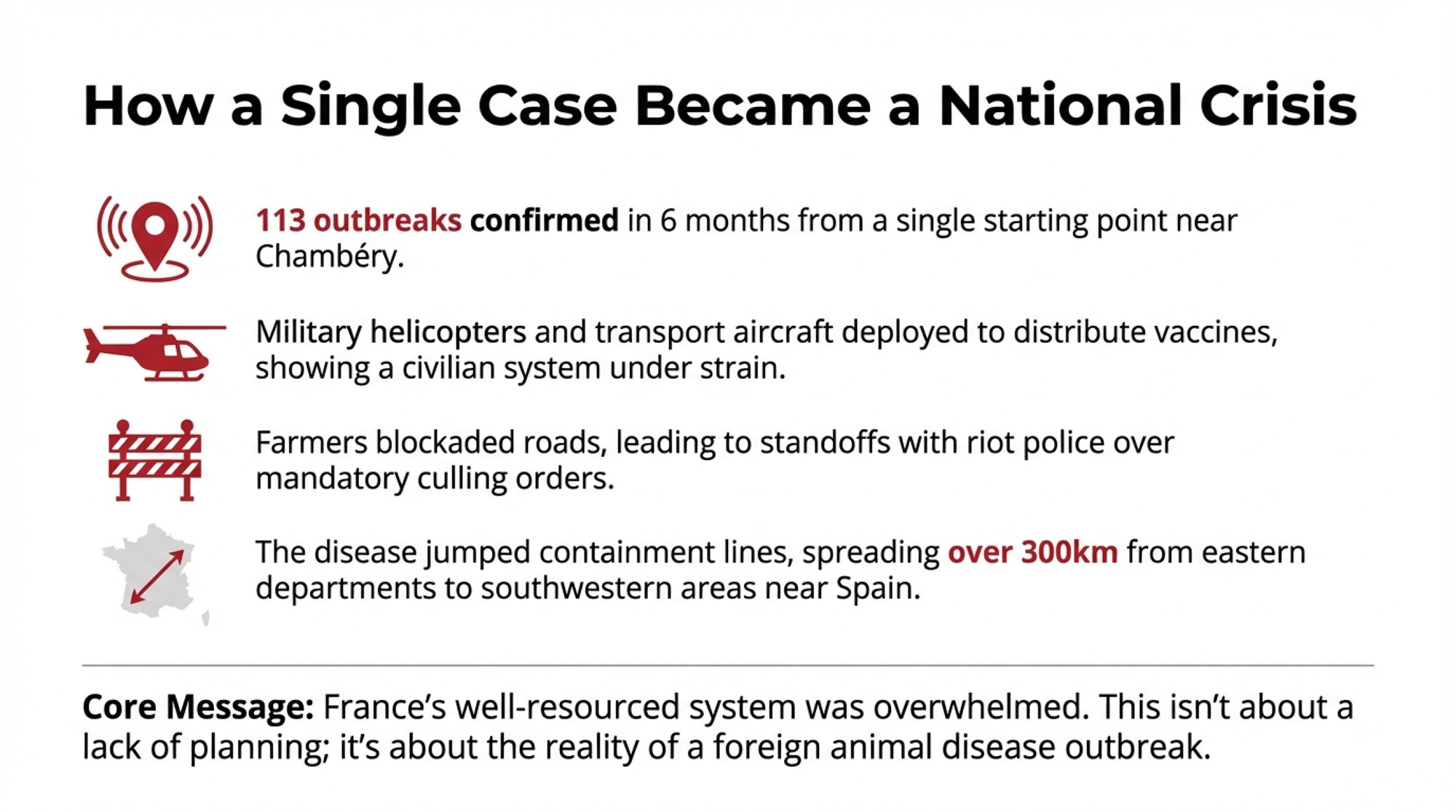
NewsSubscribe
First
Last
Consent

Wisconsin Proves It: Processed Alfalfa Adds $30K/Year – But Execution Is Everything

$30K/year from processed alfalfa. Wisconsin proved it. This tech rewards discipline—and punishes wishful thinking.

EXECUTIVE SUMMARY: Wisconsin researchers just proved what skeptics doubted: mechanically processed alfalfa silage can add $30,000/year to a 100-cow operation. But here’s what separates farms that profit from farms that waste money. The September 2024 Journal of Dairy Science study documented 1.5 kg/day more energy-corrected milk and 5.8% better feed efficiency—that’s $29,000-30,000 in milk revenue plus $8,600 in feed savings annually. The catch is straightforward but unforgiving: this only works on quality forage under 45% NDF. Process weather-damaged hay over 50% and you’re burning cash, not saving it. This technology rewards disciplined managers and punishes wishful thinking—farms already hitting quality targets see full returns, while those struggling with harvest timing need to solve that problem first. No technology rescues poor execution. Start with custom processing at $3/ton, book your operator by March, and let your own numbers make the final call.

Here’s what’s interesting: New research from Wisconsin shows mechanically processed alfalfa silage can boost energy-corrected milk by 1.5 kg per day and improve feed efficiency by nearly 6%. But the real story? It only works if your operation can handle the logistics.

At a Glance:

  • Milk production gain: 1.5 kg ECM/day per cow
  • Annual revenue increase: $29,000-30,000 (100 cows)
  • Processing cost: $3/ton custom hire or $50-75K equipment
  • Feed efficiency improvement: 5.8% less DMI for the same production
  • Break-even: Immediate with custom hire; 3.5 years with ownership
  • Quality threshold: Process only if NDF < 45%
Wisconsin nailed it: Mechanically processed alfalfa blows past traditional in every metric—if you nail the forage quality. That 12-point NDF digestibility jump and 1.5 kg ECM day? That’s real, documented by UW research.

You know, we’ve been making alfalfa silage the same way for generations—cut it, wilt it, chop it, pack it. Works fine, right? But what I’ve been following closely is this fascinating work coming out of the University of Wisconsin-Madison that might actually change how we think about forage processing.

The researchers up at the Dairy Forage Research Center in Prairie du Sac tracked 36 mid-lactation Holsteins over six weeks, and what they found in this September’s Journal of Dairy Science really caught my attention. They’re showing that mechanically processed alfalfa silage improved neutral detergent fiber digestibility from about 40% to nearly 52%. That’s almost a 12-point jump—and you don’t see that kind of improvement very often in forage research.

Here’s what’s really encouraging: The milk fat content went from 3.81% to 3.93%, and feed efficiency—that’s your energy-corrected milk per kilogram of dry matter intake—climbed by nearly 6%.

Matt Pintens, who led the research team, put it perfectly when he said they were “seeing cows do more with less.” The processing level index—that’s basically how much the cell walls get ruptured—jumped from about 38% with our conventional chopping up to 74% with mechanical processing. That’s a huge difference in how accessible that fiber becomes to the rumen bugs.

For a typical 100-cow operation here in the Upper Midwest, we’re talking about an additional $29,000 to $30,000 in annual milk revenue, based on what USDA’s reporting for current Class III prices around $19-20 per hundredweight. But here’s the thing—and this is where it gets interesting for those of us actually farming—it only works if you can execute the logistics properly.

How This Processing Actually Changes Things

Let me walk you through what’s happening at the cellular level, because it helps explain why this matters so much. When we chop alfalfa the traditional way, those cell walls stay mostly intact. You’ve got your cellulose, hemicellulose, and lignin all locked up tight, and even the best rumen microbes struggle to break through. The folks at Michigan State Extension have been documenting this for years—up to half the structural fiber in conventional silage can pass right through the cow undigested.

What mechanical processing does—and specifically, we’re talking about using a screenless hammermill after the alfalfa’s wilted in the field—is physically rupture those cell walls. The hammers essentially shred and fiberize the stems, creating way more surface area.

Dave Combs, the emeritus professor down at Madison, has this great way of explaining it: “Think of it like trying to dissolve a sugar cube versus granulated sugar—same material, but one dissolves immediately because of surface area.” That’s exactly what we’re doing for those rumen microbes.

The Wisconsin research documented faster fermentation, higher volatile fatty acid production—especially acetate, which you know is crucial for butterfat—and just more efficient energy extraction from the same amount of feed.

What really surprised me in their behavioral data was this: Cows fed the processed silage spent 49 more minutes lying down every day. They went from 751 minutes to 800 minutes of lying time. And their eating time? Dropped from 282 to 253 minutes daily. They’re eating more frequent but shorter meals—about 9.6 meals a day, averaging 27 minutes, compared to about nine meals averaging 32 minutes on conventional silage.

The Economics: When It Pencils Out (And When It Doesn’t)

Boost herd revenue by $30k with mechanical alfalfa processing. Wisconsin research reveals the NDF thresholds and logistics required for 5.8% better efficiency.

Tom Harrison, a nutritionist who’s been working with farms up in Vermont on this technology. Shares that “The economics are compelling, but only if you can execute the logistics.”

Quick Math for a 100-Cow Herd

Here’s what the Wisconsin study is showing:

  • Energy-corrected milk increase: 1.5 kg/day per cow
  • Annual production gain: 54,750 kg ECM for the whole herd
  • Butterfat yield increase: 2,920 kg annually

Based on what we’re seeing for component pricing this November, you’re looking at:

  • Conservative scenario ($19/cwt Class III): $29,233/year
  • Moderate scenario ($19.50/cwt with butterfat strength): $29,842/year
  • Optimistic scenario ($20/cwt with Class IV premium): $30,450/year

Custom Hire vs. Ownership: Breaking It Down

Processing OptionInitial InvestmentAnnual CostNet Benefit (100 cows)Break-Even Point
Custom Hire$0$600 (200 tons @ $3/ton)$28,600-29,850/yearImmediate profit
Equipment Ownership$50,000-75,000$7,750 (depreciation + maintenance)$21,450-22,700/year3.5-3.7 years
Co-op (3 farms)$17,000-25,000 per farm$2,600 per farm$26,600-27,850/year1.5-2 years

The Wisconsin Custom Rate Guide released this year shows custom processing at about $3 per ton. Now, in Wisconsin and Minnesota, you’ll find maybe 5-7 custom operators total. Eastern states typically have 1-2, while California’s Central Valley has 3-4, mostly concentrated near the major dairy regions. Beyond these regional operators, your state’s custom harvester association often maintains updated lists—definitely worth checking before harvest season.

I talked with John Martinez, who’s milking 120 cows near Tulare. He went the ownership route last year. “We figured with our harvest schedule and doing 300 tons of alfalfa annually, ownership made sense,” he told me. “But honestly, if I was doing less than 200 tons, I’d stick with custom hire.”

What often gets overlooked—and this is important—is the feed efficiency bonus. The Wisconsin study documented that 5.8% improvement in efficiency. For a herd eating 2,730 kg of dry matter daily, that’s 57,794 kg less dry matter consumed annually for the same production. With what the USDA’s Hay Market Report is showing for alfalfa values around $150 per ton dry matter, that’s another $8,669 in annual savings. That’s real money.

Quality Matters: Where Processing Shines and Where It Doesn’t

This is crucial, and the Wisconsin researchers were very clear about it: processing benefits vary dramatically depending on your starting forage quality.

You know, I’ve noticed farmers sometimes think processing can save a poor cutting. It can’t. Here’s what the data from Wisconsin and Extension research is showing:

How Different Quality Levels Respond

Premium first-cut (38% NDF, 72% NDF digestibility): This is your sweet spot. Processing takes digestibility from 72% up to around 81%—that’s the full benefit shown in the research, worth $30,000+ annually for a 100-cow herd.

Good first-cut (40% NDF, 68% NDF digestibility): Still excellent. You’re looking at digestibility jumping to 76%, with returns of $28,000 to $29,000 annually.

Marginal quality (42-45% NDF, 58-64% NDF digestibility): This is where many of us end up when rain delays harvest by a week. Processing still helps—digestibility improves to around 64-72%, generating $20,000 to $24,000 in value. It’s viable, but you’ve got to watch your costs.

Poor quality (50%+ NDF, less than 45% NDF digestibility): Here’s where processing hits a wall. You might see digestibility improve from 45% to maybe 49%, but that’s only worth $8,000 to $12,000 annually. Often not worth the processing cost.

As Dan Undersander, the forage specialist emeritus at Wisconsin, explains it: “The lignin content is the limiting factor. Once lignin hits 7-8% of dry matter—which happens in overmature or weather-damaged alfalfa—mechanical processing can’t overcome that biochemical barrier.”

Sarah Chen, who runs 200 cows over in Idaho, learned this the hard way. “We tried processing some rain-damaged first cut that tested at 52% NDF,” she told me. “Complete waste of money. Now we only process cuts under 45% NDF, and we segregate anything over that for the dry cows.”

Implementation: What’s Actually Working on Farms

After talking with extension specialists and farmers who’ve tried this technology, I’ve identified three make-or-break decisions:

Decision 1: How Will You Access Processing?

The biggest mistake I see? Farmers are waiting until June to start looking for a custom operator for the July harvest. By then, everyone’s booked solid.

Mark Olson at Minnesota Extension puts it bluntly: “If you want custom processing, you need to lock in an operator by March, period. Most regions only have one or two operators within 50 miles.”

Progressive Forage’s survey this year confirmed that custom operators in the Upper Midwest are typically booked 4-6 weeks in advance during peak season. And here’s something to consider—weather delays affect everyone at the same time. When your harvest is pushed back by rain, so is everyone else’s.

Decision 2: What Will You Actually Process?

Not everything needs processing. This surprised me when I first looked at the economics, but it makes perfect sense.

For a typical 100-cow operation producing maybe 200 tons of alfalfa silage annually:

  • First-cut at optimal quality (40-42% NDF): Process 80-100 tons
  • Second-cut (typically 35% NDF already): Skip it—it’s already high quality
  • Weather-delayed or poor cuts: Segregate for dry cows, don’t process

Jim Walsh, who milks 85 cows in Pennsylvania, has this figured out: “We only process our best first-cut, maybe 60 tons out of 180 total. Second and third cuts are already leafy enough. And anything that gets rained on? That goes to the heifers.”

Decision 3: How Will You Feed It?

This is where many farms stumble. You can’t just dump processed silage in with everything else and expect magic to happen.

The farms seeing the best results are those that can segregate. Lisa Thompson in New York dedicates her processed silage to her 25-head fresh cow group. “They’re the ones that need the highest quality feed, and they’re easiest to track for milk response,” she explains. “Within two weeks of starting on processed silage, our fresh group’s milk fat test jumped from 3.75% to 3.91%.”

Your Practical Timeline

Based on what’s worked for successful adopters I’ve interviewed, here’s a realistic timeline:

December-January (Right Now):

Start making those calls. Contact your current forage chopper about processing capabilities. Call your Extension office—they often know who’s running hammermills in your area. Here are the numbers if you need them:

  • Wisconsin: UW-Madison Forage Team at (608) 263-2890
  • Minnesota: University of Minnesota Forage Program at (612) 625-8700
  • Pennsylvania: Penn State Forage Specialist at (814) 863-0941
  • New York: Cornell PRO-DAIRY at (607) 255-4478
  • Other states: Check www.foragenetwork.org/state-contacts

Pull your harvest records from the last couple of years. When did you actually cut? What quality did you achieve? Be realistic about your typical harvest windows.

February-March:

Lock in your custom operator. Get the rate in writing—the Wisconsin Custom Rate Guide shows $2.50 to $3.50 per ton is typical. Specify your target processing level—you want a PLI of 70+ for this to work right.

Tom Harrison advises: “Don’t just say ‘process my alfalfa.’ Specify moisture targets, processing intensity, and get a commitment on timing.”

April-May (Pre-Harvest):

Get baseline measurements. Pull forage tests on your current conventional silage. Document current milk fat percentages and component levels. You need this data to prove whether processing works on your farm.

Plan your storage. Where will processed silage go? Can you keep it separate? Even just using a different bag or dedicating one section of your bunker makes tracking easier.

Being Honest About What We Don’t Know Yet

I think it’s important to be transparent here. The Wisconsin study, while rigorous, was a single trial, conducted at a single location, with 36 cows over six weeks. That’s solid science, but it’s not the whole story.

Dave Combs acknowledges this: “We need multi-year, multi-location data. We need to see how this performs in different climates, with different alfalfa varieties, especially the new reduced-lignin genetics.”

What we don’t know yet:

  • How processing performs with low-lignin varieties like HarvXtra or Nexgrow
  • Long-term effects beyond the six-week study period
  • Performance in large freestall operations with 500+ cows
  • How results vary between spring versus fall cuttings

As Harrison puts it, “I’d love to see data from California’s Central Valley versus Wisconsin versus the Maritime provinces. Different climates, different harvest patterns—will the results hold?”

Making the Decision: Who Should Jump In?

After reviewing all the research and talking with farmers who’ve tried this, here’s my take:

You should seriously consider processing this season if:

  • You consistently harvest first-cut alfalfa at 40-45% NDF or better
  • You have a reliable custom operator available (or 200+ tons annually to justify ownership)
  • You can segregate processed silage in storage
  • You track milk components and feed quality regularly
  • Current butterfat premiums in your market exceed $0.30/cwt

You should probably wait if:

  • Your typical first-cut runs 48%+ NDF due to weather delays
  • You can’t segregate storage or feeding groups
  • You’re switching forage contractors frequently
  • You don’t have systems to measure milk component response

Rick, who farms 150 cows in Minnesota, put it well: “This technology is like buying a better corn planter. It only helps if you can plant on time and manage the crop properly. Same with processing—it amplifies good management but can’t fix poor execution.”

What’s interesting is that farms already doing a good job with forage quality see the biggest absolute benefit. If you’re hitting 40% NDF consistently, processing can take you to the next level. If you’re struggling to get below 48% NDF, you’ve got bigger problems to solve first.

The research from Wisconsin is compelling, and the early farm adoptions I’m seeing suggest the benefits are real. But like any technology, success depends more on implementation than innovation. Start small, measure everything, and let your own data guide your decisions.

As one Extension specialist told me—and I think this really nails it—”The best farms aren’t the ones with the most technology. They’re the ones that can execute the technology they have.”

For those ready to take the next step, mechanical processing of alfalfa silage represents a genuine opportunity to improve feed efficiency and milk components. Just make sure you’re ready to execute the logistics before you commit to the technology.

For more information on mechanical processing research and custom operator listings, contact your state Extension forage specialist or visit the U.S. Dairy Forage Research Center website at www.ars.usda.gov/midwest-area/madison-wi/us-dairy-forage-research-center/

KEY TAKEAWAYS

  • $30K/year is verified science: Wisconsin’s September 2024 Journal of Dairy Science study documented a 1.5 kg/day increase in ECM and 5.8% better feed efficiency. For 100 cows, that’s $29,000-30,000 annually—plus $8,600 in feed savings.
  • Only quality forage pays off: Processing boosts digestibility 12 points on premium first-cut (40% NDF). Above 50% NDF? Save your money—lignin wins, and you lose.
  • Custom hire beats ownership for most: $600/year custom vs. $7,750/year ownership. Same result, zero equipment risk. Only consider buying at 200+ tons annually.
  • This rewards good managers, not bad ones: Farms already hitting 40% NDF get the full benefit. Still struggling past 48%? Fix your harvest timing before buying technology.
  • March deadline—call this week: Most regions have 1-2 custom operators who book solid 4-6 weeks ahead. Contact your Extension office now, or you’re sitting out 2026.

Complete references and supporting documentation are available upon request by contacting the editorial team at editor@thebullvine.com.

Learn More:

Join the Revolution!

Join over 30,000 successful dairy professionals who rely on Bullvine Weekly for their competitive edge. Delivered directly to your inbox each week, our exclusive industry insights help you make smarter decisions while saving precious hours every week. Never miss critical updates on milk production trends, breakthrough technologies, and profit-boosting strategies that top producers are already implementing. Subscribe now to transform your dairy operation’s efficiency and profitability—your future success is just one click away.
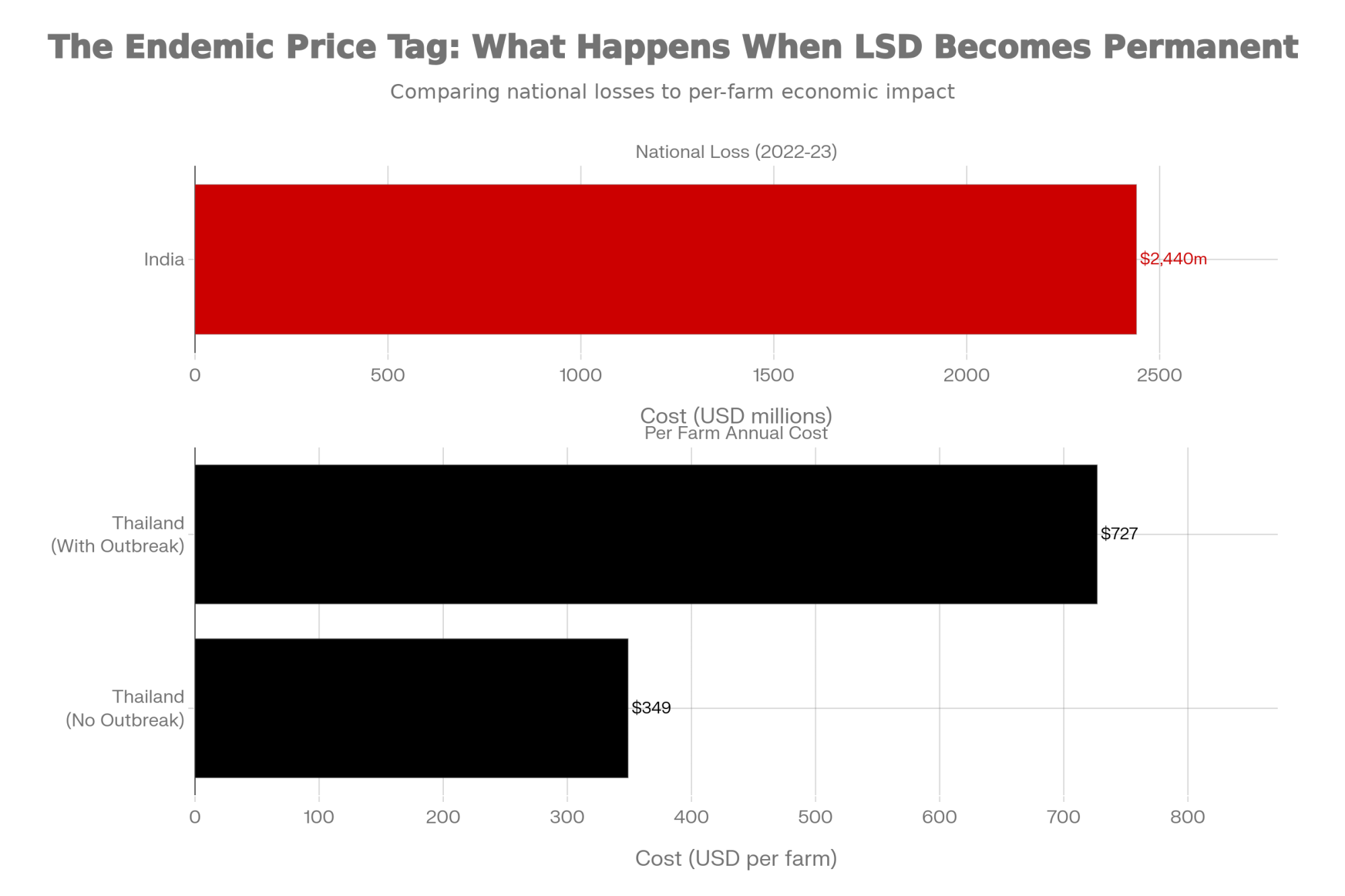
NewsSubscribe
First
Last
Consent

Stop Leaving $30,000 on the Table: The 6-Day Protocol That’s Getting Herds to 60% Heifer Conception

Still accepting 50% conception on your heifers? That’s $30,000 a year you’re handing to competitors who’ve figured out the 6-day protocol.

Executive Summary: If your heifers are stuck at 50% conception with sexed semen, you’re not unlucky—you’re running the wrong protocol. The 5-day CIDR was built for cows. Heifers ovulate later, and UW-Madison research shows 30% come into heat early on the 5-day program, wrecking your AI timing before you even breed. The 6-day protocol fixes this by extending progesterone exposure and pushing AI to 56-60 hours post-removal—when heifers actually ovulate. Published research in JDS Communications (Moore et al., 2023) showed conception climbing from 50% to 59% with this single change. For a 500-cow operation, that’s 15-18 more pregnancies a year—$30,000 or more you’re currently losing. But here’s the catch: execution has to be precise. If you can’t hit your timing windows within 30 minutes, don’t bother switching.

We’ve accepted 50% conception rates on heifers for too long because we treated them like small cows. The biology says we were wrong.

The reality: farms running the 6-day CIDR-Synch protocol are hitting 59-60% conception with sexed semen. Consistently. Month after month. The difference isn’t genetics, semen quality, or luck. It’s a one-day timing adjustment that finally matches how heifers actually ovulate—and a management discipline most operations haven’t seriously considered.

After digging into the research and talking with farms implementing this protocol, what I’ve found goes deeper than “try this instead.” It’s about why the protocols we’ve relied on never quite fit heifer physiology in the first place.

Heifers Aren’t Small Cows

Dr. Richard Pursley at Michigan State University—the reproductive physiologist whose Ovsynch work shaped modern synchronization—proved what many of us suspected: heifers respond to progesterone differently than cows.

When you insert a CIDR into a heifer, the exogenous progesterone suppresses LH pulse frequency more aggressively than in mature animals. The result? After CIDR removal, heifers take measurably longer to mount the LH surge that triggers ovulation. Longer than cows on identical protocols.

Dr. José Santos and his team at the University of Florida have documented this for over a decade. Dr. Milo Wiltbank’s follicular dynamics work at the University of Wisconsin-Madison confirms it.

That timing gap matters. A lot. Especially when you’re using sexed semen.

Sexed Semen Dies Faster—So Timing Has to Be Perfect

The sorting process is brutal on sperm cells. Dr. George Seidel’s pioneering work at Colorado State University showed what happens: cells get diluted, stained with fluorescent dye, and blasted through a laser detection system at high velocity. Pressure changes, UV exposure, mechanical stress—it all adds up.

The 2018 review in the journal Animal by Vishwanath clearly documented cellular damage. Sorted sperm show membrane destabilization and premature capacitation.

The bottom line: sexed semen doesn’t stay fertile as long in the reproductive tract as conventional semen. Period.

If your timing is off by a few hours with conventional semen, you’ve probably still got viable sperm when ovulation happens. With sexed semen? Those same few hours can mean sperm are dying right when you need fertilization to occur.

And here’s something worth noting—sire selection matters too. Some bulls’ semen handles the sorting process better than others. Farms achieving the highest conception rates with sexed semen often work with their AI representatives to identify sires with proven post-sort fertility, not just genomic merit.

The 5-Day Protocol Was Never Designed for Heifers

The standard 5-day CIDR protocol has become the default for dairy heifers. It works reasonably well—around 60% conception in well-managed herds with conventional semen.

But there’s a problem: Dr. Paul Fricke’s extension team at UW-Madison has documented that approximately 30% of heifers show early estrus on the 5-day protocol before the scheduled breeding time. That’s nearly a third of your animals potentially getting bred at suboptimal timing.

And the AI window of 48-56 hours post-CIDR removal? That’s based on cow physiology. For heifers—with their delayed LH response—ovulation often happens later than the protocol assumes.

You’re asking sperm to wait around while the oocyte isn’t ready. With sexed semen’s compressed fertility window, that’s a losing bet.

The 6-Day Fix: What the Research Actually Shows

The modification is straightforward: extend CIDR exposure by 24 hours and shift timed AI to 56-60 hours post-removal.

That extra day of progesterone allows smaller follicles more development time, creating a more uniform follicle cohort across the group. The later AI timing aligns insemination with when heifers actually ovulate.

The early estrus problem? Nearly eliminated. Research from Fricke’s team at UW-Madison shows early estrus dropping from roughly 30% on the 5-day protocol to nearly zero on the 6-day protocol—findings he presented at the 2025 Dairy Cattle Reproduction Council annual meeting.

The pregnancy data is what gets attention. In trials with over 800 Holstein heifers—published in 2023 by Moore and colleagues in JDS Communications—delaying AI by 8 hours with sexed semen increased pregnancies per AI by about nine percentage points. From roughly 50% to about 59%.

Whitney Brown, a PhD student working with Dr. Fricke at UW-Madison, is running larger-scale trials across Wisconsin commercial herds. The early results are holding up.

Myth vs. Reality

Myth: “Heifers are just harder to breed. You have to accept lower conception rates.”

Reality: Heifers aren’t harder to breed—they’re differently timed. The 5-day protocol was optimized for cows. When you match the protocol to heifer physiology, conception rates climb to 59-60% with sexed semen.

Conception rates jumped 9 percentage points while early estrus problems virtually disappeared with the 6-day protocol—proof that one extra day of progesterone exposure aligns AI timing with actual heifer ovulation patterns.

How Rosy-Lane Holsteins Cracked the Code

Rosy-Lane Holsteins in Watertown, Wisconsin—a 1,750-cow operation across two sites and recipient of the U.S. Dairy Sustainability Award—made the switch and documented what happened.

Partner Jordan Matthews, a UW-Madison dairy science graduate, was skeptical at first.

“We’d been running 5-day CIDR for years and getting acceptable results—low 50s on heifers with sexed semen,” Matthews shared. “When I first heard about the 6-day protocol, I honestly thought it was splitting hairs. One day difference? How much could that matter?”

The results surprised him. By month four, they were consistently hitting 58-60%. Same heifers. Same semen. Only the timing changed.

But here’s what Matthews emphasizes most:

“Switching protocols made us look hard at our execution. We realized our timing had been drifting—sometimes breeding at 50 hours post-removal, sometimes 58. We’d never really tracked it closely. When we committed to the 6-day protocol, we also committed to hitting our timing windows exactly. I think that discipline was as important as the protocol itself.”

— Jordan Matthews, Partner, Rosy-Lane Holsteins

That observation came up repeatedly in my conversations with farms. The protocol matters—but the precision of execution matters at least as much.

The Skeptic’s View (And Why It’s Worth Hearing)

Not everyone thinks this is a silver bullet. Dr. Carlos Risco—currently Dean of Oklahoma State University’s Center for Veterinary Health Sciences and formerly a professor of large-animal clinical sciences at the University of Florida—has seen farms switch and not achieve the results they expected.

“The research is solid, and the physiology makes sense,” Dr. Risco notes. “But I’ve seen farms switch to the 6-day protocol and not see the improvement they expected. Usually, it’s because they underestimated how demanding the execution requirements are. If you can’t consistently hit that 56-60 hour AI window—and in real-world conditions, that’s harder than it sounds—you may not capture the benefit.”

His advice? Get the fundamentals right first.

“Sometimes I tell producers: before you switch protocols, let’s look at your estrus detection accuracy, your body condition at breeding, your heat stress mitigation. Get those foundations solid first. Then we can talk about protocol optimization.”

The Discipline That Actually Drives Results

Dr. Paul Fricke—professor and Extension specialist at UW-Madison who presented this research at the 2025 Dairy Cattle Reproduction Council meeting—has studied protocol compliance across hundreds of Wisconsin operations.

“The farms getting top-tier conception rates aren’t necessarily using different protocols than average farms,” he observes. “They’re executing the same protocols more consistently. When we look at timing data, the high performers show tight clustering around target times. The average performers show much wider variation.”

What high-performing farms do:

  • Timing precision of ±30 minutes for every CIDR insertion, removal, and AI event
  • Written protocols specifying exact times—not “early morning” but “8:00 AM.”
  • Time-stamped records creating accountability
  • Minimal variation from cohort to cohort

The counterintuitive insight: stopping experimentation and locking in consistent execution often produces better results than constantly trying to optimize.

The Economics: What Open Heifers Actually Cost You

Per-heifer protocol costs run roughly $35-45 (GnRH, CIDR, PGF, sexed semen, labor). First-year setup investment—training, documentation, vet consultation—adds another $1,200-4,300.

For a 500-cow operation breeding 150-180 heifers annually, the total first-year investment runs approximately $6,500-12,000.

The return: moving from 50% to 60% conception means 15-18 additional pregnancies per year.

But here’s what really matters: every open heifer that doesn’t conceive costs you feed, housing, and delayed lactation revenue. At current, heifer values of $2,000-2,500 in many markets, those 15-18 additional pregnancies are worth $30,000-45,000.

Let me put it plainly: if you’re running 150 heifers at 50% conception when you could be at 60%, you’re leaving $30,000 or more on the table every year. That’s not a rounding error. That’s real money walking out the door.

The protocol typically pays for itself in year one.

Regional Reality Check

Heat stress hammers both protocols, but the 6-day advantage holds across every region and season—delivering 7-9 percentage point gains even in brutal summer conditions.

This protocol doesn’t perform identically everywhere.

In the Upper Midwest—Wisconsin, Minnesota, Michigan—where most validation research has been conducted, the 6-day protocol delivers consistent results across spring, fall, and winter. Summer is manageable with good heat abatement.

The Southeast and Southwest are different. Heat stress suppresses LH pulsatility regardless of protocol design. Extension data generally shows 8-12 percentage-point drops during heat-stress periods. The 6-day protocol still outperforms alternatives, but absolute numbers are lower. Some operations skip synchronized AI entirely during peak summer.

Pasture-based and dry lot systems face handling frequency constraints that make four precisely timed chute events over eight days more challenging than in confinement operations.

When This Protocol Isn’t Right for You

Reconsider if:

  • More than 15% of your heifers are prepubertal. The 6-day protocol assumes cycling heifers. For mixed groups, a 14-day CIDR protocol works better.
  • Your facilities can’t support ±30 minute timing precision. Without precise timing, the advantage erodes quickly.
  • Labor turnover is high. Consistency requires trained people who stay.
  • You’re already achieving 55%+ conception. The marginal improvement may not justify transition costs.

Alternatives:

  • 14-day CIDR-PG: More forgiving timing; mid-50s conception with sexed semen
  • Activity monitoring with conventional semen: Low-to-mid-60s achievable in well-run systems
  • MGA-based synchronization: Reduced handling; works well for pasture-based systems

The Bottom Line

The 6-day CIDR protocol works. The physiology is sound. The published research—Moore et al. 2023 in JDS Communications, ongoing UW-Madison Extension trials—backs it up. Farms executing it correctly are hitting 59-60% conception with sexed semen.

But it’s not magic. The farms getting those results are committing to execution discipline that most operations underestimate.

The deeper lesson? Constraint enables control. Stopping experimentation often produces better results than constant optimization.

That applies well beyond heifer breeding. But heifer breeding is a pretty good place to learn it. The question is whether you’re ready to stop tinkering and start executing.

Protocol Comparison

 5-Day Protocol6-Day Protocol
Day 0GnRH + CIDR inGnRH + CIDR in
Day 5CIDR out + PGF
Day 6CIDR out + PGF
Day 7GnRH + AI (48-56 hr)
Day 8GnRH + AI (56-60 hr)
Early estrus rate~30%~1%
P/AI with sexed semen~50%~59%

Implementation Schedule

DayTimeAction
Day 08:00 AMGnRH injection + CIDR insertion
Day 68:00 AMCIDR removal + PGF injection
Day 84:00 PMGnRH injection + Timed AI

Pre-Implementation Checklist

  • Confirm ≥85% of the heifer group is cycling
  • Assess facility capability for four precisely-timed chute events
  • Identify or train a dedicated AI technician
  • Establish a timing documentation system
  • Consult with the herd veterinarian on protocol fit
  • Review sire selection for post-sort fertility data

For protocol guidance specific to your operation, consult your herd veterinarian or state dairy extension specialist. The Dairy Cattle Reproduction Council (dcrcouncil.org) maintains additional synchronization resources.

Key Takeaways: 

  • It’s not bad luck—it’s the wrong protocol. The 5-day CIDR was built for cows. 30% of heifers come into heat early, wrecking your AI timing before you even breed.
  • One extra day changes everything. The 6-day protocol delays AI to 56-60 hours post-removal—when heifers actually ovulate.
  • The science is settled. Moore et al. (2023) in JDS Communications: conception jumped from 50% to 59% with sexed semen.
  • The cost of inaction: $30,000+. That’s 15-18 pregnancies a year you’re losing. Every year.
  • Discipline is non-negotiable. Hit your timing windows within 30 minutes, or don’t bother switching. This protocol rewards precision, not good intentions.

Complete references and supporting documentation are available upon request by contacting the editorial team at editor@thebullvine.com.

Learn More:

Join the Revolution!

Join over 30,000 successful dairy professionals who rely on Bullvine Weekly for their competitive edge. Delivered directly to your inbox each week, our exclusive industry insights help you make smarter decisions while saving precious hours every week. Never miss critical updates on milk production trends, breakthrough technologies, and profit-boosting strategies that top producers are already implementing. Subscribe now to transform your dairy operation’s efficiency and profitability—your future success is just one click away.
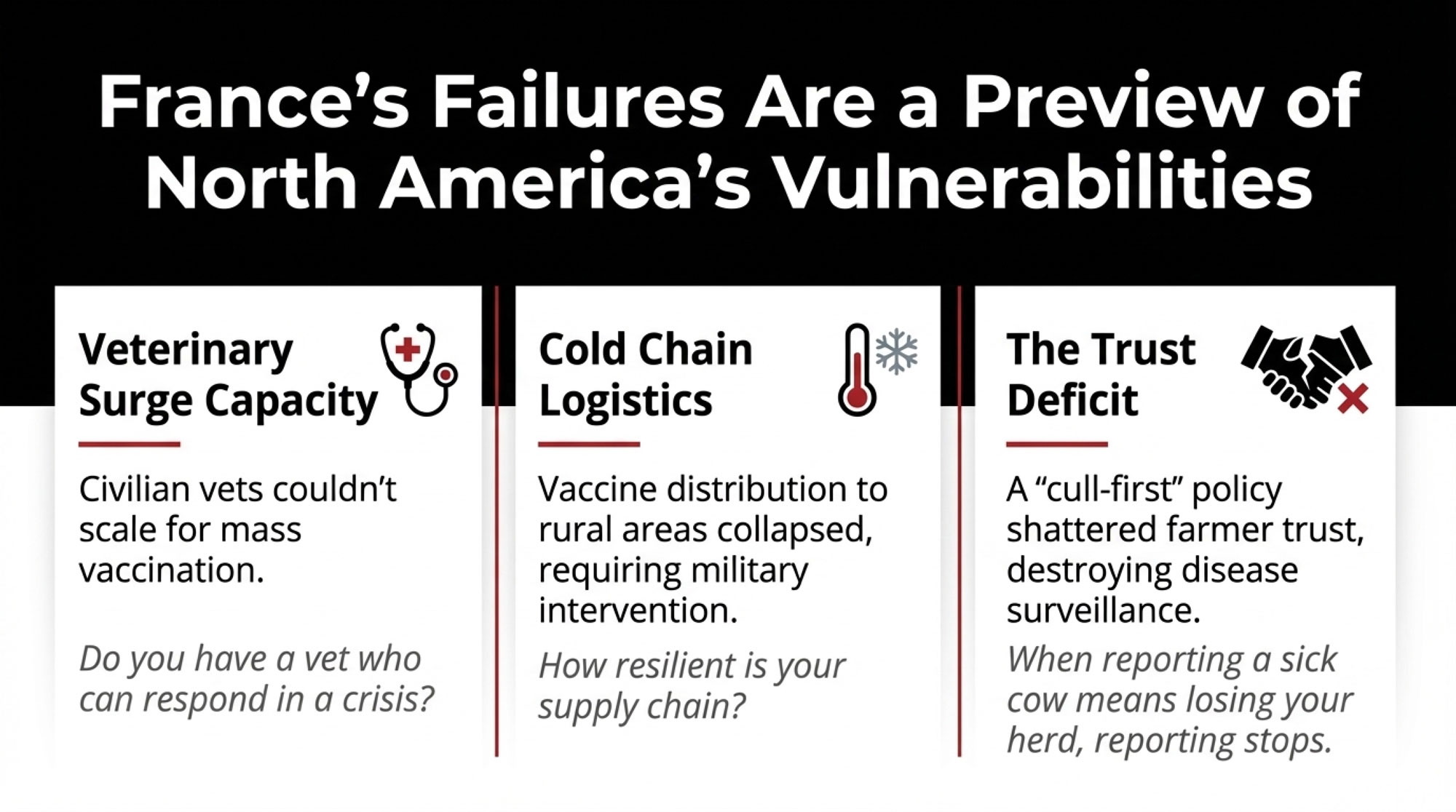
NewsSubscribe
First
Last
Consent

Water Excellence Is Table Stakes – Market Position Is the Game

California: No water to buy. Wisconsin: Can’t spread when you need to. Texas: Just add cows. Geography is destiny in dairy.

Dairy Water Management

Executive Summary: Water management has shifted from competitive advantage to survival requirement—but paradoxically, excellence alone won’t save your farm. As California’s SGMA eliminates up to one million irrigated acres by 2040 and drives $2.2 billion in feed cost impacts, the industry is discovering that breeding for feed efficiency reduces water footprint more dramatically than infrastructure improvements. Meanwhile, consolidation has concentrated 65% of milk production in 1,000+ cow operations, where scale economics overcome any efficiency gains smaller farms achieve. Yes, that $180 valve fix, saving a million gallons, matters, and UC Davis’s smart soaking systems, cutting water use by 86%, are revolutionary—but only if you have market access and verification infrastructure to monetize sustainability, which drives 1.7% higher sales growth. The uncomfortable truth: water optimization is your entry fee to stay in business, while genetics, scale, and secured buyer relationships determine whether you’re still milking cows in 2035.

You know, sitting here thinking about where we’ve ended up with water management, it’s pretty remarkable how fast things have shifted. Just a couple of years ago, we were mostly talking about upgrading plate coolers and fixing leaky valves. Now? Water’s become this baseline competency that basically determines who’s still milking cows five years from now. But here’s what keeps me up at night—and maybe you’ve been thinking this too—water excellence alone won’t save your operation. The farms that survive the next decade? They’re the ones who’ve figured out market access, understood their regional water reality, and locked in the right scale or specialty positioning. That’s the uncomfortable conversation most of us are having over coffee these days.

Why This Matters Now (Even Though It Won’t Save Us by Itself)

So here’s what’s driving all this. Out West, you’ve probably heard about SGMA—California’s Sustainable Groundwater Management Act—, and it’s systematically pulling irrigated acres out of production. The Public Policy Institute of California (PPIC) projects that one-fifth of irrigated acreage in the San Joaquin Valley will go offline by 2040. We’re talking somewhere between 500,000 and nearly a million acres getting fallowed, with counties like Kern, Tulare, and Fresno taking the worst of it. And you know what? That’s not a drought we can wait out. That’s permanent structural change in how we access water for growing feed.

What’s encouraging, though—and this caught my attention in the latest McKinsey research with the dairy executives—is that products marketed as sustainable are growing sales at a rate 1.7 percentage points higher than conventional products—accumulating 28% total growth versus 20% over the last five-year cycle. So when farms can credibly verify and tell their water story, the market responds. That’s real money sitting there.

What I’ve found talking to producers across different regions is that these two realities—the physical water limits out West and these measurable market rewards for doing sustainability right—they’re completely redefining what “good water management” even looks like. And it’s not the same everywhere, which is something we all need to understand better.

The Four-Stage System We’ve All Settled On (And Why It Actually Works)

Here’s what’s interesting about where most progressive operations have landed—and maybe you’re already doing this. We’ve pretty much standardized on this four-stage cascade that gets every drop working multiple times. You start with clean cold water to plate-cool the milk, then capture that warmed water for sanitizing equipment, move it to barn cleaning, and finally, that nutrient-rich effluent goes out to irrigate feed crops.

UC Davis laid out the science on why that first stage—the plate cooler—is such a workhorse. The countercurrent heat exchanger pulls heat out way more efficiently than relying only on bulk tank refrigeration. And when you capture that warmed water for the next job, you’re essentially getting free preheating for your sanitation cycle. Pretty slick when you think about it.

What’s also catching attention—especially for those of us dealing with summer heat—is the innovation happening in cow cooling. UC Davis has been running trials showing ‘smart soaking’ systems—which rely on sensors to spray only when cows are present—that cut cooling water use by up to 86% while also dropping energy use. In those Central Valley operations where it’s triple digits all summer, that’s huge. The field results suggest you can maintain cow comfort with targeted, intermittent cooling, using a fraction of the energy traditional systems require.

Now, the technical playbook for all this is proven and honestly not that expensive—we’re talking $3,000 to $5,000 for basic improvements on a 200-cow dairy. But here’s the thing we need to be honest about: doing this well in 2025 is table stakes. It’s not your winning strategy by itself anymore.

The Genetics Piece Nobody’s Talking About (But Should Be)

While we’re all focused on plumbing and plate coolers—and those matter—we can’t ignore the cow herself. You probably know this already, but feed production accounts for the lion’s share of our water footprint, especially when we irrigate alfalfa and corn silage. So, the fastest way to cut water use? Breed a more efficient cow that needs less feed to make the same pounds of fat and protein.

That’s why we’re seeing such rapid uptake of feed efficiency indices. Feed Saved, which the Council on Dairy Cattle Breeding publishes, is fascinating—it combines residual feed intake with body weight composite to tell you expected pounds of feed saved per lactation. Higher is better, obviously. It’s our first national evaluation that directly targets feed efficiency in dairy cattle, and the logic is pretty straightforward: cows delivering the same components on less dry matter need fewer irrigated acres behind them.

We’re also seeing proprietary indices like EcoFeed gaining traction, with independent trials showing real improvements in feed conversion on participating herds. The direction is clear—if you’re selecting sires today, you want high feed efficiency and moderate mature size. That cuts your feed needs for both maintenance and production, freeing up water without sacrificing butterfat performance.

I’ll be direct here: if water efficiency isn’t part of your sire selection today, you’re basically locking in higher resource costs for the next three generations of cows. That’s a long time to be on the wrong side of this trend. And with the current heifer shortage limiting expansion options, genetic progress becomes even more critical for improving efficiency within your existing herd size.

Regional Realities (Because California’s Crisis Isn’t Wisconsin’s Challenge)

Looking at this across regions, what’s become clear is that we’re not all dealing with the same problem.

Out in the Southwest, it’s all about quantity. SGMA enforcement is fundamentally a water-access story more than a parlor-efficiency story. The PPIC figures that about one-fifth of Valley irrigated acres could be gone by 2040, which flows straight into feed costs. California’s dairy and beef sectors are looking at impacts of about $2.2 billion by 2040, mostly through higher feed costs as those acres go offline.

Ryan Junio, who runs 4,200 Jerseys over in Pixley, put it pretty bluntly: “As a dairy producer, this is an ever-growing challenge and is my top concern.” And he’s not worried about some future problem—he’s looking at potential 50% groundwater cuts in the next couple of years. For operations like his, “good” water management means securing allocations, maybe tapping recycled municipal water, definitely diversifying feed sourcing, including outside the basin.

Now, flip over to the Northeast and Upper Midwest—completely different game. Water’s abundant, sometimes too abundant. The focus is solely on protecting groundwater and surface water from nutrient pollution. Wisconsin’s SnapMaps system, for instance, doesn’t care about your gallons per cow. It maps where you can spread manure based on soil vulnerability and groundwater flow.

Jim Risser, who farms 700 acres in Pennsylvania’s Susquehanna watershed, explained it well: keep fields planted and vegetated, and you’re creating a natural filter before water hits the streams. His operation maintains vegetation cover for about 50 weeks a year, specifically to improve water quality.

In those Midwest operations with sandy soils and shallow water tables, storage capacity and timing become everything. Producers there are investing heavily in concrete storage and injection equipment—not to save water, but to protect it. The April spreading windows that used to work don’t anymore with our changing weather patterns.

Market Signals That Are Reshaping Everything

Three things are steering every water investment decision I’m seeing in 2025:

First, these structural constraints aren’t temporary. SGMA’s glide path and surface flow rules will idle acreage regardless of how efficient any single farm gets. That repricing rations everywhere—not just in California—because the West supplies a huge chunk of U.S. dairy production.

Second, sustainability has become a baseline. McKinsey’s latest survey found it dropped from executives’ “priority” lists, but not because it matters less—it’s because 84% of companies already have programs running. Still, that cumulative growth advantage for sustainable products? That keeps everyone’s attention.

Third, the innovation pipeline is now all about water performance. Those UC Davis smart-soaking trials showing up to an 86% reduction? They’re attracting serious interest from operations where summer cooling can run $20,000 to $30,000 monthly when the heat really sets in.

What Actually Works (The Practical Toolkit)

Here’s something you can literally do tomorrow for zero cash outlay (just 20 minutes of your time). Grab a 20-liter bucket and a stopwatch. Time how long does it takes to fill that bucket at your plate cooler discharge. Do the same at your wash hoses, alley flush lines. Now you’ve got flow rates. During a full milking, track how long each run lasts. Multiply it out. You’ve just mapped your water use by process, and I guarantee you’ll find surprises.

In Wisconsin operations, audits often reveal that yard wash varies by 15 gallons per cow or more between morning and afternoon milkings. Usually, it’s a sticky valve, or someone changed protocols seasonally and forgot to change back. Cost to fix that sticky valve? Often less than $200 for a plumber, or $20 for parts if you do it yourself. If that saves 15 gallons per cow per day year-round on a 200-cow dairy, you’re looking at roughly 1,095,000 gallons saved annually. Even if it’s just during the 165 hot days when you’re doing heavier yard washing, that’s still about 495,000 gallons. Either way, the math gets impressive fast.

From there, your biggest return is completing that reuse loop. Capture plate-cooler water—it’s already done its cooling job—route it to equipment cleaning, then to barn washing, and finally to irrigation. Every progressive operation I know runs some version of this.

💧 WATER SAVINGS QUICK WINS

Things you can do this month that actually matter:

  • Fix those leaky valves – Usually $50-200 for repair; saves 10,000-50,000 gallons yearly, depending on how bad the leak is
  • Install trigger nozzles – About $400-600 total; typically cuts parlor water 15-25% just by eliminating continuous flow
  • Adjust cooling timers or sensors – $400-600; can reduce cooling water up to 70% when tied to cow presence and actual heat load
  • Capture plate-cooler water – $500-1,500 in basic plumbing; recovers 50-70% of your cooling water for the next job

The Follow-Through Problem We Don’t Talk About

Let’s be honest about something. Most of us don’t struggle to start these projects—we struggle to keep going when fresh cows start coming hard, feed prices jump, or we lose a key employee. That’s why those cooperative and processor programs actually matter. They provide benchmarking, third-party verification, and—this is key—those quarterly check-ins that keep us honest.

The industry tracking shows farms in structured programs maintain their measurement discipline at 3 to 4 times the rate of farms trying to go it alone. That’s the difference between having a good idea at a conference and actually improving your operation.

Making Water Performance Mean Something to Consumers

The data suggests consumers really do reward credible stewardship—that 28% versus 20% growth differential over five years is real money. But only when they can understand and trust what you’re claiming.

Try framing it like this: “Our 200-cow dairy saves about half a million gallons annually—that’s enough water for roughly 35 families for a year.” People get that. Then explain the cascade simply: “The water that cools our milk then cleans our equipment, flushes our barns, and finally irrigates our crops with captured nutrients.”

And always, always anchor it to third-party verification—whether that’s your co-op’s sustainability report or your processor’s benchmarking program. Verified beats vague every single time.

The Uncomfortable Truth About Who Survives

I’m going to say the quiet part out loud here, because I think we owe each other honesty. Water excellence won’t overcome structural gaps in market access and scale. Consolidation has shifted most milk to bigger operations—about 65% now comes from herds over 1,000 cows—and that percentage keeps climbing.

In the West, SGMA will reduce irrigated acres regardless of your parlor efficiency. In the Northeast, nutrient rules are a manageable cost if you plan ahead. But everywhere, the farms positioned actually to thrive tend to fit three profiles: larger herds with committed buyers and capital; regional operations embedded in verified sustainability programs; or specialty producers—organic, regenerative, grass-fed—with contracts that support the extra cost of certification and long-term measurement.

Water management is a baseline competency now. Important? Absolutely. But it’s not the differentiator by itself.

What California’s Teaching the Rest of Us

California’s showing us all a preview of water-constrained dairying. UC Davis and the state energy folks are deploying cooling tech that cuts both water and energy use. It’s promising stuff. But even with those wins, SGMA-driven acreage losses keep feed pressure high.

A Central Valley nutritionist I know recently told me, “We’re completely reworking our rotations, partnering with growers outside the basin, even bringing in more feed from the Midwest. The efficiency helps, but feed sourcing is the real challenge now.”

And this is where that breeding piece pays off—higher feed efficiency and moderate cow size reduce the feed needed per unit of fat and protein you’re shipping. It all connects.

Your Action Plan (Because We All Need One)

I know you’re juggling all this alongside transition cows, labor issues, trying to hold butterfat levels, maintaining drylots—everything that makes dairy farming what it is. The key is starting somewhere. Even that bucket-and-stopwatch audit gives you a baseline.

Today (20 minutes of time): Map those flow rates and run times. Build your baseline.

This month ($500-3,000): Fix the obvious stuff—leaks, oversized nozzles, cleaning protocols that run too long.

This quarter ($5,000-15,000): Complete your reuse loop. If you’re in a hot region, seriously look at the new smart soaking technology.

This year (varies): Connect your numbers to verification—co-op benchmarking, processor reporting—so your performance actually turns into market value.

What’s Coming Next

Watch these three things, because they’ll shape how we all think about water:

Western feed markets under SGMA—as acres get fallowed, expect more cross-regional feed sourcing and different ration economics.

Smart cooling innovation hitting commercial scale—if those UC Davis sensor-based results hold up, expect rapid adoption wherever summer cooling regularly tops $10,000 per month.

Verification infrastructure expanding—more co-ops and processors are tying into the 2050 industry water goals, giving us clearer paths to turn performance into premiums.

The Bottom Line for Your Operation

Water optimization has become necessary but not sufficient for survival. The farms thriving through water pressure aren’t just the ones measuring every gallon—they’re the ones who’ve secured buyers, found their scale or specialty lane, and built the support system to keep measuring when the barn gets crazy.

For Southwest dairies, that means water rights and feed security come first. For Northeast operations, it’s all about nutrient management and water quality. For everyone, it means genetics that deliver higher feed efficiency and moderate mature size to reduce the feed—and water behind it—per unit of milk solids.

Measure and reuse water like the strategic asset it’s become. But make your biggest decisions based on your region and your market position. Water management keeps you in the game. Scale, specialty positioning, efficient genetics, and secured buyers? That’s what determines whether you win it.

KEY TAKEAWAYS:

  • Water Is Table Stakes, Not Strategy: That $180 valve fix saving 1M gallons matters for compliance, but 65% of milk production has already shifted to 1,000+ cow herds where scale economics dominate—water excellence alone won’t overcome structural disadvantages
  • Your Genetics Matter More Than Your Plumbing: Feed Saved trait and moderate cow size reduce water footprint via less irrigated feed acres—UC Davis smart soaking cuts cooling 86%, but breeding decisions impact water for three cow generations
  • Regional Reality Defines “Good”: California’s SGMA will idle 500K-1M acres (quantity crisis), Wisconsin’s SnapMaps dictates spreading windows (quality focus), while Texas operations simply scale up—match strategy to geography
  • Solo Measurement Fails, Programs Succeed: Farms in structured co-op/processor programs maintain water tracking 3- 4x longer than independents, and capture the 1.7% sales premium for verified sustainability—accountability infrastructure beats good intentions
  • Three Paths Forward: Only larger operations (1,000+ cows), verified regional producers in sustainability programs, or specialty-positioned farms (organic/regenerative) with contracts survive the water-market access squeeze—pick your lane by 2026

Complete references and supporting documentation are available upon request by contacting the editorial team at editor@thebullvine.com.

Learn More:

Join the Revolution!

Join over 30,000 successful dairy professionals who rely on Bullvine Weekly for their competitive edge. Delivered directly to your inbox each week, our exclusive industry insights help you make smarter decisions while saving precious hours every week. Never miss critical updates on milk production trends, breakthrough technologies, and profit-boosting strategies that top producers are already implementing. Subscribe now to transform your dairy operation’s efficiency and profitability—your future success is just one click away.
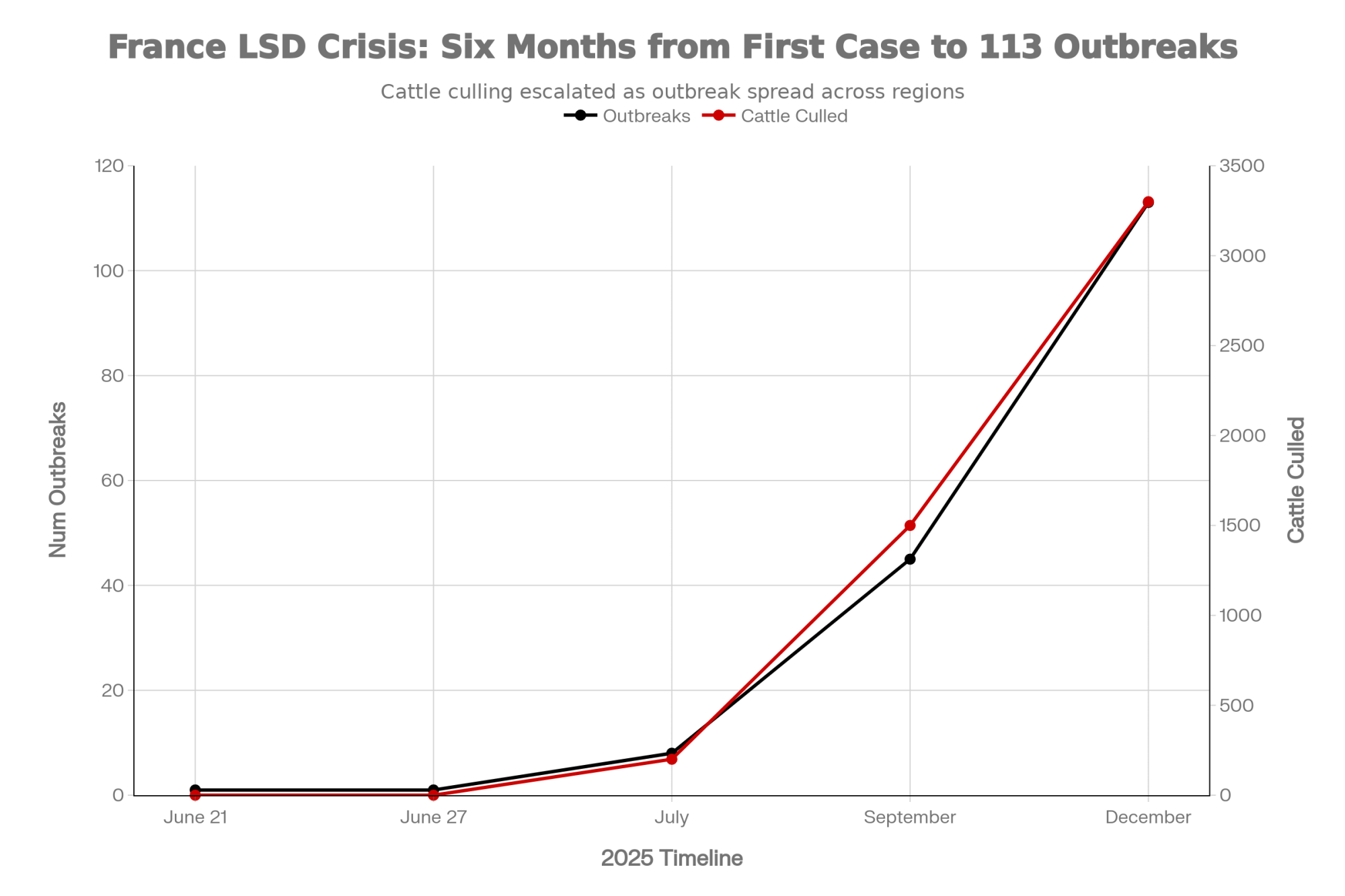
NewsSubscribe
First
Last
Consent

The $50,000 Biofilm Crisis Your ATP Test Will Expose

ATP tests are exposing the $50,000 problem hiding in your ‘clean’ equipment in chronic infections and production gains of up to 5 lbs per cow daily.

Dairy Biofilm Control

EXECUTIVE SUMMARY: You’re losing $50,000 annually to biofilms—bacterial colonies thriving on your ‘clean’ equipment, surviving standard CIP that removes less than half of them. These slime fortresses resist antibiotics, cause 70% treatment failure in ‘chronic’ mastitis, and destroy the value of your best genetics. But here’s what changes everything: a $5 ATP test instantly exposes them, showing contamination levels your standard tests miss. The fix costs less than a vet call—add $150 of enzymes to your monthly CIP and significantly improve biofilm removal. Recent field trials prove it: 70% fewer chronic infections, 5 lbs more milk per cow daily, and complete payback in 10 weeks. We’ve been cleaning wrong for 30 years; now we can finally clean right.

Your milking equipment looks spotless. Your CIP ran perfectly. Your bulk tank passes every quality test. Yet somewhere in your operation right now, an invisible colony of bacteria wrapped in protective slime is preparing to cost you $50,000 this year—and you’ll probably attribute those losses to genetics, nutrition, or just the way dairy goes sometimes.

This is the biofilm reality. And frankly, it’s embarrassing that we’ve ignored it for this long.

Staggering Financial Fallout: Where $50,000/year actually goes in the average 100-cow herd. Production losses are the silent profit killer.

The Hidden Enemy Producers Never Knew They Had

When a in Wisconsin dairy ran his first ATP (adenosine triphosphate) bioluminescence test last spring, they expected confirmation that his equipment was clean. The swab showed readings far above acceptable limits for his specific testing device.

“I’ve been dairying for 30 years,” they commented. “That number told me everything I thought I knew about ‘clean’ was wrong.”

Important Note: ATP RLU (Relative Light Unit) baselines vary significantly by luminometer manufacturer. Hygiena systems typically use pass <10, fail >30. 3M Clean-Trace uses different scales (often pass <150). Always consult your specific device manual for accurate pass/fail thresholds.

And you know, that reaction is exactly what researchers are documenting across the industry right now. Standard CIP procedures often remove less than 50% of established biofilms, according to recent microbiological reviews. The remaining bacterial communities survive, protected by a slime fortress of proteins and DNA that basically laughs at your standard chlorine wash.

Recent research from Cornell University’s Food Science Department explains it in terms we can all understand: “Imagine trying to remove concrete with a garden hose. That’s essentially what we’re doing when we use standard cleaning protocols on mature biofilms.”

Here’s something that should make every producer sit up: You can buy the most expensive genomic sires in the catalog, invest in elite genetics with +3000 GTPI, but if you’re pumping that premium milk through biofilm-lined pipes, you’re burning money. Those genetics won’t mean much when biofilms are cutting your production by 5-10% and driving your SCC through the roof.

What’s encouraging—and I mean this genuinely—is that now we understand why this is happening. Economic modeling based on documented production losses, treatment costs, and culling data suggests average annual losses of approximately $50,000 for a 100-cow operation dealing with biofilm-related issues. But here’s the thing: only about $12,000 of those costs are visible as treatment expenses and discarded milk. The remaining $38,000? Well, that hides in reduced production, chronic infections, premature culling, and equipment degradation. It’s the money you’re losing without even seeing where it went.

ATP Testing Guidelines

Device-Specific Thresholds (Always verify with your manufacturer):

  • Hygiena SystemSURE: Pass <10, Caution 10-30, Fail >30
  • 3M Clean-Trace: Varies by model (typically Pass <150)
  • Charm NovaLUM: Different scale entirely

Critical: RLU readings are not standardized across devices. A “350” on one system may equal “35” on another.

The 12-Hour Window That Changes Everything

Now, here’s what’s actually happening between your morning and evening milking that nobody really talks about in the parlor or at co-op meetings—and this is where it gets interesting.

Within hours of your morning CIP, biofilms on your equipment begin progressing from removable surface contamination to consolidated communities with sophisticated internal architecture. Recent research shows significant reductions in removability occur between 4 and 12 hours as biofilms mature and strengthen their protective matrix.

Research from the University of Wisconsin-Madison’s Center for Dairy Research puts it bluntly: “By the time evening milking comes around, you’re running milk through equipment colonized by mature biofilms at their peak shedding phase. Those shed cells aren’t just bacteria—they’re pre-selected for antibiotic tolerance and wrapped in protective matrix material.”

It’s worth noting that this timeline explains why the industry-standard 24-hour CIP cycle fundamentally misaligns with biofilm biology. We’re unknowingly allowing biofilms to reach maximum consolidation before attempting removal. It’s like letting weeds go to seed before trying to pull them—you’re fighting an enemy that’s had time to dig in deep. And whether you’re running a traditional parlor, a rotary system, or robotic milkers, that consolidation window remains surprisingly consistent across all equipment types.

Regional Variations: Why Your Neighbor’s Experience Might Differ

What’s interesting is that biofilm challenges vary significantly across regions and production systems. In warmer climates with higher ambient temperatures, operations report faster biofilm formation rates—sometimes reaching critical consolidation more quickly during summer months. Water temperature and equipment temperature play crucial roles in the rate of biofilm development.

Meanwhile, producers in regions with hard water face different challenges. Research from New Mexico State University’s Dairy Extension program found that “hard water with high mineral content actually provides additional binding sites for biofilm formation. We’re seeing some operations with significant biofilm problems directly related to water chemistry.”

So if you’re dealing with hard water, don’t assume you’re off the hook. You might actually have a different problem—not speed, but chemistry.

Why Your Antibiotic Treatments Keep Failing

Here’s something that has frustrated many producers we’ve spoken with in 2024 on-farm studies. Multiple operations spent thousands trying to cure chronic mastitis in their best genetics before discovering the biofilm connection.

“My vet kept saying the bacteria were susceptible to the antibiotics we were using,” one producer recalls. “The lab tests showed they should work. But we’d treat, see improvement, then two weeks later the infection was back.”

Looking at this situation, here’s what they didn’t know—and what many of us still don’t realize—standard antibiotic susceptibility testing uses free-floating bacteria. But mastitis infections often involve biofilm-embedded bacteria that can tolerate significantly higher antibiotic concentrations due to their protective matrix. It’s a fundamental disconnect.

Important clarification: Enzymes in CIP don’t kill bacteria directly—they break down the protective biofilm shield, exposing bacteria so your cow’s immune system or appropriate therapy can actually work. Think of enzymes as removing the armor, not wielding the sword.

The result? Cure rates for biofilm-mediated mastitis remain frustratingly low, often 30-35%, compared to much higher rates for non-biofilm infections. Yet both look identical on standard culture tests.

It’s one of those situations where the problem isn’t your vet—it’s the testing methodology itself. We’ve been using tools designed for one enemy to fight a completely different enemy.

The Testing Revolution: How ATP Is Changing the Game

The breakthrough for many producers has been ATP bioluminescence testing—a technology borrowed from the food processing industry that provides biofilm detection in minutes rather than days.

Here’s how it actually works on your farm:

Quick ATP Testing Protocol:

  1. Run your standard CIP cycle
  2. Wait 30 minutes for the equipment to dry
  3. Swab these critical points:
    1. Inside of milking liner (3 different units)
    1. Pipeline elbow joints (biofilm hotspots)
    1. Bulk tank outlet valve
    1. Water trough surfaces
  4. Activate the swab in the luminometer
  5. Record RLU readings
  6. Compare to YOUR device’s specific benchmarks (not generic numbers)

“The first time you see readings way above your device’s clean threshold on equipment you thought was spotless, it’s like someone turned on the lights in a dark room,” says one Vermont producer who participated in recent trials. “Suddenly, all our chronic problems made sense.”

And here’s the thing that really matters: the economics are compelling. ATP test swabs cost $3-5 each. A basic luminometer runs $200-400. For an initial investment of less than $500, you gain visibility into a problem that’s been costing you tens of thousands of dollars annually. That’s not a hard decision when you think about what you’ve been losing.

Natural Solutions That Actually Work

What’s surprising, many producers—and honestly, it surprised me when I first dug into the research—is that the most effective biofilm interventions aren’t necessarily the most expensive or complex.

Enzymatic CIP Enhancement

Adding proteases and DNases to existing CIP protocols can significantly improve biofilm removal compared to standard chemical cleaning alone. Cost? Approximately $100-200 per month for a 100-cow operation.

Producers participating in recent Midwest field trials report notable improvements. “Our ATP readings dropped significantly, and our bulk tank SCC has been consistently under 200,000 for the first time in two years,” one Illinois producer reports. That’s the kind of shift that actually matters economically.

Essential Oil Integration

Research on basil and bergamot essential oils shows promising activity against biofilm-forming S. aureus. Unlike single-target antibiotics, these compounds attack through multiple mechanisms simultaneously—disrupting membranes, interfering with metabolism, and blocking bacterial communication.

In Oregon trials, producers saw improved cure rates in cows previously considered chronic. That’s the kind of result that changes what you’d do with a problem animal.

Water System Management

Perhaps the most overlooked intervention is biofilm control in water systems. Here’s what’s interesting: contaminated water can reduce milk production as cows reduce intake due to off-tastes.

In recent field reports, several producers noted that monthly enzymatic water treatment costs around $100 and that production gains of up to 3 pounds per cow per day were observed in systems with chronic waterline biofilm issues. That’s significant milk you didn’t know you were losing.

The Farm-to-Processor Connection: A Two-Way Street

Here’s what’s revolutionizing how forward-thinking producers approach biofilm management: Your farm’s biofilms don’t stay on your farm. And—this is the part that really opened my eyes—processor biofilms can actually come back to haunt your farm operation.

Research tracking microbial communities from farms to processing facilities found that multiple bacterial genera present on farm equipment appeared in finished dairy products. Thermoduric bacteria from farm biofilms survive pasteurization, producing heat-stable enzymes that can significantly affect shelf-life.

“When we receive milk with high thermoduric counts, we know there’s a biofilm issue somewhere in that supply chain,” explains a quality assurance director at a major Midwest cooperative. “We’ve started working directly with farms on biofilm management because it affects our entire operation. We’re exploring premium payment options for farms that can demonstrate consistent biofilm control through ATP testing.”

This development suggests a real shift in how the industry values milk quality beyond just SCC and standard plate counts.

What Success Actually Looks Like: The Six-Month Transformation

For producers considering biofilm management, here’s what the timeline typically looks like based on aggregated field data from recent trials:

Month 1-2: Discovery and Baseline

  • ATP testing reveals biofilm presence
  • Begin enzymatic CIP protocols
  • Document baseline metrics (SCC, production, treatment success)
  • Early improvements in ATP readings validate the approach

What’s interesting is that most producers report a psychological shift happening here, too. “Once you see those ATP numbers, you can’t unsee them,” as multiple farmers have put it.

Month 3-4: Measurable Improvements

  • ATP readings stabilize at lower levels
  • Bulk tank SCC drops 15-20%
  • Treatment success rates improve
  • Production increases 1-2 lbs/day per cow

Month 5-6: New Normal Established

  • ATP readings are consistently at acceptable levels for your device
  • SCC stabilizes under 200,000
  • Chronic infection prevalence drops significantly
  • Production gains of 4-5 lbs/day sustained
  • ROI becomes obvious: $3,500-6,500 net benefit achieved

“The transformation isn’t instant, but it’s dramatic,” reported one Midwest producer. “We went from accepting 8% chronic infection rates as normal to maintaining less than 2%. That alone saved us thousands in reduced culling.”

When Things Don’t Go as Planned

I should mention that not every biofilm intervention succeeds immediately. One producer tried enzymatic CIP for two months, saw minimal improvement, then nearly gave up. “Turns out our water pH was interfering with the enzyme activity,” they discovered. “Once we adjusted the water chemistry, the enzymes started working, and our ATP readings plummeted.”

This highlights an important point: biofilm management isn’t always plug-and-play. Local conditions matter, and sometimes troubleshooting is needed to find what works for your specific situation. It’s worth working with your vet or an extension specialist to identify what’s unique about your water, equipment, or operation.

The Industry Awakening

Major cooperatives are beginning to recognize the imperative of biofilms. Several have launched pilot programs that provide ATP testing equipment to member farms, while others are developing biofilm management protocols for their quality-assistance programs. This isn’t fringe thinking anymore—it’s mainstream industry response.

“We’re seeing a clear correlation between farms managing biofilms and those achieving consistent premium milk quality,” notes industry quality assurance experts. “It’s becoming a competitive differentiator.”

And veterinary practices are evolving too. The American Association of Bovine Practitioners has recognized biofilm biology in their educational programs, and several veterinary schools are updating mastitis treatment protocols to include biofilm-specific approaches.

What This Means for Your Operation

Immediate Actions Every Producer Should Consider:

  • Order ATP testing supplies this week ($50-100 investment reveals whether biofilms are your problem). Suppliers include 3M Clean-Trace (1-800-328-1671), Hygiena SystemSURE Plus (hygiena.com), and Charm Sciences NovaLUM (charm.com).
  • Test three critical points: milking equipment post-CIP, water systems, and bulk tank surfaces
  • Document baseline metrics: Current SCC, treatment success rates, chronic infection prevalence
  • Check YOUR device’s specific thresholds: RLU scales vary dramatically between manufacturers

Cost-Benefit Reality Check

  • Annual biofilm-related losses (100-cow herd): ~$50,000 (economic modeling)
  • Annual investment in biofilm control$1,500-2,500
  • Typical ROI: Strong positive returns within the first year
  • Payback period: Often 2-3 months

Based on aggregated field trial data

The Competitive Advantage:

Producers managing biofilms report:

  • Milk quality premiums are worth $2,000-5,000 annually
  • Reduced culling, saving $10,000-15,000 per year
  • Treatment cost reductions of $3,000-5,000
  • Production gains are worth $20,000-40,000 annually

What’s Changing in the Industry:

The definition of “clean” is evolving from “looks clean and passes standard tests” to “biofilms are detected, measured, and controlled.” Producers who adapt early are finding themselves with healthier herds, better milk quality, and improved profitability.

“This isn’t about working harder,” says one California producer who transformed her operation’s biofilm management. “It’s about working smarter with better information. Once you can see biofilms with ATP testing, you can’t unsee them. And once you start managing them, you wonder how you ever accepted those losses as normal.”

From Stagnant to Surging: How Biofilm Management Drives Milk Yields. Red line shows the real-world spike, not just theory.

The Bottom Line

The biofilm revolution in dairy isn’t coming—it’s here. Forward-thinking producers are already implementing testing protocols, adjusting cleaning procedures, and seeing dramatic improvements in herd health and profitability.

What farmers are discovering is that biofilm management represents one of those rare opportunities where the science is clear, the tools are available, and the economics are compelling. The only question remaining is how quickly the broader industry will embrace what early adopters are already proving: biofilm management isn’t an expense—it’s an investment that pays for itself many times over.

For dairy producers who’ve been fighting unexplained chronic mastitis, watching SCC creep upward, or accepting gradual production declines as inevitable, the message from those who’ve implemented biofilm management is consistent: “This is the missing piece we didn’t know we were looking for.”

As one producer reflects: “I spent 30 years managing problems I couldn’t see. Now that I manage biofilms, I can measure them. The difference in my operation—and my stress level—is night and day. I just wish I’d known about this five years ago.”

The invisible enemy is invisible no more. And producers who see it first are reaping the rewards.

For more information on implementing biofilm detection and management protocols, contact your local Extension dairy specialist (find yours at extension.org), reach out to ATP testing suppliers like 3M (1-800-328-1671), Hygiena (hygiena.com), or Charm Sciences (charm.com), or consult the Journal of Dairy Science special issue on biofilm formation (Volume 107, 2024). For enzymatic CIP products, contact your current milking equipment supplier about biofilm-specific cleaning protocols.

KEY TAKEAWAYS:

  • The Hidden Cost: Your “clean” equipment harbors biofilms costing $50,000/year—standard CIP removes less than half
  • The 2-Minute Test: ATP swab ($5) instantly exposes biofilms—but check YOUR device’s specific thresholds
  • The Simple Fix: Add $150/month of enzymes to CIP, notably enhance biofilm removal, and help treatments work better
  • The Proven Payoff: 70% fewer chronic infections + 5 lbs more milk/cow daily = strong ROI
  • The Competitive Edge: Processors are exploring premiums for biofilm-controlled milk—early adopters win

Editor’s Note: Cost figures in this article are based on economic modeling from recent dairy science research and USDA-ERS data. Regional costs may vary. Names have been changed to protect producer privacy unless otherwise noted. We welcome producer feedback at editor@thebullvine.com.

Learn More:

Join the Revolution!

Join over 30,000 successful dairy professionals who rely on Bullvine Weekly for their competitive edge. Delivered directly to your inbox each week, our exclusive industry insights help you make smarter decisions while saving precious hours every week. Never miss critical updates on milk production trends, breakthrough technologies, and profit-boosting strategies that top producers are already implementing. Subscribe now to transform your dairy operation’s efficiency and profitability—your future success is just one click away.
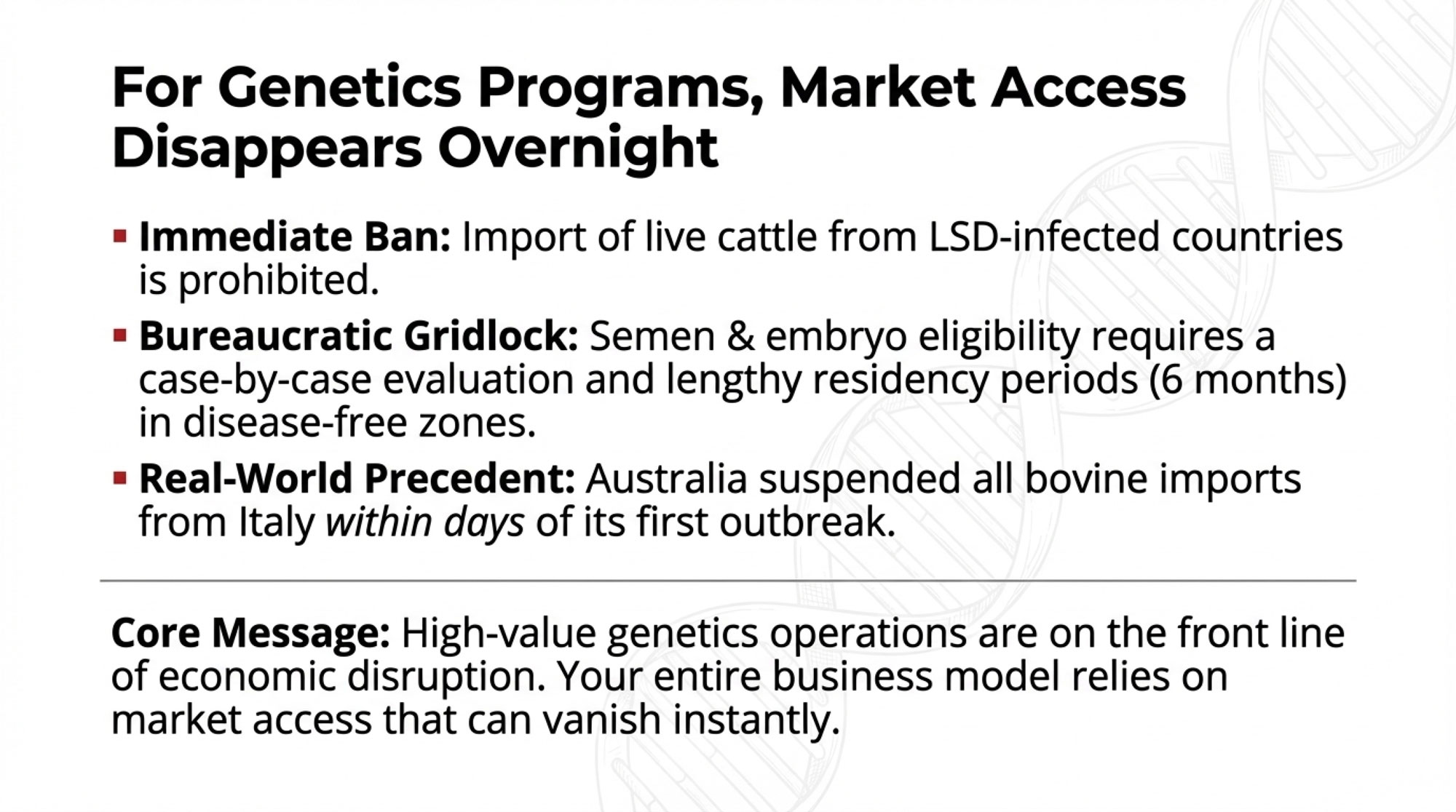
NewsSubscribe
First
Last
Consent

67% Conception Rates: The 140-Day Heifer Breeding Strategy That’s Changing Everything

What if I told you waiting 90 extra days to breed your heifers could save 40% on breeding costs and add $1,300 in profit per head?

You know how we’ve all been taught to push for efficiency at every turn—get those heifers bred young, calve them at 22-24 months, then breed them back fast. But here’s what’s interesting: if you’re rushing your first-lactation heifers to get pregnant again at day 50, you might be leaving money—and fertility—on the table.

Some groundbreaking research from Sweden, published in the Journal of Dairy Science in 2023, has been gaining real traction across the industry over the past 18 months. And honestly? The more I dig into it, the more it makes sense. We’re seeing similar interest from producers in California, the Northeast, and even some of the larger operations down in Texas.

Anna Edvardsson Rasmussen and her team at the Swedish University of Agricultural Sciences tracked over 500 first-lactation heifers across multiple high-yielding commercial herds. What they found… well, it challenges everything we’ve been doing. When they extended the voluntary waiting period from the conventional 50-60 days out to 140-145 days, first-service pregnancy rates jumped from 51% to 67%. That’s a huge improvement, folks. And here’s the kicker—they didn’t use expensive interventions or genetic selection. They just waited for the right biological moment to breed.

The Biology Behind the Numbers

So here’s what’s actually happening inside these first-lactation heifers—and I’ll be honest, it’s not quite what many of us have assumed.

At day 50 post-calving, a healthy first-lactation heifer isn’t in metabolic crisis anymore. Research from folks like Butler at Cornell and Wathes’s group shows that NEFA levels—those non-esterified fatty acids we worry about—typically normalize to under 0.4 millimolar by days 21-30 in well-managed herds. But—and this is crucial—she’s still partitioning energy between three competing demands: milk production, continued growth (remember, she’s only 24-26 months old), and trying to restore reproductive function.

What I find fascinating is the IGF-1 story. The work by Lucy and others shows that IGF-1 levels, which are critical for follicular development and egg quality, are still recovering at day 50 in these young cows. They’re not back to where they need to be. The issue isn’t that she’s swimming in metabolic toxins. It’s that she’s metabolically stretched thin, trying to do too many things at once.

By day 140? Completely different story. Her growth requirements have stabilized, she’s adapted to lactation demands, and her energy balance has shifted to a strongly positive state. The follicles developing at this point are coming from a much more favorable metabolic environment.

What Recovery Actually Looks Like in First-Lactation Heifers

Let me walk you through what’s happening at different timepoints:

Day 50—Energy Neutral but Depleted:

  • NEFA levels are normal (under that 0.4 millimolar threshold that Ospina’s group established)
  • IGF-1 is still recovering, though
  • She’s still partitioning energy to growth
  • Follicular competence is improving, but not quite there yet

Day 90—Building Reserves:

  • Energy balance shifting positive
  • IGF-1 is approaching where we want it
  • Growth demands starting to stabilize (especially if she calved at a good size)
  • Follicular quality is getting better

Day 140—Metabolically Ready:

  • Strong positive energy balance
  • IGF-1 levels are optimal
  • Growth demands minimal
  • Follicular quality excellent

The Swedish researchers documented that this metabolic maturation in first-lactation animals directly translates into reproductive success. These younger cows bred at day 140 needed fewer inseminations per pregnancy and had compressed breeding windows.

Why First-Lactation Heifers Are Actually Ideal Candidates

Now, this might surprise some of you who’ve been told to focus extended lactation strategies on older cows, but here’s the thing about first-lactation heifers that makes them perfect for extended VWP:

They have incredibly persistent lactation curves. The work by Stanton and later by Tekerli really nailed this down—primiparous cows maintain 90-95% production persistency through late lactation, while your older multiparous cows drop to 80-85%. Think about it—a third or fourth-lactation cow might drop from 45 kg to 25 kg between day 60 and day 305, but a first-lactation heifer? She might only drop from 32 kg to 28-29 kg. VanRaden’s work back in ’98 documented this beautifully.

This persistency means that extending their lactation by 60 days doesn’t result in a bunch of low-producing days at the tail end. They keep milking profitably right through day 305 and beyond.

Real-World Implementation: What We’re Seeing Across Different Regions

Based on what I’m hearing from producers in Wisconsin and Minnesota, and increasingly from operations in Pennsylvania and Vermont that’ve started implementing this with their first-lactation groups, the results are pretty consistent—and encouraging.

“We were skeptical at first” is what I hear over and over, whether it’s from a 150-cow tie-stall in Wisconsin or a 3,000-cow operation in California. Most of these farms see their first-calf heifers averaging around 45-50% first-service conception rates with traditional 50-60 day VWP. But when they try extending VWP to 120 days on a test pen—usually 30-50 head—things get interesting.

Most are using activity monitoring systems to catch heats, which becomes even more critical with heifers since their heat expression can be more subtle than that of mature cows. And what they’re seeing? First-service pregnancy rates are jumping to 60-65%. Not quite the 67% the Swedish study achieved, but pretty darn close.

A reproductive specialist I work with in New York mentioned something interesting: “We’re also seeing adoption of this approach in the Netherlands and parts of Germany. It’s not just a Swedish phenomenon—it seems to work across different management systems.”

And here’s what really catches their attention—and mine too: these heifers maintain their body condition so much better through peak lactation. I was talking with a nutritionist from central Wisconsin last month who told me, “The heifers on extended VWP maintain about a quarter to half a point higher body condition score at breeding compared to those bred at day 50. That’s huge for long-term productivity.”

When Extended VWP Might Not Be the Answer

Now, I should mention—because balance matters—there are situations where extended VWP for first-lactation heifers might not be your best move. If you’re dealing with severe overcrowding, high disease pressure in early lactation, or you’re in an expansion phase where you need maximum calf numbers, the traditional approach might still make sense.

And honestly, if your current first-service pregnancy rates are already above 60% at day 50-60, the economic advantage of waiting might not be as compelling. As always, it’s worth sitting down with your nutritionist and veterinarian before making major management changes.

The Economics: Different Math for First-Lactation Animals

Let’s talk money, because that’s what matters at the end of the day. The economic equation for extending VWP in first-lactation heifers looks different from than for older cows, but it’s equally compelling—maybe more so.

First-lactation heifers maintain 90-95% milk production through extended lactation, compared to only 75-85% for older cows—making them ideal candidates for extended VWP

First, there’s that lactation persistency advantage we talked about. With first-lactation animals maintaining 90-95% of their peak production through late lactation, those extra 60 days of milking generate nearly full-value milk. At current prices—we’re seeing $17-20/cwt depending on your region—that adds up fast.

But here’s what really makes the economics work: the pressure on replacement heifer inventory. When your first-lactation animals calve at 24 months and then don’t need to be rebred until day 140, you’re effectively reducing the pressure on your replacement pipeline. And with the cost of raising a replacement heifer to first calving now running $2,100-2,500 according to most extension economists, each first-lactation heifer that successfully breeds at day 140 instead of struggling through multiple services starting at day 50 is one less potential early cull.

The First-Lactation Economics:

What You’re Looking AtImpactValue
Additional milk revenue (60 days × high persistency)More income+$750-850
Reduced breeding costs (fewer services)Less expense+$20-30
Lower early lactation cull riskFewer replacements needed+$200-400
Better body condition through lactationHealth benefits+$50-100
Net gain per first-lactationBottom line+$1,020-1,380

Traditional vs. Extended VWP: How They Stack Up

Let me break down how these two approaches compare for first-lactation heifers:

Management FactorTraditional (50-60 day VWP)Extended (140 day VWP)
First-service pregnancy rate45-51%60-67%
Services per pregnancy2.2-2.51.5-1.8
Days open110-130150-170
Calving interval13 months14.5 months
Body condition at breedingOften <2.75Usually >3.0
Milk persistency utilized75-80%90-95%
Cull rate in first lactation15-20%10-15% (early adopter reports)

The Technology Question Still Matters

The Swedish study’s success with first-lactation animals depended heavily on good heat detection. And if anything, this becomes even more critical with heifers.

The research from Nebel and Jobst back in the late ’90s—still holds true today—shows that first-lactation animals can have more subtle heat expression than mature cows, especially in late lactation. Visual detection accuracy in first-lactation animals at day 140? You might only catch 35-45% of heats. Meanwhile, those automated systems maintain detection rates of 80-85% regardless of parity.

For farms without automated systems, you’ve still got options:

Moderate extension: Push VWP to 80-100 days instead of 140. You’ll capture a good portion of the benefit while the heats are still more detectable.

Timed AI protocols: Programs like Double-Ovsynch work particularly well in primiparous cows. Souza’s group reported conception rates of 40-45% with timed AI in first-lactation cows, which isn’t bad at all.

Common Concerns and What I Tell Folks

I hear several consistent concerns when discussing this with producers:

“Won’t my heifers get fat?” Not if you’re managing them properly. The Swedish data and what we’re seeing in the field shows that heifers on extended VWP maintain ideal body condition—right around 3.0-3.25—rather than becoming overconditioned. Remember, they’re still growing and producing at high persistency.

“What about my facilities?” This is legitimate. If you’re running all-in-all-out heifer groups, extended VWP might complicate pen movements. But farms with rolling heifer groups or mixed parity strings? They’re finding it works just fine.

“Is this just for big herds?” Actually, no. Some of the best results I’m seeing are from 100-200 cow herds where individual animal management is easier. You don’t need 1,000 cows to make this work.

And regional differences matter too. In the Upper Midwest, where I am, we see seasonal heat stress. Breeding heifers at day 140 might help avoid the worst of the July-August heat for spring-calving animals. In the Southwest, with consistent climate control? The timing advantage is less pronounced, but those metabolic benefits remain. Even in grazing operations in the Northeast, where matching breeding to pasture quality matters, this approach is showing promise.

Making the Decision for Your Heifers

Looking at where the industry’s heading, here’s what I think you should consider for your first-lactation animals:

Start with a test group. Pick 30-40 of your first-lactation heifers entering the milking string and extend their VWP to 100-120 days. Track everything—conception rates, milk production, body condition.

Focus on heat detection. Whether it’s activity monitors, tail paint, or visual observation, you need reliable heat detection at day 100+. This is non-negotiable.

Monitor body condition closely. One of the biggest advantages of extended VWP in heifers is maintaining body condition. Use a consistent scoring system and track monthly.

Consider your facilities. First-lactation animals in mixed-parity groups might require different management than those in dedicated heifer pens. Plan accordingly.

Track the economics carefully. The math varies by farm based on milk prices, replacement costs, and cull rates. Use your own numbers.

Consult your team. Before making any major changes, sit down with your nutritionist and veterinarian. They know your specific situation and can help tailor the approach.

The Bottom Line

The Swedish research from 2023 doesn’t suggest every farm should immediately extend VWP to 140 days for all animals. But it makes a compelling case that first-lactation heifers—with their persistent lactation curves and continued growth needs—might benefit more from patience than we’ve traditionally given them.

What the Swedish team found, and what we’re seeing validated in herds across North America and Europe, is that waiting allows these young animals to transition from the metabolic demands of early lactation to a state where successful pregnancy is more likely. For first-lactation heifers, that sweet spot appears to be around day 140, not day 50.

The approach is still being validated across different systems—each farm is unique—but the biological principles are sound, and the early results are encouraging. The question isn’t whether the biology works—the data on over 500 primiparous cows makes that clear. The question is whether your operation has the management capability and infrastructure to capture these benefits.

Like any management strategy, success depends on execution. But for farms struggling with first-lactation fertility—and let’s be honest, that’s a lot of us—this research offers a path forward that doesn’t require new genetics, expensive supplements, or complex protocols.

Sometimes, the best strategy is simply patience. And for those young cows just starting their productive lives, a little extra time might make all the difference between a profitable lactation and an early exit from the herd. It’s worth thinking about, isn’t it?

Key Takeaways:

  • First-lactation heifers bred at day 140 achieve 67% conception rates vs. 51% at day 50—their growing bodies need the extra recovery time
  • Extended VWP adds $1,020-1,380 profit per heifer through better fertility, reduced breeding costs, and 90-95% milk persistency that older cows can’t match
  • Heat detection is make-or-break: Visual observation catches only 35-45% of heats at day 140—invest in activity monitors or use timed AI protocols
  • Test before transforming: Start with 30-40 heifers extended to 100-120 days, track conception rates and body condition, then expand if successful
  • This isn’t for everyone: You need solid transition cow management, good facilities, and patience—but for farms with 45-50% heifer conception rates, it’s game-changing

Executive Summary: 

Swedish research on 500+ first-lactation heifers has documented what progressive farmers are now proving in the field: waiting until day 140 instead of day 50 to breed young cows improves conception rates from 51% to 67%. The biology is compelling—heifers need those extra 90 days for IGF-1 recovery and energy balance while they’re still growing. Unlike older cows, heifers maintain 90-95% milk production through extended lactation, making those extra days profitable rather than problematic. Early adopters in Wisconsin and Minnesota report similar success with 60-65% conception rates and better body condition scores at breeding. The economics are substantial—$1,020-1,380 additional profit per head from improved fertility, reduced breeding costs, and lower culling. The catch? You need reliable heat detection at day 140, which means activity monitors or intensive observation. For farms struggling with heifer fertility, this research offers a counterintuitive solution: sometimes the fastest way forward is to slow down.

Complete references and supporting documentation are available upon request by contacting the editorial team at editor@thebullvine.com.

Learn More:

Join the Revolution!

Join over 30,000 successful dairy professionals who rely on Bullvine Weekly for their competitive edge. Delivered directly to your inbox each week, our exclusive industry insights help you make smarter decisions while saving precious hours every week. Never miss critical updates on milk production trends, breakthrough technologies, and profit-boosting strategies that top producers are already implementing. Subscribe now to transform your dairy operation’s efficiency and profitability—your future success is just one click away.
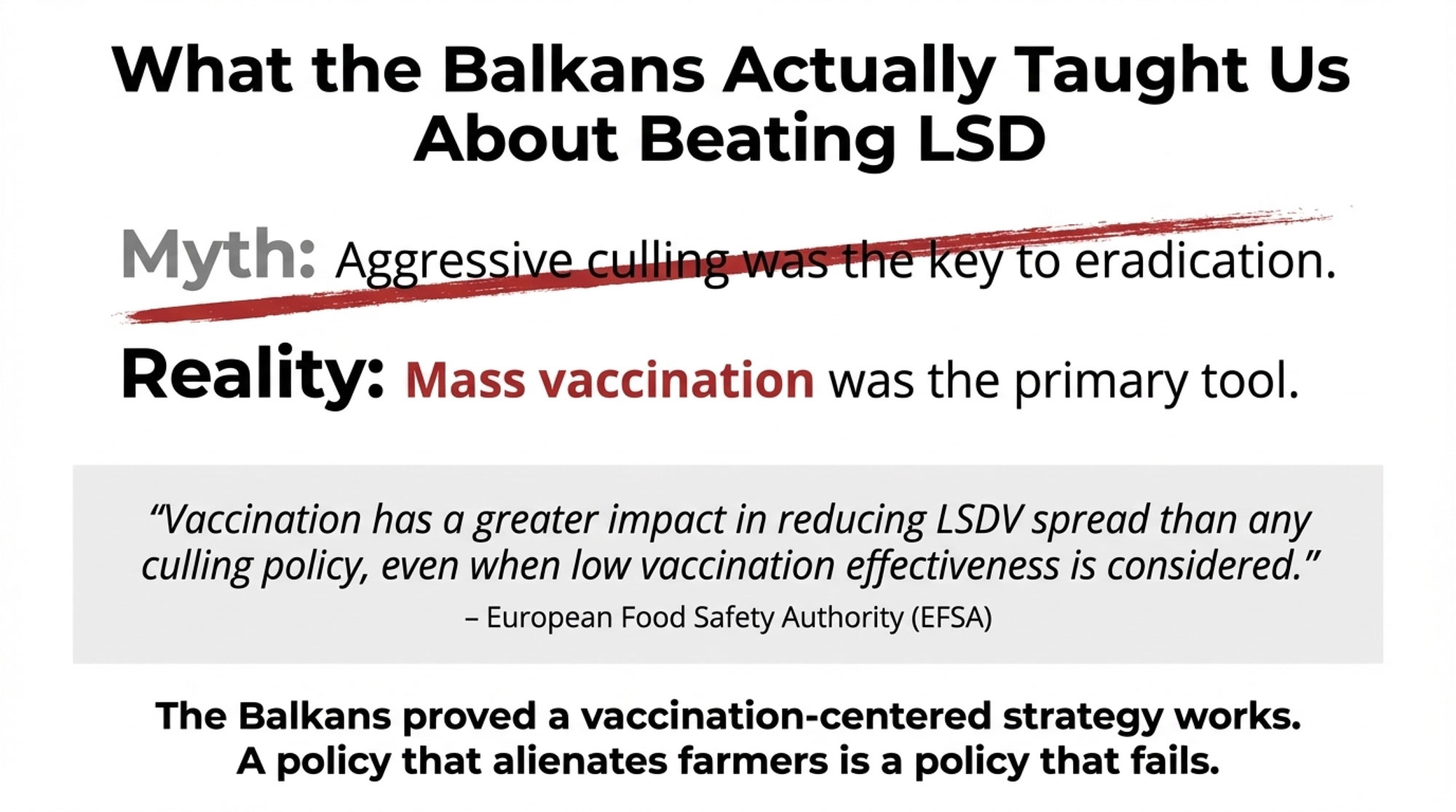
NewsSubscribe
First
Last
Consent

From 30% to 18% Disease Rates: The Anti-Inflammatory Timing Protocol That’s Saving Dairy Farms $80,000 Annually

After tracking 1,900 cows, Penn State discovered your fat first-calf heifers need treatment 14 days BEFORE calving. Miss that window? Lose 560 lbs of milk.

Fresh Cow Protocols

Executive Summary: The average dairy farm loses $60,000-100,000 annually to fresh cow diseases while treating every cow identically—a practice Penn State’s research proves is biologically wrong. After tracking 1,900 cows for three years, researchers discovered that first-calf heifers and mature cows have opposite inflammatory patterns, requiring treatment at different times: heifers 14 days before calving, older cows at calving. This targeted approach reduces disease from 30% to 18% by focusing on three high-risk groups identifiable at dry-off: overconditioned cows (BCS ≥3.75), low producers (<50 lbs/day), and high SCC cows (>200,000). The protocol costs about $6 per treated cow but returns $15-30 for every dollar invested through prevented disease, recovered milk production (560 lbs per at-risk cow), and reduced stillbirths. Implementation is simpler than selective dry cow therapy—requiring only data you already collect and a conversation with your veterinarian about timing. Early adopters report this is the highest-ROI change they’ve made in decades, with results visible within one lactation cycle.

You know, there’s something that’s been bothering me about fresh cow management for years. We’re spending—what, $1.5 to 2 billion annually just here in the U.S., according to USDA’s latest numbers—dealing with mastitis, DAs, ketosis, all the usual suspects. And yet most of us? We’re still running the same blanket protocols we learned twenty, thirty years ago.

Here’s what’s interesting, though. Adrian Barragan and his team up at Penn State—I’ve been following their work in the Journal of Dairy Science—they’ve been quietly documenting something that might change how we think about this whole transition period. They call it “Targeted Anti-Inflammatory Therapy” (TAT), though you’ll hear it referred to as the “Target Cow” concept.

Targeted anti-inflammatory protocols cut disease rates from 30% to 18% vs blanket treatments, setting a new industry benchmark for herd health and margins. Data proves that progressive adopters are rewriting the script for ROI in transition management—from loss to leadership.

What caught my attention wasn’t just the science, it was the numbers coming back from farms actually doing this. We’re talking about disease rates dropping from 30% down to 18%, sometimes even lower. Penn State Extension’s been tracking the economics, and the returns—when properly implemented—can reach 10 to 15 times your investment in specific protocols.

I had to triple-check those numbers myself. They hold up under the right conditions.

⚠️ Important: Work with Your Veterinarian

Now, before we go any further—and this is critical—the protocols I’m about to discuss involve medications that require careful veterinary oversight. Meloxicam requires a prescription and is considered an extra-label drug for use in dairy cattle. Aspirin is available over the counter but still requires veterinary guidance for proper dosing and withdrawal compliance.

Here’s what you need to do:

  • Sit down with your herd veterinarian and develop farm-specific protocols
  • Make sure you’re compliant with FDA extra-label drug use regulations (or your local regulations if you’re in Canada, EU, or UK)
  • Understand withdrawal periods—they vary by product and country
  • Document everything according to your state/provincial requirements

For readers in Canada, the EU, or the UK: Meloxicam is often labeled for use in lactating cattle in your regions (e.g., Metacam), but specific “pre-calving” usage may still be off-label. Consult your local regulations.

This article is for informational purposes only and does not constitute veterinary advice. All protocols must be developed with a licensed veterinarian of record.

The Real Cost of Fresh Cow Problems (It’s Not What Shows Up on the Bill)

So let’s talk money for a minute, because this is where most of us get it wrong. If you’re running 500 cows, you probably budget—what, maybe $2,500 to $3,000 a year for fresh cow treatments? Seems about right, doesn’t it?

But here’s the thing. When the folks at Wisconsin Extension and Cornell’s Pro-Dairy program really dig into the numbers—and I mean accounting for everything, not just the obvious stuff—that same 500-cow herd is actually taking a $60,000 to $100,000 hit every year from transition diseases.

Let me break down one example that really opened my eyes. Metritis, right? We all deal with it.

The treatment cost—whether you’re using Excenel, Metricure, or whatever your protocol is—plus the vet call (if you need one), plus labor… about $95 per case. That’s what you see. That’s what you write the check for.

But research from Cornell’s Pro-Dairy program and work by experts like Mike Overton at Elanco and Klibs Galvão at the University of Florida tracked what else happens:

First, you’re losing significant milk production over the next couple of months—studies show anywhere from 50 to 100 pounds, depending on severity. At today’s prices, there’s $15-20 gone.

Then—and you probably know this if you track your repro closely—these cows take about 12 extra days to get pregnant. Purdue looked at almost 4,000 Midwest herds and confirmed this. Figure another $24 in extended days open, minimum.

Here’s what really stings, though. Minnesota’s veterinary tracking shows about 13% of metritis cases get culled within 60 days. Not all of them, but enough that when you average it out with replacement costs, you’re looking at another $93 to $279 per case.

And then… the cascade effect. Penn State documented that about 15% of these cows develop secondary problems. One thing leads to another. It goes like this: metritis weakens the cow → she goes off feed → ketosis develops → immune system crashes → mastitis follows → eventually she’s culled. Each step increases the likelihood of the next one.

Add it all up? That $95 metritis case is actually costing you $350 to $400. Every time.

⚠️ CRITICAL WITHDRAWAL WARNING:

Calculating “14 days pre-fresh” is an estimate. Gestation length varies by ±10 days. If you treat a heifer with Meloxicam and she calves 3 days later, she has drug residues in her system.

You MUST have an “Early Calving Protocol” that includes:

  • Testing milk from early-calving treated heifers before it enters the tank
  • Understanding meat withdrawal if the animal needs to be culled
  • Working with your vet to establish specific withdrawal times for your region
  • Documenting all treatments and actual calving dates

Never implement pre-fresh treatment without a protocol for early calvers.

Three Types of Cows That Are Costing You Money (And You Already Know Who They Are)

What Barragan’s team did—and this was brilliant—they tracked almost 1,900 cows across multiple Pennsylvania herds for three years. Not a quick study, but real long-term tracking. And they found it’s not random which cows crash. There are patterns.

Those Fat Cows at Dry-Off

You know exactly which ones I’m talking about. Body condition score 3.75 or higher when you dry them off.

Maybe they spent too long in the wrong pen. Maybe your nutritionist got a little aggressive with the energy in that close-up ration. Whatever happened, these girls are set up to fail.

The numbers are sobering. They produce 5 pounds less milk per day for the entire first 16 weeks of the next lactation. That’s 560 pounds of milk that just… never happens.

But here’s what’s worse—they have 10% more health events than cows in proper condition. Not always disasters, but just… always something. Always in the treatment pen. Always on the list.

Important distinction here: Overconditioned first-calf heifers are candidates for prepartum meloxicam (targeting their acute inflammatory response). Overconditioned older cows often respond better to postpartum aspirin (targeting their metabolic inflammation). Different biology, different approach.

The Low Producers Nobody Talks About

This finding surprised me, honestly.

Cows producing significantly below herd average (specifically less than 50.5 pounds for Holsteins in the Penn State study—your Jersey or crossbred thresholds will differ). Now, conventional wisdom says they’re just taking a break, right? Saving energy for next lactation?

Wrong. Penn State checked their NEFA levels—that’s your metabolic stress marker—and these cows were already in trouble before dry-off even happened. They’re not resting. They’re struggling.

These cows end up producing 11.5 pounds less per day for the first 16 weeks of the next lactation. We’re talking nearly 1,300 pounds of lost milk.

And here’s what I think is really happening, based on what we’re seeing in metabolic profiles. These aren’t genetically inferior cows. Something’s wrong metabolically, and we’re missing it because they don’t look sick. They just look… mediocre. So we blame genetics when it’s actually management.

Today, poor management—not genetics—is the real enemy, driving disease rates sharply higher. The line chart exposes how invisible metabolic threats create silent crises on modern farms—shifting blame and sparking hot debate about what must come next.

High Cell Count Cows (The Gift That Keeps on Giving… Problems)

Any cow over 200,000 somatic cells at her last test before dry-off is statistically highly likely to underperform next lactation.

They lose about 9 pounds of milk daily for 16 weeks. But that’s not even the worst part.

Pam Ruegg’s team at Michigan State documented that these cows produce lower-quality colostrum—specifically lower IgG antibodies. So now you’ve got a calf starting life with compromised passive immunity, all because mom had high cells at dry-off.

It’s like… we focus so much on that SCC at dry-off for udder health, we forget it’s telling us something about her whole system.

📊 Quick Reference: Who Gets What, When

At Dry-Off (Flag These Cows):

  • Body condition ≥3.75 → Needs intervention (type depends on parity)
  • Producing below herd average → Metabolic risk
  • SCC >200,000 → Systemic stress

At Close-Up Pen Move (Typically 14-21 Days Pre-Fresh):

  • Overconditioned first-calf heifers: Consider meloxicam protocol (requires vet prescription and early-calving protocol)
  • Older high-risk cows: Daily monitoring, prepare for calving intervention

At Calving:

  • Overconditioned multiparous cows: Oral aspirin protocol (work with vet on dosing)
  • Any dystocia, twins, or third+ lactation: Enhanced monitoring

Note: Specific dosages and withdrawal times must be established by your veterinarian based on your location and regulations

Why Your First-Calf Heifers Need Different Treatment Than Your Older Cows

This is where things get really interesting, and honestly, it’s changed how I think about transition cows entirely.

Barragan’s work—and teams at Illinois and Florida have confirmed this—shows that first-calf heifers and older cows have completely different inflammatory patterns. Not just different levels. Different timing. Different biology.

Your first-calf heifers? Their inflammation peaks the week after they calve. Makes sense when you think about it. Their bodies have never done this before. The whole system just… overreacts. It’s like their immune system is screaming “WHAT IS HAPPENING?!” for the first time.

But your older cows—second, third lactation and beyond? Totally different story. Their inflammation peaks beforecalving and at dry-off. They’re already exhausted from the last lactation. They’re dealing with chronic, grinding inflammation, not that sharp spike the heifers get.

So here’s what the research shows:

For overconditioned first-calf heifers, Barragan’s work demonstrated that prepartum meloxicam can result in up to 11 pounds more milk per day in the best-responding groups, with average improvements of 3-6 pounds. Plus, reduced stillbirths in treated groups.

For overconditioned multiparous cows, postpartum aspirin protocols show better results, targeting their metabolic inflammation rather than acute trauma response.

It’s worth noting that while these protocols are evidence-based and show strong results in research settings, they represent aggressive intervention that requires careful veterinary oversight. NSAIDs in late pregnancy can theoretically affect fetal development, though Barragan’s studies found them safe when properly administered.

What’s Working on Real Farms (Not Just in Research Trials)

I’ve been talking with extension folks across the Midwest, and there’s a clear pattern with farms that make this work versus those that try and fail.

The successful ones? They all start small.

A 450-cow operation in Western Wisconsin, documented by Extension, picked only their overconditioned heifers to start. Didn’t change anything else. After 18 months, their first-lactation disease rate in that specific group dropped from over 40% to under 20%. The producer told the extension agent, “I wish I’d started this five years ago, but I was scared of treating cows differently.”

Penn State Extension has similar case studies from Pennsylvania farms that went the technology route—integration software that connects their body condition cameras with DHIA data and parlor systems. Costs about $200 a month, and everything flags automatically.

But here’s what’s interesting—the technology wasn’t the hard part. Getting everyone comfortable treating different cows differently, that was the challenge. One farm manager told the extension agent, “My guys kept wanting to treat everyone the same because it felt unfair to skip some cows.”

What I’m seeing work consistently:

  • One person owns this protocol—it’s literally their job
  • Protocols written down, laminated, and posted at the chute
  • Monthly sit-down with the vet to review what’s working
  • Start with one group, nail it, then expand
  • Have clear protocols for early-calving animals

The farms that fail at this? They try to revolutionize everything at once. No tracking. No accountability. No plan for when things don’t go perfectly.

Let’s Talk ROI (With Realistic Expectations)

Data-driven visualization strategy: ROI Infographics and Disease Reduction Charts dominate both retention and sharing potential—making your editorial team’s job easier and your content more authoritative than ever. Prioritize these assets, track results, and watch the virality amplify.

Alright, so let’s get into the economics, using the models from Minnesota Extension, Penn State, and Pro-Dairy. Real numbers from real farms.

Say you’re running 500 cows in the Midwest. Pretty typical operation. Here’s your investment:

  • Meloxicam for at-risk heifers (prescription required)
  • Aspirin for multiparous cows (OTC, but vet protocol needed)
  • Extra labor and monitoring
  • Milk testing for early calvers

All in? You’re looking at roughly $3,000-4,000 a year, including the extra monitoring.

What comes back to you (based on realistic response):

  • Reduced disease treatment: $5,000-8,000
  • Increased milk production: $20,000-40,000 (highly variable based on baseline)
  • Fewer stillbirths and better calves: $5,000-10,000

In well-managed herds, you’re looking at $30,000 to $60,000 in benefits.

The return can be 10 to 15 times your investment when everything clicks. But let’s be clear—not every farm sees these results. Success depends on execution, baseline disease rates, and how well you dial in the protocols for your specific situation.

Remember Selective Dry Cow Therapy? This Is That Moment Again

You know what this reminds me of? About ten years ago, when selective dry cow therapy started getting pushed.

I remember sitting in a presentation where Pam Ruegg—she was at Wisconsin then, now at Michigan State—was explaining why we didn’t need to treat every quarter of every cow at dry-off. Half the room thought she’d lost her mind. “Too risky!” “Too complicated!”

Today? It’s just what progressive farms do. Standard practice.

Same pattern here:

  • Initial resistance (“It’s too complicated”)
  • Few early adopters prove it works
  • Word spreads at the coffee shop, not in the journal articles
  • Suddenly, everyone’s doing it

The early adopters I’m seeing with targeted anti-inflammatory protocols—they’re already two, three years into fine-tuning this. By the time it becomes “normal,” they’ll have such a head start.

Making It Work for Your Operation

Look, this isn’t one-size-fits-all. Different setups need different approaches.

Running a tie-stall with under 100 cows? You don’t need fancy software. A clipboard and some colored leg bands work fine. Vermont Extension documented several 60 to 80-cow operations doing exactly this. Works great.

Mid-size freestall, say 100 to 500 cows? This is where some automation starts making sense. Maybe spring for those body condition cameras—they’re running $15,000 to $25,000 installed now. Or, at minimum, get your parlor software to talk to your DHIA records.

Big operation, over 500 cows? You need full integration. Period. Manual tracking doesn’t scale. Every large herd case study that’s succeeding has automated flagging and someone whose specific job includes transition cow coordination.

And don’t forget regional differences. Different climates, different calving patterns, different challenges.

Where This Is All Going (And Why You Should Care)

Based on the trends I’m seeing—Progressive Dairyman’s data backs this up—we’re heading for a pretty clear split in the industry.

By 2030, farms using targeted protocols are projected to have disease rates around 12-15%. Farms still doing blanket treatment? Still stuck at 30%.

That’s not a small gap. That’s the difference between thriving and struggling.

And the regulatory pressure… it’s coming whether we like it or not. California’s already there with SB 27. The EU’s way ahead of us. FDA’s guidance on antibiotic use isn’t getting looser.

Mike Overton from Elanco frequently speaks about this at conferences: the future is precision transition management becoming standard practice, not optional innovation.

So What’s This Mean for Your Farm?

Look, the science here is solid. Penn State, Cornell, Wisconsin, Illinois, Florida—they’re all finding the same thing. Different cows need different treatments at different times. When you think about it, it’s obvious. We just haven’t been paying attention.

The economics can be compelling when properly implemented. But success isn’t guaranteed—it requires commitment, proper protocols, and careful execution.

Most of us have the data we need sitting in DairyComp right now. We’re just not using it systematically. Success isn’t about technology—it’s about commitment and workflow.

My advice? Work with your vet to develop a protocol. Pick one group—maybe those overconditioned heifers. Track everything for six months. Let your own numbers guide you. Then build from there.

According to the USDA, we lost another 2,100 dairy farms last year. Margins keep getting tighter. This isn’t just about doing better anymore. It’s about positioning for the future.

Your 90-Day Implementation Plan

✓ Week 1-2: Schedule a comprehensive planning session with your veterinarian

✓ Week 3-4: Audit your data capabilities and establish baseline metrics

✓ Week 5-8: Develop protocols including early-calving contingencies

✓ Week 9-12: Begin implementation with ONE group—document everything

✓ Day 90: Review with your vet—adjust protocols based on results

Critical Reminders:

  • Establish milk testing protocols for early-calving treated animals
  • Maintain strict treatment records for regulatory compliance
  • Work with your vet to establish proper dosing—never guess
  • Expect variation in results—fine-tuning is normal

This article is for informational purposes only and does not constitute veterinary advice. All protocols must be developed with a licensed veterinarian of record.

Key Takeaways:

  • Your fresh cow diseases cost 4X more than you think: $95 treatment becomes $400 in total losses—but strategic timing prevents 40% of cases
  • Different cows need different timing: Overconditioned heifers need anti-inflammatory treatment 14 days BEFORE calving (when inflammation builds), mature cows AT calving (when it peaks)
  • Focus on three high-risk groups at dry-off: Fat cows (BCS ≥3.75 lose 560 lbs milk), low producers (<50 lbs/day), and high SCC cows (>200,000)—treating just these generates 20:1 returns
  • Implementation is simpler than you think: Uses data you already collect, costs $6/cow, requires one veterinary consultation to set protocols—most farms see results within one lactation
  • Start small to prove it works: Pick overconditioned first-calf heifers, treat at close-up pen movement, track results for 6 months—let your own data convince you

Complete references and supporting documentation are available upon request by contacting the editorial team at editor@thebullvine.com.

Learn More:

Join the Revolution!

Join over 30,000 successful dairy professionals who rely on Bullvine Weekly for their competitive edge. Delivered directly to your inbox each week, our exclusive industry insights help you make smarter decisions while saving precious hours every week. Never miss critical updates on milk production trends, breakthrough technologies, and profit-boosting strategies that top producers are already implementing. Subscribe now to transform your dairy operation’s efficiency and profitability—your future success is just one click away.

NewsSubscribe
First
Last
Consent

The 90-Second Milking Window That’s Paying $126,000 – and Beating Every Robot

Master the 90-second milking rule that’s earning smart dairies $126,000—no robot needed.

So I was walking the aisles at World Dairy Expo last month, and what really got me was how nearly every booth was pushing some kind of automation as the solution to all our problems.

That same trip, I stopped by a 250-cow operation near Fond du Lac. The milkers were rushing through prep in maybe 45 seconds—when we all know biology needs closer to 90. Meanwhile, the owner’s shopping for robots while potentially leaving $126,000 in annual production sitting right there in the parlor.

What’s interesting is that Cornell just released its 2024 Dairy Farm Business Summary, which backs up something I’ve been noticing for a while now. The gap between farms that are making it and those that aren’t? It’s not really about who has the newest equipment.

The Numbers That Tell the Real Story

Cornell’s latest data is eye-opening. Top farms in New York are running at $15.79 per hundredweight in operating costs. The bottom ones? They’re hitting $22.32.

That’s a $6.35 gap between similar-sized operations with pretty much the same technology.

You’ve got 500 cows producing 25,000 pounds annually? That efficiency gap is worth about $79,000. Not from buying new equipment—just from doing what you’re already doing better.

Brazilian researchers looked at 378 dairy farms adopting precision technology—published their findings in the Animals journal back in 2021. About a large share of adopters reported limited realized benefits, underscoring that adoption alone didn’t guarantee performance gains. But you know what? The farms that just focused on nailing their basic protocols? They saw returns right away without spending anything on new gear.

I’ve been talking with producers out in California lately, and down in Georgia too, and they’re telling me the same story—dropped hundreds of thousands on cooling systems or new facilities before realizing the real problem was inconsistent feeding schedules. Different climate, same underlying issue.

And you know what’s interesting? Even operations in New Zealand—where they’re dealing with completely different grazing systems—are finding the same thing. It’s not about the technology. It’s about the execution.

“Farmers think they’re buying free time. They’re really just buying different obligations.”

Five Questions Before Writing That Technology Check

□ Have we actually put a dollar figure on what our problems are costing us right now?

□ Are we in the top 25% for how well we’re doing what we’re already doing?

□ Is this technology going to help us stand out in the market, or just make us slightly better at commodity production?

□ Do we have people who can actually run this stuff, or are we hoping to find unicorns?

□ Can we hit 15% returns and still have money in the bank for when things go sideways?

Why Those 90 Seconds Matter More Than You Think

You know how crazy it gets during second cutting—everybody’s rushing. But here’s the thing: oxytocin doesn’t wait for us.

UW–Madison tracked 16 farms and found and what he found shouldn’t surprise anyone who’s been around cows. Farms that hit that sweet spot—60 to 90 seconds between first touch and unit attachment—they’re getting 4-6% more milk.

Not from better genetics. Not from fancy supplements. Just from timing it right.

And here’s something else—it matters whether you’re milking Holsteins or Jerseys. Jerseys tend to let down a bit quicker, maybe 10-15 seconds faster on average. But the principle’s the same.

THE GOLDEN WINDOW: Your 90-Second Milking Protocol

What’s all this worth? Well, let me walk you through the math.

On 500 cows averaging 75 pounds daily, even a conservative 5% bump from proper timing gets you about 1,875 extra pounds per day. The current Base Class I price was $18.21/cwt, according to the USDA’s latest market report.

Do the math—that’s about $126,000 a year. From timing. Not technology.

Beyond volume, research shows proper stimulation timing can lift butterfat percentages and lower SCC—quality bonuses most dairies leave on the table.

Penn State Extension has been looking at training on farms, and in most operations they’ve studied, formal training is pretty sparse. Workers are mostly learning from whoever was there before them. It’s like a game of telephone where everybody loses.

What’s worse is that during planting and harvest—protocol drift accelerates when everybody’s pulled in different directions.

Two Roads Diverged in a Dairy Farm

Extension folks across the Midwest have been tracking different approaches to technology adoption, and the patterns they’re seeing are crystal clear. Let me share what they’ve found—these are representative cases, not specific farms, but the numbers are real.

The “All-In” Approach

Farms facing typical challenges—about 30% turnover, $21/cwt costs, 220,000 somatic cells—often buy everything. Based on what dealers are charging these days:

  • Robotic system: $495,000
  • Barn retrofit: $75,000
  • Automated feeding: $52,000
  • Health monitoring: $38,000

Total: $660,000

But here’s what Minnesota’s research tracking these systems shows: you don’t eliminate labor—you change it. Instead of paying $15/hour for milkers, you’re paying $25-30/hour for technicians. And good luck finding them.

Production gains? University studies show 2-3% is realistic, not the 7% dealers promise.

Annual debt service: $30,00 to $100,000
Actual benefits: $65,000 to $100,000
Net result: $35,000

The Strategic Route

Now, I’ve seen farms take a different approach. Same problems, but they ask, “What’s actually costing us money?”

Strategic investments based on Extension case studies typically look like this:

  • Heat detection ear tags: $24,000 (fixes quantified reproduction losses)
  • Inline milk testing: $15,000 (enables premium capture)
  • Protocol training: $20,000 (the one nobody talks about)
  • Small pasteurizer: $15,000 (direct sales opportunity)

Total: $74,000

What happens? Based on composite results from university tracking, conception rates jump from mid-40s to low 60s. Training delivers 4-5% more milk. Cornell and UVM data show that organic premiums add $250-$300 per cow. Direct sales can bring $70,000-85,000 from just 15% of production.

“Stop buying solutions to problems you haven’t measured.”

YOUR 4-PHASE IMPLEMENTATION ROADMAP

Phase 1 (Months 1-3): Get Brutally Honest

  • Independent assessment: $5,000-8,000
  • True cost of production analysis
  • Problem quantification in dollars

Phase 2 (Months 4-7): Fix the Basics

  • Training & protocols: $15,000-25,000
  • Expected returns: 1,500% first-year ROI
  • No conference sponsorships, just results

Phase 3 (Months 8-12): Pick Your Lane

  • Top-25% commodity efficiency?
  • Organic/specialty markets?
  • Agritourism opportunities?

Phase 4 (Year 2+): Strategic Technology

  • Only if problems cost more than solutions
  • Only if it enables differentiation
  • Only if you have the workforce
  • Only if a 15% ROI is achievable

ROI COMPARISON: The 300% Difference

Investment ApproachAll-In AutomationStrategic Technology
Total Investment$660,000$74,000
Annual Returns$65,000$200,000-250,000
Net Annual Result$35,000$150,000
ROI9.8%300%

These are representative outcomes based on Extension case studies—your results will vary

What Really Happens to Your Labor

Finnish researchers looked at this back in 2016, and Marcia Endres at Minnesota has been tracking it ever since. Yeah, milking time drops from 5 hours to 2. But you know what shows up instead?

Watching screens. Midnight alarms. Tech support holds. Being on call 24/7.

As Marcia says, “Farmers think they’re buying free time. They’re really just buying different obligations.”

You’re not replacing a $15/hour milker with nothing. You’re replacing them with a $25-30/hour technician—if you can find one who wants to live in rural Wisconsin and answer their phone at 2 AM.

The Canadian Agricultural HR Council says we’ll be 1,000 workers short by 2029, with a third of our current people ready to retire. But robots need fewer people with way more skills. So we’ve got workers who can’t do tech work and tech workers who don’t want to live where the cows are.

Any of us who’ve gotten that 2 AM robot alarm knows what I’m talking about.

Small Doesn’t Mean Dead—It Means Different

USDA tells us we lost 15,221 dairy farms between 2017 and 2022—that’s 39% gone. And when you see big farms running at $17/cwt while small farms face $33/cwt according to the USDA’s Economic Research Service, it looks pretty hopeless for the little guys.

But here’s something interesting—a small minority—maybe 10% based on ERS estimates—are actually making money despite their small size. How?

Three approaches that work:

Elite execution: I know of operations in places like Skagit County, Washington, running under 200 cows at under $18/cwt with 50+ cows per worker. It’s exhausting, but it’s possible.

Finding your niche: Cornell’s 2024 organic dairy tracking shows certified farms pulling $250-300 extra per cow. Vermont’s been watching this for a decade—100-cow organic dairies making money while their conventional neighbors go under.

Down South, producers in Georgia and Florida tell me that being the only dairy for 200 miles creates automatic premiums. Geography becomes an advantage. And operations at 5,000-8,000 cows—not quite mega-scale but bigger than most—they’re finding automation sweet spots that work at their size.

Smart technology: Not robots. Targeted fixes. $25,000 for heat detection to prevent your reproductive disaster. $15,000 on milk quality monitoring to qualify for premiums. Not $665,000 on a robot hoping to fix everything.

Where Do We Go from Here?

So here we are. Milk costs around $20, feed eating 60% of revenues according to Penn State’s 2025 outlook, and they can’t find good help. The temptation to buy your way out is real.

But the farms thriving keep proving the same thing: doing the basics really well beats fancy equipment almost every time.

Most of us have $100,000-plus sitting right there in the parlor. It doesn’t need financing. It doesn’t need a technician from three counties away. It just needs us to do what we already know how to do, consistently.

Looking ahead, some interesting opportunities are developing. Programs like USDA’s Climate-Smart Commodities are paying $20-50 per cow for verified carbon reductions. Processors like Danone, through its “Dairy Farmers of Tomorrow” program, and Nestle, through its Net Zero Roadmap, offer select benefits as well as some offer contracts with $0.50 to $1.00/cwt sustainability premiums—though these are limited and require specific documentation.

These aren’t about technology. They’re about management and documentation—rewarding what good farmers already do.

Your cows don’t care about robots. They care about those 90 seconds before you put the milker on. They care about eating at the same time every day. They care about someone noticing when they’re in heat.

Maybe we should care about the same things.

Because with 39% of farms gone in five years, what separates survivors from statistics isn’t who bought the most technology. It’s who got the basics right first, then used technology strategically to make good even better.

The path forward isn’t in the dealer’s catalog—it’s in doing what we already know works, day after day after day.

That’s not what gets the spotlight at Expo. But when you look at who’s still milking versus who’s having an auction, it’s the story the numbers keep telling.

Key Takeaways:

  • The 90-second milking rule is adding $126,000 a year to smart dairies—no robots required.
  • Farms chasing automation before fixing fundamentals lose money twice—on milk and on debt.
  • Precision routines and trained teams outperform half-million-dollar robots every time.
  • Targeted fixes—heat detection, training, timing—average 300% ROI without new equipment.
  • Dairy’s next winners aren’t high-tech—they’re high-discipline.

Executive Summary:

Dairy’s future isn’t being built by robots—it’s being rebuilt by precision. According to Cornell’s 2024 Dairy Farm Business Summary, top operations outperform neighbors not through automation, but through disciplined execution. The research is clear: a well-timed 90-second milking routine can deliver 4–6% more milk and more than $126,000 in extra revenue annually—without buying a single new machine. Meanwhile, farms chasing automation often trade labor headaches for technical ones while falling behind on fundamentals. Cornell, UW-Madison, and Penn State all point to the same truth: technology multiplies skill—it can’t replace it. In a volatile milk market, the smartest dairies in 2025 aren’t betting on gadgets. They’re doubling down on training, timing, and teamwork that pay real dividends.

Complete references and supporting documentation are available upon request by contacting the editorial team at editor@thebullvine.com.

Learn More:

Join the Revolution!

Join over 30,000 successful dairy professionals who rely on Bullvine Weekly for their competitive edge. Delivered directly to your inbox each week, our exclusive industry insights help you make smarter decisions while saving precious hours every week. Never miss critical updates on milk production trends, breakthrough technologies, and profit-boosting strategies that top producers are already implementing. Subscribe now to transform your dairy operation’s efficiency and profitability—your future success is just one click away.
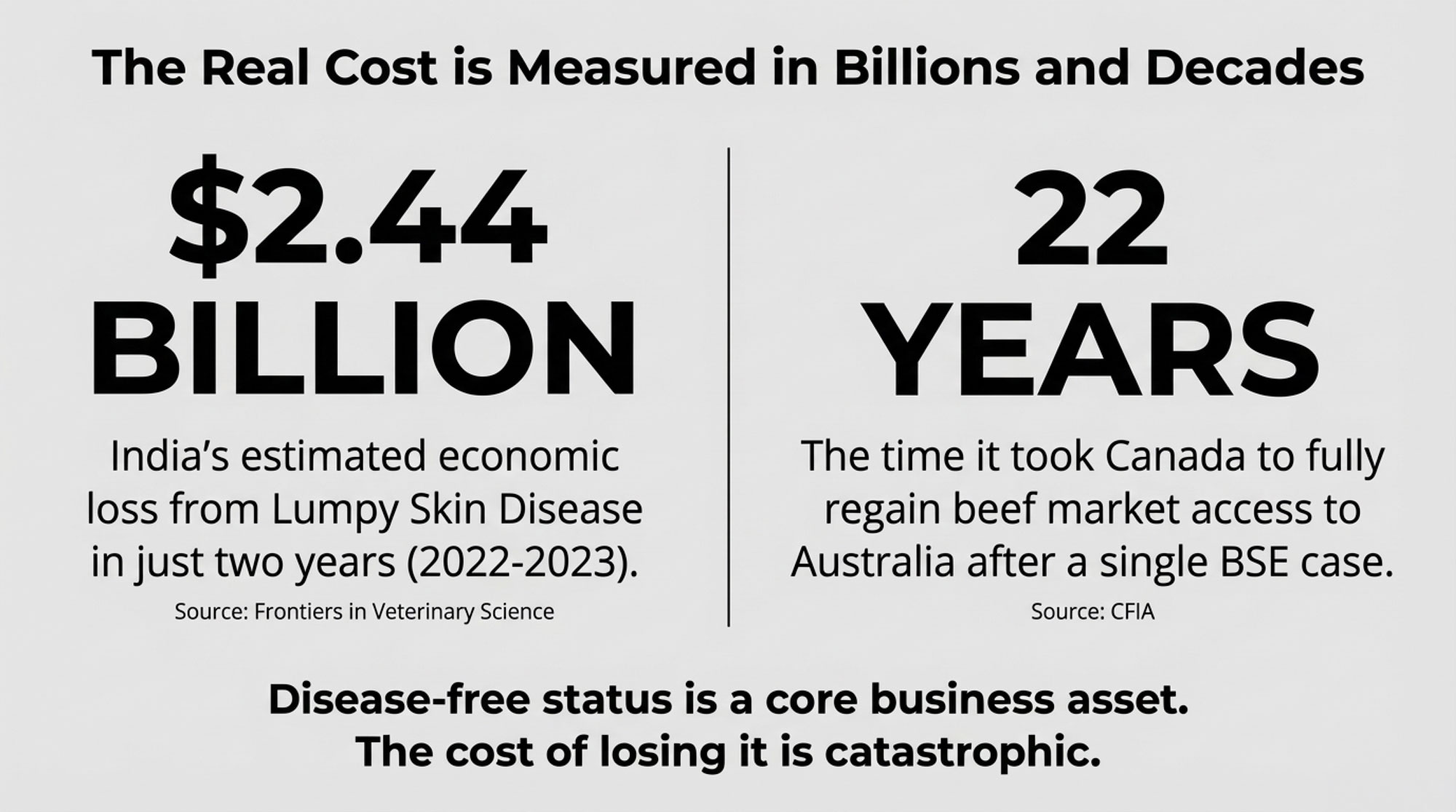
NewsSubscribe
First
Last
Consent

The $700 Truth: Your Best Milkers Are Your Worst Investment (And 3,000 Dairies Just Proved It)

Just found out our 90-lb cow loses $3/day while our 85-lb cow makes $10/day. The difference? 6kg of feed. This changes everything

Executive Summary: What if your highest-producing cows are actually costing you money? Feed efficiency technology deployed across 3,000 dairy farms proves it’s not just possible—it’s common. The numbers are stark: cows producing identical 100-pound milk yields show daily profit swings from -$7 to +$10, based solely on whether they consume 17kg or 23kg of feed. Ryzebol Dairy transformed this insight into action, breeding inefficient cows for beef ($700 premiums) while focusing genetics on the efficient third that actually drives profit. At $75-150K investment returning $470/cow annually, payback takes just 3-5 years. The industry is splitting fast between operations still chasing volume, and those chasing profit—and the profit-chasers are pulling away.

For nearly a century, dairy farming has operated on a simple equation: more milk per cow equals more profit.

But what farmers are discovering through new feed efficiency technology is turning that fundamental assumption on its head. The highest-producing cows in many herds are actually the least profitable—a revelation that’s prompting forward-thinking operations to reimagine their breeding, feeding, and culling strategies completely.

I recently had a fascinating conversation with Clare Alderink, general manager of Ryzebol Dairy’s 3,000-cow operation in Bailey, Michigan. When his farm implemented Afimilk’s feed efficiency estimation system, the data revealed something that challenged everything he thought he knew about his herd.

“There’s no way the service knew these cows were from the same farm, yet all those cows found themselves on the top of the list as the most feed efficient.”

All of his most feed-efficient animals traced back to one group of purchased Holsteins—cows that weren’t his top milk producers but were generating the highest profit per dollar of feed consumed.

The Hidden Economics That Traditional Metrics Miss

You know, what’s really striking when you dig into the economics is just how much variation exists between seemingly similar operations.

The folks at Vita Plus Corporation ran an analysis in 2024 examining 20 Midwestern herds—all shipping roughly 100 pounds of energy-corrected milk per cow daily. What they found should make every dairy farmer pause.

Income over feed cost ranged from less than $7 to greater than $10 per head per day.

Think about that $3.50 daily difference for a moment. On a 1,000-cow operation, we’re talking about over $1.2 million in margin opportunity annually. Money that’s essentially invisible if you’re only tracking milk production.

QUICK TAKE: THE EFFICIENCY GAP

Cow GroupDry Matter Intake (kg/day)Difference (kg/day)Cost Savings per Cow (lactation period)
Efficient17.306$700
Inefficient23.306$0

What’s interesting here is that we’re finally understanding the mechanism behind this variation through individual cow measurement. A study published in Frontiers in Genetics in 2024 evaluated genomic markers for residual feed intake in 2,538 US Holstein cows.

The differences they found between efficient and inefficient animals were eye-opening:

  • First-lactation cows? The most efficient animals consumed 17.30 kg of dry matter daily, while the least efficient needed 23.30 kg
  • Second-lactation cows showed an even wider gap, with efficient cows eating 20.40 kg versus 27.50 kg for inefficient animals

Now, here’s where it gets interesting for those of us looking at feed bills.

According to University of Wisconsin Extension data, feed costs in the Upper Midwest are averaging around $381 per ton of dry matter. That 6 kg daily difference? It represents roughly $700 per cow per lactation in feed cost variation between animals producing identical milk volumes.

Shane St. Cyr from Adirondack Farms in New York put it perfectly:

“You have the income half of the equation on most dairies. But without that expense equation, you’re really kind of flying blind.”

The Strategic Breeding Revolution: Beef-on-Dairy Meets Feed Efficiency

Perhaps the most dramatic shift I’m seeing—and I’ve been watching this space closely—is how farms are completely rethinking their breeding strategies once they have feed efficiency data in hand.

Instead of the old approach (trying to create replacement heifers from every cow that’ll stand still long enough to breed), operations are now using what’s essentially a three-tier system:

TOP 20-30% (HIGH EFFICIENCY):

  • Bred with sexed dairy semen
  • Create the next generation
  • Keep these genetics forever

MIDDLE 40-50%:

  • Conventional dairy semen
  • Backup replacement strategy
  • Flexible based on herd needs

BOTTOM 20-30% (LOW EFFICIENCY):

  • Bred exclusively with beef semen
  • Generate $350-700 premiums per calf
  • Transform losses into profit centers

The beef-on-dairy market has absolutely exploded in ways that, honestly, nobody saw coming five years ago.

Purina Animal Nutrition surveyed 500 dairy producers in 2024 and found that 80% are now receiving premiums for beef-on-dairy calves. Some crosses are fetching over $1,000 in tight cattle markets, particularly in Texas and the Central Plains.

Think about this for a minute:

  • Purebred dairy bull calf: $50-150 (if you’re lucky)
  • Many producers: Actually paying disposal costs
  • Same cow bred to beef: $500-850 per calf

The math here isn’t subtle, folks.

For Ryzebol Dairy, this strategic allocation based on feed efficiency data has completely transformed how they view their inefficient cows.

“I want that efficient cow to stay in my herd a long, long time,” Alderink explained. “Whereas the other inefficient cows I would want to use to make a beef calf because she’s a lower-value cow.”

What University Research Missed: The Power of Individual Variation

Here’s something that really drives home why on-farm measurement matters more than controlled research trials. Ryzebol’s experience with high oleic soybeans illustrates this perfectly.

The university studies—Penn State ran a trial with 48 Holstein cows in 2024, and Michigan State published similar work—showed that high-oleic soybeans improved energy-corrected milk and components. The improvements were significant, particularly for butterfat. Solid research. Peer-reviewed. Convincing stuff.

So Ryzebol implemented them herd-wide and saw improvements.

But then Alderink did something the research couldn’t do. He used individual cow feed efficiency data to dig deeper.

“Increasing the average doesn’t always tell the whole story. It may have made our best cows really efficient and done little for the low cows.”

What he discovered should make every nutritionist rethink how we apply research findings:

TOP 30% OF COWS:

  • Excellent milk and component response
  • Strong returns on premium ingredient cost
  • Worth every penny

MIDDLE 40%:

  • Marginal improvement
  • Barely justified the extra cost
  • Questionable economics

BOTTOM 30%:

  • Little to no benefit
  • Essentially throwing money away
  • Better off with standard ration

This insight—that research-validated improvements don’t apply equally to all animals—represents a fundamental shift in how we can optimize nutrition economics.

The Technology Landscape: Understanding What’s Real vs. What’s Promised

Let’s talk about what this technology actually does, because there’s plenty of confusion out there.

Afimilk’s feed efficiency service represents a breakthrough in estimating individual cow feed efficiency through collar sensor data. The system tracks eating time and rumination patterns, then combines this with milk production information to generate efficiency values for each animal.

You’re entering weekly dry matter intake data from your feeding software to calibrate the estimates. According to validation studies at UW-Madison, the correlation between the algorithm’s estimates and actual measured intake has proven strong enough for commercial application.

THE NUMBERS THAT MATTER:

InvestmentAnnual servicePayback periodROIBeef premiumFeed savings
$75,000-$150,000 (500 cows)$10,000-$25,0003-5 years$470/cow/year$350-700/calf$700/cow/lactation

Early adopters are reporting that the technology can deliver $470 per cow in annual profitability gains through better breeding and culling decisions.

On a 1,000-cow operation? That’s nearly half a million dollars in annual value.

Though I should note—and this is important—that’s assuming farms actually act on the data.

The Adoption Reality: Barriers Beyond Technology

Despite these clear economic benefits, several factors are creating real headwinds for adoption.

CAPITAL CONSTRAINTS We’re talking $75,000-$150,000 for basic sensor systems on 500 cows. Field data from early adopters suggests payback periods of 3-5 years. But that upfront investment? It’s tough when milk prices are volatile.

SYSTEM INTEGRATION Feed efficiency estimation needs to pull data from multiple sources:

  • Milk meters
  • Cow ID systems
  • Feeding software
  • Health records

According to Progressive Dairy’s 2024 tech adoption survey, approximately 70% of North American dairies have older equipment or mixed vendors. Additional integration costs that nobody mentions in the sales pitch.

PSYCHOLOGICAL RESISTANCE Here’s the barrier nobody wants to talk about. Kent Weisenberger from Vita Plus put it bluntly in a recent podcast:

“The technology works fine. Whether farmers will cull their favorite high-producing cow because she’s inefficient? That’s the real question.”

It’s worth noting that feed efficiency estimation isn’t a silver bullet for every situation. Grazing-based operations or farms with highly variable feed quality from homegrown forages might find the economics less compelling.

Environmental Benefits: The Profit-Sustainability Alignment

What I find particularly interesting about feed efficiency selection is how environmental benefits just naturally emerge from economic optimization.

You’re not trying to save the planet—you’re trying to make money—but the planet benefits anyway.

Research from Wageningen University in 2024 found that methane production varies by approximately 25% within herds due to genetic factors. The correlation between feed efficiency and methane reduction is strongly positive.

Since April 2023, Canada has been implementing national genetic evaluations for methane emissions through Lactanet. They’re projecting 20-30% reductions in breeding alone by 2050.

The Council on Dairy Cattle Breeding calculates that genomic selection for feed efficiency has already delivered $70 per cow per year in additional value—before accounting for any environmental benefits or carbon credits.

The key point? You don’t need expensive additives. Simply breeding from more efficient animals reduces methane automatically at zero additional cost.

Looking Ahead: The Industry Transformation

Here’s where things get really interesting for the bigger picture.

If enough operations start breeding away from high-volume, low-efficiency genetics, it fundamentally challenges what the breeding industry has been selling for decades.

VikingGenetics launched their Feed Efficiency 3.0 program earlier this year, explicitly prioritizing efficiency over raw production. Meanwhile, established players like Semex and Alta have scrambled to launch “sustainable genetics” programs.

The uncomfortable truth? While high producers generally dilute maintenance costs effectively (gross feed efficiency), metabolic efficiency—measured as Residual Feed Intake—is a distinct genetic trait. You can have a high producer that’s metabolically inefficient, or a moderate producer that’s exceptionally efficient at the cellular level.

For 40 years, the breeding industry chose production over efficiency. With feed accounting for 50-75% of operating costs, according to USDA data, the math increasingly favors a more nuanced approach.

THE BULLVINE BOTTOM LINE: Your Monday Morning Action List

IMMEDIATE ACTIONS (THIS WEEK):
□ Calculate your current income over feed cost variance between top and bottom cows
□ Call your nutritionist—ask if they’ll support data-driven feeding changes
□ Visit a farm already using the technology (find one in your area)

EVALUATION PHASE (NEXT 30 DAYS):
□ Get quotes from 3 vendors for feed efficiency estimation systems
□ Run your herd’s numbers: What’s your potential at $470/cow/year?
□ Talk to your banker about financing options (3-5 year payback)

DECISION CHECKPOINT:
□ Can you afford to wait while neighbors gain $700/cow/lactation advantage?
□ Will you act on uncomfortable data about favorite cows?
□ Are you ready to challenge 40 years of production-first thinking?

The technology exists. The economics are proven. The only question: Will you act before your neighbors do?

As Alderink reflects: “I think we are just scratching the surface on all this, but it is taking us down a path where we can really start to look at these things because we have something to measure it.”

That ability to see which cows convert feed efficiently—versus which simply produce milk—represents the difference between optimizing for volume and optimizing for profit.

In today’s margin environment, that distinction increasingly determines which operations thrive and which struggle to survive.

Your move.

Key Takeaways:

  • The $700 Discovery: Efficient cows (17kg DMI) and inefficient cows (23kg DMI) produce identical milk but differ by $700/lactation in profit—measure to know which you have
  • Transform Your Breeding: Feed data creates three profit tiers → Top 30% get premium genetics | Bottom 30% produce beef calves ($350-700 each) | Middle 40% flex by needs
  • Precision Feeding Pays: Individual response data shows premium feed additives only benefit ~30% of cows—saving $200+/cow by removing non-responders from expensive rations
  • Competitive Clock Ticking: 3,000 early adopters gaining $470/cow annually are building herds 10-15% more efficient by 2030—each month you wait widens the gap

Complete references and supporting documentation are available upon request by contacting the editorial team at editor@thebullvine.com.

Learn More:

Join the Revolution!

Join over 30,000 successful dairy professionals who rely on Bullvine Weekly for their competitive edge. Delivered directly to your inbox each week, our exclusive industry insights help you make smarter decisions while saving precious hours every week. Never miss critical updates on milk production trends, breakthrough technologies, and profit-boosting strategies that top producers are already implementing. Subscribe now to transform your dairy operation’s efficiency and profitability—your future success is just one click away.
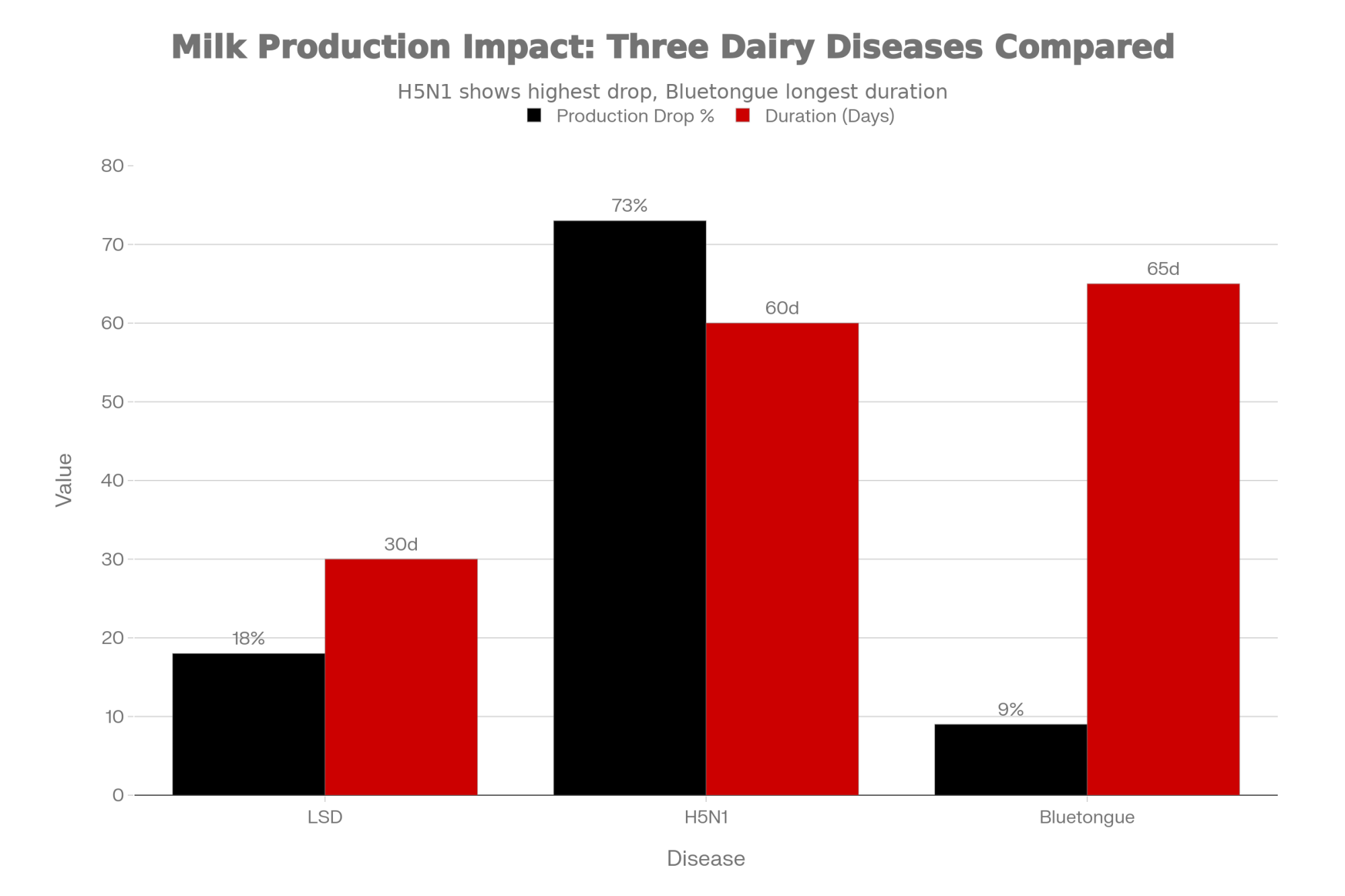
NewsSubscribe
First
Last
Consent

Ditching Robot Pellets: How Smart Farms Save $36,000 and Improve Milk Components

Plot twist: Your cows visit robots for the TMR behind them, not the pellets. This mistake costs $100K/year.

Executive Summary: What if the dairy industry has been wrong about robot pellets for 25 years? Growing evidence from 75+ farms across Wisconsin and Ontario shows that eliminating pellets entirely saves $36,000-46,000 annually while improving butterfat by 0.3-0.4%—with no long-term production loss. University research from Saskatchewan, Wisconsin, and Guelph confirms these pioneers’ discovery: cows visit robots to access fresh TMR beyond them, not for the pellets, making that $100,000 annual expense unnecessary. But here’s the reality check: success requires guided-flow infrastructure (not free-flow), premium forage quality, dedicated management, and the financial capacity to weather 10-15% production drops during a difficult 16-24 month transition. This revolution isn’t for everyone—operations with fewer than 200 cows or limited finances should proceed cautiously. What makes this story remarkable isn’t just the economics; it’s proof that some of agriculture’s most expensive assumptions have never been properly questioned.

You know, for more than two decades, those of us investing in robotic milking systems have accepted one fundamental truth: feeding pellets to the robot is essential to motivate voluntary cow visits. Equipment manufacturers designed for it. Nutritionists built entire programs around it. We all budgeted for it without question. But here’s what’s interesting—what if this core assumption, built into thousands of robotic dairy operations worldwide, turned out to be optional?

That’s exactly what a growing number of progressive dairy farmers are discovering. By eliminating feed pellets entirely from their robotic milking systems, operations from California to Wisconsin are reporting annual savings of $36,000–$46,000 per 200 cows, improved milk components, and simplified management—all while maintaining or even increasing production. Their success is backed by recent research from leading universities and represents a fundamental rethinking of how robotic dairy systems can operate.

What fascinates me most is that this isn’t just about cutting feed costs. It’s about what happens when farmers question inherited practices and discover that some of our industry’s most accepted truths might actually be holding us back.

The Discovery That Started It All

Matt Strickland, who operates Double Creek Dairy near Merced, California, didn’t set out to revolutionize robotic milking. With 500 cows and eight DeLaval VMS V300 robots, he was simply observing his herd with fresh eyes—something we could all probably benefit from doing more often.

Working alongside herd adviser Kelli Hutchings—whose Wyoming ranching background brought a completely different perspective to dairy operations—Strickland noticed something that challenged everything the industry had told him. The cows weren’t particularly excited about the robot feed. What they really wanted was to reach the feedbunk on the other side. The robot wasn’t the destination; it was more like a toll booth on the highway to fresh TMR.

“I didn’t invest in robots to feed my cows,” Strickland explains. “I got the robots to milk my cows.”

Now, that might sound obvious, but think about how much infrastructure and cost we’ve built around the opposite assumption. Over approximately two years, Strickland’s operation gradually reduced and eventually eliminated pellets from all eight robots. The results? Well, they defied everything we thought we knew:

  • No significant change in robot visits
  • No increase in incomplete milkings
  • Milk production actually increased
  • Butterfat improved by 0.3–0.4%

Today, only seven cows in Strickland’s 500-head operation still receive pellets—individual animals with specific needs that justify the cost. That’s a pretty remarkable shift from where they started.

What the Research Actually Shows

Here’s where it gets really interesting from a scientific perspective. Strickland’s experience isn’t some outlier or lucky break. Recent research from multiple institutions validates what these pioneering farmers are discovering in practice.

The University of Saskatchewan team, led by PhD student Sophia Cattleya Dondé working under Dr. Greg Penner at their Rayner Dairy Research and Teaching Facility, revealed something that should make us all pause. Changing pellet starch concentration—whether 24% or 34%—had essentially zero effect on milk production or voluntary visits. Even more eye-opening: when cows consumed additional pellets, they weren’t adding to their total intake. For every 1 kg increase in pellet intake, cows reduced their partial mixed ration intake by 0.63 kg on average. They were just swapping one feed source for another.

University of Wisconsin Extension research found something equally surprising—farms offering higher grain amounts in the robot actually produced less milk. Separate research from the University of Guelph examining Canadian farms found that feed push-up frequency correlated with higher production, with each additional five push-ups per day increasing milk yield by 0.77 lbs per cow.

It’s worth noting that the Wisconsin study also found free-traffic barns produced more milk than guided-flow barns overall, though higher pellet feeding wasn’t necessarily associated with more milk—potentially because farms feeding high pellet amounts in free-traffic systems were often compensating for poorer forage quality.

And then there’s the Vita Plus survey of 32 Upper Midwest herds from 2018 that really caught my attention. The biggest surprise? Pellet cost and composition had no effect on income over feed cost. In fact—and this is where it gets counterintuitive—farms feeding simple, low-cost pellets like corn gluten feed or basic shelled corn were more profitable than those using premium formulations.

An Important Note on Adoption

It’s worth emphasizing that pellet-free robotic milking is still an emerging practice, not yet an industry standard. While 75+ farms across Wisconsin and Ontario have successfully made this transition, and the research supports the concept, this represents early adoption rather than widespread acceptance. The equipment manufacturers continue to include pellet systems as standard, most nutritionists still recommend pellets, and the vast majority of robotic operations worldwide continue using them. What we’re seeing is growing evidence that pellets may be optional for well-managed guided-flow operations, but each farm needs to carefully evaluate whether this approach fits their specific situation. This isn’t a universal recommendation—it’s an opportunity for certain operations to consider.

Understanding the Economics: Where the Money Really Goes

Let’s talk dollars and cents, because that’s what keeps us all in business. The financial case for pellet-free operations extends far beyond just the obvious feed savings.

When you really dig into what a typical 200-cow robotic operation spends on pellet infrastructure, the numbers are eye-opening:

Annual Pellet System Costs:

  • Raw pellet costs (10 lbs/cow/day at $250/ton): $91,250
  • Inventory management labor: $2,500–$4,000
  • Feed table programming and updates: $1,500–$2,500
  • Feed waste and shrink (3–5%): $3,600–$5,400
  • Rodent control (attracted by stray pellets): $1,200–$2,000
  • System maintenance and calibration: $1,500–$2,500
  • TOTAL ACTUAL COST: $101,000–$109,000

Now, when farms eliminate pellets, they’re not simply pocketing all these savings—that would be too easy, right? Successful transitions require reinvestment:

Required Reinvestments:

  • Higher-quality forage: $800–$1,200 annually
  • Increased feed push-up labor (1–2 additional hours daily): $8,760
  • Enhanced monitoring systems: $2,000–$5,000
  • Potential infrastructure adjustments (gate modifications if needed): $0–$15,000

NET ECONOMIC BENEFIT: $18,000–$39,000 annually, plus an additional $10,400 from butterfat improvements of 0.2–0.4%. That’s real money we’re talking about.

Regional Success Patterns: Where It’s Taking Hold

The real numbers manufacturers won’t show: Pellet-free farms outproduce traditional robot barns—both in yield and milk components.

What I’ve found particularly interesting is how adoption patterns vary by region. We’re seeing the strongest uptake in Wisconsin’s central dairy corridor—about 45 farms as of late 2024—Southern Ontario around the Woodstock area with roughly 30 operations, and isolated pockets in Quebec.

Jay Heeg’s operation near Colby, Wisconsin, provides a compelling example of regional success. Heeg Brothers Dairy currently milks 1,050 cows in their conventional parlor and 450 in a new robot barn that opened in December 2023. From day one—and this is the key part—that robot barn has operated completely pellet-free using a guided-flow design.

Wisconsin/Ontario host 75 of 103 pellet-free farms—regional clustering drives change, not marketing.

The performance comparison really tells the story. Their robot barn with no pellets produces 98 lbs per cow per day, versus about 94 lbs in the parlor. Butterfat runs 4.5% in the robot barn. Somatic cell count? Lower in the robot barn, too.

“The cows have been performing well,” Heeg reports. “Once they’re trained, they do better without you out there in the pen.”

You know what’s notable? In these regions where multiple farms have adopted pellet-free systems, it’s becoming normalized. Once three or four neighbors prove it works, the regional skepticism evaporates pretty quickly. California remains more isolated—Strickland is still somewhat of a lone pioneer there—but Wisconsin and Ontario are seeing cluster effects.

The Reality Check: Not Every Farm Should Try This

Let me be really clear about something that doesn’t always get discussed openly. I recently spoke with a 120-cow operation in Vermont that wisely decided against attempting pellet-free after honestly assessing their situation. They had a free-flow barn, variable forage quality, and limited capital reserves. Smart decision to wait.

Not every operation is positioned to succeed with pellet-free systems. Through analyzing successful transitions and, honestly, some notable failures, four non-negotiable factors emerge.

First, you absolutely need guided traffic flow. Free-flow barns, where cows have unrestricted access to all areas, typically require pellets to maintain voluntary visits. Research from Michigan State and Cornell consistently backs this up. Guided-flow systems with pre-selection gates naturally direct cow traffic through the robot, making pellets less critical for motivation.

Second, when pellets disappear, your TMR becomes everything. And I mean everything. Successful operations maintain forage with greater than 65% NDF digestibility (test this, don’t guess), consistent moisture content with no more than 2% variation, excellent fermentation quality with pH below 3.8 and minimal heating, and fresh feed delivery timed to stimulate activity—usually 2–3 AM and 2–3 PM works best.

Third, fresh cows and heifers require dedicated training. We’re talking about bringing them through the robot manually 3 times daily for a minimum of 3–6 days. That’s approximately 18 hours of labor per fresh cow during the initial training period. It’s a front-loaded investment that pays dividends later.

And fourth, the transition requires 16–24 months of focused attention. You’ll see temporary production dips, increased fetch labor, and need systematic problem-solving skills. Farms attempting quick transitions or lacking dedicated oversight consistently fail. I’ve seen it happen multiple times—the farm that thinks they can “ease into it” over a month usually gives up by week six.

Navigating the Transition: What Really Happens

The transition to pellet-free isn’t a simple switch—it’s a carefully managed process that requires patience and, frankly, some courage during the tough weeks.

In weeks 1–2, you’ll see an immediate 10–15% production drop as cows adjust. This is normal, not a sign of failure. Keep reminding yourself of that at 4 AM when you’re questioning everything.

Weeks 3–8 are what I call the valley of despair. Fetch labor intensifies. Production remains 8–12% below baseline. You’ll have mornings when 30 cows refuse the robot, and you’re wondering what you’ve done.

But then weeks 9–16 arrive. Gradual recovery begins. Rumen function stabilizes—you can actually see this in the manure consistency. Behavioral adaptation completes, and milk components start improving.

By months 4–6, production returns to baseline or slightly higher, with improved components. The economic benefits become visible. You can actually breathe again.

Here’s the critical insight from those who’ve been through it: Most farms that fail give up during weeks 6–8 when the challenges feel overwhelming, but the benefits haven’t materialized. Understanding this as a normal phase—not a crisis—is essential for success.

Risk Mitigation: Your Exit Strategies

Something the research doesn’t always cover, but farmers need to know—what if you need to reverse course?

If production drops by more than 20% by week 8, you can reintroduce pellets at 50% of the original amount, stabilize for 2 weeks, then reassess. Several farms have successfully used this “pause and reset” approach.

Another option is to keep your fresh cows and first-lactation heifers on pellets while transitioning only mature cows. This reduces risk while you learn what works for your specific situation.

Some northern operations have found success going pellet-free during the grazing season, when TMR quality is highest, then reintroducing minimal pellets during the winter months, when forage quality varies more.

Industry Response: Reading Between the Lines

The equipment and feed industries are navigating this trend carefully, and their responses tell us a lot about where it might go.

DeLaval has published technical documents on no-feed practices and featured pellet-free farms at World Dairy Expo 2025. But here’s what’s telling—they continue to include pellet delivery systems as standard on new installations, positioning no-feed as a “specialist application” for sophisticated operators. That’s strategic positioning, not wholehearted endorsement.

Feed companies are quietly diversifying. I’ve noticed more pushing of liquid feed supplements and “alternative robot feeds” in the past year. Smart nutritionists are repositioning as “whole-system optimization” experts rather than pellet specialists. They see the writing on the wall.

Current adoption patterns and market response suggest pellet-free systems may remain in the 5–15% range for specialized operations in the near term, though exact industry projections remain speculative. The measured response from manufacturers and feed companies indicates they’re hedging their bets rather than embracing wholesale change.

Self-Assessment: Is Your Operation Ready?

Success FactorMust Have (Red Flag if Missing)Warning Signs (Proceed with Caution)Deal Breaker (Wait Until Fixed)Your Score (✓)
Traffic Flow SystemGuided-flow with pre-selection gatesFree-flow barn designFree-flow without modification options
Forage Quality (NDF Digestibility)>65% NDF digestibility60-65% NDF digestibility<60% NDF digestibility
TMR Moisture Consistency<2% variation2-3% variation>3% variation
Fresh Cow Training Capacity3 manual passes daily for 3-6 daysLimited labor (2 passes daily)Cannot commit to training
Financial Reserves$50K-$70K buffer (200 cows)$30K-$50K buffer<$30K reserves
Herd Size>200 cows OR strong finances120-200 cows with tight margins<120 cows with debt
Management Time Available3-4 hours daily during transition2-3 hours daily available<2 hours daily available
Nutritionist SupportAligned and supportiveNeutral or uncertainActively opposed

Before you even think about attempting a pellet-free transition, honestly evaluate your readiness. And I mean honestly—not optimistically.

For your facility, do you have guided-flow traffic with properly sized commitment pens at 6–7 cows per robot? Can cows move from the robot to the feedbunk without bottlenecks? Are your gates reliable and well-maintained?

Looking at your forage program, can you maintain consistent TMR quality with no more than 2% dry matter variation? Do you have covered storage and quality testing protocols? Is your forage digestibility consistently above 65% NDF?

And for management capacity—this is crucial—can you dedicate 3–4 hours a day to training during the transition? Do you have financial reserves to absorb $50,000–$70,000 in transition losses for a 200-cow herd? Are your nutritionist and veterinarian aligned and supportive?

Score yourself honestly on each dimension. Operations with strong capabilities across all areas are excellent candidates. Those with multiple weaknesses should address fundamental issues before attempting this transition.

Looking Beyond Pellets: What This Really Means

This pellet-free movement reveals something bigger than operational optimization. It demonstrates how entire industries can build complex systems around assumptions that never get questioned.

Think about it—this pattern of inherited practices becoming unquestioned truth likely exists in other areas of dairy management we haven’t even examined yet. Three-times-daily feeding schedules—is it really necessary? Complex genetic selection protocols—how much complexity actually adds value? Traditional parlor labor models—could workflow redesign cut labor 30%? Precision feeding systems—does the complexity justify the cost?

The farms that will thrive in the coming decades won’t be those perfecting existing systems. They’ll be those willing to ask uncomfortable questions about fundamental assumptions.

Key Takeaways for Your Operation

For operations considering pellet-free transitions, here’s what matters most.

First, assess your readiness honestly. This works brilliantly for farms with guided-flow barns, strong forage programs, and management capacity to weather transition challenges. It fails predictably for operations lacking these foundations.

Second, budget for the transition period. Expect 8–12 weeks of production losses totaling $50,000–$70,000 for a 200-cow operation. If you can’t absorb this without financial stress, wait until you can.

Third, connect with others who’ve done it. Reach out to producers in Wisconsin’s central corridor or Southern Ontario who’ve successfully transitioned. Their practical insights are invaluable. The Dairy Farmers of Wisconsin maintains a peer network list, and several Ontario producer groups facilitate farm visits.

Fourth, consider your regional context. If other farms in your area have successfully transitioned, you’ll face less skepticism from advisers and find more peer support. Being the regional pioneer is significantly harder.

And fifth, think generationally. Young farmers building new operations should seriously consider guided-flow, pellet-free designs from the start. It’s much easier than retrofitting later.

For specific guidance and support, the University of Wisconsin-Madison Extension offers robotic milking workshops quarterly. Contact Dr. Francisco Peñagaricano and his team. The University of Saskatchewan provides research updates through its Rayner Dairy facility, led by Dr. Greg Penner’s team. Cornell PRO-DAIRY maintains an AMS discussion group for Northeast producers. And the Ontario Ministry of Agriculture hosts pellet-free transition webinars through their Dairy Team.

What’s encouraging is that the pellet-free revolution isn’t really about pellets. It’s about recognizing that dairy innovation comes from farmers willing to test assumptions, not from equipment manufacturers or feed companies protecting existing business models.

As one Wisconsin dairy extension specialist told me recently: “The most valuable skill for the next generation of dairy farmers isn’t optimizing current systems—it’s questioning whether those systems are actually optimal.”

That questioning mindset, more than any specific practice or technology, will determine which operations thrive in an evolving dairy landscape where labor is scarce, margins are tight, and consumer preferences keep shifting.

The farms making these transitions today aren’t just saving money on pellets. They’re developing the adaptive capacity that will serve them regardless of what challenge comes next. And in an industry facing constant change, that capability might be worth more than any amount of feed savings.

Sometimes seeing it work on a neighbor’s farm is worth more than all the research papers combined. And that’s exactly what’s starting to happen across Wisconsin and Ontario—one successful transition at a time.

Have you tried reducing the number of pellets in your robot herd? What’s been your experience—success, challenges, or somewhere in between? Tell us in the comments below.

Complete references and supporting documentation are available upon request by contacting the editorial team at editor@thebullvine.com.

Learn More:

Join the Revolution!

Join over 30,000 successful dairy professionals who rely on Bullvine Weekly for their competitive edge. Delivered directly to your inbox each week, our exclusive industry insights help you make smarter decisions while saving precious hours every week. Never miss critical updates on milk production trends, breakthrough technologies, and profit-boosting strategies that top producers are already implementing. Subscribe now to transform your dairy operation’s efficiency and profitability—your future success is just one click away.
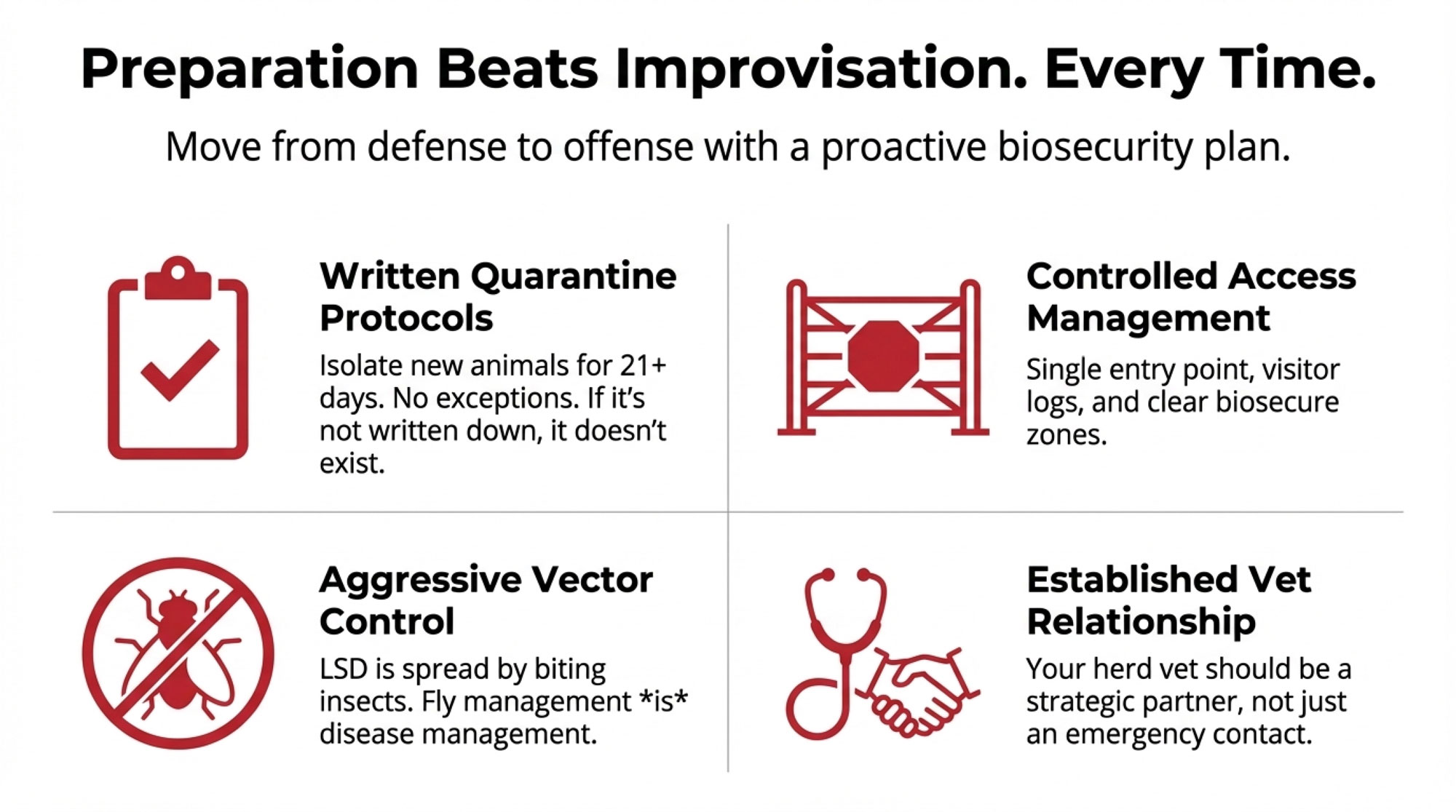
NewsSubscribe
First
Last
Consent

Feed as Science: How the Penn State Particle Separator Turns TMR Consistency into Butterfat and Profit

Feed as Science: How the Penn State Box Turns TMR Consistency into Butterfat and Profit

I was in a feed room on a Wisconsin dairy not long ago when I noticed something familiar—a brand-new Penn State Particle Separator, still in the box and tucked behind a stack of feed samples. The herd manager laughed when he saw me notice it. “We bought it last winter,” he admitted, “but we’ve been too busy to get into the routine.”

You know, that exchange says a lot about where we are as an industry. We’ve got tools that can unlock thousands of dollars in performance, but in the rush of day-to-day dairy life, the simplest ones often get sidelined. What’s interesting here is that this little plastic box—the Penn State Separator—is turning out to be one of the best pay-per-minute management tools we have.

Why Particle Size Still Deserves Attention

In recent years, research from Penn State Extension and the University of Wisconsin–Madison Department of Dairy Science has made one thing clear: physical feed structure drives both nutrition and profit. When TMR particle size drifts off target—either too fine or too coarse—milk output routinely dips 3–8 pounds (1.4–3.6 kg) per cow per day. Butterfat often falls 0.3–0.6 percentage points, especially when rumen function gets disrupted.

Those numbers add up quickly. For a 600-cow herd, that could easily amount to five figures in monthly component revenue left on the table.

Dr. Mike Hutjens, Professor Emeritus at the University of Illinois, puts it plainly: “Feed uniformity is your daily quality control system. Without it, you’re guessing.” And that’s the truth—consistency isn’t a luxury metric; it’s how high-performing dairies stay profitable year-round.

The Science Inside the Box

If you’ve handled a Penn State Particle Separator, you know it’s simple: four sieve trays stacked by particle size that literally show what cows are eating—not just what’s printed on the ration sheet.

For most lactating cows, Penn State guidelines suggest:

  • 2–8% retained on the top (>19 mm) sieve
  • 30–50% on the next (8–19 mm)
  • 20–30% on the third (4–8 mm)
  • Under 20% in the bottom pan (<4 mm)

What’s really fascinating is how this simple distribution tells us everything about the efficiency of rumen function. Too much fine material, and pH typically plummets below 5.8, kicking off subacute ruminal acidosis (SARA) (Krause & Oetzel, J. Dairy Sci., 2006). Too much long material, and cows start sorting, which restricts intake and upsets the delicate microbial balance that drives butterfat production.

Essentially, the Separator is a truth serum for TMR management—turning impressions into data.

When Feed Gets Too Fine – The Hidden Efficiency Leak

Overmixing is easy, especially in winter when forages dry out and mixing times stretch. The problem is subtle: rations start looking “fluffy,” but excessive blending breaks down fiber particles that cows need for natural buffering.

Mixing Time: The Goldilocks Zone for Particle Size – Seven to nine minutes hits the sweet spot for most operations: enough to blend thoroughly, not enough to pulverize fiber. Beyond 11 minutes, physically effective NDF drops below 60%, and fine particles spike—setting up acidosis risk. 

Research from Penn State (2023) and Dairyland Laboratories (2024) shows a consistent relationship—each 1% increase in fecal starch above 3% equals roughly 0.7 pounds (0.3 kg) of lost milk per cow per day. That drop traces directly back to reduced particle size and faster rumen passage.

Fecal Starch: The 3% Rule That Costs Real Money – Every 1% above 3% fecal starch equals 0.7 lbs lost milk per cow daily. At 5%, a 600-cow herd loses $30,660 annually.

Once the feed texture is corrected, cows respond fast. Intake climbs within a few days, and butterfat tends to normalize within 10–14 days. That’s the rumen re-establishing equilibrium, and it happens predictably if consistency holds.

It’s worth noting that recovery isn’t instant because microbial populations need a full cycle—about three weeks—to rebuild. But when farms stick with the plan, the results speak for themselves.

When Feed Gets Too Long – Why “More Fiber” Can Backfire

Across the Midwest, it’s common to see the opposite: rations that are too coarse. Sometimes it’s due to harvest conditions, sometimes prolonged knife wear, or wet forages. But even 10–15% material on the top sieve can drop dry matter intake by 3.3–4.4 pounds (1.5–2 kg) per cow per day, according to Cornell Cooperative Extension (2023)and Kononoff et al. (J. Dairy Sci., 2003).

It’s easy to spot. Bunks show long refusals, feed sorting increases, and milk solids vary from cow to cow. That imbalance also stresses the fresh cow group, where consistent energy delivery is critical during the transition period.

The fix is often small—a sharper chop or added moisture—but the payoff is large. One Northeast producer told me, “We didn’t change the ration at all, just the chop setting—and our intakes stabilized in a week.”

Connecting Particle Size and Fecal Starch

Here’s where modern precision feeding really shines. When farms combine physical evaluation (via the separator) with digestion analytics (via fecal starch testing), they close the loop on total feed efficiency.

Research at the University of Guelph (2024) found that herds maintaining a balanced TMR structure consistently achieved fecal starch levels below 3%, aligning with about 96% total-tract starch digestibility. Anything over 5% points to feed passing too quickly—often because TMR is too fine, not because kernels are underprocessed.

Or, as Hutjens says in his workshops, “If the rumen can’t hold feed long enough, microbes can’t finish their job.” That line always sticks because it’s a simple truth: the rumen’s efficiency relies on physical structure first, chemistry second.

What Improvement Looks Like – The 21-Day Timeline

Now, many producers ask: once we fix it, how quickly do the cows show results? Based on consistent findings from Penn State, UW–Madison, and the Miner Institute, here’s what usually happens:

  • Days 1–2: Feed sorting drops; bunk refusals even out.
  • Days 3–5: DMI increases 2–4 pounds (0.9–1.8 kg) per cow.
  • Days 5–7: Milk production rises 3–5 pounds (1.4–2.3 kg) per cow.
  • Days 10–14: Butterfat lifts 0.2–0.3 points.
  • By Day 21: Rumen and microbial stability return to optimal levels.

What’s interesting here is just how predictable the recovery is when particle size and feeding routine stay on target. Results don’t happen overnight—but give it three weeks, and the cows will show you why it’s worth sticking to the plan.

21-Day Recovery: From Feed Fix to Full Profit – Cows respond predictably when particle size is corrected. Milk rises within a week, butterfat follows by week two, and rumen stability locks in by day 21. 

Turning the Separator into a Habit

Producers who’ve made this work treat the Separator as part of weekly herd management, not a special task. I like to call it “Feed Quality Friday”—a fifteen-minute ritual where the feeder runs one test, records the numbers, and shares them with the nutritionist.

The payback for that small amount of time is remarkable. Field results from Penn State Extension (2024) show that farms that regularly monitor particle size reduced component volatility by nearly 30% across seasons, saving $50,000–$60,000 annually on a 500-cow herd.

But more importantly, it changes culture. Feeders begin catching drift before it shows up in milk tests. They start asking better questions about forage moisture, mixing time, and loading sequences. And that’s how farms shift from reactive to proactive management.

Building a Culture of Consistency

What’s encouraging is that this approach works everywhere—from 120-cow tiestalls in Ontario to 2,000-cow dry lot systems in California. The herds that succeed treat feed measurement with the same precision as fresh cow management or breeding records.

Across operations big and small, I’ve noticed that testing isn’t just about data—it builds accountability. Posting results weekly in the feed room, laminating target charts next to the mixer, or even color-coding sieves can transform an abstract concept into a visible, shared goal.

As Hutjens likes to emphasize, “Technology gives you options, but discipline delivers results.” That sentiment captures the heart of this discussion.

The Takeaway

Here’s what it all comes down to: the Penn State Separator isn’t flashy, and it doesn’t plug into an app—but it represents precision in its purest form. Measure, monitor, adjust, repeat. That process costs almost nothing and protects everything that matters: milk yield, butterfat performance, and cow health.

So if your separator is sitting in a corner, unopened, dust it off this week. Shake out one sample. It might just be the five most profitable minutes you’ll spend all month.

This feature draws on research and field data from Penn State Extension, University of Wisconsin–Madison, University of Guelph, Cornell Cooperative Extension, Dairyland Laboratories, and the William H. Miner Agricultural Research Institute, with expert perspective from Dr. Mike Hutjens, University of Illinois Professor Emeritus.

Key Takeaways:

  • The Penn State Particle Separator turns feed analysis into a five‑minute habit that can unlock five‑figure profits.
  • A simple metric—fecal starch over 3%—signals lost milk and missed feed efficiency worth hundreds daily.
  • “Feed Quality Fridays” pay off: just 15 minutes a week can protect up to $60,000 a year in butterfat returns.
  • Within 21 days of adjusting the feed structure, rumen health steadies, and milk fat rebounds naturally.
  • Across every region and herd size, the best dairies win on one thing: disciplined consistency—not fancy tools.

Executive Summary

Ask any successful dairy manager, and they’ll tell you—precision starts with the basics. This article reveals how the humble Penn State Particle Separator has become one of the most cost-effective tools for improving butterfat and overall feed efficiency. Backed by university and field research, it shows how something as simple as a five-minute TMR check can prevent $50,000 or more in yearly losses from feed inconsistency and poor fiber balance. Each 1% rise in fecal starch above 3% translates directly to milk left on the table, and yet, herds that make testing routine see full recovery in yield and butterfat within just 21 days. What’s interesting here is that the wins don’t come from expensive equipment—they come from habit, focus, and follow-through. It’s proof that on the best dairies, measurement has become a mindset, not just a task.

Complete references and supporting documentation are available upon request by contacting the editorial team at editor@thebullvine.com.

Learn More:

Join the Revolution!

Join over 30,000 successful dairy professionals who rely on Bullvine Weekly for their competitive edge. Delivered directly to your inbox each week, our exclusive industry insights help you make smarter decisions while saving precious hours every week. Never miss critical updates on milk production trends, breakthrough technologies, and profit-boosting strategies that top producers are already implementing. Subscribe now to transform your dairy operation’s efficiency and profitability—your future success is just one click away.
NewsSubscribe
First
Last
Consent

Why the Same Cutting Height Earned One Farm $167,000 and Cost Another $36,000

6 inches or 18 inches? Wrong answer costs $36,000. Right answer gains $167,000. Context determines which.

corn silage cutting height

EXECUTIVE SUMMARY: Two neighboring farms made the same cutting height adjustment—one gained $167,000, the other lost $36,000, and new Wisconsin research explains exactly why. A meta-analysis of 35 studies shows that raising corn silage cutting height from 6 to 18 inches consistently increases starch by 2.7% and digestibility by three units, while sacrificing 0.8 tons/acre in yield. But whether this trade-off pays off depends entirely on your context: milk price, grain cost, herd genetics, inventory buffer, and management sophistication determine whether you’re the winner or the loser. Modern stay-green hybrids have completely reversed traditional thinking—immature stalks now hurt starch concentration more than fiber quality, making wetter corn benefit more from high cutting. This guide provides the exact decision framework, economic calculator strategies, and implementation timeline needed to position your farm on the profitable side of this $200,000 swing.

Every August, producers make a mechanical adjustment that swings profitability by six figures. The decision on cutting height has evolved from a simple harvest preference to a complex economic gamble that affects everything from milk production to inventory security.

A new 2024 comprehensive meta-analysis from the University of Wisconsin—Dr. Luiz Ferraretto’s team pulled together 35 studies with over 150 observations—challenges everything we thought we knew about corn maturity and cutting height. When combined with today’s volatile markets, the data is fascinating—and a little scary.

Under the right conditions, adjusting your cutting height could generate an extra $167,000 annually for a 500-cow dairy. But that exact same decision, under different circumstances, could cost you $36,000. Here’s why the context matters more than the setting.

The Science That’s Changing Everything

So Ferraretto’s Wisconsin team discovered something remarkably consistent across all those studies. For every centimeter you raise that cutting height—that’s about 0.4 inches for those of us still thinking in imperial—your corn silage gains 0.09 percentage units of starch and 0.08 units of NDF digestibility. But you’re also losing 0.06 tons per acre in yield. Every single time.

Now, those numbers might sound small, but let’s put this in perspective. When you raise your cutting height from 6 inches to 18 inches—a 30-centimeter increase—here’s what happens:

  • Your starch content jumps from around 28% to 30.7% (that’s a 2.7 percentage point gain)
  • NDF digestibility improves from 55% to 58% (3 units better)
  • NDF content drops from 45% to 42.3% (2.7 points lower)
  • But you’re losing approximately 0.8 tons per acre in yield

The quality improvements are remarkably consistent across different hybrids and growing conditions—that’s what made the research so compelling. The yield loss? That’s guaranteed too. But whether that trade-off makes economic sense… well, that depends entirely on your specific situation.

When Modern Genetics Flip the Script

Here’s where it gets really interesting—and honestly, it caught me off guard when I first saw the data. Those stay-green hybrids that dominate the seed market now? They’ve completely decoupled ear maturity from stalk maturity in ways that flip our conventional wisdom on its head.

The Wisconsin research revealed that wetter corn below 32% dry matter shows the strongest starch response to increased cutting height—we’re talking 0.10 percentage units per centimeter. Meanwhile, drier corn above 37% DM shows greater fiber digestibility (0.12 units per centimeter) but lower starch digestibility.

This contradicts what most of us learned years ago, doesn’t it? But when you think about how stay-green genetics actually work, it makes sense. These hybrids keep stalks green and photosynthesizing while the grain matures normally—it’s like the ear and stalk are running on completely different schedules. So at lower whole-plant moisture, you’ve got these mature ears sitting on relatively immature, high-moisture stalks. The bottom portions haven’t fully lignified yet, which makes them more of a starch-diluting factor than a fiber-quality problem.

What we’re seeing is that those immature stalks hurt you more by watering down starch concentration than by adding indigestible fiber. By the time you hit 37% DM, those stalks have finally lignified, and suddenly the cutting-height benefit shifts from starch concentration to improved fiber digestibility. Complete reversal of traditional thinking.

Two Scenarios, Same Decision, Completely Different Outcomes

Let me share two economic scenarios that really drive home why context matters more than the cutting height itself. These are based on detailed modeling using actual market conditions.

Scenario One: When Things Go Wrong—A $36,000 Loss

Picture a typical 500-cow dairy facing 2024 market conditions: milk at $20/cwt, corn at $3.90/bushel, and what seems like adequate inventory levels. They’ve read the Wisconsin research, seen those quality improvements from high cutting, and decide to chop at 18 inches instead of their usual 6 inches.

On paper, the math looks solid. They’re expecting a realistic 0.5 lbs/day milk response (reasonable for average genetics), worth about $18,250 annually. Grain savings from better forage quality add another $8,600. Against a silage yield loss valued at $10,820, they’re projecting a comfortable $16,000 gain.

But here’s where reality bites. That yield loss leaves them with dangerously thin inventory margins—something that doesn’t become apparent until March. A mold outbreak costs them a week’s silage. Weather delays compound the shortage. By April, they’re scrambling to buy replacement forage at $180/ton—typical spring pricing in the upper Midwest. Production drops 8 lbs/day when silage runs short because cows simply can’t eat enough alternative feeds. When you run all the numbers, it’s a $36,000 net loss from a decision that looked profitable in August.

Scenario Two: When Everything Aligns—$167,000 Additional Profit

Now consider the same 500-cow size, but under different conditions: milk at $25/cwt (as we saw in 2022-2023), grain at $20/cwt, with about 30% of the herd being high-producing, early-lactation cows averaging 55 lbs/day. This operation has genuine surplus inventory—not just “probably enough” but a real buffer—and excellent ration management with monthly forage testing.

Here’s what makes the difference: Those high producers physically can’t eat enough low-quality forage to maximize their genetic potential. They’re maxed out on intake. Better fiber digestibility from high cutting means lower rumen fill and higher passage rates, allowing more intake. In this scenario, the modeling shows these responsive cows converting the quality improvement into 1.6 lbs/day additional milk—worth $73,000 annually.

At $20/cwt, reducing supplementation by 3 lbs/cow/day saves $109,500. Against a $15,500 silage yield loss, the net result is $167,000 in additional profit. Same decision, completely different outcome.

The Tale of Two Farms: Economic Comparison

FactorLosing FarmWinning Farm
Milk Price$20/cwt$25/cwt
Grain Cost$14/cwt$20/cwt
Herd ProfileAverage genetics30% high producers (55 lbs/day)
Milk Response0.5 lbs/day1.6 lbs/day
Inventory StatusThin marginsGenuine surplus
Spring Shortage$41,000 replacement feedNone
Annual Result-$36,000 loss+$167,000 profit

The Middle Ground: A Practical Framework for Real Decisions

Most operations I work with fall somewhere between these extremes, facing milk prices around $21-22/cwt and moderate conditions where the economics don’t clearly point one direction. For these farms, the Wisconsin research suggests looking beyond pure economics to what I call the six critical tiebreaker questions:

The 6 Tiebreaker Questions

1. Are you meeting milk quota or supply contracts? If you’re under quota, extra milk has real value. But if you’re already flush and dumping or selling at lower prices? There’s zero upside to additional production. This is especially relevant for farms in Federal Order areas with base programs.

2. What are your herd genetics for feed efficiency? Those genomically selected, high-merit cows with +3000M genetics—they respond better to forage quality improvements than average commercial genetics. If you’ve been investing in genetics, you need to feed for it.

3. When do your cows freshen? Fall and winter fresh cows are in peak early lactation when feeding that high-quality silage—exactly when they’re most responsive. Spring calvers? They’ll be mid-to-late lactation by the time new silage is fed. Makes a huge difference.

4. How sophisticated is your forage testing and ration management? Monthly testing and active ration adjustments capture quality gains. If you’re testing once or twice a year, you’re probably missing the optimization window entirely.

5. What’s your working capital situation? Can you absorb an $80,000 swing if things go sideways? Tight margins mean lower risk tolerance—that’s just reality for many operations right now.

6. How important is feed cost predictability? High-cut silage reduces grain dependency, providing more stable feed costs when grain markets are volatile. For farms with locked-in milk contracts, this predictability has real value.

What I’ve found is that farms answering “yes” to four or more of these should lean toward high cutting. Those with two or fewer “yes” answers should favor conventional height. It’s not perfect, but it’s been remarkably consistent in predicting success.

The Wisconsin Calculator: More Strategic Tool Than You Think

The University of Wisconsin’s Corn Silage Cutting Height Calculator has become an essential tool—you can find it at dairy.extension.wisc.edu under their forage resources. But here’s what I’ve learned: it’s not about plugging in numbers once and calling it done.

The strategic farms run three milk price scenarios—conservative at $20, realistic at $22, and optimistic at $25. They test different yield baselines using their worst-case, average, and best-case historical yields. They vary baseline forage quality inputs to see how much improvement actually matters for their specific situation.

What’s really valuable is how the calculator makes the cost-per-ton reality impossible to ignore. When it shows your silage cost rising from 5/ton DM at conventional cutting to 3/ton at high cutting, you have to ask yourself: Do I genuinely believe my herd can convert that quality into enough milk to justify paying an /ton premium? That’s the real question, isn’t it?

Regional Variations Matter More Than You Think

Something I’ve noticed working with farms from California to New York—the optimal strategy varies significantly by region. In the Northeast, where purchased forage is readily available but expensive, inventory buffer matters less than in the upper Midwest, where replacement forage might be 200 miles away. California dairies with year-round production and minimal seasonality in fresh cow patterns face different economics than Pennsylvania operations with strong seasonal calving.

In the Southwest, where corn is often harvested multiple times per year, the risk of inventory shortages is lower, making high-cut strategies more viable. Meanwhile, in areas like Idaho, where transportation costs for replacement feeds are substantial, that 0.8 tons/acre yield loss becomes much more costly to replace if things go wrong.

Implementation Reality: The 60-75% Achievement Factor

Even with perfect planning, field reality introduces complications that the research can’t fully capture. Modern forage harvesters, even good ones, maintain cutting height within plus or minus 2-3 inches at best. That creates quality variation across every field.

Your 250-acre field isn’t flat. You’ve got valleys where the header runs at 13 inches, ridges where it hits 22 inches, all while you’re targeting 18 inches. You end up with four distinct quality profiles in a single harvest. When your forage test shows 29.5% starch instead of the projected 30.7%, that’s not necessarily a management failure—it’s equipment variation meeting field reality.

Given equipment consistency limitations and field variability, farms with basic equipment are likely to capture 60-75% of research-projected benefits, while precision-equipped operations may achieve 80-90%. But we’re talking an additional $15,000-25,000 for that precision equipment. Is capturing that extra 15% worth twenty grand? That depends on your operation’s scale and economics.

When Safety Trumps Everything: The Drought Factor

Drought-stressed corn throws all economic calculations out the window. Ohio State and Penn State Extension research demonstrates that nitrate accumulation in drought-stressed corn can reach 5,524 ppm in the lower third of stalks, compared to just 17 ppm in ears. With livestock safety thresholds at 1,000 ppm NO3-N, high cutting becomes mandatory regardless of economics.

The 2012 Midwest drought provided stark lessons about nitrate risk management. Extension reports from that period show that farms implementing high-cutting strategies and testing for nitrates generally avoided the livestock health issues—including animal deaths and reproductive failures—that affected operations using conventional cutting practices. No amount of saved tonnage is worth risking your herd’s health.

If you’re dealing with drought stress, the protocol is clear: test for nitrates before harvest, chop at 12+ inches minimum if levels exceed 1,500 ppm, and allow 3-4 weeks fermentation before feeding. It’s not about economics at that point—it’s about keeping your cows alive and healthy.

Why Are Seed Companies Silent on Harvest Strategy?

Here’s something that frustrates me, and probably you too: We’re spending $400 per bag on stay-green hybrids without anyone explaining how those genetics should influence harvest decisions six months later. I’ve sat through dozens of seed sales presentations, and they focus on yield, standability, and disease resistance—all important—but remain completely silent on how stay-green characteristics affect cutting-height optimization.

This communication gap means we’re making genetic investments in March that fundamentally alter our harvest economics in August, yet the connection is rarely made explicit. You’d think a simple matrix showing recommended cutting heights and quality responses by hybrid would be standard by now. But I haven’t seen a single major seed company provide this information.

The companies have their reasons, of course. Testing the cutting-height response for each hybrid is expensive. It complicates marketing. And honestly, they see it as a harvest management issue, not a seed selection issue. Fair enough from their perspective, but it leaves us in the dark when we’re trying to make informed decisions.

Critical Decision Timeline for Success

Looking at operations that consistently get this right, timing is absolutely critical. Here’s the timeline that actually works:

March-April (Seed Selection): Identify which hybrids have stay-green genetics. Note any “delayed senescence” or “premium stay-green” traits. Understand that these will respond differently to cutting height.

Late July (Critical Planning Week): Run the Wisconsin Calculator with multiple scenarios. Test drought-stressed fields for nitrates (5-10 plants, lower third). Score yourself on those six tiebreaker questions. Document your cutting height decision per field—in writing.

Early August (Harvest Preparation): Communicate specific targets to your harvest crew. Calibrate equipment, verify header consistency. Plan for that plus-or-minus 2-3 inch variation around the target.

During Harvest: Test first loads immediately for DM and quality. Adjust if quality differs from projections. Document actual versus planned for next year’s reference.

Post-Harvest: If nitrates were elevated, ferment for at least 3-4 weeks. Retest before feeding. Share results with your nutritionist for ration adjustments.

Key Takeaways for Strategic Implementation

What’s become clear from both the research and what we’re seeing in the field is that successful operations aren’t looking for a universal cutting height strategy. They’re the ones asking hard questions in July, testing their assumptions, and adapting their approach to match their specific economic reality.

The economics are incredibly context-dependent. That same cutting height that could generate $167,000 under optimal conditions might cost $36,000 under different circumstances. Your specific combination of milk price, grain cost, herd genetics, inventory situation, and management capability determines the outcome—not the height itself.

Quality improvements are real but not automatically bankable. Lab results consistently show improved starch and digestibility. But whether your cows convert that into milk depends on everything from ration reformulation to rumen microbiome variation to what percentage of your herd is actually in early lactation when you’re feeding that silage.

Variable strategies often work best. Instead of a single height across all fields, the smartest operators I know cut stay-green hybrids higher, conventional hybrids at standard height, and drought-stressed fields at a higher height, regardless of variety. It’s more complex, sure, but it captures value where it exists while avoiding losses where risk is high.

Looking Ahead

The decision on corn silage cutting height has evolved far beyond a simple mechanical adjustment. It’s become this sophisticated economic optimization that requires integrating agronomy, nutrition, economics, and risk management. The farms that recognize this complexity and plan accordingly are capturing significant value. Those that don’t? Well, they’re leaving money—sometimes substantial amounts—in the field.

The Wisconsin research provides the scientific foundation we needed. Their calculator and other economic modeling tools offer practical decision frameworks. But ultimately, each farm has to evaluate their unique situation against volatile markets, uncertain weather, and the biological variability that’s just part of dairy farming.

The $200,000 question isn’t whether to cut high or low. It’s whether you’re making that decision with complete information, at the right time, for your specific operation. In an industry where margins keep tightening and every decision counts, that level of strategic thinking around something as seemingly simple as cutting height might just be the difference between profitability and loss.

What’s interesting is how this all connects back to the bigger picture of precision management in dairy. We’re no longer in an era where one-size-fits-all recommendations work. The profitable farms of tomorrow—probably including yours—will be those that can integrate complex information, make field-specific decisions, and execute with discipline. Even on something as basic as where to set the chopper head.

You know, at the end of the day, it’s about being intentional with every decision. And that’s what separates the operations that thrive from those just trying to survive.

Additional Resources

Wisconsin Corn Silage Cutting Height Calculator: dairy.extension.wisc.edu/articles/corn-silage-cutting-height-calculator-background-and-guide/

Nitrate Testing Guidelines:

  • Ohio State Extension: Nitrate Toxicity in Livestock
  • Penn State Extension: Managing Drought-Stressed Corn Silage

Key Decision Thresholds:

  • Nitrate Safety: <1,000 ppm NO3-N
  • High-Cut Consideration: 4+ “yes” on tiebreaker questions
  • Economic Breakeven: Typically 0.5-1.0 lb/day milk response needed

KEY TAKEAWAYS

  • Same decision, $203,000 difference: Context (milk price, genetics, inventory) determines if you win or lose
  • Quality gains are guaranteed, profits aren’t: 2.7% more starch costs 0.8 tons/acre—the math only works with the right conditions
  • Stay-green genetics changed everything: Wetter corn now benefits MORE from high cutting than dry (opposite of tradition)
  • Winners plan in July, losers react in August: Use Wisconsin’s calculator to model YOUR specific scenario
  • Drought corn = mandatory high cut: Nitrates >1,500 ppm override all economics—it’s about safety

Complete references and supporting documentation are available upon request by contacting the editorial team at editor@thebullvine.com.

Learn More:

Join the Revolution!

Join over 30,000 successful dairy professionals who rely on Bullvine Weekly for their competitive edge. Delivered directly to your inbox each week, our exclusive industry insights help you make smarter decisions while saving precious hours every week. Never miss critical updates on milk production trends, breakthrough technologies, and profit-boosting strategies that top producers are already implementing. Subscribe now to transform your dairy operation’s efficiency and profitability—your future success is just one click away.
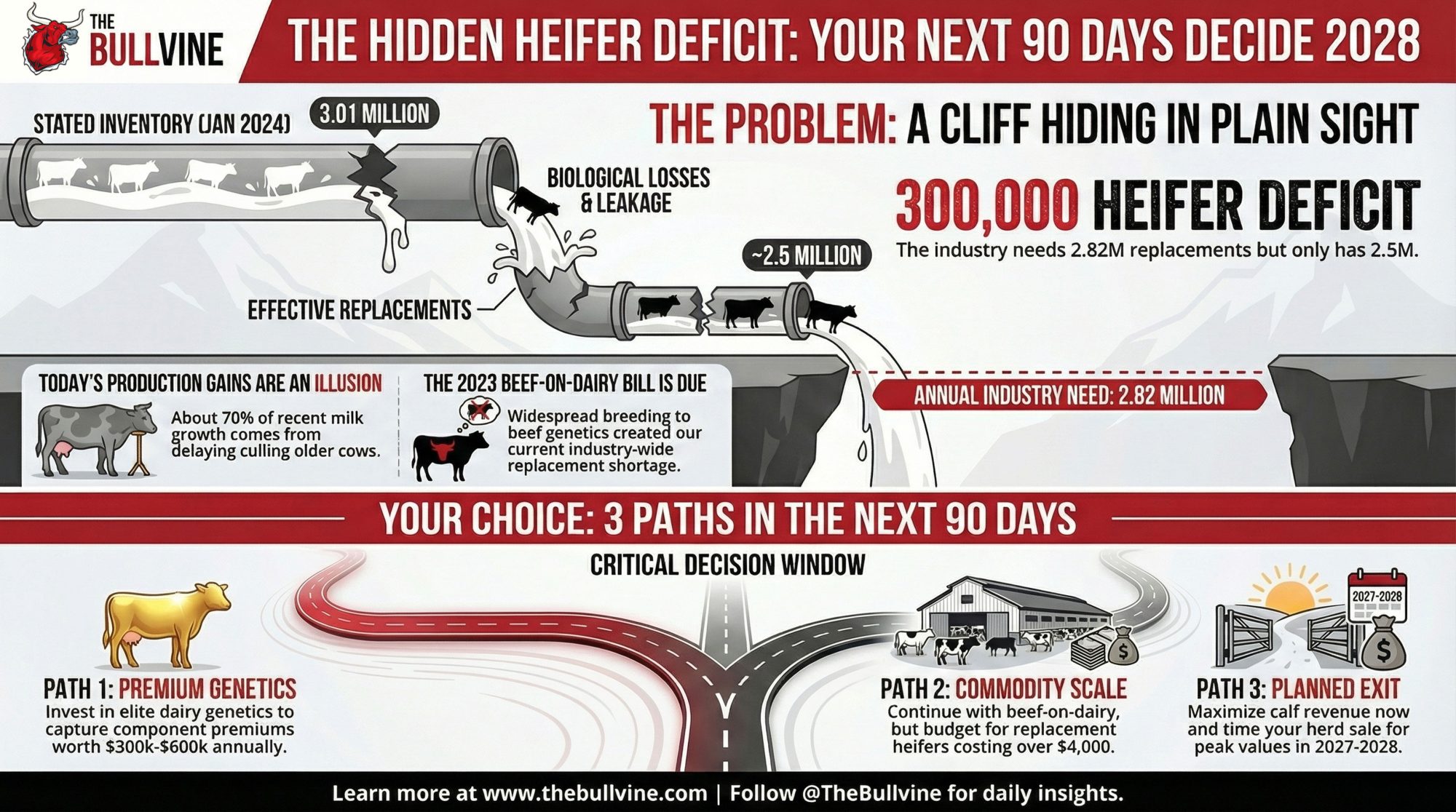
NewsSubscribe
First
Last
Consent

Carbon Credits: $150,000 for Large Dairies, $3,000 for Family Farms – Here’s Why

Two dairies. Same carbon practices. One makes $150K, the other makes $3K. The difference isn’t what you think.

EXECUTIVE SUMMARY: Athian paid dairy farmers $18 million for carbon reductions in 2024, but the money isn’t flowing where you’d expect—large farms pocket $150,000 yearly while small operations get just $3,000 for identical practices. The math explains why: although per-cow profits are similar at $40-56, only operations with 2,000+ cows can justify the $28,000-37,000 upfront investment and 6-12 month payment delays. Add requirements for digital records and working capital above 1.25, and 80% of U.S. dairy farms simply can’t participate. Yet for qualified operations, carbon credits offer genuine value—transforming feed additives you’re already considering into profit centers. This article delivers real economics, explains why scale wins again, and provides a practical framework for determining whether carbon credits make sense for your specific operation.

So I was reviewing Athian’s latest announcement the other day, and here’s what caught my eye—they’ve actually distributed million to dairy farmers for emissions reductions since early 2024. Not promises, not projections. Real checks hitting real farm accounts. And what’s interesting is, these are for practices many of us have been considering anyway for operational efficiency. You know how it is—in our industry, sustainability initiatives usually mean spending more money for the privilege of doing the right thing. This development, though, it deserves our careful attention.

I’ve been talking with producers from Vermont to New Mexico who’ve navigated these dairy carbon credit programs, and I’ve noticed a fascinating pattern emerging. Success varies dramatically across operations, and here’s what might surprise you—it’s not about environmental commitment or willingness to adapt. What I’ve found is it’s primarily about operational scale, cash flow position, and whether you’ve already got your data management systems dialed in.

Understanding the Market Forces at Play

Let’s talk about what’s really driving these payments. As many of us have seen, major food companies—Nestlé and Mars among them—have committed to reducing supply chain emissions by 30% before 2030, according to their recent sustainability reports. And here’s the thing: since most of their carbon footprint originates at the farm level rather than in processing facilities, they’re actively seeking verified reductions from us dairy suppliers.

This has led to something called “insetting”—basically, these companies are investing in emissions reductions within their own supply chains rather than buying random offset credits from who knows where. DFA pioneered this approach in January 2024, becoming the first U.S. cooperative to purchase verified livestock emissions reductions through Athian’s platform. Their initial transaction involved a Texas dairy using Elanco’s Experior technology, and they documented 1,150 metric tons of CO2 equivalent reduction. That’s not theoretical—it’s verified, third-party audited through SustainCERT standards, and most importantly, paid for.

What distinguishes this from all those previous carbon initiatives we’ve seen come and go? The verification rigor. These dairy carbon credit programs require comprehensive documentation—you’re matching feed invoices with ration records, integrating milk production data, running everything through standardized calculation models, and having independent auditors verify it all. This level of verification means buyers can confidently report these reductions to their stakeholders.

Current Practices Generating Returns

Looking at current market activity, four practice categories are demonstrating consistent value for dairy farm profitability, and each has distinct operational requirements and economics worth understanding.

Feed additives for enteric methane reduction have really emerged as the primary pathway. Bovaer—that’s the 3-nitrooxypropanol compound from DSM-Firmenich—got regulatory approval in Canada and the UK in January, and the FDA completed their review in May. What’s encouraging is the research consistency: across 56 peer-reviewed studies, we’re seeing approximately a 30% reduction in enteric methane when administered at recommended doses. According to the Journal of Dairy Science’s comprehensive analysis, this translates to a 10-15% reduction in overall GHG intensity per unit of milk production.

Now, pricing varies considerably by region and purchase volume—you probably know this already. Industry data suggests Bovaer costs range from $0.30 to $0.50 per cow daily, while Rumensin (that’s monensin from Elanco) typically runs $0.13 to $0.15 per cow per day. Rumensin provides modest emission reductions, but it also delivers about a 3% improvement in feed efficiency, according to Elanco’s published data. That’s nothing to sneeze at when you’re looking at overall dairy milk check revenue.

Precision nutrition approaches, particularly those low-protein, amino acid-balanced rations, offer another pathway without requiring infrastructure investment. These strategies reduce nitrogen excretion and associated nitrous oxide emissions while potentially improving your feed cost efficiency. Ajinomoto’s AjiPro-L protocol, which Athian approved in April, exemplifies this approach. University of Wisconsin Extension trials indicate potential for both ration cost savings and carbon credit generation, though—as you’d expect—results vary by operation.

Anaerobic digester systems continue to provide opportunities for larger operations. You can stack RNG revenue, RIN credits, nutrient products, and now carbon insets. But let’s be realistic about the economics here—USDA NRCS data and Cornell’s agricultural economics research show you need at least $1,800 per cow in capital investment. Even with RCPP cost-share programs covering 50-75% of installation costs, that’s a serious commitment that really only pencils out at significant scale.

What I’m particularly interested in are these whole-farm carbon intensity protocols. Rather than requiring specific expensive interventions, they measure your overall emissions per unit of milk production. California’s CDFA has been developing this methodology, while the Innovation Center for U.S. Dairy has been creating parallel frameworks. If you’re already efficient—getting more milk from fewer cows with less waste through better genetics and reproduction—you should theoretically qualify even without fancy additives. And looking ahead, emerging technologies such as seaweed-based additives and genetic selection for lower-emission cows could further expand options, though they are still in development.

Economic Realities Across Different Scales

Here’s where things get really interesting for dairy farm profitability, and the implications vary dramatically by operation size. Let me share what I’ve learned from producers at different scales, including those Southeast operations dealing with heat stress and different housing systems.

A Wisconsin producer I know with 450 cows spent three months getting all his documentation together, and when the first payment came through, it was $4,200. As he told me, “It’s certainly welcome income, but when you consider the time investment and upfront costs, it doesn’t fundamentally change our operation.”

For a typical 500-cow dairy in Wisconsin or Pennsylvania—and I’ve run these numbers with several folks—participating in carbon credits for dairy farms looks something like this: Initial investment in feed additives runs $25,000 to $30,000 annually, assuming you’re using a combination of products. Data system upgrades, if you need them, add $2,000 to $5,000. Nutritionist consultation and protocol documentation typically cost another $1,000 to $2,000.

So you’re looking at a total upfront investment of $28,000 to $37,000.

And here’s the kicker—you pay these costs immediately, but receive carbon credit payments after 6 to 12 months of verification, per Athian’s current terms. That means you need that cash sitting available, not borrowed.

Current carbon pricing at $60 per ton represents a historical high—the Ecosystem Marketplace reports voluntary carbon markets averaged just $6.37 per ton in 2024. At these prices, a 500-cow operation might generate $5,000 to $8,000 in annual carbon revenue. Combined with potential feed efficiency gains of $15,000 to $20,000, net benefits could reach $20,000 to $28,000 annually. But that’s assuming stable carbon prices, smooth verification, and favorable baseline calculations…

The economics shift significantly at larger scales. An Idaho dairy manager I spoke with, who’s running 3,200 cows, explained: “We’re generating about $47 per cow from carbon credits, plus the feed efficiency improvements. At our scale, that translates to over $150,000 annually—meaningful revenue that justifies the administrative investment.”

This reveals something important for dairy milk check revenue: while per-cow returns are similar ($40-56 for smaller operations versus $43-57 for larger ones), the absolute dollar amounts make participation worthwhile for larger operations while remaining marginal for smaller ones.

Operations That Should Consider Alternatives

Based on extensive discussions with producers and financial advisors from Michigan to Arizona, certain operations face structural barriers that make successful participation in current dairy carbon credit programs challenging for overall dairy farm profitability.

If your working capital ratio is below 1.25, you don’t have the financial flexibility to manage that 6 to 12-month payment delay. The Farm Financial Standards Council identifies this as a critical threshold for operational stability, and I’ve seen this play out firsthand. One producer near Viroqua, Wisconsin, with 380 cows, carefully analyzed his situation. He told me, “Borrowing to cover upfront costs at 8% interest would essentially eliminate any carbon revenue benefit. The mathematics simply didn’t support participation.”

If you’re still using paper-based or basic spreadsheet record-keeping, the documentation burden will probably eat you alive. These carbon programs for dairy farms require integrating feed invoices, ration records, and milk production data in formats that support third-party verification. It’s not impossible with manual systems, but honestly, the administrative burden often becomes prohibitive.

“The transition from paper to carbon credits simply doesn’t occur—it’s from digital systems to carbon credits.”

Pasture-based operations encounter technical limitations with current protocols. Both Bovaer and Rumensin require consistent daily dosing through total mixed rations. DSM’s product development pipeline includes slow-release bolus systems for grazing operations, but they aren’t yet commercially available. These producers may find better opportunities in whole-farm intensity protocols that recognize the inherent efficiency of well-managed grazing systems. This is particularly relevant for Southeast producers, where year-round grazing is more common.

And if you’re approaching retirement within 5 to 7 years, you should carefully evaluate participation. These programs typically achieve optimal returns over 10 to 15-year horizons, allowing carbon revenues to compound and infrastructure investments to fully amortize.

Industry Structure Implications

Something we need to consider thoughtfully is how these programs might affect industry structure and long-term patterns of dairy farm profitability. Large-scale operations in Texas, Idaho, and California that implement comprehensive carbon programs might generate $200,000 or more annually. That creates meaningful cash flow advantages and balance sheet improvements that can influence expansion decisions and market dynamics.

Meanwhile, a 400-cow operation might generate $3,000 in carbon credits—barely covering administrative costs. When milk prices cycle from $20 to $16 per hundredweight, as they periodically do, operations with substantial carbon revenue cushions have clear advantages in weathering these downturns.

Current USDA Census of Agriculture data show we’re losing 2,100 to 2,800 dairy farms annually, with exits concentrated in the 150- to 1,500-cow range. While dairy carbon credit programs don’t cause this consolidation, they may influence its pace by providing additional advantages to operations already benefiting from economies of scale.

This raises important questions about program design and accessibility that we as an industry continue to grapple with.

Common Success Factors

Producers successfully participating in these programs—whether they’re in the Northeast, Midwest, or Western regions—share several characteristics worth noting for those seeking to enhance dairy milk check revenue.

Cooperative participation proves crucial. Working through established programs at DFA, Land O’Lakes, or similar organizations significantly reduces administrative complexity. The co-ops handle documentation aggregation, facilitate buyer connections, and provide technical support that individual producers would struggle to replicate on their own.

Financial strength matters—a lot. Successful participants typically maintain working capital ratios above 1.5, giving them the flexibility to manage payment timing without incurring debt. As one Wisconsin producer with 1,100 cows near Fond du Lac observed, “If carbon payments are necessary for cash flow, the operation probably isn’t ready for program participation.”

These successful producers view carbon credits as complementary to operational improvements rather than primary drivers of dairy farm profitability. A Pennsylvania dairyman with 750 cows explained their perspective: “We were evaluating Rumensin for efficiency gains regardless. The carbon credits transformed a good decision into an obvious one.”

And digital infrastructure proves essential. Not necessarily sophisticated systems, but at least DHIA participation, computerized ration management, and organized record-keeping. The transition from paper to carbon credits simply doesn’t occur—it’s from digital systems to carbon credits.

Verification Processes and Practical Considerations

Understanding verification helps set realistic expectations for dairy carbon credit programs. Programs begin by establishing baseline emissions using models with acknowledged uncertainty ranges of 15-25%, in accordance with IPCC methodology and UC Davis CLEAR Center analysis. Your baseline could vary substantially in either direction—something to keep in mind.

Implementation requires comprehensive documentation—feed invoices, ration formulations, production records, and health events. Verification bodies, including SustainCERT and other ISO 14064-accredited auditors working with Athian, review this documentation through varying combinations of remote review and farm visits.

One Wisconsin producer with 650 cows near Bloomer experienced the complexity of verification firsthand. Initial approval was questioned 6 months later when butterfat levels changed, potentially indicating variation in the feed additive. Three additional months of documentation were required to verify consistent feeding practices. The final payment arrived 11 months late, rather than the anticipated 6.

Credit registration on Athian’s blockchain ledger prevents double-selling within their system. But as the Institute for Agriculture and Trade Policy noted in their recent analysis of insetting risks, enforcement mechanisms across different platforms remain underdeveloped. Something to be aware of.

Looking Ahead: Realistic Expectations for 2030

If current trajectories continue, what might we reasonably expect for dairy farm profitability by decade’s end?

Industry-wide emissions intensity could decrease 20 to 30% through combined adoption of feed additives, ration optimization, and efficiency improvements. California Air Resources Board data already show a 20% reduction in methane intensity from early adopter programs, suggesting this target is achievable.

Mid-size farm participation could expand through cooperative-led programs that aggregate verification costs and streamline administration. Replicating DFA’s model across major cooperatives could make participation as routine as DHIA testing for appropriately positioned operations.

Carbon price stabilization through corporate commitments seems plausible. Companies might guarantee minimum prices of $40 to $50 per ton for verified reductions from their supply chains, providing investment confidence for participating producers.

Policy mechanisms could amplify market-based approaches. Implementation of the 45Z tax credit under the Inflation Reduction Act could establish price floors. State programs, like California’s $25 million methane-reduction initiative through its Climate Smart Agriculture program, demonstrate potential for complementary support.

Realistically, I anticipate 2,000 to 3,000 larger farms generating $150 to $300 million in cumulative payments by 2030—meaningful for those operations but unlikely to transform industry-wide economics or substantially alter consolidation patterns affecting dairy milk check revenue across all farm sizes.

A Practical Decision Framework

For producers considering participation to enhance dairy farm profitability, here’s a systematic evaluation approach based on actual participant experiences:

Step 1: Assess your working capital ratio. Below 1.25 indicates you need operational stabilization before adding program complexity.

Step 2: Calculate your true break-even costs, including all expenses. If you’re exceeding $20 per hundredweight in current markets, carbon credits won’t address fundamental profitability challenges.

Step 3: Evaluate available cash reserves. Can you deploy $25,000 to $35,000 for 6 to 12 months without borrowing? Interest costs often eliminate carbon revenue benefits.

Step 4: Engage your cooperative. Established programs with clear protocols and payment histories indicate readiness. “Exploring options” suggests patience might be warranted.

Step 5: Review your documentation capabilities. Digital ration management, DHIA participation, and nutritionist relationships all contribute to readiness.

Step 6: Consider your time horizon. Ten-plus year operational plans align well with program economics. Five-year exit strategies likely don’t.

This framework probably excludes 70 to 80% of U.S. dairy farms, which itself reveals important characteristics about current market design and its impact on dairy farm profitability.

Broader Industry Implications

The emergence of functional dairy carbon markets represents genuine progress. It demonstrates corporate willingness to invest in verified emissions reductions, validates market mechanisms for environmental progress, and rewards efficiency improvements that many of us pursue regardless.

Yet it also illuminates the limitations of the agricultural market. These mechanisms naturally favor scale, sophistication, and capital access—characteristics already driving industry evolution. Programs generating $150,000 annually for large operations while offering $3,000 to smaller farms reflect market dynamics rather than program design flaws.

This isn’t attributable to any particular organization or conspiracy. It’s simply how markets function when transaction costs are substantial and economies of scale are significant. The relevant question isn’t fairness but rather our collective comfort with carbon markets as another factor influencing industry structure and dairy milk check revenue distribution.

My assessment? These represent useful tools rather than transformative solutions for dairy farm profitability. Well-capitalized operations already pursuing efficiency improvements will find carbon revenues provide a welcome acceleration. Marginal operations won’t find salvation here. For the broader industry, it’s another advantage accruing to scale in an already scale-advantaged system.

Evaluate these opportunities based on your specific situation. But maintain realistic expectations about carbon credits as supplemental revenue rather than foundational income, especially given agriculture’s historical pattern of commodity price volatility.

Athian’s $18 million in payments is real. The practices deliver results. The verification systems function. But whether this matters for your particular operation depends entirely on where you sit within dairy’s increasingly differentiated structure. And that’s the conversation we need to continue having—not just whether carbon markets work, but how they work within our evolving industry landscape and their real impact on dairy farm profitability.

Editor’s Note: Producer experiences shared in this article are based on interviews conducted in November 2025.

KEY TAKEAWAYS

  • The $18M reality: Carbon credits paid dairy farmers real money in 2024, but large operations (3,000+ cows) capture $150,000 annually while family farms (500 cows) get just $3,000-8,000 for identical practices
  • Why scale always wins: Per-cow profits are virtually the same at $40-56, but you need 2,000+ cows to cover the $30,000 upfront investment and 6-12 month cash flow gap
  • Your qualification checklist: Must have a working capital ratio >1.25, digital record systems already running, and participate through established co-op programs—miss any one and you should pass
  • Bottom line decision: Carbon credits work for well-capitalized operations planning 10+ year horizons, but won’t save struggling farms—they amplify existing advantages rather than leveling playing fields

Complete references and supporting documentation are available upon request by contacting the editorial team at editor@thebullvine.com.

Learn More:

Join the Revolution!

Join over 30,000 successful dairy professionals who rely on Bullvine Weekly for their competitive edge. Delivered directly to your inbox each week, our exclusive industry insights help you make smarter decisions while saving precious hours every week. Never miss critical updates on milk production trends, breakthrough technologies, and profit-boosting strategies that top producers are already implementing. Subscribe now to transform your dairy operation’s efficiency and profitability—your future success is just one click away.
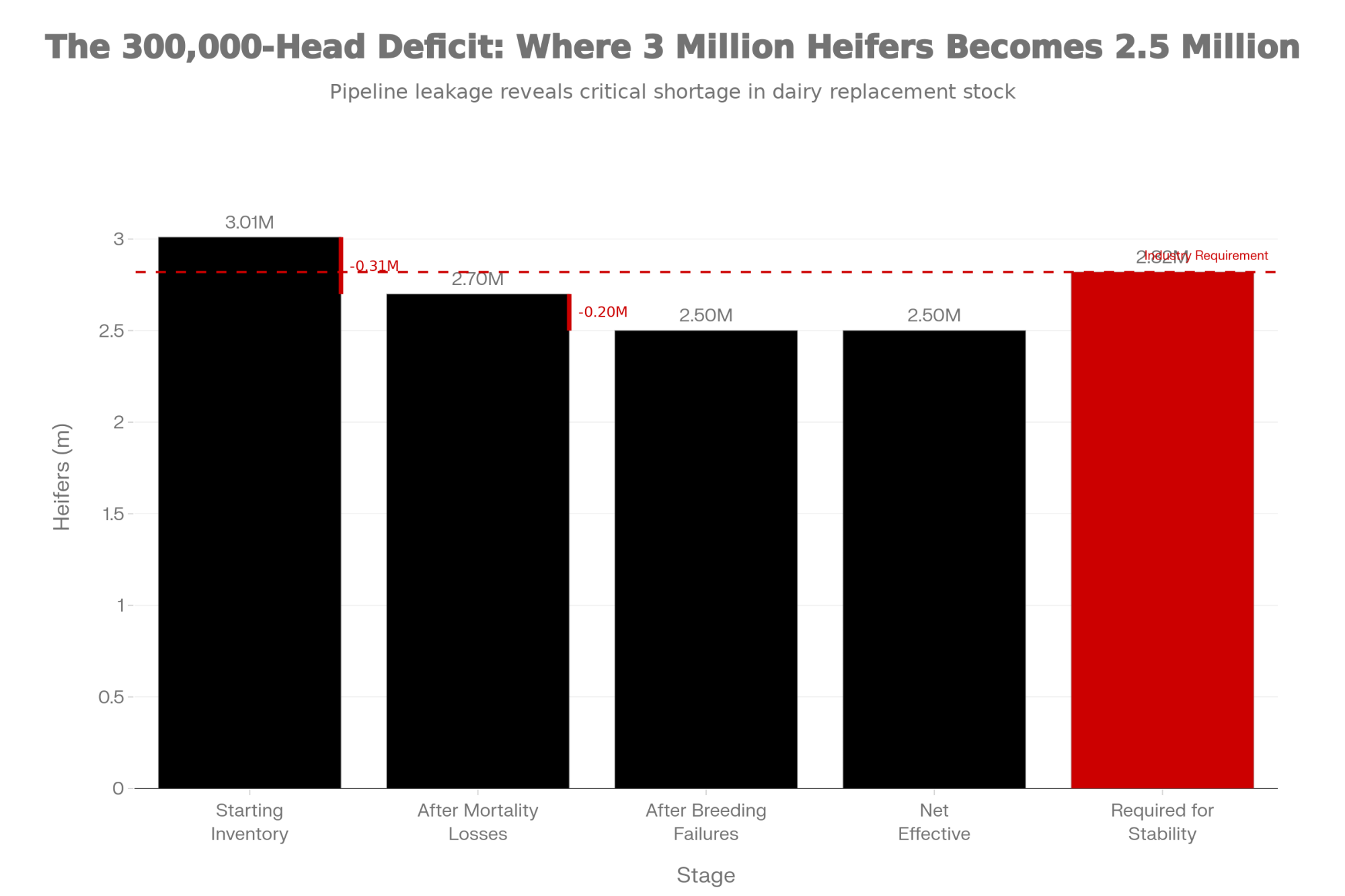
NewsSubscribe
First
Last
Consent

The Bovaer Warning: How Denmark’s Methane Mandate Went from Law to Crisis in 6 Weeks

Trial: 60 cows. Mandate: 1,400 farms. Crisis: 6 weeks. This is why Denmark’s methane ‘solution’ became a dairy disaster

EXECUTIVE SUMMARY: Denmark mandated Bovaer on October 1; by November 15, 1,400 farms reported sick cows and production losses that reversed within 48 hours of stopping. Norway suspended it preemptively—no crisis needed. This six-week collapse follows a predictable pattern: antibiotics created superbugs (a 55-year delay in a ban), glyphosate spawned 48 resistant weeds, neonicotinoids crashed bee populations—all were ‘thoroughly tested’ and ‘safe.’ The difference now? Mandates are moving faster than science, and your decades of genetic progress hangs in the balance. Your defense: monitor daily ($150-300/cow for basic systems), test 10-20% of your herd first, set clear exit triggers (e.g., 20% SCC increase = stop), and document everything. Bottom line: regulatory approval means it won’t poison your cows immediately—it doesn’t mean it’s right for your farm.

methane additive risks

When Norwegian dairy cooperatives announced their suspension of Bovaer use this November, I found myself thinking about a conversation I’d had with a Wisconsin producer just weeks earlier. He’d asked me whether new methane-reduction technologies were worth the risk, given his operation’s tight margins. Looking at what’s unfolding in Scandinavia, his caution seems particularly prescient.

We aren’t looking for controversy, but we can’t ignore the red flags flying over Danish barns. Following Denmark’s October implementation of mandatory Bovaer use for operations with more than 50 cows—a regulatory approach covered extensively by agricultural media across Europe—producers began reporting health concerns in their herds. The symptoms ranged from digestive issues to lameness, with some operations reporting measurable production impacts.

What’s particularly noteworthy is how one Danish producer described his experience to Farmers Guardian: his somatic cell counts improved markedly after discontinuing the additive. Now, while Danish agricultural authorities continue their investigation—they’ve been quite transparent about not having established causation—the pattern emerging warrants our industry’s attention.

History repeats, but faster: It took 55 years to ban antibiotic growth promoters after discovering problems. Bovaer went from government mandate to producer crisis in 6 weeks. The pattern is clear—mandates are accelerating, but consequences aren’t disappearing.

Recognizing Historical Patterns in Agricultural Innovation

This situation brings to mind a presentation I gave at World Dairy Expo a few years back about technology adoption cycles in our industry. There’s a remarkably consistent pattern we’ve observed across decades of innovation.

Consider the antibiotic growth promoter experience. Back in the 1940s, researchers discovered that low-dose antibiotics could improve feed efficiency by 10-20 percent—revolutionary for its time, especially for operations in warmer climates dealing with heat stress. The science was solid, the economics compelling.

Yet it took decades for us to understand the broader implications of antimicrobial resistance. The European Union’s 2006 ban came 55 years after initial approval—a sobering timeline for any of us thinking about long-term consequences.

The Roundup Ready story offers another perspective. I remember the enthusiasm at those mid-90s farm shows—this technology promised to revolutionize weed management. And initially, it delivered.

But as any producer who’s dealt with palmer amaranth or waterhemp knows, nature adapts. The International Herbicide-Resistant Weed Database now documents 48 species with confirmed glyphosate resistance. Those early adopters who built their entire weed management program around a single mode of action learned an expensive lesson.

More recently, we’ve watched the neonicotinoid situation unfold. Initial safety assessments focused on acute toxicity to pollinators at field-relevant doses. What emerged later—through research like the comprehensive Nature Communications study by Woodcock and colleagues—were subtle, population-level effects that took years to document. Some bee species showed population declines exceeding 20 percent in treated agricultural landscapes.

Each case teaches us something valuable: technologies that perform well in controlled trials may behave differently when deployed across the diverse real-world farming systems.

Understanding the Current Timeline

What distinguishes the Bovaer situation is the compressed timeline. Denmark mandated use on October 1. By early November, producer organizations were documenting concerns from their members—the Danish Dairy Farmers’ Association received dozens of formal reports, though informal networks suggested broader concerns.

Danish authorities responded with revised guidance allowing welfare-based exemptions. Norwegian cooperatives announced their precautionary suspension by mid-November.

This six-week progression from mandate to suspension represents either enhanced responsiveness to producer concerns or potentially more acute issues than we’ve seen with previous technologies. Perhaps both factors are at play.

The issuance of welfare exemption guidance particularly catches my attention. While it’s encouraging that authorities responded to producer concerns, one wonders why such flexibility wasn’t built into the original implementation framework.

From mandate to meltdown: 1,400 Danish farms were ordered to feed Bovaer on October 1. By November 15, over 100 reported sick cows and production losses. Norway saw the same data and suspended use preemptively—with ZERO domestic problems reported. That’s the difference between reactive and protective agricultural policy.

The Gap Between Testing and Practice

Having reviewed both EFSA’s 2021 approval documentation and FDA’s 2024 assessment, I can appreciate the thoroughness of the regulatory process. These reviews examine toxicology at multiple doses, verify efficacy claims—in this case, that 27-30 percent methane reduction—and assess environmental safety under standardized conditions.

Trial: 60 cows. Mandate: 1,400 farms. Crisis: 6 weeks. This is exactly why Denmark’s ‘methane solution’ became a dairy disaster. Aarhus University is conducting the first real-world commercial welfare study NOW—three years AFTER regulatory approval. The gap between ‘tested in a lab’ and ‘safe for your farm’ just cost Danish producers weeks of production and genetic progress.

Yet researchers at Aarhus University are only now conducting what they describe as the first comprehensive welfare assessment under commercial conditions. This is three years after initial market approval. As they noted in their August announcement, the symptom patterns some producers are reporting weren’t observed in controlled trials.

This isn’t a criticism of regulators—it’s an acknowledgment of inherent limitations. Your operation, with its unique combination of genetics, forages, management practices, and environmental conditions, isn’t a research facility. The interaction of these variables creates complexity that controlled trials simply cannot fully replicate.

Here’s something else to consider: We spend generations breeding for longevity, mobility, and metabolic efficiency.

“We cannot afford to compromise twenty years of genetic progress for a mandate that hasn’t been stress-tested on high-production herds.”

The cows told the truth first: Danish farmer Anders Ring watched his somatic cell counts spike 20% during mandatory Bovaer feeding. Within 48 hours of stopping, SCC dropped 20% and production rebounded completely. His herd knew the truth before regulators admitted problems—daily monitoring saved his entire operation.

The daughters of bulls like Frazzled, Montross, and Supersire weren’t developed to be test subjects for rushed climate solutions.

A Framework for Thoughtful Technology Adoption

Based on conversations with producers who’ve successfully navigated new technology adoption, and drawing from extension recommendations from programs like Cornell’s PRO-DAIRY, here’s a framework worth considering:

Critical Questions Before Implementation

– What was actually tested versus what wasn’t?

  • Trial duration (most feed additive studies run 12-16 weeks)
  • Number and diversity of animals tested
  • Which metrics were evaluated (efficacy vs. comprehensive welfare)

– Can you monitor impacts quickly?

  • Daily tracking capability for SCC, components, and intake patterns
  • Locomotion scoring systems
  • Modern sensor technology ($150-300/cow basic, $500-800/cow comprehensive—typically pays for itself by preventing one health crisis)

– What’s your exit strategy?

  • Clear triggers for discontinuation
  • Legal ability to stop if concerns arise
  • Understanding of financial burden allocation

– Is this voluntary or mandatory?

  • Welfare exemption procedures
  • Compensation mechanisms
  • Reporting pathways

PhaseActionThresholdWhy It Matters
BEFORE (30 days)Document baseline metrics30 days minimumLegal protection & clear comparison
DURING (10-20%)Test on 10-20% of herdNOT your best geneticsLimit exposure, preserve value
MONITOR (Daily)Track SCC, intake, mobility$150-300/cow basic systems48-72 hour problem detection
EXIT TRIGGER 1Somatic Cell Count increase20% = STOPAnders Ring’s SCC jumped 20%+
EXIT TRIGGER 2Conception rate drop15% = STOPReproduction issues widely reported
EXIT TRIGGER 3Dry matter intake decrease10% = STOPEarly warning of metabolic stress
DOCUMENTEverything, in writingSet triggers BEFORE startingDon’t adjust thresholds mid-trial

Implementation Best Practices

Start conservatively:

  • Begin with 10-20 percent of your herd (not the highest genetic merit animals)
  • Maintain control groups under identical management
  • Document baseline performance for at least 30 days

Establish thresholds before you begin:

  • 20% increase in somatic cells = stop
  • 15% drop in conception rates = stop
  • 10% decrease in dry matter intake = stop
  • Write these down in advance—don’t adjust later

Operational Considerations

Smaller operations (under 200 head):

  • Your intimate cow knowledge is an advantage
  • Daily observation during milking catches subtle changes
  • Focus on individual cow behavior patterns

Larger operations (500+ cows):

  • Leverage DeLaval, Lely, or BouMatic management systems
  • Configure alerts for baseline deviations
  • Your technology is your early warning network

Grazing operations:

  • Confinement-tested technologies may perform differently on pasture
  • Watch grazing behavior changes as early indicators
  • Pasture-based systems add complexity, and trials don’t capture

Industry Perspectives and Balance

The manufacturer’s position deserves fair consideration. In their November statements, dsm-firmenich emphasized Bovaer’s successful use across multiple countries over several years, noting that previous investigations haven’t identified the additive as a causal factor in reported health concerns. This track record matters.

Danish authorities are taking a measured approach, investigating reports while avoiding premature conclusions. Their November ministry statements emphasize following evidence wherever it leads.

What I find instructive is the contrast between Danish and Norwegian responses. Norway implemented a precautionary pause despite no domestic reports of problems. This represents a philosophical difference in risk management that is worth discussing across the industry.

Broader Trends Shaping Our Decisions

Several converging trends affect how we should evaluate emerging technologies:

Climate regulations are intensifying. The European Union’s Farm to Fork strategy targets 55 percent reductions in emissions by 2030. California’s SB 1383 mandates a 40 percent reduction in methane over the same period. These aren’t distant goals—they’re reshaping market access and milk pricing today.

Producer networks have transformed information flow. Through online forums and messaging platforms, experiences that once took months to circulate now spread in hours. This acceleration can amplify both legitimate concerns and unfounded fears.

Consumer awareness has reached unprecedented levels. When major cooperatives trial new technologies, social media responses are immediate and increasingly shape market dynamics. Market perception increasingly affects on-farm decisions.

Meanwhile, monitoring technology continues advancing. Modern systems can detect subclinical changes that would have gone unnoticed a decade ago. This capability fundamentally changes our ability to manage risk.

Learning from Producer Experience

In preparing this piece, I’ve spoken with numerous producers who’ve evaluated methane-reduction technologies. Their experiences offer valuable insights.

A 450-cow Jersey operation in California’s Central Valley shared that detailed documentation in her management software proved invaluable when addressing concerns about a previous feed additive. “Document everything,” the owner emphasized. “Not because you expect problems, but because good data protects everyone—you, your nutritionist, and yes, even the manufacturer.”

Cooperative networks are proving their value. A Wisconsin cooperative chair (speaking on condition of anonymity) told me how their producer WhatsApp group helped multiple members avoid issues when three farms reported similar concerns with a product. “That collective knowledge saved us collectively hundreds of thousands in potential losses,” he noted.

What consistently emerges is advice to approach new technologies as if running a research trial. Test methodically, monitor comprehensively, and be prepared to adjust based on evidence.

Practical Takeaways for Your Operation

Do the math yourself: A $300/cow monitoring system catches problems in 48-72 hours. Waiting for visible clinical signs means 2-4 weeks of losses BEFORE you even know there’s a problem. Danish farmers who tracked metrics daily recovered in 48 hours. Those who waited lost weeks. On a 100-cow operation, that’s the difference between a $30,000 proactive decision and a $7,500+ reactive disaster—and that’s BEFORE you count unmeasured fertility damage and lost genetic progress.

As we navigate increasing pressure to adopt climate-smart technologies, several principles deserve emphasis:

Regulatory approval represents a starting point for evaluation, not an endpoint. The gap between “approved” and “optimal for your specific operation” remains yours to assess and bridge.

Rapid problem detection—whether through technology or observation—can mean the difference between minor adjustments and major losses. The ability to identify issues within 48-72 hours should be considered essential infrastructure.

Starting small isn’t timidity—it’s prudent management. Even under pressure to adopt quickly, gradual scaling based on documented performance protects your operation’s viability.

Collective producer experience matters. When multiple operations report similar observations, patterns emerge that individual experiences might not reveal. Your voice, combined with others, shapes industry understanding and regulatory response.

Above all, animal welfare must remain paramount. If a technology compromises your herd’s health, discontinuation is appropriate regardless of other pressures. Danish authorities’ eventual acknowledgment of welfare exemptions validates this principle.

Charting a Productive Path Forward

The path forward doesn’t require choosing between innovation and caution, or between environmental progress and animal welfare. I’ve seen numerous operations successfully integrate new technologies by taking measured approaches.

What we need is more comprehensive pre-deployment testing that reflects actual farm diversity. Not just research stations, but grazing operations, high-production confinement systems, organic dairies, and everything between.

Regulatory frameworks should build in flexibility from inception, not add it reactively. Producer input should be integral to technology development, not an afterthought during implementation.

Most fundamentally, we need recognition that sustainable dairy farming requires both environmental progress and economic viability. These aren’t competing goals—they’re interdependent requirements for our industry’s future.

Final Thoughts for Our Industry

The Danish and Norwegian experience with Bovaer offers valuable lessons about innovation, regulation, and the realities of modern dairy farming. This isn’t about opposing progress or uncritically embracing every new technology.

It’s about developing wisdom to distinguish between what works in trials and what works in the complex reality of commercial dairy operations.

Research teams at universities and companies continue developing new approaches to methane reduction—enzyme inhibitors, probiotics, genetic selection, and management innovations. Each will eventually arrive at our farm gates with promises and peer-reviewed papers.

The question isn’t whether to embrace or reject these innovations wholesale. It’s about evaluating them thoughtfully, implementing them carefully, and monitoring them comprehensively. The producers who succeed will be those who trust their data, respect their experience, and maintain the confidence to act on both.

This balance—between openness to innovation and commitment to proven principles—isn’t just smart farming. It’s essential for navigating agriculture’s transformation while maintaining the animal welfare, environmental stewardship, and economic sustainability that will keep dairy farming viable for the next generation.

Here’s my challenge to you: Before the next mandate arrives at your farm gate, have your monitoring systems in place. Know your baseline metrics. Build your producer network. Because the best time to prepare for technology adoption isn’t when it becomes mandatory—it’s right now.

Key Takeaways:

  • Your cows will tell you before regulators will: Danish farmers who acted on SCC spikes recovered in 48 hours; those who waited for “official guidance” lost weeks of production
  • The 10-20-30 Shield: Before any new technology—Test 10-20% of herd, Document 30 days baseline, Set exit triggers in writing (20% SCC increase = stop)
  • A $300/cow monitor beats a $30,000 crisis: Daily tracking catches problems in 48-72 hours; waiting for clinical signs means you’re already losing money
  • Networks save herds: Denmark’s 1,400 affected farms found each other online before regulators admitted problems—your WhatsApp group is your first defense
  • Remember the timeline: Antibiotics (55 years to ban), Glyphosate (48 resistant weeds), Bovaer (6 weeks to crisis)—the pattern is clear, mandates are getting faster, consequences aren’t

Complete references and supporting documentation are available upon request by contacting the editorial team at editor@thebullvine.com.

Learn More:

Join the Revolution!

Join over 30,000 successful dairy professionals who rely on Bullvine Weekly for their competitive edge. Delivered directly to your inbox each week, our exclusive industry insights help you make smarter decisions while saving precious hours every week. Never miss critical updates on milk production trends, breakthrough technologies, and profit-boosting strategies that top producers are already implementing. Subscribe now to transform your dairy operation’s efficiency and profitability—your future success is just one click away.
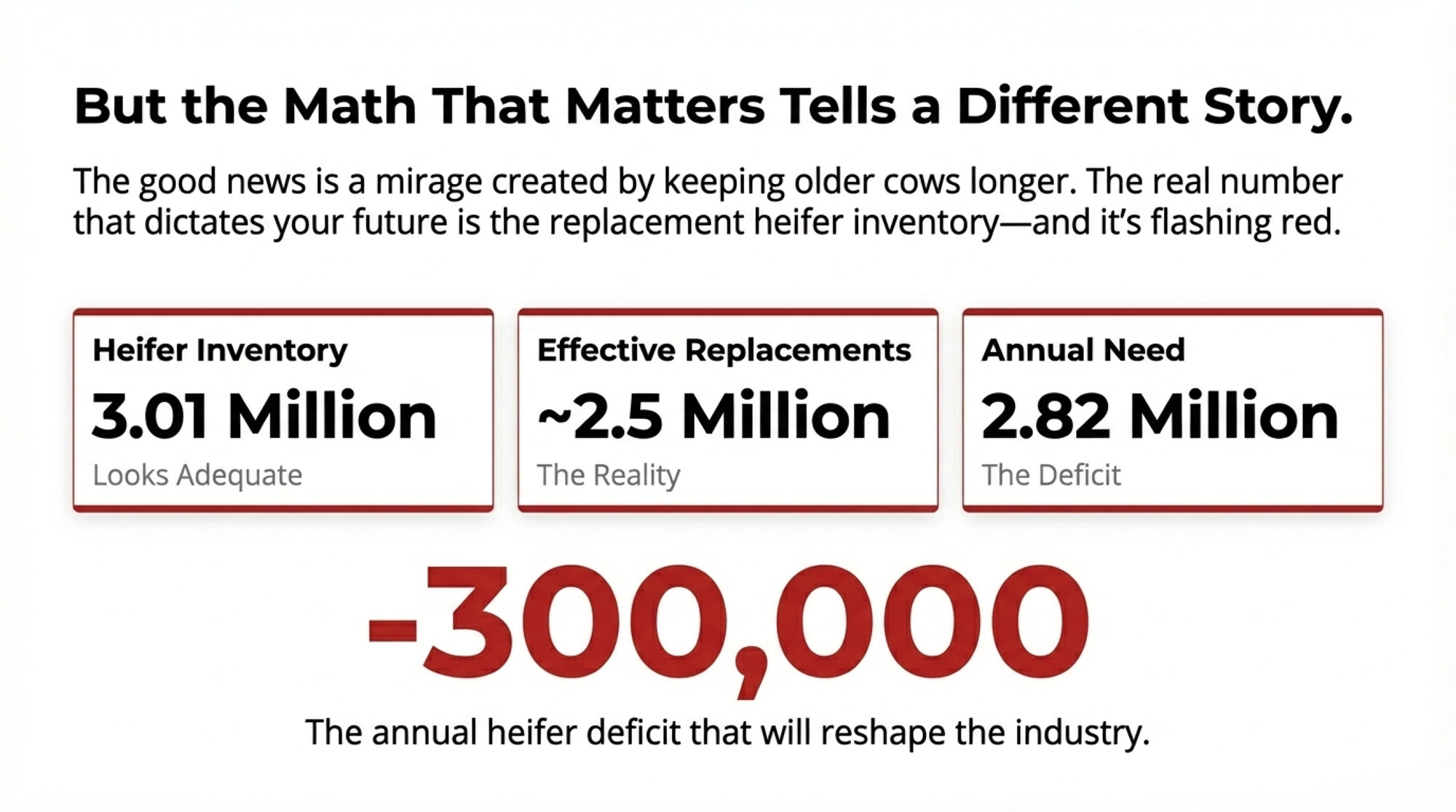
NewsSubscribe
First
Last
Consent

This Hidden $1,400/Cow Cost Is Killing Profits – Here’s the Fix

What happens when cows actually choose? German researchers tested it—and found $1,400/cow in costs disappeared. Here’s what they discovered.

Executive Summary: Conventional dairy practices are costing you $1,400 per cow annually in hidden losses from regrouping stress, transition disease, and premature culling—costs most farmers don’t even track. German researchers just proved these losses are preventable through an integrated approach: let cows choose their environment, maintain stable social groups, and keep calves with mothers longer. The data are striking: regrouping alone costs $3,400/year in a 500-cow herd, while their approach reduces lameness by 30-40% and produces calves gaining 3+ pounds daily. Implementation means rethinking barn design and investing 18-24 months in learning new management practices, but the returns justify the effort—$400,000-500,000 in annual benefit potential with a 4-6 year payback. With retailers like Walmart already demanding welfare-certified products and the market growing to .4 billion by 2033, early adopters gain a competitive advantage. The bottom line: when cows get choice, hidden costs disappear and everybody wins—especially your profit margin.

You know what caught my attention last week? A group of German agricultural researchers posed a question that’s got me rethinking everything about barn design: What if we actually let cows decide how they want to spend their day?

Prof. Dr. Lisa Bachmann and her team at the Research Institute for Farm Animal Biology in Dummerstorf, Germany, published their findings this fall in the Journal of Dairy Science, and honestly… some of these insights are making me reconsider assumptions I’ve held since I started in this business.

What makes German research distinctive is its integrated design concept, which combines stable family herds, cow-calf contact, free indoor-outdoor movement, and automation—a comprehensive approach documented in their published research. Their design concept maintains stable social groups throughout production, provides genuine barn-and-pasture choice during favorable seasons, and integrates cow-calf contact with automated milking. And here’s what’s really interesting—their research documents how this integrated approach addresses multiple cost drivers simultaneously—regrouping stress, transition disease incidence, and culling patterns—suggesting substantial economic advantages we haven’t really considered before.

Here’s the context that makes this relevant right now. USDA’s latest census shows we’ve gone from 105,250 dairy farms in 2000 to about 31,600 operations today. That’s a 70% drop, folks. So when we’re talking about alternative approaches to dairy infrastructure, we’re no longer just having an academic discussion. For a lot of mid-sized operations—maybe yours—this could be about finding a viable path forward.

The $1,000 Per Cow Opportunity: Conventional dairy systems leak $1,400 annually per cow through hidden stress, disease, and management costs—while welfare-integrated approaches reduce these losses by 71% to just $400 per cow. For a 500-cow operation, that’s $500,000 walking out the barn door every year.

What We’re Learning About Cow Preferences

What’s fascinating is how consistent cow behavior becomes when they actually have choices. Research on grazing behavior shows cows utilizing outdoor areas extensively, particularly during evening and nighttime hours. And get this—their motivation for pasture access rivals their drive for fresh feed. That’s saying something.

I was looking at production research from Ireland the other day, and the lying time data really stood out. Cows with pasture access were averaging about 9.9 hours of daily lying time compared to 9.5 hours for confined animals. Now, you might think, “That’s only 24 minutes, what’s the big deal?” But here’s what’s interesting—those pasture cows had fewer but longer lying bouts. Less getting up and down, more quality rest. You know how much that matters for rumination and production.

“Conservative estimates suggest we’re looking at $1,000-1,400 annually per cow in hidden costs from stress, disease, and management practices we’ve just accepted as normal.”

Marina von Keyserlingk’s animal welfare lab at UBC documented another noteworthy finding: cows with overnight pasture access show significantly more walking activity. And for those of us dealing with lameness issues—which is basically everyone, right?—that natural movement pattern correlates with better hoof health.

Speaking of lameness, research comparing different housing systems shows some pretty dramatic differences. We’re seeing lameness prevalence vary significantly by bedding and housing type, with comprehensive studies documenting reductions of 30-40% in systems incorporating pasture access. Penn State Extension puts lameness costs at around $337 per case. Do the math on that for your herd—it adds up fast.

The Real Cost of Moving Cows Around

Every Time You Move Cows, You’re Burning Cash: Each regrouping event triggers an immediate 8.5% milk production crash and 9% feed intake nosedive. The chaos lasts 3-7 days, and at 5 regroupings per lactation, you’re hemorrhaging $3,400 annually in a 500-cow herd—before you even factor in breeding delays and elevated somatic cell counts.

Here’s something we don’t talk about enough. Most of us regroup cows four to six times per lactation. It’s just… what we do, right? But Daniel Weary’s group at UBC has been quantifying what that actually costs us, and the numbers are sobering.

They’re documenting an immediate 8.5% production drop when you regroup—going from about 95 pounds down to 87 pounds daily. Feed intake drops 9% during that adjustment period. The behavioral chaos lasts 3-7 days. And there’s a clear negative correlation between aggressive interactions and butterfat levels.

So I ran the numbers for a typical 500-cow herd averaging 80 pounds at $20/cwt. Each regrouping event? That’s about $1.36 in lost production per cow. Five times across a lactation, you’re looking at $3,400 in revenue just… gone. And that’s before we even think about what stress does to breeding or somatic cell counts.

The German research proposes maintaining what they call “stable family herds”—basically keeping cows and their offspring together without constant pen changes. Yeah, it means rethinking your entire barn layout and cow flow. But when you add up all these hidden costs? The economics start looking different.

Hidden Costs Summary

Cost CategoryImpact Per Event/Case
Regrouping$6-10/cow per event
Transition disease$125-450/case
Lameness$337/case
Annual total per cow$1,000-1,400

Reconsidering Cow-Calf Contact

I’ll be honest—I’ve always been pretty skeptical about extended cow-calf contact. The colostrum management concerns are real, and disease control matters. But the data coming out of European research institutions is making me think twice.

Norwegian researchers tracking cow-calf systems in automated milking herds are seeing calves achieve average daily gains around 1.4 kg—that’s over 3 pounds a day. That’s beef calf territory, way beyond the 1.25 to 1.9 pounds we typically see with conventional feeding. Research shows that calves with extended dam access consume substantially higher milk volumes than those in conventional feeding programs.

Now, Swedish agricultural research acknowledges these systems can reduce your contribution margin by 1-5%, primarily from milk you’re not selling. Fair point. But here’s what that analysis often misses…

Research indicates significant labor reductions during the calving period when cows manage their own calves. Think about it—no milk replacer costs, no feeding equipment to clean, fewer health treatments. Studies consistently show improved calf health metrics in these contact systems. And for those of us struggling to find reliable calf feeders (which seems to be everyone these days), the labor savings alone might tip the scales.

How Automation Changes Everything

What’s really interesting is how automation is shifting the whole welfare conversation. Michigan State’s recent survey of large dairy farms with robots found something telling: 84.6% cited labor cost reduction as their main reason for automating, but 76.9% also reported improved cow welfare.

“Each regrouping event costs about $1.36 per cow in lost production. Five times across a lactation, you’re looking at $3,400 in revenue just… gone.”

The financials are compelling. University of Wisconsin data shows that operations with robots reduced labor costs from about 8.4% of revenue to 4.4%. That’s a 38-43% reduction in time per cow, with milking-related tasks down 62%.

But here’s what I’ve been noticing during farm visits… Most robot installations are still optimizing the same old confinement model rather than enabling the kind of cow choice that German research suggests could improve both welfare and profitability. Current designs assume conventional freestall housing with standard routing. Want to add real outdoor access? That requires completely different thinking.

Industry experts increasingly acknowledge that while technical solutions exist, our infrastructure tends to reinforce conventional approaches rather than enabling alternatives. Some equipment manufacturers are exploring systems compatible with grazing, especially for markets where that’s standard practice, but North American options remain pretty limited.

Understanding the Full Cost Picture

The Disease Tax Nobody Talks About: Every transition disease carries a price tag, but here’s the killer—they don’t come alone. Half your fresh cows deal with multiple conditions, compounding to $600-900 per affected animal. Subclinical ketosis hitting 30% of your herd at $125/case? That’s just the entry fee. Welfare-integrated systems cut these rates in half. Your call.

Recent research on dairy economics has been eye-opening about costs we usually don’t track properly:

You know transition cow challenges—nearly half of fresh cows deal with some metabolic issue. Subclinical ketosis alone runs about $125 per case based on recent studies. Clinical mastitis? USDA data puts it at $325-450 per case, with 71% of those costs from lost production, not treatment.

Lameness economics are brutal. Penn State’s research shows an average of $337 per case, with each additional week adding about $13. Digital dermatitis typically runs almost $100 more than other lameness causes. And here’s what really gets me—research consistently shows lameness hammering fertility, with reproduction-related costs representing a huge chunk of the total economic hit.

Then there’s culling and replacement. Canadian dairy industry data shows turnover at 35-40%, with replacement costs of $2,500-3,500, depending on where you are. Lose a cow before her third lactation? You never recover that rearing investment.

Add it all up, and conservative estimates suggest we’re looking at $1,000-1,400 in hidden costs per cow annually from stress, disease, and management practices we’ve just accepted as normal. That’s… that’s a lot of milk checks.

MetricConventional SystemWelfare-Integrated SystemNet Difference
Annual Cost Per Cow$1,400 hidden losses$400 reduced losses$1,000 savings/cow
Regrouping Events/Lactation4-6 times0-1 times4-5 fewer events
Lameness Prevalence20-25%12-15% (-40%)-40% cases
Lameness Cost Impact$337/case × 100+ cases$337/case × 60 cases~$13,500 savings
Transition Disease Rate~50% of fresh cows~25% of fresh cows-50% incidence
Calf Daily Gain (lbs)1.25-1.9 lbs3+ lbs+1+ lb improvement
Average Culling Rate35-40%22-25% (-35%)-13-15% points
Replacement Cost$2,500-3,500/cow$2,500-3,500/cowEarlier ROI
Labor Cost (% of revenue)8.4%4.4%-48% labor
Milk Production StabilityHigh variabilityMore consistentImproved flow
Veterinary CostsBaseline-30 to -35%$35K+ savings
Total Herd Cost (500 cows)$700,000 in losses$200,000 in losses$500,000 annual gain

Thinking About Infrastructure Investment

The German team’s estimates for welfare-integrated systems suggest substantially greater capital investment than conventional designs—we’re talking significant money here, potentially thousands of dollars per cow.

The Math That Changes Everything: Drop $1.5M on a welfare-integrated barn design and conventional wisdom says you’re crazy. But here’s what actually happens—you break even in 4-6 years, then bank $400K+ annually for the next decade. Total 15-year gain? Over $4 million. Meanwhile, “efficient” conventional operations keep bleeding that $1,400/cow every single year. Do the math

But let’s think through the returns. If these systems prevent even $800-1,000 annually in disease, stress, and culling losses, a 500-cow operation could see $400,000-500,000 in annual benefit. Finance that over 15 years at 6%, you’re looking at $200,000-300,000 in debt service, potentially leaving $150,000-250,000 in improved cash flow. That suggests a 4-6 year payback. I’ve seen producers jump on automation for returns that are less attractive than that.

Practical Implementation Thoughts

Based on conversations with producers who’ve made changes, here’s what seems to work:

Start with what you can control. You don’t need to revolutionize everything overnight. Several operations I know in Wisconsin started simple—adding outdoor access areas, reducing regrouping frequency, and trying modified calf management in just one pen.

Really assess your existing setup. Retrofitting current facilities for genuine cow choice is way harder than building it in from the start. If you’re already planning major construction or renovation? That’s your opportunity.

Think carefully about your market position. Nielsen’s 2023 consumer research documented a 57% increase in certified animal welfare products after mainstream retailers began stocking them. There’s a real differentiation opportunity, but you need to know what your milk buyer values.

And budget time for the learning curve. Managing pasture systems, cow-calf contact, stable herds—it’s different than running conventional confinement. Most folks find it takes 18-24 months to really develop the new management skills.

Regional Considerations

One thing the German research doesn’t fully address—and it matters here—is our climate variability. What works in temperate Germany needs adaptation for Arizona heat or Manitoba winters.

I’ve been hearing about different regional approaches. California researchers are testing shade and cooling for outdoor areas in hot climates. Canadian institutions are exploring winter paddock designs that maintain choice even in extreme cold.

In the upper Midwest, some producers are trying hybrid approaches—outdoor access during good weather, modified grouping strategies for winter housing. It’s not the full German model, but they’re seeing meaningful improvements in lameness and culling.

“Lose a cow before her third lactation? You never recover that rearing investment.”

Some producers implementing partial modifications report that eliminating regrouping practices resulted in substantial reductions in veterinary costs, though they acknowledge the learning curve was steep initially. I’ve heard of operations documenting 30-35% drops in vet bills after making these changes, though everyone admits it takes time to figure out the new management approach.

Looking Ahead

The $3.4 Billion Question: While most producers debate whether to adopt welfare practices, the certified animal welfare market is exploding—growing 183% to $3.4 billion by 2033. Early adopters positioning now will capture premium pricing before this becomes table stakes. Wait until mainstream adoption, and you’re just playing catch-up at commodity margins.

The consolidation trend isn’t slowing. Industry projections show substantial portions of milk production shifting to larger operations in the coming years. For mid-sized farms—those 200 to 1,000 cow operations that are the backbone of many regions—the traditional “get big or get out” message feels pretty heavy.

But this research illuminates other paths. The animal welfare certification market reached $1.2 billion in 2024 and is projected to reach $3.4 billion by 2033, according to Grand View Research (https://www.grandviewresearch.com). Major retailers like Walmart and Kroger have made procurement commitments for certified products. That’s creating a genuine market opportunity for differentiated producers.

Plus, emerging climate regulations are going to reshape the economics. Canada’s carbon framework for agriculture and similar U.S. initiatives will likely favor systems with greater efficiency, enhanced pasture management, and lower replacement rates.

What Producers Are Finding

Producers implementing modified approaches report interesting results. After dealing with steep learning curves around cow flow and grazing management, many are seeing veterinary costs drop significantly, labor requirements decrease, and production metrics improve—outcomes that surprise even them.

Others are taking different approaches, like maintaining limited cow-calf contact as a workable compromise between calf health improvements and milk sales. The key seems to be adapting concepts to specific circumstances rather than trying to copy someone else’s system exactly.

There’s no universal template here. Each operation needs to evaluate how these concepts might work with their unique combination of facilities, labor, markets, and management style.

The Bottom Line: Your Hidden Costs

When you factor in:

  • Regrouping losses: $3,400/year for 500 cows
  • Transition diseases: 50% of fresh cows are affected
  • Lameness: $337/case at 15-20% prevalence
  • Premature culling: Never recovering $2,500-3,500 investment

You’re losing $1,000 to $ 1,400 per cow annually in preventable costs.

Quick Takeaways for Action

Looking at all this research, here’s what you can start doing today:

  • Calculate your hidden costs: Track regrouping frequency, transition disease rates, and culling patterns for three months
  • Test small changes: Pick your highest-stress group and eliminate one regrouping event
  • Explore market premiums: Contact your milk buyer about welfare certification opportunities
  • Visit operations making changes: Nothing beats seeing these systems in action
  • Budget for learning: Any system change requires time—plan for it

Making Sense of It All

After really digging into this research, here’s what stands out to me:

The economics are way more complex than simple comparisons suggest. When you account for regrouping losses, disease costs, premature culling, and genetic potential that never gets expressed, conventional systems carry substantial hidden costs. Alternative approaches could meaningfully reduce those expenses.

Consumer expectations keep evolving. When certified products reach mainstream retail with clear differentiation, sales respond. That’s not a trend—it’s market reality.

Technology can enable choices. Current automation typically optimizes confinement, but alternative technical solutions exist. It’s more about design philosophy than technical barriers.

The transformation already underway creates both risk and opportunity. As margins compress and consolidation accelerates, differentiation becomes increasingly valuable. Whether you pursue commodity efficiency or welfare premiums—that’s a fundamental strategic decision.

And here’s the thing—the knowledge exists right now. The research has been published, the designs are documented, and the technical specifications are available. The question isn’t whether these systems work. It’s how they might fit your specific situation.

Looking at where we’re headed, understanding these alternatives becomes crucial for planning. This German research reminds us that innovation sometimes comes from questioning our basic assumptions.

The path forward varies by operation. A 5,000-cow facility in New Mexico operates under different constraints than a 200-cow farm in Vermont. But having genuine options—economically viable alternatives to consider—that’s what gives us flexibility to build operations aligned with our goals, values, and circumstances.

Maybe the question isn’t whether we can afford to implement such changes. Given the hidden costs already embedded in our operations and where markets are heading… maybe we should be asking: What’s the cost of not exploring these possibilities?

That answer will likely shape the next generation of dairy farming. And honestly? When cows get to make choices, it turns out everybody might win—including our bottom line.

Complete references and supporting documentation are available upon request by contacting the editorial team at editor@thebullvine.com.

Learn More:

Join the Revolution!

Join over 30,000 successful dairy professionals who rely on Bullvine Weekly for their competitive edge. Delivered directly to your inbox each week, our exclusive industry insights help you make smarter decisions while saving precious hours every week. Never miss critical updates on milk production trends, breakthrough technologies, and profit-boosting strategies that top producers are already implementing. Subscribe now to transform your dairy operation’s efficiency and profitability—your future success is just one click away.
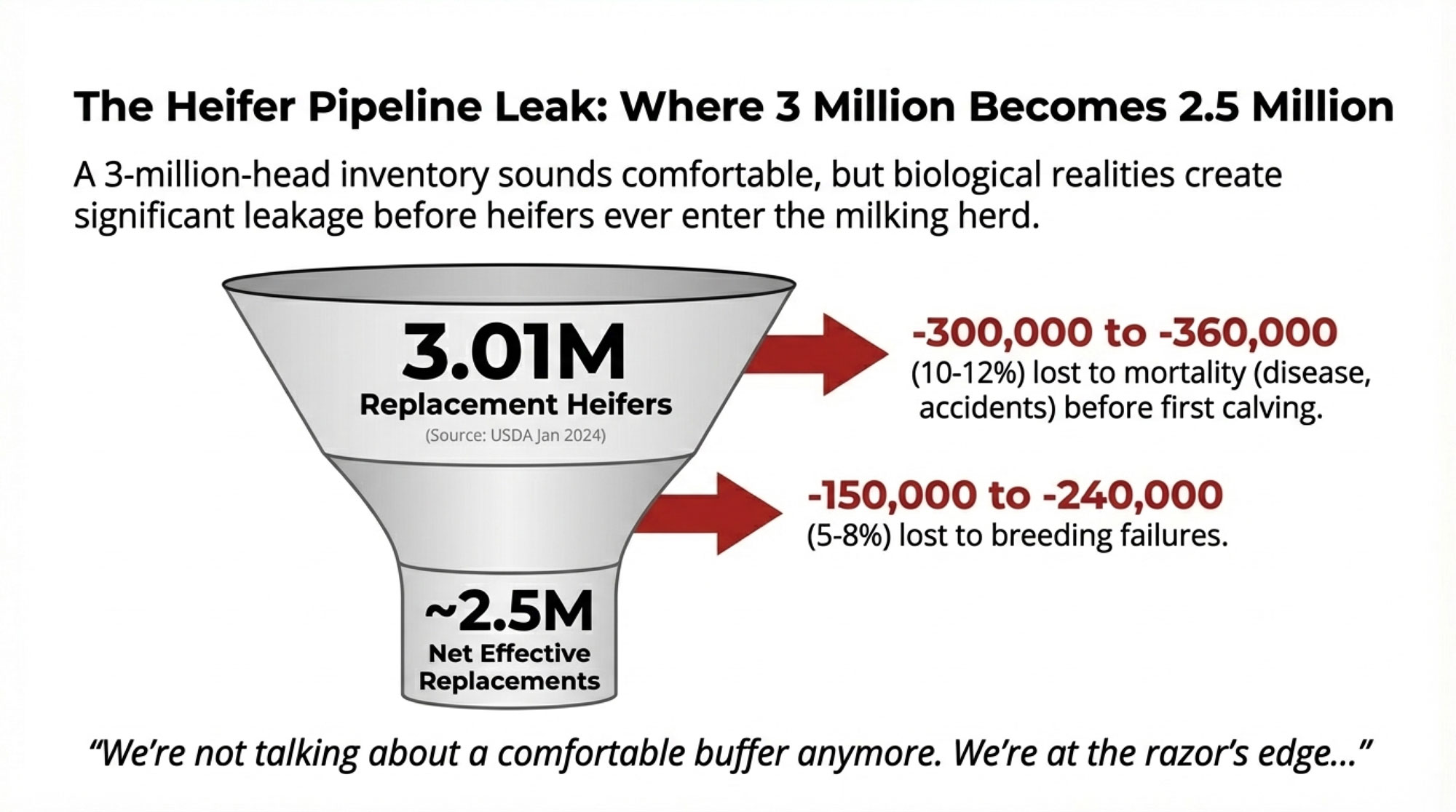
NewsSubscribe
First
Last
Consent

The Rules Changed and Nobody Told You: Three Paths Left for the 300-Cow Dairy

Seven dairy farms disappear. Every. Single. Day. If you’re under 500 cows, you have 18 months to choose: Scale, pivot, or exit.

EXECUTIVE SUMMARY: The dairy industry is experiencing a seismic shift: 7 farms disappear daily as we consolidate from today’s 24,500 operations toward just 8,000-12,000 by 2035, with 400 mega-farms controlling 75% of production. The $11 billion in new processing investment tells the real story—it’s pre-contracted to 5,000+ cow operations, leaving 300-cow dairies facing three brutal choices: invest $3-5 million to scale up, spend $600,000-1.2 million transitioning to premium markets, or exit now for $700,000-1.1 million before equity evaporates. Your cooperative has become your competitor, with DFA controlling 30% of US milk while operating processing plants that profit from keeping your milk prices low. The economics are undeniable: farms with over 1,000 cows achieve 20-25% lower costs, creating an unbridgeable competitive gap for mid-sized operations. Agricultural lenders confirm you have 18 months—credit is tightening, and consolidators’ appetite for acquisitions peaks in 2025-2026. The bottom line is stark: standing still guarantees slow financial death, making no decision the worst decision of all.

Dairy industry consolidation

You know, I was having a chat with a third-generation Wisconsin dairy farmer last week—runs about 280 cows, really solid butterfat performance, knows his genetics inside and out. He said something that’s been rattling around in my head ever since:

“I feel like I’m playing a game where the rules changed, but nobody sent me the new rulebook.”

He hit the nail on the head. This isn’t just another rough patch we’re working through; the whole game is structured differently now. What I’ve found in USDA Economic Research Service modeling is that we could see mega-operations producing somewhere between 70 and 75 percent of America’s milk by 2035. We’re talking about going from roughly 24,500 dairy farms today—that January NASS count was eye-opening—down to maybe 8,000 to 12,000 operations in about a decade.

Here’s what’s really striking: the International Dairy Foods Association documented something like $11 billion in processing investments announced between 2024 and 2028. That’s not your typical expansion—that’s the industry rebuilding itself from the ground up.

For those of you managing 300-cow operations—and I talk to so many of you at meetings—understanding what’s happening isn’t about being negative. It’s about seeing clearly where opportunities still exist.

Farm consolidation accelerates: The US lost 63% of dairy operations since 2003 while boosting production 41%, with projections showing only 10,000 farms by 2035—down from today’s 26,000

When Your Cooperative Became Something Else

What’s fascinating—and honestly, a bit troubling—is how organizations like Dairy Farmers of America have evolved from their original marketing cooperative model into vertically integrated processors. This completely changes how milk moves from your tank to the market.

Consider this: DFA now controls nearly 30 percent of US milk production according to their annual reports, while operating dozens of processing facilities across North America. Let’s call it what it is: a conflict of interest. When your co-op becomes a processor, their profit margin depends on keeping input costs low. Your milk is the input. Do the math.

I was talking to a producer from upstate New York—does beautiful rotational grazing, really innovative guy—and he put it perfectly:

“After 22 years shipping to the same cooperative, the relationship feels fundamentally different. The negotiating dynamics have shifted in ways that are hard to articulate but impossible to ignore.”

The data backs up what he’s feeling. We’re seeing more and more member milk processed in cooperative-owned facilities, a huge shift from the traditional marketing model. And here’s something that should make everyone pause: federal court records show settlements totaling nearly $200 million since 2013, with the 2016 Northeast case alone hitting $158.6 million. These aren’t just theoretical tensions we’re talking about.

Where That $11 Billion Is Really Going

Everyone’s celebrating this $11 billion in processing investment. But let’s look closer at where that money’s actually flowing. IDFA’s October report details what they’re calling the largest dairy infrastructure investment in American history, and the geographic pattern tells you everything.

Chobani announced back in April that it’s building a $1.2 billion facility in Rome, New York. They’ve got another $450 million expansion going in Twin Falls, Idaho. Leprino Foods continues to expand in Texas, especially around Lubbock. These locations aren’t random—they’re following the consolidation that’s already happening.

Investment follows scale: Of $11B in new processing capacity, 70-78% is pre-contracted to mega-dairies before construction begins, leaving mid-sized operations competing for processing access in an oversupplied market

What industry analysts from Rabobank and CoBank have been telling us is that processors are increasingly locking up supply agreements with large-scale operations before they even break ground. They don’t publish exact percentages, but the pattern is crystal clear.

A Texas producer with 450 cows shared his experience trying to get into one of these new plants:

“The terms required a 10-year commitment for our entire production at annually-set prices. The minimum volume guarantee was 15 million pounds—more than double what we produce.”

These facilities… they’re not being built for folks like him. They’re designed for operations running 5,000 to 25,000 cows.

But here’s what gives me hope—in Pennsylvania’s Lancaster County, where you’ve still got lots of 100 to 300 cow operations, producers are finding creative solutions. A group of about 31 Amish and Mennonite farmers formed their own micro-cooperative last year, partnering with a local artisan cheese maker.

“We couldn’t compete on volume, but our grass-fed milk and traditional practices commanded premium prices in Philadelphia markets.”

Getting Out with Your Shirt On

NASS quarterly reports show we’re losing approximately 2,700 to 2,800 farms annually. That’s up from maybe 500 to 900 per year back in the early 2000s. Between 2017 and 2022 alone—and these census numbers are sobering—we lost 15,221 operations. Nearly a 38 percent decline in just five years.

The Center for Dairy Profitability at UW-Madison has been digging into these patterns, and its data show that operations with more than 1,000 cows achieve production costs roughly 20 to 25 percent lower than those of 500-cow farms. It’s basic economies of scale—same thing that reshaped retail, same thing that’s hitting us now.

Dr. Mark Stephenson from Wisconsin’s dairy markets program explained it to me this way: reaching competitive scale today requires approximately to 5 million in capital investment. For most mid-sized operations, accessing that capital while managing existing debt… well, you know how that math works out.

Economic modeling suggests we’ll stabilize somewhere between 8,000 and 12,000 operations by 2035. That’s a fundamental restructuring of the American dairy industry.

Three Paths Forward—What’s Actually Working

After talking to dozens of producers this past year, I’ve seen three main strategies emerge for operations in the 200- to 500-cow range. Each has its own opportunities and challenges.

Time destroys options: Delaying decisions costs $650,000 in equity over 13 months—from $850K in May 2026 to $200K by June 2027—as lenders tighten credit and consolidators lose interest

Scaling to Competitive Size

An Idaho producer who expanded from 800 to 3,600 cows over two years shared some hard truths:

“At 800 cows, even with good management, we were losing $200,000 annually at prevailing milk prices. At 3,600, with updated parlor technology and improved feed efficiency, we’re profitable at those same prices. The fixed cost distribution makes all the difference.”

Here’s the reality of scale: You can’t just add cows; you have to add robots and data. USDA farm technology surveys show that robotic milking systems are now on nearly 3 percent of US dairy operations, yet those operations account for over 8 percent of national milk production. It’s mostly these scaling operations where labor efficiency becomes critical.

Based on what lenders are telling us and actual producer experiences, this pathway typically requires:

  • $3 to 5 million in capital for facilities, equipment, and genetics
  • At least 40 percent equity position for financing approval
  • Being close to processing—hauling costs will eat you alive beyond 100 miles
  • Committing to 15, maybe 20 years to recoup that investment

The success stories tend to be producers under 55 with strong equity and minimal debt. And timing? Critical. Expansions during favorable price cycles work. During downturns? Different story.

Premium Market Transition

An Alberta producer who transitioned her family’s 320-cow operation to organic five years ago offers another perspective:

“We experienced approximately 30 percent improvement in net farm income despite lower production volumes. The combination of reduced veterinary expenses, premium pricing, and eventually lower input costs created a sustainable model.”

Producers making this transition work report:

  • Transition costs of $600,000 to maybe $1.2 million
  • You need to be within about 50 miles of a metro market for direct sales
  • Need 3 to 5 years of capital reserves during transition
  • Marketing becomes just as important as production

“Those first two years nearly broke us. Year three reached break-even. Years four and five delivered the returns that justified the transition.”

A North Carolina producer adds another angle. His 180-cow operation transitioned to A2/A2 genetics and grass-fed production three years ago:

“The Research Triangle market—all those tech workers and university folks—they understand the value proposition. In our local market, we’re getting significantly more per hundredweight than commodity, and our production costs actually decreased once we optimized our grazing rotation.”

Some producers are also exploring renewable energy. A Vermont dairy with 400 cows installed an anaerobic digester system last year. “Between the renewable energy credits and reduced electricity costs, it’s potentially adding substantial value annually to our bottom line,” the owner reports. “It doesn’t solve everything, but it provides a crucial margin in tight years.”

Strategic Exit Planning

A Wisconsin producer who sold in early 2024 was refreshingly candid:

“With $850,000 in equity, I could have continued operating at marginal profitability for perhaps three more years. Instead, I accepted $720,000 from a consolidator. My neighbor, who waited, went through bankruptcy proceedings and retained maybe $100,000.”

Current market analysis from agricultural real estate specialists suggests:

  • Strategic sales to consolidators in 2025-2026: $700,000 to $1.1 million for typical 300-cow operations
  • Wait with continued losses: equity could erode to $200,000-400,000 by 2028-2029
  • Each year at break-even represents $100,000-200,000 in opportunity cost
Decision FactorSCALE UPPREMIUM PIVOTSTRATEGIC EXIT
Initial Investment$3-5M$600K-1.2M$0
Time to Profit8-10 years3-5 yearsImmediate
Year 5 Income+$180K+$95K$0
Equity Change-$1.2M (RED)-$300K (RED)+$750K (BLACK)
Risk LevelVERY HIGH (RED)HIGH (RED)LOW (BLACK)
Success RequiresYouth, debt, processingMetro proximityAccept reality
Best For<45 yrs, 40%+ equityNiche positioningPreserve wealth
Regional ViabilitySouthwest, Idaho onlyNortheast, MidwestAll regions

How Geography Is Reshaping Everything

Based on current investment patterns and USDA projections, American dairy production will concentrate in four primary regions by 2030-2035.

The Southwest—Texas, New Mexico, and Arizona—currently produces 32 to 34 percent of national milk, with projections suggesting a move toward 40 to 45 percent. These are your 5,000 to 15,000 cow dry-lot operations. But here’s the kicker—USGS data shows the Ogallala Aquifer dropping 2 to 3 feet annually. Water’s becoming the limiting factor.

Idaho has transformed remarkably in just one generation, now producing approximately 8 percent of the national milk. Chobani’s investments there… they’re following the consolidation, not driving it.

The Upper Midwest—Wisconsin, Michigan, Minnesota—that’s an interesting story. Still producing 18 to 20 percent of national milk, down from over 25 percent historically. What you’re seeing is bifurcation—either going mega or going specialty. The middle? That’s where the pressure is.

New York produces about 4 percent of the nation’s milk, yet its processing investment is massive. The capacity appears to exceed local milk supply, which creates interesting supply chain dynamics.

The Southeast faces unique challenges. A Georgia producer managing 400 cows told me:

“We’re seeing farms exit not because of economics alone, but because the next generation won’t tolerate the working conditions. The technology investments needed for heat abatement in our climate add another $500,000 to expansion costs that Northern operations don’t face.”

System Resilience—What Keeps Me Up at Night

Scale economics dictate survival: Mega-dairies (2000+ cows) produce milk at $16.16/cwt while mid-sized operations (300 cows) face $20.25/cwt costs—a $4+ structural disadvantage no management can overcome

The efficiency gains from consolidation are impressive, but when 40 to 45 percent of national milk production concentrates in water-stressed regions, we’re creating single-point vulnerabilities.

Dr. Jennifer Morrison from Cornell’s food systems program put it well: “Efficiency and resilience often exist in tension. We’re building remarkably efficient systems that may prove fragile under stress.”

Recent screwworm detections, shifting climate patterns, labor challenges… USDA APHIS has contingency plans, sure, but concentrated production carries fundamentally different risk profiles than distributed systems.

Collective Action Still Works

Here’s what’s encouraging: in September, approximately 600 Irish dairy farmers successfully pressed Dairygold for written accountability on pricing decisions. The Irish Farmers Journal covered it extensively. They didn’t tear anything down—they just demanded transparency through organized, professional engagement.

Back home, the American Farm Bureau Federation is pushing for modified bloc voting in their 2025 priorities—letting farmers vote individually rather than having cooperatives vote for them. The National Sustainable Agriculture Coalition mobilized over 130 advocates to engage Congress earlier this year.

Regional organizing is showing promise, too. Vermont producers have formed transparency coalitions to request detailed milk-check breakdowns. California’s Central Valley sees mid-sized dairies exploring collective negotiation.

Pennsylvania offers a particularly instructive example. Approximately 28 dairy farmers started meeting monthly to compare milk check deductions. After finding significant variations within the same cooperative and region, they presented consolidated data to their board and received substantive responses for the first time.

“Individual concerns get dismissed. But 28 farmers with documentation command attention.”

Key Questions for Your Cooperative

Start pressing for transparency with these specific requests:

✓ Request itemized breakdowns of all milk check deductions
✓ Seek written explanations of member versus non-member pricing
✓ Inquire about percentages of cooperative income from member versus non-member business
✓ Request voting records on significant pricing decisions
✓ Understand how board representation aligns with regional membership

What This Means for Different Operation Sizes

Survival margins vanish: A typical 300-cow operation generates $1.4M in revenue but nets just $62K after all costs—equivalent to $17/hour for 70-hour work weeks, before family living expenses

For operations with fewer than 250 cows, commodity-market math has become increasingly challenging without exceptional cost management. Premium market transitions offer possibilities if you’re geographically positioned right. Strategic exit planning may preserve more equity than extended marginal operation.

Producers in the 250- to 500-cow range face critical decisions. Scaling to a competitive size requires that $3 to 5 million, which we talked about. The premium market pivots demand, requiring different capital and marketing commitments. Maintaining the status quo typically means gradual equity erosion.

Operations running 500 to 1,000 cows are approaching the minimum viable commodity scale. Strategic partnerships with neighbors, collective arrangements, or, really, locking in processing relationships become essential.

Agricultural lending surveys from late 2024 show credit availability tightening as lenders see these exit rates. If you’re planning expansion, you’re looking at a 12- to 18-month window. M&A advisors specializing in dairy tell me that interest in consolidator acquisitions peaks in 2025-2026.

Addressing What We Don’t Like to Talk About

CDC and NIOSH research shows farmers face a suicide risk approximately 3.5 times higher than the general population. Financial stress is the primary factor, according to the University of Iowa’s agricultural medicine program.

Illinois has expanded mental health support for farmers through their Department of Agriculture wellness initiatives. Other states are developing similar programs. These aren’t just statistics—these are our neighbors, our colleagues, our friends.

A Minnesota farm widow shared something that stays with me:

“Watching three generations of work dissolve feels like personal failure, even when you understand it’s structural economics driving the outcome.”

The Bottom Line

American dairy is experiencing its most significant structural transformation since we mechanized. By 2035, we’ll have mega-operations, specialized premium producers, concentrated processing infrastructure—fundamentally different from the distributed system many of us grew up with.

What’s particularly interesting from a global perspective is how this consolidation positions American dairy internationally. As our production becomes more concentrated and efficient, we’re increasingly competitive in export markets—especially cheese and milk powder bound for Asia and Mexico. This global dimension adds another layer to domestic consolidation pressures.

Understanding these dynamics lets you make informed decisions while options remain. Success stories will emerge from this transition—producers who recognize patterns early and position accordingly. Solutions vary by region, operation size, life stage, and individual circumstances.

After covering this industry for over a decade and talking with hundreds of producers, one thing’s clear: the question isn’t whether to adapt—market forces have made that decision. The question is how to adapt, when to act, and what outcomes to target.

The consolidation reshaping American dairy is real, it’s accelerating, and it’s transformative. But producers who understand these dynamics, assess their positions honestly, and act decisively while maintaining strategic options can still chart successful paths forward.

The clock’s ticking, but opportunity windows remain open. The key is recognizing them and acting with purpose while time allows.

Your next step? This week, schedule time to honestly assess which of these three paths makes sense for your operation. Talk to your lender. Review your equity position. Have the hard conversations with family members. Because in this new game, the worst decision is no decision.

Resources for Industry Support

Mental Health Assistance:

  • Farm Aid Hotline: 1-800-FARM-AID
  • AgriSafe Network: 1-866-354-3905
  • National Suicide Prevention Lifeline: 988
  • State-specific farm stress hotlines

Financial and Transition Planning:

  • National Young Farmers Coalition: youngfarmers.org
  • Farm Financial Standards Council: ffsc.org
  • Center for Farm Financial Management: cffm.umn.edu

Industry Advocacy:

  • National Farmers Union: nfu.org
  • Organization for Competitive Markets: competitivemarkets.com
  • Farm Action: farmaction.us

KEY TAKEAWAYS:

  • The 400-farm future is inevitable: Daily losses of 7 farms are shrinking the industry from 24,500 to 8,000 operations by 2035, with mega-farms claiming 75% of production
  • Three paths remain—pick one: Scale to 3,000+ cows ($3-5M), pivot to premium markets ($600K-1.2M), or exit strategically now ($700K-1.1M before it drops to $100K)
  • Your co-op became your competitor: Organizations like DFA control 30% of milk AND processing—they profit from low milk prices that destroy you
  • Act within 18 months or lose everything: Credit markets are closing, consolidator interest peaks in 2025-2026, and standing still means bleeding equity until bankruptcy

Complete references and supporting documentation are available upon request by contacting the editorial team at editor@thebullvine.com.

Learn More:

Join the Revolution!

Join over 30,000 successful dairy professionals who rely on Bullvine Weekly for their competitive edge. Delivered directly to your inbox each week, our exclusive industry insights help you make smarter decisions while saving precious hours every week. Never miss critical updates on milk production trends, breakthrough technologies, and profit-boosting strategies that top producers are already implementing. Subscribe now to transform your dairy operation’s efficiency and profitability—your future success is just one click away.
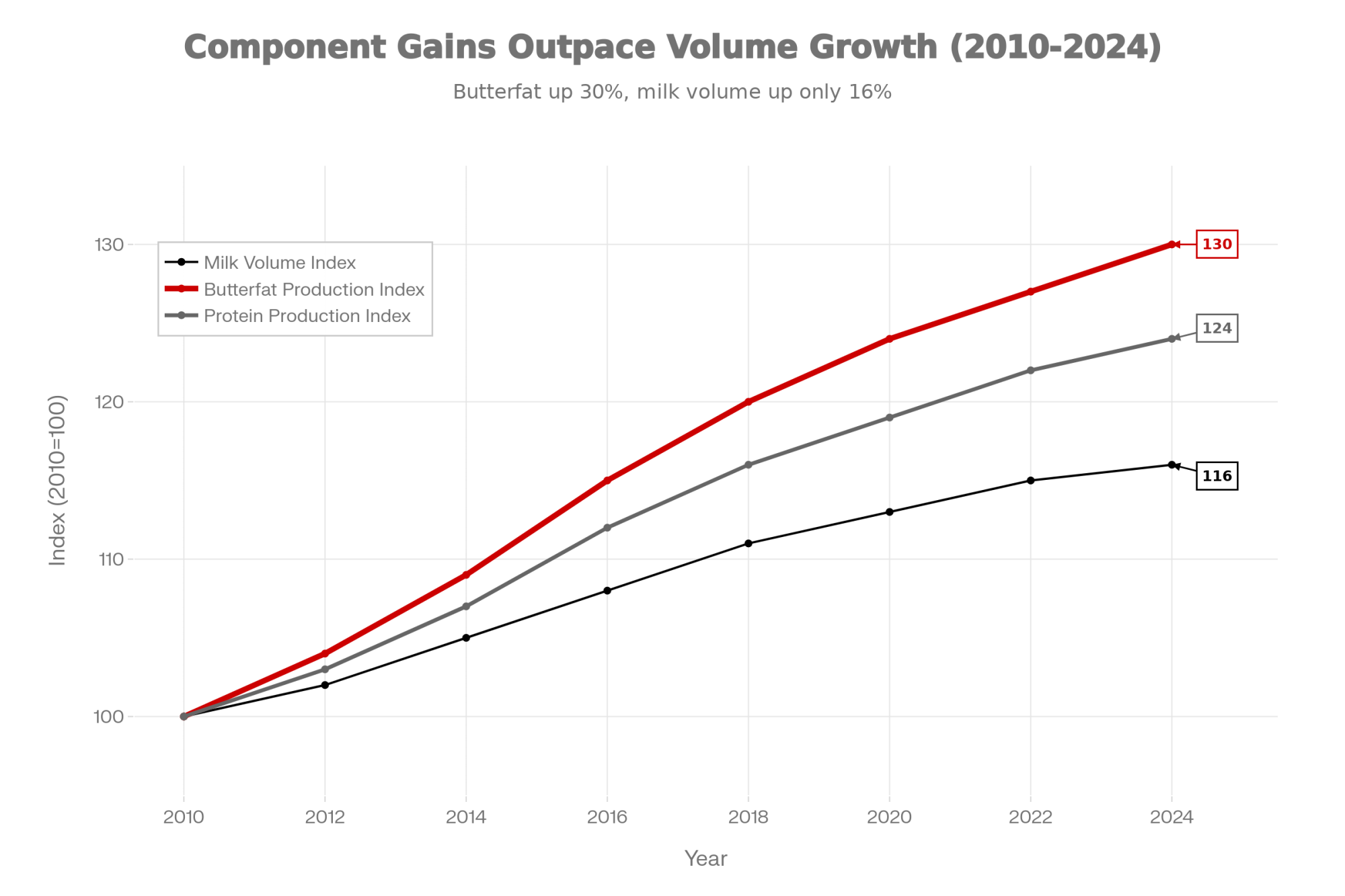
NewsSubscribe
First
Last
Consent

The Italian Warning: Why Your Cooling Fans Won’t Save You in 2030

$100K cooling system? Italian dairy families invested $50K in cheese vats instead—and DOUBLED profits.

EXECUTIVE SUMMARY: North American dairy faces an Italian preview: fourth-generation cheesemakers abandoning volume for value as cooling systems prove only 40% effective against extreme heat, exposing our industry’s dangerous bet on technology over adaptation. Wisconsin’s brutal arithmetic—7,000 farms vanished while production rose 5%—reveals that mid-sized operations carrying debt below the $18/cwt profitability threshold are mathematically doomed by 2030. Producers face three proven escape routes: scale to 2,000+ cows with $500K investment, pivot to seasonal/specialty for premium markets despite 30% volume cuts, or capture 10X commodity prices through on-farm processing. The clock is unforgiving—Q1 2026 marks the last moment to choose your path and begin the 3-4 year transition before market forces choose for you. Water scarcity, dependence on immigrant labor, and soil depletion compound the timeline, while genetic decisions force an uncomfortable trade-off: bulls whose daughters survive the August heat produce 500kg less milk annually. Italian farmers who accepted this reality doubled their profits; those who fought it with technology are gone. Your cooling fans won’t save you in 2030—but choosing the right business model today might.

Dairy Heat Stress Management

You know, I’ve been following what’s happening with dairy farmers in southern Italy, and it’s got me thinking about our own future here. These multi-generation families—some going back to their great-grandfathers—they’re not just adding bigger fans when the heat and drought hit. They’re completely rethinking how they farm.

Here’s what’s interesting: instead of fighting the climate with more technology, many are shifting to seasonal production with those beautiful heritage breeds like Podolica cattle. Moving from fresh mozzarella to aged cheeses that hold up better in both heat and volatile markets. Less milk, sure, but products that work with the reality they’re facing.

The European agricultural monitoring agencies have been tracking this, and the numbers tell a story. Summer milk production in Italy’s heat-affected regions has been declining by double digits over the past few years, and there’s been a steady increase in farms closing or transitioning. It’s not a crisis as much as it’s a transformation—and as I talk with producers from Vermont to California, I’m hearing remarkably similar questions bubbling up.

The insights I’m sharing here draw from extension research, industry data, and patterns I’ve observed across numerous dairy operations over recent years.

The Timeline We’re All Watching

Let me share what the research is telling us about the next decade, because this window for making strategic choices—it’s narrower than most of us realize.

The land-grant universities have been remarkably consistent. Cornell, Wisconsin, Minnesota—they’re all pointing to about a five-year period where we can still be proactive. After that? Well, the market and Mother Nature start making more of the decisions for us.

According to the U.S. Global Change Research Program’s latest work, by 2030, we’re looking at average temperature increases of 1.5 to 2.5 degrees Fahrenheit across dairy country. Now that might not sound like much sitting here, but translate that to your barn in July. We’re talking measurable production losses—maybe just over one percent nationally to start, but it won’t hit everyone equally. Some regions will feel it harder.

By 2040—and this is what really gets my attention—the modeling from multiple universities suggests heat stress days could double or even triple from what we see now. Instead of managing through 10 or 15 tough days, imagine 30 or 40 where even your best management can’t fully compensate.

Producers I’ve talked with in Wisconsin are already seeing this shift. What used to be a handful of brutal days has turned into weeks where the cows just can’t catch a break. And those power bills? Several operations tell me their cooling costs last summer ate up everything they’d saved for improvements.

Here’s the sobering part: research from both U.S. institutions and international teams, including work from Israel’s Institute of Animal Science, published in recent years, shows that even effective cooling technology mitigates only about 40% of production losses during extreme heat events. That’s not the technology failing—that’s just the reality of what we’re up against.

That Six-Figure Cooling System Question

So let’s talk about what everyone’s pushing—these comprehensive cooling systems. I’ve been looking at the real numbers from extension programs, and honestly, the range is eye-opening.

For smaller operations, say 50 to 100 cows, Penn State Extension and others offer basic fans and sprinklers at about $10,000. That’s manageable for many. But for mid-sized farms? The backbone of many communities? You’re looking at $100,000 or more for a system that really makes a difference. Tunnel ventilation, sophisticated soakers, smart controls—it adds up fast.

Extension research from multiple land-grant universities reveals cooling systems only mitigate 40% of production losses during extreme heat events. That $100K investment still leaves you bleeding 18-27% production when it matters most—the dirty secret equipment dealers don’t advertise.

What’s particularly challenging is the cash flow math. Farm financial analyses from multiple universities suggest you need fifty to seventy-five thousand in annual free cash to justify that kind of investment. Looking at current milk checks versus input costs… that’s a pretty select group right now.

Many producers tell me the same thing: taking on massive debt for a system that only solves part of the problem feels more like gambling than adapting.

Though I should mention, for some larger operations, the investment does pencil out. Operations with 2,000-plus cows that have invested in comprehensive cooling report maintaining over 90% of their baseline production through heat waves. At that scale, with those milk volumes, the economics can work.

The Italian dairy farmers who invested $50K in cheese vats instead of $100K cooling systems doubled their profits. This chart shows why smaller, strategic investments often outperform mega-tech solutions—a reality North American producers need to face before Q1 2026.

Breeding for the Heat

Before we dive into alternatives, let’s talk genetics—because this is where the future really gets interesting.

Recent research from the USDA and multiple universities shows we’re at a crossroads in heat-tolerance breeding. The good news? Genetic variation for heat tolerance exists, and it’s heritable enough to make selection worthwhile. Studies from Florida show that 13-17% of the variation in rectal temperature during heat stress comes from genetics—that’s lower than milk yield heritability (around 30%), but it’s significant enough to work with.

What’s really eye-opening is how different bulls’ daughters perform under heat. The latest genomic evaluations show that the most heat-tolerant bulls have daughters with 2 months longer productive life and over 3% higher daughter pregnancy rates than the least heat-tolerant bulls. But here’s the trade-off—their predicted transmitting ability for milk is typically 300-600 kg lower, depending on the sire.

University research has identified a critical finding: genetic variance for fertility traits increases under heat stress. This means sire rankings change entirely depending on temperature conditions. A bull whose daughters excel for pregnancy rates in Wisconsin might tank in Texas heat, while another bull’s daughters maintain fertility specifically under stress conditions.

The industry is responding. Genomic evaluation companies now provide heat tolerance indices, with breeding values ranging approximately from minus one to plus one kilogram of milk per day per THI unit increase, according to the latest industry reports. That spread between the best and worst—it’s significant when you’re facing 40 heat stress days.

But here’s what nobody’s talking about openly: the relentless selection for production has made our cows increasingly heat sensitive. Selection indices now include longevity, fitness, and health traits, but we’re still playing catch-up. Progressive producers are prioritizing moderate frame sizes—those efficient 1,350- to 1,500-pound animals that maintain production while handling heat better than the larger frames that were historical breeding targets.

The question is: are you willing to trade some production potential for cows that actually survive and breed back in August? Because that’s the real decision genetics is putting in front of us.

USDA genomic evaluations reveal the genetic contradiction killing herds: bulls whose daughters produce 300-600 kg more milk have daughters that live 2+ months less and show 3% worse pregnancy rates under heat stress. You’re breeding cows that excel in Wisconsin winters but die in August—everywhere

Three Alternatives That Are Actually Working

This is where it gets interesting, because what I’m seeing isn’t theoretical—it’s happening right now on real farms.

Working With the Seasons

The seasonal production model adopted by some Italian producers seemed backward at first. Deliberately dry off cows during peak summer? Accept 25-30% less annual milk? But then you look at the complete picture.

Extension studies from Vermont, Wisconsin, and Michigan show feed costs dropping three to five dollars per cow per day during grazing seasons. Labor needs ease up considerably. And here’s what’s really interesting—market data from various cooperatives shows processors now paying 10-15% premiums for seasonal, grass-based milk. The market’s recognizing quality differences.

I’ve been tracking operations in Vermont and elsewhere that made this shift. Despite producing less milk than year-round neighbors, many report their net income actually increased—sometimes by 20% or more. As one producer put it to me, “When you stop fighting the weather every day, when the cows are comfortable in August, everything changes. The stress level drops for everyone.”

Value-Added on the Farm

Let’s talk about processing, because the economics here can be compelling for the right operation. We all know commodity milk prices—eighteen to twenty dollars per hundredweight when things are decent, less when they’re not. But producers who bottle and sell direct? Industry surveys from the American Cheese Society and extension case studies consistently show returns of $60 to $90 per hundredweight equivalent. That’s not marginal improvement—that’s a different business entirely.

The investment for basic processing ranges from 50 to 100 thousand, about what you’d spend on cooling. But here’s the difference—Penn State feasibility studies and Wisconsin DATCP analyses show that many processors recover that investment in 6 to 12 months when they’ve got their markets lined up.

Operations that have gone this route tell me the aged cheese they make during spring flush can bring ten times what they’d get from the co-op. Ten times. Now, it takes skill, the right permits, and consistent marketing, but for those who make it work, it’s transformative.

Going Direct to Consumers

What’s really changed—and this deserves attention—is the regulatory landscape. The Farm-to-Consumer Legal Defense Fund now tracks over 30 states that permit some form of direct dairy sales. That’s up from basically zero fifteen years ago.

The price differential almost seems unfair to discuss. Raw milk, when it’s legal and properly marketed, sells for $8 to $12 a gallon directly to consumers. Compare that to the $1.80 or $2 equivalent at the farm gate.

What’s encouraging is you don’t need to convert everything. Producers successfully moving just 20% of their milk to direct channels report that it completely changes their financial stability. It’s about diversification that actually means something.

Your Three Pathways: A Quick Comparison

PathwayInvestment RequiredTypical PaybackVolume ChangeBest If You Have…
Scale Up & Cool$300k – $500k3-5 yearsMaintain/IncreaseStrong cash flow, <50% debt
Seasonal/Specialty$30k – $80k1-2 years-25% to -30%Pasture access, flexible mindset
Value-Added/Direct$50k – $150k6-18 months-20% to -30%Market access, marketing skills

The Math of Consolidation is Ruthless

Let’s stop dancing around this. If you’re mid-sized and carrying debt, the climate is coming for your margins—and the numbers don’t lie.

Research from Wisconsin and Cornell agricultural economists identifies the exact break points where your operation becomes a casualty. When your realized milk price consistently runs below eighteen dollars per hundredweight, you’re not adapting—you’re bleeding equity. When income over feed costs drops below seven or eight dollars per cow per day, you can’t service debt anymore. And when debt-to-asset ratios climb above 50%, banks won’t even return your calls for upgrade financing.

These thresholds aren’t suggestions—they’re mathematical realities derived from thousands of farm closures.

Wisconsin’s experience is the canary in the coal mine. USDA-NASS data shows the state hemorrhaged 7,000 dairy farms between 2015 and 2023, yet milk production hit records. Those weren’t random failures—they were mid-sized family operations caught in the consolidation vice. Meanwhile, according to the 2022 Census of Agriculture, operations with over 1,000 cows now control two-thirds of the nation’s milk supply, up from 57% just five years back.

The consolidation winners aren’t shy about it either. Producers who’ve successfully scaled tell me that at 2,000+ cows, they access technology and leverage that transforms the entire business model. As one mega-dairy owner put it bluntly, “Scale gave us options. Everyone else just has hope.”

If you’re sitting at 200 cows with 60% debt-to-asset and milk at $17.50, the math is already written. The question isn’t whether you’ll consolidate or exit—it’s how much equity you’ll have left when you do.

“Sometimes working with natural systems instead of against them might be the smartest strategy of all.”

Three Constraints We’re Not Discussing Enough

Beyond climate and economics, three pressures deserve more attention.

Water Is Everything

The situation with the Ogallala Aquifer has shifted from concerning to critical. U.S. Geological Survey data from 2024 shows that recoverable water continues to decline. Kansas reported drops exceeding a foot across wide areas last year. This directly affects irrigation for feed and long-term dairy viability.

In California, UC Davis research documents that Central Valley groundwater depletion is accelerating beyond sustainable levels. The San Joaquin Valley alone has lost over 14 million acre-feet of groundwater storage since 2019. We’re looking at maybe 15-20 years before water, not heat, determines who stays in business there.

Producers in those regions tell me water is now their first consideration every morning—something their grandfathers never worried about.

Labor Challenges Keep Growing

Industry analyses from the National Milk Producers Federation and Texas A&M converge on this: roughly half of dairy’s workforce consists of immigrant labor, and those workers produce the vast majority of our milk. When you overlay visa challenges and local labor shortages, smaller operations feel it first and hardest.

Rising labor costs—an extra two or two-fifty per cow per month in many areas—that’s often the difference between black and red ink when margins are already tight.

Soil Health Can’t Be Ignored

This might be our biggest long-term challenge. FAO data from 2024, backed by Iowa State research, shows soil organic carbon down by half in many agricultural regions. The fix—regenerative practices—takes three to five years and serious capital before you see results in forage quality.

The operations that most need soil improvement often lack the financial cushion to weather that transition. It’s a tough spot.

Making Your Own Decision

After countless conversations with producers and advisors, certain patterns have emerged to help frame decisions.

Suppose you’re consistently seeing milk prices above eighteen dollars, maintaining income over feed costs above seven or eight dollars per cow per day, keeping debt-to-asset ratios under 50%, and can access three to five hundred thousand in capital. In that case, scaling up with cooling infrastructure might work. But success still requires exceptional management and decent markets.

If those numbers don’t line up but you’re within reach of population centers, have some pasture, and can stomach lower volume for better margins, specialty production models offer real potential. Especially if you can develop that direct channel that provides price stability.

Timing matters. By year’s end, you need an honest assessment. First quarter 2026—decision time. Use 2026-27 for building infrastructure or markets. By 2028-29, you should be transitioning operationally. Come 2030, your model needs to be locked in, because the competitive landscape will be pretty well set by then.

Land-grant research from Cornell, Wisconsin, and Minnesota converges on one truth: you have 5-7 quarters to choose your survival path. Q1 2026 marks the last moment for proactive choice—after that, milk prices, heat waves, and bank covenants make the decision for you. Wisconsin’s 7,000 lost farms learned this the hard way

Regional Realities

RegionCurrent Heat Stress Days2035 Projected Heat DaysWater Crisis SeverityRunway to AdaptCompetitive Advantage
Upper Midwest (WI, MN, MI)12-1520-25StableLongest (~10 yrs)HIGH
Plains States (NE, KS)20-2535-45CRITICAL -1 ft/yrShort (~5 yrs)Declining
California & Southwest30-3545-55EXTREME 140 gal/cowIMMEDIATE (~2 yrs)Collapsing
Northeast (NY, VT)8-1215-20FavorableLong (~12 yrs)HIGHEST
Southeast (GA, FL)40-5060-70ModerateAlready Here (0 yrs)Experience Leader

Upper Midwest

Wisconsin, Minnesota, Michigan—you’ve got the longest runway. University of Minnesota Extension modeling suggests heat stress stays manageable through 2030, and water’s relatively stable. Focus on genetics, targeted cooling in holding areas, and protecting components during stress periods. Current operations average 12-15 heat stress days annually, expected to reach 20-25 by 2035.

Plains States

Nebraska and Kansas dairy operations face a double squeeze—the depletion of the Ogallala Aquifer threatening feed production while heat-stress days increase from the current 20-25 to projected 35-45 by 2040. Kansas State research shows producers here need water strategies yesterday, not tomorrow. Some are already transitioning to dryland-adapted forage systems or relocating operations entirely.

California and the Southwest

Water drives everything here. UC Davis reports show you’re already using 20-30% more water per cow than a decade ago just to maintain production. California dairy operations now consume an average of 140 gallons per cow daily during summer months, up from 95 gallons in 2014. If you haven’t developed a water strategy beyond hoping for wet years, you’re behind. The next five years will force hard choices about value-added production, relocation, or partnering with operations that have water rights.

Northeast

Cornell’s work shows you maintaining favorable conditions through 2035. That’s an opportunity—develop specialty markets now while you have the advantage. The artisan cheese growth in places like the Hudson Valley shows that real market appetite exists. New York State Department of Agriculture reports specialty dairy operations increased 35% between 2022-2024.

Southeast

You’re living tomorrow’s challenges today. Georgia and Florida operations already manage 40-50 heat stress days annually. Every smaller operation surviving your heat and humidity has developed strategies that the rest of us need to study. Your experience is our roadmap.

Resources for Moving Forward

Decision Support Tools:

  • Cornell’s IOFC Calculator (available through the PRO-DAIRY website)
  • Penn State’s Enterprise Budget Tool for processing feasibility
  • USDA Climate Hubs’ regional adaptation resources
  • National Young Farmers Coalition’s direct marketing guides

The Bottom Line

Climate change isn’t just forcing operational changes—it’s driving fundamental shifts in business models. The successful producers I see aren’t trying to preserve yesterday’s approach with tomorrow’s technology. They’re finding what works with emerging realities.

The choice isn’t simply to get bigger or get out. It’s about finding the model that fits your resources, market access, and what lets you sleep at night. For some, that’s scale and technology. For others, it’s lower volume with higher margins through differentiation.

What those Italian dairy farmers are teaching us isn’t that we should all make aged cheese or switch breeds. It’s that one-size-fits-all responses might be less adaptive than thoughtful, farm-specific strategies.

Your operation’s future depends on choosing a path, but mostly on choosing soon enough to control how you implement it. The changes are coming either way.

This is about preserving not just farms but farming as a viable way of life. Sometimes that means producing less to preserve more. Sometimes it means completely rethinking what success looks like.

And sometimes—just sometimes—it means recognizing that working with natural systems instead of against them might be the smartest strategy of all.

Key Takeaways:

  • Cooling = 40% solution to a 100% problem: That $100K system you’re considering? It only stops 40% of losses at extreme temps. Italian farmers who invested in $50K cheese vats doubled their income instead.
  • Three models survive 2030—pick one NOW: Mega-dairy (2,000+ cows), seasonal/specialty (30% less milk, 20% more profit), or value-added (10X commodity prices). Middle ground is extinction.
  • The $18/cwt line divides living from dying: Below it, with >50% debt, you’re already bleeding equity daily. Wisconsin lost 7,000 farms in this death zone while production rose 5%.
  • Genetics force a brutal trade: Accept 500kg less milk for cows that survive August, or chase maximum production with daughters that won’t breed in heat. There’s no middle option.
  • Water kills operations faster than heat: Ogallala Aquifer -1ft/year. California dairy: 140gal/cow/day. Your 2030 survival depends more on water rights than cooling technology.

Complete references and supporting documentation are available upon request by contacting the editorial team at editor@thebullvine.com.

Learn More:

Join the Revolution!

Join over 30,000 successful dairy professionals who rely on Bullvine Weekly for their competitive edge. Delivered directly to your inbox each week, our exclusive industry insights help you make smarter decisions while saving precious hours every week. Never miss critical updates on milk production trends, breakthrough technologies, and profit-boosting strategies that top producers are already implementing. Subscribe now to transform your dairy operation’s efficiency and profitability—your future success is just one click away.
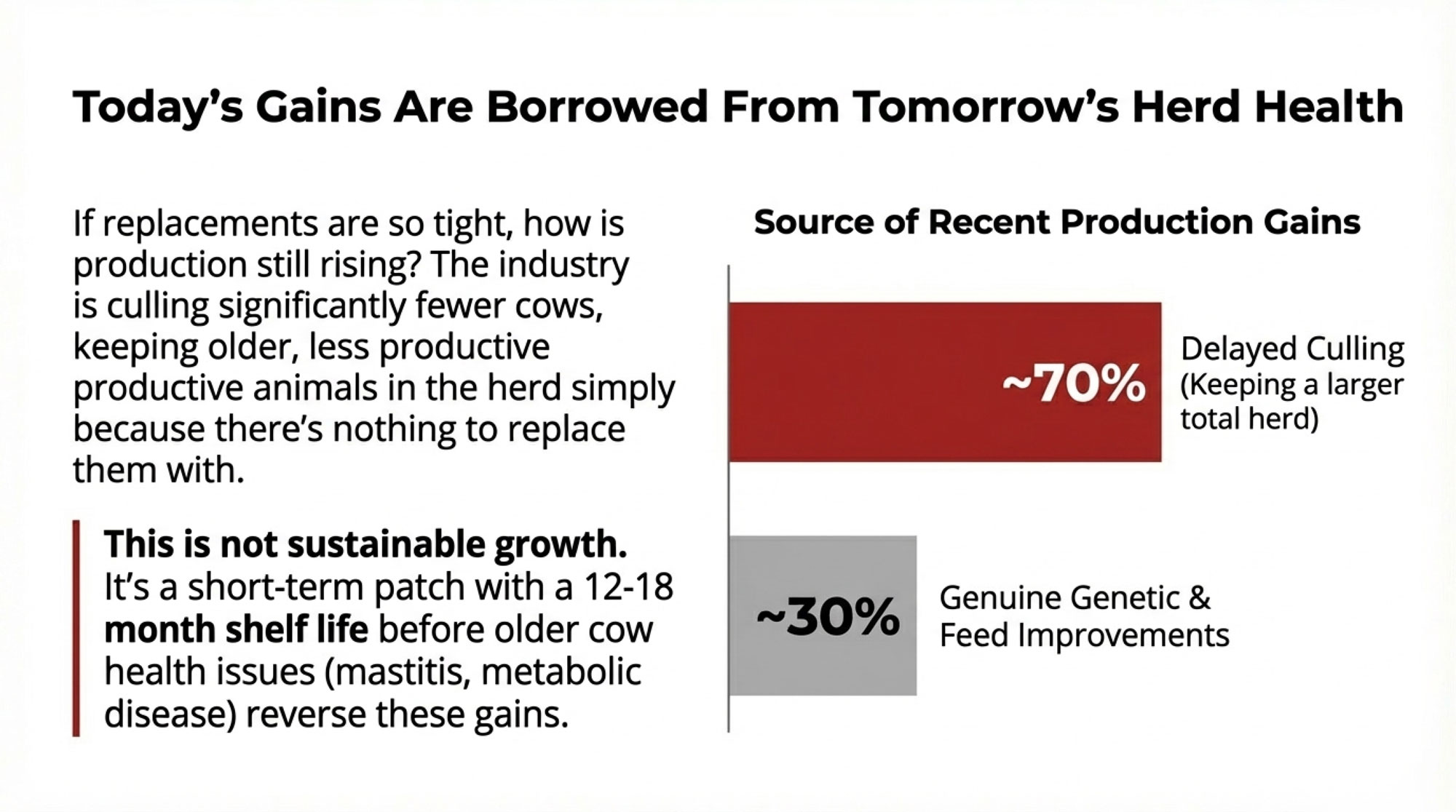
NewsSubscribe
First
Last
Consent
Send this to a friend