A 46‑cow chamber trial proved heat‑stressed Holsteins are losing milk through the gut wall — not just from reduced intake. Here’s the barn math at $18.95/cwt.
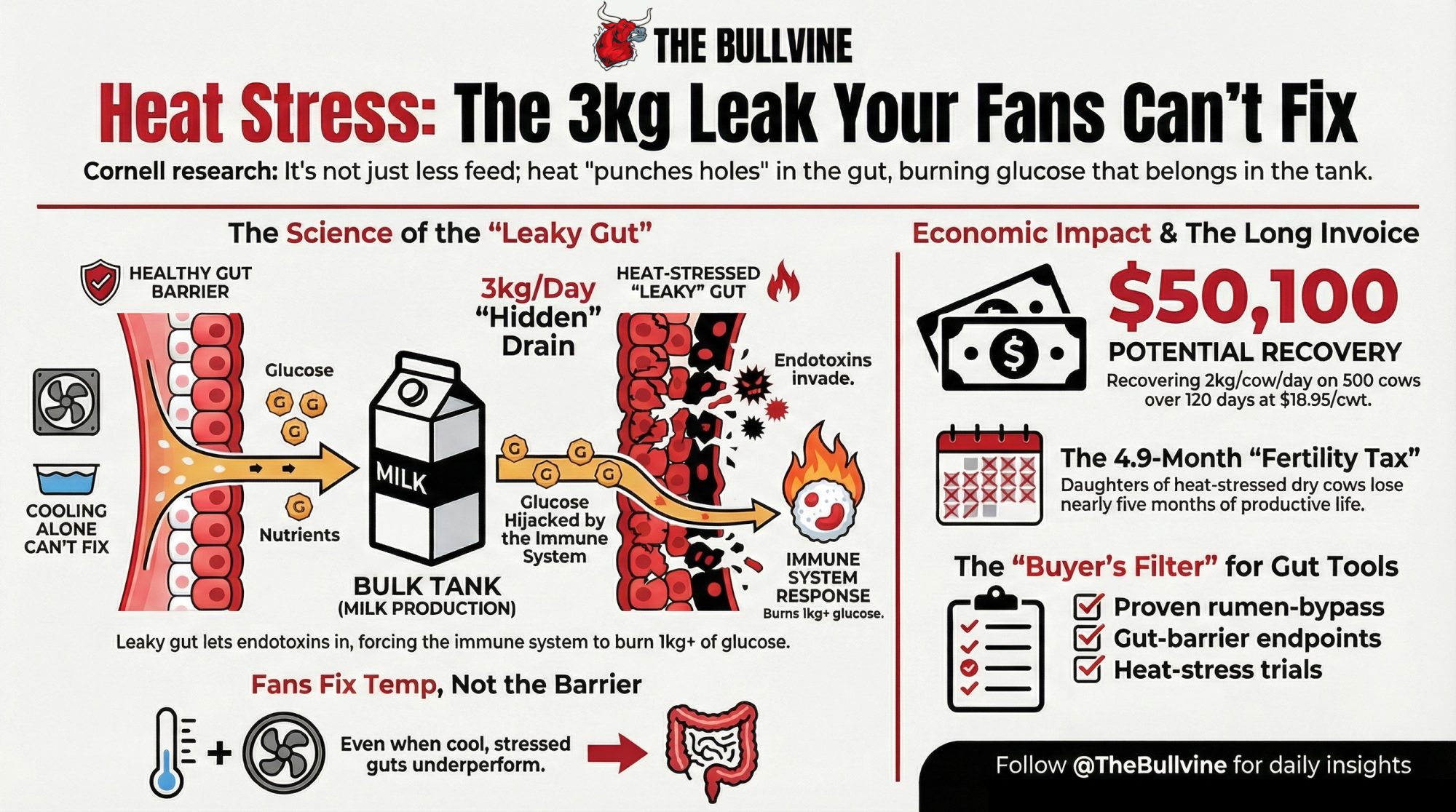
Executive Summary: Cornell’s McFadden group proved that heat-stressed Holsteins lose about 3 kg of energy-corrected milk per cow per day through gut-wall failure — independent of reduced feed intake. In their 46-cow chamber trial, a pair-fed group kept cool but eating the same reduced diet still out-milked the heat-stressed cows, which means a real chunk of your summer leak is coming from somewhere fans and soakers can’t reach. What’s actually happening: endotoxins slip through a compromised intestinal barrier, and the immune system burns glucose that should’ve gone to milk — Kvidera’s work showed over 1 kg of glucose torched in just 12 hours. A microencapsulated organic acid/botanical blend restored gut permeability and cut inflammation in the trial, though a follow-up calf study found no growth response, so the strongest case is in lactating cows under sustained THI above 74. At $18.95/cwt, a conservative 2 kg/day recovery on 500 cows over 120 heat-stress days is worth roughly $50,100 in gross milk value — before you subtract product cost. The longer invoice is worse: Laporta’s 10-year Florida data showed daughters of heat-stressed dry cows lost 4.9 months of productive life, with a national cost estimated at 5 million/year.
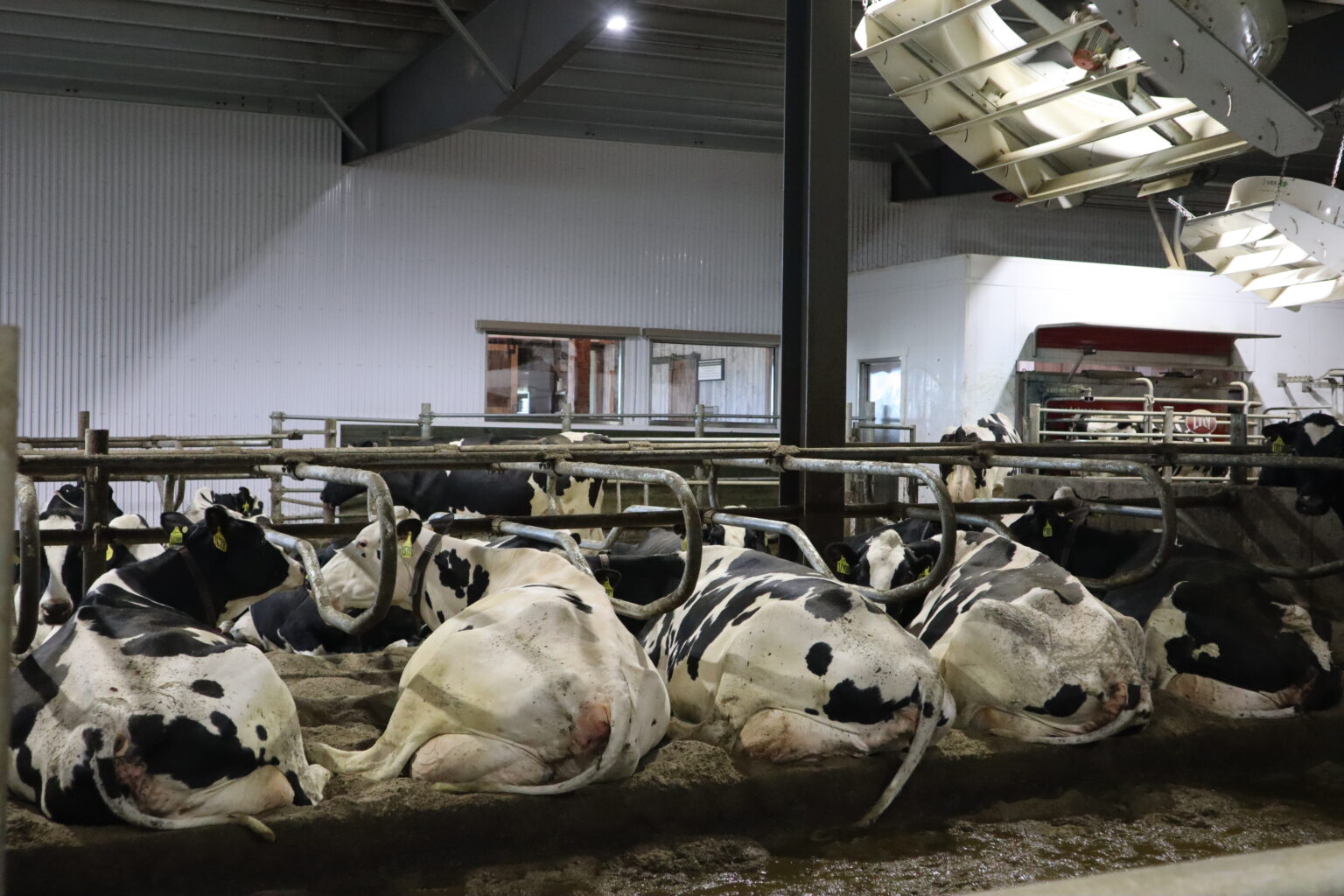
It’s July. Fans screaming at 100%, soakers drenching the holding pen, and your bulk tank still bleeding out. You’ve done everything the heat stress playbook says — but a Cornell research team reported heat‑stressed Holsteins losing about 3 kg of energy‑corrected milk per cow per day from a place your fans can’t reach: the gut wall.
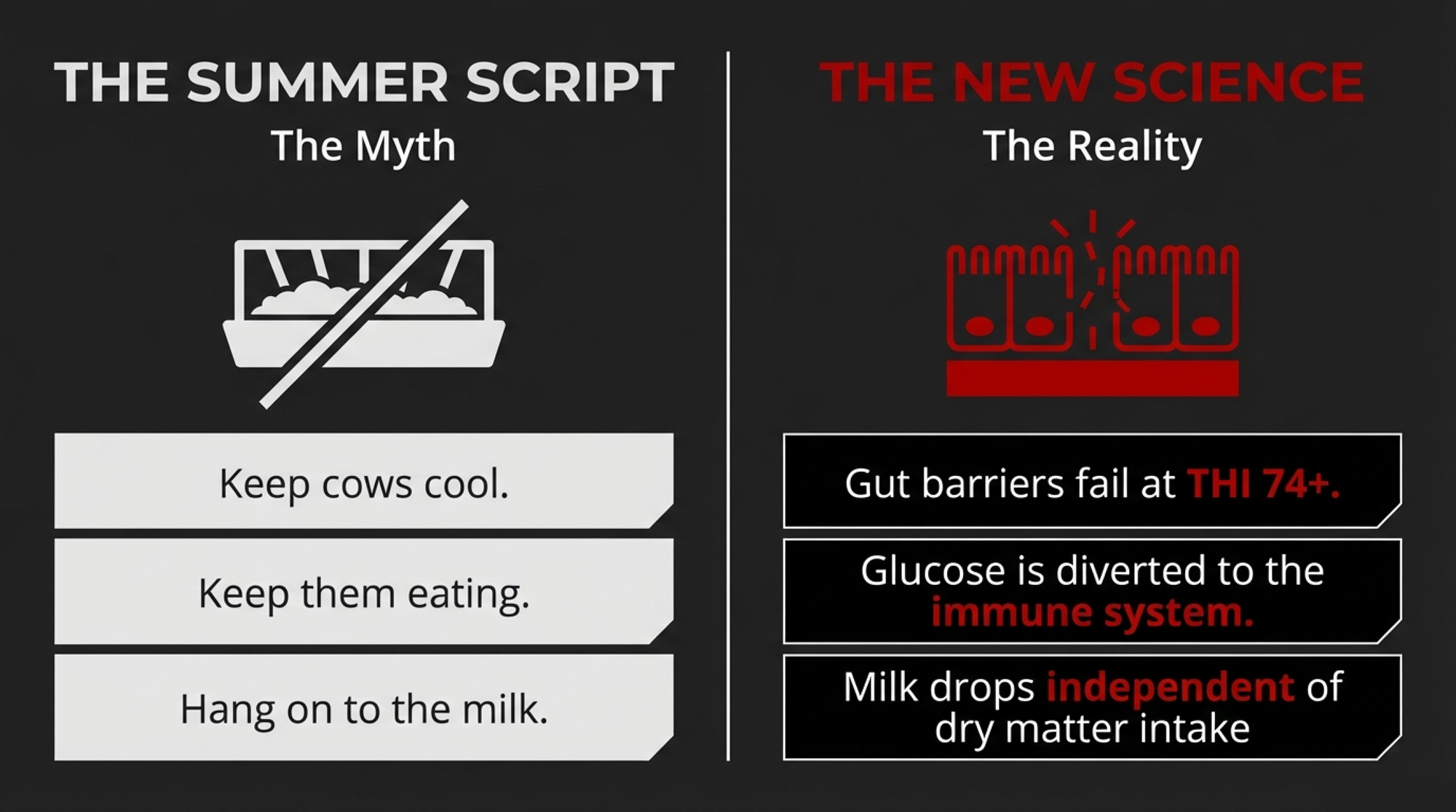
We’ve all been raised on the same summer script: keep cows cool, keep them eating, hang on to the milk. Joseph McFadden’s group at Cornell put that theory to the test in a chamber and showed it’s only half the story. They took 46 multiparous Holsteins, split them into four groups, and proved that even when feed intake is matched, heat stress still punches holes in the intestine and lights up the immune system — stealing glucose that was supposed to end up in your milk cheque (Fontoura et al. 2022, JDS 105:7842–7860).
The Part of Heat Stress Your Fans Can’t Touch
It only took three days of 74+ THI for the gut wall to start failing.
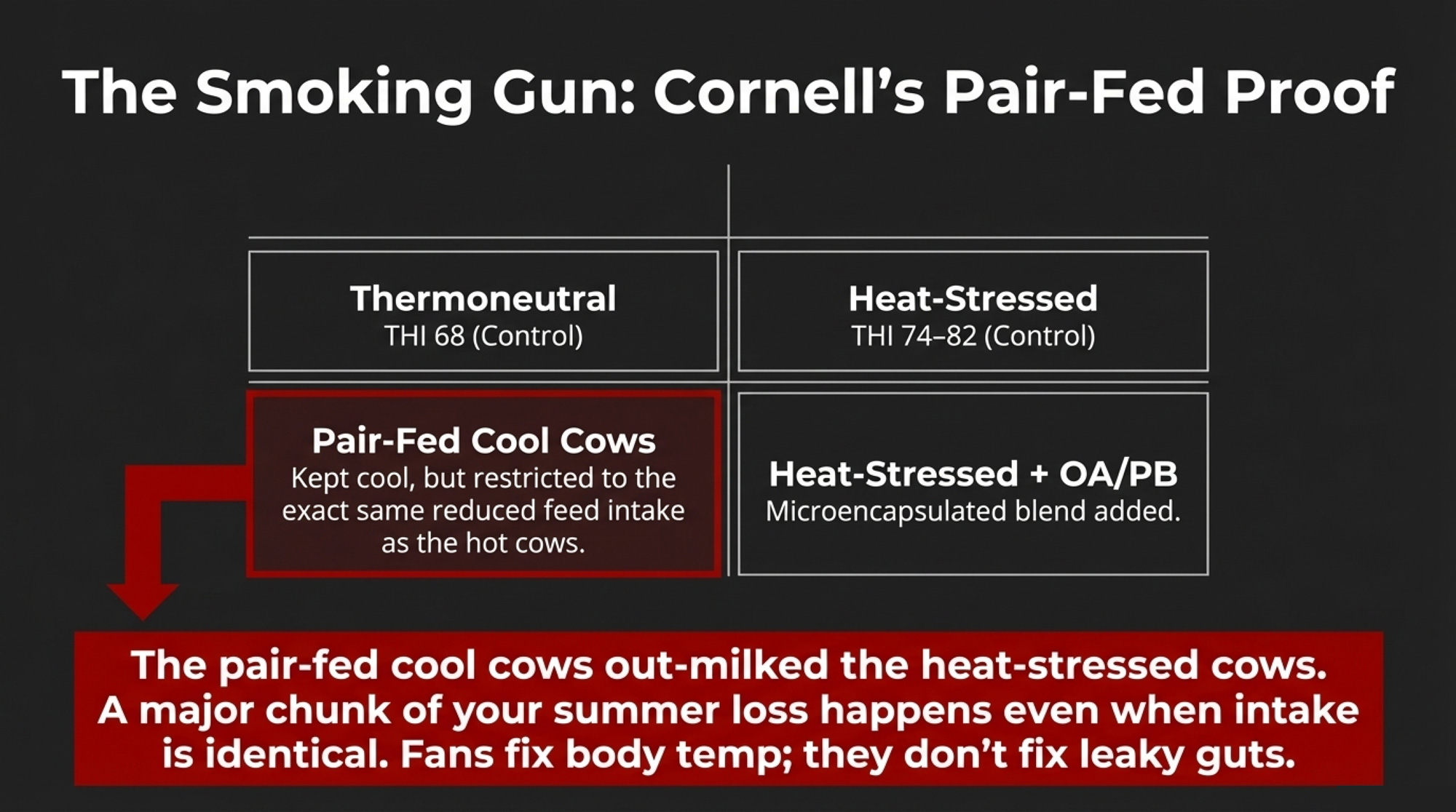
McFadden’s team ran four treatments:
- Thermoneutral controls at THI 68.
- Heat‑stressed controls cycling between THI 74 and 82.
- A pair‑fed group kept cool but was restricted to the same intake as the hot cows.
- Heat‑stressed cows on a microencapsulated organic acid/pure botanical (OA/PB) blend.
That pair‑fed pen is the smoking gun. Same reduced intake as the hot group, but kept cool — and they still out‑milked the heat‑stressed cows. In other words, a chunk of your summer loss is happening independent of dry matter intake. Fans and sprinklers fix body temperature. They don’t fix a leaky gut.
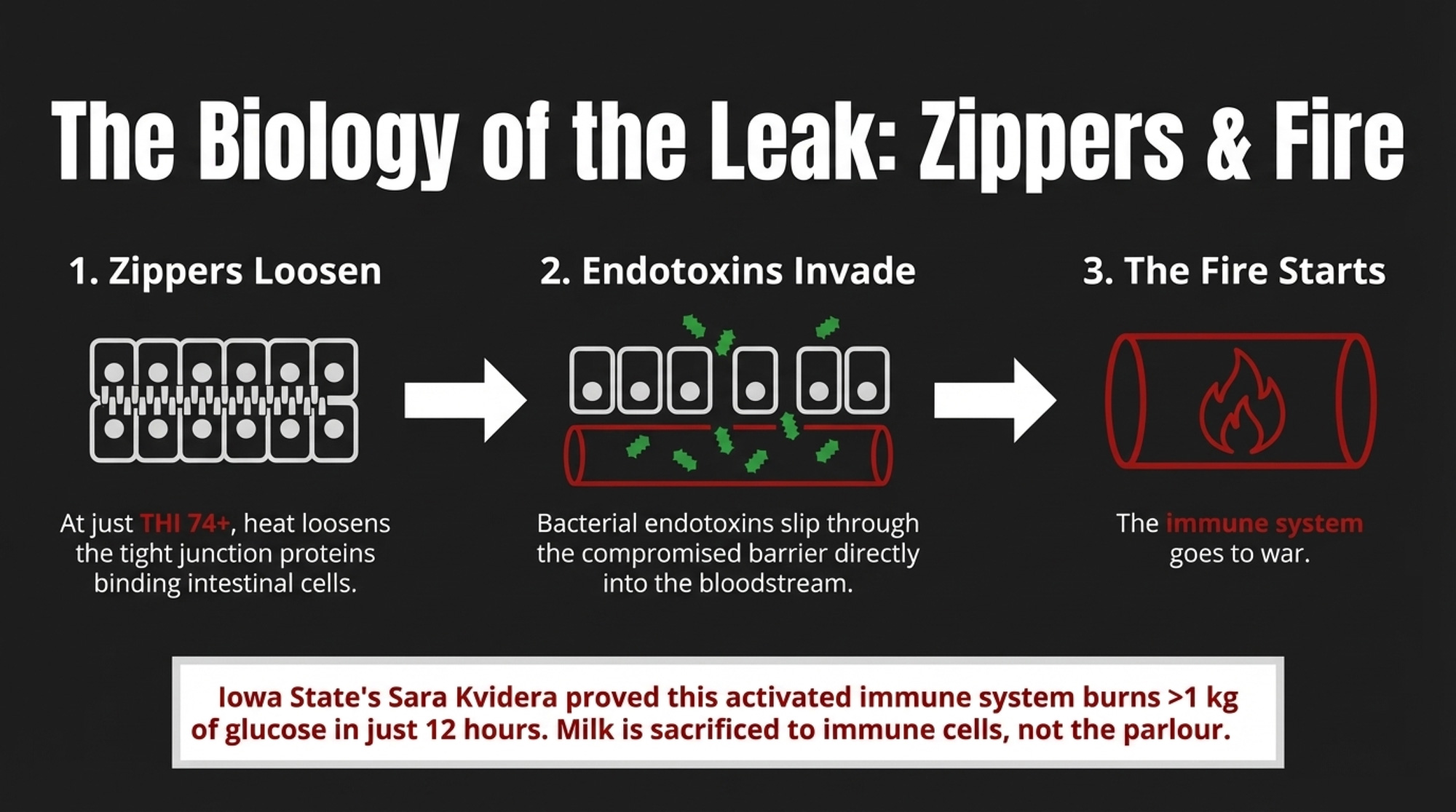
What’s actually happening? Heat stress loosens the tight junction proteins that zip intestinal cells together. Bacterial endotoxins slip through, hit immune receptors, and your cow’s immune system goes to war. Iowa State’s Sara Kvidera showed an acutely activated immune system in a lactating Holstein that burns more than 1 kg of glucose in just 12 hours. That’s several kilograms of milk sacrificed to immune cells instead of the parlour.
Cornell’s team summed it up: heat stress reduces production through “important mechanisms … independent of changes in DMI.” That’s the part your heat abatement system can’t touch.
What Cornell Actually Fed — And Why the Coating Matters
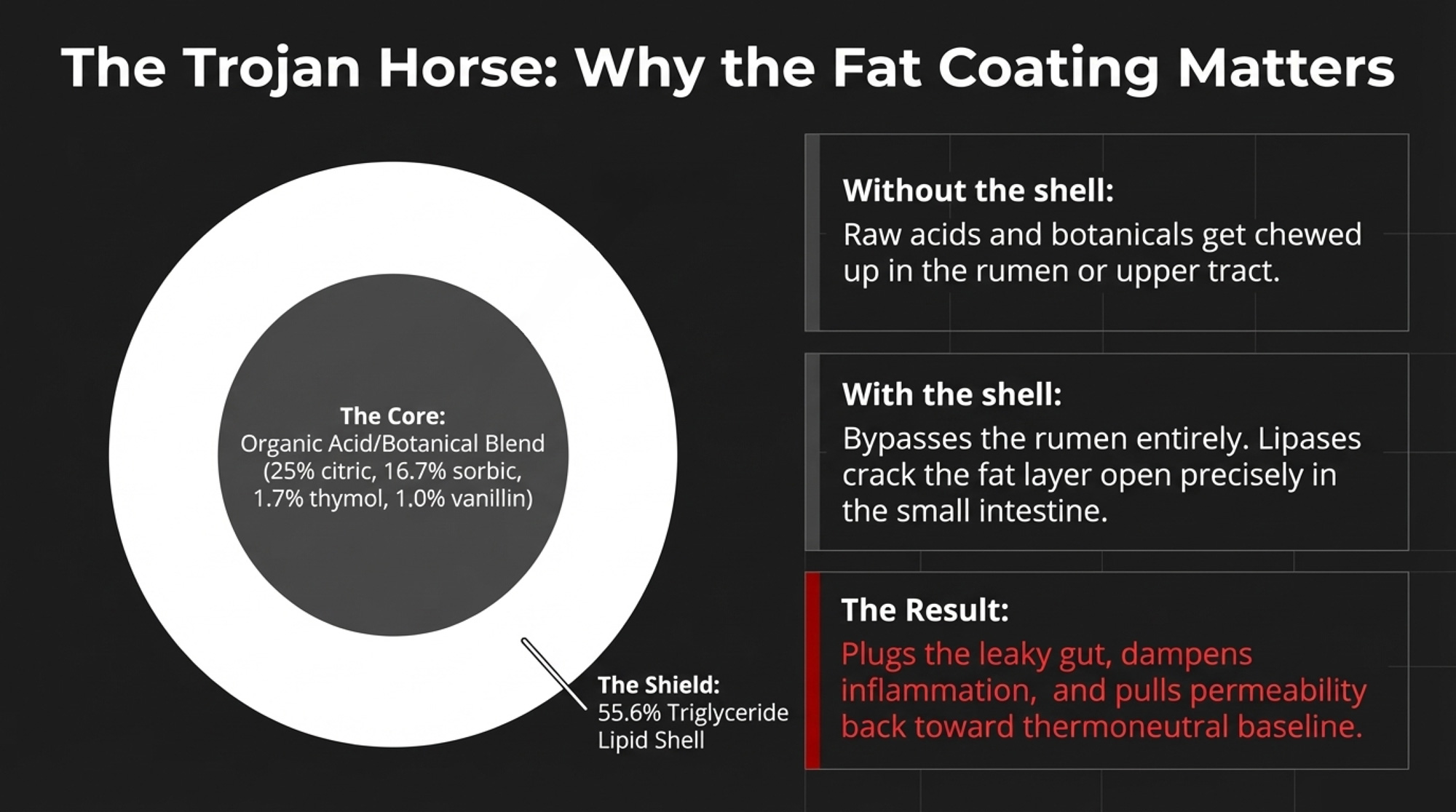
This wasn’t a random “gut health” sprinkle. On a dry‑matter basis, the OA/PB blend in the Cornell trial was:
- 25.0% citric acid
- 16.7% sorbic acid
- 1.7% thymol
- 1.0% vanillin
- 55.6% triglyceride (the lipid shell)
The cows got it twice daily as a top‑dress; controls got the same amount of plain triglyceride carrier, so every pen was handled the same way. That triglyceride coating is the whole play. In vitro work showed minimal release in rumen‑like fluid and targeted release under intestinal conditions once lipases crack the fat layer open. Without that fat shell, most organic acids and botanicals get chewed up or absorbed upstream before they ever see the small intestine.
In the chamber, the coated OA/PB did three big things for the heat‑stressed group:
- Pulled total‑tract gut permeability back toward thermoneutral values.
- Lowered systemic inflammation markers like LBP and serum amyloid A.
- Improved energy‑corrected milk and DMI vs. unsupplemented heat‑stressed controls.
Mechanistically, once the shell opens in the gut, the organic acids and botanicals act at three levels: they create pores in undesirable bacterial membranes, dampen mucosal inflammation, and upregulate tight junction proteins to help reseal the barrier.
But it’s not magic. A follow‑up calf study from the same group (Fontoura et al. 2023, JDS 106:2904–2918) showed the OA/PB improved gut‑integrity markers under heat stress but was not able to improve growth performance in heat‑stressed calves — the authors concluded reductions in DMI alone accounted for production losses in that class of stock. The strongest evidence of performance lies in heat‑stressed lactating cows, gut‑barrier endpoints, and milk energy. Not every animal responds the same way.
Disclosure: author E. Grilli is affiliated with Vetagro, the manufacturer of the OA/PB product used in the trial. The work is still a peer‑reviewed Journal of Dairy Science paper, with full affiliation spelled out — standard practice for industry/university collaborations.
Can Gut Integrity Really Pay at $18.95 Milk?
Cornell fed 75 mg/kg of body weight — that’s about 49 g/cow/day on a 650 kg Holstein. Real inclusion, not fairy dust.
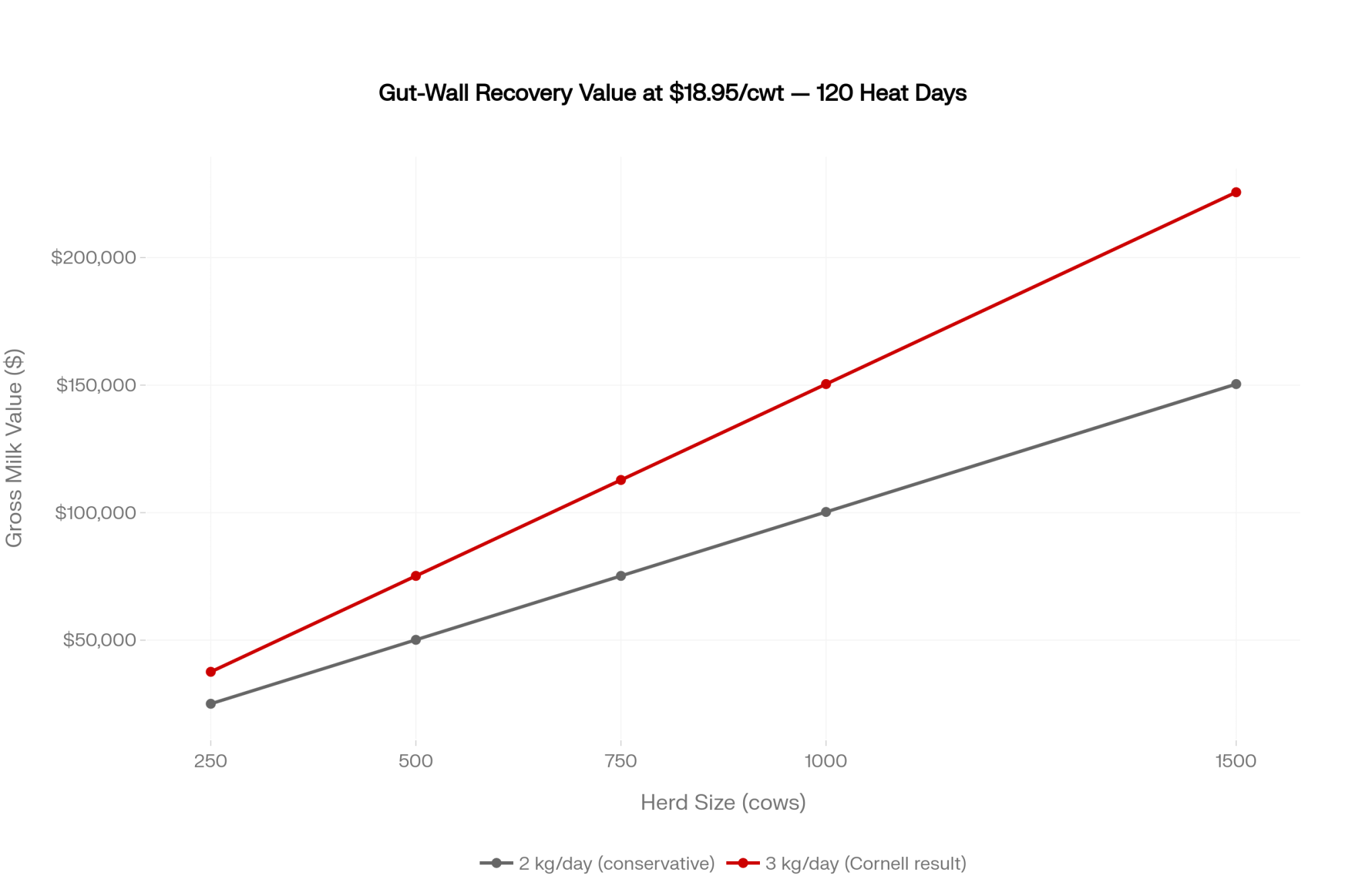
The USDA’s February 2026 outlook puts the all‑milk price at $18.95/cwt, down from a revised $21.17/cwt in 2025. So any gut‑integrity program has to pay in a margin year, not just when milk is rich.
Here’s the barn math that matters.
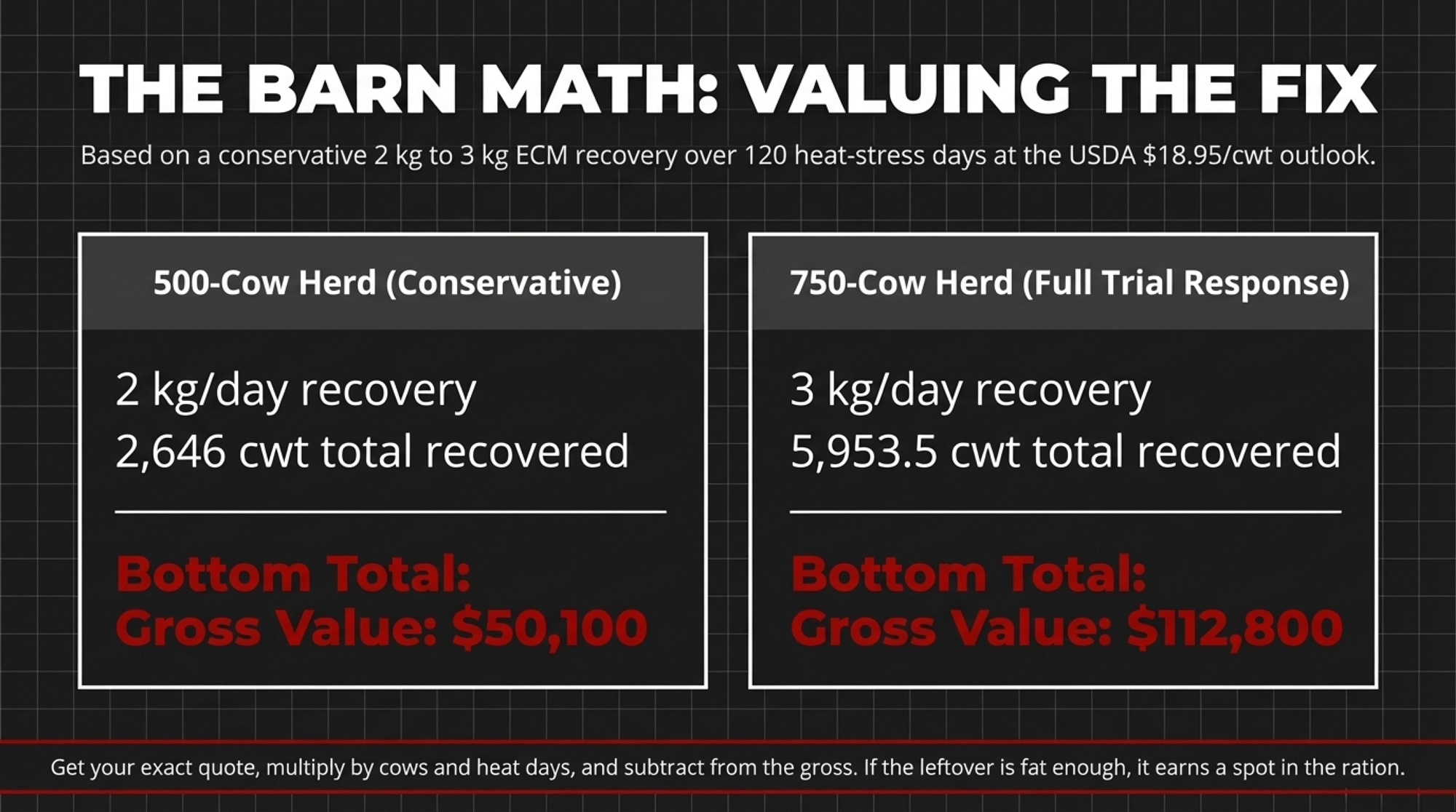
500‑Cow Herd — Conservative (2 kg/cow/day recovery)
Assume you’ll only claw back 2 kg ECM per cow per day instead of Cornell’s ~3:
- 2 kg × 500 cows × 120 heat‑stress days = 120,000 kg
- 120,000 kg × 2.205 lb/kg = 264,600 lb = 2,646 cwt
- Gross milk value: 2,646 cwt × $18.95 ≈ $50,100
750‑Cow Herd — Full Cornell Response (3 kg/cow/day)
If you assume the full ~3 kg ECM/cow/day that Cornell reported under chamber conditions:
- 3 kg × 750 cows × 120 days = 270,000 kg
- 270,000 kg × 2.205 = 595,350 lb = 5,953.5 cwt
- Gross milk value: 5,953.5 cwt × $18.95 ≈ $112,800
| Herd Size | Recovery Scenario | kg ECM Recovered | lbs Recovered | cwt | Gross Milk Value | Notes |
|---|---|---|---|---|---|---|
| 250 cows | 2 kg/day (conservative) | 60,000 kg | 132,300 lb | 1,323 cwt | $25,071 | Get a real product quote to net |
| 250 cows | 3 kg/day (Cornell) | 90,000 kg | 198,450 lb | 1,984 cwt | $37,597 | Chamber result; on-farm ~70% likely |
| 500 cows | 2 kg/day (conservative) | 120,000 kg | 264,600 lb | 2,646 cwt | $50,142 | Article baseline scenario |
| 500 cows | 3 kg/day (Cornell) | 180,000 kg | 396,900 lb | 3,969 cwt | $75,213 | |
| 750 cows | 2 kg/day (conservative) | 180,000 kg | 396,900 lb | 3,969 cwt | $75,213 | |
| 750 cows | 3 kg/day (Cornell) | 270,000 kg | 595,350 lb | 5,954 cwt | $112,817 | Article full-response scenario |
| 1,000 cows | 2 kg/day (conservative) | 240,000 kg | 529,200 lb | 5,292 cwt | $100,283 | |
| 1,000 cows | 3 kg/day (Cornell) | 360,000 kg | 793,800 lb | 7,938 cwt | $150,425 |
Those are gross numbers — the milk value recovered before you subtract product cost. Pricing for microencapsulated OA/PB blends varies by supplier, dose, and contract. Get your real quote, multiply it by your cows and your heat‑stress days, and subtract it from the gross. If the leftover is fat enough, the product earns a season in the ration. If it’s thin or negative, it doesn’t.
One caveat: if your barn rarely sees THI above 72, or your cooling system is genuinely keeping rectal temperatures and respirations tight, gut permeability may not be your biggest leak. This lever matters most for herds that sit in the mid‑70s THI or higher for weeks at a time.
For Canadian readers, the Canadian Dairy Commission approved a 2.3255% farmgate increase effective February 1, 2026, under its pricing formula for butterfat used in dairy products. Different currency, same math — every kilogram you leak in July still lands on your milk cheque.
The Ghost of Heat Stress Past: What It Does to Daughters and Granddaughters
The milk dip hurts in August. The real damage hits you in 2028.
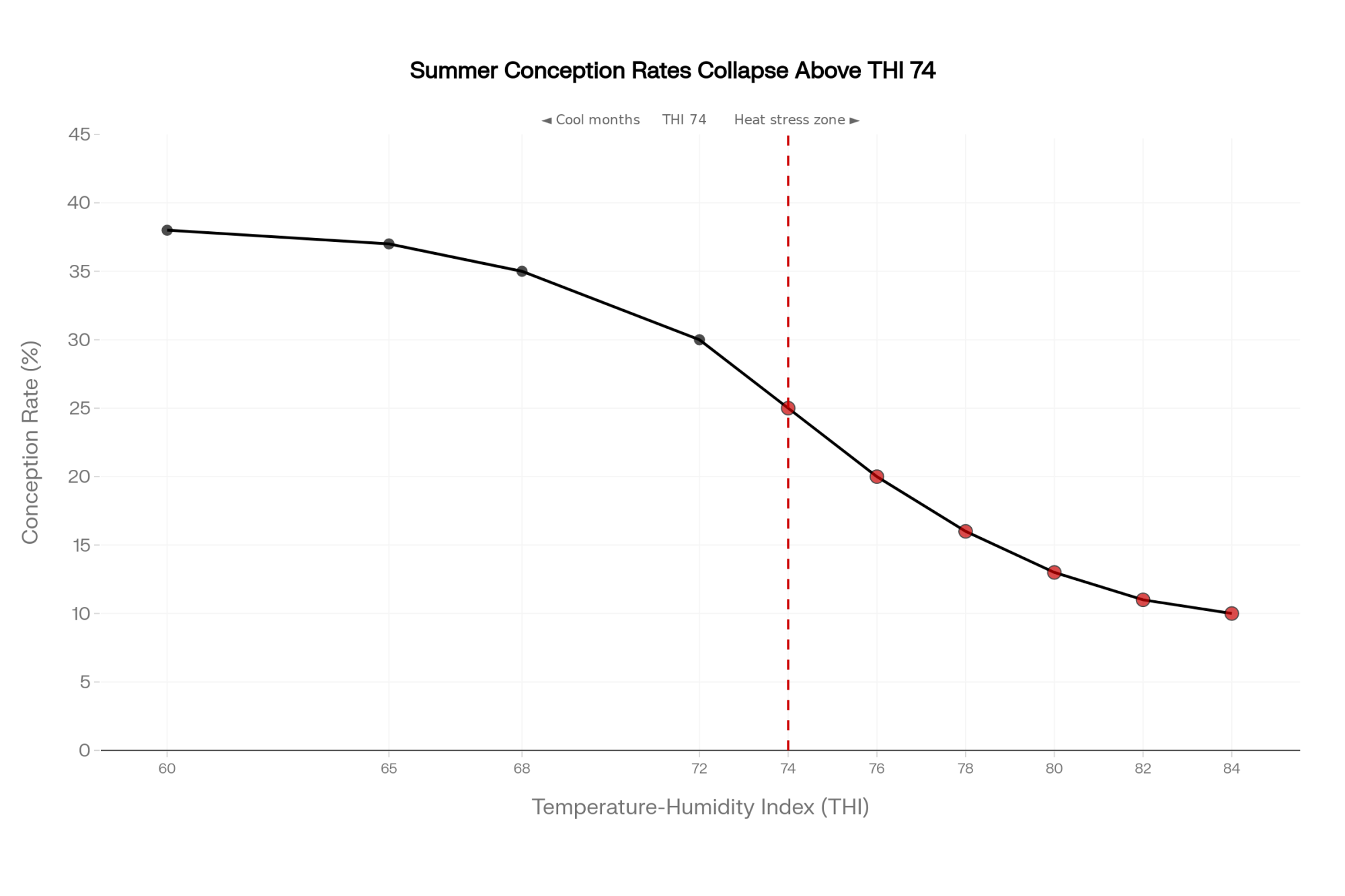
Heat‑stressed breeding seasons are a fertility tax. Peer‑reviewed field work and reviews show summer pregnancy rates routinely dropping from roughly 32–40% in cooler months down to 10–20% in severe heat, depending on region and THI. That’s not just semen baking in a hot AI kit. It’s inflammation, oxidative stress, and early embryos that never stand a chance. If you want to dig deeper into how those THI lines move conception rates, we’ve walked through it before.
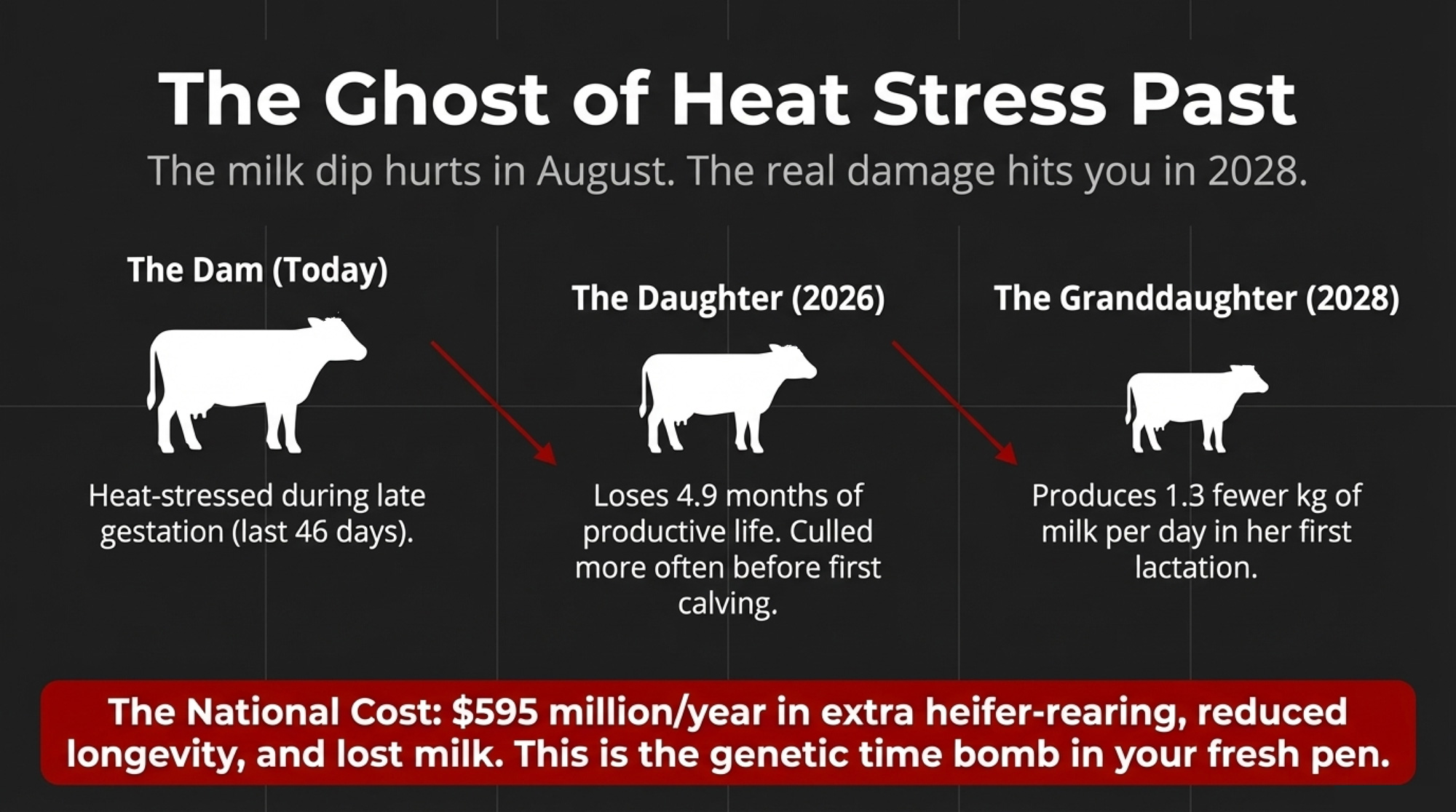
The longer invoice comes from the dry pen. Laporta et al. (2020, JDS 103:7555–7568) followed daughters of heat‑stressed dry cows (n=198) against daughters of cooled dry cows (n=196) over 10 years of Florida Holstein data — dams cooled or not cooled during the last 46 days of gestation. A hot, dry cow today is a cull candidate’s mother.
Daughters of heat‑stressed dams:
- Lost 4.9 months of productive life.
- Lost 11.7 months of total lifespan.
- Were culled more often before first calving.
The same paper reported granddaughters of heat‑stressed dams produced 1.3 fewer kg of milk per day in their first lactation than granddaughters of cooled dams. A University of Florida IFAS factsheet estimated that, on a national basis, late‑gestation heat stress in dairy cows costs about $595 million/year once extra heifer‑rearing, reduced longevity, and lost milk yield are added together.
If you’ve ever wondered whether there’s a genetic time bomb hiding in your fresh pen, this is one of the fuses.
You don’t see that bill on your August statement. You see it in a replacement pipeline that’s thinner and more expensive than it should’ve been.
If a gut‑integrity program can take even part of the inflammatory load off those cows — and Cornell’s permeability and inflammation data say it can, at least in mid‑lactation Holsteins — then it belongs in the same planning meeting as shade, soakers, and fan upgrades.
Not Every “Gut Health” Product Is Aimed at the Same Target
Here’s where this gets real in the nutrition office.
A lot of products sold under the “gut health” banner actually have their best published data in the rumen — pH stabilization, fibre digestibility, and components. That work has value. It’s just a different job than sealing an intestinal wall under heat stress.
The yeast and buffer literature is overwhelmingly rumen‑centric. Many of those companies are careful about what they claim — they market for rumen performance, and that’s what their trials measure. Loose organic acids mostly get fermented or absorbed in the upper tract before they ever see the small intestine.
Right now, the peer‑reviewed trials that specifically measure gut permeability, tight‑junction expression, and systemic inflammatory markers in heat‑stressed lactating Holsteins are centred on microencapsulated OA/PB blends like Cornell’s. Comparable published data for yeast, buffers, or unprotected acids at those exact endpoints aren’t readily available in the literature.
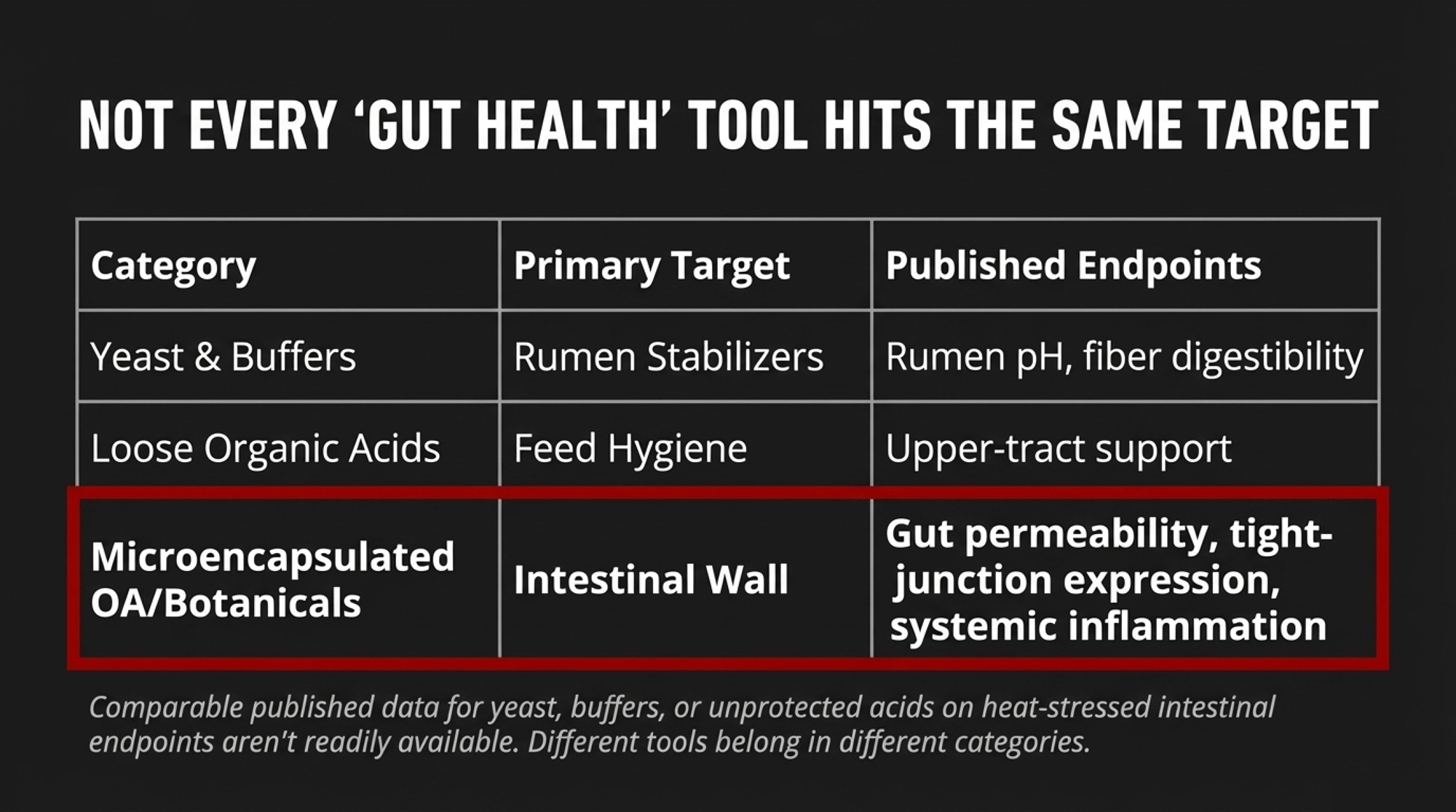
That doesn’t make what you’re already feeding bad. It just means different tools belong in different categories:
| Product Category | Primary Site of Action | Rumen-Bypass Evidence | Gut Permeability Trials | Heat-Stress (THI ≥74) Data | Recommended Use Window |
|---|---|---|---|---|---|
| Yeasts & Buffers | Rumen | ✗ Not required | ✗ Limited/none in peer review | ✗ Not tested | Year-round rumen stabilization |
| Loose Organic Acids | Upper GI tract | ✗ Minimal | ✗ Absorbed upstream | ✗ Not tested at these endpoints | Feed hygiene; silage preservation |
| Unprotected Botanicals | Rumen / upper GI | ✗ Variable | ✗ Inconsistent | ✗ Data gaps | TMR palatability; mild microbial control |
| Microencapsulated OA/PB | Small intestine | ✅ In vitro lipase-release data | ✅ Tight-junction & LBP data (Fontoura 2022) | ✅ Lactating Holsteins, THI 74–82 | Heat stress windows; high-inflammation periods |
| General Probiotics | Hindgut / rumen | ✗ Species-dependent | ✗ Minimal heat-stress data | ✗ Not consistently tested | Transition; post-antibiotic recovery |
- Yeast and buffers → rumen stabilizers.
- Loose organic acids → feed hygiene and upper‑tract support.
- Microencapsulated OA/botanicals → intestinal‑wall tools for heat stress and other high‑inflammation windows.
🔍 The “Gut Health” Buyer’s Filter
Before you write the next cheque, run every product through three questions:
1. BYPASS — Is there real rumen‑bypass data showing limited release in rumen fluid and targeted release in the intestine? Not a brochure line — actual in vitro or in vivo work.
2. ENDPOINTS — Do the trials measure gut permeability, tight‑junction proteins, or inflammatory markers under heat stress? Or just milk and DMI under thermoneutral conditions?
3. CONDITIONS — Were the key trials run in lactating Holsteins at THI in the mid‑70s or higher? Or in calves, dry cows, or another species entirely?
If your rep can’t clear all three bars, it doesn’t mean the product is junk — it means it wasn’t designed or tested for this specific job. Your expectations (and your spend) should match what the evidence actually supports.
What Would This Look Like on Your Farm?
Say you’re running 650 Holsteins in a THI‑75+ region and your high pen reliably drops 2.5–3.0 kg/cow/day every summer once night‑time THI stays over 70 for more than a week. Cooling is maxed. You can’t justify more concrete and steel. Here’s one way to put the Cornell data to work instead of just reading about it.
Pick a 240‑cow high pen with solid records and leave a matching pen on the base ration. Layer in a microencapsulated OA/PB product at ~49 g/cow/day, delivered as a top‑dress with the PM feeding to match Cornell’s dose. Start two weeks before THI historically climbs, and run the program for three straight calendar months. Track daily ECM, pen‑level DMI, and pregnancy rate on breedings that happen during the heat window.
What should you be looking for? By weeks four to six of real heat, you want to see at least 1.5–2.0 kg ECM/cow/day better than your historic pattern, and summer fertility at least holding where it used to tank. If those numbers aren’t showing up at your product cost and your barn conditions, this lever doesn’t earn its spot. A 3 kg response like Cornell’s is a chamber result. On‑farm, 1.5–2.0 kg is a realistic bar to clear.
Every herd’s noise floor is different. This isn’t academic hand‑waving — it’s how you separate signal from marketing.
Where the Signal Gets Buried
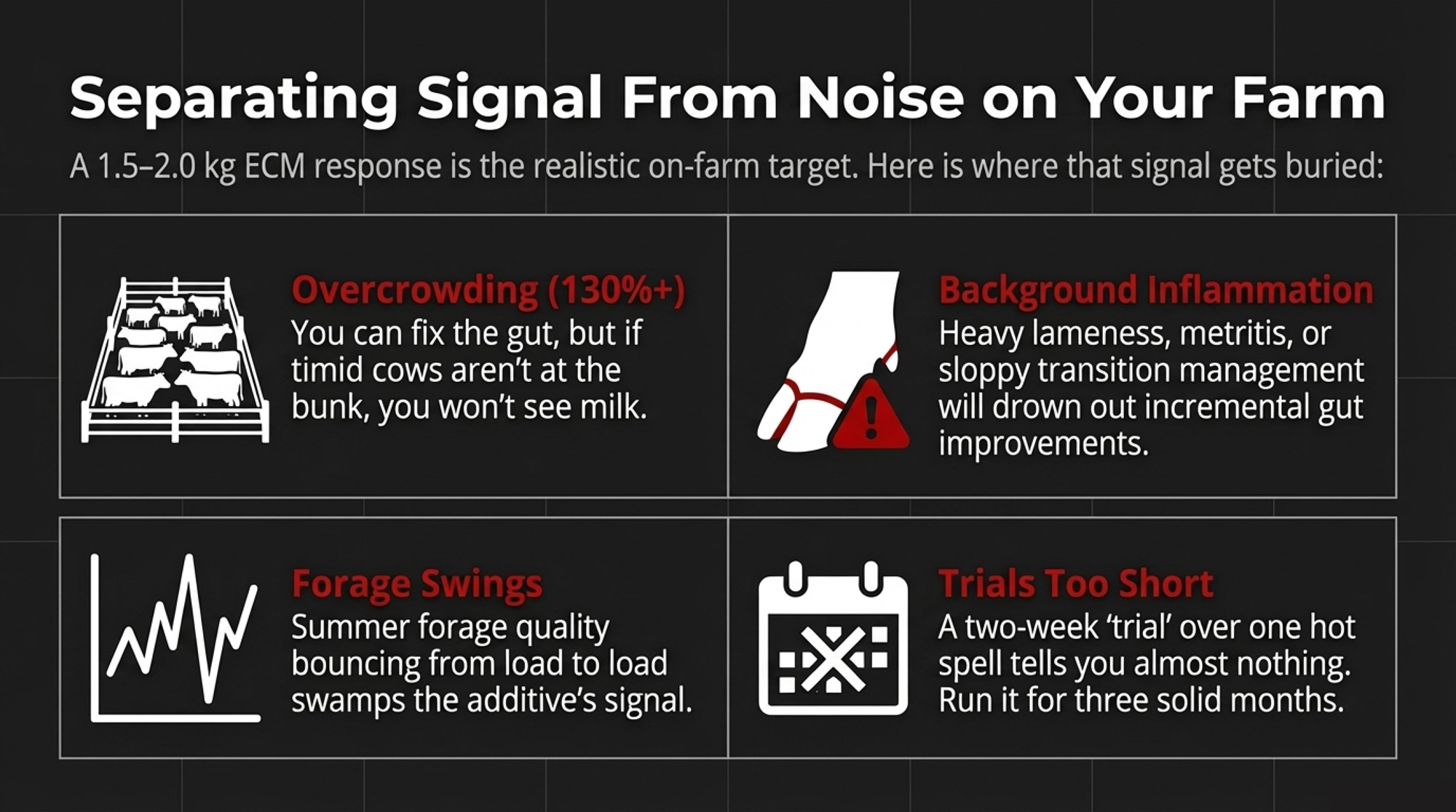
Your barn isn’t Cornell. There are four places where a genuine 1–2 kg response can disappear:
- Overcrowding at 130%+: Timid cows never see the bunk long enough. You can fix their gut, but if they’re not eating, you won’t see milk.
- Background inflammation: Lameness, mastitis, metritis, or sloppy transition management already soaking the system in cytokines will drown out incremental gut improvements.
- Forage swings: Summer forage quality bouncing from load to load can swamp any additive’s signal.
- Trial too short: Cornell measured gut permeability at day 3 and followed cows through the full heat‑stress exposure. A two‑week “trial” over one hot spell tells you almost nothing.
If your numbers look flat, it doesn’t automatically mean the product is snake oil. It might mean your barn’s noise floor is too high to hear the signal.
What This Means for Your Operation
- If your summer milk curve reliably drops 2–3 kg/cow/day once THI sits in the 70s, and your only tools so far are fans and sprinklers, you’ve got a quantified gut‑wall lever you haven’t tested. Cornell gives you both a dose and endpoints to benchmark against.
- In the next 30 days, pull your last two summers of weekly bulk-tank or pen‑level milk data and overlay them against local THI. How many kg/cow/day did you actually lose, and for how many weeks? That’s the size of the hole any gut program has to fill on your farm.
- Sit down with your nutritionist and ask: “Which products in this ration have peer‑reviewed data on gut permeability in heat‑stressed lactating Holsteins?” If the answer is “none,” there’s a gap between the tag’s gut‑health language and what the research has actually measured.
- Compare your June–August pregnancy rates with January–March for the last two years. If you’re consistently 10–20 points lower in summer, that’s not bad luck. That’s heat‑driven inflammation and oxidative stress showing up in your repro numbers.
- Walk your dry cow pens when THI is ugly. Laporta’s data — 4.9 months off productive life, 11.7 months off total lifespan, and roughly $595 million/year in multi‑generation losses across the US — deserves to be in the same budget meeting as shade structures and close‑up soakers.
- When a rep pitches gut health, run their product through the bypass–endpoint–condition filter before you talk price. If the trials don’t deal with gut permeability and inflammation in heat‑stressed Holsteins, it’s not a gut‑wall tool — and shouldn’t be priced like one.
Key Takeaways
- If THI routinely sits in the 70s and your summer drop is 2–3 kg ECM/cow/day, don’t stop at cooling. Fans fix body temperature. The Cornell work shows gut permeability is a separate problem with its own price tag.
- At $18.95/cwt, a 2 kg ECM/cow/day recovery on 500 cows over 120 heat‑stress days is worth roughly $50,100 in gross milk value. Your net depends on product cost and the real response on your farm — not on anyone’s slide deck.
- Products with rumen‑bypass data, gut‑barrier endpoints, and heat‑stress trials in lactating Holsteins are in a different evidence class from general “gut health” additives whose data stop at rumen pH or thermoneutrality in milk. Both can be useful — just not for the same jobs.
- The consequences of heat stress don’t end when the weather breaks. They walk through your calving interval, your replacement pipeline, and your cull list for years, and the research team behind Laporta’s work has already put a national dollar figure on it.

The Bottom Line
Your bulk tank already knows how much heat stress is costing you. The real question is whether this is the year you keep calling it “just heat” — or the year you finally find out how much of that 3 kg leak is coming through the gut wall.
Complete references and supporting documentation are available upon request by contacting the editorial team at editor@thebullvine.com.
Learn More
- Heat Stress 2.0: Why Your Current Cooling Strategy Is Costing You Big Money – Arms you with a three-step vulnerability audit to identify the weakest links in your barn’s microclimate. This tactical guide delivers the exact fan speeds and soaker patterns required to stop your highest producers from metabolic crashing.
- USDA’s $109 Billion Warning: $18.95 Milk, $19.14 Costs, and 29% of Farm Income from Government Checks– Breaks down the brutal 2026 margin squeeze where structural deficits are the new baseline. This analysis exposes why you must stress-test every additive and infrastructure investment against a $16.65 Class III floor to stay liquid.
- 20 Generations to One: What Europe’s Gene Editing Decision Means for the Future of Your Herd – Reveals the disruptive potential of “slick” genetics to slash heat-stress vulnerability in a single breeding cycle. This forward-looking piece explores how gene editing could eventually replace expensive cooling infrastructure with permanent, biological heat resistance.
 The Sunday Read Dairy Professionals Don’t Skip.
 The Sunday Read Dairy Professionals Don’t Skip.
Every week, thousands of producers, breeders, and industry insiders open Bullvine Weekly for genetics insights, market shifts, and profit strategies they won’t find anywhere else. One email. Five minutes. Smarter decisions all week.