





Archive for heat stress in dairy cows

Cornell Found the 3 kg/Day Heat Stress Leak Your Fans Were Never Going to Fix.

A 46‑cow chamber trial proved heat‑stressed Holsteins are losing milk through the gut wall — not just from reduced intake. Here’s the barn math at $18.95/cwt.

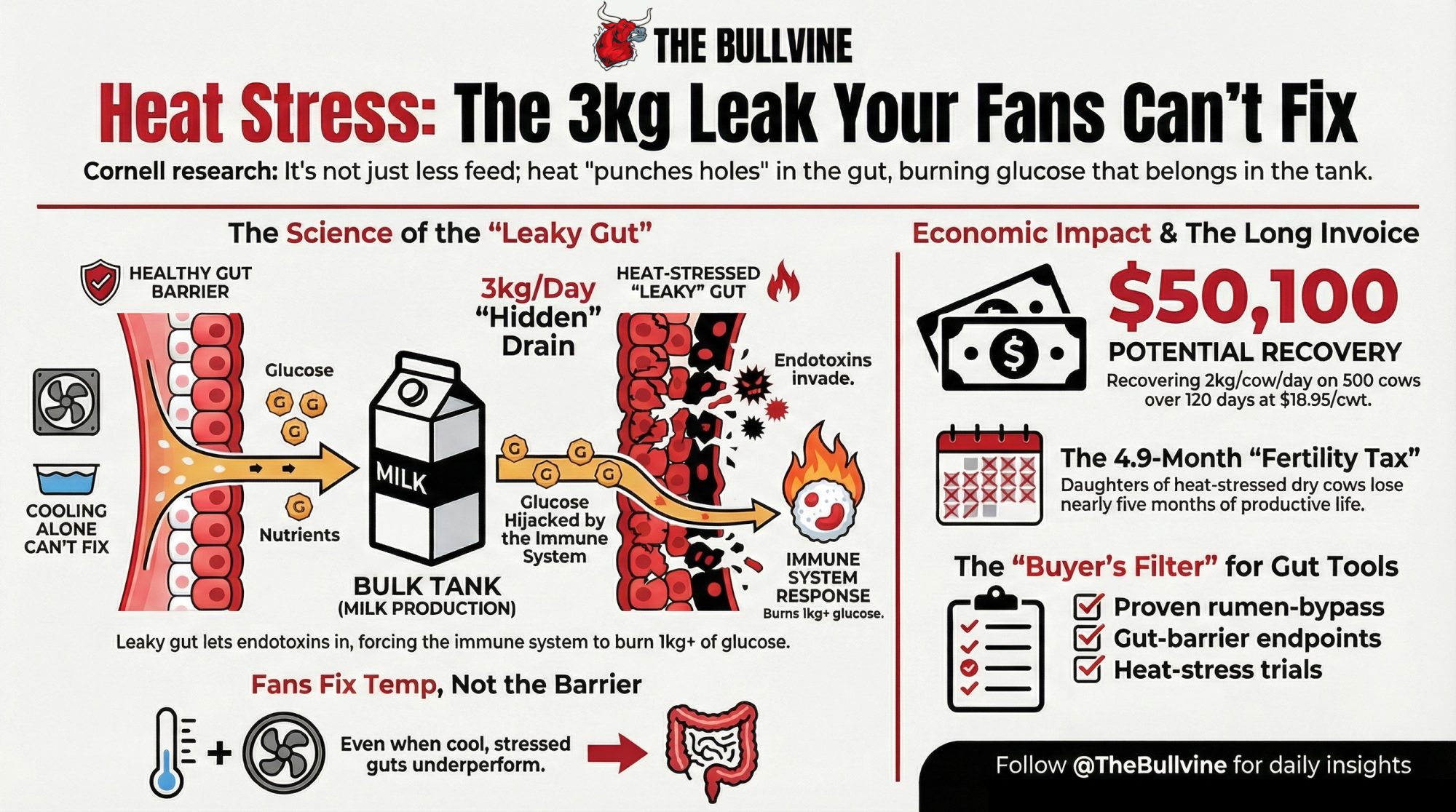
Executive Summary: Cornell’s McFadden group proved that heat-stressed Holsteins lose about 3 kg of energy-corrected milk per cow per day through gut-wall failure — independent of reduced feed intake. In their 46-cow chamber trial, a pair-fed group kept cool but eating the same reduced diet still out-milked the heat-stressed cows, which means a real chunk of your summer leak is coming from somewhere fans and soakers can’t reach. What’s actually happening: endotoxins slip through a compromised intestinal barrier, and the immune system burns glucose that should’ve gone to milk — Kvidera’s work showed over 1 kg of glucose torched in just 12 hours. A microencapsulated organic acid/botanical blend restored gut permeability and cut inflammation in the trial, though a follow-up calf study found no growth response, so the strongest case is in lactating cows under sustained THI above 74. At $18.95/cwt, a conservative 2 kg/day recovery on 500 cows over 120 heat-stress days is worth roughly $50,100 in gross milk value — before you subtract product cost. The longer invoice is worse: Laporta’s 10-year Florida data showed daughters of heat-stressed dry cows lost 4.9 months of productive life, with a national cost estimated at 5 million/year.
heat stress milk loss

It’s July. Fans screaming at 100%, soakers drenching the holding pen, and your bulk tank still bleeding out. You’ve done everything the heat stress playbook says — but a Cornell research team reported heat‑stressed Holsteins losing about 3 kg of energy‑corrected milk per cow per day from a place your fans can’t reach: the gut wall.
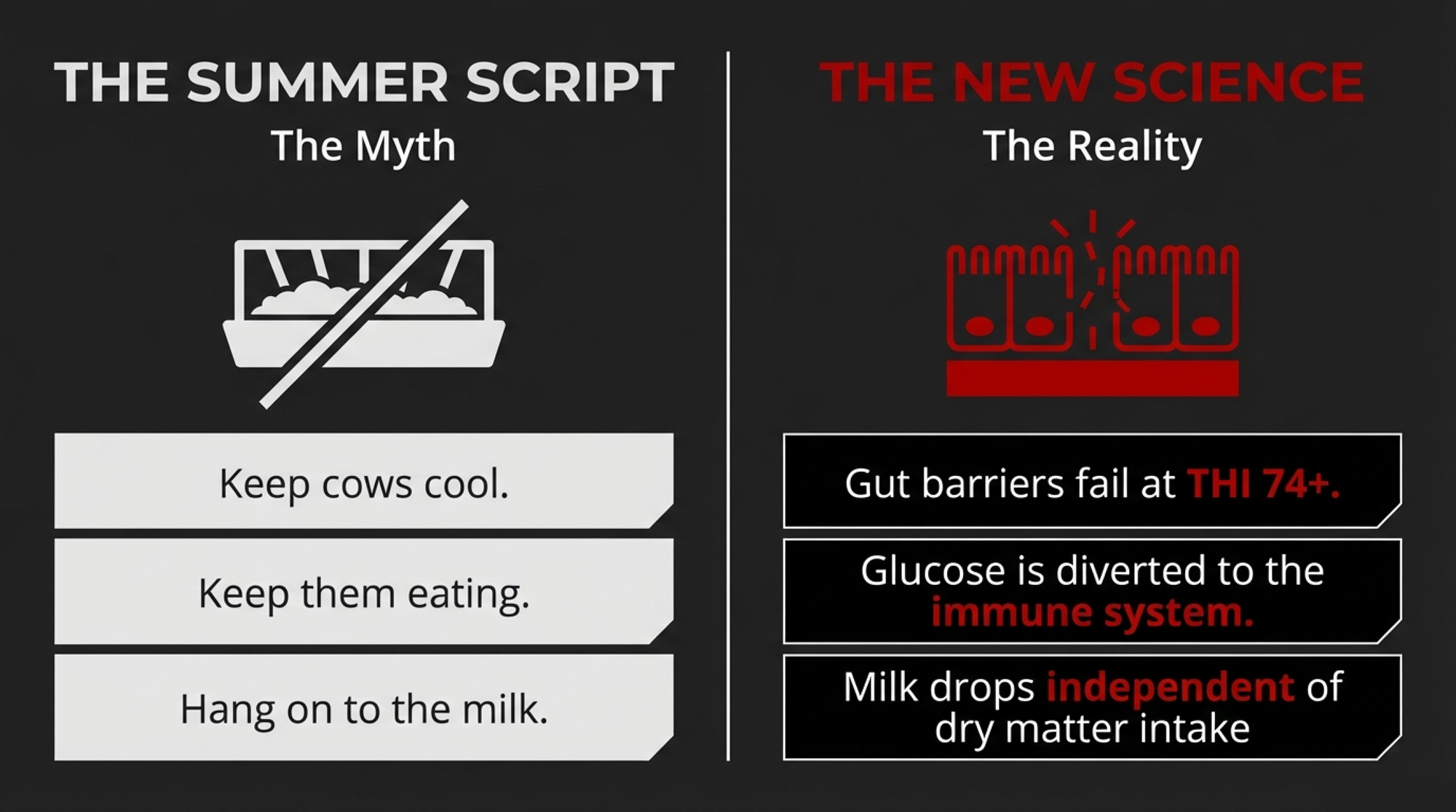
We’ve all been raised on the same summer script: keep cows cool, keep them eating, hang on to the milk. Joseph McFadden’s group at Cornell put that theory to the test in a chamber and showed it’s only half the story. They took 46 multiparous Holsteins, split them into four groups, and proved that even when feed intake is matched, heat stress still punches holes in the intestine and lights up the immune system — stealing glucose that was supposed to end up in your milk cheque (Fontoura et al. 2022, JDS 105:7842–7860).

The Part of Heat Stress Your Fans Can’t Touch

It only took three days of 74+ THI for the gut wall to start failing.
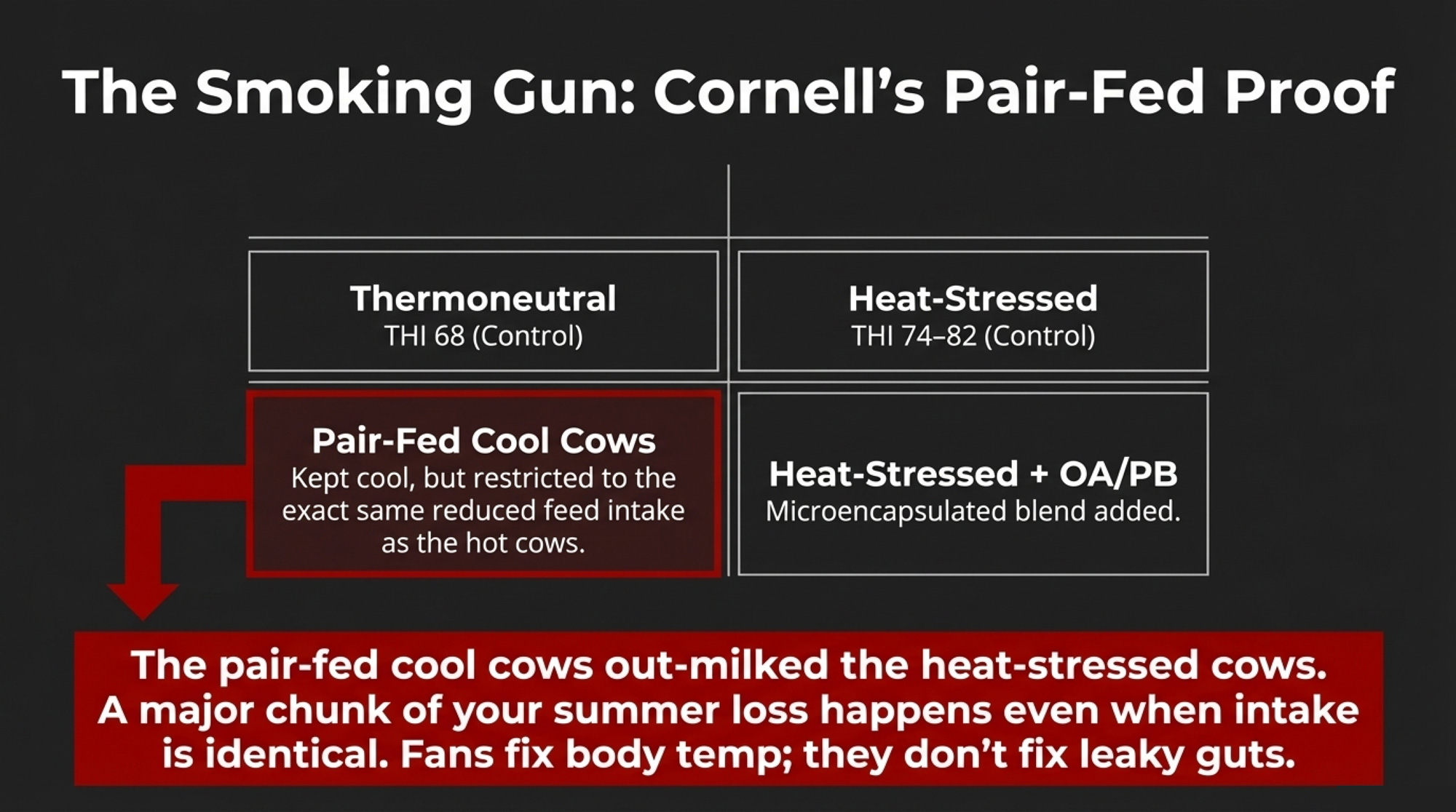
McFadden’s team ran four treatments:

  • Thermoneutral controls at THI 68.
  • Heat‑stressed controls cycling between THI 74 and 82.
  • A pair‑fed group kept cool but was restricted to the same intake as the hot cows.
  • Heat‑stressed cows on a microencapsulated organic acid/pure botanical (OA/PB) blend.

That pair‑fed pen is the smoking gun. Same reduced intake as the hot group, but kept cool — and they still out‑milked the heat‑stressed cows. In other words, a chunk of your summer loss is happening independent of dry matter intake. Fans and sprinklers fix body temperature. They don’t fix a leaky gut.
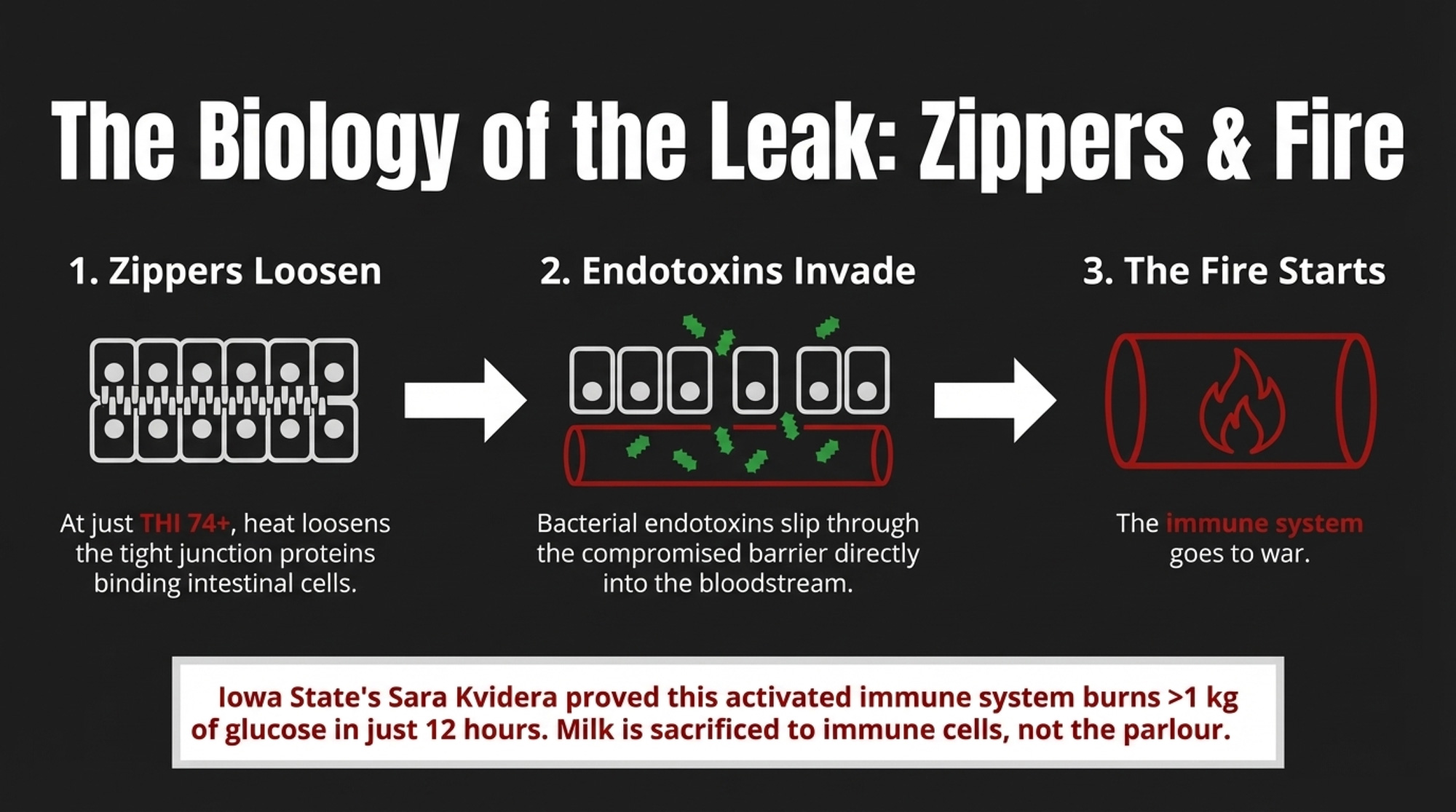
What’s actually happening? Heat stress loosens the tight junction proteins that zip intestinal cells together. Bacterial endotoxins slip through, hit immune receptors, and your cow’s immune system goes to war. Iowa State’s Sara Kvidera showed an acutely activated immune system in a lactating Holstein that burns more than 1 kg of glucose in just 12 hours. That’s several kilograms of milk sacrificed to immune cells instead of the parlour.

Cornell’s team summed it up: heat stress reduces production through “important mechanisms … independent of changes in DMI.” That’s the part your heat abatement system can’t touch.

What Cornell Actually Fed — And Why the Coating Matters
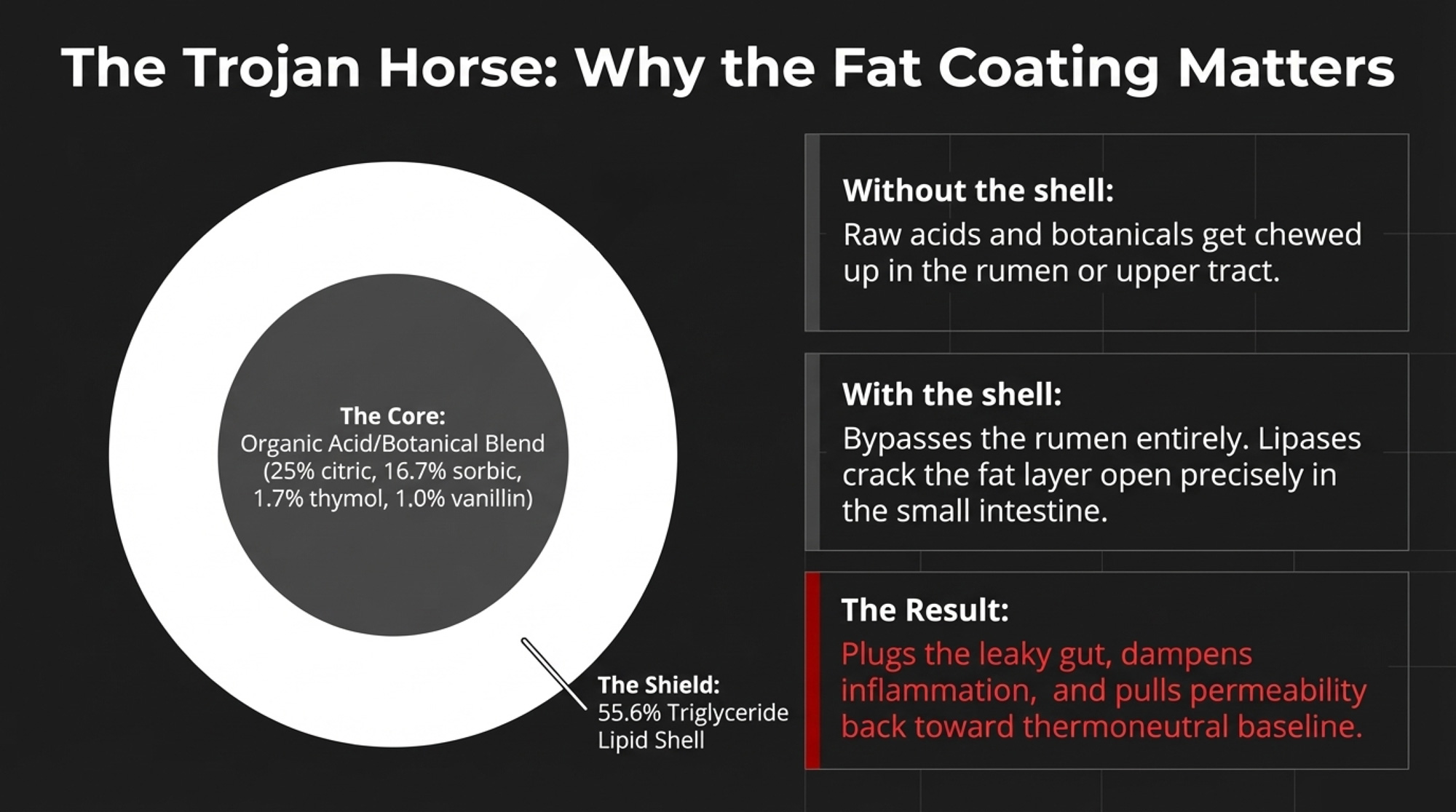
This wasn’t a random “gut health” sprinkle. On a dry‑matter basis, the OA/PB blend in the Cornell trial was:

  • 25.0% citric acid
  • 16.7% sorbic acid
  • 1.7% thymol
  • 1.0% vanillin
  • 55.6% triglyceride (the lipid shell)

The cows got it twice daily as a top‑dress; controls got the same amount of plain triglyceride carrier, so every pen was handled the same way. That triglyceride coating is the whole play. In vitro work showed minimal release in rumen‑like fluid and targeted release under intestinal conditions once lipases crack the fat layer open. Without that fat shell, most organic acids and botanicals get chewed up or absorbed upstream before they ever see the small intestine.

In the chamber, the coated OA/PB did three big things for the heat‑stressed group:

  • Pulled total‑tract gut permeability back toward thermoneutral values.
  • Lowered systemic inflammation markers like LBP and serum amyloid A.
  • Improved energy‑corrected milk and DMI vs. unsupplemented heat‑stressed controls.

Mechanistically, once the shell opens in the gut, the organic acids and botanicals act at three levels: they create pores in undesirable bacterial membranes, dampen mucosal inflammation, and upregulate tight junction proteins to help reseal the barrier.

But it’s not magic. A follow‑up calf study from the same group (Fontoura et al. 2023, JDS 106:2904–2918) showed the OA/PB improved gut‑integrity markers under heat stress but was not able to improve growth performance in heat‑stressed calves — the authors concluded reductions in DMI alone accounted for production losses in that class of stock. The strongest evidence of performance lies in heat‑stressed lactating cows, gut‑barrier endpoints, and milk energy. Not every animal responds the same way.

Disclosure: author E. Grilli is affiliated with Vetagro, the manufacturer of the OA/PB product used in the trial. The work is still a peer‑reviewed Journal of Dairy Science paper, with full affiliation spelled out — standard practice for industry/university collaborations.

Can Gut Integrity Really Pay at $18.95 Milk?

Cornell fed 75 mg/kg of body weight — that’s about 49 g/cow/day on a 650 kg Holstein. Real inclusion, not fairy dust.
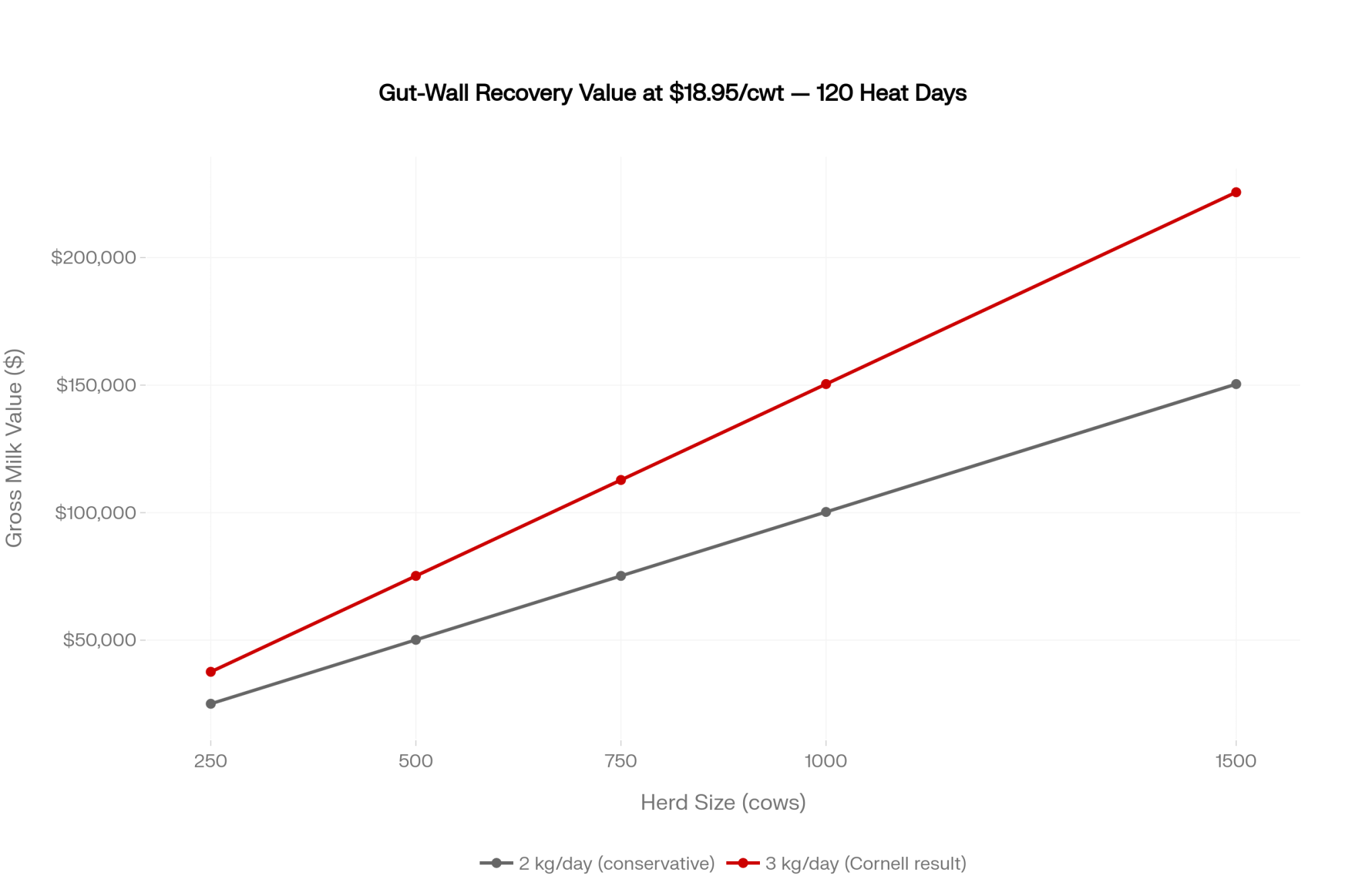
The USDA’s February 2026 outlook puts the all‑milk price at $18.95/cwt, down from a revised $21.17/cwt in 2025. So any gut‑integrity program has to pay in a margin year, not just when milk is rich.

Here’s the barn math that matters.
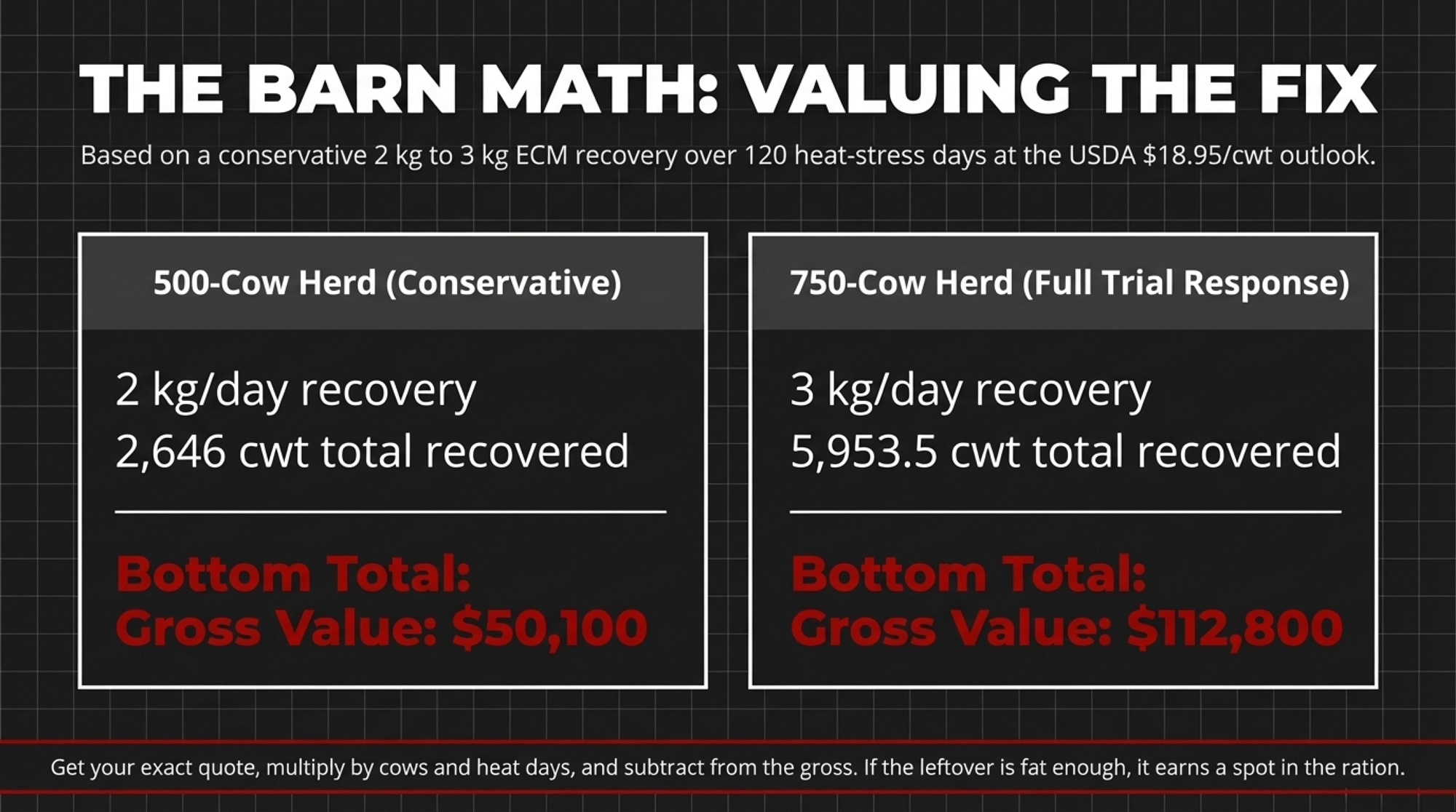
500‑Cow Herd — Conservative (2 kg/cow/day recovery)

Assume you’ll only claw back 2 kg ECM per cow per day instead of Cornell’s ~3:

  • 2 kg × 500 cows × 120 heat‑stress days = 120,000 kg
  • 120,000 kg × 2.205 lb/kg = 264,600 lb = 2,646 cwt
  • Gross milk value: 2,646 cwt × $18.95 ≈ $50,100

750‑Cow Herd — Full Cornell Response (3 kg/cow/day)

If you assume the full ~3 kg ECM/cow/day that Cornell reported under chamber conditions:

  • 3 kg × 750 cows × 120 days = 270,000 kg
  • 270,000 kg × 2.205 = 595,350 lb = 5,953.5 cwt
  • Gross milk value: 5,953.5 cwt × $18.95 ≈ $112,800
Herd SizeRecovery Scenariokg ECM Recoveredlbs RecoveredcwtGross Milk ValueNotes
250 cows2 kg/day (conservative)60,000 kg132,300 lb1,323 cwt$25,071Get a real product quote to net
250 cows3 kg/day (Cornell)90,000 kg198,450 lb1,984 cwt$37,597Chamber result; on-farm ~70% likely
500 cows2 kg/day (conservative)120,000 kg264,600 lb2,646 cwt$50,142Article baseline scenario
500 cows3 kg/day (Cornell)180,000 kg396,900 lb3,969 cwt$75,213
750 cows2 kg/day (conservative)180,000 kg396,900 lb3,969 cwt$75,213
750 cows3 kg/day (Cornell)270,000 kg595,350 lb5,954 cwt$112,817Article full-response scenario
1,000 cows2 kg/day (conservative)240,000 kg529,200 lb5,292 cwt$100,283
1,000 cows3 kg/day (Cornell)360,000 kg793,800 lb7,938 cwt$150,425

Those are gross numbers — the milk value recovered before you subtract product cost. Pricing for microencapsulated OA/PB blends varies by supplier, dose, and contract. Get your real quote, multiply it by your cows and your heat‑stress days, and subtract it from the gross. If the leftover is fat enough, the product earns a season in the ration. If it’s thin or negative, it doesn’t.

One caveat: if your barn rarely sees THI above 72, or your cooling system is genuinely keeping rectal temperatures and respirations tight, gut permeability may not be your biggest leak. This lever matters most for herds that sit in the mid‑70s THI or higher for weeks at a time.

For Canadian readers, the Canadian Dairy Commission approved a 2.3255% farmgate increase effective February 1, 2026, under its pricing formula for butterfat used in dairy products. Different currency, same math — every kilogram you leak in July still lands on your milk cheque.

The Ghost of Heat Stress Past: What It Does to Daughters and Granddaughters

The milk dip hurts in August. The real damage hits you in 2028.
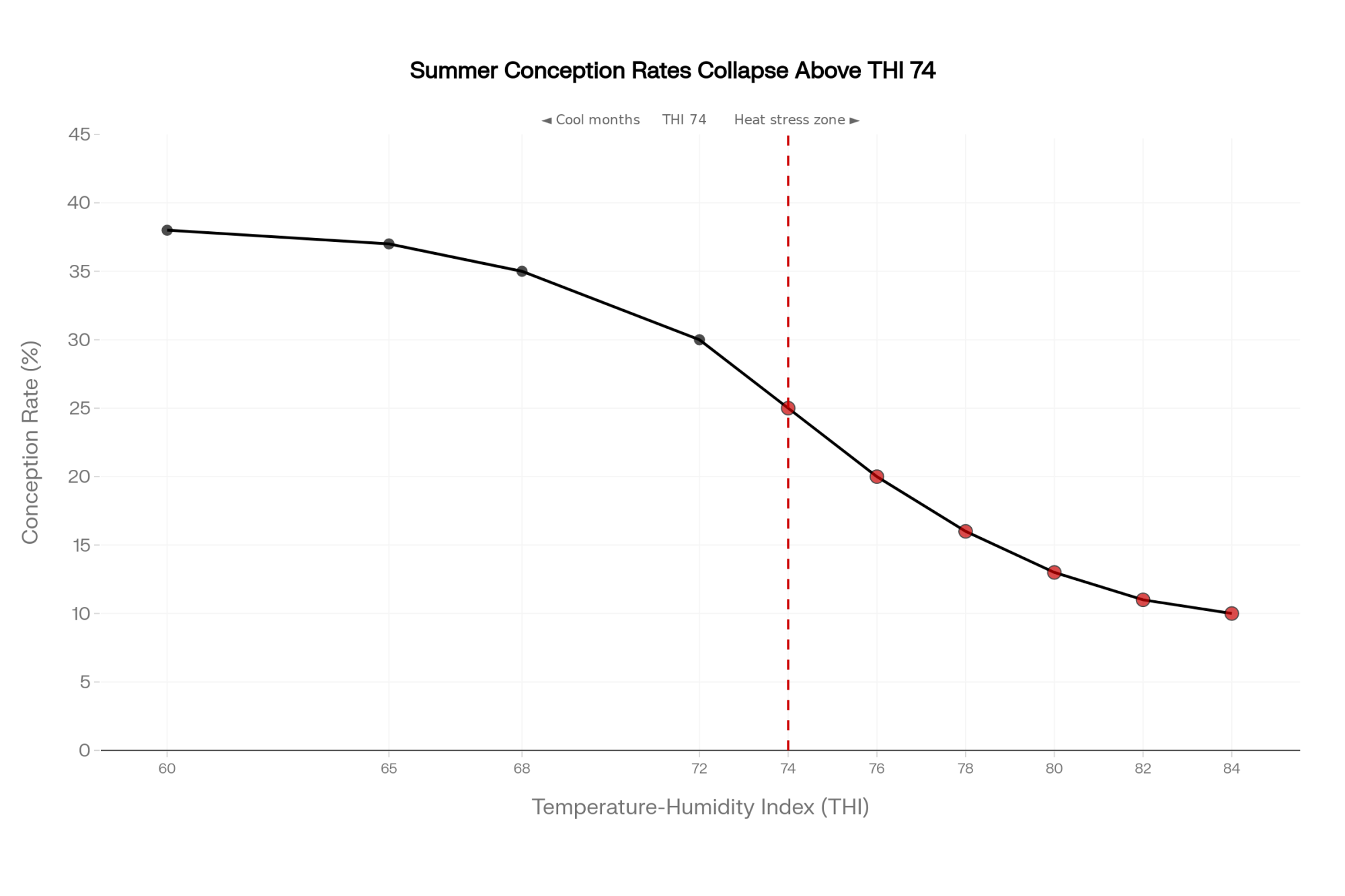
Heat‑stressed breeding seasons are a fertility tax. Peer‑reviewed field work and reviews show summer pregnancy rates routinely dropping from roughly 32–40% in cooler months down to 10–20% in severe heat, depending on region and THI. That’s not just semen baking in a hot AI kit. It’s inflammation, oxidative stress, and early embryos that never stand a chance. If you want to dig deeper into how those THI lines move conception rates, we’ve walked through it before.
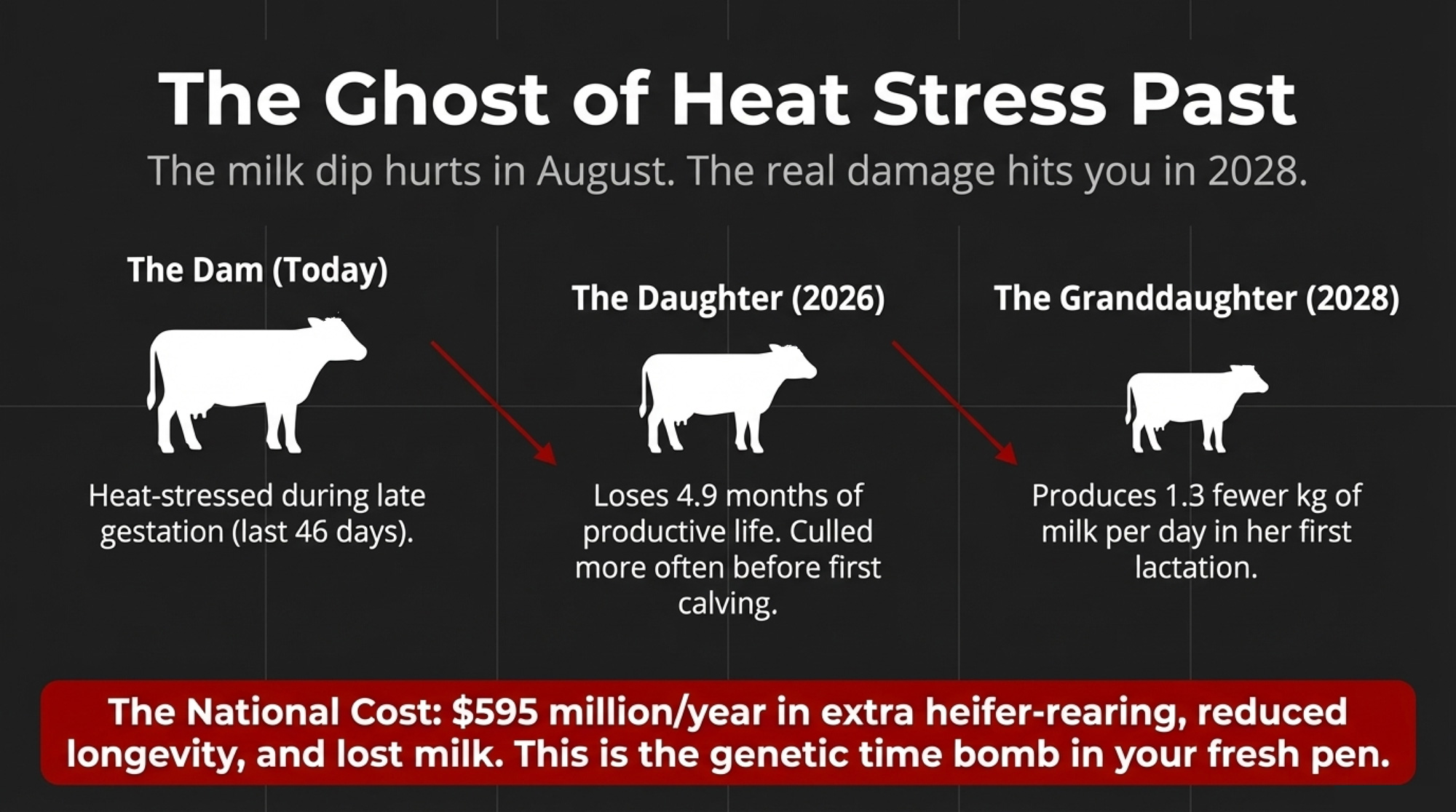
The longer invoice comes from the dry pen. Laporta et al. (2020, JDS 103:7555–7568) followed daughters of heat‑stressed dry cows (n=198) against daughters of cooled dry cows (n=196) over 10 years of Florida Holstein data — dams cooled or not cooled during the last 46 days of gestation. A hot, dry cow today is a cull candidate’s mother.

Daughters of heat‑stressed dams:

  • Lost 4.9 months of productive life.
  • Lost 11.7 months of total lifespan.
  • Were culled more often before first calving.

The same paper reported granddaughters of heat‑stressed dams produced 1.3 fewer kg of milk per day in their first lactation than granddaughters of cooled dams. A University of Florida IFAS factsheet estimated that, on a national basis, late‑gestation heat stress in dairy cows costs about $595 million/year once extra heifer‑rearing, reduced longevity, and lost milk yield are added together.

If you’ve ever wondered whether there’s a genetic time bomb hiding in your fresh pen, this is one of the fuses.

You don’t see that bill on your August statement. You see it in a replacement pipeline that’s thinner and more expensive than it should’ve been.

If a gut‑integrity program can take even part of the inflammatory load off those cows — and Cornell’s permeability and inflammation data say it can, at least in mid‑lactation Holsteins — then it belongs in the same planning meeting as shade, soakers, and fan upgrades.

Not Every “Gut Health” Product Is Aimed at the Same Target

Here’s where this gets real in the nutrition office.

A lot of products sold under the “gut health” banner actually have their best published data in the rumen — pH stabilization, fibre digestibility, and components. That work has value. It’s just a different job than sealing an intestinal wall under heat stress.

The yeast and buffer literature is overwhelmingly rumen‑centric. Many of those companies are careful about what they claim — they market for rumen performance, and that’s what their trials measure. Loose organic acids mostly get fermented or absorbed in the upper tract before they ever see the small intestine.

Right now, the peer‑reviewed trials that specifically measure gut permeability, tight‑junction expression, and systemic inflammatory markers in heat‑stressed lactating Holsteins are centred on microencapsulated OA/PB blends like Cornell’s. Comparable published data for yeast, buffers, or unprotected acids at those exact endpoints aren’t readily available in the literature.
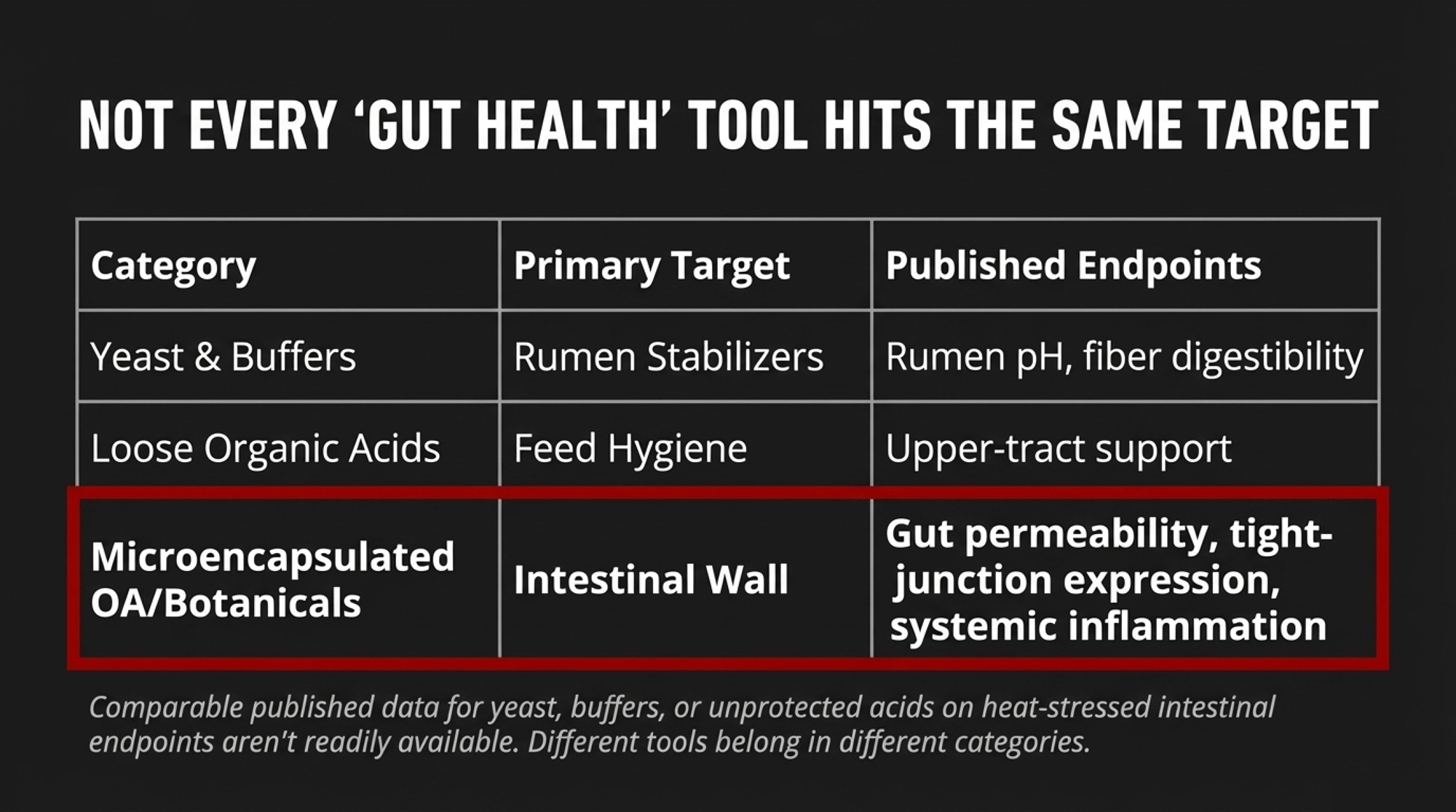
That doesn’t make what you’re already feeding bad. It just means different tools belong in different categories:

Product CategoryPrimary Site of ActionRumen-Bypass EvidenceGut Permeability TrialsHeat-Stress (THI ≥74) DataRecommended Use Window
Yeasts & BuffersRumen✗ Not required✗ Limited/none in peer review✗ Not testedYear-round rumen stabilization
Loose Organic AcidsUpper GI tract✗ Minimal✗ Absorbed upstream✗ Not tested at these endpointsFeed hygiene; silage preservation
Unprotected BotanicalsRumen / upper GI✗ Variable✗ Inconsistent✗ Data gapsTMR palatability; mild microbial control
Microencapsulated OA/PBSmall intestine✅ In vitro lipase-release data✅ Tight-junction & LBP data (Fontoura 2022)✅ Lactating Holsteins, THI 74–82Heat stress windows; high-inflammation periods
General ProbioticsHindgut / rumen✗ Species-dependent✗ Minimal heat-stress data✗ Not consistently testedTransition; post-antibiotic recovery
  • Yeast and buffers → rumen stabilizers.
  • Loose organic acids → feed hygiene and upper‑tract support.
  • Microencapsulated OA/botanicals → intestinal‑wall tools for heat stress and other high‑inflammation windows.

🔍 The “Gut Health” Buyer’s Filter

Before you write the next cheque, run every product through three questions:

1. BYPASS — Is there real rumen‑bypass data showing limited release in rumen fluid and targeted release in the intestine? Not a brochure line — actual in vitro or in vivo work.

2. ENDPOINTS — Do the trials measure gut permeability, tight‑junction proteins, or inflammatory markers under heat stress? Or just milk and DMI under thermoneutral conditions?

3. CONDITIONS — Were the key trials run in lactating Holsteins at THI in the mid‑70s or higher? Or in calves, dry cows, or another species entirely?

If your rep can’t clear all three bars, it doesn’t mean the product is junk — it means it wasn’t designed or tested for this specific job. Your expectations (and your spend) should match what the evidence actually supports.

What Would This Look Like on Your Farm?

Say you’re running 650 Holsteins in a THI‑75+ region and your high pen reliably drops 2.5–3.0 kg/cow/day every summer once night‑time THI stays over 70 for more than a week. Cooling is maxed. You can’t justify more concrete and steel. Here’s one way to put the Cornell data to work instead of just reading about it.

Pick a 240‑cow high pen with solid records and leave a matching pen on the base ration. Layer in a microencapsulated OA/PB product at ~49 g/cow/day, delivered as a top‑dress with the PM feeding to match Cornell’s dose. Start two weeks before THI historically climbs, and run the program for three straight calendar months. Track daily ECM, pen‑level DMI, and pregnancy rate on breedings that happen during the heat window.

What should you be looking for? By weeks four to six of real heat, you want to see at least 1.5–2.0 kg ECM/cow/day better than your historic pattern, and summer fertility at least holding where it used to tank. If those numbers aren’t showing up at your product cost and your barn conditions, this lever doesn’t earn its spot. A 3 kg response like Cornell’s is a chamber result. On‑farm, 1.5–2.0 kg is a realistic bar to clear.

Every herd’s noise floor is different. This isn’t academic hand‑waving — it’s how you separate signal from marketing.

Where the Signal Gets Buried
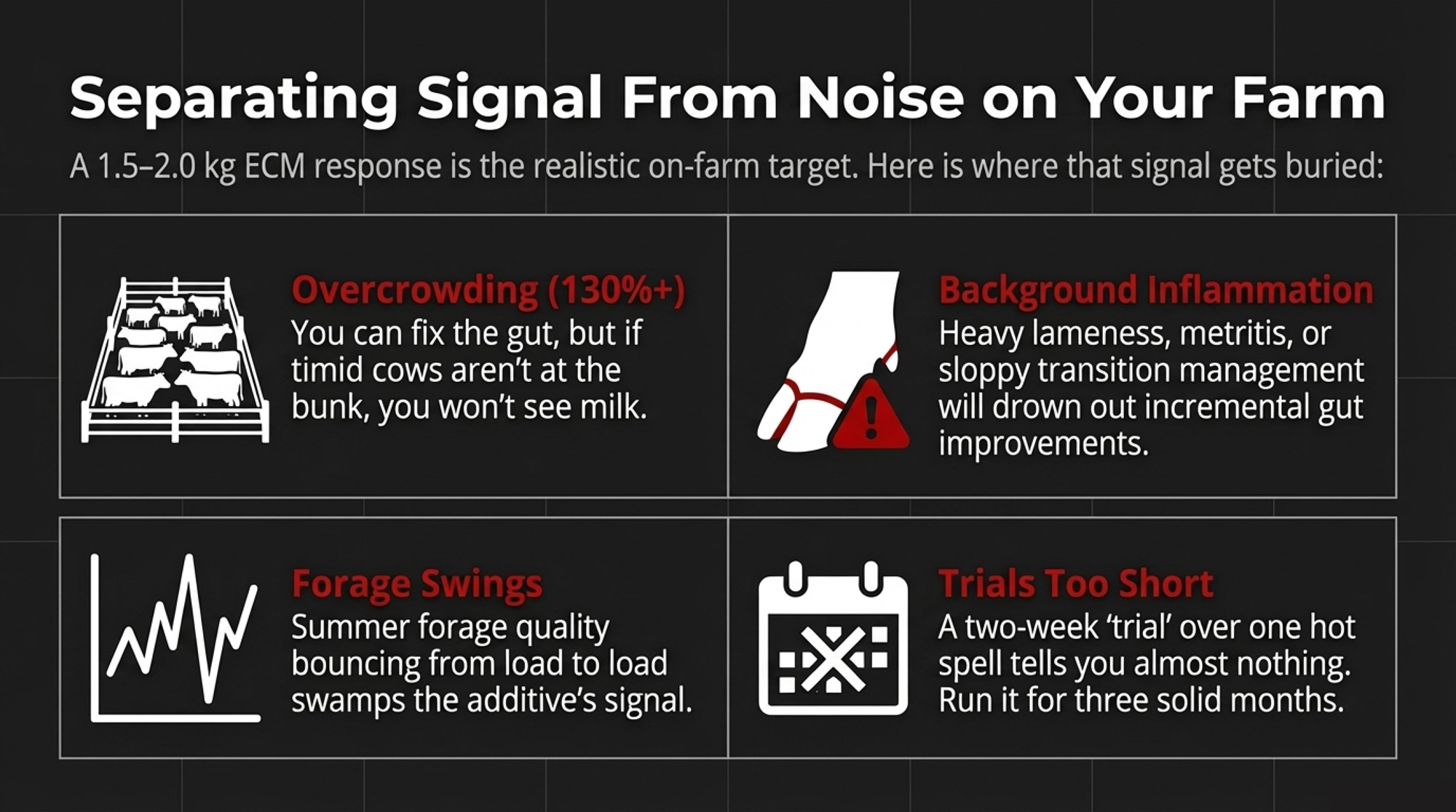
Your barn isn’t Cornell. There are four places where a genuine 1–2 kg response can disappear:

  • Overcrowding at 130%+: Timid cows never see the bunk long enough. You can fix their gut, but if they’re not eating, you won’t see milk.
  • Background inflammation: Lameness, mastitis, metritis, or sloppy transition management already soaking the system in cytokines will drown out incremental gut improvements.
  • Forage swings: Summer forage quality bouncing from load to load can swamp any additive’s signal.
  • Trial too short: Cornell measured gut permeability at day 3 and followed cows through the full heat‑stress exposure. A two‑week “trial” over one hot spell tells you almost nothing.

If your numbers look flat, it doesn’t automatically mean the product is snake oil. It might mean your barn’s noise floor is too high to hear the signal.

What This Means for Your Operation

  • If your summer milk curve reliably drops 2–3 kg/cow/day once THI sits in the 70s, and your only tools so far are fans and sprinklers, you’ve got a quantified gut‑wall lever you haven’t tested. Cornell gives you both a dose and endpoints to benchmark against.
  • In the next 30 days, pull your last two summers of weekly bulk-tank or pen‑level milk data and overlay them against local THI. How many kg/cow/day did you actually lose, and for how many weeks? That’s the size of the hole any gut program has to fill on your farm.
  • Sit down with your nutritionist and ask: “Which products in this ration have peer‑reviewed data on gut permeability in heat‑stressed lactating Holsteins?” If the answer is “none,” there’s a gap between the tag’s gut‑health language and what the research has actually measured.
  • Compare your June–August pregnancy rates with January–March for the last two years. If you’re consistently 10–20 points lower in summer, that’s not bad luck. That’s heat‑driven inflammation and oxidative stress showing up in your repro numbers.
  • Walk your dry cow pens when THI is ugly. Laporta’s data — 4.9 months off productive life, 11.7 months off total lifespan, and roughly $595 million/year in multi‑generation losses across the US — deserves to be in the same budget meeting as shade structures and close‑up soakers.
  • When a rep pitches gut health, run their product through the bypass–endpoint–condition filter before you talk price. If the trials don’t deal with gut permeability and inflammation in heat‑stressed Holsteins, it’s not a gut‑wall tool — and shouldn’t be priced like one.
Key Takeaways

  • If THI routinely sits in the 70s and your summer drop is 2–3 kg ECM/cow/day, don’t stop at cooling. Fans fix body temperature. The Cornell work shows gut permeability is a separate problem with its own price tag.
  • At $18.95/cwt, a 2 kg ECM/cow/day recovery on 500 cows over 120 heat‑stress days is worth roughly $50,100 in gross milk value. Your net depends on product cost and the real response on your farm — not on anyone’s slide deck.
  • Products with rumen‑bypass data, gut‑barrier endpoints, and heat‑stress trials in lactating Holsteins are in a different evidence class from general “gut health” additives whose data stop at rumen pH or thermoneutrality in milk. Both can be useful — just not for the same jobs.
  • The consequences of heat stress don’t end when the weather breaks. They walk through your calving interval, your replacement pipeline, and your cull list for years, and the research team behind Laporta’s work has already put a national dollar figure on it.

The Bottom Line

Your bulk tank already knows how much heat stress is costing you. The real question is whether this is the year you keep calling it “just heat” — or the year you finally find out how much of that 3 kg leak is coming through the gut wall.

Complete references and supporting documentation are available upon request by contacting the editorial team at editor@thebullvine.com.

Learn More

The Sunday Read Dairy Professionals Don’t Skip.

Every week, thousands of producers, breeders, and industry insiders open Bullvine Weekly for genetics insights, market shifts, and profit strategies they won’t find anywhere else. One email. Five minutes. Smarter decisions all week.
NewsSubscribe
First
Last
Consent

The $1,200 Heifer Paradox: Why Your Healthiest Cows May Produce Your Worst Replacements

Healthy cows ≠ are the best replacements. Discover the $1,200 paradox reshaping heifer selection with heat-stressed dams and genomic breakthroughs.

EXECUTIVE SUMMARY: Record prices for dairy-beef calves demand more brilliant replacement heifer strategies. New research reveals daughters of first-lactation cows and heat-stressed dams outperform traditional picks, challenging conventional culling wisdom. With genomic tools and updated genetic evaluations, producers must balance beef-on-dairy profits against long-term herd potential. Key factors like maternal age, dry-period cooling, and breed-specific responses now dictate ROI, as heat stress costs U.S. dairies $245M annually. This analysis provides actionable tools—including an ROI calculator and audit checklist—to optimize replacement programs amid 2025’s genetic base changes.

KEY TAKEAWAYS:

  • Health Paradox: Offspring from dams with pregnancy health challenges show 10% greater disease resilience than those from “healthy” cows
  • Multi-Gen Impact: Heat-stressed dry cows reduce milk yield by 5 lbs/day across three generations of offspring
  • ROI Shift: First-lactation dam focus + genomic testing can cut replacement costs by $1.87/cwt
  • 2025 Essentials: New CDCB genetic weights demand updated selection criteria to avoid $147K losses in 500-cow herds
  • Action Now: Implement the 5-minute audit checklist to align with heat stress maps and beef-on-dairy market shifts

The current dairy landscape presents producers with both challenges and opportunities regarding replacement heifer decisions. With record prices for dairy-beef crossbred calves and rising costs for quality replacements, today’s dairy farmers need to be more strategic than ever about which heifers they develop and which they market. The following analysis examines the latest research and expert recommendations for making critical investment decisions that directly impact herd genetics, production efficiency, and your bottom line.

The Economics of Replacement Decisions

The dairy industry is experiencing a notable shift in heifer management strategies, primarily driven by economic forces. Record prices for dairy-beef crossbred calves have made using beef genetics on lower-ranking dairy females increasingly attractive, creating a valuable cash flow opportunity. This trend has gained significant momentum across the country.

This market reality requires producers to think more carefully about which females will become the mothers of the next generation of replacement heifers. The decision is no longer just about producing enough replacements but ensuring they are genetically superior and worth the investment to raise them to first lactation.

The Financial Stakes

The financial aspects of replacement decisions extend beyond simply meeting inventory needs. With the exceptional market value of steers and heifers in the current climate, dairy producers must carefully evaluate the economic impact of their replacement strategies. Each heifer retained for breeding represents the direct costs of raising her to production age and the opportunity cost of not selling her into a favorable market.

According to a 2024 study by CanFax, the cost of raising replacement heifers varies significantly across farms. Low-cost producers spend an average of $866 per heifer, while high-cost producers invest up to $1,028. This difference in development costs can lead to dramatically different payback periods. Low-cost producers may see their investment recovered in as little as 5 years, while high-cost producers might struggle to recoup their investment within the heifer’s productive lifespan.

Any delay past 24 months in age at first calving will add an additional $2.50 or more per day to the cost of raising replacements and require more heifers to meet the herd’s replacement needs. This economic reality has pushed producers to become more disciplined in their selection process, focusing on identifying and developing only those heifers that truly represent genetic advancement for their herds.

The Science-Based Selection Process

Creating an effective replacement strategy begins with a systematic evaluation of potential dams and the resulting heifer calves. This multifaceted approach combines genetic assessment with critical health and developmental factors.

Genetic Ranking as the Foundation

The cornerstone of any successful replacement program is a comprehensive genetic ranking of the herd. This crucial step identifies which cows should become the mothers of future replacements. Modern dairy producers have access to sophisticated genomic tools that can predict with increasing accuracy which females will contribute the most valuable genetic traits to the next generation.

A 2025 study in New Zealand demonstrated the power of genomic selection (GS) in identifying superior cows. Implementing GS and using sex-selected semen on top-ranked cows led to significant genetic gains. The Balanced Performance Index (BPI) of heifers increased from 136 to 184 between 2021 and 2023, corresponding to a financial gain of NZD 17.53 per animal per year. The study projects that in 2026, the BPI could reach 384, resulting in a potential economic gain of NZD 72.96 per animal.

The benefits of genomic selection for replacement heifers are substantial, especially when more heifers are available than needed. Research shows that genomic selection is beneficial in most scenarios for current genotyping prices, provided at least two more heifers are available than needed.

Critical Health Factors Beyond Genetics

While genetics provides the foundation, health factors significantly impact a heifer’s development and future productivity. Even heifers with excellent genetic potential will be limited if they don’t receive adequate and timely colostrum. This first nutritional milestone establishes immune function that will influence health throughout the animal’s life.

Respiratory health is another critical factor in selection decisions. Heifers with recurring respiratory problems typically show compromised performance throughout their lives, making them prime candidates for strategic marketing rather than retention as replacements.

Research-Backed Selection Insights

Recent research studies provide valuable guidance for making more informed replacement decisions. These findings offer evidence-based criteria that go beyond traditional selection approaches.

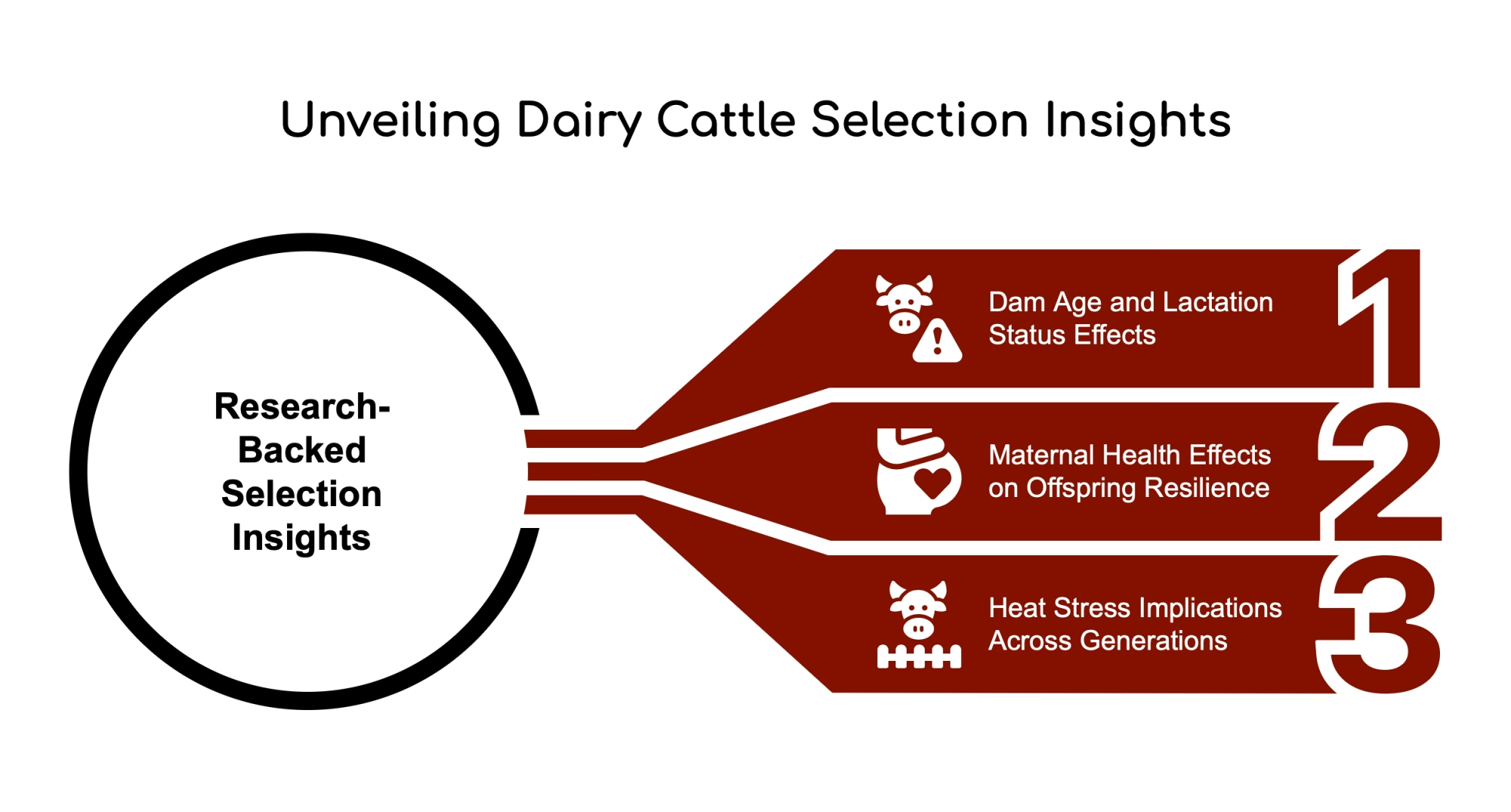
Dam Age and Lactation Status Effects

A 2021 New Zealand study revealed that daughters of older dams (at least 9 years old) produced less milk than those from younger cows. This finding aligns with the understanding that genetic progress continues generation by generation, making younger animals genetically superior to older ones in most herds.

Perhaps more surprisingly, a 2020 University of Florida study found significant advantages for daughters of first-lactation (primiparous) cows. These advantages included lower death loss rates during the heifer rearing period, earlier pregnancy, reduced pregnancy loss (about 5% less), earlier calving, and lower incidence of clinical diseases during first lactation.

Maternal Health Effects on Offspring Resilience

The same University of Florida study produced a counterintuitive finding regarding maternal health during pregnancy. Daughters of cows that experienced clinical diseases during pregnancy showed greater resilience to health challenges as heifers and first-lactation cows. These offspring experienced a lower incidence of clinical disease than daughters of healthy cows, with researchers theorizing that altered uterine conditions during pregnancy may have enhanced these animals’ ability to withstand health challenges later in life.

This research suggests that replacements from first-lactation cows and from older cows that experienced health challenges during pregnancy may be preferable to those from healthy, older cows.

Heat Stress Implications Across Generations

Heat stress during the dry period has significant and lasting consequences across generations. Research from the University of Florida revealed that daughters of heat-stressed dry cows produced approximately 5 pounds less milk per day, on average, during their first three lactations compared to heifers from properly cooled dams. Even more remarkably, this production deficit extended to granddaughters of heat-stressed cows.

This trans-generational effect suggests that heifers born to cows that experienced significant heat stress during their dry periods should be considered candidates for culling when inventory adjustments are needed. The long-term production impact makes these animals less valuable as replacements despite what might otherwise be favorable genetics.

A 2025 study from the University of Illinois Urbana-Champaign confirms that heat stress leads to a 1% annual decline in milk yield across U.S. dairy farms. This translates to approximately 1.4 billion pounds of milk lost over five years, amounting to roughly $245 million in revenue losses. Smaller farms with fewer than 100 cows experience the most significant impact, losing an average of 1.6% of their annual milk yield.

Modern Approaches to Heifer Development

Beyond selection criteria, how heifers are developed significantly impacts their future productivity and the return on investment they provide.

Targeted Growth and Body Condition Management

Research on heifer development emphasizes targeting optimal growth rates. Studies have demonstrated that increasing nutrient intake in pre-weaned calves increases lactation milk yield. Calves fed for more significant pre-weaned average daily gain (ADG) were twice as likely to have greater milk yield in the first lactation. For every one pound of pre-weaning ADG, the first lactation cow milk yield increased by 1,550 pounds.

First, lactation cows who weighed 94% of the herd’s mature body weight at 30 days in milk (DIM) produced 11 to 12 pounds more milk per cow per day than lighter first lactation cows weighing 75% of the herd’s mature body weight. This is particularly significant considering that first-lactation cows account for 38-40% of the milking herd, and many cows complete three or fewer lactations.

Age Considerations in Breeding Decisions

Age remains a significant factor in breeding success. Older heifers typically reach puberty earlier, increasing their likelihood of experiencing multiple estrus cycles before the breeding season begins. These additional cycles improve first-service conception rates and lifetime productivity.

Numerous studies recommend the optimal age at first calving (AFC) is 22-25 months. When sorting through replacement candidates, age should be considered alongside genetic merit and health history as part of a comprehensive evaluation.

Strategic Implementation for Today’s Dairy Operations

Implementing these research findings requires a systematic approach tailored to individual farm goals and market conditions.

Setting Clear Herd Replacement Targets

The foundation of effective replacement management is establishing clear targets for the number of new animals needed to maintain an ideal herd inventory. This calculation must account for voluntary and involuntary culling rates while considering genetic advancement goals. With these targets in mind, producers can more strategically allocate beef and dairy genetics across the herd.

Balancing Beef-on-Dairy Opportunities

The beef-on-dairy trend continues to gain momentum, with producers becoming increasingly sophisticated in their approach. This thoughtfulness includes selecting beef sires based on specific market demands and regional expectations.

The financial benefits of beef-on-dairy breeding have been significant, with producers generally satisfied with the premiums received for crossbred calves. However, there’s growing recognition that maintaining these premiums requires attention to beef industry expectations regarding carcass quality and consistency.

Aligning with 2025 Genetic Evaluation Changes

The April 2025 genetic base change will significantly impact producers’ evaluation of potential replacements. According to the Council on Dairy Cattle Breeding (CDCB), the Holstein base will roll back 51 pounds for butterfat and 36 pounds for protein. This represents a dramatic acceleration compared to earlier periods—in 2015, the Holstein base rolled back just 17 pounds for butterfat and 12 pounds for protein.

These changes reflect current market conditions and production economics. Producers who maintain rigid selection thresholds without adapting to these changes risk significant economic losses—potentially up to $147,000 over five years for a 500-cow herd. Additionally, excessive inbreeding due to narrow selection criteria costs approximately $23 per cow yearly for each 1% increase in relatedness.

Breed-Specific Considerations

Research from the University of Wisconsin demonstrates that Holstein and Jersey breeds respond differently to maternal factors. While heat stress reduces milk production in both breeds, Jerseys show approximately 15% less production loss than Holsteins under similar conditions. However, Jersey offspring from first-lactation dams show a more pronounced advantage (7% higher lifetime production) than Holstein counterparts (4% advantage).

A 2024 study comparing Holstein and Jersey breeds found that Jersey cows produced milk with significantly higher fat content (23.85% higher), protein content (26.03% higher), and casein content (26.32% higher) compared to Holstein cows. However, Holstein cows produced a higher volume of milk, with an average daily production of 34.52 kg compared to 24.78 kilograms of Jersey cows.

Real-World Success: Willow Creek Dairy

Wisconsin’s Willow Creek Dairy implemented these research-based selection strategies in 2021, reducing its replacement inventory by 22% while maintaining production levels. Owner Mark Jensen reports: “By focusing on daughters from first-lactation cows and implementing aggressive heat abatement for our dry cows, we’ve seen a $1.87 per hundredweight improvement in our production costs. The genomic testing investment pays for itself many times over.”

Challenging Convention: The Health Paradox

While conventional wisdom suggests that healthy dams produce the best replacements, recent research challenges this assumption. Dr. Sarah Thompson, a leading dairy geneticist, argues, “Our studies show that offspring from cows that experienced health challenges during pregnancy often display enhanced resilience to various stressors throughout their lives. This ‘health paradox’ forces us to reconsider traditional culling criteria.”

However, a prominent veterinarian, Dr. John Anderson, cautions, “While the data on offspring resilience is intriguing, we must balance this against the dam’s immediate welfare and production concerns. Healthy cows remain crucial for overall herd performance and longevity.”

The Bottom Line

The economics of replacement heifer investment have never been more complex or consequential for dairy operations. Today’s market realities—including record prices for replacements and dairy-beef crossbreds—demand a more strategic and data-driven approach to heifer selection and development.

While genetic ranking remains the foundation of replacement decisions, research increasingly demonstrates the importance of factors beyond genetics. Maternal age, lactation number, health during pregnancy, and environmental conditions like heat stress significantly impact a heifer’s future productivity and value as a replacement.

For dairy producers navigating these decisions, the goal should be to create a balanced strategy that maintains genetic progress while capitalizing on alternative market opportunities. By implementing the selection criteria and management practices outlined in this analysis, producers can ensure they’re investing in replacement heifers that genuinely represent value for their operations, both genetically and economically.

Why This Matters For Your Operation

With first-lactation cows representing nearly 40% of your milking herd and many animals completing three or fewer lactations, the quality of your replacement program directly impacts half your herd’s productive life. The decisions you make today about which heifers to develop will shape your operation’s genetic progress, production efficiency, and profitability for years to come.

As we approach the 2025 genetic base change, now is the time to audit your replacement selection criteria and adapt your strategies to align with changing economic realities and genetic evaluations. The most successful operations will be those that balance genetic advancement with market opportunities, using evidence-based selection criteria to identify valuable replacements while capitalizing on strong markets for animals that don’t meet increasingly stringent selection standards.

5-Minute Replacement Program Audit Checklist

To help you quickly assess and improve your current replacement program, use this 5-minute audit checklist:

  1. Genetic Evaluation:
    □ Are you using genomic testing to identify top genetic merit heifers?
    □ Have you updated your selection criteria to align with the 2025 genetic base changes?
  2. Health and Development:
    □ Do you have protocols to ensure adequate colostrum intake for all calves?
    □ Are you tracking and addressing recurring respiratory issues in your heifers?
  3. Growth Targets:
    □ Are your heifers reaching 94% of mature body weight by 30 days in milk?
    □ Is your average age at first calving between 22-25 months?
  4. Heat Stress Mitigation:
    □ Do you have effective cooling systems in place for dry cows?
    □ Are you considering the heat stress history of dams when selecting replacements?
  5. Economic Analysis:
     □ Have you calculated your actual cost of raising replacements recently?
    □ Are you regularly evaluating the opportunity cost of retaining vs. selling heifers?

By regularly reviewing and updating your replacement program using this checklist, you can ensure that your strategy remains aligned with the dairy industry’s latest research and economic realities.


Download “The Ultimate Dairy Breeders Guide to Beef on Dairy Integration” Now!

Are you eager to discover the benefits of integrating beef genetics into your dairy herd? “The Ultimate Dairy Breeders Guide to Beef on Dairy Integration” is your key to enhancing productivity and profitability.  This guide is explicitly designed for progressive dairy breeders, from choosing the best beef breeds for dairy integration to advanced genetic selection tips. Get practical management practices to elevate your breeding program.  Understand the use of proven beef sires, from selection to offspring performance. Gain actionable insights through expert advice and real-world case studies. Learn about marketing, financial planning, and market assessment to maximize profitability.  Dive into the world of beef-on-dairy integration. Leverage the latest genetic tools and technologies to enhance your livestock quality. By the end of this guide, you’ll make informed decisions, boost farm efficiency, and effectively diversify your business.  Embark on this journey with us and unlock the full potential of your dairy herd with beef-on-dairy integration. Get Started!

Read more:

Join the Revolution!

Join over 30,000 successful dairy professionals who rely on Bullvine Daily for their competitive edge. Delivered directly to your inbox each week, our exclusive industry insights help you make smarter decisions while saving precious hours every week. Never miss critical updates on milk production trends, breakthrough technologies, and profit-boosting strategies that top producers are already implementing. Subscribe now to transform your dairy operation’s efficiency and profitability—your future success is just one click away.

NewsSubscribe
First
Last
Consent

Why Consistent Air Speeds are Key to Reducing Heat Stress in Dairy Cows

Learn how keeping air speeds steady can cut heat stress in dairy cows. Looking to enhance cow comfort and productivity? Check out our expert tips now.

Summary: To combat the adverse effects of heat stress in dairy cows, maintaining consistent air speeds of at least 1 m/s at resting height is crucial. Research shows that stable airflow reduces variability in cow lying times, enhancing overall cow comfort and well-being. Practical steps like calibrating fans, adjusting angles, and ensuring uniform airflow across all stalls can make a significant difference. The findings underscore that consistent, high air speeds are essential for effective heat abatement and sustaining cow comfort during hot days, thereby improving cow welfare, productivity, and farm efficiency. Rising temperatures lead to reduced feed consumption, milk production, and lower reproductive rates, costing the US dairy sector up to $1.5 billion annually.

  • Maintaining air speeds of at least 1 m/s at cow resting height is crucial for combating heat stress.
  • Stable airflow significantly reduces variability in cow lying times, enhancing overall cow comfort and well-being.
  • Calibrating fans, adjusting fan angles, and ensuring uniform airflow across all stalls can improve heat abatement.
  • Consistent, high air speeds are essential for effective heat abatement and sustaining cow comfort during hot days.
  • Rising temperatures decrease feed consumption, milk production, and reproductive rates, costing the US dairy sector up to $1.5 billion annually.
heat stress in dairy cows, air speeds, cow comfort, cow well-being, fan calibration, airflow adjustment, stall airflow, heat abatement, cow welfare, farm efficiency, rising temperatures

Imagine strolling into your barn on a hot summer day and seeing your cows, the backbone of your dairy enterprise, obviously unhappy; it’s not only about suffering but also about productivity, health, and profitability. Heat stress is a big challenge for dairy producers, impacting everything from cow health to milk output. Rising temperatures cause cows to consume less feed, produce less milk, and have lower reproductive rates. Heat stress costs the US dairy sector $897 million to $1.5 billion annually. Farmers risk losing output and increasing expenses without effective heat abatement techniques, placing enormous strain on their operations. So, how can you keep your cows happy and your farm profitable?

Beat the Heat: Understanding and Combating Heat Stress in Dairy Cows 

Heat stress occurs when cows cannot remove enough heat to maintain their average body temperature. This may happen in hot weather, especially when high temperatures mix with high humidity levels, making it difficult for cows to cool off properly.

The effects of heat stress on dairy cows are diverse and deleterious. Cows’ bodies respond significantly to heat stress. One of the most immediate consequences is a reduction in feed consumption. Cows restrict their feed intake to lessen the metabolic heat generated during digestion. Reduced feed intake decreases milk supply as the cow’s body prioritizes maintenance over production.

Cows react to heat stress by standing longer. During colder weather, cows often alternate between standing and laying down, with a preference for resting to rest and contemplate. Conversely, cows stand for longer lengths of time and more often under heat stress. This behavioral modification allows cows to shed heat more effectively because standing increases the surface area of their bodies exposed to air, improving heat dissipation via convection. Increased standing also increases the risk of foot and limb issues, which may eventually lead to lameness.

Heat stress harms dairy cows by lowering feed intake and milk output, drastically affecting their everyday habits. These changes highlight the need for appropriate heat abatement measures in dairy production to keep cows comfortable and productive.

The Cooling Power of Consistent Airflow: Why Every Breeze Matters

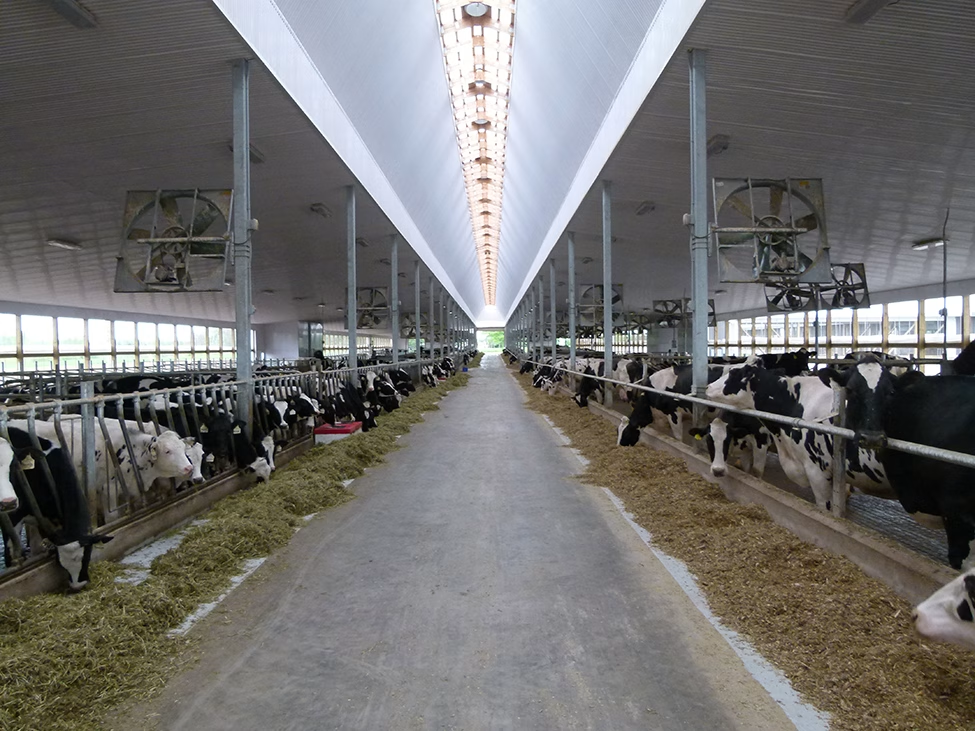
When we speak about air speed in dairy barns, we mean air circulation in the stalls where cows rest. Airflow in barns helps cool the cows, much like a breeze does on a hot day.

Consistent air velocity is critical for reducing heat stress. Cows benefit from a consistent flow of air, which helps to lower their body temperatures. This cooling impact also helps individuals lay down more easily and for extended periods, benefiting their health and productivity.

Consider this: when air travels over the cows, it removes the accumulated heat on their bodies. This procedure is comparable to how a fan cools you by removing heated air from your skin. The goal is to ensure that the airflow is uniform throughout the stalls so that every cow benefits equally.

Unearthing Key Insights: The Crucial Role of Consistent Airflow in Wisconsin Dairy Farms 

The research found that consistent stall air speeds in commercial dairy farms are associated with less variability in cow lying times, and it was found that cow laying periods had decreased fluctuation. Wisconsin Dairy Farms discovered numerous significant results on ventilation and its effects on cow behavior. The study found that cross-ventilated barns had more incredible average air velocity at cow resting height than naturally ventilated barns—2.0 m/s against 1.4 m/s, respectively. Despite this, roughly 38% of stalls in natively ventilated barns had airspeeds less than the required one m/s, vs 16% in cross-ventilated barns.

Cows in barns with faster airflow had fewer but longer laying episodes, suggesting improved comfort and heat stress management. For every one m/s increase in velocity, cows had 0.8 fewer laying episodes per day. Furthermore, when the variation in air velocity between stalls grew, so did the variation in cows’ laying periods.

A considerable increase in the temperature-humidity index (THI) resulted in a 0.4°C elevation in vaginal temperature and more frequent daily laying spells. However, the research found no clear association between average air speed and vaginal temperature, indicating that both kinds of ventilation systems may be improved to better control heat stress.

The results emphasize the need to maintain regular and adequate air velocity across all stalls to increase cow comfort and stability during resting behaviors.

Practical Steps for Optimizing Air Speeds in Your Barn 

Inconsistent airflow can significantly impact cow comfort and productivity, especially during heat stress. Here are some actionable tips to help you improve air speeds in your barns and ensure a more consistent and comfortable environment for your cows: 

Calibrate Your Fans 

  • Regular Maintenance: Schedule routine maintenance checks to ensure fans function correctly and at their total capacity. Dust and debris can reduce their efficiency.
  • Speed Settings: Ensure fans provide a minimum air speed of 1 m/s at cow resting height (0.5 m above the bedding surface). Use anemometers to measure the current air speeds and adjust accordingly.
  • Fan Placement: Position fans strategically to ensure they cover the entire resting area uniformly. Overlapping airflows can help avoid dead zones where air speeds might drop below the required level.

Adjust Fan Angles 

  • Optimal Angling: Angle fans downward toward the resting area to maximize airflow at the cow’s resting height. This helps direct the breeze where the cows lie down, enhancing their comfort.
  • Test and Recheck: After adjusting the angles, measure the air speed again with an anemometer to ensure adequate adjustments. Fine-tuning might be necessary to achieve uniform coverage.

Ensure Consistent Air Flow Across All Stalls 

  • Fan Distribution: Place fans evenly throughout the barn, ensuring no section receives inadequate airflow. If the coverage. If it is insufficient, consider adding.
  • Check for Obstructions: Regularly inspect the barn for any barriers that might obstruct airflow, such as machinery, feed barriers, or structural elements.
  • Use Ventilation Maps: Create and utilize a barn ventilation map to identify and rectify areas with suboptimal airspeed. Consistency is vital, as variability in air speeds can lead to stress and discomfort among the herd.

Maintaining air velocity of at least one meter per second at cow resting height may considerably increase cow comfort and minimize heat stress. These practical actions will improve animal welfare, production, and farm efficiency.

Frequently Asked Questions About Consistent Stall Air Speeds 

Q: What are the benefits of maintaining consistent stall airspeeds? 

A: Consistent air velocity of at least one meter per second may considerably increase cow comfort by lowering heat stress. This constancy aids in maintaining an ideal body temperature, resulting in improved resting behavior, less stress, and increased productivity and welfare.

Q: How do I measure the air speed in my barn? 

A: To assess the airflow in your barn, use an anemometer, which detects wind speed. To guarantee thorough coverage, measure speeds at the cow’s standing height (1.5 m) and resting height (0.5 m).

Q: Isn’t installing additional fans or improving ventilation systems expensive? 

A: While there are some upfront expenditures, the long-term benefits—such as greater milk output, enhanced cow health, and lower heat stress-related costs—can exceed the initial investment. Think about the possible economic effects and the well-being of your cows.

Q: What if my barn has areas with inconsistent airspeeds? 

A: Determine which zones have low air velocity and alter your ventilation system appropriately. This might include recalibrating fans, installing new ones, or relocating existing ones to achieve more level airflow dispersion.

Q: How frequently should I check and maintain my fans to ensure consistent airspeed? 

A: Regular maintenance is crucial. Check your fans periodically for indications of wear and tear. Clean them to minimize dust and debris accumulation, which may impair performance, and make sure they are correctly calibrated.

Q: Can I use natural ventilation alone to achieve consistent airflow? 

A: Natural ventilation may be enough; however, it fluctuates depending on the weather. Mechanical solutions, such as fans, may offer a dependable and adjustable way of maintaining regular air speeds, particularly during the hotter months.

Q: What are some signs that my cows are experiencing heat stress despite having fans? 

A: Look for behavioral cues such as increased standing time, decreased reclining time, more excellent respiratory rates, and lower feed intake. Monitoring vaginal temperatures and utilizing data recorders may also aid in diagnosing heat stress early.

Q: How do I balance the cooling needs with energy efficiency?

A: Use energy-efficient fans and automated systems that alter speeds depending on environmental temperature and humidity. This guarantees continuous airflow while maximizing energy efficiency.

Q: Is there any expert assistance available to implement these changes? 

A: Indeed, many colleges, veterinary institutions, and agricultural extension programs provide materials and professional advice. For example, the Dairyland Initiative offers farmers training and tools to improve their barn ventilation systems.

Explore Expert Resources to Enhance Dairy Farm Ventilation 

The Bottom Line

As we have seen, stable air speeds in dairy barns are critical for reducing heat stress and improving cow comfort. Our research from Wisconsin dairy farms emphasizes the need to have balanced airflow throughout all stalls since even tiny differences may substantially impact cows’ resting behavior. Installing fans isn’t enough to effectively reduce heat; you must also calibrate them appropriately, alter their angles, and ensure consistent air dispersion. These straightforward procedures may significantly improve the health and production of your herd.

Given the importance of ventilation in dairy farming, are you prepared to examine and improve your barn’s airflow so your cows can rest comfortably and battle the heat? Implementing these modifications enhances animal welfare and increases overall farm output. Please don’t wait for the next heat wave; make these changes to give your cows the comfort they deserve.

Learn more: 

Join the Revolution!

Bullvine Daily is your essential e-zine for staying ahead in the dairy industry. With over 30,000 subscribers, we bring you the week’s top news, helping you manage tasks efficiently. Stay informed about milk production, tech adoption, and more, so you can concentrate on your dairy operations. 

NewsSubscribe
First
Last
Consent
Send this to a friend