

Archive for transition cow health

$18.95 Milk, 12 lb Gone Per Cow Per Day: The Leaky‑Gut Cost Hiding in Your Transition Pen

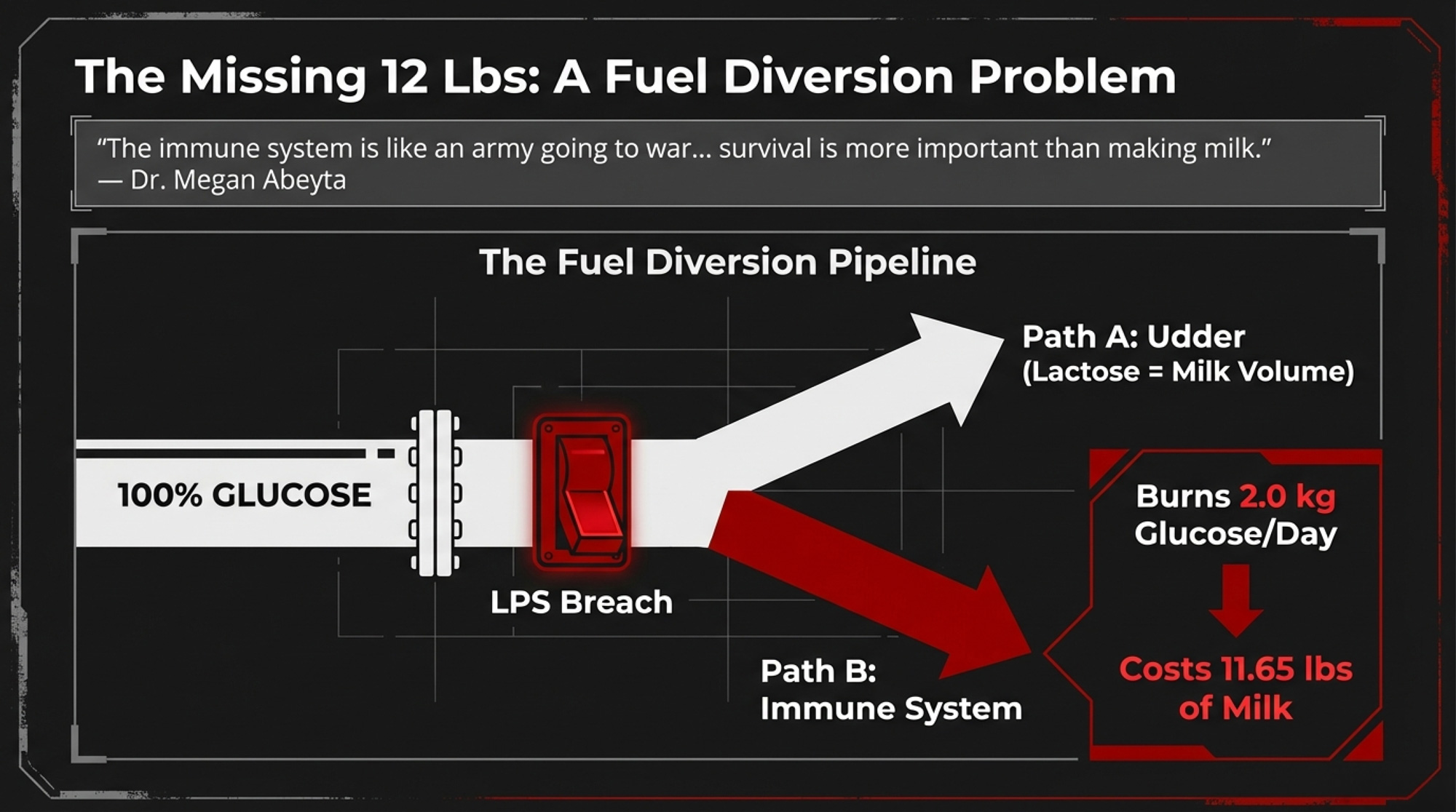
One barrier failure diverts 2 kg of glucose per day to the immune system — and no ration fix claws it back while inflammation persists.

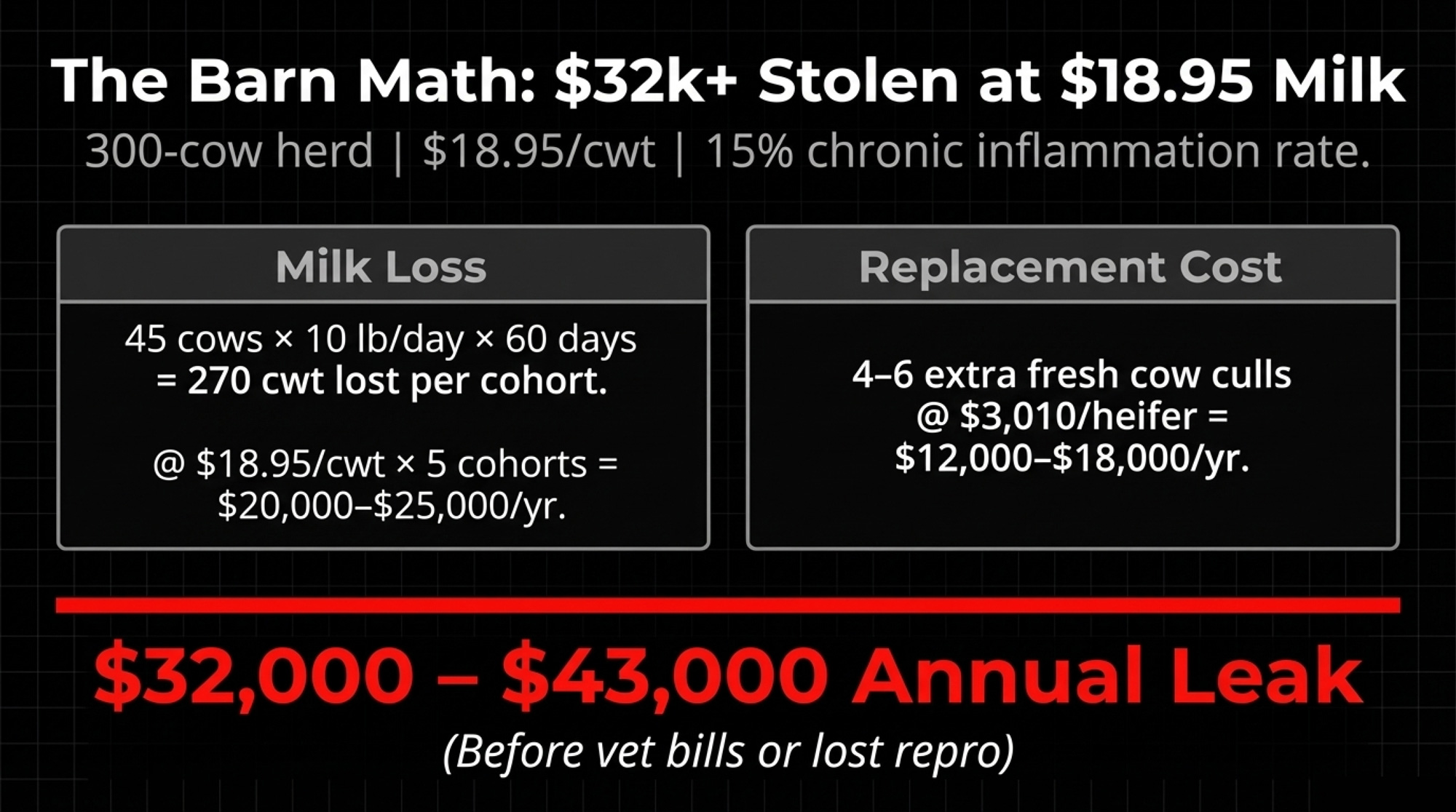
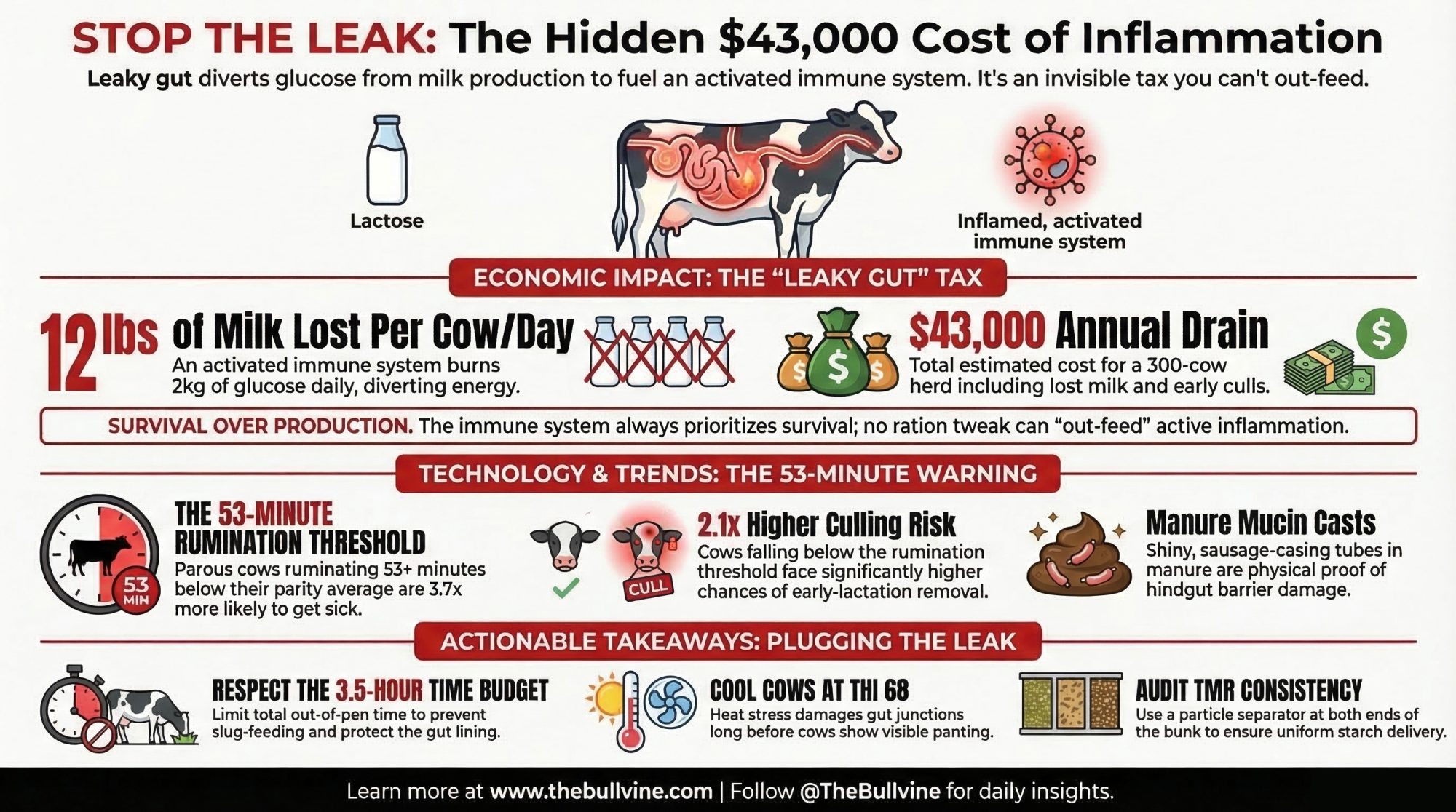
Executive Summary: You’re trying to survive on $18.95/cwt milk with costs around $19.14/cwt, and an activated immune system can quietly steal the energy for about 12 lb of milk per cow per day when the gut barrier leaks. Kvidera and Baumgard’s work shows that a full‑on immune response can burn roughly 2 kg of glucose a day, which the mammary gland would otherwise turn into lactose and milk volume. That “leaky‑gut tax” explains why some herds still wrestle with ketosis, hypocalcemia, and early culls even when DCAD and high‑starch diets look good on paper. Santos’ 2024 study on commercial herds gives you a simple trigger: parous cows ruminating 53 minutes below their parity average pre‑calving were 3.7× more likely to get sick, 2.1× more likely to be culled, and produced several pounds less milk per day. Add in albumin‑to‑globulin ratios one week before dry‑off and manure sieving for mucin casts, and you’ve got a practical on‑farm screen for inflammation risk, not just a lab concept. For a 300‑cow dairy, conservative barn math puts the annual cost of chronic low‑grade inflammation in the $32,000–$43,000 range once you include lost milk and replacement heifers at roughly $3,010/head. 

Leaky gut in dairy cows

When a cow’s gut barrier leaks, her immune system can grab about 2 kg (4.4 lb) of glucose a day — enough energy to make roughly 12 lb of milk — and no ration tweak will claw that back while inflammation stays switched on. In a year when USDA pegs U.S. all‑milk at about $18.95/cwt for 2026, that invisible leak is the difference between hanging on and sliding backward. 

Dr. Megan Abeyta saw how fast this could go sideways long before it showed up in any spreadsheet. During her PhD at Iowa State with Dr. Lance Baumgard, she injected a healthy mid‑lactation Holstein with lipopolysaccharide (LPS) — the same endotoxin that slips into the bloodstream when the gut wall fails — and watched the cow go down with milk‑fever‑like symptoms almost immediately. The ration hadn’t changed. Calcium intake hadn’t changed. The immune system simply hijacked the cow’s glucose and calcium in seconds. 

“You’ve got to remember, the immune system is very energetically expensive,” Abeyta says on the Dairy Nutrition Black Belt podcast. “I like to compare it to an army going to war… and in the hierarchy of functions, survival is more important than making milk.” That hierarchy sits right at the center of modern transition‑cow management. 

What Actually Breaks — and Where

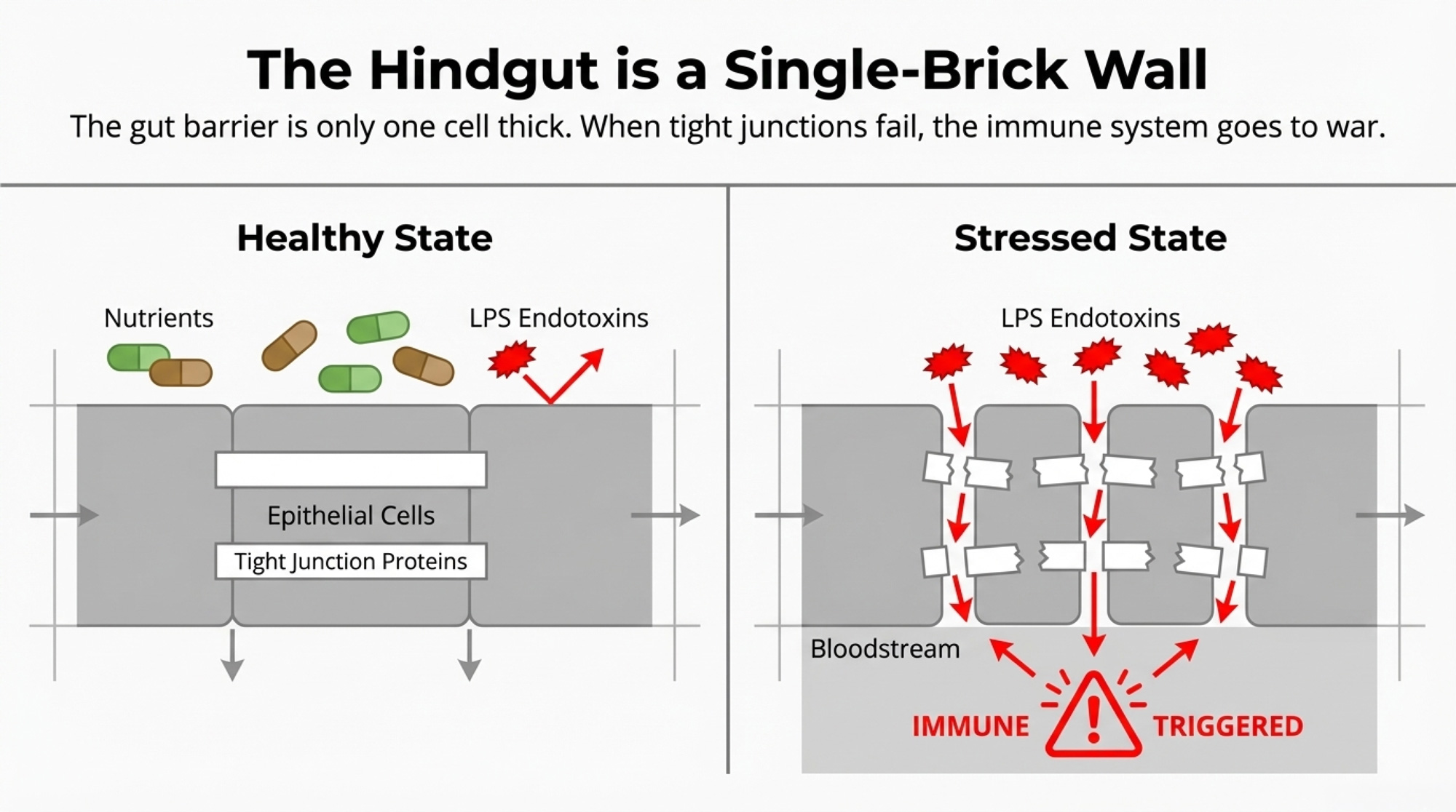
Think of your cow’s gut as a long, single‑brick wall between her and a hostile outside world. That “brick” is a one‑cell‑thick epithelium, stitched together by tight junction proteins like occludin, claudins, and the ZO‑family that decide what gets through. Their job is to let in amino acids, fatty acids, and sugars — and keep out LPS, bacteria, and other junk that would light the immune system on fire. 

When stress hits hard enough, those tight junctions retract or break down. Microscopic gaps open, and endotoxins such as LPS enter the bloodstream from the gut. The immune system doesn’t shrug that off. It goes to war, pulls glucose and amino acids away from the udder, and you start paying for it in lost milk and weaker cows. 

Most people instinctively point at the rumen when they hear “acidosis.” But the real soft underbelly here is the hindgut— the cecum and large intestine. The rumen enjoys a constant rain of salivary bicarbonate and phosphate. The hindgut doesn’t. When high‑producing cows on hot, high‑starch rations push too much starch past the rumen and small intestine, that starch ferments fast in the hindgut, pH falls below about 5.5, and the epithelial lining starts to slough. 

If you’re seeing mucin casts in manure — shiny, sausage‑casing tubes in the strainer — that’s your cow trying to “bandage” damaged hindgut with fibrin and mucus. It’s not just a quirky finding. It’s physical evidence that the barrier has already taken a hit. 

How Do Stressors Stack Into a Leaky‑Gut Crisis?

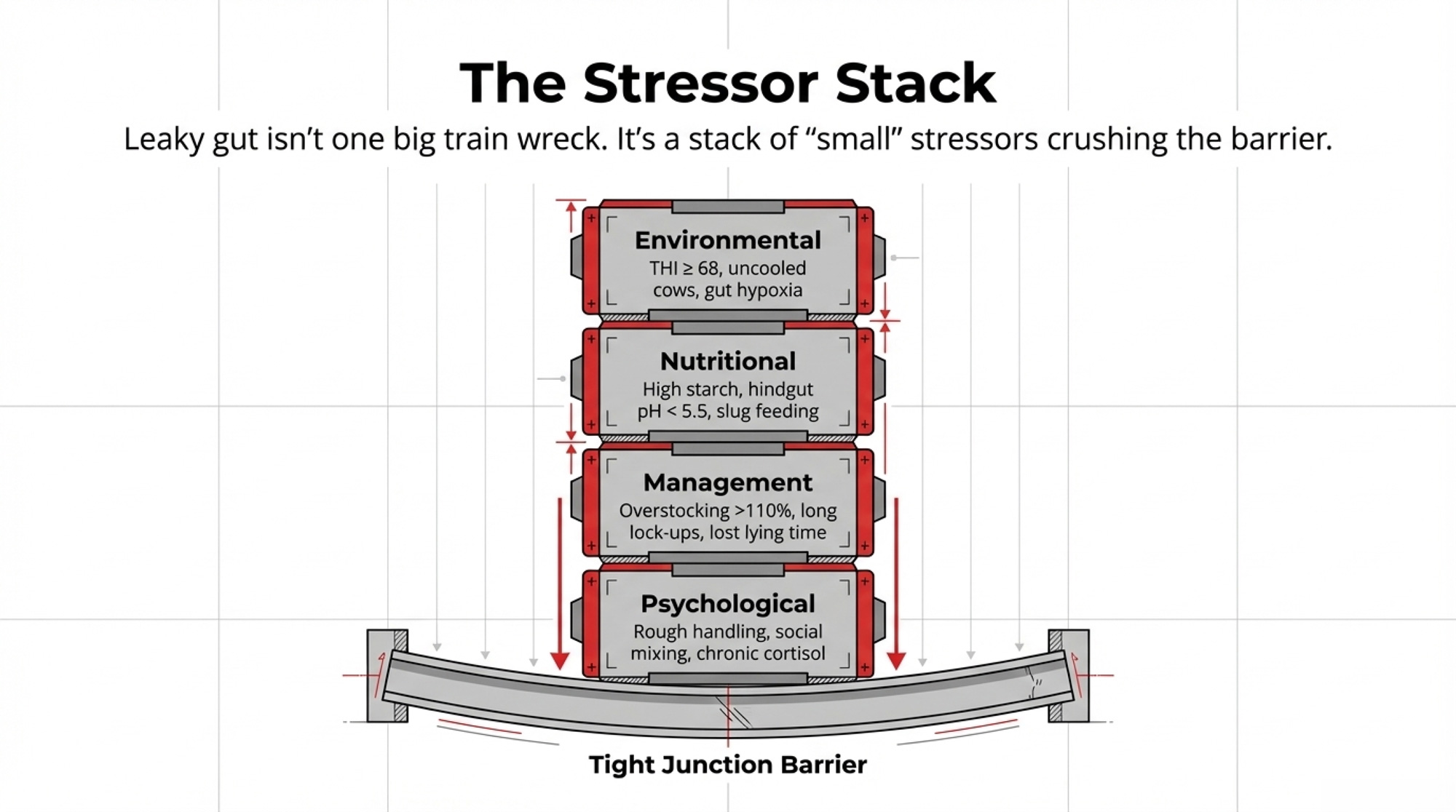
On most dairies, leaky gut isn’t caused by one big train wreck. It’s the result of a bunch of “small” stressors stacking until the barrier finally gives way. 

Abeyta spends a lot of time walking pens and watching how those stressors line up. “The more small stressors those cows are exposed to, the more likely she’s going to have a worse inflammatory response,” she says. 

On the ground, that stack usually looks like this: 

  • Heat stress starts to bite around a THI of 68 for uncooled cows, long before you see cows full‑on panting. To keep cool, the cow pulls blood away from the gut and toward the skin; that gut hypoxia and ischemia damage cells and tight junctions and can drive several‑fold increases in circulating LPS. 
  • Nutritional stress comes from SARA, hindgut acidosis, feed restriction, or inconsistent bunk management. High‑starch diets without tight feed management increase fermentable carbohydrate intake in the hindgut; feed restriction and erratic feeding times also stress the epithelium. 
  • Psychological/social stress — rough handling, frequent pen moves, mixing first‑lactation heifers with mature cows — keeps cortisol elevated. Chronic cortisol makes it harder for tight junction proteins to stay in place and lowers the threshold at which other insults cause leaks. 
  • Management stress — overstocked pens, bad stalls, long headlock time, lameness — chews up the time budget. Cows lose lying time, compress eating into fewer, bigger meals, then slug‑feed starch into both the rumen and hindgut. 

You’ve seen versions of this. The cow that’s too lame to lie down. The close‑up group jammed to 130%. The holding pen is a sauna. The gut doesn’t care which one you blame. It just sees stress and starts to leak.

Stress categoryTypical farm triggersWhat it does to the barrier
EnvironmentalTHI ≥ 68, poor air movement, no coolingGut hypoxia/ischemia, oxidative damage, higher circulating LPS 
NutritionalHigh starch, SARA, hindgut acidosis, feed restrictionHindgut pH < 5.5, epithelial sloughing, microbiome disruption 
PsychologicalRough handling, social mixing, frequent pen movesChronic cortisol, impaired tight junction maintenance 
ManagementOverstocking >110%, long lock‑up, poor bedding, lamenessLost lying time, slug feeding, more acidosis risk 

How Much Milk Does the Immune System Steal?

Here’s where the “army at war” analogy stops being cute and starts costing you real money. 

When LPS slips through a leaky gut, immune cells like neutrophils and macrophages flip into high gear and become obligate glucose users. They’re not interested in fat or ketones. They burn glucose. 

A 2017 study by Kvidera and colleagues at Iowa State used an LPS challenge plus a euglycemic clamp in mid‑lactation Holsteins to measure that fuel bill. The acutely activated immune system pulled more than 1 kg of glucose in just 12 hours. When you account for how that response tapers over a full day, Baumgard’s group estimates an active immune system can demand around 2.0 kg (4.4 lb) of glucose per cow per day

You know where that glucose would normally go: lactose. Lactose pulls water into milk. Less glucose for lactose, less milk in the tank.

Using conservative energy values: 

  • Roughly 0.9 Mcal of NEL per lb of glucose equivalent in this context. 
  • Roughly 0.34 Mcal of NEL per lb of 3.5% fat‑corrected milk

Quick barn math:

  • 4.4 lb di glucosio × 0.9 Mcal NEL/lb ≈ 3.96 Mcal.
  • 3.96 Mcal ÷ 0.34 Mcal/lb ≈ 11.65 lb of milk.

Call it about 12 lb of milk per cow per day, diverted from the bulk tank to the immune system when inflammation is active. 

And you can’t just “feed that back.” As Abeyta puts it, survival sits at the top of the priority list. As long as the immune army is fighting, it will pull what it needs, no matter how much energy you stack into the ration. 

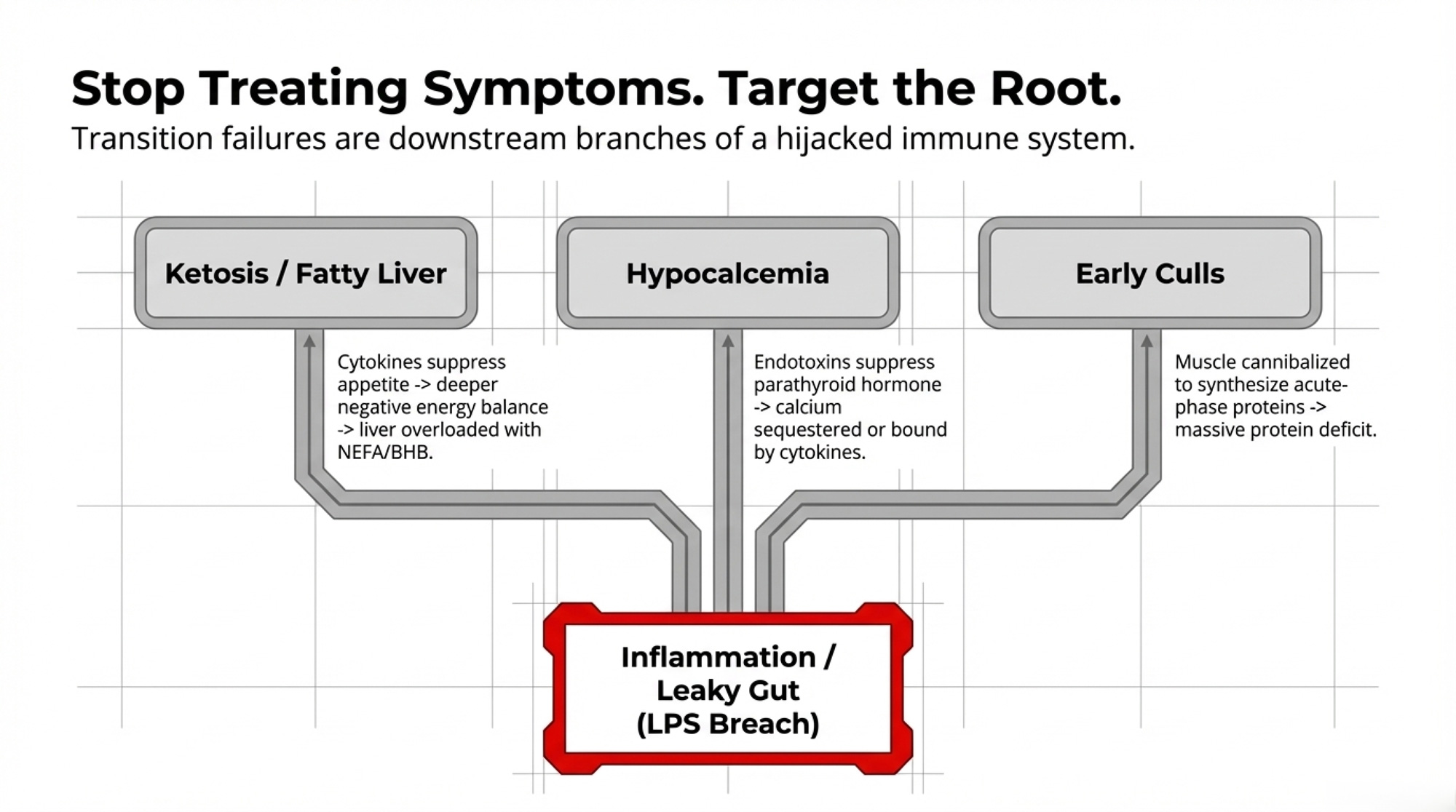
On the protein side, the liver is busy producing acute‑phase proteins such as haptoglobin and serum amyloid A to fight the perceived threat. Those proteins are relatively rich in certain amino acids, so the cow cannibalizes muscle to supply them. Estimates suggest that for every 1 g of acute‑phase proteins synthesized, 1.5–2.0 g of muscle protein may have to be broken down. In a transition cow already in negative protein balance, that’s a fast road to weaker cows and higher early cull rates. 

Is Leaky Gut Behind Your Transition‑Cow Failures?

Let’s talk about where this really hurts: the transition window. From roughly three weeks before calving to three weeks after, your cows are going through major hormonal shifts, diet changes, and immune activation around calving itself. Tight junctions are more fragile, the liver is overloaded, and she’s already short on energy and calcium. 

Two things keep showing up across research and on‑farm experience: 

  • Inflammation and ketosis are joined at the hip. Inflammation is hypophagic — pro‑inflammatory cytokines act on the brain, reducing dry-matter intake. That deepens negative energy balance, drives more NEFA and BHB, and makes it harder for the liver to process that fat load. Cows with elevated inflammatory markers postpartum are more likely to develop clinical and subclinical ketosis and fatty liver. 
  • Some cases of hypocalcemia are inflammation‑driven, not just mineral imbalances. The “Calci‑Inflammatory Network” framing says part of your hypocalcemia problem is rooted in endotoxin. When LPS enters the bloodstream, cytokines such as IL-1, IL-6, and TNF-α can suppress parathyroid hormone secretion, bind to or sequester ionized calcium, and disrupt calcium transporters in the gut and kidneys. That lines up with Abeyta’s own LPS injection experience — watching a previously healthy cow drop with milk‑fever‑like signs almost instantly. 

Cows that never manage to shut down that inflammatory cascade are more likely to leave the herd early in lactation. If you’re routinely losing fresh cows before 60 DIM, you’re probably paying some of this bill already. 

How Much Is This Leak Costing at Sub‑$19 Milk?

You’re not managing inflammation in a vacuum. You’re managing it in a year when USDA’s February 2026 outlook pegs all‑milk at around $18.95/cwt and ERS/Bullvine analysis puts average cost of production for larger U.S. herds right around $19.14/cwt. That’s a razor‑thin margin at best. 

Let’s take a conservative example; you can adjust it with your own numbers. 

  • Herd size: 300 milking cows.
  • At any given time in the first 60 DIM, assume 15% of cows — 45 head — are carrying some level of chronic, low‑grade inflammation.
  • Instead of the full 12 lb/day loss, assume an average of 10 lb/day across that group, once you factor in varying severity. 

Milk loss math:

  • 45 cows × 10 lb/day × 60 days = 27,000 lb of milk.
  • 27,000 lb = 270 cwt.
  • At $18.95/cwt, that’s about $5,117 in lost revenue over that 60‑day window. 
Cost componentAmount (USD)
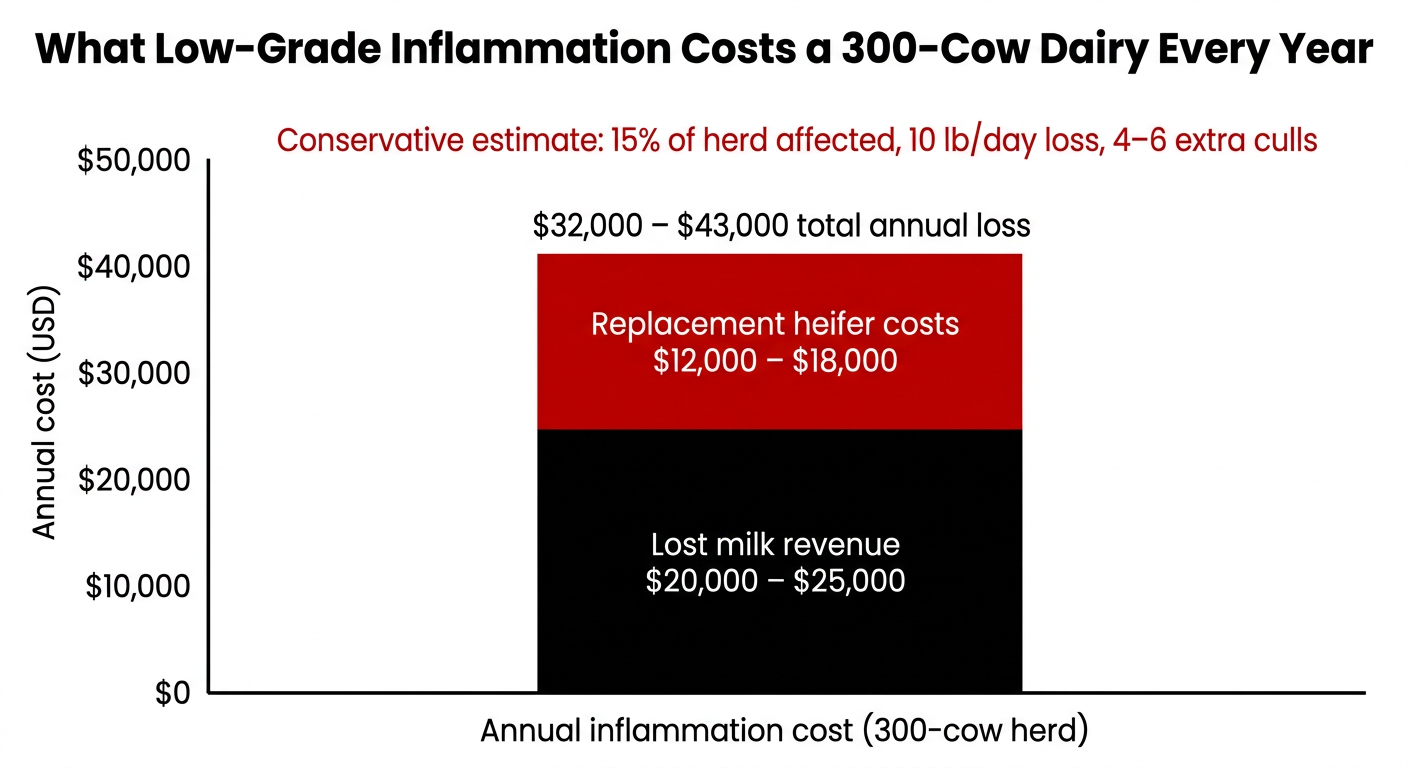
Lost milk revenue (4–5 transition cohorts/year)$20,000 – $25,000
Replacement heifer costs (4–6 extra culls)$12,000 – $18,000
Total annual inflammation tax$32,000 – $43,000

Now stretch that across the year.

You don’t just have one transition group. If this pattern repeats across four to five transition cohorts annually, you’re staring at roughly $20,000–$25,000/year in milk revenue alone

Layer in early‑lactation culls linked to unresolved inflammation.

If an extra 4–6 fresh cows leave the herd early because they never recover, and replacement heifers cost around $3,010/head in the current North American market, that’s another $12,000–$18,000/year.

Now you’re in the neighbourhood of $32,000–$43,000/year in a 300‑cow herd — before you count vet bills, lost repro, and the long‑term production drag on cows that stay but never hit their genetic peak. 

Plug in your own numbers — herd size, transition‑pen cull rate, your local milk price — and see where you land.

Can Rumination Data Flag Transition‑Cow Inflammation Before You See It?

You don’t have a ketone‑style dipstick for inflammation. But if you’ve already invested in rumination collars or ear tags, you’re sitting on a powerful early‑warning tool. ppl-ai-file-upload.s3.amazonaws

A 2024 Journal of Dairy Science paper by Santos and colleagues looked at prepartum rumination time in commercial Holstein herds. Instead of chasing some magic “X minutes per day” number, they focused on how each cow deviated from her parity group’s average

For parous cows, they found a clear threshold: animals ruminating 53 minutes per day less than their parity averagein late gestation were the ones that blew up postpartum. 

Here’s what that below‑threshold parous group looked like: 

OutcomeBelow‑threshold parous cowsAbove‑threshold parous cows
Odds of postpartum clinical disease3.7× higher (adjusted odds ratio 3.7; 95% CI 2.1–6.4)Baseline
NEFA postpartum0.38 mmol/L0.31 mmol/L
BHB postpartum0.53 mmol/L0.49 mmol/L
Milk yield46.3 kg/day48.5 kg/day (≈ 4.8 lb/day more)
Hazard of culling2.1× greater (95% CI 1.2–3.6)Baseline
Probability pregnant by 210 DIM36% lower (hazard ratio 0.64)Baseline

For nulliparous heifers, the same rumination drop didn’t carry much predictive power — the AUC was essentially 0.51, i.e., no better than chance. So this is a parous‑cow tool, not a blanket rule for your whole prefresh group. 

From a practical standpoint, that’s gold. You can:

  • Pull prepartum rumination data for parous cows.
  • Calculate the parity‑specific average for the last 7–10 days before calving.
  • Flag any cow sitting 50+ minutes below that average.
  • Tag those cows as high‑risk for inflammation‑linked problems and build them into your fresh‑cow checklists.

Abeyta’s excited about the direction this is headed. “More and more dairies are starting to monitor rumination on farm,” she says. “We have a lot more room to grow regarding identifying inflammatory risk on farms.”

How Should You Use A: G Ratios and Manure to Spot Trouble?

Rumination isn’t your only tool. 

The albumin‑to‑globulin (A: G) ratio is a relatively inexpensive blood test that serves as a proxy for chronic inflammatory status. Albumin is a negative acute‑phase protein — its production falls during inflammation as the liver shifts resources to immune proteins. Globulins go the other way, rising. 

Research led by Cattaneo and colleagues, published in the Journal of Dairy Science in 2021, looked at the A: G ratio one week before dry‑off. Cows with a higher A: G ratio before dry‑off showed lower inflammatory responses and better milk yield in the subsequent lactation. On‑farm, ratios below about 1.0–1.1 sit in the “worry about chronic inflammation or liver stress” zone. 

Then there’s manure. A simple 1.6‑mm strainer can tell you a lot about how hard the hindgut is getting hammered: 

  • Mucin casts indicate that the large intestine is actively trying to patch the damage.
  • Foam or bubbles indicate excessive hindgut fermentation.
  • Fiber particles >0.5 inches scream that rumen retention and chewing are off.
  • Obvious feed ingredients (green grass, bright citrus pulp, cottonseed with lint) tell you the feed is blowing through too fast. 

If you’re seeing that package in your transition cows, you’re not just dealing with a “diet quirk.” You’re watching barrier damage in real time.

Manure finding (1.6‑mm strainer)What it signalsImmediate action
Mucin casts (shiny, sausage‑casing tubes)Large intestine trying to “bandage” damaged hindgut with fibrin and mucusTrigger ration & feed‑management review; check for hindgut acidosis
Foam or bubblesExcessive hindgut fermentation; likely starch overloadAudit starch levels, TMR consistency, and feeding frequency
Fiber particles >0.5 inchesRumen retention and chewing time are off; cud time too shortCheck lying time, bunk access, particle size, effective fiber
Obvious undigested feed (green grass, bright citrus pulp, cottonseed with lint)Feed is blowing through too fast; inadequate digestion timeReview feed push‑up schedule, slug feeding, and passage rate

Options and Trade‑Offs for Farmers

Here’s where you turn this from scary biology into a plan. None of these paths is mutually exclusive, but each has a “best fit” and some real limits.

PathWhen it makes senseQuick‑win timelineKey trade‑off
Fix the time budget firstOverstocking >110%, long lock‑ups, short lying time30 daysMay require dropping cow numbers or capital for more stalls
Audit TMR consistency & bunk managementPatchy manure, obvious sorting, cows “surfing” the bunk14–21 daysRequires mixer calibration, frequent push‑ups, tighter labor discipline
Use 53‑minute rumination threshold for fresh‑cow targetingYou already have rumination collars but only use them reactively7 days (report setup)Only works for parous cows; requires consistent data pull & follow‑up
Get ahead of heat stress before THI hits 68Heading into summer, last year you were late on cooling30–60 days (pre‑season)Higher power bills from running fans earlier; upfront equipment maintenance

Path 1: Fix the Time Budget First (30‑Day Action)

When it makes sense: You’re over 110% stocking in key pens, lying time looks short, you’ve got long headlock/holding times, or you’re already seeing slug‑feeding behaviour. 

High‑producing cows need roughly 12–14 hours of lying time per day, and they’ll sacrifice eating time to get it. Studies out of Miner Institute and others estimate that each additional hour of rest translates into about 2–3.5 lb more milk per cow per day. When lying time gets squeezed — by overcrowding, bad stalls, sore feet, or long parlor trips — cows spend more time standing in alleys and then hammer the bunk in a few big starch‑heavy meals. 

Within the next 30 days:

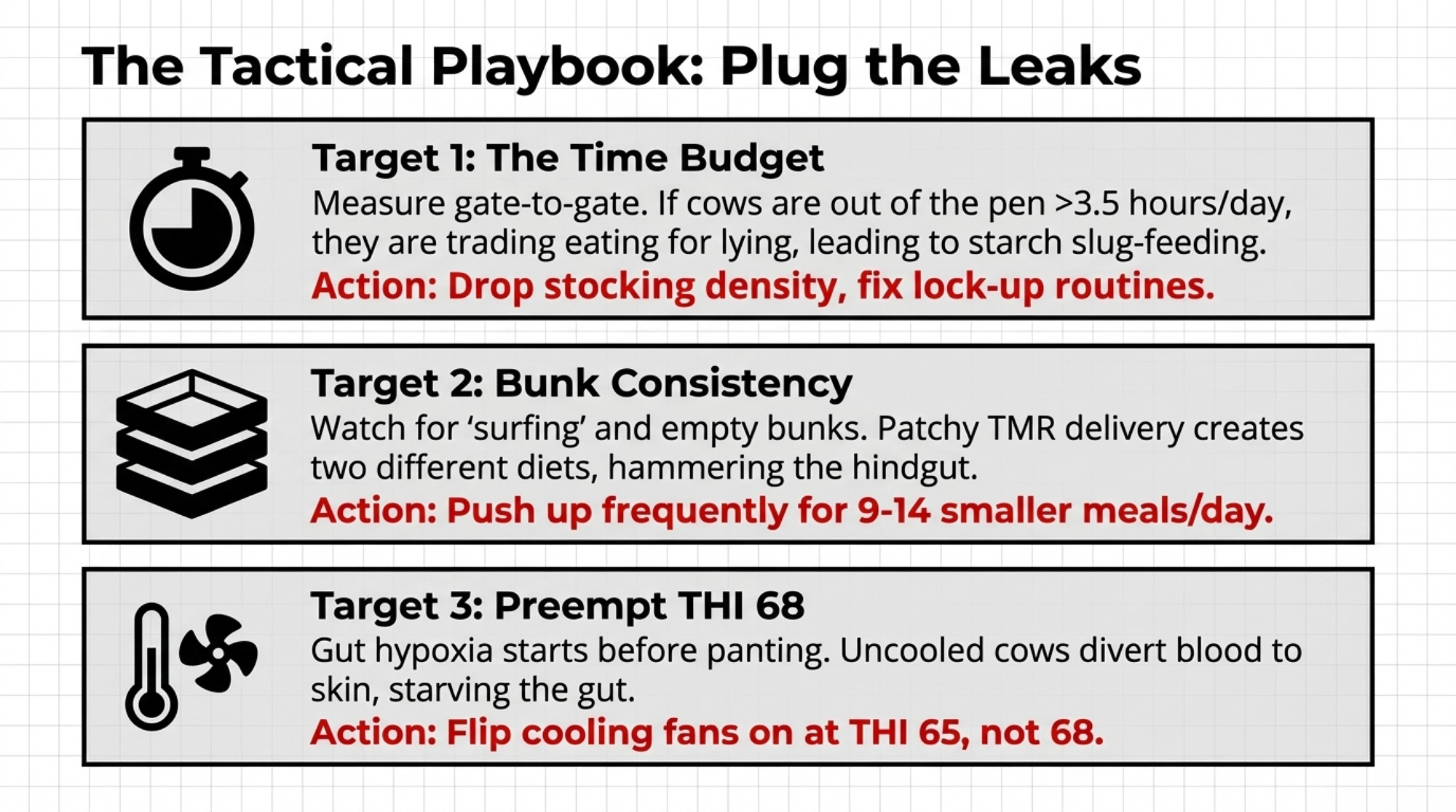
  • Time one close‑up or fresh‑cow pen from gate to gate: from the moment cows leave the pen for lock‑up or parlor until they’re back. If you’re over 3–3.5 hours/day out of the pen, you’ve got a problem. 
  • Stand in that same pen mid‑morning. If more than about 15% of cows are standing idle in alleys with nowhere comfy to lie, your resting time is probably too short.

Fixing this might mean dropping stocking density, fixing stalls, or changing lock‑up routines. It’s not cheap. But it’s the single most powerful move you can make to cut down on slug feeding and protect the gut.

Path 2: Audit TMR Consistency and Bunk Management

When it makes sense: You see patchy manure across the pen, obvious sorting, or cows “surfing” the bunk waiting for fresh feed.

Your ration can be beautiful on paper and still torch the hindgut if what hits the bunk isn’t consistent. If the front of the bunk gets a fiber‑rich TMR and the back gets a fine, starchy mess, you’ve effectively created two different diets. 

Quick checks:

  • Run a Penn State Particle Separator on TMR at both ends of the bunk right after feeding. 
  • Watch how often cows run out of feed. You want them cleaned up, not sitting empty for hours. Frequent push‑ups help spread intake into 9–14 smaller meals per day, which keeps pH more stable. 

If you find big differences in particle distribution or see bunks going bare long before the next feeding, you’re giving the hindgut more work than it can handle.

Path 3: Use the 53‑Minute Rumination Threshold to Target Fresh‑Cow Checks

When it makes sense: You’ve already got rumination data but only use it for “sick cow” alerts.

Using Santos’ work, build a simple parity‑based report for your pre‑fresh cows: 

  • For parous cows, calculate the average prepartum rumination time over the last 7–10 days before calving. 
  • Flag any cow that’s 50+ minutes below that parity average. 
  • Put those cows on a high‑risk fresh‑cow list: extra temperature checks, earlier ketone testing, closer feed intake, and manure monitoring.

You’re not treating the number. You’re using it to decide which cows deserve more attention before they crash.

Path 4: Get Ahead of Heat Stress Before THI Hits 68

When it makes sense: You’re heading into summer, and last year you were “a little late” getting fans and soakers dialed in.

Heat stress is one of the cleanest ways to break the gut barrier. THI 68 is where uncooled cows start paying a price; for high‑producing herds, flipping cooling on around THI 65 is often justified. 

Right now — not in July — is the time to:

  • Check fan belts, soaker nozzles, controllers, and water supply.
  • Make sure holding pens and return alleys actually get airflow, not just the freestall rows.

The extra power bill from running fans a bit early is almost always cheaper than a few weeks of heat‑driven leaky‑gut problems and the culls they create.

Key Takeaways

  • If your parous cows are ruminating for 50+ minutes below their parity-average pre‑calving, expect them to be 3.7× more likely to get sick, 2.1× more likely to be culled, and to produce roughly 4.8 lb less milk per day. Build a report and start flagging them. 
  • If you’ve done the DCAD work and still fight subclinical hypocalcemia, assume inflammation might be part of the problem and talk with your vet about adding A: G ratio tests and other inflammatory markers pre‑dry‑off and early postpartum. 
  • If more than about 15% of cows in a pen are standing idle mid‑morning and out‑of‑pen time tops 3–3.5 hours/day, your cows are trading eating for lying — and likely slug‑feeding starch their hindgut can’t handle. Fix that time budget first. 
  • If you’re seeing mucin casts, foam, long fiber, or bright undigested feed in manure, treat it as confirmation of a hindgut problem and trigger a ration and feed‑management review — not just a “that’s interesting” moment. 

The Bottom Line

You don’t have to turn your dairy into a research lab to get ahead of this. But you do have to decide whether you’re okay guessing about inflammation while milk sits under $19, or whether it’s time to use the data you already have — rumination, time budgets, simple bloodwork, manure — to plug the leaks. 

Complete references and supporting documentation are available upon request by contacting the editorial team at editor@thebullvine.com.

Learn More

The Sunday Read Dairy Professionals Don’t Skip.

Every week, thousands of producers, breeders, and industry insiders open Bullvine Weekly for genetics insights, market shifts, and profit strategies they won’t find anywhere else. One email. Five minutes. Smarter decisions all week.
NewsSubscribe
First
Last
Consent

The $23,000 Mistake: Why ‘Immune Support’ Isn’t Fixing Your Fresh Cow Problems

78% conception rate vs 23%. Same herd. Same feed. Same genetics. The difference? How cows handled the first 3 weeks. New research says we’ve been focused on the wrong thing.

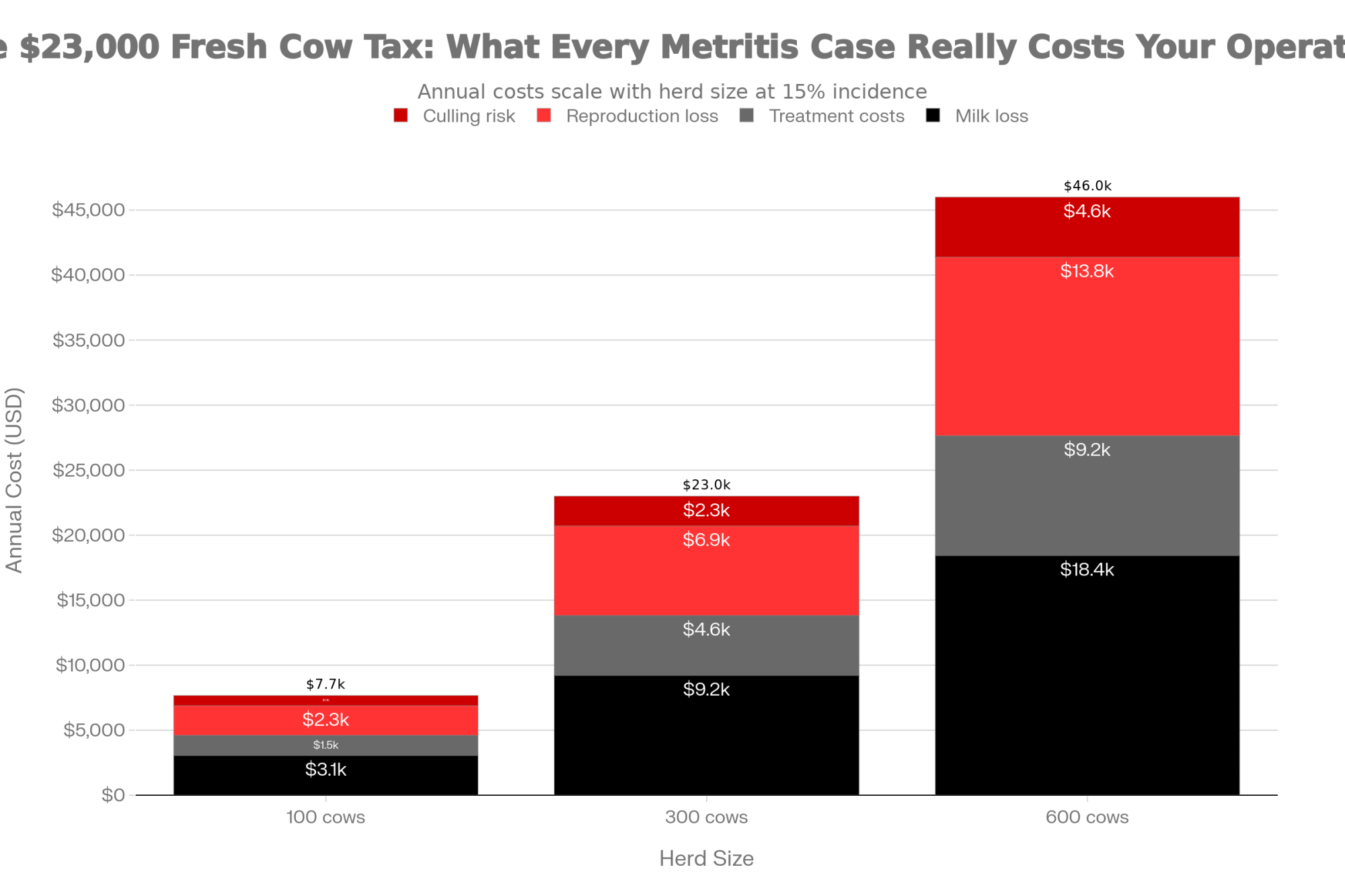
EXECUTIVE SUMMARY: For 40 years, we’ve assumed fresh cows get sick because their immune systems fail at calving. Iowa State research published in the Journal of Dairy Science (2024) says we’ve had it backwards—early lactation cows actually mount stronger inflammatory responses than mid-lactation animals. They’re not failing; they’re firefighting against bacterial overload when physical barriers are down. The numbers make this personal: metritis costs $511 per case ($23,000 annually on a 300-cow herd at 15% incidence), and University of Wisconsin data reveals a 55-percentage-point fertility gap—78% conception for cows gaining condition in the first three weeks versus 23% for those losing it, same herds, same ration. If the science is shifting, maybe the priorities in the barn should too. Calving hygiene and metabolic support may outperform immune boosters, and the ROI math increasingly favors operations willing to rethink their protocols.

There’s a conversation happening in transition cow circles that I think deserves more attention from producers.

It started for me when I was visiting a 650-cow freestall operation in central Wisconsin last spring. Good herd, solid management team, well-designed protocols. They had quality minerals dialed in, yeast culture in their close-up ration, and attentive fresh cow monitoring. Yet their metritis rates wouldn’t budge below 17–18%.

“We’re doing everything right,” the herd manager told me, genuinely puzzled. “At least everything we’ve been taught.”

That conversation stuck with me because it echoes what I’ve heard from producers across the Midwest and Northeast over the past couple of years. And it turns out, researchers have been wrestling with similar questions—except they’ve been digging into some foundational assumptions that have shaped transition cow thinking for decades.

💡 THE BOTTOM LINE: New whole-animal research suggests fresh cows mount stronger immune responses than mid-lactation cows—not weaker ones. The diseases we see may result from pathogen exposure overwhelming the system, not immune failure.

The Framework We’ve All Learned

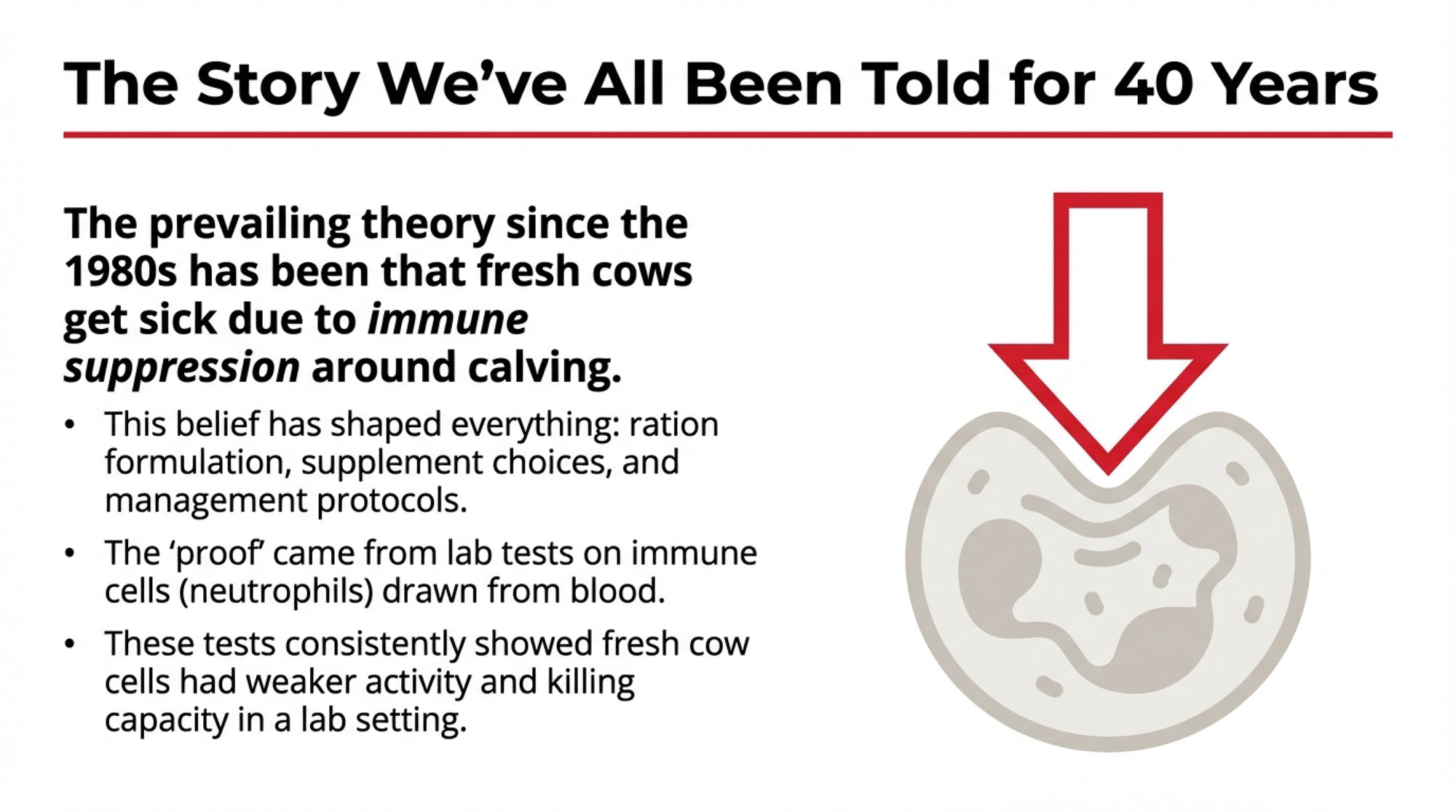
If you’ve been in the dairy business for any length of time, you know the standard story about fresh cows: they experience immune suppression around calving, leaving them vulnerable to mastitis, metritis, and metabolic challenges. This framework has shaped ration formulation, supplement choices, and management protocols across the industry since the 1980s.

The science behind it seemed solid. Researchers would draw blood from transition cows, isolate immune cells—particularly neutrophils—and test how those cells performed in laboratory settings. Fresh cow cells consistently showed reduced activity: weaker oxidative burst, fewer surface markers, diminished killing capacity.

But here’s where it gets interesting.

When Dr. Lance Baumgard’s team at Iowa State decided to test immune function differently, they got a very different picture. Baumgard—he holds the Norman Jacobson Professorship in Nutritional Physiology there—challenged whole cows with lipopolysaccharide (a bacterial component that triggers systemic immune response) and compared early lactation animals to mid-lactation animals.

The results, published in the Journal of Dairy Science in 2024, raised some eyebrows.

In a study of 23 multiparous Holsteins, early lactation cows mounted significantly stronger inflammatory responses across virtually every measure:

Immune ParameterEarly LactationMid-LactationDifference
Fever Response+2.3°C+1.3°C+1.0°C higher
TNF-α (inflammatory marker)6.3× elevatedbaseline6.3-fold higher
IL-6 (inflammatory marker)4.8× elevatedbaseline4.8-fold higher
Haptoglobinelevatedbaseline79% higher
LPS-binding proteinelevatedbaseline85% higher

Those aren’t the signatures of a suppressed immune system. If anything, they suggest early lactation cows are running hotter immunologically, not cooler.

“Early lactation cows mounted significantly more robust inflammatory responses than mid-lactation cows across virtually every parameter we measured.” — Dr. Lance Baumgard, Norman Jacobson Professor of Nutritional Physiology, Iowa State University

Understanding the Discrepancy

So why did decades of lab studies show one thing while whole-animal challenges show something different? This is worth understanding because it shapes how we think about intervention strategies.

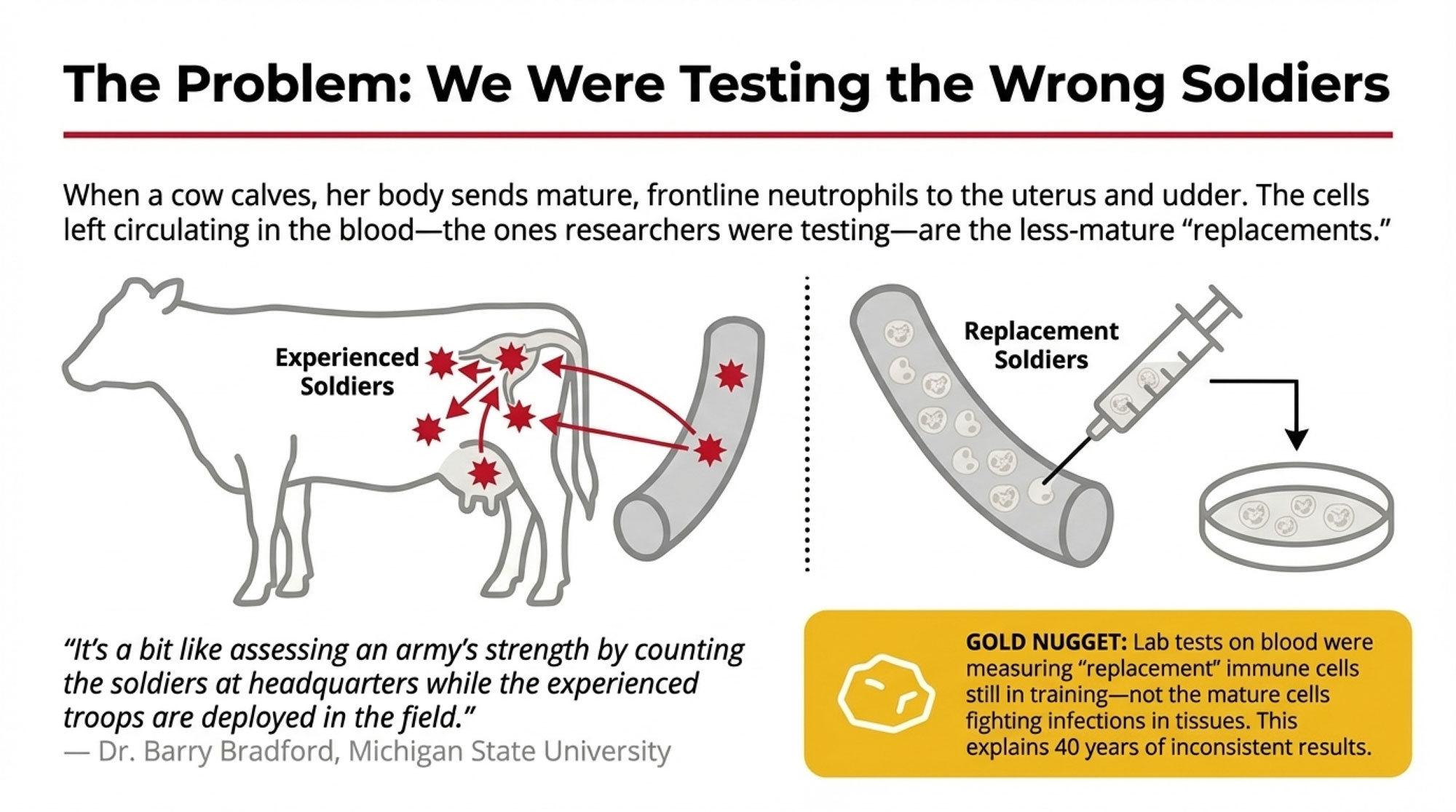
When a cow calves, her body mobilizes mature, fully-equipped neutrophils to the sites that need them most—the uterus recovering from calving, the mammary gland transitioning into lactation. These experienced immune cells deploy to the tissues where pathogens are most likely to gain entry.

To replace them in circulation, the bone marrow releases newer neutrophils that are still maturing. When researchers drew blood and tested circulating cells, they were essentially evaluating replacements rather than frontline defenders.

Dr. Barry Bradford at Michigan State has pointed out that ex vivo testing captures what’s circulating in the bloodstream rather than what’s happening at actual infection sites. It’s a bit like assessing an army’s strength by counting the soldiers at headquarters while the experienced troops are deployed in the field.

💡 GOLD NUGGET: Lab tests on blood samples were measuring “replacement” immune cells still in training—not the mature cells actually fighting infections in tissues. That’s why results were so inconsistent for 40 years.

If Not Immune Suppression, Then What?

This is the practical question, and I think the answer has real implications for how we approach fresh cow management.

The research points to three factors that drive early lactation disease—none of which involve a weakened immune system.

Physical Barriers Are Compromised

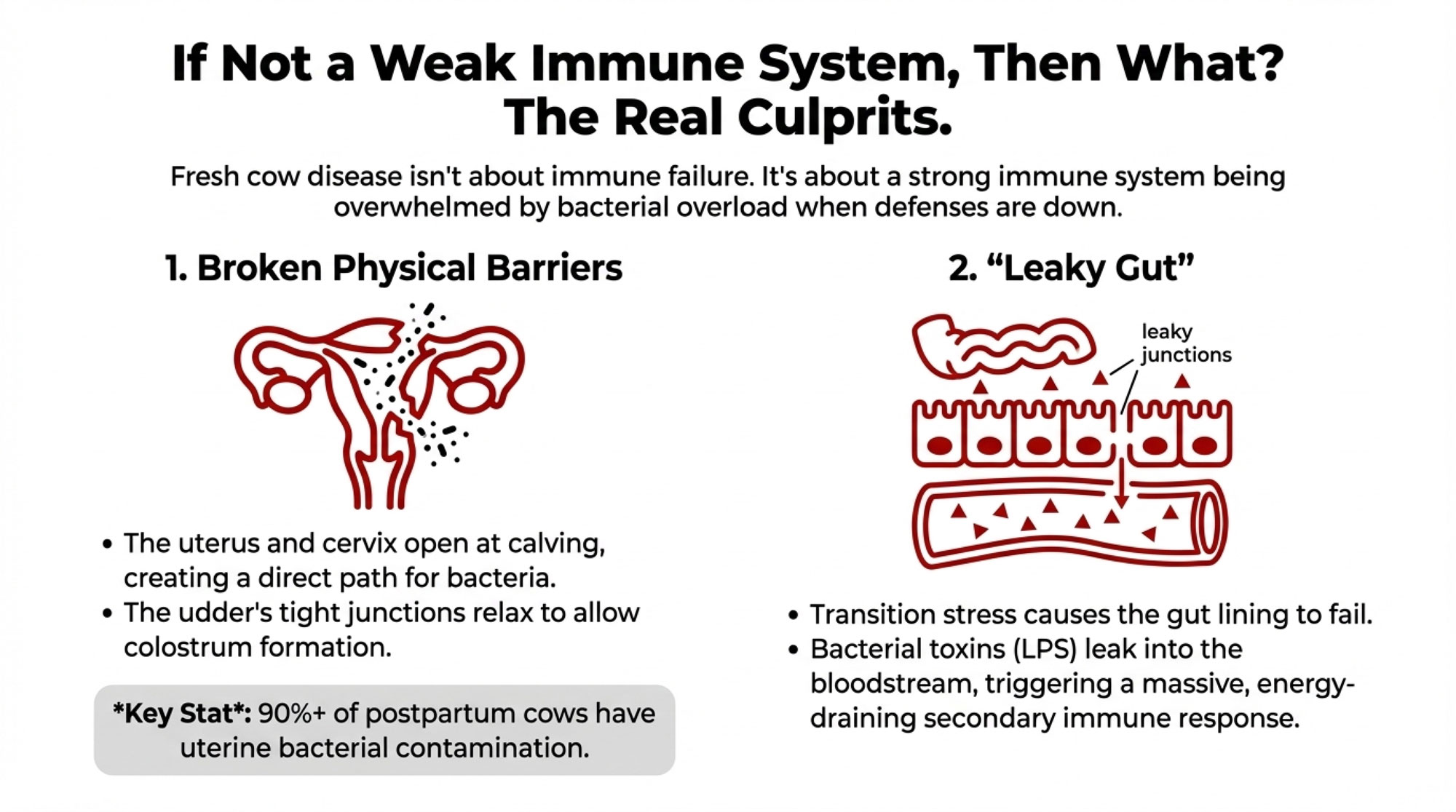
Calving opens the reproductive tract, creating opportunities for bacterial invasion. The cervix dilates, tissues experience trauma, and in retained placenta cases, damaged membranes remain attached to the uterine wall. Meanwhile, the mammary gland relaxes its tight junctions to allow immunoglobulins to enter colostrum.

Work from the University of Florida has documented that bacterial contamination of the uterus occurs in the vast majority of postpartum cows—90% or higher, within the first two weeks. Most cows clear this contamination without developing clinical disease. The difference between cows that stay healthy and those that develop metritis often comes down to bacterial load exceeding the clearing capacity, not immune failure.

The Barrier You Don’t See—Gut Integrity 

While we often focus on the reproductive tract and the udder, there’s a third barrier that can fail during transition: the intestinal lining.

Several research groups have shown that high-grain diets, transition-period stress, and reduced feed intake can disrupt the “tight junctions” in a cow’s gut. When those junctions loosen, lipopolysaccharides (LPS) and other bacterial toxins leak from the digestive tract directly into the bloodstream. If you’ve ever dealt with subacute ruminal acidosis, rapid ration changes, or slug feeding in your close-up or fresh pens, you’ve likely seen some version of this—cows that look “off” without an obvious infection, running low-grade fevers, or just not transitioning the way they should.

Why this matters: This creates a secondary inflammatory response on top of whatever’s happening in the uterus or udder. The cow’s immune system is now firefighting toxins entering through her gut and dealing with bacterial challenges at calving. That dual burden consumes enormous amounts of glucose—energy that should be going toward milk production and tissue repair—further deepening her metabolic deficit and extending her negative energy balance.

Pathogen Dynamics Work Against Us

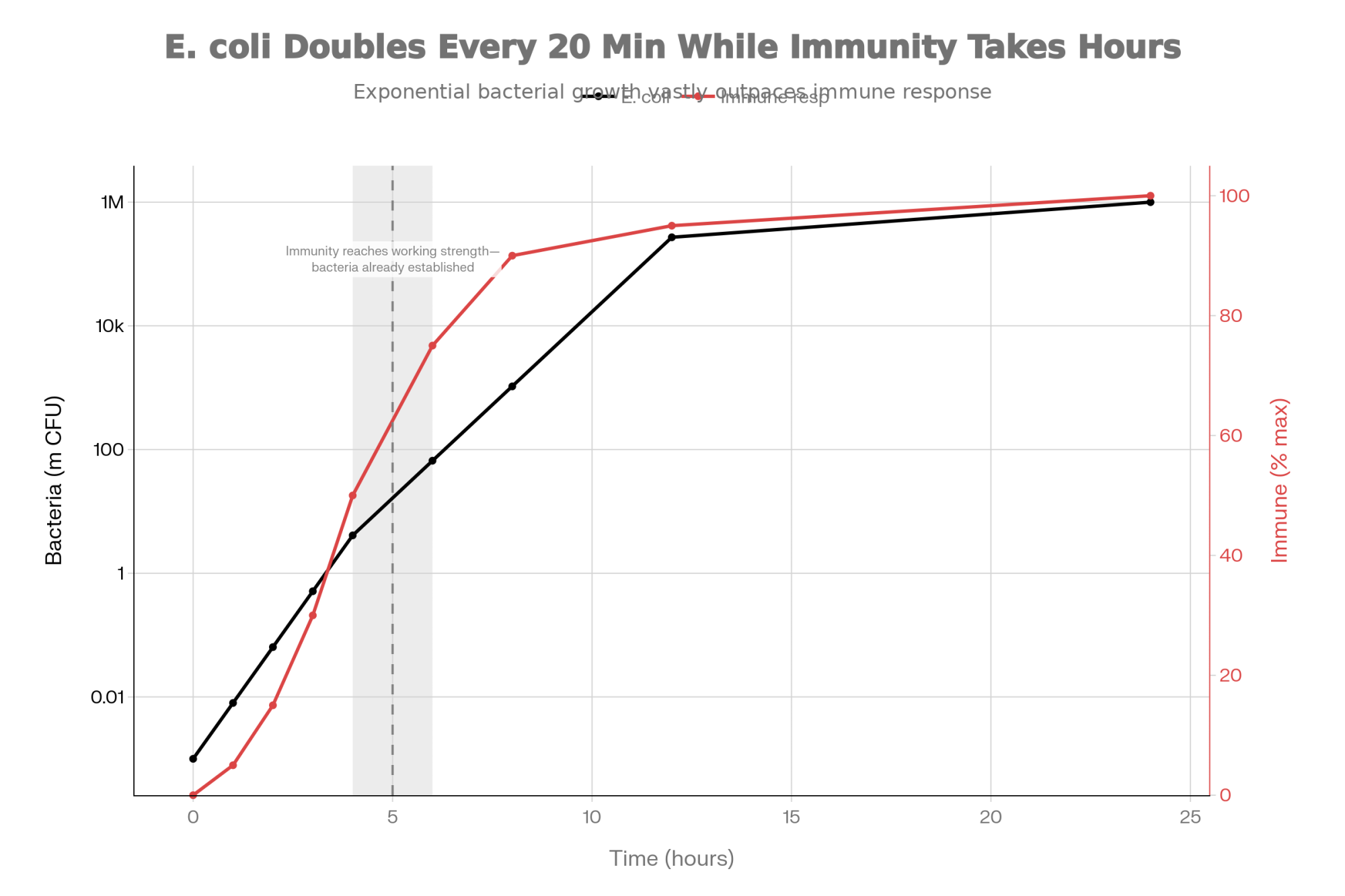
The math here is sobering. E. coli can double its population roughly every 20 minutes under favorable conditions. A small initial contamination can reach tens of millions of colony-forming units within 48 hours. Even a robust immune response is racing against exponential bacterial growth.

Virulence factors matter too. Research has identified specific gene combinations in E. coli—particularly kpsMTII and fimH—that correlate with more severe clinical outcomes. It’s not just bacterial numbers; it’s which strains gain entry.

Timing Creates a Gap

Mounting a full inflammatory response takes hours to reach peak intensity. During that ramp-up, bacteria multiply and establish themselves. By the time the immune system hits full stride, significant tissue damage may already have occurred.

Time (hours)E. coli Population (million CFU)Immune Response Intensity (% max)
00.0010
10.0085
20.06415
30.51230
44.150
66675
81,05090
12270,00095
24>1,000,000100

This timing mismatch explains why early lactation infections often present with greater clinical severity. The immune response isn’t weaker—it’s just working from behind the scenes.

💡 THE BOTTOM LINE: Fresh cow disease isn’t about weak immunity. It’s about: (1) physical barriers being down, (2) bacteria multiplying faster than the immune response can ramp up, and (3) which bacterial strains get in.

The Reproductive Connection

What’s received less attention, but may matter more economically, is how early lactation inflammation affects fertility weeks or months down the road.

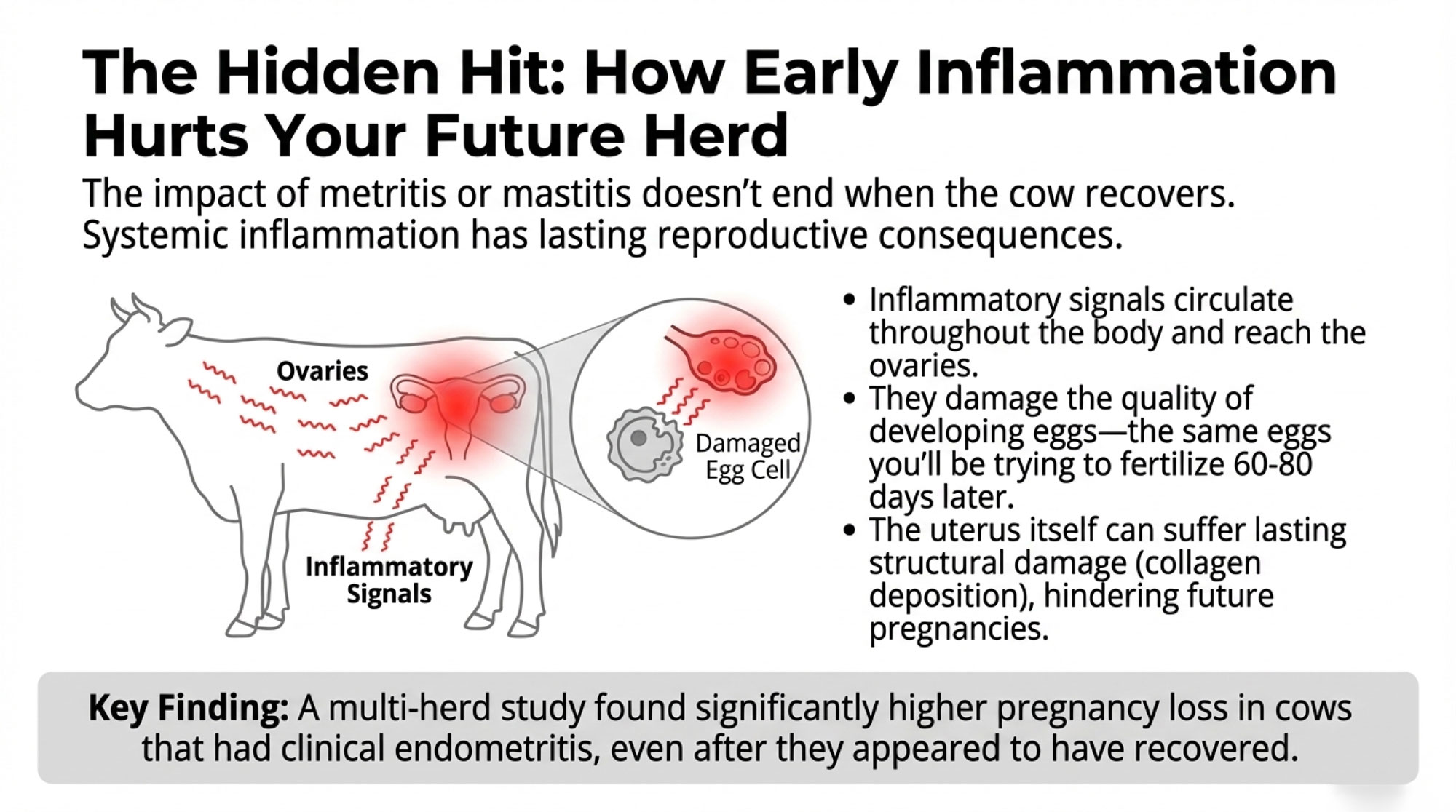
When mastitis or metritis triggers systemic inflammation, those inflammatory mediators circulate throughout the body—including to the ovaries. Research has shown that pro-inflammatory cytokines alter gene expression in granulosa cells, the supportive cells surrounding developing oocytes.

Here’s what that means practically: the eggs you’re targeting at breeding time (60-80 days in milk) began their final development phase weeks earlier. If they developed during a period of systemic inflammation, their quality may be compromised before you ever breed that cow.

A multi-herd study from Argentina tracking over 1,300 lactations found significantly higher pregnancy loss rates in cows that experienced clinical endometritis—even after apparent recovery. These animals conceived but couldn’t maintain pregnancies at normal rates.

Work by researchers at Ghent University in Belgium has documented lasting structural changes in the uterus following metritis—increased collagen deposition and altered tissue architecture—that persist long after clinical signs resolve. This helps explain why treating acute disease doesn’t always translate to improved reproductive outcomes. Antibiotics can clear the infection, but they can’t reverse cellular-level changes that have already occurred.

The Data That Should Change How You Think About Transition Cows

One of the more striking findings I’ve come across involves how differently individual cows handle the transition period—even within the same herd, on the same ration, under identical management.

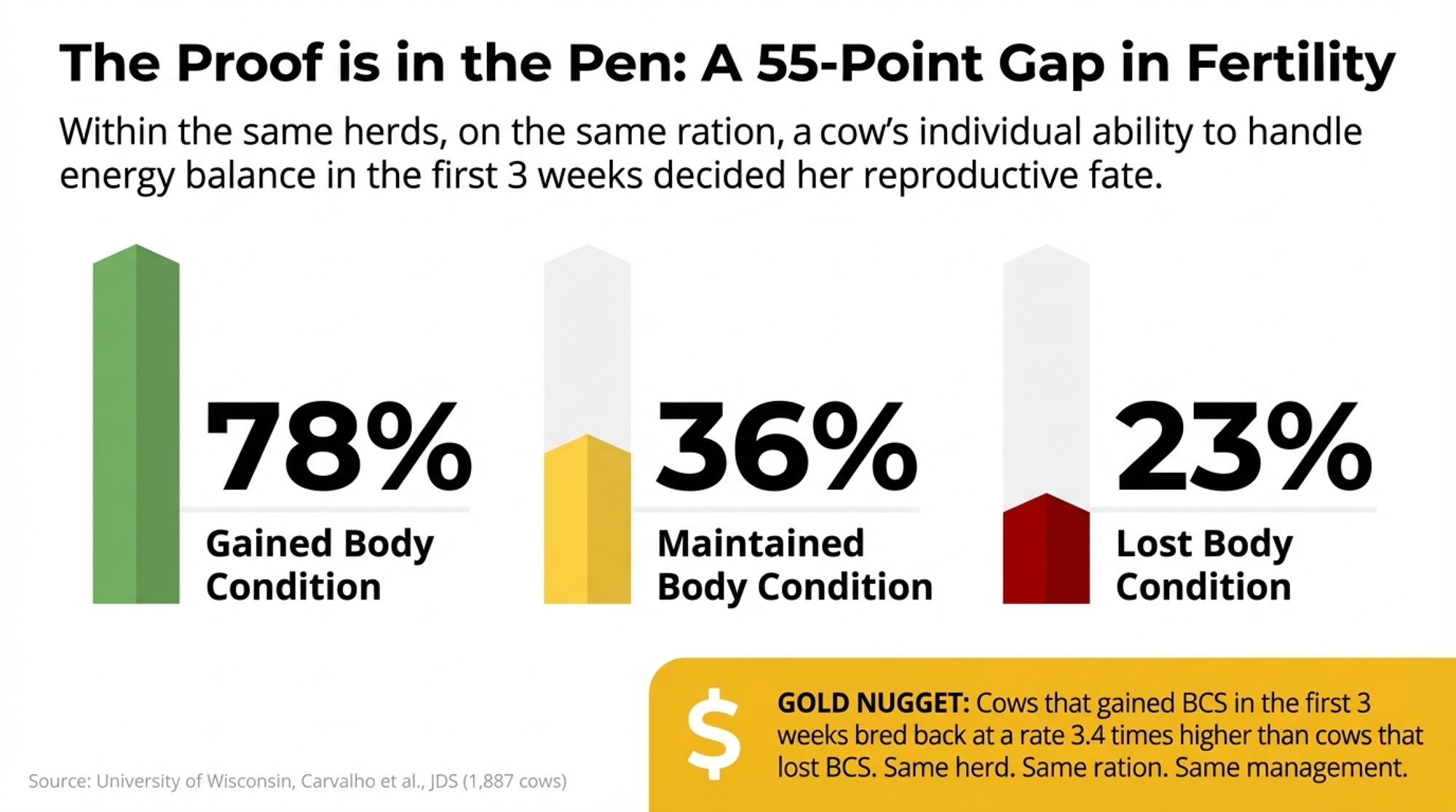
Research from the University of Wisconsin, published by Carvalho and colleagues in the Journal of Dairy Science, tracked body condition changes in 1,887 early-lactation cows. The fertility differences based on energy balance in those first three weeks were staggering:

Body Condition Change vs. Conception Rate (n=1,887 cows)

BCS Change (First 3 Weeks)Number of CowsConception RateRelative Performance
Gained condition42378%Baseline
Maintained condition67536%-54% vs. gainers
Lost condition78923%-70% vs. gainers

Read that again. Same herds. Same management. Same genetics, largely. Same nutrition program. But individual metabolic capacity varied so dramatically that fertility outcomes ranged from 23% to 78%—a 55-percentage-point gap based on how cows handled energy balance in the first three weeks.

💡 GOLD NUGGET: Cows that gained BCS in the first 3 weeks bred back at 78%. Cows that lost BCS? Just 23%. That’s a 3.4× difference in fertility—from the same herd, same ration, same management.

What strikes me about this data is what it suggests about blanket protocols. If some of your cows are cruising through transition while others are metabolically struggling, uniform interventions are going to miss in both directions.

This is where precision monitoring technologies—rumination collars, activity sensors, temperature monitoring—start to make more sense. Cornell University research has demonstrated that automated systems can flag at-risk cows several days before clinical signs appear. Healthy cows typically ruminate 460-520 minutes daily, and meaningful deviations from that baseline often signal trouble before visual observation catches it.

Regional and Seasonal Considerations

It’s worth noting that these dynamics may play out differently depending on where you’re farming and what time of year your cows are calving.

For operations in the Southeast, Southwest, or anywhere summer heat is a significant factor, heat stress during the dry period and early lactation compounds the metabolic challenges fresh cows already face. The same barrier vulnerabilities exist, but cows dealing with heat stress are simultaneously managing additional metabolic strain—which may explain why some operations see seasonal spikes in transition problems that don’t respond to the same interventions that work in cooler months.

Production system matters too. Confinement operations with higher cow density face different pathogen pressure dynamics than seasonal grazing systems where cows calve on pasture. The barrier vulnerability is identical, but exposure levels and bacterial populations differ. A protocol that works beautifully on a Wisconsin freestall dairy may need adjustment for a grass-based operation in Vermont or a large dry-lot facility in California’s Central Valley.

Production SystemPrimary Risk FactorMetritis IncidencePeak Risk PeriodPriority Intervention
Confinement/FreestallHigh pathogen pressure (cow density)12-18%Year-round (worse summer)Bedding hygiene + individual calving pens
Tie-stallModerate pressure, close monitoring8-14%Winter (footing issues)Foothold safety + rapid detection
Seasonal grazingLow pressure, clean pasture calving5-10%Spring (mud/weather)Pasture rotation + shelter
Heat stress regions (SE/SW)Metabolic + immune compromise15-22%May-SeptemberCooling systems + dry period heat abatement

What This Means for Your Operation

So where does this leave us? A few priorities emerge from the research, though I’d be the first to acknowledge that implementation looks different in a 200-cow tie-stall operation in Pennsylvania than in a 5,000-cow facility in the Central Valley.

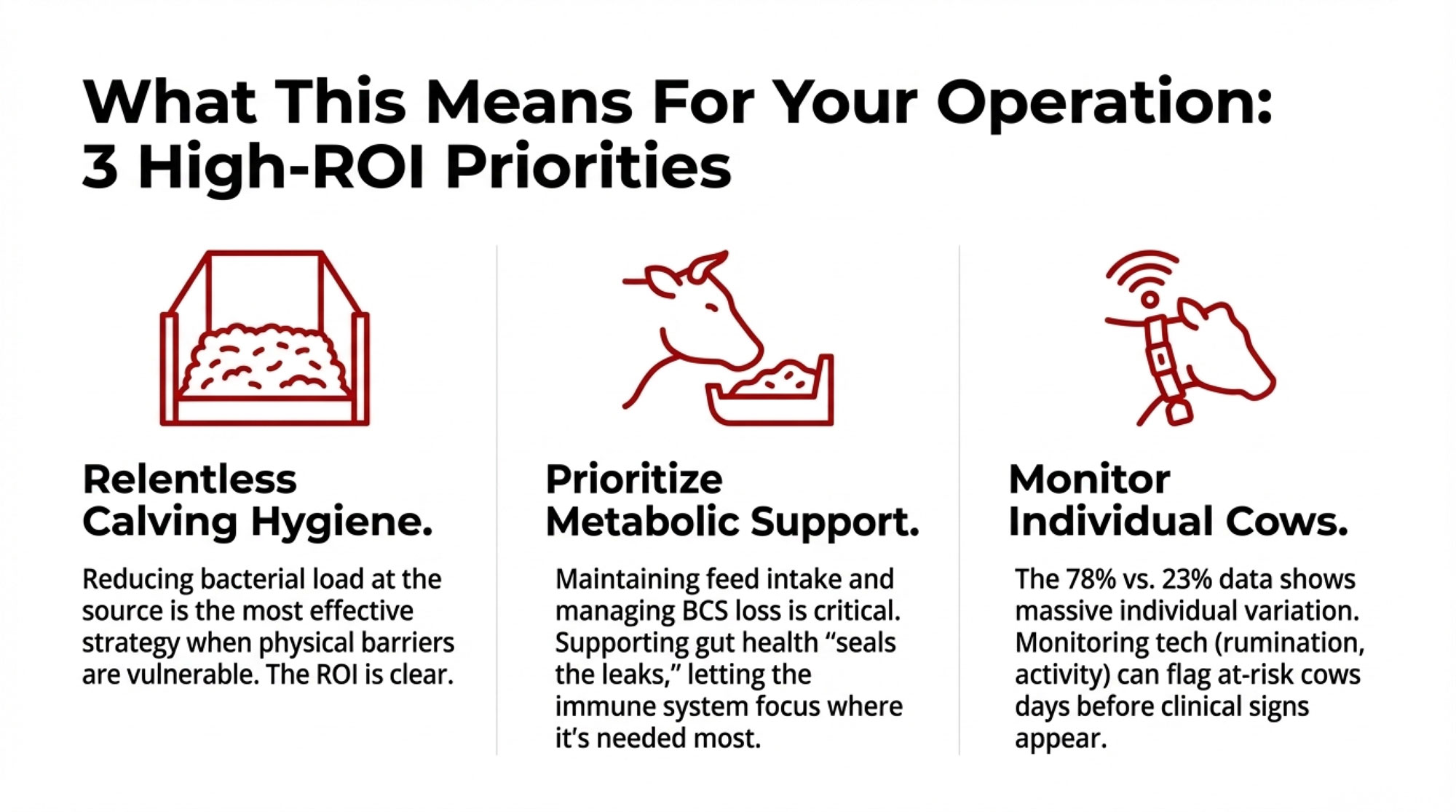
Calving Hygiene: The ROI Is Better Than You Think

If disease susceptibility stems from pathogen exposure during barrier vulnerability rather than immune suppression, then reducing bacterial load at calving becomes paramount.

The practices themselves aren’t new: individual calving spaces where feasible, fresh bedding for each cow, rigorous equipment sanitation, and adequate rest time between animals using the same pen. The research sharpens the economic justification for these investments.

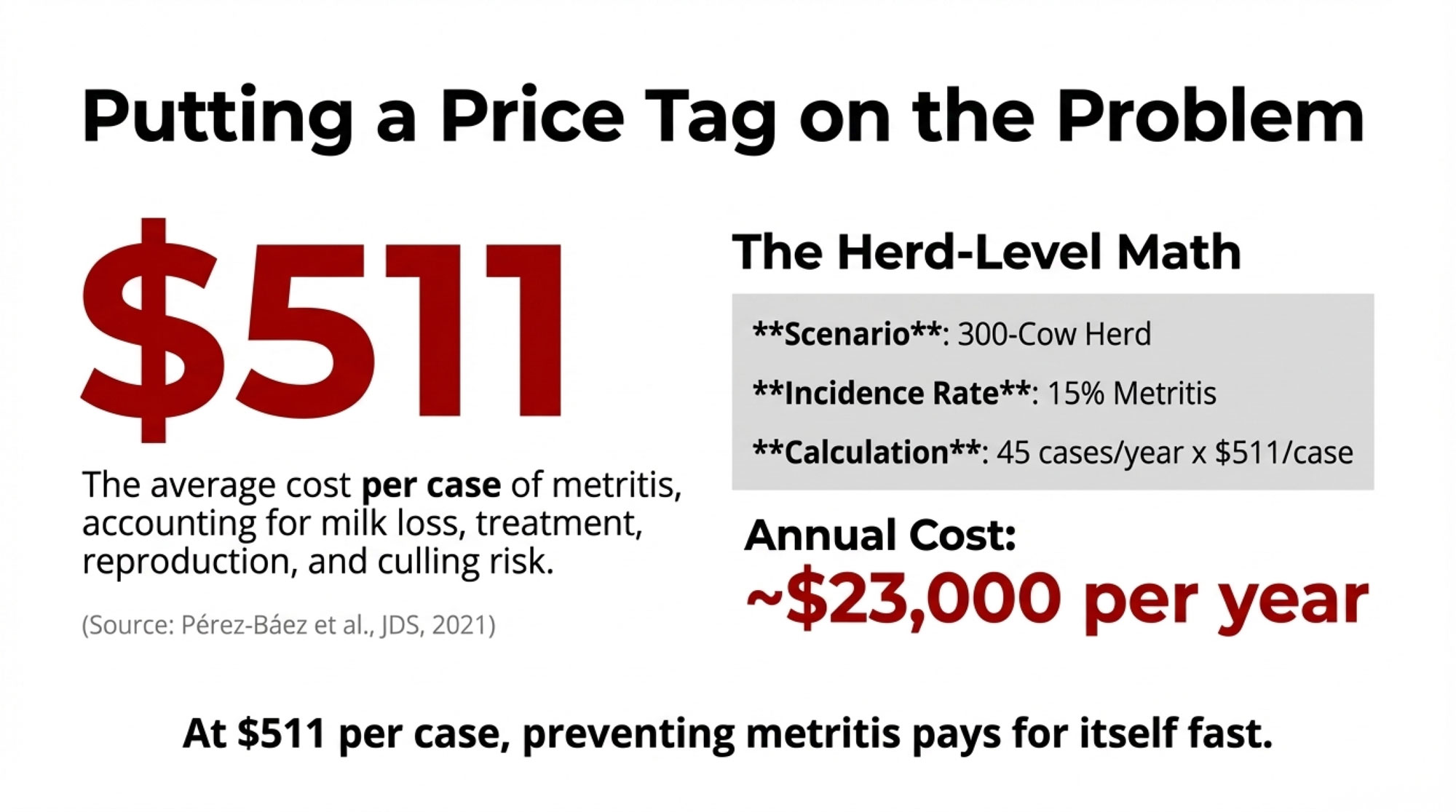
A 2021 analysis by Pérez-Báez and colleagues, published in the Journal of Dairy Science, examined metritis costs across 16 U.S. dairy herds:

Metritis Cost FactorFinding
Mean cost per case$511
Cost range (95% of cases)$240 – $884
IncludesMilk loss, treatment, reproduction, and culling risk

On a 300-cow herd running 15% metritis incidence, you’re looking at 45 cases annually—somewhere in the neighborhood of $23,000 in direct costs before accounting for the fertility tail.

💡 THE BOTTOM LINE: At $511 per case average, metritis is costing a 300-cow herd with 15% incidence roughly $23,000/year. Cutting that rate in half through better calving hygiene pays for itself fast.

Metabolic Support May Matter More Than Immune Boosting

This is where some of the research becomes practically relevant. If the issue isn’t immune suppression, then products marketed primarily for “immune support” may be addressing the wrong problem.

I want to be careful here, because I know plenty of operations report good results with their current transition protocols, including various immune-targeted supplements. Individual variation means some interventions may genuinely help certain cows even if the mechanism isn’t exactly what we thought. And controlled research doesn’t always capture the complexity of commercial conditions.

When we talk about metabolic support, we aren’t just talking about energy—we’re talking about barrier integrity. Some research groups are testing gut-focused tools to help stabilize that intestinal lining during transition. For example, work on Saccharomyces cerevisiae fermentation products (SCFP)—the yeast-based additives many producers already use—suggests they may help maintain tight junction integrity and reduce the inflammatory load from gut-derived endotoxins. Other trials are looking at specific trace mineral forms (like organic zinc or chromium) that support both gut barrier function and glucose metabolism during immune challenges.

These are still being tested and tuned on real farms, but the logic behind them fits what we’re seeing: if you can reduce the “noise” from gut-derived inflammation, the cow’s immune system can focus its resources where they’re needed most—the mammary gland and uterus.

That said, what the research points to is that interventions supporting metabolic function—maintaining feed intake, managing body condition loss, and smoothing dietary transitions—address what the data actually shows is happening.

Intervention StrategyTarget MechanismResearch SupportCost per CowExpected ROIPriority Tier
Calving hygiene upgradeReduces bacterial exposureStrong (observational)$8-153-5× returnTier 1: Essential
Automated health monitoringEarly detection (rumination/activity)Strong (controlled)$150-200/yr2-4× returnTier 1: Essential (>200 cows)
Metabolic support protocolsMaintains intake, reduces BCS lossStrong (mechanistic)$25-402-3× returnTier 1: Essential
Omega-3 (EPA/DHA)Inflammation resolutionModerate (variable)$35-601.5-2× returnTier 2: Consider (high inflammation)
Generic immune boostersUncertain—wrong problem?Weak (conflicting)$40-800.5-1.2× (uncertain)Tier 3: Reevaluate

Dr. Tom Overton at Cornell has emphasized for years that the transition period is fundamentally about managing competing demands for nutrients. The cow is simultaneously supporting immune function, ramping up milk production, and attempting tissue repair—all while she can’t eat enough to cover the energy requirements. Anything that improves intake or metabolic efficiency during this window has cascading benefits.

Inflammation Resolution Is Worth Watching

This is still an emerging area, but early results are worth watching. Omega-3 fatty acids—EPA and DHA from fish oil or algae sources—serve as precursors for what researchers call specialized pro-resolving mediators. These molecules don’t suppress inflammation; they help complete the inflammatory process efficiently, signaling the body to transition from active response into tissue repair.

Earlier work from the University of Florida documented reduced systemic inflammation and modest improvements in reproduction in cows receiving omega-3 supplementation during the periparturient period. Results across subsequent studies have varied with product and dosing, but the biological rationale is sound.

Keeping Perspective

I should acknowledge that this isn’t a settled conversation. Some nutritionists and veterinarians I respect point out that their transition protocols—including products I’ve just suggested—produce consistently good outcomes in client herds. They’re not wrong to trust their experience.

Science advances incrementally. There’s often a gap between what controlled research demonstrates and what works in the messy reality of commercial dairy production. Individual farms vary in pathogen pressure, facility design, genetic base, and management execution. What struggles on one operation may succeed on another for reasons that aren’t immediately apparent.

The value of the emerging research isn’t that it invalidates decades of transition cow wisdom. It’s that it offers a more refined framework for understanding why things work when they do—and for asking better questions when outcomes don’t match expectations.

💡 GOLD NUGGET: The goal isn’t to throw out what’s working. It’s to understand why it works—so you can troubleshoot when it doesn’t.

Three Questions to Ask Your Advisory Team

1. What’s the mechanism? When evaluating any product or protocol, understanding how it’s supposed to work—and whether that mechanism aligns with current understanding—helps separate substance from marketing.

2. How will we measure it? Peer-reviewed research is valuable, but on-farm data from your own herd is more valuable still. If you’re implementing changes, rigorously tracking outcomes actually to know whether they’re helping makes the investment worthwhile.

3. What’s our baseline? Improvement requires knowing where you started. What’s your current metritis rate? Retained placenta incidence? First-service conception rate? These benchmarks make evaluation possible.

The Bottom Line

That Wisconsin freestall operation I mentioned at the start? They eventually brought metritis rates down to single digits—roughly half of where they’d been. The changes that moved the needle weren’t primarily nutritional. They redesigned their calving area, got more rigorous about bedding management, and started using rumination monitoring to flag individual cows showing early warning signs.

Their experience won’t map directly onto every operation. But the underlying approach—reduce exposure, support metabolism, monitor individuals—aligns with where the science seems to be heading.

The conversation around transition cow immunity will continue to evolve. What seems increasingly clear is that the “immune suppression” framework doesn’t fully capture what’s happening. Fresh cows aren’t defenseless; they’re mounting robust inflammatory responses while simultaneously managing enormous metabolic demands. The diseases we see are more likely to result from overwhelming pathogen exposure during barrier vulnerability than from an immune system that’s shut down.

For producers, that shifts focus toward controllable factors: calving environment hygiene, metabolic support strategies, and individual animal monitoring. These aren’t dramatic interventions. They don’t come with splashy marketing. But they address the mechanisms that current research actually supports.

And sometimes, that’s exactly what progress looks like.

Key Takeaways

The emerging picture:

  • Early lactation cows mount robust—even heightened—immune responses, not suppressed ones
  • Fresh cow disease results from overwhelming pathogen exposure during barrier vulnerability, combined with metabolic stress
  • Early lactation inflammation creates downstream reproductive effects that persist for months
  • Individual variation is massive: BCS gainers bred at 78%, BCS losers at just 23%

Practical priorities:

  • Calving hygiene delivers serious ROI—metritis costs average $511/case
  • Metabolic support (feed intake, BCS management) addresses mechanisms that the research supports
  • Individual cow monitoring catches problems before clinical signs appear
  • Regional factors influence how these principles apply on your operation

Questions for your team:

  • What mechanism does this intervention actually address?
  • How will we track whether changes are improving outcomes?
  • Are we capturing enough individual cow data to spot the variation in our herd?

Complete references and supporting documentation are available upon request by contacting the editorial team at editor@thebullvine.com.

Learn More

  • The First 48 Hours: A Manager’s Guide to Fresh Cow Success – Reveals a streamlined management audit to sharpen your fresh cow checks. You’ll gain a high-impact strategy for prioritizing labor where it generates the most ROI, drastically reducing the clinical metritis cases that drain your bottom line.
  • Dairy Economics 2025: The Hidden Cost of Inflammation – Exposes the massive financial drag caused by sub-clinical inflammation. This analysis arms you with the long-term economic strategy needed to shift your focus from treatment to prevention, securing a competitive advantage and a more resilient balance sheet.
  • Genetic Selection for Resilience: Breeding the Cow of the Future – Breaks down how to leverage the newest genetic health traits to bake-in resilience from day one. You’ll gain the insight needed to stop breeding for “milk-only” and start creating a self-sufficient herd that naturally handles the metabolic stress of transition.

The Sunday Read Dairy Professionals Don’t Skip.

Every week, thousands of producers, breeders, and industry insiders open Bullvine Weekly for genetics insights, market shifts, and profit strategies they won’t find anywhere else. One email. Five minutes. Smarter decisions all week.
NewsSubscribe
First
Last
Consent

This Hidden $1,400/Cow Cost Is Killing Profits – Here’s the Fix

What happens when cows actually choose? German researchers tested it—and found $1,400/cow in costs disappeared. Here’s what they discovered.

Executive Summary: Conventional dairy practices are costing you $1,400 per cow annually in hidden losses from regrouping stress, transition disease, and premature culling—costs most farmers don’t even track. German researchers just proved these losses are preventable through an integrated approach: let cows choose their environment, maintain stable social groups, and keep calves with mothers longer. The data are striking: regrouping alone costs $3,400/year in a 500-cow herd, while their approach reduces lameness by 30-40% and produces calves gaining 3+ pounds daily. Implementation means rethinking barn design and investing 18-24 months in learning new management practices, but the returns justify the effort—$400,000-500,000 in annual benefit potential with a 4-6 year payback. With retailers like Walmart already demanding welfare-certified products and the market growing to .4 billion by 2033, early adopters gain a competitive advantage. The bottom line: when cows get choice, hidden costs disappear and everybody wins—especially your profit margin.

You know what caught my attention last week? A group of German agricultural researchers posed a question that’s got me rethinking everything about barn design: What if we actually let cows decide how they want to spend their day?

Prof. Dr. Lisa Bachmann and her team at the Research Institute for Farm Animal Biology in Dummerstorf, Germany, published their findings this fall in the Journal of Dairy Science, and honestly… some of these insights are making me reconsider assumptions I’ve held since I started in this business.

What makes German research distinctive is its integrated design concept, which combines stable family herds, cow-calf contact, free indoor-outdoor movement, and automation—a comprehensive approach documented in their published research. Their design concept maintains stable social groups throughout production, provides genuine barn-and-pasture choice during favorable seasons, and integrates cow-calf contact with automated milking. And here’s what’s really interesting—their research documents how this integrated approach addresses multiple cost drivers simultaneously—regrouping stress, transition disease incidence, and culling patterns—suggesting substantial economic advantages we haven’t really considered before.

Here’s the context that makes this relevant right now. USDA’s latest census shows we’ve gone from 105,250 dairy farms in 2000 to about 31,600 operations today. That’s a 70% drop, folks. So when we’re talking about alternative approaches to dairy infrastructure, we’re no longer just having an academic discussion. For a lot of mid-sized operations—maybe yours—this could be about finding a viable path forward.

The $1,000 Per Cow Opportunity: Conventional dairy systems leak $1,400 annually per cow through hidden stress, disease, and management costs—while welfare-integrated approaches reduce these losses by 71% to just $400 per cow. For a 500-cow operation, that’s $500,000 walking out the barn door every year.

What We’re Learning About Cow Preferences

What’s fascinating is how consistent cow behavior becomes when they actually have choices. Research on grazing behavior shows cows utilizing outdoor areas extensively, particularly during evening and nighttime hours. And get this—their motivation for pasture access rivals their drive for fresh feed. That’s saying something.

I was looking at production research from Ireland the other day, and the lying time data really stood out. Cows with pasture access were averaging about 9.9 hours of daily lying time compared to 9.5 hours for confined animals. Now, you might think, “That’s only 24 minutes, what’s the big deal?” But here’s what’s interesting—those pasture cows had fewer but longer lying bouts. Less getting up and down, more quality rest. You know how much that matters for rumination and production.

“Conservative estimates suggest we’re looking at $1,000-1,400 annually per cow in hidden costs from stress, disease, and management practices we’ve just accepted as normal.”

Marina von Keyserlingk’s animal welfare lab at UBC documented another noteworthy finding: cows with overnight pasture access show significantly more walking activity. And for those of us dealing with lameness issues—which is basically everyone, right?—that natural movement pattern correlates with better hoof health.

Speaking of lameness, research comparing different housing systems shows some pretty dramatic differences. We’re seeing lameness prevalence vary significantly by bedding and housing type, with comprehensive studies documenting reductions of 30-40% in systems incorporating pasture access. Penn State Extension puts lameness costs at around $337 per case. Do the math on that for your herd—it adds up fast.

The Real Cost of Moving Cows Around

Every Time You Move Cows, You’re Burning Cash: Each regrouping event triggers an immediate 8.5% milk production crash and 9% feed intake nosedive. The chaos lasts 3-7 days, and at 5 regroupings per lactation, you’re hemorrhaging $3,400 annually in a 500-cow herd—before you even factor in breeding delays and elevated somatic cell counts.

Here’s something we don’t talk about enough. Most of us regroup cows four to six times per lactation. It’s just… what we do, right? But Daniel Weary’s group at UBC has been quantifying what that actually costs us, and the numbers are sobering.

They’re documenting an immediate 8.5% production drop when you regroup—going from about 95 pounds down to 87 pounds daily. Feed intake drops 9% during that adjustment period. The behavioral chaos lasts 3-7 days. And there’s a clear negative correlation between aggressive interactions and butterfat levels.

So I ran the numbers for a typical 500-cow herd averaging 80 pounds at $20/cwt. Each regrouping event? That’s about $1.36 in lost production per cow. Five times across a lactation, you’re looking at $3,400 in revenue just… gone. And that’s before we even think about what stress does to breeding or somatic cell counts.

The German research proposes maintaining what they call “stable family herds”—basically keeping cows and their offspring together without constant pen changes. Yeah, it means rethinking your entire barn layout and cow flow. But when you add up all these hidden costs? The economics start looking different.

Hidden Costs Summary

Cost CategoryImpact Per Event/Case
Regrouping$6-10/cow per event
Transition disease$125-450/case
Lameness$337/case
Annual total per cow$1,000-1,400

Reconsidering Cow-Calf Contact

I’ll be honest—I’ve always been pretty skeptical about extended cow-calf contact. The colostrum management concerns are real, and disease control matters. But the data coming out of European research institutions is making me think twice.

Norwegian researchers tracking cow-calf systems in automated milking herds are seeing calves achieve average daily gains around 1.4 kg—that’s over 3 pounds a day. That’s beef calf territory, way beyond the 1.25 to 1.9 pounds we typically see with conventional feeding. Research shows that calves with extended dam access consume substantially higher milk volumes than those in conventional feeding programs.

Now, Swedish agricultural research acknowledges these systems can reduce your contribution margin by 1-5%, primarily from milk you’re not selling. Fair point. But here’s what that analysis often misses…

Research indicates significant labor reductions during the calving period when cows manage their own calves. Think about it—no milk replacer costs, no feeding equipment to clean, fewer health treatments. Studies consistently show improved calf health metrics in these contact systems. And for those of us struggling to find reliable calf feeders (which seems to be everyone these days), the labor savings alone might tip the scales.

How Automation Changes Everything

What’s really interesting is how automation is shifting the whole welfare conversation. Michigan State’s recent survey of large dairy farms with robots found something telling: 84.6% cited labor cost reduction as their main reason for automating, but 76.9% also reported improved cow welfare.

“Each regrouping event costs about $1.36 per cow in lost production. Five times across a lactation, you’re looking at $3,400 in revenue just… gone.”

The financials are compelling. University of Wisconsin data shows that operations with robots reduced labor costs from about 8.4% of revenue to 4.4%. That’s a 38-43% reduction in time per cow, with milking-related tasks down 62%.

But here’s what I’ve been noticing during farm visits… Most robot installations are still optimizing the same old confinement model rather than enabling the kind of cow choice that German research suggests could improve both welfare and profitability. Current designs assume conventional freestall housing with standard routing. Want to add real outdoor access? That requires completely different thinking.

Industry experts increasingly acknowledge that while technical solutions exist, our infrastructure tends to reinforce conventional approaches rather than enabling alternatives. Some equipment manufacturers are exploring systems compatible with grazing, especially for markets where that’s standard practice, but North American options remain pretty limited.

Understanding the Full Cost Picture

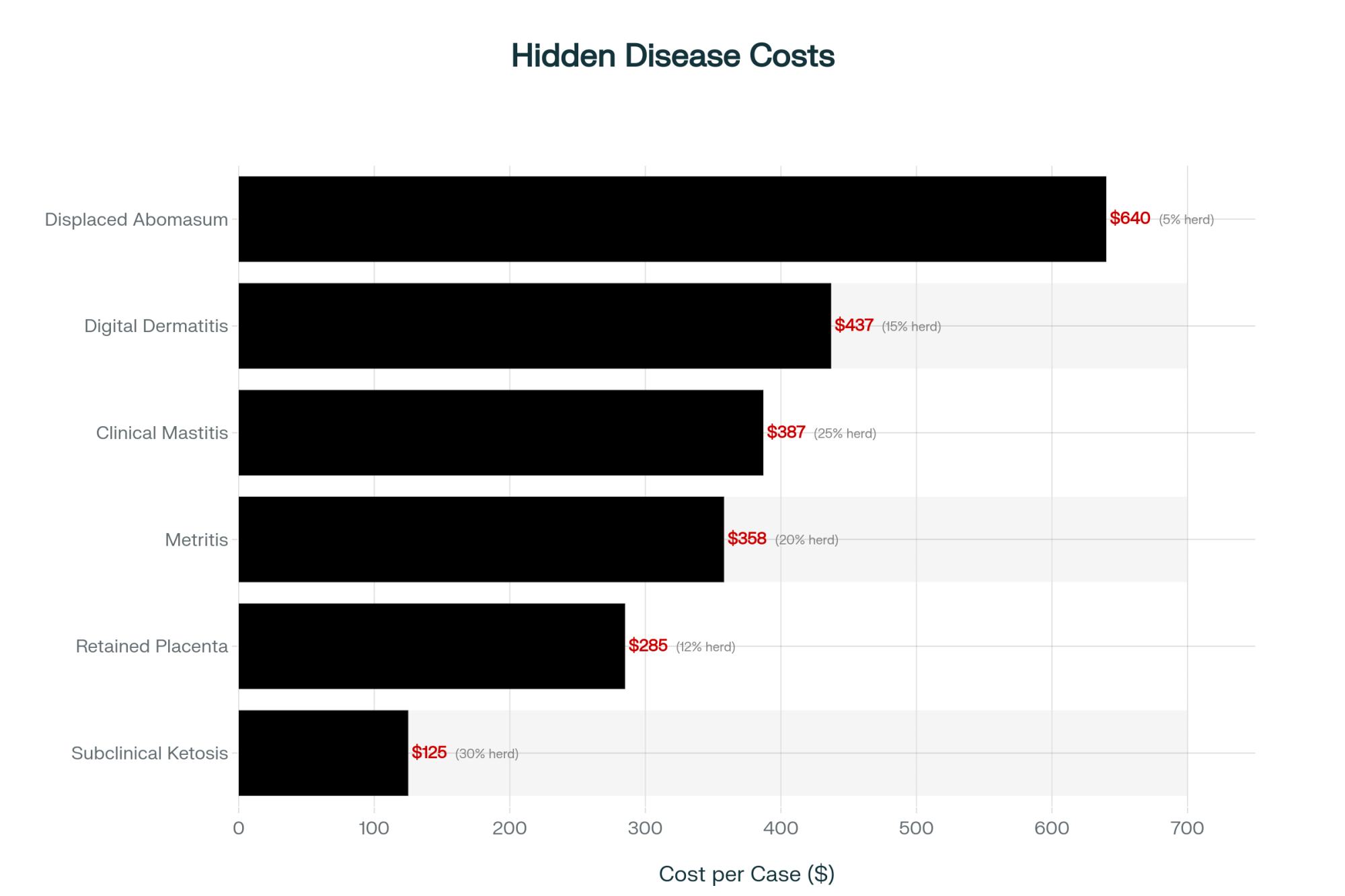
The Disease Tax Nobody Talks About: Every transition disease carries a price tag, but here’s the killer—they don’t come alone. Half your fresh cows deal with multiple conditions, compounding to $600-900 per affected animal. Subclinical ketosis hitting 30% of your herd at $125/case? That’s just the entry fee. Welfare-integrated systems cut these rates in half. Your call.

Recent research on dairy economics has been eye-opening about costs we usually don’t track properly:

You know transition cow challenges—nearly half of fresh cows deal with some metabolic issue. Subclinical ketosis alone runs about $125 per case based on recent studies. Clinical mastitis? USDA data puts it at $325-450 per case, with 71% of those costs from lost production, not treatment.

Lameness economics are brutal. Penn State’s research shows an average of $337 per case, with each additional week adding about $13. Digital dermatitis typically runs almost $100 more than other lameness causes. And here’s what really gets me—research consistently shows lameness hammering fertility, with reproduction-related costs representing a huge chunk of the total economic hit.

Then there’s culling and replacement. Canadian dairy industry data shows turnover at 35-40%, with replacement costs of $2,500-3,500, depending on where you are. Lose a cow before her third lactation? You never recover that rearing investment.

Add it all up, and conservative estimates suggest we’re looking at $1,000-1,400 in hidden costs per cow annually from stress, disease, and management practices we’ve just accepted as normal. That’s… that’s a lot of milk checks.

MetricConventional SystemWelfare-Integrated SystemNet Difference
Annual Cost Per Cow$1,400 hidden losses$400 reduced losses$1,000 savings/cow
Regrouping Events/Lactation4-6 times0-1 times4-5 fewer events
Lameness Prevalence20-25%12-15% (-40%)-40% cases
Lameness Cost Impact$337/case × 100+ cases$337/case × 60 cases~$13,500 savings
Transition Disease Rate~50% of fresh cows~25% of fresh cows-50% incidence
Calf Daily Gain (lbs)1.25-1.9 lbs3+ lbs+1+ lb improvement
Average Culling Rate35-40%22-25% (-35%)-13-15% points
Replacement Cost$2,500-3,500/cow$2,500-3,500/cowEarlier ROI
Labor Cost (% of revenue)8.4%4.4%-48% labor
Milk Production StabilityHigh variabilityMore consistentImproved flow
Veterinary CostsBaseline-30 to -35%$35K+ savings
Total Herd Cost (500 cows)$700,000 in losses$200,000 in losses$500,000 annual gain

Thinking About Infrastructure Investment

The German team’s estimates for welfare-integrated systems suggest substantially greater capital investment than conventional designs—we’re talking significant money here, potentially thousands of dollars per cow.

The Math That Changes Everything: Drop $1.5M on a welfare-integrated barn design and conventional wisdom says you’re crazy. But here’s what actually happens—you break even in 4-6 years, then bank $400K+ annually for the next decade. Total 15-year gain? Over $4 million. Meanwhile, “efficient” conventional operations keep bleeding that $1,400/cow every single year. Do the math

But let’s think through the returns. If these systems prevent even $800-1,000 annually in disease, stress, and culling losses, a 500-cow operation could see $400,000-500,000 in annual benefit. Finance that over 15 years at 6%, you’re looking at $200,000-300,000 in debt service, potentially leaving $150,000-250,000 in improved cash flow. That suggests a 4-6 year payback. I’ve seen producers jump on automation for returns that are less attractive than that.

Practical Implementation Thoughts

Based on conversations with producers who’ve made changes, here’s what seems to work:

Start with what you can control. You don’t need to revolutionize everything overnight. Several operations I know in Wisconsin started simple—adding outdoor access areas, reducing regrouping frequency, and trying modified calf management in just one pen.

Really assess your existing setup. Retrofitting current facilities for genuine cow choice is way harder than building it in from the start. If you’re already planning major construction or renovation? That’s your opportunity.

Think carefully about your market position. Nielsen’s 2023 consumer research documented a 57% increase in certified animal welfare products after mainstream retailers began stocking them. There’s a real differentiation opportunity, but you need to know what your milk buyer values.

And budget time for the learning curve. Managing pasture systems, cow-calf contact, stable herds—it’s different than running conventional confinement. Most folks find it takes 18-24 months to really develop the new management skills.

Regional Considerations

One thing the German research doesn’t fully address—and it matters here—is our climate variability. What works in temperate Germany needs adaptation for Arizona heat or Manitoba winters.

I’ve been hearing about different regional approaches. California researchers are testing shade and cooling for outdoor areas in hot climates. Canadian institutions are exploring winter paddock designs that maintain choice even in extreme cold.

In the upper Midwest, some producers are trying hybrid approaches—outdoor access during good weather, modified grouping strategies for winter housing. It’s not the full German model, but they’re seeing meaningful improvements in lameness and culling.

“Lose a cow before her third lactation? You never recover that rearing investment.”

Some producers implementing partial modifications report that eliminating regrouping practices resulted in substantial reductions in veterinary costs, though they acknowledge the learning curve was steep initially. I’ve heard of operations documenting 30-35% drops in vet bills after making these changes, though everyone admits it takes time to figure out the new management approach.

Looking Ahead

The $3.4 Billion Question: While most producers debate whether to adopt welfare practices, the certified animal welfare market is exploding—growing 183% to $3.4 billion by 2033. Early adopters positioning now will capture premium pricing before this becomes table stakes. Wait until mainstream adoption, and you’re just playing catch-up at commodity margins.

The consolidation trend isn’t slowing. Industry projections show substantial portions of milk production shifting to larger operations in the coming years. For mid-sized farms—those 200 to 1,000 cow operations that are the backbone of many regions—the traditional “get big or get out” message feels pretty heavy.

But this research illuminates other paths. The animal welfare certification market reached $1.2 billion in 2024 and is projected to reach $3.4 billion by 2033, according to Grand View Research (https://www.grandviewresearch.com). Major retailers like Walmart and Kroger have made procurement commitments for certified products. That’s creating a genuine market opportunity for differentiated producers.

Plus, emerging climate regulations are going to reshape the economics. Canada’s carbon framework for agriculture and similar U.S. initiatives will likely favor systems with greater efficiency, enhanced pasture management, and lower replacement rates.

What Producers Are Finding

Producers implementing modified approaches report interesting results. After dealing with steep learning curves around cow flow and grazing management, many are seeing veterinary costs drop significantly, labor requirements decrease, and production metrics improve—outcomes that surprise even them.

Others are taking different approaches, like maintaining limited cow-calf contact as a workable compromise between calf health improvements and milk sales. The key seems to be adapting concepts to specific circumstances rather than trying to copy someone else’s system exactly.

There’s no universal template here. Each operation needs to evaluate how these concepts might work with their unique combination of facilities, labor, markets, and management style.

The Bottom Line: Your Hidden Costs

When you factor in:

  • Regrouping losses: $3,400/year for 500 cows
  • Transition diseases: 50% of fresh cows are affected
  • Lameness: $337/case at 15-20% prevalence
  • Premature culling: Never recovering $2,500-3,500 investment

You’re losing $1,000 to $ 1,400 per cow annually in preventable costs.

Quick Takeaways for Action

Looking at all this research, here’s what you can start doing today:

  • Calculate your hidden costs: Track regrouping frequency, transition disease rates, and culling patterns for three months
  • Test small changes: Pick your highest-stress group and eliminate one regrouping event
  • Explore market premiums: Contact your milk buyer about welfare certification opportunities
  • Visit operations making changes: Nothing beats seeing these systems in action
  • Budget for learning: Any system change requires time—plan for it

Making Sense of It All

After really digging into this research, here’s what stands out to me:

The economics are way more complex than simple comparisons suggest. When you account for regrouping losses, disease costs, premature culling, and genetic potential that never gets expressed, conventional systems carry substantial hidden costs. Alternative approaches could meaningfully reduce those expenses.

Consumer expectations keep evolving. When certified products reach mainstream retail with clear differentiation, sales respond. That’s not a trend—it’s market reality.

Technology can enable choices. Current automation typically optimizes confinement, but alternative technical solutions exist. It’s more about design philosophy than technical barriers.

The transformation already underway creates both risk and opportunity. As margins compress and consolidation accelerates, differentiation becomes increasingly valuable. Whether you pursue commodity efficiency or welfare premiums—that’s a fundamental strategic decision.

And here’s the thing—the knowledge exists right now. The research has been published, the designs are documented, and the technical specifications are available. The question isn’t whether these systems work. It’s how they might fit your specific situation.

Looking at where we’re headed, understanding these alternatives becomes crucial for planning. This German research reminds us that innovation sometimes comes from questioning our basic assumptions.

The path forward varies by operation. A 5,000-cow facility in New Mexico operates under different constraints than a 200-cow farm in Vermont. But having genuine options—economically viable alternatives to consider—that’s what gives us flexibility to build operations aligned with our goals, values, and circumstances.

Maybe the question isn’t whether we can afford to implement such changes. Given the hidden costs already embedded in our operations and where markets are heading… maybe we should be asking: What’s the cost of not exploring these possibilities?

That answer will likely shape the next generation of dairy farming. And honestly? When cows get to make choices, it turns out everybody might win—including our bottom line.

Complete references and supporting documentation are available upon request by contacting the editorial team at editor@thebullvine.com.

Learn More:

The Sunday Read Dairy Professionals Don’t Skip.

Every week, thousands of producers, breeders, and industry insiders open Bullvine Weekly for genetics insights, market shifts, and profit strategies they won’t find anywhere else. One email. Five minutes. Smarter decisions all week.
NewsSubscribe
First
Last
Consent

Spring Profit Surge: How Top Dairy Producers Maximize Seasonal Advantages

Spring’s volatile weather and transition challenges can crush profits—or become your dairy’s biggest competitive advantage. Here’s how to choose wisely.

Spring dairy management, transition cow health, rotational grazing, milk fat depression, dairy farm profitability

Spring on a dairy farm is like that perfect storm of opportunity and challenge. I was talking with a producer friend in Wisconsin last week who called it his “make or break season” – and he’s right. Those decisions we make when the snow melts don’t just impact April and May – they set the trajectory for the entire year.

Think about it – while everyone’s excited about lush pastures and fresh calvers hitting peak milk, we’re also juggling those crazy temperature swings, transition cow metabolic challenges, and trying to be in three places simultaneously with calving, field prep, and pasture management. It’s no wonder the top producers I know treat spring like their Super Bowl!

Why Spring Management Makes or Breaks Your Dairy’s Yearly Profit

Let me tell you something I’ve seen repeatedly on farms across the country – the dairies that crush it financially aren’t necessarily the ones with the fanciest parlors or the most cows. They’re the ones that nail their spring transition period and turn those seasonal challenges into competitive advantages.

I remember visiting a 120-cow grazing operation in Pennsylvania last year. The owner showed me his records – he’d cut metabolic disease rates by 40% compared to previous years simply by adjusting his spring protocols. That translated to higher peaks, better reproduction, and about $175 more profit per cow annually. All from decisions made during those critical spring weeks!

When we drop the ball during spring transition, those mistakes haunt us for months. A cow that crashes with ketosis in April might never reach her genetic potential, breed back late, and end up on your cull list by fall. That’s why I’m convinced that mastering spring management is your biggest profit opportunity of the year.

Crush Transition Challenges: How Top Herds Cut Metabolic Risks by 40%

If there’s one thing I’ve learned working with hundreds of dairy producers, it’s that transition cow management separates the good from the significant operations. Those 90 days (60 pre-calving through 30 post-calving) represent your highest-risk, highest-reward management window.

Don’t Let Spring’s Mood Swings Sabotage Your Transition Cows

Have you noticed how spring weather seems explicitly designed to mess with transition cows? One day, it’s 70°F and sunny; the next day, it’s 40°F, and it rains sideways. Research shows these fluctuations hit transition cows particularly hard.

When cows get caught in cold spring rain, they spend less time lying down and more time standing – precisely what we don’t want for a fresh cow. They also ramp up rumination to generate body heat, burning precious energy that should support milk production or fetal growth.

Here’s the kicker – these environmental stressors pile on top of the metabolic challenges these cows are already facing. A cow that can’t rest properly has compromised immune function. When she’s burning extra energy and staying warm, she dives deeper into negative energy balance. It’s a perfect recipe for metabolic train wrecks.

Transition Cow Health Benchmarks

MetricTarget IncidenceAlarm Rate
Clinical Milk Fever25%0.3% = $12/cow/day Loss. Act Fast!

Here’s something I see every spring – farms transitioning to pasture watch their milk fat percentage drop by 0.3-0.5% during the second and third grazing rotations (3-9 weeks after turnout). This milk fat depression happens because spring grass has low structural fiber, high sugar content, and high unsaturated fatty acids that disrupt normal rumen biohydrogenation.

While MFD threatens your milk check, there’s a fascinating flip side. The same pasture changes improve your milk’s fatty acid profile, increasing beneficial unsaturated fatty acids (omega-3s and CLA) while decreasing saturated fats. Spring grass’s high protein content may also boost milk protein percentage, which is great for cheese yield. You’ll also see increases in antioxidants and vitamins like beta-carotene (giving that gorgeous yellow color) and Vitamin E.

U.S. Milk Yield Trends

YearAvg. Milk/Cow (lbs)Herd Size (million)
200018,1979.2
202023,7779.4

Farm A’s $7,000 MFD Loss vs. Farm B’s 12% Milk Premium from CLA-rich Milk

I recently compared two neighboring farms with similar herd sizes and genetics. Farm A experienced severe MFD during spring turnout, losing about $7,000 in milk check premiums. Meanwhile, Farm B maintained components and secured a 12% premium for their CLA-rich milk through a specialty processor.

The difference? Farm B implemented these strategies:

  • Strategic buffer feeding alongside pasture access to stabilize the rumen environment. They provided effective fiber sources and slower-fermenting carbohydrates.
  • Optimized grazing management by ensuring cows entered paddocks with adequate pre-grazing covers (minimum 1600 kg DM/ha) to provide more mature, higher-fiber forage. They also implemented a gradual transition onto pasture over 2-3 weeks.
  • Targeted supplements like sodium bicarbonate and specific yeast products stabilized rumen pH while limiting polyunsaturated fatty acids from other feed sources.
  • Monitored aggressively – they tracked milk fat percentage daily and had intervention protocols ready at the first sign of trouble (any drop exceeding 0.3%).

Leveraging Positive Composition Shifts

⬆️ Omega-3s = Premium Pricing | ⬇️ Saturated Fats = Health-Conscious Buyers

The smartest producers I know don’t just prevent MFD – they actively capitalize on pasture’s positive effects on milk composition:

  • They maximize component value in markets that pay for it by maintaining fat percentage while supporting high milk yield through optimizing rumen VFA production.
  • They boost protein production by ensuring cows have adequate energy to effectively utilize spring pasture’s high protein levels.
  • They capture “grass-fed” premiums by marketing the documented improvements in fatty acid profiles and vitamin content to processors looking for these attributes.

The Spring Efficiency Overhaul: Prevent Equipment Failures Before They Cost You

Let me share a painful lesson I learned early in my career. I postponed fan maintenance one spring because we were “too busy.” Then, a June heat wave hit, and three fan motors burned out simultaneously. We lost about 8 pounds of milk per cow for nearly a week – a $4,000 mistake I never repeated!

5 Costly Spring Mistakes: Delayed Fan Maintenance = 18% Milk Drop During Heatwaves

Preventative maintenance isn’t sexy, but it’s incredibly profitable. Your spring checklist must include:

  • Tractors and field equipment – Check all fluids and filters, inspect engine components, verify proper tire inflation, grease all fittings, and ensure safety features work correctly. I’ve seen planting delayed by days because of simple maintenance issues that could have been addressed in March.
  • Milking system components – Inspect and replace rubberware based on your usage schedule, check pulsator function, calibrate automatic detergent systems, and verify wash cycle temperatures consistently exceed 122°F. A friend tracks every liner change on a whiteboard in the parlor – simple but effective.
  • Cooling and ventilation – Thoroughly clean fan blades, housings, and shutters. Did you know dirty fans lose up to 40% of their airflow capacity? Check for bearing wear, verify proper air velocity (target ~5 mph at cow level), and test soaker systems for nozzle function and timing.
  • Facility infrastructure – Inspect barn structures for winter damage, clean and maintain water systems, prepare feed storage areas, and repair fencing and laneways before intensive use begins.

The timing of this maintenance is strategic – doing thorough checks before the summer heat and intense forage harvesting prevents critical failures when these systems are most essential, and your labor is most stretched.

Master the Spring Labor Crunch: Scheduling Strategies That Save Hours and Dollars

Spring represents peak labor demand for most dairy operations. This “labor crunch” is particularly acute for seasonal-calving farms, where calving, fresh cow management, pasture setup, and fieldwork converge.

How Much Spring Cash Are You Leaving in the Pasture?

The most efficient operations I work with leverage multiple strategies:

  • Scheduling technology – Tools like Deputy or When I Work streamline schedule creation, communicate assignments directly to phones, facilitate quick adjustments and track time for accurate payroll. One 400-cow dairy I work with estimates they save 5 hours of management time weekly just from better scheduling.
  • Workflow optimization – Analyze where your time goes. Typically, milking and calf care are the biggest time sinks during spring. Where possible, implement labor-saving technologies like automatic cluster removers, efficient exit gates, and automatic calf feeders.
  • Strategic outsourcing – Research shows contracting key tasks can significantly reduce daily labor requirements – up to 5.6 hours/day from outsourcing milking and 2.7 hours/day from outsourcing calf rearing. I’ve seen farms successfully contract everything from relief milking to manure hauling during peak periods.
  • Human resource best practices – Invest in comprehensive training explaining how and why tasks should be performed. Define clear performance expectations, empower employees with appropriate decision-making authority, and implement sustainable work schedules with adequate breaks.

Spring Success Metrics: The Numbers That Separate Average from Elite Dairies

I’m a big believer in “what gets measured gets managed.” Tracking key performance indicators provides critical feedback on your spring management effectiveness.

Transition Health and Reproduction KPIs

Focus on disease incidence rates in fresh cows (milk fever 25%), first service conception rate (target >40%), heat detection rate (target >65% in 21-day cycles), and days open (target <110-120 days).

Pasture Productivity Metrics

Monitor pasture growth rate, average pasture cover, pre- and post-grazing heights, and utilization efficiency for grazing operations. Calculate milk production from forage to quantify the economic benefit of your grazing system.

Production and Financial Benchmarks

Track milk yield, components, and quality (SCC target <150,000 cells/mL). Calculate Income Over Feed Cost daily to evaluate feeding program profitability and monitor labor efficiency through metrics like milk sold per worker and labor cost per hundredweight.

Your Spring Profit Toolkit: Ready-to-Implement Checklists and Templates

Let’s get practical. Here are the tools I share with producers to execute their spring profit surge plan:

Comprehensive Spring Management Checklist

This customizable checklist covers key actions across all management areas:

  • Daily transition cow monitoring protocols
  • Pasture readiness and turnout assessment guides
  • Nutrition adjustment schedules for spring conditions
  • Preventative maintenance timing and procedures
  • Labor allocation and scheduling templates

Spring Labor Scheduling Framework

Optimize your labor allocation with this structured approach:

  1. Task Inventory & Time Budgeting: List all spring tasks with estimated time requirements
  2. Labor Availability Mapping: Chart available labor hours from all sources
  3. Prioritization Matrix: Categorize tasks based on urgency and importance
  4. Scheduling & Allocation: Match prioritized tasks with available labor
  5. Contingency Planning: Identify bottleneck periods and develop backup strategies

The Bottom Line: Your Spring Management Advantage

I’ve walked hundreds of dairy farms across the country, and I can tell you with absolute certainty – spring’s challenges represent your greatest opportunity for competitive advantage. The producers who consistently outperform their peers aren’t necessarily the ones with the most resources; they’re the ones who approach spring with comprehensive planning, integrated systems, and meticulous attention to detail.

Think about it – what area represents your operation’s biggest opportunity for improvement this coming season? Is it transition cow management? Pasture utilization? Milk composition? Preventative maintenance? Labor optimization? Identifying your priority focus and implementing these strategies could be the difference between an average year and your most profitable one.

So, what’s your spring profit surge strategy going to be?

KEY TAKEAWAYS

  • Transition cow success hinges on maximizing DMI (targeting 26+ lbs/day for multiparous cows), providing adequate space (30 inches bunk space), and creating low-stress environments for spring’s variable weather conditions.
  • Strategic pasture management requires precise turnout timing based on leaf stage and soil conditions; frequent paddock moves (every 12-24 hours during rapid growth) and maintaining proper post-grazing residuals (4-5cm for ryegrass) to maximize utilization.
  • Spring’s unique pasture composition often causes milk fat depression (0.3-0.5% drops). Still, it can be prevented through buffer feeding, gradual transition, and monitoring while capitalizing on beneficial fatty acid profile changes for potential premium markets.
  • Preventative maintenance conducted in spring (particularly on cooling systems, milking equipment, and field machinery) prevents costly breakdowns during summer’s peak heat stress period when system reliability becomes critical.
  • Implementing a structured labor management approach—combining scheduling technology, workflow optimization, strategic outsourcing, and employee empowerment—can significantly reduce spring’s labor crunch while maintaining operational excellence.

EXECUTIVE SUMMARY:

Spring represents a critical inflection point for dairy profitability, where management decisions during this volatile season cascade throughout the entire production year. The comprehensive guide outlines strategic approaches to five key areas: transition cow management (reducing metabolic disease risks by up to 40%), rotational grazing optimization (increasing forage utilization by 35%), preventing milk fat depression while capitalizing on beneficial fatty acid profiles, conducting preventative maintenance before summer heat stress, and implementing labor efficiency strategies during peak workload periods. By integrating these research-backed practices with systematic performance monitoring through specific KPIs, producers can transform spring’s unique challenges into a distinct competitive advantage that less-prepared operations miss, ultimately driving higher profitability throughout the year.

Join the Revolution!

Join over 30,000 successful dairy professionals who rely on Bullvine Daily for their competitive edge. Delivered directly to your inbox each week, our exclusive industry insights help you make smarter decisions while saving precious hours every week. Never miss critical updates on milk production trends, breakthrough technologies, and profit-boosting strategies that top producers are already implementing. Subscribe now to transform your dairy operation’s efficiency and profitability—your future success is just one click away.
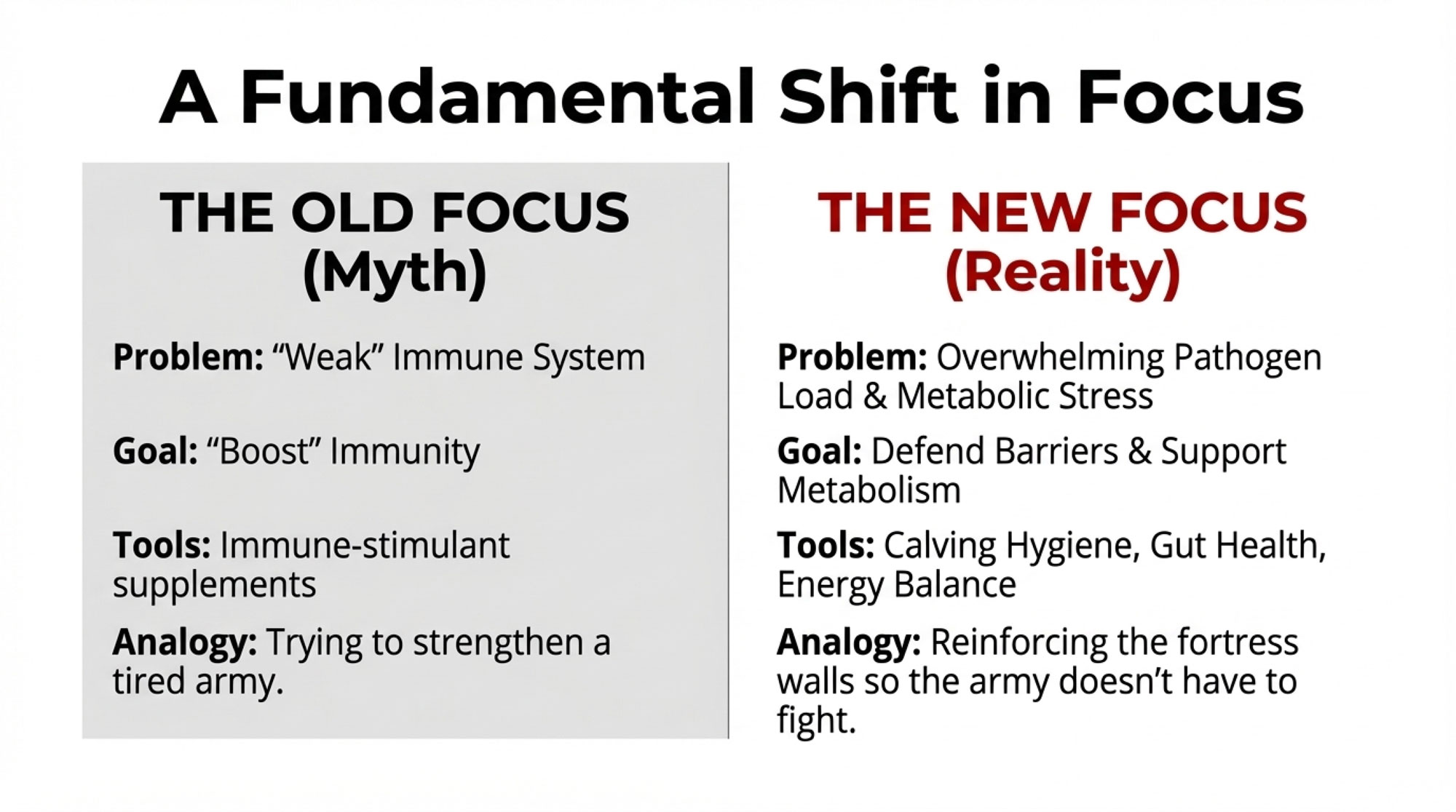
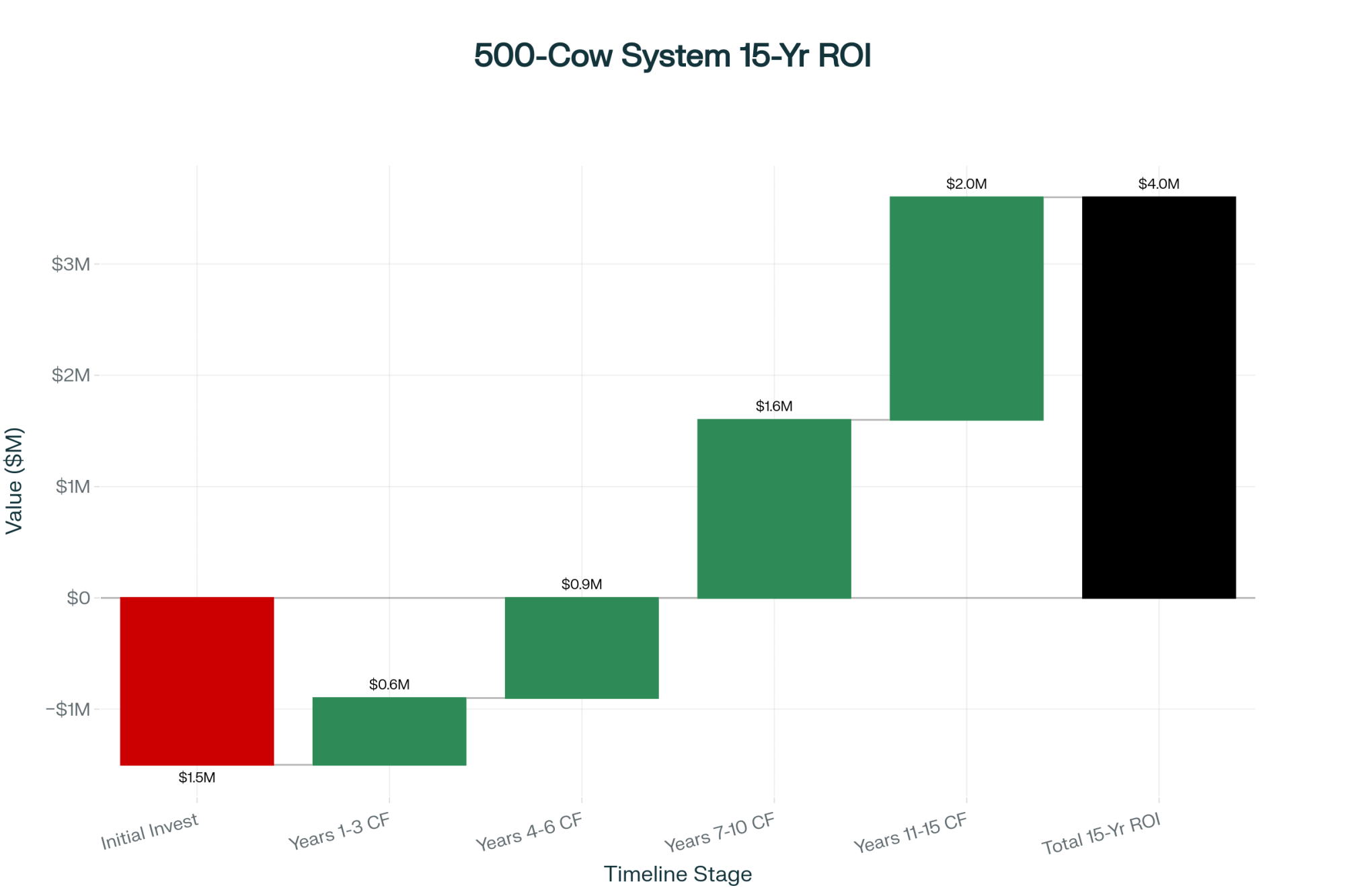
NewsSubscribe
First
Last
Consent
Send this to a friend