Every breeder at Madison talks about the ‘Barbie genetics. Her descendants dominate 36% of today’s top PTAT rankings.

Look, I’ve been around long enough to know that most “legendary” cattle stories start sounding the same after a while. But every now and then, you come across one that stops you cold. This is one of those stories.
Picture this: it’s 2004, and this sleek black-and-white heifer is standing in the Minnesota State Fair ring. Nice enough cow, solid Reserve Grand Champion placement. The judge liked what he saw, the crowd appreciated her style, and that was that. Just another promising young cow in another show string.
Except… what nobody in that ring could’ve predicted was that they were watching the debut of what would become the most game-changing brood cow of our time.
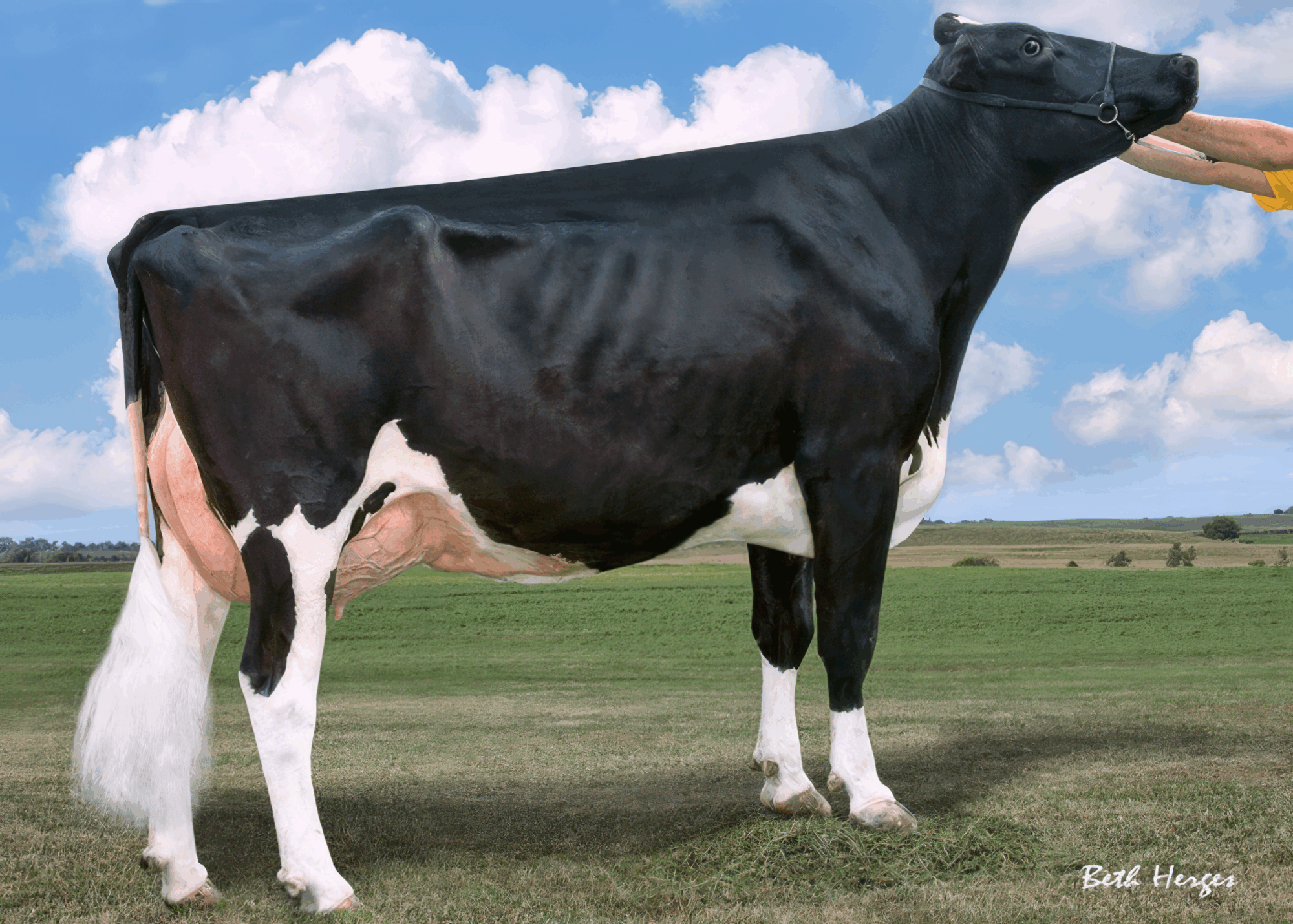
That heifer was Regancrest-PR Barbie. And her story? Well, it’s the kind that makes you completely rethink what real genetic impact looks like.
The Iowa Boys Who Got It Right
So you’ve heard the name Regancrest thrown around at Madison, right? Seen it on those high-dollar consignment catalogs that make the rest of us shake our heads at the prices?
Here’s what most folks don’t realize—this operation, sitting on Iowa’s highest point in Allamakee County, has been quietly revolutionizing Holstein genetics since 1951. While half the industry was still figuring out AI, William Regan was already all-in on Registered Holsteins and artificial insemination.
I was talking with some producers at World Dairy Expo last fall—you know how those conversations go by the barns after the shows wrap up—and when Regancrest came up, this guy from Wisconsin just shook his head. “Those Iowa boys,” he said, taking a sip of his coffee, “they’ve been breeding the kind of cows we’re all chasing with genomics… for decades.”
The man wasn’t wrong.
The Regan family—William and Angella started it all, now their sons Ron, Charlie, Bill, and Frank run the show with the grandkids coming up—they’ve got something figured out that most of us are still learning. But here’s where it gets interesting… Frank’s daughter Sheri, grew up in that environment where every single mating decision mattered.
“At a young age, I had a great passion for showing cows and the Registered Holstein part of our family’s business,” Sheri told me when we caught up at a genetics meeting a few years back. That childhood spent studying pedigrees and watching how bloodlines played out across their herd? That wasn’t just farm work—that was genetics graduate school, live and in living color.
And by 2001, when a particular calf hit the ground in their nursery, all that careful planning was about to pay off in ways nobody could’ve imagined.
That “Alignment of Stars” Moment
Look, we’ve all tried linebreeding. Sometimes it works beautifully, sometimes… well, sometimes you get a train wreck that takes years to fix. But what the Regancrest team pulled off with Barbie was something entirely different. They called it an “alignment of stars”—and honestly, that’s the only way to describe what happened.
See, Barbie’s pedigree wasn’t just good bloodlines thrown together. Walkway Chief Mark appears three times in her background. Three times! That’s not luck—that’s surgical precision in a breeding program.
Her sire, Durham EX-90 GMD, was already making serious waves as the best son of Chief Mark’s very best daughter, Snow-N-Denises Dellia. Durham would eventually claim Premier Sire at World Dairy Expo five straight years and become the leading sire of Excellent cows in the US—over 4,400 of them.
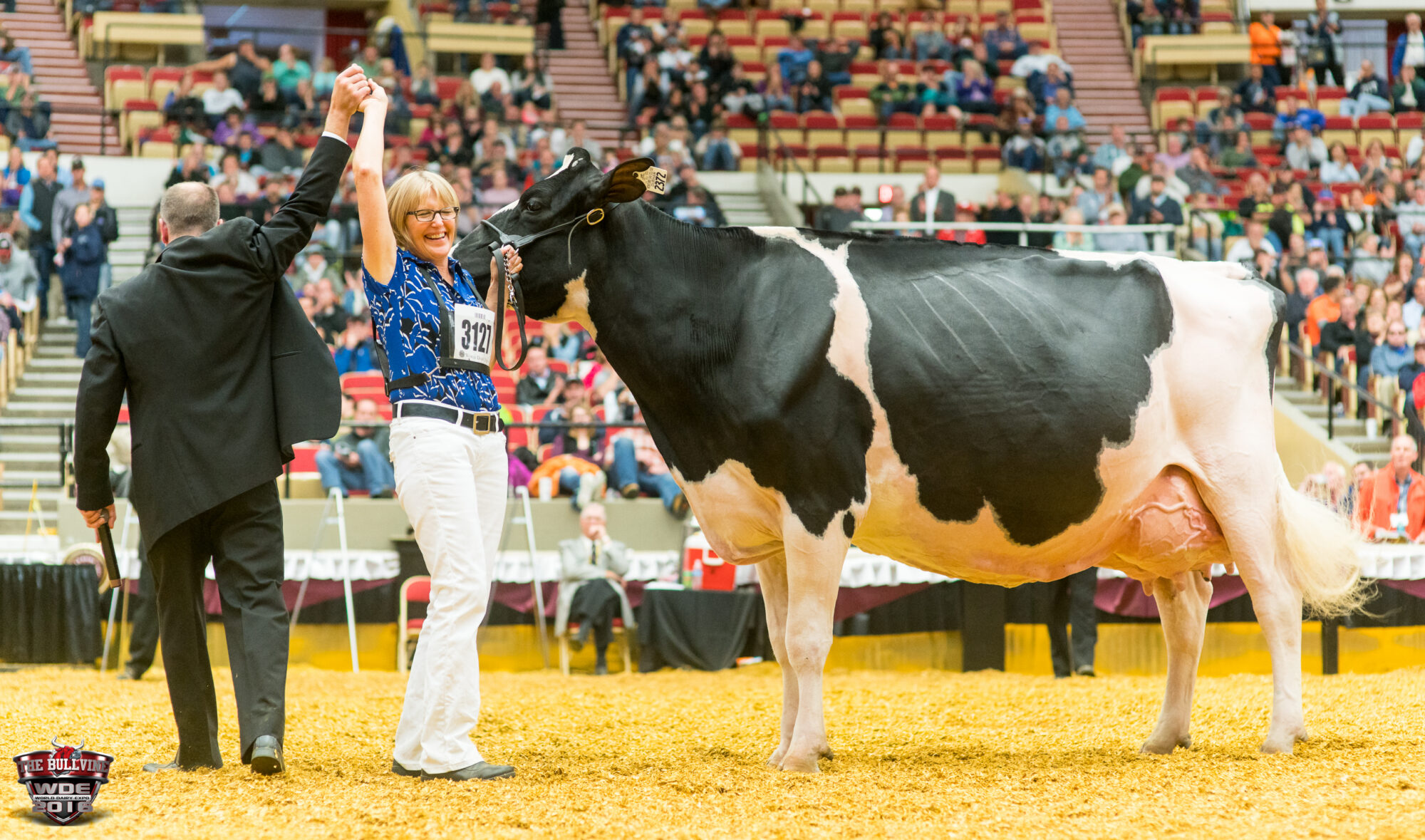
But here’s the real kicker… this wasn’t just lucky breeding. The Regancrest crew had been systematically building toward this moment through eight generations, starting with their foundation cow, Zubes Ormsby Fayne EX-90. Every mating, every decision, leading up to this concentrated genetic package.
I remember Frank Regan explaining it to me once: “We knew we had something special brewing, but even we didn’t expect what Barbie would become.”
The Numbers That Changed Everything
When Barbie first freshened at two and a half years old, her production looked solid: 26,700 pounds of milk with decent components. Nothing earth-shattering there—thousands of cows hit those numbers every year.
But then the type evaluations started rolling in. High VG as a first-calf heifer, bumped to EX-92 after her second calving. And when she hit the show circuit in 2004… that’s when people really started paying attention.
Minnesota State Fair—Intermediate and Reserve Grand. World Dairy Expo—fifth in class. Solid showing for sure, but here’s what really mattered: she claimed the #1 PTAT Cow position with a CTPI of 2178 and PTAP of 4.50.
Now, for those keeping score at home, PTAT measures genetic transmission ability for type traits—basically, how well a cow passes her good stuff to her kids. It’s one thing to be a great individual cow; it’s entirely another to consistently pass those superior traits to your offspring. And that’s where Barbie separated herself from every other cow of her generation.
When the Daughters Started Making Noise
Here’s where the story gets absolutely wild. Of Barbie’s 27-plus daughters, all but one were classified VG or better on first lactation. Think about that for a minute. By 2010—and this is what had the breeding world buzzing—she’d produced eight Excellent and 19 Very Good daughters.
I remember being at a genetics seminar around that time, and this old-timer from Pennsylvania—a guy who’d been breeding Holsteins longer than I’d been alive—stood up during the Q&A and said, “Boys, I’ve been in this business 40 years. What Barbie’s doing up there in Iowa… I ain’t never seen anything like it.”
The room went dead quiet. When a guy like that speaks up, you listen.
The PTAT lists started looking like a Regancrest family reunion. Three of her daughters hit #1 PTAT Cow at different times. At least eleven consistently ranked in the top 25.

Names that became household words in our business: Regancrest G Bedazzle (Goldwyn)—first daughter to reach #1. Regancrest Breya (Shottle)—another #1 PTAT Cow. And then there’s Regancrest G Brocade (Goldwyn), whose sale with offspring for $900,000 announced to the whole world that the Barbie family wasn’t just about genetics anymore—they were about investments.
The Genomic Revolution Amplifier
Just when traditional progeny testing was validating Barbie’s incredible transmission ability, the industry got completely turned upside down. Genomic selection hit around 2009, and suddenly, young bulls with high genomic indexes were threatening all the established bloodlines.
A lot of folks were worried. Would genomics make the old genetic families irrelevant? Would all that careful progeny testing get tossed aside for flashy genomic numbers?
But here’s where Barbie’s story gets even better. Instead of genomics hurting her influence, it amplified it exponentially. Her vast network of grandsons and great-grandsons started lighting up those genomic evaluations like Christmas trees.

Bulls like Gold Chip, Colt 45, Bradnick, and Cashcoin—they became foundational sires in today’s AI market. Her daughter, Regancrest Mac Bikas, became dam of the high genomic type sire, MR Atwood Brokaw. The family just kept producing.
And the numbers today? Get this: Nine Barbie-family heifers in the top 25 PTAT rankings, eight cows in the top 25. In an era where new genomic superstars emerge every proof run, that kind of sustained dominance is absolutely unheard of.
Million-Dollar Market Validation
You want to know when the market really figured out what the Barbie family represented? When Regancrest G Brocade was sold with offspring for $900,000. Then Regancrest S Chassity went for $1.5 million with 14 offspring. Then Regancrest Brasillia hit $1.5 million in another package deal.

Notice the pattern here? These weren’t individual cow sales—they were genetic portfolio investments. Smart buyers understood they weren’t just purchasing animals; they were investing in proven transmission ability that would compound over generations.
I was talking to Tom, a consignment manager I’ve known for years, at a sale last spring. He put it perfectly: “When a Barbie comes through the ring, buyers aren’t asking ‘what’s she worth?’ They’re asking, ‘what can we afford to pay for genetics we know work?'”
That shift in thinking—from individual merit to genetic portfolio—that’s what Barbie created. She proved that consistent transmission ability is worth more than any individual record or show placement.
Understanding the Science Behind the Magic
Now, with all the genomic technology we’ve got in 2025, we’re finally starting to understand why Barbie became such a phenomenon. That “alignment of stars” the Regancrest team achieved wasn’t just breeding intuition—it was concentrating beneficial gene combinations with surgical precision.
Modern genomic analysis has validated what those Iowa breeders figured out through careful observation: certain genetic packages produce consistently superior results. Barbie represented one of those rare combinations where favorable alleles aligned perfectly to create predictable excellence.
The 2025 genetic base changes—dropping Holstein PTAs by 750 pounds of milk and 45 pounds of fat—really highlight how much progress we’ve made since Barbie’s time. But here’s what’s fascinating: her descendants are still holding their relative positions in the rankings.
With Net Merit 2025 launching this April, emphasizing butterfat production, feed efficiency, and cow longevity, the traits that made Barbie special are more relevant than ever.
Real-World Impact in 2025

Walk through any major dairy operation today, and you’re seeing Barbie’s influence everywhere. Check the pedigrees of the top AI sires in your catalog, and her name pops up with surprising frequency.

Perfect example: Oh-River-Syc Byway—the bull who became the #1 daughter-proven type bull with 3.70 PTAT. His dam, Sandy-Valley Atwood Barbie EX-91, is Barbie’s granddaughter. That’s genetics working two generations later, still producing elite sires.

The Regancrest operation itself tells the whole story: 263 Excellent cows carrying the Regancrest prefix, 430-plus Regancrest bulls sold into AI programs, current herd averaging 107.1% Breed Age Average—#1 in the nation for their herd size.
Just this past October at World Dairy Expo, when Oakfield Solomon Footloose claimed her 2nd Grand Champion of the International Holstein Show, guess what was in her pedigree? Yep—Barbie genetics.

What This Actually Means for Your Operation
Here’s the practical takeaway from the Barbie story, and why it matters to every one of us making breeding decisions right now.
With genomic young bulls dominating today’s AI catalogs—we’re talking 42% of bulls marketed by AI companies themselves—the fundamentals that made Barbie great are more relevant than ever. The April 2025 genetic base changes and increasing concerns about inbreeding underscore the need for a more informed approach to genetic diversity while still pursuing progress.
Barbie’s success stemmed from concentrated excellence, but it was the result of systematic concentration over multiple generations. Not throwing everything at one mating and hoping for the best.
Looking at current trends—sexed semen at 37% market share, beef-on-dairy at 32%—we’re making more targeted breeding decisions than we’ve ever made before. The lesson from Barbie? Those decisions compound over time. Every mating is building toward something bigger.
And with new traits like Milking Speed coming online in our evaluations, we’re getting even more tools to make those systematic improvements.

The Human Touch That Made It All Happen
You know what really gets me about the Barbie story? It’s Frank Regan’s simple statement that still guides them today: “I just want to breed bulls that will improve herds for people everywhere”.
That’s not corporate marketing speak—that’s the mission of a family who dedicated their lives to genetic improvement. When you see them hosting thousands of international visitors annually and serving as “USA Holstein Ambassadors,” you understand that they recognize that success carries responsibility.
Sheri Regan’s childhood memories of studying pedigrees and watching bloodlines develop… that’s institutional knowledge you can’t buy or replicate overnight. It’s the intersection of science and art that created something extraordinary.
I think about operations like the 2024 Holstein Canada Master Breeders—farms like Kentville Holsteins with their 10 family Master Breeder shields spanning generations, or Cherry Crest surviving three complete dispersals and still earning their third shield. That’s the same kind of multigenerational thinking that created Barbie.
Where We’re All Headed
As we move deeper into 2025—with genetic indexes expanding rapidly, inbreeding coefficients climbing, and fewer distinct bloodlines dominating AI catalogs—the Barbie legacy raises some important questions we all need to think about.
How do we balance genetic progress with maintaining breed diversity? With concentrated excellence becoming harder to achieve responsibly, what’s the path forward?
Recent industry discussions about genetic consolidation—like the Trans Ova purchase of ReproLogix—show how much the breeding landscape continues to evolve. The companies controlling our genetics are changing, but the fundamental principles that created Barbie remain constant.
But here’s what gives me hope: the Regancrest team proved that with vision, patience, and systematic breeding, one exceptional cow can reshape an entire breed. That possibility still exists today—maybe even more so with our genomic tools.
The Bottom Line for All of Us
Regancrest-PR Barbie proved something fundamental about dairy genetics that we can’t afford to forget: excellence isn’t accidental. It’s the result of systematic planning, careful observation, and the patience to execute a vision over multiple generations.
In 2025, as we navigate genetic base changes, inbreeding concerns, and rapidly evolving reproductive technologies, her story reminds us that the most profound improvements still happen when science meets art—where technical knowledge combines with an intuitive understanding of what makes truly great cattle.
The young heifer who stood in that Minnesota State Fair ring in 2004 became something much greater than a show champion. She became proof that with the right approach, dedication, and a little luck with that “alignment of stars,” ordinary breeding decisions can create extraordinary legacies that last generations.
And somewhere in Iowa, on the county’s highest point, the Regan family continues that work—still breeding bulls to improve herds for people everywhere, still proving that the pursuit of genetic excellence is far from finished.
That’s the real magic of Regancrest-PR Barbie: she showed us that in an industry focused on the next big genomic breakthrough, the most lasting impact still comes from understanding that greatness is built one generation at a time—and shared with the world.
The question for each of us is simple: what are we building toward in our own herds? Because somewhere out there, the next Barbie is being planned, one careful mating at a time.
Key Takeaways:
- Follow the money—genetic transmission beats everything: Barbie’s descendants just sold for $1.5M and control 36% of today’s top PTAT rankings, proving smart buyers pay for proven genetics, not pretty cows
- The Regancrest formula works: Eight generations of systematic breeding + three doses of Walkway Chief Mark = a cow whose 27 daughters ALL went VG or better (zero failures in genetic transmission)
- Your genomic bulls trace back to traditional bloodlines: Gold Chip, Bradnick, Cashcoin—the foundational sires in your catalog are Barbie grandsons, showing how elite genetics transcend technology changes
- Start planning like Iowa winners: With 2025’s genetic base changes and rising inbreeding coefficients, systematic concentration over multiple generations beats chasing the latest genomic superstar every time
EXECUTIVE SUMMARY:
Here’s what blows my mind—one dead Iowa cow is making more millionaires than any living animal in dairy. Regancrest-PR Barbie’s descendants control 36% of today’s elite PTAT rankings, and her genetics just commanded $1.5 million at auction, proving the Regancrest family’s “alignment of stars” wasn’t luck—it was genius. They concentrated on Walkway Chief Mark three times in her pedigree through eight generations of systematic breeding, creating a cow whose 27 daughters all classified VG or better (eight reached Excellent). When genomics hit in 2009, instead of making old bloodlines irrelevant, it turned Barbie’s grandsons into the foundational sires every producer knows: Gold Chip, Bradnick, Cashcoin. What’s happening in your breeding program right now? Because somewhere out there, the next Barbie is being planned—one careful mating at a time—by producers who understand that sustained excellence isn’t accidental. This Iowa family proved that with vision, patience, and systematic breeding over multiple generations, you can literally reshape an entire breed and create a genetic legacy worth millions.
Complete references and supporting documentation are available upon request by contacting the editorial team at editor@thebullvine.com.
Learn More:
- Inbreeding Alert: How Hidden Genetic Forces Are Reshaping Your Dairy Herd’s Future – This strategic piece complements the article by revealing how rising inbreeding is a “hidden tax” on your herd. Learn tactical steps to manage genetic diversity, recalibrate selection thresholds, and protect your long-term profitability.
- The New Dairy Playbook: 5 Trends Redefining Profitability in 2025 – Explore how heifer scarcity, component-driven genetics, and FMMO reforms are creating new challenges and opportunities for profitability in 2025. This article provides actionable insights for navigating a volatile market.
- 2025 Genetic Reset: How Rigid Bull Selection Could Cost Your Herd $147,000 – This article provides a tactical guide on how to adapt your bull selection strategy to the April 2025 genetic base changes. Learn why rigid selection rules could be costing your farm thousands and how to use rankings to maximize your ROI.
 Join the Revolution!
 Join the Revolution!
Join over 30,000 successful dairy professionals who rely on Bullvine Weekly for their competitive edge. Delivered directly to your inbox each week, our exclusive industry insights help you make smarter decisions while saving precious hours every week. Never miss critical updates on milk production trends, breakthrough technologies, and profit-boosting strategies that top producers are already implementing. Subscribe now to transform your dairy operation’s efficiency and profitability—your future success is just one click away.