

Archive for Management – Page 2

This Hidden $1,400/Cow Cost Is Killing Profits – Here’s the Fix

What happens when cows actually choose? German researchers tested it—and found $1,400/cow in costs disappeared. Here’s what they discovered.

Executive Summary: Conventional dairy practices are costing you $1,400 per cow annually in hidden losses from regrouping stress, transition disease, and premature culling—costs most farmers don’t even track. German researchers just proved these losses are preventable through an integrated approach: let cows choose their environment, maintain stable social groups, and keep calves with mothers longer. The data are striking: regrouping alone costs $3,400/year in a 500-cow herd, while their approach reduces lameness by 30-40% and produces calves gaining 3+ pounds daily. Implementation means rethinking barn design and investing 18-24 months in learning new management practices, but the returns justify the effort—$400,000-500,000 in annual benefit potential with a 4-6 year payback. With retailers like Walmart already demanding welfare-certified products and the market growing to .4 billion by 2033, early adopters gain a competitive advantage. The bottom line: when cows get choice, hidden costs disappear and everybody wins—especially your profit margin.

You know what caught my attention last week? A group of German agricultural researchers posed a question that’s got me rethinking everything about barn design: What if we actually let cows decide how they want to spend their day?

Prof. Dr. Lisa Bachmann and her team at the Research Institute for Farm Animal Biology in Dummerstorf, Germany, published their findings this fall in the Journal of Dairy Science, and honestly… some of these insights are making me reconsider assumptions I’ve held since I started in this business.

What makes German research distinctive is its integrated design concept, which combines stable family herds, cow-calf contact, free indoor-outdoor movement, and automation—a comprehensive approach documented in their published research. Their design concept maintains stable social groups throughout production, provides genuine barn-and-pasture choice during favorable seasons, and integrates cow-calf contact with automated milking. And here’s what’s really interesting—their research documents how this integrated approach addresses multiple cost drivers simultaneously—regrouping stress, transition disease incidence, and culling patterns—suggesting substantial economic advantages we haven’t really considered before.

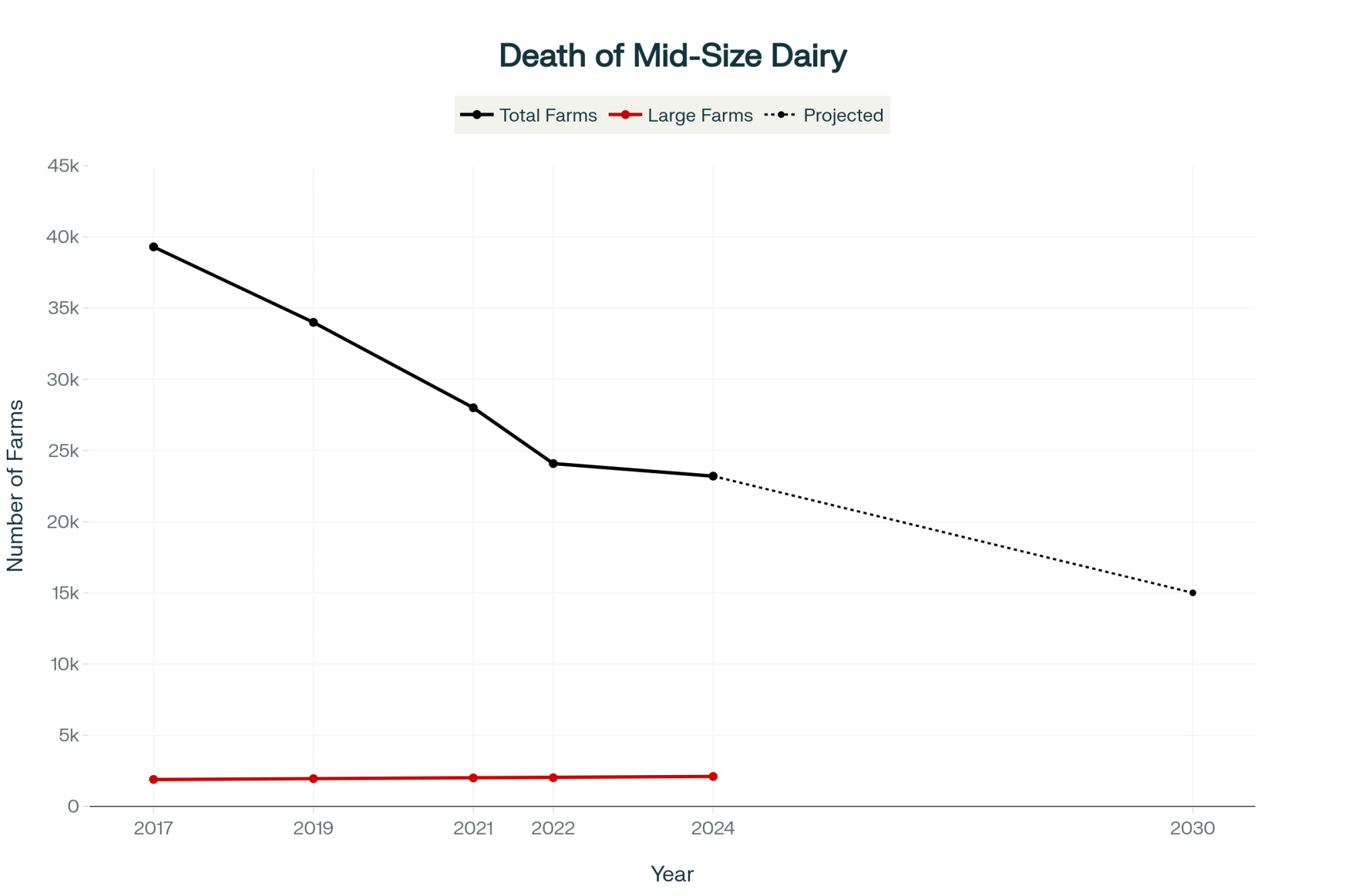
Here’s the context that makes this relevant right now. USDA’s latest census shows we’ve gone from 105,250 dairy farms in 2000 to about 31,600 operations today. That’s a 70% drop, folks. So when we’re talking about alternative approaches to dairy infrastructure, we’re no longer just having an academic discussion. For a lot of mid-sized operations—maybe yours—this could be about finding a viable path forward.

The $1,000 Per Cow Opportunity: Conventional dairy systems leak $1,400 annually per cow through hidden stress, disease, and management costs—while welfare-integrated approaches reduce these losses by 71% to just $400 per cow. For a 500-cow operation, that’s $500,000 walking out the barn door every year.

What We’re Learning About Cow Preferences

What’s fascinating is how consistent cow behavior becomes when they actually have choices. Research on grazing behavior shows cows utilizing outdoor areas extensively, particularly during evening and nighttime hours. And get this—their motivation for pasture access rivals their drive for fresh feed. That’s saying something.

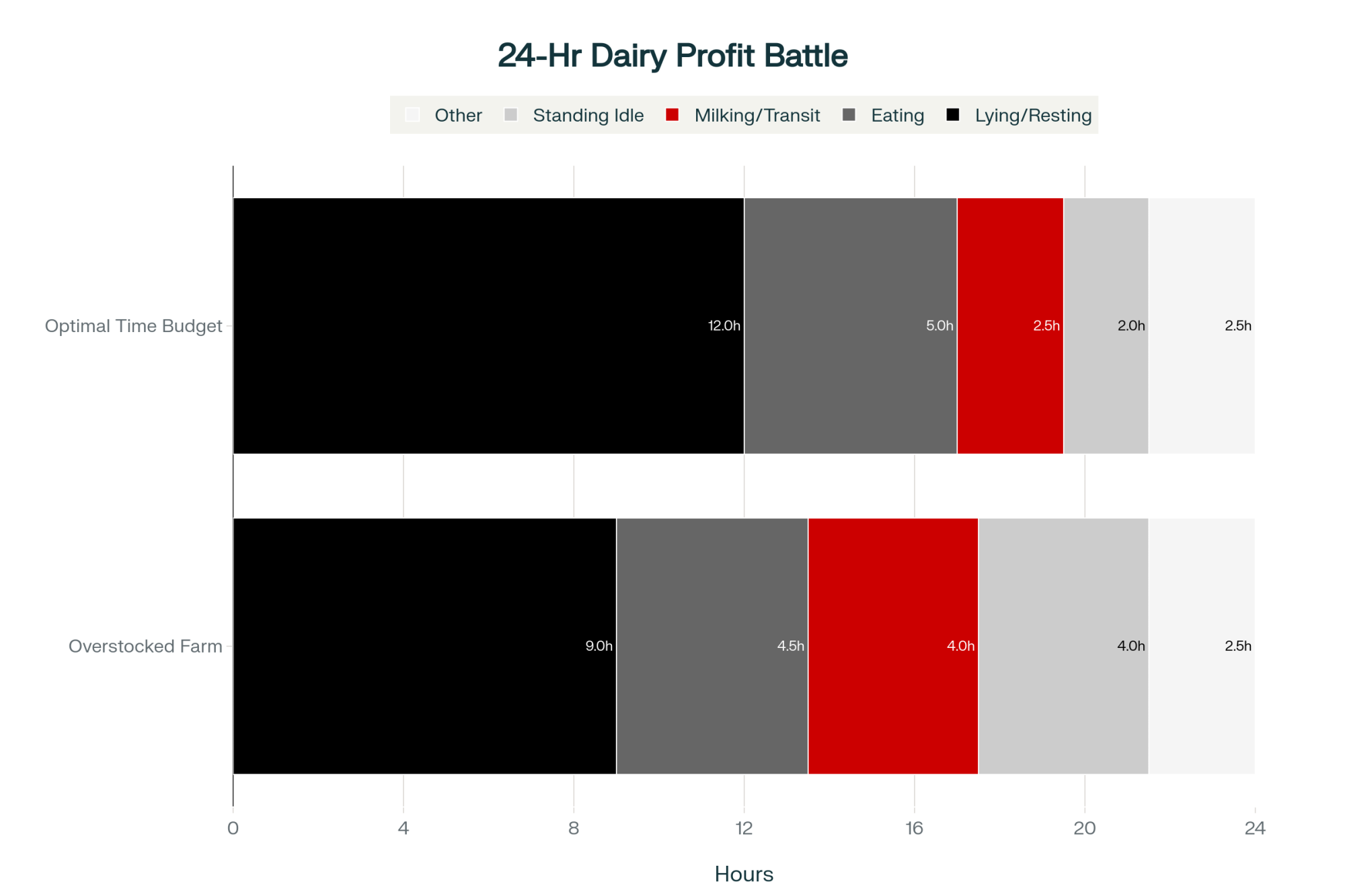
I was looking at production research from Ireland the other day, and the lying time data really stood out. Cows with pasture access were averaging about 9.9 hours of daily lying time compared to 9.5 hours for confined animals. Now, you might think, “That’s only 24 minutes, what’s the big deal?” But here’s what’s interesting—those pasture cows had fewer but longer lying bouts. Less getting up and down, more quality rest. You know how much that matters for rumination and production.

“Conservative estimates suggest we’re looking at $1,000-1,400 annually per cow in hidden costs from stress, disease, and management practices we’ve just accepted as normal.”

Marina von Keyserlingk’s animal welfare lab at UBC documented another noteworthy finding: cows with overnight pasture access show significantly more walking activity. And for those of us dealing with lameness issues—which is basically everyone, right?—that natural movement pattern correlates with better hoof health.

Speaking of lameness, research comparing different housing systems shows some pretty dramatic differences. We’re seeing lameness prevalence vary significantly by bedding and housing type, with comprehensive studies documenting reductions of 30-40% in systems incorporating pasture access. Penn State Extension puts lameness costs at around $337 per case. Do the math on that for your herd—it adds up fast.

The Real Cost of Moving Cows Around

Every Time You Move Cows, You’re Burning Cash: Each regrouping event triggers an immediate 8.5% milk production crash and 9% feed intake nosedive. The chaos lasts 3-7 days, and at 5 regroupings per lactation, you’re hemorrhaging $3,400 annually in a 500-cow herd—before you even factor in breeding delays and elevated somatic cell counts.

Here’s something we don’t talk about enough. Most of us regroup cows four to six times per lactation. It’s just… what we do, right? But Daniel Weary’s group at UBC has been quantifying what that actually costs us, and the numbers are sobering.

They’re documenting an immediate 8.5% production drop when you regroup—going from about 95 pounds down to 87 pounds daily. Feed intake drops 9% during that adjustment period. The behavioral chaos lasts 3-7 days. And there’s a clear negative correlation between aggressive interactions and butterfat levels.

So I ran the numbers for a typical 500-cow herd averaging 80 pounds at $20/cwt. Each regrouping event? That’s about $1.36 in lost production per cow. Five times across a lactation, you’re looking at $3,400 in revenue just… gone. And that’s before we even think about what stress does to breeding or somatic cell counts.

The German research proposes maintaining what they call “stable family herds”—basically keeping cows and their offspring together without constant pen changes. Yeah, it means rethinking your entire barn layout and cow flow. But when you add up all these hidden costs? The economics start looking different.

Hidden Costs Summary

Cost CategoryImpact Per Event/Case
Regrouping$6-10/cow per event
Transition disease$125-450/case
Lameness$337/case
Annual total per cow$1,000-1,400

Reconsidering Cow-Calf Contact

I’ll be honest—I’ve always been pretty skeptical about extended cow-calf contact. The colostrum management concerns are real, and disease control matters. But the data coming out of European research institutions is making me think twice.

Norwegian researchers tracking cow-calf systems in automated milking herds are seeing calves achieve average daily gains around 1.4 kg—that’s over 3 pounds a day. That’s beef calf territory, way beyond the 1.25 to 1.9 pounds we typically see with conventional feeding. Research shows that calves with extended dam access consume substantially higher milk volumes than those in conventional feeding programs.

Now, Swedish agricultural research acknowledges these systems can reduce your contribution margin by 1-5%, primarily from milk you’re not selling. Fair point. But here’s what that analysis often misses…

Research indicates significant labor reductions during the calving period when cows manage their own calves. Think about it—no milk replacer costs, no feeding equipment to clean, fewer health treatments. Studies consistently show improved calf health metrics in these contact systems. And for those of us struggling to find reliable calf feeders (which seems to be everyone these days), the labor savings alone might tip the scales.

How Automation Changes Everything

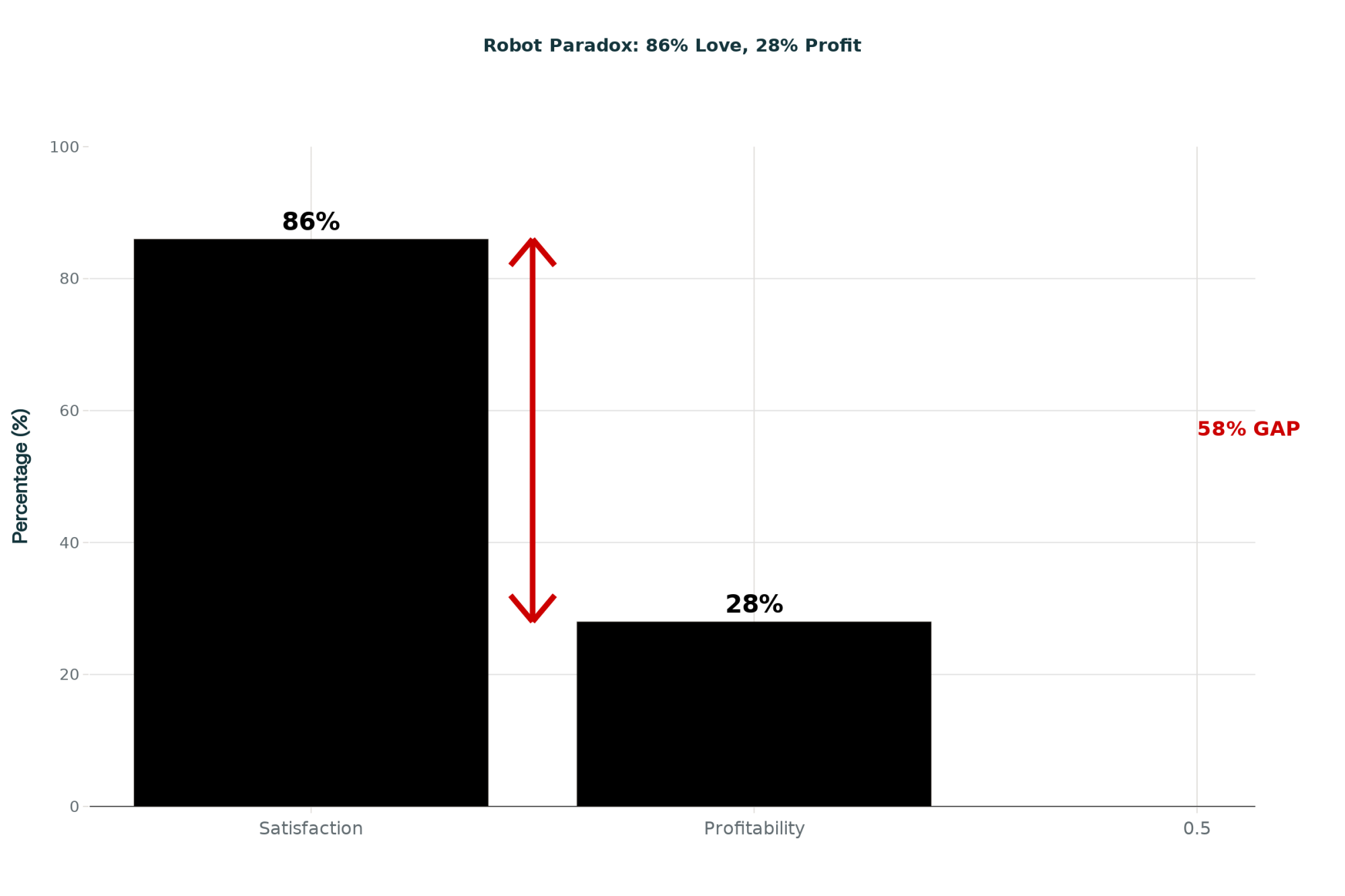
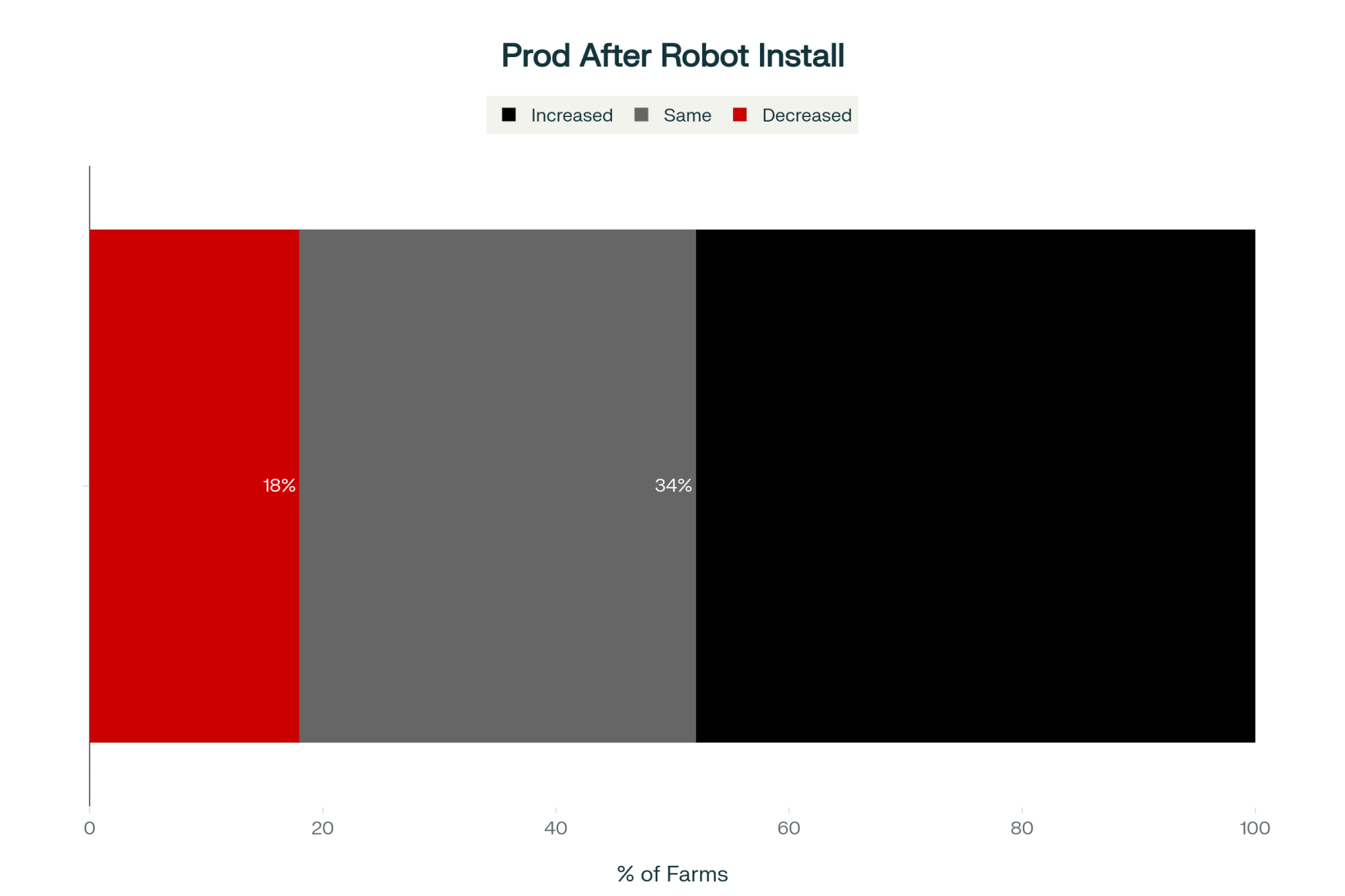
What’s really interesting is how automation is shifting the whole welfare conversation. Michigan State’s recent survey of large dairy farms with robots found something telling: 84.6% cited labor cost reduction as their main reason for automating, but 76.9% also reported improved cow welfare.

“Each regrouping event costs about $1.36 per cow in lost production. Five times across a lactation, you’re looking at $3,400 in revenue just… gone.”

The financials are compelling. University of Wisconsin data shows that operations with robots reduced labor costs from about 8.4% of revenue to 4.4%. That’s a 38-43% reduction in time per cow, with milking-related tasks down 62%.

But here’s what I’ve been noticing during farm visits… Most robot installations are still optimizing the same old confinement model rather than enabling the kind of cow choice that German research suggests could improve both welfare and profitability. Current designs assume conventional freestall housing with standard routing. Want to add real outdoor access? That requires completely different thinking.

Industry experts increasingly acknowledge that while technical solutions exist, our infrastructure tends to reinforce conventional approaches rather than enabling alternatives. Some equipment manufacturers are exploring systems compatible with grazing, especially for markets where that’s standard practice, but North American options remain pretty limited.

Understanding the Full Cost Picture

The Disease Tax Nobody Talks About: Every transition disease carries a price tag, but here’s the killer—they don’t come alone. Half your fresh cows deal with multiple conditions, compounding to $600-900 per affected animal. Subclinical ketosis hitting 30% of your herd at $125/case? That’s just the entry fee. Welfare-integrated systems cut these rates in half. Your call.

Recent research on dairy economics has been eye-opening about costs we usually don’t track properly:

You know transition cow challenges—nearly half of fresh cows deal with some metabolic issue. Subclinical ketosis alone runs about $125 per case based on recent studies. Clinical mastitis? USDA data puts it at $325-450 per case, with 71% of those costs from lost production, not treatment.

Lameness economics are brutal. Penn State’s research shows an average of $337 per case, with each additional week adding about $13. Digital dermatitis typically runs almost $100 more than other lameness causes. And here’s what really gets me—research consistently shows lameness hammering fertility, with reproduction-related costs representing a huge chunk of the total economic hit.

Then there’s culling and replacement. Canadian dairy industry data shows turnover at 35-40%, with replacement costs of $2,500-3,500, depending on where you are. Lose a cow before her third lactation? You never recover that rearing investment.

Add it all up, and conservative estimates suggest we’re looking at $1,000-1,400 in hidden costs per cow annually from stress, disease, and management practices we’ve just accepted as normal. That’s… that’s a lot of milk checks.

MetricConventional SystemWelfare-Integrated SystemNet Difference
Annual Cost Per Cow$1,400 hidden losses$400 reduced losses$1,000 savings/cow
Regrouping Events/Lactation4-6 times0-1 times4-5 fewer events
Lameness Prevalence20-25%12-15% (-40%)-40% cases
Lameness Cost Impact$337/case × 100+ cases$337/case × 60 cases~$13,500 savings
Transition Disease Rate~50% of fresh cows~25% of fresh cows-50% incidence
Calf Daily Gain (lbs)1.25-1.9 lbs3+ lbs+1+ lb improvement
Average Culling Rate35-40%22-25% (-35%)-13-15% points
Replacement Cost$2,500-3,500/cow$2,500-3,500/cowEarlier ROI
Labor Cost (% of revenue)8.4%4.4%-48% labor
Milk Production StabilityHigh variabilityMore consistentImproved flow
Veterinary CostsBaseline-30 to -35%$35K+ savings
Total Herd Cost (500 cows)$700,000 in losses$200,000 in losses$500,000 annual gain

Thinking About Infrastructure Investment

The German team’s estimates for welfare-integrated systems suggest substantially greater capital investment than conventional designs—we’re talking significant money here, potentially thousands of dollars per cow.

The Math That Changes Everything: Drop $1.5M on a welfare-integrated barn design and conventional wisdom says you’re crazy. But here’s what actually happens—you break even in 4-6 years, then bank $400K+ annually for the next decade. Total 15-year gain? Over $4 million. Meanwhile, “efficient” conventional operations keep bleeding that $1,400/cow every single year. Do the math

But let’s think through the returns. If these systems prevent even $800-1,000 annually in disease, stress, and culling losses, a 500-cow operation could see $400,000-500,000 in annual benefit. Finance that over 15 years at 6%, you’re looking at $200,000-300,000 in debt service, potentially leaving $150,000-250,000 in improved cash flow. That suggests a 4-6 year payback. I’ve seen producers jump on automation for returns that are less attractive than that.

Practical Implementation Thoughts

Based on conversations with producers who’ve made changes, here’s what seems to work:

Start with what you can control. You don’t need to revolutionize everything overnight. Several operations I know in Wisconsin started simple—adding outdoor access areas, reducing regrouping frequency, and trying modified calf management in just one pen.

Really assess your existing setup. Retrofitting current facilities for genuine cow choice is way harder than building it in from the start. If you’re already planning major construction or renovation? That’s your opportunity.

Think carefully about your market position. Nielsen’s 2023 consumer research documented a 57% increase in certified animal welfare products after mainstream retailers began stocking them. There’s a real differentiation opportunity, but you need to know what your milk buyer values.

And budget time for the learning curve. Managing pasture systems, cow-calf contact, stable herds—it’s different than running conventional confinement. Most folks find it takes 18-24 months to really develop the new management skills.

Regional Considerations

One thing the German research doesn’t fully address—and it matters here—is our climate variability. What works in temperate Germany needs adaptation for Arizona heat or Manitoba winters.

I’ve been hearing about different regional approaches. California researchers are testing shade and cooling for outdoor areas in hot climates. Canadian institutions are exploring winter paddock designs that maintain choice even in extreme cold.

In the upper Midwest, some producers are trying hybrid approaches—outdoor access during good weather, modified grouping strategies for winter housing. It’s not the full German model, but they’re seeing meaningful improvements in lameness and culling.

“Lose a cow before her third lactation? You never recover that rearing investment.”

Some producers implementing partial modifications report that eliminating regrouping practices resulted in substantial reductions in veterinary costs, though they acknowledge the learning curve was steep initially. I’ve heard of operations documenting 30-35% drops in vet bills after making these changes, though everyone admits it takes time to figure out the new management approach.

Looking Ahead

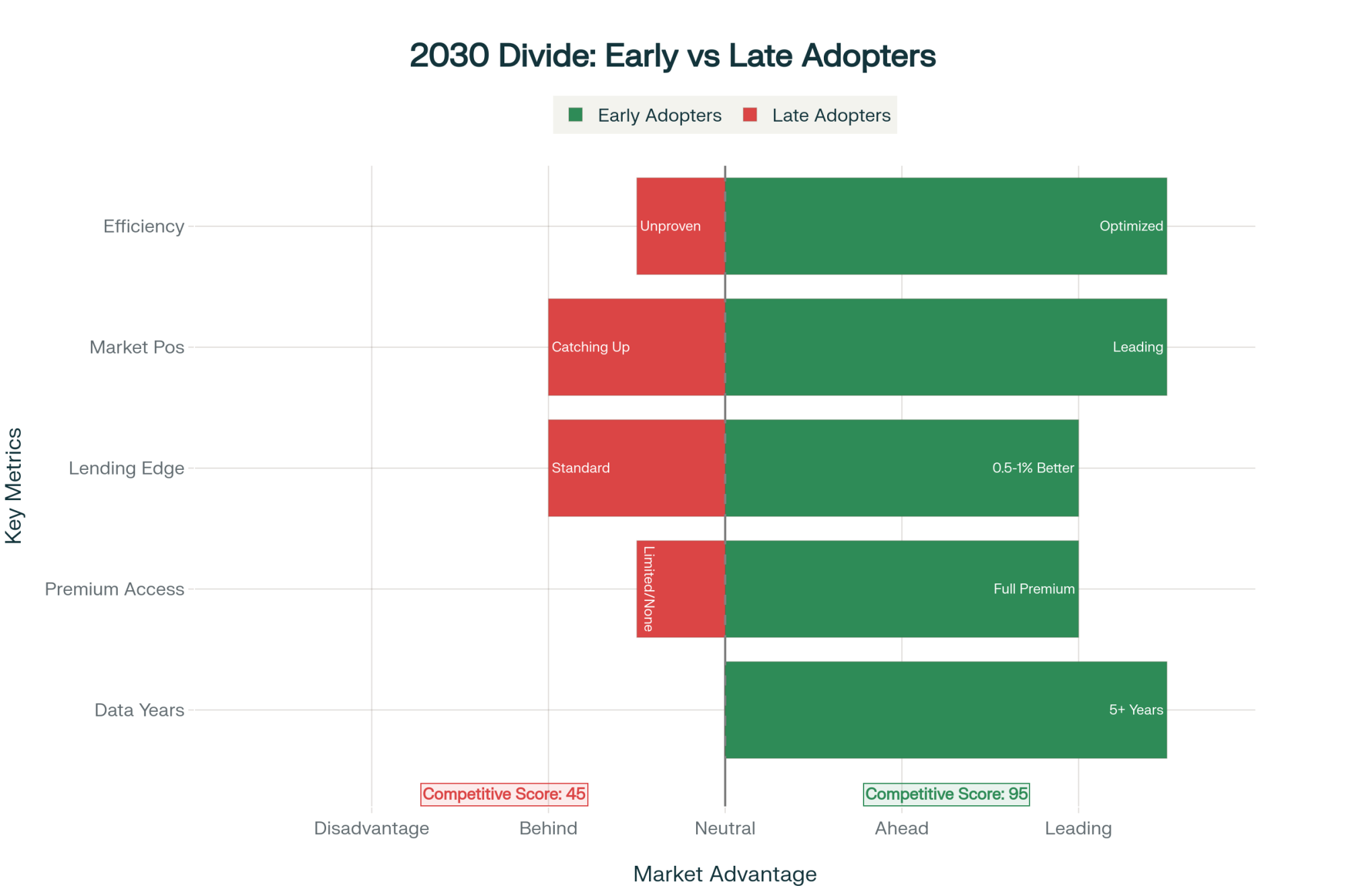
The $3.4 Billion Question: While most producers debate whether to adopt welfare practices, the certified animal welfare market is exploding—growing 183% to $3.4 billion by 2033. Early adopters positioning now will capture premium pricing before this becomes table stakes. Wait until mainstream adoption, and you’re just playing catch-up at commodity margins.

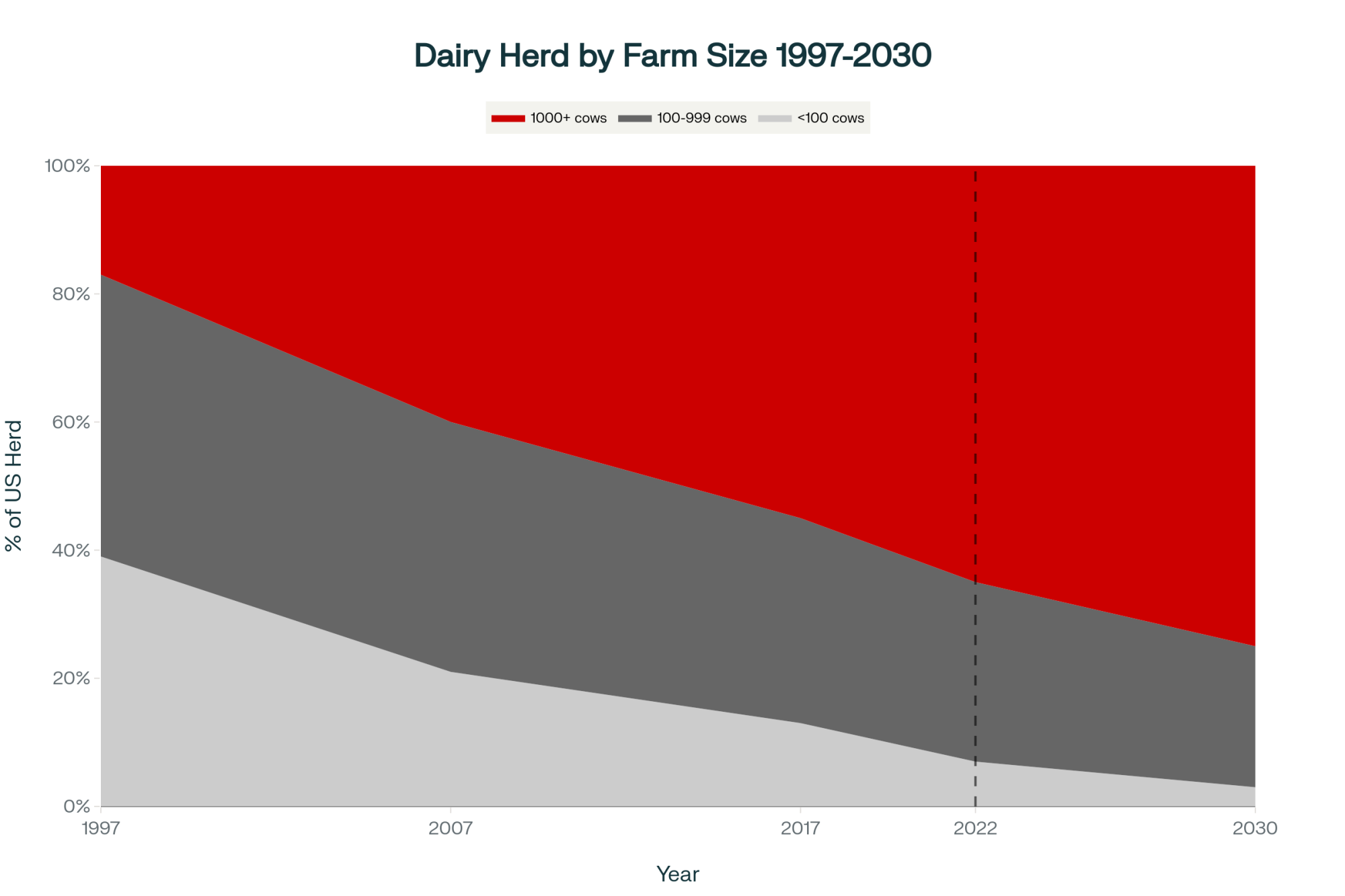
The consolidation trend isn’t slowing. Industry projections show substantial portions of milk production shifting to larger operations in the coming years. For mid-sized farms—those 200 to 1,000 cow operations that are the backbone of many regions—the traditional “get big or get out” message feels pretty heavy.

But this research illuminates other paths. The animal welfare certification market reached $1.2 billion in 2024 and is projected to reach $3.4 billion by 2033, according to Grand View Research (https://www.grandviewresearch.com). Major retailers like Walmart and Kroger have made procurement commitments for certified products. That’s creating a genuine market opportunity for differentiated producers.

Plus, emerging climate regulations are going to reshape the economics. Canada’s carbon framework for agriculture and similar U.S. initiatives will likely favor systems with greater efficiency, enhanced pasture management, and lower replacement rates.

What Producers Are Finding

Producers implementing modified approaches report interesting results. After dealing with steep learning curves around cow flow and grazing management, many are seeing veterinary costs drop significantly, labor requirements decrease, and production metrics improve—outcomes that surprise even them.

Others are taking different approaches, like maintaining limited cow-calf contact as a workable compromise between calf health improvements and milk sales. The key seems to be adapting concepts to specific circumstances rather than trying to copy someone else’s system exactly.

There’s no universal template here. Each operation needs to evaluate how these concepts might work with their unique combination of facilities, labor, markets, and management style.

The Bottom Line: Your Hidden Costs

When you factor in:

  • Regrouping losses: $3,400/year for 500 cows
  • Transition diseases: 50% of fresh cows are affected
  • Lameness: $337/case at 15-20% prevalence
  • Premature culling: Never recovering $2,500-3,500 investment

You’re losing $1,000 to $ 1,400 per cow annually in preventable costs.

Quick Takeaways for Action

Looking at all this research, here’s what you can start doing today:

  • Calculate your hidden costs: Track regrouping frequency, transition disease rates, and culling patterns for three months
  • Test small changes: Pick your highest-stress group and eliminate one regrouping event
  • Explore market premiums: Contact your milk buyer about welfare certification opportunities
  • Visit operations making changes: Nothing beats seeing these systems in action
  • Budget for learning: Any system change requires time—plan for it

Making Sense of It All

After really digging into this research, here’s what stands out to me:

The economics are way more complex than simple comparisons suggest. When you account for regrouping losses, disease costs, premature culling, and genetic potential that never gets expressed, conventional systems carry substantial hidden costs. Alternative approaches could meaningfully reduce those expenses.

Consumer expectations keep evolving. When certified products reach mainstream retail with clear differentiation, sales respond. That’s not a trend—it’s market reality.

Technology can enable choices. Current automation typically optimizes confinement, but alternative technical solutions exist. It’s more about design philosophy than technical barriers.

The transformation already underway creates both risk and opportunity. As margins compress and consolidation accelerates, differentiation becomes increasingly valuable. Whether you pursue commodity efficiency or welfare premiums—that’s a fundamental strategic decision.

And here’s the thing—the knowledge exists right now. The research has been published, the designs are documented, and the technical specifications are available. The question isn’t whether these systems work. It’s how they might fit your specific situation.

Looking at where we’re headed, understanding these alternatives becomes crucial for planning. This German research reminds us that innovation sometimes comes from questioning our basic assumptions.

The path forward varies by operation. A 5,000-cow facility in New Mexico operates under different constraints than a 200-cow farm in Vermont. But having genuine options—economically viable alternatives to consider—that’s what gives us flexibility to build operations aligned with our goals, values, and circumstances.

Maybe the question isn’t whether we can afford to implement such changes. Given the hidden costs already embedded in our operations and where markets are heading… maybe we should be asking: What’s the cost of not exploring these possibilities?

That answer will likely shape the next generation of dairy farming. And honestly? When cows get to make choices, it turns out everybody might win—including our bottom line.

Complete references and supporting documentation are available upon request by contacting the editorial team at editor@thebullvine.com.

Learn More:

Join the Revolution!

Join over 30,000 successful dairy professionals who rely on Bullvine Weekly for their competitive edge. Delivered directly to your inbox each week, our exclusive industry insights help you make smarter decisions while saving precious hours every week. Never miss critical updates on milk production trends, breakthrough technologies, and profit-boosting strategies that top producers are already implementing. Subscribe now to transform your dairy operation’s efficiency and profitability—your future success is just one click away.
NewsSubscribe
First
Last
Consent

The Rules Changed and Nobody Told You: Three Paths Left for the 300-Cow Dairy

Seven dairy farms disappear. Every. Single. Day. If you’re under 500 cows, you have 18 months to choose: Scale, pivot, or exit.

EXECUTIVE SUMMARY: The dairy industry is experiencing a seismic shift: 7 farms disappear daily as we consolidate from today’s 24,500 operations toward just 8,000-12,000 by 2035, with 400 mega-farms controlling 75% of production. The $11 billion in new processing investment tells the real story—it’s pre-contracted to 5,000+ cow operations, leaving 300-cow dairies facing three brutal choices: invest $3-5 million to scale up, spend $600,000-1.2 million transitioning to premium markets, or exit now for $700,000-1.1 million before equity evaporates. Your cooperative has become your competitor, with DFA controlling 30% of US milk while operating processing plants that profit from keeping your milk prices low. The economics are undeniable: farms with over 1,000 cows achieve 20-25% lower costs, creating an unbridgeable competitive gap for mid-sized operations. Agricultural lenders confirm you have 18 months—credit is tightening, and consolidators’ appetite for acquisitions peaks in 2025-2026. The bottom line is stark: standing still guarantees slow financial death, making no decision the worst decision of all.

Dairy industry consolidation

You know, I was having a chat with a third-generation Wisconsin dairy farmer last week—runs about 280 cows, really solid butterfat performance, knows his genetics inside and out. He said something that’s been rattling around in my head ever since:

“I feel like I’m playing a game where the rules changed, but nobody sent me the new rulebook.”

He hit the nail on the head. This isn’t just another rough patch we’re working through; the whole game is structured differently now. What I’ve found in USDA Economic Research Service modeling is that we could see mega-operations producing somewhere between 70 and 75 percent of America’s milk by 2035. We’re talking about going from roughly 24,500 dairy farms today—that January NASS count was eye-opening—down to maybe 8,000 to 12,000 operations in about a decade.

Here’s what’s really striking: the International Dairy Foods Association documented something like $11 billion in processing investments announced between 2024 and 2028. That’s not your typical expansion—that’s the industry rebuilding itself from the ground up.

For those of you managing 300-cow operations—and I talk to so many of you at meetings—understanding what’s happening isn’t about being negative. It’s about seeing clearly where opportunities still exist.

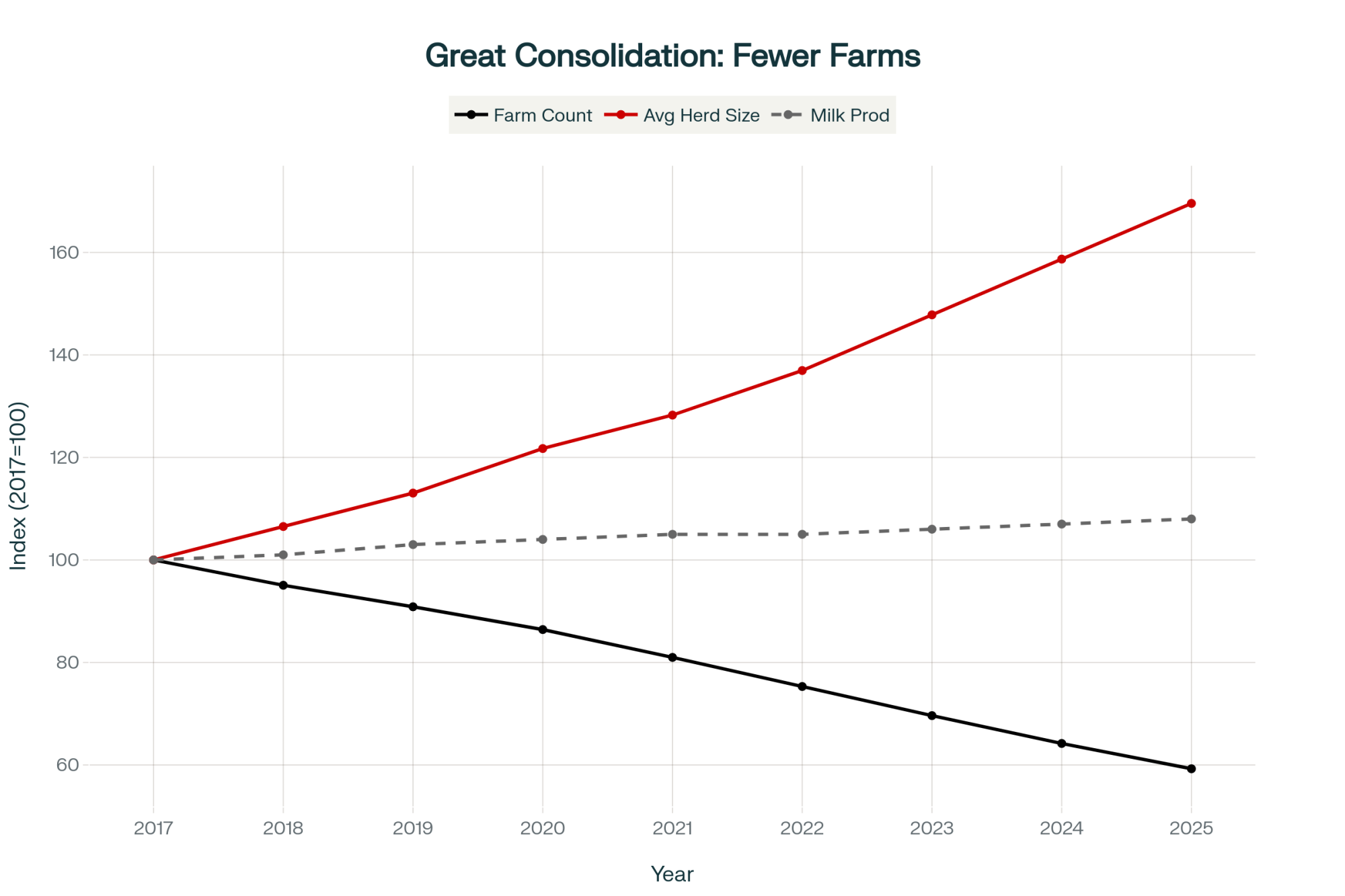
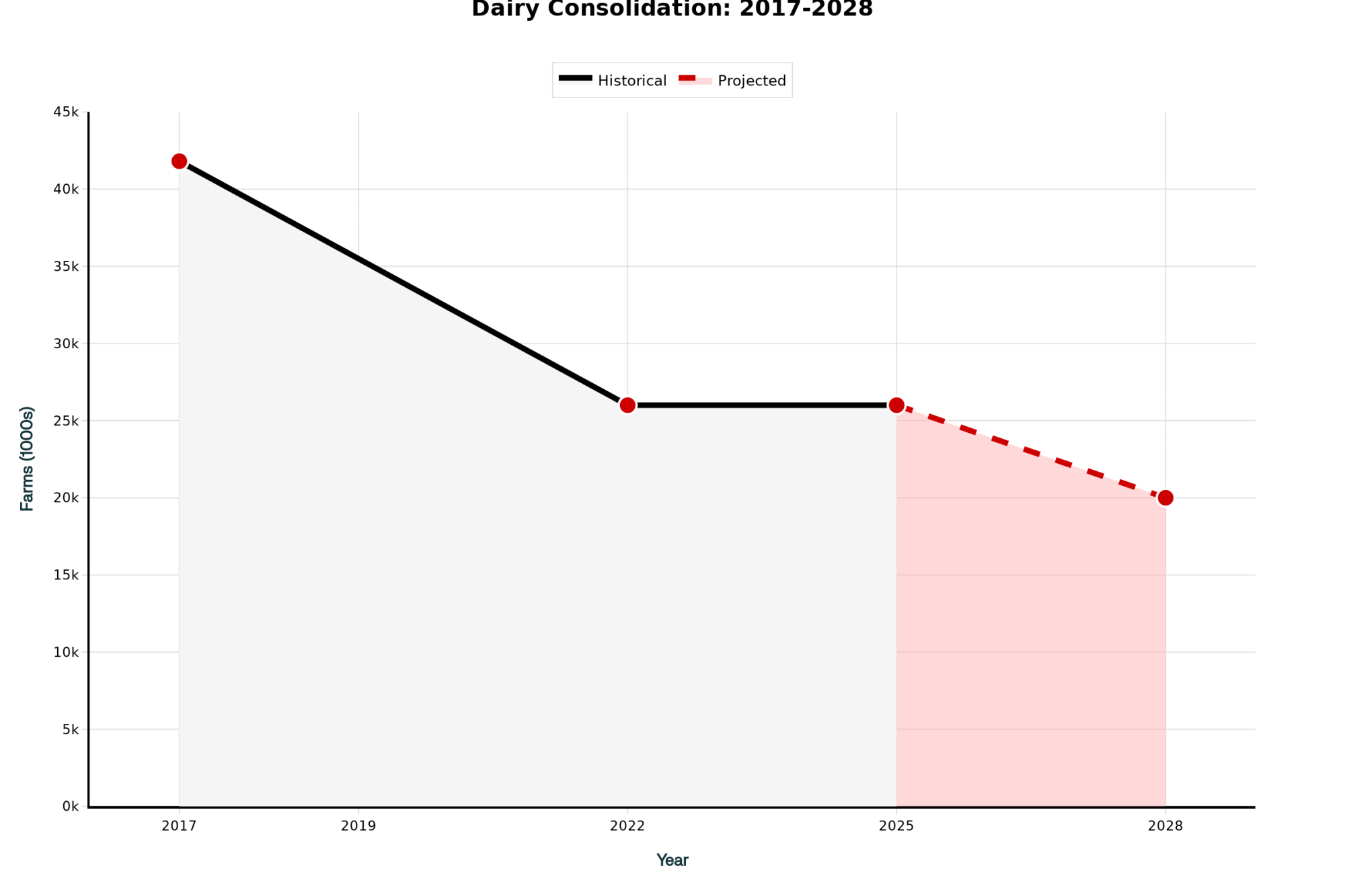
Farm consolidation accelerates: The US lost 63% of dairy operations since 2003 while boosting production 41%, with projections showing only 10,000 farms by 2035—down from today’s 26,000

When Your Cooperative Became Something Else

What’s fascinating—and honestly, a bit troubling—is how organizations like Dairy Farmers of America have evolved from their original marketing cooperative model into vertically integrated processors. This completely changes how milk moves from your tank to the market.

Consider this: DFA now controls nearly 30 percent of US milk production according to their annual reports, while operating dozens of processing facilities across North America. Let’s call it what it is: a conflict of interest. When your co-op becomes a processor, their profit margin depends on keeping input costs low. Your milk is the input. Do the math.

I was talking to a producer from upstate New York—does beautiful rotational grazing, really innovative guy—and he put it perfectly:

“After 22 years shipping to the same cooperative, the relationship feels fundamentally different. The negotiating dynamics have shifted in ways that are hard to articulate but impossible to ignore.”

The data backs up what he’s feeling. We’re seeing more and more member milk processed in cooperative-owned facilities, a huge shift from the traditional marketing model. And here’s something that should make everyone pause: federal court records show settlements totaling nearly $200 million since 2013, with the 2016 Northeast case alone hitting $158.6 million. These aren’t just theoretical tensions we’re talking about.

Where That $11 Billion Is Really Going

Everyone’s celebrating this $11 billion in processing investment. But let’s look closer at where that money’s actually flowing. IDFA’s October report details what they’re calling the largest dairy infrastructure investment in American history, and the geographic pattern tells you everything.

Chobani announced back in April that it’s building a $1.2 billion facility in Rome, New York. They’ve got another $450 million expansion going in Twin Falls, Idaho. Leprino Foods continues to expand in Texas, especially around Lubbock. These locations aren’t random—they’re following the consolidation that’s already happening.

Investment follows scale: Of $11B in new processing capacity, 70-78% is pre-contracted to mega-dairies before construction begins, leaving mid-sized operations competing for processing access in an oversupplied market

What industry analysts from Rabobank and CoBank have been telling us is that processors are increasingly locking up supply agreements with large-scale operations before they even break ground. They don’t publish exact percentages, but the pattern is crystal clear.

A Texas producer with 450 cows shared his experience trying to get into one of these new plants:

“The terms required a 10-year commitment for our entire production at annually-set prices. The minimum volume guarantee was 15 million pounds—more than double what we produce.”

These facilities… they’re not being built for folks like him. They’re designed for operations running 5,000 to 25,000 cows.

But here’s what gives me hope—in Pennsylvania’s Lancaster County, where you’ve still got lots of 100 to 300 cow operations, producers are finding creative solutions. A group of about 31 Amish and Mennonite farmers formed their own micro-cooperative last year, partnering with a local artisan cheese maker.

“We couldn’t compete on volume, but our grass-fed milk and traditional practices commanded premium prices in Philadelphia markets.”

Getting Out with Your Shirt On

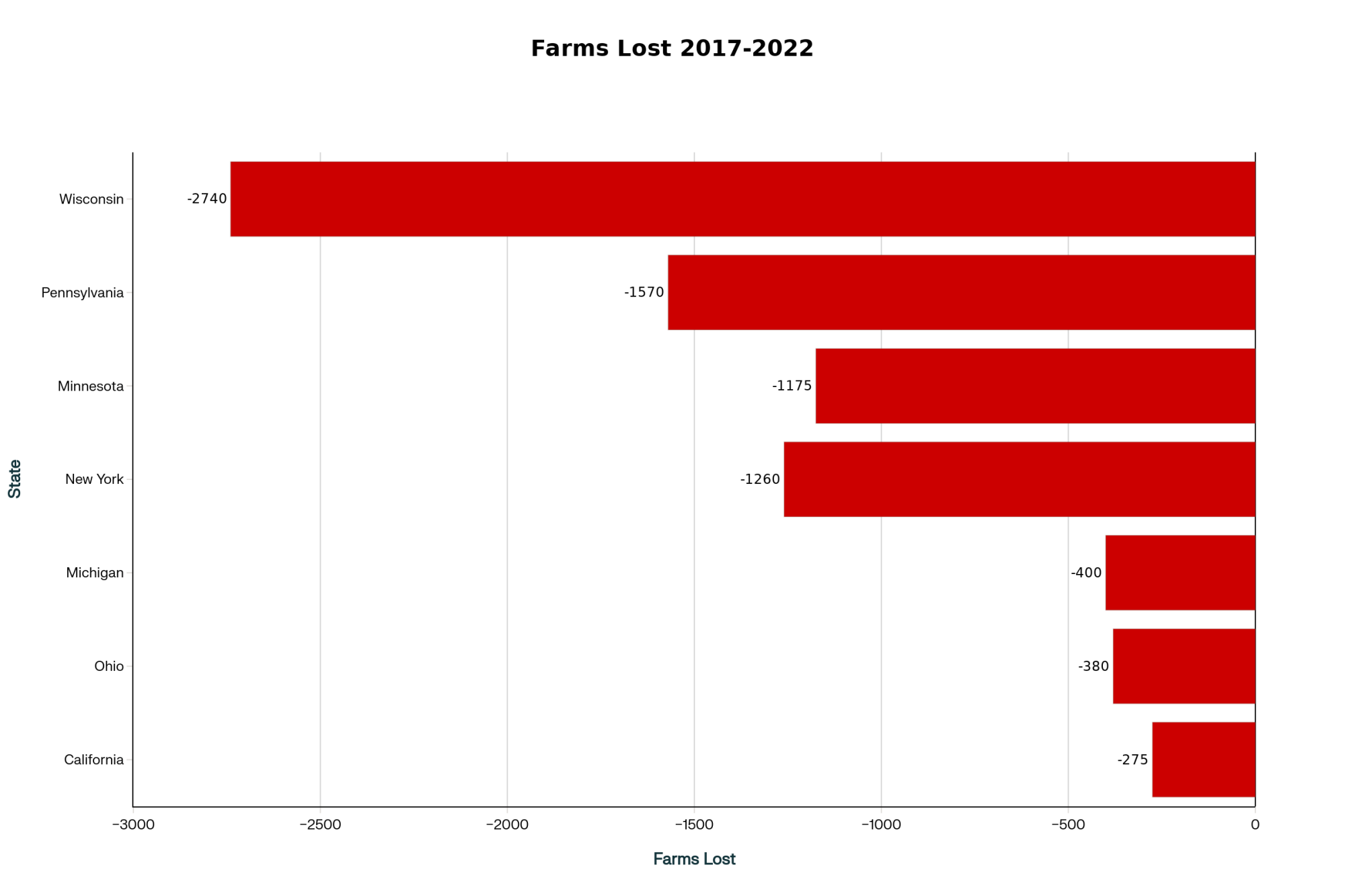
NASS quarterly reports show we’re losing approximately 2,700 to 2,800 farms annually. That’s up from maybe 500 to 900 per year back in the early 2000s. Between 2017 and 2022 alone—and these census numbers are sobering—we lost 15,221 operations. Nearly a 38 percent decline in just five years.

The Center for Dairy Profitability at UW-Madison has been digging into these patterns, and its data show that operations with more than 1,000 cows achieve production costs roughly 20 to 25 percent lower than those of 500-cow farms. It’s basic economies of scale—same thing that reshaped retail, same thing that’s hitting us now.

Dr. Mark Stephenson from Wisconsin’s dairy markets program explained it to me this way: reaching competitive scale today requires approximately to 5 million in capital investment. For most mid-sized operations, accessing that capital while managing existing debt… well, you know how that math works out.

Economic modeling suggests we’ll stabilize somewhere between 8,000 and 12,000 operations by 2035. That’s a fundamental restructuring of the American dairy industry.

Three Paths Forward—What’s Actually Working

After talking to dozens of producers this past year, I’ve seen three main strategies emerge for operations in the 200- to 500-cow range. Each has its own opportunities and challenges.

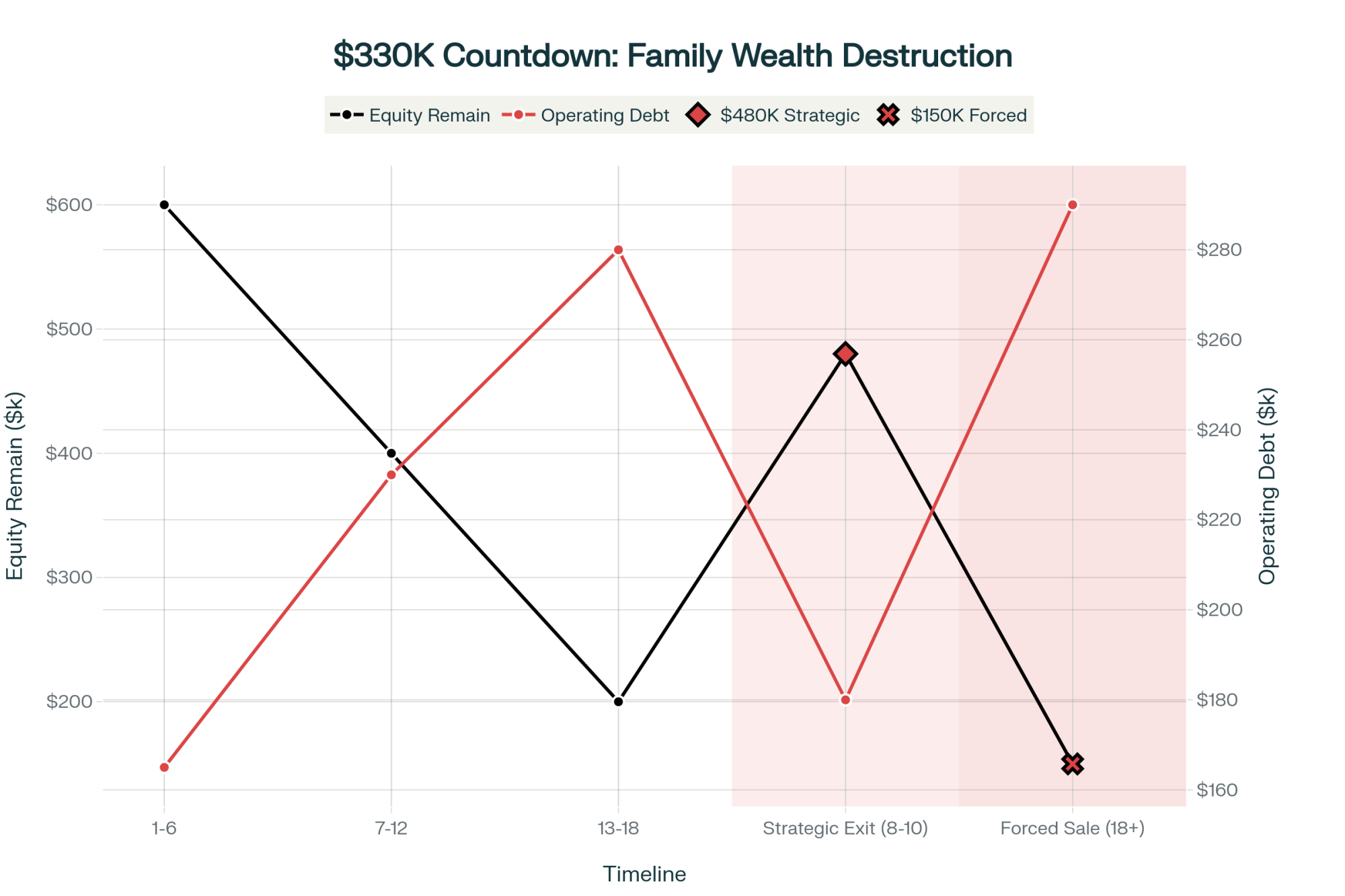
Time destroys options: Delaying decisions costs $650,000 in equity over 13 months—from $850K in May 2026 to $200K by June 2027—as lenders tighten credit and consolidators lose interest

Scaling to Competitive Size

An Idaho producer who expanded from 800 to 3,600 cows over two years shared some hard truths:

“At 800 cows, even with good management, we were losing $200,000 annually at prevailing milk prices. At 3,600, with updated parlor technology and improved feed efficiency, we’re profitable at those same prices. The fixed cost distribution makes all the difference.”

Here’s the reality of scale: You can’t just add cows; you have to add robots and data. USDA farm technology surveys show that robotic milking systems are now on nearly 3 percent of US dairy operations, yet those operations account for over 8 percent of national milk production. It’s mostly these scaling operations where labor efficiency becomes critical.

Based on what lenders are telling us and actual producer experiences, this pathway typically requires:

  • $3 to 5 million in capital for facilities, equipment, and genetics
  • At least 40 percent equity position for financing approval
  • Being close to processing—hauling costs will eat you alive beyond 100 miles
  • Committing to 15, maybe 20 years to recoup that investment

The success stories tend to be producers under 55 with strong equity and minimal debt. And timing? Critical. Expansions during favorable price cycles work. During downturns? Different story.

Premium Market Transition

An Alberta producer who transitioned her family’s 320-cow operation to organic five years ago offers another perspective:

“We experienced approximately 30 percent improvement in net farm income despite lower production volumes. The combination of reduced veterinary expenses, premium pricing, and eventually lower input costs created a sustainable model.”

Producers making this transition work report:

  • Transition costs of $600,000 to maybe $1.2 million
  • You need to be within about 50 miles of a metro market for direct sales
  • Need 3 to 5 years of capital reserves during transition
  • Marketing becomes just as important as production

“Those first two years nearly broke us. Year three reached break-even. Years four and five delivered the returns that justified the transition.”

A North Carolina producer adds another angle. His 180-cow operation transitioned to A2/A2 genetics and grass-fed production three years ago:

“The Research Triangle market—all those tech workers and university folks—they understand the value proposition. In our local market, we’re getting significantly more per hundredweight than commodity, and our production costs actually decreased once we optimized our grazing rotation.”

Some producers are also exploring renewable energy. A Vermont dairy with 400 cows installed an anaerobic digester system last year. “Between the renewable energy credits and reduced electricity costs, it’s potentially adding substantial value annually to our bottom line,” the owner reports. “It doesn’t solve everything, but it provides a crucial margin in tight years.”

Strategic Exit Planning

A Wisconsin producer who sold in early 2024 was refreshingly candid:

“With $850,000 in equity, I could have continued operating at marginal profitability for perhaps three more years. Instead, I accepted $720,000 from a consolidator. My neighbor, who waited, went through bankruptcy proceedings and retained maybe $100,000.”

Current market analysis from agricultural real estate specialists suggests:

  • Strategic sales to consolidators in 2025-2026: $700,000 to $1.1 million for typical 300-cow operations
  • Wait with continued losses: equity could erode to $200,000-400,000 by 2028-2029
  • Each year at break-even represents $100,000-200,000 in opportunity cost
Decision FactorSCALE UPPREMIUM PIVOTSTRATEGIC EXIT
Initial Investment$3-5M$600K-1.2M$0
Time to Profit8-10 years3-5 yearsImmediate
Year 5 Income+$180K+$95K$0
Equity Change-$1.2M (RED)-$300K (RED)+$750K (BLACK)
Risk LevelVERY HIGH (RED)HIGH (RED)LOW (BLACK)
Success RequiresYouth, debt, processingMetro proximityAccept reality
Best For<45 yrs, 40%+ equityNiche positioningPreserve wealth
Regional ViabilitySouthwest, Idaho onlyNortheast, MidwestAll regions

How Geography Is Reshaping Everything

Based on current investment patterns and USDA projections, American dairy production will concentrate in four primary regions by 2030-2035.

The Southwest—Texas, New Mexico, and Arizona—currently produces 32 to 34 percent of national milk, with projections suggesting a move toward 40 to 45 percent. These are your 5,000 to 15,000 cow dry-lot operations. But here’s the kicker—USGS data shows the Ogallala Aquifer dropping 2 to 3 feet annually. Water’s becoming the limiting factor.

Idaho has transformed remarkably in just one generation, now producing approximately 8 percent of the national milk. Chobani’s investments there… they’re following the consolidation, not driving it.

The Upper Midwest—Wisconsin, Michigan, Minnesota—that’s an interesting story. Still producing 18 to 20 percent of national milk, down from over 25 percent historically. What you’re seeing is bifurcation—either going mega or going specialty. The middle? That’s where the pressure is.

New York produces about 4 percent of the nation’s milk, yet its processing investment is massive. The capacity appears to exceed local milk supply, which creates interesting supply chain dynamics.

The Southeast faces unique challenges. A Georgia producer managing 400 cows told me:

“We’re seeing farms exit not because of economics alone, but because the next generation won’t tolerate the working conditions. The technology investments needed for heat abatement in our climate add another $500,000 to expansion costs that Northern operations don’t face.”

System Resilience—What Keeps Me Up at Night

Scale economics dictate survival: Mega-dairies (2000+ cows) produce milk at $16.16/cwt while mid-sized operations (300 cows) face $20.25/cwt costs—a $4+ structural disadvantage no management can overcome

The efficiency gains from consolidation are impressive, but when 40 to 45 percent of national milk production concentrates in water-stressed regions, we’re creating single-point vulnerabilities.

Dr. Jennifer Morrison from Cornell’s food systems program put it well: “Efficiency and resilience often exist in tension. We’re building remarkably efficient systems that may prove fragile under stress.”

Recent screwworm detections, shifting climate patterns, labor challenges… USDA APHIS has contingency plans, sure, but concentrated production carries fundamentally different risk profiles than distributed systems.

Collective Action Still Works

Here’s what’s encouraging: in September, approximately 600 Irish dairy farmers successfully pressed Dairygold for written accountability on pricing decisions. The Irish Farmers Journal covered it extensively. They didn’t tear anything down—they just demanded transparency through organized, professional engagement.

Back home, the American Farm Bureau Federation is pushing for modified bloc voting in their 2025 priorities—letting farmers vote individually rather than having cooperatives vote for them. The National Sustainable Agriculture Coalition mobilized over 130 advocates to engage Congress earlier this year.

Regional organizing is showing promise, too. Vermont producers have formed transparency coalitions to request detailed milk-check breakdowns. California’s Central Valley sees mid-sized dairies exploring collective negotiation.

Pennsylvania offers a particularly instructive example. Approximately 28 dairy farmers started meeting monthly to compare milk check deductions. After finding significant variations within the same cooperative and region, they presented consolidated data to their board and received substantive responses for the first time.

“Individual concerns get dismissed. But 28 farmers with documentation command attention.”

Key Questions for Your Cooperative

Start pressing for transparency with these specific requests:

✓ Request itemized breakdowns of all milk check deductions
✓ Seek written explanations of member versus non-member pricing
✓ Inquire about percentages of cooperative income from member versus non-member business
✓ Request voting records on significant pricing decisions
✓ Understand how board representation aligns with regional membership

What This Means for Different Operation Sizes

Survival margins vanish: A typical 300-cow operation generates $1.4M in revenue but nets just $62K after all costs—equivalent to $17/hour for 70-hour work weeks, before family living expenses

For operations with fewer than 250 cows, commodity-market math has become increasingly challenging without exceptional cost management. Premium market transitions offer possibilities if you’re geographically positioned right. Strategic exit planning may preserve more equity than extended marginal operation.

Producers in the 250- to 500-cow range face critical decisions. Scaling to a competitive size requires that $3 to 5 million, which we talked about. The premium market pivots demand, requiring different capital and marketing commitments. Maintaining the status quo typically means gradual equity erosion.

Operations running 500 to 1,000 cows are approaching the minimum viable commodity scale. Strategic partnerships with neighbors, collective arrangements, or, really, locking in processing relationships become essential.

Agricultural lending surveys from late 2024 show credit availability tightening as lenders see these exit rates. If you’re planning expansion, you’re looking at a 12- to 18-month window. M&A advisors specializing in dairy tell me that interest in consolidator acquisitions peaks in 2025-2026.

Addressing What We Don’t Like to Talk About

CDC and NIOSH research shows farmers face a suicide risk approximately 3.5 times higher than the general population. Financial stress is the primary factor, according to the University of Iowa’s agricultural medicine program.

Illinois has expanded mental health support for farmers through their Department of Agriculture wellness initiatives. Other states are developing similar programs. These aren’t just statistics—these are our neighbors, our colleagues, our friends.

A Minnesota farm widow shared something that stays with me:

“Watching three generations of work dissolve feels like personal failure, even when you understand it’s structural economics driving the outcome.”

The Bottom Line

American dairy is experiencing its most significant structural transformation since we mechanized. By 2035, we’ll have mega-operations, specialized premium producers, concentrated processing infrastructure—fundamentally different from the distributed system many of us grew up with.

What’s particularly interesting from a global perspective is how this consolidation positions American dairy internationally. As our production becomes more concentrated and efficient, we’re increasingly competitive in export markets—especially cheese and milk powder bound for Asia and Mexico. This global dimension adds another layer to domestic consolidation pressures.

Understanding these dynamics lets you make informed decisions while options remain. Success stories will emerge from this transition—producers who recognize patterns early and position accordingly. Solutions vary by region, operation size, life stage, and individual circumstances.

After covering this industry for over a decade and talking with hundreds of producers, one thing’s clear: the question isn’t whether to adapt—market forces have made that decision. The question is how to adapt, when to act, and what outcomes to target.

The consolidation reshaping American dairy is real, it’s accelerating, and it’s transformative. But producers who understand these dynamics, assess their positions honestly, and act decisively while maintaining strategic options can still chart successful paths forward.

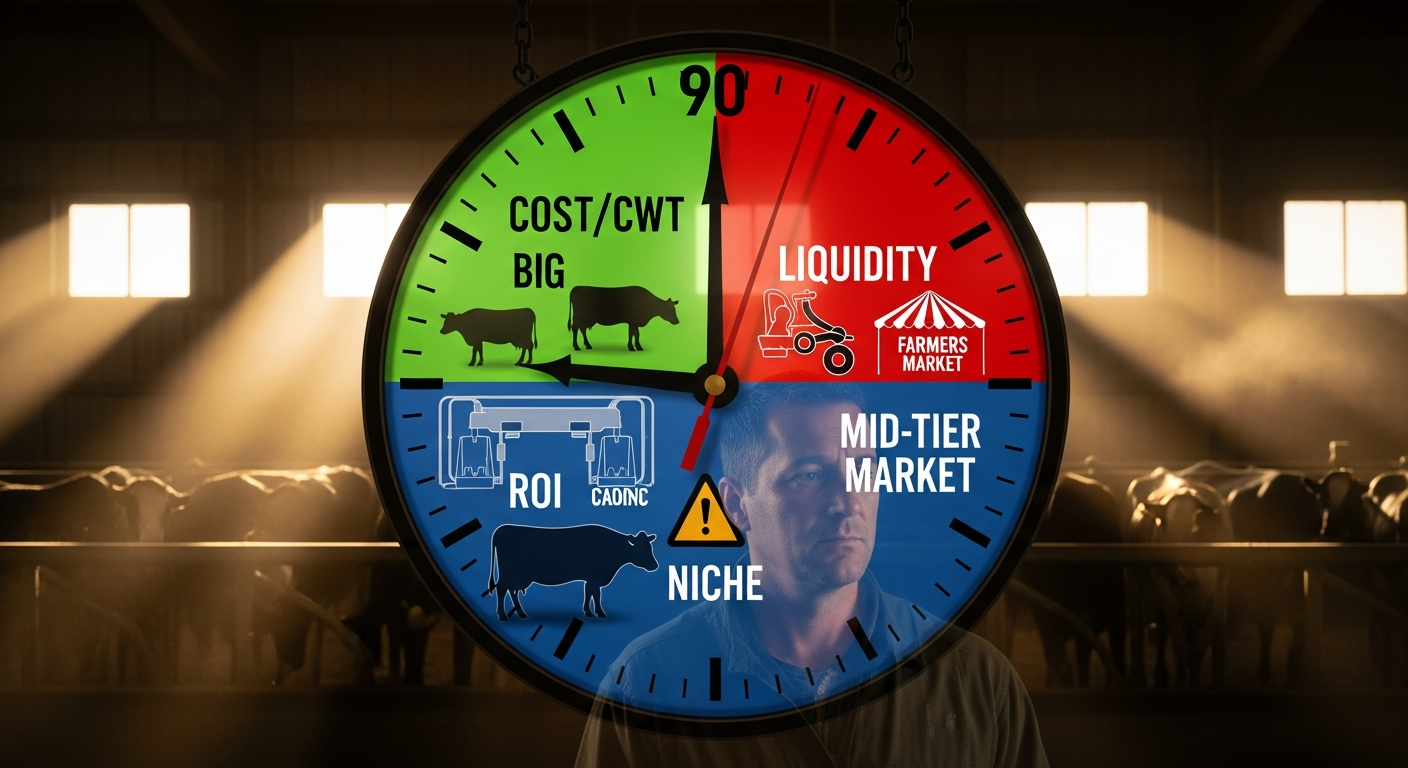
The clock’s ticking, but opportunity windows remain open. The key is recognizing them and acting with purpose while time allows.

Your next step? This week, schedule time to honestly assess which of these three paths makes sense for your operation. Talk to your lender. Review your equity position. Have the hard conversations with family members. Because in this new game, the worst decision is no decision.

Resources for Industry Support

Mental Health Assistance:

  • Farm Aid Hotline: 1-800-FARM-AID
  • AgriSafe Network: 1-866-354-3905
  • National Suicide Prevention Lifeline: 988
  • State-specific farm stress hotlines

Financial and Transition Planning:

  • National Young Farmers Coalition: youngfarmers.org
  • Farm Financial Standards Council: ffsc.org
  • Center for Farm Financial Management: cffm.umn.edu

Industry Advocacy:

  • National Farmers Union: nfu.org
  • Organization for Competitive Markets: competitivemarkets.com
  • Farm Action: farmaction.us

KEY TAKEAWAYS:

  • The 400-farm future is inevitable: Daily losses of 7 farms are shrinking the industry from 24,500 to 8,000 operations by 2035, with mega-farms claiming 75% of production
  • Three paths remain—pick one: Scale to 3,000+ cows ($3-5M), pivot to premium markets ($600K-1.2M), or exit strategically now ($700K-1.1M before it drops to $100K)
  • Your co-op became your competitor: Organizations like DFA control 30% of milk AND processing—they profit from low milk prices that destroy you
  • Act within 18 months or lose everything: Credit markets are closing, consolidator interest peaks in 2025-2026, and standing still means bleeding equity until bankruptcy

Complete references and supporting documentation are available upon request by contacting the editorial team at editor@thebullvine.com.

Learn More:

Join the Revolution!

Join over 30,000 successful dairy professionals who rely on Bullvine Weekly for their competitive edge. Delivered directly to your inbox each week, our exclusive industry insights help you make smarter decisions while saving precious hours every week. Never miss critical updates on milk production trends, breakthrough technologies, and profit-boosting strategies that top producers are already implementing. Subscribe now to transform your dairy operation’s efficiency and profitability—your future success is just one click away.

NewsSubscribe
First
Last
Consent

The Italian Warning: Why Your Cooling Fans Won’t Save You in 2030

$100K cooling system? Italian dairy families invested $50K in cheese vats instead—and DOUBLED profits.

EXECUTIVE SUMMARY: North American dairy faces an Italian preview: fourth-generation cheesemakers abandoning volume for value as cooling systems prove only 40% effective against extreme heat, exposing our industry’s dangerous bet on technology over adaptation. Wisconsin’s brutal arithmetic—7,000 farms vanished while production rose 5%—reveals that mid-sized operations carrying debt below the $18/cwt profitability threshold are mathematically doomed by 2030. Producers face three proven escape routes: scale to 2,000+ cows with $500K investment, pivot to seasonal/specialty for premium markets despite 30% volume cuts, or capture 10X commodity prices through on-farm processing. The clock is unforgiving—Q1 2026 marks the last moment to choose your path and begin the 3-4 year transition before market forces choose for you. Water scarcity, dependence on immigrant labor, and soil depletion compound the timeline, while genetic decisions force an uncomfortable trade-off: bulls whose daughters survive the August heat produce 500kg less milk annually. Italian farmers who accepted this reality doubled their profits; those who fought it with technology are gone. Your cooling fans won’t save you in 2030—but choosing the right business model today might.

Dairy Heat Stress Management

You know, I’ve been following what’s happening with dairy farmers in southern Italy, and it’s got me thinking about our own future here. These multi-generation families—some going back to their great-grandfathers—they’re not just adding bigger fans when the heat and drought hit. They’re completely rethinking how they farm.

Here’s what’s interesting: instead of fighting the climate with more technology, many are shifting to seasonal production with those beautiful heritage breeds like Podolica cattle. Moving from fresh mozzarella to aged cheeses that hold up better in both heat and volatile markets. Less milk, sure, but products that work with the reality they’re facing.

The European agricultural monitoring agencies have been tracking this, and the numbers tell a story. Summer milk production in Italy’s heat-affected regions has been declining by double digits over the past few years, and there’s been a steady increase in farms closing or transitioning. It’s not a crisis as much as it’s a transformation—and as I talk with producers from Vermont to California, I’m hearing remarkably similar questions bubbling up.

The insights I’m sharing here draw from extension research, industry data, and patterns I’ve observed across numerous dairy operations over recent years.

The Timeline We’re All Watching

Let me share what the research is telling us about the next decade, because this window for making strategic choices—it’s narrower than most of us realize.

The land-grant universities have been remarkably consistent. Cornell, Wisconsin, Minnesota—they’re all pointing to about a five-year period where we can still be proactive. After that? Well, the market and Mother Nature start making more of the decisions for us.

According to the U.S. Global Change Research Program’s latest work, by 2030, we’re looking at average temperature increases of 1.5 to 2.5 degrees Fahrenheit across dairy country. Now that might not sound like much sitting here, but translate that to your barn in July. We’re talking measurable production losses—maybe just over one percent nationally to start, but it won’t hit everyone equally. Some regions will feel it harder.

By 2040—and this is what really gets my attention—the modeling from multiple universities suggests heat stress days could double or even triple from what we see now. Instead of managing through 10 or 15 tough days, imagine 30 or 40 where even your best management can’t fully compensate.

Producers I’ve talked with in Wisconsin are already seeing this shift. What used to be a handful of brutal days has turned into weeks where the cows just can’t catch a break. And those power bills? Several operations tell me their cooling costs last summer ate up everything they’d saved for improvements.

Here’s the sobering part: research from both U.S. institutions and international teams, including work from Israel’s Institute of Animal Science, published in recent years, shows that even effective cooling technology mitigates only about 40% of production losses during extreme heat events. That’s not the technology failing—that’s just the reality of what we’re up against.

That Six-Figure Cooling System Question

So let’s talk about what everyone’s pushing—these comprehensive cooling systems. I’ve been looking at the real numbers from extension programs, and honestly, the range is eye-opening.

For smaller operations, say 50 to 100 cows, Penn State Extension and others offer basic fans and sprinklers at about $10,000. That’s manageable for many. But for mid-sized farms? The backbone of many communities? You’re looking at $100,000 or more for a system that really makes a difference. Tunnel ventilation, sophisticated soakers, smart controls—it adds up fast.

Extension research from multiple land-grant universities reveals cooling systems only mitigate 40% of production losses during extreme heat events. That $100K investment still leaves you bleeding 18-27% production when it matters most—the dirty secret equipment dealers don’t advertise.

What’s particularly challenging is the cash flow math. Farm financial analyses from multiple universities suggest you need fifty to seventy-five thousand in annual free cash to justify that kind of investment. Looking at current milk checks versus input costs… that’s a pretty select group right now.

Many producers tell me the same thing: taking on massive debt for a system that only solves part of the problem feels more like gambling than adapting.

Though I should mention, for some larger operations, the investment does pencil out. Operations with 2,000-plus cows that have invested in comprehensive cooling report maintaining over 90% of their baseline production through heat waves. At that scale, with those milk volumes, the economics can work.

The Italian dairy farmers who invested $50K in cheese vats instead of $100K cooling systems doubled their profits. This chart shows why smaller, strategic investments often outperform mega-tech solutions—a reality North American producers need to face before Q1 2026.

Breeding for the Heat

Before we dive into alternatives, let’s talk genetics—because this is where the future really gets interesting.

Recent research from the USDA and multiple universities shows we’re at a crossroads in heat-tolerance breeding. The good news? Genetic variation for heat tolerance exists, and it’s heritable enough to make selection worthwhile. Studies from Florida show that 13-17% of the variation in rectal temperature during heat stress comes from genetics—that’s lower than milk yield heritability (around 30%), but it’s significant enough to work with.

What’s really eye-opening is how different bulls’ daughters perform under heat. The latest genomic evaluations show that the most heat-tolerant bulls have daughters with 2 months longer productive life and over 3% higher daughter pregnancy rates than the least heat-tolerant bulls. But here’s the trade-off—their predicted transmitting ability for milk is typically 300-600 kg lower, depending on the sire.

University research has identified a critical finding: genetic variance for fertility traits increases under heat stress. This means sire rankings change entirely depending on temperature conditions. A bull whose daughters excel for pregnancy rates in Wisconsin might tank in Texas heat, while another bull’s daughters maintain fertility specifically under stress conditions.

The industry is responding. Genomic evaluation companies now provide heat tolerance indices, with breeding values ranging approximately from minus one to plus one kilogram of milk per day per THI unit increase, according to the latest industry reports. That spread between the best and worst—it’s significant when you’re facing 40 heat stress days.

But here’s what nobody’s talking about openly: the relentless selection for production has made our cows increasingly heat sensitive. Selection indices now include longevity, fitness, and health traits, but we’re still playing catch-up. Progressive producers are prioritizing moderate frame sizes—those efficient 1,350- to 1,500-pound animals that maintain production while handling heat better than the larger frames that were historical breeding targets.

The question is: are you willing to trade some production potential for cows that actually survive and breed back in August? Because that’s the real decision genetics is putting in front of us.

USDA genomic evaluations reveal the genetic contradiction killing herds: bulls whose daughters produce 300-600 kg more milk have daughters that live 2+ months less and show 3% worse pregnancy rates under heat stress. You’re breeding cows that excel in Wisconsin winters but die in August—everywhere

Three Alternatives That Are Actually Working

This is where it gets interesting, because what I’m seeing isn’t theoretical—it’s happening right now on real farms.

Working With the Seasons

The seasonal production model adopted by some Italian producers seemed backward at first. Deliberately dry off cows during peak summer? Accept 25-30% less annual milk? But then you look at the complete picture.

Extension studies from Vermont, Wisconsin, and Michigan show feed costs dropping three to five dollars per cow per day during grazing seasons. Labor needs ease up considerably. And here’s what’s really interesting—market data from various cooperatives shows processors now paying 10-15% premiums for seasonal, grass-based milk. The market’s recognizing quality differences.

I’ve been tracking operations in Vermont and elsewhere that made this shift. Despite producing less milk than year-round neighbors, many report their net income actually increased—sometimes by 20% or more. As one producer put it to me, “When you stop fighting the weather every day, when the cows are comfortable in August, everything changes. The stress level drops for everyone.”

Value-Added on the Farm

Let’s talk about processing, because the economics here can be compelling for the right operation. We all know commodity milk prices—eighteen to twenty dollars per hundredweight when things are decent, less when they’re not. But producers who bottle and sell direct? Industry surveys from the American Cheese Society and extension case studies consistently show returns of $60 to $90 per hundredweight equivalent. That’s not marginal improvement—that’s a different business entirely.

The investment for basic processing ranges from 50 to 100 thousand, about what you’d spend on cooling. But here’s the difference—Penn State feasibility studies and Wisconsin DATCP analyses show that many processors recover that investment in 6 to 12 months when they’ve got their markets lined up.

Operations that have gone this route tell me the aged cheese they make during spring flush can bring ten times what they’d get from the co-op. Ten times. Now, it takes skill, the right permits, and consistent marketing, but for those who make it work, it’s transformative.

Going Direct to Consumers

What’s really changed—and this deserves attention—is the regulatory landscape. The Farm-to-Consumer Legal Defense Fund now tracks over 30 states that permit some form of direct dairy sales. That’s up from basically zero fifteen years ago.

The price differential almost seems unfair to discuss. Raw milk, when it’s legal and properly marketed, sells for $8 to $12 a gallon directly to consumers. Compare that to the $1.80 or $2 equivalent at the farm gate.

What’s encouraging is you don’t need to convert everything. Producers successfully moving just 20% of their milk to direct channels report that it completely changes their financial stability. It’s about diversification that actually means something.

Your Three Pathways: A Quick Comparison

PathwayInvestment RequiredTypical PaybackVolume ChangeBest If You Have…
Scale Up & Cool$300k – $500k3-5 yearsMaintain/IncreaseStrong cash flow, <50% debt
Seasonal/Specialty$30k – $80k1-2 years-25% to -30%Pasture access, flexible mindset
Value-Added/Direct$50k – $150k6-18 months-20% to -30%Market access, marketing skills

The Math of Consolidation is Ruthless

Let’s stop dancing around this. If you’re mid-sized and carrying debt, the climate is coming for your margins—and the numbers don’t lie.

Research from Wisconsin and Cornell agricultural economists identifies the exact break points where your operation becomes a casualty. When your realized milk price consistently runs below eighteen dollars per hundredweight, you’re not adapting—you’re bleeding equity. When income over feed costs drops below seven or eight dollars per cow per day, you can’t service debt anymore. And when debt-to-asset ratios climb above 50%, banks won’t even return your calls for upgrade financing.

These thresholds aren’t suggestions—they’re mathematical realities derived from thousands of farm closures.

Wisconsin’s experience is the canary in the coal mine. USDA-NASS data shows the state hemorrhaged 7,000 dairy farms between 2015 and 2023, yet milk production hit records. Those weren’t random failures—they were mid-sized family operations caught in the consolidation vice. Meanwhile, according to the 2022 Census of Agriculture, operations with over 1,000 cows now control two-thirds of the nation’s milk supply, up from 57% just five years back.

The consolidation winners aren’t shy about it either. Producers who’ve successfully scaled tell me that at 2,000+ cows, they access technology and leverage that transforms the entire business model. As one mega-dairy owner put it bluntly, “Scale gave us options. Everyone else just has hope.”

If you’re sitting at 200 cows with 60% debt-to-asset and milk at $17.50, the math is already written. The question isn’t whether you’ll consolidate or exit—it’s how much equity you’ll have left when you do.

“Sometimes working with natural systems instead of against them might be the smartest strategy of all.”

Three Constraints We’re Not Discussing Enough

Beyond climate and economics, three pressures deserve more attention.

Water Is Everything

The situation with the Ogallala Aquifer has shifted from concerning to critical. U.S. Geological Survey data from 2024 shows that recoverable water continues to decline. Kansas reported drops exceeding a foot across wide areas last year. This directly affects irrigation for feed and long-term dairy viability.

In California, UC Davis research documents that Central Valley groundwater depletion is accelerating beyond sustainable levels. The San Joaquin Valley alone has lost over 14 million acre-feet of groundwater storage since 2019. We’re looking at maybe 15-20 years before water, not heat, determines who stays in business there.

Producers in those regions tell me water is now their first consideration every morning—something their grandfathers never worried about.

Labor Challenges Keep Growing

Industry analyses from the National Milk Producers Federation and Texas A&M converge on this: roughly half of dairy’s workforce consists of immigrant labor, and those workers produce the vast majority of our milk. When you overlay visa challenges and local labor shortages, smaller operations feel it first and hardest.

Rising labor costs—an extra two or two-fifty per cow per month in many areas—that’s often the difference between black and red ink when margins are already tight.

Soil Health Can’t Be Ignored

This might be our biggest long-term challenge. FAO data from 2024, backed by Iowa State research, shows soil organic carbon down by half in many agricultural regions. The fix—regenerative practices—takes three to five years and serious capital before you see results in forage quality.

The operations that most need soil improvement often lack the financial cushion to weather that transition. It’s a tough spot.

Making Your Own Decision

After countless conversations with producers and advisors, certain patterns have emerged to help frame decisions.

Suppose you’re consistently seeing milk prices above eighteen dollars, maintaining income over feed costs above seven or eight dollars per cow per day, keeping debt-to-asset ratios under 50%, and can access three to five hundred thousand in capital. In that case, scaling up with cooling infrastructure might work. But success still requires exceptional management and decent markets.

If those numbers don’t line up but you’re within reach of population centers, have some pasture, and can stomach lower volume for better margins, specialty production models offer real potential. Especially if you can develop that direct channel that provides price stability.

Timing matters. By year’s end, you need an honest assessment. First quarter 2026—decision time. Use 2026-27 for building infrastructure or markets. By 2028-29, you should be transitioning operationally. Come 2030, your model needs to be locked in, because the competitive landscape will be pretty well set by then.

Land-grant research from Cornell, Wisconsin, and Minnesota converges on one truth: you have 5-7 quarters to choose your survival path. Q1 2026 marks the last moment for proactive choice—after that, milk prices, heat waves, and bank covenants make the decision for you. Wisconsin’s 7,000 lost farms learned this the hard way

Regional Realities

RegionCurrent Heat Stress Days2035 Projected Heat DaysWater Crisis SeverityRunway to AdaptCompetitive Advantage
Upper Midwest (WI, MN, MI)12-1520-25StableLongest (~10 yrs)HIGH
Plains States (NE, KS)20-2535-45CRITICAL -1 ft/yrShort (~5 yrs)Declining
California & Southwest30-3545-55EXTREME 140 gal/cowIMMEDIATE (~2 yrs)Collapsing
Northeast (NY, VT)8-1215-20FavorableLong (~12 yrs)HIGHEST
Southeast (GA, FL)40-5060-70ModerateAlready Here (0 yrs)Experience Leader

Upper Midwest

Wisconsin, Minnesota, Michigan—you’ve got the longest runway. University of Minnesota Extension modeling suggests heat stress stays manageable through 2030, and water’s relatively stable. Focus on genetics, targeted cooling in holding areas, and protecting components during stress periods. Current operations average 12-15 heat stress days annually, expected to reach 20-25 by 2035.

Plains States

Nebraska and Kansas dairy operations face a double squeeze—the depletion of the Ogallala Aquifer threatening feed production while heat-stress days increase from the current 20-25 to projected 35-45 by 2040. Kansas State research shows producers here need water strategies yesterday, not tomorrow. Some are already transitioning to dryland-adapted forage systems or relocating operations entirely.

California and the Southwest

Water drives everything here. UC Davis reports show you’re already using 20-30% more water per cow than a decade ago just to maintain production. California dairy operations now consume an average of 140 gallons per cow daily during summer months, up from 95 gallons in 2014. If you haven’t developed a water strategy beyond hoping for wet years, you’re behind. The next five years will force hard choices about value-added production, relocation, or partnering with operations that have water rights.

Northeast

Cornell’s work shows you maintaining favorable conditions through 2035. That’s an opportunity—develop specialty markets now while you have the advantage. The artisan cheese growth in places like the Hudson Valley shows that real market appetite exists. New York State Department of Agriculture reports specialty dairy operations increased 35% between 2022-2024.

Southeast

You’re living tomorrow’s challenges today. Georgia and Florida operations already manage 40-50 heat stress days annually. Every smaller operation surviving your heat and humidity has developed strategies that the rest of us need to study. Your experience is our roadmap.

Resources for Moving Forward

Decision Support Tools:

  • Cornell’s IOFC Calculator (available through the PRO-DAIRY website)
  • Penn State’s Enterprise Budget Tool for processing feasibility
  • USDA Climate Hubs’ regional adaptation resources
  • National Young Farmers Coalition’s direct marketing guides

The Bottom Line

Climate change isn’t just forcing operational changes—it’s driving fundamental shifts in business models. The successful producers I see aren’t trying to preserve yesterday’s approach with tomorrow’s technology. They’re finding what works with emerging realities.

The choice isn’t simply to get bigger or get out. It’s about finding the model that fits your resources, market access, and what lets you sleep at night. For some, that’s scale and technology. For others, it’s lower volume with higher margins through differentiation.

What those Italian dairy farmers are teaching us isn’t that we should all make aged cheese or switch breeds. It’s that one-size-fits-all responses might be less adaptive than thoughtful, farm-specific strategies.

Your operation’s future depends on choosing a path, but mostly on choosing soon enough to control how you implement it. The changes are coming either way.

This is about preserving not just farms but farming as a viable way of life. Sometimes that means producing less to preserve more. Sometimes it means completely rethinking what success looks like.

And sometimes—just sometimes—it means recognizing that working with natural systems instead of against them might be the smartest strategy of all.

Key Takeaways:

  • Cooling = 40% solution to a 100% problem: That $100K system you’re considering? It only stops 40% of losses at extreme temps. Italian farmers who invested in $50K cheese vats doubled their income instead.
  • Three models survive 2030—pick one NOW: Mega-dairy (2,000+ cows), seasonal/specialty (30% less milk, 20% more profit), or value-added (10X commodity prices). Middle ground is extinction.
  • The $18/cwt line divides living from dying: Below it, with >50% debt, you’re already bleeding equity daily. Wisconsin lost 7,000 farms in this death zone while production rose 5%.
  • Genetics force a brutal trade: Accept 500kg less milk for cows that survive August, or chase maximum production with daughters that won’t breed in heat. There’s no middle option.
  • Water kills operations faster than heat: Ogallala Aquifer -1ft/year. California dairy: 140gal/cow/day. Your 2030 survival depends more on water rights than cooling technology.

Complete references and supporting documentation are available upon request by contacting the editorial team at editor@thebullvine.com.

Learn More:

Join the Revolution!

Join over 30,000 successful dairy professionals who rely on Bullvine Weekly for their competitive edge. Delivered directly to your inbox each week, our exclusive industry insights help you make smarter decisions while saving precious hours every week. Never miss critical updates on milk production trends, breakthrough technologies, and profit-boosting strategies that top producers are already implementing. Subscribe now to transform your dairy operation’s efficiency and profitability—your future success is just one click away.

NewsSubscribe
First
Last
Consent

The Dairy Mirage: How the Industry’s ‘Fixes’ Are Finishing Off the Farmer

Every ‘solution’ that claims to save dairy farms was never designed to fix anything — it was built to extract you, one milk check at a time.

You know the line by now. Every time milk prices crash, every time a farm auction makes the local news, somebody shows up with a binder and a slogan. “Efficiency will save you.” “Diversify into organics.” “Join a co-op — strength in numbers.”

I mean, I’ve heard them all. You probably have too. But here’s the thing that nobody in those meetings will ever say out loud — the system isn’t broken. It’s working exactly the way it was built. It just wasn’t built for you.

The math nobody wants to admit

Small dairies lose $6.27 per hundredweight while large operations profit $16.50 on the same product—a $23 gap that exposes the system’s built-in preference for scale over sustainability

Down in Wisconsin, the USDA’s Economic Research Service has been crunching the same numbers for years. Small herds — fewer than 100 cows — produce milk at $42 to $44 per hundredweight. Large herds — 2,000 cows and up — come in at $19 to $20.

That’s a $23 gap that no efficiency app, no robotic milker, and no “farm family tradition” can erase.

I was at a producer meeting in Madison when one co-op board member leaned back and said it plain: “Small dairies are emotionally important, but economically irrelevant.” Brutal. True. That’s the level of quiet truth people at the top already understand but never put in print.

And that’s the problem — your loss is their model.

Where the money actually goes

Let’s put real numbers to this thing.

A 250-cow dairy feeding 50 pounds per head per day spends roughly 0,000 a year on feed, per USDA feed cost indices. Feed companies take 8–12% margins on that. That’s $175,000 to $240,000 every three years transferred out of your pocket before you even pay labor.

Add the bank. The Farm Credit System’s nationwide reports list operating and mortgage interest averaging around 6.8%. On a $900,000 land note and a $300,000 operating loan, that’s about $85,000 a year in interest.

Then your co-op or processor adds another chunk. According to Rabobank’s 2025 Dairy Outlook, most processors net around $3.50 per hundredweight after hauling and processing — that’s $575,000 from your production.

A 250-cow dairy operation sends $1.27 million annually to feed companies, processors, banks, and consultants before the farmer pays for labor or takes home a single dollar—revealing the extraction system that profits from farm losses

So the next time someone says, “You just need to manage costs better,” tell them your losses financed someone else’s record quarter.

An accountant friend of mine told me over lunch, “For every dollar a farm burns in equity, someone up the chain makes six.” That right there should stop the room cold.

Starting with $1,000 in milk value, farmers watch $573 get extracted by feed companies, banks, processors, and consultants—keeping only $427 while upstream stakeholders profit $6 for every $1 of farm equity burned

The organic trap: paying to play

Here’s another shiny “fix” that just doesn’t add up.

Per the USDA’s National Organic Program, converting a farm means running the land chemical-free for 36 months, and feeding cattle organic rations for 12 months before certification. According to Cornell’s 2024 Organic Dairy Cost study, feed costs jump 30–40%, while tank weights drop 8%.

That’s an extra $180,000 in feed, $10,000 in certifications, and about $40,000 in lost yield a year before you even cash a single “organic premium” check.

Dan Richter, milking 220 cows out in Cashton, said it best: “We made it to certification, but we were broke before the first organic load hit the plant.” He’s not alone — Cornell data shows two-thirds of organic transitions never reach sustainable profitability.

What strikes me most? The programs keep rolling anyway. Because suppliers, certifiers, and consultants still make their margin, no matter what happens to the farm.

Equipment-sharing: good on paper, chaos in practice

You hear it at winter extension meetings — “Form an equipment co-op, cut your costs!”

But University of Minnesota Extension found that those shared projects shave about 10% off upfront ownership costs, while downtime climbs 20% and repair expenses eat another 7%.

A producer from Viroqua told me, “We spent more time arguing over whose turn it was to use the chopper than actually chopping.”

And look, that’s not laziness. That’s just how weather and manure work. You can’t partition urgency. The only folks winning from that plan are the sales reps who sold the machinery in the first place.

Component bonuses: chasing nickels, losing dollars

Processors love to brag about “protein incentives.” USDA Dairy Market News says the average premium sits around $1.25 per hundredweight.

The trouble is… that extra protein costs money. Cornell dairy nutritionists peg the annual ration bump at roughly $75,000, plus $15,000 for consultant fees and testing programs.

Best case — you net maybe $20,000.

Meanwhile, processors get exactly what they want — uniform, high-solids milk without buying a pound of extra grain.

Like one New York nutritionist told me quietly at a conference this year: “Protein bonuses aren’t a windfall. They’re a management leash.”

Co-ops: from shields to siphons

People forget the history — co-ops were started to protect producers from predatory processors. But the GAO’s 2024 Cooperative Governance Report revealed that 78% of major U.S. co-ops now use milk-volume voting.

One member equals one vote? Not anymore. It’s cubic tons of milk per vote now.

A 300-cow operator from Brookings County told me, “My co-op makes more on hauling my milk than I make milking the cows.” The sad thing? That’s not hyperbole.

Even the GAO data shows that cooperative processing divisions now generate more operational profit than they do from member payments. Somewhere along the line, the idea of “member-first” flipped to “margin-first.”

The big picture — and it’s not pretty

The USDA’s Agricultural Projections to 2034 project the U.S. will have 12,000–15,000 dairies left by 2030. We’re sitting around 26,000 now.

By 2034, the U.S. will lose 54% of its remaining dairy farms while six processors will control 82% of milk flow and five Holstein sires will dominate 82% of genetics—a consolidation designed to extract, not sustain

Rabobank’s forecast says six processors will control 80% of total U.S. milk flow, while the Council on Dairy Cattle Breeding (2025) reports five Holstein sires now sire 82% of all replacements.

Think about that — market and genetics bottlenecked into half a dozen corporate hands.

And what happens locally? UW–Madison economists calculated that each 100-cow farm loss strips $500,000 from regional rural economies — vet clinics, feed stores, mechanics, and local schools. Drive from Antigo to Arcadia this fall, and you’ll see them: boarded barns, “auction today” signs, and co-ops consolidating routes that used to serve three farms per mile.

That’s not bad luck. That’s a business plan.

“Just one more year…”

You can tell when somebody’s gone from hopeful to cornered — they start saying it. “If we can just make it one more year.”

You know who wants you to “hang on”? The people who profit from delay: bankers, feed mills, processors. Tom Greene calls it “equity farming for other people.”

Every year, small dairies run at a loss, but the rest of the chain keeps cashing checks on time.

That’s the hidden cost of loyalty — the longer you stay, the more they gain.

What you can actually do about it

This part matters because nobody else is going to say it straight.

  1. Call your accountant, not your lender. The bank lives on time. The accountant lives on truth. Ask them to run your net after unpaid family labor and true depreciation.
  2. Get a land appraisal. The American Society of Farm Managers and Rural Appraisers says Midwest farmland finally plateaued in 2025 after years of inflation. If you’re considering an exit, waiting means losing margin.
  3. Run two lists. Stay and lose $100K in equity per year. Exit, keep $2.5 million clean. Math doesn’t lie — it just hurts.
  4. Make the family meeting happen. Don’t wait until the next refinance or co-op contract cycle. This isn’t quitting; it’s protecting what generations built.

If that sounds heavy, that’s because it is. But so is the weight of hope that never pays off.

The inconvenient truth

The real betrayal here isn’t that the system failed small dairy. It’s that it pretended to save it while quietly making money off every stage of its decline.

This whole setup isn’t chaos — it’s choreography. And it plays out just as designed: the smaller farms provide the illusion of diversity, the mid-tier keeps the supply chain full, and the megas consolidate control.

So tomorrow morning, when you’re tightening hoses or scraping the feed alley, stop and look at your milk check before you start another year of “hanging on.” Ask yourself:

“If everyone else is making money off my losses, how long am I willing to play the game?”

Because the truth is — this system isn’t failing. It’s succeeding exactly the way it was designed to. And that’s the part nobody in a suit will ever say out loud.

KEY TAKEAWAYS

  • The dairy system isn’t “broken” — it’s performing exactly as designed. Farmers lose; everyone else wins.
  • The economics are brutal: small farms spend twice what megas do to produce the same milk. Passion doesn’t pay bills.
  • Every so‑called “solution” — co‑ops, consultants, organic programs — is just a polite way to harvest your last dollars.
  • For every dollar of farm equity burned, six show up elsewhere — in feed, finance, or processing profits.
  • The smartest play isn’t hope. It’s strategy: scale, specialize, or sell before the system cashes you out.

EXECUTIVE SUMMARY

The small dairy crisis isn’t some tragic accident — it’s the business model. The USDA’s data shows that small farms make milk for $44/cwt, while megas do it for $20. That’s not competition; that’s a setup. Meanwhile, every “solution” — organic transitions, efficiency programs, co-op loyalty — just keeps you milking long enough for everyone else to get paid. Cornell, Rabobank, and GAO reports show how feed dealers, banks, and processors profit from your losses. For every dollar of farm equity burned, six appear upstream. The system isn’t failing; it’s extracting. So if you’re still hanging on, here’s the real math: scale up, specialize, or get out while there’s still something left to save.

Complete references and supporting documentation are available upon request by contacting the editorial team at editor@thebullvine.com.

Learn More:

Join the Revolution!

Join over 30,000 successful dairy professionals who rely on Bullvine Weekly for their competitive edge. Delivered directly to your inbox each week, our exclusive industry insights help you make smarter decisions while saving precious hours every week. Never miss critical updates on milk production trends, breakthrough technologies, and profit-boosting strategies that top producers are already implementing. Subscribe now to transform your dairy operation’s efficiency and profitability—your future success is just one click away.

NewsSubscribe
First
Last
Consent

80% Full or 95% Desperate: The $400,000 Difference in Dairy Expansion Timing

Expand at 80%: 28 months of cash runway. Expand at 95% = 8 months. Which farm survives the next milk price crash?

EXECUTIVE SUMMARY: Timing your expansion at 80% capacity versus 95% isn’t just about convenience—it’s a $400,000 decision that determines whether you’ll survive the next downturn. At 80% utilization, you have $400-600K working capital and 28 months of financial runway; at 95%, you’re down to $300K and 8 months before crisis hits. The hidden killer nobody’s calculating: heifer costs exploded from $1,800 to $4,000 between 2023 and 2025, adding an unbudgeted quarter-million to every expansion. Smart operators now work backwards from a 36-month timeline, securing heifer supplies before designing parlors. But here’s the plot twist—producers choosing NOT to expand are often outperforming expansion operations by 40%, using premium markets, cooperatives, and value-added processing to build margins without debt. This isn’t about getting bigger anymore; it’s about getting smarter with the assets you already have.

Dairy farm expansion strategy

I just came back from a producer panel in Madison, and—true to form—by the time coffee hit the table, we were deep into a debate: When’s the right time to expand? The folks from Texas mentioned USDA’s October 2025 figures—Texas added nearly 47,000 cows in the last twelve months. South Dakota? State data shows a 65% herd increase since 2019, thanks in part to Valley Queen’s ambitious processing expansion. And you can’t ignore Rabobank’s latest numbers: we’re talking billions in new dairy plant investment rolling out across the country through 2028. It’s a wild time for U.S. dairy.

But I noticed something as these success stories bounced around the room—nobody wanted to bring up the producers struggling under new debt loads or the expansions that triggered more stress than success. After reviewing cases with financial advisors, talking with university folks, and swapping stories with dairies from Georgia to Washington, I’m convinced we need a new framework for thinking about expansion. Let’s get practical.

The 80% Trigger—And Why Most Expansion Happens Too Late

Looking at this trend, it’s natural to assume the decision comes when the parlor’s maxed out, the labor’s grinding, and you’re racing against milk production efficiency limits. Michigan State University’s 2024 expansion analysis, along with similar work from Wisconsin’s Center for Dairy Profitability, reveals a different story. Their advice? Expand at 80% utilization—not after the wheels come off at 95%. When you do, your odds of profit skyrocket.

Here’s what I see in operations working at that 80% sweet spot:

  • Working capital sitting comfortably between $400,000 and $600,000 (not drained by constant cow turnover)
  • Debt-to-equity ratios below 0.5, so lenders trust you to ride out rough spots
  • Maybe 18–24 months’ cash cushion if things go sideways

But at 95%? Working capital has likely dropped below $300,000, debt pressures are building, and every new day at full tilt erodes your negotiating position. Lenders notice. Suddenly, rates creep up, terms get shorter, and flexibility disappears. This isn’t theoretical—producers in Iowa and New York both told me their latest refinancing offers came with “crisis” pricing, not partnership terms.

What’s particularly noteworthy is how that 80% number gives you time: time to fix bottlenecks, test labor models, and roll out changes before you’re under the gun. That breathing room is worth more than any construction discount you’ll ever get for waiting to expand.

The $400,000 Safety Net: Why 80% Capacity Expansion Timing Creates Financial Runway

Hidden Heifer Costs: The Expansion Killer in Plain Sight

What’s interesting here is how expansion plans rarely factor in the real price of replacements. CoBank’s October 2025 Dairy Quarterly puts current U.S. heifer inventories at a two-decade low—just shy of 3.9 million head. That’s about 18% lower than where we stood in 2018. And based on what I see at auctions and in dealer quotes around Wisconsin and Pennsylvania, a replacement heifer that cost $1,800 a couple of years back is now going for $3,500 to $4,000, with the best lines topping $5,000 on strong-herd sales.

USDA’s Livestock, Dairy, and Poultry Outlook supports this, showing heifer supply tightness through at least 2026. Plan for earlier recovery at your peril.

So if you’re modeling a jump from 300 to 450 cows, here’s what you’re really looking at:

The Quarter-Million Dollar Surprise Nobody Budgets For

Hidden Cost CategoryWhat You BudgetedWhat You’ll Actually Pay
Heifer Premium (150 head @ current market)$270,000 (@ $1,800/head)$525,000-$600,000 (@ $3,500-$4,000/head)
Additional Heifer Acquisition Cost+$255,000 to $330,000
Feed & Labor During 24-Month DevelopmentIncluded in operations+$50,000 (Cornell Pro-Dairy estimates)
Transition Health Management$5,000+$10,000-$15,000 (U of MN veterinary studies)
Overlapping Debt ServiceOften ignored+$35,000-$50,000
Total Unbudgeted:$350,000-$445,000

Bottom line? That quarter-million to nearly half-million dollar hole in your expansion budget isn’t a rounding error—it’s the difference between profit and bankruptcy. As Dr. Christopher Wolf at Cornell reminded us at a recent extension webinar, it’s not about filling the barn—it’s about whether you can afford to fill those stalls with cows that pay you back at today’s prices.

The Quarter-Million Dollar Surprise: Hidden Heifer Costs That Bankrupt Expansion Plans

Backward Planning: The 36-Month Expansion Timeline

From what I’ve seen in successful multisite operations across the Midwest and Northeast, the farms that ‘nail’ expansion don’t start with construction—they start three years out and work backwards.

Here’s how it plays out on farms that have grown without regrets:

  • At 36 months out, they’re assessing heifer facilities: can we build enough of our own, or do we need to secure outside sources? Consultants (think folks from Compeer Financial or university extension) are already involved, running stress tests and flagging operational or management gaps.
  • By 24 months, most of these producers are disabling beef semen programs and boosting sexed dairy semen use, which stings when you’re giving up $750–$900/hd for beef-dairy cross calves (just check any current USDA market report). Still, it’s necessary to provide the replacements.
  • 12 months out sees the start of construction—parlor design reflects actual heifer capacity, not fantasy projections. You’ll see operations using this window to bulletproof their management structure, too.

After the parlor goes live, it’s all about measured, gradual onboarding. Bringing heifers in over 12–16 weeks—rather than in one massive wave—gives everyone (cows and people) time to adapt, keeps butterfat performance on track, and helps maintain fresh cow management discipline.

One consultant put it to me like this: by the time you ‘decide’ to expand, if you’re doing it right, you’re really just executing the plan you made three years ago.

Designing for the Herd You’ll Have—Not the Cows You’ve Got

I visited a 400-to-650 cow Michigan operation that offers a simple but profound lesson: they built everything 50% bigger than needed—holding areas, feed alleys, manure storage, you name it. Wisconsin’s Dairyland Initiative supports this “150% Rule” in their 2024 planning guidelines, and the cost savings down the line are enormous.

Get this—building a larger holding pen initially costs $35,000–$50,000, while reconstructing a cramped one later runs $80,000–$120,000 and may force a multi-month shutdown. Operations from California (with tougher water board restrictions) to the Southeast (dealing with heat stress) should adapt the concept, but the “plan for growth” mindset seems universally valuable. Even Mountain West dairies dealing with seasonal water access and Southwest operations managing extreme summer temps are finding this forward-thinking approach pays dividends.

Modular barns—clusters of 250–350 stalls with independent ventilation—are growing popular in Idaho and Pennsylvania. You can add a new block without disrupting milk flow, which makes sense given the unpredictability of future herd size. Feed alleys and equipment, according to dealer experience and recent construction bids I’ve seen, cost more up front but save $100,000+ against retrofits later.

Building manure management for the next generation, not just today, is critical. One producer in central Wisconsin told me his “build only what you need now” approach meant a catastrophic $120,000 retrofit and 3 months of idle time when expansion couldn’t wait any longer.

Labor Is Now the True Bottleneck

Let’s talk labor, because nearly every operator I know admits it’s the limiting factor—sometimes more than parlor stalls or feed space. USDA’s 2025 Farm Labor Survey reports annual turnover rates near 40%, and Texas A&M’s economists calculate it costs $15,000–$25,000 every time you lose a trained hand. Think about it: that’s four to five cows’ worth of revenue lost every single year, just to churn.

I’m seeing operations adapt by leveraging automation—robotic milking, sort gates, feed pushers. The latest Lely and DeLaval systems, as deployed in California and New York herds, reduce labor needs up to 60% and pay for themselves in under two years if you’re in a tight labor market. This is transforming dairy farm management at every scale. And the non-wage elements—affordable housing, pickup shuttles, flexible shifts, pathways to supervisor roles—are finally getting attention. The University of Vermont’s 2024 dairy labor research suggests these perks cut turnover from 45% to 15% in pilot projects.

Big, multi-barn operations in the Midwest offer something else: real career ladders, so entry-level milkers can move up to shift lead or assistant manager roles as the farm grows. One HR director told me what keeps people isn’t just a fair hourly rate—it’s the chance to stick around and grow, plus an environment that respects their families and ideas.

The First Real Investment: Honest, Independent Analysis

Nearly every expansion I’ve seen succeed started with a $15,000–$35,000 commitment to serious, unbiased planning—a line item paid to consultants from Farm Credit, extension, or non-affiliated ag business planners. They’re not selling rotary parlors or advocating for any specific supplier. They’re just there to ask the brutal questions:

  • Would you expand if milk dropped $3/cwt for a year?
  • Can your buyer really take another 20% peak milk during the spring flush?
  • Does your current team have the management capacity for multisite or larger-scale operation, or are you training up as you go?

And here’s the value: good consultants model all this and often point out that your “8-year payback” plan will actually take 14 years under today’s risk profile. Sometimes, they even tell producers not to expand at all—which, believe it or not, is the advice that saves the most equity in the long run.

Choosing “Not to Expand”—and Winning Anyway

The Contrarian Play: Why NOT Expanding Often Beats Bigger-Herd Economics

What’s encouraged me most recently is meeting producers who took “no” for an answer after running the numbers—and ended up thriving. How? By focusing on premiums and efficiency, not just scale.

Consider organic transitions. The Organic Trade Association’s 2025 report shows price increases of 20–40% for certified milk. A2 milk and high-component lines command similar, sometimes higher, premiums. Even old-fashioned quality bonuses—holding SCC well under 100,000—mean an extra 40 to 60 cents per hundredweight at most Midwest and Northeast processors.

Out East, producer co-ops like Hudson Valley Fresh help members—regardless of herd size—earn meaningful premiums and negotiate better hauling and input deals. And Cornell’s Dairy Foods Extension has shown that on-farm cheese and yogurt ventures (with $150,000–$300,000 startup investment) routinely pay back in two to three years when executed well.

Don’t discount Vermont’s recovery model after 2015–17’s price crash. Instead of growing bigger, groups of family dairies leaned into direct-market sales, branded fluid milk, and value-added production. Their net margins—documented in Vermont Agency of Agriculture data—eclipsed many larger commodity peers.

A Farmer’s Framework for Deciding

For everyone I meet seriously eyeing expansion, here’s my basic checklist—honed from the best minds at Farm Credit, university extension, and my own seat-of-the-pants experience:

  • Stress test: How many months of negative cash flow can you truly weather? Most lenders want to see at least a year of history.
  • Scenario planning: Run the numbers for stable, down 12%, and down 15–20% price scenarios. Use current heifer prices and milk market conditions from sources like the USDA’s recent outlooks—never last year’s cheapest quotes.
  • Hidden costs: Don’t ignore transition losses (15–20% production dips are well-documented by Michigan State), overlapping debt, or retraining expenses.
  • Management readiness: Be honest—can your team adapt to delegation and documentation, or do you need to build that muscle before you break ground?
  • Alternatives analysis: Is there a premium brand, co-op, or processing venture you’re overlooking that could offer similar ROI with less debt risk?

If you’re short on any of those, slow down. Your farm’s resilience will depend on finding the right fit—not just the biggest number.

Looking Ahead: The Hard Truth About Smart Growth

Here’s what nobody wants to admit at those polite industry conferences: The era of “expand or die” is dead. It’s been replaced by “expand smart or die slowly.”

The data doesn’t lie. Based on Farm Credit lending data and recent expansion studies, operations expanding at 95% utilization with depleted working capital face substantially higher failure rates than those expanding from positions of strength. Farms that ignore the quarter-million-dollar heifer reality end up selling at distressed prices within five years. And those waiting for the “perfect moment” to expand? They’re still waiting while their neighbors either scaled strategically or pivoted to premium markets that pay double commodity prices.

The new reality is this: Smart growth beats fast growth. No growth beats dumb growth. And sometimes, the boldest move isn’t building bigger—it’s having the guts to stay exactly where you are and do it better than anyone else.

That 80% rule? It’s not just about timing. It’s about having enough oxygen in your operation to think clearly, plan strategically, and execute flawlessly. Because in today’s dairy economy, the difference between thriving and surviving isn’t the size of your herd—it’s the size of your margin for error.

And if that margin’s already gone? Well, maybe it’s time to stop focusing on expansion plans and start focusing on what actually makes money in this business. Because I’ll tell you what—it’s not always more cows.

KEY TAKEAWAYS

  • Your expansion trigger is 80%, not 95%—miss this and you’re $400,000 poorer: At 80% you have resources to plan; at 95% you’re making desperate decisions with 8 months runway instead of 28
  • Budget $4,000 per heifer, not $1,800—then add $100,000 for surprises: The quarter-million dollar gap between planned and actual heifer costs is bankrupting more expansions than milk prices
  • Winners plan backwards from a 36-month timeline: Secure heifer genetics at -24 months (yes, give up those $900 beef calves), build replacement inventory at -18 months, break ground at -12 months
  • The highest ROI might be NOT expanding: Producers capturing organic premiums (20-40%), joining cooperatives, or adding on-farm processing are beating expansion economics by staying exactly where they are

Complete references and supporting documentation are available upon request by contacting the editorial team at editor@thebullvine.com.

Learn More:

Join the Revolution!

Join over 30,000 successful dairy professionals who rely on Bullvine Weekly for their competitive edge. Delivered directly to your inbox each week, our exclusive industry insights help you make smarter decisions while saving precious hours every week. Never miss critical updates on milk production trends, breakthrough technologies, and profit-boosting strategies that top producers are already implementing. Subscribe now to transform your dairy operation’s efficiency and profitability—your future success is just one click away.

NewsSubscribe
First
Last
Consent

Your Dairy’s 24-Month Countdown: Act Now or Lose $450,000 in Family Wealth

Every Monday you delay, you pay $17,500. Every month: $75,000. Your dairy’s 24-month survival plan starts with three decisions.

Executive Summary: Your dairy has 24 months of equity left, and the decision you make this month will determine whether you preserve $700,000 or exit with $250,000. This crisis differs from all others—China’s self-sufficiency, $11 billion in U.S. processing overcapacity, and the worst heifer shortage since 1978 have created a structural transformation that milk price recovery won’t solve. The math is clear: farms that act now can cut monthly losses from $25,000 to $8,000 through targeted culling, feed optimization, and strategic repositioning, while those waiting 6 months lose $450,000 in family wealth. Success requires three time-bound decisions: immediate liquidity management (30 days), strategic recovery positioning (90 days), and viability determination (180 days). The projected loss of 5,000 U.S. dairy farms by 2028 won’t be random—it will precisely separate those who recognized time as their scarcest resource from those who waited for markets to save them.

dairy survival strategy

I recently spoke with a producer in central Wisconsin who summed up the current situation perfectly: “Everyone’s watching milk prices, but what’s actually keeping me up at night is whether I have the equity to make it to when prices recover.” You know, with CME Class III futures hovering around /cwt for Q1 2026 and feed costs finally moderating with corn near .24/bu according to USDA’s latest reports, you might think we’d all be breathing easier. But conversations across the dairy belt—from Pennsylvania tie-stalls to Texas freestalls—they’re revealing something different.

Here’s what I’ve found after running through financial scenarios with extension folks and reviewing real farm numbers: a representative 500-cow dairy with 0,000 in equity has about 24 months of runway at current burn rates. And the thing that really caught my attention? The difference between taking action now versus waiting six months could preserve roughly $450,000 in family wealth. That’s not speculation—it’s what the math consistently shows when you model different timing scenarios.

The $450,000 Decision Window: Every month you delay action costs roughly $75,000 in family wealth. This isn’t speculation—it’s what the math shows when you model a representative 500-cow dairy burning $25,000 monthly versus taking immediate action to cut losses to $8,000

Understanding the Convergence of Market Forces

Having tracked these cycles since the late ’90s, this downturn feels different. It’s not just one thing we can monitor and respond to—we’re seeing multiple structural shifts happening all at once.

The Perfect Storm Hitting U.S. Dairy Right Now: China’s near-total self-sufficiency killed the global growth story, $11 billion in new U.S. processing capacity needs milk nobody’s producing, and we’re facing the worst heifer shortage in 47 years. This isn’t a cycle you can wait out—it’s three permanent structural shifts happening simultaneously

Take China. Rabobank’s recent dairy quarterly indicates they’ve reached about 85% milk self-sufficiency, up from 70% five years ago. We’re talking about a fundamental policy shift toward food security, not a temporary market adjustment. When StoneX analysts discuss how that Chinese import growth story—the one that fueled global expansion for over a decade—is essentially done, they’re describing a permanent change in how global dairy works.

Meanwhile, and the timing couldn’t be worse, the U.S. processing sector has committed somewhere between $8 and $ 11 billion in new capacity, according to what IDFA’s been tracking. Projects across nearly 20 states, from new cheese plants in Texas to expanded drying capacity up in the Upper Midwest. These facilities will need roughly 7-8 billion pounds of additional milk annually when fully operational by mid-2026.

But here’s what really concerns me: the availability of replacement heifers. USDA’s latest cattle inventory shows we’re at 4.38 million head—the lowest since 1978. The National Association of Animal Breeders reports beef semen sales to dairy farms hit 7.9 million units in 2024, up 58% from 2020. Conventional dairy semen? Down to 6.7 million units. These aren’t just statistics… they represent breeding decisions that’ll constrain expansion capacity for the next 24-36 months.

You know what’s interesting about this cycle? The moderate feed costs—corn at $4.24/bu and alfalfa at $222/ton—are actually extending the adjustment period. Back in 2009, when corn hit $6-7/bu, we saw rapid culling and supply correction. Today’s manageable feed costs let farms sustain negative margins longer. Sounds beneficial, right? Until you consider that it delays the market from rebalancing.

The Economics of Scale: A Widening Divide

MetricLarge Farms (2,500+ cows)Family Farms (500 cows)The Gap
Production Cost per cwt$15.50 – $17.50$19.00 – $21.00$3.50/cwt
Labor Productivity300 cows/worker60 cows/worker240 cows/worker
Labor Cost ImpactBaseline+$1.50 – $2.00/cwt$1.75/cwt
Feed Procurement Advantage15-25% volume discountTruckload pricing$0.50/cwt
Capital Cost per Cow$4,800 – $6,000$7,000 – $9,000$2,500/cow
Transportation Cost$0.35/cwt (concentrated regions)Up to $0.53/cwt$0.18/cwt
Total Structural DisadvantageBaseline+$3.50/cwt$3.50/cwt

The structural cost advantages larger dairies have reached levels that fundamentally change competitive dynamics. Research from Cornell’s ag economics folks and similar extension programs consistently shows that farms with 2,500+ cows achieve production costs of $15.50-17.50/cwt. Meanwhile, 500-cow dairies face costs of $19-21/cwt based on Penn State Extension benchmarking.

And this isn’t about management quality or work ethic—we all work hard. It’s a mathematical reality. Labor productivity data from Michigan State Extension reveal that large farms are achieving ratios exceeding 300 cows per full-time employee through strategic automation and role specialization. Family operations? We’re typically managing 60 cows per worker despite those 70-hour workweeks we all know too well. At prevailing wage rates, that creates a $1.50-2.00/cwt structural disadvantage.

Feed procurement tells a similar story. Farms purchasing railcar volumes access pricing 15-25% below truckload rates—that’s coming from Wisconsin’s dairy profitability analysis. Given that feed accounts for 50-55% of operating costs across multiple university studies, this differential significantly affects competitiveness.

The capital efficiency gap might be the toughest pill to swallow. A 2,500-cow facility requires an investment of about $12-15 million (works out to $4,800-6,000 per cow). A 500-cow operation? That’s $3.5-4.5 million, but $7,000-9,000 per cow. That permanent efficiency differential compounds over time, especially during extended margin pressure like we’re seeing now.

Regional Dynamics: Where Geography Shapes Destiny

Location has become increasingly determinative of dairy viability. Federal Order data reveals growing disparities that we really need to consider carefully.

Pacific Northwest producers—I really feel for these folks—face particularly challenging economics. Milk hauling costs average $0.53/cwt compared to under $0.35/cwt in concentrated production regions. Combined with cooperative assessments and processing distances, a 500-cow dairy in Washington or Oregon starts each month with a $45,000-50,000 disadvantage relative to competitors in more favorable locations.

California presents different but equally significant challenges. Environmental compliance costs producers are reporting range from $35,000 to $40,000 annually—that translates to $0.35-0.40/cwt. During drought years when water allocations drop 50% and you’re buying on the spot market, UC Davis studies indicate additional costs of $0.30-0.50/cwt.

Now contrast that with the Texas Panhandle, which has emerged as this processing hub. Industry estimates suggest the Amarillo region handles over 1,000 milk tanker loads daily within a 300-mile radius. With five major facilities operational by 2026, competitive procurement dynamics actually support local prices while other regions experience discounts.

Southeast producers navigate their own unique challenges—humidity-driven mastitis pressure and heat-stress management costs Northern operations avoid. Yet proximity to metros such as Atlanta and Charlotte creates premium market opportunities that can offset some of the structural disadvantages for entrepreneurial farms.

The Beef-on-Dairy Calculation: Opportunity and Risk

The Beef-on-Dairy Trap: That $280K in extra revenue today? It’ll cost you $406K when you need replacements in 2027. Farms that maximized beef breeding for survival are trading their ability to expand during recovery. The math shows you’re borrowing from your future self—at a terrible interest rate

A fascinating development I’ve observed across multiple regions is how beef-on-dairy transformed from supplemental income to a survival strategy. Some farms report beef-cross calf sales now representing 40-50% of total revenue. With crossbred calves bringing $1,400-1,600 versus $100-200 for dairy bulls according to USDA market reports, a 500-cow dairy breeding half its herd to beef generates an additional $270,000-290,000 annually.

CoBank’s analysis, led by economists including Tanner Ehmke, projects that we’ll face an 800,000-head shortage of replacement heifers during 2025-2026. It reflects breeding decisions made when beef prices peaked and producers—understandably—prioritized immediate cash flow over future replacement needs.

University of Wisconsin dairy economists analyzing optimal breeding strategies suggest maintaining about 50% as the maximum sustainable beef breeding percentage. Farms exceeding this threshold—some reached 60-70% when beef prices peaked—essentially traded current survival for future growth capacity. When margins recover, these farms face either purchasing replacements at projected prices of $3,000-3,500 or foregoing expansion opportunities entirely.

The timing mismatch creates particular challenges. Breeding decisions made today determine replacement availability in 24-28 months, yet milk price recovery and heifer availability peaks likely won’t align. Farms that maximized beef revenue may survive the immediate crisis but will be unable to capitalize on the recovery.

The Compound Effect of Delayed Decisions

Your 24-Month Equity Countdown: Three Paths, One Choice. Farms taking immediate action preserve $658K in equity versus $250K for those doing nothing—a $408K difference determined solely by when you act, not market conditions

Through financial modeling using Farm Credit benchmarks and extension tools, a clear pattern emerges about timing’s impact on outcomes. Consider a representative 500-cow Wisconsin dairy with $850,000 in equity, losing $25,000 per month.

Immediate action—culling the bottom 20% based on income over feed cost metrics—generates approximately $200,000 at current cull cow values of $145-157/cwt while reducing monthly feed costs. Ration optimization to achieve $5.00 versus $6.20 per cow daily, following established nutritional guidelines, saves roughly $16,500 monthly. Combined, these actions reduce monthly losses from $25,000 to maybe $8,000-10,000.

After 24 months, early action preserves $650,000-700,000 in equity. That maintains strategic flexibility for expansion, transition to premium markets, or orderly exit if necessary.

But contrast this with delaying these decisions for six months. The farm burns an additional $150,000 in equity while waiting. Lender confidence erodes as equity ratios decline from 55% to 45%. Credit lines face restrictions. By month 24, the remaining equity of $250,000-$350,000 limits options to a distressed sale or continued deterioration.

That $400,000-450,000 difference? It represents the preservation or destruction of generational wealth, determined solely by the timing of actions.

Monitoring Recovery Signals

While I anticipate a 24-36-month adjustment period based on current fundamentals, several indicators could accelerate the recovery. Systematic monitoring helps separate noise from meaningful trends.

Global Dairy Trade auctions provide a 60-90-day forward indication of U.S. price direction, according to university dairy market research. Recent auctions have shown consecutive declines, but three consecutive stable or rising auctions would suggest the market is bottoming. Single auction movements shouldn’t drive decisions, though—trend confirmation matters.

Rationalizing processing capacity would meaningfully affect timing. Should 2-3 facilities announce closures or extended maintenance by Q2 2026, oversupply dynamics could improve faster than baseline projections. Though given the debt loads these facilities carry, continued operation at reduced utilization seems more probable than closure.

Monthly USDA production reports revealing 2%+ year-over-year declines for consecutive months would signal accelerating supply discipline. Combined with heifer shortages, this could create temporary market tightness.

Feed cost dynamics remain a wildcard. Should corn exceed $5.50/bu for 90+ days, forced culling similar to 2009 could compress the adjustment period to 12-18 months. Climate volatility suggests perhaps a 30-40% probability of significant Corn Belt production challenges within 18 months.

Given these signals, here’s how to position your operation for what’s ahead.

Three Strategic Imperatives for Every Operation

Based on extensive analysis and what I’m seeing in the field, every dairy faces three critical decision points over the coming months. Let me walk you through each one, starting with what needs attention immediately.

Decision One: Immediate Liquidity Management (Next 30 Days)

Successful navigation requires generating measurable cash flow improvement within 30 days. And that means confronting difficult culling decisions based on economic metrics rather than sentiment. Cornell Pro-Dairy benchmarks indicate that cows generating under $5 in daily income over feed cost incur ongoing losses regardless of other attributes.

Here’s what I’d tackle this week: Start by pulling DHIA records and ranking every cow by IOFC. Bottom 20% should be evaluated for immediate culling. Yes, it’s hard to cull that fresh heifer who’s just not performing, but keeping her costs you $150-200 monthly.

Comprehensive cost analysis typically identifies $30,000-50,000 in achievable annual savings through systematic review of all inputs and practices. Whether it’s adjusting mineral programs, renegotiating service contracts, or optimizing breeding protocols—the specific opportunities matter less than systematic identification and capture.

Proactive lender engagement before scheduled reviews demonstrates management capability and preserves relationship quality. The distinction between being viewed as proactive versus reactive often determines credit availability during challenging periods.

Decision Two: Strategic Recovery Positioning (Next 90 Days)

Forward-thinking farms must balance current survival with future opportunity. Breeding strategies warrant immediate adjustment—modeling suggests approximately 45% beef, 50% sexed dairy, and 5% conventional optimally balances current revenue with future replacement needs.

Geographic competitive position requires an honest assessment. Farms facing structural location-based disadvantages of $1.50+/cwt must consider whether operational excellence can overcome permanent cost disparities or if strategic alternatives warrant exploration.

Establishing specific, measurable decision criteria removes emotion from critical choices. Clear thresholds—”If Class III futures for Q3 2026 remain below $17.50 by March, we initiate transition planning”—enable rational rather than reactive decision-making.

Decision Three: Long-term Viability Determination (Next 180 Days)

Within six months, a fundamental strategic direction must be established. Well-positioned farms with adequate equity and replacement capacity should prepare for aggressive expansion during recovery. The 2027-2028 period may offer exceptional growth opportunities for prepared operations.

Dairies near metropolitan markets should seriously evaluate premium market transitions. USDA data confirms organic, A2, grass-fed, and direct marketing can deliver $7-12/cwt premiums that fundamentally alter economic equations. While requiring different skill sets, these models may offer superior risk-adjusted returns.

For farms where mathematics indicate strategic exit preserves maximum family wealth, timing remains critical. The difference between planned transition preserving $700,000 and forced liquidation at $200,000 determines whether next-generation education, career transitions, and retirement security remain achievable.

Practical Monitoring Framework

Successful farms systematically track key metrics. Here’s the dashboard I’m recommending producers review weekly:

Weekly Indicators:

  • Equity burn rate relative to total equity (are you on track with projections?)
  • CME Class III futures curves (watching for sustained moves above $17)
  • Feed cost per cow per day (work with your nutritionist to optimize)

Bi-Weekly Reviews:

  • Global Dairy Trade trends at GlobalDairyTrade.info
  • Local replacement heifer pricing trends
  • Regional basis (your mailbox price versus CME benchmark)

Monthly Analysis:

  • Months remaining until 40% equity threshold
  • USDA milk production reports for supply signals
  • Lender relationship temperature check

Additionally, reviewing Dairy Margin Coverage options (even with elevated premiums), forward contracting above breakeven, maintaining sub-70% working capital utilization per Farm Credit guidelines, and preserving capital through lease-versus-purchase decisions warrant immediate attention.

The Path Forward

After extensive analysis and countless producer conversations, one conclusion emerges consistently. Farms that thrive in 2028 won’t be those that perfectly predicted market timing or price bottoms. They’ll be those that recognized in November 2025 that strategic flexibility remained available, understood that monthly delay costs approximately $75,000 in option value, and made difficult decisions while maintaining equity and credit access.

The U.S. dairy industry will emerge smaller and more concentrated—projections suggest declining from about 33,000 to under 28,000 farms by 2028. Whether your operation participates in that future depends not on milk prices but on acting while meaningful choices remain. Agricultural economists consistently observe that survival often depends less on scale or luck than on the gap between when action was needed and when it was taken. That gap remains bridgeable today, but the window is continuing to narrow.

Look, these conversations—with family, lenders, advisors—they’re never easy. Yet the math remains indifferent to our discomfort, and time continues regardless of readiness. For many of us, the greatest challenge isn’t financial analysis or strategic planning but accepting that wealth preservation may require departing from generational patterns. Observing hundreds of transitions has taught me that strategic repositioning carries no shame—only waiting until strategy becomes desperation. The next 24 months will reshape American dairying more significantly than any period since the 1980s. Success isn’t about fighting this transformation—it’s about positioning yourself appropriately within it. And that positioning needs to begin immediately, not when market signals provide comfort.

Time really has become our scarcest resource in this industry. Those who recognize and act on this reality will determine not just their own futures, but the structure of American dairying for the next generation.

Key Takeaways:

  • Your burn rate reality: You’re losing $25,000/month with 24 months of equity left—but immediate action cuts this to $8,000/month
  • The six-month wealth gap: Act now = preserve $700,000 in family equity. Wait until spring = forced exit at $250,000
  • This week’s three moves: 1) Rank every cow by income over feed cost, 2) Cull the bottom 20%, 3) Call your banker before they call you
  • Decision deadlines that matter: 30 days (stop the bleeding), 90 days (position for recovery), 180 days (commit to expand or exit)
  • Why waiting won’t work: China’s self-sufficient + we overbuilt processing by $11 billion + worst heifer shortage since 1978 = permanent change, not temporary cycle

Complete references and supporting documentation are available upon request by contacting the editorial team at editor@thebullvine.com.

Learn More:

Join the Revolution!

Join over 30,000 successful dairy professionals who rely on Bullvine Weekly for their competitive edge. Delivered directly to your inbox each week, our exclusive industry insights help you make smarter decisions while saving precious hours every week. Never miss critical updates on milk production trends, breakthrough technologies, and profit-boosting strategies that top producers are already implementing. Subscribe now to transform your dairy operation’s efficiency and profitability—your future success is just one click away.

NewsSubscribe
First
Last
Consent

The Robot Truth: 86% Satisfaction, 28% Profitability – Who’s Really Winning?

When satisfaction rates soar but profitability plummets, the dairy industry’s automation revolution reveals uncomfortable truths about who really wins

The Robot Paradox reveals dairy farming’s uncomfortable truth: while 86% of farmers recommend robots to others, only 28% achieve the production gains needed for clear profitability. This 58-point gap exposes how quality-of-life improvements mask economic challenges

You know, that 4 a.m. alarm clock is becoming a thing of the past on more and more dairy farms. I’ve been tracking this transformation pretty closely, and what’s fascinating is where we’re at in 2025—the robotic milking market has grown to about $3.39 billion globally according to Future Market Insights, with projections suggesting we’ll hit $19.5 billion by 2035.

Big numbers, right? But here’s what’s interesting…

When you dig beneath all those impressive adoption statistics, there’s a more complicated story that I think every farmer considering robots really needs to hear. The University of Calgary followed 217 Canadian dairy producers through their robotic transitions—published the whole thing in the Journal of Dairy Science back in 2018—and what they found, combined with research from around the world, reveals some surprising patterns.

So yes, 86% of farmers who’ve installed robots would recommend them to others. That’s genuine satisfaction. But here’s the interesting part: only about 28% are actually achieving the production increases needed for clear profitability, based on the University of Minnesota’s economic modeling this year.

That gap? Well, it tells you something important about what’s really happening out there.

Why Farmers Love Robots Even When the Numbers Don’t Always Work

You probably know someone who’s installed robots and can’t stop talking about how it’s changed their life. A fifth-generation Prince Edward Island farmer told me recently, “I haven’t missed one of my kids’ events since we installed the robots.” And honestly, I hear this all the time.

This quality-of-life transformation—it’s real, and it explains why satisfaction rates stay high even when the economics get challenging.

Looking more closely at that Calgary data, some interesting patterns emerge. About 58% of farms report increased milk production, which sounds good. But these range from tiny 2-pound gains all the way up to exceptional 10-pound improvements. Meanwhile, 34% maintain exactly the same production levels despite dropping serious money on robots. And here’s what really stands out—18% actually see production go down. Makes profitability pretty much impossible when that happens.

Production Reality exposes the hidden complexity: while 58% of farms see production increases, most gain only 2-3 lbs/day when 5+ lbs is required for profitability. Meanwhile, 34% see no change and 18% actually lose production—making robots profitable for just 28% of adopters

As Trevor DeVries from University of Guelph recently explained, “What producers are discovering is that robotic milking success depends on having the right combination of factors. The technology changes the nature and flexibility of labor rather than simply reducing hours.”

The Scale Trap defies conventional wisdom: small farms see 355% profit increases while medium-sized operations (61-120 cows) lose money with robots. This “missing middle” represents 40-50% of North American dairies—too large for simplicity benefits, too small for economies of scale

When More Milk Doesn’t Mean More Money

A Kansas dairy farmer shared something with me that really stuck: “We tried to save money by retrofitting our existing barn—big mistake. Cow traffic issues cost us at least 10 pounds of milk per cow until we finally redesigned the entire layout a year later. Do it right the first time.”

His experience aligns with research from multiple countries. Yes, 58% of farms report some production increases according to that Calgary study. But this year, the Minnesota Extension discovered that you need gains of at least 5 pounds per day to overcome the technology’s cost structure.

Most farms are getting just 2-3 pound increases? They’re stuck in what researchers call the “marginal profitability zone”—where success depends on milk prices staying strong and everything else going perfectly.

The Numbers That Matter

The Minnesota team uncovered specific thresholds that determine success, and honestly, these are sobering:

If your production increases just 2 pounds per day, robots need to last longer than 10 years to be more profitable than your old parlor. If production stays flat—and remember, that’s a third of farms—you’re looking at robots needing 13 to 17 years just to break even. And if production actually decreases? Well, robots are never going to be as profitable as what you had before.

Now, the financial reality gets even tougher when farmers discover that operational costs are running 300 to 400% higher than dealers projected. Teagasc in Ireland documented electricity costs that were nearly three times higher than those of conventional systems back in 2011. New Zealand farmers have told researchers their electricity bills doubled after installation. One farmer showed me maintenance invoices that hit six figures in the first year—the dealer told him to expect five to nine thousand.

The Scale Problem Nobody Expected

Turkish researchers published something in 2020 that really challenges what we’ve assumed about farm modernization. They looked at robot economics across different herd sizes, and what they found… well, it surprised me.

The Scale Trap defies conventional wisdom: small farms see 355% profit increases while medium-sized operations (61-120 cows) lose money with robots. This “missing middle” represents 40-50% of North American dairies—too large for simplicity benefits, too small for economies of scale

Small operations with 10 to 60 cows saw profit increases of 355% with robots. Operations with 121 or more cows? Generally profitable with proper execution. But here’s the kicker—farms with 61 to 120 cows actually saw decreased profitability.

Now, this Turkish study reveals a pattern that, if it holds true for North America, has profound implications. That middle group represents about 40-50% of North American dairy farms. We’re potentially talking about what economists call the “missing middle”—too large for the simplicity benefits of small-scale operations, but too small for the economies of scale that make it work for bigger dairies.

Looking at different regions, the pattern seems to align. Wisconsin farms averaging 90 cows? They’re right in what could be this danger zone. Vermont’s typical 125-cow operations sit just above the profitability threshold. California’s larger operations generally do fine. But those traditional Midwest family farms in that 80 to 100 cow range… if this Turkish research applies here, they really need to think this through carefully.

Down in the Southwest, where operations tend to be larger, the economics often work better. But what about Southeast producers with their typically smaller herds and higher humidity challenges? That’s a whole different calculation. And up in Canada—where that Calgary study originated—producers in Ontario versus those in Alberta face completely different economics, based on quota systems and herd-size restrictions.

The Genetic Timeline That Changes Everything

Here’s something that doesn’t get nearly enough attention—it takes 5 to 8 years to breed a herd that’s actually optimized for robotic milking. I’m not kidding.

Research published in the Journal of Dairy Science last year analyzed over 5 million milking records from about 4,500 Holstein cows. What they found is that udder conformation traits crucial for robot efficiency are moderately to highly heritable—we’re talking 0.40 to 0.79. So yes, you can breed for robot success. But man, it takes time.

A Wisconsin farmer discovered this the hard way two years after installing his robots. “I sold three of my highest producers six months after installation,” he told me. “They were production champions but robot time hogs. After replacing them with more efficient cows, my output actually increased even though individual cow averages decreased slightly.”

Think about that—higher total output with lower individual averages. It’s all about efficiency.

CRV and other breeding organizations showed in 2023 that farmers using bulls specifically selected for robot-friendly traits ultimately get about 350,000 pounds more milk per robot annually. For a three-robot operation, that’s over $200,000 in additional revenue. But—and this is crucial—only after 5 to 8 years of strategic breeding.

The Efficiency Gap That Makes or Breaks You

What really blew my mind: individual cow efficiency in robotic systems varies by nearly 300%. Same production levels, wildly different robot utilization.

Lactanet did this fascinating comparison in 2023—two cows with almost identical daily production, 48 kilos versus 49.5 kilos. But one produced her milk nearly three times more efficiently in terms of robot time. Just think about the implications…

And here’s where genetics meets economics in ways we’re just beginning to understand…

This explains why manufacturer recommendations about running 60 to 70 cows per robot produce such different results from farm to farm. High-efficiency operations can profitably run 68 cows per robot, sometimes more. Low-efficiency farms struggle with just 45 cows on the same equipment.

The Facility Mistakes That Haunt Farmers

The Calgary study found something that should give everyone pause: 68% of farmers would do something differently during installation, with facility modifications topping the list of regrets.

We’re not talking minor tweaks here. These are fundamental design decisions that compound into permanent profitability problems.

A Michigan producer took a different approach worth noting: “We visited fifteen robotic dairies before finalizing our facility design. The three most successful operations all emphasized the same point—cow flow is everything.”

Three Design Elements That Can Make or Break Your Operation

Feed Space—The Hidden Killer

The Dairyland Initiative in Wisconsin has repeatedly shown that retrofitting four-row barns—where everyone tries to save money—creates permanent bottlenecks.

These facilities typically give you 12 to 18 inches of feed space per cow when you need 24 inches minimum. What happens? Subordinate cows see their feed intake drop 15 to 25%. Your fetching requirements jump from a manageable 5% to 20% of the herd. And lameness rates climb from a typical 20% to a devastating 35-45%.

I’ve seen this mistake too many times. Farmers think they can make that old four-row barn work. It rarely does.

Traffic Flow—More Than Philosophy

The choice between free and guided traffic isn’t just a matter of management philosophy—it’s economics.

Farms trying to save 40 to 60 thousand on selection gates often discover that their “savings” create massive waiting times. Research in Animal Welfare Science from 2022 showed that this reduces lying time from the required 12 to 14 hours to just 9 to 11 hours. You know what happens when cows don’t get enough rest—lameness goes up, production goes down.

Backup Capacity—The Insurance You Hope You’ll Never Need

Despite dealer assurances that all cows will adapt, the Calgary research shows that 2% of herds need culling because they won’t work with robots. Plus, fresh cow management requires special protocols.

An experienced farmer put it bluntly: “You can’t avoid having some backup milking capacity. The cull rate’s too high if you require everyone to be robot-trained.”

Who Actually Benefits from Automation

The industry often talks about labor savings driving automation, but the challenges are real. USDA data from this year shows immigrant workers make up 51% of the dairy workforce while producing 79% of U.S. milk. With 38.8% annual turnover creating measurable production losses, something’s gotta give.

But here’s what I’ve learned—successful automation requires specific labor economics.

Minnesota’s breakeven analysis this year shows that robots become competitive when labor costs range from $22 to $32 per hour (depending on production gains), or when turnover exceeds 50% annually. Ideally, you have both.

For farms with stable workforces at $18 to $20 per hour—common in many rural areas—the economics often don’t support automation regardless of other factors. As one Nebraska farmer explained, “We have great employees who’ve been with us 10-plus years. Robots would’ve solved a problem we don’t have.”

When Everything Goes Right: A Success Story

Let me share what success looks like based on several Vermont operations I’ve worked with that represent that successful 28%.

One particular farm began in 2021, selecting for robot traits while still milking in their double-8 parlor. “We genomic tested every animal and started culling hard for robot efficiency traits,” they explained.

By the time they installed four DeLaval robots in 2023, 40% of their 240-cow herd already had favorable genetics. They built a new freestall barn explicitly designed for robots—about a $1.7 million investment that hurt, but they had the capital reserves.

“We could’ve retrofitted for $800,000,” they noted, “but after visiting twelve robot farms, we saw how facility compromises created permanent problems.”

Today, successful operations like these are achieving 90 to 95 pounds per day, with robots running at 2.0 to 2.2 kilos per minute. Many report annual labor cost reductions of 40-50%. But what really matters to these families—they’re coaching youth hockey, returning to off-farm careers part-time, actually having a life outside the barn.

“This technology transformed our operation,” one farmer told me. “But I tell neighbors straight up—if you can’t absorb significant losses for three years and invest in genetics and facilities, wait. This isn’t for everyone.”

The Questions That Predict Success or Failure

After analyzing hundreds of operations, researchers have identified the key diagnostic question that predicts success with remarkable accuracy:

Can you comfortably absorb $100,000 in annual losses for three consecutive years while investing an additional $150,000 in facility corrections and genetic improvements—without threatening your farm’s survival?

If you can’t confidently say yes, the research suggests waiting or exploring alternatives. This single question brings together every critical factor: scale, capital reserves, commitment to the timeline, and strategic thinking capacity.

There’s also the temperament piece. Ask yourself: Am I comfortable with data-driven decision making rather than hands-on control? Can I wait 24 to 48 hours for technical support instead of fixing things immediately? Will I accept that 5-8% of cows will always need fetching?

That last one’s important—perfectionism becomes a liability with robots.

Dutch research from 2020 found something surprising: farmers who quit robotic milking actually scored higher on conscientiousness scales than those who successfully adopted robotic milking. The characteristics that make excellent conventional dairy farmers—disciplined, hard-working, hands-on—can work against you with systems requiring indirect management.

Making Sense of It All: Who Should Actually Buy Robots

Based on everything we’re seeing, clear patterns emerge for different situations.

You’re a Strong Candidate (about 28 to 40% of farms) If You Have:

  • 121 or more cows with plans to maintain or expand
  • High-wage labor markets ($24+ per hour) or severe turnover (over 50%)
  • Capital reserves to absorb $250,000 to $400,000 in losses and corrections over three years
  • Already started genetic selection for robot traits at least two years before installation
  • Willingness to build new or invest in proper retrofits ($1.2 million plus)
  • Comfort with systems thinking and data-driven management

Proceed with Extreme Caution (about 40 to 50% of farms) If You Have:

  • 60 to 120 cows—remember, scale economics work against this group
  • Moderate labor costs ($18 to $22 per hour) with manageable turnover
  • Limited capital requiring minimal facility retrofits
  • Haven’t begun genetic selection for robot efficiency
  • Need profitability within 2 to 3 years
  • Preference for hands-on problem solving over remote management

Consider Alternatives (about 20 to 30% of farms) If You Have:

  • Under 60 cows without expansion plans
  • Stable, affordable labor force
  • Existing facilities requiring extensive modification
  • Management style strongly favoring direct control
  • Can’t absorb three years of potential losses

The Bottom Line

What we’re learning about robotic milking challenges many of the assumptions we’ve held for years.

Quality-of-life improvements? They’re absolutely real and valuable. That 86% recommendation rate reflects genuine lifestyle benefits. But—and this is important—quality of life doesn’t automatically translate to profitability. I’ve seen too many farms discover this the hard way.

The 72% profitability gap is sobering but manageable if you understand what you’re getting into. Only 28% achieve the 5-plus-pound daily gains needed for clear profitability, according to Minnesota’s analysis. But understanding the specific requirements lets you make an informed decision rather than just hoping for the best.

Timeline expectations need radical adjustment, too. Full optimization takes 5 to 8 years, not the 1 to 2 years dealers suggest. Start genetic selection 2 to 3 years before installation and expect marginal performance for the first couple of years of operation. This isn’t pessimism—it’s realism based on what farmers have actually experienced.

Facility design really does determine destiny. Those 68% who regret their installation decisions teach us a powerful lesson: cutting corners on facility design creates permanent barriers to profitability. Proper design typically requires $1.2 to $2.2 million for most operations. If that number makes you uncomfortable… well, that’s valuable self-knowledge.

And scale economics aren’t what we thought. That 61 to 120 cow “dead zone” where robots actually decrease profitability challenges everything we’ve assumed about modernization improving economics. This has profound implications for mid-sized family farms—the backbone of our industry in many regions.

The dairy industry’s at an interesting crossroads. Technology adoption is accelerating even as economic pressures intensify. Robotic milking represents a genuine transformation for the 28 to 40% of operations that have the right combination of scale, capital, management style, and long-term commitment. For these farms, the technology really does deliver.

But for the majority—those who lack critical success factors at 60 to 72%—the technology might create more challenges than solutions. When you look at industry projections suggesting growth from $3.39 billion to $19.5 billion by 2035, those numbers require adoption rates that probably exceed the population of farms that are actually good candidates.

The lesson isn’t that robotic milking is good or bad. It’s that complex agricultural technologies require an honest assessment of your individual situation rather than following narratives about what’s “inevitable.”

The farmers succeeding with robots aren’t just early adopters or tech enthusiasts. They’re operations whose specific circumstances align perfectly with the technology’s requirements.

As that Vermont farmer put it perfectly: “This technology is amazing—for the right farm, at the right scale, with the right preparation. The challenge is being honest about whether you’re that farm.”

And honestly? That’s the conversation we all need to be having.

KEY TAKEAWAYS:

  • The One Question That Matters: Can you lose $100K/year for 3 years? If no, skip robots. Only 28% ever see profit.
  • The Scale Trap: 60-120 cows = robot dead zone (you’ll lose money). Under 60 or over 120 = potential profit.
  • The Timeline Nobody Tells You: Year 1-3: Losses. Year 4-5: Breakeven. Year 5-8: Maybe profit. Plan accordingly.
  • Your Best Cows Are Your Biggest Problem: High producers often fail at robots. Efficiency beats volume every time.
  • The Real Math: Dealers say $9K/year costs. Reality: $30-45K. Triple everything, including disappointment.

EXECUTIVE SUMMARY: 

The robot revolution has a secret: it’s only working for 28% of dairy farms. After tracking 217 operations, researchers discovered a brutal truth—farms with 60-120 cows (nearly half of U.S. dairies) actually lose money with robots, while those below 60 or above 120 can profit. Success demands crushing requirements: 0,000 in loss tolerance, 5-8 years of genetic prep, and willingness to cull your best producers for efficiency. Yet 86% of farmers still recommend robots, creating false confidence that drives unsuitable operations toward financial disaster. The industry needs these failures to hit its $19 billion target by 2035. One question predicts your fate: Can you bleed $100,000 a year for 3 years and survive?

Complete references and supporting documentation are available upon request by contacting the editorial team at editor@thebullvine.com.

Learn More:

Join the Revolution!

Join over 30,000 successful dairy professionals who rely on Bullvine Weekly for their competitive edge. Delivered directly to your inbox each week, our exclusive industry insights help you make smarter decisions while saving precious hours every week. Never miss critical updates on milk production trends, breakthrough technologies, and profit-boosting strategies that top producers are already implementing. Subscribe now to transform your dairy operation’s efficiency and profitability—your future success is just one click away.

NewsSubscribe
First
Last
Consent

Why Every Smart Dairy Decision Is Driving 14,000 Farms Out – And Your Q1 2026 Action Plan

Every smart dairy decision right now is collectively destroying the industry. 14,000 farms gone by 2027. Your escape plan

EXECUTIVE SUMMARY: Your $1,600 beef-on-dairy calves are funding today’s survival while creating the heifer shortage that will eliminate 14,000 farms by 2027. This isn’t market volatility—it’s structural collapse driven by individual rational decisions creating collective disaster: processors betting $11 billion on milk from cows that don’t exist, heifer inventories at 20-year lows while replacements hit $4,000, and production racing west (Kansas +21%, Wisconsin +2%) where scale economics rule. The timeline is brutal—farms that don’t act before Q1 2026 lose all strategic options. Winners will be mega-dairies leveraging scale, small farms capturing specialty premiums, and operations that exit NOW while equity remains. Mid-size commodity producers face extinction unless they immediately choose: scale up through consolidation, pivot to high-value niche markets, or execute a strategic exit that preserves $200,000-400,000 in family wealth, which disappears after Q1 2026.

Dairy Industry Outlook 2026

You know what’s been keeping me awake lately? It’s not just checking on fresh cows at 2 AM. It’s this strange situation where every producer I talk to—and I mean everyone, from my neighbors here in Wisconsin to folks I met at that Texas conference last month—they’re all making absolutely sensible decisions for their operations. Smart moves, really. Yet somehow, when you add it all up, we’re collectively driving ourselves toward the biggest industry shakeup since the ’80s farm crisis. And here’s what’s wild: this isn’t another milk price cycle we can just ride out. We’re looking at a fundamental transformation that could cut farm numbers from 26,000 to potentially 12,000 within the next 24 months.

The brutal 36-month timeline: 14,000 farms will disappear between now and 2028 – miss the Q1 2026 decision window and you lose all strategic options, joining the forced-exit wave

The Beef-on-Dairy Boom: When Opportunity Becomes a Trap

So here’s what triggered this whole conversation for me. A buddy from Pennsylvania—third-generation dairy farmer, solid operator—texted me last week. He just got $1,600 for a day-old Holstein-Angus cross calf.

I had him repeat that. Sixteen hundred dollars. For one calf.

You probably remember when those same calves were worth maybe $200 on a good day, right? Well, Penn State Extension’s been tracking this closely since earlier this year, and they’re confirming what we’re all seeing—these beef-on-dairy calves are moving for $1,000 to $1,400 pretty consistently across the Northeast. The Wisconsin team’s noting similar numbers out here.

The economic trap that’s destroying dairy: beef-cross calves now fetch $1,600 while replacement heifers hit $4,000 – farmers are cashing checks today that eliminate their industry tomorrow

I was talking with Dr. Michael Hutjens—you might know him from Illinois, he’s been doing some consulting work since retiring—and he put it perfectly. He said that with today’s beef premiums, the income-over-semen-cost calculation has basically rewritten everyone’s budgets. “When crossbred calves fetch double what dairy calves do, you can’t ignore it,” he told me. “But at three, four times? It changes what’s possible on a balance sheet.”

And the math is real. I’ve run these numbers with several neighbors using Cornell’s PRO-DAIRY modeling. Take your typical 500-cow herd, breed about 35% to beef semen—pretty standard approach these days—and you’re looking at $350,000 to $400,000 a year in extra calf revenue. That’s not marketing hype. That’s actual money hitting bank accounts.

But—and here’s where it gets complicated—have you seen what’s happening with heifer inventories? October’s USDA report shows we’re at a 20-year low. Think about that. Only 2.5 million heifers are coming into the US milking herds for 2025. That’s the lowest since they started properly tracking this back in 2003.

The Wisconsin auction yards tell the story. Replacement heifer prices jumped from $1,990 to $2,850 in just one year. And I’m hearing from producers out in the Pacific Northwest—granted, these are the extreme cases—but some folks are paying over $4,000 for the right animal. Even in California, where you’d think the scale would keep things stable, UC Davis Extension is reporting $3,500 for good replacements.

Dr. Victor Cabrera over at Madison said something that really stuck with me: “This makes perfect sense for each individual farm. But system-wide? We’re baking in a heifer shortage that’ll last years.” And you know what? The cull cow numbers tell the same story.

The heifer shortage nobody’s talking about: replacement inventories plummeting from 4.77M head in 2018 to a projected 3.2M by 2027 – a 33% collapse that makes industry expansion impossible

Shifting West: Kansas, Idaho, and the Geography of Expansion

Here’s what’s really fascinating—and honestly, it’s a bit unnerving if you’re farming in traditional dairy states like most of us. The October USDA milk production numbers are eye-opening. Kansas production is up 21% year-over-year. Twenty-one percent! Idaho’s up 9%, Texas jumped 7.4%. Meanwhile, we managed 2.1% here in Wisconsin, and Pennsylvania actually went backwards a bit. Even California, with all those new facilities near Tulare, only grew about 2.4%.

The death of traditional dairy states: Kansas explodes 21% while Wisconsin crawls at 2.1% and Pennsylvania contracts – geography now determines survival more than management skill

This isn’t just random variation, folks. This is a structural change happening right in front of us.

I had the chance to visit a 15,000-cow operation outside Garden City, Kansas, this summer. And what struck me—beyond the sheer scale, which is something else entirely—was the complete integration of every system. They’ve got water reclaim that essentially recycles every drop, hydroponic barley sprouting for year-round fresh feed, and they’re adjusting rations twice daily based on real-time component testing.

The ops manager (he asked me not to use his name because of co-op agreements) shared something interesting. They’re running about $2.50 per hundredweight below the Midwest average on total costs. “It’s not that we’re smarter,” he said. “We just built for this scale from day one. No retrofitting old tie stalls. No working around century-old barn foundations.”

Kansas State’s ag economics folks have been studying this, and they’re confirming these mega-dairies achieve 10% to 15% cost advantages through scale and integration. And yeah, let’s be honest—lower regulatory burden plays a role too.

What’s happening down in Florida and Georgia is different but equally telling. Producers there are dealing with heat stress that would knock our cows flat, but they’re making it work with cross-ventilated barns and genetics explicitly selected for heat tolerance. One Georgia dairyman told me he’s getting 75 pounds per day in August—not Wisconsin numbers, but impressive given the conditions.

Out in New Mexico and Arizona, it’s a different story again. Water scarcity is forcing innovation—one operation near Phoenix installed a reverse-osmosis system that recovers 85% of its water. They’re spending $50,000 annually on water technology, but it’s cheaper than not having water at all. These Southwest operations are proving that you can adapt to almost anything if you’re willing to invest in the right systems.

But here’s what really drives this geographic shift—it’s the processing infrastructure. That new Hilmar plant in Dodge City? It needs 8 million pounds of milk daily. That’s roughly 16 average Wisconsin farms, or about 1.5 of those Kansas mega-dairies. Valley Queen, up in South Dakota, is expanding by 50% to increase capacity, too. The processors go where the milk is, the milk goes where the processors are. It’s self-reinforcing.

The $11 Billion Bet: Processors Defy the Herd Falloff

Here’s a number that should make everyone pause: $11 billion. That’s what the International Dairy Foods Association says processors are investing in new capacity through 2028.

From their perspective, it makes sense. USDA’s November forecasts show milk output reaching 232 billion pounds by 2026, up from 226 billion in 2024. Even with cow numbers staying flat or declining slightly.

Michigan’s posting 2,260 pounds per cow monthly—that’s more than 250 pounds above the national average. Dr. Kent Weigel over at Madison calls this the “component yield era.” We’re seeing 3% to 5% yearly increases in protein and butterfat just from genetics and better feeding. With advances in nutrition, processors are betting on continued supply growth. It’s a reasonable bet based on what we’ve seen historically.

Yet—and this is where things get interesting—CoBank’s August report says we’ll lose another 800,000 heifers before the curve turns around in late 2027. I asked a cheese company exec about this disconnect at last month’s conference. His take? “We’re not betting on more cows. We’re betting on more milk per cow. Frankly, we’d rather work with fewer farms producing consistent volume than coordinate with hundreds of smaller operations.”

What’s interesting is that processors in the Southeast are taking a different approach—smaller, more flexible plants for regional supply. A new facility in North Carolina is designed to handle just 500,000 pounds daily, specifically targeting local specialty markets. But the big money? That’s all, heading to the Plains states.

GLP-1: The Protein Surge Nobody Planned

The obesity drug windfall: GLP-1 users exploding from 41M to 315M creates insatiable whey protein demand – pushing >3.2% protein herds to $1.50/cwt premiums worth $75,000-$100,000 per 500-cow operation

You know what’s wild? The biggest market mover right now isn’t even on the farm—it’s in the pharmacy. Morgan Stanley’s research shows 41 million Americans have tried those weight-loss GLP-1 drugs like Ozempic and Wegovy. The market for these medications is expected to hit $324 billion by 2035.

Why should we care? Well, turns out folks on these drugs need massive amounts of protein to avoid losing muscle along with the weight. The bariatric surgery folks updated their guidelines this year—they’re recommending 1.2 to 2.0 grams of protein per kilogram of body weight for these patients. That’s way above normal recommendations.

Dr. Donald Layman—Professor Emeritus at Illinois, who has been studying protein metabolism forever—told me whey protein’s become the gold standard. “The amino profile and absorption rate match exactly what GLP-1 patients need,” he explained. “You can’t get that efficiency from plant proteins.”

And the market’s responding in real time. CME spot dry whey prices jumped 19.8% in just a month, while Class III and IV are struggling. Lactalis rolled out GLP-1-specific yogurt lines that are flying off shelves. Danone’s high-protein Oikos line posted 40% growth last quarter. Even Nestlé’s getting in on it, developing what they call “next-gen functional proteins” specifically for the weight-loss market.

Here’s what this means for us: a 500-cow herd pushing protein above 3.2% can pocket an extra $50,000 to $100,000annually, just from protein premiums. That’s based on current Federal Milk Marketing Order pay schedules. Real money that could make the difference between red and black ink.

The 24-Month Crunch: Who Exits? Who Thrives?

I’ve been having a lot of conversations lately about survival math. Here’s how I think the next two years play out:

Right now through early 2026: We’re in the “kitchen table decision” phase. A Farm Credit rep in Wisconsin told me they’re seeing two to three times the usual requests for transition planning. “These aren’t distressed operations yet,” he said. “They’re farmers who can read the writing on the wall.”

Spring and summer 2026: That’s when the new processing capacity comes online hard. Valley Queen’s expansion, multiple Texas and Kansas cheese plants. The mega-dairies will lock in those contracts first, leaving mid-size operations scrambling. CoBank expects 3% to 5% of operations to exit during this window. Not all bankruptcies—but hard transitions.

Late 2026 into 2027: Cornell’s Dyson School economists are flagging rapid compression—25% to 40% of milk could come from operations over 5,000 cows. Dr. Andrew Novakovic at Cornell compared it to the ’80s consolidation, but compressed. “What took ten years then is happening in two or three now,” he told me.

2027-2028: We’ll likely stabilize at 12,000 to 18,000 farms total, down from today’s 26,000. The rest get absorbed or shut down.

What This Means for Different Operations

So what’s a producer to do? Well, it depends on your situation.

If you’re running a mega-dairy (5,000+ cows): Your advantages are clear—scale, technology, processor relationships. Just don’t overleverage. Keep debt under 40% of assets—that’s what saved the survivors in 2009 and 2020. And plan for those beef-on-dairy premiums to drop back to $400-500 when the beef herd rebuilds. It always does.

If you’re mid-size (500-2,000 cows): This is where it gets tough. If you’re losing money on milk alone, that beef-on-dairy revenue is buying time, not solving problems. Gary Sipiorski at Vita Plus puts it bluntly: “Q1 2026 is your decision window.” Exit while you have equity, find a niche, or partner up for scale.

I’ve seen success stories from Northeast operations doing direct sales, some Georgia and Texas folks making it work with heat-tolerant crossbreeds and targeted butterfat contracts. Down in Arizona, several mid-size operations formed a marketing co-op specifically for premium contracts. There are paths forward, but they require decisive action.

If you’re smaller (under 500 cows): Don’t write yourself off. Direct sales, on-farm processing, high-premium markets like A2 or grassfed with strong local brands—these can work if you’re committed. Bob Cropp at Madison always says, “Niche isn’t enough—you need real differentiation and usually some off-farm income during transition.”

The Stuff That’s Not in the Spreadsheets

Mental health matters here. Every banker I talk to mentions family stress. The Wisconsin Farm Center offers free, confidential counseling. Minnesota has their Farm & Rural Helpline (833-600-2670). Iowa State Extension runs Iowa Concern (800-447-1985). Most states have similar programs—find yours and use it. I’ve seen too many good operators make bad decisions because stress clouded their judgment.

Policy risk is real. Don’t build a five-year plan assuming today’s Dairy Margin Coverage program or immigration rules stick around. They won’t. Build flexibility into your planning.

Water—if you’re in the Southwest, plan for 30% cuts in availability by 2030. That’s what the Bureau of Reclamation models suggest. I talked to a Central Texas dairyman who’s already hauling water weekly, and another in New Mexico who’s paying $200 per acre-foot—triple what he paid five years ago. Changes everything about your cost structure.

And technology disruption? Precision fermentation isn’t science fiction anymore. Fonterra just put $50 million behind it. Perfect Day is already selling ice cream made with lab-produced dairy proteins. We can’t ignore this stuff.

Looking Forward: Building Smart AND Resilient

What I keep asking myself is—are we optimizing for the wrong things? Dr. James Dunn at Penn State warns that stable conditions reward efficiency, but what happens when things get less stable?

I think adaptability wins. The operations that’ll thrive in 2028 won’t necessarily be the biggest or most efficient. They’ll be the ones with options—not all-in with one processor, not overleveraged, not betting everything on one market.

Watch what’s happening in Europe with their farm protests. See New Zealand fighting environmental regulations. Australia’s dealing with drought cycles that make our weather look predictable. No export market is guaranteed. No playbook survives every storm.

The Bottom Line

If there’s one thing I’d leave you with, it’s this: the window for proactive decisions—whether that’s expansion, exit, or complete restructuring—is closing faster than most of us realize. By Q1 2026, most of the good options will be taken.

Push for higher components, not just volume. Be realistic about calf prices. Know your regional advantages—whether that’s proximity to processors in Kansas or grassfed premiums near Boston. And don’t try to go it alone. Get good advice. Run real numbers. Have honest conversations with your family.

The industry isn’t dying, but it is shedding its skin. Make sure you aren’t the one shed with it.

Your state’s Farm Center or Extension can help—Wisconsin’s is free and confidential (800-942-2474). Farm Aid runs a national hotline at 1-800-FARM-AID. The National Suicide Prevention Lifeline (988) has agricultural specialists available. Sometimes the hardest conversation is the one that saves your farm—or helps you exit with dignity and equity intact.

KEY TAKEAWAYS

  • Decision Deadline: Q1 2026 – After this, you lose all strategic options. Exit now = $200-400K preserved equity. Exit later = bankruptcy.
  • Immediate Revenue: Chase Protein Premiums – Getting above 3.2% protein captures $50-100K annually (500 cows) from GLP-1 demand while you plan next moves.
  • Reality Check Your Business – If you need $1,600 beef calves to survive, you’re already dead. Plan for $500 calves, $15 milk, and 30% less water (Southwest).
  • Only 3 Models Survive – Mega-scale (5,000+ cows), radical differentiation (A2, grassfed, on-farm processing), or strategic exit. “Local” and “family farm” aren’t differentiators.
  • Geographic Destiny – Kansas/Idaho/Texas have won. Traditional dairy states face a permanent 15% cost disadvantage. Location now determines survival more than management.

Complete references and supporting documentation are available upon request by contacting the editorial team at editor@thebullvine.com.

Learn More:

Join the Revolution!

Join over 30,000 successful dairy professionals who rely on Bullvine Weekly for their competitive edge. Delivered directly to your inbox each week, our exclusive industry insights help you make smarter decisions while saving precious hours every week. Never miss critical updates on milk production trends, breakthrough technologies, and profit-boosting strategies that top producers are already implementing. Subscribe now to transform your dairy operation’s efficiency and profitability—your future success is just one click away.

NewsSubscribe
First
Last
Consent

The 3.5-Hour Bottleneck: Why Smart Farms Track Parlor Time, Not Cow Count

Bigger isn’t better. 2,500+ cow farms plateau. 1,200-cow farms thrive. Here’s the math nobody talks about.

EXECUTIVE SUMMARY: The 3.5-hour rule changes everything: when cows spend more than 3.5 hours away from pens for milking, even ‘successful’ expansions fail. A Wisconsin producer who added 150 cows without upgrading infrastructure now hemorrhages $4,000 daily—a pattern replicated across farms that put cows before concrete. The industry data is unforgiving: proper expansion requires 18-24 months of infrastructure-first planning, $50,000-100,000 in management development, and debt-to-equity ratios under 0.50. Those who expand backwards face average first-year losses of $654,000 and 18-month recovery periods that many don’t survive. With 15,000 dairy farms already gone and processors building for mega-operations, mid-sized farms face a stark choice: master the expansion paradox of building for tomorrow’s herd today, or join the 2,500-3,000 operations projected to close in 2025. The survivors won’t be those who grew fastest, but those who counted minutes, not just cows.

Dairy Herd Expansion

As we head into winter planning season, I was talking with a producer the other day—a guy up near Eau Claire who expanded last spring—and his story really got me thinking. He went from 450 to 600 cows, following that logic we’ve all considered at some point: more cows equals more milk equals more revenue. Makes perfect sense on paper, doesn’t it?

Adding cows without infrastructure hemorrhages $654,000 in Year 1 alone—the mistake replicated across mid-sized farms. Infrastructure-first expansions recover within 18 months

But here’s what’s interesting… those extra 90 minutes his cows are now spending cycling through the parlor? It’s creating challenges he never anticipated. And from what I’m hearing at meetings and co-op discussions, he’s far from alone.

The 3.5-hour threshold: Parlor time over 3.5 hours triggers exponential losses in milk production and lameness rates—the single metric that predicts expansion failure

Quick Reference: The 3.5-Hour Rule

  • When cows spend over 3.5-4 hours away from pens, profitability declines
  • Each extra hour of rest can mean 2-3 pounds more milk per cow daily
  • $150+ daily losses are common when rest time drops by 90 minutes
  • Recovery from expansion problems typically takes 18 months, not 6
  • Smart operators build infrastructure before adding cows

A lot of folks—could be 40 percent or more based on recent industry conversations—are thinking about expansion right now. With all the investment flowing into processing facilities, we’re learning something that maybe should’ve been obvious all along. The difference between profitable growth and just getting bigger often comes down to something we haven’t traditionally measured: how long our cows spend away from their pens.

What’s fascinating is the work coming out of places like Cornell and Wisconsin’s extension programs (particularly their 2024 dairy expansion guides). They’re suggesting that when cows spend more than about 3.5 to 4 hours away from their pens for milking, something shifts. The economics change. Some folks are calling it the “3.5-hour rule,” and honestly, it’s making a lot of us rethink our expansion plans.

What Time Away Really Costs

Overstocked farms sacrifice 3 hours of cow lying time for extended parlor waits—costing 6 pounds of milk per cow daily. Time is literally money: $150+/day for 500-cow operations

I’ve been reading research from folks at the Miner Institute and other dairy research centers, and what they’re finding is eye-opening. You probably sense this intuitively, but they’re putting numbers to it—every additional hour of rest can mean significant production gains. We’re talking potentially 2-3 pounds per cow per day, maybe more. Sometimes up to 3.7 pounds, according to some studies, though your mileage may vary.

Think about it—when your girls are standing in the holding area instead of lying down, that’s lost production time. And it compounds.

Here’s what extension folks are telling us happens when operations run their parlors for more than 20 hours a day: everything gets compressed. Milking routines get rushed. Holding areas get crowded. The cows get stressed. Your people get stressed. It all adds up.

Let’s walk through the math, because this is where it gets real. Say you’ve got 500 cows losing even 90 minutes of rest time. That could mean 750 pounds less milk daily.

At today’s prices—what, around $20/cwt?—that’s $150 or more walking out the door every single day. And that’s just the beginning.

From what extension services documented in their 2023-2024 research, here’s what tends to happen:

  • Lameness that normally runs, maybe 15 percent? It can climb to 25-30 percent over a few months
  • Cell counts start creeping up past 300,000, and there go your quality premiums
  • Fresh cow problems—instead of 12 percent, you might see 20-25 percent or higher
  • And culling… well, that tends to jump 8-12 percent above normal

What Wisconsin’s Teaching Us

What’s happening in Wisconsin really tells the story. According to Wisconsin Extension’s 2024 dairy statistics, average herd sizes have grown from around 140 to over 200 cows in recent years—that’s roughly a 45 percent jump. And honestly? Most of us weren’t ready for it.

I’ve walked through a lot of these expanded operations, and you can see the challenges. These parlors—many built decades ago for different herd sizes—they’re showing the strain. The cows bunch up in holding areas. The milkers look frustrated. Everyone’s feeling it.

What the university folks have documented makes sense when you see it firsthand. When holding areas get tight—less than 15-20 square feet per cow—things happen physiologically. Stress hormones go up. That oxytocin we need for good letdown? It gets suppressed.

Cows stand on concrete for hours, and we all know where that leads.

First-lactation heifers have it worst. They’re still figuring out the routine, and now they’re competing with mature cows in tight spaces. Some research suggests they might produce 2 pounds less daily just from that stress. That’s potential walking away before it ever hits the tank.

As veterinarians keep reminding us, this isn’t just about cow comfort—though that matters. It’s about profitability. Some extension models suggest that operations expanding without proper infrastructure could face significant losses in the first year. We’re talking potentially hundreds of thousands, depending on your situation.

Rethinking What “Big Enough” Means

The controversial truth: Operations milking 1,200-1,500 cows achieve $850/cow profit—nearly matching mega-dairies while maintaining individual cow management. Scale doesn’t guarantee success

Here’s something that surprised me when I started digging into recent data. You’d think bigger is always more profitable, right? But profitability seems to level off around 2,000-2,500 cows, and sometimes even declines in really large operations.

Profitability by Herd Size (Typical Ranges)

Herd SizeProfit per CowKey Characteristics
< 250$125-$250Family ops, scale challenges
500-750$350-$450Sweet spot for independents
1,000+$600-$800Economies of scale emerge
2,500+$750-$900Efficiency gains plateau
5,000+$900-$1,000Complexity offsets benefits

Source: USDA Economic Research Service data and industry analyses, 2023-2024

Sure, total profit keeps going up with size. But the efficiency gains? They really taper off after a certain point.

What management experts point out—and this makes sense when you think about it—is that once you get past 3,000 cows, you can’t manage individuals anymore. You’re managing pens. That’s a fundamental shift, and it means accepting different realities about health, variation, and even mortality rates.

What I find really interesting is that the sweet spot for many operations seems to be around 1,200-1,500 cows. Big enough for real economies of scale, but you can still use technology to manage individual animals. That feels like the best of both worlds.

Learning from Folks Who’ve Done It Right

I’ve had the chance to work with several operations that successfully increased from 500 to over 1,200 cows and improved profitability. What’s striking? They all did pretty much the same things.

Getting the Finances Right First

Every successful expansion I’ve seen started from a strong financial position. Debt-to-equity ratios under 0.50, often down around 0.35-0.40. These folks had reserves for at least a year, sometimes 18 months, of potential negative cash flow.

As financial advisors keep telling us—and they’re right—if you’re not testing your plans against milk at $17/cwt for two years, you’re probably being too optimistic.

Building the Team Before the Barn

This one’s huge. I know of operations that spent a year and a half preparing their management systems before pouring any concrete. Hiring people, training them, making sure there’s backup for every critical job.

One producer told me he spent probably $75,000 on management development before construction started. “Best investment we made,” he said, and I believe him.

Actually Talking to Your Milk Buyer

This gets missed so often. You really need to sit down with your processor—really talk about capacity, hauling, components, everything—before you add a single cow.

I know several Wisconsin operations that found out their processor would need to charge significantly more for hauling additional volume. That completely changed their expansion math.

Growing in Stages

The smartest folks I know don’t try to do it all at once anymore. They phase it:

  • First, build for maybe 80 percent of where you want to be, and get it running smooth
  • Then optimize for a year or so—this is crucial
  • Only then finish the expansion

A guy near Fond du Lac told me this approach saved them when milk prices dropped. They could stay at their intermediate size without drowning in debt. Smart.

If You’re Already in a Tight Spot

Recovery takes 18 months minimum, not the 6 months most producers expect—and only with aggressive action. Status quo operations face 45% decline, explaining why 2,500+ farms will close in 2025

Look, I realize some of you reading this are thinking, “Great, but I’m already in it up to my neck.” Recovery is possible, but it depends on where you are in the process.

Warning Signs You’re in Trouble:

  • Parlor running over 20 hours
  • More than 90 minutes in the holding area
  • Lameness creeping above 20 percent
  • Cell counts are consistently high
  • Fresh cow problems over 20 percent
  • Your best people are looking burned out

Early Stage Recovery (First Few Months)

If your parlor time is around 90-120 minutes and lameness is still under 20 percent, you can turn this around. According to the University of Minnesota Extension’s 2024 parlor efficiency guide, some quick wins include:

  • Automated crowd gates or better cow flow—might save 10-15 minutes right away ($5,000-$15,000 investment)
  • Vacuum adjustments—another 5-10 minutes sometimes
  • Just splitting into two feeding groups instead of one—that alone can add $400-$500 per cow annually

But here’s the thing—you’ve got to move fast. Every month you wait, it gets harder.

When Problems Are Building (Months 3-6)

If parlor time’s over 2 hours and lameness is approaching 25 percent, you need bigger moves:

  • Maybe reduce the herd by 10-15 percent—I know, it hurts, but it works
  • Get some ventilation and cooling in that holding area ($30,000-$50,000 typically)
  • Consider bringing in outside help for a few months

Recovery takes time—18 months usually, not the 6 months we all hope for.

A producer I know from Marathon County told me, “We sold 80 of our lowest producers. Felt like failure at first. But the rest of the herd jumped 5 pounds per day. Math actually worked out better.”

When You Need Major Changes (Beyond 6 Months)

If you’re running over 3 hours in the parlor with lameness near 30 percent, the options get limited:

  • Permanent reduction to sustainable size
  • Major infrastructure investment—we’re talking $400,000+
  • Sitting down with your lender for some honest conversations
  • Maybe looking at bringing in a partner or succession planning

The Bigger Picture

Since 2017, the U.S. lost 16,500 dairy farms (-41%) while milk production rose 8% and average herd size jumped 70%. With 2,500+ more exits projected for 2025, mid-sized farms face extinction without strategic transformation

Looking at the industry broadly, we’re in for continued change. Various analyses suggest we might see 2,500-3,000 farms exit in 2025—that’s maybe 7-9 percent of what’s left.

USDA data shows we lost around 15,000-16,000 farms between 2017 and 2022, while milk production increased by 5 percent.

The big operations—over 2,500 cows—now produce nearly half our milk. And all that processor investment? It’s generally aimed at working with larger suppliers, not mid-sized folks like many of us.

The pace varies by region. Wisconsin’s been losing 400-500 farms yearly, according to state ag statistics. Pennsylvania and New York, similar stories. It’s reshaping dairy country as we know it.

Making the Math Work for You

Before any expansion, here’s the one calculation that matters: What’s your actual cost per hundredweight right now, and what happens to that if you add 20 percent more cows without upgrading infrastructure?

Cost Calculation Framework:

  1. Add up all your annual costs—feed, labor, facilities, health, everything
  2. Divide by your annual production in hundredweights
  3. Model what happens with more cows but no infrastructure upgrades:
    1. Labor costs typically increase 15-20 percent
    1. Health costs often rise 15-25 percent
    1. Production might drop 2-3 pounds per cow daily
    1. Quality premiums could be affected

Say you’ve got 500 cows producing 75 pounds per day. That’s 375 cwt. At $8,250 per day, you’re at $22/cwt.

Add 100 cows without infrastructure? Production might drop to 72 pounds per cow, and costs could rise to about $9,500 per day. Suddenly, you’re looking at $26/cwt.

If expansion pushes you from $22 to $25-26/cwt, that should make you pause.

It’s Different Depending on Where You Farm

These dynamics play out differently across regions, and that matters.

Texas and New Mexico operations often started big with appropriate infrastructure. But in the Upper Midwest? We’re adapting facilities built for our grandparents’ 50-cow herds.

California’s got its own challenges—water, regulations, land costs. A producer there told me that compliance alone can run into the hundreds of thousands.

Even within Wisconsin, it varies. Being near a cheese plant in Green County is different from shipping fluid milk from up north. And summer heat? That can easily add 30-45 minutes to your parlor time when cows move more slowly and need extra cooling.

What Really Seems to Matter

After looking at all this, here’s what I keep coming back to:

Build for where you’re going: Get the infrastructure right before adding cows. Yes, it takes longer and costs more upfront. But it’s often the difference between thriving and just surviving.

Watch that time clock: When cows spend over 3.5-4 hours away from pens, things tend to go sideways. Make that your benchmark.

Management matters most: Can your team handle 25 percent more complexity? If not, invest in people first—maybe $50,000-$100,000 in management development.

Know your real costs: Most of us don’t actually know our true cost per hundredweight. Without that, expansion is just gambling.

Consider other paths: Maybe the answer isn’t more cows. Maybe it’s robots for better labor efficiency, or genetic improvement for 10 percent more production, or capturing premium markets for A2A2 or grassfed milk.

The industry’s changing fast—fewer, bigger operations emerging. But bigger isn’t automatically better.

The operations I see thriving are making careful, infrastructure-first decisions based on real analysis. As one successful producer put it to me: “We spent a year planning before adding a single cow. Neighbors thought we were too slow. Now they’re asking how we stayed profitable.”

That conversation brings us full circle, doesn’t it? Remember that producer near Eau Claire I mentioned at the start? He’s working through his challenges now, looking at some of these same solutions. Had another coffee with him last week, actually. And what’s encouraging is he’ll probably come out stronger for it, because he’s learned what many of us are discovering: real growth isn’t about pushing more cows through your existing setup.

It’s about doing right by every cow you milk, keeping them healthy and productive for the long haul. In today’s dairy world—with all its complexity, consolidation, and change—that philosophy might be the smartest expansion strategy of all.

Don’t just count your cows. Count the minutes they stand waiting. The former feeds your ego; the latter feeds your bank account.

KEY TAKEAWAYS

  • Count Minutes Before Cows: Parlor time over 3.5 hours = automatic profit loss. Your next cow costs nothing; your next hour costs $150+/day
  • $22→$26/cwt = STOP: Before adding even one cow, calculate if expansion increases your cost/cwt by $3+. If yes, you’re planning bankruptcy, not growth
  • Build at 0.50 Debt-to-Equity or Don’t Build: Successful expansions require 18-24 months planning, $75K management investment, and reserves for 18 months of negative cash flow
  • 1,200-1,500 Cows = Profit Sweet Spot: Beyond 2,500, complexity kills margins. Below 500, scale limits competitiveness. Plan for the middle
  • Recovery Takes 18 Months + 15% Herd Cut: If you’re already bottlenecked (20+ hour parlor, 25%+ lameness), reduce first, rebuild second

Complete references and supporting documentation are available upon request by contacting the editorial team at editor@thebullvine.com.

Learn More:

Join the Revolution!

Join over 30,000 successful dairy professionals who rely on Bullvine Weekly for their competitive edge. Delivered directly to your inbox each week, our exclusive industry insights help you make smarter decisions while saving precious hours every week. Never miss critical updates on milk production trends, breakthrough technologies, and profit-boosting strategies that top producers are already implementing. Subscribe now to transform your dairy operation’s efficiency and profitability—your future success is just one click away.

NewsSubscribe
First
Last
Consent

The $640 Question: Why Some Dairy Farmers Are Rethinking Everything They Know About Dry-Off

Wisconsin trial: 47% fewer deaths, 70% less leakage, $640 more per cow. The dry-off method? Backwards from everything you know.

I recently spoke with a producer from central Wisconsin who asked me something that really made me think: “What if everything we’ve accepted about dry-off losses is actually preventable?”

Looking at what’s happening on Wisconsin farms this past year, I’m starting to believe he’s onto something. Here’s what caught my attention—across two dairies with 404 cows total, the ones using StopLac had 70% less milk leakage and nearly half the death losses in the first 60 days after calving. And get this—they’re producing 6.7 pounds more milk daily during their first 100 days in milk. That’s data from AHV International’s trials, and honestly, it’s making me rethink a lot of assumptions.

StopLac achieves dramatic reductions in leakage and death loss, plus boosts daily milk yield post dry-off

The Story Behind the Science

Sometimes the best innovations come from people who just can’t accept “that’s how it’s always been done.” There’s this veterinarian in the eastern Netherlands, Dr. Gertjan Streefland, who kept running into cows that wouldn’t respond to antibiotics the way they should. As Jan de Rooy—he runs AHV International now—tells it, Streefland didn’t just throw more drugs at the problem. He started asking different questions.

Now here’s where it gets interesting. The Dutch couldn’t just expand when they hit problems—land costs were astronomical, and they had production quotas limiting them until 2015. So they had to get smarter with what they had. Traditional dry-off had worked fine for decades, but when you can’t add cows, you’ve got to make every single one count.

The breakthrough came around 2010, when de Rooy attended a university course on bacterial communication—something called quorum sensing. Basically, bacteria can coordinate their attacks through chemical signals. When de Rooy and Streefland connected after that course, they began wondering whether bacteria in udder tissue were essentially organizing themselves into a coordinated army rather than random raiders.

What they found aligns with research from places like Cornell’s Quality Milk Production Services—these bacterial communication patterns are real, and they’re a big part of why some infections are so hard to beat. Similar work from the University of Minnesota’s veterinary diagnostic lab has shown that mastitis pathogens exhibit comparable biofilm resistance patterns.

Understanding What Really Happens at Dry-Off

Let me walk you through what happens when we dry off a cow the traditional way. You’ve got a cow making 60, maybe 80 pounds of milk daily, and we just… stop. That udder pressure doesn’t magically disappear. Research from AHV’s work with Utrecht University shows it stays elevated for several days—creating stress we’re only now starting to understand.

Dr. Geoff Ackaert, who’s the Technical Director at AHV, has presented some fascinating evidence about this. Those stress hormones from the abrupt dry-off? They actually wake up dormant bacteria that have been hiding in what we call biofilms—think of them like bacterial apartment buildings where they protect each other and wait out the tough times.

And here’s the kicker—bacteria protected in these biofilms can be 10 times, sometimes much more, resistant to antibiotics in experimental settings. Even on the low end, that’s a huge problem. The National Mastitis Council has documented similar patterns, and independent research from institutions like Ohio State’s veterinary college confirms these biofilm resistance levels.

How This New Approach Actually Works

StopLac takes a completely different approach. Instead of that sudden stop, which creates all that pressure, it helps the cow naturally wind down production—basically a guided shift in how her body manages the transition. It’s different from selective therapy or just using teat sealants, and it’s also distinct from gradual cessation protocols that some farms have tried.

The Utrecht collaboration documented a 56% drop in milk production within 24 hours, but here’s the important part—it’s due to physiological changes, not pressure building up. Jon Beller, who runs about 2,400 cows in Wisconsin, told me something that really stuck: “A lot less vocalization during the dry-off period. The cows cease production almost instantly with no more milk secretion after dry-up.”

Steve Jaeger shared something similar that really caught my attention. “On Friday morning, when I do my walk through and I walk past the dry pen, in the past, after dry off, there were always cows screaming. I mean, just screaming. You could tell the udders were full. They were uncomfortable,” he told me. “Since May 15, I barely had a, you know, you want to say a murmur? The barn was quiet. I just couldn’t believe it.”

You probably know this already—when cows are quieter during dry-off, that tells you everything. They’re not stressed.

What’s happening in the udder is pretty clever, too. The pH shifts so bacteria don’t thrive. Lactose is reabsorbed instead of being fermented by bacteria. Calcium stays balanced—and anyone who’s dealt with milk fever knows how crucial that is. The liver keeps functioning properly instead of getting overwhelmed.

Flowchart comparing the stress-heavy traditional dry-off with the guided, health-protective StopLac approach

The Numbers That Matter

Let’s talk about what this means in real numbers. In those Wisconsin trials with 404 cows, only four cows—about 1.7%—in the StopLac group had milk leakage issues. The control group? Thirteen cows, or 7.6%. Death losses within 60 days were 1.3% versus 2.4%.

That 6.7-pound daily production advantage during the first 100 days? If that holds even partially through the full lactation, you’re looking at substantial gains. Many producers are reporting the improved start carries through, though individual results vary.

During that H5N1 outbreak at Joe Soares Farms—nobody wants to deal with that kind of crisis, but it gave us a valuable comparison. Their Turlock facility, with 2,500 cows using the AHV protocol, maintained about 88 pounds per cow daily, with monthly losses of around 40-60 cows. Their Chowchilla facility with 5,500 cows on traditional protocols? They dropped to 77 pounds per day and were losing over 100 cows per month. The comparison is eye-opening.

AHV protocol outperformed traditional methods during Bird Flu—Turlock dairy achieved 11 lbs more milk per cow daily.

Breaking Down the Economics

Here’s how the money actually works out. Traditional dry-off has all these hidden costs that add up:

You’ve got milk leakage at about $11.55 per cow. New infections run around $94. Death losses within 60 days average $66. Extra culling adds $120. Antibiotics and withdrawal time, another $32.90. Extra labor dealing with problems, at least $16.

Add it all up—that’s $340.45 per cow for each dry-off when things go relatively well.

Now, with an investment of roughly $40 per cow, plus implementation costs, you’re looking at a total investment of $55-60 per cow. The measured benefits in improved production during early lactation, reduced health events, and lower death losses average over $400 according to the trial data. When you stack the $340 in avoided costs on top of the $400+ in production/health gains, and subtract the investment, you are looking at a net economic benefit of $640 per cow.

For a 1,000-cow dairy, that’s significant annual savings. Even if you’re milking 200-300 cows, the proportional benefits are worth looking at. Actually, I talked to a producer in Vermont with 180 cows who started with just his repeat offenders—the cows that always seemed to have issues. He’s now using it across the whole herd because the results on those problem cows were so clear.

It’s important to note that individual results depend on current management practices, facility design, and local conditions. The $640 benefit represents best-case scenarios from trial data—your actual results may vary based on factors like current dry-off success rates, labor efficiency, and herd health status

For comparison, other dry-off innovations typically show different returns. Selective dry cow therapy can reduce antibiotic costs by about 50% while maintaining udder health, according to University of Wisconsin extension research. Internal teat sealants alone generally show ROI in the 200-300% range based on Cornell studies.

Sponsored Post

Who’s Ready for This (And Who Isn’t)

Not every farm is ready to make this change immediately, and that’s fine. The operations I’ve seen succeed with this usually have a few things in common. They’re closely tracking individual cow data. Their teams actually follow protocols—you know how that goes. They think in full lactations, not just quarterly numbers. And they see change as an opportunity, not a threat.

Of course, not everyone’s convinced yet. As one Pennsylvania dairyman told me, ‘I’ll wait to see three-year data before switching my whole herd.’ That’s fair—major management changes deserve careful consideration.

David Goodrich at Goodrich-Cylon Dairy really exemplifies this approach. He’s been using StopLac since early December and tells me, “I have no difference in cell count or fresh cows with mastitis. I find it works really well on the farm, and I have no plans of going back to using tubes and sealants and all that stuff anymore.”

What’s interesting is his observation about implementation: “I don’t think it takes really any more time than putting tubes and sealants in every cow. I actually think it might cut a step out… the employees have really liked that they don’t have to handle the cows twice in the parlor.”

I should mention—some farms in the trials did hit bumps initially, mostly around training staff and getting protocols consistent. One producer said it took about three weeks for his team to really get comfortable with the new approach, but the results made it worthwhile. Another operation struggled initially because it tried to implement during its busiest season—timing matters.

If you’re not tracking individual cows well yet, or if you’re managing finances month-to-month, you might want to build those systems first. There’s no shame in that—recognizing what you need before jumping into new technology is actually smart management.

What to Expect Month by Month

Based on what producers have told AHV during their follow-ups, here’s the typical timeline:

First couple of months: Your milking crew notices cows are calmer at dry-off. No udder engorgement. Staff finds it easier. As Steve Jaeger noted, “It’s obvious that pressure isn’t there, that the AHV StopLac is doing what we need it to do.”

Months 3-4: Hospital pen has fewer cows. The Giacomini trial showed conception rates improving by several percentage points—that’s meaningful progress.

Months 6-8: Treatment costs drop noticeably. Those first StopLac cows are milking better than expected in their new lactation. Jaeger is particularly excited about this: “If we can shrink that udder faster and give that udder more time to regenerate, those cows are going to take off, I hope, a lot faster and perform a little better.”

By month 12: Everything compounds. Better production, fewer deaths, less culling—your banker notices the improved cash flow.

Regional Differences to Consider

It’s worth noting that results might vary depending on where you are and how you manage. Operations in hot, humid areas might encounter different bacterial pressures than those in drier regions. Down in the Southeast, where heat stress is a constant battle, producers report that the reduced metabolic stress during dry-off seems especially beneficial. Meanwhile, Southwest producers dealing with dust and environmental challenges say the stronger immune response helps their cows better handle those conditions.

Grazing dairies could see variations compared to confinement. Organic producers—who can’t use many traditional treatments anyway—might find this particularly useful.

Spring and fall transitions might show different responses, too. Some producers report better results during cooler months, though the trials didn’t show major seasonal variations.

The Regulatory Picture

The regulatory landscape keeps evolving, as we all know. The EU’s Regulation 2019/6 took effect on January 28, 2022, basically ending blanket dry cow therapy as we knew it. Canada’s national framework includes clear objectives to reduce agricultural antibiotic use. And let’s be honest—consumers increasingly want products from farms using antibiotics responsibly.

According to AHV’s specifications, StopLac has a zero withdrawal time—something to consider as regulations continue to tighten.

The Bottom Line

We’re seeing an interesting split in our industry: some operations are questioning old assumptions, while others are sticking with tradition. The Dutch example shows what happens when you can’t just expand your way out of problems—you innovate.

AHV reports over 2,650 farms are now using StopLac, with more than a million tablets distributed since last June. Industry trends suggest these approaches will likely become more common, though nobody can predict exactly how fast things will change.

Questions worth asking yourself: How do your current dry-off results compare to what’s possible now? What happens when neighbors cut their fresh cow losses in half? How might evolving market preferences affect your opportunities?

What started as one vet’s frustration with antibiotic failures has become a documented opportunity for real economic improvement. Each dry-off cycle represents biological potential—once it’s lost, you can’t get it back. Wisconsin producers in these trials aren’t just saving money today; they’re building advantages that compound with each lactation.

The most successful farms I’ve seen treat this as fundamental management evolution, not just buying a new product. Maybe that’s the real lesson—when you can’t expand, innovation becomes essential.

MetricTraditional Dry-OffStopLac
Milk leakage (%)7.61.7
Death loss (%)2.41.3
Daily milk increase (lbs)06.7
Withdrawal time (days)3-60
Annual cost per cow ($)34055-60
ROI per cow ($)0640

KEY TAKEAWAYS

  • The $640/cow revelation: Traditional dry-off creates $340 in preventable losses (mastitis, deaths, culling)—a $55 StopLac investment returns $640 through prevention plus 6.7 lbs more daily milk in early lactation
  • Your barn doesn’t lie: Screaming dry cows = tissue damage and bacterial activation. Silent cows = healthy metabolic transition. Wisconsin trials proved the difference: 47% fewer deaths, 70% less mastitis
  • Implementation roadmap: Start with repeat offenders; implement during calmer seasons; expect a 3-week staff adjustment. Month 1: quieter barns. Month 3: fewer hospital cows. Month 12: banker notices cash flow improvement
  • The regulatory advantage: Zero withdrawal time positions you ahead of tightening regulations (EU already banned blanket dry therapy in 2022, North America following)

Complete references and supporting documentation are available upon request by contacting the editorial team at editor@thebullvine.com.

EXECUTIVE SUMMARY: 

Wisconsin data just proved the unthinkable: traditional dry-off costs you $640 per cow annually in completely preventable losses. In trials with 404 cows, StopLac achieved what tubes and sealants never could—70% less milk leakage, 47% fewer deaths, and 6.7 pounds more daily milk during the first 100 days. The breakthrough came when Dutch farmers, unable to expand due to land constraints, discovered that helping cows metabolically wind down production prevents the pressure that awakens biofilm-protected bacteria. 

Steve Jaeger describes the transformation: “After traditional dry-off, cows were screaming… now with StopLac, the barn is silent.” With an investment of roughly $40 per dose and zero withdrawal time, the economics are undeniable—invest $55-60 total, recover $640 in reduced deaths, mastitis, culling, and improved production. With 2,650 farms already switched and testimonials like David Goodrich’s (“tubes may have caused MORE mastitis”), for many producers, the question isn’t just whether to change—it’s whether they can afford not to.

Complete references and supporting documentation are available upon request by contacting the editorial team at editor@thebullvine.com.

Learn More:

Join the Revolution!

Join over 30,000 successful dairy professionals who rely on Bullvine Weekly for their competitive edge. Delivered directly to your inbox each week, our exclusive industry insights help you make smarter decisions while saving precious hours every week. Never miss critical updates on milk production trends, breakthrough technologies, and profit-boosting strategies that top producers are already implementing. Subscribe now to transform your dairy operation’s efficiency and profitability—your future success is just one click away.

NewsSubscribe
First
Last
Consent

Regenerative Dairy’s $900,000 Reality: The Contract Terms That Make or Break Your Transition

$41/cwt regenerative vs $23/cwt conventional—same Ohio county. The difference? Contract terms most farmers miss. Here are the seven that matter.

EXECUTIVE SUMMARY: The regenerative dairy opportunity is real—some farmers are locking in $41/cwt for five years—but so is the $770,000 gap between what transitions actually cost and what processors pay. With Nestlé and Danone facing potential fines in the hundreds of millions for missing climate targets, farmers have unexpected leverage, but only through 2027. The difference between success and the fate of those 89 farms Danone dropped comes down to seven specific contract provisions that most farmers overlook. Three proven models have emerged: small farms joining networks like Maple Hill, large operations going vertical, and mid-size farms securing cost-plus deals that guarantee margins. Your next 90 days determine your next decade: get three written offers, have an attorney review them, and negotiate absolute protection—because by 2028, regenerative becomes mandatory compliance without the premiums.

Regenerative dairy contracts

You know what’s been interesting lately? I keep hearing the same story from different producers. They’ll spend hours reading through these regenerative dairy contracts, and there’s always this moment when they realize—the brochure promised a partnership, but the contract? That reads like they’re taking all the risk.

I’ve been watching this pattern develop over the past three years as processors roll out their billion-dollar sustainability programs. And here’s what’s caught my attention: the gap between what’s marketed and what’s actually in those contracts is… well, it’s revealing some important lessons for all of us.

The Regenerative Premium Window: Why 2025-2027 is Your Last Chance. Ohio regenerative producers lock in $41/cwt while conventional neighbors struggle at $23/cwt—but this gap narrows to zero by 2028 when regenerative becomes baseline compliance without premiums

The American Farm Bureau has been tracking farm bankruptcies and reports a 13% rise in fiscal year 2024, with that trend continuing into 2025. Meanwhile—and this is what’s fascinating—some regenerative operations are pulling in $40-42 per hundredweight. I’m seeing Ohio producers in regenerative programs achieving those prices while conventional operations two counties over are stuck at $23-24/cwt. The difference? It often comes down to contract negotiation and timing, not whether you believe in the philosophy.

361 Farms Filed Bankruptcy in 2025—Already Beating Last Year’s Total. The 67% surge proves conventional dairy’s broken economics while regenerative producers with protected contracts lock in $41/cwt. Your next 90 days determine which side of this divide you’re on

Understanding Why Processors Suddenly Need You

So what’s driving all this? The regulatory landscape shifted fundamentally this year, and it’s worth understanding why. The European Union’s Corporate Sustainability Reporting Directive kicked in January 2025, and it’s changing everything for companies like Nestlé and Danone. They’ve got to report emissions across their entire supply chain now. That includes every farm they buy milk from.

What’s particularly interesting is how different countries are handling penalties. In Germany, non-compliance can mean fines of 0.5% to 2% of annual revenue. France has gone even further—up to €75,000 plus potential director liability. For a company like Nestlé with $95 billion in revenue? We’re talking potential fines in the hundreds of millions.

And California’s not sitting this out. Their Climate Corporate Data Accountability Act—that’s SB 253, signed by Governor Newsom on October 7, 2023—kicks in for any company over $1 billion in revenue starting in 2027. That’s basically every major processor in your rolodex.

Now here’s where it gets interesting for farmers. Nestlé’s 2024 Creating Shared Value Report shows they’re sourcing 21.3% of key ingredients through regenerative programs, but they need to hit 50% by 2030. That’s a massive gap, isn’t it? And right now—this is crucial—they need committed farmers more than farmers need them. But you know how these windows work. They don’t stay open long.

The Real Economics (What They Don’t Put in Brochures)

I’ve been working through transition costs with extension economists from Cornell and Wisconsin, and what we’ve found… well, it deserves your attention. Everyone focuses on the visible stuff—fencing, water systems, maybe a seed drill. But that’s just the start.

Based on current NRCS cost-share estimates and auction activity, a typical 200-cow operation faces infrastructure investment costs of $250,000 to $280,000. Your rotational grazing setup alone—good fencing that meets EQIP standards—typically runs $90,000 to $100,000. Water systems vary by region. Wisconsin Extension engineers report $15,000 to $25,000, depending on your land, and that’s if you’re lucky with topography.

Working Capital Loss Crushes Dreams: The $280K Hidden Cost That Breaks Most Transitions. Processors promise partnership but deliver just $130K while farmers face $900K in real costs—that $770K gap explains why Danone dropped 89 farms in 2021

But here’s what really blindsides folks: certification and compliance. Based on USDA National Organic Program data and the various regenerative certification fee structures out there, you’re looking at costs exceeding $100,000 over a full transition. And the working capital crunch when production drops in year two—which it almost always does—that requires serious cash reserves.

A Lancaster County producer I spoke with recently transitioned her 180-cow operation. “We went from 24,000 pounds down to 20,000 pounds annually per cow during adjustment,” she told me. “That’s real milk you’re not shipping, but the bills keep coming.” Labor requirements jumped too—her family tracked 600 extra hours that first year. At market rates, that’s worth tens of thousands, except nobody’s paying it.

All told? You’re looking at close to $900,000 over seven years for a typical 200-cow operation. Are the processors offering these programs? They’re talking about maybe $130,000 in assistance. See the disconnect?

The Seven Contract Provisions That Matter Most

After reviewing contracts with dairy attorneys, here’s what separates good deals from disasters:

1. Contract length: Minimum 5 years with auto-renewal options
2. Price protection: Either cost-plus or guaranteed floor pricing
3. Volume flexibility: No penalties for increased production
4. Termination clarity: Only for material breach with cure periods
5. Upfront support: Actual money, not just technical assistance
6. Verification costs: Processor pays for certification and monitoring
7. Carbon credits: Clear ownership and revenue sharing

Questions to Ask Your Processor Tomorrow

Before signing anything, get clear answers on:

  • What happens if I exceed production targets?
  • Who pays when verification standards change?
  • Can you terminate for “convenience” or only breach?
  • What’s my guaranteed minimum price in Year 3?
  • Do I keep carbon credit revenues?

Three Models That Are Actually Working

Looking at successful transitions across different regions, three approaches keep emerging, and each offers different lessons depending on your situation.

Model 1: The Network Approach (50-150 cows)

Tim Joseph at Maple Hill Creamery figured out something important early on. Instead of going it alone, he built a network. Today, they’ve got 135 small farms—most around 50 cows—all receiving premium pricing through collective brand ownership.

What I find interesting is that these farms were already doing rotational grazing for economic reasons. As Joseph has explained, “Regenerative kind of came to us.” When Maple Hill formalized these practices and built the market, everyone benefited. They recently secured $20 million through USDA’s Partnership for Climate-Smart Commodities program, with funds flowing directly to member farms. Small operations getting resources usually reserved for the big players? That’s smart collective action.

Upstate New York producers in Maple Hill’s network, with 60-70 cow operations, tell me they couldn’t have transitioned on their own. But with 134 other farms and Maple Hill’s marketing power? They’re making it work.

Model 2: Vertical Integration at Scale (1,000+ cows)

Blake and Stephanie Alexandre, out in Crescent City, California, took a completely different path. They’re milking 4,500 cows across five locations, all on pasture with holistic management. Over 30 years—and this is remarkable—they’ve increased soil organic matter from 2-3% to 8-15%, as verified by their Regenerative Organic Certification documentation.

By controlling processing and retail, they’re getting $6-8 per half gallon for A2 regenerative organic milk. Can most of us replicate this? Probably not. But it shows what’s possible when you control more of the value chain. And here’s what’s encouraging—their butterfat performance stabilized and improved after transition, which addresses a common concern about pasture-based systems.

Model 3: Strategic Partnership with Protection (200-500 cows)

The McCarty family in Rexford, Kansas, offers maybe the most instructive model for mid-size operations. They spent two years—two full years—working with Cargill Dairy Enterprise Group advisors before finalizing their deal with Danone in 2012.

Their arrangement? Cost-plus pricing. Danone covers all production costs plus guarantees a margin. As Dave McCarty has explained in industry interviews, “I have a cost per hundredweight of my milk, and there’s a margin on top of that.” No wondering if you’ll cover feed costs when corn hits $8. That’s real security during transition.

What’s particularly noteworthy here is how they structured fresh cow management during the transition. They maintained separate groups for transitioning animals and closely monitored butterfat levels to adjust rations. Smart management, protected by smart contracts.

What Happened to Organic Is Happening Again (With a Twist)

We’ve all watched this before, haven’t we? USDA Agricultural Marketing Service data shows organic premiums compressed from $10-11 down to $3-5 per hundredweight between 2017 and 2022. Large operations in Texas and Colorado flooded the market, squeezing smaller farms.

The same pattern’s emerging with regenerative. Multiple certifications with different standards—this new Regenified program doesn’t even require an organic baseline according to their 2024 standards. Large operations claiming regenerative status with minimal changes. Processors favoring bigger suppliers for “efficiency.”

But there’s a crucial difference this time, and it actually gives me some optimism. The regulatory pressure I mentioned? That creates a floor that the organic never had. When non-compliance means hundreds of millions in fines, companies can’t just walk away when it gets inconvenient.

Based on processor sourcing needs and these regulatory timelines, I see 2025-2027 as the optimal window to secure favorable terms. After that? My guess is that regenerative becomes baseline—required for market access but not compensated with premiums.

Your Strategic Options (Geography and Scale Matter)

What farmers are finding is that opportunities vary considerably by region and operation size. Let me share what’s working in different situations.

For Smaller Operations (50-300 cows)

If you’ve got decent pasture, low debt, and you’re near urban markets, premium capture can work. This especially applies in the Northeast, Upper Midwest, and Pacific coastal areas, where you’ve got longer grazing seasons. Pennsylvania producers working with Origin Milk are reporting positive cash flow by year two—not huge returns, but sustainable progress.

Wisconsin producers transitioning 180-cow operations tell me similar stories. They’re in year three of transition, and while it’s been tough, they’re seeing light at the end of the tunnel. “Butterfat’s back up to 3.9%, and our feed costs are down 30% from where we started,” one told me recently. “If we’d waited another year to start, I don’t think we’d have gotten the contract terms we needed.”

Down in Georgia and the Carolinas? That’s tougher. Heat stress and shorter grazing seasons make pasture-based systems challenging. But I’m hearing about some producers there using silvopasture systems—integrating trees for shade—with interesting results. You’ve got to be realistic about your geography, but sometimes creative solutions work.

For Larger Operations (1,000+ cows)

If you’ve got capital access and management expertise, scaling for efficiency might make sense. UW-Madison’s Center for Dairy Profitability research consistently shows economies of scale advantages above 2,000 cows. But fair warning—current construction costs suggest you’re looking at $3-7 million for meaningful expansion. And you’d better be comfortable managing a business, not just a farm.

For Those Near Retirement

Many Wisconsin producers I know who are 55-60, with kids, unsure about succession, are taking a different approach. They’re maintaining current operations, avoiding major investments, and planning strategic exits to expanding neighbors. Sometimes the smartest move is knowing when not to invest.

As one producer put it to me: “We’re not going regenerative, we’re not expanding, we’re just milking what we have and banking cash. In three years, when our neighbor’s ready to expand, we’ll have a buyer lined up.”

Your 90-Day Action Plan (And Yes, Start Tomorrow)

Here’s what I’d tell any producer considering regenerative transition—this really should start tomorrow morning.

First 30 Days: Don’t respond to that processor brochure yet. Instead, call three different processors or cooperatives. Tell them you want actual contract terms in writing, not marketing materials. Get everything documented. Origin Milk, Maple Hill, Organic Valley—those are good starting points.

Second 30 Days: Take those proposals to an ag attorney. Budget $3,000-5,000—it’s worth it. Have them focus on termination clauses, price adjustments, and who’s obligated for what. Farm Commons has contract review resources specifically for regenerative dairy that are really helpful.

Third 30 Days: Run realistic financial models. Cornell’s Dairy Farm Business Summary provides adaptable scenarios. Model the ugly version—where production drops, expenses rise, and year two nearly breaks you. Make sure you’ve got working capital or credit lines to bridge that valley.

And connect with other farmers who’ve done this. Join NODPA or your regional grazing coalition. The peer learning alone is worth the $100 annual membership.

What This Really Means for Your Operation

Look, I’ve watched plenty of “next big things” come through our industry. BST in the ’90s. Crossbreeding in the 2000s. Robotic milking in the 2010s. Regenerative dairy feels different, though not for the reasons you might think.

The regulatory framework—that’s what’s different. Real financial penalties for corporate non-compliance. Potential investor lawsuits. Mandatory emissions reporting in major markets. This creates structural demand that voluntary programs never had.

For prepared producers, the 2025-2027 window offers a genuine opportunity. But only with proper contracts. Those seven provisions I mentioned? They’re not suggestions. They’re survival requirements are based on the 89 farms Danone dropped in August 2021 and the handful that prospered.

I understand the skepticism—especially after organic’s trajectory. And yes, conventional production remains viable if you’re either scaling big or planning a near-term exit. But that middle ground where most farms operate? It’s getting squeezed from both sides.

If you’re mid-career with succession possibilities, waiting for perfect clarity might mean missing the window. By 2028-2030, regenerative practices could become mandatory baseline requirements without premium compensation. Compliance instead of opportunity.

But here’s what gives me hope: Young farmers are using regenerative contracts with guaranteed premiums to qualify for farm purchase financing. Banks see those five-year price guarantees and approve loans that wouldn’t have worked otherwise. That’s a positive development for industry renewal. And I’m seeing established operations use these transitions to bring the next generation back to the farm—kids who weren’t interested in conventional dairy but are excited about regenerative approaches.

The fundamental question isn’t whether these practices will become standard. It’s whether you’ll be compensated for adopting them.

Get three contract offers. Have an attorney review them. Make your decision based on actual terms, not promises. That single action in the next 90 days matters more than any workshop or YouTube video about soil health.

The Valley of Death: Years 2-3 Destroy Farms Without Protected Contracts. Cumulative losses hit -$110K by Year 3—this is where the 89 farms Danone dropped went bankrupt. Strong contracts with working capital support bridge this gap to reach $235K cumulative profit by Year 7

This transition is happening. The market’s moving whether individual farms are ready or not. Which producers do I see as best positioned for 2035? They’re either embracing regenerative with strong contracts or planning strategic exits. They’re not waiting for perfect information.

Those holding out for complete clarity? Well, in my experience, the market rarely provides perfect information before critical windows close. And hesitation itself… that’s becoming an expensive decision.

But you know what? Whatever path you choose—regenerative, conventional scale-up, or strategic exit—make it with your eyes open and your contracts reviewed. The dairy industry’s always been about adapting to change. This is just the latest chapter, and with the right approach, it doesn’t have to be the last one for your operation. Some of the best dairy stories I know started with farmers facing tough transitions and making smart decisions based on real information, not marketing hype.

The opportunity’s real. So are the risks. But armed with the right information and proper contracts? You can navigate this transition successfully.

Key Takeaways:

  • The $770K reality check: Regenerative costs $900K to implement, but processors pay just $130K—only protected contracts bridge this gap successfully.
  • 2027 is your deadline: Processors facing hundreds of millions in climate fines need farmers now—after 2027, regenerative becomes mandatory without premiums.
  • Seven terms separate $41/cwt from $23/cwt: Contract provisions matter more than farming philosophy—know which ones protect your investment.
  • Three proven paths: Small farms network (Maple Hill), large farms integrate (Alexandre), mid-size farms demand cost-plus (McCarty).
  • Your 90-day window: Get three written offers → Invest $5K in legal review → Negotiate protection. Wait, and you’ll join the 89 farms Danone terminated.

Complete references and supporting documentation are available upon request by contacting the editorial team at editor@thebullvine.com.

Learn More:

Join the Revolution!

Join over 30,000 successful dairy professionals who rely on Bullvine Weekly for their competitive edge. Delivered directly to your inbox each week, our exclusive industry insights help you make smarter decisions while saving precious hours every week. Never miss critical updates on milk production trends, breakthrough technologies, and profit-boosting strategies that top producers are already implementing. Subscribe now to transform your dairy operation’s efficiency and profitability—your future success is just one click away.
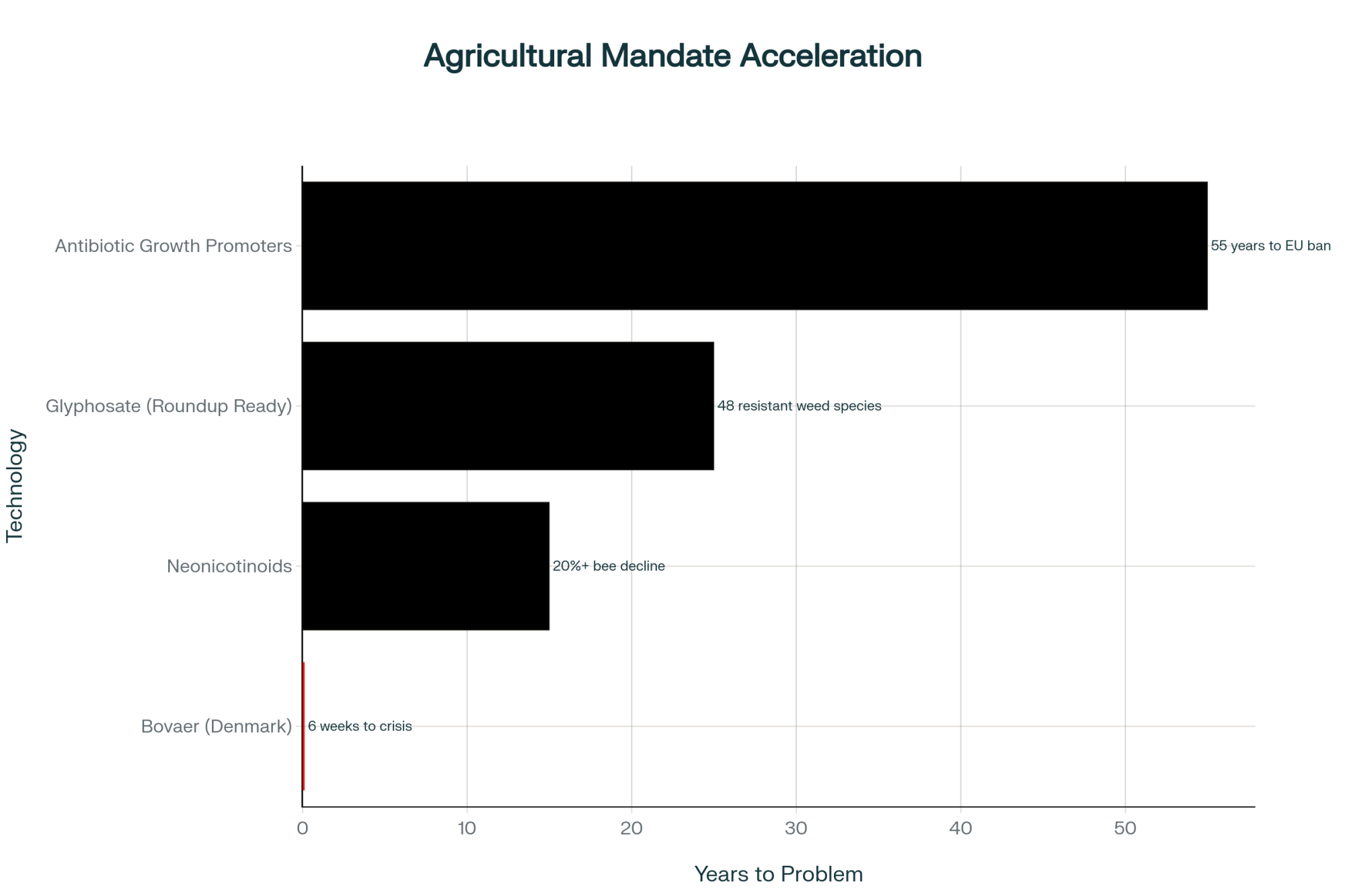
NewsSubscribe
First
Last
Consent

Matching the Feed to the Calf: Birth to 120 Days – Practical Science for Dairy-Beef Calves

Consistency isn’t a suggestion—it’s biology. Same time, same temp, same quality = 2.6 lb ADG and $100+ more per calf.

Good calf growth starts with steady habits—consistent feeding, clean water, and careful observation. From birth through 120 days, the calf’s diet and environment change rapidly, and how those changes are managed determines strength, health, and efficiency later on. Success comes from small, repeated actions done right every day.

Philosophy in Practice

Calves grow on consistency. Steady feeding times, clean water, dry air, and no sudden ration changes are the foundation of every good calf program.

Consistency Drives Growth

  • Feed at the same times every day
  • Keep milk solids and milk temperature consistent
  • Replace the starter daily so it smells clean and fresh
  • Make ration changes gradually over 4–7 days

Quick Start Essentials: 

□ Buy Brix refractometer ($30) 
□ Buy digital thermometer ($12) 
□ Set feeding times and stick to them 
□ Test first colostrum batch today 
□ Check milk temperature at next feeding

Birth to Day 3 — Immunity and Metabolic Activation

A newborn calf is born without immune protection in its bloodstream. All early protection comes from colostrum, which provides antibodies (IgG) and energy for warmth and early growth. If the calf doesn’t receive enough high-quality colostrum quickly, long-term health and gain are compromised.

What must happen in the first 24 hours:

  • Feed at least 4 quarts of clean, high-quality colostrum (Brix 24 or higher) within 2 hours of birth or 8.5%-10% of body weight
  • Provide another 2 quarts in the next 8–12 hours
  • Aim for 200+ grams of IgG total. A quick check is a Brix reading of 24% or higher
  • Dip the navel and provide deep, dry bedding
  • Offer warm water between liquid feedings
  • Keep calf temperature above 100°F

Research confirms that colostrum quality varies significantly between cows, with IgG concentrations ranging from less than 50 g/L to over 150 g/L. Using a Brix refractometer to test colostrum is now standard practice; readings of 22% or higher indicate good quality, and readings below 18% suggest the colostrum should not be used as the first meal. The 2024 National Animal Health Monitoring System (NAHMS) dairy study found that 29% of colostrum samples tested below minimum quality thresholds, while producers estimated only 8% was of poor quality.

Why Water Matters

  • Water and milk are not the same in the calf’s gut
  • Free-choice water helps rumen microbes begin developing early
  • No water equals weak fermentation, which equals slow rumen growth
  • Dump, clean, and refill water buckets daily

Water consumption is critical even in the first days of life. Unlike milk, which bypasses the rumen through the esophageal groove, drinking water enters the rumen directly and supports bacterial establishment and fermentation.

Days 3–21 — Rumen Initiation and Microbial Establishment

By day 3, the rumen is waking up. A good calf starter stimulates chewing and microbial activity. When microbes ferment starch, they produce volatile fatty acids (VFAs), especially butyrate, which signals the rumen lining to grow papillae—the structures that absorb energy later in life.

Feeding goals for this stage:

  • Feed milk replacer (20–24% CP, 20–22% fat) twice daily at consistent solids and temperature
  • Introduce textured starter by day 5 and keep it fresh
  • Starter formulation: 20–23% CP, 3–5% fat, 6–8% fiber
  • Provide clean, room-temperature water at all times
  • Maintain dry bedding and good airflow

Research demonstrates that VFA production, particularly butyrate and propionate, drives papillae development in young calves. Calves fed corn-based starters show improved rumen development compared to those fed barley or oats, with corn providing superior energy density and fermentability. Dr. Jud Heinrichs from Penn State, who’s been studying calf nutrition for 4 decades, emphasizes that these early days set the stage for lifelong digestive capacity.

Temperature consistency matters more than most realize. Research from Virginia Tech shows that milk temperature variations from 88 to 122°F within a single facility cause 40-65% more nutritional scours and 0.25-0.33 pounds of slower daily growth.

Temperature Consistency Drives Lifetime Value: Temperature swings from 88-122°F reduce ADG by 27% and cost $100+ per calf

Days 21–49 — Transition, Frame Growth, and Stable Fermentation

By week 3, calves transition from monogastric to ruminant digestion. Microbes multiply rapidly, and fermentation patterns shift toward propionate and butyrate production. These VFAs fuel lean growth and the development of rumen papillae.

Targets for this stage:

  • Starter intake: 1.5–3.0 lbs/day by week 6
  • Starter formulation: 18–23% CP, 3–5% fat, 6–8% fiber
  • Maintain uniform texture to prevent sorting
  • Watch manure consistency for early feedback on rumen health

Studies show that calves consuming adequate starter during this period develop larger, more functional rumens with greater papillae surface area. The relationship between starter intake and rumen pH becomes more pronounced as calves increase dry feed consumption, though young calves appear more tolerant of lower pH than adult cattle.

Sponsored Post

Days 49–70 — The Weaning Window

Wean by intake, not age. Calves are ready for weaning when they consistently eat 3 lb of starter per day for three consecutive days and drink water freely. A premature milk pull can cause growth slumps that can take weeks to recover from.

Best practices for weaning:

  • Taper milk gradually over 5–7 days
  • Keep the same starter ration during taper and for 10–14 days after full wean
  • Ensure dry housing, strong airflow, and adequate bunk space
  • Calves should be at least 8 weeks old before weaning is completed

Research consistently shows that weaning based on starter intake (minimum 3 lbs for three consecutive days) rather than age alone reduces stress and maintains growth momentum. Dr. Emily Miller-Cushon at Florida found that calves weaned before adequate intake show 180-280% increases in muscle breakdown markers, literally catabolizing their own tissue to survive the energy deficit.

Days 70–120 — Early Grower Phase for Dairy-Beef Calves

Three Biological Windows Programming Lifetime Value: Each missed critical period creates permanent deficits that cascade through production

Once fully weaned, calves function as true ruminants. The goal now is frame and muscle growth without digestive upset. A balanced grower with moderate starch, digestible fiber, and proper minerals supports this phase.

Key management points:

  • Target ADG of 2.4–2.6 lbs/day
  • Maintain 12–15% NDF from digestible fiber
  • Keep feed fresh and bunks clean
  • Manage heat with shade and airflow

Research on dairy-beef crossbred calves shows they can achieve exceptional growth rates when appropriately managed, with some studies reporting ADG exceeding 5.5 lbs/day on high-energy diets post-weaning. The optimal NDF level for starter diets appears to be in the range of 12-20%, with higher levels (above 27%) potentially reducing intake and growth.

This period is critical for marbling development. Research from South Dakota State shows that marbling adipocytes—the cells that determine quality grade—primarily form between days 70 and 120. Miss this window with inadequate nutrition, and those cells simply don’t form, costing 16.2 percentage points in Choice grading at harvest.

Common Mistakes and How to Avoid Them

  • Weaning by age instead of intake
  • Changing feed and pulling milk in the same week
  • Letting water get dirty—calves notice first
  • Feeding dusty or inconsistent starter
  • Overcrowding pens and limiting bunk space

Feeding Benchmarks by Stage

StageMilk Replacer (lb./day) 13.5% SolidsCalf Starter (lb/day)Water (qt/day)Target ADG (lb/day)
Birth–3 days1.12 – 1.682–40.8–1.0
3–21 days1.68 (6 quarts)0.25–1.04–61.2–1.6
21–49 days1.68 (6 quarts)1.5–3.06–81.6–2.0
49–70 days (wean)5.0–6.08–102.0–2.4
70–120 days6.0–8.0 (grower)8–122.4–2.6

Use these benchmarks as general guides. If calves fall below expectations, check water, environment, and feed freshness before adjusting the ration.

Nutritional Specifications by Stage

StageCP (%)Fat (%)NDF (%)Notes
Birth–3 daysColostrum quality (Brix ≥24%), warmth, hydration
3–21 days20–2318–20<5Starter + water drive rumen start-up
21–49 days18–203–56–8Uniform texture; watch manure form
49–70 days16–183–48–10Wean by intake; avoid new feeds during taper
70–120 days15–173–412–15Manage heat, bunk space, and cleanliness

The Economic Impact

Morbidity Collapse: Precision Feeding Reduces Pre-weaning Disease by 60%

While high milk replacer programs promise rapid early gains, the economics tell a different story. Operations using this starter-focused, consistency-based approach typically see:

  • 22% to 9% reduction in pre-weaning morbidity
  • 26 kg heavier weaning weights
  • 20 percentage point improvement in Choice grading
  • $100+ per calf additional value at harvest

The investment? A $30 Brix refractometer for colostrum testing, a $12 thermometer for milk temperature, and attention to daily details. These simple tools prevent the cascading failures that cost producers thousands in lost performance.


Economic Cascade: How Precision Practices Build $100+ Value Per Calf

Regional Considerations

Northeast operations dealing with harsh winters need insulated transport containers and pre-warmed feeding equipment when temperatures drop below zero.

Southwest producers face the opposite challenge—preventing milk from overheating when ambient temperatures exceed 100°F. Cooling systems and shaded feeding areas become essential.

Southeast operations must manage humidity’s impact on both heat stress and feed stability, requiring more frequent starter replacement and enhanced ventilation.

Putting It All Together

Healthy calves grow on predictability. If intakes or gains stall, start by checking basics: water, air, bedding, and space. When these fundamentals are right, calves stay on feed, develop strong rumens, and finish efficiently later in life.

The transition from colostrum-dependent newborn to functional ruminant represents one of the most critical developmental periods in a calf’s life. Research consistently demonstrates that calves receiving optimal early nutrition—including timely, high-quality colostrum, gradual increases in starter intake, and consistent access to clean water—show improved first-lactation milk production, reduced morbidity, and enhanced lifetime productivity.

For dairy-beef crossbred calves specifically, proper early management becomes even more critical as these animals represent an increasingly important segment of beef production. USDA data shows the dairy-beef sector expanded approximately 23% from 2021 to 2024. When managed with attention to the physiological transitions outlined here, dairy-beef calves can achieve growth rates and feed efficiencies that rival or exceed those of traditional beef calves while producing high-quality carcasses.

The key is consistency—the same times, same temperatures, same quality, every single day. Biology operates on its own schedule. Our job is to support that schedule with predictable, quality nutrition and management. Miss these critical windows in the first 120 days, and no feeding program can fully recover what’s been lost.

KEY TAKEAWAYS: 

  • Consistency Drives Everything: Feed same time, same temp (102-105°F), same quality daily—variation of just 14°F causes 60% more scours and 0.3 lb/day slower growth
  • Three Windows Program Forever: Immunity (0-3 days), rumen development (3-21 days), marbling formation (70-120 days)—miss any window and lose 16% Choice grade permanently
  • Water From Day 3 Changes the Game: Clean, fresh water drives rumen microbes; no water = weak fermentation = compromised lifetime efficiency
  • Wean by Intake, Not Calendar: 3 lbs starter/day for three consecutive days signals readiness—force it at 8 weeks and watch calves cannibalize their own muscle
  • $42 Tools Prevent $100 Losses: Brix refractometer ($30) catches bad colostrum that looks good; thermometer ($12) prevents temperature swings killing performance

EXECUTIVE SUMMARY: The first 120 days determine everything—calves grow on consistency, not complexity —and missing critical windows creates permanent deficits that no feeding program can fix. From birth through weaning, success requires unwavering precision: colostrum within 2 hours (Brix ≥24%), milk at 102-105°F (not the 88-122°F range common on farms), clean water from day 3, and weaning based on intake (3 lbs/day), not calendar. Three biological windows program lifetime performance: immunity (days 0-3), rumen development (days 3-21), and marbling formation (days 70-120)—miss any one and lose 16% Choice grade, 500 kg lifetime milk equivalent, or worse. This guide provides exact feeding benchmarks and nutritional specifications for each stage, showing how to achieve 2.4-2.6 lb daily gains while reducing morbidity by 60%. The tools are simple ($30 refractometer, $12 thermometer), the schedule is specific, and the payoff is clear: $100+ more per calf through better health, heavier weights, and superior carcass quality.

Complete references and supporting documentation are available upon request by contacting the editorial team at editor@thebullvine.com.

Learn More:

Join the Revolution!

Join over 30,000 successful dairy professionals who rely on Bullvine Weekly for their competitive edge. Delivered directly to your inbox each week, our exclusive industry insights help you make smarter decisions while saving precious hours every week. Never miss critical updates on milk production trends, breakthrough technologies, and profit-boosting strategies that top producers are already implementing. Subscribe now to transform your dairy operation’s efficiency and profitability—your future success is just one click away.

NewsSubscribe
First
Last
Consent

The 15:1 ROI Protocol: How Anti-Inflammatory Treatment is Cutting Transition Disease in Half

11 pounds more milk daily. 50% less disease. All from one dose of meloxicam 14 days before calving. Penn State proved it.

EXECUTIVE SUMMARY: Your transition cow problems have been starting 21 days before calving—you just didn’t know it. Revolutionary research from Penn State and Iowa State proves inflammation, not energy balance, drives fresh cow disease by hijacking glucose worth 68 pounds of milk daily. The solution is surprisingly simple: targeted anti-inflammatory treatment that costs $10 per cow but delivers 15:1 returns. Progressive farms using these protocols are cutting disease rates in half (from 25% to 12%) while increasing milk production by 3-11 pounds per day. First-calf heifers get meloxicam prepartum, overconditioned cows get aspirin, and normal cows get treated postpartum—timing is everything. Even farms that can’t use medications are seeing 60% of the benefits through management changes alone. This isn’t incremental improvement—it’s a paradigm shift that’s redefining what’s possible in transition cow performance.

Transition Cow Protocol

You know, there’s a pattern I’ve been noticing in fresh cow pens across the country—something that’s probably been bothering you too. Some cows sail through transition while others struggle, even when they’re getting identical feed and care. For years, we’ve all just accepted that 20-30% of our fresh cows will develop some kind of metabolic or infectious disease in early lactation. Cost of doing business, right? The price of pushing biology to produce 100+ pounds of milk daily.

But here’s what’s interesting… recent research from Iowa State, Penn State, and the University of Alberta is turning this thinking on its head. What I’ve found is that many transition cow problems aren’t coming from where we thought they were. And the solutions emerging from this research? They’re both simpler and way more profitable than any of us expected.

The whole thing centers on inflammation—though not the kind you can see. Research teams have identified an inflammatory cascade that starts — get this — 14 to 21 days before calving. It’s essentially programming your cows for success or failure before they even hit the maternity pen.

What’s encouraging is that forward-thinking operations—and I’ve talked with quite a few lately—are already putting this knowledge to work. They’re cutting fresh cow disease rates by 40-50% while bumping milk production by anywhere from 3 to 11 pounds per day. Real milk in the tank, not theoretical gains.

Understanding What’s Really Going On

So Barry Bradford—he was at Kansas State, now he’s up at Michigan State—and Lance Baumgard at Iowa State discovered something that seemed impossible at first. When a dairy cow’s immune system really kicks into gear, it burns through 2 to 3 kilograms of glucose daily. Think about that for a second. That’s enough glucose to produce 44 to 68 pounds of milk. Just gone. Hijacked by the immune system.

The Iowa State team demonstrated this with elegant work published in the Journal of Dairy Science in 2017. They challenged cows with lipopolysaccharide—basically a bacterial toxin—while infusing glucose to keep blood glucose levels normal. And even with all that extra glucose… milk production still crashed by 42% on day one. The immune system was outcompeting the mammary gland for glucose, despite plenty being available in the bloodstream.

This flipped everything we thought we knew. For decades, right? We’ve blamed negative energy balance for problems during transition. Cow doesn’t eat enough; it mobilizes body fat; metabolic problems follow. Simple story. But Baumgard’s comprehensive review in 2021 suggested something completely different—that inflammation might be causing both the reduced intake and the metabolic dysfunction. Cart before the horse, so to speak.

Meanwhile—and this is where it gets really interesting—Elda Dervishi’s team was tracking inflammatory markers in transition cows. What they found back in 2016 was that cows destined to develop retained placenta, metritis, or ketosis showed elevated inflammation markers starting 14 to 21 days before calving. Way before any clinical signs. The inflammation came first.

And here’s the kicker… Burim Ametaj’s team at Alberta just published work showing that hypocalcemia—which we’ve always treated as a simple calcium deficiency—might actually be the body’s intelligent response to control inflammation. Pro-inflammatory cytokines upregulate calcium-sensing receptors, actively lowering blood calcium as a protective mechanism. That’s why some cows don’t respond to calcium supplementation, no matter how much you give them. Their inflammatory state won’t let calcium normalize.

What Progressive Farms Are Actually Doing

I’ve been talking with producers who aren’t waiting for this to become mainstream. They’re implementing targeted anti-inflammatory protocols based on individual cow risk, and the results… honestly, they’re pretty compelling.

Adrian Barragan’s team at Penn State developed these risk-based protocols—just published this year—that have been validated across commercial dairies in Pennsylvania and Ohio. What they’re finding is that precision targeting beats blanket treatment every time:

First-calf heifers receiving meloxicam 2 weeks before expected calving are producing an extra 11 pounds of milk per day during the first 150 days. At current milk prices—anywhere from $0.14 to $0.22 per pound, depending on your market—that’s substantial money.

For overconditioned cows (body condition score 3.75 or higher), prepartum aspirin treatment has reduced disease rates from around 38-46% to 21%. Makes sense when you think about it—Michigan State research shows these heavier cows experience enhanced inflammatory stress from all that adipose tissue metabolism.

Normal-condition multiparous cows do best with postpartum treatment. Aspirin given 12 to 36 hours after calving—and this is critical, after the placenta passes—yields about 3.6 pounds more milk daily for over 60 days. Penn State documented what happens if you give NSAIDs too early: stillbirths increase fivefold. So timing really matters here.

A California producer who shared their experience (requesting anonymity due to ongoing research participation) is milking about 1,800 Holsteins near Turlock. After tracking haptoglobin levels following a Michigan State extension workshop, they found their fresh cow average was running 0.9 grams per liter—way above the 0.5 target. Six months after implementing targeted protocols and improving their heifer housing, they’re down to 0.6 and still dropping. Michigan State data shows that improvement correlates with about 1,000 pounds of additional milk per lactation. That’s real money.

Now, different systems face different challenges. A Vermont producer managing 450 Jerseys in tie-stalls (who asked to be identified only by state) told me, “We can’t easily separate heifers, and we’re dealing with humidity rather than dry heat. But focusing on bunk space, ventilation, and treating our at-risk cows has still cut fresh cow problems by 40%.” You work with what you’ve got, right?

Managing the Triggers You Can Control

What’s empowering about all this is learning how much inflammation we can actually control through management. Research has identified several key areas where relatively simple changes yield big results.

Heat stress during the dry period… this one’s huge, and I think we’ve all been underestimating it. Geoffrey Dahl’s extensive work at the University of Florida shows that cows experiencing THI values above 72 during the final three weeks before calving produce 5 to 16 pounds less milk daily throughout the next lactation. The damage persists for months.

Now, investing in cooling for dry cows—you’re looking at $2,000 to $5,000 depending on your setup—can return $60 to $160 per cow in additional milk revenue. I’ve seen operations in Arizona and New Mexico where dry cow cooling pays for itself in under a year.

Stocking density in closeup pens is another big one. Wisconsin research by Cook and Nordlund consistently shows that keeping close-up pens below 80% capacity improves dry matter intake, reduces cortisol levels, and cuts fresh cow disease rates. Many farms could achieve this tomorrow just by adjusting group movements or repurposing existing space. I know it’s tempting to pack that closeup pen when you’re tight on space, but the data is crystal clear on this.

Dietary transitions cost nothing to improve but pay huge dividends. Limiting starch increases to less than five percentage points when moving to lactation rations helps prevent what Baumgard’s team calls “leaky gut,”—where bacterial endotoxins flood into circulation and trigger systemic inflammation. Pure management discipline, no capital required.

Social dynamics… this one surprises people. Mixing first-lactation heifers with mature cows exposes them to about twice the inflammatory stress. An Idaho producer (name withheld at their request) invested $45,000 in separate heifer facilities and watched fresh cow disease rates drop from 35% to 18%.

But you don’t need $45,000. A Georgia dairyman with 2,200 Holsteins shared an innovative approach: they achieved meaningful improvements just using portable gates to create separate feeding areas within existing pens. Cut competitive displacements by 60%. Sometimes the simple solutions work best.

Treatment Protocols That Actually Work

Quick Protocol Reference

Prepartum Treatment (14 days before expected calving):

  • First-calf heifers: Meloxicam (1 mg/kg) or Aspirin (125g)
  • Overconditioned cows (BCS ≥3.75): Aspirin (125g)
  • Previous problem cows: Aspirin (125g)

Postpartum Treatment (12-36 hours after calving, placenta must be expelled):

  • Normal multiparous cows: Aspirin (4 boluses)
  • Never give before the placenta passes—can increase stillbirths 5x

Note: Meloxicam requires a veterinary prescription in most jurisdictions. These protocols are based on North American research and regulations—international producers should consult local veterinary guidelines. Aspirin boluses are available through most veterinary suppliers.

The Economics Make This a No-Brainer

Let’s talk money. Consider a typical 500-cow dairy implementing basic protocols:

Investment runs about $3,250 annually. That’s assuming 25% first-calf heifers at $10 each for meloxicam, 10% overconditioned cows at $8 for aspirin, and treating 40% of your multiparous cows at $8 each.

Returns? Based on documented improvements, you’re looking at around $52,400. That breaks down to $37,125 from heifer milk increases, $7,500 in disease-reduction savings, and $7,776 in multiparous production gains.

That’s better than a 15-to-1 return at $0.18 per pound of milk. Even at $0.14 milk, you’re still over 11-to-1. And if you’re getting $0.22 with premiums? The numbers get even better.

For organic operations or those choosing to minimize pharmaceutical use, just implementing the management changes—cooling, stocking density, dietary transitions—captures about 60% of the total benefit. Tie-stall operations might see slightly different results than freestalls, but the principles hold. Spring-calving herds might implement differently than year-round operations, but the biology remains consistent.

Want to track your own results? Most dairy management software systems can help monitor the key metrics: disease incidence, milk production by treatment group, and actual ROI based on your specific costs and milk price.

Spotting Hidden Inflammation

What farmers are finding is that several subtle signs suggest excessive inflammation before obvious disease appears:

  • Daily rumination below 500 minutes that first week fresh—if you’re tracking this
  • More than 15% of fresh cows with any disease event within 30 days
  • Butterfat dropping below 3.2% in Holsteins, 3.8% in Jerseys
  • Wide swings in peak milk between seemingly similar cows
  • Discharge hanging around beyond 21 days postpartum

These metrics give you an early warning that inflammation’s impacting performance.

Getting Your Team on Board

The biggest challenge isn’t technical—it’s cultural. Most vets and nutritionists were trained when metabolic theories dominated. Jessica McArt from Cornell’s College of Veterinary Medicine suggests approaching advisors as partners in exploration rather than challenging their expertise.

A Wisconsin producer near Shawano (requesting anonymity) shared their approach: “We presented the research to our vet and suggested testing protocols on half our fresh cows for 90 days. When the disease dropped from 31% to 18% in the treatment group, everyone became believers.”

A practical trial might run like this: Two weeks of collecting baseline data. Ten weeks with half your cows on treatment, half as controls. One week to analyze and discuss results with your team.

The key is establishing clear baseline metrics first. Without knowing current disease rates and production patterns, you can’t convincingly demonstrate improvement.

Where This is All Heading

The inflammation paradigm is just the beginning. Three areas show particular promise:

Microbiome analysis is getting close to commercial reality. Garret Suen’s team at Wisconsin has identified specific bacterial changes that precede ketosis. While full profiling services are probably still 3-5 years out, some probiotic companies are already developing targeted products based on this research. Current options include various yeast products and bacterial probiotics that support gut health during transition—ask your nutritionist about what’s available in your area.

Specialized pro-resolving mediators—compounds that actively turn off inflammation rather than just suppressing it—are showing promise. Lorraine Sordillo at Michigan State has been pioneering this work. Human medicine’s already using these successfully; dairy applications are coming.

AI integration with monitoring systems shows immediate potential. Companies like CowManager are testing systems that predict disease 5-7 days before clinical signs with accuracy approaching 85%, though these are still early-stage claims needing field validation.

For producers looking to stay current, the annual conferences at Penn State and Iowa State, as well as the American Dairy Science Association meetings, are excellent sources of the latest transition cow research.

Making This Work on Your Farm

After talking with dozens of early adopters, several principles keep coming up:

Start with a simple risk assessment. Score body condition at closeup entry—shoot for 90% of cows between 3.0 and 3.5. Separate heifers from mature cows when possible. Flag cows with previous transition problems.

Target your interventions rather than treating everyone. Focus prepartum treatments on heifers and high-risk cows. Save postpartum for normal multiparous animals. And never, ever give NSAIDs before that placenta passes.

Fix the management basics alongside any pharmaceutical approach. If dry cows are panting, they need cooling. Keep stocking densities reasonable. Make dietary changes gradually. These management factors contribute as much as the medications.

Track everything. Disease rates, milk differences, and actual ROI based on your milk price. This data becomes invaluable for refining protocols and convincing skeptics.

Most importantly, shift your thinking from treatment to prevention. We’re not trying to manage sick cows better—we’re creating conditions where fewer cows get sick in the first place.

The Bigger Picture

This isn’t just incremental improvement—it’s a fundamental shift in how we think about transition biology. Operations implementing comprehensive inflammation management report not just better numbers but cultural changes in how teams approach fresh cows.

An Idaho dairyman running 2,000 cows near Twin Falls (who shared their story on condition of anonymity) put it perfectly: “We used to budget for 25% morbidity. Now we’re under 12% and still improving. But the bigger change? Our team focuses on creating optimal conditions rather than preparing for problems. That mindset shift changes everything.”

Success factors vary by region and system. Grazing operations face different triggers than confinement dairies. Humid climates present different challenges than arid regions. But that’s the beauty—you can identify and address your specific inflammatory triggers.

The evidence keeps strengthening. Peer-reviewed research confirms the biology. Field implementation proves it’s practical. Economic analysis shows compelling returns across all pricing scenarios.

For progressive producers, the question isn’t whether to consider inflammation management—it’s how quickly to adapt it to your operation. This evolution in understanding might well define the difference between thriving and just surviving in today’s competitive environment.

The transition period will always be dairy’s greatest metabolic challenge. But we’re learning it doesn’t have to be our greatest source of loss. By understanding and managing inflammatory processes, we can help cows navigate this critical period more successfully than ever.

And that’s what this is really about, isn’t it? Not just the science or the economics, but giving our cows the best chance to do what they do best—make milk efficiently and stay healthy doing it.

KEY TAKEAWAYS

  • The game-changer: Inflammation starts 21 days before calving—treat it then, not after
  • ROI that matters: Spend $10 per cow, get $150 back in milk and health
  • Know your protocol: Heifers = meloxicam prepartum | Fat cows = aspirin prepartum | Normal cows = aspirin postpartum
  • Management alone works: Can’t use NSAIDs? Fix cooling, crowding, and feed changes for 60% of benefits
  • Field-proven: 50% less disease, 11 extra pounds of milk in heifers, under 12% morbidity achievable

Producers interested in implementing these approaches should work with dairy veterinarians familiar with current transition cow research. Key resources include Baumgard’s 2021 comprehensive review “The influence of immune activation on transition cow health and performance” and Barragan’s 2024 work on targeted protocols, both published in the Journal of Dairy Science. Extension specialists at Penn State, Iowa State, Michigan State, and Cornell offer excellent implementation guidance tailored to regional conditions. The principles discussed here are based primarily on North American research—international producers should consult local experts for region-specific adaptations.

Learn More:

Join the Revolution!

Join over 30,000 successful dairy professionals who rely on Bullvine Weekly for their competitive edge. Delivered directly to your inbox each week, our exclusive industry insights help you make smarter decisions while saving precious hours every week. Never miss critical updates on milk production trends, breakthrough technologies, and profit-boosting strategies that top producers are already implementing. Subscribe now to transform your dairy operation’s efficiency and profitability—your future success is just one click away.

NewsSubscribe
First
Last
Consent

Your Next Milk Check Changes Everything: Why GLP-1 Drugs Just Made Protein King

Your grandfather chased butterfat. Your kids will chase protein. The switch happens on December 1. Miss it and you’re playing catch-up forever.

EXECUTIVE SUMMARY: The pharmaceutical industry just rewrote dairy economics: 30 million Americans on GLP-1 weight-loss drugs can’t digest traditional cheese but desperately need protein, ending 20 years of butterfat dominance. December 1st brings Federal Milk Marketing Order reforms requiring a 3.3% minimum protein—a threshold that will trigger deductions for unprepared farms. Three proven strategies offer paths forward: amino acid optimization (generating $38,000+ within 60 days), Jersey crossbreeding (worth $850-1,100 per cow annually), or direct processor contracts (securing $270,000+ yearly for a 650-cow operation). The split is already visible—early adapters report record profits while operations with 55%+ debt-to-asset ratios and sub-3.2% protein face elimination. December 15 marks the strategic decision deadline before January’s bank reviews. This isn’t a temporary market disruption but a permanent shift where protein premiums of $1.40-1.75/cwt will separate survivors from statistics. The market has spoken: adapt to protein economics or exit on your terms before the choice gets made for you.

Dairy Protein Strategy

I was reviewing the latest milk check when something struck me. The numbers looked familiar enough, but there’s a fundamental shift happening underneath—one that started, surprisingly enough, in pharmaceutical boardrooms rather than our dairy barns.

When Eli Lilly announced last month that its GLP-1 drug, tirzepatide, became the world’s bestselling medicine, with over $10 billion in third-quarter sales alone, most of us probably didn’t pay much attention. But here’s what’s interesting: this pharmaceutical success story is about to reshape how we think about milk components, and it’s happening faster than most producers realize.

According to Gallup’s health tracking released in October, 12.4% of American adults are now using injectable GLP-1 medications for weight loss. That’s more than double the 5.8% from February 2024. And the Trump administration’s recent negotiations with Eli Lilly and Novo Nordisk to reduce prices from around $1,000 monthly to $350 for injectables through Medicare and certain insurance programs—with oral versions potentially hitting $150 once the FDA approves them—well, that’s when adoption really takes off.

Dave Richards from IFF Consumer Insights shared something fascinating from their September 2025 report: households using these medications are fundamentally changing how they consume dairy. The implications reach far beyond individual shopping carts.

GLP-1 adoption among US adults has accelerated dramatically, doubling from 5.8% in February 2024 to 12.4% by October 2025, with projections exceeding 20% by March 2027 when oral formulations hit $150/month

Why Protein Is Suddenly Everything

The timing here is remarkable. Come December 1st—we’re talking 19 days from now—Federal Milk Marketing Order reforms kick in. The baseline protein standard jumps from 3.1% to 3.3%. If you’re shipping below that threshold, you’ll see deductions starting with your January milk check. Meanwhile, CME spot dry whey hit $0.75 per pound this week, marking an 11-month high according to the Daily Dairy Report.

Tom Henderson, who runs 600 cows near Eau Claire, Wisconsin, put it perfectly when we talked last week. “We’ve been chasing butterfat for twenty years,” he said, looking at his component premiums tracking sheet that goes back to 2008. “Now my co-op’s offering $1.40 per hundredweight premium for anything above 3.4% protein. That’s more than I’ve ever seen for fat premiums, even in the good years.”

What farmers are finding is that this isn’t just a U.S. phenomenon. The Canadian Dairy Commission announced in September that four western provinces—British Columbia, Alberta, Saskatchewan, and Manitoba—will shift their component pricing ratios come April 2026. They’re dropping butterfat’s payment weight from 85% to 70% while increasing protein from 10% to 25%. That’s a fundamental acknowledgment that the market has changed.

Looking at today’s futures tells the whole story. November Class III milk (your cheese milk) trades at $17.16 per hundredweight. Class IV (butter-powder)? $13.63. That $3.53 spread reveals exactly what processors value now.

You know, I’ve been watching robotic milking systems for years, and what’s interesting is how they might actually help with this protein push. A producer near Watertown, New York, told me his robots let him feed different groups more precisely—his high-protein genetics get exactly what they need, when they need it. “The robots don’t just milk,” he said. “They’re data collection points for component optimization.”

Timeline Watch: Critical Dates Approaching

  • Now through November 30: Last chance for nutrition adjustments to impact December protein tests
  • December 1: FMMO protein baseline increases to 3.3%
  • January 15: First milk check with potential deductions arrives
  • January 31: Banks finalize credit reviews based on new component economics

Understanding the GLP-1 Effect on Dairy Consumption

GLP-1 adoption among US adults has accelerated dramatically, doubling from 5.8% in February 2024 to 12.4% by October 2025, with projections exceeding 20% by March 2027 when oral formulations hit $150/month

Dr. Sarah Martinez, from UC Davis’s nutrition research program, has been studying the effects of GLP-1 since 2023. What she’s discovered explains a lot. These medications dramatically slow gastric emptying—food stays in the stomach much longer. While that’s great for feeling full, it creates real problems with high-fat foods.

Her research, published in the Journal of Clinical Endocrinology this September, shows that GLP-1 users experience increased discomfort with foods containing more than 20% fat. Think about that—cheddar cheese is 33% fat. Low-fat cottage cheese? Just 4%. The difference becomes physically uncomfortable for these consumers.

“My patients tell me they can’t even look at a grilled cheese sandwich anymore,” Dr. Robert Chen told me. He’s an endocrinologist at Mayo Clinic who’s prescribed GLP-1s to over 800 patients since 2022. “But they’re desperate for protein to prevent muscle loss during weight loss. We recommend 1.0 to 1.5 grams per kilogram of body weight daily.”

The IFF tracking data confirms what doctors are seeing clinically. GLP-1 households show unmistakable consumption shifts:

Declining consumption:

  • Cheese: down 7.2%
  • Butter: down 5.8%
  • Ice cream and whipped cream: down 5.5%
  • Fluid milk and cream: down 4.7%

Growing consumption:

  • Cottage cheese: up 13%
  • Greek yogurt: up 2.4% overall (premium Greek up 8.3%)
  • Whey protein beverages: up 38%

I’ve noticed something else, talking to grocery store managers from California to New York—the cottage cheese boom isn’t just about protein. It’s convenience. Single-serve containers that provide instant protein when appetite returns. No prep required.

What’s particularly telling is what’s happening in Europe. A dairy economist I know in the Netherlands mentioned their processors are already reformulating products for the “Ozempic generation”—lower fat, higher protein, smaller portions. They’re six months ahead of us on this trend.

Down in New Zealand, where grass-based systems dominate, they’re having different conversations. A producer I spoke with at a recent conference said they’re exploring supplementation strategies they never would’ve considered five years ago. “Grass milk’s great,” he said, “but grass alone won’t hit these protein targets.”

Three Strategies That Are Actually Working

StrategySpeed to ResultAnnual ImpactInvestmentRisk LevelTimeline
Nutrition Optimization60 days$38,000$3,500/monthLowStart immediately
Jersey Crossbreeding18-30 months$850-1,100/cow$18-35/breedingMediumHeifers freshen in 24-30 mo
Processor ContractsImmediate$270,000+ (650 cows)Relationship mgmtLowLock in 30 days

I’ve been talking to producers across different regions, and what’s fascinating is how operations are approaching this challenge. The smartest ones? They’re doing all three of these simultaneously.

Strategy 1: Fast-Track Nutrition (60-75 Day Results)

Mike Johannsen runs a nutrition consulting firm in Madison, working with about 40 dairy operations. “Forget dumping more crude protein in the ration,” he told me at World Dairy Expo. “That’s expensive and usually makes things worse.”

According to Johannsen, what works is precision amino acid balancing. Keep metabolizable protein at requirement levels but optimize the profile: lysine at 7.2-7.5% of metabolizable protein, methionine at 2.4-2.5%, maintaining that crucial 3:1 ratio.

A 480-cow operation near Fond du Lac documented everything for me. Started September at 3.12% protein. By late November, they’re expecting 3.28%. That translates to $38,000 additional annual revenue at current premiums. And here’s the kicker—they actually reduced crude protein by 1.5 percentage points and cut feed costs twelve cents per hundredweight.

Current market pricing for rumen-protected amino acids ranges from $8 to $ 12 per pound for lysine and $6 to $ 9 for methionine. For a 500-cow operation, you’re looking at roughly $3,500 monthly. But the documented returns are $3-5 for every dollar invested when you balance it right.

I talked to a producer near Modesto, California, who’s seeing similar results. “The heat stress out here makes protein optimization even more critical,” she explained. “We’re hitting 3.35% protein consistently now, up from 3.08% in July.”

What’s interesting about seasonal patterns—spring grass tends to be lower in metabolizable protein than people think. A nutritionist in Vermont told me that May and June are actually their toughest months for meeting protein targets in pasture-based systems. “Fresh grass looks great, but the protein’s all degradable. We need to supplement even on pasture.”

Strategy 2: The Genetics Play (18-30 Month Payoff)

This one’s controversial, I know. But the University of Minnesota’s 20-year crossbreeding study, which wrapped up in 2023 under Dr. Les Hansen, makes you think. Jersey × Holstein F1 crossbreds produce milk with 4.0-4.3% protein versus purebred Holstein’s 3.1-3.2%. Yes, they produce 3,000-4,000 pounds less milk annually, but their net income matches or beats purebreds due to better fertility (4-17 fewer days open), lower replacement costs, and those protein premiums.

Amy Steinberg, a genetic consultant working across Minnesota and Wisconsin, breaks it down simply. “This isn’t about converting your whole herd to Jerseys,” she explains. “Use Jersey AI on your bottom 40% ranked for protein genetics. Keep your top 30% pure Holstein with sexed semen for replacements.”

Jersey semen costs $18-35 per unit—same ballpark as decent Holstein genetics. Those F1 heifers will freshen at 24-30 months with 4%+ protein. At today’s premiums, each F1 cow could generate $850-1,100 extra annually just from protein.

I watched a breeding at a third-generation farm near Shawano last week. The producer laughed, “Grandpa would roll over seeing Jersey semen in our tank. But grandpa wasn’t dealing with GLP-1 drugs and protein premiums.”

Even producers in Texas are exploring this. One 2,000-cow operation near Stephenville told me they’re crossbreeding their bottom third. “The heat tolerance of the F1s is a bonus we didn’t expect,” the manager said. “They’re handling 105-degree days better than our Holsteins.”

Strategy 3: Direct Processor Deals (Immediate Impact)

Several producers aren’t waiting for their co-ops to act. One Green Bay area producer—let’s call him Steve—just locked a three-year contract with a regional yogurt manufacturer. He guarantees 95% of production at 3.8-4.2% protein, 3.7-4.0% butterfat, and somatic cells under 200,000. In return? $1.50 per hundredweight premium over base. That’s $270,000 extra annually on 650 cows.

The processor gets consistent milk that they can standardize products around. Steve gets price stability while neighbors scramble. Both win.

A Northeast producer near Lancaster, Pennsylvania, negotiated something similar with a specialty cheese maker. “They wanted consistent components for their aged products,” he explained. “We’re getting $1.65 over base for hitting their targets.”

Quick Math: Your Three Options

  • Nutrition route: $3,500/month cost, $3-5 return per dollar, results in 60 days
  • Genetics route: $18-35 per breeding, $850-1,100 annual premium per F1, results in 18-30 months
  • Processor contracts: $1.00-1.75/cwt premiums, 3-year stability, starts immediately

The Calendar Is Not Your Friend

Looking at what’s coming, the window for positioning is narrower than most realize:

December 1, 2025: FMMO protein baseline shifts. Below 3.3%? Deductions start.

January 15-31, 2026: Annual bank reviews. Mark Stevens from Farm Credit Services of Southern Wisconsin tells me they’re already identifying operations with debt-to-asset ratios over 60% and protein under 3.2%. “We’re not trying to force exits,” he emphasizes. “But farms without component improvement plans raise viability questions.”

April 1, 2026: Canadian pricing shifts take effect, influencing cross-border dynamics.

2026-2027: New processing capacity from Lactalis, Leprino, others comes online. Competition for high-protein milk intensifies.

March 2027: FDA expected to approve oral GLP-1s based on current trials. When pills cost $150 instead of $1,000 for shots, adoption explodes.

Who’s Most Vulnerable Right Now

Farm vulnerability matrix maps debt-to-asset ratios against current protein production, revealing three distinct zones: thriving operations (low debt, high protein), vulnerable farms requiring immediate action (moderate debt, marginal protein), and critical situations where strategic exit preserves equity

Let’s be honest about who needs to act immediately. Based on what lenders and co-op reps are telling me, here’s the danger profile:

  • 500-1,500 cow operations shipping commodity milk
  • Testing 3.0-3.2% protein currently
  • Debt-to-asset ratio over 55%
  • Production costs $18-21 per hundredweight
  • Milk price averaging $13.50-14.50

If this describes your operation, December’s protein shift could eliminate your remaining margin. You’ve got 60 days to make nutrition changes, or you need to start planning an exit that preserves equity.

Dr. Chris Wolf, Cornell’s dairy economist, sees a clear split developing. “Operations that pivot to high-protein, quality milk will find opportunities. Those locked into commodity production with high debt face significant challenges.”

What worries me is the middle group—farms that could adapt but are waiting to see what happens. Every week of delay is a week competitors lock contracts and implement changes.

The Community Impact We Can’t Ignore

What really keeps me up at night is what happens when 20-30% of farms in a region exit within two years.

Wisconsin has lost thousands of dairy farms over recent decades while maintaining stable production, according to USDA data. Fewer families, smaller tax bases, struggling Main Streets. Rick Peterson from Crawford County’s economic development office showed me projections—losing 25% more farms by 2027 means $400,000-600,000 less for schools annually. The hospital might close its birthing unit. Main Street loses another third of its businesses.

“Each farm exit eliminates five to seven related jobs,” Peterson explains. Feed dealers, mechanics, accountants—it cascades through the community.

I drove through Richland County last month. Three dairy farms for sale in ten miles. The café owner told me business is down 20% this year. “When farms go, everything follows,” she said quietly.

But I also visited Tillamook County, Oregon, where processors and producers worked together on component premiums early. They’ve maintained farm numbers better than most. “We saw this coming and acted collectively,” a local co-op board member explained. “Not everyone can do that, but it made the difference here.”

What Success Looks Like in 2030

Five-year financial transformation projection for a 500-cow dairy operation: protein optimization combined with genetics and market positioning drives net income from $127,000 to $495,000 annually while improving debt-to-asset ratio from 62% to 38%

But it’s not all challenging news. Producers who execute this transition well achieve remarkable improvements.

Jim Bradley, a dairy nutritionist and economist consulting for Upper Midwest banks, helped me model a typical 500-cow operation. Starting point: 3.10% protein, $13.90 milk, 62% debt-to-asset. By 2030, with proper execution:

  • Protein reaches 4.05% through nutrition and F1 genetics
  • Milk price hits $17.00/cwt with premiums
  • Net income grows from $127,000 to $495,000 annually
  • Debt-to-asset improves to 38%

“This isn’t speculation,” Bradley insists. “These projections reflect actual results from operations that started transitioning in early 2024.”

A Vermont producer who started his transition 18 months ago confirms this. “We’re already seeing $180,000 more annually just from protein premiums. The genetics haven’t even kicked in yet.”

Your Action Plan for the Next 30 Days

After dozens of conversations with producers from California to Vermont, here’s what separates those who’ll thrive from those who’ll struggle:

Make your strategic decision by December 15: Pivot to capture premiums or plan a strategic exit? Both are valid. Waiting to see isn’t.

If pivoting:

Call your nutritionist this week. Amino acid balancing can boost protein 0.15-0.25% within 60 days, often reducing feed costs. Budget $0.03-0.08 per hundredweight for protected amino acids.

Rank cows by protein genetics. Bottom 40% get Jersey AI. Top 30% get sexed semen for replacements. Middle tier? Consider beef semen—those calves bring $800-1,200 versus $50 for Holstein bulls.

Meet with three processors before November 30. Your current handler plus alternatives. Bring component data and projections. Producers securing $1.40-1.75/cwt premiums are negotiating now, not during the crisis.

Talk to your lender before January reviews. Present your plan. Show market understanding. Lenders support strategic direction, question apparent oblivion.

If exiting:

Engage transition specialists immediately. Strategic exits preserve 70-80% equity. Forced liquidations preserve 40-50%. The difference determines retirement versus bankruptcy. The National Farm Transition Network has advisors who can help.

The Choice Facing Each of Us

This transformation is happening now—in bulk tanks, processing plants, and lending offices across dairy country. The convergence of GLP-1 adoption, FMMO reforms, and processor consolidation creates unprecedented challenges and significant opportunities for those positioned to capitalize on them.

The strategic window measures in weeks, not years. Producers who make informed decisions by December 15 and execute systematically will likely view November 2025 as the month they secured their future. Those who delay may remember it as the moment when opportunity passed by.

Ironically, dairy products perfectly match GLP-1 users’ nutritional needs—quality protein in digestible formats. But capturing this requires acknowledging that successful strategies from the past twenty years won’t work for the next five.

The market has clearly stated its protein priorities. Whether you’re milking 50 cows in Vermont or 5,000 in New Mexico, the question isn’t whether to adapt, but whether you’ll adapt quickly enough to capture premiums before they become the new baseline.

In our rapidly evolving industry, decisive action—even if imperfect—often beats waiting for complete information that never materializes. This might be one of those moments where the cost of inaction exceeds the risk of imperfect action.

For implementation guidance on protein optimization or transition planning, consult your regional extension dairy specialist or agricultural lender familiar with current market dynamics. Time-sensitive conditions make professional consultation advisable.

KEY TAKEAWAYS

  • Protein is now king: GLP-1 drugs affecting 30M Americans killed butterfat’s 20-year reign—protein premiums hit $1.40-1.75/cwt while Class IV milk trades $3.53 below Class III
  • December 15 = Decision Day: Make your strategic choice before December 1st’s 3.3% protein requirement triggers deductions and January’s bank reviews force your hand
  • Three paths to profit: Fast nutrition fix ($38K return, 60 days) | Jersey crossbreeding ($1,100/cow/year, 18-30 months) | Direct processor deals ($270K+/year, immediate)
  • The survival line: Farms below 3.2% protein with >55% debt face elimination—but strategic exits now preserve 70-80% equity versus 40% in forced liquidation
  • First-mover advantage expires soon: Producers securing premium contracts today will be selling commodity milk to those same processors in 2027

Complete references and supporting documentation are available upon request by contacting the editorial team at editor@thebullvine.com.

Learn More:

Join the Revolution!

Join over 30,000 successful dairy professionals who rely on Bullvine Weekly for their competitive edge. Delivered directly to your inbox each week, our exclusive industry insights help you make smarter decisions while saving precious hours every week. Never miss critical updates on milk production trends, breakthrough technologies, and profit-boosting strategies that top producers are already implementing. Subscribe now to transform your dairy operation’s efficiency and profitability—your future success is just one click away.

NewsSubscribe
First
Last
Consent

Concrete, Air, and Shade: The Real Drivers Behind Milk Yield

Your biggest ROI isn’t in feed—it’s in airflow, space, and shade. Comfort is still the cheapest form of nutrition.

You know, it’s easy to see why so many of us start with feed when we think about performance. Feed costs take up the biggest line in most of our budgets — and it’s the part of management we can see, mix, and adjust every day. But what I’ve found, after years of walking barns across Wisconsin and talking with producers from Ontario to Idaho, is that sometimes the problem isn’t in the ration. It’s in the roof, the floor, and the airflow.

You can’t fix nutrition in a broken barn. And once you understand the biology behind that statement, it changes everything about how you think about profitability.

The Rest-Revenue Multiplier: Every additional hour of cow rest time generates 2-3 lbs more milk daily, translating to $4,380+ annual revenue per cow—making comfort your highest-ROI investment

The $50 Fix That Unlocks 3.5 Pounds of Milk

Research is clear on this one — comfort is milk in the tank. The University of Wisconsin’s Dairyland Initiative and William H. Miner Agricultural Research Institute have both documented that every additional hour a cow spends lying down yields 1.7 to 3.5 pounds more milk each day (UW Dairyland Initiative and Miner Institute Cow Comfort Resources).

Here’s what’s interesting: the fix for poor comfort isn’t always expensive. I visited a mid-sized herd near Ripon, Wisconsin, that simply raised neck rails by four inches and deepened bedding. The cows immediately started using the stalls properly, adding almost 2.5 hours of rest per day. “Same cows, same feed,” the producer told me. “We gained six pounds of milk just by fixing the structure.”

It makes sense when you look at history. Freestall dimensions built before 2010 were designed for smaller Holsteins, around 1,100–1,300 pounds. Modern cows average closer to 1,500–1,600 pounds, which means their natural movement is restricted in older stalls. Adjusting neck rails to 48–52 inches high and 68–70 inches from the curb better fits today’s herds.

Investment TypeCost Per StallPayback PeriodMilk Gain (lbs/day)Annual ROI
Neck Rail Adjustment$503 months2.0-3.5360%
Bedding Deepening$754 months1.7-3.0280%
Fan Repositioning$0-251-2 months2.5-4.0450%
Stall Width Increase$1506 months3.0-4.5320%

Cornell Pro‑Dairy economic modeling shows that small structural corrections like these deliver consistent three‑month paybacks with average returns of 360%. The investment? About $50 per stall, mostly in tools and labor (Cornell Stall Design & Economics Tools).

Heat Stress Isn’t Just a Southern Problem

Heat Stress Strikes at 68°F: Most producers think heat stress begins at 80°F, but research proves milk loss, fertility decline, and reduced feed intake start at just 68 THI—a game-changing revelation for northern dairies

A lot of northern producers still assume heat stress doesn’t affect them — but science and data say otherwise. Dr. Geoff Dahl, professor of animal sciences at the University of Florida, has shown that cows begin to decline in performance when the Temperature‑Humidity Index (THI) exceeds 68, roughly 70°F with 60% humidity (University of Florida – Heat Stress Research).

The Silent Inheritance: One summer without cooling dry cows costs $1,200-1,800 per animal across multiple generations—proving that heat stress during the dry period is the most expensive 46 days on your dairy

What’s really eye‑opening is that heat stress during the dry period doesn’t just affect current milk yield. It alters calf development in utero, setting those heifers up for life‑long performance losses. Dahl’s studies have shown that heifers born from heat‑stressed dry cows produce 5‑11 pounds less milk during their first lactation — a penalty that carries on through adulthood.

Even in the Upper Midwest and Ontario, weather-tracking from UW‑Extension shows that cows experience that threshold for 50–90 days per year, depending on ventilation and humidity. The solution doesn’t always mean a major retrofit — just adjusting fan direction or installation height to maintain 300‑400 feet per minute of airflow at cow levelcan significantly change outcomes.

At one Ontario farm, redirecting fans over feed alleys rather than back walls completely flattened milk yield swings. The owner laughed when he said, “We didn’t add fans — just turned them the right way.” That small shift eliminated bunching, improved feed intake, and kept butterfat performance steady all summer.

When Infrastructure Outperforms Feed

Investment CategoryTypical CostPayback TimeMilk ResponseWorks 24/7Risk Level
Stall Modification$50-150/stall3-6 months2-4 lbs/dayYesLow
Cooling System$200-500/cow6-12 months3-5 lbs/dayYesLow
Nutrition Additive$0.20-0.50/dayContinuous0.5-2 lbs/dayNoMedium
Premium Feed$50-100/tonContinuous1-3 lbs/dayNoMedium

Let’s talk numbers, because that’s where the case for infrastructure gets serious. Studies from Cornell Pro‑DairyUniversity of Wisconsin, and Kansas State University show the ROI on barn improvements consistently competes with — and often beats — nutrition investments.

One 450‑cow herd in western New York implemented these upgrades and dropped its cull rate by 10% while cutting hoof‑trimming costs by a quarter. Herd average climbed five pounds — all from removing the bottlenecks stalls created. The farm’s owner summed it up well: “I used to buy almost every nutrition additive out there. Now my barn does most of the work.”

Why Improvements Still Lag

If the data is so compelling, what holds farms back? Psychologists — and farm economists like Dr. Cameron King of the University of Guelph — believe it’s about visibility. As King puts it: “Producers invest where they can see results fast. Feed changes give immediate feedback. Infrastructure improvements return slower, even though the payoff is bigger.”

That rings true. With a slight tweak to the ration, you can check the milk weights the next morning. But it’s harder to measure peace, comfort, and stability — the quiet gains of removing friction from cow behavior. What’s encouraging is that the operations making these investments are often the same ones noticing calmer cows, fewer metabolic issues, and a stronger transition period before any milk data even comes in.

From Managing to Designing Systems

There’s a shift happening that’s worth watching. Instead of “managing stress,” many top herds are designing barns so that stress never builds in the first place. In a series of case studies, Cornell Pro‑Dairy and Kansas State Universityfound that herds that improved stall space, bedding, and airflow gained 2 hours of rest per cow daily, resulting in 8–9 pounds more milk per cow without changing feed.

Cows weren’t “pushed” to perform; their biology was finally allowed to express what the ration and genetics were already capable of. Transition cows handled fresh periods more smoothly, fertility improved, and energy balance stabilized.

One Minnesota dairy manager put it perfectly during a University of Minnesota Extension discussion: “We quit trying to ‘manage’ around cow comfort. Now, the management kind of takes care of itself.”

Five Quick Ways to Gauge Comfort

Your Monday Morning Diagnostic: This simple decision tree helps producers systematically identify barn comfort bottlenecks before spending another dollar on feed—potentially unlocking 2-3.5 lbs more milk per cow daily

If you want to know where your barn performance really stands, start with these simple checks:

  1. Monitor THI at the cow level. Anything above 68 calls for immediate cooling actions.
  2. Try the 25‑second knee test. Kneel in a stall for half a minute. If it’s painful or wet, it’s failing your cows.
  3. Look mid‑day. At least 80–85% of your cows should be lying down comfortably after feeding.
  4. Start small. Neck rails, fans, and bedding deliver immediate ROI—and can fund larger phases later.
  5. Recalibrate your ration. Once comfort improves, cows eat differently — work with your nutritionist to reflect that change.

The Foundation That Never Takes a Day Off

I remember something Dr. Mike Hutjens once told a group of producers: “Infrastructure never takes a day off.” And it stuck with me. A properly fitted stall or well‑placed fan doesn’t clock out when you do; it’s the one system on the farm that works 24/7 without supervision or overtime.

What’s important—and, frankly, encouraging —is that comfort strategies aren’t limited to freestall setups. Tie‑stall and dry lot systems achieve similar returns when cow biology drives design rather than human habit. Sand or dry bedding, airflow direction, and clean water space work for dairies of every scale and layout.

If there’s a single takeaway here, it’s this: foundation before feed. The barn sets the biological ceiling, and the feed fills the space below it. Get that order right, and suddenly everything else — the ration, the reproduction, the milk components — starts falling into place naturally.

Further Reading and Resources

Key Takeaways:

  • Every extra hour cows rest can earn roughly 3.5 lbs of milk—comfort converts directly into production.
  • Feed can’t fix a poorly built barn. Airflow, shade, and stall comfort determine how well the feed performs.
  • Simple $50 stall fixes often deliver a 300% ROI—before your next feed bill even prints.
  • Heat stress begins at a THI of 68 °F, not 80. Early cooling preserves milk yield and fertility.
  • Infrastructure pays you every day—it never takes a day off.

Executive Summary

Most producers focus on feed when milk performance stalls — but new research shows the real ceiling may be in the barn, not the bunk. Studies from Wisconsin, Florida, and Cornell link each extra hour of cow rest to 1.7–3.5 lbs of milk per day, with simple $50 comfort fixes delivering triple‑digit ROI. Heat stress starts earlier than we think — at just 68 °F THI — quietly costing milk, fertility, and even the next generation’s output. What’s encouraging is how quickly these investments pay back, often inside one season. Across freestalls, tie‑stalls, and dry lots, the takeaway is the same: infrastructure is the quiet partner that lets nutrition, genetics, and management finally show their full potential.

Complete references and supporting documentation are available upon request by contacting the editorial team at editor@thebullvine.com.

Learn More:

Join the Revolution!

Join over 30,000 successful dairy professionals who rely on Bullvine Weekly for their competitive edge. Delivered directly to your inbox each week, our exclusive industry insights help you make smarter decisions while saving precious hours every week. Never miss critical updates on milk production trends, breakthrough technologies, and profit-boosting strategies that top producers are already implementing. Subscribe now to transform your dairy operation’s efficiency and profitability—your future success is just one click away.

NewsSubscribe
First
Last
Consent

Is Stray Voltage Stealing 20 Pounds Per Cow from Your Dairy?

Cows avoiding water? Nervous in the parlor? Production dropping? You’re not imagining it—20% of dairies have stray voltage that utilities can’t detect.

You know, I spoke with a producer from Minnesota who shared something that many of us might recognize: her best cow had died unexpectedly after a completely normal 70-pound milking. Every consultant she’d brought in confirmed her management was exemplary. Yet cows kept declining, and nobody could explain why.

This was Jill Nelson from Olmar Farms in Sleepy Eye, and her eight-year journey to discover what was affecting her elite registered Holstein herd reveals an issue that—honestly—deserves more attention than it gets. After installing an isolated transformer to separate her farm from utility electrical infrastructure (we’re talking about an investment approaching $100,000 here), production increased by nearly 20 pounds per cow per day. And this happened during summer 2017, when most of us are just trying to maintain production through heat stress.

What’s particularly noteworthy is that Nelson’s experience aligns with estimates from that old USDA Agriculture Handbook 696—you might have seen it referenced—suggesting that up to 20% of dairy operations may encounter some level of stray voltage issues. While the data is still developing on the exact prevalence, this potential scope… well, it merits serious consideration as we evaluate those unexplained herd health and production challenges we all see from time to time.

Here’s what’s interesting from an economics standpoint: With a 20-pound daily increase on 150 cows at current milk prices, Nelson’s investment paid for itself in approximately six months. Not many farm improvements deliver that kind of return, right?

Understanding the Technical Challenge

So here’s where things get a bit complicated—but stick with me because this matters.

The complexity of stray-voltage diagnosis begins with how we measure it. Standard utility testing protocols use a 500-ohm resistor to simulate your cow’s electrical resistance. This standard, believe it or not, was established in that 1991 USDA handbook I mentioned. And it’s still what utilities use when they come out to test your farm today.

The Testing Gap reveals why 20% of dairies struggle with hidden electrical issues—utilities test at 500 ohms, but real cows measure 109-400 ohms, experiencing double to quadruple the current that standard tests report as “safe.”

What makes this significant? Well, field research from agricultural electrical consultants has documented dairy cattle with actual body resistance ranging from approximately 100 to 400 ohms—substantially lower than what the testing standard assumes. Dr. Richard Norell, who’s the Extension dairy specialist up at the University of Idaho, has examined electrical resistance in dairy cattle as part of broader agricultural electrical research, and his work contributes to our understanding of this variation.

The practical implications… they deserve consideration. You probably remember Ohm’s Law from somewhere—current equals voltage divided by resistance, right? Well, if the testing equipment assumes 500 ohms but the actual cow resistance is closer to 200 ohms, the measured current significantly underestimates what your animals actually experience. It’s somewhat like calibrating feed measurements with equipment that doesn’t account for actual dry matter intake—the numbers look fine, but reality’s telling a different story.

When utilities measure, say, 1.0 volts using standard protocols, they calculate approximately two milliamperes of current flow—within accepted guidelines, according to veterinary references such as the Merck Manual. But here’s the thing: cattle with lower resistance are experiencing higher current levels proportionally. Norell’s research and data collected at UW–Madison showed cows reacted to current at the lowest tested levels—just 0.25 milliAmps, which is eight times lower than the standard utilities use to define possible harm to cattle. In fact, 25% of cows in those studies showed behavioral responses at only 0.25 mA, much lower than the traditional 2 mA threshold long reported in the industry.You can see the problem here.

Learning from Progressive Operations

What I find valuable about the Olmar Farms case is that they followed best management practices—and still got hammered.

Their operation, which received Holstein Association USA’s Elite Breeder Award in 2017, maintained a rolling herd average of 26,192 pounds before encountering these challenges. They’d invested in modern facilities, including equipotential planes (you know, those conductive grid systems designed to prevent electrical differentials), tunnel ventilation, sand-bedded freestalls—basically everything we’re told makes a difference.

Nelson brought in respected consultants. Dr. Tom Oldberg analyzed nutrition. Dr. Reid evaluated the milking systems. Dr. Gary Neubauer, a well-known dairy veterinarian, was also part of the diagnostic team. Each one confirmed management met or exceeded industry standards. As many of us have experienced, sometimes you can do everything right and still have problems.

Yet the herd exhibited concerning behavioral changes. Previously calm animals became difficult to handle during milking. Some cows required leg restraints for safe milking—and that’s unusual for well-managed herds, wouldn’t you say? Mastitis incidence increased despite proper protocols. Water consumption patterns changed dramatically, with cows hesitating at troughs or displaying unusual lapping behaviors rather than normal drinking.

⚠️ Warning Signs We Should All Watch For:

  • Cows hesitating or “dancing” at water troughs
  • Unusual lapping instead of normal drinking
  • Parlor nervousness is developing in previously calm animals
  • Drinking from puddles while avoiding standard waterers
  • Multiple health issues appearing simultaneously without a clear cause
  • High producers are dying unexpectedly without an obvious illness

Standard utility testing repeatedly showed “acceptable” voltage levels. The graphs looked normal, measurements within guidelines. This continued for eight years—eight years!—until 2016, when Nelson connected with an electrical specialist with specific experience in agricultural applications. Using equipment capable of millisecond-resolution recording (typically from manufacturers such as Fluke or Dranetz) and testing with more representative resistance values, this specialist documented electrical issues throughout the facility, including outdoor water systems.

Olmar Farms’ dramatic recovery after resolving stray voltage—production crashed 978 pounds during their 8-year battle, then surged 3,295 pounds above baseline after a $100,000 isolated transformer installation that paid for itself in just six months

Court records from July 2019 confirm the operation converted to three-phase power with an isolated transformer installation on May 1, 2017. There was a reported an 18-pound increase in production during the subsequent summer months, with current production exceeding 30,318 pounds rolling herd average as of March 2025. That’s quite a turnaround.

The Biological Response to Chronic Electrical Exposure

Here’s something that really fascinates me about this whole issue—the biology behind it.

Research from institutions like the University of Wisconsin-Madison helps explain what’s happening at the biological level. Doug Reinemann and co-researcher Dr. Louis Sheffield, both with Wisconsin’s biological systems engineering department, have published on how electrical stress affects dairy cattle biology. And what he’s found… it’s eye-opening.

This research shows that repeated low-level electrical exposure triggers cortisol release—the primary stress hormone. While acute stress responses serve important biological functions (we’ve all seen how a fresh cow reacts to a single stressor during transition), chronic exposure can maintain elevated baseline cortisol levels, which can affect multiple body systems. This builds on what we’ve learned about other chronic stressors in dairy production.

The cascade effects are fascinating… and concerning. We’re talking suppressed immune function, with reduced T-cell production and weakened antibody responses. This explains the varied symptoms Nelson observed: treatment-resistant mastitis in some cows, reproductive failures in others, sudden production crashes or unexpected mortality in high producers.

As Nelson put it—and I think this really captures the frustration—”It looked like we were failing at everything simultaneously. Nutrition problems AND health problems AND reproduction problems AND behavior problems all at once.” Makes perfect sense when you understand it’s all coming from the same electrical source, doesn’t it?

Research in veterinary literature also documents transgenerational effects, with calves from electrically stressed dams showing reduced immune competence, impaired vaccine responses, and various developmental issues. Nelson reported observing congenital disabilities and cardiac abnormalities during the most challenging period. That’s something that really makes you think about the long-term implications for your replacement program.

Distinguishing Source and Responsibility

Alright, so here’s where things get complicated—and expensive. The source of electrical issues fundamentally determines resolution approaches and costs.

On-farm sources (damaged motor insulation, corroded connections, inadequate grounding) typically cost between $800 and $10,000 to address, depending on scope. Any qualified agricultural electrician can handle these repairs. That’s manageable for most operations.

But utility-source issues? That’s a different story altogether.

Every North American farm connects to multi-grounded neutral systems—the National Electrical Safety Code requires it. The utility-neutral conductor is repeatedly grounded between the substation and your farm, with your farm’s electrical systems bonded to this neutral at the transformer. You probably know this already, but it’s worth reviewing.

Under ideal conditions, this system works well. But when utility neutrals can’t adequately carry return current—maybe due to undersized conductors for modern loads, deteriorated connections from age, or phase imbalances—that current seeks alternate paths through earth ground. And since your farm’s grounding system is bonded to theirs… well, that current can flow right through your agricultural facilities.

The primary solution is to install isolated transformers to create electrical separation between the farm and utility systems. Based on documented cases, these installations can cost $50,000 to $100,000 or more. The Nelson operation’s investment approached $100,000, including a three-phase power installation located more than 100 yards from the buildings. And despite the problem originating from utility infrastructure, farms often bear these costs themselves. That still frustrates me when I think about it.

The financial fork in the road—on-farm electrical issues cost under $10K and resolve quickly, while utility-source stray voltage demands $50-100K investments that take months but pay back in 6-12 months through production recovery

What about insurance? Most standard farm policies generally don’t specifically address stray voltage losses, though some carriers now offer specialized riders. I always tell producers: verify coverage with your agent rather than assuming protection exists. Better to know before you need it.

Best Practices from Affected Operations

Looking at successful resolutions, I’m seeing consistent patterns that are worth sharing.

Documentation proves crucial. Producers who achieve resolution create comprehensive evidence before engaging utilities or consultants. This includes video documentation of behavioral changes—hesitation at water sources, unusual drinking patterns, and parlor nervousness. They maintain detailed production records showing systematic changes despite consistent management. Health events, treatments, mortality patterns—it all merits careful tracking.

Paul Halderson’s Wisconsin operation, which prevailed in litigation against Xcel Energy, maintained decades of documentation. This record proved invaluable when addressing utility claims about management deficiencies. The lesson here is clear: document everything, even if it seems minor at the time.

Independent testing before utility engagement often proves worthwhile. Specialists familiar with agricultural electrical systems, using appropriate protocols and resistance values, typically charge $3,000 to $5,000 for a comprehensive assessment. While that’s significant, this investment can prove valuable if negotiation or—God forbid—litigation becomes necessary.

Understanding state-specific standards helps producers navigate the system. Wisconsin and Minnesota use 1-volt or 2-milliamp action thresholds. Knowing these standards—and their basis in that 500-ohm testing protocol we discussed—helps you advocate for appropriate testing when utilities respond.

Regional Variations and Current Context

The 2025 dairy economy makes hidden production losses particularly challenging, doesn’t it? While feed costs have moderated from recent peaks (thankfully), maintaining production efficiency remains crucial for profitability. A 15% production loss from undiagnosed electrical issues—not uncommon based on documented cases—that can determine operational viability.

I’ve noticed regional patterns emerging from infrastructure age and agricultural practices. Wisconsin and Minnesota operations, particularly those served by infrastructure dating back 40-50 years, report more utility-source issues as equipment struggles with modern electrical loads. Similar patterns appear in Vermont and upstate New York, especially where utility consolidation has deferred infrastructure updates.

Newer dairy regions present different challenges. Texas and Idaho operations may have more modern infrastructure, but they face issues stemming from shared distribution lines used by center pivot irrigation systems. Seasonal voltage fluctuations during peak irrigation can affect nearby dairy facilities. And Southeastern operations? They contend with how seasonal variations in ground moisture affect current flow through the soil—I heard about this recently from a Georgia producer dealing with mysterious summer production drops.

California’s large-scale operations, with their substantial electrical loads for cooling and milk processing, sometimes encounter unique challenges when utility infrastructure hasn’t kept pace with dairy consolidation and expansion. It’s a different set of problems, but the underlying issue remains the same.

Recognition and Response Strategies

Based on documented cases and producer experiences, if you’re seeing behavioral changes at water sources—hesitation, unusual lapping behaviors, complete avoidance despite obvious thirst—that’s particularly telling. Same with parlor nervousness that develops in previously calm animals, especially during milking preparation.

For producers observing these patterns, here’s what works: Begin with thorough documentation using available technology—smartphones can capture behavioral evidence effectively these days. Engage independent testing through specialists who understand agricultural applications. Eliminate on-farm sources by systematically evaluating motors, connections, and grounding systems. Only then engage utilities, preferably in writing, with documentation already assembled.

Budget considerations should include $3,000-$5,000 for comprehensive independent testing. If utility infrastructure proves problematic, resolution costs can reach $50,000 to $100,000 or more for isolated transformer installation. Yes, that’s significant. But remember Nelson’s six-month payback period. Sometimes the investment, painful as it is, makes sense.

Industry Evolution and Future Considerations

Recent legal precedents suggest evolving recognition of these challenges. The Iowa Supreme Court’s June 2024 decision upholding Vagts Dairy’s verdict against Northern Natural Gas for pipeline-related electrical issues establishes important precedent for infrastructure liability. That’s encouraging, at least.

Most producers won’t pursue lengthy litigation—and shouldn’t have to. Practical solutions matter more than legal victories. That’s why farmers like Jill Nelson are developing resources to share knowledge. Her website, strayvoltagefacts.com, provides research and guidance based on her direct experience. It’s worth checking out if you’re dealing with unexplained issues.

What’s encouraging is how the industry conversation has evolved. A decade ago, debates centered on whether stray voltage even existed. Today’s discussions focus on identification and mitigation strategies. This represents meaningful progress, even if implementation remains inconsistent.

Nelson’s operation now maintains a rolling herd average of over 30,318 pounds on twice-daily milking, according to March 2025 data. While genetics were damaged during the affected period, the operation survived and recovered. As Nelson has shared in various forums, early recognition of testing limitations and documentation requirements might have shortened their eight-year challenge considerably.

Given the substantial number of operations potentially experiencing some level of electrical issues, it is important to acknowledge that “acceptable” testing results may not ensure the safety of sensitive animals. Just as we’ve embraced precision management for nutrition and reproduction, electrical safety may require similar individualized approaches.

Dairy farmers are winning big in court—$32+ million awarded across four major cases from 2010-2024, with the June 2024 Iowa Supreme Court ruling establishing critical precedent that negligence isn’t required to prove nuisance from stray voltage

This builds on what we’ve learned about variation in biological systems—what works for the average may not protect the sensitive. Until testing protocols better reflect this reality, those of us who combine careful observation with independent verification will be best positioned to protect our herds.

The Bottom Line

You know, the difference between management challenges and electrical issues can be subtle but significant. Understanding this distinction—and knowing how to investigate it properly—that’s valuable knowledge for any operation experiencing unexplained herd challenges.

Sometimes what appears to be a management problem stems from infrastructure issues that standard testing protocols weren’t designed to detect. And that’s not a failure of management—it’s a limitation of how we’ve been measuring things.

What’s your experience been with unexplained herd health or production challenges? Have you noticed behavioral changes that didn’t quite fit typical patterns? The conversation continues as we work together to understand and address the complex interactions between modern dairy operations and aging electrical infrastructure.

For more resources and to share experiences, visit strayvoltagefacts.com or reach out through The Bullvine’s producer network. Because sometimes the best solutions come from farmers sharing what they’ve learned the hard way. And that’s how we all get better at this business we’re in.

KEY TAKEAWAYS:

  • If cows are hesitating at water or dying unexpectedly, it’s likely stray voltage—affecting 1 in 5 dairy farms, not management failure
  • Standard utility testing misses the problem: They test at 500 ohms resistance when actual cow resistance is 200-400 ohms, underreporting exposure by half
  • Your documentation strategy determines your outcome: Video behavior changes, track production/health data, get independent testing ($3-5K) BEFORE calling utilities
  • Resolution costs vary wildly: On-farm electrical fixes are manageable (under $10K), but utility-source problems requiring isolated transformers can hit $100K—though payback can be swift (20 lbs/cow/day gains)
  • You’re not imagining it: Courts are awarding millions in stray voltage cases, proving this hidden problem is real and fixable when properly diagnosed

EXECUTIVE SUMMARY: 

Your cows avoiding water troughs and dying after perfect production days might not be a management problem—it’s likely stray voltage, a hidden electrical issue affecting up to 20% of dairy operations nationwide. The crisis stems from a fundamental testing flaw: utilities measure using 500-ohm resistance standards established in 1991, but research shows dairy cattle actually average 200-400 ohms, meaning your animals experience double the electrical current that standard tests report as “safe.” Jill Nelson’s award-winning Minnesota Holstein operation suffered eight years of mysterious losses before discovering this truth—her $100,000 investment in an isolated transformer delivered 20 pounds of milk per cow per day, paying for itself in six months. The difference between financial recovery and bankruptcy often comes down to recognizing symptoms early (behavioral changes at water sources, parlor nervousness, unexplained deaths) and getting independent testing with proper equipment. While on-farm electrical fixes typically cost under $10,000, utility-source problems can exceed $100,000, making documentation and proper diagnosis critical before accepting utility test results that miss what’s really happening to your herd.

Complete references and supporting documentation are available upon request by contacting the editorial team at editor@thebullvine.com.

Learn More:

Join the Revolution!

Join over 30,000 successful dairy professionals who rely on Bullvine Weekly for their competitive edge. Delivered directly to your inbox each week, our exclusive industry insights help you make smarter decisions while saving precious hours every week. Never miss critical updates on milk production trends, breakthrough technologies, and profit-boosting strategies that top producers are already implementing. Subscribe now to transform your dairy operation’s efficiency and profitability—your future success is just one click away.

NewsSubscribe
First
Last
Consent

Boot Biosecurity’s 2,795% ROI: The $820 Investment Beating $250,000 Robots

One infected visitor can cost you $128,250 (H5N1). Boot stations cost $820. Every major dairy that installed them reports zero outbreaks since. Facts.

Executive Summary: Boot wash stations deliver the dairy industry’s best-kept secret: 2,795% ROI for just $820, preventing $96,000+ in disease losses that Penn State, Michigan State, and UC-Davis have meticulously documented. While farms invest $250,000 in robots returning 30% over a decade, bacteria on contaminated boots survive 24 hours, travel 400 feet, and devastate herds—yet three simple steps (scrape, wash, disinfect) stop them cold. Wisconsin producers with stations report 60% fewer calf deaths and haven’t had major outbreaks in 18+ months. The math is embarrassingly clear: two-month payback versus eight years for that robot. Yet most dairies still lack this basic protection, choosing complex technology over proven prevention. The question isn’t whether boot stations work—it’s why you don’t already have them.

Dairy Biosecurity ROI

You know how it is at industry meetings—everyone’s talking about the latest technology. Last month at the Wisconsin Dairy Expo, I got into this fascinating conversation with a group of producers comparing notes on recent investments. Robotic milkers, automated calf feeders, precision nutrition systems… the usual suspects. Then someone mentioned they’d just put in boot wash stations, and honestly, the whole conversation shifted.

What’s interesting is how this matches a pattern I’ve been noticing across the industry. Here we are, investing heavily in automation—which makes sense, don’t get me wrong—but some of the best returns are coming from the simplest investments. And when I started digging into the numbers… well, they surprised even me.

“The payback for preventing just one Salmonella outbreak? About two months.”

The math is embarrassingly clear: a $2,460 investment in three boot wash stations delivers up to 2,795% ROI over five years—that’s 93 times better returns than a quarter-million-dollar robot. While the industry obsesses over six-figure automation, the highest-return biosecurity investment costs less than a bred heifer.

The Investment Gap Nobody Talks About

So here’s what got me thinking. I’ve been looking at disease prevention data from Penn State Extension, Michigan State’s veterinary economics team, and the Canadian Dairy Network. When you compare the cost of a single boot wash station—about $820 installed—against the disease losses it prevents, the returns are extraordinary. Scale that up to three stations for comprehensive coverage at $2,460, and you’re looking at returns between 719% and 2,795% over five years. Meanwhile, that quarter-million-dollar robot we all admire? Generally delivers returns of 20-30% over a decade.

Disease NameAnnual Cost Per Farm ($)Boot Station Cost ($)ROI Multiple (X times)
Salmonella D.$13,860$82017x
Cryptosporid.$9,214$82011x
Johne’s Dis.$18,000$82022x
Digital Derm.$20,000$82024x
H5N1 (Single)$128,250$820156x

Now, that raises an obvious question, doesn’t it? Why are we hesitating on something this profitable?

During my farm visits this season, I’ve been asking producers about their biosecurity priorities, and the responses have been… enlightening. You know, UC-Davis researchers—Pires and his team published this fascinating work in the Journal of Dairy Science—showed that bacteria in manure can survive on boot surfaces for up to 24 hours. They tracked pathogen movement nearly 400 feet across plastic surfaces. About 150 feet on concrete.

Just think about that for a minute. Your hoof trimmer shows up at dawn, and he was at another farm yesterday. Your nutritionist stops by after visiting three other dairies this morning. The milk hauler who’s been in every parlor in the region… Each one represents a potential disease introduction, yet we rarely think about it the same way we analyze, say, feed efficiency or genetic improvements.

What Disease Actually Costs

Let me share what the extension services and university research teams have documented—and these aren’t worst-case scenarios, they’re documented averages for a typical 450-cow operation.

Quick Disease Cost Reality Check:

DiseaseAnnual CostPreventable?
Salmonella Dublin$13,860/outbreakYes, via boot hygiene
Cryptosporidium$9,214/yearYes, major route
Johne’s Disease$18,000/yearYes, if kept out
Digital Dermatitis$15,000-25,000Yes, trimmer transmission
H5N1$128,250+Yes, documented boot spread

Penn State Extension’s 2024 analysis shows a Salmonella Dublin outbreak runs about $13,860 in direct losses. Michigan State’s research puts the cost of endemic cryptosporidium at $9,214 annually. The Canadian Dairy Network documents $18,000 yearly for Johne ‘s-infected herds—with no cure available.

Compare that to boot station costs: $820 for your highest-risk entry point, or $2,460 for three-station comprehensive coverage, plus about $1,850 annually for disinfectant and maintenance. The payback for preventing just one Salmonella outbreak? About two months.

Why Calves Are Ground Zero

Dr. Jennifer Bentley at Wisconsin’s vet school has this way of putting it that really resonates: “Calves under 30 days represent your operation’s highest disease risk, period.”

The vulnerability facts are sobering:

  • Newborn calves operate at 20-50% of adult immune capacity
  • Maternal antibodies are half depleted by day 28 (Cornell QMPS data)
  • Enhanced biosecurity reduces calf mortality from 5.9% to under 4% (Estonian research, 118 herds)
  • External biosecurity ranks in the top five factors affecting calf survival

I keep hearing the same thing from California producers: excellent genetics, premium milk replacer, perfect ventilation—none of it matters if someone tracks crypto into your calf barn on dirty boots.

The Three-Step Process That Actually Works

Purdue researchers proved what most farms ignore: stepping through disinfectant with manure-caked boots provides zero protection, regardless of how expensive that disinfectant is. The three-step sequence—scrape, wash, disinfect—is the ONLY protocol that works. Skip one step and you’re operating on faith, not science.

Here’s something Purdue University’s research revealed that really challenges our assumptions: disinfectant type becomes completely irrelevant if you don’t remove organic matter first. They proved definitively that stepping through even the most expensive disinfectant with manure-caked boots provides zero effective pathogen control.

The only sequence that works:

  1. Mechanical scraping – Remove visible contamination
  2. Washing with brushes and water – Eliminate residual material
  3. Chemical disinfection – Only effective on clean boots

Skip any step and you’re operating on faith rather than science.

Strategic Placement: The 13-Fold Compliance Difference

Here’s what kills biosecurity programs: putting boot stations where workers can avoid them. Canadian researchers used RFID tracking to prove optimal placement delivers 90% compliance versus 7% for poor placement—a 13-fold difference that has nothing to do with training and everything to do with physics. Stop fighting human nature and start using it.

Canadian RFID monitoring research (Frontiers in Veterinary Science) documented something remarkable. Placement impacts compliance by a factor of thirteen. A well-positioned station gets 90% usage. A poorly placed one? Seven percent.

Optimal placement priorities:

  • Calf barn entrances – Highest vulnerability point
  • Maternity pen access – Protect those critical first hours
  • Hospital pen entry/exit – Bidirectional protection essential
  • Age group transitions – Prevent adult-to-youngstock transmission

Your Implementation Roadmap

Based on what’s working for successful producers:

Month 1: Start With One Station ($820)

  • Install at your highest-risk location (typically calf barn)
  • Establish protocols and culture
  • Track baseline health metrics

Months 2-3: Build Momentum

  • Add maternity pen coverage
  • Implement visitor protocols (boot covers: $0.50 each)
  • Train on the critical three-step process

Months 4-6: Complete Coverage ($2,460 total)

  • Install hospital pen stations
  • Integrate with broader biosecurity
  • Establish maintenance responsibilities

The Technology Partnership

What’s particularly encouraging is seeing operations recognize that technology and biosecurity aren’t competing investments—they’re synergistic.

Take automated calf feeders. Great technology. But I’ve seen operations where one infected calf deposits crypto on shared nipples, efficiently delivering pathogens to everyone. Compare that to Wisconsin operations using identical feeders but with boot hygiene preventing crypto introduction. The technology performs as designed because the disease isn’t undermining it.

This pattern repeats everywhere:

  • Robotic milkers achieve potential when herds stay mastitis-free
  • Activity monitors catch problems that escape good biosecurity
  • Genetic programs deliver when calves survive to production

Common Implementation Challenges

Winter Operations:

  • Install stations inside doorways when possible
  • Use heated water lines or warm water buckets
  • Switch to cold-weather disinfectants (Virkon S works near freezing)
  • Have a plan before temperatures drop

Low Compliance After Installation:

  • Check placement first—is it in the natural flow of traffic?
  • Examine time allocation—are employees too rushed?
  • Address root causes, not symptoms

The Bottom Line Investment Analysis

InvestmentCost5-Year ROIPayback
One Boot Station$820400-1,500%2-3 months
Three Stations$2,460719-2,795%1.5-2.1 months
Robotic Milker$250,00020-30%6-8 years
Auto Calf Feeder$180,00015-25%5-7 years

The math clearly supports boot station investment, yet adoption remains inconsistent. A Wisconsin producer captured it perfectly: “We’ll invest $5,000 in feed additives, hoping for 2% production increases while hesitating over $820 boot stations that prevent thousands in losses.”

Wisconsin farms stopped theorizing and started measuring. Within 90 days of installing $2,460 worth of boot stations: 60% fewer dead calves, zero major outbreaks for 18+ months, and $96,000+ in prevented disease losses. That’s a 1.8-month payback period. Now tell me again why you’re hesitating on this investment.

Your Next Steps

The path forward is straightforward. Start with one boot wash station at your most vulnerable location—probably the calf barn entrance. Just $820 to protect your highest-risk animals. Implement the three-step cleaning protocol. Document your health metrics for three months.

Based on what I’m seeing from producers who’ve taken this step, you’ll likely find yourself planning stations 2 and 3 before month 4. The economics are that compelling, the results that consistent.

This isn’t about choosing between technology and biosecurity. It’s about recognizing that your sophisticated systems perform best when built on a solid foundation of disease prevention. And in an industry facing mounting disease pressure and tightening margins, that foundation—starting at just $820—might be the most important investment you make this year.

Your banker will appreciate the economics. Your employees will appreciate healthier animals. And those expensive automated systems? They’ll finally deliver what you paid for.

The choice, as always, is yours. But the math—and the growing number of success stories—suggest this is one investment decision that’s actually pretty straightforward.

The industry’s dirty secret exposed in one chart: you’ll wait eight years for that quarter-million-dollar robot to break even, but an $820 boot station pays for itself in two months—the time it takes to prevent a single Salmonella outbreak. That’s a 48x faster return on capital, yet we keep choosing complexity over cash flow.

Key Takeaways: 

  • The Math Nobody Can Argue With: $820 boot station = 2,795% ROI in 5 years. $250,000 robot = 30% ROI in 10 years. Stop choosing the wrong one.
  • The Only Process That Works: Disinfectant without scraping = zero protection. You MUST do all three: scrape → wash → disinfect. Skip one step and you’re playing pretend biosecurity.
  • The 13X Compliance Secret: Put stations IN doorways where people can’t avoid them (90% usage), not around corners where they will (7% usage). Physics beats willpower every time.
  • What Success Actually Looks Like: 60% fewer dead calves in 3 months. 18+ months without major outbreaks. $96,000+ in prevented losses. Wisconsin farms proved it—now it’s your turn.
  • Your Monday Morning Action: Order one $820 station for your calf barn entrance. Install it this week. Track calf health for 90 days. Watch what happens.

Complete references and supporting documentation are available upon request by contacting the editorial team at editor@thebullvine.com.

Learn More:

Join the Revolution!

Join over 30,000 successful dairy professionals who rely on Bullvine Weekly for their competitive edge. Delivered directly to your inbox each week, our exclusive industry insights help you make smarter decisions while saving precious hours every week. Never miss critical updates on milk production trends, breakthrough technologies, and profit-boosting strategies that top producers are already implementing. Subscribe now to transform your dairy operation’s efficiency and profitability—your future success is just one click away.

NewsSubscribe
First
Last
Consent

The $380,000 Question: How Florida Dairy Farmers Beat 4 Hurricanes in 13 Months

Your dairy loses $13,400/month after a hurricane. Government aid takes 12 months. Do you have 6 months reserves? Because 30 days isn’t enough anymore.

Executive Summary: Four hurricanes in 13 months taught Florida dairy farmers what $500,000 buys: survival. The farms still standing had six months of cash reserves and could afford solar backup, hurricane-proof construction, and layered insurance—everyone else is bleeding $13,400 monthly or already gone. This exposed a brutal truth: mid-size family dairies can’t afford climate resilience but can’t compete without it. They face three stark options: scale up past 1,000 cows, find premium niche markets, or exit while there’s still equity to preserve. The math is unforgiving—strategic exit at month 8 saves families $380,000-$580,000 compared to forced liquidation at month 18. With government aid covering just 22% of losses and mutual aid networks exhausted, Florida’s experience reveals the future of farming: only operations with capital access survive repeated climate disasters.

Dairy Risk Management

You know that feeling when you walk through your barn after a storm and everything’s different? Jerry Dakin had that moment last year, standing in his Myakka City dairy farm looking at 250 dead cows scattered across his pastures after Hurricane Ian hit in September 2022. He’d spent decades building Dakin Dairy up to 3,100 head—good genetics, solid facilities, everything running like it should.

Here’s what nobody saw coming, though. Ian was just the start. We had Idalia, then Debby, then Helene, and finally Milton—all hitting through October 2024. Suddenly, resilience wasn’t just something we talked about over coffee at the co-op. It became what decided who’d still be milking come next season.

Four hurricanes. 13 months. $570 million in dairy losses. After Ian devastated the industry in 2022 ($500M), Florida farmers faced three more major storms in rapid succession—Idalia, Debby, Helene, and Milton—with as little as 1 month between impacts. When disasters strike faster than recovery cycles, only farms with deep capital reserves survive.

What’s really interesting—and this caught my attention when the November data came out from USDA—is that the Southeast actually lost fewer dairy herds than anywhere else in the country during all this. We’re talking 100 farms, compared to over 200 in other regions, according to Progressive Dairy. So what made the difference? The strategies that worked tell a story we all need to hear.

“The difference between making a strategic decision at month 8-10 versus being forced out at month 18? We’re talking $380,000 to $580,000 in what the family keeps.”

The math is brutal: Strategic exit at month 8-10 preserves $380k-$580k in family wealth, but waiting until forced liquidation at month 18 leaves farmers with nothing. Government aid arrives at month 12 but only covers 22% of losses—far too little, far too late.

The Real Timeline of Financial Recovery (It’s Not What You Think)

You know how we usually handle disasters? Fix what’s broken, get the power back on, clean up the mess, and move forward. But what I’ve learned talking to farmers who’ve been through this is that the real challenge isn’t the hurricane. It’s what happens to your cash flow over the next 18 months.

Take Philip Watts at Full Circle Dairy near Mayo. Hurricane Helene knocked down three-quarters of their free-stall barn and damaged 12 of their 16 pivots. Bad enough, right? But here’s what really hurt—their production dropped 10-15% and just stayed there for months. The Florida Department of Agriculture documented this in their October assessments. Average dairy was losing $13,400 a month in operational costs while waiting for help that… well, it takes time.

What I’ve found is there’s a pattern here that we need to understand…

The Numbers We Need to Talk About:

So government assistance—and I’m not pointing fingers, just stating facts—covered about 22% of actual losses. Commissioner Simpson announced those block grants in July 2025, totaling $675.9 million. Sounds like a lot until you realize the damage from four hurricanes topped $3 billion.

Meanwhile, working capital’s bleeding out at $13,400 a month for a mid-size operation. That’s based on what United Dairy Farmers of Florida found in a survey of its members early in 2024. Real money, real fast.

And here’s something agricultural economists have figured out—the difference between making a strategic decision at month 8-10 versus being forced out at month 18? We’re talking $380,000 to $580,000 in what the family keeps. That’s college funds, retirement, the next generation’s chance to start over.

Johan Heijkoop put it pretty bluntly after Idalia hit his two Lafayette County farms: “We don’t have a year to get help from this. We need action. We need it immediately.” A month after that storm, he still had eight burn piles going. His cows? Still way off their normal production.

Financial analysis backs this up—operations with minimal reserves face insolvency within 12-18 months after major disasters. The farms with 6-12 months of operating reserves? They made it. Those running on the traditional 30-60-day cushion —we’ve always thought was fine? Different story.

What’s Actually Working Out There (Real Farms, Real Solutions)

Let me share what farmers are actually doing—not what some manual says they should do, but what’s happening on real operations right now.

Getting Off the Grid (At Least Partially)

Here’s something that got everyone talking. Duke Energy’s Lake Placid solar farm took a direct hit from an EF2 tornado during Hurricane Milton. Four days later, it’s back online. Four days! That changed how a lot of us think about solar.

What’s encouraging is that farms are putting together complete systems now. We’re seeing 50-100kW solar arrays handling daytime loads—critical for cooling in Florida’s heat. Battery storage in the 100-200kWh range keeps the parlor running at night, keeps those bulk tanks cold. And yeah, you still need standby generators with at least 2 weeks of fuel. USDA’s hurricane guide got that part right.

Climate resilience costs $500,000 upfront. Solar systems, hurricane-proof barns, layered insurance, 6-month feed reserves—this is the price of survival. Mid-size dairies grossing $900k/year with 6% margins can’t swing it. Only operations over 1,000 cows have the scale to afford what climate change now demands.

The investment? You’re looking at $150,000 to $200,000 for a mid-size place. I know, I know—that’s serious money. But REAP program data shows you’re getting that back in 6-8 years just on electricity savings. And when the next storm knocks the grid out for a week? Priceless.

Building Different (Because We Have To)

The Watts family—they zip-tied 900 fans before Helene hit. That’s dedication. But when they rebuilt that barn, they did it right.

Florida’s 2023 building code—the 8th edition for those keeping track—changed the game. We’re talking 140+ mph wind ratings now. Hurricane clips on every truss. Electrical panels must be at least 3 feet above flood stage. And those pivots? Quick-disconnects that cut removal time from two hours to maybe 20 minutes.

Some of my friends up in Wisconsin think this is overkill. Then again, they’re not dealing with Category 4 storms.

Here’s why dairy farmers are bleeding out: Traditional insurance covers 86% of infrastructure damage but only 10% of lost production over 18 months—the single largest cost at $241k. Government aid? 22% of total losses, arriving 12 months late. Farmers are left holding 78% of disaster costs with no safety net.

Insurance That Actually Works

With Risk Management Agency data showing that 53% of ag damage falls outside traditional coverage, Florida producers got creative. Had to.

Ray Hodge over at United Dairy Farmers walked me through what’s working. You layer it up: Whole Farm Revenue Protection at that new 90% level (used to be 85%). Dairy Margin Coverage at $9.50—it’s triggered payments 57% of the time over the last few years. Hurricane wind index insurance that pays automatically when winds hit certain speeds—no waiting for adjusters. And business interruption coverage for lost income during recovery.

A producer near Okeechobee said it best: “Building $300,000 in diversified revenue protection beats hoping for $25 milk.” Can’t argue with that.

Quick Reference: Insurance Layering Strategy

  • Base Layer: Whole Farm Revenue Protection (90% coverage)
  • Margin Protection: Dairy Margin Coverage ($9.50/cwt level)
  • Catastrophic Coverage: Hurricane Insurance Protection-Wind Index
  • Income Protection: Business Interruption Insurance
  • Combined Result: Closes most of the 53% coverage gap

When Everyone Needs Help at the Same Time

You probably heard about Willis Martin bringing 40 Mennonite volunteers down from Pennsylvania to rebuild Jerry Dakin’s barns after Ian. One week, they got it done. Over 100 locals showed up too—clearing debris, helping with vet work, keeping those cows milked. Dakin’s café became the community hub. It was something to see.

But by the time Milton hit—that’s the fourth major storm in thirteen months—everybody was exhausted. You could feel it.

How Things Are Changing:

What I’m seeing now is farms getting formal about what used to be handshake deals. Equipment sharing with actual legal agreements. Labor exchanges spelled out—who helps who, when, for how long. Feed purchasing co-ops with locked-in emergency prices so nobody gets gouged when disaster hits. Even evacuation partnerships with farms in Georgia and Alabama, complete with health papers ready to go.

Sara Weldon’s story from her Clermont farm during Milton really stuck with me. She spent three days prepping—brought the donkeys and goats in the house (yeah, in the house), turned the bigger animals loose in back pastures, and stockpiled everything. All her animals made it. But you could hear it in her voice afterward—the exhaustion from going through this again and again.

Florida Farm Bureau’s February 2025 mental health report hit hard: 67% of farmers reporting depression, 9% having suicidal thoughts. These are the people who make mutual aid work, and they’re running on empty.

The Hard Truth About Scale

So here’s where it gets uncomfortable. All these solutions that work—solar systems, hurricane-proof barns, feed reserves, comprehensive insurance—you’re talking about $500,000 upfront for a mid-size dairy. That’s the reality.

Jerry Dakin with 3,100 cows and $8-10 million in revenue? Plus on-farm processing? He can probably swing it. But that 300-cow family operation grossing $900,000, maybe netting $50,000-$80,000 in a good year? The math doesn’t work, and pretending it does doesn’t help anybody.

The brutal economics of climate change: Mid-size dairies with $900k revenue and 6% margins earn $54k/year—nowhere near the $500k needed for climate resilience. Meanwhile, mega-dairies with 2,500+ cows gross $25M with 15% margins. Consolidation isn’t a trend—it’s climate-driven selection pressure.

Three Ways This Is Playing Out:

Based on what Cornell’s been documenting the last few years, here’s what’s happening:

Getting Bigger (1,000+ cows): When you spread that $500,000 investment over enough production, the per-hundredweight cost becomes manageable. Plus—and we need to be honest here—these are the operations processors want to work with.

Finding Your Niche (<200 cows): Organic’s working for some folks—USDA data confirms those 50-75% premiumsare real. Grass-fed, direct sales, agritourism. But you need the right location. Affluent customers nearby. Rural Okeechobee doesn’t have that market.

Making the Hard Decision: Some are choosing to exit while they still have equity. It’s not giving up—it’s protecting what the family’s built over generations.

What doesn’t work? Trying to stay mid-size without access to capital. We lost 1,420 dairy farms in 2024—about 5% of what’s left. At this rate, projections suggest we’ll be down to 12,000 operations by 2035. That’s a conversation we need to have.

What’s interesting here is how this mirrors what’s happening in Texas coastal dairy regions. After Hurricane Harvey in 2017, they saw similar consolidation patterns—the operations that could afford flood mitigation survived, the rest didn’t. It’s not just a Florida story anymore.

The Part Nobody Talks About

Behind every spreadsheet, a farmer is asking themselves: “If I’m not doing this, who am I?”

Dr. Rebecca Purc-Stephenson, up at the University of Alberta, studies this stuff. She explained it to me once—farming isn’t a job, it’s your whole life. Your identity. Hard to separate who you are from what you do.

For families that have been farming for generations—and that’s most of Florida dairy—it’s even harder. Your grandfather made it through the Depression. Your dad survived the ’80s farm crisis. Now you might be the one who has to walk away because of hurricanes? Even when it’s not your fault, that leaves marks.

One Florida farmer—he asked me not to use his name—described the stages. First, you deny it’s that bad. Then you’re confused when routines disappear. Angry at banks, government, anybody who can’t help fast enough. Guilty about what you should’ve done different. And sometimes, depression that gets dangerous.

“When those cows are gone and everything stops,” he said, “it feels like someone in the family died.” But asking for help? That goes against everything we’ve been taught about being self-reliant. It’s a trap where the folks who need help most are least likely to ask for it.

What the Rest of Us Can Learn

After spending time with these Florida farmers, three big lessons stand out:

First: Financial Resilience Is Everything

Build 6-12 months of operating capital. I know that’s way more than the 30-60 days we’ve always managed on, but it matters. Layer your insurance to close gaps—and actually read those policies. Set up credit lines with disaster triggers before you need them. And decide your exit criteria now, while you’re thinking clearly.

Second: Formalize Your Networks Before Crisis

Get agreements in writing—handshakes don’t hold up under this kind of stress. Fund coordinator positions to prevent volunteers from burning out. Build relationships with farms in different climate zones. And integrate mental health support before people need it—because by then, it’s often too late.

Third: Accept That Some Things Can’t Be Fixed

Sometimes a region’s climate changes beyond what certain types of farming can handle. Better to choose proactively between scaling up, finding a niche, or transitioning than to have the market force it on you. Push for policies that help all farm sizes, not just the biggest. And consider that a managed transition might beat chaotic collapse.

Where We Go from Here

The numbers don’t lie: 16,103 dairy farms vanished between 2017-2024 (a 41% decline) while farms with 1,000+ cows captured an ever-larger share of milk production—now 72% of the U.S. total. Climate disasters are accelerating what economics started. By 2030, projections suggest just 15,000 farms will remain, with mega-dairies controlling 80% of production.

What Florida dairy farmers learned the hard way is that climate patterns are changing faster than we can adapt to them. Four hurricanes in thirteen months isn’t bad luck—NOAA’s 2024 reports make it clear this is the new pattern.

The farms surviving aren’t always the best managed or the ones with the strongest communities—though both matter. More and more, they’re the ones with capital access and enough scale to justify big infrastructure investments. That’s accelerating consolidation, whether we like it or not.

But here’s what gives me hope: Florida farmers have innovated like crazy. Solar systems that keep operations running when the grid fails. Formal mutual aid replacing informal arrangements. Risk management strategies that actually work. These are blueprints other regions can use.

Commissioner Simpson got it right, talking to the Cattlemen’s Association: “Food production is not just an economic issue, it’s a matter of national security.” The question is: will we learn from Florida’s experience, or wait for our own disasters to teach us the same lessons?

What You Can Do Right Now

If you’re farming today: Check your working capital. Less than six months? Building reserves beats any expansion plan. Review every insurance policy for gaps—especially business interruption and parametric products. Get your mutual aid relationships on paper. Define your triggers: What would make you exit? What would force it?

Planning ahead: Figure out if your operation size sets you up for long-term success. Look at cooperative approaches to share infrastructure costs. Build relationships outside your climate zone. And consider revenue beyond just milk—diversification is adaptation, not defeat.

Long-term thinking: Accept that some regions might not support certain farming anymore. Understand that resilience might mean transition, not staying put forever. Know that climate adaptation favors bigger, better-funded operations. Plan for weather volatility as the new normal.

Florida’s dairy farmers deserve more than just credit for resilience. Through incredible hardship, they’ve given the rest of us a real education in what climate adaptation actually costs—in dollars and in human terms.

We can learn from what they’ve been through, or we can learn it the hard way ourselves. Unlike the weather, at least that choice is still ours to make.

Key Takeaways: 

  • Your survival number is 6-12 months reserves, not 30-60 days: Florida farms with deep reserves weathered $13,400 monthly losses for 18 months. Everyone else is gone.
  • Climate resilience costs $500K (solar, construction, insurance): Operations that can’t afford it have three options—scale up past 1,000 cows, find premium niches under 200 cows, or exit now.
  • The $380,000 decision window: Exit strategically at month 8-10 and preserve family wealth, or watch it evaporate by month 18 in forced liquidation.
  • Mutual aid has limits—formalize before you need it: After four hurricanes, volunteer networks are exhausted, and 67% of farmers report depression. Written agreements and funded coordinators beat handshakes.
  • Florida’s present is agriculture’s future: Every region facing climate intensification will see this same pattern—only capitalized operations survive repeated disasters.

Complete references and supporting documentation are available upon request by contacting the editorial team at editor@thebullvine.com.

Learn More:

Join the Revolution!

Join over 30,000 successful dairy professionals who rely on Bullvine Weekly for their competitive edge. Delivered directly to your inbox each week, our exclusive industry insights help you make smarter decisions while saving precious hours every week. Never miss critical updates on milk production trends, breakthrough technologies, and profit-boosting strategies that top producers are already implementing. Subscribe now to transform your dairy operation’s efficiency and profitability—your future success is just one click away.

NewsSubscribe
First
Last
Consent

The $20,000 Fresh Cow Feeding Mistake Most Dairies Make (And How Michigan State’s Research Can Fix It)

Your nutritionist has you feeding three fat sources to fresh cows? Michigan State just proved that one works identically. Same 5-6 kg ECM boost. Same health. $20,000 less cost. The biology is eye-opening.

Executive Summary: You’re probably feeding multiple fat sources to fresh cows and wasting thousands each year—Michigan State just proved that one source works just as well. Dr. Adam Lock’s research shows that single-source supplementation at 3% dietary fat produces the same 5-6 kg ECM boost as expensive 4.5% combinations, but costs $0.42 less per cow per day. Why? Fresh cows have biological ceilings on fat processing—their intestines, rumens, and livers can only handle so much, making extra supplementation literally worthless. Choose whole cottonseed for high-starch rations or calcium salts for strong forage programs, but stop combining them—you’re throwing $20,000 yearly (500-cow herd) into the manure lagoon. The ROI difference is staggering: 228% for single-source versus 118% for combinations. Bottom line: More fat doesn’t mean more milk—it just means more cost.

dairy fat supplementation

So I was having coffee with a producer outside Madison last week, and he said something that really stuck with me. “Twenty years ago,” he told me, “my nutritionist had me feeding one fat source. Today? I’m feeding three different ones and honestly can’t tell you if they’re all necessary.”

You know, that resonates across the industry right now. Walk through most feed centers these days and you’ll find whole cottonseed, palmitic acid supplements, maybe some bypass fats… it’s basically a nutritional insurance policy that’s getting more expensive every year. And here’s what’s interesting—we’re all wondering whether this approach is actually delivering returns or just adding complexity.

Michigan State proved the controversial truth: single-source at 3% dietary fat produces identical milk as expensive 4.5% combinations—same 5-6 kg ECM boost, $20K less cost

Recent work from Dr. Adam Lock’s team up at Michigan State offers some compelling insights that might reshape how we think about all this. Their research, published in the Journal of Dairy Science in 2023 (Volume 106, pages 8667-8680), found something that really challenges what we’ve been doing. Turns out, cows fed a single fat source at 3% total dietary fatty acids produced 5-6 kg more energy-corrected milk daily compared to controls. But here’s the kicker—that’s exactly what cows receiving those expensive combination approaches at 4.5% total fat achieved too. Same results, but we’re paying for 50% more fat supplementation.

ROI comparison reveals single-source fat supplementation delivers 228% return versus just 118% for expensive combinations—nearly double the profitability for identical milk production

Understanding the Biological Framework

You know how the traditional thinking goes—fresh cows face massive energy deficits, fat provides concentrated energy, so more fat sources should help bridge that gap. Makes sense, right? It’s driven our supplementation strategies for decades.

But Dr. Lock, who’s spent over a decade investigating fatty acid metabolism at Michigan State’s Department of Animal Science, suggests we might be looking at this all wrong. “What we’re seeing,” he explains, “is that fresh cows aren’t simply energy-deficient—they’re processing-limited. Their intestinal absorption, rumen fermentation, and liver metabolism create biological ceilings that we can’t simply override with more inputs.”

This builds on what many of us have observed in the field for years. We’ve watched producers add supplemental fat sources, maintain stable production, yet see feed costs steadily climb. The cows appear healthy, milk flows well, but margin pressure… well, it quietly intensifies.

The Three Processing Bottlenecks

Here’s what the research identifies: three critical constraints that help explain why additional supplementation doesn’t necessarily translate into better performance.

So first, consider intestinal absorption capacity. Work from multiple research groups—including foundational studies by Doreau and Chilliard back in 1997, as well as more recent confirmations by Lock and Bauman—demonstrates that fatty acid digestibility follows a predictable pattern. At moderate intake levels, we’re seeing 80-85% digestibility. But push total dietary fat above 5-6% of dry matter, and that drops to 65-75%.

Intestinal capacity limits hit hard above 5% dietary fat—digestibility plummets from 82.5% to 70%, wasting 30% of expensive supplements in the manure lagoon

Why does this matter? Well, the small intestine requires bile salts and lysolecithin to form micelles—think of them as molecular structures that transport fatty acids across the intestinal wall. There’s a finite capacity here. And when we exceed it? Those expensive supplements we’re feeding end up contributing more to manure nutrient value than milk production.

The second constraint involves our rumen microbial populations. Research published in Animal Feed Science and Technology demonstrates that excessive unsaturated fatty acid loads force bacteria to shift their metabolism. Instead of following normal trans-11 biohydrogenation pathways, they switch to trans-10 pathways that produce compounds that actively suppress milk fat synthesis. It’s actually counterproductive.

And then there’s the third bottleneck at the liver. Fresh cow hepatic metabolism is already under tremendous strain. Drackley’s work from 1999, along with more recent studies by Ospina and colleagues in 2010, shows plasma NEFA concentrations spiking to 0.8-1.0 mEq/L in early lactation—that’s a four- to five-fold increase from the pre-calving baseline. When you add substantial dietary fat loads on top of endogenous mobilization, you’re asking the liver to exceed its metabolic capacity.

Quick Decision Guide: Cottonseed vs. Calcium Salts

Decision FactorChoose Whole Cottonseed When:Choose Calcium Salts When:
Base Ration StarchExceeds 26-28% of dry matterControlled below 26% of dry matter
Forage QualityLimited access to quality foragesExcellent forage program (peNDF >22%)
Heat StressTHI is regularly above 72Moderate climate conditions
Storage InfrastructureAdequate commodity handling is availableLimited storage capabilities
Milk PricingComponent pricing is moderateButterfat premiums >$2.50/lb over base
Fiber NeedsNeed additional effective fiberBase ration of fiber is already adequate
Primary GoalStabilize rumen functionMaximize milk fat synthesis

Economic Realities in Today’s Market

Let’s translate this biology into economics. Current market conditions—and I’m looking at USDA Agricultural Marketing Service data from October 2025—show whole cottonseed trading at around $220-250 per ton, though prices vary considerably by region and quality. California producers might see the lower end, while operations in the Northeast often face the higher range due to transportation costs.

Calcium salts of palmitic and oleic acids… that’s a different investment level entirely. We’re typically looking at $1,800-2,200 per ton, depending on volume and supplier relationships. Some operations negotiate better rates, but these figures represent what most producers encounter.

The Michigan State research suggests that the combination approach costs approximately $0.42 more per cow per day than single-source supplementation, with no production advantage. So for different herd sizes, the annual implications become pretty substantial:

You’ve got a 100-cow operation? That’s roughly $4,000 in additional cost. Scale that to 300 cows, and we’re discussing $12,000. For 500-cow dairies—which are increasingly common as consolidation continues—that’s $20,000. And larger operations feeding 1,000 cows or more? They could be looking at $40,000 annually.

Annual savings scale with herd size: 500-cow operations save $20,000 yearly by ditching combination feeding for strategic single-source supplementation

What’s particularly striking in the data is how return on investment shifts. Single-source strategies in the Michigan State trials delivered 228-231% ROI. The combination approach? Just 118%, despite requiring greater investment.

“What surprised us was discovering our combination feeding approach was actually driving higher NEFA concentrations. We thought more energy supplementation would reduce body fat mobilization, but we were creating metabolic stress instead.” – Central Valley dairy producer implementing monitoring protocols

Strategic Selection: Matching Supplement to System

Here’s the thing—the choice between whole cottonseed and calcium salt supplements isn’t about which is inherently superior. It’s about matching the tool to your specific situation.

When Cottonseed Fits Best

I spoke recently with a producer near Green Bay who made an important observation. His operation was pushing starch levels near 30% of dry matter, trying to maximize energy density. “Adding calcium salts to that situation,” he explained, “was like adding fuel to a fire that was already burning too hot. Cottonseed gave us energy but also brought fiber that helped stabilize the whole system.”

And this aligns with the biological understanding. Operations running higher starch levels—approaching 28-30% of dry matter—often benefit from cottonseed’s dual contribution. The intact seed coat provides a time-release mechanism, delivering oil gradually over 12-24 hours rather than flooding the system. Plus, that effective fiber component helps maintain rumen mat integrity and supports more stable fermentation.

Heat stress considerations matter significantly, too. Research from Lock’s group indicates that whole cottonseed maintains feed intake more effectively during heat-stress periods because its lower fermentation rate generates less metabolic heat. For operations in Arizona, New Mexico, or even during increasingly hot summers in traditional dairy regions, this becomes critical when the temperature-humidity index regularly exceeds 72.

And you can’t overlook storage infrastructure either. Cottonseed requires proper commodity storage—covered, well-ventilated, with moisture control. Operations lacking these facilities might find the handling challenges outweigh potential benefits.

When Calcium Salts Excel

On the flip side, operations with strong forage programs often maximize returns from calcium salt supplementation. If you’re maintaining physically effective fiber above 22% with quality alfalfa or grass hay, you don’t need cottonseed’s fiber contribution—you need concentrated, targeted energy delivery.

The fatty acid profile matters here. Most commercial calcium salt products feature a 60:30 palmitic-to-oleic ratio, which Lock’s recent research suggests offers specific advantages. Palmitic acid directly drives milk fat synthesis, while oleic acid helps maintain insulin sensitivity and moderates body condition loss during early lactation.

Component pricing drives this decision, too. With the Federal Milk Marketing Order adjustments that went into effect June 1st, 2025, we’re seeing shifts in how components are valued. When processors pay strong butterfat premiums—and some regions are seeing $2.50-3.50 per pound over base—the enhanced milk fat response from palmitic acid supplementation can justify the investment. Provided you’re operating within biological capacity limits, that is.

Monitoring What Matters

Making the transition from combination to single-source supplementation requires systematic monitoring to validate outcomes. And progressive operations are tracking several key metrics.

Body condition score change remains fundamental. You want to target less than 0.5 units of loss from calving through day 21. Ospina’s research showed cows exceeding this threshold face 61% higher hyperketonemia risk, while Shin documented five-fold increases in pregnancy loss rates. If your supplementation strategy drives excessive mobilization, you’re creating cascading problems throughout lactation.

The milk fat-to-protein ratio at the first test provides valuable insight, too. Ratios exceeding 1.5-1.6 suggest a severe negative energy balance was occurring 10-14 days prior, according to University of Wisconsin Extension guidelines. Now, this lag means you’re always looking backward, but patterns across fresh pen groups reveal systemic issues versus individual cow problems.

Blood NEFA testing at days 3-6 postpartum offers an early warning system. Cornell University’s Animal Health Diagnostic Center has long recommended targeting below 0.6 mEq/L, with concern rising when more than 10% of sampled cows exceed 0.7 mEq/L.

Blood NEFA levels reveal metabolic stress: fresh cows spike 4-5x above baseline, and exceeding 0.7 mEq/L triggers 61% higher ketosis risk—combination feeding often makes this worse

A Central Valley producer I work with implemented these monitoring protocols last year. “What surprised us,” she noted, “was discovering our combination feeding approach was actually driving higher NEFA concentrations. We thought more energy supplementation would reduce body fat mobilization, but we were creating metabolic stress instead.”

Broader Industry Context

You know, this research emerges at a particularly relevant time. Milk price volatility combined with elevated feed costs—just look at the latest USDA Economic Research Service reports from October 2025—means efficiency increasingly determines profitability rather than pure production volume.

Dr. Lock frames it well: “We’ve moved past the era where simply adding expensive ingredients guarantees returns. Biology has limits, and understanding those limits separates thriving operations from those merely surviving.”

The science continues evolving, too. Michigan State’s work with high-oleic soybeans offers intriguing possibilities for operations growing their own feedstuffs. These varieties contain 75-80% oleic acid, compared with conventional soybeans’ 50% linoleic acid profile, potentially providing homegrown solutions for optimizing fatty acid supplementation.

Looking forward, precision feeding technologies will enable even more targeted supplementation. Several research institutions are field-testing sensors measuring milk fatty acid profiles at each milking, with automatic supplementation adjustments based on individual cow needs. Sure, it sounds futuristic, but remember—robotic milking seemed equally far-fetched just two decades ago.

International Perspectives Worth Considering

What’s fascinating is seeing how different production systems worldwide approach fat supplementation through various lenses. Pasture-based systems, in particular, have discovered that timing often matters more than source selection. They’re using milk fatty acid profiling to guide supplementation decisions during transitions between grazing and stored feeds—insights that are applicable to any operation managing seasonal feed changes.

European operations, particularly in regions with strict nutrient management regulations, have focused intensively on efficiency rather than maximization. Their experience suggests single-source supplementation matched to specific production phases often delivers superior economic and environmental outcomes.

Key Takeaways for Implementation

So several principles emerge from both research and field experience:

First, respect biological processing limits. The Michigan State data clearly indicates that pushing beyond 3% total dietary fat often means paying for supplements that deliver no additional benefit. This isn’t about feeding less—it’s about feeding smarter.

Second, match your strategy to your system. Either cottonseed or calcium salts can deliver excellent returns when properly implemented. The combination approach appears to waste resources while producing identical results. Base your choice on ration composition, infrastructure capabilities, and component pricing rather than following generic recommendations.

Third, consider timing carefully. Lock’s team has shown that delaying high-palmitic supplementation until after day 21-28 postpartum can prevent excessive body condition loss while still capturing milk fat benefits. Fresh cow nutrition isn’t just about what to feed, but when to feed it.

Fourth, invest in monitoring. Don’t wait for monthly test days to reveal problems. Systematic tracking of body condition, metabolic markers, and milk components catches issues while there’s time for correction. The testing investment pays dividends through prevented metabolic crises.

And finally, evaluate true economics. Look beyond ingredient cost per ton to assess income over feed cost, factoring in component premiums, health outcomes, and reproductive impacts. That “expensive” single-source strategy might actually reduce total cost when all factors are considered.

The Path Ahead

What’s encouraging is that the Michigan State research provides clarity in an area often clouded by conflicting advice. Strategic single-source fat supplementation respects the biology of the fresh cow while delivering strong economic returns.

For a typical 500-cow dairy, transitioning from a combination to a single-source supplementation system could yield $20,000 in annual savings without sacrificing production. As margins continue tightening industry-wide, these are opportunities worth serious consideration.

And here’s what I find particularly encouraging—implementation doesn’t require new technology or infrastructure investment. It’s about understanding biological constraints and making more informed decisions with familiar ingredients.

The operations that’ll thrive in 2026 and beyond are those that embrace evidence-based nutrition strategies. The kitchen-sink approach served its purpose when we understood less about the metabolism of fresh cow milk. But now that we know better, we can do better.

The fundamental question has evolved, you know? It’s no longer whether to supplement fat to fresh cows—that value is established. The question now is which source, at what inclusion rate, during which timeframe, and within what biological constraints. Answer those questions correctly, and you’re not just feeding cows… you’re optimizing a complex biological system for maximum efficiency and profitability while respecting the fundamental limits that govern metabolic function.

This represents a more sophisticated approach to dairy nutrition—one that acknowledges that more isn’t always better, that biology has boundaries, and that respecting those boundaries often leads to superior outcomes both economically and metabolically.

Key Takeaways:

  • One fat source = Same milk, less cost: Single-source supplementation (3% dietary fat) matches combination results (4.5%) while saving $20,000/year per 500 cows
  • Biology has limits—respect them: Fresh cows max out fat processing at intestines (digestibility drops 85%→65%), rumen (bacteria shift to harmful pathways), and liver (NEFA overload)
  • Choose based on your ration: Cottonseed for high-starch operations needing fiber; calcium salts for strong forage programs chasing butterfat premiums—but never both
  • ROI tells the story: Single-source delivers 228% return vs. 118% for combinations—that’s nearly double the profitability for identical production

Complete references and supporting documentation are available upon request by contacting the editorial team at editor@thebullvine.com.

Learn More:

Join the Revolution!

Join over 30,000 successful dairy professionals who rely on Bullvine Weekly for their competitive edge. Delivered directly to your inbox each week, our exclusive industry insights help you make smarter decisions while saving precious hours every week. Never miss critical updates on milk production trends, breakthrough technologies, and profit-boosting strategies that top producers are already implementing. Subscribe now to transform your dairy operation’s efficiency and profitability—your future success is just one click away.
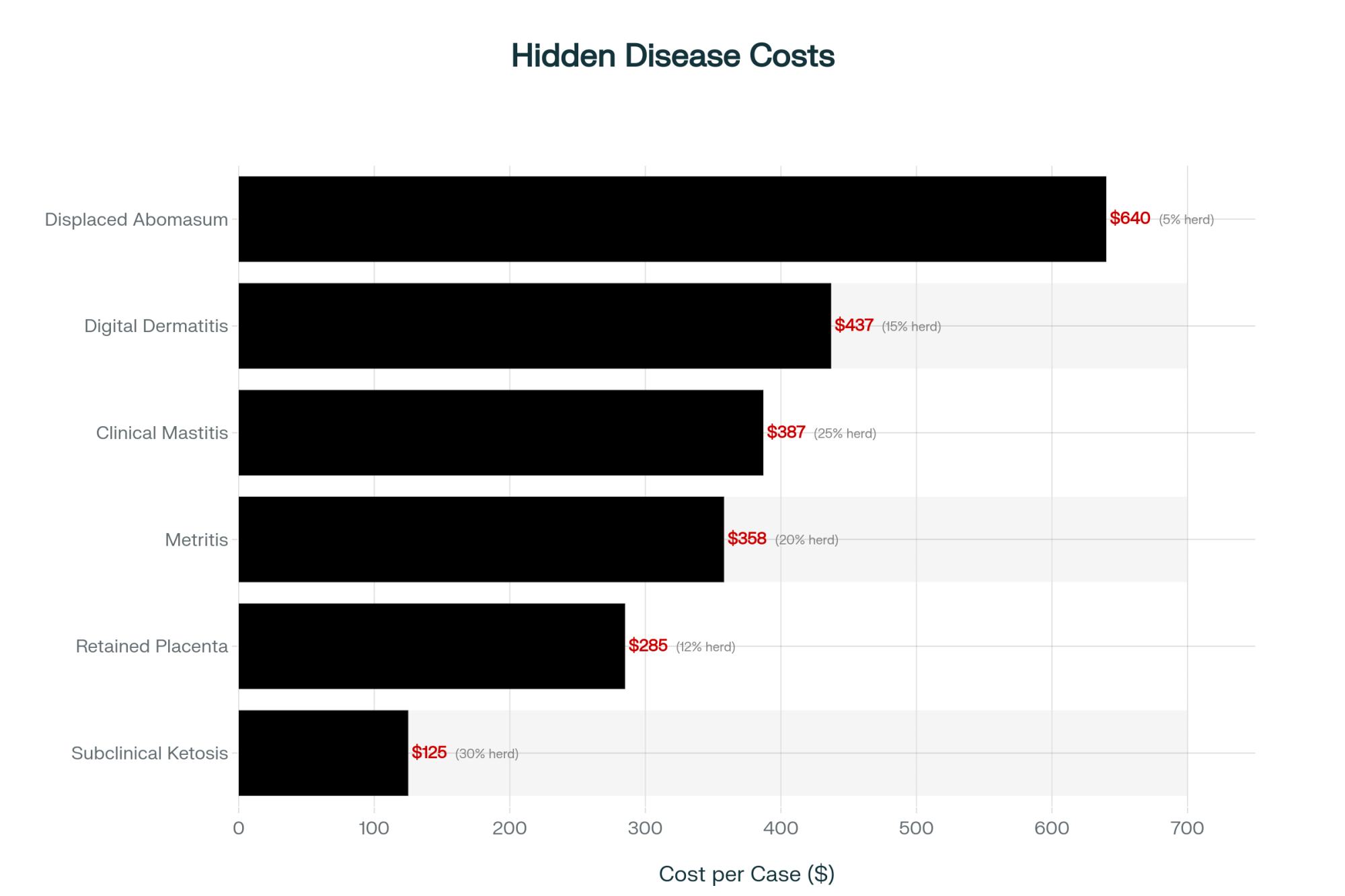
NewsSubscribe
First
Last
Consent

The Four Numbers Every Dairy Producer Needs to Calculate This Week

26,000 dairy farms are expected to drop to 20,000 by 2028. Which side of that line are you on? Four numbers will tell you

Executive Summary:  With milk stuck below $14/cwt through 2026 while global production rises 3-6%, this isn’t a downturn—it’s a restructuring. Five permanent changes (beef-on-dairy heifer shortage, China’s self-sufficiency, technology cost gaps, fixed-cost production traps, and processor overcapacity) mean the old recovery playbook is dead. Right now, mega-dairies operate at $13.80/cwt, niche producers capture $8-12 premiums, but mid-sized farms (500-1,500 cows) hemorrhage cash at $18-21/cwt. I’ve developed a four-number framework—true cost per cwt, liquidity runway, competitive investment ratio, and niche premium potential—that reveals your best path forward in minutes. Calculate these this week to determine whether you should expand, pivot to premium markets, or execute a strategic exit while you control the terms. The industry will shrink from 26,000 to 20,000 farms by 2028, but producers who act decisively in the next 90 days can still position themselves to thrive.

Dairy Farm Business Strategy

You know, I was checking the CME futures board this morning—Class IV milk sitting below $14/cwt all the way through February 2026—and it really got me thinking about what we’re all dealing with right now. Here’s what’s interesting: while we’re staring at these terrible prices, the production reports from early October show New Zealand’s up 3% year-over-year, Ireland’s pumping out nearly 6% more milk, and Belgium’s somehow surging 6.5%.

You’d think somebody would cut back, right? But they can’t. And that’s what makes this whole situation fundamentally different from anything we’ve weathered before.

The Profitability Death Zone: Only mega-dairies survive below $14/cwt milk prices while mid-size operations hemorrhage $5-7 per hundredweight

The Five Structural Changes We’re All Navigating Together

The Beef-on-Dairy Shift That’s Bigger Than We Realized

The Beef-on-Dairy Revolution: Farmers are choosing $1,000 in 7 days over $3,850 invested for 30 months—and it’s permanently shrinking the heifer pipeline by 700,000-800,000 head

So here’s something that’s really caught my attention—and I think most of us have been surprised by how big this has gotten. The National Association of Animal Breeders’ latest sales data shows beef semen sales to dairy operations jumped almost 18% last year alone. What started as a way to manage margins has become something much more structural.

I was talking with a producer in central Wisconsin last week—third-generation operation, really sharp guy—and he walked me through his breeding decisions. With those week-old beef-cross calves bringing $800 to $1,200 at regional auctions (I saw some exceptional ones hit $1,400 at Dairyland), and compare that to the $3,200 to $4,500 it costs to raise a replacement heifer to breeding age… well, the math’s pretty clear. Penn State Extension’s budgets back this up, though honestly, if you’re in an area with higher feed costs, you might be looking at even more.

What’s particularly worth noting is how this revenue stream—often covering 12-16% of total farm income—has become essential for cash flow, especially for making those monthly debt service payments. But here’s the thing that’s really starting to bite: once you commit to this breeding strategy, you’re locked in for at least 30 months. That’s just biology—you can’t speed up getting a heifer from conception to first lactation.

I was chatting with one of CoBank’s dairy economists at a meeting recently, and they’re suggesting the US dairy heifer inventory could shrink by 700,000 to 800,000 head through 2027. Even if milk prices doubled tomorrow—and let’s be honest, we all know they won’t—we simply can’t produce replacement heifers any faster than nature allows.

China’s Role Has Completely Changed

China’s Demand Collapse: The global dairy safety valve that rescued oversupply in 2009 and 2015 has permanently closed—imports down 30% while domestic production soars past 42 million tonnes

Remember how China always seemed to bail us out? You probably know this pattern—2009, 2015… we’d get oversupplied, prices would tank, and then Chinese demand would gradually soak up the excess. Well, that playbook’s done, and we need to accept it.

The China Dairy Industry Association’s data shows their per capita consumption dropped from 14.4 kg in 2021 to 12.4 kg in 2022, and from what I’m hearing from folks in the export business, it hasn’t bounced back. Meanwhile—and this is what’s really changed the game—their domestic production hit nearly 42 million tonnes in 2023. They actually exceeded their own government targets.

Looking at the customs data from August, whole milk powder imports into China were down over 30% year-over-year, while skim milk powder imports were down about 23%. I’ve noticed many of us still talk about Chinese demand “recovering,” but honestly? They’re dealing with their own oversupply while facing declining birth rates and changing dietary preferences among younger consumers. That safety valve we used to count on… it’s gone.

The Technology Gap That’s Becoming a Canyon


Farm Size
CowsRobot InvestmentAnnual Debt ServiceProduction GainLabor SavingsNet Annual BenefitROI at $20ROI at $14
Mega-Dairy3,800$2.7M (12 robots)$220K+$684K+$840K+$1,304K✓ PROFITABLE✓ PROFITABLE
Mid-Size (TRAP)500$900K (4 robots)$85K+$90K+$280K+$285K✓ Barely profitable✗ LOSES MONEY
Small Farm180$450K (2 robots)$43K+$32K+$140K+$129K✗ Marginal✗ UNPROFITABLE

You probably already know this, but that USDA Economic Research Service report—”Profits, Costs, and the Changing Structure of Dairy Farming”—really lays it all out. Farms with 2,000+ cows are running total production costs around $23/cwt. Smaller operations with 100-199 cows? They’re looking at $32-33/cwt. That’s a $10 gap, and here’s the thing: technology is making it wider, not narrower.

My neighbor just got quotes for a robotic milking system—both DeLaval and Lely are quoting $180,000 to $230,000 per unit right now. For his 500-cow operation, he’s looking at a minimum of $900,000 for the robots alone, plus another $200,000 for barn modifications. At current Farm Credit rates—which are running 7.5-8.5% for most of us with decent credit—that’s $85,000 to $90,000 annually just in debt service.

Now, the big dairies installing these systems are seeing real gains—8-10 pounds more milk per cow daily, plus labor savings of $60,000 to $80,000 annually per robot. But here’s what nobody wants to say out loud at the co-op meetings: the return on investment only works at scale. University of Minnesota Extension did this analysis showing robots can be profitable at $20 milk but lose significant money at $15. And where are prices heading?

A producer out in California shared something interesting with me last month—they’ve got 3,800 cows, and went fully robotic two years ago. “Best decision we ever made,” he said, “but only because we had the volume to spread those fixed costs. My neighbor with 600 cows? Same robots would bankrupt him at these prices.”

Why We Keep Milking Even When We’re Losing Money

This one puzzles a lot of people outside the industry, but if you’ve been doing this a while, you get it. Cornell’s Program on Dairy Markets and Policy explained it really well in one of their recent webinars—pasture-based systems like those in New Zealand and Ireland have completely different cost structures than our confinement operations here in the States.

DairyNZ’s economic surveys show their typical operation has variable costs around NZ$4.50 per kilogram of milk solids—that works out to roughly $7/cwt for us—but fixed costs that come to about $12/cwt. Think about that for a minute. When milk drops to $12/cwt, if they stop milking, they still owe that $12 in fixed costs, but lose the $5 that’s at least helping cover some of it. So they keep milking, even at a loss.

Irish producers are in the same boat. Teagasc’s reports show that Irish dairy farmers invested over €2.2 billion in expansion after the abolition of quotas in 2015. Those loans don’t just disappear when milk prices crash. The Central Bank of Ireland’s latest data shows 64% of Irish dairy farms carrying debt averaging over €117,000. You can’t just turn that off.

Processing Plants Running Half Empty

Here’s something that doesn’t get enough attention, but it’s affecting all of us. The International Dairy Foods Association has been tracking this—US processors have invested billions in new plant capacity over the last few years, expecting the kind of production growth we saw in the 2010s. But USDA’s Milk Production reports show we’re growing at maybe 0.4-0.5% annually. They built for 2-3% growth.

I was talking with a cheese plant manager in Wisconsin last month—won’t name names, but you’d know the company—and he put it pretty bluntly: “We’ve got a $45 million plant running at 60% capacity. We need milk, but we can’t pay farmers enough to make them profitable because Walmart won’t pay us more for cheese.”

That’s creating this weird dynamic where processors actually benefit from low farmgate prices as long as they can maintain their retail contracts. It’s not some conspiracy—it’s just economics playing out in a way that hurts us at the farm level.

Looking Back: Why This Isn’t Like 2009 or 2015

The Dairy Apocalypse Timeline: 21,809 farms wiped out between 2017-2028, with the steepest decline coming in the next 3 years as milk prices crater below break-even

It’s worth looking at how we got here, because understanding the differences helps explain why the old recovery patterns won’t work this time…

2009 was actually pretty straightforward. Lehman Brothers collapsed, credit markets froze, and people stopped buying. Class III went from $20 to $9 in six months. But once the economy recovered, so did we. By 2011, we were setting price records again.

2015 was about oversupply. The EU eliminated quotas on March 31st after 31 years. European production jumped 6% almost overnight. Russia banned imports. China had too much inventory. But eventually producers cut back, China started buying again, and markets found their balance within 18 months.

This time? We’ve got five structural changes all hitting at once. The beef-on-dairy heifer shortage that’s locked in for years. China is becoming self-sufficient rather than our backstop. Technology is creating cost gaps that can’t be bridged. Fixed costs that prevent production cuts. And processors built for growth that isn’t happening. There’s no single fix because these aren’t temporary problems—they’re permanent changes to how the industry works.

Seven Leading Indicators That’ll Signal the Turn

If you want to know when this market really turns—and I mean actually turns, not just bounces around—here’s what I’m keeping an eye on:

Weekly dairy cow slaughter – USDA reports every Thursday
Looking for sustained rates 15-25% above year-ago levels for 8+ weeks. Currently running 5-8% below average. When slaughter spikes above 65,000 head weekly, that’s capitulation.

CME spot whey prices
Holding at 71-72¢ while cheese crashed from $2.20 to $1.70/lb. Breaking above 75¢ signals genuine demand recovery.

Cold storage inventories
October cheese shipments totaled 1.48 billion pounds, up 5.2% year-over-year. Need two consecutive months of meaningful drawdowns.

Export volumes
Need 8-12% year-over-year growth to signal international demand strength. Currently flat to slightly positive.

Heifer inventory reports
July 2026 USDA report will be critical—looking for the first stabilization since 2021.

Futures curve shape
Currently in contango. Shift to backwardation signals near-term tightness.

Chapter 12 bankruptcy rates
Up substantially in Q1 2025. Peak usual coincides with the market bottom.

Three Types of Operations Emerging from This

Based on what I’m seeing across the country—and USDA’s Census of Agriculture data backs this up—here’s how I think this shakes out by 2028:

The Big Operations Will Get Bigger

These operations with 5,000 to 25,000 cows aren’t just surviving—they’re actively expanding. I visited a 7,500-cow dairy near Amarillo recently that’s running all-in costs at $13.80/cwt. They’re buying herds from struggling neighbors at 60-70 cents on the dollar and integrating them pretty seamlessly.

With private equity backing and professional management teams—and look, I know how we all feel about that, but it’s the reality—these operations will probably control over half of US milk production within three years. They’re not the enemy; they’re just adapting to the economic reality we’re all facing.

Premium Niche Players Will Do Just Fine

The October Organic Dairy Market News shows organic certification still pays an $8-12/cwt premium over conventional. A friend of mine in Vermont—she’s got 95 cows, beautiful grass-fed operation—is getting $45-48/cwt selling directly to consumers through her on-farm store and a handful of local restaurants.

These operations compete on story and quality, not efficiency. If you’ve got the right location, marketing skills, and family commitment to make it work, this can be really successful. But let’s be realistic—it’s maybe 1,500 to 2,500 farms nationally that can pull this off.

I know a family in Pennsylvania—180 cows—who transitioned to organic three years ago. The husband told me over coffee last month: “We’re netting more on 180 organic than we ever did on 350 conventional. But man, those three transition years nearly broke us financially and emotionally, and my wife’s at farmers markets every Saturday and Wednesday year-round. It’s a complete lifestyle change.”

The Middle Is Really Struggling

This is hard to say, but if you’re running 500-1,500 cows producing commodity milk, the math is really challenging. Farm Credit’s benchmarking across multiple regions shows operations this size averaging $18-21/cwt in total costs. You’re $5-7 above the mega-dairies but can’t access the premiums that niche markets provide.

Between 2017 and 2022, USDA census data shows we lost 15,866 dairy farms while milk production increased by 5%. And honestly, that trend seems to be accelerating rather than slowing down.

Your Four-Number Reality Check

“We’ve got a $45 million plant running at 60% capacity. We need milk, but we can’t pay farmers enough to make them profitable because Walmart won’t pay us more for cheese.” – Wisconsin cheese plant manager

Look, I know nobody wants to do this kind of analysis when things are tough, but you really need to sit down—pour yourself a coffee—and work through these four calculations honestly:

1. Your True All-In Cost Per Hundredweight

Include everything—cash costs, debt service, family living draws, depreciation, and opportunity cost of your labor.

  • Under $16/cwt: You might make it work with expansion or efficiency gains
  • $16-18/cwt: You’re marginal—evaluate all options
  • $18-21/cwt: Need a transition plan within 12 months
  • Over $21/cwt: Everyday costs you equity

2. How Many Months of Runway Do You Have?

Available cash and credit divided by the monthly losses at $14 milk.

  • 6+ months: Time to be strategic
  • 3-6 months: Decide within 30 days
  • Under 3 months: Crisis mode—act immediately

3. What Would It Take to Get Competitive?

Investment required to reach $15/cwt divided by available capital.

  • Under 2.0: Expansion might work
  • 2.0-3.0: Pretty risky
  • Over 3.0: Expansion won’t save you

4. Could You Make a Niche Work?

Net premium after transition costs. The Northeast Organic Dairy Producers Alliance shows $3-7/cwt additional cost during transition.

  • Premium covers 40%+: Strong pivot candidate
  • 25-40%: Possible with passion
  • Under 25%: Math doesn’t work

Your 90-Day Action Plan

Based on where you fall in those calculations:

If You’re a Survivor (costs under $17/cwt, 6+ months liquidity):
Lock in feed costs now. Get maximum Dairy Revenue Protection. Model expansion scenarios. Position for Q2 2026 asset opportunities.

If You’re Facing an Exit (costs $18-22/cwt, limited liquidity):
Consult an attorney confidentially. Get a professional appraisal. Gauge neighbor interest discreetly. Act before banks force decisions.

If You’re Considering a Niche (strong local market, family commitment):
Start organic certification now (36-month process). Test farmers markets. Run realistic equipment costs. Ensure family buy-in.

If You’re in Crisis (under 3 months liquidity):
Call an attorney today. Cull aggressively for cash. List sellable assets. Understand personal versus farm-only debt.

The Reality We’re Facing

What makes this downturn different is that all the traditional recovery mechanisms have changed. China’s not coming to rescue us from oversupply. The advantages of technology are growing, not shrinking. Fixed costs mean producers keep producing even when they’re losing money. And processing overcapacity creates all kinds of weird incentives that work against us.

The industry that emerges by 2028 will probably have 20,000 to 22,000 farms, down from about 26,000 today. Maybe 800 mega-dairies will produce 60% of our milk. Another 2,000 or so niche operations will serve premium markets. And the middle—those 500-1,500 cow operations that have been the backbone of dairy for generations—most of them will be gone.

If you’re in that middle tier, you’ve got maybe 90 days to make a strategic decision while you still have some control over the outcome. Calculate those four numbers. Be honest with yourself about what they tell you. Make your move.

Because by March, the producers who waited will wish they’d acted sooner. And I really don’t want you to be one of them. We’ve all worked too hard, sacrificed too much, to let this restructuring take everything from us.

Look, there’s still opportunity in this industry. But it’s going to look different than what most of us grew up with. Understanding that—and adapting to it while you still have options—that’s what’s going to separate those who thrive from those who just survive.

Stay strong, make smart decisions, and remember—there’s no shame in strategic change. There’s only shame in letting pride destroy what you’ve built.

Key Takeaways:

  • Your survival depends on four numbers: Calculate your true all-in cost/cwt, months of liquidity at $14 milk, investment needed to hit $15/cwt, and net premium from going niche—this week
  • The cost gap is unbridgeable: Mega-dairies operate at $13.80/cwt, small organic farms capture $45-48/cwt, but mid-size operations bleed cash at $18-21/cwt with no fix
  • Five permanent changes killed recovery: 72% beef-on-dairy locked through 2027, China down 30% on imports, tech ROI only at 2,000+ cows, fixed costs prevent production cuts, processors 40% overcapacity
  • 90 days to choose your path: Expand to 2,500+ cows, transition to premium niche, or execute strategic exit—after March, banks choose for you
  • 20,000 farms by 2028 (down from 26,000 today), but producers who act now can position themselves on the winning side

Complete references and supporting documentation are available upon request by contacting the editorial team at editor@thebullvine.com.

Learn More:

Join the Revolution!

Join over 30,000 successful dairy professionals who rely on Bullvine Weekly for their competitive edge. Delivered directly to your inbox each week, our exclusive industry insights help you make smarter decisions while saving precious hours every week. Never miss critical updates on milk production trends, breakthrough technologies, and profit-boosting strategies that top producers are already implementing. Subscribe now to transform your dairy operation’s efficiency and profitability—your future success is just one click away.
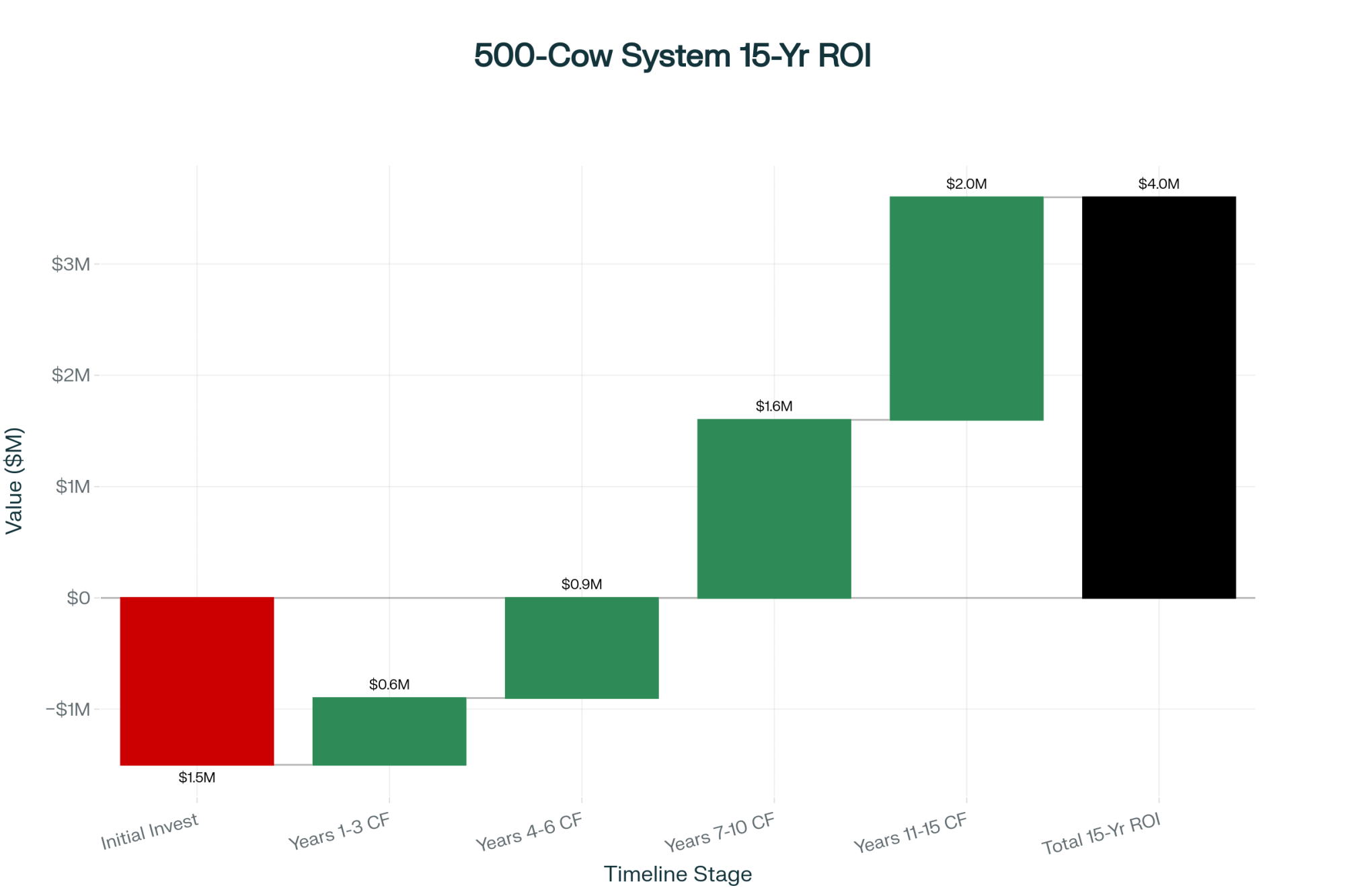
NewsSubscribe
First
Last
Consent

Cut Lameness 50% in 12 Months: The $95,000 Strategy Top Dairies Use (But 80% Still Ignore)

Your competition is turning $67,400 lameness losses into $348,000 gains. They’re using three strategies you’re probably ignoring.

EXECUTIVE SUMMARY: While the average dairy hemorrhages $67,400 annually from 20% lameness rates, top operations have cracked the code—transforming this drain into $348,000 in captured value through improved cow longevity, reproduction, and feed efficiency. The winning formula combines three proven strategies: a hybrid trimming model (professional expertise plus in-house response) that costs $62,700 but eliminates expensive treatment delays, strategic timing that generates an extra $308 per cow simply by trimming after 110 DIM, and—most powerfully—paying employees bonuses tied directly to lameness reduction. One Wisconsin operation invested $65,000 in a dedicated Hoof Health Coordinator position and saved $95,000 within 12 months by dropping lameness from 24% to under 10%. With modern Holsteins experiencing 50% longer recovery times than their 1990s predecessors and professional trimmers booked 3-4 months out, the economics are clear: operations modernizing their approach now will dominate, while the 80% clinging to “industry average” lameness face competitive extinction. The $37,000-45,000 first-year investment pays for itself within 8-12 months, making this the highest-ROI improvement available to dairy operations today.

We all know that number—$337 per case of lameness. The University of Wisconsin published this figure in their 2024 research, and it’s become almost a shorthand in our industry conversations. What’s particularly noteworthy, though, is how this familiar statistic represents just one dimension of a much larger economic picture.

I’ve been observing an interesting trend across dairy operations, from the established herds in Wisconsin to the larger facilities out West. A widening gap is developing between operations that have modernized their approach to hoof health and those that maintain traditional practices. And here’s what’s fascinating—this difference extends well beyond simple lameness rates. It’s actually shaping the fundamental competitiveness of these operations for years to come.

Let me share some insights from producers who’ve successfully transitioned from reactive to proactive hoof health management. Experiences from different regions—Wisconsin’s family operations, British Columbia’s progressive farms, even some of the larger-scale dairies in Idaho and New Mexico—offer valuable lessons for the rest of us.

Understanding the Complete Economic Picture

Looking at a typical 1,000-cow dairy operation in the Midwest—could be around Eau Claire, maybe closer to Green Bay—with the industry average 20% lameness rate, you’re facing direct annual costs of approximately $67,400 based on that Wisconsin research. These are the visible costs we track in our accounting systems.

Most dairies bleed money through lameness. Fix these five leaks and you’ll capture $348,000—while your competition’s still asking what hit them.

[Economic Impact Breakdown – 1,000 Cow Dairy]

Direct Costs (What You See):

  • Lameness treatment: $67,400/year
  • Based on 20% lameness rate × $337/case

Hidden Value Captured by Reducing Lameness to 10%:

  • Longevity gains: 2.8 → 4.8 lactations average
  • Reproduction improvement: 21-day pregnancy rate increases from 18% to 26%
  • Feed efficiency: 8% improvement from normalized eating patterns
  • Replacement savings: $280,000/year from reduced heifer purchases

Total Annual Opportunity: $348,000+

Now, what’s particularly interesting is how this breaks down. The latest Wisconsin research shows that the direct treatment savings alone from reducing lameness from 20% to 10% equals about $34,000 annually for a 1,000-cow herd (or $68,000 for a 2,000-cow operation). Initially, most of us think that’s the whole story—fewer vet bills, less medication, reduced labor. But that $34,000 in direct savings? It’s actually just the tip of the iceberg.

The real economic transformation—that full $348,000 opportunity—comes from several interconnected areas that you might not immediately consider:

Cow longevity shows remarkable improvement, extending from an average of 2.8 lactations in high-lameness herds to 4.8 lactations when lameness drops below 10%. Cornell’s PRO-DAIRY program has been documenting these patterns across multiple operations for years now.

Reproductive performance improves significantly—we’re talking 21-day pregnancy rates climbing from 18% to 26% when lameness is properly controlled. The University of Minnesota’s reproduction studies have consistently demonstrated this connection.

Feed efficiency gains of approximately 8% occur simply through normalized eating patterns. Think about it—when cows aren’t shifting weight off painful feet, they’re actually eating properly. Michigan State’s research provides compelling evidence on this relationship.

Perhaps most striking are the replacement cost savings—potentially $280,000 annually for a 1,000-cow operation, simply from reduced heifer purchase requirements at current market prices.

As industry consultants tracking outcomes across multiple operations report: “Operations approaching hoof health as an integrated system rather than isolated trimming events are discovering value streams they hadn’t recognized before. It’s essentially recovering losses they didn’t realize were occurring.”

CharacteristicTop 20% (Modernized Approach)Bottom 80% (Traditional Approach)Competitive Gap
Lameness Rate8-10%20-25%2.5x worse outcomes
Average Cow Longevity4.8 lactations2.8 lactations71% more productive life
Trimmer Response Time24 hours (hybrid model)3-4 months (professional wait)$180/cow/day × delays
Annual Lameness Costs$34,000 (1,000 cows)$67,400 (1,000 cows)$33,400 competitive disadvantage
Total Captured Value$348,000 annually$0 (unrealized)$348,000 advantage
Replacement Rate28% (longevity-driven)36-40% (forced culls)$280,000 annual savings
21-day Pregnancy Rate26%18%Faster herd turnover
Implementation Cost$37,000-45,000 first year$0 (but opportunity cost massive)8-12 month payback

Three Management Models in Practice

What farmers are finding is that three distinct management approaches have emerged as operations adapt to these economic realities. Each offers advantages, though I’ve noticed implementation quality determines outcomes more than model selection.

Management ModelAnnual Cost (1,500 cows)Key AdvantagesCritical Pitfalls
Professional Contract~$75,000–  Expert technique guaranteed-  No labor management required-  Consistent quality–  3-4 month booking delays-  $180/cow lost per day of delayed treatment-  No emergency response capability
In-House Program~$35,000–  Immediate response capability-  Lower direct costs-  Complete schedule control–  $15,000-30,000 equipment investment-  Failure rate when trimmer lacks protected time-  Risk of 50% lameness increase if poorly trained
Hybrid Model~$62,700–  Professional expertise for maintenance-  24-hour emergency response-  Reduces treatment delays by $180/case–  Requires strong coordination-  Need clear role definition-  Training investment essential

Professional Contract Services: The Traditional Approach

Most dairy operations continue to rely on professional trimmers who visit quarterly or monthly. Industry surveys indicate costs ranging from $15 to $40 per cow per trim. So for a 1,500-cow operation, annual investment typically reaches $75,000.

The emerging challenge—particularly in dairy-intensive regions like Wisconsin, Idaho, and California—isn’t actually cost. It’s availability. Professional trimming services report booking schedules extending 3-4 months, with many turning away multiple prospective clients for each new account they can accommodate.

Consider the practical implications here: you discover a lame cow on Tuesday morning, but your trimmer isn’t scheduled for three weeks. University of Minnesota research indicates this delay costs approximately $180 in lost production per affected cow. These costs accumulate quickly across even modest lameness rates.

In-House Programs: Promise and Pitfalls

Some operations figure they’ll internalize all trimming activities, anticipating cost savings. And theoretically, expenses can decrease to approximately $35,000 annually for that same 1,500-cow herd.

But here’s where it gets tricky. Successful execution presents significant challenges.

Professional-grade equipment requires an investment of $15,000 to $30,000 for quality hydraulic chutes from manufacturers like Riley Built or Comfort Hoof Care. Staff need proper Dutch 5-step method certification—and I mean comprehensive training costing $1,000 to $3,000, not informal learning.

The critical success factor that everyone overlooks? Protected time. At least 1-2 hours daily that absolutely cannot be redirected to other tasks. Training programs nationwide report the same pattern: in-house trimming programs most commonly fail when designated trimmers lack sufficient protected chute time. They’re constantly being pulled to help with breeding, fix equipment, or move cows.

Hybrid Models: Finding Balance

What’s really interesting is how successful operations are increasingly combining professional expertise with in-house response capabilities. For a 1,500-cow dairy, this approach typically costs $62,700 annually while delivering superior outcomes.

This model features monthly professional trimmer visits for maintenance and complex cases, supplemented by trained on-farm staff who can apply blocks, address digital dermatitis, and respond to emergencies within 24 hours.

Dr. Gerard Cramer’s extensive research at the University of Minnesota demonstrates that each 24-hour reduction in treatment response time saves approximately $180 per case. When your on-farm staff can apply a block on Tuesday afternoon rather than waiting three weeks, those savings directly impact profitability.

The Timing Revolution Nobody Saw Coming

This development still surprises experienced producers when I share it. Recent research challenges everything we thought we knew about optimal trimming schedules.

Traditional protocols recommended trimming at fresh check, typically 3-4 weeks post-calving. Makes sense, right? Cows are already restrained for health checks. But the production data reveals a completely different optimal approach.

Timing beats technique—trimming after 110 days unlocks +11 lbs/day and a $308/cow advantage, while old-school early trims lock in losses.

[Milk Production Impact of Trimming Timing]

Days in Milk at Trimming → Peak Milk Production Impact

  • Trimming < 110 DIM: -8 lbs at peak, losses persist through 200 DIM
  • Trimming > 110 DIM: +3 lbs at peak, advantage maintained throughout lactation
  • Net Difference: 11 lbs/day = $308 per cow per lactation

Based on converging research from Wisconsin, Minnesota, and Cornell universities

Converging research from Wisconsin, Minnesota, and Cornell demonstrates that cows trimmed after 110 days in milk produce significantly more milk than those trimmed earlier.

The differences are substantial:

Trimming before 110 DIM results in an 8-pound loss at peak milk, with impacts persisting through 200 DIM. Meanwhile, trimming after 110 DIM yields a 3-pound gain at peak and maintains this advantage throughout lactation. The net economic difference? $308 per cow simply through timing adjustment.

Why does timing matter so significantly? Well, it comes down to metabolic stress patterns. Research from Dr. Nigel Cook at Wisconsin demonstrates that fresh cows experiencing severe negative energy balance are already mobilizing 75-100 pounds of body tissue to support production. When you add trimming stress—which research shows increases cortisol levels 10-fold—during this vulnerable period, you’re compounding metabolic challenges that delay recovery.

I spoke with a reproduction manager operating near Kaukauna who adjusted protocols two years ago with notable results: “We extended our voluntary waiting period from 60 to 94 days specifically to avoid trimming during peak metabolic stress. First-service conception improved from 28% to 41%—that wasn’t what we expected, but we’ll certainly take it.”

Technology Integration: A Nuanced Decision

Let’s talk about those automated lameness detection systems prominently featured at every trade show. Manufacturers accurately claim their AI-powered cameras can identify lameness 23 days before visual detection, achieving 81-86% agreement with veterinary assessment.

And you know what? The technology actually performs as advertised. But whether it makes economic sense for your operation depends heavily on specific circumstances.

Systems from companies like CattleEye or IDA require an initial investment of $45,000 to $73,000, plus $8,000 to $12,000 in annual subscription fees.

The value proposition varies considerably:

Automation particularly benefits:

  • Operations with robotic milking systems, where individual cow movement eliminates natural observation points
  • Facilities exceeding 1,500 cows, where comprehensive visual observation becomes impractical
  • Herds with baseline lameness above 25% requiring systematic problem identification

Now consider this alternative perspective from a producer near Marshfield managing 800 cows. He reduced lameness from 24% to 14% investing just $7,200 in disciplined footbath protocols and strategic trimming, achieving $20,000 annual savings.

As he explained: “Technology vendors promoted cameras and sensors extensively. But our challenge wasn’t identifying lame cows—it was preventing lameness initially. That $7,200 investment in copper sulfate and consistent protocol implementation outperformed any $45,000 system for our situation.”

Training: The Foundation of Success

Here’s an uncomfortable reality that deserves discussion: operations using inadequately trained in-house trimmers can experience a 50% increase in lameness, resulting in $84,000 in additional annual losses compared to professional trimming. Think about that—inadequate training often produces worse outcomes than no trimming at all.

[The Dutch 5-Step Method – Critical Execution Points]

Step 1: Judge & Measure Inner Hind Claw

  • Target: 7.5-8cm toe length from the coronary band
  • Critical error: Measuring from the wrong reference point

Step 2: Trim Inner Claw to Correct Dimensions

  • Maintain a minimum 5mm sole thickness
  • Critical error: Over-trimming below safe threshold

Step 3: Model/Dish Out the Sole

  • Transfer weight from ulcer-prone zones to the wall/heel
  • Critical error: Creating a flat sole instead of a proper concavity

Step 4: Balance to Outer Claw

  • Match bearing surfaces for even weight distribution
  • Critical error: Using diseased outer claw as reference

Step 5: Remove Loose Horn & Apply Blocks if Needed

  • Clear all the undermined horn to prevent abscess formation
  • Critical error: Leaving loose horn creates infection pockets

Proper training requires 3-5 days of instruction + 6-12 months of supervised practice

Common critical errors I see repeatedly include:

  • Over-trimming soles below the 5mm safety threshold, essentially exposing sensitive tissue
  • Cutting toes shorter than 7.5cm, exposing the corium—that’s the living tissue within the hoof
  • Creating flat soles that concentrate pressure precisely where ulcers develop

Proper Dutch 5-step training—originally developed by Toussaint Raven and adapted for modern housed Holstein management—requires 3-5 days of intensive instruction plus 6-12 months supervised practice. This investment of $1,000 to $2,000, along with time, is essential.

Training programs consistently observe that well-intentioned but inadequately trained individuals can inadvertently create lameness through excessive trimming depth. Good intentions simply cannot compensate for technical skill deficits.

StepCritical ActionTarget SpecificationCommon Critical ErrorFinancial Impact of Error
1Judge & Measure Inner Hind Claw7.5-8cm toe length from coronary bandMeasuring from wrong reference pointFoundation failure – affects all subsequent steps
2Trim Inner Claw to Correct DimensionsMinimum 5mm sole thickness maintainedOver-trimming below 5mm thresholdExposes corium (living tissue) = immediate lameness
3Model/Dish Out the SoleTransfer weight from ulcer zones to wall/heelCreating flat sole instead of concavityConcentrates pressure exactly where ulcers develop
4Balance to Outer ClawMatch bearing surfaces for even distributionUsing diseased outer claw as referencePerpetuates imbalance and accelerates deterioration
5Remove Loose Horn & Apply BlocksClear all undermined horn completelyLeaving loose horn creates infection pocketsAbscess formation requires extended treatment
OUTCOMEProfessional Training vs. Inadequate Training3-5 days instruction + 6-12 months supervisedInformal learning without certification$84,000 annual difference: 8% vs 28% lameness

Integration: The Distinguishing Factor

What differentiates operations achieving 5% lameness from those accepting 25% isn’t superior equipment or newer facilities. It’s genuine integration—coordinated systems rather than periodic meetings.

Consider the contrast:

Typical farm communication: Monthly meetings where trimmers report “some sole ulcers,” veterinarians acknowledge concerns, nutritionists inquire about pen locations without specific data, and everyone agrees to monitor the situation.

Effective integration: Shared digital dashboards are updated in real time. When trimmers identify multiple sole ulcers in specific pens, automated alerts notify nutritionists who immediately analyze ration composition. Within 48 hours, they’ve identified and corrected nutritional imbalances.

Research comparing operations using integrated systems versus traditional communication found that the integrated farms achieved 35% better lesion identification accuracy and 48% faster treatment response. Most importantly, they prevented problems rather than simply accelerating treatment.

Biological Changes in Modern Dairy Cattle

This is crucial: today’s Holstein producing 95 pounds daily is fundamentally different from the 65-pound producer of 1995. The differences extend far beyond milk yield.

The biological adaptations are remarkable:

The digital cushion—that fat pad providing shock absorption beneath the pedal bone—now thins by 15-30% during early lactation compared to just 10-12% in the 1990s, as documented through UK ultrasound studies.

Negative energy balance now persists 100-140 days rather than the historical 60-80 days, according to metabolic research.

Chronic inflammation markers remain elevated throughout lactation, not merely during transition periods.

Genetic selection has inadvertently reduced digital cushion thickness (with heritability of 0.28-0.44) while pursuing production gains.

What required 21-28 days for healing in 1995 now takes 42-56 days, with some cows never achieving complete recovery. Even a perfect trimming technique must work within these biological constraints.

Biological Metric1990s Holstein2025 Modern HolsteinThe Critical Difference
Daily Milk Production65 lbs/day95 lbs/day+46% production
Digital Cushion Thinning (early lactation)10-12% loss15-30% loss2.5x worse shock absorption
Negative Energy Balance Duration60-80 days100-140 days75% longer metabolic stress
Healing Time for Hoof Lesions21-28 days42-56 days2x longer to heal (or never)
Chronic Inflammation DurationTransition period onlyThroughout lactationChronic inflammation = vulnerability

Creating Accountability for Results

Among all factors contributing to successful hoof health transformation, one stands out consistently: linking compensation directly to measurable lameness outcomes.

This means genuine financial accountability—not peripheral evaluation criteria or vague performance considerations, but direct compensation tied to specific results.

Successful implementations typically establish:

  • A Hoof Health Coordinator position with $45,000-55,000 base salary
  • Performance bonuses up to $20,000 based on quarterly lameness measurements
  • Clear performance scales: 18% lameness = $5,000 bonus, scaling to $20,000 at 8% lameness
  • Full authority over detection protocols, treatment coordination, and footbath management

One producer implementing this system reported: “Linking compensation directly to lameness outcomes transformed everything immediately. Footbaths operated precisely on schedule. Data entry became instantaneous. Early problem detection became standard. We invested $65,000 in the position and saved $95,000 through reduced lameness costs within twelve months.”

Practical Implementation Timeline

$65,000 is just the beginning—here’s when, where, and how the savings hit your bottom line in a single year.

For operations ready to modernize their approach, here’s what successful transitions typically look like based on observed implementations:

Months 1-2: Establish Baseline Reality

Comprehensive lameness scoring often reveals actual rates of 22-28% rather than the estimated 10%. Define responsibilities clearly and secure current trimmer support for transition plans.

Months 3-4: Infrastructure and Training

Budget $16,400-27,100 for equipment (quality used hydraulic chutes can reduce costs by 40%). Ensure designated staff receive proper Dutch 5-step certification and document all protocols comprehensively.

Months 5-6: Supervised Implementation

In-house staff work alongside professionals during each visit, building both skills and data systems while measuring all relevant metrics.

Total first-year investment typically ranges from $37,000 to $45,000, with most operations achieving break-even between months 8-12 as lameness decreases and savings accumulate.

Regional Adaptation Strategies

Successful protocols in Wisconsin may need to be modified for operations in New Mexico or Idaho. Climate variations, housing systems, and labor availability all influence optimal approaches.

California’s Central Valley operations manage heat stress that exacerbates lameness—cows stand longer attempting to cool, increasing pressure on compromised feet. Meanwhile, Northeast grazing operations might experience less concrete-related lameness but face increased challenges from infectious diseases due to higher moisture levels.

Labor availability varies dramatically, too. Wisconsin producers typically access trimmers within 50 miles, while Wyoming or Montana operations may require service calls of 200+ miles, fundamentally altering economic calculations.

Looking Ahead: The Widening Industry Gap

As we approach 2030, I’m seeing the dairy industry diverge into distinct operational tiers. And here’s what’s fascinating—it’s not about scale. I’ve observed 400-cow operations outperforming 4,000-cow facilities on lameness metrics. The distinction lies in management philosophy.

The 15-20% of operations modernizing their hoof health management are building compounding advantages: extended cow longevity (4.8 versus 2.8 lactations), reduced replacement costs, enhanced reproduction, and improved employee recruitment through professional operation standards.

The remaining 80% continue cycling through recurring problems, accepting 20-25% lameness as “industry standard” while costs escalate and competitors advance.

When producers ask about affording modernization of hoof care, I pose a different question: What’s the cost of maintaining the status quo? Each year of delay widens the competitive gap. This extends beyond the $337 per case—it determines competitive viability in five years.

Strategic Considerations for Your Operation

After observing numerous transitions, several principles emerge consistently:

The economics are compelling, but success requires systems thinking. That $337 per case represents merely the starting point—cascade benefits through reproduction, longevity, and efficiency create the real value.

Model selection should reflect operational constraints rather than theoretical preferences. Base decisions on trimmer availability, labor resources, and current lameness status.

Timing optimization can surpass technique perfection. Moving trimming after 110 DIM may improve outcomes more than flawless execution at suboptimal timing.

Professional training represents an essential investment. The difference between proper certification and informal learning literally separates 8% from 28% lameness rates.

Technology amplifies existing management quality but cannot remediate fundamental deficiencies. Establish solid foundations before pursuing technological solutions.

Most critically, linking compensation to outcomes drives genuine change. Other approaches merely hope for improvement.

Common Implementation Challenges and Solutions

What farmers are finding as they implement these changes:

Challenge: Protected time for the in-house trimmer is constantly compromised.
Solution: Schedule trimming as “first priority” morning task before other activities begin

Challenge: Data entry and tracking becomes inconsistent
Solution: Simple digital forms on tablets at chute-side, automatically syncing to management software

Challenge: Resistance from long-time employees to new protocols
Solution: Include them in training sessions, emphasize how changes make their jobs easier

Quick Start Checklist

For operations ready to begin:

☐ Score all cows for lameness to establish a true baseline
☐ Calculate your current cost per case (likely exceeding $337)
☐ Evaluate trimmer availability in your region
☐ Assess labor resources for potential in-house component
☐ Budget for equipment and training investment
☐ Define a clear accountability structure
☐ Document all protocols before implementation
☐ Establish measurement and tracking systems

The framework exists. Economic benefits are documented. Early adopters are already realizing returns. The question isn’t whether investment makes sense—it’s whether you’ll implement changes while maintaining a competitive position.

That $337 per case remains constant. But an increasing number of operations are discovering that transforming hoof health from an unavoidable cost to a managed system creates a sustainable competitive advantage.

Milk production continues regardless. The distinction lies in whether profits accumulate in your account or walk away on compromised feet.

We’d appreciate hearing about your experiences with hoof health programs—successes, challenges, and lessons learned. Please share your insights at editor@thebullvine.com to benefit the broader dairy community.

KEY TAKEAWAYS

  • The Hidden Goldmine: Every 1% reduction in lameness captures $17,400 in value. Top dairies achieving <10% lameness gain $348,000 annually through improved longevity (4.8 vs 2.8 lactations), reproduction (+8% pregnancy rate), and feed efficiency.
  • The Proven Formula: Hybrid model (monthly professional + daily in-house response) @ $62,700/year + Trimming after 110 DIM (+$308/cow) + Pay-for-performance bonuses = 50% lameness reduction in 12 months.
  • Fast Payback: Initial investment of $37,000-45,000 breaks even in 8-12 months. Wisconsin farm example: Spent $65,000 on a dedicated position, saved $95,000 in year one.
  • The 2030 Reality: With trimmers booked 3-4 months out and modern cows requiring 2x recovery time, the 20% of operations modernizing NOW will dominate. The 80% accepting “industry average” lameness face competitive extinction.
  • Your Starting Point: Score all cows (your “10%” is likely 22-28%), calculate your true cost (it’s 5x the $337 you think), then implement accountability-based compensation. This single change drives all others.

Learn More:

Join the Revolution!

Join over 30,000 successful dairy professionals who rely on Bullvine Weekly for their competitive edge. Delivered directly to your inbox each week, our exclusive industry insights help you make smarter decisions while saving precious hours every week. Never miss critical updates on milk production trends, breakthrough technologies, and profit-boosting strategies that top producers are already implementing. Subscribe now to transform your dairy operation’s efficiency and profitability—your future success is just one click away.

NewsSubscribe
First
Last
Consent

The Hidden Contract Clause That Could Cost Your Dairy $55,000 in 2026

WARNING: Your 2026 dairy contract has unlimited liability clauses. 500-cow farms face $55K in new costs. Check these three things before signing →

EXECUTIVE SUMMARY: Dairy farmers signing 2026 contracts now are discovering unlimited liability clauses that hold them responsible for allergen incidents—even those that occur at the processor. These new terms, triggered by California’s July 2026 allergen law, could cost a typical 500-cow operation between $15,000 and $55,000 annually in testing, infrastructure, and insurance. That’s up to 44% of net profit gone. With December 31 deadlines approaching, farmers face three paths: scale up to 1,500+ cows for efficiency, pivot to premium markets with $5-10/cwt premiums, or exit strategically while preserving wealth. The harsh reality is that 500-cow commodity dairies are becoming economically obsolete—caught between mega-farms operating at $3/cwt lower costs and premium producers capturing higher margins. Your decision in the next 90 days isn’t just about a contract; it’s about whether your farm exists in 2030.

Dairy Contract Risk

You know, I’ve been talking with a lot of dairy farmers lately—folks running anywhere from 300 to 800 head—and the same topic keeps coming up over coffee.

These new contracts are landing on kitchen tables across the country right now? They’re different.

And I don’t mean different like when they tweaked the somatic cell premiums a few years back. I mean, fundamentally different.

One Wisconsin producer I know pretty well—let’s call him Tom to keep things simple—he runs about 500 Holsteins outside Eau Claire. Last Tuesday, he opens his December 2025 contract renewal expecting the usual adjustments. Maybe a change in butterfat differential or a new hauling schedule.

Instead, he finds himself staring at 15 extra pages of allergen management requirements. Language about “unlimited liability.” Clauses saying he has to defend his processor against claims he didn’t even cause.

“The efficiency gains are real—our cost per hundredweight dropped by nearly three dollars. But this wasn’t just about surviving allergen costs. We saw where the industry was heading and decided to get ahead of it.”
— A Wisconsin dairy producer who expanded from 600 to 1,800 cows last year

And here’s what’s interesting—Tom’s not alone. From the Texas Panhandle to Vermont’s Northeast Kingdom, down through the Georgia dairy belt and out to Idaho’s Magic Valley, producers are discovering their 2026 contracts contain terms nobody’s ever seen before.

Now, California’s allergen labeling law takes effect on July 1, 2026—that’s the official reason. But what I’ve found is that processors are using this regulatory change as the mechanism for something much bigger.

They’re fundamentally restructuring how risk flows through the dairy supply chain.

Let me walk you through what’s actually happening, because once you understand the pieces, the decisions you need to make become a lot clearer.

What Is California’s Allergen Law?

Starting July 1, 2026, California requires restaurant chains with 20+ locations nationwide to label major food allergens on menus. While this sounds limited to restaurants, processors are using it to justify comprehensive supply chain allergen controls—pushing liability and costs upstream to dairy farms through new contract requirements.

Why These Contract Changes Hit Different

I’ve been looking at dairy contracts for going on two decades now, and what’s landing on farm desks this quarter is genuinely unprecedented.

You probably saw the FDA’s recent data from their Reportable Food Registry—dairy products accounted for nearly 30% of all food recalls in the first quarter of 2025. That’s almost 400 recalls from our industry alone.

And when you dig into those numbers, undeclared allergens are driving a huge chunk of them, with milk proteins topping the list.

The Grocery Manufacturers Association conducted research in 2022 that showed food recalls average around $10 million in direct costs. And that’s just pulling product, investigating, notifying regulators.

Doesn’t even touch brand damage, lost sales, or legal fees. You’re looking at exposure that could bankrupt a mid-sized processor, which is why they’re scrambling to push that risk elsewhere.

What’s the target? Your farm.

What I’m hearing from agricultural attorneys who specialize in dairy contracts—and there aren’t that many of them, as you probably know—is that processors aren’t just updating compliance language.

They’re fundamentally restructuring who bears risk when something goes wrong. California’s July 1, 2026, deadline? It’s the perfect justification.

Here’s the really clever part, or concerning part, depending on where you sit. Most dairy contracts run calendar year, right? So farms need to sign their 2026 agreements right now, in Q4 2025.

By the time California’s law kicks in and everyone understands what these terms really mean, you’ll already be locked into a 12-month commitment.

Timing’s not an accident.

What Your Contract Might Look Like Now

Here’s what producers from Pennsylvania to Idaho to the Florida Panhandle—even down in Mississippi, where my cousin runs 400 head—are finding buried in their contracts:

  • Testing requirements where the processor decides frequency, but farmers pay 100% of costs—we’re talking $55 to $80 per sample for standard allergen tests, based on what companies like Neogen are charging these days.
  • Infrastructure modifications requiring capital investments of $50,000 to $250,000. Cornell Extension’s been helping farmers price this out, and those are real numbers.
  • Insurance minimums are jumping from your typical $2 million general liability to $5-10 million specifically for allergen incidents. I’ve talked to insurance agents we work with—Nationwide, American National, some of the bigger ag insurers—and they’re all saying premiums are up 30 to 50 percent for this coverage.
  • And then there’s the real kicker: unlimited indemnification clauses that make farmers liable for downstream incidents “regardless of origin.” Think about that. Even if contamination happens at the processor, you could be on the hook.

The Real Numbers for Your Operation

Let’s talk specifics for a typical 500-cow dairy producing around 10 million pounds annually—that describes a lot of operations in the Upper Midwest and down through Oklahoma and Arkansas.

I’ve been running these numbers with farm financial consultants, and here’s what the math looks like.

Compliance LevelAnnual TestingInfrastructureInsurance IncreaseDocumentation/TrainingTotal New CostsProfit Impact
Minimal(2¢/cwt)$1,700$5,000$4,000$2,500$15,00012%
Mid-Level(8¢/cwt)$7,000$10,000$8,000$9,500$34,00028%
High (15¢/cwt)$13,000$15,000$12,000$15,500$55,00044%

That’s a 12% hit to your bottom line if you’re running decent margins on the minimal path. Not great, but manageable for efficient operations.

Mid-level? That’s 28% of your profit gone. The difference between paying bills on time and stretching payables, as many of us know all too well.

At the high end? 44% of the net income was lost. For a lot of 500-cow operations, that’s the difference between viable and not.

The Cost Gap That’s Already There

What makes this particularly challenging is the existing cost structure gap. USDA’s Economic Research Service published their cost of production data in March 2024, and here’s the reality:

Farm SizeAverage Cost per cwt
2,000+ cows$17
100-500 cows$20+

That’s more than a three-dollar disadvantage before you add a penny of allergen compliance costs.

Already Behind Before Allergen Costs: 500-cow dairies face $3.37/cwt higher costs than 1000-cow operations and $8.48/cwt higher than mega-dairies—BEFORE adding $0.02-0.15/cwt allergen compliance. On 10 million lbs annually, that’s $337,000-$848,000 structural disadvantage you can’t manage away

Understanding the Bigger Picture

Here’s where things get really interesting—and by interesting, I mean concerning if you’re a mid-sized dairy like most of us.

The consolidation trends were already stark before these contract changes. The 2022 Census of Agriculture, released in February 2024, shows that we lost 39% of U.S. dairy farms between 2017 and 2022.

Dropped from over 39,000 to about 24,000 operations. Yet—and here’s the kicker—milk production actually increased 5% over that same period according to the USDA’s National Agricultural Statistics Service.

Think about that for a minute. Fewer farms, more milk. The math only works one way, doesn’t it?

Today, according to the same Census, 65% of the U.S. dairy herd lives on farms with 1,000 or more cows. The 834 largest dairies—those with 2,500 or more head—they control 46% of production by value.

These aren’t future projections, folks. This is where we are right now.

I was talking with a senior ag lender recently—manages a portfolio north of $400 million in dairy loans—and he was remarkably candid about it.

“We’re not trying to prevent consolidation. We’re positioning our portfolio to be on the right side of it. Managing 50 medium-sized dairy loans requires far more oversight than five large ones with professional CFOs and management teams.”
— Senior agricultural lender with $400M+ dairy portfolio

The September 2025 lending data from agricultural finance institutions shows that smaller ag lenders—those under $500 million in loans—they absorbed 75% of the increase in farm lending during 2024.

Meanwhile, the big players with over a billion in ag loans? They contributed just 10% to that increase.

The sophisticated lenders they’re already pulling back from medium-sized operations. Makes you think, doesn’t it?

The Numbers Don’t Lie: Since 2017, America lost 15,000 dairy farms (39%) while milk production INCREASED 5%. By 2030, another 7,000 operations will disappear. This isn’t a downturn—it’s systematic elimination of mid-size dairies. Where does YOUR farm fit?

Three Paths Forward (And Why You Need to Choose Now)

After talking with dozens of farmers facing these decisions and running scenarios with financial advisors, I’m seeing three viable strategies emerge.

The key is picking the right one for your specific situation—not what worked for your neighbor, not what your grandfather would’ve done.

Path 1: Scale Up to Survive

Who should consider this path? Well, if you’re under 45 with kids who genuinely want to farm—and I mean really want it, not just feel obligated—this might be your route.

You need a debt-to-equity ratio under 2.0, preferably lower. You should already be in the top 25% for efficiency, meaning your cost of production is under $19 per hundredweight.

You’ve got to have the land base or be able to acquire it. And honestly? You need to actually enjoy the business side of dairy, not just working with the cows.

What’s it take? University of Wisconsin Extension’s been helping folks price out expansions, and you’re looking at $3.5 to $5 million in capital investment.

That’s an 18 to 24-month timeline just for permits and construction. You’ll be managing employees, not just family labor. And you need the stomach for significant debt and risk.

The payoff? Production costs drop two to three dollars per hundredweight at scale—USDA data’s pretty clear on this—which more than covers new allergen compliance costs.

You become the type of operation processors want to work with long-term. But it’s a big leap, no doubt about it.

Path 2: Exit Commodity, Enter Premium

What’s encouraging is that producers from North Carolina to Kansas to New Mexico are finding similar success with premium markets.

This path works if you’re within 60 miles of a decent-sized population center—100,000 people or more. You or your spouse actually has to enjoy marketing and talking to customers. Can’t stress that enough.

You’ll be working farmers markets, doing farm tours, and managing social media. As you’ve probably experienced yourself, it’s exhausting but can be rewarding.

Your location needs affluent consumers who value local food. And you’ve got to handle the three-year organic transition financially—that’s no small feat.

What’s it take? Organic certification under the USDA’s National Organic Program is a 36-month process, as you probably know.

If you’re adding processing, budget $150,000 to $300,000 for a small facility—USDA Rural Development has some grant programs that can help with this.

Plan on 15 to 20 hours per week just on marketing. It’s a completely different mindset about what you’re selling.

The payoff? Premium markets can deliver five to ten dollars per hundredweight above commodity prices—USDA tracks these premiums pretty consistently.

“We realized we couldn’t compete with mega-dairies on cost. But we could compete on story, quality, and customer connection. Our milk price went from $21 to $28 per hundredweight, and our yogurt adds another eight to ten dollars per hundredweight equivalent.”
— Vermont dairy family who transitioned to organic with on-farm processing

But more importantly, you’re building direct relationships that give you control over your price. You’re not just waiting for the monthly milk check to see what you got.

Path 3: Strategic Exit While You Can

This is the path nobody wants to talk about, but research on farm transitions suggests that strategic exits can preserve significantly more wealth than distressed sales.

Sometimes 25 to 40 percent more.

Who should consider this? If you’re over 55 without a successor who’s passionate about dairy—and I mean passionate, not just willing—this might be your reality.

If your debt-to-equity exceeds 2.5, if your cost of production is over $21 per hundredweight, if you’re emotionally exhausted from the volatility… well, it’s worth considering.

Especially if you have other interests or opportunities.

What’s it take? Good transition planning, starting 12 to 18 months out. Realistic asset valuations—don’t kid yourself about what things are worth.

Emotional readiness to close this chapter. And a clear plan for what comes next.

The payoff? Preserving capital while land values remain strong—and they won’t forever, we all know that.

Avoiding slow wealth erosion. Maybe transitioning to less-stressful agricultural enterprises, such as cash crops or custom work.

It’s not giving up; it’s making a strategic business decision.

The Supply Chain Dynamics You Need to Understand

To negotiate effectively, you need to understand what’s driving processor behavior. From their perspective, this isn’t about hurting family farms—it’s about survival in a world where one allergen incident can trigger catastrophic losses.

RaboResearch’s food industry analysis from this past summer suggests processors face an impossible situation. Their insurance companies are demanding comprehensive allergen controls.

Regulators are increasing scrutiny. Consumer lawsuits are proliferating. They’re pushing liability upstream because they genuinely don’t see another option.

What’s particularly telling is that processors actually prefer consolidation. Think about it from their shoes: Managing 200 large suppliers instead of 2,000 small ones.

Professional management teams they can work with. Sophisticated quality systems and documentation. Resources to implement new requirements properly. Lower transaction costs across the board.

This isn’t a conspiracy—it’s economics. And understanding these dynamics helps you negotiate more effectively because you know what processors actually value.

Worth noting, too, that some processors are working with their farmers through this transition. A couple of the smaller regional processors in Ohio and Pennsylvania have offered 40-60% cost-sharing arrangements with phased implementation schedules over 18 months.

They’re the exception, not the rule, but it shows there’s some recognition of the burden these changes create.

Regional Factors That Change Everything

Geography’s becoming destiny in dairy. What I’m seeing is a real divergence driven by water availability and the regulatory environment.

Water-secure regions—the Upper Midwest, Northeast, and parts of the Southeast, like northern Georgia—are seeing renewed interest from both expanding local operations and relocating Western dairies.

Dairy site selection consultants tell me they’ve never been busier. Every conversation starts with “Where can we find reliable water for the next 30 years?”

Water-stressed areas—the Southwest, parts of California—that’s a different story. University of Arizona research on aquifer depletion shows that some dairy-intensive areas are experiencing annual water-table drops of several feet. Water costs in these regions have doubled or tripled in the past decade.

That’s not sustainable, and everyone knows it. These operations face a double whammy—new allergen costs plus rising water expenses.

This Isn’t Happening Everywhere Equally: Wisconsin hemorrhaged 2,740 farms—more than the next three states combined. Pennsylvania, Minnesota, and New York each lost 1,000+ operations. Meanwhile, California (the largest dairy state) lost just 275. Geography matters, but the trend is universal

Negotiation Strategies That Actually Work

After watching dozens of these negotiations, here’s what’s actually effective:

  • Form an informal buying group. You don’t need a formal cooperative structure—just five to ten neighbors agreeing to push for the same contract terms. When six farms representing 3,000 cows approach a processor together, they listen differently than when you come alone.
  • Use professional help strategically. Yes, agricultural attorneys cost money. But spending $5,000 on contract review could save you $50,000 annually in bad terms. Frame it as the bad cop: “I’d love to sign this, but my attorney insists on liability caps…”
  • Offer trades, not just demands. “I’ll implement comprehensive testing protocols if you’ll split the costs 50/50 and cap my liability at one year’s gross revenue.” Processors respond better to negotiation than ultimatums.
  • Know your walkaway point. If you have alternative buyers—even if they’re 50 miles further—that knowledge changes how you negotiate. Do the math beforehand: What’s the worst deal you can accept and still stay viable?

Technology as a Survival Tool

The farms that are successfully adapting aren’t doing so through willpower alone. They’re leveraging technology to make compliance manageable.

What’s encouraging is that agricultural technology providers report dairy operations implementing digital documentation systems are seeing significant reductions in administrative burden.

Automated testing protocols are lowering sampling costs. Real-time environmental monitoring can prevent contamination incidents before they become recalls.

For example, farms using systems like DairyComp 305’s newer modules or Valley Ag Software’s compliance-tracking are finding the documentation requirements much more manageable than those trying to handle them with spreadsheets.

The upfront cost—usually $5,000 to $15,000 for implementation—pays for itself in reduced labor and avoided compliance violations. One Kansas operation told me they cut documentation time by 60% after implementing digital tracking, saving nearly $20,000 annually in labor costs alone.

Technology isn’t optional anymore. What is the difference between farms crushing under compliance costs and those managing them? Usually comes down to whether they’ve invested in the right systems.

What Dairy Looks Like in 2030

Based on everything I’m seeing, here’s my best projection for where we’re heading:

We’ll probably have 15,000 to 20,000 dairy farms by 2030, down from today’s 24,000. But—and this is important—they won’t all be mega-dairies.

I’m expecting maybe 12,000 to 15,000 large-scale commodity operations, another 3,000 to 5,000 premium or specialty farms serving local and niche markets, and 2,000 to 3,000 transitional operations finding unique market positions.

Agricultural economists analyzing dairy consolidation trends suggest we’re not witnessing the death of dairy farming. We’re seeing differentiation.

The 500-cow commodity model is becoming obsolete, yes. But opportunities are emerging for farms willing to adapt strategically.

The 25-Year Transformation: In 1997, just 17% of dairy cows lived on 1,000+ cow farms. Today? 65%. By 2030? Projected 75%. Meanwhile, farms under 100 cows dropped from 39% to 7% and are heading toward extinction. This isn’t gradual change—it’s systematic restructuring

Making Your Decision: A Practical Framework

So what should you actually do? Here’s the framework I’m suggesting to farmers facing these contracts:

Your 30-Day Action Plan

  • Calculate your true cost of production—don’t guess, know it
  • Review your current contract for existing allergen language
  • Get insurance quotes for the new liability levels
  • Talk honestly with family about succession plans
  • Research premium market opportunities in your area

Key Decision Factors

  • If you’re under 45 with strong succession and sub-$19 per hundredweight costs, consider scaling. The economics work if you can handle the risk.
  • If you have marketing skills and you’re near population centers, explore premium markets. The margins are there for those who can sell.
  • If you’re over 55 and without succession, and your costs exceed $21 per hundredweight, plan your exit. Preserving wealth beats slow erosion.
  • If you’re in between? You’ve got 90 days to figure out which direction you’re heading. Drifting is the only wrong answer.

The Reality We Need to Discuss

Here’s what I think a lot of folks know but aren’t saying out loud: The 500-cow commodity dairy is structurally obsolete in the emerging market environment.

Not because farmers aren’t working hard enough. Not because they’re bad at what they do. But because the economics have shifted in ways that make that scale unviable for commodity production.

Dairy transition specialists tell me that every farmer they work with wishes they’d made their decision 2 years earlier.

Whether that’s expanding, transitioning to premium, or exiting—acting decisively preserves more wealth and creates more options than hoping things improve.

Final Thoughts

The 2026 allergen requirements are real, and they’re going to hurt. But they’re also just accelerating changes that were already underway.

The farms that recognize this—that see these contracts as a catalyst for strategic decision-making rather than just another compliance burden—are the ones that’ll still be farming successfully in 2030.

The dairy industry has weathered countless storms over the generations. This one’s different, not in its severity, but in its permanence.

The sooner we accept that and act accordingly, the better positioned we’ll be for whatever comes next.

You know, at the end of the day, it’s not about whether to sign or not sign a contract. It’s about what kind of dairy farmer you want to be—or whether you want to be one at all—in the industry that’s emerging.

And that’s a decision only you can make for your operation.

KEY TAKEAWAYS:

  •  Immediate action required: Review your contract for unlimited liability clauses before December 31—signing locks you into potentially business-ending terms through 2026
  • Real costs revealed: $15,000 (minimal) to $55,000 (high compliance) in new annual expenses = 12-44% of typical 500-cow dairy profits gone
  • Only three viable paths: Scale to 1,500+ cows for efficiency ($3/cwt savings), pivot to premium markets ($5-10/cwt premiums), or exit strategically, preserving 25-40% more wealth than distressed sales
  • Negotiation leverage exists: Form buying groups with neighbors, demand 50/50 cost sharing, cap liability at one year’s revenue—processors need milk and will negotiate
  • The uncomfortable truth: The 500-cow commodity dairy is structurally obsolete—not because you’re failing, but because the economics permanently shifted against mid-size operations

Complete references and supporting documentation are available upon request by contacting the editorial team at editor@thebullvine.com.

Learn More:

Join the Revolution!

Join over 30,000 successful dairy professionals who rely on Bullvine Weekly for their competitive edge. Delivered directly to your inbox each week, our exclusive industry insights help you make smarter decisions while saving precious hours every week. Never miss critical updates on milk production trends, breakthrough technologies, and profit-boosting strategies that top producers are already implementing. Subscribe now to transform your dairy operation’s efficiency and profitability—your future success is just one click away.

NewsSubscribe
First
Last
Consent

Lameness Costs You $28,000 Yearly. Genetics Can Fix It – But not for 10 Years. Here’s Your Strategy

Every lame cow costs you $225. Genetics can fix it—in 10 years. Here’s what works NOW

EXECUTIVE SUMMARY: Lameness costs the average 500-cow dairy $28,000 annually, and while CDCB’s new genetic evaluations promise a 30% reduction, you won’t see meaningful savings for 10 years. The reality check: these evaluations rely on data from just six elite farms with $100,000 camera systems—not typical operations dealing with old concrete and tight margins. By year 10, genetics deliver $4,879 annual savings, reaching $8,160 by year 15, but European-style welfare markets will emerge by 2030, before genetics pay off. Smart producers aren’t waiting—they’re investing $40-60K in immediate flooring improvements while simultaneously selecting for lameness resistance. The winning strategy combines environmental fixes that work today with genetics that compound forever. Bottom line: this isn’t about choosing between short-term and long-term solutions, it’s about having the vision and patience to pursue both.

Dairy Lameness ROI

You know that sinking feeling when your trimmer shows up and the bill starts climbing? We’re all dealing with it—lameness affects about a quarter of our cows, and at $120 to $330 per case according to multiple studies in the Journal of Dairy Science, it’s hitting checkbooks hard.

Here’s what’s interesting, though: CDCB just presented at their 2025 Industry Meeting that they’re developing genetic evaluations that could reduce lameness by 20-30% over the next couple of decades. And I say “could” because, well… let’s talk about what that really means.

What caught my attention when I dug into the presentations from Dr. Kristen Gaddis and her team is that the timeline stretches much longer than you’d expect. The economics? More modest than the headlines suggest. And get this—the entire system currently depends on mobility data from just six farms with camera systems, plus trimmer records from about 686 herds. That’s from CDCB’s own numbers.

Click the link to view the presentation: Improving the Wheels on the Car: Hoof Health and Mobility
Ashley Ling, Ph.D., CDCB Support Scientist Slides

The Science: Two Very Different Traits

Here’s where it gets fascinating, and I think you’ll appreciate the biological difference between CDCB’s two strategies.

Traditional hoof health data from trimmer records? We’re looking at heritability of just 3-5%—that’s what the research consistently shows. So basically, 95-97% of what we see comes down to the environment. Your flooring, nutrition program, whether you’ve got digital dermatitis making the rounds… you probably know this already. Put most cows in bad enough conditions—wet concrete, poor ventilation, overcrowding—and they’ll develop problems no matter what their genetics look like.

But mobility scores tell a completely different story. The heritability ranges from 10% to 30% based on CDCB’s findings in their reference population of 63,000 cows. That’s getting into the range of moderately heritable production traits we’ve been successfully selecting for. What’s encouraging here is that mobility seems to capture those deeper genetic differences—skeletal structure, pain sensitivity, basic biomechanics—that persist regardless of housing.

Mobility scores show 2-6x higher heritability than traditional trimmer records, revealing why AI-powered camera systems capture the genetic differences that actually matter for breeding decisions. When 95-97% of hoof problems come from environment, you need that 10-30% genetic signal—not the 3-5% noise.

The innovation piece that’s worth noting is these AI-powered camera systems from companies like CattleEye. They’ve captured over 14 million daily scores from those 63,000 cows, and research in Preventive Veterinary Medicine shows these systems agree with trained vets about 80% of the time. That’s precision you just can’t get when someone’s scribbling notes in the trim chute.

Your Bottom Line: The Real Economics

Let me walk you through the economics, because that’s what matters when you’re making breeding decisions today.

Based on USDA data and that 25% prevalence we’re all dealing with, you’re looking at about $56.25 per cow annually in lameness costs. For a 500-cow operation, that’s $28,125. Real money, absolutely.

The genetic savings timeline reveals the harsh reality—no financial benefit for the first 2-4 years, with meaningful savings only arriving by Year 6 and substantial impact delayed until Year 10-15. This isn’t about choosing between short-term and long-term strategies; it’s about having the vision and patience to pursue both.

But here’s what genetic selection actually delivers over time—and I’ve run these numbers based on CDCB’s genetic trend projections with standard 35% replacement rates:

  • Years 0-2: Nothing. Zero. You’re breeding, but no change in your barn yet.
  • Year 4: Maybe—and I mean maybe—you’ll notice three fewer lame cows in a 200-cow herd.
  • Year 6: Now we’re seeing something. About nine fewer lame cows, saving around $2,070 annually.
  • Year 10: Clear improvement. Twenty-two fewer lame cows, saving $4,879 annually.
  • Year 15: This is when it really shows. Thirty-six fewer lame cows, saving $8,160 annually.

The moderate scenario suggests a lifetime value of about $19-24 per cow from lameness resistance. To put that in perspective—and this is interesting—that’s right between Productive Life at $24 and Daughter Pregnancy Rate at $12 in the current Net Merit index, according to Dr. Paul VanRaden’s team at USDA.

The 6-Farm Problem

This is where things get… well, uncomfortable. Those six farms generating mobility data with their 14 million observations—impressive, sure. But are they really representative of the diversity we have across U.S. dairy operations?

What I’ve found in the Foundation for Food & Agriculture Research grant documentation is that these aren’t your typical farms. We’re talking operations that can afford $50,000 to $100,000 camera installations. They’ve got IT staff, sophisticated management protocols—they’re probably in the top 5% of the industry by any measure.

Now, statistically speaking, 63,000 cows far exceeds the 3,000-5,000 that genetics researchers say you need for reliable predictions. That’s well-documented.

But here’s what concerns me—research in Genetics, Selection, Evolution consistently shows that genomic predictions developed in one environment can lose 30-50% of their accuracy when applied to different management systems.

Think about it: if these six farms all have pristine rubber matting, optimal nutrition designed by PhD nutritionists, and professional trimmers on schedule, will their genetic evaluations actually help that 200-cow operation in Wisconsin dealing with 30-year-old concrete and tight margins?

CDCB’s got a $2 million grant from FFAR to expand collection to 60,000 more cows over three years. That’s great, but even then, we’re talking about less than 1.5% of the national dairy cow population contributing lameness data. And DHI participation? Down to 43% of U.S. cows from over 50% a decade ago, according to USDA census data.

Regional Realities Matter

What’s particularly interesting when you look at regional differences is how implementation challenges vary—and as many of us have seen, what works in California doesn’t always work in Vermont.

California operations with dry lot systems face completely different lameness dynamics than Vermont grazing operations or Michigan freestall barns. Cornell’s PRO-DAIRY research shows prevalence ranging from 15% in well-managed pasture systems to over 40% in older confinement facilities in the Northeast.

Down South—and I’ve talked to several producers dealing with this—heat stress creates its own problems. University of Georgia extension work shows lameness spikes during summer when cows spend more time standing on concrete to access shade and cooling.

These regional realities mean genetic evaluations developed primarily from Midwest and Western mega-dairies might need serious recalibration elsewhere.

The European Warning We Can’t Ignore

Here’s what keeps me up at night—and should concern any producer thinking long-term. It’s not today’s milk check. It’s what’s already happening in Europe.

European welfare markets hit by 2030, but your genetic investments won’t pay off until 2035—creating a 5-year window where early adopters gain permanent competitive advantage while late movers scramble. This isn’t theory; FrieslandCampina and Tesco already require welfare audits. Are you positioned?

FrieslandCampina in the Netherlands has implemented welfare monitoring programs that incorporate lameness metrics into supplier requirements. Major UK retailers, such as Tesco, require welfare audits with lameness as a key metric. Germany passed animal welfare labeling legislation in 2023 that creates premium pricing tiers.

Based on typical lag patterns, we could see similar requirements in U.S. markets by 2030-2035. Several major processors here have already started supplier welfare assessments. Walmart and Costco are asking questions. Export markets to Europe increasingly require welfare documentation.

And here’s the catch nobody wants to discuss: genetic decisions you make today determine your herd composition a decade from now. If you wait for clear market signals—actual premiums or penalties—before emphasizing lameness resistance, your genetics will be 10 years behind when those payments show up. It’s like trying to turn a cruise ship, as they say.

The Consolidation Dynamic

I’ve been around this industry long enough to recognize patterns, and here’s one that deserves honest discussion. These early-stage evaluations will work best for operations that already look like the reference farms—large, well-capitalized, technology-forward.

The math is sobering. If large operations gain even a 3-5-year head start while these evaluations are validated across broader environments, they maintain permanent genetic superiority that smaller operations can never close. That’s just how genetics works—it compounds. Research from ag economists at Iowa State confirms this dynamic across multiple livestock sectors.

This isn’t CDCB’s fault or intention. But when you combine superior lameness genetics with all the other advantages large operations already have—purchasing power documented by USDA’s Agricultural Resource Management Survey, technical expertise, preferential genetics access—you’re looking at one more force driving consolidation. We’ve already lost 50% of dairy farms in the past two decades, according to the 2022 Census of Agriculture.

What Actually Works: Practical Strategies

Flooring delivers immediate relief while genetics won’t catch up for 8-10 years—but the combined approach dominates by Year 10 with $16K+ in annual savings that continues compounding. This is how smart producers win: immediate environmental fixes buy time for genetics to mature.

After wading through all this research and talking with producers who’ve tried various approaches, here’s what’s clear:

For immediate impact (Years 0-5): Environmental management still wins. University of Wisconsin’s Dairyland Initiative research shows that traction-milling concrete floors—that’ll run you $40,000-60,000—can immediately reduce lameness by 10 percentage points. That’s $11,250 in annual savings with a 3- to 5-year payback. Genetic selection won’t match this for 8-10 years.

For long-term positioning (Years 5-15): This is where genetics shines. It compounds permanently while that nice flooring depreciates. By year 10, genetic selection could deliver $12,000+ in annual savings with no additional capital required. And unlike flooring that needs to be redone every 6-15 years, genetic improvement continues to improve.

The optimal approach: Do both if you can. Fix critical environmental problems for immediate relief while shifting breeding emphasis toward lameness resistance. Year 10 projections show combined benefits of around $23,450 annually—way better than either approach alone.

Alternative Approaches for Smaller Operations

Something that didn’t make CDCB’s main presentations but came up in technical discussions—lower-tech options are being explored that might work for many of us.

University College Dublin researchers developed smartphone apps that can score mobility from short videos with a 64% correlation to camera systems. Penn State Extension is testing a simplified visual scoring that your herd vet could do during routine visits. DairyComp 305 and other software providers are working on integration—you know how they’re always adding features.

Research in the Irish Veterinary Journal shows human-assigned mobility scores correlate at 0.64 with camera scores and still show 10-15% heritability. Not as good as fancy cameras, but might be good enough if it means smaller operations can participate without massive investments.

AI organizations could explore subsidized phenotyping programs—similar to what happened with genomic testing adoption a decade ago—where they’d help cover costs for farms willing to share data.

Making the Right Decision for Your Operation

Not every operation should chase lameness genetics—this decision tree cuts through the complexity to show exactly which producers will actually benefit from the 10-year investment. Screenshot this and take it to your next breeding strategy meeting.

Not every operation should prioritize this the same way. Based on the economics and timeline, here’s how I see it breaking down:

Strong candidates for emphasis:

  • Multi-generation family farms planning to be around 20+ years
  • Operations with chronic lameness over 30%—you’ve got more room for improvement
  • Farms that can’t afford major facility renovations—genetics might be your only option
  • Producers are already thinking about welfare-premium markets
  • Operations in regions where consumer pressure is strongest (California, Northeast)

Probably should focus elsewhere:

  • Planning to sell or retire within 5-7 years? You won’t see the payoff
  • Already under 15% lameness? Limited upside
  • Need immediate cash flow improvements? Production traits deliver faster
  • Got capital for facility upgrades? Environmental fixes give quicker returns
  • Located where welfare pressure is minimal

Where the Industry Goes from Here

What strikes me most about CDCB’s lameness resistance development is how it highlights a broader challenge. Should genetic evaluation systems optimize for current conditions or anticipate where markets are heading? When breeding decisions take 10 years to play out but markets can shift in 5, who bears the risk?

We learned this lesson painfully with fertility. Spent decades emphasizing production while fertility tanked—USDA data shows it clearly. Then we scrambled when replacement costs exploded. Took 15+ years to dig out. Are we setting up for the same pattern with welfare traits?

Dr. Chad Dechow at Penn State has written extensively about needing anticipatory breeding strategies that position for probable future markets rather than just optimizing for today. But that’s easier said than done when you’re trying to make payroll next month.

What This Means for You

Looking at all this, here’s what I’d tell my neighbors:

  • Adjust your timeline expectations. This isn’t a quick fix. If you need lameness relief in 3-5 years, invest in flooring, footbaths, and management. Genetics is your 10-year plan.
  • Understand the real economics. That $19-24 lifetime value per cow is real but modest. Don’t abandon production traits in pursuit of lameness improvement—use balanced selection via Net Merit or TPI.
  • Consider your market position. Selling commodity milk to the co-op? Current genetics might be fine. But if you’re eyeballing premium markets or brands like Organic Valley, starting selection now positions you for 2030-2035.
  • Contribute data if you can. These evaluations only improve with broader participation. If you’re working with a good trimmer or thinking about mobility scoring, explore data sharing with CDCB or your breed association.
  • Combine strategies. The successful producers I see aren’t choosing between genetics and management—they’re doing both with appropriate timeframes.

The promise of genetic selection for lameness resistance is real. We’re looking at a potential 30% reduction over 20 years according to CDCB projections, permanent benefits that compound, and positioning for evolving markets. But it’s not magic, won’t replace good management, and requires more patience than most of us naturally have.

What we’re discovering about lameness genetics is pretty much what we’ve learned with every other trait: biological systems change slowly, market signals arrive late, and success goes to those who position for tomorrow while managing today. The tools are coming—CDCB says April 2025 for initial implementation. Whether we have the patience and vision to use them effectively? Well, that’s the real question, isn’t it?

KEY TAKEAWAYS

  • The 10-year reality: Lameness genetics save nothing initially, then compound to $4,879 (Year 10) and $8,160 (Year 15)—patience required
  • Data disconnect warning: Six elite farms with $100K cameras shape genetics for 34,000 dairies—verify relevance to YOUR operation
  • Win with both strategies: $40-60K flooring investment (immediate relief) + genetic selection (permanent gains) = $23K+ annual savings by Year 10
  • Timeline mismatch alert: European welfare markets arrive by 2030, but genetics won’t deliver until 2035+—early adopters gain 5-year advantage

Complete references and supporting documentation are available upon request by contacting the editorial team at editor@thebullvine.com.

Learn More:

Join the Revolution!

Join over 30,000 successful dairy professionals who rely on Bullvine Weekly for their competitive edge. Delivered directly to your inbox each week, our exclusive industry insights help you make smarter decisions while saving precious hours every week. Never miss critical updates on milk production trends, breakthrough technologies, and profit-boosting strategies that top producers are already implementing. Subscribe now to transform your dairy operation’s efficiency and profitability—your future success is just one click away.

NewsSubscribe
First
Last
Consent

This Isn’t Your Normal Dairy Downturn – Here’s Your 60-Day Action Plan

What current structural changes mean for dairy operations, plus proven strategies successful producers are using right now

EXECUTIVE SUMMARY: Wisconsin dairyman, 10:30 PM, spreadsheet still open: ‘These numbers can’t be right.’ They were. Five permanent shifts are reshaping dairy: China’s 36% import cut (they’re self-sufficient), $8 billion in plants needing milk regardless of demand, aging populations abandoning fluid milk, currency math you can’t beat, and $4,000 springers versus $2,800 cull cows. But here’s what’s working: organic premiums at $32/cwt, three-family partnerships each clearing $200K+, and component focus adding $820K yearly without expansion. The math is brutal but clear—if you’re within $2/cwt of breakeven, optimize hard. If you’re $3-5 away, something fundamental must change. Beyond $5? Every 60 days of waiting costs you serious equity. This weekend, run your real numbers and make the call.

Dairy Action Plan

Here’s something that stopped me cold last week. A Wisconsin dairyman called at 10:30 PM, spreadsheet still open on his computer. “I’ve run these numbers twelve different ways,” he said, managing 450 cows like his family has for generations. “They keep telling me the same thing, and I don’t like what I’m hearing.”

You know what? He’s not alone. I’ve had variations of that conversation with producers from Tulare to Lancaster County these past few weeks. Even down in Georgia and the Carolinas, where heat stress adds another layer of complexity, folks are wrestling with the same fundamental questions.

The latest FAO Dairy Price Index dropped again, for the fourth month straight, down 3.4% in October to 142.2 points. And the Global Dairy Trade auction keeps sliding, too. Six consecutive drops through November 4th. Whole milk powder’s sitting at $3,503 per tonne. Butter’s off 4.3%. Even cheddar dropped 6.6%, which caught a lot of us off guard.

But what’s really got me thinking is how different this feels from 2009, different from 2015. After talking with producers, looking at what’s happening globally, and honestly, lying awake at night thinking about my own operation, I’m convinced we’re seeing something more fundamental than just another price cycle.

China’s Not Coming Back (And We Built Everything Assuming They Would)

China’s self-sufficiency surge eliminated 36% of milk powder imports in just 5 years, wiping out demand that American dairy expansion plans were built around

So let’s have the conversation nobody wants to have. Remember five years ago when every dairy meeting, every expansion plan, every processing investment was built around Chinese import growth? Made sense at the time, right?

Well, here’s where we are now. China’s domestic production increased by 11 million metric tons between 2018 and 2023—that’s according to USDA’s latest Foreign Agricultural Service data. They’re hitting 85% self-sufficiency now. Up from 70% just five years back.

And their whole milk powder imports? Down from averaging 670,000 metric tons during 2018-2022 to about 430,000 tons in 2023. That’s not a blip, folks. That’s a 36% structural change that Rabobank and other analysts are calling permanent.

I’ve been talking with producers who built their entire business models around Chinese demand. One guy told me, “We retooled everything—bred for higher components, invested in new equipment, built our five-year plan around powder exports. Now what?”

What makes it worse—and I don’t think many people are connecting these dots yet—is the demographics. China’s birth rate fell from 12.43 per thousand in 2017 to 6.39 in 2023. That’s their National Bureau of Statistics, not speculation. Fewer babies means less formula. Aging population means less fluid milk, more medical nutrition products. It’s a completely different market.

These New Plants Need Milk, Whether the Market Wants It or Not

With $8-11 billion in new processing capacity carrying $24-30M annual fixed costs per plant, processors will pay premium prices to hit 85-90% utilization rather than explain idle capacity to their boards

Now, let’s talk about something that’s creating real pressure right now. Between 2023 and 2027, our industry’s building $8-11 billion in new processing capacity. I’ve walked through some of these facilities. They’re incredible. Leprino’s billion-dollar cheese plant in East Lubbock. Fairlife’s $650 million facility in Rochester. Great Lakes Cheese is putting over half a billion into Franklinville, New York.

What’s crucial here—and this is what keeps plant managers up at night—is that these facilities need to run at 85-90% capacity just to break even. CoBank’s analysis shows that clearly. Drop below 75%? You’re hemorrhaging money.

Think about it. A $300 million cheese plant carries maybe $25-30 million in annual fixed costs. Debt service, insurance, baseline staffing—those bills come due whether you’re running one shift or three.

What’s interesting here is what plant managers are telling me. When you’ve got $2 million in monthly debt payments, you’ll pay whatever premium it takes to keep milk coming in the door. Running at breakeven beats explaining to your board why the plant’s sitting idle. Kind of puts you between a rock and a hard place, doesn’t it?

So what happens? Plants keep bidding for milk to hit utilization targets. We see those premiums and keep producing. The oversupply continues. Prices stay low longer than anybody expects. It’s a cycle that feeds itself.

The University of Wisconsin’s dairy program has highlighted something crucial—most of this capacity was planned when we were seeing 1-2% annual production growth. Now we’re actually seeing slight declines. Somebody’s going to end up with very expensive, very empty stainless steel.

The Customer Base Is Aging Out (And Nobody Wants to Talk About It)

Youth aged 6-19 who drive bulk dairy consumption are shrinking from 18% to 13% of the population while low-consuming seniors 70+ explode from 6% to 17% by 2050—a customer base transformation few producers have factored into long-term planning

Here’s a demographic reality that caught me completely off guard. Two-thirds of the world’s population now lives in countries where birth rates are below replacement level. UN Population Division data, not opinion.

By 2050, people aged 70 and older will make up 11% of the global population. Today it’s 6%. By 2100? We’re looking at 17%. These aren’t people buying gallons for the kids anymore. They’re buying high-protein shakes, maybe some yogurt, portion-controlled products.

What really drives this home? Cornell’s extension folks have shared data showing that about 25% of all U.S. cheese consumption happens through pizza. Guess who’s eating that pizza? Mostly 6-to-19-year-olds. That age group is shrinking while the over-60 crowd—who eat maybe a slice a month—is exploding.

The analysis suggests the only real growth market for traditional dairy consumption is sub-Saharan Africa. And let’s be honest, that’s not exactly where we’re set up to compete.

What’s interesting is that we’re seeing different dynamics across regions. India’s consumption is still growing, but their production’s growing faster. The EU’s dealing with aging farmers, tighter environmental rules, and the same consolidation pressures we have. Out in the Mountain West, producers tell me water rights are becoming as valuable as the cows themselves. Up in the Pacific Northwest, organic operations are finding their niche markets getting crowded as more producers make the transition. Nobody’s immune to these shifts.

Currency Is Killing Us, And There’s Nothing We Can Do About It

Alright, let’s talk about something we have zero control over but affects everything—currency.

When New Zealand’s dollar weakens by 10%, their milk powder gets 10% cheaper for international buyers overnight. Doesn’t matter if you’re the most efficient producer in Wisconsin or Idaho. You can’t compete with currency math.

Argentina eliminated their dairy export taxes last year. Their peso’s weak. Production jumped 11% in just Q1 2025. Meanwhile, we’re looking at Chinese tariffs of 84% to 125% on various dairy products, plus a strong dollar that makes our stuff expensive before those tariffs even kick in.

The Europeans? Same game, different currency. Plus, they get government support we can only dream about.

I heard someone from the International Dairy Foods Association talking about “market diversification opportunities.” Come on. That’s just fancy talk for “our traditional customers found cheaper suppliers and we’re scrambling.”

The Heifer Shortage That’s Creating a One-Way Door

This situation with replacement heifers—man, this is brutal. We’ve been breeding beef-on-dairy pretty heavy, right? Made sense with those calf prices. But now, the dairy heifer inventory over 500 pounds is at its lowest since the 1970s. USDA says 3.914 million head.

You know what’s happening at auctions across Wisconsin? Recent sales show springers going for $3,000-3,500. Really nice ones are hitting $4,000. Meanwhile, cull cows are bringing $2,800-3,100 because beef prices are still strong.

As one producer put it to me: “I can ship my bottom 20% tomorrow for $2,800 each. But if I want to buy replacements next spring? That’s $3,500 minimum, probably four grand for anything decent. So either I shrink forever or I keep milking marginal cows and hope something changes.”

That’s the trap. Easy to exit—back the trailer up, load them out. But getting back in? Most guys can’t afford it. Used to be you could cull hard, rebuild when prices recovered. Not anymore.

Who’s Actually Making This Work (And how)

Three proven strategies generating $280K to $820K in additional annual income—component optimization, family partnerships, and organic premiums all deliver measurable results without adding a single cow

Despite all this doom and gloom, I’m seeing operations that are absolutely thriving. Their approaches are worth paying attention to.

There’s an organic operation in Lancaster County, Pennsylvania—about 280 cows, family-run. They transitioned five years ago. Yeah, it cost them around $150,000 and three years of lower production during transition. But they’re getting $32.69 per hundredweight through their organic cooperative right now, while their neighbors are looking at $19.50 per hundredweight for conventional.

The owner told me straight up: “We quit trying to compete with New Zealand on price. We’re selling to people who want to know the cows’ names and see our pastures on Instagram. Currency rates don’t matter when you’re selling a story.” The hardest part? Learning to market themselves, not just their milk. They had to become storytellers, photographers, social media managers—skills they never thought they’d need.

Here’s another interesting model. Three farm families in Wisconsin merged their operations a few years back. They were running 350, 400, and 425 cows separately. Combined everything into one 1,175-cow setup with robots. Took about eighteen months of planning, lots of lawyer fees, and some serious family meetings—including one that almost ended the whole thing over whose barn to use as headquarters.

But listen to this—they went from around $17.80 per hundredweight when operating separately to $16.20 when operating together. Each family’s clearing $200,000 to $250,000 now. One of the partners told me, “The Hardest part was giving up being my own boss. But the reality is, I took my first real vacation in fifteen years last month. My partners covered everything.”

What’s also working for some folks is getting laser-focused on components. Jim Ostrom at HighGround Dairy has been working with producers who’ve moved their income-over-feed-cost from $7.50 to $10 per cow per day. Just better rations, tighter fresh-cow management, and pushing butterfat when the premiums are there. That’s $820,000 more per year on 900 cows without adding a single animal.

Down in the Southeast, where summer heat stress can knock 15-20 pounds off daily production, I’m seeing producers invest in cooling systems that pay for themselves through maintained components even when volume drops. One Florida dairyman told me, “I stopped chasing gallons and started chasing butterfat. Changed everything.”

The Risk Management Tools We’re Not Using (But Should Be)

Here’s what drives me crazy. We’ve got better risk management tools than ever, but most of us—myself included—don’t use them properly.

Dairy Margin Coverage at that $9.50 tier? Farms that enrolled got close to $150,000 in payments last year. If you’re under 5 million pounds annually, it’s dirt cheap. But I talk to guys who won’t sign up because “it’s a government program.” Meanwhile, they’re losing two bucks a hundredweight and burning through equity that DMC would’ve protected.

Dairy Revenue Protection paid out over $500 million in 2023. Phil Plourd at Ever.Ag calls it subsidized insurance, and he’s right. You’re protecting your downside while keeping upside potential. But we still think of it as gambling rather than management.

And futures markets—Ohio State’s research shows it takes 6-9 months for margins to recover after a big shock. That means you need to be positioning that far out. Companies like StoneX offer programs tailored for smaller operations, but most of us wait until we’re already underwater before we consider them.

What I’ve noticed talking to bankers lately—they’re actually looking more favorably at operations with risk management in place. As one lender put it, “I’d rather finance someone with DMC and DRP than someone with 200 more cows.” Several banks are even offering slightly better rates to operations that demonstrate comprehensive risk management. Makes sense when you think about it—they’re protecting their loans too.

KEY NUMBERS TO TRACK

  • Your true break-even cost (including family living)
  • Debt-to-asset ratio compared to last year
  • Working capital months at current burn rate
  • Income-over-feed-cost daily average
  • Cull cow value vs. replacement cost spread

Decisions You Need to Make in the Next 60 Days

Three distinct pathways based on your true breakeven gap—within $2/cwt means optimize through it, $3-5/cwt demands fundamental transformation, beyond $5/cwt requires hard conversations before equity evaporates in the next 60-90 days

Let’s get practical here. If you’re sitting there wondering what to actually do, here’s what I’m seeing for the next couple of months.

Cull cow prices right now—November 2025—are running $2.00 to $2.24 per pound. Good fleshy cow weighing 1,400 pounds? That’s $2,800 to $3,100. But here’s what’s worth considering. Historical patterns suggest—and this is just based on past cycles—these could drop 15-25% by February if Brazilian beef tariffs change or everybody starts culling at once.

A producer recently ran this math for me. His bottom 40 cows shipped now generate $112,000. Wait until February, if prices drop to $1.70? That’s $95,200. The $16,800 difference might be the difference between making it and not making it.

But you’ve got to know your real breakeven. Not the one you tell the neighbors. The real one. With family living, debt service, and all that maintenance you’ve been putting off.

Three Paths Forward (Based on Where You Really Stand)

After all these conversations, here’s the framework I’m using:

If you’re within $2 of breakeven: You can optimize through this. Cull hard, focus on components, tighten everything up. Markets will give you room eventually.

If you’re $3-5 away from breakeven: Something fundamental has to change. Maybe that’s finding partners, maybe it’s transitioning to a premium market, maybe it’s restructuring debt. But status quo ain’t gonna cut it.

If you’re more than $5 from breakeven: Time for the hard conversation. And I mean really hard. But saving $400,000 in equity beats losing everything in six months.

Where This Is All Heading

Look, I don’t have a crystal ball. But if current consolidation trends continue—and we lost 39% of dairy farms between 2017 and 2022—we could potentially see another significant reduction by 2030.

What’s emerging are three models that seem to work: The 5,000-plus-cow operations that run like factories. The 50-to-300-cow premium operations selling stories and values. And these multi-family partnerships running 800-2,000 cows together.

Is that traditional 300-to-600-cow family dairy competing on commodity milk? That’s getting harder and harder to pencil out. Not because those folks aren’t working hard—they’re working harder than ever. The economics just aren’t there anymore.

Though the reality is, there’s always room for creative thinking. I’ve heard about young producers buying smaller dairies at auction, converting to specialty genetics like A2, and selling everything at a premium to regional processors. They’re not getting rich, but they’re making it work through pure creativity and willingness to adapt.

The Bottom Line

The conversation that matters most is the one you have with yourself and your family about where you really stand. I’ve talked to too many people who waited six months hoping things would improve, only to watch significant equity disappear.

This weekend, run your real numbers. All of them. Family living, debt service, everything. Compare that to realistic milk prices, not wishful thinking.

Then have the conversation those numbers demand. With your spouse, your kids, your banker, potential partners—whoever needs to be part of it. Because the difference between choosing your path and having it chosen for you is usually about 90 days and a whole lot of family wealth.

These structural shifts—China going self-sufficient, too much processing capacity, aging populations, currency games, heifer shortages—they’re not going away. The industry that emerges from this won’t look like the one we grew up in.

But here’s what I know after decades of watching this industry evolve. The operations that’ll thrive in 2030 won’t necessarily be the biggest or have the most capital. They’ll be the ones that saw reality clearly, made hard decisions early, and adapted to what is rather than wishing for what was.

We’re all in this together, navigating waters none of us have seen before. The data’s telling us something important. Question is, are we ready to listen? And more importantly, are we ready to act on what we’re hearing?

Remember, every crisis creates opportunity for those willing to see it and seize it. This one’s no different. The dairy farmers who make it through this will be stronger, smarter, and more resilient than ever.

KEY TAKEAWAYS:

  • This downturn breaks all the rules: Five permanent forces (China self-sufficient, plants needing milk, customers aging, currency killing us, heifers gone) mean waiting for “normal” is a losing strategy
  • The $16,800 decision can’t wait: Culling 40 cows today nets $112,000. By February? Maybe $95,200. That difference could determine whether you’re still farming in 2026
  • Three strategies actually work: Get premium prices like that $32/cwt organic farm, share costs like those Wisconsin partners each banking $200K+, or maximize components for $820K more without adding cows
  • Your breakeven tells you everything: Less than $2/cwt away? You’ll make it with adjustments. $3-5 gap? Time for radical change. Over $5? Every month you wait costs serious family wealth
  • The survivors aren’t the biggest—they’re the ones deciding NOW: This weekend, calculate your true all-in costs, pick your path, and act. The difference between choosing and being forced is about 90 days

Complete references and supporting documentation are available upon request by contacting the editorial team at editor@thebullvine.com.

Learn More:

Join the Revolution!

Join over 30,000 successful dairy professionals who rely on Bullvine Weekly for their competitive edge. Delivered directly to your inbox each week, our exclusive industry insights help you make smarter decisions while saving precious hours every week. Never miss critical updates on milk production trends, breakthrough technologies, and profit-boosting strategies that top producers are already implementing. Subscribe now to transform your dairy operation’s efficiency and profitability—your future success is just one click away.
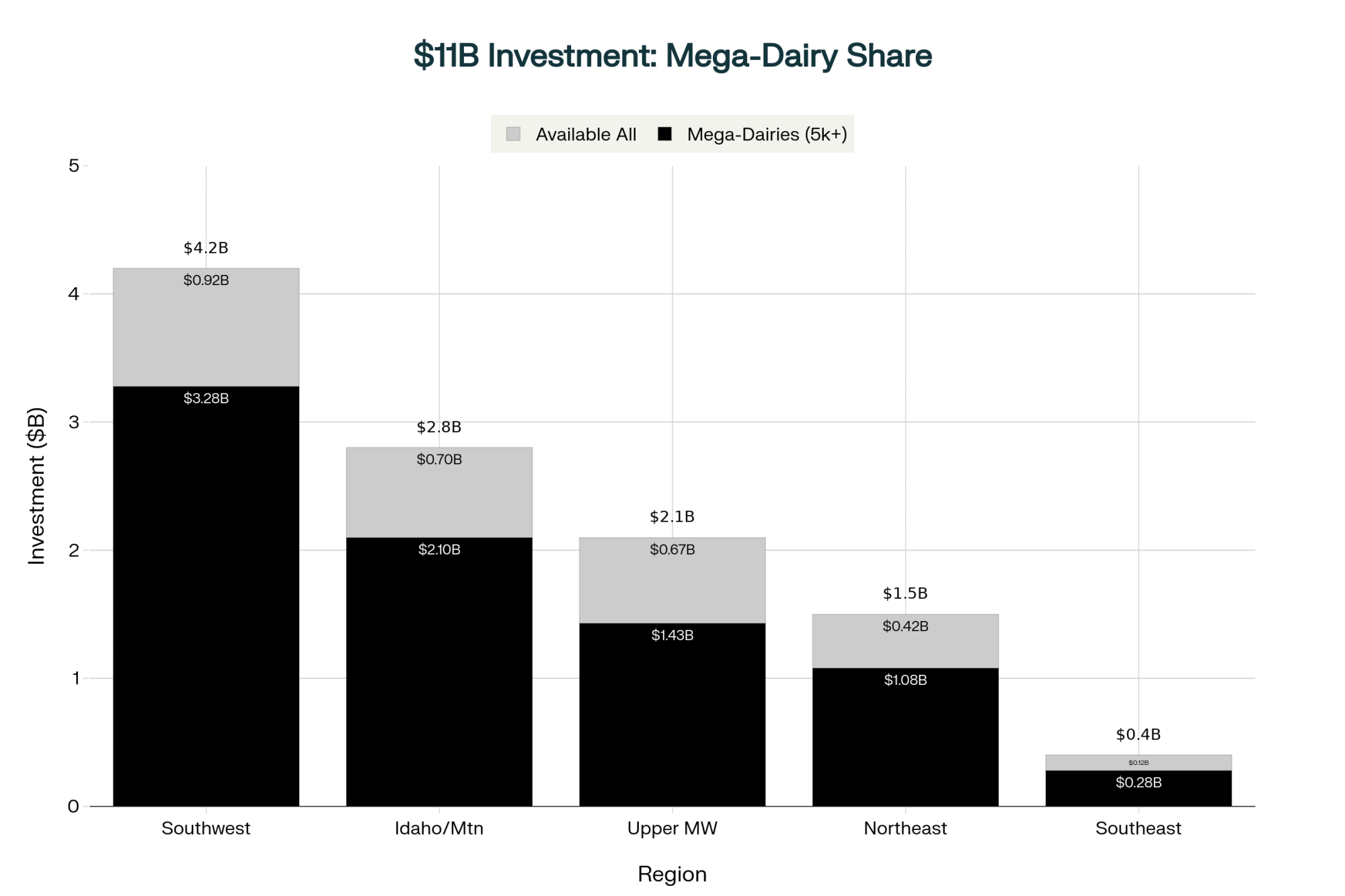
NewsSubscribe
First
Last
Consent

The $1,350 Replacement Advantage

Why Today’s Best Dairies Cull Healthy Cows That Could Produce for Years

Executive Summary: Wisconsin dairyman Eric Grotegut no longer culls cows in crisis—he replaces them strategically on “Monday afternoons,” capturing a $1,350 per head advantage that’s reshaping dairy economics nationwide. Despite cows being genetically capable of living 13 months longer than they did 20 years ago, the math now favors earlier replacement: while a third-lactation cow generates $234 in annual profit, her $350 genetic lag means a younger replacement creates $2,704 in value over three years. This shift, powered by genomic selection tripling genetic progress to $75 yearly, beef-on-dairy premiums of $370-400 per calf, and IVF technology approaching commercial viability, has created an unexpected crisis—heifer inventory down 18% with prices soaring from $1,720 to over $3,000. The optimization technology driving these decisions requires an annual investment of $26,000-78,000, achieving positive ROI only above 400 cows, accelerating consolidation that may reduce U.S. dairy farms from 26,000 to 15,000-18,000 by 2035. With environmental genomics launching in 2026-2027, producers face three paths: scale up to 600+ cows and embrace technology, develop specialized niches like organic or direct marketing, or exit strategically before 2030 while preserving asset value. The longevity paradox reveals a fundamental truth—in modern dairying, keeping cows longer often means keeping the operation shorter.

You know, there’s something that doesn’t quite add up when you really think about it. Our cows today are genetically capable of living 13.2 months longer than they did twenty years ago—that’s what the folks at CDCB showed us at the October meeting held during World Dairy Expo, saying we’ve gained about 4.7 months of productive life per decadethrough genetic selection. But here’s what’s interesting: many of the most progressive producers I know are actually replacing them earlier, not later.

Eric Grotegut, who runs 1,400 cows up in Wisconsin, said something at that meeting that really stuck with me.

“15 to 25 years ago, it seemed like I was selling cows every day for a lame cow, a mastitis cow, a pneumonia cow—something all the time. Now most cull cows are on Monday afternoon.”

Monday afternoon. That shift—from emergency culling to what Eric calls “Monday afternoon” strategic replacement—well, that tells you everything about how dairy economics have completely flipped in the last decade or so.

The Math That Changes Everything

So I’ve been digging into what the researchers call the Retention Payoff calculation, or RPO for short. Basically, you’re asking: does keeping this cow generate more profit than replacing her with a younger animal? And what I’ve found is…the numbers are surprisingly clear-cut.

Here’s how it breaks down in a real scenario that many of us face. You’ve got a third-lactation cow producing 68 pounds daily—decent production, no major health issues, right? She’s profitable, generating about $234 in annual profit above her direct costs, according to the Wisconsin Extension models. So, naturally, you’d think, why would anyone replace her?

ComponentMature CowReplacement Heifer (3 Years)
Annual Profit Above Costs$234 (with $350 genetic lag at $75/yearprogress)Year 1: $97Year 2: $720Year 3: $1,031
Genetic Opportunity Cost$233/year (USDA analysis)No lag—current genetics
Net Present Value$1,353 (over 3 years)$2,704
Bottom Line Advantage$1,350 more value from replacement

Here’s what’s really happening, though. That cow carries genetics from roughly 4-5 years ago, which means she’s about $350 behind current genetic averages. We’re seeing genetic progress at $75 PTA Net Merit per year now—both CDCB and the Canadian Dairy Network have confirmed this. And that creates what Paul VanRaden at USDA calls a “genetic opportunity cost“—essentially $233 per year in lost value from not having current genetics in that stall.

“We’re not just looking at whether a cow covers her feed costs anymore. We’re evaluating whether she’s the most profitable use of that stall space given all available options.”
— Tom Overton, Cornell’s dairy management professor at the Western Dairy Management Conference

Three Technologies Converging to Change Everything

What’s driving this shift isn’t just one breakthrough—and this is what I think many folks miss—it’s three technologies hitting maturity at the same time, each reinforcing the others in ways nobody really predicted five years ago.

Genomic Selection Has Changed the Game Entirely

Since USDA launched official genomic evaluations for Holsteins and Jerseys back in January 2009, we’ve gone from experimental to essential. Today, 95% of U.S. AI bulls are genomically tested, and about 20% of heifer calves get tested within their first week of life, according to CDCB’s latest data.

The impact on genetic progress? Man, it’s been dramatic. Before genomics, we were seeing gains of about $28 PTA Net Merit per year. Now? We’re hitting $75 per year—nearly triple the rate.

The Canadian Dairy Network’s 2024 report shows even more dramatic shifts in specific traits. Production traits have doubled their rate of improvement, but here’s what’s really impressive: tough traits like daughter pregnancy rate have increased threefold to fourfold. That’s…that’s game-changing for our industry.

Kent Weigel at the University of Wisconsin, who’s been tracking this since the beginning, tells producers that “farmers typically cull the bottom 15 to 20% of calves based on genomic testing, but the exact proportion depends on the number of surplus heifer calves available on a given farm.” And he’s right—it’s all about finding that sweet spot for your operation.

Genomics didn’t just speed up progress—it blasted a hole in the old ceiling. Black bars for ‘then,’ red for ‘now.’ That’s a revolution in every stall.

Sexed Semen: Strategic but Still Limited

Now, sexed semen adoption in the U.S. sits at 25-30% according to NAAB statistics. Compare that to the UK, where they’re at 84% based on AHDB’s 2024 report. Why the gap? Well, the challenges are real, as many of you probably know.

Conception rates with sexed semen still run 15-20% below conventional, based on large-scale field data from Alta Genetics and Select Sires. The stuff costs 2.3 times more—you’re looking at $50-64 versus $18-28 for conventional. And during summer heat stress? Forget about it.

Peter Hansen’s group down at the University of Florida has shown that pregnancy rates can drop to 25-30% with sexed semen when the temperature-humidity index exceeds 72. Those of us dealing with hot summers know exactly what that means for breeding programs. July and August can be brutal.

But here’s what’s working: virgin heifers in fall and winter. You can still hit 60% conception rates with good management. Matt Lauber, working with Paul Fricke at Wisconsin, showed that with proper synchronization protocols, the fertility gap narrows to just 8-12%—making sexed semen far more viable in optimized systems. It’s not about using sexed semen everywhere—it’s about using it where it pencils out.

Beef-on-Dairy: The Revenue Stream Nobody Saw Coming

This might be the biggest shift I’ve seen in twenty years of watching this industry. We’ve gone from 200,000 beef-cross dairy calves in 2008 to 2.9 million in 2025, according to Rabobank’s analysis. These calves now represent 12-15% of the U.S. fed cattle supply. Think about that for a minute.

What’s driving it? Money, plain and simple. Day-old beef-cross calves are bringing $370-400 premiums over straight dairy bull calves based on USDA auction reports from Wisconsin and California. For a 1,000-cow operation breeding 60-70% to beef, that’s $222,000 to $280,000 in annual premium revenue that didn’t exist before 2015.

Glenn Klein, who manages 3,600 cows across multiple sites in Wisconsin, explained their approach at the Industry Meeting: “We’ve been doing beef-on-dairy since I think 2018 or 2019. We do it somewhat strategically based on the cow. We look at her genomics, see her past history, and basically decide whether she gets sexed semen or beef semen.

The Constraint Nobody Planned For

Lowest heifer numbers, record-busting prices. What felt like a quiet trend just crashed into reality, and every buyer’s feeling it.

But here’s where things get complicated—and it’s a perfect example of unintended consequences in our industry. This strategic shift toward beef-on-dairy has created the worst heifer shortage in 20 years.

CoBank’s August 2025 analysis shows national dairy replacement heifer inventory at 3.914 million head. That’s 18% below 2018 levels and the lowest we’ve seen since 2005. They’re projecting inventories will shrink by another 800,000 head before recovering in 2027.

The math is straightforward but painful. With 60-70% of the national herd now bred to beef—that’s per National Association of Animal Breeders data—we’ve essentially cut our replacement pipeline in half.

Heifer prices tell the story: from $1,720 in April 2023 to $3,010 by July 2025, according to USDA market reports. And I’ve seen high-quality Holsteins fetching over $4,000 at auctions in Turlock, California, and New Ulm, Minnesota.

This creates a real paradox, doesn’t it? While the RPO math strongly favors replacement, producers are actually reducing culling rates—down from 32.7% in 2019 to 27.9% in 2024, according to Canadian Dairy Information Centre data, which is the best North American dataset we have. They’re keeping marginal cows they would’ve culled five years ago when heifers cost $1,200.

“We know the economics favor replacement, but you can’t replace what you don’t have. So producers are keeping cows a bit longer than optimal while rebuilding heifer inventory.”
— Mike Overton, DVM, who directs technical services at Elanco

IVF: From Seedstock Tool to Commercial Reality

What’s fascinating to me is watching IVF technology move from the seedstock world into commercial dairies. Current pregnancy rates have climbed above 50-55% based on 2024 data from Trans Ova Genetics and other major providers—matching or even beating conventional AI in some cases.

The cost trajectory is what really matters, though. We’re at $350-450 per pregnancy today, but industry projections show that dropping to an estimated $200-300 by 2027-2029 as volumes scale and protocols improve.

Several technical improvements are converging here:

  • Optimized FSH protocols during the voluntary waiting period increase oocyte yields by 51%—that’s from Wisconsin research
  • Time-lapse embryo selection with continuous monitoring from fertilization through day 8 improves pregnancy rates by 15-25 percentage points, according to Animal Reproduction Science
  • Vitrification technology—that ultra-rapid freezing technique—now allows frozen embryos to match fresh transfer success rates

Sean Nicholson, who runs 1,600 cows in Tulare County, California, shared his experience with the California Dairy Magazine: “IVF pregnancy rates markedly exceed what we see with conventional AI, especially during summer when heat stress hammers traditional breeding.” His operation now uses beef IVF embryos for 7% of pregnancies—producing purebred Angus calves from Jersey recipients that bring even higher premiums than regular beef-crosses.

For operations above 800 cows, IVF is starting to pencil out. You can take your elite donors—that top 3-5%—and produce 10-15 pregnancies annually versus one naturally. This creates what I call a three-tier system: elite cows produce all your replacements via IVF, middle-tier cows just make milk, and bottom-tier cows produce beef calves for cash flow.

Success Story: Minnesota’s IVF Innovation

Take a look at how one Minnesota operation is making this work. They’re running 850 cows, started genomic testing everything three years ago, and now use IVF on their top 25 females. Last year, those 25 cows produced 180 pregnancies—enough to cover all their replacement needs plus some to sell. Meanwhile, they bred the rest of the herd to beef and captured an extra $240,000 in calf revenue. That’s…that’s transformative economics.

What’s interesting is they’re not doing this alone—they’ve partnered with two neighboring farms, each running 400-500 cows, to share IVF technician costs and expertise. It’s the kind of cooperative approach that makes advanced technology accessible at smaller scales.

Environmental Pressure: The Next Wave Coming

Here’s something that hasn’t hit most U.S. producers yet, but it’s definitely coming. John Cole at CDCB revealed in October that methane emissions evaluations will launch in 2026-2027, with disease resistance traits following shortly after. When these environmental traits are integrated into selection indices, genetic progress could accelerate from the current $75 per year to an estimated $110-125 per year, depending on the heritability and economic weightings of these new traits. That’s a 47-67% jump.

The University of Wisconsin’s $3.3 million methane project has found heritability of 0.20-0.28 for residual methane traits. That’s moderately to highly heritable, which means we can effectively select for it. They’re using milk spectral data and even fecal microbiome profiles as proxies for rumen emissions, which would make large-scale phenotyping actually feasible.

What’s particularly interesting is looking at what’s already happening in Europe. UK and Irish producers are getting 2-4 pence per liter premiums for verified emission reductions, according to Arla Foods’ 2024 sustainability report. Every dairy bull calf they raise counts against their farm’s carbon intensity score. When similar pressures reach U.S. markets—and trust me, they will—cows with poor environmental genetics might become economically unjustifiable regardless of their production level.

The Reality Check: Who Can Actually Execute This?

Now, all this sophisticated RPO optimization sounds great in theory. But after talking with producers and consultants across the country, I’ve realized there’s a massive gap between what’s theoretically optimal and what most farms can actually implement.

The industry basically breaks into five distinct tiers based on what I’m seeing:

Elite operations—those running 1,000+ cows and producing about 45% of U.S. milk—they’ve got the whole package. Daily milk weights, genomic testing for every calf, activity monitors —the works. Eric Grotegut’s Wisconsin operation falls squarely into this category. They’re truly optimizing these RPO calculations daily.

Progressive commercial farms running 400-1,000 cows —roughly 30% of our milk supply —have most of the tools but use them monthly rather than daily. They’ll perform genomic testing on 60-80% of calves and run activity monitors on breeding-age animals.

Mainstream operations—150-400 cows, about 20% of milk—they operate on rules of thumb. Kristen Metcalf, running 360 cows in Minnesota, described improving health through “implementing more frequent hoof trimming and rubber mats in the barn.” That’s good management, absolutely, but it’s not sophisticated RPO optimization.

Smaller operations with fewer than 150 cows, which produce about 5% of our milk, simply don’t have access to these tools. At $26,000-78,000 annual investment for full RPO infrastructure—genomic testing, monitors, software, consultants—it only achieves positive ROI above 400 cows.

You know, research from ETH Zurich published in the Journal of Dairy Science found that suboptimal culling decisions cost 1.55 Swiss francs per cow monthly. And here’s the kicker: losses from keeping cows too long were three times greater than premature culling losses. But that analysis required dynamic programming models with detailed farm data—exactly what most mid-size operations lack.

Practical Strategies by Farm Size

What farmers are discovering varies dramatically by scale, and honestly, there’s no one-size-fits-all answer here. Let me break down what’s actually working:

For Large Operations (800+ cows):

Go all-in on the technology. Full genomic testing runs about $40-50 per calf through companies like Zoetis or Neogen—that’s $12,000-20,000 annually for a 1,000-cow herd, but it pays back quickly.

Consider IVF programs for your top 3-5% once you’ve identified them genomically. Keep beef-on-dairy at 60-70% to maximize that revenue stream while beef premiums stay high.

And start preparing for environmental compliance now. Methane measurement infrastructure is projected at $50,000-100,000 based on current equipment costs, though specific U.S. regulatory requirements are still being developed.

For Mid-Size Operations (200-600 cows):

Focus on what I call the 80-20 approach—capture 80% of the value with 20% of the complexity:

  • Definitely genomic test all your heifers and cull the bottom 15-20% before spending $2,900 to raise them
  • Use your monthly DHIA test to identify cows below 75% of herd average production who are also open past 120 days
  • Put beef semen on your bottom 50% by either genomic merit or production
  • The key decision: can you scale to 600+ cows in the next 3-5 years? If not, start developing a niche strategy now
  • Consider cooperative approaches—some 400-cow operations are exploring shared IVF programs with neighbors to access technology at a viable scale

For Smaller Operations (under 200 cows):

Your economics are fundamentally different, and that’s okay. Focus on:

  • Reducing involuntary culling through better fresh cow management and hoof health
  • If you’re in the right location, organic certification can capture $7-12/cwt premiums that offset scale disadvantages
  • Direct marketing through on-farm stores or agritourism might work
  • But let’s be honest here—if you don’t have a clear competitive advantage like paid-off land, unique market access, or family labor, start planning your exit strategy for 2027-2030 before technology requirements intensify

Regional Realities Shape These Economics

It’s worth noting that these dynamics play out differently across regions. California’s massive operations—many running 3,000-5,000 cows—they’re already deep into IVF and sophisticated optimization. Meanwhile, Vermont’s pasture-based systems face entirely different economics where land constraints and organic premiums create alternative value equations.

The Upper Midwest sits somewhere in between, with operations like Grotegut’s finding that sweet spot of scale and technology adoption. Texas and New Mexico operations? They’re dealing with water constraints that trump genetic optimization. Each region has its own version of this story, you know?

And seasonally, everything shifts. Summer heat stress in the Southeast makes sexed semen nearly unusable from June through September. Wisconsin producers might have a solid eight-month breeding window, while Arizona dairies face reproductive challenges year-round. These aren’t minor details—they fundamentally change the economics.

The Consolidation Nobody Wants to Talk About

Here’s the uncomfortable truth: we need to face it directly. Every trend we’re seeing—RPO optimization, IVF scaling, beef-on-dairy, environmental genomics—creates economies of scale that favor large operations.

Based on current trajectories and what we saw from 2000-2020—a 54% decline in farm numbers while production increased 16%—I expect we’ll see U.S. dairy farm numbers drop from today’s roughly 26,000 to somewhere between 15,000 and 18,000 by 2035. That’s a 30-40% reduction.

These aren’t just business decisions—they’re family legacies facing new realities. Farms that have been in families for generations are weighing whether the next generation can make the economics work. And that’s…that’s tough to watch.

Technologies providing 10-20% efficiency improvements only achieve positive ROI at 400-800+ cow scale. Operations below these thresholds aren’t “behind”—they’re structurally excluded from the tools that enable optimization.

What to Watch in 2026

Looking ahead, here’s what I’m keeping an eye on:

  • Methane genomic evaluations launching mid-2026, according to CDCB’s timeline
  • Heifer inventory beginning recovery late 2026 into early 2027, per CoBank’s projections
  • IVF costs potentially hitting that $250-300 sweet spot—watch Trans Ova and other providers
  • Environmental regulations in California are potentially creating templates for other states

The Bottom Line for Your Operation

The longevity paradox—cows that can live longer but shouldn’t economically—it’s just one symptom of a broader transformation. What really matters is understanding where your operation fits in this changing landscape.

If you’re above 400 cows, the math increasingly favors aggressive adoption of advanced technologies and strategic culling based on genomic merit. That $1,350 RPO advantage? It’s real, and it compounds over time.

If you’re between 200-400 cows, you’re at a crossroads. Either develop a clear path to 600+ cows or find a niche that offsets your scale disadvantage. There’s no shame in either choice, but indecision…that’s what’s costly.

If you’re under 200 cows, be realistic about your options. Unless you have structural advantages—debt-free land, unique market access, off-farm income—the economics are working against you. A well-timed exit in 2027-2029 might preserve more value than struggling through 2030-2035.

The dairy industry is experiencing what economist Joseph Schumpeter called “creative destruction“—old systems giving way to new ones that are more efficient but also more capital-intensive. Cows built to last longer are leaving sooner, not because they can’t produce, but because the math increasingly says they shouldn’t.

Understanding and adapting to this reality—rather than fighting it—that’s what’ll determine which operations thrive in the next decade. The genetics exist for cows to live longer. The economics increasingly say they won’t. That’s not a bug in the system—it’s become the system itself.

But you know what? Within these constraints lie opportunities for those willing to adapt, whether through scale, specialization, or strategic partnerships. And there’s innovation happening at every scale—I’m seeing 200-cow operations finding profitable niches, 500-cow farms forming cooperative IVF programs, and yes, larger operations pushing efficiency boundaries we couldn’t imagine five years ago.

The key is making clear-eyed decisions based on your specific circumstances, not industry averages or what your neighbor’s doing. Because at the end of the day, the best strategy is the one that works for your land, your family, and your future.

Key Takeaways: 

  • The $1,350 replacement advantage is real and compounds annually: Even profitable third-lactation cows generate less value than younger replacements due to $75/year genetic progress—making strategic culling more profitable than longevity
  • Your scale determines your future: Operations need 400+ cows for optimization technology ROI, 600+ for sustainable competition, or a clear niche strategy (organic, direct marketing) to survive below these thresholds
  • Maximize beef-on-dairy NOW before 2027: With current $370-400 premiums and 60-70% breeding to beef optimal, this revenue stream won’t last—heifer inventory recovery and beef cycle correction will compress margins within 24 months
  • Technology adoption isn’t optional, it’s existential: Genomic testing ($40-50/calf), IVF (dropping to $200-300), and environmental compliance ($50,000-100,000) will separate survivors from casualties when methane regulations hit in 2026-2027
  • Decision time is 2026, not 2030: Whether scaling up, specializing, or exiting, waiting means competing against operations that have already optimized—make your strategic choice while you still have options

Complete references and supporting documentation are available upon request by contacting the editorial team at editor@thebullvine.com.

Learn More:

Join the Revolution!

Join over 30,000 successful dairy professionals who rely on Bullvine Weekly for their competitive edge. Delivered directly to your inbox each week, our exclusive industry insights help you make smarter decisions while saving precious hours every week. Never miss critical updates on milk production trends, breakthrough technologies, and profit-boosting strategies that top producers are already implementing. Subscribe now to transform your dairy operation’s efficiency and profitability—your future success is just one click away.
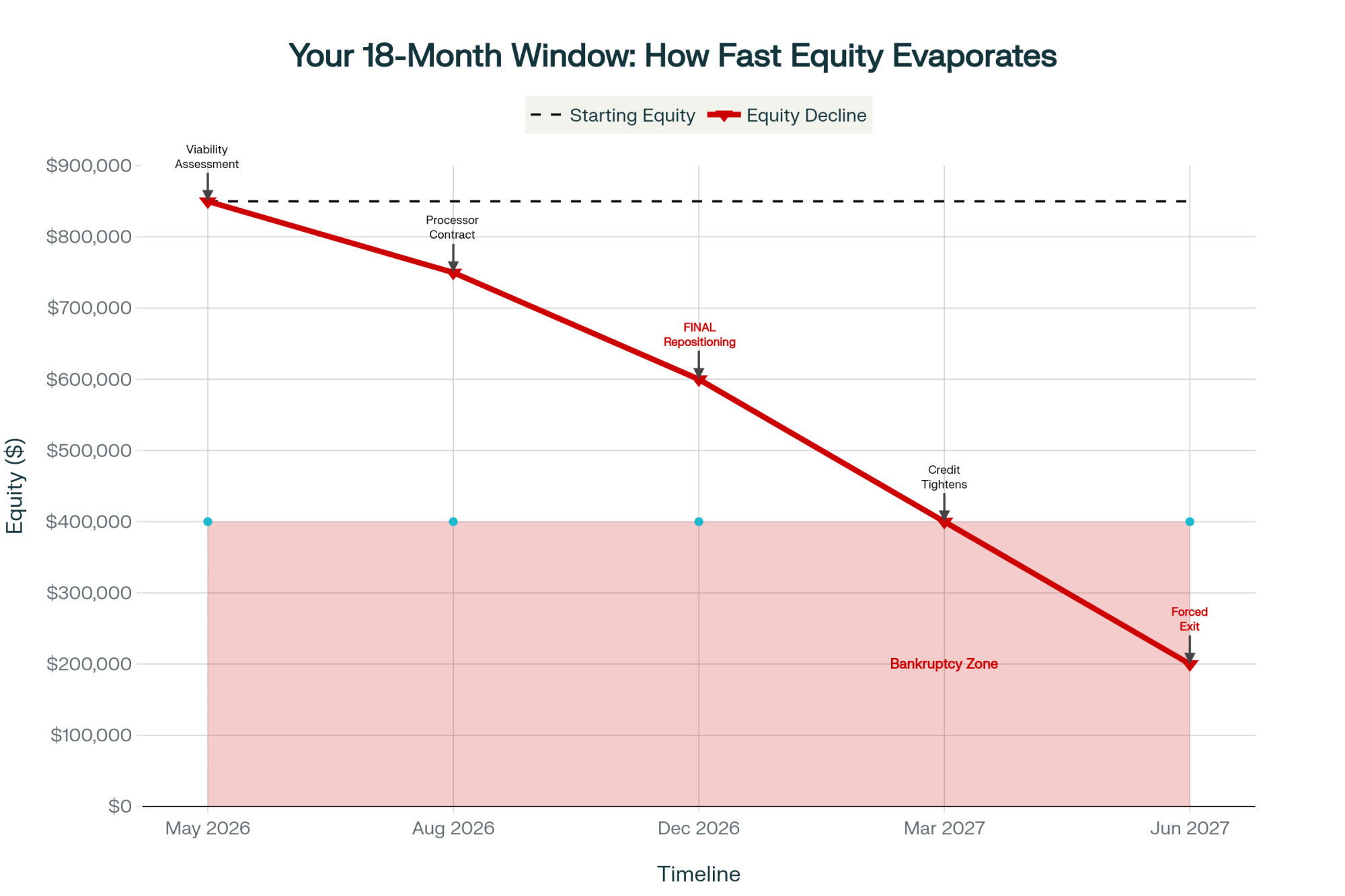
NewsSubscribe
First
Last
Consent

China’s Soybean Surge: What Every Dairy Farmer Needs to Lock in Before Feed Costs Spike

Are your feed contracts ready for China’s next move? Learn the #1 step to keep your dairy thriving through 2026’s storm.

EXECUTIVE SUMMARY: China’s record soybean purchases are tightening feed supplies and driving up costs for dairy farmers in 2026. This analysis, backed by USDA and industry data, reveals how the new trade deal is fueling volatility—from rising soybean meal prices to a stronger dollar eroding export competitiveness. Dairy operations willing to act fast—locking in feed contracts, improving ration efficiency, and diversifying protein sources—stand to protect their bottom line. The article lays out a farmer-tested 90-day action plan, with examples and strategies suited for different regions and farm sizes. For many, the next few weeks could determine whether they stay in business, expand, or get squeezed out. With the right moves, surviving the feed storm of 2026 isn’t just possible—it’s within reach.

Dairy Feed Management

You know how it goes—you’re checking feed invoices on a Thursday afternoon when the big news breaks. That’s exactly what many Wisconsin dairy farmers were doing when the November 2025 China trade deal was announced. American agriculture had secured 87 million metric tons of soybean exports over three years, and honestly, the initial reaction from most of us was cautiously optimistic.

But here’s what’s interesting. As producers started running the numbers—and I’ve talked to quite a few over the past week—the optimism began to shift. When China commits to buying 25 million metric tons of our soybeans annually, those are beans leaving the domestic market. And as one producer near Madison put it to me, “Last I checked, my cows don’t eat soybeans in Shanghai.”

What I’ve found is that once you dig into the actual economics, there’s a supply squeeze developing that the celebratory press releases aren’t really highlighting. It’s not that anyone’s trying to hide anything—it’s just that the grain side of the story is getting all the attention.

Understanding the Supply Squeeze

So here’s where the math gets interesting, and why many of us are concerned. According to the latest USDA Economic Research Service data from October, U.S. soybean crushing capacity is already processing about 2.54 billion bushels annually. That’s 59% of our total production right there.

Operation SizeMonthly Soybean Meal Use (tons)Cost at $330/tonCost at $375/tonMonthly Impact
100-cow4.5$1,485$1,688+$203
300-cow13.5$4,455$5,063+$608
500-cow22.5$7,425$8,438+$1,013
1,000-cow45$14,850$16,875+$2,025
2,000-cow90$29,700$33,750+$4,050

Now add China’s commitment—another 918 million bushels of annual demand when you convert those metric tons. Factor in our existing exports to Japan, Mexico, and the EU, plus seed requirements… suddenly we’re operating at nearly 100% utilization with minimal buffer stocks.

Agricultural economists at places like Iowa State have been tracking this, and what they’re pointing out is worth noting: when stocks-to-use ratios drop below 12%, price volatility typically increases significantly. What are the projections for the 2025-26 marketing year? We’re looking at 10.2%. That’s uncomfortably tight by any measure.

Look, I get why grain farmers are celebrating—and they should be. They’ve been getting undercut by Brazilian beans for three years straight. The USDA Foreign Agricultural Service reports show Brazil’s production costs running about $8.67 per bushel compared to our $9.85 here in the States. That’s brutal competition. So yeah, they desperately needed this export market.

But here’s where it gets complicated for those of us in dairy. Current soybean meal futures on the CME were trading around $320-330 per ton in early November. Market analysts—and I’m talking about the conservative ones at places like CoBank—are projecting we could see 12-18% price increases once those export shipments ramp up in the first quarter of 2026.

Soybean meal prices are projected to surge 12-18% by Q2 2026 as China’s record purchases tighten domestic feed markets—hitting $375/ton and squeezing dairy margins across all operations.

For dairy operations where feed accounts for 45-60% of operating expenses —most of us, according to Cornell’s farm business data —we’re talking real money. Not hypothetical impacts—real cash flow consequences.

The Currency Connection Most Farmers Miss

Now, there’s another layer to this that even seasoned dairy producers often overlook. It’s the currency angle, and honestly, it took me a while to fully grasp this myself.

When China buys $9.6 billion worth of soybeans annually, they need U.S. dollars to complete those transactions. Basic economics, right?

But what happens next is where it gets interesting. Federal Reserve data going back decades shows that a 10% increase in agricultural exports typically correlates with a 1-2% appreciation in the dollar’s value against trading partner currencies. Doesn’t sound like much?

Let me give you a real-world example that brought this home for me.

Say you’re part of a cooperative that exports nonfat dry milk to Mexico—which, according to U.S. Dairy Export Council data, is one of our top three dairy export markets. Your product is priced at $1.20 per pound, and a standard container holds 44,000 pounds. At today’s exchange rate of roughly 17 pesos per dollar, that Mexican buyer pays 897,600 pesos.

But if the dollar strengthens by just 1.5%—and that’s conservative given the trade volumes we’re discussing—that same container suddenly costs your Mexican buyer 911,064 pesos. That’s 13,464 pesos more for the exact same product.

The currency connection most farmers miss: a mere 1.5% dollar strengthening adds $13,464 to a container of milk destined for Mexico—your price didn’t change, but suddenly you’re uncompetitive against New Zealand

“You haven’t raised your price. Your co-op hasn’t changed anything. But from the buyer’s perspective, American dairy just got more expensive.”

Meanwhile, New Zealand dairy products? Their dollar typically weakens when global commodity prices rise, making their exports more competitive, not less. It’s a dynamic that puts us at a systematic disadvantage, and it compounds over time.

China’s Actual Dairy Demand: A Reality Check

Here’s what really caught my attention when I dug into the USDA Foreign Agricultural Service’s latest China dairy reports. They’re projecting just 2% growth in dairy imports for 2025. That’s after three consecutive years of declining imports. Two percent.

What’s worth understanding is that China’s government has set explicit targets—47 kilograms of per capita dairy consumption by 2030, up from the current 35 kilograms. But if you read their Five-Year Agricultural Plans carefully — and I’ve been going through these with some industry analysts — they’re planning to meet this demand primarily through domestic production expansion, not imports.

The numbers back this up. China’s raw milk production is forecast to increase by 3-4% in 2025, according to USDA FAS reports. They’re building massive dairy operations—we’re talking 10,000-head facilities—with government subsidies for everything from imported genetics to milking equipment.

And here’s the kicker that nobody wants to talk about: even with these new tariff suspensions, everyone’s celebrating, U.S. dairy products still face a 10% duty in China. Know what New Zealand pays? Zero. They’ve had a free trade agreement since 2008. Australia? Zero percent since 2015. The EU? Various agreements put them at zero or near-zero.

So we’re celebrating market access, where we’re still at a 10% cost disadvantage to our main competitors. That’s… well, that’s something to think about.

Regional Variations and Operational Realities

Now, I should mention that this isn’t hitting everyone equally. The impact really depends on where you are and how you operate.

California’s large-scale operations—I’m talking about those 2,000-plus cow dairies in the Central Valley—they’ve got some advantages here. Many can negotiate directly with soybean crushing plants, bypassing the dealer markup that smaller operations face. They’ve got the storage capacity to buy feed in bulk when prices are favorable. Some are even forward-contracting a full year out.

But in Wisconsin? Pennsylvania? Vermont? The 100-300 cow operations that still make up the backbone of dairy in these states face a different reality. I was talking to a Pennsylvania producer last week who told me he’d called three feed suppliers about locking in prices for next year. One wouldn’t quote him past December. Another wanted a 5% premium for a six-month lock. The third said to call back after Thanksgiving.

What’s fascinating—and concerning—is how this accelerates the consolidation we’ve been seeing for years. USDA National Agricultural Statistics Service data shows that 65% of the nation’s dairy cows now live on farms with 1,000 or more animals. That was 45% just fifteen years ago. When margins get squeezed by feed costs and currency headwinds, it’s the mid-size family operations that typically can’t weather the storm.

For organic and grass-based operations, there’s actually an interesting twist. Those farms feeding minimal grain might find themselves with a competitive advantage as grain-dependent neighbors struggle with feed costs. But even they’re not immune—organic soybean meal runs about double the conventional price, and those markets tend to move in parallel.

And what about seasonal calving operations? They might actually have some flexibility here, being able to time their peak feed needs around market conditions. It’s one of those operational quirks that could become an unexpected advantage.

Practical Steps That Actually Work

So what can we actually do about this? I’ve been collecting strategies from operations that successfully navigated the 2012 drought and the 2018-19 margin squeeze, and there are some consistent patterns.

Lock Your Feed Contracts—But Be Smart About It

The single most impactful decision, according to every successful farmer I’ve spoken with, is locking feed prices for January through June 2026. But here’s the thing—you’ve got maybe 10-15 business days before suppliers adjust their forward pricing to reflect the coming supply squeeze.

A Wisconsin producer I know well locked 70% of her expected soybean meal needs at $332 per ton with a 3% premium. Yeah, it felt expensive paying that $895 extra upfront. But if the meal hits $375 per ton by February—and many nutritionists think it could—she’ll save over $2,000 in six months.

What farmers are finding works best:

  • Lock 60-70% of expected consumption, keeping some flexibility
  • Include alternative proteins in your contracts—canola meal, distillers grains
  • Negotiate volume commitments for better pricing
  • Ask about price protection if markets drop more than 15%

Feed Efficiency: The Research Numbers

Here’s a number that should grab your attention: University of Wisconsin research shows efficient operations achieve 162 pounds of feed per hundredweight of milk produced. Less efficient operations? They’re using 243 pounds. That’s a 33% difference, and it becomes a survival factor when feed costs spike.

Feed Efficiency: Real Farm Results

I know a producer who made some simple changes that improved her feed conversion by 9% over 90 days. Started measuring feed refusals daily—discovered they were wasting 7% of delivered feed. Began testing forages monthly instead of quarterly. Adjusted feeding times to within 30-minute windows. Separated first-lactation heifers from mature cows for targeted feeding.

The result? About $60,000 in annual savings. No new equipment, no capital investment. Just better management of what they already had.

For those running robotic milking systems, there’s an added dimension here. Your feeding strategy is already more individualized, which could be an advantage. But you’ll need to adjust your pellet formulations and potentially recalibrate feeding rates as ingredient costs shift.

Diversify Protein Sources Strategically

What’s working for farmers who are getting ahead of this is a gradual transition, not panic switching. You can’t just swap soybean meal for canola meal overnight and expect the same milk production. But with careful testing and adjustment…

An Idaho producer I’ve been following started incorporating alternative proteins eight weeks ago. They’re now at 15% canola meal, 20% more distillers grains, and they’ve reduced soybean meal from 5.5 to 4.2 pounds per cow per day. Production’s holding steady, components haven’t dropped, and they’re positioned better for when soybean meal prices spike.

The Longer View: Industry Restructuring

Looking beyond the immediate feed cost concerns, this trade deal is accelerating something that’s been happening for years—the fundamental restructuring of American dairy.

Research from Cornell’s agricultural economics department shows that trade policies creating margin pressure don’t just affect current operations. They accelerate the shift from distributed, family-farm dairy to consolidated, industrial-scale production.

The advantages increasingly favor large operations that can negotiate directly with feed suppliers and processors, maintain capital reserves for extended contract positions, achieve superior feed conversion efficiency through dedicated nutritionists and technology, and access sophisticated financial instruments like currency hedging.

For small- and mid-size operations, the path forward requires either exceptional efficiency, niche-market development, or strategic partnerships that provide some of the scale advantages without full consolidation.

I’ve noticed something interesting when talking to younger farmers taking over operations: the successful ones aren’t trying to compete on scale. They’re finding ways to be exceptional at efficiency, developing direct-market relationships to capture more margin, or forming buying cooperatives with neighbors to secure volume pricing on inputs. It’s really adapt or exit.

And heifer raising operations? They’re in an interesting spot. Feed costs hit them too, but they might find opportunities as dairy farms look to reduce capital tied up in youngstock. Could be worth exploring contract raising arrangements if you haven’t already.

Your 90-Day Action Plan

Based on conversations with farmers who’ve successfully navigated previous margin squeezes, here’s what needs to happen:

Next 7-14 Days (Urgent)

Contact feed suppliers about January-June 2026 pricing. Even if you only lock 40-50% of your needs, that’s protection you won’t have if you wait until December. Get quotes from at least three suppliers—prices and terms vary more than you’d expect.

Schedule a sit-down with your nutritionist. Not a phone call—a real working session to develop contingency rations using alternative proteins. Test these on a small group first.

Pull your actual feed conversion numbers. If you don’t know your pounds of feed per hundredweight of milk, you’re flying blind.

Next 30 Days (Important)

Start measuring feed refusals daily. I know, I know—one more thing to track. But farms that do this consistently find 5-10% waste they didn’t know existed.

Test all your forages. Those three-month-old test results? They’re fiction at this point. Forage quality changes, and you’re formulating rations based on fantasy if you’re not testing monthly.

Evaluate storage capacity. Can you take a full semi load instead of partial deliveries? The per-ton savings add up fast.

Next 90 Days (Strategic)

Run the numbers on what happens if feed costs rise 15% and milk prices drop 5%. If that scenario puts you underwater, what changes now? Culling decisions? Expansion plans? Equipment purchases?

Build relationships with alternative suppliers. When primary suppliers run tight, having established relationships with secondaries can be the difference between feeding cows and scrambling.

Document everything you’re doing to improve efficiency. Your banker will want to see this when you discuss operating notes, and processors value suppliers who can demonstrate operational excellence.

The Bottom Line

Agricultural trade policy often involves tradeoffs between sectors. The soybeans leaving for China are soybeans not being crushed domestically for meal. The dollars flowing in for those exports strengthen our currency and make dairy exports less competitive.

None of this means the sky is falling. Farms that recognize these dynamics and position accordingly will navigate successfully—some will even find opportunities in the disruption. But the window for proactive positioning is measured in weeks, not months.

As one successful farmer told me recently, “The difference between the dairies that thrive and those that just survive often comes down to decisions made months before the crisis becomes obvious to everyone.”

The math suggests we’ve got about 90 days to position for what’s coming. The question isn’t whether feed costs will rise and margins will tighten—market dynamics make that increasingly likely. The question is whether your operation will be positioned to handle it.

Your cows will need feed in February regardless. The only variable is whether you’ll be paying $325 per ton because you locked it in November, or $375 because you waited to see what happens.

The clock’s ticking. What’s your move?

Key Takeaways:

  • China’s soybean surge is tightening domestic feed markets—soybean meal spot prices could jump 12-18% by Q2 2026.
  • Locking in feed contracts within the next 2 weeks can shield your dairy from volatile markets and protect 2026 margins.
  • Efficiency wins: improving ration conversion and testing forages monthly can mean $60,000/year in saved feed costs.
  • The producers who adapt now—by diversifying their protein offerings and working closely with nutritionists—will have the best shot at staying profitable through next year.
  • Waiting for certainty isn’t a strategy: farms that act now have more options and a better chance of riding out the feed storm.

Data sources for this article include: USDA Economic Research Service (October 2025), USDA National Agricultural Statistics Service (2025), USDA Foreign Agricultural Service GAIN Reports (October 2025), CME Group futures data (November 2025), Federal Reserve Agricultural Finance Monitor (Q3 2025), CoBank Knowledge Exchange quarterly reports, Cornell Dairy Farm Business Summary (2024), University of Wisconsin-Madison dairy research publications, U.S. Dairy Export Council trade data, and various dairy market analysis reports.

Learn More:

Join the Revolution!

Join over 30,000 successful dairy professionals who rely on Bullvine Weekly for their competitive edge. Delivered directly to your inbox each week, our exclusive industry insights help you make smarter decisions while saving precious hours every week. Never miss critical updates on milk production trends, breakthrough technologies, and profit-boosting strategies that top producers are already implementing. Subscribe now to transform your dairy operation’s efficiency and profitability—your future success is just one click away.

NewsSubscribe
First
Last
Consent

The $100,000 Winter Secret: How Systematic Dairy Farms Avoid Crisis Costs

Your barn smells like manure before feed? That’s $150K in annual losses. Here’s the 4-step fix that costs just $20K.

Executive Summary: Walk into two dairy barns during a February blizzard: one owner scrambles with frozen pipes while the neighbor executes routine protocols—that’s the $100,000 winter divide. Reactive operations hemorrhage $110,000-163,000 annually through emergency repairs, production losses, and worker injuries, while systematic farms invest just $30,000-35,000 in prevention for a 300% return within 12 months. The transformation starts with three September decisions: body condition scoring ($800 saved per thin cow), winterizing the water system ($20,000 in prevented failures), and implementing ventilation protocols ($150,000 in avoided moisture damage). Implementation takes 2-3 years total, but farms report 75% less time spent on winter tasks despite more structured protocols. Bottom line: systematic winter management isn’t about working harder—it’s about deciding in September not to be a victim in February.

Dairy Winter Management

Picture two dairy barns on a February morning when it’s -5°F outside. In the first, workers are scrambling to thaw frozen waterers while the owner calculates emergency repair costs. In the second, morning protocols proceed smoothly—waterers functioning, ventilation balanced, production holding steady.

Both operations milk similar herd sizes. Both face identical weather. Yet their financial outcomes this winter will differ by tens of thousands of dollars.

The distinction? It comes down to management philosophy. One farm approaches winter as an annual emergency to endure. The other treats it as an operational challenge to manage systematically, starting preparations when the corn is still green in early September.

Having worked with dairy operations across North America—from the harsh winters of Wisconsin and Ontario to more moderate climates in California’s Central Valley—I’ve observed that the economic gap between reactive and systematic winter management often exceeds what many producers expect. Based on university extension research and documented producer experiences, a typical 200-cow operation can see differences approaching or exceeding $50,000 annually through avoided costs and maintained production.

Now, these specific protocols prove most critical for northern-tier operations facing severe winters. A dairy in Texas or Florida adapts these principles differently than one in Minnesota. But here’s what I find fascinating—the systematic approach delivers value whether you’re dealing with frozen water lines or heat stress. It’s really about mindset more than climate.

The $100,000 Winter Divide: Reactive operations hemorrhage $136,500 annually while systematic farms invest just $32,500 in prevention—a net advantage exceeding $100,000 that proves winter management isn’t about working harder, it’s about deciding in September not to be a victim in February

Understanding the True Economics of Winter Management

Most producers grasp that winter brings additional costs. What’s less understood is how those costs compound when approached reactively versus systematically.

Looking at research from land-grant universities examining component costs reveals the fuller picture. Production losses from inadequate body condition management typically range from $25,000 to $30,000, according to work from Michigan State Extension’s dairy team. Worker injuries during cold-weather operations can reach $40,000 to $60,000 when you account for medical costs, lost productivity, and potential liability—these figures come from the National Institute for Occupational Safety and Health’s agricultural injury database. Emergency equipment repairs average between $20,000 and $35,000, according to Farm Credit’s operational cost surveys. Employee turnover stemming from difficult working conditions? That adds another $20,000 to $30,000, according to the Canadian Agricultural Human Resource Council’s workforce studies. And veterinary interventions for cold-stress-related issues add an additional $5,000 to $8,000, according to Cornell University’s veterinary economics research.

When we aggregate these components—using conservative estimates—a reactive 200-cow dairy potentially faces $110,000 to $163,000 in winter-related costs.

The systematic farms report spending roughly $30,000 to $35,000 annually on prevention to avoid the majority of these reactive costs. The net advantage often exceeds $50,000 annually, though exact figures vary based on operation size, existing infrastructure, and regional conditions.

Iowa State Extension’s dairy team has documented this pattern across dozens of operations in their management surveys. What farmers are finding is that implementing systematic protocols doesn’t mean working harder—it means approaching the challenge differently. While neighboring operations struggle with compressed margins, systematic farms maintain profitability through the winter months.

It’s worth noting that some smaller operations—particularly those with fewer than 50 cows and primarily family labor—successfully manage winter reactively. The stress and time costs remain substantial, but their lower overhead and flexibility can absorb the inefficiencies. There’s a 45-cow operation in Vermont I know that’s done it this way for three generations. It works for them. They accept the trade-offs.

I also know a 300-cow operation in upstate New York that deliberately chooses reactive management—they accept the higher costs as the price for operational flexibility. As the owner told me, “We know we’re leaving money on the table, but we value the ability to pivot quickly more than the cost savings.” For most commercial-scale operations, though? The economics strongly favor systematic approaches.

Body Condition Scoring: A September Decision with February Consequences

The evolving understanding of the impact of body condition on winter performance represents one of the most significant shifts in cold-weather dairy management. Research published in the Journal of Dairy Science, combined with feeding trials documented by Alberta Agriculture in their Winter Feeding Guidelines, demonstrates that a thin cow entering winter faces metabolic demands costing $500 to $800 more in feed, lost production, and health interventions compared to a properly conditioned cow.

Let me walk through the physiological mechanisms, because once you understand what’s happening inside that cow, the September decisions make a lot more sense.

September’s Body Condition Secret: A thin cow loses 14°F of cold tolerance, burns 24% more energy at mild winter temperatures, and suffers up to 10% digestive efficiency loss—costing $500-800 per head in a metabolic trap that additional feed alone cannot fix once winter arrives

A cow maintaining an optimal body condition score of 3.0 on the five-point scale sustains her lower critical temperature around 19°F. That’s based on research from the University of Nebraska’s beef and dairy extension program, confirmed by similar work from Manitoba Agriculture. When body condition drops to 2.0 to 2.5—and this happens constantly in herds pushing for maximum butterfat performance through summer—that threshold shifts dramatically upward to 32-33°F.

Think about what this means operationally: a 14-degree reduction in cold tolerance based solely on body reserves.

At 20°F—which many of us in the Midwest consider a mild winter day—that underconditioned cow requires approximately 24% additional energy simply for thermoregulation. But here’s where it gets worse. She’s simultaneously experiencing 5 to 10% reduced digestive efficiency as cold stress compromises rumen function and feed passage rates. Michigan State’s Department of Animal Science has documented this repeatedly in both research trials and farm observations.

The research consistently demonstrates that correcting poor body condition is impossible once winter arrives. Metabolic demands escalate while digestive capacity diminishes. You’re caught in a physiological trap that additional feed alone cannot overcome.

For a 200-cow herd where 20% of animals enter winter underconditioned—not uncommon in operations facing drought-stressed forages or those really pushing lactation curves through transition periods—the September body condition scoring decision carries $20,000 to $30,000 in winter cost implications.

A producer in central Wisconsin told me last year, “I never believed body condition mattered that much until I actually tracked the feed costs and health bills. Now I start thinking about winter body condition in July.” That’s the mindset shift we’re seeing.

Moisture Management: The Hidden Crisis in Barn Environment Control

Each mature dairy cow contributes 10 to 15 gallons (38-57 liters) of moisture to the barn environment daily through respiration, perspiration, and evaporation from waste—a figure documented by agricultural engineers at universities like Penn State and Wisconsin in their ventilation design guides. For a 200-cow barn, we’re talking over 3,000 gallons of water vapor requiring removal through ventilation systems every 24 hours.

The Hidden Moisture Penalty: Each mature dairy cow contributes 10-15 gallons of daily moisture—over 3,000 gallons in a 200-cow barn—that when improperly managed through inadequate ventilation drives $150,000 in annual losses while the fix costs just $20,000 with payback in the first winter

The first time I shared that 3,000-gallon figure with a producer, he didn’t believe me. We actually set up collection tarps and measured condensation over 48 hours. The numbers don’t lie.

Research from Wisconsin’s School of Veterinary Medicine’s dairy housing recommendations reveals that when barn humidity exceeds 80%, airborne bacterial survival extends dramatically—from minutes under dry conditions to potentially months in humid environments. The specific mechanism involves moisture protecting bacteria from desiccation while providing a medium for reproduction.

What’s particularly interesting here is how this plays out differently across regions. In Georgia, where I consulted with a 400-cow operation last spring, their challenge isn’t cold—it’s managing 90% humidity during their wet winters. They use the exact same systematic ventilation approach we recommend up north, just for different reasons.

Dairy ventilation specialists across the Midwest have documented consistent operational impacts. Pneumonia incidence increases approximately 40% in high-humidity environments compared to properly ventilated barns. Hoof disease rates climb 25% as moisture softens hoof walls and promotes bacterial growth, particularly digital dermatitis. Milk production typically drops 10 to 15% as cows divert energy toward maintaining homeostasis in these suboptimal conditions.

For a 200-cow operation, when you combine lost production, increased disease treatment, infrastructure degradation from condensation, and elevated labor costs responding to health crises, inadequate moisture management can cost well over $150,000 annually, based on component cost analyses from multiple university studies.

The encouraging news? Solutions cost a fraction of the problem. Proper ventilation systems—prioritizing cold, dry conditions over warm, damp environments—require initial investments of $15,000 to $20,000 for retrofit installations, according to agricultural engineering estimates from the Midwest Plan Service. The return becomes apparent within the first winter season.

Looking ahead, as we see more variable weather patterns—like the extreme temperature swings experienced in recent years—moisture management will likely become even more critical. The operations getting this right now are positioning themselves for long-term success, regardless of what climate change throws at us.

Rethinking Barn Temperature: Why Heating Isn’t the Answer

A persistent misconception I encounter weekly involves the perceived need to heat dairy barns during winter. And I mean weekly—just yesterday, a producer from northern Minnesota called asking about heating options.

“I can’t afford to heat the barn and run ventilation simultaneously,” he said. He was spending $3,000 monthly trying to keep his freestall barn at 45°F.

This perspective overlooks fundamental bovine physiology that agricultural engineers have understood for decades.

Mature dairy cows generate approximately 4,800 BTU per hour each, according to calculations from the Ontario Ministry of Agriculture, Food and Rural Affairs (OMAFRA Publication 833) and confirmed by similar research from Midwest universities. Let’s put that in perspective. A 200-cow herd produces heat equivalent to nine 100,000 BTU furnaces operating continuously. The cows themselves are literally the heating system.

Michigan State Extension Bulletin E-3090 on dairy ventilation clearly emphasizes this principle. When you enter a barn where manure odor predominates over feed aromas, humidity levels are excessive, and ventilation is inadequate. The solution is to accept that cattle thrive at temperatures humans find uncomfortable rather than adding supplemental heat.

What we’re seeing on successful systematic operations from Vermont to Alberta are consistent principles. Keep barn temperatures as low as possible without causing equipment failures—typically, this means maintaining just above 32°F in areas with water lines. Keep ridge ventilation at maximum capacity throughout the winter months, aiming for a minimum of 4 to 8 air changes per hour. Provide workers with appropriate cold-weather clothing rather than attempting barn heating for human comfort. And always prioritize cold, dry conditions over warm, damp environments.

Research from Penn State Extension examining thermal comfort zones (documented in their Special Circular 397) confirms dairy cattle maintain productivity within a thermoneutral zone ranging from 41 to 77°F. Well-fed, dry-coated Holstein cows can tolerate temperatures approaching 5°F before requiring additional energy for thermoregulation beyond normal metabolic heat production.

These animals evolved for cold climates. They become stressed by heat, not cold. Your ventilation strategy should reflect bovine physiology, not human comfort preferences.

Even in warmer climates, these principles apply. That Georgia dairy I mentioned earlier? They use the same systematic ventilation approach—not for cold stress, but to manage humidity during their wet winters. The systematic mindset translates across latitudes.

Water System Management: Preventing the Costliest Winter Crisis

Among winter equipment failures, frozen water systems create the most immediate and severe consequences. Operations can lose $10,000 in 48 hours from one frozen water line. The cascade effect is remarkable—and remarkably expensive.

Research from New Mexico State University’s Cooperative Extension Service dairy management bulletin shows that cows deprived of water for 24 hours can lose over 10 pounds of daily milk production, with high producers experiencing even greater losses. For a 200-cow herd at current milk prices, this represents over $800 in lost revenue per day, before accounting for potential metabolic issues from dehydration.

A Wisconsin operation milking just over 4,000 cows across two sites experienced three major water system failures during the winter of 2018, before implementing systematic prevention measures. Each incident cost between $8,000 and $10,000 in repairs, production losses, and overtime labor. The owner told me, “That winter taught us prevention costs pennies compared to reaction.”


Metric
Preventive ApproachReactive ApproachDifference
Initial Investment$4,000-5,000$0
Annual Maintenance$1,000-1,500$0
Average Annual Failures$0$20,000-25,000$20K-25K savings
Revenue Loss Per Incident$0$800/dayCrisis avoided
Milk Production ImpactNone10+ lbs/cow/24hrsStable production
Emergency Response TimeProactiveHours-DaysNo downtime
Total Annual Cost$1,000-1,500$20,000-25,000$18.5K-23.5K savings
ROI TimelineImmediateN/A (loss)1,800%+ ROI

Looking at systematic farms — from Vermont’s smaller operations to Alberta’s larger dairies —successful preventive protocols share common elements.

During October, they test every heating element under load for 24 to 48 hours, documenting wattage draw to establish performance baselines. The University of Minnesota Extension’s winter prep guidelines recommend replacing elements drawing 10% below specifications—they’re failing but haven’t quit yet. Critical operations install redundant heating systems on separate electrical circuits. One fails? The backup’s already running.

Throughout winter, these operations conduct twice-daily water system checks at a minimum, typically at 6 AM and 6 PM, with additional checks during extreme cold (below -10°F). They maintain temperature-triggered intervention protocols. Backup generator capacity specifically sized for water systems proves essential. And they prepare emergency water sources before they’re needed, not during a crisis.

This preventive approach requires initial investments of $4,000 to $5,000, then $1,000 to $1,500 annually for maintenance and monitoring. Compare this to Farm Credit Canada’s risk analysis, showing reactive farms averaging $20,000 to $25,000 in water system failures per winter. The return on investment is immediate and substantial.

Even producers who remain somewhat reactive in other areas tell me water system prevention is non-negotiable. As one put it, “Everything else can wait a few hours. Water can’t.”

WINTER PREPARATION CHECKLIST

September: Assessment & Planning □ Body condition score all animals (target BCS 3.0-3.5)
□ Schedule October equipment servicing
□ Secure winter fuel contracts
□ Evaluate feed inventory for winter needs
□ Review previous winter’s near-miss reports

October: Infrastructure Preparation □ Test all water heating elements under load (24-48 hours)
□ Service all equipment (tractors, generators, loaders)
□ Install heat tape and insulation (minimum R-3) on exposed pipes
□ Stockpile 2-week minimums (feed, bedding, supplies)
□ Check and repair barn ventilation systems

November: Systems & Training □ Full generator load testing (4+ hours continuous)
□ Emergency response drills with the entire team
□ Winter safety training (hypothermia recognition)
□ Final pre-winter facility walkthrough
□ Post emergency contact lists in multiple locations

December-February: Active Management □ Twice-daily water checks (6 AM, 6 PM minimum)
□ Temperature-based monitoring protocols
□ Weekly near-miss review meetings
□ Continuous system improvements
□ Document all incidents for next year’s planning

Developing Safety Culture: Beyond Compliance to Commitment

Near-miss reporting systems represent an underutilized opportunity in dairy operations. Construction industry research published in the Journal of Safety Research demonstrates that structured reporting reduces accidents by 64%. When agricultural operations implement similar systems—and precious few do—they report comparable improvements.

But here’s the challenge I see constantly: implementation requires genuine commitment from ownership. This cannot be delegated or treated as a compliance checkbox.

The process begins with the ownership making a public commitment to non-punitive reporting during a full-team meeting. Not a memo posted on the bulletin board, but a face-to-face conversation that establishes trust. You need clear distinctions between reportable mistakes and cardinal violations. Operating equipment while impaired? That’s a cardinal violation requiring disciplinary action. Forgetting to engage a safety guard? That’s a reportable near-miss requiring system improvement, not punishment.

Multiple reporting channels accommodate different comfort levels—paper forms in the break room, digital options through smartphones, and anonymous boxes for sensitive issues. The critical element involves responding within 24 to 48 hours. When employees observe reported near-misses generating rapid improvements rather than blame, trust develops quickly.

A Wisconsin operation with about 230 cows and six full-time employees transformed from experiencing 2 to 3 injuries annually to zero lost-time incidents over 2 years. They report saving approximately $30,000 annually in avoided injury costs. Their workers’ compensation premiums declined 22% at the last renewal.

The owner’s perspective is telling: “I was skeptical about non-punitive reporting. Seemed like giving people a pass for mistakes. But when we started fixing problems instead of finding fault, everything changed. Employees started telling us about issues we never knew existed.”

For a typical 200-cow operation employing eight workers, implementing comprehensive near-miss reporting costs approximately $4,000 to $5,000 annually. Based on USDA agricultural injury statistics, this investment could prevent $25,000 to $35,000 in injury-related costs.

This development suggests that as younger generations enter dairy management—often with safety training from agricultural programs—we’ll see accelerated adoption of these protocols.

Strategic Timeline: September Through February

Successful transformation from reactive to systematic management follows a predictable timeline. The key is starting early—in September, not November.

A Pennsylvania producer described his evolution perfectly: “We used to scramble every November, trying to prepare for winter that was already arriving. Now we start in September when it’s still 70 degrees and pleasant. Everything’s easier, cheaper, and more thorough.”

The breakdown of what this looks like operationally:

September becomes your assessment month. Body condition scoring takes one person approximately two days for a 200-cow herd. This establishes nutritional interventions for thin cows while there is still time for improvement. I recommend scoring on the same day each year—it creates a rhythm. Equipment servicing gets scheduled for October. Fuel supplies receive evaluation with winter delivery contracts secured.

October is infrastructure month. Every water heating element undergoes load testing. Not just checking if they turn on—actually measuring amperage draw. Tractors, skid loaders, and generators receive comprehensive servicing. Exposed water lines get winterized with heat tape and insulation. Operations stockpile two-week minimums of critical supplies.

November focuses on systems and people. Generators undergo full load testing—actually powering critical systems for several hours. Emergency response drills engage the entire team. What happens if we lose power for 48 hours? Winter safety training covers hypothermia recognition and emergency protocols.

December through February represents active management rather than crisis response. Daily protocols adjust based on temperature conditions. Above 20°F, standard checks. Below zero, hourly monitoring. Teams implement continuous improvements based on observations.

Farm Management Canada’s analysis comparing proactive versus reactive management reveals systematic farms investing $20,000 to $25,000 in preparation to avoid $60,000 to $70,000 in winter crisis costs—a net advantage often exceeding $40,000.

Overcoming Implementation Barriers

The primary obstacle to change isn’t financial or technical—it’s psychological. The Canadian Agricultural Human Resource Council’s survey indicates that over 75% of farmers report feeling overwhelmed and trapped in reactive patterns.

“I’m too busy fighting today’s fires to install prevention systems,” producers tell me constantly. But that reveals the fundamental paradox—the constant crisis management is exactly what prevents systematic improvement.

How do farms successfully break this cycle?

They start small, typically with water winterization due to clear, rapid returns. Success with one system builds confidence for expansion. A Vermont producer running 150 Jerseys told me, “Once we stopped having water crises, we realized how much time we’d been wasting. That motivated us to systematize other areas.”

Documentation proves critical. Track actual time and costs comparing reactive versus systematic management. When producers see they’re spending 40 hours monthly on emergencies versus 10 hours on prevention, the economics become undeniable.

Trust develops gradually through consistent actions. Near-miss reporting demonstrates a non-punitive culture when reports generate improvements rather than punishment. An employee on a Minnesota dairy told me, “When I reported a ladder problem and saw it fixed the next day with no questions asked, I started reporting everything that seemed unsafe.”

What I’ve noticed is that operations using farm management software and IoT sensors for monitoring find the transition to systematic management easier. The technology provides the data backbone that enables systematic approaches to be more manageable.

The Compounding Winter Divide: While systematic farms achieve 300% ROI in Year 1 and accumulate $279,500 in net savings by Year 3, reactive operations hemorrhage over $409,500 in the same period—a staggering $689,000 financial gap that proves winter management philosophy determines profitability more than any other single factor

February’s Revealing Truth

Winter exposes operational realities that summer’s favorable conditions mask. February particularly reveals the difference between surviving and thriving.

After evaluating hundreds of operations, one indicator consistently distinguishes thriving farms: employee understanding. Ask any worker why they perform a specific task a certain way. If they can explain both the procedure and rationale, you’re observing systematic management in action.

Lactanet Canada’s performance indices reveal an interesting pattern that holds true across borders. The highest-scoring farms don’t necessarily achieve maximum per-cow production. Instead, they maintain remarkable consistency across all performance metrics—production, reproduction, health, and longevity.

Walking through a thriving February dairy reveals distinct characteristics. Body condition scores cluster tightly around 3.0-3.5. Waterers function reliably without daily crisis interventions. Barn temperature sits at 25°F when it’s -5°F outside—by design, not accident. Performance data appears where employees actually reference it. Equipment operates on maintenance schedules rather than emergency repair cycles.

What’s particularly noteworthy is that these outcomes occur regardless of which employees are working or the prevailing weather conditions. The system functions independent of individuals. That’s systematic management.

Practical Implementation for Your Operation

Looking at the evidence, the financial gap between reactive and systematic approaches can exceed $50,000 annually for a typical 200-cow dairy. Your specific figures will vary based on herd size, geographic location, existing infrastructure, and management capacity. But the direction remains consistent—systematic beats reactive.

Where should you start? Water system winterization offers the most immediate returns with visible results that build confidence. September body condition assessment determines February profitability—each underconditioned cow entering winter represents $500 to $800 in unrecoverable costs.

Understanding cows as heat generators rather than cold victims reshapes ventilation strategies. A quality insulated coverall costs $200 per employee. A sick cow from poor ventilation costs at least $300. The math is straightforward.

Cultural elements ultimately determine success. Near-miss reporting succeeds only with genuine trust and consistently non-punitive responses. When appropriately implemented—and it takes commitment—injury rates decline substantially.

Interestingly, systematic farms consistently report spending less total time on winter management despite more structured approaches. The perception of being “too busy to plan” often perpetuates reactive patterns.

Don’t attempt a comprehensive transformation immediately. Implement one system successfully this year. Document the results. Build momentum. While a complete, systematic transformation typically takes 2 to 3 years, returns begin within months.

Looking ahead, emerging technologies such as automated monitoring systems and IoT sensors will likely make systematic management even more accessible and cost-effective. The farms building these foundations now will be best positioned to leverage these advances.

The Bottom Line

As climate patterns become more variable and economic margins continue tightening, winter management approaches must evolve accordingly. Every operation faces a fundamental choice: continue accepting substantial reactive costs as inherent to dairy farming, or invest in systematic protocols that turn winter from a liability into a manageable operational period.

The systematic farms succeeding today don’t benefit from superior weather or advantageous genetics. They’ve shifted from treating winter as an annual surprise to approaching it as a manageable operational challenge.

A Wisconsin producer who transformed his 280-cow operation over three years captured this perfectly: “You’re not too busy to implement systematic management. You’re too busy because you haven’t implemented it yet.”

The decision is yours. This coming February will be here regardless of preparation levels. Will your operation be reacting to a crisis or executing established protocols?

The $50,000 question isn’t whether you can afford to systematize. It’s whether you can afford not to.

FINAL KEY TAKEAWAYS:

  • The $100K bottom line: Systematic farms invest $30K in prevention to avoid the $130K reactive farms lose each winter—a 300% ROI starting year one
  • Water winterization delivers instant returns: $200 heating element prevents $10,000 frozen pipe disaster—start here for immediate 500% ROI
  • September body condition scoring saves $800 per cow: Thin cows need 24% more energy at 20°F, but can’t eat enough to compensate—fix condition before winter
  • The nose knows: Smell manure before feed in your barn? That’s $150K in annual moisture damage—proper ventilation costs $20K once
  • Less work, more profit: Systematic farms spend 75% less time on winter management while earning $50K+ more—because prevention takes minutes, crisis takes days

Resources for Winter Management Success

Body Condition Scoring: University of Wisconsin Extension Publication A3948
Ventilation Design: Penn State Extension Special Circular 397
Cold Stress Management: Michigan State Extension Bulletin E-3090
Water System Winterization: Ontario Ministry of Agriculture (OMAFRA) Publication 833
Safety Culture: Visit the National Safety Council’s agricultural division website (nsc.org) for templates
Economic Analysis Tools: Farm Management Canada’s risk assessment resources at fmc-gac.com
Weather Monitoring: NOAA’s agricultural weather portal at weather.gov/agriculture

Complete references and supporting documentation are available upon request by contacting the editorial team at editor@thebullvine.com.

Learn More:

Join the Revolution!

Join over 30,000 successful dairy professionals who rely on Bullvine Weekly for their competitive edge. Delivered directly to your inbox each week, our exclusive industry insights help you make smarter decisions while saving precious hours every week. Never miss critical updates on milk production trends, breakthrough technologies, and profit-boosting strategies that top producers are already implementing. Subscribe now to transform your dairy operation’s efficiency and profitability—your future success is just one click away.

NewsSubscribe
First
Last
Consent

Cornell Study Proves Less Is More: Why Modern Colostrum Needs Just 2.5 Liters, not 4

Testing colostrum takes 30 seconds. Saves $20/calf immediately. Adds $350 lifetime. Why isn’t everyone doing this?

EXECUTIVE SUMMARY: For 20 years, we’ve been overfeeding colostrum without realizing it—and it’s been hurting both calves and profits. Modern dairy genetics have quietly doubled colostrum antibody concentration from 50 to 90 grams per liter, but we’re still feeding volumes designed for our grandparents’ cows. Cornell’s groundbreaking 2024 study shows that feeding just 2.5 liters of today’s high-quality colostrum works better than 4 liters, improving absorption efficiency by 24% while eliminating painful colic symptoms in calves. The economics are compelling: precision feeding saves $20 per calf immediately and adds $300-350 through increased first-lactation milk production. Implementation couldn’t be simpler—a $200 refractometer and 30-second test tells you exactly what each cow produces, letting you bank excess premium colostrum while optimizing calf health. Smart producers are already making the switch, treating colostrum like the liquid gold it’s become. The science is clear: less really is more when you’re feeding modern colostrum.

Precision colostrum feeding

You know how sometimes a piece of information hits you and suddenly everything makes sense? That’s exactly what happened to me at a University of Wisconsin extension meeting this fall. Dr. Donald Sockett—who’s been around calves longer than most of us have been farming—showed us data from the latest Cornell research that basically turned my understanding of colostrum feeding upside down.

What caught me off guard was this: we’re still feeding colostrum like it’s 2004, but our cows? They’re producing something completely different now. And some of the calves we thought were thriving… well, turns out they might actually be uncomfortable from what we’ve been doing to them.

The Quality Jump That Snuck Up on Us

The brutal truth about colostrum management: while dairy genetics quietly doubled antibody concentration from 50 to 90 g/L over four decades, we kept force-feeding calves volumes designed for cows that no longer exist. It’s like running premium fuel through a carburetor designed in 1980—wasteful, painful for calves, and economically stupid.

So I’ll admit it—I feel a bit foolish for not noticing this sooner. While we’ve all been focused on pushing production records, tracking genomic gains, watching butterfat levels climb… our cows have been quietly revolutionizing their colostrum quality right under our noses.

The numbers tell quite a story. Back when I started farming (and don’t ask me exactly when that was), average colostrum measured around 50 grams per liter of IgG. That’s what all the feeding guidelines were based on.

Today? Well, the data compiled by Wisconsin’s veterinary team, along with studies from Bielmann’s group and more recent work by Conneely, shows we’re routinely seeing 75 to 95 grams per liter.

Let that sink in for a minute. That’s nearly double the antibody concentration. Double.

Dr. Miriam Weber Nielsen from Michigan State put it perfectly when she told me that these modern cows aren’t just making more milk—they’re making fundamentally different colostrum. The whole biological system has upgraded.

What drove this change? A bunch of things came together, really.

You probably remember when genomic selection took off around 2009. The Council on Dairy Cattle Breeding’s data shows it basically doubled our rate of genetic gain. And what’s fascinating is that health traits improved right alongside production. Better udder health naturally means better antibody production. Makes sense when you think about it.

Then there’s dry period management. Remember when everyone was trying shortened dry periods or even continuous milking? Yeah, that didn’t work out so well. Canadian research confirmed what many of us learned the hard way—those traditional 50 to 60-day dry periods really do optimize antibody transfer. Most of us have gone back to standard dry periods, and wouldn’t you know it, colostrum quality improved.

Sandra Godden’s work has shown us something else, too—when you really dial in that dry cow nutrition, especially energy and protein balance, colostrum IgG concentration responds beautifully. Today’s TMR formulations have basically optimized this in ways we couldn’t achieve before.

And timing… oh boy, timing matters more than I realized. Research has documented that IgG concentration in colostrum can drop by about a third in the 14 hours after calving. Most of us now harvest within 2 to 6 hours. When I started, 12 to 24 hours was pretty normal. That change alone makes a huge difference.

When Cornell Proved We’ve Been Overdoing It

Alright, so the Cornell study—this is where things get really eye-opening. S.E. Frederick and Dr. Sabine Mann’s team fed 88 Holstein heifer calves colostrum at 6%, 8%, 10%, or 12% of their birth body weight. Really controlled conditions. And what they found in a recent Journal of Dairy Science paper (2024)? It challenges pretty much everything I was taught.

Cornell’s groundbreaking 2024 research reveals the shocking truth: feeding calves the traditional 4 liters (12% body weight) actually reduces IgG absorption efficiency by 24% compared to precision feeding at 6-8% body weight, while leaving more colostrum stuck in the stomach where it can’t be absorbed.

The calves getting 12% of body weight absorbed IgG at only 36.3% efficiency. The ones getting 6%? They hit 47.8% efficiency. So we’re literally getting less bang for our buck by feeding more.

But what really made me pay attention—and this is clever—they used acetaminophen as a marker to track how fast things moved through the gut. Eight hours after feeding, those high-volume calves still had 65.5% of that marker sitting in their abomasum. The lower-volume group? Only 50.4%.

That colostrum wasn’t even getting to the small intestine, where it needs to be absorbed.

And—this is the part that bothers me—those high-volume calves were clearly uncomfortable. The ones getting 10% and 12% of body weight showed abdominal kicking. Classic colic behavior. The 12% group kicked 40 times during observation. You know how many times the 6-8% groups kicked? Zero. Not once.

The hidden cost of “more is better”: Cornell researchers documented zero colic behavior in calves fed 6-8% of body weight, but calves force-fed the traditional 4 liters (12% BW) kicked 40 times in 12 hours—clear evidence of abdominal pain that’s been normalized for decades.

Dr. Ryan Breuer from Wisconsin explained it in a way that finally made it click for me: those intestinal cells that absorb IgG through pinocytosis? They’ve got limits. Feed more than they can handle, and you basically create a traffic jam in the gut. The IgG can’t get absorbed, the calf feels lousy, and you’ve wasted good colostrum.

Quality Wins Every Time

While Cornell was documenting the problems with overfeeding, the University of Montreal team was out there proving what actually works. Their 2021 study in the Canadian Journal of Animal Science followed 818 calves across 61 Quebec Holstein farms. Real farms, real conditions—not some pristine research facility.

Montreal researchers tracking 818 calves across 61 farms proved what we’ve been getting wrong: colostrum quality (easily measured with a $200 refractometer in 30 seconds) matters nearly twice as much as feeding more volume—yet most producers still focus on the wrong variable.

What they found was crystal clear: calves getting colostrum that tested at 24.5% Brix or higher were nearly three times more likely to achieve adequate passive transfer compared to calves getting lower-quality colostrum. Three times!

To put that in perspective, quality mattered more than anything else they looked at. Feeding more volume? That only gave you 2.6 times better odds. Earlier timing? 1.6 times. Bottle versus tube feeding? Just 1.4 times. Quality beat everything.

And this really made me think—those Quebec farms fed a median volume of just 2.8 liters at first feeding. That’s way less than the 4 liters we’ve been told to feed. Yet 68% of those calves achieved adequate passive transfer. Why? Because their median colostrum quality was 23.5% Brix, well above what we used to consider good enough.

A Producer’s Guide: Precision Colostrum Feeding

Stop feeding by tradition. Start feeding by science.

Calf Birth WtHigh Quality (≥25% Brix)Medium Quality (22-24% Brix)Traditional (outdated)
40 kg (88 lb)✓ 2.5 L (6.3% body wt)△ 3.4 L (8.5% body wt)✗ 4.0 L (10.0% body wt)
35 kg (77 lb)✓ 2.2 L (6.3% body wt)△ 3.0 L (8.6% body wt)✗ 4.0 L (11.4% body wt)
30 kg (66 lb)✓ 1.9 L (6.3% body wt)△ 2.6 L (8.7% body wt)✗ 4.0 L (13.3% body wt)

Banking Tips:

  • Freeze in 1-liter bags for easy thawing
  • Label with date and Brix score
  • Use within 6 months for best quality

Making This Work on Real Farms

So you’re probably thinking what I thought: “Okay, interesting research, but how do I actually do this?” Fair question. Let me share what I’ve learned from folks who’ve successfully made the switch.

First thing—you’ve got to know what you’re working with. Get yourself a Brix refractometer. They run about $200 from most dairy suppliers. The digital ones are nice if you want to splurge, but honestly, the optical ones work just fine. Takes maybe 30 seconds to test once you get the hang of it.

And that brings me to banking, which I think is one of the most underutilized tools we have. When you test a cow at 28% Brix and only need to feed 2.5 liters to her calf, you might have 2 to 3 liters of premium colostrum left over. Freeze it! That’s your insurance for when a heifer freshens with poor colostrum or you get surprise twins.

Now, I’ll be honest—not everyone sees immediate benefits. A neighbor of mine with 60 cows tried this for three months and said the extra testing time didn’t pencil out for him. Fair enough. But most operations I’ve talked with find the time investment pays off pretty quickly, especially once employees get into the routine.

This past spring calving season really drove it home for me. We had two heifers freshen the same night with colostrum testing at 18% Brix—way below what we needed. But because we’d been banking all winter, we had plenty of high-quality colostrum ready to go. Those calves got what they needed, and both are thriving now.

The Economics Make Sense

Here’s why every dairy should own a refractometer: that $200 device pays for itself with the very first calf tested, then delivers $370 in returns per calf through immediate health savings, reduced replacer waste, and a whopping 626kg more milk in first lactation. The breakeven isn’t measured in months—it’s measured in hours.

Let’s talk money, because that’s what it comes down to for most of us. Current colostrum replacer runs $35 to $45 per bag—and that makes about 3 liters. So every liter of high-quality colostrum you bank is worth $12 to $15. Start banking 1.5 liters from 40% of your fresh cows, and it adds up fast.

Then there’s growth. Calves with optimal colostrum gain an extra 0.24 pounds per day preweaning. Doesn’t sound like much? Over 60 days, that’s 14 pounds. At a typical feed conversion, that’s another $20 per calf.

And this is what really gets me—those same calves produce 626 kilograms more milk in their first lactation. At current prices of around $21 to $24 per hundredweight, we’re talking $300 to $350 in additional revenue per animal. From decisions you made in the first 12 hours of life.

Though I should mention, labor is a consideration. Training employees takes time, and if you’re dealing with high turnover, that’s a real cost. Some operations find that factor alone makes traditional protocols more practical for them.

Extended Feeding: The Next Frontier

What’s got me really interested lately is what happens when you keep feeding colostrum or transition milk beyond that first day. Most of us switch calves straight to milk replacer or whole milk, but there’s growing evidence that this is leaving gains on the table.

Michigan State published fascinating work in 2020. Calves fed transition milk for just three days after colostrum weighed 6.6 pounds more at weaning. The extra energy in transition milk accounted for only about 1.5 pounds of that. The rest? Enhanced gut development.

An Iranian-German team took it further, supplementing calves with 700 grams of colostrum daily for two full weeks. They saw significantly fewer days with diarrhea, less respiratory disease, and better feed efficiency throughout the preweaning period. Published in the Journal of Dairy Science in 2020, and it’s got a lot of us rethinking our protocols.

For operations with automated calf feeders, this gets interesting. You can program different feeding curves based on colostrum quality scores. Some larger dairies are already doing this, though the complexity of the setup means it’s not for everyone.

Different Regions, Different Challenges

Looking at how this plays out across the country, implementation varies quite a bit depending on where you farm. Many Upper Midwest producers I’ve talked with notice higher colostrum quality during fall and winter—probably because there’s less heat stress during the dry period. Southern producers often report the opposite pattern, especially during those brutal August dry periods.

Out in California’s Central Valley, those large-scale operations have had to get creative with banking systems. Smaller bags for faster thawing, dedicated freezers in climate-controlled rooms. Makes sense when you’re dealing with their volumes and temperatures.

The grazing operations in the Northeast face their own challenges. Pasture-based dry cow management can produce exceptional colostrum quality, but volume tends to be more variable. These folks really benefit from having robust banking systems to buffer that natural variation.

And smaller operations—those milking under 100 cows—might actually have some advantages here. You know your cows better, can track individual quality easier, and have more flexibility in your protocols. When you’re only calving a few cows a week, building and managing a colostrum bank is pretty straightforward.

That said, some small producers tell me the return on investment just isn’t there for them. When you’re already achieving decent passive transfer rates and labor is tight, sticking with what works makes sense.

Common Mistakes to Avoid

I’ve watched quite a few farms try to make this transition, and there are definitely some pitfalls to watch out for.

The biggest mistake? Testing colostrum but not actually changing anything. I know it sounds ridiculous, but I’ve seen it happen multiple times. Farms buy the refractometer, test every batch, write down the numbers… and then keep feeding 4 liters because that’s what feels safe. The data just piles up on clipboards without driving any decisions.

Consistency is crucial, too. If your weekend crew is still doing things the old way, you won’t see the benefits. Make it visual—post a laminated chart showing exactly how much to feed based on Brix reading and calf size. Take the guesswork out of it.

And don’t forget about those smaller calves. Jersey calves, twins, that occasional small Holstein heifer—they need proportionally less. A 30-kilogram calf getting 4 liters is receiving 13% of its body weight. No wonder some of these calves look uncomfortable after feeding.

The Organic Angle

This precision approach is especially valuable for organic producers. With a limited treatment toolbox, the prevention provided by excellent passive transfer is critical, and many organic farms report substantial reductions in calf health issues after making the switch.

Where This Is All Heading

Looking ahead, I think precision colostrum management will likely follow the same path as genomic testing. Five years ago, plenty of folks were skeptical. Today? It’s just how we do things on progressive farms.

The Council on Dairy Cattle Breeding recently announced genomic evaluations for calf wellness. The heritability for calf serum total protein (a measure of passive transfer) is around 0.17—that’s workable for genetic selection. Some farms are already starting to select for colostrum quality.

And extended feeding protocols? I think that’s the next big shift. Once producers see the growth and health benefits from feeding transition milk for 3 to 7 days, it’ll likely become more common. We’re just scratching the surface there.

What’s interesting is how this connects to everything else we’re doing. Better genetics leading to better colostrum. Better colostrum management leading to healthier calves. Healthier calves are becoming more productive cows. It’s all connected, and we’re finally starting to see the whole picture.

The Bottom Line

Look, I get that change is hard. Especially when what you’ve been doing seems to work okay. But the thing is—the colostrum our cows produce today is fundamentally different from what it was 20 years ago. We’ve improved the genetics, nutrition, and management… but not the feeding protocols.

The research from Cornell, Montreal, and Michigan State—it’s all pointing in the same direction. Quality matters more than quantity. Precision beats volume. And what worked for 50 g/L colostrum just doesn’t make sense for 90 g/L colostrum.

You don’t have to change everything overnight. Start by testing your colostrum for a week. See what you’re actually dealing with—I’ll bet you’ll be surprised. Then gradually adjust volumes based on quality. Bank the excess. Track your results.

The tools are simple—a $200 refractometer and a scale for calves. The protocol is straightforward. And the payoff? Healthier calves, better growth, improved lifetime production, and a freezer full of insurance for when you really need it.

This isn’t about being revolutionary. It’s about good management catching up with good genetics. The cows changed. The colostrum changed. Maybe it’s time our feeding protocols caught up too.

And honestly? Once you see those calves thriving on less volume of better-quality colostrum, with none of that post-feeding discomfort we used to think was normal… you’ll wonder why we didn’t figure this out sooner.

KEY TAKEAWAYS 

  • Modern colostrum is 2X stronger—Test quality with a Brix refractometer ($200, takes 30 seconds) to avoid overfeeding calves with volumes designed for 1990s genetics
  • Feed by quality, not tradition—High-quality colostrum (≥25% Brix): 2.5L | Medium (22-24% Brix): 3.3L | Low (<22% Brix): Don’t use for first feeding
  • Bank the surplus—When premium colostrum only needs 2.5L instead of 4L, freeze the excess as insurance for when heifers deliver poor-quality batches
  • The math is compelling—Precision feeding returns $20/calf immediately in health savings, plus $300-350 through 626kg more milk in first lactation
  • Implementation is simple—Most farms see ROI within 60 days using just a refractometer and a laminated feeding chart in the calf barn

Complete references and supporting documentation are available upon request by contacting the editorial team at editor@thebullvine.com.

Learn More:

Join the Revolution!

Join over 30,000 successful dairy professionals who rely on Bullvine Weekly for their competitive edge. Delivered directly to your inbox each week, our exclusive industry insights help you make smarter decisions while saving precious hours every week. Never miss critical updates on milk production trends, breakthrough technologies, and profit-boosting strategies that top producers are already implementing. Subscribe now to transform your dairy operation’s efficiency and profitability—your future success is just one click away.

NewsSubscribe
First
Last
Consent

Feed Inventory Reality Check: Top Dairies Discover $200,000 They Didn’t Know Was Missing

How Measurement Errors Cost Dairy Farms $200,000 Annually—And What to Do About It

Executive Summary: Here’s the uncomfortable truth: most dairy operations are losing $200,000 annually to feed shrink they can’t see because traditional measurement methods are off by 15-30%. This hidden crisis came to light when Dean DePestel applied mining industry drone technology to his Minnesota dairy’s silage inventory, discovering discrepancies that are now being confirmed across the industry. While the Statz Brothers’ transformation—cutting shrink from 10% to 2-3% and saving $500,000 yearly—demonstrates the potential, you don’t need their million-dollar infrastructure. Five targeted improvements (face management, scale calibration, ingredient tracking, right-sized bunkers, and refusal optimization) can recover $100,000+ annually for an investment of under $20,000. Drone measurement services at $2,000-5,000 per year deliver quarterly measurements accurate to 1-2%, replacing guesswork with data. Any operation can start with a free 30-day test—tracking mixer output, bunks, and pile faces—to identify their gap. With industry consolidation accelerating and processors demanding sustainability documentation, farms that can’t measure and prove their efficiency won’t just lose money—they’ll lose market access.

Dairy Feed Shrink

I recently spoke with a producer in central Wisconsin who discovered something that made both of us pause. After twenty-five years of dairy farming, he finally measured his silage inventory with precision technology and found he had 23% less feed than his calculations suggested. That’s not a rounding error—that’s planning for April and running out in February.

This builds on what we’ve been seeing across the industry. Recent studies show that drone feed measurements reveal errors ranging from 15% to over 30% between traditional estimation methods and actual silage inventory. The financial implications are substantial, yet many operations haven’t recognized this as a solvable problem.

What’s particularly noteworthy is how this revelation emerged from an unexpected source. Dean DePestel, who farms at Daley Farms in Lewiston, Minnesota, happens to be a mechanical engineer. When he read about mining companies using drone technology to measure tailings piles with remarkable accuracy, he wondered if the same approach could work for silage inventory. As documented in a 2022 Ag Proud article, his curiosity led to discoveries that are reshaping how progressive operations think about feed management.

Traditional feed measurement methods are off by 15-30%, while drone technology achieves 1-2% accuracy—the difference between guessing and knowing where $200,000 disappeared

Understanding Where Traditional Methods Fall Short

The dairy industry has relied on tape measures, wheel measurers, and visual estimates for generations. Derek Wawack from Alltech captured it well in a recent Dairy Herd interview when he described these as “about everything to guess what was in forage piles.” These methods served us adequately when margins were wider and feed costs were lower. Current conditions demand better precision.

Harrison Hobart’s work with Alltech’s Aerial Inventory Program reveals why our traditional approaches struggle. Over two years of measuring corn silage density across multiple operations, he documented variations from 12 pounds to 24 pounds of dry matter per cubic foot within drive-over piles. This aligns with what many nutritionists have suspected but couldn’t quantify.

Consider the economics: A typical 1,000-cow operation today faces daily feed costs of $7 to $8 per cow—roughly $2.5 to $2.9 million annually. When research from land-grant universities, including recent work from Hubbard Feeds and Amelicor, shows shrink rates between 5% and 15% on farms without systematic measurement protocols, the financial exposure becomes clear. At 8% shrink—a conservative estimate for many operations—that represents $204,400 annually on a 1,000-cow dairy.

The Compound Nature of Measurement Errors

Pennsylvania State research offers insight into why single-point measurements mislead us. Their work found bunker density averaging 15.5 pounds of dry matter per cubic foot at the bottom, while the top averaged just 11.2 pounds—a 38% variation within the same structure. When we take one or two core samples and extrapolate, we’re essentially guessing.

This variation extends beyond density. I’ve observed haylage piles where dry matter content ranges from 25% to 55% across different sections. These aren’t poorly managed operations—they’re typical farms dealing with the realities of weather windows, equipment limitations, and labor constraints during harvest.

A Wisconsin Case Study in Transformation

The Statz Brothers operation near Marshall, Wisconsin, offers valuable lessons for the industry. This family has been dairy farming since 1966 and currently manages 4,400 cows across two locations. By any conventional measure, they were successful. Yet they faced a challenge many producers will recognize: feed inventory that seemed to disappear faster than expected.

The Statz Brothers dairy slashed feed shrink from 10% to 2.5%, documenting over $500,000 in annual savings—and you don’t need their million-dollar feed center to capture similar gains.

Todd Follendorf, their nutritionist from Cornerstone Dairy Nutrition, quantified what they suspected. As he explained to Dairy Global, “Before, we had shrink percentages of around 10% every single day.” For an operation of their size, that translated into over $1.28 million in annual feed losses.

Their response during a 2015 expansion was instructive. Rather than replicating existing infrastructure, they partnered with Mike Greene, a feed management specialist who had developed the TMR Audit system. Together, they designed a 36,600-square-foot fully enclosed feed center—not simply a commodity shed with walls, but a purpose-built facility that protects feed from placement to feeding.

The documented results speak to what’s possible: shrink rates dropped from 10% to 2%-3%. Even conservative calculations suggest annual savings exceeding $500,000, with the investment paying for itself in under three years.

Yet—and this is crucial for most operations—you don’t need their scale of infrastructure to capture significant benefits.

Practical Improvements That Deliver Returns

Five operational improvements can recover $100,000+ annually for under $20,000 in total investment—no million-dollar feed centers required, just systematic measurement and management.

Through conversations with producers and nutritionists across different regions—from California’s Central Valley to Vermont’s grazing operations—I’ve identified five changes that consistently deliver returns without requiring major capital investment:

1. Optimizing Silage Face Management

Research from UC Davis, widely shared through extension programs, demonstrates that oxygen penetrates up to 3 feet into well-packed silage. When removal rates are too slow—say, 4 inches daily instead of the recommended 6 to 12 inches—that creates an active spoilage zone.

Wisconsin and Penn State extension specialists recommend removing 6 to 12 inches daily in winter, increasing to 10 to 12 inches during warmer months. The technique matters too: scraping from top to bottom rather than digging underneath prevents cracks that increase surface area by 9% or more.

I recently visited a 1,500-cow operation in northeastern Wisconsin that implemented these changes without any equipment purchases. Their estimated savings: $6,000 to $8,000 annually from reduced spoilage alone. A similar operation in California’s San Joaquin Valley reported even higher savings due to the year-round heat stress on exposed faces.

2. Addressing Mixer Scale Accuracy

This issue deserves more attention than it typically receives. Ohio State researchers evaluated mixer wagon scales on 22 dairy farms and found that only half were functioning within acceptable tolerance. A 2% systematic error across all ingredients—easily overlooked in daily operations—costs a 1,000-cow dairy approximately $54,750 annually.

The solution is straightforward: quarterly calibration checks using certified truck scales. The process takes an afternoon, costs $500 to $1,500 for professional calibration if needed, and can identify problems before they compound into significant losses.

3. Ingredient-Specific Shrink Management

Different feedstuffs have dramatically different shrink characteristics, yet many operations apply a uniform percentage across all ingredients. Cornell’s economic analysis and recent coverage in Hoard’s Dairyman highlight this opportunity.

Cottonseed might experience 4% shrink while fine distillers grains can reach 12% to 15%. One documented case at Cornell showed that relocating high-shrink ingredients closer to mixing areas substantially reduced handling losses—a simple change with a meaningful impact.

4. Right-Sizing Face Width to Removal Capacity

Many operations built bunkers for anticipated expansion that hasn’t materialized. An 80-foot-wide bunker makes sense for 2,000 cows, not 1,200. When removal rates are too slow for bunker width, the outer portions essentially compost while you work across.

Penn State’s bunker silo research confirms this is widespread. The solution doesn’t require construction—work bunkers in sections, covering inactive portions. For future construction, consider narrower drive-over piles that match actual removal capacity.

5. Refining Refusal Management

Multiple feeding studies demonstrate that well-managed operations can reduce refusals from 5% to 2% while maintaining or improving intake. On a 1,000-cow dairy, that 3% difference represents $40,000 to $70,000 annually.

This requires discipline: pushing feed every two hours, training someone to read bunks consistently, and finding productive uses for quality refused feed rather than composting it. Yes, labor is challenging, but the returns justify the effort.

The Implementation Journey

When operations begin measuring feed inventory precisely with drone technology or other precision tools, the journey typically follows a predictable pattern. The initial measurement often reveals significantly less inventory than expected—it’s common to discover you’re 15% to 20% short of calculations. This can be unsettling, but it’s also the beginning of improvement.

After the initial surprise, patterns emerge. Operations start connecting measurement data with daily observations. Perhaps loads from one supplier are consistently light, or the mixer has been overfeeding certain pens. By month six, farms implementing systematic changes typically see 2 to 5 percentage points of shrink reduction—not from major investments, but from addressing previously invisible problems.

What I find encouraging is how feed management software integration is evolving to support these efforts. Modern systems can now incorporate drone measurement data directly into inventory tracking, creating real-time dashboards that flag anomalies before they become crises.

The Human Element in Feed Management

Technology alone doesn’t reduce shrink—people using technology systematically do. Successful implementation requires clear ownership and accountability.

The operations achieving the best results designate one person whose primary responsibility (representing 70% to 80% of their time) is feed management. Not someone who feeds when they’re done milking, but someone whose success is measured by feed efficiency and shrink reduction.

Your nutritionist plays a crucial role through weekly or biweekly visits, but they’re designing rations and troubleshooting, not managing daily operations. The distinction matters. Meanwhile, owners or managers need to invest 3 to 5 hours weekly reviewing data and making strategic decisions. This team approach, documented in Michigan State Extension research and Bovine Practitioner guidelines, consistently outperforms fragmented responsibility.

Understanding the Limitations

Professional integrity requires acknowledging the constraints of this technology. Weather presents the primary challenge—most agricultural drones can’t operate in rain or winds exceeding 20 mph. The battery provides 15 to 30 minutes of flight time in good conditions, with less in cold weather.

Since inventory measurement typically occurs quarterly rather than daily, finding suitable flying conditions within a reasonable window is rarely a problem. The 2021 Scientific Reports global drone flyability study confirms this pattern.

Vertical silos present a different challenge—drones can’t see through concrete, so traditional measurement methods remain necessary for these structures. Operations with limited internet connectivity should work with service providers who process data off-farm rather than attempting to manage large file uploads themselves.

Where the Economics Change

Not every operation will benefit equally from precision measurement. A 400-cow grazing operation in Vermont with minimal stored feed faces different economics than a 2,000-cow confinement operation in Wisconsin storing nine months of inventory.

Similarly, Southeast operations practicing rotational grazing might store only 3 to 4 months of silage. For these situations, traditional methods may provide adequate accuracy given the lower total investment in stored feed.

One producer who evaluated but decided against drone measurement made a valid point: “With only 600 cows and buying most of our grain as-needed, the $3,000 service would save us maybe $8,000 annually. That math works, but there are other investments with better returns for our operation right now.” This kind of thoughtful analysis respects that every operation has unique priorities.

Regional Variations and Support Programs

Implementation patterns vary significantly by region. Upper Midwest operations storing 8 to 10 months of feed see the highest returns from precision measurement. California’s large dairies benefit differently—they’re identifying shrink in real time on substantial commodity purchases rather than on stored forage.

What many producers don’t realize is that support exists for adopting these technologies. Multiple states offer cost-share programs through NRCS or state agricultural departments. Wisconsin provides reimbursement for up to 50% of precision agriculture technology costs. Minnesota offers grants for adopting data-driven management systems. These programs, detailed in 2024-2025 announcements from state offices, can significantly improve the economics of adoption.

Looking Ahead: The Strategic Implications

The industry landscape is shifting in ways that make precision feed management increasingly important. Major processors, including Nestlé and Danone, are implementing sustainability documentation requirements. By 2030, operations with 5 years of precision data will have distinct advantages in verifying feed conversion efficiency and optimizing resource use.

These sustainability programs currently offer premiums ranging from $0.50 to $1.50 per hundredweight—significant revenue when applied across annual production. Early adopters are positioning themselves for these opportunities, while others are still evaluating the technology.

The 2030 industry divide is forming right now: Early adopters will have 5+ years of sustainability data, premium payments, and better lending rates, while late adopters scramble to prove efficiency they should have been documenting since 2025.

The labor dynamic adds another dimension. Operations reinvesting feed savings into automation report 30% to 40% reductions in labor requirements while maintaining production levels. With quality labor increasingly difficult to find and costing $20 to $25 per hour, these efficiencies matter.

Financial institutions are also taking notice. Lenders recognize that operations with precision management systems demonstrate better margins and lower default risk, translating to more favorable terms and rates.

USDA projections suggest the U.S. dairy industry will consolidate from approximately 35,000 farms today to between 24,000 and 28,000 by 2030. The operations that thrive won’t necessarily be the largest—they’ll be those that combine appropriate scale with operational efficiency.

A Practical Test for Your Operation

The uncomfortable truth: A simple 30-day tracking test reveals most dairies are missing 8-15% of their calculated feed inventory—that’s $72,000 to $135,000 disappearing annually on a 1,200-cow operation.

For producers interested but not yet convinced, I suggest a simple 30-day evaluation. Track three metrics daily: what your mixer scale indicates you fed, bunk appearance before the next feeding, and visual assessment of pile face movement.

After 30 days, compare purchase records with calculated usage. Most operations discover an 8% to 15% gap that they cannot explain. For a 1,200-cow dairy, that gap represents $72,000 to $135,000 in annual costs at current feed prices.

This evaluation costs nothing but time and reveals whether precision measurement would benefit your operation. If your numbers align within 3% to 5%, this may not be urgent. But if you discover a significant gap—as most do—the investment case becomes clear.

Practical Perspectives for Decision-Making

After examining data from operations across the country and discussing experiences with producers who’ve implemented these changes, several principles emerge:

First, determine whether you have a problem worth solving. The 30-day tracking exercise provides that answer without requiring any investment.

Second, you don’t need to revolutionize your entire feeding system. The five operational improvements outlined earlier can deliver $100,000 or more in annual savings for less than $20,000 in total investment.

Third, for most operations, service arrangements make more sense than equipment ownership. At $2,000 to $5,000 annually for drone measurement services, you access the technology benefits without the complexity.

Fourth, assign clear responsibility. Feed management as a secondary responsibility inevitably underperforms dedicated oversight.

Finally, consider the compound benefits. Early adopters are building advantages in sustainability documentation, labor efficiency, and capital access that extend well beyond immediate feed savings.

The discovery we’re making across the industry is that our traditional “good enough” approach has been far more expensive than we realized. Once operations identify where losses are occurring, they can’t return to the previous level of uncertainty.

For an industry facing continued margin pressure and evolving market demands, the ability to measure and manage precisely may determine who remains competitive. The question isn’t whether perfect measurement exists—it doesn’t. The question is whether three to four accurate measurements annually provide better decision-making than twelve months of estimation.

From my perspective, having watched operations transform their economics through systematic measurement, there’s a substantial opportunity hiding in plain sight on many dairy farms. The challenge—and opportunity—is deciding whether to pursue it.

KEY TAKEAWAYS:

  • You’re losing $200,000 annually—and don’t know it – Traditional feed measurements are off by 15-30%, hiding massive shrink on typical 1,000-cow dairies
  • Test yourself free in 30 days – Track three numbers daily (mixer output, bunk status, pile face movement); most farms discover 8-15% gaps worth $72-135K yearly
  • Five simple fixes deliver $100K+ – Face management ($6-8K), scale calibration ($25-55K), ingredient placement ($30-40K), bunker sizing ($6-8K), refusal optimization ($40-70K)—total investment under $20K
  • Rent accuracy, don’t buy it – Drone services at $2-5K/year provide quarterly measurements within 1-2% (versus 20-40% error with traditional methods)
  • The 2030 divide is forming now – Early adopters secure sustainability premiums ($0.50-1.50/cwt), better lending rates, and processor partnerships, while others scramble to catch up

Complete references and supporting documentation are available upon request by contacting the editorial team at editor@thebullvine.com.

Learn More:

Join the Revolution!

Join over 30,000 successful dairy professionals who rely on Bullvine Weekly for their competitive edge. Delivered directly to your inbox each week, our exclusive industry insights help you make smarter decisions while saving precious hours every week. Never miss critical updates on milk production trends, breakthrough technologies, and profit-boosting strategies that top producers are already implementing. Subscribe now to transform your dairy operation’s efficiency and profitability—your future success is just one click away.
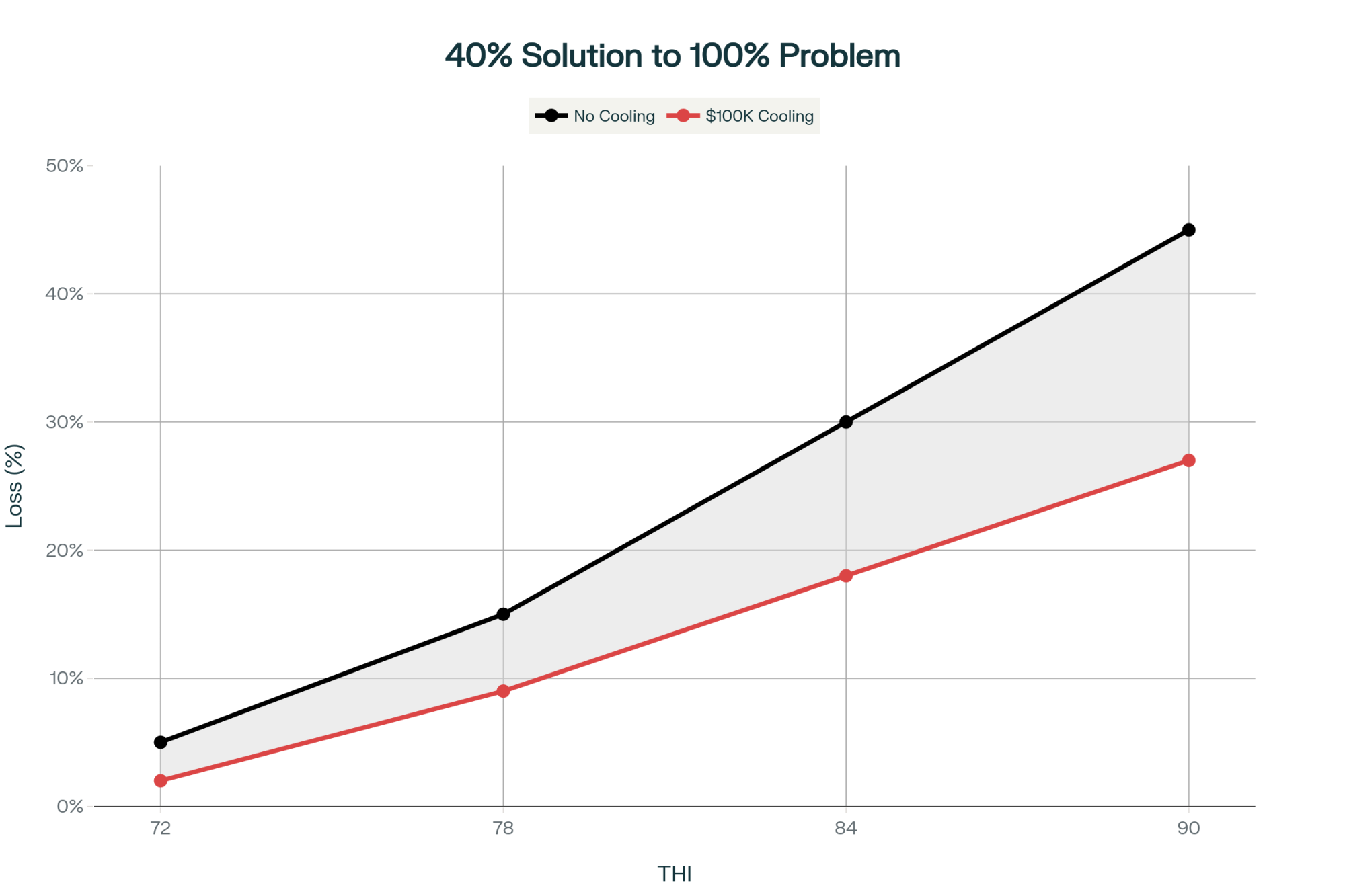
NewsSubscribe
First
Last
Consent

Why Hormel’s Layoffs Will Cost You $45,000 Per Month (And What to Do in the Next 90 Days)

Strategic exit: Walk away with $1.2M. Wait 18 months: Lose everything. Hormel’s layoffs just started your countdown.

EXECUTIVE SUMMARY: Hormel’s elimination of 250 procurement positions triggers a predictable 12-18 month pattern: processor consolidation, standardized pricing, and $1.50-2.00/cwt in new deductions that destroy farm profitability. With 73% of processing options lost since 2000, most farms now have only 3-4 potential buyers—eliminating negotiating leverage exactly when Farm Bill changes, environmental compliance costs ($75,000-175,000), and heifer shortages (prices hitting $4,800) converge in 2026. Our analysis of Wisconsin and Pennsylvania exits reveals a stark reality: a strategic exit in months 8-10 preserves $1.2 million in family wealth, while waiting until month 18 results in forced liquidation and devastating losses. Of four survival paths—scaling (8% viable), differentiation (15-20% viable), strategic exit, or resilience through low-cost production—only resilience offers hope for mid-sized operations. Your 90-day window to build reserves, create information networks, and secure alternatives started Monday.

Dairy Farm Risk Management

Monday’s announcement from Hormel Foods wasn’t just another corporate headline—it was a warning shot for the entire dairy supply chain. The company is cutting 250 positions, and these aren’t factory floor workers. We’re talking about headquarters and sales staff—the people who typically manage relationships with suppliers like ours.

Now, you might be thinking “that’s Hormel’s problem, not mine.” But here’s what’s interesting—Hormel owns Century Foods International up in Sparta, Wisconsin. That’s a significant dairy ingredient processor that pulls milk and proteins from farms across the Upper Midwest. When a company with $12 billion in annual revenue starts reducing procurement and relationship staff… well, that pressure has to go somewhere, doesn’t it?

What I’ve found is that this pattern keeps showing up across the industry. And understanding it might just help us prepare for what’s coming.

The Bigger Picture We’re All Dealing With

Looking at today’s consolidation, you can see it builds on changes that started decades ago. The data from USDA’s Economic Research Service and the National Milk Producers Federation is pretty sobering—we’ve lost between 65 and 73 percent of regional processing options since 2000.

From 15 Buyers to 3 in 25 Years: USDA Economic Research Service data reveals the consolidation trap—73% of processing options lost since 2000 means most farms now have only 3-4 potential buyers. You used to shop around for better terms. Now processors SET terms, and you take them or dump milk. Hormel’s 250 layoffs accelerate this pattern—fewer relationship managers, standardized contracts, zero flexibility.

Just think about that. Many of us used to have 15 or 20 potential buyers within reasonable hauling distance. Now? Three or four if we’re lucky. In some regions, it’s even tighter.

Take a look at what’s happening across different regions right now. Darigold members—about 250 farms in the Northwest—are paying a $ 4-per-hundredweight assessment. Capital Press reported back in May that $2.50 of that is going toward new plant construction in Pasco, Washington. That’s real money coming right off the milk check.

In the Upper Midwest, Foremost Farms implemented a 90-cent assessment for its patrons in September 2022. Hoard’s Dairyman covered it extensively—they cited the gap between Class III prices and what they’re actually getting for cheese. And Saputo? Food Processing magazine reported in June 2024 that they’re closing six facilities by early 2025, including operations in Wisconsin and California, to “consolidate production and reduce redundancy.”

Here’s what really caught my attention about Hormel’s restructuring. According to their November 4th investor announcement, they’re specifically eliminating corporate strategic and sales positions—these are the folks who maintain relationships with suppliers. They’re spending $20 to $25 million on severance and transition costs. That’s roughly $80,000 to $100,000 per position they’re cutting.

You don’t spend that kind of money unless you’re planning for years of pressure ahead, not just a tough quarter.

Now, it’s worth noting that processors face real challenges too. Retail consolidation means they’re dealing with Walmart, Costco, and Amazon—all of which are squeezing margins. Energy costs are up. Labor’s tight everywhere. These companies aren’t making these cuts lightly. But understanding their pressures doesn’t change what flows down to us.

The Pattern I Keep Seeing

Industry financial advisors tracking processor transitions have identified a consistent pattern that typically unfolds over 12 to 18 months. Let me walk you through what actually happens…

First Few Months: Everything Gets Quieter

Your field rep who used to manage 40 or 50 farms? Now they’re covering 150. Response times stretch from hours to days. Those quarterly visits become phone calls. As many of us have seen, when representatives manage three times as many accounts as before, personalized service just isn’t possible anymore.

Months 2-6: The Standardization Push

This is when you get that letter about “standardized pricing formulas” to ensure “fairness.” Sounds reasonable, right? But what it really means is they’re eliminating those adjustments that recognized your specific situation—your spring flush components, your consistent quality premiums, that understanding that your butterfat always runs high in October.

What’s Your Processor Really Taking? Darigold members in the Pacific Northwest face $4.00/cwt deductions—$45,000 annually for a 180-cow operation split between new plant construction and covering losses. Industry pattern averages $2.00/cwt.

Months 6-9: The Deductions Start

New fees start appearing. Processing assessments. Quality charges. Transportation adjustments. Wisconsin dairy business associations documented accumulated deductions ranging from $1.50 to $2.00 per hundredweight during 2023. For a typical 180-cow operation, that’s $2,500 to $3,300 coming off your monthly milk check.

By Month 12: You Realize Your Options Are Limited

You start looking around for alternatives, but those other processors? They’re managing their own challenges. They’re not actively recruiting. And you need daily pickup—can’t exactly store milk while you shop for a better deal.

Learning From History (Because We’ve Been Here Before)

This isn’t our first rodeo with consolidation. The USDA Economic Research Service’s 2019 report “Consolidation in U.S. Dairy Farming” documented similar patterns during the 1980s farm crisis, and its 2010 analysis covered the impacts of the 2009 financial crisis. Each time, the farms that saw it coming early and adapted survived better.

What’s different this time? The alternatives are scarcer. Back in ’09, you could still find regional processors looking to grow. Today, with interest rates where they are and construction costs through the roof—as Compeer Financial told Brownfield Ag News in October—expansion activity has basically stopped.

Southeast operations face additional challenges, with heat-stress management costs averaging $150 to $200 per cow annually, according to University of Georgia Extension research. Meanwhile, Southwest farms are dealing with ongoing water allocation issues, with Arizona and New Mexico operations seeing water costs rise by 30-40% since 2020, according to state agricultural department data. Each region has its unique pressures, but the consolidation pattern remains consistent.

The Timing Trap: Wisconsin and Pennsylvania farm financial counselors document $1.2 million wealth differences between families who exit strategically at months 8-10 versus those who wait for forced liquidation at month 18+. When Hormel cuts 250 procurement positions, your countdown starts Monday—not when you finally admit you’re trapped.

What Successful Farms Are Doing Right Now

Despite all this, I’m seeing farms navigate these challenges successfully. Their approaches are worth considering.

Building That Financial Cushion

What is the difference between farms with negotiating leverage and those without? Operating reserves. Penn State Extension’s dairy business analysis and the Center for Farm Financial Management both point to the same figure—about 90 days of operating capital makes all the difference.

For a 200-cow operation, that’s roughly $280,000. For 150 cows, about $180,000. I know those numbers sound huge, but here’s what’s working…

Farm financial management research shows that extending equipment replacement cycles by one to two years can generate significant reserve-building capacity. Several Mid-Atlantic operations have successfully banked the difference between equipment payments and increased maintenance costs. After a few years, they’ve built up enough to cover six months of expenses.

Cornell Cooperative Extension has documented that farms directing 5-10% of production to premium direct-market channels accelerate reserve accumulation without disrupting bulk sales. You’re not replacing your regular market—just capturing better margins on a small percentage of it.

Information Networks That Actually Work

You probably know this already, but the coffee shop isn’t where real information sharing happens anymore. Networks of 5 to 8 farms comparing actual numbers—payment timing, deduction patterns, alternative buyer pricing—are documenting surprising disparities.

Farm business management specialists report producer networks discovering pricing gaps of $0.60 to $1.20 per hundredweight between processors for identical milk quality. When these groups approach processors collectively with documentation, they often achieve improvements worth $0.40 to $0.65 per hundredweight.

California producers managing water costs—University of California Cooperative Extension’s 2024 cost studies show averages of $450 to $650 per cow annually in the Central Valley—face additional challenges. But similar information networks help them identify opportunities. The principle’s the same everywhere: shared knowledge beats isolation.

Getting Real Information from Your Processor

Here’s what progressive operations are asking for—and often getting:

Monthly competitive benchmarks showing what processors within 100 miles pay for comparable components. Detailed breakdowns of processing costs at their delivery facility. Inventory levels and 90-day demand projections that might signal adjustments coming.

State Extension services offer tremendous support here. Programs at Michigan State, Cornell, Penn State, UC Davis—they’ve all got dairy business specialists who can help analyze this information. That’s what our tax dollars support, after all.

The Four Strategic Paths: An Honest Assessment

Most advisors focus on three options: scale to 3,500+ cows, differentiate into premium markets, or exit strategically. But I’m seeing a fourth path among farms that consistently stay profitable even when milk drops to $17 or $18…

Path 1: Scaling Up (Works for Maybe 8% of Farms)

Let’s be honest here. Scaling to 3,500+ cows require $21 to $27 million in capital investment, according to current construction costs. You need interest rates that make sense (they don’t right now), heifer availability (scarce and expensive), and processing capacity willing to take your increased volume. If you’re already at 1,500-2,000 cows with strong financials, maybe. Otherwise? This probably isn’t your path.

Path 2: Premium Differentiation (Viable for 15-20%)

Organic, grass-fed, A2—these markets exist, but they’re not magic bullets. Organic premiums have compressed from $7-9 to $3-5 per hundredweight. You need 3-7 years to transition, specific processor relationships, and often geographic advantages. If you’re near urban markets or progressive processors, it’s worth exploring. But it’s not a quick fix.

Path 3: Strategic Exit (Sometimes the Smartest Move)

Wisconsin and Pennsylvania farm financial counselors document $800,000 to $1.2 million differences in family wealth between planned exits at months 8 to 10 versus forced liquidation at month 18 and beyond. There’s no shame in preserving what three generations built rather than losing it all trying to outlast market forces.

Path 4: The Resilience Strategy (The Surprise Option)

These operations have basically flipped the traditional production philosophy. Instead of maximizing output, they’re optimizing for consistent profitability across wide price ranges.

The Profitability Paradox: University of Minnesota and Penn State data reveal resilience farms producing 18,000-19,000 lbs/cow stay profitable at $17 milk while conventional operations bleeding at $22. Feed costs of $7.80/cwt versus $10.50/cwt. Vet bills of $42/cow versus $97/cow. The farms surviving consolidation aren’t maximizing production—they’re optimizing for volatility.

Rethinking Production Economics

University of Minnesota Extension case studies show lower-production systems—18,000 to 19,000 pounds per cow—achieving $3 to $4 per hundredweight cost advantages through reduced inputs. The 2024 Dairy Farm Business Summary shows industry feed costs averaging $10.20 to $11.50 per hundredweight. These systems? They’re at $7.80.

Vet expenses run $42 per cow annually versus the $85 to $110 industry average. They maintain a 22% replacement rate when the industry standard exceeds 33%. They’re producing 25% less milk per cow, yet their cost structure keeps them profitable at $18 milk, while others are bleeding red ink.

Research from Wisconsin’s Center for Integrated Agricultural Systems shows that well-managed grazing operations achieve production costs of $14 to $16 per hundredweight, compared to $18 to $21 for conventional confinement.

Sure, they might average 16,000 to 17,000 pounds per cow. Their facilities might look dated. But at any price above $15.50, they’re making money. When milk hit $23 early this year, they banked serious reserves. When did it dropped to $18? Still profitable.

Penn State Extension’s 2024 analysis shows dairy-beef integration programs generating $150,000 to $200,000 annually. Using sexed semen on top genetics and beef semen on lower performers, these operations accept modest production decreases for substantial supplementary income.

USDA Agricultural Marketing Service reports from October 2025 show beef-cross dairy calves bringing $750 to $950at regional auctions, with strong demand continuing. That’s meaningful diversification without new facilities or expertise.

What these farms understand is that volatility kills more operations than low prices. If you need $22 milk to break even, you’re in trouble 40% of the time. If you can profit at $17, you only struggle during true crashes.

The Critical Next 18 Months

Here’s why the period through spring 2027 matters so much…

First, we’re operating under the second Farm Bill extension, as the Congressional Research Service noted in June. When new Dairy Margin Coverage parameters roll out in spring 2026, farms already under stress might not be able to afford meaningful coverage.

Why 2026 Will Crush Unprepared Farms: The convergence isn’t theoretical. Processor deductions ($36K ongoing), environmental compliance ($75-175K mid-2026), and heifer shortages hitting $4,200-4,800/head (early 2027) create a $261K perfect storm for 200-cow operations. CoBank’s August analysis and state DNR permit timelines confirm—farms building reserves NOW survive. Everyone else liquidates.

Second, environmental compliance intensifies in mid-2026. California’s State Water Resources Control Board’s 2025 dairy regulations estimate compliance costs of $75,000 to $175,000 for facilities that require digesters or advanced nutrient management. Wisconsin’s Department of Natural Resources permit updates require similar investments. That’s hitting right when other pressures are at their peak.

Third—and this one’s flying under the radar—CoBank’s August analysis shows dairy heifer inventories hitting their lowest point in 2026. USDA Agricultural Marketing Service data from July shows current prices at $3,010 per head, up 75% from April 2023. CoBank projects they could reach $4,200 to $4,800 by early 2027.

For a 200-cow operation with typical replacement needs, that’s an extra $100,000 annually. Can you absorb that while everything else is hitting?

Your Action Plan for This Week

Given everything that’s developing, here’s what I’d be thinking about…

Monday-Tuesday: Know Your Position

Pull out your processor contract and read it carefully. Every word. Document your payment patterns over the past year—are checks posting later, even by a day or two? Calculate your actual reserves. Not estimates—real accessible capital.

Wednesday-Thursday: Build Intelligence

Call three alternative processors. Frame it as “2026 planning” rather than jumping ship. Get their pricing, their terms. If your processor has a parent company, check their recent earnings calls. Connect with 5 to 8 operations in your area to exchange information.

Friday: Make Your Decision

Honestly evaluate where you fit. Can you scale? Can you differentiate? Should you build resilience? Or is strategic exit the smartest move for your family?

Questions Worth Asking Your Processor Today

  1. What’s your capacity utilization at our delivery facility?
  2. Can you provide monthly competitive benchmarks against regional processors?
  3. What are your 90-day inventory levels and demand projections?
  4. What specific costs justify any current or planned deductions?
  5. What’s your parent company’s debt-to-asset ratio and credit utilization?

If they won’t answer… well, that tells you something too, doesn’t it?

The Bottom Line

What Hormel’s restructuring really tells us is that financial pressure throughout the food supply chain is accelerating. And that pressure flows downstream. Always has, always will.

We’ve navigated similar transitions before—the 1980s, 2009—though current conditions present unique challenges. The farms that survive won’t necessarily be the biggest or most productive. They’ll be the ones that recognized signals early, built flexibility, demanded transparency, and made tough decisions while they had choices.

This isn’t about giving up on dairy. It’s about adapting to reality. And the reality is that processor consolidation, combined with converging pressures over the next 18 months, will fundamentally reshape American dairy.

Success in this environment doesn’t necessarily correlate with scale or production levels. Operations demonstrating financial flexibility, market intelligence, and strategic clarity position themselves best, regardless of size.

In a market that swings from $17 to $24 per hundredweight, the ability to remain profitable across that range beats maximizing profit at the top. As many successful producers have learned, producing less at lower cost can provide greater security than chasing maximum production.

The question isn’t whether change will continue—it will. The question is whether we’ll approach it prepared, with options built and information gathered, or whether we’ll take whatever’s offered because we have no choice.

Each farm’s situation is unique. There’s no universal solution. But there are universal principles: maintain flexibility, understand your market position, and make strategic decisions while you still have options.

You know, the dairy industry has always rewarded those who adapt thoughtfully to changing conditions. This period demands exactly that kind of thoughtful adaptation. And honestly? I think those of us who prepare now, who build those reserves and networks and alternatives… we’ll navigate this just fine.

The early warning signs are clear. What we do in the next 90 days determines whether we walk out of this transition on our own terms or get forced out when market pressures intensify.

I know which option I’d choose. How about you?

Key Takeaways:

  • Your 90-Day Action List: Read the processor contract, calculate reserves ($280K for 200 cows), call three alternative buyers, form a 5-8 farm network
  • The $1.2 Million Timeline: Strategic exit (months 8-10) = wealth preserved / Forced liquidation (month 18) = devastating losses
  • Surprise Winner: Farms producing 25% LESS milk at $7.80 feed costs beat high-producers losing money at $10.50 feed costs
  • Pattern Recognition: Corporate layoffs → standardized pricing → $2/cwt deductions → trapped farmers (we’ve seen this 3 times)
  • 2026 Convergence: When Farm Bill + $175K compliance + $4,800 heifers hit simultaneously, only prepared farms survive

Complete references and supporting documentation are available upon request by contacting the editorial team at editor@thebullvine.com.

Learn More:

Join the Revolution!

Join over 30,000 successful dairy professionals who rely on Bullvine Weekly for their competitive edge. Delivered directly to your inbox each week, our exclusive industry insights help you make smarter decisions while saving precious hours every week. Never miss critical updates on milk production trends, breakthrough technologies, and profit-boosting strategies that top producers are already implementing. Subscribe now to transform your dairy operation’s efficiency and profitability—your future success is just one click away.
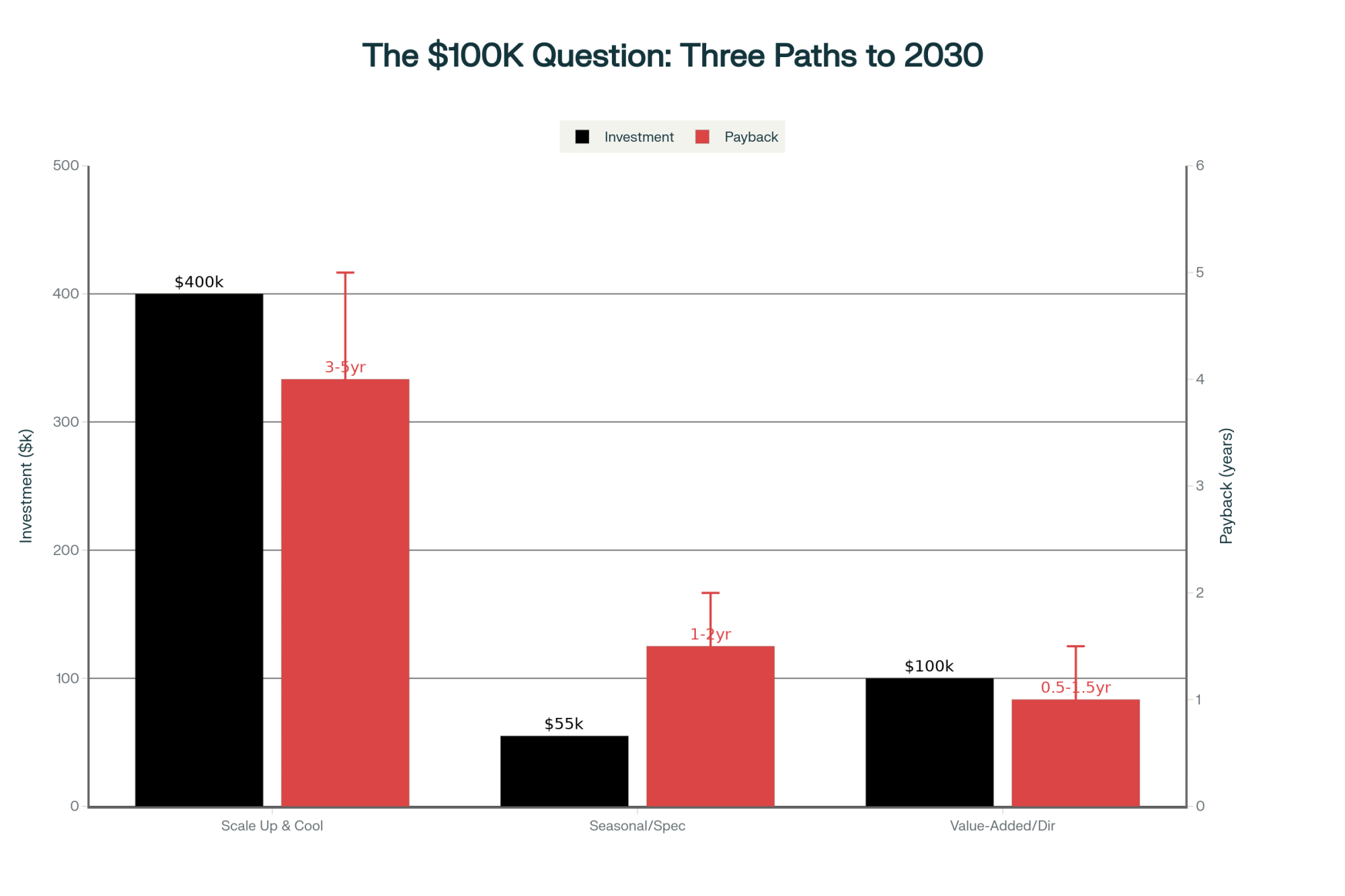
NewsSubscribe
First
Last
Consent

The $43,800 Hidden in Your Water: How Top Dairies Gain 6 Pounds More Milk Daily

You invested $2M in facilities but never spent $50 to test what’s costing you $43,800 every year

EXECUTIVE SUMMARY: While dairy producers invest millions in genetics and technology, contaminated water silently steals $43,800 annually from the typical 100-cow operation. Penn State’s study of 243 farms revealed the stunning truth: water quality alone accounts for a 6-pound daily production gap, with clean-water operations hitting 62 pounds per cow versus just 56 for those with contamination. This isn’t just about lost milk—contaminated water creates a devastating cascade of mastitis, reproductive failure, and premature culling that costs $63,000-74,500 in just six months of delay. The solution is surprisingly accessible: a $50 test identifies problems, and treatment systems ranging from $1,300 for iron removal to $25,000 for comprehensive purification pay for themselves within 6-12 months. Leading operations have already transformed water from an overlooked utility into a managed production input, gaining compound advantages while their competitors wonder why they can’t hit benchmarks. The question facing every producer is simple: Will you keep letting water constrain your operation’s potential, or will you join the 26% who’ve discovered this hidden profit opportunity?

Dairy Water Quality

You know what’s interesting? Producers across the industry commonly report investing millions in new parlors, upgraded genetics, and precision feeding technology—but when you ask about water testing protocols, there’s often that long pause. “We’ve been meaning to get to that,” they’ll say.

Sound familiar?

This disconnect between our investment in visible technology and invisible fundamentals is costing dairy operations more than we realize. Pennsylvania State University’s comprehensive study tracking 243 farms across 41 counties discovered something remarkable: farms with water quality problems averaged 56 pounds of milk per cow daily, while those with clean water hit 62 pounds. Six pounds difference. Every single day.

And here’s what that means in real terms—run the numbers on that gap: six pounds per cow, 100 cows, 305-day lactation, twenty dollars per hundredweight, and you’re looking at $43,800 annually walking out the door. Or more accurately, never walking in at all.

Phil Elkins, a veterinarian who’s spent years researching water quality after founding FarmWater Ltd., describes it perfectly: “Water flows through every dairy operation like blood through a body. You can’t see it working when everything’s right, but when it’s wrong, the whole system crashes.”

The 6-pound daily production gap revealed in Penn State’s 243-farm study: clean water operations hit 62 lbs/cow while contaminated water farms plateau at 56 lbs—a difference worth $43,800 annually per 100 cows.

Understanding the Production Gap: It’s More Complex Than We Thought

What I’ve found digging into the biological mechanisms behind these production differences is genuinely fascinating. This isn’t just about cows drinking less water—though that certainly happens. We’re looking at multiple cascading effects that compound throughout the animal’s system.

Consider iron contamination first. The USDA’s National Animal Health Monitoring System documented iron exceeding 0.3 parts per million on 40% of dairy operations surveyed. Now, that might not sound dramatic, but here’s what happens: cows detect that metallic taste and reduce water consumption. Michigan State research confirms that each 1% drop in water intake corresponds to a 0.5-1% reduction in dry matter intake. Less feed means less milk. Simple as that.

But the story gets more interesting. Iron in water exists primarily as ferrous or ferric ions—highly bioavailable forms that absorb rapidly in the rumen. Unlike the iron bound in organic compounds in feed, this water-borne iron creates oxidative stress through the Fenton reaction. More concerning still, it antagonizes copper absorption by more than 50%, according to Cornell’s trace mineral research team.

Nutritionists working across the Midwest commonly report seeing operations triple their copper supplementation, adding expensive organic minerals to the ration, and still not getting the response they expect. Then they test the water and find iron at 2-3 ppm. Suddenly, everything makes sense.

Sulfate presents its own challenges, particularly in regions with certain geological formations. Wisconsin, South Dakota, parts of Minnesota—these areas commonly see sulfate levels exceeding 1,000-1,500 ppm in well water. In the rumen, that sulfate converts to sulfide, which then binds copper, selenium, zinc, and other trace minerals into complexes that the animal can’t absorb.

Dr. William Weiss from Ohio State, who led the National Research Council’s revision of mineral requirements for dairy cattle, has documented this extensively. His research shows that high-sulfate water essentially forces producers to double or triple dietary copper supplementation just to maintain marginally adequate levels. Even then, the antagonism often wins.

What’s particularly noteworthy for operations in limestone regions—and I’m thinking especially of Pennsylvania and parts of Wisconsin here—is how geology creates perfect conditions for both iron and manganese contamination. Meanwhile, western operations face different challenges with high total dissolved solids from mineral-rich aquifers. California producers frequently report TDS running 4,500 ppm during drought years, forcing them to blend multiple water sources. Each region has its own unique water-quality fingerprint.

Are you in the 26%? Penn State’s 243-farm study found one in four operations losing 6 pounds daily per cow to water contamination—while three in four test clean and produce at peak levels.

Down in the Southeast, operations in Georgia often find the challenge is bacterial contamination from warm, humid conditions that promote biofilm growth. Producers in the region commonly describe cleaning troughs on Monday and finding them coated again by Friday. The heat and humidity just accelerate everything.

A Case Study That Changed Perspectives

Let me share what happened on a 260-cow operation in Somerset, England. This story has made waves across the industry because it clearly demonstrates what we might be missing.

The farm had actually abandoned one of its boreholes five years earlier—workers had been getting sick from the water. Yet despite excellent management and hygiene protocols, they continued battling chronic mastitis, elevated somatic cell counts, and persistent calf health issues.

Phil Elkins was consulting on the farm and suspected water might be the missing piece. Testing revealed something interesting: colony forming units ranged from zero at the source to 176 cfu/ml at various troughs. Classic biofilm contamination throughout the distribution system.

They installed a chlorine dioxide treatment system specifically designed to penetrate and eliminate biofilm. No other management changes were made during the study period—same feeding program, identical milking procedures, no facility modifications. Just treated water.

The 12-month results, published in Veterinary Record:

  • Mastitis cases dropped from 27 to 17 per 100 cows annually (37% reduction)
  • Bulk tank somatic cell count fell from 119,000 to 86,000 cells/ml
  • Samples exceeding 100,000 cells/ml dropped by 69%
  • Bactoscan readings plummeted from 86,000 to 16,000/ml
The Somerset proof: one water treatment intervention slashed mastitis by 37% and dropped somatic cell counts from 119,000 to 86,000—with payback in 60 days and zero other management changes

Producers involved in similar water-quality improvements consistently reflect on how they changed teat dips, replaced milking liners, and adjusted dry cow therapy protocols—nothing made a real difference until they addressed the water. The frustrating part, they say, is how simple the solution was once they identified the actual problem.

Economically, the system paid for itself in about 60 days. Treatment costs were approximately £2 per cow per month, while the combination of reduced mastitis treatment, elimination of milk quality penalties, and improved production delivered immediate returns.

The Compounding Cost of Delay

This is where the economics become truly sobering. The University of Wisconsin’s School of Veterinary Medicine recently analyzed the full cost of delaying water quality interventions. Their findings suggest that six months of procrastination on a 100-cow operation costs between $63,000 and $74,500.

Every month of procrastination multiplies your losses: what starts as $7,500 in month one compounds to $63,000-$74,500 by month six—more than double the cost of comprehensive treatment.

Why such dramatic numbers? Because water-quality problems cause cascading failures throughout your operation.

Start with the obvious: direct production loss. Six pounds per cow daily over 180 days equals 108,000 pounds of lost milk—about $21,600 at current market prices. That’s just the beginning.

Contaminated water harbors what microbiologists term a “persistent pathogen reservoir.” Research from the University of Guelph, published in the Journal of Dairy Science in 2023, calculated mastitis costs averaging $662 per cow annually when bulk tank counts hover around 184,000 cells/ml. Nearly half of these costs come from subclinical infections that never receive treatment.

Wisconsin producers frequently share experiences of treating mastitis case after case, burning through antibiotics, and losing quarters. It often never occurs to them that cows are essentially re-infecting themselves every time they drink.

Then consider reproduction. Water with nitrate-nitrogen above 10 mg/L correlates with increased services per conception, lower first-service conception rates, and extended calving intervals. Sulfate-induced trace mineral deficiencies contribute to retained placentas, early embryonic death, and repeat breeding.

The economic analysis from UW-Madison and Penn State Extension puts numbers to these problems: retained placentas cost around $300 each, pregnancy losses run $600-1,000, and each additional day open costs $2-5. Over six months, reproductive losses alone can reach $9,450 on a typical 100-cow dairy.

Perhaps most concerning is accelerated culling. Cows suffering from chronic mastitis, reproductive failure, and immune suppression from trace mineral deficiencies leave the herd prematurely. USDA data suggests that if poor water quality increases involuntary culling from 18% to 25% annually, those seven additional culls cost $14,000 in replacement expenses alone, plus lost production from younger animals.

How Progressive Operations Are Responding

The most successful operations I’ve observed aren’t simply installing treatment systems and moving on. They’re fundamentally reconsidering water as an actively managed production input.

Take continuous monitoring, for instance. Systems developed in the Netherlands, in collaboration with Wageningen University, now provide 24/7 water-quality surveillance across over 500 European dairy farms. When contamination appears or flow rates drop, producers receive immediate alerts.

ATP rapid testing offers another tool. This technology, borrowed from food processing, detects biofilm in seconds. Dutch Animal Health Service research shows that maintaining ATP levels below 100 relative light units is associated with sustained daily milk yield increases of 2.87 pounds per cow.

Michigan producers managing larger herds commonly describe their approach: monthly ATP testing takes five minutes and costs thirty dollars. It alerts them to biofilm development before it becomes a mastitis outbreak. The economics are obvious.

Individual cow water tracking represents another frontier. UC Davis researchers have developed systems integrating RFID ear tags with flow sensors to monitor individual drinking behavior. Penn State Extension recommends installing water meters—available from various suppliers for a few hundred dollars—to establish baseline consumption patterns.

Many producers discover something unexpected: trough cleaning schedules can actually suppress water intake. By avoiding cleaning during the hour after milking—when 30-50% of daily consumption occurs—operations frequently report gaining 3 pounds of milk per cow per day.

The real breakthrough comes from integration. Platforms combining water data with activity sensors, milk meters, and rumination monitors can identify problems days before clinical signs appear. Dr. Jeffrey Bewley at the University of Kentucky, who’s extensively researched precision dairy technologies, explains: “Water intake often provides the first indication something’s wrong—preceding milk drop, visible illness, everything else.”

Regional Considerations Shape Treatment Approaches

Geography matters tremendously in water quality management. What works in Wisconsin might not apply in New Mexico or Ontario.

Limestone regions across Wisconsin, Pennsylvania, and parts of Ontario commonly face challenges with iron and manganese. The bedrock chemistry creates conditions that mobilize these minerals. Hydrogen peroxide injection systems work particularly well here—typically around $1,300 installed, plus about $800 annually for chemicals. Systems require minimal maintenance beyond annual pump inspection and occasional filter changes.

Western states deal with different issues. High total dissolved solids from mineral-rich aquifers often require reverse osmosis or blending with municipal water when TDS exceeds 3,000-5,000 ppm. These systems represent larger investments but may be the only viable solution. Membrane replacement runs every 3-5 years, depending on water quality and pretreatment.

The Corn Belt faces nitrate contamination from both point and non-point agricultural sources. Since nitrate removal is complex and expensive, deeper wells or alternative water sources often prove more practical. Test in late summer, when nitrate levels typically peak.

In the Pacific Northwest, operations commonly deal with seasonal variations tied to snowmelt and rainfall. Oregon producers report that iron levels have tripled during spring runoff, requiring seasonal adjustments to their treatment protocols. Testing in March and September captures both extremes.

Drought-prone regions see seasonal concentration effects. Texas operations typically experience sulfate levels doubling in summer. Many blend purchased water during the worst months—costs run about $200 a day, June through September—but it’s far cheaper than the production losses. August testing reveals peak contamination levels.

For organic operations, treatment options become more limited. While mechanical filtration and certain oxidation methods are permitted, many chemical treatments aren’t. Vermont organic producers often invest heavily in multiple filtration stages and UV treatment to meet both certification requirements and water-quality standards. Some equipment suppliers offer financing options, and USDA programs may assist qualifying operations with water quality improvements.

Making the Investment Decision: A Clear Cost-Benefit Analysis

Let’s address the economics directly. For a farm facing typical contamination—say iron at two ppm, sulfate at 1,200 ppm, TDS at 3,500 ppm—here’s the investment landscape:

Water Treatment Investment Breakdown (100-cow herd):

Hydrogen peroxide injection for iron removal: roughly $1,300 in setup costs and $800 in annual operating costs. This converts soluble iron into forms that precipitate, eliminating both the taste issue and oxidative stress. Filter replacement runs quarterly at about $50 each.

Reverse osmosis for high TDS and sulfate: $15,000-25,000 for agricultural-scale systems, plus $2,000-4,000 annually for membranes and electricity. While expensive, it’s a proven technology that removes 80-90% of dissolved solids. Membrane replacement every 3-5 years costs $3,000-5,000.

Chlorine dioxide for biofilm control: about $8,000 for generator equipment, $2,400 yearly for chemicals. This addresses distribution system contamination—critical because even perfect source water can be compromised as it passes through biofilm-laden infrastructure. Monthly chemical adjustments take 30 minutes.

Combined investment for comprehensive treatment: approximately $29,300 upfront, $6,200 annual operating costs. Against $43,800 in annual production losses, the math becomes straightforward.

Wisconsin producers consistently describe their decision process similarly: when they see iron at three ppm and sulfate over 1,500, that $25,000 for treatment suddenly looks like a bargain. Many realize they’re already spending more than that on trace mineral supplementation that isn’t working.

Lightning-fast payback periods for water treatment investments: even the comprehensive $29,300 system pays for itself in under 5 months against $43,800 in annual losses—making delay the costliest decision.

Understanding the Psychology of Inaction

Purdue University’s agricultural economics team has researched why producers delay addressing water quality issues despite compelling economic incentives. Their findings offer insights worth considering.

We all exhibit what behavioral economists call visibility bias—prioritizing obvious over hidden factors. New genetics produce visible offspring. Robotic milkers operate in plain sight. Water quality improvements occur underground, making returns feel less tangible even though they are measurably higher.

There’s also uncertainty aversion at play. Installing proven technologies like automated feeding systems feels predictable. Water quality investment raises questions: Will testing reveal problems? Will treatment deliver results? This uncertainty drives status quo bias—maintaining current practices even when change would clearly benefit the operation.

The industry itself bears some responsibility. Technology companies effectively market milk yield increases and labor savings. Water quality gets framed as compliance or problem-solving rather than a profit opportunity, despite superior ROI.

ContaminantSafe LevelProblem LevelImpact on ProductionTreatment SolutionEst. Cost
Total Dissolved Solids (TDS)<1,000 ppm>3,000 ppmReduced intake, dehydrationReverse osmosis$15k-$25k
Iron (Fe)<0.3 ppm>2 ppm6 lb/day milk loss, oxidative stressHydrogen peroxide$1,300
Sulfate (SO4)<500 ppm>1,500 ppmMineral antagonism, reduced copper absorptionRO or blending$15k-$25k
Nitrate-Nitrogen<10 mg/L>20 mg/LReproductive failure, conception issuesDeeper well or alternative sourceVariable
Bacteria/Biofilm0 CFU>100 CFU/mlMastitis, immune suppressionChlorine dioxide$8,000
Chloride (Cl)<250 ppm>500 ppmSalty taste, reduced intakeAlternative sourceVariable

Practical Steps Forward: Your 60-Day Action Plan

For producers ready to address water quality, here’s a systematic approach:

Week 1-2: Test comprehensively. Contact Midwest Laboratories (402-334-7770) or Penn State’s Agricultural Analytical Services Lab (814-863-0841). A livestock suitability test runs $43-75 and should include TDS, pH, sulfate, chloride, iron, manganese, nitrate, sodium, hardness, and bacterial counts. Sample where animals actually drink, not just at the source. Best testing months vary by region: August in Texas (peak drought), March in Oregon (spring runoff), September in the Corn Belt (nitrate peak).

Week 3-4: Understand the thresholds. Based on National Research Council guidelines, watch for TDS above 1,000 ppm (serious above 3,000), sulfate above 500 ppm (critical above 1,500), iron above 0.3 ppm, nitrate-nitrogen above 10 mg/L, and any coliform presence.

Week 5-6: Get treatment quotes. Prioritize based on your specific contamination profile. Iron responds well to hydrogen peroxide injection. High TDS and sulfate require reverse osmosis or water blending. Bacterial contamination needs chlorine dioxide treatment throughout the distribution system. Many suppliers offer financing options, and USDA conservation programs may provide cost-share assistance.

Week 7-8: Begin monitoring. Install flow meters to track consumption patterns. Use monthly ATP testing to detect biofilm development. Document pre-treatment production metrics to establish a baseline for ROI calculations.

Most operations see measurable improvements within 30-60 days of implementing treatment. The key is to start the process rather than wait for the “perfect” time.

The Bottom Line

After extensive research and conversations with producers nationwide, several principles have become clear.

The production gap is real and measurable. That six-pound daily difference translates to $43,800 annually on a 100-cow herd, before considering cascading effects on health, reproduction, and longevity.

Testing represents the highest-ROI decision available. A $50 water test reveals whether you’re among the 26% of operations losing money to contamination, based on Penn State’s multi-year survey data.

Treatment systems pay for themselves rapidly. Whether $1,300 for hydrogen peroxide or $20,000 for reverse osmosis, documented payback periods typically range from 6 to 12 months.

Delay multiplies losses exponentially. Six months of procrastination costs $63,000-74,500—more than double the treatment investment. Biology doesn’t pause for our decision-making.

Integration amplifies returns. Operations combining water treatment with comprehensive monitoring and management platforms report transformational improvements across all metrics.

What’s encouraging is that the dairy industry has made tremendous strides in genetics, nutrition, and reproductive management over the past decade. Water quality remains the overlooked variable—the hidden constraint preventing thousands of operations from reaching their genetic and management potential.

Progressive operations recognizing this opportunity aren’t just solving problems; they’re creating value. They’re building competitive advantages that compound annually. Better water enables healthier animals, supporting improved reproduction, extended productive life, and sustained production gains.

The fundamental question facing every dairy producer is straightforward: Will you continue assuming water quality is adequate while competitors who test and treat build increasing advantages? Or will you invest that $50 in testing to potentially transform your operation’s trajectory?

The science provides clear answers. The economics are documented. The only remaining variable is whether this knowledge drives action—or whether another year passes with water silently constraining your operation’s potential, one gallon at a time.

Key Takeaways:

  • 6 pounds of milk per cow daily vanishes due to water quality—Penn State proved it across 243 farms ($43,800/year for 100 cows)
  • Every month you delay costs $10,500-12,400 in cascading losses from mastitis, reproduction failures, and culling
  • ROI exceeds 700% within year one after investing $1,300-25,000 in treatment (depending on your contamination type)
  • Testing costs $50. Not testing costs $43,800. Call Midwest Labs (402-334-7770) or Penn State (814-863-0841) today
  • Leading operations gain compound advantages by managing water as a production input—while competitors blame genetics

Complete references and supporting documentation are available upon request by contacting the editorial team at editor@thebullvine.com.

Learn More:

Join the Revolution!

Join over 30,000 successful dairy professionals who rely on Bullvine Weekly for their competitive edge. Delivered directly to your inbox each week, our exclusive industry insights help you make smarter decisions while saving precious hours every week. Never miss critical updates on milk production trends, breakthrough technologies, and profit-boosting strategies that top producers are already implementing. Subscribe now to transform your dairy operation’s efficiency and profitability—your future success is just one click away.

NewsSubscribe
First
Last
Consent

Beyond the Milk Check: How Dairy Operations Are Building $300,000 in New Revenue Today

Milk at $20. Costs at $22. Some dairies are panicking. Others are building $300K in new revenue. The difference? Three moves you can make today.

Executive Summary: The $20 milk check that sustained dairy operations for years now falls $2 short of covering real production costs—and that gap isn’t closing. But while many producers wait for $25 milk that isn’t coming, successful operations are actively building $300,000 in new annual revenue from resources they already have. Beef-cross calves are commanding $1,600 each (up from $400 in 2019), feed shrink costing most farms $60,000 annually can be cut in half with basic management changes, and the Dairy Margin Coverage program is paying 495% returns to those who enroll. The catch? This window closes fast—operations implementing these strategies in Q1 2025 will capture $250,000 more value than those waiting until Q3. Based on verified data from USDA, and progressive dairy consultants, this report provides a proven 90-day roadmap that’s already helping operations transform their financial position. The difference between thriving and merely surviving isn’t about farm size or waiting for markets to improve—it’s about acting on these opportunities now.

You know that feeling when something you’ve counted on for years suddenly isn’t enough? That’s exactly where many of us find ourselves with milk prices right now.

Gary Siporski, the dairy financial consultant from Wisconsin who’s been looking at balance sheets for decades, saw this coming. His data tells quite a story. Back in 2016, his Midwest clients were breaking even around $16.50 per hundredweight. By late 2023? That number had climbed to $20.25. And now—here’s where it gets interesting—operations from California to Vermont are reporting production costs north of $22 when you factor in everything… depreciation, heifer raising, the whole nine yards.

What’s encouraging, though, is that the operations finding their way through this aren’t just sitting around waiting for milk prices in 2025 to bounce back. They’re actively building what amounts to $180,000 to $340,000 in improved financial position through some pretty creative approaches to dairy profitability.

The widening gap between production costs and milk prices reveals why traditional approaches are failing—costs have jumped $5.50 per hundredweight while prices lag behind

Understanding What’s Really Driving Costs

Here’s what the latest University of Illinois Farmdoc Daily and USDA reports are showing us. Feed costs—you know, that 30 to 50 percent chunk of everyone’s budget—have actually come down from those crazy 2022-2023 peaks. Corn’s projected at $4.60 per bushel for 2025, down from $4.80. Soybean meal dropped from $330 to $290 per ton. Alfalfa? Down from $201 to $159.

Sounds like good news, right? Well… hold on a minute.

Everything else keeps climbing. Labor costs are up 3.6 percent for 2025, according to USDA’s agricultural labor report—we’re talking a record $53.5 billion across agriculture. And if you’re in Texas or other areas where the energy sector is hiring? Good luck keeping experienced workers without matching those oil field wages. Producers in these regions report wage competition they never imagined dealing with.

Then there’s interest. After hitting 16-year highs in 2023-2024, according to Federal Reserve data, borrowing costs have fundamentally changed the game. Think about it—if you’re running a 500-cow operation with somewhere between $1.2 and $1.5 million in operating loans (pretty typical these days), that four percentage point jump from 2020 means an extra $48,000 to $60,000 annually just in debt service. That’s nearly fifty cents per hundredweight before you even start milking.

And equipment? The Association of Equipment Manufacturers’ 2024 report shows machinery prices jumped 30 percent in four years. The average new tractor now costs $491,800, up from $363,000 in 2020. Some specialized equipment? We’re talking $1.2 to $1.4 million.

Brad Herkenhoff from Compeer Financial, who works with operations all across Minnesota and Wisconsin, doesn’t mince words: “There won’t be enough to cover depreciation, so capital improvements won’t be made. Bills will stretch beyond 30 days, and every month becomes a financial strain.”

What we’re dealing with is what economists call a “ratchet effect”—costs rise quickly but resist coming down. You can’t undo wage increases once they’re in place. Interest on existing debt? That’s locked in. And you’re still depreciating that nearly half-million-dollar tractor at 2023 prices. This reality is reshaping dairy profitability 2025 in fundamental ways.

The Beef-on-Dairy Window: Real Opportunity or Hype?

Now, let me share something that might be the biggest dairy profitability opportunity I’ve seen in twenty years. And I really mean that.

CattleFax and USDA’s July 2025 cattle inventory reports point to a 3- to 5-year window in which beef-on-dairy returns make extraordinary financial sense. We’re not talking about incremental improvements here—this could be transformative for milk prices in 2025.

Right now, in November 2025, day-old beef-cross calves are bringing $900 to $1,600 at auctions from Pennsylvania to Minnesota. Compare that to the $350 to $400 they brought in 2018-2019, according to USDA’s Agricultural Marketing Service data. That’s a premium that makes you rethink beef-on-dairy returns.

Beef-cross calves now command $1,600—quadruple the 2019 price—turning what was once a disposal problem into a $100,000+ annual revenue stream for mid-size operations

But here’s why this isn’t just a temporary spike. The U.S. cattle inventory is at a 64-year low—we haven’t seen numbers like this since 1951, per USDA’s latest report. Meanwhile, the National Association of Animal Breeders tells us nearly 4 million crossbred calves were born in 2024, and Beef Magazine projects that could hit 6 million within two years.

You might be thinking, “Won’t that flood the market?” Here’s the thing—beef production is actually declining. USDA projects it’ll drop 4 percent in 2025 and another 2 percent in 2026. The beef industry desperately needs these dairy-beef crosses just to maintain supply.

Herkenhoff’s analysis shows producers are seeing a $2.50 to $4 per hundredweight boost from the combination of better cull cow values and beef-cross calf sales. Think about what that means for dairy profitability in 2025. Data shows that, before this beef market rally, milk checks accounted for about 93 percent of total farm income. Now? That’s down to 75 to 80 percent, with cattle sales making up 20 to 25 percent.

The numbers are pretty striking when you dig in. Revenue contribution jumping from $1.12 per hundredweight in 2022 to $2.57 in 2024. That’s a 130 percent increase in two years.

Traditional vs. Diversified: The Numbers Tell the Story

Quick Financial Comparison:

Here’s what we’re seeing:

  • Traditional Single-Revenue Operation (500 cows):
  • Milk revenue: 93% of income
  • Cattle sales: 7% of income
  • Breakeven: $22-24/cwt
  • Annual volatility: $150,000-$300,000
  • Diversified Multi-Revenue Operation (500 cows):
  • Milk revenue: 75-80% of income
  • Beef-cross cattle sales: 20-25% of income
  • Additional streams: 5-10% of income
  • Breakeven: $18-20/cwt
  • Annual volatility: $75,000-$150,000

Bottom line difference: About $200,000 in improved annual cash flow with significantly reduced risk exposure.

Diversified operations cut volatility in half while lowering breakeven costs by $2-4 per hundredweight—making 20% from beef-cross cattle creates a financial buffer traditional dairies don’t have

Feed Efficiency: The Money You’re Already Losing

Here’s something that still surprises me after all these years. Producers will negotiate feed contracts for hours, tweak rations endlessly, but meanwhile… many operations are unknowingly losing $50,000 to $180,000 annually through feed shrink and excessive refusals.

Penn State Extension and University of Wisconsin research show that average U.S. dairy silage shrinkage runs 10 to 20 percent. Poorly managed bunkers? Can hit 25 percent. And those feed refusals—should they be 2 to 3 percent, according to Journal of Dairy Science studies? I see operations running 4 to 6 percent all the time.

Real Dollar Impact per 100 Cows:

  • Silage shrink reduction (15% to 10%): Saves $9,000-$18,000 annually
  • Refusal reduction (5% to 3%): Recovers $5,000-$10,000 annually
  • Daily face management: Cuts spoilage by 50%
  • Oxygen barrier films: Pay for themselves in 6-8 months

Sources: Cornell Cooperative Extension, University of Minnesota dairy extension, Lallemand Animal Nutrition research

The key insight—and nutritionists keep hammering this point—isn’t about cutting feed quality. That’s a disaster. It’s about not throwing away the good feed you already bought.

For a 500-cow operation, even modest management improvements—basic stuff, really—can return $45,000 to $60,000 annually. That’s real money from things you’re already doing, just doing them better. This directly impacts dairy profitability in 2025 outcomes.

Most operations throw away $45,000-$60,000 annually in feed waste—money that’s already been spent on feed you never actually fed. Basic management changes recover this immediately

Government Programs: Setting Aside the Politics

I know, I know. Half of you are already skeptical when I mention government programs. But hear me out—the USDA Farm Service Agency data on Dairy Margin Coverage is pretty compelling for dairy profitability in 2025.

In 2023, producers enrolled at the $9.50 level paid about $1,500 in premiums per million pounds. What’d they get back? According to FSA payment data, $8,926.53 per million pounds. That’s a 495 percent return. On paperwork.

While 25% of producers left money on the table, those who enrolled in DMC at the $9.50 level saw 495% returns—$8,927 back for every $1,500 paid in 2023

DMC by the Numbers:

A 500-cow operation producing 11 million pounds:

  • Paid: $16,500 in premiums
  • Received: $98,192 in payments
  • Net benefit: $81,692

The program distributed over $1.27 billion through October 2023, with the average enrolled operation receiving $74,453. About 17,059 operations participated—that’s 74.5 percent of those eligible. Which means roughly a quarter of producers left that money on the table.

Katie Burgess from Ever.Ag’s risk management team notes that DMC has triggered payments 57% of the time over the past 42 months at the $9.50 level. That’s better than a coin flip, and when it pays, it pays big.

The mistake I see most often? Producers are choosing catastrophic coverage at $4.00 to save on premiums. Sure, it costs less upfront, but you’re leaving massive money on the table. The $9.50 level costs more, but historically returns five to ten times as much during tight margins.

The Human Side: Why Change Is So Hard

You know, research from agricultural psychology studies—the kind published in journals like Applied Farm Management—reveals something we probably all know deep down. Resistance to change isn’t really about the data. It’s about identity.

We don’t just run dairy operations. Being a “dairy producer” is part of who we are. So when someone suggests beef-on-dairy returns or revenue diversification, it can feel like they’re asking us to fundamentally change who we are. That’s not easy.

The generational piece makes it even tougher. Iowa State Extension’s succession planning research shows 83.5 percent of family dairy operations don’t make it to the third generation. First to second generation? Only 30 percent succeed. Second to third? Just 12 percent.

We’ve all seen this—Dad won’t let go because that means confronting his own mortality, and the kids can’t make changes without feeling like they’re disrespecting everything their parents built. Meanwhile, equity slowly bleeds away.

Research from agricultural universities in New Zealand and Europe shows we’re all influenced by what our neighbors do. Nobody wants to be first, but nobody wants to be last either. So everyone waits…

I’ve heard from plenty of producers who understood the financial benefits of beef-on-dairy perfectly well but worried what the coffee shop crowd would think. Were they giving up on “real” dairy farming?

A Practical 90-Day Framework for Dairy Profitability 2025

Alright, let’s get down to brass tacks. Based on what’s working for operations that are successfully navigating this transition, here’s a framework that can improve your financial position in three months:

Month 1: Immediate Actions for Cash Flow

Week 1: Know Your Numbers

First thing—and I mean within 48 hours—calculate your working capital per cow. Current assets minus current liabilities, divided by herd size. Then figure your monthly burn rate from the last 90 days. This tells you exactly how much runway you’ve got.

If you’ve got genomic test results, pull them now. If not, consider ordering tests. Yes, it’s $40 to $50 per head—about $12,000 to $15,000 for 300 head. But you’ll know within 2 to 3 weeks exactly which cows should get beef semen for optimal beef-on-dairy returns.

Order 150 to 200 units of beef semen right away. Angus and Limousin consistently perform well in feedlots. That’s an investment of $2,250 to $5,000. Contact three calf buyers to ensure competitive pricing. Got beef-cross calves ready? Selling them this week could bring $3,600 to $6,400 in immediate cash.

DMC Enrollment: Don’t Wait

Call your FSA office—actually call them, don’t just email. The $9.50 coverage on Tier 1 (first 5 to 6 million pounds) at 95 percent often makes the most sense. Larger operations might consider catastrophic on Tier 2 to manage costs. For a 250-cow operation, you’re looking at about $7,225 in costs, with potential returns of $35,000 to $80,000 in tight-margin years.

Week 2: Strategic Culling Decisions

Review your IOFC reports, SCC data, and Days Open. Identify your bottom 10 to 15 percent—chronic health issues, SCC over 200,000, Days Open beyond 150.

With cull prices averaging $145 per hundredweight according to the USDA, strategically marketing 25 cows averaging 1,400 pounds could generate $50,000 to $62,500. Direct that straight to your operating line.

Month 2: Building Operational Efficiency

Labor Optimization

Progressive Dairy’s benchmarking shows that top operations maintain over 65 cows per full-time worker and produce over 1 million pounds of milk per worker annually. If you’re at 45 cows per worker… well, there’s your opportunity.

Energy Efficiency Quick Wins

Energy typically runs 400 to 1,145 kWh per cow annually. Quick improvements:

  • LED lighting: 60% electrical reduction
  • Variable frequency drives: 20-30% fan energy savings
  • Heat recovery systems: $20-40 per cow annual savings

A 100-cow operation can save $2,000 to $4,000 annually in energy costs alone.

Component Production Focus

Here’s what’s interesting—DHI data shows operations producing over 7 pounds of components per cow daily generate about $3 more per cow at similar costs. That flows straight to the bottom line—potentially $547,500 annually for 500 cows.

Work with your nutritionist on butterfat performance and protein, not just volume. Especially valuable in the Northeast, where component premiums are strong, or the Southwest, where cheese plants pay big butterfat bonuses.

Month 3: Strategic Positioning

Additional Revenue Streams

By month three, explore these opportunities:

  • Digesters: EPA’s AgSTAR database shows 270+ on dairy farms generating ~$100/cow annually
  • Solar leases: $500-1,500 per acre annually in suitable locations
  • Carbon credits: $10-30 per cow, emerging market

University extension case studies document operations pulling $300,000 to $400,000 annually from combined energy contracts, beef-cross premiums, and environmental programs.

Risk Management Layers

Layer additional coverage atop DMC:

  • Dairy Revenue Protection for Tier 2 production
  • Livestock Gross Margin for Margin Protection
  • Forward contracting on favorable component premiums

Build that safety net while you can afford it.

90-Day Roadmap Summary Box:

By Day 90, a 500-cow operation typically achieves:

  • Strategic culling cash: $50,000-$62,500
  • Feed efficiency savings: $45,000-$60,000 (annualized)
  • Beef-on-dairy pipeline: $60,000-$80,000 (9-month revenue)
  • Component optimization: $30,000-$50,000 (annualized)
  • DMC protection: $35,000-$80,000 (potential in tough years)

Total improved position: $220,000-$332,500 within 12 months

Within 90 days, a 500-cow operation can improve its financial position by $220,000-$332,000 without adding debt or expanding—just managing smarter across five key areas

Regional Realities: From the Plains to the Coasts

These strategies play out differently depending on where you farm, and that’s important to understand.

Regional Strategy Highlights:

  • California: Smaller feed efficiency gains but higher beef-on-dairy returns near feedlots
  • Wisconsin: Focus on forage quality optimization over shrink reduction
  • Northeast: Component premiums crucial—can’t match Western volume but butterfat pays
  • Southeast: Triple cooling costs vs. Wisconsin—every energy efficiency gain magnified
  • Plains States (Kansas/Nebraska): Uniquely positioned near feedlots AND grain—seeing the strongest beef premiums with lower feed costs
  • Mountain West: Altitude affects production, but proximity to Western beef markets creates beef-on-dairy opportunities

Timing matters too. Implementing beef-on-dairy in November versus March affects breeding cycles and calf markets. Spring calves bring premiums in some areas, fall calves in others.

But the fundamental principle—diversified revenue beats single-source dependency—that holds everywhere.

What We’re Learning Industry-Wide

University extension services and farm consultants are documenting consistent patterns. Operations implementing beef-on-dairy in early 2024 project $100,000 to $150,000 additional annual revenue from crossbred calves. Those focusing on feed efficiency report recovering $50,000 to $60,000 annually. DMC participants collected $40,000 to $80,000 in 2023, depending on size and coverage.

What’s encouraging is these aren’t just huge, sophisticated operations. They’re regular farms that recognized the shift early and acted. While transitioning from traditional dairy to a diversified operation can feel uncomfortable initially, the financial results tend to validate the decision quickly.

The Bottom Line for Dairy Producers

Accept the New Reality Production costs have shifted from $16.50 per hundredweight in 2016 to over $22 today. This is structural, not temporary. Earlier acceptance means more options for dairy profitability in 2025.

Diversification Is Essential. Successful operations are building $180,000 to $340,000 in improved position through beef-on-dairy ($100,000 to $200,000 annually), feed efficiency ($45,000 to $60,000 annually), and risk management ($35,000 to $80,000 in challenging years).

Time Matters The beef-on-dairy window extends 3 to 5 years based on cattle cycles, but peak premiums are now. DMC has fixed deadlines. Feed savings compound daily. Every month of delay costs money and options. This isn’t about panic—it’s about positioning.

Small Changes, Big Impact. You don’t need revolution. Reducing silage shrink 5 percent and refusals by 2 percent can generate $45,000 to $60,000 annually. These are management tweaks, not overhauls.

Use Your Network. The most resilient operations leverage their networks. Engage lenders proactively. Work with nutritionists. Use FSA resources. Going it alone makes everything harder.

Looking Ahead: Key Indicators to Watch

As we approach 2026, watch these indicators:

USDA’s quarterly cattle inventory reports matter. If beef cow numbers grow faster than Rabobank’s projected 200,000 head annually through 2026, the premium window might compress. But current dynamics suggest that’s unlikely.

Monitor your basis—what plants pay above Class III or IV. Over $5 signals strong demand. Under $2 means tight margins ahead.

The One Big Beautiful Bill Act extended DMC through 2031 and increased Tier 1 coverage to 6 million pounds starting in 2026. Details matter, so stay engaged with your co-op and industry groups.

Watch seasonal patterns. Upper Midwest operations should track winter energy costs. Southwest producers need to monitor the impacts of heat stress on components. These create opportunities for prepared operations.

The Path Forward: Your Decision Point

After looking at all the trends and talking with producers who are making it work, one thing’s clear: The operations thriving in 2028 won’t necessarily be the biggest or most sophisticated. They’ll be the ones that recognized the shift early and acted on the dairy profitability 2025 opportunities.

They understood that building $300,000 in diversified revenue through strategic changes beat waiting for $25 milk prices in 2025. They pushed through the psychological barriers and evolved from traditional dairy farmers to agricultural entrepreneurs who happen to produce milk.

The tools exist. The programs are available. The opportunities—especially beef-on-dairy returns—are real. But here’s the thing—implementing changes in Q1 2025 versus Q3 2025 could mean a $242,500 to $362,500 difference over three years. That’s not marginal. That’s the difference between thriving and surviving.

What it comes down to is this: Operations that accept reality quickly maintain options. Those waiting for more confirmation may find their options have expired when they’re ready to act.

The clock’s ticking. Beef-on-dairy returns, DMC enrollment, feed efficiency—they’re all time-sensitive. The question isn’t whether change is necessary, but whether you’ll drive it or have it forced on you.

What is the difference between those paths? About $300,000 and possibly your operation’s future.

Key Takeaways:

  • Your Milk Check Will Never Be Enough Again: Production costs hit $22/cwt while prices hover at $20—this isn’t temporary, it’s the new reality requiring immediate action
  • $300,000 in Hidden Revenue Exists in Your Operation Today: Beef-cross calves bringing $1,600 (vs. $400 in 2019) + recovering $60,000 in feed waste + DMC paying 495% returns = game-changing income
  • The 90-Day Window That Changes Everything: Operations implementing these strategies Q1 2025 will capture $250,000 more value than those waiting until Q3—procrastination literally costs $20,000/month
  • You Don’t Need Capital, You Need Courage: No expansion, no debt, no new equipment required—just the willingness to manage differently and diversify beyond the milk check
  • The Math is Proven, The Choice is Yours: 500-cow operations following this roadmap achieve $220,000-$332,500 improved position in 12 months—the only variable is when you start

Complete references and supporting documentation are available upon request by contacting the editorial team at editor@thebullvine.com.

Learn More:

Join the Revolution!

Join over 30,000 successful dairy professionals who rely on Bullvine Weekly for their competitive edge. Delivered directly to your inbox each week, our exclusive industry insights help you make smarter decisions while saving precious hours every week. Never miss critical updates on milk production trends, breakthrough technologies, and profit-boosting strategies that top producers are already implementing. Subscribe now to transform your dairy operation’s efficiency and profitability—your future success is just one click away.

NewsSubscribe
First
Last
Consent

The People Side of Profit: How Strong Communication Builds Better Dairies

You can pour money into feed, genetics, or equipment—but every day, poor communication leaves profit in the parlor.

You know, when you talk with producers from Wisconsin to Idaho, there’s always a familiar story. Most will tell you they’ve fine-tuned their feeding program, upgraded their genetics, and modernized their parlor. Yet, even with all that, something still drags performance down. What’s interesting is that it’s rarely a feed issue or cow comfort problem anymore—it’s communication.

More dairies are realizing that human communication—not sensors, not software—is becoming one of their most powerful management tools. You can have the best feed efficiency in the county, but if the team’s not hearing the same message, you’re going to lose consistency and, eventually, money.

Impact MetricIndustry AverageHigh-Turnover FarmsCost Impact
Annual Turnover Rate38.8%45-60%$93K-$140K/year
Milk Production LossBaseline-1.8% per point-$18K per 100 cows
Calf Loss IncreaseBaseline+1.7%+$5K-$8K annually
Cow Mortality IncreaseBaseline+1.6%+$12K-$15K annually
Total Annual ImpactCumulative$128K-$181K

The Economics Behind Miscommunication

Here’s what the research shows. Michigan State University Extension reports that replacing just one employee can cost between $15,000 and $25,000, once you include recruitment, onboarding, lost productivity, and training time. Multiply that across a crew of twelve, and the real price of inconsistency starts to add up fast.

Add language barriers to that, and you see why communication is quietly shaping productivity. Studies from New Mexico State University Extension show roughly 60% of U.S. dairy employees speak limited English, and in some Southwestern regions, up to a third speak K’iché, a Mayan dialect that’s often not translated in training materials.

As Dr. Robert Hagevoort from NMSU likes to put it, “Every time someone does the right job the wrong way, the farm pays tuition.” And he’s right. Bad communication doesn’t always create visible failure—sometimes it just creates smaller, daily inefficiencies that chip away at margins.

The Language Barrier Crisis: Spanish-speaking workers are 46 percentage points less likely to know their farm’s SCC goals and 28 points less likely to receive training directly from managers. This isn’t a language problem—it’s a management failure costing operations thousands in milk quality losses

When “The System” Walks Out the Door

In many dairies, managers don’t realize how dependent their success is on one translator or crew leader until that person is gone. Take a 900-cow operation in Minnesota that lost its bilingual milker. Within days, the somatic cell count passed 300,000, and shifts started running nearly an hour longer.

When a Minnesota 900-cow operation lost its bilingual milker, SCC spiked from 200K to over 300K within 10 days while shifts ran an hour longer. Wisconsin Extension’s bilingual photo SOPs and structured check-ins restored normal levels within 30 days, proving that systems beat individual translators

Through the help of the University of Wisconsin–Madison Extension, the farm rebuilt its communication foundation with bilingual photo SOPs, clear shift checklists, and 10-minute morning meetings. Within 30 days, SCC was back below 200,000. More importantly, turnover slowed because work instructions no longer depended on memory or one individual.

Farms using structured check-ins are seeing consistent success. Cornell’s PRO‑DAIRY program tracked farms that began short daily huddles and found turnover fell by 30–50%. In other words, clarity does what pay raises often can’t—it builds team stability.

The Power of One Question

If there’s one thing many producers overlook, it’s how to start these improvements. You don’t need a big system overhaul. Tomorrow morning, ask your longest-standing employee a simple question:

“If someone new started tomorrow, what’s the hardest thing for them to learn?”

Then, just listen. That one question often exposes the real gaps between what’s expected and what’s taught.

Penn State Extension research has found that farms documenting even five key tasks—feeding order, colostrum prep, milking procedures, machinery setup, and calf care—report 25–40% faster training times within six months.

What’s encouraging is that asking questions like this builds trust. Workers realize their knowledge matters, and managers finally see where assumptions replaced structure.

Turning Words into Pictures

More and more dairies are swapping old binders for laminated photo SOPs. The idea sounds simple, but the payoff can be huge.

Research from Iowa State University Extension and the University of Illinois Dairy Extension confirms that visual direction significantly improves retention, especially on multilingual crews.

Here’s a proven step-by-step approach:

  1. Photograph each task exactly the way you want it done—using real employees and your own equipment.
  2. Write short, clear captions—one line per photo.
  3. Translate into every primary crew language (your Extension office can help).
  4. Hang the cards exactly where the work happens.
Time is money: Multilingual photo SOPs cut training time by an average of 36% across critical dairy tasks, getting new employees to full productivity faster while freeing experienced workers from constant training duties

One Wisconsin dairy shared that this approach reduced their parlor changeover time by nearly 20%. And what’s fascinating is that the same process strengthened morale. When everyone knows the expectations, the blame game disappears.

Dairy training research confirms visual SOPs deliver 65% retention after 30 days versus just 10% for text manuals—a 550% improvement. Iowa State and Illinois Extension studies show photo-based procedures work across language barriers while teach-back methods push retention to 70%, reducing errors by 50-70%.

Keep It from Getting Dusty

Now, even the best materials lose their spark if they’re not refreshed. Cornell University’s PRO‑DAIRY Workforce Development specialists recommend short, quarterly “protocol walks.”

These aren’t long meetings—just 10 or 15 minutes walking the barn with the team, asking if anything has changed. Maybe the layout’s different, or a new sanitizer replaced the old one. The key is showing that management updates protocols with the team, not to the team.

It’s a small act that keeps everyone engaged and avoids compliance fatigue.

Why “Teach‑Back” Works Better Than “Do You Understand?”

We’ve all said it—“Do you understand?”—and seen the nods that don’t always mean yes. The teach‑back methodreplaces guesswork with demonstration. Instead of asking if an employee understands a procedure, you ask them to show it back to you.

Studies by Michigan State University, the University of Guelph, and Cornell confirm that using teach‑back reduces repeated errors and improves training retention.

When University of Wisconsin researchers applied this system to calf feeding protocols, they found 50–70% fewer scours treatments thanks to consistent colostrum handling.

One Ontario herdsman told me, “When you ask me to show you, I pay attention differently.” It’s a method that not only teaches but also strengthens respect both ways.

Learning from Europe—Without Copying It

It’s tempting to compare our systems to Europe’s, but context is everything. Denmark and the Netherlands often operate with 100–130 cows per two to four trained employees, supported by national certification programs through SEGES Innovation and Wageningen University & Research.

Their culture and policies encourage lifelong training, but what’s useful for us is the principle: communication is built right into routine management. Dutch CowSignals training, for instance, asks every employee to identify one improvement idea weekly.

Some North American farms have adapted this idea through five-minute Friday “crew check-ins.” It may not be European apprenticeship precision, but it keeps everyone proactive instead of reactive.

Employees as Innovators

What I find most inspiring is how communication changes roles. It turns “labor” into “leadership.”

Cornell research shows that farms that let employees participate in protocol revisions see adoption rates jump by nearly one-third. The process is simple: people respect what they help create.

A producer I know in Idaho gave his milkers a dry-erase board to log claw fall‑offs. Within a month, they found a prep‑timing issue and boosted butterfat performance by 0.1–0.2 points in that string. The knowledge didn’t come from management—it came from the crew actually applying the system.

And that’s what progress really looks like—ownership at every level.

Why This Matters, Right Now

Margins are thin, and labor turnover is real. It’s becoming clear that communication isn’t a luxury; it’s infrastructure. Effective communication reduces training time, minimizes costly errors, and keeps workers engaged. It’s the backbone that supports every improvement effort, from nutrition to fresh cow management.

Dr. Jessica Pempek from The Ohio State University Department of Animal Sciences once said, “We spend months designing systems for cows. Communication is about designing systems for people.” That idea deserves to sit on every office wall.

The Bottom Line

  • Start with a question. One conversation can identify your biggest knowledge gap.
  • Make it visual. On multilingual crews, photos create clarity faster than manuals.
  • Review quarterly. Keep your protocols alive, not laminated museum pieces.
  • Teach back. “Show me” builds ownership and confidence.
  • Recognize contributions. Employees protect what they help improve.

What’s interesting about this next phase in dairying is that it’s not built on new equipment or feed additives. It’s built on human systems.

As one Wisconsin producer told me over coffee, “Once people understand each other, the cows take care of the rest.”

That might just be the quiet revolution already underway in barns across the country—and it’s one every operation can afford to start tomorrow morning.

Key Takeaways:

  • The best upgrade for most dairies isn’t stainless steel—it’s stronger communication between people.
  • Visual SOPs and teach‑back training turn “I told them” into “they own it.”
  • Quick quarterly “protocol walks” keep systems sharp and employees engaged.
  • When crews help design the way work gets done, performance and retention rise together.

Executive Summary:

Clear, consistent communication is turning out to be one of the best upgrades a dairy can make—no new equipment required. Research from Michigan State and Cornell confirms that farms using simple visual SOPs, multilingual training cards, and short “teach‑back” checks cut turnover and boost consistency fast. A 15‑minute quarterly “protocol walk” is often all it takes to keep systems sharp and teams engaged. What’s interesting is how quickly results snowball: steadier milk flow, smoother training, and better retention. The dairies investing in people, not just technology, are quietly proving that communication might be the most profitable tool in the barn.

Complete references and supporting documentation are available upon request by contacting the editorial team at editor@thebullvine.com.

Learn More:

Join the Revolution!

Join over 30,000 successful dairy professionals who rely on Bullvine Weekly for their competitive edge. Delivered directly to your inbox each week, our exclusive industry insights help you make smarter decisions while saving precious hours every week. Never miss critical updates on milk production trends, breakthrough technologies, and profit-boosting strategies that top producers are already implementing. Subscribe now to transform your dairy operation’s efficiency and profitability—your future success is just one click away.
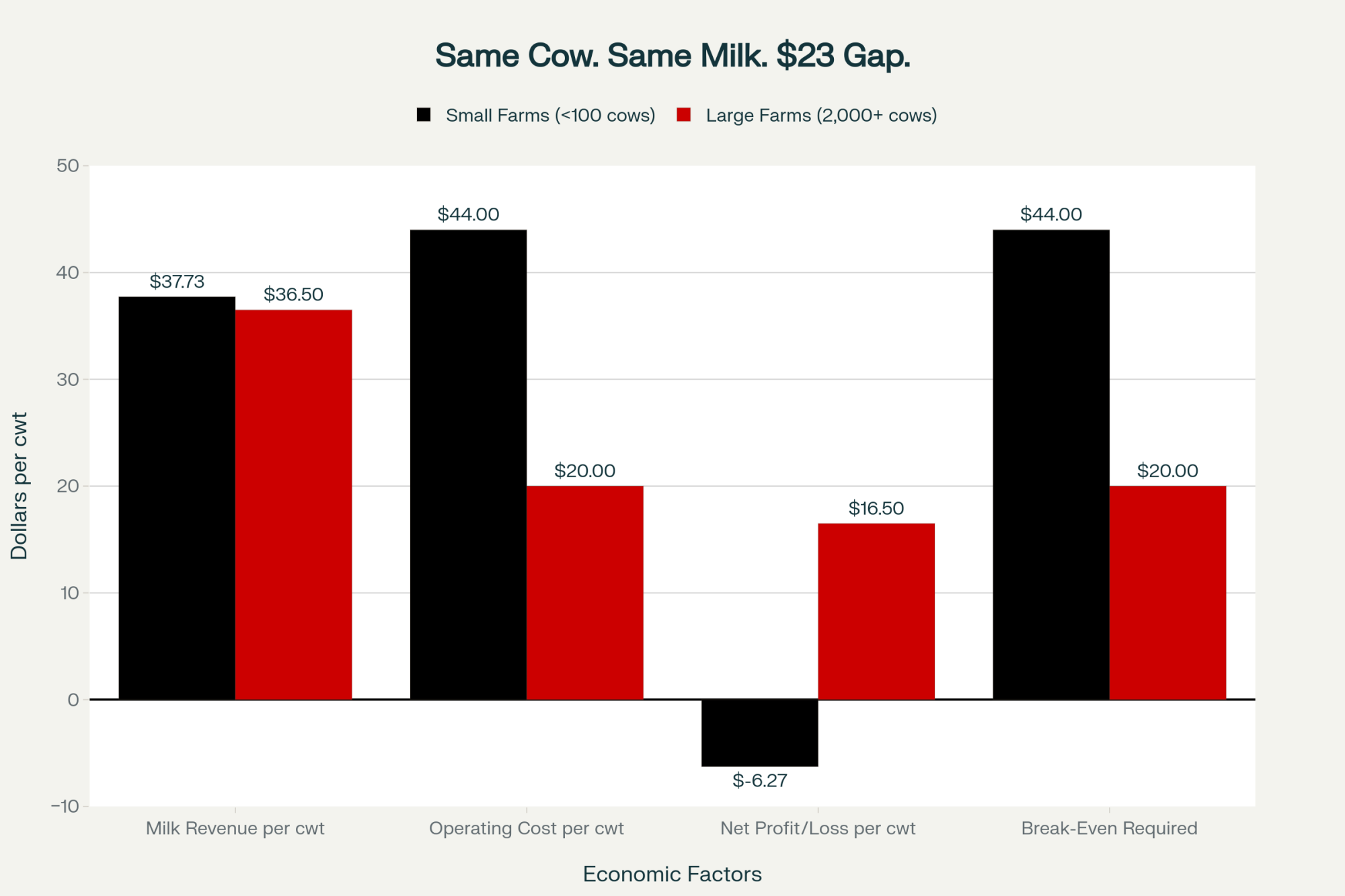
NewsSubscribe
First
Last
Consent

Your Dairy’s 18-Month Countdown: The $480,000 Difference Between Strategic Exit and Forced Sale

Half of U.S. dairy farms will vanish by 2030. The survivors? They’re making one decision differently.

EXECUTIVE SUMMARY: The math stopped working when milk prices crept up 16% but diesel doubled and feed jumped 40%—that’s why 2,800 dairy farms close annually and milk checks now arrive with crisis hotline cards. Most producers don’t realize they have just 18 months from first losses to forced decisions, and waiting those extra six months costs families $380,000 in preserved equity. Strategic exits at month 8-10 save $400,000-$680,000; forced liquidations leave $100,000-$200,000. With half of America’s 26,000 dairy farms vanishing by 2030 and kids as young as 14 running milking shifts, this isn’t about failure—it’s about timing. This article provides the exact month-by-month timeline, real alternatives that work (partnerships, robotics, organic), and the framework to make informed decisions while you still have choices. Because sometimes the bravest thing you can do is preserve what three generations built before it’s too late.

Dairy Profitability Strategy

So I was talking with a producer last week—you know how these conversations go, catching up at the feed store or after a meeting—and he mentioned something that really stuck with me. His milk check came with a little card tucked in. Mental health resources, crisis hotline numbers.

After thirty years in this business, that’s…well, that’s something new.

And it got me thinking about what we’re all seeing out there. The combination of labor challenges, these heat waves that seem to hit harder every year, and margins that just don’t pencil out anymore—especially for those 200 to 400 cow operations that used to be the heart of rural communities. You know the ones I’m talking about. Maybe it’s your operation.

Here’s what’s keeping me up at night: Industry projections from Rabobank show we’re losing about 2,800 farms every year now—that’s 7 to 9% of all U.S. dairy operations annually. The economists I trust—folks at Cornell PRO-DAIRY, Wisconsin’s Center for Dairy Profitability, the people who really understand our business—they keep talking about this 12 to 18 month window. That’s what you’ve got when things start going sideways. And what do you do in those months? The difference can be hundreds of thousands of dollars. I’m not exaggerating. We’re talking about preserving what your family built versus watching it disappear.

What’s Really Different in the Barn These Days

You probably know this already, but walk into any mid-sized dairy operation today, and it feels different than it did five years ago. Can’t quite put your finger on it at first, but then you realize—it’s quieter. Not the good kind of quiet either.

Five years back, you’d hear workers talking during morning milking —maybe some Spanish conversation —and teenagers grumbling about the early start (though secretly learning the trade). Now? Often, it’s just the owners — usually in their fifties, maybe early sixties — doing the work of four or five people. And they look exhausted.

What’s interesting is how the numbers back up what we’re feeling. The National Milk Producers Federation’s 2025 workforce data shows that immigrant workers make up about 51% of our workforce, but here’s the kicker—they produce 79% of the milk. Think about that for a second. And these folks, they’re operating under a kind of stress that wasn’t there before. I see it myself. Unfamiliar truck pulls up? Conversations stop. Workers keep phone numbers in their pockets now—family contacts, immigration attorneys. That’s become normal, and it shouldn’t be.

The age thing is really something else. Was talking to a Wisconsin producer recently who’s got two helpers, both in their seventies. “There’s just no pipeline of younger workers,” he told me. And he’s right—USDA’s Economic Research Service documented that agricultural employment dropped by 155,000 workers between March and July this year. That’s 7% of our workforce, gone in four months.

But here’s what really gets me—and I hate even saying this—we’ve got fourteen-, fifteen-year-old kids running full milking shifts. Not helping out, not learning from Dad or Grandpa. Running the shift. Because there’s literally nobody else. That’s not how it’s supposed to work.

When Everything Comes at You at Once

The Labor Situation Can Change Overnight

Let me tell you about what happened in Lovington, New Mexico, this past June. Shows you how fast things can go south.

Isaak Bos was running his operation like any other day when Homeland Security showed up. Full enforcement action, armed agents, the whole thing. By the time they left? Sixty-four percent of his workforce was gone. Eleven were arrested on the spot, and another twenty-four were let go when their papers didn’t check out. The Albuquerque Journal covered it extensively—this isn’t hearsay, it’s a documented fact.

“Milk production had effectively ceased,” Bos told reporters. “We’re barely able to keep going.”

Here’s what really opened my eyes—UC Davis agricultural economists have been tracking this, and their 2025 research found that when raids happen, farms that haven’t even been touched lose 25 to 45% of their workers. They just stop showing up. Can’t blame them, really. Word travels fast in these communities. One raid in Vermont affects operations in Wisconsin, Idaho, and California. Everyone’s on edge.

Heat Stress Is Getting More Expensive Every Year

While we’re scrambling for workers, the heat’s becoming a bigger problem than most people realize. And I mean, we all feel it, right? But the numbers are sobering.

This study from Science Advances—Dr. Nathaniel Mueller and his team published it this year—found that one day of extreme heat cuts milk production by up to 10%. And here’s the kicker: those effects stick around for more than ten days. Small farms, the ones under 100 cows? According to the University of Illinois farmdoc daily analysis from March, they’re losing 1.6% of production annually just to heat stress. That’s nearly 60% worse than bigger operations that can afford better cooling.

Let me put this in real terms. If you’re running a small operation, maybe clearing $60 to $175 per cow annually (and that’s being optimistic these days), Texas A&M and Florida extension economists calculate you’re looking at heat stress losses of $400 to $700 per cow. Even up here in the Midwest, we’re seeing impact. Pennsylvania operations are reporting similar challenges. California producers? They’re dealing with both heat and water restrictions—double whammy.

Now, the extension folks—and they mean well—they recommend cooling systems. Tunnel ventilation, evaporative cooling, all that. Penn State, Wisconsin, and Cornell all cite $70,000 to $85,000 for a 200-cow operation. But here’s the thing nobody wants to say out loud: if you’re already losing sixty, seventy thousand a year, where’s that money coming from? Banks aren’t lending for improvements when you can’t show positive cash flow.

The Math Just Doesn’t Work Anymore

November’s milk price came in at $21.55 per hundredweight. But you know how it is—after co-op deductions, quality adjustments, hauling…you’re seeing less. Sometimes a lot less.

Here’s what’s interesting—and I really wish I could draw you a picture here because it’s striking when you see it laid out. I was looking at the cost changes since 2020, and the spread is just brutal. Let me walk you through what I mean:

Back in 2020, we had milk at about $18.50 per hundredweight. Your basic feed costs, let’s index them at 100 to make it simple. Labor was running around $16 an hour if you could find it. Diesel? About $2.20 a gallon.

Fast forward to now, 2025. Milk’s up to $21.55—hey, that’s 16% better, right? But look at everything else. Feed costs have jumped 40% from that baseline. Labor—if you can even find workers—is running $20 to $21 an hour, up 30%. And diesel? Don’t get me started. We’re looking at $4.40 a gallon in many areas. That’s doubled.

While milk prices crawled up 16% since 2020, diesel doubled, feed jumped 40%, and labor climbed 30%—creating an unsustainable cost structure that explains why 2,800 dairies close annually

So you’ve got milk prices creeping up by 16% while your inputs shoot up by 30%, 40%, or even 100%. That gap between what you’re getting paid and what you’re paying out? That’s where your equity bleeds away, month after month. When the milk check doesn’t cover the feed bill, you’re basically robbing Peter to pay Paul.

The bankruptcy numbers tell the same story—259 dairy farms filed Chapter 12 between April 2024 and March 2025. That’s a 55% jump from the year before. But here’s what that doesn’t capture—for every farm that files, there’s probably another one or two quietly selling off equipment, maybe some land, trying to restructure without the paperwork. The stigma’s real, you know?

Small and mid-size dairies hemorrhaged 42% of operations while mega-farms grew 16.8%, now controlling nearly half of all U.S. milk production—proving economies of scale aren’t optional anymore

Understanding That 12 to 18 Month Timeline

When the economists at Cornell and Wisconsin talk about this 12- to 18-month window, they’re not being dramatic. Let me walk you through what this looks like, based on what I’m seeing across multiple operations. Think of it as a composite—no single farm, but patterns I see repeatedly.

Months 1 Through 6: The Slow Bleed

You start drawing more heavily on your operating line. Maybe go from $140,000 to $165,000 over a quarter. It feels manageable because you’ve still got credit available.

You start making small compromises. Put off that gutter cleaner repair—sure, it means 90 minutes of manual scraping every day, but you save $3,200. You match a wage offer you can’t really afford because if that last good employee leaves, you’re done.

The bank might restructure some debt and convert short-term debt to long-term debt. Feels like breathing room, right? But you’re just locking in obligations you probably can’t meet long-term.

Months 7 Through 12: Options Starting to Close

Your credit line’s getting close to maxed out. The lender—and these are good people who want to help—they start asking for monthly financials instead of quarterly. That’s never a good sign, as you probably know.

You can’t defer maintenance anymore, but you can’t afford it either. You’re one major breakdown away from crisis. One bad bout of mastitis in the fresh cow group. One compressor failure.

This is when those hard conversations happen. I know a couple in Vermont who have been farming for 40 years. She found him in the barn at 2 AM, just standing there. “We need to talk about what we’re doing,” she said. But they convinced themselves spring prices would turn things around. In my experience…they rarely do.

Months 13 Through 18: Decision Time

Banks lose confidence. You’ve violated debt covenants—maybe debt-to-asset ratio, maybe working capital requirements. Your options are bankruptcy or a forced sale. Any equity you’ve got left needs immediate action if you want to preserve it.

By now, that window for a strategic exit? It’s mostly closed. Operations that could’ve preserved $400,000 to $600,000 in family wealth six months earlier are looking at scenarios where keeping $100,000 to $200,000 feels like a win.

The Conversation Nobody Wants to Have

Here’s something we need to be honest about, even though it’s uncomfortable: strategic exits made early preserve dramatically more wealth than waiting for the bank to force your hand.

The brutal math of waiting: Strategic exits at month 8-10 preserve $480,000 in family wealth, while forced liquidations at month 18+ leave just $150,000—a $330,000 penalty for six months of denial

Let me break down what I’ve seen happen, based on actual auction results and sale data from 2025:

Strategic Exit (while you’ve still got 7-9 months of runway):

  • Sell your herd voluntarily, maybe get $1,850 per good cow
  • Equipment goes through a proper auction with time to market it right
  • Real estate gets listed properly, not fire-sold
  • Families walk away with $400,000 to $680,000

Forced Liquidation (month 18 and beyond):

  • Distressed sale, maybe $1,400 per cow if you’re lucky
  • Equipment auction under pressure, buyers know you’re desperate
  • Real estate sells fast and cheap
  • Families keep $100,000 to $200,000

That three to five hundred thousand dollar difference? That’s college funds. That’s retirement. That’s the chance to start over without crushing debt. And the only variable is timing.

As a Pennsylvania dairyman who went through this last year told me: “The hardest part was admitting we needed to exit. Once we did, we realized we should’ve made the decision six months earlier. Would’ve kept another $200,000.”

What Producers Are Actually Doing

Making Do with What They’ve Got

Was talking to a reproductive specialist in Florida last week—smart guy, been around—and he told me about a client who couldn’t afford a proper cooling system. Five thousand for misters was out of reach. So this producer rigged up a garden sprinkler on a fence post in the holding pen.

“It kept cows from dropping 10 to 20 pounds of production per day,” he said. “Bought him a month to generate some cash flow for proper cooling.”

That’s the reality for a lot of us, isn’t it? Hardware store solutions. Making do. It’s not ideal, but it keeps you going another day.

Partnerships—Sometimes They Work

Three neighbors in Idaho pooled their operations last year. Formed an LLC, consolidated everything. Individually, they were all questionable. Together? They’re actually competitive now.

But finding the right partners is tough. You need compatible management styles, similar work ethics, and—here’s the kicker—about $75,000 to $150,000 just for legal setup and restructuring. Folks who track these things estimate that maybe one in four or five partnership attempts actually succeeds long-term. The rest fall apart, usually over management disputes, within eighteen months. The Milk Producers Council has been documenting these partnerships, and the success stories all have one thing in common: clear, written agreements about everything from work schedules to exit strategies.

Some Folks Are Finding New Paths

It’s not all doom and gloom, and I want to be clear about that. Some operations are finding ways forward that work.

Several Vermont farms I know of are transitioning to organic. USDA’s organic price reports show a $38 per hundredweight price, compared with the $21.55 conventional price. But it’s brutal—the Northeast Organic Dairy Producers Alliance documents that it takes years and costs hundreds of thousands, while your revenues drop during the transition. You need deep pockets to weather that storm.

There are operations near Philadelphia, Boston, places like that, doing on-farm processing. Selling direct at $12 per gallon to customers who want the “farm experience.” One New York operation I visited invested $380,000 in processing facilities and visitor infrastructure. It’s working for them, but you need the right location and wealthy suburban customers nearby.

In Ohio, the Johnsons invested $800,000 in robotic milkers—but only after selling 60 acres to raise capital. Three years later, they’re viable with 300 cows and two full-time people. Not everyone has 60 acres to sell, but for those who do, technology might be an option. Just remember, the payback period is typically 7-10 years if everything goes right.

And here’s something interesting—completely legal, but not widely known—strategic bankruptcy under Section 1232 of the tax code can actually preserve more wealth than conventional sales in certain circumstances. The provision treats specific capital gains as dischargeable debt. You need a good attorney who understands agriculture, but it’s an option worth knowing about.

The Human Cost Nobody Talks About

We focus so much on the financial side, but the human toll…that’s what really matters, isn’t it?

The CDC found that farmers are 3.5 times more likely to die by suicide than the general population. Dr. Andria Jones-Bitton’s research at the University of Guelph documented that 68% of farmers experience chronic stress. Nearly half meet clinical definitions for anxiety. About 35% for depression.

Think about what this means for families. Farm wives who’ve managed the books and fed calves for twenty-five years suddenly need to find outside employment at fifty with no traditional work history. Kids who worked adult hours on the farm, watching it fail, wondering if it was somehow their fault. The weight of being the generation that “lost the farm”—that stays with people.

A dairy wife from Minnesota shared something that really stuck with me: “Being married to a farmer means putting everything else on hold from April to October, just trying to keep your husband from breaking.” Another described herself as essentially a single parent because her husband’s always in the barn, always stressed, never really present even when he’s physically there.

Where This Is All Heading

Small and mid-size dairies hemorrhaged 42% of operations while mega-farms grew 16.8%, now controlling nearly half of all U.S. milk production—proving economies of scale aren’t optional anymore

Industry projections are sobering—we’ll lose 7 to 9% of operations annually through 2027. Let me put that in real numbers so you can picture what’s happening:

The Decline We’re Looking At:

  • 2020: We had 31,657 dairy operations according to the Census of Agriculture
  • 2022: Down to 28,900
  • 2024: About 26,400 (estimated)
  • Right now, 2025: Around 26,000 operations

Now, if we keep losing 7% a year like the projections suggest:

  • 2026: We’re looking at 24,180 operations
  • 2027: Down to 22,487
  • 2028: About 20,893
  • 2029: Roughly 19,430
  • 2030: Somewhere between 13,000 and 18,000 operations
From 31,657 farms in 2020 to a projected 18,000 by 2030—this isn’t gradual evolution, it’s an industry extinction event claiming nearly 8 farms per day for the next five years

Some folks think consolidation could accelerate in those final years—once you hit certain thresholds with processing capacity and infrastructure, things can snowball. That’s why some projections go as low as 12,000 to 14,000 farms by 2030.

Picture that trend line…it’s not a gentle slope. We’re talking about losing half—maybe more—of all U.S. dairy farms in just five years. Each of those data points? That’s hundreds of families making the decision we’ve been talking about.

If this keeps up—and honestly, I don’t see what would change it—by 2030, we’re looking at:

  • Going from today’s 26,000 farms down to maybe 13,000 to 18,000 (could be even lower if things accelerate)
  • Operations with over 1,000 cows controlling 65 to 72% of all production
  • Production moving to Idaho, New Mexico, Texas—where those economies of scale work better
  • Traditional dairy states—Wisconsin, Vermont, upstate New York, and Pennsylvania Dutch Country—are losing half to two-thirds of their farms

You know, this consolidation might create certain efficiencies. Sure. But it reduces resilience. When 65% of your milk comes from fewer, larger operations, any disruption—such as a disease outbreak, a weather event, or another immigration raid—has massive impacts. We got a taste of this during COVID. Next time? It’ll be worse.

What You Need to Know Right Now

If Your Operation’s Losing Money

First thing—and I mean this week—sit down and calculate your actual runway. How many months can you really keep going at current burn rates? Be honest with yourself. This isn’t the time for optimism.

Get a confidential consultation with someone who understands agricultural transitions. Your state extension service can usually connect you. Do it now while you still have options. Every month you operate at a loss, you’re converting twenty to thirty thousand dollars in family wealth into expenses you’ll never recover. That’s real money that could be in your pocket.

Look at all your options. Strategic exit while you’ve got equity to preserve. Partnerships, if you’ve got the right neighbors and the relationship to make it work. Maybe pivoting to specialty markets if you’re positioned for it—A2 milk premiums, grass-fed certification, direct marketing if you’re near population centers. Scaling up if—and this is rare—you somehow have capital access.

But here’s what matters most: your family’s wellbeing trumps everything else. Your mental health, your marriage, your relationship with your kids—all of that matters infinitely more than what the neighbors think.

For the Lenders and Consultants

I know you’re reading this too. If you’re working with struggling operations, please—have honest conversations about strategic exits before all the equity’s gone. Stop promoting solutions that require capital these farms don’t have. That robotic milking system might be amazing technology, but not if the farm goes bankrupt before the ROI shows up.

Communities need to start planning for transitions. I know it’s hard to accept, but pretending family dairy’s going to reverse these trends somehow…that’s not helping anyone.

Making the Tough Call

I keep thinking about this Wisconsin family I know—real people, not a composite. They made their exit decision with about 8 to 10 months left in their viability window. Walked away with $482,000 in preserved equity. If they’d waited until the bank forced their hand? They’d have kept less than $200,000.

That $280,000 difference came down to one thing: having the courage to make a strategic decision while they still had choices.

For all of us looking at that 12 to 18 month countdown—and you know who you are—the question isn’t whether the farm continues. We can read the economics. The question is whether you preserve the wealth you’ve built through strategic action or lose it through delay.

Getting Help

If you’re struggling—financially, mentally, or both—please reach out. There’s no shame in it.

Mental Health Support:

  • National Suicide Prevention Lifeline: 988
  • Farm Aid Hotline: 1-800-FARM-AID
  • AgriStress Helpline: 1-833-897-2474

Financial Planning:

  • Your state extension service has transition specialists
  • Wisconsin Farm Center: 1-800-942-2474
  • Pennsylvania Center for Dairy Excellence: 1-888-373-7232
  • Cornell PRO-DAIRY programs
  • Michigan State Extension: 1-888-678-3464

Look, the clock’s ticking on thousands of operations. Understanding the timeline, recognizing your options, and—this is the hard part—acting while you still have choices…that’s what determines whether you preserve what three generations built or watch it disappear.

The decision’s incredibly difficult. I get that. But the math? The math is becoming clearer every day.

And if you’re reading this thinking, “he’s describing my farm”… maybe it’s time for that conversation you’ve been avoiding. Better to have it now, on your terms, than later on someone else’s.

We’re all in this together, even when it feels like we’re alone. And sometimes the bravest thing you can do is know when it’s time to preserve what you can and move forward.

KEY TAKEAWAYS 

  • Your 18-month countdown starts the day you can’t pay all bills on time—most farmers don’t realize until month 12, when half their equity is already gone
  • The $380,000 decision: Exit strategically at month 8-10, keeping $480K, or wait for forced liquidation at month 18, keeping $100K (real Wisconsin example)
  • Red flags demanding immediate action: Bank requests monthly financials, your 14-year-old runs milking shifts, you’re choosing between feed bills and diesel
  • Three viable options remain: Strategic exit (preserves family wealth), partnerships with neighbors (1 in 4 succeed with $75-150K legal costs), or technology pivot (requires $800K+ capital)
  • This week’s action: Call your state extension service for confidential consultation—it’s free, and waiting another month costs you $20-30K in family wealth that’s gone forever

Complete references and supporting documentation are available upon request by contacting the editorial team at editor@thebullvine.com.

Learn More:

Join the Revolution!

Join over 30,000 successful dairy professionals who rely on Bullvine Weekly for their competitive edge. Delivered directly to your inbox each week, our exclusive industry insights help you make smarter decisions while saving precious hours every week. Never miss critical updates on milk production trends, breakthrough technologies, and profit-boosting strategies that top producers are already implementing. Subscribe now to transform your dairy operation’s efficiency and profitability—your future success is just one click away.
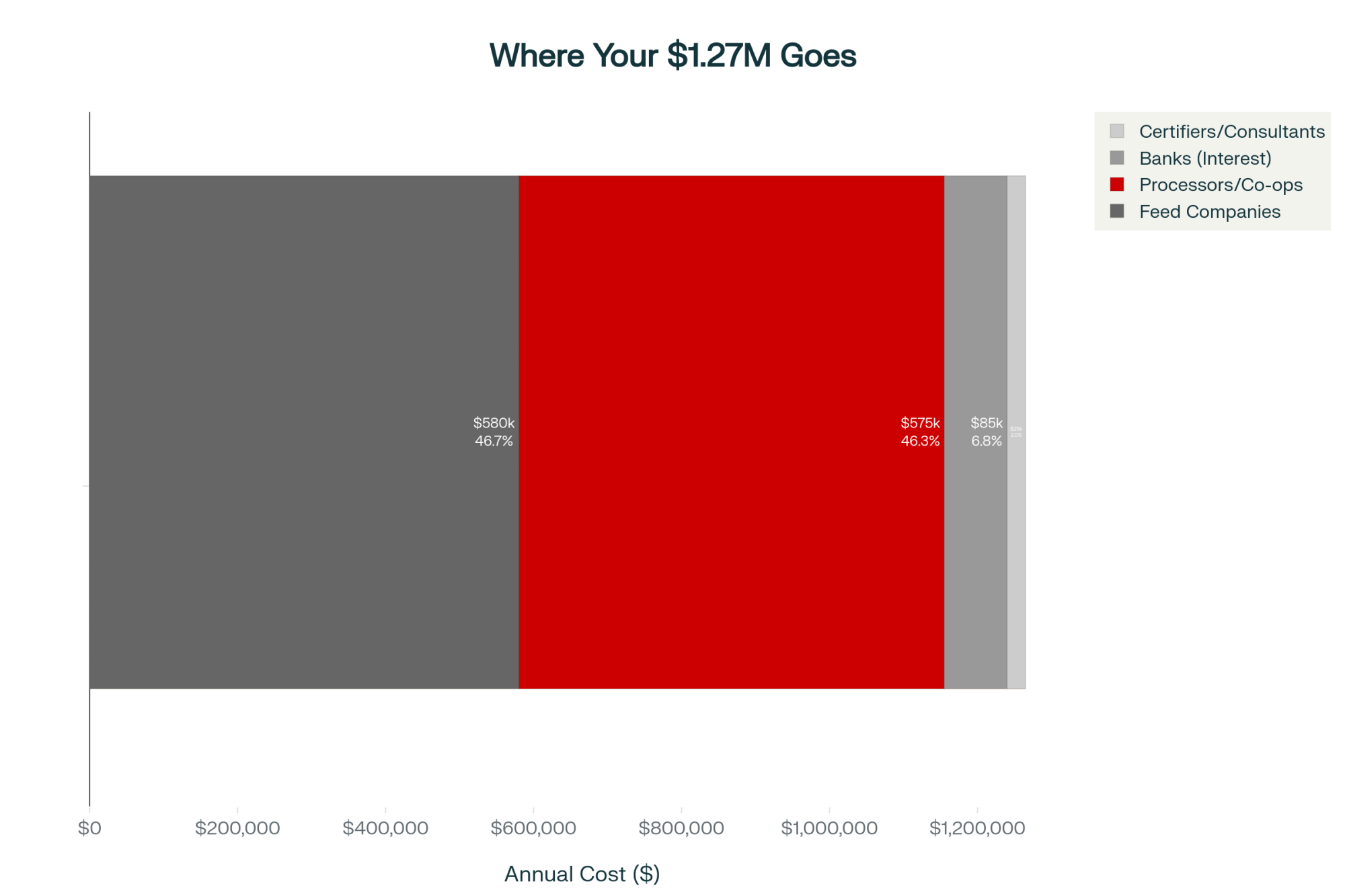
NewsSubscribe
First
Last
Consent

Bred for Success, Priced for Failure: Your 4-Path Survival Guide to Dairy’s Genetic Revolution

Your best cow makes 4.5% butterfat. Your processor pays for 4%. Your neighbor with robots is profitable at $16 milk. You need $19.50. Welcome to dairy’s new reality.

Executive Summary: Fresh cows across America are now routinely exceeding 4.2% butterfat—a genetic miracle achieved in five years that should’ve taken thirty. But here’s the crisis: processors built for 3.7% milk can’t handle today’s components, capping payments at 4% while farmers produce 4.5%. With heifer inventory at its lowest since 1978 (3.914 million head) and milk prices stuck at $16.70, mid-sized farms bleeding cash at $19-20/cwt production costs watch 5,000-cow operations profit at the same prices. Four proven paths exist: scale to competitive size with locked-in processing contracts, exit strategically while preserving 70-85% equity, differentiate into $42-48/cwt niche markets, or adopt robotics for megadairy-level efficiency at family scale. The genetic revolution is permanent and irreversible. The only question is whether you’ll adapt by choice or by force.

Dairy Farm Survival Guide

You know, I recently spent time with a third-generation Wisconsin dairyman reviewing his latest DHIA test results, and what we saw tells the whole story. Every fresh cow in his transition pen—every single one—was testing above 4.2% butterfat, right out of calving. He looked at those numbers, shook his head, and said something that’s been rattling around in my mind ever since: “We’ve bred exactly what we wanted, and now we’re not entirely sure what to do with it.”

That conversation really captures what’s happening across our industry right now. According to the USDA’s September 2025 Milk Production report, we’ve pushed average butterfat from 3.95% in 2020 to 4.36% today. Think about that for a minute—what took our grandfathers thirty years, we’ve done in five. August milk production hit 19.5 billion pounds, up 3.2% from last year, with the average cow producing 2,068 pounds monthly. It’s incredible progress by any measure.

And yet… here we are, looking at Class III futures stuck around $16.70 through spring 2026 on the CME, and many of us are wondering how success became so complicated.

The genetic miracle becomes a processing nightmare: butterfat jumps from 3.95% to 4.36% while plants designed for 3.7% struggle to handle excess cream, triggering payment caps at 4%

Understanding the New Production Reality

What’s really fascinating is how fundamentally genomic selection has changed the game since it took off around 2009. The Council on Dairy Cattle Breeding’s August 2025 data shows we’ve essentially doubled our rate of genetic gain—from about $40 in Net Merit annually to $85.

Now, Net Merit—for those who haven’t dug into the genetics reports lately—basically captures lifetime profit potential. It rolls milk production, components, fertility, and longevity into one dollar value. When that’s jumping $85 every single year, well… you’re looking at cows that are fundamentally different from what we milked even a decade ago.

Here’s what this means in practical terms on your farm. The genetic potential for butterfat percentage is increasing by about 0.04-0.06% annually, according to CDCB’s latest evaluations. When combined with nutritional advances, this results in the total observed improvement of 0.1% or more that we see in the tank—and the genetic portion is baked in permanently. Protein content has risen from around 3.18% in 2020 to 3.38% today based on the USDA’s component testing data. Generation intervals have compressed from 5 years to just over 3, as Holstein Association USA’s genomics report documents. We’re seeing component-adjusted milk solids up 1.65% year-to-date, even though actual volume declined slightly, according to Progressive Dairy’s June 2025 analysis.

What’s particularly noteworthy—and honestly, kind of sobering—is that these improvements are permanent. Unlike feed rations, you can adjust, genetic potential can’t be dialed back when market conditions shift. Dr. Chris Wolf and his team at Cornell’s Dyson School have been documenting this reality extensively in their market outlook papers. Once those genetics enter your herd, that production capacity is there to stay.

I recently spoke with nutritionists working with Idaho operations averaging 95 pounds daily at 4.4% butterfat, and here’s what’s interesting: they’re now reformulating rations, trying to moderate component production. Can you imagine? Five years ago, we were doing everything possible to push components higher. Now, some folks are actually trying to pump the brakes. It’s a complete reversal of production philosophy.

And it’s not just us dealing with this. New Zealand’s LIC reports similar acceleration in genetic gains in their latest breeding worth statistics, though not quite at our pace. European data from Eurostat’s dairy production reports show that average butterfat has gone from 4.05% to about 4.18% over the same period. Australia’s seeing comparable trends according to DataGene’s genetic progress reports. But nobody’s matched what American genetics have achieved, and… well, that’s becoming part of the problem, isn’t it?

“We’ve bred exactly what we wanted, and now we’re not entirely sure what to do with it.” — Wisconsin dairy producer, reviewing 4.2%+ butterfat across his entire fresh pen

Understanding Component Changes

Metric2020 Baseline2025 CurrentAnnual Change
Butterfat3.95%4.36%+0.1-0.15%
Protein3.18%3.38%+0.04%
Manufacturing ImpactBaseline+20-25% cheese yieldPermanent gain

The Processing Bottleneck Nobody Saw Coming

Here’s where things get really interesting—and frankly, a bit concerning for many of us. While we’ve been celebrating these genetic achievements, we’ve created this mismatch between what our cows produce and what our plants can actually handle.

Several Midwest cheese plants are reporting that their systems were engineered for milk with an average butterfat content of 3.7%. Today’s routine deliveries at 4.5% or higher? That creates real operational challenges. During spring flush, some facilities literally can’t process all the cream they’re separating. Nobody really saw that coming.

California’s experience really illustrates this challenge. Their Department of Food and Agriculture’s October 2025 utilization report shows that over 55% of milk now flows to Class IV processing—that’s butter and powder—because cheese manufacturers struggle to utilize all that excess butterfat efficiently. When your infrastructure expects one thing and your milk delivers something entirely different, you get these localized surpluses that hammer prices even when demand is actually pretty decent.

You know what’s making this worse? We used to count on seasonal variation. University extension research from Wisconsin and Minnesota has long documented that summer heat stress typically reduces component levels by 0.2-0.3%, giving plants a natural breather. But with better cooling systems, enhanced summer rations… that dip isn’t happening like it used to. Plants that historically scheduled maintenance for July and August are running at full capacity year-round.

What many producers are encountering now—and you’ve probably experienced this yourself:

  • Some processors have implemented butterfat payment caps at 4.0%—anything above that, you’re not getting paid for it
  • Seasonal penalties ranging from $0.50 to $1.00 per hundredweight when components get too high, according to various Michigan and Wisconsin co-op reports
  • Regional price differences of $2-3 per hundredweight based on what local plants can handle
  • Several Wisconsin cooperatives are introducing component ratio requirements for the first time in decades

The industry’s responded with substantial investment—CoBank’s August 2025 Knowledge Exchange report and Rabobank’s dairy quarterly show about $8 billion in new processing capacity over three years. Major projects include Leprino’s Texas expansion opening in March 2026, Hilmar’s Kansas facility operational since July 2025, and California Dairies’ new beverage plant with 116,000 gallons daily capacity. But here’s the catch: these facilities were designed using milk projections for 2020-2021. They might be underestimating where genetics are actually taking us.

Jim, a VP of Operations at a major Midwest processor, told me at a recent industry meeting: “We’re essentially trying to retrofit 20th-century infrastructure for 21st-century milk. It’s like trying to run premium gasoline through an engine designed for regular—it works, but not optimally.”

The Demand Side Reality Check

Now, it’s worth acknowledging that demand hasn’t been standing still either. USDA Foreign Agricultural Service data shows U.S. dairy exports totaled around $7.8 billion in 2024, with cheese and whey products leading growth. Mexico remains our largest market, accounting for nearly 30% of exports, while Southeast Asian demand for milk powders continues to expand at 5-7% annually, according to USDA FAS regional analyses.

Domestically, we’re seeing interesting innovation too. Ultra-filtered milk sales grew 23% year-over-year according to IRI market data, and high-protein dairy products are capturing premium shelf space. The yogurt category alone has shifted toward Greek and Icelandic varieties that utilize more milk solids per unit—Chobani and Siggi’s now represent nearly 40% of the yogurt market by value, according to Nielsen data.

But here’s the reality—and this is what the economists at CoBank and Rabobank keep emphasizing in their reports—these demand-side factors, while positive, simply can’t keep pace with genetically-driven supply growth. When you’re adding 0.1-0.15% butterfat annually across 9.3 million cows, that’s creating manufacturing capacity equivalent to adding 200,000 cows every year without actually adding any cows. Export growth of 3-4% annually and domestic innovation can’t absorb that kind of structural increase.

A Wisconsin cheese maker I talked with last month put it pretty clearly: “We can sell everything we make, but we can’t make everything that’s being produced. The components are just overwhelming our systems.”

Why the Heifer Shortage Changes Everything

The replacement crisis creating tomorrow’s volatility: heifer inventory crashes to 3.914 million as 30% beef semen usage guarantees delayed expansion followed by genetically-supercharged production surges in 2028-2029

Now let’s talk about something that’s really reshaping market dynamics—the heifer situation. USDA’s October 2025 Cattle report shows we’re at 3.914 million replacement heifers. That’s a 25-year low, a level we haven’t seen since the turn of the century.

Regional heifer markets reflect this scarcity in a big way. At a sale in Lancaster County, Pennsylvania, last month, quality-bred animals brought $3,200 to $3,800. Five years ago? Those same heifers would’ve been $1,800 to $2,200. Mark Johnson, a buyer from Maryland, whom I talked with there, summed it up: “At these prices, every heifer has to offer exceptional potential.”

What’s driving this shortage is fascinating—and kind of predictable in hindsight. National Association of Animal Breeders’ 2025 annual report shows beef semen sales to dairy farms reached 7.9 million units last year, representing about 30% of total breedings. When feed costs spiked during 2023-2024, many operations reduced replacement programs by 30-40%. Tom Harrison, who runs 2,200 cows near Syracuse, New York, told me last week, “We cut our heifer program dramatically back then. We’re definitely paying for those decisions now.”

Here’s what this means for how markets will behave going forward:

  • Traditional expansion when prices improve? That’s now delayed 24-30 months minimum
  • When expansion eventually occurs, accumulated demand will likely trigger rapid growth
  • Those delayed heifers will carry enhanced genetics, amplifying future production increases
  • We’re basically setting up conditions for extended corrections followed by more dramatic rebounds

CoBank dairy economist Ben Laine’s latest analysis—published in their September 2025 outlook—offers really intriguing projections. He suggests milk prices might strengthen in 2026-2027 because no one can expand quickly. But then watch out for 2028-2029 when all those genetically superior heifers enter production. It’s like we’re loading a spring that’ll release all at once.

The Consolidation Reality Reshaping Farm Economics

The brutal mathematics of survival: mega-dairies banking $2.70 per hundredweight while mid-sized farms bleed $2.80—same milk price, catastrophically different outcomes determined purely by scale

At World Dairy Expo this October, every conversation seemed to circle back to consolidation. Dr. Andrew Novakovic’s team at Penn State released dairy markets research showing we’re approaching 85% processor concentration among the top five companies. Meanwhile, USDA’s preliminary 2024 Census of Agriculture data documents the decline from 648,000 dairy operations in 1970 to about 25,000 today.

But this isn’t just about getting bigger. I’ve been looking at cost-of-production data, and the disparities are striking. Wisconsin’s Center for Dairy Profitability September 2025 benchmarks show large operations exceeding 2,500 cows report production costs around $13-15 per hundredweight. Mid-sized farms—that 500-999 cow range many of us operate in—are looking at $19-20.

At current Class III prices near $17, that differential literally determines who’s profitable and who’s burning equity. A dairy farmer fromt the Texas Panhandle running 5,000 cows, showed me his books—still making money at $16 milk. His neighbor with 800 cows? He needs $19.50 just to break even. That’s not management quality—that’s structural economics.

Dairy’s ruthless transformation: 55 years collapse 648,000 farms to a projected 15,000 by 2030 while five processors tighten control to 90%—power consolidating on both sides of the check

But you know, smaller operations aren’t completely out of the game. A growing number of sub-200-cow farms are exiting the commodity markets entirely.

Strategic Pathways for Mid-Sized Operations

PathwayKey RequirementsSuccess FactorsTypical ROI Timeline
Scale Up(1,500+ cows)$5-8M capital; Processing partnerships secured firstEconomies of scale; Strategic processor relationships7-10 years
Strategic ExitAct before distress; Professional valuationTiming (retain 70-85% equity); Current market: $5,500-$7,000/cowImmediate
Niche MarketsLocation near population centers; Marketing capabilityDirect sales at $42-48/cwt vs. $17 commodity; Strong brand development3-5 years
Robotic Technology$225-300K total installed cost per robot; 60-70 cows/robotLabor efficiency rivals megadairies; Maintains family management5-7 years

Four Strategic Pathways for Mid-Sized Operations

For those of us running 500 to 1,500 cow operations—and that’s still most of us, right?—the current environment demands some really honest assessment. Based on extensive discussions with lenders, consultants, and farms that have recently navigated these choices, I’m seeing four main pathways emerge.

Scaling to Competitive Size

This means expanding to 1,500-plus cows to capture those economies of scale. Dairy outlook reports show you’ll need $5-8 million in capital, and—this is crucial—processing partnerships secured before you break ground. Based on what lenders and consultants are telling me, successful transitions remain relatively uncommon, mostly limited by capital access and those processor relationships.

Strategic Exit Timing

This is about selling while you can still retain 70-85% of your equity rather than waiting for forced liquidation. Legacy Dairy Brokers, who handle many Northeast sales, tell me that success improves significantly with early action rather than distressed sales.

Differentiation Beyond Commodities

This involves transitioning to specialized markets—organic, A2, and local brands. While success varies considerably by location and marketing ability, farms near population centers with strong direct marketing skills are finding viable niches.

Technology-Driven Efficiency Through Robotics

Here’s an interesting fourth pathway that’s gaining traction, especially for that squeezed middle segment. DeLaval’s 2025 North American sales report shows robotic milking installations increased 35% this year, primarily on farms with 300-800 cows. Lely and GEA report similar growth trends. These operations are achieving something remarkable—labor efficiency approaching megadairies while maintaining family management structures.

I visited a family near Eau Claire, Wisconsin, who installed six robots last year for their 400-cow herd. They’re down to three full-time people, including family members, and their cost per hundredweight dropped significantly—by nearly $3. The initial investment was substantial—around $1.8 million total—but with current labor challenges and costs, the five- to seven-year payback looks increasingly attractive, according to equipment manufacturers’ ROI analyses.

What’s particularly interesting is that these robotic operations can often secure better financing terms. Lenders see them as technology-forward with lower labor risk. It’s not the right fit for everyone, but for operations with good management and a willingness to embrace technology, it’s proving to be a viable middle path.

Risk Management Tools Every Farmer Should Understand

What surprises me is how many folks still aren’t using available federal programs effectively. Let me share what’s actually working based on USDA Farm Service Agency data and producer experiences.

Dairy Margin Coverage at the $9.50 level has provided exceptional value. FSA’s October 2025 program report documents average net benefits of $0.74 per hundredweight above premiums during challenging margin periods from 2021-2023. For Tier 1 coverage—your first 5 million pounds—the premium’s just $0.15 per hundredweight. That’s essentially subsidized protection. Enrollment deadlines are on March 31 each year, and you can enroll online at farmers.gov/dmc or call your local FSA office at 1-833-382-2363.

And here’s something interesting—with USDA’s Agricultural Marketing Service reporting October cull cow prices at $150-157 per hundredweight, strategic culling has become a real opportunity. Dave Carlson, a Michigan producer I spoke with last week, managing 650 cows near Grand Rapids, summarized it pretty well: “At $2,000 per cull cow while we’re losing money on milk, the math becomes pretty straightforward. We’ve reduced our milking herd by 15% and improved cash flow immediately.”

Regional Perspectives Reveal Different Realities

What fascinates me is how differently this transformation affects various regions. In Vermont and the Northeast, smaller operations with strong local markets are often outperforming mid-sized commodity producers. NOFA-VT’s 2025 pricing survey documents local, grass-fed, or organic premiums reaching $10-15 above conventional prices.

Down in the Southern Plains—Texas, Kansas, Oklahoma—it’s a completely different story. The massive investments in processing are driving aggressive expansion. A farmer I talked with in Texas, with 3,500 cows outside Amarillo, described the situation: “It’s basically a land grab for processing contracts. If you don’t have one locked in by 2027, you’re done.”

Pennsylvania’s situation particularly illustrates the challenges faced by mid-sized farms. Built on family operations, Penn State Extension’s latest report shows they lost 370 dairy farms in 2024 alone—predominantly in that 200-700 cow range. A farmer, managing 650 cows near Lancaster, explained his predicament when we talked last month: “We’re too large for direct marketing, too small for processor attention. We’re caught between models.”

Even within states, the variations are remarkable. Northern New York benefits from proximity to Canada and strong cooperatives, generally maintaining better margins than western New York operations shipping to distant processors. It’s all about local dynamics now.

Looking Ahead: What 2030 Actually Looks Like

Based on current trends and industry analysts’ projections—Rabobank’s September 2025 five-year outlook and CoBank’s consolidation analysis are particularly telling—the dairy landscape in the 2030s will be dramatically different. We’re likely looking at:

  • 14,000 to 16,000 total operations, down from today’s 25,000
  • Five major processors potentially controlling 90-92% of capacity
  • Average herd size around 600-650 cows, though that masks huge variation
  • Butterfat potentially averaging 4.52% if current genetic trends continue
  • The vast majority of production—maybe 75-80%—from operations exceeding 1,500 cows

Dr. Marin Bozic, the University of Minnesota dairy economist, made an observation at a conference I attended last month that really stuck with me: “Dairy is industrializing in 20 years what took poultry 40 years and swine 30 years to accomplish.”

The traditional 500- to 1,500-cow family dairy—the backbone of Wisconsin, Minnesota, and Pennsylvania—will need to either scale up, specialize, embrace technology, or transition out. Those aren’t easy choices, but ignoring them doesn’t make them disappear.

Practical Takeaways for Dairy Farmers

So what should you actually do with all this information? Here’s what I think makes sense:

Within the next month:

  • Calculate your true production costs, including family labor at market rates (University Extension has excellent worksheets—Wisconsin’s are particularly thorough)
  • Get written quotes from multiple processors or cooperatives for comparison
  • Make sure you’re enrolled in DMC before the March 31 deadline—it’s basically free protection
  • Have an honest conversation with your lender: Can we survive 18 months at $16.50 milk?

Over the next quarter:

  • Honestly evaluate which of the four strategic pathways aligns with your capabilities and family objectives
  • If you’re considering selling, start conversations now while maintaining your negotiating position
  • Reassess genetic selection strategies—maybe maximum production isn’t the goal anymore
  • Explore local differentiation opportunities or technology investments that might provide a competitive advantage

Long-term positioning:

  • Accept that genetic gains create permanent structural changes requiring adaptation
  • Understand that processing relationships increasingly determine profitability beyond farm efficiency
  • Recognize that scale economies, differentiation, or technology adoption are becoming essential
  • Build cash reserves—volatility’s the new normal

The Bottom Line

After months of researching this and talking with farmers nationwide, here’s my conclusion: The genetic revolution we’ve achieved—doubling productivity gains in 15 years—is absolutely remarkable. It represents American agriculture at its finest.

But it’s also fundamentally altered what economically viable dairy farming looks like. The efficiencies we’ve pursued individually have, collectively, created structural oversupply that traditional market mechanisms struggle to address. When everyone improves components 0.1% annually through permanent genetics… well, we’ve changed the entire game.

An Iowa breeder I’ve known for years, recently showed me comparative bull proofs from his files—1985’s top butterfat bull was plus 45 pounds, today’s leaders exceed plus 150. His observation was telling: “We achieved exactly what we selected for. Maybe we should’ve considered whether we truly wanted it.”

What’s becoming clear is tomorrow’s dairy success won’t just be about efficient milk production. It’ll be about strategic positioning, processing partnerships, risk management sophistication, technology adoption, and having the courage to make difficult decisions before they’re forced on you.

For those willing to adapt—whether through scaling, specializing, embracing technology, or strategic exit—viable pathways remain. The question becomes whether we’ll acknowledge these changes and adapt, or keep hoping for an industry structure that’s already gone.

The genetic revolution hasn’t merely changed how we produce milk. It’s reshaped what sustainable dairy farming means. Understanding and adapting to that reality, rather than resisting it, offers the clearest path forward.

As a Wisconsin farmer told me just last week: “We keep searching for someone to blame—genetics companies, processors, imports. Maybe we just got too good at what we do. Now we need to figure out what comes next.”

That’s the conversation we need to be having. And it needs to happen now, while options remain, not after another thousand farms close their doors.

For more information on the risk management programs mentioned in this article:

  • Dairy Margin Coverage (DMC): farmers.gov/dmc or call 1-833-382-2363
  • Livestock Gross Margin for Dairy (LGM-Dairy): Contact your approved crop insurance agent
  • Find your local FSA office: farmers.gov/service-locator

Complete references and supporting documentation are available upon request by contacting the editorial team at editor@thebullvine.com.

Learn More:

  • Rethinking Dairy Cattle Breeding: A Guide to Strategic Sire Selection – This guide provides tactical methods for adjusting your breeding program in a component-saturated market. It demonstrates how to select sires that balance production with crucial health and efficiency traits, directly impacting your herd’s future profitability and market relevance.
  • The Dairy Farmer’s Guide to Navigating Market Volatility – Explore advanced financial strategies for building resilience against the price volatility described in the main article. This analysis reveals how to leverage marketing tools, manage input costs, and build a flexible business model to protect your equity through unpredictable cycles.
  • The Robotic Revolution: Is Automated Milking the Future for Your Dairy? – For those considering the technology pathway, this deep dive details the operational ROI and management shifts required for robotic milking. It provides a crucial framework for evaluating if automation can deliver the labor efficiency and production gains needed to compete.

Join the Revolution!

Join over 30,000 successful dairy professionals who rely on Bullvine Weekly for their competitive edge. Delivered directly to your inbox each week, our exclusive industry insights help you make smarter decisions while saving precious hours every week. Never miss critical updates on milk production trends, breakthrough technologies, and profit-boosting strategies that top producers are already implementing. Subscribe now to transform your dairy operation’s efficiency and profitability—your future success is just one click away.

NewsSubscribe
First
Last
Consent

The $228,000 Exit Strategy Reshaping Dairy: Inside the 55% Surge in Strategic Bankruptcies

Dairy farmers found a way to keep $228K that would go to the IRS. It’s legal, it’s smart, and bankruptcies are up 55%. Here’s how.

EXECUTIVE SUMMARY: Dairy farmers have discovered that filing bankruptcy can net them $228,000 more than selling their farms outright—and 259 operations did precisely that in the past year, driving a 55% surge in Chapter 12 filings. The catalyst is Section 1232, a 2017 tax provision that treats capital gains as dischargeable debt, turning a $285,600 IRS bill into just $57,120 for a typical Wisconsin farm sale. These aren’t failures but strategic exits by producers facing 8% interest rates and margins squeezed to breakeven who see no point grinding through more unprofitable years. While this tax-advantaged bankruptcy helps retiring farmers preserve decades of equity building, it’s fundamentally reshaping the industry. Young farmers without inherited land face nearly insurmountable entry barriers, and production is rapidly consolidating in states like Texas, where operations compete on efficiency rather than land appreciation. The result: bankruptcy has become a financial planning tool as strategic as any breeding decision or ration formulation.

Strategic Farm Bankruptcy

You know, when the University of Arkansas Extension released their recent data showing 259 dairy farms filed for Chapter 12 bankruptcy between April 2024 and March 2025—that’s a 55% jump from the previous year—most of us in the industry took notice. But here’s what’s really interesting: the more I dig into these numbers, the more I’m seeing something unexpected happening out there.

Many of these filings don’t look like the desperate collapses we’ve seen before. Not at all. What we’re actually witnessing is strategic financial planning, and it all ties back to a 2017 tax law change that most of us didn’t pay much attention to when it passed.

Now, let me be clear about something important: these aren’t wealthy farmers gaming the system. Most of these operations are facing real financial pressure—margins have been squeezed to breakeven or worse for many producers. When you combine operating loan rates jumping from 3% to nearly 8% (Federal Reserve Bank of Chicago data), input costs that never came back down after their spike, and milk prices that the USDA reports are back at 2018-2019 levels, a lot of operations are genuinely struggling. The difference is that Section 1232 gives them a strategic exit option that preserves more value than grinding it out for another few unprofitable years would.

“I’ve milked cows for 35 years. I’m not failing—I’m choosing the smartest path forward for my family with the rules as they exist. If that means using bankruptcy court to maximize our retirement after decades of 4 a.m. milkings, I’m at peace with that decision.” — Wisconsin dairy farmer preparing for strategic Chapter 12 filing.

Follow the data-driven rise in strategic dairy bankruptcies that reframes exit planning as financial optimization FY2023-FY2025. This visual doesn’t just inform—it electrifies: bankruptcy isn’t defeat, it’s savvy planning!

What’s Actually Happening with These Numbers

So let me share what I’ve been learning about the current situation. You probably know this already, but today’s economic are fundamentally different from previous downturns. Back in 2019, when USDA’s Economic Research Service documented 599 Chapter 12 filings nationally, we all understood what was happening—milk prices had absolutely tanked, and those trade wars were killing our export markets. It was straightforward and brutal.

Today? Well, it’s more nuanced. Ryan Loy from the University of Arkansas’s Division of Agriculture puts it well—commodity prices have basically returned to those 2018-2019 levels, yet our input costs…they never came back down. Fertilizer, feed, diesel—they’re all still elevated, and we’re all feeling that squeeze.

But here’s what’s really changed the game for a lot of operations: interest rates. The Federal Reserve Bank of Chicago’s agricultural finance data shows operating loan rates essentially doubled between 2021 and 2023. We went from around 3% to nearly 8% by mid-2025.

And if you’re like many producers who expanded with variable-rate financing when money was cheap…well, you know exactly what that means for your monthly payments.

The regional patterns we’re seeing are worth noting too:

  • First quarter 2025 brought us 88 Chapter 12 filings nationally—that’s nearly double Q1 2024’s 45 filings
  • Arkansas went from 4 filings in 2023 to 25 in 2025—that’s quite a shift
  • Michigan moved from zero in 2023 to 12 in 2024
  • Wisconsin, as many of you know, lost another 400 operations in 2024, bringing them down to 5,348 licensed herds

Understanding Section 1232 and Why It Matters

Now, here’s where things get particularly interesting—and if you haven’t heard about this yet, you’ll want to pay attention even if bankruptcy’s the last thing on your mind.

Remember the Supreme Court’s Hall v. United States case back in 2012? Lynwood and Brenda Hall sold their farm for $960,000 during bankruptcy, triggered about $29,000 in capital gains taxes, and the court basically said, “you’ve got to pay that in full before we’ll approve your reorganization plan.” It made Chapter 12 pretty much useless for anyone with appreciated land.

Well, Senator Chuck Grassley from Iowa—he’s been a friend to agriculture for years—pushed through the Family Farmer Bankruptcy Clarification Act in October 2017. This added Section 1232 to the bankruptcy code, and honestly, it’s a game-changer.

Dr. Kristine Tidgren, who runs Iowa State’s Center for Agricultural Law and Taxation, explained this really well in her 2020 analysis. Unlike Chapter 11 bankruptcies, where you’d have to pay capital gains in full, Chapter 12 now treats those tax obligations as general unsecured debt. That means they can potentially be discharged—either partially or sometimes entirely—through your reorganization plan.

Let’s Walk Through the Math Together

So here’s a real-world scenario using Wisconsin farmland values from the USDA’s August 2025 data. Say you’re a producer who purchased 200 acres in 2005 for $2,000 an acre—pretty typical for that time. According to the Wisconsin Realtors Association, that same ground’s worth about $8,000 an acre today.

Traditional Sale (Outside Bankruptcy):

ItemAmount
Sale proceeds$1,600,000
Capital gain$1,200,000
Federal capital gains tax (20%)$240,000
Net investment income tax (3.8%)$45,600
Total tax to IRS$285,600
Net proceeds after tax$1,314,400

Strategic Chapter 12 Filing with Section 1232:

ItemAmount
Sale proceeds$1,600,000
Tax becomes unsecured debt$285,600
Payment to unsecured creditors (20%)$57,120
Tax savings$228,480
Net proceeds$1,542,880

See how Section 1232 flips the tax equation for dairy producers: from IRS bill to retirement nest egg—making Chapter 12 a strategic tool. This isn’t just about bankruptcy—this is smarter farm succession!


Scenario
Sale ProceedsTotal Tax PaidNet ProceedsStrategic Tax Savings
Traditional Sale$1,600,000$285,600$1,314,400$0
Chapter 12 w/ Section 1232$1,600,000$57,120$1,542,880$228,480

Now, that’s real money. And when you’re looking at those numbers…it makes you think differently about what bankruptcy means, doesn’t it?

The Wisconsin Story: It’s Not What Most People Think

Mike Vincent, the ag economist at UW-Madison’s Extension, shared something with me that really stuck: “The biggest issue we’re facing is that the farmers are retiring.”

And you know what? The data backs him up completely.

In 2020, UW-Madison and USDA NASS conducted the Dairy Farm Transition Survey. What they found was eye-opening—17% of Wisconsin dairy farms said they wouldn’t be milking within five years.

For smaller operations — those with under 100 cows — the number jumped to 22%. And here’s the kicker: only 40% of Wisconsin dairy farmers had identified someone to take over the operation.

So when Mike says he’s not surprised by these closure numbers, he’s got a point. Many of these aren’t panic exits at all. They’re planned transitions that just happen to coincide with bankruptcy provisions that make Chapter 12 filing financially smart.

I was talking with a producer up in Shawano County recently—been milking for 35 years, profitable most years, but his kids aren’t interested in taking over. His land’s worth four times what he paid for it. He asked me straight up: “Why would I leave $200,000 on the table for the IRS when I could use that for my retirement?”

And honestly? I couldn’t give him a good reason not to consider it.

Who Benefits and Who Doesn’t—The Regional Differences

What’s fascinating is how differently this plays out across regions. According to USDA NASS’s August 2025 land value data, if you’re farming in Iowa, where land’s averaging $10,200 an acre, or Illinois at $9,850, or certain parts of Wisconsin ranging from $6,800 to $18,500…well, you’ve got options that other producers don’t.

The National Agricultural Law Center’s been tracking filing patterns, and they’re seeing it’s mostly farmers over 60 planning retirement, operations needing to downsize—maybe from 300 cows to 150 or 200—and family farms where the next generation just isn’t interested in continuing.

But here’s the thing: if you’re running a modern operation in Texas or New Mexico, where most producers lease their ground—Texas A&M AgriLife Extension reports the average operation there leases about 70% of their cropland—this doesn’t help you at all. Same story if you bought land recently, or if you’re in a state like New Mexico where USDA data shows land’s only worth about $725 an acre.

A Texas producer I know who’s managing 2,100 cows near Amarillo put it pretty bluntly: “We compete on production efficiency, not land equity. This Section 1232 stuff means nothing to us.” And she’s absolutely right—it’s a completely different business model.

Now, in the Northeast, it’s another story entirely. Vermont and New York operations often sit on land that’s appreciated significantly due to development pressure, but they also face some of the highest production costs in the country.

A producer from St. Albans, Vermont, told me recently that while his land’s worth more than ever, the combination of labor costs and environmental regulations means he’s still weighing whether strategic bankruptcy makes sense compared to a traditional sale.

A Young Farmer’s Perspective

I recently connected with Jake Martinez, a 29-year-old who started a 180-cow operation in central Minnesota in 2022. His take on all this was eye-opening.

“I’m watching neighbors who’ve been farming for 40 years walk away with tax-free gains while I’m trying to scrape together enough for a down payment on 80 acres,” Jake told me. “Don’t get me wrong—they earned it. But for someone like me trying to build something from scratch? The entry barriers just keep getting higher.”

Jake’s financing his expansion through custom heifer raising and a small on-farm cheese operation. “I can’t compete on land acquisition,” he explained. “So I’ve got to find other ways to build equity. Direct marketing, value-added production—that’s where young farmers like me have to look for opportunities.”

His perspective highlights something important: while Section 1232 helps retiring farmers maximize their exit value, it’s creating an even wider gap for the next generation trying to get started.

How Word Is Spreading Through the Industry

What’s really accelerated this trend is the education happening through agricultural networks. The National Agricultural Law Center at the University of Arkansas reported in its FY2024 annual report that it hosted 16 webinars attended by over 2,400 people. Sessions on agricultural bankruptcy and debt management are drawing standing-room-only crowds at farm conferences these days.

Joe Peiffer, who runs Ag & Business Legal Strategies in Iowa—he grew up on a Delaware County dairy farm himself—has been particularly vocal about this. He makes a good point: “The producers who are decisive and adapt to changing conditions have the best opportunity to remain viable.”

There’s also Russell Morgan, an agricultural consultant in Arkansas, who’s been working with Chapter 12 trustee Renee Williams to educate Mid-South farmers. I heard their April 2025 webinar drew a huge crowd—dairy and row crop producers all trying to understand their options.

What the Lenders Are Thinking

Now, you might wonder what lenders think about all this. Bob Mikell from AgSouth Farm Credit shared some interesting thoughts at the recent Mid-South Agricultural and Environmental Law Conference.

He basically said they’d rather see a farmer successfully reorganize through Chapter 12 than lose everything in foreclosure. If Section 1232 helps someone right-size their operation and keep farming, he sees that as better for everyone involved.

That’s not universal, of course. Some commercial banks aren’t thrilled about strategic Chapter 12 filings by solvent borrowers. But the Farm Credit System—they hold about 47% of total farm real estate debt according to USDA’s Economic Research Service—seems to be taking a pretty pragmatic approach to the whole thing.

Looking North: How Canada Does Things Differently

It’s worth comparing our situation to what’s happening in Canada, because it really highlights the trade-offs we’re dealing with. Statistics Canada shows Canadian dairy farms maintain debt-to-asset ratios around 0.191—that’s about half what we typically see in comparable U.S. operations. Bankruptcies? They’re basically non-existent up there.

While we’re dealing with volatility and needing various support programs, their supply management system provides built-in stability. But—and this is a big but—that stability comes at a cost. Canadian Dairy Commission data from November 2024 shows quota costs running CAD $24,000 to $58,000 per cow’s worth of production capacity. A typical 100-cow operation needs $3-5 million just in quota before they buy their first animal. And consumers? They’re paying CAD $1.07 per liter for milk.

Meanwhile, we’ve got the freedom to expand and chase export markets. U.S. Dairy Export Council data shows we hit $8.22 billion in exports in 2024. But with that freedom comes the volatility that’s driving these bankruptcy patterns we’re seeing.


Country/Region
Entry BarrierProducer Age (avg)Bankruptcy IncidenceMilk Price (USD/L)Export RatioKey Challenge
Canada (Quota)$30,000/cow quota55+Rare$0.80-1.10<10%High startup cost
USA (Free Market)$400,000+ down60+Up 55% (2024)$0.40-0.6015%+Volatility, consolidation
Texas/Idaho (Efficiency)Leased land, $250K+ equity50-58Low, not equity-driven$0.40-0.5520%+Scale, tech adoption

The Personal Side of These Decisions

I think it’s important to acknowledge something here: not everyone’s comfortable with strategic bankruptcy, even when the math makes perfect sense.

A producer from Fond du Lac County recently told me that his grandfather would “roll over in his grave” if he filed for bankruptcy, regardless of the circumstances. “In his day, you paid your debts, period.” That sentiment’s real, and it matters in our communities.

At the same time, Jamie Dreher from Downey Brand LLP made a good point at the Western Water, Ag, and Environmental Law Conference this past June. Congress designed Section 1232 specifically to help farmers transition without getting crushed by tax obligations. Using a tool that was created for your exact situation? There’s no shame in that.

It’s a deeply personal decision. There’s no right answer that works for everyone’s values and circumstances.

Where This Is All Heading

Looking ahead, several trends are becoming pretty clear. Dr. Ani Katchova at Ohio State’s Department of Agricultural, Environmental, and Development Economics thinks that by 2030, strategic bankruptcy planning might become just another standard option we discuss in farm transition planning, right alongside traditional succession strategies.

We’re likely to see continued geographic consolidation. States with high land values will keep seeing farms exit through tax-advantaged bankruptcy, with that land flowing to the remaining large operations.

Meanwhile, production’s going to keep concentrating in states like Texas and Idaho, where operations focus on efficiency rather than land equity. USDA data shows Texas already surpassed Idaho as the number three milk-producing state in 2025—they’ve grown 190% since 2001.

For young farmers trying to get started? It’s getting tougher. Iowa State’s Beginning Farmer Center reports that the traditional path—building wealth through dairy excellence over 20-30 years—is becoming nearly impossible in high-land-value regions.

Practical Thoughts for Producers

If you’re weighing your options, here’s what I’d suggest thinking about.

First, really understand your complete financial picture. Not just your cash flow, but your land equity position too. The Federal Reserve has some good agricultural finance calculators that can help you see how interest rate changes affect your debt service.

And honestly consider whether downsizing might actually strengthen your operation’s viability.

Get professional advice early—and I mean early, not when you’re in crisis mode. Find agricultural financial advisors who understand Chapter 12 provisions. IRS Publication 225 has farmer-specific guidance that’s worth reading regardless of what you decide.

Consider all your restructuring options:

  • Traditional refinancing might work
  • Maybe partial asset sales make sense
  • Strategic Chapter 12 filing could be right if your situation aligns
  • Or planned succession—even if it’s not to the family—might be the answer

And recognize that the landscape has fundamentally shifted. Higher interest rates have changed the game. Strategic downsizing isn’t failure—it’s adaptation. If you’ve been farming for decades and you’re ready to retire, that’s an achievement, not a defeat.

For younger farmers and those looking to expand, the playbook’s different. In regions where land values are not appreciating, excellence in milk production remains your primary path. Think about lease-based expansion models that don’t tie up all your capital in land. Look at emerging dairy regions where entry costs are still manageable.

You’ve got to plan for different wealth-building strategies now. Land appreciation might not provide what it did for previous generations. Consider diversifying income streams beyond traditional dairy production. Value-added processing, direct marketing—these might be where your opportunities are.

The Bottom Line

What we’re discovering about Chapter 12 bankruptcy reflects broader changes in American agriculture that we’re all navigating together. That provision Congress passed in 2017 to help struggling farmers? It’s evolved into something more complex—a financial planning tool that rewards strategic thinking about asset management as much as farming excellence.

Is that good or bad? Honestly, it depends on your perspective. For farmers who’ve built substantial equity over decades, Section 1232 provides a path to capture that value as they transition out. For communities, it can mean orderly succession instead of crisis liquidation.

But it also highlights some uncomfortable truths about modern dairy economics. When tax-advantaged bankruptcy can be more profitable than continuing to milk…when land ownership matters more than production efficiency…well, we’ve got to ask ourselves some fundamental questions about where the industry’s headed.

The 55% surge in Chapter 12 bankruptcies isn’t simply a crisis or a loophole. It’s farmers adapting to new economic realities with the tools available. Understanding these tools—how they work, what they mean, when they make sense—that’s going to be essential for anyone navigating dairy’s evolving landscape.

As that Wisconsin producer preparing for a strategic Chapter 12 filing told me: “I’ve milked cows for 35 years. I’m not failing—I’m choosing the smartest path forward for my family with the rules as they exist. If that means using bankruptcy court to maximize our retirement after decades of 4 a.m. milkings, I’m at peace with that decision.”

That sentiment—practical, unsentimental, focused on optimal outcomes—pretty much captures how American dairy farmers are approaching this transformation. The old stigmas about bankruptcy? They’re fading. What’s replacing them is a new pragmatism where strategic financial planning matters as much as picking the right bull for your breeding program or getting your ration formulation dialed in.

For better or worse, that’s the new reality we’re dealing with. And understanding it? That might just be the difference between thriving and merely surviving in the years ahead.

KEY TAKEAWAYS:

  • The $228,000 Opportunity: Section 1232 transforms Chapter 12 bankruptcy into a tax-saving tool—farmers selling 200 acres can keep $1.54M versus $1.31M in traditional sales by discharging capital gains taxes as unsecured debt
  • Strategic, Not Crisis: The 55% bankruptcy surge represents planned exits by farmers facing 8% interest rates and compressed margins, not business failures—these are profitable operations choosing smart transitions
  • Winners and Losers: Benefits farmers 60+ with appreciated land in high-value states (Iowa: $10,200/acre); offers nothing for lease-based operations or young farmers trying to enter
  • Timing Is Everything: This strategy requires filing bankruptcy BEFORE selling land—farmers should consult specialized ag attorneys early, not wait for a crisis
  • Industry Transformation: This trend accelerates dairy’s shift from land-wealth to operational efficiency, with production consolidating in states like Texas, where success depends on milk per cow, not land appreciation

Editor’s Note: This article draws on interviews with dairy producers across Wisconsin, Arkansas, Iowa, Texas, Minnesota, and the Northeast conducted between September and October 2025. Some producers requested anonymity to discuss sensitive financial matters candidly.

Complete references and supporting documentation are available upon request by contacting the editorial team at editor@thebullvine.com.

Learn More:

  • The Ultimate Guide to Dairy Farm Succession Planning – While the main article explores bankruptcy as a final exit strategy, this guide provides a proactive roadmap for a successful farm transition. It details strategies for communication, financial structuring, and legal planning to preserve the family legacy and business continuity.
  • Decoding Dairy’s Crystal Ball: Top 5 Economic Trends Producers Must Watch – This strategic analysis dives deep into the market forces—like interest rates and input costs—driving the financial pressures mentioned in the main article. It provides critical context for anticipating market shifts and positioning your operation for long-term resilience.
  • Beyond the Bulk Tank: How Value-Added Dairy Is Creating Bulletproof Businesses – For producers seeking alternatives to the land-equity model, this article reveals how to build a more resilient business through direct marketing and on-farm processing. It offers a tangible path for young farmers to build equity and insulate their profits from commodity volatility.

Join the Revolution!

Join over 30,000 successful dairy professionals who rely on Bullvine Weekly for their competitive edge. Delivered directly to your inbox each week, our exclusive industry insights help you make smarter decisions while saving precious hours every week. Never miss critical updates on milk production trends, breakthrough technologies, and profit-boosting strategies that top producers are already implementing. Subscribe now to transform your dairy operation’s efficiency and profitability—your future success is just one click away.

NewsSubscribe
First
Last
Consent

Six Men Died in a Manure Pit This August. Here’s the $450 Fix That Could Have Saved Them

How the August tragedy at Prospect Valley Dairy reveals critical gaps in manure storage safety protocols—and the practical steps farms are taking to protect workers

Executive Summary: Six experienced dairy workers died in a Colorado manure pit this August—five of them trying to rescue each other, a pattern that causes 60% of confined space deaths. The tragedy exposed an uncomfortable truth: oil and gas operations face identical hydrogen sulfide hazards but prevent deaths through mandatory protocols, while dairy farms still treat these as accidents. Manure pits, especially with gypsum bedding, can produce H₂S levels that kill in seconds—up to 40 times the lethal threshold. Prevention costs less than treating mastitis: $450 for monitors, $1,800 for retrieval equipment, and free Extension training. But what actually changes behavior is asking yourself whether you’d send your own kid into that pit with your current safety measures in place. If that makes you uncomfortable, you know what needs to change today.

You know, when six men died from hydrogen sulfide exposure at Prospect Valley Dairy in Keenesburg, Colorado, on August 20, it sent a different kind of shockwave through our community. We’ve all dealt with equipment failures, weather disasters, and market crashes. But this? This hit differently.

The Weld County Coroner confirmed on October 30 what many of us suspected—all six victims died from hydrogen sulfide exposure in a confined space during what should’ve been routine maintenance work. And here’s what’s keeping me up at night: these weren’t greenhorns. We lost Ricardo Gomez Galvan, 40, the dairy manager. Noe Montañez Casañas, 32, assistant dairy manager. Jorge Sanchez Pena, 36, who managed services for High Plains Robotics. Alejandro Espinoza Cruz, 50, an experienced service technician, along with his two sons—17-year-old Oscar Espinoza Leos and 29-year-old Carlos Espinoza Prado.

What I’ve learned from sources familiar with the incident—Denver7 did some solid reporting on this—is that maintenance work was being performed on underground manure storage when a worker may have accidentally activated a valve or pump. That triggered a massive release of hydrogen sulfide. When the first person collapsed, the others rushed in attempting a rescue.

Here’s the thing that really gets me: Denver7 reported that a supervisor on-site was screaming at workers not to enter. But you know how it is—when you see someone you work with every day gasping for air, that instinct to help overrides everything. Dennis Murphy, up at Penn State, has been documenting this for years, and his research shows this “would-be rescuer” pattern accounts for about 60% of confined space fatalities nationally. Sixty percent. Think about that.

What Oil and Gas Has Already Figured Out

Safety StandardOil & Gas IndustryDairy Industry (Typical)Gap/Risk
H2S Entry Threshold<5 ppmOften not definedNo baseline safety
No Entry Above50 ppm (strict)No standard setUnlimited exposure
Gas Testing RequiredAlways mandatoryFrequently skippedWorkers unprotected
Atmospheric MonitoringContinuous real-timeRarely implementedNo early warning
Worker TrainingMandatory pre-workOften optionalLack of awareness
Rescue EquipmentRequired on-siteRarely presentNo rescue capability
Violations ConsequenceImmediate terminationWarnings onlyNo accountability

Maria Espinoza’s comment to Colorado Public Radio really stuck with me. She lost her husband, Alejandro, and both their sons in this tragedy, and she pointed out something we need to hear: her other son works in oil and gas and received extensive toxic gas training before he could even approach a wellhead. As she put it, everything they do with toxic gases is impossible to do without protection because it’s so dangerous.

So why don’t dairies have that same commitment?

I pulled up Chevron’s publicly available confined space standards—you can find them online if you’re curious—and it’s eye-opening. They require H₂S levels below five ppm for safe entry. That’s half OSHA’s standard, by the way. Above 50 ppm? No entry allowed, period. No exceptions, no “we’ll just be quick about it.”

What’s interesting is the difference isn’t technology or even cost. They’ve simply made safety completely non-negotiable. A roughneck who skips atmospheric testing gets fired, no questions asked. Can we honestly say the same on our operations? I know I couldn’t until recently.

This comparison matters because—and this is what many of us miss—oil and gas faces the exact same hydrogen sulfide hazards we do. Same deadly gas, same confined spaces. But they treat it as a predictable, manageable risk requiring systematic controls. Meanwhile, we’re still treating these incidents as unforeseeable “accidents.” They’re not.

Understanding What We’re Really Dealing With

I’ve been around manure pits my whole life, and I’ll bet many of you have, too. But what’s interesting here is how hydrogen sulfide plays tricks on our senses in ways most of us never learned about.

At low concentrations, H₂S smells like rotten eggs. We all know that smell. But once it hits about 100 parts per million, it actually paralyzes your olfactory nerves. You literally can’t smell the danger anymore. Your body’s warning system shuts off right when you need it most.

From a rotten-egg smell to unconsciousness in one breath: This is why you can’t trust your nose around manure pits. At 100 ppm, H2S paralyzes your olfactory nerves—you literally can’t smell the danger anymore, even as concentrations climb to instantly fatal levels.

The National Institute for Occupational Safety and Health has benchmarks we all need burned into memory:

  • 10 ppm: That’s OSHA’s permissible exposure limit for an 8-hour workday
  • 100 ppm: Immediately dangerous to life and health—this is where smell disappears
  • 500-700 ppm: You’re staggering and collapsing within 5 minutes
  • 700-1000 ppm: Unconscious within 1-2 breaths
  • Above 1,000 ppm: Death is nearly instantaneous

Now here’s what really caught my attention. Eileen Wheeler’s team at Penn State has been monitoring dairy farms across Pennsylvania for years, and they’ve found that manure pits—especially those containing gypsum bedding—can produce hydrogen sulfide concentrations 17 to 39 times these fatal thresholds during agitation. We’re not talking about slightly over the limit. We’re talking about concentrations that kill in seconds.

The Gypsum Connection Nobody Saw Coming

This development really surprised me when I first learned about it. Gypsum bedding has become pretty popular over the last decade, and honestly, for good reasons. It absorbs moisture like nothing else, maintains that neutral pH cows prefer, and I’ve seen operations cut their mastitis incidence dramatically after switching. Plus, with lumber prices these days, recycled wallboard gypsum can be a real money-saver. Many Wisconsin operations have been using it with great success—from a cow comfort perspective.

But here’s what Wheeler’s research team discovered that should concern all of us: farms using gypsum bedding showed dangerous levels of hydrogen sulfide during manure agitation. Farms using traditional organic bedding—sawdust, straw, that sort of thing? Almost no H₂S release at all.

The chemistry, once you understand it, makes perfect sense. Under those anaerobic conditions in your manure storage, sulfate-reducing bacteria—mainly Desulfovibrio species, if you want to get technical—convert gypsum’s calcium sulfate into hydrogen sulfide gas. Lab work has shown that adding just 1% gypsum to cattle slurry can increase H₂S levels to nearly 4,000 ppm. That’s 40 times what NIOSH considers immediately dangerous to life and health.

The cow comfort choice that’s killing workers: Gypsum bedding slashes mastitis but produces H2S concentrations 20 times higher than sawdust or straw. Pennsylvania research found gypsum-containing manure storages hitting 100+ ppm during agitation—well into the ‘immediately dangerous to life’ zone. 

Mike Hile put it simply when I talked to him about this: “Any time you work around manure storage, it is dangerous, but gypsum elevates the level of hydrogen sulfide. We want people to be aware of the hazards.”

Now, I’m not saying abandon gypsum if it’s working for your herd health. What I am saying is that if you’re using it, you need different safety protocols than your neighbor using sawdust. It’s worth noting that several insurance companies are starting to ask about bedding types in their risk assessments. That should tell us something.

Practical Steps Dairy Operations Are Taking

The agitation death window: H2S concentrations spike from 5 ppm to 120 ppm within 30 minutes of starting agitation—a 24-fold increase that turns a routine task into a lethal environment. Penn State researchers found the highest gas levels occur in the first hour, with peaks at 30 minutes. 

I’ve been talking to operations across the Midwest since August, and what’s encouraging is seeing farms take concrete action. Here’s what’s actually working:

Changes You Can Make Today—And I Mean Today

Lock Down Your Confined Spaces

Walk your operation this afternoon. I’m serious—put down this article and do it if you haven’t already. Get your supervisors together and identify every single confined space. Your underground pits, obviously, but also above-ground tanks, those old concrete silos, feed bins, and even that bulk tank if someone has to crawl inside to clean it. Mark them all.

Then make this announcement, and make it stick: “Nobody enters any confined space without my direct authorization. If someone collapses, you don’t enter. You call 911.”

I know of several operations that went through this after near-misses, and they now treat violations as immediate termination offenses. Their incident rates? Dropped from double digits down to under 4%. That’s not a typo.

Order Gas Monitors Now

I called around to suppliers this week. BW Technologies makes a four-gas monitor that runs about $450 through Grainger. The Dräger X-am 2500 is around $650. Both detect oxygen, hydrogen sulfide, carbon monoxide, and methane. Most industrial safety suppliers offer next-day shipping to dairy regions—I had mine the next afternoon.

Here’s the thing that should motivate you: that’s less than the average workers’ comp claim for agricultural injuries, which the National Safety Council puts at over $40,000. We’re talking about equipment that costs less than a decent set of tires for your mixer wagon.

For those wondering about ongoing costs, calibration gas runs about $85 per bottle and lasts 6-12 months, depending on use. Most manufacturers recommend bump testing weekly—it takes only 2 minutes. My milkers do it while they’re waiting for the parlor to fill.

Have the Hard Conversation

Gather everyone who works on your place. And I mean everyone—your milkers, your feeder, that high school kid who helps on weekends, the nutritionist who comes monthly. If they set foot on your operation, they need to hear this.

Tell them exactly what happened in Colorado. Be blunt about it. Then drill in three things:

  1. Someone down in a confined space? You don’t go in. You call 911.
  2. Nobody approaches manure storage without testing the air first.
  3. Don’t understand English? Speak up now. We’ll get Spanish training.

Tom Schaefer from the National Education Center for Agricultural Safety has been taking their confined space rescue simulator around the country for years. What he’s found—and this is crucial—is that the biggest challenge is overriding that rescue instinct. You have to give workers something else to do, like operating retrieval equipment, or they’ll go in anyway. Human nature is powerful.

Your 30-Day Action Plan

Get Your Paperwork Right

OSHA regulation 29 CFR 1910.146 requires written confined space procedures. Now, I know paperwork isn’t fun, but your Extension office has templates that make this painless. Dennis Murphy at Penn State has developed some excellent ones, and Cheryl Skjolaas at Wisconsin has materials specifically for dairy operations. Iowa State’s ag safety team has good resources, too. The key elements are atmospheric testing results, equipment checks, and rescue procedures—all documented before anyone goes in.

Buy Retrieval Equipment

Tripod and winch setups from companies like 3M Fall Protection or Miller by Honeywell run $1,500-3,000. That gets you the tripod, a 50-foot winch cable rated for 310 pounds, and a full-body harness. FallTech makes an entry-level system for about $1,800 that several Wisconsin dairies tell me works really well in our conditions.

As one safety investigator with decades of experience told me, the retrieval system lets you channel that rescue instinct into something that actually saves lives instead of creating more victims. Think about it—if High Plains Robotics had retrieval equipment staged that day, maybe we’d be telling a different story.

Schedule Real Training

Most states offer free Extension training. Wisconsin’s program through UW-Madison includes hands-on practice—they bring the equipment right to your farm. Michigan State trains hundreds of workers annually. The Texas A&M AgriLife Extension team has developed excellent bilingual training specifically for Hispanic workers, and they’ve reached thousands over the past few years.

If your state doesn’t have strong offerings—and I know some don’t—the National Safety Council offers online confined space training for around $195 per person. It’s worth every penny.

Learning from Farms Getting It Right

Let me share what I’m hearing from operations that have made safety transformation work.

One Nebraska dairy I know—they milk about 850 cows—had a near-miss a couple of years back where an employee lost consciousness near their reception pit. Fortunately, he was outside where fresh air revived him. But it was a wake-up call. They spent about $15,000 total on monitors for every building, retrieval equipment at both pits, and professional training for all 30 employees. Their insurance company—one of the big agricultural mutuals—cut their premiums substantially. The safety investment basically paid for itself in the first year.

But what really changed was the culture. They now start every shift with what they call a “safety minute”—just checking in about hazards for that day’s work. Are we agitating today? Anyone working near the pits? New people on site who need orientation? The owner tells me it’s actually made them more efficient, not less. When people feel safe, they work better. Simple as that.

Another operation I’m familiar with in Minnesota implemented what they call “Stop Work Authority” after attending a safety workshop. Any employee—from the newest hire to the herd manager—can stop any job if they see a safety issue. No questions asked, no punishment, no grief about it later. They’ve used it several times over the past couple of years, and each time it prevented what could have been serious incidents.

The Economics Nobody Wants to Discuss

Look, I know what you’re thinking. Money’s tight, milk price is volatile, and here’s another expense. So let’s be real about the numbers.

Research from the University of Texas School of Public Health lays it out pretty clearly:

  • Average dairy injury workers’ comp claim: Over $40,000
  • Cost of a workplace fatality, including indirect costs: Over $1 million
  • OSHA serious violations: Up to $161,323 as of 2025
  • Comprehensive safety program implementation: $10,000-25,000, depending on operation size
The math is brutal and simple: A $450 gas monitor costs less than treating a bout of mastitis, yet one workplace fatality runs over $1 million in direct and indirect costs. Nebraska dairy that spent $15K on full safety package? Insurance cut paid for it in 12 months.

But here’s what’s harder to quantify—can you find workers after a fatality? What happens to your milk contract if you’re shut down during an investigation? How does your community look at you?

I’ve talked to three operations that had fatalities in the last decade. They all say the same thing: finding workers afterward was their biggest challenge. One operation told me they had to increase wages significantly across the board just to get applicants. The financial hit lasted years.

What This Means for Different Types of Operations

If you’re running a smaller dairy (under 100 cows): Your close relationships with everyone on the farm are actually an advantage. The safety conversations might be easier because everyone knows everyone. But the equipment is just as necessary. And remember, OSHA’s small farm exemption only applies to operations with 10 or fewer employees—it doesn’t exempt you from liability if someone gets hurt.

For mid-size operations (100-500 cows): You’re in that tough spot where you’re too big for everyone to know everyone, but maybe not big enough for dedicated safety staff. Consider sharing resources with neighboring farms. I know of three farms in Wisconsin that went together on confined space rescue equipment they share. Cost each farm a fraction of what they’d have paid individually, and they train together quarterly.

Large dairies (500+ cows): Your challenge is consistency across shifts and with contractors. Prospect Valley had High Plains Robotics doing service work—that contractor relationship adds complexity. Every shift, every crew, every contractor needs the same standards. Consider appointing safety champions on each shift—workers who get extra training and maybe a small pay bump to help maintain standards.

Custom operators and contractors: You folks are walking onto different farms every day, each with its own hazards. You need portable equipment and—this is crucial—the authority to refuse unsafe work. Several states have developed model safety policies for custom applicators that are worth looking into.

For operations outside North America or those without strong Extension services nearby, online resources from the National Safety Council, OSHA’s website, and university programs offer downloadable materials. Many are available in Spanish, and some in other languages too.

Moving Forward: What Actually Changes Behavior

The heartbreak behind the statistics: 60% of confined space deaths are would-be rescuers who rushed in to save a coworker without proper equipment. At Colorado’s Prospect Valley Dairy, five of six victims died trying to rescue each other—the exact pattern NIOSH has documented for decades. 

After reviewing dozens of successful safety transformations, here’s what I’ve noticed actually works:

Make it personal. One milker told me, through a translator, that when his supervisor explained the retrieval equipment was so his kids wouldn’t lose their dad, like those families in Colorado, everything clicked. Safety became about family, not rules.

Start small, but start now. You don’t need a perfect system tomorrow. But you need something better than what you have today. Even just buying monitors and requiring their use is progress.

Learn from near-misses. Every farm that successfully transformed its safety culture had stories of close calls that became teaching moments rather than secrets. Create an environment where people can report near-misses without fear.

Share what works. This isn’t competitive intelligence—it’s keeping our people alive. If you find a training program that really resonates with your Hispanic workers, tell your neighbor. If a certain monitor brand holds up better in our conditions, spread the word.

Quick Reference: Resources That Can Help

For immediate help setting up protocols:

  • Your state Extension safety specialist
  • OSHA Consultation: 1-800-321-OSHA (it’s free for small businesses)
  • National Education Center for Agricultural Safety: (319) 557-0354

Equipment suppliers who understand ag:

  • Grainger: 1-800-GRAINGER
  • MSA Safety: 1-800-MSA-2222
  • Industrial Scientific: 1-800-DETECTS

Visual resources: Search online for “confined space retrieval equipment setup” or “H2S concentration effects chart” for diagrams that complement this information.

What Happens Next

The six men who died in Colorado—Ricardo, Noe, Jorge, Alejandro, Oscar, and Carlos—they weren’t statistics. They were the guys who kept operations running, who knew which cows were off feed before anyone else noticed, who could fix that temperamental mixer wagon when nobody else could.

Their deaths were preventable with technology that costs less than we spend on hoof trimming and protocols that have been available for decades. The question now is what we do with that knowledge.

You can finish reading this, feel bad for a few days, then go back to business as usual. Or you can pick up the phone, order those monitors, and start changing how your operation values safety. Not eventually. Not after you talk to your banker. Today.

Every dairy owner needs to ask themselves: would I send my own kid into that pit with our current safety measures in place? If the answer makes you uncomfortable, you know what needs to change.

The technology exists. The knowledge exists. The training exists. What’s needed now is the decision that no production goal, no maintenance deadline, no economic pressure is worth the price of someone not coming home.

That’s a decision each of us has to make. And after Colorado, we can’t pretend we didn’t know better.

Key Takeaways for Your Operation

Looking at everything we’ve learned from Prospect Valley and farms that have successfully improved their safety:

  • Every dairy with manure storage faces these hazards—size and experience don’t eliminate risk
  • Bedding choices have safety implications—if you’re using gypsum, you need enhanced protocols
  • The technology is affordable—we’re talking about monitors that cost less than a decent bull calf
  • Culture beats compliance every time—workers follow what management demonstrates, not what’s written in the manual
  • Training must be ongoing and hands-on—that safety video from 2015 isn’t cutting it anymore
  • Engineering controls beat willpower—make the safe choice the only available choice

Complete references and supporting documentation are available upon request by contacting the editorial team at editor@thebullvine.com.

Learn More:

Join the Revolution!

Join over 30,000 successful dairy professionals who rely on Bullvine Weekly for their competitive edge. Delivered directly to your inbox each week, our exclusive industry insights help you make smarter decisions while saving precious hours every week. Never miss critical updates on milk production trends, breakthrough technologies, and profit-boosting strategies that top producers are already implementing. Subscribe now to transform your dairy operation’s efficiency and profitability—your future success is just one click away.

NewsSubscribe
First
Last
Consent

December 1 Deadline: How Cutting 15% of Your Herd Could Add $40,000 to Your Bottom Line

Dairy’s best kept secret: The farms shrinking on purpose are the ones making money. Here’s the $165K proof.

Executive Summary: A Wisconsin dairy farmer cut 150 cows and made $165,000 MORE—proving that in today’s market, strategic shrinking beats growing. With mega-dairies producing at $13/cwt versus your $23/cwt, that $10 spread is mathematically insurmountable through volume. December 1’s new protein requirements (3.3% baseline) will either cost you $8,640 in penalties or earn you $40,000+ in premiums—depending on what you do in the next 31 days. The winning formula: cull your bottom 15% to cut costs immediately, then optimize components through amino acid supplementation for premium capture. This article delivers a tested 90-day playbook with specific actions, real costs, and realistic timelines that have already transformed dozens of operations. Your choice is simple but urgent: adapt now, pivot to alternatives, or exit while you still can.

Strategic Culling Dairy

Part One: The Squeeze Is Real—And Getting Worse

You know that feeling when you’re caught between a rock and a hard place? That’s exactly where mid-size dairy operations sit right now. And if you’re running 200 to 600 cows, you’re probably feeling it every time you look at your milk check.

Let me paint you a picture with some hard numbers from the USDA’s latest Census of Agriculture, released in February. Between 2017 and 2022, we lost 15,866 dairy farms. During that same time? Milk production actually went UP five percent.

How’s that math work? Well, you probably know this already, but it’s worth saying—the big got bigger. Much bigger.

The brutal math of consolidation: 15,866 farms disappeared (29% loss) while milk production rose 5%—proof that 834 mega-dairies now control nearly half of America’s milk supply

Year
FarmsChangeProduction IndexMega Share %
201754,59910042%
201851,050-3,54910143%
201947,235-3,81510244%
202043,410-3,82510345%
202140,100-3,310103.545.5%
202238,733-1,36710546%

The Brutal Economics of Scale

So I visited one of these mega-operations in Texas last spring. Twelve thousand cows. Robotic systems everywhere. The whole nine yards.

Here’s what’s interesting—their CFO, who came from the oil industry, actually, showed me their numbers. Thirteen dollars per hundredweight all-in production costs. Thirteen.

Now, I don’t know about your operation, but Cornell’s PRO-DAIRY program has been tracking costs for typical 100-200 cow herds, and they’re seeing around $23 per hundredweight. That’s… that’s a problem.

The brutal economics of scale: Mega-dairies operate at $13-17/cwt while mid-size farms struggle at $23/cwt—a $10 gap that volume alone cannot bridge

Farm Size
Cost/CWTStatus
10-49 cows$33.54Loss
50-99 cows$27.77Loss
100-199 cows$23.68Loss
200-499 cows$20.85Loss
2,500+ cows$17.22Profit

At today’s Class III price—what was it this morning, $17.40 on the CME?—smaller operations are losing close to six bucks per hundredweight. Meanwhile, these mega-dairies? They’re making over four dollars.

That’s a ten-dollar spread, folks. Ten dollars!

“I realized I was trying to compete on volume with operations ten times my size. Can’t win that game. So I changed the game—focused on profit per cow, not gallons in the tank.” — Wisconsin dairy farmer who cut his herd from 1,200 to 1,050 cows

And here’s the thing that keeps me up at night—it’s not that these big operations are doing anything wrong. They’re just playing a different game entirely. Feed costs alone, they’re saving $2-3 per hundredweight through direct commodity purchases. Labor efficiency? Another couple of bucks saved. It adds up fast.

The Geographic Earthquake Nobody’s Talking About

While you’re wrestling with those economics, something else is happening that’s maybe even more important. The entire industry map? It’s being redrawn under our feet.

You’ve probably heard about the new processing capacity—Rabobank’s September report put the investment range at $8 to $11 billion. Biggest buildout since the 1990s. But here’s the kicker that nobody really wants to talk about—these plants aren’t where the milk traditionally has been.

Take Hilmar’s new Dodge City facility out in Kansas. Or Valley Queen’s expansion up in South Dakota. These aren’t small operations, folks. They need milk—lots and lots of milk.

And where’s it coming from? Well, USDA’s latest production report tells the story:

Texas added 50,000 cows this past year. Fifty thousand! Kansas jumped by 29,000 head. South Dakota gained somewhere between 18,000 and 21,000, depending on which report you look at.

Meanwhile—and this is what Mark Stephenson, Director of Dairy Policy Analysis at UW-Madison’s Center for Dairy Profitability, calls it—older plants in Wisconsin, Minnesota, parts of New York? They’re taking “strategic downtime.” That’s a polite way of saying they can’t compete for milk at current prices.

What I’m hearing from processing plant managers and dairy economists familiar with these operations is that new facilities are running at maybe 50-70% capacity right now, varying by plant, of course. They’re still ramping up, learning their systems, building those supply chains.

But when they hit full throttle—and most analysts I talk to figure that’ll be late 2026—we’re looking at an additional billion pounds of cheese-making capacity.

Just to put that in perspective… that’s about what the entire state of Vermont produces in a year.

Now, the strategies that work in Texas, with its minimal environmental regulations, aren’t the same as those that work in California, with its water restrictions. And our friends in the Southeast, dealing with heat stress, face different challenges than folks up in Vermont, where land costs are through the roof. But the pressure? That’s universal.

Part Two: December 1—The Trigger That Changes Everything

As if the squeeze wasn’t tight enough already, here comes December 1 with Federal Milk Marketing Order changes that’ll turn chronic pressure into an acute crisis for a lot of farms.

According to USDA’s final rule that came out in October—and I spent way too much time reading through all 147 pages of it—baseline protein jumps from 3.1% to 3.3% starting December 1. Other solids move from 5.9% to 6.0%.

Now, that might not sound like much when you’re sitting at the kitchen table. But let me show you what this actually means for your milk check.

The New Component Reality

A typical 200-cow operation that’s been hitting that old 3.1% protein baseline? Come December 1, they’re suddenly eight cents under water per hundredweight. Just like that—penalty instead of baseline.

On the flip side, farms hitting 3.4% protein capture about 28 cents per hundredweight in premiums under the new formulas.

Let’s do the math here—on 200 cows averaging 75 pounds daily, that’s the difference between losing money and gaining around $8,640 annually. That’s not pocket change, as many of us have learned the hard way.

Karen Phillips, who’s an Associate Professor of Dairy Science at UW-Madison, explained something fascinating at last month’s extension meeting in Marshfield. She said cheesemakers need a protein-to-fat ratio of 0.80 for optimal yield. Know what the U.S. average is right now? We’re sitting at 0.77 according to the DHIA data from January through September.

That three-hundredths difference—it doesn’t sound like much, but it forces plants to add nonfat dry milk powder to standardize their cheese vats. Cuts right into their margins. Makes them real interested in paying premiums for the right milk.

December 1 creates a $15,500 spread between winners and losers: Farms hitting 3.4% protein gain $8,000 annually while those at 3.0% lose $7,500—all based on new FMMO baselines
ScenarioProtein/OSPayment ΔAnnual Impact (200 cows)
Below Average3.0% / 5.8%-$0.15/cwt-$7,500
Average3.1% / 5.9%-$0.08/cwt-$4,000
Above Average3.4% / 6.2%+$0.28/cwt+$8,000

December 1 Component Changes at a Glance:

  • Protein baseline: 3.1% → 3.3%
  • Other solids: 5.9% → 6.0%
  • Below baseline = penalties
  • Above baseline = premiums
  • 200-cow herd hitting 3.4% protein = ~$8,640 annual gain

Part Three: Why “Just Make More Milk” Is a Losing Game

Your first instinct might be to ramp up production, right? Get more cows. Push for higher yields. Try to compete on volume.

Don’t. Just… don’t.

Here’s why that strategy is basically suicide for mid-size operations.

You Can’t Out-Scale the Giants

Those 834 mega-dairies with 2,500-plus cows that USDA’s Economic Research Service tracked in their March 2025 report? They’re producing 46% of America’s milk now. Nearly half of our milk comes from fewer than 1,000 farms.

Think about that for a second.

They’ve got feed costs that run $2-3 per hundredweight lower than yours through direct commodity purchases—they’re buying trainloads, not truck loads. Labor efficiency through automation saves them another $2-2.50 based on university cost studies. Capital costs spread across massive production volumes? That’s another buck-fifty to two-fifty saved.

You can’t win that game. I mean, you literally cannot win it. So stop trying.

The Processing Capacity Trap

Michael Dykes, President and CEO at the International Dairy Foods Association—I had coffee with him at September’s Dairy Forum in Phoenix—he told me something really revealing. He said everyone in the industry was terrified there wouldn’t be enough milk for these new plants.

“I kept telling them,” he said, “farmers will respond to market signals.”

Well, respond they did. Boy, did they respond.

But here’s what nobody wants to say out loud at these industry meetings: The IDFA estimates we’ll have a billion pounds of new annual cheese capacity by the end of 2026. Meanwhile, domestic demand? It’s growing at about 1-2% annually, based on USDA consumption data from their July report.

You see the problem here? More milk into an oversupplied market just drives prices lower. You’re literally racing to the bottom.

Part Four: The Real Solution—Shrink to Grow

This brings me to something that happened last February that really opened my eyes. I was talking to this Wisconsin dairy farmer—let’s call him Tom to protect his privacy—standing in his freestall barn outside Shawano. And he tells me something that seemed absolutely crazy at the time.

He was cutting his herd from 1,200 to 1,050 cows. On purpose.

“You’re going backwards,” his neighbors told him at the co-op meeting.

Eight months later? His net income—not revenue, but actual net income—had jumped dramatically. The University of Wisconsin Extension has been documenting these kinds of strategic culling success stories in its dairy management programs, and the results are prompting many people to rethink everything.

Here’s the two-step strategy that’s actually working:

Step One: Strategic Culling (The Foundation)

Victor Cabrera, Professor in the Department of Dairy Science at UW-Madison, has data showing something really interesting—the average farm has 10-12% of cows that are net negative on profitability.

They’re eating feed. Taking up stall space. Requiring labor. Getting bred. But when you actually run the numbers? They’re not paying their way.

Culling these underperformers does two things immediately:

  1. Reduces your costs right away—less feed, less labor, fewer health issues
  2. Mechanically raises your herd’s average production and components

What Tom did with his 150-cow reduction was eliminate his worst performers. The 1,050 cows he kept? Higher average production. Better components. Lower costs per hundredweight. It’s not magic—it’s just math.

Step Two: Component Optimization (The Multiplier)

Once you’ve got a leaner, higher-potential herd, now you optimize for components through amino acid balancing.

Jim Paulson, Dairy Extension Educator at University of Minnesota Extension in St. Cloud—he’s been working with dairy nutrition for decades—he explains it really well: “Most farms overfeed crude protein while being deficient in the specific amino acids that actually drive milk protein synthesis.”

The fix? Rumen-protected methionine and lysine in the right ratio. The Journal of Dairy Science has published extensive research on this over the past couple of years, and the 3-to-1 lysine-to-methionine ratio keeps coming up as optimal.

Brian Perkins, Senior Dairy Technical Specialist with Vita Plus Corporation out of Madison—he’s worked with 47 different herds on this in 2025—told me: “Target a 0.15 to 0.20 percentage point protein increase. Budget $0.10–$0.15 per cow daily. Based on our field trials, you’ll see results in 8-12 weeks.”

On a now-optimized 200-cow herd, that’s maybe $7,000 annually for the supplements. But if it gets you to 3.3% protein or higher, you’re capturing those December 1 premiums we talked about.

I don’t have all the answers here, and finding qualified nutritionists who really understand amino acid balancing can be challenging in some regions. Your best bet is contacting your state Extension dairy team—they can usually connect you with someone who knows this stuff inside and out.

The Combined Effect

Simple math that works: Invest $7k in amino acids, execute strategic culling, breed 60% to beef—capture $153k in combined gains on a 200-cow operation within 12 months

Component
AmountType
Amino Acid Supplements-$7,000Cost
Component Premiums (3.3%+ protein)+$40,000Revenue
Beef-on-Dairy (60% × 120 calves)+$100,000Revenue
Cost Reduction (15% culling)+$20,000Savings
NET PROFIT+$153,000Total

* 200-Cow Operation

Here’s where it gets really interesting:

  • Culling raises your baseline—removing the bottom 15% might boost your average protein from 3.0% to 3.1% just from that alone
  • Amino acid optimization adds another 0.15-0.20 percentage points on top
  • Now you’re at 3.25-3.30% protein—above the new FMMO baseline
  • Your costs dropped through culling
  • Your revenue increased through premiums

That’s how you shrink to grow. And it’s working for operations across the country—though individual results will obviously vary based on your specific circumstances.

Part Five: Your 90-Day Survival Playbook


Phase
DaysAction FocusKey Metric
11-7Face the Truth<$19 survive / >$21 exit
28-30Execute Cull15% reduction
331-45Fix Components$0.10-$0.15/cow/day
446-60Diversify Revenue$100K+ annual
561-75Lock Premiums$40K-$140K/year
676-90Hard Decision85-95% vs 50-65%

Alright, so you understand the problem and the solution. But what do you actually DO? Like, starting Monday morning?

Here’s your tactical roadmap—and I mean this is what you actually need to do, not theoretical stuff:

Days 1-7: Face the Brutal Truth

Calculate your true all-in production cost. Brad Mitchell, Extension Agricultural Economist at Iowa State University, has this worksheet on their dairy team website that makes it pretty straightforward. Use it.

And here’s the part nobody wants to hear—include your own labor at $20 an hour minimum. That’s the median wage for dairy workers according to the Bureau of Labor Statistics as of October 2025. If you’re working 60-hour weeks—and who isn’t?—that’s $62,400 annually you’re not paying yourself.

Critical benchmarks to know:

  • Under $19/cwt: You might survive with some adjustments
  • $19-21/cwt: Major changes needed NOW
  • Over $21/cwt: You need to consider all options, including… well, including exit

Days 8-30: Execute the Cull

Time to identify your bottom 10-15% performers. Look for:

  • Chronic high SCC—anything over 400,000 consistently
  • Repeated health issues—if she’s been treated 3+ times in 90 days
  • Production under 60 pounds a day in early to mid-lactation
  • Poor components—under 2.9% protein consistently

Remove them. Yeah, I know it’s hard. Your daily tank volume will drop. But your profitability will improve immediately. Trust me on this.

Days 31-45: Fix Your Components

Call your nutritionist this week. Not next month. This week.

Tell them you need amino acid balancing targeting:

  • 0.15-0.20 percentage point protein increase
  • Rumen-protected methionine and lysine
  • That 3:1 lysine to methionine ratio we talked about

Budget $0.10 to $0.15 per cow daily. Based on what we’re seeing in the field, you’ll see results in 8-12 weeks.

For sourcing quality rumen-protected amino acids, companies like Adisseo, Evonik, and Kemin have good products—your nutritionist will have preferences based on what’s worked in your area.

Days 46-60: Diversify Revenue

If you haven’t started breeding for beef-on-dairy yet, you’re leaving serious money on the table.

Superior Livestock Auction’s video sales from October 28—I was watching them—show beef-cross dairy calves bringing around $1,400 for 400-pound steers. Straight dairy bulls? You’re lucky to get $150 at the local sale barn.

Here’s the optimal strategy:

  • Top 40% of your herd: Use sexed dairy semen for replacements
  • Bottom 60%: Beef semen all the way

Matt Akins, Beef Specialist at UW Extension’s Marshfield Agricultural Research Station, has calculated that this generates an extra $100,000-plus annually for a typical 200-cow herd. That’s real money.

The beef-on-dairy revolution: $150 dairy bulls vs $1,400 beef crosses—a $1,250 premium per calf that adds $150,000 annually to a 200-cow operation breeding 60% to beef
MetricTraditionalBeef-on-DairyDifference
Per Calf Price$150$1,400+$1,250
Annual Revenue (120 calves)$18,000$168,000+$150,000
Feed EfficiencyBaseline8-25% betterAdvantage
Finishing TimeBaseline20% faster5-26 fewer days
Carcass GradingLower15-25% Prime/ChoicePremium

200-Cow Herd (60% bred to beef)

Now, fair warning—Les Hansen, Professor Emeritus at the University of Minnesota’s Department of Animal Science, keeps reminding everyone that beef prices won’t stay this high forever. USDA’s January 2025 cattle inventory showed we’re at a 73-year lows. When rebuilding starts—probably late 2026—these premiums will shrink. So use this 18-24 month window wisely.

Days 61-75: Lock in Component Premiums

If you can hit 3.3% protein with a 0.80 protein-to-fat ratio, those new cheese plants want your milk. They really want it.

I know of several Wisconsin operations working with processors like Grande and Foremost Farms that just locked in multi-year contracts at anywhere from 40 cents to $1.40 per hundredweight above Federal Order minimums. The exact premium depends on volume commitments, location, quality history—you know, all the usual factors.

On 200 cows, even at the low end, that’s $40,000 annually. At the high end? We’re talking $140,000.

But here’s the thing—these deals are happening NOW. By January, that window probably closes.

Days 76-90: Make the Hard Decision

Look, if you’ve done all this analysis and you still can’t hit profitable benchmarks, it’s time for the conversation nobody wants to have.

Tom Peters, Senior Farm Transition Specialist at Farm Credit Services of America—he’s tracked 127 dairy transitions across the Midwest since 2020. A planned exit over 18-24 months typically preserves 85-95% of asset value. A forced liquidation in crisis? You’re lucky to get 50-65%.

On a typical $4 million operation, that’s the difference between walking away with $3.4 million or $2 million. One sets you up for retirement. The other… doesn’t.

I know this is tough to hear. But ignoring reality doesn’t change it.

Success Stories That Prove It Works

This isn’t just theory, folks. Real farms are making this strategy work right now.

I visited an operation down in Georgia that’s similar to what folks like Sarah Martinez are doing—280 cows on pasture, focused intensively on components. She’s hitting 3.45% protein consistently and has locked in premium contracts with a regional cheese maker. Her costs run about $18.50 per hundredweight—actually profitable at current prices.

“We’re not trying to compete with the big boys on volume,” she told me. “We’re competing on quality and consistency.”

Up in Vermont, I know of operations similar to the Johnson family’s that pivoted to organic about five years ago. Yeah, the transition was brutal—they lost money for three years straight. But now? They’re capturing $35 per hundredweight through Organic Valley with production costs around $28. That’s a healthy margin in anybody’s book.

And there are plenty of mid-size operations maintaining profitability through other unique strategies—direct marketing, agritourism, value-added processing. The point is, there’s more than one path forward.

Tom in Wisconsin? His remaining 1,050 cows are now averaging strong protein levels after working on amino acid balancing. He’s breeding 65% to beef. His costs dropped to about $17.80 per hundredweight after culling those 150 underperformers. At current prices, he’s actually making money. Not a fortune, but enough.

The Digital Edge You Need

What’s encouraging is the technology available now that we didn’t have even five years ago:

Penn State’s DairyMetrics offers a free component optimization app that lets you model amino acid changes before implementing them. Wisconsin’s Dairy Management website, through UW-Madison Extension, offers calculators for everything from culling decisions to heifer inventory optimization.

Several folks I know are using FeedWatch or TMR Tracker software to dial in their rations precisely. When you’re spending $7,000 on amino acids, you want to make sure they’re actually getting into the cows, you know?

And of course, USDA’s Agricultural Marketing Service and the CME Group sites let you track real-time market prices from your phone.

The Bottom Line: Choose Your Path

Look, I’ve been covering this industry for thirty years. This isn’t just another cycle. The combination of mega-dairy economics, geographic shifts, component revaluation, and processing overcapacity—it’s creating a fundamental restructuring of how this industry works.

The whey processors figured this out already. They cut commodity production by about 30%, shifted to high-value products, and created scarcity. CME spot dry whey hit 71 cents per pound last week—a nine-month high—while cheese races toward oversupply.

As Tom told me: “I realized I was trying to compete on volume with operations ten times my size. Can’t win that game. So I changed the game—focused on profit per cow, not gallons in the tank.”

He gets it. The question is, do you?

The decisions you make in the next 90 days will determine which side of 2027 you land on. For some, that means strategic culling and component optimization. For others, it means transitioning to organic or direct marketing. And yes, for some, it means a well-planned exit that preserves wealth.

What’s not an option? Not choosing. Because not choosing is still choosing—it’s just choosing to let the market decide for you.

The clock’s ticking, folks. December 1 is 31 days away.

Time to decide: Will you shift with the market, or get shifted by it?

Key Takeaways:

  • The Volume Game Is Over: With mega-dairies producing at $13/cwt versus your $23/cwt, competing on size is mathematical suicide—the $10 spread is unbridgeable
  • December 1 Deadline Creates Winners and Losers: Hit 3.3% protein to capture $40,000+ in premiums, or face $8,640 in penalties—you have 31 days to pick your side
  • Strategic Culling Pays Immediately: Your bottom 15% of cows are profit vampires—cutting them saves $20,000+ annually while raising your herd average instantly
  • Simple Math, Big Returns: Invest $7,000 in amino acids → boost protein 0.2 points → earn $40,000+ premiums PLUS add beef-on-dairy for another $100,000 = $133,000 net gain
  • Three Honest Options: Transform through the 90-day playbook (works if costs <$21/cwt), pivot to specialty markets (organic/direct), or exit strategically while assets retain 85-95% value—but decide NOW

Resources: Visit your state Extension dairy website for worksheets and calculators. Component optimization apps are available through Penn State DairyMetrics and Wisconsin Dairy Management. For amino acid suppliers, contact your nutritionist. Track markets via the USDA Agricultural Marketing Service and CME Group.

Complete references and supporting documentation are available upon request by contacting the editorial team at editor@thebullvine.com.

Learn More:

  • Navigating Today’s Dairy Margin Squeeze: Insights from the Field – This article reveals practical feed management strategies (5-15% cost cuts) and modern culling benchmarks, offering immediate, actionable tactics to improve efficiency and component production, directly complementing the main article’s 90-day playbook for cost control and herd optimization.
  • USDA’s 2025 Dairy Outlook: Market Shifts and Strategic Opportunities for Producers – Explore how USDA forecasts impact milk production and prices, and discover strategic opportunities in component optimization, processor alignment, and export markets. This provides essential broader market context and long-term planning insights to safeguard your operation’s future profitability.
  • When Butterfat Isn’t Enough: Adapting Your Dairy to New Market Realities – Delve into the role of technology and innovation in component optimization, with insights on RFID systems, automated feeding, and calculating their return on investment across various herd sizes. This article demonstrates how to leverage modern tools to achieve the profitability goals outlined in the main piece.

Join the Revolution!

Join over 30,000 successful dairy professionals who rely on Bullvine Weekly for their competitive edge. Delivered directly to your inbox each week, our exclusive industry insights help you make smarter decisions while saving precious hours every week. Never miss critical updates on milk production trends, breakthrough technologies, and profit-boosting strategies that top producers are already implementing. Subscribe now to transform your dairy operation’s efficiency and profitability—your future success is just one click away.

NewsSubscribe
First
Last
Consent

Udder Edema Hits 86% of Heifers: The $3,500 Fresh Cow Problem You Can Actually Fix

That swollen udder costs $63 in lost milk. Add 2.5x mastitis risk? Now it’s $350+. Fix it with $40 in vitamins. The math is simple.

EXECUTIVE SUMMARY: That “normal” swollen udder on your fresh heifer? It’s actually a $400+ problem affecting 86% of first-lactation animals—and you can fix it for $40. Research from Cornell, Wisconsin, and Colorado State proves this isn’t inevitable: simple changes like maintaining BCS 3.0-3.5, separating heifer feeding (skip the anionic salts!), and adding vitamin E and selenium cut incidence in half. The best herds have dropped from 86% to under 40%, saving thousands annually while adding a full lactation to cow longevity. Most operations see measurable results within 60-90 days. With documented returns of 300%, this might be the most profitable hour you’ll invest in your operation this year. The math is simple—the decision should be too.

Udder Edema Prevention

You know that feeling when you’re walking through the fresh pen during calving season? There’s always at least one—that first-calf heifer with an udder so swollen it makes you wince just looking at it. And what do we do? Shrug it off. “That’s just how heifers freshen,” we tell ourselves. Give it a week or two, and it’ll go down, right?

Well, here’s what’s interesting. I’ve been digging into the research on this lately, and what I’ve found is making me rethink everything we’ve accepted as normal. Sarah Morrison’s team at Colorado State has been systematically tracking this, and their work—along with several other studies published in the Journal of Dairy Science over the past five years—shows that about 86% of first-lactation heifers develop udder edema. Compare that to just 56% in mature cows.

That’s not occasional. That’s nearly universal.

And when you start penciling out what this actually costs us… Preliminary estimates suggest that a typical 100-cow herd bringing in 40 replacement heifers annually could face losses ranging from a few thousand to upwards of $16,000 annually. Now, that varies considerably depending on your operation and management system, but still—we’re talking real money here.

First-lactation heifers face dramatically higher udder edema rates (86%) compared to mature cows (56%)—but top herds prove this isn’t inevitable.

Why First-Calf Heifers Get Hit So Hard

So what makes heifers so much more vulnerable than mature cows? It’s worth understanding the physiology here, because once you see what’s happening, a lot of other things start making sense.

These first-lactation animals are basically trying to do three things at once. They’re still finishing their own skeletal growth (because, let’s face it, most of us are breeding them younger than their grandmothers were). They’re often already carrying their second pregnancy. And now they’re trying to figure out how to make milk for the first time. It’s… a lot.

Here’s something that really puts it in perspective—research from Cornell’s Department of Animal Science shows that to produce just one liter of milk, about 500 liters of blood need to pass through the udder. So when you’ve got a heifer suddenly ramping up to 60 liters of daily production? That’s 30,000 liters of blood trying to circulate through tissue that’s never handled anything close to this volume before. The vascular system, the lymphatic drainage… none of it has had time to develop the efficient patterns we see in mature cows.

I was talking with a producer from central Wisconsin last month, and he made an observation that stuck with me: “We’ve been selecting for production so hard that I wonder if we’ve created cows that are almost too good at making milk for their own physiology to handle initially.” You know, looking at the research comparing modern Holstein genetics to historical bloodlines—which shows higher edema incidence in today’s cows—I think he might be onto something.

And then there’s the regional piece of this puzzle. Down in the Southeast, where that summer heat stress is just brutal, producers tell me they’re seeing even higher rates during July and August calvings. Meanwhile, I’ve noticed operations in the Pacific Northwest often report better outcomes with their spring-calving heifers. That milder climate probably helps with the metabolic stress.

What’s interesting is how grass-based systems handle this differently. Producers in Ireland and New Zealand generally report lower overall incidence—though when they do block calving, any problems hit a lot of animals at once. It’s a different management challenge entirely. And for those exploring alternative approaches, while some producers report success with homeopathic remedies, the peer-reviewed research on these methods remains limited.

The Real Economic Impact of Udder Edema in Dairy Cattle

The math is simple: invest $40 per heifer in vitamin E and selenium, prevent $63-350 in losses. That’s a 300% return in 90 days—better than any other investment on your dairy.

You know what makes preventing udder edema in dairy heifers particularly frustrating from a business perspective? It’s not one big obvious expense like a DA or milk fever. It’s death by a thousand cuts, spread across multiple areas where the costs kind of hide.

Research shows affected heifers produce about 316 pounds less milk per lactation. At current prices hovering around $20/cwt (though we all know how that fluctuates), that’s roughly $63 per affected heifer. But here’s where the cost of udder edema in dairy cattle gets worse—when edema triggers secondary problems like udder cleft dermatitis, which happens in about 30% of severe cases, you’re looking at combined losses approaching 1,000 pounds of milk.

Let me walk through what this might look like for that 100-cow dairy with 40 replacement heifers:

  • You’ve got about 34 affected heifers (based on that 86% incidence)
  • Direct production loss: 34 × $63 = $2,142
  • If 30% develop secondary complications: 10 heifers × $137 = $1,370
  • Just in production losses alone, you’re at $3,512 minimum

But wait, there’s more. (Isn’t there always?) Studies tracking thousands of fresh cows show that heifers with udder edema have about 2.5 times higher clinical mastitis rates in their first 30 days. They’re also showing elevated ketone levels, suggesting increased subclinical ketosis risk. Each mastitis case typically runs $300-350 in treatment costs, while ketosis treatment averages around $200 per case—though these numbers vary depending on your protocols and region.

What really concerns me, though, is the long-term structural damage. Severe edema can lead to permanent breakdown of the suspensory ligament. Research tracking culling patterns shows these animals often leave the herd a full lactation earlier than their herdmates. When you’re investing anywhere from $2,000 to $4,000 raising each heifer (depending on your system), and she needs three lactations just to pay that back… early culling due to structural breakdown isn’t just a cow problem. It’s a business model problem.

Most producers who implement comprehensive prevention strategies report seeing measurable results within 60-90 days—and that’s when tracking your incidence rates becomes crucial for measuring improvement.

Cost/Loss CategoryQuantity/RateDollar ImpactNotes
Affected Heifers (86% of 40)34 heifers86% incidence rate from research
Direct Milk Loss per Heifer316 lbs milk$63At $20/cwt milk price
Total Direct Milk Loss34 × $63$2,142Production loss only
Heifers with Complications (30%)10 heifers30% develop secondary issues
Additional Loss from Complications$137 each$1,370Udder scald, dermatitis
Mastitis Risk (2.5x higher)Clinical mastitis$300-350/caseIncreased 2.5x vs healthy
Early Culling Risk (1 lactation early)Per affected heifer$2,000-4,000Loss of raising investment
TOTAL ANNUAL LOSS (Minimum)$3,512Conservative estimate
TOTAL ANNUAL LOSS (Maximum)$16,000Includes all complications
PREVENTION COST per HeiferVit E + Se, 6 wks$40Research-proven protocol
Total Prevention Investment (40 heifers)40 × $40$1,600Entire heifer group
NET SAVINGS (Minimum)Min loss – prevention$1,912After deducting prevention cost
NET SAVINGS (Maximum)Max loss – prevention$14,400Best-case scenario
ROI PercentageReturn on investment300%Realized within 90 days

What’s Actually Working: Prevention Strategies

Now here’s what’s encouraging—and why I wanted to write about this. Operations that have tackled this systematically are seeing real improvements, and the interventions aren’t particularly complex or expensive.

Body Condition: The Foundation

Multiple university research teams have confirmed what many of us suspected: overconditioned cows—those scoring above 3.75 at calving—face about double the risk for udder edema and pretty much every other transition disorder.

StageTarget BCSKey Risk/BenefitManagement Priority
Dry-Off3.0-3.25Establish baseline conditionHigh – Set foundation
3-4 Weeks Pre-Calving2.5-3.0Prevent over-conditioning before close-upCritical – Prevention window
Calving (Target)3.0-3.5Optimal: Balanced immune function & milk productionCritical – Calving health
Calving (Overconditioned Risk)>3.752x risk of transition disorders, reduced feed intakeRed Flag – Immediate intervention
60 Days Post-Calving2.5-3.0Maintain fertility & breeding successHigh – Reproduction target
Maximum Acceptable Loss0.5 unitsLoss >1.0 reduces reproduction efficiencyMonitor closely

The targets are pretty straightforward:

  • Dry-off: 3.0-3.25
  • Calving: 3.0-3.5
  • Maximum acceptable loss postpartum: 0.5 units

But here’s the critical thing—and I learned this the hard way—you can’t fix an overconditioned cow in the close-up pen. A dairy nutritionist from Pennsylvania put it perfectly: “We spent years trying to slim down fat cows in the close-up pen. Now we know the real opportunity is managing condition through late lactation and the early dry period. By the time they’re close-up, you’re mostly just trying not to make things worse.”

Spring-calving herds often find this easier to implement when facilities aren’t at capacity. That’s your window to establish new protocols before the busy fall season hits. For those of you running organic or grass-based systems, I know the challenge is often keeping condition ON cows during peak grazing, not taking it off—but the same physiological principles apply.

Rethinking Heifer Nutrition

This really surprised me when I first learned about it. For years, most of us have been feeding close-up heifers and cows from the same TMR wagon, using the same anionic salt programs designed to prevent milk fever in mature cows.

Turns out, that’s been a mistake. Michael van Amburgh’s group at Cornell and researchers at Michigan State have shown that feeding heifers those anionic salt programs actually increases edema severity. The mechanism makes sense once you think about it—excess dietary sodium forces the body to retain water to maintain osmotic balance, and where does that fluid accumulate? Right in the udder tissue.

Operations switching to separate heifer management typically use:

  • Neutral to slightly positive DCAD (no anionic salts)
  • 16-18% crude protein to support both growth and lactation
  • Enhanced vitamin E and selenium supplementation
  • Target dry matter intake around 28 pounds daily

The extra feed cost? Usually about $1.50 per heifer per day for three weeks. Compared to the potential returns, that’s pocket change. Even smaller operations with 80-100 cows are making this work—I’ve seen folks use portable panels to section off just 10-15 stalls for their close-up heifers.

The Antioxidant Angle

This isn’t just about preventing problems—it’s about making more milk. Vitamin E supplementation delivered 21% more milk (56.3 vs 46.4 lbs daily) through the critical first 12 weeks. That’s an extra 840 lbs per heifer in just three months.

What’s really fascinating is the recent research on oxidative stress during transition. Zheng Cao’s team at China Agricultural University published a paper in Veterinary World this year, in which they followed Holstein cows supplemented with vitamin E and selenium through the transition period. The results? Pretty remarkable—35% increase in antioxidant capacity, significant drops in inflammatory markers, and clinical mastitis falling from 18% to 7%.

The biology here is that transition cows experience massive oxidative stress. Their natural antioxidant systems just get overwhelmed by the metabolic demands. Supplementation at the right levels—typically around 3,000 IU vitamin E and 6 mg organic selenium daily—provides that cellular protection when they need it most.

European research groups are seeing similar patterns. Comprehensive antioxidant programs are associated with 30-40% reductions in overall transition disorders. Not just edema—the whole metabolic picture improves. The cost typically runs $30-40 per cow for the six-week transition period, though that varies by supplier and the specific products you’re using.

Technology and the Genetic Long Game

The technology side is evolving fast. Automated body condition scoring systems from companies like DeLaval and CattleEye can pick up gradual changes that our eyes miss, scoring every cow at every milking.

I recently visited an operation in Idaho using this technology, and what they discovered was eye-opening. The pen they thought was full of thin, high-producing cows? Actually averaged BCS 3.0 while producing 95 pounds daily. Meanwhile, a whole group of later-lactation cows had crept toward BCS 4.0 without anyone noticing. By automatically routing those overconditioned cows to a lower-energy pen, they cut fresh cow ketosis by 40% in one year.

The key seems to be integrating the technology into automated decision-making, not just generating reports that sit on someone’s desk. When BCS drops below 2.75, cows automatically route to high-energy pens. Above 3.5 in late lactation? Different ration. The system just handles it.

On the genetic side, Kent Weigel’s group at Wisconsin has been analyzing data from robotic milking systems—they published some fascinating work in the Journal of Dairy Science just this October. Udder depth has a remarkably high heritability of around 0.79, indicating it responds well to selection pressure. The challenge? There’s an unfavorable correlation of about -0.40 with milk yield.

As we’ve selected for more milk, we’ve inadvertently selected for deeper, more pendulous udders that are prone to edema. But here’s what’s encouraging—producers are starting to rebalance their priorities. A genetics specialist I talked with at World Dairy Expo mentioned that five years ago, everyone wanted the highest Net Merit scores possible. Now? Many specifically request bulls with udder composite scores above +2.0, even if they rank a bit lower overall.

Getting Started: Practical First Steps

I know this can feel overwhelming. There’s a lot to consider here. So, where do you actually begin?

Start with the easy wins. Order vitamin E and selenium for your close-up pen. It’ll typically cost you $30-40 per cow for six weeks—you can probably have it by next week. The research consistently shows meaningful benefits from this modest investment.

Get serious about body condition scoring. Penn State Extension offers excellent free online training materials. Just start measuring and recording consistently. You’ll be amazed at the patterns that emerge. And remember—tracking your results is crucial. You can’t improve what you don’t measure.

If you’re ready to separate heifers, even 20 headlocks sectioned with portable panels can work. Talk with your nutritionist about a heifer-specific ration without anionic salts. The conversation alone might reveal opportunities you hadn’t considered.

And think long-term with your genetics. Set a minimum threshold for udder composite scores—maybe +1.5 to start—and stick to it. Yes, you might pass on some bulls with higher production potential, but you’re investing in cows that’ll actually last in your herd.

If you’re implementing these strategies and still seeing a high incidence after 90 days, consider working with your veterinarian to rule out other metabolic factors. Sometimes there are underlying issues that need addressing.

The Bottom Line

The challenges facing our industry make this issue increasingly relevant. Climate change is causing heat stress in regions that have never experienced it before. Labor availability continues limiting individual animal attention. And we keep pushing the genetic envelope on production.

There’s also the consumer and retailer piece to consider. How long before severe udder edema incidence becomes another tracked welfare metric alongside everything else we’re already monitoring?

But here’s what gives me optimism: that 86% incidence rate isn’t set in stone. It’s an outcome influenced by dozens of management decisions we make every day. The best operations are proving that you can get below 40% with a systematic approach.

We’re talking about investing roughly $60-80 per heifer for comprehensive prevention that potentially prevents $200-400 in losses. That kind of return… well, you don’t see that very often in our business.

This isn’t about suggesting anyone’s failing or doing things wrong. We’re all doing the best we can with the information and resources we have. It’s about recognizing that what we’ve accepted as normal might actually be an opportunity. Sometimes the biggest improvements come from questioning our assumptions about what’s inevitable versus what’s changeable.

The knowledge exists. The tools are available. The economics look favorable. The question becomes whether we’re ready to reconsider what “normal” should look like in our fresh pens.

I’m curious about what others are seeing out there. What’s worked for you? What barriers have you hit? Every operation is different, and solutions that work in one setting might need tweaking for another. That’s how we all learn and improve.

KEY TAKEAWAYS

  • That 86% incidence rate? It’s not biology—it’s management. Top herds prove <40% is achievable with your current genetics
  • ROI that actually makes sense: Spend $60-80 per heifer → Save $200-400 in losses → 300% return in 90 days
  • The game-changer nobody talks about: Stop feeding heifers anionic salts. This one change alone cuts problems in half
  • Hidden cost = early culling: Every heifer leaving a lactation early costs you her entire $3,000 raising investment
  • Monday morning action: Order vitamin E + selenium ($40/heifer). You’ll see results before Christmas
MetricAverage HerdsTop Performing HerdsImprovement
Udder Edema Incidence Rate86%<40%53% reduction
First Lactation Heifers Affected34 of 40 heifers16 of 40 heifers18 fewer heifers
Annual Economic Loss (100-cow herd)$3,500-16,000<$1,500$2,000-14,500 saved
Milk Production Loss per Heifer316 lbs<127 lbs60% less loss
Clinical Mastitis Rate (first 30 days)2.5x baselineBaseline rate60% fewer cases
Average Body Condition at CalvingVariable (2.5-4.0+)3.0-3.5 (controlled)Optimized
Heifer Feeding ProtocolSame as mature cowsSeparate (no anionic salts)Protocol change
Vitamin E + Selenium SupplementationMinimal or none3,000 IU + 6mg daily$40 investment/heifer
Time to See ResultsN/A60-90 daysRapid implementation
Annual Net Savings vs AverageBaseline$2,000-14,500+300% ROI

For additional resources on transition cow management and body condition scoring, check out Penn State Extension (extension.psu.edu) and Cornell PRO-DAIRY (prodairy.cals.cornell.edu). Your local Extension dairy specialist is another great resource. The automated BCS systems mentioned are available through DeLaval (delaval.com) and CattleEye (cattleeye.com). For visual guides and additional materials on preventing udder edema in dairy heifers, visit The Bullvine’s online resources.

Complete references and supporting documentation are available upon request by contacting the editorial team at editor@thebullvine.com.

Learn More:

Join the Revolution!

Join over 30,000 successful dairy professionals who rely on Bullvine Weekly for their competitive edge. Delivered directly to your inbox each week, our exclusive industry insights help you make smarter decisions while saving precious hours every week. Never miss critical updates on milk production trends, breakthrough technologies, and profit-boosting strategies that top producers are already implementing. Subscribe now to transform your dairy operation’s efficiency and profitability—your future success is just one click away.

NewsSubscribe
First
Last
Consent

Forget Volume: China’s 18% Premium Surge Means $150,000+ More for Component-Focused Farms – But the Window Closes Fast

The surprising market shift that’s making component quality more valuable than volume—and what producers are learning about the 3-5 year window ahead

EXECUTIVE SUMMARY: China’s premium dairy surge is handing component-focused producers $150,000-$200,000 in extra annual revenue—no expansion required. While premium imports rocket up 18%, commodity imports are tanking 12%, creating a historic quality-over-quantity shift driven by 670 million Chinese middle-class consumers who prioritize safety and nutrition over price. Here’s the critical part: the 3-5 year window to lock in premium supplier status is already 40% gone, with October 2025 marking a crucial decision point. Producers implementing targeted nutrition changes see results in 12-18 months, while genomic improvements take 36-48 months—both achievable before the 2027 market saturation deadline. Right now, component-optimized milk commands $24/cwt versus $18 for commodity, a $6 gap that represents survival versus thriving. Bottom line: farms that pivot to components this winter will count premium checks in 2026, while volume-chasers will still be wondering what happened when the window slams shut.

You know, last week I was going through Chinese customs data, and something really caught my attention. China’s economy is slowing down to 4.6% GDP growth—we all know that story. But here’s what’s interesting… their dairy import patterns are telling a completely different tale, one that’s got progressive American producers rethinking how they value every pound of milk in the bulk tank.

So the USDA Foreign Agricultural Service released its May 2025 report, showing that China’s overall dairy imports grew by about 6% through September. Not bad, nothing spectacular. But when you dig into the specific categories—and this is where it gets really fascinating—premium dairy products are advancing nearly 18% year-over-year while commodity products are retreating around 12%, based on what we’re seeing in Chinese customs data and the latest Tridge market analysis. For those of us who’ve built our operations around maximizing volume for generations, well… this divergence is something we need to talk about.

Component-optimized milk commands $24/cwt versus $18 for commodity—a $6 gap that separates profitable farms from struggling ones. Right now, this premium represents the difference between counting checks in 2026 or wondering what happened.

What the latest customs reports are showing is cheese imports rising 13.5% and butter—get this—surging 72.6% year-over-year. Meanwhile, skim milk powder? That’s heading the other direction. I’ve been talking with dairy market analysts who’ve tracked this stuff for the past decade, and they’re telling me this isn’t just another market fluctuation. It looks like we’re seeing a fundamental shift in what the world’s largest dairy import market actually values.

Butter imports to China exploded 73% while skim milk powder declined 8%—proof that premium components crush commodity volume. Chinese consumers are voting with their wallets for quality over quantity.

“The premium shift isn’t temporary—it’s structural. Producers who position themselves now will capture long-term value that commodity markets simply can’t match.”

And here’s what really makes you think… China’s middle class is continuing to expand—the USDA projects they’ll add 80 million people by 2030—and we’re observing similar patterns across Southeast Asia, India, and parts of Africa, according to Rabobank’s December 2024 analysis. What I’ve found is this could represent the most meaningful value shift in global dairy markets we’ve seen in decades.

China’s dairy market is splitting in two—premium products rocket up 18% while commodity imports crater 12%. This historic quality-over-quantity shift represents survival versus thriving for global dairy exporters.

Understanding What’s Really Driving This Premium Shift

When you look at the forces reshaping China’s dairy demand, they actually make a lot of sense—wealth creation, food safety consciousness, evolving consumer preferences. Understanding these drivers helps explain why this shift feels different from the usual market cycles we’ve all ridden out before.

The Food Safety Factor That Won’t Go Away

It’s been seventeen years since that 2008 melamine incident—the World Health Organization reports documented six infant deaths and 300,000 illnesses. Yet Chinese consumers still show a strong preference for imported dairy products, especially when it comes to their kids. The China Dairy Industry Association’s data shows imports of infant formula increased from 28% of dairy imports in 2008 to 45% by 2019.

What’s particularly telling—and this surprised me—is that premium infant formula now represents 37% of market share, up from 32.8% just a year ago, according to July 2025 market research from Innova. The Chinese Academy of Agricultural Sciences recently published consumer research showing Chinese consumers prioritize nutritional value at 59%, quality at 45%, and safety at 39%. Price? That ranks at just 6% when they’re selecting a formula. That preference hierarchy creates real pricing opportunities for suppliers who can demonstrate superior quality and traceability.

How Middle Class Growth Changes Everything

The scale here is… well, it’s something else. China’s middle class expanded from 3.1% of the population in 2000 to 50.8% in 2018, according to McKinsey Global Institute data. We’re talking about roughly 670 million people joining the ranks of consumers with discretionary income. The National Bureau of Statistics of China reports per capita income grew at a 6.1% compound annual rate from 2019 to 2024, reaching 41,300 RMB—that’s about $5,792 annually.

What I’m seeing in the consumption data is these folks aren’t looking for the cheapest option on the shelf. They want Western-style products with clear quality differentiation. USDA estimates show cheese consumption alone could hit 495,000 metric tons by 2030, growing at a 9.1% compound annual rate. And here’s the kicker—60 to 75% is being consumed in foodservice settings like Western restaurants and pizza chains.

Why China Can’t Make These Premium Products Themselves

This caught me off guard when I first looked into it. China aims to achieve 75% dairy self-sufficiency under its 14th Five-Year Plan, but its domestic production focuses mainly on fluid milk and basic dairy products. The USDA’s May 2025 China dairy report shows Chinese farms are actually reducing output—down 0.5% in 2024 with another 1.5% decline forecast for 2025—as farmgate prices hit decade lows around 3.20 RMB per kilogram.

But here’s the real issue… China lacks the processing infrastructure for specialty cheese production, premium protein concentrates, and other high-value categories. The USDA report notes that while “domestic cheese production will increase gradually, with growing investment in natural cheese capacity,” current production is just 30,000 MT, compared to 178,000 MT imported.

Dr. Leonard Polzin from the University of Wisconsin’s Center for Dairy Profitability calls this “structural import dependency” for premium products—and it’s likely to persist given the technical expertise and infrastructure requirements. Makes sense when you think about it.

How Payment Systems Shape Who Wins in Export Markets

What’s really revealing about the competition between major dairy exporters is how payment structures influence what farmers produce, which ultimately determines export success. New Zealand is capturing 46% of China’s dairy imports? That’s not luck—it’s directly tied to how they pay farmers.

The Fonterra Approach Makes You Think

So Fonterra pays farmers solely on the basis of kilograms of milk solids—butterfat plus protein. Water? Doesn’t matter. Lactose? Not counted. Their 2025/26 forecast, announced in May, stands at $10.00 NZD per kilogram of milk solids.

Research published this year by dairy economics specialists shows the New Zealand payment system essentially discourages chasing volume. When volume isn’t the main metric, farmers naturally optimize for component density instead of pushing cows for maximum daily production. It’s a different mindset entirely.

What I find interesting is how this payment structure aligns farmer incentives with premium market demand almost automatically. When Chinese buyers want high-protein cheese or concentrated dairy ingredients, New Zealand farmers are already producing that milk profile—not specifically for exports, but because that’s what their payment system rewards.

Where American Payment Systems Create Challenges

And this is where it gets tricky for us. Most American cooperatives still use volume-focused payment systems with base prices per hundredweight, treating component premiums as add-ons rather than the main event. This creates an interesting situation—we’re optimizing for volume because that’s what payment systems reward most directly, even as global markets increasingly value component density.

Cornell University’s 2020 research on payment structures, led by Dr. Chris Wolf, found something eye-opening: non-cooperative handlers allocated 37% of premiums to quality incentives, while cooperatives allocated just 18% to quality. As the research shows, some cooperatives reward production excellence while others… well, they basically reward showing up.

“We spent decades asking, ‘How much milk can we ship?’ Now we ask, ‘How much value can we create?’ That change in thinking transformed everything about our operation—and our future.”

Learning from European Approaches

What’s interesting is looking at how European producers handle this. In the Netherlands, FrieslandCampina’s payment system includes substantial sustainability and quality bonuses that can add up to 15% to the base price. German cooperatives like DMK have shifted toward value-based pricing models that reward both components and environmental metrics. These systems took years to implement, but they’re now seeing the payoff in premium export markets.

What Progressive Producers Are Learning

I’ve been talking with forward-thinking dairy operations across the country, and many aren’t waiting around for payment system reform. They’re discovering that transitioning from volume to value can happen faster than we’ve traditionally thought—often with pretty encouraging financial results.

The Nutrition Strategy That Works Right Now

A Wisconsin producer I spoke with recently—runs about 500 cows near Eau Claire—told me something interesting: “We figured component improvement would take years, but our nutritionist showed us we could see real changes within a single lactation cycle.”

Based on Penn State Extension research and field trials across the Midwest, here’s what’s delivering results:

  • Amino acid balancing targeting 6.5-7.2% lysine and 2.4-2.6% methionine in metabolizable protein: University of Wisconsin trials show 0.1-0.2% protein increases are worth approximately $71,000 annually for a 500-cow operation
  • Fatty acid supplementation using rumen-protected fats: Michigan State research demonstrates 0.2-0.3% butterfat increases valued at $98,000+ annually
  • Forage quality optimization, maintaining 26-32% neutral detergent fiber: Cornell studies confirm this supports efficient rumen fermentation for better component production

Dr. Mike Hutjens, Professor Emeritus of Animal Sciences at the University of Illinois—he’s worked with dozens of component-focused operations—tells me farms are capturing $150,000 to $200,000 in additional annual revenuethrough nutrition changes alone, before even touching genetics.

How Genomics Accelerates the Timeline

The genomic testing revolution has really changed the game here. Chad Ryan, genetic programs manager at Select Sires, puts it this way: “What used to take 6-7 years now happens in 36-48 months for herds committed to change.”

The Council on Dairy Cattle Breeding reports that as of April 2025, the average Holstein heifer calf produces 45 more pounds of butterfat and 30 more pounds of protein annually compared to one born in 2015—purely through genetic selection. That’s progress.

Strategic Approaches by Farm Size

Through conversations with producers nationwide, it’s becoming clear that farms of every size can access premium value—though the best strategies vary quite a bit based on scale, location, and market access. Now, not every region has equal access to premium processors—let’s be honest about that—but opportunities are expanding faster than many folks realize.

Mid-Size Operations (300-800 cows): Finding the Balance

These operations often have that nice combination of enough scale for efficiency while maintaining flexibility to adapt. A producer milking 550 cows near Green Bay shared this with me: “We’re big enough to matter to processors but small enough to pivot when we need to.”

Wisconsin’s Department of Agriculture reports that operations focusing on cheese-quality milk are seeing annual revenue increases of $150,000-$200,000 through component optimization. You know what’s interesting about this size operation? They can often implement changes faster than larger dairies while still having enough volume to negotiate favorable terms with processors.

Large Operations (1,500+ cows): Leveraging Scale

California’s larger dairies are taking a different approach. A manager running a 2,100-cow operation in Tulare County explained their strategy: “We provide consistent, high-volume premium supply for export contracts.”

What I’ve noticed with these larger operations is that they’re often dealing with tighter margins per cow, so even small percentage improvements in components can make a huge difference to the bottom line. And with California’s ongoing water challenges and environmental regulations, maximizing value per gallon of water used is becoming critical.

Small Family Farms (Under 200 cows): The Niche Advantage

What’s been really encouraging—and honestly, kind of surprising—is how smaller farms are finding lucrative opportunities in specialty markets. A Pennsylvania family running 165 cows who switched to A2 production three years ago now gets $24 per hundredweight. “Would’ve seemed impossible five years ago,” they told me.

Penn State Extension specialist Lisa Holden confirms what we’re seeing: “Small farms using modern management systems are proving that farmstead-scale operations can achieve competitive margins. The key is identifying and serving premium niches that value authenticity and story alongside quality.”

The Window of Opportunity—And Its Limits

Dr. Mary Ledman, global dairy strategist at Rabobank, sees a clear but limited window here. “Producers have about 3-5 years to establish themselves as premium suppliers before market saturation occurs,” she explained at a recent industry conference. “China’s premium import growth won’t stay at 18% forever.”

What makes this particularly compelling is that nine out of ten emerging markets—Southeast Asia, India, Africa—are reporting double-digit gains in premium dairy demand according to IFCN Dairy Research Network data. Southeast Asia’s dairy market alone is projected to grow at 7-8% annually through 2030, according to FAO projections.

But let’s be realistic here. Not every producer has convenient access to premium processors. Transition costs can be substantial upfront. And yeah, there’s risk in shifting away from what’s worked for generations. Plus, with the way weather patterns have been changing—we all saw what happened with the flooding in California’s Central Valley last spring—maintaining consistent component levels through environmental challenges adds another layer of complexity.

Practical First Steps You Can Take

Based on everything I’ve learned researching this shift, here’s what I’d suggest doing in the next 30 days:

Week 1: Figure Out Where You Stand

  • Calculate your average components from the past year (and compare them seasonally—summer depression is real)
  • Compare your payment structure to what others in your region are getting
  • Identify processors in your area who pay component premiums

Week 2: Look at Nutrition Options

  • Set up a meeting with your nutritionist about amino acid balancing
  • Get quotes for rumen-protected fat supplements
  • Test your current forage quality—NDF digestibility, particle size, the works

Week 3: Explore Your Market

  • Call three specialty processors or cheese makers within reasonable hauling distance
  • Research what certifications the premium markets in your area require
  • Talk with your cooperative about their export programs and premium opportunities

Week 4: Build Your Plan

  • Set component targets for the next 12 months
  • Budget for genomic testing of heifer calves
  • Pick your first step—nutrition usually offers the quickest payback

Where This All Leads—And Why Time Matters Now

Looking at everything together—the data, what producers are experiencing, where markets are heading—this shift from volume to value in global dairy markets isn’t just talk anymore. It’s happening right now, and we’re seeing clear differences between those adapting and those holding steady.

What really strikes me is how China’s market is basically showing us the future. That surge of nearly 18% in premium dairy imports, while commodity products decline around 12%? That’s not just noise. We’re seeing similar patterns across emerging markets—FAO, Rabobank, and IFCN are all documenting this—which creates multiple opportunities for well-positioned suppliers.

I’ll be straight with you—the window for action feels tighter than many producers might expect. Those who establish premium positioning in the next 3-5 years will likely lock in long-term contracts and relationships. If we look at historical patterns in agricultural markets, waiting for others to prove the model usually means competing for whatever’s left in increasingly crowded markets.

And here’s the thing that should really get your attention: we’re already ten months into 2025. If that 3-5 year window started when these trends became clear in early 2024, we’re already approaching the halfway point of year two. The producers making moves now—this fall, this winter—are the ones who’ll be established when the real competition for premium contracts heats up in 2026 and 2027.

What gives me hope is that farms of every size genuinely have pathways forward. From 150-cow family operations I’ve visited who’re targeting local specialty markets to 2,000-cow enterprises supplying export containers, there are viable strategies across the board.

The window’s open right now—but with 2025 nearly in the books and premium market competition accelerating, every month of hesitation means watching another competitor lock in the contracts and relationships that could’ve been yours. Based on everything I’m seeing and hearing, by the time the 2026 harvest rolls around, the early movers will already be counting their premium checks while others are still debating whether to make the shift.

The clock is ticking. The question isn’t whether this shift will happen—it’s whether you’ll be part of it.

Key Takeaways:

  • The Opportunity: Premium dairy imports to China up 18% while commodity down 12%—this isn’t temporary
  • The Timeline: 3-5 year window to establish premium positioning before market saturation
  • The Money: $150,000-$200,000 potential annual revenue increase for 500-cow operations through component optimization
  • The Path: Nutrition changes deliver results in 12-18 months; genetic improvements in 36-48 months
  • The Reality: Not every producer has equal access to premium markets, but opportunities are expanding rapidly

Complete references and supporting documentation are available upon request by contacting the editorial team at editor@thebullvine.com.

Learn More:

Join the Revolution!

Join over 30,000 successful dairy professionals who rely on Bullvine Weekly for their competitive edge. Delivered directly to your inbox each week, our exclusive industry insights help you make smarter decisions while saving precious hours every week. Never miss critical updates on milk production trends, breakthrough technologies, and profit-boosting strategies that top producers are already implementing. Subscribe now to transform your dairy operation’s efficiency and profitability—your future success is just one click away.

NewsSubscribe
First
Last
Consent
Send this to a friend