Archive for parlor efficiency

When 112 Milkers Averaged 49%: What Rodriguez’s Training Study Says You’re Leaving Per Cow in the Parlor.

Written SOP on the wall? A 2024 study found that herds with SOPs but no training actually had higher SCC than herds with no SOP at all.

Executive Summary: Most dairies already have written milking SOPs, but Rodriguez’s 16-herd study in Michigan and Ohio showed the people in the pit only averaged 49.3% on a basic routine quiz — and that gap was costing money. One bilingual training session per farm moved knowledge scores to 67.6%, cut inadequate prep from 69% to 48%, reduced missed post-dip coverage, and shaved 25–43 seconds off milking time per cow while stabilizing SCC trends. When you put those shifts beside real-farm results — like an 850‑cow Wisconsin dairy turning a $12,500 training spend into roughly $78,000 in first‑year return while dropping SCC from 245,000 to 175,000 — training stops looking like a “soft” expense and starts penciling out as a $55–$73‑per‑cow‑per‑year opportunity on a 300‑cow herd. The article also leans into the uncomfortable finding that herds with written SOPs but no training actually had higher SCC than herds with no SOP at all, and it ties that to a 38.8% annual turnover rate that constantly erodes protocol compliance. Using national SCC premium grids, mastitis cost data, and regional wage benchmarks, it walks readers through barn math they can plug their own numbers into instead of guessing at training ROI. The piece closes with a four‑path playbook — from UW’s MQUW train‑the‑trainer program to free bilingual online modules and a 30‑day parlor audit — so producers can decide how far to go in formalizing milker training and what kind of return they should expect in their own parlor.
Dairy Milker Training

The average score on a basic milking-routine knowledge quiz across 112 parlor workers? 49.3%. That’s what Zelmar Rodriguez — a dairy veterinarian and assistant professor at Michigan State University’s College of Veterinary Medicine — found when he evaluated 16 Michigan and Ohio dairies totaling 17,205 cows between April and September 2023. Half the people touching udders twice a day couldn’t explain why they do what they do. And Rodriguez’s data shows that the gap has a price tag — in SCC premiums lost, mastitis cases missed, and parlor minutes wasted on every shift. 

Not a failure rate, either — a group average. Plenty of milkers scored well below that line. “It’s incredible the difference among employees and their learning process. The gap is huge,” Rodriguez said on the Dairy Science Digest podcast in December 2024. These weren’t small pasture herds. Median herd size was 1,101 cows, ranging from 280 to 2,330 lactating, with an average of 15 employees per farm. Study participants were 82% male and 74% Spanish-speaking. Rodriguez told Dairy Global: “People need to know why they have to do what they have been told to do”. His data says roughly half the people in the pit don’t. 
Your Written SOP Might Be Making Things Worse

Here’s the part that should make you look at your own parlor wall a little differently.

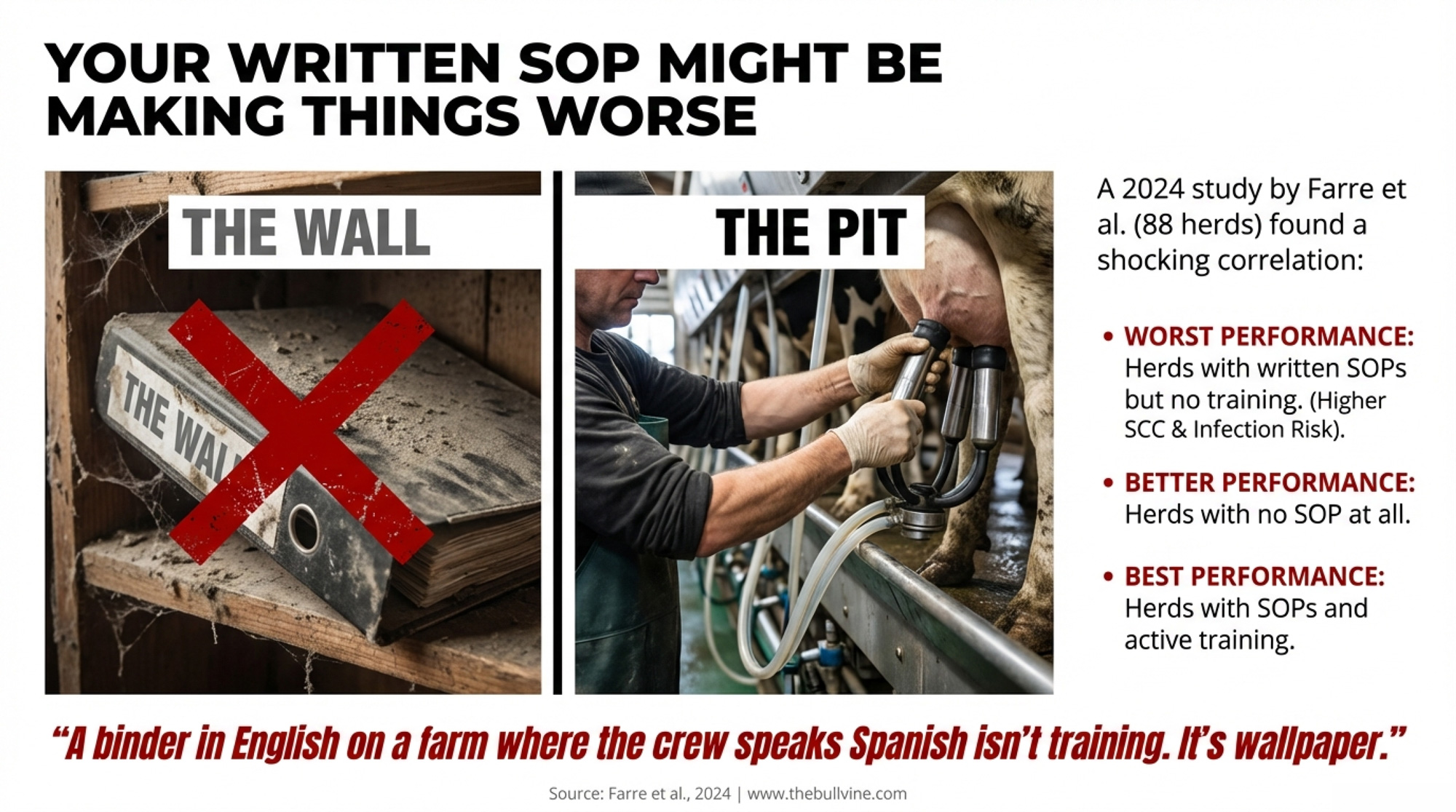
A 2024 study by Farre and colleagues — published in Veterinary Sciences by researchers from SEGES Innovation in Denmark, the University of Copenhagen, and Wageningen University — surveyed 88 Danish dairy herds with hired employees and parlor or rotary systems. They split farms into three groups: no written milking SOP, a written SOP with no structured training, and a written SOP actively used in training. The results flipped expectations. Herds with a written SOP and no training performed worse than herds with no SOP at all — BTSCC was 21,600 cells/mL higher,and new infection risk was 0.15 percentage points higher. Only herds that actually trained milkers on their SOP saw improvement: a 0.16 percentage-point drop in new infection risk. 

Herd TypeBulk Tank SCC ChangeNew Infection Risk Change
No written SOPBaselineBaseline
Written SOP, No Training+21,600 cells/mL+0.15 percentage points
Written SOP + Active TrainingImproved−0.16 percentage points

A binder in English on a farm where most of the crew speaks Spanish isn’t training. It’s wallpaper. New hires figure out within a week which rules on the wall are “real” and which ones everyone ignores. Then they follow the veteran milker, not the laminated sheet.
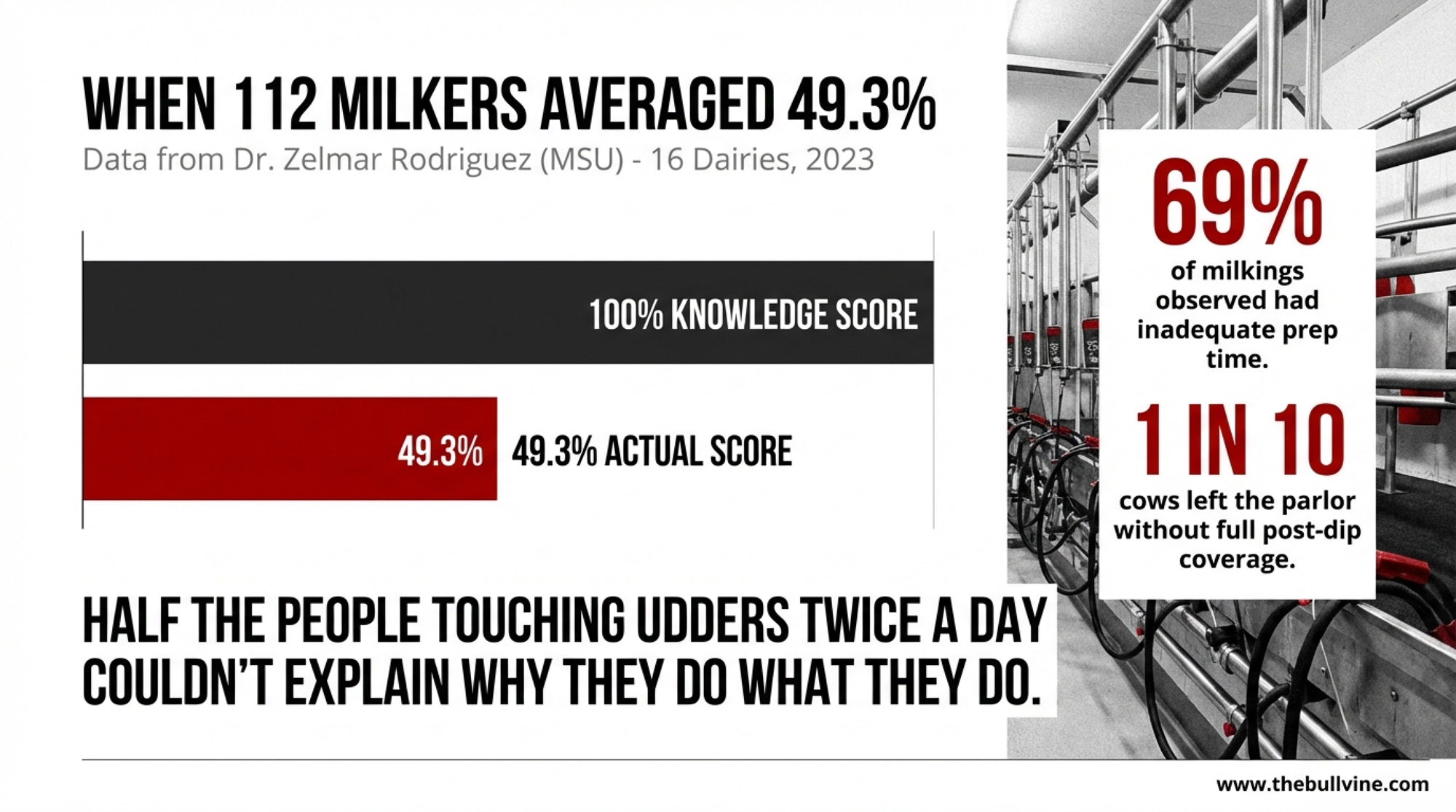
Rodriguez’s 16 herds fit that pattern. SOPs were posted. Equipment functioned. But when he timed what actually happened in the pit, 69% of milkings fell short on preparation time, and about 1 in 10 cows left the parlor without full post-dip coverage. The routine changed with the crew, not the cow. 

One Session. One Day. Here’s What Moved.

Getting farms to sign up was its own challenge. “It wasn’t as easy to get study participants as I thought it would be,” Rodriguez admitted. “They all would say, ‘We just don’t have time'”. Owners came around once they learned the training would only take about an hour. 

Each farm got one structured training session — bilingual, practical, and built around explaining the biology behind each step of that farm’s milking routine. Rodriguez used the National Mastitis Council’s free online resources to draft a curriculum focused on mastitis identification, risk factors, and proper milking procedures. During the pre-assessment, researchers captured photographs of the parlor being worked on — this helped participants visualize their own farm and better relate to the concepts. Workers and managers reviewed the parlor evaluation together and agreed on adjustments based on Rodriguez’s observations during his first visit.

The crews responded. Employees rated the training 4.5 out of 5 for practical use on their farm. Most were milking technicians (61.1%), and 70% had been on the job for less than 1 year, with a median tenure of just 9 months. “We can’t expect employees to come in with this knowledge,” Rodriguez said. These weren’t lifers. They were the people you’re usually hoping will just “pick it up” from watching. 

One practical lesson surfaced everywhere. “Confusion around how to handle abnormal milk was one question that bubbled to the surface on every farm enrolled,” Rodriguez reported. “It is critical that owners or parlor management are present at the training to answer questions just like these that are a bit subjective and vary from farm to farm”. 
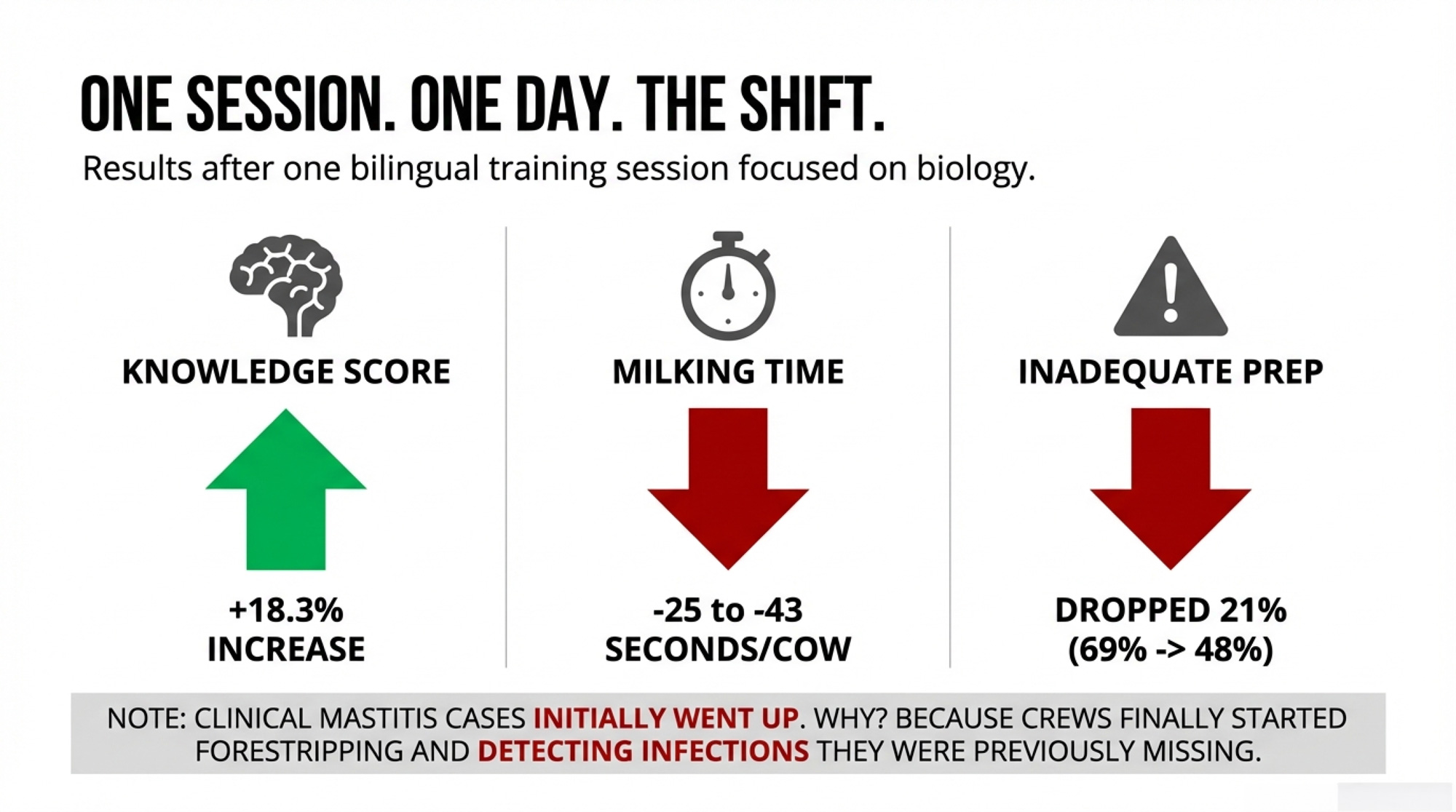
On the follow-up visit, Rodriguez ran the same checks again:

MetricBeforeAfterChange
Knowledge quiz score 49.3%67.6%+18.3 points
Milkings with inadequate prep  69%48%−21 points
Insufficient post-dip coverage  9.8%5.9%−3.9 points
Pre-dip contact time Below target+9 sec/cowToward 30s target
Proper lag time (60–120 sec)  Baseline+20% complianceImproved
Milking time per cow Baseline−25 to −43 secFewer re-attachments

One thing caught attention: clinical mastitis cases went up after training. Sounds like bad news — until you think about forestripping. Once milkers actually started stripping out and looking, they caught abnormal milk that had been going straight into the tank. 

Two Farms That Actually Ran the Numbers

Before you dig into per-cow math, it helps to see what actual farms saw when they swapped “watch and learn” for real training.
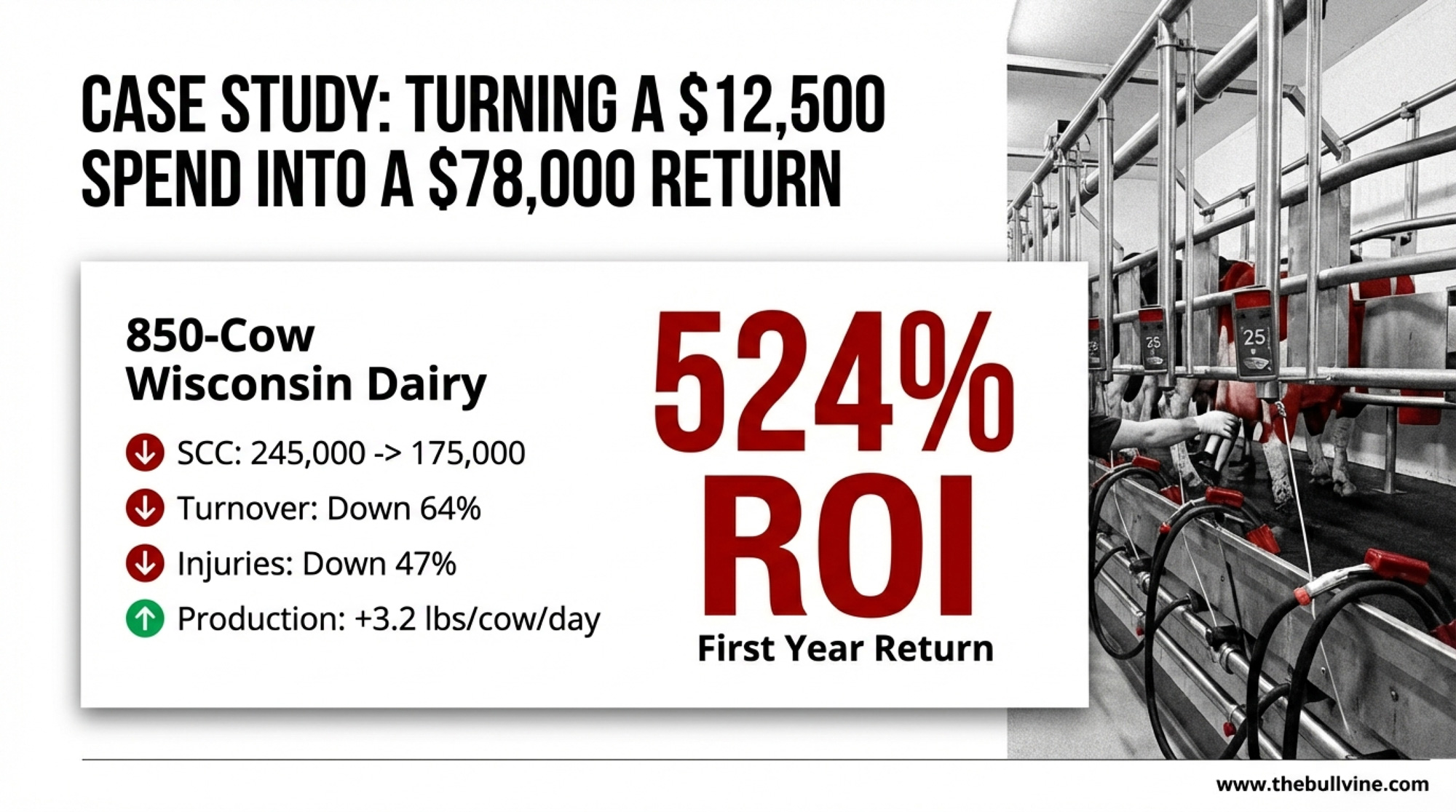
In 2022, an 850-cow Wisconsin dairy invested $12,500 in a bilingual training overhaul — agricultural Spanish classes for management, bilingual signage and SOPs, and monthly bilingual safety meetings with a professional translator. 

MetricResult
SCC  245,000 → 175,000
Employee turnover  Down 64%
Workplace injuries  Down 47%
Production  Up 3.2 lb/cow/day
First-year return ~$78,000 (524% ROI on $12,500)

A second Midwest dairy worked with a Hispanic employee training service. Over nine months, SCC dropped from 325,000–350,000 into the sub-200,000 range. Employee turnover fell from one to two departures a month down to one departure in six months on a 20-person crew. 

FarmInvestmentFirst-Year ReturnSCC ChangeTurnover Change
Wisconsin 850-Cow$12,500$78,000 (524% ROI)245K → 175KDown 64%
Midwest DairyNot disclosedNot disclosed325K → <200K2/month → 1/6 months

Neither farm saw a magic overnight turnaround. But once milkers understood why they were doing what they’d always been told to do, protocol drift slowed. And the numbers moved.
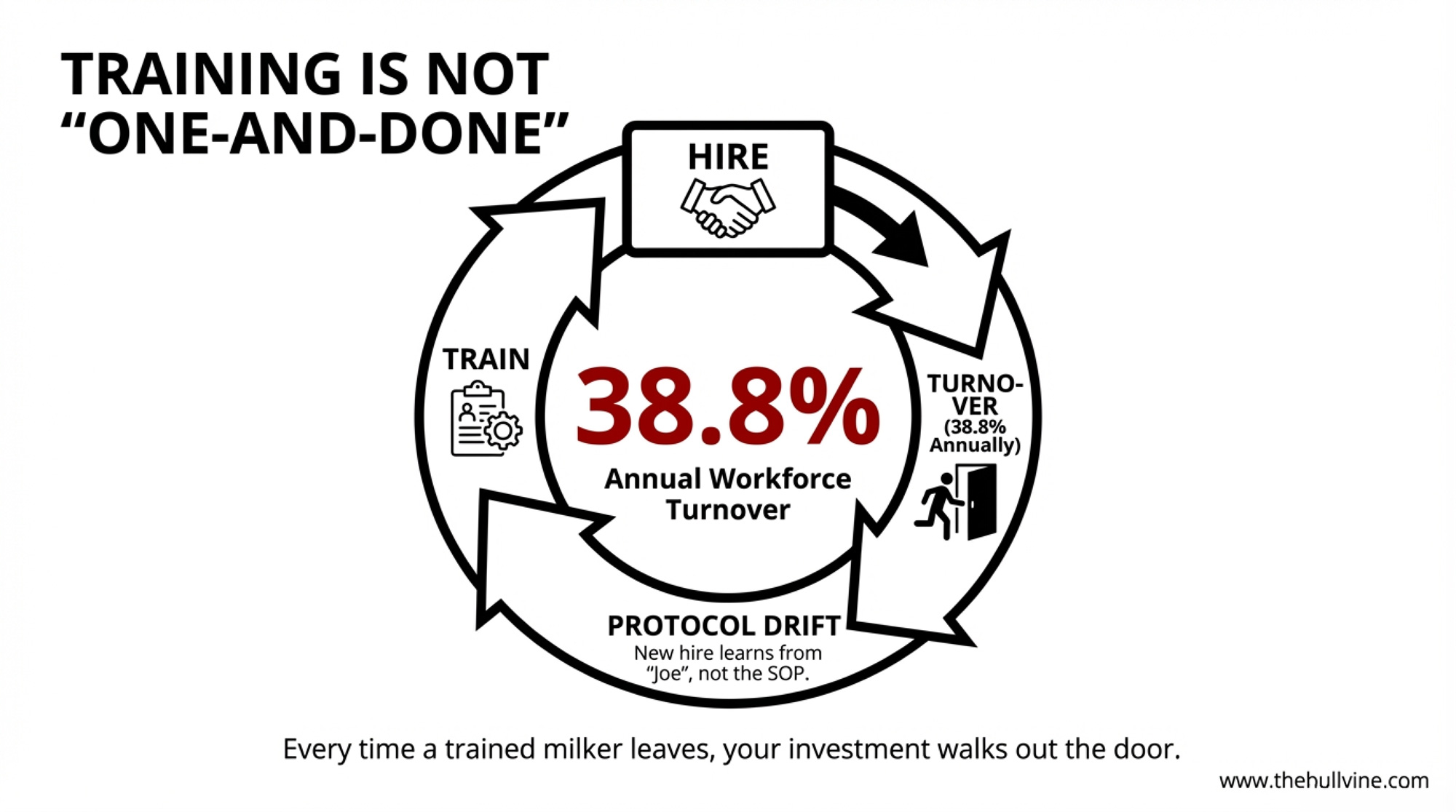
Here’s the part that makes training a rolling cost, not a one-time fix. Nationally, dairy operations turn over 38.8% of their workforce every year. Nearly 4 out of 10 parlor positions are refilled annually. 

Every time a trained milker leaves, your investment walks out the door — and whoever fills that spot learns more from the coworker beside them than from anything posted on the wall. Think about that next time someone frames dairy’s labor problem as a matter of finding “better” workers. It’s not. It’s about training the workforce you actually have. Immigrant labor provides 51% of all U.S. dairy workers, and dairies employing immigrant labor produce 79% of the milk supplyJorge Delgado, the on-farm dairy specialist who oversees Alltech’s Training, Talent Development, and Retention Program, said in a February 2024 statement: “Better education and training not only bolster the workforce’s efficiency but also safeguard milk markets and assure consumers that the industry prioritizes animal welfare through rigorous worker training”. 

How Much Does Milking Training Actually Save Per Cow?

Rodriguez charted bulk tank SCC over time and saw the trend flatten after training — the seasonal upward creep in BTSCC stopped. Not the dramatic plunge that wins a plaque. But enough to keep herds inside their quality premium range rather than sliding out. 

Nationally, the average DHI test-day herd SCC was 181,000 cells/mL in 2024 — the same as in 2023, according to CDCB. Genetics on somatic cell score keep improving. If the national average isn’t budging, the bottleneck isn’t in the semen tank. It’s in the parlor. 

Here’s the barn math on a 300-cow herd shipping 75 lb/cow/day. Swap your own numbers into any line.

Line 1: SCC Premium Protection

Four Federal Milk Marketing Orders adjust milk payments for SCC using a per-1,000-cells/mL variation from a 350,000 baseline tied to monthly cheese prices. Co-ops and processors stack their own quality premiums on top. Herds consistently shipping sub-200,000 SCC milk see premiums in roughly the $0.40–$1.00/cwt range, depending on processor and region. 

Your math (conservative, $0.40/cwt): 300 cows × 75 lb/day × 365 days = 8,212,500 lb = 82,125 cwt 82,125 cwt × $0.40 = $32,850/year ≈ $109/cow/year in premium income kept or lost

If your co-op’s grid pays closer to $1.00/cwt for sub-150K milk, triple that line.

Line 2: Mastitis Cost Reduction

In a separate study, Pamela Ruegg’s group at MSU examined the actual costs of clinical mastitis cases on 37 commercial dairy farms in Wisconsin. Average direct cost: $192 per case, with a range of roughly $120 to $350depending on the farm. Discarded milk accounted for 53–80% of those direct costs. USDA’s NAHMS Dairy 2014 study — the most recent nationally representative data — found clinical mastitis in 24.8% of cows

Your math (300-cow herd at national average): 300 cows × 24.8% = ~75 cases/year. If improved compliance trims incidence from 20% to 15%, 15 fewer cases × $192 = $2,880. Total: ~$2,880/year ≈ $10/cow/year

A note on that 20%: Rodriguez’s study actually showed clinical mastitis cases going up after training — because crews were finally detecting them through forestripping. The case-reduction math is a projection of what should happen over 6–12 months as better detection leads to earlier treatment and fewer chronic infections. Track your own before-and-after numbers rather than assuming this figure. 

Separately, Ruegg found that each unnecessary treatment day costs about $65 in discarded milk and drugs. If you and your vet tighten treatment protocols alongside parlor training — a different conversation, but one that pairs well with what we covered in our mastitis overtreatment piece — the savings stack. 

Line 3: Labor Efficiency

Two sources report different figures for the milking time reduction Rodriguez measured, and both are credible. MSU’s own summary and the Dairy Global report both show a 25-second reduction per cow — attributed specifically to fewer re-attachments. Hoard’s Dairyman, reporting on Rodriguez’s December 2024 appearance on the Dairy Science Digest podcast, cites an average reduction of 43 seconds per cow, with no change in employee performance. The broader figure may reflect total milking time savings, including prep efficiency gains alongside re-attachment reduction. 

Your math (300-cow, 2× herd — conservative, using 25 sec): 25 sec × 300 cows × 2 milkings = 250 min = 4.17 hours/day 4.17 hrs × 365 = 1,521 hours/year 1,521 hrs × $19.70/hr (USDA Lake Region livestock wage, May 2025) = $29,960 ≈ $100/cow/year in time-value 

If the 43-second figure applies to your operation: 43 sec × 300 cows × 2 milkings = 430 min = 7.17 hours/day 7.17 hrs × 365 = 2,617 hours/year 2,617 hrs × $19.70/hr = $51,555 ≈ $172/cow/year in time-value 

Honest catch: “time-value” doesn’t automatically land in your checking account. Crews get paid for the shift, not by the minute. That time becomes real money when you can milk more cows with the same hours, cut overtime, or eventually trim scheduled labor. A 2022 Cornell-led study by Alanis, Virkler, and colleagues — published in JDS Communications— evaluated milking training across 15 farms in northern New York and found equipment-related problems that milkers should have detected and reported on 14 of 15 farms, with inadequate milking routines flagged on 13 of 15. That’s the kind of inefficiency where saved seconds start converting to real dollars once the crew knows what to watch for. 

If you’re weighing parlor training against the milking-speed genetics route, the answer is probably both — but training pays back in months, not generations.

Add It Up
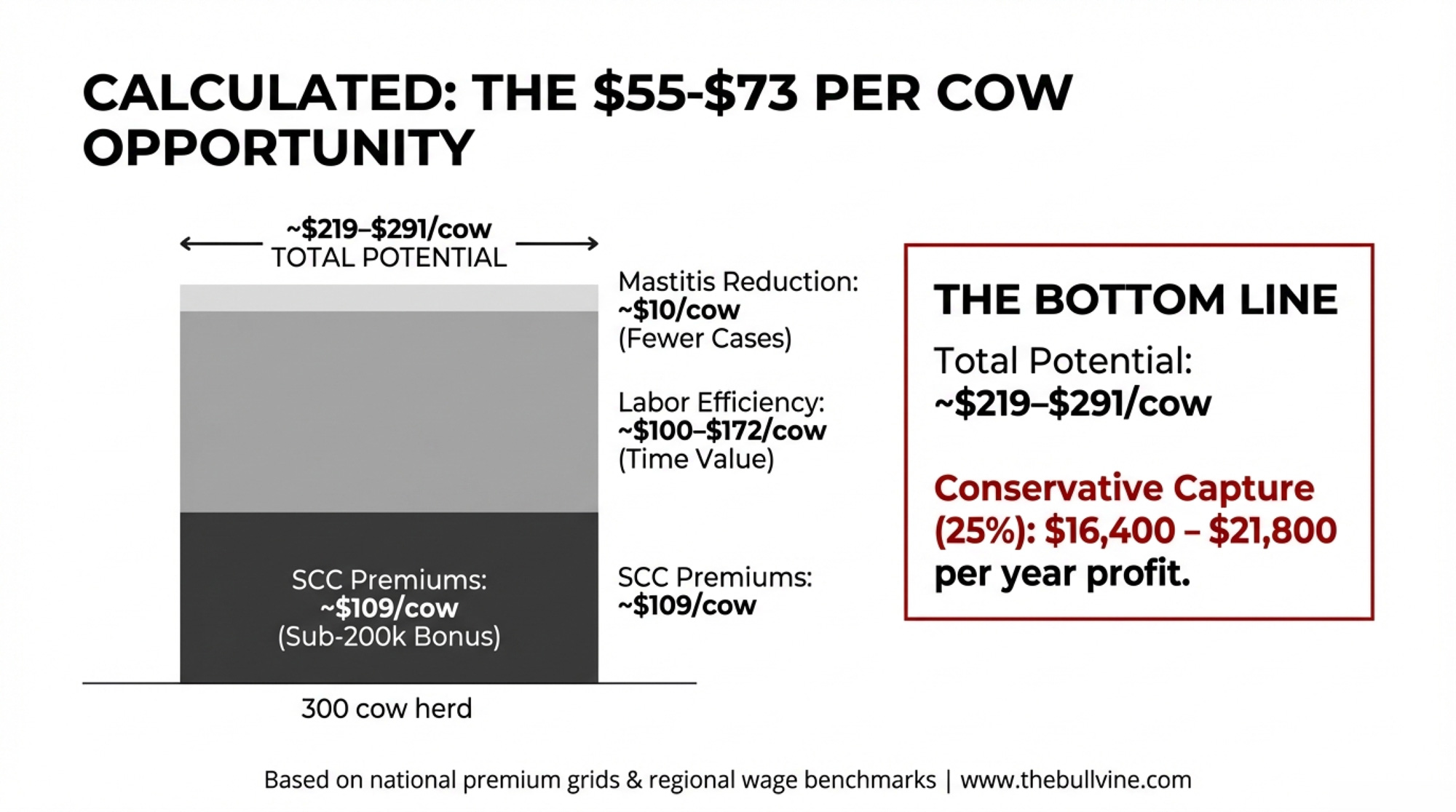
Revenue LinePer Cow/Year (Conservative)Per Cow/Year (Upper Range)300-Cow Herd (Conservative)
SCC premium protection ~$109~$109$32,850
Mastitis cost reduction ~$10~$10$2,880
Labor efficiency  ~$100 (at 25 sec)~$172 (at 43 sec)$29,960–$51,555
Total potential value~$219~$291$65,690–$87,285
Realistic capture (25%)~$55~$73$16,400–$21,820

Nobody captures every dollar. But even a quarter — $55 to $73/cow, or $16,400 to $21,800/year on 300 cows — comes in against a training spend that tops out around $6,000. The 25% figure is editorial judgment, not a study finding. Your actual capture depends on how consistently you maintain the new routine through turnover cycles.

What Does a Structured Milking Training Protocol Look Like?

UW–Madison’s Milk Quality from the Udder World (MQUW) trainer certification program runs $95 per person. That covers a self-paced online course (about 2 hours across five modules), a one-day in-person workshop, lunch, laminated parlor training materials with QR codes linking to short educational videos, and certification. Sessions run in English one day and Spanish the next. 

LocationSpring 2026 Dates  
LuxemburgFeb 18–19
MadisonMar 18–19
AbbotsfordApr 1–2
Fond du LacApr 7–8
De SotoApr 29–30

(The Luxemburg session begins February 18 — check dairy.extension.wisc.edu for remaining seats. Four more sessions run through April 30.)

It’s a train-the-trainer model. You send your parlor manager, a bilingual lead, or maybe yourself—and they bring the knowledge home to coach everyone else. Rodriguez himself used the NMC’s free online resources to build his curriculum. On-farm, the pattern is simple: explain the biology, demonstrate on actual cows in your setup, then stand in the pit and coach real-time until the new routine holds. 

Realistic annual training budget (300-cow herd, 15 milkers)

ItemCost
MQUW fees — 3 trainers × $95  $285
Wages + travel for trainer attendance$1,000–$1,500
On-farm rollout (trainer time + milker hours during coaching)$2,000–$3,000
Quarterly refreshers (fight turnover drift)$1,000–$2,000/yr
Total$2,000–$6,000

Most of that is your own payroll, not program fees.

Can’t get to Wisconsin? Iowa State University Extension and the University of Nebraska–Lincoln Dairy Extensionbuilt a free online milker training program in English and Spanish at go.iastate.edu/milkertraining. Each module has Spanish-language videos with English subtitles and quizzes in both languages with Spanish audio. The Alltech–FARM Program also launched bilingual cow-handling modules in 2024 that cover stockmanship fundamentals. Neither replaces someone standing beside a new milker in your pit — but both are a massive step up from “follow Joe.” 

Training PathCostTime InvestmentWhat You GetBest For
UW MQUW Train-the-Trainer$95/person2-hour online course + 1-day in-person workshopCertification, laminated materials, QR-coded videos, train-your-crew toolkitFarms with 3+ milkers, bilingual crews, need for repeatable internal training
Free Bilingual Online Modules (Iowa State/UNL)$0Self-paced (videos + quizzes in English/Spanish)Step-by-step videos, quizzes, certificatesBridge option for farms that can’t attend in-person training this year
DIY 30-Day Parlor Audit$03 milkings across shifts (stopwatch + notepad)Baseline data: lag time, post-dip coverage, re-attachments, forestrip complianceImmediate baseline before committing to training spend—start here
On-Farm Custom Training (Rodriguez Model)$2,000–$6,000/year1-hour initial session + quarterly refreshersBilingual, farm-specific, coached in your parlor, ongoing reinforcementFarms ready to formalize training as a rolling annual investment

What This Means for Your Operation

Path 1: Enroll in a train-the-trainer program like MQUW — the $285 path. Makes the most sense if you’ve got more than one person milking and you want the routine done the same way on every shift. At $95 per person for a full day, it’s one of the lowest-cost ways to address parlor consistency. The catch: if your only certified trainer quits, your training program walks out the door. Send at least two people — three if you can — so you’re not starting from zero when turnover hits. And don’t assume robotic milking gets you off the hook. It just shifts the training need from unit attachment to software, alerts, and cow management.

Path 2: Start with a parlor audit this month — no cost, immediate baseline. Grab a stopwatch and a notepad. Spend three consecutive milkings in the parlor across different shifts. Time at least 20 cows per milking from first touch to unit attachment. Score post-dip coverage: full, partial, or missed. Count how many cows aren’t forestripped at all. By the end of that week, you’ll know whether lag time falls within the 60 to 120 seconds that NMC, University of Minnesota Extension, and Penn State Extension all recommend from first tactile stimulation to unit attachment. Frame it for your crew as “we’re checking our system, not checking up on you”—or you’ll create pushback before you even talk about training. 

Path 3: Use free bilingual resources as a bridge. If MQUW is out of reach this year, the Iowa State/UNL online milker training gives you step-by-step videos and quizzes in both languages. Neither replaces farm-specific coaching in your parlor. But they’re a real step up from dropping a translated SOP on the breakroom table and hoping it sticks. 

Path 4: Post micro-metrics and run quarterly refreshers. Training isn’t one-and-done — especially with 38.8% annual turnover. After your initial push, pick a few visible numbers: prep-time compliance rate, average lag time, dip coverage percentage, and re-attachments per 100 cows. Post them where your crew sees them. Plan a 30–45-minute refresher for each crew every quarter. Maybe 40–50 hours of paid, non-milking time per year across your whole milking staff to keep everyone aligned. Skip the refreshers? Within a couple of turnover cycles, your crew looks a lot like Rodriguez’s study group did on day one. 

Key Takeaways

  • If your herd SCC has stayed flat or crept up while your SCS genetics have improved, the gap is probably in the parlor, not the semen tank. The national DHI average has remained at 181,000 cells/mL over the past 2 years. Pull your last three DHIA tests and see if your trend is any different. 
  • If you’ve got a written milking SOP that nobody has formally trained on in the past 12 months, the Farre et al. (2024) research says you might actually be worse off than having no SOP at all. A binder nobody understands teaches your crew that written rules don’t matter. 
  • Within the next 30 days, run your own stopwatch test. Time 20 cows’ prep-to-attachment intervals on two different shifts. The NMC-recommended target is 60 to 120 seconds from first stimulation to unit attachment. If a significant share of your cows fall outside that window, training — not equipment — is probably where your next dollar should go. 
  • Budget $2,000 to $6,000 per year for structured milking training on a 300-cow herd and compare that to what you spend on genetics, nutrition, and facilities that all depend on consistent milking to pay off.

The Bottom Line

When’s the last time you stood through a full milking in your own parlor and didn’t touch a unit — just watched what actually happens, step by step, across shifts?

Rodriguez did that on 16 farms, scored 112 workers, and measured the gap between what farms thought their milking routine looked like and what was actually happening in the pit. Your bulk tank already knows how consistent your milking routine really is. The question is whether you’re ready to stand in the pit, run the stopwatch, and find out what it would take to close that gap on your operation. 

Complete references and supporting documentation are available upon request by contacting the editorial team at editor@thebullvine.com.

Learn More

  • The 90-Second Milking Window That’s Paying $126,000 – and Beating Every Robot – You’ll gain a surgical method for auditing pit efficiency and capturing six figures in “lost” milk without buying a single robot. This breakdown delivers the exact protocols and ROI math to turn parlor drift into measurable profit.
  • 79% of U.S. Milk Runs on Immigrant Labor. If Yours Vanishes, You Have 72 Hours. – This reveals the brutal reality of our industry’s workforce dependence and arms you with a 72-hour survival strategy for labor shocks. You’ll position your operation to weather policy storms while protecting the milk volume currently at risk.
  • Robotic Milking Pays 13% More – After 7 Years of Red Ink – This exposes the gap between trade-show promises and actual barn-floor returns on robotic milking. It delivers verified payback periods and management thresholds, helping you decide if automation is a survival tool or an expensive mistake for your herd.

The Sunday Read Dairy Professionals Don’t Skip.

Every week, thousands of producers, breeders, and industry insiders open Bullvine Weekly for genetics insights, market shifts, and profit strategies they won’t find anywhere else. One email. Five minutes. Smarter decisions all week.

NewsSubscribe
First
Last
Consent

The 3.5-Hour Bottleneck: Why Smart Farms Track Parlor Time, Not Cow Count

Bigger isn’t better. 2,500+ cow farms plateau. 1,200-cow farms thrive. Here’s the math nobody talks about.

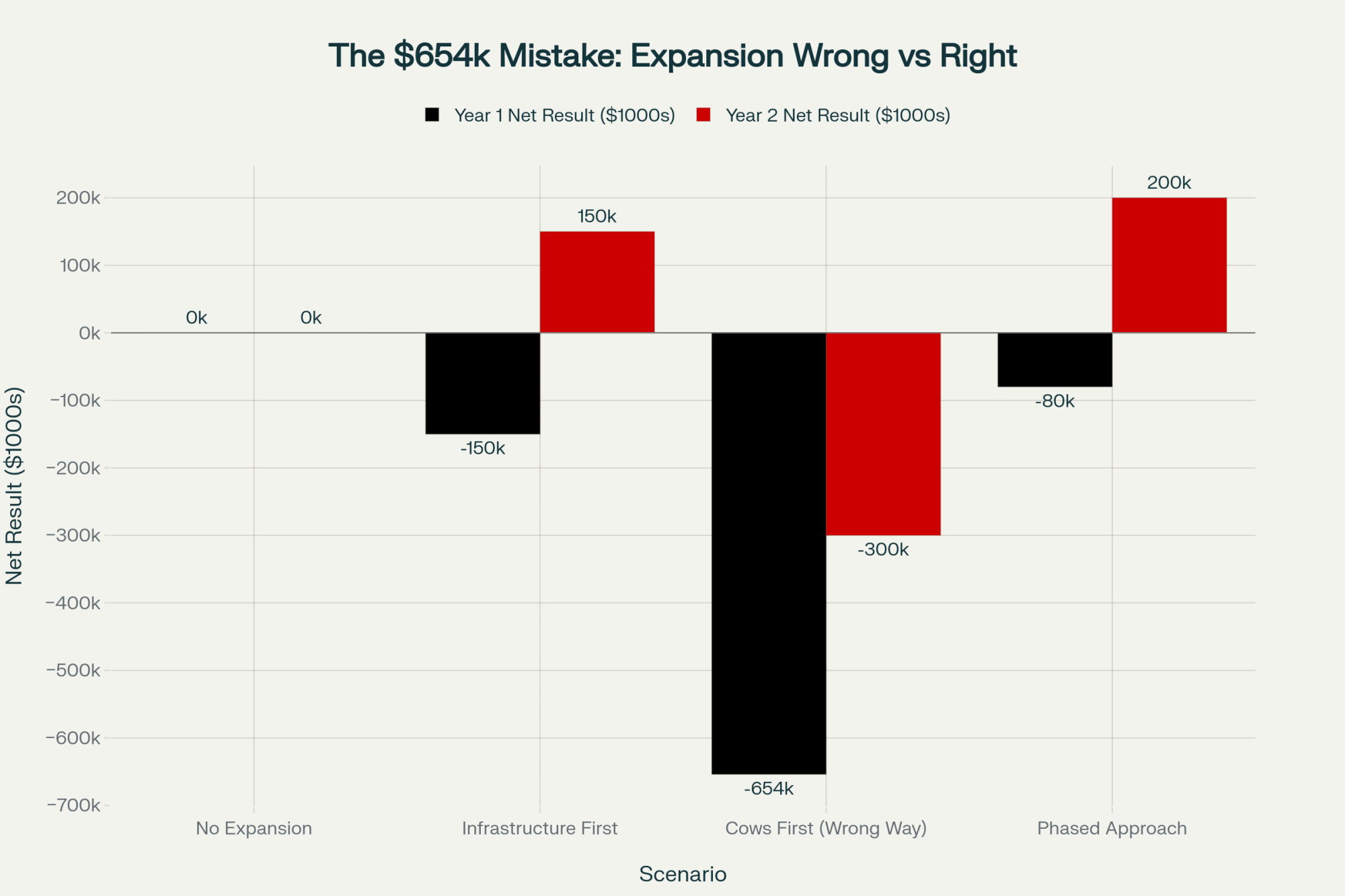
EXECUTIVE SUMMARY: The 3.5-hour rule changes everything: when cows spend more than 3.5 hours away from pens for milking, even ‘successful’ expansions fail. A Wisconsin producer who added 150 cows without upgrading infrastructure now hemorrhages $4,000 daily—a pattern replicated across farms that put cows before concrete. The industry data is unforgiving: proper expansion requires 18-24 months of infrastructure-first planning, $50,000-100,000 in management development, and debt-to-equity ratios under 0.50. Those who expand backwards face average first-year losses of $654,000 and 18-month recovery periods that many don’t survive. With 15,000 dairy farms already gone and processors building for mega-operations, mid-sized farms face a stark choice: master the expansion paradox of building for tomorrow’s herd today, or join the 2,500-3,000 operations projected to close in 2025. The survivors won’t be those who grew fastest, but those who counted minutes, not just cows.

Dairy Herd Expansion

As we head into winter planning season, I was talking with a producer the other day—a guy up near Eau Claire who expanded last spring—and his story really got me thinking. He went from 450 to 600 cows, following that logic we’ve all considered at some point: more cows equals more milk equals more revenue. Makes perfect sense on paper, doesn’t it?

Adding cows without infrastructure hemorrhages $654,000 in Year 1 alone—the mistake replicated across mid-sized farms. Infrastructure-first expansions recover within 18 months

But here’s what’s interesting… those extra 90 minutes his cows are now spending cycling through the parlor? It’s creating challenges he never anticipated. And from what I’m hearing at meetings and co-op discussions, he’s far from alone.

The 3.5-hour threshold: Parlor time over 3.5 hours triggers exponential losses in milk production and lameness rates—the single metric that predicts expansion failure

Quick Reference: The 3.5-Hour Rule

  • When cows spend over 3.5-4 hours away from pens, profitability declines
  • Each extra hour of rest can mean 2-3 pounds more milk per cow daily
  • $150+ daily losses are common when rest time drops by 90 minutes
  • Recovery from expansion problems typically takes 18 months, not 6
  • Smart operators build infrastructure before adding cows

A lot of folks—could be 40 percent or more based on recent industry conversations—are thinking about expansion right now. With all the investment flowing into processing facilities, we’re learning something that maybe should’ve been obvious all along. The difference between profitable growth and just getting bigger often comes down to something we haven’t traditionally measured: how long our cows spend away from their pens.

What’s fascinating is the work coming out of places like Cornell and Wisconsin’s extension programs (particularly their 2024 dairy expansion guides). They’re suggesting that when cows spend more than about 3.5 to 4 hours away from their pens for milking, something shifts. The economics change. Some folks are calling it the “3.5-hour rule,” and honestly, it’s making a lot of us rethink our expansion plans.

What Time Away Really Costs

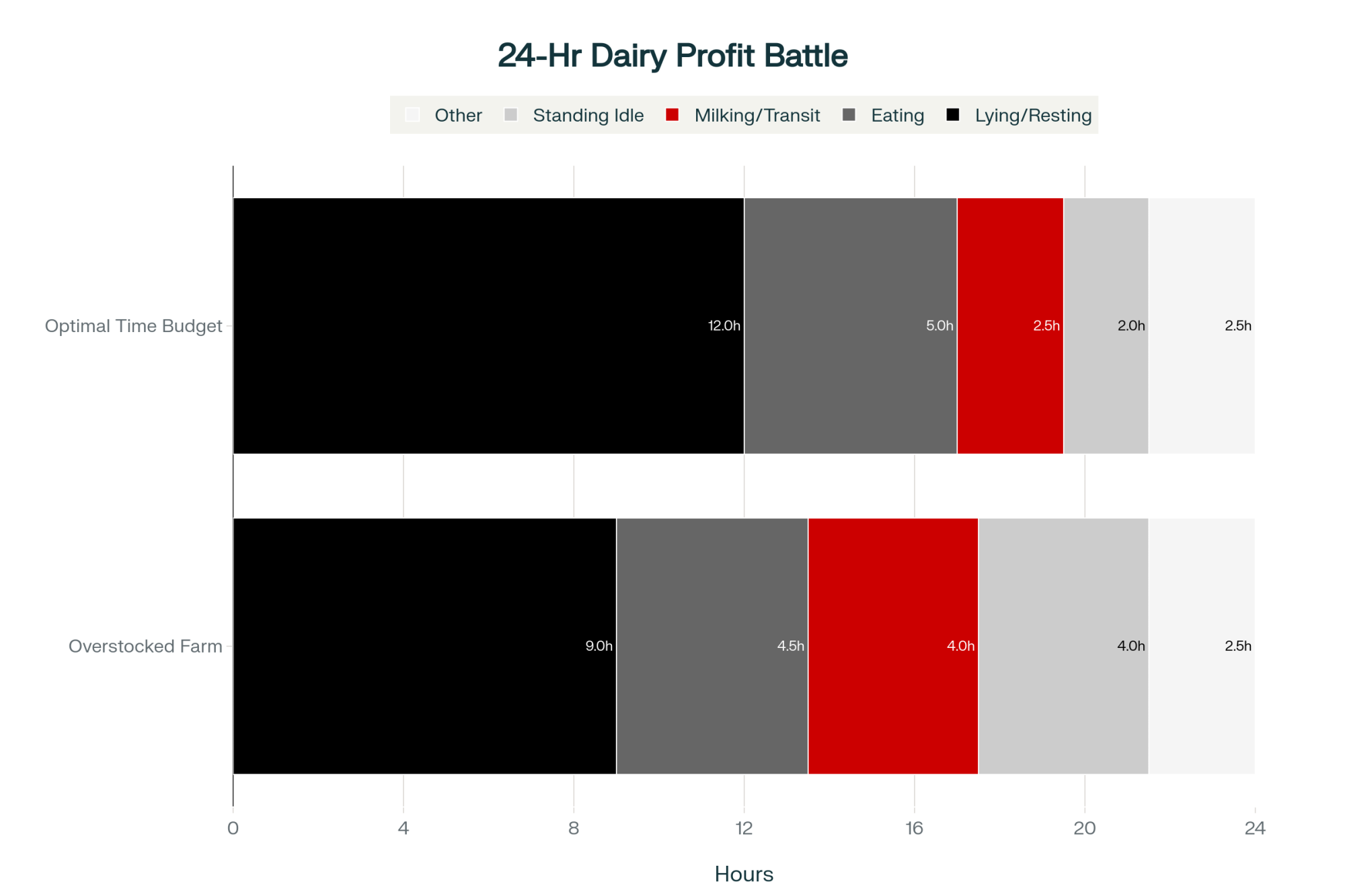
Overstocked farms sacrifice 3 hours of cow lying time for extended parlor waits—costing 6 pounds of milk per cow daily. Time is literally money: $150+/day for 500-cow operations

I’ve been reading research from folks at the Miner Institute and other dairy research centers, and what they’re finding is eye-opening. You probably sense this intuitively, but they’re putting numbers to it—every additional hour of rest can mean significant production gains. We’re talking potentially 2-3 pounds per cow per day, maybe more. Sometimes up to 3.7 pounds, according to some studies, though your mileage may vary.

Think about it—when your girls are standing in the holding area instead of lying down, that’s lost production time. And it compounds.

Here’s what extension folks are telling us happens when operations run their parlors for more than 20 hours a day: everything gets compressed. Milking routines get rushed. Holding areas get crowded. The cows get stressed. Your people get stressed. It all adds up.

Let’s walk through the math, because this is where it gets real. Say you’ve got 500 cows losing even 90 minutes of rest time. That could mean 750 pounds less milk daily.

At today’s prices—what, around $20/cwt?—that’s $150 or more walking out the door every single day. And that’s just the beginning.

From what extension services documented in their 2023-2024 research, here’s what tends to happen:

  • Lameness that normally runs, maybe 15 percent? It can climb to 25-30 percent over a few months
  • Cell counts start creeping up past 300,000, and there go your quality premiums
  • Fresh cow problems—instead of 12 percent, you might see 20-25 percent or higher
  • And culling… well, that tends to jump 8-12 percent above normal

What Wisconsin’s Teaching Us

What’s happening in Wisconsin really tells the story. According to Wisconsin Extension’s 2024 dairy statistics, average herd sizes have grown from around 140 to over 200 cows in recent years—that’s roughly a 45 percent jump. And honestly? Most of us weren’t ready for it.

I’ve walked through a lot of these expanded operations, and you can see the challenges. These parlors—many built decades ago for different herd sizes—they’re showing the strain. The cows bunch up in holding areas. The milkers look frustrated. Everyone’s feeling it.

What the university folks have documented makes sense when you see it firsthand. When holding areas get tight—less than 15-20 square feet per cow—things happen physiologically. Stress hormones go up. That oxytocin we need for good letdown? It gets suppressed.

Cows stand on concrete for hours, and we all know where that leads.

First-lactation heifers have it worst. They’re still figuring out the routine, and now they’re competing with mature cows in tight spaces. Some research suggests they might produce 2 pounds less daily just from that stress. That’s potential walking away before it ever hits the tank.

As veterinarians keep reminding us, this isn’t just about cow comfort—though that matters. It’s about profitability. Some extension models suggest that operations expanding without proper infrastructure could face significant losses in the first year. We’re talking potentially hundreds of thousands, depending on your situation.

Rethinking What “Big Enough” Means

The controversial truth: Operations milking 1,200-1,500 cows achieve $850/cow profit—nearly matching mega-dairies while maintaining individual cow management. Scale doesn’t guarantee success

Here’s something that surprised me when I started digging into recent data. You’d think bigger is always more profitable, right? But profitability seems to level off around 2,000-2,500 cows, and sometimes even declines in really large operations.

Profitability by Herd Size (Typical Ranges)

Herd SizeProfit per CowKey Characteristics
< 250$125-$250Family ops, scale challenges
500-750$350-$450Sweet spot for independents
1,000+$600-$800Economies of scale emerge
2,500+$750-$900Efficiency gains plateau
5,000+$900-$1,000Complexity offsets benefits

Source: USDA Economic Research Service data and industry analyses, 2023-2024

Sure, total profit keeps going up with size. But the efficiency gains? They really taper off after a certain point.

What management experts point out—and this makes sense when you think about it—is that once you get past 3,000 cows, you can’t manage individuals anymore. You’re managing pens. That’s a fundamental shift, and it means accepting different realities about health, variation, and even mortality rates.

What I find really interesting is that the sweet spot for many operations seems to be around 1,200-1,500 cows. Big enough for real economies of scale, but you can still use technology to manage individual animals. That feels like the best of both worlds.

Learning from Folks Who’ve Done It Right

I’ve had the chance to work with several operations that successfully increased from 500 to over 1,200 cows and improved profitability. What’s striking? They all did pretty much the same things.

Getting the Finances Right First

Every successful expansion I’ve seen started from a strong financial position. Debt-to-equity ratios under 0.50, often down around 0.35-0.40. These folks had reserves for at least a year, sometimes 18 months, of potential negative cash flow.

As financial advisors keep telling us—and they’re right—if you’re not testing your plans against milk at $17/cwt for two years, you’re probably being too optimistic.

Building the Team Before the Barn

This one’s huge. I know of operations that spent a year and a half preparing their management systems before pouring any concrete. Hiring people, training them, making sure there’s backup for every critical job.

One producer told me he spent probably $75,000 on management development before construction started. “Best investment we made,” he said, and I believe him.

Actually Talking to Your Milk Buyer

This gets missed so often. You really need to sit down with your processor—really talk about capacity, hauling, components, everything—before you add a single cow.

I know several Wisconsin operations that found out their processor would need to charge significantly more for hauling additional volume. That completely changed their expansion math.

Growing in Stages

The smartest folks I know don’t try to do it all at once anymore. They phase it:

  • First, build for maybe 80 percent of where you want to be, and get it running smooth
  • Then optimize for a year or so—this is crucial
  • Only then finish the expansion

A guy near Fond du Lac told me this approach saved them when milk prices dropped. They could stay at their intermediate size without drowning in debt. Smart.

If You’re Already in a Tight Spot

Recovery takes 18 months minimum, not the 6 months most producers expect—and only with aggressive action. Status quo operations face 45% decline, explaining why 2,500+ farms will close in 2025

Look, I realize some of you reading this are thinking, “Great, but I’m already in it up to my neck.” Recovery is possible, but it depends on where you are in the process.

Warning Signs You’re in Trouble:

  • Parlor running over 20 hours
  • More than 90 minutes in the holding area
  • Lameness creeping above 20 percent
  • Cell counts are consistently high
  • Fresh cow problems over 20 percent
  • Your best people are looking burned out

Early Stage Recovery (First Few Months)

If your parlor time is around 90-120 minutes and lameness is still under 20 percent, you can turn this around. According to the University of Minnesota Extension’s 2024 parlor efficiency guide, some quick wins include:

  • Automated crowd gates or better cow flow—might save 10-15 minutes right away ($5,000-$15,000 investment)
  • Vacuum adjustments—another 5-10 minutes sometimes
  • Just splitting into two feeding groups instead of one—that alone can add $400-$500 per cow annually

But here’s the thing—you’ve got to move fast. Every month you wait, it gets harder.

When Problems Are Building (Months 3-6)

If parlor time’s over 2 hours and lameness is approaching 25 percent, you need bigger moves:

  • Maybe reduce the herd by 10-15 percent—I know, it hurts, but it works
  • Get some ventilation and cooling in that holding area ($30,000-$50,000 typically)
  • Consider bringing in outside help for a few months

Recovery takes time—18 months usually, not the 6 months we all hope for.

A producer I know from Marathon County told me, “We sold 80 of our lowest producers. Felt like failure at first. But the rest of the herd jumped 5 pounds per day. Math actually worked out better.”

When You Need Major Changes (Beyond 6 Months)

If you’re running over 3 hours in the parlor with lameness near 30 percent, the options get limited:

  • Permanent reduction to sustainable size
  • Major infrastructure investment—we’re talking $400,000+
  • Sitting down with your lender for some honest conversations
  • Maybe looking at bringing in a partner or succession planning

The Bigger Picture

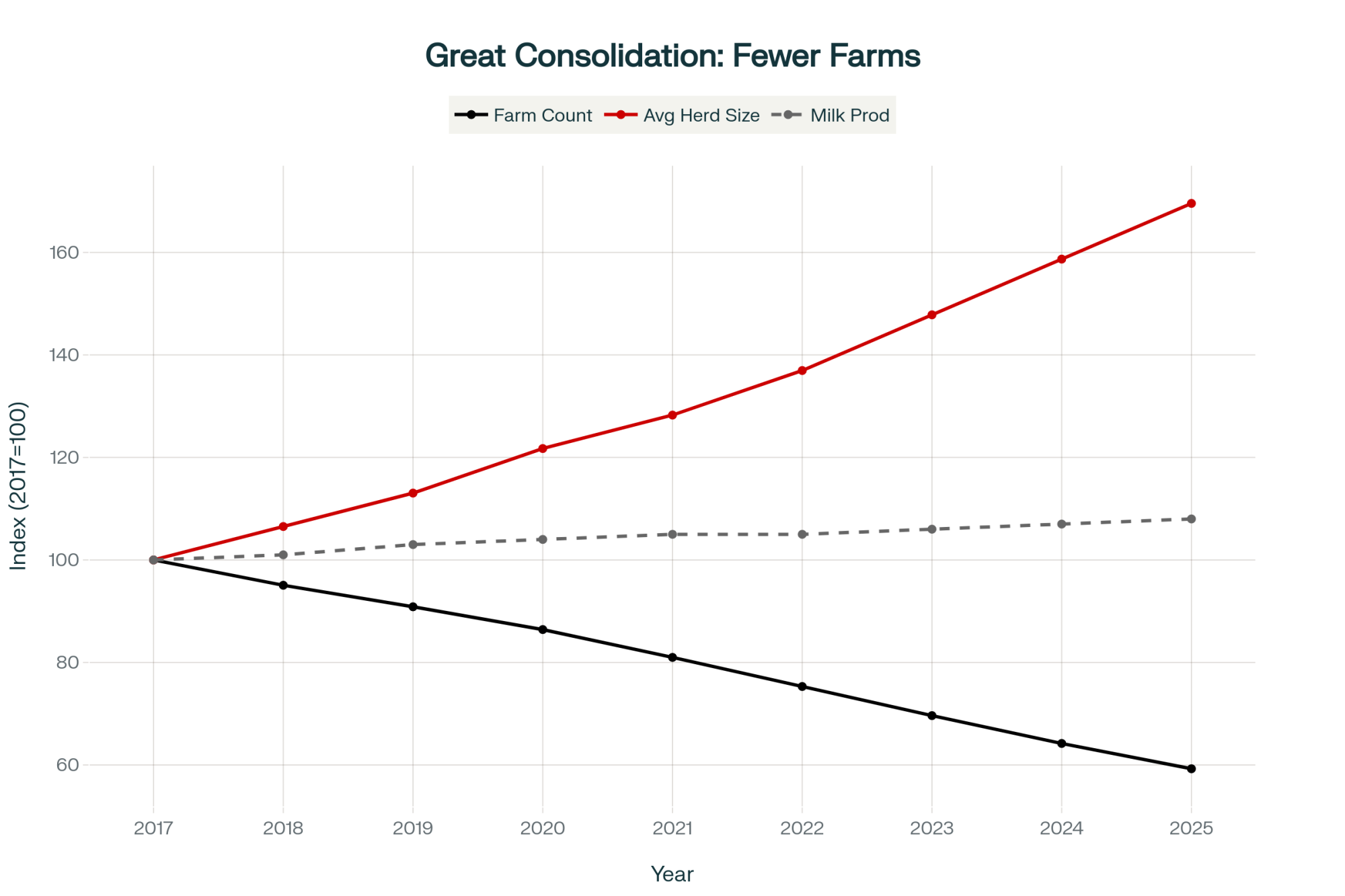
Since 2017, the U.S. lost 16,500 dairy farms (-41%) while milk production rose 8% and average herd size jumped 70%. With 2,500+ more exits projected for 2025, mid-sized farms face extinction without strategic transformation

Looking at the industry broadly, we’re in for continued change. Various analyses suggest we might see 2,500-3,000 farms exit in 2025—that’s maybe 7-9 percent of what’s left.

USDA data shows we lost around 15,000-16,000 farms between 2017 and 2022, while milk production increased by 5 percent.

The big operations—over 2,500 cows—now produce nearly half our milk. And all that processor investment? It’s generally aimed at working with larger suppliers, not mid-sized folks like many of us.

The pace varies by region. Wisconsin’s been losing 400-500 farms yearly, according to state ag statistics. Pennsylvania and New York, similar stories. It’s reshaping dairy country as we know it.

Making the Math Work for You

Before any expansion, here’s the one calculation that matters: What’s your actual cost per hundredweight right now, and what happens to that if you add 20 percent more cows without upgrading infrastructure?

Cost Calculation Framework:

  1. Add up all your annual costs—feed, labor, facilities, health, everything
  2. Divide by your annual production in hundredweights
  3. Model what happens with more cows but no infrastructure upgrades:
    1. Labor costs typically increase 15-20 percent
    1. Health costs often rise 15-25 percent
    1. Production might drop 2-3 pounds per cow daily
    1. Quality premiums could be affected

Say you’ve got 500 cows producing 75 pounds per day. That’s 375 cwt. At $8,250 per day, you’re at $22/cwt.

Add 100 cows without infrastructure? Production might drop to 72 pounds per cow, and costs could rise to about $9,500 per day. Suddenly, you’re looking at $26/cwt.

If expansion pushes you from $22 to $25-26/cwt, that should make you pause.

It’s Different Depending on Where You Farm

These dynamics play out differently across regions, and that matters.

Texas and New Mexico operations often started big with appropriate infrastructure. But in the Upper Midwest? We’re adapting facilities built for our grandparents’ 50-cow herds.

California’s got its own challenges—water, regulations, land costs. A producer there told me that compliance alone can run into the hundreds of thousands.

Even within Wisconsin, it varies. Being near a cheese plant in Green County is different from shipping fluid milk from up north. And summer heat? That can easily add 30-45 minutes to your parlor time when cows move more slowly and need extra cooling.

What Really Seems to Matter

After looking at all this, here’s what I keep coming back to:

Build for where you’re going: Get the infrastructure right before adding cows. Yes, it takes longer and costs more upfront. But it’s often the difference between thriving and just surviving.

Watch that time clock: When cows spend over 3.5-4 hours away from pens, things tend to go sideways. Make that your benchmark.

Management matters most: Can your team handle 25 percent more complexity? If not, invest in people first—maybe $50,000-$100,000 in management development.

Know your real costs: Most of us don’t actually know our true cost per hundredweight. Without that, expansion is just gambling.

Consider other paths: Maybe the answer isn’t more cows. Maybe it’s robots for better labor efficiency, or genetic improvement for 10 percent more production, or capturing premium markets for A2A2 or grassfed milk.

The industry’s changing fast—fewer, bigger operations emerging. But bigger isn’t automatically better.

The operations I see thriving are making careful, infrastructure-first decisions based on real analysis. As one successful producer put it to me: “We spent a year planning before adding a single cow. Neighbors thought we were too slow. Now they’re asking how we stayed profitable.”

That conversation brings us full circle, doesn’t it? Remember that producer near Eau Claire I mentioned at the start? He’s working through his challenges now, looking at some of these same solutions. Had another coffee with him last week, actually. And what’s encouraging is he’ll probably come out stronger for it, because he’s learned what many of us are discovering: real growth isn’t about pushing more cows through your existing setup.

It’s about doing right by every cow you milk, keeping them healthy and productive for the long haul. In today’s dairy world—with all its complexity, consolidation, and change—that philosophy might be the smartest expansion strategy of all.

Don’t just count your cows. Count the minutes they stand waiting. The former feeds your ego; the latter feeds your bank account.

KEY TAKEAWAYS

  • Count Minutes Before Cows: Parlor time over 3.5 hours = automatic profit loss. Your next cow costs nothing; your next hour costs $150+/day
  • $22→$26/cwt = STOP: Before adding even one cow, calculate if expansion increases your cost/cwt by $3+. If yes, you’re planning bankruptcy, not growth
  • Build at 0.50 Debt-to-Equity or Don’t Build: Successful expansions require 18-24 months planning, $75K management investment, and reserves for 18 months of negative cash flow
  • 1,200-1,500 Cows = Profit Sweet Spot: Beyond 2,500, complexity kills margins. Below 500, scale limits competitiveness. Plan for the middle
  • Recovery Takes 18 Months + 15% Herd Cut: If you’re already bottlenecked (20+ hour parlor, 25%+ lameness), reduce first, rebuild second

Complete references and supporting documentation are available upon request by contacting the editorial team at editor@thebullvine.com.

Learn More:

The Sunday Read Dairy Professionals Don’t Skip.

Every week, thousands of producers, breeders, and industry insiders open Bullvine Weekly for genetics insights, market shifts, and profit strategies they won’t find anywhere else. One email. Five minutes. Smarter decisions all week.

NewsSubscribe
First
Last
Consent

42% Heritability: The Milking Speed Breakthrough That Fixes Your Labor Problem

What farmers are discovering: selecting for speed actually reduces labor costs $10-16K annually

EXECUTIVE SUMMARY: What farmers are discovering about CDCB’s new Milking Speed evaluation is reshaping our understanding of genetic selection and parlor efficiency. With 42% heritability—compared to just 7% for daughter pregnancy rate—MSPD offers predictable genetic progress for a trait that impacts operations twice daily, 365 days a year. Holstein bulls currently range from 6.2 to 8.1 pounds per minute in the August 2025 evaluations, meaning the spread between your fastest and slowest genetics could be costing you an hour or more of labor daily. Research from the University of Minnesota confirms that strategic selection within the 7.0-8.0 lbs/min range balances efficiency gains with udder health, while extension specialists from Wisconsin to California emphasize the importance of adjusting parlor settings as genetics improve. Looking ahead, operations implementing MSPD selection can now expect gradual but meaningful improvements. Many producers report saving 10-15 minutes per milking by year three, with full benefits emerging around year seven as herd genetics turn over. The collaborative learning happening as producers share experiences with this trait represents exactly how our industry gets stronger together. For operations facing persistent labor challenges or inconsistent milking times, MSPD warrants serious consideration as part of a comprehensive breeding strategy.

 Milking speed genetics

Every morning at 4:30, the same scene plays out in parlors from California to Vermont. Some cows are finished, waiting to exit, while others seem to take forever. We’ve all managed to work around this variation for years, adjusting our routines, tweaking our grouping strategies, and making it work. But what if genetics could actually address this issue?

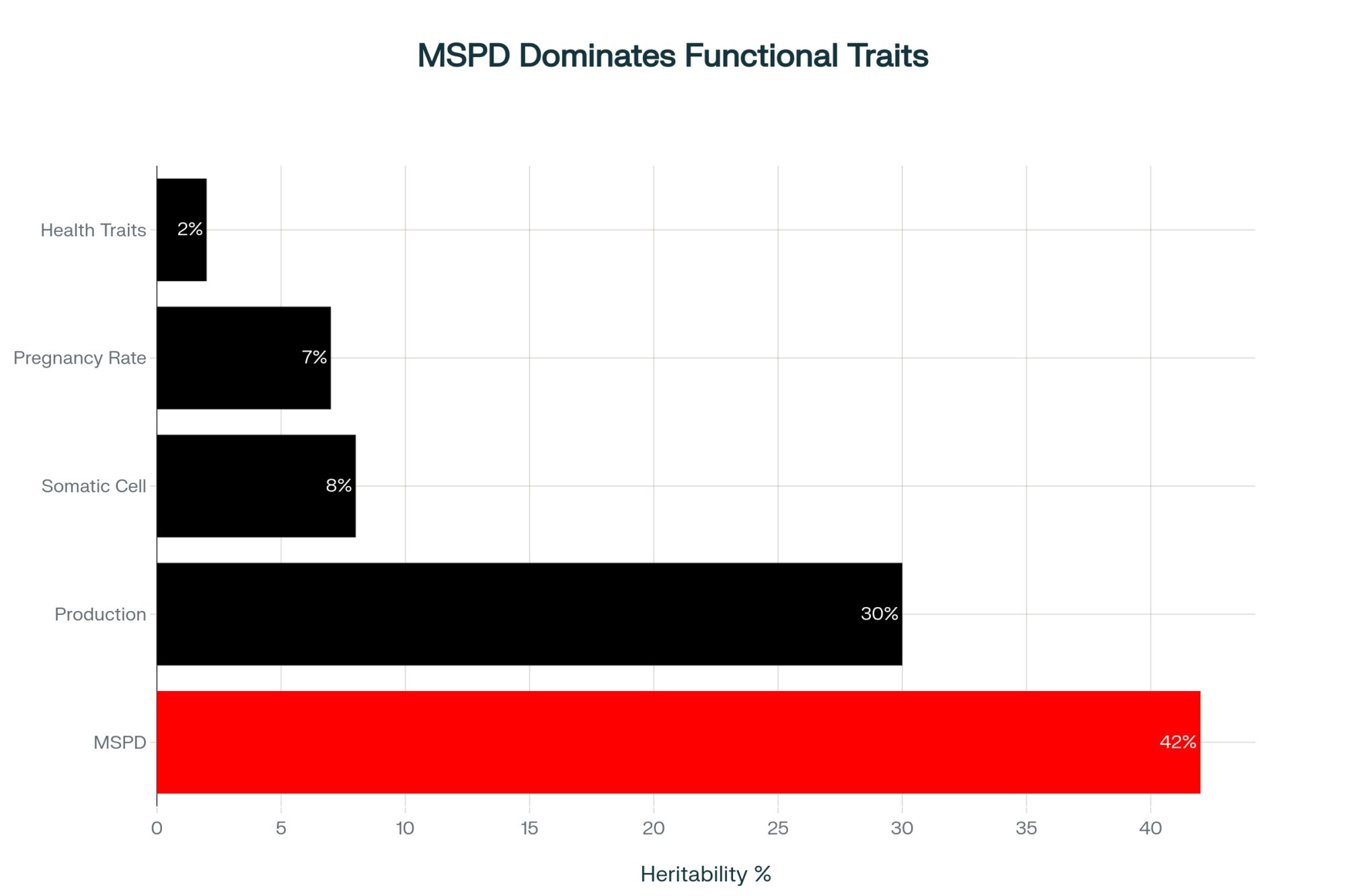
CDCB rolled out their Milking Speed evaluation—MSPD—this past August, and the numbers are stopping producers in their tracks. According to their published data, we’re looking at 42% heritability. Now, if you’re anything like the producers I’ve been talking with from the Midwest to the Southeast, that number probably makes you pause. Daughter pregnancy rate, which we’ve been selecting for intensely? That’s around 7% according to CDCB’s genetic parameters. Most health traits we worry about sit between 1% and 3%. This ranks among the CDCB’s highest-heritability functional traits.

The genetic game-changer hiding in plain sight – MSPD’s 42% heritability means real, measurable progress in your lifetime, not your grandkids.

It’s worth noting that MSPD is a flow rate measurement, expressed as pounds of milk per minute, not a total milking time. This standardizes the measure across lactation stages and systems, making it universally applicable whether you’re milking fresh heifers or fourth-lactation cows.

What farmers are finding is that this might be one of those genetic tools that actually delivers on its promise. That’s a level of genetic progress we just haven’t seen before for traits that hit your bottom line every single day.

The Science Is More Straightforward Than You’d Think

CDCB built this evaluation using sensor data from commercial dairies, measuring the pounds of milk per minute as it flows through the system across 31 states. No subjective scoring where one classifier sees a seven and another sees an 8. Just straight data from actual milking sessions.

The physiology behind milking speed has been documented in dairy science literature for decades. Research published in the Journal of Dairy Science suggests that it primarily depends on both anatomy and neural response. You’ve got your physical components—teat canal diameter, sphincter muscle tone—but there’s also how efficiently a cow responds to oxytocin and her overall letdown reflex. Some cows milk fast because they have excellent milk ejection. That’s what we want. Others? They’re fast because of looser teat anatomy, which can open the door to mastitis problems down the road.

Looking at CDCB’s correlations, there’s a 0.43 genetic correlation between milking speed and somatic cell score. Initially concerning, right? However, the data actually reveal that correlation mainly occurs when speed originates from compromised teat anatomy rather than good physiology. When you’re selecting bulls in what CDCB identifies as the practical range—around 7.5 to 8.0 pounds per minute—you’re generally getting efficiency through better milk letdown, not shortcuts that’ll haunt you later.

Kristen Gaddis, who leads the genetic evaluation team at CDCB, explained at their August public meeting that this 42% heritability makes MSPD one of their most heritable published traits. The reliability is already strong, even with a relatively new dataset. When you see heritability this high on a trait that impacts throughput every single day, it really does change the conversation about what’s possible through genetic selection.

What This Looks Like in Real Parlors

Holstein bulls in the current CDCB evaluations range from about 6.2 to 8.1 pounds per minute. That’s roughly a 30% spread. I’d bet money most operations have similar variation in their herds right now—you probably know exactly which cows I’m talking about.

Think about your morning milking. In a typical double-12 herringbone, when everything’s clicking, you’re moving cows through efficiently. But when those slower genetics hold up an entire side? Your actual throughput drops, workers become frustrated, and what should be a 2.5-hour milking stretches to 3 hours or more.

The economics vary depending on where you’re located, obviously. Labor costs differ significantly from region to region—what a California producer faces compared to someone in Georgia or South Dakota can be night and day. But across the board—from Florida to Idaho—many operations are finding that greater consistency reduces those end-of-shift pressure points. Workers know roughly when they’ll finish. That predictability… in today’s labor market, where finding anyone willing to work is challenging, matters as much as the raw time savings.

Quick Reference: MSPD Selection by System Type

Parlor TypeTarget MSPD Range (lbs/min)Key PriorityCritical ThresholdEfficiency Gain Potential
Herringbone/Parallel7.0-8.0Uniformity over speedAvoid bulls <6.815-20%
Rotary7.0-7.8Consistent platform speedMinimize 2nd rotations10-15%
Robotic Systems7.2-7.8Speed + teat placementBalance with udder conf.8-12%

Herringbone and Parallel Parlors

Target Range: 7.0-8.0 lbs/min
Priority: Uniformity over maximum speed
Key Point: Bulls below 6.8 create bottlenecks that kill efficiency
Based on the University of Wisconsin Milking Center recommendations and field experience

Rotary Parlors

Target Range: 7.0-7.8 lbs/min
Priority: Consistent platform speed, minimize second rotations
Key Point: Group first-lactation heifers separately when possible
Michigan State Extension dairy team guidelines

Robotic Systems

Target Range: 7.2-7.8 lbs/min
Priority: Individual performance plus udder conformation
Key Point: Robots need both speed and good teat placement
Penn State Extension robotic milking resources

Building Your Selection Strategy Today

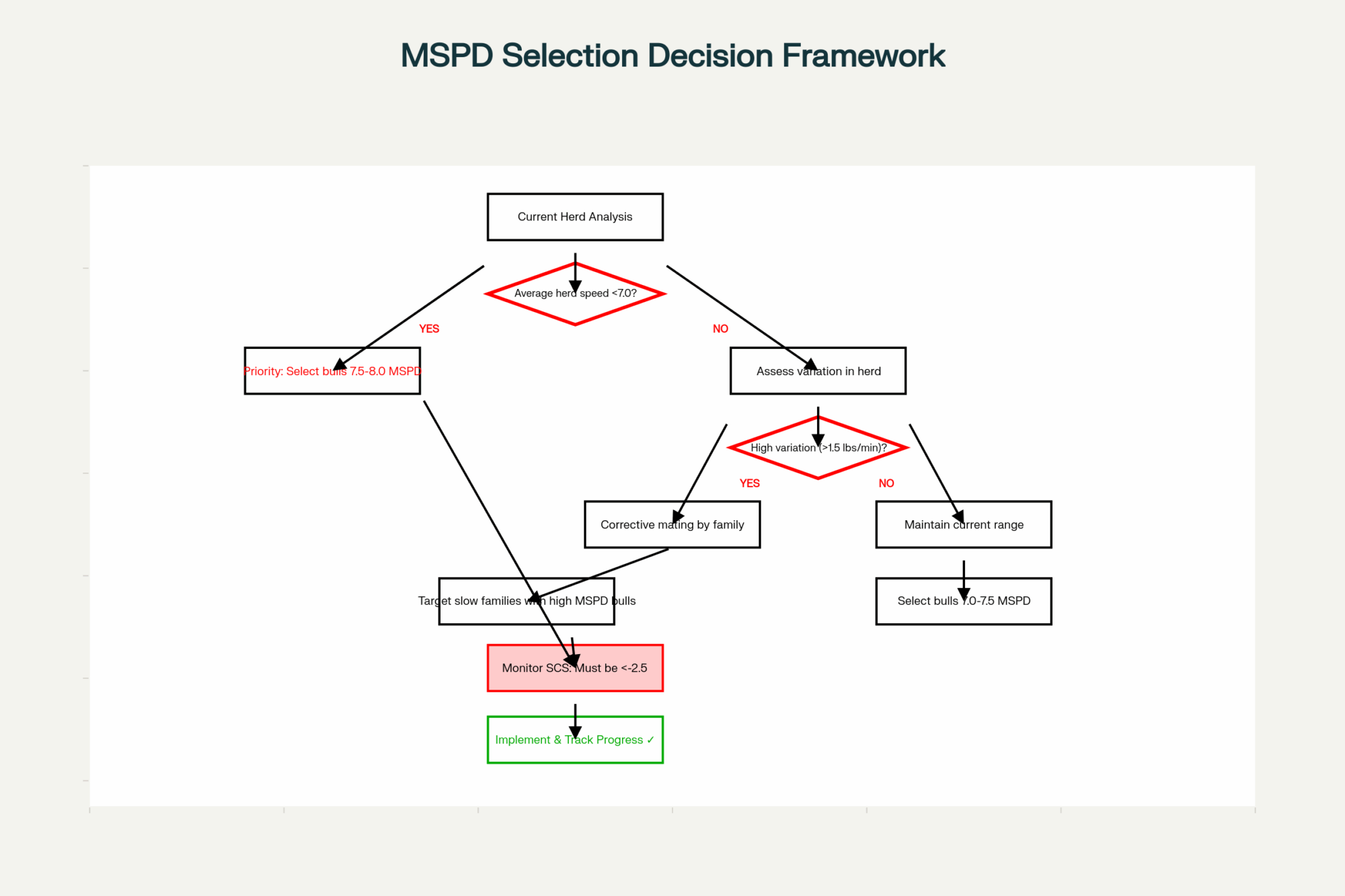
From analysis paralysis to action – Your personalized MSPD roadmap based on current herd genetics and variation

Since MSPD isn’t integrated into Net Merit yet—CDCB’s still working through the index weighting debates—producers are developing their own approaches. Here’s what’s working based on early adopters and extension recommendations from Cornell to UC Davis:

Start with your current selection criteria. Then layer in MSPD targeting, aiming for bulls in that 7.0 to 8.0 pounds per minute range based on CDCB’s guidance. If you’re pushing toward the higher end—say 7.6 or above—make sure those bulls have strong SCS values, like -2.5 or better. University of Minnesota’s dairy genetics team emphasizes this as important protection against potential udder health issues down the road.

Corrective mating within families is showing real promise. Long-term research led by Bradley Heins and colleagues at the University of Minnesota, published in the Journal of Dairy Science in 2023, demonstrates that this approach is particularly effective. Got cow families that consistently produce those 8-minute milkers? Target them with higher MSPD bulls. With 42% heritability, this trait actually responds to selection pressure—genetic theory says it should, and early results seem to confirm it.

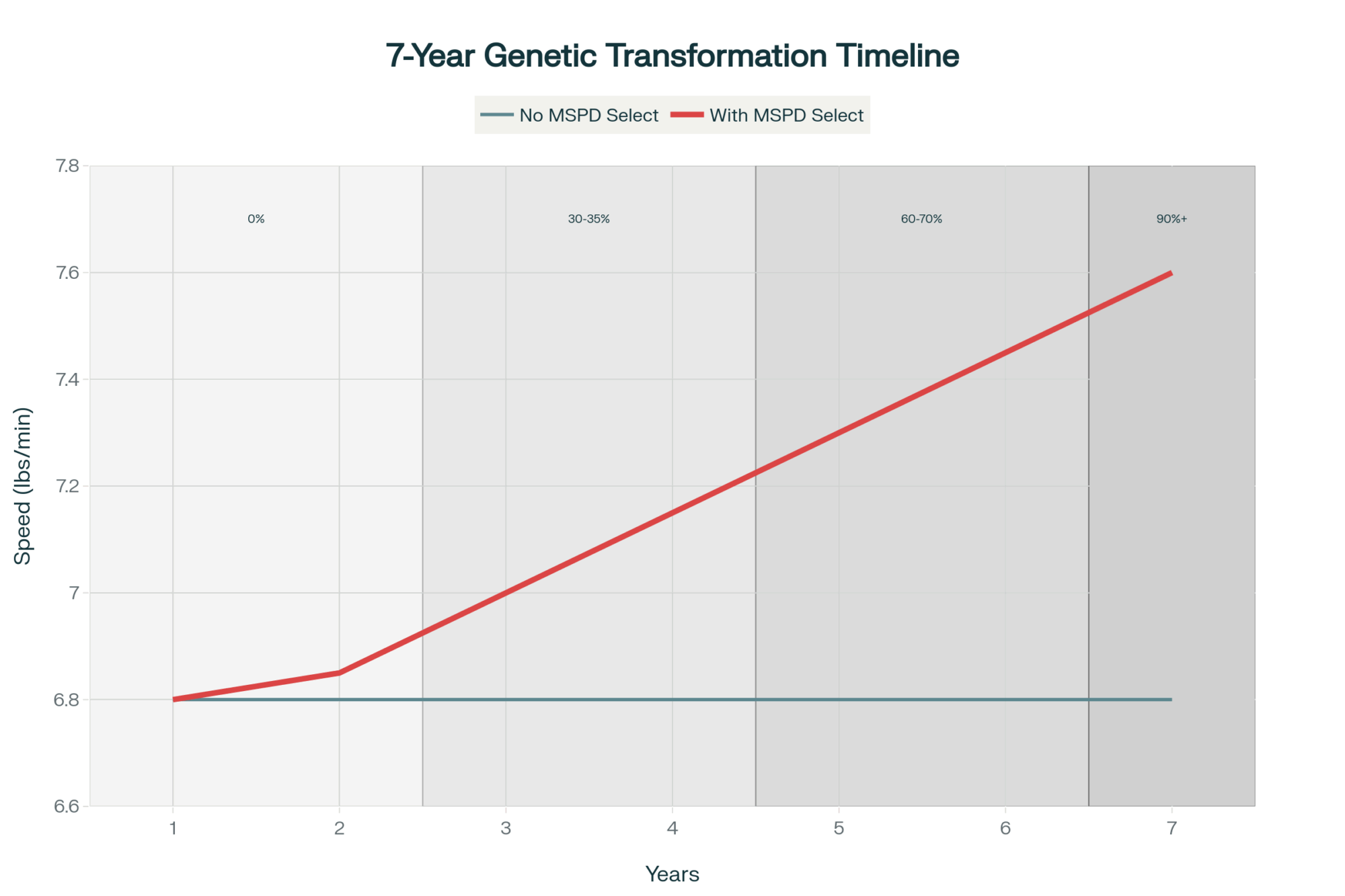
The Seven-Year Reality (And Why It’s Worth It)

Patience pays – While neighbors chase quick fixes, smart producers are building unstoppable genetic momentum that compounds every generation
YearHerd % with MSPD GeneticsTime Savings per DayAnnual Labor Savings (500 cows)Worker Impact
Years 1-20%0 minutes$0Planning phase
Years 3-430-35%10-15 minutes$2,000-3,000First improvements noticed
Years 5-660-70%30-45 minutes$8,000-12,000Predictable shift times
Year 7+90%+60+ minutes$15,000-20,000Full transformation achieved

Let’s be honest about the timeline here. Genetic improvement doesn’t happen overnight, and anyone who tells you different is selling something.

Years one and two, you’re making different breeding decisions but milking the same cows. Minimal visible change. This tests your patience.

In years three and four, your first MSPD daughters arrive. With typical U.S. replacement rates around 30-35% annually, according to the USDA’s National Agricultural Statistics Service, about a third of your herd carries improved genetics. Many operations notice some improvement—maybe saving 10-15 minutes per milking. Not revolutionary yet, but you’re starting to see it.

Years five and six bring the real changes. Most of your herd now carries selected genetics. Those problem cows become exceptions rather than the rule. This is when producers often report actually seeing the payoff they’ve been waiting for.

By year seven and beyond, with most of your herd carrying these genetics, parlor performance becomes remarkably more uniform. And here’s the beautiful part—improvement continues compounding. Each generation gets bred to progressively better MSPD bulls.

A Practical Economic Example

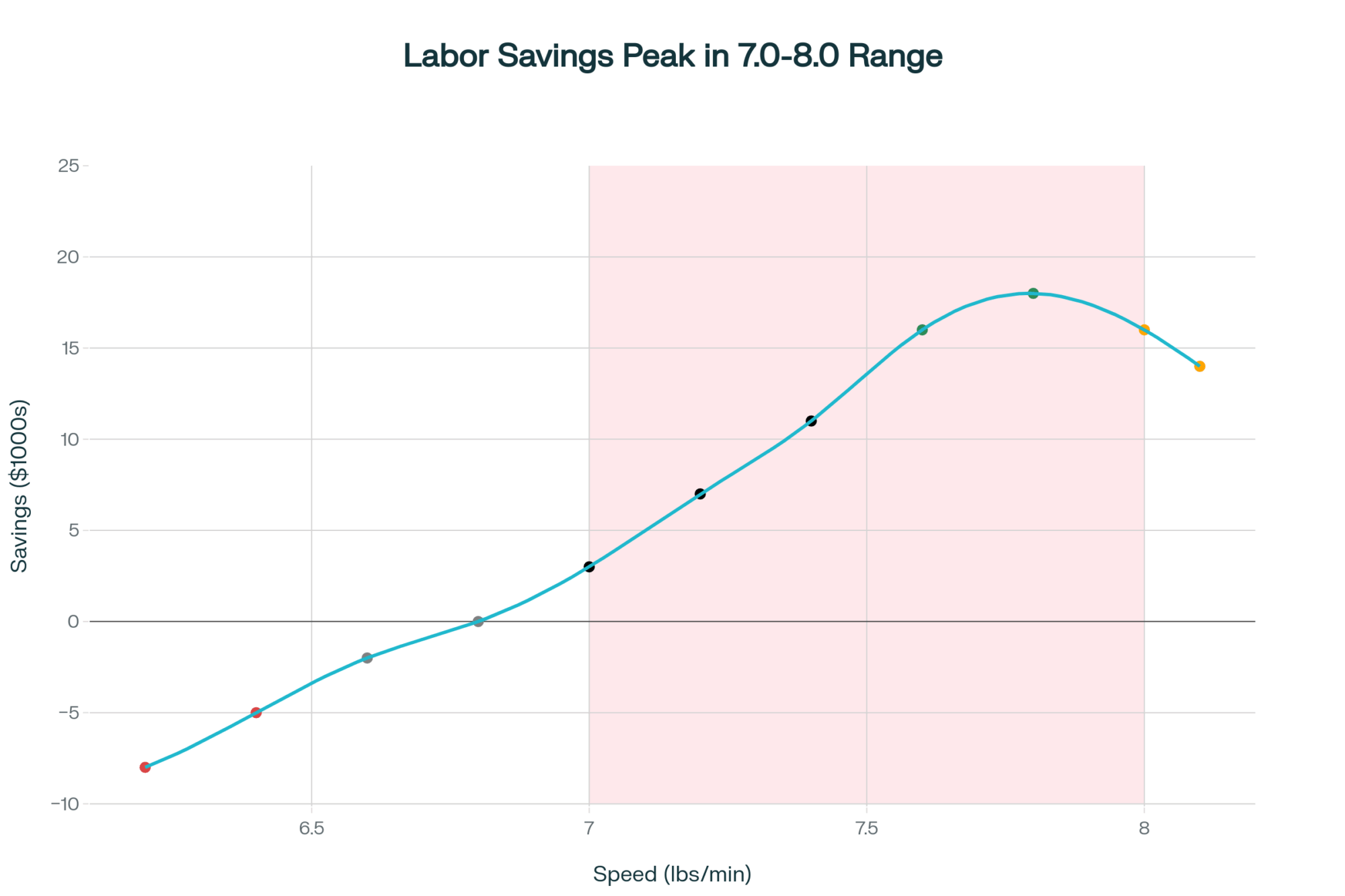
The $18,000 sweet spot – Push past 8.0 lbs/min and watch health costs eat your labor savings.

Let’s run through some basic math for a 500-cow operation (and remember, your results will vary—talk to your consultants and run your own numbers):

Current Situation:

  • 3 milkings daily × 3 hours each = 9 hours parlor time
  • 2 workers × local wage rate × 9 hours = your daily labor cost
  • Annual parlor labor: varies significantly by region

With MSPD Selection (Year 5+):

  • Even modest improvements in turn time—saving just an hour per day—can multiply into several thousand dollars in savings each year
  • The real value depends entirely on your local labor costs and schedules
  • Plus: Better worker retention, less overtime, potential to add cows without extending shifts

Operations with larger spreads in current genetics or higher labor costs naturally have a greater impact. And we’re not even counting the value of predictable shifts on worker satisfaction—something that’s hard to put a dollar figure on but matters enormously.

Critical Management Adjustments

Several things can make or break your MSPD implementation:

Parlor Settings Matter: As detailed in the University of Wisconsin Extension’s milking management guides, many operations find that as their fastest-milking cows become the genetic norm, periodic review of parlor vacuum and pulsation settings helps optimize udder health. You might need to reduce the vacuum as cow milking speed increases modestly—consult your local extension for detailed guidance specific to your setup.

Meter Calibration Is Essential: If it’s been more than two years since calibration (and for many of us, it’s been longer), you can’t accurately track progress. Penn State Extension’s dairy team consistently stresses this—you need accurate data to verify genetic improvement.

The Transition Gets Messy: As new genetics mix with old during years 3-4, variation might temporarily increase. Smart managers group MSPD-selected animals together initially, maintaining more consistent parlor sides until a critical mass is reached.

What About Jerseys and Brown Swiss?

CDCB indicates that breed-specific evaluations are forthcoming, likely within the next 12 months. But producers aren’t waiting.

Long-term research from Bradley Heins and his team at the University of Minnesota, published in the Journal of Dairy Science in 2023, shows Jersey-Holstein crosses often demonstrate favorable milking characteristics while maintaining component advantages. These crossbreeding strategies can capture efficiency benefits now.

Brown Swiss producers are leveraging existing, subjectively scored evaluations while planning for the transition. And operations with sensor-equipped parlors—regardless of breed—should start collecting baseline data now. When official evaluations launch, you’ll be ahead of the curve.

The Bigger Industry Picture

Labor challenges aren’t going away. USDA Economic Research Service reports from 2024 document ongoing workforce issues across all agricultural sectors; however, dairy faces unique challenges due to the 365-day-per-year, twice-daily (or more) milking requirement. From Texas to Maine, finding reliable parlor help remains a top challenge.

What makes MSPD compelling is that it’s a genetic solution to what’s traditionally been viewed as a management problem. Rather than constantly tweaking protocols, adjusting groups, or chasing equipment fixes, we can actually breed for the efficiency we need.

International markets are watching too. With different countries reporting varying heritability levels for milking speed traits, the U.S., with a heritability level of 42%, creates interesting dynamics in the global genetics marketplace, according to the National Association of Animal Breeders’ 2024 export report.

Making Your Decision

As we move ahead, MSPD presents a genuine opportunity to address operational challenges through genetic selection. Will it transform your operation overnight? No. Will it gradually but meaningfully improve parlor throughput, reduce labor needs, and create more predictable working conditions? The early evidence from operations across the country suggests yes.

Those who wait will continue to manage current challenges, while early adopters will gradually pull ahead. It’s not dramatic—it’s incremental. But in an industry with tight margins, incremental advantages compound into competitive differences.

The collaborative learning happening right now is exciting to watch. As more operations implement MSPD selection and share their experiences, we’re collectively figuring out what works best in different situations. Producers comparing notes, extension specialists gathering data, geneticists refining recommendations—that’s how our industry gets stronger.

The trait is real, the heritability is remarkable, and it’s available now. The question isn’t whether milking speed genetics work—the data from CDCB confirms they do. The question is whether you’ll be among those who capture the advantages now, while labor challenges intensify and every minute counts. For operations dealing with parlor efficiency issues, inconsistent milking times, or persistent labor challenges, MSPD deserves serious consideration. Don’t wait for “more proof”—by the time everyone’s convinced, the early adopters will have already locked in their competitive advantages and smoother morning routines.

KEY TAKEAWAYS

  • Select bulls between 7.0-8.0 lbs/min for optimal results—this range balances efficiency gains with udder health based on CDCB’s data and extension recommendations, avoiding the mastitis risks associated with extreme speed
  • Expect 10-15 minutes saved per milking after 3 years, with full benefits emerging around year 7 as genetic turnover reaches 90%—patience during the transition pays off in $10,000-16,000 annual labor savings for typical 500-cow operations
  • Adjust parlor vacuum and pulsation settings as genetics improve—University of Wisconsin Extension research shows dropping vacuum from 14.5 to 13.5 inches helps prevent teat-end damage as milking speeds increase
  • Group MSPD-selected animals together during transition years 3-4 to maintain parlor consistency while genetic variance temporarily increases—smart pen management helps capture benefits sooner
  • Jersey and Brown Swiss producers can start collecting baseline data now using sensor-equipped parlors, positioning themselves ahead of breed-specific evaluations expected within 12 months, according to CDCB

Complete references and supporting documentation are available upon request by contacting the editorial team at editor@thebullvine.com.

Learn More:

The Sunday Read Dairy Professionals Don’t Skip.

Every week, thousands of producers, breeders, and industry insiders open Bullvine Weekly for genetics insights, market shifts, and profit strategies they won’t find anywhere else. One email. Five minutes. Smarter decisions all week.
NewsSubscribe
First
Last
Consent

The Quiet Parlor Revolution That’s Making Smart Dairies $50,000 Richer Each Year

Forget expensive robots. The best milk yields are coming from producers who finally read the data sitting right under their noses.

EXECUTIVE SUMMARY: Look, I’ve been consulting across Wisconsin and Minnesota for twenty years, and here’s what’s blowing my mind right now. The top-performing dairies aren’t the ones with the newest parlors—they’re the ones actually paying attention to their data. We’re talking about operations pulling in $25,000 to $50,000 more annually just by tracking five simple metrics that most producers completely ignore. With Class III at $18.82 and feed costs eating up nearly half your budget, this isn’t about buying more equipment… it’s about using what you’ve already got smarter. Cornell’s research shows that farms hitting that sweet spot of 50% milk harvested in the first two minutes are seeing butterfat jumps from 3.8% to over 4.0%—and that component boost alone pays for the monitoring software three times over. The best part? You can start tracking your two-minute milk percentages tomorrow morning and see results within 60 days. Trust me, you need to try this systematic approach before your neighbors figure it out.

KEY TAKEAWAYS

  • Two-minute milk tracking = instant profit boost: Farms improving from 42% to 61% milk harvest in first two minutes see butterfat increases worth thousands annually. Start monitoring tomorrow—most herd management software already has this feature, you just need to turn it on.
  • Feed efficiency gains of 15% without changing rations: Cornell research proves that reducing parlor stress improves feed conversion ratios from 1.3 to 2.0+. Focus on consistent prep protocols and cow flow timing—with corn at $3.99/bushel, every efficiency point matters.
  • $32,850 in labor savings through systematic data use: Iowa State’s economics show that even conventional parlors can achieve robotic-level efficiency gains by tracking pen performance and error rates. Implement weekly crew competitions based on parlor metrics—human nature does the rest.
  • 90-day implementation timeline with measurable ROI: Month 1: establish baselines, Month 2: adjust one protocol, Month 3: add employee training. With HPAI hitting 973 herds and margins tight, operations that optimize existing systems now will dominate when markets recover.
  • Regional advantage for early adopters: Upper Midwest producers are already seeing 6-year payback periods vs. projected 9 years on new automation. The window for competitive advantage is closing fast—start with one metric before everyone else catches on.
parlor efficiency, dairy profitability, milk production optimization, farm data management, dairy technology ROI

You know what’s been catching my attention during my recent consulting visits across Wisconsin and Minnesota? Operations running beat-up 20-year-old parlors are consistently banking more money than their neighbors with fancy new setups. The difference isn’t in the hardware—it’s in how they’re finally reading the data that’s been sitting right there collecting digital dust for years.

What’s happening in parlors that most producers are completely missing

I’ve been working with dairies across the upper Midwest for the better part of twenty years, and what strikes me most about this whole efficiency revolution isn’t the technology… it’s how the top performers aren’t chasing the latest gadgets. They’re getting obsessive about metrics that have been hiding in plain sight.

Take this pattern I keep seeing—producers running double-12 herringbones that are older than some of their employees. Nothing fancy about these setups, they need paint, sound like freight trains when you’re standing next to them. But according to recent work from Cornell’s Quality Milk Production Services, the ones tracking their data systematically are hitting those sweet spot numbers—four to five side changes per hour, which translates to 696 cows milked in just over seven hours.

Here’s what really gets me excited about this trend: when these operations start paying attention to their two-minute milk numbers, the transformation is remarkable. The Journal of Dairy Science research shows that optimal milk letdown occurs when more than 50% is harvested in the first two minutes, and I’ve watched farms improve from the low 40s to over 60% just by tracking and responding to what the data shows about cow comfort and prep consistency.

But here’s the thing that really caught my attention: with Class III milk recently trading around $18.82 per hundredweight and corn futures sitting near $3.99 per bushel, the profit gap between efficient and inefficient operations has never been wider. We’re talking about production advantages that can mean the difference between covering your notes and actually making money in this business.

The math isn’t complicated—but getting there? That’s where most operations are leaving serious cash on the table.

Why your parlor data suddenly matters more than your feed bill

You know how feed costs are gobbling up nearly half your production budget these days? And don’t get me started on labor costs that industry projections show climbing steadily… But here’s what’s fascinating—and this is something I didn’t fully appreciate until recently—parlor efficiency connects to everything else in ways that most of us don’t think about.

What’s particularly noteworthy is how Penn State Extension research demonstrates that feed conversion ratios can swing from 1.3 to over 2.0 depending on how well you’re managing stress and cow comfort. Most producers focus on the ration, but stress in the parlor can tank your feed efficiency faster than bad corn silage.

And guess where stress management really starts? Right there in your parlor, every single milking.

This becomes even more critical when you consider what we’re seeing with equipment investments these days. New robotic systems are running $185,000 to $230,000 per unit—and that’s before installation, training, and all the other costs that seem to magically appear. With interest rates where they are, making your existing setup work better starts looking pretty attractive, doesn’t it?

What really gets my attention is how some of these automated systems are generating significant profit advantages when they’re managed systematically. But here’s the thing most people miss—you don’t need robots to capture a lot of these same efficiency gains.

The risk though… and this is where I’ve seen operations stumble… is thinking technology alone will solve efficiency problems. Recent industry analysis suggests that about 40% of dairy technology implementations fail to achieve projected returns, primarily due to poor data interpretation and inconsistent response protocols.

The two-minute rule that’s quietly changing everything

Alright, here’s where the science meets the checkbook, and it’s something every dairy producer needs to understand. The research from the University of Wisconsin-Madison clearly demonstrates that harvesting more than 50% of milk in the first two minutes tells you everything about cow comfort and prep quality. But what producers are discovering—and this surprised me too—is how this metric connects to profitability in ways nobody expected.

I’ve been tracking patterns across operations, and the ones that improve their two-minute milk percentages by 10-15% over a few months consistently see their butterfat components jump. Component increases from the mid-3.8s to over 4.0% aren’t uncommon—and that component boost alone can pay for monitoring software several times over.

What’s particularly fascinating is how this connects to the broader physiology research. Studies published in Applied Animal Behaviour Science confirm that calm cows can boost production by up to 15% simply through better letdown and reduced stress responses. But here’s what really gets me excited—the connection to somatic cell counts. Operations focusing on cow comfort often see bulk tank SCCs drop from the 250,000-300,000 range down to below 200,000.

What’s happening up in Wisconsin is particularly telling. Producers who’ve invested in robotic systems are seeing payback periods drop from nine years to just over six because they’re not just automating—they’re optimizing based on what the data reveals about individual cow behavior and herd patterns.

But here’s what nobody talks about enough: you can achieve similar gains in conventional parlors if you’re systematic about tracking and responding to this data. The key is knowing what to look for… and having the discipline to act on what you find.

The five metrics that actually move your milk check

Look, I could overwhelm you with dozens of different measurements, but successful operations focus on five specific areas. And here’s the thing—these aren’t just numbers on a computer screen somewhere. They’re diagnostic tools that tell you exactly what’s working and what’s costing you money, usually before problems show up in your monthly milk check.

Prep summary data shows you cow comfort in real-time, and this one’s huge. When your two-minute milk drops in specific pens, you know something’s off with handling, prep protocols, or cow flow. It’s that straightforward. I’ve helped operations catch ventilation problems, crowd gate timing issues, and identify specific employees who needed refresher training—all from tracking this one metric consistently.

Here’s the catch though—and this is where industry studies show about 35% of operations struggle—many start tracking this metric but give up after a couple weeks because they don’t see immediate results. That’s the biggest mistake. It takes at least a month to establish meaningful baselines.

Pen-level performance breaks down exactly where your efficiency gains and losses are happening. This is where you’ll find those hidden bottlenecks that don’t show up during casual observation. I’ve worked with operations that discovered certain pens consistently underperformed, only to find it was a combination of grouping strategy and feed timing that was throwing off their whole flow.

Stall functionality reports catch equipment problems before they become production problems—and this one can save you serious money. Even one malfunctioning meter can skew your records and mask actual performance trends. This is especially critical if you’re making breeding or culling decisions based on individual cow data (and you should be).

Error tracking surfaces the subtle stuff that adds up fast—early falloffs, reattaches, inconsistent letdown patterns. These are symptoms, not causes, but they point you toward solutions. Sometimes it’s as simple as adjusting attachment technique or timing. Other times it reveals bigger issues with cow comfort or parlor design.

Cow flow analysis reveals bottlenecks you might not notice during daily routines, and this is where you’ll find those golden opportunities to shave seconds per cow that add up to significant throughput improvements. Small changes in timing or gate positioning can yield surprising results.

What the economics actually look like (and the risks nobody mentions)

Iowa State’s comprehensive dairy systems economics research breaks down the numbers in ways that make sense for decision-making. For operations considering automation, you’re looking at about $32,850 in milking labor savings plus another $2,190 in heat detection benefits annually. But—and this is the important part—the capital recovery runs about $60,200 per year over ten years at current interest rates.

That’s exactly where optimizing existing systems becomes compelling. You can achieve similar efficiency gains without the massive capital outlay if you’re systematic and consistent about it.

Here’s what gets me excited: targeted employee training programs are showing measurable returns. Recent research from Michigan State’s Dairy Teaching and Research Center found that focused education doesn’t just improve knowledge scores—it translates directly to better prep timing, reduced mastitis risk, and more consistent protocols. The research showed parlor employees averaged less than 50% on pre-training assessments, which tells you everything about the opportunity gap most operations are sitting on.

But here’s the reality check nobody wants to discuss: implementation challenges are real. Extension surveys indicate that approximately 40% of operations that start systematic parlor monitoring don’t sustain the effort long-term. The primary reasons? Lack of consistent data collection, inadequate employee training, and unrealistic expectations about immediate results.

What’s the biggest risk factor? Operations that try to implement multiple systems simultaneously. Research from the University of Vermont shows that farms implementing more than two new monitoring systems at once have a 65% failure rate, compared to just 20% for those taking a systematic, one-metric-at-a-time approach.

The implementation reality (and why operations stumble)

Here’s what nobody wants to talk about: implementation challenges are real, and I’ve watched plenty of well-intentioned operations struggle with systematic change. The biggest risk isn’t financial—it’s human resistance to change and inconsistent execution.

Smaller farms especially are dealing with financing constraints in today’s interest rate environment, but honestly, that’s not usually the main issue. The real problem? Most operations try to change everything at once, overwhelm their teams, and create more confusion than clarity.

I’ve seen this pattern repeatedly: Operation decides to get serious about data. Implements multiple new tracking systems simultaneously. Overwhelms employees. Gets inconsistent data. Blames the technology. Goes back to old methods.

The current industry trend suggests we’re seeing this play out across the country. USDA’s latest technology adoption survey shows that while 78% of large dairy operations have invested in some form of precision technology, only 42% report achieving expected returns. The difference? Systematic implementation versus trying to do everything at once.

Pick one metric. Track it religiously for a month. Make adjustments based on what you learn. Then—and only then—add another metric. The farms that try to optimize everything simultaneously usually end up optimizing nothing.

What’s working consistently is creating some healthy competition between shifts. When milkers can see their numbers and compare performance, they naturally start taking ownership of the results. It’s basic human nature, and it works better than any management directive I’ve ever seen implemented.

Regional variations that actually matter for your bottom line

The Upper Midwest is leading adoption—partly because of strong university extension support and partly because of established cooperative infrastructure. But what’s really interesting is how different regions are adapting these systems to local conditions and constraints that outsiders often miss.

In the Northeast, where labor costs typically run higher and environmental regulations are tighter, the focus tends toward automation integration and compliance tracking. Down in the Southeast, where heat stress during summer months can significantly impact production, the emphasis is on parlor environment optimization and cooling system efficiency.

I’ve worked with operations in warmer climates where ambient temperatures hitting the mid-90s regularly caused their two-minute milk numbers to drop from the high 50s in spring to the low 30s in July. Better ventilation and misting systems in holding areas can cost $15,000-20,000 but often recover the investment within weeks through improved milk quality and components.

What’s particularly noteworthy is how California’s environmental compliance requirements are driving innovation in parlor management. Recent studies from UC Davis show that operations implementing comprehensive parlor monitoring systems achieve 12-15% better environmental compliance scores while simultaneously improving production efficiency.

The Pacific Northwest deals with different regulatory pressures around water usage and waste management that affect equipment choices. Washington state’s new water usage regulations are pushing producers toward more efficient parlor designs that integrate monitoring capabilities from the ground up.

The point is, there’s no cookie-cutter approach that works everywhere. But the fundamental principles—data-driven decision making, systematic improvement, employee engagement—those concepts work regardless of your setup, climate, or regulatory environment.

Current market realities that change everything

With HPAI now affecting 973 dairy herds with $1.2 billion in industry losses since March 2024, biosecurity and operational efficiency have become critical survival skills. You simply can’t afford inefficiencies when you’re dealing with disease pressure that can shut down your operation overnight.

Current production trends are telling too. Recent USDA data shows milk production per cow averaged 2,110 pounds in May 2025, maintaining steady levels, but component levels have been trending upward—and that’s where real money gets made. This is something you can directly influence through systematic parlor management and cow comfort improvements.

What strikes me most about the current market environment is how the operations that are thriving aren’t just managing costs—they’re systematically optimizing every process to extract maximum value from every cow, every milking. The profit spread between top and bottom performers keeps widening, and a significant portion of that gap comes down to how methodically they approach parlor efficiency.

The broader economic picture makes this even more compelling. Recent Federal Reserve economic projections suggest continued pressure on agricultural lending rates, making capital equipment purchases increasingly expensive to finance. This environment strongly favors optimization of existing infrastructure over new equipment purchases.

Bottom line: Your roadmap to more profitable milkings

If you’re running a 500-cow operation, the difference between average and optimal parlor performance could easily represent $25,000 to $50,000 annually. That’s not theoretical projections—that’s based on patterns I see consistently across operations, and frankly, it’s probably conservative for farms that really commit to systematic improvement.

But let’s be realistic about the challenges. Current extension research suggests that about 35% of farms don’t see meaningful results in the first 90 days—usually because they’re not systematic enough or they try to change too much at once.

Start here: Pick one metric to track consistently—two-minute milk percentages give you the biggest bang for your measurement effort because they connect directly to cow comfort, prep quality, and production efficiency. This single metric will tell you more about your operation than most producers realize.

Within 30 days: Establish baseline performance for your key metrics without trying to fix anything yet. Just understand where you stand. Track parlor turns per hour, prep consistency, and basic cow flow patterns. You’ll be surprised what you discover when you start paying attention to the details.

By 60 days: Implement one small change based on your data. Maybe it’s adjusting prep timing, improving cow flow, or addressing a specific equipment issue that keeps showing up. Make the change, stick with it for at least two weeks, then measure results. This systematic approach prevents you from chasing problems that don’t actually exist.

By 90 days: Add focused employee training around the metrics you’re tracking. Make the data visible—post it where everyone can see daily results. Create some friendly competition between shifts. When people can see their performance numbers, they naturally want to improve them.

Long-term thinking: Build a culture where data drives decisions instead of gut feelings or “that’s how we’ve always done it.” This is where sustainable gains happen, and it’s what separates operations that thrive from those that just survive market volatility.

Risk mitigation: If you’re not seeing results after 60 days, don’t abandon the approach—reassess your implementation. Are you tracking the right metrics? Is your team actually following new protocols? Are you giving changes enough time to show results? Research shows that successful implementations typically require 90-120 days to show meaningful improvements.

The technology exists. The research is solid. The economics work—especially in today’s tight-margin environment. What matters now is systematic implementation that’s consistent, data-driven, and realistic about both opportunities and limitations.

Here’s what really gets me excited though: the operations that figure this out first are going to have significant competitive advantages, and honestly, that window is closing faster than most people realize. The question isn’t whether you should be optimizing parlor efficiency… it’s whether you can afford not to.

What’s holding you back?

Complete references and supporting documentation are available upon request by contacting the editorial team at editor@thebullvine.com.

Learn More:

The Sunday Read Dairy Professionals Don’t Skip.

Every week, thousands of producers, breeders, and industry insiders open Bullvine Weekly for genetics insights, market shifts, and profit strategies they won’t find anywhere else. One email. Five minutes. Smarter decisions all week.
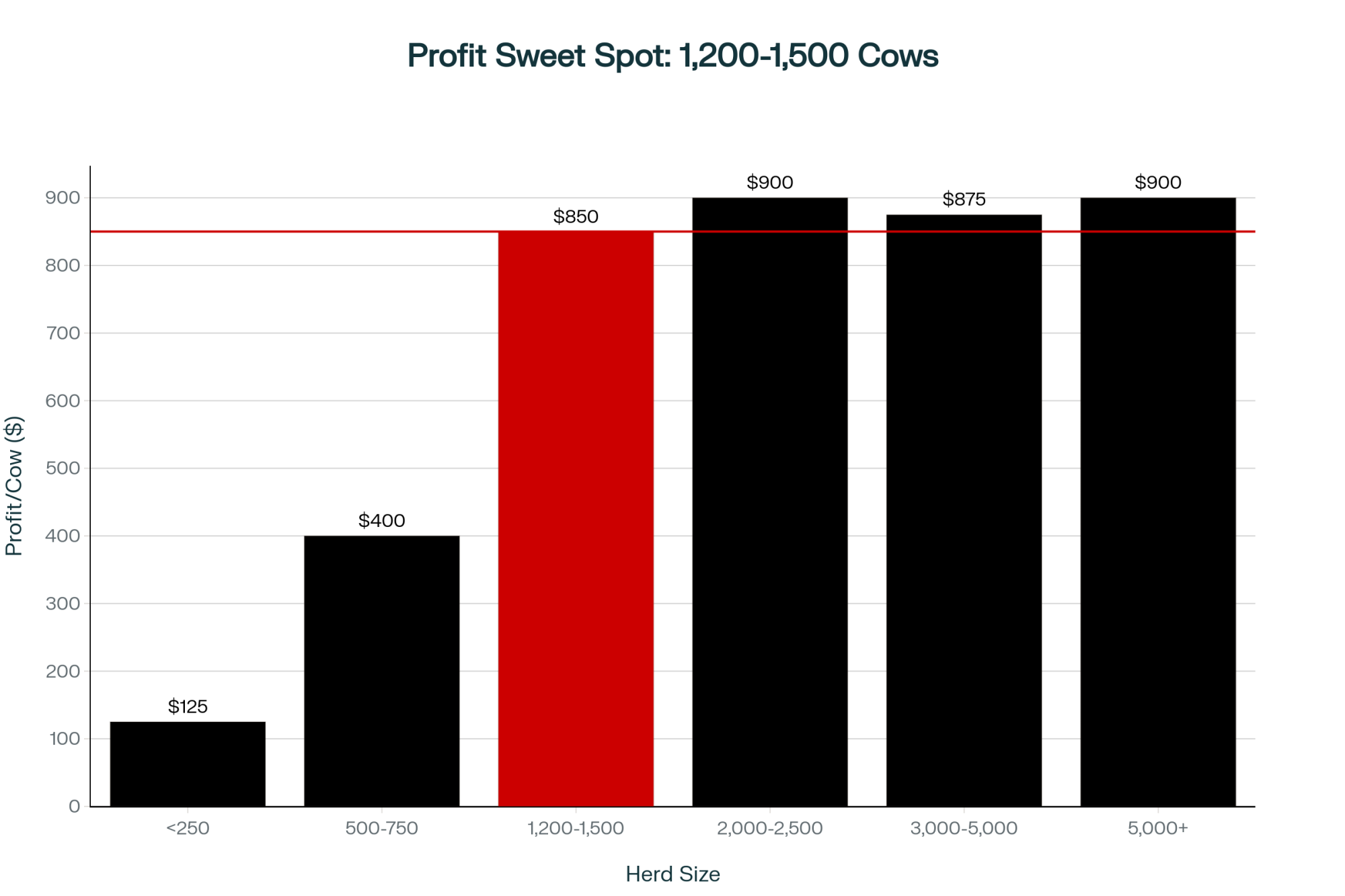
NewsSubscribe
First
Last
Consent

The Milking Speed Game-Changer That’s About to Shake Up Your Breeding Program

42% heritability for milking speed? That’s higher than most production traits. Your parlor throughput just got a genetic upgrade.

dairy genetics, milking speed trait, Holstein breeding, parlor efficiency, dairy profitability

EXECUTIVE SUMMARY: So here’s the deal… the CDCB just dropped something that’s going to change how we think about efficiency. They’re launching a sensor-based milking speed trait that’s built on actual data, not someone’s opinion. We’re talking 50+ million milking observations from real farms, and the numbers are staggering – 42% heritability means you can actually breed for this trait and see results fast. A 1,000-cow operation could save $19,710 annually just from improved parlor throughput, and that’s before you factor in the labor shortage we’re all dealing with. The U.S. is leapfrogging countries like Canada (14% heritability) and Germany (28%) because we’re using pure sensor data while they’re still relying on subjective scoring. But here’s the catch – there’s a genetic correlation with somatic cell score that you need to understand before you start chasing the fastest milkers. This isn’t just another genetic tool… it’s a direct path to better profitability, and you should be planning how to use it before your competitors figure it out.

KEY TAKEAWAYS

  • Labor Cost Reduction: 25 hours saved weekly for 1,000-cow dairies – Start tracking your parlor throughput now and identify bottleneck cows. With the August 2025 launch, you can use corrective mating to breed faster-milking replacements while labor costs keep climbing.
  • Genetic Screening Strategy: Avoid bulls below 6.5 lbs/min or above 8.0 lbs/min – Screen your current bull lineup immediately and establish thresholds for 2025 breeding decisions. The +0.43 correlation with SCS means you can’t just chase speed without balancing udder health.
  • Parlor Efficiency Gains: 4-5 turns per hour vs. current 3-4 turns – Calculate your current throughput and model the economic impact of a 30-second reduction in milking time per cow. In today’s tight margin environment, that extra turn per hour could be the difference between profit and loss.
  • International Competitive Advantage: 42% heritability vs. 14-28% globally – Position your genetic program ahead of international competitors by adopting objective data-driven selection. As export markets demand efficiency-focused genetics, U.S. producers have a clear technological edge.
  • AMS Preparation: Robot throughput directly tied to individual cow milking speed – Even though this trait targets parlor systems initially, start evaluating your herd’s milking speed variation now. The principles apply whether you’re planning an AMS transition or maximizing current robot efficiency.

The CDCB’s new sensor-based Milking Speed trait is launching next month? This isn’t just another line item on a genetic evaluation—this could be the most significant functional trait development we’ve seen since… well, maybe ever. Here’s what’s got everyone from Wisconsin to California talking, and why you need to understand this before your next sire selection meeting.

What’s Actually Happening on August 12th

The thing about this MSPD launch is that the timing couldn’t be better. The Council on Dairy Cattle Breeding officially drops their new Milking Speed (MSPD) evaluation on August 12th, and the numbers behind this development are genuinely staggering. We’re talking about a trait built on massive, real-world data that makes previous functional trait evaluations look like small-scale research projects.

According to the CDCB’s comprehensive research analysis, they’ve assembled over 50 million individual milking observations from roughly 300 herds spanning 31 states. That’s not some university trial—that’s data from actual commercial operations dealing with the same labor shortages and efficiency pressures you’re facing every day.

What strikes me most about this whole development is how they’ve completely abandoned the old subjective scoring methods. You know those type classification scores we’ve been living with for milking speed? Gone. Instead, they’re using pure sensor data from in-line milk meters, and the results are honestly incredible—they’re seeing a 42% heritability estimate.

“This represents a paradigm shift away from subjective, classifier-based scoring methods that have characterized previous milking speed evaluations.”

Compare that to what other countries are getting with their farmer-scored systems… Canada is at 14%, while Germany is at 28%, even with their mixed approach. The difference is massive, and it’s all because we’re finally measuring what actually matters instead of relying on someone’s opinion during a type classification visit.

The traits are expressed in pounds per minute—finally, something that makes immediate sense to producers instead of some abstract index number. The Holstein breed average is sitting around 7.1 lbs/min, and from what I’m seeing in the preliminary data, proven sires are ranging from 5.9 to 8.2 lbs/min. That’s real genetic variation you can actually work with.

The Economics That Are Making CFOs Take Notice

Here’s where this gets really interesting from a bottom-line perspective. I’ve been looking at the economic modeling work, and a 1,000-cow operation that reduces individual milking time by just 30 seconds could save about 25 labor hours per week. With current agricultural wages hovering around $17.55 per hour, that translates to roughly $19,710 in annual labor savings.

But here’s the thing… those numbers scale up fast. The research projections show:

Annual Labor Cost Savings by Herd Size:

  • 250 cows: $3,456 annually
  • 500 cows: $9,864 annually
  • 1,000 cows: $19,710 annually
  • 2,000 cows: $49,284 annually

And that’s just direct labor costs—doesn’t even account for the opportunity cost of reallocating that labor to higher-value tasks like fresh cow management or repro work.

What’s particularly noteworthy is how this addresses something every producer I talk to is dealing with right now: the labor crisis. I was just in Lancaster County last month, and producers there are struggling to find skilled milkers at any price. Being able to select for improved parlor throughput genetically? That’s addressing a real problem with a genetic solution.

Take a producer I know in Wisconsin—he’s been tracking his parlor throughput religiously in his double-12. His crew can handle about 4.2 turns per hour on a good day. If genetic improvement could bump that to 4.8 turns? That’s an extra 14 cows per hour through the same facility with the same people. Over a year, that adds up to serious money.

The Udder Health Reality Check Nobody Wants to Discuss

Now, here’s where it gets complicated—and this is something every producer needs to understand before jumping in headfirst. The CDCB research reveals a pretty significant genetic correlation of +0.43 between MSPD and Somatic Cell Score. Translation? If you go crazy selecting for the fastest milkers, you’re going to see udder health problems.

“Single-trait selection for milking speed alone would likely lead to a deterioration in udder health, offsetting the economic gains from improved efficiency.”

But there’s a fascinating twist that makes this even more interesting. The correlation with clinical mastitis is actually favorable at -0.28. So, faster milking might increase your SCC baseline, but it doesn’t necessarily mean more clinical cases. It’s complex… and that complexity is exactly why single-trait selection is such a dangerous game.

What this tells me is that optimal milking speed exists somewhere in the middle. Too slow and you’re hurting efficiency and creating parlor bottlenecks. Too fast and you’re risking udder health problems. From industry observations, I’ve heard from breeding consultants that the sweet spot is probably somewhere between 6.5 and 8.0 lbs/min, depending on your other genetics.

The breeding consultants I’ve been talking to—guys who’ve been doing this for decades—are already recommending screening strategies. Avoid bulls below 6.5 lbs/min to prevent parlor bottlenecks, but also be cautious with anything above 8.0 lbs/min unless they’ve got exceptional udder health proofs to compensate.

How the U.S. Just Leapfrogged the Global Competition

From a global competitive standpoint, this development puts U.S. genetics in an exciting position. The international comparison is fascinating when you dig into the details.

International Heritability Comparison:

  • United States: 42% (sensor-only data)
  • Germany: 28% (mixed sensor/subjective)
  • Nordic countries: 22% (mixed approach)
  • Canada: 14% (subjective scoring)
  • Netherlands: 51% (robot-specific data)

What I find fascinating is how this positions American A.I. companies in the global market. They can now compete on a functional trait that’s becoming increasingly important worldwide, and they can do it with superior data backing their claims. That’s a marketing advantage that’s hard to argue with.

The Dutch approach is particularly interesting—they’re seeing 51% heritability for their robot-derived trait compared to 23% for their subjectively scored trait. That gives us a roadmap for where the U.S. could go next, and honestly, we’re positioned to leapfrog their advantage with our superior sensor data and genetic evaluation methodology.

The Robot Connection That’s Got Everyone’s Attention

While this initial MSPD trait applies to conventional parlor systems, the implications for Automated Milking Systems are huge. Here’s what’s got my attention: according to research from Lactanet in Canada, a herd with robot efficiency of 2.0 kg/minute can harvest over 700 kg more milk per robot per day compared to a 1.4 kg/minute herd.

“That’s massive money on the same piece of equipment.”

Think about it—if you’ve got $250,000 tied up in a single robot, you want to maximize what it can produce. The current MSPD trait is designed for parlors, but the underlying principle is the same. Individual cow milking speed directly impacts system throughput, whether you’re talking about parlor turns or robot box time.

I was talking to a producer in Minnesota who’s got six robots running, and he told me his biggest frustration is the variation in milking speed between cows. “Some of my cows are in and out in four minutes, others take eight. That variability kills my throughput.” Being able to breed for more consistent, optimal milking speed? That’s going to be huge for AMS operations.

The research confirms this—the initial MSPD evaluation is specifically designed for conventional milking systems and doesn’t include data from AMS operations. But I expect we’ll see an AMS-specific MSPD evaluation within the next few years. The framework’s already there.

Implementation Strategy—What Actually Works on Real Farms

The thing about new genetic tools is they’re only as good as how producers use them. And with MSPD, there are some pretty clear strategies emerging based on what I’m hearing from early discussions and industry observations.

By Operation Size:

Large Commercial Dairies (500+ cows): These operations make sense for aggressive adoption. They’ve got the scale to capture maximum labor savings and usually the management sophistication to handle multi-trait selection strategies. They’re also most likely to develop custom indexes that weight MSPD appropriately for their specific cost structure.

Medium-Sized Operations (100-500 cows): This is where it gets interesting. Many of these operations are transitioning to automated milking systems, where individual cow milking speed directly impacts robot throughput. The quality-of-life improvements alone can be significant—cutting 30-45 minutes off daily milking time adds up over a year.

Small Dairies (<100 cows): The direct economic benefits are less dramatic, but don’t overlook the operational improvements. These producers will probably derive the most benefit from MSPD once it’s eventually incorporated into a comprehensive index like Net Merit.

Recommended Selection Strategies:

What I’m hearing from the breeding consultants is pretty consistent:

  1. Screening Approach: Avoid bulls below 6.5 lbs/min or above 8.0 lbs/min without exceptional udder health
  2. Custom Index Integration: Weight MSPD against SCS for balanced improvement
  3. Corrective Mating: Use high-MSPD bulls with good udder health on slow-milking cow families

The Data Pipeline Challenge—Your Stake in This Success Story

Here’s something that doesn’t get talked about enough—the success of this trait depends entirely on farms continuing to submit high-quality data. The CDCB’s new Format 6 data submission process requires farms to consistently report milking duration, yield, equipment manufacturer, and session timing.

“The long-term success of this and future data-intensive traits are entirely dependent on the consistent flow of high-quality data from farms into the National Cooperator Database.”

According to CDCB officials, the National Cooperator Database processes data from thousands of herds, but data quality varies dramatically between operations. Farms with robust data management are going to see higher reliability breeding values and better genetic progress.

What’s encouraging is that they’ve built this evaluation around data from 11 different equipment manufacturers, which means they can account for the systematic differences between OEMs. That’s critical for maintaining evaluation integrity across different farm setups.

This is where producers have a real stake in the outcome. Your willingness to submit complete, accurate data doesn’t just help your own genetic evaluations—it strengthens the entire system for everyone. The CDCB manages the world’s largest animal database, containing over 10 million genotypes and evaluation data on 87 million animals. That’s the foundation that makes tools like MSPD possible.

Looking Forward—Where This Industry Goes Next

The August launch is really just the beginning. Industry talk suggests we’ll eventually see MSPD incorporated into Net Merit, but that requires developing a consensus economic weight for the trait. Given the complexity of the U.S. dairy industry—different regions, different cost structures, different milking systems—that’s not going to be a quick process.

What’s more likely in the short term is expansion to other breeds as sufficient data becomes available. The framework they’ve built is breed-agnostic, so Jersey and Brown Swiss evaluations could follow relatively quickly.

What’s Coming:

  • Net Merit inclusion (likely 2027-2028)
  • Other breed evaluations (Jersey, Brown Swiss)
  • AMS-specific trait development
  • Additional sensor-based traits (feed efficiency, lameness indicators, and methane emissions)

The bigger picture here is that this represents a fundamental shift toward sensor-based functional traits. According to the CDCB research, we’re looking at a future where farm technology seamlessly integrates with genetic evaluation to breed more efficient, profitable cows. Feed efficiency, lameness indicators, even methane emissions—it’s all on the table.

The Bottom Line for Your Operation

What we’re seeing with MSPD is the industry finally catching up to what progressive producers have been asking for—genetic tools that directly address operational challenges. The science is solid, the economic case is compelling, and the competitive advantages are real.

“The producers who figure out how to use this trait strategically—balancing efficiency gains with udder health, screening for extremes while maintaining genetic diversity—are going to have a significant edge.”

You know, after covering this industry for as long as I have, you get pretty good at spotting which developments are going to matter in five years. This one? This one’s going to matter. The question isn’t whether MSPD will change how we select bulls—it’s whether your operation will be leading that change or watching it happen from the sidelines.

I’ve seen too many producers wait for someone else to figure out new genetic tools, only to realize later they could’ve had a two or three-year head start. Don’t be that producer this time. The data is clear, the science is sound, and the economic impact is massive.

The sensor-based breeding revolution starts August 12th. Are you ready to make it work for your operation?

Complete references and supporting documentation are available upon request by contacting the editorial team at editor@thebullvine.com.

Learn More:

The Sunday Read Dairy Professionals Don’t Skip.

Every week, thousands of producers, breeders, and industry insiders open Bullvine Weekly for genetics insights, market shifts, and profit strategies they won’t find anywhere else. One email. Five minutes. Smarter decisions all week.
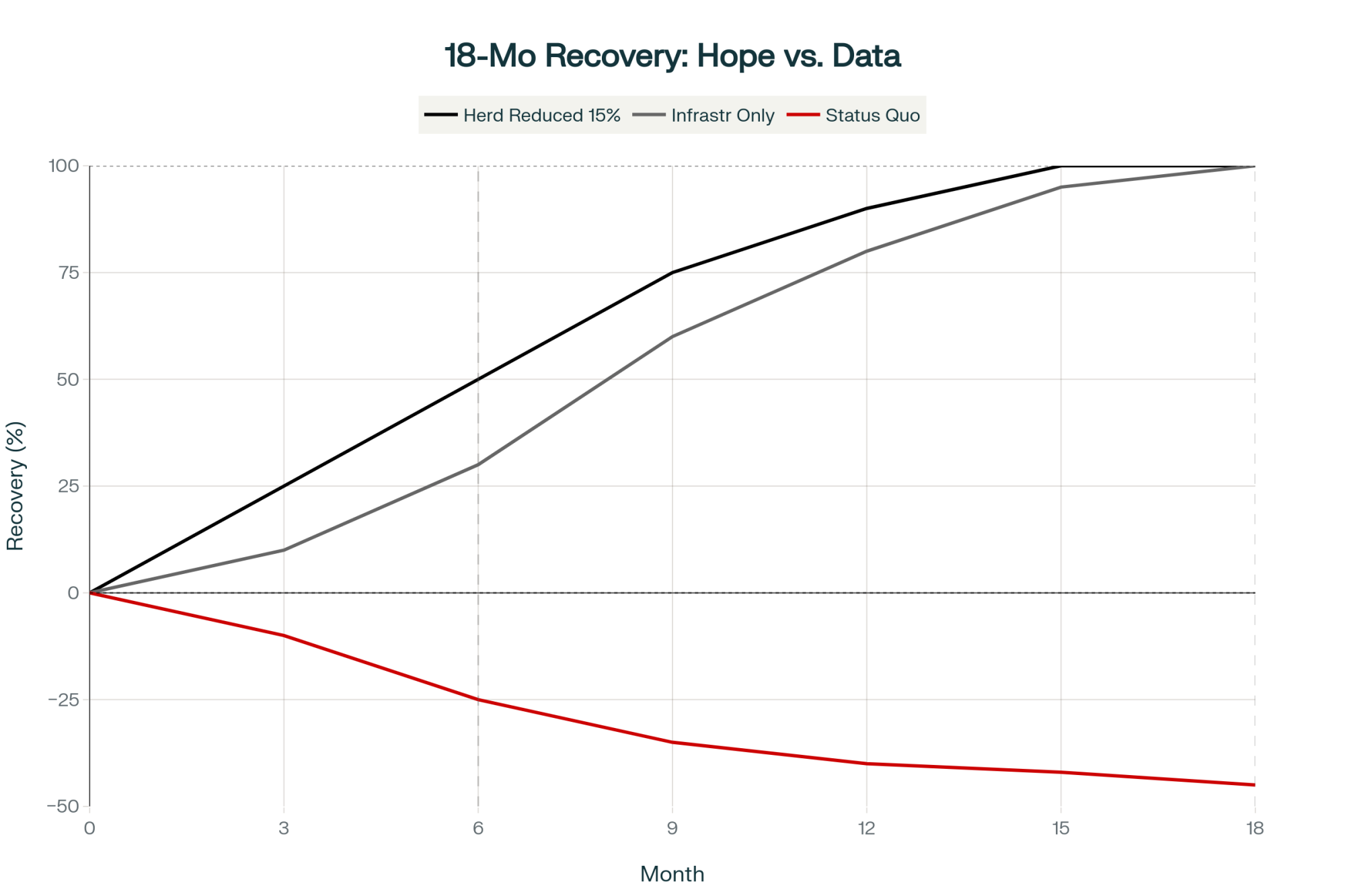
NewsSubscribe
First
Last
Consent
Send this to a friend