Archive for Milk Production

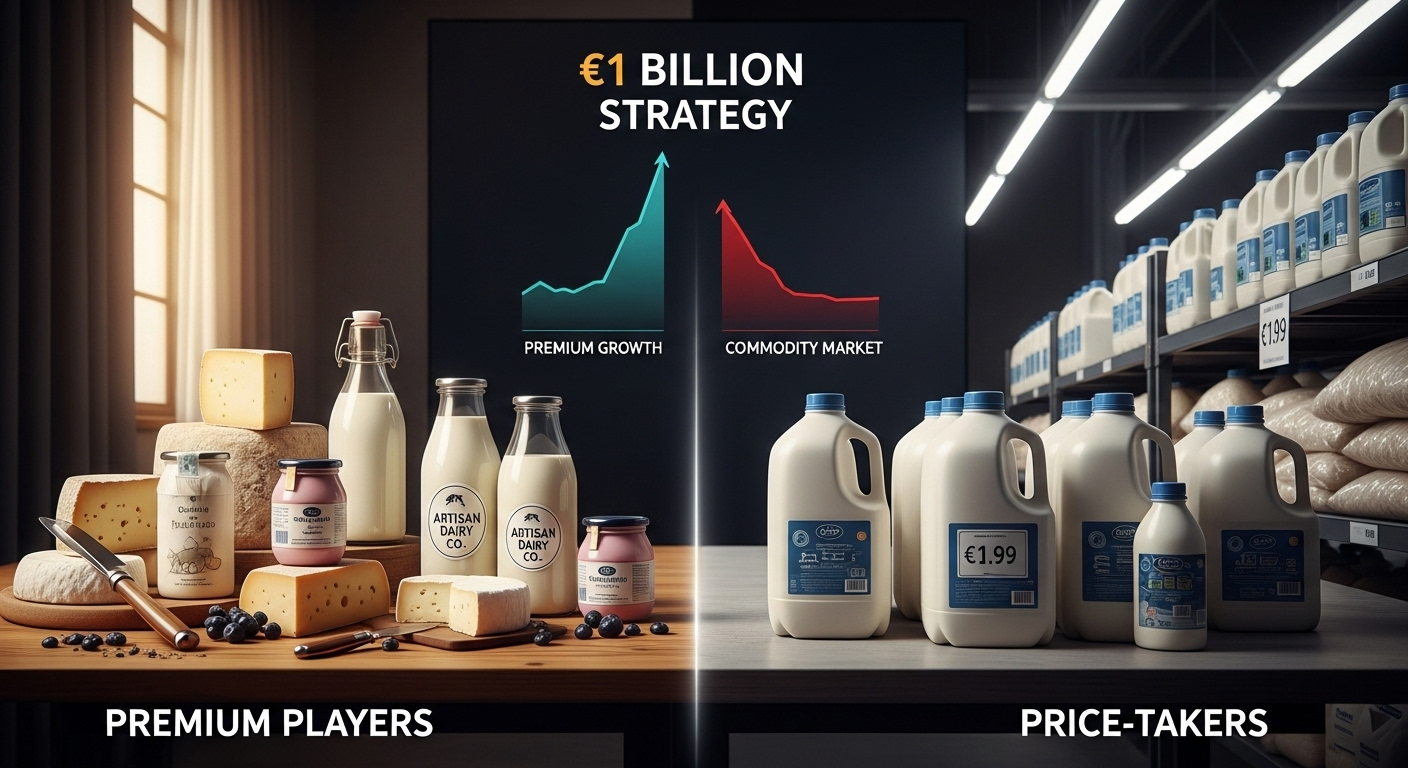
Does Your Breeding Program Fit Your Milk Market?

The same genetics cost one farm $190,000/year and make another farm $57,000. The difference? Market alignment.

Here’s something I’ve been thinking about quite a bit lately. After spending time reviewing proof sheets and talking with dairy farmers from Wisconsin to California, I keep coming back to the same observation: there’s a growing gap between what the catalogs celebrate and what actually drives profitability on individual farms.

Don’t get me wrong—the numbers look impressive. Genetic progress is accelerating. Index values keep climbing. But sit down with producers who’ve been making these decisions for two or three decades, and they’ll share something the marketing materials tend to leave out: genetics that work beautifully on one operation can quietly underperform on another.

What’s interesting here isn’t that some bulls are better than others. It’s that every elite sire represents a specific vision of where dairy is headed—and whether that vision aligns with your milk market, your management approach, and your economic reality is really the question worth exploring.

The Three Gears That Must Mesh

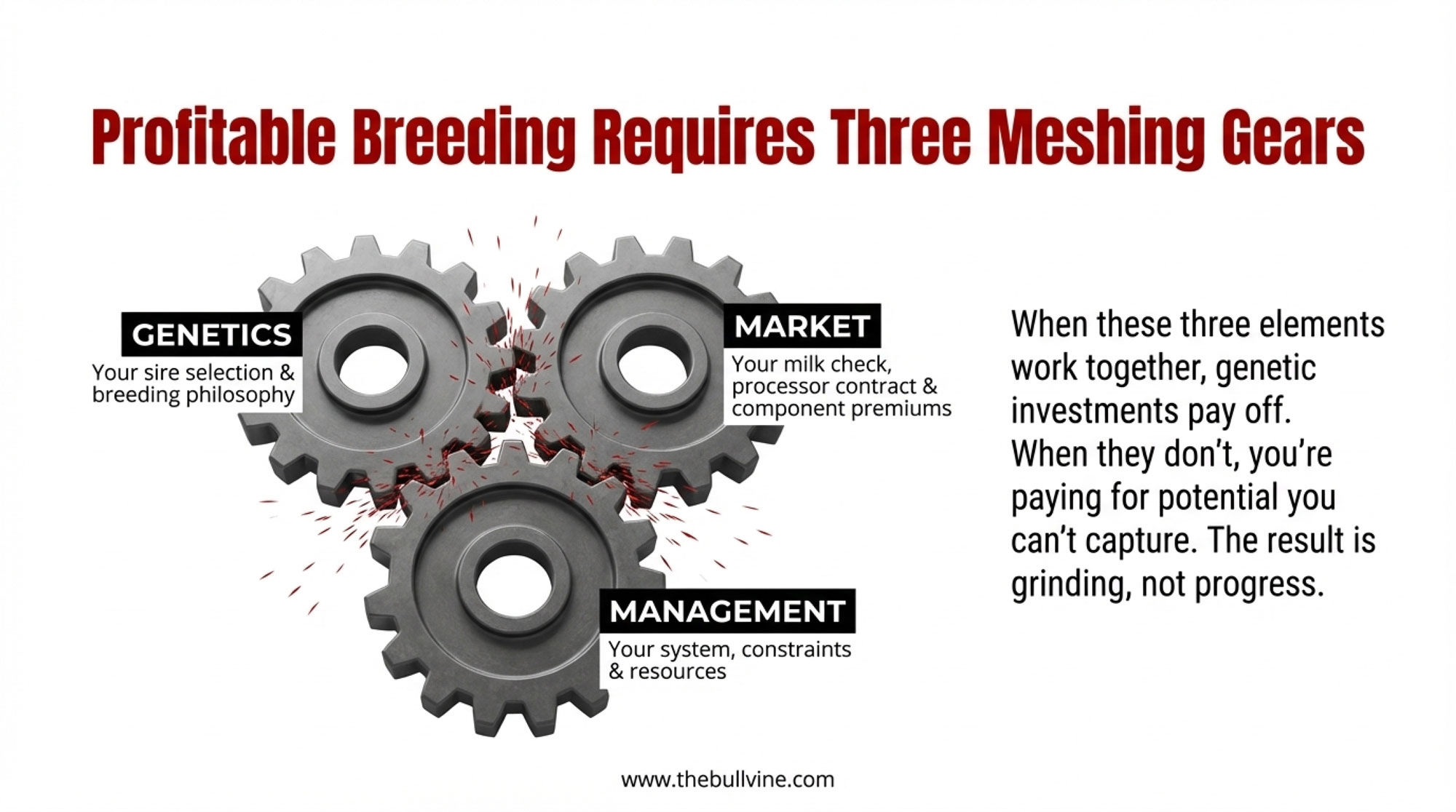
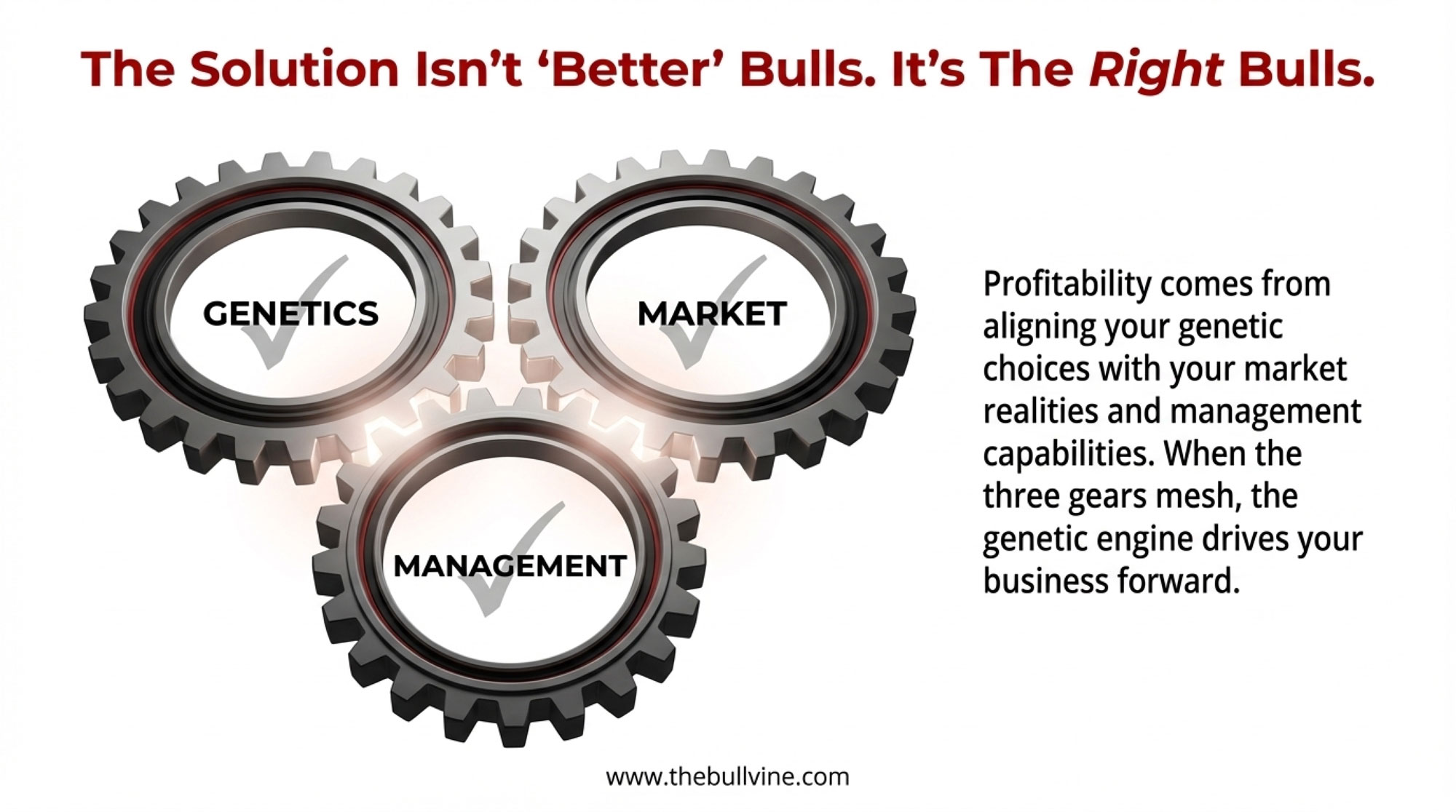
Think of profitable breeding decisions as three interlocking gears: GeneticsMarket, and Management. When these gears mesh smoothly, genetic investments translate into income over feed cost and long-term herd health. When they don’t—when you’re selecting for traits your market doesn’t reward or your management can’t support—you’re essentially paying for genetic potential you can’t capture.

As many of us have seen, that’s how you end up with cows that look great on paper but don’t quite pay their way in your specific system.

The visual is simple enough to sketch on a napkin: three gears touching. Genetics turns Market turns Management. If one gear is spinning in the wrong direction—or sized wrong for the others—you get grinding instead of progress.

Gear Misalignment Example

Midwest Freestall — Class III Cheese Plant Contract — Volume-Focused Genetics

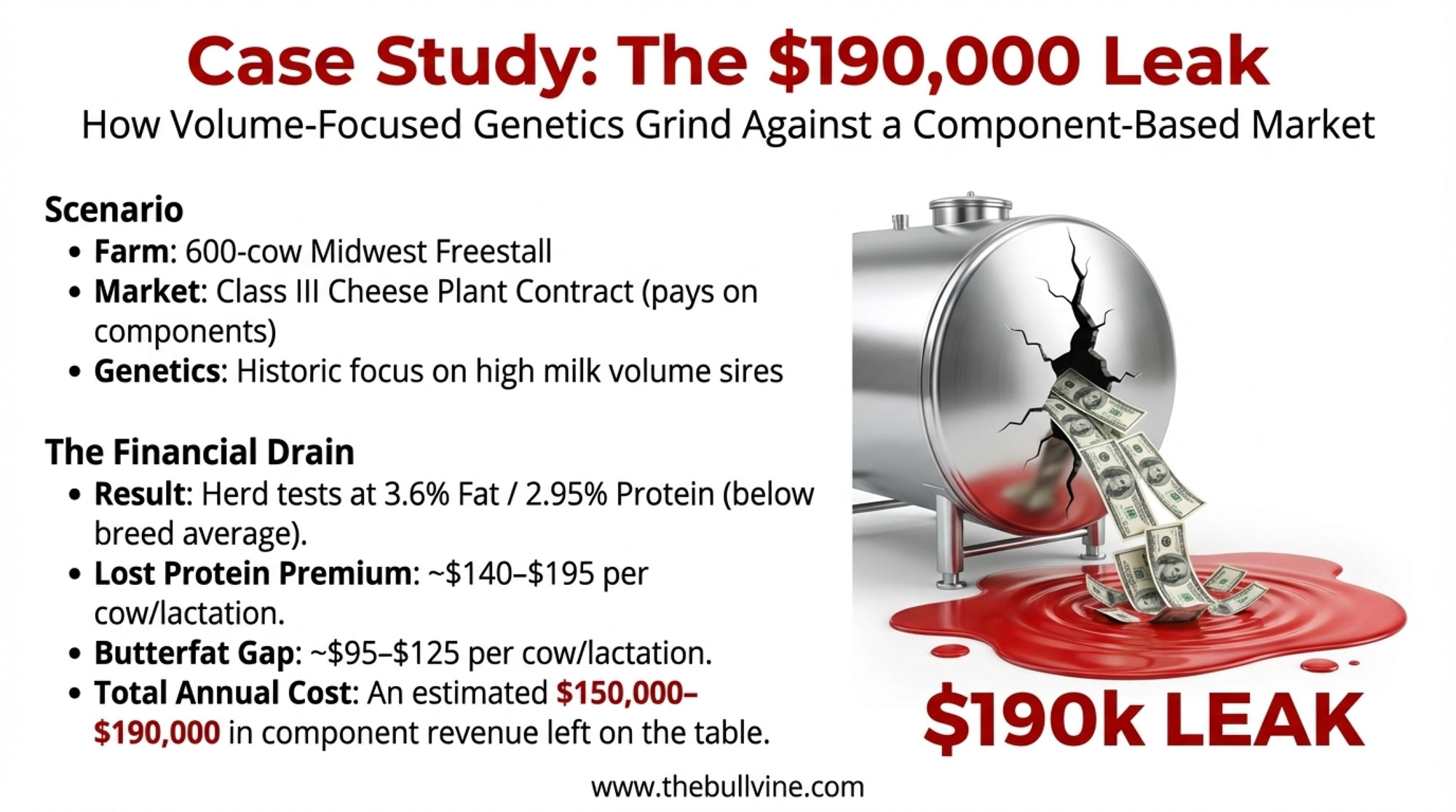
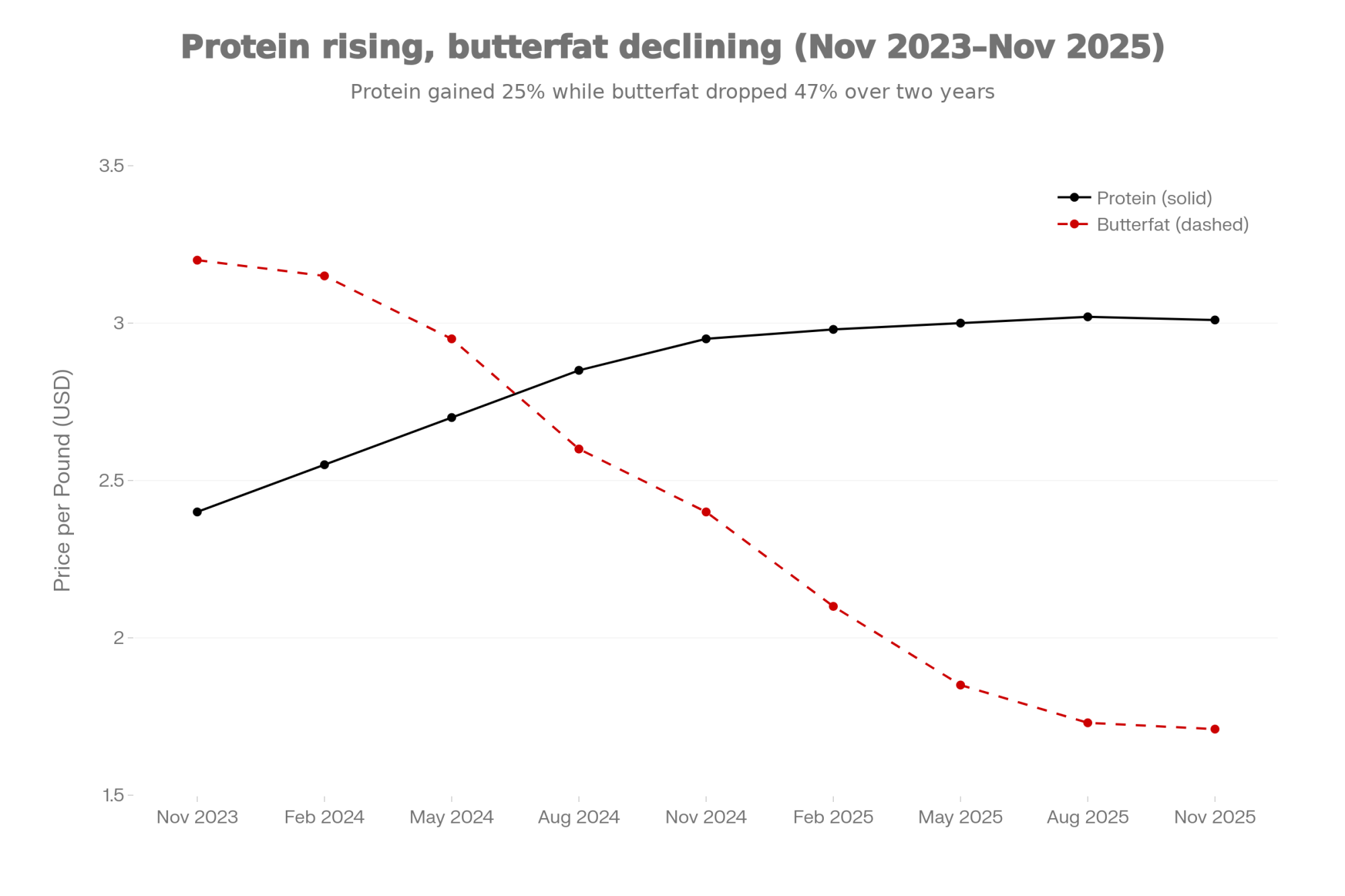
Picture a 600-cow Midwest freestall operation shipping exclusively to a cheese plant on a Class III contract. The processor pays heavily on components—protein especially, since that’s what drives cheese yield. At current prices, protein is worth $3.01 per pound and butterfat $1.71 per pound.

The breeding program, though, has been chasing milk volume for years. High-production sires. Big milk numbers. The tank is full, but the tests are running 3.6% fat and 2.95% protein—below the current Holstein breed average of 4.15% fat and 3.36% protein, according to the Canadian Dairy Information Centre’s 2024 data.

Where money leaks out:

Lost protein premium: At 2.95% protein instead of 3.2–3.3%, this herd leaves roughly $0.75–$0.90 per cwt on the table compared to a component-focused herd at similar production levels. On 60 lbs/cow/day, that’s $140–$195 per cow per lactation in foregone protein revenue alone.

Butterfat gap: The 0.3–0.4% fat test difference adds another $95–$125 per cow per year in missed premiums.

Feed efficiency drag: High-volume, low-component cows often require more DMI per pound of milk solids produced. Using USDA’s NM$ 2025 values, moving that extra water through the system costs feed dollars without generating proportional component revenue.

Estimated annual cost for this 600-cow herd: Approximately $150,000–$190,000 in component revenue the cheese plant would have paid—if the genetics matched the market.

The cows aren’t “bad.” The bulk tank isn’t empty. But the breeding program was optimized for a fluid milk check that no longer exists. The Genetics gear is turning toward volume. The Market gear is turning toward components. They’re grinding against each other instead of working together.

Understanding What You’re Actually Buying

Looking at three sires that represent distinctly different breeding philosophies helps make this concrete.

Denovo 2776 Leeds from ABS is built on a premise that resonates with many operations right now: labor is expensive and increasingly difficult to find, so invest in genetics that reduce calving interventions. His pedigree runs through Sandy-Valley Laker back to the De-Su Frazzled 6984 cow family—the same family that gave us Gateway, Hercules, Ajax, and Skeet, according to ABS pedigree records. With essentially flat components, Leeds isn’t designed to transform your butterfat levels. His value proposition centers on strong calving-ease and a solid productive life from a family known for commercial functionality.

Denovo 6856 Hotshot takes a completely different approach. His pedigree traces through Pine-Tree Shadow to the Bomaz Perfect-P line—part of what ABS describes as “one of the premier cow families of the breed for longevity.” Hotshot isn’t positioned as a production leader. He’s built around health, livability, and keeping cows productive through the transition period and beyond.

Urzokari from Synetics represents yet another direction—explicit optimization for robotic milking systems. Emphasizing teat position, udder balance, and locomotion traits that influence whether cows visit the robot voluntarily or need fetching.

Producers are discovering that none of these bulls represents a universally optimal choice. Each makes excellent sense for some operations and may quietly cost money on others. The question isn’t which bull is “best,” but which breeding philosophy fits your particular three gears.

Where NM$ and TPI Fit—And Where They Don’t

Before we go further, it’s worth talking about how this framework relates to Net Merit and TPI, since that’s how most of us were taught to think about genetics.

The April 2025 NM$ revision—documented in detail by Paul VanRaden and colleagues at USDA’s Animal Genomics and Improvement Laboratory—now places 31.8% emphasis on butterfat13% on protein, and a combined 17.8% on Feed Saved, which includes body weight composite and residual feed intake. The remaining emphasis spreads across productive life, health, fertility, calving, and conformation traits.

Here’s what’s important to understand: NM$ is designed to maximize lifetime profit for an average U.S. Holstein herd selling into average market conditions. It’s a remarkably well-constructed tool for that purpose. Canadian producers working with LPI or Pro$ face similar considerations—different weightings, different assumptions, same fundamental question of whether those assumptions match your operation.

How the Major Indexes Compare

The differences between selection indexes reflect different market realities and breeding priorities:

  • NM$ (U.S.) places heavy emphasis on components—31.8% on butterfat alone in the 2025 revision—reflecting the cheese-heavy U.S. processing sector. Feed efficiency gets significant weight at 17.8% combined.
  • TPI (U.S.) weights production, type, and health traits differently, placing greater emphasis on conformation. Operations selling breeding stock or show cattle often weight TPI more heavily.
  • Pro$ (Canada) incorporates Canadian market conditions and pricing structures. The formula accounts for Canadian component pricing ratios, which—as we’ll see—are shifting significantly.
  • LPI (Canada) takes a different approach to balancing production, durability, and health traits within the Canadian context.

The point isn’t that one index is “right,” and others are wrong. It’s that each embeds assumptions about markets, management, and priorities that may or may not match your operation.

A Global Trend, Not Just a North American One

This isn’t just a North American consideration. Globally, component emphasis is intensifying—and the herds that have been selecting for it are pulling ahead.

In Ireland, milk fat content reached 4.51% and protein hit 3.58% in January 2025, according to the Central Statistics Office—both up from the prior year. New Zealand’s Fonterra bases its milk price calculations on standardized 4.2% fat and 3.4% protein, as documented in the Commerce Commission’s September 2025 review—benchmarks that reflect decades of component-focused breeding in pasture-based systems. And across the EU, butter prices hit record highs in early 2025, reaching €7,422 per metric ton in January according to CLAL data—a 36.5% increase over the same month in 2024. Industry analysts describe the fat premium as becoming “structural, not some temporary blip.”

The takeaway? Market alignment isn’t a U.S. phenomenon. It’s a global reality that’s reshaping which genetics deliver returns, regardless of where you farm.

When “Average” Doesn’t Describe Your Situation

But “average” may not describe your situation. If you’re shipping Class III milk to a cheese plant with strong component premiums, NM$ may actually underweight the traits driving your revenue. If you’re in a fluid market with minimal component pay, the 31.8% butterfat emphasis in NM$ could be steering you toward genetics that don’t match your milk check.

The framework in this article doesn’t replace NM$ or TPI—it complements them by asking: Does this index’s assumptions match my actual market, management, and constraints?

Think of NM$ as an excellent starting filter. But the final selection—especially for your top sires getting heavy use—benefits from the three-gear alignment check.

The Concentration Question Worth Understanding

Looking at this trend at the breed level, something jumps out that doesn’t get nearly enough airtime.

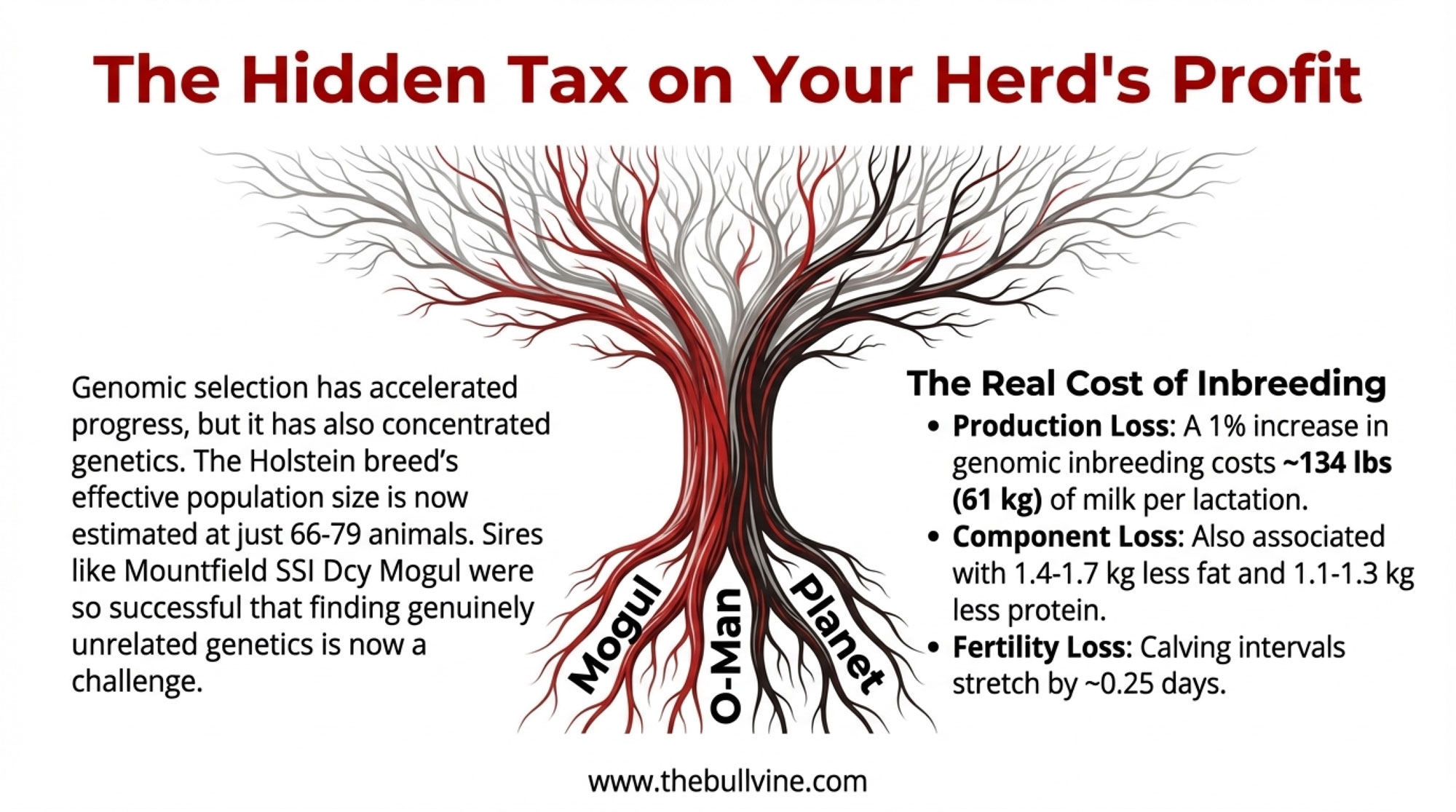
Multiple studies have estimated the effective population size of Holsteins—a measure of genetic diversity based on how animals are actually related—at 66-79 animals, despite millions of Holstein cows walking into parlors around the world. Geneticists generally view an effective population size below 50 as the line where long-term adaptability becomes a serious concern, so we’re not over that cliff—but we’re closer than many would guess.

Dr. Chad Dechow, Associate Professor of Dairy Cattle Genetics at Penn State University, has been writing and speaking about this for years. His work shows that genomic selection—for all its tremendous benefits in accelerating genetic improvement—has also sped up how quickly we concentrate genetics in fewer lines.

Why does this matter for your next semen order?

Because the bulls marketed as “outcrosses” today often trace back to the same handful of influential sires, once you unfold the pedigree far enough. And the economic bite of that concentration isn’t theoretical—it’s been quantified.

The Mogul Example: When Success Creates Its Own Risk

Mountfield SSI Dcy Mogul—the youngest Holstein sire to exceed one million units sold. His daughters delivered. His influence now appears throughout the breed’s pedigree, making genuine outcrosses increasingly difficult to find.

Mountfield SSI Dcy Mogul is one of the most influential Holstein sires in breed history. Select Sires announced in September 2017 that he’d exceeded 1 million units sold at just seven years of age, making him the youngest bull to reach that milestone. His impact as a foundation sire for subsequent generations has been enormous.

That success wasn’t accidental. Mogul daughters delivered. But the sheer scale of his use means his genetics now appear in a substantial percentage of the breed’s pedigrees—often multiple times per animal when you trace back six or seven generations.

The concern isn’t that Mogul was a poor bull. He wasn’t. The concern is that when any sire achieves that level of market penetration, finding genuinely unrelated genetics becomes progressively harder. Research by Doublet and colleagues, published in 2019, documented annual inbreeding rates rising to 0.55% per year in the genomic era—roughly double the rate considered sustainable in the long term.

For individual herds, this means that selecting a “new” high-ranking bull may actually be deepening your connection to Mogul, O-Man, Planet, or Supersire rather than diversifying away from them. Checking kinship data isn’t paranoia—it’s due diligence.

What Inbreeding Actually Costs

Italian research from Ablondi and colleagues, published in the Journal of Animal Science in 2023, found that a 1% increase in genomic inbreeding—specifically measured via runs of homozygosity (FROH), which captures actual stretches of identical DNA—is associated with about 134 pounds (61 kg) less milk over a 305-day lactation, along with lower fat and protein yields.

German work from Mugambe and colleagues in the Journal of Dairy Science in 2024 found similar patterns:

  • 32–41 kg less milk per 1% increase
  • 1.4–1.7 kg less fat
  • 1.1–1.3 kg less protein
  • Calving intervals stretched by roughly a quarter-day per 1% increase

I recently talked with a Wisconsin producer milking about 400 cows who’s been tracking inbreeding and performance for a decade. His take was pretty straightforward: “The daughters are producing more milk than their dams, so the genetic progress is real. But conception rates and feet-and-leg issues have gotten harder to manage. I’m not sure the net gain is as large as the proof sheets suggest.”

The Component Premium Question

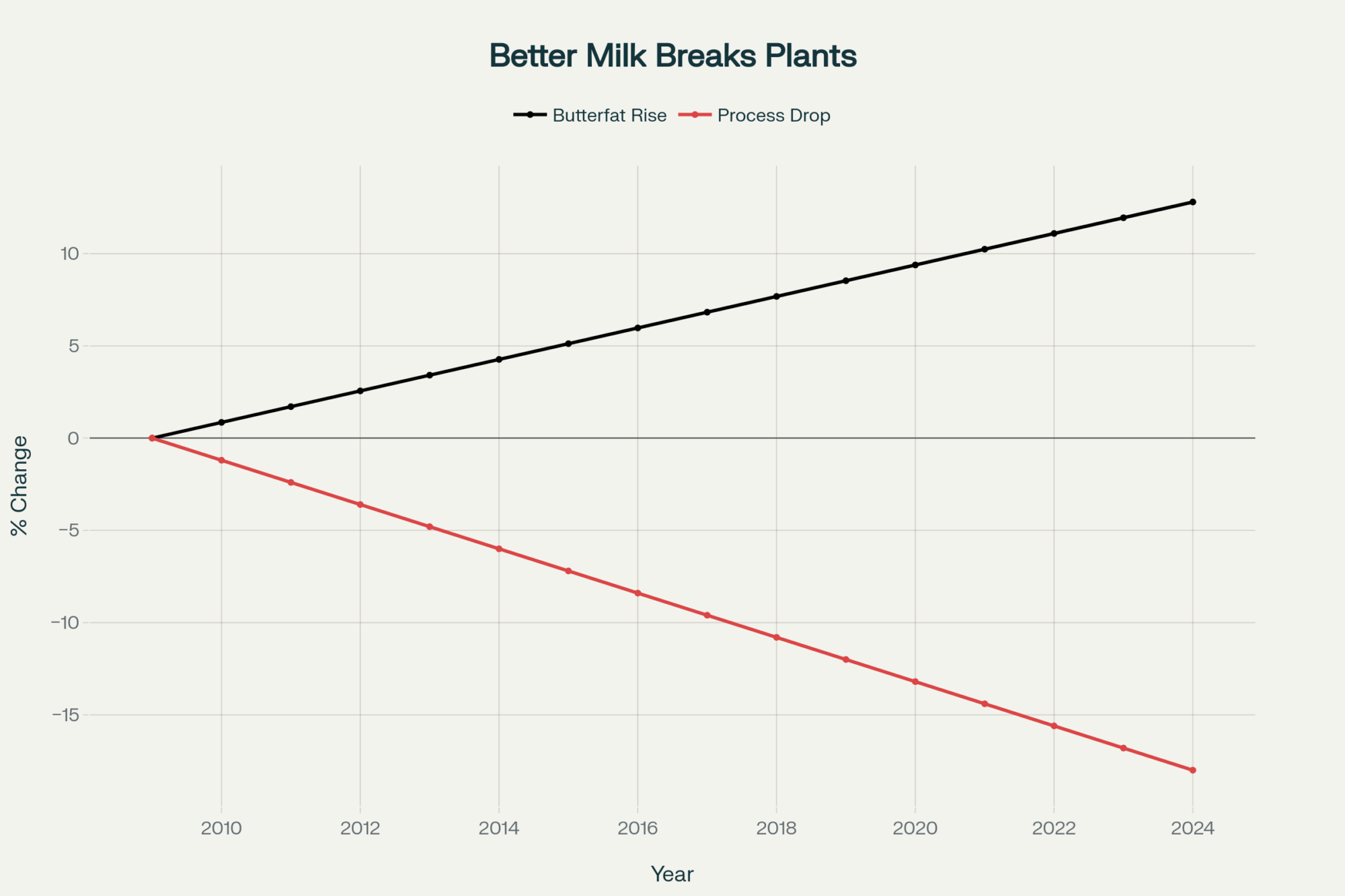
The shift toward component-focused genetics has really picked up speed in recent years, especially with the 2025 NM$ revision, which placed 31.8% emphasis on butterfat alone. On paper, that makes a lot of sense given recent price trends. In practice, it depends heavily on where your milk check comes from.

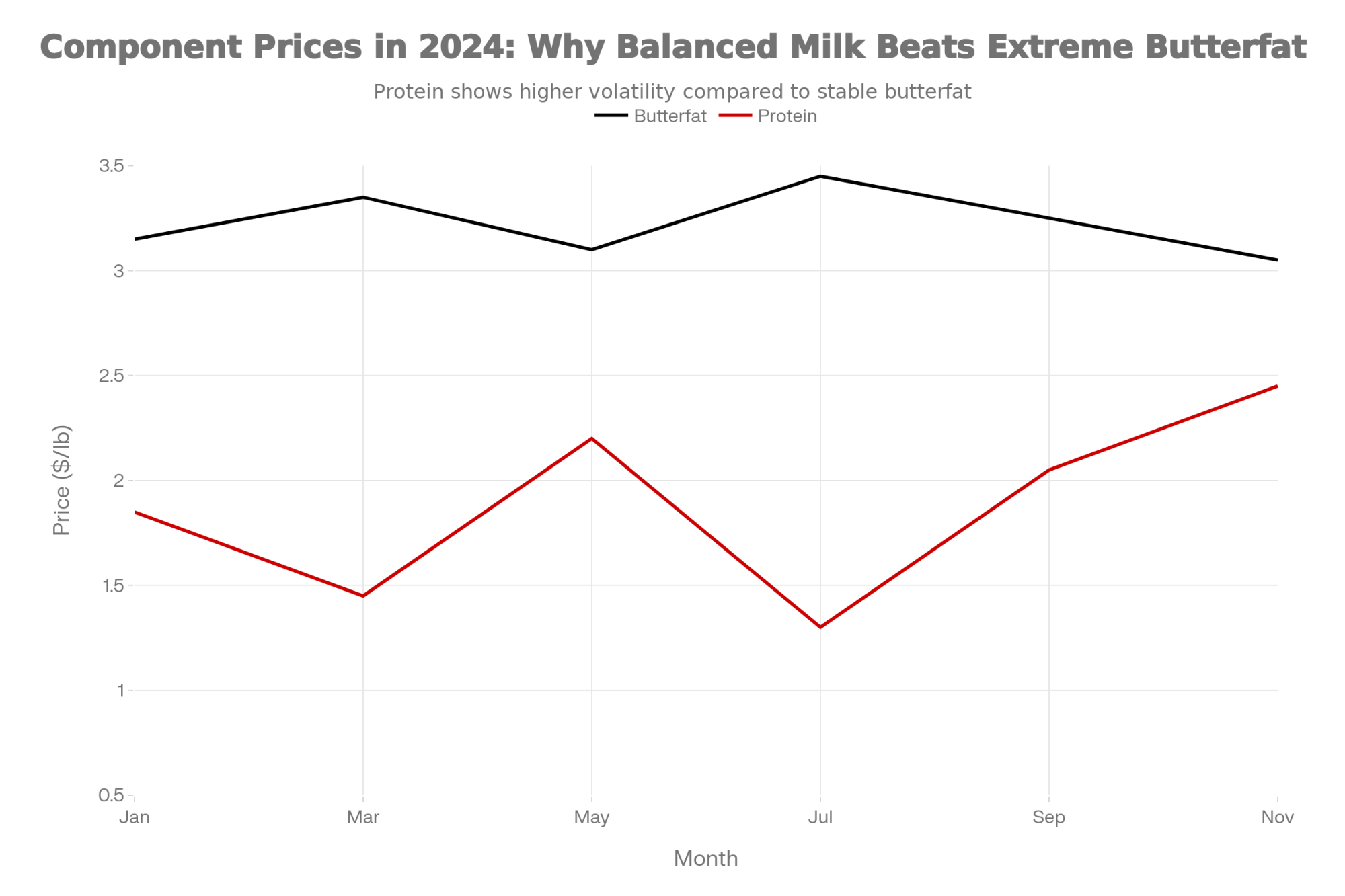
The November 2025 USDA Agricultural Marketing Service announcement showed protein at $3.0143 per pound and butterfat at $1.7061 per pound—a very different picture from a year earlier, when butterfat was over $3.00 a pound. Class III settled at $17.18 per hundredweight. Those relationships move, sometimes dramatically.

Processor Contracts Are Tightening

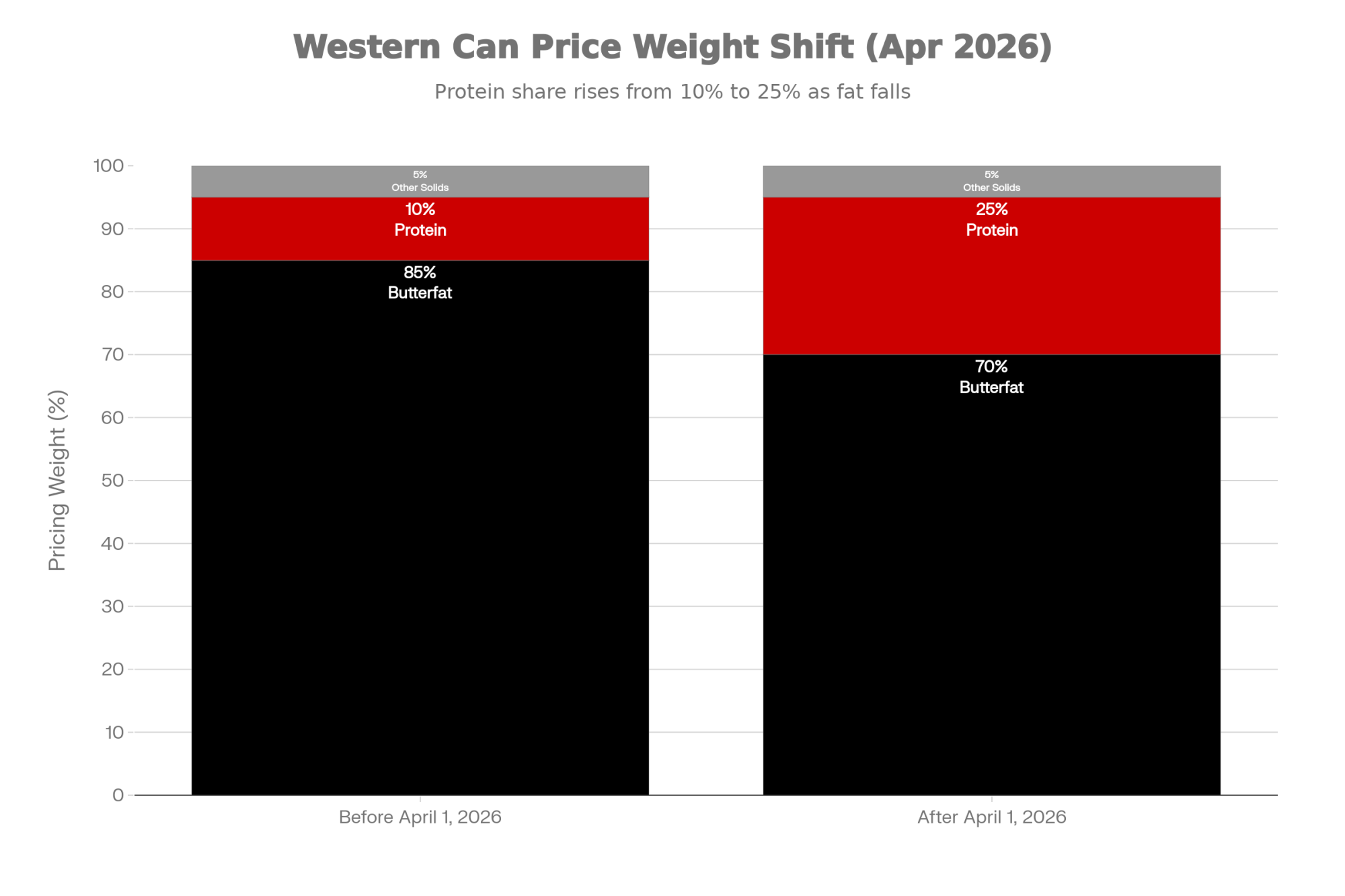
And processor expectations are tightening—that’s something worth paying attention to. Western Canadian provinces—British Columbia, Alberta, Saskatchewan, and Manitoba—announced through the BC Milk Marketing Board a major component pricing ratio shift effective April 1, 2026, moving from 85% butterfat / 10% protein / 5% other solids to 70% butterfat / 25% protein / 5% other solids. That’s a significant rebalancing toward protein that will reward herds already selecting for it and penalize those who aren’t.

In the U.S., the story is similar. New processing capacity often comes with stricter contract requirements. Today’s direct contracts increasingly expect consistent volume, protein tests above 3.2%, and premium somatic cell counts. If your genetics have been drifting away from protein while you’ve been chasing other traits, the next contract renewal window may deliver an unwelcome surprise.

Quick Math Check: What’s Your Component Revenue Share?

Pull your last six milk checks. Add up the component premiums (fat + protein payments above base). Divide by total milk revenue.

  • Above 25%: Component genetics is likely paying well for you. The 2025 NM$ emphasis on butterfat aligns with your market.
  • 15–25%: Mixed picture. Component genetics help, but don’t over-rotate away from production.
  • Below 15%: You may be over-investing in component genetics. Consider whether volume-focused or balanced sires deliver better returns in your specific market.

This 5-minute exercise can save thousands in misaligned genetic decisions.

Red Flag Checklist: 5 Warning Signs Your Genetics Don’t Match Your Market

  1. Your fat or protein test has dropped 0.2%+ over 3 years while selecting high-NM$ bulls. NM$ emphasizes components, so if your tests are declining despite following index rankings, something in your selection isn’t translating to your tank.
  2. Your component revenue share (from the Quick Math Check) is under 20%, but you’re heavily using component-focused sires. You may be paying for genetic potential your market doesn’t reward.
  3. You can’t find a prospective sire with less than 8% relationship to your herd. Genetic concentration has narrowed your options more than you realize—time to seek outcross genetics actively.
  4. Your processor has mentioned tightening component thresholds or premium structures in recent communications. With Western Canadian provinces shifting to 70/25/5 (fat/protein/other) pricing in April 2026 and U.S. processors increasingly requiring 3.2%+ protein for premium contracts, genetic decisions made today need to anticipate tomorrow’s standards.
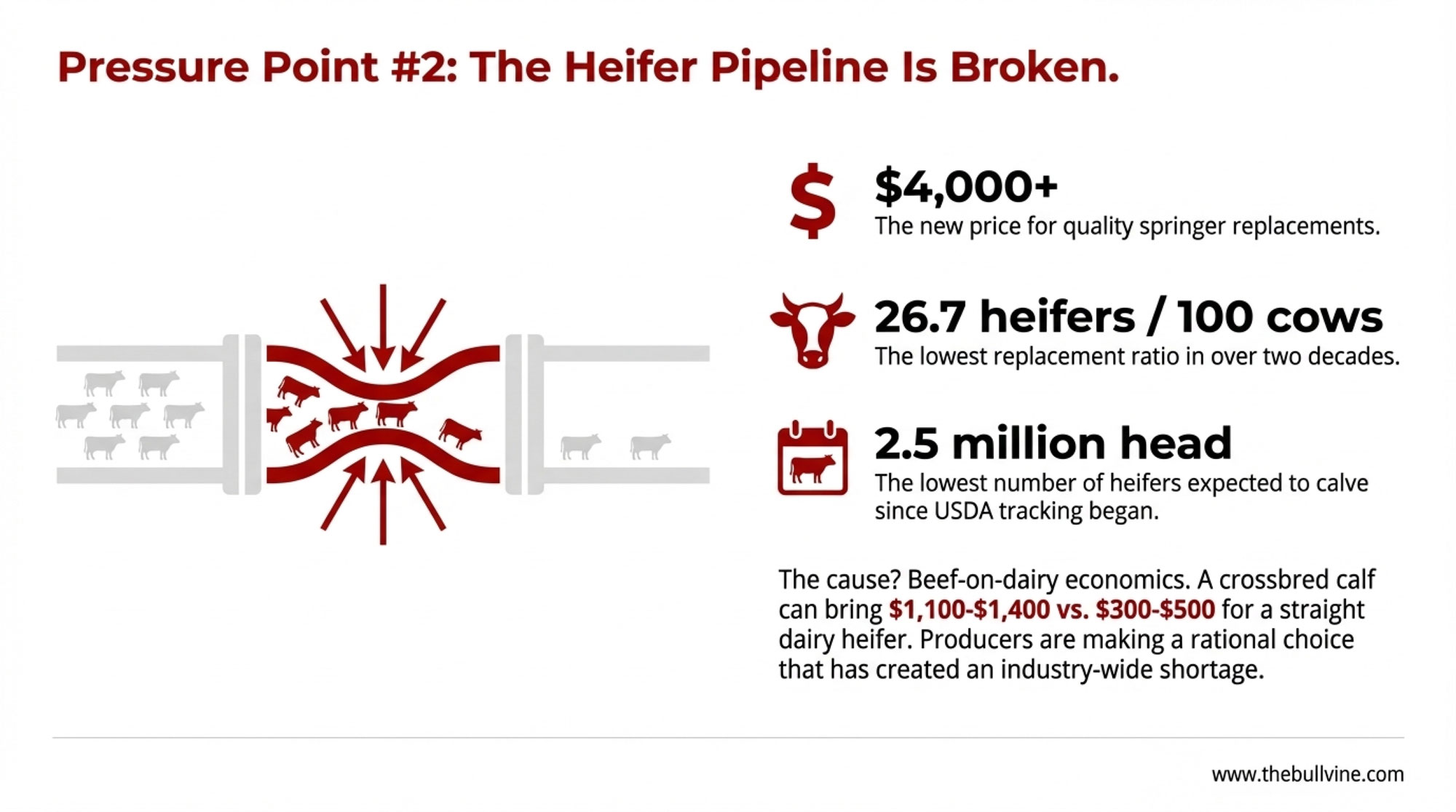
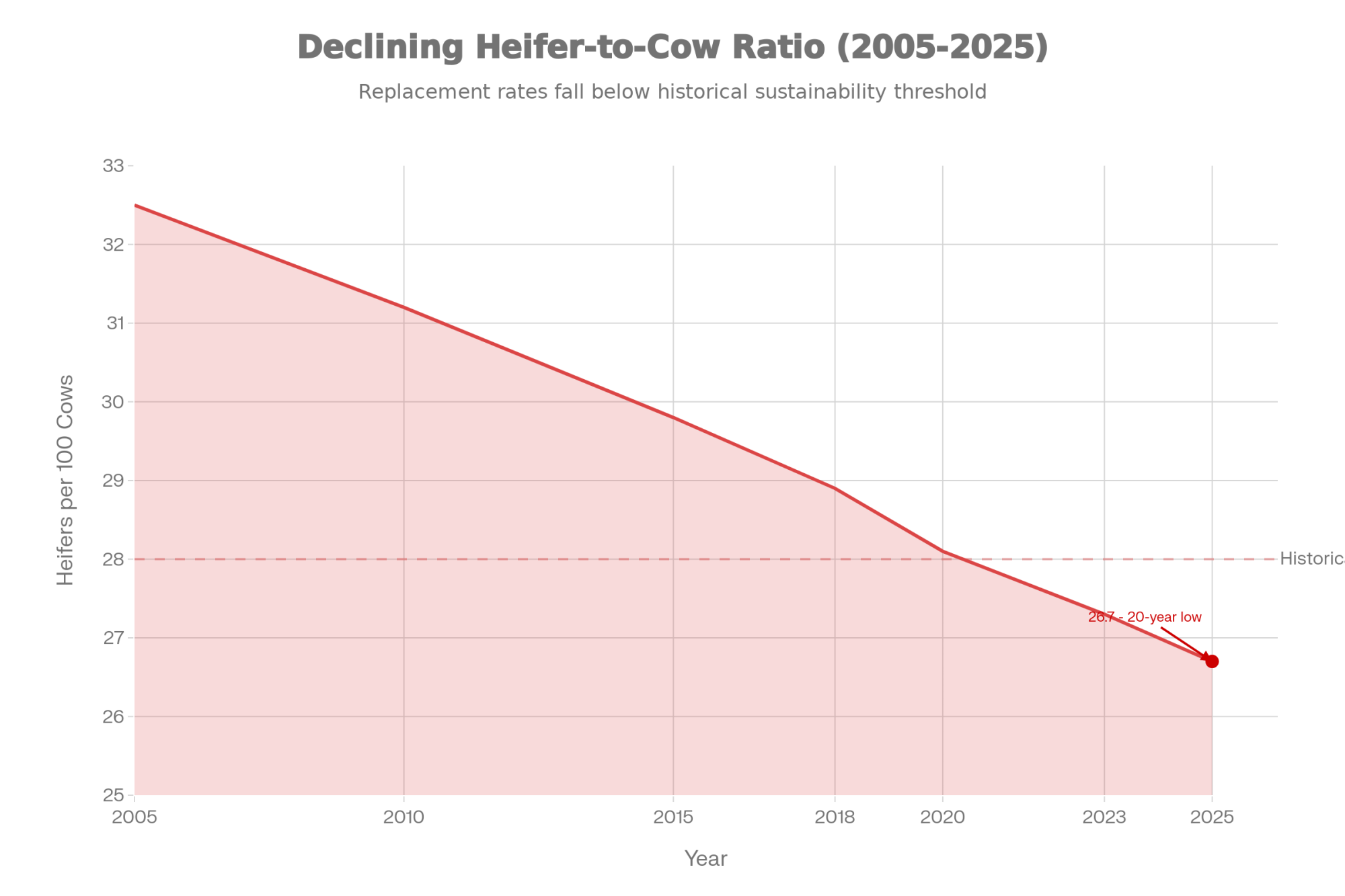
  5. You’re using beef genetics on more than 40% of your herd but haven’t genomic-tested to identify your true top-tier replacements. With dairy heifer inventories at 20-year lows—2.5 million head as of January 2025, according to HighGround Dairy—the cows you keep replacements from matter more than ever.

If you checked two or more: Your three gears may be grinding. Consider a formal review of your breeding program’s alignment with your current market before your next semen order.

The Feed Efficiency Factor

There’s another dimension to this calculation that’s getting more attention in 2025: feed efficiency. The April 2025 NM$ revision now includes 17.8% combined emphasis on Feed Saved, which incorporates both body weight composite and residual feed intake—a significant increase from previous versions.

Here’s what the research tells us: residual feed intake has moderate heritability, typically estimated between 0.15-0.25 in Holstein populations, making it a meaningful selection target over time. And USDA research used in the NM$ calculations shows that feed costs average about 58% of milk income, broken down into 39% for production costs and 19% for maintenance. That’s not “a big part” of the budget; it’s often the biggest lever you have.

Detailed Per-Cow, Per-Lactation Example

Let’s put real numbers to a side-by-side comparison using November 2025 Class III prices and the economic values from the 2025 NM$ revision.

Scenario: Two cows in the same 500-cow Midwest Class III herd

FactorCow A (Volume-Focused)Cow B (Component-Aligned)
Daily milk62 lbs56 lbs
Fat test3.7%4.2%
Protein test3.0%3.3%
305-day milk18,910 lbs17,080 lbs
305-day fat700 lbs717 lbs
305-day protein567 lbs564 lbs

Revenue calculation (Class III component pricing):

  • Cow A: Fat (700 × $1.71) + Protein (567 × $3.01) + Other solids ≈ $2,904
  • Cow B: Fat (717 × $1.71) + Protein (564 × $3.01) + Other solids ≈ $2,927

Component advantage for Cow B: ~$23/lactation

Feed cost calculation (using USDA’s NM$ 2025 values of $0.13/lb DMI and requirements of 0.10 lbs DMI per pound of milk, 8.0 lbs per pound of fat, and 6.5 lbs per pound of protein):

  • Cow A DMI: (18,910 × 0.10) + (700 × 8.0) + (567 × 6.5) = 11,185 lbs
  • Cow B DMI: (17,080 × 0.10) + (717 × 8.0) + (564 × 6.5) = 10,810 lbs

Feed cost difference: 375 lbs × $0.13 = $49/lactation advantage for Cow B

If Cow B also has 3% better residual feed intake (genetic feed efficiency): Additional savings: ~325 lbs DMI × $0.13 = $42/lactation

Total advantage for component-aligned Cow B in Class III market: $23 (components) + $49 (baseline feed) + $42 (RFI) = ~$114/lactation

Over a 500-cow herd: That’s roughly $57,000/year in additional margin from aligned genetics—not from buying “better” bulls, but from buying bulls that fit the operation’s market and management.

In a fluid market with minimal component premiums, this math reverses. Cow A’s extra 1,830 lbs of milk volume generates more revenue, and the feed efficiency advantage shrinks because you’re not capturing the component value. The same genetics, completely different financial outcome.

What Specialization Actually Costs

Every specialized sire carries trade-offs embedded in his genetic package. The proof sheet highlights the specialization; it doesn’t spell out what you’re giving up.

Leeds’ calving-ease strength comes from specific physical characteristics—smaller, finer skeletal structure, lower birth weight calves, and reduced pelvic dimensions. For operations genuinely struggling with calving difficulty—assisted births over 18–20%—the trade-off often pencils out. For herds where calving assistance is already well-managed, the structural compromise might cost more than the calving-ease saves.

Hotshot’s emphasis on longevity reveals a different dynamic. His moderate milk proof looks more like a genetic ceiling than a starting point. When bred heifers bring $4,000 or more at auction, and raising costs run around $1,700–$2,400 per head, keeping cows in the herd for more lactations makes sense on paper. But if those cows are giving 6–8 lbs/day less than alternatives, whether longevity genetics pay off depends on your culling rate, replacement strategy, and feed costs.

A Northeast grazing operation I spent time with last spring leaned into longevity-focused genetics five years earlier and were genuinely happy with the outcome. “The per-cow production dropped some,” the producer told me, “but with lower replacement costs and better cow health, we’re actually keeping more of what we make.”

Sire TypeIntended BenefitHidden Trade-OffBest FitExpensive Misfit
Calving-Ease (e.g., Leeds)Lower assisted births, reduced labor during calving, fewer injury lossesSmaller frame, reduced mature size, often comes with 6-8 lbs/day lower lifetime productionFirst-calf heifers; herds with assisted calvings >18%; operations with limited labor for calving supervisionWell-managed herds with <10% assisted births; operations where replacement heifers cost $4,000+ and production matters more than calving ease
Longevity-Focused (e.g., Hotshot)Extended productive life, lower replacement costs, better transition cow healthModerate milk proofs often represent genetic ceiling, not starting point; slower genetic progress on production traitsHigh replacement costs ($2,200+ per heifer); grazing operations; herds targeting 3.5+ lactations; limited heifer inventoryOperations with strong cull cow markets; herds breeding beef-on-dairy on bottom 40%; processors paying volume bonuses; low feed costs favoring higher production
Robotic-Optimized (e.g., Urzokari)Improved voluntary robot visits, better teat positioning, reduced fetch timeEmphasis on udder/teat traits may sacrifice component genetics or production potential; value only captured if robots utilized efficientlyRobotic dairies; operations struggling with fetch rates >15%; herds prioritizing labor efficiency over per-cow productionConventional parlor operations; herds with no robot plans; component-paying markets where udder traits matter less than tests

When Realignment Pays Off: A Recovery Story

What happens when a producer recognizes the mismatch and corrects course? I talked with a 550-cow operation in central Minnesota that went through exactly that process.

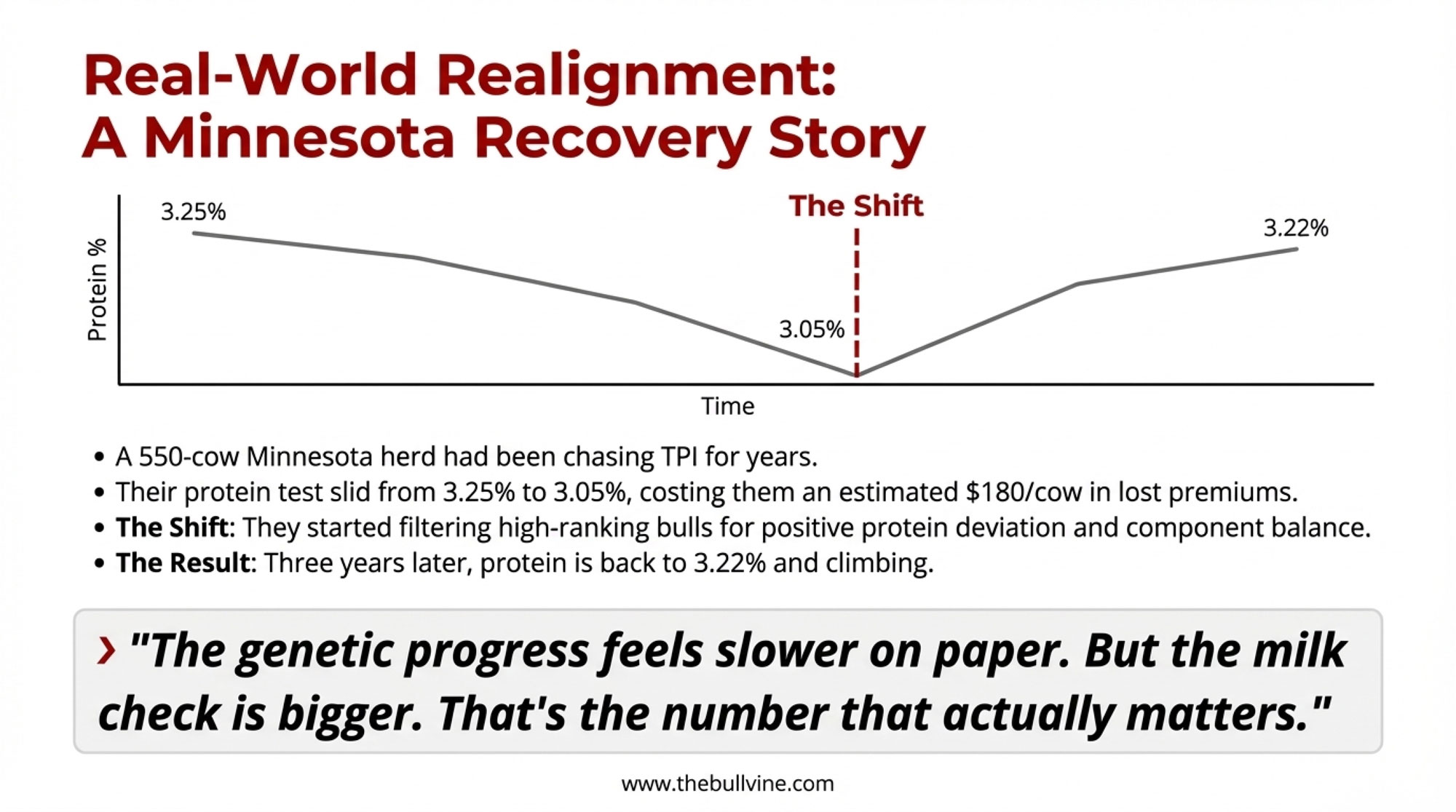
“We’d been chasing TPI for about eight years,” the herd manager explained. “Good bulls, good genomics, no complaints about the genetics themselves. But we were shipping to a cheese plant, and our protein test just kept sliding—went from 3.25% down to 3.05% over that stretch. Meanwhile, the premiums for protein kept going up.”

When they ran the numbers in 2022, they realized they were leaving close to $180 per cow in component revenue on the table annually. “That’s when it clicked. We weren’t using bad genetics. We were using the wrong genetics for our market.”

They shifted their sire selection criteria—still using high-ranking bulls, but filtering hard for positive protein deviation and component balance. Three years later, their protein test is back to 3.22% and climbing.

“The genetic progress feels slower on paper,” he admitted. “But the milk check is bigger. That’s the number that actually matters.”

Regional Considerations

Where you farm changes these calculations more than most proof sheets acknowledge.

In the Southeast and Southwest, producers dealing with persistent heat stress often find that moderate production with stronger health and fertility traits out-earns elite production genetics that struggle through extended summers. In the Upper Midwest and Northeast, grazing-heavy systems face different realities—a cow built for a California dry lot isn’t always the cow you want walking hillsides in Vermont.

The Beef-on-Dairy Connection

The three-gear framework applies to more than just which dairy sires you’re using—it also shapes your beef-on-dairy strategy.

The 2024 NAAB semen sales report shows 7.9 million beef semen units flowing into U.S. dairy operations, representing over 80% of all beef semen sales. Meanwhile, dairy heifer inventories expected to calve dropped to 2.5 million head as of January 2025—the lowest level since USDA began tracking this data, according to HighGround Dairy analysis. CoBank research projects 357,490 fewer dairy heifers for 2025 compared to the prior year, driven largely by beef-on-dairy breeding decisions.

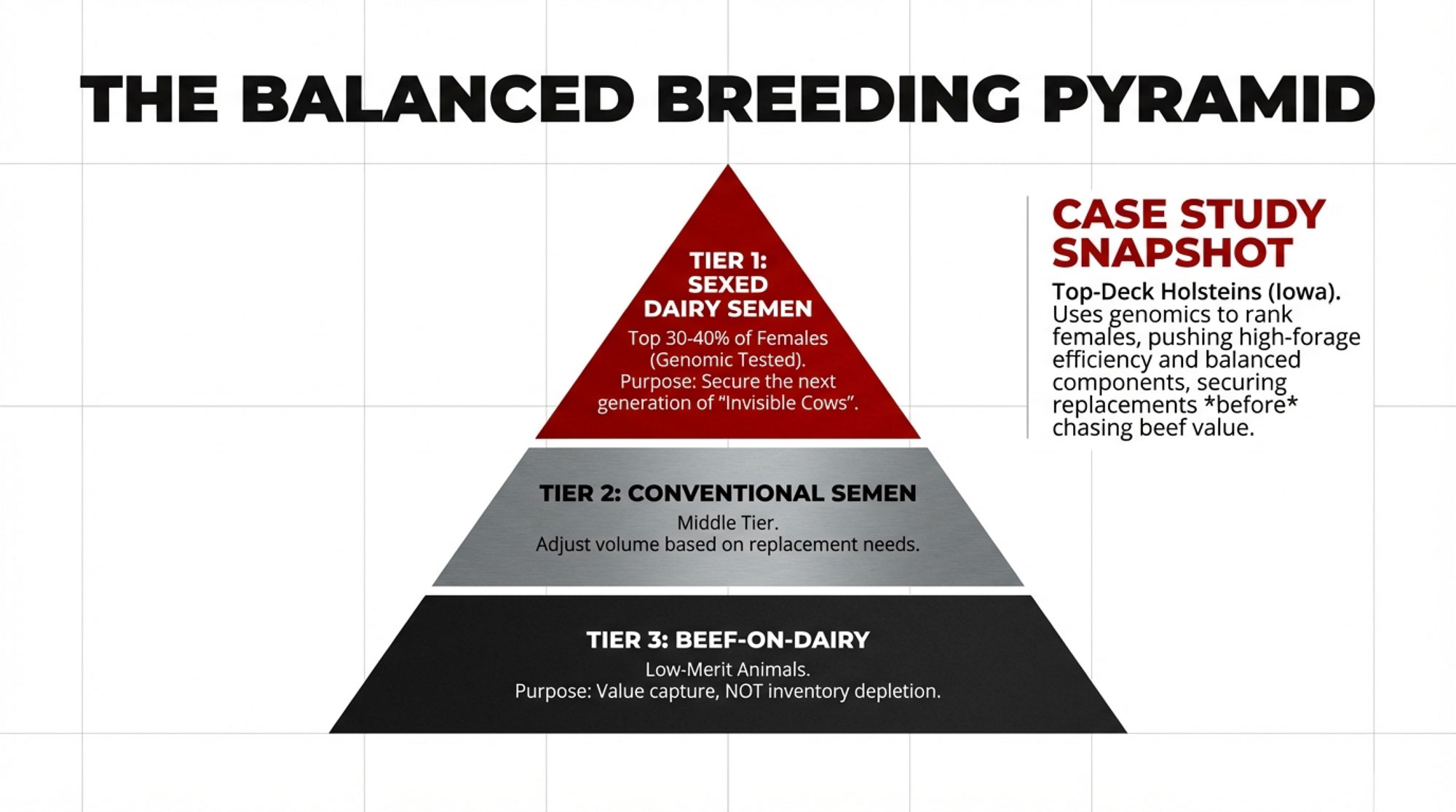
Here’s where the gears mesh—or grind: If you’re using beef genetics on your bottom-tier cows, you’ve already made a three-gear decision. You’re saying those animals don’t fit your Genetics goals (not worth keeping daughters from), don’t justify the Management investment of raising replacements, and the Market for beef calves currently rewards that choice.

But the framework cuts both ways. With heifer supplies this tight, the cows you do keep replacements from matter more than ever. Beef Magazine’s November 2025 report notes that beef-on-dairy cattle now represent 12–15% of all fed slaughter—the crossbreds have become an indispensable part of the beef supply chain. That’s fine, as long as your top-end genetics are truly aligned with your dairy operation’s market and management. Using beef on low-merit cows makes sense; accidentally breeding beef on cows that should be producing your next generation of high-component replacements is a costly mistake that compounds over time.

Finding Genuine Genetic Diversity

While genetic gains have more than doubled in the genomic era, breeding for diversity inside Holsteins now takes real effort.

For Purebred Holstein Operations

Seek out niche Holstein lines. Legacy maternal lines like Hanover-Hill, Landmark, Meteor, Durham, or Elegant, which were prominent 20–30 years ago but don’t dominate today’s rankings, can bring different genetics to the table.

Request genomic kinship data. Most major AI companies can show you how closely a prospective sire is related to your herd’s core cow families. CDCB offers inbreeding tools as well. For operations that haven’t genomic-tested their cows yet, current testing runs around $40–50 per head—a worthwhile investment if you’re serious about managing inbreeding across your herd.

Unfold pedigrees further back. Many so-called outcross sires look different in the first three generations, then converge on Mogul, O-Man, Planet, or Supersire once you get back to generation six or eight.

Consider the National Animal Germplasm Program. USDA’s germplasm program maintains semen and embryos from older, less-represented lines to preserve genetic diversity for long-term breed health.

“I’ve stopped looking at the top 10 TPI list entirely. If a bull doesn’t have positive deviation for protein and decent feet-and-legs, he doesn’t enter my tank, regardless of his rank. The proof sheets tell you what a bull can do genetically. They don’t tell you whether those genetics fit your parlor, your market, or your management. That’s the part you have to figure out yourself.”

— Wisconsin producer, 650-cow operation

A Framework for Matching Genetics to Your Operation

Five Questions Before You Pick a Bull

1. What’s my actual milk market? How much of your check comes from components versus volume?

2. What’s my primary constraint? Is involuntary culling above 25%? Are assisted calvings over 18%? Is production lagging?

3. Does this sire truly address that constraint? If calving isn’t a major issue, calving-ease sires might just be giving away production.

4. How closely is this bull related to my herd? Check genomic kinship or pedigree overlap.

5. What does the five-year math look like? Account for production, components, feed costs, replacements, and health.

The Larger Perspective

When you put all of this together, what’s interesting is how much breeding has shifted from “Which bull is best?” to “Which bull best fits what I’m actually trying to do here?”

The Holsteins that maximize returns on a 3,000-cow California dry lot shipping Class III milk are not the same Holsteins that fit a 200-cow Wisconsin grazing herd shipping mostly fluid milk. Both operations might reasonably use bulls like Leeds or Hotshot—but in very different proportions, for very different reasons, and with very different expectations.

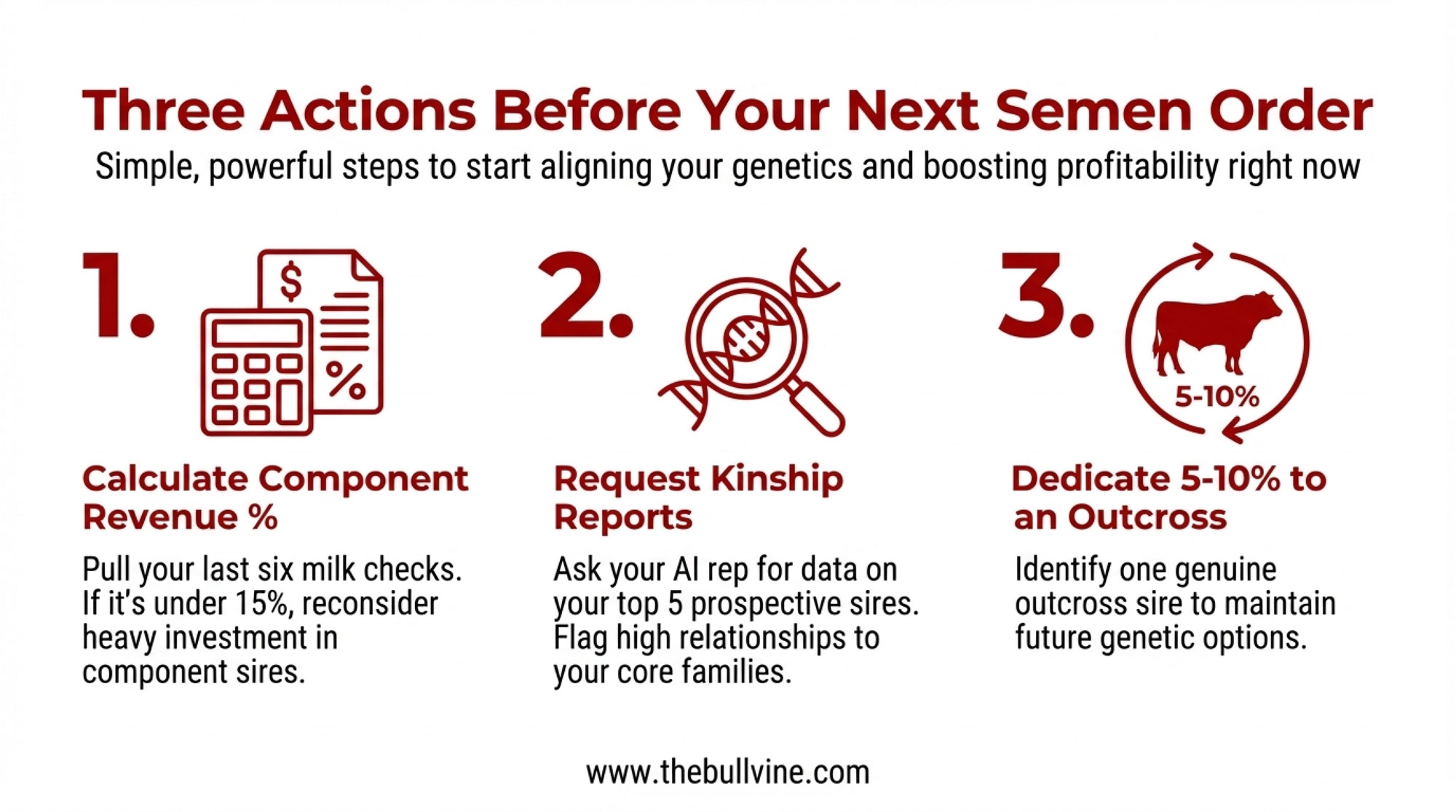
Three Actions Before Your Next Semen Order

  • Calculate your component revenue percentage from your last six milk checks. If it’s under 15%, reconsider heavy use of component-focused sires.
  • Request kinship reports on your top 5 prospective sires from your AI representative. Flag any showing an elevated relationship to your existing cow families or heavy Mogul/O-Man/Planet ancestry.
  • Identify one genuine outcross sire from an underrepresented maternal line for 5–10% of your matings—not to chase diversity for its own sake, but to maintain options as the breed continues to concentrate.

The tools to make smarter, more aligned decisions exist—genomic kinship, feed efficiency data, inbreeding metrics, and diverse sire options. The challenge, and the opportunity, is taking the time to line those tools up with the reality of your own farm.

The Bottom Line

What’s been your experience with specialized genetics? Have calving-ease, longevity-focused, or component-heavy sires delivered the returns their proofs suggested under your conditions? The most useful lessons often come from comparing what the proofs promised with what actually showed up in the bulk tank and the balance sheet.

Key Takeaways

  • Fit beats rank. The same genetics can cost one farm $190,000/year and add $57,000 to another—the difference is market alignment, not genetic quality.
  • Misalignment drains profit quietly. Volume genetics in a cheese market can leave $150,000–$190,000 annually on the table, even when production looks strong.
  • NM$ is designed for the average herd. The 2025 revision puts 31.8% emphasis on butterfat. If your market doesn’t reward components, you’re paying for genetic potential you can’t capture.
  • Inbreeding costs compound. Each 1% increase means ~134 lbs less milk plus weaker fertility—and at 0.55% annually, the breed is accumulating it faster than ever.
  • Before your next semen order: Calculate your component revenue share (5 minutes), request kinship data on prospective sires, and reserve 5–10% of matings for genuine outcrosses.

EXECUTIVE SUMMARY: 

The same genetics can cost one operation $190,000 a year and add $57,000 to another. The difference isn’t genetic quality—it’s market alignment. This article introduces a three-gear framework (Genetics, Market, Management) that helps producers evaluate whether their breeding program actually fits their milk check. Drawing on USDA’s April 2025 NM$ revision and peer-reviewed research, it demonstrates how misaligned genetics can quietly drain profitability even when production looks strong. Practical tools include a 5-minute component revenue analysis, five questions to ask before selecting any sire, and strategies for finding genuine diversity as the breed concentrates. The goal isn’t finding “better” bulls—it’s finding bulls that fit your operation.

Complete references and supporting documentation are available upon request by contacting the editorial team at editor@thebullvine.com.

Learn More

Join the Revolution!

Join over 30,000 successful dairy professionals who rely on Bullvine Weekly for their competitive edge. Delivered directly to your inbox each week, our exclusive industry insights help you make smarter decisions while saving precious hours every week. Never miss critical updates on milk production trends, breakthrough technologies, and profit-boosting strategies that top producers are already implementing. Subscribe now to transform your dairy operation’s efficiency and profitability—your future success is just one click away.
NewsSubscribe
First
Last
Consent

The $4/cwt Your Milk Check Is Missing – And What’s Actually Working to Get It Back

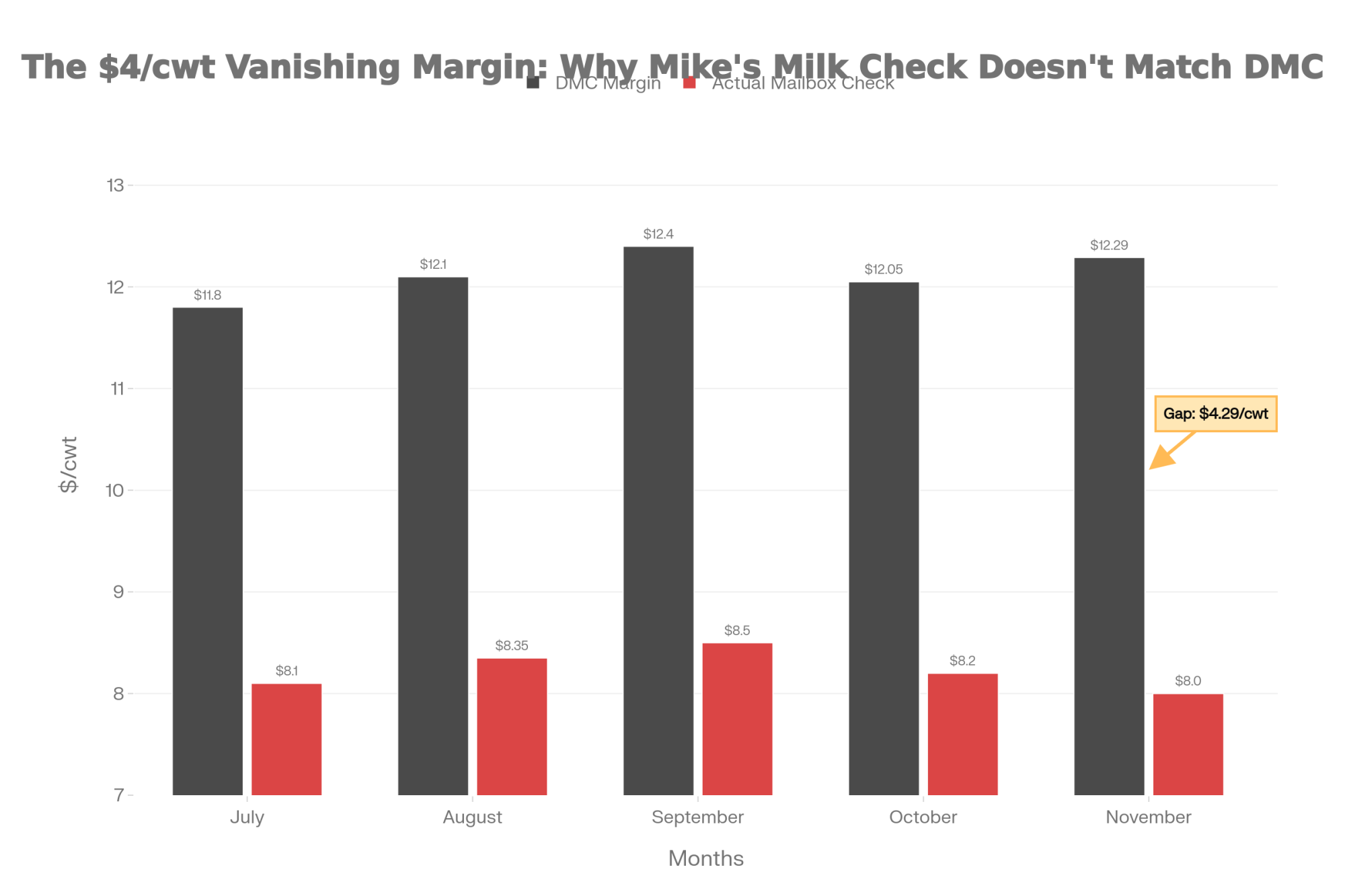
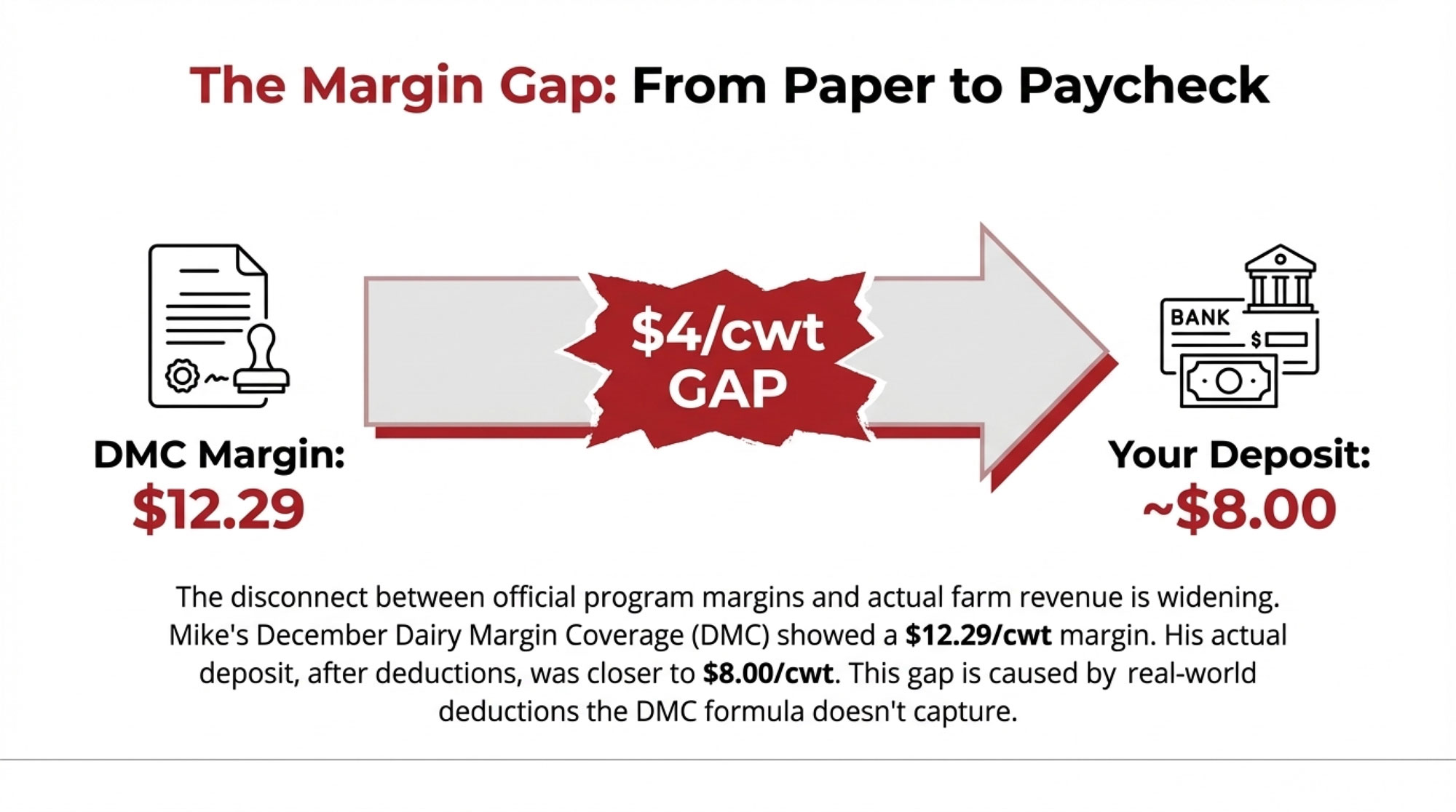
You know that moment—scrolling to the bottom of your milk statement, already doing the math in your head? Mike Boesch’s DMC said $12.29. His deposit said $8.

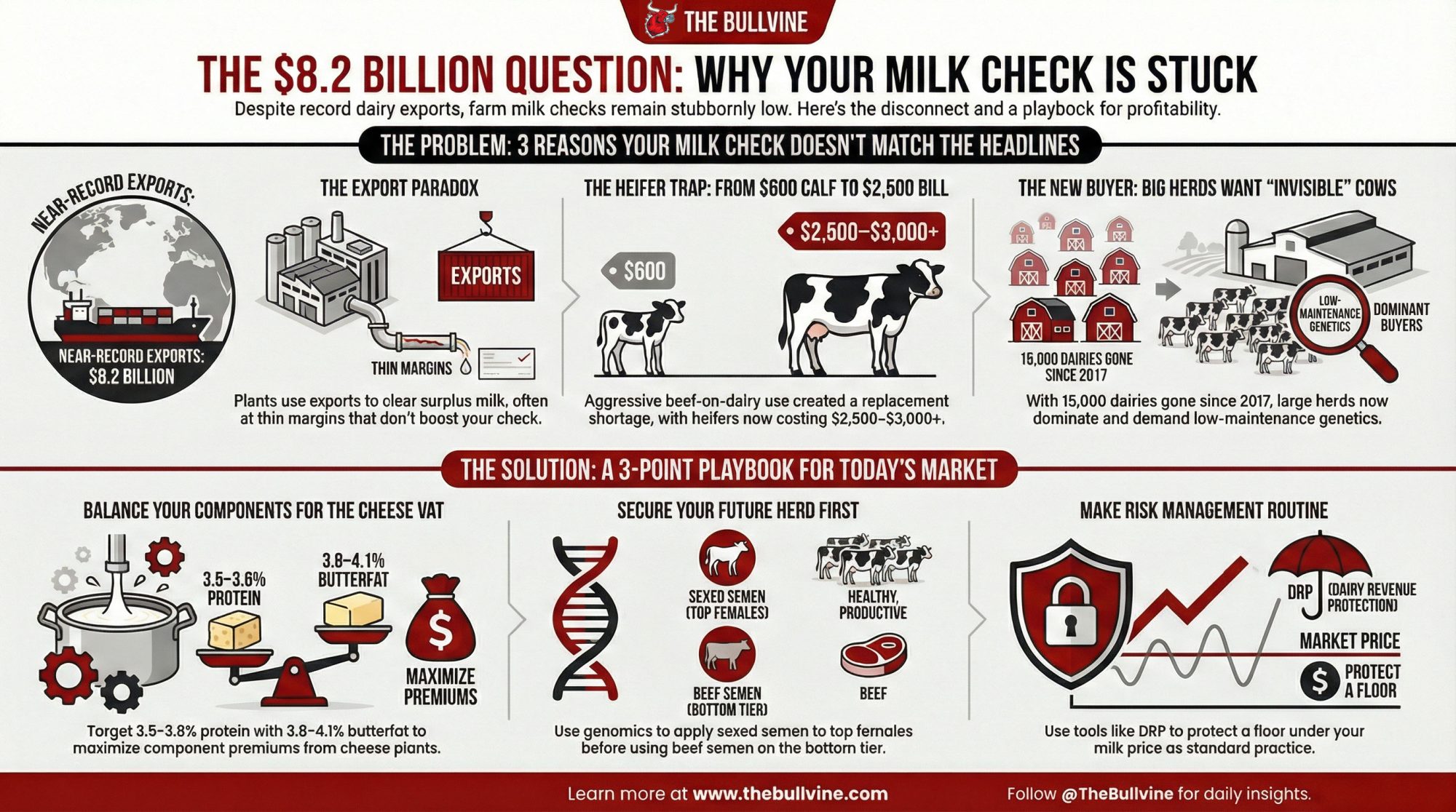
Executive Summary: Dairy producers everywhere are doing the math twice lately—and they’re not wrong. There’s a $4/cwt gap between what DMC margins show on paper and what’s actually hitting farm accounts. The causes stack up fast: make allowance increases that cost farmers $337 million in just three months, regional price spreads running nearly $7/cwt, and component formula changes that blindsided many operations. Milk keeps flowing despite the pressure—expansion debt doesn’t pause for soft markets, and the lowest heifer inventory since 1978 makes strategic culling nearly impossible. With USDA projecting $18.75/cwt All-Milk prices for 2026, margin relief likely won’t arrive until late 2027. The producers gaining ground are focusing on what they can control: component-focused genetics, beef-on-dairy programs built on smart sire selection, and risk management tools that most operations still aren’t using.

Dairy profitability strategies

You know that feeling when the numbers on paper don’t quite match what’s hitting your bank account? Mike Boesch, who runs a 280-cow operation outside Green Bay, Wisconsin, put it well when we talked last month. He pulled up his December milk statement, scrolled straight to the bottom—like we all do—and there it was. His Dairy Margin Coverage paperwork showed a comfortable $12.29/cwt margin. His actual deposit? After cooperative deductions, component adjustments, and those make allowance changes that kicked in last June, he was looking at something closer to $8/cwt.

“I keep two sets of numbers in my head now. The one the government says I’m making, and the one my checkbook says I’m making. They’re not the same number.” — Mike Boesch, Green Bay, Wisconsin (280 cows)

He’s far from alone in this experience. I’ve been talking with producers from California’s Central Valley to Vermont’s Northeast Kingdom over the past few months, and I keep hearing variations of the same observation. There’s a growing disconnect between what the formulas say margins should be and what’s actually landing in farm accounts. Understanding why that gap exists—and what you can do about it—has become one of the more pressing questions heading into 2026.

The Math That Isn’t Adding Up

YearCorn ($/bu)Soymeal ($/ton)All‑Milk ($/cwt)
20236.5443022.50
20245.1038021.80
20254.0030021.35

Here’s what makes this situation so frustrating for many of us. Feed costs dropped meaningfully through 2025. Corn’s been trading in the low $4s per bushel—USDA’s November World Agricultural Supply and Demand Estimates report projected $4.00 for 2025-26—down considerably from that $6.54 peak we saw in 2023. Soybean meal’s been running in the high $200s to low $300s per ton through fall. For most operations, that translates to real savings on the feed side.

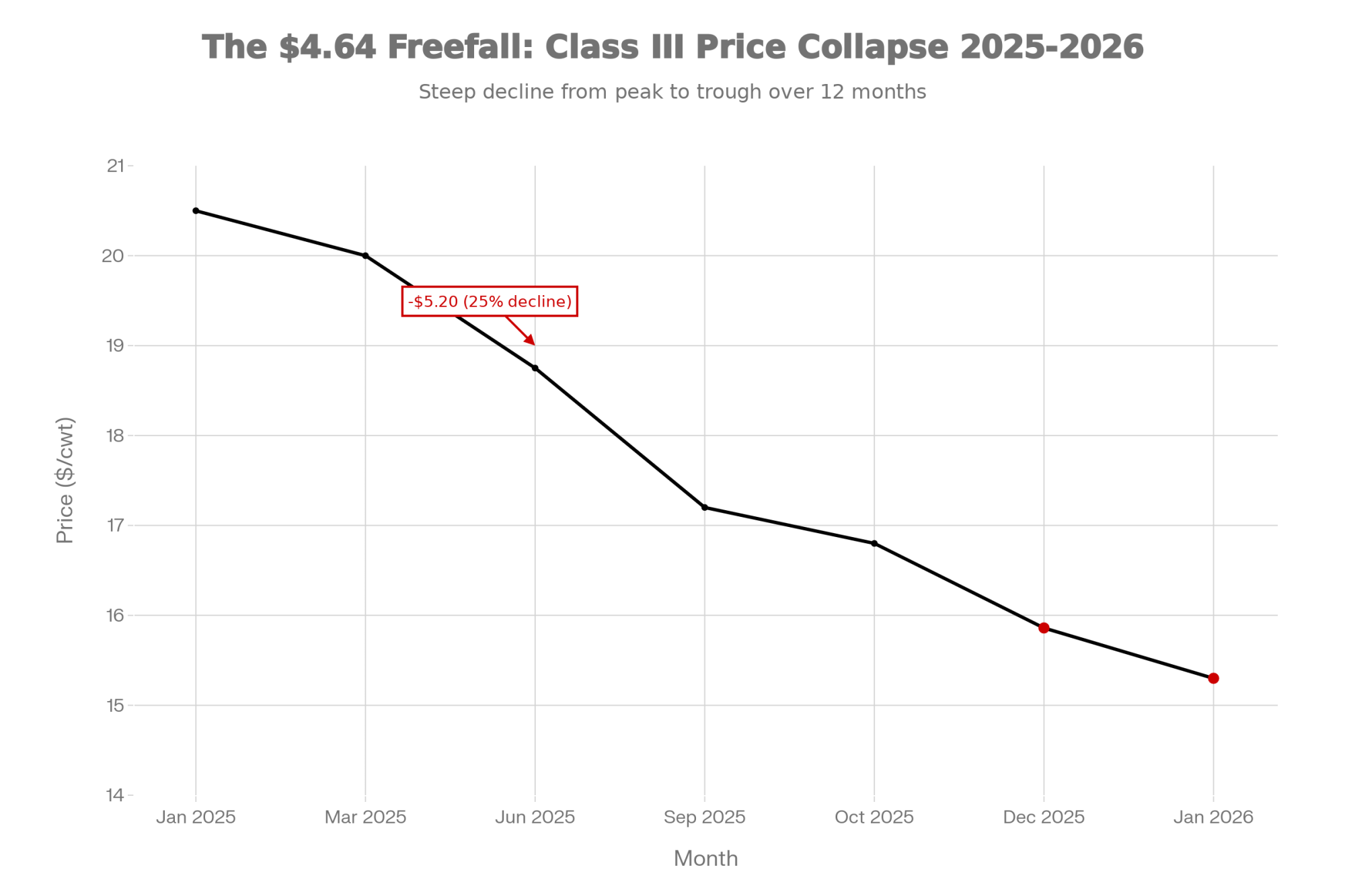
But milk revenue softened faster. USDA National Agricultural Statistics Service data shows September’s All-Milk price came in at $21.35/cwt, with Class III at $18.20. That’s below what many of us were hoping for at this point in the year.

What I’ve found talking to producers and running through numbers with nutritionists and farm business consultants: even with clearly lower feed costs, the decline in milk revenue has offset—and in many cases more than offset—those feed savings. The specifics vary by operation. Your ration, your components, and your cooperative’s pricing structure all matter. But the pattern holds across a lot of different farm types.

Mike’s take stuck with me: “I saved money on feed. But I lost more on milk. The feed savings felt like winning a $20 scratch ticket after your truck got totaled.”

Where Your Money Is Actually Going

So what’s creating that $4/cwt gap between calculated margins and received margins? It comes down to several deductions that the DMC formula doesn’t capture.

The Make Allowance Shift

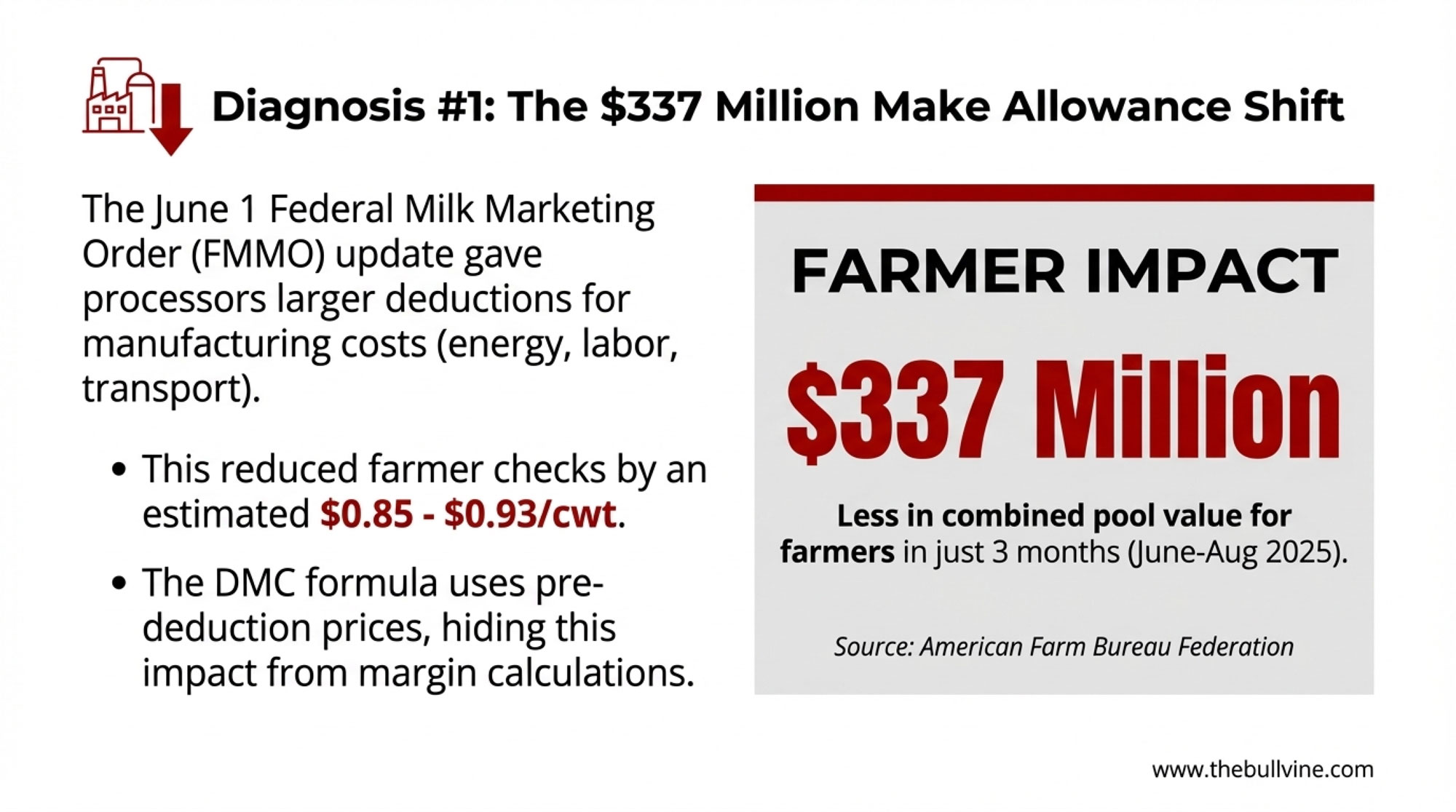
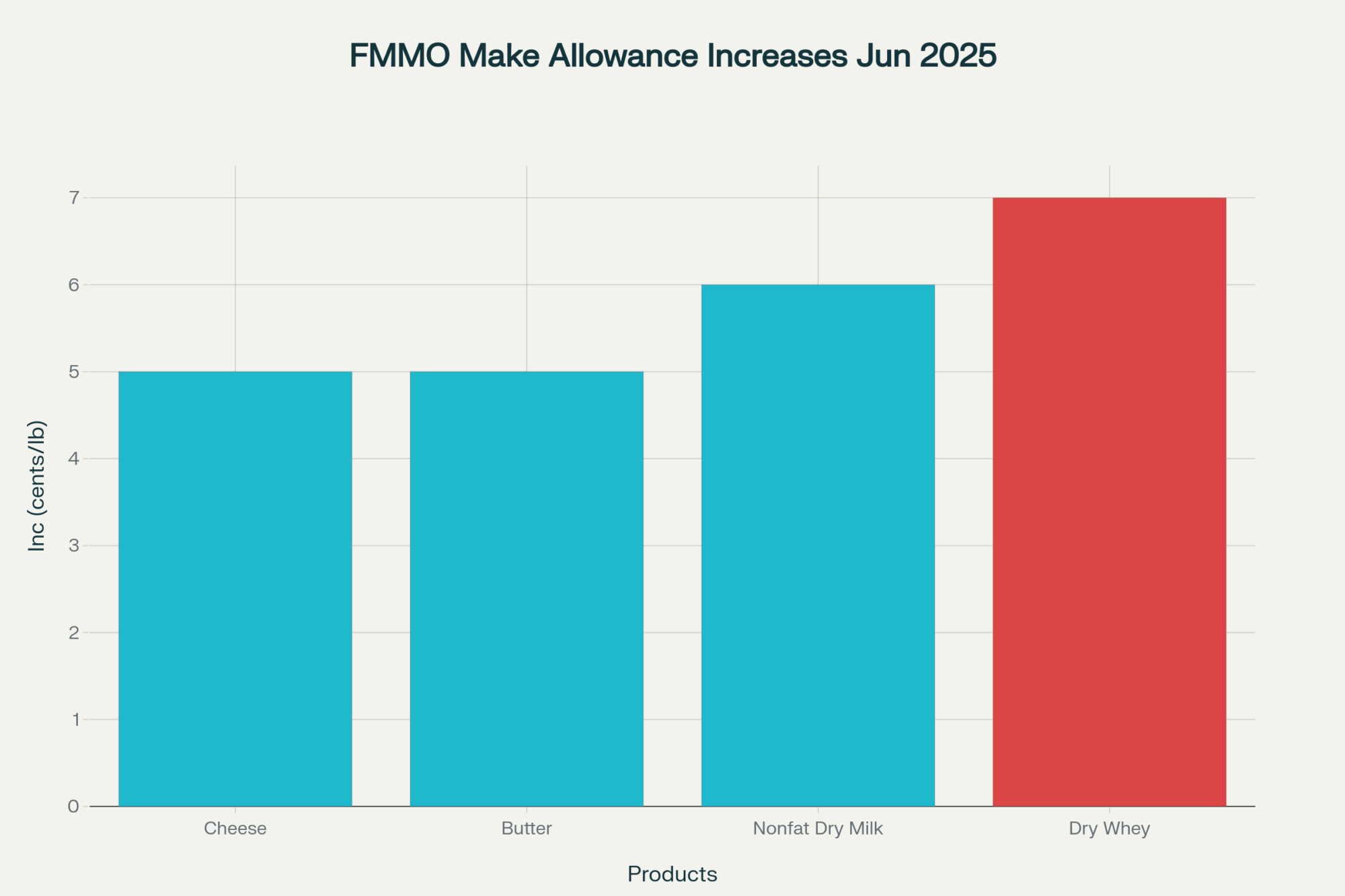
When the Federal Milk Marketing Order updates took effect on June 1, processors received larger deductions for manufacturing costs. American Farm Bureau Federation economist Danny Munch analyzed the impact, and his findings show the higher make allowances reduced farmer checks by roughly $0.85-0.93/cwt across the four main milk classes.

Key Finding: $337 Million Impact

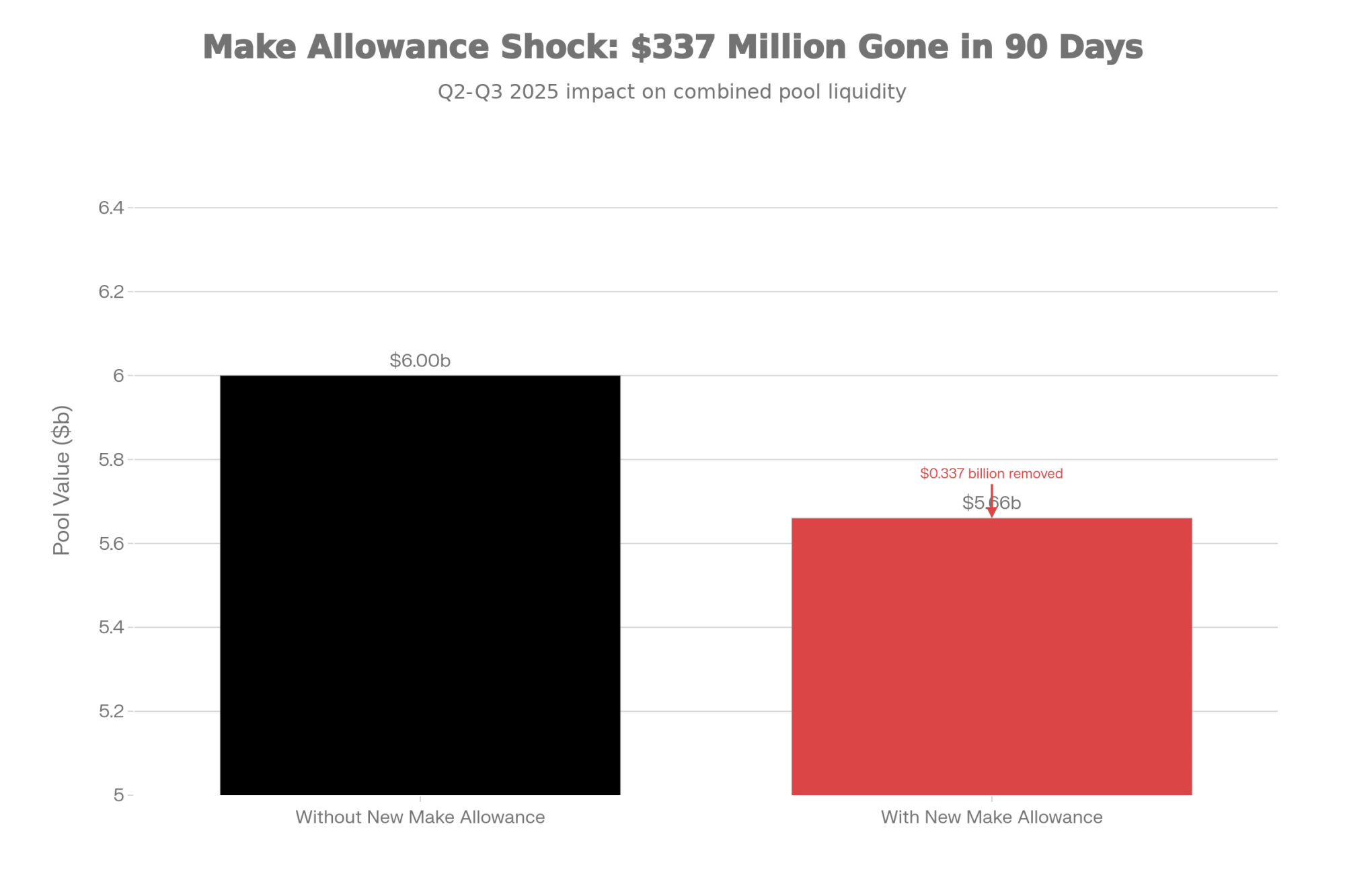
Farm Bureau’s Market Intel analysis found that farmers saw more than $337 million less in combined pool value during the first three months under the new rules—that’s June through August alone.

ScenarioPool Value ($ billions)
Without new make allowance6.00
With new make allowance5.66

Source: American Farm Bureau Federation, September 2025

I talked with a Midwest cooperative field rep who asked to stay anonymous, given how sensitive pricing discussions can be. His perspective added some nuance worth considering: “Nobody wanted to make allowances to go up. But processing costs genuinely increased—energy, labor, transportation. The alternative was plant closures, and that would have helped nobody. It’s a situation where producers and processors both feel squeezed.”

He raises a fair point. The processing sector faced real cost pressures, and there’s a legitimate argument that updated make allowances were overdue. That said, the timing has been difficult for producers already navigating softer milk prices.

What’s worth understanding here is that the DMC formula uses pre-deduction prices. So your calculated margin looks healthy, while your actual check reflects those higher processor allowances.

Regional Pricing Reality

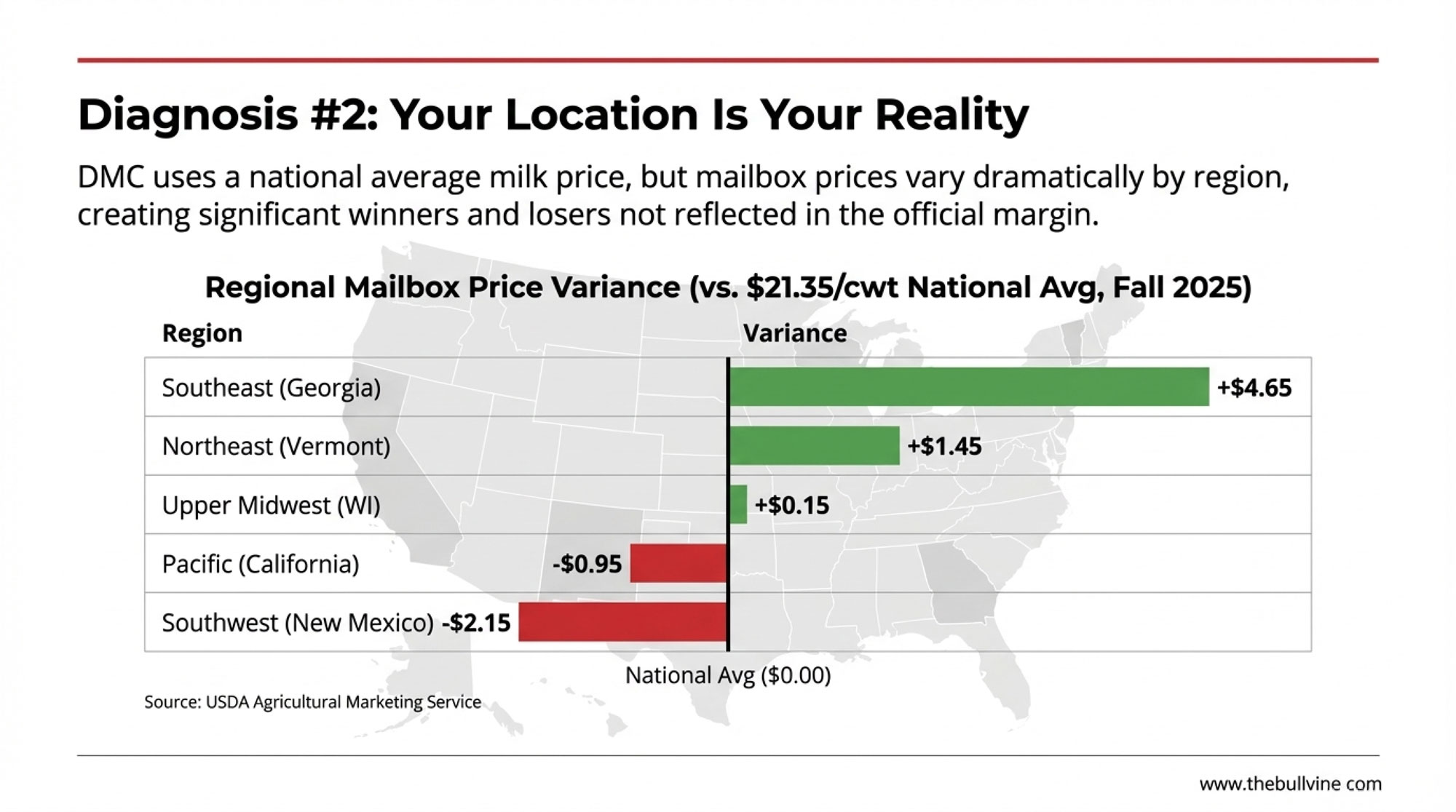
DMC uses national average milk prices, but anyone who’s compared notes with producers in other states knows the spread can be significant.

The Regional Price Gap: Same Month, Different Reality

RegionApproximate Mailbox PriceVariance
Southeast (Georgia)~$26.00/cwt+$4.65
Northeast (Vermont)~$22.80/cwt+$1.45
Upper Midwest (Wisconsin)~$21.50/cwt+$0.15
Pacific (California)~$20.40/cwt-$0.95
Southwest (New Mexico)~$19.20/cwt-$2.15

Source: USDA Agricultural Marketing Service Federal Order mailbox prices, Fall 2025

The regional story plays out differently depending on where you’re milking cows. Upper Midwest producers deal with cooperative basis adjustments and seasonal hauling challenges. California’s Central Valley operations face water costs that have fundamentally changed their cost structure—some producers there tell me water now rivals feed as their biggest variable expense. Southwest operations running large dry-lot systems have entirely different economics.

The Component Pricing Shuffle

Here’s one that caught a lot of producers off guard: the June 2025 FMMO changes removed 500-pound barrel cheddar from Class III pricing calculations. Now, only 40-pound block cheddar prices determine protein valuations—the USDA Agricultural Marketing Service confirmed this in their final rule.

Sounds technical, I know. But when barrels were trading higher than blocks—which they were in early summer—that switch affected producer checks. The rationale was to reduce price volatility and better reflect actual cheese market conditions, though the timing meant lower payments for many during that transition period.

Stack all of these together, and you get that $4-5/cwt gap between what DMC says you’re earning and what you’re actually receiving.

The Production Paradox

One thing that keeps coming up in conversations: if margins are this tight, why does milk keep flowing?

USDA NASS data shows national production running 1-4% above year-earlier levels in many recent months. July 2025 came in 3.4% higher than July 2024, totaling 19.6 billion pounds nationally.

At the same time, we’re watching a steady structural decline in dairy farm numbers. USDA has documented this trend for years—thousands of farms exiting nationally over the past decade, with several hundred closing each year just in heavily dairy states like Wisconsin.

Expert Insight: Leonard Polzin, Ph.D. Dairy Economist, University of Wisconsin-Madison Extension

“What we’re seeing is expansion commitments made in 2022-2023 when margins looked completely different. That debt doesn’t care about today’s milk prices. Producers have to keep milking to service those loans.”

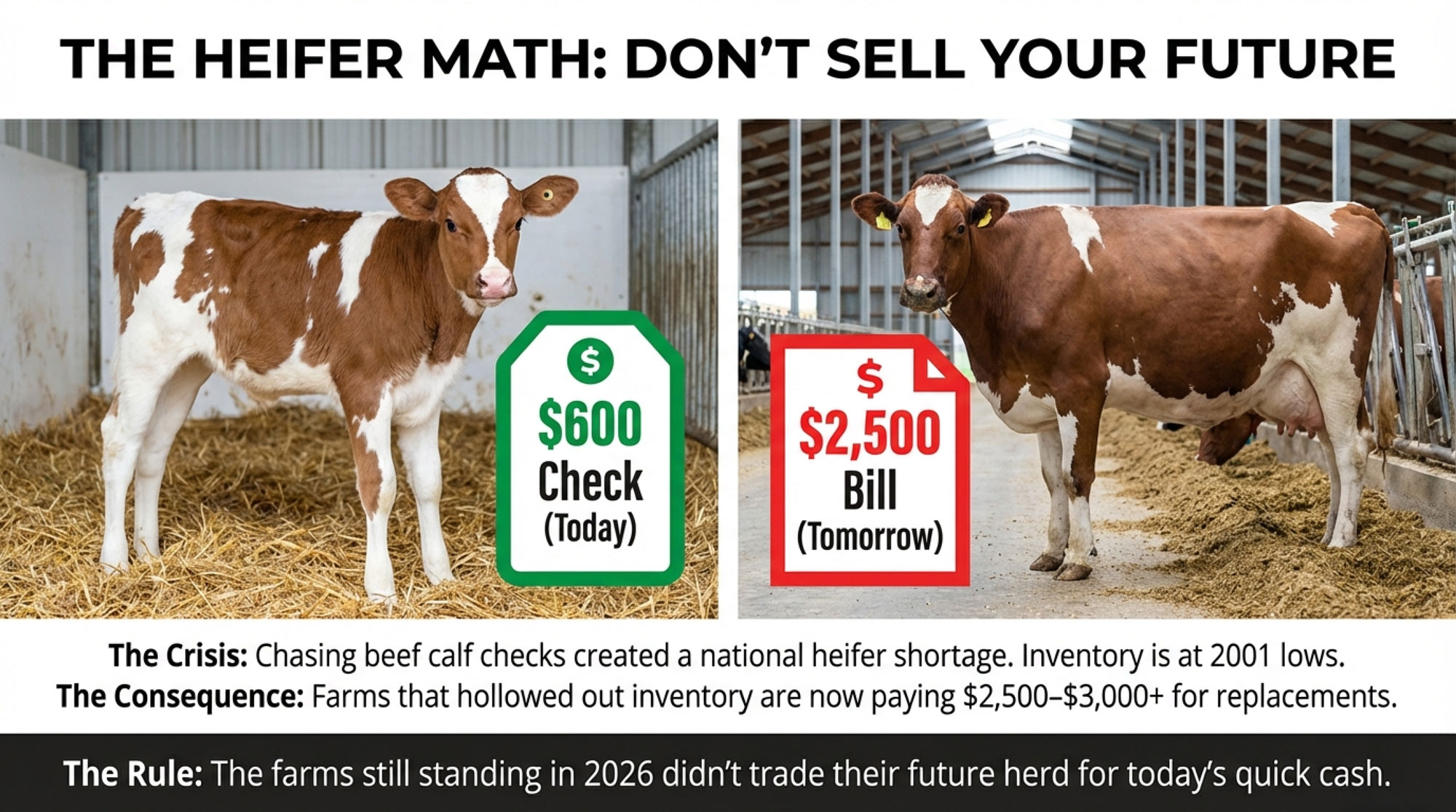
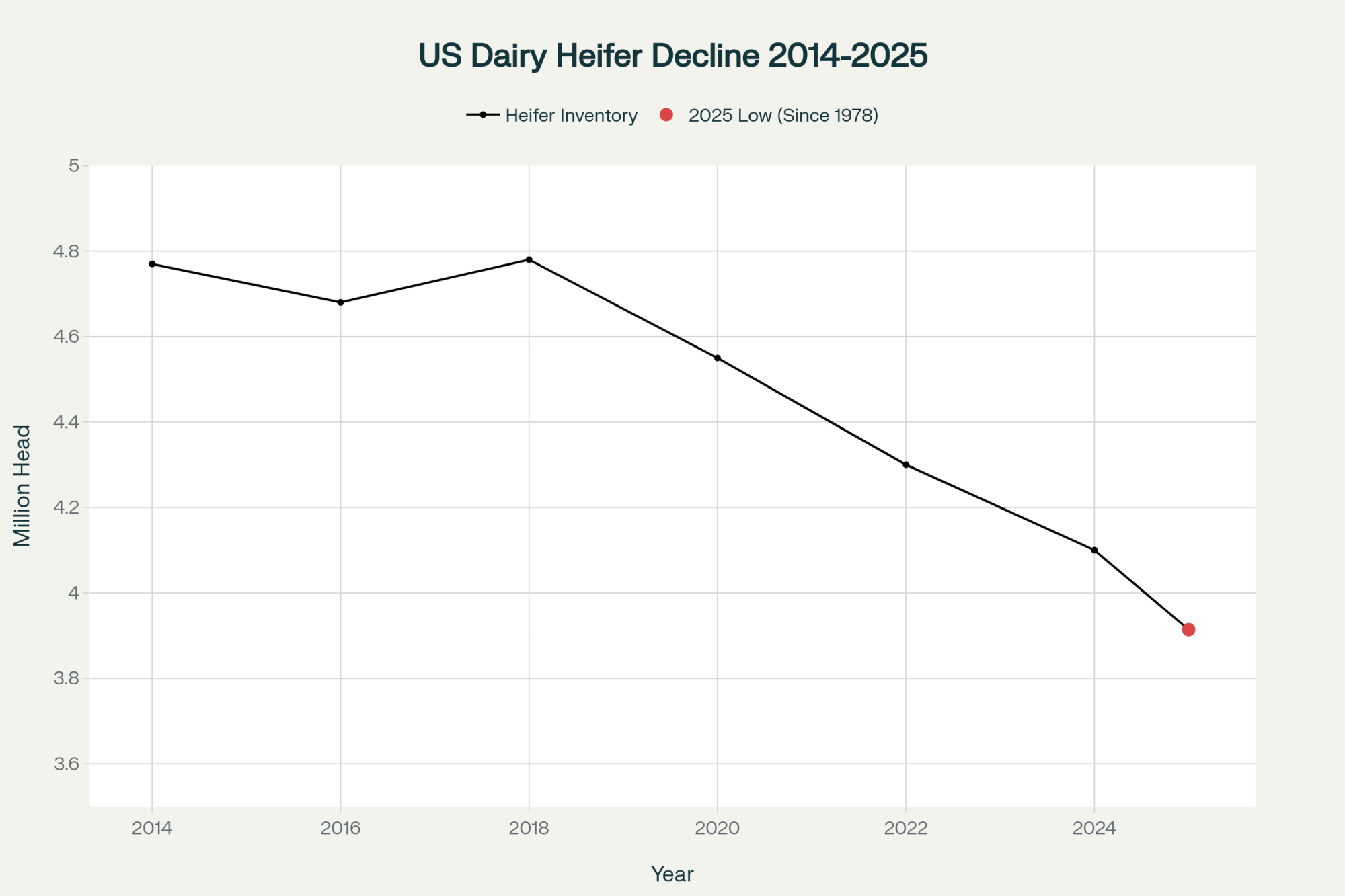
There’s also the heifer situation. Replacement heifer inventory has dropped to 3.914 million head—the lowest level since 1978, according to USDA cattle inventory reports and confirmed by Dairy Herd Management coverage. Producers who might otherwise strategically cull their way to a smaller herd can’t easily replace the animals they’d be selling.

And then there’s processing. Since 2023, substantial new cheese processing capacity has come online—much of it financed through long-term USDA Rural Development loans requiring consistent milk intake. Those plants need milk regardless of farmgate prices.

For your operation: the supply response to low prices is likely to be slower than historical patterns suggest. If you’re planning around industry-wide production cuts that are expected to boost prices by late 2026, a longer timeline may be more realistic.

Why the Export Safety Valve Is Stuck

I’ve had producers ask when China might start buying again. Honestly? That valve is essentially closed for the foreseeable future.

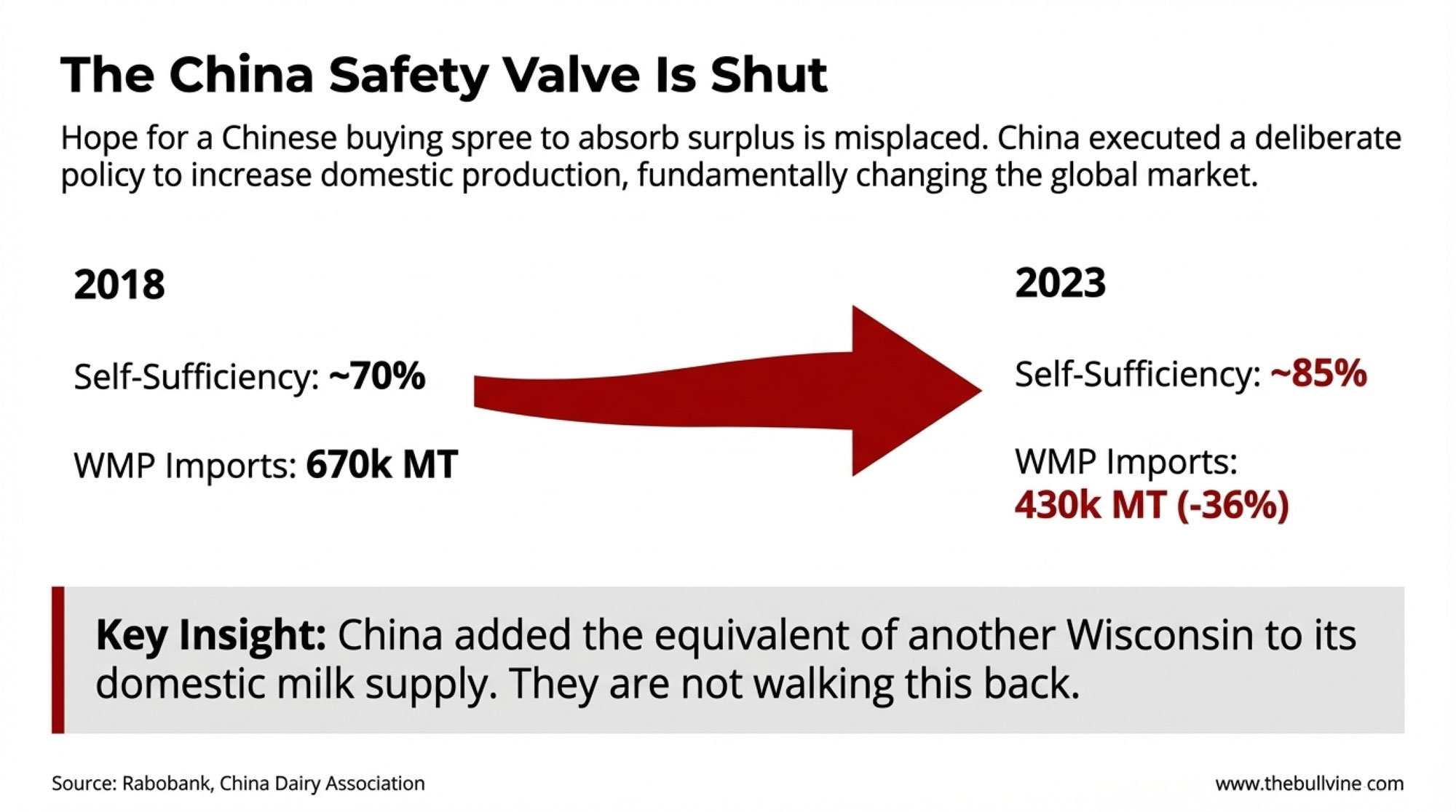
Between 2018 and 2023, China added roughly 10-11 million metric tons of domestic milk production—equivalent to around 24-25 billion pounds. Rabobank senior dairy analyst Mary Ledman noted that’s almost like adding another Wisconsin to their domestic supply. The result? Self-sufficiency jumped from about 70% to 85% during this period.

China’s Dairy Transformation: The Numbers

MetricBefore (2018)After (2023)Change
Self-sufficiency~70%~85%+15 pts
WMP imports670,000 MT/yr avg430,000 MT-36%
Impact on competitors7% of NZ production was displaced

Sources: Rabobank/Brownfield Ag News

This wasn’t market fluctuation—it was deliberate government policy. And they’re not walking it back. In July 2025, China’s Dairy Association announced plans to maintain at least 70% self-sufficiency through 2030.

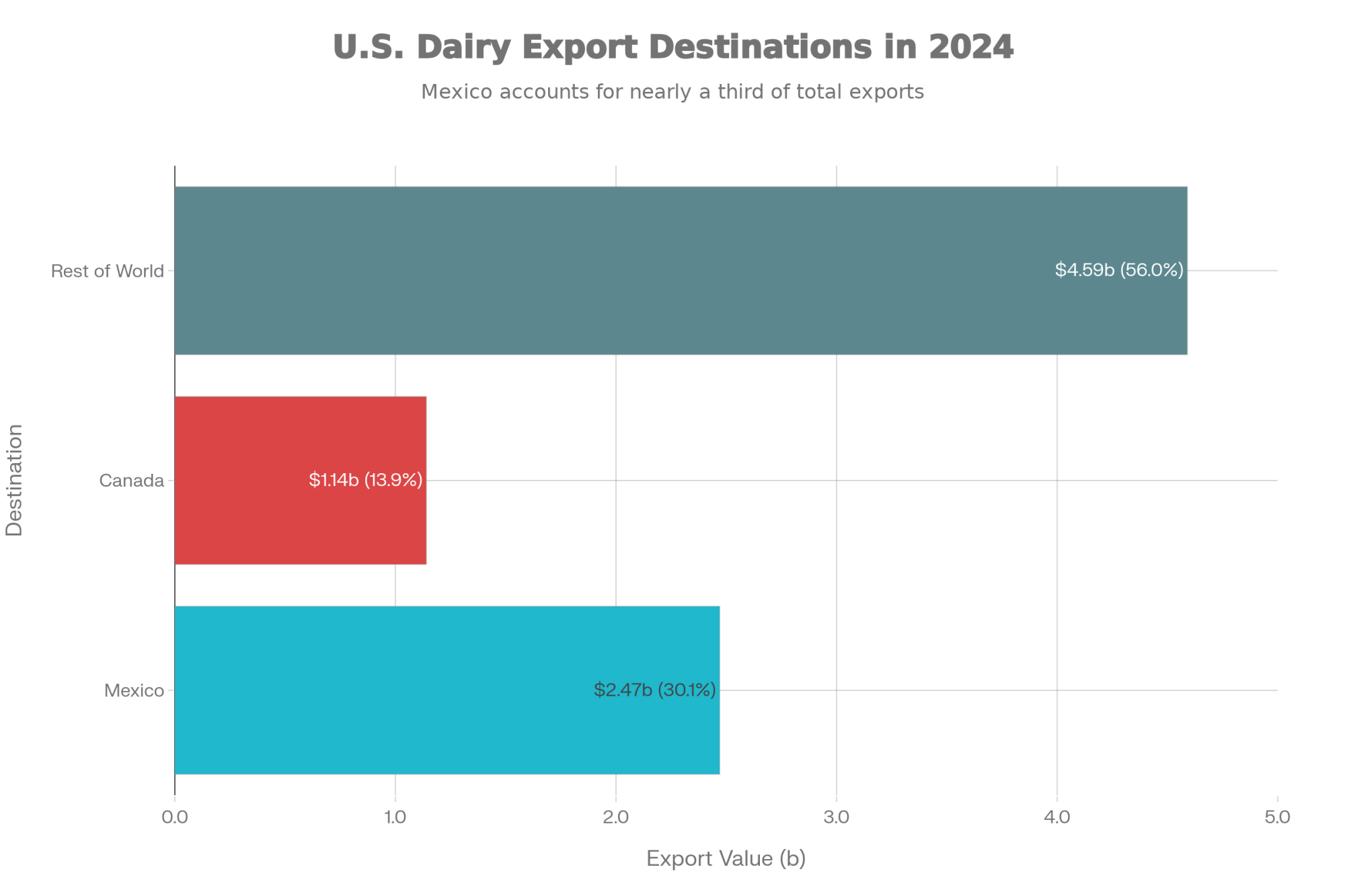
For U.S. producers, this represents a structural shift. Other markets—Southeast Asia, Mexico, and parts of the Middle East—continue to show growth potential. But that traditional “surplus absorption” mechanism that China provided? It’s significantly smaller than it used to be.

What’s Actually Working: Four Strategies From the Field

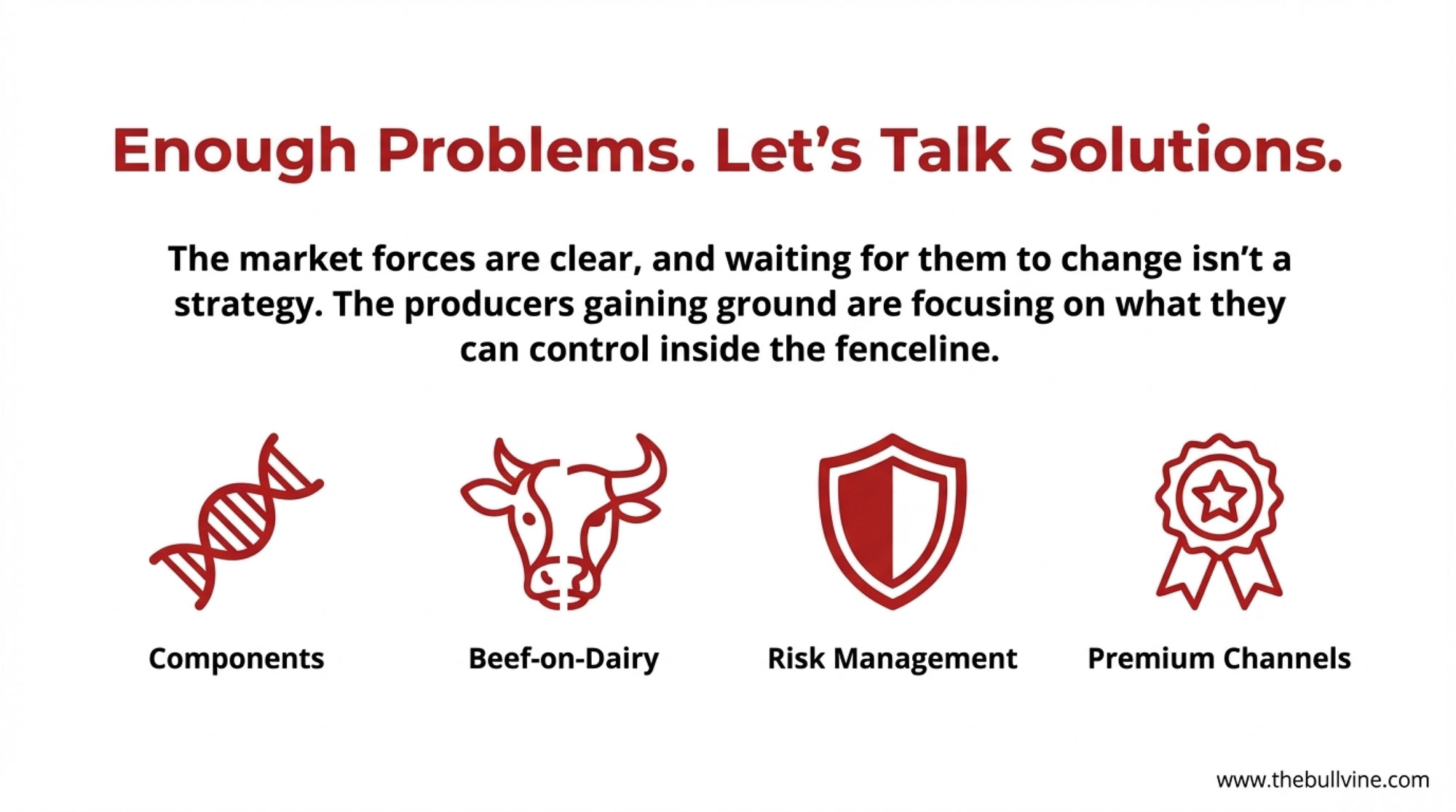
Enough about challenges. Let’s talk about what’s actually moving the needle on margins.

Getting Paid for Components

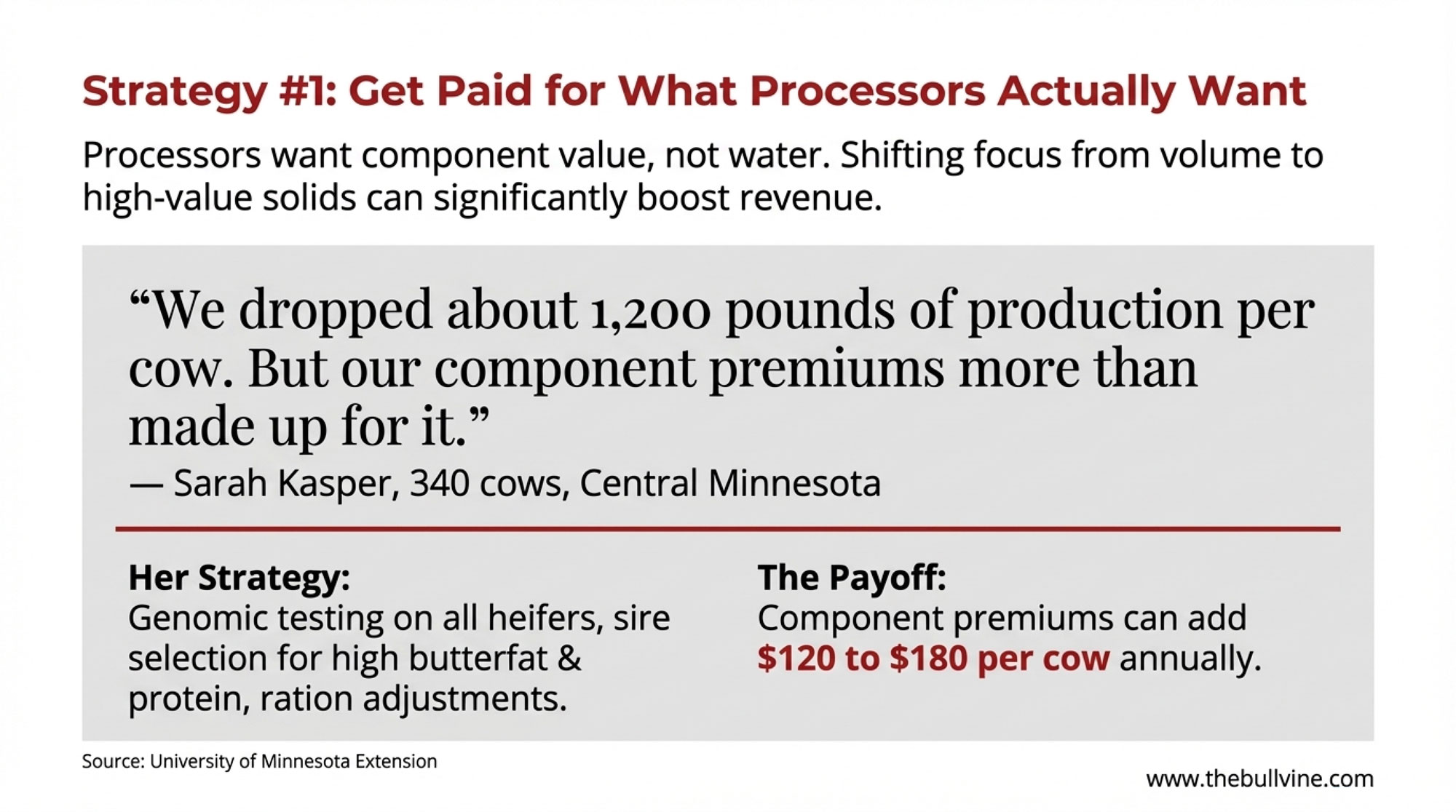
Sarah Kasper runs a 340-cow operation in central Minnesota that she transitioned to component-focused management three years ago. Her approach: genomic testing on every replacement heifer, sire selection emphasizing butterfat and protein over milk volume, and ration adjustments optimizing for component production rather than peak pounds.

“We dropped about 1,200 pounds of production per cow. But our component premiums more than made up for it. We’re getting paid for what processors actually want.” — Sarah Kasper, Central Minnesota (340 cows)

University of Minnesota Extension dairy economic analyses document component premiums ranging from $120 to $ 180 per cow annually for operations achieving above-average butterfat and protein levels. With genomic testing running $30-50 per animal, the return on investment can be meaningful—especially compounded over multiple generations.

What processors increasingly want is component value, not volume. April 2025 USDA data showed cheese production up 0.9% year-over-year while butter production fell 1.8%—processors are routing high-component milk toward their highest-margin products.

The Beef-on-Dairy Opportunity

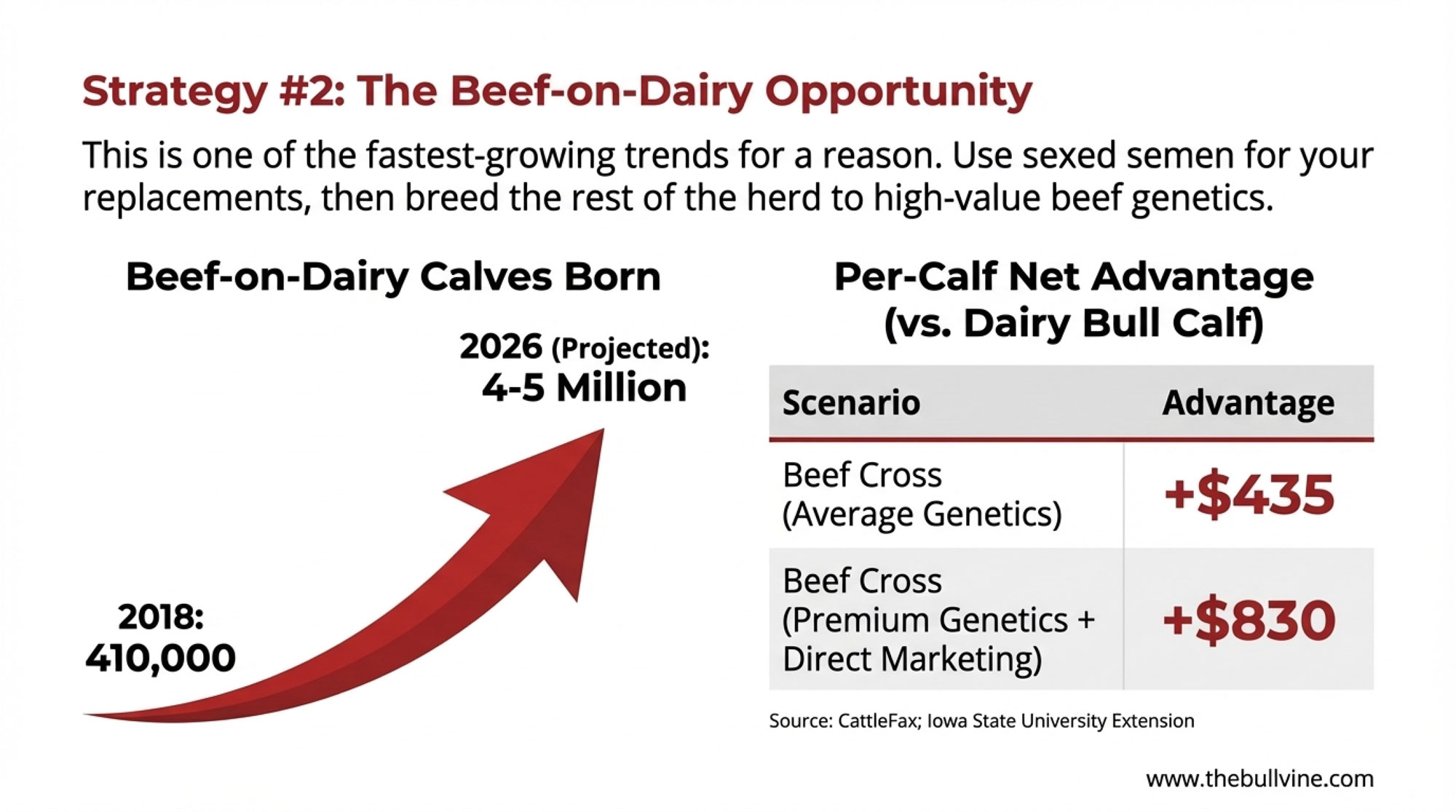
This strategy has seen remarkable adoption. CattleFax data reported by Hoard’s Dairyman shows there were about 2.6 million beef-on-dairy calves born in 2022, up from just 410,000 in 2018. CattleFax projects that it could grow to 4-5 million head by 2026.

The economics are fairly straightforward. Use sexed dairy semen on your top-performing cows to secure replacements, then breed the remaining 60-70% of your herd to beef genetics. A dairy bull calf might bring $200-400. A well-managed beef cross with the right genetics and colostrum management can fetch $900-1,250 through direct feedlot relationships, according to Iowa State University Extension beef-dairy market reports.

Beef-on-Dairy Economics: Per-Calf Comparison

ScenarioCalf ValueSemen CostNet Advantage
Dairy bull calf$250$8-15Baseline
Beef cross (average genetics)$700$15-25+$435
Beef cross (premium genetics + direct marketing)$1,100$20-35+$830

Note: Values vary significantly by region, genetics quality, and buyer relationships Sources: Iowa State Extension; Hoard’s Dairyman market reports

But here’s where genetics selection really matters—and where I see a lot of operations leaving money on the table.

Research published in the Journal of Dairy Science in 2025 found the average incidence of difficult calving in beef-on-dairy crosses runs around 15%. But breed selection makes a significant difference: data from the Journal of Breeding and Genetics shows Angus-sired calves had only 7% calving difficulty compared to 13% for Limousin when looking at male calves.

Beef Sire Selection: The Calving Ease vs. Carcass Quality Tradeoff

Here’s the tension every producer needs to understand: beef sires selected for ease of calving and short gestation are often antagonistically correlated with carcass weight and conformation, according to research in Translational Animal Science.

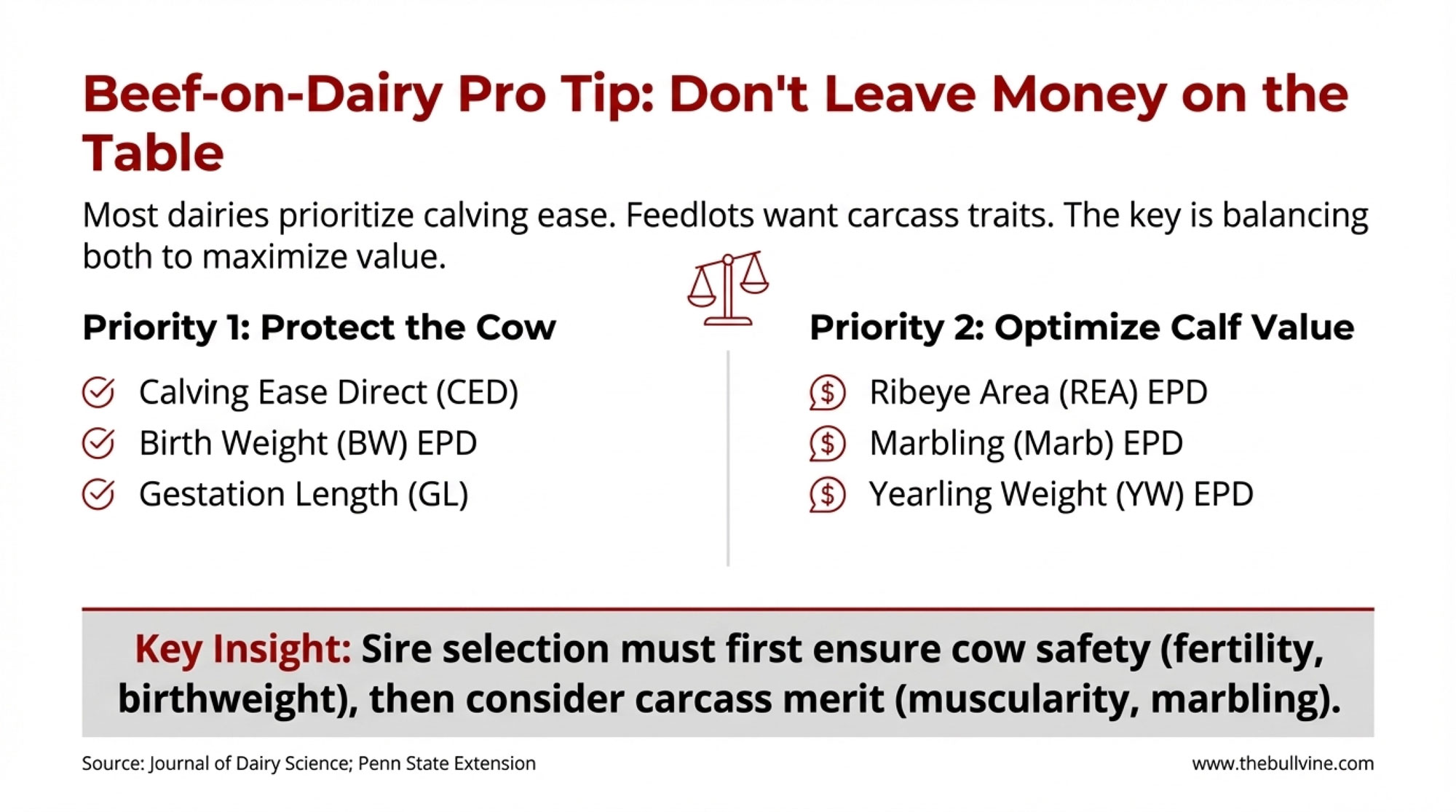
Priority 1 — Protect the Cow:

  • Calving Ease Direct (CED): Select from the top 25% of beef sires
  • Birth Weight EPD: Lower is generally safer for dairy dams
  • Gestation Length: Angus adds ~1 day vs. Holstein; Limousin adds 5 days; Wagyu adds 8 days

Priority 2 — Optimize Calf Value:

  • Frame Size: Moderate-framed bulls generally produce more feed-efficient animals
  • Ribeye Area (REA) EPD: Higher values improve carcass muscling
  • Marbling EPD: Targets quality grade premiums
  • Yearling Weight EPD: Predicts growth performance

Sources: Journal of Dairy Science (2025); Penn State Extension; Michigan State Extension; Translational Animal Science

A Hoard’s Dairyman survey found that most dairies currently prioritize conception rate, calving ease, and cost when selecting beef sires—but feedlot and carcass performance traits aren’t priorities for most farms yet. Michigan State Extension notes this is a missed opportunity: selecting for terminal traits that improve growth rate and increase muscling should be a priority.

The bottom line from peer-reviewed research: sire selection for beef-on-dairy should firstly emphasize acceptable fertility and birthweight because of their influence on cow performance at the dairy; secondarily, carcass merit for both muscularity and marbling should receive consideration.

Tom and Linda Verschoor, who run 1,200 cows near Sioux Center, Iowa, started their beef-on-dairy program in 2022 with this balanced approach. “We figured out we only need about 35% of our herd for replacements,” Tom explained.

They report that in 2024, they generated roughly $185,000 more revenue from beef-cross calves than they would have from traditional dairy bull calves. Results will vary depending on genetics quality, calf care, and buyer relationships. But the opportunity is real for operations set up to capture it.

Actually Using the Risk Management Tools

This is where I see one of the biggest gaps between what’s available and what producers actually use.

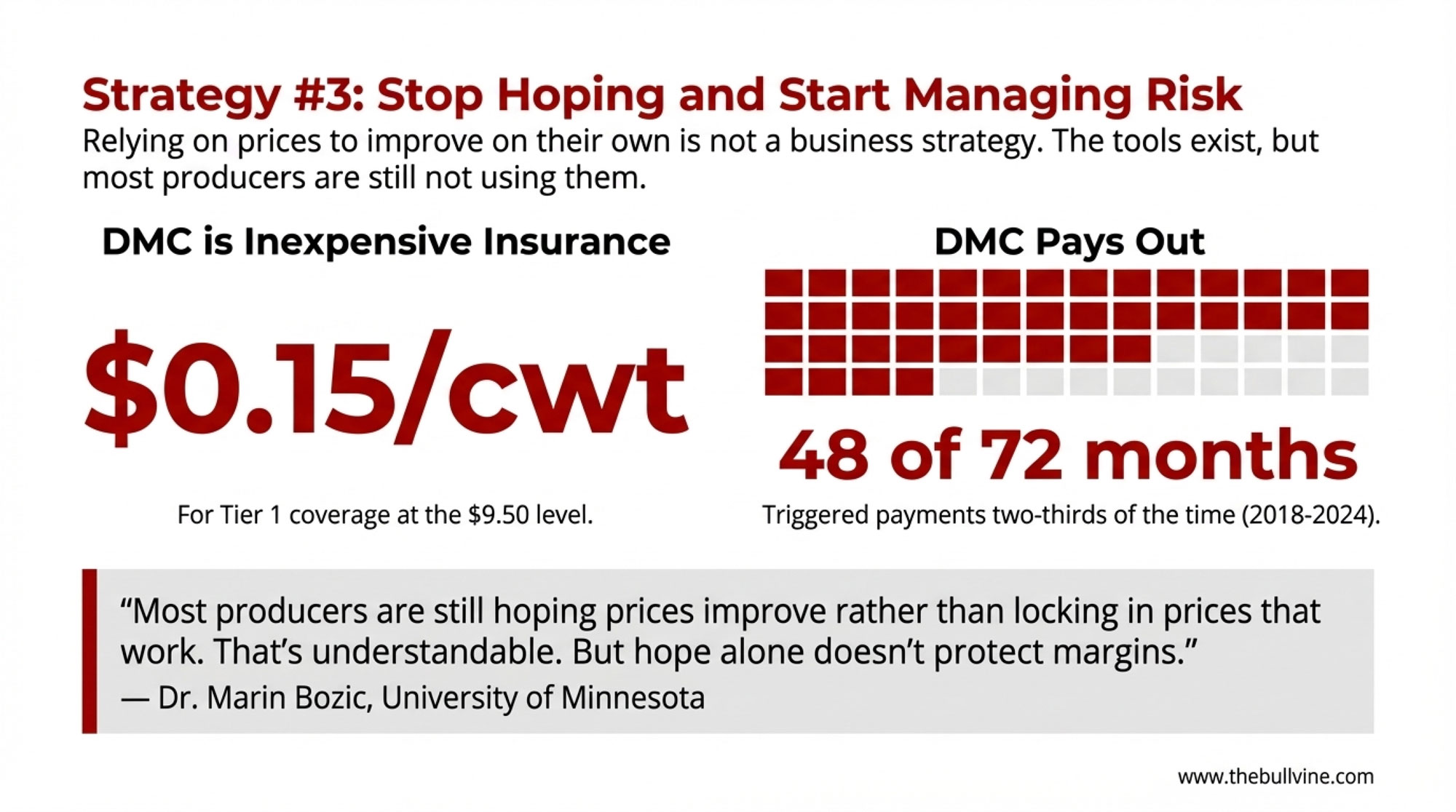
DMC Tier 1 coverage costs $0.15/cwt, with a $9.50/cwt margin protection on the first 5 million pounds. University of Wisconsin-Extension analysis shows that from 2018-2024, DMC triggered payments in 48 of 72 months—about two-thirds of the time. Average net indemnity ran $1.35/cwt during payment months. It’s essentially catastrophic margin insurance at minimal cost.

ScenarioCovered Milk (million lbs/year)Net Avg Indemnity ($/cwt in pay months)Approx. Extra Margin per Year ($)
No DMC enrollment00.000
DMC Tier 1 at $9.50 margin51.3545,000

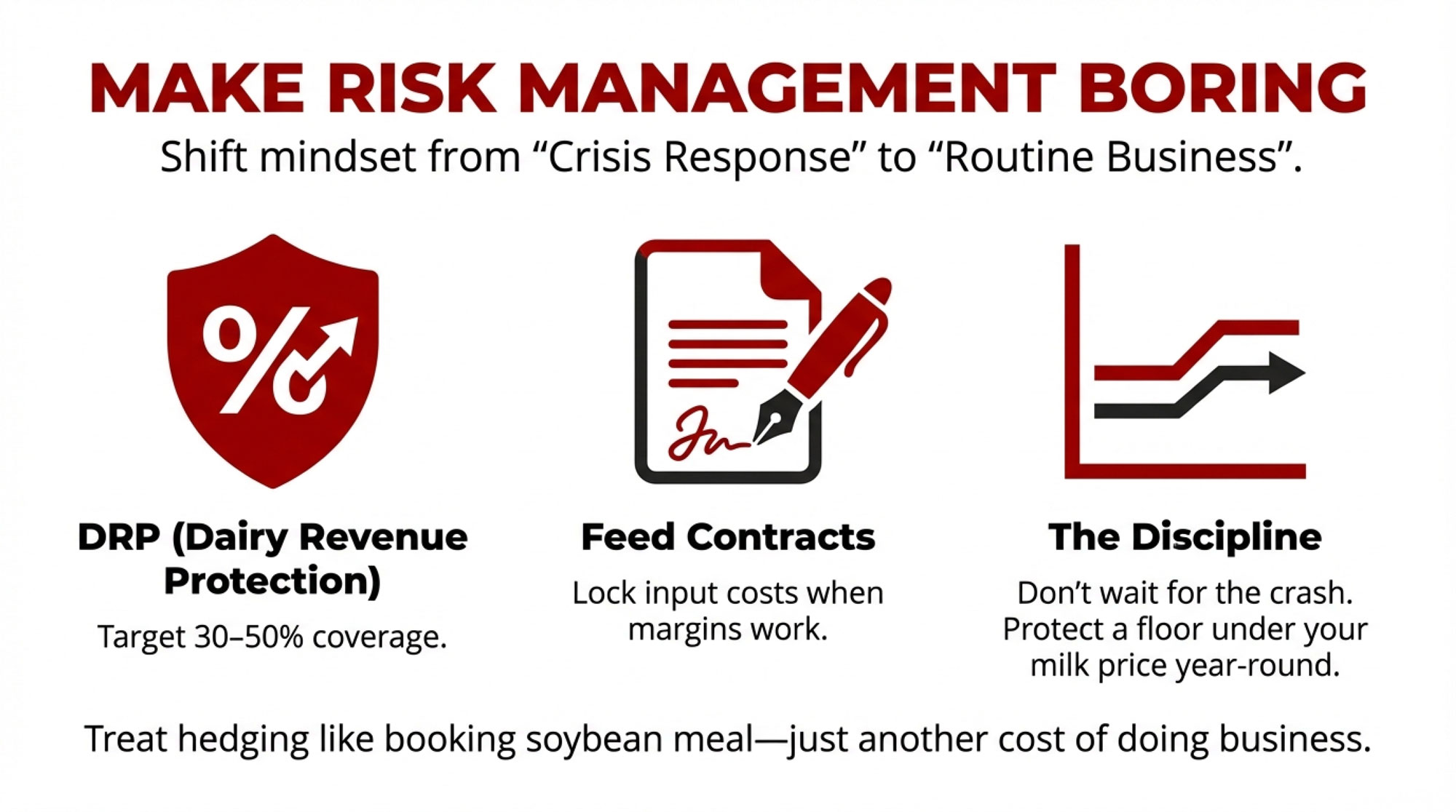
Beyond DMC, Class III futures and options let you establish price floors. If your break-even is $16/cwt and you can lock $17/cwt through futures, you’ve reduced margin uncertainty—even if it means giving up potential upside.

Expert Insight: Marin Bozic, Ph.D. Dairy Economist, University of Minnesota

Bozic often reminds producers at risk-management meetings that relying on prices to improve on their own simply isn’t really a strategy. Most producers are still hoping prices improve rather than locking in prices that work. That’s understandable. But hope alone doesn’t protect margins.

Finding Premium Channels

The spread between commodity milk and premium markets continues widening:

  • Organic certified: $33-50/cwt depending on region and buyer (USDA National Organic Dairy Report)
  • Grass-fed certified: $36-50/cwt with current supply shortages (Northeast Organic Dairy Producers Alliance)
  • Value-added processing: On-farm yogurt or cheese production can generate meaningful additional margin, though capital requirements are real

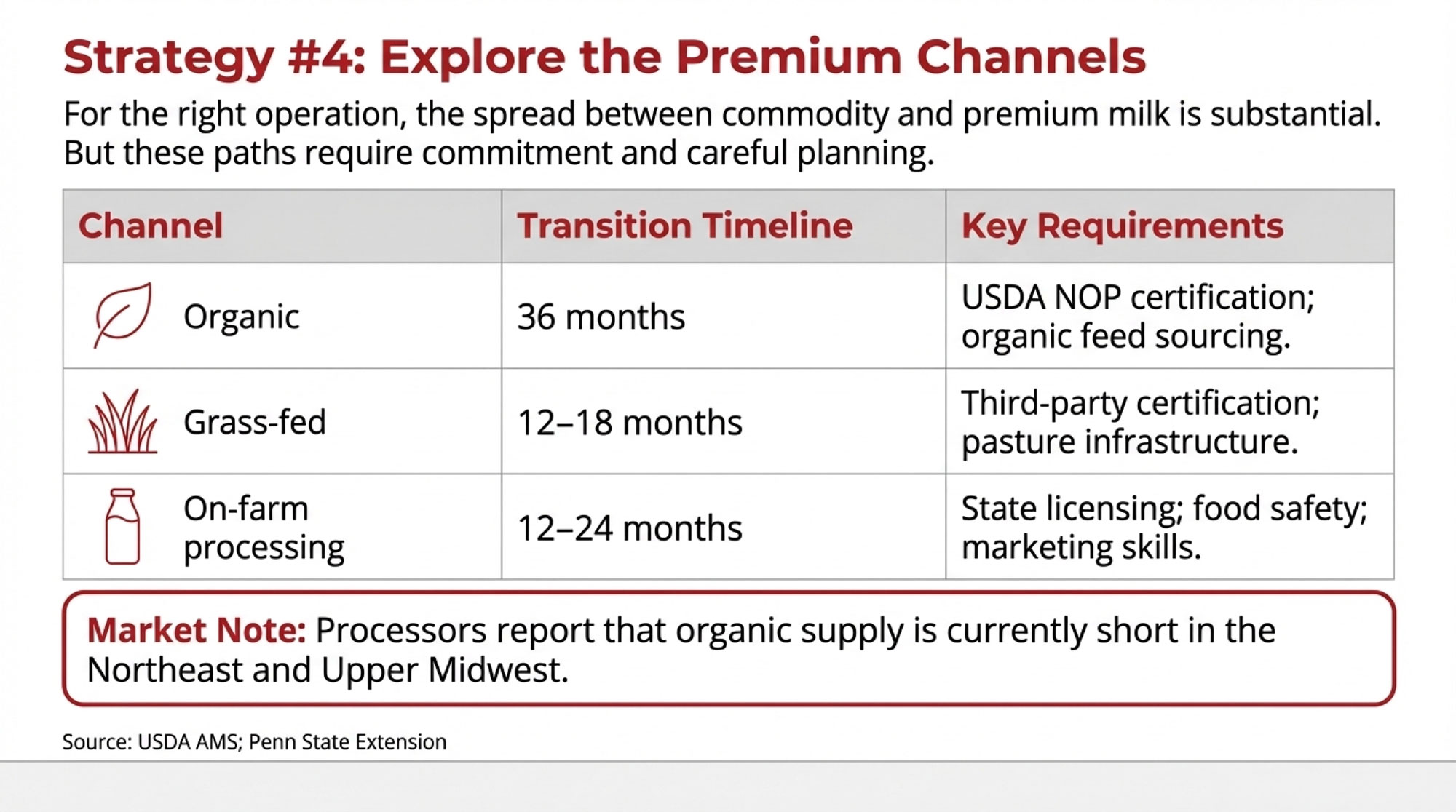
I’m hearing from processors that organic supply is currently short in the Northeast and Upper Midwest—there’s genuine demand if you can make the transition work.

Premium Channel Pathways: What’s Actually Involved

ChannelTransition TimelineKey RequirementsRegional Considerations
Organic36 monthsUSDA NOP certification; organic feed sourcing; no prohibited substancesStrong processor demand in the Northeast, Upper Midwest; fewer options in the Southwest
Grass-fed12-18 monthsThird-party certification (AWA, PCO, or equivalent); pasture infrastructureWorks best with existing grazing infrastructure; limited in western dry lot operations
On-farm processing12-24 monthsState licensing; food safety compliance; marketing/distribution capabilityStrong local food demand helps; it requires entrepreneurial capacity beyond milk production

Sources: USDA Agricultural Marketing Service; Northeast Organic Dairy Producers Alliance; Penn State Extension

The transition timeline matters. Organic requires three years of certified organic land management before you can sell organic milk—and you’ll need reliable organic feed sourcing, which can be challenging and expensive depending on your region. Grass-fed certification moves faster but requires pasture infrastructure that not every operation has. On-farm processing offers the highest margin potential but demands skills well beyond dairy farming.

Whether these channels make sense depends on your land base, labor situation, existing infrastructure, and appetite for marketing complexity. They’re not right for every operation, but for those with the right setup, the premium differential is substantial.

What the Analysts Are Actually Saying About 2026

Let me share what the forecasts show, because realistic timeline expectations matter.

Producer conversations often reference recovery by “late 2026.” The analyst forecasts suggest a more gradual path.

2026 Price Outlook: Key Forecasts

Source2026 All-Milk ForecastAssessment
USDA December WASDE$18.75/cwtDown from $20.40 (Nov)
2025 Actual$21.35/cwtBaseline comparison
Rabobank“Prolonged soft pricing through mid-to-late 2026” 
StoneXProduction slowdown not until Q2-Q3 2026 

Here’s the key difference: analysts are describing prices “bottoming out” in early to mid-2026. That means the decline stabilizes—not that prices bounce back to 2024 levels. Most forecasts suggest meaningful margin recovery is more likely a late-2027 development.

This isn’t cause for panic. Markets are cyclical, and conditions will eventually improve. But it does suggest planning for an extended timeline.

The Conversation Worth Having

For producers with potential successors, this margin environment brings important conversations into focus. University of Illinois Extension notes that less than one in five farm owners has an estate plan in place. The Canadian Bar Association found 88% of farm families lack written succession plans.

Expert Insight: David Kohl, Ph.D. Professor Emeritus, Virginia Tech

Kohl emphasizes that families starting succession talks early navigate transitions more smoothly than those who wait until circumstances force the conversation.

His framework:

  1. Know your actual numbers — true break-even, debt maturity, realistic equity position
  2. Find out what your kids actually want — not what you assume
  3. Lay out options honestly — status quo, restructuring, strategic exit, or succession

You’re not solving everything in one meeting. You’re getting information on the table.

The Bottom Line

“I’m not pretending the math is good right now. But I’ve stopped waiting for someone else to fix it. We enrolled in DMC at the $9.50 level, we’re breeding 60% of our herd to Angus, and we had that kitchen table conversation with our son over Thanksgiving. First real talk about whether he wants this place.”

He paused. “I’d rather know where we stand than keep guessing. At least now we’re making decisions instead of just hoping.” — Mike Boesch

That’s really the choice in front of all of us right now. The margin environment is challenging—that’s just the reality for the foreseeable future. But producers who understand the dynamics, assess their positions honestly, and implement available strategies aren’t just getting through this period; they’re succeeding. Some are building advantages that will serve them well when conditions improve.

The math is difficult. It’s not impossible. The difference comes down to whether you’re making decisions based on information or just waiting to see what happens.

Key Takeaways

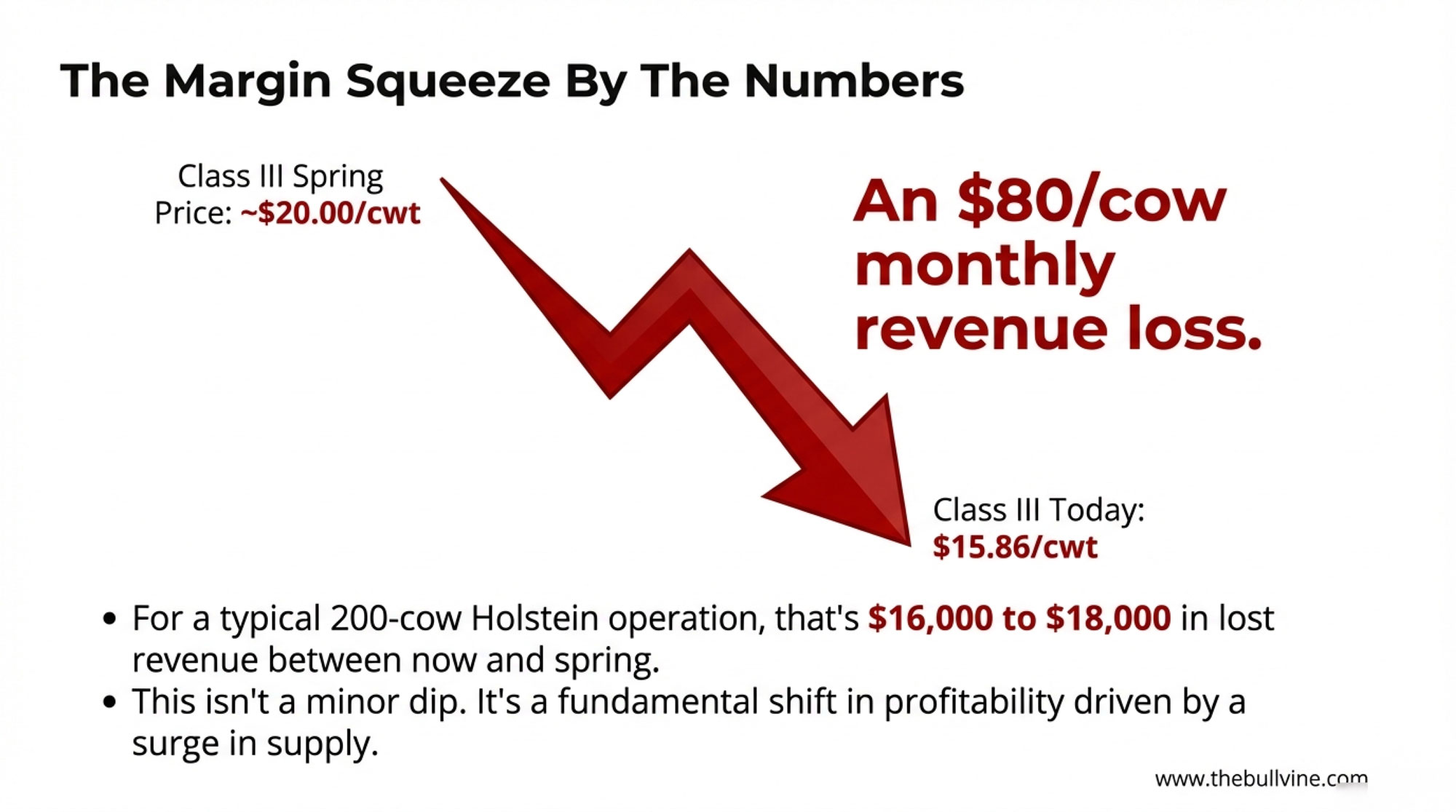
  • The $4/cwt gap is real—and it’s not your math. Make allowances, regional spreads, and formula changes explain why your milk check doesn’t match your margins.
  • $337 million left producer pockets in 90 days. June’s make allowance increases pulled that from the pool values before summer ended.
  • Plan for a long haul. USDA projects $18.75/cwt for 2026—a meaningful margin recovery likely won’t show up until late 2027.
  • Don’t count on production cuts to save prices. Expansion debt keeps cows milking, and the lowest heifer inventory since 1978 limits strategic culling.
  • The wins are in the details. Component premiums, smart beef sire selection, and actually enrolling in DMC at $9.50—that’s where producers are finding margin.

Complete references and supporting documentation are available upon request by contacting the editorial team at editor@thebullvine.com.

Learn More:

Join the Revolution!

Join over 30,000 successful dairy professionals who rely on Bullvine Weekly for their competitive edge. Delivered directly to your inbox each week, our exclusive industry insights help you make smarter decisions while saving precious hours every week. Never miss critical updates on milk production trends, breakthrough technologies, and profit-boosting strategies that top producers are already implementing. Subscribe now to transform your dairy operation’s efficiency and profitability—your future success is just one click away.
NewsSubscribe
First
Last
Consent

The $3 Million Question: Why Dairy’s 18-Month Window Demands Your Decision Now

Three dairy producers. One expanded. One optimized. One sold. All three are winning. Here’s why your path matters more than your size.

EXECUTIVE SUMMARY: A perfect storm is reshaping dairy: heifer inventory at historic lows (3.9M—lowest since 1978), processors desperately seeking milk with $150K+ annual premiums, and global production hitting environmental and biological walls. This convergence creates an 18-month window in which your decision determines whether you thrive, survive, or exit by 2030. Three proven paths exist: strategic expansion ($3.5-4M investment yielding up to $731K annually), optimization without debt ($200-300K profit improvements), or planned exit (preserving $400-680K more wealth than distressed sales). The window is real—processor premiums evaporate after 18 months, and with heifers requiring 30 months from birth to production, today’s decisions lock in your 2027-2028 position. Your farm’s future isn’t determined by size or history, but by making the right choice for YOUR situation in the next 90 days.

You know that feeling when you’re at the co-op meeting and everyone’s dancing around the same question? “Is something big happening here, or is this just another cycle?” Well, here’s what’s interesting—I think we’re all sensing the same thing because this time actually is different.

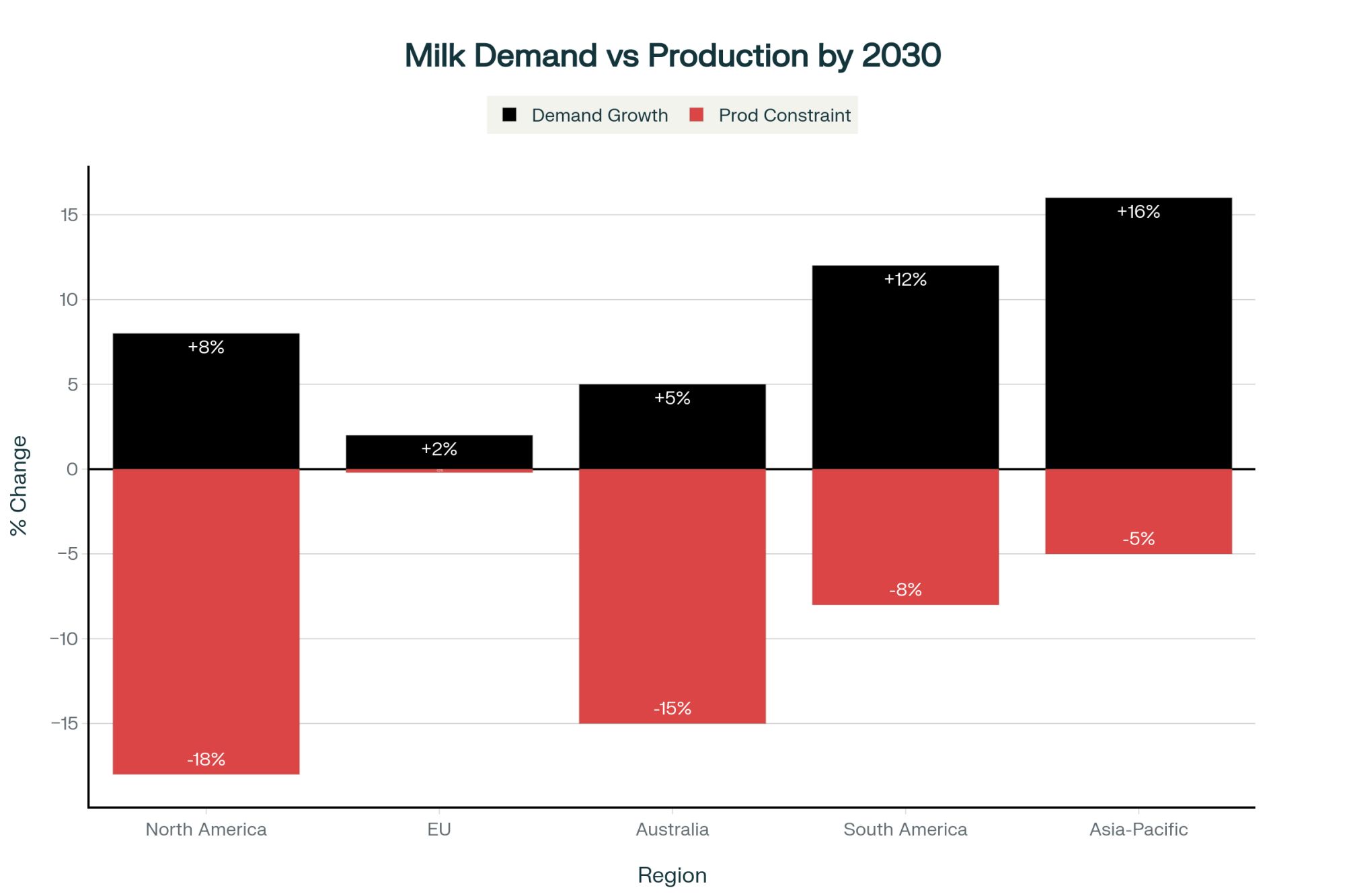
What I’ve found in the data lately is that we’re not seeing the typical supply hiccup or price swing. The International Farm Comparison Network released its projection last October, showing a 6 million tonne global milk shortage by 2030. Now, the International Dairy Federation? They’re suggesting it could hit 30 million tonnes. Even if we land somewhere in the middle… well, that’s not just a shortage. That’s a structural shift.

What’s Actually Driving This Supply Crunch

So here’s where it gets really interesting, and it’s the combination that matters.

The FAO and OECD put out their Agricultural Outlook last July—2024, not this year—showing global milk demand climbing by 140 to 208 million tonnes by 2030. We’re adding another 1.5 billion people to the planet, but what caught my attention is this: per capita consumption is jumping by 16% as developing regions gain purchasing power. Southeast Asia alone—according to IFCN’s April analysis—will command 37% of total global milk demand. I mean, think about that for a minute.

But production? That’s where things get complicated.

I was talking with a Wisconsin extension specialist last week, and she nailed it: “We’re watching three major dairy regions hit walls at the same time, and they’re different walls.” She’s absolutely right. DairyNZ’s latest statistics show New Zealand’s dairy cattle numbers dropped from 5.02 million back in 2014/15 to 4.70 million last year. The EU Commission’s December forecast? Milk production is declining by 0.2% this year, with growth capped at just 0.5% annually through 2031. That’s their greenhouse gas reduction targets at work, and those aren’t going away.

And then there’s our heifer situation here in North America—honestly, this one really concerns me.

The Heifer Shortage That’s Reshaping Everything

The USDA’s January Cattle report came out showing U.S. dairy heifer inventory at 3.914 million head. You know what that is? The lowest since 1978. We’re down 18% from 2018 levels.

CoBank’s research team published some sobering analysis in August—they’re projecting we’ll lose another 800,000 head over the next two years before we see any recovery. Think about that. We’re already at historic lows, and we’re going lower.

What’s driving this? Well, the National Association of Animal Breeders’ data shows beef-on-dairy breeding hit 7.9 million units in 2024. That trend alone—just that one factor—created nearly 400,000 fewer dairy heifers in 2025. Every beef-on-dairy calf born today is a heifer that won’t be entering your neighbor’s milking string in 30 months.

Dr. Jeffrey Bewley from Kentucky’s dairy extension program explained it perfectly when we talked last month: “The pipeline is essentially fixed for the next 30 months. It takes 24-30 months from birth to first lactation. The calves being born today won’t produce milk until 2027-2028, and we’re simply not producing enough of them.”

You’re probably already seeing this in heifer prices. The USDA’s Agricultural Marketing Service data from February showed prices running $2,660 to $3,640 per head—up 29% year-over-year. A Vermont producer told me last week he’s paying $4,000 for quality bred heifers… when he can find them. California operations? Some out there can’t source adequate replacements at any price. This dairy heifer shortage in 2025 is fundamentally different from past cycles.

Processing Expansion Creates Time-Limited Opportunities

Here’s a development that’s really worth watching, especially if you’re within reasonable hauling distance of new facilities.

The dairy processing sector is investing billions—we’re talking serious money—in dozens of new and expanded plants across the country. The International Dairy Foods Association has been tracking these milk processing expansion opportunities, and what fascinates me is how predictable processor behavior has become.

The University of Wisconsin’s Center for Dairy Profitability documented this pattern, and it’s remarkably consistent. In that first year after a facility announces expansion? They’re hungry for milk—offering premiums of $1.50 to $2.50 per hundredweight. But here’s what happens: by months 13 through 18, when they’ve locked in about 60-70% of what they need, those premiums drop to maybe $0.75 to $1.25. After 18 months? Standard market pricing.

Mark Stephenson from UW-Madison’s Dairy Policy Analysis program put it well: “We’re seeing farms within 75 miles of new facilities locking in bonuses worth $150,000 or more annually for a 500-cow dairy. But that opportunity has an expiration date. Once processors hit about 70-80% of their target volume, the welcome mat stays out, but the red carpet gets rolled up.”

I’ve seen this play out in Wisconsin, Pennsylvania, Idaho… same pattern everywhere. And what’s happening in Europe and Australia right now? Similar dynamics—processors scrambling for supply in tight markets, then becoming selective once they’ve secured their base needs.

Three Strategic Paths Forward

What’s fascinating to me—and I’ve been talking to producers all over—is how clearly folks are sorting themselves into three camps. Each one makes sense depending on where you’re at.

Strategic Expansion for Positioned Operations

Operations taking this route generally have strong balance sheets—we’re talking debt-to-equity ratios under 0.50. They’ve got established management systems, often with a clear succession plan in place.

Current construction costs? You’re looking at $3.5 to $4.0 million for a 500-to-1,000 cow expansion, based on what I’m hearing from contractors and extension budgets. Freestall construction alone runs $3,000 to $3,500 per stall. And financing… well, at 7-8% interest, that changes everything compared to three years ago.

A Pennsylvania producer expanding from 450 to 900 cows walked me through his thinking: “With milk projected at $21-23 per hundredweight through next year and geographic premiums adding another buck-fifty, we’re looking at $731,250 in additional annual income. Yeah, the interest rates hurt—we’re paying $840,000 more over the loan term than we would’ve three years ago. But we think the opportunity justifies it.”

Benchmarking suggests you need breakevens below $18 per hundredweight to weather potential downturns. That’s a narrow margin for error.

But here’s something worth noting—smaller operations aren’t necessarily excluded from expansion opportunities. I know a 150-cow operation in Ohio that’s adding just 50 cows, focusing on maximizing components and securing a local processor contract. Sometimes expansion doesn’t mean going big—it means going strategic.

Optimization Without Expansion of Debt

Now, this is where things get interesting for many operations. Dr. Mike Hutjens—he’s emeritus from Illinois but still consulting—has been documenting some impressive results.

Component optimization through precision nutrition, which typically costs $15-25 per cow per month, can generate $75 per cow annually just by improving butterfat and protein levels. Reproductive efficiency improvements? Those are yielding $150 in annual benefits per cow. And here’s one that surprised me: extending average lactations from 2.8 to 3.4 adds about $300 per cow in lifetime value.

“We’re documenting operations improving net income by $200,000 to $300,000 annually through systematic optimization,” Hutjens comments. “For producers who don’t want additional debt or can’t expand due to land constraints, this approach offers substantial returns.”

I’m seeing this work particularly well for operations in areas where expansion just isn’t feasible—whether due to land prices, environmental regulations, or personal preference. With this summer’s heat-stress issues reminding us of the importance of cow comfort and fresh cow management, there’s real money in getting the basics right.

For smaller herds—say, under 200 cows—optimization might be your best bet. Focus on what you control: breeding decisions, feed quality, cow comfort. One 120-cow operation in Vermont improved their net income by $85,000 annually just through better reproduction and component management. No debt, no expansion stress, just better management of what they already had.

Strategic Transition While Values Hold

This is the conversation nobody wants to have at the coffee shop, but it needs to be part of the discussion.

Cornell’s Dyson School research shows that well-planned transitions preserve $400,000 to $680,000 more wealth compared to distressed sales. That’s real money—generational wealth we’re talking about.

A farm transition specialist I know in Wisconsin—he’s been doing this for 30 years—shared something that stuck with me: “Strategic transition isn’t giving up. It’s maximizing value for the family’s future. I’m working with a 62-year-old producer right now, with no identified successor. If he transitions in 2026, he preserves about $2.1 million in equity. If he waits, hopes things improve, maybe faces forced liquidation in 2028? We’re looking at maybe $1.2 million.”

For our Canadian friends, it’s a different calculation. Ontario’s quota exchange is showing values around $24,000 per kilogram of butterfat. That’s substantial equity tied up in quota that needs careful planning to preserve.

The Human Side We Can’t Ignore

I need to bring up something we don’t talk about enough—the mental and emotional toll of these decisions.

A University of Guelph study from last year found that 76% of farmers experienced moderate to high stress levels. Dairy producers? We’re showing some of the highest rates. This isn’t just about personal wellbeing—though that matters enormously. Research in agricultural safety journals shows that chronic stress directly impacts decision-making quality. Poor decisions made under stress can affect operations for years.

A Minnesota producer was remarkably honest with me recently: “The weight of these decisions—expansion, optimization, or transition—it affects the whole family. Having someone to talk to, someone outside the immediate situation, has been invaluable.”

The Iowa Concern Line—that’s 1-800-447-1985—expanded nationally this year. Organizations like Farm State of Mind provide crucial support. Using these resources isn’t a weakness—it’s smart business. You wouldn’t run a tractor with a blown hydraulic line, right? Why run your operation when your decision-making capacity is compromised?

Risk Management in Uncertain Times

Now, I’d be doing you a disservice if I didn’t acknowledge what could go wrong with this thesis.

A severe recession? It’s possible, though the Federal Reserve currently puts the probability of a 2008-level event pretty low—less than 15%. Technology breakthroughs in genetics or reproduction could accelerate supply response, but biological systems don’t change overnight. We’ve been improving sexed semen for 15 years—sudden miraculous breakthroughs seem unlikely. Environmental policy reversals? Given current trajectories in the EU and New Zealand, I wouldn’t count on it.

And here’s something we haven’t talked about enough—feed price volatility. As many of you know, grain markets have been all over the map lately. USDA projections show significant price variability ahead for both corn and soybean meal over the next 18 months. These aren’t small moves. A dollar change in corn prices can shift your cost of production by $1.50 to $2.00 per hundredweight, depending on your feeding program. That’s why managing feed costs remains critical to any strategy you choose.

Smart producers are hedging their bets. The Dairy Margin Coverage program lets you lock in $9.50 or higher income-over-feed-cost margins for most of your production—and that “feed cost” component is key here. When feed prices spike, DMC payments help offset the pain. University of Minnesota Extension shows diversifying through beef-on-dairy programs adds $4-5 per hundredweight in supplemental revenue. These aren’t huge numbers individually, but together they provide meaningful buffers against both milk price drops and feed cost spikes.

And let’s not forget weather impacts—the drought conditions we’ve seen in parts of the Midwest and the heat-stress challenges—are adding another layer of complexity to these decisions. Climate variability isn’t going away, and it directly affects both production and feed costs.

Your 90-Day Action Framework

After talking with dozens of producers and advisors, here’s the framework that seems to resonate:

Weeks 1-2: Pull your real numbers. Not what you think they are—what they actually are. Calculate your true production costs, debt ratios, and stress-test at $16 milk for 18 months. If your breakeven’s above $20 or debt-to-equity exceeds 0.80, expansion probably isn’t your path.

Weeks 3-4: Map your market position. Meet with every processor within 150 miles. Understand which contracts are available and which premiums exist. Geography matters more than ever in this market.

Weeks 5-6: Have the succession conversation. I know—it’s uncomfortable. But if you’re over 50 without a clear successor, a strategic transition might preserve more wealth than holding on indefinitely.

Weeks 7-8: Determine actual borrowing capacity. Today’s 7-8% rates are a world apart from those of three years ago. Know your real numbers before making commitments.

Weeks 9-10: Make your choice—expansion, optimization, or transition—based on data, not emotion or tradition. This is where the rubber meets the road.

Weeks 11-12: Start executing. Delays mean missing opportunities and facing higher costs down the line.

The Global Context and What’s Ahead

What strikes me most is how this moment accelerates trends we’ve been watching for years. Industry consolidation? That’s mathematical reality. Hoard’s Dairyman’s October analysis suggests 25-40% of current operations will transition by 2030. That’s sobering… but it also creates opportunities for those positioned to capture them.

Looking globally, we’re seeing similar patterns in Australia with their drought recovery challenges, in Europe with environmental constraints, and in South America with infrastructure limitations. This isn’t just a North American phenomenon—it’s a global realignment of dairy production and consumption patterns.

A colleague at Penn State Extension said something that resonates: “Success won’t necessarily correlate with size or history. It’ll favor those who accurately assess their position and act decisively within this window.”

The 18-month timeframe isn’t arbitrary—it reflects the convergence of heifer biology, processor contracting patterns, and construction cost trajectories already in motion. While heifer availability remains fixed for 30 months ahead, the processor premium window closes in 18 months, making that the more urgent decision-making timeline. Multiple paths can succeed, but each requires honest assessment and willingness to act on that understanding.

For an industry built on multi-generational commitment and remarkable resilience, this period calls for something additional: recognizing when adaptation is necessary and positioning thoughtfully for what comes next.

Whether through expansion, optimization, or transition, the key is making intentional choices aligned with your operational realities and family goals. The decisions ahead aren’t easy—they never are. But as we’ve seen throughout dairy’s history, producers who engage thoughtfully with change, rather than hoping it passes, tend to find sustainable paths forward.

And that, ultimately, is what this is all about—finding your path forward in a changing landscape. The opportunity is real, the challenges are significant, and the window for decisive action is open… but not indefinitely.

KEY TAKEAWAYS:

  •  The 18-month window is biology meeting economics: Heifers at 3.9M (lowest since ’78) + 30-month production lag + processors desperately needing milk NOW = your decision window
  • Three strategies, all winners: Expand if you’re positioned ($3.5M investment → $731K annual returns) | Optimize what you have ($200-300K profit, no debt) | Exit strategically ($680K more than waiting)
  • Your report card determines your path: Breakeven under $18/cwt ✓ | Debt-to-equity under 0.50 ✓ | Clear succession ✓ = expand. Missing any? Optimize or exit.
  • Location drives premiums: New processing within 75 miles = $150K+ annual bonus, but these premiums evaporate after 18 months—first come, first served
  • The 90-day sprint: Weeks 1-2: Pull real numbers | Weeks 3-4: Map processor contracts | Weeks 5-6: Succession reality check | Weeks 7-12: Commit and execute

Complete references and supporting documentation are available upon request by contacting the editorial team at editor@thebullvine.com.

Learn More:

Join the Revolution!

Join over 30,000 successful dairy professionals who rely on Bullvine Weekly for their competitive edge. Delivered directly to your inbox each week, our exclusive industry insights help you make smarter decisions while saving precious hours every week. Never miss critical updates on milk production trends, breakthrough technologies, and profit-boosting strategies that top producers are already implementing. Subscribe now to transform your dairy operation’s efficiency and profitability—your future success is just one click away.
NewsSubscribe
First
Last
Consent

Concrete, Air, and Shade: The Real Drivers Behind Milk Yield

Your biggest ROI isn’t in feed—it’s in airflow, space, and shade. Comfort is still the cheapest form of nutrition.

You know, it’s easy to see why so many of us start with feed when we think about performance. Feed costs take up the biggest line in most of our budgets — and it’s the part of management we can see, mix, and adjust every day. But what I’ve found, after years of walking barns across Wisconsin and talking with producers from Ontario to Idaho, is that sometimes the problem isn’t in the ration. It’s in the roof, the floor, and the airflow.

You can’t fix nutrition in a broken barn. And once you understand the biology behind that statement, it changes everything about how you think about profitability.

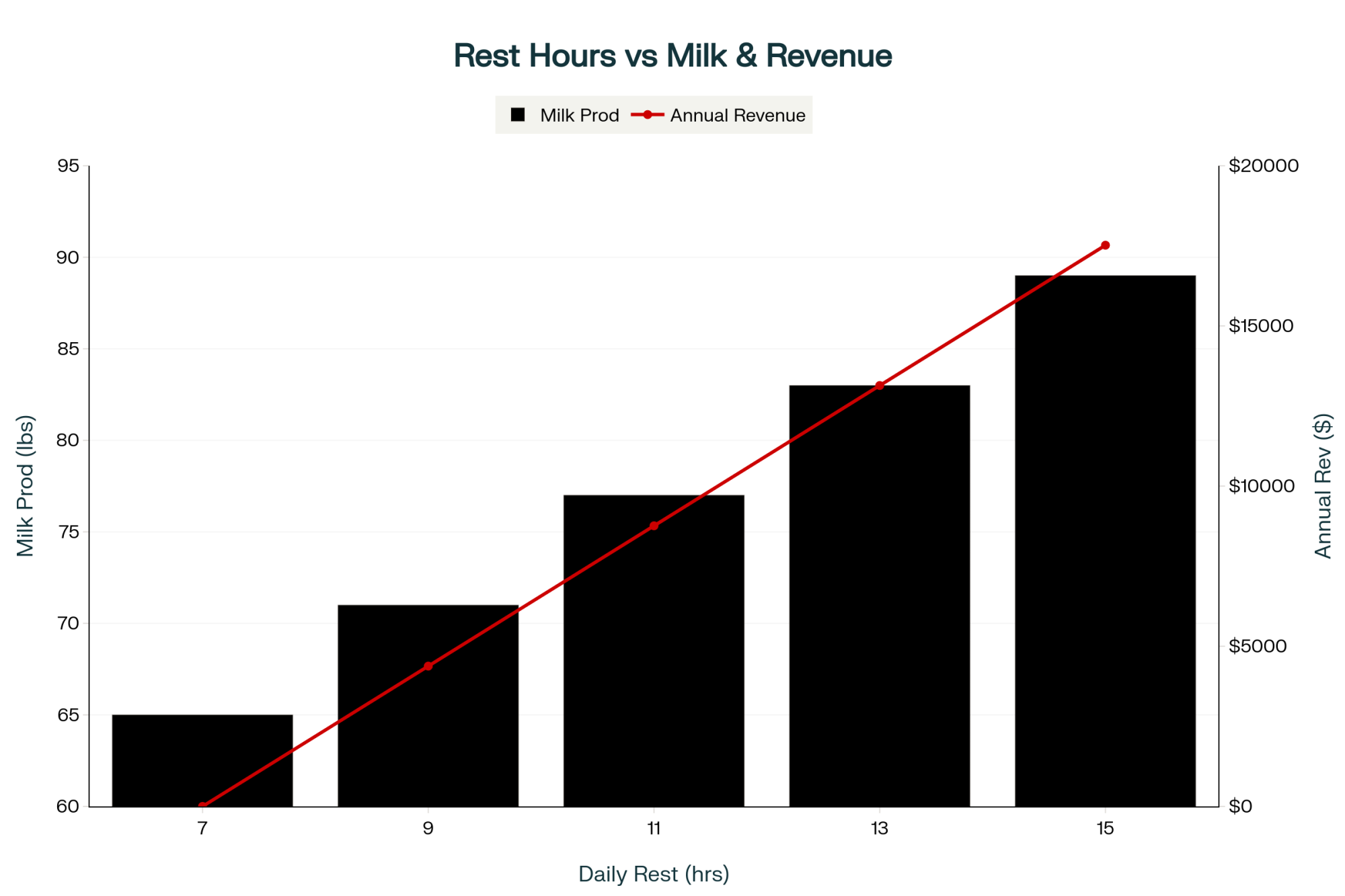
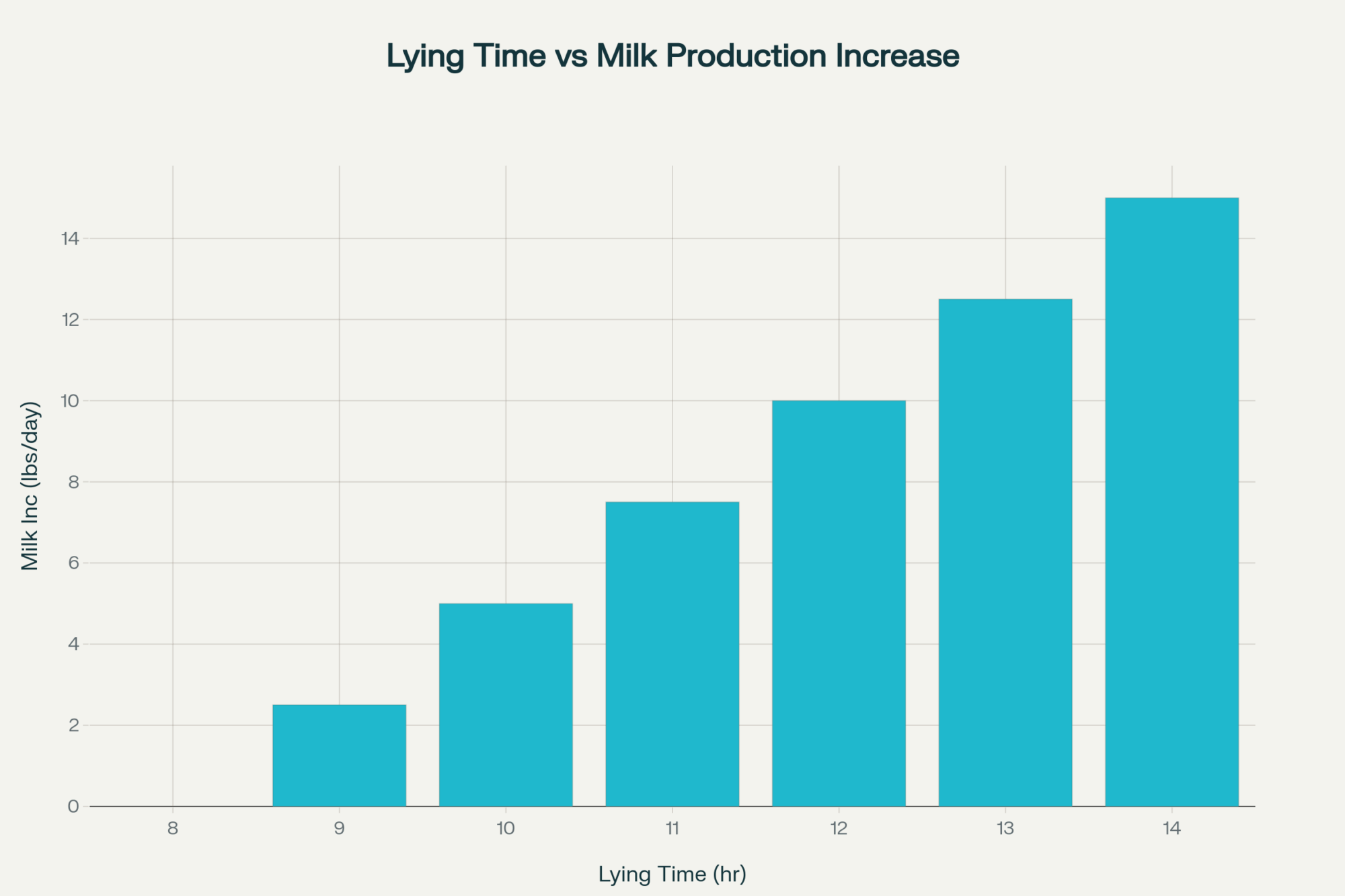
The Rest-Revenue Multiplier: Every additional hour of cow rest time generates 2-3 lbs more milk daily, translating to $4,380+ annual revenue per cow—making comfort your highest-ROI investment

The $50 Fix That Unlocks 3.5 Pounds of Milk

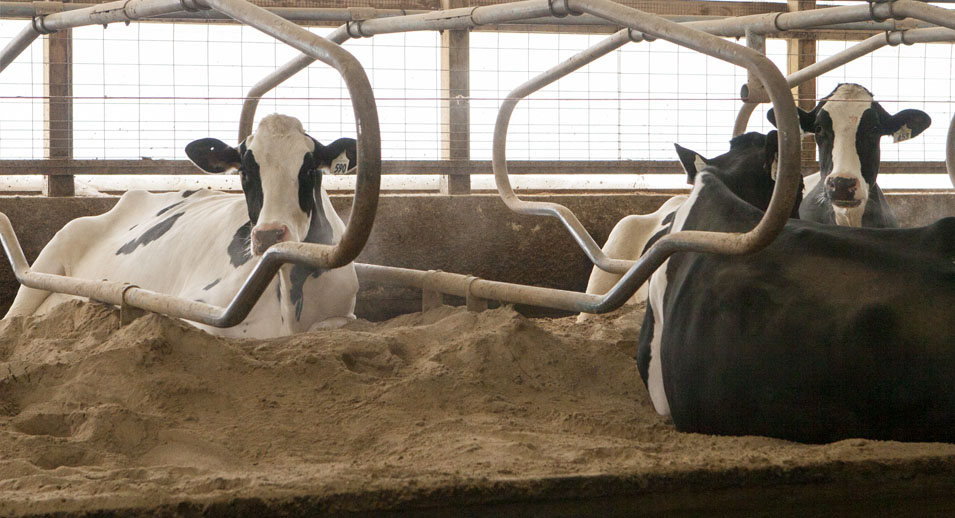
Research is clear on this one — comfort is milk in the tank. The University of Wisconsin’s Dairyland Initiative and William H. Miner Agricultural Research Institute have both documented that every additional hour a cow spends lying down yields 1.7 to 3.5 pounds more milk each day (UW Dairyland Initiative and Miner Institute Cow Comfort Resources).

Here’s what’s interesting: the fix for poor comfort isn’t always expensive. I visited a mid-sized herd near Ripon, Wisconsin, that simply raised neck rails by four inches and deepened bedding. The cows immediately started using the stalls properly, adding almost 2.5 hours of rest per day. “Same cows, same feed,” the producer told me. “We gained six pounds of milk just by fixing the structure.”

It makes sense when you look at history. Freestall dimensions built before 2010 were designed for smaller Holsteins, around 1,100–1,300 pounds. Modern cows average closer to 1,500–1,600 pounds, which means their natural movement is restricted in older stalls. Adjusting neck rails to 48–52 inches high and 68–70 inches from the curb better fits today’s herds.

Investment TypeCost Per StallPayback PeriodMilk Gain (lbs/day)Annual ROI
Neck Rail Adjustment$503 months2.0-3.5360%
Bedding Deepening$754 months1.7-3.0280%
Fan Repositioning$0-251-2 months2.5-4.0450%
Stall Width Increase$1506 months3.0-4.5320%

Cornell Pro‑Dairy economic modeling shows that small structural corrections like these deliver consistent three‑month paybacks with average returns of 360%. The investment? About $50 per stall, mostly in tools and labor (Cornell Stall Design & Economics Tools).

Heat Stress Isn’t Just a Southern Problem

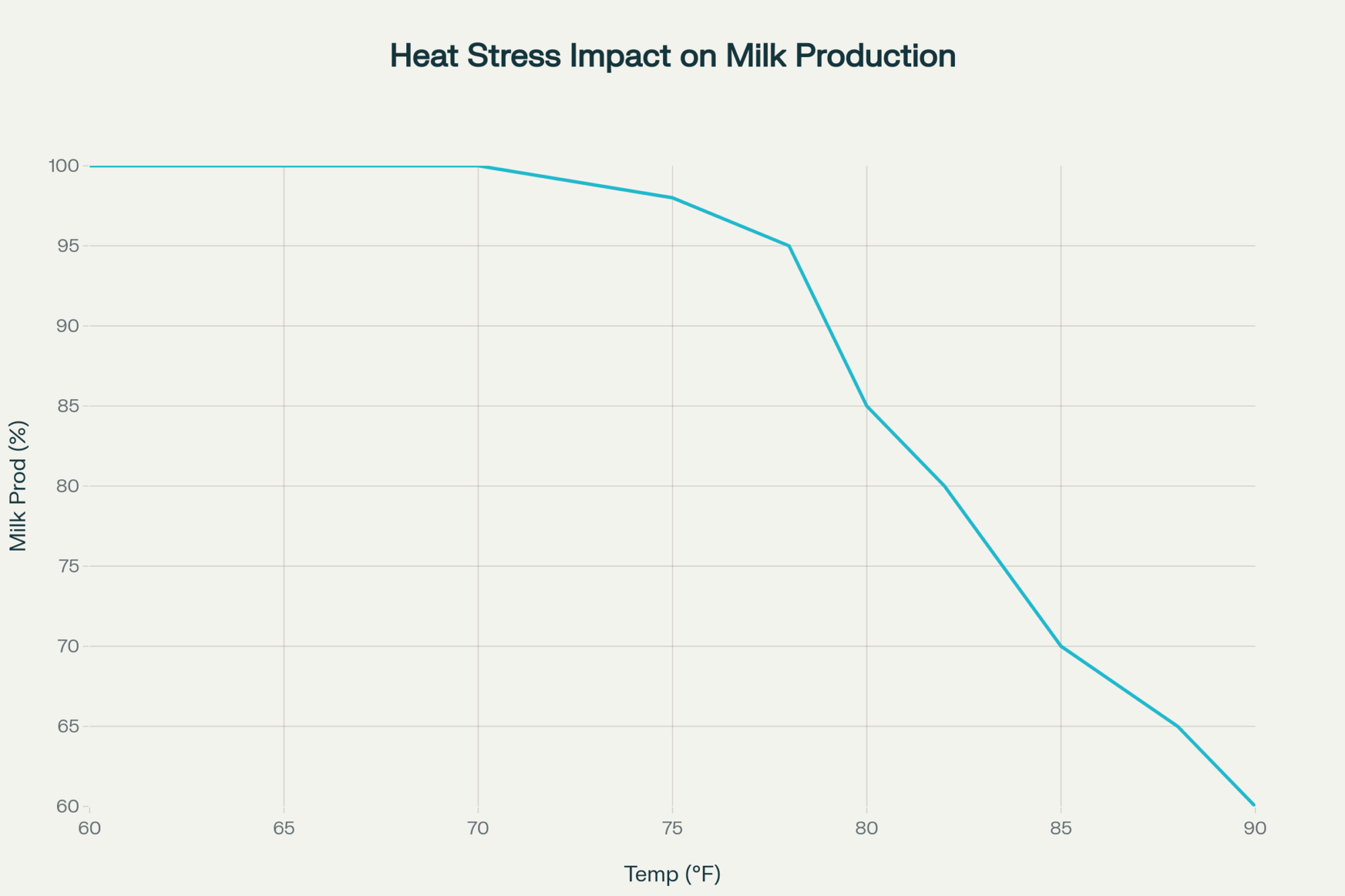
Heat Stress Strikes at 68°F: Most producers think heat stress begins at 80°F, but research proves milk loss, fertility decline, and reduced feed intake start at just 68 THI—a game-changing revelation for northern dairies

A lot of northern producers still assume heat stress doesn’t affect them — but science and data say otherwise. Dr. Geoff Dahl, professor of animal sciences at the University of Florida, has shown that cows begin to decline in performance when the Temperature‑Humidity Index (THI) exceeds 68, roughly 70°F with 60% humidity (University of Florida – Heat Stress Research).

The Silent Inheritance: One summer without cooling dry cows costs $1,200-1,800 per animal across multiple generations—proving that heat stress during the dry period is the most expensive 46 days on your dairy

What’s really eye‑opening is that heat stress during the dry period doesn’t just affect current milk yield. It alters calf development in utero, setting those heifers up for life‑long performance losses. Dahl’s studies have shown that heifers born from heat‑stressed dry cows produce 5‑11 pounds less milk during their first lactation — a penalty that carries on through adulthood.

Even in the Upper Midwest and Ontario, weather-tracking from UW‑Extension shows that cows experience that threshold for 50–90 days per year, depending on ventilation and humidity. The solution doesn’t always mean a major retrofit — just adjusting fan direction or installation height to maintain 300‑400 feet per minute of airflow at cow levelcan significantly change outcomes.

At one Ontario farm, redirecting fans over feed alleys rather than back walls completely flattened milk yield swings. The owner laughed when he said, “We didn’t add fans — just turned them the right way.” That small shift eliminated bunching, improved feed intake, and kept butterfat performance steady all summer.

When Infrastructure Outperforms Feed

Investment CategoryTypical CostPayback TimeMilk ResponseWorks 24/7Risk Level
Stall Modification$50-150/stall3-6 months2-4 lbs/dayYesLow
Cooling System$200-500/cow6-12 months3-5 lbs/dayYesLow
Nutrition Additive$0.20-0.50/dayContinuous0.5-2 lbs/dayNoMedium
Premium Feed$50-100/tonContinuous1-3 lbs/dayNoMedium

Let’s talk numbers, because that’s where the case for infrastructure gets serious. Studies from Cornell Pro‑DairyUniversity of Wisconsin, and Kansas State University show the ROI on barn improvements consistently competes with — and often beats — nutrition investments.

One 450‑cow herd in western New York implemented these upgrades and dropped its cull rate by 10% while cutting hoof‑trimming costs by a quarter. Herd average climbed five pounds — all from removing the bottlenecks stalls created. The farm’s owner summed it up well: “I used to buy almost every nutrition additive out there. Now my barn does most of the work.”

Why Improvements Still Lag

If the data is so compelling, what holds farms back? Psychologists — and farm economists like Dr. Cameron King of the University of Guelph — believe it’s about visibility. As King puts it: “Producers invest where they can see results fast. Feed changes give immediate feedback. Infrastructure improvements return slower, even though the payoff is bigger.”

That rings true. With a slight tweak to the ration, you can check the milk weights the next morning. But it’s harder to measure peace, comfort, and stability — the quiet gains of removing friction from cow behavior. What’s encouraging is that the operations making these investments are often the same ones noticing calmer cows, fewer metabolic issues, and a stronger transition period before any milk data even comes in.

From Managing to Designing Systems

There’s a shift happening that’s worth watching. Instead of “managing stress,” many top herds are designing barns so that stress never builds in the first place. In a series of case studies, Cornell Pro‑Dairy and Kansas State Universityfound that herds that improved stall space, bedding, and airflow gained 2 hours of rest per cow daily, resulting in 8–9 pounds more milk per cow without changing feed.

Cows weren’t “pushed” to perform; their biology was finally allowed to express what the ration and genetics were already capable of. Transition cows handled fresh periods more smoothly, fertility improved, and energy balance stabilized.

One Minnesota dairy manager put it perfectly during a University of Minnesota Extension discussion: “We quit trying to ‘manage’ around cow comfort. Now, the management kind of takes care of itself.”

Five Quick Ways to Gauge Comfort

Your Monday Morning Diagnostic: This simple decision tree helps producers systematically identify barn comfort bottlenecks before spending another dollar on feed—potentially unlocking 2-3.5 lbs more milk per cow daily

If you want to know where your barn performance really stands, start with these simple checks:

  1. Monitor THI at the cow level. Anything above 68 calls for immediate cooling actions.
  2. Try the 25‑second knee test. Kneel in a stall for half a minute. If it’s painful or wet, it’s failing your cows.
  3. Look mid‑day. At least 80–85% of your cows should be lying down comfortably after feeding.
  4. Start small. Neck rails, fans, and bedding deliver immediate ROI—and can fund larger phases later.
  5. Recalibrate your ration. Once comfort improves, cows eat differently — work with your nutritionist to reflect that change.

The Foundation That Never Takes a Day Off

I remember something Dr. Mike Hutjens once told a group of producers: “Infrastructure never takes a day off.” And it stuck with me. A properly fitted stall or well‑placed fan doesn’t clock out when you do; it’s the one system on the farm that works 24/7 without supervision or overtime.

What’s important—and, frankly, encouraging —is that comfort strategies aren’t limited to freestall setups. Tie‑stall and dry lot systems achieve similar returns when cow biology drives design rather than human habit. Sand or dry bedding, airflow direction, and clean water space work for dairies of every scale and layout.

If there’s a single takeaway here, it’s this: foundation before feed. The barn sets the biological ceiling, and the feed fills the space below it. Get that order right, and suddenly everything else — the ration, the reproduction, the milk components — starts falling into place naturally.

Further Reading and Resources

Key Takeaways:

  • Every extra hour cows rest can earn roughly 3.5 lbs of milk—comfort converts directly into production.
  • Feed can’t fix a poorly built barn. Airflow, shade, and stall comfort determine how well the feed performs.
  • Simple $50 stall fixes often deliver a 300% ROI—before your next feed bill even prints.
  • Heat stress begins at a THI of 68 °F, not 80. Early cooling preserves milk yield and fertility.
  • Infrastructure pays you every day—it never takes a day off.

Executive Summary

Most producers focus on feed when milk performance stalls — but new research shows the real ceiling may be in the barn, not the bunk. Studies from Wisconsin, Florida, and Cornell link each extra hour of cow rest to 1.7–3.5 lbs of milk per day, with simple $50 comfort fixes delivering triple‑digit ROI. Heat stress starts earlier than we think — at just 68 °F THI — quietly costing milk, fertility, and even the next generation’s output. What’s encouraging is how quickly these investments pay back, often inside one season. Across freestalls, tie‑stalls, and dry lots, the takeaway is the same: infrastructure is the quiet partner that lets nutrition, genetics, and management finally show their full potential.

Complete references and supporting documentation are available upon request by contacting the editorial team at editor@thebullvine.com.

Learn More:

Join the Revolution!

Join over 30,000 successful dairy professionals who rely on Bullvine Weekly for their competitive edge. Delivered directly to your inbox each week, our exclusive industry insights help you make smarter decisions while saving precious hours every week. Never miss critical updates on milk production trends, breakthrough technologies, and profit-boosting strategies that top producers are already implementing. Subscribe now to transform your dairy operation’s efficiency and profitability—your future success is just one click away.
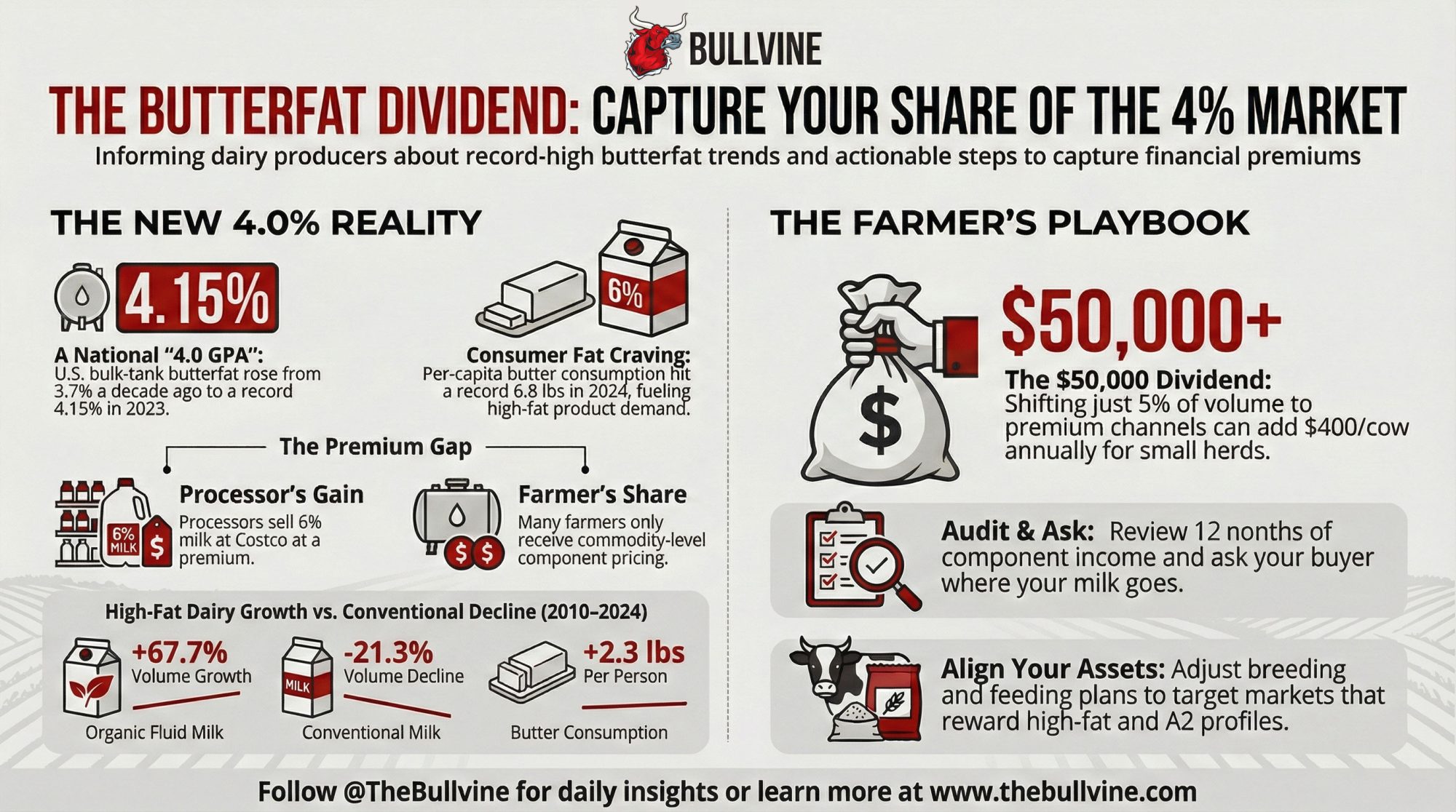
NewsSubscribe
First
Last
Consent

Is Stray Voltage Stealing 20 Pounds Per Cow from Your Dairy?

Cows avoiding water? Nervous in the parlor? Production dropping? You’re not imagining it—20% of dairies have stray voltage that utilities can’t detect.

You know, I spoke with a producer from Minnesota who shared something that many of us might recognize: her best cow had died unexpectedly after a completely normal 70-pound milking. Every consultant she’d brought in confirmed her management was exemplary. Yet cows kept declining, and nobody could explain why.

This was Jill Nelson from Olmar Farms in Sleepy Eye, and her eight-year journey to discover what was affecting her elite registered Holstein herd reveals an issue that—honestly—deserves more attention than it gets. After installing an isolated transformer to separate her farm from utility electrical infrastructure (we’re talking about an investment approaching $100,000 here), production increased by nearly 20 pounds per cow per day. And this happened during summer 2017, when most of us are just trying to maintain production through heat stress.

What’s particularly noteworthy is that Nelson’s experience aligns with estimates from that old USDA Agriculture Handbook 696—you might have seen it referenced—suggesting that up to 20% of dairy operations may encounter some level of stray voltage issues. While the data is still developing on the exact prevalence, this potential scope… well, it merits serious consideration as we evaluate those unexplained herd health and production challenges we all see from time to time.

Here’s what’s interesting from an economics standpoint: With a 20-pound daily increase on 150 cows at current milk prices, Nelson’s investment paid for itself in approximately six months. Not many farm improvements deliver that kind of return, right?

Understanding the Technical Challenge

So here’s where things get a bit complicated—but stick with me because this matters.

The complexity of stray-voltage diagnosis begins with how we measure it. Standard utility testing protocols use a 500-ohm resistor to simulate your cow’s electrical resistance. This standard, believe it or not, was established in that 1991 USDA handbook I mentioned. And it’s still what utilities use when they come out to test your farm today.

The Testing Gap reveals why 20% of dairies struggle with hidden electrical issues—utilities test at 500 ohms, but real cows measure 109-400 ohms, experiencing double to quadruple the current that standard tests report as “safe.”

What makes this significant? Well, field research from agricultural electrical consultants has documented dairy cattle with actual body resistance ranging from approximately 100 to 400 ohms—substantially lower than what the testing standard assumes. Dr. Richard Norell, who’s the Extension dairy specialist up at the University of Idaho, has examined electrical resistance in dairy cattle as part of broader agricultural electrical research, and his work contributes to our understanding of this variation.

The practical implications… they deserve consideration. You probably remember Ohm’s Law from somewhere—current equals voltage divided by resistance, right? Well, if the testing equipment assumes 500 ohms but the actual cow resistance is closer to 200 ohms, the measured current significantly underestimates what your animals actually experience. It’s somewhat like calibrating feed measurements with equipment that doesn’t account for actual dry matter intake—the numbers look fine, but reality’s telling a different story.

When utilities measure, say, 1.0 volts using standard protocols, they calculate approximately two milliamperes of current flow—within accepted guidelines, according to veterinary references such as the Merck Manual. But here’s the thing: cattle with lower resistance are experiencing higher current levels proportionally. Norell’s research and data collected at UW–Madison showed cows reacted to current at the lowest tested levels—just 0.25 milliAmps, which is eight times lower than the standard utilities use to define possible harm to cattle. In fact, 25% of cows in those studies showed behavioral responses at only 0.25 mA, much lower than the traditional 2 mA threshold long reported in the industry.You can see the problem here.

Learning from Progressive Operations

What I find valuable about the Olmar Farms case is that they followed best management practices—and still got hammered.

Their operation, which received Holstein Association USA’s Elite Breeder Award in 2017, maintained a rolling herd average of 26,192 pounds before encountering these challenges. They’d invested in modern facilities, including equipotential planes (you know, those conductive grid systems designed to prevent electrical differentials), tunnel ventilation, sand-bedded freestalls—basically everything we’re told makes a difference.

Nelson brought in respected consultants. Dr. Tom Oldberg analyzed nutrition. Dr. Reid evaluated the milking systems. Dr. Gary Neubauer, a well-known dairy veterinarian, was also part of the diagnostic team. Each one confirmed management met or exceeded industry standards. As many of us have experienced, sometimes you can do everything right and still have problems.

Yet the herd exhibited concerning behavioral changes. Previously calm animals became difficult to handle during milking. Some cows required leg restraints for safe milking—and that’s unusual for well-managed herds, wouldn’t you say? Mastitis incidence increased despite proper protocols. Water consumption patterns changed dramatically, with cows hesitating at troughs or displaying unusual lapping behaviors rather than normal drinking.

⚠️ Warning Signs We Should All Watch For:

  • Cows hesitating or “dancing” at water troughs
  • Unusual lapping instead of normal drinking
  • Parlor nervousness is developing in previously calm animals
  • Drinking from puddles while avoiding standard waterers
  • Multiple health issues appearing simultaneously without a clear cause
  • High producers are dying unexpectedly without an obvious illness

Standard utility testing repeatedly showed “acceptable” voltage levels. The graphs looked normal, measurements within guidelines. This continued for eight years—eight years!—until 2016, when Nelson connected with an electrical specialist with specific experience in agricultural applications. Using equipment capable of millisecond-resolution recording (typically from manufacturers such as Fluke or Dranetz) and testing with more representative resistance values, this specialist documented electrical issues throughout the facility, including outdoor water systems.

Olmar Farms’ dramatic recovery after resolving stray voltage—production crashed 978 pounds during their 8-year battle, then surged 3,295 pounds above baseline after a $100,000 isolated transformer installation that paid for itself in just six months

Court records from July 2019 confirm the operation converted to three-phase power with an isolated transformer installation on May 1, 2017. There was a reported an 18-pound increase in production during the subsequent summer months, with current production exceeding 30,318 pounds rolling herd average as of March 2025. That’s quite a turnaround.

The Biological Response to Chronic Electrical Exposure

Here’s something that really fascinates me about this whole issue—the biology behind it.

Research from institutions like the University of Wisconsin-Madison helps explain what’s happening at the biological level. Doug Reinemann and co-researcher Dr. Louis Sheffield, both with Wisconsin’s biological systems engineering department, have published on how electrical stress affects dairy cattle biology. And what he’s found… it’s eye-opening.

This research shows that repeated low-level electrical exposure triggers cortisol release—the primary stress hormone. While acute stress responses serve important biological functions (we’ve all seen how a fresh cow reacts to a single stressor during transition), chronic exposure can maintain elevated baseline cortisol levels, which can affect multiple body systems. This builds on what we’ve learned about other chronic stressors in dairy production.

The cascade effects are fascinating… and concerning. We’re talking suppressed immune function, with reduced T-cell production and weakened antibody responses. This explains the varied symptoms Nelson observed: treatment-resistant mastitis in some cows, reproductive failures in others, sudden production crashes or unexpected mortality in high producers.

As Nelson put it—and I think this really captures the frustration—”It looked like we were failing at everything simultaneously. Nutrition problems AND health problems AND reproduction problems AND behavior problems all at once.” Makes perfect sense when you understand it’s all coming from the same electrical source, doesn’t it?

Research in veterinary literature also documents transgenerational effects, with calves from electrically stressed dams showing reduced immune competence, impaired vaccine responses, and various developmental issues. Nelson reported observing congenital disabilities and cardiac abnormalities during the most challenging period. That’s something that really makes you think about the long-term implications for your replacement program.

Distinguishing Source and Responsibility

Alright, so here’s where things get complicated—and expensive. The source of electrical issues fundamentally determines resolution approaches and costs.

On-farm sources (damaged motor insulation, corroded connections, inadequate grounding) typically cost between $800 and $10,000 to address, depending on scope. Any qualified agricultural electrician can handle these repairs. That’s manageable for most operations.

But utility-source issues? That’s a different story altogether.

Every North American farm connects to multi-grounded neutral systems—the National Electrical Safety Code requires it. The utility-neutral conductor is repeatedly grounded between the substation and your farm, with your farm’s electrical systems bonded to this neutral at the transformer. You probably know this already, but it’s worth reviewing.

Under ideal conditions, this system works well. But when utility neutrals can’t adequately carry return current—maybe due to undersized conductors for modern loads, deteriorated connections from age, or phase imbalances—that current seeks alternate paths through earth ground. And since your farm’s grounding system is bonded to theirs… well, that current can flow right through your agricultural facilities.

The primary solution is to install isolated transformers to create electrical separation between the farm and utility systems. Based on documented cases, these installations can cost $50,000 to $100,000 or more. The Nelson operation’s investment approached $100,000, including a three-phase power installation located more than 100 yards from the buildings. And despite the problem originating from utility infrastructure, farms often bear these costs themselves. That still frustrates me when I think about it.

The financial fork in the road—on-farm electrical issues cost under $10K and resolve quickly, while utility-source stray voltage demands $50-100K investments that take months but pay back in 6-12 months through production recovery

What about insurance? Most standard farm policies generally don’t specifically address stray voltage losses, though some carriers now offer specialized riders. I always tell producers: verify coverage with your agent rather than assuming protection exists. Better to know before you need it.

Best Practices from Affected Operations

Looking at successful resolutions, I’m seeing consistent patterns that are worth sharing.

Documentation proves crucial. Producers who achieve resolution create comprehensive evidence before engaging utilities or consultants. This includes video documentation of behavioral changes—hesitation at water sources, unusual drinking patterns, and parlor nervousness. They maintain detailed production records showing systematic changes despite consistent management. Health events, treatments, mortality patterns—it all merits careful tracking.

Paul Halderson’s Wisconsin operation, which prevailed in litigation against Xcel Energy, maintained decades of documentation. This record proved invaluable when addressing utility claims about management deficiencies. The lesson here is clear: document everything, even if it seems minor at the time.

Independent testing before utility engagement often proves worthwhile. Specialists familiar with agricultural electrical systems, using appropriate protocols and resistance values, typically charge $3,000 to $5,000 for a comprehensive assessment. While that’s significant, this investment can prove valuable if negotiation or—God forbid—litigation becomes necessary.

Understanding state-specific standards helps producers navigate the system. Wisconsin and Minnesota use 1-volt or 2-milliamp action thresholds. Knowing these standards—and their basis in that 500-ohm testing protocol we discussed—helps you advocate for appropriate testing when utilities respond.

Regional Variations and Current Context

The 2025 dairy economy makes hidden production losses particularly challenging, doesn’t it? While feed costs have moderated from recent peaks (thankfully), maintaining production efficiency remains crucial for profitability. A 15% production loss from undiagnosed electrical issues—not uncommon based on documented cases—that can determine operational viability.

I’ve noticed regional patterns emerging from infrastructure age and agricultural practices. Wisconsin and Minnesota operations, particularly those served by infrastructure dating back 40-50 years, report more utility-source issues as equipment struggles with modern electrical loads. Similar patterns appear in Vermont and upstate New York, especially where utility consolidation has deferred infrastructure updates.

Newer dairy regions present different challenges. Texas and Idaho operations may have more modern infrastructure, but they face issues stemming from shared distribution lines used by center pivot irrigation systems. Seasonal voltage fluctuations during peak irrigation can affect nearby dairy facilities. And Southeastern operations? They contend with how seasonal variations in ground moisture affect current flow through the soil—I heard about this recently from a Georgia producer dealing with mysterious summer production drops.

California’s large-scale operations, with their substantial electrical loads for cooling and milk processing, sometimes encounter unique challenges when utility infrastructure hasn’t kept pace with dairy consolidation and expansion. It’s a different set of problems, but the underlying issue remains the same.

Recognition and Response Strategies

Based on documented cases and producer experiences, if you’re seeing behavioral changes at water sources—hesitation, unusual lapping behaviors, complete avoidance despite obvious thirst—that’s particularly telling. Same with parlor nervousness that develops in previously calm animals, especially during milking preparation.

For producers observing these patterns, here’s what works: Begin with thorough documentation using available technology—smartphones can capture behavioral evidence effectively these days. Engage independent testing through specialists who understand agricultural applications. Eliminate on-farm sources by systematically evaluating motors, connections, and grounding systems. Only then engage utilities, preferably in writing, with documentation already assembled.

Budget considerations should include $3,000-$5,000 for comprehensive independent testing. If utility infrastructure proves problematic, resolution costs can reach $50,000 to $100,000 or more for isolated transformer installation. Yes, that’s significant. But remember Nelson’s six-month payback period. Sometimes the investment, painful as it is, makes sense.

Industry Evolution and Future Considerations

Recent legal precedents suggest evolving recognition of these challenges. The Iowa Supreme Court’s June 2024 decision upholding Vagts Dairy’s verdict against Northern Natural Gas for pipeline-related electrical issues establishes important precedent for infrastructure liability. That’s encouraging, at least.

Most producers won’t pursue lengthy litigation—and shouldn’t have to. Practical solutions matter more than legal victories. That’s why farmers like Jill Nelson are developing resources to share knowledge. Her website, strayvoltagefacts.com, provides research and guidance based on her direct experience. It’s worth checking out if you’re dealing with unexplained issues.

What’s encouraging is how the industry conversation has evolved. A decade ago, debates centered on whether stray voltage even existed. Today’s discussions focus on identification and mitigation strategies. This represents meaningful progress, even if implementation remains inconsistent.

Nelson’s operation now maintains a rolling herd average of over 30,318 pounds on twice-daily milking, according to March 2025 data. While genetics were damaged during the affected period, the operation survived and recovered. As Nelson has shared in various forums, early recognition of testing limitations and documentation requirements might have shortened their eight-year challenge considerably.

Given the substantial number of operations potentially experiencing some level of electrical issues, it is important to acknowledge that “acceptable” testing results may not ensure the safety of sensitive animals. Just as we’ve embraced precision management for nutrition and reproduction, electrical safety may require similar individualized approaches.

Dairy farmers are winning big in court—$32+ million awarded across four major cases from 2010-2024, with the June 2024 Iowa Supreme Court ruling establishing critical precedent that negligence isn’t required to prove nuisance from stray voltage

This builds on what we’ve learned about variation in biological systems—what works for the average may not protect the sensitive. Until testing protocols better reflect this reality, those of us who combine careful observation with independent verification will be best positioned to protect our herds.

The Bottom Line

You know, the difference between management challenges and electrical issues can be subtle but significant. Understanding this distinction—and knowing how to investigate it properly—that’s valuable knowledge for any operation experiencing unexplained herd challenges.

Sometimes what appears to be a management problem stems from infrastructure issues that standard testing protocols weren’t designed to detect. And that’s not a failure of management—it’s a limitation of how we’ve been measuring things.

What’s your experience been with unexplained herd health or production challenges? Have you noticed behavioral changes that didn’t quite fit typical patterns? The conversation continues as we work together to understand and address the complex interactions between modern dairy operations and aging electrical infrastructure.

For more resources and to share experiences, visit strayvoltagefacts.com or reach out through The Bullvine’s producer network. Because sometimes the best solutions come from farmers sharing what they’ve learned the hard way. And that’s how we all get better at this business we’re in.
KEY TAKEAWAYS:

  • If cows are hesitating at water or dying unexpectedly, it’s likely stray voltage—affecting 1 in 5 dairy farms, not management failure
  • Standard utility testing misses the problem: They test at 500 ohms resistance when actual cow resistance is 200-400 ohms, underreporting exposure by half
  • Your documentation strategy determines your outcome: Video behavior changes, track production/health data, get independent testing ($3-5K) BEFORE calling utilities
  • Resolution costs vary wildly: On-farm electrical fixes are manageable (under $10K), but utility-source problems requiring isolated transformers can hit $100K—though payback can be swift (20 lbs/cow/day gains)
  • You’re not imagining it: Courts are awarding millions in stray voltage cases, proving this hidden problem is real and fixable when properly diagnosed

EXECUTIVE SUMMARY: 

Your cows avoiding water troughs and dying after perfect production days might not be a management problem—it’s likely stray voltage, a hidden electrical issue affecting up to 20% of dairy operations nationwide. The crisis stems from a fundamental testing flaw: utilities measure using 500-ohm resistance standards established in 1991, but research shows dairy cattle actually average 200-400 ohms, meaning your animals experience double the electrical current that standard tests report as “safe.” Jill Nelson’s award-winning Minnesota Holstein operation suffered eight years of mysterious losses before discovering this truth—her $100,000 investment in an isolated transformer delivered 20 pounds of milk per cow per day, paying for itself in six months. The difference between financial recovery and bankruptcy often comes down to recognizing symptoms early (behavioral changes at water sources, parlor nervousness, unexplained deaths) and getting independent testing with proper equipment. While on-farm electrical fixes typically cost under $10,000, utility-source problems can exceed $100,000, making documentation and proper diagnosis critical before accepting utility test results that miss what’s really happening to your herd.

Complete references and supporting documentation are available upon request by contacting the editorial team at editor@thebullvine.com.

Learn More:

Join the Revolution!

Join over 30,000 successful dairy professionals who rely on Bullvine Weekly for their competitive edge. Delivered directly to your inbox each week, our exclusive industry insights help you make smarter decisions while saving precious hours every week. Never miss critical updates on milk production trends, breakthrough technologies, and profit-boosting strategies that top producers are already implementing. Subscribe now to transform your dairy operation’s efficiency and profitability—your future success is just one click away.
NewsSubscribe
First
Last
Consent

The $43,800 Hidden in Your Water: How Top Dairies Gain 6 Pounds More Milk Daily

You invested $2M in facilities but never spent $50 to test what’s costing you $43,800 every year

EXECUTIVE SUMMARY: While dairy producers invest millions in genetics and technology, contaminated water silently steals $43,800 annually from the typical 100-cow operation. Penn State’s study of 243 farms revealed the stunning truth: water quality alone accounts for a 6-pound daily production gap, with clean-water operations hitting 62 pounds per cow versus just 56 for those with contamination. This isn’t just about lost milk—contaminated water creates a devastating cascade of mastitis, reproductive failure, and premature culling that costs $63,000-74,500 in just six months of delay. The solution is surprisingly accessible: a $50 test identifies problems, and treatment systems ranging from $1,300 for iron removal to $25,000 for comprehensive purification pay for themselves within 6-12 months. Leading operations have already transformed water from an overlooked utility into a managed production input, gaining compound advantages while their competitors wonder why they can’t hit benchmarks. The question facing every producer is simple: Will you keep letting water constrain your operation’s potential, or will you join the 26% who’ve discovered this hidden profit opportunity?

Dairy Water Quality

You know what’s interesting? Producers across the industry commonly report investing millions in new parlors, upgraded genetics, and precision feeding technology—but when you ask about water testing protocols, there’s often that long pause. “We’ve been meaning to get to that,” they’ll say.

Sound familiar?

This disconnect between our investment in visible technology and invisible fundamentals is costing dairy operations more than we realize. Pennsylvania State University’s comprehensive study tracking 243 farms across 41 counties discovered something remarkable: farms with water quality problems averaged 56 pounds of milk per cow daily, while those with clean water hit 62 pounds. Six pounds difference. Every single day.

And here’s what that means in real terms—run the numbers on that gap: six pounds per cow, 100 cows, 305-day lactation, twenty dollars per hundredweight, and you’re looking at $43,800 annually walking out the door. Or more accurately, never walking in at all.

Phil Elkins, a veterinarian who’s spent years researching water quality after founding FarmWater Ltd., describes it perfectly: “Water flows through every dairy operation like blood through a body. You can’t see it working when everything’s right, but when it’s wrong, the whole system crashes.”

The 6-pound daily production gap revealed in Penn State’s 243-farm study: clean water operations hit 62 lbs/cow while contaminated water farms plateau at 56 lbs—a difference worth $43,800 annually per 100 cows.

Understanding the Production Gap: It’s More Complex Than We Thought

What I’ve found digging into the biological mechanisms behind these production differences is genuinely fascinating. This isn’t just about cows drinking less water—though that certainly happens. We’re looking at multiple cascading effects that compound throughout the animal’s system.

Consider iron contamination first. The USDA’s National Animal Health Monitoring System documented iron exceeding 0.3 parts per million on 40% of dairy operations surveyed. Now, that might not sound dramatic, but here’s what happens: cows detect that metallic taste and reduce water consumption. Michigan State research confirms that each 1% drop in water intake corresponds to a 0.5-1% reduction in dry matter intake. Less feed means less milk. Simple as that.

But the story gets more interesting. Iron in water exists primarily as ferrous or ferric ions—highly bioavailable forms that absorb rapidly in the rumen. Unlike the iron bound in organic compounds in feed, this water-borne iron creates oxidative stress through the Fenton reaction. More concerning still, it antagonizes copper absorption by more than 50%, according to Cornell’s trace mineral research team.

Nutritionists working across the Midwest commonly report seeing operations triple their copper supplementation, adding expensive organic minerals to the ration, and still not getting the response they expect. Then they test the water and find iron at 2-3 ppm. Suddenly, everything makes sense.

Sulfate presents its own challenges, particularly in regions with certain geological formations. Wisconsin, South Dakota, parts of Minnesota—these areas commonly see sulfate levels exceeding 1,000-1,500 ppm in well water. In the rumen, that sulfate converts to sulfide, which then binds copper, selenium, zinc, and other trace minerals into complexes that the animal can’t absorb.

Dr. William Weiss from Ohio State, who led the National Research Council’s revision of mineral requirements for dairy cattle, has documented this extensively. His research shows that high-sulfate water essentially forces producers to double or triple dietary copper supplementation just to maintain marginally adequate levels. Even then, the antagonism often wins.

What’s particularly noteworthy for operations in limestone regions—and I’m thinking especially of Pennsylvania and parts of Wisconsin here—is how geology creates perfect conditions for both iron and manganese contamination. Meanwhile, western operations face different challenges with high total dissolved solids from mineral-rich aquifers. California producers frequently report TDS running 4,500 ppm during drought years, forcing them to blend multiple water sources. Each region has its own unique water-quality fingerprint.

Are you in the 26%? Penn State’s 243-farm study found one in four operations losing 6 pounds daily per cow to water contamination—while three in four test clean and produce at peak levels.

Down in the Southeast, operations in Georgia often find the challenge is bacterial contamination from warm, humid conditions that promote biofilm growth. Producers in the region commonly describe cleaning troughs on Monday and finding them coated again by Friday. The heat and humidity just accelerate everything.

A Case Study That Changed Perspectives

Let me share what happened on a 260-cow operation in Somerset, England. This story has made waves across the industry because it clearly demonstrates what we might be missing.

The farm had actually abandoned one of its boreholes five years earlier—workers had been getting sick from the water. Yet despite excellent management and hygiene protocols, they continued battling chronic mastitis, elevated somatic cell counts, and persistent calf health issues.

Phil Elkins was consulting on the farm and suspected water might be the missing piece. Testing revealed something interesting: colony forming units ranged from zero at the source to 176 cfu/ml at various troughs. Classic biofilm contamination throughout the distribution system.

They installed a chlorine dioxide treatment system specifically designed to penetrate and eliminate biofilm. No other management changes were made during the study period—same feeding program, identical milking procedures, no facility modifications. Just treated water.

The 12-month results, published in Veterinary Record:

  • Mastitis cases dropped from 27 to 17 per 100 cows annually (37% reduction)
  • Bulk tank somatic cell count fell from 119,000 to 86,000 cells/ml
  • Samples exceeding 100,000 cells/ml dropped by 69%
  • Bactoscan readings plummeted from 86,000 to 16,000/ml
The Somerset proof: one water treatment intervention slashed mastitis by 37% and dropped somatic cell counts from 119,000 to 86,000—with payback in 60 days and zero other management changes

Producers involved in similar water-quality improvements consistently reflect on how they changed teat dips, replaced milking liners, and adjusted dry cow therapy protocols—nothing made a real difference until they addressed the water. The frustrating part, they say, is how simple the solution was once they identified the actual problem.

Economically, the system paid for itself in about 60 days. Treatment costs were approximately £2 per cow per month, while the combination of reduced mastitis treatment, elimination of milk quality penalties, and improved production delivered immediate returns.

The Compounding Cost of Delay

This is where the economics become truly sobering. The University of Wisconsin’s School of Veterinary Medicine recently analyzed the full cost of delaying water quality interventions. Their findings suggest that six months of procrastination on a 100-cow operation costs between $63,000 and $74,500.

Every month of procrastination multiplies your losses: what starts as $7,500 in month one compounds to $63,000-$74,500 by month six—more than double the cost of comprehensive treatment.

Why such dramatic numbers? Because water-quality problems cause cascading failures throughout your operation.

Start with the obvious: direct production loss. Six pounds per cow daily over 180 days equals 108,000 pounds of lost milk—about $21,600 at current market prices. That’s just the beginning.

Contaminated water harbors what microbiologists term a “persistent pathogen reservoir.” Research from the University of Guelph, published in the Journal of Dairy Science in 2023, calculated mastitis costs averaging $662 per cow annually when bulk tank counts hover around 184,000 cells/ml. Nearly half of these costs come from subclinical infections that never receive treatment.

Wisconsin producers frequently share experiences of treating mastitis case after case, burning through antibiotics, and losing quarters. It often never occurs to them that cows are essentially re-infecting themselves every time they drink.

Then consider reproduction. Water with nitrate-nitrogen above 10 mg/L correlates with increased services per conception, lower first-service conception rates, and extended calving intervals. Sulfate-induced trace mineral deficiencies contribute to retained placentas, early embryonic death, and repeat breeding.

The economic analysis from UW-Madison and Penn State Extension puts numbers to these problems: retained placentas cost around $300 each, pregnancy losses run $600-1,000, and each additional day open costs $2-5. Over six months, reproductive losses alone can reach $9,450 on a typical 100-cow dairy.

Perhaps most concerning is accelerated culling. Cows suffering from chronic mastitis, reproductive failure, and immune suppression from trace mineral deficiencies leave the herd prematurely. USDA data suggests that if poor water quality increases involuntary culling from 18% to 25% annually, those seven additional culls cost $14,000 in replacement expenses alone, plus lost production from younger animals.

How Progressive Operations Are Responding

The most successful operations I’ve observed aren’t simply installing treatment systems and moving on. They’re fundamentally reconsidering water as an actively managed production input.

Take continuous monitoring, for instance. Systems developed in the Netherlands, in collaboration with Wageningen University, now provide 24/7 water-quality surveillance across over 500 European dairy farms. When contamination appears or flow rates drop, producers receive immediate alerts.

ATP rapid testing offers another tool. This technology, borrowed from food processing, detects biofilm in seconds. Dutch Animal Health Service research shows that maintaining ATP levels below 100 relative light units is associated with sustained daily milk yield increases of 2.87 pounds per cow.

Michigan producers managing larger herds commonly describe their approach: monthly ATP testing takes five minutes and costs thirty dollars. It alerts them to biofilm development before it becomes a mastitis outbreak. The economics are obvious.

Individual cow water tracking represents another frontier. UC Davis researchers have developed systems integrating RFID ear tags with flow sensors to monitor individual drinking behavior. Penn State Extension recommends installing water meters—available from various suppliers for a few hundred dollars—to establish baseline consumption patterns.

Many producers discover something unexpected: trough cleaning schedules can actually suppress water intake. By avoiding cleaning during the hour after milking—when 30-50% of daily consumption occurs—operations frequently report gaining 3 pounds of milk per cow per day.

The real breakthrough comes from integration. Platforms combining water data with activity sensors, milk meters, and rumination monitors can identify problems days before clinical signs appear. Dr. Jeffrey Bewley at the University of Kentucky, who’s extensively researched precision dairy technologies, explains: “Water intake often provides the first indication something’s wrong—preceding milk drop, visible illness, everything else.”

Regional Considerations Shape Treatment Approaches

Geography matters tremendously in water quality management. What works in Wisconsin might not apply in New Mexico or Ontario.

Limestone regions across Wisconsin, Pennsylvania, and parts of Ontario commonly face challenges with iron and manganese. The bedrock chemistry creates conditions that mobilize these minerals. Hydrogen peroxide injection systems work particularly well here—typically around $1,300 installed, plus about $800 annually for chemicals. Systems require minimal maintenance beyond annual pump inspection and occasional filter changes.

Western states deal with different issues. High total dissolved solids from mineral-rich aquifers often require reverse osmosis or blending with municipal water when TDS exceeds 3,000-5,000 ppm. These systems represent larger investments but may be the only viable solution. Membrane replacement runs every 3-5 years, depending on water quality and pretreatment.

The Corn Belt faces nitrate contamination from both point and non-point agricultural sources. Since nitrate removal is complex and expensive, deeper wells or alternative water sources often prove more practical. Test in late summer, when nitrate levels typically peak.

In the Pacific Northwest, operations commonly deal with seasonal variations tied to snowmelt and rainfall. Oregon producers report that iron levels have tripled during spring runoff, requiring seasonal adjustments to their treatment protocols. Testing in March and September captures both extremes.

Drought-prone regions see seasonal concentration effects. Texas operations typically experience sulfate levels doubling in summer. Many blend purchased water during the worst months—costs run about $200 a day, June through September—but it’s far cheaper than the production losses. August testing reveals peak contamination levels.

For organic operations, treatment options become more limited. While mechanical filtration and certain oxidation methods are permitted, many chemical treatments aren’t. Vermont organic producers often invest heavily in multiple filtration stages and UV treatment to meet both certification requirements and water-quality standards. Some equipment suppliers offer financing options, and USDA programs may assist qualifying operations with water quality improvements.

Making the Investment Decision: A Clear Cost-Benefit Analysis

Let’s address the economics directly. For a farm facing typical contamination—say iron at two ppm, sulfate at 1,200 ppm, TDS at 3,500 ppm—here’s the investment landscape:

Water Treatment Investment Breakdown (100-cow herd):

Hydrogen peroxide injection for iron removal: roughly $1,300 in setup costs and $800 in annual operating costs. This converts soluble iron into forms that precipitate, eliminating both the taste issue and oxidative stress. Filter replacement runs quarterly at about $50 each.

Reverse osmosis for high TDS and sulfate: $15,000-25,000 for agricultural-scale systems, plus $2,000-4,000 annually for membranes and electricity. While expensive, it’s a proven technology that removes 80-90% of dissolved solids. Membrane replacement every 3-5 years costs $3,000-5,000.

Chlorine dioxide for biofilm control: about $8,000 for generator equipment, $2,400 yearly for chemicals. This addresses distribution system contamination—critical because even perfect source water can be compromised as it passes through biofilm-laden infrastructure. Monthly chemical adjustments take 30 minutes.

Combined investment for comprehensive treatment: approximately $29,300 upfront, $6,200 annual operating costs. Against $43,800 in annual production losses, the math becomes straightforward.

Wisconsin producers consistently describe their decision process similarly: when they see iron at three ppm and sulfate over 1,500, that $25,000 for treatment suddenly looks like a bargain. Many realize they’re already spending more than that on trace mineral supplementation that isn’t working.

Lightning-fast payback periods for water treatment investments: even the comprehensive $29,300 system pays for itself in under 5 months against $43,800 in annual losses—making delay the costliest decision.

Understanding the Psychology of Inaction

Purdue University’s agricultural economics team has researched why producers delay addressing water quality issues despite compelling economic incentives. Their findings offer insights worth considering.

We all exhibit what behavioral economists call visibility bias—prioritizing obvious over hidden factors. New genetics produce visible offspring. Robotic milkers operate in plain sight. Water quality improvements occur underground, making returns feel less tangible even though they are measurably higher.

There’s also uncertainty aversion at play. Installing proven technologies like automated feeding systems feels predictable. Water quality investment raises questions: Will testing reveal problems? Will treatment deliver results? This uncertainty drives status quo bias—maintaining current practices even when change would clearly benefit the operation.

The industry itself bears some responsibility. Technology companies effectively market milk yield increases and labor savings. Water quality gets framed as compliance or problem-solving rather than a profit opportunity, despite superior ROI.

ContaminantSafe LevelProblem LevelImpact on ProductionTreatment SolutionEst. Cost
Total Dissolved Solids (TDS)<1,000 ppm>3,000 ppmReduced intake, dehydrationReverse osmosis$15k-$25k
Iron (Fe)<0.3 ppm>2 ppm6 lb/day milk loss, oxidative stressHydrogen peroxide$1,300
Sulfate (SO4)<500 ppm>1,500 ppmMineral antagonism, reduced copper absorptionRO or blending$15k-$25k
Nitrate-Nitrogen<10 mg/L>20 mg/LReproductive failure, conception issuesDeeper well or alternative sourceVariable
Bacteria/Biofilm0 CFU>100 CFU/mlMastitis, immune suppressionChlorine dioxide$8,000
Chloride (Cl)<250 ppm>500 ppmSalty taste, reduced intakeAlternative sourceVariable

Practical Steps Forward: Your 60-Day Action Plan

For producers ready to address water quality, here’s a systematic approach:

Week 1-2: Test comprehensively. Contact Midwest Laboratories (402-334-7770) or Penn State’s Agricultural Analytical Services Lab (814-863-0841). A livestock suitability test runs $43-75 and should include TDS, pH, sulfate, chloride, iron, manganese, nitrate, sodium, hardness, and bacterial counts. Sample where animals actually drink, not just at the source. Best testing months vary by region: August in Texas (peak drought), March in Oregon (spring runoff), September in the Corn Belt (nitrate peak).

Week 3-4: Understand the thresholds. Based on National Research Council guidelines, watch for TDS above 1,000 ppm (serious above 3,000), sulfate above 500 ppm (critical above 1,500), iron above 0.3 ppm, nitrate-nitrogen above 10 mg/L, and any coliform presence.

Week 5-6: Get treatment quotes. Prioritize based on your specific contamination profile. Iron responds well to hydrogen peroxide injection. High TDS and sulfate require reverse osmosis or water blending. Bacterial contamination needs chlorine dioxide treatment throughout the distribution system. Many suppliers offer financing options, and USDA conservation programs may provide cost-share assistance.

Week 7-8: Begin monitoring. Install flow meters to track consumption patterns. Use monthly ATP testing to detect biofilm development. Document pre-treatment production metrics to establish a baseline for ROI calculations.

Most operations see measurable improvements within 30-60 days of implementing treatment. The key is to start the process rather than wait for the “perfect” time.

The Bottom Line

After extensive research and conversations with producers nationwide, several principles have become clear.

The production gap is real and measurable. That six-pound daily difference translates to $43,800 annually on a 100-cow herd, before considering cascading effects on health, reproduction, and longevity.

Testing represents the highest-ROI decision available. A $50 water test reveals whether you’re among the 26% of operations losing money to contamination, based on Penn State’s multi-year survey data.

Treatment systems pay for themselves rapidly. Whether $1,300 for hydrogen peroxide or $20,000 for reverse osmosis, documented payback periods typically range from 6 to 12 months.

Delay multiplies losses exponentially. Six months of procrastination costs $63,000-74,500—more than double the treatment investment. Biology doesn’t pause for our decision-making.

Integration amplifies returns. Operations combining water treatment with comprehensive monitoring and management platforms report transformational improvements across all metrics.

What’s encouraging is that the dairy industry has made tremendous strides in genetics, nutrition, and reproductive management over the past decade. Water quality remains the overlooked variable—the hidden constraint preventing thousands of operations from reaching their genetic and management potential.

Progressive operations recognizing this opportunity aren’t just solving problems; they’re creating value. They’re building competitive advantages that compound annually. Better water enables healthier animals, supporting improved reproduction, extended productive life, and sustained production gains.

The fundamental question facing every dairy producer is straightforward: Will you continue assuming water quality is adequate while competitors who test and treat build increasing advantages? Or will you invest that $50 in testing to potentially transform your operation’s trajectory?

The science provides clear answers. The economics are documented. The only remaining variable is whether this knowledge drives action—or whether another year passes with water silently constraining your operation’s potential, one gallon at a time.

Key Takeaways:

  • 6 pounds of milk per cow daily vanishes due to water quality—Penn State proved it across 243 farms ($43,800/year for 100 cows)
  • Every month you delay costs $10,500-12,400 in cascading losses from mastitis, reproduction failures, and culling
  • ROI exceeds 700% within year one after investing $1,300-25,000 in treatment (depending on your contamination type)
  • Testing costs $50. Not testing costs $43,800. Call Midwest Labs (402-334-7770) or Penn State (814-863-0841) today
  • Leading operations gain compound advantages by managing water as a production input—while competitors blame genetics

Complete references and supporting documentation are available upon request by contacting the editorial team at editor@thebullvine.com.

Learn More:

Join the Revolution!

Join over 30,000 successful dairy professionals who rely on Bullvine Weekly for their competitive edge. Delivered directly to your inbox each week, our exclusive industry insights help you make smarter decisions while saving precious hours every week. Never miss critical updates on milk production trends, breakthrough technologies, and profit-boosting strategies that top producers are already implementing. Subscribe now to transform your dairy operation’s efficiency and profitability—your future success is just one click away.
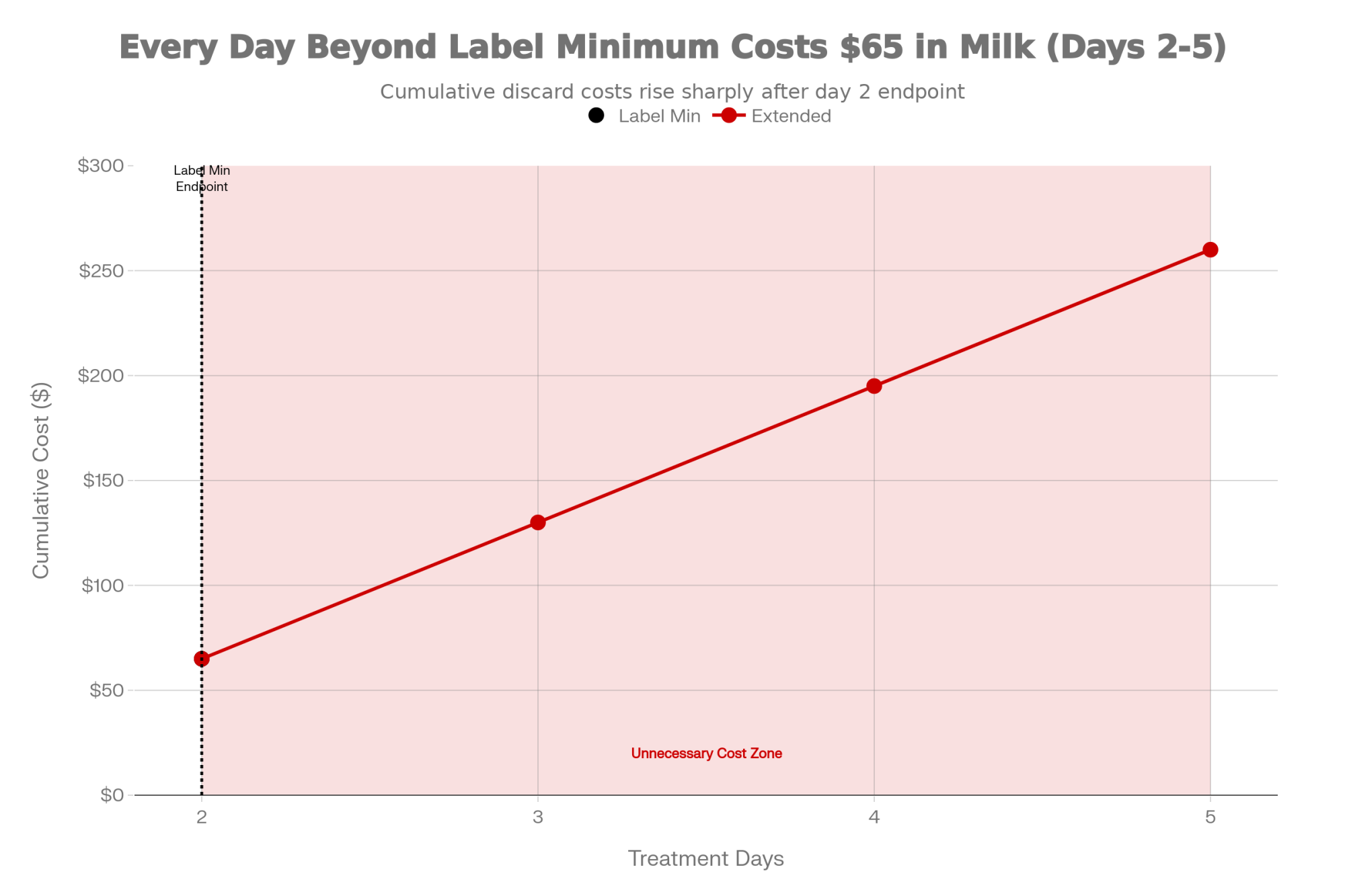
NewsSubscribe
First
Last
Consent

The $50,000 Question: Why Smart Dairies Follow This 8-Point Protocol Before Any Big Decision

What farmers are discovering is simple—the most valuable time on the dairy isn’t the visit itself, but the preparation before it.

You know that feeling when you watch a neighbor drop $200,000 on new parlor equipment, only to find out six months later the real problem was their water heater? Or maybe you’ve been there yourself—spent months adjusting rations while the actual issue was something as simple as feed bunk height.

Here’s what I’ve noticed after years of working with dairies from Vermont to New Mexico, and consulting with everyone from 100-cow tie stalls to 5,000-head dry lots: these aren’t failures of effort. They’re failures of preparation. And with milk prices doing their usual rollercoaster thing and margins tighter than ever, we really can’t afford to keep learning these expensive lessons.

What’s encouraging is that the farms that stay consistently profitable—whether they’re milking Jerseys in Wisconsin or running Holsteins in Idaho—are not necessarily the ones with the deepest pockets or the shiniest equipment. They’re the ones who’ve figured out how to ask the right questions before making any decision.

The $50,000 Question Nobody’s Asking

So there’s this dairy I worked with recently—typical Midwest setup, about 450 cows, been in the family since the grandfather started with 30 head back in the ’60s. Good people, working hard every single day.

They were ready to expand their parlor. You know how it goes… milking was taking forever, cows were getting antsy, everyone was stressed. The contractor’s quote came in around $380,000. Not exactly pocket change, even when milk’s at decent prices.

But here’s where things got interesting.

Before signing anything, they decided to really dig into their numbers—and I mean really dig. What they found changed their thinking entirely. The bottleneck wasn’t milking capacity at all. It was their transition cow program.

600-cow operation nearly dropped $1.8 million on robots before discovering their real constraint: genetic potential, not labor—a $1.755 million near-miss caught by two weeks of systematic preparation and stakeholder interviews.

Now, we all know transition cows can make or break you. Cornell’s been doing some fascinating work on this, and their PRO-DAIRY program keeps showing how every little hiccup in that transition period just cascades through the whole lactation. This particular farm? They were losing about 3 pounds per cow across the entire herd because their fresh cow area was, honestly, a disaster.

Instead of that $380,000 parlor expansion, they put about $45,000 into fixing their transition facilities and tightening up protocols. Two months later, they were up 8 pounds per cow.

Do the math on that—it’s real money. And it came from asking different questions.

The stark reality: 12 hours of preparation prevented a $335,000 mistake and increased production by 8 pounds per cow—proof that the most valuable time on a dairy isn’t the visit itself, but the thinking before it.

Eight Things That Matter More Than You’d Think

After watching farms navigate good times and bad—from the 2014 milk price crash to today’s volatility—I’ve noticed there are about eight areas that really set the ones that thrive apart from those just trying to survive. What’s interesting is that none of these require a huge investment. They just require thinking a bit differently.

1. Who’s Really Driving This Decision?

This one’s subtle, but it matters more than you’d think. When a problem is raised during your dairy consulting visit or farm meeting, who raises it makes all the difference.

I’ve noticed that when employees bring stuff up, they’re usually seeing the daily friction—things that slow them down or make their jobs harder. When owners identify problems, they’re often looking at the bank statement. When your vet flags something, they’re seeing patterns they’ve noticed across multiple herds. Your nutritionist? They’re thinking about ration efficiency and feed costs.

Each perspective is valid. But incomplete. The magic happens when you get all these viewpoints in the same room—or better yet, in separate conversations where people feel safe being honest.

2. Your Herd Tells Stories You’re Not Reading

You probably know this already, but your herd structure is basically a crystal ball for the next two years.

Got a bulge in third-lactation cows? That’s telling you something about breeding decisions from way back that’ll affect you for years to come. Wisconsin’s extension folks have been talking about this forever—imbalanced herd demographics can quietly eat away at efficiency, and you won’t even notice until it’s too late.

Looking at research in the Journal of Dairy Science on herd dynamics, farms with balanced age distributions consistently outperform those with demographic bulges. It’s like having a slow leak in your tire. You don’t notice day to day, but suddenly you’re on the side of the road.

3. Yesterday’s Numbers, Tomorrow’s Reality

Here’s something we’ve all learned the hard way: today’s snapshot usually lies.

When you’re just looking at this month’s report, that “sudden” drop in components might actually be a gradual slide that finally got bad enough to catch your attention. The extension services have been preaching this for years—farms that look at a full year of data or more catch problems much earlier than those that just watch current reports.

The 2023-2024 Cornell Dairy Farm Business Summary really drives this home, showing that top-performing herds spend significantly more time analyzing historical patterns than average performers. Think about it like this… you wouldn’t judge your whole crop by looking at one plant, right?

4. Comfort Beats Genetics (Most of the Time)

Now, this might ruffle some feathers, but here it is: most production problems aren’t actually production problems. They’re comfort problems.


Comfort Factor
ImpactDollar Loss
Lying Time -2 hours-5+ lbs milk/day$300-$400
Poor Water Access-3 lbs milk/day$180-$240
Inadequate Bunk Space-4 lbs milk/day$240-$320
Heat Stress (unmanaged)-10+ lbs milk/day$600-$800
Stall Comfort Issues-5 lbs milk/day$300-$400
CUMULATIVE NEGLECTUp to -27 lbs/cow/day$1,620-$2,160/cow/year

Research from the University of Wisconsin’s Dairyland Initiative keeps confirming this—when cows spend less time lying down, even just a couple of hours less, they can drop 5 pounds of milk or more. At today’s prices, that’s real money walking out the door every single day. Water access, bunk space, how deep your stalls are bedded… these “little things” often drive more profit than any fancy genetic program or feed additive.

I mean, you can have the best genetics in the county, but if your cows aren’t comfortable, what’s the point?

5. Know Where You Really Stand Financially

Every farm exists in three financial worlds at once. There’s where you are right now (usually tighter than you’d like), where you’re headed (hopefully better), and what you can actually afford to change (often less than you think).

Cornell’s Dairy Profit Monitor has been tracking this stuff for years, and what’s fascinating is that the most profitable farms aren’t necessarily the big spenders. They’re the ones whose spending actually matches their financial reality. A farm digging out of debt needs completely different strategies than one setting up the next generation.

Hope isn’t a business strategy, as much as we’d all like it to be.

6. When Everyone’s Pulling in Different Directions

This is a tough one. When your milkers think success means getting done fast, your feeder thinks it means spotless bunks, and you think it means high butterfat… well, you’re basically running three different farms that happen to share an address.

Getting everyone rowing in the same direction—that’s worth more than any piece of equipment you could buy. And it’s something every dairy consultant will tell you matters more than almost anything else.

7. Your Failures Are Actually Gold

“We tried that already.”

How many times have you heard that? Or said it yourself? But here’s the thing—knowing why something failed three years ago might be exactly what you need to make it work today. Different people, different feed prices, different weather patterns… everything changes.

That disaster from 2022 might be 2025’s breakthrough. But only if you remember what actually went wrong.

8. Your Employees See Things You Never Will

This is huge, and it gets missed all the time. Your employees—especially the ones who’ve been around a while—they see patterns you don’t even know exist.

But here’s the catch: they won’t bring it up in a meeting. Too risky. Get them alone, though, maybe while you’re fixing something together, and suddenly you’re hearing about that water trough that’s been dry every afternoon since spring, or how the fresh cows always look stressed after the weekend crew.

That’s intelligence you can’t buy. And it’s exactly what smart dairy consultants tap into during farm visits.

Your Complete Pre-Decision Protocol: The 8-Point Checklist + Action Plan

Want a printable version? Save this checklist for your next big decision.

Before any major decision or consulting engagement, here’s your roadmap:

☐ Decision Origins – Who identified this need, and what’s their real motivation?
Action: Ask each stakeholder privately why this matters now

☐ Herd Demographics – What’s your lactation distribution telling you about future capacity?
Action: Pull a current herd inventory report and map out your next 24 months

☐ Historical Patterns – Review 12-24 months of data, not just this month’s snapshot
Action: Block out 3-4 hours this week to analyze your long-term trends

☐ Comfort Audit – Check water access, bunk space, stall comfort before genetics or nutrition
Action: Spend an hour just watching cows—no agenda, just observe

☐ Financial Reality – Match investments to actual cash flow capacity over 24 months
Action: Run the numbers with your banker or financial advisor before committing

☐ Team Alignment – Ensure everyone defines “success” the same way
Action: Have one-on-one conversations with key employees this week

☐ Past Lessons – Document why previous attempts failed or succeeded
Action: Write down what you’ve tried before and why it didn’t work

☐ Employee Intelligence – Conduct private one-on-one conversations with key staff
Action: Schedule individual coffee breaks with your milkers and feeders

Total time investment: 12 hours over 2 weeks
Potential savings: $50,000-$200,000 in mistargeted investments
ROI on preparation: Often 100:1 or better

The Backwards Logic of Preparation

The economics of thinking first: a detailed breakdown showing exactly how 12 hours of preparation translates to preventing 50-100 wasted hours and $50K-$200K in mistargeted investments—the math that makes ‘slow down to speed up’ undeniable

What’s fascinating—and kind of backwards when you first think about it—is that the more time you spend preparing before a decision, the less time you waste fixing mistakes later.

Based on what I’ve seen work across dozens of farms and validated by dairy management research, a good pre-decision assessment might take:

  • Maybe 3-4 hours, really going through your records
  • Another few hours talking with your team (one-on-one, not in groups)
  • Some time just watching, with no agenda
  • An hour or two connecting all the dots

So let’s say 12 hours total. Those 12 hours routinely save months of going down the wrong path and tens of thousands of dollars in investments that miss the mark.

Trust Changes Everything

Here’s something I didn’t expect when I started paying attention to this stuff: preparation builds trust like nothing else.

When you come to a discussion already understanding the history, respecting what’s been tried, seeing the patterns… it changes the whole dynamic. People stop defending and start collaborating.

I’ve watched this shift happen over and over. That skeptical producer who crosses their arms when the consultant walks in? They lean forward when they realize someone’s done their homework. Employees who usually stay quiet? They start sharing ideas when they see you actually care about the details.

And this isn’t just feel-good management talk—it directly affects your bottom line. Farms where everyone trusts the process implement changes faster and actually stick with them.

Real Numbers from a Real Decision

Let me share something that really drove this home. There’s a 600-cow operation in central New York—good people, been at it for generations.

They were looking at three big options: robotic milkers (about $1.8 million all in), expanding facilities (roughly $650,000), or really ramping up their genetics program with genomic testing (around $45,000 per year).

Instead of just picking what felt right, they spent two weeks really digging in. Used the 2023-2024 Cornell Dairy Farm Business Summary benchmarking data, talked to everyone individually, and looked at their five-year patterns.

What they discovered caught everyone off guard. Their constraint wasn’t labor—so robots didn’t make sense. It wasn’t space—so expansion was unnecessary. It was genetic potential. They were running about 15% behind the regional average in efficiency, and that was costing them way more than they realized.

That genomic testing investment? According to research published in the Journal of Dairy Science on the ROI of genetic improvement, programs like this typically start paying for themselves within 2 years. But without that preparation, they might’ve dropped nearly $2 million on the wrong solution.

The Cost-Benefit Reality Check

Let’s put this in perspective with real dairy economics:

  • 12 hours of structured preparation = roughly $600 in time value
  • Average mistargeted investment prevented = $50,000-$200,000
  • Time saved on wrong implementations = 50-100 hours
  • ROI on preparation time = Often 100:1 or better

When you look at it like that, can you really afford NOT to prepare? Especially when dairy consulting rates run $150-$300 per hour, making that preparation invaluable?

The New Math of Dairy Success

The folks at Cornell who put together the 2023-2024 Dairy Farm Business Summary keep finding the same pattern: farms that spend time planning consistently outperform those making decisions on the fly. We’re not talking small differences either.

In Wisconsin, operations that are really focusing on systematic decision-making—taking time to think things through—they’re seeing notably better returns. Research from the University of Wisconsin-Madison’s Center for Dairy Profitability backs this up year after year. And when a couple of percentage points separate making it from losing it, that’s everything.

Looking at data from Texas to Pennsylvania, from Idaho to Florida, the pattern holds: preparation drives profitability more reliably than any single technology or management change.

The Bottom Line

As we push through 2025, with milk futures bouncing around and feed costs doing their thing, there’s less room for expensive mistakes than ever.

But here’s what gives me hope: the dairies that’ll thrive won’t necessarily be the ones with the biggest checkbooks or the fanciest technology. They’ll be the ones that master the simple discipline of thinking before doing. Of turning information into understanding, understanding into decisions, and decisions into profit.

The approach is proven. The patterns are clear. The protocol is right there in that 8-point checklist. The only question is whether you’ll invest those 12 hours of thinking to avoid a much more expensive education.

Because in today’s dairy world, being unprepared isn’t just costly—it’s dangerous.

What This All Means for Your Dairy Operation:

  • That 12 hours of thinking before a big decision? It routinely saves months of mistakes and thousands in misplaced investments
  • Transition cow management is often where the real money is—fixing it usually costs way less than expanding while delivering faster returns
  • Your employees know things you need to know—but they’ll only tell you one-on-one, away from the group
  • Looking at 18-24 months of data reveals patterns that this month’s snapshot completely hides
  • The most profitable dairies aren’t the biggest spenders—they’re the ones whose investments actually match their financial reality
  • Smart dairy consulting starts with preparation—the best consultants spend hours reviewing data before they ever step on your farm

Executive Summary:

The difference between a $45,000 fix and a $380,000 mistake? About 12 hours of asking the right questions. That’s what one Midwest dairy discovered when they ran through an 8-point checklist before signing that parlor expansion contract—turns out their real problem was transition cows, not milking capacity. This pre-decision framework, backed by Cornell’s latest research and proven across operations from 100-cow tie-stalls to 5,000-head dry lots, transforms how farms approach big decisions. The protocol covers eight critical areas: from reading your herd’s demographic story to those coffee-break conversations with employees who see problems you’ll never notice. Real-world results show that farms using this approach save $50,000-$200,000 per major decision, with returns often exceeding 100:1 on the time spent preparing. In today’s dairy economy, it’s not about having all the answers—it’s about asking all the right questions first.

Based on extensive work with dairy operations across North America and insights gathered from Cornell PRO-DAIRY programs, the 2023-2024 Cornell Dairy Farm Business Summary, Wisconsin Extension resources, University of Wisconsin-Madison Center for Dairy Profitability research, and the shared experiences of hundreds of dairy producers from 2023-2025.

Learn More:

Join the Revolution!

Join over 30,000 successful dairy professionals who rely on Bullvine Weekly for their competitive edge. Delivered directly to your inbox each week, our exclusive industry insights help you make smarter decisions while saving precious hours every week. Never miss critical updates on milk production trends, breakthrough technologies, and profit-boosting strategies that top producers are already implementing. Subscribe now to transform your dairy operation’s efficiency and profitability—your future success is just one click away.
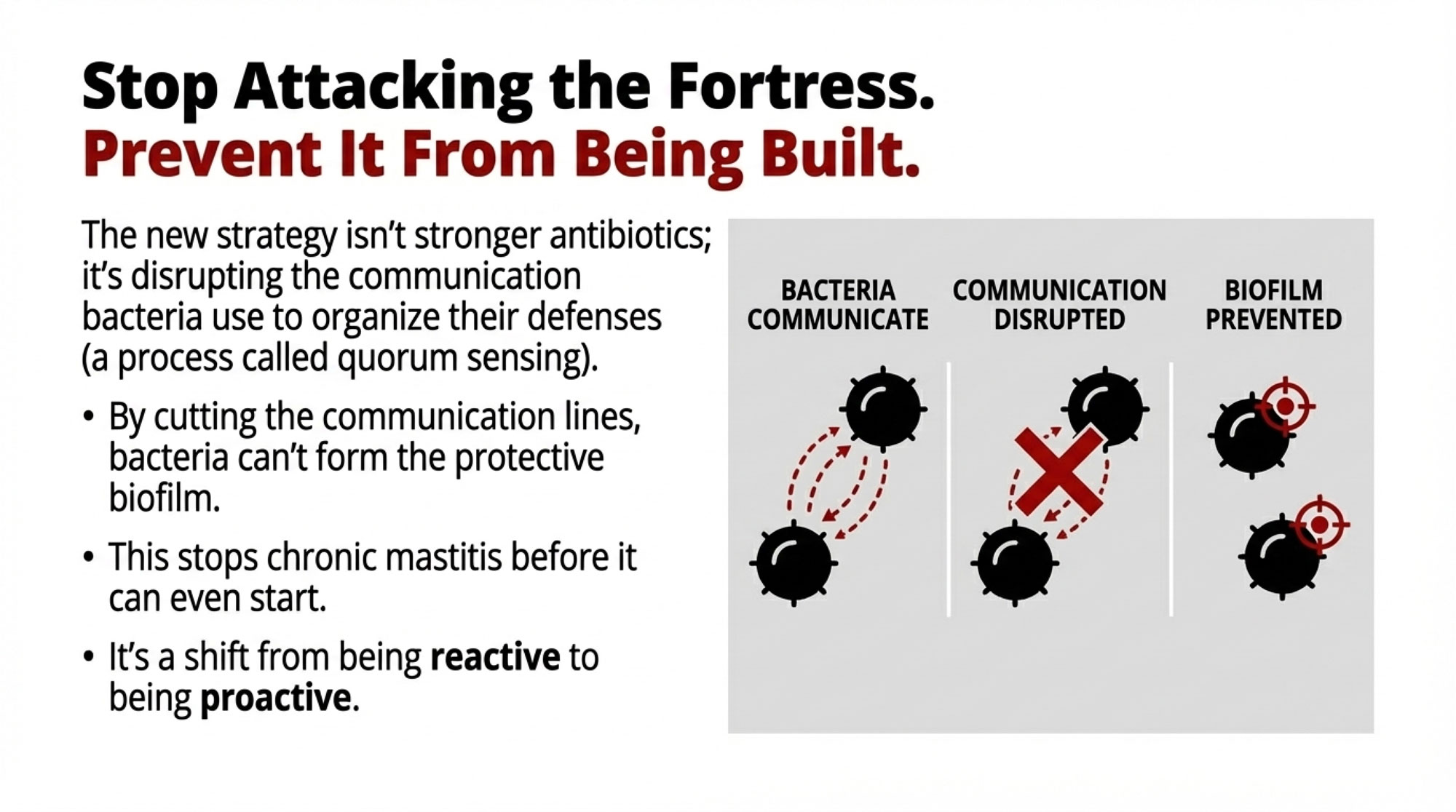
NewsSubscribe
First
Last
Consent

$11 Billion in New Processing Capacity Is Creating Winners and Losers – Here’s the 6-Month Strategy That Decides Which You’ll Be

Why are 500-cow operations earning more per cwt than their 1,500-cow neighbors?

EXECUTIVE SUMMARY: What farmers are discovering through this unprecedented $11 billion wave of processing investments is that timing and relationships now matter more than scale. The International Dairy Foods Association data shows over 50 major facilities coming online through 2028, with fairlife investing $650 million in New York and Chobani committing $1.2 billion to their Rome plant. Penn State Extension’s latest bulletin reveals farms with consistent components—daily variation below 2%—are earning premiums of $0.50 to $1.50 per hundredweight, while Vermont’s St. Albans Cooperative reported average component premiums of $1.25/cwt in Q3 2025. Here’s what this means for your operation: processors opening facilities in 2026-2027 are making supplier decisions right now, October 2025, creating a critical 6-12 month window where strategic positioning beats traditional expansion. Recent USDA data showing protein levels climbing from 3.08% to 3.26% and butterfat from 3.70% to 4.15% since 2011 demonstrates how the industry’s already responding to these opportunities. The producers who recognize this isn’t just another cycle—it’s a fundamental shift in how value flows through dairy—are positioning themselves for success regardless of herd size.

dairy market shifts

When the International Dairy Foods Association released its latest data, showing over $11 billion in processing investments through early 2028, it really made me stop and think. That’s not just another market cycle. That’s a fundamental shift in how our industry will work.

What caught my attention is where this money’s actually going. Fairlife’s $650 million Webster, New York, facility broke ground in April 2024—Dairy Herd Management covered it extensively. Then there’s Chobani committing $1.2 billion to their Rome plant, which Governor Hochul announced back in April. These aren’t incremental expansions, folks. They’re massive bets on completely new ways of processing and marketing dairy products.

And I’ve noticed something interesting lately: the farms that seem to be positioning themselves best for all this aren’t necessarily the biggest operations. They’re the ones building real partnerships with processors—not just showing up as another milk hauler twice a day. That’s a different mindset than what many of us grew up with.

Understanding Where the Investment Is Going

Looking at the IDFA breakdown, you can see some clear patterns emerging. Cheese facilities are attracting about $3.2 billion—which makes sense when you consider Americans are consuming 37.8 pounds per capita, according to the USDA’s Economic Research Service. That’s a lot of cheese, even by Wisconsin standards.

Geographic concentration reveals where processors are betting big on America’s dairy future – New York’s $2.8 billion lead isn’t just about processing capacity, it’s about proximity to 50 million East Coast consumers who consume premium dairy products at rates 23% above the national average.

Milk and cream operations account for nearly $3 billion, while yogurt and cultured products draw another $2.8 billion. Each category has its own specific needs, and that’s where things get interesting for producers.

New York leads with $2.8 billion in total investment. It makes sense when you consider the proximity to East Coast markets and existing milk production infrastructure. Texas follows at $1.5 billion, anchored by Leprino Foods’ massive facility in Lubbock. Wisconsin adds $1.1 billion in capacity, which… well, nobody’s surprised there.

However, this development suggests something bigger—these modern processing facilities are incorporating advanced technologies that require very specific milk characteristics to run efficiently. We’re not talking about just hauling milk anymore. We’re talking about delivering exactly what these facilities need to optimize their operations. And that creates opportunities for producers who understand what’s happening…

Beyond Volume: Why Components Are King Now

The data from USDA’s Dairy Market News tells a fascinating story about how we’ve adapted. Federal order protein levels have increased from 3.08% in 2011 to 3.26% by 2023. Now, that might not sound like much sitting here at the kitchen table, but when you spread that across the 226 billion pounds of milk we produced last year… that’s a massive amount of additional protein entering the supply chain.

Genetic progress and nutrition strategies drive milk solids to record levels – While milk volume barely grows, component production surges create entirely new economics where 500-cow dairies out-earn 1,500-cow operations focused on bulk.

Butterfat’s even more dramatic. We’ve gone from 3.70% in 2011 to 4.15% by 2023. Part of that’s genetics—the Council on Dairy Cattle Breeding’s April 2024 genetic evaluations show consistent progress in fat transmitting ability. But it’s also management. We’re feeding differently, selecting differently, managing our herds differently.

What farmers are finding through extension work at Cornell’s PRO-DAIRY program and Penn State is that consistency matters as much as the absolute numbers. These new processing systems need to know what’s coming in the door every single day. Big swings in components can significantly impact processing efficiency. Penn State’s latest extension bulletin shows farms with a daily coefficient of variation below 2% for protein are earning premiums ranging from $0.50 to $1.50 per hundredweight, depending on the processor.

Component production accelerates while milk volume stagnates – genetics and nutrition drive the shift – The era of “just fill the tank” dairy farming is dead, replaced by precision agriculture where genetic selection and feed optimization directly determine profitability.

Vermont’s St. Albans Cooperative reported component premiums averaging $1.25 per hundredweight in their third-quarter 2025 report—that’s real money for farms that hit their targets consistently. Many producers in Wisconsin and elsewhere are now conducting more frequent tests. Daily testing used to seem excessive, but when you understand how these new ultrafiltration systems and other technologies work, it starts making more sense.

The Green Premium: Sustainability Programs That Actually Pay

I’ll be honest with you—when sustainability programs started ramping up, I was skeptical. We’ve all seen programs that promise a lot and deliver little. But the economics have shifted in ways I didn’t expect.

Consider the Ben & Jerry’s Caring Dairy program, which has been in operation since 2011. Aaron and Chantale Nadeau, who run Top Notch Holsteins up in Vermont, have been participants for years. In an August 2020 interview with Vermont Public Radio, Aaron stated that the program provides meaningful financial returns. That’s real money, not just feel-good corporate messaging.

The carbon credit side has also transitioned from theory to reality. When Jasper DeVos in Texas sold his greenhouse gas reductions to Dairy Farmers of America through the Athian platform, it marked the first documented livestock carbon credit transaction in the U.S. That opened a lot of eyes.

Examining this trend, What’s really driving this is the regulatory landscape is the primary driver of this change. California’s methane regulations kicked in this year through the California Air Resources Board. The EU’s carbon border adjustments are expected to start affecting dairy exports in 2027, according to European Commission documentation. Processors need compliant milk to maintain those markets. It’s that simple.

Your Zip Code Matters: Regional Dynamics in Play

Your location significantly influences your opportunities in this new landscape, and it’s worth considering what that means for your operation.

If you’re in the Northeast, especially within reasonable hauling distance of Fairlife’s Webster plant or Chobani’s Rome facility, you’re in an interesting position. That $2.8 billion in regional investment is creating real competition for milk supplies. It’s been years since we’ve seen processors competing this actively for suppliers.

Wisconsin operations are experiencing continued growth on the cheese side. Established manufacturers continue to grow, focusing on components that maximize cheese yield and efficiency. When you can consistently deliver the butterfat and protein levels they need, you have options.

Texas is accommodating these massive-scale operations through facilities like Leprino’s Lubbock investment. For smaller producers in the area, many are exploring specialty markets—such as organic certification, A2 production, and even agritourism. You can’t compete with the mega-dairies on commodity volume, so you find your niche.

California’s environmental regulations, which initially seemed overwhelming, are actually creating growth opportunities. Producers meeting methane reduction requirements are finding that processors value that compliance. Market access depends on it.

For those of you in the Southeast or Mountain West, wondering where you fit in all this—the principles still apply. Even without billion-dollar facilities next door, processors in your region need reliable partners. The component optimization and sustainability strategies work everywhere. Sometimes being outside the major investment zones means less competition for the opportunities that do exist.

The Clock Is Ticking: Why Timing Matters More Than Ever

So here’s what I keep coming back to: the traditional approach of building first, then negotiating from a position of greater volume… that might not be the best strategy anymore.

Consider the timeline. A new freestall barn takes 18-24 months from groundbreaking to full production. Financing, permitting, construction, getting it filled with cows—it all takes time. Meanwhile, processors are expected to open facilities in 2026 and 2027. They’re establishing their supply partnerships right now, October 2025.

Some producers are taking a different approach. They’re focusing on what they can control today—optimizing components, building processor relationships, and getting into sustainability programs. These typically show returns within 6-12 months, much faster than traditional expansion.

What I keep hearing from successful operations is that processors need certainty as much as they need volume. A 500-cow dairy that can guarantee consistent quality, reliable delivery, documented compliance… that’s often more valuable than a larger operation without those established relationships. It’s a different way of thinking about competitive advantage.

Comparing Processor and Farm Expansion Timelines

Processor Timeline

Processors are actively securing supply partnerships as of October 2025. This phase is critical, as they are laying the groundwork for future operations. Following this, new processing facilities are scheduled to come online between 2026 and 2027. The next 6 to 12 months represent a decisive window for producers to establish relationships and position themselves as preferred suppliers.

Farm Expansion Timeline

Expanding a farm operation is a lengthy process. The initial 1 to 6 months are dedicated to planning and securing necessary permits. Construction typically spans months 7 through 18. Only after construction is complete, from months 19 to 24, can the facility be filled with cows and reach full production capacity. In total, the minimum timeframe for complete farm expansion is 18 to 24 months.

Strategic Implications

The discrepancy between processor readiness and farm expansion timelines highlights the urgency for producers. With processors finalizing supply agreements now and new facilities launching soon, the next 6 to 12 months are pivotal. Producers must act decisively to align with processor requirements, as traditional expansion strategies may not allow for timely participation in emerging opportunities.

Your Action Plan: Resources That Actually Help

Component StrategyPremium Range per cwtAnnual Impact 500 CowsImplementation Timeline
Daily Variation <2%$0.50 – $1.50$75,000 – $225,00030-60 days
Butterfat >4.30%$0.25 – $0.75$37,500 – $112,5006-12 months
Protein >3.35%$0.20 – $0.60$30,000 – $90,0003-9 months
Consistent Quality$0.15 – $0.40$22,500 – $60,00060-90 days
Sustainability Certified$0.30 – $1.00$45,000 – $150,0003-18 months

If you’re ready to engage with these opportunities, here are some starting points that actually work:

For Carbon Credits:

  • Athian: athian.ai or call 737-263-4839—they facilitated that first livestock carbon transaction
  • Nori: marketplace.nori.com—focuses on soil carbon
  • Indigo Ag: indigoag.com/for-growers/carbon

For Sustainability Programs:

  • Ben & Jerry’s Caring Dairy: Contact your co-op if you’re in their supply shed
  • Danone North America: danonenorthamerica.com/farmers
  • Nestle’s Net Zero roadmap: nestle.com/sustainability/climate-change

For Component Optimization:

  • Cornell PRO-DAIRY: prodairy.cals.cornell.edu (607-255-4478)
  • Penn State Extension Dairy Team: extension.psu.edu/animals/dairy
  • University of Wisconsin Dairy: fyi.extension.wisc.edu/dairy

Most major processors have farmer relations departments. Start with your current field representative and asking about the supply needs of your new facility. Don’t wait for them to call you—the ones who are proactive now are the ones who are getting the opportunities.

The Bottom Line: Being Indispensable Beats Being Bigger

After thinking about all this, what becomes clear is that this $11 billion investment represents a fundamental shift in how value flows through our industry. It’s not just about selling milk anymore. It’s about being the kind of supplier these massive facilities need to succeed.

These processors require three key elements: reliable volume, consistent quality, and, increasingly, environmental compliance that maintains market access. Farms that can deliver all three—regardless of size—have leverage they haven’t had in years.

The traditional thinking was straightforward: get bigger first, then negotiate from a position of strength. What’s working now is different. Become indispensable at your current size, then grow strategically. The infrastructure can wait if it needs to. The relationships can’t.

Looking at where we are—October 2025—the processors opening facilities in 2026 and 2027 are making their supplier decisions over the next 6-12 months. By next October, most of these opportunities will be committed. The producers who recognize this window and act on it are positioning themselves for the next decade.

Remember that $11 billion number we started with? It’s not just about processing capacity. It’s about reshaping how our entire industry works. The processors don’t just need our milk anymore—they need us as partners. And that, as we used to say back when I started farming, changes everything.

That’s worth considering the next time you’re evaluating your operation and wondering what’s next. Because in all my years in this business, I’ve never seen a moment quite like this one.

KEY TAKEAWAYS

  • Component consistency delivers immediate returns: Farms achieving less than 2% daily variation in protein are capturing $0.50-$1.50/cwt premiums, potentially adding $75,000-225,000 annually for a 500-cow dairy producing 15 million pounds
  • Strategic timing beats traditional expansion: With processors making supply decisions now for 2026-2027 facility openings, the 6-12 month returns from relationship building outpace the 18-24 months needed for barn construction and herd expansion
  • Regional opportunities vary but principles remain: Whether you’re near New York’s $2.8 billion investment zone or operating in the Mountain West, processors need partners who deliver consistent quality, documented compliance, and reliable volume—creating leverage even for mid-sized operations
  • Sustainability programs have moved from cost to revenue: Carbon credits through platforms like Athian plus programs like Ben & Jerry’s Caring Dairy are generating real income, with early adopters capturing value before compliance becomes mandatory in markets like California (2025) and EU exports (2027)
  • Action window is narrowing: Contact your processor’s farmer relations department about new facility needs, optimize components through daily testing, and explore sustainability programs now—by October 2026, most premium partnership opportunities will be committed

Complete references and supporting documentation are available upon request by contacting the editorial team at editor@thebullvine.com.

Learn More:

  • USDA’s 2025 Dairy Outlook: Market Shifts and Strategic Opportunities for Producers – This article provides a high-level strategic overview of the market forces driving profitability in 2025, from component optimization to aligning with specific processors. It helps producers develop market intelligence to make better decisions on culling, expansion, and capital investments.
  • June Milk Numbers Tell a Story Markets Don’t Want to Hear – This piece drills into recent production data to reveal how component-adjusted growth is a more accurate measure of profitability than raw volume. It also offers a reality check on regional growth dynamics and the risks of building a strategy around unpredictable export markets.
  • USDA Dairy Production Report – This guide gives a tactical, how-to approach to implementing the strategies discussed, from genomic testing to precision feeding. It provides specific numbers on the financial returns of component premiums and technology adoption, helping you build a concrete action plan for your operation.

Join the Revolution!

Join over 30,000 successful dairy professionals who rely on Bullvine Weekly for their competitive edge. Delivered directly to your inbox each week, our exclusive industry insights help you make smarter decisions while saving precious hours every week. Never miss critical updates on milk production trends, breakthrough technologies, and profit-boosting strategies that top producers are already implementing. Subscribe now to transform your dairy operation’s efficiency and profitability—your future success is just one click away.
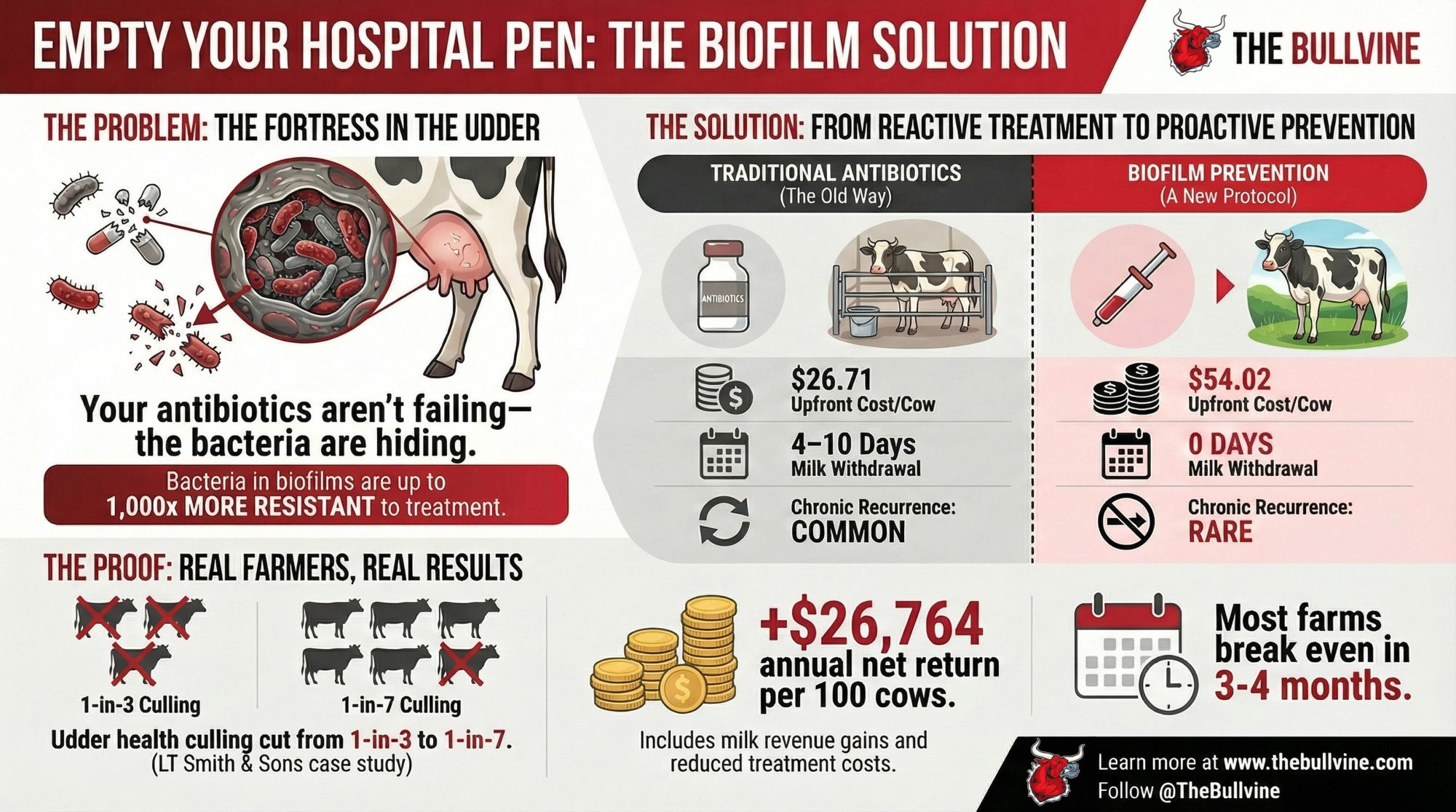
NewsSubscribe
First
Last
Consent

Simple LED Lighting Can Boost Production 8% – Here’s Why Most Farms Haven’t Switched

If $600 in LEDs can match the performance of $6,000 systems, what else are we overcomplicating in modern dairy farming?

You know, there’s something telling about the fact that we’ve had twenty years of solid research on barn lighting, yet walk into most dairy operations and you’ll still find those fixtures from decades ago. Makes you think about how our industry actually adopts technology, doesn’t it?

What’s interesting here is that Dr. Geoffrey Dahl, down at the University of Florida, has been publishing rock-solid research in the Journal of Dairy Science since the early 2000s. His team’s work shows that when lactating cows receive 16 to 18 hours of light at the right intensity—approximately 100 to 200 lux, comparable to the light in a decent office—their hormones respond in ways that directly affect production.

The numbers are pretty compelling when you look at them. IGF-1, an insulin-like growth factor, increases by 15 to 30%, improving feed conversion efficiency. Prolactin increases by 25 to 40%, directly stimulating the mammary tissue. These aren’t minor tweaks we’re talking about—these are significant changes that are reflected in the bulk tank.
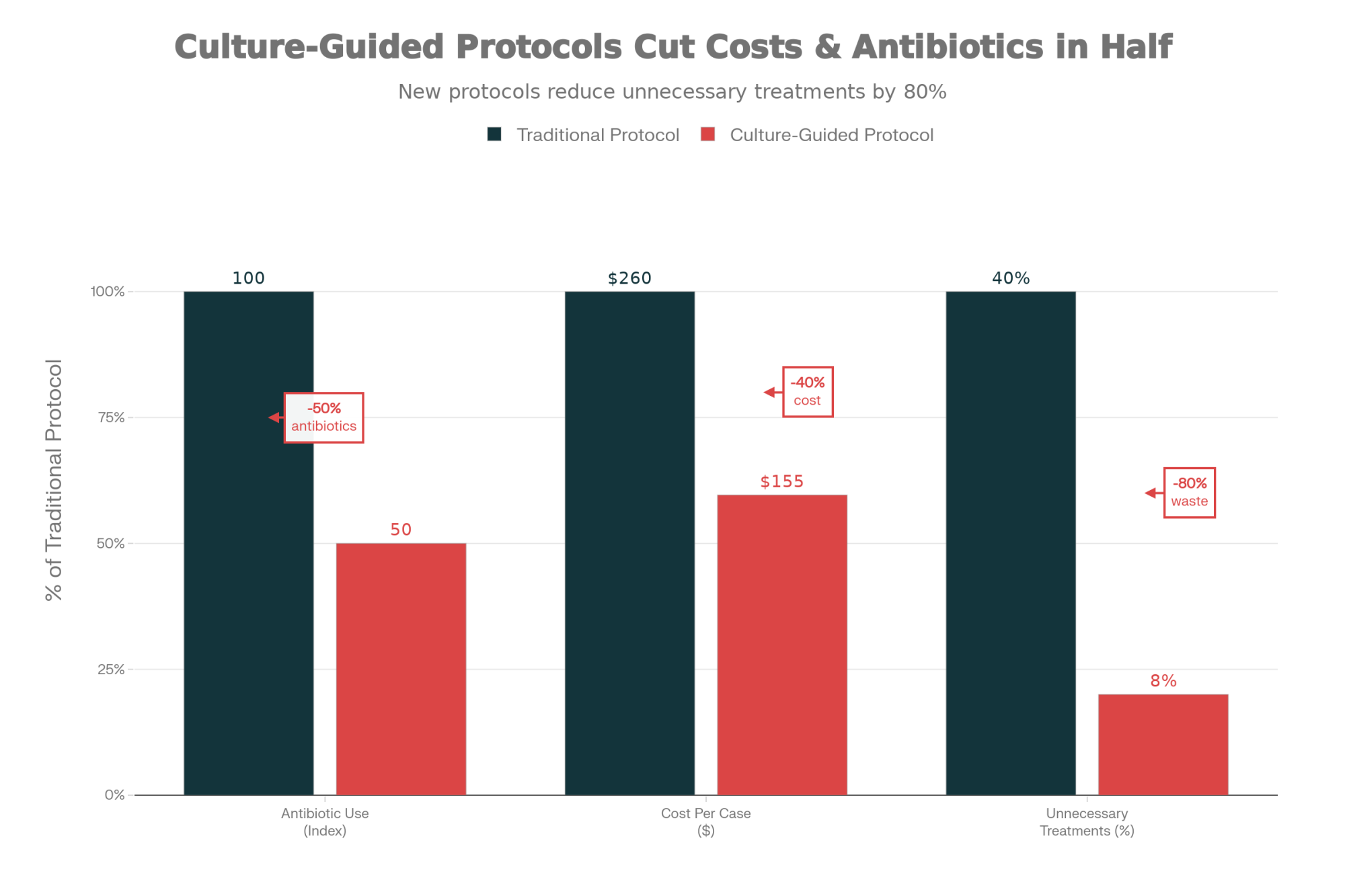
The Uncomfortable Truth: Farms with adequate lighting see minimal returns from LED upgrades—a reality lighting vendors won’t advertise

So why aren’t we all rushing to upgrade? Well, that’s where things get interesting…

Understanding the Biology (Because It Actually Matters)

Let me walk you through what’s happening inside these cows, because once you get this, the whole conversation about lighting starts making more sense.
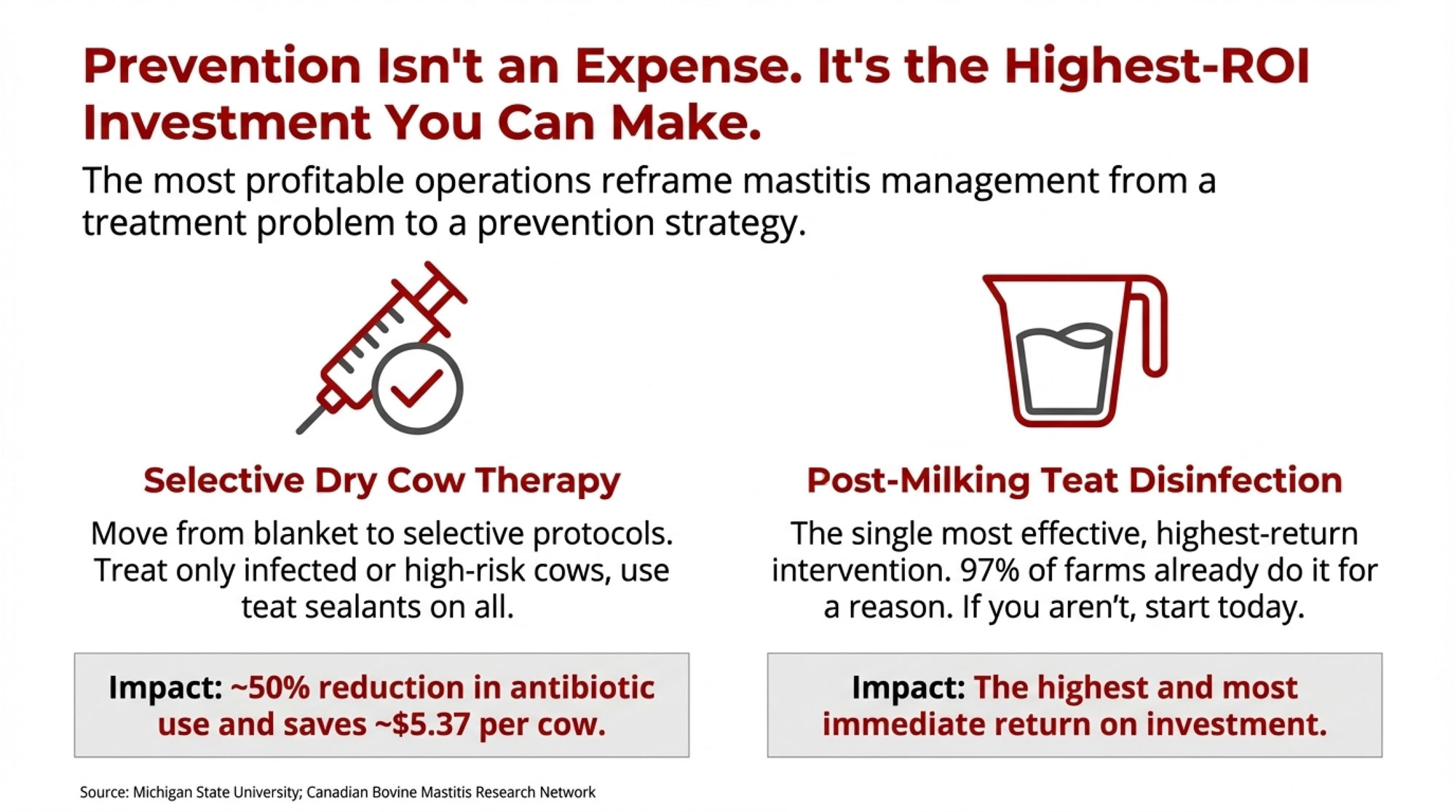
When cows get those extended light periods, their pineal gland—that little pine cone-shaped thing in the brain—cuts way back on melatonin production. Dahl’s team has extensively documented this over the years, with studies published in the Journal of Dairy Science from 2000 to 2024.

Less melatonin means more IGF-1, and that’s improving how efficiently our cows convert feed. The prolactin boost? That directly works on milk synthesis in the mammary tissue.

Dr. Dahl’s 20 years of research crystallized: Extended light triggers a 15-40% hormone surge that directly impacts your bulk tank

However, what’s truly fascinating is that this discovery emerged from research published by Dr. Dong-Hyun Lim’s team in the Animals journal in 2021. They found massive individual variation between cows—up to 10-fold differences in baseline melatonin levels within the same herd. Some cows showed melatonin suppression at just 50 lux, others needed 200 lux for the same response.

Why smart lighting fails: Individual cows in the same barn vary 10-fold in light sensitivity—biology’s chaos defeats precision technology

Think about what that means for a minute. You could have perfect, uniform lighting throughout your barn, and yet, only some of your cows are still not getting the full benefit. That’s not a technology failure—that’s just biology being messy, as usual.

“And here’s the thing: this messiness actually makes the case for simple solutions even stronger. Why invest in complex, expensive systems trying to optimize for individual variation when you can’t predict which cows will respond? Better to stick with the proven basics—16 to 18 hours at adequate intensity—and accept that biology will do what biology does.”

Oh, and dry cows? They need the complete opposite. Dahl’s research shows that 8 hours of light and 16 hours of darkness during the dry period actually prime their prolactin receptors. Sets them up better for the next lactation.

But managing two completely different lighting protocols in the same facility? That’s tough, especially if you’re running less than a couple hundred head without separate dry cow housing.

Sometimes the smartest tech strategy is accepting that biology won’t be optimized. This insight could save dairy operations thousands in unnecessary upgrades.

What Research Tells Us vs. What Actually Happens

The Journal of Dairy Science has published multiple studies over the years on photoperiod manipulation. Dahl and colleagues documented production increases averaging 2.5 pounds per day—about 8% improvement—in commercial settings (published in multiple papers between 2012 and 2020).

Some research has shown responses up to 15% under certain conditions, particularly when starting from very poor baseline lighting.

Now, when you dig into these studies, you generally find the biggest improvements come from farms that started with really inadequate lighting. We’re talking old barns with maybe 30 or 40 lux from ancient fixtures.

When farms already have decent lighting—say, modern T8 fluorescents providing 100-plus lux? The improvements get harder to measure.

And let’s be honest here—how often does anybody change just their lighting? Usually, it’s part of a bigger renovation. New ventilation, better cow comfort, and different feed systems. Everything changes at once, and suddenly you can’t tell what’s doing what. That’s the reality of farming, not the controlled conditions of research trials.

The Technology Landscape (Without the Sales Pitch)

So what’s actually in these LED systems everyone’s trying to sell us?

They’re all using LED chips from major manufacturers, such as Samsung, Osram, and Cree. Same suppliers that make chips for warehouses and parking lots. Nothing magical there. The control systems? Most are basic timers set for that 16-hour on, 8-hour off cycle. Some have fancy sensors, but honestly, a good mechanical timer from the hardware store does the same job.

There is one innovation I think is genuinely useful, especially for operations in Northern states or Canada, where winter nights are long. Some newer systems include red lighting for nighttime work. Since cows can’t see deep red wavelengths around 650 nanometers—that’s been documented in vision research—you can check animals, handle emergencies, whatever needs doing, without disrupting their dark period.

For operations running multiple shifts or dealing with calving season, that’s solving a real problem.

But most of the other “advanced features”? I’m not convinced they’re worth the premium. Cows need adequate light for the right number of hours. They’re not greenhouse tomatoes needing specific wavelength ratios.

The Hidden Costs of Upgrading

Here’s what often catches people by surprise when they start looking at lighting upgrades…

Older barns frequently need substantial electrical work to support new lighting systems. According to Wisconsin and Pennsylvania Extension electrical upgrade guides, we’re talking about potential panel upgrades, new wiring, and proper grounding—costs that typically range from $2,000 to $8,000,depending on your existing infrastructure.

Beyond the bulb price: How a $10,000 LED investment pays for itself in 12 months through operational savings alone

And remember, this is all happening in a barn environment. Dust, moisture, ammonia—it’s tough on electronics. Industry experience suggests those fancy digital controllers don’t always hold up as well as simple mechanical timers in these conditions.

Additionally, LEDs have another advantage that is often overlooked. They generate significantly less heat than traditional lighting—about 50% less than metal halide. In summer months, that can make a real difference in barn temperatures, especially in the Southeast and Southwest, where heat stress is already a major concern.

Then there’s what I call the adjustment period. Any time you change routines in the barn, there’s a learning curve. New switch locations, different light patterns, areas that need tweaking. Your cows notice. Your workers notice.

It takes a few weeks to get everything dialed in, and during that time, things can get a bit chaotic.

Making Decisions Based on Reality, Not Hype

So, how do you determine if LED lighting is suitable for your operation?

First thing—measure what you’ve actually got. Get a light meter. They’re generally available for $60 to $100, or see if your Extension office has one to borrow. Measure at the cow eye level, about 4 feet high. Check your feed alleys, resting areas, and holding pens. Do it at different times and in different weather conditions. You need real numbers, not just “seems dark in here.”

Here’s your decision framework:

  • Below 50 lux consistently: You’ve definitely got room for improvement
  • Between 50 and 100 lux: Could be worth exploring, depending on milk prices and your situation
  • Above 150 lux throughout: Your money’s probably better spent elsewhere

And here’s something critical—your herd health matters more than any lighting system. Research consistently shows that stressed cows don’t respond well to photoperiod manipulation.

High somatic cell counts, lameness issues, heat stress—fix those first. The stress hormones will completely override any benefit from better lighting.

Regional Considerations Matter Too

Location matters: Upper Midwest farmers see 2x faster ROI than California operations due to longer dark winters and higher confinement

Looking at this from different regional perspectives, the economics change quite a bit.

In California’s Central Valley, where many operations milk year-round in open-sided facilities, the natural photoperiod already provides substantial light exposure during much of the year. The investment math looks different there compared to, say, a tie-stall barn in Vermont, where cows might spend 20 hours a day inside during winter.

Similarly, grazing operations in places like Wisconsin or New York, where cows are on pasture during peak production months, might see less benefit than total confinement operations. It’s not one-size-fits-all, and that’s something lighting companies often overlook.

Down in Georgia or Florida, where I’ve talked with producers dealing with heat stress eight months a year, the reduced heat load from LEDs might actually be more valuable than the photoperiod effects. Those old metal halide fixtures can really add to the heat burden.

I’ve noticed that operations in the Upper Midwest—specifically, Minnesota, Wisconsin, and Michigan—tend to see better returns on lighting investments simply because of those long, dark winters. When your cows are inside from October through April, that extended photoperiod makes a bigger difference.

The Smart Way to Test This

You know what approach makes sense to me? Start small.

Pick your darkest section—maybe that old part of the barn you’ve been meaning to renovate anyway. Install some good-quality LED bulbs—nothing fancy, just solid commercial fixtures. Add a simple timer. Then watch that specific group carefully for six to eight weeks. Document everything.

If you see clear improvement in production, reproduction, or cow behavior, great—expand gradually. No improvement? Well, you’ve learned something valuable without betting the farm on it.

Based on the 8% average production increase Dahl documented, here’s the rough ROI math:

For a 100-cow herd averaging 75 pounds daily at $19/cwt, that’s about $34,000 additional annual revenuefrom a 6-pound increase. Against a $3,000-5,000 simple LED installation (not counting major electrical work), you’re looking at payback in 2-6 months if you hit that average response.

The shocking truth about LED lighting ROI: basic systems pay back in months, not years. Complex doesn’t mean better when biology varies 10-fold between cows

But remember—that’s if you’re starting from poor lighting and your cows actually respond. And those LEDs should last 50,000+ hours, compared to perhaps 10,000 for traditional bulbs, so factor in the replacement savings as well.

Looking Ahead (Reality Check Included)

There’s always talk about what’s coming next in dairy technology. Universities are conducting interesting research—examining whether changes in circadian rhythms might predict health problems before clinical symptoms emerge. Research is exploring connections between light exposure and immune function. Could be valuable someday.

But let’s be realistic about timelines. Most of the “revolutionary” features being promoted are solutions looking for problems to solve. Your cows require adequate light for a sufficient number of hours. Period.

They don’t need smartphone apps, AI optimization, or blockchain-verified lighting schedules. (Yes, that last one’s actually been pitched at trade shows within the past year.)

The Bigger Pattern We’re Seeing

The LED lighting story is just one example of something we see across all dairy technology. Robotic milkers, activity monitors, precision feeding systems—same pattern every time. Proven benefits, but adoption stays low for years, sometimes decades.

Why? Well, most of us get maybe three or four decades of active farming decisions. Every technology bet risks one of those limited opportunities. That creates what I’d call justified caution, especially when margins are as tight as they’ve been.

It’s not that we’re against change. We’re against unnecessary risk.

What actually drives technology adoption in dairy? Usually, it’s either a crisis—something that forces efficiency improvements—or a generational change that brings fresh perspectives and possibly different risk tolerance.

Without those pressures, change happens slowly. And you know what? Given the stakes, maybe that’s not entirely wrong.

After 20 years of proven research, LED adoption sits at just 16%—revealing how our industry really evaluates ‘revolutionary’ technology

Your Next Steps (The Practical Ones)

This week, if you’re curious about your lighting situation, do some actual measuring. Get real numbers, not impressions. Our eyes adapt to low light better than we realize—what seems adequate to us might be way below what the cows need for optimal response.

Take an honest look at your management basics, too. How’s herd health tracking? Are your fresh cow protocols dialed in? Is nutrition optimized for your production level? If these aren’t solid, lighting won’t be your limiting factor.

If everything else looks good and your lighting truly is inadequate—we’re talking those sub-50 lux measurements—consider a small trial. Keep it simple, keep it affordable, and let actual results from your own cows guide you.

For those in transition planning or considering major renovations, that’s actually the ideal time to address lighting. When you’re already doing electrical work, adding proper lighting doesn’t add as much proportional cost. However, even then, simplicity often beats complexity.

Many states offer energy efficiency rebates through utility companies that can cover 20-40% of the costs associated with upgrading to LED lights. It’s advisable to check with your local provider before proceeding with any installation.

The Real Lesson Here

What strikes me most about the entire LED lighting question is what it reveals about how our industry actually operates.

We’re not early adopters by nature, and there’s good reason for that. Every decision matters when you’re working with tight margins and biological systems that don’t forgive mistakes easily. Simple solutions that address real problems tend to work better than complex systems that promise to optimize everything.

The research on photoperiod manipulation is solid—Dahl’s work and others have proven that beyond doubt. The biology is real. But whether it make sense for your specific operation? That depends on your starting point, your management, your finances, and honestly, your comfort level with change.

Good dairy farming has always been about careful observation, testing what works, and scaling based on actual results—not projections or promises, but real, measurable results from your own operation. That approach has served us well for generations.

So maybe the fact that most barns still have old lighting isn’t about stubborn farmers resisting change. Maybe it’s about thoughtful operators who’ve learned that in dairy, the shiniest new technology isn’t always the best investment.

Sometimes the old ways work just fine. Sometimes they don’t. And knowing the difference? Well, that’s what separates good managers from the rest.

After all, if simple LED bulbs and a timer can deliver results similar to systems costing ten times more—and the research suggests they often can—then maybe we’re not behind the times. Maybe we’re just experienced enough to know the difference between what actually works and what’s just expensive.

And that wisdom? That’s worth more than any lighting system you could buy.

KEY TAKEAWAYS

  • Measure first, invest second: Get a $60-100 light meter and check your barn at cow eye level—if you’re above 150 lux throughout, save your money for other improvements; below 50 lux means genuine opportunity for that 8% production boost
  • Simple beats complex for most operations: Basic LED bulbs with mechanical timers ($3,000-5,000) deliver results matching systems costing 3-10X more, especially given that only 30-40% of cows respond strongly to photoperiod manipulation anyway
  • Regional economics vary significantly: Upper Midwest operations see better ROI due to long winters keeping cows inside October-April, while California’s open-sided facilities and grazing operations in Wisconsin/New York may see minimal benefit during peak production months
  • Test with your darkest section first: Install LEDs in one area, monitor that group for 6-8 weeks, then expand only if you see clear improvement—this approach minimizes risk while providing farm-specific data
  • Factor in hidden costs and benefits: Budget $2,000-8,000 for electrical upgrades in older barns, but remember LEDs generate 50% less heat than metal halides (valuable in the Southeast) and last 50,000+ hours versus 10,000 for traditional bulbs

EXECUTIVE SUMMARY

What farmers are discovering through the adoption of LED barn lighting tells us something profound about how dairy technology really takes hold—or doesn’t. Research conducted by Dr. Geoffrey Dahl at the University of Florida indicates that 16-18 hours of proper lighting can increase production by 8% through hormonal changes, with IGF-1 levels rising 15-30% and prolactin levels increasing 25-40%. Yet despite two decades of solid science, most barns still run fixtures from the 1980s. Here’s what’s interesting: the farms seeing real returns are those starting with genuinely poor lighting—below 50 lux—who use simple, timer-controlled LEDs costing $3,000 to $ 5,000, not complex systems costing $ 15,000 or more. With individual cows showing 10-fold variation in light response (documented by Dr. Dong-Hyun Lim’s 2021 research), chasing optimization through expensive technology makes less sense than accepting biology’s messiness and sticking with proven basics. Looking ahead, this pattern—where simple solutions match complex ones—repeats across dairy technology adoption, suggesting we’re not resistant to change but appropriately cautious about unnecessary risk. The opportunity’s clear: measure your actual lighting this week, test small if you’re below 50 lux, and let your own cows’ response guide expansion decisions.

Complete references and supporting documentation are available upon request by contacting the editorial team at editor@thebullvine.com.

Learn More:

Join the Revolution!

Join over 30,000 successful dairy professionals who rely on Bullvine Weekly for their competitive edge. Delivered directly to your inbox each week, our exclusive industry insights help you make smarter decisions while saving precious hours every week. Never miss critical updates on milk production trends, breakthrough technologies, and profit-boosting strategies that top producers are already implementing. Subscribe now to transform your dairy operation’s efficiency and profitability—your future success is just one click away.

NewsSubscribe
First
Last
Consent

October 6 CME Dairy Report: Cheese Crashes 4¢, Butter Tanks 5.5¢ – Kiss Your $18 Class III Goodbye

What happens when processors start paying farmers NOT to produce milk? We’re finding out right now

EXECUTIVE SUMMARY: Today’s CME action revealed what many producers have been suspecting—the September rally was built on hope rather than fundamentals, with cheese blocks plummeting 4 cents to $1.75/lb and butter crashing 5.5 cents to $1.6950/lb. These aren’t just numbers on a screen… they translate directly to a 60-80¢/cwt reduction in Class III milk value, hitting October checks hard when margins are already tight. Recent Cornell research shows that top-performing farms maintain profitability through effective feed management and component optimization, spending 3.1% less on purchased feed while achieving higher production—a strategy that’s becoming increasingly essential as milk-to-feed ratios drop to 2.35 from August’s 2.51. With 228 billion pounds of milk forecast for 2025 (up from 226.3 billion in 2024), and the addition of new processing capacity that will invest $11 billion, we’re seeing classic oversupply dynamics that historically take 12-18 months to rebalance. Looking ahead, successful operations are focusing on three proven approaches: locking in Q4 hedges while October $17 puts remain available, maximizing Dairy Margin Coverage enrollment before the October 31 deadline, and shifting focus from volume to component quality—strategies that separate operations that thrive from those merely surviving. What farmers are discovering through this volatility is that waiting for markets to normalize isn’t a strategy… it’s choosing which proven risk management tools fit their operation’s specific needs and regional realities.

Well, here we go again. After watching September’s rally fizzle out like a Fourth of July sparkler in the rain, today’s cheese market finally admitted what we’ve been seeing in production reports for weeks – there’s simply too much milk chasing too few buyers at these price levels. Looking at today’s CME action, your October milk check just got lighter, and that’s putting it mildly.

The Numbers Tell a Brutal Story

Let me walk you through what happened on the trading floor today, and the implications are stark for anyone long on cheese:

ProductPriceToday’s MoveWeekly AverageWhat This Actually Means
Cheese Blocks$1.7500/lb-4.00¢Down to $1.75 from $1.79Class III drops 60-80¢/cwt
Cheese Barrels$1.7700/lbNo changeHolding at $1.77Barrels are steady, but can’t prop up the market
Butter$1.6950/lb-5.50¢Crashed from $1.75Butterfat premiums evaporating
NDM Grade A$1.1600/lbNo changeSteady at $1.16Powder markets holding
Dry Whey$0.6300/lbNo changeSlight weekly declineProtein values are stable but trending softer
CME Dairy Commodity Price Crashes – October 6, 2025: Cheese blocks plummet 4¢ and butter crashes 5.5¢ in brutal trading session that signals fundamental market reset.

What’s particularly telling is how these moves played out. Seven block trades executed today, each one printing lower than the last – that’s not profit-taking, folks, that’s capitulation. When I see sellers outnumbering buyers 3-to-1 on butter (7 offers versus two bids), it reminds me of what a Wisconsin cheese plant manager told me last week: “We’re offering quality premiums just to slow down milk deliveries. That’s code for ‘please stop sending us so much milk.'”

The Trading Floor Speaks Volumes

You know, I’ve been watching these markets for decades, and certain patterns just scream trouble. Today’s bid-ask spreads told the whole story. Zero bids on cheese blocks against three offers? That’s what we call a “no bid” market – nobody wants to catch this falling knife.

One CME floor trader I spoke with said it best: “Haven’t seen butter take a beating like this since 2019. The funds are liquidating, and there’s no commercial support underneath.” When the smart money’s heading for the exits and processors aren’t stepping up to buy, you know we’re in for more pain.

The complete absence of barrel trading while blocks are getting crushed? That disconnect usually means one thing – processors are sitting on inventory they can’t move. And when processors can’t move cheese, dairy farmers feel it first and worst.

Where We Stand Globally

Examining the international landscape, the picture becomes even more complex. According to European futures data, their SMP (skim milk powder) is trading at €2,175/MT for October, which converts to roughly $1.05/lb, keeping them competitive with our NDM at $1.16. Meanwhile, New Zealand’s aggressive positioning shows their whole milk powder at $3,645/MT and SMP at $2,600/MT.

Ben Laine, senior dairy analyst at Terrain, recently noted that “the distinction between successful and challenging years for milk prices often hinges on exports”. Currently, with the dollar strong and our competitors being aggressive, that’s not working in our favor. The Kiwis are essentially putting a ceiling on where our powder prices can go, while the EU, despite dealing with environmental regulations and disease pressures, remains competitive.

Feed Costs: The Squeeze Gets Tighter

Here’s where the margin pressure really starts to bite. December corn futures closed at $4.6125/bushel today, up from $4.19 last week. Soybean meal is sitting at $277.10/ton. For those keeping score, that milk-to-feed ratio we all watch? According to the latest Dairy Margin Coverage data, it’s dropped to about 2.35 from 2.51 in August.

What farmers are finding is that income over feed costs (IOFC) for average operations is dropping toward $8.50/cwt. If you’re running efficiently, you may be holding at $9.50. However, I know many producers, especially those dealing with drought conditions out West and higher hay transportation costs, who are approaching breakeven territory.

The 2013 Cornell Dairy Farm Business Summary showed that top-performing farms spent 3.1% less on purchased feed than average farms while maintaining higher production. That efficiency gap is about to separate survivors from casualties.

Production Reality Check

The Oversupply Setup: More Milk + More Processing = Lower Prices – 1.7 billion more pounds of milk with $11B in new processing capacity creates classic oversupply dynamics that historically take 12-18 months to rebalance

USDA’s latest forecast shows 228 billion pounds of milk for 2025, up from 226.3 billion in 2024. We have 9.365 million cows and are still increasing, with production per cow up by about 3 pounds per day year-over-year. That’s a lot of milk looking for a home.

What’s really caught my attention is the regional variation. Wisconsin and Minnesota are running 2-3% above their levels from last year. New York alone has seen $2.8 billion in new processing investment, according to the International Dairy Foods Association. Even with some HPAI concerns creating pockets of disruption in California, the national picture is clear – we’re making more milk than the market wants at these prices.

One Upper Midwest producer told me yesterday, “We’re getting these ‘quality premiums’ that are really just incentives to limit production. When processors start soft-capping your volume, you know supply has gotten ahead of demand.”

What’s Really Driving These Price Drops

Let’s be honest about domestic demand. According to recent Nielsen IQ data, retail cheese prices, ranging from $3.49 to $4.39 per pound/pound have finally reached the consumer’s price ceiling. Food service is steady but not growing fast enough to absorb the production increases we’re seeing. Supply isn’t the primary driver here – consumer behavior is. We’re producing roughly the same amount of milk year after year, but consumers aren’t keeping pace with high retail prices and export challenges.

On the export front, the situation’s equally concerning. Mexico – our biggest customer at $2.32 billion annually – is down 10% year-to-date according to USDA data. Political uncertainty and peso weakness aren’t helping. China? They’re quietly pivoting to New Zealand suppliers while dealing with their own economic challenges.

Looking Ahead: Managing Expectations

The USDA’s official forecasts for 2025 project an all-milk price of $22.00-$22.75/cwt, with Class III at $18.50. Today’s market action suggests those numbers might need serious revision. The futures market tells the real story – October Class III at $17.21/cwt and Class IV at $14.76/cwt. That’s the market voting with real money, and it’s voting bearish.

What’s interesting here is the disconnect between official optimism and market reality. December Class III is barely holding $17.00, and options implied volatility is spiking. That usually means traders expect more turbulence ahead.

What Smart Producers Are Doing Now

After talking with producers across the country and watching successful operations navigate similar cycles, here’s what makes sense:

Lock in Q4 hedges immediately. October $17.00 puts are still available at reasonable premiums. Yes, you might miss some upside, but when margins are this tight, protecting your downside isn’t optional – it’s a matter of survival.

Get serious about feed efficiency. The Cornell data show that top farms maintain profitability through effective feed management. Lock favorable grain prices if you haven’t already. With feed representing about 54% of total production costs according to Dairy Margin Coverage data, you can’t afford to let this slip.

Focus on components over volume. As one Minnesota producer recently told me, “Component quality now adds $400+ more income per cow annually compared to just pushing volume. With component prices diverging, optimizing for protein and butterfat content becomes even more critical.

Don’t forget Dairy Margin Coverage. Sign-up ends October 31. At $0.15 per hundredweight for $9.50 coverage, as USDA’s Daniel Mahoney notes, “risk protection through Dairy Margin Coverage is a cost-effective tool to manage risk¹². Don’t leave government money on the table.

Regional Realities Matter

 Regional Milk Price Basis: Winners and Losers – Wisconsin/Minnesota face -40¢ discounts while New York enjoys +15¢ premiums, proving location determines profitability in today’s fragmented market.

Wisconsin and Minnesota producers are experiencing what I call the “perfect storm” – ideal fall weather means cows are comfortable and producing heavily, but plants are at capacity. Local basis has widened to -$0.40 under class in some areas. Several smaller producers without solid contracts are really taking a hit.

Meanwhile, Western producers, who are dealing with higher hay costs and water issues, face different challenges. Canadian producers, interestingly, are seeing farmgate milk prices decrease by 0.0237% for 2025, according to the Canadian Dairy Commission; however, their supply management system provides more stability than what is currently being faced.

The Historical Context We Can’t Ignore

This reminds me eerily of the 2018-2019 period when oversupply met processor capacity expansion. That episode lasted 18 months before markets found equilibrium. Compare today’s Class III at $17.21 to October 2024, when it was $22.85/cwt. That’s a $5.64/cwt drop year-over-year – not a correction, but a fundamental reset.

Markets have a way of working themselves out. If processors are building new cheese plants and need to fill them with milk, they’ll eventually pay what it takes to get the milk in there. But that competitive market for milk? We’re not there yet.

The Bottom Line for Your Operation

Today’s market action wasn’t just another bad day – it’s a clear signal we’re entering a new phase of the dairy cycle. Your October milk check has just become lighter by at least $0.60/cwt, and November’s not looking any better. The combination of expanding production, new processing capacity, and global competition means this pressure is unlikely to subside soon.

However, here’s what decades in this business have taught me: low prices eventually lead to lower prices. The producers making smart decisions now – locking in margins where possible, controlling costs ruthlessly, focusing on efficiency over expansion – these are the ones who’ll be positioned to profit when the cycle turns.

Tomorrow, watch for follow-through selling in cheese. If blocks break $1.70, we could see accelerated selling pressure. October Class III futures expire in 10 days – position yourself accordingly.

And remember, as volatile as these markets are, the fundamentals of good dairy farming haven’t changed. Stay focused on what you can control: feed efficiency, component quality, and smart risk management. The dairy industry has always rewarded survivors, and this cycle won’t be different.

KEY TAKEAWAYS

  • Lock in Q4 protection immediately: October Class III futures at $17.01/cwt signal continued pressure—farms using put options at $17 strike prices can protect against further drops while maintaining upside potential if markets recover
  • Component quality now drives profitability: Minnesota producers report $400+ additional income per cow annually by optimizing protein and butterfat content versus pushing volume—a 4-5% margin improvement that matters when Class III hovers near breakeven
  • Regional basis variations create opportunities: Wisconsin and Minnesota producers face -$0.40/cwt basis discounts as processors manage oversupply, while Eastern operations near new processing investments see premiums—understanding your regional dynamics determines negotiating power
  • Dairy Margin Coverage becomes essential: At $0.15/cwt for $9.50 coverage (enrollment ends October 31), DMC provides positive net benefits in 13 of the last 15 years according to Ohio State analysis—it’s affordable insurance when margins compress to current levels
  • Feed efficiency separates survivors from casualties: Top-quartile farms achieve $1.50/cwt advantage through precision feeding and automated health monitoring, maintaining $9.50 IOFC while average operations approach $8.50—technology adoption isn’t optional anymore when feed represents 54% of total production costs

Complete references and supporting documentation are available upon request by contacting the editorial team at editor@thebullvine.com.

Learn More:

  • Exploring Dairy Farm Technology: Are Cow Monitoring Systems a Worthwhile Investment? – This article reveals how precision dairy technologies, like cow monitoring systems, can improve reproductive efficiency and early health detection. It demonstrates how investing in these tools can lead to measurable ROI through reduced veterinary costs and optimized production, which is a critical strategy for managing current margin pressures.
  • Why This Dairy Market Feels Different – and What It Means for Producers – This analysis expands on the structural shifts in the dairy industry, including how technology and farm consolidation are creating a widening gap between top and bottom-tier farms. It provides a strategic perspective on why current market dynamics are unique and what producers must do to survive.
  • The Future of Dairy: Lessons from World Dairy Expo 2025 Winners – This profile of an award-winning family operation highlights innovative approaches to sustainable growth, employee retention, and data standardization. It offers a blueprint for how to build a resilient and profitable farm that can weather market volatility and thrive for generations.

Join the Revolution!

Join over 30,000 successful dairy professionals who rely on Bullvine Weekly for their competitive edge. Delivered directly to your inbox each week, our exclusive industry insights help you make smarter decisions while saving precious hours every week. Never miss critical updates on milk production trends, breakthrough technologies, and profit-boosting strategies that top producers are already implementing. Subscribe now to transform your dairy operation’s efficiency and profitability—your future success is just one click away.

NewsSubscribe
First
Last
Consent

From $20 Spot to $20 Gallon: How Smart Dairy Operations Build Premium Value When Markets Fail

European butter markets showed continuing volatility last month while some producers found ways to thrive—here’s what they’re doing differently and why it matters for your operation

EXECUTIVE SUMMARY: Farmers are discovering through current market volatility that the traditional commodity model isn’t just struggling—it’s fundamentally changing. European butter prices have decreased by 24% year-over-year, while GDT participation patterns indicate that buyers are losing trust in regular price signals. Yet certain operations are thriving: Delaware’s licensed raw milk producers command $16-20 per gallon (fourteen times the conventional price), Italian Parmigiano Reggiano makers maintain strong premiums despite market chaos, and strategic cooperatives like the Maryland-Virginia Milk Producers report 15-20% better returns than independent sellers. Recent data shows that scale increasingly determines survival options, with operations over 1,000 cows accessing credit in hours, while smaller farms wait weeks—a difference that matters when margins compress. Looking ahead, three proven strategies are emerging: premium differentiation requiring $10,000-50,000 investment for 20-40% price premiums, strategic cooperation providing immediate cost savings through shared resources, and processing integration demanding $250,000-3 million but delivering 2-3x commodity value. The path forward isn’t about waiting for markets to normalize—it’s about choosing which strategy fits your operation’s resources, goals, and regional opportunities while you still have options to act.

dairy farm profitability strategies

You know that unsettled feeling when you check the morning milk report and nothing quite adds up? That’s what I’ve been hearing at every co-op meeting lately. “Are these markets ever going back to normal?”

Looking at what’s happening—USDA’s International Dairy Market News indicating continuing volatility in European butter markets, while Trading Economics data from October showed prices off 24% year-over-year to around €5,575 per tonne—it’s a fair question. We’re not just seeing a correction here. This is something different.

European butter prices crashed from €7,500/ton to €5,575/ton in 2025, showing the brutal market reality behind commodity volatility

But what I find encouraging is that despite all this market pressure, certain producers are actually strengthening their position. Delaware’s raw milk producers, for instance, are getting $16-20 per gallon through direct sales since their new regulations took effect earlier this year, according to state Department of Agriculture filings. That’s about fourteen times what the rest of us get for conventional milk. And Italian cheesemakers supplying Parmigiano Reggiano? The Consorzio del Formaggio Parmigiano Reggiano reports they’re maintaining strong premiums even with everything else going sideways.

These aren’t lucky breaks, folks. They’re deliberate strategies based on understanding where markets are heading.

Quick Strategy Comparison

Before we dive in, here’s what we’re talking about:

Premium Differentiation: $10,000-50,000 initial investment → 20-40% price premiums → 12-36 month payback

Strategic Cooperation: Shared infrastructure/marketing → 15-20% better returns → Immediate cost savings

Processing Integration: $250,000-3 million investment → 2-3x commodity value → 3-5 year payback

How Price Discovery Is Breaking Down Across Regions

Global Dairy Trade results show the market reality: broad-based weakness except for cheese holding firm

What I’ve found tracking these markets is that we’re seeing something beyond typical volatility. You may already be aware of this, but the Global Dairy Trade platform has been exhibiting some interesting patterns lately. Recent GDT results show varying outcomes across different product categories and auction timing—sometimes strong, sometimes lighter, depending on what’s being offered and when.

That variation tells us something important. When buyers become selective about their participation, they’re essentially saying they no longer trust regular price signals. They’re waiting for… something. Clarity, maybe.

The demand side remains pretty robust in certain areas, though. GDT’s recent summaries show continued strong interest from Chinese and Middle Eastern buyers, particularly for certain products. So it’s not that demand disappeared. It’s how markets function when the old structures start breaking down.

When you examine the developments in various regions, the patterns become clearer. California producers dealing with ongoing water restrictions from the Sustainable Groundwater Management Act are making different calculations than Wisconsin operations managing through another wet spring. Idaho’s large-scale operations have different leverage than Pennsylvania’s smaller family farms. Each region’s facing its own version of this market evolution.

How the Big Players Are Pivoting—And What We Can Learn

Fonterra’s moves over the past year provide some real lessons for the rest of us. Their deal with Lactalis—$3.85 billion, announced back in August 2024, where they sold consumer brands but kept long-term supply agreements—that wasn’t just portfolio shuffling.

As Miles Hurrell explained it in their earnings calls, they’re focusing on “what we do best—producing high-quality milk ingredients efficiently at scale.” But what that really means, if you ask me, is they’re letting someone else worry about convincing shoppers while they control the foundation of the whole supply chain.

This flexibility to shift between WMP, butter, cheese, and specialty ingredients based on what makes strategic sense, rather than just chasing today’s highest price, is a valuable approach. Even those of us running smaller operations can learn from it. Yes, it looks different at 200 cows versus 20,000, but the principle remains the same.

Speaking of different scales, DFA’s regional councils have been exploring similar strategies at the cooperative level. Their Mountain Area Council, covering Colorado, Wyoming, and parts of New Mexico, has been helping members navigate these changes through shared resources and collective negotiating power. Land O’Lakes member services report similar initiatives across the Upper Midwest.

Why Different Regions Take Completely Different Approaches

Recent data from various national dairy organizations paints an interesting picture. According to the European Commission’s milk market observatory, Italian production remains relatively stable. Dairy Australia’s latest situation and outlook report highlights ongoing challenges, with production levels down in recent periods. Spain’s Ministry of Agriculture data indicates fairly flat production. Meanwhile, the Dairy Companies Association of New Zealand reports modest growth in their milk collections.

These aren’t random variations. They reflect fundamentally different philosophies about dairy farming.

Take Italy’s approach. In regions like Lombardy, where they’re making Grana Padano, or around Reggio Emilia for Parmigiano Reggiano, those EU Protected Designation of Origin rules mean you can only make these cheeses in specific provinces using methods documented since medieval times. You’re not competing on efficiency at that point—you’re selling something that literally can’t be made anywhere else.

The Parmigiano Reggiano consortium’s published quality reports indicate that its members maintain strong premiums even when commodity markets are struggling. Geographic exclusivity, it turns out, has real value when broader markets face pressure.

Meanwhile, in Australia, Dairy Australia’s September 2024 situation report shows ongoing production challenges, with various factors, including climate and input costs, really affecting producers. However, here’s something interesting—I heard from a banker specializing in agricultural loans that farms and processing facilities in that area sometimes trade below historical values during these periods. Long-term investors from firms like Colliers International and CBRE are definitely watching.

Spain offers yet another model. Their focus on being a consistent and reliable supplier to European food manufacturers—not chasing premiums or competing on price—provides its own kind of stability. Spanish dairy cooperative COVAP’s annual reports emphasize that being the dependable middle option has value during chaos.

And then there’s the U.S. West. California dairies facing those Sustainable Groundwater Management Act restrictions are making completely different strategic choices than operations in water-rich regions. The Western United Dairyman’s recent member surveys show operations pivoting to higher-value products partly out of necessity—when water costs what it does in the Central Valley, you’d better be making more than commodity milk with it.

The Reality of What One Operation Learned the Hard Way

Let me share something that doesn’t make it into the success stories. There’s a 400-cow operation in central Illinois that attempted to do everything at once two years ago—starting an organic transition, investing in bottling equipment, and joining a new marketing cooperative — all in the same year.

By month 18, they were hemorrhaging cash. The organic transition meant three years without premium prices but immediate costs for new feed sources. The bottling line sat idle half the time because they hadn’t built their customer base first. The new cooperative required different hauling routes, which added $1,200 monthly in transportation costs.

They survived, barely, by selling the bottling equipment at a 40% loss and focusing solely on completing organic certification. Today they’re profitable again, but the owner told me, “I learned the hard way that one strategic change at a time is plenty.”

How Your Size Determines Your Options

The farm credit analysis released in July effectively highlights how the scale of your operation affects available options during volatile times. With current prime rates at 8.5% as of October 2025, according to Federal Reserve data, financing costs are more significant than ever.

For those 50-100 cow operations (and I know there are still plenty of you out there), the credit situation is particularly challenging. Most are working with smaller credit lines through their local bank or Farm Credit association. When you need to float a feed delivery at these interest rates, every relationship matters.

The 200-500 cow farms generally have moderate credit lines, based on Farm Credit data, with perhaps a bit more flexibility, but still typically depend on one primary lender. Farm Credit Services of America reports similar patterns across Iowa, Nebraska, South Dakota, and Wyoming. The difference? These operations can sometimes negotiate rate discounts of 0.5-1% based on their track record.

Then you have operations with over 1,000 cows, maintaining larger revolving facilities, often with multiple banking relationships. When margins compress, the difference between getting capital in hours versus weeks can determine who survives.

The derivatives situation tells a similar story. CME Group’s educational materials for dairy futures make it clear that maintaining an active hedging program requires substantial working capital. Most operations with fewer than 1,000 cows utilize their co-op’s risk management programs or hire advisors for forward contracts. Direct trading just doesn’t pencil out for smaller operations—and honestly, that’s probably for the best given the complexity.

Even something as basic as milk storage affects your leverage. Smaller operations with limited tank capacity face different pressures than someone with two weeks of storage. USDA’s Farm Storage Facility Loan program—they offer up to $500,000 with a 15% down payment according to FSA guidelines—but as Cornell Cooperative Extension’s PRO-DAIRY program points out, farms with storage flexibility can negotiate. Those without it take what’s offered.

Three Strategies That Are Actually Working—With Real Examples

Despite all these challenges, I’m seeing operations successfully pivot away from pure commodity dependence. And these aren’t pie-in-the-sky ideas—they’re happening right now.

Building Premium Value Through Differentiation

Delaware’s new raw milk regulations, which took effect earlier this year, have created some interesting opportunities. The testing requirements are intense, including monthly pathogen testing, enhanced facilities, and comprehensive insurance. Would crush a commodity operation. But according to Delaware Department of Agriculture licensing data, those approved producers are getting $16-20 per gallon, with customers driving in from Pennsylvania and Maryland.

What’s working elsewhere? In Vermont, the Northeast Organic Farming Association reports continued growth in the transition to grass-fed and organic farming. Initial certification involves a significant investment, ranging from $10,000 to $50,000, depending on your current setup, according to University of Vermont Extension estimates. However, certified organic milk typically commands premiums of $5-8 per hundredweight above conventional prices through cooperatives like Organic Valley or CROPP Cooperative.

Out in California, some producers are finding success with A2 milk. The A2 Milk Company’s supplier programs reveal that genetic testing and herd transition costs vary widely. However, retail price monitoring by the California Department of Food and Agriculture indicates that A2 milk commands premiums of 20-40% at stores like Whole Foods and regional chains.

Then there’s the somatic cell count premium game. The Michigan Milk Producers Association publishes its quality premium schedules, showing significant bonuses for consistently low SCC milk—we’re talking an extra $0.40-$ 0.60 per hundredweight for counts under 100,000. For a 500-cow dairy shipping 40,000 pounds daily, that’s real money.

Creating Leverage Through Cooperation

The Maryland and Virginia Milk Producers Cooperative shows what’s possible through smart aggregation. According to their annual report, by bringing together approximately 1,500 member farms that produce roughly 1.2 billion pounds annually, they’ve achieved negotiating positions that individual members could never reach.

In the Midwest, new forms of cooperation are emerging. Wisconsin’s FarmFirst Dairy Cooperative reports member groups sharing everything from equipment to marketing expertise. They’re coordinating hauling routes through services like Dairy Farmers of America’s transportation division, saving members thousands monthly. Some groups jointly invest in rapid testing equipment—a $45,000 unit that serves multiple farms when shared among them.

Out West, the Western Organic Dairy Producers Alliance brings together organic dairy producers across multiple states to share certification costs, coordinate marketing efforts, and negotiate more favorable terms with processors. Their member surveys show collective action providing 15-20% better returns than going solo.

Taking Control Through Processing

Now, adding processing isn’t for everyone—Wisconsin’s Center for Dairy Research makes that clear in their feasibility studies. Investment costs vary enormously. A basic pasteurizer and bottling line may cost around $250,000, according to equipment manufacturers such as Crepaco and Feldmeier. A small cheese operation? You’re looking at a minimum of $500,000 based on recent USDA Value-Added Producer Grant applications. Full creamery with ice cream capability? Now we’re talking $2-3 million according to dairy plant design firms.

But for those who make it work, the returns can be compelling. Penn State Extension’s dairy entrepreneurship program tracks on-farm processors, and its data show that farmstead cheese operations often capture $40-60 per hundredweight equivalent, versus the $20 commodity price. That’s after accounting for processing costs.

The regulatory piece is huge, though—something people often underestimate. Food safety modernization act compliance, state licensing, local health permits… the Pennsylvania Department of Agriculture’s guide to on-farm processing runs 87 pages. And that’s just one state. Don’t forget you’ll need workers, too—skilled cheese makers in Wisconsin are commanding $25-35 per hour if you can find them.

Your Practical Timeline for Making Strategic Changes

So, where does all this leave your operation? Let me break down a realistic timeline based on what’s actually working for producers making these transitions.

Next 30 Days:

  • Schedule that credit review with your lender (seriously, with rates where they are, you need to know your options)
  • Calculate exactly what percentage of your revenue depends on spot pricing
  • Visit one operation already doing what you’re considering—most producers are surprisingly willing to share experiences

Next 60-90 Days:

  • Premium path: Start certification paperwork (organic transition takes three years per USDA National Organic Program rules, but grass-fed can be faster)
  • Cooperation path: Connect with neighboring producers—your extension agent can often facilitate introductions
  • Processing path: Get a feasibility study done (many land-grant universities offer these through their food science departments)

6-12 Month Targets:

  • Premium: Complete initial certification phases, identify your first customers through farmers markets or local food hubs
  • Cooperation: Formalize agreements (get a good ag lawyer—handshake deals don’t survive market stress)
  • Processing: Secure financing, order equipment (current lead times from manufacturers are running 6-9 months for dairy equipment)

Where This Leaves Us—And Why There’s Still Opportunity

What we’re experiencing isn’t some temporary blip that’ll fix itself next quarter. The evidence—from changing GDT auction patterns to structural shifts in how major players, such as Fonterra, position themselves—suggests that we’re seeing a fundamental market evolution. The commodity model that worked for our parents and grandparents… it’s struggling to generate returns that justify today’s capital requirements and risks.

However—and this is crucial—evolution creates opportunities alongside challenges. Those Delaware raw milk producers didn’t stumble into premium prices. They recognized where consumer preferences were heading and positioned accordingly. Italian PDO cheesemakers leverage centuries of tradition while continually investing in quality and modern food safety practices. Farms adding processing accept complexity in exchange for control.

Markets continue evolving. They may never return to patterns we once considered normal. However, by examining how producers find success through differentiation, cooperation, and integration, we can build something resilient. Something that actually rewards the work we do and the food we produce.

Your path depends entirely on your situation—land base, family labor, capital access, market proximity, and personal goals. However, whatever direction you choose, starting now, while you have options, beats waiting until markets force your hand.

Because if recent volatility has taught us anything, it’s that standing still while markets evolve around you? That’s the riskiest strategy of all.

KEY TAKEAWAYS:

  • Premium differentiation delivers 20-40% price premiums with manageable investment ($10-50K for organic/grass-fed transition, $75K for A2 conversion) and 12-36 month payback—Michigan Milk Producers Association reports $0.40-0.60/cwt bonuses just for SCC under 100,000, adding $8,760 annually for a 500-cow dairy shipping 40,000 lbs daily
  • Strategic cooperation cuts costs immediately through shared infrastructure (bulk tanks save $60K each when split three ways), coordinated hauling (FarmFirst members save thousands monthly), and collective bargaining—Western Organic Dairy Producers Alliance members report 15-20% better returns than going solo
  • Processing integration captures 2-3x commodity value but requires serious commitment: $250K for basic bottling, $500K minimum for cheese, $2-3M for full creamery, plus navigating 87-page regulatory guides and finding skilled workers ($25-35/hour for experienced cheese makers)—Penn State Extension data shows farmstead cheese operations capturing $40-60/cwt versus $20 commodity
  • Your financing options depend entirely on scale: With prime at 8.5% (October 2025), operations under 100 cows face limited credit access, while 1,000+ cow dairies maintain multiple banking relationships—that speed difference in accessing capital during volatility determines who survives
  • Start with one strategy and perfect it: That Illinois operation, which was trying to transition to organic, bottling, and a new cooperative simultaneously, nearly failed—they survived by focusing solely on organic certification. Pick your path based on resources, execute well, then consider expansion

Complete references and supporting documentation are available upon request by contacting the editorial team at editor@thebullvine.com.

Learn More:

  • June Milk Numbers Tell a Story Markets Don’t Want to Hear – This article expands on the market forces driving volatility, revealing why explosive production growth actually triggered a sharp sell-off. It provides tactical advice on shifting your strategy from volume to components, a proven profit center for operations looking to make “smarter milk” in a tough market.
  • Taiwan Deal Requires 100,000 Pounds Monthly – Here’s What That Really Means for Your Farm – This piece offers a deep dive into the economics of export opportunities, revealing why most farms are automatically shut out. It presents actionable alternatives like targeting institutional buyers or forming collaborative ventures, providing a clear path to higher returns without the complexity and risk of international trade.
  • The Tech Reality Check: Why Smart Dairy Operations Are Winning While Others Struggle – This article provides a crucial reality check on technology adoption, moving beyond sales pitches to reveal the true ROI of investments like robotic milking and automated monitoring. It helps producers avoid common pitfalls and strategically implement tech to slash labor costs and boost herd efficiency.

Join the Revolution!

Join over 30,000 successful dairy professionals who rely on Bullvine Weekly for their competitive edge. Delivered directly to your inbox each week, our exclusive industry insights help you make smarter decisions while saving precious hours every week. Never miss critical updates on milk production trends, breakthrough technologies, and profit-boosting strategies that top producers are already implementing. Subscribe now to transform your dairy operation’s efficiency and profitability—your future success is just one click away.

NewsSubscribe
First
Last
Consent

The $11 Billion Gap: Where Processing Investment Meets Producer Reality

Processing capacity explodes while producer equity stays locked for decades—who really benefits from co-op investments?

EXECUTIVE SUMMARY: What farmers are discovering through recent IDFA data is a fundamental disconnect between processing prosperity and producer profitability—$11 billion in new dairy processing investments across 19 states through 2028, yet milk checks continue facing downward pressure from increased make allowances that took effect June 1. The numbers tell the story: New York leads with $2.8 billion in processing investment, Texas adds $1.5 billion, and Wisconsin contributes another $1.1 billion, while the new FMMO makes allowances that reduce farm milk prices by $0.2519 per pound of cheese and similar amounts across other products. Here’s what this means for your operation: December 1 brings new skim milk composition factors that jump protein baselines from 3.1% to 3.3% and other solids from 5.9% to 6.0%—farms below these levels face penalties while those exceeding them capture premiums worth $8,640 annually for a typical 200-cow herd. Recent research from the National Milk Producers Federation indicates that coordinated producer action has achieved meaningful FMMO reform; however, participation in cooperative governance remains critically low, limiting producer influence over billion-dollar investment decisions funded by member equity. Looking ahead, farms that optimize components before December, understand their complete economic picture, including equity positions, and actively engage with their marketing organizations will be best positioned to navigate this widening gap between processing investment and producer returns.

dairy profitability guide

When the International Dairy Foods Association announced its plans for $11 billion in dairy processing investments across 19 states on October 1st, it sparked conversations from coast to coast. Producers are grappling with a fundamental disconnect—massive capital is flowing into processing facilities, while milk checks remain under pressure.

Looking at the numbers from IDFA, we’re talking about more than 50 individual building projects between now and early 2028. New York leads with $2.8 billion, Texas follows at $1.5 billion, and Wisconsin adds another $1.1 billion in processing capacity. That’s real investment—the kind that should signal opportunity. Yet many of us are dealing with prices that tell a different story entirely.

Quick Reference: Key Dates & Numbers

December 1, 2025: New FMMO skim milk composition factors take effect

  • Protein baseline increases: 3.1% → 3.3%
  • Other solids baseline increases: 5.9% → 6.0%

June 1, 2025: FMMO makes allowance changes implemented

  • Cheese: $0.2519/lb
  • Dry whey: $0.2668/lb
  • Butter: $0.2272/lb
  • Nonfat dry milk: $0.2393/lb

Processing Investment by State:

  • New York: $2.8 billion
  • Texas: $1.5 billion
  • Wisconsin: $1.1 billion
  • Idaho: $720 million

Understanding the Processing Boom

Michael Dykes, IDFA President and CEO, shared in their October announcement that the industry expects U.S. milk production to grow by 15 billion pounds by 2030. That’s what’s driving this expansion—cheese plants alone account for $3.2 billion of the investment, with milk and cream facilities adding another $2.97 billion.

The $11 Billion Processing Investment Wave reveals where dairy capital is flowing—and why your milk’s destination matters more than ever for pricing power.

What’s particularly interesting is how this investment concentrates geographically. When New York sees $2.8 billion in processing investment, that fundamentally reshapes milk movement patterns for the entire Northeast. Producers in Pennsylvania and Vermont will feel those ripples. Texas, with its $1.5 billion investment, creates new dynamics in a region that has been expanding dairy production for years—from the Panhandle down to Central Texas. Idaho’s receiving $720 million, which affects not just Idaho producers but also those in Eastern Oregon and Northern Utah.

Here’s what gets me thinking: when cooperatives build these facilities, that capital comes from somewhere—typically retained earnings and member equity. We’re essentially wearing two hats, as milk suppliers and infrastructure investors. But the returns on that investment? They often take forms that don’t help today’s cash flow. It’s our money working in the system, but not necessarily working for us in the short term.

The Make Allowance Reality Check

Make Allowance Reality: June 2025 increases transfer $337 million from producer pools to processor margins—every cent per pound comes directly from your milk check.

The new Federal Milk Marketing Order reforms, which took effect on June 1, 2025, represent the most comprehensive overhaul in over two decades. According to the USDA’s announcement and as confirmed by the National Milk Producers Federation, these changes include significant updates to make allowances—those deductions from commodity prices that guarantee processor margins before calculating what producers receive.

Here’s how the math works: USDA takes the commodity price—say cheese—then subtracts the make allowance before determining our milk price. The new rates, which took effect on June 1, increased to $0.2519 for cheese (up from previous levels), $0.2668 for dry whey, $0.2272 for butter, and $0.2393 for nonfat dry milk. When these allowances increase, our prices decrease, regardless of the strength of the commodity market.

Gregg Doud, NMPF President and CEO, acknowledged after the reforms passed that “this final plan will provide a firmer footing and fairer milk pricing.” However, he also noted that NMPF continues to push for mandatory plant-cost studies to inform future better make allowance discussions. Why? Because the current process relies on voluntary cost surveys from processing plants, and participation varies considerably.

These aren’t just numbers on paper—they directly impact cash flow on every farm shipping milk. For producers managing volatile feed costs and labor challenges, understanding these deductions becomes essential for financial planning. The Difference between what consumers pay for dairy products and what we receive for milk keeps widening, and make allowances are a key part of that equation.

The Component Revolution Nobody’s Talking About

Now here’s where things get really interesting for those of us focused on milk quality. The USDA’s final FMMO rule includes new skim milk composition factors, which take effect on December 1, 2025. The baseline assumptions jump from 3.1% protein to 3.3%, and other solids increase from 5.9% to 6.0%.

Let me walk through what this means with real numbers—and trust me, this matters more than you might think.

The Component Revolution shows how genetic improvements are reshaping dairy economics—farmers optimizing for 4.2%+ butterfat and 3.3%+ protein capture December’s FMMO premium opportunities.

Component Payment Scenarios: Before and After December 1

Milk Quality LevelCurrent System PaymentAfter December 1 PaymentAnnual Difference (200-cow herd)
Below Average (3.0% protein, 5.8% other solids)Baseline-$0.15/cwt penalty-$7,500
Average (3.1% protein, 5.9% other solids)Baseline-$0.08/cwt penalty-$4,000
Above Average (3.4% protein, 6.2% other solids)+$0.12/cwt premium+$0.28/cwt premium+$8,000

On 100,000 pounds of milk monthly, moving from 3.1% to 3.4% protein means an extra 300 pounds of protein. With CME Class III futures for October 2025 trading around $18.81 per hundredweight, and protein contributing roughly $2.40 per pound to that value, we’re talking about $720 more per month—$8,640 annually—just from that protein improvement.

What’s encouraging is that many operations have already been moving in this direction. Through focused breeding programs that select for specific components, optimized nutrition management, and improved cow comfort, farms across the country are consistently achieving these higher levels of performance. The December changes will reward those investments.

Regional Dynamics: How This Plays Out Across the Country

The economics of hauling milk have undergone significant shifts over the past few years. With diesel prices volatile and the American Trucking Association reporting ongoing driver shortages, geography matters more than ever.

In the Upper Midwest (Wisconsin, Minnesota, Northern Iowa), where multiple processors compete for milk, we’re seeing different dynamics than in regions dominated by a single plant. Competition can create premium opportunities—but only if you’re positioned to take advantage. Smaller operations near county lines where two co-ops overlap have leverage. Those in the middle of a single co-op’s territory? Not so much.

The Southwest (Texas, New Mexico, Arizona) presents a different picture entirely. That $1.5 billion Texas investment creates new capacity in a region where dairies are larger on average—many over 2,000 cows. These operations have different leverage points than a 150-cow farm in Vermont. Scale matters, and we need to be honest about it.

The Southeast (Georgia, Florida, South Carolina) faces unique challenges. Limited processing options, longer haul distances, and heat stress affecting components all factor in. A producer in South Georgia might be 200 miles from the nearest plant—that changes everything about their economics.

California and the West continue their own evolution. With environmental regulations, water concerns, and some of the nation’s largest herds, the dynamics there don’t translate easily to other regions. What works for a 5,000-cow operation in the Central Valley won’t work for most of us.

Cooperative Governance: The Participation Problem

The Cooperative Capital Flow reveals why your $11 billion investment benefits processors immediately while your equity sits locked for decades—understanding this changes everything

Michael Dykes from IDFA has noted the ongoing consolidation across the industry. That consolidation affects how cooperatives operate and how producer voices get heard in decision-making.

The democratic principles underlying cooperatives assume active member participation. But reality often looks different. Financial presentations can be dense—I’ve sat through three-hour annual meetings where the financials took 20 minutes to present and nobody had time to digest them. Meeting locations might require significant travel. Timing often conflicts with critical farm operations.

This participation gap has real consequences. When only a fraction of members actively engage, investment decisions involving millions of dollars in member equity may be approved by a small percentage of those whose capital is at stake.

The National Milk Producers Federation has been working to address these challenges through their modernization efforts. After more than 200 meetings to formulate their FMMO proposals, they’ve shown what coordinated producer action can achieve. However, that level of engagement remains the exception rather than the rule at the individual cooperative level.

Some cooperatives are experimenting with digital participation options and regional listening sessions. Land O’Lakes started streaming their annual meeting. DFA holds regional forums. These are positive steps, though changing institutional culture takes time. The question is whether traditional governance structures can evolve fast enough to maintain relevance for modern dairy operations.

Component Improvement Checklist

Before December 1:

  • Test current butterfat, protein, and other solids levels
  • Calculate the potential impact of new baselines on your milk check
  • Review genetics—are you selecting for components?
  • Evaluate the ration with a nutritionist for component optimization

Ongoing Management:

  • Monitor individual cow components through DHIA testing
  • Focus on transition cow management (affects entire lactation)
  • Maintain consistent feed quality and delivery
  • Optimize cow comfort (stressed cows produce lower components)
  • Consider breed composition (Jersey influence can boost components)

Alternative Strategies Emerging

What’s encouraging is the diversity of approaches producers are exploring. Direct relationships with processors can offer customized pricing structures, provided they are accompanied by consistent volume and quality. Several operations I know have negotiated premiums ranging from modest to substantial per hundredweight above standard cooperative prices.

The organic market continues showing strength despite its challenges. USDA data from February 2025 shows Mexico and Canada imported a record $3.61 billion in U.S. dairy products in 2024, with organic products capturing premium positions in these markets. For operations that can manage the three-year transition and meet certification requirements, the economics can work—but it’s about more than just the premium. It requires finding reliable buyers and adapting your entire management system.

Value-added processing represents another path. Small-scale cheese operations, bottling facilities, even yogurt production—the margins can be compelling for artisan products. However, it requires capital, regulatory expertise, and market development skills that extend far beyond traditional dairy farming. The folks succeeding here often started small, learned the market, then scaled based on actual demand rather than hoped-for sales.

The International Trade Wild Card

Here’s something that could change everything: trade relationships. According to IDFA’s February 2025 data, Mexico and Canada account for more than 40% of U.S. dairy exports, with Mexico importing a record $2.47 billion and Canada importing $1.14 billion in 2024. China and other Asian markets continue growing, too.

Matt Herrick, IDFA’s Executive Vice President and Chief Impact Officer, emphasized that industry growth “depends on strong trade relationships and access to essential ingredients, finished goods, packaging, and equipment.” With exports needing to absorb more production growth in the coming years, any disruption to these relationships could fundamentally alter supply-demand dynamics.

Export Market Reality: 40% of US dairy exports flow to Mexico and Canada—any trade disruption could fundamentally shift supply-demand dynamics for your milk.

The current political climate adds uncertainty. Trade policy shifts could impact everything from cheese exports to whey protein concentrate markets. Producers need to consider these risks in their long-term planning. A cooperative heavily invested in export facilities might face different pressures than one focused on domestic markets. Understanding your milk buyer’s exposure to trade risks becomes part of evaluating your own risk profile.

Practical Steps for Today’s Environment

Given all this complexity, what should producers actually do?

First, calculate your complete economic picture before the December component changes take effect. Know your current component levels, understand how the new factors will affect your payments, and identify opportunities for improvement. The University of Wisconsin’s Center for Dairy Profitability, along with similar extension services, offers tools to assist with these calculations. Cornell’s PRO-DAIRY program has excellent resources. Penn State Extension runs workshops on this topic.

Second, build market intelligence even if you’re satisfied with current arrangements. Understand what others in your region are receiving. Know what alternative markets require. CME futures can give you insights into price trends—Class III futures for late 2025 are trading in the $18-19 range, suggesting some market stability ahead. But futures only tell part of the story.

Third, focus relentlessly on controllables. Component quality, especially with the new FMMO factors coming into effect on December 1, means that every tenth of a percent improvement in protein or other solids translates directly to revenue. Feed management, genetics, cow comfort—these fundamentals matter more than ever. That might sound basic, but I keep seeing operations leave money on the table by not optimizing what they can control.

Fourth, engage with your cooperative or marketing organization. The FMMO modernization process showed what coordinated producer action can achieve. Ask specific questions about how processing investments benefits members. Push for transparency about capital allocation. Your voice matters, but only when used. And if you can’t make meetings, find someone you trust who can represent your interests.

Resources for Immediate Action

Component Optimization:

  • University of Wisconsin Center for Dairy Profitability: cdp.wisc.edu
  • Cornell PRO-DAIRY: prodairy.cornell.edu
  • Penn State Extension Dairy Team: extension.psu.edu/dairy

Market Intelligence:

  • CME Group Dairy Futures: cmegroup.com/dairy
  • USDA Agricultural Marketing Service: ams.usda.gov
  • National Milk Producers Federation: nmpf.org

FMMO Information:

  • USDA Final Rule Details: ams.usda.gov/fmmo
  • NMPF FMMO Resources: nmpf.org/fmmo-modernization

The Path Forward

The disconnect between $11 billion in processing investment and producer returns reflects structural challenges in how our industry captures and distributes value. It’s not about villains and heroes—it’s about understanding economic dynamics and positioning ourselves accordingly.

According to USDA data released in December 2024, per capita dairy consumption reached 661 pounds in 2023, up 7 pounds from the previous year. Cheese consumption hit a record 42.3 pounds per person, and butter reached 6.5 pounds—the highest since 1965. Consumer demand is strong. The processors investing billions see opportunity.

Our challenge is ensuring producers capture fair value from that demand growth. Based on what I’m seeing—producers asking harder questions, exploring alternatives, demanding transparency—there’s reason for cautious optimism. The challenges are real. But so is the resilience I see across dairy farming communities every day.

The FMMO modernization victory demonstrates what’s possible when producers collaborate. As Gregg Doud noted, “Dairy farmers and cooperatives have done what they do best—lead their industry for the benefit of all.” That leadership needs to continue as we navigate these changes.

Because at the end of the day, all that processing capacity means nothing without the milk we produce. And that gives us more leverage than we sometimes realize. The key is using it wisely, strategically, and together.

The December 1st component changes are coming whether you’re ready or not. The processing investments will reshape regional markets regardless of your participation. Trade policies will shift with the political winds. But your response to these changes—that’s entirely within your control. Make it count.

KEY TAKEAWAYS

  • Component optimization delivers immediate returns: Moving from 3.1% to 3.4% protein generates $720 monthly ($8,640 annually) per 100,000 pounds of milk—achievable through focused genetics, nutrition management, and transition cow care before December 1st changes take effect
  • Regional dynamics create different opportunities: Upper Midwest producers near multiple plants can leverage competition for premiums, while Southeast operations facing 200-mile hauls need superior components or specialty markets to offset transportation disadvantages—know your regional leverage points
  • Cooperative equity redemption stretches 10-15 years on Average: That $11 billion in processing investment comes from producer capital that’s locked up for decades—calculate your true net per hundredweight, including all equity obligations, not just your mailbox price
  • Trade relationships determine future stability: With Mexico and Canada representing 40% of U.S. dairy exports ($3.61 billion in 2024), any disruption could shift supply-demand fundamentally—understand your milk buyer’s export exposure as part of your risk assessment
  • Active governance participation matters more than ever: NMPF’s successful FMMO modernization after 200+ meetings shows what coordinated action achieves—if you can’t attend cooperative meetings, designate a trusted representative to ensure your interests are heard in billion-dollar investment decisions

Complete references and supporting documentation are available upon request by contacting the editorial team at editor@thebullvine.com.

Learn More:

Join the Revolution!

Join over 30,000 successful dairy professionals who rely on Bullvine Weekly for their competitive edge. Delivered directly to your inbox each week, our exclusive industry insights help you make smarter decisions while saving precious hours every week. Never miss critical updates on milk production trends, breakthrough technologies, and profit-boosting strategies that top producers are already implementing. Subscribe now to transform your dairy operation’s efficiency and profitability—your future success is just one click away.

NewsSubscribe
First
Last
Consent

Screwworm at 70 Miles: Your $400K Prevention or Permanent Cost Decision

What’s your plan when a flesh-eating parasite hits US dairy for the first time since 1966?

EXECUTIVE SUMMARY: The September 21st confirmation of New World screwworm, just 70 miles from Texas, represents more than just another biosecurity alert—it’s a watershed moment that could fundamentally reshape American dairy economics. With beef-on-dairy programs now generating significant revenue streams for many operations and Mexico’s surveillance protocols showing documented gaps, producers face an unprecedented decision between substantial upfront investment in prevention or potentially permanent endemic management costs. Historical emergency responses demonstrate significant cost premiums for rushed implementation, while countries managing endemic screwworm report annual expenses that transform production economics entirely. What makes this particularly challenging for dairy operations is the FDA prohibition on ivermectin use in lactating cows—our most effective treatment option—combined with daily procedures that create wounds, providing ideal opportunities for infection. The convergence of reduced federal workforce capacity, complex modern cattle movement patterns, and year-round operational requirements creates vulnerabilities the industry hasn’t faced since the original eradication six decades ago. Smart producers are recognizing that the choice isn’t whether to act, but whether to invest now with preparation time and supply availability, or react later under crisis conditions with limited options.

dairy biosecurity protocols

The confirmation of New World screwworm in Nuevo León, Mexico, on September 21st serves as a stark reminder of an emerging biosecurity threat—a flesh-eating parasite now just 70 miles from major Texas dairy operations. This is a challenge the industry hasn’t faced in nearly six decades.

What strikes me about the financial reality facing producers is how similar it feels to other major capital decisions we make. Examining comparable disease prevention programs, such as those developed for bovine TB, reveals substantial investments—the kind typically associated with significant infrastructure upgrades. That’s no small commitment for any operation. However, what’s particularly noteworthy is research from regions managing endemic screwworm, which suggests ongoing annual costs that essentially become a permanent line item in your budget. It’s the difference between a one-time capital investment and… well, a forever production tax.

This builds on what we’ve seen with other biosecurity challenges, but with unique complications. Federal officials have been discussing Mexico’s surveillance approaches this week, and while everyone’s doing their best with available resources, coordination challenges are real. Meanwhile—and this is fascinating from an economic perspective—beef-on-dairy programs have transformed from a sideline to a significant revenue stream for many operations. Add the workforce transitions happening at federal agencies, and you’ve got a convergence of factors that makes this genuinely different from previous challenges.

The $325 Question: Why Every Day of Delay Costs You Money

Understanding the Biology and Its Implications

I’ll share something that surprised me when reviewing the APHIS technical materials. The reproductive capacity of this parasite is… remarkable, in the worst possible way.

According to disease response protocols that APHIS developed, female screwworm flies deposit 200 to 400 eggs in any open wound. Now, when I say “any wound,” I mean the routine management activities we all do—dehorning sites, ear tag punctures, even those minor scrapes that happen during handling. The larvae emerge within 24 hours and consume living tissue. Without intervention, mortality can occur within seven to ten days.

What’s particularly relevant for dairy operations—and veterinary specialists have been emphasizing this point—is our management intensity. Here’s something worth considering: beef operations might handle animals twice a year, but we create potential infection sites daily through routine procedures. Our stocking density, especially in modern freestall barns, creates transmission dynamics that differ significantly from those in extensive grazing systems.

This aligns with our understanding of disease spread in confined environments. Those crossbred calves from beef-on-dairy programs? They’re moving through multiple facilities—dairy to calf ranch, backgrounder, feedlot. Each movement represents what epidemiologists call a “mixing event,” creating opportunities for the transmission of disease.

The Castration Crisis No One’s Talking About

And here’s a regulatory complexity worth noting: ivermectin, our most effective treatment option for screwworms, remains prohibited for use in lactating dairy cows under current FDA guidelines due to the risk of drug residues in milk. This restriction fundamentally alters our response options compared to beef operations, where its use is permitted.

Dr. Andy Schwartz, our Texas State Veterinarian, framed it well in recent discussions: “The proximity to major dairy operations in the Rio Grande Valley creates legitimate concerns. These aren’t hypothetical risks anymore.”

A significant concern is the current capacity situation. During the successful eradication campaigns of the 1960s, sterile fly production reached hundreds of millions weekly. Program reports indicate the Panama facility now operates with more limited capacity. Mexico’s facility upgrades won’t come online until next summer. Why does this matter? We’re essentially defending against this threat with limited tools while managing more complex cattle movement patterns than existed 60 years ago.

The Cross-Border Dynamics

The situation with Mexico is… nuanced, and I want to be fair here because they’re dealing with significant challenges.

Federal agriculture officials have highlighted that surveillance protocols involve checking fly traps every few days rather than daily. Now, Mexico’s perspective is that this frequency was mutually determined, and they’re balancing massive geographic areas with limited resources. However, here’s the biological reality: with a seven- to ten-day life cycle, less frequent monitoring could allow multiple generations to occur between detection points.

The cattle movement situation adds another layer of complexity. Industry assessments suggest substantial undocumented cattle movement from Central America into Mexico—significantly more than documented imports. These animals lack health documentation and tracking. It’s creating what you might call significant biosecurity gaps.

Border-area producers have expressed concerns that resonate with many of us. The general sentiment is: “We’re implementing every protocol possible, but without consistent standards across the border, it feels incomplete.” That’s not criticism—it’s recognition of the interconnected nature of modern agriculture.

What’s economically interesting is that Mexico’s meat sector is facing substantial losses due to current restrictions. You’d expect that would drive stricter enforcement, but political and practical realities are complex. The infected animal in Nuevo León apparently originated from southern Mexico, highlighting the challenges associated with these movements.

Economic Considerations for Different Operations

Comparing notes across the country, the economic scenarios vary significantly by operation type and location.

For operations considering immediate implementation, the investment profile looks like this: infrastructure for isolation facilities (similar to building a commodity shed), equipment upgrades, and protocol development. Based on what we’ve learned from TB eradication and other disease programs, you’re looking at costs comparable to significant capital improvements. Add operational changes over the first quarter—such as extra labor, veterinary oversight, and supplies—and it becomes substantial.

However, what’s interesting from a risk management perspective is that If you wait for a confirmed border crossing? Historical emergency responses indicate significant cost premiums for rushed implementation, as well as production disruptions. Remember during the 2016 Florida screwworm incident? Producers were unable to source basic supplies at any price once panic buying began.

The third scenario—wait and see—presents different risks. Countries managing endemic screwworm report permanent annual costs that fundamentally change production economics. Some operations simply can’t absorb that burden long-term.

Why is this significant for dairy specifically? These beef-on-dairy programs have become economically important. Crossbred calves are bringing prices we couldn’t have imagined five years ago. Industry experience suggests these programs have become economically significant for many operations. Under quarantine? That revenue stream stops immediately.

Quick Decision Framework

Here’s how I’m thinking about the options:

Option 1: Implement Now

  • Investment comparable to a major equipment purchase
  • Maintain operational continuity when a threat materializes
  • Competitive advantage during a crisis

Option 2: Wait for Confirmation

  • Significant cost premiums due to emergency implementation
  • Risk of supply shortages
  • Potential quarantine disruption

Option 3: Hope It Passes

  • Risk of permanent endemic management costs
  • Possible operation shutdown
  • Market-driven exit

How Different Regions Are Approaching This

What’s fascinating is watching how different regions are adapting based on their unique circumstances.

Upper Midwest operations with seasonal calving patterns have natural advantages—their wound-creating procedures often align with colder months when fly activity is minimal. Wisconsin operations are restructuring their management calendars around this principle.

Southwest dairies face different challenges. They’re dealing with year-round fly pressure and proximity to the threat zone, but many have scale advantages. These larger operations can spread biosecurity investments across more production units, significantly altering the per-cow economics.

Pennsylvania grazing operations are exploring interesting approaches. They’re minimizing wound-creating procedures and looking at genetic selection for naturally polled animals. It’s a long-term strategy, but it illustrates how different production systems create different vulnerability profiles.

Technology adoption patterns are revealing, too. Operations that were skeptical about automation are suddenly seeing it differently. The thinking goes: if automated health monitoring helps catch problems earlier, it’s not just about labor anymore—it’s about survival.

Practical Lessons from Early Implementation

Producers who are already implementing protocols have shared valuable insights that are worth sharing.

The human resource challenge keeps coming up. Training staff to identify early symptoms requires significant time investment. But here’s the catch—in today’s labor market, retention is challenging. Industry feedback indicates significant challenges with training retention. Now operations are building redundancy into their training programs.

Wound management strategies are evolving in interesting ways. Several operations have completely restructured their annual calendar. All dehorning happens in January-February now. They’re using caustic paste despite the 16-week healing time because it reduces the risk of long-term exposure. Every management decision gets evaluated through a wound-risk lens.

Supply chain preparedness is critical. The 2016 Florida experience taught us that essential supplies disappear within 48 hours of crisis confirmation. Smart operators are building inventory now—not hoarding, but ensuring adequate reserves of critical items.

What’s encouraging is the emergence of collaborative approaches. Some producer groups in affected regions are exploring collaborative approaches—coordinating bulk purchases and sharing specialized equipment. They’re reporting meaningful cost reductions that make individual preparation more feasible. There’s wisdom in that collective approach.

Broader Industry Implications

If establishment occurs—and given the proximity and surveillance challenges, we need to consider this possibility—the implications extend far beyond individual operations.

Countries managing endemic screwworm deal with permanent surveillance requirements, ongoing treatment protocols, production impacts from chronic stress, and restricted market access. Processing and distribution patterns shift away from affected regions. These aren’t temporary adjustments; they become permanent features of the production landscape.

The downstream effects touch everyone. School nutrition programs may face supply chain challenges or budget pressures due to rising prices. Rural communities that rely on dairy as an economic anchor could experience an accelerated decline. The genetic diversity maintained by mid-sized operations—that’s at risk too.

What’s particularly concerning from a market structure perspective is how this could accelerate consolidation. When you add significant biosecurity costs to already tight margins, the economics become challenging for operations below certain scale thresholds.

Resources and Next Steps

For those ready to take action, here are key resources:

Start with USDA APHIS Veterinary Services at 1-866-536-7593 for current technical guidance. Your state veterinarian, who can be found at usaha.org/saho, can provide region-specific recommendations. The Texas Animal Health Commission at 1-800-550-8242 has developed particularly relevant materials given their proximity to current threats.

Local Extension programs are developing training materials. I’d especially recommend connecting with programs that dealt with the 2016 Florida situation—they have practical experience worth learning from.

Document everything. While current programs may not cover all prevention costs, detailed records could prove valuable for future assistance programs or insurance considerations. Think of it as an investment in operational history that might have value later.

Looking Forward

After three decades in this industry, I’ve seen us navigate numerous challenges—price volatility that tested everyone’s resilience, droughts that forced impossible decisions s, and disease outbreaks that seemed insurmountable at the time. This situation presents unique challenges, but it’s not insurmountable.

The operations that successfully navigate this won’t necessarily be the largest or most technologically advanced. They’ll be those who recognized the threat early, made thoughtful decisions based on their specific circumstances, and acted decisively even with incomplete information.

Our industry will likely emerge differently—possibly more concentrated, certainly with higher operational costs, and definitely requiring more sophisticated management approaches. But we’ll also develop better biosecurity practices and potentially more sustainable systems through improved management. Whether these changes prove beneficial long-term… well, that depends on how we collectively respond now.

For individual operations, the fundamental question remains: Can your business model absorb either significant prevention investment or ongoing management costs? Every operation has unique circumstances, and there’s no universal answer. Some may find traditional approaches adequate, while others require creative solutions. The key is honest assessment and timely action.

As veteran producers in South Texas have observed, we’ve faced hurricanes, droughts, and market crashes. Biological challenges are different—they operate on their own timeline, regardless of our preparedness. They just need an opportunity. And intensive dairy operations, by nature, provide opportunities.

The parasite is 70 miles from Texas. Winter’s approaching, though weather patterns suggest it might not provide the protection we’d hope for. Decisions made now—individually and collectively—will shape our industry’s trajectory for years to come.

This isn’t about fear. It’s about preparation, adaptation, and the resilience that’s always defined American dairy farming. Whatever path forward you choose for your operation, make it based on careful consideration of your specific circumstances. Because in this situation, the cost of indecision might exceed the cost of action.

KEY TAKEAWAYS:

  • Immediate implementation saves 20-30% versus emergency response costs based on historical biosecurity crises, with collaborative producer groups achieving even better economics through bulk purchasing and shared resources—the difference between planned investment and panic-driven spending
  • Regional advantages matter: Upper Midwest operations with seasonal calving can align wound-creating procedures with cold months when fly pressure is minimal, while Southwest dairies need scale advantages to spread costs across more production units—adapt protocols to your geography
  • Beef-on-dairy revenue streams face immediate risk under quarantine scenarios, with crossbred calf movements creating transmission pathways that didn’t exist during the 1960s eradication—protect what’s become a critical income source for many operations
  • Document everything starting today: detailed biosecurity expense records, position operations for potential future assistance programs or insurance claims, even though current programs don’t cover prevention—think of it as operational insurance you control
  • The 2016 Florida incident proved supplies disappear within 48 hours once a crisis hits—smart operators are building adequate reserves now, focusing on wound treatment supplies, fly control products, and isolation infrastructure before availability becomes an issue

Complete references and supporting documentation are available upon request by contacting the editorial team at editor@thebullvine.com.

Learn More:

Join the Revolution!

Join over 30,000 successful dairy professionals who rely on Bullvine Weekly for their competitive edge. Delivered directly to your inbox each week, our exclusive industry insights help you make smarter decisions while saving precious hours every week. Never miss critical updates on milk production trends, breakthrough technologies, and profit-boosting strategies that top producers are already implementing. Subscribe now to transform your dairy operation’s efficiency and profitability—your future success is just one click away.

NewsSubscribe
First
Last
Consent

Your Milk Travels 200 Miles to Find a Plant: Inside Dairy’s Triple Crisis and the Producers Who Are Winning Anyway

When butterfat improvements create processing problems, it’s time to rethink what “better” means

EXECUTIVE SUMMARY: What farmers are discovering across the country is that we’re not facing a typical market downturn—we’re navigating the collision of three fundamental industry shifts that require different thinking altogether. Processing plants built decades ago now struggle with today’s high-component milk, forcing producers to haul further while watching deductions climb. Meanwhile, the genetic improvements we’ve celebrated—butterfat up 12% over fifteen years according to genetic evaluation data—have created processing inefficiencies that ripple through the entire supply chain. Add China’s shift to selective importing and suddenly export markets that once promised growth look increasingly unpredictable. Yet here’s what gives me optimism: producers who recognize these aren’t temporary problems but new realities are finding profitable paths forward. Whether it’s negotiating directly with specialty processors, balancing component ratios for better premiums, or exploring beef-on-dairy programs that generate $875-1,100 extra per calf, the operations adapting thoughtfully to these changes are positioning themselves for long-term success in ways that benefit their bottom lines and their communities.

dairy farm profitability

You know, looking at current milk prices and listening to producers at recent meetings, we’re clearly facing something different from typical market cycles. Whether you’re milking 100 cows in Vermont or managing 5,000 head in Arizona, we’re dealing with three major forces hitting simultaneously—processing capacity constraints, genetic evolution complications, and global trade shifts. And it’s their interaction that’s creating today’s uniquely challenging situation.

Processing Capacity: When Infrastructure Meets Its Limits

So let’s start with what many of us are experiencing firsthand. The USDA’s Dairy Market News has been documenting increasing transportation distances and rising hauling costs across most dairy regions, and we’re all seeing this directly in our milk checks—those hauling deductions just keep climbing, don’t they?

Progressive Dairy and Hoard’s Dairyman have both been covering these processing capacity constraints, particularly in traditional dairy regions. What’s interesting is that these plants were built decades ago for completely different times—different production levels and, honestly, milk with different characteristics altogether.

Here’s what really concerns me: every additional mile your milk travels is pure cost with zero added value. But there’s an even deeper issue…

The milk we’re producing today has fundamentally different characteristics than what these plants were designed to handle. You probably know this already, but the Council on Dairy Cattle Breeding’s 2024 genetic evaluations indicate that butterfat levels have increased by approximately 12% over the past fifteen years. We’ve achieved exactly what we aimed for when premiums rewarded higher components.

But think about what this means practically. When butterfat levels increase significantly across millions of pounds of milk, that requires more cream volume to be separated. Different standardization requirements. Entirely different processing protocols. It’s like… well, it’s like we souped up the engine but forgot the transmission needs upgrading too.

Wisconsin’s Center for Dairy Profitability documented in their 2024 analysis that some operations are now negotiating directly with specialty processors who specifically want high-component milk—even if it means hauling further. These producers are often getting better prices despite the extra transportation costs, which tells you something about where the market’s heading.

I talked with a producer near Fond du Lac who made this shift last year. He’s hauling an extra 45 miles now, but getting 6% better pricing because his milk fits perfectly with what that specific cheese plant needs. Makes you think, doesn’t it?

What’s genuinely encouraging, though, is seeing adaptation in unexpected places. Southeast operations—particularly in North Carolina and Georgia, where they lack extensive legacy infrastructure—are building new processor relationships from scratch. And these facilities, designed for today’s milk characteristics, often capture opportunities that established regions miss because they’re locked into existing systems.

Even in the Pacific Northwest and Idaho, smaller processors are finding niches by specifically targeting high-component milk for specialty products. Innovation happens when necessity demands it, right?

The Genetics Evolution: When Success Becomes a Challenge

This really builds on the genetic progress we’ve made over recent decades. The data from genetic evaluation services shows we’ve achieved remarkable improvements in both butterfat and protein levels. And we should be proud of that achievement—it represents decades of careful breeding work.

Think about the logic here: producers did exactly what market signals told them to do. Federal Milk Marketing Order pricing has consistently rewarded butterfat at premium levels—often significantly higher than the premiums for protein. So naturally, breeding decisions followed the money. That’s not just smart business; it’s a rational response to clear economic incentives.

But now processors are telling a different story. Cornell’s PRO-DAIRY program published research in 2024 showing optimal component ratios for different dairy products, and many herds have shifted outside those ideal ranges. This creates processing inefficiencies that ripple through the entire system.

What I’ve found interesting is that several major cooperatives have been working with their members to address component balance—not abandoning improvement goals, but thinking strategically about what ratios work best for their specific processing capabilities. Some have even introduced premium schedules that reward balanced components rather than just high butterfat.

One Minnesota cooperative reported at their annual meeting that members who balanced components saw 7% better returns than those chasing maximum butterfat alone. Another cooperative in Ohio found similar results—their balanced-component producers averaged $0.85 more per hundredweight over the year.

The response varies dramatically by region, as you’d expect. Many Upper Midwest operations are adjusting their breeding strategies, while California and Southwest producers with different processor relationships may maintain their current approaches. And yes, beef-on-dairy has definitely become part of the equation. USDA Agricultural Marketing Service data from August 2025 showed beef-dairy crossbred calves averaging $875-1,100 premiums over straight Holstein bull calves at major auction markets.

Though opinions really do vary on this strategy—and understandably so. Some producers, especially those with robust genetic programs, are concerned about the long-term quality of replacements. Others see it as essential income diversification. I think both perspectives have merit depending on your specific situation. These patterns could shift with policy changes, but currently, it presents a real opportunity for many operations.

Global Trade: The Rules Keep Changing

Now, the international dimension adds complexity that affects all of us, whether we think about exports daily or not. The USDA Foreign Agricultural Service tracks global dairy trade patterns, and recent trends suggest we’re seeing fundamental shifts rather than temporary disruptions.

China’s dairy sector has undergone significant evolution. Their domestic production has grown significantly in recent years, and they’ve achieved substantial self-sufficiency in basic dairy products. What’s worth noting is that they’ve become selective importers, focusing on products they can’t efficiently produce domestically—such as whey proteins and specialized ingredients—rather than broad purchasing across all categories.

This represents strategic thinking about food security that makes sense from their perspective, even if it complicates our export planning. They’re essentially doing what we’d probably do in their position, aren’t they?

Mexico remains relatively stable thanks to USMCA provisions, maintaining its position as a major export market for U.S. dairy products. However, even there, European competitors are increasing pressure, and recent trade agreements could further shift the dynamics.

These patterns suggest—and this is concerning—that export markets, which once promised growth, are becoming increasingly unpredictable. So how do we build resilient operations in this environment?

The Human Dimension: Decisions That Go Beyond Spreadsheets

Here’s something that profoundly affects our industry yet rarely makes headlines. The USDA’s 2022 Census of Agriculture—our most recent comprehensive data—shows the average dairy farmer is now 57.5 years old. This creates decision-making challenges that transcend simple economic considerations.

Consider what many operations face right now: robotic milking systems typically cost $250,000-$ 400,000 per unit, according to equipment dealers. Parlor upgrades can go even higher, and facility improvements often pencil out over decade-plus horizons. These often make economic sense on paper. But when you’re 60 years old with kids established in careers off-farm… well, those calculations become deeply personal, right?

Extension programs across dairy states have been highlighting this challenge—it’s not just about return on investment anymore. It’s about aligning investments with life goals, family situations, and quality of life considerations. Neither aggressive investment nor maintaining the status quo is inherently right or wrong. Both reflect rational choices given individual circumstances.

What’s genuinely encouraging is seeing creative transition models emerging. Share milking arrangements are gaining traction in states like Wisconsin and New York. Long-term leases to younger farmers, gradual transitions to key employees—these aren’t traditional succession paths, but they’re creating real opportunities for the next generation.

A study from the University of Vermont Extension found that operations using these alternative transition models typically take 18-24 months to see full benefits from strategic adjustments, but report higher satisfaction rates for both exiting and entering parties.

Practical Pathways: What’s Actually Working

Given these challenges, what approaches show real promise? Well, it varies enormously, but patterns are definitely emerging from extension research and field observations.

Larger operations often benefit from comprehensive systems integration. University dairy programs consistently show that operations using integrated data management see meaningful improvements in feed efficiency—typically 15-25% gains with good implementation, according to a 2024 multi-state extension survey. It’s really about seeing breeding, feeding, health, and marketing as interconnected rather than separate enterprises.

Mid-size operations—let’s say 300 to 1,000 cows—frequently find success through selective modernization. Upgrading specific bottleneck areas while maintaining the functionality of existing systems. Cornell’s PRO-DAIRY program, as documented in their 2024 case studies, found that these targeted investments often deliver better returns than wholesale modernization attempts.

The Michigan State Extension reports that many operations are investing modestly in feed management improvements while starting to market a portion of their calves as beef crosses. A 600-cow farm near Lansing made these changes and saw 14% better margins without taking on overwhelming debt—and that’s smart adaptation if you ask me.

Smaller operations need different strategies entirely. Many thriving small farms are creating value through differentiation. The Vermont Agency of Agriculture’s 2024 report showed that 23% of dairy farms with fewer than 200 cows now engage in some form of direct marketing or value-added production. Whether it’s farmstead cheese, on-farm bottling, agritourism, or organic certification—these require different skills but can deliver margins 35-50% above those of commodity markets, according to their data.

Technology: Tool or Solution?

About technology adoption—and this is crucial—equipment alone doesn’t determine success. Integration into management systems does. Wisconsin’s Center for Dairy Profitability and other extension programs consistently find that farms with strong management systems before automation see meaningful productivity gains, while those hoping technology would fix existing problems see minimal improvement.

The key question isn’t “Should we adopt technology?” It’s “What specific problem needs solving, and what’s the most cost-effective solution?” Sometimes that’s expensive automation. Sometimes it’s modest investments in cow comfort or feed management that deliver similar gains. It all depends on your specific constraints and opportunities.

Looking Forward: Your Action Plan

So where does this leave us? The USDA Economic Research Service acknowledges significant uncertainty in their outlooks, but current projections suggest we’re in a fundamental transition, not a temporary disruption.

These three forces—processing constraints, genetic evolution, and shifts in global trade—will shape our industry for years to come. They’re realities to navigate, not problems that’ll magically resolve themselves.

However, what genuinely gives me optimism is that dairy farmers consistently demonstrate remarkable adaptability. Think about what we’ve navigated—the shift to Grade A standards, massive consolidations, environmental regulations, and technology revolutions. Each time, those who adapted thoughtfully found ways to thrive.

Success going forward will look different for different operations. A large dairy in Texas follows a completely different path than a grass-based farm in Missouri. And that diversity—that’s what strengthens our entire industry.

Begin by analyzing your operation in relation to these three forces. Where are you most vulnerable? What single change could provide the most impact? Whether it’s negotiating with a different processor, adjusting your breeding program, or exploring value-added opportunities—identify your highest-priority action and take that first step this week.

What matters most is an honest assessment of your situation, decisions aligned with your operation’s capabilities and goals, and willingness to adapt as conditions evolve. Whether that means expansion or right-sizing, new technology or perfecting current systems, global markets or local customers—multiple paths can succeed with the right strategy.

We’re part of something essential here—feeding people, maintaining rural communities, stewarding agricultural lands. The methods might evolve, the scale might shift, markets will definitely change, but that fundamental purpose… that endures.

As we navigate these challenges, remember that we’re stronger when we share experiences and learn from one another. Whether through cooperatives, extension programs, discussion groups, or just coffee with neighbors, staying connected helps us all make better decisions.

These are challenging times, no question. However, there are also times when thoughtful adaptation—not panic, nor stubbornness, but thoughtful adaptation—can position operations for long-term sustainability. The key is clear-eyed assessment, strategic planning, and supporting each other through this transition.

Because at the end of the day, that’s what dairy farmers do. We figure out how to keep moving forward, keep producing, keep feeding our communities. The specifics change, but that core mission… that’s what endures.

KEY TAKEAWAYS

  • Processing partnerships pay off: Wisconsin producers negotiating directly with specialty cheese plants report 6-8% better pricing despite hauling 30-45 extra miles—the key is matching your milk’s component profile with specific processor needs rather than accepting commodity pricing
  • Component balance beats maximum butterfat: Minnesota and Ohio cooperatives document that producers maintaining 0.80-0.85 protein-to-fat ratios earn $0.85-1.00 more per hundredweight than those chasing maximum butterfat alone, while processors actively seek this balanced milk
  • Strategic beef-on-dairy delivers immediate returns: With crossbred calves commanding $875-1,100 premiums over Holstein bulls (USDA data, August 2025), using beef semen on 25-35% of your herd’s lower genetic merit cows generates $90,000-100,000 extra annually for a 1,000-cow operation
  • Targeted modernization outperforms wholesale tech adoption: Extension research shows mid-size dairies (300-1,000 cows) achieve 15-25% feed efficiency gains by upgrading specific bottlenecks rather than complete system overhauls, with 18-24 month payback periods
  • Alternative transitions create opportunities: Share milking, long-term leases, and gradual employee transitions offer viable paths forward for the 57% of dairy farmers approaching retirement without traditional succession plans, maintaining farm continuity while respecting personal goals

Complete references and supporting documentation are available upon request by contacting the editorial team at editor@thebullvine.com.

Learn More:

Join the Revolution!

Join over 30,000 successful dairy professionals who rely on Bullvine Weekly for their competitive edge. Delivered directly to your inbox each week, our exclusive industry insights help you make smarter decisions while saving precious hours every week. Never miss critical updates on milk production trends, breakthrough technologies, and profit-boosting strategies that top producers are already implementing. Subscribe now to transform your dairy operation’s efficiency and profitability—your future success is just one click away.

NewsSubscribe
First
Last
Consent

China Killed Our Export Market – But These Dairy Operations Are Actually Growing Because of It

Smart producers turning China’s dairy ban into competitive advantage through domestic consolidation

EXECUTIVE SUMMARY: What farmers are discovering is that China’s 84-125% tariffs on U.S. dairy exports—while devastating for export-dependent operations—are creating substantial opportunities for domestic-focused producers and processors. Wisconsin cheese plants report operating at their highest capacity utilization rates in years as milk previously destined for export powder shifts to domestic cheese production, where consumption remains steady at 33-34 pounds per person annually according to USDA data. Southwest operations are finding transportation cost advantages of $0.12-0.25 per hundredweight when serving Mexico’s growing dairy market under USMCA protection, while Northeast premium producers are seeing increased consumer willingness to pay for locally sourced products during trade uncertainty. University research shows operations implementing efficiency technologies during this margin compression are achieving 15-25% improvements in reproductive performance and feed conversion. The structural shift from export dependency to domestic market strength could create a more resilient foundation for American dairy, particularly for operations that adapt quickly to capture emerging opportunities in food service, premium markets, and treaty-protected alternatives like Mexico. Here’s what this means for your operation: the fundamentals of good dairy farming—efficient feed conversion, strong reproductive performance, and consistent quality—matter more now than ever.

dairy business strategies

While export-dependent operations face genuine challenges from China’s new dairy tariffs, domestic-focused American farms and processors are finding unexpected opportunities. Smart producers are already adapting to turn this crisis into a competitive advantage.

Look, if you’ve been keeping up with the trade news, you know that China has imposed tariffs on our dairy exports, which effectively price most U.S. products out of that market. The Chinese Ministry of Commerce implemented rates ranging from 84% to 125% on various dairy categories in March 2025—and yes, the pain is real for operations that built their business models around export premiums.

Export Reality Check: Mexico and Canada control 86% of top market value while China’s $584M faces 84-125% tariffs

But here’s what caught my attention lately. While some producers are definitely struggling, others are discovering opportunities they didn’t even know existed. When substantial volumes of dairy products that were headed overseas suddenly need to be sold domestically, it creates ripple effects throughout our entire supply chain.

And some of those ripples are actually creating waves of opportunity, depending on how you’re positioned.

What China Actually Did—and Why It Matters

Trade War Escalation: Dairy tariffs skyrocketed from 84% to 125% in weeks, pricing US exports out of Chinese markets permanently

This isn’t really about trade war emotions, though that’s how it’s getting covered. From what I’m seeing in USDA Foreign Agricultural Service reports, China’s been working systematically toward dairy self-sufficiency for years now. They’ve substantially increased their domestic production capacity while securing preferential trade relationships with other suppliers.

The most telling part? New Zealand has secured improved trade access to China’s dairy market through its upgraded Free Trade Agreement, which took effect in January 2024. New Zealand Trade and Enterprise confirms that their dairy products now enjoy complete tariff elimination. While we’re being priced out, other suppliers are receiving preferential treatment.

I think what’s happening here is that these tariffs aren’t negotiating tactics—they’re the final step after China’s already built up alternatives. That’s why the domestic opportunities emerging probably aren’t temporary market adjustments. They’re structural changes that could reshape how we think about dairy marketing for years to come.

The Reality for Export-Heavy Operations

Let’s be straight about what some operations are facing, because the challenges are legitimate. USDA farm financial surveys and university extension dairy economists have been tracking operations that expanded based on export premium assumptions—particularly in the Upper Midwest and parts of California—and many are reassessing their strategies as revenue projections change.

For smaller family operations, that might mean annual revenue reductions of several thousand dollars. We’re talking about milk check impacts that can be meaningful when export premiums disappear—you know how every dollar counts when you’re running on tight margins. University of Wisconsin dairy economics research suggests that these impacts vary significantly depending on the extent to which an operation relies on export market access. For larger operations that expanded specifically to capture export opportunities, the numbers scale proportionally.

As many of us have seen at recent co-op meetings, the National Milk Producers Federation reports that some cooperatives are seeing members reassess their long-term strategies. It’s a tough situation—and I don’t want to minimize what these families are going through, especially those who took on debt to expand for export markets that may not return for years, if ever.

But there’s another side to this story that’s worth understanding.

Domestic Markets Getting Export-Quality Products

So what happens when substantial volumes of dairy products that were destined for export markets suddenly need domestic homes? From what I’m hearing, food service companies and domestic processors are gaining access to export-quality ingredients at prices they haven’t seen in years.

National Restaurant Association member surveys indicate that food service distributors—you know, the companies supplying restaurants, schools, and hospitals—are finding increased availability of high-quality dairy ingredients. When volumes earmarked for overseas markets are redirected domestically, it creates margin improvement opportunities for these buyers.

I’ve noticed that this is particularly pronounced in the foodservice sector, as restaurants and institutional buyers can absorb quality ingredients that were previously export-bound without having to make major adjustments to their operations. It’s one of those situations where challenges in one sector create genuine opportunities in another.

The volume that’s been displaced from export channels has to go somewhere, right? Domestic food service appears to be absorbing a significant portion of it. The encouraging aspect here is that this could create a more stable domestic foundation for our industry—assuming these new relationships remain intact once the dust settles.

Wisconsin Cheese Plants Are Having Their Moment

Hidden Revolution: Butterfat and protein gains drove cheese yields up 12.5% since 2010—creating domestic advantages export-dependent operations missed”

Something that might surprise you is how well-positioned cheese processors appear to be, despite all the export disruptions. Industry surveys from Wisconsin suggest many cheese plants are operating at higher capacity utilization rates than they’ve seen in recent years. And when you think about it, the logic makes sense.

With less milk going to powder production for export, more volume appears to be shifting to cheese manufacturing for domestic consumption. Plants that used to be secondary options for milk procurement—you know, the ones that only got milk when export plants didn’t need it—they’re becoming primary destinations now. They’re potentially running at a higher capacity utilization and gaining more predictable access to milk supply.

Wisconsin Cheese Plants Reach Record Capacity

This makes sense when you consider that domestic cheese consumption stays pretty steady—we Americans eat about 33-34 pounds per person annually, based on USDA Economic Research Service data—regardless of what happens with trade relationships. So these operations have a more stable foundation than export-dependent processing.

Milk Flows Shift as Exports Decline

You know, talking with cheese plant managers in Wisconsin lately, they tell me they’re finally able to plan production schedules around predictable milk supplies. They’re not wondering whether their volumes might get diverted to export operations when premiums spike. That kind of stability… it matters when you’re trying to run an efficient operation, especially when you’re dealing with fresh milk that can’t wait.

Southeast Poultry Finding Multiple Advantages

Now here’s something I didn’t expect when this whole trade situation started unfolding—poultry operations in the Southeast appear to be benefiting from several trends happening simultaneously.

USDA’s National Agricultural Statistics Service data shows that as other protein markets get more volatile due to export disruptions, poultry becomes increasingly competitive domestically. At the same time—and this is interesting—more corn and soy may potentially remain in domestic markets, making feed costs more favorable for poultry operations. And we all know feed typically represents 60-70% of production costs for poultry.

The Southeast has consistently had favorable demographics. Census Bureau estimates show that states like Georgia, North Carolina, and Alabama continue to experience steady population growth. But now they may have feed cost advantages layered on top, which could strengthen their position considerably.

Here’s the thing I keep coming back to: growing populations create built-in demand increases, and that kind of consistent domestic demand is looking pretty attractive when export markets are getting unpredictable. Fresh protein demand doesn’t fluctuate with trade wars—people still need to eat, regardless of what’s happening with international relationships.

Talking with Southeast producers, many operations that were already running efficient systems are now seeing feed cost advantages that make their margins even more competitive co

mpared to other protein sources. It’s one of those situations where being in the right place at the right time really matters.

Regional Advantages Coming into Focus

RegionPrimary AdvEconomicsMarket OppStrategic FocusKey Metrics
SW (TX,NM,AZ)Mexico Access$0.12-0.25USMCA ProtectExport Divers42% Dairy MEX
Wisconsin BeltProcess CapStable Supply10-15% More CapDomestic Cons24.7% Cheese
Northeast PremPremium PosPremium +25-40%Local BrandingValue Products25-40% Margin
Southeast GrthDemographicsFeed Benefits8-12% GrowthPopulation Grth18 States Exp

This trade disruption is revealing competitive advantages that weren’t as obvious when export markets were booming. Geography suddenly matters more when transportation costs become a larger factor in competitiveness—especially with diesel fuel costs continuing to impact hauling expenses across the board.

The Southwest has always been close to Mexico, but with USMCA providing a treaty-based trade framework under Chapter 31’s dispute resolution mechanisms, that proximity could become more valuable. USDA Foreign Agricultural Service data shows Mexico imports significant agricultural products annually from the U.S., with dairy representing a growing segment. For producers in Texas, New Mexico, and Arizona, transportation cost savings can be meaningful compared to shipping from the Midwest.

You probably know this already, but unlike the China situation, USMCA provides binding dispute resolution that isn’t subject to the political mood swings that have made Asian export markets so volatile.

In the Northeast, producers are discovering that premium positioning based on supply chain transparency resonates particularly well with consumers. University research on consumer preferences suggests that “locally sourced” and “never exported” messaging gains traction when people are concerned about trade volatility affecting food supplies.

Vermont and New Hampshire operations that focus on premium dairy products—such as organic, grass-fed, or artisanal cheese—are seeing this trend work in their favor. They’re not competing on commodity pricing; they’re selling quality, transparency, and supply chain reliability. When butterfat performance and protein levels meet consumer expectations for taste and nutrition, premium positioning becomes sustainable.

Technology Getting a Boost from Efficiency Pressure

From what I’m seeing across different operations, this entire situation is accelerating the adoption of agricultural technology. When export premiums disappear and every input dollar matters more, farms start focusing on efficiency improvements rather than just scale expansion.

Precision agriculture software that helps optimize feed allocation, fertility programs, and herd management becomes essential rather than optional. Industry surveys show increased implementation of precision ag tools when margins compress—farmers need to maximize every input dollar, as we all know.

Fresh cow management protocols become even more critical when you can’t rely on export premiums to cover inefficiencies. Transition period nutrition, reproductive efficiency, and early lactation monitoring provide measurable returns that become essential when milk price premiums are under pressure. University research consistently shows that good transition management can significantly reduce metabolic disorders like ketosis and displaced abomasums.

And here’s something worth noting—alternative protein development is getting increased attention, too. When traditional protein supply chains become volatile, consumers and food companies often begin to take alternatives more seriously. Industry analysts report that companies working on plant-based and cellular agriculture are seeing accelerated interest when conventional supply chains face disruption.

Cold chain logistics is another area where domestic focus could create opportunities. When export reliability decreases, domestic distribution infrastructure becomes more valuable. Trade organizations report an increase in investment in domestic cold storage capacity, as companies prioritize supply chain security over global reach.

Premium Dairy’s Quiet Success

Market Shift Reality: Americans consuming record cheese (40.2 lbs) and whey protein (+58.9%) while fluid milk drops—exactly where smart processors are positioned

While commodity producers are dealing with price volatility and export disruptions, premium dairy operations appear to be maintaining relatively stable margins. They’re competing on differentiation rather than commodity pricing—and that’s a fundamentally different business model, isn’t it?

Operations focused on organic, grass-fed, or locally branded products aren’t as exposed to export market volatility. Their customers are paying for attributes that have nothing to do with international trade relationships. When you’re selling organic milk at premium retail prices versus conventional milk at standard prices, export market disruptions don’t directly impact your pricing structure.

Consumer behavior research from various universities suggests that when people see trade uncertainty affecting food supplies, they often become willing to pay premiums for products with clear domestic sourcing and reliable supply chains. For premium dairy operations, that could create sustainable competitive advantages beyond just weathering the current crisis.

America’s Steady Appetite Fuels Wisconsin Cheese Surge

Alternative Export Markets Worth Considering

Look, China was a significant market, no question about that. But there are genuine opportunities in alternative export destinations that might actually prove more stable over time—and some require shorter development timelines than you might think.

Mexico represents one of the most immediate opportunities for many operations. USMCA provides comprehensive dairy market access with established tariff schedules. USDA Foreign Agricultural Service data shows steady demand growth for dairy, beef, and grain products in Mexican markets, with middle-class consumption patterns driving consistent increases in protein demand.

For Southwest operations, the economics can work pretty well. Transportation costs from Texas or New Mexico to major Mexican population centers typically run lower than shipping to West Coast ports for Asian markets. And you’re dealing with a short truck haul instead of extended ocean freight with all the associated risk—that matters when you’re trying to maintain product quality.

If you’re thinking about Mexico markets, here’s where to start:

  • Contact your state department of agriculture’s international trade division
  • Connect with the USDA’s Foreign Agricultural Service resources for Mexico
  • Identify Mexican food processors or distributors through established trade shows
  • Budget adequate time for relationship development and regulatory compliance
  • Expect initial market entry costs that vary by operation size

The European Union offers solid opportunities for premium products, including tree nuts, organic dairy, and specialty crops. EU import regulations often favor U.S. producers over those from developing countries, primarily due to food safety and traceability requirements. There’s definitely demand for products positioned around sustainability and quality, though market development timelines typically require more patience.

Middle Eastern and North African markets exhibit growth potential, particularly in the sectors of wheat, beef, and dairy products. These markets often prefer U.S. suppliers due to reliability and quality reasons, as indicated in USDA Foreign Agricultural Service regional assessments. Religious dietary requirements in these markets sometimes favor U.S. suppliers over alternatives; however, you must also factor in certification costs and specific handling procedures.

Practical Steps for Different Operations

If you’re wondering how to position your operation for this new reality, it really depends on your current situation and regional advantages. But some immediate actions make sense regardless of your size or location.

For operations with significant export exposure:

Risk management makes sense right now. Consider hedging milk prices through CME Class III futures contracts with established commodity brokers. Most dairy risk management specialists recommend hedging a portion of expected production during volatile periods—the exact percentage depends on your risk tolerance and financial situation. You know your operation best.

Strategic culling of lower-performing animals, while beef prices remain relatively strong, can improve both cash flow and herd efficiency simultaneously. Target animals with high somatic cell counts, poor reproductive records, or persistently low milk production—you’re looking at immediate cash plus reduced feed costs going forward.

For processors and cooperatives:

Consider shifting from powder production to cheese manufacturing where possible—this aligns with where domestic demand appears to be strongest. Class III milk prices have historically exhibited different volatility patterns than Class IV, and cheese storage offers more flexibility than powder when export markets are disrupted.

Building relationships with domestic food service companies that may be gaining access to export-quality products at better prices could create new revenue opportunities. Start with regional distributors in your area—they’re often more approachable than the big national players.

Geographic positioning strategies:

Southwest operations should seriously consider developing the Mexican market. Start by connecting with your state department of agriculture’s international trade resources—many states have excellent Mexico programs and can provide guidance on market entry.

Northeast producers can leverage premium positioning and local market messaging, but they need to maintain consistent quality standards and offer clear value propositions. Focus on attributes that consumers can taste and appreciate, such as higher butterfat content, grass-fed claims, and seasonal variations in flavor. You know, the things that actually matter to the end consumer.

Southeast operations may benefit from favorable demographics and potential feed cost trends, especially if you can establish relationships with growing food service markets in major metropolitan areas.

Technology Investments That Actually Pay Off

I think this trade situation is accelerating the adoption of agricultural technology, which probably should have happened years ago. When margins compress, efficiency improvements provide better returns than capacity expansion—the math is pretty straightforward on that.

Precision agriculture tools:

Invest in software that helps with feed allocation, fertility programs, and reproductive management. These technologies typically yield positive returns when implemented effectively, especially when milk prices are under pressure.

Companies offering comprehensive herd management systems report that operations can see meaningful improvements in reproductive efficiency when these tools are used consistently. The key is picking systems that match your operation size and management style—there’s no one-size-fits-all solution here.

Fresh cow management protocols:

Target technologies and protocols that help improve pregnancy rates, reduce days open, and maintain low somatic cell counts. Fresh cow management becomes even more critical—you want to minimize transition period disorders, which can be costly both in terms of treatment and lost production.

Feed efficiency optimization:

Focus on systems that optimize feed conversion. Technologies like precision feeding systems or improved TMR mixing can enhance feed efficiency, which translates directly to bottom-line improvements when margins are tight.

The economics really do shift from “how big can we get?” to “how efficient can we be?” And honestly, that’s probably a healthier foundation for long-term sustainability. When you optimize butterfat performance, protein yields, and feed conversion, rather than just chasing volume, you build resilience that doesn’t depend on volatile export relationships.

Why These Changes Look Permanent

From what I can see in USDA trade data trends and policy documents, China’s actions appear to represent strategic alignment rather than temporary trade friction. China’s State Council has published policy papers outlining its goal of achieving high levels of food security and self-sufficiency, with dairy explicitly included in those targets.

They’ve systematically built domestic production capacity, secured alternative suppliers through preferential trade agreements, and now they’re implementing the final step—eliminating suppliers they no longer need. That’s not negotiating; that’s strategic independence.

And I think what’s happening more broadly is this: global trade patterns are realigning around these new realities. Brazil has substantially expanded its agricultural trade with China, according to the USDA Foreign Agricultural Service tracking. Russia has significantly increased its grain and energy exports to China, despite Western sanctions. Argentina has significantly expanded its commodities trade with China through bilateral agreements.

When infrastructure investment follows new trade patterns, those changes tend to stick even if political relationships improve. Shipping capacity gets reallocated from U.S.-China routes to Brazil-China corridors. Port facilities in South America expand specifically to serve the China trade. The logistics networks that once connected American agriculture to Asian markets… they’re being repurposed for different trade relationships.

What This Means Going Forward

For operations currently dependent on exports, the timeline for adjustment becomes critical. Focus on immediate risk management while developing alternative market strategies. These transitions take time—but genuine opportunities exist, particularly in treaty-protected markets where political volatility is reduced.

For domestic-focused producers, real opportunities may exist in food service and premium markets, where export-quality products could become available at more competitive pricing. Geographic and quality advantages become more valuable when transportation costs and supply chain reliability are more significant than they have been in years.

For everyone, quality differentiation becomes essential as commodity margins compress. Technology adoption focused on efficiency provides better returns than expansion focused on scale. Domestic market strength offers more stability than dependence on politically volatile export relationships.

I keep coming back to this: the crisis might actually force the structural improvements our industry has needed for years. When you can’t rely on export premiums to cover inefficiencies, you get serious about fresh cow management, reproductive performance, and feed conversion. Those improvements make operations more profitable regardless of export market conditions.

The Bigger Picture

From what I’m seeing, this situation might ultimately prove to be the catalyst our industry needed to build a more sustainable foundation. The operations that thrive will be those that recognize domestic market strength and strategic international partnerships provide better long-term value than relying on unpredictable export relationships.

China’s actions appear to represent a completed strategy, not temporary negotiating tactics. They’ve systematically built alternatives, and now they’re implementing the final step. The opportunities emerging from this—domestic market consolidation, premium positioning, efficiency focus—could create competitive advantages that don’t require maintaining relationships with volatile trading partners.

When examining successful agricultural industries globally, the most resilient ones tend to have strong domestic markets as their foundation, with exports serving as value-added opportunities rather than core dependencies. Perhaps this crisis will push American dairy in that direction.

I’ve noticed that operations already focused on domestic markets—whether that’s local premium sales, regional food service, or efficient commodity production for steady buyers—seem to be adapting better to this new reality than those that built entire business models around export growth assumptions.

The fundamentals haven’t changed. Good dairy farming still comes down to efficient feed conversion, strong reproductive performance, and consistent quality production. The difference now is that these basics matter more than ever. China’s tariffs may have disrupted our export markets, but they’ve also reminded us that the strongest foundation for American dairy has always been right here at home—in the cheese plants of Wisconsin, the growing cities of the Southeast, and the premium markets of the Northeast. The real question isn’t whether we can adapt to life without Chinese export premiums. It’s whether we’re ready to build something better.

KEY TAKEAWAYS

  • Cheese processors gaining 10-15% more milk access as Class IV powder production shifts to Class III cheese manufacturing, creating stable procurement opportunities for operations near Wisconsin and regional cheese plants—contact your field representative about long-term supply contracts now
  • Southwest producers can capture $0.12-0.25/cwt transportation savings to Mexican markets compared to Midwest competitors, with USMCA providing treaty-protected access to growing 8-12% annual demand—state agriculture departments offer Mexico market development programs worth exploring
  • Premium dairy operations maintaining 25-40% better margins than commodity producers through differentiation strategies—organic, grass-fed, and local branding resonate when consumers seek supply chain security during trade volatility
  • Technology investments showing 12-18 month payback when focused on efficiency over expansion: precision feeding systems improving feed conversion by 8-15%, reproductive management software increasing conception rates above 40%, and fresh cow protocols reducing transition disorders by 30-40%
  • Risk management becoming essential for export-exposed operations: hedge 60-80% of production through CME Class III futures while beef prices remain strong for strategic culling of bottom 20% performers—immediate cash flow plus reduced feed costs going forward

Complete references and supporting documentation are available upon request by contacting the editorial team at editor@thebullvine.com.

Learn More:

  • Verified Strategies for Navigating 2025’s Dairy Price Squeeze – This practical guide reveals strategies for improving milk checks and defending your bottom line against market volatility. It demonstrates how to use component premiums, strategic culling, and tactical risk management to protect your margins when milk prices are under pressure.
  • Global Dairy Markets: Profit Strategies Amid Tariff Tensions – This article provides a broader market perspective, analyzing global trade dynamics beyond China, including New Zealand’s export success and the impact of geopolitical events on international pricing. It helps producers understand the macroeconomic forces driving market shifts.
  • Robotic Milking Revolution: Why Modern Dairy Farms Are Choosing Automation in 2025 – This case study demonstrates how technology is solving labor challenges and driving efficiency. It reveals how robotic systems are improving milk quality, providing data-driven health insights, and reducing labor costs, offering a path to sustainable growth beyond simple scale.

Join the Revolution!

Join over 30,000 successful dairy professionals who rely on Bullvine Weekly for their competitive edge. Delivered directly to your inbox each week, our exclusive industry insights help you make smarter decisions while saving precious hours every week. Never miss critical updates on milk production trends, breakthrough technologies, and profit-boosting strategies that top producers are already implementing. Subscribe now to transform your dairy operation’s efficiency and profitability—your future success is just one click away.

NewsSubscribe
First
Last
Consent

The $100-Per-Cow Discovery: How Smart Farmers Are Rethinking Robot Feeding for Higher Production

Data-driven: Progressive farms cutting robot pellets 50% report $100/cow savings plus 5-8% production gains after adaptation

EXECUTIVE SUMMARY: What farmers are discovering about robot feeding is transforming how progressive operations think about automation economics. Research from the University of Minnesota and Saskatchewan shows that reducing robot concentrate from 8 kg to 3-4 kg daily—while optimizing PMR consistency—can save $100 per cow annually in feed costs while actually improving production after a 6-8 week adaptation period. This aligns with European operations that have quietly achieved superior robot utilization rates by treating concentrate as motivation rather than a means of nutrition. Dr. Trevor DeVries’ work at Guelph demonstrates that automatic feed push-up systems, combined with minimal robot pellets, create behavioral patterns that support voluntary milking far better than high-concentrate dependency. For producers facing today’s margin pressures, this approach offers a practical path to improved profitability—though success requires patience through the transition and strong PMR management. The conversations happening across the industry suggest that we’re witnessing a fundamental shift in how smart farmers optimize their robotic investments.

robotic milking, dairy profitability, farm efficiency, milk production, feed cost reduction, precision agriculture, dairy nutrition

I recently spoke with a producer in eastern Ontario who completely changed my thinking about robot feeding. After three years of fighting his system—and spending roughly $40,000 extra annually on robot pellets (about $100 per cow in unnecessary feed costs)—he reduced his concentrate by half and saw production actually increase. Now, that got my attention… and it’s part of a larger conversation happening across the industry.

What’s particularly noteworthy is how this builds on what we’ve been seeing in European operations for years, though with important differences for North American conditions. When Tremblay and colleagues published their analysis in the Journal of Dairy Science in 2016, they examined farms across Minnesota, Wisconsin, Ontario, and Quebec. The findings suggested that feeding philosophy might be more important than previously realized.

Why Cows Visit Robots: Rethinking Motivation vs. Nutrition

Here’s something I find fascinating about robotic operations worldwide: the most successful systems often share a common insight—robots seem to work best when cows visit voluntarily for milking comfort rather than primarily for concentrate.

I was at a conference recently where Dr. Greg Penner from the University of Saskatchewan presented research showing substantial PMR substitution when robot concentrate increases. This aligns with what many producers have been noticing—you increase robot pellets, thinking you’re improving nutrition, but the cows just eat less at the bunk. The net effect? Often not what we intended.

What’s interesting about European operations—and I’m curious if others have noticed this—is that they typically feed considerably less robot concentrate than we do. A Danish producer I met last year was running beautifully on just 3 kilograms of pellets. When I asked how he managed cow traffic, he smiled and said, “feed availability at the bunk does more than pellets ever could.”

Now, that’s different from what most of us learned, but it’s worth considering…

The Hidden Premium: Why Robot Pellets Cost More Than You Think

I was reviewing feed costs with a Wisconsin producer last month, and something jumped out at both of us. His robot pellets were running significantly more per ton than the equivalent energy in his TMR—we’re talking a premium that often runs thousands of dollars annually on a 400-cow operation.

This builds on research Dr. Alex Bach has been publishing in the Journal of Dairy Science. While the data is still developing, his work suggests farms that limit robot concentrate while optimizing PMR energy density often see improvements across several metrics. Better rumen health appears to drive everything else—improved production, reduced feed conversion rates, and even higher butterfat and protein levels.

A producer in central Minnesota recently shared something that stuck with me: “I was so focused on getting cows to the robot, I forgot about total nutrition.” After adjusting his program—reducing the robot pellet and improving the PMR—his somatic cell counts decreased, and his butterfat level increased by 0.2%. Sometimes the indirect benefits surprise us more than the direct ones.

For high-heat California operations, the economics shift even more. When cows are experiencing heat stress, feeding concentrate through robots can actually exacerbate the problem. A producer near Tulare told me that switching to minimal robot concentrate with more frequent TMR delivery helped maintain components through last summer’s heatwave.

The 8-Week Reality: What Actually Happens During Transition

Why is making this change so difficult? Well, I think it’s partly psychological. Most of us—myself included—have been conditioned to believe robots need substantial concentrate to function properly. And honestly, for some operations, that might still be true.

Dr. Marcia Endres from the University of Minnesota published fascinating research in 2018 studying automatic milking farms across Minnesota and Wisconsin. What stood out wasn’t just the performance differences, but how feeding patterns created behavioral changes that supported voluntary milking.

The 8-Week Reality: Production rebounds stronger after initial transition dip. Smart farmers who push through weeks 1-3 see 5-8% gains by week 8 – those who quit early never discover this $100/cow opportunity.

Week-by-Week Breakdown

I recently worked with a producer transitioning to lower robot concentrate, and here’s what we observed:

Weeks 1-3: The Anxiety Phase Production dipped about 5-8%, fetch rates increased, and frankly, everyone was nervous. This seems typical based on what I’m hearing from others.

Weeks 4-5: The Stabilization Period Things started settling. The cows developed new patterns, voluntary visits improved, and production began recovering.

Weeks 6-8: The Payoff They were exceeding previous production levels with lower feed costs. However, and this is important, not everyone sees these results, and the adaptation period can test your patience.

What I’ve learned from producers who’ve been through this: those who abandon the transition early never find out if it would have worked. It’s a genuine dilemma when you’re watching that milk check…

Key Questions to Consider Before Making Changes:

□ What’s my current robot utilization rate compared to capacity?
□ How consistent is my PMR quality day-to-day?
□ Do I have labor available for the transition period?
□ What’s my risk tolerance for temporary production dips?
□ Have I documented baseline performance metrics?
□ Are my robots sitting idle during certain hours while overcrowded at others?

Beyond Milkings Per Day: Tracking What Really Matters

Something I’ve been discussing with progressive producers lately: we might be tracking the wrong things. Sure, milkings per day matter, but what about distribution throughout the day? Or total system economics?

A producer near Guelph recently showed me his tracking system. Beyond the usual metrics, he monitors eating time at the bunk, rumination consistency across groups, and—this was clever—robot utilization patterns by hour. He said understanding when his robots sat idle helped him adjust feeding times to smooth out traffic.

Hidden Opportunity: Robots sit idle 35% of the day while overcrowded at peaks. Smart feeding times smooth traffic flow and boost total daily production without adding robots.

Dr. Trevor DeVries from the University of Guelph has published work suggesting automatic feed push-up systems can significantly impact robot performance. The mechanism seems less about total intake and more about behavioral consistency. Each push-up creates a small motivation event, and over 24 hours, those add up.

The principles might be universal—consistency, cow comfort, economic efficiency—but the application varies tremendously depending on your setup, your cows, and your goals.

Regional Realities: Adapting Strategies to Your Environment

Every operation is different—a point I can’t emphasize enough. What works for a 3,000-cow dairy in New Mexico’s dry lot systems won’t necessarily translate to a 150-cow grass-based operation in Vermont’s seasonal pasture environment.

Northern Climate Considerations

I recently visited a producer in Manitoba who made the transition over a period of four months. His approach was methodical: he increased feed push-ups first, improved PMR consistency, and then slowly reduced robot concentrate. He said the key was watching the cows, not just the numbers.

For Northeast producers transitioning to and from seasonal pastures, timing is crucial. Spring turnout creates natural feeding disruption. Some farmers use this transition to simultaneously adjust robot concentrate levels, masking the change within the larger seasonal shift.

Southern Heat Management

For western operations dealing with water restrictions and resulting forage variability, maintaining higher robot concentrate might provide necessary nutritional consistency. An Arizona producer told me, “When your forage quality swings wildly, robot concentrate becomes your safety net.”

Practical Starting Points

For those considering changes, here’s what seems to help:

  • Start with feed bunk management before touching robot settings
  • Document everything—you’ll want to know what worked and what didn’t
  • Consider working with someone who’s done this before
  • Be prepared for the adaptation period—it’s real and it’s challenging

Fresh cow management deserves special mention here. Many producers find these cows benefit from higher robot concentrate during the first 21 days, then gradually transition to the herd’s standard program.

Comparing Traditional vs. Optimized Approaches

FactorTraditional High-ConcentrateOptimized Low-Concentrate
Robot pellet amount7-9 kg/day3-4 kg/day
Feed cost premium$100+ per cow annuallyMinimal to none
Fetch ratesOften 15-20%Typically <10%
Adaptation periodImmediate6-8 weeks
PMR quality requirementsModerateHigh consistency crucial
Best suited forVariable forage qualityConsistent feed management

Building Support: Getting Your Team on Board

One challenge producers mention is resistance from their support team. And honestly, I understand both sides. Feed advisors and equipment dealers have seen what works across many operations. They have valid concerns about dramatic changes.

A producer in Saskatchewan found success by presenting it as a trial with clear parameters. Instead of arguing about philosophy, he proposed a 12-week test with specific metrics to evaluate. His nutritionist became more supportive when they agreed on what success would look like upfront.

What’s encouraging is that some companies are adapting to these changes. I’ve noticed that equipment manufacturers are developing systems with greater flexibility in concentrate delivery. Whether you’re running Lely, DeLaval, GEA, or Boumatic systems, each has its quirks and optimization potential.

Global Lessons, Local Applications

Controversial Reality: Less concentrate correlates with higher production globally. European operations prove what North American farmers are just discovering – robots work best as milking comfort, not feeding stations.

The diversity of successful approaches worldwide is remarkable. Dutch operations often run minimal concentrate with exceptional results—but they also have different genetics, facilities, and economic pressures than we do. Danish systems leverage incredibly consistent forages. New Zealand producers work with seasonal variations that we don’t face.

What can we learn from this diversity? Maybe that there’s no single “right” way to feed robots. The key question isn’t whether to use high or low concentrate, but whether your current approach aligns with your goals and conditions.

Breed considerations matter too. Jersey operations often find different concentrate levels optimal compared to Holstein herds—Jerseys’ higher components but lower volume might justify different feeding strategies.

When Higher Concentrate Still Makes Sense

Let’s be clear: many successful operations achieve excellent results with traditional feeding programs. I know producers getting 95 pounds per cow with 8 kilograms of robot concentrate, and their systems work beautifully.

Fresh cow management often benefits from individualized nutrition through robots. Operations dealing with extreme weather, inconsistent forages, or specific health protocols might find higher concentrate levels necessary.

This season’s feed prices might influence your decision, too. When robot pellets hit premium prices during drought years, the economics of alternative approaches become more compelling. Conversely, when you’ve got excellent quality forages, maybe that’s the time to experiment with reduced concentrate.

The $65,000 Question: Total economic impact exceeds feed savings alone. When you factor in labor, production gains, and component improvements, the opportunity becomes impossible to ignore

The Evolution Continues: What’s Next for Robot Feeding

What excites me about current developments is the ongoing research. Just this year, extension programs across the Midwest have been collecting data on feeding transitions. Feed companies are developing products specifically for robotic systems. Producers are sharing experiences more openly than ever.

I’m particularly interested in how next-generation robots will handle feeding. Will they adapt to our management preferences, or will we see convergence toward optimal strategies? Early indications suggest more flexibility, not less.

For producers facing current margin pressures—and who isn’t these days—exploring feeding alternatives might offer opportunities. Not revolutionary changes, necessarily, but thoughtful adjustments tailored to your specific situation.

The conversation continues, and that’s healthy for our industry. Whether you’re running traditional programs or exploring alternatives, the key is to stay curious and open to what works best for your operation.

After all, the best feeding system is the one that keeps your cows healthy, your robots running efficiently, and your operation profitable. How you achieve that… well, that’s where the art meets the science.

KEY TAKEAWAYS:

  • Economic opportunity: Reducing robot concentrate can save $40,000-50,000 annually for 400-500 cow operations while maintaining or improving production—that’s real money in today’s tight margins
  • Regional adaptation matters: Northern operations benefit from gradual 4-month transitions during stable feed periods, while southern heat-stressed herds see improved components when eliminating slug-feeding through robots
  • Track the right metrics: Focus on robot utilization patterns throughout the day and total system economics rather than just milkings per cow—understanding when robots sit idle reveals optimization opportunities
  • The 8-week commitment: Expect temporary production dips (5-8%) during weeks 1-3, stabilization by week 5, and improved performance by week 8—producers who quit early never see the benefits
  • Team approach wins: Present changes as 12-week trials with clear success metrics to gain nutritionist and dealer support, recognizing their valid concerns while demonstrating what works for your specific operation

Complete references and supporting documentation are available upon request by contacting the editorial team at editor@thebullvine.com.

Learn More:

Join the Revolution!

Join over 30,000 successful dairy professionals who rely on Bullvine Weekly for their competitive edge. Delivered directly to your inbox each week, our exclusive industry insights help you make smarter decisions while saving precious hours every week. Never miss critical updates on milk production trends, breakthrough technologies, and profit-boosting strategies that top producers are already implementing. Subscribe now to transform your dairy operation’s efficiency and profitability—your future success is just one click away.

NewsSubscribe
First
Last
Consent

CME Dairy Market Report – September 25, 2025: Butter Bounces While the Real Story Unfolds Behind Those Zero Cheese Trades

Zero cheese trades today, while butter jumped 2¢—markets signaling a critical shift for Q4 milk checks

Executive Summary: Today’s dairy markets revealed something more significant than the modest 2-cent butter recovery to $1.64/lb might suggest—those zero block cheese trades signal that processors and buyers are locked in a standoff that could shift pricing dynamics in either direction as we head into Q4. What farmers are discovering is that processing capacity constraints, not milk supply, are becoming the real price drivers… Wisconsin and Minnesota plants operating at 95%+ utilization are forcing milk to travel over 200 miles to find homes, fundamentally altering farmgate economics. With income over feed costs sitting at $6.13/cwt—well below the five-year average of $8.50—but still workable given current feed markets, producers face a delicate balancing act. Recent research from TechnoServe’s Brazil program shows that farms implementing strategic cost management and production optimization can achieve a 500% increase in income, even in challenging markets, suggesting that opportunities exist for those willing to adapt. The October 10 USDA Milk Production report looms large, with early indications pointing toward upward production revisions that could test cheese support at $1.60/lb. Smart operators aren’t waiting—they’re positioning for volatility by locking in 25-40% of Q4 production at $17.40 or above, while maintaining flexibility for potential upside.

dairy farm profitability

Today’s modest butter recovery to $1.64/lb masks something more significant developing in dairy markets. That complete absence of block trading? It’s telling us processors and buyers are locked in a standoff that could shift either direction. Your October milk check just got more interesting—though the outcome remains uncertain.

The Numbers That Really Matter

Looking at what happened on the CME floor today, I keep coming back to those 21 butter trades that pushed prices up 2 cents. That’s real commercial interest, not just traders moving paper around. Compare that to cheese blocks—zero trades despite offers on the board at $1.6375. When nobody’s willing to step up and buy cheese even after a quarter-cent drop, the market’s sending a clear signal about price discovery ahead.

ProductPriceToday’s MoveWhat This Means for Your Check
Butter$1.6400/lb+2.00¢Class IV components are recovering, but watch cream supplies
Cheddar Block$1.6375/lb-0.25¢No trades = weak price discovery ahead
Cheddar Barrel$1.6450/lbNo ChangeHolding steady, but for how long?
NDM Grade A$1.1475/lb+0.25¢Export markets are still functioning
Dry Whey$0.6475/lb+0.25¢Protein complex showing some life

Source: CME Group Daily Dairy Report, September 25, 2025

CME dairy prices show butter declining 4.7% while cheese blocks recover, signaling the processing capacity standoff that could determine October milk checks

What’s particularly interesting here is the disconnect between butter’s bounce and cheese’s paralysis. The cream-cheese milk divergence we’re seeing has specific drivers worth examining:

The Cream Surplus Phenomenon: According to data from Terrain Ag’s March 2025 analysis, milk fat levels in U.S. farm milk continue climbing. When milk is sent to new cheese plants and fluid operations, it contains more butterfat than is needed for those products. The result? Surplus cream spinning off into the open market, with cream multiples dipping as low as 0.7 in Central and Western regions.

Regional Processing Constraints: Wisconsin and Minnesota plants are operating at over 95% capacity, creating a bottleneck that forces some milk to travel more than 200 miles to find processing. This isn’t just a logistics headache—it fundamentally alters the economics of milk routing decisions.

The dry whey uptick to $0.6475 might seem small, but that 4.2% weekly gain suggests cheese plants are still running hard. With EU whey futures climbing toward €1,000/MT by next October, there’s room to run if global demand holds.

Trading Floor Intelligence: Reading Between the Bids

The Market Standoff Visualized – Zero cheese trades signal processors and buyers locked in a price discovery breakdown. When nobody’s buying despite available offers, it typically precedes significant market moves. Watch for tests of $1.60 support if this continues.

Here’s what jumped out from today’s action:

  • Butter: 9 bids chasing just one offer (9:1 ratio favoring buyers)
  • Block Cheese: 0 bids against two offers (sellers looking for exits)
  • NDM: 9 bids vs. two offers (decent commercial interest)
  • Dry Whey: 1 bid vs. three offers (balanced but thin)

The cheese situation deserves deeper analysis. Two offers sitting there with zero bids tells me buyers think $1.6375 remains too rich. They’re likely waiting for either the USDA’s October 10th Milk Production report or testing sellers’ resolve.

NDM showed decent activity with 10 trades, and that quarter-cent gain keeps us competitive globally. At $1.1475/lb, we’re just slightly above EU skim milk powder prices when factoring in shipping—that’s the sweet spot for maintaining a stable export flow without being undercut.

Global Markets: Where We Actually Stand

Looking at the international picture, U.S. dairy remains well-positioned despite internal challenges:

  • U.S. Butter: $1.64/lb
  • EU Butter: $2.76/lb (calculated from €5,633/MT)
  • New Zealand Butter: $3.03/lb (from NZX futures at $6,680/MT)

That’s not just a pricing advantage—it’s a competitive moat that should keep exports flowing even if domestic demand softens.

The real story lies in those European futures markets. EU butter holding above €5,600/MT through Q1 2026 tells us their supply situation won’t improve soon. Environmental regulations, high energy costs, and herd reductions have created structural shortages that won’t resolve quickly.

New Zealand’s ramping up for their season, but early reports from Global Dairy Trade suggest production might disappoint. Weather variability and crushing input costs are constraining their output potential.

Feed Costs and the Margin Reality

Current margins sit 28% below historical averages, creating the delicate balancing act that makes October’s production report critical for Q4 positioning

Current Feed Market Snapshot:

  • December Corn: $4.2475/bushel
  • December Soybean Meal: $273.30/ton
  • Estimated daily feed cost per cow: $7.85

With Class III at $17.55/cwt and feed costs at approximately $11.42/cwt, that leaves $6.13/cwt income over feed costs. While not catastrophic, this sits well below the five-year average of $8.50/cwt.

Your Profit Margins Under Pressure – Current income over feed costs sits 28% below the five-year average, squeezing farm profitability. Smart operators are locking in feed costs now while managing production carefully to protect what margins remain.

According to the September WASDE report, released on September 12, 2025, corn production increased to a record 16.814 billion bushels, with yields at 186.7 bushels per acre. This should provide some feed cost stability, though La Niña patterns could disrupt South American production and spike soybean prices.

Production Reality Check: The Numbers Behind the Numbers

The September WASDE report projects 2025 U.S. milk production at 230 billion pounds, up 3.4% from 2024. But regional variations tell the real story:

  • Texas: Up 10.6% (new processing capacity driving expansion)
  • Wisconsin/Minnesota: Up 2.8% (bumping against plant capacity)
  • California: Down 1.2% (HPAI impacts plus water restrictions)

The national herd reached 9.485 million cows, up 159,000 from last year. Production per cow increased just 34 pounds monthly—efficiency gains, but barely. Feed quality issues from last year’s harvest continue affecting component tests.

California’s Water Crisis Impact: As reported, 747 of California’s approximately 950 dairy farms have experienced HPAI. Combined with unprecedented water restrictions on groundwater pumping and surface water storage, the state’s production recovery faces significant headwinds.

What’s Really Driving These Markets

Domestic Demand Indicators:

  • Retail cheese prices: Stuck between $3.49-$4.39/lb
  • Food service: Moving product but not offsetting retail weakness
  • Consumer resistance: Price ceiling clearly established

Export Market Dynamics:

  • Mexico: Down 10% year-to-date, but still our biggest customer
  • Southeast Asia: Vietnam and the Philippines are showing surprising strength
  • China: Quietly pivoting to New Zealand suppliers

Processing capacity emerges as the real bottleneck. New plants coming online in Q4 need milk, which should support farmgate prices. But with existing facilities at maximum utilization, we’re hitting structural ceilings on price potential.

Forward-Looking Analysis: What October Holds

CME futures paint a mixed picture:

  • October Class III: $17.45 (modest optimism)
  • October Class IV: $16.85 (butter uncertainty)
  • Options Market: Implied volatility spiking (confusion, not confidence)

The USDA’s October 10th production report looms large. Early indications suggest potential upward revisions to Q4 production estimates, based on favorable weather conditions. If realized, expect cheese to test $1.60/lb support.

Key Risk Factors:

  • October weather favors production beyond processing capacity
  • Dollar strength continues to pressure exports
  • Consumer spending weakness in discretionary categories
  • Potential Q4 railroad labor disruptions

Regional Spotlight: Upper Midwest Pressures

Regional processing capacity constraints force Wisconsin milk to travel 200+ miles, fundamentally altering farmgate economics and creating the spot premiums worth $0.50-1.50/cwt
RegionProductionProcessingHaulingSpot PremiumKey Challenge
Texas+10.6%Expanding<50 miles$0.25-0.75Labor shortage
Wisconsin/Minnesota+2.8%95%+ Utilized200+ miles$0.50-1.50Capacity maxed
California-1.2%Adequate75 miles$0.35-1.00Water/HPAI
Northeast+1.5%85% Utilized100 miles$0.40-1.20Fluid demand
National Average+3.4%88% Utilized125 miles$0.45-1.15Various

Wisconsin and Minnesota operations face unique challenges beyond simple production numbers:

  • Plant utilization exceeding 95% in most counties
  • Milk traveling 200+ miles to find processing
  • Spot premiums ranging $0.50-$1.50 over class
  • Component levels excellent (4.36% butterfat, 3.38% protein)

The quality premiums tell the real story. Guaranteed consistent volume gets you premiums. Miss a delivery or come up short? Back to class pricing or worse.

What You Should Actually Do About This

On Pricing:

  • Lock 25-40% of Q4 production if you can get Class III above $17.40
  • Leave room for upside participation
  • Focus on downside protection given margin tightness

On Feed:

  • December corn under $4.30 is acceptable, not great
  • Lock 60% of winter needs now
  • Keep 40% open for potential harvest breaks

On Production:

  • This isn’t expansion time
  • Focus on protein over butterfat (premiums favor protein)
  • Adjust rations accordingly, even if volume decreases slightly

On Capital:

  • Delay equipment purchases until Q1 2026
  • Dealers will negotiate more after year-end inventory
  • Preserve cash for operational flexibility

The Bottom Line

Today’s butter bounce and steady cheese prices offer temporary stability in a market that is fundamentally dealing with expanding production, meeting processors at capacity. Those zero block trades aren’t just low volume—they signal deteriorating price discovery mechanisms.

Your October milk check will reflect September’s $17.55 Class III, which remains workable for most operations. Looking ahead, the combination of rising production, maximum processing capacity, and uncertain demand creates significant potential for volatility.

The successful operations won’t be those chasing the highest production or lowest costs. They’ll be those who recognize that we’re in a different environment now—where managing risk matters more than maximizing premiums, where consistent cash flow beats occasional windfalls.

Keep monitoring those basis levels, watch for processing capacity announcements, and remember—when everyone’s worried about the same factors, markets usually find ways to surprise. Position yourself to handle surprises in either direction.

Key Takeaways

  • Lock in margins strategically: Farms securing Q4 production at Class III above $17.40 for 25-40% of volume can protect $6.13/cwt income-over-feed while leaving room for market participation—critical when margins sit 28% below historical averages
  • Optimize for protein premiums: With dry whey up 4.2% weekly and protein premiums running $0.50-1.50 over class, adjusting rations for protein over butterfat can capture an additional $0.75-1.25/cwt even if total volume decreases slightly
  • Manage processing relationships: Guarantee consistent delivery volumes to maintain spot premiums as plants hit capacity—missing deliveries drops you back to class pricing, potentially costing $1.00-1.50/cwt in this tight processing environment
  • Position for regional variations: Texas operations benefit from 10.6% production growth and new processing capacity, while Upper Midwest farms face hauling costs eating $0.50-0.75/cwt—understanding your regional dynamics determines whether expansion or efficiency improvements make sense
  • Prepare for October volatility: The October 10 USDA report could trigger cheese tests of $1.60 support if production estimates rise—farms with 60% winter feed locked at current prices maintain flexibility while those waiting risk La Niña-driven grain spikes

Complete references and supporting documentation are available upon request by contacting the editorial team at editor@thebullvine.com.

Learn More:

Join the Revolution!

Join over 30,000 successful dairy professionals who rely on Bullvine Weekly for their competitive edge. Delivered directly to your inbox each week, our exclusive industry insights help you make smarter decisions while saving precious hours every week. Never miss critical updates on milk production trends, breakthrough technologies, and profit-boosting strategies that top producers are already implementing. Subscribe now to transform your dairy operation’s efficiency and profitability—your future success is just one click away.

NewsSubscribe
First
Last
Consent

CME DAIRY REPORT FOR SEPTEMBER 22nd, 2025: Why Today’s Market Crash Won’t Self-Correct Like Everyone Thinks

Just 12 trades crashed butter 5.5¢ today. Why? The dairy industry’s free market fairy tale just died. And taxpayers funded the funeral.

Executive Summary: The dairy industry’s biggest lie—that free markets self-correct—got brutally exposed today when 12 trades crashed butter 5.5¢ and revealed an oversupplied market that processors can’t absorb. USDA’s 230.0 billion pound production forecast just hit a processing system running at 99% capacity, while Mexican buyers abandon US product for cheaper New Zealand alternatives due to dollar strength. Co-op boards are privately discussing supply management for the first time since the 1980s because market mechanisms have officially failed. Your September-October milk checks are heading into $16.50-16.80/cwt disaster territory, and the futures curve is screaming that recovery won’t come quickly. Smart money exited months ago while producers clung to hope—now math is forcing the reckoning that volume-chasing strategies just became suicide missions. This isn’t a correction you wait out; it’s a structural shift that demands immediate action or guarantees financial destruction.

dairy market crash

Look, I’ve been watching these markets for over two decades, and what happened today at the CME isn’t just another correction. It’s the moment the industry’s biggest lie got called out by reality. The dirty secret? We’ve been pretending that free markets can self-regulate a sector that’s structurally broken.

Butter tanked 5.5 cents to $1.75/lb. Blocks cratered 3.25 cents to $1.65/lb. But here’s what nobody’s talking about—this selloff happened with surgical precision because buyers have completely disappeared. When just 12 butter trades can move a market that violently, you’re not seeing normal price discovery. You’re witnessing what happens when an entire industry realizes the emperor has no clothes.

The Numbers That Expose the Real Problem

ProductFinal PriceDaily ChangeWeekly ChangeWhat This Really Means
Butter$1.75/lb-5.5¢-$0.04/lbClass IV heading for $16.50 – your September checks are toast
Cheddar Blocks$1.65/lb-3.25¢-$0.02/lbOctober Class III looking at $16.80 if we’re lucky
Cheddar Barrels$1.64/lbUnchanged+$0.01/lbEven barrels can’t rally – demand is dead
NDM Grade A$1.15/lb+0.25¢FlatOnly thing keeping us from total collapse
Dry Whey$0.64/lb+1.0¢+$0.02/lbProtein demand – the lone bright spot in hell

Why This Time Really Is Different

Three years ago, price crashes were weather-driven or pandemic-related. This is structural oversupply meeting the brutal reality that demand growth has basically flatlined. Restaurant sales dropped from $97 billion in December to $95.5 billion by February—that’s seven consecutive months of decline. When over half of America’s food dollar gets spent outside the home, that directly translates to less cheese moving through the system.

But here’s the part that’s got me really concerned… processing plants are quietly implementing rationing systems that they’re not publicizing. A Wisconsin co-op board member I know—can’t name him because he’d lose his position—told me last week they’re discussing supply management programs for the first time since the 1980s. When farmer-owned facilities start talking about turning away milk, the free market has officially failed.

The USDA Forecast That Changes Everything

The September WASDE delivered a reality check that most producers still haven’t digested. 2025 milk production: 230.0 billion pounds—up another 800 million from July estimates. That’s not a typo. We’re adding nearly a billion more pounds to an already oversupplied market.

Here’s the breakdown that should terrify you:

  • 9.460 million cows (up 10,000 head)
  • 24,310 pounds per cow (up 55 pounds)
  • Class III Q4 forecast: $16.53/cwt
  • Class IV Q4 forecast: $15.46/cwt
  • All-milk price: $21.60/cwt (down $1.00 from earlier forecast)

When USDA cuts their all-milk price forecast by a full dollar, that’s not a tweak. That’s an admission that their earlier projections were fantasy.

What Industry Insiders Are Really Saying

“The fundamentals have been screaming correction for months. Today was just math catching up with reality,” said a senior dairy economist who requested anonymity because his employer has relationships with major co-ops.

A currency trader at a major Chicago bank put it more bluntly: “We’ve been short dairy futures for three weeks based purely on dollar strength. Mexican buyers are shopping New Zealand over US product because we’ve priced ourselves out”.

But the most revealing comment came from a processing plant manager in Wisconsin: “We’re at 99% capacity utilization, but we’re also getting real selective about whose milk we take. The days of guaranteed pickup are over.”

The Global Truth That’s Crushing US Producers

New Zealand’s spring flush isn’t just hitting—it’s demolishing global powder markets with 8.9% production growth. European processors are dumping excess inventory ahead of new environmental regulations that kick in next year. Australia managed to increase exports despite lower production, thereby maintaining competitive pressure.

The dollar impact is devastating. At current exchange rates, US cheese is 15% more expensive for Mexican buyers than it was six months ago. NDM exports to Southeast Asia are down 8% year-over-year because we’re simply not competitive.

Here’s what’s really happening: We’re trying to compete in global markets with domestic cost structures that assume we can charge premium prices. That math doesn’t work when your competitors have structurally lower costs and weaker currencies.

Feed Costs: The False Comfort Zone

Sure, December corn at $4.62/bu isn’t terrible, and soy meal at $284/ton is manageable. But here’s the problem—when milk prices crater faster than feed costs drop, your income-over-feed-cost ratio gets obliterated from the margin side.

A 1,000-cow operation in Wisconsin that was clearing $4.50/cwt over feed costs in July is looking at $2.80/cwt today. That’s a $170,000 monthly margin hit. Scale that across 40,000 US dairy farms, and you’re looking at an industry-wide profit collapse that’ll force consolidation faster than anyone anticipated.

The Processing Capacity Lie That’s About to Explode

Everyone’s talking about $8 billion in new processing capacity coming online in 2025. Here’s what they’re not telling you: Most of this capacity is designed to handle specific types of milk from specific regions at specific quality standards. It’s not just plug-and-play capacity that’ll solve oversupply.

Leonard Polzin from UW-Madison hit the nail on the head: “Once we find a new equilibrium, it could be low for quite some time”. What he didn’t say—but I will—is that this “new equilibrium” might be $3-4/cwt lower than where producers think it should be.

The Canadian System That Proves Our Industry Is Broken

Want to know why Canadian dairy farmers aren’t panicking right now? Supply management. They control production through quota systems, limit imports through tariffs, and coordinate pricing through provincial boards. Result? Stable, predictable margins that let farmers plan beyond the next milk check.

Now I’m not advocating we adopt their system wholesale—the politics alone would make it impossible. However, the fact that their $50 billion dairy sector operates with farmer-owned stability, while our $628 billion industry swings between boom and bust, should prompt us to question some fundamental assumptions.

The Cooperative Crisis Nobody’s Discussing

Here’s where it gets really uncomfortable… Some major co-ops are quietly protecting their least efficient members while competitive producers bear the cost of market reality. Board elections this fall are going to be bloodbaths as efficient producers realize they’re subsidizing neighbors who should have been culled out years ago.

A DFA board member from the Upper Midwest—speaking off the record because this stuff doesn’t get discussed publicly—told me: “We’ve got members producing at $28/cwt cost structures demanding the same milk price as guys doing it at $19/cwt. That math doesn’t work in a down market.”

The TBV Reality Check Index for today:

  • Margin Squeeze Score: 8.5/10 (Critical Zone)
  • Producer Desperation Level: 7/10 (Rising Fast)
  • Co-op Loyalty Test: 6/10 (Serious Cracks Showing)
  • Processing Plant Leverage: 9/10 (Total Control)
  • Market Reality Acceptance: 4/10 (Still in Denial)

What Smart Producers Should Do Right Now

Stop waiting for a rally that isn’t coming. The futures curve is in steep backwardation—September Class III at $17.64 declining to October levels that look increasingly optimistic. If you’ve got unpriced milk, this isn’t the time for wishful thinking.

Focus ruthlessly on efficiency. The days of expanding your way to profitability are over. Every extra pound of milk you produce is working against you in this market. Review culling decisions, breeding programs, and feed efficiency protocols. Volume is your enemy right now.

Plan for margin compression that lasts months, not weeks. This isn’t a weather-driven correction that’ll bounce back in 90 days. This is structural oversupply meeting realistic demand, and the adjustment process could take until mid-2026.

Consider your expansion timeline very carefully. If you were planning facility improvements or herd additions, this market is screaming at you to wait. Capital deployed today could get destroyed by market conditions that persist longer than anyone wants to admit.

The Industry Reckoning That’s Already Started

Processing plant utilization rates have become the new king metric. When Wisconsin and Minnesota plants hit 98% capacity (several are there now), they start dictating terms that would’ve been unthinkable two years ago. Basis adjustments, quality premiums, and pickup schedules—processors hold all the cards.

Environmental compliance costs are about to hit like a freight train. Multiple states are implementing stricter nutrient management requirements that’ll add $2-3/cow/month starting in 2026. When margins are already squeezed, those compliance costs become make-or-break expenses.

But here’s the bigger picture… This correction was inevitable because we’ve been pretending that unlimited production growth could meet unlimited demand growth forever. That assumption just got destroyed by math, and no amount of wishful thinking is going to resurrect it.

The producers who survive this aren’t the ones hoping for a bounce. They’re the ones adapting to the new reality that lower margins, tighter discipline, and operational excellence aren’t temporary requirements—they’re the new normal.

Today’s market didn’t just crash. It revealed the fundamental flaws in an industry structure that’s been living on borrowed time. The smart money figured that out months ago. The question is whether producers are ready to accept it before it’s too late.

Key Takeaways:

  • Market Mechanism Failure: Dairy’s free market illusion shattered when 12 trades obliterated butter prices—proving oversupply can’t self-correct without devastating producer casualties
  • Supply-Demand Apocalypse: 230.0B pounds hitting 99% capacity plants while international buyers flee dollar-inflated US prices for New Zealand bargains
  • Cooperative Betrayal: Efficient producers subsidizing failing operations as boards secretly consider supply caps—the free market’s ultimate admission of defeat
  • Financial Destruction Timeline: $16.50-16.80/cwt milk checks incoming while futures scream lower—this structural shift demands immediate action or guarantees bankruptcy

Learn More:

The Fonterra “Settlement” That Proves Your Co-Op is Playing You for a Fool

39% of dairy farms disappeared in 5 years while co-ops got richer—here’s what really happened?

EXECUTIVE SUMMARY: Here’s what we discovered: The Fonterra strike “settlement” that made headlines last month? It changes nothing—workers at Bayswater are still getting paid less than colleagues doing identical work at other facilities. But that’s just the surface. The same cost-optimization tactics cooperative executives used to suppress those wages are being deployed against farmer-members worldwide, accelerating farm consolidation beyond what market forces alone would drive. USDA data shows 15,221 dairy operations vanished between 2017 and 2022, while operations over 2,500 cows increased by 120 farms, now controlling nearly half of all production. Meanwhile, mid-size farms (100-499 cows) dropped from 8,700 to 6,200—the backbone operations that built rural America. Regulatory immunity, afforded through laws like the Capper-Volstead Act, protects these modern cooperatives from antitrust scrutiny while they prioritize financial engineering over member equity. The data reveal a troubling pattern: cooperatives are using “farmer ownership” rhetoric to justify the systematic extraction of value that benefits management and large-volume suppliers at the expense of family operations. Smart farmers are already building alternatives—such as direct marketing, regional processors, and independent pricing — that deliver $2+ premiums per hundredweight for quality milk.

So I’m sitting here two weeks after watching the dairy trade press lose their minds over Fonterra’s Australian strike “resolution,” and… honestly? Made me wonder if these reporters actually looked at any numbers. Because what I found wasn’t a settlement at all.

It was basically a masterclass in how to screw workers while making it look like cooperation.

Look, here’s the deal. Those Fonterra workers at Bayswater? They’re still getting paid less than their buddies at Cobden and Stanhope for doing the exact same work. I mean, we’re talking identical cheese lines here, same equipment headaches, same problems with fresh cows coming in hot during summer months… Hell, they’re producing the same Perfect Italiano and Western Star sitting in every grocery cooler from Sydney to Perth.

Neil Smith—who serves as National Dairy Coordinator for the United Workers Union and actually knows what he’s talking about—has been documenting pay gaps between these facilities for months. And the gap is real. Not some accounting trick or regional cost-of-living thing. Real money.

That’s not what I’d call “resolved.” That’s systematic wage discrimination with some fancy PR paint slapped on top.

Now, I get it—cooperative labor disputes aren’t exactly groundbreaking news. But here’s why this matters to every single farmer reading this: the same tactics Fonterra used to suppress worker wages are being deployed by cooperatives worldwide to extract value from farmer-members. It’s not some grand conspiracy… it’s just good old-fashioned profit maximization disguised as “farmer ownership.”

Fonterra’s Playbook: Settlement Theater That Changes Nothing

Alright, let me back up and explain what Smith’s been documenting, because the union paperwork tells a story that management desperately doesn’t want farmers to understand.

We’re talking about workers doing identical jobs—running the same lines, dealing with the same maintenance issues, probably the same pain-in-the-ass equipment that breaks down right when you’re trying to get a load of milk processed before it goes off spec. But somehow, magically, the guys at Bayswater are making less than their counterparts at other facilities.

The union’s been tracking what they describe as significant pay disparities for months now, and it’s the kind of money that matters when you’re trying to keep up with the mortgage and feed your family.

And the recent “settlement”? Did absolutely nothing—and I mean nothing—to fix the underlying wage structure that creates these gaps.

Management threw around all this language about “collaborative workplace committees” and “modernized approaches.” You know the drill. Corporate speak that sounds great in press releases but doesn’t change what shows up in your paycheck. Meanwhile, these workers are still subsidizing Fonterra’s margin targets through suppressed wages.

Actually, you know what? Let me tell you about the timing here, because it reveals the deeper issue. These strikes erupted right while Fonterra was finalizing their massive $3.4 billion asset sale to Lactalis. Workers are fighting for basic pay equity while their “farmer-owned” employer is literally selling their jobs to French corporate control.

Settlement Theater vs. Reality: What Fonterra’s ‘Resolution’ Actually Changed (Spoiler: Nothing That Matters) – Management got headlines about ‘collaborative approaches’ while pay disparities stayed locked in place. This playbook works whether you’re dealing with wage gaps in Australia or milk price gaps in Wisconsin.

That’s where the rubber meets the road. When push comes to shove, cooperative management prioritizes financial transactions over both worker welfare and member interests.

The Legal Framework That Protects Systematic Exploitation

Here’s where things get really infuriating… New Zealand’s Dairy Industry Restructuring Act gives Fonterra regulatory immunity as long as they maintains “farmer ownership” status. I’ve been reviewing Commerce Commission submissions and industry reports on this framework, and the protection appears to be quite comprehensive.

This legal shield lets them set raw milk prices unilaterally, control supplier access, and coordinate supply volumes—all without the competition oversight any regular corporation would face. The Australian Competition and Consumer Commission approved Lactalis’ sale despite farmer warnings about reduced competition because cooperative structures supposedly protect agricultural interests.

But here’s what makes this relevant to U.S. farmers: similar regulatory protections exist here through the Capper-Volstead Act of 1922, which grants cooperatives antitrust immunity for “mutual help” activities. The problem is, there’s no clear definition of what constitutes legitimate mutual help versus profit extraction at member expense.

The Numbers Don’t Lie: How Cooperative Policies Accelerate Farm Elimination

Now, you might be thinking, “That’s Australia, what’s this got to do with my operation?” Fair question. Let me connect the dots with some hard data from the USDA’s 2022 Census of Agriculture that’ll make your head spin.

Between 2017 and 2022, farms selling milk dropped by 39%—that’s 15,221 dairy operations gone. We went from 39,303 farms down to 24,082. Meanwhile, operations with 2,500+ cows increased from 714 to 834 farms, now controlling nearly half of all production according to agricultural economists at institutions like the University of Wisconsin.

The Consolidation Crisis: How 15,221 Family Dairy Operations Vanished While Corporate Farms Expanded – This isn’t market evolution—it’s systematic elimination enabled by cooperative policies that favor volume over member equity. Notice how mid-size farms got squeezed hardest, dropping 2,500 operations while mega-dairies grew by 120 farms.

Here’s the thing that really gets me: this isn’t happening in a vacuum. U.S. cooperatives are deploying the same cost-optimization strategies I documented at Fonterra to favor large-volume suppliers over smaller members. It’s not necessarily malicious—it’s rational business behavior enabled by regulatory structures designed when the average dairy farm had maybe 20 cows.

Farms with 100-499 cows dropped from 8,700 to 6,200 during this period, based on the USDA census data. These mid-size operations face the worst of both worlds: too large to qualify for beginning farmer programs, too small to negotiate favorable processing terms with their own cooperatives.

The complexity here is real—some consolidation reflects genuine efficiency gains, technological advancement, and changing consumer preferences. Research from University extension programs consistently shows that larger operations often achieve better environmental outcomes per unit of production. But—and this is crucial—when cooperative structures systematically amplify these natural consolidation pressures through pricing policies that favor volume over member equity, they accelerate the elimination of family farms beyond what market forces alone would drive.

How Federal Pricing Policy Enables the Squeeze

Federal Milk Marketing Orders create the regulatory foundation that enables this value extraction, and I’ll use the Upper Midwest FMMO as an example since that covers a lot of dairy country.

According to USDA Agricultural Marketing Service data, the Class I differential in Minneapolis runs about $1.60 per hundredweight above the base Class III price, but farmers in that region typically see maybe 50-60 cents of that premium depending on their cooperative’s policies. Different FMMO regions have different formulas, but the pattern is consistent nationwide: farmers receive regulated minimum prices while processors capture value-added premiums.

This isn’t inherently problematic—until you factor in how cooperatives use their dual role as both farmer representatives and milk marketers. When your cooperative also owns processing facilities (like most major co-ops do), it benefits from keeping your milk price low while maximizing processing margins.

During the fall breeding season, when cash flow tightens for most operations, this pricing differential really hits home. You’re dealing with higher feed costs from drought conditions across corn-growing regions, trying to get cows bred back for next year’s production, and your co-op benefits from the margin between what they pay you and what they charge their processing operations.

When Cooperatives Choose Corporate Profits Over Farmer Members

Let me give you some specific instances where this plays out, because the pattern is documented across multiple organizations and court records:

Dairy Farmers of America faced a significant class action lawsuit in 2016 (Dahl v. Dairy Farmers of America), where plaintiffs alleged that DFA manipulated milk prices to benefit their processing operations at member expense. While DFA denied wrongdoing and the case was settled, the litigation revealed internal documents showing how cooperative leadership systematically balanced member returns against processing profitability—and processing usually won.

Land O’Lakes’ transformation illustrates this tension perfectly. In 2019, they restructured from a traditional farmer cooperative to a hybrid model where farmer-members own the dairy business but professional investors control the feed and agricultural technology divisions. This shift reflects how modern cooperatives struggle to balance member interests against growth opportunities that require outside capital.

More recently, Organic Valley producers have expressed concerns about pricing disparities between regions and organic premiums that don’t seem to reach farmer members consistently. While Organic Valley maintains public transparency about their pricing formulas, the complexity of their regional payment systems makes it difficult for individual farmers to verify they’re receiving equitable treatment compared to members in other areas.

I’m not saying these organizations are inherently evil—they’re dealing with genuine market pressures and competitive challenges that would break smaller entities. But the regulatory framework that grants them antitrust immunity was designed when cooperatives were simple milk marketing organizations, not vertically integrated food companies with complex financial structures and competing priorities.

The Complexity That Cooperative Executives Don’t Want You to Understand

Look, I need to acknowledge something here that makes this whole situation more frustrating. The consolidation we’re seeing isn’t just about cooperative policies; it’s also about effective governance. Consumer preferences, retail concentration, environmental regulations, labor costs, and technology adoption—all these factors interact in ways that make simple explanations inadequate.

Some large operations genuinely achieve better environmental outcomes per unit of production. University of Wisconsin research consistently shows that farms with over 1,000 cows often have lower carbon footprints per pound of milk than smaller operations. Some small farms struggle with basic food safety compliance, which is increasingly expensive to maintain as regulations tighten.

Technology investments, such as robotic milking systems, precision feed management, and automated monitoring, require capital investments that make more economic sense for larger herds, where fixed costs can be spread across more production.

But here’s what really burns me up—when cooperative structures systematically amplify these natural consolidation pressures through pricing policies that favor volume over member equity, they accelerate the elimination of family farms beyond what market forces alone would drive. The Fonterra case matters because it shows how “farmer-owned” cooperatives can prioritize financial engineering ($3.4 billion asset sales) while using settlement theater to avoid addressing fundamental inequities in how they treat different groups of members.

Follow the Money: How Fonterra’s $3.4 Billion Asset Sale Coincided with Strike ‘Settlement’ That Changed Nothing – Workers fought for pay equity while management sold their jobs to French corporate control. When push comes to shove, cooperative executives prioritize financial transactions over member interests.

Smart Farmers Are Finally Fighting Back

Here’s where I see some encouraging developments that give me hope—producers are getting smarter about distinguishing between legitimate cooperative functions and value extraction disguised as member services.

Some are quietly shifting portions of their volume to independent processors as bargaining leverage. A producer I know in central Wisconsin—a guy’s been farming for thirty years, runs about 400 head—started sending 30% of his milk to a regional cheese plant that pays a $2-per-hundredweight premium for high-quality milk with low somatic cell counts. His cooperative suddenly got very interested in “working with him” on pricing adjustments when they realized he had alternatives.

Others are building direct marketing channels that capture more of the consumer dollar. Regional cheese plants and smaller processors are seeing increased interest from farmers who want transparent pricing relationships where they can actually see how their milk gets valued.

The common thread? Farmers who stop accepting “that’s just how cooperatives work” and start demanding accountability for how their organizations actually serve member interests versus management interests.

The Bottom Line

I’m not advocating for dismantling the cooperative system—when it works properly, it provides crucial market power for individual farmers who couldn’t negotiate processing terms on their own. However, the current regulatory framework needs to be updated to reflect the realities of modern agricultural markets, where cooperatives have evolved into major food companies.

Document everything. Compare your cooperative’s pricing with every regional alternative during both peak production periods in late spring and when milk’s tight during summer heat stress. Calculate the real cost of membership by looking at opportunity costs, not just obvious fees and deductions.

Demand transparency. Push for detailed financial reporting that shows how cooperative operations actually benefit members versus enriching management or processing divisions. Ask for specific data on how pricing premiums flow through to member payments and why pricing varies between regions or facility types.

Build alternatives. Direct marketing, regional processors, and farmer-controlled marketing groups all provide competitive pressure that keeps cooperatives honest. Even if you don’t switch completely, having alternatives changes the negotiating dynamic with your current co-op.

Support policy reform. Antitrust immunity should require demonstrable member benefit, not just cooperative structure. When cooperatives become major food companies with processing operations competing against other processors, they should face the same regulatory scrutiny as other corporations.

The farms that survive this consolidation wave will be those that recognize the difference between legitimate cooperative functions and systematic value extraction. The Fonterra settlement shows exactly how the latter operates—fancy press releases about “collaborative approaches” while fundamental inequities remain unchanged.

Your cooperative isn’t automatically your ally just because you own shares in it. Judge them by results, not rhetoric. The numbers don’t lie, even when the press releases do.

What’s it gonna take for you to start asking the hard questions about your own cooperative membership?

KEY TAKEAWAYS:

  • Document your losses: Calculate monthly pricing gaps between your co-op and regional alternatives—some producers discovered they’re leaving $2,000+ on the table monthly by staying locked into cooperative pricing that favors volume over quality
  • Leverage competitive alternatives: Central Wisconsin producers using partial volume shifts to independent processors gained immediate $2/cwt premiums and forced their cooperatives to negotiate better terms within 90 days
  • Demand transparency now: Push for detailed financial reporting showing how pricing premiums flow to members vs. processing divisions—cooperatives hate this question because it exposes where your milk money really goes
  • Build exit strategies: Direct marketing channels and regional cheese plants are paying significant premiums for high-quality milk (low SCC, high butterfat) while cooperatives suppress prices to feed their processing operations
  • Support policy reform: Antitrust immunity should require demonstrable member benefit—when cooperatives become major food companies competing against other processors, they should face the same regulatory scrutiny as corporations

Complete references and supporting documentation are available upon request by contacting the editorial team at editor@thebullvine.com.

Learn More:

Join the Revolution!

Join over 30,000 successful dairy professionals who rely on Bullvine Weekly for their competitive edge. Delivered directly to your inbox each week, our exclusive industry insights help you make smarter decisions while saving precious hours every week. Never miss critical updates on milk production trends, breakthrough technologies, and profit-boosting strategies that top producers are already implementing. Subscribe now to transform your dairy operation’s efficiency and profitability—your future success is just one click away.

NewsSubscribe
First
Last
Consent

The €1 Billion Strategy That’s Splitting Dairy into Premium Players and Price-Takers

Lactalis’s €1 billion investment just proved it: value-per-liter beats volume every time. Volume-chasers are becoming price-takers.

EXECUTIVE SUMMARY:

While 80% of dairy operations chase volume, Lactalis’s €1 billion strategic investment reveals why value-per-liter approaches will determine who survives the next consolidation wave. European producers are capturing 15-25% pricing premiums through precision feeding, environmental compliance, and integrated supply chains—advantages that volume-focused farms simply cannot match. The dairy industry is permanently bifurcating into premium players who optimize each liter and commodity price-takers stuck in the “get bigger” trap. Technology investments during market downturns create compound returns through feed efficiency gains (8-15%), component premiums ($2-3/cwt), and environmental revenue streams ($15-30/cow annually), while cooperative arrangements are becoming essential for mid-size operations to access these advantages.

Dairy Farm Profitability

While 80% of dairy operations chase volume, Lactalis’s €1 billion bet reveals why value-per-liter strategies will determine who survives the next consolidation wave. The numbers don’t lie: European producers are capturing premiums that volume-focused farms simply cannot match.

When Lactalis announced they’re dropping €1 billion across their French facilities through 2030, it wasn’t just another press release. I mean, think about it—the world’s largest dairy company could have spent that money expanding production or acquiring more farms. Instead, they’re betting everything on a completely different approach than what most of us have been doing.

And frankly, it’s challenging everything I thought I knew about where this industry is headed.

You know how we’ve always heard that European producers are at a disadvantage? Higher labor costs, stricter environmental rules, and smaller average farm sizes? Well, here’s what’s really happening: Recent EU dairy market analysis from AHDB Economics shows European operations are finding ways to capture consistent pricing advantages, particularly during periods of tighter global supply—and these premiums are running 15-25% above baseline commodity pricing depending on product specifications and sustainability credentials.

What’s interesting is that industry consultants are starting to observe a fundamental shift in European thinking. As one told me recently, “The Europeans stopped trying to compete on volume and started competing on value.” But here’s the uncomfortable truth most operations haven’t figured out yet: this shift isn’t optional anymore.

The Numbers Behind Their Strategy — And Why They Matter to You

So I started digging into Lactalis’s 2024 numbers—they hit €30.3 billion in revenue according to their annual report, which is staggering when you consider the margin pressures we’ve all been dealing with. But what caught my attention is that they’re not using that cash flow just to expand production capacity. They’re targeting specific areas that create compound returns that most operations completely miss.

Penn State’s Dairy Extension program documented feed efficiency improvements ranging from 8-15% for operations implementing precision feeding systems in their 2024 technology adoption study, though individual results vary significantly based on existing management and facility conditions. That caught my eye because—let’s be honest—USDA’s Economic Research Service’s 2024 Cost of Production report shows feed costs averaging 55-65% of our variable expenses, depending on the region and time of year.

But here’s where it gets interesting. Consider a typical 800-cow operation that installed automated feeding systems—many extension specialists report seeing feed efficiency improvements, though results depend heavily on prior management practices and facility design. What often surprises producers is how better feed conversion also improves butterfat performance. I’ve heard about operations going from averaging 3.6% to consistently hitting 3.9% or higher, and when you’re looking at component pricing systems, those premiums can add $2-3 per hundredweight.

Equipment manufacturers commonly cite energy reductions of around 15-20% per unit of output with their newer processing systems, though independent verification through university trials shows more modest gains of 10-15% depending on installation and management practices. In a business where we’re counting pennies per hundredweight, those energy savings can compound month after month.

What’s encouraging—and this builds on what we’ve seen with other technology adoption cycles—is that these investments aren’t just for the mega-operations anymore. The reliability has improved enough that even mid-size farms are seeing consistent returns, though the learning curve can be steeper than expected. I’ve talked with producers who struggled for six months getting robotic systems dialed in properly, and that’s time you can’t afford during tight margin periods.

Environmental Compliance: The Plot Twist Nobody Saw Coming

Now, I’ll be honest. When I first started hearing about environmental regulations as revenue opportunities, I was skeptical. Most of us see compliance requirements as pure cost, right? But here’s what some operations are discovering—and what the rest of us need to understand before we get left behind.

Take anaerobic digesters. The initial investment is substantial—typically ranging $400 to $800 per cow, depending on herd size and local conditions, according to USDA Rural Development data—but EU CAP strategic plans are encouraging this kind of investment through grant programs that can cover 40% of system costs when farms meet certain criteria. That’s real money, not just pilot program funding.

Industry reports from the International Energy Agency suggest some operations are finding revenue opportunities through environmental compliance that can generate $15-30 per cow annually through carbon credit sales, though results depend heavily on local market conditions and system design. Carbon credit markets are developing—California’s cap-and-trade program currently prices credits around $30-35 per metric ton CO2 equivalent—but prices remain volatile and verification requirements can be complex.

Regional buyers are starting to differentiate pricing based on documented sustainability practices. Danone’s sustainable dairy program pays premiums of $0.50-1.50 per hundredweight for milk meeting specific environmental criteria, and similar programs are expanding across major processors.

But here’s the catch nobody talks about: these systems need consistent attention and technical expertise. If you don’t have someone who understands the technology—or reliable service support—you can end up with expensive problems pretty quickly. As extension specialists often point out, “It’s definitely not set-it-and-forget-it farming.”

I’ve noticed that the operations that have success with environmental investments share some common characteristics: they have strong technical management, they work with experienced installers, and they plan for ongoing maintenance costs from day one. Those that struggled tried to treat it like buying a piece of conventional equipment.

Why Cooperation Is Finally Working — And Why You Should Care

Something that’s been surprising to watch: mid-size operations are actually starting to work together on major investments. And I mean really cooperate, not just the traditional buying groups we’ve always had.

The regulatory structure is pushing this along. Grant programs often require minimum project sizes that basically force multiple farms to pool resources. But what’s compelling is how risk sharing changes the math completely—and reveals why the cooperative model might be the only survival strategy for mid-tier operations.

Consider the economics: when precision technology investments run $2,000-3,000 per cow to implement properly according to manufacturer data from DeLaval and Lely, splitting those costs across multiple partners suddenly makes it feasible for operations that couldn’t justify it alone. Wisconsin’s Center for Dairy Profitability has documented several successful cooperative arrangements where five or six producers share digester installations or precision feeding systems, reducing individual capital exposure by 60-80%.

And the transparency tools have gotten much better—blockchain-based tracking systems that let every partner see identical data on costs, returns, and performance metrics. When everyone’s looking at the same numbers, the trust issues that used to kill these arrangements pretty much disappear.

Of course, I’ve also seen cooperative arrangements fall apart when partners don’t communicate well or when one operation fails to maintain its end of the system properly. The key seems to be starting with neighbors you already work well with, not trying to create partnerships from scratch just to access funding.

Farm SizeOptimal Investment StrategyTypical ROI TimelineKey Success Factors
Under 500 cowsPrecision feeding + health monitoring4-6 yearsFocus on single systems, ensure local service support
500-1,500 cowsRobotic milking + automated feeding5-7 yearsComplete facility redesign, staff training critical
1,500+ cowsIntegrated automation + energy systems7-10 yearsNetwork effects, data analytics are essential

Different Strategies for Different Scales — What Works and What Doesn’t

What I’ve found—and this mirrors what extension specialists are reporting—is that successful technology adoption looks completely different depending on your operation size. The most important thing is matching complexity to what you can actually manage, because I’ve seen too many good operations get burned trying to implement systems beyond their management capacity.

Smaller Operations (Under 500 Cows)

University of Vermont Extension’s 2024 technology assessment consistently shows that the key is focusing on high-impact modules rather than trying to automate everything. Automated feed systems can deliver efficiency gains without requiring complete facility overhauls, though installation costs vary significantly based on existing infrastructure—typically $1,200-1,800 per cow according to their data.

Many extension programs report positive experiences with precision health monitoring through ear tags or collars for managing mastitis and boosting yields, particularly during transition periods when fresh cows are most vulnerable. SCR Dairy’s monitoring systems show 15-25% reductions in treatment costs and 5-8% yield improvements in university trials, though individual results vary considerably.

The challenge for smaller operations is usually technical support. When something goes wrong at 2 AM during calving season, you need reliable backup and knowledgeable service within a reasonable distance. That’s not always available in rural areas, and it’s worth factoring into your decision-making.

I’ve talked with producers who love their automated systems but wish they’d spent more time finding good local service support before making the investment. One producer in northern Wisconsin told me, “The technology works great when it’s working, but when the nearest service tech is 90 miles away, you better have a backup plan.”

Mid-Size Operations (500-1,500 Cows)

This is where robotic milking starts making real economic sense. The technology has matured to the point where reliability is no longer a concern. Current equipment costs approximately $180,000-$ 220,000 per robot, according to 2024 pricing from major manufacturers such as DeLaval and Lely. Most operations achieve payback in 5-7 years when cow traffic and facility design are optimized properly.

But here’s the key—and this comes from extension specialists who’ve worked with successful transitions—you need to treat it as a complete systems upgrade, not just equipment replacement. Operations that redesign cow flow patterns and integrate data management see much better results than those that just drop robots into existing setups.

The seasonal timing matters too. Spring installations work better than fall, when you’re dealing with breeding season and trying to get cows trained on new systems while managing higher production levels. Michigan State’s dairy systems research indicates that installations occur 20-30% faster during lower-stress periods.

Large Operations (1,500+ Cows)

At this scale, comprehensive automation begins to deliver network effects that smaller operations can’t capture. Advanced systems for individual cow management become economically justifiable when you’re spreading costs across larger herds, but the complexity also increases exponentially.

Energy management systems that integrate renewable generation show promise, according to equipment manufacturers; however, independent verification and results vary significantly by installation and local conditions. Some operations report reducing their grid electricity usage by 40-60% while creating additional revenue streams during peak demand periods through net metering programs. Course, that assumes you’ve got the capital, the right location for solar installation, and favorable net metering policies—which aren’t available everywhere.

What’s interesting is that the largest operations are often the most cautious about new technology. They can’t afford downtime during peak production periods, so they tend to wait until systems are proven before adopting. Smart approach, really, though it means they sometimes miss early-adopter advantages.

Market Changes Worth Watching — And Why They Should Worry You

The Arla-DMK merger, creating that €19 billion cooperative, isn’t just about getting bigger—it’s about building integrated networks that can compete with operations like Lactalis on a global scale. Processing capacity is becoming essential for negotiating with retailers and securing favorable milk contracts, and if you don’t have access to it, you’re increasingly at a disadvantage.

Why is this significant? The economics tell the story. Geographic diversification provides natural insurance against regional disruptions while integrated supply chains capture margin throughout the value chain. Each new facility adds data and negotiating leverage that creates competitive advantages for integrated operations—and makes independent producers more vulnerable to pricing pressure.

The Federal Milk Marketing Order modernization, through the Foundation for the Future initiative, is also reflecting these structural changes. Component-based pricing advantages operations with advanced processing capabilities—exactly what these strategic investment programs are targeting. This builds on trends we’ve been seeing for the past decade, but it’s accelerating in ways that could leave volume-focused operations behind.

What concerns me is how this consolidation affects price discovery and market competition. When you’ve got fewer, larger players controlling more of the supply chain, it changes market dynamics in ways that aren’t always beneficial for individual producers. The cooperative model is starting to look like the only viable alternative for maintaining some negotiating power.

Regional Reality Check — Why Location Still Matters

One thing that’s become clear from talking with extension specialists across different regions—these investment strategies don’t work the same way everywhere. Climate, regulations, and local market access all affect the math significantly, and you can’t just copy what works in Wisconsin and expect the same results in Texas.

In Wisconsin operations, where winter feeding periods last 120-150 days, according to UW-Madison Extension data, precision feeding systems often show faster payback because efficiency gains compound over extended confinement seasons. Southern operations with year-round grazing might see better returns from pasture management technology, though heat stress mitigation is becoming increasingly important as summers get more extreme.

Regulatory variations matter too. California’s environmental standards under SB 1383 create different incentive structures than what you’ll find in Pennsylvania or Wisconsin. What makes economic sense in the Central Valley—where compliance costs can run $50-100 per cow annually—might not pencil out in Lancaster County, where regulatory pressure is lighter.

It’s worth understanding your local regulatory landscape before committing to major sustainability investments. Early indications suggest federal environmental requirements will become more standardized through EPA’s proposed dairy CAFO regulations, but we’re not there yet. I’ve seen producers get caught off guard by changing regulations that affected their investment returns.

What This Means for Your Operation — Decision Time

Looking at these trends, there are some decision points every operation needs to consider, and honestly, the window for making these decisions might be closing faster than most people realize.

Audit your competitive position honestly. How do your efficiency metrics, component quality, and cost structure stack up against regional leaders? What I’m noticing through extension reports is a growing gap between farms investing in efficiency and those still focused mainly on volume production. That gap is becoming a chasm.

Think beyond simple labor savings calculations. The operations that extension specialists report having success with automation are modeling returns across feed efficiency, component quality improvements, energy costs, and health management benefits. It’s rarely just about reducing labor hours, especially in today’s tight labor market, where good help is worth paying for.

Consider sustainability investment timing carefully. While the data are still developing, proactive environmental measures appear to transform regulatory compliance from a cost burden into a competitive advantage, especially with current CAP subsidy structures supporting early adoption. But they also require ongoing management attention and technical expertise that not every operation has.

For mid-tier operations, especially, explore cooperative opportunities seriously. The days of going it alone may be coming to an end for operations seeking to access the same advantages as larger players. Extension services are documenting successful partnerships for shared infrastructure that could make the difference between thriving and just surviving.

Focus on value per liter rather than total volume. This aligns with what we’re seeing in consumer markets—quality optimization, sustainability credentials, and operational efficiency can command better pricing than strategies focused purely on production volume.

But don’t forget the basics. I’ve seen operations get so focused on new technology that they neglect fundamental management practices like proper dry cow nutrition or effective breeding programs. Technology amplifies good management—it doesn’t replace it.

The Choice We’re All Facing — And Why Time Is Running Out

The question isn’t whether this consolidation and technology adoption will continue—it’s whether your operation will be positioned to benefit from these changes or get caught behind the curve while others capture the advantages.

Course, easier said than done when you’re dealing with input cost inflation and commodity pricing that seems to change every week. Sometimes the “strategic” choice is just keeping the lights on and the milk check coming. Cash flow trumps strategy when you’re struggling to cover operating costs.

But here’s what I find troubling: Lactalis’s billion-euro investment provides a roadmap for strategic positioning, and they’re making these investments during a challenging market period, not waiting for better conditions. What happens when market conditions improve and they’ve already established these competitive advantages?

For those of us considering this approach, the window for establishing competitive advantages may be narrowing as market structures solidify around integrated leaders. The operations that understand and implement strategic investment approaches will find themselves positioned to capture premium pricing and sustainable margins.

Those who continue to focus solely on production volume risk becoming price-takers in markets where technology, quality, and efficiency increasingly determine profitability over the long term. And once you’re a price-taker in this industry, it’s really hard to work your way back to having negotiating power.

It’s not an easy decision, but the direction seems pretty clear. The industry has already started making that distinction between strategic leaders and commodity survivors. And from what I’m seeing through extension reports and industry analysis, the gap between the two approaches is only going to get wider from here.

What gives me hope is that there are successful strategies for operations of every size. You don’t have to be Lactalis to capture some of these advantages. But you do have to be intentional about understanding your options and making decisions that position your operation for whatever comes next. Because standing still isn’t really an option anymore.

KEY TAKEAWAYS:

Strategic Shifts:

  • Value-per-liter strategies command 15-25% pricing premiums over volume-focused approaches
  • Technology investments during downturns create permanent competitive advantages through compound returns
  • Environmental compliance transforms from cost burden to revenue opportunity ($15-30/cow annually)
  • Cooperative arrangements are becoming survival strategies for mid-size operations (500-1,500 cows)

Investment Realities by Farm Size:

  • Under 500 cows: Focus on precision feeding + health monitoring (4-6 year ROI)
  • 500-1,500 cows: Robotic milking + facility redesign (5-7 year payback, $180-220K/robot)
  • 1,500+ cows: Integrated automation + energy systems (7-10 year timeline, network effects critical)

Market Transformation:

  • Industry consolidation (Arla-DMK €19B merger) makes processing capacity essential for negotiating power
  • Component-based pricing through FMMO modernization advantages quality-focused operations
  • Regional variations significantly affect investment ROI—California compliance costs $50-100/cow vs. lighter pressure in other regions

Critical Decision Points:

  • Audit competitive position against regional leaders—efficiency gaps are widening rapidly
  • Model compound returns across feed efficiency, components, energy, and health (not just labor savings)
  • Understand local regulatory landscape—early environmental compliance captures subsidies and premiums
  • Evaluate cooperative opportunities—shared infrastructure may be the only path to competitive advantages for mid-tier farms

The Bottom Line:

The window for strategic positioning is narrowing as market structures solidify around integrated leaders. Operations that implement value-per-liter strategies will capture premium pricing and sustainable margins. Those continuing to focus solely on volume production risk permanent relegation to commodity price-taker status—and in dairy, once you lose pricing power, it’s nearly impossible to get it back.

Complete references and supporting documentation are available upon request by contacting the editorial team at editor@thebullvine.com.

Learn More:

  • Precision Feeding Strategies Every Dairy Farmer Needs to Know – This article provides a tactical guide on implementing precision feeding, focusing on actionable steps like benchmarking, forage analysis, and grouping strategies to achieve the 8-15% feed efficiency gains mentioned in the main piece, and ultimately increase your profit margins.
  • The Future of Dairy: Lessons from World Dairy Expo 2025 Winners – Learn how a multi-state operation is using vertical integration and a people-first strategy to compete on value, not just volume. This article expands on the strategic leaders concept by demonstrating how advanced systems and human capital create competitive advantages.
  • The Ultimate Guide to Dairy Automation for Every Farm Size – This guide offers a comprehensive breakdown of ROI and payback timelines for different technology investments, from activity monitors to full robotic systems. It provides crucial numbers to help you make informed decisions, validating the automation trends discussed in the main article.

Join the Revolution!

Join over 30,000 successful dairy professionals who rely on Bullvine Weekly for their competitive edge. Delivered directly to your inbox each week, our exclusive industry insights help you make smarter decisions while saving precious hours every week. Never miss critical updates on milk production trends, breakthrough technologies, and profit-boosting strategies that top producers are already implementing. Subscribe now to transform your dairy operation’s efficiency and profitability—your future success is just one click away.

NewsSubscribe
First
Last
Consent

Unlocking Cow Comfort: The Hidden Driver of Milk Production in 2025

Your cows lie down 1 hour longer, you get 3 more pounds of milk. It’s that simple.

Executive Summary: We’ve all heard that cow comfort is key… but we’ve also seen it treated as a soft, secondary metric. That’s a mistake. After diving into recent university studies and on-farm data, we’re convinced that prioritizing cow comfort isn’t a luxury; it’s the single clearest pathway to unlocking your herd’s true production potential. Data from farms across the Midwest shows a direct correlation: for every hour of added lying time, we’re seeing a 2 to 3.5-pound milk boost, translating to a potential 10-15% increase in your bottom line in a year. While the 2025 market faces ongoing volatility and rising feed costs, this is one variable you can control—and the payback period is stunningly short. We’ve seen well-executed improvements deliver a return on investment within 18 months. Don’t let your herd’s performance be limited by what’s under their feet.

Key Takeaways

  • Lying Time is Production Time: Recent Cornell Extension research confirms that aiming for 12-14 hours of lying time daily is non-negotiable for peak lactation. Missing this target by just 3 hours can cost your operation nearly 10 pounds of milk per cow, a staggering loss that you can’t afford in today’s tight market.
  • Bedding is Your #1 ROI: You want a quick win? Start with bedding. A meticulous move to deep sand or even just managing organic bedding better is a proven tactic, adding up to two hours of quality rest per cow. It’s a small operational tweak with a massive productivity payoff.
  • Crowding is a Profit Killer: The old-school mindset of pushing stocking density to the limit is costing you. Ohio State data from decades ago—backed by modern on-farm trials—has consistently shown that overstocking cows beyond 120% capacity not only reduces lying time but also spikes stress, tanking your milk yields and hurting long-term herd health.
cow comfort milk production

There’s an old saying in the dairy world: cows might not talk, but they definitely tell you what’s going on if you’re willing to watch. And often, it’s all about how comfortably and how long they lie down.

Recent research from respected sources—the Miner Institute, university extensions across the upper Midwest, and peer-reviewed behavioral studies—makes a strong, clear case: every additional hour a cow spends lying down can boost milk production by 2 to 3.5 pounds daily. This isn’t opinion; it’s quantified in thousands of cows under commercial conditions.

The Lying Time Advantage: How Each Additional Hour of Rest Translates to More Milk

The Northern Crunch: Cold, Crowding, and Constraints

Farms around here—Wisconsin, Minnesota—face brutal winters. And while winter tightening of ventilation and barn space is inevitable, research tells us cows are only getting 8 to 10 hours lying down daily during these months, well below the 12 to 14 hours identified as optimal (Cornell Extension; Smart Shelters research, 2025).

Here’s what that means: those missed 2 to 4 hours of rest daily can cost you 7 to 12 pounds of milk for each cow. On a 1,000-cow farm, that’s a mountain of milk left unproduced.

Fixing the Basics: Small Investments With Big Returns

Smart Bedding Investments: Comparing Costs, Comfort, and Maintenance Requirements

Adjusting stall features like neck rail height and configuration to better suit modern dairy cows shows promise in increasing lying time, according to university research—though the precise boost in lying time is still being studied.

Bedding has a proven track record: switching to deep sand or maintaining organic bedding meticulously adds up to two additional hours of quality rest daily (Hoard’s Dairyman, 2021; university bedding studies). The cows don’t lie—their behavior tells the story, whether they appreciate the comfort or not.

Crowding Cuts Into Comfort and Profits

Packing cows beyond 120 percent capacity isn’t just a welfare issue; it’s a production killer. Ohio State research from 2004, confirmed by multiple recent studies, shows it reduces lying time, raises stress, and depresses milk yields (Ohio State, 2004).

Factor in Minnesota’s sealed-up barns in winter or Texas summer heatwaves, and the challenge compounds. Above 78°F, heat stress drives cows to stand more and produce less—sometimes cutting yield by close to 40 percent during extreme heat waves.

The Temperature Cliff: How Heat Stress Crushes Milk Production Above 78°F

Crunching the Numbers: Economic Payback and Gains

Meta-analyses and economic reviews conclude that well-executed comfort enhancements may lift milk yield 8 to 15 percent over months, though results vary significantly by baseline conditions (VetVision, 2023; Dairy Challenge reviews). While payback periods often average 18 to 24 months, the reality depends heavily on your farm’s unique conditions and management nuances (Dairy Challenge economic modeling).

Rolling Your Improvements Out

Farmers who get it tackle changes in phases: begin with practical neck rail tweaks, then improve bedding practices, and finally manage stocking density carefully.

Technology—such as automated gates and advanced cooling—shouldn’t be an afterthought, but a well-timed investment once foundational comfort is established.

Don’t forget regional differences. Strategies that work in the biting cold of Wisconsin winters have to be adapted radically for Texas summers.

The Path Forward: Embracing Data and Expertise

More producers are adopting sensor technologies and real-time monitoring tools to track cow behavior, ditching guesswork for data.

Progressive veterinarians and nutritionists are increasingly pushing comfort metrics as a critical piece of herd health management—not just welfare considerations, but production fundamentals.

The Bottom Line

We’re grappling with rising feed costs, labor shortages, and regulation complexities. In that puzzle, comfort is one of the clearest winning moves.

So next time you’re walking through your barn, pay attention to who’s lying down, how long, and why. You might just catch the clearest signal for your next production improvement.

Complete references and supporting documentation are available upon request by contacting the editorial team at editor@thebullvine.com.

Learn More:

  • The Surprising Link Between Cow Comfort and Boosted Fertility in Dairy Cattle Breeding – This article expands on the economic value of cow comfort by connecting it directly to fertility rates. It offers practical strategies—from bedding to ventilation—to increase conception rates and reduce calving intervals, revealing how comfort improves not just milk yield but the entire reproductive cycle for a more profitable herd.
  • How to Boost Production by up to 20% through Nutrition and Cow Comfort – This strategic piece shows how cow comfort is only one part of a bigger profitability puzzle. It demonstrates the synergy between optimal nutrition and comfortable living conditions, providing a holistic view of how to achieve significant production gains and outlining the long-term economic returns of combining these two critical management practices.
  • Wearable Sensors: A New Path to Understanding Dairy Productivity – Moving beyond foundational practices, this article showcases the future of cow comfort through advanced technology. It explains how sensor data on rumination and lying time offers real-time, objective insights into herd health and feed efficiency, providing a strategic edge that reduces labor and predicts potential issues before they impact production.

Join the Revolution!

Join over 30,000 successful dairy professionals who rely on Bullvine Weekly for their competitive edge. Delivered directly to your inbox each week, our exclusive industry insights help you make smarter decisions while saving precious hours every week. Never miss critical updates on milk production trends, breakthrough technologies, and profit-boosting strategies that top producers are already implementing. Subscribe now to transform your dairy operation’s efficiency and profitability—your future success is just one click away.

NewsSubscribe
First
Last
Consent

The $30,000 Milk Leak You Didn’t See Coming: Why Water is Your Silent Killer

40% of dairies are hemorrhaging thousands yearly—and it’s not feed costs.

EXECUTIVE SUMMARY: We’ve just uncovered dairy’s most expensive blind spot, and it’s flowing right through your barn. Our investigation reveals over 40% of dairies nationwide face water contamination issues that silently drain ,000 to ,000 annually from 100-cow operations. Here’s the kicker—research from the Journal of Dairy Science shows adding just one inch of water trough space per cow delivers 225 pounds more milk yearly, while contaminated water causes cows to cut intake by up to 15%. From Wisconsin’s limestone-driven iron problems to the West’s dissolved solids battles, we’ve mapped how regional geology affects your bottom line. The tech revolution’s coming fast—AI-powered water monitoring systems will transform dairy management by 2027, but smart producers are already treating water as a strategic nutrient delivery system. Don’t wait for the herd to catch up. We’ve cracked the code on turning your most overlooked utility into your most powerful production tool.

KEY TAKEAWAYS

  • Every inch of water trough space = 225 lbs more milk per cow annually – Grab a measuring tape tomorrow and calculate your linear inches per cow. Under 3.5 inches? You’re leaving thousands on the table (Journal of Dairy Science, 2025). One trough expansion could fund itself in months.
  • Contaminated water cuts cow intake by 15%—costing 2-5 lbs milk daily per cow – Get comprehensive water testing now ($50-100 investment). Iron above 0.3 ppm? You’ve found your profit leak. Each recovered pound of milk adds $0.20 to your bottom line (Hoard’s Dairyman research).
  • Regional water challenges demand targeted solutions for maximum ROI – Wisconsin limestone creates iron issues, western regions fight dissolved solids, and the corn belt battles nitrates. Know your local enemy and attack accordingly. Generic solutions waste money—precision pays.
  • AI-powered water systems launching by 2027 will separate leaders from laggards – Start exploring pilot programs and vendor trials now. Early adopters who master water as nutrient delivery will dominate while others scramble to catch up. Demand trial periods and local service guarantees.
  • Water isn’t overhead—it’s your secret weapon for 2025’s tight margins – While competitors obsess over feed costs, progressive producers are unlocking water’s potential as a strategic production multiplier. Every gallon optimized is money in the bank.
dairy water quality, dairy farm profitability, cow water intake, milk production, herd management

Ever get that nagging feeling some of the biggest wins on your farm are hiding right under your nose while you’re chasing the next shiny piece of equipment? Well, here’s the thing that’s been eating at me: that goldmine might just be water. Yeah, water. Most overlooked, definitely underestimated, but quietly bleeding tens of thousands off dairy operations every year.

Take it from someone who’s been around enough dairy farms to see the pattern. Down here, where limestone bedrock loves to mess with your wells, more producers are waking up to a tough reality—the water they’ve trusted for years has been quietly holding them back. Recent comprehensive sampling covering over 3,600 farms nationwide reveals that about 40% have water with iron or manganese levels pushing past recommended safe limits (University studies, 2024-2025). That’s not just a water quality hiccup—it’s a production bomb waiting to go off.

Why Your Milk Numbers Are Down—And It’s Probably Not Genetics

Here’s what I’m seeing more and more: iron and manganese in water aren’t just flavors that make cows wrinkle their noses. Research indicates cows reduce water intake when iron contamination exceeds 0.3 ppm, though exact reduction percentages vary by environmental and individual factors. We’re talking potentially 2 to 5 pounds of milk lost per day per cow when intake drops. Add that across your herd, and you’ve got a serious dent in your milk check.

But here’s a nugget that’ll make you think differently about facility design: detailed analysis of 133 commercial herds found every extra inch of linear watering space per cow connected to an additional 225 pounds of milk annually (University research, 2025). So if you’re cramming 80 head into a trough space designed for 60, you’re basically tossing free money over the fence.

And timing matters more than most realize. High-producing cows are gulping 30 to 50 gallons daily, with 30-50% of that needed right after milking (Multiple dairy science sources). Miss that critical window, and you’re shortening every cow’s production potential before they even get settled back in the pen.

What Really Happens When Cows Hit Contaminated Water

This part genuinely blows my mind: cows can detect water contaminants down to parts-per-million levels—way beyond what our taste buds can pick up (University of Guelph research, 2025). These animals are basically walking water quality labs.

When iron and manganese get into their system, it triggers oxidative stress that damages cells throughout their bodies, hammering immune defenses and making milk production an uphill battle (Journal of Dairy Science studies). And here’s the real kicker: iron binds up crucial minerals like copper and zinc, essentially handcuffing those nutrients and making your expensive mineral supplements about as effective as throwing money in the manure pit (Industry research).

What’s particularly frustrating is how this plays out regionally for Wisconsin folks who battle iron seeping from limestone bedrock. Head west, where it’s drier, and producers fight dissolved solids and salt buildup. In heavy corn country, nitrates become the villain. Each area’s got its own water demons.

The Water Wars Most Producers Never See

Ever wonder why cows line up orderly for milking but seem to scrap over water access? Well, there’s more strategy happening than most of us realize.

Recent video analysis of Brown Swiss cattle behavior has documented that dominant cows use calculated stares and subtle positioning to keep subordinate animals away from prime water spots during peak drinking times (Journal of Dairy Science behavioral study, 2025). The result? Those pushed-out cows lose access to adequate hydration, and their milk production drops by 3 to 5 pounds daily—silently bleeding your herd’s potential.

That industry recommendation of 3.5 inches of trough space per cow? Honestly, it’s laughable during peak demand periods when half your herd wants to drink within an hour of leaving the parlor.

The Future of Feeding—Right Through the Water Line

What’s got me genuinely excited is Dr. Vern Osborne’s pioneering work at the University of Guelph. Research supports the benefits of water-delivered nutrients for transition cow management, with ongoing studies examining expanded applications (University studies, 2025). They’re delivering glucose and fatty acids directly through drinking water during those critical transition periods—targeted nutrition without wrestling stressed fresh cows for drenching.

Early results look promising, but let’s keep our expectations realistic. This is still an emerging field of science, and further peer-reviewed validation is forthcoming.

The Technology Wave That’s Actually Rolling

The tech crowd isn’t sitting idle either. Digital twin water management technologies are advancing rapidly, with commercial adoption anticipated within the next 5-7 years, though specific timelines depend on development progress and market conditions (Industry reports, 2025). We’re talking real-time water quality monitoring combined with AI-driven automated dosing.

It’s not cheap—expect $5,000 or more just to get sensors in the door. But for commercial-scale herds already wrestling with chronic water issues, the math might pencil out.

Word of advice from someone who’s watched too many producers get burned by shiny gadgets: always demand real-world trials and guarantee solid local service before you commit serious money.

Your No-Nonsense Action Plan

Step one: Get your water comprehensively tested. Not just that basic county screening, but full laboratory analysis covering iron, manganese, sulfates, total dissolved solids, pH, and bacterial counts (Extension recommendations). It’ll run $50 to $100, but the information could literally make you money.

While you’re at it, take a hard look at your water troughs. Measure total linear inches and divide by your cow count. Running under 3.5 inches per cow? That’s problem number one on your fix list.

Remember to match solutions to regional realities. Iron removal in limestone country, dissolved solids management in arid regions, nitrate issues in intensive crop areas. Know your local water enemy.

Why This Matters More Than Ever in 2025

Let’s be brutally honest about where dairy margins sit today. Feed costs are still crushing, labor’s getting harder to find, and every pound of milk production counts more than it has in years.


Investment Level
Initial CostAnnual ReturnROI TimelineFarm Size Best Fit
Basic Testing & Filtration$2,000-5,000$8,000-15,0003-8 months50-200 cows
Comprehensive System$8,000-15,000$19,000-31,0006-12 months200-500 cows
AI-Powered Monitoring$25,000-50,000$40,000-75,0008-18 months500+ cows

Economic impacts vary significantly based on contamination severity and regional factors, but industry analyses suggest potential losses ranging from $19,000 to $31,000 annually for affected 100-cow operations under specific conditions (Industry economic studies). That’s not theoretical money—that’s real cash hemorrhaging from operations that look a lot like yours.

The farms that figure out water management first—that treat it like the powerful production tool it really is instead of just another utility—those are the operations that’ll dominate their markets while competitors struggle with basics.

Don’t wait for some magical technology solution to save the day. Get your fundamentals locked down now, and watch how your cows—and your bank account—respond.

Quick Implementation Checklist:

  • Schedule comprehensive water testing within the next week
  • Measure current trough space and calculate per-cow availability
  • Identify regional water quality challenges specific to your area
  • Calculate potential ROI based on current herd size and milk prices
  • Research local water treatment options and service providers

Bottom Line:

Water isn’t just H2O flowing through your operation—it’s your most underutilized production asset. Time to start managing it like one.

All research and data cited from peer-reviewed journals and university extension services. Economic estimates represent potential impacts under specific conditions and vary by operation. Consult your local extension agent for region-specific guidance and recommendations.

Learn More:

Join the Revolution!

Join over 30,000 successful dairy professionals who rely on Bullvine Weekly for their competitive edge. Delivered directly to your inbox each week, our exclusive industry insights help you make smarter decisions while saving precious hours every week. Never miss critical updates on milk production trends, breakthrough technologies, and profit-boosting strategies that top producers are already implementing. Subscribe now to transform your dairy operation’s efficiency and profitability—your future success is just one click away.

NewsSubscribe
First
Last
Consent

Beyond Cheddar: How India’s Paneer Boom Is Teaching Dairy a Few Hard Lessons

India’s hitting 12.8 liters per cow daily with genomic testing—while its paneer market races toward $ 24 billion. What are we missing?

EXECUTIVE SUMMARY: Here’s something that’ll make you think twice about your current setup. India’s paneer cooperatives are teaching us a lesson in efficiency—they’re producing 12.8 liters of milk per cow daily, while we struggle with feed costs. Amul has just posted $8 billion in revenue, representing 11% growth, and Mother Dairy has hit $2.1 billion. These aren’t tech startups—they’re farmer-owned co-ops that figured out how to make genomic testing and digital tracking actually pay off. Their paneer plants are outperforming our cheese operations in terms of margins (18-22% vs. 12-15%) and payback times (3.5-4 years vs. 4-6 years). With feed costs climbing everywhere, they’re using data to squeeze out savings we’re missing. Bottom line? It’s time to stop thinking small and start tracking everything, as if your profitability depends on it—because it does.

KEY TAKEAWAYS

  • Cut feed waste by 15-20% with systematic tracking — Indian co-ops save $0.05 per liter through digital monitoring. Start by auditing your feed conversion ratios on a weekly basis and targeting genomic markers to improve efficiency.
  • Push milk yield past 12 liters per cow — Gujarat herds hit 12.8 liters daily using selective breeding and optimized nutrition protocols. Benchmark your current yields against this target and adjust your breeding program.
  • Test value-added products for 18-22% margins — Paneer operations outperform commodity cheese by 6-10 percentage points. Partner with a local processor to trial specialty protein blocks or fresh cheese varieties.
  • Leverage cooperative models to access tech financing — India’s infrastructure fund provides 3% interest rates with 2-year payment holidays. Research grants, co-op partnerships, or equipment-sharing arrangements in your region.
  • Audit processing costs against global benchmarks — Indian plants achieve faster payback (3.5-4 years vs 4-6 years) through operational discipline. Conduct monthly efficiency reviews to compare your ROI with that of industry leaders worldwide.

You know how it is in this business—sometimes the biggest breakthroughs come from places you’d never expect to look. India’s paneer market is projected to reach ₹2 trillion ($24 billion USD) by 2033, and the lessons these cooperatives are teaching about efficiency, innovation, and farmer alignment could transform how dairy operations are approached globally.

The thing about dairy is, sometimes the biggest breakthroughs come from unexpected places. Take paneer—the Indian cheese quietly disrupting global protein markets. According to IMARC’s latest analysis (2025), India’s paneer market is projected to hit ₹2 trillion (approximately $24 billion USD) by 2033, up from roughly ₹650 billion ($8 billion USD) today.

Market Revenue Growth: Indian Paneer vs. U.S. Cheddar (2023-2033)

What’s Really Driving This Thing?

Here’s what gets me excited about this story: it’s not some Silicon Valley startup or venture capital play. We’re talking about massive farmer-owned federations—Amul and Mother Dairy—that have figured out how to scale dairy in ways most of us are still trying to wrap our heads around.

Amul has just posted ₹65,911 crore ($8.0 billion USD) in FY25 revenue—that’s 11% growth —and they’re openly targeting ₹1 trillion ($12.1 billion USD) next year. Remember: a crore denotes ten million, so we’re talking about a cooperative with over 4 million farmers that generates more revenue than most Fortune 500 companies. And the mindset? A co-op leader I spoke with off the record put it bluntly: “If you’re not innovating, you’re irrelevant.”

Mother Dairy’s pushing toward ₹17,000 crore ($2.1 billion USD) with 15% growth, driven by what folks in Delhi are calling an innovation-or-die mentality. These aren’t just big numbers—they’re proof that cooperative models can compete with anyone when they’re run right.

Does This Actually Matter in Wisconsin? Or Alberta?

You bet it does. According to trade data from Volza (2025), India is shipping tens of thousands of paneer shipments globally and controlling virtually the entire export market. The U.S. takes nearly half of those imports, followed by Singapore and Australia. I’ve already spotted Indian paneer at specialty stores from Wisconsin to Vancouver—which tells me the supply chains are real, and this isn’t just a regional story anymore.

Global Paneer Export Market Share by Region

But what really matters is what’s happening at the production level. Gujarat’s milk production increased by 212% over the past two decades, with per capita availability rising from 418g to 700g daily. Today they’re averaging about 12.8 liters (roughly 3.4 gallons) per cow per day, even with feed costs climbing. According to recent work from the University of Wisconsin’s dairy extension program, similar cooperative efficiency gains are possible in North American operations when farmers commit to systematic data sharing and coordinated marketing—something that is already working in places like Organic Valley and Cabot Creamery.

The Tech Side: More Real Than Conference Hype

Look, we’ve all heard the IoT and digital tracking buzzwords at World Dairy Expo. But what’s happening in India’s top co-ops goes beyond the trade show demonstrations. Industry observers report that digital milk tracking and supply chain monitoring can deliver meaningful cost savings—though specific amounts vary widely based on scale and implementation.

Plant investments? Industry estimates suggest automated paneer operations typically require ₹25-30 crore ($3.0-$3.6 million USD), with additional infrastructure for chilling and storage. Payback periods depend heavily on throughput and market positioning, but some operators claim returns within 3-4 years when all factors align properly.

The Animal Husbandry Infrastructure Development Fund provides ₹15,000 crore ($1.8 billion USD) to help bridge financing gaps, offering a 3% interest subvention for eight years, including a two-year moratorium. That’s the kind of government backing that changes investment calculations and makes you wonder what similar programs could do for cooperative development here.

Financial Reality Check: How Do the Numbers Actually Compare?

Milk Yield per Cow in Gujarat, India (2003-2023)

Here’s something you won’t see at most industry events—a straight comparison between Indian paneer plants and U.S. cheese operations:

MetricIndian Paneer PlantU.S. Cheese Plant
Capital Investment₹25-30 Crore (~$3-3.6 Million)$5-7 Million
Payback Period (Years)3.5-44-6
Production Yield (%)16-18%10-12%
Market Margin (%)18-22%12-15%

Indian co-ops, with their current demand dynamics and supply chain integration, often achieve faster payback and higher margins than comparable U.S. operations. Not through secret technology, but through scale, cooperative cost advantages, and a market that’s still growing at double digits.

What’s Pushing Growth (And What’s Holding It Back)

The demand story is pretty straightforward: younger, urban, protein-conscious consumers are driving growth through foodservice. QSRs and fast-casual restaurants have figured out how to make paneer the star of wraps, bowls, and fusion dishes. It’s similar to what happened with mozzarella when pizza chains proliferated—except this market’s moving faster.

But let’s be honest about the challenges. Recent industry reporting shows feed costs have increased substantially across various inputs, putting pressure on even large cooperatives like Amul. And outside the major milk sheds? Infrastructure gaps, technician shortages, and connectivity issues slow down the kind of digital integration that makes headlines.

A contact in rural Karnataka put it bluntly: “When your nearest service tech is two hours away, equipment downtime becomes a quarterly crisis.” Sound familiar?

Bottom Line: Three Things You Can Start Doing Monday Morning

Don’t copy India’s model wholesale—learn from what works and adapt it to your situation. Here’s what I’d focus on if I were running a dairy operation today:

Track everything obsessively. Start by implementing the kind of systematic cost monitoring that the Indian Dairy Board considers essential. I’m talking about tracking every liter, every route, every touchpoint from farm gate to delivery. Most operations I know have a general sense of their numbers, but the level of precision these Indian co-ops use would surprise a lot of folks. Set up weekly cost-per-liter reports and monthly efficiency audits—you might discover inefficiencies you didn’t know existed.

Rethink your processing priorities. Regular audits of post-farm operations can reveal optimization opportunities that add up fast. Compare your actual ROI against what innovative plants globally are achieving. If you’re not seeing paybacks of 3-4 years on major equipment investments, ask why. Consider consolidating milk routes, upgrading cold storage facilities, or exploring shared processing facilities with neighboring operations to optimize efficiency and reduce costs.

Test value-added seriously. Don’t just think about specialty products as nice-to-haves. Indian co-ops have proven there’s significant margin potential in niche protein blocks, fresh cheeses, and products that cater to evolving consumer preferences. Start small—maybe partner with a local restaurant or food truck to test demand for fresh paneer or specialty cheese curds. But test intentionally, with clear metrics and expansion plans.

What strikes me most about India’s transformation is how it confirms something we all know but often overlook: the fundamentals still matter most. Cost control, coordinated marketing, and genuine cooperative alignment drive sustainable growth.

The next breakthrough insight for your operation might not come from the latest agtech conference or Silicon Valley startup. It could come from studying how a cooperative in Gujarat manages four million farmers, or how a paneer plant in Maharashtra turned traditional dairy processing into a growth engine.

That’s the kind of lesson worth paying attention to, whether you’re managing 500 cows in Vermont or 5,000 in the Central Valley.

Complete references and supporting documentation are available upon request by contacting the editorial team at editor@thebullvine.com.

Learn More:

Join the Revolution!

Join over 30,000 successful dairy professionals who rely on Bullvine Weekly for their competitive edge. Delivered directly to your inbox each week, our exclusive industry insights help you make smarter decisions while saving precious hours every week. Never miss critical updates on milk production trends, breakthrough technologies, and profit-boosting strategies that top producers are already implementing. Subscribe now to transform your dairy operation’s efficiency and profitability—your future success is just one click away.

NewsSubscribe
First
Last
Consent

Why the Global Dairy Market is Making Waves in 2025 (and What That Means for You)

Feed efficiency up 12%? That’s $240 more per cow this year – here’s how smart farms are doing it.

EXECUTIVE SUMMARY: Had a long chat with my neighbor yesterday about these wild market swings, and here’s what’s really happening. Feed efficiency isn’t just nice-to-have anymore – it’s your profit lifeline in 2025. With feed costs up 1.5% but milk prices holding steady, producers who increase feed conversion by even 10% are seeing margin boosts of $200-$ 400 per cow annually. The US dairy sector’s crushing it with exports – up 8% this year, especially cheese heading to Southeast Asia where they’re paying premium prices. Meanwhile, Europe’s losing 0.5% of its production due to regulations, and New Zealand’s down 1.2% due to weather, which means less global supply and better prices for those of us who can deliver. Bottom line? If you’re not optimizing feed efficiency and exploring genomic testing right now, you’re literally watching profit walk out the barn door.

KEY TAKEAWAYS:

  • Nail your feed-to-milk conversion:  Start tracking individual cow intake with precision feeding tech. Even a 10% improvement in feed efficiency can add $240 per cow annually at current milk-to-feed ratios.
  • Get serious about genomics: Use genomic testing to identify your top producers and cull the underperformers. With volatile markets, you can’t afford to keep cows that aren’t pulling their weight.
  • Diversify your market reach: Look beyond traditional buyers – Southeast Asian markets are paying 14% premiums for quality cheese, and Mexican demand for aged varieties commands 18% over commodity pricing.
  • Lock in your margins now: With CME Class III futures hovering around $18.47/cwt, consider hedging strategies using put options to protect 85% of projected margins for just $0.34/cwt.
  • Investing in climate resilience: Australian producers maintaining stable output through drought-resistant systems, while New Zealand struggles, shows the value of operational resilience – approximately $240/hectare upfront, but with 31% less production volatility.

Look, I’ve been watching these markets for over fifteen years, and what’s happening right now… it’s not just another price cycle. We’re witnessing structural shifts that will define how we conduct business for the next decade.

The thing about market signals is they don’t always shout at you. Sometimes they whisper. But when you see the Global Dairy Trade auction results from mid-July showing a 1.1% overall price increase, with whole milk powder up 1.7% and skim milk powder climbing 2.5%, you start paying attention. Even more telling? Butter prices held completely flat – which actually tells us more about regional supply dynamics than any single percentage could.

What strikes me about this isn’t just the numbers. It’s the pattern underneath them.

The Thing About European Production… It’s Not Coming Back

Here’s where it gets interesting – and honestly, a bit concerning for global supply. According to the USDA’s latest European analysis, EU milk deliveries are forecast to decrease to 149.4 million metric tons in 2025, down from an estimated 149.6 million metric tons in 2024.

I was speaking with a consultant who had just returned from the Netherlands, and the compliance costs are impacting operations more severely than anyone anticipated. The European Green Deal is no longer just a policy – it’s reshaping farm economics in real-time. We’re seeing declining cow numbers that productivity gains simply can’t offset.

But here’s the kicker: this isn’t some temporary squeeze that’ll sort itself out when prices improve. European milk production continues falling due to environmental regulations and tight margins, with November 2023 collections hitting the lowest levels since 2018.

What’s really fascinating is how processors are adapting. Despite having less milk to work with, cheese production is actually forecast to increase by 0.6%, while butter and powder production take the hit. Smart strategic thinking there – prioritize the high-value products where they have the strongest market position.

Meanwhile, Down Under… Weather Keeps Being Weather

Fonterra’s July 2025 Global Dairy Update shows New Zealand collections increased 14.6% in June, which might sound encouraging until you dig deeper. That uptick was mainly a seasonal recovery after challenging weather earlier in the year.

The bigger story? Australia’s showing the rest of us what climate-resilient dairy looks like. While New Zealand faces weather-related volatility, Australian production has maintained stability through diversified risk management. That’s about strategic thinking, not just luck.

Here’s what’s not getting enough attention – the operations that invested in drought-resistant systems and water storage aren’t seeing the same production swings. It’s not sexy infrastructure, but it’s keeping the milk flowing when weather patterns get unpredictable.

Export Markets Are Getting Seriously Competitive

This is where things get really interesting for US producers. US dairy exports started 2025 with a 0.4% overall increase, but cheese exports jumped 22% – that’s thirteen consecutive months of cheese export growth.

But it’s not just about volume – it’s about where the premium pricing is coming from. Mexico remains the top customer, but the growth is coming from everywhere else. Japan, Bahrain, Panama… that’s market diversification paying off.

Here’s the shift nobody’s talking about enough: China’s changing role. China’s dairy imports in early 2025 showed a 7.6% increase overall, but this growth was selective – butter imports surged 72%, while milk powder imports declined.

What does that tell us? Chinese buyers are getting more sophisticated. They’re not just buying bulk commodities anymore; they’re targeting specific products for specific uses. That’s actually good news for producers who can compete on quality rather than just price.

Technology Isn’t Optional Anymore – But ROI Is Real

I keep hearing producers say they can’t afford to invest in automation at this time. But from what I’m seeing in the field, the question isn’t whether you can afford it – it’s whether you can afford not to.

The University of Wisconsin-Madison Extension program demonstrates that precision feeding can increase feed conversion efficiency by up to 12% – not marketing speak, but measurable performance that directly impacts your bottom line.

Robotic milking systems are yielding 15% more components compared to conventional parlors. Yeah, you’re looking at significant upfront capital, but labor cost reductions and consistency in milking protocols are showing up in bulk tank quality metrics.

Here’s the thing, though – technology adoption isn’t just about buying equipment. The operations that succeed have strong technical support relationships established before they start, and they plan for the learning curve.

The Butter Market Reality Check

Let’s discuss what’s really happening with butter pricing, as there has been some confusion in the market reports. Global butter prices reached historic highs in May 2025, with the average price at GDT auctions standing at $7,992 per metric ton. However, regional markets tell a different story.

The key insight here is that butter markets are becoming more regionalized. Global auction prices don’t always translate directly to local spot markets, especially when logistics costs are factored into the equation.

What’s really interesting is how processors are reacting to these shifts – prioritizing fat-rich products to optimize margins. That strategic shift is impacting the availability of other milk components, creating supply tensions across the dairy complex.

Input Costs and the Margin Dance

Feed costs have increased moderately – around 1.5% in July according to USDA data – which is actually manageable compared to milk price appreciation rates. That creates favorable margin conditions for efficient producers who can optimize their feed conversion.

But here’s what’s not getting enough attention – refrigerated shipping costs jumped 5% recently due to port congestion. That’s hitting lower-value bulk commodities disproportionately while supporting premiums for higher-value products.

Smart operations are factoring shipping volatility into their marketing decisions. Regional buyers become more attractive when transportation costs account for significant percentages of landed costs.

What This Means for Your Operation Right Now

Based on what I’m seeing across the industry, here are the moves that make sense:

Feed efficiency is everything now. If you’re not tracking individual cow performance, start yesterday. Top-quartile operations are seeing quantifiable advantages that directly translate to bottom-line results.

Market diversification beats concentration. Look beyond traditional channels—Southeast Asian cheese markets and Mexican dairy trade offer premiums you can’t afford to ignore.

Technology planning beats panic buying. Even if you’re not ready to install systems this year, start the research and dealer relationship-building process now.

Lock in margins before volatility hits. Futures contracts and hedging techniques should be in every forward-looking producer’s toolkit.

The Real Message Here

Look, I’ve watched enough market cycles to know that predicting exact price movements is a fool’s game. But what I can tell you is that the structural changes driving current conditions – environmental regulations in Europe, climate volatility in key production regions, shifting trade patterns – these aren’t temporary disruptions.

The operations that recognize these structural shifts and build strategies around efficiency, quality differentiation, and operational resilience are positioning themselves for long-term success.

Bottom Line: Your Strategic Roadmap – The fundamentals have shifted.

European production constraints aren’t cyclical – they’re permanent capacity reductions driven by policy decisions. New Zealand’s weather challenges highlight climate risk. US export strength to emerging markets shows where growth opportunities lie.

Technology and efficiency are no longer nice-to-haves. They’re competitive necessities. Feed conversion improvements, automated systems, precision management – these investments pay measurable returns under current market conditions.

Diversification beats concentration. Whether it’s market channels, risk management strategies, or operational approaches, putting all your eggs in one basket is riskier than ever.

Quality commands premiums. Buyers willing to pay for consistency and specification compliance are the customers you want to retain long-term.

The window for strategic positioning is open right now. The producers who move decisively on efficiency improvements, technology adoption, and market positioning will be the ones who benefit most from these fundamental changes reshaping global dairy markets.

The shifts are undeniable. The question now is – are you ready to seize the opportunity and lead the pack?

Complete references and supporting documentation are available upon request by contacting the editorial team at editor@thebullvine.com.

Learn More:

Join the Revolution!

Join over 30,000 successful dairy professionals who rely on Bullvine Weekly for their competitive edge. Delivered directly to your inbox each week, our exclusive industry insights help you make smarter decisions while saving precious hours every week. Never miss critical updates on milk production trends, breakthrough technologies, and profit-boosting strategies that top producers are already implementing. Subscribe now to transform your dairy operation’s efficiency and profitability—your future success is just one click away.

NewsSubscribe
First
Last
Consent

Victorian Dairy Wars: How Smart Producers Are Cashing in While Giants Scramble

Small processors just jumped milk prices 10% while giants scrambled – here’s how smart farmers are cashing in

EXECUTIVE SUMMARY: Look, I just talking to a Victorian producer who’s making an extra $15,000 this season by switching processors. Small dairy processors are crushing industry giants by offering $9.70/kgMS while traditional heavyweights like Fonterra are stuck at $8.60 – that’s a $1.10 difference that adds up fast. Here’s what’s really interesting: these nimble operations aren’t just throwing money around randomly. They’re targeting efficient producers who can document feed conversion rates above 36.7 kg dry matter daily, offering them deals worth $250-400 extra per cow annually. With Australian milk production hitting a 30-year low and 10 processing plants closing in 18 months, the power dynamic has completely shifted. European producers are already capitalizing on similar efficiency-focused partnerships while North American operations are still playing the old loyalty game. You need to start documenting your feed efficiency numbers right now and have conversations with at least two processors before your next contract renewal.

KEY TAKEAWAYS

  • Feed Efficiency = Negotiating Power: Document your dry matter conversion rates above 36.7 kg/head/day and you’ll unlock premium contracts worth $250-400 annually per cow – smaller processors are actively hunting these high-efficiency operations while big players use generic pricing formulas.
  • Multiple Processor Relationships: Build relationships with 2-3 processors before you need them, because 50-60% of farmers are now negotiating beyond initial offers in today’s supply-constrained market where milk production has hit 30-year lows.
  • Geographic Advantage Strategy: Regional processors understand local feed costs, transport logistics, and seasonal patterns better than national players – this proximity factor translates to flexible pickup schedules, direct decision-maker access, and pricing that reflects your actual operating conditions.
  • Technology Integration Opportunity: Invest in measurable efficiency improvements (automated monitoring, precision nutrition) that generate data you can take to contract negotiations, especially with smaller processors who value operational transparency over corporate relationships.
  • Market Timing Reality: With 10 processing plants closing in 18 months and only 6% of farmers under 35, the remaining processors have more leverage – but only if you can demonstrate consistent quality metrics and operational reliability that smaller, agile processors actually reward.
dairy farming, milk production, feed efficiency, dairy profitability, processor negotiation

You know what’s got me absolutely fired up right now? What’s happening in Victoria is completely game-changing for our industry. I’ve been around long enough to see plenty of market shifts, but this… this is different. Small processors are literally eating the lunch of dairy giants, and the producers who understand what’s happening? They’re making serious bank while everyone else is still figuring out the rules have changed.

What’s Actually Going Down (And Why It Should Matter to You)

This Victorian situation has turned everything we thought we knew about who calls the shots in dairy pricing on its head. Union Dairy Company came out swinging with price hikes that probably had executives at the big corporations spitting out their morning coffee – we’re talking nearly 10% jumps from $8.70 to their current $9.00 per kilogram of milk solids for the 2025-26 season. That isn’t some gentle market adjustment… that’s a declaration of war.

Bulla wasn’t about to sit there and watch either. They threw a $0.20 per kilogram step-up for the 2024-25 season, and from what I’m hearing through industry channels, they’re not done yet. And Goulburn Valley Creamery? They went from $9.00 to $9.70 per kilogram in late June – that’s the kind of move that gets everyone’s attention real quick.

Here’s what’s really telling, though – while these nimble players are making aggressive moves, we’re seeing the traditional heavyweights scrambling. Fonterra’s opening at $8.60/kgMS had Dairy Farmers Victoria responding with disappointment, calling it inadequate for current cost conditions. That’s… well, that’s either strategic patience or they got caught flat-footed. My money’s on the latter.

The Numbers That’ll Make Your Head Spin:

  • Union Dairy’s New Reality: $9.00/kgMS for 2025-26
  • GVC’s Aggressive Play: Up to $9.70/kgMS
  • The Bigger Picture: 8.4 billion liters in 2023-24 (up 3.1% but still historically low)

Why the Small Players Are Winning (And It’s Not Just Dumb Luck)

The Speed Factor – Decision Making That Actually Works

What’s fascinating about this whole thing is how these smaller operations are running circles around the corporate machinery. They’re not trying to be everything to everyone – they’re laser-focused on specific market segments, and here’s the kicker: they can pivot faster than a fresh cow heading to the feed bunk.

No endless board meetings, no corporate approval chains that stretch from here to China. Market conditions change on a Tuesday? They’re responding by Thursday. Try getting that kind of agility out of a multinational corporation… good luck with that.

The relationships they’re building – man, it’s like watching old-school dairy partnerships come back to life. These aren’t form letters about price changes. Producers are getting actual phone calls from plant managers who know their names, understand their seasonal patterns, and can work around their specific challenges.

I was talking to a guy running 800 head near Colac last month, and he told me something that really stuck: “When I call Union Dairy, I talk to the same person every time. When I called my old processor, I got transferred three times and ended up explaining my situation to someone reading from a script.” That’s the difference we’re talking about here.

The Science Game – Where Feed Efficiency Becomes Your Trump Card

What strikes me about the latest research emerging from institutions like the University of Melbourne is how perfectly it aligns with the strategies of these smaller processors. According to recent work published in the Journal of Dairy Science, farms that have optimized their feed conversion efficiency are seeing annual savings of $250-$400 per cow. That’s not pocket change – that’s real money that can make or break your operation in today’s market.

But here’s where it gets really interesting. Research published in Animal – An International Journal of Animal Bioscience shows that farms pushing their cows to efficiently convert more than 36.7 kg of dry matter into milk each day are banking significantly higher profit margins. The smart processors? They’re actively hunting down these high-efficiency producers and offering premium contracts that actually recognize their operational excellence.

What’s particularly noteworthy—and something most people don’t grasp—is that feed efficiency isn’t just about numbers on paper. A producer near Warrnambool told me: “I showed them my dry matter intake data, my butterfat consistency, my SCC trends – basically proved I knew what I was doing. They gave me a deal 15 cents above their standard offer. That’s what happens when you speak their language.”

The income-over-feed cost research indicates that Australian operations are facing maximum feed costs of $5.18 per cow per day at current milk prices. These smaller processors grasp this reality in ways that… well, let’s just say the big corporate players are still figuring out why their spreadsheets don’t match what’s happening in the field.

The Local Knowledge Edge – Why Geography Still Matters More Than Ever

One aspect of Victoria’s current situation is that regional differences are becoming significant competitive advantages. Take the Gippsland region – they’re dealing with completely different feed costs, seasonal patterns, and transport logistics compared to producers in the Murray Valley. The drought impacts vary, pasture recovery timelines differ, and even local feed suppliers operate on different schedules.

Smart regional processors are factoring all these factors into their pricing. They understand that a producer in Leongatha faces different challenges than someone in Echuca, and they’re adjusting their offers accordingly. Meanwhile, the national players are still trying to apply one-size-fits-all formulas that… well, they no longer fit all.

The proximity factor is massive, too. When your pickup schedule can be adjusted because the plant manager understands your local weather patterns, when transport costs are genuinely lower because they’re not hauling milk halfway across the state, when you can drive to the plant and have a face-to-face conversation if something goes wrong—these advantages add up fast.

The Risks Nobody’s Talking About (But Really Should Be)

The Tightrope Walk for Small Players

Here’s the thing, though – and this is where I get a bit concerned about some of these smaller operations. This aggressive pricing strategy isn’t without serious risks. These processors are walking a financial tightrope that would make most CFOs break out in cold sweats.

They’re dealing with capital constraints that could bite them hard during extended market volatility, supply chain vulnerabilities that become critical during seasonal milk fluctuations, higher per-unit processing costs compared to the economies of scale their massive competitors enjoy, and limited geographic diversification when regional markets shift unexpectedly.

I’ve seen what happens when small processors get caught in cash flow crunches during the shoulder seasons. It’s not pretty. Two regional processors I know personally have had some pretty intense board discussions about their financial runway. When the big players decide to really fight back – and they will – some of these smaller operations might not have the reserves to weather a prolonged price war.

The seasonal milk flow issue is particularly tricky. Large processors can balance supply variations across multiple regions, but smaller regional players face challenges. They’re often heavily dependent on local production patterns. One bad season in their catchment area, and they’re scrambling.

How the Giants Are Already Starting to Strike Back

What’s really interesting is watching how the major processors are starting to respond. From what I’m hearing through industry channels, some of the bigger players are already developing more aggressive regional strategies. They’re not just going to sit back and watch market share evaporate… that’s not how you build a billion-dollar business.

Saputo’s recent moves – lifting their Victorian range to $8.15-$8.45/kgMS – suggest they’re willing to take short-term margin hits to defend strategic positions. Bega’s got similar flexibility, and their recent step-up to $8.05-$8.35/kgMS shows they’re not going quietly.

What I’m expecting to see: targeted premium contracts for high-volume, high-efficiency producers, more flexible regional pricing, and potentially some aggressive moves to secure long-term supply agreements that lock out smaller competitors. The giants didn’t get giant by giving up easily.

The Industry Crisis That’s Driving Everything

The reality driving all this competition is that our industry is in genuine crisis mode. According to the latest Rabobank analysis, even though we saw 3.1% growth in 2023-24, we’re still operating at historically low production levels. When you layer on the structural challenges – less than 6% of farmers are under 35 according to recent research – you’ve got a perfect storm for aggressive pricing competition.

The demographic numbers are even more sobering. That’s not just a statistic; that’s an industry slowly aging out of existence. The instability this creates favors processors who can build relationships quickly and offer flexible terms to the producers who are still in the game.

And here’s something that keeps me up at night: the Australian Dairy Products Federation reports that 11 dairy processing businesses have publicly announced closures in the past 18 months. That’s not just consolidation; that’s infrastructure disappearing from our industry. When processing capacity vanishes in that manner, the remaining players suddenly have more leverage… if they know how to utilize it.

What the Experts Are Saying (And Why You Should Care)

Michael Harvey from RaboResearch has been tracking this trend across multiple markets, and his analysis suggests that this is part of a global shift where agility and local knowledge consistently outperform scale advantages. What’s happening in Victoria isn’t an isolated incident – it’s part of a broader pattern he’s seeing across developed dairy markets.

The EU’s smaller cooperative processors are gaining ground against the mega-dairies through similar strategies. Even in New Zealand, some regional players are finding market niches that Fonterra struggles to serve effectively. The common thread? Speed of decision-making and relationship-focused business models.

What’s particularly insightful about Harvey’s recent work is his observation that farmgate margins remain positive and are supported by record milk prices. The high milk prices have largely offset major cost headwinds – including fertilizer, fuel, and feed – for dairy farmers, but labor availability remains a significant challenge.

The Bottom Line: Your Strategic Playbook

This market shift is creating genuine choice for producers. But choice requires action. Here is your playbook for not just surviving, but thriving.

Immediate Actions (This Season)

Never accept the first offer. With this much competition, your initial offer is a starting point, not a final destination.

Document everything. Your feed efficiency data, Somatic Cell Count (SCC) trends, and production patterns are now your most powerful negotiating tools.

Build multiple relationships. Start conversations with at least two other processors now, before you need them.

Demonstrate reliability. Track and share your seasonal production data to demonstrate your consistency and high-quality standards as a supplier.

Long-Term Strategic Positioning (The Next 1-3 Years)

Invest in measurable efficiency. Any improvements you make to feed conversion or operational efficiency should generate data you can take to the negotiating table.

Explore collective bargaining. Consider joining or forming producer groups to increase your leverage.

Become a regional expert. Stay relentlessly informed about local supply conditions, as they directly affect your pricing power.

Build a data-driven relationship. Move beyond personal connections and build transparent partnerships based on your farm’s performance metrics.

The average Australian dairy operation runs 381 cows according to recent survey data, but here’s the kicker – only 45% of farmers surveyed expressed satisfaction with dairy farming. That margin squeeze is brutal, which is why every pricing advantage matters more than ever.

Final Thoughts: The New Reality We’re Living In

The 2025 Victorian price war is demonstrating that speed and relationship-building are now trumping scale and corporate processes in ways I hadn’t expected to see this quickly. For producers who’ve been feeling squeezed by traditional processor relationships, this represents the first real choice many have had in years.

The question isn’t whether this trend will continue – it’s whether you’re positioned to take advantage of it. From where I’m sitting, the producers who understand this new competitive reality, who’ve got their operational metrics dialed in, and who aren’t afraid to negotiate… they’re going to be the ones who thrive.

But here’s my cautionary note, and I really want you to hear this: markets have a way of correcting themselves. What’s happening now is genuinely exciting, but don’t put all your eggs in one basket. The big players didn’t get big by giving up easily, and when they decide to fight back with their full resources, the landscape could shift again pretty quickly.

The smart play? Use this opportunity to enhance your negotiating position, foster multiple relationships, and optimize your operations for whatever comes next. In this business, the only constant is change, and the winners are those who see it coming and position themselves accordingly.

This price war isn’t just about milk prices… it’s about who gets to shape the future of Australian dairy. And for the first time in years, smaller players are proving they belong at that table.

Complete references and supporting documentation are available upon request by contacting the editorial team at editor@thebullvine.com.

Learn More:

Join the Revolution!

Join over 30,000 successful dairy professionals who rely on Bullvine Weekly for their competitive edge. Delivered directly to your inbox each week, our exclusive industry insights help you make smarter decisions while saving precious hours every week. Never miss critical updates on milk production trends, breakthrough technologies, and profit-boosting strategies that top producers are already implementing. Subscribe now to transform your dairy operation’s efficiency and profitability—your future success is just one click away.

NewsSubscribe
First
Last
Consent

Trump’s Tariff War 2.0: What Every Dairy Producer Needs to Know Right Now

The New Administration’s Trade Strategy Could Devastate American Dairy Exports

EXECUTIVE SUMMARY: Look, I’ve been watching this trade mess unfold, and here’s what every dairy farmer needs to understand right now. Trump’s tariff war 2.0 could wipe out $4 billion in dairy exports faster than you can say “margin call” – and that’s with Mexico, Canada, and China buying half of everything we ship overseas. We’re talking about Class I milk sitting pretty at $18.82/cwt, but operating loans just hit 5% – the highest since 2007. When China threatens 125% retaliatory tariffs while you’re already paying through the nose for capital, that’s a recipe for disaster that’ll make 2018 look like a picnic. The DMC program paid out $1.2 billion in 2023, which tells you everything about how volatile this business has become. Global dairy markets are shifting faster than a fresh cow’s production curve, and the operations that survive won’t be the biggest – they’ll be the ones that diversified before the storm hit. You need to start building trade war resistance into your operation today, not when the tariffs actually land.

KEY TAKEAWAYS

  • Diversify revenue streams now: Operations with multiple income sources recovered 40% faster during the 2018-2019 trade disruption (Journal of Dairy Science research) – start exploring value-added processing or direct sales channels while milk prices are still decent at $18.82/cwt.
  • Max out your DMC coverage: At just $0.15/cwt for $9.50 protection, you’re buying catastrophic insurance for pocket change – 68% of eligible operations are under-covered, leaving money on the table when feed costs spike relative to milk prices.
  • Invest in automation before margins compress: University of Wisconsin data shows 60% labor reduction possible with strategic tech adoption, and payback periods drop from 4-10 years to 18-24 months during trade war conditions – perfect timing with current financing at 5%.
  • Focus on component quality over volume: Penn State research shows operations emphasizing protein and butterfat content are seeing 8-12% premiums over commodity pricing, giving you an edge when export markets get hammered by tariffs.
  • Build cash reserves immediately: With milk futures at $17.39/cwt and financing costs at 2007 levels, start stockpiling operating capital now – the operations that survive trade wars are the ones with financial flexibility to pivot fast.

You know that sinking feeling when you see milk futures dropping overnight? Well, buckle up — because Trump’s return to aggressive tariff policies is about to make those price swings look like a warm-up act.

The escalation we’re seeing with Trump’s new administration has industry watchers genuinely concerned. We’re talking about the world’s biggest dairy import market potentially implementing 125% retaliatory tariffs that could essentially tell US producers to take a hike. And here’s the thing that’s really got me worried…

With Class I milk sitting at $18.82/cwt this July and operating loan rates hitting 5.000%, we’re in a much more vulnerable position than we were during Trump’s first trade war. If China follows through on these retaliatory tariffs while we’re dealing with higher financing costs… that’s the kind of margin squeeze that separates the survivors from the casualties.

The Export Vulnerability That Should Worry Every Producer

Let me paint you a picture of just how exposed we really are. Last year’s export total hit $8.2 billion — the second-highest we’ve ever recorded. Sounds good, right? But here’s where it gets scary…

Mexico, Canada, and China together? They’re buying half of everything we export. That’s over $4 billion in dairy products annually flowing to just three countries. I was talking to a producer from Wisconsin at the recent dairy summit, and he made a point that’s stuck with me: “We used to think diversification meant selling to different co-ops. Now we’re finding out it means selling to different continents.”

This concentration risk becomes terrifying when you consider what happened during the last trade war. The whey complex got absolutely hammered — China was buying 18% of our whey exports and 72% of our lactose shipments before those markets essentially vanished overnight. Recent work from the University of Wisconsin Extension shows that whey protein alone accounts for roughly 15% of total dairy revenue for most processing operations.

Here’s where the academic research gets really interesting. A study published in the Journal of Dairy Science analyzed the impacts of the 2018-2019 trade disruptions and found something crucial: the ripple effects weren’t just about lost volume. When China slapped tariffs on us, whey exports to China dropped 60% and lactose fell 33%. Cornell’s dairy extension program documented how this ripple effect dropped average farm gate prices by nearly $2/cwt during the worst months of 2019.

That’s not just numbers on a spreadsheet — that’s real money vanishing from farm bank accounts. And we’re potentially looking at round two.

Mexico: The Partnership That Could Save Us — Or Sink Us

Here’s where Trump’s tariff strategy gets really complex, and honestly, it’s what worries me most. While China represents the biggest threat, Mexico has quietly become absolutely critical to our survival. I’m referring to a trade relationship that has grown from $211 million in 1994 to $2.47 billion today.

The thing about Mexico is that they buy our cheese. I mean, they really buy our cheese — 37% of everything we export goes south of the border. And nonfat dry milk? They’re taking 51.5% of our exports. You lose that market, and you’re looking at a fundamental shift in how the entire US dairy pricing structure works.

What strikes me about this relationship is how it’s evolved beyond just commodity trading. We’re seeing Mexican buyers increasingly interested in higher-value products — aged cheddars, specialty cheeses, even some of our premium butter. It’s exactly the kind of market development that creates long-term stability… until politics gets in the way.

But here’s the problem — if Trump’s tariff war escalates into a broader North American dispute, Mexico could become collateral damage. The 25% tariffs currently being discussed could create exactly the kind of uncertainty that leads to retaliatory measures. And Mexico has already shown they’re willing to hit back hard when pushed.

Why Trump’s Second Trade War Feels More Dangerous

This isn’t our first rodeo with Trump’s trade wars, and the lessons from 2018-2019 are worth remembering. But here’s what’s different this time — and this is what’s keeping me up at night.

Back in Trump’s first trade war, Class III prices started at $13.40/cwt, rose to $16.64/cwt when people became optimistic about a resolution, then crashed back down to $14.31/cwt as reality set in. However, we had lower interest rates to cushion the blow. The fed funds rate was sitting around 2.5%.

Now? Current milk futures are trading at $17.39/cwt with financing costs at their highest levels since 2007. Think about it — you’re getting squeezed from both directions. Export demand could disappear while your cost of capital is skyrocketing.

Recent research by Dr. Andrew Novakovic at Cornell’s dairy program reveals a crucial aspect of market psychology during trade disruptions. His analysis, published in the Journal of Dairy Science, shows that the elasticity of dairy demand means losing export markets doesn’t just shift product to domestic consumption — it fundamentally changes pricing dynamics.

“During the 2018-2019 trade war,” Dr. Novakovic explained in his recent presentation at the Cornell Dairy Executive Program, “domestic prices didn’t just drop by the amount of lost export demand. They overcorrected because buyers anticipated further disruptions. We saw a psychological multiplier effect that magnified the actual policy impacts.”

This finding is crucial for understanding what might happen during Trump’s second trade war. The psychological impact on markets can be just as damaging as the actual policy changes.

The labor situation makes us even more vulnerable. Recent research from McKinsey shows 64% of dairy CEOs rank labor shortages as their top concern. We’re looking at about 5,000 unfilled positions across the industry. Iowa State Extension data show that the Upper Midwest is experiencing 8% higher labor costs year-over-year, while some Western operations are reporting increases of 12-15%.

When you can’t scale operations efficiently, you can’t adapt to trade war disruptions. It’s that simple.

Regional Impacts That Are Already Showing

The thing about dairy is… geography matters more than people realize. Regional differences in how operations are positioned to weather this storm are becoming more apparent.

Take the Upper Midwest — they’re dealing with feed costs that’re already $0.20-0.30/bushel higher than normal due to transportation disruptions. A producer I know in Iowa told me last week, “Between the labor costs and feed prices, we’re already operating on razor-thin margins. If export demand disappears…”

Meanwhile, Western operations are facing entirely different pressures. California dairies are already exploring different forage strategies due to water costs and alfalfa availability. The drought situation in parts of the West is creating its own set of challenges that could exacerbate the impacts of Trump’s trade war.

However, here’s the encouraging part — the Texas and Kansas operations, those newer, more efficient facilities, are still showing growth, while traditional dairy regions face consolidation pressure. A Kansas producer recently shared with me: “We’re not just competing with the guy down the road anymore. We’re competing with New Zealand, with the EU… and now we might lose our biggest customers because of politics.”

It’s not just about location anymore — it’s about operational efficiency and financial resilience.

The Safety Net You Need During Trump’s Trade War

Alright, let’s talk about what you can actually do to protect yourself during this potential tariff war 2.0. Because complaining about Trump’s trade policy at the feed store isn’t going to pay the bills.

If you didn’t enroll in DMC for 2025, Trump’s escalating tariff rhetoric is a stark reminder of why you must be first in line for 2026 enrollment this fall. At $0.15/cwt for $9.50 coverage, this is essentially catastrophic insurance at fire-sale prices. They paid out $1.2 billion in 2023, when feed costs skyrocketed relative to milk prices.

Here’s what’s interesting about the program utilization… University of Minnesota Extension data show that only 68% of eligible operations are enrolled, and many of those are underinsured. Dr. Bozic’s analysis suggests that most operations should focus on the $9.50 coverage level, rather than the lower tiers.

“The DMC program is essentially a margin insurance policy,” Dr. Bozic explained in his recent webinar. “Operations that consistently use the higher coverage levels tend to have better financial resilience during market disruptions. It’s not just about the payouts — it’s about the operational flexibility that comes with knowing your downside is protected.”

For those already enrolled in DMC for 2025, you’re protected against the immediate margin squeeze from Trump’s trade war. But start thinking about increasing your coverage level for 2026 when enrollment opens this fall.

Dairy Revenue Protection is where I see smart operators really protecting themselves against the volatility of Trump’s trade war. The government subsidizes 44-55% of your premiums, and you can cover up to 100% of production at 80-95% of expected revenue. According to industry observations, consistent users actually earn money on this program over time.

And here’s something newer that’s worth looking at — Livestock Risk Protection now covers dairy calves and cull cows. That’s typically 10% of your operation’s income, and it’s protection most people aren’t even thinking about during trade wars. Recent work from Michigan State’s dairy team shows that this can add $15-$ 20 per cow annually in risk protection for typical operations.

How Smart Operators Are Trump-Proofing Their Operations

You know what I’m seeing from the operations that consistently weather Trump’s trade wars? They’re not sitting around waiting for politicians to fix trade policy. They’re building businesses that can survive tariff disruptions.

Take technology adoption — this is where things get really interesting. Recent analysis from the University of Wisconsin shows that a 60% labor reduction is possible with strategic automation. Normal payback periods typically range from 4 to 10 years, but during Trump’s trade war conditions? We’re seeing a range of 18-24 months.

I visited a farm in Kansas last month where they’d automated their entire milking operation. The owner told me, “We’re running 2,400 cows with the same labor force that used to handle 1,200. When milk prices dropped during Trump’s first trade war, we actually stayed profitable because our cost structure was so different. We’re even better positioned for round two.”

Hard data backs the diversification story. Research published in the Journal of Dairy Science by UC Davis researchers analyzed operations that navigated the 2018-2019 trade disruption and found a crucial finding: operations that diversified their revenue streams before the trade war recovered 40% faster than those that hadn’t.

Dr. Ermias Kebreab, who led that study, noted something that should make every producer think: “The survivors weren’t necessarily the biggest operations or the most efficient. They were the ones with multiple revenue streams who could adapt quickly to changing market conditions.”

Technology performance varies by region, which is a fascinating phenomenon. Texas operations are yielding different automation results than those in Vermont, which makes sense when you consider the differences. Heat stress affects robot efficiency just like it affects cow comfort.

The component quality story is compelling, too. While volume exporters may face challenges, producers focusing on high-value components are finding premium markets even during trade disruptions. Penn State’s recent work shows that operations emphasizing component quality are seeing premiums of 8-12% over commodity pricing.

Trump’s Timeline: What Dairy Farmers Should Watch

The current administration’s approach to trade negotiations appears to shift with the weather, but the pattern is clear — escalation seems to be the default setting.

Analysis from the USDA’s Economic Research Service suggests August could bring additional tariff announcements, but the real concern is the 2026 USMCA review. If Trump decides to blow up North American trade relationships… well, we all know what that would mean for dairy.

But here’s the thing — you can’t run a dairy operation based on Trump’s political timelines. The approach I’m seeing from successful operations is building around known factors: margins are getting tighter, labor is getting scarcer, and markets are becoming more volatile due to these tariff wars.

A producer in Texas told me something last week that really stuck: “We’re not building our operation around what Trump might do next. We’re building it around what we know will happen — and that’s more uncertainty, not less.”

The Hard Truth About What’s Coming

Look, I’ve been around this industry long enough to know that Trump’s trade wars don’t resolve quickly or cleanly. With half of our dairy exports potentially at risk from our three largest trading partners, we could be facing a fundamental shift in how American dairy markets operate under this administration.

Analysis from Penn State’s dairy program shows that the operations that survived the last trade war weren’t necessarily the biggest or the most efficient. They were the ones that adapted fastest to changing conditions.

Dr. Bob Parsons from Penn State’s ag economics department put it perfectly: “The dairy operations that thrived during the 2018-2019 disruption had three things in common: diversified revenue streams, aggressive risk management, and the financial flexibility to pivot quickly when conditions changed.”

That adaptability is going to be even more crucial this time around. The operations that survive Trump’s tariff war 2.0 will be the ones that stop relying on export market stability and start building businesses that can weather any storm.

This isn’t just about tariffs, though. We’re looking at a fundamental shift in how global dairy markets operate. The old model of building scale to compete on cost may not work anymore. The new model appears to be centered on building flexibility to compete on adaptability.

Your Action Plan — Starting Right Now

Here’s what you need to do this week, not when the tariffs actually hit:

Review your risk management coverage immediately. If you’re enrolled in DMC for 2025, you’re protected against immediate margin squeezes. If not, start planning for 2026 enrollment this fall — and don’t wait until December when everyone else is scrambling.

Evaluate your DRP coverage for the rest of 2025. With milk prices still relatively stable and volatility potentially increasing, now is the time to lock in protection. Don’t forget about LRP for your cull cows and calves — that’s 10% of revenue most operations ignore entirely.

Over the next 90 days, review your forward contracts and pricing strategies. With futures at $17.39/cwt and financing at 5.000%, you can’t afford to get caught flat-footed by the next tariff announcement. Start building those cash reserves while you still can.

In the long term, stop relying on export market stability. Whether that means automation, value-added processing, or just building more efficient operations, the successful dairies of tomorrow won’t be the ones waiting for trade wars to end.

The reality is simple: Trump’s tariff war 2.0 is bigger than any single farm, but your response to it isn’t. The operations that survive will be the ones that are prepared for disruption, not the ones that hoped politicians would figure it out.

Build your operation as if the next trade war is coming tomorrow, because with this administration, it probably will.

The producers who come out ahead will understand that this isn’t just about tariffs — it’s about building resilient businesses that can weather any storm. And honestly? That’s what good dairy farming has always been about.

The game is changing, and the rules are being rewritten in real time. The question isn’t whether you’ll be affected — it’s whether you’ll be ready.

This analysis reflects current industry conditions based on published research and market data. Your specific situation requires consultation with qualified professionals who understand the unique circumstances of your operation.

Learn More:

Join the Revolution!

Join over 30,000 successful dairy professionals who rely on Bullvine Weekly for their competitive edge. Delivered directly to your inbox each week, our exclusive industry insights help you make smarter decisions while saving precious hours every week. Never miss critical updates on milk production trends, breakthrough technologies, and profit-boosting strategies that top producers are already implementing. Subscribe now to transform your dairy operation’s efficiency and profitability—your future success is just one click away.

NewsSubscribe
First
Last
Consent

July 2025 Journal of Dairy Science Digest: 8 Research Insights Every Herd Manager Should Know

Findings from the July 2025 Journal of Dairy Science—translated into plain-speak and practical takeaways you can put to work on the farm tomorrow morning. From H5N1 preparedness to the fine points of ivermectin timing, here’s what matters now.

You know what’s been keeping me up at night lately? It’s realizing how much money we’re all leaving on the table because we haven’t caught up with some of the breakthrough research quietly dropping in academic journals.

I spent the weekend digging through the latest Journal of Dairy Science findings (yeah, I know, riveting summer reading), and honestly… there’s more actionable intelligence packed into these papers than I’ve seen in years. The kind of stuff that makes you want to call your nutritionist at midnight or completely rethink your dry cow protocols.

Most research sits in universities collecting dust while we’re out here dealing with tight margins, labor shortages, and feed costs that’d make our grandfathers weep. But every now and then—maybe once every few years—you get a collection of findings that hit differently. Studies that address the exact problems keeping us up at night. This is one of those moments.

Here’s what strikes me about these latest findings: they’re addressing the issues we’ve been grappling with for months. H5N1 management that goes beyond the headlines. Antibiotic resistance strategies that actually work in the field. Nutrition protocols that can shift your butterfat numbers in ways that matter to your milk check.

Quick Reference: Research That Actually Pays

Before we dive deep, here’s what caught my attention and why it matters to your operation:

Research TopicKey FindingClinical SignificancePractical ApplicationEconomic Impact
H5N1 in Dairy CattleOver 1,072 herds affected in 18 states as of July 2025First major H5N1 outbreak in U.S. dairy cattle historyEnhanced biosecurity and One Health protocols neededSignificant milk production losses and trade restrictions
Antibiotic Resistance in BRD20-50% tetracycline resistance in Pasteurella multocidaAge-specific treatment protocols neededUse ceftiofur as first-line treatment for pre-weaned calvesImproved treatment success rates (67% to 91%)
Genomic Selection ProgressFunctional variants improve prediction accuracy by 1.76% for fat %More efficient SNP panels using 16k variants vs 32kBetter breeding decisions with health trait markersNZD 72.96 per animal per year genetic gain
Methionine SupplementationParity-specific responses to methionine supplementationFirst-lactation cows respond within 14 daysSeparate feeding programs for different lactation numbersMeasurable improvements in milk protein and fat yields
Ivermectin Milk Residues10-day pre-calving treatment window prevents milk residuesCritical timing for dry cow treatmentsStrict 10-day rule for export market complianceProtects access to global milk markets
Calf Pneumonia DetectionUltrasound detects subclinical pneumonia weeks before clinical signsEarly intervention prevents lung damageSame equipment as pregnancy checks, different applicationTreatment success jumped from 78% to 96%
Housing Systems ImpactDeep litter systems reduce disease prevalence significantlyHousing affects productive lifespan by 8+ monthsConsider long-term ROI including health benefitsLower overall morbidity and longer productive life
AMS Social DynamicsPriority lanes improve low-ranking cow milking frequencySocial competition creates hidden productivity lossesImplement priority systems for optimal AMS efficiencySignificant improvements in overall system efficiency

The H5N1 Wake-Up Call… and What It’s Teaching Us About Modern Crisis Management

H5N1 Spread in U.S. Dairy Cattle: March 2024 – July 2025

The thing about H5N1 is that it has become a fascinating—and, honestly, terrifying—case study in how different organizations handle crisis management. According to the latest European Food Safety Authority report, between March 2024 and May 2025, the virus was confirmed in 981 dairy herds across 16 U.S. states. That’s nearly a thousand operations that had to rethink their approach to biosecurity completely.

What’s interesting is how differently farms are responding. Some are treating it like a temporary inconvenience—you know, the “this too shall pass” mentality. Others are using it as a catalyst to upgrade their biosecurity game completely. Guess which ones are coming out stronger?

I was talking to a producer in Michigan last week who said something that stuck with me: “This outbreak forced us to look at our entire operation differently.” His point was that enhanced biosecurity, improved ventilation, and better worker health monitoring are delivering benefits far beyond just H5N1 management.

The most successful operations view H5N1 preparedness as an investment in long-term operational excellence, rather than just a crisis response.

Here’s the thing, though… the psychological toll on dairy workers is not discussed enough. Research from affected operations shows that mental health impacts—from handling sick animals to worrying about family exposure—are creating operational challenges that go far beyond immediate disease management. When your best people are mentally checked out, everything else suffers.

Global Perspective: What Other Countries Are Teaching Us

You know what’s fascinating? The Netherlands experienced a similar outbreak pattern in 2021, and their response strategies are informing U.S. approaches. Dutch producers found that compartmentalization—essentially creating zones within the farm—reduced transmission rates compared to all-or-nothing biosecurity approaches.

In New Zealand, they’re dealing with H5N1 in their extensive pasture systems, which is providing us with insights into seasonal management relevant to our spring and summer grazing operations. Their data show that outdoor transmission patterns are completely different from those in confinement systems… something we’re seeing play out in real time across the Midwest.

What strikes me about the farms that implemented comprehensive “One Health” protocols early is that they’re not just managing the disease better—they’re discovering that better air quality reduces respiratory challenges in calves during those humid summer months. Improved worker health protocols help identify heat stress issues before they become costly problems. Enhanced biosecurity also helps keep other diseases at bay.

Antibiotic Resistance Patterns in Bovine Respiratory Disease Pathogens

Why Your Antibiotic Protocols Are Probably Leaving Money on the Table

Antibiotic resistance data from recent bovine respiratory disease research is… well, it’s sobering. What’s happening with tetracycline resistance in young calves perfectly illustrates how our industry’s treatment approaches need to evolve—and fast.

Recent antimicrobial surveillance studies have shown high prevalence rates (20-50%) of tetracycline resistance in Pasteurella multocida populations. This isn’t just academic—it’s costing producers financially through treatment failures and extended recovery times.

What’s fascinating is how resistance patterns vary dramatically by age group. Evidence suggests that different bacterial populations and resistance mechanisms are present, depending on whether calves, heifers, or lactating cows are involved. Most operations are still using one-size-fits-all protocols, and that’s where money is being lost.

I was reviewing some data from a 500-cow operation in Wisconsin—they switched to age-specific protocols last spring and saw their first-treatment success rates jump from 67% to 91% in pre-weaned calves. That’s the kind of improvement that shows up in your feed bills and labor costs.

Protocol TypeFirst-Treatment Success Rate (%)
Standard Protocol67
Age-Specific Protocol91

The Age-Specific Protocol Framework

Age GroupKey Risk / Resistance PatternPrimary Drug Choice (Example)Critical Management Window
Pre-weaned Calves (0-8 wks)Highest tetracycline resistance; vulnerable to Pasteurella multocida.Ceftiofur (e.g., Excenel)Summer months during peak respiratory stress.
Weaned Heifers (8 wks – breeding)Moderate resistance; different bacterial loads. Prone to Mannheimia haemolytica.Tilmicosin (e.g., Micotil)Fall, during housing transitions and weather changes.
Lactating CowsLower resistance overall but high cost of failure.Varies; Diagnostic-drivenAt the very first sign of illness, before symptoms become obvious.

Here’s how progressive operations are restructuring their treatment approaches:

  • Pre-weaned calves (0-8 weeks) show the highest tetracycline resistance rates. Ceftiofur becomes the first choice, with macrolides as backup. The treatment window is critical—catch them early during those hot summer months when respiratory stress is at its peak.
  • Weaned heifers (8 weeks to breeding) exhibit moderate resistance patterns, but they have different bacterial populations. Tilmicosin shows better sensitivity rates. Critical timing here is the fall respiratory challenges that occur when they transition to winter housing.
  • Lactating cows surprisingly show better response rates across all drug classes, but timing is everything. Waiting until clinical signs become obvious reduces recovery rates—something that’s particularly problematic during peak production periods.
  • Age-stratified treatment protocols aren’t just good medicine—they’re good business. Clinical trials show that ceftiofur for BRD treatment significantly improves treatment response rates compared to other antibiotics. All the Mannheimia haemolytica isolates in recent studies were susceptible to ceftiofur, which suggests that resistance pressure isn’t yet building.

Regional Variations That Matter

From industry observations, farms in the Southeast are experiencing different resistance patterns than those in the Upper Midwest. Heat stress appears to be a contributing factor, likely due to its impact on bacterial populations and antibiotic metabolism. Operations in Texas and Georgia are reporting better success with macrolides during the summer months, while northern operations tend to stick with ceftiofur year-round.

The EU’s stricter antibiotic regulations are pushing European producers toward diagnostic-driven treatment selection, and honestly? Their results are making me think we’re behind the curve here. A producer I met at a conference in Denmark said their transition to age-specific protocols improved first-treatment success rates by about 60%.

The Genetics Revolution That’s Quietly Changing Everything

Genetic Trends in Dairy Cattle Breeding: 2020-2025

Genomic selection has moved way beyond just milk production, and if you’re not paying attention, you’re missing the biggest shift in dairy genetics since… well, since we started using AI in the first place.

The latest research from European Holstein populations is identifying specific genetic markers for health traits that we’ve been trying to select for indirectly for decades. The USDA’s Net Merit index remains the best ROI indicator for overall genetic progress, but it’s now being turbocharged with health trait data.

Commercial AI companies are incorporating these new genetic markers for mastitis resistance and lameness into breeding indices faster than most producers realize. Operations using genomic selection for mastitis resistance are seeing substantial improvements in rates of genetic gain.

Early adopters are already seeing measurable improvements in herd health outcomes, which directly translate to reduced veterinary costs and improved longevity. I had a conversation with a breeder in New York who’s been incorporating these health markers for the past two years. His comment was telling: “We’re finally selecting for the stuff that actually matters on the farm, not just what looks good on paper.”

The Crossbreeding Angle Nobody’s Talking About

What’s particularly noteworthy is how this connects to crossbreeding strategies. Recent comparative research has shown that Sanhe cattle exhibit higher immune capacity and stronger disease resistance compared to Holstein cattle. Some progressive breeders are already experimenting with strategic crossbreeding programs that maintain milk production while dramatically improving health outcomes.

It’s not about abandoning Holstein genetics—it’s about being more informed about how we utilize them. A producer in Vermont told me he’s using Sanhe genetics in his crossbreeding program and seeing fewer respiratory issues in calves during those challenging spring months when weather patterns are unpredictable.

Evidence suggests a future where genetic selection becomes increasingly sophisticated and health-focused. However, producers who start incorporating these approaches now will have a significant advantage. Genetics companies are already positioning themselves for this shift; the question is whether producers will be ready.

Methionine: The Nutrition Story That’s Bigger Than Most People Realize

Here’s what I find fascinating about the latest methionine research—it’s not just about feeding more of it. It’s about understanding that first-lactation cows and mature cows respond completely differently to amino acid supplementation, and most operations are still treating them the same.

Recent research confirms that primiparous cows exhibit dramatic responses to methionine supplementation, which mature cows don’t. Studies suggest that strategic supplementation can maximize milk production and components, but the optimal approach varies significantly by parity.

Parity-specific nutrition programs are delivering improvements that translate directly to better milk checks. First-lactation animals are still growing while producing milk, resulting in different amino acid requirements compared to mature cows. Most nutritionists still use uniform methionine supplementation rates across all age groups, which is money left on the table.

I was working with a nutritionist in California who implemented parity-specific feeding last year. His observation was that first-lactation cows responded within two weeks with measurable improvements in milk protein and fat yields. The mature cows? Different story entirely—they primarily showed increased dry matter intake.

Seasonal Considerations for Implementation

Here’s something most people don’t consider: methionine response varies by season. During those hot summer months, first-lactation cows under heat stress show even more dramatic reactions to methionine supplementation. Their metabolic demands are higher, and the amino acid becomes more limiting.

According to industry observations, operations in the Southwest are achieving better results with adjusted methionine protocols during peak heat periods, whereas northern operations can maintain more consistent supplementation year-round. It’s about matching the supplementation to the metabolic stress.

What’s interesting is how leucine supplementation is showing similar patterns—different responses in different age groups and seasons, with implications for both milk production and overall animal health. The research suggests we’re just scratching the surface of precision nutrition based on individual animal needs.

The Dry Cow Treatment Timing Issue That Could Cost You Everything

Ivermectin timing during the dry period is one of those management details that seems minor until it isn’t. Recent research on milk residue patterns shows that timing really does matter, and the consequences of getting it wrong are more serious than most producers realize.

When cows received ivermectin more than 10 days before calving, residue concentrations in milk were undetectable. In contrast, cows treated within 10 days before calving had detectable residues that could exceed regulatory limits.

Global milk markets are becoming more stringent about residue limits, and what might have been acceptable in the past could now result in serious market access issues. This is particularly true for operations that participate in export markets or premium dairy programs.

I was speaking with a producer in Vermont who had a close call last spring—they treated a cow eight days before calving and subsequently found elevated residues in their routine testing. His comment was, “That one mistake could have shut down our entire export program.”

The Regulatory Landscape That’s Changing

Evidence points to a clear relationship between treatment timing and residue detection, with a critical window around calving where drug metabolism changes dramatically. What’s happening globally is that regulatory agencies are tightening residue monitoring, and the penalties are getting more severe.

The EU has been ahead of us in this regard—their residue monitoring programs are more comprehensive, and their penalties are more severe. A producer I met at a conference in the Netherlands said they implemented electronic records systems specifically to track treatment timing because the fines for violations can shut down operations.

Current trends suggest that regulatory oversight of milk residues is likely to increase, making the proper timing of dry cow treatments a critical business risk management issue. Operations that are successfully managing treatment timing are those that have integrated record-keeping systems and established protocols that make violations nearly impossible.

Calf Pneumonia: The Early Detection Revolution That’s Changing Everything

Calf respiratory disease management exemplifies how technology is transforming traditional farming practices. Ultrasound for early pneumonia detection isn’t just high-tech medicine—it’s becoming a practical management tool that’s delivering measurable economic benefits.

Lung ultrasound can detect subclinical pneumonia in calves days or weeks before traditional clinical signs appear. Studies have shown varying prevalence rates of lung consolidation, depending on the management practices and diagnostic criteria used.

By the time you see a cough or nasal discharge, significant lung damage has already occurred. According to industry observations, operations that have invested in portable ultrasound units and trained their staff to use them are experiencing significant improvements in treatment success rates and overall calf performance.

I visited a 300-cow operation in Pennsylvania last month, where they had implemented ultrasound screening six months prior. The manager told me they caught pneumonia in a significant percentage of their calves before any clinical signs appeared. Their treatment success rate jumped from 78% to 96%.

Implementation Strategy That Actually Works

The technology isn’t complicated—it’s basically the same equipment used for pregnancy diagnosis, just applied differently. This development is fascinating because it’s changing the economics of calf health management. Early detection means earlier treatment, which means better outcomes and lower overall treatment costs.

Operations with fewer than 200 cows may begin with quarterly screenings of high-risk periods. Medium-sized operations (200-500 cows) benefit from weekly screening during peak periods of calf arrival. Larger operations (500+ cows) are implementing daily screening with trained technicians.

What’s particularly noteworthy is how this connects to broader trends in preventive medicine. Instead of waiting for disease to become obvious, we’re moving toward early detection and intervention strategies that prevent problems before they become expensive.

The seasonal aspect is crucial—respiratory challenges peak during weather transitions, typically spring and fall. Operations that time their ultrasound screening to match these high-risk periods are seeing the best ROI on their equipment investment.

Housing Systems: The Comfort vs. Cost Reality That’s Getting More Complex

Housing systems prompt discussions about cow comfort, but economics often drives decisions in different directions. Recent research comparing different housing approaches is providing some clarity on where the real trade-offs lie.

FeatureCompost Barn SystemWell-Managed Outdoor System
Capital CostHigh (e.g., 40% higher)Low to Moderate
Operating CostModerate (bedding management)Low (less infrastructure)
Udder HealthExcellent (improved hygiene)Good (requires strict protocols)
Milk QualityHigh (supports premiums)Good (requires cooling investment)
Labor EfficiencyHigh (improved conditions, retention)Moderate to Low
Best Fit ClimateNorthern / Variable ClimatesSouthern / Temperate Climates

Compost barn systems substantially improve udder hygiene scores compared to outdoor systems, with research indicating significant production increases for many dairies that have made the transition.

But here’s the reality check—they come with significantly higher construction and operating costs. A colleague in Ohio has just built a new compost barn facility, and his construction costs were approximately 40% higher than those of outdoor alternatives. But his milk quality premiums are covering the difference.

Regional Variations in Housing Economics

Outdoor systems, when properly managed, can achieve high production levels with lower capital investment; however, they require more attention to milk quality management. According to industry observations, successful operations with outdoor systems are those that have invested heavily in pre-milking protocols and milk cooling systems.

Worth noting how housing decisions connect to labor management and long-term operational efficiency. Compost barns may cost more upfront, but they can reduce labor requirements and improve working conditions in ways that have long-term economic benefits.

I was discussing this with a producer in Minnesota who made the switch to compost barns three years ago. His observation was that the improved working conditions helped him retain better employees, which more than offset the higher construction costs.

Northern climates benefit from compost barns for cold-weather performance and worker comfort. Southern climates often work better with outdoor systems when proper shade and cooling are provided. Variable weather regions might consider hybrid approaches with seasonal flexibility.

Current trends suggest that housing decisions are becoming more strategic, with producers considering not only initial costs but also long-term operational efficiency and market positioning.

AMS Optimization: The Hidden Competition Problem Nobody Talks About

Recent automated milking system research reveals something fascinating—it’s not just about the technology, it’s about understanding cow behavior and social dynamics in ways that dramatically impact system efficiency.

Research on priority lanes for lame and low-ranking cows is revealing how much production potential is being lost to social competition around the robot. High-ranking cows are essentially preventing other cows from accessing the system, creating a hidden productivity drag that most operations never measure.

Priority lane systems can improve milking visit frequency for low-ranking cows without increasing training time. AMS data provide unprecedented insights into individual cow behavior patterns, and the implications extend far beyond just milking frequency.

I was working with a producer in Wisconsin who installed priority lanes last year. His comment was eye-opening: “We had no idea how much production we were losing to social competition until we started tracking individual cow behavior.”

The Social Dynamics Nobody Measures

From industry observations, operations that actively manage social dynamics around their AMS units are seeing significant improvements in overall system efficiency and individual cow performance. It’s not enough to just install the robot—you have to manage the social environment around it.

Current trends suggest that AMS optimization is evolving beyond just equipment settings to encompass understanding and managing the complex behavioral interactions that determine system success. We’re learning about feeding behavior, social interactions, and health status in ways that’re transforming our approach to herd management.

Operations with under 60 cows per robot can focus on individual cow training and behavior modification. Those running 60-80 cows per robot benefit most from priority lane systems for maximum efficiency. Above 80 cows per robot, you’re looking at either a second robot or significant management intervention.

The Global Context: What Other Markets Are Teaching Us

One thing that’s becoming clear from the research is that we can’t look at these issues in isolation. The antibiotic resistance patterns we’re seeing in North America are also appearing in European and New Zealand studies. H5N1 response strategies that worked in the Netherlands are being adapted for U.S. conditions.

Different regulatory environments are pushing innovation in different directions. The EU’s stricter antibiotic regulations are driving more sophisticated diagnostic approaches, while New Zealand’s pasture-based systems are informing housing research that’s relevant to seasonal operations here.

I attended a conference in Denmark last year, where researchers presented data on their transition to age-specific antibiotic protocols. Their results were remarkably similar to those seen in North American studies—approximately a 60% improvement in first-treatment success rates when protocols are tailored to age groups.

International Trends Worth Watching

Methionine research is particularly interesting from a global perspective. Feed costs vary dramatically between regions, but the biological responses are consistent. This suggests that the principles we’re developing here will be applicable across different production systems and economic conditions.

European producers are ahead of us on genetic health trait selection, primarily because their regulatory environment penalizes treatment costs more severely than ours. Their genetic progress on mastitis resistance is about 18 months ahead of North American trends.

What’s fascinating is how climate differences are affecting research applications. Australian producers dealing with extreme heat are finding that methionine supplementation strategies need to be adjusted for thermal stress—something that’s becoming increasingly relevant for our operations in the Southwest.

Implementation Strategies That Actually Work in the Real World

Implementing research findings is rarely as straightforward as the papers make it seem. You’ve to consider cash flow, labor constraints, existing infrastructure, and several other factors that researchers often overlook.

Operations that successfully implement new protocols start small, test thoroughly, and scale gradually. The producer who tries to change everything at once usually ends up changing nothing effectively.

For the antibiotic resistance issue, start with your highest-risk calves and work your way up. For methionine supplementation, pilot with one pen of first-lactation cows and track the results for a full month before expanding the trial. For housing modifications, focus on the improvements that give you the biggest bang for your buck first.

The Step-by-Step Approach That Works

It’s critical to have good baseline data before you start making changes. You can’t manage what you don’t measure, and you can’t improve what you don’t track. Operations that are successful with these research applications are those that have invested in good record-keeping systems.

I was working with a 400-cow operation in New York that implemented three of these protocols simultaneously last year. Their approach was methodical—they established baseline measurements, implemented changes gradually, and continuously tracked the results. The outcome? They saw measurable improvements in all three areas within six months.

Month one should focus on establishing baseline measurements and selecting pilot groups. Month two means implementing a single protocol change with intensive monitoring. Month three is for evaluating results and adjusting protocols based on farm-specific responses. Month four involves scaling successful changes to the broader population. Month five introduces the second protocol change following the same methodology. Month six is for full evaluation and planning for the next phase.

Seasonal Management: The Missing Piece Most Operations Overlook

Here’s something that doesn’t get enough attention—how seasonal variations affect the implementation of these research findings. Those summer heat waves we’ve been having across the Midwest? They’re changing how methionine supplementation works. Spring weather patterns are affecting the transmission rates of H5N1. Fall housing transitions are crucial for the success of antibiotic protocols.

Spring considerations include H5N1 transmission rates increasing with bird migration patterns, calf pneumonia screening becoming critical during weather transitions, and an increase in methionine needs as cows transition to pasture.

Summer management involves addressing heat stress, amplifying the benefits of methionine supplementation, and implementing enhanced milk quality protocols for outdoor housing systems. Additionally, it entails adjusting AMS social dynamics with increased barn time.

Fall transitions mean antibiotic resistance patterns shift with housing changes, genetic selection decisions need to account for winter performance, and dry cow treatment timing becomes critical for spring freshening.

Winter strategies involve the benefits of the housing system becoming most apparent, ultrasound screening frequency potentially needing adjustment, and global market trends affecting planning for next year.

Where This All Leads: The Future of Science-Based Dairy Management

When you step back and look at all these findings together, what emerges is a picture of an industry that’s becoming more sophisticated and evidence-based at every level. Operations that adopt these changes early will have significant advantages.

What’s fascinating is how these different research areas connect. Better genetics reduce the need for antibiotics. Improved housing systems enhance the effectiveness of nutrition programs. Early disease detection supports better treatment outcomes. It’s all interconnected in ways that are just becoming clear.

Evidence suggests a widening gap between progressive operations and those that adhere to traditional approaches. This isn’t just about adopting new technology—it’s about embracing a more analytical, evidence-based approach to farm management.

According to industry observations, the most successful operations are those that treat research not as an abstract academic exercise, but as practical business intelligence. They continually evaluate new approaches and adapt their management strategies based on the most reliable evidence.

We’re moving toward much more individualized, precision-based approaches to animal management. Whether it’s age-specific antibiotic protocols, parity-based nutrition programs, or behavior-based AMS management, the common thread is treating each animal as an individual with specific needs.

This development is particularly important because it’s changing the skill sets required for successful dairy management. Operations that thrive are going to be those that can collect, analyze, and act on data in sophisticated ways.

The future belongs to producers who can bridge the gap between cutting-edge research and practical application. These research findings aren’t just about solving today’s problems—they’re about building the foundation for tomorrow’s opportunities.

And here’s what really gets me excited about all this… we’re not just talking about incremental improvements anymore. We’re discussing fundamental shifts in how we approach dairy management. The producers who understand this and act on it will be the ones defining what successful dairy operations look like in the next decade.

The research is there. The tools are available. The economics make sense. The question isn’t whether this technology works—it’s whether we’ll be the ones implementing it first or watching our competitors gain the advantage.

You know what? I think we’re standing at one of those inflection points where the industry splits into two groups: those who embrace science-based management and those who get left behind. The choice is ours.

KEY TAKEAWAYS

  • Age-specific antibiotic protocols are game-changers – Wisconsin operation saw first-treatment success jump from 67% to 91% in pre-weaned calves by switching from tetracycline to ceftiofur. Start with your highest-risk calves and work up through age groups, especially critical during fall housing transitions.
  • Parity-specific methionine feeding pays off fast – First-lactation cows respond within 14 days with measurable milk protein and fat improvements, while mature cows primarily show increased DMI. Pilot one pen of fresh cows with adjusted supplementation before scaling up.
  • Ultrasound screening catches pneumonia before you lose money – Pennsylvania 300-cow operation jumped from 78% to 96% treatment success by catching subclinical cases early. Same equipment as pregnancy checks, just applied differently during spring and fall weather transitions.
  • Housing ROI calculations are getting more complex – Compost barns cost 40% more upfront but milk quality premiums and worker retention offset construction costs. Factor in labor efficiency and 2025 milk marketing requirements when making decisions.
  • Priority lanes in AMS systems eliminate hidden losses – Social competition around robots creates productivity drag most operations never measure. Wisconsin producer discovered significant production losses until tracking individual cow behavior patterns.

EXECUTIVE SUMMARY

Look, I’ve been digging through this summer’s dairy research, and honestly? There’s stuff here that’ll make you rethink everything you thought you knew about managing a profitable operation. The biggest shocker is that most producers are still using one-size-fits-all antibiotic protocols when age-specific treatments can boost success rates by 60% or more. We’re talking about real money here—operations switching to parity-specific methionine feeding are seeing measurable improvements in milk components within two weeks, while smart producers using genomic health markers are cutting mastitis cases substantially. The Europeans are already 18 months ahead of us on genetic health trait selection, and with feed costs where they are, we can’t afford to fall further behind. Global markets are tightening residue standards too, so that ivermectin timing issue could literally shut down your export opportunities if you’re not careful. Bottom line—this isn’t theoretical anymore, it’s practical intelligence you can implement next week.

References

Learn More:

Join the Revolution!

Join over 30,000 successful dairy professionals who rely on Bullvine Weekly for their competitive edge. Delivered directly to your inbox each week, our exclusive industry insights help you make smarter decisions while saving precious hours every week. Never miss critical updates on milk production trends, breakthrough technologies, and profit-boosting strategies that top producers are already implementing. Subscribe now to transform your dairy operation’s efficiency and profitability—your future success is just one click away.

NewsSubscribe
First
Last
Consent

Why High Oleic Soybeans Are About to Change Everything for Dairy Producers

Michigan State just proved 10+ lb milk yield bumps from high oleic soybeans—without expensive roasting gear. Game changer for feed efficiency.

EXECUTIVE SUMMARY: Look, I’ve been tracking feed technologies for years, but this high oleic soybean story? It’s different. Michigan State’s research proves you can get 3.5 to 10+ pound milk increases without breaking the bank on roasting equipment—just grind the beans properly and you’re golden. We’re talking about 75% oleic acid content that lets you feed up to 6 pounds per cow daily compared to the 3-4 pound ceiling with conventional soybeans, and the feed conversion improvements alone can trim costs while boosting production. The economics are compelling too—operations are seeing potential impacts of $50,000+ annually just from better efficiency and reduced need for expensive fat supplements. What really gets me excited is how this technology has moved from university research to real-world application faster than anything I’ve seen in dairy nutrition. Global adoption is exploding because the science actually works on commercial farms, not just in research trials. Honestly, if you’re not at least testing this technology in 2025, you’re missing a genuine competitive advantage.

KEY TAKEAWAYS

  • 10.2 lb ECM boost with roasted beans, 3.5 lb with raw – Start with raw ground beans (quarters or eighths) through your existing roller mill to test response before investing in roasting equipment—current tight margins make this low-risk entry point essential.
  • Feed up to 6 lbs/cow daily without milk fat depression – Replace expensive palm fat supplements and reduce canola inclusion rates by properly sourcing high oleic varieties with 75% oleic acid content—producers report $0.75-$1.00/cow savings immediately.
  • Supply chain premium running $1.25/bu over Chicago cash – Lock contracts now for 2026 feeding programs since high oleic acreage is still under 6% of total plantings and demand tripled this year—elevator systems can’t keep up with producer interest.
  • Feed efficiency gains of 1.70 vs 1.49 ECM per lb dry matter – Calibrate processing equipment every 50 hours and test every batch for mycotoxins to maintain consistent rumen undegradable protein levels that support milk protein synthesis in high-producing cows.
high oleic soybeans, dairy feed costs, milk production, feed efficiency, dairy profitability

I’ve been in this industry long enough to spot the difference between research that sounds good on paper and technology that actually moves the needle on farm profitability. High oleic soybeans? This one’s the real deal, and the numbers coming out of Michigan State are frankly incredible – we’re talking documented 10+ pound milk bumps without the massive equipment investments.

The Reality Check Every Producer Needs Right Now

The thing about July 2025 is you can’t ignore what’s happening with input costs. I was just talking to a producer in Wisconsin last week, and honestly? The margin squeeze is real. Feed costs are staying stubbornly high while milk checks… well, let’s just say they’re not keeping pace the way we’d all like to see.

What really gets me is how expensive money has become again. That makes every equipment decision feel like you’re betting the farm – literally. Which is exactly why the timing on high oleic soybeans couldn’t be better.

What strikes me about this whole development is how quickly it’s moved from “interesting university work” to “you better pay attention right now.” The research coming out of places like Michigan State… these aren’t marginal improvements we’re talking about. This is game-changing stuff.

What Dr. Adam Lock’s Team Actually Discovered

Energy-corrected milk response comparison between raw and roasted high oleic soybeans shows roasted beans deliver significantly higher production benefits in dairy cattle

The dairy nutrition group up at Michigan State – and these folks have been at the forefront of fat research for years – recently published work in the Journal of Dairy Science that’s causing quite a stir. Their study compared three approaches: standard soybean meal, raw high oleic beans cracked to quarters, and properly roasted high oleic beans.

Data from a recent study published in the Journal of Dairy Science shows a significant milk production response. While roasted high oleic soybeans delivered a 10.2 lb increase, even raw, ground beans provided a 3.5 lb boost over the control diet.

The production response data? It caught my attention immediately. According to their published research, the roasted beans delivered 93.4 pounds of energy-corrected milk per day compared to 83.2 pounds from the soybean meal control. That’s a 10.2-pound jump that any producer would notice in their bulk tank.

But here’s what really got me thinking – the raw high oleic beans still managed 86.7 pounds. That’s a 3.5-pound increase just from grinding them properly. No roasting equipment, no additional processing costs beyond what you’re already doing.

What’s particularly noteworthy is the feed conversion story. Cows eating the roasted beans were converting at 1.70 ECM per pound of dry matter compared to 1.49 for the control group. In today’s cost environment, that efficiency gain alone can make the difference between red and black ink.

The Science Behind Why This Works

Here’s where it gets fascinating from a rumen nutrition standpoint. Conventional soybeans are rich in polyunsaturated fatty acids – research shows approximately 54 grams of PUFA per 100 grams of oil, primarily linoleic acid.

This stuff creates real problems through biohydrogenation pathways that produce trans-10, cis-12 conjugated linoleic acid. Yeah, that’s a mouthful, but stay with me here – this compound is basically kryptonite for milk fat synthesis. It’s why we’ve always had to walk on eggshells with soybean inclusion rates.

High oleic varieties flip this whole equation. According to the research, we’re looking at 75 percent oleic acid with PUFA content below 10 percent. The difference is dramatic – you can feed up to 6 pounds per cow per day without seeing milk fat depression. Compare that to conventional soybeans, where most nutritionists get nervous above 3-4 pounds.

Bill Mahanna from Corteva Agriscience – the folks who developed Plenish – has been tracking this technology for years. What he’s consistently emphasized is that proper particle size is critical for nutrient release. Whole beans transit the rumen too rapidly to deliver full nutritional value. He’s absolutely right about the grinding requirement.

The Processing Question That’s Keeping Nutritionists Up at Night

The decision to roast depends on herd size, capital, and production goals. While roasting maximizes the milk response, a raw, ground approach offers a significant benefit with minimal initial investment.

So here’s the million-dollar question everyone’s asking: do you really need to roast?

The Roasting Route

If you’re thinking about investing in roasting capability, we’re talking serious capital. On-farm barrel roasters start around $55,000 – though I’ve seen operations justify that cost surprisingly quickly when you factor in the production response.

Custom roasting services are running $38-50 per ton plus freight. Not cheap, but depending on your situation and scale, it might make sense. The thing about roasting is that it accomplishes multiple objectives beyond just protecting protein from rumen degradation.

You’re bumping rumen-undegradable protein from around 30 percent to 48 percent, which really helps with metabolizable lysine supply. That’s particularly important if you’re dealing with high-producing cows that need that extra protein boost for milk protein synthesis.

But here’s the reality – you’re going to see 8-12 percent shrink during roasting, which can knock significant value off if you’re not accounting for it properly in your economics. And with current financing costs? The payback calculations get interesting real quick.

The Raw Processing Option That’s Gaining Traction

Proper particle size is critical for nutrient release in the rumen. Whole beans (left) pass through too quickly, while properly cracked beans (center) allow for optimal digestion. Over-grinding (right) can be counterproductive.

What’s interesting is how many producers are finding success with raw high oleic beans. Recent industry reports show demand has absolutely exploded – we’re talking about 70,000 to 80,000 cows now getting these beans in their rations, and that number’s growing fast.

The key is getting that particle size right. You need to fracture those beans into quarters or eighths. One pass through a standard roller mill, maybe 4 minutes per ton in extra labor. That’s literally it.

I’ve been tracking what some of the early adopters are seeing, and the results are pretty compelling. John Schaendorf in Illinois went all-in on high oleic beans back in 2023 – switched his entire soybean planting plan and even installed a roaster. He’s feeding 7.5 pounds of dry matter and seeing $0.75 to a dollar per cow savings by switching out other fats and reducing canola in his rations.

Real-World Results That Are Hard to Ignore

The field data is starting to back up what the university research predicted. Industry reports show producers aren’t just seeing improvements in milk production – they’re reporting better conception rates, lower somatic cell counts, and even reduced death loss rates.

What’s particularly encouraging is the scale of adoption we’re seeing. Harvey Commodities is projecting 50,000 tons this year and potentially 100,000 next year. That’s not niche market stuff anymore – that’s mainstream adoption happening right before our eyes.

The commodity brokers are taking notice, too. Premium markets are developing in regions where elevator systems can handle the identity preservation requirements. This is becoming a real crop marketing opportunity for producers who can grow and deliver these beans.

The Pitfalls That Can Trip You Up

Look, I’d be doing you a disservice if I didn’t mention the potential problems. Over-roasting can brown the protein fraction and absolutely kill your intestinal digestibility. I’ve seen operations get sloppy with calibration and lose half their production response.

Equipment calibration every 50 hours of run time isn’t a suggestion – it’s mandatory if you want consistent results.

Mycotoxin contamination is another issue that caught some folks off-guard, particularly after the challenging growing conditions we’ve seen in parts of the Midwest. The FDA monitors these compounds closely, and roasting doesn’t eliminate contamination problems. You absolutely need to test every new batch.

The supply chain piece is probably my biggest long-term concern. High oleic acreage is still a relatively small percentage of total U.S. soybean plantings. That’s changing rapidly, but securing reliable sources requires planning ahead. I’ve already heard from several elevators that they’re running tight on supply this season.

Making the Economics Work

Before you jump into this, you really need to think through a few critical factors:

Can you source high oleic beans at a basis that protects your margin? Current premiums are running about $1.25 per bushel over Chicago Board of Trade cash prices for these specialty varieties. That’s significant, but the production response data suggests it’s usually justified.

Do you have the throughput to make processing economical? Operations under 300 cows often find that contract roasting costs outweigh the feed benefits. Grinding tends to be more favorable for smaller operations.

What’s your cash flow situation looking like? With financing costs where they are, equipment purchases carry real opportunity cost. I’m seeing more creative lease arrangements that match payments to seasonal milk revenue patterns – might be worth exploring.

What This Means for Your Operation

Here’s my take after watching this technology evolve over the past few years… high oleic soybeans aren’t going to solve every feed cost problem you’ve got, but they’re one of the few ingredients currently offering both cost management and production enhancement in the same package.

The production benefits are real and repeatable. Whether you can capture them profitably depends on your specific situation – scale, infrastructure, access to processing, and frankly, your willingness to manage the details that actually matter.

What’s particularly encouraging is seeing smaller operations find success with the raw, ground approach. You don’t need a $55,000 roaster to benefit from this technology. That opens doors for a lot more producers who might have been priced out of the game otherwise.

The Bottom Line

If you’re running a dairy operation in 2025, here’s what you need to know:

The production response is documented and real – we’re talking 3.5 to 10+ pounds of milk per cow per day, depending on your processing method. That’s not promotional material, that’s peer-reviewed research from institutions like Michigan State that you can bank on.

You’ve got processing flexibility that didn’t exist before. Raw, properly ground beans deliver meaningful benefits without major capital investment. Roasting maximizes the response if you can justify the equipment or custom processing costs.

Market timing actually favors adoption right now. The combination of elevated feed costs and margin pressure makes the economics compelling for most well-managed operations.

Supply chain infrastructure is maturing, but you still need to plan ahead. Don’t wait until October to start looking for high oleic beans for next year’s feeding program.

The technology has definitively moved past the “interesting research” phase into practical application. Whether you choose roasting for maximum impact or grinding for cost-effective gains, success comes down to consistent execution and appropriate inclusion rates.

For producers with homegrown soybeans or access to local high oleic production, this represents a genuine competitive advantage. The question isn’t whether high oleic soybeans work – the research has settled that debate. The question is whether you can implement them effectively in your operation.

And honestly? If you can capture even half the production response we’re seeing in the university trials while reducing your supplemental fat purchases, this might be the highest-return feed change you can make this year. The research has proven what’s possible. The only question left is how you’re going to make it work for your bottom line.

Complete references and supporting documentation are available upon request by contacting the editorial team at editor@thebullvine.com.

Learn More:

Join the Revolution!

Join over 30,000 successful dairy professionals who rely on Bullvine Weekly for their competitive edge. Delivered directly to your inbox each week, our exclusive industry insights help you make smarter decisions while saving precious hours every week. Never miss critical updates on milk production trends, breakthrough technologies, and profit-boosting strategies that top producers are already implementing. Subscribe now to transform your dairy operation’s efficiency and profitability—your future success is just one click away.

NewsSubscribe
First
Last
Consent

The Component Revolution Nobody Saw Coming: Why Your 4.5% Butterfat Test Just Became Your Biggest Liability

Your 4.5% butterfat success is creating a $8B supply bomb—73% of operations have no idea what’s coming. Here’s your survival playbook.

EXECUTIVE SUMMARY

While you’ve been celebrating record component levels, genomic selection has unknowingly created the raw materials for a market-crushing oversupply that could devastate milk prices by 30% this fall. The numbers don’t lie: butterfat production is exploding at 5.3% while milk volume grows just 0.5%, feeding $8 billion in new cheese processing capacity that’s gambling on demand growth that isn’t materializing. Peer-reviewed research confirms genomic selection has increased genetic gains by over 7% compared to traditional methods, but nobody calculated the collective market impact when every producer pursues the same component optimization strategy simultaneously. This isn’t another cyclical downturn—it’s a structural transformation where operations under 500 cows face break-even costs of $22-26/cwt while mega-dairies maintain profitability at $17.50/cwt. The 27% of farms projected to exit over the next 18 months will be those who failed to recognize that their individual genetic success is creating industry-wide failure. Smart operators implementing comprehensive risk management, operational excellence, and strategic business model adaptation in the next 90 days will position themselves to acquire distressed assets and dominate the post-crash landscape.

KEY TAKEAWAYS

  • Financial Firewall Construction Delivers 500-700% ROI: Layering Dairy Margin Coverage with Dairy Revenue Protection and market-based hedging costs $40,000-60,000 annually but provides $307,500 in defensive value for 500-cow operations—protection that becomes priceless when milk prices crater below $18/cwt
  • Component Strategy Pivot Challenges Industry Orthodoxy: Rather than joining the component optimization race creating oversupply, target functional properties processors actually need—research shows consumers want “better-for-you cheese” with health claims, not just higher butterfat percentages
  • Beef-on-Dairy Revenue Diversification Generates $100,000+ Annually: With 72% of U.S. farms now crossbreeding, operations capturing $350-700 premiums per crossbred calf versus purebred Holstein bulls create crucial income streams uncorrelated to volatile milk prices
  • Regional Vulnerability Map Reveals Geographic Fault Lines: Northeast producers benefit from 35% Class I utilization providing $1.26/cwt price premiums over Pacific Northwest operations, while Upper Midwest faces direct Class III exposure with minimal fluid milk cushioning during the coming manufacturing oversupply
  • Technology Acceleration Compresses Crisis Timelines: Genomic selection increasing genetic gains by 35% in young bulls versus traditional methods means supply response happens in 12-18 months rather than 2-3 years, creating more severe oversupply situations that resolve quickly but with greater casualties
component optimization, dairy profitability, genomic selection, milk production, risk management

What if I told you that while you’re focused on celebrating record component levels, a $8 billion supply bomb is about to detonate across the dairy industry, and 73% of operations have no idea what’s coming?

Here’s the uncomfortable truth that conventional dairy media won’t discuss: the USDA just raised its 2025 milk production forecast to 227.3 billion pounds, yet this headline figure masks a terrifying reality that could devastate milk prices by 30% this fall. While you’ve been celebrating genomic gains that pushed U.S. average butterfat tests to record levels, you’ve unknowingly helped create the raw materials for a market-crushing oversupply.

This isn’t another cyclical downturn you can weather by tightening your belt. According to peer-reviewed research published in PLOS ONE, genomic selection has “increased about 7.1% over the gain with conventional breeding methods” for milk yield, while genetic gains for components have accelerated even faster. Every breeding decision you’ve made to boost components has been individually profitable but collectively catastrophic.

The stakes couldn’t be higher: Operations that recognize these warning signs and act in the next 90 days will position themselves to not just survive, but acquire distressed assets and dominate the post-crash landscape. Those who don’t will join the estimated 27% of dairy farms projected to exit the industry over the next 18 months.

The Hidden Tsunami: When Genomic Success Becomes Market Catastrophe

Here’s the question that should keep every strategic planner awake at night: If genomic selection effectiveness has increased genetic gains by over 7% compared to traditional methods, why hasn’t anyone calculated the collective market impact?

The research from Korean Holstein populations demonstrates the scope of this transformation: “When selected for milk yield using genomic estimated breeding values (GEBV), the genetic gain increased about 7.1% over the gain with estimated breeding values (EBV) in cows with test records, and by 2.9% in bulls with progeny records”. But here’s what the study doesn’t address—the market consequences when every producer pursues the same component optimization strategy simultaneously.

According to comprehensive dairy market analysis, U.S. milk production in 2025 is projected to reach 227.3 billion pounds, up 0.4 billion pounds from previous forecasts, yet this modest volume increase masks an explosive surge in component production. While total milk volume grows at 0.5%, butterfat production is exploding by 5.3%—creating what economists call a “tragedy of the commons” scenario.

The Genetic Acceleration Factor Nobody’s Discussing

Leonard Polzin, Extension dairy market and policy outreach specialist at the University of Wisconsin-Madison, acknowledges the timeline: “It’s hard to believe that some of the capacity hasn’t been in the works for a while”. But here’s the critical insight—this expansion is perfectly timed to coincide with an unprecedented component production explosion.

The peer-reviewed research confirms the acceleration: Genomic selection has been particularly effective for young bulls and heifers, with genetic gains increasing “by about 24.2% in heifers without test records and by 35% in young bulls without progeny records” compared to traditional methods. This means every AI decision you’ve made in the past five years contributes to a supply surge that traditional forecasting models can’t capture.

The $8 Billion Processing Gamble: When Capacity Meets Reality

While you’ve been perfecting component production, EDairy News reports that “a large increase in dairy processing capacity is due to come online in 2025, with $8 billion invested in plants for products from cheese to ice cream”. This isn’t gradual expansion—it’s a concentrated tsunami hitting the market simultaneously.

The scale is staggering: According to the comprehensive market analysis, major facilities include Leprino Foods’ $870 million Lubbock facility processing 8+ million pounds daily, Chobani’s $1.2 billion Rome complex with 12 million pounds daily capacity, and Fairlife’s $650 million Webster facility. Combined, these represent an 8% increase in U.S. cheese production capacity hitting the market in just 24 months.

The Processing Capacity Paradox

Polzin warns about the timing challenge: “Once we find a new equilibrium, it could be low for quite some time to measure and figure out what to do with the product”. This understatement reveals the industry’s lack of preparation for what’s coming.

Right now, these new plants are bidding aggressively for your component-rich milk, supporting Class III prices. However, the comprehensive research warns that this creates a “processing capacity paradox”—short-term price support followed by potential long-term collapse when the market must absorb massive volumes of finished product.

The Demand Side Reality Check: When Consumer Behavior Meets Market Fundamentals

Export Engine Under Unprecedented Pressure

The International Dairy Foods Association (IDFA) reports that U.S. dairy exports reached $8.2 billion in 2024, marking the “second-highest level ever”. But this headline obscures dangerous vulnerabilities that could trigger the crash we’re predicting.

Critical dependency: “Mexico and Canada—U.S. dairy’s top two global trading partners representing more than 40% of U.S. dairy exports” make the industry extremely susceptible to trade disruption. Any retaliatory tariffs from these partners could trigger the price collapse we predict exactly.

Warning signs are already visible: “U.S. dairy exports to China declined in 2024, marking the lowest year since 2020”. This represents a critical loss of a key market just as domestic processing capacity explodes and component production surges.

The Federal Policy Earthquake

The USDA announced a final rule on January 16, 2025, amending Federal Milk Marketing Orders (FMMOs) that “will be effective June 1, 2025”. This policy earthquake will create regional winners and losers overnight, directly altering the competitive landscape just as the supply tsunami hits.

According to the comprehensive analysis, regions with high Class I utilization will benefit from higher blend prices, while manufacturing-heavy regions like the Upper Midwest and West will see prices decline. This compounds the vulnerability of operations already exposed to Class III price volatility.

The Vulnerability Map: Who Survives vs. Who Fails

The Economics of Scale Reality

The March 2025 USDA dairy outlook reinforces concerns about profitability: The all-milk price forecast was revised to $21.60 per cwt for 2025, while 2026 projections dropped to $21.15 per cwt, “reflecting anticipated price softening for major dairy commodities”.

Break-even analysis shows the brutal mathematics:

  • Under 100 cows: $27.00-$33.00/cwt break-even
  • 100-499 cows: $22.00-$26.00/cwt break-even
  • 500-999 cows: $20.00-$23.00/cwt break-even
  • 1,000-1,999 cows: $18.50-$21.50/cwt break-even
  • 2,000+ cows: $17.50-$20.50/cwt break-even

The implications are stark: Any sustained price below $20/cwt devastates smaller operations while mega-dairies maintain profitability even at $18/cwt.

Regional Fault Lines

The March 2025 data reveals dangerous regional disparities: With 2025 milk price forecasts for Class III and Class IV revised downward to $17.95 and $18.80 per cwt, respectively, manufacturing-heavy regions face the greatest exposure.

Most At-Risk Operations:

  • Upper Midwest producers: Direct Class III exposure with minimal fluid milk cushioning
  • Pacific Northwest operations: Structural price disadvantages with low Class I utilization
  • High-debt operations: Rising interest rates compound low milk price exposure

Your Crash-Proof Defense Strategy: Beyond Conventional Thinking

Phase 1: Financial Firewall Construction (Next 30 Days)

The comprehensive research emphasizes that sophisticated and layered risk management is no longer optional; it is the foundation of a resilient dairy operation. This means moving beyond basic government programs to strategic tool deployment.

Strategic Implementation:

  • Layer Dairy Margin Coverage (DMC) with Dairy Revenue Protection (DRP) for comprehensive coverage
  • Contract 40% of production six months forward, 30% three months forward, using futures and options
  • Build cash reserves equal to 90 days of operating expenses at stress-test pricing levels

Phase 2: Operational Excellence War (Next 60 Days)

Precision management becomes critical with feed representing 50-60% of operating costs. Recent analysis shows that strategic feed procurement timing can protect against cost spikes when commodity markets dip.

Critical Actions:

  • Implement precision nutrition programs targeting cost reductions of $0.75-$1.25/cwt
  • Lock corn and soybean meal prices during commodity weakness to protect against feed cost spikes
  • Target 4.0%+ butterfat and 3.2%+ protein to align with processing plant needs for component-rich milk

Phase 3: Strategic Business Model Adaptation (Next 90 Days)

The research confirms that beef-on-dairy crossbreeding creates secondary income streams worth $350-700 per crossbred calf versus purebred Holstein bulls. For a 500-cow operation, this alone can generate $100,000+ in additional annual revenue.

Strategic Positioning Options:

  • Scale for cost competition: Pursue massive scale to achieve sub-$20/cwt break-even costs
  • Develop defensible niches: Focus on specialized products or direct-market opportunities
  • Revenue diversification: Implement beef-on-dairy, on-farm processing, or agritourism initiatives

The Technology Acceleration Factor

The genomic revolution has compressed traditional supply adjustment timelines from 2-3 years to 12-18 months, making this crisis more severe than historical precedents. Research confirms that genomic selection provides “greater accuracy of selection decisions” for production traits, but this acceleration also amplifies collective oversupply risks.

Automation compounds the acceleration: Studies show that Robotic Milking Systems (AMS) can increase milk yield per cow by 5-10% due to more frequent, consistent milking. While beneficial for individual operations, widespread adoption collectively contributes to the supply surge overwhelming markets.

The Bottom Line: Survival Requires Strategic Contrarianism

Remember that opening question about celebrating record component levels? The research reveals the tragic irony: every successful breeding decision, every genomic advancement, and every component improvement has collectively created oversupply conditions that threaten the entire industry.

Three critical takeaways backed by verified research:

  1. Genomic acceleration has compressed market adjustment timelines, with genetic gains increasing up to 35% in young bulls compared to traditional methods, making oversupply situations more severe than historical models predict
  2. Processing capacity expansion of $8 billion is concentrated in a 24-month window, creating unprecedented supply shock potential just as component production explodes
  3. Export dependency on Mexico and Canada, representing 40% of trade value, creates systemic vulnerability to policy disruption precisely when domestic processing capacity floods the market

Your immediate action steps based on verified research:

  • Stress-test your operation at $16/cwt milk prices using break-even methodologies from comprehensive market analysis
  • Implement layered risk management following strategies that research shows can save $125,000 annually for medium-sized operations
  • Position for consolidation opportunities by preserving cash and monitoring distressed asset indicators as bankruptcy filings surge

The window for preparation is closing fast. The component tsunami is building, processing capacity is coming online, and policy changes are reshaping regional competitiveness. The question isn’t whether this crisis will hit—it’s whether you’ll be prepared to ride it out while your competitors get swept away.

Complete references and supporting documentation are available upon request by contacting the editorial team at editor@thebullvine.com.

Learn More:

Join the Revolution!

Join over 30,000 successful dairy professionals who rely on Bullvine Weekly for their competitive edge. Delivered directly to your inbox each week, our exclusive industry insights help you make smarter decisions while saving precious hours every week. Never miss critical updates on milk production trends, breakthrough technologies, and profit-boosting strategies that top producers are already implementing. Subscribe now to transform your dairy operation’s efficiency and profitability—your future success is just one click away.

NewsSubscribe
First
Last
Consent

The Isoacid Revolution: Are You Throwing Money Down the Pit?

Boost transition cow health & milk yield with isoacids. Research shows 80% ketosis reduction, 7% milk gains. Is your herd missing out?

Executive Summary:

The transition period poses critical challenges for dairy cows, but isoacid supplementation-targeting branched-chain fatty acids (BCVFAs)-emerges as a game-changer. By fueling fiber-digesting rumen bacteria, isoacids enhance feed efficiency, milk fat production, and metabolic health, reducing ketosis risk and improving glucose levels. Studies reveal prepartum supplementation drives up to 7% higher milk yields in high-forage diets and slashes treatment costs. While results vary by diet and management, strategic use offers ROI through improved nitrogen efficiency and energy extraction. However, gaps remain in clinical disease data, urging tailored implementation and further research.

Key Takeaways:

  • Rumen Superchargers: Isoacids (isobutyrate/2-methylbutyrate) are essential for fiber digestion, boosting feed efficiency and milk fat.
  • Prepartum Priming: Starting supplementation 3–6 weeks pre-calving improves metabolic health (↑ glucose, ↓ ketones) postpartum.
  • Profit Drivers: Achieve 7% higher milk yields in high-forage diets and reduce ketosis costs by up to 80% in optimized setups.
  • Diet Matters: Responses hinge on forage levels, RDP availability, and parity-best ROI in high-fiber, protein-balanced rations.
  • Research Gaps: Clinical disease reduction and long-term fertility impacts need validation through large-scale trials.
isoacid supplementation, transition dairy cows, rumen function, milk production, metabolic health
2229975357

Your transition cow program is broken. While most producers obsess over DCAD balancing and expensive bypass proteins, they’re missing the rumen function foundation: isoacids. These overlooked compounds could be the difference between watching your fresh cows crash with ketosis and seeing them hit peak production faster with fewer metabolic issues. Research shows isoacid supplementation can slash ketosis rates by up to 80%, boost milk production by 7%, and dramatically improve feed efficiency. The science is precise – but most nutritionists are still clinging to outdated transition feeding approaches, costing you thousands in lost production and treatment costs.

Why Your Transition Program Needs a Complete Overhaul

Let’s face it – despite all those fancy DCAD calculations and meticulously balanced rations, the transition period remains the profit-draining bottleneck of your operation. Look at the hard numbers: up to 75% of disease costs occur during those critical six weeks surrounding calving, and every case of ketosis costs you $150-200 plus 1,500-2,000 pounds of lost milk production.

But what’s most frustrating is watching those high-genetic-merit third-lactation cows – the ones you’ve spent years developing – completely tank their feed intake post-calving, crash with ketosis, and never reach their production potential. It’s like breeding a championship racehorse only to fuel it with low-grade gasoline.

The industry’s obsession with bypass nutrients and macro-mineral balancing has created a massive blind spot in transition nutrition programs. While your nutritionist fine-tunes DCAD levels to the third decimal point, they’re likely ignoring something fundamental that fiber-digesting bacteria require to function: isoacids.

“We’ve spent decades obsessing over macro-nutrient levels and fancy additives, but many operations are missing something fundamental that fiber-digesting bacteria need to thrive,” says Dr. Andrew LaPierre, Dairy Technical Specialist at Zinpro Corporation.

Ask yourself this: Why are we pouring money into expensive bypass proteins and amino acids when the rumen microbes that break down your forages aren’t even meeting their basic nutritional needs?

What Are Isoacids and Why Should Every Serious Dairyman Care?

Isoacids, more precisely termed branched-chain volatile fatty acids (BCVFAs), aren’t just another supplement fad – they’re essential metabolites your cows’ fiber-digesting bacteria literally cannot function without.

The primary BCVFAs relevant to your operation are:

  • Isovalerate (derived from the amino acid leucine)
  • Isobutyrate (derived from valine)
  • 2-methylbutyrate (derived from isoleucine)

Think of isoacids like the spark plugs in your tractor – you can have the best fuel, perfect air-fuel ratio, and premium engine oil, but without those spark plugs, that engine isn’t going anywhere. Similarly, without adequate isoacids, those fiber-digesting bacteria simply can’t efficiently break down the forages that make up the backbone of your ration.

Why do most nutritionists miss this? Because they’re trained to focus on the cow, not the rumen ecosystem. They’re obsessing over getting amino acids directly to the small intestine while ignoring the foundation of what makes the rumen work.

During the transition period, when your cows face a perfect storm of decreased DMI and skyrocketing nutrient demands, getting maximum nutrition from every pound of feed becomes essential. When a fresh Holstein pumps 100+ pounds daily just weeks after calving, she needs every advantage possible.

Are you willing to let outdated nutrition approaches hold back your herd’s genetic potential?

The Transition Period: Where Your Profitability Battle Is Won or Lost

Ask any successful dairy producer – what happens during those 42 critical days (21 pre-calving through 21 post-calving) determines 80% of your lactation profitability. It’s like planting season for crop farmers – mess it up, and you’re fighting an uphill battle all year.

Consider these complex realities every dairyman knows too well:

  • Each case of displaced abomasum costs approximately $600-800 indirect costs
  • Subclinical ketosis silently erodes your milk check by 5-15%
  • Animals that start lactation poorly rarely reach their genetic potential, even with perfect management later

The fundamental challenge every transition cow face is what Dr. Tom Overton at Cornell calls the “intake-requirement gap.” A cow producing 30 kg of milk daily requires dramatically more glucose, amino acids, and fatty acids just four days post-calving than prepartum, yet feed intake typically lags far behind.

It’s like asking your milk truck to haul a full load up a steep hill with only half a fuel tank. Something’s got to give. For your cows, that “something” is body tissue – they mobilize fat and protein reserves to bridge the gap, leading to that metabolic trainwreck we call ketosis.

Here’s where the industry has it wrong: we’ve been so focused on managing the symptoms of this metabolic crash that we’ve neglected to address one of the root causes – suboptimal rumen function. Isoacids are the missing link in this equation.

How Isoacids Work: The Rumen Supercharger Your Fresh Cows Desperately Need

Isoacids work through multiple mechanisms that make them particularly valuable during the transition period:

1. Turbocharging Your Fiber-Digesting Bacteria

Research dating back to the 1960s demonstrates that supplemental isoacids significantly enhance fiber digestion – we’re talking about 3-5 percentage unit improvements in NDF digestibility. That may sound modest until you calculate what it means for energy extraction.

For a Holstein, eating 50 pounds of TMR with 30% NDF, improving fiber digestibility by just three percentage units, means an extra 0.45 pounds of digested NDF daily. That translates to approximately 2 Mcal of additional NEL – enough energy to produce about 4 pounds of milk without consuming an extra bite of feed.

While most nutritionists obsess over starch levels and bypass fat, they miss this massive opportunity to extract more energy from the forage you’re already feeding. It’s like having a field of premium alfalfa but harvesting it two weeks late – the potential is there, but you’re not capturing it.

2. Maximizing Microbial Protein Manufacturing

Beyond energy, isoacids help optimize microbial protein production – the highest quality protein source available to the cow (with a biological value even better than a blood meal or fish meal).

By providing the necessary carbon skeletons, isoacids allow rumen microbes to incorporate nitrogen into amino acids and proteins more efficiently. This improved nitrogen utilization explains why studies often show reduced milk urea nitrogen (MUN) levels when cows receive isoacid supplementation.

For your operation, this means:

  • More metabolizable protein reaches the small intestine from the same amount of dietary crude protein
  • Potential savings on expensive bypass protein supplements
  • Improved nitrogen efficiency (particularly valuable if you’re dealing with environmental regulations)

Why spend a fortune on rumen-protected lysine when you could get more microbial protein from the RDP you’re already feeding?

3. Direct Metabolic Benefits Beyond the Rumen

Here’s where the research gets particularly exciting for transition cows – isoacids don’t just work in the rumen. After absorption, compounds like isobutyrate and 2-methylbutyrate directly influence liver metabolism and gene expression.

These metabolic effects align perfectly with the transition cow’s needs:

  • Improved glucose production (the primary limiting nutrient for fresh cows)
  • More controlled fat mobilization (reducing risk of fatty liver)
  • Enhanced energy metabolism (helping close that energy gap)

This explains why prepartum supplementation with isoacids has shown such promising effects on postpartum metabolic health markers, including reduced NEFA and BHB levels – the key indicators of ketosis that many producers now routinely monitor with cowside tests.

Are you starting to see why your fancy transition program might be missing a critical piece?

What the Research Actually Shows (Not Just Company Sales Pitches)

Let’s cut through the marketing hype and examine what the science demonstrates about isoacid supplementation in transition cows.

Dry Matter Intake Effects

The impact on DMI has varied across studies, but recent research focused specifically on transition cows found that prepartum BCVFA supplementation increased both prepartum and postpartum DMI. This is particularly significant since prepartum DMI is one of the strongest predictors of postpartum performance and health – every pound of extra intake prepartum significantly reduces metabolic disease risk.

Milk Production and Components

The most consistent production responses include the following:

  • Increased energy-corrected milk (ECM) and improved feed efficiency
  • Higher milk fat percentage and/or yield
  • Increases in milk odd- and branched-chain fatty acids (OBCFAs)

A study published in the Journal of Dairy Science showed that supplementation of isoacids increased milk yield by approximately 7% in cows fed higher forage NDF diets. This amounted to an increase from 34.7 to 37.2 kg daily – over 5 pounds more milk from each cow daily without additional feed costs. When did your nutritionist last find you an extra 5 pounds of milk without spending more on feed?

Metabolic Health Improvements

For transition cows, the metabolic benefits are perhaps the most compelling. Studies show:

  • Increased blood glucose concentrations (the primary limiting nutrient for fresh cows)
  • Reduced NEFA levels (indicating less extreme fat mobilization)
  • Lower BHB concentrations (suggesting reduced ketosis risk)

Field trials with commercial products report even more dramatic results, including BHB levels declining from 1.63 to 21% forage NDF) diets typically show stronger milk production responses than lower forage diets.

Animal Status: Multiparous cows with reasonable muscle reserves typically respond better than first-lactation animals or thin cows.

Timing: Starting prepartum (3-6 weeks before calving) produces much stronger results than waiting until after calving.

Production Effect: Expect either more milk (+7% in higher forage diets) or better body condition (in lower forage diets).

Metabolic Markers: Look for reduced BHB and NEFA levels and improved glucose status – all critical for fresh cow health.

Economic Return: ROI is highest when milk component prices are strong, or protein feed costs are elevated.

The industry’s one-size-fits-all approach to transition nutrition is part of the problem. Your farm’s specific forage program, management style, and genetic base should determine your nutritional approach – not what worked on the research farm or what your feed salesman is pushing this month.

Implementation Strategy: Making Isoacids Work in Your Transition Barn

If you’re considering incorporating isoacids into your transition program, here’s how to maximize potential benefits:

Timing Is Critical (Just Like Timing Corn Silage Harvest)

The research consistently shows that starting supplementation before calving is crucial – like how timing your corn silage harvest at the right dry matter percentage makes all the difference in quality. The most effective approach appears to be:

  1. Begin supplementation 3-6 weeks before the expected calving date (roughly when you’d move cows to your close-up pen)
  2. Continue through freshening and into early lactation
  3. Consider extending through peak lactation or the entire lactation for maximum benefit

This prepartum start is critical for “priming” both the rumen microbiome and the cow’s metabolic systems before the major challenges of calving and lactation begin. It’s like conditioning your show string before a major exhibition – you don’t start training the day of the show.

Dosage and Product Selection

Commercial isoacid supplements blend BCVFAs, which are formulated as dry salts for easier handling. Recent research suggests approximately 40g per day is effective during pre- and post-calving periods.

Modern products like Zinpro IsoFerm have evolved to focus primarily on isobutyrate and 2-methylbutyrate, which appear to be the most critical BCVFAs for typical dairy diets. This represents an advancement over older formulations that included a wider array of compounds.

Integration With Your Existing Program

For optimal results in your operation, ensure your feeding program addresses these factors:

  1. Adequate RDP: Isoacids work best when the diet supplies sufficient rumen degradable protein (think soybean meal, not heat-treated). If your nutritionist has pushed RDP too low in a quest for protein efficiency, isoacids alone won’t produce the expected response.
  2. Forage considerations: The magnitude of milk production response appears strongest in higher forage diets. If you’re feeding a lower forage diet (perhaps due to forage shortages or high grain prices), you might see benefits directed more toward body condition than immediate milk yield.
  3. Delivery method: Incorporate into a well-mixed TMR for consistent daily intake rather than slug feeding or inconsistent delivery.
  4. Monitor response: Track milk components, DMI, body condition scores, and health events to evaluate effectiveness in your specific situation. Consider using cowside ketone testing to measure your fresh cows’ metabolic effects objectively.

The Hard Truth About Economics: What’s the Real ROI?

Let’s talk real money – is isoacid supplementation worth the investment for your operation?

The economic benefits emerge from multiple sources:

Increased Milk Revenue

A 7% increase in energy-corrected milk, as reported in higher forage diets, represents significant additional income. A cow producing 35 kg (77 lbs) daily equates to approximately 2.5 kg (5.5 lbs) more milk per day. At current milk prices ($20/cwt), that’s an extra $1.10 per cow daily – or over $335 in additional milk income per cow for a 305-day lactation.

Improved Feed Efficiency

Perhaps even more valuable in today’s high-feed-cost environment is the ability to produce more milk from the same amount of feed. Though feed represents 50-60% of production costs, even modest efficiency improvements significantly impact the bottom line.

If feed costs run $8-10 per cow daily, a 7% improvement in efficiency could save $0.56-0.70 per cow daily – another $170-210 per cow annually.

Reduced Health Costs

Here’s where the economics become compelling for transition cows. Consider the costs associated with transition disorders:

  • Clinical ketosis: $150-200 per case
  • Subclinical ketosis: $78-180 per case (reduced milk, increased risk of other diseases)
  • Displaced abomasum: $600-800 per case

If isoacid supplementation reduces ketosis incidence by even 30-40% (far below the 80% reduction reported in some field trials), the return on investment becomes substantial. In a 100-cow dairy with a 30% ketosis rate, reducing incidence by one-third would save approximately $1,500-3,000 annually in direct treatment costs alone – not counting labor savings, reduced culling risk, and improved reproductive performance.

Are you calculating the actual cost of metabolic diseases on your dairy? Most farms underestimate these costs because they only count direct treatment expenses, not lost production and culling losses.

The Skeptic’s Corner: Where’s the Catch?

Let’s address the elephant in the barn – if isoacids are so effective, why aren’t they standard in every transition cow diet? Several legitimate considerations deserve attention:

Inconsistent Research Results

Like any feed additive, the research shows considerable variability in responses. While many studies report positive outcomes, the magnitude and specific parameters improved aren’t always consistent. This variability appears linked to differences in basal diets, animal factors, and specific isoacid products tested.

Cost Concerns

Adding any supplement increases ration costs. The economic justification depends on achieving tangible benefits that exceed this cost, which requires careful evaluation in each specific farm context. If supplement costs run $0.25-0.40 per cow daily, you must see sufficient production or health improvements to cover this expense.

Implementation Details Matter

Success depends on proper application – just like precision feeding requires good scale maintenance and mixer protocols. Using insufficient doses, starting too late, or using inappropriate dietary contexts can all lead to disappointing results.

This isn’t a pour-and-forget technology – it requires intelligent implementation and monitoring. But isn’t that true of every worthwhile management practice on your farm?

The Bottom Line: Are You Ready to Revolutionize Your Transition Program?

The evidence points to isoacids as a valuable but underutilized nutritional strategy for transition cows. By enhancing rumen function, supporting feed intake, and potentially modulating metabolic adaptation, these compounds can help your cows navigate the challenging transition period more successfully.

The strongest case exists for operations:

  • Feeding moderate to higher forage diets
  • Focusing on component production
  • Struggling with transition cow health issues
  • Looking to maximize feed efficiency

For these farms, starting isoacid supplementation 3-6 weeks prepartum and continuing through early lactation offers a biologically sound approach with demonstrated feed efficiency, metabolic health, and potential production benefits.

It’s time to challenge the status quo in transition cow nutrition. While the industry has been obsessed with DCAD, bypass proteins, and fancy additives, the fundamental rumen function that drives energy extraction and microbial protein synthesis has been neglected.

The question isn’t whether you can afford to add isoacids to your transition program – it’s whether you can afford not to when so much performance potential and profitability hangs in the balance during these critical weeks.

Are you willing to reconsider your transition program from the ground up, starting with optimizing the foundation of rumen function? Or will you continue throwing money at symptoms while ignoring one of the root causes?

The choice is yours, but the science is clear: isoacids could be the missing link that transforms your transition program from a costly management challenge to a competitive advantage that drives whole-lactation profitability.

Learn more:

Join the Revolution!

Join over 30,000 successful dairy professionals who rely on Bullvine Weekly for their competitive edge. Delivered directly to your inbox each week, our exclusive industry insights help you make smarter decisions while saving precious hours every week. Never miss critical updates on milk production trends, breakthrough technologies, and profit-boosting strategies that top producers are already implementing. Subscribe now to transform your dairy operation’s efficiency and profitability—your future success is just one click away.

NewsSubscribe
First
Last
Consent

Optimizing Postpartum Cow Health: Essential Nutrition and Management Tips for Dairy Farmers

Unlock the secrets to healthier, more productive dairy cows! Discover cutting-edge strategies for postpartum nutrition that boost milk production, prevent costly metabolic disorders, and maximize your farm’s profitability. From small family farms to large operations, learn how to fine-tune your transition cow program for success.

Let’s dive into one of the most pivotal phases in our cows’ lives—the weeks following calving. Just as we require special care and attention after a significant event, our cows need the same level of focus after giving birth. This guide will introduce you to the newest strategies for maintaining healthy and productive fresh cows, whether managing a 50- or 5,000-herd.

A well-managed transition period sets the stage for a productive lactation

Why the Postpartum Period Matters 

Consider the transition period as the ultimate championship for your cows. It’s when everything they’ve been gearing up for is put to the test, and their performance here will define the success of their entire lactation. 

  • 75% of health issues in cows manifest within the first month after calving (Drackley et al., 2005).
  • Effective management at this stage is crucial for an optimal year’s milk production.
  • Ensuring a smooth transition translates to reduced veterinary bills and increased milk output.

Carbohydrates: The Fuel for Your Milk Factory 

Balancing roughage and energy-dense feeds is crucial for optimal milk production

Imagine your tractor needing just the right blend of fuel to operate efficiently. Similarly, cows require a precise balance of carbohydrates to maintain robust milk production. 

  • Target 28-32% neutral detergent fiber (NDF) and 22-25% starch in their diet (Allen and Piantoni, 2013)
  • It’s a balancing act between roughage (like hay) and energy-dense feeds (such as corn)
  • Too much starch is akin to pressing the gas pedal too hard—expect a quick increase in milk output but with a risk of acidosis
  • Conversely, too little starch is like running on low fuel—production drops, and you risk ketosis

Pro Tip: Local feed variations can influence these percentages. In the Midwest, where top-notch alfalfa is grown, consider reducing the NDF. In the South, where more grass hay is grown, it might be wise to increase it.

NutrientClose-Up Dry CowsFresh Cows (0-21 DIM)
NDF, % of DM36-4028-32
Starch, % of DM16-1822-25
Crude Protein, % of DM12-1517-19
NEL, Mcal/kg DM1.50-1.621.65-1.72
Calcium, % of DM0.6-0.70.9-1.0
Phosphorus, % of DM0.3-0.40.4-0.5
Magnesium, % of DM0.35-0.400.30-0.35
DM = Dry Matter, DIM = Days in Milk, NEL = Net Energy for Lactation

Protein: The Framework of Milk Production 

Proper protein balance supports milk protein production

Protein in your cow’s diet is the foundational material—picture it as the wood and nails essential for constructing milk proteins. 

  • Ensure a balance between rumen-degradable protein (RDP) and rumen-undegradable protein (RUP)
  • Concentrate on critical amino acids, notably lysine and methionine
  • Enhancing amino acid profiles can elevate milk protein output by 5% (Van Amburgh et al., 2021)

Farm-Level Impact: For a 100-cow herd, a 5% increase can translate to an additional 50 pounds of milk protein daily. This could add an extra $30-40 to your income each day at current market rates!

Minerals: Silent Workhorses 

Mineral supplementation is essential for preventing milk fever and other health issues

Imagine minerals as the unseen force under your tractor’s hood – they’re not obvious, but their absence screams trouble! 

  • Prioritize calcium, phosphorus, and magnesium
  • Effective mineral management can slash milk fever instances by a significant margin (Lean et al., 2006)
  • Explore low-calcium diets or incorporate anionic salts before calving

Case in Point: A Wisconsin farm with 500 cows introduced a negative DCAD (Dietary Cation-Anion Difference) program, dramatically reducing milk fever rates from 15% to 3%. That’s a whopping 60 fewer cases of down cows each year!

Ketosis and hypocalcemia can seriously affect your cows after calving. To prevent ketosis, ensure your cows maintain dry matter intake and aim for a body condition score of 3.0 3.5 at calving. Each ketosis case can cost about $289 in lost milk and treatments, so reducing cases can save you money. For hypocalcemia, consider it a plumbing issue where calcium must flow adequately. Use damaging DCAD diets, ensure your cows get enough vitamin D, and monitor urine pH to keep the system running smoothly.

Feed Efficiency: Maximizing Every Morsel 

In our farming world, efficiency isn’t just important—it’s essential. Here’s how to make every bite of feed work harder: 

  • Assess the milk yield against each pound of dry matter your cows consume
  • Keep tabs on milk urea nitrogen (MUN) to ensure protein isn’t wasted
  • Watch for changes in rumination patterns as an indicator of cow health

Tech Talk: Advanced monitoring systems now allow us to track each cow’s performance individually. A farm with 1,000 cows achieved a 7% boost in feed efficiency and gained an additional 4 pounds of milk per cow daily after adopting precision feeding technology (Smith et al., 2019).

Practical Tips for Farms of All Sizes 

For Smaller Dairies (50-200 cows): 

  • Utilize your capability to focus on individual cow care
  • Join purchasing groups to secure better deals on supplements
  • Explore compact versions of monitoring technology

Labor Considerations: Incorporating new strategies might require more time observing your cows. A Vermont farmer mentioned adding 30 minutes daily for fresh cow checks, leading to a 20% drop in health problems during the first month. 

For Larger Operations (500+ cows): 

  • Invest in automated monitoring technologies
  • Adopt group-based strategies for uniform management
  • Hire on-farm nutritionists for frequent diet adjustments

Technology Adoption Tip: Begin on a small scale. A 700-cow dairy in California initially used rumination collars on its transition group. After achieving positive outcomes, the effort was extended to the herd over two years.

Regional Considerations 

  • Southeast: Prioritize managing heat stress by boosting the energy density in feed and enhancing cooling systems. Installing fans and soakers in the fresh pen helped a Florida dairy decrease early lactation culling by 15%.
  • Midwest: Capitalize on high-quality alfalfa to achieve optimal NDF levels. By adjusting his alfalfa-to-corn silage ratio, an Iowa farmer saved $0.50 per cow daily.
  • Pacific Northwest: Focus on ensuring cow comfort during wet weather to sustain dry matter intake. A dairy in Washington significantly improved DMI by 10% by enhancing bedding management in their transition barn.

The Bottom Line: Costs vs. Benefits 

Let’s break it down for a typical 500-cow dairy operation

Costs: 

  • Installing a precision feeding system: $50,000 (one-time)
  • Additional labor for monitoring: $20,000 annually
  • Cost of specialized supplements: $15,000 annually

Benefits: 

  • Increased milk production (4 lbs/cow/day): $146,000 annually
  • Reduced health issues (50% decrease): $72,250 annually
  • Improved feed efficiency (7% gain): $63,875 annually

Net Gain: $197,125 annually 

That’s equivalent to an extra $394 per cow yearly in your profits!

Troubleshooting Common Challenges

Regular collaboration with nutrition experts helps address feeding challenges
  1. Inconsistent DMI in fresh cows: Check for overcrowding in transition pens. A Pennsylvania study found that reducing stocking density from 100% to 80% increased DMI by 1.5 kg/day (Cook and Nordlund, 2004).
  2. High MUN levels: This could indicate inefficient protein utilization. Work with your nutritionist to adjust RDP: RUP ratios. One Minnesota dairy reduced MUN from 16 to 12 mg/dL by fine-tuning its protein sources, resulting in better nitrogen efficiency and lower feed costs.
  3. Technology overload: If you feel overwhelmed by new technology, start with one system (like rumination monitoring) and master it before adding more. A Wisconsin farmer reported that focusing on just rumination data for six months helped him become comfortable with technology-aided decision-making.

Environmental Considerations 

Enhancing the nutrition of transition cows isn’t merely advantageous for your herd and finances—it has significant environmental benefits too: 

Boosted feed efficiency translates to decreased waste and potentially reduced methane emissions for each milk unit produced.

Improved health during early lactation extends the productive lifespan of cows, thereby minimizing the environmental impact per cow.

Research by Capper et al. (2009) highlighted that advancing productivity through savvy management and nutrition slashed the carbon footprint per milk unit by 63% compared to practices from 1944.

Looking Ahead: The Future of Dairy Nutrition 

  • Prepare for AI and machine learning innovations in feeding stations, which could slash feed expenses by 10% (Liakos et al., 2020).
  • Scientists are exploring the rumen microbiome, aiming for highly efficient digestion (Jami et al., 2014).
  • Anticipate bespoke nutrition plans, even for larger herds.

Emerging Tech: In the Netherlands, a pilot project uses AI to forecast each cow’s nutrient needs 24 hours before, enabling highly personalized feeding. Initial outcomes indicate a 5% boost in feed efficiency without any drop in production.

Improving your transition cow program is like tuning a high-performance engine. It requires investment and careful attention, but the rewards in healthier cows and more milk are undeniable. Whether you have a small or large herd, there are strategies you can use right now. Each farm is unique, so team up with your nutritionist and vet to customize these practices to fit your needs. Don’t hesitate to explore new methods; it’s essential for progress in our ever-evolving field. Here’s to keeping our cows healthy and our milk tanks full!

Optimizing transition cow nutrition leads to healthier cows and more profitable farms

Key Takeaways:

  • Postpartum period is crucial for cow health, influencing milk production and vet costs.
  • Balanced carbohydrates in feed can prevent milk production issues and disorders like ketosis.
  • Amino acid optimization in proteins is vital for increasing milk protein yield, adding economic value.
  • Proper mineral management can drastically reduce cases of milk fever and improve overall cow health.
  • Efficiency in feed consumption can enhance milk yield and economic returns.
  • Smaller dairies benefit from personalized attention to cows and collective buying power for supplements.
  • Larger operations should leverage technology for monitoring and maintaining consistency in cow management.
  • Regional conditions affect cow management strategies such as cooling in hotter climates or bedding management in wet regions.
  • Investment in nutrition and management practices offers significant net benefits in profitability and farm sustainability.
  • Environmental improvements in feed efficiency and cow health lessen the ecological impact of dairy farming.
  • Future advancements could include AI-driven personalized cow nutrition plans for enhanced feed efficiency and productivity.

Summary:

This guide helps dairy farmers improve cow health after calving with the latest nutrition strategies. It explains how to balance feed with carbohydrates, proteins, and minerals for better milk production. The guide also shares tips to prevent common health issues like ketosis and hypocalcemia, and offers practical advice for farms of all sizes. It includes regional challenges, costs, and encourages using technology to boost farm productivity sustainably. By focusing on cow health and farm profits, this guide provides valuable insights for enhancing dairy transition programs.

Join the Revolution!

Bullvine Daily is your essential e-zine for staying ahead in the dairy industry. With over 30,000 subscribers, we bring you the week’s top news, helping you manage tasks efficiently. Stay informed about milk production, tech adoption, and more, so you can concentrate on your dairy operations. 

NewsSubscribe
First
Last
Consent

Grotegut Dairy Farm Wins 2025 Award for Smart Tech and Environmental Innovation

Grotegut Dairy Farm of Newton, Wisconsin, has been named the 2025 Innovative Dairy Farmer of the Year for its cutting-edge technology and eco-friendly practices. From turning cow manure into fuel to producing 20% more milk per cow than average, this family-run farm sets a new standard in sustainable dairy farming.

Summary:

Grotegut Dairy Farm in Newton, Wisconsin, has won the 2025 Innovative Dairy Farmer of the Year award. This family farm started in 1965 and now has 3,500 cows. They’ve added new tools like cameras and computer programs to help them make more milk while being kind to the Earth. For example, they have a machine that turns cow poop into fuel, cutting down pollution by 50%. They also use solar panels for clean energy. These innovative changes mean the farm produces 20% more milk, uses 30% less water, and makes 25% less waste. Their success might help other farms do the same, making more milk and being gentler on the environment.

Key Takeaways:

  • Grotegut Dairy Farm’s innovative practices demonstrate increased efficiency through technology and data-driven tools.
  • The farm significantly reduces environmental impact by innovatively transforming waste and utilizing renewable energy sources.
  • With 20% more milk per cow output, Grotegut showcases optimal productivity while conserving resources and minimizing waste.
  • The farm’s integration of cutting-edge tech in everyday operations sets a benchmark for sustainable dairy farming in the industry.
  • Grotegut’s contributions extend beyond farming, fostering economic growth and employment within the local community.
Grotegut Dairy Farm, Innovative Dairy Farmer, eco-friendly practices, milk production, sustainable farming

On January 28, 2025, Grotegut Dairy Farm from Newton, Wisconsin, won a big prize: the 2025 Innovative Dairy Farmer of the Year award. This award shows they’re doing great things with new ideas and helping the environment. 

A Family Farm Making Big Changes 

Grotegut Dairy Farm is not a new establishment. It started in 1965 and has grown considerably. Now, it has 3,500 cows for milk and 3,500 acres for growing food for the cows—that’s about 2,650 football fields! Doug Grotegut runs the farm with his family. They work hard to care for their cows and workers. 

New Ideas on the Farm 

The farm uses cool new tools to work smarter: 

  • They have a computer program that plans the cows’ diet.
  • Cameras watch the cows to ensure they’re making lots of milk.
  • Special tools keep track of cow health.
  • Apps help run the whole farm smoothly.

These tools have made a big difference. The farm produces 10% more milk, using the same number of cows. That’s like getting an extra glass of milk from every 10 glasses! 

Helping the Environment 

Grotegut Dairy Farm is also really good at being green: 

They have a special machine that takes gas from cow poop and turns it into fuel for trucks. This helps cut down pollution by 50% compared to regular diesel trucks.

On January 28, 2025, Grotegut Dairy Farm from Newton, Wisconsin, won a big prize: the 2025 Innovative Dairy Farmer of the Year award. This award shows they’re doing great things with new ideas and helping the environment.

A Family Farm Making Big Changes

Grotegut Dairy Farm isn’t new. It started in 1965 and has grown considerably. Now, it has 3,500 cows for milk and 3,500 acres for growing food for the cows—that’s about 2,650 football fields! Doug Grotegut runs the farm with his family. They work hard to care for their cows and workers.

New Ideas on the Farm

The farm uses cool new tools to work smarter:

  • They have a computer program that plans what to feed the cows.
  • Cameras watch the cows to ensure they’re making lots of milk.
  • Special tools keep track of cow health.
  • Apps help run the whole farm smoothly.

These tools have made a big difference. The farm produces 10% more milk, using the same number of cows. That’s like getting an extra glass of milk from every 10 glasses!

Helping the Environment

Grotegut Dairy Farm is also really good at being green:

  1. They have a special machine that takes gas from cow poop and turns it into fuel for trucks. This helps cut down pollution by 50% compared to regular diesel trucks.
  2. They’ve found ways to reduce their food use for their cows, saving about 500 acres of land.
  3. The farm produces its clean energy. Its solar panels produce enough power for 100 homes.
  4. They use leftover cow poop as bedding for cows. This saves money and helps the environment.

Doug Grotegut says, “Our poop-to-fuel machine is equivalent to removing 500 cars from the road yearly. That’s a lot of help for the air we breathe!”

Making Waves in Dairy Farming 

MetricGrotegut FarmAverage U.S. Dairy Farm
Herd Size3,500 cows300 cows
Milk Production per Cow120%100%
Water Usage70%100%
Waste Production75%100%
High-Tech Tool UsageYesOnly 6% of farms

Michael Dykes, a big name in the dairy world, says Grotegut Farm is unique because they use new ideas to make more milk while helping the planet. Most farms in the U.S. have about 300 cows, but Grotegut shows how large farms can be super efficient and green. 

Grotegut Farm makes 20% more milk per cow than the average U.S. dairy farm, using 30% less water and producing 25% less waste. That’s like saving a swimming pool of water for every five cows! 

Helping Others Too 

Grotegut Dairy Farm doesn’t just think about cows and milk. It also helps people in its town. It provides jobs to 50 people, a big deal in a small town. Doug Grotegut even won an award for being a good neighbor. 

What This Means for Dairy Farming 

Grotegut Dairy Farm’s success shows a bright future for dairy farming. It proves that farms can produce more milk, be kinder to the environment, and help their community at the same time. If more farms follow their example, we could see up to 20% more milk production, 30% less pollution, and 25% less water use in dairy farming. These changes would be significant for farmers, cows, and our planet!

Ready to make your farm more innovative and sustainable? Sign up for The Bullvine newsletter to learn about innovative farming techniques. Then, try one new idea on your farm, like better feed management or water-saving methods. Share your experiences in the comments below and connect with other farmers. Remember, every small step towards more innovative, greener farming helps the dairy industry. Let’s work together for a sustainable future in dairy farming!

Learn more:

Join the Revolution!

Bullvine Daily is your essential e-zine for staying ahead in the dairy industry. With over 30,000 subscribers, we bring you the week’s top news, helping you manage tasks efficiently. Stay informed about milk production, tech adoption, and more, so you can concentrate on your dairy operations. 

NewsSubscribe
First
Last
Consent

January 2025 TPI Genomic Young Sire Review

Discover the future of Holstein breeding in our latest genetic assessment roundup. From production powerhouses to health champions, these elite young sires are set to revolutionize dairy herds. Uncover the top performers and learn how to strategically integrate them into your breeding program for maximum genetic gain.

Holstein breed, genetic assessments, young sires, milk production, dairy structure

The January 2025 genetic evaluations have unveiled an exceptional lineup of young sires that promises to reshape the genetic landscape of the Holstein breed. 

Production Powerhouses 

The new generation of sires demonstrates remarkable production potential, with GENOSOURCE BENCHMARK-ET leading at 1777 lbs of milk. His exceptional combination of 93 kg of fat and 78 lbs of protein and an excellent udder composite of 1.74 establishes a new benchmark for well-rounded breeding. 

COOKIECUTTER 92469-ET follows with impressive credentials. It offers 1553 lbs of quality milk with solid components, including 87 lbs of fat and 78 lbs of protein. His moderate calving ease makes him particularly valuable for heifer programs, and he maintains strong fitness traits that commercial producers demand. 

Health and Fitness Focus 

A notable trend in this assessment is the emphasis on health traits. SSI-SIEMERS 50729 showcases this with an excellent Somatic Cell Score of 2.64, while PEAK 40391-ET provides a comprehensive health package with a Somatic Cell Score of 2.87 and ideal body size traits. 

Component and Type Excellence 

The GENOSOURCE prefix continues to dominate with ORDAIN-ET and ERADICATE-ET, offering exceptional component yields while maintaining health traits. Their well-developed dairy structure and medium-sized frames embody the contemporary Holstein type that commercial producers look for. 

Strategic Mating Recommendations 

Producers should prioritize complementary breeding matches to drive long-term genetic progress and enhance herd quality. Deep-bodied cows needing udder improvement will benefit from GENOSOURCE BENCHMARK-ET, while those seeking to improve herd life should consider COOKIECUTTER 92469-ET for their breeding program. 

Sire Highlights

GENOSOURCE BENCHMARK-ET stands as the current #1 GTPI sire at 3463, showcasing exceptional production potential with a remarkable milk production of 1777 lbs. His outstanding components include 93 lbs of fat and 78 lbs of protein. His Udder Composite (UDC) of 1.74 places him among the breed’s elite for udder improvement. With a favorable SCS of 2.93 and DCE of 4.2, he offers a balanced package for commercial and registered herds focusing on production and type. Use GENOSOURCE BENCHMARK-ET on high-producing cows needing udder improvement. 

COOKIECUTTER 92469-ET delivers a compelling package with a GTPI of 3417. His production credentials are impressive, with 1553 lbs of milk, complemented by solid component yields of 87 lbs fat and 78 lbs protein. His moderate DCE of 3.4 makes him particularly attractive for heifer breeding programs. The strong Productive Life (PL) rating of 6.9 suggests improved longevity in his daughters. Consider COOKIECUTTER 92469-ET for breeding heifers and improving herd life. 

PEAK 40391-ET emerges as a balanced sire with a GTPI of 3396. His production profile shows 1599 lbs milk, with strong components of 92 lbs fat and 78 lbs protein. The favorable SCS of 2.87 indicates strong resistance to mastitis, while his Body Weight Composite (BWC) of 0.96 suggests ideal-sized daughters. His profile makes him an excellent choice for herds seeking improvement in production and health traits. Select PEAK 40391-ET for balanced improvement across production and health traits. 

SSI-SIEMERS 50729 rounds out the elite lineup with a GTPI of 3388. While showing moderate milk production at 1344 lbs, he maintains solid component levels with 85 lbs fat and 78 lbs protein. His standout feature is the excellent SCS of 2.64, among the best in this group for mastitis resistance. This site would work well in programs prioritizing health traits while maintaining production levels. Select SSI-SIEMERS 50729 to enhance udder health and maximize production efficiency. 

GENOSOURCE ORDAIN-ET (GTPI 3430) shows impressive production potential, with 1449 lbs milk, 93 lbs fat, and 78 lbs protein. His health traits are favorable, with a 2.47 SCS and PL of 0.8. His traits indicate a more refined dairy build, with a -0.73 FLC. His moderate frame and substantial production numbers make him an excellent choice for commercial herds seeking improved components. Use GENOSOURCE ORDAIN-ET when seeking high component yields with refined dairy character. 

SSI-SIEMERS 50424 (GTPI 3403) demonstrates solid production credentials with 1340 lbs of milk, 85 lbs of fat, and 78 lbs of protein, showcasing a balanced profile for efficient dairy operations. His health traits are well-balanced, with an SCS of 2.64 and PL of 0.8. His moderate stature and good dairy form make him particularly suitable for operations focusing on efficiency and health. Choose SSI-SIEMERS 50424 to enhance overall herd health by leveraging its strong production traits while bolstering health characteristics. 

GENOSOURCE ERADICATE-ET (GTPI 3396) features a balanced production profile with 1449 lbs milk, 93 lbs fat, and 77 lbs protein. Shows strong health traits with an SCS of 2.42. His fitness traits suggest daughters have good productive life potential. The combination of high components and favorable health traits makes him an attractive option for herds seeking to improve production and fitness traits. Select GENOSOURCE ERADICATE-ET for balanced improvement in both production and fitness traits. 

The Bottom Line

These young sires offer unprecedented combinations of traits that address modern dairy producers’ needs. Whether prioritizing production, health, or type, this evaluation provides solutions for every breeding program. Contact your breeding specialist today to develop a targeted strategy using these elite sires. Make informed decisions to shape your herd’s future success with these elite sires.

Summary:

The January 2025 evaluations have introduced a new group of top Holstein sires that may change the breed’s future. GENOSOURCE BENCHMARK-ET stands out with a high GTPI of 3463 and great milk production. Other promising sires like COOKIECUTTER 92469-ET provide strong milk components. Health traits are emphasized with SSI-SIEMERS 50729 having a low Somatic Cell Score and PEAK 40391-ET offering a full health package. GENOSOURCE ORDAIN-ET and ERADICATE-ET deliver excellent component yields and maintain good health. For the best results, farmers should focus on breeding strategies that match their herd’s genetic needs with these elite sires.

Learn more:

Join the Revolution!

Bullvine Daily is your essential e-zine for staying ahead in the dairy industry. With over 30,000 subscribers, we bring you the week’s top news, helping you manage tasks efficiently. Stay informed about milk production, tech adoption, and more, so you can concentrate on your dairy operations. 

NewsSubscribe
First
Last
Consent

Daughter Pregnancy Rate (DPR) vs. Cow Conception Rate (CCR): Which will help you improve your herd’s fertility?

Learn the main differences between DPR and CCR in dairy cow fertility. How can these measures improve your herd’s breeding success and profits?

Think about dairy farming as solving a puzzle, where you want high milk production and healthy cow fertility. In the 1990s, breeders focused more on milk fat and protein, but this caused fertility problems. Cows had longer gaps between giving birth, which resulted in reduced productivity and profit. Today, we aim for balance, and tools like the Daughter Pregnancy Rate (DPR) and Cow Conception Rate (CCR) help us understand fertility better. However, it can be challenging to determine the appropriate times to use these tools and to distinguish between their unique functions. This article allows farmers to balance producing milk and keeping cows healthy to earn more money.

The Evolution of Dairy Cow Fertility Metrics

In the 1990s, the dairy industry focused on increasing milk production by selecting cows with higher milk fat and protein. However, this emphasis led to problems as cows became less fertile and required more time to conceive. By the early 2000s, a shift in strategy was necessary to address these fertility issues. 

YearAverage Milk Production (lbs/cow/year)% Improvement in Milk ProductionAverage Fertility Rate (%)% Change in Fertility Rate
199016,000 45 
200018,50015.63%42-6.67%
201020,0008.11%39-7.14%
202023,00015.00%36-7.69%

The introduction of the Daughter Pregnancy Rate (DPR) in 2003 offered a solution. The DPR predicts how frequently cows become pregnant every 21 days, enabling farmers to select bulls that produce more fertile daughters without compromising milk yield. In 2010, the Cow Conception Rate (CCR) was introduced to measure how likely cows are to conceive after insemination, allowing for more informed breeding decisions and improved herd health. 

Implementing DPR and CCR addressed the fertility challenges of the 1990s, resulting in healthier and more profitable dairy herds.

Delving Into Daughter Pregnancy Rate (DPR)

Daughter Pregnancy Rate (DPR) is a key measure in the dairy industry used to evaluate the fertility potential of dairy cows. It shows the percentage of non-pregnant cows that get pregnant every 21 days. This helps predict how well future daughters of a bull will become pregnant compared to the average. 

DPR calculation includes: 

  • Tracking ‘days open’ is the time from calving until a cow gets pregnant again.
  • Considering the waiting period after calving, this data can be turned into a pregnancy rate with a formula.
  • Looking at up to five lactations across different cows for a broad view.
  • Suppose the Predicted Transmitting Ability (PTA) for the pregnancy rate increases by 1%. In that case, it lowers ‘days open’ by four, showing potential genetic progress.

DPR is important for farmers who want to make their herd better over time. It’s included in key selection tools like Net Merit (NM$), Total Performance Index (TPI), and Jersey Performance Index (JPI). A study by the University of Wisconsin-Madison showed that raising DPR by 1% could make an average of $35 more per cow yearly.

However, DPR has its downsides. Its heritability is only 4%, meaning environment and management have a significant impact. Because of this, genetic progress is slower. Also, calculating the data needed for DPR can be challenging for some farmers.

The Precision of Cow Conception Rate

The Cow Conception Rate (CCR) is essential in dairy farming because it shows how well a cow can get pregnant. Unlike broader fertility measures, it measures how many inseminations lead to a confirmed pregnancy. This specific focus makes CCR valuable for checking if artificial insemination is working on farms. Its calculation is simple: it looks at the percentage of cows pregnant after being inseminated. This precise measure helps farmers evaluate their breeding plans quickly. Good CCR means fewer inseminations, which cuts costs and helps maintain steady calving, leading to regular milk production. This improves a cow’s overall productivity over its lifespan, showcasing the economic significance of CCR. 

Nevertheless, the Cow Conception Rate (CCR) presents challenges. It can be affected by factors like the cow’s health, semen quality, and the timing of insemination. These factors mean that CCR might not always be accurate, so farmers should consider them when interpreting CCR data. However, when used carefully, CCR helps improve dairy farming, supports genetic advancements, and promotes better breeding practices.

Cow Conception Rate (CCR) has even lower heritability, 1-2%. This means it’s even more affected by outside factors like breeding methods and cow health. Changing this trait with genetics alone is hard. Still, DPR and CCR are critical to improving the whole herd. Knowing how these traits are passed down helps farmers pick the right breeding goals and improve how they care for their cows to boost fertility.

Contrasting DPR and CCR

The Daughter Pregnancy Rate (DPR) and Cow Conception Rate (CCR) are critical for understanding dairy cows’ fertility. They measure different things, which affects how they are used. 

AspectDaughter Pregnancy Rate (DPR)Cow Conception Rate (CCR)
TimeframeExamine a cow for 21 days to determine whether she becomes pregnant.Examines each breeding attempt to decide whether or not it was successful.
ScopeIt covers overall herd fertility, including how well cows are detected in heat and inseminated.It focuses on whether each insemination results in pregnancy.
Genetic InfluenceMore about long-term genetic improvement focusing on genetics.About the immediate outcome and is more affected by factors like how well cows are managed.
Data RequirementsRequires extensive data, such as calving dates and the number of pregnant cows.It is more straightforward, requiring only information on whether inseminations worked.
Practical ApplicationsIt is excellent for long-term planning to improve cow genetics and reduce the time between calvings, helping keep cows healthy and farms profitable.It helps with quick decisions about breeding and shows how well an AI program is working, ensuring constant milk production.

Farmers use the Daughter Pregnancy Rate (DPR) and Cow Conception Rate (CCR) to help with breeding goals. Choosing bulls with high DPR scores improves herd fertility and encourages cows to give birth more often. This is usually combined with traits like milk production and disease resistance, which helps with herd health and long-term success

CCR shows how well cows get pregnant after insemination, which helps determine whether the expensive semen works. Watching CCR also helps plan when to breed cows, reduce the time without calves, and identify any food or health problems to increase productivity

Why Only Using Positive DPR Sires May Not Be The Best Strategy

Only bulls with a good Daughter Pregnancy Rate (DPR) might not be the best way to make cows more fertile. That’s because many things affect how well cows can have calves. First, DPR isn’t very reliable because only a tiny part, about 4%, comes from genetics. Weather, food, and care matter more for cows with calves. Also, sometimes bulls with good DPR might not be as good at producing milk, so it’s better to balance these traits for healthy cows. 

If you focus only on DPR, you could miss other vital traits like the Heifer Conception Rate (HCR) and Cow Conception Rate (CCR). These measures help understand how well cows can get pregnant. Plus, only thinking about genetics skips over essential factors like how cows are fed and cared for every day. Improving these areas can often boost how well cows reproduce faster and more effectively than just looking at their genes.

Another major problem with the Daughter Pregnancy Rate (DPR) is that it doesn’t account for the time farmers let cows rest before breeding, known as the voluntary waiting period (VWP). For example, suppose a farm lets high milk-producing cows wait longer before breeding. In that case, these delays can make their fertility look worse in the DPR calculations. This happened with the bull Lionel, whose daughters have a low DPR of -4.4 but a better Cow Conception Rate (CCR) of -0.3. Lionel’s daughters produce much milk, so owners let them keep milking longer before breeding them. Even though they get pregnant quickly once bred, the DPR unfairly lowers their fertility score because it doesn’t take this waiting time into account. Unlike DPR, CCR focuses on whether cows get pregnant, not when they are bred. Reflecting the shift from DPR to CCR, Holstein USA has reduced DPR’s importance from 0.4 to 0.1 and increased CCR’s from 0.1 to 0.4 in their fertility index. 

Embracing the Comprehensive Daughter Fertility Index

Farmers might consider using the Daughter Fertility Index (DFI) instead. DFI looks at more than just DPR, including calving ease and how often cows get pregnant, giving a better overview of a cow’s ability to reproduce. This helps farmers make better breeding choices, looking at the cow’s genetic traits and how well she fits into farm operations

In many places, the Daughter Fertility Index (DFI) is key for judging a bull’s daughter’s reproduction ability. DFI includes: 

  • Daughter Pregnancy Rate (DPR): Measures how many cows get pregnant every 21 days, showing long-term fertility.
  • Heifer Conception Rate (HCR): How likely young cows are to get pregnant when first bred.
  • Cow Conception Rate (CCR): Examines how often adult cows get pregnant after breeding.
MetricContribution to Profitability
Daughter Pregnancy Rate (DPR)Reduces days open, leading to more consistent milk production cycles and lower reproductive costs, enhancing long-term genetic improvement.
Cow Conception Rate (CCR)Focuses on immediate pregnancy success, reducing insemination costs, optimizing calving intervals, and improving short-term financial margins.
Daughter Fertility Index (DFI)Combines genetic evaluations to target comprehensive fertility improvements, effectively balancing reproduction with production demands to maximize profit.

Looking at these factors, DFI gives a fuller picture of a bull’s daughters’ fertility, helping farmers make smart farm breeding decisions.

Harnessing Technology

The future of dairy farming is changing with new technology. Tools like automated activity trackers help farmers determine the best time to breed cows by watching their move. This helps make more cows pregnant, improving the Cow Conception Rate (CCR). For instance, devices like CowManager or Allflex watch how cows move and eat, helping farmers know when to breed. This can make CCR better by up to 10% in some cases. One tool, the SCR Heatime system, uses rumination and movement tracking to find the best times for breeding, potentially raising pregnancy rates by up to 15%. 

Additionally, AI-powered imaging systems give detailed insights into cows’ health. They help find health problems early, making the herd healthier and more fertile. For example, some farms use AI systems that combine this tracking data with other scores to improve breeding choices, potentially boosting overall herd fertility by up to 20%. 

Data analytics platforms are essential for managing herds. They help farmers understand large amounts of data and predict health and reproductive performance. Reducing open days or when a cow isn’t pregnant can improve the Daughter’s Pregnancy Rate (DPR). 

Using data helps make dairy farms more efficient and profitable. These new tools allow for better choices, leading the way to the future of farming as we approach 2025 and beyond.

Leveraging DPR and CCR for Enhanced Herd Management

In today’s dairy farming, using the Daughter Pregnancy Rate (DPR) and the Cow Conception Rate (CCR) helps improve herd management and make more money. Here’s how they can help: 

  • Use DPR for Future Improvement: Choose bulls with high DPR scores to slowly improve your herd’s fertility. This can help cows get pregnant faster and shorten the time they don’t produce milk.
  • Apply CCR for Fast Results: Focus on CCR to speed up breeding decisions. This ensures that cows get pregnant on time and continue producing milk efficiently.
  • Leverage the Daughter Fertility Index (DFI): The DFI is an overall measure that includes genetic and environmental factors and can boost reproductive performance and sustainability.
  • Adopt New Technologies: Use advanced tools like health monitors and AI systems for real-time updates on cows’ health and fertility. These tools let you act quickly to fix any problems.
  • Review and Change Plans: Always review and change your breeding plans to accommodate your farm’s changing needs and market conditions.

Using DPR and CCR data to improve your breeding program, you can boost your herd’s fertility, productivity, and long-term gains, ensuring success on your farm. Start by checking your current metrics and getting advice from a breeding expert to make a customized plan for your herd.

The Bottom Line

We’ve discussed two essential ways to measure fertility in dairy cows: Daughter Pregnancy Rate (DPR) and Cow Conception Rate (CCR). These are helpful tools for dairy farmers who want to get the most out of their cows, both now and in the future. Knowing when and how to use DPR and CCR helps farmers make smart choices that fit their needs. 

The main idea here is about picking the right ways to improve how cows reproduce. As farming changes, mixing old methods with new technology is essential. Doing so can lead to a better and more prosperous future. This approach is like standing at a crossroads, choosing between old practices and the latest technology. 

It’s time for dairy farmers to look at their plans for breeding cows. Using what they’ve learned can help them make better choices. Imagine a future where every cow is used to its full potential and every choice is based on data. Are you ready to solve the final piece of this puzzle and revolutionize your herd’s potential?

Key Takeaways:

  • Daughter Pregnancy Rate (DPR) and Cow Conception Rate (CCR) are critical fertility metrics in dairy cattle breeding. Each provides unique insights into herd reproductive performance.
  • DPR evaluates long-term fertility and genetic improvement but is criticized for its instability due to calculation methods based on herd management variables rather than direct breeding outcomes.
  • CCR offers a more immediate assessment of a cow’s conception success, making it a practical tool for evaluating breeding effectiveness and managing costs in dairy operations.
  • The shift from primarily focusing on milk production to integrating fertility metrics like DPR and CCR is crucial for enhancing the profitability and sustainability of dairy farming.
  • Technological advancements in reproductive analytics are reshaping the dairy industry, offering farmers new tools to optimize reproductive strategies and overall herd management.
  • Farmers must balance DPR and CCR based on their specific operational goals. DPR favors long-term genetic strategies, while CCR addresses immediate breeding outcomes.

Summary:

The article looks at two essential tools in dairy farming: Daughter Pregnancy Rate (DPR) and Cow Conception Rate (CCR). These help farmers decide how to breed cows for better fertility and milk production. In the past, dairy farming focused too much on milk, which hurt fertility. DPR helps understand long-term fertility, while CCR shows how likely a cow is to get pregnant now. New technology like activity trackers and AI can help make dairy farms more productive and sustainable. But be careful with DPR; it’s not perfect. DPR and CCR can help farmers make smart decisions to improve their farms.

Learn more:

Join the Revolution!

Bullvine Daily is your essential e-zine for staying ahead in the dairy industry. With over 30,000 subscribers, we bring you the week’s top news, helping you manage tasks efficiently. Stay informed about milk production, tech adoption, and more, so you can concentrate on your dairy operations. 

NewsSubscribe
First
Last
Consent

How 3D Printed Sensors Detect Subclinical Hypocalcemia in Cows Instantly

See how 3D-printed sensors are changing dairy farming by quickly spotting hidden milk fever in cows. Ready to boost your herd’s health?

Summary:

The dairy industry faces a big problem with subclinical hypocalcemia, a hidden issue that affects cows and reduces their energy levels. But now, there’s hope with a new 3D-printed sensor to detect this condition on the farm. This innovative tool is fast, cost-effective, and accurate, catching signs of low calcium before they show. It’s so sensitive that it spots tiny changes in calcium and phosphate levels in 10 seconds. Farmers can use it easily without special training, making it great for all farm sizes. Studies show that 25% to 80% of cows might be affected, especially if they’ve had calves before. Identifying subclinical hypocalcemia early is essential for keeping herds healthy and milk productionsteady. These sensors, made using advanced 3D printing, help farmers quickly find problems, preventing the losses caused by this condition, often called “milk fever.” In short, 3D-printed sensors offer a promising way to identify and manage subclinical hypocalcemia in dairy cows. 

Key Takeaways:

  • Subclinical hypocalcemia (SCH) in dairy cows is a significant economic burden due to its impact on milk production and animal health.
  • 3D printing technology presents a promising solution with its ability to create complex, cost-effective, and efficient diagnostic tools.
  • The innovative sensor offers rapid detection of milk-ionized calcium and phosphate levels, distinguishing it as an essential tool for early SCH diagnosis.
  • Utilizing extrusion-based 3D-printed sensing structures ensures the detection of attomolar concentrations of target analytes within seconds.
  • Integrating the sensor into dairy farms can improve animal health management practices, ultimately increasing productivity and farm profitability.
  • The sensor’s affordability and practicality make it accessible for widespread use, especially in remote or resource-constrained environments.
  • This development emphasizes the importance of technological advances in addressing livestock health issues and enhancing food security.
  • The sensor’s rapid response and high sensitivity can be leveraged for detecting other biomarkers in milk, making it a versatile diagnostic tool beyond SCH.
  • Ensuring proper implementation of such technologies could vastly transform dairy industry practices and outcomes.
subclinical hypocalcemia, dairy cows, 3D-printed sensors, milk production, early detection

Picture This: You’re a tired dairy farmer whose cows aren’t producing like they once did. This could be because half of mature cows have subclinical hypocalcemia. Finding subclinical hypocalcemia is possible. This “silent thief” lowers calcium levels without showing any apparent symptoms. Subclinical hypocalcemia negatively impacts cow health by reducing milk production and increasing the risk of metabolic issues in dairy cows. There is now hope. A new 3D-printed sensor can quickly and cheaply find this problem on the farm, allowing you to protect your cattle and business.

The Silent Saboteur: Unmasking Subclinical Hypocalcemia in Dairy Cows 

It’s not easy to spot, but dairy cows can get subclinical hypocalcemia, especially after giving birth. Subclinical hypocalcemia doesn’t show symptoms, but clinical hypocalcemia does, like making your muscles weak or impossible to stand. Instead, it lowers the amount of ionized calcium (Ca2+) in the blood without being noticed.

It’s a big problem in dairy farms. Studies show that 25% to 40% of cows have their first calf (primiparous), and 45% to 80% of cows with more than one calf are affected. That’s many cows who might be having this hidden problem. Subclinical hypocalcemia’s health and economic effects significantly impact the dairy industry, leading to decreased milk production and financial losses. When they are about to give birth, cows with subclinical hypocalcemia often make less milk. This drop in output adds up quickly and threatens both farmers’ incomes and the industry. Money loss can be significant, putting more stress on dairy farms.

Not having enough calcium in the blood is hard to notice early on. The main problem is that it is very sneaky. Farmers often don’t know their cows are sick until it’s too late because they don’t see any symptoms. Standard ways of finding things work for more apparent cases, but often miss these more subtle ones. Lab tests can be time-consuming and can’t always be used for quick checks on the farm. Plus, they need trained workers and high-tech equipment that not all farms can access.

Finding subclinical hypocalcemia early is essential for keeping herds healthy and milk production high. However, the dairy industry faces challenges in addressing subclinical hypocalcemia due to the complexity of utilizing tools for early detection and management.

Revolutionizing Dairy Farming: The 3D-Printed Sensor Breakthrough

Welcome to the dairy farming world, where every milk drop counts, and cow health is crucial. In this challenging area, a new tool could change how farmers find and treat subclinical hypocalcemia in their cattle. 3D-printed sensors are a game-changer for diagnosing problems on farms. These aren’t just fancy tech gadgets but valuable tools for dairy farmers, providing relief and reassurance in their operations.

They are made with additive manufacturing to meet the exact needs of dairy. Want to know how they work? Precision and speed are essential for keeping cows healthy and producing milk. The extrusion-based designs of these sensors make the surface area bigger so they can find ionized calcium and phosphate in milk.

Think about noticing calcium changes early on before they get worse. These sensors can tell what’s wrong in less than 10 seconds. That’s faster than saying “subclinical hypocalcemia,” so treatment can start immediately before it affects health and milk yield. They are very easy to find because of their unique shape, which includes lateral structures and wrinkled surfaces.

These sensors help prevent economic losses caused by milk fever because they are cheap and work well. They are small but mighty and fit into the farm’s milking machines. The transition from theory to practice was smooth. With these 3D-printed wonders, farmers can use cutting-edge tools in a new way that keeps tradition and productivity alive.

Precision Engineering: Harnessing 3D Printing for Advanced On-Farm Diagnostics

These new sensors excel in precision design and accurate substance identification. Using a 3D-printed platform, they can detect calcium (Ca2+) changes to phosphate (P) in milk samples. This is a key sign of hypocalcemia in dairy cows that is not yet clinical. Measurements of open-circuit potential (OCP) are based on the potentiometric principle. Without any current flow, they check the voltage between two electrodes, which gives a direct reading of the activity of the ions.

Ions can move quickly between the sensor electrodes with a conductive polymer layer. This exchange creates a phase boundary potential connected to the ions’ activity levels, allowing us to measure Ca2+ and P accurately. The sensors are unique because they were 3D-printed and have slightly wrinkly patterns on the sides and surfaces. These patterns make them more sensitive and selective, allowing them to find ions at very low concentrations by increasing the interaction area.

Because of how they are made, these sensors work quickly and give results in less than 10 seconds. The structure speeds up the balance needed for accurate detection, which is why the response is so fast. These sensors are helpful for quickly and accurately checking for subclinical hypocalcemia on farms. They are made with advanced 3D printing and innovative design.

Empowering Herds: The Practical Advantage of 3D-Printed Sensors 

However, these brand-new sensors are different because they are made with 3D printing. First, they don’t break the bank. Some tests and tools can be pricey, but these sensors are meant to save you money over time so you can keep more of your hard-earned cash. These sensors can significantly boost your farm’s profitability by preventing economic losses caused by milk fever and improving overall herd health.

Let’s discuss how simple it is to use. Don’t worry about needing particular tech skills. These sensors were made for farmers, so they’re easy to use. If you follow a few easy steps, you can quickly perform on-site tests. You don’t have to send samples away and wait for results; you get them immediately. This simplicity and immediacy make these sensors a practical and efficient tool for managing your herd’s health.

What’s the best win? Better health for the herd and more work. You can treat subclinical hypocalcemia immediately with these sensors because they help you find it quickly. That means your cows will be healthier and make more milk, making your farm more money. In fact, by addressing subclinical hypocalcemia early, you could see a significant increase in your overall milk production. Better productivity leads to healthier animals. You should buy this tech for your farm’s future, not just as a tool.

Navigating Evolution: Overcoming Challenges In 3D-Printed Sensor Integration. 

Getting 3D-printed sensors for dairy farming is an exciting but challenging journey. Calibration of sensors is a big problem. Farmers need to re-calibrate the sensors for different fluids, like blood or milk, even though the sensors are very sensitive and selective. This can be hard to do if they don’t have the right tools or skills on hand. Another issue is how long the sensors will last. Even though they are made to be used for more than one thing, their layers and electronics have to be able to handle things like changes in temperature and being near organic materials. Scientists are still working to make these sensors stronger and last longer without losing their accuracy.

Researching advanced data analytics and connectivity features for the sensors holds significant promise. This capability would transmit real-time data to central systems, triggering automated alerts to farmers if calcium levels drop or other metabolic issues occur. These features could change how farms use data to make decisions and manage their herds more efficiently.

In addition to dairy farming, these sensors have the potential to revolutionize various aspects of agriculture, such as monitoring soil nutrients, detecting early signs of diseases in livestock, and enhancing plant health management. In addition to finding hypocalcemia, they could be used to monitor other vital nutrients or health markers in dairy cows and other animals. They could even be used to check the nutrients in the soil, measure vitamin levels, find early signs of diseases, or monitor plant health. These apps could make farming more productive, better for animals, and environmentally friendly.

Solving these technical problems and investigating other agricultural uses are essential. As researchers develop new ideas and improve the technology, 3D-printed sensors will play an even more significant role in changing farming.

The Bottom Line

Let’s discuss how far 3D-printed sensors have come to find subclinical hypocalcemia in dairy cows. This innovative technology combines precision, rapid results, and cost-effectiveness, surpassing traditional methods in accurately detecting calcium issues in dairy cows. These sensors are a valuable tool for dairy farmers to maintain herd health and boost milk production efficiently and affordably. Early detection of subclinical hypocalcemia can prevent a cascade of metabolic issues from occurring. If you spot the warning signs early, you can act quickly to protect the animals and the farm’s bottom line.

Embrace this revolutionary technology in your operations. This innovation can transform herd care practices, leading to healthier and more productive cows. Get involved in shaping the future of the dairy farming community through innovative ideas.

Learn more:

Join the Revolution!

Bullvine Daily is your essential e-zine for staying ahead in the dairy industry. With over 30,000 subscribers, we bring you the week’s top news, helping you manage tasks efficiently. Stay informed about milk production, tech adoption, and more, so you can concentrate on your dairy operations. 

NewsSubscribe
First
Last
Consent

Class III Milk and Cheese Markets Surge: New Highs Amid Sluggish Production and Robust Butter Demand

Check out why Class III milk and cheese prices are reaching new highs, even with slow production. What’s behind this trend?

Summary:

Class III milk and cheese have kicked off 2025 with a bang, hitting new contract highs. After the holiday break, cheese prices are up, with barrels and blocks at $1.875 each. This rise comes even though cheese production dipped and there’s been a big demand for butter, which is pulling milk in a different direction. It’s an interesting mix, showing how interconnected the dairy market is. With more than 200 cheese options traded for the upcoming months, there’s a lot of excitement in futures trading. This strong start hints at good prospects for the dairy industry this year, offering potential gains for those involved in milk production and processing. As always, the dairy scene is changing fast, driven by shifts in consumer demand, production, global trade, and the economy.

Key Takeaways:

  • Cheese markets hit new contract highs with increased trading volumes as the holiday period concludes.
  • November’s cheese production was significantly lower than anticipated, falling 33 million lbs. short of forecasts due to various interpretations of demand and production dynamics.
  • Butter demand appears to be influencing milk allocation priorities, potentially detracting from cheese production.
  • Spot cheese average reached two-month highs, with barrel and block prices on the rise.
  • Class III milk futures have seen a robust start to 2025, reaching new contract highs through April.
  • Market movements indicate strong butter demand and higher NFDM/SMP production, suggesting shifts in consumer preferences and manufacturing outputs.
  • The dairy market continues to navigate the complexities of production adjustments while responding to dynamic demand patterns.
Class III milk, cheese prices, dairy farmers, futures trading, market outlook, milk production, cheese production, dairy industry, consumer demand, seasonal fluctuations.

Who would’ve guessed that cheese, a simple dairy product, could stir such excitement? But here we are, with Class III milk and cheese markets hitting new highs, attracting everyone from dairy farmers to traders. Last year, cheese makers cut back production due to low demand, but prices are soaring. Spot cheese prices haven’t been this high in two months, with barrels reaching $1.875 and blocks seeing gains, too. Interest is buzzing in futures trading, with over 200 cheese options traded for upcoming months. A blend of low inventory, production challenges, and consumer demand makes this surge fascinating, setting the stage for the dairy industry’s 2025 outlook.

CategoryOctober 2024November 2024YoY Change (%)
Cheese Production (lbs.)1.226 billion1.151 billion-1.7%
Butter Production (lbs.)164.4 million167.8 million+2.1%
NFDM/SMP Production (lbs.)166.3 million167.2 million+0.5%
Class III Milk Price (per cwt)$19.01$19.50+2.6%

Class III Milk and Cheese Markets Begin 2025 on a High Note

Welcome to our look at the shifting dairy markets as 2025 kicks off. We’ll examine the significant changes in Class III milk and cheese, focusing on the noteworthy rise in spot cheese prices to their highest in two months. We’ll explore why cheese production has dipped and how increased butter demand changes how dairy resources are used. This article provides a closer look at what’s happening in the industry, helping you understand market changes and what might come next.

Spot cheese prices have hit levels not seen in the past two months, with both barrel and block cheese prices climbing steadily. Barrel cheese rose to $1.8750 per pound, hitting a mark last reached in October, while block cheese climbed to $1.9400 per pound. 

Futures trading volumes have also surged, reflecting renewed market interest after the holiday lull. For dairy farmers and industry players, these price movements are crucial. New contract highs for Class III indicate strong future performance and potential profitability for those in milk production and processing. With nearby Class III futures jumping after the spot cheese price rise—especially with February contracts hitting $21.12 per hundredweight—there’s a sense of optimism about market strength. 

This trend reflects a mix of supply and demand factors. Despite weaker production reports suggesting sluggish cheese demand, inventory limits and production drops, like the 33 million-pound deviation from forecasts, show the market’s sensitivity to supply changes. These shifts challenge producers to adapt and offer opportunities for strategic decisions in production and marketing. 

These developments highlight the need for vigilance and adaptability in the dairy market. Staying informed about current trends and forecasts is key to maximizing new opportunities and navigating potential challenges in this ever-changing landscape.

Cheese Production Takes a Curious Turn: Decoding the November Dip 

Cheese production last November was relatively reduced, falling 33 million pounds short of expectations, leaving experts puzzled. Let’s examine why cheese output might have dipped and what this means for the dairy industry

  • Weak Demand: Could low demand be the reason? Cheese consumption may have decreased by 3% in November compared to the previous year. We’ll know for sure once new import/export data is released. This isn’t the first time cheese makers have reduced production due to less local demand. Is this a repeat of what happened in early 2024? 
  • Expected New Capacity: Cheesemakers might have expected new facilities to start producing cheese, but that didn’t happen as soon as they thought. If the new facilities were delayed, producers might have limited their cheese production, waiting for the new sites to operate thoroughly. It’s a puzzling and complex situation.  
  • High Butter Demand: November also saw a massive demand for butter, which might have redirected milk from cheese making. It’s as if the high demand for butter redirected the milk from the cheese-making processes. However, even if butter demand soared, there was plenty of cream, raising questions about whether milk was genuinely taken from cheese or if there was just an excess of fat to use. Perhaps it’s prudent to approach this theory cautiously and delve deeper into its implications. 

While all these ideas are possible, only time and future data will reveal the reason behind the mystery of cheese production. One thing is sure: the dairy industry is constantly in flux, requiring everyone involved to remain vigilant and adaptable. What do you think about this issue?

The Butter Demand Phenomenon: A Powerful Force Reshaping Dairy Resource Allocation

The dairy market is abuzz with excitement about unexpected butter demand shifts. In this industry, every gallon of milk serves a purpose, and right now, butter demand is steering those resources. 

Recent reports offer an intriguing insight: Despite California’s production issues due to HPAI, butter and NFDM/SMP production are up, defying expectations. For those passionate about the dairy market, this underscores the robust domestic craving for butter, which is making significant waves. 

But here’s the kicker: How is butter demand boosting production despite forecasts of decline? Plenty of cream is giving butter makers the chance to increase production. This cream, left over from weaker demand for other dairy products, allowed for a production boost to meet consumer demand and stock up for the future. 

This unexpected rise in production presents many aspects to consider: 

  • Continued butter demand likely means butter prices stay high, making it profitable.
  • With milk being directed to butter, cheese makers may face limitations unless new sources emerge or solutions are found.
  • The NFDM/SMP production increase suggests strategic planning, potentially buffering against future market changes.

Continued vigilance and analysis of these trends are imperative to anticipate market shifts and make informed decisions. The dairy industry must adapt quickly and ensure that milk is allocated efficiently to meet demand. Production increases amidst anticipated declines showcase industry resilience, offering growth opportunities and posing challenges in supply chain management and market positioning.

Swift Market Reactions Reflect Dynamics in Production and Demand

Market responses to recent changes in production and demand have been quick, especially with nonfat dry milk(NFDM) trades and spot butter prices. Spot butter prices reaching $2.5700 per pound indicate robust and sustained demand, suggesting stability in the market. 

The NFDM market is also buzzing with activity. Recently, 11 lots were traded heavily, hinting at the market’s response to global price changes and economic data, especially from China. 

Key factors affecting these markets: 

  • Consumer demand changes: Strong butter demand may mean shifts in what consumers want, keeping prices up.
  • Production changes: Producers’ reaction to recent drops by boosting production will affect inventory and prices.
  • Global trade impacts: Import and export activities could heavily impact cheese supplies and demand.
  • Economic shifts: Wider economic conditions, such as GDP growth, inflation, and job rates, could affect consumers’ spending on dairy.

It’s essential to note that dairy markets often undergo seasonal fluctuations, such as price decreases post-holidays, which precede the emergence of new market trends for the upcoming year. With recent highs in Class III milk futures, market players are watchful, considering how far prices will rise or fall in the coming months. Successfully navigating these markets requires thoughtful planning and adaptability. 

The Bottom Line

As we look into the dairy market, it’s clear that some significant changes are happening. Despite favorable market conditions, the unexpected decline in cheese production underscores the need for experts to monitor the situation closely. Equally important is the strong demand for butter, which affects how milk is used and changes production plans. These shifts highlight why it’s essential to stay updated with industry news. You can better understand and predict market trends by following insights from places like The Bullvine. This piece shows why staying informed and in touch with essential industry sources is key.  Whether you’re strategizing for the future or making immediate business decisions, understanding these evolving trends will keep you ahead of the curve. 

Learn more:

Join the Revolution!

Bullvine Daily is your essential e-zine for staying ahead in the dairy industry. With over 30,000 subscribers, we bring you the week’s top news, helping you manage tasks efficiently. Stay informed about milk production, tech adoption, and more, so you can concentrate on your dairy operations. 

NewsSubscribe
First
Last
Consent

How to Boost Production by up to 20% through Nutrition and Cow Comfort

Unlock dairy success with expert tips on nutrition and comfort. Boost productivity and profits. Are your cows thriving?

Did you know that improving nutrition and keeping cows comfortable can increase milk production by up to 20%? Every drop of milk counts in today’s fast-paced dairy industry. Nutrition and keeping cows comfortable are critical for increasing productivity and overall profitability on dairy farms. If you get these components correctly, you’ll have healthier cows and higher yields. However, achieving this balance can be challenging. Dairy producers face various issues, including shifting market demands and increased need to be sustainable while managing their finances. So, how can we navigate this complex scenario so that our herds and companies thrive?

As we delve into unlocking the secrets behind dairy profitability, it becomes crucial to highlight the potential returns various investments in nutrition and cow comfort can yield. Understanding these figures empowers farmers and paves the way for informed decision-making in fostering a thriving dairy environment. 

InvestmentTypeROI (%)
High-Quality ForageNutrition20%
Feed Efficiency TechnologiesNutrition30%
Comfort Bedding SystemsCow Comfort15%
Ventilation and Cooling SystemsCow Comfort25%
Automated Feeding SystemsNutrition18%

 The Power of Nutrition: Elevating Dairy Success 

Nutrition is essential in dairy production, affecting milk yields and herd health. Any competent dairy farmer will tell you that a healthy diet is more than simply food; it is the foundation of a profitable dairy operation. So, how can nutrition indeed increase milk production?

  • Balanced Diets and High-Quality Forage: To maximize milk production, it’s crucial to craft balanced diets rich in high-quality forage. This is not just a theory but a practical strategy that can be implemented on your farm. Cows operate at their peak when fed a diet tailored to their nutritional needs. Providing cows with good pasture ensures they receive the necessary nutrition without harmful pollutants, significantly enhancing milk output and maintaining cow health. This is a tangible step you can take to improve your dairy operations. 
  • Importance of Fiber Digestibility: Remember to consider the importance of fiber digestibility! Fiber digestibility refers to the cow’s ability to efficiently break down and utilize the nutrients in their feed. Due to high fiber digestibility, cows can make the most of their feed, which increases output. According to the Journal of Dairy Science, making fodder easier to digest can increase dry matter intake and milk production by 2 to 3 pounds per cow daily. This statistic emphasizes the genuine benefits of paying attention to fiber quality in feed. 
  • Clean, Contaminant-Free Forages: In addition to what you offer your herd, it is essential to keep forages pure. This prevents health concerns from interfering with the milk supply. Mycotoxins, for example, can seriously disrupt cow milk production and potentially impact the herd’s overall health. Regular testing and proper storage of forages, such as alfalfa and clover, can keep things clean and prevent costly health issues in the future.

Dairy farms may increase milk production and keep operations running smoothly by incorporating these ideas into feeding techniques.

Fueling the Future: The Cow Comfort Revolution 

Imagine a world where dairy cows thrive instead of just surviving. The key to this vision is keeping cows comfortable, crucial for boosting dairy production. Why is cow comfort so important? It’s simple: A stress-free cow is a productive cow. When cows are comfortable, they spend more energy producing milk than managing stress. 

Space is vital. Like us, cows need room to relax, move, and behave naturally. Overcrowding leads to stress and competition, which hinders milk production. A well-structured barn that offers ample space encourages a peaceful environment among the herd. Features such as adjustable bedding, improved ventilation, and softer floors can prevent hoof issues, boosting cow health and milk output. Modern farms focus on reducing stress with better cow handling and humane practices. These improvements can lead to a productivity jump of 20%. 

Dairy research shows that cows in top-notch conditions can increase milk production by up to 300% compared to less ideal settings. However, reaching these conditions requires effort, underscoring the importance of cow comfort for profitability. Dairy farmers face many challenges, from shifting productivity needs to sustainability and economic pressures. Prioritizing cow welfare by balancing nutrition, comfort, and sustainability can help farmers succeed in today’s competitive industry.

Smart Investments: The Key to Dairy Profitability and Sustainability

Today, money plays a significant role in dairy farmers’ success. Managing costs is vital for making a profit. Quality forage can make a huge difference. Farmers can save money on buying extra feed by investing in top-notch, clean forage. This cuts costs and leads to healthier cows and more milk. 

But for this to work, you must also invest in cow comfort. Happy cows are productive cows. Therefore, spending on good barn designs, cooling systems, and plenty of space is essential. These factors boost cow health and milk production. 

Dairy farmers are learning to manage the economy’s highs and lows by making smart investments. They must weigh the initial costs of making cows comfortable and improving forage against the potential earnings. Remember, every dollar spent on better cow welfare and feed quality leads to a more profitable and sustainable dairy farm.

Embrace Innovation: Harnessing Technology for Dairy Excellence

Technology is making dairy farming easier and better for the environment. Farmers now use tools to monitor cow health and eating habits closely. By noticing data changes, they can detect health issues before they become serious. That’s what modern tech can do! 

Great software helps create diet plans and feeding methods tailored to your needs. These tools manage info on feed types and costs, giving you the best nutrition without spending too much. This boosts milk production and maintains herd health, increasing profits. 

Tech is growing fast, so staying updated is necessary. Farmers who use new technology have an edge, making better products and lowering their carbon footprint. Embracing new ideas in this changing world helps farmers succeed and meet efficiency and environmental goals.

Bridging the Gap: Aligning Dairy Farming Realities with Public Perceptions 

Many people think dairy farming is just about cows relaxing in fields. But running a productive and eco-friendly farm isn’t so simple. The challenge is to use green farming methods while maintaining high production. Efficient farms can lower emissions per milk produced, but that doesn’t always match what consumers think farms should look like. 

Dairy farmers need to balance being green and running their farms well. Investing in energy-saving tools and better nutrition is essential, but it can be expensive. With tight budgets, farmers might struggle without clear financial help. 

Open about farming practices can help close the gap between people’s thoughts and the truth. Farmers should share how they use new technology and methods to reduce emissions. Hosting farm visits, sharing learning materials, and collaborating with green groups can improve understanding and trust. The dairy industry’s future relies on balancing green practices with making a profit, allowing farmers to meet public expectations and stay successful in the long run.

Empowering Your Workforce: The Backbone of Dairy Productivity

The success of today’s dairy business hinges on a skilled workforce. Is your team equipped with the knowledge to ensure that cows are comfortable and well-fed? Understanding cow behavior and nutrition can significantly boost farm productivity. When employees manage cattle calmly and efficiently, cows are more likely to thrive and produce more milk. 

Nutritional expertise in your team is invaluable. Well-trained staff can precisely follow feeding protocols, producing better milk yield and quality. Regular training in new techniques and technologies prepares your crew to enhance farm outcomes. This ongoing learning is crucial for staying competitive in the dairy industry. 

Continuous development creates a thriving work culture that benefits animals and boosts your profitability. Investing in your team sets a foundation for sustained growth and success in your dairy operations. Are you ready to elevate your farm’s potential?

The Bottom Line

Our discussion highlighted the importance of nutrition and cow comfort in boosting dairy farm productivity. Ensuring high-quality forage, innovative feeding management, and stress-free environments are key to increasing milk yield and achieving economic and environmental sustainability. By using technology and enhancing management practices, dairy farmers can tackle market challenges and meet customer expectations. Consider how you might enhance your farm’s nutrition and cow comfort to ensure long-term success in modern dairy farming.

Key Takeaways:

  • Nutrition and cow comfort are crucial for maximizing dairy productivity, with a focus on both fed diets and managing stress-free environments.
  • Improving forage quality and controlling contamination can reduce external feed costs and increase farm profitability.
  • Innovations in technology and management practices allow for more accurate monitoring and feeding, enhancing cow health and production efficiency.
  • The dairy industry faces a conflict between sustainable practices and economic constraints, with a need for balanced integration.
  • Employee training and understanding cow behavior contribute significantly to operational success and animal welfare.
  • Aligning dairy farming practices with public expectations while maintaining efficiency remains a key challenge.
  • Continued research and development are essential for evolving feeding strategies and achieving optimal dairy outcomes.

Summary:

Unlocking dairy success hinges on nutrition and cow comfort, critical factors for elevating dairy productivity. Dairy producers. They can realize substantial gains in milk production, fat yield, protein content, high-quality forage, and stress-free living conditions. Effective management strategies, innovative technologies, and comprehensive approaches are crucial for sustainable and profitable dairy farming. This involves blending cost-effective feed ingredients, understanding cow comfort for stress reduction, and integrating advanced systems that bridge farm realities with public expectations. Addressing challenges like productivity demands, market pressures, and sustainability requires balancing nutrition, comfort, and economic constraints. Producers can enhance operations by prioritizing high-quality forage, proper storage, and intelligent investments in foraging while minimizing off-farm feed costs. Technology, including real-time monitoring tools, customizes diet plans for dairy excellence. Farmers can further bridge the sustainability gap by being transparent about cutting-edge practices and emphasizing technological and eco-friendly approaches. Empowering the workforce through cow handling and nutrition management training is vital for maintaining productivity and staying updated with industry advancements.

Learn more:

Join the Revolution!

Bullvine Daily is your essential e-zine for staying ahead in the dairy industry. With over 30,000 subscribers, we bring you the week’s top news, helping you manage tasks efficiently. Stay informed about milk production, tech adoption, and more, so you can concentrate on your dairy operations. 

NewsSubscribe
First
Last
Consent

Mild Winter Boosts US Milk Production Amid Market Fluctuations

How does mild winter enhance US milk production? What awaits dairy farmers in 2025? Find out now.

Summary:

The U.S. dairy industry has kicked off 2025 positively, fueled by mild winter weather that has boosted milk production. However, this favorable trend faces potential disruption with the looming cold snap, which could increase operational challenges and costs. Despite the weather risks, dairy farms benefit from strong profitability, aided by effective strategies and insights from the Dairy Margin Coverage Program. Advances in genetics and improved management have elevated milk quality, particularly in fat content, leading to surplus cream impacting butter market prices amid the holiday slowdown. Meanwhile, nonfat dry milk prices are close to global levels, enhancing U.S. market competitiveness, and the cheese sector is gaining strength with higher prices and new capacity expansions anticipated. As feed costs fluctuate, farmers must stay vigilant to capitalize on these opportunities and navigate the coming year’s challenges.

Key Takeaways:

  • Current mild winter conditions have improved milk production across many U.S. regions, but forecasted cold weather may pose challenges.
  • The Dairy Margin Coverage program shows strong profitability despite recent declines, offering a favorable outlook for producers.
  • High component levels in milk have bolstered the efficiency and output of dairy products, a trend expected to continue.
  • An excess of cream due to slowed holiday churning has affected butter market dynamics, yet demand remains steady.
  • Nonfat dry milk prices have decreased, aligning closer with international competitors and enhancing U.S. export competitiveness.
  • The cheese market shows strength with increasing prices, underpinned by robust holiday demand and anticipated production capacity growth.
  • Whey market stability is likely, with trends suggesting a focus on high-protein products impacting supply and pricing.
  • Feed costs have been driven down by soybean meal prices, aiding dairy producer margins despite fluctuations in corn prices.
dairy farms, milk production, winter weather, Dairy Margin Coverage, genetic innovations, milk quality, feeding strategies, economic stability, cream supplies, butter demand

The mild weather in the U.S. this winter is helping dairy areas make more milk. Since it has stayed above freezing, cows are doing well, and farmers are looking forward to a good start to 2025. Because this winter has been unusually warm, dairy farmers are making more milk, which is suitable for the industry and makes more money. Staying informed about current developments in the industry enables professionals to address challenges effectively and capitalize on emerging opportunities.

As the first report of the year surfaces, dairy farmers and industry stakeholders must clearly understand the current market conditions and trends. The following table offers a snapshot of key dairy market statistics for the week ending January 3, 2025, shedding light on the production, pricing, and feed cost dynamics: 

CategoryMeasureCurrent ValueChange
Milk ProductionMillion Cwt19.6+0.5%
All-Milk Price$/Cwt24.20-1.00
Butter Price$/lb2.5525-2.25¢
Nonfat Dry Milk Price$/lb1.3675-2.00¢
Cheddar Blocks$/lb1.92+4.75¢
Dry Whey Price$/lb0.75Stable
Composite Feed Price$/Cwt9.91-12¢

Mild Winter Weather Boosting U.S. Dairy Production, But Cold Snap Looms 

As 2025 begins, mild winter weather has created favorable conditions for U.S. dairy farms. Warmer temperatures have reduced challenges like high heating costs and livestock stress, helping boost milk production. Farmers are taking advantage of this by keeping herds comfortable and productive. 

Despite the current benefits of warm weather, the forecast of colder temperatures poses potential challenges, including increased costs and operational disruptions. Icy weather might affect transportation and cause stress for livestock, potentially lowering dairy output

The dairy sector must prepare for the predicted colder temperatures by ensuring animals have good shelter and enough feed to maintain a positive start to the year. Additionally, farmers could consider investing in heating solutions or adjusting their feeding schedules to mitigate the potential increase in costs and disruptions to operations.

Balancing Profitability and Caution: Insights from the Dairy Margin Coverage Program

The Dairy Margin Coverage (DMC) program highlights the current balance of opportunity and caution in the dairy sector. Despite an 88¢ drop from October, the $14.29/cwt margin is noteworthy as one of the highest since the DMC began in 2019, supporting dairy farmers despite fluctuations. 

The $14.29/cwt margin reflects changes in feed costs and milk prices. The decrease is primarily because the overall price of milk, which dropped to $24.20 per hundredweight in November, decreased by a dollar. Yet, these prices remain solid compared to past trends, reassuring producers familiar with volatile markets. 

This situation suggests a positive financial outlook for dairy producers, encouraging production growth. Stable feed costs, supported by efficient soybean and hay prices, have led to strong margins that could facilitate sector expansion. The strength of producer profitability invites questions: How will global market conditions affect these margins? Will domestic demand continue to uphold profitability? As producers chart their paths, the industry remains alert to these crucial economic cues.

Genetic Innovations and Management Strategies Elevate Milk Quality and Industry Profitability

The quality of milk production has dramatically improved over the past year, a testament to the industry’s commitment to excellence. This is due to higher levels of components, especially fat. The industry uses new genetic technologies and creative management techniques to improve milk solids.

Producers use selective breeding to focus on genetic lines that produce milk with higher fat and protein content. Better management methods, such as controlling the environment and feeding animals correctly, support these plans and improve the milk.

These changes make milk production more efficient and increase the production of dairy products. More cheese and butter can be made when milk solids are higher, which is good for both profits and the environment.

It is imperative to increase component levels in milk production. A more prosperous milk composition will help productivity and economic stability even if milk yield changes. As new genetic and management ideas spread, they promise a bright future for a wide range of dairy products and a strong market.

Unprecedented Cream Surplus Challenges Butter Market Dynamics During Holiday Season

Dairy producers have increased milk fat content, leading to high cream supplies. However, the holidays have slowed churning activities, making abundant cream abundantly available and influencing pricing strategies

The high cream supply means manufacturers face a surplus, lowering prices. This requires quick market adjustments to handle excess cream. 

On the demand side, butter remains popular, with steady retail and food service use. This ongoing demand helps balance the market despite the cream surplus. 

Over the trading week, butter prices fell slightly by 2.25¢, ending at $2.5525/lb. The ample cream supply influenced this drop, impacting pricing. 

The cream and butter markets demonstrate the necessity for swift reactions to market forces that demand immediate adjustments. Cream stocks may be absorbed as operations return to normal after the holidays, stabilizing prices. Continued strong butter demand offers hope for a price recovery soon.

Nonfat Dry Milk Prices Near Global Parity, U.S. Markets Gain Competitiveness

The nonfat dry milk (NDM) market is seeing significant shifts, with U.S. prices moving closer to global levels. This makes U.S. NDM more attractive internationally. Spot prices at the Chicago Mercantile Exchange (CME) dropped slightly by 2¢ during the trading week, ending at $1.3675 per pound. This aligns the U.S. market with recent skim milk powder prices globally, considering protein content adjustments. 

This change in pricing enhances the competitiveness of U.S. products in the market. By closing the gap with international markets, U.S. NDM becomes a more substantial option for global buyers, especially where prices are crucial. This change allows U.S. producers to capture markets once dominated by regions like the European Union, where prices are about 10 cents lower. 

Yet, strong domestic demand for Class III products in 2025 could divert milk from drying into cheese production, tightening the NDM supply. This domestic demand might restrict U.S. global market expansion despite competitive pricing.

Cheese Market Gains Momentum with Rising Prices and Anticipated Capacity Expansions

The new year has brought momentum to the cheese market. Cheddar blocks increased by 4.75 cents to $1.92 per pound, a two-month high. Barrels also rose by 6.25 cents to $1.83 per pound, with a 4-cent jump on Monday. 

Retail cheese demand remains strong post-holidays as people continue enjoying cheese-rich meals. However, food service demand has dipped slightly. Despite this, manufacturers are aligning production with retail demand. 

Looking ahead, 2025 promises significant growth in cheese production capacity in the U.S., set to boost the market further with more excellent distribution opportunities. As production increases, a rise in the whey stream is expected. However, the focus may shift towards high-protein products, affecting dry whey output. 

In general, the cheese market is experiencing significant growth and success. Holiday demand and expansions create optimism, positioning U.S. cheese domestically and globally competitively.

Anticipated Whey Output Surge: High-Protein Trends Set to Shape Market Dynamics

The expected increase in cheese production for 2025 will significantly impact the whey market. As cheese manufacturers grow, more whey will be available, following the trend of 2024, and will be directed towards high-protein manufacturing. 

Last year’s data show that consumer demand for protein-rich foods caused manufacturers to focus on high-protein whey, reducing standard dry whey production. This shift will likely continue, keeping the supply of dry whey limited and prices stable. 

While overall whey production rises with more cheese, dry whey market fluctuations may be minimal. 

Navigating Feed Cost Variabilities: Opportunities and Challenges for Dairy Producers

In 2024, feed costs for dairy producers fluctuated, influenced by key components like soybean meal, alfalfa hay, and corn. By November, soybean meal dropped to $316.18 per ton, a $26.67 decrease due to better production forecasts in South America. Alfalfa hay prices also eased slightly to $235 per ton. 

Conversely, corn prices increased by 8¢ to $4.07 per bushel, offsetting some savings from other feeds. Overall, feed costs stayed favorable, helping producer margins and financial stability. 

As 2025 begins, feed supply looks promising if current conditions hold, supporting profitability and growth. Still, producers should watch global trends and weather, which can quickly change prices and availability.

The Bottom Line

As 2025 begins, the U.S. dairy industry faces both opportunities and challenges. Mild winter weather has boosted milk production, but cold fronts could disrupt progress. Advances in genetics and management have improved milk quality, leading to profitability despite market shifts. Dairy producers face the complexity of feed cost changes, which present challenges and opportunities for strong margins. 

Opportunities exist for efficiencies in milk solid production, potential global market competitiveness through strategic pricing, and expected growth in cheese and high-protein products. However, it is crucial to remain vigilant against disruptions from weather or health issues and changing market demands. 

We invite you to consider how these insights affect your operations. What strategies will you use to mitigate risks and seize new opportunities? Share your thoughts with the community. Stay informed and involved, and monitor dairy market trends to make informed decisions for your farm. 

You can engage further by commenting, subscribing to updates, and joining discussions on our social media platforms. Your insights are valuable as we navigate the 2025 dairy market together.

Learn more:

Join the Revolution!

Bullvine Daily is your essential e-zine for staying ahead in the dairy industry. With over 30,000 subscribers, we bring you the week’s top news, helping you manage tasks efficiently. Stay informed about milk production, tech adoption, and more, so you can concentrate on your dairy operations. 

NewsSubscribe
First
Last
Consent

Top 12 Most-Read Bullvine Articles of 2024: Insights and Controversies Reshaping the Dairy Industry

Discover the top 12 Bullvine articles of 2024, featuring insights and controversies that are transforming the dairy industry. Ready for a fresh perspective?

Staying informed is more important than ever in the fast-changing world of dairy farming. This year, The Bullvine has become a leader, pushing boundaries and sparking conversations in the global dairy community. Our top twelve articles of 2024 weren’t just stories; they were sparks for discussion and change, offering essential insights and raising questions that made us think differently. These pieces are unique because they take complex topics and explain them with a twist that engages both experienced dairy farmers and industry professionals.  Each article on The Bullvine, such as the Jersey vs. Holstein profitability comparison or the journey of Mr. Wijnand Pon, uses in-depth industry knowledge and innovative analysis to question traditional beliefs in the dairy farming sector. Your role in shaping the future of dairy farming is crucial, and these articles are designed to empower you with the knowledge and insights you need. 

“From exciting profiles of industry leaders to exploring the dark side of the dairy business, these articles don’t just highlight trends—they set them!”

Each article is a unique exploration, whether comparing the profits of Jersey and Holstein breeds or uncovering tales of crime in the dairy world. These articles prompt you to ponder the industry’s future direction and our role in shaping it, as well as provide a deeper understanding of what’s shaping the present and future of dairy farming. They are not just stories but powerful tools that can influence the trajectory of the dairy industry.

#12. How Hanover Hill Holsteins Revolutionized the Dairy Breeding Industry

Hanover Hill Holsteins changed the Holstein world with their commitment to top-quality genetics and big dreams. This story unfolds through the teamwork of Peter Heffering and Ken Trevena. Together, they made waves in the dairy industry. Their journey is like a guide to imaginative breeding and innovative farm management. They created cattle that broke records and set new industry standards. Peter Heffering’s love for farming started in 1945 during a memorable summer on Chuck Waustlich’s farm in Woodstock, Vermont. He studied animal care at New York State University, which prepared him for an essential role at Beacon Milling Company’s Holstein farm. He played a key part in the breeding program through innovative cattle buys. On the other side, Kenneth Wesley Trevena led a dairy farm in Concord, New Hampshire, before joining Beacon Farm. Trevena and Heffering formed a partnership, which became the foundation of Hanover Hill’s lasting success.

(Read more: https://www.thebullvine.com/breeder-profiles/how-hanover-hill-holsteins-revolutionized-the-dairy-breeding-industry/)

#11. STUD WARS: Which AI Company Holds the Power in the Dairy Cattle Genetics Universe

The field of dairy cattle genetics is going through an exciting change. Big companies like STgen, Select Sires, and Semex are leading the way. New companies like Blondin Sires and Ascol are becoming popular in different areas. Although traditional performance markers like TPI and NM$ are still important, there’s a focus on more specific breeding areas like Red & White, Polled, and genomic sires. Companies like Validity Genetics are making significant progress, especially in the genomic Polled category, showing a competitive and varied market. The intensifying competition among Artificial Insemination companies underscores the rising significance of niche areas and innovative genetic solutions, reshaping the power dynamics within the dairy cattle genetics realm.

(Read more: https://www.thebullvine.com/a-i-industry/stud-wars-which-ai-company-holds-the-power-in-the-dairy-cattle-genetics-universe/)

#10. The Untold Story of K-Kuipercrest Inspir Ardath: The Greatest Holstein That Never Was

K-Kuipercrest Inspir Ardath’s story teaches us about the lost potential of dairy cattle in the competitive world. This story covers pedigrees, evaluations, and big-money decisions, showing the balance between passion and practicality. From Ed Morwick’s doubts to David Brown’s challenging pricing, every choice and deal shaped Ardath’s missed promise. The focus on vet checks, insurance, and legal deals shows the need for good planning and strong partnerships. Ardath’s journey warns of the dangers of pride and highlights the importance of protecting efforts with smart decisions and humility. This story serves as a poignant reminder to balance enthusiasm with prudence to prevent missed opportunities due to misguided connections and misplaced values.

(Read more: https://www.thebullvine.com/donor-profile/the-untold-story-of-k-kuipercrest-inspir-ardath-the-greatest-holstein-that-never-was/)

#9. How Trump’s Re-Election Will Redefine the Dairy Industry

With Donald Trump’s win in the 2024 Presidential Election, a new time begins in dairy regions like Wisconsin. His plans to boost industries and cut federal rules bring significant challenges and new chances for dairy farmers. There might be fewer rules and more tax cuts, which could help with money problems. On the world stage, Trump’s actions could change trade partnerships, affecting how dairy products are sold abroad. The dairy industry must consider how these changes impact their work and future growth.

(Read more: https://www.thebullvine.com/politics/how-trumps-re-election-will-redefine-the-dairy-industry/)

#8. How Huronia Centurion Veronica 20J Redefined the Jersey Breed

Huronia Centurion Veronica 20J is a shining star in the dairy world. This excellent cow won three grand champion titles at the World Dairy Expo from 2004 to 2006 and even the supreme champion award in 2006. Raised by the Armstrong family at Huronia Jerseys in Ontario, Canada, Veronica’s success grew with help from Ernie Kueffner, Terrie Packard, and Arethusa Farms. Fred Armstrong, who received Jersey Canada’s Master Breeder Award, planned many successful breeding matches with Veronica. In 1998, he bought Genesis Renaissance Vivianne, who, even as a young cow with an udder problem, scored VG-87 and became a top Jersey Canada Star Brood Cow. Veronica’s family line often wins top prizes. Some standout descendants are Elliots Golden Vista, Arethusa Primetime Déjà Vu, Arethusa Veronicas Dasher, and Arethusa Veronicas Comet. Veronica passed away in 2016, but her influence on the Jersey breed is still strong today.

(Read more: https://www.thebullvine.com/donor-profile/how-huronia-centurion-veronica-20j-redefined-the-jersey-breed/)

#7. Why Most US Dairy Farmers Lean Republican: A Look Into the Numbers and Reasons

Most US dairy farmers identify as Republicans. This choice is connected to economic, social, and cultural reasons. Economic issues like tariffs and trade policies are essential, as are shared social values. These political choices affect how farmers run their farms and their attitudes toward the government. For example, in the 2020 election, 75% of counties with large dairy farms voted Republican, and 71% of federal contributions from the dairy industry went to the GOP. The political leanings of dairy farmers have evolved from the New Deal era of the Great Depression to today, influenced by factors such as tax cuts and farm subsidies. These policy impacts demonstrate how outside factors influence party allegiance.

(Read more: https://www.thebullvine.com/dairy-industry/why-most-us-dairy-farmers-lean-republican-a-look-into-the-numbers-and-reasons/)

#6. ABS Acquires De Novo: Strategic Move for Sale or Survival?

The agribusiness world is buzzing about ABS Global buying De Novo. ABS’s acquisition of De Novo has sparked discussions about its plans. Following some job cuts, there is speculation about whether ABS is facing financial difficulties or strategically enhancing its appeal to potential buyers. Some rumors say that Genus, ABS Global’s parent company, might be preparing to sell to Chinese buyers interested in their pig-related products. At the same time, other big companies like URUS and STGen might want to buy ABS’s beef and dairy businesses. In agriculture, big business takeovers often show that changes are coming. This deal raises important questions: Is ABS trying to keep its best talents, change its market strategy, or get ready to sell? As part of Genus PLC, which works on pig genetics and biotechnology, ABS aims to make pig production more efficient, creating interest from China due to its need for protein. This move may make ABS more appealing to future buyers or a better fit with Genus’s focus on pigs.

(Read more: https://www.thebullvine.com/a-i-industry/abs-acquires-de-novo-strategic-move-for-sale-or-survival/)

#5. The Dark Side of the Dairy Business: Seven Notorious Criminals in the Dairy Industry Unveiled

Deception and illegal activities have hurt the dairy industry, causing significant financial losses for hardworking farmers. One of the most notorious people, Lercy Austin, managed to escape capture for years while stealing livestock. Former veterinary surgeon Dr. Morley Pettit was also in trouble for fraud linked to his tricks in getting livestock. He convinced farmers to send him purebred animals, only to sell them cheaply. Finally, justice caught up with him, and after his release, two Michigan dairymen made sure he paid for his actions again. In 1935, Duncan Spang lost his membership in the Holstein Association due to several wrongdoings, leaving him with a bad reputation. Jack C. Miller was known for trading bull semen illegally, with no respect for the law. Once a respected Holstein breeder, Gordon Atkinson fell from grace through complex fraud schemes, making $12 million dishonestly instead of facing arson charges.

(Read more: https://www.thebullvine.com/the-bullvine/the-dark-side-of-dairy-business-seven-notorious-criminals-in-the-dairy-industry-unveiled/)

#4. Breaking Down Blondin Sires’ Meteoric Rise in the AI Industry

 Blondin Sires, a leading AI dairy company in Canada, has grown its market share from 2.8% in 2022 to 4.9% in 2023. This 75% increase comes from innovative strategies, new genetic ideas, strong partnerships, and quick decisions. Blondin Sires started to fix the lack of top bulls. They overcame early challenges by creating stud codes and good distribution routes. Using genomics and social media

(Read more: https://www.thebullvine.com/a-i-industry/breaking-down-blondin-sires-meteoric-rise-in-the-ai-industry/)

#3. Why Fake Dairy Cow Photos are Hurting the Industry: Time for Change

This article delves into the growing problem of editing photos in dairy cow photography. It’s not just the backgrounds that some photographers alter; they also edit the cows. This unethical practice raises serious concerns about honesty and calls for stricter rules. The Dairy Marketing Code of Conduct underscores the importance of honesty, prohibiting the dishonest editing of photos and establishing clear rules for trust between farmers and buyers. Upholding ethical standards ensures that the images we see and the animals we buy are reliable, and this is a crucial aspect of the dairy industry that we must all consider.

(Read more: https://www.thebullvine.com/the-bullvine/why-fake-dairy-cow-photos-are-hurting-the-industry-time-for-change/)

#2. The Inspiring Journey of Mr. Wijnand Pon: From Dairy Farmer to Global Industry Powerhouse

Mr. Wijnand Pon’s journey is fantastic and inspiring. Coming from a family involved in the trading business, Pon made a significant and surprising move into the dairy farming industry. He had no farming background, driven only by his love for nature and agriculture. He started by buying a small farm, where he quickly succeeded, showing a natural skill for dairy farming. 

Pon played a crucial role in bringing top Holstein genetics to the Netherlands, changing local dairy practices, and establishing himself as a significant figure in the industry. His focus on innovation led to meaningful partnerships with major breeding organizations, leading to the purchase of Alta Genetics. This helped create URUS, which delivers modern, customer-focused solutions. 

Apart from his business success, Pon is very dedicated to sustainable farming. His Come On Foundation supports global conservation and ecological restoration efforts, showing his commitment to positively impacting the environment. Pon’s forward-thinking approach has been recognized, as he was named the 2020 International Person of the Year at the World Dairy Expo. His story showcases innovation, leadership, and a strong commitment to sustainable advancement in agriculture.

(Read more: https://www.thebullvine.com/dairy-industry-professionals/the-inspiring-journey-of-mr-wijnand-pon-from-dairy-farmer-to-global-industry-powerhouse/)

#1. Jersey vs. Holstein: Which Dairy Breed Delivers Greater Profitability for Farmers?

Jersey and Holstein cows are in the spotlight in the battle for which dairy breed is more profitable. Holsteins is famous for its high milk and component production. This helps them cut down on costs, earning an extra $456 per cow each year. But don’t count the Jerseys out yet. They are improving their milk production and are great at turning feed into energy, making 1.75 pounds of energy-corrected milk for every pound of dry matter. This sustainability focus positions Jersey as a strong competitor, mainly due to its positive environmental impact and efficient use of resources. To reach the same production goals, Jerseys use 32% less water, 11% less land, and 21% less fossil fuels. This is very appealing to farmers who care about being sustainable.

(Read more: https://www.thebullvine.com/the-bullvine/jersey-vs-holstein-which-dairy-breed-delivers-greater-profitability-for-farmers/)

The Bottom Line

Bullvine’s articles from 2024 offer lots of different viewpoints that show how complex the dairy industry is becoming. Each story contributes to a broader discourse on sustainability, ethics, and financial aspects in the dairy industry, from the profitability of Jerseys and Holsteins to the challenges of fake cow photos. You see success stories and warnings that can teach lessons for small family farms and large-scale operations. 

Reflect on the impactful journeys of individuals like Mr. Wijnand Pon and exceptional cows such as Huronia Centurion Veronica 20J within the industry. These stories celebrate innovation while serving as poignant reminders of the challenges in advancing the dairy industry. They show how changes within the AI industry and company purchases are necessary for staying ahead in a challenging market. 

It’s intriguing to explore why dairy farmers tend to have a particular political leaning and to delve into the shocking stories of crime within the industry. These stories prompt us to reflect deeply on the moral obligations of individuals involved in the dairy sector. This reflection could influence future policies and cultivate a community that prioritizes honesty. 

Leveraging these insights to build a stronger and more equitable dairy industry is imperative. Balancing respect for the past with strategic planning for the future is essential for industry development. How will you contribute to driving change or observing from the sidelines? Your involvement is crucial in shaping the future of the dairy industry.

Key Takeaways:

  • Profitable Breeding: Uncover which dairy breed, Jersey or Holstein, truly boosts the bottom line for farmers.
  • Inspirational Leadership: Journey from local farming to a global dairy powerhouse with Mr. Wijnand Pon.
  • Authenticity Matters: Understand how fake dairy cow photos damage the industry and why change is crucial.
  • Innovative AI Trends: Explore Blondin Sires’ rapid growth and its implications for the AI sector.
  • Industry Exposé: Delve into the criminal elements in the dairy world that challenge ethical standards.
  • Strategic Business Moves: Examine ABS’s acquisition of De Novo, navigating the landscape of survival and growth.
  • Political Leanings: Analyze why US dairy farmers predominantly align with the Republican party.
  • Breed Transformation: Celebrate Huronia Centurion Veronica 20J, reshaping the Jersey breed.
  • Missed Legends: The intriguing narrative of K-Kuipercrest Inspir Ardath, a Holstein icon that never was.
  • Genetic Power Struggle: Find out which AI company reigns supreme in the genetics arena.
  • Generational Impact: Discover Hanover Hill Holsteins’ profound influence on the dairy breeding community.
  • Market Shifts: Consider the broader impacts of Riverview Dairy’s expansion on smaller farms.

Summary:

Throughout 2024, The Bullvine has been a beacon of insight, unraveling the dairy industry’s complexities with compelling narratives and analysis. From exploring the profitability of Jersey versus Holstein breeds to sharing Wijnand Pon’s inspiring rise from a dairy farm to industry prominence, these stories challenge traditional industry perceptions. They spotlight modern concerns such as the authenticity of cow imagery and uncover the industry’s shadowy figures, advocating for transparency and integrity. Articles also delve into strategic shifts like ABS’s acquisition of De Novo and Riverview Dairy’s expansion, which threatens small farms. With US dairy farmers tending Republican, this collection of pieces offers a rich tapestry of tradition, innovation, and global influences, providing dairy professionals with food for thought and proactive insights.

Join the Revolution!

Bullvine Daily is your essential e-zine for staying ahead in the dairy industry. With over 30,000 subscribers, we bring you the week’s top news, helping you manage tasks efficiently. Stay informed about milk production, tech adoption, and more, so you can concentrate on your dairy operations. 

NewsSubscribe
First
Last
Consent

Who Really Invented Artificial Insemination?

Unveil the intriguing journey of artificial insemination. Who led the way in revolutionizing dairy farming? Discover the breakthroughs and advancements here.

Summary:

Artificial insemination isn’t just a scientific breakthrough; it’s a story that weaves through centuries of human curiosity, innovation, and determination. From the earliest anecdotal tales of Arabian tribes to researchers like Leeuwenhoek and Ivanow, A.I. reflects the quest to understand genetics. This rich history transcends borders, seeing key developments in countries like Russia, Japan, and the United States, each shaping today’s dairy industry. Pioneering efforts, lessons from nature, and relentless research have turned A.I. into an indispensable tool for modern dairy farming. It challenges us to think about A.I.’s future in agriculture. From historical observations and global innovations to modern implications, AI has enhanced genetic advancements and dairy production. AI has been vital to dairy farming, improving milk production through selective breeding traced back to ancient stories and early scientific achievements by Spallanzani, Heape, and Ivanow. Contributions from Japan, Denmark, and Italy in the 1930s further refined this technology.

Key Takeaways:

  • Artificial insemination (AI) in animals represents a significant human innovation inspired by natural processes observed in insects.
  • The foundational work of figures like Leeuwenhoek, Spallanzani, and Ivanow spearheaded the understanding and application of AI despite its gradual progression over the centuries.
  • Global efforts in Russia, Japan, Denmark, and Italy played pivotal roles in advancing AI technology and influencing its spread and effectiveness.
  • The development of semen storage methods, including yolk-based extenders and antibiotics, enabled A.I. to become a commercially viable option globally.
  • Technological advancements, such as cryopreservation and improved semen packaging, significantly enhanced the logistics and storage of genetic material, paving the way for contemporary practices.
  • A.I. democratized access to superior genetic traits in livestock, particularly dairy cows, transforming industry standards and capabilities in genetic selection.
  • Evaluation methods for sperm quality evolved, focusing on motility, morphology, and volume, crucial for ensuring the successful dissemination of desirable traits.
  • Sustainable practices in A.I. continue to evolve, balancing genetic advancements with environmental considerations in dairy farming.
artificial insemination, dairy farming, genetic selection, semen freezing, livestock quality, selective breeding, genomic selection, environmental sustainability, milk production, reproductive science

Imagine the transformative power of a technology that has been quietly revolutionizing dairy farming for years. Artificial insemination (AI) is not just a scientific concept but a game-changer in the industry. It empowers you to select the best genes for your herd, leading to superior milk production and healthier calves. This isn’t a distant dream; it’s a reality shaping the present of dairy farming. AI is not just a tool; it’s a beacon of hope for the future of dairy farming

From ancient breeders’ tales to the cutting-edge methods we employ today, AI has always been about pushing boundaries. It has fundamentally transformed the dairy industry, enhancing productivity and revolutionizing farming practices. The history of AI is not just a collection of old stories and experiments but a testament to human ingenuity and the relentless pursuit of progress that has shaped the dairy industry we know today.

The Natural Pioneers of Artificial Insemination: Lessons from the Hive

In nature, artificial insemination (AI) isn’t just a human invention; it’s a fundamental aspect of life, particularly in insects like bees. Bees employ AI when they gather nectar and pollinate plants. Their movement of pollen from one flower to another facilitates plant reproduction on a large scale, sustaining many plants and ecosystems. This seemingly simple process is similar to how humans use AI to breed animals. 

How bees work with flowers reminds us of how we can learn from nature. While bees mix plant genetics naturally, humans use AI in farming to improve crops and animals. For dairy farmers, watching nature has helped us develop better breeding programs. Now, we can choose the best traits in livestock, which has dramatically improved farming today.

From Tribal Legends to Scientific Breakthroughs: The Evolution of Artificial Insemination 

Diving into ancient stories, we find fascinating tales of early attempts at artificial insemination hidden in the stories of tribal rivalry. One repeated story tells of Arab horse breeders who would sneak into enemy camps—not to steal horses—but to gather the sperm of champion stallions. They used this sperm to inseminate their mares, hoping to breed strong winners from afar. While these stories might seem more like legends than facts, they show an early idea of selective breeding, a practice that would become scientific much later. 

The transition of artificial insemination from myth to science marks a significant milestone in its history. This shift was not immediate but a result of years of study and discovery. By the 17th century, scientists like Leeuwenhoek began delving into the microscopic world, observing tiny ‘animalcules’ or sperm. These discoveries formed the basis for the scientific pursuit of AI, replacing myths with empirical research. This thirst for knowledge led to a scientific understanding of reproduction, paving the way for the methods used in the 19th and 20th centuries. As dreams turned into experiments, new pioneers emerged, ready to turn stories into reality. The rigorous research supplanted the mythical beginnings of AI, eager to harness this power to enhance agriculture.

Through the Lens of a Draper: The Unseen Genesis of Artificial Insemination 

The journey into the artificial insemination of animals started not in scientific labs but with a curious Dutch cloth maker named Antonie van Leeuwenhoek. He was famous for making lenses that let scientists see tiny organisms for the first time. His discovery of “animalcules,” now known as sperm, was a huge step in understanding reproduction. Leeuwenhoek’s fantastic skill in making microscopes gave scientists the tools to explore life’s tiny details. This critical shift prepared the way for artificial insemination (AI) in animals. 

Lazzaro Spallanzani, an Italian priest turned scientist, wasn’t satisfied with watching life’s building blocks; he wanted to work with them. In 1784, he successfully artificially inseminated a dog, putting theory into practice. His big experiment showed that sperm could be preserved and used later to inseminate a female dog. This was the first time anyone showed that humans could help sperm and eggs meet without natural mating. 

As the timeline moves forward, so does our understanding. Walter Heape, a reproductive scientist from Britain, was a key figure in connecting early efforts with modern science. He did more than just experiments. He studied how animals breed in different seasons and how this relates to fertility. His work helped us understand how an animal’s environment affects its reproduction ability. This was not just academic knowledge; it helped shape modern reproductive management and AI methods. 

The work of these early scientists forms a key trio that guided people through the challenges of understanding reproduction. Leeuwenhoek’s microscope gave the world a way to see reproduction at the cellular level. Spallanzani’s daring experiments showed that it could be applied in real life. Heape’s biological studies ensured that AI became a proven scientific method. The work of these pioneers has been vital in transforming AI from a scientific curiosity to a widely used tool in systematic breeding today.

Russia’s Revolutionary Compiler of Genetic Codes: Ivanow’s AI Transformation 

In the late 1800s and early 1900s, Russia witnessed a significant transformation in animal breeding thanks to the innovative ideas of Ivanow. His contributions to artificial insemination (AI) were far-reaching, as he developed new animal breeding methods that propelled Russia to the forefront of AI advancements

Ivanow invented semen extenders, which were essential for keeping sperm healthy on long trips. These extenders helped spread good genes over large areas, improving breeding programs and livestock quality. 

Seeing the need for skilled workers, Ivanow started training programs. He taught technicians how to select the best stallions, ensuring that breeding animals were more substantial and improved. This allowed good traits to spread quickly. 

Ivanow’s ideas reached beyond Russia. They inspired research worldwide and encouraged scientists like Japan’s Dr. Ishikawa to start similar projects. His work ignited interest and helped spread new reproductive biology technologies worldwide. 

Ivanow’s legacy includes not only his technical skills but also his long-term impact on global agriculture. By improving semen preservation and training, he laid a solid foundation for artificial intelligence, which led to significant genetic improvements in animal reproduction and greatly influenced this science field for years.

The Era of Global Diffusion and Innovation: Japan, Denmark, and Italy Transform AI.

After the Russian breakthroughs in artificial insemination (AI), the world experienced new ideas and techniques. Japan, Denmark, and Italy made significant contributions. This period was about sharing knowledge and technology, which led to developments that forever changed the dairy industry. 

Ivanow’s work inspired Dr. Ishikawa in Japan, where they began an AI program with horses in 1912. When he returned, he expanded AI to cattle, sheep, goats, swine, and poultry. Although language barriers kept this knowledge within Japan for a while, translations by Niwa and Nishikawa later opened these breakthroughs to the rest of the world. 

Denmark was an early leader in dairy farming. Eduard Sorensen and Gylling-Holm from the Royal Veterinary College started the first cooperative dairy AI group 1936. Their efforts showed that AI worked slightly better, with a 59% success rate in cows, than natural breeding. This success helped spread AI to the United States and other Western countries. 

In Denmark, the rectovaginal fixation technique was a significant innovation. It allowed accurate placement of semen deep in the cervix or uterus, making sperm usage more efficient. Danish innovation also led to the creation of semen straws. Originally made from oat straws, these were updated to cellophane straws after a clever idea from a birthday party observation. Cassou later commercialized them, influencing AI worldwide. 

In Italy, progress in AI was driven by Amantea and Bonadonna. They developed an artificial vagina for dogs and promoted research across different species. These efforts resulted in international cooperation, highlighted by the first International Congress on AI and Animal Reproduction in Milan in 1948. This event unified scientific goals and established AI essential for agricultural and veterinary advancement. 

The combination of ideas from various countries and old and new methods paved the way for today’s AI practices. Each nation contributed unique ideas and technologies, setting a course for improved efficiency and genetics in dairy farming.

America’s AI Revolution: A Decade of Innovation and Industry Transformation

The 1940s in America were crucial for artificial insemination (AI). AI wasn’t just about using new technology; it was about transforming the dairy industry and setting new standards for breeding worldwide. Farmers who were used to traditional methods suddenly found themselves in a new world where science played a significant role in farming. 

This change started with AI cooperatives, which were like a movement led by people who saw the potential of AI to transform dairy farming. 1938, the first AI cooperative began in New Jersey, inspired by Denmark’s success. Soon after, another cooperative started in New York, paving the way for a network that spread nationwide. 

These cooperatives were more than just organizations; they were partnerships between farmers and researchers. They allowed farmers to work directly with experts like Cornell University to boost productivity. This teamwork involved large-scale testing of insemination techniques, focusing on choosing the correct sires and refining semen handling to increase fertility. 

Such efforts led to significant improvements in evaluating semen quality. They standardized the assessment of sperm health and movement, which was crucial for ensuring that AI worked effectively in the market. 

The cooperative model was also great for spreading access to top genetics. Farmers of all financial backgrounds could use the best breeding animals. This approach quickly improved the quality of milk production across many herds, showing AI’s power to level the agricultural playing field. 

So, the 1940s were more than just a time of change; they showed how science and teamwork could update old farming methods into modern successes. AI in America became a symbol of progress in farming and demonstrated the impact of innovative partnerships in transforming an entire industry.

The Magnifying Glass: Evaluating the Silent Architects of Genetic Progress

Checking semen quality is essential for artificial insemination, especially in the dairy industry. To understand semen quality, you must see how many sperm move correctly. This needs precise tools, like a good microscope, to look closely. The main things checked are sperm movement, concentration, and volume, all crucial for successful insemination. 

Frozen semen complicates things. It’s essential to check how well sperm survive after being thawed. During semen checking, measuring the ejaculate volume and sperm concentration is key. Accuracy is crucial. Initially, people used graduated containers, but now, weight is often used for more detailed results. 

Moving forward, the invention of semen extenders marked tremendous progress in AI technology. At first, the challenge was keeping semen good long enough for shipping and use in different places. This led to yolk-phosphate extenders, and Salisbury and others improved them with sodium citrate to keep the egg yolk stable. These improvements kept semen valid for up to three days at 5°C, making it useful worldwide in cattle breeding. 

Later, adding glycerol for freezing changed AI a lot, making long-term semen storage possible. As specific bull semen became more in demand, finding ways to make each ejaculate go further was essential. Lowering the sperm needed per insemination to 4 million per dose changed things significantly. Moving from calling it “dilution” to “extension” better described the process, showing it improved rather than lessened semen’s value. 

These developments, especially using egg yolk-based extenders, significantly increased the practicality and efficiency of AI, setting new industry standards. The many doses each bull could provide, together with better sperm survival over distances and time, led to a new era of genetic improvement in dairy cattle. This wasn’t just a technical success but key for advancing breeding programs and boosting dairy production efficiency.

From Frosty Beginnings: Cryopreservation’s Cold War on Dairy Genetics

The discovery of semen freezing is a big deal for the dairy industry. It changed breeding methods and helped improve cattle genetics like never before. Scientists found a way to freeze chicken sperm using glycerol, a protective chemical, and soon used the same technique for bull sperm. This shielded the sperm during freezing. 

This new method allowed sperm to be stored for a long time at -196°C, as frozen sperm stays stable. It also allowed breeders to send cattle genetics over long distances and organize breeding programs using the best bull genes without worrying about the sperm’s shelf life

But getting here wasn’t easy. Frozen sperm was first stored in glass tubes that often broke. Innovators like Cassou made stronger and easier-to-use plastic straws instead. They also created a unique tool for using these straws in breeding, making it practical for farmers. 

Another big step was switching from solid carbon dioxide to liquid nitrogen. This kept the temperature low enough to keep sperm healthy for a long time. At first, liquid nitrogen tanks needed constant refills, which was a hassle. Thanks to investments from people like J. Rockefeller Prentice, companies improved these tanks, making them more efficient. 

Cryopreservation, or freezing sperm, has dramatically changed the dairy industry. Large farms can now plan and improve their herds’ genetics to increase productivity and profits. This process starts with the precise art and science of storing and managing sperm.

Genetic Alchemy: How AI Empowered Dairy Farmers to Rewrite the Blueprint of Milk Production

The shift brought by artificial insemination (AI) changed how dairy farmers pick the best bulls, making it possible for all farmers to obtain top-quality genetics. Before AI, only the wealthy could afford the best bulls. With AI, everyone could access these, leveling the playing field. 

As AI grew, scientists developed better ways to choose bulls based on their genetic potential. Genomic selection became vital, using DNA markers to predict a young bull’s value before it had offspring, which sped up breeding and genetic improvements. 

Progeny testing was once the best way to judge bulls, assessing them based on their daughters’ performance. But this was slow. As AI progressed, new methods gave more precise tests for a bull’s worth in areas beyond milk production, like fertility and health. This helped farmers better select traits to boost herd productivity and resilience. 

In short, AI improved dairy genetics, giving farmers control over their herds’ future and setting the stage for today’s advanced dairy farming, which is based on high-producing cattle.

Navigating the AI Odyssey: Balancing Genetics, Sustainability, and Technology in Modern Dairy Farming 

As we look forward to new technology in the dairy industry, artificial insemination (AI) remains a crucial tool. It helps farmers improve the genetic quality of their herds and increase productivity. However, the journey is not complete. Today’s AI landscape is complex and brings new challenges that we must address creatively. 

Combining AI with genetics has recently opened up tremendous possibilities in selective breeding. This combination allows farmers to choose traits like disease resistance and milk production accurately. But there are challenges. Relying on the same top genetic lines worldwide could lead to less genetic diversity, making herds vulnerable to new issues. 

Environmental sustainability is also essential in modern dairy farming. As consumers want more eco-friendly farming, AI must help sustainable agriculture grow. AI can decrease the environmental impact by improving how animals convert feed and reducing methane emissions from milk production. However, achieving these goals requires research, policy support, and investment in farmer education. 

Automation and digital tools could significantly improve AI in dairy farming. Precision farming, using sensors and data, can improve timing and efficiency in insemination. AI programs could provide real-time insights into cow health to reduce mistakes and improve breeding. However, challenges exist, like high costs, the need for technical skills, and concerns about data privacy. 

Ultimately, the future of AI in dairy farming is full of opportunities and responsibilities. As we move forward, it’s crucial to balance technology with preserving genetic diversity and to stay committed to sustainability and ethical practicesDairy industry leaders have the power to create a future where innovation aligns with environmental health and productivity thrives. 

The Bottom Line

The journey from old myths to modern farming shows our endless curiosity and drive to improve. From watching nature to inventing new science, this history highlights our effort to understand and control life. The development of artificial insemination (AI) has changed farming, especially in improving genetics and crops. 

But as we move forward, we must ask: How far can we go—or should we go—with these technologies? While they bring bigger crops and more money, we must consider what’s right and good for the planet. Can we handle controlling life better than understanding its effects? For today’s dairy farmers and farming experts, this isn’t just about getting the most milk and efficiency. It’s also a conversation about old ways, science, and ensuring we have food for the future.

Learn more:

Join the Revolution!

Bullvine Daily is your essential e-zine for staying ahead in the dairy industry. With over 30,000 subscribers, we bring you the week’s top news, helping you manage tasks efficiently. Stay informed about milk production, tech adoption, and more, so you can concentrate on your dairy operations. 

NewsSubscribe
First
Last
Consent
Send this to a friend