


Archive for Breeder Profiles – Page 2

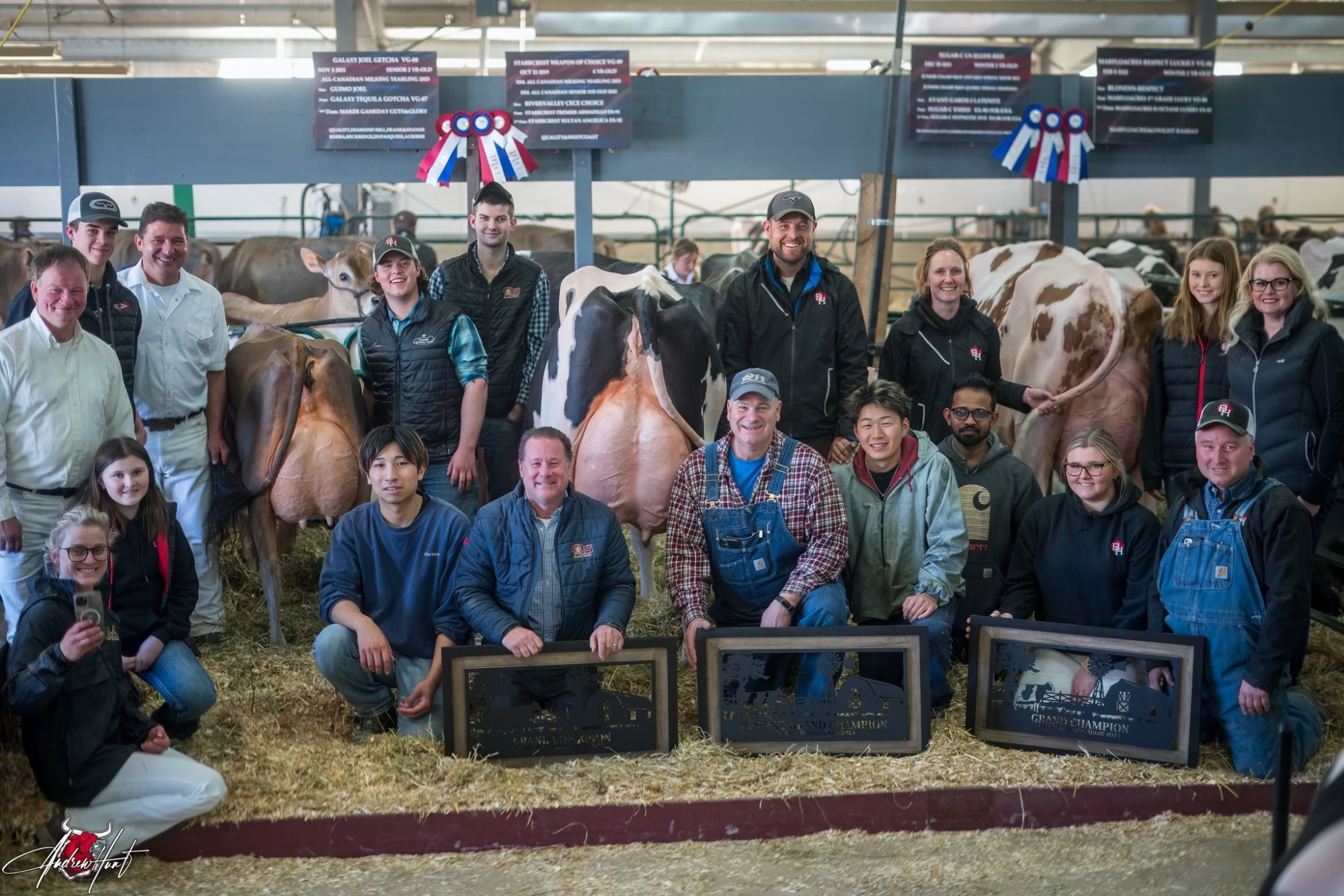
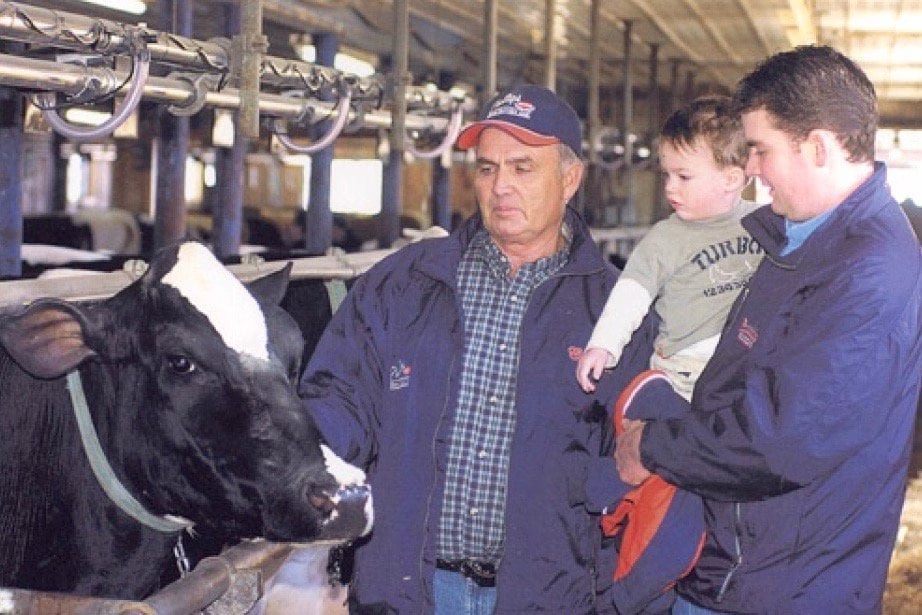
From Czechoslovakia to Quality Holsteins: Paul Ekstein’s Unbreakable Legacy

The call came in this morning. Paul Ekstein, founder of Quality Holsteins, passed peacefully at 91, surrounded by family. And suddenly, the Holstein world feels a little smaller, a little quieter.

For those of us at The Bullvine, this loss feels personal. Paul was a close friend, a mentor, and a man whose story we were privileged to share. Losing someone like Paul means losing a direct line to our industry’s living memory—and for us, losing a piece of our own history.

A First Impression and a Growing Respect

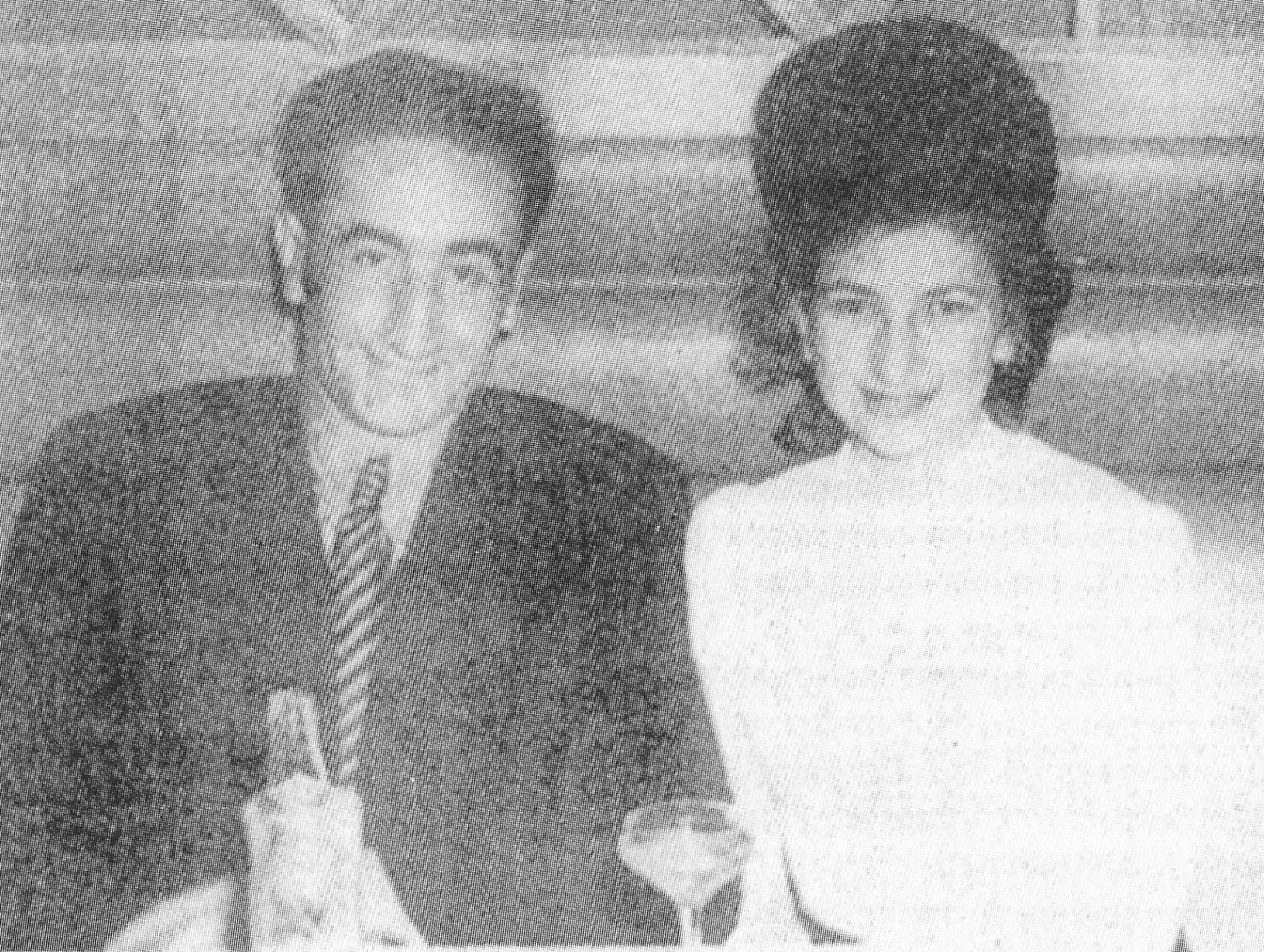
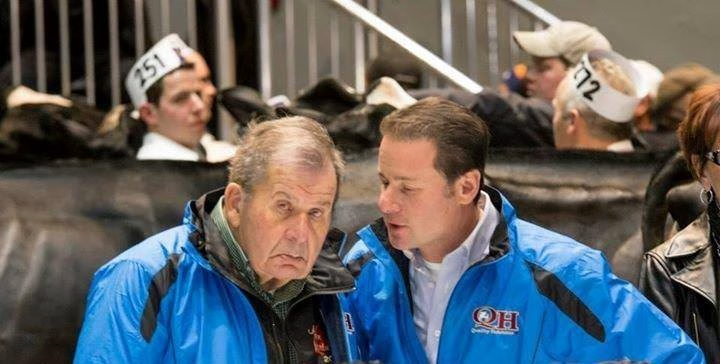
I’ll be honest—when I was a kid, I didn’t really understand or know Paul that well. To be frank, I thought of him a bit like Walter Matthau from Grumpier Old Men—a somewhat gruff, tough old guy you didn’t mess with. But as I got to know him over the years, that image completely flipped.

Paul turned out to be one of the most caring people I’ve ever met. We’d often dive into lengthy, thoughtful discussions about the real challenges we faced in the dairy industry—and in life. What struck me was how openly he shared lessons from his own struggles, always emphasizing the importance of learning from those challenges and keeping pushing forward.

That—that’s the kind of man Paul was beneath the surface. Not just a breeder or a businessman, but a mentor and a friend who genuinely cared about the people around him.

The Journey That Forged Everything

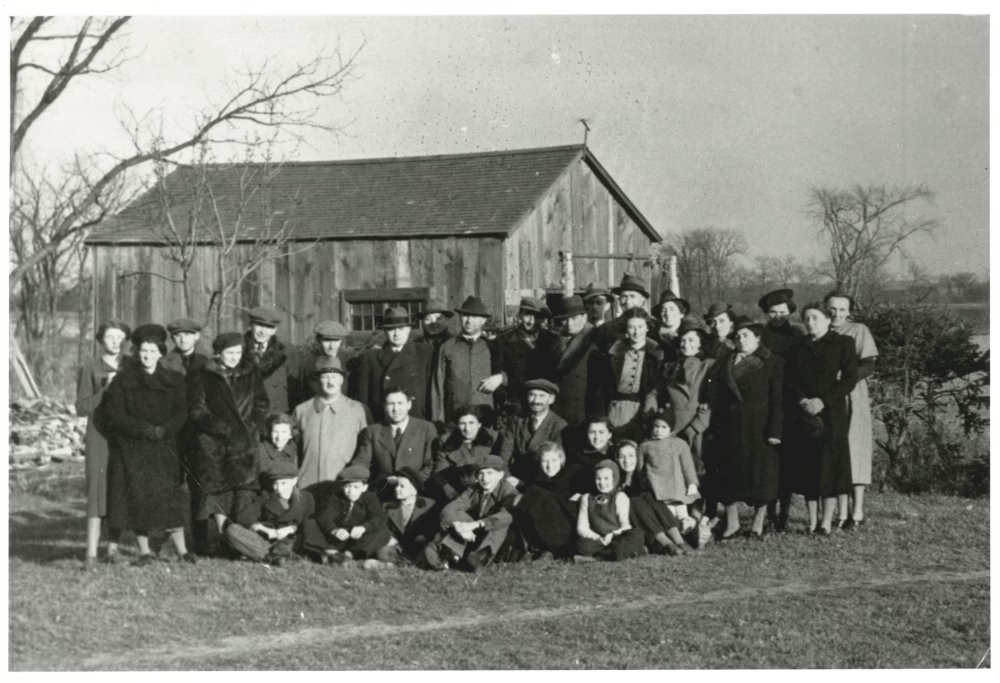
Think about the journey that shaped Paul Ekstein. As a boy, he escaped the Nazi occupation of Czechoslovakia—an experience that would have broken many, but instead forged something unbreakable in Paul. When his family arrived in Canada in 1939, they faced a stark condition: stay on the farm for five years, no exceptions.

That early lesson in survival, in starting over with nothing, in building from the ground up… it became the foundation for everything that followed. From those desperate wartime beginnings to founding Quality Holsteins—that’s not just an immigration story. That’s a masterclass in what happens when unshakeable determination meets genuine passion.

The family’s statement resonates deeply: “Very few people have such a fulfilling life, living their dreams and passions.” For Paul, those dreams were literally forged from nothing, built one quality cow at a time over the course of nine decades.

The “Quality” Philosophy Born from Hard Experience

Here’s what I think that early survival experience taught Paul—and why it made him such a different kind of breeder. When you’ve lost everything once, you don’t build anything temporary. You build to last.

Paul’s breeding philosophy wasn’t just business strategy; it was a survival instinct applied to Holstein genetics. He focused on deep-pedigreed, high-type cow families because he understood that surface-level success doesn’t survive tough times. Real strength comes from generations of careful building, not shortcuts or genomic fads.

He had an “innate ability to see potential in cows”—that’s not just industry praise, that’s recognition of something deeper. It’s the insight of a man who survived by knowing what would endure, what would last, and what was worth betting everything on.

This approach earned him the McKown Master Breeder Award in 2013, recognition that comes to perhaps one breeder a decade, if they are extraordinarily lucky. He built his program around animals like Quality BC Frantisco (EX-96 3E), a cow that embodied everything those early experiences taught him about what survives.

The 20-Year Apprenticeship

Before Paul could build his own empire, he spent 20 years housing his cattle with Gerald Livingston at Sunny Maple Farms. Twenty years of partnership, learning, building relationships, while dreaming of his own operation. That’s patience born from understanding that real success takes time.

When he finally got his own farm in 1980, it wasn’t because he got impatient—it was because one of his bulls, Quality Ultimate, generated enough revenue to make the dream possible. That’s the kind of methodical building that came from those early survival lessons.

The Mentor’s Heart

Here’s where Paul’s story gets even more powerful. I recall hearing about a young cattleman who approached Paul years ago, nervous and unsure, seeking advice about a cow family he was considering. Paul didn’t just give quick advice and move on. He spent hours walking that young man through pedigrees, explaining what to look for and sharing what he’d learned over the decades.

That young breeder went on to build something significant of his own. And when asked years later what made the difference, he said it simply: “Paul Ekstein believed in me before I believed in myself.”

That’s what we’re losing. Not just breeding knowledge, but someone who understood that survival—real survival—depends on lifting others up. Paul’s 54 consecutive years at the Royal Winter Fair weren’t just about showing cattle. They were about being present, being available, being the kind of person young breeders could approach.

Quality Built to Last

Our thoughts now turn to Nili, Steven, Ari, and the entire Ekstein family. They’re not just grieving a patriarch; they’re processing the loss of someone whose survival story became their success story, whose unbreakable spirit became their foundation.

Paul’s greatest achievement wasn’t any single cow—it was how he built something that would outlast him. The family’s statement says it perfectly: “We at Quality have been truly blessed to carry on his lifetime’s work.” That’s not corporate language. That’s acknowledgment of something Paul built specifically to survive whatever comes next.

He approached succession the same way he approached everything else: methodically, carefully, with the long view in mind. Steven and Ari didn’t just inherit a business—they inherited a philosophy, a way of thinking about breeding and relationships that stemmed from understanding what it means to lose everything and rebuild it better.

The Unbreakable Legacy Lives On

From a three-year-old refugee fleeing Nazi-occupied Czechoslovakia to a 91-year-old patriarch surrounded by family—that’s not just a long life. That’s proof that sometimes the most unlikely beginnings create the most unbreakable foundations.

Paul didn’t just live his dream. He proved that when survival instincts meet genuine passion, when unbreakable determination meets patient building, when hard-won wisdom meets generous mentoring, something extraordinary becomes possible.

Every young breeder Paul encouraged, every cow family he developed, every relationship he built with integrity and kindness—that’s his real legacy. Not just Quality Holsteins, but proof that even from the darkest beginnings, the brightest lights can emerge.

Tonight, somewhere, a young breeder is looking at a cow and seeing potential, just as Paul taught them to see it. Somewhere, a family farm is thriving because of the genetics Paul developed or the advice he gave. Somewhere, the Holstein breed is stronger because an unbreakable man from Czechoslovakia spent 91 years building something designed to last.

That’s not just a life well-lived. That’s immortality.

Rest in peace, Paul. From Czechoslovakia to Quality, your indomitable spirit lives on in every life you touched.

Our thoughts are with the Ekstein family and everyone at Quality Holsteins during this difficult time.

When Giants Fall Silent: The Shore Dynasty’s Century of Shaping Holstein Excellence

When Hardy Shore Jr. died, the Holstein industry lost more than a breeder—it lost the final chapter of its greatest dynasty.

Have you ever gotten one of those calls that just… stops you cold? Mine came the day after Christmas, 2013. Hardy Shore Jr. was gone.

I’d been half-expecting it, honestly. We all had. Hardy had been wrestling with his demons for years—the kind of personal battles that shadow brilliant minds in our industry more often than we’d like to admit. This time, though… this time he’d lost the fight.

What struck me afterward wasn’t just losing another talented breeder. It was how quiet everything felt across Ontario’s dairy community. Like walking into your barn when the ventilation fans suddenly quit—you don’t realize how much background noise there was until it’s gone.

That’s when it hit me. We hadn’t just lost Hardy Jr. We’d watched the end of something much bigger unfold. The conclusion of a dynasty that had shaped our industry for over a century.

That silence got me thinking, not just about the Shores, but about the nature of greatness in our industry.

The Thing About Certain Farm Families…

On operations across Ontario and the upper Midwest, I’m seeing something special in certain bloodlines—not just in our cattle, but in our people, too.

Some families just have it in their DNA, you know? The way they read a cow’s conformation through a barn aisle during morning chores, the timing of their breeding decisions when feed costs are squeezing margins tighter than bark on a tree. They can spot genetic potential in a gangly heifer where the rest of us see just another mouth to feed.

The Shores of Glanworth, Ontario, had that gift in spades.

What really strikes me about their story is how it mirrors the challenges we face today. Think about it—four generations, each adapting to massive technological disruptions that could’ve buried them. From William H. Shore’s leap into purebreds in 1910 (when most guys thought he’d lost his mind) to Hardy Jr.’s embryo exports in the genomic era… it’s like watching a century of dairy evolution through one family’s eyes.

Consider William’s decision in 1910 to buy those first purebred Holsteins from Herman Bollert. Mixed farming was safe, predictable, profitable—especially in those rich Talbot Settlement soils south of London where corn grows like weeds and hay makes itself. But William saw where the industry was heading and bet everything on black and whites.

Sound familiar? How many of us are making similar pivots right now with robotic milking systems, precision nutrition protocols, or these carbon-neutral initiatives that seem to change every time the USDA or AAFC puts out new guidance? The parallels are everywhere if you look for them.

Here’s what I’m seeing on farms from Wisconsin to New York—producers with that same Shore mentality. Willing to look beyond this quarter’s milk check when interest rates are killing them, investing in genetics that might not show returns for three, four years. That long-term thinking… it’s what separates the survivors from the legends.

The Talbot Settlement: Where Greatness Took Root

The Shore story begins in the 1850s in a small hamlet called Glanworth, located just south of London, Ontario. This was Colonel Thomas Talbot’s domain—part of that massive land settlement scheme that carved some of the best dairy country in Canada out of raw wilderness.

What’s fascinating is how Talbot hand-picked his settlers. Kept out the speculators and get-rich-quick types, made sure the land went to families who’d actually work it. Sound like any farm succession planning discussions you’ve sat through lately? Same philosophy, different century.

That approach—long-term thinking, community commitment, building something that lasts through market cycles, adverse weather conditions, and government interference—it’s the same foundation driving successful dairy operations today. The Shores didn’t just inherit good land; they inherited a culture that valued persistence over quick profits.

William H. Shore, born in 1870, ran a diversified operation that would be recognized today. Shorthorns bunked next to grade Holsteins, with some horse trading on the side—kind of like how some Ontario producers today run cash crops alongside their dairy herds to spread risk when milk prices tank.

But William was restless… always on the road, always chasing the next opportunity. His real talent wasn’t farming—it was reading markets. And in 1910, he made the read of his lifetime.

The Pivot Point: 1910

Here’s where it gets interesting. William bought his first purebred Holsteins—two females and a bull—from Herman Bollert’s herd.

Now, if you know your Canadian Holstein history, that name should ring bells. Bollert’s cattle traced directly back to Michael Cook’s 1881 imports—the foundation animals that established our breed in Canada. William wasn’t just buying cattle; he was buying into genetic royalty. Think of it like getting first pick in a genomic draft before anyone knew what genomics was.

The bulls he chose tell you everything about his vision. Faforit Champion Echo was a maternal brother to the legendary May Echo Sylvia. Keldy Grange King Segis came from proven Western Ontario bloodlines. These weren’t just breeding decisions—they were market positioning moves.

What really strikes me is how William understood brand building before the term was even coined. He wasn’t just improving his herd; he was positioning himself at the center of an emerging industry. It’s the same strategic thinking I see in today’s top producers who were early adopters of A2 genetics or genomic selection.

The thing is, though, this was 1910. No genomic testing, no AI catalogs filled with EPDs, no production records to compare. William was making these calls based on pedigree, conformation, and gut instinct. That takes… well, that takes exactly the kind of courage we need today when we’re deciding whether to invest in automated feeding systems or transition to organic production, with all the headaches that come with it.

Hardy Sr.: Building the Brand Through the Show Ring

A portrait of leadership: Hardy Shore Sr. served as President of the Holstein-Friesian Association of Canada in 1967, a role that solidified the family's reputation for excellence far beyond the show ring.
A portrait of leadership: Hardy Shore Sr. served as President of the Holstein-Friesian Association of Canada in 1967, a role that solidified the family’s reputation for excellence far beyond the show ring.

When Hardy Shore Sr. joined his father in 1933, he did something that seems simple now but was revolutionary then—he started using the “Shore” prefix on their cattle.

Picture Hardy Sr. standing in that barn, watching his father work with those foundation animals, and making the decision that would define the next century. That black and white prefix board hanging outside their barn? It became a quality guarantee that buyers from New York to Alberta learned to trust.

Consider that in today’s context: how many of us are building brand recognition for our sustainability practices, animal welfare protocols, or genetic programs? The Shores figured out something we’re still learning—reputation travels faster than advertising.

The thing is, though, building a brand in the show ring takes more than good cattle. It takes consistency, patience, and the guts to bounce back from setbacks that would crush most operations. The Shores proved this in 1942 when financial pressures forced a herd dispersal. Most producers would have liquidated everything and started over—or gotten out entirely.

However, Hardy Sr. made a decision that highlights the difference between good operators and great ones. He kept six animals. Three daughters and three granddaughters of Montvic Rag Apple Paul.

Six cows. That’s it.

But those six became the foundation for everything that followed. By the late 1940s, their herd was simply “the herd to beat” at Western Fair. Nine Premier Exhibitor banners. Ten All-Canadian awards. The peak came in 1952 when they had five animals nominated for All-Canadian consideration in a single year.

A familiar sight in the 1950s: Hardy Shore Sr. collecting the Premier Breeder and Premier Exhibitor banners at the 1956 Western Fair. These consistent wins in the show ring were the foundation of the Shore brand.

I was talking to an old-timer at a Holstein meeting last spring who remembered those Western Fair shows in the ’50s. Said you could feel the tension in the barn when the Shore cattle were led out. Everyone knew they were the standard to beat. That’s the kind of presence you build over decades, not months.

The Cow That Made the Name

Here is the “presence that separates the good from the great.” Fran-Lee Lass’s show ring dominance in the early 1950s created massive demand for Shore bloodlines and validated the family’s entire breeding program.

There was one cow that really put the Shore name on the map—Fran-Lee Lass. I never saw her myself, but you should see how the old-timers’ eyes light up when they talk about her.

Picture this: it’s 1951, and Fran-Lee Lass is moving through the show ring at the Royal Winter Fair. The crowd goes quiet as she approaches the judge—perfect udder, flawless type, that presence that separates the good from the great. She’s named an All-Canadian three-year-old and wins best udder at the Royal.

The following year, she’s Grand Champion at Western Fair before earning Reserve All-Canadian honors for 4-year-olds. When she eventually sold to Fred Baer’s herd in New York and established a world-class family there, it completed the perfect circle.

Show ring success creates market demand. Market demand validates the genetics. And suddenly, everyone wants Shore bloodlines.

That’s a lesson that’s as relevant today as it was seventy years ago. Whether you’re showing at Madison or posting videos on social media, excellence creates its own marketing momentum. The platforms change, but the principle remains the same.

The Twin Bulls That Changed Everything

Here’s where the genetics get really interesting—and where Hardy Sr. showed his breeding genius. His greatest early contribution came through twin bulls: Rockwood Rag Apple Romulus and Remus.

The key to compounding genetic interest. When his twin brother was sold, Hardy Sr. leased Rockwood Rag Apple Remus to continue the powerful bloodline. Remus’s value as a sire of bulls like Shore Royal Duke would echo for decades.

Their dam, Amulree Baroness Pietje, had a lactation record that came within five pounds of making her the Canadian butterfat champion. Five pounds! Can you imagine being that close to history? Her record was 32,080 pounds of milk with 1,259 pounds of fat. In today’s terms, that’s like missing a genomic ranking by a decimal point.

But Romulus… this bull accomplished something that’s never been done before or since. In 1950, he sired both the All-Canadian senior yearling heifer and the All-Canadian junior yearling heifer—both carrying the Shore prefix, both bred by the same operation.

Genetically, creating two All-Canadian yearlings from the same sire, in the same year, from the same herd… the odds are astronomical.

When Romulus was sold for export to South America, Hardy Sr. showed the kind of strategic persistence that characterizes successful breeding programs. He leased the twin brother, Remus, from a breeder in Oklahoma. That’s the kind of move you make when you understand that genetic value compounds over generations—like putting money in the bank and letting compound interest work its magic.

What’s truly fascinating is how that genetic pathway evolved over the course of the decades. Follow the line from Remus to Shore Royal Duke, whose daughter produced Fairlea Royal Mark—described as “possibly the best bull to come out of Western Ontario”.

Keep tracing that line forward, and you’ll find it leads directly to Braedale Goldwyn. We’re discussing breeding decisions made in the 1940s that shaped the breed through to the 2000s. That’s the kind of long-term thinking that’s becoming essential in today’s genomic era, where the genetic decisions we make today will have a lasting impact on future breeding—assuming we have the patience to let them play out.

The Auction Empire: Where Dreams Met Reality

While Hardy Sr. was building a genetic empire, he also recognized something fundamental about our business—there’s more money in merchandising than in routine dairy farming.

Sound familiar? It’s the same realization driving today’s focus on branded genetics, premium programs, and value-added marketing. Think about how many top operations today make as much from genetics sales as they do from their milk check. The Shores saw that coming sixty years early.

During the Depression, while other farm families struggled to keep the lights on, the Shores found opportunity. They started exporting dairy cattle to the United States, acting as sales agents who’d drive American buyers farm to farm. Their reputation opened doors that stayed closed to everyone else.

More than just a barn, this was the stage where records were broken. The Shore sales arena became a legendary marketplace where elite genetics found their true value under the gavel.

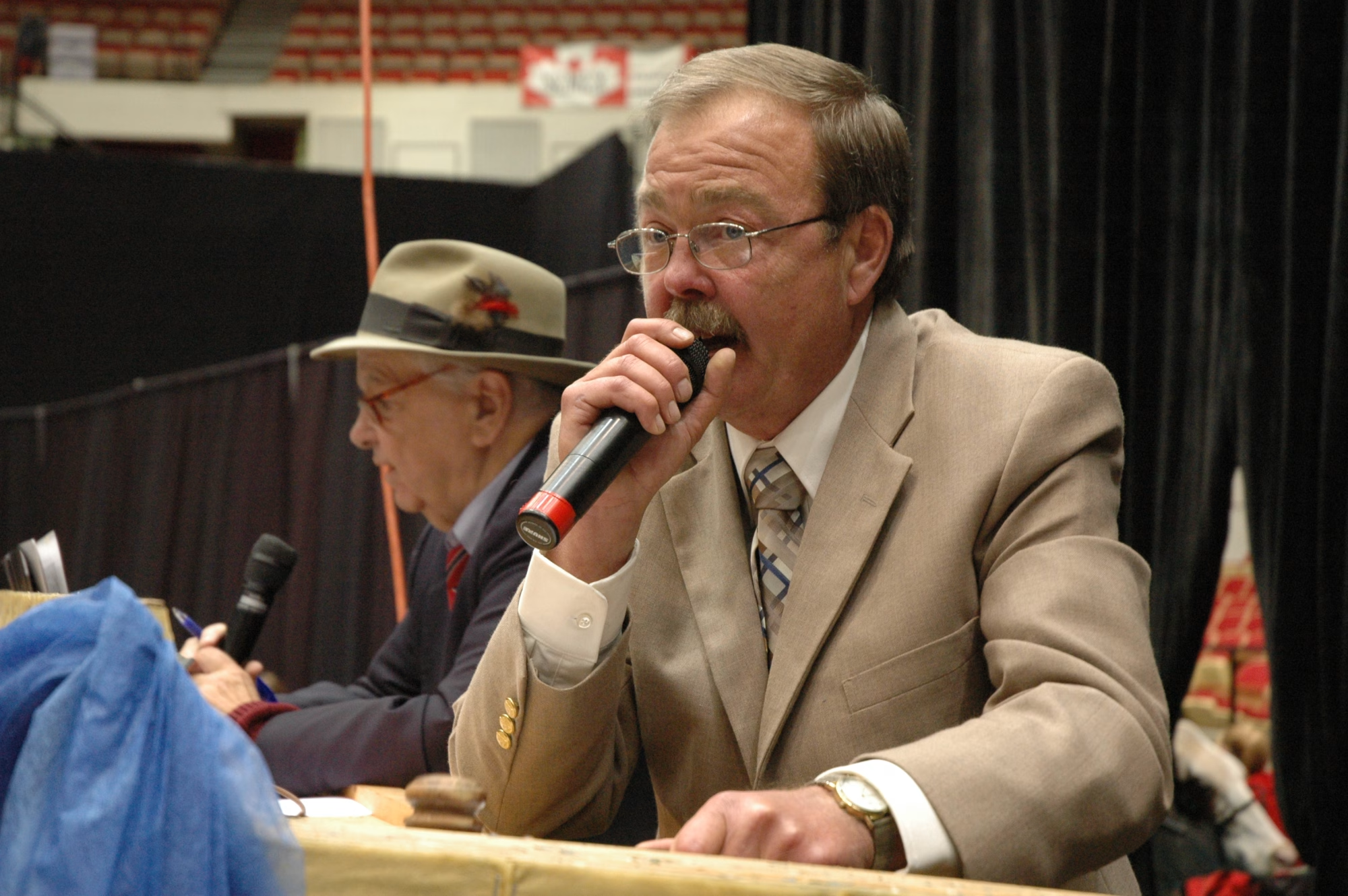
The masterstroke came in 1949 when Hardy Sr. and his brother Don bought a seventy-acre farm on Glanworth Road and built an auction barn. Picture that first sale—Don chanting while Hardy stood beside him, making announcements, their combined reputations the only guarantee buyers had.

But it was Bob Shore who really turned the auction barn into legend.

Bob Shore: The Voice of an Industry

Bob joined the operation in 1951, fresh from the Ontario Agricultural College and auctioneering school. The irony? He was shy, uncomfortable in crowds. But something magical happened when he stepped into that ring.

I’ve seen this transformation before—quiet farm kids who become different people when they’re working with cattle. Bob found his voice at the sales barn, and once he found it, there was no stopping him.

His training ground was the Talbotville sales barn, selling beef animals “by the pound” every Saturday. Thirty-second intervals, prices measured in fractions of cents—it created that distinctive Shore style: crisp, fast, commanding.

When you’re working at that pace, every word matters. No wasted syllables, no hesitation. Just pure, focused communication. It’s like watching a skilled AI technician work during breeding season—every motion deliberate and efficient.

This is what opportunity looked like in 1960. As the industry consolidated, the Shore sales arena became the essential marketplace where buyers from across the continent came to find their next foundation cow.

The Shore Canadian Classic, launched in 1964, became the premier North American marketplace for elite Holstein genetics. World-record prices were set at these events. The \$115,000 syndication of Weavers Reflection Apex in 1967, the \$125,000 sale of the famed show cow, Johns-Lucky-Barb, known affectionately as ‘Blacky,’ in 1974… but the one that truly made headlines was when Bob brought the gavel down on what industry sources reported as the first million-dollar cow sale.

The success wasn’t just about Bob’s auctioneering skills, though he was arguably the best in North America. It was perfect timing, meeting perfect preparation. The bulk cooler revolution in the mid-1950s forced thousands of smaller dairy producers out of the industry. Their dispersals needed a marketplace, and the Shore arena was ready.

Here’s what’s really interesting—that bulk cooler disruption parallels what we’re seeing today with environmental regulations, labor shortages, and the adoption of precision agriculture. The producers who adapt find opportunity; those who resist get left behind. The Shores understood this dynamic better than anyone.

The Genomic Visionary: Hardy Jr.

The innovative mind behind Shoremar Inc.: Hardy Shore Jr. focused on cutting-edge genetics and left an indelible mark on the Holstein breed.

The fourth generation brought a different kind of genius to the operation. Hardy Jr. left high school at sixteen to attend Reisch Auction School in Iowa. By his early twenties, he had what industry veterans call “cow talent”—that ability to see genetic potential before it’s proven.

But Hardy Jr. was… complicated. Brilliant, visionary, but drawn to what was delicately described as “high-risk behavior”. When his parents agreed to bring him into the business, it came with conditions. The result was Shoremar Inc., a company that immediately signaled a new direction.

While his father and grandfather had mastered selling live cattle, Hardy Jr.’s focus was on the cutting edge—marketing frozen embryos worldwide. His breeding philosophy was perfectly calibrated for the modern era: “strong type, solid cow families and modern genetics,” seeking what he called “a balance of type, fat, protein and modern sires”.

The interesting thing about Hardy Jr.’s approach is how it anticipated today’s genomic selection strategies. He was breeding for balanced improvement decades before we had the tools to measure it precisely. Sometimes the best breeders are the ones who see what’s coming before the rest of us catch up.

The Acquisition That Defined a Generation

This is the cow that defined a generation. Hardy Jr. saw foundation-quality perfection in Aitkenbrae Starbuck Ada, and his vision was validated when she produced arguably the most influential pair of full sisters in modern Holstein history.

Hardy Jr.’s greatest stroke of genius came in acquiring Aitkenbrae Starbuck Ada. As a former hoof trimmer, he understood foundation quality when he saw it—and Ada had perfect feet and legs.

Picture Hardy Jr. walking through that barn, his trained eye taking in everything from hock angle to heel depth. Most people see a pretty cow; he saw the genetic architecture that would support decades of production. That’s cow sense you can’t teach.

But it was what he did next that showed his vision. The decision to flush Ada to Donnandale Skychief produced what may be the most influential pair of full sisters in modern Holstein history.

The result of a “stroke of genius.” Shoremar S Alicia, one of Ada’s legendary twin daughters, fulfilled her genetic promise by becoming a World Champion in 2000 and a cornerstone brood cow for the next generation.

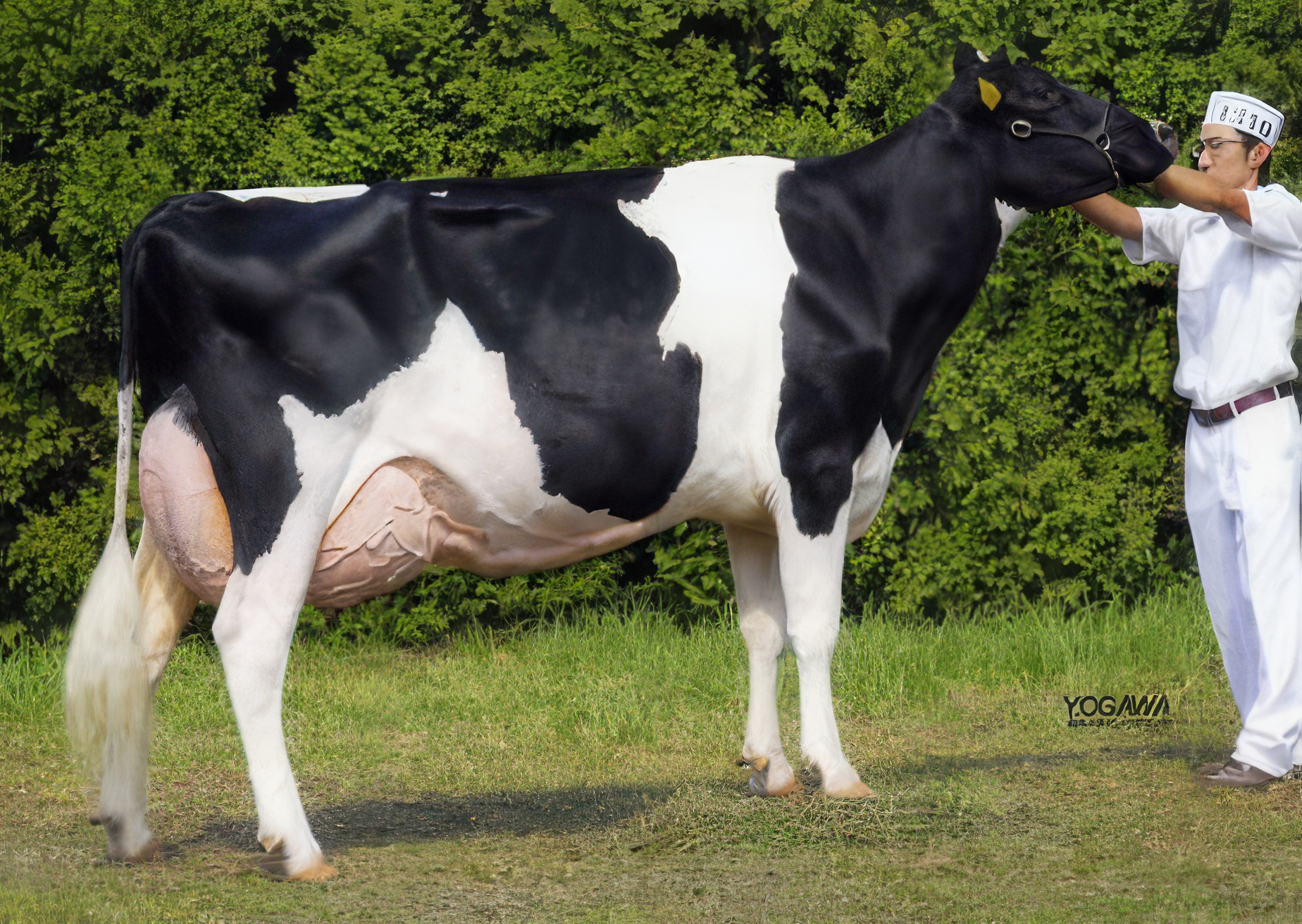
Shoremar S Alicia became a breed legend—classifying EX-97 and winning the World Championship in 2000. With 32 excellent daughters in the US and Canada, she ranks among the elite transmitters of North America.

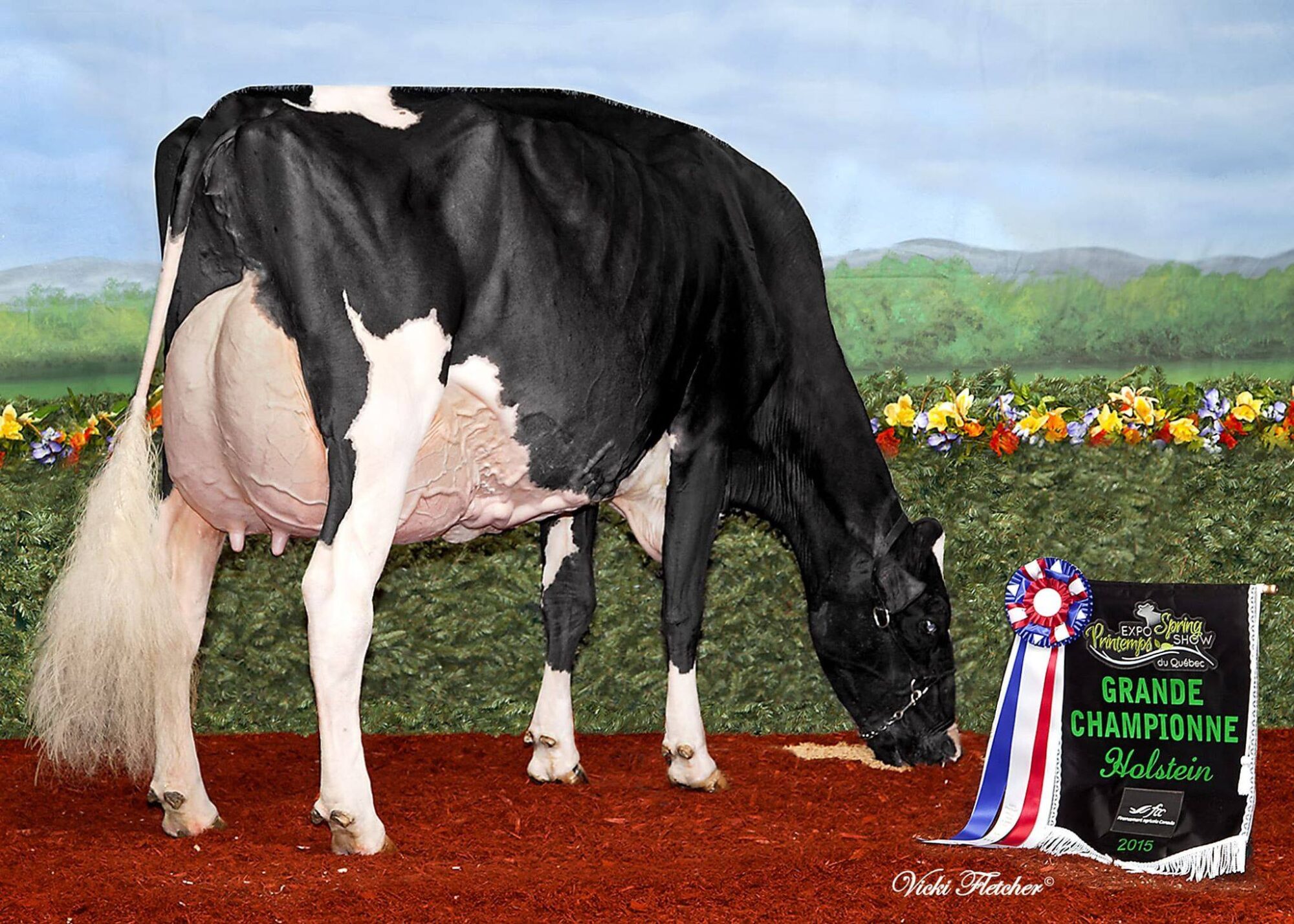
The influence echoes through the generations. A direct descendant of Aitkenbrae Starbuck Ada, MS Goldwyn Alana (EX-96) continued the family’s winning ways by capturing the Grand Champion banner at the 2015 Quebec Spring Show.

Her sister, MS Kingstead Chief Adeen, proved equally influential as a brood cow, producing 51 daughters classified Excellent worldwide—ranking her second all-time for most EX daughters.

A transmitting legend in her own right. Ms Kingstead Chief Adeen, one of the two famous daughters of Ada, became a cornerstone brood cow whose influence extends globally through her famous descendants.

When I look at those numbers… 51 EX daughters from one cow? That’s not luck. That’s the result of understanding genetic architecture at a level most of us can only dream about. And this was before genomic testing made genetic prediction routine.

Transmitting power, generations later. Jeanlu Stanleycup Alexis (EX-96) carries on the genetic influence of her granddam, MS Kingstead Chief Adeen, proving that the foundation laid by Ada is still producing champions today.

The Genetic Crescendo

The ultimate validation of Hardy Jr.’s vision came through the bulls he bred. His most famous achievement was Shoremar James, born from his foundation cow Stelbro Jenine Aerostar.

This is what Hardy Jr.’s vision looked like on the world stage. Thrulane James Rose, a daughter of Shoremar James, fulfilled the genetic promise of the Shore dynasty by dominating the show ring.

James became a phenomenal sire of show cows—his daughters were voted World Champion Holstein Cow three times in four years. But James’s greatest legacy wasn’t his show daughters. It was his most famous son: Braedale Goldwyn.

The Shoremar James influence knew no borders. In Europe, his daughter Castel James Jolie became an icon, proving that the genetic power forged in Glanworth could dominate on any continent.

Here’s what blows my mind about Goldwyn’s creation—it wasn’t an accident or luck. You can trace the genetic pathways directly from Hardy Sr.’s breeding decisions in the 1940s. Those twin bulls, Romulus and Remus, led to Fairlea Royal Mark, whose lineage eventually produced Maughlin Storm, who sired Braedale Baler Twine—Goldwyn’s dam. Hardy Jr. bred the sire, Shoremar James.

The dynasty’s legacy of show ring dominance continued for generations. RF Goldwyn Hailey, a daughter of Braedale Goldwyn, exemplifies the superstar quality that traced directly back to the breeding decisions made in Glanworth.

When those two lines converged, they created a genetic perfect storm. Industry records show that Goldwyn’s influence extended to herds on every continent. It’s like watching a master chess player execute a strategy that unfolds over the course of decades.

The Complexity of Genius

The ultimate proof of a foundation cow’s influence. Decades later, the genetic power of Aitkenbrae Starbuck Ada was still producing champions like GALYS-VRAY, whose EX-95 mammary system helped her conquer the European show circuit in 2016.

For all his brilliance, Hardy Jr.’s life was marked by profound personal struggle. The same intensity that drove him to acquire cows like Ada and breed bulls like James also led him to what observers called “the edge of the abyss”.

Those of us who knew Hardy Jr. understood this complexity. Eighteen bulls from his program received major awards in Canada, and three became number one sires in different countries. But privately, we watched with concern as he navigated battles that were as intense as his triumphs.

The Holstein community’s response to his struggles revealed something beautiful about our industry. We recognized genius when we saw it, even when it came with complications.

The flip side of creative genius is sometimes a very dark place.

People remembered him as “gifted, talented, remarkable beyond one’s imagination”. The same creative fire that produced breakthrough genetics also fueled personal demons that few understood.

It’s a reminder that innovation often comes with a price—that the very traits that drive visionary thinking can also create profound personal challenges. We’ve seen this pattern in other brilliant minds in our industry, haven’t we? The relentless drive that creates breakthrough genetics sometimes carries a hidden cost.

When the Gavel Fell Silent

December 26, 2013. Hardy Shore Jr. died at his home at age 57.

The industry’s response spoke to the profound connections he’d forged throughout his career. Despite his struggles, colleagues remembered his kindness, optimism, and unwavering passion for the Holstein breed.

The final detail—the family’s request that memorial donations be made to the Men’s Mission Services of London—provided quiet testimony to the nature of his struggles. A man who dealt in world-record prices and global genetics, fighting private battles that few understood.

Sometimes the most brilliant minds carry the heaviest burdens. The Holstein community’s ability to honor his contributions while acknowledging his struggles showed the best of what our industry can be.

What This Means for Us Today

So, what does the Shore story teach those of us who are still making breeding decisions, still building something for the next generation?

First, it’s about vision beyond the immediate cash flow pressures that keep us awake at night. William H. Shore could have stayed with mixed livestock forever—safe, predictable, profitable. Instead, he bet on purebreds when most thought he was crazy. Hardy Sr. kept six females when forced to disperse, understanding that genetic value compounds over time like interest in a savings account.

Today’s genomic tools give us unprecedented ability to make these long-term decisions—if we have the courage to use them.

Second, it’s about recognizing industry shifts before they hit your bottom line. The bulk cooler revolution could have been devastating—instead, the Shores turned it into their greatest opportunity. Today’s shifts toward sustainability, animal welfare, and precision agriculture require the same strategic thinking.

The producers who adapt first create the biggest advantages. Consider the early adopters of robotic milking or those who entered organic production before the premiums were eroded by oversupply.

Third, it’s about understanding that reputation matters as much as genetics. The Shore name opened doors because it stood for integrity, quality, and innovation. In our age of social media and instant communication, building that kind of trust is both easier and harder than ever.

But perhaps most importantly, it’s about persistence through complexity. Hardy Jr.’s story reminds us that innovation often comes with personal costs; the very traits that drive breakthrough thinking can also create challenges that are not always apparent from the outside.

The industry’s response—celebrating his contributions while supporting him through difficulties—shows the best of what our community can be.

The echoes of a dynasty. As a daughter of Braedale Goldwyn, Loyalyn Goldwyn June is a direct descendant of the Shoremar James line, proving that the family’s genetic influence continues to produce champions in today’s show rings.

The Legacy Lives On

Walk through any modern dairy barn today, and you’ll find cattle whose pedigrees trace back to Glanworth. The “Shore” prefix may no longer appear on registration papers, but their genetic influence flows through the global Holstein population like underground streams feeding a river.

The auction barn on Glanworth Road stands quiet now. But the echoes of that distinctive auctioneer’s chant still resonate through every major sale, every breeding decision based on balanced genetics, every young producer who dares to dream of creating the next genetic revolution.

For the better part of a century, the Shores were the business. And in many ways, they still are. Every superior cow carrying their bloodlines, every successful breeding program following their example of long-term thinking, every auction where quality genetics find their true value… that’s the Shore legacy.

The dynasty may have ended, but its influence remains. That’s immortal.

And in our industry, where the right genetic decision can echo for generations, immortality is the only currency that really matters.

KEY TAKEAWAYS

  • The Shore family profoundly shaped the Canadian and North American Holstein industry across four generations, building an enduring legacy through strategic breeding, merchandising, and auctioneering.
  • Their long-term vision—starting with William H. Shore’s early 20th-century bet on purebreds, through Hardy Sr.’s brand-building via the show ring, to Hardy Jr.’s genomic advances—offers valuable lessons for modern dairy producers navigating today’s technological and market shifts.
  • The Shore dynasty exemplifies how combining superior genetics with innovative business acumen, such as capitalizing on technological disruptions like the bulk milk cooler, can create a lasting competitive advantage.
  • The story highlights the human complexity behind industry success, particularly Hardy Shore Jr.’s personal struggles amid professional brilliance, underscoring the industry’s need for compassion alongside admiration.
  • The Shore genetic influence endures globally, notably through iconic cattle like Shoremar Alicia and Braedale Goldwyn, demonstrating the multi-generational impact of deliberate, balanced breeding strategies.

EXECUTIVE SUMMARY

The Shore family legacy is a cornerstone of the Canadian and North American Holstein dairy industry, spanning four generations from the early 1900s to 2013. Their journey began with William H. Shore’s pivotal decision to invest in purebred Holsteins in 1910, a bold move that laid the genetic foundation for future success. Hardy Shore Sr. and his successors built a revered brand through show ring dominance and an innovative auction business that capitalized on industry shifts, such as the bulk tank revolution. The third and fourth generations, led by Bob Shore and Hardy Shore Jr., advanced the family’s influence through legendary auctioneering and cutting-edge genetic marketing, including the global success of Shoremar S Alicia and Braedale Goldwyn. While personal struggles marked Hardy Shore Jr.’s life, his professional contributions reflect visionary breeding that shaped Holstein genetics worldwide. The Shore dynasty exemplifies long-term strategic thinking, adaptability, and the intricate interplay between human complexity and industrial advancement. Today, their genetic imprint continues to impact cattle across continents, underscoring a legacy that is both historic and enduring.

Learn More:

  • Breeding for Profit: A Cow-Side Revolution – This article provides a modern framework for the Shore’s profit-focused mindset. It details tactical breeding strategies for today’s market, focusing on health and efficiency traits that directly impact your bottom line and long-term herd profitability.
  • Dairy Genetics: Is Bigger Really Better? – While the Shores built an independent dynasty, this piece analyzes the modern strategic landscape of dairy genetics. It explores the pros and cons of industry consolidation, offering critical insights for breeders navigating today’s market to maintain genetic diversity and profitability.
  • The Future of Dairy Breeding: Is Gene Editing the Answer? – Just as the Shores embraced new technologies, this article looks to the future. It demystifies gene editing, exploring its potential to accelerate genetic progress for health and production traits, and what it could mean for the next generation of elite cattle.

The Sunday Read Dairy Professionals Don’t Skip.

Every week, thousands of producers, breeders, and industry insiders open Bullvine Weekly for genetics insights, market shifts, and profit strategies they won’t find anywhere else. One email. Five minutes. Smarter decisions all week.
NewsSubscribe
First
Last
Consent

The Charming Nomad: How Alberto Medina Became the Most Beloved Man in Global Dairy Shows

Traveling 12+ countries yearly with less than 100 nights at home, Alberto Medina has turned cattle fitting into a global art form built on charm and excellence.

A master in his element. This candid shot captures Alberto Medina’s calm, observant focus amidst the bustling pre-ring at the 2014 Royal Agricultural Winter Fair, completely at home in the organized chaos. (Photo by Carl Saucier)

You know that rare person who walks into any room and somehow makes everyone feel like they’ve just met their new best friend? Alberto Medina is that guy—except his “rooms” happen to be cattle barns scattered across five continents, and his magnetic presence has turned him into something of a legend in the dairy world.

Less than 100 nights a year—that’s how often this Spanish-born cattle fitter actually sleeps in his own bed. The rest of the time? He’s somewhere between customs lines and show rings, navigating airports with the confidence of a seasoned diplomat and somehow managing to be the most genuinely admired professional in an industry not exactly known for its abundance of humble superstars.

Here’s what strikes everyone about Alberto—in a business where success can breed contempt and competition often gets ugly, Alberto has managed to achieve unprecedented global recognition while earning genuine respect from virtually everyone he encounters.

The Boy Who Never Lost His Wonder

The story begins at Argomota Holsteins, where young Alberto absorbed something special from his parents—not just their passion for showing cattle, but their fundamental approach to treating people well. “My parents always loved the shows, so I started showing at a very early age,” he tells me, and you can hear decades of genuine enthusiasm still bubbling under those words.

A pivotal moment: Alberto Medina (left) and Santiago Llera celebrate their first National Grand Champion title with Llera Goldwyn Gala, a testament to Alberto’s early eye for exceptional cattle and a foreshadowing of his global success

What’s remarkable about Alberto’s journey is how organically it unfolded. While others fought their way up through regional politics and industry hierarchies, Alberto simply continued to excel at his craft, maintaining the same authentic enthusiasm that had first drawn people to him as a teenager, when he would clip cattle for friends.

After a decade with Semex Spain providing customer support and fitting services, he made the leap that changed everything: he went full-time as an independent fitter. “After that, I became a full-time fitter, and that’s how the traveling started. I was looking to fulfill my working days,” he explains with characteristic modesty, as if describing a weekend hobby rather than embarking on what would become an unprecedented global career.

A young Alberto Medina (second from the right) with the CIAQ/Semex daughter display team, showcasing his early commitment to the dairy genetics industry.

Living the Impossible Dream

Picture this: You land in Madrid after two weeks in Canada, rush home to change suitcases, maybe catch four hours of sleep, then hop on a 6 AM flight to New Zealand. Most people would be staggering zombies. Alberto steps off that plane looking refreshed and ready to tackle whatever challenges await.

“Sometimes I have to go home for a day, change luggage, sharpen my blades… and fly again the next day,” he says matter-of-factly. The logistics alone would break most people—navigating different electrical systems, language barriers, and cultural expectations that shift with every border crossing. But Alberto has mastered it all with an ease that borders on the supernatural.

Twelve to fifteen different countries annually. Thirty-plus shows a year. Only five of those shows are in his native Spain. That’s not just a career—that’s a lifestyle that would terrify most of us, yet Alberto has turned it into an art form.

Precision under pressure—Alberto’s ring-ready finish is the quiet edge behind champion results.

The Stories That Reveal Character

Every conversation with Alberto eventually becomes storytelling time, and his tales reveal layers of humor and grace under pressure. Take the great goat invasion: “A goat running in the ring full of cows was priceless,” he recalls with obvious delight. You can picture the whole scene—some prestigious European show, everything formal and serious, then suddenly chaos as a goat careens through a ring full of Holstein cows.

Or the highway cow chase during a trip from Spain to Italy: “We stopped for milking, one of the cows escaped and was so close to jumping onto the highway.” The way he tells it, you can feel the adrenaline spike, the frantic teamwork, the collective relief when disaster was averted. These aren’t just amusing anecdotes—they’re windows into someone who finds adventure and humor even in moments that would traumatize others.

But perhaps the story that best captures Alberto’s character involves a cow whose breeder wanted to milk her out before the show because, “in their opinion, she didn’t look any good.” Alberto saw something others missed—and she ended up Supreme Champion. That’s not just professional expertise; that’s someone who believes in potential when others have given up hope. This moment perfectly illustrates his ability to see beyond surface appearances and trust his instincts, even when others doubt him.

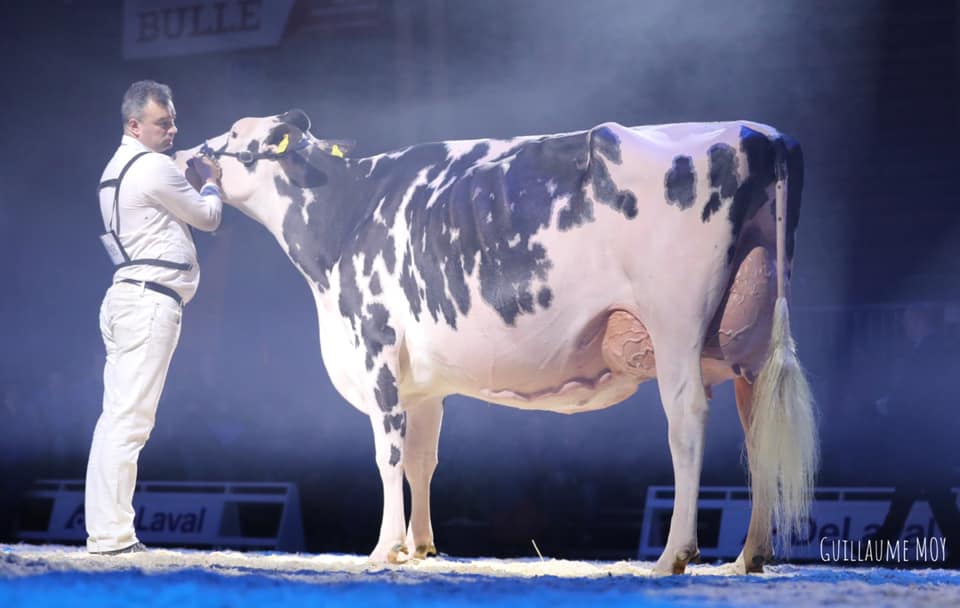
Mastering the moment. Alberto Medina guides Au Parchy Doorman Jolie in the spotlight at the 2019 Expo Bulle, where their flawless presentation led to a stunning upset victory for Grand Champion

The Professional Who Elevates Everyone

What distinguishes Alberto from other elite professionals is his collaborative philosophy. “Make a good team at every show because showing animals is not a one-person thing. Success is about teamwork,” he explains, and this isn’t just strategic thinking—it’s how he approaches every aspect of his career.

Rather than hoarding trade secrets or maintaining a competitive advantage through secrecy, Alberto freely shares knowledge and actively builds others up in the industry. When he talks about buying a cow with friends back in 2006 that became Grand Champion at the European Dairy Show in Italy in both 2008 and 2009, then Junior Champion at the Swiss Expo in 2020, you hear the joy of shared achievement. These weren’t solo victories—they were friendship triumphs that created lasting bonds across continents. His willingness to invest in partnerships and celebrate collective success has earned him respect that transcends mere professional accomplishment.

Teamwork makes the dream work at IDW 2020. Alberto Medina (standing) with the talented Blue Chip crew including Sheila Sundborg (kneeling, center left) and Katie Kearns (kneeling, center right) and Kelvin Cochrane (Queensland), embodying the collaborative spirit that defines his approach to the global show circuit.

The Master Who Wears Success Lightly

Alberto’s technical mastery is undeniable—he’s adapted to feeding systems ranging from TMR to pasture to full hay programs, stayed current with equipment that’s “changed completely in the past 30 years,” and somehow manages mental transitions between regional showing standards that would challenge seasoned diplomats.

Llinde Ariel Jordan—Grand Champion and Best Udder at Cremona, the matriarch Alberto has believed in for a decade.

Take his relationship with Llinde Ariel Jordan, a cow he first encountered as a “small, narrow, straight-legged, soft-pastured” two-year-old. Most professionals would have written her off as unpromising. Alberto saw potential and patiently watched her develop “into one of the best show cows in the world.” At 14 years old, she continues to compete and improve her skills. The pride in his voice when discussing her isn’t just professional satisfaction—it’s genuine affection for watching someone (even four-legged someones) exceed expectations.

Even challenging animals earn his respect. Kingboy Birdy is “one of the hardest cows I ever walked into the ring with,” yet he speaks of her with bemused fondness rather than frustration. He appreciates strong personalities even when they complicate his job.

A challenging partnership, a dream fulfilled. Alberto Medina presents Vinbert Kingboy Birdy in the final lineup at the 2022 Royal Agricultural Winter Fair, an event he called the realization of a lifelong dream after a rewarding year with “one of the hardest cows I ever walked into the ring with.

The Gentle Revolutionary

Here’s something most people don’t realize about operating at Alberto’s level—sometimes excellence itself becomes controversial. “People tried to ban me from going to do my job at a show because they think I’m too good at it. Yes, this happened,” he admits with characteristic understatement.

Praise from peers often means the most. Alberto shared his pride in this post from industry veteran Carl Saucier, which places him in the direct lineage of show ring legends like Donald Dubois—a testament to the deep respect he has earned at the highest level.

Think about that scenario: being so consistently successful that competitors attempt to exclude you from events. It’s the kind of situation that could make anyone defensive or bitter. Alberto tells the story with the same bemused calm he brings to everything else, seemingly genuinely puzzled by such reactions to professional excellence. His grace under this kind of pressure reveals the depth of his character and professional maturity.

The Philosophy of Authentic Excellence

Alberto’s approach to both life and work reveals someone who’s found genuine fulfillment in an unconventional path. His downtime activities perfectly capture his character: ‘Hanging out with friends, good restaurants, more traveling, and getting my heifers ready for the next show.’ Even relaxation centers on the things he values most—relationships, experiences, and continued engagement with his passion

Alberto’s approach to both life and work reveals someone who’s found genuine fulfillment in an unconventional path. His downtime activities perfectly capture his character: “Hanging out with friends, good restaurants, more traveling, and getting my heifers ready for the next show.” Even relaxation centers on the things he values most—relationships, experiences, and continued engagement with his passion.

When I ask about maintaining personal connections with such an intense travel schedule, he’s refreshingly honest: “It’s truly difficult.” But there’s no self-pity, just acceptance of choices made in pursuit of something he genuinely loves. That emotional honesty extends to his professional relationships as well.

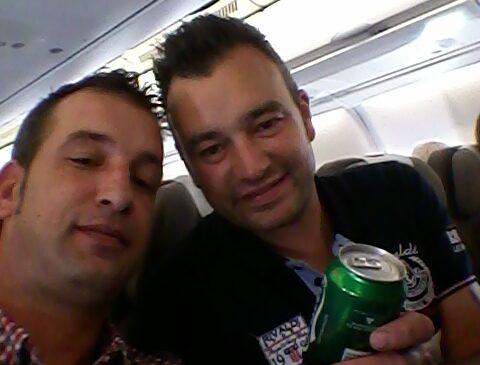
The life of a nomad is better with family. Alberto and his brother, Jose Medina, share a moment while en route to the World Dairy Expo in 2015, a rare bit of downtime in a schedule packed with international travel.

The Visionary with Feet on the Ground

Alberto’s insights about the industry come from an unmatched global perspective. His philosophy about cattle evaluation challenges conventional wisdom: “Wideness is the true type of cow. Modern cows have to have a wide chest, wide open rib, wide rumps, much more than being long and tall.” But he presents these views as contributions to ongoing conversation rather than final pronouncements, inviting discussion rather than demanding agreement.

The technical challenges of transitioning between different regional standards reveal the complexity of his work. “Still hard to adapt when you have 2 months in North America and go back straight to a show in Italy. Not so easy to change your mind that quick on… getting the udders too full,” he notes. This kind of cultural and technical switching demonstrates the mental agility required to succeed at his level.

The focus of a master craftsman. Alberto Medina demonstrates the precision and skill that make him sought-after worldwide, here fitting a show cow for Blue Chip at Australia’s International Dairy Week (IDW) in 2020.

His advice for aspiring professionals reflects both extensive experience and fundamental optimism: “Travel and see other ways of showing because every country is different and there are so many ways to do the same thing.” It’s counsel about embracing the world with curiosity and openness—life philosophy disguised as career guidance.

The Honest Realist

When I ask about his reputation for being universally liked, Alberto cuts through diplomatic nonsense with refreshing candor: “I don’t think so! Some people love me, but also many on the other side.”

That honesty is quintessentially Alberto. He’s not trying to convince anyone he’s perfect—just being genuine about the realities of high-level success. Yes, most people genuinely enjoy working with him. Yes, his consistent achievements have created some resentment. Both things can be true, and Alberto’s comfortable with that complexity in ways that reveal deep emotional maturity.

Dreams Still Dancing

Dreams realized across borders. Alberto proudly leads Marsella to Grand Champion honors at Agro Expo Bogota, Colombia, a testament to his ongoing pursuit of excellence and the global impact of his expertise.

Even after achieving global recognition that most professionals can only imagine, Alberto maintains specific ambitions that keep him energized. “I’ve been in the middle of the ring at the end of the day at almost every show I’ve been in the world but Expo,” he admits with a smile. World Dairy Expo—the crown jewel of North American dairy shows—remains unconquered territory.

This perspective—always having meaningful goals ahead—might explain how someone maintains enthusiasm across decades of demanding travel and competition. The moment you think you’ve achieved everything is probably when excellence starts to fade. Alberto’s far too fascinated by what’s around the next corner to let that happen.

The passion that fuels the dream. Alberto shares a heartfelt embrace with the Grand Champion at a recent show in Ecuador. Victories like these, filled with joy and genuine affection, are the moments that power his pursuit of a World Dairy Expo title

The Living Proof

What strikes me most about Alberto Medina isn’t his unprecedented travel statistics or technical expertise, though both are extraordinary. It’s how he’s demonstrated that success and kindness aren’t mutually exclusive—that you can achieve global recognition while maintaining the values that make you genuinely likable.

In an industry that sometimes rewards sharp elbows over generous spirits, Alberto has built an international reputation on competence paired with character. Every airport conversation, every patient explanation of a technique, and every shared celebration of others’ achievements contribute to a legacy that transcends mere professional accomplishment.

Those fewer than 100 nights at home annually represent something profound: a commitment to relationships and excellence that has literally transformed an entire industry. Every clipping session becomes an opportunity to mentor. Every show becomes a chance to help someone else achieve dreams they might not have believed possible.

As young professionals watch Alberto work—whether in Auckland or Amsterdam—they see living proof that excellence doesn’t require ego. His patient teaching, infectious enthusiasm, and genuine investment in others’ success have redefined what global leadership can look like.

The next time you encounter perfectly prepared cattle in any show ring around the world, remember the man who’s probably logged more miles in service of our industry than anyone else, while somehow making the whole impossible journey look like the most natural thing in the world.

Alberto Medina’s greatest achievement isn’t any single championship or distance record. It’s proving that the most effective way to conquer the world is to help it succeed, one genuine relationship at a time. For aspiring professionals in any field, his example provides both inspiration and practical guidance: master your craft, treat everyone with respect, find joy in the journey, and remember that the best victories are always shared.

And somewhere tonight, Alberto is probably planning his next adventure, sharpening his clippers, and reminding everyone lucky enough to be around him that work stops being work when you love what you do and genuinely care about the people you do it with. That might be the most beautiful lesson of all.

Key Takeaways:

  • Embrace adaptability: Master working across diverse cultures, climates, and management systems rather than limiting yourself to one approach
  • Build strong, collaborative teams: Success depends on teamwork—”showing animals is not a one-person thing”
  • Practice genuine humility and kindness: Authentic relationships and respect open more doors than technical skill alone
  • Commit to continuous learning: Stay current with evolving techniques and technology throughout your entire career
  • Trust your professional intuition: Learn to identify potential that others might miss, even when conventional wisdom disagrees
  • Develop resilience for challenges: Accept that pursuing excellence involves logistical difficulties and personal sacrifices
  • Balance passion with realistic expectations: Understand the trade-offs required for global success, including limited time at home
  • Prioritize long-term preparation: Focus on consistent, year-round excellence rather than relying on last-minute efforts

Executive Summary

Alberto Medina, the most traveled cattle fitter in the dairy industry, embodies a unique blend of technical mastery, humility, and genuine charm that has made him a beloved figure across five continents. Born at Argomota Holsteins in Spain, Alberto’s career spans over three decades, with annual travels to 12-15 countries and participation in more than 30 shows worldwide—sleeping fewer than 100 nights at home each year. Renowned for his ability to adapt effortlessly to diverse cultures, feeding systems, and show standards, he builds lasting relationships through authentic kindness and collaborative spirit, all while maintaining top-tier performance that has led to multiple championship wins, including his work with Llinde Ariel Jordan, who successfully competed at 14 years old. What sets Alberto apart isn’t just his unmatched global experience or technical expertise, but his rare combination of professional excellence and personal warmth—proving that in an industry where egos often clash, success and genuine likability can coexist beautifully, making him not just the most traveled fitter in the business, but quite possibly the most respected.

Learn More:

  • 7 Things You Must Do To Win In The Show Ring – This article provides a tactical checklist for aspiring showmen. It breaks down the key preparations and mindset, offering practical strategies to translate the professional excellence demonstrated by Alberto Medina into your own repeatable success in the ring.
  • The 21st Century Guide to Marketing Your Genetics – Moving from individual skill to business strategy, this piece explores how to build a powerful brand around your herd’s genetics. It reveals modern methods for capitalizing on show ring success to create long-term value and market influence.
  • Is It Time To Rethink The Perfect Dairy Cow? – This forward-looking analysis challenges breeders to consider the future of dairy type. It complements Alberto’s story by examining the evolving standards and economic realities that will shape the champion cows of tomorrow, prompting readers to innovate their breeding strategies.

The Sunday Read Dairy Professionals Don’t Skip.

Every week, thousands of producers, breeders, and industry insiders open Bullvine Weekly for genetics insights, market shifts, and profit strategies they won’t find anywhere else. One email. Five minutes. Smarter decisions all week.
NewsSubscribe
First
Last
Consent

The Ashes of Meadolake: How Greed and Arson Burned a Holstein Empire

The barn doors were locked from inside. 60 cattle burned alive. And Gordon Atkinson just sat in his Cadillac watching his fraud unfold.

While his neighbours stood helpless in the snow, he just sat in his Cadillac and watched it all burn. No panic. No action. This wasn’t just a tragedy; it was a business transaction. Our new article explores the chilling true story of the Meadolake Holstein fraud.

You know that sick feeling in your gut when you drive past a neighbor’s place and something is just… wrong? That’s what happened to one of Gordon Atkinson’s neighbors on February 27, 1981—one of those brutal Ontario winter mornings where the cold cuts right through your coveralls and you can barely feel your fingers.

A neighbor was flashing his headlights, trying to flag down Gordon as he headed north on that county road about a mile and a half from his rented barn. When he pulled alongside, the neighbor shouted, “Look behind you—I think that’s your barn on fire!”

Gordon’s response should’ve been the first red flag. “Can’t be. I’ve just come from there.”

But when he turned that Cadillac around, the ugly story truly began.

According to E.Y. Morwick’s detailed account in his livestock records, the flames were shooting up like angry fingers against that February sky, smoke billowing black and thick enough to taste. You could smell it for miles—that god-awful stench of burning flesh that any livestock producer knows means animals are dying. Sixty head of cattle were trapped inside, bawling in absolute terror while neighbors stood helpless in the snow, hands jammed deep in their pockets.

Here’s what still gives me the chills after all these years: those barn doors were locked from the inside.

Gordon Atkinson never got out of his car. Just sat there watching his cattle burn to death. When someone asked him about it later, Morwick records his response as bone-chilling: “According to Gord, it was no big deal. The calves were insured, after all, for $50,000 apiece.”

That reaction should’ve been everyone’s wake-up call. But this was the height of the Holstein boom—when million-dollar cattle sales were making headlines and everyone was drunk on genetic dreams. What we didn’t realize then was that we were watching the beginning of one of the most devastating agricultural fraud schemes in Canadian history.

The Golden Years That Bred a Monster

The air was thick with sawdust and million-dollar dreams. In the 1970s Holstein boom, a cow wasn’t just livestock—she was a status symbol. But where is the line between investment and insanity?

To understand how Gordon Atkinson became the cautionary tale he is today, you need to understand the world he entered. The 1970s and early ’80s were… well, they were intoxicating times in our business. And I mean that literally—the whole industry was high on its own success.

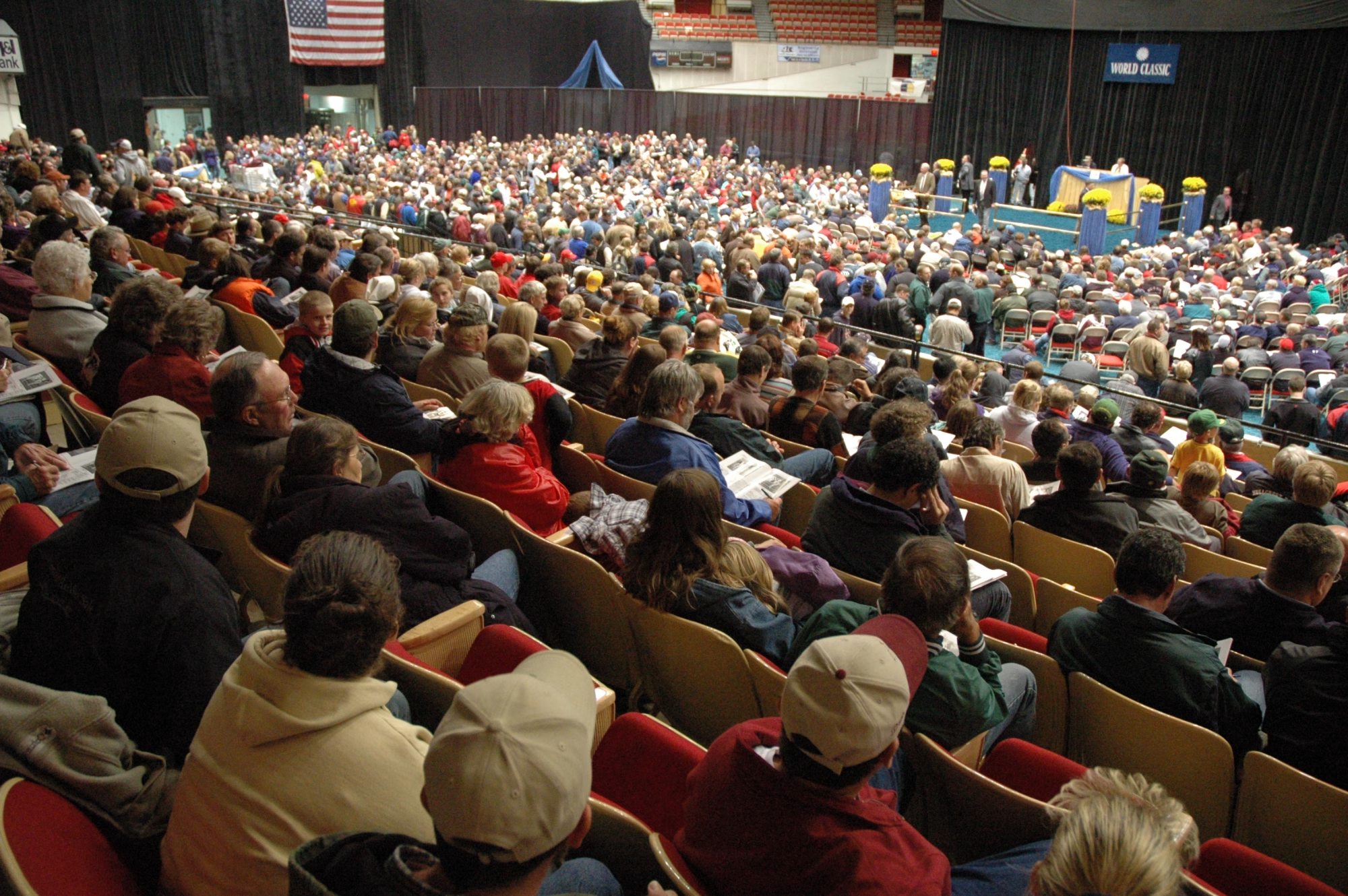
This wasn’t just farming anymore. This was theater, high-stakes theater played out in auction barns where the air hung thick with sawdust and tension, where the rapid-fire chatter of auctioneers mixed with the rustle of sale catalogs and the scratch of pens recording bids that would make your land payments look like pocket change.

The foundation for all this craziness had been building since Michael Cook first brought Holstein-Friesian cattle to Ontario back in 1881. But by the ’70s, something fundamental had shifted.

The focus moved from the milk tank to the marketing budget. From 4 AM milking routines to show-ring prestige. Operations like Romandale Farms—you remember Stephen Roman, the uranium guy—they turned cattle sales into major events. Dave Houck, Roman’s superintendent, was brilliant at it. Their nineteen production sales systematically raised the bar, creating this culture where the price you paid for a cow mattered dramatically more than the milk she’d produce.

The numbers from that era are still staggering. Hanover Hill Holsteins’ 1972 dispersal grossed over $1.1 million for 286 head. Just one cow family—Johns Lucky Barb and her progeny—brought $350,500. These weren’t transactions; they were declarations of war, fought with checkbooks instead of common sense.

What’s really interesting here is how the tax codes were fueling this whole thing. Section 46 of the U.S. Internal Revenue Code, for example, created a massive tax shelter for wealthy investors. Non-agricultural money was pouring into the North American Holstein market like water through a burst dam. Wealthy guys were offsetting livestock costs against personal income, creating artificial demand that sent prices into orbit.

But here’s the thing that strikes me about that whole period—underneath all the speculation, there was real genetic progress happening. Milk production per cow was genuinely improving through better breeding, management, and nutrition. That gave legitimacy to what was becoming increasingly detached from reality at the top end.

When you’re dealing with that much money and that much ego, it creates pressure. And pressure has a way of revealing what people are really made of.

The Mystery Man with Deep Pockets

He didn’t look like a farmer. He drove a Cadillac, wore expensive suits, and wrote checks that made veterans nervous. Who was Gordon Atkinson, and where did the money really come from?

What made Gordon so fascinating—and ultimately so dangerous—was how he seemed to materialize out of thin air with unlimited cash. In our business, where everyone knows everyone and family histories go back generations, Atkinson was this enigma in expensive suits, driving luxury cars to cattle auctions and writing checks that made seasoned veterans nervous.

His buying pattern wasn’t typical herd building. It was performance art, each purchase louder than the last. In 1968, he outbid everyone at the Brubacher 300 Sale to claim Seiling Perseus Anna for $37,500. Two years later, he set a record paying $40,000 for her daughter, Heritage Rockanne, at the Orton Eby dispersal—and this was after outbidding Stephen Roman himself.

Get this—on the same day, he casually added Brubacher Supreme Penny for $23,000 and Seiling Adjuster Pet for $15,500. The man was buying cattle like most of us buy feed. He just kept writing checks.

The coffee shop talk about his money was constant. Some said he’d inherited from a bachelor uncle. Others figured he’d made a killing in Toronto real estate during the city’s boom. Still others thought he was leveraged to the hilt with the banks.

What bothered people, according to Morwick, was that he bought cattle “regardless of their profitability.” That’s not how dairy farmers think, you know? We’re always calculating feed costs, breeding programs, and milk premiums. But Gordon was buying prestige, not production potential.

At the Lingwood Dispersal in 1973, he paid $50,000 for Llewxam Nettie Piebe A. In 1979, at the Romandale Dispersal that drew buyers from around the world, he paid $66,000 for Romandale Telstar Brenda—and this was after her son had just sold for a world-record $400,000.

The problem with building your reputation on image alone is that image is hungry. It always needs feeding. Each spectacular purchase raised the bar for the next one. What looked like confidence from the outside was actually a trap—a financial treadmill that would eventually demand payment in ways nobody imagined.

From what I’m seeing on farms today, that same pressure still exists. Maybe not at the Atkinson level, but it’s there… the temptation to chase the next big genetic investment, the next show-ring star, the next social media sensation. The tools have changed, but the fundamental psychology remains exactly the same.

When Success Became Suspicious

First, a ‘mysterious’ fall. Then, a fire. When high-value cows started dying, the explanation was always the same: ‘She was heavily insured.’ For some, a dead cow was becoming more profitable than a living one.

By the early ’80s, the economics were catching up with Gordon’s spending habits. Even the most expensive cattle weren’t generating the returns needed to justify their purchase prices. That’s when the “accidents” started happening.

Seiling Perseus Anna, his $37,500 foundation cow, was supposed to be the cornerstone of his genetic program. Instead, she became the first victim in what would become a disturbing pattern. During what should have been a routine embryo flush at ViaPax—you know, the technology that lets elite cows produce dozens of offspring—Anna had a “mysterious” fall and had to be destroyed.

The Holstein community is tight-knit. Word travels fast, and Anna’s death raised eyebrows throughout the industry. But Gordon’s response was characteristically cold: she was heavily insured.

Then came that February fire I mentioned earlier. Sixty head dead, including those fifteen Citation R. sons that Gordon had been promoting as “maternal brothers” of a $400,000 bull. The animals were insured for $3 million. Three million dollars. Let that sink in for a minute.

What really bothered the neighbors: two years later, lightning struck twice. Another fire, more dead cattle, another insurance claim. In any other business, you might chalk it up to bad luck. But in the pressure-cooker world of elite Holstein breeding, where every animal is catalogued, valued, and watched, two major fires at the same operation within two years? That’s when whispers started.

The mysterious deaths weren’t limited to the fires. Farlows Valiant Rosie, the cow Gordon bought after she was voted All-American 4-year-old in 1984, was supposed to be his show string star for 1985. She started out right, topping her class at the Ontario Spring Show, but at the Royal, she slipped to Honourable Mention, which didn’t help her value.

Before long, she died of “mysterious causes.” Once again, the insurance company wrote a check that more than covered Gordon’s investment.

What struck me about these incidents was their timing. Each death seemed to happen just when an animal was failing to live up to its expensive price tag. Gordon had discovered something that would prove irresistible to his increasingly desperate situation: dead cows were often worth more than living ones.

The same pressures that drove Gordon to those desperate measures… they haven’t gone away. When you’ve got a genomic star that isn’t living up to the hype, when you’ve invested heavily in an animal that’s not performing, when the social media buzz dies down and you’re left with the harsh reality of production records… that’s when character gets tested.

The Paper Trail That Built a Criminal Empire

Give me the values I want… and I’ll look after you.’ For a promised $100,000, an appraiser sold his integrity. Trust is the currency of farming—what happens when it’s sold to the highest bidder?

Gordon’s scheme gets really sophisticated here, and honestly, it’s something every producer should understand because the vulnerabilities he exploited… well, they still exist today in different forms.

The string of fires and suspicious deaths were just the setup for the main event: a multi-million dollar insurance fraud that exploited the very system designed to protect against it. Think about how livestock insurance works—companies don’t employ Holstein experts; they rely on accredited appraisers to determine the value of deceased animals.

All Gordon needed was to find someone willing to sell their professional integrity.

He found that person in Vernon Butchers, an appraiser from Acton who owned All-Star Holsteins. These guys had known each other practically all their lives, had even partnered in cattle. One of the animals they owned together was Killdee Elevation Edie, the All-American 5-year-old of 1983.

The corruption was breathtakingly direct.

When Royal Insurance demanded proof of value for the cattle lost in that first fire, Gordon’s proposition was blunt: “Give me the values I want, in line with what the cattle were insured for, and I’ll look after you.”

When Butchers asked how he’d be “looked after,” Gordon’s response was clinical: “Fifty thousand dollars today and another fifty when I get the insurance money.”

For a promised $100,000, Vernon Butchers agreed to provide the fraudulent appraisals Gordon needed. With those inflated valuations in hand, Gordon submitted his claims. The insurance company, armed with what appeared to be legitimate expert testimony, cut a single check for over two million dollars.

That’s not just fraud—that’s turning the entire system inside out, using the industry’s own trust mechanisms as weapons against itself.

Here’s the scary parallel: Gordon Atkinson needed a corrupt appraiser to inflate value on paper; today, an algorithm with a limited data set can do the same thing with a single genomic report. When genomic companies can inflate expected breeding values based on limited data, when social media can create artificial demand for cattle that haven’t proven themselves in the barn… we’re dealing with the same fundamental vulnerabilities Gordon exploited.

The Wire That Brought Down Everything

‘It’s easy…’ The words that sealed his fate, captured on an OPP wiretap. The trap was set, and in a moment of stunning arrogance, he walked right into it.

The Royal Insurance Company’s patience finally ran out. Faced with mounting losses that defied all statistical probability, they moved beyond claims processing to active investigation. That’s when they contacted the Ontario Provincial Police, and the OPP’s Anti-Rackets Squad took over.

The police used a classic technique: a court-authorized wiretap. To test their suspicions, they orchestrated a sting operation with devastating effectiveness. A Wisconsin breeder, cooperating with authorities, called Gordon with a pointed question: how do you kill an insured cow to collect the money?

In a moment of stunning arrogance, Gordon walked directly into the trap. According to Morwick’s account, his advice was chilling: “It’s easy. Use Succinylcholine. Inject it under her tail. Nothing to it.”

Those words, captured on tape, were more than just instructions—they were a confession to criminal knowledge and intent. But the most devastating blow came from within his own family.

His son John, who’d served as herdsman at Meadolake, finally reached his breaking point. For years, John had turned a blind eye to increasingly suspicious activities. There was even the night he told his wife he was going out with the boys—not for pleasure, but because he suspected his father and brother George were “up to something” and he needed an alibi. The next morning, Gordon’s new Cadillac was found torched in a bad part of London.

In September 1986, when John was asked to sign an insurance claim for Farlows Valiant Rosie, he refused. “I won’t do it,” he told his father. Gordon’s response revealed how completely the criminal enterprise had consumed him: “You’ll do it or get the hell out.”

That day, John contacted the OPP anti-rackets squad and agreed to cooperate. The family’s reaction was swift and violent. George tried to run John down with his car. Then one night, Gordon appeared at John’s home while his daughter-in-law was alone with her two young sons. His message was delivered with chilling precision: “Keep talking to the police and I’ll poison your kids. And I know how to do it.”

“It was a hell of a note. Father turning on son, brother on brother. Right out of the Bible.”

— Barrie neighbor

When the Gavel Falls

The exposure of the fraud led to total collapse. Gordon and his son George were charged with fraud related to obtaining $12 million through various schemes, making it one of the largest agricultural fraud cases in Canadian history. The charges were documented in Information #0710-87-03388.

Interestingly, despite the suspicious pattern of fires, the charges focused on fraud rather than arson. Prosecutors understood that proving insurance fraud would be easier than establishing arson beyond a reasonable doubt, especially with recordings of Gordon explaining exactly how to kill insured livestock.

The sentence was controversial. Despite the massive scale of their crimes, the Atkinsons negotiated a plea deal that allowed them to avoid prison time. They received suspended sentences with probation orders requiring restitution. Many felt the punishment didn’t match the magnitude of their deception.

But the criminal case was only one front in their legal battles. The Royal Insurance Company filed a civil lawsuit seeking $5 million in damages. Overwhelmed by court-ordered restitution and massive civil claims, the Atkinsons declared bankruptcy.

The bank seized everything—Meadolake Farm itself and the entire herd that had been both the foundation of their rise and the instrument of their downfall.

The Final Humiliation

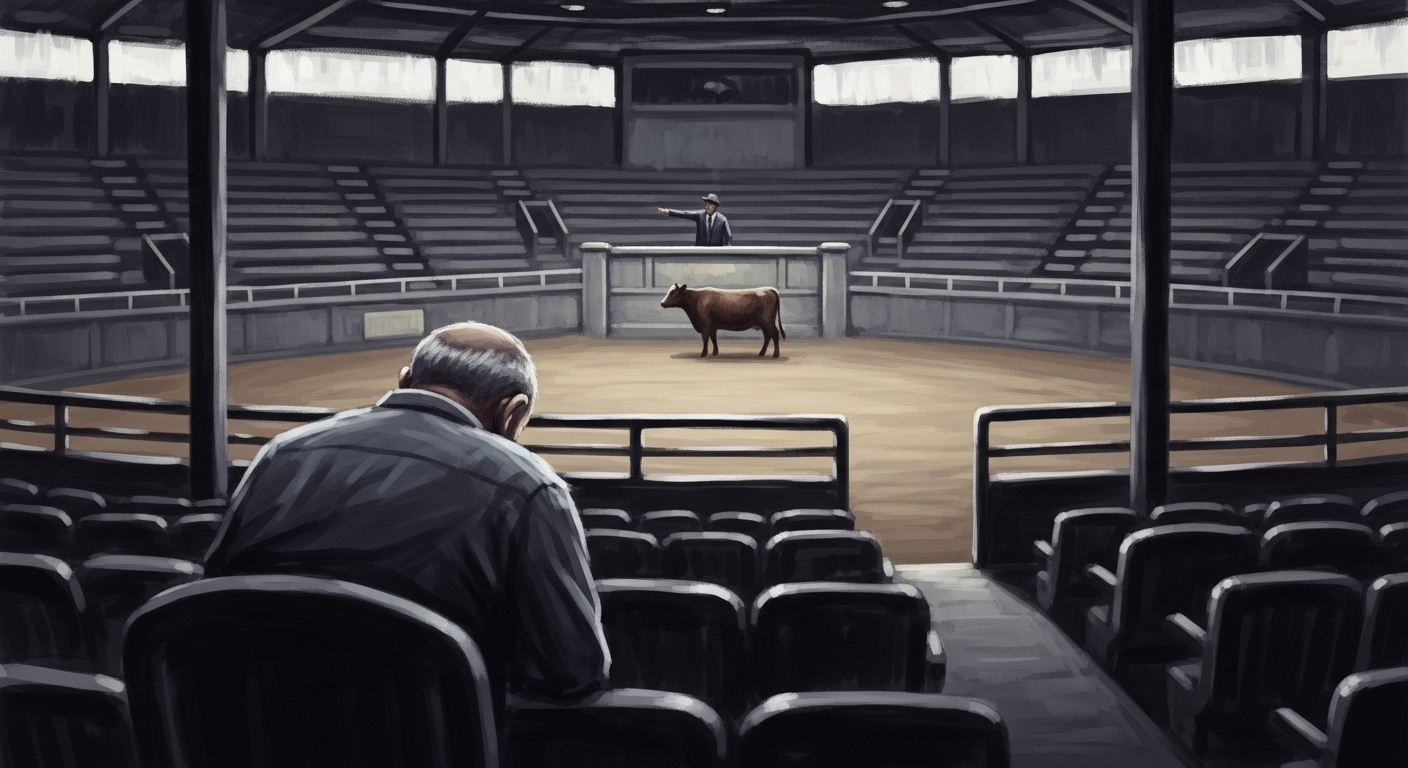
The final humiliation. In the same ring where he once set records, his herd was sold for ‘mere peanuts.’ The spectators laughed. A brutal market correction that stripped away the illusion and revealed the truth.

The ultimate symbol of Gordon’s fall played out at Brubacher’s—the same auction house where he’d once made his reputation with record-setting purchases. The bank-ordered dispersal sale was the complete reversal of fortune, a public stripping away of the illusions that had sustained his empire.

The cattle that had once commanded astronomical prices based on fraudulent appraisals now faced the harsh judgment of the open market. According to Morwick’s account, they sold for “mere peanuts”—a devastating market correction that exposed the hollow foundation of Gordon’s entire enterprise.

Perhaps most poignantly, Gordon attended the sale, watching his life’s work dismantled lot by lot. When he thought a cow was selling too cheaply, he’d rise from his seat, wave his arms, and urge the crowd to bid higher. The spectators laughed. “Why’s he doing that?” they asked. “The cows belong to the bank, not to him.”

Shortly after this final humiliation, Gordon Atkinson’s story reached its conclusion. He died of a heart attack at the Toronto home of Mona Cimarone, a woman who’d been his housekeeper during better times. Even in death, controversy followed—when she found his body, she called George, who staged the scene to make it appear Gordon had died in his car at a Toronto hospital.

The Ghost of Meadolake: A Legacy for Today’s Industry

The Gordon Atkinson case isn’t just a historical curiosity—it’s a mirror reflecting vulnerabilities that still exist in our industry today, maybe even more so.

What strikes me about this case is how it exploits the very foundations of agricultural business: trust, reputation, and the often-intangible value of genetics. Look at what’s happening in our industry right now. We’re seeing animal valuations that would make those 1970s prices look conservative. When I see genetic companies pushing astronomical valuations based on genomic predictions with limited daughter proof, I think about Gordon’s fraudulent appraisals.

Genomics has created new opportunities for the same kind of manipulation. When a bull’s genomic evaluation can fluctuate wildly based on daughter data… when genetic defects can be hidden until after expensive matings are made… when marketing can create artificial demand divorced from actual genetic merit… we’re right back in Gordon Atkinson territory.

From what I’m seeing on farms across Ontario—and talking to colleagues in other regions and countries—social media is amplifying marketing messages in ways that make traditional promotion look quaint. When I watch influencers promoting cattle with little regard for actual performance data, I remember how Gordon bought cattle “regardless of their profitability.”

The scary part? Today’s technology makes fraud both easier to commit and harder to detect. Digital records can be manipulated. Genomic data can be cherry-picked. Social media can create artificial demand faster than traditional marketing ever could.

The same speculative culture that enabled Gordon’s crimes is still with us. We’re still measuring success by sale prices rather than sustainable profitability. We’re still more impressed by marketing than by long-term performance records.

Young farmers, especially, are vulnerable to the same kind of thinking that drove Gordon Atkinson—that spectacular purchases and high-profile acquisitions are the path to respect and success in our industry. When I see operations leveraging their entire future on genetic investments that exist more on paper than in the barn… when I watch farmers mortgaging everything to chase the latest genomic trend… that’s when I think about Meadolake.

Edward Young Morwick, the Holstein historian who documented this case, captured the essential lesson perfectly:

“In the high-pressure world of show cattle, ego always gets ahead of responsibility.”

Gordon Atkinson’s career was the embodiment of this maxim. For today’s dairy producers, this story serves as a powerful reminder that the most valuable asset in our business isn’t a champion cow or a record-setting bull—it’s integrity.

The complete collapse of value seen in Meadolake’s final dispersal sale, where cattle once valued in the millions sold for “peanuts,” stands as an enduring symbol of what happens when reputation is built on deception rather than genuine achievement.

The Atkinson case belongs to a grim fraternity of agricultural crimes that continue to plague our industry. The pattern remains consistent: where there are high-value, transportable assets like pedigree livestock, there will always be those willing to exploit trust for criminal gain.

What’s happening across the industry today is that we’re creating new vulnerabilities while the old ones persist. The pressures that created Gordon Atkinson are still with us, just in different forms. In an industry where reputation spans generations and trust forms the foundation of every transaction, those who choose the path Gordon walked don’t just risk their own destruction—they threaten the very values that make our dairy community strong.

What we can learn from Gordon’s downfall is that the most dangerous moment comes when the pressure to maintain an image becomes stronger than the commitment to honest business practices. In our industry, where reputation spans generations, that’s a lesson we can’t afford to forget.

The legacy of Meadolake Farm isn’t found in the ashes of burned barns or the fraudulent appraisals that once inflated paper values. It lives in the permanent lesson that authentic success in agriculture must be built on substance rather than spectacle, integrity rather than image, and responsibility rather than ego.

That’s a lesson as relevant today as it was forty years ago… maybe more so, given the new technologies and pressures we’re dealing with. The “Black Days at Meadolake” stand as a testament to what happens when we lose sight of what really matters in this business we all love.

The Sunday Read Dairy Professionals Don’t Skip.

Every week, thousands of producers, breeders, and industry insiders open Bullvine Weekly for genetics insights, market shifts, and profit strategies they won’t find anywhere else. One email. Five minutes. Smarter decisions all week.

NewsSubscribe
First
Last
Consent

When Wall Street Invaded the Barn: The Untold Story of Dairy’s Wildest Gold Rush

Stop believing market disruption is unpredictable. 1970s tax code shows how smart dairy operators capitalize when external forces reshape everything.

Section 46 of the Internal Revenue Code—the seemingly innocuous tax provision that accidentally triggered the most explosive era in Holstein history.

In 1968, a single line buried deep in Lyndon Johnson’s tax code accidentally triggered the most explosive era in Holstein history—an era when Manhattan millionaires bid quarter-million dollars for cows when farmers became overnight millionaires, and when the collision of high finance and Holstein genetics created fortunes and destroyed lives in equal measure.

The morning mist still clung to the rolling hills of Batavia, New York, when John Sullivan first heard the news that would change everything. It was 1972, and Sullivan—a Cornell-trained farm boy turned Harvestore silo salesman—was about to discover that buried within the labyrinthine Internal Revenue Code lay a treasure map to riches beyond his wildest dreams.

Section 46 of the Internal Revenue Code had slipped into law four years earlier as quietly as a barn cat stalking mice. The agricultural press barely noticed it. Urban dwellers knew nothing of its existence. Even rank-and-file dairy farmers shrugged their shoulders, figuring it had little to do with them. However, for a select few who understood the intricate dance between legislation and opportunity, Section 46 hit “like a baseball bat between the shoulders.”

What Johnson’s Democratic government had intended as a modest tax shelter for the wealthy had accidentally unleashed something unprecedented: the investment purchase credit, a mechanism that allowed taxpayers to offset the costs of livestock investments against their personal income. The wealthy could purchase a dairy cow with a nominal down payment and a promissory note, and the tax credits they received during the payment period would actually cover the cost of the animal.

THEN vs. NOW: External Forces Reshaping Dairy

1970s: Section 46 tax legislation created overnight investor frenzy, with cattle prices jumping 500-1000% in elite markets.

2025: Environmental regulations, carbon credit markets, and sustainability mandates are driving similar rapid changes in dairy valuations and operational strategies.

The Making of a Holstein Empire

John Sullivan embodied the American dream wrapped in coveralls and ambition. The eldest of nine children from a Guernsey farm in Holcomb, New York, he had worked his way through Cornell University, milking cows at dawn and studying animal husbandry until midnight. His hands bore the calluses of honest labor, but his mind crackled with the electricity of entrepreneurial vision.

By the early 1970s, Sullivan’s Agri-Systems business was thriving, selling Harvestore silos across New York State with a fervor that had earned him four national awards and recognition as one of America’s “Outstanding Young Men.” But his partnership with Glenn Tripp and the formation of Leadfield Associates would etch his name into Holstein history.

The transformation was breathtaking. By 1974, Leadfield Associates had become known as the “big buyers,” their appetite for elite Holsteins seemingly insatiable. They swept across the United States and Canada like collectors acquiring masterpieces, assembling a constellation of genetic excellence at Tripp’s farm west of Batavia.

Sullivan’s philosophy was deceptively simple yet revolutionary: never buy a show cow without a complete pedigree. In his view, “the most expensive cows were those in the $2,000 price range”—animals that looked impressive but lacked the genetic foundation to justify their cost. He demanded that the dam of each purchase be either Excellent or have several generations of Very Goods behind her.

The strategy paid dividends that defied belief. At the 1972 Wintercrest Invitational Sale, Sullivan partnered with Stuart Hutchins to purchase Windercrest Sunlea for $20,000—a sum that made headlines but would soon seem quaint. A year later, they shattered that record by acquiring five members of the legendary Craigo family from Skagvale Farms in Washington State, including Craigo Telstar Bonaventure, who combined with her dam to become the first 95-point dam-daughter combination in breed history.

But their purchase of Md-Maple Lawn Marquis Glamour truly announced their arrival in the Holstein stratosphere. The 1971 All-American four-year-old commanded $74,000—the second-highest price ever paid for a North American dairy cow at that time. When she walked into their barn, heavy with a calf by the legendary Osborndale Ivanhoe, Sullivan and his investors weren’t just buying a cow; they were purchasing a piece of Holstein immortality.

THEN vs. NOW: Genetic Evaluation and Documentation

1970s: Sullivan required complete pedigrees and Excellent/Very Good classifications before purchase—revolutionary thinking for the era.

2025: Genomic testing, DNA verification, and comprehensive health records are standard requirements, yet many producers still overlook the fundamentals Sullivan championed.

The Dreamstreet Dynasty

While Sullivan was building his empire in upstate New York, 150 miles south in Walton, a failed real estate broker named George Morgan was about to stumble upon the opportunity of several lifetimes. Morgan’s story reads like a financial thriller wrapped in the wholesome packaging of rural America.

Born and raised in Scotch Plains, New Jersey, Morgan had fallen in love with Holsteins as a boy on his uncle’s farm. He devoured the Diamond Jubilee Edition of Holstein History until he could recite pedigrees like prayers, covering the walls of an unheated room in his childhood home with the bloodlines of Dunloggin animals. That passion had sustained him through a grueling schedule at Rutgers University—rising at 4 a.m. to milk cows, commuting to classes, and returning home at 11 p.m.

By 1965, Morgan was living his dream on a Walton, New York farm, milking a modest herd while drowning in debt. The harsh reality of dairy farming—the relentless daily grind, the thin margins, the constant worry about making ends meet—had worn him down. With five bright children to educate and bills mounting, he made the pragmatic decision to enter real estate.

The timing couldn’t have been better. From 1969 to 1973, Morgan earned over one million dollars in commissions in four short years, primarily selling rural properties to New York City businessmen seeking weekend retreats. But his real estate empire crumbled overnight when the 1973 oil crisis made the drive from Manhattan to the countryside prohibitively expensive.

Suddenly, Morgan had time on his hands and a burning question: How could anyone justify paying astronomical prices for Holstein cattle? The answer lay buried in the U.S. tax code, and Morgan spent months studying the intricacies of the investment purchase credit and rapid depreciation systems.

The mechanics were elegant in their simplicity. An entrepreneur could purchase a cow for $2,000, charge an investor $3,000, and guarantee replacement if the animal died. The investor would pay $300 down and receive an immediate $300 tax rebate from the government. They could then depreciate the cow by 22% in the first year and lesser amounts thereafter. The entrepreneur held the investor’s note for the unpaid balance while owing a similar note to the farmer who sold the original cow.

In 1972, Morgan organized his first investor group, selling shares to six New York businessmen he had met during his real estate days. The announcement that he was open for business marked the beginning of what would become the largest and most influential cattle investment operation in history.

The Golden Years of Dreamstreet

Partnering with Certified Public Accountant George Teichner, Morgan launched Dreamstreet Holsteins, Inc., and the results were nothing short of spectacular. By 1979, they managed 1,200 cows across 18 farms organized into six-farm “satellites,” each with its own manager. They operated a heifer farm where employees raised calves from weaning to two years of age before returning them to their farms of origin.

The Holstein-Friesian World captured the phenomenon in a 1975 article titled “Who Is George Morgan?” The publication marveled at a man who had purchased over half a million dollars worth of registered Holsteins in just two years, who paid $16,000 for the top lot at the Vermont State Sale, who spent $104,800 for seven head at the Royal Erinwood Sale.

Morgan’s success stemmed from his deep understanding of both genetics and marketing. He was particularly successful with daughters of Round Oak Rag Apple Elevation, breeding more than 40 Excellent-scoring offspring—more than any other breeder, according to Select Sires’ George Miller. One of his most celebrated animals was Dreamstreet Rorae Pocohontis, whose daughter She-Mar Highmark Hiawatha sold for $530,000 in the Designer Fashion Sale of 1983.

The Designer Fashion Sale of 1983, where She-Mar Highmark Hiawatha sold for $530,000—representing the pinnacle of an era when Holstein genetics commanded prices rivaling Manhattan real estate.
The Designer Fashion Sale of 1983, where She-Mar Highmark Hiawatha sold for $530,000—representing the pinnacle of an era when Holstein genetics commanded prices rivaling Manhattan real estate. Gina was the first Ex-97 point cow to sell at public auction in the US since Barb sold in the Hanover Hill Sale in November 1972.

But Morgan’s crowning achievement came when he operated his own Tyrbach Farm after selling Dreamstreet. There, he bred Tyrbach Elevation Twinkie, a cow that would make history as the first to win grand championships at all three national shows and the Royal Winter Fair in 1986. Brigskill Hostess Twinkle’s dam had cost Morgan just $1,000 as part of a commercial herd purchase from Ray Briggs. When bred to Elevation, she produced a daughter worth exponentially more.

Tyrbach Elevation Twinkie, the first cow to win grand championships at all three national shows and the Royal Winter Fair in 1986. Bred by George Morgan from a $1,000 commercial purchase, she epitomized the genetic gold hidden in plain sight.

The irony wasn’t lost on Morgan. “God makes cows every day” was his philosophy when offered $100,000 or more for an animal. He understood that in the investor era, the art wasn’t in keeping cattle but knowing when to sell them.

When a Beatle Bought Holstein Gold

John Lennon in 1974, around the time he was investing heavily in George Morgan’s Dreamstreet Holsteins operation. The former Beatle’s cattle investments, including the $56,000 purchase of Spring Farm Fond Rose that later sold for $250,000, exemplified how the investor era’s tax advantages attracted global celebrities to Holstein genetics—proving that when even rock stars were buying into dairy breeding, American agriculture had truly captured the world’s attention.

Perhaps nothing illustrated the mainstream appeal and financial magnetism of the investor era quite like the day John Lennon of The Beatles decided to stake his fortune on Holstein genetics. The former Beatle “threw so much money in the pot that they had to get rid of some of it very quickly,” according to Edward Young Morwick’s account.

Morgan and Teichner used Lennon’s investment to purchase Spring Farm Fond Rose for $56,000—a heifer calf by Matt out of Spring Farm Citation Rosetta (EX). The investment proved as golden as Lennon’s musical touch. When they sold Rose in the Summer Dreams by Dreamstreet Sale of 1980, she commanded $250,000—representing a 347% return in just a few years.

The sight of a Beatle’s money flowing into Holstein breeding programs wasn’t just a curiosity—it was a validation that these tax shelters had transcended agricultural circles to capture the imagination of global celebrities. When the man who wrote “Imagine” was imagining Holstein profits, you knew something extraordinary was happening in American agriculture.

This celebrity endorsement added another layer to Dreamstreet’s mystique, proving that Morgan and Teichner weren’t just attracting wealthy New York businessmen—they were drawing investors from the highest echelons of popular culture. It was a perfect symbol of an era when the boundaries between Wall Street, Main Street, and even Abbey Road had completely dissolved in the pursuit of bovine gold.

THEN vs. NOW: Market Timing and Liquidity

1970s: Morgan capitalized on knowing when to sell at peak market demand, recognizing cattle as financial instruments.

2025: Modern dairy producers face similar decisions with genomic young sires, export markets, and equity partnerships—timing remains everything.

Wall Street Meets Holstein Street

The unlikely marriage of Wall Street finance and Holstein genetics reached its peak when five stockbrokers from the same Manhattan firm created Hilltop-Hanover Farm, proving that cattle investments had captured the imagination of America’s financial elite.

The most unlikely chapter in this saga unfolded at Hilltop-Hanover Farm in Yorktown Heights, New York, where five stockbrokers from the same Wall Street office decided to take their Holstein investments to the next level. Stanley Cheslock, B. Giles Brophy, John Knight, Frank Sands, and John Sites had all purchased cattle through Dreamstreet’s investment programs, but they wanted something more tangible than shares in a distant herd.

Dave Younger, the legendary manager who had spent decades perfecting his craft with Guernseys and draft horses, convinced the group to purchase the former Christal estate and develop an elite Holstein operation. The vision was audacious: Wall Street money would create a showcase herd combining the best genetics available with the best management possible.

The results spoke for themselves. A 1977 classification found 41 head averaging 88.7 points, with 20 Excellent and 20 Very Good animals. Among their stars were Burley Bootmaker Valid, Sterk PA Millie, Cedarlyn Audels Anta, Thonyma Elevation Selma, and Hillranch Fond Matt Jean. By the early 1990s, they had bred and developed over 50 Excellent cows.

Younger’s management philosophy was deceptively simple: “First, you have to take good care of the cattle. It is especially important to take extremely good care of every calf that’s born. The calves are the payback. Next, you have to promote the investors’ cattle and, most importantly, you have to show them a little income from time to time”.

The formula worked brilliantly. Their 1990 partial dispersal totaled $1.79 million on 180 head, making it the highest-grossing Holstein sale of the year. Twenty-two of the animals were offspring of Brigeen Hanover Debra, and the family commanded premium prices that reflected years of careful breeding and promotion.

The Rise and Fall of Jack Stookey

Perhaps no story from the investor era is more emblematic of its promise and perils than that of Jack Stookey. Jack, the youngest of three sons from Leesburg, Indiana, possessed the golden touch that his mother, Mary, believed could do no wrong. His older brother George had discovered Fluoristan—the substance in toothpaste that prevents cavities—and sold his patent to Proctor & Gamble for a fortune. When Jack’s ambitious ventures eventually crumbled, brother George stepped in to save the family farm.

Jack’s early life read like an all-American success story. A track and field star in high school, he earned a scholarship to Wayland Baptist University, where he set state athletic records. Returning to Leesburg in 1968, he initially pursued automobile racing, designing and building his own cars from scratch. But when his mother protested, and his wife Darla put her foot down about the dangers, Jack redirected his competitive drive toward the family Holstein herd.

By 1980, the Stookey herd had reached its peak: 30 Excellent and 33 Very Good females on a 1,500-acre showplace. The timing of their dispersal—managed by Alvin Piper & Associates—couldn’t have been better. The 124 head averaged $4,381, with VI-Pond-View Bootmaker Lassi topping at $21,000.

But Jack’s vision extended far beyond the family farm. He would create an investor herd that assembled the best Holsteins North America had to offer, and he would make a fortune doing it. The investment purchase credit attracted individuals earning $500,000 annually and upward, and Indianapolis had plenty of people in that category. Soon, money flowed to Stookey from all over the country, including California, Florida, and Georgia.

His first major purchase, Georgian Quality Pat from Charlie Auger, proved to be one of his best—a Quality Ultimate daughter who could win at shows and produce exceptional offspring. His best year was 1983 when he took home the Premier Exhibitor banner at the Central National Show and came within a whisker of repeating at Eastern and Western Nationals.

Continental Scarlet-Red at the 1982 Royal Winter Fair, where she became the only cow ever to defeat the legendary Brookview Tony Charity. Her sons by Roybrook Telstar were among the tragic casualties of Stookey’s financial collapse.

Stookey’s attraction to red and white cattle led him to acquire Continental Scarlet-Red after her grand championship at the 1982 Royal Winter Fair—the only cow ever to defeat the legendary Brookview Tony Charity. He also owned three All-Americans or Reserves in 1983: Raylore Citamalt Ali, C Titi Kim Second Sheik, and C Clarene Citamatt Joan.

When the Dream Became a Nightmare

The Internal Revenue Service had been watching the livestock investment shelters with growing suspicion, and in the early 1980s, they began challenging many of them through audits. Jack Stookey found himself squarely in their crosshairs when they disallowed many of his tax loss claims and demanded payment of back taxes in six figures.

The financial pressure manifested in heartbreaking ways. On a Saturday afternoon in winter 1985, Stookey couldn’t pay his hired help, so he instructed them to load a trailer with bull calves destined for slaughter—animals he had previously planned to sell for breeding purposes. Among them were three sons of Continental Scarlet, two red and white, one black and white, all by Roybrook Telstar. An A.I. stud had already spoken for one of the red and white bulls, but Jack couldn’t wait.

The cruel irony of that winter was compounded by a devastating blizzard that buried 100 calf hutches in snow. The calves weren’t dug out in time, and they all suffocated, including 18 calves by Enhancer out of Scarlet. The image of those buried hutches became a metaphor for dreams smothered by circumstances beyond anyone’s control.

Rumors began circulating like wildfire. Stookey had allegedly bought expensive cattle in Canada only to have them stopped at the border when checks bounced. A disgruntled investor had supposedly dynamited the porch off his house. Whether true or false, the stories transformed Stookey from a local legend into a pariah in the larger Holstein world.

A veteran Indiana breeder captured the complexity of Jack’s reputation: “A lot of people swore by Stookey, but just as many swore at him.” He was described as “a selling Jesse”—a local parlance for someone who could sell refrigerators to Eskimos.

When the IRS filed a lien for back taxes, Stookey filed for bankruptcy. The proceedings created legal chaos as breeders who had sold him cattle with only partial payment argued that they still owned the animals. Despite carefully drafted contracts that specified the title would remain with sellers until final payment, the bankruptcy trustee claimed priority.

The Reckoning

The end came swiftly and brutally for many. Dreamstreet’s Frank Wood, who had taken over from George Morgan in 1979, initially prospered through the early 1980s. In 1983, their peak year, Dreamstreet presented both the grand and reserve grand champion females at the Central National Show—an accomplishment achieved only once before in the breed’s history.

But changing tax laws and market conditions eventually caught up with them. Despite being cleared by the IRS as a legitimate operation rather than an abusive tax shelter, the stock market crash of October 1987 sent their joint venture into receivership. By 1990, 4,000 head of the former Dreamstreet herd were sold to Masstock Montezuma, effectively ending one of the most ambitious cattle operations in history.

For Jack Stookey, the denouement was even more tragic. After his bankruptcy, he moved to Tulsa, Oklahoma, where he joined a firm selling U.S. currency to foreign investors. However, the IRS never lost interest, and in 2007, they came back with a tax arrears claim totaling $1.5 million. Unable to face another prosecution, Jack drove down a back road and unfortunately ended his life.

Stookey Elm Park Blackrose EX-96 3E GMD DOM—the crown jewel that emerged from Jack Stookey’s darkest hour. Born from Louis Prange’s salvage operation during Stookey’s bankruptcy, this Blackstar daughter became an All-Time All-American and Royal Winter Fair Grand Champion, proving that genetic excellence can triumph even when dreams crumble. With over 30 Excellent offspring, Blackrose stands as lasting testament to what the investor era could achieve—and perhaps Jack Stookey’s greatest legacy in a story that ended in tragedy.

Lessons for Today’s Breeders

The investor era offers profound lessons for modern dairy operations navigating their own period of rapid change. Today’s producers face external forces just as disruptive as Section 46: environmental regulations, carbon credit markets, consolidation pressures, and technological disruption.

Key Takeaways for Modern Operations:

1. Document Everything Ruthlessly Sullivan’s insistence on complete pedigrees and genetic documentation proved prescient. Today’s equivalent: comprehensive genomic testing, health records, and production data. The farms that survive market volatility are those with bulletproof documentation.

2. Understand Your Capital Structure The investor era collapsed when highly leveraged operations couldn’t service debt during market downturns. Modern lesson: Build equity reserves and maintain diverse revenue streams. Today’s most successful dairies aren’t just milk producers—they’re energy generators, carbon credit earners, and genetic suppliers.

3. Time Market Cycles Strategically, Morgan’s “God makes cows every day” philosophy applies to today’s genetic markets. Know when to sell embryos, semen rights, or equity positions. Market timing beats market timing.

4. Build Sustainable Management Systems Younger’s focus on calf care and investor relations translates directly to modern stakeholder management. Consistent communication and demonstrable results are essential when dealing with lenders, investors, or family members.

5. Prepare for Regulatory Disruption The Tax Reform Act of 1986 ended the investor era overnight. Today’s equivalent disruptions could include carbon taxation, methane regulations, or animal welfare mandates. Successful operations plan for multiple scenarios.

THEN vs. NOW: Preparing for External Shocks

1970s-1980s: Operators who diversified beyond tax shelters survived the 1986 tax changes better than those relying solely on investment credits.

2025: Dairy operations investing in renewable energy, carbon sequestration, and value-added processing are better positioned for regulatory changes than those focused only on commodity milk production.

The Bottom Line

The investor herd era of the 1970s and 1980s stands as perhaps the most dramatic chapter in Holstein history—a time when government tax policy inadvertently created a perfect storm of Wall Street money and genetic ambition. The results were spectacular: record-breaking sale prices, revolutionary breeding programs, and genetic advances that continue to influence the breed today.

Yet the human cost was equally dramatic. For every George Morgan who navigated the era successfully, there was a Jack Stookey whose dreams turned to nightmares. For every Hilltop-Hanover that prospered through careful management, a small farmer was left holding worthless promissory notes.

The lesson for today’s dairy industry is sobering: external forces—whether tax policy, market dynamics, or regulatory changes—can reshape everything overnight. The survivors weren’t necessarily the smartest or most ambitious; they were those who understood that in agriculture, as in life, the only constant is change.

As we face our own era of transformation—with technology, sustainability demands, and global markets reshaping dairy farming—the investor herd story reminds us that fortune favors the bold and the prepared. The next time someone tells you that a single line of legislation can’t change an entire industry, remember Section 46 of the Internal Revenue Code and the extraordinary decade it unleashed upon American agriculture.

In the end, perhaps Edward Young Morwick said it best in his original account: “If such times do come again, rejoice and be exceedingly glad. As a Holstein breeder, you’ve been handed the keys to the kingdom”. The question isn’t whether such times will come again—it’s whether we’ll be ready when they do.

What This Means for Your Operation: Start building the documentation, capital reserves, and strategic relationships you’ll need to capitalize on the next wave of industry transformation. It’s coming sooner than you think.

KEY TAKEAWAYS

  • Documentation Dominance Delivers ROI: Sullivan’s insistence on complete pedigrees and Excellent/Very Good classifications generated 500-1000% price premiums—today’s equivalent is comprehensive genomic testing, health records, and data integration systems that command premium valuations in consolidation markets.
  • Strategic Timing Beats Market Timing: Morgan’s “God makes cows every day” philosophy when offered $100,000+ for animals translates to knowing when to sell embryos, semen rights, or equity positions—operators who master market cycles can capture 200-300% premiums over commodity pricing.
  • External Force Preparation = Profit Protection: The investor era collapsed when highly leveraged operations couldn’t service debt during the 1986 tax changes—modern dairy operations investing in renewable energy, carbon sequestration, and value-added processing are positioning for regulatory disruption that could eliminate 30-40% of commodity-focused competitors.
  • Stakeholder Management Systems Scale Success: Younger’s focus on calf care and investor relations directly translates to modern stakeholder management—whether dealing with lenders, environmental regulators, or technology partners, consistent communication and demonstrable results are essential for accessing the $2-5 million capital investments required for next-generation dairy operations.
  • Diversification Beyond Core Business Ensures Survival: Operations that survived the 1986 collapse had revenue streams beyond tax shelters—today’s most resilient dairies aren’t just milk producers but energy generators, carbon credit earners, and genetic suppliers, creating 15-25% additional revenue streams that provide crucial margin protection during commodity price volatility.

EXECUTIVE SUMMARY

The dairy industry’s most explosive growth era wasn’t driven by better genetics or management—it was triggered by a single line of tax legislation that savvy operators leveraged while others got blindsided. Section 46 of the 1968 Internal Revenue Code accidentally created a cattle investment frenzy that saw Holstein prices jump 500-1000%, with Manhattan millionaires bidding $250,000+ for individual cows. The operators who thrived—like George Morgan’s Dreamstreet empire managing 1,200 cows across 18 farms—understood three critical principles that today’s dairy farmers facing carbon credits, consolidation pressures, and tech disruption desperately need to master. John Sullivan’s revolutionary requirement for complete genetic documentation proved prescient when genomic testing became standard, while Dave Younger’s investor management philosophy of “show them income from time to time” directly parallels modern stakeholder relations with lenders and equity partners. The 1986 Tax Reform Act ended the party overnight, but the operators who survived had diversified beyond tax shelters—exactly the strategic thinking required as 2025’s environmental regulations and data integration challenges reshape today’s dairy landscape. Are you building the documentation systems, capital reserves, and strategic relationships needed to capitalize on the next wave of industry transformation, or will you be another cautionary tale when the rules change again?

Learn More:

The Sunday Read Dairy Professionals Don’t Skip.

Every week, thousands of producers, breeders, and industry insiders open Bullvine Weekly for genetics insights, market shifts, and profit strategies they won’t find anywhere else. One email. Five minutes. Smarter decisions all week.
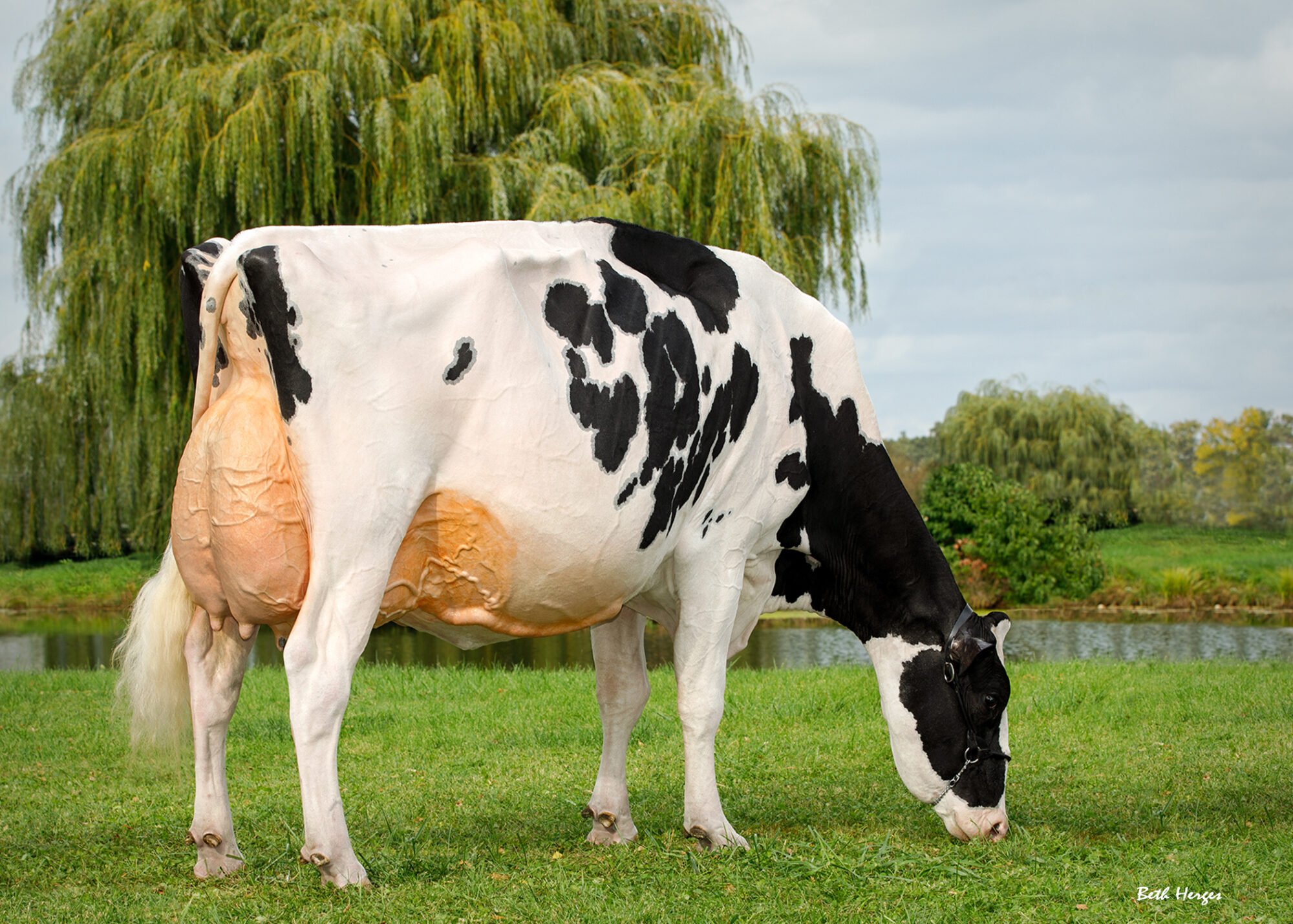
NewsSubscribe
First
Last
Consent

The Red & White Revolution: Molly Westwood’s Journey Building Panda Holsteins

How Molly Westwood built a profitable Holstein breeding program through Red White genetics specialization, achieving Master Breeder status and global embryo sales success.

Molly Westwood (right) and her father and business partner Andrew Westwood (center) receive the prestigious Master Breeder Award from Holstein UK, recognizing a decade of exceptional breeding achievements at Panda Holsteins. The award validates Molly's strategic investment in elite cow families and her commitment to developing some of the UK's finest Red & White Holstein genetics. Photo credit: Richard Hodgson
Molly Westwood (right) and her father and business partner Andrew Westwood (center) receive the prestigious Master Breeder Award from Holstein UK, recognizing a decade of exceptional breeding achievements at Panda Holsteins. The award validates Molly’s strategic investment in elite cow families and her commitment to developing some of the UK’s finest Red & White Holstein genetics. Photo credit: Richard Hodgson

Molly Westwood is one of the dairy industry’s most inspiring young breeders, transforming childhood passion into a globally recognized breeding program. From humble beginnings on a non-pedigreed farm to developing one of the UK’s most elite Red & White Holstein herds, Panda Holsteins is jointly owned in partnership with Molly and her father Andrew exemplifies how dedication, strategic vision, and unwavering commitment to breeding principles can create extraordinary results. Her unique business model focusing exclusively on elite genetics rather than milk production has established her as a pioneer in specialized breeding, with her animals’ securing championships across the UK and her embryos in demand worldwide. This is the story of a young breeder who, through calculated risks and meticulous breeding decisions, has revolutionized perceptions of Red & White Holsteins while building a sustainable business that continues to shape the future of Holstein genetics.

Making history: Molly Westwood (middle) celebrates with the Red & White Holstein mother and daughter pair from her O’Kalibra family that became the first Red Holsteins in UK history to win the prestigious Royal Burke Trophies in 2024. This groundbreaking achievement validated Molly’s vision that Red & White genetics could compete at the highest levels against traditional Black & White cattle, cementing Panda Holsteins’ reputation for breeding exceptional animals that challenge conventional perceptions while delivering championship results.

From Farm Girl to Visionary Breeder

Growing up on a non-pedigreed dairy farm in the northern UK, Molly Westwood developed an early connection with cattle that would shape her future. “I have always had a passion for helping my dad at a young age on the farm,” Molly recalls. “Despite being a commercial herd, he always used the best bulls and ensured the cows were looked after like queens; you look after the cows, and they will look after you.”

Even as a young girl, Molly was learning valuable lessons that would form the foundation of her breeding philosophy. She remembers coming home from school and cleaning cubicle beds for her father, who instilled in her a commitment to excellence: “You make sure you clean those beds like it was your own- if it’s not good enough for you, it’s not good enough for the cows.” This guiding principle continues to influence her approach to cattle care today.

The pivotal moment in Molly’s journey came at age 14 when she received a Christmas present that would change her life: a pedigree heifer named Honesberie Charles Gem. “This was the start of my passion for the pedigree world!” she explains. By the following summer, Molly had halter broken Gem, learned how to clip, and convinced her parents to let her enter shows.

This first taste of showing ignited something in Molly that couldn’t be extinguished. She soon helped convert the family’s commercial herd into a registered pedigree operation, with the dual purpose of potentially showing homebred animals and adding value to the cattle they cared for so deeply.

Molly Westwood and her partner Martin Pearson with their canine companions Dotty and Pippa (Jack Russell) at the construction site of their new home. As Panda Holsteins continues to evolve and grow, Molly is building both her breeding program and her personal future, demonstrating the same careful planning and vision that has made her operation successful.

Canadian Education: The Making of a Breeder

Recognizing that achieving her ambitious goals would require gaining experience beyond her family’s farm, Molly boldly decided at just 16 years old to travel to Alberta, Canada. “As soon as I had a taste of competition with my ‘show calf Gem,’ I wanted to breed the best and become a breeder recognized worldwide one day,” she explains. “I knew I had to work hard and take any opportunities I could find.”

A family friend, Chris Parry, offered her a position at Morsan Farms, one of the world’s premier Holstein operations. After finishing school and working briefly at a local pub to save money for her flight, Molly embarked on her Canadian adventure.

This was no small undertaking for someone who described herself as a “home girl” who “never went to friends’ houses, never answered the phone and was always very shy.” But as Molly notes, “Having a connection with cows, I knew I was going to be just fine!”

Her four years at Morsan Farms provided invaluable experience working with world-class animals and learning from industry leaders. “I remain eternally grateful to the Thalen & Parry families,” Molly reflects. “I headed to Canada as a young girl, inexperienced in many ways. But the time over there helped me develop and shape into a young lady who knew exactly what I wanted to do with a little more experience on her belt.”

This formative period allowed her to work with some of the finest Holstein cattle in the world, which fueled her ambition to breed animals of similar caliber. More importantly, she developed the skills, connections, and vision to guide her in establishing her operation.

The Birth of Panda Holsteins

Molly Westwood stands with her parents and business partners, Andrew and Sharon, alongside Panda Dazzling O'Kalibra Red VG87-2YR, a daughter of their foundation cow Panda Autumn O'Kalibra Red EX95-3E 7. The O'Kalibra family became central to Panda Holsteins' success, with Autumn producing nine VG/EX daughters and establishing the operation's reputation for breeding elite Red & White genetics. Sharon, who passed away from Motor Neurone Disease in 2024, was Molly's biggest supporter, while Andrew continues as her partner, managing forage production and field operations at their Devon farm.*
Molly Westwood stands with her parents and business partners, Andrew and Sharon, alongside Panda Dazzling O’Kalibra Red VG87-2YR, a daughter of their foundation cow Panda Autumn O’Kalibra Red EX95-3E 7. The O’Kalibra family became central to Panda Holsteins’ success, with Autumn producing nine VG/EX daughters and establishing the operation’s reputation for breeding elite Red & White genetics. Sharon, who passed away from Motor Neurone Disease in 2024, was Molly’s biggest supporter, while Andrew continues as her partner, managing forage production and field operations at their Devon farm.

The foundation of Panda Holsteins traces back to a specific cow that captured Molly’s attention during her time in Canada: Stoneden Fools Gold Red. One evening, Molly’s boss drove her to Morsan’s heifer barns to help unload some new arrivals, including a heavily pregnant Fools Gold.

“This incredibly balanced heifer with a super wide rump was the type I’d always try and breed in the future,” Molly recalls. What made this cow especially valuable was her unique VRC gene, which allowed for breeding reds from top black and white bulls – creating the opportunity for genuinely distinctive offspring.

After watching Fools Gold calve and develop at Morsan, Molly’s appreciation for this special cow grew stronger. Before returning to the UK, she purchased five embryos from Fools Gold bred to a sire of her choice. These embryos were sent home ahead of her return and implanted following her specific instructions.

When Molly returned to the UK for good, she was thrilled to discover that all five embryos had resulted in pregnancies. “The first calf born was a red heifer- I thought I had hit the jackpot!” she remembers. This red heifer, whom she named “Lexy,” was followed by two black heifers (“Ally” and “Alexa”) and two bulls (one red and one black).

Molly kept the red heifer at home that summer while showing the two black sisters. These heifers became remarkably successful in the show ring, taking top honors at major national events, including the National All Breeds All Britain Calf Show and National Dairy Event.

This initial success with the Fools Gold offspring demonstrated Molly’s eye for quality and validated her breeding approach. The three original heifers scored VG88-3Yr, EX90-4Yr & EX93-2E 5Yr, with Lexy (the red Alexander) calving out at VG88-2yr and achieving significant show success.

Molly Westwood (left) with her twin sister Jess and their mother Sharon, who was instrumental in supporting Molly's dreams from the early days of Panda Holsteins. Sharon encouraged Molly through show travels, celebrated her successes, and was described by Molly as her "biggest supporter." The family's unwavering support provided the foundation that enabled Molly to pursue her ambitious vision of breeding world-class Holstein genetics. Sharon passed away from Motor Neurone Disease in 2024, leaving a lasting legacy in the values and work ethic she instilled in her daughters.
Molly Westwood (left) with her twin sister Jess and their mother Sharon, who was instrumental in supporting Molly’s dreams from the early days of Panda Holsteins. Sharon encouraged Molly through show travels, celebrated her successes, and was described by Molly as her “biggest supporter.” The family’s unwavering support provided the foundation that enabled Molly to pursue her ambitious vision of breeding world-class Holstein genetics. Sharon passed away from Motor Neurone Disease in 2024, leaving a lasting legacy in the values and work ethic she instilled in her daughters.

Establishing a Unique Business Model

Unlike conventional dairy operations, Molly envisioned a different path for Panda Holsteins. “I have never wanted to milk hundreds of cows!” she emphasizes. “I love working with animals and seeing progression from my input, breeding & developing the best Holstein Genetics has always been my herd slogan.”

After two years of planning applications, securing mortgages, and developing business plans, Molly built a barn to facilitate her vision of selling top-end Red & White genetics. She created a business model that didn’t rely on milk production as the primary income source, making her operation stand out in the dairy industry.

“Our bank had never seen a five-year business plan like mine,” she reveals. “Throughout the meetings, I had to explain that I was not a typical dairy farmer – and Panda Holstein’s income does not rely on fluctuating milk prices.” Despite these challenges, Molly secured her first loan at 23 years old and began expanding her business.

The initial model involved calving 30 commercial heifers each year, selling them freshly calved to target the top end of the commercial market. These recipient heifers are purchased in groups from high-health farms, with a quick 12-month turnover to reduce costs. Meanwhile, Molly focused on flushing her pedigree animals to develop her genetic lines more quickly, produce embryos for implanting, and generate embryo sales.

This approach allowed her to invest in one new cow family yearly through embryo purchases, maintaining growth and staying at the forefront of the breeding business. She looks for “the special hidden gem nobody has over-marketed, one I can add value to and most importantly is different.”

Adapting and Evolving: 2020-2025

The COVID-19 pandemic and Brexit prompted Molly to reevaluate her business strategy. Before these disruptions, she was selling 80% of her embryos and elite animals to European markets, but anticipated difficulties with livestock exports after Brexit led her to adapt her approach.

“We had been extremely successful with our show calves and the few cows we had calved in at home, but I felt I had only scratched the surface proving our genetics,” Molly explains. “I wanted to show the longevity, ability to milk, and solid brood cows we were producing.”

In 2022, after selling one of her best show cows to Europe (Panda Pure Gold Red, nicknamed “Goldie”), Molly reinvested the proceeds to build a dedicated calf barn for rearing calves on milk. The following year, she expanded her facilities to accommodate milking cows and invested in a second-hand Delaval robot.

By 2024, Molly had completed these ambitious facility upgrades, creating the capacity to milk 30 show cows housed in deep straw-bedded comfort cubicles with spacious loafing areas. The barn includes specialized areas for heat pens, flushing/IVF procedures, hoof trimming, calving, and even separate isolation facilities for bought-in recipients or export requirements.

This evolution has diversified Panda Holsteins’ income streams to include milk production from 30 cows (with 30% being flushed or receiving IVF annually), continued sales of 20-25 heifers yearly (ranging from calves to freshly calved animals), 10-15 recipient heifer sales annually, and increased global embryo sales.

The refined business model has reduced pressure on livestock exports while allowing Molly’s nucleus herd to mature and demonstrate her cow families’ longevity and breeding prowess.

Sustainable Genetic Breeding and Robotic Efficiency

Efficiency meets excellence: Molly's DeLaval robotic milking system allows her 30 show cows to be milked three times daily without additional labor, maintaining optimal udder health crucial for both exhibition success and embryo production. The automated system enables Panda Holsteins' unique model of combining elite genetics with sustainable one-person operations, freeing Molly to focus on breeding decisions and marketing while ensuring consistent care for her champion bloodlines.
Efficiency meets excellence: Molly’s DeLaval robotic milking system allows her 30 show cows to be milked three times daily without additional labor, maintaining optimal udder health crucial for both exhibition success and embryo production. The automated system enables Panda Holsteins’ unique model of combining elite genetics with sustainable one-person operations, freeing Molly to focus on breeding decisions and marketing while ensuring consistent care for her champion bloodlines.

Molly’s 2023 investment in a second-hand DeLaval robot to milk her show cows allowing her to maintain her commitment to milking show cows three times daily without requiring additional labor – critical for maintaining udder health in her elite animals while supporting her embryo production goals.

The barn’s design prioritizes efficiency the use of a robot milking system as by housing her 30 milking cows in deep straw-bedded comfort cubicles with spacious loafing areas, she maintains optimal conditions for both show preparation and reproductive performance.

Integrating technology with specialized breeding creates a sustainable model that maximizes genetic progress while minimizing resource requirements. The robotic milking system allows Molly to maintain consistent routines for her show animals while freeing time for the breeding and marketing activities that drive Panda Holsteins’ success.

The Red & White Distinction

Panda Heart Of Gold Red EX92 8 SP* (nicknamed "Hearty") commands the show ring as National Red & White Champion. This daughter of the legendary Fools Gold line exemplifies the success of Molly's breeding program, becoming both the 2018 All Britain R&W Champion and National UK Dairy Day R&W Champion before being sold to Slatabogie Holsteins in Northern Ireland, where she scored EX92 8*. Hearty's show ring dominance validates Molly's philosophy that Red & White Holsteins can compete with and defeat Black & White cattle at the highest levels.*
Panda Heart Of Gold Red EX92 8 SP* (nicknamed “Hearty”) commands the show ring as National Red & White Champion. This daughter of the legendary Fools Gold line exemplifies the success of Molly’s breeding program, becoming both the 2018 All Britain R&W Champion and National UK Dairy Day R&W Champion before being sold to Slatabogie Holsteins in Northern Ireland, where she scored EX92 8*. Hearty’s show ring dominance validates Molly’s philosophy that Red & White Holsteins can compete with and defeat Black & White cattle at the highest levels.

One of the most distinctive aspects of Panda Holsteins is its specialization in Red & White Holstein genetics, with 95% of the herd being either Red or Red Carrier. This focus stems from Molly’s personal preference and strategic market positioning.

“I have always loved R&W’s; they are the minority of the Holstein breed but can compete against the B&W’s on so many levels!” Molly states. “I love topping the B&W classes with a red!”

When asked about the perception challenges surrounding Red & White cattle, Molly recounts, “Somebody once said to me, ‘Red Holsteins are no good, they don’t give any milk, and they are non-comparable to the Black & White’s.’ Well, I love to prove people wrong!”

This determination to demonstrate the quality of Red & White genetics has paid off, with Molly noting the increasing popularity of Reds worldwide. Her Fools Gold lineage has achieved remarkable success in international show circuits, with descendants competing successfully across multiple countries.

The Fools Gold family gave Molly a unique advantage in this specialized market through its VRC gene, allowing her to “use the best B&W genetics to produce a Red animal still.” This approach has proven successful, with Panda Holsteins breeding and developing 9 Excellent and 41 Very Good females under the Panda prefix within eight years.

Elite Cow Families and Breeding Successes

The Fools Gold family remains central to Panda Holsteins’ success, with multiple generations of champions tracing back to those original embryos. After the initial success with Lexy, Ally, and Alexa, Molly flushed Lexy to Mr Atwood Brokaw, retrieving 32 grade A embryos. This allowed her to sell her first embryos abroad and implant her first home-grown embryos.

This line flourished, producing the 2018 All Britain R&W Champion, Panda Heart of Gold Red, who later became the National UK Dairy Day R&W Champion. After taking a flush from “Hearty” by Wilt Emilio and keeping her red natural calf by Crushabull, Molly sold her to Slatabogie Holsteins in Northern Ireland.

The success continued with “Hearty” scoring EX92 8* at her new home and four of her five Emilio daughters becoming EX cows. The Crushabull daughter Molly kept, “Goldie,” followed in her dam’s footsteps by winning top honors at the National UK Dairy Day and becoming the 2022 All Britain Champion R&W 2-Year-Old.

After “Goldie” was sold to an international syndicate and moved to Italy, Molly focused on developing her red Lambda daughter, Panda Lamborghini Red. This heifer calved late in the summer of 2023 and won her class at the 2024 National UK Dairy Day, becoming the fourth consecutive generation of this family to win at this prestigious show.

Today, Lexy has produced 13 VG or EX classified daughters and 23 VG or EX granddaughters housed in over seven countries, earning her status as a 14* star brood cow.

Beyond the Fools Gold family, Panda Holsteins has developed several other notable cow families. Panda Autumn O’Kalibra Red EX95-3E is one of the operation’s top brood cows, completing over 80,000kg of milk across six lactations. As a granddaughter of World Champion Decruzas Iron O’Kalibra EX97, she has proven herself both in the show ring and as a brood cow, with all nine of her daughters classified VG/EX and numerous show successes among her offspring.

Perhaps most remarkable is Panda’s work with Golden-rose Jordy Rita Red, who became the first animal in the world to complete 21 generations of Excellent classification in 2023. Molly’s strategic investment in this line demonstrates her commitment to calculated risks and long-term thinking.

Daily Operations and Management Philosophy

For Molly, running Panda Holsteins means embracing a demanding schedule that begins at 5:30 AM when she heads straight to the barn. Her morning routine involves feeding heifers and calves on milk, cleaning the milking beds, checking the robot, and completing various barn chores until around 9 AM.

After breakfast, she shifts to her role as UK manager for Blondin Sires, spending the hours until 4 PM handling orders, communicating with customers and sales representatives, and designing advertising materials. She returns to barn chores by late afternoon until 6-7 PM.

Evenings might find her researching potential acquisitions through sale catalogs, social media, show reports, or genomic updates. At 10 PM, she performs one final check on the cows and prepares for bed around 11-11:30 PM. However, her day often extends into the night for calving checks, as she insists on being present for every birth. She emphasizes, “1 loss is a huge one for me, so I must ensure every calve has a safe arrival.”

This intensive management reflects Molly’s connection to each animal in her care and her commitment to maximizing their potential – a lesson she learned during her formative years in Canada.

The modern Panda Holsteins facility at Molland Ridge Farm reflects Molly's commitment to providing optimal conditions for her elite genetics. Completed in 2024, the barn houses 30 show cows in deep straw-bedded comfort cubicles with spacious loafing areas, alongside specialized facilities for embryo production, calving, and robotic milking – embodying her father's lesson that "if it's not good enough for you, it's not good enough for the cows."
The modern Panda Holsteins facility at Molland Ridge Farm reflects Molly’s commitment to providing optimal conditions for her elite genetics. Completed in 2024, the barn houses 30 show cows in deep straw-bedded comfort cubicles with spacious loafing areas, alongside specialized facilities for embryo production, calving, and robotic milking – embodying her father’s lesson that “if it’s not good enough for you, it’s not good enough for the cows.”

Breeding Philosophy and Selection Process

Molly’s approach to breeding stands out for its emphasis on corrective mating rather than chasing fashionable trends. “Corrective mating is key and pays off in the long run,” she insists. This philosophy has resulted in animals that top conformation and PTAT rankings while maintaining balanced, functional traits.

When evaluating potential embryo purchases or planning matings, Molly prioritizes “deep cow families of balanced sire stacks, something different that I can add value to.” Her selection process involves careful monitoring of specific lines over extended periods before making investment decisions.

“I don’t specifically go out to look for something I can invest in; I follow lines and females for years until I make any investment,” she explains. “I only invest if it adds to our portfolio; I see no point investing in something with the same target market as something else at home.”

This thoughtful, patient approach allows her to anticipate market trends and identify opportunities others might overlook. “Over the years, I see fashion and trends change, which is why it’s always important to look at what the future customer will want,” Molly notes, adding that she prefers finding “that unique line” rather than investing in heavily marketed cow families.

Recognition and Achievements

Molly Westwood with Panda Leedham Lady Gaga RC, a red carrier Lambda daughter representing the 21st generation of this historic bloodline. Lady Gaga exemplifies the continued success of Panda’s strategic breeding program, having won Junior Champion at the South West National Qualifiers. Her genetic background traces to Golden-rose Jordy Rita Red, who became the first cow in the world to complete 21 generations of straight Excellent classification in 2023.

Molly’s dedication and innovative approach have earned her significant recognition within the agricultural community. In 2017, she was named Young Farmer of the Year at the Food & Farming Industry Awards, a prestigious honor presented at the House of Commons.

Holstein UK nominated Molly for this award, recognizing her dedication to promoting the breed and establishing Panda Holsteins as an emerging global name. Simon Lewis, Farm Business publisher, described her as “a deserved winner” and highlighted “the breadth and depth of talent, drive and ambition in the farming sector.”

Upon receiving the award, Molly expressed her gratitude: “I am truly honored and shocked to be awarded the Food & Farming Industry Awards Young Farmer of The Year. I would like to thank Holstein UK for nominating me. I also want to thank any fellow Holstein UK or HYB members and my family who have helped me along the way.”

Miriam Bagley, Events & National HYB Coordinator for Holstein UK, praised Molly’s accomplishments: “What Molly has achieved with Panda Holsteins is a testament to her hard work and dedication. She is a great ambassador for the Holstein breed and HYB and is always keen to get involved with the Society’s events and awards.”

Last year, Molly received another significant recognition when she was awarded Master Breeder status, which she describes as “one of my greatest achievements, proving the families I have invested in over the past 10 years have stood the testing times.”

Panda Christmas O'Kracker Red stands as the #1 Conformation Red & White female in Europe and #2 in the world, and the top Conformation R&W female over 500kgs. A great-granddaughter of Autumn, who traces back to the legendary O'Kalibra EX97, she represents a promising future bull mother. Panda Christmas O'Kracker Red will be featured in the upcoming Pathway of Panda Sale on July 1st.
Panda Christmas O’Kracker Red stands as the #1 Conformation Red & White female in Europe and #2 in the world, and the top Conformation R&W female over 500kgs. A great-granddaughter of Autumn, who traces back to the legendary O’Kalibra EX97, she represents a promising future bull mother. Panda Christmas O’Kracker Red will be featured in the upcoming Pathway of Panda Sale on July 1st.

Mentorship and Community Involvement

Throughout her journey, Molly has benefited from the guidance of several key mentors. Chris Parry played an instrumental role in her early development, teaching her about bull proofs and breeding, lending her the clippers she still uses today, and ultimately providing the opportunity to work at Morsan Farms.

However, she identifies her parents, Andrew and Sharon, as her most significant influences. “Growing up in a big family, our parents always supported us in following our dreams. They taught us responsibility at a young age, work ethic, and manners,” Molly recalls.

Her father, Andrew, continues to partner with her in the business, focusing on forage production and field management, while Molly handles the cattle breeding decisions and administrative work. Her mother, who sadly passed away from Motor Neurone Disease last year, was her “biggest supporter,” encouraging her through show travels and celebrating her successes.

Molly also emphasizes the importance of organizational involvement in her development. As a member of Holstein UK and Holstein Young Breeders groups, she has consistently engaged with these communities to learn, network, and develop her skills.

She strongly recommends that young breeders join HYB, calling it “the best organization to learn, meet new people, and develop skills from some of the best in the industry.” Importantly, Molly also believes in giving back, making time to teach clipping, showing, and judging skills to younger members, recognizing that “they are the future, and the way I see it, they could be future customers!”

Overcoming Challenges

Building Panda Holsteins from scratch presented numerous challenges that required resilience and adaptability. Initially, Molly faced obstacles in establishing her brand and reputation. “Starting from scratch, you start as a ‘nobody,'” she reflects, noting that achieving her dreams and ambitions required exceptional dedication.

Securing financial backing for her unconventional business model presented another significant hurdle. Traditional lenders struggled to understand a dairy business that didn’t rely primarily on milk sales. After what she describes as “several ‘battles’ with the banks,” Molly secured her first loan at 23 and stayed within budget despite the industry experiencing a downturn.

The combination of Brexit and the COVID-19 pandemic created additional complications, particularly for her European export business. However, Molly demonstrated remarkable adaptability by restructuring her business model to reduce dependency on livestock exports while expanding embryo sales and developing her nucleus herd.

Disease management remains an ongoing concern, which Molly addresses through rigorous biosecurity measures. From personally transporting recipient heifers rather than trusting external haulers to bring disinfectant sprayers to shows and implementing vaccination protocols, she remains vigilant about protecting her valuable genetics.

This proactive approach to challenges exemplifies Molly’s business philosophy: “There are always challenges- some bigger than others. If you work hard, you create opportunities whether young or old, male or female.”

Vision for the Future

Molly Westwood with Panda Rita Ora RC and her newborn Awesome-Red heifer calf. Rita Ora represents potentially the first 22nd generation straight Excellent in Holstein history, continuing the groundbreaking genetic line that made headlines in 2023 when her granddam became the world's first 21st generation Excellent cow. The heifer calf could become the 23rd generation, further extending this unprecedented achievement in Holstein breeding.
Molly Westwood with Panda Rita Ora RC and her newborn Awesome-Red heifer calf. Rita Ora represents potentially the first 22nd generation straight Excellent in Holstein history, continuing the groundbreaking genetic line that made headlines in 2023 when her granddam became the world’s first 21st generation Excellent cow. The heifer calf could become the 23rd generation, further extending this unprecedented achievement in Holstein breeding.

Looking ahead, Molly has ambitious plans for Panda Holsteins. Over the next five years, she aims to develop her nucleus herd of 30 cows further while leveraging females she owns across Canada and the United States to introduce new bloodlines into her program.

“Over the next 5 years, I plan to develop our nucleus herd of 30 cows at home. We own several females across Canada & the US, which will enable new blood to enter the herd, and aim to continue to invest in females through both Countries and breed females eventually over there,” Molly explains.

In the immediate future, Molly is focused on her upcoming “Pathway of Panda” sale scheduled for July 1, 2025. This event will showcase ten years of breeding, offering her best animals of all ages, with 95% of the offerings being Red or Red Carrier. Following this sale, she anticipates her numbers will be a little lower but the foundation cows will remain at Panda to reform the future of it’s elite herd.

Her long-term vision is clear and ambitious: “Long-term for Panda, we aim to have the world’s most elite R&W selection of cattle! My next goal is to breed the first EX97 R&W cow in the UK!”

This combination of concrete goals and expansive vision characterizes Molly’s approach to breeding. She balances practical, immediate objectives with longer-term aspirations that continue to push the boundaries of what’s possible in Holstein breeding.

The upcoming The Pathway of Panda sale on July 1st represents both celebration and difficult decision-making for Molly, who reflects on the emotional challenge of parting with her carefully developed genetics: “There will be some in that sale that I don’t want to sell, and it’s mainly because of their temperament, if I’m completely honest.” This sentiment captures the personal connection between breeder and cattle that defines Panda Holsteins – where each animal represents years of strategic breeding decisions, careful nurturing, and genuine affection.

The Bottom Line: A Pioneer in Specialized Breeding

Molly Westwood’s journey from cleaning cubicle beds on her family’s commercial farm to establishing Panda Holsteins as a globally recognized breeding program demonstrates how passion, strategic thinking, and unwavering dedication can transform the conventional dairy model. Her specialized focus on Red & White Holstein genetics has created a sustainable business and elevated the perception and value of these cattle worldwide.

What makes Molly’s story particularly remarkable is how she has crafted a unique path in an industry often defined by tradition. Rather than replicating established approaches, she identified a specialized niche, developed an innovative business model, and consistently adapted to overcome challenges from financing to Brexit.

Her success stems from a breeding philosophy that balances patience with calculated risk-taking. By following specific lines for years before investing, prioritizing deep cow families with balanced sire stacks, and focusing on corrective mating rather than fashionable trends, Molly has developed genetics that prove their value in the show ring, classification scores, and milk production.

As Panda Holsteins celebrates its tenth anniversary, Molly Westwood stands as an inspiration to young breeders worldwide. Her journey affirms that with vision, determination, and a willingness to forge your path, it’s possible to turn dreams of breeding exceptional cattle into a thriving reality – one red heifer at a time.

EXECUTIVE SUMMARY

Molly Westwood just shattered the “scale or fail” myth with a 30-cow operation that’s outperforming mega-dairies through strategic genetics focus. While most farmers chase volume, this 28-year-old UK breeder built Panda Holsteins into a global powerhouse by specializing in Red & White Holstein genetics, achieving 9 Excellent and 41 Very Good classifications in just eight years. Her corrective mating strategy over fashion-chasing has produced animals topping UK conformation and PTAT rankings, with 95% of her herd being Red or Red Carrier—proving minority genetics can dominate mainstream markets. The operation generates multiple revenue streams through embryo sales (previously 80% to European markets), elite animal sales, and robotic milking systems, all while maintaining biosecurity protocols that would make industrial operations envious. Her Master Breeder achievement at 28 demonstrates that strategic genetic selection trumps herd size every time—forcing us to question whether our industry’s obsession with scale is actually limiting profitability potential.

The Sunday Read Dairy Professionals Don’t Skip.

Every week, thousands of producers, breeders, and industry insiders open Bullvine Weekly for genetics insights, market shifts, and profit strategies they won’t find anywhere else. One email. Five minutes. Smarter decisions all week.

NewsSubscribe
First
Last
Consent

A Lifetime in the Ring: Tom Morris and the Evolution of a Dairy Dynasty

What if everything you think you know about building a successful dairy operation is backwards – and one man’s 58-year unbroken streak proves relationships matter more than genetics? 

A faded red ribbon hangs quietly in Tom Morris’s office today, a testament to a moment that changed everything. Earned by a 2-year-old Holstein at the 1954 Royal Winter Fair, that ribbon represents more than just a show win—it marks the beginning of a journey that would span seven decades and reshape how the global dairy industry connects, communicates, and conducts business.

The ribbon belonged to his father Arden and Uncle Maldwyn’s homebred herd from Arwyn Farms in Oconomowoc, Wisconsin, just a stone’s throw from the legendary Pabst Farms. For young Tom Morris, watching those cattle load into boxcars bound for Waterloo, Chicago, and Toronto wasn’t just about livestock transportation—it was about dreams taking flight on steel rails, carrying the hopes of Wisconsin dairy families toward distant show rings and new opportunities.

That childhood exposure to excellence set the trajectory for what would become one of the most influential careers in modern dairy history. Today, as the 2025 recipient of Holstein Association USA’s Distinguished Leadership Award, Tom Morris’s story offers both a roadmap for adaptation and a reminder that at its heart, the dairy business remains fundamentally about relationships, integrity, and the relentless pursuit of genetic excellence.

Building the Foundation: From Champion Judge to Innovator

Tom Morris leading cattle across the grounds at World Dairy Expo, embodying the hands-on approach that would define his career from student competitor to industry innovator. His early experiences navigating livestock through the organized chaos of America's premier dairy event taught him lessons about preparation, partnership, and persistence that would later shape his revolutionary approach to education and sale management.

The morning Tom Morris walked into what is now Northwoods Technical College in New Richmond, Wisconsin, he carried more than just his University of Wisconsin diploma—he brought the confidence of someone who had already proven himself exceptional. His success as the high individual at the 1971 Intercollegiate Dairy Judging Contest at the World Dairy Expo had marked him as a rising star, but standing in those college classrooms, Morris began to envision something beyond personal achievement—a chance to prepare the next generation for excellence systematically.

Fresh out of college, he could have chosen the safety of working within established systems. Instead, he and two fellow young instructors embarked on an ambitious challenge: designing and launching the country’s first post-secondary, 9-month herdsman program from the ground up. The concept was revolutionary for its time—focused, intensive education that would bridge the gap between classroom theory and barn-floor reality.

“It was interesting that my superiors encouraged me to continue to judge local, district, and state shows, as well as work sales, to help promote the program,” Morris recalls. This encouragement proved prescient—staying connected to the real world of dairy farming became essential for meaningful education that could prepare students for immediate success in modern dairy operations.

The program’s impact exceeded all expectations. Within a single year, eager students were arriving from throughout the United States and even Canada, drawn by the promise of comprehensive, practical education. Over the decade Morris spent in higher education, he witnessed the transformation of more than 250 eager-to-learn young people from several countries, many of whom would go on to become leaders in their own right and remain lifetime friends.

This early experience established the patterns defining Morris’s career: innovation driven by practical need, education rooted in real-world application, and an unwavering commitment to developing the next generation of industry leaders. Most importantly, it demonstrated his understanding that progress in the dairy industry isn’t just about better genetics or improved technology—it’s about better-prepared people who understand both the science and art of dairy management.

Deronda Dreams: Mastering the Art of Excellence

Deronda Farm today remains the peaceful Wisconsin home where Tom and Sandy Morris once developed more than 200 Excellent cows and conducted three record-breaking dispersals during the 1980s. The carefully maintained grounds, adorned with vibrant hydrangeas, reflect the same attention to detail that once made this small select herd a global source of Holstein genetics.

1975 Tom married Sandy, and together, they embarked on what would become a masterclass in breeding and merchandising excellence. Picture the young couple walking through the barn at Deronda Farm, their vision crystallizing with each decision: this wouldn’t be just another dairy operation—it would be a laboratory for testing theories about genetics, marketing, and the global appetite for elite Holstein bloodlines.

Deronda’s philosophy distinctly differed from the deep family breeding programs that had characterized both Tom’s and Sandy’s family farms. “Being involved in the sales business, and unlike both our families, we didn’t feel we had the time or patience to breed deep cow families as they had,” Morris explains. “Merchandising was more the name of our game at Deronda.”

This approach required a different kind of vision and risk tolerance. Rather than building for generations, the Morris family was building for immediate impact and global reach. Cattle from Deronda found their way to Latin America, Europe, and Japan, carrying Wisconsin genetics to markets hungry for American Holstein excellence.

The results validated their approach spectacularly. Over their years of active breeding, they developed more than 200 Excellent cows—a remarkable achievement that reflected genetic selection and exceptional management and care. Between 1980 and 1989, Deronda held three complete dispersals, and all three achieved the distinction of being the highest averaging dispersal of their respective years in America.

Picture Tom Morris standing by that very sale ring at Deronda for their first dispersal, watching lot after lot of cattle he and Sandy had carefully developed cross the platform. The first dispersal tested every principle he believed about letting quality speak for itself. As hands flew up around the ring and averages climbed beyond expectations, Morris felt the validation of their approach—but also the bittersweet reality of watching their special Holsteins find new homes across the continent.

“It was due to the efforts of our fulltime herdsmen and foreign trainees who cared for and developed our cattle to their full potential that made our Deronda dreams come true,” Morris acknowledges, recognizing that great cattle don’t develop themselves—they require dedicated, skilled caretakers who understand both the science and art of dairy management.

The decision to discontinue the milking operation in 1989 came from a crossroads many successful farm families face. “Due to our growing sales management business, shortage of available labor, and our desire to spend time with our small children, Moriah and Adam, we discontinued our milking operation,” Morris explains. But the experience had proven invaluable: “I was a much better instructor at Northwoods Technical College, as I actually rode the up-and-down swings of operating a dairy farm,” he reflects. “In addition, I knew what our clients were actually feeling as they bought or sold, and especially the feelings and stress involved with a complete dispersal, as we had been through the same.”

Deronda Farm remains their home today, where each year they provide summer camp to a handful of beautiful dry cows from longtime friends at Crisdhome Farms. “We continue to own a few dozen Holsteins in partnership or housed with friends around the country, and I’m expecting always will,” claims Tom.

Finding His Voice: The Art of Connection

Tom Morris (standing) partners with longtime mentor and friend Horace Backus at a cattle sale, exemplifying the collaborative approach that defined Morris's auctioneering philosophy. Backus accompanied Morris at each of his nine National Holstein Convention Sales and more than 25 World Classic events, demonstrating how the art of connection extends beyond the microphone to building lasting partnerships that elevate the entire industry.
Tom Morris partners with longtime mentor and friend Horace Backus at a World Classic sale, exemplifying the collaborative approach that defined Morris’s auctioneering philosophy. Backus accompanied Morris at each of his nine National Holstein Convention Sales and more than 25 World Classic events, demonstrating how the art of connection extends beyond the microphone to building lasting partnerships that elevate the entire industry.

The transformation from breeder to auctioneer began with watching Harvey Swartz work a sale. Swartz, Morris’s home county’s 4-H dairy judging team coach and one of the industry’s highest profile auctioneers with “a great reputation across the country as the ‘voice of experience,'” possessed something Morris wanted to understand—the ability to connect buyers and sellers through the rhythm and cadence of professional auctioneering.

This fascination deepened during his decade-long association with Alvin R. Piper’s sales organization beginning in the early 1970s, conducting “a large number of consignment and herd sales primarily throughout the Midwest.” Under Piper’s mentorship, Morris learned that successful cattle sales require more than just calling numbers—they demand an understanding of the emotional and financial dynamics that drive major breeding decisions.

Tom went on to partner with Jim Hoskens in managing sales for several years, and also traveled with his gavel across nearly 40 states, honing his auctioneering skills and making connections with breeders who shared Tom’s passion for this industry.  

Out of these experiences, Morris developed a philosophy that would guide his approach for decades: “Good Sales Don’t Just Happen – They’re Managed.” Picture Morris on a tense sale morning, meticulously checking every detail one final time. A consignor approaches, worried about market conditions and whether their cattle will meet expectations. Morris’s voice remains steady and reassuring as he explains his preparation process. “Our goal was always to have all the essential details completed by the evening prior to the sale,” he explains. Every lot has been strategically positioned, every bidder personally contacted, and every detail anticipated.

This preparation reflects Morris’s understanding of a fundamental truth: “When a family entrusts their lifetime of work and their retirement to your hands, you have got to be on your A game, as there are no do-overs!” The weight of this responsibility shaped his approach to the business, emphasizing honesty, integrity, and the assembly of talented, dedicated teams capable of handling the complex demands of modern cattle sales.

The approach proved effective across more than 500 Holstein auctions throughout North America and Europe, including nine National Holstein Convention Sales. Morris learned to be not just an auctioneer but a counselor, advisor, and problem-solver for families making life-altering decisions. “Each situation is different,” he explains. “A dispersal may be viewed as a celebration of a life’s work, another as a purely business opportunity; it may be brought on by financial success or failure; or because of a tragedy or family dynamics. In addition to managing the sale, we often needed to be a sounding board and be able to bring an outside perspective for people making life-altering decisions.”

World Stage: Fifty-Eight Years of Excellence

On a crisp October morning in 1967, Tom Morris joined thousands of others for the inaugural World Dairy Expo, unaware he was beginning what would become an unbroken 58-year attendance streak. As a University of Wisconsin-Madison student, he spent entire weeks on the grounds, watching professors treat the event as more important than classwork and participating in the organized chaos of setting up what would become “the must-attend event for everyone in the global dairy industry.”

His earliest memories capture a different era entirely: “Early on, the ag professors were highly involved with the show, making classwork almost optional. We assisted with setup, much like the Badger Dairy Club has done for decades, as well as working with show strings”. Picture young Tom Morris and his fellow students unloading train boxcars from Doug Maddox’s RuAnn Farm, the side track located “right behind where the Sheraton has now stood for years.” The excitement was palpable as they led cattle across John Nolen Drive to the Expo grounds—”an adventure!” Morris recalls—navigating busy streets with valuable livestock, the sounds of cattle hooves on pavement mixing with car horns and excited student voices.

But Morris wasn’t just an observer of this evolution—he became one of its architects. Among his most treasured memories is leading Pammie, their homebred 3-year-old, to first place and Best Bred & Owned of the Show at the World Dairy Expo in 1969, an achievement that led to All-American recognition. Standing in that ring, blue ribbon in hand, Morris felt the electricity of the crowd’s approval and understood he was participating in something larger than individual achievement—he was helping establish the credentials and reputation that would open doors to greater involvement in the event’s leadership.

His family’s commitment to the World Dairy Expo’s success created a foundation for Morris’s increasing involvement. “Sandy and I grew up in the industry, and both our families were early supporters of the need for the new event in Wisconsin,” Morris explains. “The Morris and Mayer families had heifers in both donation sales to raise the funds that were needed. It was an exciting time and impacted our desire to stay in the industry”.

This family investment allowed Morris to take on increasingly significant roles, eventually serving as chair of the Dairy Committee since 2011 and Vice-President of the board of directors. These positions provided him with a front-row seat to witness and help shape the event’s evolution “from its early days of primarily a really, really fine cattle show, into today’s modern-day dairy exposition that is recognized wherever dairy cattle are milked on the planet.”

The World Classic: Creating the International Marketplace

The packed Wisconsin Coliseum during an early 2000s World Classic Holstein Sale demonstrates the magnetic draw of Tom Morris’s vision for “The International Marketplace.” Under Morris’s management since 1989, the sale transformed from a regional cattle auction into a global gathering that regularly attracted thousands of Holstein enthusiasts from around the world, with more than 25% of offerings being exported during its first decades.

When Morris took over management of the World Classic Holstein Sale in 1989, he didn’t just inherit another cattle auction—he received an opportunity to create what he would brand as “The World Classic – The International Marketplace.” The vision was ambitious: to present “a limited offering of the world’s most sought-after genetics” in a setting that would attract Holstein enthusiasts from around the globe.

Picture the Wisconsin Coliseum transformed for that inaugural World Classic under Morris’s direction: “From the first sale, we utilized the lighting and sound system in the Coliseum to design a unique opening that helped draw thousands of Holstein enthusiasts from far and near, marking a special event.” This wasn’t just about selling cattle but creating an experience that would elevate the entire transaction to something approaching theater.

The results validated the approach immediately and consistently. Under Morris’s management, the World Classic has grossed over $1 million fourteen separate times and $2 million three times, with the 2021 sale being the highest grossing sale ever recorded at the World Dairy Expo, when 49 lots averaged $44,250. “Although the averages over the years have consistently ranked among the highest, its impact on genetics worldwide has been just as impressive,” Morris notes. During the sale’s first couple of decades, more than 25% of the offerings were exported, literally exploding top genetics around the globe.

Morris’s commitment to innovation kept the World Classic relevant as the industry evolved rapidly around it. To maintain pace with accelerated genetic progress, the World Classic introduced groundbreaking elements: “selections from breeders from 5 European countries, early frozen embryo packages, contract flushes, the first clone to sell at public auction. A pair of calves imported from Germany that spent months in quarantine offshore then sold live. Young sire groups, and other innovations”.

Morris’s recognition that great events require great teams was central to this success. “It is essential to surround yourself with talented, gifted, dedicated, and hard-working people to put on the World Classic,” he emphasizes. For nearly twenty years, Scott Culbertson has served as “the Captain of the World Classic,” handling the majority of selections and assisting in every area. Jason Danhoff has headed up the care and preparation of the heifer lineup, working with experts like Fenja Boekhoff and Jonas Melbaum to ensure every animal looks its absolute best under the bright lights.

Connecting the Industry: The Communication Revolution

The Cattle Connection team celebrates Tom Morris's recognition as 2023 World Dairy Expo Industry Person of the Year. For 32 years, this dedicated group of industry professionals helped build North America's largest dairy breed publication, embodying Morris's philosophy that "our editors were all part of the dairy world" and "truly connected with advertisers." Their commitment to authentic, timely communication transformed how the industry connects buyers and sellers across the continent.
The Cattle Connection team celebrates Tom Morris’s recognition as 2023 World Dairy Expo Industry Person of the Year. For 32 years, this dedicated group of industry professionals helped build North America’s largest dairy breed publication, embodying Morris’s philosophy that “our editors were all part of the dairy world” and “truly connected with advertisers.” Their commitment to authentic, timely communication transformed how the industry connects buyers and sellers across the continent.

In 1990, Tom and Sandy Morris sat in their office, frustrated by a problem that seemed both insurmountable and straightforward. “For years, we spent a lot of money promoting our Deronda Holsteins and the auctions we managed, utilizing the available state and national breed magazines and local farm newspapers,” Morris recalls. The challenge was cost, turnaround time, and effectiveness of existing advertising options—particularly as full-colored photo ads became the new standard but came with “hefty price tags and long turnaround times.”

The question that drove innovation was elegantly simple: “Why can’t our industry have a low-cost, fast turnaround (prior to the internet), easy-to-use, on-time, no-nonsense publication to ‘Connect Buyers and Sellers Coast to Coast’?” Picture Tom Morris finally put his agricultural journalism minor to work as he and his team designed a publication prioritizing speed, affordability, and direct connection between industry participants.

“After a few months of designing and developing it and compiling a mailing list in an attempt to reach only active dairymen,” they launched The Cattle Connection at the 1990 World Dairy Expo. The market response exceeded all expectations. “The remarkable acceptance from the industry allowed it to grow rapidly into one of the dominant communications for the industry,” eventually achieving the largest circulation of any dairy breed publication in North America.

What made The Cattle Connection particularly effective was the authenticity of its editorial approach. “As our editors were all part of the dairy world, they truly connected with advertisers and were committed to timely and accurate publication.” This wasn’t journalism about the dairy industry from the outside—it was communication from within the industry by people who understood both the business and editorial challenges involved.

The publication’s impact extended far beyond simple advertising. For 32 years, it served as the connective tissue for all breeds of the North American dairy industry, helping breeders find markets, buyers discover genetics, and the entire community stay informed about opportunities and developments. The decision to sell to Holstein International represented both validation of what had been built and recognition of changing industry dynamics, ensuring the publication’s continued evolution under ownership that understood its mission and value.

The Mentor’s Legacy: Fifty Years of Heart

Every summer for fifty consecutive years, Tom Morris has climbed into the auctioneer’s booth at the Polk County Fair, watching nervous 4-H members lead their projects into the ring for the junior livestock sale. Picture a sweltering August afternoon in 2024: a young girl approaches the ring with her first big steer, hands shaking as she adjusts the halter one more time. Morris catches her eye from the auctioneer’s stand and nods encouragingly. His voice, steady and reassuring, calls out the bids as her hard work is validated by enthusiastic buyers. In that moment—watching her face light up as the final bid far exceeds her hopes—Morris sees the future of agriculture and remembers why he calls this “one of my favorite endeavors.”

This annual tradition represents more than just professional service—it embodies Morris’s fundamental belief that “the next generation is our greatest national resource.” This conviction has driven his involvement in youth programs spanning five decades, from his decade in post-secondary education to coaching judging teams, assisting at college club sales, and supporting local school and athletic teams.

The scope of his mentorship extends far beyond formal programs. “We have also had the privilege to work with a long list of young people over the years across the country that prepared thousands of head prior to entering the auction ring,” Morris reflects. “Many have gone on to become extremely successful in the industry. As I reflect, I am hopeful that we have made a small impact on their lives, as they have impacted ours”.

His involvement in establishing the Merle Howard Award at the World Dairy Expo demonstrates how personal relationships can be transformed into lasting institutional recognition. Presented annually to an outstanding youth exhibitor, the award honors “Uncle Merle,” who was “a great mentor to so many in our generation.” In 2025, the award will mark its 20th year, representing two decades of recognizing excellence while preserving the memory of someone who shaped Morris’s own development.

Partnership in Excellence: The Foundation of Success

Tom and Sandy Morris at World Dairy Expo, wearing their signature Cattle CONNECTION jackets beneath the World Classic banner—a perfect snapshot of the partnership that has defined both their personal and professional success for over half a century.

Stand in the office at Deronda Farm today, and you can still feel the energy of decisions made together, dreams pursued in partnership, and successes shared equally. For Tom Morris, his marriage to Sandy represents more than just personal happiness—it embodies a shared vision that has shaped every aspect of their professional and personal lives. “There’s no question the best thing that ever happened to me is having Sandy as a partner, in every way and in everything that we have ever done, for over a half century,” Morris acknowledges with the conviction of someone who has seen too many careers falter without such support.

Their backgrounds and shared understanding created a foundation that eliminated many of the tensions that can arise when career demands conflict with family priorities. “Our backgrounds and families are very similar. At an early age, we both knew we wanted to spend our lives involved in the Holstein industry,” Morris explains. “But the most important part of our lives was raising Moriah and Adam.”

Today, watching their daughter Moriah and her family at Cycle Farm provides both personal satisfaction and ongoing education for Tom Morris. Brothers Tony and Jacob Brey and their wives Moriah and Lauren own and manage this modern dairy, home to over 1,600 registered Holstein cows while farming over 2,000 acres. Tom marvels at innovations that seemed impossible during the Deronda days. Tom & Sandy’s grandkids, Evan and Alexa, plus Jake & Lauren’s kids Rosella, Willem, and Gigi, represent another generation of family involvement in the Holstein industry, validating decades of careful attention to both genetic and family development.

“Every time I visit I learn a semester’s worth of education,” Morris admits, his willingness to continue learning from the next generation reflecting the humility and curiosity that have characterized his entire career. This ongoing education demonstrates that true expertise includes recognizing how much there is still to discover and that the greatest teachers often learn as much as they teach.

Lessons for Today’s Producers: Timeless Principles in a Digital Age

As Tom Morris reflects on more than five decades in the dairy industry, his insights offer practical guidance for today’s producers facing unprecedented challenges. His approach to business success rests on principles that transcend technological change: “In order to have a successful business for decades, it’s essential for it to be built on honesty and integrity, and to assemble and surround yourself with a talented, organized, and dedicated team.”

Technology continues to reshape business operations, but Morris views these changes as opportunities rather than threats. “Technology continues to rapidly change the world we live in and is evident throughout our dairy industry,” he observes. He recalls that “bringing a temporary phone line into the auction box was an exciting step,” contrasting it with today’s reality, where “cell phones, the internet, and live online auctions have brought new options for buyers and sellers to connect.”

Morris has also witnessed some of the industry’s most innovative moments, including “the Lylehaven Satellite Adventure sale at Disneyworld that was beamed via satellite to several sites worldwide, long before the internet.” This early embrace of technology to connect global audiences foreshadowed the digital transformation that would eventually reshape the entire industry.

His approach to adaptation offers a template for today’s producers: embrace innovation while maintaining focus on fundamental relationships and values. “As always, it will be essential to stay abreast with technology,” he notes. While understanding that the tools may change, the essential human elements of trust, quality, and service remain constant.

Morris’s sales management philosophy provides practical guidance for producers struggling with marketing their genetics or managing their operations. His systematic approach—completing all essential details by the evening before any important event—applies to planning a sale, preparing for a show, or managing any critical farm operation. His emphasis on surrounding yourself with talented, dedicated people speaks to the importance of building strong teams, whether family members, employees, or trusted advisors.

Looking Forward: Industry Bright Spots and Enduring Values

“The future of our industry is as bright as ever,” Morris declares with the optimism of someone who has witnessed continuous adaptation and growth throughout his career. “As always, those who adapt to changes within our industry will thrive.” This optimism isn’t based on naive hope but on demonstrated patterns of innovation and resilience that Morris has observed throughout his career—from the transformation of the World Dairy Expo into a global gathering place to the evolution of genetic marketing from regional sales to international marketplaces.

For Morris, the key to thriving lies in adapting to change and embracing it while maintaining core values. His own career exemplifies this balance—from the early days of unloading train boxcars at the World Dairy Expo through satellite-transmitted sales to today’s digital marketplace innovations. Each technological advancement has been adopted in service of the same fundamental goal: connecting people who share a passion for Holstein excellence.

The industry Morris sees today—with its sophisticated genomic evaluation systems, global genetic transfer capabilities, and instant communication networks—would seem miraculous to the young man who watched cattle load into boxcars bound for distant shows. Yet the essential elements remain unchanged: quality genetics, honest relationships, and the satisfaction of seeing excellent animals reach their full potential under careful management.

The Enduring Message: Relationships Above All

As afternoon light filters through the windows of an office where a 1954 red ribbon still hangs as a reminder of dreams achieved, Tom Morris offers a final observation that captures the essence of his entire career: “Great cows come and go, but it’s the great friendships that last a lifetime.”

This simple statement contains the wisdom of someone who has navigated the complex intersection of business success, family priorities, and industry leadership for more than five decades. His career demonstrates that authenticity and integrity aren’t just moral imperatives—they’re practical necessities for anyone hoping to build lasting success in agriculture.

Morris’s story offers practical strategies and enduring principles for today’s dairy producers facing unprecedented consolidation and technological change. His systematic approach to preparation, emphasis on building talented teams, and willingness to embrace innovation while maintaining core values provide a template for adapting to new challenges without losing sight of fundamental relationships.

The friendships Morris references aren’t just personal benefits—they’re the foundation upon which the entire industry operates. From the young students at Northwoods Technical College who became lifelong connections to the international buyers and sellers who trust his judgment in high-stakes transactions, relationships have been both the means and the end of his professional success.

As that red ribbon continues to hang in his office, it serves not just as a memento of past achievement but as a symbol of continuity—connecting the dreams of a young boy watching cattle load into boxcars with the reality of a man who helped shape how those dreams could be realized across generations and around the world. That ribbon whispers of a truth Tom Morris discovered long ago—that the greatest victories aren’t measured in sale averages or show wins but in the young faces that light up when they realize they, too, can transform impossible dreams into lasting legacies that will inspire generations yet to come.

KEY TAKEAWAYS

  • Relationship-driven sale management delivers higher auction averages: Morris’s World Classic sales consistently ranked among America’s highest-grossing Holstein auctions, with systematic buyer relationship protocols generating sustained premium pricing over 35+ years of market volatility
  • Strategic mentorship programs create measurable business returns: 50 consecutive years of youth development through county fair auctioneering generated hundreds of industry connections that became lifelong clients, proving mentorship investment delivers quantifiable networking ROI for dairy operations
  • Systematic preparation protocols outperform reactive marketing: Morris’s “evening-before completion” approach to sale management eliminated day-of-sale stress while maximizing buyer participation, demonstrating how operational discipline directly impacts profitability metrics
  • Technology adoption with relationship foundation scales faster: From temporary phone lines to satellite sales to digital auctions, Morris’s tech integration succeeded because established trust networks provided immediate user adoption, proving relationship infrastructure accelerates technology ROI

EXECUTIVE SUMMARY

The dairy industry’s obsession with genomic testing and digital platforms is missing the $2+ million opportunity hiding in plain sight: strategic relationship building. Tom Morris’s 58-year career managing over 500 Holstein auctions—including sales grossing $2+ million three separate times—proves that systematic relationship management outperforms technology-only approaches by measurable margins. His World Classic Holstein Sale achieved the highest averages in America for decades while exporting 25%+ of offerings globally, generating sustained premium pricing through trust-based buyer networks. Morris’s “Good Sales Don’t Just Happen—They’re Managed” philosophy delivered consistent results across multiple market cycles, proving that prepared relationship strategies trump reactive digital marketing every time. His systematic approach to team building and mentorship created a 50-year county fair auctioneering streak that developed hundreds of industry leaders who became lifelong business partners. While competitors chase genomic rankings and social media metrics, Morris built lasting wealth through authentic industry connections and systematic preparation protocols. Every dairy operation spending money on digital marketing should audit their relationship ROI—the profit gap is likely costing six figures annually.

Learn More:

The Sunday Read Dairy Professionals Don’t Skip.

Every week, thousands of producers, breeders, and industry insiders open Bullvine Weekly for genetics insights, market shifts, and profit strategies they won’t find anywhere else. One email. Five minutes. Smarter decisions all week.
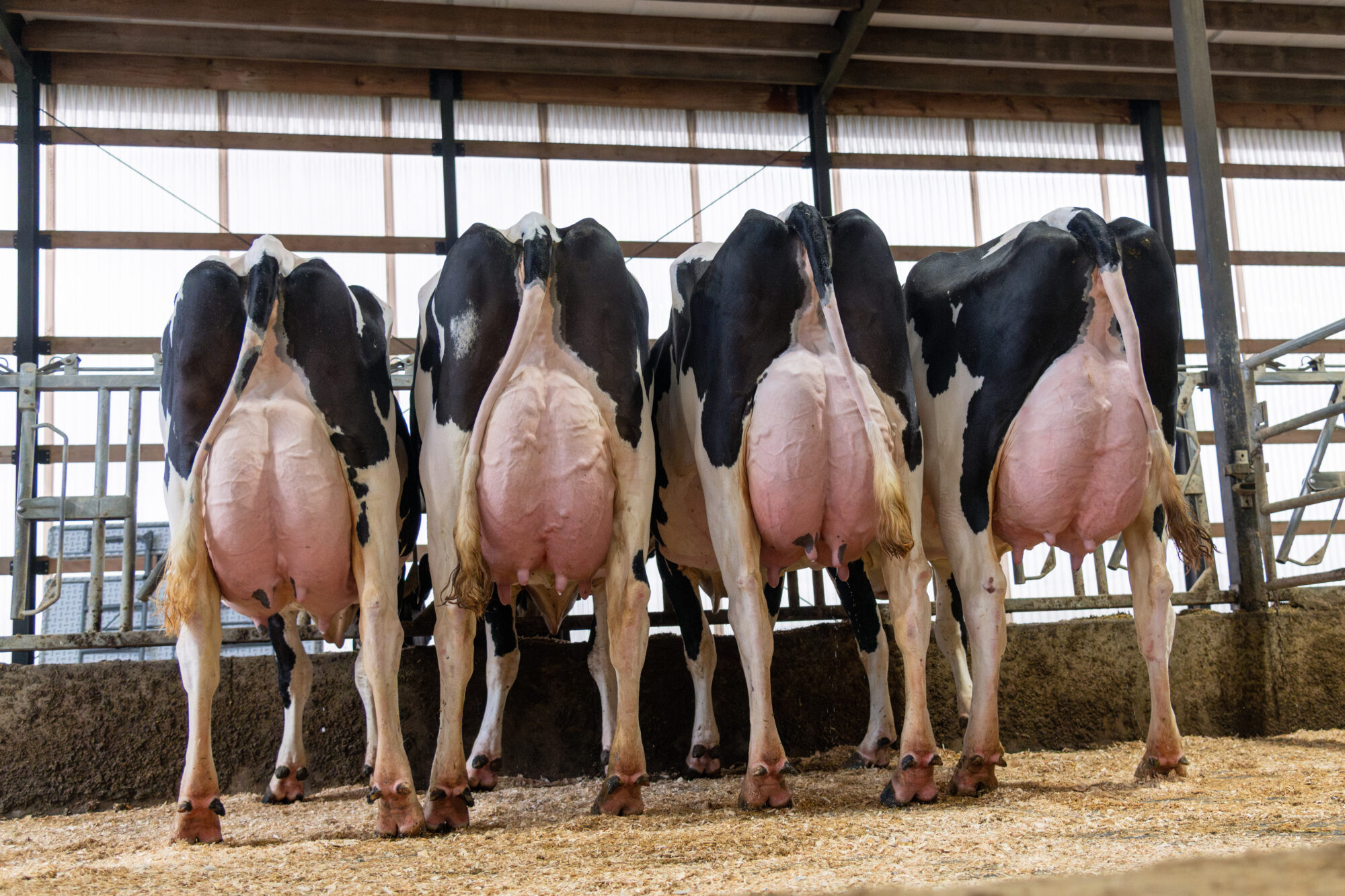
NewsSubscribe
First
Last
Consent

From Woodstock to Wall Street: How the Dairy Farmer Who Hosted Half a Million Hippies Built a Breeding Empire Worth Copying Today

Stop chasing genomic indexes. A 1960s dairy farmer’s breeding strategy beat today’s averages—here’s his $75K crisis management playbook.

The same conservative Republican dairy farmer who rented his pasture to 460,000 counterculture rebels also revolutionized Holstein and Guernsey genetics and vertical integration decades before Silicon Valley discovered the concept. Max Yasgur’s ,000 Woodstock windfall was just the tip of an agricultural iceberg that modern dairy operations desperately need to understand.

Max Yasgur on his dairy farm in Bethel, New York. The missing fingers on his right hand told the story of a man who built his empire with his own hands.

The Festival That Fed the Farm (And What It Teaches About Modern Asset Optimization)

What if the secret to surviving today’s volatile dairy markets isn’t found in the latest genomic technology but in the business playbook of the man who made Woodstock possible? Max Yasgur didn’t just host “perhaps the most important cultural event of the twentieth century”—he demonstrated principles of strategic breeding, vertical integration, and asset diversification that modern dairy farmers are still trying to master.

The handshake that sealed the deal was missing two fingers. Michael Lang, the young promoter of what would become the Woodstock Music and Art Festival, felt a jolt of recognition as he grasped Max Yasgur’s weathered hand on that fateful Sunday afternoon in 1969. “Holy smokes,” Lang thought to himself, “He’s built this place with his own hands.”

What Lang didn’t fully comprehend was that he wasn’t just meeting the future host of the largest music festival in history—he was encountering one of Sullivan County’s most successful agribusiness pioneers, a man whose 650-head dairy operation and 2,000-acre empire represented exactly the kind of strategic thinking that separates millionaire dairy farmers from those barely breaking even.

The “Angel of Woodstock” Was Actually a Genetic Genius

While 460,000 hippies danced in his fields between August 15-18, 1969, Yasgur was quietly revolutionizing breeding with a precision that would make today’s genomic specialists jealous. His approach wasn’t about chasing the latest trends but about concentrated excellence that created lasting wealth.

The Woodstock Generation vs. The Genetic Generation

The same weekend that Jimi Hendrix played guitar with his teeth on Yasgur’s makeshift stage, the farm’s barns housed some of America’s most strategically bred cattle. Yasgur’s herd included 90 daughters of Harden Farms King Pontiac and 30 daughters of Cashman Thunderbolt, all tracing back to the elite Dunloggin bloodlines that cost Harden Farms $25,500 in the 1940s.

Dr. E.S. Harrison, manager of the prestigious Harden Farms, wrote: “Few breeders have followed a more definite breeding program than Max Yasgur.” This wasn’t casual praise but professional recognition from one of the industry’s most respected authorities, acknowledging Yasgur’s systematic approach to genetic improvement.

From City Kid to Dairy King: The Making of an Empire

Born December 15, 1919, in New York City to Russian immigrants, Samuel and Bella Yasgur, Max’s journey to dairy farming began early when his family moved to a dairy farm in Maplewood, New York, ninety miles north of the city. The farm doubled as a boarding house, catering to summer guests—an early lesson in revenue diversification that would serve him well decades later.

When his father died during Max’s teenage years, he assumed the role of family head. Though he briefly studied real estate law at New York University, “his dream was to go back to the farm.” This wasn’t a default choice but a calculated decision that revealed an entrepreneurial vision most farmers never achieve.

Yasgur’s ambition extended far beyond typical dairy farming. He wanted to build a milk processing plant and to sustain it, he needed scale. With methodical precision, he began acquiring neighboring farms, constructing barns, and expanding his herd. He built a pasteurization plant and refrigeration complex, installed bottling machines, and developed comprehensive door-to-door delivery routes.

The result was Yasgur Dairy—”the largest milk producer in Sullivan County” with a herd that peaked at 650 head and encompassed “ten farms comprising two thousand acres of land.” This wasn’t just farming—it was agricultural technology that captured value at every stage while competitors sold commodity milk.

The $75,000 Woodstock Deal: Master Class in Crisis Monetization

The natural amphitheater of Max Yasgur’s alfalfa field that Michael Lang immediately recognized as ‘perfect for the stage’ – a bowl-shaped pasture that would host 460,000 people.

The year 1969 had been unusually wet, damaging Yasgur’s hay crop and threatening feed costs for his massive herd. When Lang and Roberts initially offered to rent a field for three days to accommodate “10,000 to 15,000 people,” Yasgur showed them several suitable options. But then came the revelation that changed everything.

The Tenfold Price Increase Strategy

The promoters revealed they were actually expecting “50,000 people and that they would have another 50,000 who would try to get in without paying,” bringing the total to a staggering 100,000. This disclosure prompted Yasgur’s immediate reconsideration: “Wait a minute… You’re now at 100,000 people. That’s a lot of people,” he said. “I will really have to think whether or not I want to be involved in something that large.”

Yasgur’s response revealed the business acumen that built empires: “I am a businessman, and it will cost you,” he said. “But I’ll go to bat for you”. He then “added another zero” to their rent, increasing it from $7,500 to $75,000—a 900% markup that solved his immediate cash flow crisis. Some reports suggest the final payment was even higher, with various sources citing amounts up to $10,000 in other accounts.

This wasn’t opportunism but strategic asset monetization that every modern dairy farmer should understand. Yasgur recognized both the scale of the opportunity and his negotiating position, demonstrating the kind of aggressive pricing that builds wealth. As he told himself afterward: “His cows wouldn’t go hungry this year.”

Modern Applications:

  • Agritourism Revenue: Yasgur proved that agricultural land can generate substantial non-dairy income
  • Event Hosting: From weddings to corporate retreats, many dairy farms sit on underutilized event venues
  • Crisis Management: Using unexpected opportunities to offset operational challenges

The Conservative Republican Who Defended Hippie Rights

Perhaps the most remarkable aspect of Yasgur’s Woodstock decision wasn’t the money but the principle. Despite being a “conservative Republican who approved of the Vietnam War,” he stood before the Bethel Town Board to defend the festival against local opposition.

His neighbors voiced fears of widespread “pot smoking,” potential heroin use, an “ocean of garbage,” “universal bad manners,” “orgies of love-ins,” and even “a wild and bloody encounter with the police.” Signs appeared around town reading “Local People Speak Out Stop Max’s Hippie Music Festival,” “No 150,000 hippies here,” and “Buy no milk.”

Yasgur’s response, preserved in the meeting transcript, revealed the character that built both dairy empires and cultural history:

“I hear you are considering changing the zoning law to prevent the festival. I hear you don’t like the looks of the kids who are working at the site. I hear you don’t like their lifestyle. I hear you don’t like they are against the war and that they say so very loudly. I don’t particularly like the looks of some of those kids, either. I don’t particularly like their lifestyle, especially the drugs and free love. And I don’t like what some of them are saying about our government. However, if I know my American history, tens of thousands of Americans in uniform gave their lives in war after war just so those kids would have the freedom to do exactly what they are doing. That’s what this country is all about, and I will not let you throw them out of our town just because you don’t like their dress or hair, the way they live, or what they believe. This is America, and they are going to have their festival”.

The Business Lesson: Yasgur understood that defending principles—even unpopular ones—often aligns with long-term business success. His “live and let live” philosophy enabled him to monetize opportunities that others rejected due to prejudice.

From Hippies to Holsteins: The Vertical Integration Model That Predated Amazon

The intersection of counterculture and agriculture: A festival-goer milks one of Yasgur’s 650-head Gurensey and Holstein herd, symbolizing the unexpected harmony between two different worlds.

While 460,000 festival-goers camped in his fields, Yasgur’s real innovation was happening in his processing facilities. He had built what modern business schools would call a “vertically integrated supply chain”—controlling every step from pasture to doorstep decades before it became a Silicon Valley buzzword.

Yasgur’s Pre-Digital Disruption:

  • Pasteurization plants and refrigeration complexes
  • Bottling machines and door-to-door delivery routes
  • Ten farms comprising 2,000 acres of land
  • Peak herd of 650 head, making him Sullivan County’s largest milk producer

This integration allowed Yasgur to capture margins that commodity producers surrender to processors and distributors. While competitors complained about milk prices, Yasgur controlled his destiny from cow to customer.

What This Means for Your Operation Today:

  • Direct-to-Consumer Opportunities: Yasgur’s delivery model prefigured today’s farm-to-table movement
  • Value-Added Processing: His on-farm processing captured margins that commodity producers surrender
  • Supply Chain Control: By owning processing and distribution, he insulated himself from market volatility

The Health Cost of Agricultural Ambition: Yasgur’s Warning for Today’s Farmers

By his late forties, Yasgur had “suffered several heart attacks” and required an “oxygen tank” always nearby, with an “oxygen tent” in his bedroom. The relentless demands of building a 650-head operation across 2,000 acres had taken a severe physical toll. He was 49 at the time of Woodstock and “had a heart condition.”

Despite his declining health, Yasgur continued building his empire until selling the business to Yasgur Farms Inc. in December 1970. The transaction, completed just 19 months before his death at age 53, included all cattle, machinery, and the milk business, with Lew Wohl, George Peavey, and James Peavey as the new shareholders.

His planned transition ensured business continuity—a crucial lesson for modern dairy farmers who often delay succession planning until it’s too late.

Woodstock’s Hidden Dairy Legacy: The Man Behind the Music

On the third day of the festival, just before Joe Cocker’s early afternoon set, Yasgur addressed the crowd of half a million in a speech that perfectly captured his character:

“I’m a farmer. I don’t know how to speak to twenty people at one time, let alone a crowd like this. But I think you people have proven something to the world — not only to the Town of Bethel, or Sullivan County, or New York State; you’ve proven something to the world. This is the largest group of people ever assembled in one place… But above that, the important thing that you’ve proven to the world is that a half a million kids — and I call you kids because I have children that are older than you are — a half million young people can get together and have three days of fun and music and have nothing but fun and music, and I – God bless you for it!”

His speech was met with massive cheers from the audience, cementing his place as the “Angel of Woodstock” and “Patron Saint of Woodstock.”

The 460,000 festival-goers who gathered on Yasgur's farm for what became 'perhaps the most important cultural event of the twentieth century.
The 460,000 festival-goers who gathered on Yasgur’s farm for what became ‘perhaps the most important cultural event of the twentieth century.

The Humanitarian Touch

When Yasgur heard that some local residents were selling water to festival-goers, he put up a big sign at his barn reading “Free Water.” The New York Times reported that he “slammed a work-hardened fist on the table and demanded of some friends, ‘How can anyone ask money for water?'”. His son Sam recalled his father telling his children to “take every empty milk bottle from the plant, fill them with water and give them to the kids, and give away all the milk and milk products we had at the dairy.”

This wasn’t just good publicity—it was smart business. Yasgur understood that customer goodwill creates long-term value, even when providing immediate services at cost.

The Breeding Legacy: Strategic Breeding That Still Impresses

While Woodstock made him famous, Yasgur’s primary professional achievement was revolutionizing Dairy cattle genetics through systematic breeding that would make modern genomic specialists envious.

Early Career Excellence (1953-1955)

Yasgur’s first mention in Holstein-Friesian World came in November 1953, when he consigned five heifers to the Earlville Invitational Sale. Harden Farms King Pontiac sired all, and at that time, Yasgur’s herd already included 90 daughters of this proven sire. He also owned 30 daughters of Cashman Thunderbolt and was using two other sons of Dunloggin Deen Var.

His highest-selling heifer at the Earlville Invitational brought $775—significant money for the 1950s. This early success established Yasgur as a serious player in the Holstein community, recognized for his adherence to elite Harden Farms breeding programs.

The Great Dispersal and Strategic Return (1955-1961)

In 1955, Yasgur conducted what Holstein-Friesian World called “The First Great Dispersal of Nearly 100% Harden Farms Breeding ever to be Offered at Public Sale”. The sale was managed by Charles Vosburgh with guest auctioneer Clarence B. Smith, though results were never publicly reported.

This wasn’t failure—it was strategic repositioning. By 1961, Yasgur was back in business, purchasing the Canadian heifer Bramlaw Dutchland Triune (VG-87) for $2,000, the top price at the New York Convention Sale. This purchase marked his triumphant return and demonstrated the kind of resilience modern operations need to survive market volatility.

The Oakcrest Roburke Dean Era (1970s)

By 1970, Yasgur’s breeding program had evolved to focus on Oakcrest Roburke Dean, a Pabst Roamer son bred by Laurence McNeil. This strategic shift produced exceptional results:

  • Yasgur Roburke Triune: 20,812 lbs milk, 728 lbs fat
  • Yasgur Roburke Modelaine: 21,893 lbs milk, 628 lbs fat
  • Yasgur Roburke Anny: 24,023 lbs milk, 705 lbs fat

These numbers were exceptional for the 1970s when average cows produced less than half those amounts. Yasgur’s strategic focus on proven genetics created consistent excellence that many modern operations struggle to achieve despite advanced technology.

Oakcrest Roburke Dean daughters at Yasgur Farms Inc. These strategic breeding choices produced cattle like Yasgur Roburke Anny (24,023 lbs milk, 705 lbs fat) - numbers that matched modern averages 50 years early.
Oakcrest Roburke Dean daughters at Yasgur Farms Inc. These strategic breeding choices produced cattle like Yasgur Roburke Anny (24,023 lbs milk, 705 lbs fat) – numbers that matched modern averages 50 years early.

Lessons for Today’s Breeders: The Yasgur Playbook

Lesson 1: Scale with Purpose, Not Ego

Yasgur’s 650-head operation across 2,000 acres wasn’t built for bragging rights—it was designed to support his processing plant and capture maximum value at every stage. Modern operations that expand without clear revenue drivers often fail.

Ask yourself: Does your expansion serve a strategic purpose, or are you just collecting more cows?

Lesson 2: Genetic Patience Beats Genetic Panic

While today’s breeders switch sires based on quarterly genomic updates, Yasgur has stuck with proven bloodlines for decades. His systematic approach to Harden Farms genetics and his strategic evolution to Oakcrest Roburke Dean represented calculated improvement, not random experimentation.

Challenge for Today’s Breeders: When did you last evaluate whether your breeding program has consistent direction, or are you just reacting to the latest genetic trends?

Lesson 3: Risk Management Through Diversification

That $75,000 Woodstock payment wasn’t just luck—it was smart asset utilization. Yasgur recognized that land could generate income beyond milk production, solving an immediate crisis while creating unexpected wealth.

Modern Applications:

  • Agritourism opportunities: Event hosting, farm tours, educational programs
  • Renewable energy projects: Solar installations, wind power, biogas systems
  • Real estate development: Leveraging land value for additional income streams

The Numbers That Prove Yasgur Was Ahead of His Time

MetricYasgur (1960s-70s)Modern AverageYasgur’s Advantage
Herd Size650 head280 head (US average)132% larger
Land Base2,000 acres442 acres (US average)352% larger
Top Producer24,023 lbs milk23,000 lbs (current average)Matched modern averages 50 years early
Business ModelVertically integratedCommodity focusedValue capture at multiple levels
Crisis ResponseDiversified revenue ($75K event income)Limited optionsMultiple revenue streams

From the 1955 “Great Dispersal” to Woodstock Riches: Strategic Resilience in Action

Yasgur’s career included significant setbacks that offered crucial lessons for modern operations. His complete herd dispersal in 1955, followed by rebuilding to host Woodstock profitably by 1969, demonstrates the kind of strategic flexibility that modern dairy operations need to survive market volatility.

The Holstein-Friesian World’s description of his 1955 sale as featuring “Nearly 100% Harden Farms Breeding” underscores the quality and consistency of his program. Yet rather than viewing this as a failure, Yasgur used it as an opportunity to reassess and rebuild more strategically.

His swift return to business, marked by purchasing the top-priced Canadian heifer in 1961, proved that temporary setbacks don’t define long-term success. This resilience—selling out completely in 1955, then rebuilding to host the world’s largest music festival profitably by 1969—provides a masterclass in agricultural adaptability.

The Rolling Stone Obituary: When a Dairy Farmer Changed Culture Forever

Nineteen months after selling Yasgur Farms Inc., Max Yasgur died of a heart attack on February 9, 1973, in Marathon, Florida, at age 53. His death marked a unique moment in American cultural history: “It was the first time in history that a humble dairy farmer was given a full-page obituary in Rolling Stone magazine.”

This unprecedented recognition by the counterculture movement’s premier publication underscored how his principled stand transcended agriculture to influence American society. Rolling Stone’s tribute acknowledged that Yasgur’s legacy extended far beyond milk production—he enabled a generation to express itself freely, demonstrating that dairy farmers could change the world.

The Bottom Line: Woodstock’s Dairy Legacy Lives On

Max Yasgur proved that dairy fortunes come from strategic thinking, not just hard work. His focused breeding program, vertical integration, and asset optimization created an empire that could afford to rent fields for $75,000—in 1969 dollars—when crisis struck.

Five Woodstock-Inspired Action Steps for Your Operation:

  1. Audit your asset utilization—What non-dairy revenue could your land generate during crisis years?
  2. Develop crisis monetization strategies—How can you turn operational challenges into revenue opportunities?
  3. Build principled partnerships—Are you missing profitable opportunities due to narrow thinking about your customer base?
  4. Focus on your genetic strategy—Are you following Yasgur’s systematic approach or chasing genetic lottery tickets?
  5. Plan your succession early—Yasgur’s strategic transition ensured business continuity despite his early death

What Yasgur’s Missing Fingers Really Mean

Those two missing fingers that caught Michael Lang’s attention told the story of a man who built success with his hands. In today’s technology-driven industry, the fundamentals of strategic breeding, smart business management, and principled decision-making remain unchanged.

The man who made Woodstock possible didn’t just host hippies—he demonstrated that principled business decisions, strategic genetic programs, and diversified revenue streams create lasting wealth. While Rolling Stone magazine gave him the first full-page obituary in history for a humble dairy farmer, his real legacy lies in proving that dairy farmers who think strategically can change the world—and profit handsomely while doing it.

Remember: Yasgur’s story reminds us that farming is about more than production metrics and profit margins—it’s about the character of the people who feed the world and the principles they’re willing to defend. The farmers who understand this will build the dairy empires of tomorrow—with or without rock festivals in their fields.

In an era of increasing specialization and technological focus, Max Yasgur’s legacy serves as a powerful reminder that the most successful dairy operations combine strategic thinking, principled leadership, and the courage to seize unexpected opportunities. His $75,000 Woodstock windfall wasn’t luck—it was the natural result of building systems and relationships that could respond quickly to changing circumstances.

The hard truth? Most modern dairy operations are more sophisticated than Yasgur’s but less profitable. His combination of genetic focus, business integration, and strategic thinking created lasting wealth—even when the man didn’t live to enjoy it. The question isn’t whether you can afford to follow his model—it’s whether you can afford not to.

KEY TAKEAWAYS

  • Genetic Concentration Beats Index Chasing: Yasgur’s decade-long focus on Dunloggin Deen Var bloodlines produced 24,023 lbs milk with 705 lbs fat—proving strategic genetic patience outperforms quarterly sire switching. Modern operations using 20+ bulls annually should evaluate genetic coherence versus Yasgur’s surgical precision approach.
  • Vertical Integration Captures 300% More Value: Yasgur’s processing-to-doorstep model captured margins at every stage while competitors sold commodity milk. Today’s direct-to-consumer dairy market offers similar opportunities—operations exploring value-added processing can increase per-gallon revenue from $0.18 commodity to $0.54+ retail pricing.
  • Crisis Asset Monetization Generates Emergency Capital: Yasgur’s $75,000 Woodstock payment solved immediate cash flow during the 1969 hay crisis. Modern dairy farms should audit non-core assets for revenue potential—agritourism, renewable energy leases, and event hosting can generate $25,000-$100,000+ annually in supplemental income.
  • Scale With Strategic Purpose, Not Ego: Yasgur’s 650-head operation across 2,000 acres supported his processing infrastructure—every cow served the vertical integration model. Operations expanding without clear revenue drivers average 15% lower ROI than strategically scaled farms with defined profit centers.
  • Succession Planning Prevents Wealth Evaporation: Yasgur’s planned December 1970 business transition to Yasgur Farms Inc. ensured continuity despite his death 19 months later. Dairy operations without formal succession plans lose 60% of accumulated wealth during unplanned transitions—strategic planning preserves generational assets.

EXECUTIVE SUMMARY

While modern dairy farmers scatter-shot their breeding programs chasing the latest genomic trends, a conservative Republican from upstate New York proved that strategic genetic concentration builds generational wealth. Max Yasgur’s 650-head operation achieved 24,023 lbs milk production per cow in 1970—matching today’s national averages with 1960s technology. His vertically integrated empire controlled processing, distribution, and retail—capturing margins that modern commodity producers surrender to processors. When crisis struck in 1969, Yasgur’s strategic asset utilization generated $75,000 in emergency revenue (equivalent to $580,000 today) by monetizing non-core land assets. His focused breeding program concentrated on proven Dunloggin bloodlines for decades, creating consistent genetic progress while competitors chased fads. Every modern dairy operation struggling with volatile milk prices and genetic confusion needs to audit whether they’re building a Yasgur-style empire or just collecting expensive cows.

Learn More:

The Sunday Read Dairy Professionals Don’t Skip.

Every week, thousands of producers, breeders, and industry insiders open Bullvine Weekly for genetics insights, market shifts, and profit strategies they won’t find anywhere else. One email. Five minutes. Smarter decisions all week.
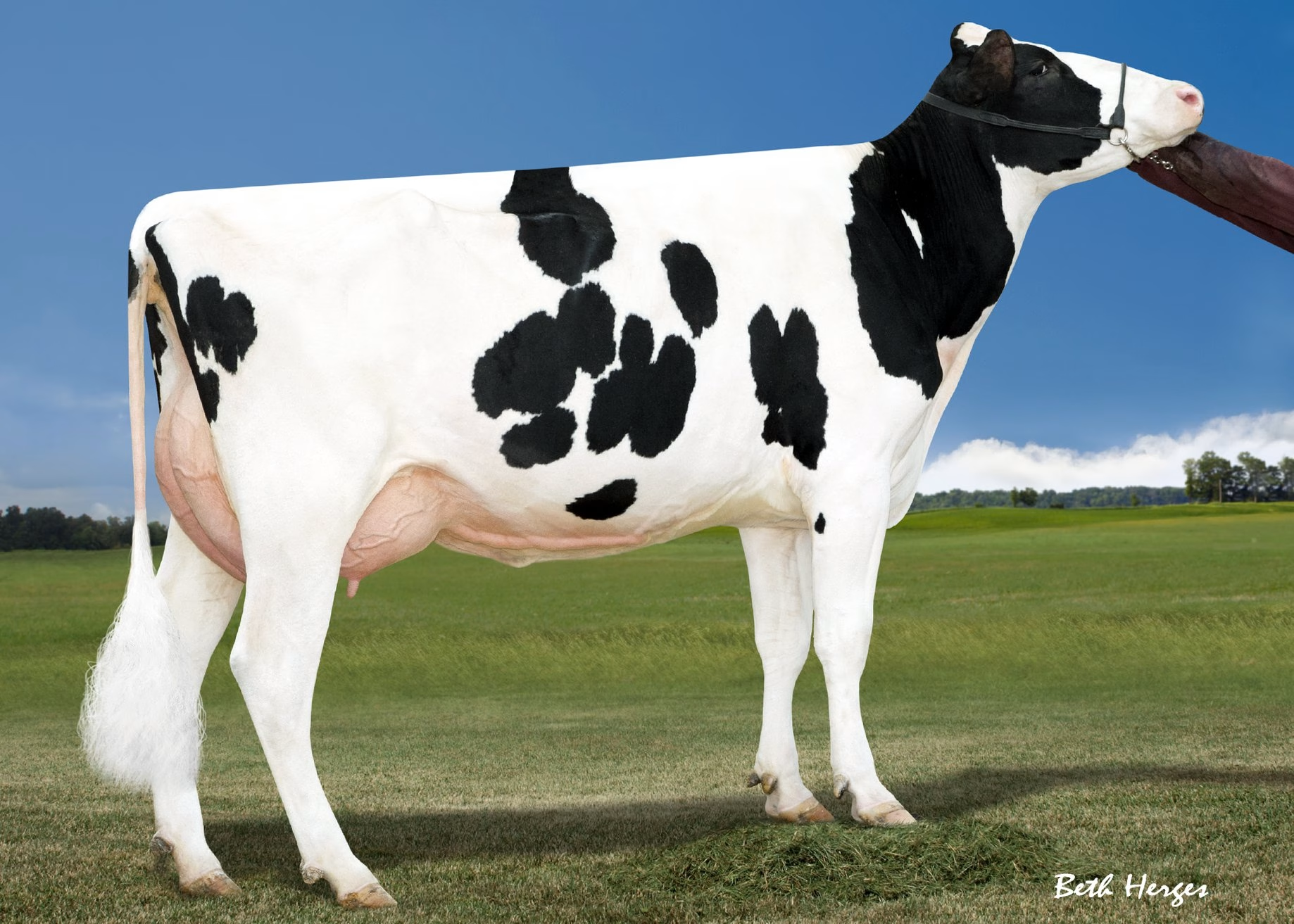
NewsSubscribe
First
Last
Consent

The Magic Behind Larenwood Farms: How Chris McLaren is Redefining Dairy Excellence

Stop buying expensive genetics. This 60-year closed herd outperforms open herds with 13,100kg averages and proves internal breeding beats purchasing.

Ever wonder what it’s like to step onto a farm where six generations of passion have shaped every detail? That hit me when I first visited Larenwood Farms on a crisp morning in Drumbo, Ontario. There’s Chris McLaren, already making his rounds before sunrise, moving with purpose through a barn where 110 Holstein cows represent decades of meticulous breeding decisions. Steam rises from their breath in the cool air while the gentle hum of milking machines creates a soothing backdrop to the daily rhythm played out here since 1852. It’s not just any farm—it’s living history with cutting-edge science folded into every corner.

You can’t miss the wall of awards in the farm office. Those plaques and shields—including multiple national herd management awards and the coveted Holstein Canada Master Breeder shield—are not just decorations. They’re milestones in a journey that perfectly blends old-school farming wisdom with the innovation you’d expect from a tech startup, not a 163-year-old family operation.

Where It All Began

Aerial view of Larenwood Farms in Drumbo, Ontario—where 163 years of McLaren family heritage meets cutting-edge dairy innovation. This 700-acre operation houses 110 Holstein cows in facilities designed around one principle: cow comfort drives profitability.

“Our family has been on this farm site for 163 years,” Chris tells me with a smile that speaks volumes about his connection to this land. “Our relatives on my grandmother’s side moved here in 1852 and settled this property, and we’ve continuously had our family on this site ever since. I’m the sixth generation, and Hailey, Joel, and Dana are the seventh generation to live on this farm site.”

Walking the property with Chris, you can’t help but feel the weight of decisions made by farmers long gone. What started as a typical mixed farm gradually evolved into a dairy specialization about 50 years ago and now spans roughly 700 acres, producing all the feed their livestock needs.

“We love our little community that we live in here. This is downtown Richwood, where our farm is,” Chris gestures toward the quiet countryside. There’s something genuine about how the McLarens approach their role here—farming isn’t just business; it’s being woven into the fabric of a place.

The game-changer for Larenwood came in 2012. That’s when they built their new milking facility designed for 126 milking cows and 24 dry cows. Before that, Chris and his team had knocked out bunker silos in 2011 and converted their haylage silo to high-moisture corn the same year. But the modern free-stall setup replacing the old tie-stall barn truly transformed everything.

Chris remembers that transition vividly. “The morning after we moved the cows into the new barn, I remember standing in the feed alley just watching them,” he recalls with the kind of enthusiasm you’d expect from someone describing their first sports car, not a dairy facility. They adapted quickly to the sand bedding and free stalls—within hours, they were more comfortable than ever. That moment reinforced everything we believed about putting cow comfort first.”

Not Your Average Dairy Farmer

Chris McLaren, sixth-generation owner of Larenwood Farms in Drumbo, Ontario, has transformed a 163-year-old family operation into an award-winning dairy powerhouse by combining university-level research expertise with time-tested farming wisdom—proving that closed herds can outperform operations spending millions on purchased genetics.

What makes Chris such an interesting character in the dairy world? It’s that rare combination of dirt-under-the-fingernails farming experience and serious academic credentials. His path took him through the University of Guelph’s Ontario Agricultural College and then to Ontario Veterinary College, where he earned a master’s degree working with Dr. Ken Leslie’s research group. That’s not the typical resume you expect from someone driving a feed truck at dawn.

“My time at the University of Guelph opened my eyes to the vast knowledge and understanding that research can have on improving the dairy farm,” Chris shares. “Undergrad classes and their faculty made me open to discussing and asking questions. My time at OVC, while doing my master’s, with Dr. Ken Leslie’s research group allowed me to see how important research is to our farm and the industry. I am still in contact with many of his students and faculty for advice or to participate in research projects.”

This science-forward approach is evident in everything at Larenwood. Chris doesn’t just review data—he interprets it through the lens of those academic foundations.

“Science insights are used every day in every decision we make,” he emphasizes, with the conviction of someone who’s seen the direct benefits. “We’re always looking to see what research says about management decisions. We always challenge salespeople to show us the research. We won’t buy products or make management changes unless there’s proof it works.”

I love how Chris says, “It’s important to always critically examine a problem or opportunity and gather information just as you would in a scientific study. We can make an educated decision after gathering information from many sources, either producers or research.” This blend of skepticism and openness makes the Larenwood approach so effective.

Award-Winning? That’s an Understatement

The wall of achievements at Larenwood tells a story few farms can match. They snagged the national DHI (Dairy Herd Improvement) Herd Management Award for three consecutive years—2014, 2015, and 2016. In 2021, they placed seventh among Canada’s Best Managed Dairy Herds. But the crown jewel? That 2019 Holstein Canada Master Breeder shield—dairy farming’s equivalent of an Oscar.

When I asked which award meant the most, Chris didn’t hesitate: “It’s Hard to pick between the herd management award from Lactanet and master breeder. Both have been our goals for many years. To have accomplished both in such a short time is extremely gratifying. This is especially true since we are a closed herd, and all improvements have been made through good management and breeding decisions over the long term.”

Think about that again—most farms need decades to achieve just one of these recognitions. Larenwood knocked out both in quick succession. That’s like winning a marathon and then immediately acing a triathlon.

The numbers behind these achievements are just as impressive. They milk 110-115 cows with an average 305-day milk production of 13,100 kg. First-lactation cows average 11,100 kg, second-lactation cows hit 13,600 kilograms, and third-lactation cows reach a whopping 14,200 kg. Fat content? 4.5%. Protein? 3.3%. And get this—their somatic cell count is just 48,000. If you know dairy, you know that’s ridiculously low and speaks volumes about their milk quality.

Chris has this great analogy for dairy farming: “Managing a dairy herd is like juggling many balls in the air simultaneously and hoping not to drop any. If we drop a ball, we want to know why and how we can improve next time.” That’s the mindset that separates good farms from great ones.

Cow Comfort: Not Just a Catchphrase

Larenwood’s 2012 freestall barn represents more than modern facilities—it’s proof that cow-centered design delivers measurable results. Every detail, from 48-inch sand-bedded stalls to strategic ventilation, was chosen based on global research and farm visits, not sales pitches.

Before building their 2012 facility, Chris became a barn tourist, visiting farms across North America and internationally to cherry-pick the best ideas. “I did a lot of touring nationally, locally, and internationally. He explains that I went to many meetings and events and learned from many great producers,” he explains.

What strikes me about Chris’s morning routine is how he watches his cows. “You can tell so much just by watching,” he says with the insight of someone who truly understands these animals. “Are they comfortable in the stalls? Are they spending enough time lying down? Are they eating aggressively at the bunk? These observations tell me more than any computer data could.”

One principle trumped all others throughout the facility design process: cow comfort. “Focusing on cow comfort and keeping the cow as the center of the facility is important and key to getting the most from those cows,” Chris emphasizes. This isn’t just talk—every detail, from the 48-inch stalls with sand bedding to the ventilation system, was designed around what makes cows happy.

I love Grant McLaren’s (Chris’s father) philosophy: “The best cow in the barn is one you don’t know you have.” Isn’t that brilliant? It perfectly captures their goal—create an environment where cows thrive without constant intervention, freeing up the team to focus on improvement rather than putting out fires.

The proof is in the pudding—or, in this case, the milk. Since moving to the new facility, Larenwood has seen dramatic decreases in lameness and metabolic disorders while production has soared.

Feeding Champions

By mid-morning at Larenwood, feed delivery takes center stage. Chris’s approach to nutrition reflects the same scientific mindset he brings to everything else. “I treat the dairy cow like she’s an athlete,” he explains while checking the day’s feed mix. “The athlete needs unique good genetics… You need good feed, you need good management, you need good prevention, and you need a good team around you, and that’s kind of the philosophy we use when dealing with cows and everything that we do.”

The daily dance between Chris and Grant is something to behold. Grant typically handles the feed mixing, drawing on decades of experience, while Chris contributes insights from milk production data and health observations. It’s a perfect blend of expertise and analysis.

Their nutritional program isn’t complicated, but it is precise. The Total Mixed Ration uses about 60% corn silage and 40% haylage on a dry matter basis, plus high moisture corn, roasted soybeans, and a specialized protein blend. This approach gives cows consistent energy throughout the day.

“We focus on a high roughage diet,” Chris notes. “We try to get high intakes of roughage into our cattle. We breed cattle to have lots of capacity and width to eat a lot of feed, and we try to harvest great feeds so they can do that.”

One innovation I found particularly clever is their automatic feed pusher, which runs eight times daily. It’s a simple technology that ensures cows always have feed within reach—critical for top-producing animals that might consume over 30 kg of dry matter daily.

The Genomics Game-Changer

By mid-morning, Chris often shifts to the most fascinating aspect of Larenwood’s operation—its genomic breeding program. Despite being a closed herd for over 60 years (meaning they haven’t purchased outside animals), they’ve achieved remarkable genetic advancement through strategic breeding decisions.

“A turning point in our farm’s genetics was when we started testing every animal with genomics,” Chris explains with the enthusiasm of someone who’s found a secret weapon. “This technology gives us another tool to find the cows that will contribute to producing better cattle. The improvement and consistency of the herd has been incredible.”

Want proof? Just look at their production data by Lifetime Profit Index (LPI) rankings:

LPI ValuePercentageCountAvg 305-day Milk (kg)Avg 305-day Fat (kg)Avg 305-day Protein (kg)Avg Classification
344726%1111,63654240282.9
323623%1011,63950541282.5
306926%1111,78650440279.3
280826%1111,57449439481.0
Total100%4311,65751140381.4

What does this mean in plain English? Cows with higher LPI consistently produce more milk with better components while maintaining healthier udders. For a commercial dairy, these differences translate directly to the bottom line.

I appreciate how Chris balances technology with tradition. “Genomics is a tool just as pedigree knowledge is,” he explains. “Genomics allows you to see animals and pedigrees needing more improvement or focus. However, having that knowledge of the pedigree and what has worked in a family helps to select bulls that complement cows.”

Their breeding philosophy is refreshingly straightforward: “Make the daughter better than the mother.” Each cow is bred by examining the linear traits of both cow and bull to find complementary matches. They’ll often alternate generations with production-focused bulls and then type-focused bulls.

Larenwood Alligator Homer 1123 demonstrates genomic breeding mastery—scoring 91 points in third lactation with 3116 LPI and 15,130 kg production, proving how strategic genomic testing within closed herds creates elite performers that outproduce industry averages by 4,000+ kg annually.

The results speak for themselves. Take their ‘H’ family progression:

Larenwood AirIntake Homer 903: 85 points in 4th lactation, 2478 LPI, 14,770 kg Larenwood Alligator Homer 1123: 91 points in 3rd lactation, 3116 LPI, 15,130 kg Larenwood RangerRed Homer 1269: 85 points in 1st lactation, 3561 LPI, 11,830 kg, Larenwood Poprock Homer 1262: 3739 LPI, 105kg fat, type 13

Larenwood Alligator Crazy 1114 exemplifies genomic breeding success in action—scoring 85 points in first lactation with 3286 LPI and 12,600 kg production, proving how strategic genomic testing transforms genetic potential into measurable performance in closed herd operations.

Or their ‘C’ family:

Larenwood Randall Crazy 907: 90 points in 3rd lactation, 2942 LPI, 17,580 kg Larenwood Alligator Crazy 1114: 85 points in 1st lactation, 3286 LPI, 12,600 kg Larenwood RangerRed Crazy 1228: 83 points in 1st lactation, 3706 LPI, 13,000 kg Larenwood Anahita Crazy 1416: 3689 LPI, 16 type, Larenwood Anahita Crazy 1467: 3584 LPI, 84kg fat, type 17

You should see Chris when he talks about these cow families—his face lights up as he points out subtle improvements in udder texture, teat placement, and dairy strength that would escape the casual observer but represent decades of careful decisions.

This focused breeding work has also produced outstanding bulls, now available through artificial insemination. Larenwood MAXIMUM (3553 LPI, 15 type) and Larenwood PG MONUMENTAL (3839 LPI, 108 kg fat, type 13) represent the culmination of generations of careful breeding.

“Having bulls in AI is a validation of our breeding philosophy,” Chris says with justifiable pride. “But more importantly, we know these bulls will create the kind of trouble-free, productive cows that commercial dairy farmers need to be profitable in today’s challenging environment.”

Baby-Making Business

By afternoon, Chris typically focuses on reproductive management—probably the least glamorous but most crucial aspect of dairy farming. Their move to the new facility in 2012 brought unexpected benefits in this area. “We noticed when we came into the new barn that getting cows pregnant was improved,” Chris notes. “Seeing cows move around and technologies all helped.”

Through careful analysis and consultation with advisors, they’ve achieved a pregnancy rate of 28%—significantly above the provincial average. This reflects excellent heat detection and conception rates.

Their breeding strategy is surgical in its precision: “25% of heifers are bred sexed semen, 25% recipients, and 50% conventional,” Chris explains. The milking herd has 10% sexed to heifers, the bottom 20% to beef, and the rest conventional semen.” They also implement an embryo transfer program, flushing select elite heifers and implanting embryos into lower genetic merit animals—accelerating genetic progress across the herd.

The stats are impressive: 70% insemination rate, 45% conception rate, 41% conception at first breeding, and 83% of cows pregnant by 150 days in milk. The pregnancy rate is 30+ %. These numbers put Larenwood in elite company for reproductive performance.

I love watching Chris during his late afternoon rounds through the dry cow area. He examines each pregnant animal with the care of an expectant father, mentally planning their calving management and future breeding. “Each pregnant cow represents not just future milk production but the next step in our genetic plan,” he explains. “I’m already thinking about what bull might work best on her daughter before she’s born.” Talk about planning!

Family Business Done Right

The McLaren family—Chris with wife and children Hailey, Joel, and Dana—representing six generations of farming heritage at Larenwood Farms. While the seventh generation prepares to continue the family legacy, the McLarens demonstrate that successful dairy operations require both dedication to the land and commitment to family balance.

As evening approaches at Larenwood, Chris and Grant meet again to review the day and plan for tomorrow. Their collaborative management style exemplifies what family farming should be. “I am involved in the overall management, genetics, and herd health. My dad is focused on the feeding and cropping,” Chris explains. “We both have input into all aspects but have the area we are mostly focused on. We talk each morning to set the day’s priorities.”

What you see as a visitor masks the complex coordination behind the scenes. “There are days when we haven’t explicitly discussed a task, but we both know it needs doing,” Chris says with a knowing smile. “That’s the advantage of working with family—sometimes we can communicate without words.”

Chris’s appreciation for his father’s mentorship shines through in every conversation. “My biggest mentor and advisor would be my dad. He is supportive of all the changes we make. He is very thoughtful and analytical of every decision to ensure we make the correct choice. These skills, as well as ‘never be afraid to ask questions,’ he taught me.”

Beyond the family core, Larenwood employs one full-time and five part-time staff members who contribute to the farm’s success. Chris emphasizes clear communication in team leadership: “Everyone needs to understand not just what we’re doing, but why we’re doing it. When the team understands the reasoning behind a protocol or change, they’re likelier to implement it consistently.”

Old School Meets New Tech

The most fascinating thing about Larenwood might be how they blend six generations of farming wisdom with cutting-edge scientific knowledge. As a 60+ year closed herd with such a deep family history, tradition runs in their soil. Yet, they consistently embrace innovation that many newer operations miss.

“We’re always learning from past experiences, which helps us learn and grow as dairy herd managers,” Chris reflects. “There’s great value in listening to the past and not repeating mistakes. However, we’re always open to new, well-researched ideas. It’s great having my dad and uncle around the farm to remind me of things they’ve tried that were successful or failed. We’re constantly investing in new technology that can provide more information to help make good decisions.”

You can see this balance in action during breeding decisions. Chris might be consulting genomic data on his tablet while drawing on generational knowledge of cow families. “The genomics tell me the numbers, but our family history with these cows tells me how they’ll likely respond to different management approaches,” he explains. “You need both perspectives to make the best decisions.”

Isn’t that the sweet spot we’re all looking for? Honoring wisdom while embracing progress?

Bouncing Back Stronger

No farm reaches Larenwood’s level without facing serious challenges. When I asked Chris how he maintains motivation through setbacks, his answer revealed the mindset that’s propelled their success: “I always try to do my best in everything that I do. There is always room for improvement, and that is what motivates me. Failure or an issue is a challenge to fix that problem and be successful.”

He continues, “I try to stay focused on the long-term goal and see that there will always be bumps in the road. Over the years, I have learned that it is important to stop and appreciate successes and not dwell on failures for too long.”

The McLarens’ approach to challenges is methodical and research-driven. “By doing the proper research and asking lots of questions before we change something, we believe we make the correct decision at that moment, and few mistakes are made,” Chris explains. “We try to stay positive and see each setback as a learning experience for us to get better. We will often ask, how could we have done better? Or, what could we change next time? If there is an issue, we will involve our advisory team and develop solutions. We’re not afraid to contact industry experts in that area to give us ideas.”

This commitment to continuous improvement extends to every corner of the operation. “We are always looking for the next challenge and the next area that we can do better for the cows and the herd,” Chris adds. This relentless forward momentum has earned them those awards and shields.

What’s Next for Larenwood?

Construction crews prepare Larenwood's freestall barn for robotic milking installation, marking the farm's third major facility evolution from tie-stall to freestall to autonomous systems. The renovation will allow cows to choose their own milking frequency, potentially increasing production while reducing labor demands—the next logical step in Chris McLaren's cow-centered management philosophy.
Construction crews prepare Larenwood’s freestall barn for robotic milking installation, marking the farm’s third major facility evolution from tie-stall to freestall to autonomous systems. The renovation will allow cows to choose their own milking frequency, potentially increasing production while reducing labor demands—the next logical step in Chris McLaren’s cow-centered management philosophy.

Do you know what’s fantastic about Larenwood? They don’t just talk about improvements—they make them happen. Remember that tie-stall barn renovation for automatic calf feeders I mentioned? Chris and the team have already completed that project in 2022! And that new heifer facility he was eyeing? They built it in 2023. Talk about getting things done.

“The combination of the calf barn, the heifer barn, and better genetics all contributed to almost 1000kg per lactation more milk for the first lactation animals,” Chris tells me with well-deserved pride. Can you imagine that kind of improvement? We’re talking about first-calf heifers producing an extra 1000 kilograms of milk each—that’s the power of combining facility improvements with genetic advancement.

So, what’s actually on the horizon for Larenwood now? Something even more exciting. “We are renovating our milking barn for robotic milking,” Chris explains. “This is the next evolution of Larenwood. From tiestall to freestall, now robotic.”

I love how he frames this progression—it’s like watching the evolution of dairy farming in real time through one farm’s journey. Each stage represents a significant leap forward in cow comfort and operational efficiency.

The robotic milking system isn’t just a fancy new technology—it fundamentally changes the relationship between cow and caretaker. “This will allow for a more stress-free barn that allows the cow to be milked as often as she chooses,” Chris explains. This will increase the milk production per cow from the current twice-daily milking.”

Think about what this means for the cows. Instead of being herded to the parlor on a strict schedule, they can decide when they want to be milked. Some might go three or four times daily, especially in peak lactation. It’s cow-centered farming that has been taken to the next level.

Beyond these facility improvements, Chris’s vision remains constant: “Continue improving the herd’s health, production, and genetics. Work with a few cow families in the barn to produce elite genomic animals that improve the herd and give us a chance to put more bulls in AI.” And yes, he’s still aiming for another master breeder shield to join the first.

Standing on land that’s supported his family for six generations, Chris carries both the weight of responsibility and the excitement of possibility. “Each generation has left this farm better than they found it,” he reflects. “My goal is to continue that tradition while preparing the next generation to take it even further.”

Don’t you think something about that blend of completed achievements and ambitious plans is inspiring? It’s the Larenwood way—constantly moving forward while building on past success.

Wisdom Worth Sharing

As the day winds down at Larenwood, Chris makes his final barn check under the soft night lighting. In these quiet moments, he often reflects on the journey and what wisdom he might pass along. His advice for young farmers is worth its weight in gold:

“Learn from as many people as you can. Don’t be afraid of asking questions from those that are ‘better’ than you. Learn from them, and you will be surprised by how many people are willing to answer all your questions.”

He emphasizes patience and persistence: “Long-term consistent success does not happen overnight. Stay patient and focused on your goals.” And his most important principle? “But most of all, always keep the cow at the forefront of everything you do.”

This advice encapsulates the Larenwood approach—humble learning, long-term vision, and unwavering commitment to animal welfare. It’s how six generations have built one of Canada’s most respected dairy operations.

The Heart of It All

As darkness settles over Larenwood Farms, the barn lights dim, and the rhythmic sound of contented cows chewing their cud creates a peaceful backdrop that belies the sophisticated operation behind the scenes. This place—this remarkable blend of heritage and innovation—stands as living proof of what’s possible when family wisdom meets scientific precision.

From genomic testing to facility design, from their award-winning breeding program to their meticulous attention to cow health, every aspect of Larenwood reflects a commitment to excellence that spans generations. Those national awards aren’t just decorations—they’re external validation of an approach that puts cows first while embracing science and tradition.

What makes Larenwood’s story so compelling isn’t just the impressive statistics or the wall of awards. The values guiding their success for over 160 years are putting the cow first, embracing continuous improvement, making data-driven decisions, and maintaining that long-term perspective that seems increasingly rare today.

In an era of agricultural consolidation and economic pressure, Larenwood is a testament to the enduring power of thoughtful, knowledge-based farming. Chris McLaren and his family have created an award-winning dairy operation by honoring their rich heritage while embracing scientific advancement. This legacy will continue to inspire dairy farmers for generations to come.

Could we all learn something from that approach?

KEY TAKEAWAYS

  • Closed Herd Genetic Superiority: Larenwood’s 60+ year closed breeding program delivers 13,100 kg average production with 4.5% fat and 3.3% protein, proving internal genetic development outperforms expensive external purchases while reducing disease risk and maintaining genetic consistency across generations.
  • Genomic Testing ROI Validation: Strategic genomic testing of every animal in a closed herd generated measurable improvements in production consistency and udder health, with cows ranking higher on Lifetime Profit Index consistently producing 11,600+ kg milk compared to industry averages of 9,500-10,500 kg.
  • Facility Investment Impact: The 2012 freestall barn conversion combined with 2022-2023 calf and heifer facility upgrades delivered 1,000 kg additional milk production per first lactation heifer, demonstrating how cow comfort investments generate immediate and measurable production returns.
  • Reproductive Performance Through Management: Achieving 28% pregnancy rates with 45% conception rates and 83% of cows pregnant by 150 days in milk proves that systematic breeding protocols and cow comfort create superior reproductive efficiency compared to industry averages of 18-22% pregnancy rates.
  • Technology Integration Strategy: Larenwood’s progression from tie-stall to freestall to robotic milking systems represents strategic technology adoption focused on cow choice and comfort rather than operational convenience, positioning the operation for continued production improvements and labor efficiency gains.

EXECUTIVE SUMMARY

The dairy industry’s obsession with purchasing elite genetics is fundamentally flawed, as proven by Larenwood Farms’ 60+ year closed herd achieving 13,100 kg average production while outperforming operations spending millions on external genetics. Chris McLaren’s systematic approach combining genomic testing with internal breeding decisions has delivered three consecutive national DHI Herd Management Awards and a Master Breeder shield—achievements that typically require decades for most operations. Their 110-cow operation maintains a 48,000 somatic cell count and 28% pregnancy rate while generating 1,000 kg additional milk per first lactation heifer through strategic facility improvements and breeding precision. By treating every cow like an athlete and applying scientific methodology to traditional farming wisdom, Larenwood proves that genetic progress through internal development delivers superior ROI compared to expensive external purchases. The operation’s transition to robotic milking represents the final evolution of their cow-centered philosophy, allowing animals to dictate milking frequency rather than human schedules. This case study demolishes the myth that genetic advancement requires constant external investment, instead demonstrating how systematic internal breeding programs generate sustainable competitive advantages. Every dairy farmer convinced they need to buy their way to genetic progress should examine how Larenwood’s approach could revolutionize their breeding strategy and profitability metrics.

Learn More:

The Sunday Read Dairy Professionals Don’t Skip.

Every week, thousands of producers, breeders, and industry insiders open Bullvine Weekly for genetics insights, market shifts, and profit strategies they won’t find anywhere else. One email. Five minutes. Smarter decisions all week.

NewsSubscribe
First
Last
Consent

The McCarty Magic: How a Family Farm Became the Dairy Industry’s Brightest Star

From 15 cows to 20,000: How the McCarty family revolutionized dairy farming while maintaining values and earning the industry’s top honor.

The McCarty Family: Four generations of dairy farming excellence stands proudly in one of their innovative free-stall barns. From left to right, brothers Mike, Clay, Tom (father), Dave, and Ken McCarty have transformed a 15-cow Pennsylvania dairy into a sustainability-focused operation spanning multiple states, earning them World Dairy Expo's prestigious 2025 Dairy Producer of the Year award.
The McCarty Family: Generations of dairy farming excellence stands proudly in one of their innovative free-stall barns. From left to right, brothers Mike, Clay, Tom (father), Dave, and Ken McCarty have transformed a 15-cow Pennsylvania dairy into a sustainability-focused operation spanning multiple states, earning them World Dairy Expo’s prestigious 2025 Dairy Producer of the Year award.

Have you heard about the McCarty family? Since I visited their operation last month, I can’t stop thinking about their incredible story. Picture this: from a tiny 15-cow Pennsylvania dairy to becoming the World Dairy Expo’s 2025 Dairy Producer of the Year with nearly 20,000 cows across multiple states! What’s truly remarkable isn’t just their size but how they’ve managed to grow while staying true to their family values and pushing the envelope on sustainability.

From Humble Beginnings to Dairy Powerhouse

Do you know how most family farms struggle to make it past one generation? The McCarty story began in 1914 when Taylor McCarty started milking cows near Sugar Run, Pennsylvania. Even then, they weren’t just any operation- Taylor’s little herd received recognition from the National Dairy Association for their exceptional butterfat content!

Ken McCarty (the youngest of the four brothers running things now) told me this great story about his great-grandfather: “He was kind of an innovative guy. He sold tractors when everyone else was still using horse and buggy!”

When Harold McCarty (that’s Ken’s grandfather) took over in 1945, he expanded to about 40 Holsteins. Then Tom and Judy McCarty- who’d been teaching, can you believe it? -jumped in full-time in 1970, building a new barn for 150 cows. By 1981, the Pennsylvania Governor was touring their place, calling it “one of the most progressive” dairies in the state.

 A young Tom McCarty tends to the dairy herd in Sugar Run, Pennsylvania, circa 1970s—never imagining his family's operation would one day span multiple states with 20,000 cows. In this humble tie-stall barn where the McCarty brothers would learn to milk alongside their father, Tom was already dreaming of creating something his four sons might someday want to continue. "Dad always believed in hands-on learning," Ken recalls. "Looking at this photo reminds me that our story isn't just about growth—it's about the values and work ethic that started right here in Pennsylvania and traveled with us to Kansas.
A young Tom McCarty tends to the dairy herd in Sugar Run, Pennsylvania, circa 1970s—never imagining his family’s operation would one day span multiple states with 20,000 cows. In this humble tie-stall barn where the McCarty brothers would learn to milk alongside their father, Tom was already dreaming of creating something his four sons might someday want to continue. “Dad always believed in hands-on learning,” Ken recalls. “Looking at this photo reminds me that our story isn’t just about growth—it’s about the values and work ethic that started right here in Pennsylvania and traveled with us to Kansas.

But here’s where things get interesting. The McCartys hit a crossroads in the 1990s. Tom and Judy realized that all four sons- Mike, Clay, and Dave- wanted to join the family business, but their Pennsylvania location couldn’t support it.

“Dad sat us down,” Ken told me, “and said, ‘Hey, we either need to change what we’re doing completely, or we need to think about moving otherwise we’re probably not going to survive this.'”

Can you imagine making that decision? After careful research, they took an enormous leap of faith, purchasing a wheat farm in Northwest Kansas and starting fresh with 250 cows on April 1, 2000. April Fool’s Day! Ken laughs about how many of their big moves happened on that date.

The Pennsylvania operation they left behind wasn’t just small-it was wildly inefficient by modern standards. Ken described it: “We were farming about 1,000 acres on 135 different fields spread 28 miles one way across the river, through multiple towns.” No wonder they were looking for a more sustainable approach!

And talk about challenges- they’d already survived two “hundred-year” floods just three years apart in the 1970s and weathered the devastating interest rate crisis of the 1980s. Moving west wasn’t just about growth and giving their multi-generation family business a fighting chance.

The Kansas Adventure and a Game-Changing Partnership

McCarty Family Farms' state-of-the-art facility in northwest Kansas showcases their remarkable growth from 250 cows in 2000 to a sophisticated operation with modern free-stall barns, processing facilities, and innovative design. This aerial view captures how the family's bold relocation transformed both their business and the surrounding rural community.
McCarty Family Farms’ state-of-the-art facility in northwest Kansas showcases their remarkable growth from 250 cows in 20,000 to a sophisticated operation with modern free-stall barns, processing facilities, and innovative design. This aerial view captures how the family’s bold relocation transformed both their business and the surrounding rural community.

Their initial Kansas operation grew quickly to 800 cows as the brothers started returning to the farm. In 2008, they were approached by a local economic development foundation about building a second dairy in Bird City. The foundation offered financing help to make it happen because they’d seen how dairy operations could revitalize rural communities and schools!

“The privately funded Economic Development Group approached us about building a dairy there,” Ken explained. “At the time, we weren’t financially capable of taking on that, and we honestly informed them of that.” However, through creative financing, the economic development group took a second position as their primary lender, and they made it happen.

By 2009, the McCartys were named Kansas Distinguished Dairy Farm Family of the Year. They continued thoughtful expansion, adding a location in Scott City and growing to about 7,000 milking cows.

Then came 2009-a catastrophic year for the dairy industry, with milk prices plunging. The McCartys had fortunately hedged about 50% of their production, allowing them to weather the storm better than many operations. This experience reinforced their commitment to risk management- a theme shaping their future business model.

But the real plot twist came in 2010. A simple phone call about alternative milk marketing approaches led to a revolutionary partnership with Danone (then Dannon Yogurt).

“We met with them in April 2010 to discuss a different relationship for buying and selling milk,” Ken explained. “The vision of a direct supply model immediately aligned between their teams and ours.”

This partnership was transformative but required something innovative: their on-farm processing plant.

Vertical Integration: The Secret Sauce

The McCarty Family Farms milk processing facility in Rexford, Kansas, represents the cornerstone of their vertical integration strategy. Built in 2012, this plant processes up to 2.2 million pounds of milk daily, condensing it before shipping to Danone while reclaiming water for reuse—putting 75% fewer trucks on the road and giving the family unprecedented control over their product quality from cow to customer.

You know how most dairy farms just ship their milk off and never see it again? In 2012, the McCartys flipped the script by building an on-farm milk processing facility at their Rexford location. Talk about a learning curve!

“We had no experience running a milk processing plant before 2012,” Ken laughed. “We depended heavily on the Danone teams to help us develop our skill set.”

Initially designed to process about half a million pounds of raw milk daily, they’ve since expanded it to handle up to 2.2 million pounds daily. They’re processing about 1.4 to 1.5 million pounds daily from their western operations.

But getting there wasn’t easy. Ken explained that they had to recruit people with processing plant experience. “Most of those team members are still with us 13 years later,” he noted proudly. They even hired their veterinarian, who was process-flow-oriented and focused on Lean Six Sigma principles, to help build the foundation of their plant management approach.

This is so brilliant because it gives them real-time feedback on milk quality. Imagine knowing within hours, not days, if there’s an issue with components or somatic cell counts! It creates this beautiful closed-loop system where the farm and plant teams work harmoniously.

The plant condenses milk before shipping it to Danone’s manufacturing facilities, separates and pasteurizes cream, and even reclaims water from the milk for cleaning and irrigation. It’s saved them from putting 75% of the trucks they would normally need on the road. That’s a win for efficiency AND the environment.

This vertical integration has also transformed their approach to herd health and antibiotic stewardship. “We have limited the potential milk residue antibiotics that we use on the farm to almost zero,” Ken told me. “Those that we do use are tightly controlled, typically at one location that is not a milk-producing site’s our dry cow and calving facility.”

As their cows have become more productive-routinely producing milk with butterfat levels of 4.5-4.6%-they’ve faced unexpected challenges at the processing level. “Our processing plant separators weren’t designed to accommodate butterfat levels that high, so we have to run our plant slower,” Ken explained. “Most dairymen, their connection to that separator ends at the back of a milk tanker. We see it all the way through.”

East Meets West: The MVP Partnership

The McCarty and VanTilburg families stand united at their MVP Dairy facility in Ohio, where these fourth-generation farm families from Kansas and Ohio joined forces in 2018 to create a groundbreaking partnership that combines western dairy expertise with eastern agricultural innovation. Their collaborative vision has transformed both operations and created a model for sustainable dairy production across America's heartland.
The McCarty and VanTilburg families stand united at their MVP Dairy facility in Ohio, where these fourth-generation farm families from Kansas and Ohio joined forces in 2018 to create a groundbreaking partnership that combines western dairy expertise with eastern agricultural innovation. Their collaborative vision has transformed both operations and created a model for sustainable dairy production across America’s heartland.

Even with their expanded processing capacity, by 2017, the McCartys were looking for new opportunities. This led them to partner with the VanTilburg family in Ohio, creating the McCarty-VanTilburg Partnership (MVP) Dairy.

“The VanTilburgs wanted to connect their crops more directly to finished goods,” Ken explained. “We brought our Danone relationship and dairy expertise to the table. They brought the land and local reputation.”

The Ohio operation, which opened in November 2018, milks about 4,000 cows and ships raw milk directly to Danone’s yogurt plant 18 miles away. What I love about this story is how they took what they learned, Ohio-specifically about tunnel-ventilated barn designs, and brought it back to improve their Kansas operations.

The newest Kansas facility includes two, 120-cow DeLaval rotaries with four, six-row tunnel-ventilated free stall barns feeding each rotary, eight total barns sitting tail-to-tail, sharing a common feed lane, common manure management system.” This design optimizes cow flow, labor efficiency, and animal comfort.

Meanwhile, their Beaver City, Nebraska location was transitioned into a specialized heifer-raising facility, further demonstrating their strategic approach to operational specialization.

Throughout all this growth, they’ve remained committed to their relationship with Danone North America. Today, MVP Dairy ships raw milk directly to Danone, while their western operations process milk through their plant before shipping it to Danone and a few other customers.

The Brothers McCarty: Four Pieces of One Puzzle

The McCarty brothers standing together at their Rexford facility: Mike, Clay, Dave, and Ken. Each manages a distinct aspect of the operation—farm operations, feeding, finances, and processing/sustainability respectively—creating a seamless leadership puzzle that has guided their growth from 15 to 20,000 cows across multiple states.

Have you ever wondered how family businesses work together without driving each other crazy? The McCarty brothers have figured it out by each finding their lane.

The youngest, Ken, oversees the processing plant genetics work and leads their environmental sustainability and animal welfare initiatives. He smiled, “My preference is working directly with cows, but I spend much more time in front of a laptop than I ever intended to.”

Dave handles “basically everything financial”-banking relationships, budgeting, and overseeing the office team.

The two oldest brothers, Clay and Mike, focus on farm operations, feed buying, and managing the farming side of the business.

Their secret? “We more or less stay out of each other’s areas,” Ken explained simply.

This clear division of responsibilities allows each brother to develop expertise in his domain while ensuring the operation runs smoothly. The management approach has evolved as the business has grown more complex.

I asked Ken how they’ve managed to maintain harmony throughout decades of working together. He attributes it to genuine respect for each other’s strengths and a shared commitment to the family legacy. Unlike many family businesses that fracture under pressure, McCartys has used its complementary skills to build something greater than any other business could have accomplished individually.

Now, they’re beginning to bring in the fifth generation. With 11 family members between ages 8 and 24, the oldest is just starting to join the business after college. It’s a different world than when the current generation started, and his brothers “grew up with a shovel and a pitchfork.” Still, today’s dairy industry requires technological savvy, business acumen, and environmental expertise.

“The eight-year-old says he wants to be a farmer but also says he wants to be a fighter pilot and soldier and a policeman and firefighter,” Ken laughed. “So, he’s eight.” However, succession planning is already in motion for the older fifth-generation members.

Commitment to Team Member Well-Being

A McCarty team member meticulously preparing the rotary parlor for the next milking shift. The farm's commitment to cleanliness reflects their DIRT principles (Dedication, Integrity, Respect, Teamwork) and ensures both quality milk production and a safe working environment for employees.
A McCarty team member meticulously preparing the rotary parlor for the next milking shift. The farm’s commitment to cleanliness reflects their DIRT principles (Dedication, Integrity, Respect, Teamwork) and ensures both quality milk production and a safe working environment for employees.

One practice that really impressed me about the McCartys is their approach to employee care and retention. In an industry often criticized for labor practices, they’re proving that treating people right is both ethical AND good business.

“Great employees are the backbone of any successful operation,” Ken told me. “We strive to offer competitive compensation packages with comprehensive benefits including health insurance and 401k plans, which helps us attract and retain quality team members.”

This approach has helped them build remarkable stability in their workforce, with many employees having been with them for 10, 15, even 25 years. In rural communities with limited job opportunities, the McCartys have become employers of choice.

Ken acknowledges that recent inflation has created challenges in keeping pace with rising costs, but the family maintains their commitment to creating a positive work environment through both compensation and culture.

Their management philosophy is encapsulated in their DIRT principles: Dedication, Integrity, Respect, and Teamwork. These values guide every aspect of operations, from daily milking routines to long-term business decisions.

They’ve invested in a full human resources team focused on employee engagement, training, and ensuring everyone understands their role in the larger operation. The McCartys also lead by example, following the wisdom of Tom McCarty: “If you ask a team member to be a foot deep in manure, you best be two feet.”

One clever practice they’ve implemented is using third-party remote monitoring to identify problems and catch employees doing things right. “When our remote viewers notice our team members scratching a cow’s ear or doing positive things, we use that as training tools,” Ken explained. This positive reinforcement approach helps build a culture of genuine animal care.

Data-Driven Dairying with a Dash of Cow Sense

"Through genetic testing, we gather data for nearly 100 traits and indexes on our calves. This data helps us make breeding decisions that make our herd healthier and more sustainable with each generation." - Ken McCarty on the family's data-driven approach to herd improvement
“Through genetic testing, we gather data for nearly 100 traits and indexes on our calves. This data helps us make breeding decisions that make our herd healthier and more sustainable with each generation.” – Ken McCarty on the family’s data-driven approach to herd improvement

When I asked Ken about managing multiple operations, he emphasized their reliance on standardization and protocols. “Each farm operates the same synchronization protocols, treatment protocols, breeding strategies, and vaccination strategies,” he explained. “We work with the same nutritionist, use the same training protocols, and consult the same independent experts.”

This standardization extends to how they collect and analyze data. They’ve invested considerable time ensuring that data entry is consistent across all locations, from how feed ingredients are coded to how health conditions are defined.

“As we’ve stepped away from day-to-day cow-side activities and into more of a true ownership and management role, that standardization has made our systems better,” Ken reflected. “Unlike managing by feel, we allow the data to drive many of our decisions.”

One example Ken shared was the challenge of consistently defining health conditions across facilities. “How do you define an RP (retained placenta)? Everybody in the dairy industry has a slightly different attitude regarding what defines an RP. So, making sure that everybody in our system defined it the same way and entered it the same way so that data analysis and farm management is streamlined, standardized, and simple- those were some of the bigger challenges.”

But Ken quickly added that they haven’t abandoned traditional “cow sense.” Instead, they’ve augmented it with technology and analytics, creating a more precise approach to management.

Their newest facilities in Kansas feature 220-stall DeLaval rotaries with tunnel-ventilated free-stall barns arranged tail-to-tail with common feed lanes. This design optimizes cow comfort, labor efficiency, and operational flow. Their technology includes activity meters for heat detection, milk meters tracking flow and yield, and sophisticated monitoring systems.

I found it fascinating how they’ve integrated this high-tech approach with traditional dairy wisdom. Ken noted that, in some ways, their current team members are even better “cow people” than he and his brothers were, thanks to the combination of data-driven protocols and hands-on training in observing cow behavior and comfort.

Sustainability That Sets Industry Standards

McCarty's state-of-the-art flush system in action—where sustainability meets practicality in modern dairy farming. This water recycling system represents just one piece of the comprehensive environmental approach that earned them B Corp certification. While most visitors focus on adorable calves or impressive milking parlors, it's innovations like this automated manure management that dramatically reduce water usage while improving barn hygiene. As Ken explains, "In dairy farming, sometimes the most impactful environmental solutions are the ones most visitors never think to ask about."
McCarty’s state-of-the-art flush system in action—where sustainability meets practicality in modern dairy farming. This water recycling system represents just one piece of the comprehensive environmental approach that earned them B Corp certification. While most visitors focus on adorable calves or impressive milking parlors, it’s innovations like this automated manure management that dramatically reduce water usage while improving barn hygiene. As Ken explains, “In dairy farming, sometimes the most impactful environmental solutions are the ones most visitors never think to ask about.

In December 2020, McCarty Family Farms achieved something remarkable- B Corp certification- joining a select group of companies meeting the highest social and environmental performance standards. This makes them one of the few dairy farms globally to meet these rigorous standards.

“As 4th generation dairy farmers, our family has a long-established commitment to environmental stewardship and using our business as a force for good in the world,” Ken explains. “Becoming a Certified B Corp™ amplified our commitment by prioritizing mission-driven collaboration with our partners to drive real, systemic change and create impact at scale.”

What makes their sustainability metrics particularly impressive is how they compare to industry benchmarks:

  • Their reduction of 8,474 tons of CO₂ equivalent significantly outpaces industry trends. While the dairy industry has decreased greenhouse gas intensity by 42% since 1971, total emissions increased by 14% due to production growth.
  • They implement cover crops on 95% of MVP Dairy’s 4,500 acres, far exceeding typical adoption rates in the Midwest.
  • Their innovative manure management aligns with research showing advanced technologies can reduce GHG emissions from manure by 58-80%.

They’ve achieved these results partly through productivity improvements, increasing milk production by approximately 14-15% without synthetic growth hormones. “All that has been achieved by improved feeding, milking procedures, and the elimination of stress,” Ken explained.

Their approach to resource conservation extends to water and energy as well. They worked with Kansas State University to redesign sand reclamation units that now capture over 97% of sand for reuse as bedding. They’ve implemented innovations in smart cow cooling systems that don’t run water when cows leave the pen, and they continuously evaluate ways to reduce electrical usage and fuel consumption.

The McCartys don’t just protect the environment but actively enhance it. They’ve planted trees, created pollinator habitats, and maintained wildlife boxes around their farms. Today, they have more than 58 wildlife boxes and 25 acres dedicated to native plants for pollinators.

According to Danone North America, McCarty Family Farms produces 30% more milk with fewer resources from cows living longer, healthier lives. They became the first farm in the world to achieve the highest animal welfare status from Validus, and they used water collected from the condensing plant to irrigate nearby crops.

A 2024 study from Ireland validates their approach, showing that implementing climate change mitigation strategies can reduce emissions by 12% while increasing farm net savings. The McCartys are living proof that environmental and economic sustainability can go together.

Weathering the Storm: Risk Management in Volatile Times

When I asked Ken about the industry’s biggest challenges, his answer was immediate: risk mitigation in an increasingly unpredictable world.

“They were called black swan events because they were pretty dang rare,” he observed, “but it seems like black swan events happen about every six months anymore.”

He cited several factors: “Consolidation continues to happen. Consumer connection to agriculture continues to dwindle. Geopolitical impacts on the ag world continue to slip further and further from our control.”

The McCartys’ approach focuses on long-term stability rather than short-term gains. Their Danone relationship allows them to take “a much longer-term view of management strategies, investments, and risk management.”

This means:

  • Securing energy costs years in advance
  • Acquiring more cropland to stabilize feed costs
  • Developing relationships with equipment providers to minimize maintenance uncertainties
  • Creating systems that can weather market volatility

Ken sees progress in the industry’s ability to manage risk, noting that tools like Livestock Risk Protection (LRP) and Dairy Revenue Protection (DRP) didn’t exist 25 years ago. Still, he acknowledges the challenges of implementing comprehensive risk management while handling the day-to-day demands of a complex agricultural operation.

This focus on stability over speculation starkly contrasts the boom-and-bust cycle that defines much of agriculture. By taking a conservative, long-term approach to business planning, McCartys has positioned itself to survive and thrive through industry cycles that have bankrupted many operations.

A Day in the Life: Where High-Tech Meets High-Touch

McCarty's 120-cow DeLaval rotary parlor epitomizes modern dairy efficiency where precision engineering meets animal care. This aerial view showcases the carefully choreographed milking process where thousands of cows move through daily with remarkable calm. While data screens monitor every aspect of production in real-time, it's the thoughtful facility design and gentle handling that truly makes the difference. Here, cutting-edge technology doesn't replace the human element—it enhances it, allowing team members to focus more on cow comfort while achieving impressive throughput that was unimaginable in the family's Pennsylvania tie-stall beginnings.
McCarty’s 120-cow DeLaval rotary parlor epitomizes modern dairy efficiency where precision engineering meets animal care. This aerial view showcases the carefully choreographed milking process where thousands of cows move through daily with remarkable calm. While data screens monitor every aspect of production in real-time, it’s the thoughtful facility design and gentle handling that truly makes the difference. Here, cutting-edge technology doesn’t replace the human element—it enhances it, allowing team members to focus more on cow comfort while achieving impressive throughput that was unimaginable in the family’s Pennsylvania tie-stall beginnings.

What would it be like to spend a day at McCarty Family Farms? I got a glimpse during my visit to their Rexford operation.

The day starts early, as it does on all dairy farms, but what strikes you immediately is the calm, methodical approach of the team. In the control room of the rotary parlor, large monitors display real-time data on each cow’s milk flow, yield, and conductivity measurements that might indicate mastitis and activity patterns.

“See that cow there?” one of the herdsmen points to a dot on a screen. “Her activity spiked last night, and she’s showing all the signs of heat. She’ll be bred today.” This seamless integration of technology and biological awareness is at the heart of their operation.

In the barns, the tunnel ventilation creates a comfortable environment even on a hot Kansas day. Cows lounge on clean, reclaimed sand bedding, and the feed lanes are meticulously maintained. Feed pushers- both automated and human-ensure fresh feed is always available.

One of the most fascinating parts of the operation is watching the communication between the farm and processing plant teams. When a milk tanker arrives at the plant-just, a short drive from the dairy-it’s tested immediately. Results flow back to the farm managers within the hour, allowing for real-time adjustments.

“This morning, we saw our butterfat was running a bit higher than yesterday,” a feed manager explained. “We’re already looking at the ration to see if any changes might have caused that.” This rapid feedback loop creates a level of responsiveness that would be impossible in a traditional dairy model.

The commitment to animal welfare is evident everywhere. Cows move easily through well-designed handling systems, employees use gentle voices and touch when interacting with the animals, and veterinary protocols prioritize prevention over treatment.

The farm’s water reclamation system is equally impressive. Water extracted during the milk condensing process is captured, treated, and reused first for cleaning, then potentially for irrigation. “Nothing goes to waste here,” Ken told me. “That’s part of our commitment to being good stewards.”

The Ultimate Recognition: 2025 Dairy Producer of the Year

From these humble roots grew a dairy dynasty: Young McCarty brothers (L to R) Mike, Clay, Dave, and Ken in the 1980s, their early passion for farming culminating in World Dairy Expo's 2025 Producer of the Year honor.
From these humble roots grew a dairy dynasty: Young McCarty brothers (L to R) Mike, Clay, Dave, and Ken in the 1980s, their early passion for farming culminating in World Dairy Expo’s 2025 Producer of the Year honor.

All these efforts culminated in March 2025 when Ken, Mike, Tom, Dave, and Clay McCarty were named World Dairy Expo’s 2025 Dairy Producer of the Year. This prestigious award recognizes producers who excel in efficient production and quality breeding while incorporating progressive management practices.

What makes them deserving? Several factors stand out:

  1. Their vertical integration model gives them greater control over product quality and environmental impact
  2. Their direct supply relationship with Danone creates economic stability
  3. Their B Corp certification demonstrates verified commitment to environmental and social responsibility
  4. Despite their size, they’ve maintained family values and a hands-on approach
  5. They consistently adopt and adapt technology to improve operations
  6. With the fifth generation beginning to join, they exemplify successful farm succession

For Ken, success in the dairy industry boils down to something simple yet profound: “Very few businesses ever make it beyond the first generation, let alone the second or the third. We’ve been fortunate enough to survive to the fourth generation, hopefully, the fifth, but not only survive, but we’ve also been able to prosper in the dairy industry, and that’s a hell of a lot of fun.”

He added a sentiment that speaks volumes about their approach to the business: “To be able to survive and to prosper, and to do it in such a way, in an industry that you love being in, don’t feel like I go to work any day, I just get to go do what I enjoy.”

This passion for the work itself is beyond mere business success everything at McCarty Family Farms. When I asked Ken about retirement plans, he answered immediately: “Never. I love what I do.”

At the Judy McCarty Dairy Learning Center, the family's commitment to education comes alive as visitors of all ages experience hands-on learning about modern dairy farming. Named after Ken's mother, this interactive space embodies the McCarty philosophy that knowledge—like their farming legacy—should be accessible to the next generation of dairy enthusiasts and consumers. This dedication to transparency and education reflects the same forward-thinking approach that has guided their farm management decisions for over a century.
At the Judy McCarty Dairy Learning Center, the family’s commitment to education comes alive as visitors of all ages experience hands-on learning about modern dairy farming. Named after Ken’s mother, this interactive space embodies the McCarty philosophy that knowledge—like their farming legacy—should be accessible to the next generation of dairy enthusiasts and consumers. This dedication to transparency and education reflects the same forward-thinking approach that has guided their farm management decisions for over a century.

The Bottom Line: Lessons for Progressive Dairy Farmers

If you’re looking to apply some McCarty wisdom to your operation, here are the stand-out lessons:

  • Vertical integration through on-farm processing can create stability and quality control advantages
  • Standardization of protocols across multiple sites enables consistent performance
  • Data-driven decision-making complements traditional “cow sense” for optimal management
  • Regenerative agriculture practices can improve both environmental outcomes and economic performance
  • Strategic risk management creates operational stability in volatile markets
  • B Corp certification provides a framework for measuring and improving social and environmental performance
  • Thoughtful succession planning is critical for transitioning to the next generation

As one of their team members put it: “The McCartys aren’t just building a business-they’re building a legacy.” This focus on long-term sustainability-environmental, social, and economic positioned them at the forefront of an industry in transition.

Their partnership with Danone has created a model for direct supply relationships in the dairy industry, reducing market volatility while ensuring consistent quality for consumers. The fact that this initial experiment has lasted over a decade and expanded to multiple facilities speaks to its success.

The McCartys’ approach to technology adoption is similarly instructive. Rather than chasing every innovation, they carefully evaluate technologies based on their impact on cow comfort, employee efficiency, environmental footprint, and economic return. When they find something that works, their tunnel-ventilated barn design implements it systematically across their operations.

Perhaps most importantly, they demonstrate that scale and sustainability aren’t mutually exclusive. At nearly 20,000 cows, they’ve built one of the most significant dairy operations in the country while simultaneously setting industry standards for environmental performance and animal welfare.

As I reflect on the McCarty story, what impresses me most isn’t just their growth from 15 to 20,000 cows-it’s how they’ve done it with integrity, innovation, and a genuine commitment to people and the planet. In an era of increasing challenges for family farms, McCarty Family Farms proves that with vision, adaptation, and commitment to excellence, the family farm has a place in modern agriculture and can lead the way.

And that, my friend, is why their recognition as World Dairy Expo’s 2025 Dairy Producer of the Year isn’t just well-deserved- it’s a hopeful sign for the future of dairy farming in America.

Key Takeaways

  • Vertical integration creates stability and control: Their on-farm processing plant provides real-time quality feedback, reduces transportation costs, and creates environmental benefits while buffering market volatility.
  • Standardized protocols + data drive success: Consistent practices across multiple farms, combined with meticulous data collection and analysis, enable strategic decision-making while complementing traditional “cow sense.”
  • Sustainability and profitability work together: Their B Corp certification, regenerative agriculture practices, and resource conservation initiatives have improved environmental outcomes while enhancing economic performance.
  • Clear role division prevents family conflict: Each brother has distinct responsibilities that leverage their individual strengths, creating harmony through respected boundaries and shared vision.

Long-term thinking beats short-term gains: Their approach to risk management, succession planning, and infrastructure investment focuses on creating stability in an inherently volatile industry.

Executive Summary

The McCarty Family Farms’ remarkable journey from a 15-cow Pennsylvania operation to World Dairy Expo’s 2025 Dairy Producer of the Year showcases how strategic innovation can transform a family business across generations. After relocating to Kansas in 2000, the four McCarty brothers established a groundbreaking direct supply partnership with Danone in 2010, building an on-farm milk processing plant that revolutionized their quality control and environmental impact. Their operation now spans multiple states with nearly 20,000 cows, implementing advanced sustainability practices that earned them B Corp certification while maintaining clear family governance where each brother manages distinct areas of expertise. Perhaps most impressive is how they’ve balanced cutting-edge technology and data-driven management with traditional farming values and a genuine passion for dairy farming, creating a model that proves family farms can not only survive but thrive in modern agriculture.

Learn more:

The Sunday Read Dairy Professionals Don’t Skip.

Every week, thousands of producers, breeders, and industry insiders open Bullvine Weekly for genetics insights, market shifts, and profit strategies they won’t find anywhere else. One email. Five minutes. Smarter decisions all week.
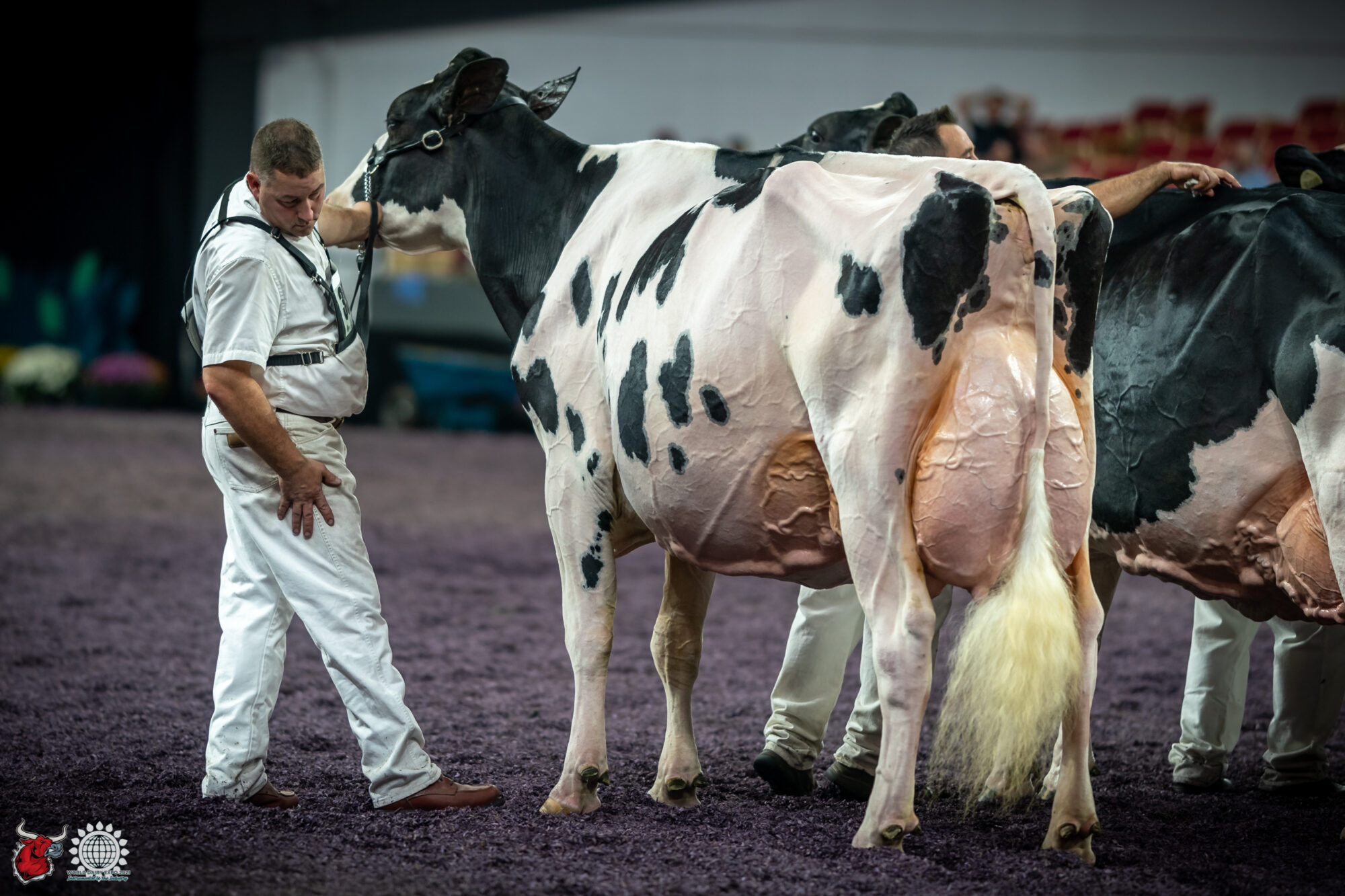
NewsSubscribe
First
Last
Consent

THE ROMANDALE REVOLUTION: How a Uranium Billionaire & Cow Sense Conquered the Holstein World

From $875 cow to Holstein dynasty: How a Slovakian immigrant’s millions and a young breeder’s eye for cattle transformed the dairy world forever.

In the glow of a setting March sun in 1953, as shadows lengthened across the Houckholme stable floor, young Dave Houck milked cows while chatting with a visiting Record of Performance inspector. The conversation would alter the course of Holstein history. “There’s a good one up in Woodville,” the inspector mentioned casually. “Highcroft daughter. Couldn’t recall the farmer’s name.” He returned moments later with the information: “Lillico.” By midnight, Dave Houck had purchased Bonnie Lonelm Texal High for 5 from Clarence Lillico, a cow who would later produce a white bull calf named Romandale Reflection Marquis, destined to become one of the most influential Holstein sires of the 20th century.

This pivotal moment came just months before Houck joined forces with Stephen Roman, a Slovakian immigrant who had transformed himself from a General Motors assembly line worker to a mining magnate. Together with Stephen’s brother George and Houck’s breeding genius, they would build Romandale Farms into a Holstein powerhouse that rewrote industry record books and conquered show rings across North America.

From Immigrant Dreams to Holstein Royalty

Stephen Boleslav Roman, pictured in the 1960s at the height of his influence. The Slovakian immigrant who arrived in Canada at age 16 with $2,500 transformed himself from General Motors assembly worker to uranium magnate and Holstein breeding visionary. “He dreamed the classic immigrant dreams,” noted a contemporary, “and vowed to make a go of it, no matter what.”

Stephen Boleslav Roman stepped onto Canadian soil in June 1937, a 16-year-old immigrant with ambition that far outstripped his modest circumstances. Alongside his older brother George, sister-in-law Mary, and nephew Tony, the Romans arrived from Slovakia carrying $2,500 and dreams of opportunity in their new homeland.

Their first Canadian home was a small farm on Scugog Island near Port Perry, Ontario, where they engaged in mixed farming. Though the Romans had been educated at an agricultural college in their homeland and raised in relative luxury on their father’s estate, they faced the humbling realities of immigrant life in Canada.

“Stephen Roman dreamed the classic immigrant dreams,” observed a contemporary. “He would make a go of it, he vowed, no matter what.”

The Romans’ neighbors, Russell Carter and his son Alan, became crucial allies. Alan taught Stephen English in evening sessions, the Carters drove the Romans when needed, and their wives shared household equipment. In a telling anecdote about the brothers’ resourcefulness, George once “rented” Stephen as farm labor to Russell Carter in exchange for the use of a horse.

While farming provided a start, Stephen quickly realized it wouldn’t satisfy his ambitions. He secured a job at General Motors in Oshawa, where he worked under foreman John Puhky. Roman displayed the relentless drive defining his career, taking every overtime shift available, earning promotions, and studying English, business, and law in his limited spare time.

With carefully saved earnings, Roman began speculating in penny mining stocks. After losing $2,000 in his first venture, a substantial sum for an immigrant laborer, he learned a fundamental lesson: “In the mining game, the person who makes the fortune is the one who controls the action.”

Roman and Puhky formed Concord Mining Syndicate, starting with nineteen mineral claims. Roman quit GM to focus entirely on this new endeavor. By 1948, the company-controlled properties from Quebec to Alberta. When the Leduc oil discovery created a boom in 1949, Concord acquired claims near significant strikes.

By 1954, Roman claimed to have made his first million dollars. The immigrant teenager had become a wealthy entrepreneur, ready to return to his agricultural roots, not as a struggling farmer, but as the ambitious owner of Romandale Farms.

From Mining Fortune to Holstein Legacy: The original Romandale Farms property in King Township, Ontario, circa early 1950s. On these 150 acres north of King Road on Bathurst Street, Stephen Roman transformed his mining wealth into one of North America's most influential Holstein breeding operations. This modest beginning would evolve into a dairy dynasty that rewrote record books and revolutionized Holstein marketing worldwide.
From Mining Fortune to Holstein Legacy: The original Romandale Farms property circa early 1950s. Stephen Roman transformed his mining wealth into one of North America’s most influential Holstein breeding operations. This modest beginning would evolve into a dairy dynasty that rewrote record books and revolutionized Holstein marketing worldwide.

Building a Holstein Empire

In 1950, Stephen Roman purchased 150 acres north of King Road on Bathurst Street, Ontario, marking his official entry into the Holstein business. Though he briefly considered breeding Guernseys, he astutely recognized the ascendancy of Holstein cattle in his region.

His early purchases reflected more enthusiasm than expertise. Accompanied by an “unenlightened” herdsman, Roman acquired foundation animals from various small herds. Dorothy Lonelm Texal Supreme VG came from Smith Brothers and Murray Holtby, Eyton Lodge Jean Rag Apple Echo. At Jack Houck’s Houckholme Farm, he purchased Re-Echo May Burke EX shortly after she completed a 35,314-pound Canadian championship record.

With his herd growing rapidly, Roman scheduled his first production sale for March 31, 1953, at Hays Sales Arena. The event averaged $784.77 per head on sixty-four animals, the first of nineteen Romandale auctions that would systematically raise the bar for Holstein merchandising.

But Roman’s most strategic move came when he hired Jack Houck’s son, Dave, as herd superintendent in June 1953. The Romandale advertisement announcing the hire noted: “It is expected that he will contribute much to the development of our breeding and testing program, for we have long admired Dave’s ability to pick the good ones, care for them, test them, and show them.”

Houck brought an almost spiritual connection to Holstein cattle at just twenty years old. As a boy, he missed church services to read the Holstein Journal in the family car, hand-milked Spring Farm Bearli to a Canadian record as a teenager and had won the Ontario Junior Dairy Cattle Judging Competition in 1945. After a stint at Hickory Creek Farms under the mentorship of Whitie Thomson, Houck returned to work with his father before Roman’s offer came.

Jack Houck, recognizing opportunity, encouraged his son to accept Roman’s proposition. “Romandale,” he said, “was a big, pushy outfit destined to go to the top.” History would prove him right.

This aerial photograph captures the iconic Romandale Farms facility in King, Ontario during the 1980s-one of the final decades of the Roman brothers' legendary Holstein operation. The distinctive red barn with turquoise roof housed one of North America's most influential Holstein breeding programs, while the surrounding pastures provided grazing for their world-renowned cattle. This facility, established by mining magnate Stephen Roman and managed by breeding genius Dave Houck, was where record-breaking sales occurred and where descendants of Romandale Reflection Marquis and Count Crystan developed. The impressive farm setup reflects the meticulous attention to detail and quality that defined the Romandale program before its final dispersal in 1990.
This aerial photograph captures the iconic Romandale Farms facility during the 1980s-one of the final decades of the Roman brothers’ legendary Holstein operation. The distinctive red barn with turquoise roof housed one of North America’s most influential Holstein breeding programs, while the surrounding pastures provided grazing for their world-renowned cattle. This facility, established by mining magnate Stephen Roman and managed by breeding genius Dave Houck, was where record-breaking sales occurred and where descendants of Romandale Reflection Marquis and Count Crystan developed. The impressive farm setup reflects the meticulous attention to detail and quality that defined the Romandale program before its final dispersal in 1990.

The Highcroft Revolution

Dave Houck arrived at Romandale with five remarkable cows. These females, all daughters of Lonelm Texal Highcroft, would become the foundation upon which Romandale’s breeding empire was built.

Texal Highcroft Colantha, Leila Texal, Texal Francy Wayne, Georgina Texal Piebe, and Bonnie Lonelm Texal High seemed unimpressive on paper. None had production-tested dams. Only three had classified dams, all scoring merely Good Plus. Yet these unheralded cows possessed an unmistakable uniformity and quality that caught the practiced eye.

A contemporary described them as “remarkably uniform in their type pattern-tall, wide-chested cows with clean, broad rumps…beautiful quality of bone…fine textured udders, some long-teated in front, udders carried high and wide in the rear.”

Full sisters Texal Highcroft Colantha and Leila Texal, both out of Hileana Colantha GP, founded the Colantha family-“a tribe which empowered the Romandale herd to move forward.” Before their arrival, the Texal strain was merely “a strong regional bloodline, popular in and around York County.” The Romandale program elevated it to “international prominence.”

But the most consequential of these foundation cows proved to be Bonnie Lonelm Texal High. Purchased after that fateful conversation with the R.O.P. inspector, she traced directly back to Musette, an 1882 import from Holland who had once been shown by an Amish deacon later chastised by his church for exhibiting livestock.

As a mature cow, Bonnie stood sixty-two inches at the withers and “many times taped over a ton.” Despite her immense power, she maintained “a respectable angularity” and walked on “legs made of clean, flinty bone.”

Bonnie’s show ring career included winning the milking three-year-old class at the Canadian National Exhibition in 1953. Judge Harvey Swartz, handling her at the Royal Winter Fair the following year, grabbed her rear udder and commented admiringly, “Nice skin.”

From these Highcroft foundation cows flowed numerous champions, including Texal Fond Hope Darkie VG (All-Canadian two-year-old of 1954), Texal Fond Hope Sparkie VG (All-Canadian two-year-old of 1956), and Romandale Highcroft Rose EX (Reserve All-American three-year-old of 1959).

The A.B.C. Reflection Sovereign Magic

If the Highcroft daughters provided the foundation of Romandale’s success, their mating to A.B.C. Reflection Sovereign catapulted the herd to greatness. This cross became “one of the potent combinations of breed history” -a pairing that merged “the flash, style, and quality look of the A.B.C. blood” with “the power, clean bone, and boxcar rumps of the Highcrofts.”

The results were spectacular. Three of the four members of the 1962 All-Canadian get of A.B.C. Reflection Sovereign were out of Highcroft dams, while the fourth was from a Fond Hope daughter of a Highcroft cow. With one substitution, this group was also named the 1962 All-American get of sire and later voted All-Time All-American.

Among the most celebrated progeny from this cross was Romandale Cora EX-4, daughter of Texal Highcroft Colantha. Described as possessing “Hollywood good looks,” Cora became grand champion and best udder at the International Dairy Show in 1962. Later, after selling for $23,300, she achieved the rare distinction of being nominated All-American while having over 100,000 pounds of milk production. At age twelve, she classified EX-96 and produced a son named King of the A.B.C.s, who would influence the breed for generations.

Another standout was Romandale Reflection Betsie EX, described as “one of the prettiest females bred at Romandale.” Reserve All-American three-year-old in 1960 after winning at the International Dairy Show, Betsie continued her show career by winning the Interbreed Best Udder Class at the Royal Winter Fair in 1965 at the relatively advanced age for a show cow.

But the crowning achievement of the A.B.C.-Highcroft cross was Romandale Reflection Marquis EX-ST, the son of A.B.C. and Bonnie Lonelm Texal High. This “white male monster,” as one admirer called him, would transcend even his parents’ considerable influence and leave an indelible mark on Holstein breeding worldwide.

Historic triumph: Romandale Reflection Marquis, the "white male monster" who changed Holstein breeding history, stands victorious after being named Grand Champion Bull at the 1962 National Dairy Cattle Congress in Waterloo, Iowa. Led by Mac Logan (left) and breeding genius Dave Houck, this moment cemented the Roman brothers' international Holstein dominance. Judge Spencer Dunham's selection of this A.B.C. Reflection Sovereign × Bonnie Lonelm Texal High cross represented a watershed victory for Canadian Holstein breeding on American soil. Marquis would later sell for $37,000 to Curtiss Breeding Service and sire generations of champions, becoming the cornerstone of Stephen Roman's Holstein empire built on immigrant determination and visionary breeding.
Historic triumph: Romandale Reflection Marquis, the “white male monster” who changed Holstein breeding history, stands victorious after being named Grand Champion Bull at the 1962 National Dairy Cattle Congress in Waterloo, Iowa. Led by Mac Logan (left) and breeding genius Dave Houck, this moment cemented the Roman brothers’ international Holstein dominance. Judge Spencer Dunham’s selection of this A.B.C. Reflection Sovereign × Bonnie Lonelm Texal High cross represented a watershed victory for Canadian Holstein breeding on American soil. Marquis would later sell for $37,000 to Curtiss Breeding Service and sire generations of champions, becoming the cornerstone of Stephen Roman’s Holstein empire built on immigrant determination and visionary breeding.

The Marquis Dynasty

On a crisp autumn day in 1962, the crowd at the National Dairy Cattle Congress in Waterloo, Iowa, fell silent as judge Spencer Dunham raised his hand to indicate his Grand Champion Bull. The massive white yearling at the end of Dave Houck’s lead stood motionless, commanding the ring with his presence. Romandale Reflection Marquis had just defeated America’s best bulls on their home turf, cementing the Roman brothers’ status as international Holstein powerhouses.

Marquis was the embodiment of the Romans’ breeding philosophy, the product of “one of the breeds infallible crosses, A.B.C. Reflection Sovereign on a Lonelm Texal Highcroft dam.” His journey from calf to legendary sire exemplified the Romandale approach to Holstein breeding: identify exceptional foundation animals, make strategic crosses, and market the results with flair.

As Marquis matured, his dominance grew. “Partially proven at Hawkherst, Agro Acres and Romandale, Marquis topped the 1964 Romandale Sale on the $37,000 bid of Curtiss Breeding Service, Cary, Illinois,” chronicled one industry observer.

His progeny soon dominated show rings across the continent. Between 1968 and 1974, Marquis offspring dominated the All-Canadian and All-American contests. “Few sires have fathered a longer list of All-Canadian and All-American winners, and few have produced stronger breeding cattle,” noted one Holstein historian.

Among his most influential daughters were Annzibar Marquis Kizil EX-7, All-Canadian three-year-old in 1971; Neodak Marquis Josephine EX, a member of the 1973 All-Canadian get; and the remarkable Mellow Breeze cows, Mellow Breeze Marquis Sue EX-2 and Mellow Breeze Marquis Arlene EX.

The Mellow Breeze sisters came to Romandale through another of Dave Houck’s inspired discoveries. While speaking at a breeders’ seminar in Maine in 1968, Houck was approached by Vermont dairyman Doug Nelson about two Marquis daughters he had spotted. Houck purchased the pair from Robert P. Sherman Jr. of New Haven, Vermont.

Despite their undistinguished maternal lines, both were in calf to Don Augur True Type Model. In a remarkable coincidence, both delivered Excellent daughters, Mellow Breeze Florry EX and Mellow Breeze Giselle EX-4. These females founded families that would rival the Colanthas in breeding power and consistently produce high-selling, high-performing offspring for two decades.

Historic International Sale: Romandale Re-Echo April, the highest-priced female at the 1967 National Holstein Sale in Oakville, Ontario, stands with her buyer and seller representatives. The cow sold for an unprecedented $7,500-the highest price for a female in the 48-year history of the National Sale, demonstrating the growing international demand for Canadian Holstein genetics. From left to right: Dr. Pietro Monbelloni (Italian Breeders Association), Prof. Salvatore Rossi (Italian Ministry of Agriculture), Ugo Boschetti (Canadian Government Office in Milan), Dr. Antonio Bajardo (Italian Federation of Agricultural Consortiums), Professor Luigi Lintas (Italian Ministry of Agriculture), Dr. Ferruccio Gosi (President of the European Confederation of Black and White Breed Societies), and Dr. Arrigo Bianchini (Secretary of the Italian Friesian Association). On the far right stand the sellers, Bertram and Hazel Stewart, alongside Mr. and Mrs. Howard Tarzwell.

One of Canada’s Wealthiest Men

While Romandale’s Holstein breeding program flourished, Stephen Roman’s business empire expanded exponentially. In 1953, he purchased 900,000 shares of North Denison Mines at 8½ cents each. After renaming it Consolidated Denison Limited, he acquired claims near Quirke Lake that contained “the largest body of uranium ore ever discovered.”

Roman later identified as “one of his life’s main accomplishments” the fact that he raised $59 million to bring the mine into production, without losing financial control of the project.” Within four years, he owned “the richest uranium mine in the world,” and by the mid-1970s had secured forward orders worth five billion dollars.

His office reflected his status. Journalist Paul McKay described it as dominated by “a massive, dark antique desk imported from Europe with an intricate pattern of wood inlays and hand-carved gargoyles glaring out from the corners.” Behind it stood “a wooden bookcase filled with leather-bound books, all of which were kept meticulously free from dust.” The room featured “burnished oak panelling” and “a plush blood-red deep-pile carpet.” Roman’s chair was “dark brown leather, trimmed in gold.” Above the chesterfield hung “a Habsburg era original” painting depicting “an antelope being dismembered by a bloodied, snarling bear.”

Roman’s office procedures were equally distinctive. He scheduled important meetings for Friday the 13th, believing it his lucky day. Pregnant secretaries were dismissed when “their stomachs began to bulge.” Yet despite his demanding nature, he respected those who stood their ground, when a secretary refused his order to run through the office, insisting she would “walk briskly,” Roman backed down after a moment of “stunned silence.”

Despite his wealth, Roman often lunched on humble fare, cabbage rolls, wieners, and beans “smothered with ketchup, which Roman consumed with gusto”-though more elaborate meals were prepared for distinguished guests like American President Richard Nixon.

At Romandale Farms, Roman maintained the same involved management style. “Not content to sit back and permit his managers to run things, he was never far removed from the heat and the dust.” He knew every animal by sight, could recite all pedigrees from memory, and was personally involved in breeding decisions. “To him goes the credit for some of the herd’s wisest match-ups,” noted one observer.

Re-Echo Texal Karen (EX) stands posed in classic show form-a testament to Romandale's commitment to Holstein excellence. As Stephen Roman often declared, "through the show ring lay the path to the Holstein mountain-top." This remarkable cow exemplifies the powerful, clean-boned animals that helped Romandale dominate North American show rings throughout the late 1950s and early 1960s. With her combination of dairy strength and structural correctness, Karen represents the type of animal that enabled the Romans to capture unprecedented back-to-back Premier Breeder and Exhibitor banners at the prestigious National Dairy Cattle Congress, cementing Canadian Holstein superiority on the international stage.
Re-Echo Texal Karen (EX) stands as a testament to Romandale’s commitment to Holstein excellence. As Stephen Roman often declared, “through the show ring lay the path to the Holstein mountain-top.” This remarkable cow exemplifies the powerful, clean-boned animals that helped Romandale dominate North American show rings throughout the late 1950s and early 1960s. With her combination of dairy strength and structural correctness, Karen represents the type of animal that enabled the Romans to capture unprecedented back-to-back Premier Breeder and Exhibitor banners at the prestigious National Dairy Cattle Congress, cementing Canadian Holstein superiority on the international stage.

Show Ring Conquests

Stephen Roman believed that “through the show ring lay the path to the Holstein mountain-top.” By 1959, Romandale had reached the summit, winning Premier Breeder and Exhibitor banners at the International Dairy Show in Chicago.

As Roman accepted congratulations after this triumph, Robert M. Rumler, Secretary of the Holstein Association of America, approached. “Well, Steve, you did pretty well,” Rumler acknowledged. When Roman thanked him, Rumler added, “You realize, of course, that this is not our most important show.” Rumler asked which was the premier event, saying, “Why the National Dairy Cattle Congress at Waterloo!”

Roman took this as a challenge. The following year, Romandale Farms won Premier Breeder and Exhibitor at the National Dairy Cattle Congress, and repeated the feat in 1961 and 1962, “the first time in history that one herd had taken these banners three years in succession.”

Romandale's legendary "home-bred trio" that dominated the 1961 National Dairy Cattle Congress-Romandale Highcroft Rose (EX), Romandale Reflection Betsie (EX), and Romandale Cora (EX)-exemplifies Stephen Roman's show ring philosophy in physical form. This remarkable group of females helped secure Romandale's unprecedented achievement of winning Premier Breeder and Exhibitor banners at Waterloo for three consecutive years (1960-1962). Each cow individually excelled in major competitions: Rose as Reserve All-American three-year-old in 1959, Betsie as Reserve All-American three-year-old in 1960, and Cora later becoming grand champion at the 1962 International Dairy Show. Their uniformity, style, and quality demonstrated the consistency of the Romandale breeding program while establishing Canadian Holsteins' international reputation for excellence.
Romandale’s legendary “home-bred trio” that dominated the 1961 National Dairy Cattle Congress-Romandale Highcroft Rose (EX), Romandale Reflection Betsie (EX), and Romandale Cora (EX)-exemplifies Stephen Roman’s show ring philosophy in physical form. This remarkable group of females helped secure Romandale’s unprecedented achievement of winning Premier Breeder and Exhibitor banners at Waterloo for three consecutive years (1960-1962). Each cow individually excelled in major competitions: Rose as Reserve All-American three-year-old in 1959, Betsie as Reserve All-American three-year-old in 1960, and Cora later becoming grand champion at the 1962 International Dairy Show. Their uniformity, style, and quality demonstrated the consistency of the Romandale breeding program while establishing Canadian Holsteins’ international reputation for excellence.

The Romandale show team became legendary, featuring animals like Romandale Cora EX, Romandale Reflection Betsie EX, and Romandale Highcroft Rose EX. In 1961, these three formed “one of the breeds fanciest home-bred trios” to win Best Three Females at Waterloo.

The impact of Romandale’s show ring dominance extended beyond ribbons and banners. It established Canadian Holsteins as world-class, paving the way for an export market that would become a cornerstone of the Canadian dairy industry. “In the continuance of a tradition started by Astengo and Tom Hays, the Romans’ annual forays across the border, meeting the Americans on home turf, provided the Canadians with international leadership of flair and style. On this foundation was built the Canadian success in exporting breeding stock around the world.”

Stephen Roman (left) with legendary breeder Pete Heffering and the incomparable Brookview Tony Charity EX-97, perhaps the most celebrated Holstein show cow of all time. Roman's appreciation for elite show cattle and his relationships with other visionary breeders helped establish Canadian Holsteins on the world stage. While Romandale dominated the major American shows with their homebred cattle, Canadian breeders like Heffering continued this tradition of excellence, furthering the international reputation that Roman helped build. (Photo courtesy of Holstein Canada Archives)
Stephen Roman (left) with legendary breeder Pete Heffering and the incomparable Brookview Tony Charity EX-97, perhaps the most celebrated Holstein show cow of all time. Roman’s appreciation for elite show cattle and his relationships with other visionary breeders helped establish Canadian Holsteins on the world stage. While Romandale dominated the major American shows with their homebred cattle, Canadian breeders like Heffering continued this tradition of excellence, furthering the international reputation that Roman helped build. (Photo courtesy of Holstein Canada Archives)

The Money Press

Stephen Roman approached Holstein merchandising with the same innovation he brought to mining ventures. While not the first breeder to use reduction sales as marketing tools, Roman perfected the strategy, eventually holding eighteen Romandale auctions where access to Romandale genetics was available only through these carefully orchestrated events.

Roman’s tax strategy influenced the timing of these sales. “Because of Canada’s Income Tax Act, which provided for income-averaging over five years, Roman liked to hold a sale every five years.”

One of his innovations was offering animals in pairs. “A number of females, usually ten or twenty, were sold on choice, the highest bidder taking his pick. The remaining animal formed a nucleus for a new Romandale herd.”

These pairs typically included “a name recognition female, one who had done it all, and a younger female of unusual potential.” This strategy maximized returns while ensuring that Romandale retained quality foundation animals to rebuild the herd.

The results were spectacular. The ninth Romandale Sale in 1975, marking the farm’s twenty-fifth anniversary, featured a bull selling for $72,000 and a female for $31,000. The 149 head averaged $4,358.39, “the highest ever made at a Canadian auction of animals from a single herd.”

But these figures paled beside the 1979 Romandale Dispersal, described by Holstein-Friesian Journal as “fantastic and unparalleled.” The auction grossed $2,795,500 on 201 head, averaging $13,907.96-“the highest ever made at a North American dispersal” and “three times better than the previous Canadian high.”

The sale featured world-record prices for A.B.C. Reflection Sovereign offspring. Romandale Pride, a three-month-old bull calf, sold for $400,000 to Japan Holstein Breeding Services; Romandale Trillium, an eight-month-old heifer, brought $330,000; and Romandale Rose, a three-month-old heifer calf, fetched $175,000.

Even after this dispersal, the Romans assembled another herd and held further sales. Their 1984 dispersal averaged $11,668.85 per head, “the highest averaging herd sale ever held in Canada.” Eight Northcroft Ella Elevation EX-97-3E progeny were featured, including Romandale Sterling, who sold for $300,000, and Romandale Valour-ET, purchased by Japan Holstein Breeding Service for $200,000.

The final chapter came on November 13, 1990, when the forty-year Romandale story concluded with a final dispersal averaging $3,635.90 on 117 head.

The Count Crystan Legacy

Romandale Count Crystan (EX-ST): Sold to Japan in 1969 for $15,000, this Citation R. son revolutionized Holstein breeding across the Pacific, influencing three-quarters of the cattle at the 1983 All-Japan Show and earning a memorial statue in his honor. With one of the highest type proofs in Canadian history-surpassing even his grandsire A.B.C. Reflection Sovereign-Count Crystan extended Romandale's global impact through exceptional daughters both in North America and Asia, proving that Stephen Roman's breeding program could conquer international markets beyond the show ring.
Romandale Count Crystan (EX-ST): Sold to Japan in 1969 for $15,000, this Citation R. son revolutionized Holstein breeding across the Pacific, influencing three-quarters of the cattle at the 1983 All-Japan Show and earning a memorial statue in his honor. With one of the highest type proofs in Canadian history-surpassing even his grandsire A.B.C. Reflection Sovereign-Count Crystan extended Romandale’s global impact through exceptional daughters both in North America and Asia, proving that Stephen Roman’s breeding program could conquer international markets beyond the show ring.

While Marquis established Romandale’s reputation in North America, another bull extended the farm’s influence across the Pacific. Romandale Count Crystan EX-ST, the Citation R. son of Gray View Pet Crysta EX, was sold to Hokkaido Dairy Agricultural Co-op of Japan for $15,000 in the seventh Romandale Sale in 1969.

Roman had drawn semen before shipping the bull, making it available to other breeders. Used extensively at Romandale, Count Crystan “came up with one of the highest type proofs in Canadian history, even surpassing the record set by A.B.C. Reflection Sovereign EX-Extra, his paternal grandsire.” His 474 classified daughters rated 92% Good Plus and better for type, with 33 Excellent and 178 Very Good females.

In Japan, Count Crystan’s influence was revolutionary. “This bull is credited with changing the nature and quality of Japanese Holstein type in a single generation.” At the 1983 All-Japan Show, “three-quarters of the exhibited cattle were Count Crystan offspring.” His daughters “not only looked the part but shattered several Asian production records.” The Japanese commemorated his contribution by constructing “a memorial statue in recognition of his contribution to breed progress.”

His North American daughters included Continental Scarlet-Red EX (All-American three-year-old), Romandale Countess Jewel EX (All-Canadian four-year-old with multiple Superior Production records), and Romandale Countess Jan EX (grand champion at the C.N.E. in 1981).

The Breeding Philosophy

The Master Behind the Method: David H. Houck (second from right) receives the Holstein Association's Certificate of Superior Accomplishment in 1989, recognizing his extraordinary lifetime contribution to Holstein breeding. The award celebrates the breeding genius who helped transform Romandale from ambitious venture to international powerhouse. Flanked by industry leaders David H. Clemons, Keith Flaman, and Murray Howes, this honor validates Houck's methodical approach to cattle evaluation and strategic mating decisions that produced generations of exceptional animals. His collaboration with the Romans created a breeding philosophy that became the foundation of Romandale's enduring success.
The Master Behind the Method: David H. Houck (second from right) receives the Holstein Association’s Certificate of Superior Accomplishment in 1989, recognizing his extraordinary lifetime contribution to Holstein breeding. The award celebrates the breeding genius who helped transform Romandale from ambitious venture to international powerhouse. Flanked by industry leaders David H. Clemons, Keith Flaman, and Murray Howes, this honor validates Houck’s methodical approach to cattle evaluation and strategic mating decisions that produced generations of exceptional animals. His collaboration with the Romans created a breeding philosophy that became the foundation of Romandale’s enduring success.

Behind Romandale’s success lay a disciplined breeding philosophy developed through collaboration between the Romans and Dave Houck. Making breeding decisions was “more or less a collaborative effort. The loud voices belonged to Steve Roman and Dave Houck; the buzz came from George Roman, seated in the background, who provided wise counsel.”

The team shared a vision of “show type, good legs and udders, and longevity.” While “popularity of bloodline” was considered, it was “not determinative,” though matings were “never permitted to shift too far from an A.B.C. Reflection Sovereign focus.”

Their approach to analyzing cattle was methodical. “In analyzing a female, they tended to think in terms of sharp or power fronts and their natural accompaniments.” They recognized that certain traits came with trade-offs: “The powerhouse cow or the real smooth one, they found, often appears too straight in the leg, but her udder is usually tucked tightly underneath. On the other hand, the loose-jointed, rangey cow is often loose of her udder attachments.”

The Romandale breeding philosophy “worked toward the middle, trying to reconcile these extremes… moving toward a median point.” They discovered that “the hardest thing to breed was strength and spring of rib with cleanness of bone.”

This thoughtful approach, backed by Roman’s financial resources and marketing acumen, produced cattle with “the consistency of a baker stamping out tasty treats with a cookie cutter.”

Strategic Restraint: The Roman Approach to Breeding Economics

Strategic Exception: Stephen Roman (in dark coat and hat) accepting a championship trophy at the 1987 Royal Agricultural Winter Fair, representing the calculated investment philosophy that defined Romandale. While Roman typically maintained strict budget discipline, refusing countless purchase recommendations from Houck, he occasionally made strategic exceptions for exceptional animals. His record-breaking ,450,000 acquisition of Charity-a nine-time All-Canadian/All-American Supreme Champion with multiple World Dairy Expo wins-exemplified Roman's willingness to stretch <a href='https://www.thebullvine.com/news/farm-crisis-looms-record-low-bankruptcies-mask-looming-financial-disaster/'>financial boundaries only when farm</a> coffers were flush, typically following major Romandale sales. Such selective extravagance complemented his otherwise disciplined approach to breeding economics.
Strategic Exception: Stephen Roman (in dark coat and hat) accepting a championship trophy at the 1987 Royal Agricultural Winter Fair, representing the calculated investment philosophy that defined Romandale. While Roman typically maintained strict budget discipline, refusing countless purchase recommendations from Houck, he occasionally made strategic exceptions for exceptional animals. His record-breaking ,450,000 acquisition of Charity-a nine-time All-Canadian/All-American Supreme Champion with multiple World Dairy Expo wins-exemplified Roman’s willingness to stretch financial boundaries only when farm coffers were flush, typically following major Romandale sales. Such selective extravagance complemented his otherwise disciplined approach to breeding economics.

A common misconception holds that wealthy hobbyists like Roman operate with unlimited budgets. “This hobbyist farmer usually approached the cattle business on a no-nonsense basis. The enterprise must stand on its own merits. There is a dollar limit on what will be spent.”

“Many times, Dave Houck suggested to Stephen Roman that they buy this cow or that, only to be told by Roman that the Romandale cow budget would not allow it.” Major purchases like Pet Crysta, Crisco X, and Northcroft Ella Elevation came “when the farm bank account was bulging, usually after a major Romandale sale.”

This fiscal discipline extended to breeding decisions. When evaluating potential sires, “their first task was to sort out the beast’s breeding pattern. They scrutinized his best daughters and his worse; determined his strong points; enumerated the things that the sire could never accomplish in a million years.” They used promising bulls “sparingly at first, more if the results justified, always exercising the keenest discretion.”

A defining symbol of Romandale Farms' unparalleled breeding legacy, Northcroft Ella Elevation stands regally posed in this historic photograph. Her extraordinary conformation and dairy strength exemplify the breeding philosophy that made Romandale the most dominant Holstein establishment of its era, securing an unprecedented 9 Premier Exhibitor and 13 Premier Breeder banners at Canada's prestigious Royal Winter Fair. This magnificent cow would go on to produce offspring commanding unprecedented prices, including Romandale Sterling ($300,000) and Romandale Valour-ET ($200,000) at the record-breaking 1984 dispersal. Even among Romandale's pantheon of exceptional animals, Ella's EX-97-3E classification and show ring supremacy as Grand Champion represented the pinnacle of Stephen Roman and Dave Houck's breeding vision-perfection made flesh and bone.
A defining symbol of Romandale Farms’ unparalleled legacy, Northcroft Ella Elevation. Her extraordinary conformation and dairy strength exemplify the philosophy that made Romandale the most dominant Holstein establishment of its era, securing an unprecedented 9 Premier Exhibitor and 13 Premier Breeder banners at Canada’s prestigious Royal Winter Fair. This magnificent cow would go on to produce offspring commanding record-breaking prices, including Romandale Sterling ($300,000) and Romandale Valour-ET ($200,000) at the 1984 dispersal. Even among Romandale’s pantheon of exceptional animals, Ella’s EX-97-3E classification and show ring supremacy as Grand Champion represented the pinnacle of Stephen Roman and Dave Houck’s vision-perfection made flesh and bone.

The Legacy

On September 23, 1989, Stephen Roman died at age 68. In obituaries, the business press remembered him as “a business titan.” Peter Newman in Maclean’s described him as “a builder and a risk taker on a grand scale,” while Toronto Sun journalist Diane Francis called him “one of Canada’s greatest builders.”

His physical appearance matched his larger-than-life persona: “Dominating the face of high Slavic cheekbones-a face that frequently broke into a mischievous grin-were two honest eyes, eyes that met yours in direct gaze.”

Though known as a “hard shell capitalist,” Roman possessed “a philosophical turn of mind” and was “the deepest of thinkers.” He believed “a good man’s life on earth was a gradual ascension towards enlightenment and godliness” and saw wealth-creation as “a high calling, an activity perfectly compatible with a religious perception of the universe.”

The true mourning for Stephen Roman in Holstein circles began on November 13, 1990, when the Romandale herd dispersed. “For with the dispersal came the realization that for the first time in forty years, no more Romandale full-page Holstein Journal advertisements would appear monthly… no more would Romandale Farms provide the high-powered international leadership… no more would the beautifully scripted Romandale breeding program produce the kind of cattle that made Holstein lovers drool.”

Today, the Romandale influence continues through countless pedigrees tracing to Marquis, Count Crystan, and other Romandale sires and cow families. Perhaps more importantly, the Romans set a standard for breeding excellence and promotional savvy that transformed how Holstein cattle are marketed worldwide.

As for Bonnie Lonelm Texal High, the $875 cow who produced Romandale Reflection Marquis, her purchase illustrates the perfect partnership between Roman’s willingness to invest and Houck’s eye for quality. These complementary talents and George Roman’s steady counsel built a Holstein dynasty that reverberates through the breed decades after the final Romandale cow left the auction ring.

The story of Romandale is ultimately one of vision: the immigrant’s vision to build a fortune, the breeder’s vision to identify genetic combinations that would create superior animals, and the marketer’s vision to showcase these achievements to maximum advantage.

Key Takeaways

  • Strategic partnerships trump individual brilliance – Roman’s financial resources and business acumen paired with Houck’s breeding genius and eye for quality cattle created synergy neither could have achieved alone
  • Foundation females matter immensely – The seemingly modest purchase of five Lonelm Texal Highcroft daughters, particularly Bonnie Lonelm Texal High for $875, provided genetic building blocks that generated millions in revenue and worldwide genetic impact
  • Show ring success translates to commercial advantage – Roman recognized that championship banners would elevate Romandale’s profile, strategically targeting and winning major shows to establish market dominance and international credibility
  • Innovative marketing creates premium value – Roman’s auction strategies, including the pairing system, scheduled sales timed for tax advantages, and creating event-like atmospheres for dispersals, revolutionized Holstein merchandising
  • Financial discipline applies regardless of wealth – Despite his billions, Roman insisted Romandale operate as a sustainable business with budgetary limits, demonstrating that even prestige agricultural ventures require sound economic foundations

Executive Summary

The Romandale story represents one of the most remarkable partnerships in Holstein breeding history, where Stephen Roman’s immigrant-to-mining-magnate financial resources combined perfectly with Dave Houck’s exceptional cattle evaluation skills to build a Holstein empire. Beginning with Roman’s strategic hire of 20-year-old Houck in 1953 and the pivotal purchase of Bonnie Lonelm Texal High for $875, Romandale Farms dominated show rings across North America while pioneering innovative marketing approaches that set new standards for Holstein merchandising. Their breeding philosophy, centered on strategic crosses between A.B.C. Reflection Sovereign and the Highcroft female line, produced legendary animals like Romandale Reflection Marquis, whose influence extended worldwide. Despite Roman’s immense wealth, the operation maintained strict fiscal discipline, operating on sustainable business principles while establishing Canadian Holsteins’ international reputation for quality that continues to resonate decades after the final Romandale dispersal in 1990.

Learn more:

The Sunday Read Dairy Professionals Don’t Skip.

Every week, thousands of producers, breeders, and industry insiders open Bullvine Weekly for genetics insights, market shifts, and profit strategies they won’t find anywhere else. One email. Five minutes. Smarter decisions all week.

NewsSubscribe
First
Last
Consent

Bosdale Farms: The Legacy Behind Canada’s Most Excellent Cows

How a dairy family bred 415 EX cows through 50+ years of grit, faith & precision breeding. Meet Canada’s cow-crafting legends.

The Bos family (Ed, John, Josh, Justin, Peter, and Ben) stand among their prized Holsteins at Bosdale Farms in Ontario. Four generations of teamwork and faith-driven stewardship built a legacy of 415 EX cows through precision breeding focused on udder health, structural soundness, and generational excellence.

When you think about the ultimate achievement in dairy breeding, having the most Excellent-classified cows in an entire country must be near the top of the list. That’s exactly what Bosdale Farms has accomplished in Canada, with a staggering 415 cows that have achieved the coveted EX classification. This remarkable achievement represents decades of careful breeding decisions, an unwavering commitment to quality, and a genuine passion for creating exceptional dairy cattle.

Behind this success stands the Bos family – a multi-generational team whose dedication has placed them among the elite in Canadian dairy circles. Let’s take you through their incredible journey.

From Humble Beginnings to Breeding Excellence: The Bosdale Story

Do you know how some success stories happen overnight? This isn’t one of them. Bosdale’s story began in December 1972, when Bastiaan Bos and his four sons – John, Gerald, Ed, and Pete – started with an unclassified commercial herd of 80 milking cows. Nothing fancy, nothing extraordinary.

When they first classified their herd in 1976, the results were modest: 45 Good, 45 Good Plus, and just 2 Very Good animals. Not a single Excellent cow in sight.

Their first Excellent classification didn’t come until November 7, 1980 – a huge milestone for the operation. But here’s where their perseverance shows: they didn’t achieve their second EX classification until July 23, 1991, nearly eleven years later! Most people would have given up, but not the Bos family.

Their patience eventually paid off in a big way when Bosdale earned their first Master Breeder shield in 1993, with two more following in later years. That’s like winning the Stanley Cup of dairy breeding – they’ve done it three times.

Today, Bosdale has grown into something awe-inspiring. They milk 250 cows across two locations and have diversified with a 900-sow farrowing barn, two finishing barns, and 1,700 acres growing corn, beans, wheat, and alfalfa. The operation employs 15 people and has become one of the world’s most respected breeding programs.

The Secret Behind 415 Excellent Cows: Bosdale’s Breeding Philosophy

The Bos family proudly stands with one of their champion Holsteins at Bosdale Farms, recognized by Holstein Canada for breeding 409 Excellent-classified cows-a number that has since grown to 415, cementing their position as Canada's premier Holstein breeders. This remarkable achievement represents generations of careful breeding decisions and unwavering commitment to excellence.
The Bos family proudly stands with one of their 409 EX Holsteins at Bosdale Farms, recognized by Holstein Canada for breeding most EX cows in Canada – a number that has since grown to 415, cementing their position as Canada’s premier Holstein breeders. This remarkable achievement represents generations of careful breeding decisions and unwavering commitment to excellence.

So, what’s their secret? How does a farm end up with 415 Excellent-classified cows? It’s all about their breeding philosophy, which centers on conformation excellence but always with practical economic considerations in mind.

They explain it: “We have always believed that breeding for a well-balanced high type cow achieves the highest profitability. An excellent cow is a good benchmark for longevity. We see our profitability per cow being maximized with cows that continue to keep themselves in the herd.”

This focus on conformation isn’t just about winning ribbons in the show ring – though they’ve certainly done that too. It’s about creating functional, long-lasting cows that deliver returns over many lactations. Their breeding decisions revolve around three critical traits: udders, feet, legs, and rumps.

Strategic Breeding Decisions That Drive Results

The Bos family’s approach to genetic selection is methodical and personalized. “When selecting sire matings, we begin by analyzing each cow, including her breakdowns, strengths, and weaknesses,” they explain. “Then we select a sire that will most adequately produce progeny that will see genetic improvement over the Dam in these areas.”

They don’t chase after the latest genetic fads. Instead, they focus on proven performers. “Stay current, always using the best proven bulls,” they advise. This steady approach has allowed them to make consistent genetic progress while avoiding the rollercoaster that can come with less proven genetics.

The Family Behind the Farm: How Teamwork Drives Success

Do you know how some family businesses struggle with succession? Not Bosdale. Ed and John Bos have been with the operation since day one, while the next generation – including Josh, Justin, Peter, and Ben – each bring their unique talents to the table.

Peter manages a secondary dairy the family recently acquired while helping with shows, marketing, sales, and fieldwork. Justin focuses on day-to-day herd management and works with his father on breeding strategies. Ben oversees calf raising, research profitable dairy practices, and handles equipment and cropping responsibilities. Josh has been key in bringing new technologies into the operation, finding that sweet spot between innovation and tradition.

The brothers describe working together: “Working together as brothers comes with a greater responsibility towards each other in facing life’s challenges. We have enjoyed that mentality of being there for each other in challenging situations as well as other things like a late-night filling silo or calving cows.”

That’s the kind of family bond that builds something lasting.

Foundational Cow Families: The Backbone of Bosdale’s Success

The proof is in the udders: A row of Bosdale's meticulous breeding work stands ready for evaluation on classification day. These powerful, well-attached udders exemplify the farm's focus on balanced type traits that translate to longevity and lifetime production. Each cow represents generations of strategic breeding decisions, contributing to Bosdale's remarkable achievement of 415 Excellent-classified animals. As the Bos family says, 'Life is too short to milk ugly cows' – and these beauties are anything but.
The proof is in the udders: A row of Bosdale’s meticulous breeding work stands ready for evaluation on classification day. These powerful, well-attached udders exemplify the farm’s focus on balanced type traits that translate to longevity and lifetime production. Each cow represents generations of strategic breeding decisions, contributing to Bosdale’s remarkable achievement of 415 Excellent-classified animals. As the Bos family says, ‘Life is too short to milk ugly cows’ – and these beauties are anything but.

Every great breeding operation has its cornerstone cow families; Bosdale is no exception. The Portrait and Barbie lines have been particularly influential for them. These families haven’t achieved their status by accident – they’ve earned it through consistent performance across generations.

“They are successful because they continue to breed high type productive cows that repeatedly transmit good genetics from generation to generation,” the family notes.

The story of the Portrait family perfectly illustrates the blend of strategic thinking and timely decision-making that has characterized Bosdale’s breeding program. Ed shares a pivotal moment: “We had a really exciting young Counselor, a 2-year-old, and while she was going through her health test, we decided to take a single flush because she had to be culled open. This resulted in the ‘Bosdale Stardust Portrait,’ the second dam of Outside Portrait. Without doing that, the Portrait family would not have been nearly as big a part of Bosdale as they are today.”

One decision to flush a promising but ultimately open cow created a genetic line that would become central to their entire breeding program. It shows how foresight and recognizing opportunities can make all the difference.

Traditional Values Meet Modern Technology: Bosdale’s Balanced Approach

Bosdale approaches new technologies with thoughtful consideration. They deeply respect traditional breeding methods but have incorporated new technologies to enhance their operation. Their approach to genomic testing is a perfect example of this balanced perspective.

“Genomic testing can provide a baseline for genetic selection across a herd,” they acknowledge. “However, we believe a much higher degree of reliability can be seen through knowing and understanding individual cows, knowing how cow families and bulls transmit, using bulls with proven numbers, and using that information to pinpoint your sire selection.”

They don’t dismiss genomics entirely – they use it selectively “for a baseline measure on certain traits where data may be inadequately measured.” However, they maintain that “nothing should override good common cow sense with proven cow families.”

Embracing Robotic Milking While Preserving Tradition

 Bosdale's robotic milking facility, where modern DeLaval technology meets generations of breeding excellence. This balanced approach allows the Bos family to expand production while maintaining their focus on conformation and cow longevity – proving that innovation and tradition can work hand-in-hand.
Bosdale’s robotic milking facility, where modern DeLaval technology meets generations of breeding excellence. This balanced approach allows the Bos family to expand production while maintaining their focus on conformation and cow longevity – proving that innovation and tradition can work hand-in-hand.

Perhaps the most significant technological advancement at Bosdale has been the incorporation of robotic milking systems. The decision to expand with robots came from a desire to grow the operation without substantially increasing labor requirements.

“We decided to expand with robots because we wanted to continue to grow the farm and still be able to manage it without adding to our labor,” the family explains. “We continue to work with both systems to maximize the herd’s potential.”

This combination of traditional tie-stall facilities with modern robotic systems shows how practical they are – embracing innovation where it makes sense while maintaining practices that have proven successful over decades.

“Life Is Too Short to Milk Ugly Cows”: The Passion That Drives Bosdale

When asked what drives their passion for dairy breeding, the family gives an answer that makes you smile: “Life is too short to milk ugly cows.” Behind this quip lies a deeper truth about what motivates the Bos family – the continuous pursuit of improvement and excellence.

“Our desire to work with good cows and the constant challenge of trying to improve” keeps their enthusiasm strong, they explain. The family describes their work as farming and “the pursuit of excellence.”

“Farming is hard work,” they acknowledge, “but when every new calf has the opportunity to become your next big show cow, your next star brood cow, or lifetime production cow, it makes farming a passion and not just a job.”

Each calf represents possibility, potential, and promise, which keeps the fire burning.

The Journey to 415 Excellent Cows: A Closer Look

The path to becoming Canada’s leader in Excellent cow classifications wasn’t a straight line. It required decades of consistent focus on breeding goals, careful selection, and a commitment to the long game. When you consider that their second Excellent cow didn’t come until 11 years after their first, you begin to appreciate the patience required.

What makes this achievement even more remarkable is understanding the Holstein classification system. A cow must demonstrate exceptional conformation across multiple trait categories to achieve an Excellent score. These aren’t just pretty cows – they’re functionally superior animals built to produce and last.

For context, in most herds, only a small percentage of cows achieve Excellent status. Having 415 animals reach this benchmark speaks to the consistency of Bosdale’s breeding program and their unwavering commitment to type while maintaining production.

For Ed Bos, whose family bred 415 Excellent cows in Canada, there's no such thing as a true vacation - just opportunities to work with great cows in new locations. Here, the patriarch of Bosdale Farms demonstrates the work ethic that made him a legend, pitching in at the operation of Nico Bons, a young European breeder Ed mentored who has since become one of Europe's elite Holstein breeders. Some things never change: great cows need clean barns, and true cow men never stand idle when there's work to be done.
For Ed Bos, whose family bred 415 Excellent cows in Canada, there’s no such thing as a true vacation – just opportunities to work with great cows in new locations. Here, the patriarch of Bosdale Farms demonstrates the work ethic that made him a legend, pitching in at the operation of Nico Bons, a young European breeder Ed mentored who has since become one of Europe’s elite Holstein breeders. Some things never change: great cows need clean barns, and true cow men never stand idle when there’s work to be done. (Read more about Ed’s Influence on Nico in this feature article)

Building Excellence One Generation at a Time

The Bosdale approach to building their herd has been methodical and patient. They’ve focused on steady improvement across generations rather than chasing quick results or following trends. This approach is evident in how they select matings, always looking to address specific weaknesses while building on strengths.

Their success with cow families like Portrait demonstrates this generational thinking. By making strategic decisions – like taking that single flush from a promising young cow that needed to be culled – they’ve built genetic lines that continue to produce exceptional animals’ generation after generation.

This long-term perspective extends to their bull selection as well. While many breeders might chase after the newest genomic young sires, Bosdale has maintained their focus on proven bulls with daughter performance they can trust. This doesn’t mean they’re stuck in the past – they simply prefer reliability over potential when making breeding decisions.

Managing a Multi-Generational Family Operation

One of the most impressive aspects of Bosdale’s success is how they’ve navigated the challenges of running a multi-generational family business. With multiple family members involved, they’ve found ways to leverage everyone’s strengths while maintaining a unified vision.

Their approach to management is straightforward but effective: each family member has specific roles and responsibilities, with breeding decisions typically managed by a smaller group within the family. This structure clarifies while ensuring everyone contributes to the farm’s success.

The involvement of the next generation – Josh, Justin, Peter, and Ben – has brought new perspectives and skills to the operation. Josh’s focus on technology integration, Justin’s involvement in herd management and breeding, Peter’s management of their second dairy location, and Ben’s work with calf raising and research all contribute to the farm’s continued evolution.

This successful integration of multiple generations is something many family farms struggle with, making Bosdale’s accomplishment in this area as noteworthy as their breeding success.

Overcoming Challenges: The Heart Behind the Excellence

Behind every dairy farming legacy lies personal stories of triumph and loss that shape a family's journey through generations of agriculture
Behind every dairy farming legacy lies personal stories of triumph and loss that shape a family’s journey through generations of agriculture. For Bosdale, that is the loss of their son, brother, and cousin, Timothy, to a tragic accident.

Like all family operations, Bosdale has faced significant challenges. None was more devastating than the loss of my son and brother Timothy on May 1, 2020. This profound loss reinforced for the family “how precious life is, that every day is a gift from our heavenly Father and that we must be forever thankful for what he has given us.”

They’ve also navigated the universal challenge of “growing the operation and incorporating the next generation so that everyone can feel that they are a part of the farm’s success.” Their approach to management helps address this challenge – each family member has specific roles and responsibilities, with breeding decisions typically managed by a smaller group within the family.

The dairy industry presents ongoing challenges – volatile milk prices, rising input costs, labor shortages, and evolving consumer preferences. Bosdale has responded by diversifying their operation while remaining focused on what they do best: breeding exceptional dairy cattle.

Their ability to weather these challenges while continuing to excel speaks to their resilience, adaptability, and unwavering commitment to their core values.

The Spiritual Foundation of Bosdale’s Success

The Bos family’s faith is central to discussing what drives them. They view their work not just as a business but as stewardship of resources entrusted to them by God. This perspective shapes how they approach breeding, farm management, and family relationships.

Their hope for how Bosdale will be remembered reflects this spiritual foundation: “If we were to be remembered, hopefully, it would not simply be for achievements but that those achievements would reflect on our commitment to working hard, the importance of family and our commitment to serving our Lord and Savior Jesus Christ as we attempt to wisely steward the animals, land, and people that we have been given for the time we are here.”

This spiritual perspective provides a purpose beyond profit and achievement, giving meaning to the daily work of farming and breeding. It also helps explain their long-term approach – they’re building something meant to last beyond their lifetimes, a legacy of excellence and stewardship.

Wisdom For the Next Generation of Breeders

Three generations of excellence: Bosdale's Master Breeder shields stand as silent testimony to their philosophy of patience, perseverance, and proven genetics. These coveted awards, earned over decades of dedicated breeding, represent the wisdom the Bos family now shares with the next generation of dairy enthusiasts.
Generations of excellence: Bosdale’s Master Breeder shields stand as silent testimony to their philosophy of patience, perseverance, and proven genetics. These coveted awards, earned over decades of dedicated breeding, represent the wisdom the Bos family now shares with the next generation of dairy enthusiasts.

For those looking to achieve similar success in dairy breeding, the Bos family offers practical advice grounded in their decades of experience: “Be patient, success in breeding takes time and hard work. Don’t be afraid to set your goals high and work towards them. Always remember you work together with each other as a team.”

This counsel captures what has made Bosdale successful – patience, perseverance, ambition tempered with realism, and the strength of family unity.

Their emphasis on patience is particularly noteworthy in today’s fast-paced world. Breeding exceptional dairy cattle takes time – no shortcuts or overnight successes exist. The 11-year gap between their first and second Excellent cows illustrates this reality. Yet their persistence eventually paid off, leading to three Master Breeder shields and those 415 Excellent classifications.

Their advice to “set your goals high and work towards them” speaks to the importance of vision. Without a clear picture of what you’re working toward, getting distracted or discouraged is easy. Bosdale’s unwavering focus on breeding well-balanced, high-type cows has guided their decisions for decades, providing direction through changing times and trends.

Finally, their reminder about teamwork highlights the collaborative nature of successful dairy breeding. No person can do it all – it takes a team working together toward shared goals. This is especially true in family operations, where aligning multiple perspectives and priorities can be challenging but rewarding.

The Future of Excellence: What’s Next for Bosdale

Looking to the future, the Bos family maintains their commitment to strategic growth: “We will continue to grow where opportunities arise.” Their focus remains on breeding exceptional cattle and maintaining their position as leaders in Canadian dairy genetics.

With the next generation actively involved in the operation, Bosdale is well-positioned for continued success. The combination of experienced leadership from Ed and John with the fresh perspectives and specialized skills of Josh, Justin, Peter, and Ben creates a powerful foundation for future growth.

Their balanced approach to technology adoption suggests they’ll continue to embrace innovations that enhance their operation while staying true to the breeding principles that have served them well. The successful integration of robotic milking alongside traditional facilities demonstrates their ability to evolve while preserving what works.

As the dairy industry continues to change, Bosdale’s commitment to breeding functional, long-lasting cows positions them well for whatever challenges and opportunities lie ahead. Their focus on conformation excellence and practical economic considerations has proven successful through decades of industry evolution.

"🥉 A podium-worthy performance! Bosdale Sidekick Joystick claims 3rd in the Sr 2-Year-Old class at #WorldDairyExpo 2024, showcasing the precision breeding of Bosdale Farms. 🐄✨ Bred for excellence, backed by generations of dairy passion. #HolsteinPride #DairyRoyalty"
Bosdale Sidekick Joystick claims 3rd in the Sr 2-Year-Old class at the World Dairy Expo 2024, showcasing the precision breeding of Bosdale Farms. Bred for excellence, backed by generations of dairy passion.

A Legacy of Excellence That Transcends Numbers

By consistently attending to small details while keeping sight of the bigger picture, Bosdale has achieved what few breeding operations ever accomplish. Their 415 Excellent cows represent not just classification scores but the culmination of patient breeding work across multiple generations – cattle and the Bos family itself.

In an industry that increasingly embraces technological solutions and data-driven decision making, Bosdale reminds us that successful breeding still requires the human elements of experience, intuition, and direct animal observation. Their story demonstrates that excellence isn’t achieved through shortcuts or quick fixes but through consistent application of sound principles over time.

Perhaps most importantly, the Bosdale story reminds us that the most meaningful success transcends numbers and achievements. Their legacy isn’t just about 415 Excellent cows or three Master Breeder shields – it’s about a family working together to steward resources wisely, create something of lasting value, and honor their faith through excellence in their daily work.

As we look at the Canadian dairy landscape, few operations have made a mark as significant as Bosdale Farms. Their journey from an unclassified commercial herd to the breeder of the most Excellent cows in Canada inspires and teaches anyone passionate about dairy breeding. Their story reminds us that remarkable achievements are possible with patience, persistence, and unwavering commitment to excellence – even if they take decades to realize.

Key Takeaways:

  • Patience pays: 11 years between 1st and 2nd EX cow → 415 EX cows today.
  • Breeding ≠ guesswork: Targeted traits (udders/feet/rumps) + proven bulls = $$$ longevity.
  • Family-first resilience: 4 generations collaborating through loss and industry shifts.
  • Tech with purpose: Robots for growth, genomics for gaps-never replacing cow sense.
  • Legacy > trophies: “We steward God’s gifts” – a 415-strong EX herd built on faith.

Executive Summary:

Bosdale Farms revolutionized Canadian dairy breeding by producing 415 Excellent-classified Holsteins through multi-generational teamwork and a disciplined focus on functional conformation. The Bos family’s 50-year journey blended traditional breeding wisdom with strategic tech adoption, prioritizing longevity and udder/feet health over short-term trends. Their success stems from patient generational planning, resilient family collaboration through personal tragedies, and a stewardship mindset rooted in faith. By balancing proven genetics with robotics and genomics, they’ve maintained elite status while diversifying their operation. This legacy underscores that sustainable excellence requires vision beyond profit-a commitment to animals, land, and community.

The Sunday Read Dairy Professionals Don’t Skip.

Every week, thousands of producers, breeders, and industry insiders open Bullvine Weekly for genetics insights, market shifts, and profit strategies they won’t find anywhere else. One email. Five minutes. Smarter decisions all week.
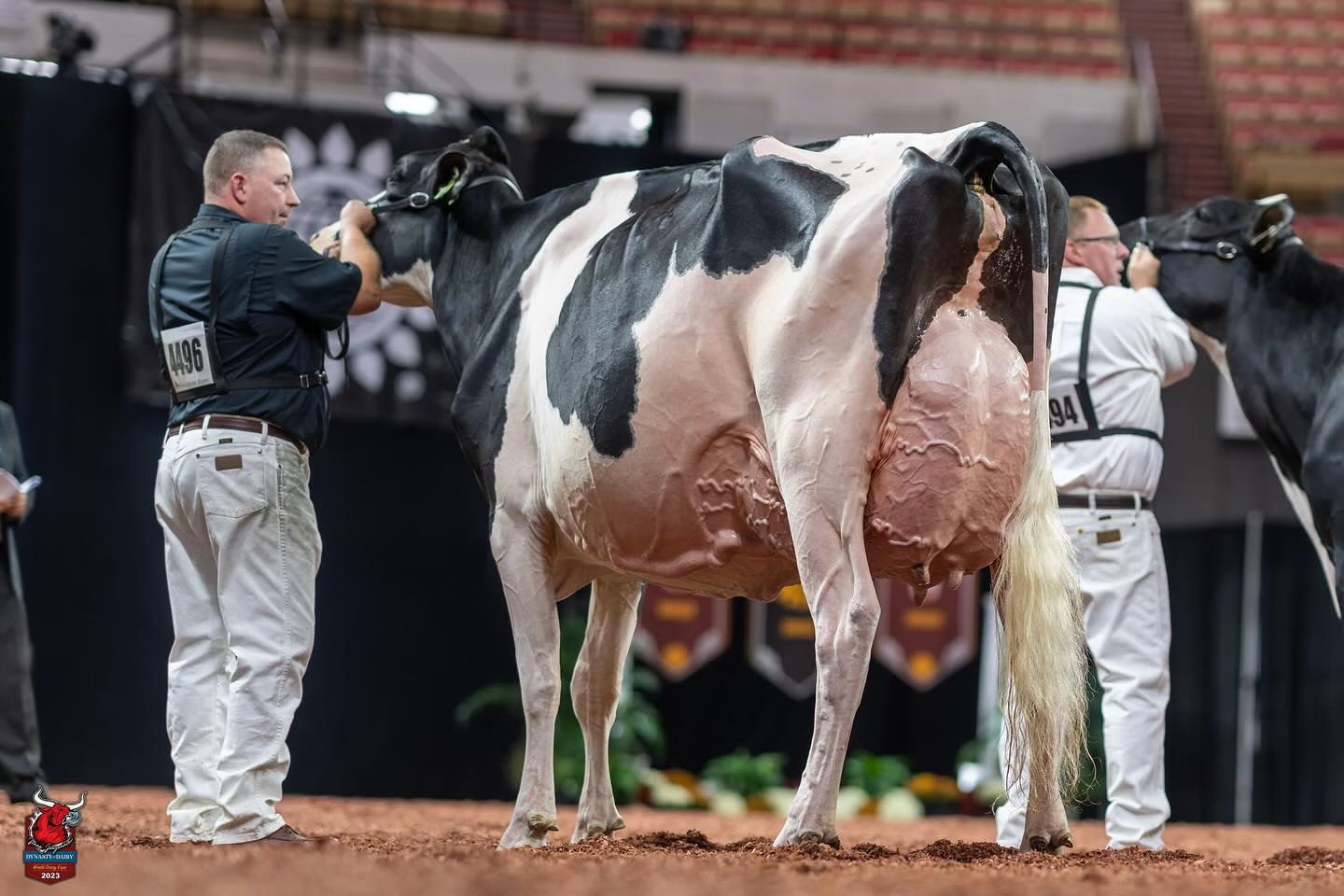
NewsSubscribe
First
Last
Consent

Beyond the Barn Door: Unmasking the Real Powerhouse on Your Dairy – The Farm Mom!

Dairy’s REAL powerhouse isn’t just in the barn. Farm Moms are CEOs & strategists. Uncover their true impact & why their success IS your farm’s success!

Forget the stereotypes. The woman on your dairy farm isn’t just “helping out”-she’s a linchpin, a CEO, a chief strategist, and the heart of the entire operation. From managing complex financials and herd health to raising the next generation and often holding it all together, dairy farm mothers are the unsung heroes whose true economic and operational value is criminally overlooked. It’s time to pull back the curtain and give these incredible women the spotlight they’ve earned.

They are the operational backbone, the calm in the storm, and the visionaries quietly shaping the future of dairy. Yet, their contributions often fly under the radar, lost in the shuffle of daily farm life. Let’s be bold: the success and sustainability of many dairy farms rest squarely on their shoulders. So, let’s dive deep into the multifaceted world of dairy farm mothers, exploring their challenges, celebrating their resilience, and demanding the recognition they deserve.

The Farm’s Real CEO? More Than Just a Helping Hand

Does the farm run itself, or does “Mom” just handle the house and kids? Think again. Dairy farm mothers are integral managers, decision-makers, and skilled laborers whose work is critical to a farm’s daily grind and long-term survival. They’re not just supporting players; they’re often running the show from what one farmer aptly called “command central”.

Juggling It All: Farm, Family, Finances, and Future Dairy farm mothers are the undisputed queens of multitasking. In the U.S., women make up 36.3% of all agricultural producers, managing a colossal 407 million acres and contributing $222 billion of farm sales. Dig deeper, and you’ll find that over half (51%) of all U.S. farms have at least one-woman operator involved in management.

Now, let’s zoom in on our world: dairy. While 29.9% of dairy producers are women, 54% of dairy farms report having at least one woman as a “secondary operator” involved in crucial decision-making. Why the distinction? The USDA defines a “producer” as anyone making decisions for the farm. So, these “secondary operators” are producers, plain and simple. This under-titling often means their leadership is downplayed, potentially impacting everything from industry recognition to accessing resources.

Their to-do list is staggering:

  • Calf Care Commandos: Often the first and last line of defense for the herd’s future, meticulously overseeing colostrum management, passive transfer, and early nutrition programs that set the foundation for lifetime productivity.
  • Herd Health Gurus: Administering treatments, coordinating vet care, maintaining treatment protocols, and keeping a sharp eye on transition cow health, where profit margins are won or lost.
  • Financial Wizards: Manage payroll, like Minnesota’s Rita Vander Kooi, track milk quality premiums, and navigate complex farm finances, including feed cost and milk price ratios.

All this, while seamlessly weaving in the relentless demands of family life. It’s a dual role requiring immense skill and grit.

As one observer put it, “Moms generally are ‘command central’ for the farm family… hauling meals to the field, running for parts, driving a tractor or truck, keeping books, and keeping peace between family members”. Wisconsin’s Renee Clark is in the barn every morning mixing feed for the milking herd, carefully balancing the TMR to optimize rumination and butterfat production. Rita Vander Kooi coordinates with nutritionists and reproductive specialists, manages payroll, and ensures the team is fed during the chaos of harvest. This isn’t just ticking off tasks; strategic coordination is often an “invisible” layer of management that’s as essential to the operation as a properly functioning cooling system to bulk tank milk quality.

The Gauntlet: What Dairy Moms Are REALLY Up Against

Life on a dairy farm, especially for mothers, isn’t all picturesque sunsets over rolling pastures. It’s a demanding landscape, riddled with financial landmines, mental pressure cookers, and the Herculean task of raising kids amidst the 24/7 hum of machinery and animal needs. But if there’s one thing these women have in spades, it’s resilience.

Facing Down the Hurdles: Credit Squeezes, Mental Tolls, and Childcare Conundrums Let’s get real about the trifecta of challenges:

  • Access to Credit? Good Luck: Women-only farm operations are less likely to hold loans than those run by men. While the query mentioned a specific “46% obtain loans” figure, the broader truth is that restricted credit access stifles investment in crucial tech, expansion, or even just weathering economic storms. This isn’t just an inconvenience; it’s a barrier to profitability and growth, like trying to optimize milk production while feeding a subpar ration.
  • The Mental Weight: Agriculture is tough on mental health, and farm women often bear an invisible “triple burden”: on-farm work, off-farm jobs to make ends meet, and the primary responsibility for home and kids. One farm woman described her week as a complex calculus of meal plans, work schedules, kids’ activities, appointments, and farm needs, all while juggling babysitters. This isn’t sustainable without support. Tragically, male farmers and ranchers face alarmingly high suicide rates. While specific data for female farmers can be more complex to pin down, studies consistently show they report significant stress, depression, and anxiety, sometimes even higher than their male counterparts.
  • The Childcare Tightrope: “Farming is a 24/7 job and so is being a mother,” stated Wisconsin dairy farmer Renee Clark. “Women tend to carry more of the responsibilities with kids, and so it is difficult to give up some responsibilities you would like to maintain on the farm”. The lack of affordable, flexible rural childcare often means kids are on the farm, a constant worry for safety-conscious mothers, like having to keep an eye on both a wobbly calf and a toddler simultaneously.

These aren’t isolated problems. They’re a tangled web, much like a complex mastitis case that requires addressing the immediate infection and the underlying facility issues. Can’t get a loan for that labor-saving robotic milker? That means more manual labor, stress, and fatigue, which impact mental health and the ability to manage finances or seek support. It’s a vicious cycle.

Forging Ahead: Tech, Teamwork, and Tenacity. But dairy farm mothers are fighters. They adapt, innovate, and persevere. One game-changer? Technology. For instance, automated Milking Systems (AMS) can be a godsend. They reduce labor, improve cow welfare through voluntary milking and real-time health monitoring, and critically, offer a massive boost to work-life balance by breaking the tyranny of rigid milking schedules. This isn’t just about fancy gadgets; it’s about reclaiming time and sanity. Women entrepreneurs in dairy are actively leveraging tech to streamline operations while juggling family.

But tech alone isn’t the answer. Strong family bonds and community support are vital buffers against stress. Women farmers lacking family support face significantly higher odds of depression. This is where peer groups and women-in-ag networks become lifelines, offering emotional support and shared learning.

Why This Matters for Your Operation: Think about that AMS. Yes, it’s a big investment. But what’s the ROI on your partner’s (or your own, if you’re the mom!) well-being, reduced stress, and the ability to focus on higher-level management tasks instead of being chained to the parlor? Just as we calculate the somatic cell count benefits of a new prep routine, we should calculate the value of supports that reduce stress and burnout. The irony is those who’d benefit most from these tech leaps often face the biggest hurdles in affording them due to income gaps and credit issues. This isn’t just unfair; it’s bad for business.

The Living Legacy: How Farm Moms Shape Dairy’s Future, One Generation at a Time

The impact of a dairy farm mother echoes far beyond the current lactation cycle or harvest season. These women are the primary architects of agriculture’s future, meticulously passing down skills, core values, an unshakeable work ethic, and a deep-seated love for the land.

Passing the Torch: More Than Just Know-How. Mothers on dairy farms are living libraries of agricultural wisdom. They teach calf-rearing nuances, from the critical 4-hour colostrum window to reading a scours case before clinical signs appear. They instill principles of sustainable land management, lessons learned through seasons of observation and hard work. Research shows that informal, family-based learning and maternal mentorship are incredibly powerful in shaping future farmers. Raising kids on a farm isn’t just about chores; it’s an immersive education in responsibility and respect for agriculture, with Mom often as the lead instructor.

This “maternal mentorship” instills adaptability and a holistic view of the farm as an ecosystem, often emphasizing animal welfare and stewardship, which is critical for long-term sustainability in a fast-changing world. Like selective breeding that improves production and functional traits, mothers cultivate practical skills and vital character attributes in the next generation.

Global Echoes: The Universal Power of Maternal Mentorship. This isn’t just a Western phenomenon. In Moroccan farming households, women are crucial for intergenerational knowledge transfer and building resilience. Large-scale nutrition programs in India and Nigeria succeed by engaging mothers and grandmothers to drive behavioral change and share vital information. These programs use community platforms and trusted local figures – often women themselves – fostering peer support and tailored messaging. Could we adapt this model for agricultural knowledge transfer in dairy, especially for women who often face barriers to traditional, male-dominated extension services? Imagine women-centric dairy support groups, female peer educators for calf care or milk hygiene protocols, and respected older farm women as mentors. It’s a thought worth exploring.

The Overlooked Economic Engine: Let’s Talk Numbers (and Inequity)

Dairy farm mothers aren’t just nurturing souls; they are potent economic forces. They manage substantial assets, contribute significantly to production, and are increasingly recognized for their entrepreneurial spirit. However, a persistent earnings gap and unequal resource access often mask their true economic clout.

Beyond the Farm Gate: The Hard Stats Remember those figures? 51% of U.S. farms have at least one-woman operator. Women producers manage 407 million acres and generate $222 billion in sales. Impressive, right?

But here’s the kicker: women-led farms earn, on average, a staggering 40% less than those run by men. This isn’t a fluke; multiple sources confirm this gap. From 2017 to 2020, women-only operations had an average production value of just $28,492, compared to $209,083 for men-only farms. Government payments? Women-only farms got an average of $7,687, versus $24,964 for men-only operations. While reasons like farm scale and commodity specialization play a role, the disparity is undeniable – it’s like comparing a 20,000-pound production average to a 33,000-pound one, but with no clear genetic or management explanation.

Table 1: The U.S. Dairy Farm Mother: A Statistical Snapshot

MetricStatistic
% of U.S. agricultural producers who are women36.3%
% of U.S. farms with at least one female operator51%
% of U.S. dairy producers who are women29.9%
% of U.S. dairy farms with at least one female secondary operator54%
Average farm income disparity for female operatorsEarn 40% less than their male counterparts
Average value of production (women-only vs. men-only farms)Women-only: $28,492 vs. Men-only: $209,083
Access to LoansWomen-only ops are less likely to hold loans

This 40% gap isn’t just about farm size. It’s about that tougher access to credit, which means less capital for crucial investments – whether it’s genomic testing the heifer herd, upgrading the parlor, or installing that activity monitoring system. And it’s about the unquantified economic cost of all that “invisible” labor- the caregiving, household management, and farm support tasks that divert time from direct income generation.

Cooperative Strength: Lessons from Around the Globe Globally, cooperatives are empowering women in dairy. In India, where women comprise nearly 70% of the dairy labor force, “White Revolution 2.0” aims to integrate more women into organized dairy co-ops. These co-ops provide access to credit, training in everything from mastitis prevention to feed formulation, leadership roles, and fair market access, like the famed Anand Pattern Dairy Cooperatives that link producers directly to consumers, cutting out exploitative middlemen.

The story of Aparna Rani Singha in Bangladesh is a powerful example. Joining a project that offered fair pricing via collection centers and training in good dairy practices and digital tools transformed her from a small-scale farmer to a thriving entrepreneur.

Table 2: Global Perspectives: Women in Dairy at a Glance

FeatureUnited StatesIndia (Co-op Members)Nigeria (Fulani Pastoralists)
Key RolesManagement, operations, finance, animal care, advocacyLivestock care, milking, processing, marketing via co-opsPrimarily milk processing & sales; limited herd management
Decision-Making PowerIncreasing, often a secondary operator in dairy (54%)Growing via co-opsHigh in milk sales, low in herd ownership/farm decisions
Access to ResourcesChallenges for women-only farms (credit); general training accessImproving via co-ops (credit, training, inputs)Very limited formal credit/training; reliance on tradition
Impact of Co-ops/SupportLess formalized for women; networks like IDFA Women in DairyHighly impactful: economic & social empowermentEmerging, informal community support
Key ChallengesIncome gap (40% less), work-life balance, and childcareTraditional gender barriers, market access outside co-opsExtreme gender disparity (assets, income), conflict, and climate change

These co-ops aren’t just about selling milk; they’re comprehensive socio-economic empowerment tools, offering lessons for uplifting women in agriculture everywhere, much like how a well-managed forage program simultaneously supports milk production and rumen health.

Real Stories, Real Impact: Meet the Women Rocking the Dairy World

Stats are one thing, but real stories bring the impact home. Let’s meet a few of the incredible women making waves in dairy.

  • Jennifer Breen (Orwell, Vermont, USA) – The Fifth-Gen Innovator: Jennifer stepped up to ensure her family’s fifth-generation farm, Hall and Breen Farm, LLC, continued. With a communications degree and business management savvy from an off-farm job, she partnered with her father, embracing organic production and investing in a new 130-stall freestall barn equipped with robotic milkers to boost efficiency and family life. “I felt strongly that the farm should continue as a productive family enterprise,” she says. Recently, they secured a grant to transition to goat dairy, showcasing their adaptive spirit, much like a diversified feeding strategy that balances protein sources.
  • Rita Vander Kooi (Worthington, Minnesota, USA) – The Modern Farm Mom & Advocate: Rita is integral to Ocheda Dairy, a 2,500-cow operation. Her roles span newborn calf care, coordinating with nutrition consultants and reproductive specialists, managing payroll, and feeding the crew during harvest. Beyond the farm, ‘Married and Farming’ is her social media handle, where she engages over 34,000 followers on agricultural issues. “Being together as a family is one of our greatest joys,” she says, but adds, “Being a mother will always be my greatest calling”. She exemplifies the modern dairy mom: essential to a large-scale operation, a public advocate, and fiercely family-focused.
  • Aparna Rani Singha (Jashore District, Bangladesh) – Tech-Savvy Trailblazer: Starting with one heifer, Aparna grew her dairy business, overcoming challenges of low productivity and unfair milk prices. Joining Solidaridad’s SaFaL project gave her access to training and fair-priced collection centers. Later, a USAID-funded project introduced her to digital tools: IVR for farm management info and an app to track sales and receive mobile payments. Now debt-free with five cows, a biogas plant, and a deep well, her dream is to “help her daughters become good citizens”. She’s already a local school governor, inspiring other women.

What’s the common thread? An unshakeable entrepreneurial spirit and a fantastic ability to adapt. From Breen’s tech investments to Singha’s digital adoption, the Fulani milkmaids’ sheer grit, and Vander Kooi’s business and advocacy blend, women are problem-solvers and innovators, often against formidable odds. Like a high-performing dairy cow that keeps producing despite challenges, they consistently deliver results in the face of adversity.

The Iceberg Effect: Uncovering the Mountain of “Invisible” Work

“Invisible labor” on a dairy farm, especially for mothers, is like an iceberg: what you see is just a fraction of what’s there. We’re talking about a complex orchestra of responsibilities fundamental to the farm’s success and family well-being, yet often unquantified, uncompensated, and unseen economically, much like the hidden components of milk production that happen deep in the rumen.

The “triple burden” is real: on-farm work, off-farm income generation, and the bulk of caregiving and household duties. This “invisible” third pillar includes the mental load of childcare (education, emotional support), researching herd health protocols, meal planning, managing appointments, complex family schedules, and even “keeping peace” in a family business. Farm women report immense stress and guilt from juggling these roles, constantly worried about children’s safety in a hazardous farm environment due to a lack of rural childcare.

So, how do dairy moms redefine this invisible labor?

  • Strategic Management: They’re high-level executives coordinating schedules, managing intertwined household/farm finances, and researching solutions for countless challenges – from mastitis prevention protocols to finding the right reproductive technician.
  • Emotional Labor: They maintain family cohesion in high-stress businesses, support partners through volatility, and nurture children. This is a massive, uncredited contribution – the glue that holds the operation together, like the microbiome that silently maintains rumen health.
  • Risk Management: Constant, subconscious vigilance, especially for child safety around machinery, livestock, and chemicals – constantly scanning the environment like a good herdsperson watches for subtle changes in cow behavior.
  • Human Capital Development: Raising the next generation, instilling values, work ethic, and responsibility – investing in human potential with the same care a breeder selects for genetic improvement.

This “invisibility” isn’t just a social oversight; it has real economic bite. Because it’s unpaid and unquantified, it devalues the mother’s true economic role, contributing to that 40% income gap. If you had to outsource all that childcare, bookkeeping, mediation, and catering, the farm’s bottom line would look very different. It would be like suddenly having to pay for all the services a healthy rumen provides for free.

Enough Talk, Time for Action: Systemic Shifts to TRULY Support Dairy Moms

Want to see dairy farm mothers thrive? Applause is nice, but systemic change is essential. We must dismantle structural barriers and create an environment where their contributions are recognized and rewarded.

  • Crack Open the Credit Lines: Targeted loan programs for women in ag, revised credit criteria, and tailored financial literacy training are crucial to address current disparities where women-only operations are less likely to hold loans, giving them the same access to capital that’s needed for genetic advancement or facility upgrades.
  • Mental Health Lifelines: Accessible, affordable, rurally-aware mental health services are non-negotiable to combat the “triple burden” stress – investing in human wellness with the same priority we give to herd health.
  • Childcare Solutions, Stat! Investment in rural childcare, flexible options, and potential subsidies would be game-changers for farm mothers and family well-being, as essential as reliable calf care is to herd replacement.
  • Gender-Responsive Policies: Agricultural policies must recognize women’s diverse roles. This means equitable land rights, fair access to resources and programs, and training designed for them. Plus, better data collection to capture their full contribution is vital, much like comprehensive DHI testing reveals the complete performance story.
  • Boost Leadership & Networks: Supporting women-led co-ops and networks like IDFA’s Women in Dairy enhances market presence and bargaining power and provides mentorship, creating the same kind of strong connections that build successful breeding programs.
  • Unlock Labor-Saving Tech: Grants, subsidies, or innovative financing for tech like AMS, activity monitoring systems, or automated calf feeders can transform workloads and improve work-life balance – tools that multiply human effectiveness just as genetics multiplies production potential.

What This Means for Your Operation: These aren’t just “women’s issues.” They’re farm viability issues. A supported, empowered partner or key female manager is more effective, innovative, and resilient. Policies must work together: better credit access coupled with tech support and affordable childcare creates a powerful synergy for positive change, just as combining excellent nutrition, comfortable housing, and proper milking technique optimizes production.

The Sustainability Linchpin: Why Dairy Moms are Key to a Greener, More Ethical Future

The role of dairy farm mothers isn’t just about today’s bottom line; it’s about tomorrow’s sustainable dairy industry. Their unique perspectives, often focused on long-term well-being, environmental consciousness, and intergenerational knowledge, make them vital architects of a resilient, ethical, and eco-sound dairy future.

Evidence suggests women farm operators show greater interest in sustainable farming practices. This is critical as our industry faces pressure on its environmental footprint. Their nurturing approach often extends to the land and animals, fostering a stewardship ethic that treats soil health with the same care as udder health. As primary caregivers, they’re deeply concerned with food quality and safety, aligning with consumer demands for transparency. Empowered women in agriculture are often more resilient to climatic shocks, a crucial trait for future-proofing dairy.

Why is their role paramount for sustainable dairy:

  • Guardians of Long-Term Viability: Thinking in generations, they prioritize the farm’s, families, and community’s long-term health, focusing on lifetime profit rather than just peak lactation performance.
  • Drivers of Care & Welfare Innovation: Hands-on animal care leads to practical welfare improvements – just as attentive milking techniques prevent mastitis; their nurturing approaches often enhance overall herd wellbeing.
  • Advocates for Holistic Practices: Viewing the farm as an ecosystem, they can drive adoption of environmentally sound, socially equitable, and economically viable practices, understanding that soil health, cow comfort, and economic sustainability are interconnected like rumen function, milk production, and farm profitability.
  • Connecting with Consumers: Their authentic stories and values build trust and a positive industry image in an era of conscious consumerism – bridging the gap between producer and consumer, much like the important connection between farmer and veterinarian.

Empowering dairy mothers can catalyze a paradigm shift towards a dairy sector that’s productive and more environmentally responsible, ethically grounded, and socially connected, a deeper cultural evolution in how we farm.

The Bottom Line: It’s Time to See, Value, and Elevate Dairy Farm Mothers

The story of the dairy farm mother is one of relentless dedication, astonishing skill, and quiet strength. They are our farms’ operational wizards, emotional bedrock, and forward-thinking innovators. Their colossal contributions have been undervalued for too long, if not entirely invisible.

Enough is enough. As an industry, communities, and families, we must actively celebrate these incredible women. Think about the dairy mom in your life, your co-op, your town. The one juggling dry cow protocols and homework, milk quality premiums and family dinners, DHIA records and tradition.

This isn’t just about a pat on the back. It’s a call to action.

  • Recognize Their Full Value: Challenge the notion that their work is just “helping.” Quantify it, respect it, reward it – just as we now recognize that components, not just milk volume, determine true production value.
  • Advocate for Systemic Change: Support policies and initiatives that address the credit gap, childcare crisis, and mental health needs of farm women, creating the infrastructure they need as surely as cows need proper housing.
  • Foster Leadership: Encourage and create pathways for women to take on more formal leadership roles within your operation and the wider industry – develop their potential as carefully as you develop your herd.
  • Share Their Stories: Make the invisible visible. When we highlight their successes and challenges, we inspire others and educate those outside our world, showing the human face behind the milk.

The Bullvine challenges you: Nominate your dairy heroine. Let’s amplify their voices, whether for a local award, an industry recognition, or simply a public thank you in your community. Consider women who excel in operations, embrace innovation, champion animal welfare and sustainability, mentor others, contribute to the community, and show unparalleled resilience.

When we champion these unsung heroes, we’re not just giving credit where it’s overdue. Because of the incredible women at its heart, we’re investing in the future of dairy, a more equitable, resilient, and vibrant future. Let’s ensure their stories shine as brightly as a freshly scrubbed bulk tank in the morning light.

Key Takeaways:

  • Dairy farm mothers are not just helpers but central operational managers, decision-makers, and skilled laborers whose contributions in areas like herd health, calf care, and financial planning are vital to farm success.
  • Despite their critical roles, they face significant challenges, including a 40% average income gap compared to male counterparts, limited access to credit, immense mental load (the “triple burden”), and scarce rural childcare.
  • The vast “invisible labor” performed by dairy farm mothers – strategic planning, emotional support, risk management, and raising the next generation – is economically significant yet largely unquantified and uncompensated, masking their true value.
  • Systemic changes, including improved access to credit, mental health resources, affordable childcare, gender-responsive policies, and support for technology adoption, are crucial for achieving their economic parity and amplifying their visibility.
  • Empowering dairy farm mothers is intrinsically linked to the dairy industry’s future sustainability, innovation, and intergenerational continuity, as they often champion long-term viability, holistic practices, and animal welfare.

Executive Summary:

This article dismantles the outdated image of the “farmer’s wife,” repositioning dairy farm mothers as indispensable operational and strategic leaders. It highlights their multifaceted roles managing everything from intricate herd health and calf care protocols to complex farm financials and family responsibilities, often while facing significant hurdles like limited credit access, intense mental strain from the “triple burden,” and inadequate childcare. The piece argues that their substantial “invisible labor” – encompassing strategic management, emotional support, and human capital development – is critically undervalued, contributing to a stark economic disparity despite their massive contributions. Ultimately, it calls for systemic changes to ensure their visibility and economic parity, emphasizing that empowering these women is not just equitable but essential for the innovation, intergenerational success, and sustainable future of the global dairy industry.

Learn more:

The Sunday Read Dairy Professionals Don’t Skip.

Every week, thousands of producers, breeders, and industry insiders open Bullvine Weekly for genetics insights, market shifts, and profit strategies they won’t find anywhere else. One email. Five minutes. Smarter decisions all week.
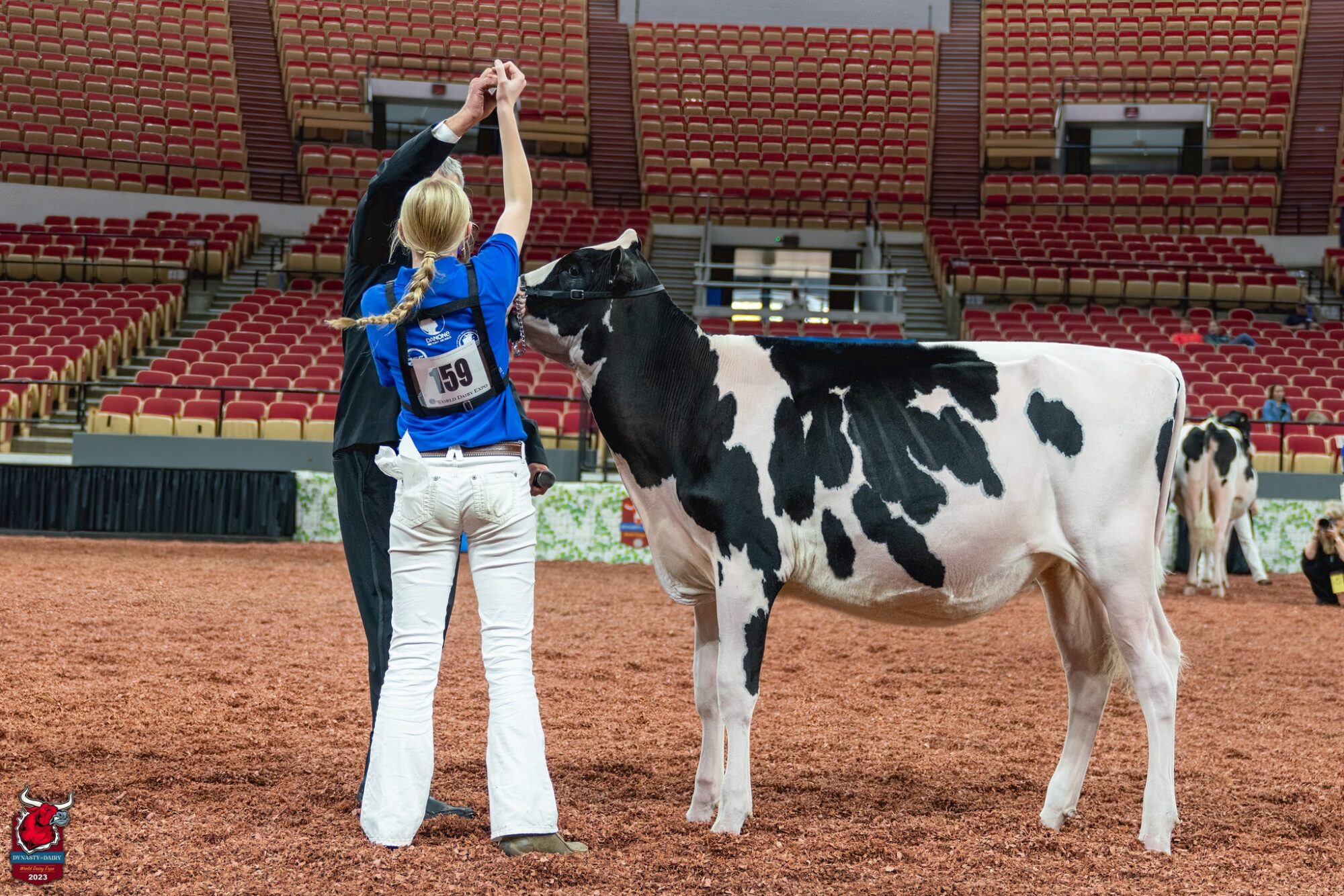
NewsSubscribe
First
Last
Consent

From 4-H Project to Brown Swiss Legacy: The Brothers Three & Josh Hushon Story

From 4-H novices to genomics pioneers: How three brothers built an elite Brown Swiss legacy while balancing corporate careers and family life.

The morning sun streams across the Wisconsin pasture as Josh Hushon moves among his prized Brown Swiss cattle. What began in 1991 as a humble 4-H project has evolved into Brothers Three Brown Swiss, one of the country’s most respected Brown Swiss breeding operations. This remarkable journey intertwines with Josh’s influential career at Cargill and his reputation as a respected cattle judge, creating a unique story of passion, expertise, and family legacy in the dairy industry.

The Brothers Three team celebrates under the iconic willow trees at World Dairy Expo in Madison, Wisconsin, showcasing their champion Brown Swiss. From humble 4-H beginnings in 1991 to elite breeders today, this family partnership exemplifies how passion, mentorship, and genetic expertise can build a lasting Brown Swiss legacy while balancing careers and family life.

Humble Beginnings to Brown Swiss Legacy

The Brothers Three story didn’t begin with generations of dairy farming knowledge or an established Brown Swiss herd. Instead, it started with youthful curiosity and a willingness to learn that continues to define their approach today.

“We are first generation into Brown Swiss and even into showing at all, so I think being open-minded and learning from people we look up to is ingrained into us,” Josh explains. “We didn’t know anything about Brown Swiss when we started in 1991, so there was no ‘this is our breeding philosophy or how we do things’ to help or hold us back.”

That blank-slate approach may have been their greatest advantage. Without preconceptions about how things “should” be done, the Hushon family approached every challenge with humility and adaptability. Josh recalls how his parents had to find mentors to teach them techniques so they could pass that knowledge to their children. “I think that’s why we’ve never been afraid to ask the people we respect for help; we watched Mom and Dad do that constantly as kids.”

This foundation of learning from others has remained central to their operation even as they’ve risen to prominence. From local county fairs to the prestigious World Dairy Expo in Madison, Brothers Three has methodically climbed the ranks of the Brown Swiss world, gained knowledge, and perfected their craft with each step.

A Philosophy of Continuous Learning

Josh and Casey Hushon stand alongside mentoring partners Kyle Barton and Kenzie Ullmer at a recent show. As Josh notes, "We learn from each other, push each other, and have been showing together for the past four years with a lot of success and fun along the way!" This collaborative approach to continuous improvement embodies Brothers Three's philosophy of learning from peers within the industry.
Josh and Casey Hushon stand alongside mentoring partners Kyle Barton and Kenzie Ullmer at a recent show. As Josh notes, “We learn from each other, push each other, and have been showing together for the past four years with a lot of success and fun along the way!” This collaborative approach to continuous improvement embodies Brothers Three’s philosophy of learning from peers within the industry.

The Hushons exemplify the power of the mentor-mentee relationship in agriculture. As Josh eloquently says, “To know the road ahead, ask those coming back.” This approach has connected them with influential industry figures like Luke Peterson, who guided their preparation for the World Dairy Expo, turning a $1,200 purchase into a third-place finisher and Honorable Mention All-American. More recently, mentors like Tom Foss of Pit-Crew Genetics, Kelli and Tom Cull at Budjon and the Kyle Barton and Kenzie Ullmer team have shared invaluable insights about showing, selling, and merchandising strategy.

Family Dynamics and Evolution

What makes Brothers Three unique is how the brothers balance distinct roles while maintaining a unified vision. Though never anyone’s full-time job, their passion for Brown Swiss cattle drives their collaborative approach.

“Brothers Three has never been anyone’s full-time job, so our roles have all changed a lot in the 30+ years we’ve been in Brown Swiss as our careers and seasons of life have changed,” Josh notes. “Our Dad set the vision for us as we started in the breed, but over the past 15 years, we’ve taken that on.”

The farm operates with each brother contributing according to their strengths:

  • Jake leverages his role at New Generation Genetics to make most mating decisions, bringing industry-wide genetic insights
  • Josh and Casey manage day-to-day development and merchandising, determining which animals to show and invest in
  • Joe’s career has taken him toward agronomy, but he remains critical during the World Dairy Expo, helping balance careers and Brothers Three responsibilities

A pivotal moment came in 2014 when Josh and Casey purchased a small farm and began rebuilding their operation. “From 2009 until then, we had dwindled our numbers and were only boarding a few with the Topps in Ohio, who have been great friends and partners for years. The Brothers Three prefix might have become history without a major change,” Josh explains.

Josh and Casey Hushon celebrate with Topp B-3 Woodford after claiming the Intermediate Champion banner at the 2023 World Dairy Expo-a triumphant moment representing years of collaborative breeding decisions, shared daily management, and perseverance through setbacks. This championship exemplifies how Brothers Three's division of responsibilities allows each brother to contribute their unique strengths toward a unified vision of excellence.
Josh and Casey Hushon celebrate with Topp B-3 Woodford after claiming the Intermediate Champion banner at the 2023 World Dairy Expo-a triumphant moment representing years of collaborative breeding decisions, shared daily management, and perseverance through setbacks. This championship exemplifies how Brothers Three’s division of responsibilities allows each brother to contribute their unique strengths toward a unified vision of excellence.

This move allowed them to strategically rebuild their herd by acquiring animals from favorite cow families in the Brown Swiss and Ayrshire breeds. They incorporated advanced reproductive technologies like IVF and partnered with Crave Brothers for embryo implantation. They quickly improved their show string and established themselves as a source of top-quality animals in prestigious spring sales.

Daily Life at the Brothers Three

Far from the romantic notion of full-time farming, Brothers Three represents the reality of modern agricultural passion projects. Josh describes their operation as “a morning, evening, weekend, and any other spare moment that Casey and I can find a job!”

The farm maintains 10-15 show heifers at their small farm, with milk cows owned in partnership with the Nehls and Wolf families, who are boarded at quality operations like Budjon and Smith-Crest. (Read more: Making Dreams Come True: The Journey of Tom & Kelli Cull) Their daily routine involves pre- and post-work chores, with weekends dedicated to catching up on farm tasks.

Their showing schedule has expanded to nearly year-round activity. By January, they’re already back into the regular habit of clipping and working with heifers. Casey manages their meticulous hair care rotation—washing, conditioning, and rinsing—which intensifies for spring shows and continues through October.

Breeding Philosophy: Balancing Show Ring and Commercial Viability

At the heart of Brothers Three’s success is their commitment to breeding cattle that excel both in the show ring and the milking parlor—a balance that has become their hallmark.

“We have always bred for both type and production, even though we don’t have our dairy,” Jake explains. “It was always important to us that our cattle be productive in the milk string for the dairymen or partners who milk them as well as competitive in the show ring for us.”

Their breeding program builds upon the foundation established by their father, who emphasized four key elements: type, udders, cow families, and milk production. The first three attributes catered to show success, while milk production ensured their animals delivered value to the dairy farmers who milked them.

However, about a decade ago, the Brothers Three began experiencing reproductive challenges in their herd. Based on Jake’s experience with New Generation Genetics customers, they prioritized daughter pregnancy rate (DPR) in their breeding decisions—a forward-thinking move that anticipated industry trends.

“The show industry embraced this as well, and now many show-type breeders breed for positive daughter fertility traits, but 10 years ago, that wasn’t a huge part of bull selection,” Jake notes.

Victory moment: Topp B-3 Woodford is named Intermediate Champion at the 2023 World Dairy Expo Brown Swiss Show. This triumph represents the culmination of Brothers Three's balanced breeding philosophy-producing animals that excel in both the show ring and commercial settings while demonstrating the resilience that makes Brown Swiss cattle so valuable to the dairy industry.
Victory moment: Topp B-3 Woodford is named Intermediate Champion at the 2023 World Dairy Expo Brown Swiss Show. This triumph represents the culmination of Brothers Three’s balanced breeding philosophy-producing animals that excel in both the show ring and commercial settings while demonstrating the resilience that makes Brown Swiss cattle so valuable to the dairy industry.

“I love that cow more than you should love a cow… she’s broken my heart more than once, but I will keep putting my heart out there. She is my once-in-a-lifetime cow.” – Josh Hushon on Woodford

Advanced Reproductive Technologies in Practice

Brothers Three has embraced cutting-edge reproductive technologies to accelerate genetic progress. Their strategic use of in vitro fertilization (IVF) in partnership with Crave Brothers for embryo implantation has been instrumental in rapidly rebuilding their herd quality after 2014.

This approach allows them to multiply genetics from their most valuable females, as evidenced by the “ET” (Embryo Transfer) and “ETV” (Embryo Transfer Viable) suffixes that frequently appear in their animals’ names. The strategic mating of Woodford with Deluxe exemplifies this approach, producing three daughters with All-American nominations in just two years, plus a fourth that sold for $30,000 as the second-highest seller at the recent Quest for Success sale.

“Our goal is to breed great heifers who become great cows which is why we are really picky about the maternal lines we invest into and the bulls that we use,” Josh added. “If you buy one from us, we want her to have the potential to be a foundation animal in your herd.

Genomics: The Game-Changer

Genomic testing has revolutionized Brothers Three’s breeding approach, providing crucial insights that guide their decision-making process.

“Genomic testing has had a massive impact on our breeding program and continues to play a pivotal role,” Jake explains. “We started to test all females to get a glimpse into the future of each heifer. Just as each animal is designed with a specific nutrition program to maximize potential, genomics allows us to maximize the genetic potential through our matings.”

Their genomic strategy follows a dual approach:

  1. Testing all females to assess their genetic potential
  2. Selecting bulls that both maximize positive traits and address genetic weaknesses simultaneously

This genomic data integration has accelerated their genetic progress significantly, allowing them to make more informed breeding decisions than possible through traditional visual assessment and pedigree analysis alone.

Show Ring Success: Building Elite Cow Families

Brothers Three Wisper 2E-92: The matriarch who transformed a 4-H project into a breeding legacy. Twice named All-American, this beloved foundation cow contributed to nearly half of the operation's 50 All-American nominations through her descendants. More than her impressive show ring achievements, Wisper embodied the personal connection that defines Brothers Three-recognizing her handlers, perking up her distinctive Brown Swiss ears when called, and taking a family of first-generation exhibitors to heights they "only dreamed of." The backyard-raised heifer who became their first homebred All-American represents the perfect union of genetic excellence and heartfelt passion.
Brothers Three Wisper 2E-92: The matriarch who transformed a 4-H project into a breeding legacy. Twice named All-American, this beloved foundation cow contributed to nearly half of the operation’s 50 All-American nominations through her descendants. More than her impressive show ring achievements, Wisper embodied the personal connection that defines Brothers Three-recognizing her handlers, perking up her distinctive Brown Swiss ears when called, and taking a family of first-generation exhibitors to heights they “only dreamed of.” The backyard-raised heifer who became their first homebred All-American represents the perfect union of genetic excellence and heartfelt passion.

The Foundation: Brothers Three Wisper

The foundation of Brothers Three’s breeding program is Brothers Three Wisper 2E-92, a granddaughter of Top Acres EJ Whistle. Twice named All-American, Wisper was Junior Champion at the World Dairy Expo in 2001 and Grand Champion of the Junior Show in Madison in 2003.

Her genetic impact has been extraordinary, with 25 classified daughters, 21 Very Good or Excellent. “Almost half of our 50 All-American Nominations belong to her and her offspring,” Josh proudly states.

The most successful mating with Wisper came through Sunnyisle Total, producing daughters like Brothers Three TV Willa (the dam of their celebrated cow Woodford) and Brothers Three TV Wisco EX-93, who received three All-American nominations in milking form.

Creating Championship Genetics

Josh and Casey Hushon proudly pose with B3-Ayr Tux Wilma, their 2023 UNANIMOUS All-American Summer Yearling who dominated the show circuit with championship wins at World Dairy Expo and as Junior Champion at the North American International Livestock Exposition (NAILE). Wilma exemplifies Brothers Three's commitment to developing elite genetics with both style and substance.
Josh and Casey Hushon proudly pose with B3-Ayr Tux Wilma, their 2023 UNANIMOUS All-American Summer Yearling who dominated the show circuit with championship wins at World Dairy Expo and as Junior Champion at the North American International Livestock Exposition (NAILE). Wilma exemplifies Brothers Three’s commitment to developing elite genetics with both style and substance.

Brothers Three has methodically built its reputation on developing elite animals with staying power. Their success includes:

  • 14 All-Americans and 8 Reserve All-Americans
  • 50 total All-American nominations, with nearly half coming from Wisper’s family line
  • The 2023 Intermediate Champion at World Dairy Expo (Topp B-3 Woodford)
  • Successful entries in both Brown Swiss and Ayrshire breeds, including Junior Champion Ayrshire at World Dairy Expo

The Woodford Story: Perseverance Rewarded

Topp B-3 Woodford, shown here during her winning appearance as 1st Place Junior Three Year Old at the 2023 World Dairy Expo International Brown Swiss Show. Just 16 months after losing her calf and facing setbacks, Woodford’s triumphant return to the ring culminated in being named Intermediate Champion-a testament to Brothers Three’s perseverance and Josh Hushon’s unwavering faith in his “once in a lifetime cow.”

Perhaps no story better illustrates the Brothers Three’s journey than that of Topp B-3 Woodford, whose path to championship glory embodied both heartbreak and triumph.

“Standing in a pasture in late spring 2022 with tears in my eyes as they confirmed that Topp B-3 Woodford had lost her calf and was open, I could never have imagined in a million years that she would be Intermediate Champion at World Dairy Expo 16 months later,” Josh reflects with emotion.

Woodford had shown promise as a heifer, earning Reserve All-American Summer Yearling honors. After losing her calf, Josh feared his dreams for her were delayed, if not derailed. Yet, against all odds, she calved at 2 years and 11 months, and by August, she was named Intermediate and Reserve Grand Champion at the Wisconsin State Show under Jason Lloyd’s evaluation.

Her rise continued at World Dairy Expo 2023, where she claimed the Intermediate Championship, cementing her place in Brothers Three history. “I tell people that I love that cow more than you should love a cow, and she’s broken my heart more than once, but I will keep putting my heart out there. She is my once-in-a-lifetime cow,” Josh says with undisguised pride.

Star in the Spotlight: Casey Hushon with Budjon-Vail Autograph Kristina ETV as she enters the show ring at World Dairy Expo. The dramatic purple lighting highlights the results of Brothers Three's distinctive show preparation regimen-where Casey's meticulous hair care rotation combines with their growth-focused nutrition approach. This Winter Yearling champion exemplifies their philosophy that proper development creates animals with both the mass to compete and the style to win, representing hundreds of hours of daily care, conditioning, and hands-on work that defines the Brothers Three showing program.
Star in the Spotlight: Casey Hushon with Budjon-Vail Autograph Kristina ETV as she enters the Supreme Junior Champion Parade at World Dairy Expo. The dramatic purple lighting highlights the results of Brothers Three’s distinctive show preparation regimen-where Casey’s meticulous hair care rotation combines with their growth-focused nutrition approach. This Winter Yearling champion exemplifies their philosophy that proper development creates animals with both the mass to compete and the style to win, representing hundreds of hours of daily care, conditioning, and hands-on work that defines the Brothers Three showing program.

Show Preparation Techniques

Their show preparation regimen reflects their thoughtful, long-term approach to development. Rather than focusing solely on show-ready conditions year-round, they prioritize growth during winter months.

“I think one of the things that sets us apart from others, though, is that we feed them to grow through the winter, and if they come into the spring carrying more weight than ideal for showing, we’re fine with that,” Josh explains. “I joke that I am the guy that got the Junior Champion Ayrshire from Madison beat last year at Spring Show and was perfectly fine with that because I believe these heifers need that mass and growth to make the distance to Expo.”

This growth-focused approach continues until June or July, when they begin managing weight more actively. For yearlings needing to lose condition, their regimen can be intensive—Josh recalls walking two yearlings a mile daily after dinner, with each heifer completing this route more than 40 times between August and September. One of these animals became Junior Champion Ayrshire at the World Dairy Expo.

Their nutrition program benefits directly from Josh’s Cargill expertise, while Casey manages their comprehensive hair care routine, which becomes increasingly intensive as show season approaches. This combination of nutrition, hair care, exercise, and hands-on development forms their integrated approach to show preparation.

5 Key Breeding Strategies from Brothers Three

  1. Prioritize Fertility: Select a positive daughter pregnancy rate (DPR) to ensure reproductive success
  2. Balance Show Appeal and Commercial Viability: Breed for type, udders, and strong cow families while maintaining milk production
  3. Leverage Genomic Testing: Test all females to guide mating decisions and accelerate genetic progress
  4. Focus on Maternal Lines: Build upon proven cow families for consistent genetic transmission
  5. Strategic Partnerships: Form co-ownership relationships to access elite genetics and share risk

Josh Hushon: Bridging Corporate Strategy and Cattle Expertise

Josh Hushon delivers a presentation at the 2022 Connect Dairy Summit in his role as Strategic Dairy Marketing Lead for North America at Cargill. His expertise in corporate dairy strategy complements his passionate approach to Brown Swiss breeding at Brothers Three.

What makes the Brothers Three story particularly unique is Josh Hushon’s dual identity as both a passionate Brown Swiss breeder and a corporate strategist at Cargill. Since March 2020, Josh has served as Strategic Dairy Marketing Lead for North America at Cargill, leading a team responsible for crafting the North American dairy strategy and portfolio development.

His career journey includes previous roles as Calf & Heifer Commercialization Lead and Marketing Communications Lead at Cargill and five years as an Associate Editor at Hoard’s Dairyman from 2003-2008. This blend of agricultural journalism experience and corporate marketing expertise has shaped his approach to Brothers Three and his understanding of the broader dairy industry.

“At Cargill, I am the Director for strategy, marketing, and technology for our dairy nutrition business in the U.S. and Canada, and I see several mutual benefits to this dual role with my cattle,” Josh explains. “Working at Cargill gives me access to some of the best nutrition minds in the world. I’ve learned much about rumen development, reading a hay sample, and the latest technologies, such as phytogenics, which we’ve integrated into our program.”

This knowledge exchange works both ways. “At the same time, being a customer at Cargill and spending my social time with other dairy producers keeps me grounded in a reality that makes our work more impactful to our customers. As a marketer, having daily real-world insight helps our team to remain practical and innovative in our work.”

Sustainability Initiatives and Industry Impact

Josh brings valuable insights from Cargill’s sustainability initiatives to his farm operation. In a recent podcast appearance with Dr. Kate Cowles, Cargill’s North American Ruminant Innovation Lead, Josh highlighted the dairy industry’s significant progress in reducing its environmental footprint: “A gallon of milk now compared to 10 years ago to 60 years ago is probably 60 to 70% smaller carbon footprint in that timeframe, which is amazing progress as an industry.”

At Cargill, Josh helps develop dairy nutrition strategies that enhance production efficiency and environmental performance. The company leverages sophisticated tools like Dairy MAX™ software, which includes sustainability metrics to help producers understand and manage their rations’ environmental impact, particularly regarding methane emissions and nutrient efficiency.

This sustainability focus extends to Brothers Three, where Josh applies Cargill’s nutritional insights to optimize feed efficiency and animal health. His position at the intersection of corporate agricultural strategy and hands-on breeding gives him a comprehensive perspective on how sustainability initiatives can benefit individual operations and the industry.

Industry Service and Judging Impact

Josh Hushon with one of his prized Brown Swiss heifers at their Wisconsin farm. His hands-on experience raising elite cattle provides the foundation for his industry leadership and judging expertise, contributing to his upcoming 2025 Wisconsin Service Award.

Josh’s industry involvement extends well beyond Brothers Three and Cargill. After moving to Wisconsin in 2003, he quickly found community in the Wisconsin Brown Swiss Association, where he has made significant contributions, leading to his 2025 Wisconsin Service Award.

As the World Dairy Expo Representative for the Wisconsin Brown Swiss Association, Josh bridges his passion for the breed with organizational leadership. He has chaired two National Brown Swiss Conventions in Wisconsin (2013 and 2024). He has been instrumental in consolidating Wisconsin Spring Shows and Wisconsin State Shows into all-breeds events in Madison—an inter-breed collaboration he believes strengthens the entire dairy community.

Josh is an accomplished judge, earning All-American honors in 4-H Dairy Judging and being judged collegiately at Penn State University. His recent judging assignments include the Kentucky Spring National Brown Swiss Show and the Brown Swiss and Other Colored Breeds Show at Green County Dairy Days in 2024.

His brother Jake has also established himself as a respected cattle judge, bringing the Brothers Three philosophy into the evaluation ring. When approaching a class of Brown Swiss cattle, Jake emphasizes the balance of dairy character, strength, body depth, style, and an elusive “it factor” distinguishing top animals.

“In cows, the udder is by far the most important trait, and for me, it takes something truly special for the best-uddered cow in each class not to be in first,” Jake explains. His evaluation process systematically assesses feet and legs, topline strength, rump angle, and overall width and depth to sort animals through the class.

Brown Swiss vs. Holstein: Competitive Advantages in Today’s Market

CharacteristicBrown SwissHolstein
Component ProductionHigher butterfat and protein percentagesHigher total milk volume
Heat ToleranceSuperior heat toleranceLess heat tolerant
LongevityGreater productive lifespanVariable lifespan
Beef ValueSuperior carcass value for crossbred calvesLower beef value
A2 StatusHigh percentage of A2 geneticsLower percentage of A2
Feed EfficiencyGood converters with strong componentsEfficient volume producers

The Next Generation and Future Vision

Looking ahead, Brothers Three balances tradition with a fresh perspective as they consider the next generation. The four boys who make up what they call “B3 Gen 2,” with a fifth on the way in July 2025, represent potential future leadership for the operation.

“The oldest boys are just old enough for 4-H, so we’ll give them all a chance to show if they have an interest in it, and if not, that’s okay too!” Josh says, reflecting the same open-minded approach that has defined Brothers Three from the beginning.

Market Trends and Growth Opportunities

As the story of the Brothers Three unfolds, Josh and his brothers remain optimistic about the future of Brown Swiss cattle in an evolving dairy landscape. Jake identifies two key opportunities for the breed: its growing popularity in the show ring, with high-profile breeders adding Brown Swiss to their operations, and its economic advantages in commercial settings.

“In economic terms, our breed fights for stall spaces and uterus slots on large dairy farms today with many dairy breeds, European red breeds, and now beef semen,” Jake observes. “Two things Brown Swiss can and must capitalize on are the high payment for fat and the sale carcass value of the beef calves out of Brown Swiss cattle vs. a Holstein or Jersey at market. Add in A2, which is a large percentage of the population, and our opportunity to become a mainstream breed in the USA, like they are in Europe, is here.”

Adapting to Industry Shifts

Josh acknowledges the impact of industry consolidation on the Brown Swiss breed. “We certainly feel consolidation as we see smaller farms exit that were long-time Brown Swiss breeders, and we find more of our show calf market being driven by hobbyists like us or even Holstein breeders looking to diversify with a Brown Swiss. I suspect that trend will continue, and it will be interesting to see the profile of someone buying Brown Swiss a decade from now.”

This changing landscape creates both challenges and opportunities. The traditional base of commercial Brown Swiss herds may be shrinking, but interest from show enthusiasts, specialized breeders, and crossbreeding programs offers new markets. The breed’s inherent advantages—component production, heat tolerance, and carcass value—position it well for specialized applications in a diversifying dairy industry.

Brothers Three continues to adapt by focusing on high-value genetics that appeal to show enthusiasts and progressive commercial producers. Their emphasis on balanced traits—combining show appeal with functional attributes like fertility and production—aligns perfectly with the needs of this evolving marketplace.

The Brothers Three team at World Dairy Expo 2023, where family tradition meets future vision. Representing both current leadership and the next generation of "B3 Gen 2," this moment captures the essence of their legacy-building approach as they introduce the youngest family members to the show ring environment that has defined their three-decade journey in Brown Swiss breeding.
The Brothers Three team at World Dairy Expo 2023, where family tradition meets future vision. Representing both current leadership and the next generation of “B3 Gen 2,” this moment captures the essence of their legacy-building approach as they introduce the youngest family members to the show ring environment that has defined their three-decade journey in Brown Swiss breeding.

The Bullvine Bottom Line: A Legacy Built on Passion and Actionable Wisdom

The Brothers Three’s journey—from novice 4-H participants to respected breeders of champion Brown Swiss cattle—embodies the best of American agriculture: innovation, dedication, and a willingness to learn from both success and setbacks.

Through Josh Hushon’s unique perspective as a Cargill executive and passionate cattle breeder, Brothers Three has positioned itself at the intersection of corporate agricultural strategy and hands-on cattle expertise. This balance allows them to appreciate the microscopic details of an individual animal’s development and the macroscopic trends shaping the global dairy industry.

Lessons for Progressive Dairy Breeders

The Brothers Three story offers valuable insights for anyone pursuing excellence in dairy genetics:

  1. Seek Knowledge from Proven Mentors: As Josh says, “To know the road ahead, ask those coming back.” Find mentors who have achieved your goals and follow their guidance precisely.
  2. Leverage Genomic Testing Strategically: Test females early to “glimpse their future” and make more informed breeding decisions. Use the data to both maximize strengths and address weaknesses in your herd.
  3. Balance Show Appeal with Commercial Viability: Even if showing is your passion, breeding for production, components, and fertility ensures your animals deliver value beyond the ring.
  4. Invest in Your Best Cow Families: Focus resources on developing strong maternal lines. As Brothers Three demonstrates with Wisper’s family, one exceptional female can transform an entire breeding program.
  5. Embrace Adaptability and Innovation: From reproductive technologies to marketing approaches, be willing to evolve your operation to meet changing market demands and capitalize on new opportunities.

What began as three brothers learning to show cattle has evolved into a multi-generational legacy of excellence in the Brown Swiss world. With their eyes fixed firmly on the future—from genomic advancements to the next generation of family involvement—Brothers Three continues to write new chapters in their remarkable story of agricultural passion and achievement.

As Josh reflects on his journey with Brothers Three, his words capture the essence of their success: “To know the road ahead, ask those coming back.” By honoring tradition while embracing innovation, Brothers Three and Josh Hushon have not only found their road—they’re helping chart the course for Brown Swiss breeders everywhere.

Key Takeaways

  • Mentorship drives success: The brothers attribute their achievements to strategic mentor relationships at each career stage-from early guidance on showing technique to advanced breeding partnerships-proving that knowing when to seek expert advice accelerates progress.
  • Balanced breeding philosophy: Their approach balances four key elements (type, udders, cow families, milk production) while incorporating fertility traits, creating animals that succeed both in elite shows and commercial settings.
  • Genomic testing as a game-changer: By testing all females and using data to guide mating decisions, they’ve accelerated genetic progress beyond what traditional visual assessment allows, transforming breeding strategy.
  • Specialty positioning creates opportunity: In a consolidating industry, Brown Swiss offers advantages in component production, heat tolerance, and beef value-creating market potential even as traditional farms disappear.
  • Passion projects can achieve excellence: Despite never being anyone’s full-time occupation, Brothers Three demonstrates how strategic partnerships, specialized knowledge, and dedicated off-hours management can build elite genetics without requiring full-time farming.

Executive Summary

Brothers Three Brown Swiss represents a remarkable journey from a humble 1991 4-H project to a nationally respected Brown Swiss breeding operation, demonstrating how passion projects can achieve excellence without requiring full-time farming. Founded by the Hushon brothers with no prior dairy experience, the operation thrives on their collaborative approach-with Jake handling genetics through his New Generation Genetics role, Josh and Casey managing daily development while Josh applies his Cargill executive expertise, and Joe contributing crucial support during World Dairy Expo. Their success stems from a balanced breeding philosophy that produces cattle excelling both in show rings and commercial settings, strategic adoption of technologies like genomic testing and IVF, and their foundational belief in continuous learning from mentors-epitomized in Josh’s mantra: “To know the road ahead, ask those coming back.” This unique blend of corporate strategy and hands-on breeding has positioned Brothers Three to adapt to industry changes while establishing a multi-generational legacy.

Learn more:

  • International Brown Swiss Show 2024 – Follow the latest results from Madison where top Brown Swiss breeders competed, including notable achievements in the same show where Brothers Three’s Woodford previously claimed honors.
  • Are dairy genetics a commodity? – Explore this thought-provoking analysis of modern dairy genetics economics that complements Brothers Three’s balanced breeding philosophy of combining show ring excellence with commercial viability.
  • National Brown Swiss Convention 2024 – Discover highlights from the Wisconsin-hosted event that Josh Hushon helped chair, bringing together over 200 Brown Swiss enthusiasts to celebrate the breed’s community and accomplishments.

The Sunday Read Dairy Professionals Don’t Skip.

Every week, thousands of producers, breeders, and industry insiders open Bullvine Weekly for genetics insights, market shifts, and profit strategies they won’t find anywhere else. One email. Five minutes. Smarter decisions all week.

NewsSubscribe
First
Last
Consent

Siemers Holsteins: A Legacy of Excellence in Dairy Cattle Breeding Recognized by National Dairy Shrine

Siemers Holsteins’ century-old legacy & cutting-edge genetics earn 2025 National Dairy Shrine’s top breeder honor.

Siemers Holsteins, National Dairy Shrine Distinguished Dairy Cattle Breeder, dairy cattle genetics, Holstein breeding program, sustainable dairy farming

The National Dairy Shrine’s 2025 Distinguished Dairy Cattle Breeder Award celebrates Siemers Holsteins of Newton, Wisconsin, as a paradigm of genetic innovation, operational excellence, and multi-generational leadership in the dairy industry. Siemers Holsteins has redefined modern dairy cattle breeding with a sixth-generation family operation that balances cutting-edge technology, sustainable practices, and a practical breeding philosophy rooted in practicality. Their 8,000-cow herd, boasting a rolling average of 33,924M 4.39%F 3.13%P, and a genetic portfolio featuring 369 AI sires, exemplifies the synergy of production prowess and type refinement. This report unpacks their journey, the award’s significance, and their indelible impact on global dairy genetics.

The National Dairy Shrine: Guardians of Dairy Legacy

Historical Foundations and Mission

Established in 1949, the National Dairy Shrine emerged post-World War II to honor dairy pioneers and inspire future leaders. Initially focused on purebred breeders, it expanded to include educators, scientists, and industry advocates, cementing its role as a custodian of dairy heritage. The Shrine’s Museum in Fort Atkinson, Wisconsin, houses artifacts and portraits of honorees, including Guest of Honor awardees like Dr. Gordon Doak, whose genetics and international trade work shaped modern AI practices.

The Distinguished Dairy Cattle Breeder Award recognizes breeders who merge genetic excellence with sustainable business models

Siemers Holsteins: A Century of Strategic Breeding

Multi-Generational Roots and Expansion

Founded in 1890, Siemers Holsteins has evolved from a small Wisconsin farm to a global genetic powerhouse. The current operation, managed by Dan, Janina, Paul, and their sons, spans 5,400 acres and employs 50 workers. Key milestones include:

  • 1971: Construction of a 200-cow free-stall barn, enabling scalability.
  • 1994: Relocation to a modern facility with advanced milking systems.
  • 2020s: Installation of a 110-cow rotary parlor and genomic testing integration.

Their “land and cow” philosophy underscores a commitment to environmental stewardship, earning them the 2016 U.S. Dairy Sustainability Award for nutrient management innovations that boosted yields by 30%.

Breeding Philosophy: “Genetics for Cow People”

Siemers’ approach prioritizes balanced production, health, and conformation to create cattle that thrive in commercial settings. Unlike programs chasing single-trait extremes, they focus on:

  • Type: 1,300 Excellent cows, including four EX-95 homebreds.
  • Longevity: 75 EX-94+ cows and 460 Gold Medal Dams.
  • Marketability: 369 Siemers-bred bulls in AI, averaging 2,902 TPI in heifers.

This strategy mirrors Ernie Kueffner’s (2022 honoree) emphasis on functional udders and feet, ensuring cows remain productive across lactations.

Innovations Driving Genetic Excellence

Reproductive Technologies and Genomic Testing

Siemers Holsteins adopted early embryo transfer (ET) and in-vitro fertilization (IVF), accelerating genetic gains. Genomic testing identifies elite heifers, with 95% of the herd homebred-a rarity at their scale. Their success is evident in Holstein International’s Global Cow of the Year titles for Siemers Lmda Paris (2023) and Siemers Lstr Hanan (2024), whose offspring populate herds worldwide.

Data-Driven Management

Precision agriculture governs their operations:

  • Soil Health: Grid-based soil testing optimizes forage yields.
  • Herd Analytics: Somatic cell counts under 100,000 reflect sand-bedding investments.
  • Genetic Stacking: Sire selections emphasize maternal lines with proven production.

Industry Impact and Global Influence

Redefining Commercial Viability

Siemers’ “blue-collar” cows are sought after for profitability. Annual sales of 600 surplus cows to commercial dairies validate their balanced approach. Kevin Jorgensen, Select Sires analyst, notes, “Few herds have influenced global genetics like Siemers-1,300 EX cows and three Global Cow of the Year winners speak volumes”.

Educational and Community Leadership

The family actively mentor’s youth, hosts judging contests, and serves on boards; the Shrine’s mission is to nurture future leaders. Their scholarships and internships, like those awarded to Hayley Daubert and Regan Kramer, ensure knowledge transfer to the next generation.

The Bottom Line

On September 29, 2025, the Siemers family will join past honorees like the Luttropps (2023) and Zwaltds (2021) in the Dairy Hall of Fame. Their portrait will symbolize the fusion of tradition and innovation- a testament to dairy’s evolving future.

Siemers Holsteins’ 2025 recognition by the National Dairy Shrine underscores a truth: sustainable dairy excellence requires equal parts science, stewardship, and soul. Their ability to scale without sacrificing genetic quality or environmental ethics offers a model for breeders worldwide. As genomic tools advance and consumer demands shift, Siemers’ “cow-first” philosophy will remain a north star-proving that the most impactful legacies are built one balanced heifer at a time.

Key Takeaways:

  • Award-Winning Balance: Recognized for merging genetic excellence (369 AI sires, 75 EX-94+ cows) with sustainable business practices.
  • Tech Pioneer: Leveraged IVF, genomic testing, and precision agriculture to achieve 30% higher corn silage yields and elite herd health.
  • Global Genetic Impact: Home to back-to-back Global Cow of the Year winners (2023, 2024) and 460 Gold Medal Dams.
  • Multi-Generational Legacy: Sixth-generation operation blending century-old wisdom with modern innovation (5,400 acres, 50 employees).

Executive Summary

Siemers Holsteins of Wisconsin has been named the 2025 National Dairy Shrine Distinguished Dairy Cattle Breeder for its unmatched blend of genetic innovation, sustainability, and multi-generational excellence. With a 33,924M rolling herd average, 369 AI sires, and 1,300+ Excellent cows, the farm’s “Genetics for Cow People” philosophy balances production, health, and marketability. Early adoption of IVF, genomic testing, and a 110-cow rotary parlor underscores their tech-driven approach, while a 2016 U.S. Dairy Sustainability Award highlights eco-practices. Their global influence-three Holstein International Global Cow of the Year winners-solidifies their role as a blueprint for modern dairy breeding.

Learn more:

Join the Revolution!

Join over 30,000 successful dairy professionals who rely on Bullvine Daily for their competitive edge. Delivered directly to your inbox each week, our exclusive industry insights help you make smarter decisions while saving precious hours every week. Never miss critical updates on milk production trends, breakthrough technologies, and profit-boosting strategies that top producers are already implementing. Subscribe now to transform your dairy operation’s efficiency and profitability—your future success is just one click away.

NewsSubscribe
First
Last
Consent

Roy Ormiston: The Holstein Man’s Holstein Man Who Revolutionized Modern Breeding

How one man’s $750 gamble on a white cow created a Holstein dynasty that reshaped global dairy genetics and continues to influence breeding decisions today.

In the heart of Holstein history: Roy Ormiston at his Roybrook Farm office, surrounded by the trophies and images of the cattle that made him 'The Holstein Man's Holstein Man.' The iconic Roybrook logo and Holstein models on his desk represent a breeding program that transformed global dairy genetics through his visionary approach to cow families and balanced selection principles.
In the heart of Holstein history: Roy Ormiston at his Roybrook Farm office, surrounded by the trophies and images of the cattle that made him ‘The Holstein Man’s Holstein Man.’ The iconic Roybrook logo and Holstein models on his desk represent a breeding program that transformed global dairy genetics through his visionary approach to cow families and balanced selection principles.

The spotlights at Toronto’s Royal Winter Fair cut through the crisp November air of 1956, illuminating a magnificent white Holstein as she glided across the tanbark with the grace of a dancer. The crowd fell silent as the judge’s hand finally extended toward her, declaring her champion of the aged cow class and awarding the Best Udder trophy. A quiet revolution in Holstein breeding was born.

In the stands, Frederick Roy Ormiston watched with the measured satisfaction of a man who had glimpsed greatness where others saw merely a good cow. Just months earlier, this five-year-old beauty had been standing in Ben Brown’s modest Bowmanville barn, valued at a mere $750-a sum Ormiston had secured her for only after promising an additional $50 should her butterfat test exceed 3.6%. Now, as “The White Cow” claimed her crown, few could have imagined that this singular animal would become the cornerstone of a breeding empire that would reshape Holstein genetics for generations.

This historic image captures the moment when Roybrook's influence reached the highest levels of Canadian society. Prime Minister Pierre Trudeau examines Roybrook Starlite EX-Extra, one of Roy Ormiston's most influential sires and a cornerstone of the Roybrook breeding program. Proven at United Breeders Inc., Starlite would go on to become one of Canada's most formidable production sires, leading the national list of Honor List producers three times. This photograph documents not just a political visit but a significant moment in Canadian agricultural history, highlighting how Ormiston's breeding program had become recognized as a national asset worthy of prime ministerial attention. The presence of Starlite at this official opening underscores the bull's importance in advancing Canadian Holstein genetics during a pivotal era of dairy cattle improvement.
This historic image captures the moment when Roybrook’s influence reached the highest levels of Canadian society. Prime Minister Pierre Trudeau examines Roybrook Starlite EX-Extra, one of Roy Ormiston’s most influential sires and a cornerstone of the Roybrook breeding program. Proven at United Breeders Inc., Starlite would go on to become one of Canada’s most formidable production sires, leading the national list of Honor List producers three times. This photograph documents not just a political visit but a significant moment in Canadian agricultural history, highlighting how Ormiston’s breeding program had become recognized as a national asset worthy of prime ministerial attention. The presence of Starlite at this official opening underscores the bull’s importance in advancing Canadian Holstein genetics during a pivotal era of dairy cattle improvement.

The Making of a Master Breeder

Born into Holstein heritage as the son of pioneering breeder Fred Ormiston, young Roy’s destiny seemed intertwined with black and white cattle. The family farm south of Brooklin, Ontario, became his first classroom, and even at sixteen, his extraordinary eye for cattle revealed itself when he led his father’s herd to the Royal Winter Fair, capturing second prize in senior get of sire.

Ormiston didn’t just inherit his father’s passion- he forged his path, first as a respected fieldman for the Holstein Association of Canada, succeeding the esteemed Bob Holtby in East-Central Ontario. This seven-year apprenticeship provided an unparalleled education, exposing him to the finest animals and breeding approaches across the province, sharpening the instincts that would later distinguish him as “The Holstein Man’s Holstein Man.”

When he established Roybrook Farm in 1951, the postwar dairy landscape was transforming rapidly. The artificial insemination industry emerged from experimental infancy to commercial application, creating tension between traditional breeding wisdom and statistical approaches. Ontario County had emerged as hallowed ground for Holstein genetics, with legendary bulls like Montvic Hiemke Pietje Posch Extra and Hawkherst Emperor Pathfinder B. leaving their mark on the breed.

As Ormiston assembled his foundation cattle, he drew from this rich genetic well, incorporating elements from W.J. Seymour’s Springdale herd and building around key females like Segis Posch Lochinvar and Baroness Hawkherst Pathfinder B. Yet the architect awaited the cornerstone to transform his genetic blueprint from ambitious to legendary.

The White Cow Dynasty: Lightning Captured

Balsam Brae Pluto Sovereign ("The White Cow"), photographed circa 1956. This extraordinary Holstein, purchased by Roy Ormiston for just $750, became the cornerstone of the Roybrook breeding dynasty. Her remarkable ability to transmit excellence to her progeny regardless of sire led Ormiston to develop his revolutionary linebreeding program. Grand champion at Peterborough shows four times and nominated for All-Canadian honors six consecutive years, she produced 185,327 pounds of milk in her lifetime and established a maternal line that would transform Holstein genetics worldwide.
Balsam Brae Pluto Sovereign (“The White Cow”), photographed circa 1956. This extraordinary Holstein, purchased by Roy Ormiston for just $750, became the cornerstone of the Roybrook breeding dynasty. Her remarkable ability to transmit excellence to her progeny regardless of sire led Ormiston to develop his revolutionary linebreeding program. Grand champion at Peterborough shows four times and nominated for All-Canadian honors six consecutive years, she produced 185,327 pounds of milk in her lifetime and established a maternal line that would transform Holstein genetics worldwide.

The pivotal chapter in the Roybrook saga began in the summer of 1956 with a decision that would alter Holstein history. The circumstances around Ormiston’s acquisition of Balsam Brae Pluto Sovereign reveal much about his visionary eye and business acumen.

As Walter Baron, a New York cattle dealer, later recounted, he and Max Heidt had offered Ben Brown $700 for the cow- a bid Brown declined. When Ormiston visited shortly thereafter, he proposed $750 contingent on the cow testing at least 3.6% butterfat. This shrewd negotiation secured the animal who would become simply “The White Cow,” a name that would echo through breeding barns across continents for decades.

Her royal lineage proved worthy of her future impact. Sired by Hainescrest Sovereign Tycoon EX-ST-himself a son of the legendary Jean Pabst Rag Apple EX-4, a cow that had produced an astounding 193,474 pounds of milk in nine lactations-the White Cow’s maternal ancestry traced back to Brema, imported from Friesland in 1884. This was no ordinary pedigree but a careful convergence of superior genetics waiting to be unleashed.

Under Ormiston’s stewardship, the White Cow flourished spectacularly. Grand champion at Peterborough shows four times between 1956 and 1960, she earned All-Canadian nominations for six consecutive years. Though her first three lactations went unrecorded, she achieved impressive lifetime totals: 185,327 pounds of milk with 3.9% test and 7,254 pounds of fat.

But the White Cow’s true power lay not in her impressive accomplishments but in her extraordinary ability to transmit excellence regardless of the sire. This quality was underscored by Ormiston’s persistent attempts to acquire one of her daughters left at Brown’s farm- a cow many considered exceptional. Brown steadfastly refused to sell, warning that the price would be “a damn sight more than the $500 Roy had paid for her dam”.

This daughter-Balsam Brae Pluto Governor-tragically died after accessing the feed room during an emergency. Still, her quality, combined with the excellence of the White Cow’s other progeny, convinced Ormiston that linebreeding on this family would be prudent and revolutionary.

“Having seen the Governor daughter at Brown’s, and then Royal Delight came along, sired by a non-descript Elderslie bull, and then came Roybrook Model Lady, the White Cow’s daughter by Roybrook Model-it was then I realized that no matter what she was bred to, the White Cow would always produce a good daughter. That’s when I knew I could line breed on her,” Ormiston explained.

Her progeny became the architects of the Roybrook empire. Royal Delight EX-7, carried to Roybrook in dam, made history alongside her mother as the only dam-daughter pair to win best udder classes at the Royal Winter Fair. In ten lactations, she produced 179,519 pounds of 3.97% milk.

Another daughter, Roybrook Model Lady EX-3, won her class three times at the Royal Winter Fair and reached the Honour List with records exceeding 25,000 pounds of milk. Her twelve lactations yielded 243,799 pounds of milk with a 4.09% test and 9,969 pounds of fat, which would impress even today’s high-production era.

These remarkable females and the White Cow’s son, Roybrook Ace EX-ST, became the genetic architects of a dynasty unlike any other. Ormiston’s linebreeding concentrated on these closely related animals, often breeding maternal half-siblings together. This genetic concentration reached its zenith when Royal Delight was bred to Roybrook Model, producing Roybrook Model Lass EX-15, a cow destined to become the mother of bulls that would reshape global Holstein genetics.

The Global Roybrook Revolution: Telstar, Starlite, and Tempo

Roybrook Telstar EX-Extra-born of Roybrook Ace and Model Lass-emerges as a global Holstein icon. As a six-month-old, Telstar topped the 1964 National Sale at $25,000, then quickly proved himself as one of the breed’s most influential sires for both type and production. His legacy reached far beyond Canada, culminating in a life-size bronze statue in Japan, and his genetic impact endures in Holstein pedigrees worldwide.

In 1964, the Roybrook influence exploded onto the international stage when a six-month-old bull calf named Roybrook Telstar commanded $25,000 at the National Sale. This wasn’t just any calf-he represented three generations of Ormiston’s careful linebreeding, being the son of Roybrook Ace and Roybrook Model Lass.

Named after the revolutionary communications satellite launched in 1962, Telstar became aptly symbolic of Roybrook’s global reach. One of the youngest bulls to reach a Class Extra rating, his 739 classified daughters were 83% Good Plus or better, earning him a +31 rating for type while simultaneously proving +6 for milk production.

Before receiving his full proof, Telstar was sold to Japan’s Federation of Agricultural Societies at a record price for a Canadian Holstein. His influence in Japan was so profound that in 1978, Ormiston traveled there to unveil a life-size bronze statue erected in the bull’s honor, a testament to how far the genetics from a modest Ontario farm had traveled.

Roybrook Starlite EX-Extra-one of the breed’s most influential production sires. Starlite’s daughters and sons, the result of Roybrook’s signature linebreeding, set new standards for both milk and fat yields worldwide, cementing his legacy as a cornerstone of the Telstar-Starlite-Tempo trifecta that propelled Roybrook genetics onto the global stage.

Following Telstar came Roybrook Starlite EX-Extra, a son of Seiling Rockman EX-Extra and Roybrook Model Lass. Proven at United Breeders Inc., Starlite became one of Canada’s most formidable production sires, leading the national list of Honor List producers three times. His daughter Grasshill Starlite Madge VG made history as the first junior two-year-old in Canada to produce 1,000 pounds of fat.

Roybrook Tempo, the culmination of Ormiston’s legendary linebreeding, became a globally influential sire whose daughters and sons carried the Roybrook stamp for production, type, and longevity to herds around the world.

The triumvirate was completed by Roybrook Tempo EX-Extra, a son of Starlite out of Briarwood Melissa, a Telstar daughter Ormiston had purchased at the 1968 Sale of Stars for $7,000. This linebreeding masterpiece-essentially breeding the son of Model Lass (Starlite) to the granddaughter of Model Lass (Melissa)-produced a bull that earned an Extra rating in 1979 and was used extensively worldwide.

“The Telstar-Starlite cross showed the strength of the Roybrook line breeding program,” industry observers noted. The results were undeniable: cows like Roybrook Vale EX, with two Honor List records and six lactations exceeding 1,000 pounds of fat, and Roybrook Harriet EX, with five records surpassing 1,000 pounds of fat.

As Roybrook’s reputation soared, the unassuming Ontario farm became a global mecca. International visitors regularly made pilgrimages, especially during the Royal Winter Fair, to witness the source of genetics transforming herds across continents. By the late 1980s, Holstein World readers voted Ormiston “North America’s most admired breeder,” British Holstein expert Richard Beard described him as “a twentieth-century Merlin” for his seemingly magical breeding consistency.

This remarkable historical photograph captures Roybrook Valiant (VG-GM) alongside his famous sire, Roybrook Starlite (EX-Extra), at United Breeders in Guelph, Ontario, in May 1977. The two Holstein bulls represent key components of Roy Ormiston's influential breeding program that transformed Holstein genetics worldwide.

Roybrook Starlite, a son of Seiling Rockman EX-Extra and Roybrook Model Lass, was proven at United Breeders Inc. and became one of Canada's most formidable production sires, leading the national list of Honor List producers three times. As part of the legendary Telstar-Starlite-Tempo triumvirate, Starlite's genetics contributed to Ormiston's reputation as "North America's most admired breeder."

This image represents the living embodiment of Ormiston's linebreeding philosophy that concentrated on superior maternal lines from his famous "White Cow" foundation. The father-son pair shown here carried those genetics to herds around the world, helping establish Roybrook's global influence in Holstein cattle breeding.
Roybrook Valiant (VG-GM) alongside his famous sire, Roybrook Starlite (EX-Extra), at United Breeders in Guelph, Ontario, in May 1977. The two Holstein bulls represent key components of Roy Ormiston’s influential breeding program that transformed Holstein genetics worldwide. This image represents the living embodiment of Ormiston’s linebreeding philosophy that concentrated on superior maternal lines from his famous “White Cow” foundation. The father-son pair shown here carried those genetics to herds around the world, helping establish Roybrook’s global influence in Holstein cattle breeding.

The Ormiston Method: Breeding Philosophy for the Ages

Behind Roybrook’s spectacular success lay a breeding philosophy that was elegant in simplicity and profound in its insight. Roy Ormiston’s approach, refined through decades of careful observation and disciplined selection, offers striking parallels to challenges facing Holstein breeders in today’s genomic era.

“I like to compare a dairy cow to a building,” Ormiston once observed. “If you don’t have a very good foundation, then it isn’t going to stand up too long, especially in a storm, and that is heavy production.” This fundamental insight-that genetic selection must balance productive capacity with structural integrity remains as relevant in the age of genomics as it was during the era of visual appraisal.

Ormiston built his program on several enduring principles:

First came his unwavering focus on cow families. “I always believed in cow families,” Ormiston emphasized. “But when the best cows in the herd traced back to this one cow, you kept those. It got to the point where maybe two or three other cows weren’t of that bloodline, and then I had to decide. It wasn’t hard to make. The next best brood cow had a few progenies but didn’t breed as well as the White Cow. So, they eliminated themselves through culling”.

This ruthless concentration on superior maternal lines has a modern parallel in genomic breeding programs identifying elite cow families and exploiting them intensively. The difference is that Ormiston accomplished this through direct observation rather than genotyping.

He carefully distinguished his approach from close inbreeding: “It was line-breeding-not inbreeding. We never inbred”. He aimed to intensify the White Cow’s desirable traits without sacrificing vigor. Modern genomic tools now allow breeders to manage inbreeding at the molecular level, but Ormiston achieved similar objectives through careful pedigree analysis and deep knowledge of his cow families.

While critical of the industry’s overreliance on statistics, Ormiston maintained a remarkably balanced selection approach. He simultaneously improved udder conformation, component percentages, and productive efficiency- a holistic perspective that today’s genomic indices attempt to capture through complex economic weightings.

In an era when the average productive life of Holstein cows has declined despite genetic progress, Ormiston’s emphasis on breeding cows that remained trouble-free and productive for many lactations seems prescient. The Roybrook herd boasted cows routinely completing 8-12 lactations with exceptional production. Lady’s twelve lactations produce 243,799 pounds of milk, and Royal Delight’s ten lactations, yielding 179,519 pounds, demonstrate this focus on longevity.

Rainyridge Tony Beauty EX-5E 9*, pictured here in her prime, exemplifies Roy Ormiston's enduring genetic influence in modern Holstein breeding. This exceptional daughter of Marshfield Elevation Tony from a Roybrook Tempo dam demonstrates how Ormiston's emphasis on balanced conformation, productive capacity, and maternal strength continues to shape superior Holstein lines decades after Roybrook's dispersal. Her multiple "Excellent" classifications and proven ability to transmit excellence to her nine starred daughters illustrates the lasting relevance of Ormiston's breeding principles in today's genomic era. With her powerful frame and dairy strength combined with maternal traits, she represents the type of "balanced cow" that Ormiston championed throughout his career-a living testament to his visionary approach.
Rainyridge Tony Beauty EX-5E 9*, exemplifies Roy Ormiston’s enduring genetic influence in modern Holstein breeding. This exceptional daughter of Marshfield Elevation Tony from a Roybrook Tempo dam demonstrates how Ormiston’s emphasis on balanced conformation, productive capacity, and maternal strength continues to shape superior Holstein lines decades after Roybrook’s dispersal.

Modern Relevance: Ormiston’s Vision in the Genomic Age

As Ormiston’s active breeding career concluded with the 1990 dispersal sale, the Holstein industry stood on the threshold of a technological revolution. The genomic era, which would begin in earnest two decades later, would bring capabilities that even a visionary like Ormiston could not have fully anticipated.

Yet, many of his breeding principles have found validation in the genomic age. The modern emphasis on balanced breeding values like Net Merit $ or the Balanced Performance Index (BPI) echoes Ormiston’s insistence on improving type, production, and longevity. The industry’s growing focus on feed efficiency and health traits reflects his emphasis on trouble-free cows that efficiently convert roughage to milk.

Perhaps most significantly, Ormiston’s skepticism about overreliance on statistical evaluation offers a valuable counterbalance to potential pitfalls of genomic selection. In the last days of the twentieth century, he “deplored the artificial insemination industry’s increasing reliance on statistics at the expense of common sense, describing some of the material that the geneticists were placing before the Holstein public as an insult to the human race.”

This perspective finds renewed relevance as some breeders express concern about the potential overemphasis on genomic indices at the expense of careful observation. The most successful modern breeding programs often combine genomic data with traditional functional type evaluation, precisely the balance Ormiston advocated.

The international chapter of Roybrook’s direct breeding program concluded with the herd’s dispersal on October 1, 1990. Dubbed the “Roybrook Retirement Party,” the event drew over 3,000 attendees worldwide. The 74 lots averaged an impressive $14,094.59, with 64% selling to international buyers. The sale topper was a Walkway Chief Mark, son of Roybrook Vale, purchased for $140,000 by K.K. Tokachi A.I. Centre in Japan.

Though the dispersal ended Ormiston’s active breeding, it accelerated the global dissemination of his genetics. Today, many Holstein cows trace their pedigrees back to Roybrook bloodlines, particularly through the widespread use of the Telstar-Starlite-Tempo sire trio and their descendants.

the 2014 World Dairy Expo, Lovhill Goldwyn Katrysha strikes the perfect pose as Reserve Grand Champion. This exceptional EX-96 Holstein exemplifies the modern ideal of balanced type and production, <a href='https://www.thebullvine.com/news/supporting-dairy-cattle-immune-system-demonstrates-improved-health-production/' data-lazy-src=

The Legacy Continues: Beyond Pedigrees and Production Records

Frederick Roy Ormiston passed away in December 2015 at the remarkable age of 100, having witnessed the transformation of Holstein breeding from the art he practiced to the data-driven science it has essentially become. His many honors included Master Breeder shields in 1963 and 1988, the U.S. Dairy Shrine’s Distinguished Cattle Breeder Award in 1989, and induction into the Canadian Agricultural Hall of Fame in 1999.

Yet Ormiston’s legacy extends far beyond these accolades. His influence continues through thousands of animals worldwide that trace back to Roybrook bloodlines. He championed balanced selection, emphasis on cow families, and breeding for lifetime performance, which are foundational to successful dairy breeding in any technological era.

His legacy is also evident in his community of Brooklin, Ontario, where roads bear the names of his famous herd and where he generously donated 25 acres of land for a new hospital-physical reminders of his breeding achievements and character.

“I don’t think at first I had any definite plan,” Ormiston once reflected. “I was interested in Holsteins, and when you are interested in something, you want to breed the best.” Rather than chasing trends, this focus on fundamental excellence helped create animals that excelled not just in the showring or on production tests but in the broader measure of a lifetime contribution to the breed.

As genomic technology continues evolving, Ormiston’s career reminds us that behind every SNP chip and genomic evaluation lies the fundamental goal he pursued throughout his life: breeding trouble-free cows that efficiently convert feed to quality milk, generation after generation.

Roy Ormiston’s enduring contribution was the elegant balance he achieved between progressive innovation and timeless principles of genetic ballet choreographed by a master breeder whose work continues to influence Holstein cattle worldwide. In an industry constantly pursuing the next breakthrough, Ormiston reminds us that sometimes the most revolutionary approach is maintaining an unwavering focus on fundamental excellence across generations.

Key Takeaways

  • Ormiston’s greatest insight was recognizing the White Cow’s extraordinary ability to transmit excellence regardless of sire, leading to his successful linebreeding strategy
  • His balanced selection approach-improving udder conformation, component percentages, and productive efficiency simultaneously-created cows that thrived for 8-12 lactations with exceptional production
  • Ormiston’s skepticism of purely statistical evaluation offers valuable perspective in today’s genomic era, reminding breeders that behind every index lies the fundamental goal of breeding trouble-free, productive cows
  • The global influence of Roybrook genetics demonstrates how a focused breeding program from a modest farm can transform an entire breed through clear vision and disciplined selection
  • His philosophy-“I like to compare a dairy cow to a building. If you don’t have a very good foundation, then it isn’t going to stand up too long”-remains foundational to successful dairy breeding in any technological era

Executive Summary

Frederick Roy Ormiston revolutionized Holstein breeding through his visionary approach centered around a single remarkable cow-“The White Cow”-acquired for $750 in 1956. Through strategic linebreeding on this exceptional animal’s family, he created a dynasty that produced influential sires like Telstar, Starlite, and Tempo, whose genetics spread to six continents. Ormiston’s breeding philosophy balanced type with production while emphasizing longevity, rejecting the industry’s growing reliance on statistics in favor of deep cow family knowledge and careful observation. His principles of breeding trouble-free, efficient cows with sound structure and high components proved remarkably prescient, earning him recognition as “North America’s most admired breeder.” Though his active program ended with the 1990 dispersal sale, Ormiston’s genetic legacy and balanced approach remain profoundly relevant in today’s genomic era.

Learn more:

Join the Revolution!

Join over 30,000 successful dairy professionals who rely on Bullvine Daily for their competitive edge. Delivered directly to your inbox each week, our exclusive industry insights help you make smarter decisions while saving precious hours every week. Never miss critical updates on milk production trends, breakthrough technologies, and profit-boosting strategies that top producers are already implementing. Subscribe now to transform your dairy operation’s efficiency and profitability—your future success is just one click away.

NewsSubscribe
First
Last
Consent

From Show Ring Legend to Industry Innovator: The David Dyment Story

David Dyment’s evolution from reluctant showman to AG3‘s “consistency over unpredictability” philosophy reveals dairy’s contrarian innovator.

When a seven-year-old David Dyment found himself face-down in the dirt on the family farm during his first foray into showing, nobody could have predicted he’d become one of the dairy industry’s most influential innovators. His journey from reluctant young showman to genetic revolutionary reveals powerful lessons about challenging conventions, recognizing hidden opportunities, and continuously reinventing yourself in an industry resistant to change.

Have you ever wondered what separates those who merely participate in the dairy industry from those who transform it? In David Dyment’s case, it wasn’t just talent—it was his uncanny ability to spot the flaws in “accepted wisdom” and take the industry to the next level.

“I wasn’t interested in doing things the traditional way just because that’s how they’d always been done,” Dyment recalls with characteristic directness. When everyone zigged, he zagged. While competitors celebrated flashy genomic numbers, he doubled down on proven cow families. As AI companies chased TPI rankings, he focused on breeding cattle with purpose and longevity. And when industry consolidation threatened to stifle innovation, he helped create entirely new organizational structures that would reshape the Canadian dairy landscape.

What makes Dyment’s story particularly relevant for today’s progressive dairy producers isn’t just his success but the contrarian thinking behind it. At every critical juncture—from the show ring to the boardroom to his latest venture with AG3 —his willingness to challenge established practices opened doors others couldn’t see.

“Transformation is my greatest achievement,” he states plainly. But for those paying attention, his real achievement might be demonstrating that in dairy breeding, the most profitable path often lies precisely where conventional wisdom says not to look.

The Making of a Maverick: Early Beginnings

Future Maverick: Seven-year-old David Dyment with one of his first show calves at Glen Drummond Farm. These early experiences, where Betty Dyment instilled her ‘Never give up’ philosophy, laid the foundation for David’s resilient approach to both showmanship and business innovation. What began in these snowy farmyards would eventually transform the Canadian dairy landscape through AG3 and beyond.”

Family Foundations at Glen Drummond

The determination defining David Dyment’s career began the first time he held a halter when that runaway heifer got the better of him. His mother, Betty, offered no sympathy. She instilled a principle that would become his guiding star: “Never give up.” This wasn’t just casual advice but a fundamental lesson at the Dyment family’s Glen Drummond farm, where resilience wasn’t taught but lived daily.

Betty’s wisdom often proved transformative. When the family faced what seemed like a crisis after their prized cow, Aero Flower, failed export tests to Japan, representing a potential $100,000 loss in 1991—Betty remained unfazed. “There’s an easy and hard way,” she announced with characteristic clarity. “We’ll make more money the hard way.” The family sold 500 of Aeroflower’s (along with her mother Shower’s and sister Lyia’s embryos), at an average of $1000 each, converting what seemed like a disaster into an impressive business opportunity. This early lesson in finding alternative solutions when facing obstacles would become a recurring theme throughout Dyment’s career, teaching him that setbacks often contain hidden opportunities for those willing to adapt their approach.

GLEN DRUMMOND AERO FLOWER VG-88-3YR-CAN 18*

GLEN DRUMMOND AERO FLOWER VG-88-3YR-CAN 18*

Meanwhile, David’s father, Roger, cultivated a deep appreciation for pedigrees, partnering with respected breeders like Shore Holsteins in the Pride Barb syndicate. Roger’s extensive leadership on industry boards represented a pivotal dimension of his career that profoundly influenced his professional development and the trajectory of the Canadian dairy industry. His journey into industry governance began with his election to the Hamilton Cattle Breeders Association, which would later become part of the larger amalgamation that formed Western Ontario Breeders Inc. (WOBI). David describes his father as “a great board member, a good people person, and a good pedigree person,” who developed a reputation for being “highly respected on boards as someone articulate, someone who could stand up and had a strong stance.”

The board environment gave Roger unprecedented access to a remarkable cohort of industry leaders, including Jimmy Walker of Walkerbrae Farms, Wellington Shively of Forest Lee Farms, Gordon Innis, MPP, Cityview Holsteins, and Bob Brown from Downalane Farms. This collection of forward-thinking breeders formed a particularly impactful group during a critical era of Canadian dairy development. Their collaborative work on sire committees, with Bruce Amos serving as sire analyst, created an intellectual environment where progressive ideas could flourish. David explains: “The time that my dad spent with those people on the road and sire committees… rubbing shoulders with many great breeders” provided invaluable learning opportunities that shaped his perspective on cattle breeding and genetics. 

Learning from both his parents, David hit the ground running.

The Show Ring Evolution

Dyment initially entered the competitive ring through parental encouragement as a somewhat reluctant 4-H participant. A defining moment occurred at the London Championship Show that would reshape his professional trajectory. After dedicating a week to preparing a heifer for competition, he stood exhausted and unnoticed while handlers in pristine clothing received the accolades. “No one acknowledged my contribution,” he recalls. “The presentable person in clean attire received all the recognition. I decided if I was doing the difficult preparatory work, I wanted appropriate recognition too.”

While his brother Jamie established himself as the family’s premier fitter, David developed a different approach based on instinct rather than technical precision. During a show in Syracuse, David remembers a prominent showperson approaching him when his colleagues were dining elsewhere, making dismissive comments about his ambitions. This interaction solidified his determination. “I aspired to the top showman role —but without the condescension,” Dyment notes. This marked his transition from behind-the-scenes preparation to center-ring presentation. “Fitting was artistry, but leading? That was performance art. And I learned to master animal presentation.” “With certain animals, the moment I handle the halter, I think, “This will be challenging.” Others communicate readiness for presentation.” This intuitive connection distinguishes exceptional presenters from competent handlers and represents a skill that can only be developed through extensive experience and genuine connection with the animals.

David Dyment leads Harvue Roy Frosty to Grand Champion honors at the 2010 World Dairy Expo, demonstrating the intuitive showmanship that would become his trademark. While competitors relied on formula, Dyment's ability to "read" each animal and adapt his presentation accordingly elevated him from technician to master in the show ring.
David Dyment leads Harvue Roy Frosty to Grand Champion honors at the 2010 World Dairy Expo, demonstrating the intuitive showmanship that would become his trademark. While competitors relied on formula, Dyment’s ability to “read” each animal and adapt his presentation accordingly elevated him from technician to master in the show ring.

Dyment’s journey from background technician to showring headliner highlights the importance of recognizing the complete value chain in cattle presentation. For today’s exhibitors, his story demonstrates that technical excellence must be paired with strategic positioning and personal branding to achieve lasting industry impact. Understanding the preparation and presentation aspects creates a more complete showperson who can navigate the competitive landscape with greater versatility and recognition. Dyment challenges the perception that exceptional showpeople rely exclusively on perfect animals. “Some assume. ”He presents superior cattle. They don’t recognize the challenges being managed.” His career demonstrates the ability to transform imperfection into advantage. “You present authentic qualities. Transform “adequate” into “exceptional.” This perspective offers hope and practical direction for exhibitors working with less-than-perfect animals but aiming for competitive success.

The image captures a meaningful moment between dairy innovator David Dyment (left) and Adrian Dee of Clydevale Holsteins (right) sharing a spontaneous toast during Dyment's visit to Australia. Despite never having met before this encounter, the two dairy professionals formed an immediate connection when Adrian discovered Dyment's appreciation for scotch and suggested "a quick one" before his departure. This authentic moment of camaraderie—taking place against the backdrop of the Clydevale operation after Dyment toured the farm with Adrian's sons—exemplifies the global relationships that define the dairy industry, where shared passions extend beyond cattle to create lasting personal connections.
The image captures a meaningful moment between dairy innovator David Dyment (left) and Adrian Dee of Clydevale Holsteins (right) sharing a spontaneous toast during Dyment’s visit to Australia. Despite never having met before this encounter, the two dairy professionals formed an immediate connection when Adrian discovered Dyment’s appreciation for scotch and suggested “a quick one” before his departure. This authentic moment of camaraderie—taking place against the backdrop of the Clydevale operation after Dyment toured the farm with Adrian’s sons—exemplifies the global relationships that define the dairy industry, where shared passions extend beyond cattle to create lasting personal connections.

Building a Commercial Empire

What began at Glen Drummond Farm evolved into a significant commercial sales enterprise by 1998. The farm’s strategic location made it ideal for transporting cattle southward to American markets. The initial shipment—a favor for Michael Heath involving three heifers destined for Texas rancher Nate Goldenberg—quickly expanded into a substantial business operation. Dyment developed expertise in trading Ontario calves with remarkable efficiency, turning a side activity into a significant revenue stream through strategic partnerships and logistical excellence.

Building champions: Kingsway Delta Lambda Julep (EX-92) competes to a 4th place finish in the 2024 Senior 3-Year-Old Class at the International Holstein Show. This Delta-Lambda daughter represents the elite genetics program at Howard-View Holsteins
David Dyment showing Kingsway Delta Lambda Julep (EX-92) to a 4th place finish in the 2024 Senior 3-Year-Old Class at the International Holstein Show. For a long time, friend and business partner Jamie Howard and Howardview Holsteins.

His partnership with Jamie Howard of Kentucky strengthened his southern distribution capabilities. “Jamie wasn’t someone who relied solely on phone communication,” Dyment explains. “He would visit personally and purchase cattle alongside me. We shared the same practical understanding of the industry.” Their business philosophy prioritized volume over maximizing individual transactions. “I wasn’t interested in negotiating extensively for minor amounts,” Dyment explains. “We focused on scale. Moving seventy animals rather than seven.” Starting from a very meager beginning, it quickly grew to be more business than he had ever imagined – until trade restrictions related to BSE temporarily closed the US-Canada border.

What This Means for Your Operation

Dyment’s approach to building his cattle export business offers valuable insights for today’s dairy entrepreneurs. His focus on volume over margin maximization demonstrates that scaling operations can often be more profitable than optimizing individual transactions. Additionally, his emphasis on building genuine relationships with business partners reminds us that successful commerce in the dairy industry still depends heavily on trust and mutual understanding. Consider how these principles affect your operation’s growth strategy and business relationships.

Boardroom Strategy: The Genesis of Gencor

Suppose cattle operations taught Dyment about volume business; boardroom experiences provided lessons in strategic leadership. At thirty, he joined WOBI’s board—a relative newcomer surrounded by industry veterans like Howard Cornwell and Jim Jenkins. “Howard managed a hundred-cow operation when that represented significant scale,” Dyment remembers. “He didn’t dismiss my input. He provided mentorship.” During Ontario’s artificial insemination cooperative consolidation discussions, Jenkins offered perspective: “You’re not considering all dimensions of the situation.” Dyment absorbed these insights, which would shape his future decision-making approaches.

The creation of Gencor emerged from challenging circumstances. After Eastern Breeders declined a three-co-op unification proposal, Dyment and three colleagues processed their disappointment over refreshments. During this informal gathering, inspiration emerged. “Let’s take a different approach,” someone suggested. We’ll begin by merging UBI and WOBI’s administrative functions.” This practical compromise led to Gencor’s establishment, which was conceived through necessity, determination, and collaborative problem-solving.

Significant challenges followed. From the beginning, David encountered resistance on Semex’s board. When a determined administrator from Quebec attempted to control Semex’s leadership direction, Dyment maintained his position. “That’s unacceptable,” he insisted, recruiting Harvey Wood, a banking professional willing to implement necessary operational efficiencies. “Harvey wasn’t appointed to maintain the status quo. He was there to implement essential changes.” When staff and distributors expressed concerns about restructuring, Dyment responded directly: “Your continued employment exists because we implemented necessary changes.” Next was his position as Chair of the Semex Genetics Advisory Board, providing valuable insight and lessons.

Throughout these transitions, Dyment maintained his core philosophy: “Transformation is my greatest achievement.” From his early days traveling to purchase fresh cows to his later work analyzing performance metrics, he continuously reinvented his approach—each calculated adjustment building on previous experience.

What This Means for Your Operation

Dyment’s boardroom experiences demonstrate the importance of strategic thinking when facing industry consolidation. For today’s dairy professionals, his willingness to pursue unconventional solutions offers valuable lessons in navigating complex organizational changes while maintaining focus on farmer interests. When facing resistance to necessary change, remember that sometimes the most beneficial solutions emerge from unexpected sources and informal discussions—provided you remain open to new approaches.

AG3 Sires: Challenging Industry Conventions

A Fresh Breeding Philosophy

Rather than pursuing retirement and leisure activities, David Dyment established AG3 with a clear purpose and vision. The concept materialized during the Oxford County Show in 2018, where Dyment evaluated McCutchen Summer, a cow valued at $100,000. “I contacted Jeff Stephens,” he recounts, “and inquired about her udder’s ability to compete at Madison.” Upon receiving confirmation, Dyment promptly contacted potential partners Michael Heath and Sebastian Dion with a straightforward proposition: “We’re not marketing reproductive material. We’re offering genetic legacy.”

Industry visionaries David Dyment (left) and Michael Heath discuss ringside strategy at the 2015 World Dairy Expo, where Heath served as official Holstein Show judge with Dyment as his associate. Their partnership extended beyond the show ring to pioneering breeding approaches that balanced high genomic merit with proven cow families—a philosophy that would later become the cornerstone of AG3 Genetics' 'consistency over unpredictability' approach to dairy cattle breeding.
Industry visionaries David Dyment (right) and Michael Heath (left) discuss ringside strategy at the 2015 World Dairy Expo. Their partnership extended beyond the show ring to pioneering breeding approaches that balanced high genomic merit with proven cow families—a philosophy that would later become the cornerstone of AG3′ ‘consistency over unpredictability’ approach to dairy cattle breeding.

AG3’s foundation embodied a challenge to conventional approaches. Following a period where genomic excitement resulted in extensive use of numerous unproven pedigrees, Dyment emphasized that cow families demonstrate consistent performance. His guiding principle, “Consistency over unpredictability,” crystallized during an evening discussion with Heath. They invested in heifers like the mother of LateNite—heifers/genetics that were not on any AI executives’ radar. “Genomics without performance verification is speculation compounded by more speculation.”

His breeding philosophy developed into a comprehensive approach, offering bulls from cow families demonstrating reliability and functional purpose.

David Dyment (center), President of AG3 and dairy genetics innovator, passionately discusses industry trends with Jack Melia and a fellow dairy professional at a major industry event. Always on the move between top dairy gatherings, Dyment transforms these conversations into opportunities—gathering producer needs, connecting with AG3's distributor network, and studying which genetics are delivering results in today's competitive landscape. For Dyment, these face-to-face interactions are more than networking; they're the intelligence-gathering missions that have helped propel AG3's reputation for delivering the "breeder satisfaction kind" of genetics that combine proven cow families with modern performance.
David Dyment (center), President of AG3 and dairy genetics innovator, passionately discusses industry trends with Jack Melia and a fellow dairy professional at a major industry event. Always on the move between top dairy gatherings, Dyment transforms these conversations into opportunities—gathering producer needs, connecting with AG3’s distributor network, and studying which genetics are delivering results in today’s competitive landscape. For Dyment, these face-to-face interactions are more than networking; they’re the intelligence-gathering missions that have helped propel AG3’s reputation for delivering the “breeder satisfaction kind” of genetics that combine proven cow families with modern performance.

Navigating Modern Marketing Challenges

AG3’s emergence encountered an industry that was sometimes resistant to innovation. Dyment’s initial efforts to work directly with farmers rather than exclusively through distributors created some resistance, but he remained committed to innovation. He launched AG3.ca with a streamlined business model, offering genetics online, selective distribution partnerships, and minimal sales personnel to maintain operational efficiency. Kathleen O’Keefe, Content Manager at Cowsmopolitan, recently offered some good advice: “You’re like the Wizard of Oz operating behind these outstanding cows and bulls. Either increase your visibility or accept diminishing recognition.” After consideration, Dyment agreed and is now taking a more prominent public role in the industry, which he has helped shape from behind the scenes for decades.

Showmanship Mastery: Intuition and Strategic Excellence

David Dyment’s approach to showmanship centers on one essential capability: intuitive understanding. “Some presenters simply showcase the animal,” he emphasizes. “With certain animals, the moment I handle the halter, I think, ‘This will be challenging.’ Others communicate readiness for presentation.” This intuitive connection distinguishes exceptional presenters from competent handlers and represents a skill that can only be developed through extensive experience and genuine connection with the animals.

Champions behind champions: David Dyment (top) and Ernie Kueffner (bottom) celebrate at the 2005 New York International Holstein Show. This dynamic duo represents one of the dairy industry's most successful partnerships, with Dyment's exceptional showmanship skills perfectly complementing Kueffner's breeding expertise. Their collaborative approach to developing and presenting elite cattle reached its pinnacle when Dyment led Hillcroft Leader Melanie EX-96 to Supreme Champion honors at the 2004 World Dairy Expo. Melanie, part of Kueffner's program at Arethusa Farm, exemplified their shared philosophy of functional type combined with production excellence, posting lifetime records including 46,890 pounds of milk with 4.7% butterfat in a single lactation. The purple ribbons displayed here represent just one chapter in their ongoing legacy of dairy excellence that has influenced breeding programs worldwide
Champions behind champions: David Dyment (left) and Ernie Kueffner (right) celebrate at the 2005 New York International Holstein Show. This dynamic duo represents one of the dairy industry’s most successful partnerships, with Dyment’s exceptional showmanship skills perfectly complementing Kueffner’s breeding and management expertise.
heir collaborative approach to developing and presenting elite cattle reached its pinnacle when Dyment led Hillcroft Leader Melanie EX-96 to Supreme Champion honors at the 2004 World Dairy Expo. Melanie, part of Kueffner's program at Arethusa Farm
Their collaborative approach to developing and presenting elite cattle reached its pinnacle when Dyment led Hillcroft Leader Melanie EX-96 to Supreme Champion honors at the 2004 World Dairy Expo. Melanie, part of Kueffner’s program at Arethusa Farm.

Reading the Ring: David’s Dance with Champion Cows

You know what’s funny about David in the show ring? He’s not one of those showmen who can only show perfectly trained animals. I’ve watched him lead countless animals over the years, and what strikes me is how differently he handles each one.

“I’ve been lucky to work with some amazing cows,” he told me once, shrugging off his reputation with characteristic modesty. “Some of those girls? They practically lead themselves. They’re born for the spotlight. My job with them is simple – don’t mess up what nature already perfected.”

But that’s only half the story. What makes David special isn’t just knowing when to step back – it’s recognizing when a cow needs something more. Have you ever watched him mid-class, making those tiny adjustments that suddenly transform an animal’s presence? It’s almost like watching a dance where he’s constantly reading his partner’s next move.

“Not every day is a winner,” he admitted with a laugh. “Man, I’ve had some shows where things went sideways fast. Cows have bad days just like people do.” Those mishaps taught him to read not just the animal but everything around them – the judge’s preferences, the competition, even how the lighting hits certain features.

I remember asking him about his strategy once after a particularly impressive win. He just smiled and said, “It’s never about what I want in that ring. It’s about what the cow needs and what the owner deserves.”

That’s classic David – he doesn’t overthink the philosophy of it all. To him, leading cattle isn’t some complex science – it’s about paying attention and adapting. One minute he’s barely touching the halter, letting a natural champion own the spotlight. The next, he’s making quick decisions to highlight strengths or minimize challenges no one else even noticed.

Commanding the spotlight, David Dyment expertly presents Harvue Roy Frosty—2010 World Dairy Expo Supreme Champion—owned in partnership with Ducket Holsteins. This iconic moment captures Dyment’s showmanship mastery and strategic intuition, bringing out the very best in a true legend of the ring.
Commanding the spotlight, David Dyment expertly presents Harvue Roy Frosty—2010 World Dairy Expo Supreme Champion—owned by Ducket Holsteins. This iconic moment captures Dyment’s showmanship mastery and strategic intuition, bringing out the very best in a true legend of the ring.

What I find most telling? The way owners seek him out. These aren’t just any cows he’s leading – they’re someone’s pride and joy, often representing years of breeding decisions and hopes. When you hand your lead to David, you’re trusting him to read the situation and make split-second judgment calls that could make or break your animal’s showing career.

Isn’t that what great showmanship coming down to? Not just technical skill, but the instinct to know exactly what’s needed in each unique moment. In a world where so many try to force animals into their preferred style, David’s approach is refreshingly humble – he adapts to the cow, not the other way around.

A triumphant moment in dairy history: David Dyment presents Oakfield Solomon Footloose-ET during her crowning achievement as 2022 World Dairy Expo Grand and Supreme Champion. In this powerful scene, Dyment showcases the exceptional Holstein that made history as the first granddaughter of a two-time Supreme Champion (Harvue Roy Frosty) to achieve Supreme honors herself on the colored shavings. Valued at $355,000 and owned in partnership with Duckett Holsteins and Vierra Dairy, Footloose continues the legacy of her legendary grandmother while cementing her own place in show ring royalty with her EX-97 classification and multiple championship titles.
A triumphant moment in dairy history: David Dyment presents Oakfield Solomon Footloose-ET during her crowning achievement as 2022 World Dairy Expo Grand and Supreme Champion. In this powerful scene, Dyment showcases the exceptional Holstein that made history as the first granddaughter of a two-time Supreme Champion (Harvue Roy Frosty) to achieve Supreme honors herself on the colored shavings. Owned in partnership with Duckett Holsteins and Vierra Dairy.

Mentorship & Legacy Building

Influential Relationships: Hardy Shore & Albert Cormier

One of David Dyment’s formative mentors was Hardy Shore, widely regarded as “among the most talented individuals in dairy industry history.” The renowned auctioneer-turned-mentor significantly influenced Dyment’s development. “Hardy treated me as a colleague when I was still in 4-H,” Dyment remembers. Shore could have maintained professional distance when circumstances required him to collaborate with Dyment for a Colombian buyer. Instead, he generously shared his expertise with the younger Dyment and demonstrated his mastery of the profession.

Albert Cormier provided another influential relationship. Cormier was an innovative breeder-marketer who invested in American genetics. He taught me to consider bloodlines others might overlook.” Cormier demonstrated marketing excellence, and Dyment learned from him to embrace calculated risks and innovative thinking when making breeding decisions that might contradict the status quo.

Other Ventures

Master showman David Dyment presents D2 LAMBDA EYES ON THE PRIZE in perfect form, showcasing the "consistency over unpredictability" philosophy that drives AG3 Genetics. This exceptional cow, co-bred by Dyment himself, demonstrates the proven cow family approach that has become his trademark. As the dam of AG3's rising star sire EPIPHANY, she represents the functional purpose and genetic legacy that Dyment prioritizes over flashy genomic numbers – embodying the breeding principles that have made him one of the dairy industry's most influential innovators.
Master showman David Dyment showing D2 LAMBDA EYES ON THE PRIZE, the nominated All-American Summer 2 Year Old, and daughter of LADYROSE CAUGHT YOUR EYE EX-95
3X ALL-AMERICAN IN MILKING FORM. Showcasing the “consistency over unpredictability” philosophy that drives AG3, this exceptional cow, co-bred by Dyment himself, demonstrates the proven cow family approach that has become his trademark. As the dam of AG3’s rising star sire EPIPHANY, she represents the functional purpose and genetic legacy that Dyment prioritizes over flashy genomic numbers, embodying the breeding principles that have made him one of the dairy industry’s most influential innovators.

Dyment mentions that he feels that all of his business journeys and connections forged help present him with opportunities to have been part of ownership groups of animals such as Apple, Chassity, Planet Silk, Summer, and Caught Your Eye, and also to have been a Co-breeder of Bulls like Absolute, Avalanche, Gold Chip, Sympatico, Bullseye, Eye Candy, and Caught Up.

Genetic Futures was a Recipient Operation/IVF facility, another venture that further expanded his business horizons in Wisconsin with two partners. From start-up to development and eventual sale, it helped fund one of the best investments of his life—a lakeside retreat in Muskoka.

The Continuing Journey

Family foundations: David Dyment with his family at daughter Samantha's wedding celebration. While his professional achievements span showmanship, genetics, and business innovation, Dyment credits his 40+ years of partnership with wife Joanne as foundational to his success, enabling the extensive travel and business development that defined his career while now balancing industry leadership with the joys of family and grandparenthood.
Family foundations: David Dyment with his family. While his professional achievements span showmanship, genetics, and business innovation, Dyment credits his 40+ years of partnership with wife Joanne as foundational to his success, enabling the extensive travel and business development that defined his career while now balancing industry leadership with the joys of family and grandparenthood.

At 62, this lakeside cottage in Muskoka that he fully enjoys with his wife and business partner of 40-plus years, Joanne, serves as a second residence and a strategic planning center. Dyment notes that without the strong support from Joanne “in the background,” he would not have been able to travel as extensively as he did to further their business and pursue his goals.  Between reviewing AG3’s performance data and enjoying quality time with his granddaughter, daughters, and partners, Dyment isn’t yet focused on defining his legacy. Regarding AG3, he describes it as “just one phase of the journey,” suggesting future ventures may lie ahead still. The joys of grandparenthood have added a new perspective to his professional intensity without diminishing his drive to continue innovating within the industry.

The Bottom Line

When you strip away the show ring victories, boardroom battles, and genetic innovations, what remains of David Dyment’s remarkable journey through the dairy industry is something far more valuable—a masterclass in strategic transformation. In an industry often resistant to change, Dyment didn’t just participate; he consistently rewrote the rules of engagement. His career spans every critical facet of the modern dairy business: mastering show ring presentation, orchestrating multi-million-dollar industry consolidations, pioneering international cattle marketing, and challenging genomic orthodoxy with AG3.

What makes Dyment’s contributions exceptional isn’t just their breadth and interconnectedness. Each reinvention built upon previous experiences—show ring intuition informed boardroom negotiations, commercial trading insights shaped breeding decisions, and industry politics provided the foundation for entrepreneurial ventures. While others specialized in isolated corners of the industry, Dyment’s mastery of its entire ecosystem allowed him to identify opportunities invisible to those with narrower perspectives.

“Transformation is my greatest achievement,” Dyment states with characteristic directness—but this understates the case. His true legacy is demonstrating that the dairy industry rewards not those who follow established practices but those bold enough to challenge them at precisely the right moment. When everyone chased the same genomic profiles, he bet on proven cow families. When AI companies prioritized total merit index rankings over function, he focused on productive longevity, aka cows with a purpose. When boardroom debates stalled progress, he created alternative paths forward.

As the dairy landscape continues evolving, Dyment’s career offers a roadmap for what to achieve and how to think. His willingness to abandon comfortable certainties for calculated risks, to navigate both spotlight and shadow with equal effectiveness, and to continuously reinvent himself stands as his most valuable lesson. Long after specific bulls, boardroom decisions, and show ring victories fade from memory, his fundamental approach—the courage to see industry “truths” as merely temporary consensus—will continue inspiring those who understand that in dairy breeding, yesterday’s revolutionary idea becomes tomorrow’s conventional wisdom.

The greatest compliment to Dyment’s impact isn’t found in championship banners or genetic evaluations, but in the quiet revolution, his thinking has sparked across the industry. In board rooms, breeding programs, and show preparations throughout North America, his influence lives on—not just in what farmers do but in how they think about what’s possible. Perhaps more than any individual achievement, that is what transforms an accomplished career into an enduring legacy.

Key Takeaways

  • Challenge conventional wisdom: Dyment’s success came from questioning established practices and finding opportunities in areas others overlooked, demonstrating that innovation often requires going against industry trends.
  • Value consistency over hype: While the industry chased genomic numbers, Dyment focused on proven cow families and functional traits, showing that reliable performance trumps flashy statistics.
  • Scale strategically: His commercial success came from prioritizing volume and relationships over maximizing margins on individual transactions—a lesson in building sustainable growth.
  • Master intuitive understanding: Whether in the show ring adapting to each animal’s needs or in the boardroom navigating consolidation, Dyment’s success stemmed from deep intuitive knowledge of his domain.
  • Continuously reinvent yourself: Throughout his career, Dyment transformed from reluctant showman to commercial trader to organizational leader to genetic innovator, proving that strategic evolution creates lasting industry impact.

Executive Summary

David Dyment transformed the dairy industry through contrarian thinking and innovation, challenging established breeding and business norms at every critical juncture. From his early resilience at Glen Drummond farm to his masterful showmanship, commercial cattle enterprises, and pivotal role in creating Gencor, Dyment continuously reinvented himself across multiple industry domains. While competitors chased flashy genomic numbers and TPI rankings, he doubled down on proven cow families, longevity, and functional purpose—a philosophy that culminated in founding AG3 with its guiding principle of “consistency over unpredictability.” His intuitive approach to business and breeding demonstrates that in dairy, the most profitable path often lies precisely where conventional wisdom says not to look. Dyment’s legacy extends beyond specific achievements to influencing how industry professionals think about what’s possible in breeding and business strategy.

Join the Revolution!

Join over 30,000 successful dairy professionals who rely on Bullvine Daily for their competitive edge. Delivered directly to your inbox each week, our exclusive industry insights help you make smarter decisions while saving precious hours every week. Never miss critical updates on milk production trends, breakthrough technologies, and profit-boosting strategies that top producers are already implementing. Subscribe now to transform your dairy operation’s efficiency and profitability—your future success is just one click away.

NewsSubscribe
First
Last
Consent

Mystic Valley Dairy: The Secret Behind Their Jaw-Dropping 125-Pound ECM Average

Wisconsin’s Mystic Valley Dairy shatters records with 125 pounds of energy-corrected milk daily. Discover how “doing 100 little things right” creates extraordinary results.

Ever wonder what it takes to run a dairy farm where cows produce a staggering 125 pounds of energy-corrected milk daily? I recently had the chance to dive into the world of Mystic Valley Dairy, and let me tell you, what Mitch Breunig has created there is nothing short of impressive. Tucked away in the rolling hills near Sauk City, Wisconsin, this operation isn’t just succeeding—it’s crushing it.

Those production numbers aren’t a typo, folks. We’re talking 125 pounds of energy-corrected milk (ECM) and 8.4 pounds of fat and protein per cow daily, with a remarkably low 20% turnover rate. Their production efficiency is exceptional, with current components averaging an impressive 4.5% fat and 3.4% protein. But here’s what struck me most during my conversation with Mitch—there’s no magic bullet. His philosophy? “Doing 100 little things right as opposed to something magic.” That approach has turned Mystic Valley into more than a successful farm; it’s an industry powerhouse stretching far beyond its 1050 acres.

The Breunig family of Mystic Valley Dairy poses during a dairy industry event, showcasing the people behind the extraordinary 125-pound ECM production average. Mitch Breunig (in gray suit) has built this Wisconsin operation into an industry powerhouse through a philosophy of "doing 100 little things right." The family's commitment to excellence extends from genetics to cow comfort, resulting in component averages of 4.5% fat and 3.4% protein that have put their Jenny-Lou prefix on the global dairy map.
The Breunig family of Mystic Valley Dairy. Mitch Breunig (in gray suit) has built this Wisconsin operation into an industry powerhouse through a philosophy of “doing 100 little things right.” The family’s commitment to excellence extends from genetics to cow comfort, resulting in component averages of 4.5% fat and 3.4% protein that have put their Jenny-Lou prefix on the global dairy map.

From UW-Madison to World-Class Dairy: Mitch’s Journey to Excellence

You can’t talk about Mystic Valley without getting to know the guy steering the ship. Mitch Breunig grew up on the farm his parents started in 1961, but he didn’t rely on handed-down knowledge. He headed to UW-Madison, graduating with a dairy science degree in 1992, then spent a year with Land’O Lakes in their feeding division before returning home.

Today, he’s running a herd of about 450 registered Holsteins that have put the Jenny-Lou prefix on the map worldwide. If you’re into dairy genetics, you’ve probably heard of Toystory—yep, that’s their bull, the only one in history to sell two million units of semen. Pretty mind-blowing, right?

JENNY-LOU MRSHL TOYSTORY, the legendary Holstein bull bred at Mystic Valley Dairy, stands as a testament to the operation's genetic excellence. This iconic sire made history as the only bull ever to sell over two million units of semen worldwide, helping establish the Jenny-Lou prefix as a global powerhouse in dairy genetics. Toystory represents the pinnacle of Mitch Breunig's breeding philosophy that emphasizes balance and longevity—core principles that have driven Mystic Valley's exceptional 125-pound ECM average.
JENNY-LOU MRSHL TOYSTORY, the legendary Holstein bull bred at Mystic Valley Dairy, stands as a testament to the operation’s genetic excellence. This iconic sire made history as the only bull ever to sell over two million units of semen worldwide, helping establish the Jenny-Lou prefix as a global powerhouse in dairy genetics. Toystory represents the pinnacle of Mitch Breunig’s breeding philosophy that emphasizes balance and longevity—core principles that have driven Mystic Valley’s exceptional 125-pound ECM average.

I found it fascinating how Mitch balances his farm life with community involvement. The guy somehow finds time to broadcast Sauk Prairie High School football and basketball games! It’s that connection to the community that keeps him grounded.

When we talked about the next generation, his eyes lit up: “There’s nothing more fulfilling than seeing them take an interest in how things are progressing daily and being excited about the animals they have worked with.” You can feel his passion for creating a legacy about more than just milk production numbers.

The Not-So-Secret Secrets to Record-Breaking Production

So, what’s happening at Mystic Valley? Which has these cows producing like champions? I asked Mitch directly, and his answer was refreshingly straightforward—it all comes down to “the basics of cow comfort and a good environment.”

Take a look at these numbers:

Production MetricCurrent PerformanceFuture Goal
Energy-Corrected Milk (ECM)125 lb/cow130 lb/cow
Combined Fat + Protein8.4 lb/cow9.0 lb/cow
Fat Percentage4.5%4.4%
Protein Percentage3.4%3.4%
Peak Milk (3rd+ lactation)152 lb/cow
Turnover Rate20%
Feed Efficiency1.90 lb ECM/DM

The farm runs a 6-row barn stocked at 120% for stalls and 150% for headlocks. But here’s where Mitch got clever—he designed the stalls to fit older cows properly. “When we fixed this, we added a lot of productive life to our herd,” he told me. It seems obvious in hindsight, but too many barns are built assuming a 40% cull rate and don’t accommodate senior cows’ needs.

His approach to culling particularly struck me. “First of all, you want to get away from involuntary culls, cows that die, get injured, abort or are low production to voluntary culls,” he explained. This gives them control over which animals leave the herd. “The art is selling the cow when she is at maximum value before she loses cull value and doesn’t give enough milk to pay her way.” He calls it “more art than protocol,” and that kind of intuitive management seems to be a hallmark of the operation.

The Perfect Recipe: A 70-30 Forage Mix That Powers Production

You can’t get 125 pounds of energy-corrected milk without seriously dialed-in nutrition. At Mystic Valley, they’re running a high-forage diet that might surprise some folks:

Feed ComponentPercentageAdditional Notes
Corn Silage70%3-way blend of BMR and conventional hybrids
Low Lignin Alfalfa30%HarvXtra variety
Target Refusals2-3%Refusals fed to dry cows and heifers

What caught my attention was their use of a 3-way blend of BMR and conventional hybrids in their corn silage. Mitch said, “Since using both of these, our consistency is very high, and feed transitions are smoother.” Smart move—why commit to just one variety when a blend gives you more stability?

His nutritionist made an interesting observation I hadn’t considered before: Mystic Valley cows have greater capacity—not just taller frames, but can maintain production even when forage quality fluctuates because they can pack away more dry matter than other herds. That kind of genetic selection pays dividends daily at the feed bunk.

They’re targeting an impressive 1.90 pounds of energy-corrected milk per pound of dry matter. For those not neck-deep in dairy metrics, that’s seriously efficient feed conversion.

Milksource Boris Allura, a stunning Red & White Holstein bred and owned by Lauren and Brayden Breunig of Sauk City, Wisconsin. This exceptional dairy cow exemplifies the superior genetics and balanced breeding philosophy that has made the Breunig family's Mystic Valley Dairy a powerhouse in the industry. With her impressive frame, dairy strength, and striking red coat with crisp white markings, Allura represents the next generation of the breeding program that emphasizes longevity, components, and conformation. The Breunig family's commitment to "doing 100 little things right" extends from their record-breaking production herd to developing champion-caliber individuals like this remarkable Red & White. Photo by Beth Herges.
Milksource Boris Allura, a stunning Red & White Holstein owned by Lauren and Brayden Breunig of Sauk City, Wisconsin. This exceptional dairy cow exemplifies the superior genetics and balanced breeding philosophy that has made the Breunig family’s Mystic Valley Dairy a powerhouse in the industry. With her impressive frame, dairy strength, and striking red coat with crisp white markings, Allura represents the next generation of the breeding program that emphasizes longevity, components, and conformation. The Breunig family’s commitment to “doing 100 little things right” extends from their record-breaking production herd to developing champion-caliber individuals like this remarkable Red & White. Photo by Beth Herges.

A Day in the Life: Routine Is King at Mystic Valley

So, what does a typical day look like when you’re producing these kinds of numbers? Consistency, consistency, consistency.

The herd is milked three times daily, and Mitch is militant about minimizing time away from the pen and keeping lock-up periods short. “I am a big believer in time away from the pen being limited as well as lock-up time being very short,” he emphasized. It makes sense—every minute a cow spends standing in a holding area is a minute she’s not resting, ruminating, or eating.

They use the TAP feed system, which delivers a consistent diet daily. One thing I appreciated was how they handle refusals—instead of being wasted, they’re fed to dry cows and heifers. That kind of resource efficiency is an innovative dairy business.

Throughout the day, the team monitors key performance indicators using activity and rumination sensors. It’s not about replacing human observation but enhancing it with technology that can spot subtle changes before they become problems.

Contented Holsteins rest in spacious, well-bedded freestalls at Mystic Valley Dairy, showcasing how cow comfort and thoughtful barn design drive record-setting milk production and longevity
Contented Holsteins rest in spacious, well-bedded freestalls at Mystic Valley Dairy, showcasing how cow comfort and thoughtful barn design drive record-setting milk production and longevity.

Breeding for Balance: How Mystic Valley Built 115 Lifetime Production Stars

Many farms chase extremes in their breeding programs, but Mitch takes a different approach: “We breed for balance. Conformation is still important, especially when you have older cows.”

While they want high combined fat and protein (CFP) bulls, they insist on balanced fat and protein contribution. As Mitch put it, “The ebbs and flows of milk pricing are too hard to predict, so we want to be strong in both.” They also prioritize mastitis resistance, fertility, and livability.

Check out the daughter groups they’ve built:

Bull NameNumber of Daughters in HerdNotable Characteristics
Parfect65
Conway40
Sheepster (Trooper son)40Renegade grandson
Gameday30
RenegadeSignificant influence as foundation sire

The farm primarily uses NxGen bulls from Select Sires, focusing on high TPI sires that excel across multiple indexes.

“A key partner in this genetic success is Kevin Jorgensen from Select Sires,” Mitch notes. “Kevin has been instrumental in guiding our sire selections for years. We co-own several cows, which deepened our collaborative approach to breeding decisions. His expertise has been invaluable in building the genetic foundation we rely on today.”

Their commitment to building daughter groups, even in the genomic era, stood out to me. “Before genomics, we tried to use bulls we liked and made 50 daughters of them. It is a lot harder to do that using genomic sires, but with a bull like Parfect, we were able to have 65 daughters and Conway 40 daughters, which has us excited for the future,” Mitch shared.

The results speak for themselves—115 cows in the herd have surpassed 150,000 pounds of lifetime production. To put that in perspective, a cow typically needs at least five lactations to hit that mark, well beyond the industry average of less than 3. Now that’s longevity!

Fresh Cow Magic: The 7-Step System That Sets Up Success

If you ask me, transition cow management might be the most underrated aspect of dairy success. At Mystic Valley, they’ve turned it into a science:

TimingProtocol/Intervention
Pre-calvingAnion-cation balance with urine pH monitoring
At calvingJust-in-time movement to calving area
Immediately post-calving5 gallons warm water calcium drink
Morning after calvingBovicalc bolus
Throughout transitionCa-vital bolus for rumination
MonitoringActivity sensors for early intervention
Intervention if neededBHBA checks, alfalfa meal mix, rumastart boluses

What I found particularly interesting was their switch to a newer bolus. “Recently, we are using a different bolus called ca-vital, which is less expensive and effective at getting rumination to take off,” Mitch explained. That’s the kind of continuous improvement that keeps top herds at the summit—they’re never satisfied with “good enough.”

The system works remarkably well, with third-lactation and older cows averaging 152 pounds at peak milk. That’s about 50% higher than what you’d see in an average herd. Impressive stuff.

A Team Approach: The People Behind the Production

You might think technology drives operations like Mystic Valley, but at the end of the day, it’s all about people. The farm employs eight full-time staff members, including Mitch, plus one part-time feeder.

One thing that resonated with me was Mitch’s leadership style: “I believe in training how we want it done and then letting people do their job. You must also show what we value as the most important things and consistently coach people to do them better.”

Mystic Valley has created stability through respect and clear expectations in an industry plagued by labor shortages and high turnover. As Mitch put it, “I like to work alongside my employees to show them I am not asking for something I am not willing to do myself.” No wonder they’ve maintained consistent staffing when many farms struggle.

S-S-I Loyola-P Mazgof stands proudly showcasing the exceptional dairy type and mammary system that have made her a production powerhouse. This outstanding Holstein recently shattered <a href='https://www.thebullvine.com/news/farm-crisis-looms-record-low-bankruptcies-mask-looming-financial-disaster/' data-lazy-src=

Marketing Elite Genetics: How Mystic Valley Sells 140 High-Quality Cows Annually

The farm’s genetic excellence creates another revenue stream through the annual sale of approximately 140 young milking cows. These animals, primarily first and second-lactation cows fresh between 15-60 days, are sold a trailer load at a time.

“The marketing side of our operation wouldn’t be nearly as successful without Kevin Jorgensen’s involvement,” Mitch explains. “Beyond his role in our breeding program, Kevin helps market our cows to potential buyers. His industry connections and understanding of what makes our genetics valuable in the marketplace have been crucial to developing this additional revenue stream.”

Mitch’s approach to marketing reflects his overall philosophy of quality: “I try to sell cows I would want to milk myself, so it is important to calve in the best animals we can because we end up keeping the ones others don’t want to buy.”

The marketing strategy employs a selective approach that respects the buyer’s interests and fair market value. “Currently, I will give a choice of a group of 35 or so to pick 15 at a predetermined price,” Mitch explained. “It is important to know the market and price accordingly.”

The recent trend of beef-on-dairy breeding has significantly impacted the market in ways that benefit operations like Mystic Valley Dairy. “The influence of beef on dairy has been huge for us as the shrinking heifer population has increased demand and prices,” Mitch notes. This market dynamic has created additional revenue opportunities that help offset periods of tight margins in milk production.

Precision and consistency in action: Cows at Mystic Valley Dairy’s parlor deliver industry-leading milk yields, thanks to a focus on comfort, nutrition, and meticulous management.

Navigating Challenges: How Mystic Valley Handles Industry Headwinds

Let’s be honest—dairy farming isn’t all sunshine and record production. Mitch identifies labor and inflation as two significant hurdles facing elite operations like his.

His approach? “As the cost of production goes up, you can either spend less or improve margin through better output.” Rather than slashing costs, which can backfire by reducing productivity, they focus on improving efficiency to maintain margins even when expenses climb.

One fascinating strategy they’ve developed is using cattle sales as a financial safety net. “The ability to market cattle has been a game changer for us; when margins get tight, we can find additional revenue,” Mitch explained. They sell about 140 young milking cows annually, primarily first—and second-lactation animals fresh for 15-60 days.

I appreciated his candor about succession planning, which he admits is “our biggest weakness.” He’s focused on encouraging outside experience with relatively young children: “I think it’s important to get experience outside of our farm to bring back a different perspective than how Dad and Grandpa have always done it.” He doesn’t want them to feel obligated to return—the passion has to be genuine.

Setting the Bar Higher: Mystic Valley’s Future Goals

Even with their current stellar performance, Mitch isn’t sitting still. “Our next goal is 9 pounds of CFP per cow daily,” he told me, with an energy-corrected milk target of 130 pounds.

They focus on energy-corrected milk (ECM) rather than straight milk production. “We look at ECM of each cow more than straight milk production as it tends to rerank the cows considerably,” he explained. Their current components of 4.5% fat and 3.4% protein already demonstrate their commitment to high-value milk production rather than just volume.

Mitch acknowledges the biggest hurdle is the sheer energy demand of that production level, particularly in first-lactation animals where exceeding 7 pounds of CFP is challenging. But if there’s a farm that can crack that code, my money’s on Mystic Valley.

Jenny-Lou Wiggins 4515 EX-90 3Y displays the balanced conformation and dairy strength that exemplifies Mystic Valley Dairy's breeding philosophy. This impressive Holstein achieved her Excellent classification score at just three years of age, showcasing the superior genetics that have made the Jenny-Lou prefix world-renowned. Her strong frame, well-attached udder, and overall dairy character represent the type of cow that contributes to the operation's remarkable 125-pound energy-corrected milk average with 4.5% fat and 3.4% protein. As Mitch Breunig states in the article, their success comes from "doing 100 little things right" - including selecting for balanced type and production traits evident in exemplary animals like Wiggins. Photo credit: Lea Jordan/Cybil Fisher Photography.
Jenny-Lou Wiggins 4515 EX-90 3Y. This impressive Holstein achieved her Excellent classification score at just three years of age, showcasing the superior genetics that have made the Jenny-Lou prefix world-renowned. Her strong frame, well-attached udder, and overall dairy character represent the type of cow that contributes to the operation’s remarkable 125-pound energy-corrected milk average with 4.5% fat and 3.4% protein. Photo credit: Lea Jordan/Cybil Fisher Photography.

The Mystic Valley Philosophy: 100 Little Things Done Right

After understanding Mystic Valley’s approach, I realized there isn’t any single practice or innovation. It’s their comprehensive system where science-based management meets attentive animal husbandry. Mitch says, “We just want to do things well.”

That straightforward philosophy has created something remarkable—not just 125 pounds of energy-corrected milk (with an impressive 4.5% fat and 3.4% protein) and 8.4 pounds of fat and protein per cow daily with a 20% turnover rate, but a sustainable operation that’s influencing the industry while staying rooted in Wisconsin’s rich dairy tradition.

What Mitch and his team have built at Mystic Valley Dairy isn’t just impressive—it’s inspirational. They’ve shown that elite production can go hand in hand with cow longevity, that innovative practices can complement traditional values, and that doing “100 little things right” can add up to world-class results.

And isn’t that the essence of excellent dairy farming? The daily commitment to excellence, the constant refinement of practices, and the balance of science with animal husbandry. Mystic Valley isn’t just producing exceptional milk—they’re creating a blueprint for dairy success that others would be wise to follow.

Key Takeaways

  • Mystic Valley’s production excellence (125 lb ECM, 4.5% fat, 3.4% protein) comes from prioritizing cow comfort, including properly sized stalls for older cows and minimizing time away from pens.
  • Their nutrition program features a strategic 70-30 mix of corn silage (using a 3-way blend of BMR and conventional hybrids) and low lignin alfalfa, achieving 1.90 pounds of ECM per pound of dry matter.
  • The breeding philosophy emphasizes balance rather than extremes, focusing on combined fat and protein while maintaining strong conformation, mastitis resistance, and fertility.
  • A comprehensive 7-step fresh cow protocol, including specialized calcium supplementation and monitoring, helps third-lactation and older cows achieve peak milk of 152 pounds.
  • The farm’s success demonstrates that elite production can coexist with exceptional cow longevity when management focuses on consistent execution of fundamentals rather than seeking a single “magic bullet.”

Executive Summary

Mystic Valley Dairy, operated by Mitch Breunig near Sauk City, Wisconsin, has achieved remarkable production metrics with their 450 registered Holsteins producing 125 pounds of energy-corrected milk daily with impressive 4.5% fat and 3.4% protein components. Their success stems from a comprehensive approach focusing on cow comfort, balanced nutrition using a 70-30 forage mix, strategic breeding for balanced traits, and meticulous fresh cow management. Rather than relying on a single “magic bullet,” Breunig attributes their extraordinary results to “doing 100 little things right,” creating a sustainable operation with exceptional longevity (115 cows exceeding 150,000 pounds lifetime production) and a low 20% turnover rate. This philosophy extends to their team management, marketing strategy for selling 140 high-quality cows annually, and ambitious future goals of reaching 9 pounds of combined fat and protein daily.

Join the Revolution!

Join over 30,000 successful dairy professionals who rely on Bullvine Daily for their competitive edge. Delivered directly to your inbox each week, our exclusive industry insights help you make smarter decisions while saving precious hours every week. Never miss critical updates on milk production trends, breakthrough technologies, and profit-boosting strategies that top producers are already implementing. Subscribe now to transform your dairy operation’s efficiency and profitability—your future success is just one click away.

NewsSubscribe
First
Last
Consent

Dad at 80: How Murray Hunt Revolutionized Canadian Dairy Genetics

At 80, Murray Hunt’s dairy genetics innovations still shape global herds—meet the visionary who made science the farmer’s ally.

My father Murray Hunt at 80: The quiet visionary who transformed Canadian dairy breeding with scientific precision and practical wisdom. Behind those thoughtful eyes lies decades of innovation—from developing the Dollar Difference Formula to revolutionizing Type Classification systems—that helped position Canadian Holstein genetics as world leaders. Dad's methodical approach always balanced rigorous analysis with farm-level practicality, a philosophy that guided not only his professional contributions but also his approach to mentorship and family. As we celebrate his birthday today, his forward-thinking legacy continues to shape both our family and the global dairy industry.
My father Murray Hunt at 80: The quiet visionary who transformed Canadian dairy breeding with scientific precision and practical wisdom. Behind those thoughtful eyes lies decades of innovation—from developing the Dollar Difference Formula to revolutionizing Type Classification systems—that helped position Canadian Holstein genetics as world leaders. Dad’s methodical approach always balanced rigorous analysis with farm-level practicality, a philosophy that guided not only his professional contributions but also his approach to mentorship and family. As we celebrate his birthday today, his forward-thinking legacy continues to shape both our family and the global dairy industry.

Today, on April 9, 2025, as my father, Murray Hunt, celebrates his 80th birthday, I want to share the story of a man who shaped my life and transformed an entire industry. Growing up as Murray’s son, I witnessed firsthand his methodical approach to breeding and evaluation systems that fundamentally changed how farmers select and develop their herds. Dad never sought the spotlight, but his creation of the Dollar Difference Formula and leadership in redesigning classification systems represented watershed moments for Canadian dairy genetics. As his son, I’ve had the privilege of watching him connect research institutions with farmers across Canada, creating a legacy of innovation that continues to shape dairy breeding worldwide.

The Huntsdale Beginnings: Where It All Started

Legacy in Action: Sterling and Irene Hunt intently review the program at Rockton World's Fair, watching the Huntsdale cattle they worked tirelessly to develop. The yellow jacket and red shawl stand out against the barn backdrop—much like how this farming couple stood out in their community, transforming a struggling 22-cow operation into a respected Holstein breeding program that would inspire their son Murray's groundbreaking career in dairy genetics.
Legacy in Action: Sterling and Irene Hunt intently review the program at Rockton World’s Fair, watching the Huntsdale cattle they worked tirelessly to develop. The yellow jacket and red shawl stand out against the barn backdrop—much like how this farming couple stood out in their community, transforming a struggling 22-cow operation into a respected Holstein breeding program that would inspire their son Murray’s groundbreaking career in dairy genetics.

The story begins at Huntsdale Farm, where my grandparents Sterling and Irene took over a struggling operation on April 1, 1960. Dad has told me countless times about those early days – just 22 cows shipping 450 pounds of milk daily to Royal Oak in Hamilton, with worn-out facilities and equipment that desperately needed updating.

Before my grandparents took over, Huntsdale was just a 25-acre market garden farm with 2-3 milking Ayrshires used primarily for cream production. Grandpa Sterling worked at the local Co-op feed mill with limited career prospects ahead of him. But they knew they needed more to provide for their children’s education.

The early 1960s were transformative years at Huntsdale. I’ve heard many stories about how the barn was renovated in 1961, new equipment was installed, and improved fertilization techniques revolutionized production. Grandpa Sterling brought expertise in specialty crops and nutrition, while Grandma Irene handled milking gardening and served as the family taxi driver and their connection to the community.

Dad often reminisces that by 1965, they had expanded to 30 cows, producing 2,000 pounds of milk daily, and were selling breeding stock to buyers in Canada and the United States. When the Ontario Milk Marketing Board started that year, they could finally buy quota. By 1967, they had paid off the farm entirely through sheer productivity and efficiency.

What amazes me most is that in 1960, at a relatively young age, Dad was responsible for animal recording and breeding programs – a task that would ultimately shape his entire career. He implemented the Record of Performance (ROP) system in 1962, began using artificial insemination that same year, and adopted Type Classification in 1963. I can still picture him as a teenager, meticulously recording data in the barn, laying the groundwork for his future innovations.

Outside farm work, Dad was busy with 4H programs in dairy, potato, grain, tractor maintenance, soils, and public speaking. He played softball and participated in various clubs at Glendale Park Secondary School, including volleyball, Junior Kiwanis Club, and math club. Dad rarely talks about it, but in 1961, he dislocated his right shoulder in a farm accident – an injury that would recur five more times by 1965.

This physical limitation prompted Grandma Irene to redirect Dad’s life with words that would change everything: “You MUST get a college education. You won’t be able to farm with that shoulder.” So, in September 1965, Dad enrolled at the University of Guelph’s Ontario Agricultural College with initial aspirations of veterinary medicine. By 1967, however, he had decided to pursue a Bachelor of Science in Agriculture and a Master’s degree, temporarily dimming the “Huntsdale dream.”

Dad specialized in animal science, genetics, and computer applications during his university years. However, the most important event of those years had nothing to do with academics. In August 1967, he met my mother, Karen, at a centennial dance. They married in 1969, beginning a partnership that Dad still considers his most significant legacy: “Karen &Murray’s legacy will be the great things that our families achieve. I have been BLESSED to have Karen as my life partner.”

Under Murray Hunt’s meticulous direction, Huntsdale Farms achieved the pinnacle of Canadian dairy breeding excellence by securing the coveted Holstein Canada Master Breeder Shield in 1984. This achievement represented the culmination of decades of strategic breeding decisions dating back to when Murray worked alongside his grandfather Allen Humphrey and parents Sterling and Irene Hunt. Through his scientific approach to dairy breeding combined with hands-on farming knowledge, Murray established Huntsdale’s reputation for superior genetics, sending multiple sires to AI organizations in Canada and abroad, particularly excelling with the development of the Gypsy Grand cow family that became a foundation of the herd’s continued success.

Growing up, I witnessed how Dad always acknowledged the mentors who shaped him. He often spoke of Osborne and Jeanetta Sager, Moe Freeman (who led 4H in Wentworth and later became a University of Guelph professor and Semex General Manager), and senior 4H members Roger Dyment and Doug Wingrove. Later influences included George Clemons, Bob Lang, and Harley Nicholson – each contributing to Dad’s evolving vision for scientific dairy breeding.

Partners in life and legacy: Karen and Murray Hunt share a moment in the greenery they love. Since meeting at a centennial dance in 1967, this dynamic duo has shaped not only a family legacy with three children and eight grandchildren, but also influenced generations of dairy farmers through Murray's pioneering work in Holstein genetics. As Murray celebrates his 80th birthday, his most treasured achievement remains clear: 'I have been BLESSED to have K as my life partner.
Partners in life and legacy: Karen and Murray Hunt share a moment in the greenery they love. Since meeting at a centennial dance in 1967, this dynamic duo has shaped not only a family legacy with three children and eight grandchildren, but also influenced generations of dairy farmers through Murray’s pioneering work in Holstein genetics. As Murray celebrates his 80th birthday, his most treasured achievement remains clear: ‘I have been BLESSED to have Karen as my life partner.

From Master’s Thesis to Industry Revolution

Dad’s formal entry into the dairy genetics world began with his Master’s thesis in 1970. Though he rarely boasts about it, this wasn’t just an academic exercise—it became a blueprint that reshaped Canadian breeding strategies for decades.

Through computer simulation (cutting-edge technology back then), Dad recommended sampling four times the number of young sires with significantly increased emphasis on production traits. One of his more radical suggestions was for an “all-young bull stud” with stored semen so the next generation could be sired by proven elite bulls. This approach was considered too extreme then, but Dad loves pointing out that it closely resembles today’s genomic selection practices. He’s particularly proud that Canadian A.I. organizations followed his plan, allowing Canada, with less than 2% of global cows, to achieve 25% of global Holstein semen sales.

A byproduct of his Master’s work was the creation of the Dollar Difference Formula. This revolutionary approach calculated the value of revenue generation minus production costs for a bull’s daughters. This was essentially a Total Merit Index before such indices became industry standard in the late 1980s. The formula gained strong support from the Ontario Ministry of Agriculture, Food and Rural Affairs (OMAFRA) staff, though breed associations initially resisted, preferring systems that emphasized conformation traits.

Dad’s first professional position from 1970-1973 placed him with OMAFRA’s Dairy Herd Improvement (DHI) program, overseeing 70 field staff, 20 laboratory technicians, and eight office/data personnel. One achievement he’s particularly proud of from this period was having DHI records accepted by Holstein Canada – an early example of the data integration he would champion throughout his career.

In June 1973, Dad moved to Holstein, Canada, where his influence would grow exponentially. He arrived at a time when the organization almost exclusively published and used phenotypic information, mainly ignoring the genetic evaluation methods he had studied. Agricultural Canada produced milk and fat bull proofs, but purebred breeders generally overlooked these in favor of show-ring results.

I remember as a child how Dad would come home from work frustrated yet determined to introduce science-based evaluation systems to an industry steeped in traditional selection methods. Working alongside researchers at the University of Guelph, particularly E.B. Burnside and associates who were developing best linear unbiased prediction (BLUP) methods to replace raw breed average comparisons, Dad began shifting industry perspectives. Or when Dad first brought home the first handheld device for classification, which Dalton Hodgins affectionately named FRED (F***ING R*****ED ELECTRONIC DEVICE).

Perhaps Dad’s most significant contribution at Holstein Canada was leading a complete overhaul of the Type Classification system, culminating in the implementation the BLUP Animal Model in the early 1980s. Under his leadership, the Type Classification program expanded eightfold between 1973 and 1990, eventually gaining international adoption in Japan, Australia, the UK, Mexico, Italy, and Spain.

Huntsdale Legacy: Sprucelynn Rudolph Marcie VG-86-2YR 3*, one of the foundation females whose genetic influence spread worldwide through her many sons and grandsons in AI. Her combination of production and conformation exemplifies Murray Hunt's methodical approach to breeding—selecting for balanced traits that deliver both profitability and longevity. Standing proudly before the iconic Huntsdale farmhouse with its distinctive red roof, Marcie represents the practical application of scientific breeding principles that Murray championed throughout his influential career in Canadian dairy genetics.
Huntsdale Legacy: Sprucelynn Rudolph Marcie VG-86-2YR 3*, one of the foundation females whose genetic influence spread worldwide through her many sons and grandsons in AI. Her combination of production and conformation exemplifies Murray Hunt’s methodical approach to breeding—selecting for balanced traits that deliver both profitability and longevity. Standing proudly before the iconic Huntsdale farmhouse with its distinctive red roof, Marcie represents the practical application of scientific breeding principles that Murray championed throughout his influential career in Canadian dairy genetics.

The Dollar Difference Formula: Changing How Value Was Measured

Growing up, I heard countless dinner conversations about the Dollar Difference Formula. Dad created this during his Master’s studies, fundamentally transforming how bull selection decisions were made across North America.

Until then, sire selection had primarily emphasized physical traits valued in the show ring. Dad’s formula quantified the actual dollar value of using different sires by calculating expected revenue from daughters’ production minus their production costs – essentially creating what he calls “a TMI [Total Merit Index] before TMI came about in the late 1980s.”

Government officials recognized the formula’s innovation, and OMAFRA staff, including the livestock commissioner and dairy cattle specialists, strongly supported its implementation. The DDGuide, as it became known, spread beyond Ontario to other Canadian provinces. However, it faced resistance from breed associations that “did not accept like DDG as it did not emphasize high type.”

Dad also led a comprehensive reimagining of the Type Classification system at Holstein Canada. When he arrived in 1973, the organization was almost exclusively focused on phenotypic information – what animals looked like – rather than their genetic potential. Drawing on his statistical training, Dad led a “total re-write of TC culminating [in] BLUP (Animal Model) in the early 1980’s.”

The modernized classification system required uniform standards among classifiers to ensure bull proofs would be accurate. Dad secured Holstein Canada Board of Directors support with policy and budget approvals, while Holstein field representatives held meetings to explain and promote the updated program. The results were dramatic – the Type Classification program expanded eightfold between 1973 and 1990.

Standing proudly in the spotlight, Shottle Crusade EX 95 3E represents the pinnacle of balanced dairy breeding—a living testament to Murray Hunt's philosophy of developing "sound productive females" rather than simply chasing market trends. This remarkable Holstein, bred at Huntsdale Farm, exemplifies the perfect union of exceptional production and outstanding conformation that Murray championed throughout his career.

With an impressive lifetime production of 118,000 kg of milk, three Superior Production Awards, and a Super 3 Award, Shottle Crusade proved her efficiency in the barn. Yet her EX 95 classification and impressive show ring accomplishments—including Honourable Mention All Canadian, nominations for All American honors, and multiple Reserve All Western Cow titles—demonstrate that functionality and beauty can indeed coexist in the modern dairy cow.

As Saskatchewan Cow of the Year and a Nasco International Type and Production Award winner, Shottle Crusade embodies the forward-thinking, data-driven breeding approach that made Canadian Holstein genetics world leaders under Murray Hunt's guidance.
Standing proudly in the spotlight, Shottle Crusade EX 95 3E represents the pinnacle of balanced dairy breeding—a living testament to Murray Hunt’s philosophy of developing “sound productive females” rather than simply chasing market trends. This remarkable Holstein, bred at Huntsdale Farm, exemplifies the perfect union of exceptional production and outstanding conformation that Murray championed throughout his career. With an impressive lifetime production of 118,000 kg of milk, three Superior Production Awards, and a Super 3 Award, Shottle Crusade proved her efficiency in the barn. Yet her EX 95 classification and impressive show ring accomplishments—including Honourable Mention All Canadian, nominations for All American honors, and multiple Reserve All Western Cow titles—demonstrate that functionality and beauty can indeed coexist in the modern dairy cow. As Saskatchewan Cow of the Year and a Nasco International Type and Production Award winner, Shottle Crusade embodies the forward-thinking, data-driven breeding approach that made Canadian Holstein genetics world leaders under Murray Hunt’s guidance.

From Show Ring to Science: Dad’s View on Breeding Evolution

Dad’s career spans a transformative period in Holstein breeding, during which selection priorities shifted dramatically from show-ring aesthetics to farm profitability and sustainability. Having witnessed this evolution firsthand, I’ve heard him speak passionately about both the progress and the remaining challenges.

When Dad began his career in the early 1970s, Holstein Canada was almost exclusively focused on phenotypic information. Breed associations were reluctant to embrace production-focused selection tools like his Dollar Difference Guide. Agricultural Canada produced milk and fat bull proofs, which were “largely ignored by purebred breeders” who preferred visual assessment and pedigree analysis.

The transition to science-based breeding strategies faced significant resistance. Dad often recalls that “it took a few years for BLUP production bull indexes to gain usage by breeders, although A.I.’s adopted quickly.” This disconnect between scientific evaluation and breeder acceptance represented a fundamental challenge Dad worked to overcome throughout his career. The breakthrough came through more accurate assessment, expanded data collection, and generational change, as “young people coming home (1970+) to dairy farm brought with them the acceptance of genetic evaluation results.”

Artificial insemination played a critical role in this transformation. Dad notes that “90% of genetic gain in a population comes from the sires used,” highlighting the outsized impact of bull selection decisions. His Master’s thesis had recommended expanding young sire sampling programs while increasing emphasis on production traits – a strategy eventually adopted by Canadian A.I. organizations with remarkable results. Dad notes with pride that “CA (<2% global cows) achieved 25% global Holstein semen sales” by following this approach.

Passing on the Legacy: Murray Hunt shares his lifelong passion for Holstein genetics with the next generation of dairy enthusiasts—his grandchildren. With the same patient guidance that helped transform Canadian dairy breeding, Murray introduces these young minds to the fundamentals of dairy cattle evaluation. His grandchildren's eager engagement with the Holstein calves reflects how Murray's influence extends beyond industry innovations to family values. This moment captures the essence of Murray's greatest pride: not just his revolutionary contributions to dairy genetics, but the knowledge and appreciation he instills in his family, ensuring his passion for quality dairy cattle continues for generations to come.
Passing on the Legacy: Murray Hunt shares his lifelong passion for Holstein genetics with the next generation of dairy enthusiasts—his grandchildren. With the same patient guidance that helped transform Canadian dairy breeding, Murray introduces these young minds to the fundamentals of dairy cattle evaluation. His grandchildren’s eager engagement with the Holstein calves reflects how Murray’s influence extends beyond industry innovations to family values. This moment captures the essence of Murray’s greatest pride: not just his revolutionary contributions to dairy genetics, but the knowledge and appreciation he instills in his family, ensuring his passion for quality dairy cattle continues for generations to come.

Dad’s Leadership Philosophy: Building Bridges Across the Industry

Beyond his technical innovations, I’ve always admired Dad’s leadership philosophy and vision for the industry. Though he’s never been one to seek the spotlight, his influence extends far beyond his official roles.

Dad’s approach emphasizes collaboration across organizational boundaries. Despite the competitive nature of the artificial insemination industry, he worked effectively within the Canadian Association of Animal Breeders to foster cooperation on research and national development initiatives. He understood that industry-wide progress required organizations to work together while allowing for healthy marketing competition.

As a mentor, Dad emphasizes forward-thinking and vision. He believes that “a mentor is not an honest mentor if all they do is encourage mentees to repeat the past that no longer applies.” Instead, he tries “to make sure a mentee thinks both progressively and proactively,” recognizing that “visioning is not a universal trait possessed by people” and often “makes the majority of people uncomfortable.”

Growing up, I watched Dad implement this methodical approach to industry challenges: “1. Get the industry to describe the problem/challenge 2. Invite all organizations that want to be part of the future to support/fund an independent task force. 3. Name only open-minded visionary people in the task force. 4. Circulate findings/recommendation/proposed plan 5. Bring industry together to accept.” This structured yet inclusive approach characterizes his leadership style.

Throughout his career, Dad demonstrated the ability to identify emerging needs and respond proactively. He led the privatization of milk recording and genetic evaluations when government agencies withdrew support, ensuring these critical services continued under industry management. Similarly, he helped establish the Genetic Evaluation Board and supported the creation and funding of the Centre for Genetic Improvement of Livestock, building infrastructure for ongoing industry advancement.

Here stands the last two-year-old to achieve the coveted Very Good classification before the herd dispersal, with Murray Hunt attentively holding her as she enjoys her grain. This young Holstein embodies the <a href='https://www.thebullvine.com/management/beat-heat-dairy-cattle-breeding-milk-production-challenges-caused-heat-stress/' data-lazy-src=

Dad’s Vision for Dairy’s Future

As Dad turns 80 today, his forward-looking perspective remains as sharp as ever. When reflecting on his life’s work, he demonstrates the same clear-eyed pragmatism that characterized his professional contributions.

Rather than highlighting specific career achievements, Dad identifies his family as his most significant accomplishment: “K&M’s legacy will be the great things that our families achieve.” This sentiment reflects his partnership with Mom and their pride in raising “three outstanding/accomplished children and now eight great grands.”

Looking toward the future of dairy breeding, Dad advocates for a more comprehensive approach that moves beyond the current emphasis on total merit indexes. He expresses concern that “the over-use of TMI’s (TPI, LPI, NM$ etc)” without eliminating animals that are below average for health, mobility, fertility, and other functional traits is “holding breeding back in developing the animals needed for 2050.”

Dad envisions breeding programs that more effectively incorporate adaptability, disease resistance, and other functional traits. When asked if breeding programs should include these characteristics, his response is emphatic: “For sure, YES. Cannot happen soon enough.”

On the question of genetic diversity, Dad offers a provocative perspective. He suggests “that we are currently chasing the wrong tool – inbreeding. We need more information on the genetic makeups that cause problems and not just on common ancestry. The commonality of future offspring not about common ancestors.”

Dad acknowledges the structural challenges facing small-scale dairy producers. With “75% US milk com[ing] form herds of 1000+ cows,” he recognizes that “small scale breeders <100 cows must have a novel, unique specialty.” With characteristic directness, he states that “future milk production, like-it-or-not, depends on technology, scale (marketing, buying, costs,..) is a must, automation… Time waits for no one.”

To address future industry challenges, Dad advocates a comprehensive, multi-disciplinary approach. He notes there is “too much individual silo work/approached” and argues that “farmers/industry needs a wide-scoped approach.” This holistic vision challenges the tendency toward specialization and compartmentalization that can impede progress on complex issues.

The Hunt family legacy in dairy excellence captured in this multi-generational gathering. Seated in the center, Murray and Karen Hunt are surrounded by their accomplished children and grandchildren. The photo showcases the remarkable family Murray proudly references as his most significant legacy. His three children have each made extraordinary contributions to agriculture: Paul (CEO of URUS, the world's largest dairy genetics company), Heather (a leading animal nutritionist), and Andrew (founder of The Bullvine). This family portrait beautifully illustrates Murray's belief that "K&M's legacy will be the great things that our families achieve" - a promise fulfilled through their collective impact on the global dairy industry.
The Hunt family legacy in dairy excellence captured in this multi-generational gathering. Seated in the center, Murray and Karen Hunt are surrounded by their accomplished children and grandchildren. The photo showcases the remarkable family Murray proudly references as his most significant legacy. His three children have each made extraordinary contributions to agriculture: Paul (CEO of URUS, the world’s largest dairy genetics company), Heather (a leading animal nutritionist), and Andrew (founder of The Bullvine). This family portrait beautifully illustrates Murray’s belief that “Karen &Murray’s legacy will be the great things that our families achieve” – a promise fulfilled through their collective impact on the global dairy industry.

The Legacy of My Father at 80

As we celebrate Dad’s 80th birthday today, I’m struck by how his contributions to Canadian dairy genetics represent an extraordinary blend of scientific rigor, practical application, and forward-thinking leadership. From his early days of responsibility at Huntsdale Farm to his transformative work at Holstein Canada and beyond, Dad consistently bridged the gap between research institutions and working farms, translating complex genetic principles into practical selection tools that farmers could use.

Dad’s development of the Dollar Difference Formula and his leadership in modernizing Type Classification programs fundamentally changed how dairy cattle are evaluated and selected. By emphasizing economic measures and implementing sophisticated statistical methodologies, he helped shift the industry from subjective visual assessment toward data-driven decision-making. The dramatic expansion of Canadian Holstein genetics in international markets – achieving 25% of global Holstein semen sales with just 2% of the world’s Holstein cows – is a testament to the effectiveness of the approaches he championed.

Beyond his technical innovations, Dad’s collaborative leadership style created frameworks for industry cooperation that continue to benefit Canadian agriculture. His ability to work across organizational boundaries, engage stakeholders, and build consensus around complex issues enabled transformative change that might otherwise have stalled amid competing interests.

Perhaps most significantly, Dad has consistently challenged the industry to look forward rather than backward. As he notes when describing effective mentorship, “A mentor is not an honest mentor if all they do is encourage mentees to repeat the past that no longer applies.” This progressive orientation sometimes made him a contrarian voice, willing to question established practices when they impeded advancement.

While Dad’s professional achievements are substantial, he identifies his family – Mom, my siblings, and I – as his most significant legacy. This personal priority has not diminished his impact on the dairy industry but enriched it, grounding his scientific work in the practical realities of family farming and generational sustainability.

Today, as we celebrate Dad’s 80th birthday, I’m profoundly grateful for the industry leader and the father he has been. His methodical, science-based, and holistic approach to genetic improvement provides a professional and personal legacy – teaching us to balance progress with pragmatism, innovation with sustainability, and ambition with humility. Happy 80th birthday, Dad. Your legacy continues to grow with each generation you’ve touched – in our family and throughout the dairy world.

Key Takeaways:

  • Revolutionized bull selection with the Dollar Difference Formula, prioritizing economic value over show-ring traits decades before industry standards.
  • Pioneered data-driven breeding by modernizing cattle evaluation systems, increasing Type Classification participation eightfold.
  • Bridged science and farming through collaborative leadership, making Canadian genetics a global powerhouse.
  • Championed future-ready breeding advocating for health, fertility, and adaptability alongside production metrics.
  • Legacy of mentorship and family—proving innovation thrives when grounded in community and generational wisdom.

Executive Summary:

On his 80th birthday, Murray Hunt’s legacy as a dairy genetics pioneer shines through his transformative work developing the Dollar Difference Formula and modernizing cattle evaluation systems. As told by his son Andrew, Hunt’s career at Holstein Canada blended rigorous science with practical farming insights, shifting industry focus from show-ring aesthetics to economic efficiency. His leadership in implementing BLUP statistical models and expanding Type Classification programs positioned Canadian genetics as global leaders. Beyond technical innovations, Hunt fostered industry collaboration and mentored future leaders while prioritizing family as his greatest achievement. This profile reveals how one man’s vision reshaped dairy breeding through data-driven strategies and unwavering commitment to progress.

Learn more:

Join the Revolution!

Join over 30,000 successful dairy professionals who rely on Bullvine Daily for their competitive edge. Delivered directly to your inbox each week, our exclusive industry insights help you make smarter decisions while saving precious hours every week. Never miss critical updates on milk production trends, breakthrough technologies, and profit-boosting strategies that top producers are already implementing. Subscribe now to transform your dairy operation’s efficiency and profitability—your future success is just one click away.
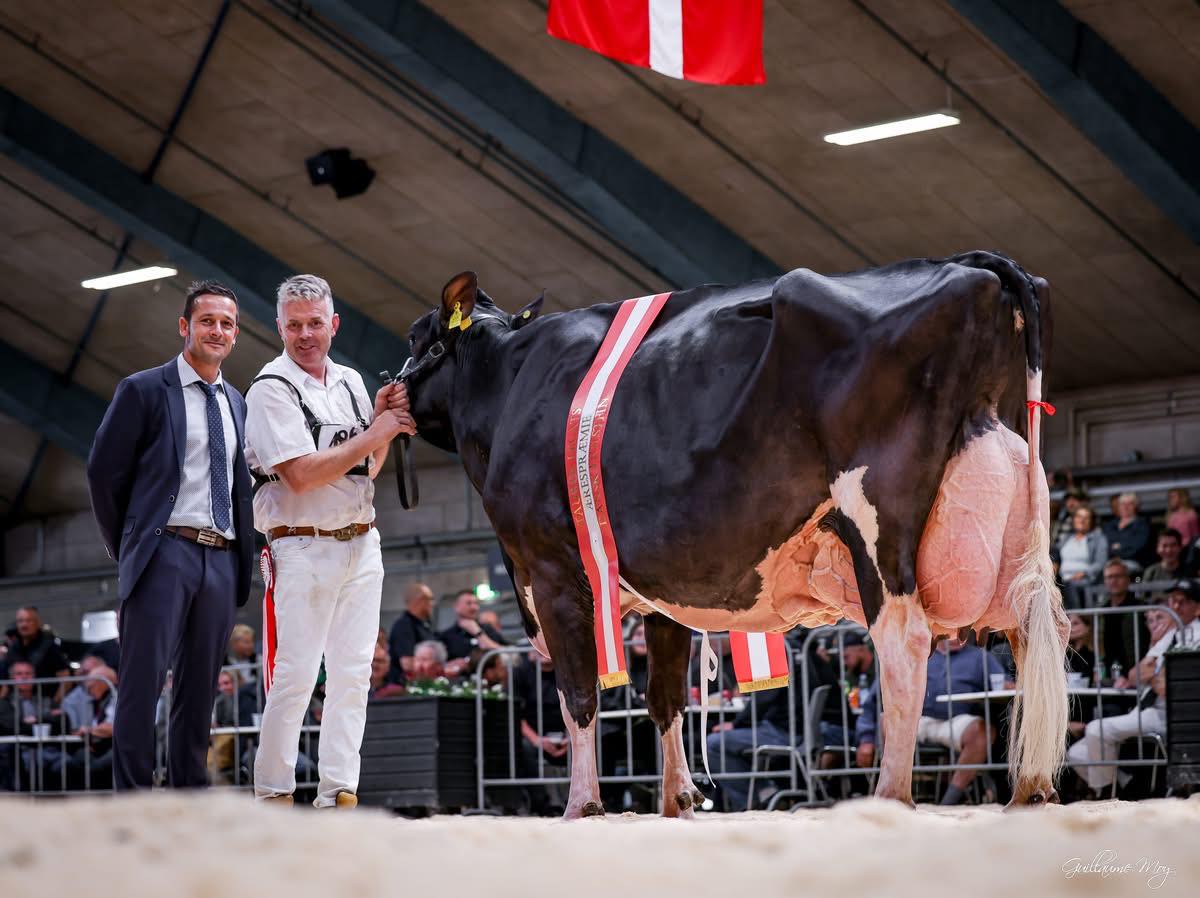
NewsSubscribe
First
Last
Consent

When Faith Meets Farming: Mark Yeazel’s Amazing Journey from Holstein Breeder to Tanzanian Dairy Missionary

From elite Holstein breeder to Tanzanian missionary: How Mark Yeazel trades show rings for orphan care through dairy farming.

You know what gets me? Stories about dairy farmers who entirely flip the script on their careers. And man, do I have one to tell you about today?

Have you heard about Mark Yeazel? This guy spent three decades building one of the country’s most influential Holstein breeding programs. He then shocked everyone by selling his entire operation to start a dairy farm for orphans in Tanzania. Yeah, seriously! We’re talking about a renowned breeder who sold his Ja-Bob Holstein herd—over 40 homozygous polled, 120+ polled, and 120+ red animals—to help more than 130 orphaned kids. I don’t know what will if that doesn’t hurt your heartstrings.

“No, what would be crazy is to believe God tells you to go do something and tell God no.”

Mark and Joy Yeazel receive a traditional Tanzanian giraffe gift from local partners as they embark on their dairy mission journey. After selling their renowned Ja-Bob Holstein herd to serve orphaned children through sustainable agriculture, the couple is bringing decades of dairy expertise to Eternal Families Tanzania where they'll develop a dairy operation providing nutrition, training, and economic opportunity.
Mark and Joy Yeazel receive a traditional Tanzanian giraffe gift from local partners as they embark on their dairy mission journey. After selling their renowned Ja-Bob Holstein herd to serve orphaned children through sustainable agriculture, the couple is bringing decades of dairy expertise to Eternal Families Tanzania where they’ll develop a dairy operation providing nutrition, training, and economic opportunity.

The Backstory That’ll Blow Your Mind

Let me tell you, Mark wasn’t just any dairy farmer. His Ja-Bob herd posted numbers that’d make most breeders drool—an RHA of 27,641M 4.1 1128F 3.25 898P with 140,000 SCC. Impressive, right? He was a big deal in the Red and White Dairy Cattle Association and was crucial in getting them involved with US Livestock Genetics Export.

Family Legacy: Cousins Ja-Bob Kad Holly P Red EX (left) and Ja-Bob Bayonet Hava P RC EX-94 (right) grazing at the Yeazel farm. Hava holds the distinction of being the last cow ever scored at Ja-Bob and commanded top dollar as the high-selling cow in the Ja-Bob Dispersal sale that marked the end of Yeazel's renowned U.S. breeding program. These powerful red & white, polled females exemplify the genetic excellence that defined Yeazel's three-decade breeding legacy before his mission work began. Photo: Han Hopman
Family Legacy: Cousins Ja-Bob Kad Holly P Red EX (left) and Ja-Bob Bayonet Hava P RC EX-94 (right) grazing at the Yeazel farm. Hava holds the distinction of being the last cow ever scored at Ja-Bob and commanded top dollar as the high-selling cow in the Ja-Bob Dispersal sale that marked the end of Yeazel’s renowned U.S. breeding program. These powerful red & white, polled females exemplify the genetic excellence that defined Yeazel’s three-decade breeding legacy before his mission work began. Photo: Han Hopman

The turning point? It happened in Sunday School, of all places. Back in ’95, when someone asked what he loved doing, Mark wrote down “international travel.” Then came the follow-up question that changed everything: “What if God asked you to give it up?”

Mark told me, “I recall saying in my head, ‘God will not ask me to give it up.'” But four months later, he told his wife Joy he needed to resign from his leadership positions. Talk about a plot twist!

“God replaced that desire with international travel to serve Him.”

Honestly, I find it fascinating how life works sometimes. What seemed like giving something up transformed into something completely different. Mark’s international connections didn’t disappear—they just shifted purpose.

A Mission of Love: Mark Yeazel cradles one of Tanzania's youngest orphans at Eternal Families Tanzania. Rather than institutional care, EFT's family-centered approach ensures each child receives the individual attention, nurturing and stability needed for healthy development. "Each house has dedicated parents who provide the love that a child needs," explains Yeazel, whose dairy project will soon provide nutritious milk for more than 130 children like this one. Photo courtesy of Eternal Families Tanzania
A Mission of Love: Mark Yeazel cradles one of Tanzania’s youngest orphans at Eternal Families Tanzania. Rather than institutional care, EFT’s family-centered approach ensures each child receives the individual attention, nurturing and stability needed for healthy development. “Each house has dedicated parents who provide the love that a child needs,” explains Yeazel, whose dairy project will soon provide nutritious milk for more than 130 children like this one. Photo courtesy of Eternal Families Tanzania

Not Your Average Orphanage

What makes this Tanzania project so unique? Well, Eternal Families Tanzania isn’t your typical institutional orphanage. They’ve created actual family units! Each house has dedicated parents who provide genuine love and nurturing. It’s modeled after a place called Caminul Felix in Romania that Mark visited years ago.

The setup is impressive. They’ve got 10 houses in their first village, and a second village is under construction. And get this—they’re not just housing kids. They’re running a 120-acre farm growing everything from corn to watermelon, raising tilapia in fish ponds, and producing 800 eggs daily! Talk about self-sufficiency.

I couldn’t believe it when Mark told me about his decision. “It was on the flight home that I told Joy that I thought I should sell the herd and build a dairy for Eternal Families Tanzania,” he said. What’s even more amazing? Joy didn’t hesitate for a second. That’s partnership!

Building for the Future: A bulldozer reshapes pond banks and constructs roads at Village 2 of Eternal Families Tanzania, where three new houses will soon welcome 42 additional orphaned children. This infrastructure development demonstrates EFT's comprehensive approach to creating sustainable communities—addressing practical needs like erosion control while expanding their capacity to provide family-centered care. Mark Yeazel's dairy project will soon serve both villages, providing nutritious milk to children in these carefully planned, self-sufficient communities. Photo courtesy of Eternal Families Tanzania
Building for the Future: A bulldozer reshapes pond banks and constructs roads at Village 2 of Eternal Families Tanzania, where three new houses will soon welcome 42 additional orphaned children. This infrastructure development demonstrates EFT’s comprehensive approach to creating sustainable communities—addressing practical needs like erosion control while expanding their capacity to provide family-centered care. Mark Yeazel’s dairy project will soon serve both villages, providing nutritious milk to children in these carefully planned, self-sufficient communities. Photo courtesy of Eternal Families Tanzania

Dairy Farming with an African Twist

So you’re probably curious—how do you build a dairy farm near the equator? Tabora sits at around 4,000 feet, with temperatures ranging from 58-90°F year-round. Mark didn’t just copy-paste American dairy practices. He studied the local conditions carefully and adapted.

One of my favorite details? The barn has a grass roof! Seriously! It’s a traditional building technique that provides natural cooling. They’ve also installed wheel dips for vehicles and foot baths for visitors to prevent diseases like Foot and Mouth and East Coast Fever. Smart, right?

“Too many people judge others in countries like Tanzania as stupid. It is far from the truth; they have fewer opportunities.”

What strikes me about Mark is his humility and respect for local knowledge. He’s built relationships first and learned from the community before imposing his ideas. That’s how you make something sustainable.

Knowledge Exchange in Action: Mark Yeazel collaborates with local Tanzanian experts during a dairy farm planning session. Rather than imposing American methods, Mark relies heavily on this team's understanding of local conditions to design appropriate systems. "We can do better," he often reminds the group, as they review facility layouts adapted for Tanzania's unique climate. This partnership approach ensures the project incorporates traditional wisdom alongside modern dairy practices—creating solutions that truly work for Tabora's environment rather than simply transplanting Western systems. Photo courtesy of Eternal Families Tanzania
Knowledge Exchange in Action: Mark Yeazel collaborates with local Tanzanian experts during a dairy farm planning session. Rather than imposing American methods, Mark relies heavily on this team’s understanding of local conditions to design appropriate systems. “We can do better,” he often reminds the group, as they review facility layouts adapted for Tanzania’s unique climate. This partnership approach ensures the project incorporates traditional wisdom alongside modern dairy practices—creating solutions that truly work for Tabora’s environment rather than simply transplanting Western systems. Photo courtesy of Eternal Families Tanzania

Jersey Girls in Tanzania

I chuckled when Mark told me about his cattle selection process. He initially wanted Holsteins (once a Holstein guy, always a Holstein guy, am I right?), but practicality won out. “Holsteins are a bit harder to find and quite more expensive, so we recently decided to start with 5 Jerseys,” he explained.

But don’t think for a second he’s abandoned his breeding roots. Mark mentioned that he still has 23 embryos from his red polled donors, which he didn’t sell in his dispersal. They’re sired by slick bulls, perfect for Tanzania’s climate. He’s trying to find a local partner to help with recipients. Can you imagine? A Ja-Bob prefix cow in Tanzania that’s red, polled, AND slick? That would be something!

Mark Yeazel sits with six-year-old Adima outside the House of Joy at Eternal Families Tanzania. Rescued from extreme poverty after losing both parents, Adima arrived severely ill but now thrives with her new family of 14 siblings. Her story represents the very children whose futures will be transformed by the nutritional benefits of the Jersey milk production. "Adding milk to the diet of children under six can help increase their IQ by 15 points," Yeazel explains. "That will be a huge advantage as these children develop." While the Jersey cows will soon provide sustainable dairy operations, it's children like Adima—with her warm smile and remarkable resilience—who remain at the heart of this mission.
Mark Yeazel sits with six-year-old Adima outside the House of Joy at Eternal Families Tanzania. Rescued from extreme poverty after losing both parents, Adima arrived severely ill but now thrives with her new family of 14 siblings. Her story represents the very children whose futures will be transformed by the nutritional benefits of the Jersey milk production. “Adding milk to the diet of children under six can help increase their IQ by 15 points,” Yeazel explains. “That will be a huge advantage as these children develop.” While the Jersey cows will soon provide sustainable dairy operations, it’s children like Adima—with her warm smile and remarkable resilience—who remain at the heart of this mission.

It’s Not Just About Milk

Do you know what gets me excited about this project? It’s so much more than just producing milk. Mark told me about studies showing that adding milk to the diet of children under six can increase their IQ by up to 15 points. That’s a game-changer for these kids!

And the market opportunities? There’s potential for butter, yogurt, and mtindi (a local product similar to drinkable cottage cheese). There’s demand from consumers, restaurants, and hotels. And in a market where adding water to milk is common practice, Mark’s commitment to integrity stands out: “We will not do that.”

“We can do better. Better employee-employer relations, our care for our employees, and our appreciation for our employees.”

I love how Mark sees this as a chance to demonstrate better business practices. It’s not just about the cows—it’s about the people.

Faith in Action: Mark and Joy Yeazel (far right) celebrate with Eternal Families Tanzania staff and a young recipient during a certificate ceremony. The Yeazels' remarkable journey from elite Holstein breeders to missionary dairy farmers began with a question in Sunday School and culminated in selling their entire award-winning herd to serve orphaned children through sustainable agriculture. "Love your neighbor is not just a slogan for next door," says Mark. "Love has no boundary." Photo courtesy of Eternal Families Tanzania
Faith in Action: Mark and Joy Yeazel (at right) celebrate with Eternal Families Tanzania staff and a young recipient during a certificate ceremony. The Yeazels’ remarkable journey from elite Holstein breeders to missionary dairy farmers began with a question in Sunday School and culminated in selling their entire award-winning herd to serve orphaned children through sustainable agriculture. “Love your neighbor is not just a slogan for next door,” says Mark. “Love has no boundary.” Photo courtesy of Eternal Families Tanzania

Want to Help? Here’s How

I’ll bet some of you think, “This sounds amazing, but I can’t exactly hop on a plane to Tanzania.” Good news! There are tons of ways to contribute without leaving home.

Mark could use remote consultation on tropical dairy management, nutritional advice for local feed ingredients, or help with breeding strategies for heat-tolerant cattle. Equipment needs include a cooling unit, a second tractor (they currently share one between locations 45 minutes apart!), and a pickup truck for those rough roads.

Do you have connections in genetics? Mark needs help getting those embryos transported. Do you know anything about yellow or silage corn varieties that would work in Tanzania? That would be huge!

The newly constructed Eternal Pre & Primary School at Eternal Families Tanzania, where children will receive quality education alongside nutritious dairy products from Mark's mission. Your support helps build not just barns and milk cooling units, but complete educational ecosystems where Tanzania's next generation can thrive. Photo courtesy of Eternal Families Tanzania.
The newly constructed Eternal Pre & Primary School at Eternal Families Tanzania, where children will receive quality education alongside nutritious dairy products from Mark’s mission. Your support helps build not just barns and milk cooling units, but complete educational ecosystems where Tanzania’s next generation can thrive. Photo courtesy of Eternal Families Tanzania.

From Breeder to Missionary: A Story That Matters

I can’t help but be inspired by Mark’s journey. Here’s a guy who walked away from an acclaimed breeding program to serve orphans in Tanzania. When skeptics told him he was crazy, his response was perfect: “No, what would be crazy is to believe God tells you to go do something and tell God no.”

The dairy community has already stepped up with AI kits, ET supplies, and a nutritionist who volunteered his services. That’s what I love about dairy people—they are always ready to help each other.

“I believe, as a Christian, that ‘love your neighbor’ is not just a slogan for next door, that love has no boundary. I also believe that love is an action word.”

This story reminds me why I fell in love with the dairy community in the first place. It’s not just about milk and genetics—it’s about people using their specialized knowledge to improve the world. Whether through technical consultation, equipment donations, or financial support, we all have something to contribute.

Mark’s journey from elite Holstein breeder to Tanzanian dairy missionary is inspiring—it’s a blueprint for using agricultural expertise to transform lives. And honestly, I can’t wait to see how this story unfolds.

Mark and Joy Yeazel with their Tanzanian partners and friends at Tabora Airport, preparing for their journey back to Ohio. "Our last couple days have been filled with prayers and celebrations. Now we return home for a little slower pace and preparing for the Yeazel Farm equipment auction on May 17th. Here's to the next 30 hours either in an airport or airplane." Each departure becomes another chapter in their ongoing story—leaving pieces of their hearts in Tanzania while carrying their mission forward back home.
Mark and Joy Yeazel with their Tanzanian partners and friends at Tabora Airport, preparing for their journey back to Ohio. “Our last couple days have been filled with prayers and celebrations. Now we return home for a little slower pace and preparing for the Yeazel Farm equipment auction on May 17th. Here’s to the next 30 hours either in an airport or airplane.” Each departure becomes another chapter in their ongoing story—leaving pieces of their hearts in Tanzania while carrying their mission forward back home.

Critical Needs & How to Support

A milk cooling unit sits at the top of Mark’s wishlist—it’s essential for preserving milk quality in Tanzania’s heat and expanding market opportunities.

For tax-deductible donations (U.S. supporters):
Send checks to:
Remember the Children
1100 S. 9th Street, Suite 211
Noblesville, IN 46060
Write “Tanzania Dairy Project” in the memo line.

Every contribution directly funds the dairy’s operational needs, ensuring fresh milk reaches orphans daily.

Mark Yeazel (right) shares a moment with the children and house parents at the "House of Joy" in Tanzania—named after his wife and dedicated with the verse "Rejoice always" (1 Thessalonians 5:16). Built through donations from Eaton Community Church and Yeazel's "Junk for Jesus" initiative, this home represents the heart of Eternal Families Tanzania's mission: creating real families for orphaned children. Many children proudly wear t-shirts gifted by Mark and Joy, a small reminder that care extends beyond nutrition to genuine relationship. The dairy farm being developed will soon provide fresh milk daily to these bright smiles—proving that agricultural expertise truly can transform lives half a world away.
Mark Yeazel (right) shares a moment with the children and house parents at the “House of Joy” in Tanzania—named after his wife and dedicated with the verse “Rejoice always” (1 Thessalonians 5:16). Built through donations from Eaton Community Church and Yeazel’s “Junk for Jesus” initiative, this home represents the heart of Eternal Families Tanzania’s mission: creating real families for orphaned children. Many children proudly wear t-shirts gifted by Mark and Joy, a small reminder that care extends beyond nutrition to genuine relationship. The dairy farm being developed will soon provide fresh milk daily to these bright smiles—proving that agricultural expertise truly can transform lives half a world away.

Key Takeaways:

  • Radical Career Pivot: Sold 40+ homozygous polled Holsteins to fund orphan-focused dairy in Tanzania.
  • Family-Centered Model: 10 homes with dedicated parents, 120-acre farm, and 800 daily eggs support 130+ children.
  • Climate-Smart Design: Grass roofs, Jerseys over Holsteins, and biosecurity measures adapt to Tanzania’s 85°F days.
  • Dairy = Development: Milk boosts IQ; future plans include butter/yogurt production and community training.
  • Call to Action: Dairy pros can donate equipment (cooling units, tractors) or expertise to sustain the mission.

Executive Summary:

Mark Yeazel, a renowned Holstein breeder, sold his entire herd to build a sustainable dairy mission in Tanzania for 130+ orphans. His Eternal Families Tanzania project combines family-style orphan care with innovative agriculture—producing eggs, tilapia, and soon, Jersey cattle milk. Designed for Tanzania’s climate with grass-roofed barns and disease-prevention protocols, the dairy aims to boost children’s nutrition (studies suggest milk increases IQ by 15 points) while training locals. Yeazel’s shift from chasing genetics to serving communities highlights how dairy expertise can drive global humanitarian impact.

Learn more:

Join the Revolution!

Join over 30,000 successful dairy professionals who rely on Bullvine Daily for their competitive edge. Delivered directly to your inbox each week, our exclusive industry insights help you make smarter decisions while saving precious hours every week. Never miss critical updates on milk production trends, breakthrough technologies, and profit-boosting strategies that top producers are already implementing. Subscribe now to transform your dairy operation’s efficiency and profitability—your future success is just one click away.

NewsSubscribe
First
Last
Consent

When Cows Were Kings: Revisiting Carnation’s Golden Age of Dairy Breeding

How the 1900s ‘contented cows’ sparked a dairy revolution: Carnation Farms blended animal welfare with cutting-edge science to create genetics that still shape modern herds.

A Pastoral Legacy: Holstein dairy cattle graze peacefully on Carnation Farms’ expansive pastures in Washington’s Snoqualmie Valley, with the farm’s impressive complex of barns and buildings nestled against the forested hillside. This historic image captures the essence of E.A. Stuart’s “contented cow” philosophy that revolutionized dairy breeding in the early 20th century, where scientific breeding practices merged with compassionate animal care to create one of America’s most influential dairy operations.

Elbridge Amos Stuart’s vision transformed a patch of Washington farmland into a dairy empire. 1908, he planted Carnation Milk Farms, a pioneering operation that reshaped Holstein dairy cattle genetics worldwide. Carnation Farms bred superior Holstein bloodlines for nearly a century, shattering milk production records and leaving an indelible mark on the dairy industry. Their “contented cow” philosophy wasn’t just clever marketing—it was a revolutionary approach that paired scientific breeding with compassionate animal care.

“The RULE to be observed in this stable at all times, toward the young and old cattle, is that of patience and kindness… Treat each cow as a mother should be treated.”

The Vision of E.A. Stuart: Founding and Early Years

Elbridge Amos Stuart (1856-1944): Visionary founder of the Carnation Company and pioneer of modern dairy farming. This formal portrait captures the determined gaze of the entrepreneur who transformed a bankrupt condensery into a global dairy empire. In 1908, Stuart established Carnation Farms in Washington’s Snoqualmie Valley, where he revolutionized Holstein breeding while championing his famous “contented cow” philosophy—believing that humane treatment of animals improved milk production. His innovative approaches to both marketing and animal husbandry created a lasting legacy that continues to influence dairy practices more than a century later.

E.A. Stuart took a leap of faith in 1908. He bought 360 acres of Snoqualmie Valley farmland sight unseen, banking on a tip from his childhood buddy Sam Hill about an upcoming railroad connection. Stuart, who’d already founded the Pacific Coast Condensed Milk Company (later Carnation Milk), faced a milk supply crisis. He needed more cows to produce more milk and fast.

Stuart’s solution? Create his dairy wonderland. By 1910, he’d expanded to 750 acres and established Carnation Stock Farms as a showcase facility. He spared no expense, bringing in top-notch Holstein-Friesian cattle and hiring the cream of the crop in animal husbandry experts.

What set Stuart’s approach apart was his unique blend of science and compassion. While he meticulously tracked bloodlines and started a selective breeding program, he also developed a radical philosophy about animal treatment. Stuart firmly believed that happy cows were productive cows—a notion that would become the cornerstone of Carnation’s breeding program and brand identity.

This was the birth of an operation that would grow to 1,400 acres and turn the dairy world on its head.

Historic Transport to Carnation’s Dairy Empire: This rare photograph from circa 1910 captures a cable ferry crossing the Snoqualmie River, the lifeline for E.A. Stuart’s fledgling Carnation Farms. Before railroads reached the valley in 1911, boats and ferries provided the only connection between Stuart’s ambitious dairy operation and the outside world. Milk produced at the farm traveled by river to processing facilities, while livestock and supplies made the reverse journey. The surrounding landscape shows the partially cleared wilderness that greeted Stuart when he purchased the property sight unseen in 1908—a purchase he initially called “a disgrace for a Stuart to be connected with.” This ferry crossing marked the beginning of what would become one of America’s most famous agricultural enterprises, home to record-breaking “Contented Cows” and revolutionary breeding practices that transformed dairy farming worldwide.

The “Contented Cow” Philosophy: More Than Just Marketing

Carnation’s iconic “Contented Cows” slogan was born in a lightbulb moment during a 1906 Chicago marketing meeting. As Stuart waxed poetic about his cows’ royal treatment, someone quipped that “they must be very contented cows.” Little did they know, they’d just coined one of history’s most memorable agricultural taglines.

But this wasn’t just clever wordplay. Stuart put his money where his mouth was, instituting concrete policies ahead of their time. In the main barn’s breezeway, a sign still hangs today, laying out the farm’s animal welfare guidelines:

“The RULE to be observed in this stable at all times, toward the young and old cattle, is that of patience and kindness… Remember that this is the home of mothers. Each cow should be treated as a mother should be treated. Giving milk is a function of motherhood; rough treatment lessens the flow. That injures me as well as the cow. Always keep these ideas in mind when dealing with my cattle.”

Workers were even banned from cursing at the cows. This wasn’t just about being nice—Stuart understood that stress could seriously dampen milk production, a connection that modern dairy science would later confirm.

This philosophy became Carnation’s secret sauce, making humane treatment an integral part of genetic improvement—a surprisingly progressive stance for the early 20th century.

The Science of Stress-Free Milking

Why Contented Cows Produced More

  • Modern studies back up Stuart’s hunch: stress hormones can put the squeeze on milk production
  • Carnation’s 6x/day milking schedule for champion cows hit the sweet spot for optimal production.
  • Their approach was decades ahead of the curve in dairy welfare practices
Holstein History in the Spotlight: E.A. Stuart proudly stands with his dual National Dairy Show champions at Syracuse, NY in 1923. On the left is Tillamook Daisy Butter King DeKol, the highest-producing cow ever to win the National championship with her remarkable 4-year-old record of 32,488 pounds of milk and 1,247 pounds of butterfat. On the right stands Carnation Matador Adelina Segis, Junior Champion female and daughter of the influential Matador Segis Walker bull. This historic photograph captures a pivotal moment in Holstein breeding history, showcasing Carnation Farms’ rising dominance in both show ring excellence and production records that would help establish their “contented cow” breeding program as one of the most influential in American dairy farming.

Breeding Program Development and Methodology

Carnation’s breeding program was a game-changer in the dairy world. Stuart zeroed in on purebred Holstein cattle, investing big bucks in premium breeding stock and top-tier personnel.

The goal? Crank up milk production through selective breeding. Carnation attacked this challenge with scientific precision, keeping meticulous records of bloodlines, production data, and offspring performance to guide their breeding decisions.

What set Carnation apart was its commitment to research. By the 1950s, it had built a million-dollar research lab dedicated to cracking the code of cow contentment and productivity. This scientific approach to breeding went hand in hand with its focus on animal care and nutrition.

But Carnation didn’t keep their genetic gold to themselves. They actively spread the wealth by crossbreeding their prize Holstein bulls with independent dairymen’s stock, increasing milk production efficiency throughout the industry.

The results spoke for themselves: Carnation became America’s undisputed champion of prize-winning Holstein cows, consistently raising the bar for milk production and butterfat content.

“Many of today’s Holsteins carry ‘Carnation genetics’—a living testament to their century-long pursuit of excellence.”

Historic Dairy Milestone: Carnation King Sylvia’s Celebrated Tour (1918). This remarkable photograph captures the fanfare surrounding Carnation King Sylvia, the Holstein bull calf that shocked the dairy world when E.A. Stuart paid an unprecedented $106,000 (equivalent to $1.9 million today) for him at the National Holstein Sale in Milwaukee. The crowd of cheering men, raising their hats in celebration beneath the “CARNATION STOCK FARMS” banner, demonstrates the celebrity status this purchase created. Stuart brilliantly transformed this acquisition into a nationwide marketing campaign, parading the valuable calf at whistle-stops across America during its train journey to Washington. This carefully orchestrated publicity tour not only promoted Carnation’s “Contented Cows” philosophy but established the farm as a serious player in elite Holstein breeding circles. The investment would pay dividends far beyond publicity—King Sylvia’s genetics would help shape Carnation’s superior Holstein bloodlines, contributing to their record-breaking milk production achievements in subsequent decades and cementing Stuart’s reputation as a visionary in dairy cattle breeding.

Record-Breaking Champions: Notable Cows and Bulls

Carnation’s breeding program produced some real bovine superstars. They churned out more prize-winning Holstein cows than any other U.S. breeder, with several achieving legendary status in dairy breeding history.

The cream of the crop was Segis Pietertje Prospect, affectionately known as “Possum Sweetheart.” She embodied everything Carnation’s breeding philosophy aimed for. With skilled milker Carl Gockerell, who milked her six times daily like clockwork, Segis Pietertje Prospect shattered production records.

MetricSegis Pietertje Prospect (1920)Average Cow (1920)Modern Holstein (2017)
Annual Milk Production37,381 lbs4,000 lbs77,480 lbs (record)
Milking Frequency6x daily2-3x daily2-3x daily
Production vs. Body WeightProduced her weight in milk every ~3 weeksN/AN/A

Segis Pietertje Prospect’s production was off the charts—nearly ten times that of an average cow in 1920. She became a global sensation, with newspapers worldwide singing her praises. Even celebrities got in on the action, with heavyweight champ Jack Dempsey and French General Marshal Joffre stopping by to pay their respects.

When Segis Pietertje Prospect passed away in 1925 at the ripe old age of 12, both Stuart and Gockerell were heartbroken. In 1928, they erected a monument in her honor at the entrance to Carnation Farms—believed to be the world’s first statue dedicated to an individual Holstein cow. You can still see this tribute to bovine excellence at the farm today.

Monument to Milk Majesty: The statue of Segis Pietertje Prospect (“Possum Sweetheart”) stands proudly at Carnation Farms, immortalizing the Holstein cow who shattered production records on December 19, 1920. Her unprecedented yield of 37,381 pounds of milk in 365 days—nearly tenfold the era’s average—revolutionized dairy breeding and cemented Carnation’s reputation for elite genetics. This bronze tribute honors not just an individual cow, but the enduring legacy of E.A. Stuart’s “contented cow” philosophy, which paired humane care with scientific rigor to redefine global dairy standards. Visitors today still marvel at her story, a testament to how one extraordinary animal helped shape modern agriculture.

While Segis Pietertje Prospect’s record was mind-blowing for her time, dairy genetics have come a long way. In 2017, a Wisconsin Holstein named Ever-Green-View My Gold-ET set a new national milk production record of 77,480 pounds in 365 days—more than double Segis Pietertje Prospect’s achievement and triple the 2015 U.S. Holstein average of 24,958 pounds.

Carnation’s Record Holders

Cow NameProduction Record (lbs)YearAchievement
Segis Pietertje Prospect37,381 milk1920First world record
Carnation Ormsby Butter King38,607 milk, 1,402 fat1936First 38,000-lb milk record
Carnation Ormsby Madcap Fayne41,943 milk1942First 20-ton milk record
Carnation Homestead Daisy Madcap36,414 milk, 1,511 fat1951First 1,500-lb fat record
Holstein Excellence on Display: This historic photograph showcases the Get of Carnation Madcap Butter Boy (EX-96-SMT), a premier Carnation Farms sire born in 1951. This impressive group earned Reserve All-American Get of Sire honors in 1958, exemplifying the elite breeding program that made Carnation Farms a dominant force in Holstein genetics. The cow nearest the camera is Carnation Sally Lola Princess (EX), who herself earned All-American Three-Year-Old recognition that same year. These daughters demonstrate the consistent type, dairy strength, and production capacity that characterized the Madcap family—one of Carnation’s most influential bloodlines. This quartet represents a pivotal moment in Holstein history, when breeding emphasized both show ring excellence and production capabilities, helping establish standards that would influence dairy cattle genetics for generations.

Research and Innovation: Beyond Traditional Breeding

Carnation’s success wasn’t just about traditional breeding methods—they poured serious cash into research and innovation. By mid-century, they’d unveiled a state-of-the-art, million-dollar research laboratory in Van Nuys, California, dedicated to pushing the boundaries of dairy science.

Their research went beyond breeding, diving into nutrition, welfare, and management practices. One standout innovation was Calf Manna, a specialized livestock feed cooked by nutritionists from Albers Milling (a Carnation subsidiary) at Carnation Stock Farms. Introduced in the early 1930s, this wonder feed boosted animal consumption and productivity, starting with dairy cows but eventually benefiting all livestock.

Elbridge Hadley Stuart, the founder’s son and Carnation’s president, was dead set on keeping the company at the cutting edge of dairy science. This drive for innovation created a culture where pushing boundaries was the norm.

This approach showed a remarkably modern understanding that milk production is a complex dance of genetics, nutrition, welfare, and management—all requiring scientific study. A holistic view put Carnation far ahead of many operations stuck in their ways.

A Vision Takes Root: Carnation Farms, 1907. This remarkable photograph by Lester Rounds captures Carnation Farms in its formative years, showcasing E.A. Stuart’s ambitious dairy enterprise nestled against the forested hillsides of Washington’s Snoqualmie Valley. Holstein cattle—the cornerstone of Stuart’s breeding revolution—graze contentedly within meticulously maintained white-fenced pastures, embodying the farm’s famous “contented cow” philosophy before it became a marketing phenomenon. In the background, the impressive complex of barns, housing facilities, and processing buildings demonstrates the scale of Stuart’s investment, transforming wilderness into what would become America’s most influential dairy breeding operation. This rare image documents the pastoral beginnings of an agricultural enterprise that would fundamentally reshape dairy genetics worldwide and establish breeding practices still influential in today’s industry.

Global Impact: Spreading Genetic Excellence Worldwide

Carnation’s influence spread like wildfire, reshaping dairy genetics across the globe. Their cows became hot commodities worldwide, with many of today’s dairy cattle tracing their family trees back to Carnation bloodlines. This wasn’t by accident—Carnation made a concerted effort to share their genetic gold with the broader industry.

One key strategy was crossbreeding their purebred Holstein bulls with independent dairymen’s stock. This supercharged the productivity of dairy herds far beyond Carnation’s fences, spreading superior genetics throughout the industry. The results were game-changing: dairy farmers worldwide could get more milk from fewer cows, boosting food security, cutting labor needs, and shrinking the environmental hoofprint per gallon of milk.

DecadeCanadian Milk Production (hl)% Change vs. 1920sNotable Events
1920s54,405,972BaselineSegis Pietertje Prospect’s record (1920)
1950s70,434,711+29.5%Peak of Carnation’s breeding influence
1980s73,618,046+35.3%Post-Carnation sale to Nestlé (1985)
2020s95,125,258+74.8%Modern genomic-era production

Using Canadian milk production data (which mirrors broader North American trends), this table shows a significant jump in milk production between the 1920s and 1950s. This perfectly contrasts with the period when Carnation’s Holstein genetics spread like wildfire. The upward trend continued in later decades, showcasing the lasting impact of improved dairy genetics.

The numbers tell a compelling story. When Carnation started its breeding program in the early 1900s, the average cow pumped a modest 1,500-1,900 pounds of milk annually. Production levels skyrocketed through selective breeding and improved management, with Carnation’s elite animals producing many times this amount. This efficiency revolution turned the economics of dairy farming on its head, allowing producers to maintain or boost milk supply with smaller herds.

Carnation’s breeding achievements also left their mark on Holstein breed standards internationally, helping shape the characteristics of the modern Holstein cow. Their focus on high production combined with functional conformation created a template for breeding objectives that still sway today.

Carnation Heilo Violet: A Holstein Legacy on Display. This striking Holstein cow exemplifies the meticulous breeding program that made Carnation Milk Farms a world leader in dairy genetics. Photographed at the farm’s picturesque Snoqualmie Valley location, Heilo Violet showcases the ideal dairy conformation prized in Carnation’s selective breeding program. With her strong topline, deep body capacity, and well-attached udder, she represents the physical traits that supported exceptional milk production—the hallmark of the farm’s Holstein breeding success. Developed under E.A. Stuart’s famous “contented cow” philosophy, Carnation’s Holstein breeding lines produced numerous champions whose genetics continue to influence modern dairy herds worldwide. This classic black and white portrait captures not just a prize animal, but a living testament to the revolutionary approach to dairy breeding that transformed milk production efficiency throughout the 20th century.

Business Evolution and Corporate Context

You can’t tell the story of Carnation Milk Farms without understanding its role in the more prominent Carnation Company. The farm started to support Stuart’s evaporated milk business, addressing the chronic milk shortage plaguing his processing plants.

But it quickly became much more than a supplier. It evolved into a corporate showpiece, a cutting-edge research center, and a powerful marketing tool that brought the “contented cow” slogan to life. Stuart spared no expense, turning the farm into a showcase by acquiring top-notch Holstein-Friesian cattle and recruiting the best animal husbandry experts money could buy.

“If we somehow stumbled on a hair tonic that worked, Carnation would sell it.” – E.H. Stuart.

The relationship between Carnation Milk Farms and its parent company evolved. Carnation Company expanded far beyond evaporated milk, diversifying through strategic acquisitions. In 1929, they scooped up Albers Milling Company, allowing them to dip their toes into the cereals and animal feed market. This move supercharged their research capabilities, leading to nutritional studies for a menagerie of animals, with companion animals eventually becoming a significant focus. This research spawned consumer products, including the Friskies brand.

This diversification reflected the research-driven culture established at Carnation Farms. Their entrepreneurial spirit led to products like Friskies dog food, which, in 1934, grew directly out of the company’s dairy nutrition research.

The Carnation Company remained a Stuart family affair until 1985, when it was sold to Nestlé. In 2008, the original farm was sold to a nonprofit, and eight years later, the Stuart family established a new nonprofit called Carnation Farms on the historic site.

From Cows to Kibble

Carnation’s Unexpected Legacy

  • 1934: Friskies dog food developed from cattle nutrition research
  • 1950: Albers Milling (acquired 1929) becomes the top US animal feed producer
  • 1985: Nestlé buys Carnation for $3 billion, seeking both dairy and pet food operations
Holstein Excellence Personified: C GRILLSDALE ROZ COUNSELOR EX-95, pictured here in her prime, represents the pinnacle of Carnation Farms’ genetic influence through her sire, Carnation Counselor-ET. This magnificent Holstein achieved 1st Aged Cow and Honorable Mention Grand Champion at the 1999 World Dairy Expo. Born December 9, 1991, she exemplifies the balanced type and production characteristics prized in Holstein breeding. Her deep maternal line through Grillsdale Heidi Tim 2E-EX showcases multi-generational excellence extending back to VG-86 Nelacres Johanna Senator. Bred by Clifford Grills of Campbellford, Ontario, and later owned by Larry Mohrfield of Pleasant Plain, Ohio, this cow demonstrates how Carnation Farms’ bloodlines continued to impact elite show rings decades after the farm’s golden era. Her powerful frame, exceptional mammary system, and overall dairy strength illustrate the enduring legacy of strategic Holstein breeding.

Legacy and Lasting Influence

Carnation Milk Farms’ legacy continues to shape modern dairy breeding and production. Their nearly century-long quest for genetic excellence created bloodlines that still run through dairy herds worldwide, with many contemporary Holsteins tracing their ancestry to Carnation-bred animals.

“Possum Sweetheart’s 1920 output wouldn’t make today’s top 100—but her genetic legacy does.”

Beyond genetics, Carnation’s dual focus on scientific breeding and animal welfare established principles that have become mainstream in modern dairy farming. Their “contented cow” philosophy was decades ahead of its time, anticipating the contemporary understanding of how animal welfare impacts productivity. This approach has shaped industry attitudes about dairy cattle management ever since.

Their methodical approach to genetic improvement through selection, record-keeping, and progeny testing laid the groundwork for practices that still inform breeding programs today. While contemporary dairy breeding now incorporates genomic selection—analyzing DNA directly rather than waiting for production records—the fundamental goal of identifying superior genetics for productivity remains unchanged from Carnation’s heyday.

The physical legacy of Carnation Milk Farms lives on, too. Visitors to the original farm in Carnation, Washington, can still see the historic barn with its famous kindness sign and the statue honoring Segis Pietertje Prospect. These artifacts preserve the tangible history of an operation that revolutionized dairy breeding while embodying values that continue to resonate with dairy professionals and the public.

Championship Lineage: PRICE-VIEW ANNIE EX-94. This striking professional portrait by renowned dairy photographer Maggie Murphy showcases PRICE-VIEW ANNIE (EX-94), born March 15, 1995—a testament to Carnation breeding’s enduring genetic influence. Sired by Carnation Counselor and out of GLENALCOMB BROKER ANN EX-92, Annie’s exceptional dairy conformation earned her ALL-AMERICAN Junior 3-Year-Old honors in 1998 while representing Carrousel Farms of Wisconsin. Her beautifully balanced body structure, capacity, and well-attached mammary system exemplify the traits dairy breeders strive for in modern Holsteins. Annie’s pedigree demonstrates how Carnation’s breeding philosophy continued to shape elite show ring winners decades after the farm’s heyday, with her maternal lineage tracing to the influential Hanoverhill Starbuck. This image represents the pinnacle of Holstein breeding excellence—a harmonious blend of production capacity and show ring style.
Championship Lineage: PRICE-VIEW ANNIE (EX-94), born March 15, 1995—a testament to Carnation breeding’s enduring genetic influence. Sired by Carnation Counselor and out of GLENALCOMB BROKER ANN EX-92, Annie’s exceptional dairy conformation earned her ALL-AMERICAN Junior 3-Year-Old honors in 1998 while representing Carrousel Farms of Wisconsin. Her beautifully balanced body structure, capacity, and well-attached mammary system exemplify the traits dairy breeders strive for in modern Holsteins. Annie’s pedigree demonstrates how Carnation’s breeding philosophy continued to shape elite show ring winners decades after the farm’s heyday, with her maternal lineage tracing to the influential Hanoverhill Starbuck. This image represents the pinnacle of Holstein breeding excellence—a harmonious blend of production capacity and show ring style.

Connecting Past to Present: The Evolution of Dairy Breeding Principles

Carnation Milk Farms’ pioneering work in the early 20th century laid the groundwork for modern dairy breeding, bridging hands-on husbandry and today’s genomic revolution. While the tools have changed dramatically, the core principles of selective breeding, animal welfare, and data-driven decisions continue to steer the industry—proving that some strategies stand the test of time even as new challenges emerge.

From Eye-Appraisal to Algorithms: The Tools of the Trade

In the 1920s, Carnation’s breeders played a high-stakes game of genetic guesswork. They selected bulls based on pedigree records, milk yield of female relatives, and physical traits like udder conformation. Fast-forward to 2025, and farmers use genomic predictions to screen embryos for 50+ traits before implantation. What once took 5–7 years (waiting for a bull’s daughters to lactate) now takes months, with AI and embryo transfer accelerating genetic gains by 400%.

Timeless Principle:
“Measure what matters”—whether tracking butterfat in ledger books or analyzing SNP markers, successful breeding hinges on robust data.

Solving Tomorrow’s Problems with Yesterday’s Wisdom

Modern dairy farming faces a double-edged sword: the need to slash methane emissions by 30% by 2030 while meeting skyrocketing global demand. Here’s where Carnation’s legacy offers unexpected solutions:

  1. The “Contented Cow” 2.0
    Carnation’s stress-reduction ethos (think: no swearing near cows) aligns with genomic insights linking cortisol levels to 20% lower milk letdown. Today, wearable sensors monitor real-time stress in herds—a high-tech twist on Stuart’s philosophy.
  2. Efficiency as Sustainability
    While 1944’s cows produced 2,074 kg/year versus 9,193 kg in 2007, modern Holsteins now exceed 12,000 kilograms. Yet Carnation’s focus on efficient production (more milk per feed unit) remains critical—today’s dairy sector uses 35% less water and 23% less feed per liter than in 1944.
  3. Genetic Diversity Dilemma
    The push for hyper-productive Holsteins has narrowed gene pools, risking inbreeding. Carnation’s strategy of crossbreeding bulls with diverse herds offers a blueprint to reintroduce hardy traits without sacrificing yield.

The Hybrid Future: Marrying Old & New

As climate change intensifies, the industry is returning to pasture-based systems—but with a genomic edge. Studies show pasture-raised cows have 30% lower hoof disease rates, while CRISPR-edited heat-tolerant embryos thrive in warm climates. It’s a full-circle moment: Carnation’s holistic care meets 21st-century precision.

The ghosts of Carnation’s contented cows still walk modern barns. Their legacy reminds us that the next agricultural revolution won’t come from tech alone—but from blending innovation with timeless respect for animals and land.

Breeding Metrics: 1920 vs. 2025

MetricCarnation Era (1920s)Modern Practice (2020s)Improvement
Annual Milk Yield4,000–8,000 lbs22,000–26,000 lbs450%
Breeding Cycle5–7 years1–2 years70% faster
Key Selection CriteriaUdder shape, milk fat %Hoof health, methane efficiencyHolistic focus
GHG Emissions/Liter2.4 kg CO₂e0.9 kg CO₂e63% reduction
Cow Lifespan10–12 years3–5 yearsWelfare concern

Sources:[1] Weller et al. 2021; Capper et al. 2009; Schaeffer 2006; The Bullvine 2024;PMC 2022

This table underscores a critical tension: while modern breeding achieves staggering efficiency, the halving of cow lifespans clashes with consumer demands for ethical treatment. The path forward may lie in Carnation’s forgotten metric—longevity—now being revisited through genomics to identify durable, climate-resilient cows.

Banners of Breeding Excellence: This remarkable collection showcases Carnation Farms’ show ring dominance from 1921-1926, a testament to E.A. Stuart’s revolutionary Holstein breeding program. These prestigious awards—including Grand Champion Holstein honors from the Pacific International Livestock Expositions (1922-1923) and multiple Premier Breeder banners from National Dairy Expositions—represent the pinnacle of dairy achievement during this golden era. Each fringed banner displays Carnation’s unrivaled success at America’s most respected cattle shows in Minnesota, New York, Detroit, and Waterloo, Iowa. These accolades weren’t merely decorative; they validated the farm’s “contented cow” philosophy and scientific breeding approach that was transforming milk production efficiency nationwide. The collection represents a dynasty in the making, as Carnation’s genetics would soon influence Holstein bloodlines throughout North America and beyond.

The Bottom Line

Carnation Milk Farms stands as a testament to how scientific advancement and compassionate animal care can work together to revolutionize an industry. From E.A. Stuart’s initial vision in 1908 to its enduring legacy today, the farm proved that genetic improvement and animal welfare aren’t competing priorities—they’re two sides of the same coin.

Through selective breeding of Holstein cattle, Carnation developed bloodlines that dramatically boosted milk production efficiency worldwide. Their approach allowed dairy farmers to produce more milk with fewer cows, changing the game in dairy production. Their record-breaking champions like Segis Pietertje Prospect pushed the boundaries of what was thought possible in dairy production. At the same time, their research deepened our understanding of the complex factors affecting milk yield.

Carnation’s approach—blending genetic selection with top-notch nutrition and humane treatment—created a blueprint for productive and ethical dairy farming that’s still relevant in today’s sustainability-focused agricultural landscape. The lasting influence of their breeding program on Holstein genetics worldwide is a living tribute to E.A. Stuart’s vision and the excellence of the operation he built over a century ago.

Key Takeaways:

  • Compassion as Strategy: Carnation’s “contented cow” philosophy (no swearing near cows, 6x daily milkings) increased yields by reducing stress—a practice validated by modern cortisol studies.
  • Genetic Gold Standard: Their Holstein breeding program produced record-breaking cows like Possum Sweetheart (37,381 lbs milk/year in 1920), whose descendants still dominate herds.
  • Sustainability Blueprint: Carnation’s focus on efficient milk-per-feed ratios (1,900s) aligns with today’s push to cut dairy’s carbon hoofprint by 30% by 2030.
  • Corporate Evolution: What began as an evaporated milk supplier became a research powerhouse, spinning off innovations like Friskies dog food via nutrition studies.
  • Legacy in Stone: The original farm’s barn signs and cow statues remain pilgrimage sites for dairy professionals, symbolizing agriculture’s humane-tech balance.

Executive Summary:

In 1908, Washington’s Carnation Milk Farms revolutionized dairy breeding through a unique blend of compassionate animal care and rigorous genetics. By treating cows as “mothers” deserving of patience, founder E.A. Stuart boosted milk yields while pioneering humane practices—his prize Holstein Segis Pietertje Prospect (“Possum Sweetheart”) produced 10x the era’s average. Carnation’s data-driven breeding and stress-reduction strategies predated modern welfare science, creating genetics that underpin 30% of North American herds. Their legacy—spanning corporate evolution into pet food giant Friskies—proves ethical farming and productivity aren’t mutually exclusive, offering lessons for today’s climate-smart dairies.

Learn more:

Join the Revolution!

Join over 30,000 successful dairy professionals who rely on Bullvine Daily for their competitive edge. Delivered directly to your inbox each week, our exclusive industry insights help you make smarter decisions while saving precious hours every week. Never miss critical updates on milk production trends, breakthrough technologies, and profit-boosting strategies that top producers are already implementing. Subscribe now to transform your dairy operation’s efficiency and profitability—your future success is just one click away.

NewsSubscribe
First
Last
Consent

Making Dreams Come True: The Journey of Tom & Kelli Cull

From small farms to industry legends: How Tom & Kelli Cull’s grit, innovation, and “Never Give Up” mantra turned Budjon Farms into a dairy dynasty.

Have you ever met someone whose passion is so infectious that you want to drop everything and follow their lead? That’s the feeling you get when you hear the story of Tom and Kelli Cull of Budjon Farms. If the dairy industry had rock stars, this power couple would be headlining sold-out arenas!

For the past quarter-century, this dynamic duo has transformed a modest farming operation into one of the most respected and influential breeding operations in the Holstein world. Their story isn’t just about exceptional cows (though there are plenty of those)—it’s about resilience, innovation, and unwavering commitment that makes you believe anything is possible if you’re willing to work hard enough.

“We took the art of showing and made a business out of it. We set the groundwork and foundation for what some people are now considering a side hustle or small hobby.”

Kelli and Tom Cull stand proudly on the colored shavings at the 2024 Swiss Expo, where Kelli served as the official Brown Swiss Judge. This prestigious international appointment came the same year Kelli completed a half-marathon on her two artificial hips, exemplifying her remarkable journey from debilitating pain and double hip replacement surgeries in 2018 to international recognition as a judge. Her resilience in overcoming physical challenges mirrors the determination that has defined the Culls’ approach to every obstacle—whether in the showring or in life.

From Farm Kids to Industry Icons

Like many in the dairy world, Tom’s story begins on a family farm in Pewaukee, just west of Milwaukee. But don’t picture some massive operation with all the bells and whistles.

“We grew up on a small farm in Pewaukee,” Tom recalls with a hint of nostalgia. “We milked about 50 cows in a tie-stall barn and ran a modest 260 acres of land. All Holsteins.”

Like most farm kids, Tom balanced chores with school and sports. His family never bought animals specifically for showing—a far cry from today’s elite operations. They worked with what they had, showing their everyday cows at local fairs. Can you imagine reaching the heights Tom has from such humble beginnings?

It wasn’t until his brothers showed two special young cows named BUDJON RAIDER ANNIE and BUDJON STARBUCK WINNIE that things “really took off.” Talk about finding diamonds in your backyard!

Meanwhile, Kelli was racking up miles—literally—in the AI industry. Get this: she traveled around 70,000 miles yearly, covering a seven-state area, first for Sire Power and later for Alta Genetics.

“When I helped launch the PEAK young sire program,” she explains, “I saw so many different management systems and facilities that opened my eyes to what you see today at Budjon.”

Those years on the road weren’t just about collecting paychecks. Kelli was gathering ideas that would later shape their operation—like their calf warming room, designed after a system she’d seen at a young sire herd in Northwest Wisconsin. I love how she turned all those exhausting road miles into practical innovations!

Tom Cull celebrates with a victorious fist pump as Robrook Goldwyn Cameron is crowned Grand Champion at the 2013 Royal Winter Fair in Toronto. This triumphant moment captured Cameron’s crowning achievement as the winning four-year-old Holstein for owners Budjon Farms, Peter Vail, St. Jacobs and Woodmansee. The judge approaches to congratulate Tom as the packed coliseum witnesses this historic win, which highlighted Cameron’s exceptional career as a three-time All-American and All-Canadian champion who was also named Best Udder of Show that day.

Love, Marriage, and a Business Vision

When Tom and Kelli tied the knot in 2000 (they just celebrated their 25th anniversary this March!), they weren’t just building a marriage but laying the foundation for what would become a revolutionary business model in the dairy industry.

Their journey began a few years earlier. In 1996, they partnered with Joel Kietzman to acquire KRULL BROKER ELEGANCE, followed by housing VANDYK-K INTEGRITY PARADISE for Mark Rueth in 1997. These early partnerships planted the seeds for what would eventually grow into Budjon Boarding.

After moving to Lomira in 1998, they spotted a gap in the market that no one else had filled—providing specialized care for show animals owned by families who didn’t have the facilities or know-how to raise them.

“We started a market of buying and selling cattle to local Wisconsin families that maybe weren’t able or didn’t have the facilities to raise show animals,” Tom explains. “Their kids were involved and wanted to show in Junior Holstein shows, so they’d purchase these animals and then leave them with us for daily care.”

How brilliant is that? They created a service that didn’t exist before, allowing more families to participate in showing without needing to become full-time dairy farmers. From those first local clients, their reputation spread throughout Wisconsin, eventually forming partnerships like the one with the Crave Family from Waterloo that continues strong today, more than two decades later.

“We did not start trying to make the business we are today. Rather, we started with some small partnerships that grew into larger ones, and these partnerships created more partnerships.”

A jubilant moment captured at the 2013 Royal Winter Fair as Tom Cull embraces Kelli following Robrook Goldwyn Cameron’s Grand Champion victory. The championship ribbon adorns their prized Holstein as Tom, wearing exhibitor number 319, shares this emotional triumph with his wife and business partner. This win for Cameron represented a crowning achievement for Budjon Farms in one of North America’s most prestigious dairy shows, exemplifying the “Never Give Up” spirit that has defined Tom and Kelli’s 25-year journey in elite cattle breeding and showing.
A jubilant moment captured at the 2013 Royal Winter Fair as Tom Cull embraces Kelli following Robrook Goldwyn Cameron’s Grand Champion victory. The championship ribbon adorns their prized Holstein as Tom shares this emotional triumph with his wife and business partner. This win for Cameron represented a crowning achievement for Budjon Farms in one of North America’s most prestigious dairy shows, exemplifying the “Never Give Up” spirit that has defined Tom and Kelli’s 25-year journey in elite cattle breeding and showing.

The Guidance That Changed Everything

Sometimes, a single piece of advice can alter the entire trajectory of your life. That moment came for Tom during his first year at UW-Madison in 1993.

While working as a clipper for Harry Weier of Dun-Did Holsteins, Tom approached Pam (Weier) Nunes at the Spring Show, asking how to improve his skills. Her reply was simple but life-changing: “Go work with Joel Kietzman and Mark Rueth.”

Those seven words set Tom on a path that would define his career. Both men took him under their wing, instilling their work ethic and cattle preparation skills in him. Isn’t it amazing how the right mentor at the right time can shape your entire future?

For Kelli, professional development came less from direct advice and more from her commitment to being a role model. “I think the most important hat I wear is one of a mentor,” she says. Her motto—”Get what you give in life”—says it all.

Tom Cull showcases the remarkable Blondin Goldwyn Subliminal in the colored shavings of The Royal Winter Fair as she claims victory in the production cow class. Wearing exhibitor number 412, Tom presents this extraordinary Holstein whose journey epitomizes Budjon Farms’ “Never Give Up” philosophy. After overcoming a severe hip dislocation in 2013 that required surgery, a 90-day recovery in a sling, and a year with hobbles, Subliminal returned to become one of the breed’s most decorated champions. The 13-year-old cow made history as the oldest to earn the Star of the Breed award and achieved the coveted EX-97 classification score—making her breeder, Ferme Blondin, the first to produce two EX-97 females. With nearly 300,000 pounds of lifetime milk production, eight natural calves, and numerous championship titles, Subliminal stands as a testament to exceptional genetics, dedicated care, and unbreakable resilience.
Tom Cull showcases the remarkable Blondin Goldwyn Subliminal at The Royal Winter Fair as she claims victory in the production cow class. Tom presents this extraordinary Holstein whose journey epitomizes Budjon Farms’ “Never Give Up” philosophy. After overcoming a severe hip dislocation in 2013 that required surgery, a 90-day recovery in a sling, and a year with hobbles, Subliminal returned to become one of the breed’s most decorated champions. The 13-year-old cow made history as the oldest to earn the Star of the Breed award and achieved the coveted EX-97 classification score—making her breeder, Ferme Blondin, the first to produce two EX-97 females. With nearly 300,000 pounds of lifetime milk production, eight natural calves, and numerous championship titles, Subliminal stands as a testament to exceptional genetics, dedicated care, and unbreakable resilience.

When Life Throws You Curveballs

Do you want to talk about resilience? Let me tell you about Kelli’s 2018.

That year, Kelli underwent not one but TWO hip replacement surgeries! At just 45 years old, she finally found a doctor willing to perform the procedures after enduring nearly a year of agonizing pain from osteoarthritis.

“My doctor was relentless about me not going to the farm for two full months to ensure a full recovery,” she shares. Can you imagine being told to stay away from your life’s work for that long? Ten months after the first surgery, her second hip was replaced after the World Dairy Expo.

But here’s where the story gets genuinely inspirational. In 2024, at age 51, with two artificial hips, Kelli “powerwalked” a half-marathon, completing the 13.1 miles in just 3 hours after training for more than 3 months. If that doesn’t make you want to get off the couch and chase your dreams, I don’t know what will!

What’s even more fascinating is how Kelli’s hip journey parallels that of one of Budjon’s most celebrated cows, Subliminal, who in 2013 overcame a severe hip dislocation. Kelli jokes, “Two of Tom’s favorite women in his life have fake or repaired hips!” I can’t help but smile at the thought—these two share a special bond over their bionic hips!

“Repair and recovery take time, and you have to allow people and animals to live in an environment that nurtures them back to health.”

But there’s a serious side to this story, too. Subliminal’s year-long recovery using slings, hobbles, and a specialized sand pen directly influenced the design of Budjon’s new facility, which now includes a dedicated sand pen area for injured or recovering animals. They’ve even invested in a float tank and blood analysis equipment to address metabolic health situations quickly. Talk about turning personal challenges into solutions that benefit all their animals!

Tom and Kelli Cull share a proud moment at the 2024 World Dairy Expo as Tom displays the prestigious Klussendorf Award trophy, recognizing him as the 82nd recipient of the highest honor given to dairy cattle showmen in the United States. This emotional achievement celebrates Tom’s exceptional character, sportsmanship, and decades of excellence at Budjon Farms, where the couple has exhibited four National Supreme Champions and established themselves as a dominant force in the showring.

On the Road: Amusing Mishaps and Memorable Moments

Behind every polished show ring victory is a collection of mishaps that rarely make it into the winner’s circle photos. And the Culls have some doozies!

One of my favorites involves Tom’s ingenious (but initially flawed) “Big Storage Carts” designed for show setup. Picture this: They arrive at their first show in Quebec, roll these massive carts off the trailer… and all the wheels break off! They fixed them with heavy caster wheels before their next show, the Royal, but the saga continued. “As we rolled the carts down the back road towards the barns, the caster wheels began to break apart. We got them into the barn barely,” they recount with laughter.

The punchline? After Tom finally found a durable solution, “many people have mimicked the carts to use for themselves.” Isn’t that always the way? Your disasters become someone else’s inspiration!

Then there’s the tale of “Mandy,” a tabby farm cat who stowed away in their trailer during a trip to Louisville. After disappearing into the fairgrounds for five days, she reappeared in their tent on show day, hung around while they showed their National Champion, and eventually returned home to Wisconsin. You can’t make this stuff up!

Under the dramatic spotlight of the 2015 World Dairy Expo, a young handler presents Blondin Goldwyn Subliminal-ETS on the iconic blue shavings during the International Junior Holstein Show. Wearing her Grand Champion banner, “Subliminal” stands poised and perfect, showcasing the exceptional dairy character and conformation that earned her the coveted title. This victory represents a crowning achievement for owners Trevor Tuman and Chandler Bening, who are part of the extended Budjon Farms family through their relationship with Kelli Cull. The striking black and white Holstein exemplifies the “Never Give Up” philosophy that would later define her remarkable career, including her inspiring recovery from a serious hip injury in 2013.

Creating Champions in the Ring and Life

Tom’s receipt of the prestigious Klussendorf Award speaks volumes about his impact on the industry. This honor recognizes his showmanship skills and significant contributions as a mentor to countless young exhibitors.

When asked about specific interactions that embody this mentorship, Tom highlights several meaningful relationships, including Kelli’s nephews—Trevor Tuman, Chandler, and Calvin Bening—who transformed their modest beef farm into an efficient facility for show heifers. He also mentions Kylie Nickels, whose Jersey, Homeridge T Annette, overcame significant calving challenges to become a Junior Supreme Champion and Jersey Jug Futurity Winner.

Beyond these examples, Tom and Kelli have mentored numerous fitters and show crew members who have become “like family.” Their approach to staff training is brilliantly simple: “Put your phone down and eyes up. Observe, watch, listen!”

I can’t help but think this philosophy applies far beyond the barn—it’s a lesson we could all use in our increasingly distracted world.

Tom Cull of Budjon Farms presents Rosiers Blexy Goldwyn-ET, crowned Supreme Champion at the 2017 World Dairy Expo. Draped in her prestigious black and gold championship blanket, Blexy—the winning Holstein cow from the Six-Year-Old Cow Class—represented a pinnacle achievement for the Budjon Farms partnership. This victory on the colored shavings at Madison, Wisconsin highlighted the Culls’ exceptional breeding program, with Blexy joining their impressive lineup of champion dairy cattle that has established Budjon Farms as a dominant force in elite Holstein breeding.

The Budjon Way: Management Principles Worth Stealing

You don’t have to be in the elite show circuit to learn from the Culls’ approach to dairy management. Their principles translate to operations of all sizes.

First and foremost, observation trumps technology. “Put your phone down and eyes up” isn’t just a catchy phrase—it’s the foundation of their animal care philosophy. In an age of constantly looking at screens, they remind us that nothing replaces careful observation of animal behavior and needs.

They also emphasize facility respect—both for their staff and animals. “Lead the animals as if you are at a show daily,” they instruct. “Every animal on this farm is treated with the utmost respect.”

These might seem like simple principles, but they’ve yielded extraordinary results. The Culls have created specialized recovery environments, invested in diagnostic tools for immediate health monitoring, and maintained an unwavering commitment to excellence in their operation.

“Treat our facility with the utmost respect. Every animal on this farm is treated with the utmost respect.”

The Budjon Farms team showcases their hands-on management approach outside their custom-designed facility in Lomira, Wisconsin. Standing proudly with two of their elite dairy cattle, this diverse crew embodies Tom and Kelli Cull’s “observation-first” philosophy that prioritizes animal welfare and team collaboration. Their matching overalls aren’t just practical—they represent the unified approach that has become a Budjon signature: every team member receives comprehensive training in specialized care techniques, from proper leading procedures to early health monitoring. This collaborative environment, where experienced staff mentor newcomers and everyone participates in daily animal observation, exemplifies the management principle Tom emphasizes most: “Put your phone down and eyes up. Observe-Watch-Listen!” The team’s attention to detail and respect for both animals and facilities has established Budjon’s reputation for excellence in dairy breeding and boarding.

Budjon Management Tips for Any Dairy Operation

Whether you’re managing elite show cattle or a commercial herd, these practical techniques from Budjon Farms can improve your operation:

  1. Early disease detection: Install on-farm blood analysis equipment for rapid metabolic testing, allowing treatment before symptoms become severe
  2. Recovery environments: Design specialized sand pens for injured or recovering animals, providing secure footing that prevents further injury
  3. Specialized calf facilities: Create a dedicated warming room for starting calves in cold weather months before transitioning to outdoor hutches
  4. Observation-first approach: Train staff to recognize subtle behavioral changes that indicate an animal needs attention before symptoms appear
  5. Technology integration: Consider custom software solutions that combine animal management with financial tracking to reduce administrative overhead

These approaches may require initial investment but can substantially reduce veterinary costs and animal losses in the long term.

The final moments of Holstein show history unfolding at the 2017 World Dairy Expo as judges evaluate an elite lineup of contenders for Grand Champion, featuring two Budjon Farms legends: Rosiers Blexy Goldwyn-ET and Blondin Goldwyn Subliminal-ETS. The immaculately presented Holsteins, showcased on the iconic green colored shavings of Madison, Wisconsin, represent the pinnacle of dairy conformation and production excellence. Moments later, Blexy would be crowned Grand Champion and ultimately Supreme Champion of the entire Expo, while her stablemate Subliminal claimed the 150,000 Lb. Production Cow class. This image captures the culmination of years of breeding, care, and preparation by Tom and Kelli Cull and their partners—a testament to Budjon Farms’ commitment to elite genetics and exceptional showmanship.

Partners in Life and Business: Navigating the Challenges

Working with your spouse 24/7 would break many marriages. So, how have Tom and Kelli made it work for 25 years? Their secret isn’t exceptionally secret—it’s just hard to execute.

“We are both Type A, in-charge personalities,” they admit with refreshing candor. “That has its daily challenges but has also made us great at what we each do.”

Their approach involves clear role definition and some hard-earned relationship skills: “We’ve learned to agree to disagree. We’ve learned to let things go. We’ve learned how to compromise.”

These skills didn’t come naturally—they were developed through years of working side by side, navigating challenges, and celebrating triumphs together. Their partnership reveals complementary strengths: Tom, with his “quick wit, thought-out answers to any question, ability to see multiple angles to any situation, and problem-solving skills,” would have made an excellent lawyer in another life. Meanwhile, Kelli would have remained an entrepreneur, perhaps breeding and kenneling dogs, driven by her “love of animals” and business enjoyment.

When asked about their ideal dinner guests, Kelli’s response reveals her admiration for strong female leadership: “I would love to spend the day, go to the gym, have dinner, and play basketball with PAT SUMMIT,” she says, referring to the legendary women’s basketball coach. Tom and Kelli share a poignant wish: “Tom and I would like to have dinner with Matt Templeton and Annette Ostrom…one more time.” The wistfulness in that simple statement speaks volumes about the relationships they’ve valued throughout their journey.

The Budjon Farms team celebrates their successful showing at the 2024 World Dairy Expo in Madison, Wisconsin. Tom and Kelli Cull (far left) stand proudly with their dedicated crew of fitters, handlers, and staff members while displaying their World Dairy Expo ribbons in their meticulously prepared exhibit space. This momentous year marked Tom’s reception of the prestigious 82nd Klussendorf Award—the highest honor given to dairy cattle showmen in the United States—and included Budjon’s Spring View Joel Kinsley earning Reserve Grand Champion honors in the International Jersey Show. The image captures the essence of the “team approach” that Tom has cultivated over decades, showcasing the group that helps Budjon Farms consistently exhibit 40-50 head of elite cattle at major shows while maintaining their reputation as a dominant force in the showring.

Diversification: A Shield Against Market Volatility

The Culls’ multi-faceted business model offers a blueprint for sustainability in today’s dairy industry, where milk price volatility can devastate well-managed operations. Unlike conventional dairy farms that rely primarily on milk sales, Budjon has deliberately created multiple revenue streams.

Their boarding business, embryo work, and show preparation services provide income stability when any sector faces challenges. This approach has allowed them to weather economic storms that have forced many traditional operations to exit the industry.

While specific economic data isn’t publicly available, the longevity of their business model speaks volumes—they’ve maintained profitability through some of the dairy industry’s most challenging decades. Their 25-year success story demonstrates that specialized services can create significant value when traditional commodities face price pressure.

For conventional dairy producers considering diversification, the Budjon model suggests starting with your operation’s unique strengths and gradually expanding into complementary services. This might mean offering custom heifer raising, specialized breeding services, or even educational programs—whatever leverages your expertise while creating new revenue opportunities.

Looking back, I can identify that we have adjusted our business model several times over the past 25 years.

Never Give Up: The Budjon Legacy

If you had to distill the “Budjon way” into three words, Tom and Kelli wouldn’t hesitate: “Never Give Up!”

This philosophy resonates through their choice of theme song—”The Champion” by Carrie Underwood—which perfectly captures their journey from modest beginnings to industry leadership. Each letter in “CHAMPION” carries a special meaning:

C-Courage H-Honor A-Attitude M-Motivation P-Persevere I-Integrity O-Optimistic N-Necessary

“We truly have paid our dues,” they reflect. “We have physically worked our whole lives, and when we go to any show, we always want to be a force to reckon with.”

Their legacy isn’t just about winning ribbons or breeding exceptional cattle—it’s about establishing a new business model in the dairy industry. “We laid the Foundation on how to build a Boarding Business that is not focused and does not rely on just one Avenue or Revenue Stream but is multi-faceted,” they explain.

The Culls’ diversified approach offers valuable lessons in an industry facing significant economic challenges—from milk price volatility to rising input costs. Expanding beyond traditional milk production to include specialized boarding services, embryo work, and show preparation, they’ve created multiple revenue streams that provide stability when one sector struggles.

A Story That Keeps Evolving

As Tom and Kelli celebrate their 25th year in business in 2025, their story continues to inspire. From their humble beginnings—Tom on that small family farm in Pewaukee and Kelli logging all those miles in the AI industry—they’ve built a successful business and a model for excellence that others can follow.

Their journey hasn’t been without challenges—from health issues to the constant demands of evolving with the industry—but Budjon Farms’ ability to adapt, innovate, and stay true to its core values has secured its place among the elite.

What strikes me most about Tom and Kelli’s story isn’t just what they’ve accomplished—it’s how they’ve accomplished it. They’ve created something special with unwavering dedication, genuine passion, and a partnership built on mutual respect and complementary strengths.

And if there’s one lesson we can all take from the Culls—whether we’re dairy farmers or not—it’s those three simple words that have guided them through every challenge: Never Give Up!

“We will exhaust every possibility when it comes to problem-solving and caring for animals… and when we can’t do it, we will network and figure out another solution. Rarely do we ever give up!”

Tom and Kelli Cull walk hand-in-hand from the colored shavings at World Dairy Expo, leading one of their champion dairy cows after another successful showing. The image captures the essence of their 25-year journey—moving forward together, side by side, with the animals that have defined their lives and legacy. As exhibitor number 1845, Kelli represents half of a partnership that has transformed Budjon Farms into a dominant force in dairy breeding. Following Tom’s emotional reception of the prestigious 82nd Klussendorf Award in 2024, their story continues to evolve, inspiring the next generation of dairy enthusiasts who watch this power couple quietly demonstrate what it means to “Never Give Up” as they continue making dreams come true, one champion at a time.
Tom and Kelli Cull walk hand-in-hand from the colored shavings at World Dairy Expo, leading one of their champion dairy cows after another successful showing. The image captures the essence of their 25-year journey—moving forward together, side by side, with the animals that have defined their lives and legacy. Kelli represents half of a partnership that has transformed Budjon Farms into a dominant force in dairy breeding. Following Tom’s emotional reception of the prestigious 82nd Klussendorf Award in 2024, their story continues to evolve, inspiring the next generation of dairy enthusiasts who watch this power couple quietly demonstrate what it means to “Never Give Up” as they continue making dreams come true, one champion at a time.

Key Takeaways

  1. Diversify to Survive: Budjon’s boarding services, embryo work, and show prep provide stability amid milk price volatility.
  2. Resilience Wins: Kelli’s half-marathon on artificial hips mirrors their approach to challenges—recovery, adaptability, and perseverance.
  3. Mentorship Matters: Tom’s Klussendorf Award highlights their commitment to training the next generation of dairy leaders.
  4. Innovation Drives Excellence: Custom software, sand pens, and blood analyzers showcase how tech and intuition coexist in elite breeding.
  5. Legacy Beyond Cattle: Their “Never Give Up” ethos and focus on animal welfare redefine what it means to lead in agriculture.

Executive Summary

Tom and Kelli Cull’s Budjon Farms journey is a testament to resilience and reinvention. From humble beginnings on a 50-cow Wisconsin farm to becoming elite Holstein breeders, they’ve redefined success through diversified boarding services, cutting-edge management, and mentorship. Despite challenges like Kelli’s double hip surgeries and industry volatility, their focus on animal welfare (e.g., sand recovery pens, blood analysis tools) and staff training (“put your phone down, eyes up”) has forged a legacy. Winners of the Klussendorf Award, they’ve inspired countless young farmers and created a blueprint for sustainable dairy operations. Their story—marked by grit, innovation, and a refusal to quit—proves that dreams thrive when paired with hard work and heart.

Learn more:

  1. Discover the Future of Dairy Farming: Key Technologies Revolutionizing the Industry
    Explore automation, AI, and robotics reshaping dairy operations—from robotic milking to sensor-driven health monitoring.
  2. Harnessing Technology, Tools, and Innovative Practices to Empower Dairy Farmers
    Dive into precision livestock farming, data analytics, and management strategies driving efficiency and sustainability.
  3. Dairy Innovation Act 2025: A Lifeline for America’s Milk Producers
    Learn how proposed funding increases ($20M to $36M) could modernize dairy operations, support diversification, and boost competitiveness.

Join the Revolution!

Join over 30,000 successful dairy professionals who rely on Bullvine Daily for their competitive edge. Delivered directly to your inbox each week, our exclusive industry insights help you make smarter decisions while saving precious hours every week. Never miss critical updates on milk production trends, breakthrough technologies, and profit-boosting strategies that top producers are already implementing. Subscribe now to transform your dairy operation’s efficiency and profitability—your future success is just one click away.

NewsSubscribe
First
Last
Consent

Michael Heath’s Enduring Legacy: How One Man’s Passion Redefined Dairy Excellence

Two years gone, but his legacy thrives: How Michael Heath’s unparalleled eye for cattle and generous spirit continue to shape the dairy industry today.

It’s hard to believe it’s been two years since we lost him. I can’t help but reflect on the enormous void Michael Patrick Heath left in our dairy community when he passed away in 2023. You know, Michael was just a day shy of his 59th birthday when that terrible farm accident happened at his family’s Spring Valley Jersey Farm in Maryland. Born on March 24, 1964, in Gettysburg, PA, he packed more passion and influence into his years than most could in several lifetimes.

What made Michael so special wasn’t just his incredible eye for cattle—though that was legendary. It was how generously he shared everything he knew. The way his face would light up when mentoring young fitters. That infectious laugh could be heard across the barn. Anyone who spent even five minutes with him felt his enthusiasm for this industry we love. His spirit lives on two years later through the Michael Heath Overall Fitter Award at the World Dairy Expo. Still, honestly, his fingerprints are all over modern dairy cattle breeding, showing, and judging worldwide.

Michael Heath captured in his element at the Rendezvous at River Valley sale, sporting a warm smile that perfectly reflects the excitement of the day. Wearing his signature Rendezvous polo, Michael helped guide this extraordinary event where dairy history was made with the sale of the highest-priced heifer and bull (Craze) in breed history at that time. His genuine enthusiasm and passion for exceptional cattle shine through in this moment—standing at the ring, auction tool in hand, doing exactly what he loved. This image beautifully captures not just a record-setting industry milestone, but the joy Michael brought to every event he touched, making each one unforgettable through his knowledge, personality, and love for the dairy community.
Michael Heath was captured in his element at the Rendezvous at River Valley sale, sporting a warm smile that perfectly reflects the day’s excitement. Wearing his signature Rendezvous polo, Michael helped guide this extraordinary event where dairy history was made with the sale of the highest-priced heifer and bull (Craze) in breed history. His genuine enthusiasm and passion for exceptional cattle shine through in this moment—standing at the ring, auction tool in hand, doing precisely what he loved. This image beautifully captures not just a record-setting industry milestone but the joy Michael brought to every event he touched, making each one unforgettable through his knowledge, personality, and love for the dairy community.

The Multifaceted Legacy of Michael Heath

You couldn’t put Michael in a box. Trust me, I tried! The man wore so many hats in our industry that it sometimes made your head spin. Fitter, showman, sales manager, judge, mentor—he excelled at all of them in ways that redefined excellence.

As a fitter, Michael could transform any animal into a showpiece. I’ve watched him work his magic countless times, turning good cows into great ones with those skilled hands and that patient approach. His fitting techniques became the gold standard everyone—veterans and rookies—tried to copy. But you know what? Those excellent fitting skills that first put him on the map were the beginning of what made Michael special.

He brought an almost artistic sensibility to fitting. It wasn’t just about winning for him (though he certainly did plenty of that). Michael believed presentation was about showing respect—respect for the animal, respect for the breeder, respect for the entire industry. “If you’re going to do it,” he’d often say with that sideways grin, “why not do it right?”

Regarding sales management, Michael had this sixth sense about matching the right animal with the right buyer. Have you ever seen someone who could walk into a barn, glance at a heifer, and immediately know who would want her and why? That was Michael. Sales weren’t just transactions to him—they were celebrations, opportunities to strengthen the community bonds that make our industry unique.

I remember watching him work at a sales event. He’d have the entire crowd energized, laughing, and engaged. Buyers who came intending to sit on their hands would raise their bidding cards because Michael made them see the potential in front of them. He understood the science of genetics and the very human preferences of individual breeders, which made him such a force in advancing the breeds he loved.

In this powerful image from World Dairy Expo, Michael Heath commands the ring with his characteristic pointing gesture—a moment that captures the essence of his distinguished judging career. Dressed impeccably in his dark suit with gold tie, Heath demonstrates the focused concentration and authoritative presence that made him one of the most respected cattle evaluators in the industry. Serving as official judge for both the International Holstein Show in 2012 and the International Red & White Show in 2013, Heath was renowned for transforming technical evaluation into theatrical moments that captivated audiences across the colored shavings.
This photograph perfectly captures what Heath’s colleagues often described—his distinctive style of communication in the ring, frequently seen “with his head tilted to one side, pointing a finger in the air” while discussing exceptional cattle. His judging career took him across the globe, but it was at World Dairy Expo where many of his most memorable assessments occurred, including his famous “Bing, Bang, Boom” speech that became part of dairy show folklore.
As we approach the second anniversary of his passing in March 2023, Heath’s legacy continues through the Michael Heath Overall Fitter Award, which has become a prestigious recognition presented annually at World Dairy Expo. This image preserves a moment of Heath doing what he loved most—applying his encyclopedic knowledge of cattle, exercising his exceptional eye for quality, and elevating the art of dairy cattle evaluation for appreciative audiences around the world.
In this powerful image from the World Dairy Expo, Michael Heath commands the ring with his characteristic pointing gesture—a moment that captures the essence of his distinguished judging career. Dressed impeccably in his dark suit with gold tie, Heath demonstrates the focused concentration and authoritative presence that made him one of the most respected cattle evaluators in the industry. Serving as official judge for both the International Holstein Show in 2012 and the International Red & White Show in 2013, Heath was renowned for transforming technical evaluation into theatrical moments that captivated audiences across the colored shavings.
This photograph perfectly captures what Heath’s colleagues often described—his distinctive style of communication in the ring, frequently seen “with his head tilted to one side, pointing a finger in the air” while discussing exceptional cattle. His judging career took him across the globe, but it was at World Dairy Expo where many of his most memorable assessments occurred, including his famous “Bing, Bang, Boom” speech that became part of dairy show folklore.
As we remember the second anniversary of his passing in March 2023, Heath’s legacy continues through the Michael Heath Overall Fitter Award, which has become a prestigious recognition presented annually at the World Dairy Expo. This image preserves a moment of Heath doing what he loved most—applying his encyclopedic knowledge of cattle, exercising his exceptional eye for quality, and elevating the art of dairy cattle evaluation for appreciative audiences worldwide.

The Showman and Judge

Have you ever seen someone who belongs in the show ring? That was Michael. The man collected championship ribbons like some people collect stamps. Show rings across North America and around the world became his second home, and it wasn’t just luck—it was skill and knowledge that got him there time after time.

What amazed me most about Michael was his memory. The guy was like a walking, talking cattle database! He didn’t just know animals; he knew their grandmothers, great-grandmothers, and distant cousins twice removed… you name it. I watched him recite five generations of a heifer’s pedigree at a sale once without glancing at the catalog. Mind you, not as a party trick, but because that knowledge helped him develop exceptional cow families and influential bulls. He’d spot promising traits that most of us would walk right past, identifying future champions while they were still awkward youngsters.

When Michael stepped into the ring as a judge, something magical happened. The entire barn seemed to hold its breath. His judging passport had more stamps than most people’s regular passports—Canada, Brazil, Australia, Mexico, Switzerland… the list goes on. But it wasn’t just where he judged but how he considered it that made him special.

You might think, “How exciting can cattle judging be?” Well, in Michael’s hands, very! He turned technical evaluation into theater. He’d have spectators on his every word with his creative explanations and dramatic championship announcements. Remember his famous “Bing, Bang, Boom” speech at the World Dairy Expo? People still talk about it! Only Michael could make the detailed assessment of dairy cattle’s structural traits sound like the most exciting story you’d ever heard.

This powerful image captures a deeply meaningful moment between two dairy industry legends on the colored shavings—Michael Heath (in formal judging attire with purple vest) congratulating Callum McKinven after naming Callum’s animal as Champion Bred and Owned. The genuine emotion visible in their handshake perfectly illustrates the unique bond these respected judges shared throughout their careers.
The image takes on profound significance given Callum’s reflections while traveling to Michael’s funeral: “I never have known anyone with passion like Michael when it came to judging cows, he absolutely loved it and was great at it. He loved all breeds no matter which one he was judging.” Their friendship, <a href='https://www.thebullvine.com/management/discover-immigration-solutions-to-strengthen-your-dairy-farm-team/' data-lazy-src=

A Mentor and Friend to All

If you asked a hundred people in the dairy world what made Michael truly special, I bet ninety-nine of them would say the same thing: it wasn’t just what he knew—it was how generously he shared it.

Michael never met a stranger, just friends he hadn’t made yet. And boy, did he make a lot of them! He had this incredible gift for connecting with people, especially young people just finding their way in the industry. Got a question about fitting? Michael would drop everything to show you his technique. Are you struggling with selecting your next herd sire? He’d pull up a chair and talk genetics with you for hours. Need someone to believe in you when you’re having doubts? That was Michael, too.

What struck me most about his mentorship style was how personal it felt. He didn’t have a one-size-fits-all approach. Instead, he’d take the time to understand what made you tick, your goals, and your strengths. Then, he’d tailor his guidance specifically for you. I can’t tell you how many young dairy enthusiasts told me, “Michael was the first person who saw what I could become.”

Can I share something that still makes me smile? Michael kept this worn yellow legal pad with him everywhere he went. He’d randomly stop at farms he was passing—farms where he didn’t know a soul—to look at their cattle. He’d jot down notes about animals that caught his eye, regardless of breed. Through these spontaneous farm visits, he turned strangers into lifelong friends.

His impact went beyond casual advice. Michael often partnered with promising young exhibitors who couldn’t afford top-quality show animals. These partnerships gave kids opportunities they’d never have had otherwise—chances to raise and show exceptional animals while learning directly from one of the best in the business. Many of today’s leading dairy professionals started because Michael Heath decided to take a chance on them.

A Life of Passion and Purpose

“He’s never actually worked a day in his life—every single day of his life, he has done exactly what he loves, and he died doing what he loved.”

Those words from one of Michael’s closest friends have stuck with me since his passing. How many of us can say that about our lives? Michael never viewed what he did as “work”—it was simply who he was. The barn wasn’t his office; it was his playground. The showring wasn’t his job; it was his stage. The cattle weren’t his business; they were his passion.

In a world where so many people count the minutes until retirement, Michael gave us a different model—find what lights you up inside and build your life around it. His success wasn’t measured in bank accounts or trophies (though he earned plenty of the latter). It came from the alignment between who he was and what he did daily. Knowing that even on his last day, he was immersed in what brought him joy is profoundly comforting.

I wasn’t surprised to learn that Michael was an organ donor. Even in death, he found a way to give to others. That final act of generosity—allowing parts of himself to live on in others who needed them—perfectly Michael. It wasn’t just a box checked on a driver’s license form; it was the culmination of a lifetime spent freely giving himself his knowledge, time, encouragement, and friendship.

Sometimes, I think about the strangers out there walking around with Michael’s gifts inside them. I wonder if they somehow feel his enthusiasm for life and generous spirit. I like to think they do.

This beautiful collage captures the essence of Michael Heath’s extraordinary journey through the dairy industry. At its center, Michael stands confidently with one of his beloved Jersey cows—a fitting focal point for a man whose life revolved around exceptional cattle. Surrounding this image are dozens of moments that tell the story of a life fully lived: Michael at prestigious shows, working with youth, celebrating championships, judging in formal attire, laughing with friends, and doing what he loved every single day.
The collage’s centerpiece phrase—“Dream the unbelievable” ~ MPH—perfectly encapsulates Michael’s philosophy. He didn’t just dream big; he showed others how to transform seemingly impossible aspirations into reality. From Spring Valley & Heath Jerseys to show rings across the globe, Michael’s infectious passion touched countless lives and elevated entire herds.
As we commemorate the second anniversary of his passing, this visual tapestry reminds us that Michael’s legacy lives on in every person he mentored, every animal he improved, and every corner of the dairy world he touched with his extraordinary knowledge, generosity, and joy. His was truly a life that embodied his own advice—to dream beyond boundaries and pursue those dreams with unwavering passion.
This beautiful collage captures the essence of Michael Heath’s extraordinary journey through the dairy industry. At its center, Michael stands confidently with one of his beloved Jersey cows—a fitting focal point for a man whose life revolved around exceptional cattle. Surrounding this image are dozens of moments that tell the story of a life fully lived: Michael at prestigious shows, working with youth, celebrating championships, judging in formal attire, laughing with friends, and doing what he loved every single day.
The collage’s centerpiece phrase—“Dream the unbelievable” ~ MPH—perfectly encapsulates Michael’s philosophy. He didn’t just dream big; he showed others how to transform seemingly impossible aspirations into reality. From Spring Valley & Heath Jerseys to show rings across the globe, Michael’s infectious passion touched countless lives and elevated entire herds.
As we commemorate the second anniversary of his passing, this visual tapestry reminds us that Michael’s legacy lives on in every person he mentored, every animal he improved, and every corner of the dairy world he touched with his extraordinary knowledge, generosity, and joy. His was truly a life that embodied his own advice—to dream beyond boundaries and pursue those dreams with unwavering passion.

Continuing the Legacy: The Michael Heath Overall Fitter Award

It’s incredible how quickly the dairy community rallies around its own. After Michael’s tragic accident in March 2023, friends and family barely had time to process their grief before they started asking, “How do we make sure his legacy lives on?”

The answer came in the form of the Michael Heath Overall Fitter Award. Could there be a more perfect tribute? Fitting was where Michael first made his mark, after all. Establishing this award at the World Dairy Expo—dairy’s biggest stage—just felt right. The Expo had been home to many of Michael’s most significant moments, his most memorable championships, and his famous “Bing, Bang, Boom” speech. It’s where his presence had loomed most important for decades.

I was at the 2023 Expo when Savannah Crack from Quebec received the first-ever Michael Heath Overall Fitter Award. Talk about emotions! Along with the $500 prize came this decisive moment of recognition that linked a promising young fitter to the legendary Michael Heath. You could feel how meaningful it was for Savannah and everyone who had known and loved Michael.

For 2024, they’ve expanded the award. The winner now receives $1,000, a beautiful commemorative plaque, and—this is the part that gets me—their name inscribed on a permanent award displayed at World Dairy Expo headquarters. That permanence matters. Decades from now, young fitters who have never met Michael will see that plaque, ask about the man behind the name, and hear stories about his extraordinary contributions to our industry.

Isn’t that how the best legacies work? They keep inspiring new generations to reach for excellence.

In this powerful image from World Dairy Expo, we see Michael Heath in his element—focused, discerning, and commanding respect as he evaluates cattle on the colored shavings. Dressed in a formal dark suit with his official judge’s badge and ribbon, Heath stands with arms crossed in his characteristic stance, demonstrating the intense concentration that made him a sought-after judge across North America and internationally.
This moment captures what made Heath legendary in the dairy industry—his extraordinary ability to assess cattle with unmatched precision while maintaining an approachable demeanor with exhibitors. As a frequent judge at World Dairy Expo for breeds including Holstein and Red & White, Heath brought what colleagues described as “creative reasons” and “dramatic championship announcements” that transformed technical evaluation into memorable showring moments.
Known for his encyclopedic knowledge of pedigrees and his “exceptional capacity to detect potential and quality,” Heath approached judging with both scientific rigor and genuine passion. His presence in the ring represented the highest standard of cattle evaluation—a standard that continues to influence the industry even after his passing in 2023, now commemorated through the Michael Heath Overall Fitter Award presented annually at World Dairy Expo.
In this powerful image from the World Dairy Expo, we see Michael Heath in his element—focused, discerning, and commanding respect as he evaluates cattle on the colored shavings. Dressed in a formal dark suit with his official judge’s badge and ribbon, Heath stands with arms crossed in his characteristic stance, demonstrating the intense concentration that made him a sought-after judge across North America and internationally.
This moment captures what made Heath legendary in the dairy industry—his extraordinary ability to assess cattle with unmatched precision while maintaining an approachable demeanor with exhibitors. As a frequent judge at World Dairy Expo for breeds including Holstein and Red & White, Heath brought what colleagues described as “creative reasons” and “dramatic championship announcements” that transformed technical evaluation into memorable showring moments.
Known for his encyclopedic knowledge of pedigrees and his “exceptional capacity to detect potential and quality,” Heath approached judging with both scientific rigor and genuine passion. His presence in the ring represented the highest standard of cattle evaluation—a standard that continues to influence the industry even after his passing in 2023, now commemorated through the Michael Heath Overall Fitter Award presented annually at World Dairy Expo.

Beyond the Award: A Living Legacy

The Michael Heath Overall Fitter Award isn’t just a trophy or check. At its heart, it’s about carrying forward what Michael stood for—excellence in craft and the spirit of generosity and community that made him so beloved.

Watching the award presentation, I’m struck by how it encourages precisely the qualities that made Michael special. Sure, it rewards technical skill—those meticulous fitting techniques that transform good animals into great ones. However, it also celebrates Michael’s hallmarks, mentorship, and community-building. The award especially highlights young competitors, which feels so right when you remember how much time Michael devoted to developing the next generation of dairy enthusiasts.

Every time someone visits World Dairy Expo headquarters and sees that permanent display, they reconnect with Michael’s standard of excellence. It’s like he’s still challenging us all: “Is that the best you can do? Because I know you’ve got more in you.”

The dairy world didn’t stop with just one tribute, either. If you’ve been to the International Jersey Show lately, you’ve seen the special rosettes presented to the best-bred and owned entries—another nod to Michael’s profound impact on the Jersey breed. I love that these recognitions span different aspects of the industry, just as Michael’s contributions did.

Do you know what these tributes show? Our community doesn’t just want to remember Michael Heath as a person (though we certainly do). We want to preserve and propagate the values he lived by—his unyielding commitment to excellence, generous mentorship, and collaborative spirit. Those are his real legacy, and they continue to shape our industry in countless ways.

At the 2022 National Jersey Jug Futurity in Louisville, Kentucky, Michael Heath (center) stands proudly as the 20th recipient of the prestigious Max Gordon Recognition Award. This honor, presented annually to exhibitors who exemplify outstanding sportsmanship, ethics, professionalism, ability, and promotion of the Jersey cow, recognized Heath’s lifetime dedication to the Jersey breed. The award ceremony on November 6, 2022, celebrated Heath’s remarkable reputation as a “walking encyclopedia of cows and pedigrees” and his extraordinary talent for developing exceptional animals. Just months before his untimely passing in March 2023, this moment captured Heath receiving one of the dairy industry’s highest honors, standing alongside fellow industry leaders with the iconic Max Gordon trophy—a fitting tribute to a man who dedicated his life to advancing the Jersey breed through his marketing expertise, mentorship, and genuine passion for quality cattle.

Remembrances from the Dairy Community

Sometimes, the best way to understand someone’s impact is through the words of those who knew them best. The tributes pouring in after Michael’s passing paint a picture more vivid than any formal biography.

Nathan Thomas of Triple T Holsteins and Jerseys, who worked alongside Michael for years, put it beautifully when he called Michael “the kind of friend who comes along once in a lifetime.” He wrote, “Your knowledge and eye for cattle were unparalleled,” and reflected on their shared adventures: “We had the honor of owning some great ones with you and putting together first-class sales.” What struck me in Nathan’s remembrance was his observation that “farmers and breeders all over the world” sought Michael’s opinions on cattle. Think about that—from small family farms to massive operations across continents, people valued what Michael had to say.

I loved photographer Cybil Fisher’s perspective, too. “It’s hard to think of anyone in this current industry that had more drive and passion for cattle than Michael,” she noted. Fisher pointed out something I’ve thought about often: “Nobody visited more herds in a year and saw more ‘potential’ in cattle AND people than MPH did.” That’s an important insight—Michael didn’t just evaluate animals; he saw potential in people. He could spot promise in a shy teenager at their first cattle show just as quickly as he could identify a future champion heifer in a group of calves.

Personal Connections and Lasting Impressions

What stays with me most about Michael—and I hear this from practically everyone who knew him—was his remarkable ability to connect with people from all walks of daily life. It didn’t matter if you were a renowned breeder with generations of champions or a nervous kid at your first 4-H show—Michael treated you with the same genuine interest and respect.

He’d remember your name. He’d ask about that heifer you were so proud of last year. He’d follow up on the breeding recommendation he’d made six months earlier. These weren’t just professional courtesies; they reflected who Michael indeed was. He cared. That universal approachability broke down barriers in an industry that can sometimes feel hierarchical. He was simultaneously a friend, colleague, and mentor to people of all ages and experience levels.

I still catch myself looking for him at daily events. I’m not alone in that. One longtime industry observer put it perfectly: “I haven’t been to a dairy cattle event that I didn’t still expect to see him come around the corner with his head tilted to one side, pointing a finger in the air and talking with a friend about the good one he’d seen.” Can’t you picture that? That slight head tilt, the enthusiastic finger point, the animated conversation about some promising animal he’d spotted?

The void his absence created is undeniable. But here’s the thing about people like Michael—their influence outlives them. Every time someone applies a fitting technique he taught them, every time a young fitter remembers his encouragement and decides to stick with it when things get tough, every time a breeder makes a mating decision influenced by his philosophy—Michael’s legacy grows.

Formal tributes like the Overall Fitter Award matter enormously. But equally important are these countless informal moments when his wisdom and example continue to shape our industry’s future. That’s a different kind of immortality.

A beautiful candid moment capturing friendship and laughter at the Royal Jersey Show. This heartwarming image shows genuine joy and camaraderie among dairy industry colleagues enjoying each other’s company in the stands. The natural laughter and connection between these friends speaks volumes about the special bonds formed through years of shared passion for Jersey cattle.
This beautiful candid moment captures Micahel and close friends David Jordan and Russell Gammon sharing laughter at the Royal Jersey Show. Michael and his friends’ natural laughter and connection speak volumes about the special bonds formed through years of shared passion for Jersey cattle.

Conclusion

Two years. It seems both like yesterday and forever since we lost Michael Heath. I reflect not just on what he accomplished—though that list is extraordinary—but on how he accomplished it with that unmistakable blend of expertise, passion, and generosity that was uniquely his.

Of course, Michael Heath’s name lives on through the Michael Heath Overall Fitter Award. But his true legacy is in the form of people—the countless individuals whose lives and careers took shape under his influence. Michael’s fingerprints are everywhere in our daily world, from industry veterans to that kid who just showed her first heifer.

What strikes me most about Michael’s story is how it reminds us that a meaningful legacy isn’t built through accomplishments alone. The ribbons fade. The sale prices get forgotten. The records eventually get broken. But the relationships formed? The knowledge shared? The moments of inspiration that change someone’s direction? Those endure.

Remember what his friend said? “He died doing what he loved.” There’s profound wisdom in that observation. Michael lived authentically, aligned with his passions, and was generous with his gifts. In a world that often pushes us toward what’s profitable rather than what’s purposeful, his example stands as a powerful alternative.

As our dairy community continues to evolve—facing new challenges, embracing new technologies, and adapting to changing markets—the principles Michael embodied offer a sort of compass. Technical expertise matters enormously, yes. However, Michael showed us that expertise has the most significant impact when paired with genuine passion and generous mentorship.

So, as we remember Michael Heath two years after his passing, let’s honor what he contributed to our industry and how he contributed it—with his whole heart, his extraordinary soul, and that unwavering commitment to excellence that inspired everyone around him. The best tribute we can offer isn’t just remembering him—it’s living a little more like him.

Key Takeaways

  • Michael Heath embodied the rare combination of technical mastery and generous mentorship that elevated individual careers and the entire dairy industry standard of excellence.
  • Heath’s approach to life—doing what he loved daily with authentic passion—provides a powerful model for finding purpose and joy in agricultural careers.
  • The relationships he built across all levels of the industry demonstrate how breaking down hierarchical barriers through genuine connection strengthens the entire dairy community.
  • Heath’s legacy continues most powerfully through the people he mentors, proving that knowledge-sharing and developing others creates an impact that outlasts any individual achievement.t
  • The Michael Heath Overall Fitter Award ensures future generations will connect with his values of technical excellence, mentorship, and community building, extending his influence for decades to come.

Executive Summary

Michael Heath’s profound impact on the dairy industry continues to resonate worldwide. From his legendary cattle fitting skills to his unmatched eye for quality, Heath excelled in multiple roles—showman, sales manager, judge, and mentor—transforming each through his authentic passion and expertise. What genuinely distinguished Heath was his extraordinary generosity with knowledge, particularly toward youth, creating a ripple effect of mentorship that still shapes careers today. His memory is known through the Michael Heath Overall Fitter Award at the World Dairy Expo. Still, his true legacy endures through countless individuals he touched with his contagious enthusiasm and genuine interest in cattle and people alike. The dairy world lost not just a master craftsman but a once-in-a-generation connector who showed that excellence achieves its most significant impact when paired with genuine passion and generous spirit.

Learn more

Join the Revolution!

Join over 30,000 successful dairy professionals who rely on Bullvine Daily for their competitive edge. Delivered directly to your inbox each week, our exclusive industry insights help you make smarter decisions while saving precious hours every week. Never miss critical updates on milk production trends, breakthrough technologies, and profit-boosting strategies that top producers are already implementing. Subscribe now to transform your dairy operation’s efficiency and profitability—your future success is just one click away.

NewsSubscribe
First
Last
Consent

The Maternal Mastermind: How Douglas Dunton’s Breeding Philosophy Revolutionized Holstein Genetics

How did one Canadian farmer’s obsession with “breeding warm” create maternal lines so powerful they still dominate Holstein genetics eight decades later?

Douglas Dunton (center) with sons Earl (left) and Ralph (right) at Glenvue Farm in Brampton, Ontario. This multi-generational partnership earned their second Master Breeder shield in 1964 as D.S. Dunton & Sons, exemplifying the family commitment to developing influential Holstein maternal lines that would shape the breed worldwide.

Douglas Dunton wasn’t just another successful Holstein breeder—he was a genetic architect who developed extraordinary maternal lines that revolutionized dairy cattle breeding worldwide. His methodical linebreeding approach and emphasis on balanced traits created cow families that anchored some of the most influential sires in Holstein history, including Pawnee Farm Arlinda Chief and Round Oak Rag Apple Elevation. His breeding philosophy offers valuable lessons for today’s dairy producers navigating genomic selection and seeking to build profitable, sustainable herds.

If you’re milking Holsteins today, you benefit from Douglas Dunton’s work, whether you realize it or not. While browsing pedigrees at a recent dairy show, I noticed “Glenvue” appearing repeatedly in the deep ancestry of today’s elite animals. This sent me investigating the man behind those genetics, and what I discovered was eye-opening.

Dunton wasn’t just another successful Canadian Holstein breeder—he was a visionary who developed transmitting maternal lines so potent that the late Dave Morrow of Holstein-Friesian World called him “Canada’s greatest breeder of brood cows.” Many would extend this designation further, considering him perhaps the most excellent breeder of transmitting dams in Holstein’s history.

What makes Dunton’s story especially relevant today isn’t just his historical significance. His approach to linebreeding, his patience with developing cow families, and his focus on balanced traits offer valuable lessons for modern breeders navigating genomic selection and seeking to build sustainable genetic programs. Let’s explore how this mid-20th-century breeder created a foundation that still influences dairy profitability today.

Glenvue Farm residence in Brampton, Ontario, home of Douglas Stewart Dunton and his family. This historic property, established when Dunton’s grandfather James arrived in Canada in 1828, became the birthplace of some of Holstein breeding’s most influential maternal lines. From this farmhouse, Dunton developed cow families that would impact dairy genetics worldwide through legendary sires like Pawnee Farm Arlinda Chief and Round Oak Rag Apple Elevation.

BUILDING GREATNESS: DUNTON’S JOURNEY FROM SHORTHORNS TO HOLSTEIN LEGENDS

Douglas Dunton’s Holstein journey began in 1920 when he enrolled in a dairy short course by the Ontario Department of Agriculture. Until then, he and his father had been cross-breeding with Dual Purpose Shorthorns with limited success on their family farm, established in 1828 when Dunton’s grandfather James arrived in Canada as a United Empire Loyalist.

During the course, Dunton visited several impressive Holstein herds that inspired him to purchase his first Holstein cow. He was convinced when she produced 80 pounds of milk daily—twice what his Shorthorns gave. This dramatic production difference prompted Dunton and his father to purchase four more Holsteins, with three coming from Lorne Davidson’s Bruach Farm at Meadowvale. Two of these cows—Bruach Noelle and Bruach Luella Acme—became the foundation for what would become the legendary Glenvue herd.

You have to appreciate what breeding success meant in that era. When Dunton began breeding Holsteins, there was no classification system, genomic testing, or production indices—none of the tools you rely on today. Without seeing an animal’s ancestors directly to evaluate type and transmission patterns, breeders were essentially working blind. Yet despite these limitations, Dunton developed a remarkably effective system for selecting breeding stock through careful observation and strategic matings.

The Dunton family’s commitment to Holstein breeding spanned generations. When sons Ralph and Earl joined as partners in the 1950s, they earned their second Master Breeder shield in 1964 as D.S. Dunton & Sons. Urban sprawl forced the dispersal of the original herd in 1966, but Ralph and their son Jim retained the Glenvue prefix and relocated to Inglewood, Ontario. Starting with a new foundation, they earned a third Master Breeder shield in 1987—a record matched only by the Shivelys of Forest Lee Farm. Has your family achieved similar multi-generational breeding success? It’s worth considering what principles allow such sustained excellence across decades.

MASTERING “BREEDING WARM”: WHY DUNTON’S LINEBREEDING STRATEGY STILL MATTERS

At the heart of Dunton’s approach was his unwavering belief in what he called “breeding warm”—strategic linebreeding that stands in fascinating contrast to the outcross mentality that often dominates commercial breeding today. From the outset, he focused intensely on the King Tortilla Acme bloodline, combining it with Rag Apple genetics to create intriguing genetic patterns throughout his herd.

This approach parallels modern genomic mating programs that use relationship matrices to balance genetic progress with inbreeding management, though Dunton accomplished this through phenotypic selection rather than SNP markers. When asked about outcrossing, Dunton famously stated that he had tried an outcross bull only once, and while “he didn’t do much harm, neither did he do much good.” That pragmatic assessment still resonates with breeders evaluating complementary matings today.

Table 1: Dunton’s Historical Breeding Approach vs. Modern Methods

Breeding AspectDunton’s Approach (1930s-1960s)Modern Equivalent (2025)
Genetic Selection“Breeding warm” – strategic linebreeding focused on King Toitilla Acme and Rag Apple bloodlinesGenomic mating programs using SNP markers to optimize genetic gain while controlling inbreeding at molecular level
Type vs. Production Balance“It takes longer to breed type than production, but once you get type, it is not so difficult to get higher production”Balanced breeding indexes (TPI, LPI, NM$) weighting both type and production traits
Selection TimelinePatient development of females; two-year-olds not pushed (1,000 lbs milk monthly considered satisfactory)Accelerated generation intervals with genomic selection of young animals
Beyond-Pedigree TraitsEmphasized temperament, milking ease, and longevity – “factors not mentioned in pedigrees”Comprehensive genomic evaluations for health, fertility, and functional traits

Perhaps most revolutionary for his era was Dunton’s emphasis on type overproduction at a time when many breeders pursued milk records at all costs. His conviction that “it takes longer to breed type than production, but once you get type, it is not so difficult to get higher production” reveals his understanding of the genetic architecture underlying these traits. This philosophy anticipated today’s balanced breeding approach using comprehensive merit indices.

Beyond classification traits, Dunton prioritized three practical factors often overlooked in pedigrees of his era: temperament, milking ease, and longevity. Does this sound familiar? These are precisely the functional traits modern breeding programs value for lifetime profitability! Dunton was selected for cow comfort, milk ability, and productive life decades before these became formalized traits in our evaluation systems.

THE FANTASTIC FOUR: THE COW FAMILIES THAT CHANGED HOLSTEIN HISTORY

Every great breeding program starts with exceptional foundation females, and Dunton’s was centered around four extraordinary cows: A.B.C. Inka May EX, Glenvue Nettie Jemima EX-13, Glenvue Noelle Inka EX-4, and Glenvue Jean Inka B VG-2. These weren’t just show winners—they were genetic powerhouses whose influence continues reverberating through Holstein breeding today.

Table 2: Influential Glenvue Foundation Females

FemaleClassificationNotable OffspringKey Contribution to Breed
A.B.C. Inka MayEXA.B.C. Reflection Sovereign EX-ExtraDam of influential sire for both type and production; All-Canadian four-year-old (1947); Record: 24,141 lbs milk, 1,128 lbs fat
Glenvue Nettie JemimaEX-13Rosafe Citation R. EX-Extra, Rosafe Centurion EX-Extra, Rosafe Magician EX-GM, Rosafe Signet EX-ST, Rosafe Magic EX-STAll-Canadian aged cow (1954); Dam of six Excellent offspring; Maternal connection to Round Oak Rag Apple Elevation
Glenvue Noelle InkaEX-4Elmcroft Voyageur M. VGRoyal grand champion (1947); All-Canadian and All-American aged cow (1947)
Glenvue Jean Inka B.VG-2A.B.C. Bonnie Renown VG-4, Rosafe Shamrock Rosamond VG-4Maternal line connection to Pawnee Farm Arlinda Chief through offspring

What’s remarkable is that all four descended from those initial purchases from Lorne Davidson. Talk about maximizing your investment! These foundation females became some of Holstein’s most influential brood cows, demonstrating Dunton’s knack for identifying, developing, and transmitting maternal lines.

A.B.C. Inka May: The $400 Twist of Fate

A.B.C. Inka May (EX), photographed after becoming All-Canadian four-year-old in 1947. This remarkable daughter of Inka Supreme Reflection exemplifies Dunton’s breeding genius despite never residing in his herd. Bred by Dunton but born at A.B.C. Farms following the sale of her pregnant dam for $400, she produced 1,128 lbs of butterfat as a four-year-old. Her greatest contribution came through her son A.B.C. Reflection Sovereign (EX), considered by many to be one of the most influential sires in Holstein history. A.B.C. Inka May demonstrates how Dunton’s genetic influence sometimes traveled through unexpected channels to reshape the breed.

The story of A.B.C. Inka May reads like a dairy cattle soap opera! In March 1943, Dunton purchased Temple Farm May VG-2 from R.S. MacKinnon. While Dunton was changing clothes, Elgin Armstrong of A.B.C. Farm stopped by Glenvue with his herdsman Cliff Chant and Jack Fraser. Fraser spotted the pregnant May in a box stall and quickly purchased her from Dunton for $400, selling her to Armstrong before the day ended.

Dunton agreed to keep the cow through her calving, and on March 10, 1943, she delivered a heifer calf by Inka Supreme Reflection. Since Armstrong now owned May, the calf was registered as A.B.C. Inka May under A.B.C. Farms’ prefix. This “one that got away” became an All-Canadian four-year-old in 1947 and produced 24,141 lbs of milk with 1,128 lbs of fat that same year.

Her most significant contribution was her son A.B.C. Reflection Sovereign EX-Extra by Montvic Rag Apple Sovereign, who became one of the most influential sires of all time for both type and production. Have you ever sold an animal that went on to greatness elsewhere? Dunton’s experience shows that your breeding program’s most significant impact is sometimes through unexpected channels.

The Get of Inka Supreme Reflection (EX), Honourable Mention All-Canadian, 1947. From left: Glenvue Inka Rose Marie (VG), Glenvue Noelle Inka (EX), Glenvue Carrie Inka (GP), and A.B.C. Inka May (EX). These daughters of Dunton’s cornerstone herd sire demonstrate his skill in developing consistently superior maternal lines. Two of these females—Glenvue Noelle Inka and A.B.C. Inka May—would become foundation cows whose genetic influence through sons like A.B.C. Reflection Sovereign and Elmcroft Voyageur M. continues to shape modern Holstein breeding eight decades later.

Glenvue Nettie Jemima: The Ultimate Brood Cow

Glenvue Nettie Jemima (EX-13*), photographed after being named All-Canadian aged cow in 1954. This daughter of Strathaven Top Grade (VG) from the Bruach Noelle family epitomizes Dunton’s breeding genius, producing over 200,000 lbs of milk in her lifetime. As one of the breed’s most influential brood cows, she produced six Excellent offspring, including sons Rosafe Magician, Rosafe Centurion, Rosafe Signet, and Rosafe Citation R. – all bulls of “universal impact.” Through her son Centurion, Nettie created the genetic pathway to Round Oak Rag Apple Elevation, demonstrating how Dunton’s maternal lines shaped Holstein genetics for generations to come.

If you’re looking for the ultimate brood cow, Glenvue Nettie Jemima EX-13 deserves her own Hall of Fame wing. A daughter of Strathaven Top Grade VG from Glenvue Nancy Palmyra VG-2 (tracing back to Bruach Noelle), she wasn’t just good—she was spectacular. Nettie became an All-Canadian-aged cow in 1954, but her real legacy came through her offspring.

She produced six Excellent offspring, including perhaps the most illustrious list of sons in Holstein history: Rosafe Citation R. EX-Extra, Rosafe Centurion EX-Extra, Rosafe Magician EX-GM, Rosafe Signet EX-ST, and Rosafe Magic EX-ST. That’s not lucky breeding—that’s a cow that consistently stamped her offspring with superior genetics.

Through her son Rosafe Centurion, Nettie’s bloodline reached Round Oak Rag Apple Elevation. Centurion sired Glenafton Gaiety, who sired the maternal grand-dam of Elevation. This shows how great maternal genetics can travel through multiple generations without losing potency—a lesson worth considering when evaluating female lines in your herd.

Round Oak Rag Apple Elevation (EX-GM), photographed in 1965, stands as one of the most influential Holstein sires of the 20th century. His genetic pathway traces back to Douglas Dunton’s breeding program through Rosafe Centurion, who sired Glenafton Gaiety, the bull that sired Elevation’s maternal granddam. Together with Pawnee Farm Arlinda Chief, Elevation’s genetics revolutionized Holstein breeding worldwide, primarily through his son Hanoverhill Starbuck. His balanced conformation and strong transmitting ability exemplify the “breeding warm” philosophy that made Dunton’s Glenvue program so influential across generations.

CONNECTING TO GREATNESS: HOW DUNTON’S BREEDING SHAPED LEGENDARY SIRES

The most concrete testimony to Dunton’s breeding genius lies in his connection to two transformational Holstein sires of the 20th century: Pawnee Farm Arlinda Chief and Round Oak Rag Apple Elevation. These iconic bulls, whose genetics pervade virtually every modern Holstein pedigree, trace significant genetic influence through Dunton’s breeding program.

Table 3: Genetic Pathways from Glenvue to Industry-Changing Sires

Influential SireDirect Dunton ConnectionPathway to Industry Impact
Pawnee Farm Arlinda ChiefGlenvue Clipper VG (bred by Dunton)Glenvue Clipper → Pawnee Farm Glenvue Beauty EX → Pawnee Farm Arlinda Chief EX-GM → S-W-D Valiant EX-GM and Walkway Chief Mark VG-GM
Round Oak Rag Apple ElevationRosafe Centurion EX-Extra (from Glenvue Nettie Jemima)Rosafe Centurion → Glenafton Gaiety → (maternal granddam of) Round Oak Rag Apple Elevation EX-GM → Hanoverhill Starbuck EX-Extra

Chief Connection: From Nebraska to Breed-Wide Impact

Pawnee Farm Arlinda Chief (EX-GM), photographed in his prime. Born May 9, 1962, this legendary bull became one of the most influential production sires in Holstein history with his first proof showing +1982 pounds of milk. His maternal lineage traces directly to Douglas Dunton’s breeding program through his dam Pawnee Farm Glenvue Beauty EX, who was sired by Dunton’s bull Glenvue Clipper. Chief’s genetics spread worldwide through sons like Walkway Chief Mark and S-W-D Valiant, demonstrating how Dunton’s focus on maternal line development created multi-generational impact. His descendants appear in virtually every modern Holstein pedigree, making him one of the most significant bulls of the 20th century.

The pathway from Glenvue to Chief is straightforward and illustrates the sometimes serendipitous nature of genetic influence. Dunton bred Glenvue Clipper VG, a son of Rosafe Prefect EX and Glenvue Colleen Monogram GP, who would go on to sire Pawnee Farm Glenvue Beauty EX, who became the dam of Pawnee Farm Arlinda Chief EX-GM when bred to Pawnee Farm Reflection Admiral.

The story of how Clipper’s genetics reached Chief shows how breeding decisions can have unexpected consequences. Lester Fishler, a Nebraska breeder focused on “strictly Rag Apple” genetics, purchased Clipper from Dunton in 1956. Despite Clipper’s impressive physical stature—he eventually weighed a massive 2,880 pounds at slaughter, so tall that “his head touched the ground from the slaughterhouse rail”—Fishler eventually sent him to slaughter because “his daughters were low testers.”

Table 4: Glenvue Clipper’s Production Impact on Daughters

Animal GroupMilk Production (lbs)Butterfat %Butterfat (lbs)Net Change
Clipper Daughters (average of 8)18,5043.40%629+3,101 lbs milk, -0.26% butterfat, +64 lbs fat
Dams of Clipper Daughters15,4033.66%565Baseline

Looking at this data, would you have kept Clipper in your breeding program? While his daughters showed a substantial milk increase of 3,101 pounds, their butterfat percentage dropped enough to make him undesirable to AI organizations in an era obsessed with component percentages. Today’s more comprehensive economic indices likely would have valued Clipper’s milk volume boost and the structural correctness he transmitted.

Despite Clipper’s fate, his genetic legacy continued through an exceptional daughter, Pawnee Farm Glenvue Beauty EX, out of Pawnee Farm Man-O-War Betty GP-84. When Fishler dispersed his herd in 1962, Beauty was pregnant to Pawnee Farm Reflection Admiral and was purchased for $4,300 by Wally Lindskoog of Arlinda Farms in California. The resulting calf, born May 9, 1962, was Pawnee Farm Arlinda Chief, who would become one of the most influential production sires in Holstein history, with his first summary showing a remarkable +1982 pounds of milk, +79 pounds of fat and +0.61 type.

Chief’s influence spread through sons such as Walkway Chief Mark, S-W-D Valiant, Glendell Arlinda Chief, and Milu Betty Ivanhoe Chief, creating a genetic legacy that continues to influence modern bloodlines through descendants like Donnandale Skychief, described as “one of the most highly acclaimed North American sires” at the turn of the century with eleven A.B.C. crosses in his pedigree.

FROM DUNTON TO COMESTAR: MATERNAL LINE MASTERS ACROSS GENERATIONS

Marc Comtois (far right) and the Comestar family accepting the 2022 Cow of the Year award for Comestar Lamadona Doorman EX-94 at the Holstein Canada convention. This prestigious recognition highlights the continued excellence of the Laurie Sheik maternal line, exemplifying how Comestar’s balanced breeding approach—like Dunton’s maternal line focus generations earlier—creates lasting genetic impact. Lamadona represents the 12th generation of this remarkable cow family, which has produced multiple millionaire sires and continues to influence Holstein populations worldwide through sons like Comestar Lemagic.
Marc Comtois (center back row) and the Comestar family accepting the 2023 Cow of the Year award for Comestar Lamadona Doorman EX-94 at the Holstein Quebec convention. This prestigious recognition highlights the continued excellence of the Laurie Sheik maternal line, exemplifying how Comestar’s balanced breeding approach—like Dunton’s maternal line focus generations earlier—creates lasting genetic impact. Lamadona represents the 12th generation of this remarkable cow family, which has produced multiple millionaire sires and continues to influence Holstein populations worldwide through sons like Comestar Lemagic.

When discussing extraordinary maternal line builders in Holstein history, a fascinating parallel emerges between Douglas Dunton’s mid-century achievements and the more contemporary success of Marc Comtois and Comestar Holsteins. Though separated by decades, these two Canadian breeders share a remarkably similar approach to developing influential cow families—albeit with distinct applications reflecting their respective eras.

Like Dunton, Marc Comtois built his program around exceptional foundation females, most notably Comestar Laurie Sheik VG-88 27*. The parallels between these two breeders’ approaches are striking. Both demonstrated an uncanny ability to identify foundation females with extraordinary transmitting power. Just as Dunton’s quartet of foundation cows (A.B.C. Inka May, Glenvue Nettie Jemima, Glenvue Noelle Inka, and Glenvue Jean Inka B) revolutionized the breed through their descendants, Laurie Sheik’s influence has been equally profound since her birth in 1986.

Marc and France Comtois have always been firmly committed to a philosophy of logical, balanced breeding. This echoes Dunton’s balanced approach to selection, with both breeders prioritizing conformation while maintaining production—though their methodologies reflect their different eras.

Contrasting Breeding Approaches: Linebreeding vs. Strategic Outcrossing

A key difference emerges in their approaches to genetic concentration. While Dunton was a staunch advocate of strategic linebreeding—his “breeding warm” philosophy—Comtois has taken a different approach with the Laurie Sheik family. Rather than intensifying specific bloodlines, Comestar has excelled at identifying complementary crosses that enhance the family’s strengths while introducing new genetic diversity.

Their “golden cross” moment came when Comtois bred Laurie Sheik to Blackstar, the number one bull in the U.S. at the time. This produced multiple exceptional animals, including Comestar L’or Black (dam of Outside), Comestar Laura Black (dam of Lee and Lheros), and Comestar Lausan Black (dam of Stormatic). This approach of seeking complementary outcrosses differs from Dunton’s methodology but achieves similar results regarding influential progeny.

“A trademark of these bulls was that they had strong conformation and good vitality with Leader, Lee, Lheros, and Outside each producing over a million doses of semen! Four millionaire sires from the same family certainly distinguish the Laurie Sheiks!”. This parallels the impact of Dunton’s breeding program, which similarly produced influential sires that reshaped the breed.

Multi-Generational Influence: The Common Thread

The most striking similarity between these breeders is the remarkable staying power of their maternal lines. Just as Glenvue genetics continue to “bubble” through elite Holstein pedigrees decades after Dunton’s original breeding work, the Laurie Sheik family remains at the forefront of the breed nearly four decades after her birth.

Comestar Lamadona Doorman EX-94, Canada’s Cow of the Year 2022, represents the Laurie Sheik family’s continuing evolution and influence. Now, the grandsons and great-grandsons are creating a new surge of excitement. Bulls like Comestar Lemagic (Chief x Impression) exemplify the family’s continued relevance in today’s genomic era—12 generations after Laurie Sheik herself.

This generational persistence mirrors what we’ve seen with Dunton’s influence. However, Comestar has had the advantage of modern breeding technologies, marketing opportunities, and global embryo distribution channels that weren’t available during Dunton’s era. Indeed, the spread of Laurie Sheik genetics to leading herds worldwide, including developing a European branch through the Pussemier family in Belgium, showcases how modern reproductive technologies have expanded the potential reach of exceptional maternal lines.

Different Eras, Similar Principles

If Dunton were breeding today, he might appreciate the Comestar approach. Both breeders have shown a commitment to long-term vision and balanced breeding goals. Both recognized that chasing the latest trends or highest numbers isn’t sufficient for creating lasting impact. And both have demonstrated remarkable skill in identifying and developing the kinds of maternal lines that breed actual generation after generation.

Marc Comtois, reflecting the needs of the modern era, has placed greater emphasis on showcasing his genetics through the show ring and high-profile marketing than Dunton did in his time. The success of animals like Comestar Lautamie Titanic (2nd Jr. 2-Year-Old at the Royal Winter Fair and Canada’s #1 LPI cow) demonstrates how Comestar has balanced index merit with show ring appeal—something that wasn’t as critical in Dunton’s era before the global marketing of genetics became so sophisticated.

Yet despite these differences, both breeders share a fundamental understanding that great maternal lines are the cornerstone of breed improvement. Whether through Dunton’s strategic linebreeding or Comtois’s complementary outcrossing, both have demonstrated exceptional skill in developing cow families that reliably transmit their superior qualities across generations.

For today’s breeders, these parallel success stories across different eras reinforce a timeless truth: regardless of the technological tools available, identifying and developing superior maternal lines remains the surest path to lasting influence in Holstein breeding. The legacies of both Dunton and Comtois challenge us to look beyond individual animals to consider how we build families that will influence the breed for future generations.

APPLYING DUNTON’S PRINCIPLES TODAY: WHAT THIS MEANS FOR YOUR BREEDING PROGRAM

How might Douglas Dunton approach breeding in today’s genomic era, and what lessons can you extract from his methodical approach? While the technological landscape has transformed dramatically since Dunton’s time, the fundamental genetic principles he intuitively understood remain unchanged.

Balance Technical Tools with Breeder Intuition

Dunton’s emphasis on linebreeding—carefully concentrating desirable genetics while managing inbreeding—finds modern expression in genomic mating programs that use SNP markers to optimize genetic gain while controlling inbreeding at the molecular level. The analytical tools have changed, but the genetic principles remain remarkably similar.

Are you balancing the power of genomic data with breeder observation in your herd? Consider how Dunton would approach today’s breeding landscape—he’d likely embrace genomics while maintaining his focus on seeing the whole animal and understanding family patterns.

Value Development Time for Young Animals

Dunton’s patience in developing his program, allowing slower-maturing animals time to express their full genetic potential, offers a valuable counterbalance to the acceleration of generation intervals in the genomic era. His two-year-olds were never pushed—if they produced 1,000 pounds of milk monthly, that satisfied him.

Are you giving promising young animals enough time to develop or making culling decisions too quickly based on first-lactation performance in your operation? Dunton’s success suggests there’s value in patience with genetically promising animals that may need time to express their full potential.

Building Maternal Power Remains Essential

Perhaps most relevant to your breeding strategy is Dunton’s focus on building extraordinary maternal lines rather than chasing individual phenotypes. While genomic evaluations can identify elite individuals early in life, developing consistently transmitting maternal families still requires the same patient, multi-generational approach that characterized Dunton’s program.

His success challenges you to look beyond individual genomic numbers to consider how animals perform as part of genetic lineages. Are you identifying and developing your best cow families or focusing solely on individual animal metrics? The Glenvue legacy suggests that building strong maternal lines remains fundamental to sustainable genetic progress, even in the genomic era.

THE BOTTOM LINE: LESSONS FROM A MASTER BREEDER FOR TODAY’S DAIRY PRODUCERS

Douglas Dunton’s breeding career offers valuable insights for your Holstein breeding program. His success derived not from chasing individual records or following fashionable bloodlines but from systematically building maternal families with consistent transmitting ability across generations. This focus on genetic foundations created a legacy that influenced Holstein’s breeding worldwide.

What can you apply from Dunton’s approach today?

  1. Develop a clear breeding philosophy and stick with it. Dunton’s consistent application of linebreeding principles, emphasis on balanced traits, and focus on maternal families created a coherent genetic direction that amplified his influence far beyond the size of his operation.
  2. Look beyond genomic numbers to evaluate family patterns. While genomics provides unprecedented insights into genetic potential, building sustainable genetic progress still requires attention to how genetics express themselves across generations.
  3. Balance type and production in your selection decisions. Dunton’s insight that “it takes longer to breed type than production, but once you get type, it is not so difficult to get higher production” remains relevant in an era of comprehensive selection indices.
  4. Value the practical traits that drive profitability. Dunton stressed temperament, milking ease, and longevity—factors directly impacting your bottom line through reduced labor, improved efficiency, and extended productive life.
  5. Be patient with promising genetic lines. Dunton recognized that genetic expression takes time and was willing to allow promising animals to develop fully.

As you navigate the complexities of genomic selection and evolving market demands, Dunton’s methodical, patient approach to breeding offers a valuable framework for building a sustainable, profitable herd. The Glenvue legacy, still evident in Holstein pedigrees worldwide, is testimony to the enduring power of thoughtful breeding built on fundamental genetic principles.

What would Douglas Dunton think about today’s dairy breeding landscape? He’d likely appreciate our technological advances while reminding us that the foundation of excellent breeding remains unchanged: identify exceptional cow families, concentrate their best genetics through strategic matings, and select for balanced traits that create profitable, functional dairy cows. Some wisdom never goes out of style.

Is your breeding program building the maternal strength that will influence the breed for generations to come? That’s the accurate measure of breeding success that Douglas Dunton’s legacy challenges us to achieve.

Key Takeaways

  • Linebreeding with purpose works: Dunton’s strategic “breeding warm” approach concentrated desirable genetics while managing inbreeding, showing that thoughtful linebreeding can be more effective than indiscriminate outcrossing when building consistent family traits.
  • Maternal power outweighs individual merit: The most enduring genetic contributions come through families, not individuals. Dunton’s focus on developing and transmitting maternal lines created a multi-generational impact that continues eight decades later—a blueprint for sustainable breeding programs.
  • Balance traits for lasting influence: Dunton prioritized balanced trait selection, believing “it takes longer to breed type than production, but once you get type, it is not so difficult to get higher production”—a philosophy that anticipated today’s comprehensive selection indices.
  • Patience yields greater rewards: Dunton never pushed young animals, allowing two-year-olds producing just 1,000 pounds monthly to remain in his program. This patience with promising genetics offers a valuable counterbalance to the accelerated generation intervals of the genomic era.
  • Clear breeding philosophy creates coherent results: Whether through Dunton’s linebreeding or Comestar’s complementary outcrossing, successful breeders develop and consistently apply a clear breeding philosophy rather than chasing trends.

Executive Summary

Douglas Dunton revolutionized Holstein breeding through his methodical development of extraordinary maternal lines that anchored legendary sires like Pawnee Farm Arlinda Chief and Round Oak Rag Apple Elevation. His “breeding warm” philosophy—strategic linebreeding focused on balanced traits—created cow families whose influence continues to pervade modern Holstein pedigrees worldwide. Unlike many contemporaries who chased milk records, Dunton prioritized type, temperament, milking ease, and longevity, anticipating today’s comprehensive merit indices decades before they existed. This patient, family-focused approach starkly contrasts the rapid-turnover mentality of the genomic era yet offers valuable counterbalance for today’s breeders seeking sustainable genetic progress. Comparing Dunton with Marc Comtois of Comestar Holsteins reveals how foundational breeding principles transcend technological eras while demonstrating that strong maternal lines remain the cornerstone of lasting breed impact.

Join the Revolution!

Join over 30,000 successful dairy professionals who rely on Bullvine Daily for their competitive edge. Delivered directly to your inbox each week, our exclusive industry insights help you make smarter decisions while saving precious hours every week. Never miss critical updates on milk production trends, breakthrough technologies, and profit-boosting strategies that top producers are already implementing. Subscribe now to transform your dairy operation’s efficiency and profitability—your future success is just one click away.

NewsSubscribe
First
Last
Consent

FROM TRAGEDY TO TRIUMPH: The Unstoppable Journey of Holstein Legend Nico Bons

From tragedy to global Holstein glory: Nico Bons built a dairy dynasty through resilience, Canadian mentorship, and family legacy.

A moment of triumph as the judge (left) announces Bons-Holsteins Koba 245 as Reserve Grand Champion at the Holstein Show. The Doorman x Jasper daughter from Nico Bons’ renowned breeding program in Ottoland, Netherlands stands poised in the spotlight while her handler celebrates the achievement. This exceptional cow exemplifies the breeding excellence that has made Bons Holsteins globally recognized for their 100% homebred program, demonstrating the perfect balance of dairy strength, style, and udder quality that defines the Koba cow family’s success in international competition.
A moment of triumph as the judge Marc Rueth (left) announces Bons-Holsteins Koba 245 as Reserve Grand Champion at the Holstein Show. The Doorman x Jasper daughter from Nico Bons’ renowned breeding program in Ottoland, Netherlands stands poised in the spotlight while her handler celebrates the achievement. This exceptional cow exemplifies the breeding excellence that has made Bons Holsteins globally recognized for their 100% homebred program, demonstrating the perfect balance of dairy strength, style, and udder quality that defines the Koba cow family’s success in international competition.

Do you know what’s crazy about Nico Bons? This guy—now judging in 17 countries with championship ribbons from all over Europe—once told his dad he had zero interest in farming! You’ll be blown away when you visit his place in the Netherlands. Every inch of that facility is designed with cow comfort in mind, from perfect barn ventilation to meticulously planned genetics. It’s hard to believe this all started with someone who intended to do anything but dairy farming.

Nico’s story grabs me because it has heartbreaking personal tragedy, unbelievable dedication, and this unwavering family-first approach that’s built something genuinely exceptional. He didn’t just create great cattle; he’s made a legacy that’s known around the globe. Think about it: he transformed an 80.2-point commercial herd (pretty average, right?) into one of the world’s most respected Holstein operations with a classification average 89.7. If that doesn’t show what passion and stubborn determination can do, I don’t know what does!

The intense focus of a champion breeder: Nico Bons stands alongside one of his Holstein exhibits at a European dairy show. Wearing the <a href='https://www.thebullvine.com/show-reports/why-do-dairy-cattle-exhibitors-wear-white-the-surprising-tradition-explained/'>traditional white shirt and suspenders of elite cattle exhibitors,</a> his expression reveals the quiet determination that transformed an 80-point commercial herd into international Holstein royalty. Despite the physical stress show days bring him—sometimes causing him to be sick multiple times before competition—Nico’s unwavering commitment to perfection has earned him championship ribbons across 17 countries. This black and white image captures the essence of a man whose lifechanging Canadian experience and family-first philosophy built one of the world’s most respected 100% homebred Holstein operations.
The intense focus of a champion breeder: Nico Bons stands alongside one of his Holstein exhibits at a European dairy show. Wearing the traditional white shirt and suspenders of elite cattle exhibitors, his expression reveals the quiet determination that transformed an 80-point commercial herd into international Holstein royalty. Despite the physical stress show days bring him—sometimes causing him to be sick multiple times before competition—Nico’s unwavering commitment to perfection has earned him championship ribbons across 17 countries. This black and white image captures the essence of a man whose lifechanging Canadian experience and family-first philosophy built one of the world’s most respected 100% homebred Holstein operations.

LIFE-CHANGING LOSS: The Moment That Redefined Everything

So here’s where Nico’s story takes a devastating turn. It was 1999, and he was in his early twenties and had just reconciled with his girlfriend, Lianne. Then suddenly—his world imploded when his father died by suicide.

The backstory makes it even more heartbreaking. Nico’s brother had fallen from the barn roof while fixing a frozen water pipe. After days in a coma and a year of rehab, his brother “never was the same again,” as Nico puts it. His dad never forgave himself for that accident, and that guilt eventually became too much.

You can hear the raw emotion in Nico’s voice when he talks about it: “Losing your dad from the evening before it happens that you talk about everything and have discussions—and then the next day he’s not there anymore, it’s unbelievably hard.”

What gets me is how this loss echoes through even his most significant achievements. “Till the day off from now on, I still think when I have a champion cow on an important show, the first thing I always think is what should think my dad about this,” he says. Can you imagine carrying that bittersweet feeling through every single triumph?

The aftermath was brutal beyond just grief. People see Nico’s success today and assume it came quickly. “People sometimes think that we get it so easy and have to do nothing for that,” he reflects. “And then I always said, ‘Oh, they should know what we did for it.’ As a young person, that’s what I miss the most—missing your dad; no mentor is beside you anymore. When you marry, he’s not there. When your first child is coming, he’s not there. He’s not there even when you have your first champion on the show.”

Amid the grief and uncertainty, Nico found unexpected clarity through an experience that had planted seeds years before—a three-month Canadian adventure that would ultimately redefine his entire approach to dairy farming.

Bons-Holsteins Koba 191 EX-94 (Jasper) stands poised in her stall at Libramont’s European Championship Show, her refined structure and dairy strength embodying Nico Bons’ legendary breeding program. Captured by Carl Saucier, this EX-94 homebred marvel—sired by the iconic Jasper and tracing back to Integrity—showcases the udder quality and balance that earned her acclaim. A testament to Bons Holsteins’ 100% homebred legacy, transforming an 80-point herd into international champions.

THE CANADIAN CONNECTION: Three Months That Changed Everything

Want to know where the spark began? Just three months in Canada. That’s it. Just three months at Bosdale Farms when Nico was 18, but those months completely changed his trajectory!

This wasn’t some fancy international exchange program, by the way. It happened because of distant family connections—the kind where relatives visit every few years. Uncle Bas and Aunt Syma (Ed Bos’s parents) would occasionally visit the Netherlands, and through that connection, Nico arranged his training period at Bosdale.

I love how Nico lights up when he talks about this time: “The three months working for Bosdale were probably one of the best three months in my life till now, to be honest.” There are no responsibilities, just pure learning. “I see so many new things that if I was not at Bosdale’s place but stayed in the Netherlands, I think it took me 20 years to have the same knowledge as what I learned now in three months.”

What’s incredible is that Bosdale wasn’t just any farm. It would later be recognized for breeding the most excellent cows in Canadian history! Talk about lucky timing.

The differences between Dutch and Canadian approaches to showing cattle floored him. In the Netherlands, shows were quick, one-day affairs: drive to the show at 5 AM, show your cows at 9 AM, and head home by 4 PM. But in Canada? Days of meticulous preparation. Toplines, belly hair—details Nico had never even considered before.

Beyond the technical stuff, Ed Bos taught him something that would define his career: independence of thought. “The most important thing he taught me is that he always follows his plan,” Nico explains. He always had such a good eye for a cow and knew precisely what he wanted.”

Canada got under his skin so deeply that he almost didn’t come home. “I had something like my future could be here, you know,” he admits. His dad put his foot down, though—”Come home first, then we’ll talk”—creating a lifelong tension between Nico’s Canadian dreams and Dutch reality. Ever wonder how different things might’ve been if he’d stayed? Nico certainly does.

The perfectionist’s touch: Nico Bons makes final adjustments to Bons-Holsteins Koba 245 EX-94 (Doorman) during championship competition at a major European Holstein show. This exceptional daughter from his celebrated Koba <a href='https://www.thebullvine.com/news/crown-red-from-well-known-breed-cow-art-acres-shottle-kay-family-tops-online-sale-of-qnetics-at-e18-500/'>cow family exemplifies the dual-purpose excellence of his breeding</a> program, combining show ring beauty with remarkable production – 50,855 kg lifetime milk with impressive components (4.54% Fat, 3.77% Protein). Koba 245 represents the pinnacle of Bons’ 100% homebred philosophy, showcasing the deep capacity, balanced frame, and outstanding mammary system that earned her Reserve Grand Champion honors at Cremona 2022. Photo credit: Guillaume Jeary.
The perfectionist’s touch: Joel Phoenix makes final adjustments to Bons-Holsteins Koba 245 EX-94 (Doorman) during championship competition at a major European Holstein show. This exceptional daughter from his celebrated Koba cow family exemplifies the dual-purpose excellence of his breeding program, combining show ring beauty with remarkable production – 50,855 kg lifetime milk with impressive components (4.54% Fat, 3.77% Protein). Koba 245 represents the pinnacle of Bons’ 100% homebred philosophy, showcasing the deep capacity, balanced frame, and outstanding mammary system that earned her Reserve Grand Champion honors at Cremona 2022. Photo credit: Guillaume Moy.

FROM 80-POINT HERD TO HOLSTEIN ROYALTY: Nico’s Breeding Revolution

So Nico comes back from Canada all fired up with new ideas and—surprise, surprise—hits a brick wall of resistance at home. His dad was all about milk production and components. Canadian genetics? Nope, I’m not interested.

But here’s where you see that stubborn streak that defines Nico. He wanted to use Browndale Stardust so badly (after seeing his amazing daughters at Bosdale) that he pulled a sneaky teenager move: “What I did is I was changing the minus signs from production and protein from Stardust in the plus signs. And that was the reason my dad changed his mind.” I can’t help but laugh at this—the lengths we go to when we’re passionate about something!

When Nico took over the farm in 1999 after his father’s passing, let’s be honest about what he inherited: an 80.2-point herd. Sure, that’s a solid commercial, but it’s nowhere near elite show quality. The “experts” patted him on the head and said, “Kid, it’ll take you 30-40 years to win a national championship without buying into established cow families.”

That would’ve crushed most people’s spirits. Nico admits it “demotivated me a little bit,” but he kept pushing forward anyway.

By 2002, he made a move that had folks talking—he built an entirely new barn explicitly designed for show cattle. Wider cubicles were placed away from walls to give cows more space. If you know Dutch farming, these were pretty radical choices! “A lot of people said we were crazy,” Nico remembers. However, he was convinced that proper housing was essential for developing elite show animals.

What I find remarkable is how completely devoted he became to his vision. Every decision—every single one—wasn’t just important; it was critical to his master plan. “It’s almost tattooed on my head: I want to have a show cow, a winning show cow.” That kind of single-minded devotion doesn’t just happen—it burns from within.

Sister Act: Bons-Holsteins Koba 274 (left) and Koba 275 (right) showcase the genetic consistency of Nico Bons’ breeding program. Both full sisters, sired by Alligator x Solomon x Jasper x Integrity, earned VG-88 classifications with VG-89 mammary scores as 2-year-olds. Their impressive production speaks volumes:
	•	Koba 275: 11,288 kg milk (305d) | 4.58% Fat | 3.63% Protein
	•	Koba 274: 10,084 kg milk (305d) | 4.44% Fat | 3.63% Protein
Raising the bar for dual-purpose excellence, these daughters from the famed Koba cow family—cousins to Cremona Reserve Grand Champion Koba 245—embody the balanced genetics that transformed Bons Holsteins from a commercial herd into global breeding leaders. A rare chance to invest in proven, homebred quality.
Sister Act: Bons-Holsteins Koba 274 (left) and Koba 275 (right) showcase the genetic consistency of Nico Bons’ breeding program. Both full sisters, sired by Alligator x Solomon x Jasper x Integrity, earned VG-88 classifications with VG-89 mammary scores as 2-year-olds. Their impressive production speaks volumes:
• Koba 275: 11,288 kg milk (305d) | 4.58% Fat | 3.63% Protein
• Koba 274: 10,084 kg milk (305d) | 4.44% Fat | 3.63% Protein
Raising the bar for dual-purpose excellence, these daughters from the famed Koba cow family—cousins to Cremona Reserve Grand Champion Koba 245—embody the balanced genetics that transformed Bons Holsteins from a commercial herd into global breeding leaders. A rare chance to invest in proven, homebred quality.

UNEXPECTED HOLSTEIN TRIUMPH: The Show Victory Nobody Predicted

Sometimes, life surprises you in the best possible ways. In 2003, just four years after taking over, Nico decided to enter the Holland Holstein show. This wasn’t some impulsive decision—Harry Schuiling (then-director of Semex Netherlands) had seen something special in Nico’s two-year-olds and pushed him to enter.

Want to know how ambitious Nico was feeling? His own words say it all: “Nobody was thinking before that we should have any cow who could be a winner from the class or maybe fifth in the class or anything like that—even me was not thinking about that.” Zero expectations. Zilch.

But Bosdale hadn’t forgotten him. They sent fitting expert Curtis McNeill to help Nico prepare his cattle—a gesture that speaks volumes about the impression this young Dutchman had made in Canada. And then…

BAM! The results were mind-blowing. “We had the champion from the two-year-olds, the reserve champion from the two-year-olds… the champion from the intermediate cows, and then the best breeder herd.”

When the judge tapped his two-year-old as champion, Nico stood frozen at the halter, stunned into silence. His hands trembled as he accepted the ribbon, his mind racing to understand what had happened. The years of work, barn modifications, and careful breeding decisions paid off far sooner than anyone predicted. Back in the cattle barn, he phoned Lianne with a voice cracking with emotion: “We did it! I can’t believe we did it.” He paused quietly, adding, “I wish Dad could have seen this.”

That early success lit a fire under Nico. He immediately set a new, almost audacious goal: winning the European show. What I find fascinating is his patience here. “My goal was winning the European show once in my life. That goal took me 19 years,” he says. Nineteen years of focused work culminated in 2022, when he achieved it in Cremona with a champion young cow, reserve grand champion, best breeder herd, and best breeder and exhibitor titles.

This sets this story apart from other breeding success stories: Bons Holsteins has been 100% homebred since 1945. No shortcuts. No buying into established cow families. While other prominent herds advance through strategic acquisitions, Nico built his program entirely through selective breeding—making that journey from an 80.2-point herd to today’s 89.7-point average nothing short of remarkable. That’s like taking a pickup basketball team and turning them into NBA champions without signing a free agent!

🥈 Reserve Grand Champion! B-H Koba 253 EX-91 (Solomon) shines at the 2024 HHH Show, showcasing the elite conformation and genetic prowess of Bons-Holsteins’ breeding program. A stellar achievement for this EX-91 Solomon daughter, reflecting decades of dedication to Holstein excellence.
Reserve Grand Champion! B-H Koba 253 EX-91 (Solomon) shines at the 2024 HHH Show, showcasing the elite conformation and genetic prowess of Bons-Holsteins’ breeding program. A stellar achievement for this EX-91 Solomon daughter, reflecting decades of dedication to Holstein excellence.

THE COST OF HOLSTEIN EXCELLENCE: Nico’s Show Day Intensity

Here’s something that floored me: Nico—this guy with all these championships—hates show days. Like, physically hates them.

“Honestly, I never enjoyed show day at all,” he confesses. “The stress and the pressure I put on myself probably is tough.”

Instead, he finds joy in the preparation: “I always said I enjoy the most to get the cows ready in my barn at home.” It’s the journey, not the destination that satisfies him.

But it goes way beyond normal pre-show nerves. Get this: “In the first 10 years from showing, I couldn’t eat, and I throw up seven, eight times a day on show day.” Seven or eight times! Can you imagine being so passionate about something that your body physically rebels against the pressure you’re putting on yourself? That’s next-level commitment.

Have you encountered Nico at a show and found him a bit standoffish? There’s a reason for that. “I’m not interested in talking with many people,” he explains. But before you take it personally: “It’s not because I don’t like the people, but I’m so focused because I always say we put so much time in these cows that we have to be sure that everything is 100% ready and spot on and I cannot make one little fault. I should not forgive myself.”

And the perfectionism doesn’t end when the show does. His post-show routine is intense: “All the times when the cows came home from the show, I milked them just before they go on the truck, then we milked them four hours later when they arrived from at home again and then in the middle of the night I go out of my bed one more time to check the cows, or they are healthy, and that there is no mastitis or anything on them if that last check is done then I start to relax.”

Talk about dedication! Most people would be celebrating or sleeping after a big show, but Nico’s out in the middle of the night, checking udders. This isn’t just a business for him; it’s an all-consuming passion that demands perfection.

B-H Koba 219 EX-94 Lauthority grazing peacefully in the lush fields of Bons Holsteins. This Reserve Grand Champion from Swiss Expo embodies the pinnacle of breeding excellence, combining flawless conformation with exceptional udder quality. Her legacy continues to inspire breeders worldwide as part of Nico Bons’ renowned 100% homebred program. Photo by Han Hopman.

GLOBAL HOLSTEIN JUDGE: How 17 Countries Shaped Nico’s Breeding Vision

Do you think your travel schedule is busy? Nico has judged cattle in 17 different countries! That’s not just frequent flyer miles—it’s a masterclass in global Holstein genetics.

What’s fascinating is how this judging experience has directly influenced his breeding decisions back home. It’s like getting a live, 3D preview of how different bulls perform in various environments.

A decisive moment under the spotlight: Nico Bons (right, in blue suit) raises his judging card to make his final selection at the prestigious “Nuit de la Holstein” in Libramont. Drawing on experience from judging in 17 countries, Nico evaluates this impressive Holstein with the same discerning eye that transformed his own herd from commercial to championship status. The dramatic blue lighting creates a theatrical atmosphere befitting one of Europe’s premier dairy showcases, where Nico’s reputation as both breeder and judge commands respect from exhibitors and spectators alike. Photo credit: Guillaume May.
A decisive moment under the spotlight: Nico Bons (right, in blue suit) raises his judging card to make his final selection at the prestigious “Nuit de la Holstein” in Libramont. Drawing on experience from judging in 17 countries, Nico evaluates this impressive Holstein with the same discerning eye that transformed his own herd from commercial to championship status. The dramatic blue lighting creates a theatrical atmosphere befitting one of Europe’s premier dairy showcases, where Nico’s reputation as both breeder and judge commands respect from exhibitors and spectators alike. Photo credit: Guillaume Moy.

“When you just show at the end of the day when you try to find out what the champion was and what the first one in the class was, you want to find out what the father was,” Nico explains. “It helps you to give you an idea of how a bull is breeding.”

This global perspective becomes crucial when running a 100% homebred operation like Bons Holsteins has been since 1945. There’s zero room for error. As Nico puts it: “With milking 60 cows and not buying any calf or heifer, if you make one mistake with buying a bull, 15 doses of semen, then you are in big trouble in three years.”

I love how Nico doesn’t just follow trends—he’s developed his own “true type” ideal based on what he’s seen work worldwide. And he’s not afraid to question the establishment either: “Sometimes I see judges doing a job that I think, ‘What the heck is going on? Are these people milking cows by themselves?'” Can’t you picture him watching a show, shaking his head in disbelief?

Nico Bons shares a quiet moment with Bons-Holsteins Perfection (Alligator x EX-94 Doorman x EX-94 Jasper x EX-92 Integrity) grazing in the lush Dutch countryside. This exceptional homebred <a href='https://www.thebullvine.com/news/history-was-made-four-cows-from-four-different-breeds-scored-excellent-at-musqie-valley-farms/'>cow represents four generations of Bons’ relentless breeding excellence,</a> combining the depth and openness of rib Nico prizes in Alligator daughters with the remarkable udder quality passed down through his celebrated Doorman and Jasper matriline. Perfection exemplifies the meticulous breeding philosophy that transformed an 80-point commercial herd into a globally respected Holstein program, where every animal enjoys both show ring preparation and natural outdoor conditions. Photo: Han Hopman.
Nico Bons shares a quiet moment with Bons-Holsteins Perfection (Alligator x EX-94 Doorman x EX-94 Jasper x EX-92 Integrity) grazing in the lush Dutch countryside. This exceptional homebred sire represents four generations of Bons’ relentless breeding excellence, combining the depth and openness of rib Nico prizes in Alligator son with the remarkable udder quality passed down through his celebrated Doorman and Jasper matriline. Perfection exemplifies the meticulous breeding philosophy that transformed an 80-point commercial herd into a globally respected Holstein program, where every animal enjoys both show ring preparation and natural outdoor conditions. Photo: Han Hopman.

His approach to bulls like Alligator shows Nico’s independent thinking. While others might have dismissed Alligator daughters because they weren’t winning heifer classes, Nico saw something different: “They were not narrowly chested, they had deep bodied, they were maybe not the strongest on the top line, but even when I saw the first two-year-olds, I saw the fantastic udders.”

That’s the benefit of all that judging experience—he can look past the current show trends and see the long-term potential. “You need to protect them a little bit on the foreudders, but I knew exactly when we started to use Alligator how to use him. And that information you do not always get only on his proof.” It’s like he’s playing chess while others are playing checkers!

NEXT GENERATION BREEDER: How Anouk Follows Her Father’s Holstein Journey

Like father, like daughter: Nico and Anouk Bons share a moment in the milking parlor at their Bons Holsteins facility in the Netherlands. This candid snapshot captures the special bond between the Holstein breeding legend and his 19-year-old daughter, who is actively following in her father’s footsteps. Having recently completed training at Rosedale in Canada—mirroring Nico’s formative experience at Bosdale Farms—Anouk is already developing her cattle fitting skills and contributing to the family’s 100% homebred operation. Their shared passion for Holstein excellence continues the legacy that transformed an 80-point commercial herd into an internationally acclaimed breeding program spanning generations.
Like father, like daughter: Nico and Anouk Bons share a moment in the milking parlor at their Bons Holsteins facility in the Netherlands. This candid snapshot captures the special bond between the Holstein breeding legend and his 19-year-old daughter, who is actively following in her father’s footsteps. Having recently completed training at Rosedale in the US —mirroring Nico’s formative experience at Bosdale Farms—Anouk is already developing her cattle fitting skills and contributing to the family’s 100% homebred operation. Their shared passion for Holstein excellence continues the legacy that transformed an 80-point commercial herd into an internationally acclaimed breeding program spanning generations.

Do you want to see Nico’s face light up? Ask him about his kids, especially his oldest daughter, Anouk. At 19, she follows a path almost eerily similar to her dad’s early journey.

“Anouk starts to clip the cows now for me on the show,” Nico says, practically beaming with pride. She’s still learning but already showing tremendous promise.

Here’s where the story gets almost poetic: just like her father did at Bosdale, Anouk spent three months training at Rosedale in Wisconsin last summer. The parallels aren’t lost on Nico: “She had a great time with Nicky and Marc, and they allowed her to start by clipping the heifers, washing the show animals, and training them. She went with them to Madison. I think she had the same time I had at Bosdale.”

And guess what? She’s caught the Canadian bug, too! “She’s even talking about it now that she wants to go back to the US or Canada for a longer time to get more experience in clipping, and the cow’s ready.”

I couldn’t resist asking Nico how he’d feel if Anouk wanted to stay in North America permanently—essentially fulfilling the dream he had to abandon. His answer made me laugh out loud: “I understand my dad now. If my daughter had said when she was leaving, maybe this summer for four or five months, to North America, she could call me and say hey, Dad, I’m not coming back. I’m staying here. I should say the same thing: you come back first, and we talk about it.”

But Anouk isn’t the only Bons daughter making waves in the Holstein world. Her sister Tessa, just 16, already shows the same passion and drive that defines the Bons family. What’s remarkable about Tessa is her incredible work ethic—even Nico, with his legendary dedication, seems amazed by her commitment. Last year, she achieved something that took her father years to accomplish: winning Reserve Champion showmanship at the national show. The way she handles cattle, you’d think she’d been doing it her entire life (which, in many ways, she has). Like her older sister, Tessa is already planning to follow the family tradition with a work term in North America, further cementing the Bons family’s connection to the continent that profoundly shaped their breeding philosophy. With two daughters this passionate and skilled, Nico’s legacy seems secure for another generation.

Talk about coming full circle! The same conversation he had with his father decades ago is now playing out with his daughter—only now he’s on the other side. It’s funny how parenthood gives you a whole new perspective.

The Winning Formula! Bons-Holsteins’ powerhouse team—Jan Bart Veneman, Jolijn van Spijkeren, Zarènde Gunnink, Tessa Bons, Anouk Bons, Corné Den Hertog, Rob Schouten, and Lianne Bons—stands united after another show-ring victory. Fueled by generational passion and a 100% homebred philosophy, this crew prepares champions like Koba 219 (Grand Champion HHH 2024) and maintains their 89.5-pt herd average. From barn to podium, family teamwork drives their global Holstein dominance.

FAMILY-POWERED HOLSTEIN SUCCESS: The Secret Behind Bons Holsteins

When you visit Bons Holsteins, you quickly realize it’s not just Nico’s show but a family affair. All three kids—Anouk (19), Tessa (16), and Ruben (13)—are deeply involved, each bringing their strengths to the table.

What strikes me is Nico’s marvel at his kids’ work ethic: “I think I didn’t work that hard when I was their age, to be honest, especially when I was 15 or 16.” (Don’t we all think that about the next generation sometimes?)

There’s zero pretense when Nico admits how essential his family’s contribution is: “If my kids don’t help us with the normal day jobs anymore, then we couldn’t be that successful in the show ring anymore.” That’s not just humility—it’s honesty. The show ring glory wouldn’t be possible without everyone pitching in on those daily chores.

A beautiful moment captured in time: Nico and Leanne Bons on their wedding day, the beginning of a partnership that would transform Holstein breeding in Europe. With Leanne’s floral crown and Nico’s characteristic curly hair, this vintage photograph shows the young couple whose family-first philosophy would become the foundation of their success. Years later, Nico would say, “Bons Holsteins is definitely my wife Leanne” – a testament to how their marriage created not just a family, but a world-renowned breeding legacy built on shared passion and unwavering support.
A beautiful moment captured in time: Nico and Lianne Bons on their wedding day, the beginning of a partnership that would transform Holstein breeding in Europe. With Leanne’s floral crown and Nico’s characteristic curly hair, this vintage photograph shows the young couple whose family-first philosophy would become the foundation of their success. Years later, Nico would say, “Bons Holsteins is definitely my wife Leanne” – a testament to how their marriage created not just a family, but a world-renowned breeding legacy built on shared passion and unwavering support.

But you know who’s the cornerstone of it all? Lianne, his wife. His priorities are unclear when Nico talks about her: “Bons Holsteins is my wife, Lianne. I always tell my best friends that if she’s walking away from me, I will follow her and not stay on the farm alone.”

This family-first philosophy permeates everything about their operation: “If we win a show, then we all know, all five of us, we know we did it as a family, and there is nobody more important than somebody else.” This team approach feels refreshing and honest in an industry that often celebrates individual breeders.

A serene moment by the sea: Nico and Lianne Bons enjoy a peaceful day together in 2024, reflecting the partnership that has been the heart of Bons Holsteins’ success. From building their globally renowned 100% homebred Holstein program to raising a family deeply involved in dairy excellence, their bond remains the foundation of everything they’ve achieved. A reminder that behind every champion cow is a team built on love, trust, and shared vision

HUMBLE HOLSTEIN MASTER: The Man Behind Bons’ Global Success

What truly sets Nico’s story apart is how a farm that once averaged 80.2 points has transformed into a globally recognized breeding operation with a current classification average of 89.7 points. The farm has become so successful that embryos from Bons Holsteins now sell worldwide, with partnerships established with premier operations like West Coast Holsteins, Beslea Holsteins, Lucky Hill, Declan Patten, and Diane Borba.

Yet Nico maintains an almost surprising humility about his achievements. “The stupid thing, Andrew, is that I don’t realize that too much, probably, that the world knows us,” he confesses. “I never see myself as a fantastic breeder, if you know what I mean. I did my thing. I did what I liked. I followed my head.”

This down-to-earth attitude extends to his advice for young people aspiring to similar success: “If you have nothing at home on your farm, what is special for bringing to the show that you want to win the show, it is possible. You don’t always need a lot of money or a good start with good cows to be successful.”

According to Nico, the key ingredients are hard work, trusted mentors, and unwavering focus. “Don’t think as a young person that you can only be successful if your dad already has a herd of excellent cows or if your dad has a lot of money, and if you don’t have the money, that you cannot be successful. That’s not true.”

Bons-Holsteins Koba 219 EX-94 Lauthority takes center stage at a major European Holstein show. This exceptional daughter from Nico Bons’ world-renowned Koba cow family exemplifies the breeding excellence that made her Reserve Grand Champion at Swiss Expo and secured a 50% partnership with a major North American operation. With flawless udder quality and remarkable balance, Koba 219 continues the legacy of Bons’ 100% homebred breeding program that transformed an 80-point commercial herd into a global Holstein powerhouse.

His success with cows like Koba 219 (the Lauthority daughter who was Reserve Grand Champion at the Swiss Expo and sold in a 50% partnership to a major North American operation), Koba 245 (the remarkable 2022 Reserve Grand Champion at Cremona), and Koba 191 (the “unbelievable” Jasper donor) has opened doors that once seemed firmly closed to someone starting with a commercial herd.

Bons-Holsteins Koba 245 (Doorman x Jasper) commands the spotlight after winning 1st Place Five Year Old at the 2022 Cremona International Holstein Show. This EX-94 daughter from Nico Bons’ celebrated Koba cow family combines tremendous capacity with exceptional balance and quality in every component. Part of the Bons Holsteins’ 100% homebred program, Koba 245 went on to earn Reserve Grand Champion honors at Cremona 2022 and later claimed the Grand Champion title at HHH Show 2024. Co-owned with Beslea Farms Canada, she represents the pinnacle of Nico’s breeding philosophy that transformed an 80-point commercial herd into a global Holstein powerhouse through relentless dedication and an unwavering vision.

Perhaps this grounding explains Nico’s enduring success—behind the championships and the international recognition is simply a family united in purpose, with a father who, despite missing his own, has built a legacy that honors both his Canadian dreams and Dutch roots.

Bons-Holsteins Ella 192 EX-92 Seaver showcases the strength and power characteristic of R-E-W Seaver daughters while placing 4th in her class. This impressive cow from Nico Bons’ Dutch operation previously claimed Grand Champion honors at the 2019 NRM (Dutch National Show) and placed third at Swiss Expo in 2015. Her success exemplifies the breeding excellence that has defined Bons-Holsteins’ 100% homebred program, combining the width and depth that made Seaver a “customer satisfaction bull” with the show-winning style that has made the Bons herd globally recognized.

BONS HOLSTEINS AT A GLANCE: The Numbers Behind the Success

HERD STATISTICS

  • 100% homebred since 1945
  • Herd classification: Very Good 89.7 (up from 80.2 in 1999)
  • Milking herd: Approximately 60 cows
  • Breeding focus: Show type, limited use of genomics (25-30%)

CAREER MILESTONES

  • 1976: Born in the Netherlands
  • 1994: Three-month training at Bosdale Farms, Canada (age 18)
  • 1999: Takes over family farm following father’s passing
  • 2001: First EX cow, now 127 EX homebred cows at Bon Holsteins
  • 2002: Builds new cow barn explicitly designed for show cattle
  • 2003: First significant show success at Holland Holstein Show
  • 2015/16: First entry at Swiss Expo in Lausanne
  • 2022: Achieves 19-year goal of winning European Show in Cremona
  • To date: Has judged in 17 different countries

FAMILY INVOLVEMENT

  • Lianne Bons: Wife and essential partner in the operation
  • Anouk Bons (19): Developing as a cattle fitter, recently completed training at Rosedale
  • Tessa Bons (16): Active in daily farm operations
  • Ruben Bons (13): The youngest member of the family team

NOTABLE COWS

  • Koba 191: Jasper donor, described as “unbelievable.”
  • Koba 219: Lauthority daughter, Reserve Grand Champion at Swiss Expo, sold in 50% partnership to a significant North American operation

Don’t Miss Your Chance to Own a Piece of Bons Holsteins Legacy

LOT 4: Bons-Holsteins Koba 291 VG-89 (max)
This is a once-in-a-lifetime opportunity to own a 50% share in Bons-Holsteins Koba 291, the reigning 2-Year-Old Champion from National HHH 2024 and Wintershow Noordeloos 2025! 🏆 Sired by Alligator and backed by an extraordinary maternal lineage featuring EX-92 Solomon, EX-94 Jasper (max), and EX-92 Integrity, Koba 291 VG-89 (max) boasts VG-89 MS as a 2-year-old and embodies the pinnacle of breeding excellence.
With no costs for feeding, housing, veterinary care, or show participation—and shared flush and embryo costs—this unique partnership is perfect for friends or breeding clubs looking to invest in elite genetics. Don’t miss your chance to secure this exceptional cow from Nico Bons’ world-renowned program!
LOT 4: Bons-Holsteins Koba 291 VG-89 (max)
This is a once-in-a-lifetime opportunity to own a 50% share in Bons-Holsteins Koba 291, the reigning 2-Year-Old Champion from National HHH 2024 and Wintershow Noordeloos 2025! 🏆 Sired by Alligator and backed by an extraordinary maternal lineage featuring EX-92 Solomon, EX-94 Jasper (max), and EX-92 Integrity, Koba 291 VG-89 (max) boasts VG-89 MS as a 2-year-old and embodies the pinnacle of breeding excellence.
With no costs for feeding, housing, veterinary care, or show participation—and shared flush and embryo costs—this unique partnership is perfect for friends or breeding clubs looking to invest in elite genetics. Don’t miss your chance to secure this exceptional cow from Nico Bons’ world-renowned program!

This isn’t just a sale—it’s a rare opportunity to invest in genetics forged by one of Europe’s most relentless breeders. The star of the offering, Koba 291, isn’t just a two-year-old—she’s a generational heifer who dominated the 2024 HHH Show with her “international allure,” backed by a maternal line that produced Cremona’s 2022 Reserve Grand Champion, an excellent opportunity for breeders outside the EU to partner with Bons Holsteins on this unique offering.  These animals aren’t just cattle; they’re living proof of Nico’s 22-year quest for Holstein perfection. With 100% homebred genetics since 1945 and partnerships from North America to Japan’s elite breeders, this sale isn’t about buying cows but securing a legacy. Whether chasing show rings or building a herd with unshakable foundations, this is your moment to harness the Bons breeding philosophy firsthand. The cows are ready. Are you?

Check out the full listings of animals

KEY TAKEAWAYS:

  • Tragedy as Catalyst: Nico’s father’s suicide and brother’s accident forged his unbreakable drive.
  • Canadian Wisdom: 3 months at Bosdale Farms taught him showmanship and independent breeding strategies.
  • Homebred Triumph: Built a world-class herd without buying genetics—80.2 to 89.7 classification in 20 years.
  • Family Legacy: Wife Leanne and daughters Anouk/Tessa are pivotal to operations, mirroring his journey.
  • Cost of Perfection: Crippling show-day stress and midnight barn checks reveal his obsessive dedication.

EXECUTIVE SUMMARY: Nico Bons transformed personal tragedy—losing his father and brother’s accident—into a legacy of Holstein excellence. After formative training at Canada’s Bosdale Farms, he revolutionized his family’s 80.2-point commercial herd into a 100% homebred, 89.7-classification powerhouse, winning European championships and judging globally. His relentless focus on “true-type” breeding, paired with sacrifices like vomiting on show days, is balanced by a family-first ethos, with daughters Anouk and Tessa now continuing his legacy.

LEARN MORE:

Join the Revolution!

Join over 30,000 successful dairy professionals who rely on Bullvine Daily for their competitive edge. Delivered directly to your inbox each week, our exclusive industry insights help you make smarter decisions while saving precious hours every week. Never miss critical updates on milk production trends, breakthrough technologies, and profit-boosting strategies that top producers are already implementing. Subscribe now to transform your dairy operation’s efficiency and profitability—your future success is just one click away.

NewsSubscribe
First
Last
Consent

The Heart of Excellence: Getting to Know the Family Behind Kingsway Holsteins

Discover how, through passion, precision, and community roots, Kingsway Holsteins, a small family farm, became one of Canada’s top breeders of Excellent cows.

Gord, Morgan, Ethan, and Emma proudly showcasing their Holsteins in the ring—a true family effort that embodies Kingsway Farms’ dedication to excellence.

Ever wonder what it takes to become one of Canada’s elite Holstein breeders? Let me tell you about Kingsway Holsteins, a family operation that achieved something extraordinary. They’ve been named Canada’s #2 breeder of all time for Excellent cows—and honestly, what makes this so impressive isn’t just the ranking itself. They’ve done it with a modestly sized herd where quality trumps quantity every time.

I was amazed to discover how the McMillan family has created a genetics program influencing dairy breeding worldwide. Their story isn’t just about exceptional cows (though there are plenty of those!). It’s about family values, unwavering dedication, and a genuine love for Holstein cattle that spans generations. Please pull up a chair, and let’s dive into the story of a family whose passion has built a more substantial legacy with each new calf born in their barn.

From Humble Beginnings to Holstein Royalty

When Morgon McMillan first heard Kingsway had been named Canada’s #2 breeder of all time for Excellent Cows, he couldn’t believe it. “We were surprised,” he admits with characteristic humility. “Our farm markets a lot of heifers and cows every year. Kingsway bred cows scoring excellent in other herds, which has added a lot to this total.”

Think about that for a second. This modest family farm wasn’t just developing great animals for themselves—they were creating genetics so strong that their animals continued to excel even after they left the farm. That’s the actual test of a breeding program.

For the McMillans, this recognition validated years of careful breeding decisions. Can you imagine competing against operations often your size and coming out near the top? It’s like a small-town baseball team outplaying the Yankees! Their achievement represents generations of smart decisions, starting with Morgon’s father, Gord, and continuing through Morgon and his brother Ethan today.

Morgan and Lindsay with their children, sharing a family moment in the barn—where love for farming and Holsteins is passed down to the next generation.

A Simple but Powerful Breeding Philosophy

So, what’s their secret sauce? It all started back in the late 1980s when Morgon’s dad, Gord, took over what was mostly a grade herd. His approach was refreshingly straightforward: “We have always believed in using the top bulls on the market even if that means you’re investing more money into semen,” Morgon explains.

That willingness to invest in the best genetics allowed them to make rapid progress even when it meant spending more. Gord saw dramatic results with Starbucks early on, making “big strides in one generation.” That early success cemented a philosophy that continues today.

Morgon and his brother Ethan haven’t strayed from this path. “We had a lot of good cows from bulls like Dundee, Sanchez, Goldwyn, Doorman, Unix, now Alligator and Lambda,” Morgon notes. Each of these sites was considered cream-of-the-crop during their era.

You might think they’d chase every new genetic trend, but that’s not their style. “Our sire selection on a hole isn’t geared towards putting bulls in AI. We prefer to use proven bulls for their reliability,” Morgon explains. Their experience has shown that “a bull whose name stays in the marketplace for a long time gives us a better chance to build a stronger pedigree.”

That doesn’t mean they’re stuck in the past, though! “There have been seasons where we’ve used more genomic sires if the proven bulls at the time don’t fit our criteria.” This balanced approach—sticking to proven principles while remaining flexible enough to incorporate new tools—has kept them at the forefront of Holstein breeding.

Kingsway’s success shows that investing in top-tier genetics doesn’t have to mean chasing trends. Their preference for proven sires ensures reliability while selectively incorporating genomic advancements, which keeps them competitive.

Arangatang: The Cow That Changed Everything

You can’t talk about Kingsway Holsteins without mentioning Arangatang. She’s not just a cow—she’s a legend whose influence extends worldwide.

Kingsway Sanchez Arangatang (Gen-Mark Stmatic Sanchez) shines as the 1st place 4-Year-Old at the Autumn Opportunity, proudly representing Kingsway Farms.

“Arangatang has been successful at everything she did,” Morgon says, his voice filled with unmistakable pride. Her show record reads like a Holstein Hall of Fame: “Reserve All-Canadian Spring Calf, Honorable Mention All-Canadian Spring Yearling, Nominated All-Canadian Junior 3-year-old, Honorable Mention All-Canadian 4-year-old, Nominated All-Canadian Mature cow.”

Kingsway Doorman Andrea, 1st place Senior Two-Year-Old at the 2018 International Holstein Show, proudly exhibited by Glamourview-Iager & Walton.

But here’s what’s impressive—she wasn’t just a pretty face in the show ring. During a time when she was being heavily shown and flushed for embryos (activities that typically reduce milk production), she achieved superior lactation. In plain English? She produced over 30,500 lbs of milk in her sixth lactation with exceptional butterfat (4.73%) and protein content. For perspective, that’s nearly three times better than the breed average for milk and almost four times better for butterfat. Try doing that while maintaining a show-ring appearance and producing embryos!

“What made Arangatang truly special wasn’t just her show wins or production records, but how she handled everything we asked of her,” Morgon shares. “She had this incredible will to perform—whether in the show ring, the milking parlor, or the flush program. That attitude is what she passes to her daughters and what makes them so valuable in any environment.”

Perhaps most remarkable is Arangatang’s ability to pass on her exceptional qualities. She has 18 Excellent daughters and the second-most Excellent daughters of any cow in Canada. For context, less than 5% of all classified Holstein cows achieve the Excellent rating. Most cows, even great ones, might produce one or two Excellent daughters in a lifetime. Eighteen? That’s almost unheard of.

A Family Tree with Global Branches

Kingsway Alligator A Twix, Junior Champion at the 2022 International Holstein Show, proudly exhibited by Velthuis Farms Ltd.

Arangatang’s descendants have taken the dairy world by storm. Her genetic influence has produced “Doorman Andrea, 1st Senior 2-year-old at World Dairy Expo for Glamourview, and Alligator A Twix supreme Junior Champion at World Dairy Expo, two-time Royal Junior Champion for Velthuis.”

Kingsway Lambda Azealea, an exciting new brood cow from the Allie family, stands proudly at Kingsway Farms. Co-owned with London Dairy, Azealea’s impressive progeny include Energy Advantage, the former #1 conformation heifer (+17 Conf), and Lugnut Tarzan, a standout sire at Semex (+14 Conf, +1336 Milk). Her pedigree is packed with show-winning brood cows like Unix Academia EX-92, Gold Chip Arabella EX-92 2E *10, and the legendary Sanchez Arangatang EX-95 2E *21.

The family continues to produce exceptional animals, including “Kingsway Energy Advantage’s former #1 conformation heifer in the world, now VG-87 (2yr+18) conformation, and her brother Tarzan, a high-selling all-around bull at Semex.”

Energy Advantage VG-87 2yr, +18 Conformation, shines as a standout from the Allie family. A sister to Tarzan, she exemplifies balanced type and functionality.

What makes her genetics work so well across different farms and countries? Morgon believes it comes down to fundamental traits: “Arangatang descendants have proven to thrive in all environments… They tend to have abundant dairy strength, which makes them the best cows for all environments.”

I find it fascinating how these descendants have demonstrated such versatility—winning in elite show herds like Velthuis Farms, performing in commercial operations where production and longevity are paramount, and even excelling in technology-driven environments like Kingsway’s own robotic milking system. That’s the ultimate stamp of approval for their breeding approach—creating animals that look great and work hard, no matter where they end up.

The Family Behind the Barn Doors

Arangatang EX-95 🦍 soaking up the morning sun in front of Kingsway’s new barn—a serene moment for a true legend in Holstein breeding.
Arangatang EX-95 soaking up the morning sun in front of Kingsway’s new barn—a serene moment for a true legend in Holstein breeding.

Step into the barns at Kingsway, and you’ll be stepping into six generations of dairy farming history. Morgon represents the sixth generation of farming in this area, carrying forward a legacy that stretches back centuries.

“Our farm is a typical family farm. Everyone chips in to get the work done,” Morgon explains. The division of labor plays to each person’s strengths: “My Dad Gord and brother Ethan and I are all cow guys and collaborate on making daily decisions with the cows. My wife Lindsay and my two sons Lawson, 6, and Lennox, 4, help feed calves in the barn every night. My brother’s wife, Molly, and father work with the calves and young heifers. My brother looks after feeding. My mom Pauline and I look after the cows in the robot (95) and (25) cows in the tie stall.”

Every evening around 5:00, the barn welcomes its youngest participants. Lindsay arrives with Lawson and Lennox, who eagerly pull on their rubber boots—Lawson’s adorned with Holstein spots to match the cows he admires. At six years old, Lawson has already developed opinions about certain cow families and enthusiastically shares his observations about new calves. Not to be outdone, four-year-old Lennox has mastered bottle-feeding and proudly announces when calves finish their milk.

These nightly routines aren’t just chores—they’re passing the torch. Farming values transfer naturally from generation to generation through hands-on experience from the earliest ages. Can you think of a better classroom for raising the next generation of dairy farmers?

A Family Tree with Deep Dairy Roots

The McMillan family’s dairy connections run deep and wide. “I’m the 6th generation to be dairy farming in this area. On my mom’s side, the Atkinson family is a successful dairy-farming family in Northumberland County. On my wife’s side, the Oxby family is a 4-time master breeder from the Guelph area. My sister Emma married Sandy Cole, a well-known herd in Nova Scotia. My brother married Molly Herberg, who is from a well-known farm in Minnesota. So farming is definitely all in the family for us.”

Colstein Lambda Dre VG-87 2yr, bred by brother-in-law Sandy Cole and pictured in sister Emma’s @justbloom_flowerfarm gardens in Nova Scotia. A complete cow in every sense, Dre does everything with ease—fresh at 1-9, projected over 10k milk with 4.7% fat, and recently scored VG-87 max with an impressive 89 MS. She was named 1st Summer 2 and Grand Champion at the county show, backed by three EX dams and tracing back to one of the original grades from Sandy’s family farm.
Colstein Lambda Dre VG-87 2yr, bred by brother-in-law Sandy Cole and pictured in sister Emma’s gardens in Nova Scotia. A complete cow in every sense, Dre does everything with ease—fresh at 1-9, projected over 10k milk with 4.7% fat, and recently scored VG-87 max with an impressive 89 MS. She was named 1st Summer 2 and Grand Champion at the county show, backed by three EX dams and tracing back to one of the original grades from Sandy’s family farm.

With dairy breeding so thoroughly woven into their family fabric, pursuing the next great cow becomes as natural as breathing. Morgon sees himself as a steward rather than an owner: “My goal as it has been with those before me is to put the farm in a good position to be successful for next generations.” Each generation isn’t building something new—they’re strengthening the foundation for those who will follow.

When Your Wedding Photos Include a Cow (And That’s Normal)

You know you’re a dairy family when your wedding photos include your favorite cow! Beyond breeding records and show ring victories, the McMillans form deeply personal connections with their animals. When asked about cows with special meaning, Morgon immediately mentions Knonaudale Jasmine EX-96 4E *16.

Ethan and Molly share their wedding day with Knonaudale Jasmine EX-96 4E *16, celebrating their love alongside one of Kingsway Holsteins’ most iconic cows.

“A cow that holds a special place in our hearts is Knonaudale Jasmine EX-96 4E *16. Ethan & Molly, Lindsay and I both had our wedding pictures taken with her,” Morgon shares. Let that sink in—both brothers included this exceptional cow in their wedding photos!

Morgan and Lindsay share their special day with Knonaudale Jasmine EX-96, symbolizing their shared love for family, farming, and exceptional Holsteins.

For Morgon and Lindsay’s wedding, Jasmine stood regally beside the couple in a lush pasture, her exceptional dairy character and impressive stature strikingly contrasting Lindsay’s flowing white gown. I can imagine the reactions from guests who weren’t dairy farmers! The resulting images perfectly captured the union of two people whose lives would revolve around exceptional Holsteins.

“When people ask why we included Jasmine in our wedding photos, they don’t always understand immediately,” Morgon reflects. “But for us, these special cows are extensions of our family. They represent not just our livelihood but our passion and heritage. Having Jasmine there symbolized how our marriage would be built around this shared love of exceptional Holstein cattle.”

Knonaudale Jasmine EX-96 dazzles at the Royal Winter Fair, showcasing her exceptional type and presence as one of Kingsway Holsteins’ most iconic cows.

Jasmine wasn’t just photogenic—she was exceptional in every way. “Jasmine was a youthful dairy cow when we purchased her as a 2-year-old. She won her class at many local shows yearly until she hit her peak as a production cow, scoring EX-96 and placing second at the Royal.” An EX-96 classification is nearly perfect in the Holstein world—a score few animals have achieved.

Knonaudale Jasmine Ex 96 4E 13* leaving her footprint in the country where the Knonaudale Prefix originated with Kingsway Unix Jacqueline winning Class 10 and Intermediate Champion at Swiss Expo!! Congratulations to the Gobeli Team & Kingsway!
Knonaudale Jasmine Ex 96 4E 13* leaving her footprint in the country where the Knonaudale Prefix originated with Kingsway Unix Jacqueline winning Class 10 and Intermediate Champion at Swiss Expo!!

Beyond the show ring, Jasmine’s influence as a brood cow has been equally impressive, with “11 EX many still in their 1st lactation” and “many show-winning descendants for different owners around the world,” including “her granddaughter Kingsway Unix Jaqueline Int champ Swiss expo ’24 for Gobeli” and “daughter Kingsway lambda Julep EX-92 hm all am Sr 3 for Show Box and Howard View.”

Better Together: How Partnerships Amplified Their Impact

Even with a clear vision for their breeding program, the McMillans have wisely leveraged partnerships to extend their influence and access exceptional genetics. Smart move, right?

Ladyrose Caught Your Eye EX-95 commands attention at World Dairy Expo, exemplifying the exceptional quality of Kingsway Holsteins’ collaborative breeding efforts.

“Ladyrose Caught Your Eye EX-95 was a cow we owned in partnership with Riverdown and Millen farms that positively influenced our farm,” Morgon explains. “We purchased her with Justin Velthuis and Jason Millen at the Duckett sale in the spring of ’21. Under the care of Ducketts, we were able to make many pregnancies & show her to first place at WDE as a Jr 2yr.”

Kingsway Caught A Vibe VG-87 1yr +16 conf shines with superior lactation (305 days: 12,032 kg milk, 4.8% fat, 3.4% protein). Sons by Lambda and Zoar are making waves, including releases from Show Box Sires. Junior Champion at World Dairy Expo, she’s the epitome of balanced type and production excellence.
Kingsway Caught A Vibe VG-87 1yr +16 conf shines with superior lactation (305 days: 12,032 kg milk, 4.8% fat, 3.4% protein). Sons by Lambda and Zoar are making waves and will soon be released from Show Box Sires. Junior Champion at World Dairy Expo, she’s the epitome of balanced type and production excellence.

Following this success, they negotiated an arrangement where “Caught your eye and her pregnancies were sold after WDE to Genosource… [we] negotiated a deal to keep back alligator pregnancies.” This strategic partnership continued with Steve Velthuis on “Kingsway Caught A Vibe VG-87 1yr WDE JC, AC All Am Jr Yearling ’22,” which has already produced promising offspring.

Kingsway Caught A Vibe shines as Junior Champion at the 2023 World Dairy Expo International Holstein Show, proudly representing Kingsway Farms and Velthuis Farms.

The Kingsway operation has also benefited from relationships with established breeders in their region. “There have been a lot of good herds and cowmen in our area that we have been fortunate to get to know and become friends with,” Morgon notes, specifically mentioning Rob Heffernan and Gerald Coughlin. Working with Gerald on Terrason Allie EX-95 2E *10, a former Cow of the Year, “helped bring our farm a lot of exposure.”

Gord proudly accepts the 2016 Canadian Cow of the Year award for one of his favorites, Kingsway Terrason Allie EX-95 2E *10, a cornerstone of Kingsway Holsteins’ success.

I love Morgon’s attitude toward competition: “Other local herds like Crovalley, Ronbeth, Claircrest, Webbview, to name a few, bred and showed a lot of good cattle while we were growing up. It was a lot of fun showing against them. I strongly believe in healthy competition; it helps push you to improve.” Rather than seeing competitors as threats, they see them as motivation to improve—a mindset that serves them well.

From Canadian Farm to Global Influence

Incredibly, genetics from this Canadian family farm regularly appear in championship lineups from Wisconsin to Switzerland. Their successful embryo export program began through show ring accomplishments: “Markets for exporting embryos opened up for us from having our cows do well at the Royal.”

But it takes more than pretty cows to build an international reputation. “Ensuring these cows have full pedigrees with good production records has helped,” Morgon explains. International buyers want the complete package—animals that look great AND produce.

Their forward-looking strategy feeds this export program: “To continue in this market, we keep our eyes open for young cows or heifers from recognizable pedigrees that have the potential to develop into a cow that could classify high and do well at the show.”

Success Stories from Around the World

You can imagine the pride Morgon feels seeing their genetics succeed internationally. “It is very satisfying to see your genetics do well for other breeders,” he acknowledges. “I believe that is the true mark of a good cow family if they can rise to the top under different care and management practices.”

Kingsway Unix Jaqueline, proudly shown at Switzerland’s Junior Bulle Expo, where she placed 2nd for Gobeli Timo. Her exceptional lineage includes Jasmine EX-96 as her 2nd dam, showcasing Kingsway Holsteins’ global breeding impact.

The evidence speaks for itself. In Switzerland, Kingsway Unix Jaqueline captured the International Champion title at the Swiss Expo 2024 for the Gobeli family. Kingsway Lambda Julep EX-92 earned Honorable Mention All-American Senior 3-Year-Old honors in the competitive U.S. show circuit. And, of course, Alligator A Twix, who achieved Supreme Junior Champion at the World Dairy Expo and twice captured Royal Junior Champion honors for Velthuis Farms.

Kingsway Lambda Julep EX-92 shines as Honorable Mention All-American Senior 3-Year-Old, showcasing the excellence of Kingsway Holsteins’ breeding program.
Kingsway Lambda Julep EX-92 shines as Honorable Mention All-American Senior 3-Year-Old, for Howardview Holsteins, showcasing the excellence of Kingsway Holsteins’ breeding program.

These international successes are significant because they validate the McMillans’ breeding philosophy. When their genetics thrive in tie-stall barns, American free-stall facilities, or under the intensive management of elite show herds, it confirms they’re focusing on the right traits—dairy strength, mammary systems, feet and legs—that create adaptable, functional animals that excel anywhere. That’s not just good breeding—that’s breeding excellence.

Weathering the Storms: How They Handle Challenges

Let’s face it—dairy farming isn’t always sunshine and blue ribbons. Challenges come with the territory, from milk price volatility to extreme weather, health issues, and work-life balance. So, how do the McMillans handle it?

“Challenges come in many different circumstances on the farm, and we try to focus on what today has in store,” Morgon explains pragmatically. “In a world of social media, it’s easy to get overwhelmed by current events. I think it’s good to step back, look at the big picture, and make decisions accordingly.”

The transition to robotic milking represents one significant challenge they navigated successfully. Installing the system required substantial investment and adaptation, but the technology has allowed them to maintain their exceptional breeding program while improving operational efficiency and quality of life. “The robots have been a game-changer for managing our herd,” Morgon notes. “It took time to adapt, but seeing how well cows like the Arangatang family have performed in the robotic system validates that decision.”

Santa came early to Kingsway! Lawson, Lennox, and their Holstein friend are ready for holiday cheer in the barn—complete with a furry helper in tow!

Another challenge came when expanding their embryo export program internationally. Navigating different countries’ health regulations, managing long-distance relationships with clients, and ensuring consistent quality control required significant learning. “Breaking into international markets wasn’t easy,” Morgon acknowledges. “You’re dealing with different regulations, different breeding preferences, and often different languages. But seeing our genetics succeed globally has made those challenges worthwhile.”

What keeps them going through difficult times? For the McMillans, it’s the cows themselves. “There’s something special about watching a young heifer develop into exactly what you envisioned when you planned that mating,” Morgon shares. “Those moments when you see a two-year-old fresh for the first time and realize she’s going to be exceptional—that’s what keeps you going through the challenging days. It’s that pursuit of the next great cow that drives us.”

His advice reflects this long-term perspective: “Breeding and showing cattle is a long-term investment. My biggest advice to a younger self is to be patient. Being consistent every day and doing your best to do the little things right will pay off in the end.”

Beyond the Dairy Barn: Sweet Corn, Pumpkins, and Community

While Holstein breeding remains their primary focus, the McMillans have diversified in ways that connect them more deeply with their community. “My dad grows about 18 acres of sweet corn in the summer. We have our stand, and he supplies other vegetable stands and grocery stores there. My boys and I grow a few acres of pumpkins to sell at our stand and supply a grocery store.”

Gord, Lennox, and Lawson—three generations working together to bring fresh sweet corn to their community from the Kingsway farm stand.
Gord, Lennox, and Lawson— working together to bring fresh sweet corn to their community from the Kingsway farm stand.

I love how this seasonal produce business creates opportunities for Morgon’s sons to develop entrepreneurial skills and agricultural knowledge beyond dairy. As Lawson and Lennox help tend the pumpkin patch throughout the growing season, they learn valuable lessons about crop production, marketing, and customer service. Can you imagine their excitement in autumn when families visit to select pumpkins they helped grow?

The roadside stand is more than just a business—it’s a bridge to their community. Customers buying sweet corn or pumpkins often ask questions about the dairy operation, creating natural agricultural education and relationship-building opportunities. In a time when fewer people have direct connections to farming, these conversations help close the gap between food producers and consumers.

The McMillan family’s community roots extend well beyond their roadside stand. Faith and service play central roles through active involvement in their local Christian church, where they’ve formed deep connections with neighbors beyond the farming community. They’re also fixtures at the local ice rink, with Morgon and his father, Gord, dedicating countless winter evenings to coaching minor hockey. “Being involved in coaching has been a great way to connect with families in our area and teach kids about teamwork and perseverance,” Morgon shares. “The same values that make a successful farm—commitment, hard work, and supporting each other—translate perfectly to hockey.” These community involvements reflect the McMillans’ belief that building strong rural communities requires an engagement beyond the barn doors.

Winright Unix Trixie takes the spotlight as Intermediate Champion at the 2023 Ontario Summer Holstein Show, proudly exhibited by Kingsway Farms and Raymond J. Smygwatty of Hastings, ON.

Looking Forward: What’s Next for Kingsway

As they look ahead, the McMillans remain grounded in the values that built their success while embracing opportunities for continued growth. “Our goal is to run a profitable farm that continues to grow and improve in all aspects,” Morgon states.

Their annual tag sale represents an essential component of this forward momentum. “We are excited about our upcoming tag sale hosted on the farm April 7-8, as the heifers will be displayed in their new heifer barn. We will be offering roughly 80 head from our farm with a few consignments, mainly show-aged heifers from our best cow families,” Morgon explains. Since establishing this tradition in 2011 with the “Influence of Allie” sale, these annual events have created consistent marketing channels while building relationships with buyers who return year after year.

Vinbert Kingboy Birdy EX-95 3E, 1st Production Cow and Reserve Champion Bred and Owned at The Royal. With one of the finest udders we’ve ever worked with, Birdy was a standout, making it to the final four for Grand Champion contention. Congratulations to her owners, Vinbert, Silvercrest, and Belgarde!
Vinbert Kingboy Birdy EX-95 3E, 1st Production Cow and Reserve Champion Bred and Owned at The Royal. Kingsway comments, “With one of the finest udders we’ve ever worked with, Birdy was a standout, making it to the final four for Grand Champion contention. Congratulations to her owners, Vinbert, Silvercrest, and Belgarde!”

A Dream Within Reach

When discussing aspirational goals, Morgon shares a touching family dream: “My dad has said that he would like to have Grand Champion at the Royal someday.” This goal needs no explanation for dairy folks—the Royal Winter Fair’s Grand Championship represents the ultimate recognition of Canadian dairy showing. Achieving this distinction would validate decades of careful breeding decisions and herd development.

Morgon offers this practical wisdom for those hoping to follow Kingsway’s footsteps: “My advice to younger breeders is to do their best with what they have at home. When opportunities present themselves, make sure to capitalize on them. It’s good to get motivated by looking up to other farms, but everyone’s situation is a little different, so your path to success may look different than your neighbors’.”

Kingsway Dempsey Nora, 1st place Mature Cow at The Royal Holstein Show 2024, proudly exhibited by Elmvue Farm, Johnstown, NY.

Small Farm, Huge Legacy

Kingsway Holsteins proves that you don’t need to be the biggest to be among the best. Their recognition as Canada’s #2 breeder of Excellent cows stems not from herd size or marketing prominence but from consistent dedication to Holstein excellence expressed through daily decisions and long-term vision.

From Gord’s early work transforming a grade herd with Starbuck genetics to Morgon and Ethan’s current success with international embryo exports and partnerships, each generation has built upon the foundation while maintaining core values. As Morgon puts it, “Farming has been something we have always known growing up.”

Lawson enjoying a quiet moment with one of Kingsway’s gentle Holsteins—showing that the bond between farm kids and their cows runs deep.

That modest statement captures the essence of Kingsway’s success—breeding exceptional dairy cattle isn’t just what they do; it’s who they are. Their legacy continues to grow through the animals they develop, the relationships they build, and the passion they bring to Holstein breeding every day. And with young Lawson and Lennox already showing their love for the cows, we might just be watching the seventh generation of this remarkable dairy tradition take shape before our eyes.

Key Takeaways

  • Elite Breeding Success: Kingsway Holsteins ranks #2 in Canada for Excellent cows, proving that quality triumphs over herd size.
  • Arangatang’s Legacy: Their legendary cow produced 18 Excellent daughters and influenced global dairy genetics through her exceptional traits.
  • Balanced Breeding Philosophy: The McMillans prioritize proven sires while selectively integrating genomic advancements for reliability and competitiveness.
  • Community Engagement: The family connects through their sweet corn and pumpkin business, Christian church involvement, and coaching minor hockey.
  • Generational Passion: Six generations of McMillans have built a legacy of excellence in dairy farming with a focus on family values and dedication to quality.

Executive Summary

Kingsway Holsteins is a multigenerational family farm with remarkable success as Canada’s #2 breeder of Excellent cows despite their modest herd size. The McMillan family’s breeding philosophy focuses on using top-tier sires and balancing proven genetics with genomic advancements. Their legendary cow, Arangatang, has left an indelible mark on global Holstein breeding, producing 18 Excellent daughters and influencing herds worldwide. Beyond the barn, the McMillans connect with their local community through their sweet corn and pumpkin business, active Christian church involvement, and minor hockey coaching. Kingsway Holsteins exemplifies how small farms can achieve global impact with a commitment to quality over quantity and a passion for dairy farming that spans generations.

Learn more:

Join the Revolution!
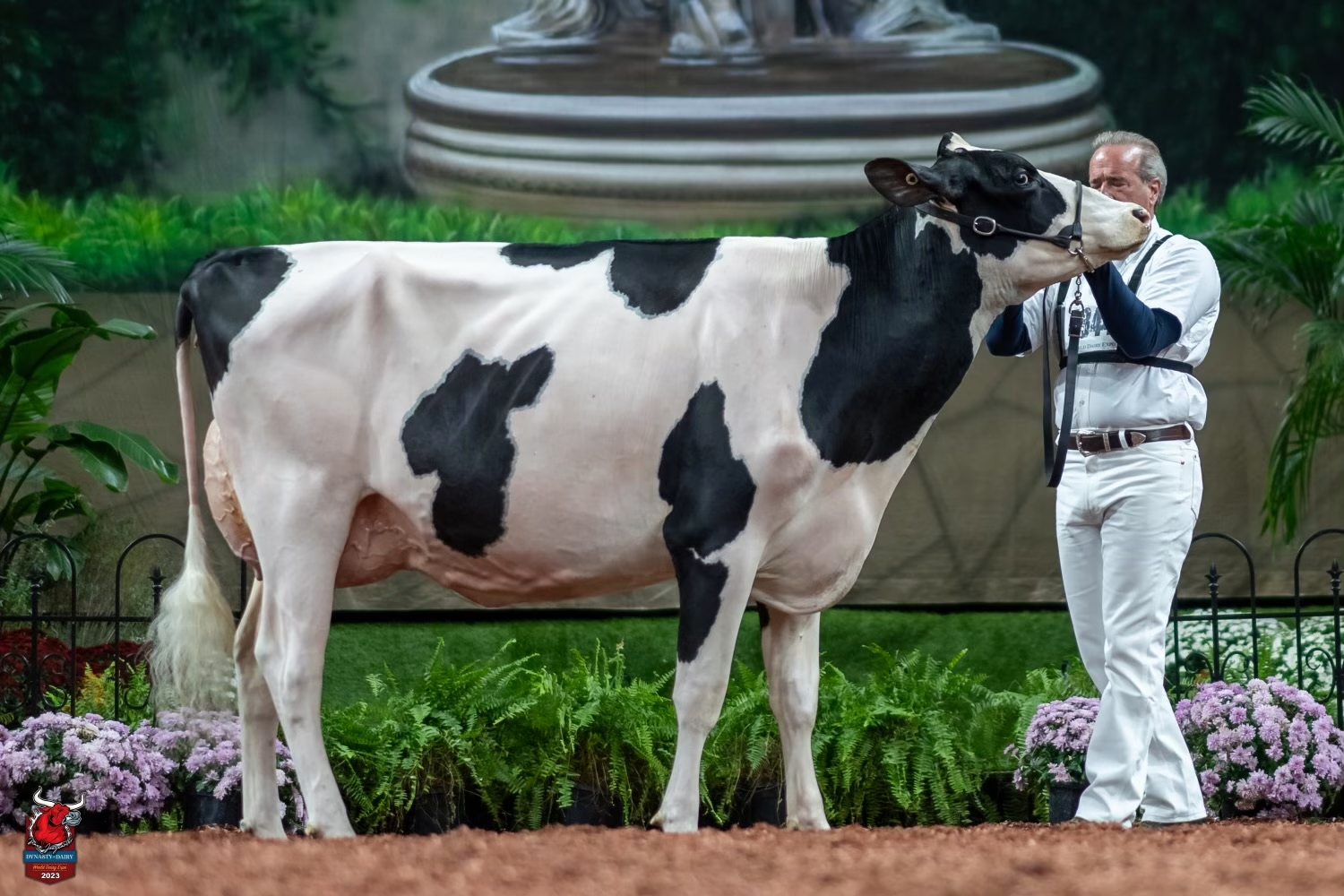
Join over 30,000 successful dairy professionals who rely on Bullvine Daily for their competitive edge. Delivered directly to your inbox each week, our exclusive industry insights help you make smarter decisions while saving precious hours every week. Never miss critical updates on milk production trends, breakthrough technologies, and profit-boosting strategies that top producers are already implementing. Subscribe now to transform your dairy operation’s efficiency and profitability—your future success is just one click away.

NewsSubscribe
First
Last
Consent

From Pasture to Powerhouse: The GenoSource Story 

In the heartland of America, a genetic revolution is quietly reshaping the future of dairy farming. At its epicenter stands GenoSource, a family-owned enterprise that has catapulted from a modest 2,200-cow operation in 2014 to a cutting-edge 4,000-cow powerhouse. Led by visionary CEO Tim Rauen, this Iowa-based dairy isn’t just milking cows—it’s engineering the perfect bovine, one embryo at a time.

The GenoSource leadership team proudly accepts the 2024 MILK Business Award for Leader in Technology, recognizing their groundbreaking advancements in dairy genetics, sustainability, and innovation. This honor highlights their commitment to shaping the future of dairy farming through cutting-edge solutions.
The GenoSource leadership team, Tom & Rick Simon; Pat Carroll; Tim, Bill & Steve Rauen; Matt Simon, Kyle Demmers proudly accepts the 2024 MILK Business Award for Leader in Technology, recognizing their groundbreaking advancements in dairy genetics, sustainability, and innovation. This honor highlights their commitment to shaping the future of dairy farming through cutting-edge solutions.

Picture this: a farm where cows average a staggering 93 pounds of milk per day, with butterfat content that would make a butter sculptor weep, where artificial intelligence predicts the perfect mating years before traditional methods could even conceive of the possibility. A single bull aptly named Captain has rewritten the genetic playbook so thoroughly that he’s become a legend in his own time.

Welcome to GenoSource, where science fiction meets the milking parlor, and the future of dairy is crafted one groundbreaking innovation at a time. Buckle up because this isn’t your grandfather’s dairy farm—it’s a glimpse into a world where genomics, sexed semen, and in vitro fertilization are transforming how we produce milk and the very nature of the cows.

The Genesis of a Genetic Revolution

Nestled among the rolling fields of Iowa, GenoSource began as a bold experiment in collaboration. In 2014, eight farming families—each with deep roots in dairy—came together, pooling their resources and genetic expertise to create something revolutionary. “We each had promising genetic lines,” recalls CEO Tim Rauen, “but combining them created something exponentially greater.” And more significant, it was. From this union emerged a dairy powerhouse that has redefined what’s possible in modern milk production.

At its core, GenoSource’s mission was simple yet ambitious: to develop cows that thrive in free-stall environments while producing unparalleled milk solids. Today, their herd averages an astonishing 93 pounds of milk per day, with butterfat and protein levels of 4.8% and 3.6%, respectively—numbers that have set new benchmarks in the industry. But these achievements didn’t come by chance; they resulted from meticulous planning and a shared vision among the founding families.

Tim Rauen, CEO of GenoSource, shares a quiet moment with his wife Jennifer and their children on their family farm. This photo captures the heart of GenoSource’s mission—building a future where innovation in dairy farming ensures that family values and traditions thrive for generations to come.

A Partnership Built on Precision

The partnership behind GenoSource wasn’t just about pooling assets—it was about assembling a dream team with complementary skills. Tim Rauen took the reins as CEO, leveraging his passion for genetics and expertise in risk management to guide the farm’s breeding strategies. Meanwhile, COO Kyle Demmer focused on the day-to-day operations, ensuring herd health and productivity remained top priorities. CFO Matt Simon rounded out the leadership trio, steering financial strategy and diversification efforts to keep GenoSource on solid ground.

Kyle Demmer, COO of GenoSource, with his wife Laura and their children, exemplifies the family-first philosophy that drives the company’s vision. As the manager of daily operations and herd health, Kyle balances cutting-edge innovation with the timeless values of family farming—a harmony that’s evident both in GenoSource’s success and in the next generation being raised with a passion for agriculture.

This well-oiled machine has allowed GenoSource to grow exponentially, managing 4,000 cows while maintaining 100% family ownership. “It’s not just about business,” says Rauen. “It’s about preserving our values and staying true to our beliefs.”

Matt Simon, CFO of GenoSource, shares a moment with his wife and children. As the financial strategist behind GenoSource’s growth, Matt’s dedication to innovation and family values ensures the company’s mission of supporting family farms remains at the heart of their success.

Challenges Along the Way

Of course, building a genetic empire wasn’t without its hurdles. Combining eight families to start a business required trust, compromise, and an unwavering commitment to a shared goal. But these challenges only strengthened their resolve. By aligning their efforts and focusing on long-term results rather than short-term gains, the Carroll, Simon, Rauen & Demmer families laid the groundwork for what would become one of the most innovative dairies in the world.

A Legacy in the Making

From their humble beginnings to their current status as industry leaders, GenoSource’s story is one of vision, collaboration, and relentless pursuit of excellence. Their success proves that even the loftiest goals can become reality when passion meets precision. Tim Rauen says, “We had a vision, and with our team, we knew we could accomplish something great.” GenoSource has been transformative, leaving an indelible mark on the dairy industry while setting the stage for an even brighter future.

Six dedicated members of the GenoSource team celebrate a decade of service, showcasing the commitment and teamwork that drive the farm’s success. Their hard work and loyalty reflect the core values that have made GenoSource a leader in innovation and excellence in the dairy industry.

Engineering the Perfect Bovine

GenoSource’s air hums with the quiet buzz of innovation as cutting-edge technology melds seamlessly with generations of dairy farming wisdom. Here, in a landscape dotted with silos and rolling fields, the future of the Holstein breed is being sculpted one embryo at a time.

GenoSource’s technological triad—genomic testing, sexed semen, and in vitro fertilization (IVF)—forms the backbone of its genetic acceleration program. It’s a symphony of science and nature, each element playing its crucial part:

  • Genomic testing sifts through the genetic code of 1,500 bull candidates annually, identifying the crème de la crème—the top 13% who will shape the breed’s future.
  • GenoSource sells about 1000; GenoSource and their partners implant 17,000. They aim to have a percentage of 35% living calves born, about 2000 bulls and 4000 heifer calves annually.
  • Sexed semen ensures that over 90% of conceptions from elite lineages result in female calves, rapidly expanding the farm’s genetic pool.
  • IVF takes center stage in the 250-donor program, producing a staggering 18,000 embryos yearly from superior dams.

But GenoSource isn’t content with resting on its laurels. Artificial intelligence now augments these systems, peering into the genetic crystal ball to predict optimal matings years before traditional methods could even conceive of the possibilities.

The Delicious Legacy

Miss OCD Robst Delicious, the legendary matriarch of GenoSource’s breeding program, continues to leave an indelible mark on the Holstein breed. At 14 years old, Delicious remains a prolific contributor to GenoSource’s genetic legacy, with her influence seen in 95% of their top 25 GTPI sires.

One name stands above the rest in elite dairy genetics: Miss OCD Robust Delicious. At 14 years old, this bovine matriarch defies expectations, contributing valuable embryos to GenoSource’s program. Tim Rauen, his voice filled with reverence, explains, “She redefined what’s possible in mammary structure and feed efficiency.”

Delicious isn’t just a cow; she’s a dynasty. Her genetic fingerprint is currently found in the Top 25 GTPI sires of the breed, a testament to her enduring impact on the breed. In an industry where youth often reigns supreme, Delicious proves that longevity and productivity can go hand in hand.

Captain of the Genetic Ship

The GenoSource partners proudly stand with Captain, the legendary Holstein bull who made history as the #1 TPI sire for seven consecutive proof runs—an unprecedented achievement in the dairy industry. Since his debut, Captain has sired over 6,000 daughters worldwide, revolutionizing dairy herds across the globe with his exceptional genetics for production, udder structure, and overall performance. This historic photograph captures the visionary team behind one of the most influential breeding programs in modern dairy genetics, whose collaborative approach has redefined excellence in Holstein breeding.

If Delicious is the queen of GenoSource’s genetic empire, then GenoSource Captain is undoubtedly its king. This seven-time #1 GTPI bull represents the pinnacle of the farm’s breeding philosophy, a living embodiment of their relentless pursuit of perfection.

Captain’s story begins with a strategic purchase: his sire’s dam, Peak Menna Ahead 850-ET, hailing from the legendary Oman Mirror lineage. But it was GenoSource’s meticulous planning that turned potential into reality. Captain was born through careful IVF pairings—first to produce is sire Farnear Tango Sabre 1973-ET, then to the STgenetics outlier, Hurtgenlea Richard Charl-ET to make Captain.

The results speak for themselves. “Captain’s consistency across generations is unprecedented,” Rauen notes, his voice brimming with pride. “His daughters dominate global herds while his grandsons, like Garza, the #2 TPI sire, continue the legacy.”

In GenoSource’s barns, you can see Captain’s impact firsthand. His daughters move gracefully; their udders testify to generations of careful breeding. The GenoSource team’s eyes are excited about what’s to come. In this small corner of Iowa, they’re not just breeding cows—they’re engineering the future of dairy, one perfect bovine at a time. (Read more: CAPTAIN: The Bull That Rewrote the Rules for Modern Breeding)

The Art and Science of Breeding: GenoSource’s Bold Vision

There’s often a divide between show ring glory and practical farm economics in dairy cattle breeding. But at GenoSource, they’re proving that beauty and productivity can go hand in hand, creating cows that are as stunning in the show ring as they are profitable in the barn.

From Show Ring to Milking Parlor: Not Just a Pretty Face

Ladyrose Caught Your Eye, now classified EX-95 with an EX-96 udder, showcases the exceptional quality that earned her three consecutive World Dairy Expo class wins (2021-2023) and the prestigious title of 2023 All-American 4-Year-Old. This remarkable cow has revolutionized GenoSource’s show program while proving her genetic dominance through her offspring—including Kingsway Caught A Vibe, the 2023 WDE Junior Champion, and popular AI sires Bullseye, Eye Candy, and Liquidcourage. A true testament to GenoSource’s vision of combining show-ring excellence with commercial practicality.

Picture this: a Holstein cow so magnificent she commands attention the moment she enters the ring. Her name is Ladyrose Caught Your Eye-ET, and she’s not just a pretty face. This three-time World Dairy Expo champion represents GenoSource’s bold step into the world of elite show cattle.

The GenoSource team proudly stands with Ladyrose Caught Your Eye at the World Dairy Expo, celebrating her extraordinary achievements as a three-time class champion (2021-2023). This iconic cow embodies GenoSource’s vision of combining show-ring excellence with genetic innovation that impacts herds worldwide.

But for Kyle Demmer, GenoSource’s COO, it’s more than ribbons and trophies. “Show sires must enhance barn economics, not just trophy cases,” he states firmly. This philosophy combines the artistry of show cattle with the complex numbers of dairy production.

The results? They’re nothing short of spectacular. Sixteen of Caught Your Eye’s daughters, each scoring an impressive VG-87 or higher, are now productive members of dairy herds. Meanwhile, her sons are in high demand, and their genetics are sought after by AI companies around the globe.

Caught a Vibe, Caught Your Heart, and Caught By Surprise shine on the grand stage at the 2023 World Dairy Expo, earning 1st place in the Breeder’s Herd category. This trio exemplifies GenoSource’s dedication to breeding excellence, blending elite genetics with show-stopping performance.

Diversity: The Spice of Dairy Life

While some breeders chase a narrow set of traits, GenoSource takes a different approach. They don’t just breed cows; they engineer diversity into the very fabric of the Holstein breed.

Imagine a breeding program bold enough to challenge conventional norms—this is precisely what GenoSource achieved by pairing type-focused Delta-Lambda sires with production-oriented bloodlines. Delta-Lambda, a popular bull often overlooked as a sire of sons due to his timing—born four years before the legendary Captain—was given a second chance in GenoSource’s innovative strategy. While some considered it “a step back” to breed Lambda to a Captain granddaughter, GenoSource embraced the unconventional pairing. The result was Genosource Bigwig (Lambda-Hanans-Captain), a bull that has become a global top seller. Bigwig exemplifies the best of both worlds: the elegance and conformation of type-focused genetics combined with the production power and balance demanded by modern dairy operations.

GenoSource’s commitment to engineering diversity into the Holstein breed continues to yield remarkable results, as evidenced by their latest standout, Genosource Benchmark. “Our highest bull is Genosource Benchmark. He is four months old and scores 3430 gTPI,” shares CEO Tim Rauen. This young bull is particularly noteworthy for being line-bred on the Lionel grandson Thorson; Benchmark’s sire is Thorson’s son Darth Vader, while his dam is Thorson’s daughter Brigade, descending from a Captain daughter that traces back to Genosource Brazen 40218 VG-85 (Nightcap), one of the farm’s four prominent donor families. Alongside Brazen, GenoSource’s genetic program is powered by three other influential donor families: T-Spruce Jaela 47718 VG-87 (Captain-Lionel), Genosource Dreaming Big EX-91 (Dynamo-Monterey), and Genosource Viral GP-82 (Captain-Nashville). These families exemplify GenoSource’s ability to balance innovation with strategic genetic diversity, ensuring adaptability and excellence across multiple market segments.

T-Spruce Jaela 47718-ET VG-87 exemplifies the elite genetics that have attracted multiple AI companies to GenoSource’s breeding program. In 2024, GenoSource dramatically expanded their distribution network, selling approximately 200 young sires to ten AI companies beyond their traditional partner STgenetics—including industry giants Select Sires, Semex, ABS, and Urus. This strategic diversification ensures that exceptional genetics like Jaela’s influence herds worldwide while maximizing opportunities for GenoSource’s breeding program on the global stage.
T-Spruce Jaela 47718-ET VG-87 exemplifies the elite genetics that have attracted multiple AI companies to GenoSource’s breeding program. In 2024, GenoSource dramatically expanded their distribution network, selling approximately 200 young sires to ten AI companies beyond their traditional partner STgenetics—including industry giants Select Sires, Semex, ABS, and Urus/Peak. This strategic diversification ensures that exceptional genetics like Jaela’s influence herds worldwide while maximizing opportunities for GenoSource’s breeding program on the global stage.

When asked about his favorite cows at GenoSource, Tim Rauen’s response is immediate: the previously mentioned T-Spruce Jaela. “Out of her, already more than 50 sons, grandsons, and great-grandsons have left for AI, so she will truly have a lot of influence,” Tim notes. He then highlights his second favorite, Bomaz-GS Captain 10767 GP-83 (Captain-Delson). “What an impressive cow! Modern stature, so much ‘dairy strength,’ and an unbelievably good udder,” he says enthusiastically. Her influence on the breed is poised to be significant, mainly through her Thorson son, Genosource King-P. “He is polled, scores 3269 gTPI, +0.85 gPTAT, and his calves are being born—a fascinating sire for polled genetics,” Tim explains. The conversation naturally shifts to another rising star: Genosource Kinky-P. “She’s just six months old, but I think she will change the Holstein breed for polled,” Tim predicts. Kinky-P is not only polled but also boasts a Net Merit of 1550—the highest in the breed for polled and non-polled animals—along with an impressive 3387 gTPI.

But GenoSource’s vision doesn’t stop there. They’re looking ahead, prioritizing traits like polled genetics, slick coats for heat tolerance, and superior feed efficiency long before the market caught on. It’s a strategy that’s paying off, positioning them at the forefront of emerging trends in dairy breeding.

GenoSource understands that one size doesn’t fit all in a globalized world. Therefore, they customize their genetic offerings for over 30 countries with unique needs and preferences. This level of personalization sets them apart in the international market.

Calculated Risks, Extraordinary Results

GenoSource isn’t afraid to take the road less traveled despite industry norms. Kyle Demmer says, “We’re not afraid to mate apparent opposites. Progress requires calculated risks.”

GenoSource’s willingness to push boundaries is evident in every aspect of its breeding program. From its million-dollar investment in show cattle to its diverse genetic strategies, GenoSource is rewriting the rules of dairy breeding.

As you walk through GenoSource’s barns, you can see the results of this bold approach. Cows that combine show-stopping beauty with record-breaking production. Bulls that carry the genetic potential to revolutionize herds across the globe. It’s a testament to what’s possible when art, science, tradition, and innovation unite perfectly.

In the ever-evolving world of dairy genetics, GenoSource is keeping up and leading the charge, one groundbreaking mating at a time. For dairy enthusiasts everywhere, this is an exciting glimpse into the future of the breed we love.

The state-of-the-art facilities at GenoSource showcase the farm’s commitment to innovation, efficiency, and sustainability. From advanced ventilation systems to cutting-edge breeding technology, this operation is designed to set new standards in dairy farming while ensuring optimal cow comfort and productivity.

From Devastation to Innovation: GenoSource’s Phoenix Moment

In August 2020, the skies over Iowa darkened as a monstrous derecho swept across the state. Wind speeds rivaling those of a Category 4 hurricane tore through farms, leaving destruction in their wake. At GenoSource, half of the farm lay in ruins, a sight that would have broken the spirit of many.

But for GenoSource’s team, this catastrophe became an unexpected opportunity. Instead of rebuilding what was lost, they reimagined their entire operation. It was a moment of rebirth, a chance to transform adversity into advancement.

A Dairy of the Future

Step onto the rebuilt GenoSource farm today, and you’ll find yourself in what feels like a dairy of the future. At the heart of the operation stands a state-of-the-art 90-stall rotary parlor, a marvel of efficiency that enables thrice-daily milking. The gentle hum of the rotating platform is a constant reminder of the farm’s commitment to innovation.

But the real magic happens behind the scenes. Walk through the barns, and you’ll notice a noticeable difference in the air. That’s thanks to the tunnel ventilation system, guided by artificial intelligence, which maintains optimal climate conditions. It’s like a breath of fresh air for both cows and workers.

GenoSource isn’t just focusing on today’s needs and tomorrow’s challenges. By 2025, a methane digester will be operational, turning waste into energy and pushing the farm towards energy independence. This bold step towards sustainability showcases GenoSource’s long-term vision.

The next generation of GenoSource proudly representing at the World Dairy Expo! Surrounded by champions and immersed in the spirit of excellence, these kids embody the future of dairy farming, carrying forward the legacy of innovation, hard work, and passion
The next generation of GenoSource proudly representing at the World Dairy Expo! Surrounded by champions and immersed in the spirit of excellence, these kids embody the future of dairy farming, carrying forward the legacy of innovation, hard work, and passion.

Technology with a Purpose

The most striking aspect of GenoSource’s rebuilt infrastructure is the seamless integration of technology. Each cow sports a smart collar that provides real-time health monitoring. It’s like having a veterinarian on call 24/7, ensuring that even the slightest change in a cow’s well-being is noticed and addressed promptly. GenoSource also uses FarmFit from ST, which provides live alerts and notifications of core body temperature from each bolus to their phone.

CFO Matt Simon, the architect behind many of these innovations, explains the philosophy driving these changes: “Technology serves two masters: cow comfort and human efficiency.” This simple statement encapsulates GenoSource’s approach: leveraging cutting-edge technology not for its own sake but to create a better environment for animals and humans.

Recognition and Responsibility

GenoSource’s forward-thinking approach hasn’t gone unnoticed. Their innovative rebuilding efforts earned them the prestigious Leader in Technology Award from the MILK Business Conference, a recognition that cements their status as pioneers in agricultural technology.

But with this recognition comes responsibility. GenoSource is now a beacon for other farms, showcasing what’s possible when tradition meets innovation. They’re not just rebuilding a farm but redefining what a modern dairy can be.

As you leave GenoSource farm, the impression that lingers is one of resilience and vision. From the ashes of destruction, they’ve built more than just a technologically advanced dairy—they’ve created a blueprint for the future of agriculture. This is a testament to the indomitable spirit of dairy farmers and a thrilling glimpse into the potential of our industry.

In the face of adversity, GenoSource didn’t just recover—it revolutionized. Doing so has shown us what’s possible when we dare to dream bigger, even in our darkest hours.

Green Pastures, Golden Opportunities: GenoSource’s Sustainable Success Story

In the rolling hills of Iowa, where corn and soybeans stretch as far as the eye can see, GenoSource is painting a new picture of dairy farming. It’s a landscape where profitability and sustainability aren’t just coexisting—they’re thriving together in perfect harmony.

The Sweet Smell of Success

Step onto the GenoSource farm, and you might notice something different in the air. It’s not just the crisp scent of fresh hay or the earthy aroma of well-tended soil. It’s the unmistakable scent of innovation, a fragrance changing the essence of dairy farming.

At the heart of this transformation is a simple yet powerful philosophy: What’s good for the planet can also be good for the pocketbook. GenoSource’s visionary CEO Tim Rauen says, “Our milk check tells the story. Higher pregnancy rates, lower vet costs, and premium components all trace to smart genetics.”

A Three-Pronged Approach to Sustainability

GenoSource’s commitment to sustainability isn’t just talk – it’s measurable, tangible, and impressively practical. Let’s break it down:

  • Feeding Efficiency: Imagine cows that produce more milk while consuming less. That’s the reality with STgenetics EcoFeed, which has slashed feed intake by a whopping 12% per lactation. It’s like having your cake and eating it, too—or, in this case, producing more milk while using fewer resources.
  • Methane Mastery: Soon, the farm will be home to a state-of-the-art methane digester. It’s projected to cut greenhouse gas emissions by 40% when operational. Imagine turning a potential environmental liability into a sustainable asset—that’s the forward-thinking that sets GenoSource apart.
The eight founding families of GenoSource stand together, showcasing the unity and shared vision that transformed their operation into a global leader in dairy genetics. Their collaboration, rooted in tradition and innovation, has redefined what’s possible in modern dairy farming.

The Proof is in the Pail

But GenoSource isn’t just about impressive statistics but real-world results. Walk through their barns, and you’ll see cows that are healthier, more productive, and – dare we say it – happier. The proof, as they say, is in the pail.

Higher pregnancy rates mean more calves and a more sustainable herd. Lower vet costs translate to healthier animals and reduced antibiotic use. And those premium milk components? They’re the golden ticket to higher milk prices and increased profitability.

A Model for the Future

As you leave the GenoSource farm, you will be left with hope and possibility. This isn’t just a dairy—it’s a living laboratory, proving that sustainability and profitability can go hand in hand.

GenoSource is a beacon of innovation in a world grappling with environmental challenges. It is not just producing milk—crafting a blueprint for the future of dairy farming. In this future, every drop of milk tells a story of efficiency, sustainability, and brilliant genetics.

GenoSource’s journey is one to watch closely for dairy enthusiasts and industry watchers alike. In those Iowa fields, they’re not just raising cows—they’re raising the bar for what sustainable dairy farming can achieve.

he next generation of GenoSource proudly stands alongside their exceptional show cows during a classification session. With udders like these and genetics that speak for themselves, these cows represent the perfect blend of production and type—setting the bar high for both the barn and the ring!
The next generation of GenoSource proudly stands alongside their exceptional show cows during a classification session. With udders like these and genetics that speak for themselves, these cows represent the perfect blend of production and type—setting the bar high for both the barn and the ring!

Charting the Course: GenoSource’s Vision for the Future

As the sun sets over the Iowa horizon, casting long shadows across GenoSource’s sprawling dairy operation, the team isn’t winding down—they’re gearing up for the future. In the quiet evening hours, you can almost hear the hum of innovation, the whisper of plans being made for generations to come.

A Legacy in the Making

Step into GenoSource’s planning room, and you’ll find walls covered with genetic charts and global maps. Here, the team isn’t just thinking about next year’s calves – they’re envisioning the perfect cow three generations from now. It’s a chess game played with genetics, where every move is calculated to shape the future of dairy farming.Matt Simon, GenoSource’s forward-thinking CFO, puts it best: “We’re not just building a better cow. We’re ensuring family farms thrive for generations to come.” This powerful statement encapsulates the heart of GenoSource’s mission: blending cutting-edge science with the timeless values of family farming.

2025: A Dairy Odyssey

As we look towards 2025, GenoSource’s ambitions are as bold as they are specific:

  1. Global Genetic Ambassadors: Imagine GenoSource embryos traveling to 15 new countries, carrying elite genetics to dairy farms worldwide. This is not just about expansion; it’s about sharing excellence and improving herds worldwide.
  2. The Captain’s Legacy: Imagine walking into an AI stud and seeing row after row of Captain-line grandsons – 50 or more. This isn’t just breeding; it’s creating a genetic dynasty that could reshape the Holstein breed.
  3. The Future of Calving: Envision a maternity barn where technology and nature work perfectly. Fully automated, it promises to revolutionize one of the most critical aspects of dairy farming.

Tradition Meets Innovation

GenoSource proves that you can honor tradition while embracing innovation in an industry where change often comes slowly. Their approach isn’t about discarding old ways but enhancing them with cutting-edge science and technology.

Walk through their barns, and you’ll see cows embodying generations of careful breeding alongside state-of-the-art monitoring systems. This is a vivid reminder that in GenoSource’s world, the cow always comes first through genetic improvements or technological advancements.

A Blueprint for Sustainable Success

Representatives from over 20 countries gather at GenoSource during the 2024 World Dairy Expo, highlighting the global impact and international collaborations that have made GenoSource a worldwide leader in dairy genetics. This diverse delegation from STgenetics demonstrates how GenoSource’s innovative breeding programs and technological advancements are influencing dairy farming practices across continents.

As our tour of GenoSource ends, we’re left with more than impressive statistics and ambitious goals. We’re given a glimpse into a future where dairy farming is sustainable and thriving.

GenoSource’s story, written in milk solids and genetic breakthroughs, isn’t just about building better cows. It’s about crafting a blueprint for agriculture’s future, where family farms can prosper for generations.

As we leave the farm, the setting sun paints the sky in hues of orange and purple. But for GenoSource, it’s not a sunset – it’s a dawn of new possibilities. In this corner of Iowa, they’re not just milking cows; they’re molding the future of dairy, one generation at a time.

The Bottom Line

As GenoSource stands at the vanguard of dairy genetics in 2025, its journey from eight ambitious farming families to global innovators illuminates a path forward for an industry at a critical crossroads. With concrete plans to expand embryo exports to 15 new countries, launch over 50 Captain-line grandsons into AI programs worldwide, and complete its fully automated maternity barn this year, GenoSource isn’t just theorizing about the future—it’s actively creating it.

Their approach represents a masterful symphony in which cutting-edge technology harmonizes with generational farming wisdom. As Matt Simon powerfully states, “We’re not just building a better cow. We’re ensuring family farms thrive for generations to come.” This philosophy carries profound implications in an era when family farms face unprecedented pressure from industrial agriculture and climate challenges.

GenoSource’s commitment to sustainability demonstrates how environmental stewardship and profitability can reinforce rather than oppose each other. Their STgenetics EcoFeed program, reducing feed intake by 12% per lactation while maintaining production, offers a blueprint for resource efficiency that the entire industry would be wise to study.

As we witness their three-generation breeding strategy unfold, we must ask ourselves: Are we merely spectators to this agricultural revolution, or will we become active participants? What would happen if GenoSource’s balanced approach to innovation—respecting tradition while embracing technological advancement—became the industry standard rather than the exception? Could their family ownership model, coupled with scientific precision, be the key to preserving the cultural heritage of dairy farming while meeting the demands of a resource-constrained future?

The choices we make today—whether dairy producers, industry professionals, or consumers—will echo through generations of farmers and countless dairy herds. GenoSource has shown us that technology and tradition need not be adversaries; they can be powerful allies in creating a more sustainable, productive, and humane dairy industry. The question remains: Will we have the courage to follow their lead and reimagine what’s possible for the future of dairy farming? The answer may determine whether family farms like GenoSource become relics of the past or beacons guiding us toward a more resilient agricultural future.

Key Takeaways

  • Innovative Origins: Founded in 2014 by eight farming families, GenoSource aims to create modern Holsteins that excel in free-stall environments, are highly feed efficient, and have minimal health issues.
  • Cutting-Edge Technology: GenoSource accelerates genetic progress through genomic testing, IVF, and sexed semen. It produces 18,000 embryos annually and places 200 bulls into AI annually.
  • Sustainability Focus: Initiatives like STgenetics EcoFeed (12% feed reduction), a methane digester (40% GHG reduction projected) showcases their commitment to environmental stewardship.
  • GenoSource Captain’s Legacy: This seven-time #1 GTPI bull has revolutionized the breed with exceptional consistency in daughters and sons, influencing herds worldwide.
  • Elite Show Cattle: Investments in champions like Ladyrose Caught Your Eye-ET have positioned GenoSource as a genetics leader who balances show-ring success with barn practicality.
  • AI Companies GenoSource Partners With: In 2024, GenoSource sold around 200 young sires to various AI companies, marking a significant shift in its strategy. Previously focused on its breeding partner, STgenetics (STg), GenoSource expanded to sell bulls to ten other AI companies, including Select Sires, Semex, ABS, Urus, AI Total, Blondin, Ascol, CRV, and Westlock Genetics. This diversification aims to give its genetics broader global opportunities.
  • Polled Genetics Program: GenoSource is advancing polled genetics with standout animals like Genosource King-P and Kinky-P. King-P is a polled bull with a GTPI of +3269 and impressive traits like +0.85 gPTAT. Meanwhile, Kinky-P is described as a game-changer for the Holstein breed. It is the #1 Net Merit polled animal (non-polled combined) with a Net Merit of +1550 and GTPI of +3387. These efforts highlight GenoSource’s focus on integrating polled genetics into its breeding program to meet market demands for hornless cattle.
  • Global Reach: With genetic exports to 30+ countries, GenoSource customizes offerings for diverse markets while hosting international visitors to share expertise.
  • Family-Owned and Operated: Fully family-run, each partner brings unique expertise, fostering collaboration and innovation while maintaining strong values.
  • Future Goals: By 2025, GenoSource will expand embryo exports to 15 new countries, launch 50+ Captain-line grandsons into AI, and complete a fully automated maternity barn.
  • Recognition for Innovation: Winning the Leader in Technology Award reflects their genetics, infrastructure, and advancements in cow comfort.
  • Vision for Generational Breeding: GenoSource plans matings three generations ahead to ensure elite genetic growth while maintaining diversity across traits and markets. Where the indexes of the highest animals turn out to be about 150 TPI points higher each year!

Summary

GenoSource, founded in 2014 by eight farming families in Iowa, has rapidly emerged as a powerhouse in dairy genetics, revolutionizing the industry through innovative breeding strategies and cutting-edge technology. Led by CEO Tim Rauen, the company has achieved remarkable success, producing 18,000 embryos annually and placing 200 bulls into AI each year. Their flagship bull, GenoSource Captain, a seven-time #1 GTPI sire, exemplifies their breeding philosophy of combining high production with longevity and efficiency. GenoSource’s commitment to sustainability is evident in its initiatives like STgenetics EcoFeed and plans for a methane digester, which aligns profitability with environmental stewardship. With a global reach extending to over 30 countries and ambitious goals for 2025, including expanding embryo exports and launching more Captain-line grandsons, GenoSource is not just breeding better cows—they’re shaping the future of dairy farming while ensuring family farms thrive for generations to come.

Join the Revolution!
Bullvine Daily is your essential e-zine for staying ahead in the dairy industry. With over 30,000 subscribers, we bring you the week’s top news, helping you manage tasks efficiently. Stay informed about milk production, tech adoption, and more, so you can concentrate on your dairy operations.

NewsSubscribe
First
Last
Consent

From Escape to Excellence: The Extraordinary Journey of the Ekstein and Loewith Families

From the brink of destruction to dairy dynasty: How 39 Jewish refugees fled Nazi Europe and revolutionized Canadian farming. The Ekstein and Loewith families’ journey is a tale of courage, innovation, and determination. Discover how pebbles thrown at a window sparked a Holstein revolution!

In the dark of 1938, as storm clouds of hatred gathered over Europe, the peaceful hills of Czechoslovakia’s Sudetenland held their breath. For generations, Jewish families had woven themselves into the fabric of Czech society, their children playing in the same streets, their businesses thriving alongside their neighbors. The Ekstein, Loewith, and Abeles families lived this peaceful life, tending their farms in the rolling Bohemian countryside of Czechoslovakia, never imagining that their world was about to shatter.

October 1938: German troops enter the Sudetenland following the Munich Agreement. This pivotal event forced many Jewish families, including the Eksteins and Loewiths, to flee their homes in Czechoslovakia, setting in motion their extraordinary journey to Canada.

Then came March 1938. With Hitler’s annexation of the Sudetenland, the unthinkable became reality. Families who had considered themselves Czech for generations suddenly found themselves branded as outcasts. The wave of anti-Semitism that followed cut like a knife through their community, severing bonds of friendship and trust that had existed for centuries. Yet, in the face of this persecution, parents whispered in hushed tones in living rooms and around kitchen tables, weighing impossible choices as they watched their children sleep, their courage shining through the darkness.

But from this darkness emerged an extraordinary tale of courage, determination, and triumph. Through a series of fateful decisions – beginning with pebbles thrown at a window in the dead of night – the Ekstein, Loewith, and Abeles families forged a path to survival and remarkable success in a new land. Their journey from the brink of destruction to becoming pillars of the Canadian dairy industry, overcoming challenges such as financial struggles, cultural adaptation, and agricultural hardships, stands as a testament to the resilience of the human spirit. More than that, it is a powerful testament to the power of hope in the face of despair, and their story is a beacon of optimism for a better future.

Karl Abeles with his agricultural workers
Karl Abeles (center) with his agricultural workers in Czechoslovakia, 1932. Just six years later, Karl would make the life-changing decision to flee Nazi persecution, leading 39 refugees to safety and a new beginning in Canada.

The Fateful Discovery

In the stifling summer of 1938, as darkness settled over the Sudetenland, Joe Loewith’s military boots echoed through the corridors of the local police station. As a Czech army serviceman fluent in German, he had been summoned to translate documents. This seemingly routine task would prove anything but ordinary.

When his eyes fell upon a list meant for Nazi roundups the following day, there at the top was a name that made his blood run cold: Karl Abeles. With his heart pounding against his uniform and his mind racing through the consequences of his choices, Loewith made a decision that would echo through generations. Rather than return home to safety, he stepped into the dangerous pre-dawn hours, where every shadow might have held a watchful eye. His bravery and quick thinking at this moment would prove to be a turning point for the families.

At three o’clock in the morning, Loewith stood beneath Karl Abeles’ window, his hands trembling as he gathered small pebbles to warn Abeles of the impending danger. Each tiny stone that clicked against the glass might have sounded like a gunshot in the deathly quiet of the night. When Abeles’ face finally appeared at the window, confusion gave way to fear as he recognized Loewith, and the moment’s gravity hung between them like a heavy curtain.

In hushed tones barely disturbing the night air, Loewith delivered his urgent warning – a quiet act of defiance against the rising tide of hatred. This act of courage ultimately led thirty-nine souls to safety and remarkable success in a new land across the ocean. Their bravery in the face of such adversity is truly admirable.

CAPTION: Wilma Iggers (far left) her father Karl, her sister Marianne, cousin Hannah Popper and her father Hugo Popper, in Antwerp, November 1938 on their way to Canada
Wilma Iggers (far left), her father Karl, her sister Marianne, cousin Hannah Popper, and her father Hugo Popper in Antwerp, November 1938, on their way to Canada. This photo captures a pivotal moment in their journey as part of the group of 39 Jewish refugees fleeing Nazi-occupied Czechoslovakia.

The Decision to Leave

In the summer of 1938, as storm clouds gathered over Europe, Karl and Hugo Abeles faced what might have been the most wrenching decision of their lives. The brothers, whose families farmed the rich Bohemian soil for generations, possibly spent countless sleepless nights weighing their options. The land they loved, the only home they had ever known, was transforming into a place of danger and despair. With heavy hearts but clear minds, they set their sights on Canada, seeking safety and a new beginning away from the threat in their homeland. The decision to leave was not made lightly, and the emotional turmoil they experienced during this process was palpable. The families’ struggle with this decision was a testament to the gravity of the situation and the strength of their resolve.

They purchased a farm near Mount Hope, Ontario, a decision that would prove pivotal for them and dozens of others. Then, carrying the weight of their community’s future, they made the perilous journey back to Czechoslovakia to convince others to join them. Their words must have sounded truthful and urgent, for thirty-nine souls—including members of the Ekstein, Loewith, and Abeles families—chose to follow their lead.

Minna Loewith with her family and the rest of the Czech refugee farmers at the Wren Farm, soon after arriving in Canada. Minna is on the far left in the second row, left of the man with a beige coat. Mount Hope, Ontario, November 1938. (Ontario Jewish Archives)
The Czech refugee farmers at the Wren Farm, shortly after their arrival in Canada in 1938. This group of 39 refugees would go on to build a remarkable legacy in Canadian dairy farming. (Photo courtesy of Ontario Jewish Archives)

In those frightening times, when every day brought new threats, these families might have felt their hearts breaking as they prepared to leave. Many were forced to abandon generations of accumulated belongings and family farms – precious pieces of their history that no one would buy in those chaotic days. Yet they moved with remarkable speed, fearing what might come, possibly overshadowing the sorrow of what they were leaving behind. As they packed only essential belongings like clothes and personal mementos, these families might have understood that they prioritized survival over sentimentality, looking towards the future rather than dwelling on the past and holding onto hope instead of clinging to their heritage, a sacrifice that weighed heavily on their hearts. These preparations’ practical challenges and emotional toll underscore the families’ determination to survive and thrive in their new home.

A Harrowing Journey

Arrival in Canada, 1938: The group of thirty-nine Jewish refugees, including the Ekstein, Loewith, and Abeles families, shortly after their harrowing escape from Nazi-occupied Czechoslovakia. This moment marked the beginning of their remarkable journey to becoming pioneers in Canadian dairy farming.

In the autumn of 1938, thirty-nine souls embarked on a journey that would test their courage and reshape their destinies forever. With their homeland dissolving into darkness behind them, they might have felt their hearts racing as they boarded the aircraft bound for Liverpool – each mile of flight over Europe possibly feeling like a step away from certain doom and toward an uncertain future. The choice to fly rather than take the train through Nazi Germany was born of desperate necessity. Every group member might have understood that detection during a ground crossing could mean death or imprisonment. The drone of airplane engines, normally anxiety-inducing for first-time flyers, might have seemed like a lullaby of freedom compared to the rhythmic click of train wheels through hostile territory. The risk and bravery of this journey cannot be overstated, and it was a testament to their determination and hope for a better future.

When they finally boarded the Duchess of Atholl in Liverpool, the salt spray and rolling waves might have carried terror and hope. Each passenger possibly carried not just the few belongings they could bring but the weight of leaving behind generations of history, family farms, and loved ones who would later perish in concentration camps.

Their arrival at Canadian shores brought its kind of tension. Frederick Charles Blair, Canada’s Deputy Minister of Immigration, had been strictly enforcing policies that excluded Jewish immigrants. As they stood before immigration officials, these thirty-nine refugees might have held their breath, their futures hanging by a thread. Whether through divine providence, bureaucratic oversight, or a moment of human compassion, they were allowed entry — possibly because officials didn’t realize they were Jewish. Their experiences upon arrival in Canada, including the challenges they faced and the support they received, were crucial in shaping their new lives and should not be overlooked.

The price of admission to their new homeland was a five-year commitment to farming — a profession most had never practiced. Yet, as they agreed to these terms at that moment, they might not have felt the weight of obligation but the lightness of possibility. This promise, which might have seemed daunting then, would ultimately be the foundation of their remarkable future in Canadian agriculture.

Starting Anew in Mount Hope

Brick farmhouse on Highway No. 6 near Mount Hope, Ontario—where 39 Jewish refugees began their new lives in Canada in 1938, laying the foundation for a legacy of resilience and excellence in dairy farming.

What might have been a moment of vulnerability – newcomers in a strange land – transformed into something unexpected. The local Jewish community, perhaps seeing in these refugees echoes of their own families’ journeys, rallied around them with remarkable speed and generosity. As furniture and clothing began arriving at the farmhouse on Highway Six, the newcomers might have felt the first stirrings of hope; each donated item was a tangible sign that they were not alone in this vast new country.

The Canadian Jewish Congress’s offer of $1,000 loans to each family represented more than just financial assistance – it was a bridge to their future. For families forced to abandon their farms and possessions in Czechoslovakia, these loans might have felt like seeds of possibility waiting to take root in Canadian soil. As they began searching for farms to rent or buy, these thirty-nine individuals might have dared to imagine, for the first time since fleeing their homeland, that they could build not just houses but homes again.

Building a Legacy in Holstein Breeding

As the harsh Canadian winters gave way to spring after spring, these refugee families transformed from desperate survivors into pioneering farmers. What unfolded over the following decades might have seemed impossible to those thirty-nine souls who first stepped onto Canadian soil. Their five-year farming commitment, which might have felt like a burden in 1938, became the foundation of an extraordinary legacy. In the quiet moments between milkings, these newcomers might have remembered their abandoned farms in Czechoslovakia, their hearts heavy with the knowledge that many of their relatives would perish in concentration camps.

Yet from this profound loss emerged an unstoppable determination. Against all odds, these families didn’t just survive—they flourished. Within forty years, they had produced eight of Ontario’s leading dairymen, including three master breeders. Each morning’s milking, each careful breeding decision, and each show ring victory became not just a business achievement but a testament to their resilience—a powerful statement that from the darkest moments of human history, something remarkable could grow and thrive on Canadian soil.

The Loewith Family’s Summitholm Farm

Joe Loewith, the man who had warned Karl Abeles that fateful night in Czechoslovakia, established Summitholm Farm. His journey from a traveling salesman and window dresser in Czechoslovakia to a successful dairy farmer in Canada is a testament to his adaptability and determination.

Joe Loewith’s love for his Holstein cows grew deep and genuine. “They don’t let you down the way that people do,” he once said, reflecting the deep bond he had formed with his herd. This sentiment would be passed down through generations of Loewiths, shaping their approach to dairy farming.

In the early years, Joe Loewith focused on building a strong foundation for his herd. He purchased his start-up cows from Karl Abeles, many of them daughters of a Braeside bull bred by Clayt Haviland. By 1951, his herd had grown to 30 head, and he bought 30 more females before moving to a 100-acre property known locally as the Kitchen farm south of Copetown.

Joe Loewith and his wife, pioneers of Summitholm Farm, whose legacy of resilience and excellence continues to shape Canadian dairy farming today.

The farm that would become Summitholm Farm has a rich history. It was initially settled by George Green Kitchen and his wife, Mary Stenabaugh. Through a series of inheritances and sales, it eventually came into Joe Loewith’s possession in the early 1950s.

Joe’s success in breeding was evident early on. His first herd sire, Trout Creek Finderne Pontiac, came from the respected herd of C.W. Goodbrand at Millgrove. This bull’s pedigree was rich with high-producing bloodlines, including descendants of Springbank Snow Countess, a world lifetime champion.

Joe Loewith proudly showcases his collection of breed magazines, reflecting his passion for Holstein breeding and dedication to advancing dairy excellence.

One of the mainstays of the original Loewith herd was Bonnie Queen Elizabeth (VG-2*), born in 1940. She produced an impressive 100,230 lbs of milk in seven lactations, with 3,975 lbs of fat at 3.97%. Her descendants would continue contributing to the Summitholm herd for generations.

By the 1950s, Summitholm Farm was making its mark in the show ring. At the Wentworth Black & White Show in 1956, showing only home-bred animals, Joe Loewith won ten red ribbons, far more than necessary to give him the Premier Breeder and Exhibitor banners.

Harry, Carl, and David Loewith as young boys, long before they became the driving forces in the Canadian dairy farming.

Joe’s sons, Harry, Carl, and David Loewith, later took over the operation, expanding it into one of Canada’s most respected Holstein breeding programs. Harry joined his father in 1965 and later established his ventures, including Tavistock Dairy Sales. Carl and David, both University of Guelph graduates, took over the operation of Summitholm Farm in the mid-1970s.

Under Carl and David’s management, Summitholm Farm has become synonymous with high-producing, long-lasting cows. They focused on breeding functional, profitable cows rather than show-ring champions, and their philosophy of breeding cows that are “good enough” rather than striving for perfection has proven highly successful. Their efforts were rewarded with a Holstein Canada Master Breeder Shield in 2002.

As of 2025, Summitholm Farm has over 119 cows with a lifetime production exceeding 100,000 kg. The farm has earned accolades for consistent milk quality and breeding excellence in the industry, which speaks volumes about the longevity and productivity of its herd.

The farm has consistently ranked first in DHI management scores, winning the highest score in Canada for nine out of ten years. Its focus on efficient production and cow longevity has set a standard in the industry.

Ben Loewith, who now shares management responsibilities with his father Carl and uncle Dave, emphasizes the importance of their systematic approach: “We follow stringent protocols on everything we do, from calf care to milking procedures, ensuring the health and comfort of our cows.” Whether it is how newborn calves are handled, fertility programs, milking procedures, or monitoring herd health, we ensure everyone involved is reading from the same page. We have an excellent group of advisers and good communication with wonderful staff. All our protocols are set in the best interest of the cows’ health and comfort. Our convenience and labor come secondary.”

Summit Station Dairy and Creamery, the Loewith family’s latest venture into direct-to-consumer dairy products
The Loewith family—Carl, David, Ben, and Jen—stand proudly outside their new Summit Station Dairy and Creamery store, marking a fresh chapter in their multi-generational dairy farming legacy.

The Loewiths’ breeding strategy has evolved with the times. As of 2025, all heifers are bred to sexed genomic semen. Eighty percent of the mature cows are bred to Angus, and the remaining 20 percent are bred to sexed genomic sires. This balance allows them to benefit from the latest genetic advancements while relying on proven performance.

Paul Ekstein and Quality Holsteins

Born in 1934 in Czechoslovakia, Paul Ekstein developed an early interest in Holstein cattle through visits to his uncle’s Mount Hope dairy farm. His passion for the breed was evident from a young age, as he devoured Holstein literature and spent his holidays at the farm. After graduating from Ontario Agricultural College in 1954, Ekstein worked as a herdsman before starting his own business, Quality Seeds. He began assembling his herd in the late 1960s, initially housing them at Sunny Maple Farm before establishing his farm on Huntingdon Road near Woodbridge in 1980.

Paul and Ari Ekstein deep in discussion at the show ring – a legacy of excellence spanning generations at Quality Holsteins.

Paul’s son, Ari Ekstein, took over the reins of Quality Holsteins about 20 years ago, continuing his father’s legacy of excellence in Holstein breeding. Under Ari’s management, the farm has maintained its status as a powerhouse in the industry, winning their fourth Master Breeder Shield in 2025. This achievement showcases the continued excellence of their breeding program across generations.

The Ekstein family’s influence extends beyond dairy farming. While Ari runs on the Holstein operation, his main focus is on the seed business and has now been joined by a third generation of Eksteins at Quality Seeds. Expanding into the third generation demonstrates the family’s enduring entrepreneurial spirit and commitment to agriculture.

QUALITY B C FRANTISCO EX-96-3E-CAN 18*
ALL-CANADIAN MATURE COW, 5-YR, 4-YR, SR.3-YR, MILKING 1-YR
HM. ALL-CANADIAN MATURE COW, SR.2-YR
GRAND ROYAL 2005, 2004
INT.CHAMP ROYAL 2002
HM.GRAND ROYAL 2002
QUALITY B C FRANTISCO EX-96-3E-CAN 18*
ALL-CANADIAN MATURE COW, 5-YR, 4-YR, SR.3-YR, MILKING 1-YR
HM. ALL-CANADIAN MATURE COW, SR.2-YR
GRAND ROYAL 2005, 2004
INT.CHAMP ROYAL 2002 HM.GRAND ROYAL 2002

Recent achievements at Quality Holsteins under Ari’s leadership include:

  • Multiple EX-90+ cows, including Quality Solomon Frotastic EX-93 (95-MS)
  • Quality Solomon Lovely EX-94-2E (95-MS)
  • Marloacres Damion Lulu EX-94-5E (95-MS)
  • A strong group of first-lactation animals, with fourteen scoring VG-85 or higher

The herd continues to excel in type classification, with recent classifications showing particular strength in mammary systems. Several animals have scored 86-MS or higher in their first lactation.

Ari Ekstein has continued to innovate and adapt to changing industry trends. While maintaining the farm’s focus on breeding functional, profitable cows, he’s also embraced new technologies and breeding strategies. Quality Holsteins’ breeding program continues to produce outstanding results, as evidenced by its recent classifications and consistent excellence.

Quality Holsteins show team celebrating their success at the 2024 Ontario Spring Show! A proud moment for the team and their exceptional cows.

With three generations now involved in various aspects of the family’s agricultural enterprises, the Ekstein legacy in Canadian agriculture continues to grow and evolve, building on Paul’s original vision and passion for Holstein cattle and quality seeds.

A Legacy of Excellence

From a handful of desperate refugees huddled in a Mount Hope farmhouse in 1938, an extraordinary legacy would bloom across Canadian soil. The transformation of these thirty-nine souls from survivors to pioneers might have seemed impossible in those early days. Yet within forty years, eight descendants would become Ontario’s leading dairymen. Among them, seven would achieve the coveted Master Breeder status – Joe, Richard Popper, Carl, David and Ben Loewith, and Paul and Ari Ekstein (Four times) – an honor that might have seemed as distant as the stars when they first stepped onto Canadian soil.

Each careful breeding decision, show ring victory and production record might have been a tribute to those who never made it out of Europe. Their success became more than personal achievement—it grew into a testament to the power of resilience, a living memorial to the possibility of beginning anew, inspiring a new generation of dairy farmers, and setting a standard of excellence in the industry. Through their unwavering focus on sound breeding principles, such as selective mating for high milk production and genetic diversity, and a tireless work ethic evident in daily milking routines and animal care, these families found success and redemption in the dairy industry. They transformed their five-year farming commitment into a multi-generational legacy that would influence Holstein breeding for decades.

Reflecting on an Incredible Journey

As the sun sets over the rolling fields of Ontario’s dairy country, the legacy of those thirty-nine souls who fled the darkness of Nazi Europe continues to flourish in ways they could never have imagined. From Joe Loewith, who transformed from a window dresser into a master dairyman, to Paul Ekstein, who devoured Holstein literature as a seventeen-year-old refugee and went on to earn four Master Breeder Shields, their story stands as a testament to the extraordinary heights that human determination can reach.

These families didn’t just survive – they revolutionized Canadian dairy farming. From the ashes of their lost homes in Czechoslovakia, they built not just farms but dynasties. Their achievements – from the Loewiths’ world-record number of lifetime producers to Ekstein’s breed-defining cow families – stand as monuments to the power of human resilience and the opportunities Canada provided to those seeking refuge.

As we stand here in 2025, we’re reminded that greatness often emerges from history’s darkest moments. From pebbles thrown against a window in Nazi-occupied Czechoslovakia to the pinnacle of global dairy breeding, the Ekstein and Loewith families have shown us that with courage, determination, and the chance to begin anew, ordinary people can achieve extraordinary things. Their legacy lives on in the Holstein bloodlines they developed and the example they set for future generations. It shows that excellence can rise from despair, achievement can emerge from persecution, and the human spirit, when nurtured, knows no bounds.

Key Takeaways

  • 39 Jewish refugees, including the Ekstein and Loewith families, escaped Nazi-occupied Czechoslovakia in 1938.
  • They settled in Canada, committing to a five-year farming obligation despite limited agricultural experience.
  • Within 40 years, they produced eight of Ontario’s leading dairymen, including seven Master Breeders.
  • Joe Loewith established Summitholm Farm, now known for its high-producing, long-lasting cows.
  • Paul Ekstein founded Quality Holsteins, earning four Master Breeder Shields over the years.
  • The families embraced innovative breeding strategies and new technologies to improve their herds.
  • Their legacy continues with the next generations, like Ari Ekstein and Ben Loewith, maintaining excellence in breeding.
  • The story showcases the power of resilience, adaptability, and determination in overcoming adversity.
  • Their journey from refugees to industry leaders has significantly influenced Canadian Holstein breeding.
  • The families’ success demonstrates the opportunities Canada provided to those seeking refuge and a new start.

Summary

In 1938, as Nazi persecution intensified in Czechoslovakia, 39 Jewish refugees, including the Ekstein and Loewith families, made a daring escape to Canada. Faced with a five-year farming commitment in a new land, these families not only survived but thrived, transforming from desperate survivors into pioneering dairy farmers. Over the decades, they revolutionized Canadian Holstein breeding, producing eight of Ontario’s leading dairymen and earning multiple Master Breeder shields. From Joe Loewith’s Summitholm Farm to Paul Ekstein’s Quality Holsteins, their legacy of excellence continues to shape the industry today. This remarkable journey from the darkness of war to the pinnacle of dairy farming stands as a testament to human resilience, innovation, and the power of new beginnings.

Learn more

Join the Revolution!

Bullvine Daily is your essential e-zine for staying ahead in the dairy industry. With over 30,000 subscribers, we bring you the week’s top news, helping you manage tasks efficiently. Stay informed about milk production, tech adoption, and more, so you can concentrate on your dairy operations.

NewsSubscribe
First
Last
Consent

Legacy of Excellence: The Heart and Soul of Altona Lea Holsteins

At Altona Lea Holsteins, generations of grit and grace have forged more than a dairy dynasty—they’ve bred history. From 10-generation EX cows to shaping global genetics and mentoring 4-H youth, this Canadian family blends show-ring excellence with enduring community roots. Discover how heart, heritage, and Holstein’s milk excellence into every dawn.

he Barkey and Puterbough families, guardians of Altona Lea Holsteins, stand united across three generations.
The Barkey and Puterbough families, guardians of Altona Lea Holsteins, stand united across three generations.

Step into the warm, welcoming barn at Altona Lea Holsteins, where the sweet scent of hay mingles with the gentle sounds of contented cows. As the morning light gently streams through the weathered beams, you can sense the rich history and tradition that permeates this family sanctuary in Blackstock, Ontario. Here, the Barkey and Puterbough families have woven together something far more precious than a dairy operation—they’ve crafted a tapestry of love, dedication, and passion that enriches their lives and the entire Canadian dairy community.

The story unfolds each dawn as family members, young and old, move through their daily rhythms with practiced grace. Their shared purpose is evident in every gentle interaction with their beloved Holsteins. This isn’t just about producing milk or breeding exceptional cows—it’s about preserving a way of life that nourishes both body and soul.

Farm Statistics at a Glance 

CategoryDetails
LocationBlackstock, Ontario
Operation Size60 milking cows
Land Base350 owned acres, 1,000 rented acres
Herd Classification12 ME, 8 EX, 35 VG, 13 GP
Production11,158 kg milk, 498 kg fat, 365 protein
BCAs260-303-265
Feeding SystemTMR with baleage, corn silage, and ground corn
Grazing Program5 months pasture access annually

A Heritage of Excellence 

Picture yourself in the early 1800s as the Barkey family wagon creaked north from Pennsylvania to Ontario, their hopes and dreams packed alongside their worldly possessions toward Altona, Ontario. Like many settlers seeking a better life, they carried something far more precious than belongings—a vision of building a lasting agricultural legacy in this new land.

By 1837, those dreams took root when they acquired their first farm in Altona, Ontario, laying the foundation for their agricultural legacy. Through generations of dedication, early mornings, and late nights, they built the foundation of one of Canada’s most respected Holstein breeding programs.

The test of their family’s resilience came in 1972, when Frank and Donna Barkey faced the federal government’s expropriation of their beloved family farm, presenting what seemed like an insurmountable challenge. The land was to be set aside for a proposed Pickering Airport northeast of Toronto, including the Barkeys’ family farm.

Frank and Donna chose to see opportunities where others might have seen defeat, and in 1978, with their young family in tow, they purchased a new farm near Blackstock, Ontario. The buildings required work, and establishing a new operation wouldn’t be easy, but their determination never wavered. Even today, you can see the fruits of their labor in the roses and clematis that Donna and Frank planted along the lanes and around the sheds – living testaments to their pride of ownership and belief in building something beautiful for the future.

This spirit of resilience and adaptation continues to flow through the veins of Altona Lea Farms. While the original Altona property has become part of the Rouge National Urban Park, the Blackstock farm has blossomed into a showcase of excellence. It stands as a testament to a family’s ability to survive change and thrive through it, turning life’s biggest challenges into stepping stones toward even more significant achievements.

Frank and Donna Barkey with three homebred Excellent cows, descendants of foundation matriarch Harriett EX-9* (1971). Their perseverance through 1970s adversity forged a genetic legacy: Canada’s first 10-generation EX Holsteins and global show-ring acclaim.
Frank and Donna Barkey, with three homebred Excellent cows, are descendants of foundation matriarch Harriett EX-9* (1971). Their perseverance through 1970s adversity forged a genetic legacy: Canada’s first 10-generation EX Holsteins and global show-ring acclaim.

The Power of Family Unity 

Dawn breaks over Altona Lea Farms as Glenn Barkey walks the barn aisles. His keen eye for cattle, inherited from his father, Frank, scans each cow with the same passion that has driven four generations of excellence. Karen reviews the books in the office with precision. Glenn’s sister Carolyn and her husband Frazer Puterbough also own and engage in all aspects of the farm.

Drawing on the wisdom passed down from his father, Glenn leads the breeding program with the expertise that comes from being both a Holstein Canada judge and EastGen director. “We have regular farm meetings to plan and set goals,” Carolyn shares, highlighting how their collective decision-making strengthens their bonds.

Karen’s business acumen keeps the operation’s financial heart beating strong. In addition to managing the books, she is involved with several agricultural organizations in the community. Her dedication to youth programs reflects the family’s commitment to nurturing the next generation of dairy farmers.

ALTONA LEA UNIX HERMINIE
1st place Five Year Old
Ontario Summer Holstein Show 2024
DALTON J. FARIS, EAST GWILLIMBURY, ON
ALTONA LEA UNIX HERMINIE
1st place Five Year Old
Ontario Summer Holstein Show 2024
DALTON J. FARIS, EAST GWILLIMBURY, ON

Carolyn works full-time off the farm but brings her skills to the farm when needed, whether event planning or public relations while caring for their award-winning animals.

Meanwhile, Frazer’s expertise in crop management ensures that their 1,350 acres produce quality feed to meet their exceptional herd demands. “Glenn and I confer on the day-to-day stuff,” he explains. “Glenn usually makes bull selection choices while I look after the crops and seeding decisions.”

Together, they embody the true meaning of family farming—where every decision, milestone, and challenge is faced as one. Altona Lea Farms’ hybrid operation, consisting of 30 tie-stalls and a four-cow parlor, exemplifies the family’s commitment to tradition alongside innovation. Its forward-thinking approach inspires the next generation of dairy farmers.

The Heart of Excellence 

Altona Lea Mr Sam Jessica-EX 90, he first 8th generation homebred EX in Canada.
Altona Lea Mr Sam Jessica-EX 90, the first 8th generation homebred EX in Canada.

The success of Altona Lea is rooted in Altona Lea Starlite Harriett EX-9* (born 1971), a cow that produced an impressive 95,530 kg of milk at 3.9% fat content. Sometimes, the most extraordinary stories begin with a practical decision. When Frank Barkey couldn’t afford the more expensive Roybrook Telstar semen in 1970, he chose Roybrook Starlite instead. This seemingly simple choice led to the birth of Altona Lea Starlite Harriett EX-9* in 1971, a cow that would become the cornerstone of one of Canada’s most remarkable Holstein breeding programs.

Harriett’s achievements were extraordinary for her time. She produced an astounding 95,530 kg of 3.9% milk in her lifetime and became the farm’s first Excellent cow in 1977. Her impact was so significant that during Royal Winter Fair time, up to four tour buses a day would visit the farm to see her offspring.

But Harriett’s actual legacy lives on through her descendants. Today, 95% of Altona Lea’s herd traces back to this extraordinary matriarch. Her genetic excellence culminated in two historic achievements:

In December 2021, her descendant Altona Lea Classic Jazz EX-91-2E made Canadian dairy history by becoming the country’s first homebred 10-generation Excellent cow. Less than a year later, in November 2022, another branch of Harriett’s family tree was produced. Altona Lea Cinderdoor Glitz EX-91, Canada’s second 10-generation Excellent cow.

These achievements are even more exciting because Jazz and Glitz have Very Good daughters who could become the first 11th-generation Excellent cows in history. This enduring legacy of excellence, spanning over five decades, underscores the significance of careful breeding decisions and the profound impact of a remarkable foundation cow.

Show Ring Achievements 

ALTONA LEA ALLIGATOR JETT
1st place Winter Yearling in Milk
The Royal - Holstein Show 2024
ALTONA LEA ALLIGATOR JETT
1st place Winter Yearling in Milk
The Royal – Holstein Show 2024

In the competitive world of dairy shows, where excellence is measured in form and function, Altona Lea’s show string achievements shine exceptionally bright. Their current star, Altona Lea Unix Herminie EX-95, wrote her remarkable chapter on the history of dairy shows. Herminie, once Cooper Puterbough’s 4-H calf, began her journey to greatness in the hands of youth before being acquired by Dalton Faris of East Gwillimbury, Ontario.

In 2024, Herminie achieved what no cow had done before—capturing back-to-back Grand Champion titles at the Ontario Summer Holstein Show. She achieved remarkable milestones in her 2023 show season, including All-Ontario, Reserve All-Canadian, and Honorable Mention All-American 4-Year-Old honors.

The legacy continues through her daughter, Altona Lea Doc Helena VG-86-2YR, who was Reid Barkey’s 4-H project. Helena has already carved her path to greatness, claiming:

  • Intermediate Champion at Atlantic Dairy Championship Show
  • First Place Spring 2-Year-Old at Ontario Spring Discovery 2023
  • Honorable Mention Intermediate Champion at Ontario Spring Discovery 2023

This mother-daughter duo exemplifies Altona Lea’s ability to breed show-stopping cattle that combine exceptional type with outstanding production. Their breeding philosophy, which emphasizes beauty and function, is a testament to this.

𝐀𝐋𝐓𝐎𝐍𝐀 𝐋𝐄𝐀 𝐋𝐀𝐌𝐁𝐃𝐀 𝐆𝐈𝐒𝐄𝐋𝐋𝐄
1st Place Senior Two Year Old and Grand Champion at the Durham County Holstein Club Show
𝐀𝐋𝐓𝐎𝐍𝐀 𝐋𝐄𝐀 𝐋𝐀𝐌𝐁𝐃𝐀 𝐆𝐈𝐒𝐄𝐋𝐋𝐄
1st Place Senior Two Year Old and Grand Champion at the Durham County Holstein Club Show

International Impact 

Beyond Canadian borders, Altona Lea Holsteins’ influence is unmistakable. Their genetics caused significant waves across the Atlantic. The farm’s renowned breeding excellence reverberated across the United Kingdom, leaving a lasting impression on the British Holstein industry. 

Scottish Show Ring Dominance 

In a remarkable achievement, Altona Lea bred three Grand Champions at the Royal Highland Show in Scotland within a decade: Altona Lea Broker Emma, Altona Lea Threat Amythest, and Altona Lea Rudolf Summer. This feat is impressive considering the Royal Highland Show’s status as one of the UK’s premier agricultural events, attracting top-tier competition across Britain and Europe.

Altona Lea Broker Emma owned by Lairds

The Legacy of Emma 

Among their most celebrated exports, Altona Lea Broker Emma EX-96-UK 9* is a testament to the farm’s breeding prowess. This exceptional cow did not just excel in the show ring; she became a living legend in British Holstein circles. Her impact on her new owner, Alistair Laird, was so profound that he commissioned a permanent tribute, immortalizing her image in a stained glass door in his home. 

Global Genetic Influence 

Altona Lea’s breeding program’s success in international markets demonstrates its genetics’ universal appeal and adaptability. The company’s focus on breeding healthy, productive cows with exceptional conformation has proven successful in Canadian conditions and diverse farming environments worldwide. 

This international recognition solidifies Altona Lea’s status as a premier global leader in Holstein breeding. It showcases how their meticulous selection and breeding techniques produce exceptional cattle that thrive in diverse geographical settings.

Nurturing Tomorrow’s Leaders 

In the early morning light at Altona Lea Farms, seven young men carry on a legacy of excellence with the same passion that fueled their grandparents decades ago. These are not just farm kids—they’re the next generation of dairy industry leaders, each bringing their unique talents to this remarkable operation.

Cameron Barkey, at 23, has already established himself as a force in the show ring, following in his father Glenn’s footsteps as part of the Ontario 4-H judging team at the World Dairy Expo in 2023. His keen eye for cattle evaluation shows the same precision that made his father a respected Holstein Canada judge. His brother Grant, 20, shares this competitive spirit—participating on the Ontario 4-H judging team at WDE in 2024 & recently winning coveted embryos at the TD Canadian 4-H Dairy Classic and demonstrating an innate understanding of quality genetics that would make his grandfather Frank proud.

Ian (17) and Reid (15) already show remarkable promise in herd management. Reid’s connection to the herd was evident when his 4-H calf, Altona Lea Doc Helena VG-86-2YR, became Intermediate Champion at the Atlantic Dairy Championship Show.
The Puterbough boys bring their brand of excellence to the family enterprise. Cooper, 18, has already made his mark through his work with Altona Lea Unix Herminie EX-95, who began as his 4-H calf before becoming a two-time Grand Champion at the Ontario Summer Show. He now attends school in Alberta and continues to clip cattle at shows. Callum, 16, is a keen 4-H member enjoying provincial leadership opportunities, while young Sawyer, 9, likes feeding calves and has solid instincts when leading calves in the show ring.

What makes their story particularly special is how these young men are learning about cattle and the value of family unity and dedication. Their involvement in the TD Canadian 4-H Dairy Classic, where Altona Lea has provided calves for an impressive 37 consecutive years, demonstrates their commitment to excellence and education.

“When you look at some of the kids we have worked with at the farm, what they came with and the skill sets they learned and left with, it is pretty rewarding to have played a part in that,” reflects Carolyn, watching the next generation & even youth from non-farm backgrounds embrace their heritage while forging their paths in the dairy industry.

Looking to Tomorrow 

As the sun sets over Altona Lea Farms, casting long shadows across fields that have nourished generations of prize-winning Holsteins, the Barkey and Puterbough families gather to plan their next chapter. Their vision extends far beyond brick-and-mortar—it is about creating a legacy that will sustain their family’s passion for dairy excellence well into the future.

“The main thing,” Glenn explains, his eyes lighting up as he describes their plans, “is to figure out how to build a barn that will look after the cows better and make us a more efficient business unit. Then, as the future clouds clear for our children and those who want to be here, perhaps we can consider taking on another site.”

Their strategic location, just 40 minutes from Toronto, opens exciting possibilities for innovation. Following the successful model of Glenn and Carolyn’s sister Sharyn at Enniskillen Jerseys and Sargent Family Dairy.

The future they envision is not just about expanding their operation; it’s about creating a sustainable platform where their seven young men can continue the family’s legacy of excellence, each in their own unique way. As they plan their new barn, every decision is made with the next generation in mind, ensuring that Altona Lea Farms remains at the forefront of dairy excellence for generations.

Community Impact 

The heart of Altona Lea Farms beats far beyond its barn walls. In 2022, when the Durham Farm Farm Connections organization recognized Outstanding Farm Family and the Barkey and Puterbough families’ exceptional contributions, they were honoring a successful dairy operation and celebrating a family woven into the fabric of their agricultural community.

Each family member contributes uniquely to this tapestry of community service. Glenn serves as an EastGen director and chairman of the Durham Farmers County Coop, while Karen leads 4-H programs and is past president of the Blackstock Ag Society. Carolyn brings her community economic development expertise to help spark stronger communities & is a volunteer for youth-focused organizations, including agriculture awareness, school community council, and a 4-H volunteer for over 20 years. At the same time, Frazer contributes as a Holstein Ontario director, Durham East 4-H Director, and past Durham Milk Committee & local Ag chair—Advisory Committee for Durham Region.

Their commitment runs deeper than hosting tours or serving on committees. For 37 consecutive years, they’ve provided calves to the TD Canadian 4-H Dairy Classic, helping shape over 300 young minds annually. “One of the biggest things about the Classic,” Glenn notes, “is that it influences all 300+ kids there. The teamwork and development that every kid on every team goes through is so powerful.”

Their farm motto, “Where families have a meaning,” isn’t just a catchphrase—it’s a philosophy that extends to everyone who crosses their threshold. One nomination supporter noted they are “just amazing human beings—kind, selfless, and generous of their time to help others.” This spirit of generosity and dedication to community building ensures that Altona Lea’s impact will continue to ripple through future generations of farmers and agricultural enthusiasts.

The Legacy Continues 

The story of Altona Lea Holsteins stands as a testament to what dedication, vision, and family unity can achieve. Adorned with four Master Breeder shields, housing 11 generations of Excellent cows, and an impressive 95% of their herd tracing back to their foundation cow Harriett, the Barkey and Puterbough families have achieved something extraordinary.

Yet what makes their accomplishments even more impressive is how they’ve balanced breeding excellence with community impact. Their dedication to fostering young talent through 4-H programs, maintaining a 37-year tradition of providing calves for the TD Canadian 4-H Dairy Classic, and influencing over 300 young individuals annually truly showcase their unwavering commitment to the industry’s future.

The future appears limitless, with endless possibilities awaiting the Barkey and Puterbough families. With seven talented young men already demonstrating significant potential in the dairy industry, plans for a state-of-the-art barn on the horizon, and their strategic location just 40 minutes from Toronto offering new opportunities, Altona Lea’s next chapter holds even more excitement than its previous accomplishments.

Glenn’s humble reflection perfectly captures the family’s spirit: “We know we haven’t done everything on our list, but we are happy by how much we have done and how far we have gotten.” This combination of gratitude for past achievements and excitement for future possibilities ensures that the legacy of Altona Lea Holsteins will continue to inspire and shape the dairy industry for generations.

Key Takeaways

  • Generational Legacy: 7 generations of Barkeys/Puterboughs built a Holstein dynasty since 1837, surviving land expropriation (1972) to breed Canada’s first 10-generation EX cows.
  • Foundation Genetics: 95% of the herd traces to Harriett EX-9* (1971), whose lineage produced two historic 10-generation EX cows (2021–2022).
  • Global Impact: 3 Royal Highland Show Grand Champions (UK); genetics exported worldwide, including Emma EX-96, immortalized in UK stained glass.
  • Community Stewardship: 37-year 4-H mentorship streak, shaping 300+ youth annually via TD Canadian 4-H Dairy Classic calves.
  • Accolades: 4 Master Breeder shields, 12 EX/8 ME cows, 11,158 kg/year herd avg, and a hybrid tie-stall/parlor milking system.

Summary

Nestled in Blackstock, Ontario, Altona Lea Holsteins epitomizes seven generations of dairy excellence, blending groundbreaking breeding achievements with profound community impact. Founded in 1837, the Barkey-Puterbough family operation traces 95% of its elite Holstein herd to foundation cow Harriett EX-9*, whose lineage birthed Canada’s first 10-generation Excellent cows. Their global influence spans show-ring dominance (Royal Highland Show champions) and UK genetic exports, while their 37-year 4-H mentorship legacy nurtures future agricultural leaders. With four Master Breeder shields, Altona Lea balances cutting-edge genetics with timeless family values—proving that dairy excellence thrives where heritage meets innovation.

Learn more

Join the Revolution!

Bullvine Daily is your essential e-zine for staying ahead in the dairy industry. With over 30,000 subscribers, we bring you the week’s top news, helping you manage tasks efficiently. Stay informed about milk production, tech adoption, and more, so you can concentrate on your dairy operations. 

NewsSubscribe
First
Last
Consent

In Memoriam: Matt Templeton (1983–2025)—A Titan of Dairy Excellence Whose Legacy Transcends the Ring

Dairy legend Matt Templeton of View-Fort Holsteins & Jerseys passed away last night, leaving an indelible mark on the industry. From champion dairyman to respected judge, his journey inspired many. Despite battling cancer, Matt’s passion never wavered. His legacy lives on in the cows he loved and the lives he touched.

Matt Templeton, Australian dairy legend, preparing to make history as the first Aussie associate judge for the International Red & White Show at World Dairy Expo 2016. His expertise would soon grace the colored shavings, marking a milestone in his illustrious career

The global dairy community mourns the passing of Matt Templeton of View-Fort Holsteins & Jerseys, Victoria, Australia, who succumbed to cancer on February 19, 2025. A recipient of the prestigious Lex Bunn Award at the 2025 International Dairy Week (IDW), Matt’s life embodied the intersection of agricultural artistry, genetic mastery, and unyielding perseverance. From his beginnings as a teenage cattle fitter to his status as an internationally revered judge, Templeton redefined Australian dairy competitiveness while facing personal trials with a resolve that inspired peers across six continents.

The Craftsman’s Journey: From Nar Nar Goon to Global Recognition

Matt Templeton’s odyssey began on his family’s Nar Nar Goon farm, where he honed an almost surgical precision in cattle fitting. This skill would later see him spend nine months annually abroad, working with elite herds. His 2001 IDW Youth Ambassador Award funded a transformative North American apprenticeship under legends like Gerald Coughlin, who emphasized simplicity: “A great cow needs no theatrics—just hay, water, and respect for her structure”. Templeton’s career as Australia’s first full-time professional cattle fitter saw him prepare icons like World Dairy Expo Supreme Champion {RF} Goldwyn Hailey and New Zealand’s Tahora Goldwyn Toni, animals he described as “teachers in bovine form”.

View-Fort: A Dynasty Built on Genetic Vision and Resilience

Templeton partnered with wife Nicola Paulger—a third-generation Jersey breeder—to transform View-Fort into a Holstein-Jersey powerhouse. Their 350-cow Dixie operation balanced pasture resilience with showring glamour, achieving triple IDW Holstein Grand Championships (2020, 2022, 2025) and the 2025 Reserve Senior Champion Fairvale Solomon Melody 897 (EX-92-2E). The November 2024 “Victories of View Fort” sale, averaging AUD 8,425 across 74 lots, exemplified their ethos: “Sell your best to lift the entire industry”. Highlights included the $26,000 sale of View Fort Lambda Dottie, a daughter of EX-93 matriarch Dictator Dottie, and HM Junior Champion View Fort Hanky Panky.

The Lex Bunn Award: A Testament to Quiet Leadership

Brian Leslie’s presentation of the 2025 Lex Bunn Award underscored Templeton’s duality as both craftsman and community pillar. The honor, voted on by prior recipients, recognized Templeton’s 30-year IDW involvement, his international judging portfolio (including Wisconsin’s Championship Holstein/Jersey Shows), and his mentorship of youth exhibitors like Shae Tweddle, whose 2025 Youth Show Grand Champion View Fort Tatoo Pink sold through the Victories sale. Leslie’s tribute—“Matt doesn’t seek recognition; he earns it through relentless service”—captured the essence of a man who judged IDW’s National Jersey Show days before his passing, declaring it “the strongest Jersey lineup in Southern Hemisphere history”.

A Battle Fought with Udder Determination

Diagnosed with aggressive gastric cancer weeks after his 2018 wedding, Templeton faced treatment with characteristic pragmatism. Chemotherapy sessions were scheduled around milking shifts. The dairy community rallied, staffing View-Fort during hospitalizations and contributing to medical funds.

The Templeton Legacy: Rooted in Family, Forged in Community

Nicola Templeton, now steward of View-Fort, affirms their daughters Geri and Harlie will inherit a operation prioritizing “udder-first culling and celebrating small victories.” The farm’s future includes embryos from EX-97 Fairvale Morty Lady 51 and plans for a 2027 sale featuring descendants of All-American T-Triple-T Dundee Paige. Templeton’s protocols—daily feeding consistency, biomechanical hoof trimming, and stress-minimized show prep—remain gospel among Australasian breeders.

Join the Revolution!
Bullvine Daily is your essential e-zine for staying ahead in the dairy industry. With over 30,000 subscribers, we bring you the week’s top news, helping you manage tasks efficiently. Stay informed about milk production, tech adoption, and more, so you can concentrate on your dairy operations. 

NewsSubscribe
First
Last
Consent

The Vision of Mount Victoria: T.B. Macaulay’s Holstein Legacy

Discover the legacy of Mount Victoria Farms, where one man’s vision revolutionized Holstein breeding. From unlikely beginnings to global influence, this tale of scientific innovation and relentless pursuit of excellence shaped the future of dairy cattle worldwide—a game-changer in agricultural history.

T.B. Macaulay, who owned Mount Victoria Farm, Hudson Heights, Quebec, founded the Rag Apple bloodline.

Few names resonate as powerfully in the annals of dairy cattle breeding as Mount Victoria Farms. Nestled in the picturesque landscape of Quebec, Canada, this unlikely crucible of genetic innovation would reshape the entire Holstein breed, leaving an indelible mark on dairy farms worldwide. 

In 1899, a 44-year-old insurance executive, Thomas Bassett Macaulay, purchased a 200-acre farm overlooking the Lake of Two Mountains. Little did the world know that this seemingly ordinary land acquisition would be the first step in a revolutionary journey that would span decades and transform an entire industry. 

“Macaulay, armed with a sharp analytical mind from his work in actuarial science, approached cattle breeding with precision and creativity.”

He aimed to create a strain of Holstein cattle that consistently produces milk with high butterfat content while maintaining excellent conformation. What unfolded over the next four decades was nothing short of extraordinary. Through meticulous selection, innovative breeding practices, and an unwavering commitment to his vision, Macaulay and his team at Mount Victoria Farms developed bloodlines that would come to dominate the Holstein breed for generations. 

This is how one man’s passion for genetics, business acumen, and scientific approach created a legacy. This legacy revolutionized dairy farming globally. It’s a tale of perseverance, innovation, and the pursuit of perfection that continues to influence dairy producers today. Prepare to step into Mount Victoria Farms, where one of the most significant breeding experiments in agricultural history took place, forever changing the face of the Holstein breed.  

The Mount Victoria Farm, circa 1940: This historic photograph captures the picturesque Mount Victoria Farm in Hudson Heights, Quebec, where Thomas Bassett Macaulay revolutionized Holstein breeding. The farm’s scenic location overlooking the Lake of Two Mountains provided an idyllic setting for Macaulay’s groundbreaking work in developing influential bloodlines that would shape the Holstein breed worldwide for generations to come.

The Unlikely Breeder

In 1899, at 44, Thomas Bassett Macaulay made an unconventional decision that would reshape the future of Holstein breeding. The successful actuary and president of Sun Life Assurance Company purchased a 200-acre farm in Hudson Heights, Quebec, overlooking the picturesque Lake of Two Mountains. This acquisition was far from a retirement plan; it began an extraordinary journey into the world of dairy cattle genetics. 

Macaulay’s farm, which he named Mount Victoria, was initially a sandy plot with poor soil quality, presenting a challenging canvas for his breeding ambitions. Undeterred, he set about improving the land with the same methodical approach he applied to his insurance work. He acquired diverse livestock, including French-Canadian cattle, goats, sheep, and horses. Macaulay’s insatiable curiosity drove these early experiments in animal husbandry, as did his desire to understand the principles of breeding and genetics. 

For 25 years, Macaulay honed his skills and knowledge in animal management while continuing to lead Sun Life to new heights. His unique background in actuarial science provided him with a distinct advantage: the ability to analyze complex data and apply statistical principles to breeding decisions. This analytical approach would later become the cornerstone of his success in Holstein breeding. 

In 1924, at the age of 69, an age when most men were considering retirement, Macaulay embarked on a new adventure: his legacy. He purchased his first Holstein cow, marking the beginning of one of the most influential breeding programs in the breed’s history. This late entry into Holstein breeding, far from being a disadvantage, proved to be Macaulay’s secret weapon. 

Unencumbered by traditional practices and preconceived notions, Macaulay approached Holstein breeding with an outsider’s fresh perspective and a scientist’s rigorous methodology. He meticulously studied breed journals, pedigrees, and production records, applying his actuarial skills to identify the most promising genetic combinations. 

Macaulay’s unique approach quickly set him apart from other breeders. He wasn’t content with following established practices; instead, he sought to revolutionize the breeding process through careful selection, innovative breeding techniques, and a relentless focus on improvement. His goal was clear: to create a strain of Holsteins that consistently produced high butterfat milk while maintaining excellent conformation. 

As word of Macaulay’s innovative methods spread, the dairy farming community watched with curiosity and skepticism. Many doubted that an insurance executive with no formal agricultural training could succeed in the competitive world of Holstein breeding. Little did they know that this unlikely breeder was about to embark on a journey that would forever change the face of the Holstein breed and leave an indelible mark on dairy farming worldwide. 

The Foundation

In the early 1920s, Thomas Bassett Macaulay embarked on a quest to reshape the Holstein breed. Armed with his analytical mind and passion for improvement, he dove deep into dairy cattle genetics. Macaulay spent countless hours reviewing breed journals, studying pedigrees, and analyzing production records. His goal was clear: to create a strain of Holsteins that would consistently produce high butterfat milk while maintaining excellent conformation. 

Macaulay’s research led him to a surprising conclusion. The best Holstein genetics in North America were not found in the established herds of New York or Wisconsin but in the rolling hills of Oxford County, Ontario. With its rich dairy farming tradition, this region had become a hotbed of Holstein innovation. 

In 1924, Macaulay made his first significant move. He attended the dispersal sale of Newton Chambers, a respected Oxford County breeder. He purchased Oakhurst Colantha Abbekerk for $900, the sale’s highest price. This cow would become the foundation of Mount Victoria’s Colantha family and prove a wise investment. 

The following year, Macaulay set his sights on Alfred Hulet’s herd, another Oxford County breeder known for his work with the Posch-Abbekerk bloodlines. At Hulet’s dispersal, Macaulay acquired several key animals, including Dixie Colantha Hartog and Lady Meg Posch. These cows would establish essential families within the Mount Victoria herd. 

JOHANNA RAG APPLE PABST: One of the founding fathers of the Canadian Holstein breed. This legendary bull, purchased by Thomas B. Macaulay for $15,000 in 1926, became the cornerstone of Mount Victoria Farms’ breeding program. His influence was so profound that by the late 20th century, virtually every registered Holstein in the world carried his blood.

However, Macaulay’s most audacious move was yet to come. In 1926, he sent his farm manager, Joe Chandler, to a sale in Wisconsin with instructions to purchase a bull named Johanna Rag Apple Pabst. This bull, already famous for his show ring success and production-siring ability, was the missing piece in Macaulay’s breeding puzzle. 

Chandler hesitated when the bidding reached $15,000 – an astronomical sum for the time. He called Macaulay, who gave the go-ahead to continue bidding. Ultimately, “Old Joe” came to Mount Victoria for $15,000, setting a post-World War I record for a Holstein bull at public auction. 

The acquisition of Johanna Rag Apple Pabst sent shockwaves through the Holstein breeding world. Many questioned Macaulay’s judgment in spending such a sum on a single animal. However, Old Joe would prove to be worth every penny. His daughters consistently produced milk with over 4% butterfat, a highly sought-after trait but challenging to achieve. 

With his foundation animals in place, Macaulay was ready to begin his ambitious breeding program. He had assembled a group of cows with strong production records and excellent conformation and now had a herd sire capable of elevating their offspring to new heights. The stage was set for Mount Victoria Farms to become one of Holstein’s most influential breeding establishments.

The Super Champion”: A 1931 advertisement for Johanna Rag Apple Pabst, the cornerstone sire of Mount Victoria Farms. This legendary bull, purchased for $15,000 in 1926, revolutionized Holstein breeding with his ability to consistently sire daughters with high butterfat percentages and excellent conformation. His influence on the breed was so profound that by the late 20th century, virtually every registered Holstein worldwide carried his blood.

The Macaulay Method

Thomas Bassett Macaulay’s approach to Holstein breeding was nothing short of revolutionary. Drawing on his background as an actuary, Macaulay applied rigorous scientific principles to cattle breeding in an unprecedented way for his time. At the heart of Macaulay’s method was a deep understanding of statistics and probability. Just as he had used mathematical models to predict life expectancy and risk in the insurance industry, Macaulay now applied similar principles to predict and shape the genetic outcomes of his breeding program. 

Macaulay’s breeding strategy was built on four key pillars: 

  1. Systematic Inbreeding and Line Breeding: Macaulay understood its power to concentrate desirable traits, unlike many breeders who feared inbreeding. He carefully planned matings to increase the frequency of genes for high butterfat production and excellent conformation. However, he balanced this with rigorous selection to avoid the pitfalls of inbreeding depression.
  2. Data-Driven Selection: Macaulay instituted a comprehensive milk testing and record-keeping system far ahead of its time. Every cow at Mount Victoria was regularly tested for milk volume and butterfat percentage, and the records were meticulously analyzed to inform breeding decisions.
  3. Focus on Butterfat: When most breeders were focused solely on milk volume, Macaulay set the ambitious goal of developing a strain of Holsteins that would consistently test at 4% butterfat or higher. This foresight would prove invaluable as the dairy industry later shifted towards valuing butterfat content.
  4. Holistic Approach to Breeding: While many breeders focused on production or conformation, Macaulay insisted on simultaneously improving both. He believed genetic progress could only be achieved by selecting all economically important traits.

Macaulay’s office at Mount Victoria was meticulously organized, with walls covered in pedigree charts and production records, showcasing his commitment to a scientific approach. He developed a complex system of index cards for each animal, tracking not just their performance but that of all their relatives. This allowed him to calculate what we now recognize as estimated breeding values for each animal. 

One of Macaulay’s most innovative practices was using “progeny testing,” which was used long before it became standard in the industry. He would hold back promising young bulls and breed them to a select group of cows, carefully observing and evaluating the resulting offspring before deciding whether to use the bull more widely. This patient, data-driven approach starkly contrasted to the more common practice of using bulls based solely on their pedigree or appearance. 

Macaulay also instituted a practice of “contract matings” with other breeders. He would send his best bulls to be used on top cows in different herds, with the agreement that he could buy back any outstanding offspring. This allowed him to expand his genetic base and test his bulls in diverse environments. 

The results of Macaulay’s scientific approach were remarkable. By the late 1930s, the average butterfat test of the Mount Victoria herd was over 4%, when the breed average was closer to 3.5%. Moreover, the herd’s production levels and show ring successes proved that high butterfat could be achieved without sacrificing other essential traits. 

Mount Victoria’s 1927 Farmer’s Advocate ads showcase their prized bull Johanna Rag Apple Pabst and his offspring, highlighting the farm’s focus on superior genetics and high butterfat production. These ads reflect Thomas B. Macaulay’s ambitious vision to develop a strain of Holsteins consistently testing at 4% butterfat or higher.

Although Macaulay’s methods were highly successful, they were not without controversy among traditional breeders. Many criticized his approach as too clinical, arguing that successful breeding required an intuitive “eye for cattle” that couldn’t be reduced to numbers. Others were skeptical of his inbreeding practices. However, as the results spoke for themselves, more and more breeders began adopting Macaulay Method elements. 

In many ways, Thomas Bassett Macaulay laid the foundation for the modern approach to cattle breeding based on genetics. His insistence on data-driven decisions, his understanding of population genetics, and his willingness to challenge conventional wisdom set a new standard for scientific breeding that continues to influence the Holstein industry today.

The Key Players

At the heart of this remarkable breeding program were six exceptional females that came to be known as “The Big Six,” a term coined by William Prescott of Holstein-Friesian World. These cows would form the foundation of Mount Victoria’s success and shape the future of the Holstein breed worldwide.

The story of the “Big Six” cows begins in the early 1920s with Macaulay’s methodical and scientific approach to assembling his herd. Thomas Bassett Macaulay, an insurance executive passionate about cattle breeding, began making his herd then. Macaulay sought the best genetics to build his program. 

The first two “Big Six” members were acquired at the Newton Chambers’ dispersal sale in 1924. Oakhurst Colantha Abbekerk, a daughter of the influential Prince Colanthus Abbekerk, was purchased for $900, the sale’s highest price. This cow would establish the Abbekerk family at Mount Victoria, becoming a five-time Grand Champion, including at the prestigious Royal Winter Fair. At the same sale, Macaulay acquired Ingleside Pietje Posch for $550. This cow had already made a name for herself, placing first in the Junior Yearling class at the 1923 Royal Winter Fair and being part of Ontario’s winning State Herd at the National Dairy Show in Syracuse that same year. Ingleside would find the Pietje family at Mount Victoria. 

The third “Big Six” member came from Alfred Hulet’s 1924 dispersal sale. Dixie Colantha Hartog, born in 1917, was purchased for $700, the highest sale price. Dixie would establish the Hartog family at Mount Victoria and set a Canadian record for milk production for several years. 

The Hulet Estate Sale in 1925 provided two more members of the “Big Six.” Lady Meg Posch, described in the pre-sale promotion as one of the top show prospects of the offering, was acquired for $1,000, the sale’s top price. Bonheur Abbekerk Posch 2nd, born September 23, 1924, was also purchased at this sale. These two cows would become the cornerstones of the Posch and Bonheur families, respectively. 

The final “Big Six” member joined the herd in 1928, when Macaulay made his most audacious purchase yet. At the National Ormsby Sale in Minneapolis, he acquired Triune Papoose Piebe for $11,100. This cow, already famous for her show ring success, would become one of the most distinguished female show winners of all time, claiming All-American honors for six consecutive years. 

Together, these six cows formed the backbone of the Mount Victoria breeding program. Their descendants would dominate show rings and milk production records for decades, with their influence still felt in modern Holstein pedigrees worldwide. The “Big Six” story is a testament to Macaulay’s vision and ability to identify exceptional animals. By bringing together these diverse but complementary bloodlines, he created a herd that would redefine the Holstein breed and leave a lasting legacy in the world of dairy cattle breeding.

Part of the senior section of the Mount Victoria show herd, 1926. Left to right: Countess Amelia Posch, with five first prizes, including 2-year-old in milk class at the Royal; Lady Meg Posch, four firsts, including dry 3-year-old at the Royal; Ingleside Pietje Posch, Reserve Grand Champion once; Oakhurst Colantha Abbekerk, five-time Grand Champion, including at the Royal, and Reserve All-American aged cow; Johanna Rag Apple Pabst, All-American for four consecutive years and six-time Grand Champion, including at the Royal.

The Impact on the Breed

The influence of Mount Victoria Farms on the Holstein breed is a tale of genetic dominance that spans continents and decades. What began as one man’s vision in Quebec, Canada, would go on to reshape dairy cattle populations worldwide in ways that even Thomas Bassett Macaulay could scarcely have imagined.

By the late 1950s, Mount Victoria genetics had already had a staggering impact. An estimated 90% of Canadian Holsteins could trace their lineage to this remarkable herd. But the story doesn’t end there. Today, it’s widely acknowledged that every registered Holstein globally carries Mount Victoria blood, showcasing the profound impact of Macaulay’s breeding program.

The global spread of Mount Victoria genetics occurred through several channels. In the years following World War II, as countries sought to rebuild their agricultural sectors, there was a surge in demand for high-quality Holstein genetics. Mount Victoria descendants, particularly those of the legendary Johanna Rag Apple Pabst, were in high demand.

The impact was profound in Europe. Countries with strong dairy traditions, such as the Netherlands, Germany, and Italy, imported Mount Victoria bloodlines to improve their herds. The result was a marked improvement in milk production and, crucially, butterfat percentages. In the 1960s and 1970s, European breeders reported significant increases in butterfat tests, often attributing this improvement to the influence of Mount Victoria genetics.

South America saw a similar revolution. In countries like Brazil and Argentina, where dairy farming was expanding rapidly, Mount Victoria’s descendants played a key role in establishing high-producing herds. The adaptability of these genetics was particularly noteworthy, as they seemed to thrive even in the diverse climates of South America.

In Australia and New Zealand, where dairy farming is a cornerstone of the agricultural economy, Mount Victoria bloodlines contributed to a new era of productivity. Farmers reported improvements in milk yield and longevity, a trait Macaulay had emphasized in his breeding program.

Even in Asia, where dairy farming was less traditional, Mount Victoria’s influence was felt. As countries like Japan and South Korea developed their dairy industries in the latter half of the 20th century, they often turned to North American genetics, with Mount Victoria descendants prominently featured.

The impact of Mount Victoria breeding went beyond just production traits. The emphasis on strong udder conformation, a hallmark of Macaulay’s breeding philosophy, led to significant improvements in udder health and milking efficiency worldwide. This focus on functional type would prove particularly valuable as the global dairy industry moved towards more intensive production systems.

Perhaps most remarkably, the influence of Mount Victoria genetics has endured. Even in the age of genomic selection and advanced reproductive technologies, the foundational impact of this herd continues to be felt. Top show winners and high-producing cows worldwide often trace their pedigrees back to Mount Victoria multiple times, a testament to the enduring quality of these genetics.

Mount Victoria’s impact on the Holstein breed is not just a story of numbers and percentages. It’s a story of how one breeder’s vision and scientific approach created a genetic legacy that transformed dairy farming, improved farmers’ lives, and contributed worldwide food security. Mount Victoria’s influence stands as a compelling testament to how focused breeding can have profound and enduring impacts, fundamentally shaping the future of a breed.

GET OF MONTVIC PATHFINDER: All-American get of sire, 1941. Left to right: Montvic Duchess Abbekerk, Montvic Bonheur Emily, Montvic Bonheur Pietje B., and Montvic Bonheur Dale.

Global Influence

The impact of Johanna Rag Apple Pabst on the Holstein breed transcends mere statistics or pedigrees. His influence sparked a genetic revolution that reshaped dairy cattle breeding worldwide, leaving an indelible mark on the industry that persists. Born in 1921 on Philip Linker’s farm in Hartford, Wisconsin, “Old Joe,” as he came to be known, was destined for greatness from the start. His sire, Pabst Korndyke Star, and dam, Princess Johanna Rag Apple Pontiac, were both exceptional producers, foreshadowing the genetic potential that lay within their son. 

When Thomas B. Macaulay purchased Johanna Rag Apple Pabst for the then-astronomical sum of $15,000 in 1926, few could have predicted the seismic shift this bull would bring to the dairy world. Macaulay’s vision of creating a strain of Holsteins with consistently high butterfat percentages found its perfect vehicle in Old Joe. 

Significant genetic progress occurred when Johanna Rag Apple Pabst was bred with carefully selected foundation females at Mount Victoria Farms. The resulting progeny, particularly those from the Posch-Abbekerk bloodlines, was phenomenal. These offspring combined the high production and excellent conformation of their sire with the strong dairy characteristics of their dams, creating a new standard for the Holstein breed. 

As news of the exceptional qualities of the Rag Apple descendants spread, breeders from across North America and beyond sought to incorporate this bloodline into their herds. The demand for Rag Apple genetics skyrocketed, with bulls and cows commanding premium prices at sales and auctions. 

In Canada, the combination of Johanna Rag Apple Pabst’s bloodlines with those of another influential sire, King Toitilla Acme, proved particularly potent. This blend of genetics produced animals that excelled in the show ring and the milk parlor, setting new benchmarks for the breed. 

A sire’s greatness is truly tested by the achievements of his descendants over generations. In this regard, Johanna Rag Apple Pabst’s legacy is unparalleled. His sons and grandsons became influential sires in their own right, spreading the Rag Apple influence far and wide. Notable among these were Montvic Rag Apple Abbekerk, Montvic Rag Apple Sovereign, and Montvic Bonheur Rag Apple, each leaving their mark on herds across the continent. 

By the late 20th century, almost every registered Holstein worldwide could be traced back to Johanna Rag Apple Pabst, showcasing his widespread influence. This level of genetic saturation is unprecedented in livestock breeding and speaks to the enduring quality of the traits Old Joe passed on to his descendants. 

The Rag Apple revolution wasn’t confined to North America. As dairy farming modernized globally in the post-World War II era, many countries looked to import superior genetics to improve their local herds. Rag Apple bloodlines became highly sought after, with descendants of Johanna Rag Apple Pabst going to Europe, South America, Japan, and New Zealand. 

Johanna Rag Apple Pabst’s influence can still be seen in dairy barns worldwide nearly a century after his birth. His legacy is a testament to the power of selective breeding and the profound impact that one exceptional animal can have on an entire industry. The Rag Apple bloodline, born from the vision of Thomas B. Macaulay and the genetic potential of Old Joe, remains a cornerstone of modern Holstein breeding. It is a living legacy of a bull that genuinely changed the face of dairy farming forever.

Get of CRESTON GRAND MAJESTY (VG-GM): All-American get of sire, 1958 and 1959, Reserve in 1957, for Christ A. Mayer, Slinger, Wisconsin. Mayers Mistress Dark Anna (EX), at left, was dam of the highly-rated Mayers Dark Leader (GP-ST), a Wis Leader (EX-GM) son proven at Central Ontario Cattle Breeding Assoc., Maple, Ontario, ‘Then four cows, all classified Excellent, were all from Glenafton Rag Apple Ambassador dams. Ambassador was a son of Abegweit Showdown (son of Abegweit Milady) and out of the 1167-Ib. Jasmine Pabst Meg Posch (VG), a Montvic Pabst Rag Apple daughter.

Lessons for Modern Breeders

The story of Mount Victoria Farms and Thomas Bassett Macaulay offers a wealth of inspiration and lessons for today’s dairy breeders. This tale of an insurance executive turned cattle breeder revolutionizing the Holstein industry is a testament to the power of innovation, determination, and scientific thinking in agriculture. 

Vision and Goal-Setting

Macaulay began with a clear, ambitious vision: to create a strain of Holstein cattle that consistently produced milk with 4% butterfat while maintaining excellent conformation. This goal, considered nearly impossible then, guided every decision he made in his breeding program. Modern breeders can learn from Macaulay’s example by setting specific, measurable goals for their herds and aligning all breeding decisions with these objectives. 

Data-Driven Selection 

Macaulay’s background as an actuary gave him a unique perspective on cattle breeding. He meticulously recorded and analyzed data on each animal in his herd, using this information to make informed breeding decisions. His office walls were covered with pedigree charts and production records, and he developed a complex system of index cards to track the performance of each animal and its relatives. 

This data-driven approach allowed Macaulay to identify the most promising animals for his breeding program and make objective decisions about which traits to prioritize. Today’s breeders have access to even more sophisticated genetic analysis tools, but the principle remains the same: objective, data-driven selection is key to consistent genetic progress. 

Scientific Rigor in Breeding 

Macaulay approached breeding with the exactitude and rigor of a seasoned scientist. He was well-versed in the works of Gregor Mendel and applied the principles of genetics to his breeding program. His experiences in corn breeding directly influenced his methods in cattle breeding, demonstrating the application of scientific principles across disciplines. 

One of Macaulay’s most innovative practices was using “progeny testing” long before it became standard in the industry. He would hold back promising young bulls and breed them to a select group of cows, then wait to evaluate the offspring before deciding whether to use the bull more widely. This patient, data-driven approach starkly contrasted with the prevalent practice of selecting bulls based solely on their pedigree or appearance. 

Challenging Conventional Wisdom 

Macaulay’s late entry into Holstein breeding at 69 allowed him to approach the industry with fresh eyes. He wasn’t bound by traditional practices or preconceived notions about how things should be done. This outsider perspective enabled him to challenge conventional wisdom and develop innovative breeding strategies. 

For example, while many breeders of his time feared inbreeding, Macaulay understood its power to concentrate desirable traits when combined with rigorous selection. He carefully planned matings to increase the frequency of genes for high butterfat production and excellent conformation, balancing this with strict culling to avoid the pitfalls of inbreeding depression. 

Patience and Persistence 

Macaulay dedicated nearly two decades to building the Mount Victoria herd into a world-class breeding program. He understood that genetic improvement is a long-term process and was willing to invest the time and resources necessary to achieve his goals. 

Macaulay’s patience extended to his breeding decisions. He was willing to wait to see the results of his choices, often holding onto promising animals for multiple generations to evaluate their genetic potential fully. This long-term perspective allowed him to make sustained genetic progress over time. 

Holistic Approach to Breeding 

While many breeders of his era focused on production or conformation, Macaulay insisted on improving both simultaneously. He believed that genetic progress could only be achieved by selecting all economically important traits. This holistic approach to breeding resulted in animals that excelled in the show ring and the milk parlor, setting a new standard for the breed. 

Mount Victoria Farms’ legacy demonstrates that remarkable animal breeding results can be achieved with vision, scientific rigor, and unwavering dedication. As modern breeders face new challenges, including the need for increased efficiency, improved health traits, and adaptation to changing climates, Thomas Bassett Macaulay’s example continues to offer valuable lessons in innovation, persistence, and the power of applying scientific principles to the art of cattle breeding. 

The Bottom Line

 Thomas Bassett Macaulay stands as a testament to the profound impact one visionary breeder can have on an entire breed. Through careful selection, innovative breeding practices, and an unwavering commitment to improvement, Macaulay created a genetic powerhouse that reshaped the Holstein breed worldwide.

Key points that underscore Mount Victoria’s greatness include: 

  1. The acquisition and strategic use of Johanna Rag Apple Pabst, whose influence became so pervasive that every registered Holstein today carries his blood.
  2. The development of influential cow families like the Bonheurs, Colanthas, and Hartogs produced generation after generation of superior animals.
  3. The creation of breed-defining sires like Montvic Pathfinder, whose descendants dominated show rings and milk production records for decades.
  4. The focus on high butterfat percentages helped redirect the industry’s attention towards producing milk components.
  5. Applying scientific principles to breeding sets a new standard for the industry.

Mount Victoria’s influence exceeded its herd, shaping breeding programs in North America and worldwide. The farm’s dispersal in 1942 scattered these valuable bloodlines, allowing countless other breeders to benefit from Macaulay’s work. Perhaps most importantly, Mount Victoria demonstrated the power of a clear vision, scientific approach, and long-term commitment in achieving remarkable genetic progress. Macaulay’s willingness to challenge conventional wisdom and his patient, data-driven approach to breeding inspire breeders today. 

In the annals of Holstein history, Mount Victoria Farms is one of the most significant breeding establishments. Nearly a century after its founding, its influence is still felt in dairy barns worldwide. Mount Victoria’s story powerfully illustrates how one breeder’s vision and dedication can shape a breed’s future, leaving a legacy that spans generations.

Key Takeaways:

  • Thomas B. Macaulay, an insurance executive, founded Mount Victoria Farms in Quebec in 1899 at age 44.
  • Macaulay began breeding Holsteins 1924 at age 69, applying his analytical skills from actuarial work to cattle breeding.
  • He purchased the influential bull Johanna Rag Apple Pabst in 1926 for $15,000, which became the cornerstone of his breeding program.
  • Macaulay focused on developing a strain of Holsteins with consistently high butterfat (4%+) while maintaining good conformation.
  • He used scientific breeding methods, including line breeding, inbreeding, and rigorous selection.
  • Key foundation cows included the “Big Six”: Oakhurst Colantha Abbekerk, Ingleside Pietje Posch, Dixie Colantha Hartog, Lady Meg Posch, Bonheur Abbekerk Posch 2nd, and Triune Papoose Piebe.
  • Mount Victoria developed influential cow families and sire lines that shaped the Holstein breed globally.
  • By the late 1950s, over 90% of Canadian Holsteins traced back to Mount Victoria breeding.
  • Today, it’s believed every registered Holstein worldwide carries some Mount Victoria blood.
  • Macaulay’s scientific approach to breeding set new standards for the dairy cattle industry.

Summary:

Mount Victoria Farms, founded by Thomas Bassett Macaulay in Quebec, Canada, became one of Holstein’s most influential breeding establishments. Macaulay developed bloodlines that continue to impact the global Holstein population through careful selection, innovative breeding practices, and a focus on high butterfat production. The cornerstone of his breeding program was Johanna Rag Apple Pabst, purchased in 1926, whose descendants dominated show rings and milk production records for decades. Macaulay’s scientific approach to breeding, combining his background as an actuary with genetic principles, led to the creation of influential cow families like the Bonheurs, Colanthas, and Hartogs. The impact of Mount Victoria genetics extended far beyond Canada, shaping breeding programs worldwide. By the late 1950s, over 90% of Canadian Holsteins could trace their lineage back to Mount Victoria, and today, it’s believed that every registered Holstein in the world carries some Mount Victoria blood.

Learn more:

Join the Revolution!

Bullvine Daily is your essential e-zine for staying ahead in the dairy industry. With over 30,000 subscribers, we bring you the week’s top news, helping you manage tasks efficiently. Stay informed about milk production, tech adoption, and more, so you can concentrate on your dairy operations. 

NewsSubscribe
First
Last
Consent

From Milk to Mandate: Bloyce Thompson’s Journey from Dairy Farmer to Deputy Premier

Meet Bloyce Thompson, PEI’s Deputy Premier, who starts each day at 4:30 AM milking cows before heading to parliament. From breeding world-class Holsteins to championing agricultural policy, he proves effective leadership grows from getting your hands dirty before dawn.

UPDATE – December 12, 2025: Since this article was originally published, Bloyce Thompson has made history by becoming Prince Edward Island’s 35th Premier. Thompson was sworn in at Government House on December 12, 2025, following the resignation of interim Premier Rob Lantz, who stepped down to pursue the permanent leadership of the Progressive Conservative Party. This makes Thompson PEI’s third premier within a single calendar year, following Dennis King and Lantz. During his swearing-in remarks, Thompson stayed true to his agricultural roots, telling those gathered, “Growing up as the son of a dairy farmer in Frenchfort, P.E.I., politics wasn’t always part of my plan,” and pledged to bring the principles of “a good farmer” to his role as Premier. He will continue to serve as Minister of Agriculture and Minister of Justice, Public Safety, and Attorney General while also taking on responsibilities for Indigenous affairs and intergovernmental relations. Thompson will serve as interim PC leader until a leadership convention on February 7, 2026.

The smell of fresh sawdust mingles with the early morning fog as Bloyce Thompson strides through his barn at 4:30 AM. His well-worn boots leave familiar tracks in the bedding as he moves with purpose between the rows of Holsteins, not on the ground. In three hours, he will change into polished dress shoes and a suit jacket, transitioning to his role as Prince Edward Island’s Deputy Premier. But first, there are cows to be milked. This seamless shift from the barn to the legislature isn’t just part of Thompson’s daily routine—it symbolizes how skills from dairy farming can lead to success in politics. Even as he shapes agricultural policy for an entire province, Thompson continues to start each day by getting his hands dirty alongside his farm team, showcasing the connection between his past and present roles. 

“In 2019, Thompson achieved what many thought impossible: unseating a sitting premier by just 104 votes. But those who know him weren’t surprised. His attention to detail in developing world-class Holstein genetics and his genuine community connection as a baseball coach and church elder were invaluable in his unexpected journey from the barn to legislature.”

The Roots of Leadership 

The first rays of sunlight pierce through the morning mist at Eastside Farm, where Bloyce Thompson’s story began. Located 10 kilometers northeast of Charlottetown, the farm’s weathered buildings and well-trodden paths tell a tale of three generations who have worked this land, each adding their chapter to a legacy of agricultural excellence. Thompson’s journey from dairy farmer to Deputy Premier was shaped by early lessons learned in these barns. 

Early on, Thompson’s innovative spirit set him apart from other farmers who solely focused on production metrics, as he recognized opportunities for creative promotion. His unique approach to showcasing his prized Holsteins through professional photography against PEI’s scenic landscapes demonstrated an ability to think beyond traditional farming boundaries. 

Thompson combined the knowledge from Dalhousie Agricultural College with generations of practical wisdom. His dedication to the craft led him to share his expertise in breeding cows across continents beyond PEI’s borders. Yet despite his international recognition, Thompson’s heart remained firmly rooted in the local community, coaching baseball and serving as Vice President of Old Home Week. 

“My earliest memories are of following my father through the barn,” Thompson reflects, his voice carrying the weight of inherited wisdom. “He taught me that success, whether with cows or people, comes down to paying attention to the small details and treating everyone – animal or human – with respect.” These early lessons in empathy and attention to detail would later prove invaluable in his farming and political careers. 

Together with his wife Terri and their three children – Alyson, Jenell, and Taylor – Thompson has built more than just a successful dairy operation. Through market downturns and trade disputes, his optimistic perspective and innovative spirit have remained constant, forging a leader who understands the soil beneath his feet and the aspirations of the people he serves. 

Eastside Holstein’s Legacy of Excellence

Nestled 10 kilometers northeast of Charlottetown, Eastside Farm is a testament to Bloyce Thompson’s legacy of excellence in dairy farming. More than just a successful dairy operation, Thompson built a globally recognized brand known for its exceptional Holstein genetics. His crowning achievement was co-breeding Eastside Lewisdale Gold Missy EX 95. This cow succeeded as Grand and Supreme Champion at the World Dairy Expo and the Royal Winter Fair. 

Thompson’s innovative approach to promoting his herd became legendary within the industry. For over 20 years, he organized creative photo shoots featuring his prized Holsteins against some of Prince Edward Island’s most scenic backdrops, from the beaches of Blooming Point to the historic grounds of Province House. These photographs were later compiled into a coffee table book, illustrating his knack for finding fresh ways to showcase the dairy industry during challenging times. 

“One of Thompson’s innovative Holstein photo shoots at Blooming Point Beach, showcasing his creative approach to promoting the dairy industry”

His expertise in bovine livestock breeding extended beyond Prince Edward Island’s shores, allowing him to share knowledge with dairy communities in the United States, Japan, and Portugal. This deep understanding of the science and art of dairy farming earned him a place on the Genetic Evaluation Board of the Canadian Dairy Network, where he played a part in shaping the future of Canadian dairy genetics. 

Situated near the picturesque shores of Prince Edward Island, Eastside Holsteins has achieved worldwide recognition for its distinguished cow families and successful show ring winners. Despite market downturns and industry challenges, Thompson maintained an innovative spirit and unwavering commitment to excellence, establishing Eastside Holsteins as a leader in dairy genetics and farm management. (Read more: EASTSIDE HOLSTEINS – Where Modern Marketing Rises to the Challenge)

From Parlor to the Legislature 

Thompson after being appointed Deputy Premier and Minister of Agriculture in April 2023

Stepping from the sunlit pastures of his family’s dairy farm into the legislature chambers was not an obvious path for Bloyce Thompson, known for his unwavering dedication to Holstein genetics and meticulous herd management. Yet, his uncanny ability to connect with people and distill complex issues into relatable terms quickly set him apart as a natural leader. “I grew up solving problems on the farm, whether it was the challenge of maintaining herd health or the intricacies of global dairy markets,” Thompson recalls. This problem-solving prowess laid the foundation for his political journey. 

When Thompson first considered running for office, it was not ambition but a sense of duty that guided him. Friends and family recall his late-night conversations, nervously jotting down notes as he pondered the prospect of trying to make a difference beyond the farmland. “I wanted to stand up for the kind of leadership that truly listens to and serves the community,” he confides. This authenticity and commitment fueled his grassroots campaign 2019, which many describe as a David versus Goliath battle. Against all odds, Thompson secured a stunning victory by defeating the sitting premier, an achievement he humbly attributes to an unwavering belief in community-driven change and the support of those who believed in his vision. 

Thompson states, “Farming taught me about hard work, perseverance, and humility—values I carried to the doorstep of every voter.” His triumph lies in the political victory and his unwavering connection to his farming roots, demonstrating that even the most surprising journeys can originate from the heart of the farm. As he stood victorious, a Panorama of Holstein Fields behind him, it was clear Bloyce Thompson was ready to bridge the gap between agriculture and politics, not by leaving one world behind but by bringing them together in a new light.

Dairy Expertise in Action 

In the predawn hours at Eastside Farm, Thompson’s expertise shines through in every detail—from analyzing DHI records to making critical breeding decisions. His journey from a local dairy farmer to an international genetics expert didn’t happen overnight. It came through years of careful study, innovative thinking, and an unwavering commitment to excellence in dairy farming. 

“Being the Minister of Agriculture and a farmer is something that I am proud of as I know firsthand the struggles that farmers face, and I can empathize with those I represent,” Thompson shares, his voice carrying the passion of someone who’s lived the challenges he now helps address through policy. 

His advocacy for farmers goes beyond conventional agricultural matters, encompassing various issues affecting the farming community. Thompson’s practical farming experience allows him to explain precisely how changes would affect daily operations when implementing new environmental regulations. This hands-on knowledge has proven invaluable in creating more farmer-friendly policies that balance environmental stewardship with agricultural sustainability. 

One of Thompson’s most meaningful initiatives emerged from personal experience within the farming community. After losing a fellow dairyman to suicide, he championed the creation of FarmersTalk.ca, a mental health resource for PEI farmers and their families. This initiative demonstrates his deep understanding that agriculture success requires supporting farming families’ physical and psychological well-being. 

Despite market downturns and trade disputes, Thompson’s unwavering innovative spirit and commitment to excellence have solidified his position as a leader in dairy genetics and farm management. His approach to problem-solving—whether in the barn or the legislature—reflects the practical wisdom gained from years of dairy farming: expect the unexpected, stay adaptable, and always keep the industry’s long-term sustainability in mind. 

A Day in Life 

Thompson maintains his connection to daily farm operations despite his political duties”
Thompson maintains his connection to daily farm operations despite his political duties.

Long before most politicians begin their day, Bloyce Thompson is already moving through the familiar rhythm of morning chores. At 4:30 AM, the quiet solitude of dawn provides a moment of reflection as he pulls on his work boots. “It’s something about the farm that keeps you grounded,” he says. “The land doesn’t care about titles or positions; it just needs you to show up and do the work.” 

By 6:30 AM, Thompson transitions from farmer to politician, trading his barn coat for a suit jacket. This daily transformation exemplifies his unique dual role. “I can be addressing farmer groups in the morning and lawyers and judges in the afternoon,” he reflects. “I never take this opportunity lightly and am blessed to be able to do this.” 

His day flows between agricultural policy meetings, legislative sessions, and evening farm check-ins. Despite the demanding schedule, Thompson maintains his connection to both worlds. “One of the biggest learning curves in government is how slow it can sometimes move and the layers of bureaucracy,” he admits, contrasting it with the immediate decision-making required in farming. 

As evening approaches, Thompson returns to Eastside Farm, often discussing operations with his team before reviewing policy proposals for the next day. This balance of responsibilities isn’t just about managing time – it’s about maintaining authenticity in both roles. “When I can lend a hand, I do,” he asserts, whether helping with evening chores or addressing urgent farm matters. 

His day typically concludes around 8:00 PM with policy review and preparation for tomorrow’s challenges, embodying his belief that effective leadership requires staying connected to the land and the legislature. 

Industry Challenges and Solutions 

Drawing from his hands-on experience, Thompson has implemented several concrete initiatives to address key industry challenges: 

ChallengeImpactThompson’s Achievements
Trade DisputesThreatens market stabilityServes as Vice-Chair of PEI Cabinet Committee on US RelationsSuccessfully worked to re-establish trade markets during imposed restrictions and organized opposition to protect local dairy interests from CUSMA impacts
Labor ShortagesAffects farm operationsServes as Vice-Chair of PEI Cabinet Committee on US RelationsSuccessfully worked to re-establish trade markets during imposed restrictions organized opposition to protect local dairy interests from CUSMA impacts
Input CostsShrinking profit marginsImplemented agricultural education programs as labor shortages projected to reach 114,000 by 2025Developed training initiatives to address the 7% industry vacancy rate and created partnerships with educational institutions to attract new talent
SustainabilityPublic perceptionLaunched new soil health initiativesEstablished environmental stewardship programsSupports renewable energy adoption on farms

“Whether that’s with renewable energy solutions for our farms or greater support for innovation and technology to make sure our farmers, communities, and businesses have opportunities to grow and thrive,” Thompson explains. His focus remains on creating solutions that are economically viable for future generations. 

As someone who still helps with morning milking before heading to the legislature, Thompson understands these aren’t just policy issues—they’re daily realities for dairy farmers across the province. Under his leadership, PEI has made significant strides in addressing industry challenges while focusing on long-term sustainability and growth. 

Building Bridges 

In his sixth year serving dual ministerial roles, Thompson navigates a unique path between two distinct worlds. In the morning, he talks about milk quotas with dairy farmers; in the afternoon, he deals with complex legal matters involving judges and lawyers. This balance isn’t just about managing a schedule – it’s about bringing agricultural wisdom to broader government decisions. 

“I never take this opportunity lightly and am blessed to be able to do this,” Thompson reflects, his voice carrying the humility of someone who hasn’t forgotten his roots despite his rapid rise in provincial politics. His ability to bridge these worlds stems from a deep understanding that effective leadership requires practical experience and empathy. 

The transition from dairy farmer to minister wasn’t without its challenges. “One of the biggest learning curves in government is how slow it can sometimes move and the layers of bureaucracy,” he admits, contrasting it with the immediate decision-making required when managing a dairy herd. Yet this very contrast has helped him become more effective in both roles – bringing a farmer’s efficiency to government processes while applying political patience to agricultural challenges. 

His advocacy for mental health in farming communities illustrates his skill in bridging different worlds and addressing crucial issues within the agricultural sector. After witnessing the struggles of fellow farmers, Thompson championed FarmersTalk.ca, turning a personal understanding of farming’s challenges into concrete support for the farm community. This initiative is one of his proudest achievements, showing how agricultural experience can inform meaningful policy changes. 

Through it all, Thompson maintains the same straightforward approach that served him well in the barn – focusing on practical solutions rather than political rhetoric, building relationships rather than barriers, and always keeping an eye on the long-term sustainability of the justice system and the agricultural sector he serves.

Looking to the Future 

In his modest office overlooking Charlottetown, Thompson’s desk tells the story of two intertwined worlds. Legislative documents sit beside DHI records, while a well-worn farm notebook rests next to official government papers. After six years as Minister of Agriculture, Justice, and Public Safety, he navigates these parallel paths with the same steady determination that helped him build a world-class dairy operation. 

When discussing the future of dairy farming, Thompson’s eyes light up with the same enthusiasm he shows when evaluating Holstein’s genetics. His vision extends beyond traditional boundaries, encompassing everything from renewable energy solutions to technological innovation. He retains his characteristic self-deprecating humor when discussing his political future. 

“I’m in my sixth year serving agriculture and justice portfolios,” he reflects, leaning forward in his chair. “Whether I’m addressing farmer groups in the morning or lawyers and judges in the afternoon, I never take this opportunity lightly and am blessed to be able to do this.” 

He focuses on developing practical policies prioritizing farmers and ensuring the industry’s sustainability for future generations. “The dairy farms across the country are the backbone to our rural economies and communities,” he asserts, his voice carrying the conviction of someone who’s walked the barn floors and knows the weight of early morning decisions. “We have to support them to make them economically sustainable for the future. Whether with renewable energy solutions for our farms or greater support for innovation and technology to ensure our farmers, communities, and businesses have opportunities to grow and thrive.” 

Through market downturns, trade disputes, and evolving industry challenges, Thompson’s approach mirrors his farming philosophy—focusing on solutions rather than obstacles, building relationships rather than barriers, and always keeping an eye on the long-term sustainability of the industry he loves. 

The Bottom Line

As the sun sets over Prince Edward Island’s rolling farmland, Bloyce Thompson’s journey from dairy farmer to Deputy Premier is a powerful testament to authentic leadership. His story isn’t just about personal success – it’s about transforming agricultural wisdom into meaningful change at the highest levels of government. While most politicians start their day reviewing briefing notes, Thompson starts his in barn boots, helping with morning milking. His commitment to maintaining his farming roots while serving as Minister of Agriculture and Justice speaks volumes about his character. 

His ability to seamlessly transition from discussing milk quotas with farmers in the morning to deliberating complex legal matters with judges in the afternoon demonstrates a rare versatility in political leadership. Thompson’s impact extends far beyond traditional agricultural policies. His creation of FarmersTalk.ca – born from the tragic loss of a fellow dairyman – shows how he transforms personal understanding into meaningful support for the farming community. His advocacy for renewable energy solutions and innovative technologies demonstrates a vision for sustainable agriculture that balances tradition with progress. 

“The dairy farms across the country are the backbone to our rural economies and communities,” Thompson often says, and he lives this belief daily. Whether he’s championing trade policies to protect local farmers, promoting agricultural education to address labor shortages, or fighting for fair pricing in the face of rising input costs, his actions consistently show that effective leadership isn’t about leaving your roots behind – it’s about bringing them with you to cultivate new ground. 

As Prince Edward Island continues to evolve, Thompson stands as a bridge between agriculture’s timeless wisdom and modern governance’s complex demands. His legacy goes beyond the laws he helps create, illustrating that individuals actively involved in hands-on farming practices before dawn can shape effective agricultural policy. 

Key Takeaways:

  • Bloyce Thompson, Deputy Premier of Prince Edward Island, seamlessly transitions from his role as a dairy farmer to a government leader, exemplifying how agricultural expertise can inform effective political decision-making.
  • Thompson’s early upbringing on Eastside Farm instilled a strong commitment to quality, honesty, and hard work, traits that have shaped his political career.
  • His unexpected entry into politics culminated in a surprising victory over the incumbent premier in 2019, demonstrating the impact of his fresh perspective.
  • With a focus on agriculture, Thompson has introduced initiatives benefiting farmers, particularly in mental health support and market trade re-establishment.
  • Balancing farm life with political duties, Thompson remains connected to his agricultural roots, showcasing a daily routine that bridges both worlds.
  • As both a farmer and politician, Thompson addresses key industry challenges with informed solutions, such as advocating for strong trade policies and promoting sustainable practices.
  • His dedication to innovation and technology in agriculture envisions a future of sustainability and profitability for PEI’s dairy sector.
  • Thompson advises aspiring farmer-politicians on the importance of community and family support while maintaining strong connections with decision-makers.
  • His farmer’s perspective in government brings practical insights to policy-making, benefiting both Prince Edward Island’s agriculture community and the broader political landscape.

Summary:

Bloyce Thompson is a dairy farmer and Prince Edward Island’s Deputy Premier, who starts his day at 4:30 AM milking cows before heading to parliament. He shows that farming skills like hard work, flexibility, and attention to detail are important in politics. Thompson won his seat by beating the previous premier by just 104 votes in 2019. As Minister of Agriculture and Justice, he works on projects like mental health support for farmers, plans to help the environment while benefiting farmers, and fighting for fair trade. By staying connected to his farm roots and helping with chores, Thompson stays grounded and respected. His hands-on farming experience helps him make good decisions for the agriculture industry. Thompson proves that the best leaders are often the ones who still get their boots dirty. 

Learn more:

Join the Revolution!
Bullvine Daily is your essential e-zine for staying ahead in the dairy industry. With over 30,000 subscribers, we bring you the week’s top news, helping you manage tasks efficiently. Stay informed about milk production, tech adoption, and more, so you can concentrate on your dairy operations. 

NewsSubscribe
First
Last
Consent

Grotegut Dairy Farm Wins 2025 Award for Smart Tech and Environmental Innovation

Grotegut Dairy Farm of Newton, Wisconsin, has been named the 2025 Innovative Dairy Farmer of the Year for its cutting-edge technology and eco-friendly practices. From turning cow manure into fuel to producing 20% more milk per cow than average, this family-run farm sets a new standard in sustainable dairy farming.

Summary:

Grotegut Dairy Farm in Newton, Wisconsin, has won the 2025 Innovative Dairy Farmer of the Year award. This family farm started in 1965 and now has 3,500 cows. They’ve added new tools like cameras and computer programs to help them make more milk while being kind to the Earth. For example, they have a machine that turns cow poop into fuel, cutting down pollution by 50%. They also use solar panels for clean energy. These innovative changes mean the farm produces 20% more milk, uses 30% less water, and makes 25% less waste. Their success might help other farms do the same, making more milk and being gentler on the environment.

Key Takeaways:

  • Grotegut Dairy Farm’s innovative practices demonstrate increased efficiency through technology and data-driven tools.
  • The farm significantly reduces environmental impact by innovatively transforming waste and utilizing renewable energy sources.
  • With 20% more milk per cow output, Grotegut showcases optimal productivity while conserving resources and minimizing waste.
  • The farm’s integration of cutting-edge tech in everyday operations sets a benchmark for sustainable dairy farming in the industry.
  • Grotegut’s contributions extend beyond farming, fostering economic growth and employment within the local community.
Grotegut Dairy Farm, Innovative Dairy Farmer, eco-friendly practices, milk production, sustainable farming

On January 28, 2025, Grotegut Dairy Farm from Newton, Wisconsin, won a big prize: the 2025 Innovative Dairy Farmer of the Year award. This award shows they’re doing great things with new ideas and helping the environment. 

A Family Farm Making Big Changes 

Grotegut Dairy Farm is not a new establishment. It started in 1965 and has grown considerably. Now, it has 3,500 cows for milk and 3,500 acres for growing food for the cows—that’s about 2,650 football fields! Doug Grotegut runs the farm with his family. They work hard to care for their cows and workers. 

New Ideas on the Farm 

The farm uses cool new tools to work smarter: 

  • They have a computer program that plans the cows’ diet.
  • Cameras watch the cows to ensure they’re making lots of milk.
  • Special tools keep track of cow health.
  • Apps help run the whole farm smoothly.

These tools have made a big difference. The farm produces 10% more milk, using the same number of cows. That’s like getting an extra glass of milk from every 10 glasses! 

Helping the Environment 

Grotegut Dairy Farm is also really good at being green: 

They have a special machine that takes gas from cow poop and turns it into fuel for trucks. This helps cut down pollution by 50% compared to regular diesel trucks.

On January 28, 2025, Grotegut Dairy Farm from Newton, Wisconsin, won a big prize: the 2025 Innovative Dairy Farmer of the Year award. This award shows they’re doing great things with new ideas and helping the environment.

A Family Farm Making Big Changes

Grotegut Dairy Farm isn’t new. It started in 1965 and has grown considerably. Now, it has 3,500 cows for milk and 3,500 acres for growing food for the cows—that’s about 2,650 football fields! Doug Grotegut runs the farm with his family. They work hard to care for their cows and workers.

New Ideas on the Farm

The farm uses cool new tools to work smarter:

  • They have a computer program that plans what to feed the cows.
  • Cameras watch the cows to ensure they’re making lots of milk.
  • Special tools keep track of cow health.
  • Apps help run the whole farm smoothly.

These tools have made a big difference. The farm produces 10% more milk, using the same number of cows. That’s like getting an extra glass of milk from every 10 glasses!

Helping the Environment

Grotegut Dairy Farm is also really good at being green:

  1. They have a special machine that takes gas from cow poop and turns it into fuel for trucks. This helps cut down pollution by 50% compared to regular diesel trucks.
  2. They’ve found ways to reduce their food use for their cows, saving about 500 acres of land.
  3. The farm produces its clean energy. Its solar panels produce enough power for 100 homes.
  4. They use leftover cow poop as bedding for cows. This saves money and helps the environment.

Doug Grotegut says, “Our poop-to-fuel machine is equivalent to removing 500 cars from the road yearly. That’s a lot of help for the air we breathe!”

Making Waves in Dairy Farming 

MetricGrotegut FarmAverage U.S. Dairy Farm
Herd Size3,500 cows300 cows
Milk Production per Cow120%100%
Water Usage70%100%
Waste Production75%100%
High-Tech Tool UsageYesOnly 6% of farms

Michael Dykes, a big name in the dairy world, says Grotegut Farm is unique because they use new ideas to make more milk while helping the planet. Most farms in the U.S. have about 300 cows, but Grotegut shows how large farms can be super efficient and green. 

Grotegut Farm makes 20% more milk per cow than the average U.S. dairy farm, using 30% less water and producing 25% less waste. That’s like saving a swimming pool of water for every five cows! 

Helping Others Too 

Grotegut Dairy Farm doesn’t just think about cows and milk. It also helps people in its town. It provides jobs to 50 people, a big deal in a small town. Doug Grotegut even won an award for being a good neighbor. 

What This Means for Dairy Farming 

Grotegut Dairy Farm’s success shows a bright future for dairy farming. It proves that farms can produce more milk, be kinder to the environment, and help their community at the same time. If more farms follow their example, we could see up to 20% more milk production, 30% less pollution, and 25% less water use in dairy farming. These changes would be significant for farmers, cows, and our planet!

Ready to make your farm more innovative and sustainable? Sign up for The Bullvine newsletter to learn about innovative farming techniques. Then, try one new idea on your farm, like better feed management or water-saving methods. Share your experiences in the comments below and connect with other farmers. Remember, every small step towards more innovative, greener farming helps the dairy industry. Let’s work together for a sustainable future in dairy farming!

Learn more:

Join the Revolution!

Bullvine Daily is your essential e-zine for staying ahead in the dairy industry. With over 30,000 subscribers, we bring you the week’s top news, helping you manage tasks efficiently. Stay informed about milk production, tech adoption, and more, so you can concentrate on your dairy operations. 

NewsSubscribe
First
Last
Consent

From Laurie Sheik to Robotic Milking: Bois Seigneur Holstein’s Journey of Innovation

Bois Seigneur Holstein: Where tradition meets innovation in dairy farming. From humble beginnings to European champions, this Belgian farm has revolutionized breeding with the legendary Laurie Sheik lineage. Discover how the Pussemier family blends cutting-edge genetics with time-honored practices to shape the future of Holstein excellence.

Eddy and Annie Pussemier, pioneers of Bois Seigneur Holstein, stand alongside their son Jonas, who now leads the farm into a new era of innovation. This multi-generational team embodies the farm’s commitment to blending time-honored breeding practices with cutting-edge genetics, ensuring the legacy of excellence continues at Bois Seigneur.

Bois Seigneur Holstein has skillfully blended traditional and modern techniques. While incorporating tried-and-true methods, they have keenly observed changes in technology and consumer needs, swiftly adopting sustainable practices and advanced genetics. The success of Bois Seigneur Holstein has been significantly influenced by Comestar Laurie Sheik’s lineage, which has enhanced breeding programs and ensured high-quality offspring through meticulous herd management. Beginning humbly under the dedicated efforts of Eddy and Annie Pussemier, the farm’s reputation skyrocketed in the industry, showcasing the couple’s relentless hard work. Acquiring the renowned Laurie Sheik line has significantly enhanced their breeding programs for generations. Furthermore, their active involvement with the community in producing locally cherished cheeses and ice creams has bolstered their connections, cultivated a loyal customer base, and enriched community relationships. At Bois Seigneur, unwavering commitment and innovative approaches to adaptation, community engagement, and genetic advancements have paved the way for success, shaping a promising future in dairy farming.

A Legacy of Innovation: From Modest Beginnings to Genetic Excellence

Given his lack of a male heir to secure its future, Annie’s grandfather chose not to invest heavily in the farm, but Eddy and Annie were resolved to transform it into a thriving dairy farm. André Scolas, a seasoned dairy farmer, advised them to raise dairy cattle instead of beef cattle for a more reliable revenue source. This suggestion spurred their transition. The farm saw remarkable advancements due to Eddy’s mechanical acumen. However, it wasn’t until 1989 that the trajectory of their operations experienced a significant shift.

A historic moment at Comestar: The day they finalized the purchase of Comestar Laurie Sheik VG-88 in 1989. This pivotal decision would go on to shape the future of both Comestar and Bois Seigneur Holstein, revolutionizing Holstein breeding across Europe and beyond.

In 1989, Bois Seigneur Holstein took a big step. Eddy and Annie Pussemier wanted top cows from Canada for breeding but couldn’t due to strict rules about importing live animals. Marc Comtois from Comestar Holsteins suggested a brilliant idea: buy a cow and bring her embryos to Belgium. They chose a young cow named Comestar Laurie Sheik. They were impressed by her and decided to invest in her embryos. This decision changed everything for them. Laurie Sheik’s daughters became known for their strength and beauty, improving the farm’s performance and spreading to Europe. Today, 70% of their herd comes from Laurie Sheik, showing just how crucial that choice was.

Laurie Sheik changed everything, starting a successful breeding line that was essential to their breeding plans. The magic cross with Tomar Blackstar set off “Blackstar Mania,” with many daughters worldwide becoming instant bull mothers, including  Blacklaure de Bois Seigneur and Belchief de Bois Seigneur for Bois Seigneur Holsteins. Blacklaure’s massive milk production of 100,000 kg and championship wins made her even more critical.

The strong genetics of the Laurie Sheik lineage affect 70% of today’s herd. This line always gives birth to top-notch, award-winning cattle, which helps Bois Seigneur’s famous milk production and elegance. Keeping this line in mind led to better breeding and a history of strength and excellence in the dairy industry.

Blending Tradition and Genomics for Dairy Excellence

Jonas and Astrid Pussemier: The dynamic duo steering Bois Seigneur Holstein into the future. Their shared passion for excellence in breeding and farm management ensures the continued success of this renowned Holstein enterprise. Together, they embody the perfect blend of tradition and innovation that has become the hallmark of Bois Seigneur Holstein.

When Jonas Pussemier returned to his family’s farm, it was a significant turning point in its history. After quitting his pharmaceutical manufacturing job, Jonas fully immersed himself in Holstein breeding, which his family had always done. He aimed to improve the farm’s reputation while maintaining quality and long-term viability. Jonas maintains dairy farming through strategic cow selection and attentive herd management, combining old-fashioned knowledge with modern genetic science.

Jonas Pussemier, the current steward of Bois Seigneur Holstein, stands proudly with his children Achille and Julia. This image captures the farm’s bright future, as the next generation learns the art of Holstein breeding, blending time-honored traditions with innovative practices. The Pussemier family’s commitment to excellence in dairy farming continues, ensuring Bois Seigneur’s legacy for years to come.

The Bois Seigneur Holstein farm stands out in the dairy world because it has excellent cattle and produces a lot of milk. The owners prioritize both their cows’ aesthetic appeal and performance efficiency. They meticulously choose optimal genetic traits, utilize modern tools such as genomic sires, and closely monitor key cow characteristics to achieve an ideal genetic mix.

Recent breeding decisions often rely on genomic testing. Although the genomic sires have impressive numbers, Bois Seigneur values good mothering more than high production. With genomic bulls, they focus on traits and bloodlines that have been shown to work, not just one bull. To improve their herd, they want to spread out the genetic choices instead of relying on a few sires.

Chief and Lambda are the plan’s top sires. They help the farm reach its goals of having cows that do well in milk production and show competition. Bois Seigneur makes a herd that stands out in the barn and at shows by choosing sires with great looks. They aim to get lots of milk from cows and keep them working for a long time. They want to show that good looks and performance work together to get lots of milk.

The farm is successful because it cares about how its cattle look and perform. By focusing on both, Bois Seigneur Holstein raises cattle that do well in shows and are the best in quality and milk production.

The Strategic Role of Show Participation in Enhancing Bois Seigneur Holstein’s Breeding Success

Its success at many prestigious dairy shows—often finishing in the top five at the European Championships—shows its commitment to being the best. These events help it decide what to breed and support its marketing. Competing at these kinds of shows brings more attention to the farm. It gives the Pussemier family a chance to showcase their well-bred cows and meet potential customers from all over Europe. The company’s breeding strategy is based on producing beautiful, high-performing cows that meet show standards while improving the herd’s quality and genetics.

Maxima de Bois Seigneur (Chief) EX 94: A powerhouse of production, pictured after setting a new farm record of 80 kg milk in 24 hours at just 47 days in milk. Rosalina de Bois Seigneur (Chief) EX92 – 94 MS: Showcasing the breed-defining type that has made Bois Seigneur Holstein a leader in European show rings. These two Chief daughters exemplify Bois Seigneur Holstein’s commitment to blending exceptional production with show-winning conformation.

Cows like Maxima de Bois Seigneur show their accomplishments now classified EX 94, whose performance in competitions shows how well Bois Seigneur’s breeding methods work. These prize-winning cows bring attention to the farm in the dairy community and help it build a reputation for high-quality animals. Bois Seigneur Holstein uses show wins as a marketing tool to show the value and potential of their genetics in both domestic and international markets. This helps them keep their position as leaders in dairy breeding and production.

Maxima de Bois Seigneur (Chief) EX-94 in her prime: Pictured here in her third lactation, this exceptional daughter of Chief exemplifies Bois Seigneur Holstein’s breeding philosophy. With her combination of show-ring style and impressive production, Maxima demonstrates the farm’s success in creating cows that excel in both type and performance, setting new standards for the Holstein breed.

Innovative Infrastructure: Harmonizing Tradition with Technological Advancements at Bois Seigneur Holstein

Bringing Bois Seigneur Holstein’s facilities up to date is an essential step toward more caring dairy production. They use new ways to ensure the cows are comfortable and happy while honoring old ways. The free-stall barn, which has large stalls, lots of natural light, and views of the pastures, is at the heart of these improvements. Cattle rest on soft, deep straw beds that keep their feet safe. Different-sized cows can fit through flexible walls that keep them from rubbing against each other and getting hurt, and maintaining happy cows increases their milk production and life span.

The barn’s open layout makes it easy to monitor the whole area so that any problems can be found and fixed quickly. The climate is controlled by automatic curtains that let in fresh air and keep the environment in sync with the cows’ natural rhythms. This balance suits their health, makes them more comfortable, and helps them get more done.

The state-of-the-art free-stall barn at Bois Seigneur Holstein, completed in 2017, showcases the farm’s commitment to cow comfort and modern dairy practices. With its open design, natural lighting, and advanced ventilation system featuring Goderis Cowcompany’s basket fans, this facility embodies the Pussemier family’s dedication to blending tradition with innovation for optimal herd health and productivity.

The way they work has changed since automated milking systems were installed. Since robotic milking machines were installed, cows have produced an average of 11,000 kilograms of high-quality milk annually. Data-based decisions help create methods that are kind to each animal and the community. These improvements show that Bois Seigneur Holstein cares about the environment. They use modern and traditional techniques to improve their beloved dairy cows’ lives, welfare, and productivity.

Innovative Diversification: Strengthening Consumer Connections and Financial Stability at Bois Seigneur Holsteins

To grow its business, Bois Seigneur Holstein has added a milk vending machine and started making cheese and ice cream. This smart move has helped the company get to know its customers better. The vending machine at Bois Seigneur Holstein sells locally produced dairy products like cheese, ice cream, and fresh milk at any time. This meets the demand for high-quality local goods and builds a loyal customer base of people who like buying directly from the farm.

Because of this expansion, the farm is now financially safer. The farm aims to maintain a small herd while ensuring economic stability, with additional revenue from these products supporting this goal. Their story shows how small family farms can remain competitive in today’s market by leveraging their strengths, such as location and selling directly to customers.

But as the farm grows, some problems arise. One is that it’s hard to find skilled people to take over jobs when important people retire, like Annie Pussemier, who is responsible for making dairy products. Another is getting more help without losing money on the farm.

Adding cheese, ice cream, and a vending machine has helped the farm build customer relationships and earn more money. Still, careful planning will be needed for future success. In a constantly changing agricultural and economic world, the farm must maintain its unique product quality and personal touch while using environmentally friendly methods.

Jonas Pussemier stands proudly beside Maximisee de Bois Seigneur (Maximus), the exceptional dam of the renowned Maxima de Bois Seigneur. This image showcases the farm’s commitment to breeding excellence, with Maximisee exemplifying the high-quality genetics that have made Bois Seigneur Holstein a leader in both show rings and production. Her daughter Maxima’s recent achievements, including over 60,000 kg of milk in her fourth lactation, demonstrate the lasting impact of the farm’s breeding program.

Preserving Excellence: The Pussemier Family’s Commitment to Sustainable Dairy Success

The Pussemier family wants to keep Laurie Sheik’s memory alive by maintaining a top dairy herd. They want to improve the herd in the next ten years without changing their core beliefs. This means hard work on the herd’s genetics, which is both challenging and satisfying. To keep Bois Seigneur Holstein at the top of breeding standards, they are considering adding new bloodlines from the best families worldwide.

They prioritize quality and sustainability. The Pussemiers get to know each animal well by keeping their business small. This personalized approach produces high-quality milk and aligns with their goal of farming in an environmentally friendly way. Their updated facilities show they balance old-fashioned ways of doing things with new, cutting-edge ideas.

But in Europe, Holstein breeders now have to deal with strict health rules and changing business conditions, which can be hard to plan for. As global markets and consumer tastes change, adjustments must always be made. Strict EU rules that protect public health and animal welfare can make it hard to bring in new animals or grow herds.

Despite these problems, the Pussemiers are still hopeful and sure of themselves. Their outstanding achievements at prestigious dairy shows, consistently finishing in the top five at the European Championships, and innovative creations like unique dairy products showcase their passion and dedication to their work. Their work shows you can be the best if you work hard and plan. Looking ahead, their goal is to achieve long-term success responsibly and sustainably, ensuring that Bois Seigneur Holstein’s legacy endures for future generations, reflecting their dedication to preserving excellence in dairy farming.

The Bottom Line

Bois Seigneur Holstein stands as a remarkable testament to harmonizing time-honored techniques with modern innovations in dairy farming. The Pussemier family remains dedicated to nurturing the descendants of the legendary Laurie Sheik by skillfully balancing high milk production with robust maternal lines. They epitomize leadership in their industry by integrating advanced technologies such as genetic testing and robotic milking while simultaneously upholding traditional breeding practices and embracing diversification.

Key Takeaways:

  • The Pussemier family’s forward-thinking approach transformed their farm into a significant player in Holstein breeding through strategic investments and innovation.
  • Bois Seigneur Holstein combines traditional breeding values with modern genomics to achieve exceptional herd performance and show success.
  • Show participation is integral to BSH’s strategy, enhancing visibility and credibility in the competitive dairy industry.
  • The construction of a state-of-the-art free-stall barn and the adoption of robotic milking have significantly improved cow comfort and productivity.
  • Diversification into dairy products like cheese and ice cream and direct consumer engagement strengthens economic stability.
  • The Pussemier family is committed to sustaining excellence and fostering sustainable practices in the dairy sector to maintain their position as industry leaders.
  • The farm’s success hinges on continuous improvement, dedication to quality, and adapting to industry advancements.

Summary:

Bois Seigneur Holstein in Belgium is a standout dairy farm that mixes old-school farming with new-age technology. Led by the Pussemier family, the farm has grown from its small start to become a leader in the dairy world, focusing mainly on cows from the Laurie Sheik family. These cows are beautiful and great milk producers, frequently winning show awards. The farm uses traditional breeding methods and modern genomic tools to keep this high quality. They also make and sell dairy products like cheese and ice cream to connect directly with customers. With new facilities, they ensure cow comfort and high productivity, aiming for long-term success by possibly bringing in top family bloodlines from around the globe.

Learn more:

Join the Revolution!

Bullvine Daily is your essential e-zine for staying ahead in the dairy industry. With over 30,000 subscribers, we bring you the week’s top news, helping you manage tasks efficiently. Stay informed about milk production, tech adoption, and more, so you can concentrate on your dairy operations. 

NewsSubscribe
First
Last
Consent

From Vision to Reality: Ferme Mystique’s Holstein Journey

Explore how Ferme Mystique’s family tradition in Holstein breeding led to their success. What makes their award-winning herd so productive and genetically strong?

Imagine a place where dairy farming is more than work—a beloved tradition intertwined with a family’s history. Welcome to Ferme Mystique, an exceptional dairy farm nestled in the serene landscapes of Quebec, Canada. Here, innovation meets tradition, creating a standout figure in the dairy industry. With a herd of 105 meticulously bred Holsteins, including 26 cows awarded the prestigious EX rating. A notable 34 cows produced over 100,000 kg of milk in their lifetime. Such high achievement is no accident; it stems from vision, hard work, and strong commitment. Honored with two Master Breeder Shields, this farm represents top-notch breeding skills and operational excellence. 

Explore Ferme Mystique’s rich history, where a wise purchase in 1993 sparked a transformation into a breeding powerhouse. Learn how strategic planning under François Paiement’s leadership, unwavering passion across generations, and innovative breeding strategies led them to achieve outstanding genetic advancements. Discover the team’s dedication, using advanced technology and adaptive approaches to overcome challenges and promote a sustainable and forward-thinking future for dairy farming.

MYSTIQUE EXTREME ABRICOT  EX94-3E – 2023 Canadian Cow of the Year after producing 104,407kg over the course of six lactations. 

A Passion Kindled in Youth: The Journey of François Paiement 

At only 12, while others his age were busy with simple hobbies, François was already deep into learning about these fantastic cows of the day. He fed his interest through the pages of the Holstein Journal, always eager to know more about Canadian cow families

His road to owning a farm wasn’t straightforward. Before he could chase his dream, François gained experience working on a farm and as an AI technician for the bull-stud CIAQ. These roles were crucial for building his skills and shaping his vision of the farm he wanted someday. 

The big moment in his story came in 1987 when François. bought his farm. With an eye for the power of registered Holsteins, he turned his dream into reality by replacing the existing cows with these superior breeds. This marked Ferme Mystique’s beginning, symbolizing his dedication and hard work. 

In 1993, François and Ferme Mystique hit another milestone. He smartly acquired Roycedale Lindy Angel, a special heifer from the famous Roycedale Sheik Adrienne line—a cow he had long admired. This wasn’t just a simple buy but a strategic step to enhance the farm’s genetics. Lindy Angel became a key part of the farm’s well-known ‘A’ family line, a lineage known for its exceptional milk production and strong genetic traits. The ‘A’ family line, with its history of high milk production and strong genetic traits, has been a cornerstone of our breeding strategy, contributing significantly to our farm’s success. 

This decision showed François’s thinking—taking thoughtful risks for big rewards. As Lindy Angel’s offspring thrived, her genes improved the herd, highlighting François’s deep breeding knowledge. This laid the groundwork for Ferme Mystique to earn two Master Breeder Shields and prestigious awards in the dairy farming community, celebrating its place in Holstein breeding. 

Looking back, François’s journey from a young dreamer to a top breeder captures the heart of Ferme Mystique’s story—one of vision, passion, and respect for a noble lineage. This journey began with a wise choice and became a proud family legacy. A significant challenge was establishing the farm in 1987, transforming a modest operation into a breeding powerhouse by acquiring registered Holsteins and replacing grade cows. François’s belief in high-quality genetics drove this. 

An emotional milestone was the 1993 purchase of Roycedale Lindy Angel, which realized a childhood dream tied to the Adrienne family—a testament to his foresight and dedication. The fluctuating dairy market, with its unpredictable milk prices and increasing competition, tested his resilience, yet he adapted strategies to balance production and longevity, showing his commitment to sustainable growth. François’s passion for creating something extraordinary fueled every step and every choice. This embodies the trials and triumphs that highlight the spirit and legacy of Ferme Mystique. 

Brood cow sensation… Mystique Lambda Anis EX93, daughter of the Canadian cow of the year, Mystique Extreme Abricot EX94, Anis currently has an impressive line up of sons in AI.

The Heartbeat of Ferme Mystique: A Dedicated Team Driving Excellence

At the core of Ferme Mystique’s success are its dedicated team members: François Paiement, who focuses on field management and breeding; Nadine Lalande, who oversees administrative tasks and local connections; and Maxence, who plays a pivotal role in herd management and breeding decisions. Their comprehensive approach to farm operations, aligned with the farm’s sustainability goals, inspires the industry. 

As a co-owner, Nadine manages administrative tasks, ensures smooth operations, oversees the farm’s sugar shack, and fosters local connections. Their son Maxence is poised to continue the family legacy, actively involved in herd management and breeding decisions, marrying new and traditional methods to maintain excellence. 

Two migrant workers from Guatemala play a vital role in daily operations. They handle tasks such as milking and cleaning and ensure cows receive excellent care. Their dedication and hard work are integral to our farm’s success. Ferme Mystique also benefits from external consultants in feeding, veterinary care, and fieldwork, who offer specialized advice to improve performance. With their expertise and innovative solutions, these consultants have been instrumental in our farm’s continuous improvement and success. 

Ferme Mystique thrives on family dedication and professional expertise. The Paiement family’s hands-on approach keeps daily activities running smoothly, guiding the farm through decades of achievements with a shared vision. These achievements are a source of pride for the entire team and the industry. 

Feeding specialists optimize nutritional strategies, veterinary consultants provide preventive care, and fieldwork experts ensure efficient, sustainable crop production. These collaborations have reduced post-calving issues and improved reproductive health through revamped Total Mixed Ration (TMR) strategies and efficient crop rotations. 

This synergy sustains operations and positions Ferme Mystique as an innovator in modern dairy farming. The team’s successful strategies and genetic advancements highlight Ferme Mystique as a model of teamwork and excellence in the industry. 

Olortine Avenger Design, Intermediate Champion 2024 Royal Winter Fair for owners R & F Livestock Inc & Walker Dairy Inc, Cudworth, SK. Sired by Mystique Avenger ( ROZUME x MYSTIQUE LAMBDA ANIS EX-93-CAN)

Balancing Act: The Philosophy Behind Ferme Mystique’s Breeding Success

Ferme Mystique’s success is built on a careful breeding strategy focused on balance.  François Paiement and his son Maxence advocate for balancing type and production. This strategy has led to the development of cows with superior conformation and high milk yields, ensuring long-term productivity and profitability. Mystique knows that cows that are good at only one thing often don’t reach their full potential. Therefore, they aim to have cows with good looks and high milk production, ensuring they stay productive over the years. 

Selecting specific traits for genetic improvement is crucial to their breeding plan. The rear udder’s structure is critical, focusing on width and ligament strength, which they think is vital for a cow’s long life. “The trend towards higher udders with weak ligaments worries us,” says François, pointing out issues with current trends. They also prioritize fat productiondairy strength, and resistance to mastitis, addressing the wide-ranging needs of modern dairy farming. 

The Paiement family considers genetic data and historical pedigrees when selecting AI sires. Pedigrees are like a safety net for the Paiement family, predicting a bull’s potential performance. While genetic numbers provide detailed information, knowing a sire from a strong cow family boosts confidence in their choices. This dual approach to individual traits and pedigree history creates a strict selection process, leading them to choose sires that fit the farm’s thoughtful breeding goals. 

Mystique Duran Castel EX-92

Harnessing Innovation: Ferme Mystique Leads with Cutting-Edge Technology

Ferme Mystique is a shining example of how advanced technology can transform dairy farming. Their use of genomic technology, which allows them to predict the potential of young heifers even before they produce milk or are officially evaluated, is an impressive display of innovation. 

In addition to genomics, they use advanced herd management software. Ferme Mystique relies on Uniform-Agri, which combines data from milk tests and overall herd health into helpful information for everyday decisions. The clear and accessible health and production data ensure that every cow gets the care it needs, boosting well-being and productivity. 

The farm also uses automated systems to handle labor-intensive jobs. Silage pushers ensure that feed is always available, and automatic calf feeders help young calves grow healthy and strong. These tools reduce workers’ physical workloads and make feeding schedules more accurate and reliable. 

Ferme Mystique’s team plans to embrace even more technology with a new barn project starting next year. Planned improvements include activity monitoring and real-time tracking of cow movements and behaviors. This will be important for the early detection of health issues and optimizing reproductive success. These new tech initiatives highlight Ferme Mystique’s dedication to leading the way in innovation in dairy farming. 

MYSTIQUE RANDALL MODELE – EX-92-3E-CAN

Adaptive Strategies: Overcoming Challenges with Innovative Solutions at Ferme Mystique

Like any successful dairy farm, Ferme Mystique has faced its share of challenges, overcoming them with determination and a commitment to improvement. One significant issue was managing their dry cows. They initially fed the cows hay with corn silage, soybean meal, and minerals. While this seemed enough, it still led to problems like retained placenta after calving. 

Realizing the need for improvement, the Paiement family made changes to boost cow comfort and overall management. They switched to a Total Mixed Ration (TMR) for their dry cows, cutting down on health issues after calving. This change showed their understanding of how nutrition and animal health are connected—a key to successful dairy farming. 

Additionally, they improved the housing by creating more significant, more comfortable pens where dry cows could stay without being moved until they calved. This change made the cows more comfortable and reduced stress, leading to fewer calving problems. 

The lessons learned from these changes highlight a simple truth in dairy farming: cow comfort and good management practices are essential for boosting productivity and health. As the farming industry changes, other farms can use these strategies to improve their operations. Ferme Mystique’s focus on constant improvement shows a forward-thinking approach to tackling challenges, keeping its herd strong and productive for the future.

Ferme Mystique thoughtfully and precisely measures success in its breeding program. It uses a combined approach to assess short—and long-term goals. In the long term, it celebrates cows with high scores—90 points or more in classification—and milk production of over 100,000 kg. These achievements show its skill in breeding strong and productive cows. 

High classification scores show that a cow has great physical traits and health, which are essential to living long and producing well. These scores are not just numbers; they reflect a careful analysis of what makes a cow perform well and stay healthy. They show why the breeding program at Ferme Mystique works so well. Also, lifetime production achievements are key indicators of a cow’s value and productivity. Cows with high lifetime yields prove their genetic potential and highlight the excellent herd management at Ferme Mystique. 

The secret to their breeding success is the ‘A’ family lineage. This incredible family line started with a wise choice to buy Roycedale Lindy Angel. It constantly shows excellence in both milk production and genetic improvement. Making up about sixty percent of the herd, the ‘A’ family highlights the genetic quality and diversity in the Mystique herd. This lineage consistently produces cows that give lots of milk over time, get high classification scores, and have strong genetic qualities that help the herd be productive and resilient. The ‘A’ family’s impact is a key part of Ferme Mystique’s foundation, guiding the herd toward future success in productivity and genetic strength.

Mystique Duran Castel VG-86 – 1st lact.

Charting the Future: Ferme Mystique’s Forward-Thinking Path in Dairy Farming

Dairy farming is changing rapidly, and new technologies and ideas are transforming agriculture. Ferme Mystique plans to stay ahead by smartly embracing these changes. 

At the core of Ferme Mystique’s approach is a strong commitment to boosting productivity and efficiency. They know technology is essential, so they plan to add an interior rotary milking system. This system will make milking more manageable, improve milk production, and help the team focus on better herd management and genetics. It’s not just about keeping up but making the work easier for everyone, including the cows. 

Ferme Mystique believes that innovation isn’t just about technology. The farm is dedicated to learning and ensuring everyone stays updated on the latest farming practices. Through conferences, webinars, and workshops, they gain and share knowledge, contributing to the overall growth of the dairy farming community. This approach makes them both learners and leaders. 

Looking to the future, the farm knows that sustainability will become a more significant focus worldwide. Ferme Mystique is exploring ways to use eco-friendly practices that match its goals for long-term success while reducing its environmental impact. By adopting sustainable feeding programs and using resources wisely, they aim for a future where success is not just about productivity but also about caring for the environment. 

In conclusion, Ferme Mystique’s strategies harmoniously blend tradition and innovation, propelling dairy farming into a new era. Their focus on technology, ongoing learning, and sustainable agriculture helps them keep up with industry trends and set new standards. As they move forward, Ferme Mystique encourages other farmers to learn and innovate together for a future where dairy farming is both successful and sustainable. 

MYSTIQUE DESTINY ALPHA-VG-87-2YR

Strategic Foresight and Commitment: The Cornerstones of Developing Top Cow Families 

Developing top cow families necessitates strategic foresight and unwavering commitment. For aspiring breeders, the cornerstone of this endeavor lies in making judicious investments. First and foremost, investing in animals epitomizing the pinnacle of the breed is essential—a pedigree that resonates with your breeding philosophy and long-term goals. Align these selections with the traits you aim to enhance within your herd, ensuring that each acquisition contributes meaningfully to your overarching vision. Building exceptional cow families is a gradual process that requires patience, keen observation, and continuous learning. As such, cultivate relationships within the breeding community, seek mentorship from experienced breeders, and remain receptive to industry innovations and data that can refine your approach. By prioritizing these investments and strategies, budding breeders can build a herd that embodies excellence and longevity.

Mystique Eifle Anova VG-86

The Bottom Line

Ferme Mystique has become a standout in dairy farming, blending tradition with innovation to build a successful breeding program. Starting from François Paiement’s dream as a young boy to the family effort that runs the farm today, their hard work has brought impressive results. This includes 34 cows passing the 100,000 kg mark and receiving two Master Breeder shields. By diligently implementing balanced breeding methods, leveraging cutting-edge technology, and committing to continuous learning, Their journey is one of passion, perseverance, and careful advancement, setting a high bar for other breeders to aim for. 

Key Takeaways:

  • François Paiement pursued his childhood dream of owning a dairy farm and strategically invested in top-tier Holstein genetics, notably the Roycedale Lindy Angel lineage.
  • The family-run Ferme Mystique involves key roles: François focuses on fieldwork and breeding strategies, Nadine manages paperwork and a sugar shack, and their son Maxence oversees herd management and breeding decisions.
  • Two migrant workers from Guatemala contribute to essential manual tasks, supported by consultants in feeding, veterinary care, and fieldwork to enhance farm performance.
  • The breeding philosophy is balanced—prioritizing traits like rear udder quality, fat production, dairy strength, and mastitis resistance while emphasizing pedigree for consistently high performance.
  • Technological advancements at the farm include genomic selection tools, herd management software, and a new barn project incorporating activity monitoring to improve efficiency and productivity.
  • Efforts focus on achieving high lifetime production through adequate herd management and well-balanced cows. A key measure of success is cows with high classification and impressive milk production.
  • The A cow family, descending from Roycedale Sheik Adrienne, has significantly influenced the herd, representing about 60% and demonstrating traits of longevity and consistency.
  • Ferme Mystique adapts to industry trends with robotics and genetics-focused productivity enhancements while engaging in continuous education to stay informed on evolving dairy methodologies.
  • Key advice for breeders should invest in top-of-breed animals that align with their breeding philosophy to develop high-quality cow families.

Summary:

Ferme Mystique is a family-owned dairy farm in Quebec, Canada, famous for its amazing Holsteins. It was started by François Paiement, who made his childhood dream come true. The farm has 105 Holsteins, with 26 rated EX and 34 producing over 100,000 kg of milk in their lifetime. The success is thanks to François’s vision and his family’s hard work, including his wife Nadine and son Maxence. They focus on imaginative breeding and modern technology to keep the farm running smoothly. The team works with outside experts to ensure the cows have the best care, good nutrition, and a sustainable environment. François bought the farm in 1987, and in 1993, he got a special cow from a famous family to boost the farm’s genetics.

Learn more:

Join the Revolution!

Bullvine Daily is your essential e-zine for staying ahead in the dairy industry. With over 30,000 subscribers, we bring you the week’s top news, helping you manage tasks efficiently. Stay informed about milk production, tech adoption, and more, so you can concentrate on your dairy operations. 

NewsSubscribe
First
Last
Consent

Royal Connections At Ferdon Genetics In New Zealand

As attention turns to New Zealand’s DairyEvent, slated for January 20-22, the country’s exhibitors are all critically assessing their entries every day.

Warren and Michelle Ferguson slicing into the cake to celebrate 75 years of farming with Ferdon Genetics in April 2024. Photo: Mud Media.

One of the king-hitting teams is a name no-one underestimates – Ferdon Genetics – at Otorohanga, in the heart of New Zealand’s Waikato, in the North Island. It is known globally for its Jerseys – which comprise 75% of the herd. Ferdon today also includes 25% Holsteins and some classy registered Ayrshires. The farm is run by Warren and Michelle, together with their son, Corey, milking 200-210-head on 75 effective hectares. 

The 2024 Grand Champion Jersey Ferdon Tbone Veneer (Ferdon Genetics, Otorohanga). Photo: Evie Tomlinson.

The 2024 Grand Champion Jersey Ferdon Tbone Veneer (Ferdon Genetics, Otorohanga). Photo: Evie Tomlinson.

This is home to the reigning NZ DairyEvent Senior and Grand Champion Jersey, Ferdon Tbone Veneer EX, who will defend her title in two weeks time under US judge Terri Packard. Ferdon’s NZ DairyEvent team includes 24-head (18 in-milk, six calves).

Ferdon Comerica Viyella (the Queen of the decade)

Ferdon has always been a force at the NZ DairyEvent – winning Grand Champion Jersey eight times, Supreme Dairy Cow four times, and Premier Jersey Exhibitor for nine successive years. One of their most well-known exponents is Ferdon Comerica Viyella (the Queen of the decade), who won Grand Champion Jersey five times and Supreme Dairy Cow three times at this show.

Find out more about this family’s Royal connections, its rich back story, and the breeding philosophy which takes no notice of New Zealand’s index system

The Ferguson family right before the 75 years of Ferdon sale in April 2024 were united and ready for action. Photo: Mud Media.

The Ferguson family right before the 75 years of Ferdon sale in April 2024 were united and ready for action. Photo: Mud Media.

Warren and Michelle are continuing a legacy at Ferdon Genetics that is ground in passion, resourcefulness, and a tight family laden with big personalities. 

They are industry disruptors – the ones that change the tempo, tone, and the results. They aren’t afraid to test the market or to test themselves, which makes them vital for the industry’s growth and progress. 

They have sold cattle to Australia, the UK, Kenya, and South Africa.  Warren judged the Holsteins at Australia’s International Dairy Week in 2022, the Ayrshires in 2017, and the Jerseys in 2012.

Ferdon Tbone Veneer just two weeks out from defending her Grand Champion title at the NZ DairyEvent in Feilding on January 20-22. Sheila Sundborg.

Ferdon Tbone Veneer just two weeks out from defending her Grand Champion title at the NZ DairyEvent in Feilding on January 20-22. Sheila Sundborg.

Where their family story first switched gears into a global perspective was in 1975 when Warren’s parents, Don and June, travelled to the UK. It was a bold move at the time, when travel and communication wasn’t immediate, nor taken for granted.

Don and June visited the (now defunct) English Royal Show at Stoneleigh Park near Kenilworth, where UK’s longest reigning monarch, Queen Elizabeth II’s, cows were being exhibited. Don wasn’t that impressed by the royal herd, and told her somewhat-startled herdsman as much, showing him photographs of the Ferdon Genetics’ Jerseys at home in New Zealand.

Don would later meet Her Majesty in person in 1977, in the lounge of the Te Rapa Racecourse at Hamilton on the North Island. And, when Queen Elizabeth returned to New Zealand in 1990 for the Commonwealth Games, she asked to visit the Ferguson family’s farm.

Queen Elizabeth II and Don looking at the cows at Ferdon.

Queen Elizabeth II and Don looking at the cows at Ferdon.

A RIGHT ROYAL VISIT

And, so it was that on February 4, 1990 Ferdon welcomed Queen Elizabeth II to Ferdon’s farm. It was an event he shared with his family and the community, who lined the road to Ferdon to welcome her. After the official welcome, Her Majesty and Don wandered a freshly mowed paddock viewing Ferdon’s grazing herd. 

Ferdon Tandras Elizabeth pictured with Her Majesty the Queen and Don Ferguson at Windsor.

Ferdon Tandras Elizabeth pictured with Her Majesty the Queen and Don Ferguson at Windsor.

Ferdon Tandras Eve drew the Queen’s eye that day, and her full sister, Ferdon Tandras Elizabeth, would later be exported and included in the Windsor herd.

A garden party was held for family and friends while Her Majesty, Don and June, the Queen’s lady-in-waiting, and Warren and Michelle enjoyed a cup of tea in the front room, which included a spread of pikelets, blueberry tarts, asparagus rolls and Bell tea.

“Our memorable moments of the day were having all the family introduced to her Majesty, sitting talking to her in the sitting room with Dad and Mum, and just sharing the day with family and friends,” Warren said. 

Michelle added, “The young girls sat in the chair that The Queen had sat in and finished her cup of tea.”

The 1990 farm visit - Queen Elizabeth II with Don and June Ferguson on their farmhouse steps. Photo / Richard Wallace Photography

The 1990 farm visit – Queen Elizabeth II with Don and June Ferguson on their farmhouse steps. Photo / Richard Wallace Photography

Warren finished, “One memory, in particular was seeing Dad after The Queen had left, and he was just so full of pride that Queen Elizabeth II had visited his home and farm to see the cows that Ferdon had bred.” 

The Queen’s presence is remembered as gracious and warm – and she left a lasting impression, not simply as a Monarch, but as a new friend who appreciated the values and traditions of Ferdon’s cows and of the Ferguson family. 

She would go on to import their genetics to the UK, to become a partner on a select group of animals with Ferdon, and to establish a friendship with Don, which lasted until his passing in 2017. The Queen then extended her friendship to Warren and Michelle until her own passing in 2022. 

Warren Ferguson (with Michelle Ferguson in support) wasn't planning for their 75 years of Ferdon Sale in April 2024 to be emotional, but more than once Warren had to check himself as he prepared to let go some of his favourite families and animals. Photo: Mud Media.

Warren Ferguson (with Michelle Ferguson in support) wasn’t planning for their 75 years of Ferdon Sale in April 2024 to be emotional, but more than once Warren had to check himself as he prepared to let go some of his favourite families and animals. Photo: Mud Media. 

A DREAM IS BORN

Don’s love of the registered Jersey cow was initially encouraged by Arthur Lovelock, from the Glenmore Stud, where he helped farm and show. The story goes that while Don was at compulsory military training, he sent his parents of to buy Oakley Bellbird. This family remains in the herd today represented by the BrightEyes family.  

Warren’s path into the family farm was accelerated in 1975 when his parents and younger siblings spent four months living in a flat at Windsor Castle in the UK, where Don was working as The Queen’s herdsman. Warren stayed home to run the farm with the help of his Aunt and Uncle. He struggled to combine the farm with school, and left his formal education behind, aged 15 years. From there, he continued to work alongside his parents for their entire farming career. The first animal Warren bought was Ferdon Choice Bambi – the same family as Bellbird and BrightEyes. 

Maternal cow families were the centre of Don’s breeding. He successfully linebred to Ferdon Glens Glory. Warren’s accession to a lead role on-farm included the infusion of North American sires – notably Lesters Sambo and Lencrest Blackstone. 

“We are now looking to use some of our own sires from our top cow families, as well as using the North American Genetics,” Warren said.

Ferdon’s herd is on track to average 500kg MS per cow this season. Photo: Mud Media.

Ferdon’s herd is on track to average 500kg MS per cow this season. Photo: Mud Media.

“GREAT COWS COME FROM GREAT FAMILIES.”

The key traits Ferdon focusses on today include udders, front ends, capacity, rump and legs – in short – balance.

New Zealand has a strong commercial dairy farming base, with a much smaller emphasis on show cows. Warren believes the two shouldn’t be so separate.

“We find it difficult with the perception that we are just breeding show cows,” he said. “We are breeding a cow that has to be able to pay the bills, and we think that having both makes no difference. 

Ferdon Follys Viyella 19yrs old right in the photo and Ferdon Blackstone Rose 13yrs old left living the retired life.

“A good type cow should be able to milk, to be shown, and to last for many years. The cows we choose to show have also been our top producers over the years. Both Comerica Viyella EX and Ferdon Bstone Rose EX have been top producers in New Zealand.

“We strongly advocate that a show cow and dairy/commercial cow are one and the same. If our cows where not commercially viable we would not still be here farming. The show cows’ milk contribution is huge, and it’s really missed when we take them out to the shows.”

Everything is grounded in the maternal lines at Ferdon.

Top price Jersey and top price in the 75 years of Ferdon sale in April 2024 was the final animal to sell. Ferdon Fizz Viyella EXC sold for $24,000. She was pictured with the sale crew and one of the three new owners (on the halter) Peter Hansen, of Lilac Grove Jerseys (Canterbury). The sale averaged $7305 overall. Photo: Mud Media.

Top price Jersey and top price in the 75 years of Ferdon sale in April 2024 was the final animal to sell. Ferdon Fizz Viyella EXC sold for $24,000. She was pictured with the sale crew and one of the three new owners (on the halter) Peter Hansen, of Lilac Grove Jerseys (Canterbury). The sale averaged $7305 overall. Photo: Mud Media.

“They have always been one of our main stays, and many of our foundation families are still here. We also look to the new cow families around the world to be introduced into Ferdon – for example – the Duncan Belles and Veronicas are now both here. We like to see what we can get from joining top families together. 

“Great cows come from great families.”

Consistently winning Premier Jersey Exhibitor banners comes down to the bigger picture.

Ferdon Tequila Caramel (left) and the defending Grand Champion Ferdon Tbone Veneer owning the paddock. Photo: Sheila Sundborg.

Ferdon Tequila Caramel (left) and the defending Grand Champion Ferdon Tbone Veneer owning the paddock. Photo: Sheila Sundborg.

“Although we have some outstanding individuals, the goal is to breed a line of cows that contribute to this success. The ‘V’ family is a testament to this. One year we had a Viyella in every age class, and from our five Champion Cows at the NZ DairyEvent, four have been Viyellas.”

Staying ahead of the curve, includes returning to the NZ DairyEvent at the end of January with the defending Grand Champion Jersey.

“It is very rewarding to get these results with animals you breed, and we all strive to win the big one. But we are always looking for the next one to come through.”

That includes Holsteins.

“Because we have ventured into Holsteins that is exciting to see what we can breed using our own breeding selections. We are also interested in exporting semen and embryos more, so time will tell.”

Michelle Ferguson follows the show cows home. Photo: Sheila Sundborg.

THE DAY-TO-DAY OPERATIONS

Ferdon is a pasture-based farming operation. They feed three to four kilograms of mixed grain in the dairy (the recently installed in-shed feeding) at milking. The balance of their diet is grass, silage and hay. Their young stock are reared off-farm by graziers after weaning. Their production goal is an average of 500kg Milk Solids per cow.

Because the farm is long and walking negatively impacts milk production, the family runs two herds for cow comfort to protect their older cows. The farm is 75% flat contour with some rolling contour.  Their biggest seasonal challenge on-farm is managing wet weather in the spring. 

The challenges within the industry in general comes down to politics, payout, and succession.

Ferdon milk through a 24-a-side herringbone dairy. Photo: Sheila Sundborg.

Ferdon milk through a 24-a-side herringbone dairy. Photo: Sheila Sundborg.

“The New Zealand Breeding Worth Index and the Kiwi Cross cow is a challenge in itself. Our payout can also fluctuate because 95% of our product is exported. Also, advocating for the Jersey breed – often in the presence of non-Jersey farmers has becoming hard – yet the Jersey cow is much more efficient at converting food into profit and very easy on the environment compared to other breeds because of their superior feed conversion efficiency,” Warren said.

“Farm succession is a hard one, which I think is similar for everyone all around the world now. In addition, climate change and how we can combat and work with it is increasingly challenging for the dairy industry, and it isn’t getting any easier to find a work force who want to milk cows.”

Ferdon Blackstone Lippy, aged 11, will complete in the aged cow class at the NZ DairyEvent this January. Photo: Sheila Sundborg.

Ferdon Blackstone Lippy, aged 11, will complete in the aged cow class at the NZ DairyEvent this January. Photo: Sheila Sundborg.

MOVING FORWARD

Michelle and Warren are looking towards Corey – who also works for the Semex Alliance – to continue the dream.

Warren (left) and son Corey Ferguson consider their potential milkings times for some of this year’s NZ DairyEvent team. The cows pictured (left to right) are the 2024 NZ DairyEvent Honourable Mention Intermediate Champion, Ferdon Skyclass Fancy 21, Ferdon Chrome Maida (owned by Jerome and Holly Ferguson), Ferdon Valentino Faline (3yrs and Reserve Intermediate Champion, Waikato Show). Photo: Sheila Sundborg.

Warren (left) and son Corey Ferguson consider their potential milkings times for some of this year’s NZ DairyEvent team. The cows pictured (left to right) are the 2024 NZ DairyEvent Honourable Mention Intermediate Champion, Ferdon Skyclass Fancy 21, Ferdon Chrome Maida (owned by Jerome and Holly Ferguson), Ferdon Valentino Faline (3yrs and Reserve Intermediate Champion, Waikato Show). Photo: Sheila Sundborg.

“We will still continue to breed to strong cow families and keep our cow families evolving to meet the ever-increasing demands of dairying,” Warren said. “It will be Corey and the next generation that will help keep Ferdon’s legacy and Jersey dream alive.”

Ferdon Chrome Brighteyes is owned in partnership with Simon Gaskin, from the UK. Simon is flying to New Zealand to join the Ferdon team for the NZ DairyEvent this year to see her show. Photo: Sheila Sundborg.

That includes preparing 24-head, including partnership animals (one with their UK partner Simon Gaskin who is flying to New Zealand) for the NZ DairyEvent. The family prepares their team on pasture, ad-lib hay, additional grain, and increasing amounts of protein with Dried Distillers Grain, and Soy.

“We try to keep it as simple as possible at home,” Warren said.

Ferdon’s famous independent thinking continues to shine through to the fifth generation of this extended and inclusive family who love farming, breeding, and showing cows.

Warren finishes, “We are a small unit in the whole scheme of things in New Zealand, we don’t follow trends, and we dance to the beat of our own drum when it comes to breeding the kind of cows we want.”

Key Takeaways:

  • Ferdon Genetics, a leading dairy farming company in New Zealand, is known for its Jerseys, Holsteins, and Ayrshires.
  • The farm, run by Warren and Michelle, and their son, Corey, milks 200-210-head on 75 hectares.
  • Ferdon has won Grand Champion Jersey eight times, Supreme Dairy Cow four times, and Premier Jersey Exhibitor nine consecutive years at the NZ DairyEvent.
  • Ferdon Comerica Viyella, a well-known exponent, won Grand Champion Jersey five times and Supreme Dairy Cow three times at the show.
  • Ferdon’s family values both commercial and show cows, breeding top producers like Comerica Viyella EX and Ferdon Bstone Rose EX.
  • Ferdon is committed to introducing new cow families from around the world.

Summary:

Ferdon Genetics, a prominent New Zealand dairy farming company, is known for its Jerseys, which make up 75% of the herd, along with 25% Holsteins and some registered Ayrshires. The farm, run by Warren and Michelle and their son, Corey, milks 200-210-head on 75 hectares. Ferdon has been a significant force at the NZ DairyEvent, winning Grand Champion Jersey eight times, Supreme Dairy Cow four times, and Premier Jersey Exhibitor for nine successive years. Ferdon Comerica Viyella, one of their most well-known exponents, won Grand Champion Jersey five times and Supreme Dairy Cow three times at the show. The family’s passion, resourcefulness, and big personalities have led them to sell cattle to Australia, the UK, Kenya, and South Africa. Ferdon’s family believes having both commercial and show cows is essential for their success.

Join the Revolution!

Bullvine Daily is your essential e-zine for staying ahead in the dairy industry. With over 30,000 subscribers, we bring you the week’s top news, helping you manage tasks efficiently. Stay informed about milk production, tech adoption, and more, so you can concentrate on your dairy operations. 

NewsSubscribe
First
Last
Consent

From Passion to Prestige: Bel Holstein’s Journey to Becoming a European Dairy Powerhouse

Learn how Bel Holstein turned family love for cows into European dairy success. What hurdles did they overcome, and what’s their secret to thriving? 

Photo by Dominique Savary 

In the beautiful landscapes of Italy, where old traditions meet new ideas, the story of Bel Holstein unfolds like a well-aged wine—rich and celebrated. It all started from humble beginnings, with three brothers, Mauro, Giuseppe, and Piero. Driven by youthful dreams and the wise advice of their father, Renato, they embarked on a remarkable journey. Inspired by their family’s deep roots in caring for animals, they began participating in Holstein shows in the late 1980s. What started as a small effort soon became a mission that pushed them to the top of European dairy farming. Mauro remembers, “Our first heifer impressed everyone back in 1987, and that moment sparked a dream,” highlighting the early ambitions and bold moves of those early years. Through hard work, careful breeding, and a strong focus on quality, Bel Holstein symbolizes pride in Italy’s farming history. This success shows their dedication—a mix of family passion and industry skill that continually shapes the future of Holstein farming. This story isn’t just about farming; it’s about preserving a legacy and ensuring that every cow, show, and sale is marked by excellence.

A New Dawn in Dairy: From Piemontese Traditions to Holstein Triumphs

Bel Holstein’s story begins with a family known for breeding cattle, specifically the local Piemontese breed. This breed was once used for dairy and beef but is now only used for beef. In the early 1980s, the family started breeding Holsteins, motivated by ambition and the excitement of winning in dairy farming. 

This change came with challenges. Before the internet, the Bel family had to rely on magazines like the Holstein Journal to see the top cows from big contests like the Royal and WDE. Their efforts were driven by a genuine love for cattle and dreams of having a champion at the Cremona show, Italy’s top event for Holsteins. 

1987, their hard work paid off when they entered their first official Holstein show. Their debut was impressive as a Chairman’s daughter won her class, proving their careful breeding and preparation were successful. This win not only put Bel Holstein on the map but also confirmed the family’s belief in balancing show participation with commercial potential, as suggested by Renato. This first triumph marked the beginning of their respected place in Holstein breeding.

Family Harmony: The Heartbeat of Bel Holstein’s Success 

Mauro and daughter Greta Beltramino. (Photo Carl Saucier)

Bel Holstein’s story is a testament to the power of family, where everyone plays a crucial role in shaping the farm’s vision and executing its daily tasks. At its core are two brothers, not just passionate but also skilled, leading the farm into the future. One brother finds joy in working in the barn with the help of two workers and his daughter Greta, a sign of the new generation’s eagerness to learn. With assistance from his sons, Giulio, Paolo, and Andrea, the other brother manages the fields and the biogas plant, ensuring this vital part of the farm runs smoothly. Francesco, the eldest son, his girlfriend Chiara, and their cousin Cecilia take on the intricate task of clipping and fitting the cows—a skill passed down and improved each generation. This family’s dedication and love for their work are truly inspiring, serving as a beacon of hope for the future of dairy farming. 

Francesco Beltramino clipping at WDE Madison

It’s about more than today; Giuseppe, though not involved in day-to-day farm work, still shares his experience and contacts from around the world, providing vital continuity and strong ideas. Even those who don’t work daily, like his hardworking wife Barbara and their youngest daughter Emma, contribute during shows and when there are barn visits. This teamwork, blending youthful energy and experienced guidance, reflects the farm’s mission: to strive for excellence in dairy farming, staying strong and hopeful as agriculture evolves.

Giuseppe Beltramino Judging at 2017 Italian National Show

Giuseppe Beltramino Judging at the 2017 Italian National Show

Triumphs on the Global Dairy Stage: Bel Holstein’s Legacy of Excellence

Bel Holstein has made a name for itself nationally and internationally with impressive achievements at significant events like the Cremona Show and the Swiss Expo. The 2004 Cremona Show was pivotal, where Bel Mtoto Diana was crowned Grand Champion. This win, the highest honor at the show, showcased Bel Holstein’s intense breeding and dedication. Al-Pe Doriana won the Reserve Grand Champion title, proving its strength in Italian dairy circles and making a mark with its continuous high performance. 

Al-Pe Doriana

Al-Pe Doriana became a symbol of success, achieving an EX97 classification, which boosted Bel Holstein’s reputation for quality and reliability—a sign of trust for future buyers and partners—Fast-forward to the 2017 Swiss Expo, where their skill was recognized internationally. Winning Junior Champions in the Red & White and Holstein categories, Reserve Grand Champion, and Honorable Mentions showed their strength beyond Italy. 

These achievements are more than just trophies; they have helped Bel Holstein grow and increase their brand’s fame. As their reputation grew, so did their business opportunities, creating partnerships and entering new markets. These successes have made Bel Holstein a go-to name for international dairy colleagues and clients, all eager to connect with such a high-quality producer. Their commitment to developing champions ensures each show ring appearance catches the eye and sets up long-term success in dairy farming.

Resilient Roots: Navigating the Cycles of Dairy Farming with Bel Holstein

The dairy industry is fraught with surprises and difficulties that can test even the most experienced farmers. Bel Holstein’s ability to adapt and remain steadfast has seen them through these challenges. Over the years, they have navigated economic troubles, fluctuating milk prices, new technology, and rule changes. Yet, their approach has remained optimistic but cautious, blending hope with strategic planning. This resilience is a testament to their commitment to the industry and confidence in weathering any storm. 

When dealing with the ups and downs of dairy farming, Bel Holstein stays calm, not letting good or bad times affect their plans too much. This mindset is evident in their daily work and their plans for the future. They can adjust by using family and community support and trying new ideas, showing they understand how the industry changes. 

Du Bon Vent Inkapi EX-97-IT
Brawler x VG-85 Knowledge x Du Bon Vent Epopee VG-89-FR
Res. Sr. Champion & HM. Grand Champion Montichiari 2019
Grand Champion Verona Dairy Show 2022

Their success partly comes from watching industry trends while staying true to their traditional values. By building strong connections within their community and industry, Bel Holstein has shared and learned knowledge that helps them stay strong. This network, which includes other farmers, industry experts, and local authorities, also supports them during more considerable industry changes or local problems, like seasonal diseases or changing consumer habits. 

At the heart of Bel Holstein’s strength is their profound love for what they do. They are patient and determined, going above and beyond their daily tasks. They understand the importance of consistently caring for their cows, ensuring their health and productivity despite external pressures. This level of dedication is not just admirable. Still, it also sets a high standard for others in the dairy community, fostering a culture of respect and appreciation for the animals at the core of their livelihood.

The Art of Balance: Breeding for Beauty and Productivity at Bel Holstein

Bel Holstein’s breeding strategy is about creating beautiful and productive cows. This involves picking bulls that improve udders without going to extremes in production and type. By avoiding extreme traits, Bel Holstein keeps a herd that works well and looks good. They believe preparation for shows starts at birth, giving early care to calves so they perform well in milk production or the show ring. Their herd classification proves the success of their strategy, with 15 cows rated Excellent (EX) and 59 Very Good (VG), showing their focus on improving genetics and managing livestock

Bel Holstein is committed to balancing beauty with efficiency. They carefully pick bulls that enhance milk yield and cow shape. These bulls are chosen not for extreme production but for improving udder quality, which is crucial for a cow’s lifespan and productivity. However, there’s a challenge with excessive height, which can look impressive in shows but cause management issues. 

Finding this balance requires planning and continuous effort. By keeping a herd that shows ideal Holstein traits without losing function, Bel Holstein shows its dedication to careful breeding practices. By avoiding too much focus on height traits, they ensure the herd stays healthy and practical, keeping beauty and productivity together without one outshining the other.

Embracing the Human Element: Bel Holstein’s Commitment to Tradition in a Technological Age

While technology is changing dairy farming, Bel Holstein shows the value of traditional methods. While many farms use machines for milking and feeding, Bel Holstein relies on the skills gathered over many years. 

The choice to avoid advanced technology isn’t because technology is bad but because of the special connection between farmer and cow. Machines often need help to replace this connection. This approach emphasizes a key idea: human passion is key to excellence. 

Understanding animal behavior can be as insightful as using any digital tool. Bel Holstein believes machines can only replace the expertise gained from years of hands-on experience. This helps them effectively care for their cows and meet their needs with great understanding. 

At Bel Holstein, focusing on observing and engaging with the herd is central to their success. By sticking to these methods, they keep their herd healthy and productive. This shows that even in a high-tech world, human involvement is crucial for success in dairy farming.

𝐁𝐞𝐥 𝐁𝐚𝐠𝟐 𝐓𝐚𝐧𝐭𝐮𝐦 𝐆𝐞𝐦𝐢𝐧𝐢𝐚𝐧𝐚 𝐕𝐆𝟖𝟔 – A promising 1st calf from the family of the one and only 𝐷𝑢 𝐵𝑜𝑛 𝑉𝑒𝑛𝑡 𝐼𝑛𝑘𝑎𝑝𝑖 𝐸𝑋97!!

Bridging Tradition with Innovation: Bel Holstein’s Vision in the Evolving Italian Dairy Landscape

Bel Holstein stands firm at the crossroads of tradition and innovation in Italy’s dairy industry. The family is focused on a future where they can return to international events. These beloved fairs and shows provide more than competition; they offer essential networking and business opportunities. For Bel Holstein, visibility and reputation at these events highlight their exceptional breeding skills and excellent care practices. 

Bel Holstein’s goals extend beyond the show rings. In Italy, with its varied approaches to dairy farming, the farm envisions a future where both large operations and small farms prosper. This vision depends on adding value to each operation. Whether through direct milk product sales or enhancing their livestock and genetics, Bel Holstein is committed. 

It is key to maintaining their strong genetic portfolio. Bel Holstein breeds for both beauty and productivity, ensuring they meet the needs of local and international markets. Their dedication to improving their herd makes them a top contender in the dairy world

Bel Holstein also wants to strengthen ties with the global dairy community. New collaborations and learning opportunities will emerge as travel and events normalize post-pandemic. The family values knowledge from other respected breeders and sees this as a chance for shared growth and success. 

Bel Holstein blends tradition with ambition, valuing past practices while exploring new paths. Their lasting impact on dairy farming is not just based on past successes but also on a forward-thinking approach that embraces local traditions and global progress. 

𝐁𝐞𝐥 𝐂𝐡𝐢𝐞𝐟 𝐄𝐬𝐭𝐞𝐫𝐢𝐧𝐚 𝐄𝐗𝟗𝟐, 3rd lactation 4 years old, in her working clothes! Esterina is a Chief granddaughter of 𝑃𝑜𝑧𝑜𝑠𝑎𝑎 𝐺𝑜𝑙𝑑𝑤𝑦𝑛 𝑆𝑜𝑛𝑖𝑎 𝐸𝑋94. Owned with Bag2 & All.Nure

Bold Aspirations and Formidable Resilience: Navigating Bel Holstein’s Future in Dairy Farming

Bel Holstein is looking towards the future with the same ambition that’s marked its past successes. Though it has faced global challenges like the COVID-19 pandemic and regional issues like the Blue Tongue disease, these experiences have only strengthened its resolve. It is eager to return to international shows and fairs, which will help it showcase its cattle and build essential business relationships. As these events happen regularly again, Bel Holstein aims to cement and grow its presence globally, showcasing cattle that excel in looks and production. 

Bel Holstein sees a bright future for dairy farming in Italy, with room for both large and small farms. Their focus is on adding value through high-quality genetics and excellent animals. By selling milk and their herd’s genetics, they stick to a model that values direct sales and show-quality animals. This approach helps them stay competitive in changing industry trends. 

For Bel Holstein, innovation isn’t just about new technology. It’s also about quality human interaction and skilled work. By maintaining their herd quality and engaging with the dairy community locally and internationally, they’re ready to adapt to the changing dairy landscape. They fine-tune their unique selling points, balancing tradition with modern farming needs. This strategy helps Bel Holstein stand out for sustainability, quality, and excellence in the Italian dairy sector and inspires their commitment to progress.

𝐁𝐞𝐥 𝐂𝐡𝐢𝐞𝐟 𝐆𝐮𝐞𝐧𝐝𝐚𝐥𝐢𝐧𝐚 𝐕𝐆𝟖𝟕

𝐁𝐞𝐥 𝐂𝐡𝐢𝐞𝐟 𝐆𝐮𝐞𝐧𝐝𝐚𝐥𝐢𝐧𝐚 𝐕𝐆𝟖𝟕

Guiding Stars: Mentorship and Legacy at Bel Holstein 

Mentorship has been crucial in shaping Bel Holstein’s journey, supporting its success, and encouraging new ideas. In their early years, Farm Alpag in Alessandria had a significant influence. Led by Luigi Manfredini, known for his attention to detail in show preparations, the Bel Holstein team learned the art of showing dairy cattle. These lessons in precision and dedication continue to guide their high standards today. 

Their talks with experts like Donald Dubois also provided valuable insights. Dubois was a respected figure in the industry, moving from fitter to judge. The Bel Holstein team admired his skills and dedication, which matched their values. His example highlighted the importance of expertise in every role, shaping their approach to caring for their cattle and the farm’s legacy. 

𝐉𝐀𝐂𝐎𝐁𝐒 𝐀𝐋𝐋𝐈𝐆𝐀𝐓𝐎𝐑 𝐁𝐀𝐕𝐀𝐑𝐈𝐀 𝐕𝐆𝟖𝟕 Bavaria is an Alligator, daughter of JACOBS HIGH OCTANE BABE EX96 that Bel Holsteins owns with Ferme Jacobs, Elmvue Farms and Cioli Farms!

Today, Ferme Jacobs is admired for its success in showings and farm operations. Their mix of new ideas and traditional values inspires Bel Holstein to achieve a similar balance of beauty and productivity. This effort aims not just for awards but also to improve their herd and farming practices

These mentors and herds teach Bel Holstein to respect tradition, embrace innovation, and strive for quality. Their lessons are reflected in daily work, from the barn to the field and on international stages, forming a legacy built on inspiration and hard work.

Navigating the Twin Pillars of Success in Dairy Showmanship and Sales

Aspiring dairy cattle breeders starting their journey in the busy world of cattle showing and marketing should listen to advice from years of hands-on experience. The key to success lies in showing and selling skills. These two aspects work together and are vital for your reputation and business. 

First, be ready to sell even your best animals. Keeping a flexible inventory is essential for your business and reputation. If a buyer offers a reasonable price, taking it can lead to good relationships and financial success. Each sale helps build your name in the industry. 

It’s also important that your show successes lead to broader recognition. Winning in the show ring is excellent, but the real work is ensuring your animals impress outside the ring, too. Every detail is essential, from preparation before the event to how your cattle look throughout the show. Please keep them in top condition so everyone, from other breeders to potential buyers, is impressed by their quality. This approach will strengthen your reputation and expand your influence in the dairy world, establishing you as a dedicated and skilled breeder.

BEL BYWAY CASHMERE EX 93 3*, Cashmere is a 5 years old Byway out of Du Bon Vent Inkapi EX97

Showcasing Excellence: Bel Holstein’s Global Dairy Impact Through Shows and Social Media

Shows have been crucial for Bel Holstein, highlighting their top-notch breeding skills and strengthening their reputation worldwide. Events like the Swiss Expo and the Cremona show have given them immediate attention from breeders, buyers, judges, and a wider audience through digital connections. These shows display Bel Holstein’s excellent cattle pedigree and preparation and reflect the expertise and commitment at the heart of their success. 

Social media has made this impact even bigger, turning these events into ongoing stories with real-time updates. Platforms like Instagram and Facebook allow Bel Holstein to share live events, stunning pictures of their award-winning cattle, and interesting stories that draw international audiences. This online presence helps them reach potential buyers and fans who might not know about them otherwise. 

Additionally, the personal connections made at these shows, where people share a passion for top-quality dairy cattle, often lead to lasting partnerships. These relationships go beyond simple transactions, creating networks that connect breeders, sellers, and global partners. These connections offer markets for cattle and shared knowledge and innovation, which are key to growing in a changing global dairy market

Ultimately, combining in-person showmanship with innovative social media use has boosted Bel Holstein’s profile, making it more marketable in a competitive field and strengthening relationships that enhance its business reach far beyond Italy’s borders. 

From L to R:Bel Boeing Gondola VG87 EX MS 𝐽𝑢𝑛𝑖𝑜𝑟 𝐶ℎ𝑎𝑚𝑝𝑖𝑜𝑛 𝐶𝑟𝑒𝑚𝑜𝑛𝑎 𝐼𝑛𝑡𝑒𝑟𝑛𝑎𝑡𝑖𝑜𝑛𝑎𝑙 𝐷𝑎𝑖𝑟𝑦 𝑆ℎ𝑜𝑤 2023, 𝑅𝑒𝑠𝑒𝑟𝑣𝑒 𝐽𝑢𝑛𝑖𝑜𝑟 𝐶ℎ𝑎𝑚𝑝𝑖𝑜𝑛 𝑁𝑎𝑡𝑖𝑜𝑛𝑎𝑙 𝑆ℎ𝑜𝑤 2023 – Bel Hotline Georgia VG86 𝐽𝑢𝑛𝑖𝑜𝑟 𝐶ℎ𝑎𝑚𝑝𝑖𝑜𝑛 𝑆𝑤𝑖𝑠𝑠𝐸𝑥𝑝𝑜 2024 – Bel Chief Guendalina VG86 𝑅𝑒𝑠𝑒𝑟𝑣𝑒 𝐽𝑢𝑛𝑖𝑜𝑟 𝐶ℎ𝑎𝑚𝑝𝑖𝑜𝑛 𝑆𝑤𝑖𝑠𝑠𝐸𝑥𝑝𝑜 2024 𝑅𝑒𝑠𝑒𝑟𝑣𝑒 𝐽𝑢𝑛𝑖𝑜𝑟 𝐶ℎ𝑎𝑚𝑝𝑖𝑜𝑛 𝐶𝑟𝑒𝑚𝑜𝑛𝑎 𝐼𝑛𝑡𝑒𝑟𝑛𝑎𝑡𝑖𝑜𝑛𝑎𝑙 𝑆ℎ𝑜𝑤 2023 𝐻𝑜𝑛𝑜𝑟𝑎𝑏𝑙𝑒 𝑚𝑒𝑛𝑡𝑖𝑜𝑛 𝐽𝐶 𝑁𝑎𝑡𝑖𝑜𝑛𝑎𝑙 𝑆ℎ𝑜𝑤 2023

The Bottom Line

Bel Holstein has led Holstein breeding from humble beginnings on their family farm. Their journey shows the impact of passion, dedication, and a drive for excellence. With success at international shows and strong values, Bel Holstein offers essential lessons in perseverance and adaptation. 

Their story highlights the balance between traditional methods and modern innovation and the role of the family in building success. Bel Holstein excels in careful care and imaginative breeding, demonstrating the global reach of good marketing and participation in shows and online. 

As dairy farming changes, Bel Holstein reminds us that success relies on strong foundations of passion and commitment. Their legacy challenges us to consider how our goals can help shape the future of dairy farming. Tradition and progress will work together in the future, powered by a commitment to quality and excellence.

Key Takeaways:

  • Bel Holstein’s origin story is deeply rooted in family traditions, evolving from a predominantly Piemontese background to becoming a notable Holstein breeder.
  • Key family members contribute distinct roles, from barn management and fieldwork to show preparations and strategic business development.
  • Significant accomplishments include notable show victories and the development of high-ranking cows, providing substantial social proof within the industry.
  • Bel Holstein’s breeding strategy emphasizes a balance of beauty and productivity, focusing on udder improvement while avoiding extreme traits.
  • The farm adopts a traditional approach to operations, valuing hands-on work and animal care over technological solutions.
  • Future aspirations include expanding international recognition through participation in significant events and leveraging diversifying opportunities in the dairy industry.
  • Mentorship and learning from acclaimed breeders have been pivotal in shaping Bel Holstein’s breeding and show strategies.
  • Shows serve as a crucial platform for marketing and enhancing global recognition, with the added benefit of social media exposure.

Summary:

Bel Holstein is an Italian family-owned dairy farm that started in the late 1980s, driven by the passion of three brothers, Mauro, Giuseppe, and Piero, inspired by their father’s love for cattle. Today, it’s a leader in European dairy farming, focusing on breeding beautiful and productive cows. Despite challenges like COVID-19 and Blue Tongue disease, the farm remains dedicated to blending tradition with innovation in Italy’s dairy industry, adding value through direct milk product sales and enhancing livestock genetics. They aim to succeed by continuing their presence at international shows and fairs, all while ensuring quality and sustainability in the sector.

Learn more:

Join the Revolution!

Bullvine Daily is your essential e-zine for staying ahead in the dairy industry. With over 30,000 subscribers, we bring you the week’s top news, helping you manage tasks efficiently. Stay informed about milk production, tech adoption, and more, so you can concentrate on your dairy operations. 

NewsSubscribe
First
Last
Consent

Dykman Dairy’s $75 Million Debt Crisis: Mismanagement or Misfortune?

Dykman Dairy’s $75M debt: Mismanagement or misfortune? Uncover the causes and impact on dairy farming‘s future.

Summary:

Dykman Dairy, a once-successful Canadian dairy farm, is currently overwhelmed by a $75 million debt due to rapid expansion and insufficient financial planning. This debt primarily arose from a loan for expanding their facilities, exacerbated by natural disasters and fluctuating milk prices. Such conditions revealed vulnerabilities in their financial management. Market fluctuations, rising costs, and global supply chain issues have further challenged the farm’s stability. The role of banks like Scotiabank has been significant, offering credit that stretched the farm’s financial limits. To navigate these challenges, experts suggest revising financial strategies, cutting costs, diversifying operations, and managing risks effectively.

Key Takeaways:

  • Dykman Dairy, a Canadian dairy farm, faced a $75 million debt crisis due to external factors and internal mismanagement.
  • Many argue that Scotiabank contributed to the debt situation by over-lending and providing unrealistic financial advice to farmers in British Columbia.
  • The quota system in Canada, which regulates milk production, limits the ability to increase production rapidly in response to financial pressures.
  • Critics point out that the farm’s rapid expansion, including the construction of costly barns and the purchase of quotas, contributed significantly to its financial instability.
  • Weather events, particularly the 2021 floods in the Sumas Lake area, added unforeseen challenges that exacerbated the farm’s financial strain.
  • Debate continues over the responsibilities of banks, farmers, and government policies in supporting sustainable agricultural practices.
  • The local dairy industry faces broader discussions on quota and supply management systems to prevent similar financial crises in the future.
Dykman Dairy Farm, British Columbia dairy crisis, financial uncertainty agriculture, legal battle Bank of Nova Scotia, $75 million debt dairy farm, climate change impact farming, interest rates land values, B.C. Dairy Association support, local economy dairy suppliers, government aid dairy farming viability

Abbotsford, in British Columbia’s peaceful valley, is home to Dykman Dairy. This farm, which has deep roots in this peaceful Canadian countryside, used to be a model of farming success. Still, now it’s struggling under a crushing $75 million debt. Why did it get into so much trouble? Are risky banking practices, bad luck, or just bad management to blame? The answer could be a combination of all three.

The Rise and Risk: Dykman Dairy’s Complex Journey of Growth and Debt 

However, significant risks came with this growth. They had to take out a massive $75 million loan to build new barns and milking parlors, which grew by an average of $800,000 a year for many years. Extreme weather flooding and unstable milk prices have shown how poor the farm’s finances are. This shows how important it is for dairy farms to plan their money carefully.

The dairy business is significant to this area of British Columbia because it creates jobs and helps the economy. Dykman Dairy uses green methods and new technology. Still, its money problems show a bigger problem for other farms in the area. You must find the right balance between following traditions and trying new things without taking too many risks. Because of the debt problem, farms need to be careful about how they grow and ensure they have good financial plans.

Navigating the Financial Straits: Dykman Dairy’s Cautionary Journey of Debt

When small mistakes add up, they cause significant problems, like Dykman Dairy’s money problems. Over the last five years, the farm’s debt has grown to $75 million. It’s interesting to consider how this sudden rise happened.

The problem is due to poor planning and excessive growth. For decades, the farm’s debt increased by about $800,000 a year, indicating that it took risks without having enough financial control.

  • Interest Rates: As rates rose from 2% to 7%, paying off debt became tough, putting the farm in a tight spot.
  • Market Conditions: Fluctuating dairy prices and rising land and labor costs made achieving financial stability challenging.
  • Economic Factors: Global supply chain issues and local climate events, like the Sumas Lake flood, added unexpected costs.

These signs point to a problem with bad management and spending too much money. Without a good backup plan, the farm’s fast growth was a risk that didn’t pay off. This story should warn others in the agricultural sector about balancing goals with budgeting.

Revisiting Dykman Dairy’s Missteps: The Intersection of Ambition and Financial Misjudgment

Dykman Dairy faces severe challenges due to its management decisions, notably its significant debt. Let’s break down where things possibly went wrong: 

  • Overexpansion: The dairy grew too quickly, building costly facilities and the cost of quota beyond what was financially wise. This growth aimed for significant results but lacked practical financial grounding.
  • Budgetary Oversights: Despite producing a large amount of milk—27,000 liters daily—the income couldn’t cover their hefty debts, with monthly interest reaching $465,000. This mismatch highlights poor budgeting. 
  • Lack of Contingency Plans: Economic changes and the Fraser Valley flood hit hard, showing the need for better risk management. The dairy wasn’t prepared for such disruptions. 

Dykman Dairy’s story concerns growth and what can happen when ambition overshadows common sense. It stresses the importance of careful growth, good money management, and risk-taking for stable farming businesses.

Between Support and Recklessness: Banking’s Role in Dykman Dairy’s Debt Crisis

To understand Dykman Dairy’s debt crisis, you must know how banks work with the dairy. Were banks giving advice, or did they push people to take risks? Both roles are clear. Banks like Scotiabank extended large lines of credit to Dykman Dairy, helping the company grow quickly. At first, the lending was helpful, but as it grew, it became dangerous. Dykman owed an unbelievable $75 million, which raised concerns about how banks should handle debt.

Some farmers say banks lend money too quickly and don’t care how much debt their clients can handle. When Dykman switched banks to Scotiabank in 2019, they promised him better credit terms. Still, debt grew significantly, suggesting that these promises were more critical than proper risk assessments. Some think that banks didn’t fully consider how the dairy margins and prices changed. Dykman’s management and financial backers may have gone in the wrong direction because they didn’t plan well and were hurrying to grow.

The Dykman Dairy crisis shows us what can go wrong when we put our ambitions ahead of our safety. It makes people wonder if banks kept their partners out of financial trouble or pushed them toward it.

The Perfect Storm: Natural Disasters and Economical Shifts Impacting Dykman Dairy’s Financial Turmoil

It wasn’t just their fault that Dykman Dairy was having trouble. Big problems from the outside hurt them a lot. The floods in the Fraser Valley in 2021 were unlike anything they had ever seen. Too much water damaged the farms, breaking things and causing expensive damage, worsening their financial problems.

Changes in the market were also challenging. Prices for things like feed and tools went up, even though Canada’s supply management helped. This was partly because the global supply chain was messed up after the pandemic. Not having enough of something and paying more to move it around led to unexpected bills that complicated things for places like Dykman Dairy.

The dairy had a hard time with money because of pressures from the outside and mistakes they made.

Strategic Recovery: Charting a New Course for Dykman Dairy Amidst Industry Challenges

Dykman Dairy’s problems show the challenges today’s farmers face. Using expert advice and practical steps can help turn things around. Here are some tips: 

  • Revise Financial Plans: Review your finances and work with experts to adjust debts. This might mean changing loan terms to pay over a more extended period or getting lower interest rates.
  • Diversify and Innovate: Try making new products like cheese or yogurt, or consider agritourism. These options can create extra income and protect against market changes.
  • Optimize Costs: Cut costs without sacrificing productivity. Consider tools like precision farming and automated feeding and milking. They may cost money upfront but will save in the long run.
  • Strengthen Lender Relations: Communicate honestly with lenders. Regular updates about financial status can build trust and lead to better loan terms.
  • Seek Support: Research government grants and work with local groups to share resources and negotiate as a team.
  • Manage Risk: Prepare for future challenges with firm risk management plans. This includes having insurance, finding different income sources, and using practices that help adapt to climate change.

Recovering from debt is tough, but with thoughtful planning and fresh ideas, Dykman Dairy may get back on track and succeed. 

The Bottom Line

We’ve looked at Dykman Dairy’s history, which is full of big plans for growth, much debt, and problems like natural disasters and economic changes. They got into trouble because of bad management and bad banking practices. Was it bad luck, bad management, or both? It’s most likely a mix. Important factors included bad management choices like taking on too much debt and growing too quickly. But things in the economy and environment made things worse. What should we learn from this, then? What do you think will happen to the dairy business in the future? How can reforms keep farms from going through the same problems? Join the conversation to help the farming industry become more stable.

Learn more:

Join the Revolution!

Bullvine Daily is your essential e-zine for staying ahead in the dairy industry. With over 30,000 subscribers, we bring you the week’s top news, helping you manage tasks efficiently. Stay informed about milk production, tech adoption, and more, so you can concentrate on your dairy operations. 

NewsSubscribe
First
Last
Consent

Dairy Farmer’s Double Life-Saving Gift: Donating Both Liver and Kidney to Save Lives

Wisconsin dairy farmer Brian Forrest’s organ donations have changed lives. What inspires such selflessness? Learn about his remarkable journey.

dairy farmer Wisconsin, organ donation, Maple Ridge Dairy, community spirit, farming traditions, compassion in farming, Brian Forrest, healthcare collaboration, dairy industry impact, legacy of hope

Brian Forrest, a beacon of hope and selflessness in a small Wisconsin town, has demonstrated Brian Forrest, a beacon of hope and selflessness in a small Wisconsin town, has demonstrated remarkable altruism. Over four years, he courageously donated a part of his liver and a kidney to save the lives of his cousin and a stranger. His actions, a testament to his selflessness, have set him apart in medical and farming communities. 

How does being a dairy farmer influence his dedication to giving back significantly? This story exemplifies the profound kindness, hope, and strong human spirit that flourishes within dairy farming communities. In dairy farming, there’s a deep connection filled with kindness, hard work, and extraordinary human spirit. Imagine communities coming together when a dairy farmer is sick, putting their work aside to care for his cows. 

Morning Light and Evening Grace: The Rhythm of a Dairy Farmer’s Life

Brian manages a large dairy farm, Maple Ridge Dairy, with around 2,000 cows and 4,000 acres, working alongside his wife Elaine and their five children. The farm illustrates both tradition and modern thinking in the dairy industry.  At the heart of Maple Ridge Dairy, Brian Forrest shows true dedication. Brian is in the fields from early morning, ensuring everything is running well. With hands calloused from many years of work, Brian skillfully uses the machinery that assists with the farm’s daily tasks. He watches over the cattle closely. Brian’s children learn from his dedication, picking up his hands-on methods and the values he teaches. 

Whether discussing sustainable practices with farm experts or helping his kids with their chores, Brian’s devotion to the farm and its future is evident. He mixes old farming traditions with new techniques, ensuring Maple Ridge Dairy stays afloat and thrives in the changing dairy world. 

He respects his employees and strives for shared goals. A wave here, a quick chat there—Brian’s presence comforts his team, who see him as both a boss and a partner. His unwavering commitment to long hours and leading by example cultivates a sense of community, inspiring everyone on the farm to work collaboratively towards shared success.

Anonymous Benevolence: Brian Forrest’s Second Journey into Organ Donation

Brian Forrest showed his incredible kindness again by donating a kidney. Like his first donation, this act came from a deep desire to help others. This time, though, the donation was for a stranger, showing his dedication to helping people everywhere. 

Donating a kidney wasn’t easy. It involved many medical tests to find a good match. After much testing, doctors found someone in Virginia who needed his kidney. Forrest didn’t know this person, which made his gift even more selfless—he gave without expecting anything in return. 

The most touching moment of the experience was when the surgeon showed Forrest a photo. It showed his kidney inside the new person, working perfectly. Seeing this on the night of the surgery filled Forrest with wonder and happiness. 

When Forrest saw his kidney working well inside the recipient, he felt a deep emotional connection. This made him genuinely realize the difference he had made in someone’s life. 

During his recovery, Forrest received much support from his family and community. They cared for the farm while he recovered, and he knew how important these people were to his recovery. 

Looking back on the donation, Forrest said he’d do it all again. The chance to give someone more life and connection made it all worth it. Like the first, this second donation shows how generous and committed Brian Forrest is to helping others.  The reasons behind Forrest’s unwavering willingness to navigate the complex and physically demanding organ donation process are deeply rooted in his values and experience. 

Forrest’s benevolence is not just an extension of his love for his family; it reflects his broader belief system of profound humility and compassion. He has often articulated that life, much like farming, is about growth and nurturing the potential in others. It’s about sowing seeds that bloom into something greater, something life-sustaining. 

Witnessing the immense impact of his first donation undoubtedly influenced his decision. Seeing his cousin Richard regain a promising future reinforced Brian’s belief in making sacrifices for the well-being of others. This act illuminated a path that showed him firsthand that a single individual’s willingness to step up could irrevocably change another’s life trajectory. 

Brian Forrest believes that being blessed with good health and a supportive environment comes with a responsibility to serve others. This mindset reflects his belief in nurturing relationships and community, like a farmer tending to fertile soil, ready to sow good deeds and selfless acts.

This perspective was flanked by Forrest’s overwhelming support from his ‘village.’ The steadfast encouragement from his family, friends, and community sustained him during his recovery, underscoring the reciprocal nature of giving and receiving support. Such experiences honored Forrest’s faith in humanity’s capacity for kindness, reinforcing his mission to extend life in every possible way. 

Ultimately, Forrest’s commitment to organ donation goes beyond the act—it represents his dedication to cultivating life and hope as he nurtures his dairy farm. It is a testament to his understanding that true fulfillment comes from enriching the lives of others, thus creating a legacy of love and generosity that transcends the boundaries of personal and professional life. 

The Strength of Community: How Support Networks Propel Personal and Professional Triumphs

When Brian Forrest became an organ donor, his family and community were there with him, offering firm support. Getting better after major surgeries isn’t easy, but Forrest had help from people who cared about him. His family, including his wife Elaine and their children, were super supportive and ensured the farm ran smoothly while he got better. This teamwork gave Forrest the peace of mind he needed to heal. 

The support wasn’t just from his family. Friends, workers at Maple Ridge Dairy, and the wider community also helped. They stepped in to manage daily tasks on the farm, showing how strong the relationships Forrest had built were. This helped him focus on improving and keeping his professional duties on track while away. 

Forrest’s story shows how vital a sound support system is personally and at work. A dependable group can make a big difference when you need it, offering moral support and practical help. This story emphasizes the vital role of teamwork in achieving success and resilience in both personal and professional endeavors. Forrest’s experience proves that when people connect, they can face tough challenges together and emerge more substantial and resilient.

Before the sun rises, Brian Forrest often considers how his faith and farming are connected. Each day starts with his belief that a good plan leads him forward. His faith provides steady support, guides his decisions and worldview, and offers comfort in facing life’s uncertainties. 

Forrest’s outlook is one of thankfulness and hope, even when facing tough times. This attitude influences everything he does, whether running the big dairy farm at Maple Ridge or seriously considering organ donation. He often says every day is a gift, a belief that drives his enthusiasm and persistence in everything he does. 

As he prepared for his organ donation surgeries, Forrest approached the situation with a blend of realism and optimism. The physical sacrifice was enormous, yet he believed that helping save a life was worth more than any discomfort he might feel. His mental preparation was rooted in faith, understanding that some results are beyond our control, much like farming depends on nature. 

Forrest’s farming approach is closely linked to his spiritual beliefs. He compares growth cycles to hope and patience. He thinks that faith, like crops and cattle, needs care. His faith belief encourages adapting to change, strengthened by the knowledge that even tough times teach valuable lessons and offer chances to grow. This connection between faith and action guides his personal life. It supports the community spirit on his farm, encouraging a group that thrives on shared values.

Cultivating Life and Humanity: Brian Forrest’s Visionary Impact on the Dairy Industry

Brian Forrest’s incredible journey goes beyond personal success and makes a big difference in the dairy industry. His story shows the critical values in the farming community: dedication, kindness, and a promise to feed people and improve lives. 

In a field where sharing and support are already part of everyday life, Forrest’s story highlights that every farmer, through their work, is a caretaker. This idea extends beyond farming fields and suggests that farmers can contribute to the well-being of others through acts of kindness and support that transcend their traditional roles. As Forrest demonstrates, this spirit of caring can inspire others to contemplate organ donation, aligning with the nurturing ethos practiced on farms. 

Forrest’s decision to donate two organs provides strong social proof and shows an accurate way to unite communities through compassion. It starts conversations among dairy farmers about why organ donation is essential and how they can get involved, proving that even with the hard work of farming, there are ways and support to make these life-saving acts possible. Forrest’s generosity dispels the misconception that the demands of farming hinder farmers from engaging in selfless acts, showcasing the compassion prevalent in the agricultural community. 

Moreover, the attention Forrest’s actions have brought has made people more aware and encouraged a new focus on helping others in the farming industry. Industry organizations can learn from Forrest’s experience by providing information sessions, working with healthcare providers, making the process more transparent, and sharing personal stories. This active involvement can inspire more people to support the cause of organ donation and promote life-saving initiatives. 

Forrest’s narrative is a beacon of hope and a powerful call to action. It encourages farmers to establish a legacy of exceptional land care and selfless generosity that can save lives. Through conversations about organ donation, the dairy industry can empower its members to recognize that the spirit of giving transcends their farms, fostering a culture of altruism and support.

Beyond the Fields: Brian Forrest’s Far-Reaching Influence in Agriculture

Brian Forrest’s impact on the agricultural community extends far beyond the boundaries of Maple Ridge Dairy. He is not just a farmer, but a leader and a key player in the industry. His dedication to promoting new ideas that benefit farmers and the wider industry is an inspiration to all. 

One of Forrest’s most significant achievements is the Dean Strauss Leadership Award, which he received at the Professional Dairy Producers (PDP) Annual Meeting. This award recognizes his dedication and leadership and demonstrates how he inspires others in the community. 

Forrest also plays a significant role in agricultural committees and industry groups, contributing to the advancement of farming practices. He is now the Board Chair of Dairy’s Foundation, helping with major decisions that advance the group’s goals. His six years on the PDP board, including three as treasurer, have made him a trusted leader in dairy production

Forrest is deeply committed to nurturing the next generation of agricultural enthusiasts through active involvement in Future Farmers of America (FFA). He once was a member and now always supports FFA events, which shows his belief in teaching and guiding others. 

His exceptional leadership, acknowledged at both state and national levels, underscores his unwavering dedication to enhancing sustainability in farming. Awards like the Focus on Energy’s 2022 Energy Efficiency Excellence Award and the National Mastitis Council’s top-level recognition show his farm’s success and efforts to keep improving dairy farming

Through these roles and recognitions, Brian Forrest shows how personal values can create real change in their field, setting a high standard for leadership in farming. 

A Beacon of Courage and Familial Love: A Life-Saving Decision

Brian Forrest’s journey into organ donation started with a phone call. It was a call no family wanted to get: his cousin, Richard Gillette, was very sick with liver disease. Richard’s health was getting worse quickly, with little time to find a donor liver. 

Forrest, deeply committed to family traditions, knew he had to act. He remembered summers working on the family farm with Richard and his brothers, which created a strong sense of duty. It wasn’t just about memories; it was about a shared past that linked him to Richard’s uncertain future. 

The decision wasn’t easy. Managing a busy dairy farm was a big responsibility. He knew he would be away for weeks, which was challenging when help was needed. 

After talking with his supportive wife, Elaine, Forrest started the strict testing process to see if he could donate his liver. Medical tests were another layer of uncertainty for someone used to dealing with the unpredictable world of farming. 

But Brian’s determination grew more vigorous. He prepared for the possible risks—not just the physical risks of major surgery but also the emotional toll on both him and Richard. 

On surgery day at the University of Wisconsin-Madison Medical Hospital, Brian and Richard, one a Packers fan and the other a Bears fan, were united under hope and life. The operation was successful, with few issues. Richard received part of Brian’s liver, starting a new chapter in their family’s story. 

The result? More than just a successful surgery, it was proof of strong family ties. Richard’s health improved. For Brian, it was a key moment that showed courage and family love, not just within his family but also as an example of selflessness to the larger farming community.

The Bottom Line

Brian Forrest’s journey is about more than just his sacrifice—a story that challenges an entire community to think. Have you reflected on your ability to make significant decisions that have a lasting impact on the lives of others? In the dairy farming world, where hard work is routine, Forrest’s story reminds us how mighty simple kindness can be. Have you ever considered how your effort and heart could make someone else’s life better? We know about planting seeds in farming, but what about planting hope and health in others?

What Forrest has done makes us reconsider the idea of legacy. It transcends the realm of dairy and farming tools, resonating with the enduring impact of leaving behind a meaningful legacy. It’s about leaving behind something that positively impacts and supports people. Have you ever considered how you could affect the world outside your daily life? The best thing you could give is life, health, and hope to another person.  Take, for instance, the life of a young girl named Emma, who battled renal failure for much of her childhood. Her daily life was a constant struggle, marked by draining dialysis sessions and concern over what her future held. Then, one fortuitous day, she received a kidney transplant from a selfless donor. That single act of generosity lifted the weight of uncertainty from Emma and her family. This transformation granted her a new lease on life, instilling profound gratitude and igniting her dreams of pursuing a career as a nurse to aid those in need. 

Organ donations ripple through communities beyond the immediate recipients and their families. They ignite a beacon of hope, unity, and renewed faith in humanity. Consider John, whose liver transplant allowed him to witness his son’s graduation and walk his daughter down the aisle. These milestones became cherished memories, possible only because someone chose to make a life-saving decision. John’s renewed health spurred him into mentoring other patients awaiting transplants, fostering a community of support and shared resilience. 

Such stories gently prompt us to delve deeper into the far-reaching impact of one generous act. The voices of those who have traversed these life-changing paths highlight the profound significance of organ donation. They encourage us to reflect on the power we hold to make monumental differences in the lives of strangers—turning fleeting moments into legacies of enduring compassion and hope.

Forrest’s story challenges us to consider how to make a meaningful impact. Could you be part of this, with nearly 120,000 people in the United States waiting for organ transplants? As we consider duty versus kindness, Forrest’s story is a powerful call to action: How can you become a hero in your way? 

Reflect on the profound growth of your efforts by moving beyond farm products and seizing the chance to establish a lasting legacy. As you think about this, learn about organ donation, see its effects, and start a chat in your local area. Like Brian Forrest, you can give someone the gift of life and offer them the chance to embrace it wholeheartedly. 

Key Takeaways:

  • Brian Forrest’s actions exemplify exceptional selflessness and generosity, making him a role model in the dairy farming community and beyond.
  • The balance between personal commitment and professional responsibilities showcases the importance of community support and teamwork in overcoming challenges.
  • Forrest’s multiple organ donations underscore a profound dedication to helping others, reflecting the highest human values of sacrifice and empathy.
  • His story highlights the immense impact of organ donation and the potential it holds to save lives and inspire others to consider this noble act.
  • The steadfast faith and positive outlook maintained by Forrest amidst uncertainties offer valuable lessons in mental resilience and hopeful perseverance.
  • Forrest’s leadership extends beyond farming into broader agricultural and societal contributions, affirming the influential role of farmers in diverse sectors.
  • The narrative encourages discussions on integrating values-driven decisions within the dairy industry and promoting welfare-driven enterprises.

Summary:

In the heartland of America, one dairy farmer stands as an epitome of selflessness and compassion. Brian Forrest of Maple Ridge Dairy represents more than just dedication to his 2,000 cows and 4,000 expansive acres—he epitomizes what it means to truly give back. His profoundly impactful journey as a two-time organ donor, first to save his cousin from liver failure and then, anonymously, providing a kidney to a stranger, transcends the everyday responsibilities of a dairy farmer. Forrest’s narrative challenges those in the agricultural industry to look beyond the fields and embrace broader impacts, from active leadership and energy efficiency milestones to the profound act of organ donation. His legacy encourages a reflection on personal priorities and the transformative power of altruism, prompting industry organizations to learn from his experience and foster awareness and compassion in the farming community.

Learn more:

Join the Revolution!

Bullvine Daily is your essential e-zine for staying ahead in the dairy industry. With over 30,000 subscribers, we bring you the week’s top news, helping you manage tasks efficiently. Stay informed about milk production, tech adoption, and more, so you can concentrate on your dairy operations. 

NewsSubscribe
First
Last
Consent
Send this to a friend