Archive for dairy genetics marketing

California Dairy Shows Are Back: H5N1 Risk, Youth Dreams, and Real ROI for Your Herd

California dairy shows are back. Now every entry form is a three-way bet on genetics, H5N1 risk, and whether your kids’ hard work really pays.

Executive Summary: California dairy shows are back on the calendar after CDFA lifted its statewide H5N1 exhibition ban, allowing poultry and dairy cattle to return to fairs and junior rings in 2026. That call comes after a year where H5N1 touched more than 700 California dairy herds and about three‑quarters of all U.S. HPAI‑affected farms were inside one state—a level of risk that shut down barns, youth projects, and show‑driven marketing plans overnight. Now the pressure shifts back to you: every entry form in 2026 is a three‑way bet on genetics promotion, H5N1 exposure, and whether your kids’ hard work ends up paying off or just adding stress. This article breaks down how the ban unfolded, what it actually cost fairs, youth programs, and breeder herds, and why state officials finally felt confident enough to let cattle back onto the shavings. Most importantly, it gives you a clear, kitchen‑table playbook—how to talk through risk with your vet, decide whether you’re a show‑forward, selective, or stay‑home herd this year, and make sure any banner you chase still pencils out in terms of Net Merit, PTAT, components, and long‑term profit.
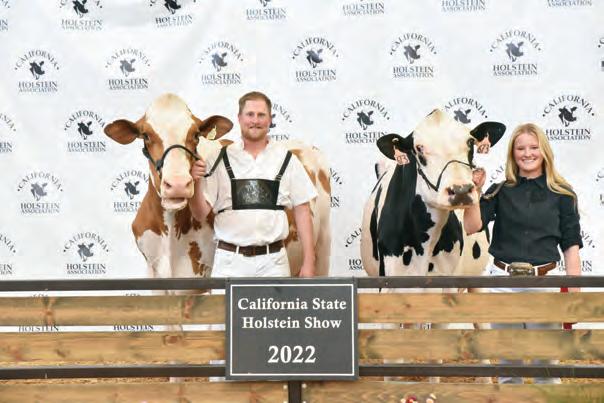
Here’s what’s really going on. After a full year of empty dairy barns and pulled classes, California has finally flipped the switch. The statewide ban on poultry and dairy cattle exhibitions at fairs and shows is gone, and the show community is rushing—some excited, some cautious—to figure out what 2026 actually looks like.

If you’re running a serious herd in California, or you sell genetics into that market, this isn’t just a nice headline. It changes how you market cattle this year, how you manage disease risk, and what your 4‑H and FFA kids are working toward when the barn lights come on at 5 a.m.

How We Got Here: From Full Stop to “You’re Back On”

In early January 2025, California’s State Veterinarian, Dr. Annette Jones, sent a letter that landed on fair boards across the state: all poultry and dairy cattle exhibitions at fairs and shows were banned, effective immediately and “until further notice.” That wasn’t an academic exercise in risk management—it was a response to a very real fire.

By that point, state and local reports showed that more than 700 dairy herds and around 60 poultry flocks in California had already been affected by H5N1, with over 15 million birds lost or depopulated. Hoard’s Dairyman’s “Washington Dairygrams” reported that, as of early January 2025, 918 farms in 16 states had confirmed HPAI, and 703 of them were in California. Roughly three‑quarters of every infected farm in the country was in one state. 

That’s not a “we’ll keep an eye on it” moment. That’s a “we need to stop giving the virus free rides” moment.

The logic behind the exhibition ban was brutal but clear:

  • Fairs and shows bring cattle and poultry from many herds into the same barns and wash racks.
  • Field investigations and early research showed infected dairy cows often had subtle signs—lethargy, drop in yield, off feed—rather than the dramatic mortality we see in poultry, which makes it easy to miss unless you’re testing and watching carefully. 
  • Genetic sequencing linked H5N1 viruses in some California dairy herds to nearly identical strains in Colorado, pointing straight at cattle movement and people, not just wild birds, as key drivers. 

CDFA’s ban language said the goal was to “minimize the danger of exposing people and non‑infected cows and birds to the disease.” With 703 of 918 infected farms nationwide sitting inside California, there weren’t many soft options left. 

So the state did the one thing it could control quickly: it shut down the highest‑risk mixing points—poultry and dairy cattle at fairs and shows.

On the other end of the curve, CDFA didn’t just let the order quietly expire. After months of surveillance, trend analysis, and consultation with state and federal epidemiologists, Dr. Jones issued a new letter in December 2025 announcing that the statewide ban on poultry and dairy cattle exhibitions was lifted, effective immediately. On January 16, 2026, CDFA followed with a public release confirming that fairs and shows could bring poultry and dairy cattle back, citing: 

  • Improved H5N1 infection trends.
  • A better understanding of how the virus behaves in dairy cattle.
  • Stronger mitigation and biosecurity tools at farm and fair levels. 

So yes, the state has changed the rule. But the risk management has been handed back to you.

What the Ban Actually Cost: Youth, Barns, and Banners

Let’s talk about what this did where you live: in the barns, not in the press releases.

Youth projects ran into a wall

CDFA’s “Statewide Ban on Poultry and Dairy Cattle Exhibitions” FAQ doesn’t dance around who’s affected. It names 4‑H, FFA, Grange, and independent youth exhibitors as part of the ban and explains that dairy cattle in those programs cannot be shown while the order is in place. The ban specifically targeted the highest‑risk dairy classes: lactating and recently lactating cows and replacement heifers—the exact animals most dairy kids show. cdfa.ca

For a 13‑year‑old, losing one fair is disappointing. For a 17‑year‑old senior, it can be the difference between walking into the ring for a final year and aging out without that moment. UC ANR materials and county messaging describe county fairs as core agricultural education spaces; in 2025, dairy projects simply weren’t part of that picture. 

We’re not naming specific kids in this article, and that’s on purpose. Until juniors and families are ready to tell their stories on the record, we’re not going to pretend we know exactly whose senior year got cut short. What’s clear from the record is that a lot of youth dairy work had nowhere to land last year.

County fairs lost more than a couple of classes

Take dairy and poultry out of a county fair, and the whole atmosphere shifts.

The California Mid‑State Fair publicly announced in March 2025 that all live poultry and dairy cattle exhibits were removed for that year because of “the alarming spread of bird flu across the state” and to comply with the State Veterinarian’s ban. San Joaquin’s AgFest and similar events posted the CDFA orders and told families outright that dairy cattle weren’t coming through the gates in 2025. 

The Santa Cruz County Fair, which operated under that ban, is now making a point of discussing its return. In January 2026, CEO Dori Rose Inda said, “We are thrilled to have poultry and the dairy cows back with the amazing youth that care for them and show them at the 2026 Fair,” framing the animals and the kids as core to what makes the fair feel like a fair again.

You don’t have to be a show junkie to know that when the dairy barns go quiet, the rest of the grounds don’t feel quite right.

Show‑driven marketing plans stalled out

There’s another layer here. Shows aren’t just about trophies—they’re marketing infrastructure for genetics‑driven herds.

Operations like Vierra Dairy in Hilmar have built a national reputation by combining consistent show success—especially in Jerseys—with classification and genomic data to move embryos, live cattle, and bull contracts. Local and regional shows inside California have always been part of the pipeline that feeds into national stages and sales: 

  • Genomic heifers often get their first exposure there.
  • Young cows get shown close to home to build momentum before a big sale.
  • Junior members of key cow families get in front of local buyers and visiting breeders.

When California pulled dairy shows from fairs for 2025, that mid‑tier exposure vanished. We don’t have a precise dollar figure for lost entry fees, cancelled show consignments, or delayed sales—that’ll require fair data and breeder interviews in a follow‑up piece. But we do know entire segments of the show calendar simply didn’t happen.

If you rely on the show ring to help tell your genetics story, you lost a year of that storytelling.

The Herd‑Health Math: Why the Ban Actually Made Sense

It’s easy now to say, “They went too far.” Let’s walk through why, from a herd‑health perspective, the ban was the least bad option at the time.

The virus was moving with cattle, not just wild birds

Research and field reports from 2024–2025 pulled together a consistent picture:

  • In dairy cattle, H5N1 often showed up as mild, non‑specific illness: reduced milk production, lower feed intake, and some respiratory signs—nothing like the catastrophic mortality seen in poultry barns. 
  • Genetic analysis linked H5N1 viruses in dairy herds in Texas, Colorado, and California; strains in some California herds were nearly identical to those in Colorado, strongly suggesting that cattle that fought the virus were moved between herds. 
  • USDA responded with a Federal Order requiring testing for Influenza A before lactating dairy cattle move across state lines and tightening reporting requirements for infected herds. 

The big takeaway: H5N1 in dairy wasn’t just a wildlife problem. It was a movement and contact problem.

Now take that reality and look at a state fair dairy barn: cattle from different herds, shared equipment, shared wash racks, people bouncing from string to string, and no practical way to enforce strict separation without major structural changes.

From CDFA’s perspective, with 703 infected farms in California out of 918 nationally, those barns started to look like disease amplifiers rather than showcases. 

By the time the ban hit, the fire was already burning

Could the state have tried intermediate steps—like “no lactating cows, heifers only,” or “negative tests for all show animals” first? Maybe, if they’d moved earlier. But the timeline matters: CDFA and fair accounts show H5N1 hitting California dairy herds and poultry flocks hard through late 2024, with the ban announced only after the numbers turned ugly. 

By early January 2025, California wasn’t managing a handful of cases. It was carrying roughly three‑quarters of all HPAI‑affected farms in the country. At that point, shutting down high‑traffic exhibition points while they got a handle on transmission was the logical move, even if it landed hard on show families.

Where We Are Now: Risk Is Lower, But It’s Still Risk

So what changed enough for CDFA to say “yes” again?

In late 2025, CDFA, UC Davis extension, and local fair communications all point to the same factors when explaining the decision to lift the ban: 

  • Infection trends improved. Surveillance programs—milk testing, herd monitoring, and reporting—showed fewer new H5N1 detections in dairy herds, and known cases were being managed under quarantine and control programs. 
  • The industry understands the virus better. By then, USDA and researchers had months of data on how H5N1 behaved in cows, how long shedding lasted, and what worked to contain it in real dairy environments. 
  • Mitigation tools got sharper. Movement permits, testing requirements for certain categories of cattle, and farm‑level biosecurity improved compared to early 2024. 

On that basis, CDFA lifted the statewide exhibition ban. But they’ve been very clear that lifting the ban is not an “all clear.” Current guidance to fairs and exhibitors emphasizes:

  • Don’t haul or exhibit animals that look even slightly off.
  • Use veterinary oversight aggressively at fairs and at home.
  • Expect ongoing H5N1 monitoring and be ready for new guidelines if risk indicators change. 

The risk environment is better, but you’re still operating with a virus in the background, not a virus that’s gone.

The First Real Chances to Get Back in the Ring

Let’s get specific about where your cattle and your kids might actually be headed.

County fairs are rebuilding dairy barns

California Mid‑State Fair – Paso Robles
The Mid‑State Fair’s 2025 decision to remove all poultry and dairy cattle exhibits is well‑documented. Now that the ban has been lifted, they can rebuild those programs for 2026. That means recruiting exhibitors back, updating health rules, and resetting expectations after a blank year. 

Santa Cruz County Fair – Watsonville
Santa Cruz County Fair communications now highlight that poultry and dairy cattle will be back for the 2026 fair, with CEO Dori Rose Inda publicly celebrating the return of both the animals and the youth who care for them. 

Other county fairs and agfests
San Joaquin AgFest and others have circulated CDFA’s FAQs and updates, encouraging exhibitors to stay on top of state guidance as they prepare to reintroduce dairy cattle and poultry. For most fair managers, 2026 looks like a rebuild year: same barns, new rules. 

Western Classic and other dairy‑focused events

The Western Classic Junior Dairy Show in Tulare has long been a magnet for junior exhibitors and top‑end showstrings from across the West. Its published entry info and social channels now reflect the reality that California dairy shows are allowed again, making Western Classic one of the earliest big tests of how junior dairy shows function under the post‑ban biosecurity expectations. 

On the breed side, California is still home to some of the most aggressive show herds in North America. Herds like Vierra have made a business case out of combining show results with proof sheets and classification to drive semen, embryo, and live‑animal demand. With California shows back on the calendar, those herds can once again use a local and regional ladder to support their national ambitions, instead of having to jump straight to out‑of‑state events. 

The Hard Question: Is Hauling a String Worth It in 2026?

Here’s where it gets uncomfortable. Just because the ban is gone doesn’t mean hauling a showstring is automatically the smart move for your operation this year.

You’re balancing two real forces:

  1. The upside: genetics marketing, ROI on show cattle, youth development, and community connection.
  2. The downside: H5N1 and other disease risk from mixing cattle in shared barns, plus the financial and labor cost of showing.

What you stand to gain

If your operation leans on shows as part of your marketing engine, a functioning show season gives you tools you don’t get by just posting pictures on Facebook.

  • A class‑winner or champion can bump:
    • Embryo values for that cow family.
    • Live‑animal sale prices on daughters and maternal sisters.
    • Bull‑dam visibility when AI studs are sorting cow families and photos.
  • Regional show results, tied to classification and genomic proofs, can give your online sales and consignment offerings credibility that pure numbers sometimes can’t.

Herds like Vierra have shown that when you line up banners, solid type, production, and genomic profiles, you can turn show success into real contracts and long‑term demand. That’s genetics ROI, not just bragging rights. 

And for youth? Having a real show season again is about more than hardware. It’s about:

  • Learning to manage animals under pressure.
  • Dealing with judges, buyers, and the random person in the stands who doesn’t know which end of the cow is which.
  • Figuring out if they actually see a future for themselves in agriculture.

Those are hard things to replicate without a show ring.

What you’re putting at risk

On the other side, the disease risk and cost structure haven’t magically disappeared.

  • H5N1 is still present in North American dairy cattle; the difference now is more monitoring and better tools, not zero risk. 
  • Movement of cattle and people has been clearly implicated in the spread between herds and states.
  • Fairs and shows remain high‑traffic environments for both animals and humans.

Layer on top of that:

  • Entry fees.
  • Hauling and fitting.
  • Labor pulled off the home farm.
  • The risk is that a problem in the string becomes a problem in the main herd if you don’t have good separation.

The smart question isn’t “Can we go?” It’s “For this show, and this animal, in this year, does the upside actually justify the cost and risk?”

A Practical 2026 Show Decision Checklist

Here’s a straightforward way to think this through—no fluff, just the questions you’d ask yourself around the kitchen table.

1. Get clear on why you’re showing

Before you send an entry, ask:

  • Are we promoting a specific cow family ahead of a sale or a flush program?
  • Are we trying to build a bull‑dam’s profile for AI conversations?
  • Are we primarily doing this for youth development and family experience?

If the honest answer is “because we always go,” then you’re in the tradition/hobby lane. That’s okay if you can afford it—but don’t pretend it’s a pure business decision.

2. Be brutally honest about your herd health and physical setup

With your herd vet, walk through:

  • Any unexplained production dips or health quirks in the last few months.
  • How realistically you can separate show animals from the main herd:
    • Separate pens or a dedicated show facility.
    • Dedicated boots, coveralls, halters, pitchforks, and brushes for show cattle.
    • A plan for how long returnees stay isolated and how you’ll watch them.

If separation is mostly theoretical, then any show‑related disease exposure is a herd‑level risk, not just a show‑string risk.

3. Put show organizers on the hook—in a respectful way

Before you invest:

  • Ask if the show is working under the current CDFA guidance for poultry and dairy cattle exhibitions.
  • Ask whether a veterinarian will be on-site and how they’ll handle an animal that appears ill in the barn.
  • Ask whether any testing or additional health documentation is required this year.

If answers are vague, or you get the sense that “business as usual” is the only plan, that should factor into your decision.

4. Do a back‑of‑the‑envelope ROI on one key animal

For one heifer or cow you’re thinking of hauling, jot down:

  • Her realistic value if she stays home this year.
  • A realistic bump in value if she wins or places well—embryos, live sales, or bull contracts, not fantasy numbers.
  • Total costs: entries, hauling, fitting, extra feed, plus your time.
  • A rough “risk cost” in your head: what happens if she or a herd mate picks something up as a result of that trip.

If the upside is only marginally better than the combined cost and risk, you’re probably in hobby territory, not high‑ROI marketing. That may still be fine—but you should know which one it is.

Youth Exhibitors: They Lost More Than a Banner

For adults, a lost show season is a business and logistics problem. For youth, it can be the moment that either pushes them away from agriculture or pulls them deeper in.

CDFA’s FAQ and UC ANR summary both state that youth exhibitors were directly affected by the ban, and county fair leadership has been blunt that losing dairy and poultry removed a big piece of youth programming in 2025. Fairs like Santa Cruz are now emphasizing that bringing dairy cattle and poultry back is partly about restoring those youth opportunities, not just filling barns. 

If you’re a parent, project leader, or advisor, your 2026 show choices send signals:

  • That herd health and biosecurity matter in your operation.
  • That you’re willing to weigh risk and reward out loud, instead of just “hoping for the best.”
  • That you still see a future in dairy worth your kids’ time, even after a tough year.

The “right” answer—haul or don’t haul—won’t be identical for every family. But involving your kids in that reasoning process is part of what makes this more than just a season of banners.

What You Should Actually Do in the Next 60–120 Days

Let’s put this into a simple playbook you can actually use.

Step 1: Build a realistic 2026 show calendar

Contact the fairs and shows that matter to you and confirm:

  • Dates and locations.
  • Which dairy breeds and classes they’re offering in 2026.
  • Any new health, testing, or biosecurity requirements for entries.

From there, build a calendar that fits your labor, cash flow, and animal inventory—not just the “we always go” list.

Step 2: Decide which “show herd” you are this year

Be clear which lane you’re in:

  • Show‑forward herd: You’ve got the people, facilities, and genetics to target a handful of major shows. You invest in biosecurity and expect a marketing return.
  • Selective marketing herd: You choose one or two strategic shows, then build photography, video, and sales messaging around those results.
  • Stay‑home herd: You decide the H5N1 and logistics risk isn’t worth it this year. You lean into genomic proofs, classification, production records, SCC, components, and good storytelling to market cattle without leaving the yard.

All three strategies can work. The key is not lying to yourself about which you’re actually following.

Step 3: Build a show‑specific biosecurity plan with your vet

This year isn’t the year to wing it.

Ask your herd vet to help you set:

  • Pre‑show health check criteria and any recommended testing.
  • A clear isolation and monitoring protocol for animals returning from each event.
  • Rules for people and equipment moving between the showstring and main herd.

Tie that plan directly to what USDA and CDFA have said about H5N1 in dairy cattle—subtle clinical signs, movement‑driven spread, and the continued need for surveillance. 

Step 4: Make sure the show results feed your bottom line, not just your ego

If you’re investing in a show season:

  • Make sure pedigrees, sire stacks, classification scores, and production records are ready to share alongside ring photos.
  • Capture high‑quality pictures and video at shows and at home.
  • Decide in advance how the show results will plug into:
    • A sale catalog,
    • An online offering,
    • AI stud conversations, or
    • A flush or IVF program.

Shows can still be a powerful lever. In 2026, that lever has to connect to Net Merit, PTAT, components, and long‑term herd strategy—not just a banner in the office.

The Bottom Line: The Ban Is Gone, but the Responsibility Isn’t

California lifting the exhibition ban tells you three things at once:

  • The H5N1 situation is better than it was, but it’s still on the radar.
  • The state now expects producers, vets, and fair organizers to do more of the practical risk management.
  • The show ring is once again a legitimate tool for youth development and genetic marketing—if you use it intentionally.

The barns are open again. Whether that’s a net win for your operation depends on the choices you make from here—about herd health, about where you chase banners, and about the example you set for the next generation watching you call the shots.

Use shows where they genuinely support your herd, your kids, and your business—not just because “we always go.” Respect the virus, respect your neighbors, and don’t assume another emergency order is impossible.

Everyone would like this reopening to stick. Whether it does will come down to how carefully fairs, exhibitors, and vets handle the next season.

We Want Your Story

If you’re a California exhibitor—youth or adult—who lived through this ban, we’d like to hear your side:

  • What year of your project did you lose?
  • Which cow or heifer never got her shot in the ring?
  • What sale or marketing plan did you have to shelve?
  • Where will you take your string first now that the barns are open?

Email andrew@thebullvine.com or message The Bullvine on Facebook. With your permission, we’ll build a follow‑up feature around the people behind these decisions—because policies and case counts matter, but it’s your lives, your cows, and your communities that make this story worth telling.

Key Takeaways 

  • Shows are back—risk isn’t: CDFA lifted California’s year-long H5N1 exhibition ban, but the virus is still out there. Every entry form in 2026 is a three-way bet on genetics, disease exposure, and whether the trip actually pays.
  • Youth projects took the hardest hit: 4-H, FFA, and Grange kids sat out an entire season. For seniors, that wasn’t a setback—it was their last ring, gone.
  • Show-driven marketing lost a year: Herds that use banners to move embryos, build bull-dam profiles, and drive sale prices had no California stage in 2025.
  • Now you run the numbers: Decide if you’re show-forward, selective, or staying home—and tie every show decision back to Net Merit, PTAT, components, and long-term herd profit, not nostalgia.
  • Biosecurity is the price of entry: Work with your vet on pre-show health checks, return isolation protocols, and strict separation between showstring and main herd. Winging it isn’t a plan anymore.

The Sunday Read Dairy Professionals Don’t Skip.
Every week, thousands of producers, breeders, and industry insiders open Bullvine Weekly for genetics insights, market shifts, and profit strategies they won’t find anywhere else. One email. Five minutes. Smarter decisions all week.

NewsSubscribe
First
Last
Consent

When Giants Fall Silent: The Shore Dynasty’s Century of Shaping Holstein Excellence

When Hardy Shore Jr. died, the Holstein industry lost more than a breeder—it lost the final chapter of its greatest dynasty.

Have you ever gotten one of those calls that just… stops you cold? Mine came the day after Christmas, 2013. Hardy Shore Jr. was gone.

I’d been half-expecting it, honestly. We all had. Hardy had been wrestling with his demons for years—the kind of personal battles that shadow brilliant minds in our industry more often than we’d like to admit. This time, though… this time he’d lost the fight.

What struck me afterward wasn’t just losing another talented breeder. It was how quiet everything felt across Ontario’s dairy community. Like walking into your barn when the ventilation fans suddenly quit—you don’t realize how much background noise there was until it’s gone.

That’s when it hit me. We hadn’t just lost Hardy Jr. We’d watched the end of something much bigger unfold. The conclusion of a dynasty that had shaped our industry for over a century.

That silence got me thinking, not just about the Shores, but about the nature of greatness in our industry.

The Thing About Certain Farm Families…

On operations across Ontario and the upper Midwest, I’m seeing something special in certain bloodlines—not just in our cattle, but in our people, too.

Some families just have it in their DNA, you know? The way they read a cow’s conformation through a barn aisle during morning chores, the timing of their breeding decisions when feed costs are squeezing margins tighter than bark on a tree. They can spot genetic potential in a gangly heifer where the rest of us see just another mouth to feed.

The Shores of Glanworth, Ontario, had that gift in spades.

What really strikes me about their story is how it mirrors the challenges we face today. Think about it—four generations, each adapting to massive technological disruptions that could’ve buried them. From William H. Shore’s leap into purebreds in 1910 (when most guys thought he’d lost his mind) to Hardy Jr.’s embryo exports in the genomic era… it’s like watching a century of dairy evolution through one family’s eyes.

Consider William’s decision in 1910 to buy those first purebred Holsteins from Herman Bollert. Mixed farming was safe, predictable, profitable—especially in those rich Talbot Settlement soils south of London where corn grows like weeds and hay makes itself. But William saw where the industry was heading and bet everything on black and whites.

Sound familiar? How many of us are making similar pivots right now with robotic milking systems, precision nutrition protocols, or these carbon-neutral initiatives that seem to change every time the USDA or AAFC puts out new guidance? The parallels are everywhere if you look for them.

Here’s what I’m seeing on farms from Wisconsin to New York—producers with that same Shore mentality. Willing to look beyond this quarter’s milk check when interest rates are killing them, investing in genetics that might not show returns for three, four years. That long-term thinking… it’s what separates the survivors from the legends.

The Talbot Settlement: Where Greatness Took Root

The Shore story begins in the 1850s in a small hamlet called Glanworth, located just south of London, Ontario. This was Colonel Thomas Talbot’s domain—part of that massive land settlement scheme that carved some of the best dairy country in Canada out of raw wilderness.

What’s fascinating is how Talbot hand-picked his settlers. Kept out the speculators and get-rich-quick types, made sure the land went to families who’d actually work it. Sound like any farm succession planning discussions you’ve sat through lately? Same philosophy, different century.

That approach—long-term thinking, community commitment, building something that lasts through market cycles, adverse weather conditions, and government interference—it’s the same foundation driving successful dairy operations today. The Shores didn’t just inherit good land; they inherited a culture that valued persistence over quick profits.

William H. Shore, born in 1870, ran a diversified operation that would be recognized today. Shorthorns bunked next to grade Holsteins, with some horse trading on the side—kind of like how some Ontario producers today run cash crops alongside their dairy herds to spread risk when milk prices tank.

But William was restless… always on the road, always chasing the next opportunity. His real talent wasn’t farming—it was reading markets. And in 1910, he made the read of his lifetime.

The Pivot Point: 1910

Here’s where it gets interesting. William bought his first purebred Holsteins—two females and a bull—from Herman Bollert’s herd.

Now, if you know your Canadian Holstein history, that name should ring bells. Bollert’s cattle traced directly back to Michael Cook’s 1881 imports—the foundation animals that established our breed in Canada. William wasn’t just buying cattle; he was buying into genetic royalty. Think of it like getting first pick in a genomic draft before anyone knew what genomics was.

The bulls he chose tell you everything about his vision. Faforit Champion Echo was a maternal brother to the legendary May Echo Sylvia. Keldy Grange King Segis came from proven Western Ontario bloodlines. These weren’t just breeding decisions—they were market positioning moves.

What really strikes me is how William understood brand building before the term was even coined. He wasn’t just improving his herd; he was positioning himself at the center of an emerging industry. It’s the same strategic thinking I see in today’s top producers who were early adopters of A2 genetics or genomic selection.

The thing is, though, this was 1910. No genomic testing, no AI catalogs filled with EPDs, no production records to compare. William was making these calls based on pedigree, conformation, and gut instinct. That takes… well, that takes exactly the kind of courage we need today when we’re deciding whether to invest in automated feeding systems or transition to organic production, with all the headaches that come with it.

Hardy Sr.: Building the Brand Through the Show Ring

A portrait of leadership: Hardy Shore Sr. served as President of the Holstein-Friesian Association of Canada in 1967, a role that solidified the family's reputation for excellence far beyond the show ring.
A portrait of leadership: Hardy Shore Sr. served as President of the Holstein-Friesian Association of Canada in 1967, a role that solidified the family’s reputation for excellence far beyond the show ring.

When Hardy Shore Sr. joined his father in 1933, he did something that seems simple now but was revolutionary then—he started using the “Shore” prefix on their cattle.

Picture Hardy Sr. standing in that barn, watching his father work with those foundation animals, and making the decision that would define the next century. That black and white prefix board hanging outside their barn? It became a quality guarantee that buyers from New York to Alberta learned to trust.

Consider that in today’s context: how many of us are building brand recognition for our sustainability practices, animal welfare protocols, or genetic programs? The Shores figured out something we’re still learning—reputation travels faster than advertising.

The thing is, though, building a brand in the show ring takes more than good cattle. It takes consistency, patience, and the guts to bounce back from setbacks that would crush most operations. The Shores proved this in 1942 when financial pressures forced a herd dispersal. Most producers would have liquidated everything and started over—or gotten out entirely.

However, Hardy Sr. made a decision that highlights the difference between good operators and great ones. He kept six animals. Three daughters and three granddaughters of Montvic Rag Apple Paul.

Six cows. That’s it.

But those six became the foundation for everything that followed. By the late 1940s, their herd was simply “the herd to beat” at Western Fair. Nine Premier Exhibitor banners. Ten All-Canadian awards. The peak came in 1952 when they had five animals nominated for All-Canadian consideration in a single year.

A familiar sight in the 1950s: Hardy Shore Sr. collecting the Premier Breeder and Premier Exhibitor banners at the 1956 Western Fair. These consistent wins in the show ring were the foundation of the Shore brand.

I was talking to an old-timer at a Holstein meeting last spring who remembered those Western Fair shows in the ’50s. Said you could feel the tension in the barn when the Shore cattle were led out. Everyone knew they were the standard to beat. That’s the kind of presence you build over decades, not months.

The Cow That Made the Name

Here is the “presence that separates the good from the great.” Fran-Lee Lass’s show ring dominance in the early 1950s created massive demand for Shore bloodlines and validated the family’s entire breeding program.

There was one cow that really put the Shore name on the map—Fran-Lee Lass. I never saw her myself, but you should see how the old-timers’ eyes light up when they talk about her.

Picture this: it’s 1951, and Fran-Lee Lass is moving through the show ring at the Royal Winter Fair. The crowd goes quiet as she approaches the judge—perfect udder, flawless type, that presence that separates the good from the great. She’s named an All-Canadian three-year-old and wins best udder at the Royal.

The following year, she’s Grand Champion at Western Fair before earning Reserve All-Canadian honors for 4-year-olds. When she eventually sold to Fred Baer’s herd in New York and established a world-class family there, it completed the perfect circle.

Show ring success creates market demand. Market demand validates the genetics. And suddenly, everyone wants Shore bloodlines.

That’s a lesson that’s as relevant today as it was seventy years ago. Whether you’re showing at Madison or posting videos on social media, excellence creates its own marketing momentum. The platforms change, but the principle remains the same.

The Twin Bulls That Changed Everything

Here’s where the genetics get really interesting—and where Hardy Sr. showed his breeding genius. His greatest early contribution came through twin bulls: Rockwood Rag Apple Romulus and Remus.

The key to compounding genetic interest. When his twin brother was sold, Hardy Sr. leased Rockwood Rag Apple Remus to continue the powerful bloodline. Remus’s value as a sire of bulls like Shore Royal Duke would echo for decades.

Their dam, Amulree Baroness Pietje, had a lactation record that came within five pounds of making her the Canadian butterfat champion. Five pounds! Can you imagine being that close to history? Her record was 32,080 pounds of milk with 1,259 pounds of fat. In today’s terms, that’s like missing a genomic ranking by a decimal point.

But Romulus… this bull accomplished something that’s never been done before or since. In 1950, he sired both the All-Canadian senior yearling heifer and the All-Canadian junior yearling heifer—both carrying the Shore prefix, both bred by the same operation.

Genetically, creating two All-Canadian yearlings from the same sire, in the same year, from the same herd… the odds are astronomical.

When Romulus was sold for export to South America, Hardy Sr. showed the kind of strategic persistence that characterizes successful breeding programs. He leased the twin brother, Remus, from a breeder in Oklahoma. That’s the kind of move you make when you understand that genetic value compounds over generations—like putting money in the bank and letting compound interest work its magic.

What’s truly fascinating is how that genetic pathway evolved over the course of the decades. Follow the line from Remus to Shore Royal Duke, whose daughter produced Fairlea Royal Mark—described as “possibly the best bull to come out of Western Ontario”.

Keep tracing that line forward, and you’ll find it leads directly to Braedale Goldwyn. We’re discussing breeding decisions made in the 1940s that shaped the breed through to the 2000s. That’s the kind of long-term thinking that’s becoming essential in today’s genomic era, where the genetic decisions we make today will have a lasting impact on future breeding—assuming we have the patience to let them play out.

The Auction Empire: Where Dreams Met Reality

While Hardy Sr. was building a genetic empire, he also recognized something fundamental about our business—there’s more money in merchandising than in routine dairy farming.

Sound familiar? It’s the same realization driving today’s focus on branded genetics, premium programs, and value-added marketing. Think about how many top operations today make as much from genetics sales as they do from their milk check. The Shores saw that coming sixty years early.

During the Depression, while other farm families struggled to keep the lights on, the Shores found opportunity. They started exporting dairy cattle to the United States, acting as sales agents who’d drive American buyers farm to farm. Their reputation opened doors that stayed closed to everyone else.

More than just a barn, this was the stage where records were broken. The Shore sales arena became a legendary marketplace where elite genetics found their true value under the gavel.

The masterstroke came in 1949 when Hardy Sr. and his brother Don bought a seventy-acre farm on Glanworth Road and built an auction barn. Picture that first sale—Don chanting while Hardy stood beside him, making announcements, their combined reputations the only guarantee buyers had.

But it was Bob Shore who really turned the auction barn into legend.

Bob Shore: The Voice of an Industry

Bob joined the operation in 1951, fresh from the Ontario Agricultural College and auctioneering school. The irony? He was shy, uncomfortable in crowds. But something magical happened when he stepped into that ring.

I’ve seen this transformation before—quiet farm kids who become different people when they’re working with cattle. Bob found his voice at the sales barn, and once he found it, there was no stopping him.

His training ground was the Talbotville sales barn, selling beef animals “by the pound” every Saturday. Thirty-second intervals, prices measured in fractions of cents—it created that distinctive Shore style: crisp, fast, commanding.

When you’re working at that pace, every word matters. No wasted syllables, no hesitation. Just pure, focused communication. It’s like watching a skilled AI technician work during breeding season—every motion deliberate and efficient.

This is what opportunity looked like in 1960. As the industry consolidated, the Shore sales arena became the essential marketplace where buyers from across the continent came to find their next foundation cow.

The Shore Canadian Classic, launched in 1964, became the premier North American marketplace for elite Holstein genetics. World-record prices were set at these events. The \$115,000 syndication of Weavers Reflection Apex in 1967, the \$125,000 sale of the famed show cow, Johns-Lucky-Barb, known affectionately as ‘Blacky,’ in 1974… but the one that truly made headlines was when Bob brought the gavel down on what industry sources reported as the first million-dollar cow sale.

The success wasn’t just about Bob’s auctioneering skills, though he was arguably the best in North America. It was perfect timing, meeting perfect preparation. The bulk cooler revolution in the mid-1950s forced thousands of smaller dairy producers out of the industry. Their dispersals needed a marketplace, and the Shore arena was ready.

Here’s what’s really interesting—that bulk cooler disruption parallels what we’re seeing today with environmental regulations, labor shortages, and the adoption of precision agriculture. The producers who adapt find opportunity; those who resist get left behind. The Shores understood this dynamic better than anyone.

The Genomic Visionary: Hardy Jr.

The innovative mind behind Shoremar Inc.: Hardy Shore Jr. focused on cutting-edge genetics and left an indelible mark on the Holstein breed.

The fourth generation brought a different kind of genius to the operation. Hardy Jr. left high school at sixteen to attend Reisch Auction School in Iowa. By his early twenties, he had what industry veterans call “cow talent”—that ability to see genetic potential before it’s proven.

But Hardy Jr. was… complicated. Brilliant, visionary, but drawn to what was delicately described as “high-risk behavior”. When his parents agreed to bring him into the business, it came with conditions. The result was Shoremar Inc., a company that immediately signaled a new direction.

While his father and grandfather had mastered selling live cattle, Hardy Jr.’s focus was on the cutting edge—marketing frozen embryos worldwide. His breeding philosophy was perfectly calibrated for the modern era: “strong type, solid cow families and modern genetics,” seeking what he called “a balance of type, fat, protein and modern sires”.

The interesting thing about Hardy Jr.’s approach is how it anticipated today’s genomic selection strategies. He was breeding for balanced improvement decades before we had the tools to measure it precisely. Sometimes the best breeders are the ones who see what’s coming before the rest of us catch up.

The Acquisition That Defined a Generation

This is the cow that defined a generation. Hardy Jr. saw foundation-quality perfection in Aitkenbrae Starbuck Ada, and his vision was validated when she produced arguably the most influential pair of full sisters in modern Holstein history.

Hardy Jr.’s greatest stroke of genius came in acquiring Aitkenbrae Starbuck Ada. As a former hoof trimmer, he understood foundation quality when he saw it—and Ada had perfect feet and legs.

Picture Hardy Jr. walking through that barn, his trained eye taking in everything from hock angle to heel depth. Most people see a pretty cow; he saw the genetic architecture that would support decades of production. That’s cow sense you can’t teach.

But it was what he did next that showed his vision. The decision to flush Ada to Donnandale Skychief produced what may be the most influential pair of full sisters in modern Holstein history.

The result of a “stroke of genius.” Shoremar S Alicia, one of Ada’s legendary twin daughters, fulfilled her genetic promise by becoming a World Champion in 2000 and a cornerstone brood cow for the next generation.

Shoremar S Alicia became a breed legend—classifying EX-97 and winning the World Championship in 2000. With 32 excellent daughters in the US and Canada, she ranks among the elite transmitters of North America.

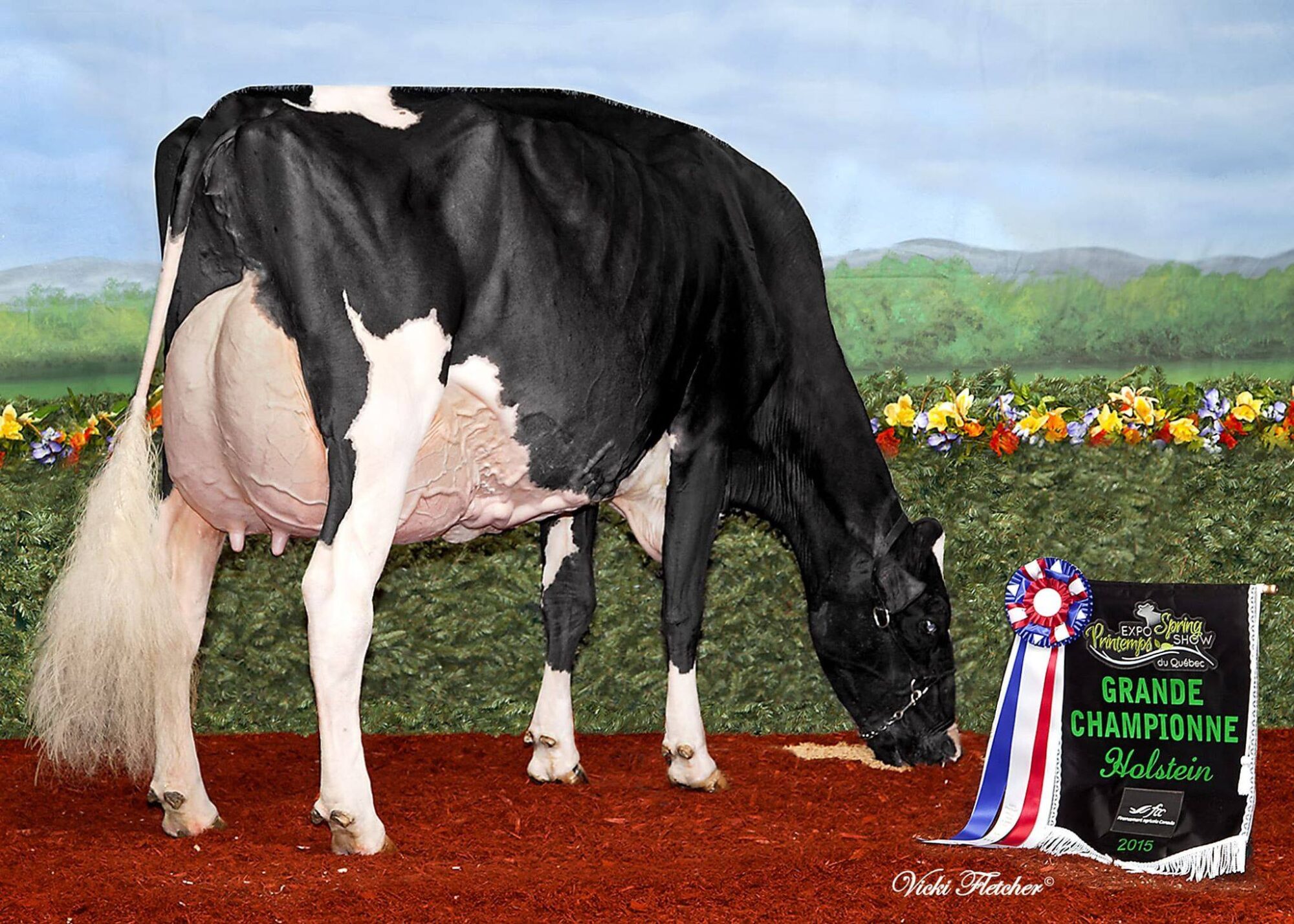
The influence echoes through the generations. A direct descendant of Aitkenbrae Starbuck Ada, MS Goldwyn Alana (EX-96) continued the family’s winning ways by capturing the Grand Champion banner at the 2015 Quebec Spring Show.

Her sister, MS Kingstead Chief Adeen, proved equally influential as a brood cow, producing 51 daughters classified Excellent worldwide—ranking her second all-time for most EX daughters.

A transmitting legend in her own right. Ms Kingstead Chief Adeen, one of the two famous daughters of Ada, became a cornerstone brood cow whose influence extends globally through her famous descendants.

When I look at those numbers… 51 EX daughters from one cow? That’s not luck. That’s the result of understanding genetic architecture at a level most of us can only dream about. And this was before genomic testing made genetic prediction routine.

Transmitting power, generations later. Jeanlu Stanleycup Alexis (EX-96) carries on the genetic influence of her granddam, MS Kingstead Chief Adeen, proving that the foundation laid by Ada is still producing champions today.

The Genetic Crescendo

The ultimate validation of Hardy Jr.’s vision came through the bulls he bred. His most famous achievement was Shoremar James, born from his foundation cow Stelbro Jenine Aerostar.

This is what Hardy Jr.’s vision looked like on the world stage. Thrulane James Rose, a daughter of Shoremar James, fulfilled the genetic promise of the Shore dynasty by dominating the show ring.

James became a phenomenal sire of show cows—his daughters were voted World Champion Holstein Cow three times in four years. But James’s greatest legacy wasn’t his show daughters. It was his most famous son: Braedale Goldwyn.

The Shoremar James influence knew no borders. In Europe, his daughter Castel James Jolie became an icon, proving that the genetic power forged in Glanworth could dominate on any continent.

Here’s what blows my mind about Goldwyn’s creation—it wasn’t an accident or luck. You can trace the genetic pathways directly from Hardy Sr.’s breeding decisions in the 1940s. Those twin bulls, Romulus and Remus, led to Fairlea Royal Mark, whose lineage eventually produced Maughlin Storm, who sired Braedale Baler Twine—Goldwyn’s dam. Hardy Jr. bred the sire, Shoremar James.

The dynasty’s legacy of show ring dominance continued for generations. RF Goldwyn Hailey, a daughter of Braedale Goldwyn, exemplifies the superstar quality that traced directly back to the breeding decisions made in Glanworth.

When those two lines converged, they created a genetic perfect storm. Industry records show that Goldwyn’s influence extended to herds on every continent. It’s like watching a master chess player execute a strategy that unfolds over the course of decades.

The Complexity of Genius

The ultimate proof of a foundation cow’s influence. Decades later, the genetic power of Aitkenbrae Starbuck Ada was still producing champions like GALYS-VRAY, whose EX-95 mammary system helped her conquer the European show circuit in 2016.

For all his brilliance, Hardy Jr.’s life was marked by profound personal struggle. The same intensity that drove him to acquire cows like Ada and breed bulls like James also led him to what observers called “the edge of the abyss”.

Those of us who knew Hardy Jr. understood this complexity. Eighteen bulls from his program received major awards in Canada, and three became number one sires in different countries. But privately, we watched with concern as he navigated battles that were as intense as his triumphs.

The Holstein community’s response to his struggles revealed something beautiful about our industry. We recognized genius when we saw it, even when it came with complications.

The flip side of creative genius is sometimes a very dark place.

People remembered him as “gifted, talented, remarkable beyond one’s imagination”. The same creative fire that produced breakthrough genetics also fueled personal demons that few understood.

It’s a reminder that innovation often comes with a price—that the very traits that drive visionary thinking can also create profound personal challenges. We’ve seen this pattern in other brilliant minds in our industry, haven’t we? The relentless drive that creates breakthrough genetics sometimes carries a hidden cost.

When the Gavel Fell Silent

December 26, 2013. Hardy Shore Jr. died at his home at age 57.

The industry’s response spoke to the profound connections he’d forged throughout his career. Despite his struggles, colleagues remembered his kindness, optimism, and unwavering passion for the Holstein breed.

The final detail—the family’s request that memorial donations be made to the Men’s Mission Services of London—provided quiet testimony to the nature of his struggles. A man who dealt in world-record prices and global genetics, fighting private battles that few understood.

Sometimes the most brilliant minds carry the heaviest burdens. The Holstein community’s ability to honor his contributions while acknowledging his struggles showed the best of what our industry can be.

What This Means for Us Today

So, what does the Shore story teach those of us who are still making breeding decisions, still building something for the next generation?

First, it’s about vision beyond the immediate cash flow pressures that keep us awake at night. William H. Shore could have stayed with mixed livestock forever—safe, predictable, profitable. Instead, he bet on purebreds when most thought he was crazy. Hardy Sr. kept six females when forced to disperse, understanding that genetic value compounds over time like interest in a savings account.

Today’s genomic tools give us unprecedented ability to make these long-term decisions—if we have the courage to use them.

Second, it’s about recognizing industry shifts before they hit your bottom line. The bulk cooler revolution could have been devastating—instead, the Shores turned it into their greatest opportunity. Today’s shifts toward sustainability, animal welfare, and precision agriculture require the same strategic thinking.

The producers who adapt first create the biggest advantages. Consider the early adopters of robotic milking or those who entered organic production before the premiums were eroded by oversupply.

Third, it’s about understanding that reputation matters as much as genetics. The Shore name opened doors because it stood for integrity, quality, and innovation. In our age of social media and instant communication, building that kind of trust is both easier and harder than ever.

But perhaps most importantly, it’s about persistence through complexity. Hardy Jr.’s story reminds us that innovation often comes with personal costs; the very traits that drive breakthrough thinking can also create challenges that are not always apparent from the outside.

The industry’s response—celebrating his contributions while supporting him through difficulties—shows the best of what our community can be.

The echoes of a dynasty. As a daughter of Braedale Goldwyn, Loyalyn Goldwyn June is a direct descendant of the Shoremar James line, proving that the family’s genetic influence continues to produce champions in today’s show rings.

The Legacy Lives On

Walk through any modern dairy barn today, and you’ll find cattle whose pedigrees trace back to Glanworth. The “Shore” prefix may no longer appear on registration papers, but their genetic influence flows through the global Holstein population like underground streams feeding a river.

The auction barn on Glanworth Road stands quiet now. But the echoes of that distinctive auctioneer’s chant still resonate through every major sale, every breeding decision based on balanced genetics, every young producer who dares to dream of creating the next genetic revolution.

For the better part of a century, the Shores were the business. And in many ways, they still are. Every superior cow carrying their bloodlines, every successful breeding program following their example of long-term thinking, every auction where quality genetics find their true value… that’s the Shore legacy.

The dynasty may have ended, but its influence remains. That’s immortal.

And in our industry, where the right genetic decision can echo for generations, immortality is the only currency that really matters.

KEY TAKEAWAYS

  • The Shore family profoundly shaped the Canadian and North American Holstein industry across four generations, building an enduring legacy through strategic breeding, merchandising, and auctioneering.
  • Their long-term vision—starting with William H. Shore’s early 20th-century bet on purebreds, through Hardy Sr.’s brand-building via the show ring, to Hardy Jr.’s genomic advances—offers valuable lessons for modern dairy producers navigating today’s technological and market shifts.
  • The Shore dynasty exemplifies how combining superior genetics with innovative business acumen, such as capitalizing on technological disruptions like the bulk milk cooler, can create a lasting competitive advantage.
  • The story highlights the human complexity behind industry success, particularly Hardy Shore Jr.’s personal struggles amid professional brilliance, underscoring the industry’s need for compassion alongside admiration.
  • The Shore genetic influence endures globally, notably through iconic cattle like Shoremar Alicia and Braedale Goldwyn, demonstrating the multi-generational impact of deliberate, balanced breeding strategies.

EXECUTIVE SUMMARY

The Shore family legacy is a cornerstone of the Canadian and North American Holstein dairy industry, spanning four generations from the early 1900s to 2013. Their journey began with William H. Shore’s pivotal decision to invest in purebred Holsteins in 1910, a bold move that laid the genetic foundation for future success. Hardy Shore Sr. and his successors built a revered brand through show ring dominance and an innovative auction business that capitalized on industry shifts, such as the bulk tank revolution. The third and fourth generations, led by Bob Shore and Hardy Shore Jr., advanced the family’s influence through legendary auctioneering and cutting-edge genetic marketing, including the global success of Shoremar S Alicia and Braedale Goldwyn. While personal struggles marked Hardy Shore Jr.’s life, his professional contributions reflect visionary breeding that shaped Holstein genetics worldwide. The Shore dynasty exemplifies long-term strategic thinking, adaptability, and the intricate interplay between human complexity and industrial advancement. Today, their genetic imprint continues to impact cattle across continents, underscoring a legacy that is both historic and enduring.

Learn More:

  • Breeding for Profit: A Cow-Side Revolution – This article provides a modern framework for the Shore’s profit-focused mindset. It details tactical breeding strategies for today’s market, focusing on health and efficiency traits that directly impact your bottom line and long-term herd profitability.
  • Dairy Genetics: Is Bigger Really Better? – While the Shores built an independent dynasty, this piece analyzes the modern strategic landscape of dairy genetics. It explores the pros and cons of industry consolidation, offering critical insights for breeders navigating today’s market to maintain genetic diversity and profitability.
  • The Future of Dairy Breeding: Is Gene Editing the Answer? – Just as the Shores embraced new technologies, this article looks to the future. It demystifies gene editing, exploring its potential to accelerate genetic progress for health and production traits, and what it could mean for the next generation of elite cattle.

The Sunday Read Dairy Professionals Don’t Skip.

Every week, thousands of producers, breeders, and industry insiders open Bullvine Weekly for genetics insights, market shifts, and profit strategies they won’t find anywhere else. One email. Five minutes. Smarter decisions all week.

NewsSubscribe
First
Last
Consent

The Charming Nomad: How Alberto Medina Became the Most Beloved Man in Global Dairy Shows

Traveling 12+ countries yearly with less than 100 nights at home, Alberto Medina has turned cattle fitting into a global art form built on charm and excellence.

A master in his element. This candid shot captures Alberto Medina’s calm, observant focus amidst the bustling pre-ring at the 2014 Royal Agricultural Winter Fair, completely at home in the organized chaos. (Photo by Carl Saucier)

You know that rare person who walks into any room and somehow makes everyone feel like they’ve just met their new best friend? Alberto Medina is that guy—except his “rooms” happen to be cattle barns scattered across five continents, and his magnetic presence has turned him into something of a legend in the dairy world.

Less than 100 nights a year—that’s how often this Spanish-born cattle fitter actually sleeps in his own bed. The rest of the time? He’s somewhere between customs lines and show rings, navigating airports with the confidence of a seasoned diplomat and somehow managing to be the most genuinely admired professional in an industry not exactly known for its abundance of humble superstars.

Here’s what strikes everyone about Alberto—in a business where success can breed contempt and competition often gets ugly, Alberto has managed to achieve unprecedented global recognition while earning genuine respect from virtually everyone he encounters.

The Boy Who Never Lost His Wonder

The story begins at Argomota Holsteins, where young Alberto absorbed something special from his parents—not just their passion for showing cattle, but their fundamental approach to treating people well. “My parents always loved the shows, so I started showing at a very early age,” he tells me, and you can hear decades of genuine enthusiasm still bubbling under those words.

A pivotal moment: Alberto Medina (left) and Santiago Llera celebrate their first National Grand Champion title with Llera Goldwyn Gala, a testament to Alberto’s early eye for exceptional cattle and a foreshadowing of his global success

What’s remarkable about Alberto’s journey is how organically it unfolded. While others fought their way up through regional politics and industry hierarchies, Alberto simply continued to excel at his craft, maintaining the same authentic enthusiasm that had first drawn people to him as a teenager, when he would clip cattle for friends.

After a decade with Semex Spain providing customer support and fitting services, he made the leap that changed everything: he went full-time as an independent fitter. “After that, I became a full-time fitter, and that’s how the traveling started. I was looking to fulfill my working days,” he explains with characteristic modesty, as if describing a weekend hobby rather than embarking on what would become an unprecedented global career.

A young Alberto Medina (second from the right) with the CIAQ/Semex daughter display team, showcasing his early commitment to the dairy genetics industry.

Living the Impossible Dream

Picture this: You land in Madrid after two weeks in Canada, rush home to change suitcases, maybe catch four hours of sleep, then hop on a 6 AM flight to New Zealand. Most people would be staggering zombies. Alberto steps off that plane looking refreshed and ready to tackle whatever challenges await.

“Sometimes I have to go home for a day, change luggage, sharpen my blades… and fly again the next day,” he says matter-of-factly. The logistics alone would break most people—navigating different electrical systems, language barriers, and cultural expectations that shift with every border crossing. But Alberto has mastered it all with an ease that borders on the supernatural.

Twelve to fifteen different countries annually. Thirty-plus shows a year. Only five of those shows are in his native Spain. That’s not just a career—that’s a lifestyle that would terrify most of us, yet Alberto has turned it into an art form.

Precision under pressure—Alberto’s ring-ready finish is the quiet edge behind champion results.

The Stories That Reveal Character

Every conversation with Alberto eventually becomes storytelling time, and his tales reveal layers of humor and grace under pressure. Take the great goat invasion: “A goat running in the ring full of cows was priceless,” he recalls with obvious delight. You can picture the whole scene—some prestigious European show, everything formal and serious, then suddenly chaos as a goat careens through a ring full of Holstein cows.

Or the highway cow chase during a trip from Spain to Italy: “We stopped for milking, one of the cows escaped and was so close to jumping onto the highway.” The way he tells it, you can feel the adrenaline spike, the frantic teamwork, the collective relief when disaster was averted. These aren’t just amusing anecdotes—they’re windows into someone who finds adventure and humor even in moments that would traumatize others.

But perhaps the story that best captures Alberto’s character involves a cow whose breeder wanted to milk her out before the show because, “in their opinion, she didn’t look any good.” Alberto saw something others missed—and she ended up Supreme Champion. That’s not just professional expertise; that’s someone who believes in potential when others have given up hope. This moment perfectly illustrates his ability to see beyond surface appearances and trust his instincts, even when others doubt him.

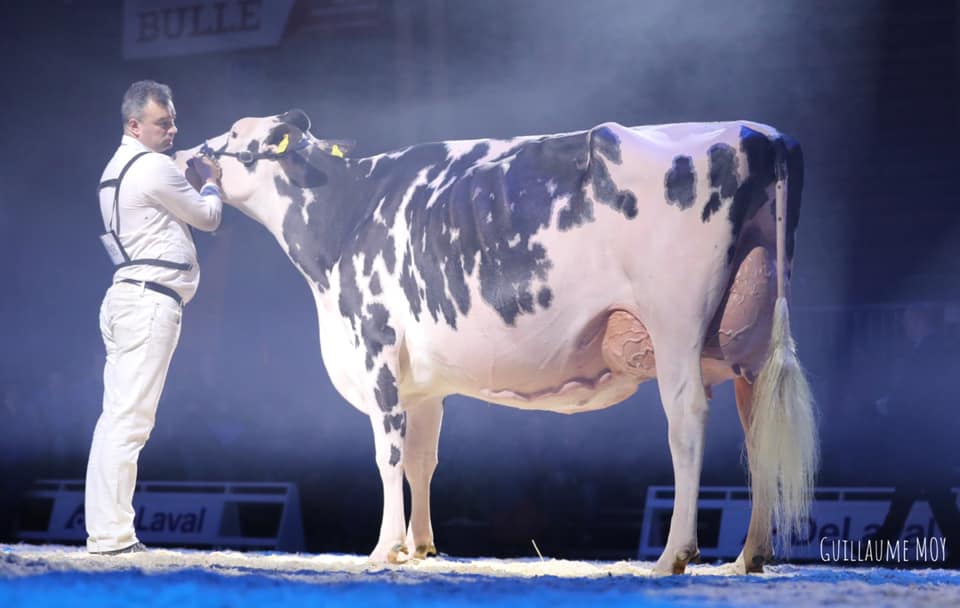
Mastering the moment. Alberto Medina guides Au Parchy Doorman Jolie in the spotlight at the 2019 Expo Bulle, where their flawless presentation led to a stunning upset victory for Grand Champion

The Professional Who Elevates Everyone

What distinguishes Alberto from other elite professionals is his collaborative philosophy. “Make a good team at every show because showing animals is not a one-person thing. Success is about teamwork,” he explains, and this isn’t just strategic thinking—it’s how he approaches every aspect of his career.

Rather than hoarding trade secrets or maintaining a competitive advantage through secrecy, Alberto freely shares knowledge and actively builds others up in the industry. When he talks about buying a cow with friends back in 2006 that became Grand Champion at the European Dairy Show in Italy in both 2008 and 2009, then Junior Champion at the Swiss Expo in 2020, you hear the joy of shared achievement. These weren’t solo victories—they were friendship triumphs that created lasting bonds across continents. His willingness to invest in partnerships and celebrate collective success has earned him respect that transcends mere professional accomplishment.

Teamwork makes the dream work at IDW 2020. Alberto Medina (standing) with the talented Blue Chip crew including Sheila Sundborg (kneeling, center left) and Katie Kearns (kneeling, center right) and Kelvin Cochrane (Queensland), embodying the collaborative spirit that defines his approach to the global show circuit.

The Master Who Wears Success Lightly

Alberto’s technical mastery is undeniable—he’s adapted to feeding systems ranging from TMR to pasture to full hay programs, stayed current with equipment that’s “changed completely in the past 30 years,” and somehow manages mental transitions between regional showing standards that would challenge seasoned diplomats.

Llinde Ariel Jordan—Grand Champion and Best Udder at Cremona, the matriarch Alberto has believed in for a decade.

Take his relationship with Llinde Ariel Jordan, a cow he first encountered as a “small, narrow, straight-legged, soft-pastured” two-year-old. Most professionals would have written her off as unpromising. Alberto saw potential and patiently watched her develop “into one of the best show cows in the world.” At 14 years old, she continues to compete and improve her skills. The pride in his voice when discussing her isn’t just professional satisfaction—it’s genuine affection for watching someone (even four-legged someones) exceed expectations.

Even challenging animals earn his respect. Kingboy Birdy is “one of the hardest cows I ever walked into the ring with,” yet he speaks of her with bemused fondness rather than frustration. He appreciates strong personalities even when they complicate his job.

A challenging partnership, a dream fulfilled. Alberto Medina presents Vinbert Kingboy Birdy in the final lineup at the 2022 Royal Agricultural Winter Fair, an event he called the realization of a lifelong dream after a rewarding year with “one of the hardest cows I ever walked into the ring with.

The Gentle Revolutionary

Here’s something most people don’t realize about operating at Alberto’s level—sometimes excellence itself becomes controversial. “People tried to ban me from going to do my job at a show because they think I’m too good at it. Yes, this happened,” he admits with characteristic understatement.

Praise from peers often means the most. Alberto shared his pride in this post from industry veteran Carl Saucier, which places him in the direct lineage of show ring legends like Donald Dubois—a testament to the deep respect he has earned at the highest level.

Think about that scenario: being so consistently successful that competitors attempt to exclude you from events. It’s the kind of situation that could make anyone defensive or bitter. Alberto tells the story with the same bemused calm he brings to everything else, seemingly genuinely puzzled by such reactions to professional excellence. His grace under this kind of pressure reveals the depth of his character and professional maturity.

The Philosophy of Authentic Excellence

Alberto’s approach to both life and work reveals someone who’s found genuine fulfillment in an unconventional path. His downtime activities perfectly capture his character: ‘Hanging out with friends, good restaurants, more traveling, and getting my heifers ready for the next show.’ Even relaxation centers on the things he values most—relationships, experiences, and continued engagement with his passion

Alberto’s approach to both life and work reveals someone who’s found genuine fulfillment in an unconventional path. His downtime activities perfectly capture his character: “Hanging out with friends, good restaurants, more traveling, and getting my heifers ready for the next show.” Even relaxation centers on the things he values most—relationships, experiences, and continued engagement with his passion.

When I ask about maintaining personal connections with such an intense travel schedule, he’s refreshingly honest: “It’s truly difficult.” But there’s no self-pity, just acceptance of choices made in pursuit of something he genuinely loves. That emotional honesty extends to his professional relationships as well.

The life of a nomad is better with family. Alberto and his brother, Jose Medina, share a moment while en route to the World Dairy Expo in 2015, a rare bit of downtime in a schedule packed with international travel.

The Visionary with Feet on the Ground

Alberto’s insights about the industry come from an unmatched global perspective. His philosophy about cattle evaluation challenges conventional wisdom: “Wideness is the true type of cow. Modern cows have to have a wide chest, wide open rib, wide rumps, much more than being long and tall.” But he presents these views as contributions to ongoing conversation rather than final pronouncements, inviting discussion rather than demanding agreement.

The technical challenges of transitioning between different regional standards reveal the complexity of his work. “Still hard to adapt when you have 2 months in North America and go back straight to a show in Italy. Not so easy to change your mind that quick on… getting the udders too full,” he notes. This kind of cultural and technical switching demonstrates the mental agility required to succeed at his level.

The focus of a master craftsman. Alberto Medina demonstrates the precision and skill that make him sought-after worldwide, here fitting a show cow for Blue Chip at Australia’s International Dairy Week (IDW) in 2020.

His advice for aspiring professionals reflects both extensive experience and fundamental optimism: “Travel and see other ways of showing because every country is different and there are so many ways to do the same thing.” It’s counsel about embracing the world with curiosity and openness—life philosophy disguised as career guidance.

The Honest Realist

When I ask about his reputation for being universally liked, Alberto cuts through diplomatic nonsense with refreshing candor: “I don’t think so! Some people love me, but also many on the other side.”

That honesty is quintessentially Alberto. He’s not trying to convince anyone he’s perfect—just being genuine about the realities of high-level success. Yes, most people genuinely enjoy working with him. Yes, his consistent achievements have created some resentment. Both things can be true, and Alberto’s comfortable with that complexity in ways that reveal deep emotional maturity.

Dreams Still Dancing

Dreams realized across borders. Alberto proudly leads Marsella to Grand Champion honors at Agro Expo Bogota, Colombia, a testament to his ongoing pursuit of excellence and the global impact of his expertise.

Even after achieving global recognition that most professionals can only imagine, Alberto maintains specific ambitions that keep him energized. “I’ve been in the middle of the ring at the end of the day at almost every show I’ve been in the world but Expo,” he admits with a smile. World Dairy Expo—the crown jewel of North American dairy shows—remains unconquered territory.

This perspective—always having meaningful goals ahead—might explain how someone maintains enthusiasm across decades of demanding travel and competition. The moment you think you’ve achieved everything is probably when excellence starts to fade. Alberto’s far too fascinated by what’s around the next corner to let that happen.

The passion that fuels the dream. Alberto shares a heartfelt embrace with the Grand Champion at a recent show in Ecuador. Victories like these, filled with joy and genuine affection, are the moments that power his pursuit of a World Dairy Expo title

The Living Proof

What strikes me most about Alberto Medina isn’t his unprecedented travel statistics or technical expertise, though both are extraordinary. It’s how he’s demonstrated that success and kindness aren’t mutually exclusive—that you can achieve global recognition while maintaining the values that make you genuinely likable.

In an industry that sometimes rewards sharp elbows over generous spirits, Alberto has built an international reputation on competence paired with character. Every airport conversation, every patient explanation of a technique, and every shared celebration of others’ achievements contribute to a legacy that transcends mere professional accomplishment.

Those fewer than 100 nights at home annually represent something profound: a commitment to relationships and excellence that has literally transformed an entire industry. Every clipping session becomes an opportunity to mentor. Every show becomes a chance to help someone else achieve dreams they might not have believed possible.

As young professionals watch Alberto work—whether in Auckland or Amsterdam—they see living proof that excellence doesn’t require ego. His patient teaching, infectious enthusiasm, and genuine investment in others’ success have redefined what global leadership can look like.

The next time you encounter perfectly prepared cattle in any show ring around the world, remember the man who’s probably logged more miles in service of our industry than anyone else, while somehow making the whole impossible journey look like the most natural thing in the world.

Alberto Medina’s greatest achievement isn’t any single championship or distance record. It’s proving that the most effective way to conquer the world is to help it succeed, one genuine relationship at a time. For aspiring professionals in any field, his example provides both inspiration and practical guidance: master your craft, treat everyone with respect, find joy in the journey, and remember that the best victories are always shared.

And somewhere tonight, Alberto is probably planning his next adventure, sharpening his clippers, and reminding everyone lucky enough to be around him that work stops being work when you love what you do and genuinely care about the people you do it with. That might be the most beautiful lesson of all.

Key Takeaways:

  • Embrace adaptability: Master working across diverse cultures, climates, and management systems rather than limiting yourself to one approach
  • Build strong, collaborative teams: Success depends on teamwork—”showing animals is not a one-person thing”
  • Practice genuine humility and kindness: Authentic relationships and respect open more doors than technical skill alone
  • Commit to continuous learning: Stay current with evolving techniques and technology throughout your entire career
  • Trust your professional intuition: Learn to identify potential that others might miss, even when conventional wisdom disagrees
  • Develop resilience for challenges: Accept that pursuing excellence involves logistical difficulties and personal sacrifices
  • Balance passion with realistic expectations: Understand the trade-offs required for global success, including limited time at home
  • Prioritize long-term preparation: Focus on consistent, year-round excellence rather than relying on last-minute efforts

Executive Summary

Alberto Medina, the most traveled cattle fitter in the dairy industry, embodies a unique blend of technical mastery, humility, and genuine charm that has made him a beloved figure across five continents. Born at Argomota Holsteins in Spain, Alberto’s career spans over three decades, with annual travels to 12-15 countries and participation in more than 30 shows worldwide—sleeping fewer than 100 nights at home each year. Renowned for his ability to adapt effortlessly to diverse cultures, feeding systems, and show standards, he builds lasting relationships through authentic kindness and collaborative spirit, all while maintaining top-tier performance that has led to multiple championship wins, including his work with Llinde Ariel Jordan, who successfully competed at 14 years old. What sets Alberto apart isn’t just his unmatched global experience or technical expertise, but his rare combination of professional excellence and personal warmth—proving that in an industry where egos often clash, success and genuine likability can coexist beautifully, making him not just the most traveled fitter in the business, but quite possibly the most respected.

Learn More:

  • 7 Things You Must Do To Win In The Show Ring – This article provides a tactical checklist for aspiring showmen. It breaks down the key preparations and mindset, offering practical strategies to translate the professional excellence demonstrated by Alberto Medina into your own repeatable success in the ring.
  • The 21st Century Guide to Marketing Your Genetics – Moving from individual skill to business strategy, this piece explores how to build a powerful brand around your herd’s genetics. It reveals modern methods for capitalizing on show ring success to create long-term value and market influence.
  • Is It Time To Rethink The Perfect Dairy Cow? – This forward-looking analysis challenges breeders to consider the future of dairy type. It complements Alberto’s story by examining the evolving standards and economic realities that will shape the champion cows of tomorrow, prompting readers to innovate their breeding strategies.

The Sunday Read Dairy Professionals Don’t Skip.

Every week, thousands of producers, breeders, and industry insiders open Bullvine Weekly for genetics insights, market shifts, and profit strategies they won’t find anywhere else. One email. Five minutes. Smarter decisions all week.

NewsSubscribe
First
Last
Consent

Send this to a friend