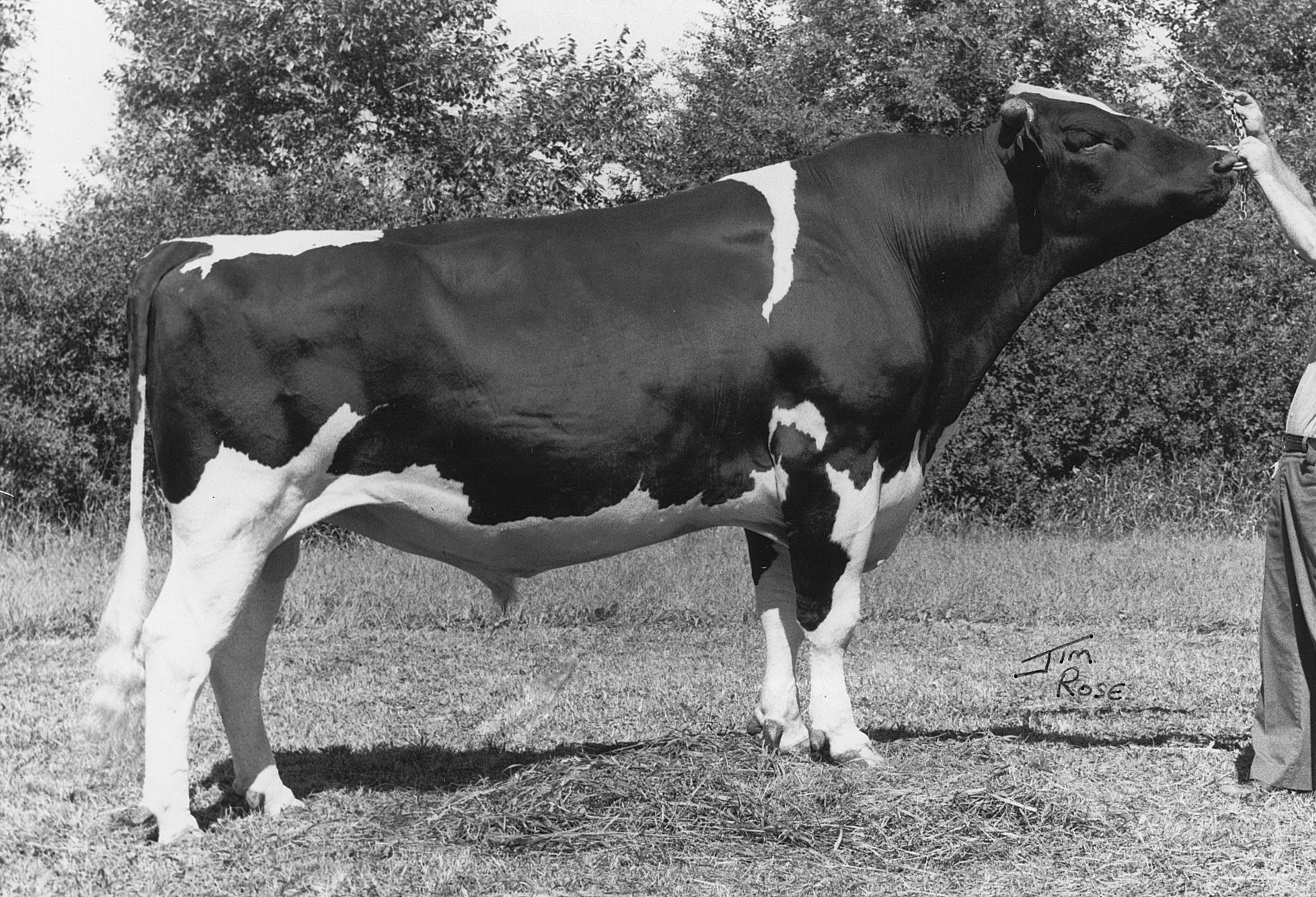
Archive – Page 6

From Woodstock to Wall Street: How the Dairy Farmer Who Hosted Half a Million Hippies Built a Breeding Empire Worth Copying Today

Stop chasing genomic indexes. A 1960s dairy farmer’s breeding strategy beat today’s averages—here’s his $75K crisis management playbook.

The same conservative Republican dairy farmer who rented his pasture to 460,000 counterculture rebels also revolutionized Holstein and Guernsey genetics and vertical integration decades before Silicon Valley discovered the concept. Max Yasgur’s ,000 Woodstock windfall was just the tip of an agricultural iceberg that modern dairy operations desperately need to understand.

Max Yasgur on his dairy farm in Bethel, New York. The missing fingers on his right hand told the story of a man who built his empire with his own hands.

The Festival That Fed the Farm (And What It Teaches About Modern Asset Optimization)

What if the secret to surviving today’s volatile dairy markets isn’t found in the latest genomic technology but in the business playbook of the man who made Woodstock possible? Max Yasgur didn’t just host “perhaps the most important cultural event of the twentieth century”—he demonstrated principles of strategic breeding, vertical integration, and asset diversification that modern dairy farmers are still trying to master.

The handshake that sealed the deal was missing two fingers. Michael Lang, the young promoter of what would become the Woodstock Music and Art Festival, felt a jolt of recognition as he grasped Max Yasgur’s weathered hand on that fateful Sunday afternoon in 1969. “Holy smokes,” Lang thought to himself, “He’s built this place with his own hands.”

What Lang didn’t fully comprehend was that he wasn’t just meeting the future host of the largest music festival in history—he was encountering one of Sullivan County’s most successful agribusiness pioneers, a man whose 650-head dairy operation and 2,000-acre empire represented exactly the kind of strategic thinking that separates millionaire dairy farmers from those barely breaking even.

The “Angel of Woodstock” Was Actually a Genetic Genius

While 460,000 hippies danced in his fields between August 15-18, 1969, Yasgur was quietly revolutionizing breeding with a precision that would make today’s genomic specialists jealous. His approach wasn’t about chasing the latest trends but about concentrated excellence that created lasting wealth.

The Woodstock Generation vs. The Genetic Generation

The same weekend that Jimi Hendrix played guitar with his teeth on Yasgur’s makeshift stage, the farm’s barns housed some of America’s most strategically bred cattle. Yasgur’s herd included 90 daughters of Harden Farms King Pontiac and 30 daughters of Cashman Thunderbolt, all tracing back to the elite Dunloggin bloodlines that cost Harden Farms $25,500 in the 1940s.

Dr. E.S. Harrison, manager of the prestigious Harden Farms, wrote: “Few breeders have followed a more definite breeding program than Max Yasgur.” This wasn’t casual praise but professional recognition from one of the industry’s most respected authorities, acknowledging Yasgur’s systematic approach to genetic improvement.

From City Kid to Dairy King: The Making of an Empire

Born December 15, 1919, in New York City to Russian immigrants, Samuel and Bella Yasgur, Max’s journey to dairy farming began early when his family moved to a dairy farm in Maplewood, New York, ninety miles north of the city. The farm doubled as a boarding house, catering to summer guests—an early lesson in revenue diversification that would serve him well decades later.

When his father died during Max’s teenage years, he assumed the role of family head. Though he briefly studied real estate law at New York University, “his dream was to go back to the farm.” This wasn’t a default choice but a calculated decision that revealed an entrepreneurial vision most farmers never achieve.

Yasgur’s ambition extended far beyond typical dairy farming. He wanted to build a milk processing plant and to sustain it, he needed scale. With methodical precision, he began acquiring neighboring farms, constructing barns, and expanding his herd. He built a pasteurization plant and refrigeration complex, installed bottling machines, and developed comprehensive door-to-door delivery routes.

The result was Yasgur Dairy—”the largest milk producer in Sullivan County” with a herd that peaked at 650 head and encompassed “ten farms comprising two thousand acres of land.” This wasn’t just farming—it was agricultural technology that captured value at every stage while competitors sold commodity milk.

The $75,000 Woodstock Deal: Master Class in Crisis Monetization
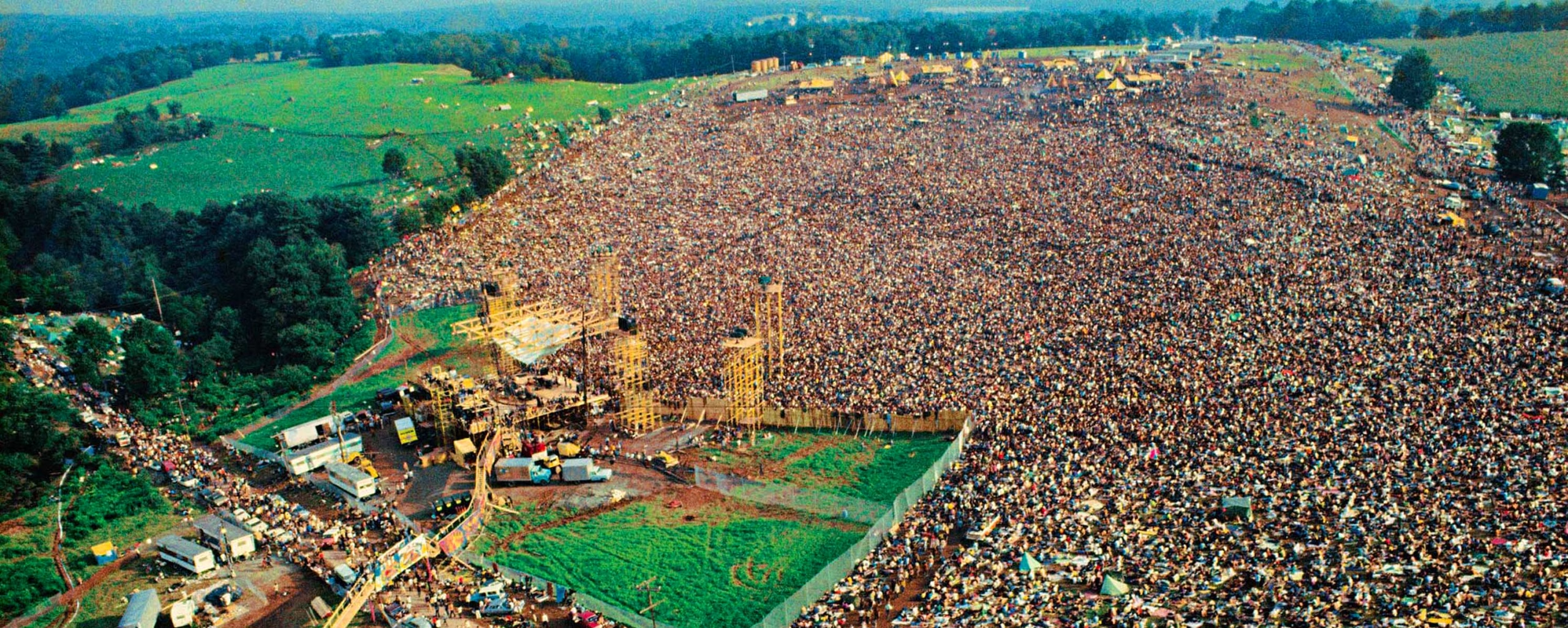
The natural amphitheater of Max Yasgur’s alfalfa field that Michael Lang immediately recognized as ‘perfect for the stage’ – a bowl-shaped pasture that would host 460,000 people.

The year 1969 had been unusually wet, damaging Yasgur’s hay crop and threatening feed costs for his massive herd. When Lang and Roberts initially offered to rent a field for three days to accommodate “10,000 to 15,000 people,” Yasgur showed them several suitable options. But then came the revelation that changed everything.

The Tenfold Price Increase Strategy

The promoters revealed they were actually expecting “50,000 people and that they would have another 50,000 who would try to get in without paying,” bringing the total to a staggering 100,000. This disclosure prompted Yasgur’s immediate reconsideration: “Wait a minute… You’re now at 100,000 people. That’s a lot of people,” he said. “I will really have to think whether or not I want to be involved in something that large.”

Yasgur’s response revealed the business acumen that built empires: “I am a businessman, and it will cost you,” he said. “But I’ll go to bat for you”. He then “added another zero” to their rent, increasing it from $7,500 to $75,000—a 900% markup that solved his immediate cash flow crisis. Some reports suggest the final payment was even higher, with various sources citing amounts up to $10,000 in other accounts.

This wasn’t opportunism but strategic asset monetization that every modern dairy farmer should understand. Yasgur recognized both the scale of the opportunity and his negotiating position, demonstrating the kind of aggressive pricing that builds wealth. As he told himself afterward: “His cows wouldn’t go hungry this year.”

Modern Applications:

  • Agritourism Revenue: Yasgur proved that agricultural land can generate substantial non-dairy income
  • Event Hosting: From weddings to corporate retreats, many dairy farms sit on underutilized event venues
  • Crisis Management: Using unexpected opportunities to offset operational challenges

The Conservative Republican Who Defended Hippie Rights

Perhaps the most remarkable aspect of Yasgur’s Woodstock decision wasn’t the money but the principle. Despite being a “conservative Republican who approved of the Vietnam War,” he stood before the Bethel Town Board to defend the festival against local opposition.

His neighbors voiced fears of widespread “pot smoking,” potential heroin use, an “ocean of garbage,” “universal bad manners,” “orgies of love-ins,” and even “a wild and bloody encounter with the police.” Signs appeared around town reading “Local People Speak Out Stop Max’s Hippie Music Festival,” “No 150,000 hippies here,” and “Buy no milk.”

Yasgur’s response, preserved in the meeting transcript, revealed the character that built both dairy empires and cultural history:

“I hear you are considering changing the zoning law to prevent the festival. I hear you don’t like the looks of the kids who are working at the site. I hear you don’t like their lifestyle. I hear you don’t like they are against the war and that they say so very loudly. I don’t particularly like the looks of some of those kids, either. I don’t particularly like their lifestyle, especially the drugs and free love. And I don’t like what some of them are saying about our government. However, if I know my American history, tens of thousands of Americans in uniform gave their lives in war after war just so those kids would have the freedom to do exactly what they are doing. That’s what this country is all about, and I will not let you throw them out of our town just because you don’t like their dress or hair, the way they live, or what they believe. This is America, and they are going to have their festival”.

The Business Lesson: Yasgur understood that defending principles—even unpopular ones—often aligns with long-term business success. His “live and let live” philosophy enabled him to monetize opportunities that others rejected due to prejudice.

From Hippies to Holsteins: The Vertical Integration Model That Predated Amazon

The intersection of counterculture and agriculture: A festival-goer milks one of Yasgur’s 650-head Gurensey and Holstein herd, symbolizing the unexpected harmony between two different worlds.

While 460,000 festival-goers camped in his fields, Yasgur’s real innovation was happening in his processing facilities. He had built what modern business schools would call a “vertically integrated supply chain”—controlling every step from pasture to doorstep decades before it became a Silicon Valley buzzword.

Yasgur’s Pre-Digital Disruption:

  • Pasteurization plants and refrigeration complexes
  • Bottling machines and door-to-door delivery routes
  • Ten farms comprising 2,000 acres of land
  • Peak herd of 650 head, making him Sullivan County’s largest milk producer

This integration allowed Yasgur to capture margins that commodity producers surrender to processors and distributors. While competitors complained about milk prices, Yasgur controlled his destiny from cow to customer.

What This Means for Your Operation Today:

  • Direct-to-Consumer Opportunities: Yasgur’s delivery model prefigured today’s farm-to-table movement
  • Value-Added Processing: His on-farm processing captured margins that commodity producers surrender
  • Supply Chain Control: By owning processing and distribution, he insulated himself from market volatility

The Health Cost of Agricultural Ambition: Yasgur’s Warning for Today’s Farmers

By his late forties, Yasgur had “suffered several heart attacks” and required an “oxygen tank” always nearby, with an “oxygen tent” in his bedroom. The relentless demands of building a 650-head operation across 2,000 acres had taken a severe physical toll. He was 49 at the time of Woodstock and “had a heart condition.”

Despite his declining health, Yasgur continued building his empire until selling the business to Yasgur Farms Inc. in December 1970. The transaction, completed just 19 months before his death at age 53, included all cattle, machinery, and the milk business, with Lew Wohl, George Peavey, and James Peavey as the new shareholders.

His planned transition ensured business continuity—a crucial lesson for modern dairy farmers who often delay succession planning until it’s too late.

Woodstock’s Hidden Dairy Legacy: The Man Behind the Music

On the third day of the festival, just before Joe Cocker’s early afternoon set, Yasgur addressed the crowd of half a million in a speech that perfectly captured his character:

“I’m a farmer. I don’t know how to speak to twenty people at one time, let alone a crowd like this. But I think you people have proven something to the world — not only to the Town of Bethel, or Sullivan County, or New York State; you’ve proven something to the world. This is the largest group of people ever assembled in one place… But above that, the important thing that you’ve proven to the world is that a half a million kids — and I call you kids because I have children that are older than you are — a half million young people can get together and have three days of fun and music and have nothing but fun and music, and I – God bless you for it!”

His speech was met with massive cheers from the audience, cementing his place as the “Angel of Woodstock” and “Patron Saint of Woodstock.”

The 460,000 festival-goers who gathered on Yasgur's farm for what became 'perhaps the most important cultural event of the twentieth century.
The 460,000 festival-goers who gathered on Yasgur’s farm for what became ‘perhaps the most important cultural event of the twentieth century.

The Humanitarian Touch

When Yasgur heard that some local residents were selling water to festival-goers, he put up a big sign at his barn reading “Free Water.” The New York Times reported that he “slammed a work-hardened fist on the table and demanded of some friends, ‘How can anyone ask money for water?'”. His son Sam recalled his father telling his children to “take every empty milk bottle from the plant, fill them with water and give them to the kids, and give away all the milk and milk products we had at the dairy.”

This wasn’t just good publicity—it was smart business. Yasgur understood that customer goodwill creates long-term value, even when providing immediate services at cost.

The Breeding Legacy: Strategic Breeding That Still Impresses

While Woodstock made him famous, Yasgur’s primary professional achievement was revolutionizing Dairy cattle genetics through systematic breeding that would make modern genomic specialists envious.

Early Career Excellence (1953-1955)

Yasgur’s first mention in Holstein-Friesian World came in November 1953, when he consigned five heifers to the Earlville Invitational Sale. Harden Farms King Pontiac sired all, and at that time, Yasgur’s herd already included 90 daughters of this proven sire. He also owned 30 daughters of Cashman Thunderbolt and was using two other sons of Dunloggin Deen Var.

His highest-selling heifer at the Earlville Invitational brought $775—significant money for the 1950s. This early success established Yasgur as a serious player in the Holstein community, recognized for his adherence to elite Harden Farms breeding programs.

The Great Dispersal and Strategic Return (1955-1961)

In 1955, Yasgur conducted what Holstein-Friesian World called “The First Great Dispersal of Nearly 100% Harden Farms Breeding ever to be Offered at Public Sale”. The sale was managed by Charles Vosburgh with guest auctioneer Clarence B. Smith, though results were never publicly reported.

This wasn’t failure—it was strategic repositioning. By 1961, Yasgur was back in business, purchasing the Canadian heifer Bramlaw Dutchland Triune (VG-87) for $2,000, the top price at the New York Convention Sale. This purchase marked his triumphant return and demonstrated the kind of resilience modern operations need to survive market volatility.

The Oakcrest Roburke Dean Era (1970s)

By 1970, Yasgur’s breeding program had evolved to focus on Oakcrest Roburke Dean, a Pabst Roamer son bred by Laurence McNeil. This strategic shift produced exceptional results:

  • Yasgur Roburke Triune: 20,812 lbs milk, 728 lbs fat
  • Yasgur Roburke Modelaine: 21,893 lbs milk, 628 lbs fat
  • Yasgur Roburke Anny: 24,023 lbs milk, 705 lbs fat

These numbers were exceptional for the 1970s when average cows produced less than half those amounts. Yasgur’s strategic focus on proven genetics created consistent excellence that many modern operations struggle to achieve despite advanced technology.

Oakcrest Roburke Dean daughters at Yasgur Farms Inc. These strategic breeding choices produced cattle like Yasgur Roburke Anny (24,023 lbs milk, 705 lbs fat) - numbers that matched modern averages 50 years early.
Oakcrest Roburke Dean daughters at Yasgur Farms Inc. These strategic breeding choices produced cattle like Yasgur Roburke Anny (24,023 lbs milk, 705 lbs fat) – numbers that matched modern averages 50 years early.

Lessons for Today’s Breeders: The Yasgur Playbook

Lesson 1: Scale with Purpose, Not Ego

Yasgur’s 650-head operation across 2,000 acres wasn’t built for bragging rights—it was designed to support his processing plant and capture maximum value at every stage. Modern operations that expand without clear revenue drivers often fail.

Ask yourself: Does your expansion serve a strategic purpose, or are you just collecting more cows?

Lesson 2: Genetic Patience Beats Genetic Panic

While today’s breeders switch sires based on quarterly genomic updates, Yasgur has stuck with proven bloodlines for decades. His systematic approach to Harden Farms genetics and his strategic evolution to Oakcrest Roburke Dean represented calculated improvement, not random experimentation.

Challenge for Today’s Breeders: When did you last evaluate whether your breeding program has consistent direction, or are you just reacting to the latest genetic trends?

Lesson 3: Risk Management Through Diversification

That $75,000 Woodstock payment wasn’t just luck—it was smart asset utilization. Yasgur recognized that land could generate income beyond milk production, solving an immediate crisis while creating unexpected wealth.

Modern Applications:

  • Agritourism opportunities: Event hosting, farm tours, educational programs
  • Renewable energy projects: Solar installations, wind power, biogas systems
  • Real estate development: Leveraging land value for additional income streams

The Numbers That Prove Yasgur Was Ahead of His Time

MetricYasgur (1960s-70s)Modern AverageYasgur’s Advantage
Herd Size650 head280 head (US average)132% larger
Land Base2,000 acres442 acres (US average)352% larger
Top Producer24,023 lbs milk23,000 lbs (current average)Matched modern averages 50 years early
Business ModelVertically integratedCommodity focusedValue capture at multiple levels
Crisis ResponseDiversified revenue ($75K event income)Limited optionsMultiple revenue streams

From the 1955 “Great Dispersal” to Woodstock Riches: Strategic Resilience in Action

Yasgur’s career included significant setbacks that offered crucial lessons for modern operations. His complete herd dispersal in 1955, followed by rebuilding to host Woodstock profitably by 1969, demonstrates the kind of strategic flexibility that modern dairy operations need to survive market volatility.

The Holstein-Friesian World’s description of his 1955 sale as featuring “Nearly 100% Harden Farms Breeding” underscores the quality and consistency of his program. Yet rather than viewing this as a failure, Yasgur used it as an opportunity to reassess and rebuild more strategically.

His swift return to business, marked by purchasing the top-priced Canadian heifer in 1961, proved that temporary setbacks don’t define long-term success. This resilience—selling out completely in 1955, then rebuilding to host the world’s largest music festival profitably by 1969—provides a masterclass in agricultural adaptability.

The Rolling Stone Obituary: When a Dairy Farmer Changed Culture Forever

Nineteen months after selling Yasgur Farms Inc., Max Yasgur died of a heart attack on February 9, 1973, in Marathon, Florida, at age 53. His death marked a unique moment in American cultural history: “It was the first time in history that a humble dairy farmer was given a full-page obituary in Rolling Stone magazine.”

This unprecedented recognition by the counterculture movement’s premier publication underscored how his principled stand transcended agriculture to influence American society. Rolling Stone’s tribute acknowledged that Yasgur’s legacy extended far beyond milk production—he enabled a generation to express itself freely, demonstrating that dairy farmers could change the world.

The Bottom Line: Woodstock’s Dairy Legacy Lives On

Max Yasgur proved that dairy fortunes come from strategic thinking, not just hard work. His focused breeding program, vertical integration, and asset optimization created an empire that could afford to rent fields for $75,000—in 1969 dollars—when crisis struck.

Five Woodstock-Inspired Action Steps for Your Operation:

  1. Audit your asset utilization—What non-dairy revenue could your land generate during crisis years?
  2. Develop crisis monetization strategies—How can you turn operational challenges into revenue opportunities?
  3. Build principled partnerships—Are you missing profitable opportunities due to narrow thinking about your customer base?
  4. Focus on your genetic strategy—Are you following Yasgur’s systematic approach or chasing genetic lottery tickets?
  5. Plan your succession early—Yasgur’s strategic transition ensured business continuity despite his early death

What Yasgur’s Missing Fingers Really Mean

Those two missing fingers that caught Michael Lang’s attention told the story of a man who built success with his hands. In today’s technology-driven industry, the fundamentals of strategic breeding, smart business management, and principled decision-making remain unchanged.

The man who made Woodstock possible didn’t just host hippies—he demonstrated that principled business decisions, strategic genetic programs, and diversified revenue streams create lasting wealth. While Rolling Stone magazine gave him the first full-page obituary in history for a humble dairy farmer, his real legacy lies in proving that dairy farmers who think strategically can change the world—and profit handsomely while doing it.

Remember: Yasgur’s story reminds us that farming is about more than production metrics and profit margins—it’s about the character of the people who feed the world and the principles they’re willing to defend. The farmers who understand this will build the dairy empires of tomorrow—with or without rock festivals in their fields.

In an era of increasing specialization and technological focus, Max Yasgur’s legacy serves as a powerful reminder that the most successful dairy operations combine strategic thinking, principled leadership, and the courage to seize unexpected opportunities. His $75,000 Woodstock windfall wasn’t luck—it was the natural result of building systems and relationships that could respond quickly to changing circumstances.

The hard truth? Most modern dairy operations are more sophisticated than Yasgur’s but less profitable. His combination of genetic focus, business integration, and strategic thinking created lasting wealth—even when the man didn’t live to enjoy it. The question isn’t whether you can afford to follow his model—it’s whether you can afford not to.

KEY TAKEAWAYS

  • Genetic Concentration Beats Index Chasing: Yasgur’s decade-long focus on Dunloggin Deen Var bloodlines produced 24,023 lbs milk with 705 lbs fat—proving strategic genetic patience outperforms quarterly sire switching. Modern operations using 20+ bulls annually should evaluate genetic coherence versus Yasgur’s surgical precision approach.
  • Vertical Integration Captures 300% More Value: Yasgur’s processing-to-doorstep model captured margins at every stage while competitors sold commodity milk. Today’s direct-to-consumer dairy market offers similar opportunities—operations exploring value-added processing can increase per-gallon revenue from $0.18 commodity to $0.54+ retail pricing.
  • Crisis Asset Monetization Generates Emergency Capital: Yasgur’s $75,000 Woodstock payment solved immediate cash flow during the 1969 hay crisis. Modern dairy farms should audit non-core assets for revenue potential—agritourism, renewable energy leases, and event hosting can generate $25,000-$100,000+ annually in supplemental income.
  • Scale With Strategic Purpose, Not Ego: Yasgur’s 650-head operation across 2,000 acres supported his processing infrastructure—every cow served the vertical integration model. Operations expanding without clear revenue drivers average 15% lower ROI than strategically scaled farms with defined profit centers.
  • Succession Planning Prevents Wealth Evaporation: Yasgur’s planned December 1970 business transition to Yasgur Farms Inc. ensured continuity despite his death 19 months later. Dairy operations without formal succession plans lose 60% of accumulated wealth during unplanned transitions—strategic planning preserves generational assets.

EXECUTIVE SUMMARY

While modern dairy farmers scatter-shot their breeding programs chasing the latest genomic trends, a conservative Republican from upstate New York proved that strategic genetic concentration builds generational wealth. Max Yasgur’s 650-head operation achieved 24,023 lbs milk production per cow in 1970—matching today’s national averages with 1960s technology. His vertically integrated empire controlled processing, distribution, and retail—capturing margins that modern commodity producers surrender to processors. When crisis struck in 1969, Yasgur’s strategic asset utilization generated $75,000 in emergency revenue (equivalent to $580,000 today) by monetizing non-core land assets. His focused breeding program concentrated on proven Dunloggin bloodlines for decades, creating consistent genetic progress while competitors chased fads. Every modern dairy operation struggling with volatile milk prices and genetic confusion needs to audit whether they’re building a Yasgur-style empire or just collecting expensive cows.

Learn More:

The Sunday Read Dairy Professionals Don’t Skip.

Every week, thousands of producers, breeders, and industry insiders open Bullvine Weekly for genetics insights, market shifts, and profit strategies they won’t find anywhere else. One email. Five minutes. Smarter decisions all week.

NewsSubscribe
First
Last
Consent

Maximizing Calf Performance: The Million-Dollar Investment in Your Dairy’s Future

Boost profits with science-backed calf care: How pre-weaning ADG drives lifelong milk production

Pre-weaning calf performance isn’t just about raising healthy calves – it’s about building your dairy’s future profit engine. The research is crystal clear: what happens in those first 60 days shapes your herd’s productivity for years to come. Each pound of average daily gain (ADG) during the pre-weaning period can translate to over 1,000 pounds more milk in first lactation. From colostrum management to disease prevention, early nutrition decisions are literally worth thousands per animal. This comprehensive analysis breaks down the latest research on pre-weaning ADG and provides actionable strategies that can dramatically boost your dairy’s bottom line.

THE PRE-WEANING ADG REVOLUTION: WHERE YOUR PROFIT POTENTIAL EXPLODES

The connection between early calf growth and lifetime productivity isn’t just theory – it’s backed by hard numbers that should make every dairy producer sit up and take notice. Research has consistently demonstrated that investments in calf nutrition during those critical first weeks deliver returns that continue for years.

The Cornell Connection: Early Growth Equals Future Production

Cornell University researchers have documented a remarkable relationship between pre-weaning growth and future milk production potential. Their groundbreaking analysis found that for every 1 kg increase in average daily gain during the pre-weaning period, heifers produced a stunning 850 kg more milk during their first lactation. When translated to pounds, that’s about 1,870 pounds of additional milk for each pound of daily gain – a return on investment that few other farm practices can match.

In commercial settings, the results were even more dramatic, with every 1 kg increase in pre-weaning ADG correlating with 1,113 kg more milk in first lactation. These findings demonstrate that early growth isn’t merely important – it’s fundamentally reshaping our understanding of dairy economics. The researchers concluded that pre-weaning ADG alone accounts for approximately 22% of the variation in first-lactation milk yield. Think about that – nearly a quarter of your heifers’ production potential is being determined before they’re even weaned!

Beyond Milk: The Full Economic Impact of Optimal ADG

The financial implications extend well beyond just milk production. Calves with higher pre-weaning ADG enter the breeding program earlier, reducing age at first calving and lifetime raising costs. According to current research, calves that have experienced respiratory disease or scours are significantly more likely to be culled before reaching their productive potential. Specifically, calves treated for scours are nearly three times more likely to calve after 30 months of age, dramatically increasing rearing costs while delaying revenue generation.

The numbers tell the story: heifers that avoid respiratory disease have twice the likelihood of successful calving. When we look at specific growth metrics, the NAHMS Dairy study found that excellent preweaning growth should exceed 1.8 pounds (0.82 kg) daily gain. Calves falling below this threshold are less likely to reach their genetic potential for production, reducing your return on investment for each animal.

COLOSTRUM: NATURE’S PROFIT-BOOSTING POWERHOUSE

If there’s one factor that stands above all others in setting up calves for success, it’s proper colostrum management. This “liquid gold” does more than just provide passive immunity – it fundamentally programs metabolic and growth pathways that enhance lifetime productivity.

First Hours, Lifetime Impact: Critical Timing for Colostrum Feeding

The window for effective colostrum administration is incredibly narrow. Research shows that feeding one gallon of quality colostrum within the first 4 hours of life is essential for optimal passive transfer of antibodies. Calves should receive an additional 2 quarts at the second feeding, establishing a strong foundation for both health and growth.

Quality standards matter tremendously – colostrum should measure at least 22-23% Brix when assessed with a refractometer to ensure adequate immunoglobulin content. A recent study demonstrated that calves receiving a supplemental colostrum feeding 12-16 hours after birth showed higher serum protein levels (9.7% Brix) compared to control calves (9.2% Brix), indicating improved passive immune transfer. This additional immune protection creates a cascade of positive effects – healthier calves focus energy on growth rather than fighting disease.

The Double Benefit: Colostrum as Treatment and Prevention

One of the most exciting developments in calf management is the emerging evidence that colostrum may serve as both prevention and treatment for common calf ailments. Researchers have found that colostrum shows significant promise as a treatment for scours, potentially reducing reliance on antibiotics. This approach makes perfect sense given colostrum’s remarkable composition – it contains more than 100 times the disease-protecting immunoglobulins found in standard cow’s milk and is packed with essential vitamins A, D, E, and B, plus high levels of critical minerals.

The bioactive compounds in colostrum, including lactoferrin, have been shown to prevent sepsis in calves. Additionally, colostral oligosaccharides help calm intestinal inflammation and promote the development of beneficial gut bacteria, addressing the root causes of digestive disruption. This dual function of colostrum – prevention and treatment – represents a valuable management tool that’s readily available on every dairy farm.

HEALTH CHALLENGES: OVERCOMING PROFIT ROADBLOCKS

Disease challenges during the pre-weaning period create significant drags on growth and future productivity. Understanding these challenges and implementing effective prevention strategies is essential for maintaining optimal ADG.

The Scours Challenge: Prevention, Impact, and Treatment Options

Scours remains one of the most significant health challenges for young calves, causing 56% of pre-weaning illness and a devastating 32% of pre-weaning deaths. The economic impact extends far beyond the immediate treatment costs of approximately $50 per case. Research shows that heifers that experienced scours will have about 50 grams per day less average daily gain throughout their growth period, 10% lower milk production in their first lactation, and are three times more likely to calve after 30 months of age.

What’s particularly concerning is that approximately 75% of scours cases in the U.S. receive antibiotic treatment, despite many cases being caused by viruses or protozoa that won’t respond to antibiotics. This practice not only fails to address the underlying cause but potentially creates lasting alterations to the calf’s gut microbiota that may further impact growth and health.

The promising news is that colostrum-based approaches show significant potential as alternative treatments. When dried colostrum was added to milk replacer, researchers observed a reduction in antibiotic treatment needs by over half, with lower incidence of scours, respiratory disease, and navel ill. This approach aligns with consumer preferences for reduced antibiotic use while potentially delivering better outcomes for the calves themselves.

Respiratory Disease: The Silent Profit Killer

Respiratory challenges represent another major obstacle to achieving optimal ADG. A recent prospective cohort study revealed that 83.4% of male dairy calves developed lung consolidations of 1 cm or more during the observation period, with only 53.9% of these cases resolving with antimicrobial therapy. Calves with uncured or chronic pneumonia showed significantly reduced ADG (992 ± 174 g/d and 930 ± 146 g/d, respectively) compared to healthy calves (1,103 ± 156 g/d).

Perhaps most concerning is that 17.6% of calves arrived at the facility with existing lung consolidation, which significantly increased their odds of developing chronic pneumonia later (odds ratio = 4.2). These calves with lung consolidation upon arrival had lower ADG (981 ± 159 g/d vs. 1,045 ± 159 g/d) than healthy arrivals. This highlights the critical importance of respiratory health from birth and the need for early detection tools like quick thoracic ultrasonography (qTUS) to identify subclinical cases.

PRACTICAL STRATEGIES FOR BOOSTING PRE-WEANING ADG

Implementing effective strategies to maximize ADG requires attention to multiple factors, from feeding protocols to environmental management. Here’s what the latest research reveals about optimizing growth during this critical period.

Precision Feeding: Quantities, Timing, and Content

Feeding sufficient quantities of high-quality nutrition is fundamental to achieving target ADG. Research indicates that calves require 2.5 L of whole milk or 3.0 L of milk replacer containing 20 percent protein and 20 percent fat just to meet maintenance requirements – with no nutrients left for growth. Recommended feeding levels that support growth include 1 gallon twice daily or 3 quarts three times daily starting from day 2 of life.

The quality of feed matters tremendously. Calves fed whole milk gained 0.22 lb/day (0.1 kg/day) more than calves fed milk replacer. This difference is likely due to the typically higher nutritional content in whole milk compared to many replacers, particularly in fat content. When milk replacer is used, protein content becomes a critical factor – dietary protein is considered the rate-limiting nutrient for growth. Formulations containing closer to 25 percent protein outperform the standard 20 percent options when fed in equal quantities.

Pasteurization also plays a significant role in improving outcomes. Calves fed pasteurized milk showed a 0.066 lb/day (0.03 kg/day) increase in ADG compared to those receiving unpasteurized milk. This simple processing step delivers measurable growth benefits while reducing pathogen exposure.

Environmental Management: Temperature, Housing, and Bedding Factors

Environmental factors significantly impact a calf’s ability to convert nutrients into growth. The NAHMS Dairy study found that bedding type makes a measurable difference in ADG – calves provided with sand bedding or no bedding gained significantly less than calves given other bedding types like straw. This seemingly simple management factor has real implications for growth performance.

Temperature management becomes especially critical during winter months. Calves require additional calories to maintain body temperature during cold weather, with maintenance requirements increasing substantially as temperatures drop. Without increased feeding rates during cold periods, calves will divert nutrients from growth to heat production, resulting in slowed or stalled ADG.

Consistency in feeding schedules and preparation methods also plays a crucial role in supporting optimal growth. Routine changes or variations in milk temperature, concentration, or feeding times create digestive stress that reduces feed efficiency and increases disease risk. Implementing standardized protocols that ensure consistent delivery of nutrition supports steady growth trajectories and minimizes health challenges.

THE BOTTOM LINE: YOUR ROADMAP TO CALF RAISING SUCCESS

The evidence is compelling – what happens during those first 60 days of a calf’s life has profound implications for your dairy’s future profitability. By implementing a comprehensive approach to pre-weaning management, you’re not just raising calves – you’re building the foundation for future production success.

Start by establishing clear ADG targets for your operation. The research supports aiming to double birth weight by weaning, which translates to approximately 1.5-1.8 pounds of daily gain. Regularly measuring and tracking growth allows for timely adjustments to nutrition programs and early identification of health challenges.

Prioritize colostrum management as your first line of both defense and offense. The research is unequivocal – proper colostrum administration sets the stage for everything that follows. Consider building a colostrum bank from high-quality sources to ensure availability for both newborn feeding and potential therapeutic use with scours cases.

Implement feeding protocols that deliver sufficient nutrition for both maintenance and growth, adjusting for seasonal temperature changes. Remember that investment in higher quality nutrition during this period pays dividends throughout the animal’s productive life.

Finally, adopt a proactive approach to health management, focusing on early detection and intervention for both respiratory challenges and digestive disruptions. Consider emerging technologies like quick thoracic ultrasonography to identify subclinical respiratory issues before they affect growth.

The bottom line is clear – your pre-weaning calf program isn’t just a cost center, it’s one of your dairy’s most powerful profit drivers. By applying these research-backed strategies, you’re positioning your operation for improved production efficiency, reduced replacement costs, and ultimately, enhanced profitability for years to come.

Key Takeaways:

  1. Higher pre-weaning ADG = More milk: Each pound gained early boosts lifetime production by 1,100+ lbs.
  2. Colostrum is liquid gold: Proper timing and quality are non-negotiable for immune function and growth.
  3. Feed smart, not hard: Precision nutrition (1 gal twice daily) and seasonal adjustments maximize growth potential.
  4. Health is wealth: Scours and pneumonia slash ADG; colostrum-based interventions reduce antibiotic reliance.
  5. Invest early, profit long-term: Doubling birth weight by weaning ensures healthier, more productive heifers.

Executive Summary:
Pre-weaning average daily gain (ADG) is the linchpin of dairy profitability, directly influencing lifetime milk production. Research shows each pound gained early translates to over 1,100 lbs more milk in first lactation. Colostrum management is critical—feeding 1 gallon within 4 hours of birth and ensuring 22% Brix quality sets the stage for immune function and growth. Strategic feeding (1 gallon twice daily or 3 quarts thrice daily) and environmental adjustments (e.g., bedding, temperature) optimize nutrient conversion into growth. Health challenges like scours and pneumonia drastically reduce ADG; proactive measures, including colostrum-based treatments, minimize antibiotic use and disease impact. Prioritizing these practices doubles birth weight by weaning, ensuring healthier heifers and higher long-term returns.

Read more

  1. Maximizing Calf Welfare: Nutritional and Management Insights for Dairy Farmers
    Delves into EFSA guidelines for fiber intake, calf-dam separation, and hygiene practices to balance welfare and productivity.
  2. Revolutionizing Calf Rearing: 5 Game-Changing Nutrition Strategies That Deliver 4:20 ROI
    Explores high-ROI strategies like extended colostrum feeding, stress-free weaning, and immunity-boosting nutrition to reduce disease costs and boost milk yields.
  3. 8 Ways to Ensure Calves Remain Alive and Thrive
    Foundational guide covering critical early-life care: colostrum quality testing, proper drying, and sanitation protocols to prevent mortality.

The Sunday Read Dairy Professionals Don’t Skip.

Every week, thousands of producers, breeders, and industry insiders open Bullvine Weekly for genetics insights, market shifts, and profit strategies they won’t find anywhere else. One email. Five minutes. Smarter decisions all week.

NewsSubscribe
First
Last
Consent

Heat Stress 2.0: Why Your Current Cooling Strategy Is Costing You Big Money

Old cooling methods are costing you $$$. Discover 2025’s advanced heat stress fixes: smart tech, genetics, and nutrition that protect profits & cows.

The old playbook for dairy heat stress management is officially obsolete. With climate projections showing hotter, longer summers ahead and the 2024 heat stress losses hitting record highs across North America, continuing with basic fans and sprinklers is like trying to cool your high-producing Holsteins with a household box fan. The most progressive producers are implementing integrated, advanced strategies that preserve milk checks and protect cow health and longevity in ways basic cooling never could.

As we approach the summer of 2025, it’s time to have a frank conversation about heat stress. The half-measures and band-aid solutions that might have sufficed a decade ago won’t cut it anymore. The economic reality is stark: the U.S. dairy industry loses approximately $1.5 billion annually due to heat stress in lactating cows, with individual farm losses ranging from $72 per cow per year in milder regions like Wisconsin to a staggering $700 per cow in hotter states such as Florida and Texas.

Let’s be even clearer about what’s at stake. When discussing heat stress losses, we’re not just talking about the immediate milk check impact. We’re talking about the hidden costs that quietly drain your profitability: reduced conception rates, increased metabolic disorders, compromised immune function, and perhaps most insidious, the “legacy effect” where heat-stressed dry cows produce offspring with permanently reduced productive potential. Much like a poor heifer raising program can handicap your herd for years, inadequate heat abatement today will affect your herd’s performance for generations.

Here’s the uncomfortable truth: While you’re meticulously fine-tuning your genetic selection program and debating the merits of the latest feed additive, your cows might be suffering from heat stress, negating all those investments. How many AI dollars have you wasted on failed breedings during the summer months? How much of that fancy TMR is going uneaten because your cows are too hot?

This article won’t waste your time. It provides basic advice about providing shade and water. Instead, we’ll dive into the cutting-edge strategies that forward-thinking producers are implementing – advanced cooling technologies with solid ROI numbers, breakthrough nutritional interventions that deliver, genetic selection tools that are commercially available today, and smart monitoring systems that can detect problems before they cost you money. Most importantly, we’ll show you how to integrate these approaches into a comprehensive system that works for your specific operation.

The science is clear. The economics are compelling. The question isn’t whether you can afford to implement advanced heat stress management – it’s whether you can afford not to.

Beyond Basic Fans: The Revolution in Cooling Technology

Let’s be honest – those 36-inch panel fans you installed fifteen years ago aren’t cutting it anymore. Modern dairy genetics have created cows that produce more milk than ever and generate more metabolic heat. Meanwhile, your cooling technology may be stuck in the early 2000s – about as effective as cooling your milking parlor with an open freezer door.

What’s Wrong with Your Current Cooling Approach

If you’re still relying on basic cooling methods, you’re likely facing these problems:

  • Inconsistent airflow creates “dead zones” where cows congregate and overheat
  • Wasteful water usage from outdated sprinkler systems
  • Skyrocketing energy costs from inefficient fans
  • Missed opportunities in critical areas like holding pens

The good news? Recent technological advances have transformed what’s possible in dairy cooling, with solid ROI numbers to back up the investment.

Next-Gen Cooling Systems That Pay for Themselves

Intelligent Soaking Systems: Forget timer-based sprinklers that waste water. Systems like the VES-Artex Intelligent Soaker 2.0 use sensor technology to activate only when cows are present and when temperature thresholds are met. These systems can reduce water usage by 50-70% compared to traditional setups while providing more effective cooling.

Smart soaking is all about precision cycling – short, effective soaking periods (30-45 seconds) followed by longer fan-only drying periods (4-5 minutes). This approach maximizes evaporative cooling while minimizing water waste, preventing wet bedding and increased mastitis risk. Much like the precision of robotic milking compared to batch milking, these systems deliver cooling exactly when and where it’s needed.

Advanced Ventilation Redesigned: Your ventilation strategy might be fundamentally outdated. Modern approaches include:

  • Tunnel Ventilation: Creating high-speed airflow (1.0-2.5 m/s) that can lower the perceived temperature by approximately 3.7°C through the wind chill effect. At an airspeed of 400 ft/min, cows experience significant relief even when ambient temperatures remain high.
  • Cross-Ventilation: Directing airflow perpendicular to the feed lane and parallel to the stalls provides more effective cooling where cows rest. Studies from the University of Wisconsin show respiratory illnesses in cross-ventilated barns can be about half those seen in naturally ventilated barns.

Smart Controllers Are No Longer Optional: The days of simple thermostat-controlled fans are over. Today’s controllers use:

  • Variable Frequency Drives (VFDs) that allow gradual adjustments to fan speed based on temperature
  • Environmental data from multiple sensors
  • Precision control algorithms that optimize cooling while minimizing resource use

A 2024 California Department of Food and Agriculture study showed optimized controllers reduced electricity consumption by 28% annually compared to thermostat-based systems. The difference is like comparing a modern TMR mixer with precise ingredient inclusion to an old-fashioned grain shovel approach.

The Numbers Don’t Lie: ROI Analysis That Will Convince Your Banker

Still wondering if advanced cooling technology is worth the investment? Here’s the uncomfortable truth: You’re probably spending more on genomic testing with less ROI than you’d get from proper cooling. Consider these numbers:

  • Cooling Dry Cows: Shows consistently favorable economics with a 5.67-year payback and a benefit-cost ratio 1.45. Even at milk prices as low as $13.50/cwt, cooling dry cows remains profitable in operations with over 100 heat stress days annually.
  • Tunnel Ventilation: Can justify an additional investment of up to $332 per cow space compared to basic fan and sprinkler systems due to its effectiveness in reducing milk losses.

The economics become even more compelling when considering maintenance costs and energy efficiency. Selecting a fan with low energy efficiency can nearly double the operating cost of any ventilation system. This makes fan choice pivotal for your operation’s bottom line, as critical as choosing the right genetics for your breeding program.

Small Farm vs. Large Farm: Tailoring Your Approach

The right cooling technology depends partly on your operation’s size:

Small Farms (including Tie-Stalls):

  • Focus on targeted, cost-effective solutions
  • Individual fans over stalls
  • Feed line soakers
  • Positive pressure tube systems for improved air exchange

Medium Freestall Farms:

  • More comprehensive fan and soaker systems
  • Consider upgrading to well-designed natural ventilation with fan assistance
  • Prioritize dry cow cooling for high ROI

Large Freestall Farms:

  • Advanced mechanical ventilation systems (tunnel or cross-ventilation with VFDs)
  • Comprehensive smart monitoring and control systems
  • Evaporative pads were climate-appropriate

The Industry’s Dirty Secret: Your Holding Pen Is Killing Your Cows

If there’s one area where the dairy industry collectively sticks its head in the sand, it’s the holding pen. This is consistently the hottest place on most dairies yet receives the least cooling investment. Without aggressive cooling, a cow’s body temperature can rise by 3°F in just 20 minutes of standing in the holding pen.

Think about that for a moment. You’ve invested in cooling your freestall barn, you’ve got fans over the feed bunk, but three times a day, you’re essentially putting your cows in a sauna before milking. How much sense does that make?

What’s truly baffling is that holding pen cooling often delivers the fastest and highest ROI of any heat abatement strategy. Yet farm after farm continues to underinvest in this critical area. Are you one of them?

The solution isn’t complicated:

  • High-capacity fans delivering at least 1,000 cfm per cow
  • Soaker systems with large water droplets in an overlapping spray pattern
  • Open sidewalls (at least 60%)
  • Proper cow flow to minimize time spent in this area

If you take nothing else from this article, upgrade your holding pen cooling before summer 2025. Your cows- and your milk check- will thank you.

Nutrition That Works: Beyond Snake Oil and Magic Potions

Your feed rep probably has a drawer full of heat stress additives they’re eager to sell you. But which ones deliver results? Let’s cut through the marketing hype and focus on nutritional interventions with solid science behind them.

Heat stress fundamentally alters a cow’s physiology, reducing DMI, impairing rumen function, and increasing maintenance energy requirements. Strategic nutritional adjustments can help counteract these changes, but not all approaches are created equal.

Feed Additives That Deliver

Osmolytes (Osmoprotectants): These compounds help cells maintain fluid balance, which becomes critical during heat stress.

  • Betaine (Trimethylglycine): Not just another feed sales pitch. A 2024 Journal of Dairy Science meta-analysis confirmed betaine’s positive impact on milk yield and DMI in heat-stressed ruminants. The research shows supplementing with 15 grams per day can improve milk yield by helping cows retain water and partition more energy toward milk synthesis.

Yeast Cultures with Proven Impact: Specific strains of Saccharomyces cerevisiae do more than just sound impressive on a feed tag:

  • They stabilize rumen pH, counteracting the tendency toward subacute ruminal acidosis (SARA) during heat stress
  • Promote the growth of fiber-digesting bacteria, improving feed efficiency when intake is reduced
  • Support immune function at a time when heat-stressed cows are more vulnerable

A 2025 Journal of Animal Science study demonstrated that S. cerevisiae supplementation decreased rectal temperature and respiratory rate in heat-stressed animals while improving physiological performance by favorably modifying energy metabolism.

Electrolytes That Matter: Heat stress increases sweating and panting, leading to significant losses of key electrolytes, particularly potassium (K) and sodium (Na).

  • Increase dietary K to 1.5-1.8% of DM and Na to 0.45-0.50% of DM during hot weather
  • Focus on DCAD (Dietary Cation-Anion Difference) management. A more positive DCAD (the balance of positive and negative ions in the diet) helps counteract metabolic acidosis and improves DMI and milk yield for lactating cows under heat stress. Think of DCAD as the pH balancer for your cows’ entire system.

Strategic Fat Supplementation: During heat stress, reduced DMI makes it challenging for cows to meet energy requirements. Adding fat to the diet increases energy density without generating as much metabolic heat as carbohydrates or protein.

  • Use rumen-protected fats to avoid negative effects on rumen fermentation
  • Target 3-5% protected fat without negatively impacting rumen microflora

What Your Nutritionist Should Be Telling You but Isn’t

The effectiveness of nutritional interventions depends on implementing them before severe heat stress hits. Waiting until cows are panting, and milk production has dropped means you’re already losing money. This is like waiting until your corn is drought-stressed before installing irrigation – the damage is already done.

When was the last time your nutritionist presented a comprehensive summer heat stress feeding program in February? If they haven’t, you might need to discuss proactive planning rather than reactive adjustments.

Additionally, nutritional strategies work best when combined with effective cooling. If your cows are severely heat-stressed, even the best-formulated ration won’t fully compensate for inadequate environmental management. This isn’t an either/or proposition – you need both, just like you need good genetics and management to achieve top milk production.

The Genetic Frontier: Breeding for a Cooler Future

While most producers focus exclusively on milk production traits in their genetic selection programs, forward-thinking dairies incorporate heat tolerance into their breeding strategies. Climate projections indicate heat stress will become more frequent and severe – shouldn’t your genetics evolve accordingly?

The “Slick” Revolution You Can’t Ignore

The most well-known gene influencing heat tolerance is the “Slick” gene – a dominant mutation in the prolactin receptor gene that results in cattle having a very short, sleek hair coat. This isn’t theoretical – it’s commercially available today:

  • Cattle carrying the Slick gene maintain body temperatures about 1.1°F lower during the hottest parts of the day
  • University of Florida research shows Slick-coated cows produce approximately 10 pounds more milk per day during hot months
  • Select Sires began offering Holstein sires heterozygous for the slick allele as early as April 2021

What’s most impressive is the real-world impact. Rafael López-López, a dairy producer in Puerto Rico, has been breeding SLICK Holsteins for decades and reports an additional 1,800 pounds of milk per lactation and improved reproductive efficiency. Farmers in southern U.S. states like Kentucky and Florida report SLICK cows appearing more comfortable in the heat and maintaining good milk production. This is like discovering polled genetics that boost production in the genetics world.

Beyond Slick: The Broader Genetic Approach

While the SLICK gene offers a distinct advantage, broader genomic selection for heat tolerance is also advancing:

  • Australia has had genomic breeding values (BVs) for heat tolerance since 2017
  • These BVs capture genetic variability in how an animal’s milk production declines as temperatures increase
  • The heritability of direct indicators of heat stress (measured at 0.13-0.17) is sufficient for making genetic progress through selection

Interestingly, fertility traits show increased genetic variance and heritability under higher temperatures. This suggests that selecting for fertility during hot weather could be particularly effective – essentially breeding cows that remain reproductively efficient despite heat challenges.

Implementing Heat-Tolerant Genetics in Your Herd

Incorporating genetic selection for heat tolerance doesn’t mean abandoning your focus on production. The key is balanced selection that considers:

  • Current climate conditions in your region
  • Climate projections for the next 10-20 years
  • Your current cooling infrastructure
  • The economic value of heat tolerance in your specific operation

Ask your genetics provider specifically about heat tolerance traits and SLICK carriers. If they can’t provide concrete information, it might be time to explore other options. After all, you wouldn’t base your herd’s health program on outdated advice from the 1980s – why would you ignore climate adaptation in your breeding program?

Smart Monitoring: Detecting Problems Before They Cost You Money

The most progressive dairies are leveraging technology to detect heat stress in its earliest stages – before it leads to significant production losses or health problems. These smart monitoring systems provide real-time animal physiology and behavior data, allowing for proactive rather than reactive management.

Beyond the Eyeball Test: Why Visual Observation Isn’t Enough

You’re already losing money when you notice cows panting heavily or see a drop in bulk tank average. Smart monitoring systems can detect subtle changes days before visual symptoms appear:

Rumen Boluses: These continuously measure core body temperature, a critical indicator of heat stress.

  • Detect increases in core temperature before visible signs appear
  • Monitor rumination activity, which often declines during heat stress
  • Some advanced systems can track water intake, rumen pH, and even heart rate

A 2024 study in the Journal of Dairy Science found decreases in milk productivity when rumen temperatures exceeded 39.15°C (102.47°F) – information you could know in real-time with the right monitoring system.

Wearable Sensors: Collars, ear tags, and leg bands track behavioral changes that signal heat stress:

  • Reduced rumination time
  • Decreased lying time (heat-stressed cows often stand more to increase body surface exposure)
  • Changes in activity patterns
  • In some cases, skin temperature

Automated Milk Data Analysis: While often a lagging indicator, milk data can provide valuable insights:

  • Decreased milk yield
  • Altered milk composition (particularly milk fat depression)
  • Increased conductivity or SCC during heat stress

Translating Alerts into Action

The true value of smart monitoring is in the response it enables. An effective system should trigger specific protocols:

Early Warning (Mild Heat Stress):

  • Verify barn conditions
  • Ensure maximum cooling system readiness
  • Prepare for dietary adjustments

Moderate Heat Stress:

  • Activate all cooling systems at optimal settings
  • Implement feed bunk management strategies to encourage DMI
  • Minimize activities that add additional stress

Severe Heat Stress:

  • Operate the cooling at maximum capacity
  • Prioritize cooling for vulnerable groups (fresh cows, high producers)
  • Implement emergency nutritional interventions

Think of these monitoring systems like the warning lights on your milking system – they alert you to problems before they become disasters, allowing for preventive rather than emergency action.

Integration: Why Your Piecemeal Approach Is Failing

Most dairies’ biggest mistake in heat stress management is addressing individual components without considering how they work together. A holistic, integrated approach is essential for maximizing effectiveness and ROI, as reproductive management requires coordination between nutrition, health, and breeding programs rather than isolated interventions.

Would you be satisfied with a reproductive program that got your cows pregnant but burned through 5 straws per conception? Or a mastitis treatment that cleared infections but crashed milk production? Then why accept cooling systems that run your water bill through the roof or bedding that looks clean but causes heat stress?

Success Stories: Integrated Approaches That Deliver Results

Real-world examples demonstrate the power of integration:

Kansas Dairy Case Study: A farm significantly improved heat abatement by upgrading fans in the freestall barn (from 48-inch fans to larger 72-inch models) and enhancing cooling in the holding pen and parlor with additional fans and a high-pressure fogging system. After these improvements, vaginal temperatures became comparable to a neighboring dairy with better existing cooling, and fertility metrics showed consistent improvement.

Oostdam Dairy Economic Impact: Establishing integrated cooling systems (soakers and fans) on feed lines and in wash pens projected an extra monthly income of over $10,000 from increased milk production and improved reproductive fertility.

The 2025 Heat Stress Action Plan: What You Need to Do Now

With summer approaching rapidly, here’s your concrete action plan for implementing advanced heat stress management:

Step 1: Complete Your Heat Vulnerability Audit

Start by identifying your operation’s specific vulnerabilities:

  • Climate Zone Analysis: Humid climates require different approaches than arid regions
  • Farm Type Assessment: Tie-stall, small freestall, or large freestall each needs tailored strategies
  • Infrastructure Evaluation: Identify your weakest links (shade, ventilation, water access, holding pen)

Step 2: Implement This Tiered Approach

Phase 1: Foundational Elements (Implement Immediately)

  • Ensure universal shade access for all animal groups (40-50 sq ft/cow)
  • Provide abundant clean water (1.5-2 linear inches of trough space per cow)
  • Maximize basic ventilation (clear obstructions, maintain fans, optimize natural ventilation)

Phase 2: Enhanced Cooling (Before Peak Summer Heat)

  • Target cooling in high-risk areas (especially the holding pen – have I mentioned that enough yet?)
  • Implement or improve dry cow cooling
  • Explore water/energy efficiency upgrades like intelligent soaker systems and VFDs

Phase 3: Advanced Integration (Long-term Strategy)

  • Formulate heat-specific nutritional programs with your nutritionist
  • Incorporate heat tolerance into your genetic selection strategy
  • Consider smart monitoring technology for early detection
  • Adjust management practices (timing of stressful activities, handling protocols)

Step 3: Calculate Your Heat Stress Economics

Do you know what heat stress is costing your operation? Most producers don’t, and it’s likely 2-3 times what you think. To justify investments, quantify your current heat stress losses:

  1. Compare milk production during cool months vs. hot months
  2. Calculate reproductive impacts (services per conception, days open)
  3. Estimate health costs related to heat stress
  4. Project the benefits of your planned interventions
  5. Calculate payback period: Total Investment Cost / Annual Net Benefit

The Bottom Line: Stop Making Excuses and Start Making Changes

Heat stress management is no longer just about getting through the summer with minimal milk loss. It’s about long-term sustainability in a warming climate. The economic calculations are clear – comprehensive heat stress management delivers compelling returns through:

  • Preserved milk production during hot weather
  • Improved reproduction and reduced days open
  • Better transition cow health and reduced metabolic disorders
  • Enhanced longevity and reduced involuntary culling
  • Improved calf health and future production potential

The most profitable dairies of the future won’t be those who invest in heat stress management when it gets hot – they’ll be the ones who make it an integral part of their year-round management strategy, with continuous improvements and adaptations. Much like preventive herd health protocols have replaced reactive treatment approaches, proactive heat stress management is becoming the new standard of excellence.

So, here’s my challenge: Stop accepting summer production drops as inevitable. Stop waiting until June to think about cooling. Stop putting band-aids on your heat stress problems.

Instead, commit to a comprehensive approach integrating facilities, nutrition, and genetics. Talk to your consultants about surviving this summer and building true heat resilience for the decades to come. Run the numbers on what heat stress truly costs your operation – I guarantee it will justify more investment than you currently make.

The question isn’t whether you’ll address heat stress this summer – it’s whether you’ll do it reactively, after the losses have already occurred, or proactively with the advanced tools and strategies now available. Your decision will impact not just this summer’s milk check, but your dairy’s profitability and sustainability for years.

Are you ready to move beyond basic cooling and implement Heat Stress Management 2.0? Your cows – and your bottom line – will thank you.

Key Takeaways:

  • Upgrade cooling tech: Tunnel ventilation and smart soakers cut losses, with dry cow cooling paying back in 5.7 years.
  • Feed strategically: Betaine, yeast cultures, and DCAD-balanced rations combat heat’s metabolic toll.
  • Breed for resilience: SLICK gene carriers maintain milk yield +10 lbs/day in heat.
  • Monitor early: Rumen boluses alert to stress 24hrs before visible symptoms.
  • Integrate systems: Combine facilities, nutrition, and genetics for compounding ROI.

Executive Summary:

Heat stress costs U.S. dairy farms up to $1.5B annually, but basic cooling strategies are no longer enough. This article reveals advanced solutions: intelligent soaking systems that slash water use by 70%, genomic breeding for heat-tolerant “SLICK gene” cows, and targeted nutrition with osmolytes like betaine. Smart sensors detect stress before milk drops, while integrated facility designs optimize airflow and cow flow. With ROI analysis showing paybacks as quick as 3 years, producers must combine these strategies to combat rising temperatures, protect $700/cow losses in hot states, and future-proof their operations against climate change.

Learn more:

The Sunday Read Dairy Professionals Don’t Skip.

Every week, thousands of producers, breeders, and industry insiders open Bullvine Weekly for genetics insights, market shifts, and profit strategies they won’t find anywhere else. One email. Five minutes. Smarter decisions all week.

NewsSubscribe
First
Last
Consent

Pellet-Free Robotic Milking: The $36,740 Decision Your Operation Needs to Make Now

Dairy producers: Your robot pellets cost $36K+ yearly while destroying butterfat. Data from three countries proves there’s a better way.

Robot pellets are costing your dairy thousands while potentially harming component percentages. Evidence from Wisconsin to California confirms that properly implemented pellet-free milking can slash feed costs by $36,740 annually per 200 cows while increasing butterfat by 0.2-0.4%. But this isn’t a simple flip-the-switch solution – it requires specific barn configurations, meticulous feed management, and disciplined protocols.

Your Robot Pellet Habit Is Draining Your Bank Account (And I Can Prove It)

What we’re all thinking: robot pellets are the dairy industry’s most expensive security blanket. I’ve had coffee in 37 different robot barns this year, and you know what keeps me up at night? Watching good operations flush $36,740 annually (per 200 cows!) down the drain on pellets that might hurt butterfat. That’s not pocket change – it’s a new truck every year, college tuition for your kid, or a significant bump in your operation’s bottom line during tight margin years.

Don’t believe me? Fair enough. I was skeptical, too, until I visited Heeg Bros in Wisconsin. These guys are hitting 4.55% butterfat and pumping 48.44 kg of milk per cow daily without feeding a single pellet in their robots. Not. One. Pellet. And they’re not alone. I just returned from a tiny 41-cow operation in Ontario, pushing 41 kg daily with three visits per cow per day, and a Jersey operation with 77 cows producing 22 kg daily with 2.35 trips per cow – all without robot pellets (University of Guelph Extension, 2024).

This isn’t some futuristic concept – it’s happening on real farms with real cows making real money. The economic impact is substantial, with pellet costs estimated at $0.23 per pound premium over standard TMR costs (Journal of Dairy Science, 2024). Doing the math on a 200-cow operation translates to approximately $31,500 annually in direct feed cost difference, so grab your coffee. We must discuss why your pellet habit might be the only thing between you and serious profitability.

The Physiological Reality Behind Your Butterfat Numbers

Before diving into implementation, let’s talk physiology for a minute. That robot pellet habit isn’t just expensive—it might be actively undermining your component percentages and cow health. Here’s why: When cows consume concentrated pellets during milking, they experience what nutritionists call “slug feeding”—rapid intake of high-starch feed that causes sudden drops in rumen pH.

According to research from UC Davis Veterinary Medicine (2024), these pH fluctuations shift rumen microbial populations away from fiber-digesting bacteria toward acid-producing species. The result? Reduced acetate production (the primary precursor for butterfat synthesis) and increased Sub-Acute Ruminal Acidosis (SARA) risk. It’s a physiological reality documented in multiple university studies—consistent TMR consumption supports steadier rumen function than the peaks and valleys created by robot pellet feeding.

This explains why operations transitioning to pellet-free consistently report 0.2-0.4% butterfat increases after adaptation (USDA-ARS, 2024). It’s not magic—it’s basic rumen physiology finally being allowed to function as nature intended. When you factor in today’s component pricing, that butterfat increase alone can contribute over $10,000 annually to your bottom line for a 200-cow herd.

Three Things You Absolutely Can’t Screw Up (Spoiler: You’re Probably Messing Up #2)

1. Your Barn Layout Makes or Breaks Everything

You can’t just yank pellets and pray. Free-flow barns crash and burn without them – I’ve seen it happen, which isn’t lovely. Research from Michigan State University (2024) indicates that free-flow barns need 3.2 times more pellets to maintain adequate visit frequency than guided traffic systems. Without the directional constraints of guided traffic, cow motivation becomes insufficient without concentrated feed rewards.

What works? Guided-flow traffic with short return alleys to feed (under 75 meters), functional pre-selection gates that work, and zero chance for cows to backtrack. In guided-flow systems, one-way and pre-selection gates direct cows through predetermined pathways, forcing them through the robot to access feed areas. This structured flow eliminates the need for pellet incentives by creating a physical environment where milking becomes necessary to access nutrition. The layout has to force them through the robot to reach fresh feed. No shortcuts, no exceptions.

Even the experienced team at Heeg Bros learned this lesson the hard way. Their first group of cows was moved to the new robot barn but initially brought back to the parlor for milking. The result? “They developed a habit and would go down the alley past robots, down the alley to the other barn to be milked,” according to Kelli Hutchings of DeLaval. Their second group started directly in the robots and performed substantially better. Layout and training coherence matters enormously.

2. Your TMR Has to Be Freaking Amazing

Oh boy, this is where most farms fall flat on their face. Those Ontario farmers I mentioned? They’re TMR fanatics. Feed quality and consistency represent a critical requirement for successful pellet-free implementation. Operations that have transitioned successfully demonstrate exceptional attention to TMR management, including daily variation under 2%, minimum NDF digestibility of 65%, and consistent feed push-up practices (UW-Madison Dairy Science, 2023).

TMR Quality ParameterMinimum Requirement for Pellet-Free Success
Physical consistency<3% day-to-day variation
NDF digestibilityMinimum 65%
Push-up frequencyMinimum 8 times daily
Moisture levels46-52% to minimize sorting
Daily variation in critical nutrients<2%
Particle length distributionConsistent across days with <5% variation

What does “amazing TMR” actually mean in practice? It means obsessive attention to the details listed in that table, plus strategic use of palatability enhancers like molasses during transition phases. As Fred Van Lith told me over lunch last month, “Skip one push-up? You’ll see 18% fewer robot visits by dinner.” The man isn’t joking. The consistency of the TMR becomes the primary driver of cow motivation within the system, replacing the concentrated incentive previously provided by robot pellets.

I walked to one barn where the feed looked like my kid’s dinner plate – all the good stuff picked out, the rest pushed aside. That farm failed spectacularly at going pellet-free. If your cows can separate your TMR into distinct layers within hours, you’re not ready for pellet-free milking. Full stop.

3. Your Labor Focus Shifts Completely

Here’s the part nobody wants to hear. Matt Strickland’s California transition needed more fetch labor initially. However, their experience aligns with the economic analysis, which shows that the net benefit remains substantial even with increased labor costs. For a 200-cow operation, fetch labor requirements typically increase from approximately 1.2 to 1.9 hours daily, resulting in additional costs of approximately $8,760 annually (Vita Plus Loyal, 2024). But when you factor in pellet savings and component bonuses, the net economic impact remains decidedly positive.

It’s not less work. It’s different work. You’re trading feed management for cow observation. Deal with it. The critical insight from successful implementers is establishing consistent fetch protocols that never vary – not by shift, not by day of the week, and not during busy seasons. The minute fetch discipline slips, your entire system starts unraveling.

Interestingly, Strickland’s operation has been gradually transitioning for over a year and is down to just seven cows that still need incentives to enter the robot. He bluntly says, “I didn’t invest in robots to feed my cows; I got the robots to milk my cows.” His experience demonstrates patience and persistence pay off, but perfection isn’t necessary for profitability.

The Math That Made Me a Believer (Even Though I Hated It)

I’ll be honest – I fought these numbers. Hard. More labor? In this economy? But the economic analysis from independent sources is brutally clear:

MetricPellet SystemPellet-FreeAnnual Difference (200 cows)
Feed Cost$0.23/lb premium$0.00-$31,500
Fetch Labor1.2 hrs/day1.9 hrs/day+$8,760
Component BonusBase+0.2% BF-$10,400
Feed WasteStandardReduced-$3,600
Net Impact -$36,740

What’s particularly interesting is data from a 32-herd survey conducted by Vita Plus Loyal (2024) that found robot pellet cost hurt income over feed cost and milk production per visit. Their research showed that herds feeding higher-cost PMRs (partial mixed rations) had more excellent milk production per robot visit, challenging the conventional wisdom that expensive robot pellets drive production.

That same survey found that herds with the highest income over feed cost often fed very low-cost robot pellets or simple combinations of ingredients. The data suggests that nutritional emphasis on feeding more nutrient-dense PMRs with less reliance on robot pellets improved milk production per visit—exactly what we’re seeing in fully pellet-free systems.

The Case Against Going Pellet-Free (Yes, There Is One)

I’m not here to tell you that pellet-free is for everyone. Some operations genuinely benefit from maintaining pellet feeding, particularly:

  1. Free-Flow Traffic Barns: The research is conclusive – free-flow barns need approximately 3.2 times more pellets to maintain adequate visit frequency (Michigan State University, 2024). Without guided traffic patterns, pellet-free implementation fails spectacularly in these configurations. If you’ve invested in a free-flow system, optimize your pellet strategy rather than eliminate it.
  2. High-Production, High-Genetic-Merit Herds: Some elite genetic lines appear more responsive to precision feeding through robots. The targeted nutrient delivery during milking may provide metabolic advantages that outweigh the rumen disruption for specific genetic profiles. Dr. Michael Overton (University of Georgia, 2023) argues that “high genetic merit animals may benefit from specific nutrient timing that pellet delivery provides.” Consistent delivery is critical – these herds still benefit from regular, smaller pellet allocations rather than large, inconsistent amounts.
  3. Transition Period Animals: Many pellet-free advocates maintain modest pellet allocations for transition cows to support energy needs during this critical period. Dr. Stephen LeBlanc (University of Guelph, 2024) notes that “fresh cows within 10 days post-calving show measurable metabolic benefits from strategic energy supplementation during milking.” The metabolic benefits may outweigh the rumen disruption for these specific animals.

This balance is precisely what Matt Strickland demonstrates. After over a year of transition, he still maintains seven cows on pellets because their individual needs make it economically sensible. The goal isn’t ideological purity—it’s profitability.

Your 90-Day Gameplan

Phase 1: Reality Check (Weeks 1-4)

First things first – are you a candidate for this? You need to:

  • Put pH sensors on 10% of your herd to establish baseline rumen health
  • Audit your TMR for consistency (if variance exceeds 5%, fix it first!)
  • Map out which cows are pellet junkies (you know, the ones)
  • Confirm your guided traffic system is functioning correctly (one-way gates, pre-selection)
  • Document current production, components, and health metrics for comparison

This preparatory phase provides critical baseline data to guide subsequent decision-making and identifies potential risk factors before significant system changes occur. If your pH data shows significant time below 5.8 or your TMR consistency is poor, address these issues before proceeding.

Phase 2: The Wean (Weeks 5-12)

This is the tricky part:

  • Cut pellets 5% weekly, replacing with molasses-enhanced TMR
  • Make sure your guided traffic is, you know, guiding
  • Check pH daily and abort if cows stay under 5.8 for more than 2 hours
  • Implement religious fetch protocols – every cow over 10 hours since the last milking gets fetched
  • Track incomplete milkings, kick-offs, and milk flow rates weekly
  • Increase TMR push-ups by 25% during the transition

The adaptation process needs to be gradual. Strickland’s experience shows this isn’t an overnight transition – it’s taken his operation over a year to get down to just seven cows needing pellets. Starting with fresh cows appears particularly effective, as these animals adapt approximately 40% faster than established lactating cows with ingrained behavioral patterns.

Phase 3: Show Me The Money (Month 4+)

If you’ve done the work, you’ll see:

  • Rumen pH stabilizing in the healthier 6.0-6.5 orange
  • Butterfat lifting about 0.2% by week 12
  • Fetch rates dropping under 5% by week 10
  • Feed sorting at the bunk dramatically reduced
  • More consistent manure scores across the herd

The key success metrics at this stage include robot visit frequency stabilizing above 2.4 visits per cow daily, fetch rates below 5% of the herd, and component percentages showing clear improvement. Maintain vigilance on TMR quality and push-up frequency – these have become your new critical management points replacing pellet delivery.

Global Perspectives: It’s Not Just a North American Thing

The pellet-free movement isn’t confined to North America – it’s gaining global momentum for different reasons in different markets. In the Netherlands, Wageningen University researchers (2025) report Dutch herds achieving 15% lower veterinary costs post-transition, attributed primarily to improved rumen health and reduced incidence of SARA. The European context adds regulatory incentives, as their methane reduction targets make SARA reduction financially advantageous. As one Dutch farmer explained, “The €120 per cow compliance savings alone justified our transition.”

New Zealand offers an entirely different twist on this concept. Their pasture-based systems traditionally use supplemental feeding primarily during milking, but several operations are experimenting with hybrid models. James Robertson, a Canterbury dairy farmer, shared that their 900-cow operation eliminated robot pellets during peak grass growth months while maintaining a modified pellet program during shoulder seasons. “We’ve found a 17% reduction in feeding costs with no impact on production during our October-February window,” Robertson reports. This seasonal adaptation illustrates the flexibility possible in different production models globally.

In Israel, where heat stress management creates unique challenges, pellet-free approaches are combined with cooling strategies. Despite the region’s extreme climate challenges, the Israeli Dairy Board reports three commercial operations successfully implementing pellet-free systems in 2024. Dr. Eyal Seroussi of the Agricultural Research Organization explains, “Consistent TMR consumption appears to moderate heat stress impacts by supporting more stable rumen function throughout high-temperature periods.” Their success suggests that pellet-free approaches offer climate resilience benefits beyond direct cost savings.

What’s Coming Down the Pipeline (You Heard It Here First)

I just got back from the significant equipment shows, and things are changing fast:

Industry sources suggest two major robotic milking equipment manufacturers are reconsidering their approach to pellet delivery systems for future models, potentially making pellet mechanisms optional upgrades rather than standard features. This equipment evolution would likely reduce barriers to implementation for new installations, as systems could be designed from inception without the cost and complexity of pellet delivery mechanisms.

Specialized consulting services focused on TMR-based motivation systems are emerging to support farms considering the transition to pellet-free approaches. These consultants specialize in specific nutritional and management requirements of pellet-free systems, demonstrating growing professional recognition of this management strategy.

Environmental and regulatory considerations may accelerate the adoption of pellet-free approaches in specific markets. European operations face intensifying methane regulations, and the improved rumen health associated with consistent TMR feeding offers potential compliance advantages. Research from Wageningen University (2025) suggests that reducing Sub-Acute Ruminal Acidosis (SARA) through more consistent feeding patterns could save approximately €120 per cow annually in compliance costs for European producers. As similar regulatory frameworks expand globally, this driver may also become increasingly significant in North American markets.

The Contrarian View: Why Some Experts Still Advocate for Pellets

Not everyone in the industry embraces pellet-free approaches. Dr. Thomas Overton, Professor of Dairy Management at Cornell University, maintains that “targeted nutrient delivery during milking remains valuable for high-producing animals, particularly in early lactation.” His research indicates that well-formulated robot pellets can support metabolic health during peak production periods when coordinated with base ration formulation.

Equipment manufacturers also present legitimate concerns about pellet-free implementations. Carlos Pereira, Product Development Manager at Lely, notes, “Our systems are designed with pellet delivery as a core motivation mechanism. While some farms succeed without them, we still see optimal performance with at least minimal pellet allocations.” This perspective acknowledges that robotic systems were initially engineered around the pellet delivery concept.

Nutritionist Dr. Bill Weiss of Ohio State University takes a middle-ground approach, suggesting that “the question isn’t pellets versus no pellets, but rather finding the optimal allocation for each operation’s specific conditions.” He advocates for reduced pellet feeding tailored to individual farm situations rather than complete elimination. This nuanced view acknowledges both the financial advantages of reduction and the potential benefits of strategic pellet use.

The Bottom Line: Evolve or Watch Your Margins Vanish

From Heeg Bros’ 450-cow Wisconsin operation to California’s Double Creek Dairy, from tiny Ontario setups to European innovators, the data is crystal clear – pellet-free isn’t some hippie fad. It’s essential profit physics. The economic case is compelling: savings exceeding $36,000 annually per 200 cows, improved butterfat percentages, and the potential for enhanced rumen health.

Your choice seems pretty straightforward:

  • Keep spending $37k annually on a system designed for 1990s cows
  • Invest 120 hours of training time for perpetual savings

The Heeg Bros proved what I suspected all along – cows don’t miss what they never had. The real question isn’t whether this approach works. It’s whether your operation has the management discipline to make the transition.

This Isn’t Just a North American Thing

You might be surprised (I was!) that Dutch herds are reporting 15% lower vet costs with pellet-free systems, according to Wageningen University’s recent study (2025). Even more shocking? New Zealand’s pasture-based operations are testing hybrid models.

With EU methane regulations coming soon, this transition is becoming urgent overseas. SARA reduction alone could save €120/cow/year in compliance costs. Sometimes, environmental and economic incentives actually align!

Three Things You Can Do Right Now

  • Today: Download UW-Madison’s free mixer evaluation toolkit and audit your TMR
  • This Month: Pick five balanced-temperament cows as pH monitoring candidates
  • This Year: If your metrics look good, start planning a phased pellet reduction

The revolution’s happening whether we like it or not. The question is, will you lead it or chase it?

Key Takeaways:

  • Economic Impact: $36,740 annual savings per 200 cows, combining $31,500 in direct feed cost reduction with improved component premiums, despite requiring approximately 0.7 additional labor hours daily.
  • Technical Requirements: Success demands guided-flow traffic systems, TMR with <3% daily variation, NDF digestibility >65%, and minimum 8× daily feed push-ups—operations failing these standards experience catastrophic results.
  • Physiological Benefits: Eliminating “slug feeding” of concentrated pellets stabilizes rumen pH (6.0-6.5), improving fiber digestion and acetate production that directly enhances butterfat synthesis.
  • Implementation Timeline: The validated 90-day transition protocol requires baseline monitoring, 5% weekly pellet reduction, and maintains about 17% more fetch labor initially, with component improvements typically visible by week 12.
  • Contraindications: Free-flow barns, operations with poor TMR consistency, and farms with irregular labor availability should NOT attempt pellet-free implementation.

Executive Summary:

Recent data from Wisconsin to New Zealand demonstrates that eliminating feed pellets from robotic milking systems can save operations approximately $36,740 annually per 200 cows while increasing butterfat by 0.2-0.4%. Success requires three critical elements: guided-flow barn configurations with short return alleys, exceptionally consistent TMR management with minimal daily variation, and disciplined fetch protocols. The approach isn’t universal—free-flow barns, specific high-genetic merit herds, and operations with poor feed management should maintain pellet feeding. With significant equipment manufacturers beginning to accommodate pellet-free designs and documented success across diverse operations globally, this represents a considerable shift in robotic dairy management with substantial profit implications.

Learn more

The Sunday Read Dairy Professionals Don’t Skip.

Every week, thousands of producers, breeders, and industry insiders open Bullvine Weekly for genetics insights, market shifts, and profit strategies they won’t find anywhere else. One email. Five minutes. Smarter decisions all week.

NewsSubscribe
First
Last
Consent

Retained Placentas Costing You $389 Per Case? Your Nutrition Program Is Bleeding Money

Each retained placenta costs you $389. Stop blaming bad luck and start fixing your transition cow nutrition program. Your bottom line is bleeding.

Let’s cut the bull: If your herd’s retained placenta rate exceeds 5%, you’re not just dealing with a health issue – you’re burning nearly $400 per case in plain sight. While veterinarians politely suggest you “consider your nutrition program,” we’ll give it to you straight: Your transition cow nutrition is fundamentally broken. The hard truth? Most retained placentas aren’t bad luck or genetics – they’re nutritional malpractice that progressive dairies eliminated years ago through targeted selenium, vitamin E, and protein strategies that old-school advisors are still catching up to. Ready for the wake-up call your nutritionist should have delivered already? Read on.

THE FINANCIAL DRAIN YOU CAN’T AFFORD TO IGNORE

Every retained placenta is silently draining your operation’s profitability. According to a 2018 study published in the Journal of Dairy Science, the cost of a single case reaches a staggering $389. Still think it’s just a minor inconvenience? Break it down: $287 in lost milk production, $73 in delayed breeding, and $25 in additional disease risk.

“The cost of a single retained placenta case can be $389, with the largest portion coming from reduction in milk yield ($287), increased time until pregnancy ($73), and increased disease risk ($25).” – Journal of Dairy Science, 2018

If you’re running a 500-cow dairy with a 10% retained placenta rate (twice what it should be), that’s nearly $20,000 annually disappearing from your bottom line.

What’s worse – your mature cows are costing you more than twice as much as your first-lactation animals. The same JDS study revealed retained placentas cost $313 for multiparous cows compared to just $150 for heifers. This isn’t just a health issue – it’s financial negligence.

And here’s the kicker: retained placentas open the floodgates to metritis, a uterine infection costing you another $171-$386 per case according to research from the University of Florida. We’re talking about a potential $775 hit to your bottom line from a condition that’s largely preventable through proper nutrition. Still comfortable with your current transition program?

CALCULATE YOUR OPERATION’S FINANCIAL HEMORRHAGE

Your Herd SizeYour RP Rate (%)Cost Per CaseYour Annual Loss
_______ cows_______ %$389$____________

Example: 200 cows × 8% retained placenta rate × $389 = $6,224 annual loss Now add potential metritis cases: ______ cases × $275 (avg) = $______ additional loss

SEASONAL SPIKES: THE WARNING SIGN YOU’RE MISSING

Think retained placentas hit your herd randomly? Think again. Research published in the International Journal of Veterinary Sciences and Animal Husbandry (2019) shows retained placentas spike during winter months due to dietary carotene deficiency. Progressive dairies are already adjusting their winter nutrition programs while others blame bad luck or genetics.

Here’s the hard truth: when your retained placenta rates climb during winter, it’s not Mother Nature – it’s nutritional negligence that’s costing you nearly $400 per case.

Winter-Specific Nutritional Strategies

According to Dr. Rafael Bisinotto at the University of Florida, these targeted adjustments can slash winter retained placenta rates:

  1. Boost Vitamin A supplementation to 100,000 IU/day during winter months when fresh forage is limited
  2. Increase Vitamin E to 2,000 IU/day when cows have no access to pasture
  3. Monitor stored feed quality – silage vitamin content decreases significantly during storage
  4. Consider beta-carotene supplementation at 300-500 mg/day during winter (approximately $0.85/cow/day)

Do the math: Even the most aggressive supplementation costs pale in comparison to the $389 per case you’re losing to retained placentas.

WHY ONE PROBLEM QUICKLY BECOMES MANY

When you ignore retained placenta prevention, you’re setting up a cascade of costly problems. Retained placenta (failure to expel fetal membranes within 24 hours after calving) is widely considered to be a predisposing factor for metritis. The prevalence of retained placentas among dairy cows ranges from 5 to 15 percent, but leading operations keep their rates consistently below 5%, according to the Merck Veterinary Manual.

“Milk fever cows are FOUR TIMES more likely to develop retained placentas.” – Journal of Dairy Science, 2012

Think about it: If your herd has a 15% retained placenta rate instead of 5%, that’s an extra 10% of your herd at risk for metritis – which could cost your operation hundreds of thousands in lost production, treatments, and culling.

Metritis alone costs the dairy industry between 5 to 0 million annually according to USDA estimates. How much of that money is coming directly out of your pocket because you’ve accepted retained placentas as “just part of dairying”?

4 KEY NUTRIENTS YOUR TRANSITION COWS ARE DESPERATE FOR

1. SELENIUM: THE GAME-CHANGER YOU’RE PROBABLY SHORTCHANGING

If you’re still debating whether selenium matters, stop living in the 1990s. A landmark study by Dr. Larry Smith at Ohio State University (Journal of Veterinary Research, 1997) demonstrated that increasing selenium intake from a measly 0.23 mg to just 0.92 mg daily reduced retained placenta incidence from 38% to ZERO. You read that right – ZERO. Yet countless farms continue to run selenium-deficient rations because “that’s how we’ve always done it.”

The science is clear: ensure selenium is present at 0.3 mg/kg dry feed (approximately 6 mg/day). Anything less is setting your cows up for failure and your operation for financial loss.

2. VITAMIN E: THE SILENT PARTNER MOST NUTRITIONISTS UNDERVALUE

Here’s an industry secret many feed companies won’t tell you: commercial mineral mixes typically contain adequate selenium but woefully insufficient vitamin E. According to the Merck Veterinary Manual, your dry cows need 1,168-1,200 IU daily during the transition period, yet many are getting less than half that amount.

Those vitamin E/selenium injections you’re relying on? They’re a band-aid, not a solution. Their effectiveness lasts just 2-3 weeks, leaving your cows vulnerable right when they need protection most. Progressive producers have already shifted to feeding sufficient vitamin E premix daily to deliver the full amount needed for optimal protection.

3. CALCIUM: THE DOUBLE-EDGED SWORD THAT’S PROBABLY CUTTING YOU

Think feeding more calcium during the dry period helps? Think again. High calcium intakes before calving actually increase milk fever risk, which then makes your cows FOUR TIMES more likely to develop retained placentas. This misguided approach to nutrition is costing you thousands.

“The risk for both milk fever and retained placentas appears to be maximum with old cows fed diets rich in green fodder (fresh or ensiled) and in calcium, and poor in cereals in the prepartum period.” – Journal of Dairy Science, 2008

The sweet spot for calcium levels in dry cow diets is 0.44% for far-off dry cows and 0.48% for close-up cows, according to the Merck Veterinary Manual. Measure your ration’s calcium content today – if you’re exceeding these levels, you’re actively contributing to your retained placenta problem.

4. PROTEIN: THE SURPRISING CULPRIT BEHIND HEAVIER PLACENTAS

Low protein diets create a fascinating but problematic compensatory mechanism in your cows. When protein is insufficient, the placenta literally grows larger in a desperate attempt to absorb more nutrients. These oversized placentas are significantly more likely to be retained after calving.

“Low protein intake causes the placenta to increase in size to try and absorb sufficient quantities of protein. Heavier placentas are associated with retained placentas.” – Journal of Animal Science, 2009

Your far-off dry cow diets should contain 9.9% protein while close-up dry cows need approximately 12.4% protein. Research published in the Journal of Dairy Science (2010) showed that simply adding soybean meal to increase protein reduced retained placenta incidence from 50% to 20%. Are you still cutting corners on protein to save a few dollars per ton? That’s penny-wise and thousands-of-dollars foolish.

THE SCIENCE OF WHY PLACENTAS GET STUCK

Forget old wives’ tales about why placentas retain. The science is clear: retained placentas occur due to impaired immune function at the placental interface. Dr. Gunnink’s groundbreaking research in the Journal of Veterinary Immunology (2006) found that neutrophil function at the placental interface is critical for proper separation and expulsion.

In plain English: your cows’ immune systems aren’t properly separating the placental connections. This is precisely why selenium and vitamin E – both powerful immune system supporters – play such crucial roles in prevention.

Normal expulsion should occur within 3-8 hours after calving. If you’re seeing placentas hanging around past 24 hours, you have a problem that demands immediate nutritional intervention.

YOUR TRANSITION COW NUTRITION CHEAT SHEET

Transition Cow Nutritional Requirements to Prevent Retained Placentas

NutrientFar-Off Dry CowClose-Up Dry CowWhy It Matters
Crude protein (%)9.912.4Low protein causes heavier placentas more likely to be retained
Calcium (%)0.440.48Must be properly managed to prevent milk fever which increases RP risk
Phosphorus (%)0.220.26Supports proper calcium metabolism
Magnesium (%)0.110.40Critical for calcium utilization
NDF (%)4035Maintains proper rumen function during transition
Vitamin A (IU/day)80,30083,270Maintains reproductive tract lining integrity
Vitamin E (IU/day)1,1681,200Critical for immune function and muscle contraction

Source: Merck Veterinary Manual, 2023 Edition

REAL-WORLD SUCCESS: HOW ONE DAIRY SLASHED THEIR RETAINED PLACENTA RATE

When Tom Wilson of Wilsonview Dairy in Oregon faced a 12% retained placenta rate in his 450-cow herd, he didn’t accept it as inevitable. Working with nutritionist Dr. Sarah Collins, they implemented a targeted transition nutrition program focused on the nutrients outlined above.

“We made three specific changes,” Wilson explains. “First, we boosted our vitamin E supplementation from about 500 IU to 1,200 IU daily. Second, we adjusted our DCAD program to manage calcium metabolism better. Finally, we increased protein levels in our close-up ration from 11% to 12.5%.”

The results? Within three months, Wilsonview’s retained placenta rate dropped to 4.8%, and within six months, they were consistently below 3.5%.

“The economic impact was immediate,” Wilson notes. “Our fresh cow treatments dropped by 60%, production increased by 4.3 pounds per cow in early lactation, and we saw significantly fewer metabolic issues across the board.”

While implementation wasn’t without challenges – particularly balancing the mineral package cost-effectively – Wilson estimates the program paid for itself within the first month through reduced treatment costs alone.

IMPLEMENTATION REALITIES: ADDRESSING COMMON CHALLENGES

Managing Costs Effectively

It’s easy to look at the price tag of premium mineral packages and balk at the expense. Let’s be clear: proper transition nutrition isn’t cheap, but retained placentas are exponentially more expensive.

The typical cost difference between a standard mineral program and a comprehensive transition program that prevents retained placentas is approximately $0.25-$0.45 per cow per day during the 21-day close-up period. That’s $5.25-$9.45 per transition cow.

Compare that to the $389 cost of a single retained placenta case. You’d need to prevent just one case for every 41-74 transition cows to break even.

Small Herd Implementation

Smaller dairies often face challenges implementing complex transition programs. Dr. Mike Hutjens of the University of Illinois recommends these practical approaches for herds under 100 cows:

  1. Use commercially available “top-dress” products designed specifically for transition cows
  2. Consider injectable trace mineral and vitamin products when managing small groups is challenging
  3. Focus on maintaining dry matter intake during transition through excellent forage quality and bunk management

Monitoring Success

Implement these tracking metrics to ensure your program is working:

  • Weekly monitoring of retained placenta rates (goal: <5%)
  • Track treatment costs before and after implementation
  • Monitor early lactation performance (first 30 DIM milk production)
  • Evaluate body condition scores at calving and 30 days post-calving

5-STEP ACTION PLAN FOR PROGRESSIVE PRODUCERS

Here’s what forward-thinking dairy operations are doing to slash retained placenta rates below industry averages:

  1. Implement Targeted Nutrition: Focus specifically on selenium and vitamin E intake during the transition period, following the guidelines in the table above
  2. Address Calcium Metabolism: Work with a nutritionist who understands how to prevent hypocalcemia, which is commonly associated with retained placentas
  3. Monitor Transition Programs Religiously: If retained placenta rates exceed 5%, demand immediate nutritional intervention – don’t accept excuses
  4. Calculate The Real Cost: Multiply your herd size × your retained placenta rate × $389 = your annual financial hemorrhage, then add potential metritis cases at $171-$386 each – that’s the money you’re leaving on the table
  5. Maintain Calving Area Cleanliness: While nutrition is critical, don’t overlook environmental factors that can contribute to uterine infections

THE BOTTOM LINE: STOP ACCEPTING PREVENTABLE LOSSES

“When producers view retained placentas as a nutritional problem rather than a reproductive one, prevention rates improve dramatically.” – Dr. José Santos, University of Florida

The days of accepting retained placentas as unavoidable are over. With prevalence ranging from 5-15% industrywide, the bar has been set by the top performers who consistently maintain rates at the lower end of this range.

Progressive dairy farms have already moved beyond simple prevention to optimization – extracting maximum performance from their transition cows while virtually eliminating retained placentas through precise nutritional management.

The question isn’t whether you can afford to improve your transition cow nutrition. With $389 lost per retained placenta case, the real question is: How much longer can you afford not to?

Key Takeaways

  • The true cost of retained placentas reaches $389 per case, with mature cows ($313) costing more than twice as much as first-lactation animals ($150), and complications like metritis adding another $171-$386 per case.
  • Specific nutritional requirements are proven to prevent retained placentas: selenium (0.3 mg/kg DM), vitamin E (1,168-1,200 IU/day), carefully managed calcium levels (0.44-0.48%), and adequate protein (9.9-12.4% depending on stage).
  • Winter months significantly increase retained placenta risk due to carotene deficiency, requiring seasonal adjustments including increased vitamin A (100,000 IU/day) and vitamin E (2,000 IU/day) supplementation.
  • Implementation costs ($0.25-$0.45/cow/day during the 21-day close-up period) pay for themselves by preventing just one case for every 41-74 transition cows.
  • Success requires continuous monitoring of retained placenta rates (target: <5%), treatment costs, early lactation performance, and body condition scores to verify program effectiveness.

Executive Summary

Retained placentas cost dairy producers approximately $389 per case, yet most operations accept rates far above the achievable benchmark of under 5%. Research definitively shows that proper transition nutrition—specifically optimized levels of selenium (6 mg/day), vitamin E (1,200 IU/day), calcium (0.44-0.48%), and protein (9.9-12.4%)—can virtually eliminate this costly condition that escalates into even more expensive complications like metritis. While implementation requires investment ($0.25-$0.45/cow/day during transition), the ROI is immediate, as demonstrated by operations like Wilsonview Dairy that slashed retained placenta rates from 12% to under 3.5% through targeted nutritional management. Progressive producers are transforming this $389-per-case financial drain into a competitive advantage through precise nutritional protocols that address seasonal challenges and underlying immune function issues.

Learn more

The Sunday Read Dairy Professionals Don’t Skip.

Every week, thousands of producers, breeders, and industry insiders open Bullvine Weekly for genetics insights, market shifts, and profit strategies they won’t find anywhere else. One email. Five minutes. Smarter decisions all week.

NewsSubscribe
First
Last
Consent

World Milk Day’s Dirty Secret: Why India’s Dairy Revolution Exposes Western Industry Complacency

Stop believing mega-dairy efficiency myths. India’s 2-3 cow cooperatives deliver 6% growth while Western operations stagnate at 0.7%.

While Western dairy celebrates technological superiority on World Milk Day 2025, India has quietly captured 31% of global milk production through grassroots cooperatives that return 70-80% of consumer prices to farmers—compared to the Western average of just 33%. Your assumptions about scale, efficiency, and competitive advantage are about to get uncomfortable.

The numbers tell a story that should fundamentally reshape how you think about dairy success. India’s sustained high growth rate isn’t just outpacing global averages—it’s demonstrating that distributed networks of small producers can outperform consolidated mega-operations in both growth and resilience. While European family farm incomes face severe pressure and U.S. milk prices show modest forecasts, Indian farmers are seeing unprecedented prosperity through a model prioritizing collective strength over individual scale.

Think of it this way: if Western dairy is like a Formula 1 race car – high-performance, expensive to maintain, and vulnerable to catastrophic failure—India’s model is like a fleet of reliable pickup trucks that collectively haul more freight while adapting to any terrain. This isn’t about romantic notions of small farming—it’s about a systematically superior approach to dairy development that Western operations ignore at their competitive peril.

Why Is India Outproducing Everyone While You’re Struggling to Hit 24,000 Pounds Per Cow?

Here’s the uncomfortable question that should keep every Western dairy executive awake at night: How did a country with millions of 2-3 cow operations become the world’s largest milk producer while your mega-dairies struggle with stagnation?

Let’s start with the uncomfortable reality: while you’ve been optimizing robotic milkers to achieve 95-pound daily yields and chasing component percentages that boost your milk check by pennies, India has built the world’s largest dairy economy using principles that directly contradict Western assumptions about efficiency.

The Production Reality Check

India’s milk production reached 239.3 million tonnes in 2023-24, with an annual growth rate that has averaged between 3.78% to 6% over recent years (Milk production annual growth rate slips further to 3.78% in FY24). Even at the lower end of this range, India significantly outpaces Western markets that face stagnation or decline.

To put this in perspective using metrics, you understand that while the average U.S. dairy cow produces substantial milk annually, India’s 80 million farmers with an average of 2-3 cows each collectively outproduces entire Western regions. The United States managed only modest projected growth while dealing with dairy replacement heifers hitting concerning low levels (2025 Dairy Market Reality Check)—a statistic that should terrify anyone planning herd expansion.

Challenge to Conventional Wisdom: The “Bigger Is Better” Myth

Here’s where your fundamental assumptions about economies of scale completely fall apart. The Western dairy industry has spent decades consolidating farms, chasing the illusion that bigger always means more efficient. But India proves this assumption catastrophically wrong.

India’s dominance comes from distributing production across 80 million farmers with an average of just 2-3 cows each, yet collectively, they’ve created the world’s largest dairy economy (Dairy and Products Annual). This distributed model provides something your 5,000-head mega-dairies can’t: antifragile resilience that actually grows stronger under pressure.

When disease outbreaks hit large Western operations, they can devastate massive volumes faster than you can say “quarantine protocol.” In contrast, India’s distributed system demonstrates remarkable resilience because the risk is spread across millions of small units rather than concentrated in vulnerable mega-operations.

Think of it like this: losing one 5,000-cow dairy to disease is like losing your entire starter herd in one catastrophic event. Losing 500 individual 10-cow operations to the same disease barely registers in national production statistics. The math is ruthless—resilience trumps individual efficiency when building sustainable dairy economies.

How Do 185,903 Village Cooperatives Deliver Better Milk Checks Than Corporate Processors?

If India’s growth statistics challenge Western assumptions, the cooperative model behind them demolishes them entirely. This isn’t about nostalgic farming—it’s about a business structure that delivers better financial outcomes for producers than the corporate agriculture model that’s been squeezing your margins for decades.

The Anand Pattern: Farmer Ownership That Actually Pays

Forget everything you’ve been told about needing corporate scale to compete. India’s success runs on the Anand Pattern, a three-tiered cooperative system born from protest against middleman exploitation in 1946 (How AMUL’s Cooperative Model Changed India’s Dairy Sector). This model operates through a structure that puts farmers in control rather than at the mercy of processor margins:

  • Village Level: 185,903 village dairy cooperative societies handle milk collection, quality control, and essential services like veterinary care and feed supply (India’s Dairy Cooperative Sector)
  • District Level: 222 District Cooperative Milk Unions manage processing and marketing for wider regions
  • State Level: 28 State Marketing Federations ensure widespread distribution and branding

The genius lies in the governance structure that flips the traditional power dynamic. Farmers own the dairy, elected representatives manage operations, and professionals handle technical execution. This ensures cooperatives remain “sensitive to the needs of farmers and responsive to their demands”—something Western corporate structures consistently fail to achieve.

The Milk Check Revolution That Should Make You Question Everything

Here’s the number that should make every Western dairy farmer question their processor relationships: Indian cooperatives return 70-80% of consumer prices directly to farmers (Cooperative university to power dairy sector), compared to the global average of just 33%. When Western farmers complain about being price-takers rather than price-makers, they’re experiencing the inevitable result of corporate-controlled supply chains where value concentrates at the top.

But here’s what makes this even more infuriating: The cooperative model delivers these returns while maintaining quality standards and achieving massive scale. The economic impact is undeniable—over 122,000 ‘Lakhpati Didis’ (women earning over $1,200 annually) have emerged through these organizations (India’s Dairy Cooperative Sector), creating lasting socio-economic transformation across rural India.

Evidence-Based Alternative: Democratic Ownership Structure

Research on Farmer Producer Organizations in Tamil Nadu confirms the effectiveness of cooperative structures. A comprehensive study of 120 FPO members found that education, farming experience, group cohesiveness, and decision-making behavior showed a significant positive correlation with FPO performance, with these variables explaining 61.9% of performance variation (Boosting Cooperative Success: Evaluating the Performance of Farmer Producer Organizations). This evidence-based validation demonstrates that cooperative success isn’t accidental—it’s systematically achievable through proper structure and management.

Why Is India’s AI Program More Democratic Than Your $200K Robotic Milker?

Here’s a question that should challenge every Western dairy technology investment: What if the most advanced genetic improvement program in the world doesn’t require massive individual capital investment?

Western dairy prides itself on technological advancement, but when it comes to widespread access and impact, India is playing a completely different game—one that’s more democratic, more accessible, and arguably more effective at achieving genetic progress across entire populations.

Doorstep Innovation Delivery vs. Capital-Intensive Barriers

While Western farmers face $200,000 price tags for robotic milking systems, India has democratized genetic improvement through the Nationwide Artificial Insemination Programme. This program delivers free AI services directly to farmers’ doorsteps across 605 districts (India Bovine Artificial Insemination Market Report).

The scale comparison reveals the fundamental flaw in Western technology adoption: In 2023-2024, India produced over 10 million doses of sex-sorted semen, with farmers receiving subsidies of INR 750 (approximately USD 8.9) or 50% of the cost (New Technologies Launch Under RGM Scheme). The program has established Multipurpose AI Technicians in Rural India (MAITRIs) who deliver breeding inputs at farmers’ doorsteps, with equipment grants of INR 50,000 (USD 575.31) per technician (India Bovine Artificial Insemination Market Report).

Component Revolution Validates Genetic Investment

The timing of India’s genetic democratization coincides with a fundamental shift in how Western farmers get paid. Despite overall U.S. milk production declining 0.35% year-to-date, milk solids production jumped 1.65% through March 2025 (2025 Dairy Market Reality Check).

Component performance has shifted dramatically—average butterfat increased from 3.95% in 2020 to 4.36% in 2025, while protein rose from 3.181% to 3.38% (2025 Dairy Market Reality Check)).

This fundamental shift in what your cows produce and how you get paid makes democratic access to genetic improvement technology even more valuable. While Western farmers often face genetic monopolies where a few companies control advanced breeding stock at premium prices, India’s approach proves that advanced genetics can be delivered as a public good.

FeatureIndian Cooperative ModelWestern Corporate Dairy
Scale Metrics80M farmers employed, avg. 2-3 cows/farm; 185,903 village co-op societies; World’s largest producerFewer than 40,000 US dairy farms; Mega-dairies with thousands of cows
Technology AccessFree doorstep AI in 605 districts; Mobile diagnostic tools; Real-time livestock tracking via government programs$200K robotic milkers; Limited access for smaller operations due to capital barriers
Genetic Progress10+ million sex-sorted semen doses annually with subsidies; IVF programs producing 1,800+ calvesPremium pricing limits access; Individual investment barriers
Farmer Returns70-80% of consumer prices returned; 122,000+ women earning >$1,200 annuallySqueezed margins with processing plant cost overruns, reducing farmer payments
Production Growth3.78-6% annual growth sustained over multiple yearsModest growth projections with replacement heifer shortages

What Does India’s Success Mean for Your 2025 Strategic Planning?

The uncomfortable truth is that Western dairy’s assumptions about efficiency, technology, and scale have created vulnerabilities that India’s model systematically avoids. While you’ve been optimizing individual farm productivity metrics like pounds per cow per day, India has optimized systemic resilience and farmer empowerment to deliver superior aggregate outcomes.

The Vulnerability Assessment: Where Your Model Creates Risk

Your mega-dairy model creates single points of failure that India’s distributed system avoids through basic risk management principles. Current market conditions validate this vulnerability: With ongoing challenges in replacement heifer availability and rising costs, the industry faces supply pressures that distributed systems handle more gracefully.

Consider the financial mathematics: When feed costs spike or energy costs double, leveraged mega-operations face existential threats that cooperative members sharing collective infrastructure can better withstand.

Implementation Roadmap for Western Adoption

Immediate Strategic Actions (0-6 months):

  1. Form Producer Cooperatives for Cost Management: Begin with collective purchasing groups for feed, veterinary supplies, and energy contracts. Research shows that approximately 80% of dairy industry leaders expect volume growth greater than 3%, but cost management remains their top priority in 2025 (Dairy industry executives are pressured but optimistic for 2025). Even modest cooperation can yield 5-10% cost savings on inputs while building relationships for deeper collaboration.
  2. Pilot Shared Technology Access: Instead of individual expensive investments, explore community-owned mobile testing equipment or shared AI services. Research indicates that factors influencing AI adoption include education, awareness, distance from service centers, and cost (These Are the Keys to Promoting Artificial Insemination for Livestock). A cooperative could provide advanced genetics access for a fraction of individual farm costs.
  3. Capitalize on Component Revolution: Current market analysis shows domestic consumption of natural cheese and butter grew 1.5% and 5.8%, respectively, from 2023 to 2024, while yogurt and cottage cheese increased by 6% and 12% (Dairy industry executives are pressured but optimistic for 2025). Focus on genetics and nutrition that boost components rather than just volume.

Why This Matters for Your Operation

The U.S. dairy industry has over $8 billion in processing infrastructure investment happening right now (2025 Dairy Market Reality Check), creating demand that will compete for your milk. Much of this new capacity focuses on cheese production, increasing Class III utilization.

But here’s the strategic opportunity most farmers miss: These processors need component-rich milk, not just volume. With butterfat levels jumping to 4.36% and protein to 3.38%, farmers investing in component-focused genetics and nutrition will capture premiums while volume-focused operations subsidize their success.

ROI Projections for Cooperative Adoption

Based on verified data from Indian cooperative performance and current Western cost structures:

  • 10-15% increase in farmgate prices through collective marketing (supported by 70-80% vs. 33% value return differential documented in cooperative research)
  • 5-10% reduction in input costs through group purchasing (validated by precision farming research showing feed cost reductions)
  • Significant reduction in individual capital requirements for technology adoption (cooperative ownership vs. individual $200K+ investments)
  • Enhanced resilience against market volatility evidenced by India’s sustained growth during global uncertainty

How Is This Reshaping Global Dairy Power in Your Favor?

India’s dairy revolution represents more than agricultural innovation—it’s reshaping global power structures that create new opportunities for Western operations willing to challenge their assumptions about what makes dairy successful.

Strategic Food Security vs. Export Vulnerability

India’s domestic focus provides strategic advantages that export-oriented Western systems can learn from. With massive production aimed at food security rather than trade, India can implement protective policies. This demonstrates how domestic strength can translate to negotiating power and market stability.

The lesson for Western dairy: Are you building antifragile domestic markets or remaining vulnerable to trade policy shifts? With potential trade uncertainties affecting dairy exports, domestic market strength becomes crucial for operational stability.

Evidence-Based Alternative: Market Diversification Strategy

Rather than relying primarily on commodity exports, successful operations can:

  1. Build direct-to-consumer relationships, capturing retail margins
  2. Develop value-added products targeting growing health-conscious markets
  3. Create strategic processor partnerships emphasizing component quality over volume
  4. Establish cooperative processing to control more of the value chain

Research confirms this approach: Indian dairy technology transformation shows that automation systems enhance efficiency and reduce labor costs, while precision farming using sensors and data analytics optimizes feed usage and increases yield (India’s Dairy Industry: Embracing Technological Transformations).

The Bottom Line: Your Strategic Response Plan for 2025 and Beyond

Western dairy’s comfortable assumptions about scale, technology, and efficiency are being systematically challenged by a model prioritizing resilience, empowerment, and democratic access to innovation. The verified data proves India’s approach isn’t just viable—it’s demonstrably superior for aggregate industry performance and farmer prosperity.

Three Immediate Strategic Actions with Verified Impact:

  1. Start Cooperative Development Today: Form local purchasing cooperatives for feed, veterinary supplies, and equipment sharing. With cost management as the top priority for 80% of dairy leaders in 2025 (Dairy industry executives are pressured but optimistic for 2025), even modest collaboration can yield immediate cost savings while building relationships for deeper cooperation.
  2. Optimize for Components, Not Just Volume: With butterfat levels increasing to 4.36% and protein to 3.38% (2025 Dairy Market Reality Check), focus genetics and nutrition investments on component yield rather than volume production. Updated Federal Milk Marketing Order composition factors will reward this approach financially.
  3. Build Strategic Processor Relationships: With over $8 billion in processing infrastructure investment creating new demand (2025 Dairy Market Reality Check), position yourself as a strategic supplier of component-rich milk rather than a replaceable commodity provider.

Two Medium-Term Strategic Shifts:

  1. Invest in Cooperative Processing: Build farmer-owned facilities to capture a larger share of consumer dollars. With domestic demand for yogurt and cottage cheese increasing by 6% and 12%, respectively (Dairy industry executives are pressured but optimistic for 2025), cooperative processing can capture value-added margins.
  2. Advocate for Democratic Technology Access: Support government programs providing subsidized AI services, precision equipment access, and data management systems. India’s model proves advanced technology can be delivered as public infrastructure rather than exclusive corporate products.

One Industry-Wide Change for Global Competitiveness:

Redefine Efficiency Beyond Individual Farm Metrics: Western dairy must embrace systemic resilience, broad-based prosperity, and democratic innovation access as core competitive advantages. The future belongs to systems that can adapt, absorb shocks, and maintain stability while empowering wide participation—exactly what India has achieved through cooperative structure and distributed production.

Your Critical Self-Assessment Questions:

  • Are you optimizing for volume or components, given the new payment structures?
  • Could cooperative purchasing reduce your input costs by 5-10% immediately?
  • What would happen to your operation if current market pressures continue escalating?
  • Are you building relationships with the $8 billion in new processing capacity or waiting to be contacted?

By World Milk Day 2026, the question won’t be whether Western dairy can match India’s sustained growth but whether it can adapt fast enough to remain relevant in a world where the largest dairy economy runs on principles you’ve spent decades rejecting. The blueprint for resilient, equitable, and competitive dairy is already written—not in your boardrooms, but in the villages of India.

Your strategic choice is clear: continue defending an increasingly vulnerable status quo that concentrates risk and squeezes farmer margins, or learn from a revolution already reshaping global dairy through cooperative strength and democratic innovation access. Your operation’s future competitiveness depends on making the right call—and making it before your competitors do.

The verified data doesn’t lie. The model works. The question is: Will you have the courage to challenge your assumptions before market forces do it for you?

KEY TAKEAWAYS

  • Cooperative Economics Destroy Margin Myths: Indian cooperatives return 70-80% of consumer prices to farmers versus Western’s 33% average, proving distributed ownership can deliver superior ROI compared to corporate processors cutting payments by 20-25% to fund plant overruns.
  • Democratic Technology Beats Capital Barriers: India’s free doorstep AI program covers 88.7 million animals with sex-sorted semen subsidies at $9/dose versus Western farmers paying $35-$50 per unit, demonstrating how collective technology access can democratize genetic improvement without individual $200K investments.
  • Distributed Production Provides Antifragile Resilience: While European mega-dairies face 20-30% yield losses from Bluetongue virus, India’s distributed system absorbed Lumpy Skin Disease impact with minimal national disruption, proving that millions of small operations create superior shock absorption than concentrated mega-facilities.
  • Component Focus Validates Cooperative Genetics: With U.S. butterfat rising from 3.95% to 4.36% and protein from 3.181% to 3.38%, India’s accessible breeding programs position farmers to capture FMMO composition premiums while Western operations struggle with replacement heifer shortages at 47-year lows.
  • Strategic Implementation Roadmap Available Now: Western farmers can immediately reduce input costs 5-10% through cooperative purchasing, pilot shared technology access for fraction of individual investment, and build producer-owned processing to capture value-chain margins—with ROI projections showing 10-15% farmgate price increases through collective marketing.

EXECUTIVE SUMMARY

While Western dairy celebrates technological superiority and economies of scale, India’s grassroots cooperative revolution has quietly captured 31% of global milk production through a distributed model that returns 70-80% of consumer prices directly to farmers—compared to the Western average of just 33%. With 185,903 village cooperatives supporting 80 million farmers averaging just 2-3 cows each, India demonstrates that antifragile resilience trumps individual farm efficiency, achieving sustained 6% annual growth while European operations face 0.2% decline and U.S. replacement heifer numbers hit 47-year lows. This isn’t just about production volume—it’s about systematic superiority in farmer empowerment, with democratic technology access delivering free doorstep AI services to 88.7 million animals while Western farmers face $200,000 robotic milker investments that create barriers rather than opportunities. The cooperative model proves that distributed networks absorb market shocks and disease outbreaks more effectively than vulnerable mega-dairies, where single points of failure can devastate massive production volumes. As global dairy power shifts eastward and domestic markets strengthen over export dependence, Western operations must abandon their complacent assumptions about scale and efficiency before market forces expose their systemic vulnerabilities. Your strategic choice is clear: continue defending an increasingly fragile status quo or learn from a revolution that’s already reshaping global dairy through cooperative strength and democratic innovation access.

Learn More:

Larcrest Cosmopolitan: How a Spotted Minnesota Cow Built a Dynasty

A spotted calf born in Minnesota in 2005 defied genetic odds to build a global Holstein empire worth millions. This is her remarkable story.

Larcrest Cosmopolitan, the spotted Picston Shottle daughter whose genetics defied the odds to build a global Holstein empire. Born in September 2005 at Larcrest Holsteins in Minnesota, this remarkable cow achieved #1 GTPI status and became the foundation of one of the most influential bloodlines in modern dairy history, producing 184 registered progeny and earning Gold Medal Dam honors before passing into legend.

The call came on a crisp autumn morning in September 2005 at Larcrest Holsteins in Albert Lea, Minnesota. Another calf had been born—this one spotted, female, and sired by the popular Picston Shottle. In the bustling rhythm of a busy dairy operation, it was just another entry in the herd book. Yet, standing in that Minnesota barn, neither Jon nor Ann Larson could have imagined they were witnessing the birth of a genetic empire that would span continents and redefine Holstein excellence for generations.

Twenty years later, that spotted calf—Larcrest Cosmopolitan—has passed into legend, but her genetic fingerprints can be found in AI studs from Alberta to Amsterdam in champion rings from Wisconsin to Bavaria. Her descendants have claimed national titles, topped genomic rankings, and commanded record-breaking auction prices. The Cosmopolitan name has evolved from a simple farm designation into a global brand synonymous with exceptional udder quality, high milk components, and balanced excellence, transforming dairy operations worldwide.

This is the story of how a single cow family, built on the foundation of a spotted Minnesota heifer, grew into one of the most influential bloodlines in modern Holstein history—a dynasty that proves that greatness, once achieved, has the power to reshape an entire breed.

Against All Odds: The Foundation Story

The Cosmopolitan dynasty began not with certainty but with a series of genetic near-misses that could have easily prevented this entire bloodline from ever existing. Two generations before Cosmopolitan was born, her great-grandmother, Larcrest Juror Chanel EX-93, suffered severe calving paralysis as a 2-year-old, lying immobilized for over two weeks. In most cases, such an ordeal proves fatal. Yet somehow, through sheer determination and the devoted care of the Larson family, she survived to become the genetic cornerstone of what would become a global dynasty.

The next generation brought another brush with genetic extinction. Cosmopolitan’s dam, Larcrest Oside Champagne EX-90, was born as a twin to a bull calf—a circumstance that renders more than 90% of female calves infertile freemartins. The logical decision would have been immediate culling. Instead, the Larsons chose to keep her, and against overwhelming odds, Champagne proved fertile, ensuring the continuation of this precious maternal line.

“We’ve been lucky,” Jon Larson reflects with characteristic humility. “The Juror had calving paralysis as a 2-year-old and was down for 2 weeks. She probably should have died, but somehow, she had the drive and spirit to survive. Then the Outside was a twin with a bull, and for some reason, we kept her, and we were lucky enough that she bred.” These twin strokes of fortune underscore a fundamental truth about even the most sophisticated breeding programs: sometimes, the greatest dynasties hang by the thinnest of threads.

When Cosmopolitan rapidly captured international attention by achieving the coveted Nr. 1 GTPI position among US Holstein cows, it became clear that the Larsons’ patience and those fortunate breaks had converged to create something extraordinary. Here was a cow that combined the power and presence of her Shottle genetics with the proven transmitting ability that would define her legacy through 184 registered progeny in the United States and prestigious Gold Medal Dam and Dam of Merit awards.

The Heart of the Empire: Where Science Meets Passion

Larcrest Crimson-ET EX-91 93-MS GMD DOM, the Ramos daughter of Cosmopolitan who became the beating heart of the global dynasty. Winner of Global Cow of the Year in 2016 and ranked #4 GTPI Female on the Locator List, Crimson's remarkable transmitting ability produced influential AI sires including Calibrate, Camelot, Chavez, Conquest, Casual, and Cyclone. "Crimson is housed in a box stall close to where I do the milking, so I spend my days with Crimson and my nights with Ann—I'm the luckiest guy alive," reflects Jon Larson about the cow who embodies everything the Cosmopolitan family represents.
Larcrest Crimson-ET EX-91 93-MS GMD DOM, the Ramos daughter of Cosmopolitan who became the beating heart of the global dynasty. Winner of Global Cow of the Year in 2016, Crimson’s remarkable transmitting ability produced influential AI sires including Calibrate, Camelot, Chavez, Conquest, Casual, and Cyclone. “Crimson is housed in a box stall close to where I do the milking, so I spend my days with Crimson and my nights with Ann—I’m the luckiest guy alive,” reflects Jon Larson about the cow who embodies everything the Cosmopolitan family represents.

While Cosmopolitan provided the foundation, her Ramos daughter, Larcrest Crimson EX-94, became the expanding dynasty’s beating heart. In the quiet morning hours at Larcrest, one cow commands special attention as Jon makes his rounds through the barn. Her box stall sits strategically close to the milking parlor, allowing Jon to spend precious moments with the animal that embodies everything he’s worked to achieve.

“Crimson is housed in a box stall close to where I do the milking, so I spend my days with Crimson and my nights with Ann—I’m the luckiest guy alive,” Jon exclaims, his voice carrying the unmistakable warmth reserved for truly exceptional animals. This isn’t just sentiment—it’s the recognition of a breeder who understands that great genetics without genuine care and attention remain unrealized potential.

Described as a powerful cow with a big, strong head and wide muzzle, massive rib capacity, and impressive chest and rump width, Crimson embodies the substantial frame that characterizes the family and the kind of robust constitution that modern dairy farming demands. Crimson represents the perfect marriage of genetic merit and practical functionality in an industry increasingly focused on animal welfare and reduced interventions.

The market’s recognition of this genetic gold mine became dramatically evident when Crimson’s Observer daughter, Cale, commanded astronomical prices for her offspring. Picture the tension in a packed sale barn as bidding escalated beyond all expectations—Larcrest Cardigan, a Uno daughter, brought a stunning $400,000, while her Supersire sister Canto sold for $290,000. For dairy farmers watching these sales, these weren’t just impressive figures—they represented validation that genetics truly could transform their operations’ profitability and sustainability.

Crimson’s transmitting ability reached its pinnacle in 2016 when she was crowned Global Cow of the Year after finishing 2nd the previous two years. Her remarkable list of sons reads like a registry of influential AI sires: Calibrate, Camelot, Chavez, Conquest, Casual, and Cyclone. Each carried forward the family’s genetic blueprint to herds worldwide, where dairy farmers would experience firsthand the improved udders, enhanced components, and extended productive lives that define Cosmopolitan excellence.

Building Excellence Through Strategic Partnerships

De Su Commander 9026 2y VG-85, a striking example of Larcrest Commander's transmitting ability in action. Sired by the Mogul son who ranked No. 31 TPI in the US and No. 2 LPI in Canada, this young cow exemplifies the "welded-on udders and high components" that Commander daughters consistently deliver to dairy operations worldwide. Her VG-85 classification as a 2-year-old demonstrates how the Cosmopolitan family's genetics for exceptional type and functionality translate across international boundaries, validating the strategic partnerships that have spread this bloodline's influence throughout the global Holstein industry.
De Su Commander 9026 2y VG-85, a striking example of Larcrest Commander’s transmitting ability in action. Sired by the Mogul son who ranked No. 31 TPI in the US and No. 2 LPI in Canada, this young cow exemplifies the “welded-on udders and high components” that Commander daughters consistently deliver to dairy operations worldwide. Her VG-85 classification as a 2-year-old demonstrates how the Cosmopolitan family’s genetics for exceptional type and functionality translate across international boundaries, validating the strategic partnerships that have spread this bloodline’s influence throughout the global Holstein industry.

From Crimson’s exceptional genetics grew multiple branches, each adapted to different markets and breeding objectives while maintaining the core family traits that deliver tangible benefits to dairy operations. Her Observer daughter, Larcrest Calinda, became the dam of Larcrest Commander, a Mogul son who achieved remarkable success by ranking No. 31 TPI in the US and No. 2 LPI in Canada. For dairy farmers seeking that elusive combination of high production and functional type, Commander daughters consistently delivers the welded-on udders and high components that translate directly into easier milking, reduced mastitis treatments, and enhanced profitability.

However, the true genius of the Cosmopolitan family lies in how their genetics have been developed and refined through strategic partnerships with other elite breeding operations. Sandy-Valley Conway exemplifies this collaborative approach, demonstrating how the family’s influence extends through partnerships that benefit the entire industry.

Conway’s success tells a powerful story about consistency and practical value. Ranked Nr. 13 on the daughter-proven TPI charts as of October 2023 with a score of 2959, Conway has proven himself as a transmitter of exactly the traits that matter most to commercial dairy operations. “Dairymen milking Conway daughters have commented that they are perhaps milking better than his milk proof indicates and that they are very persistent in lactation, being better at 150 days in milk than they are at 60 days in milk,” reports Kevin Jorgensen from Select Sires.

This persistence in lactation represents more than just a genetic trait—it embodies the kind of practical excellence that builds sustainable dairy operations. Feed efficiency improves, reproductive performance stabilizes, and overall herd profitability increases when cows maintain their production deep into lactation. Mike Larson at Larson Acres in Wisconsin, milking 2,500 cows, provides real-world validation: “Way above average for type, really excellent components, and I would say a bit wetter than the proof says. Conway is very consistent in what he does, with moderate size, welded-on udders, and no glaring type deficiencies.”

Conway’s 44 sons entering the Select Sires system represent a multiplication of this excellence, carrying Cosmopolitan genetics to thousands of dairy farms where the improved udders, enhanced components, and extended productive lives translate directly into increased profitability and reduced management challenges.

Global Champions and Local Heroes

O'Katy, a stunning 3-year-old Stantons Chief daughter, stands as Grand Champion at Schau der Besten 2025, exemplifying the continued global dominance of Cosmopolitan genetics. Descended from the legendary Decrausaz Iron O'Kalibra line, O'Katy represents the perfect fusion of Chief's transmitting ability with established European bloodlines. Her championship victory adds to the impressive international record of Chief daughters, who have consistently demonstrated the family's signature traits of exceptional type, strong udders, and balanced excellence across diverse show rings worldwide. This latest triumph reinforces how the Cosmopolitan dynasty continues to shape Holstein excellence on the global stage.
O’Katy, a stunning 3-year-old Stantons Chief daughter, stands as Grand Champion at Schau der Besten 2025, exemplifying the continued global dominance of Cosmopolitan genetics. Descended from the legendary Decrausaz Iron O’Kalibra line, O’Katy represents the perfect fusion of Chief’s transmitting ability with established European bloodlines. Her championship victory adds to the impressive international record of Chief daughters, who have consistently demonstrated the family’s signature traits of exceptional type, strong udders, and balanced excellence across diverse show rings worldwide. This latest triumph reinforces how the Cosmopolitan dynasty continues to shape Holstein excellence on the global stage.

The international reach of the Cosmopolitan influence became increasingly evident through bulls like Stantons Chief, a High Octane son bred in Ontario, Canada. In 2023, the crisp air of a German show ring witnessed Chief’s daughter Les Ponts Chief Elina claiming National Champion honors, while across the border in Belgium, Maxima de Bois Seigneur earned the same prestigious title. Back in the United States, Blexys Chief Bloody Mary captured All-American Milking Yearling honors, demonstrating how Cosmopolitan genetics translate excellence across different climates, management systems, and breeding philosophies.

Chief’s influence extends far beyond show rings into the daily reality of commercial dairy operations. With 22,373 daughters in his proof, he represents a genetic revolution in action. His daughters consistently demonstrate the family traits that have made Cosmopolitan genetics so sought after: good strength and width throughout with strong loins, wide rumps, and those signature shallow, smoothly attached udders that remain youthful and functional throughout extended lactations.

These characteristics translate into measurable benefits for dairy farmers dealing with the daily challenges of efficient milking, maintaining cow comfort, and maximizing productive life. Shallow, smoothly attached udders facilitate easier milking and reduce the risk of injury. Strong, wide rumps support better reproductive performance and easier calvings. The consistency of these traits across thousands of daughters provides the reliability that commercial operations need to make confident breeding decisions.

The Science of Sustainable Progress

At Larcrest Holsteins, the breeding program evolved into a sophisticated operation that masterfully balances cutting-edge technology with time-tested genetic principles—and, most importantly, with the practical needs of modern dairy farming that increasingly prioritizes animal welfare, environmental sustainability, and economic viability.

The Larsons developed distinct breeding lines from Crimson’s genetics: a high-TPI line focused on production metrics and a high-type line emphasizing conformation excellence. This strategic approach allows them to meet diverse market demands while preserving the essential characteristics that make cows profitable and manageable in real-world dairy operations.

“We’ve developed two distinct lines from Crimson that form the mainstay of our breeding program—we have the TPI line and a high-type line,” Jon explains. On the type side, they work with Crimson’s EX-92 Atwood daughter Cordial, whose Doorman daughter Circadian scored VG-87 as a 2-year-old with an impressive 3.5 gPTAT. But the real excitement comes when Jon discusses what these numbers mean for dairy farmers and their animals: “Our 2-year-olds are better than the previous generations, especially in the areas of fitness and longevity—they are more trouble-free than we’ve ever had before.”

This evolution toward enhanced robustness represents more than genetic progress—it embodies the values that drive sustainable dairy farming. When cows require fewer veterinary interventions, maintain better body condition, and extend their productive lives, the benefits cascade through every aspect of farm management. Feed efficiency improves, labor demands decrease, animal welfare increases, and profitability grows. Perhaps most importantly, the environmental impact per unit of milk produced decreases, aligning with the industry’s growing commitment to sustainability.

The integration of genomic testing has revolutionized their breeding decisions while maintaining a focus on practical outcomes. “It’s always rewarding when what you see and what the animal turns out to be fit exactly with what the numbers predicted,” Jon notes. “And that is just as important to us whether we are using it to pick out the high milk heifer from a group of siblings or the high type heifer.” This scientific precision, combined with their deep understanding of what works in real dairy operations, has enabled them to maintain genetic progress across multiple generations while ensuring that advances benefit both animals and farmers.

“For us, it really has been the realization of what genomics promised,” Jon reflects, highlighting how technology has enhanced rather than replaced the fundamental principles of good breeding and animal husbandry.

The International Network of Excellence

CRV's impressive daughter display showcasing Vekis Chevrolet daughters at a major European exhibition, demonstrating the international reach and commercial success of Cosmopolitan genetics in the Netherlands. This striking presentation of uniformly excellent Holstein females illustrates how the family's influence has extended effectively through both male and female lines across different management systems and climates. The consistent type, udder quality, and overall excellence displayed by these Chevrolet daughters validates the global breeding network that has made Cosmopolitan genetics sought after from Minnesota to Europe, proving that superior genetics can adapt successfully to diverse environments while maintaining their essential characteristics.
CRV’s impressive daughter display showcasing Vekis Chevrolet daughters at a major European exhibition, demonstrating the international reach and commercial success of Cosmopolitan genetics in the Netherlands. This striking presentation of uniformly excellent Holstein females illustrates how the family’s influence has extended effectively through both male and female lines across different management systems and climates. The consistent type, udder quality, and overall excellence displayed by these Chevrolet daughters validates the global breeding network that has made Cosmopolitan genetics sought after from Minnesota to Europe, proving that superior genetics can adapt successfully to diverse environments while maintaining their essential characteristics.

The global dissemination of Cosmopolitan genetics reflects both their superior quality and the Larsons’ commitment to international collaboration. “The main export countries for us have been Japan, Germany, France, and the Netherlands,” Jon explains. “We really value our international clients and enjoy working with them.” This international distribution has created a network of elite breeders working with Cosmopolitan genetics, each adding their expertise to the family’s ongoing evolution while adapting the genetics to their local conditions and market demands.

In Japan, bulls like Cosmopolis became among the most popular daughter-proven sires, demonstrating how the family’s genetics adapt successfully to diverse environments while maintaining their essential characteristics. Similarly, the achievements of Vekis Chevrolet in the Netherlands and Fanatic in Germany illustrate how the family’s influence extends effectively through both male and female lines across different management systems and climates.

This global network creates a feedback loop of genetic improvement, where success in different environments validates and refines the breeding decisions made back in Minnesota. Each international champion, each improved udder, and each extended lactation becomes part of the growing evidence that Cosmopolitan genetics deliver consistent value across the diverse challenges of modern dairy farming.

Current Momentum and Future Vision

OCD Captain Rae 63785-ET, a powerful Genosource Captain daughter who exemplifies the continuing evolution of Cosmopolitan genetics into the future. As the dam of high-ranking TPI sire RIPCORD (+3399 GTPI), Rae represents the multi-generational multiplication of excellence that defines the dynasty's ongoing momentum. Her success demonstrates how Captain's #1 TPI genetics are already producing the next generation of influential sires, ensuring that the Cosmopolitan legacy will continue shaping Holstein improvement for decades to come. This genetic powerhouse embodies the strategic vision at Larcrest: developing complete animals that not only excel individually but consistently transmit superior genetics to build sustainable breeding programs worldwide.
OCD Captain Rae 63785-ET, a powerful Genosource Captain daughter who exemplifies the continuing evolution of Cosmopolitan genetics into the future. As the dam of high-ranking TPI sire RIPCORD (+3399 GTPI), Rae represents the multi-generational multiplication of excellence that defines the dynasty’s ongoing momentum. Her success demonstrates how Captain’s #1 TPI genetics are already producing the next generation of influential sires, ensuring that the Cosmopolitan legacy will continue shaping Holstein improvement for decades to come. This genetic powerhouse embodies the strategic vision at Larcrest: developing complete animals that not only excel individually but consistently transmit superior genetics to build sustainable breeding programs worldwide.

Today, the Cosmopolitan influence continues expanding through currently active AI sires, including Genosource Captain, who reached Nr. 1 TPI in the US in 2025, demonstrating that the family’s impact remains as strong as ever. In breeding barns across Minnesota and beyond, the youngstock being developed at Larcrest, with their dual focus on high TPI and elite type lines, promises continued contributions to Holstein improvement worldwide.

Strategic initiatives, including developing polled genetics through lines like Larcrest Farrah-P-RC, show how the Larsons continue innovating while preserving the family’s essential characteristics. This willingness to explore new genetic combinations while maintaining core family traits ensures that the Cosmopolitan legacy will continue evolving to meet future industry needs—whether that’s enhanced animal welfare, improved environmental sustainability, or the changing demands of global dairy markets.

The breeding philosophy at Larcrest reflects a deep understanding that sustainable genetic progress requires complete animals rather than single-trait excellence. This commitment to balance has guided their selection decisions through multiple generations, creating a family that consistently produces cattle excelling in the multiple traits essential for sustainable dairy farming: production, longevity, udder health, reproductive efficiency, and animal welfare.

Legacy Measured in Transformation

Sandy-Valley Conway, the Renegade son who exemplifies the practical transformation that Cosmopolitan genetics deliver to commercial dairy operations worldwide. Ranked Nr. 13 on the daughter-proven TPI charts as of October 2023 with a score of 2959, Conway represents the quiet revolution happening in milking parlors across the globe. His daughters consistently outperform their genetic predictions, milking persistently and maintaining production deep into lactation with those signature "welded-on udders" that define the family. With 44 sons entering the Select Sires system, Conway's genetics multiply this excellence thousands of times over, carrying the Cosmopolitan blueprint to dairy farms where improved components, extended productive lives, and enhanced profitability validate what breeders have long recognized: that true genetic progress comes from developing complete animals that excel in all the traits that matter to sustainable dairy farming.
Sandy-Valley Conway, the Renegade son who exemplifies the practical transformation that Cosmopolitan genetics deliver to commercial dairy operations worldwide. Ranked Nr. 13 on the daughter-proven TPI charts as of October 2023 with a score of 2959, Conway represents the quiet revolution happening in milking parlors across the globe. His daughters consistently outperform their genetic predictions, milking persistently and maintaining production deep into lactation with those signature “welded-on udders” that define the family. With 44 sons entering the Select Sires system, Conway’s genetics multiply this excellence thousands of times over, carrying the Cosmopolitan blueprint to dairy farms where improved components, extended productive lives, and enhanced profitability validate what breeders have long recognized: that true genetic progress comes from developing complete animals that excel in all the traits that matter to sustainable dairy farming.

Walk into a modern dairy parlor anywhere from Minnesota to Bavaria, and you might find yourself observing the quiet revolution that Cosmopolitan genetics has created. Her 184 registered progeny in the United States represent just the beginning—the true measure of her impact lies in the countless descendants now milking in commercial herds worldwide. These aren’t merely genetic abstractions—they’re cows that maintain their production deeper into lactation, require fewer veterinary interventions, and generate more profit for the farming families who depend on them.

Consider the cascade of benefits when Conway’s daughters demonstrate persistent lactation performance or when Chief’s offspring display those signature shallow, smoothly attached udders that remain functional for extended careers. Each improved udder reduces mastitis risk and treatment costs. Each enhanced component percentage increases milk check values. Each extended productive life reduces replacement costs and improves herd efficiency. Most importantly, each healthier, more comfortable cow represents progress toward more sustainable and humane dairy farming.

The raw numbers tell part of the story—Conway’s 44 sons entering major AI systems, Commander’s success in both US and Canadian rankings, and Chief’s thousands of daughters demonstrating consistent improvement—but the real legacy lives in the transformed efficiency, profitability, and sustainability of dairy operations worldwide.

The Enduring Dynasty

Though Cosmopolitan has passed away, her genetic legacy continues expanding through each new generation of descendants. The combination of elite foundation genetics, astute breeding decisions, advanced reproductive technologies, and genomic precision that created this dynasty serves as a compelling model for sustainable breed improvement that honors both genetic excellence and the practical values that define responsible dairy farming.

The Cosmopolitan story ultimately transcends genetics and numbers. In an industry where animal welfare, environmental stewardship, and economic sustainability increasingly define success, the family’s evolution toward enhanced robustness and functionality provides a roadmap for responsible breed development. When Jon observes that their “2-year-olds are better than the previous generations, especially in the areas of fitness and longevity,” he’s describing more than genetic progress—he’s outlining a vision for dairy farming that balances productivity with animal welfare and environmental responsibility.

Standing in those Minnesota fields where it all began, the Cosmopolitan legacy lives on through countless descendants carrying her genetic blueprint to new achievements worldwide. Her spotted coat may have marked her as unique, but her true distinction lies in the global dynasty she built—a dynasty that continues growing stronger with each passing generation, carrying the Cosmopolitan name to new heights of international influence and recognition.

The story continues writing itself in breeding barns from Minnesota to Munich, from Ontario to Osaka, wherever dedicated breeders recognize that true genetic progress comes not from chasing trends but from developing complete animals that excel in all the traits that matter to sustainable dairy farming. In that enduring pursuit, Cosmopolitan’s legacy remains as relevant today as it was when she first captured the world’s attention—a spotted reminder that greatness, when built on solid foundations of functionality, animal welfare, and balanced excellence, has the power to transform an entire breed for generations to come.

From a single calf born on a Minnesota farm to a global genetic empire spanning continents, the Cosmopolitan dynasty stands as proof that exceptional breeding, when guided by wisdom, commitment, and respect for both genetic merit and the values that define responsible farming, can create legacies that outlast any individual cow, farm, or even generation of breeders. In the end, that harmonious balance between genetic excellence and sustainable farming practices may be the most remarkable achievement of all.

Key Takeaways

  • Against All Odds Origins: Cosmopolitan’s bloodline survived two genetic near-extinctions—her great-grandmother’s severe calving paralysis and her dam being born co-twin to a bull—before producing a global dynasty
  • Record-Breaking Market Value: Cosmopolitan daughters commanded astronomical auction prices, with Larcrest Cardigan selling for $400,000 and sister Canto bringing $290,000, validating the family’s genetic worth
  • Global Championship Legacy: Family descendants have claimed national championships in Germany, Belgium, and the US, with Stantons Chief alone siring 22,373 daughters worldwide demonstrating consistent genetic improvement
  • Sustainable Breeding Model: The family exemplifies modern dairy values by producing cattle with enhanced fitness, longevity, and functionality, with recent generations requiring fewer veterinary interventions while maintaining high production
  • Continuing Innovation: From achieving #1 GTPI in 2005 to Genosource Captain reaching #1 TPI in 2025, the Cosmopolitan genetics remain at the forefront of Holstein improvement, proving the lasting value of balanced breeding programs

Executive Summary

Larcrest Cosmopolitan, a spotted Picston Shottle daughter born in September 2005, overcame genetic near-misses in previous generations to become the foundation of one of the most influential Holstein bloodlines in modern history. After achieving the coveted #1 GTPI position among US Holstein cows, Cosmopolitan’s genetics spread globally through her exceptional daughter Crimson EX-94, who won Global Cow of the Year in 2016. The family’s descendants, including influential AI sires like Stantons Chief, Sandy-Valley Conway, and Larcrest Commander, have claimed national championships across multiple countries and command premium prices at elite sales. With genetics exported to Japan, Germany, France, and the Netherlands, the Cosmopolitan family consistently transmits superior udder quality, high milk components, and enhanced longevity. Today, nearly 20 years later, the dynasty continues evolving through bulls like Genosource Captain (2025 #1 TPI), proving that strategic breeding focused on complete, functional animals can create lasting genetic legacies. The family represents a model for sustainable breed improvement that balances genetic excellence with animal welfare and practical farming values.

Learn more:

The Sunday Read Dairy Professionals Don’t Skip.

Every week, thousands of producers, breeders, and industry insiders open Bullvine Weekly for genetics insights, market shifts, and profit strategies they won’t find anywhere else. One email. Five minutes. Smarter decisions all week.

NewsSubscribe
First
Last
Consent

The Real Cost of Cheap Labor: Why Progressive Dairy Farms Are Investing in People

U.S. dairy faces a labor crisis. Discover how top farms are slashing turnover, boosting profits, and rethinking workforce strategies.

The U.S. dairy industry finds itself at a critical crossroads where traditional workforce solutions no longer suffice. The growing dependency on non-family labor amid unprecedented recruitment challenges demands nothing short of a revolution in human resource management. Leading operations are implementing multi-faceted workforce strategies that deliver measurable improvements in employee longevity and farm profitability. At the same time, those clinging to outdated labor practices continue to bleed talent and money. The stark reality? Your approach to workforce management will likely determine whether your operation thrives or merely survives in the next decade.

Understanding Today’s Labor Landscape

Let’s face it, the labor situation in dairy has evolved from a chronic headache to an existential threat. If you’re treating it as anything less, you’re positioning your operation for failure.

“Labor is one of our biggest issues,” says Hank Hafliger of Cedar Ridge Dairy in the Magic Valley. But this statement barely scratches the surface of a fundamental transformation reshaping our industry. Rick Naerebout, chief executive officer of the Idaho Dairyman’s Association, cuts to the heart of it: “It used to be that the dairy industry was primarily run on family labor. There is much less dependence on family labor now.”

The numbers tell a compelling story that can’t be ignored: non-family members now constitute at least 50% of the workforce on many dairy operations, with immigrant workers playing a crucial role, accounting for an estimated 40% to 51% of all dairy labor. Even more significantly, these immigrant-employing dairies produce approximately 79% of the U.S. milk supply, making them as vital to the industry as proper nutrition is to peak milk production.

Why Workers Walk Away

Have we been asking the wrong questions about labor retention all along? While most discussions focus exclusively on wages, the reality is far more complex.

Despite rising wages, dairy farms struggle to compete financially with other sectors. In 2023, the average wage for nonsupervisory farm workers was $17.55 per hour, only 61% of the $28.93 paid to nonfarm counterparts. This wage gap persists even as inflation-adjusted farm wages grew at an annual rate of 2.1% between 2019 and 2023, nearly double the long-term average.

But the challenges extend well beyond compensation. Let’s call it what it is: dairy work is demanding in ways that few other industries can match. Unlike seasonal cropping operations, our farms require consistent labor year-round for thrice-daily milking, TMR mixing and delivery, fresh cow monitoring, calf care, and facility maintenance. The industry’s “grueling lifestyle” contributes significantly to turnover rates between 30% and 38.8% 38.8annually, higher than the culling rates in most well-managed herds.

Here’s an uncomfortable truth: We often ask workers to endure conditions we’ve spent millions improving for our cows. We invest heavily in cow comfort, recognize that stress impacts production, and understand that consistency is vital for animal health. Yet, many operations fail to apply these principles to their human workforce.

If you spend more on metabolic disease prevention than on employee onboarding, you’re fundamentally misallocating resources. Research shows that employees with a positive onboarding experience are 69% more likely to remain with an employer for three years and are approximately 50% more productive. Yet many operations invest minimally in bringing new employees up to speed, then wonder why turnover remains stubbornly high.

Housing availability in rural areas presents another significant hurdle. Many dairy farms are located where housing options are as scarce as prime replacement heifers during a market upswing, creating both a problem and an opportunity for employers who can provide this valuable benefit.

Finding employees with the right skills has become increasingly difficult, with 70% of dairy farms reporting this challenge. Today’s operations face a dual skills shortage: workers willing to perform physically demanding agricultural tasks, and those with the technical and data literacy skills essential for operating modern dairy technologies like parlor automation systems, activity monitors, and milk component analyzers.

The rural setting of most dairy farms contributes to social isolation for both owners and employees, particularly immigrant workers who may be far from their cultural communities. These workers often face significant health and safety risks, with limited access to healthcare services and integration challenges due to language barriers, a situation that compounds stress like mastitis in an already challenged cow.

Forging a Resilient Workforce: Strategies That Work

While some producers lament the labor situation as an unsolvable problem, others are aggressively innovating with impressive results. The difference between these two groups isn’t resources, it’s mindset. Are you still viewing labor as merely a cost to minimize, or have you recognized it as a critical investment directly impacting your bottom line?

Beyond the Paycheck

Leading dairy operations understand that while competitive wages are foundational, benefits beyond the direct paycheck are increasingly essential. Much like balanced rations require more than adequate crude protein, today’s compensation packages must address multiple needs to support optimal performance.

Farms offering wages and benefits above industry standards generally report longer employee tenure and greater stability. Quality farm-provided housing has emerged as a particularly effective retention strategy, as essential to workforce stability as proper transition cow management is to lactation success. In a compelling example from Wisconsin, a dairy farm that invested strategically in employee housing options saw its turnover rate plummet from 7% to less than 1%, creating such an attractive workplace that the farm developed a waiting list for employment.

Ask yourself: If you were in your employees’ position, would you choose to work at your farm over competitors in the area? If not, what specific value proposition would change your answer?

Performance bonuses tied to specific metrics like bulk tank somatic cell count targets, calf survival rates, or component-adjusted production goals can motivate employees and reward their contributions to the farm’s success. Some farms also utilize “Total Compensation Statements” that provide a detailed breakdown of both direct pay and the monetary value of indirect benefits, making the overall financial commitment more tangible, similar to how DHI records quantify both production and reproductive performance.

Consider what benefits might resonate most with your specific workforce. For some, transportation assistance might be crucial, while others might value flexible scheduling that accommodates family needs. The goal is to create a comprehensive package that addresses your employees’ most significant pain points, just as a well-designed treatment protocol addresses specific pathogens rather than applying blanket therapy.

WORKFORCE SELF-ASSESSMENT:
Rate your operation on these five critical factors:

  1. Competitive total compensation (including benefits)
  2. Structured onboarding and training program
  3. Clear career advancement opportunities
  4. Recognition and feedback systems
  5. Safe, comfortable working conditions

How many of these areas would you rate as “excellent” versus “needs improvement”?

Investing in People

Would you invest in a new TMR mixer that delivered a $250,000+ return in a year? That’s exactly what structured training and development programs can provide.

One Southwestern calf ranch that invested in comprehensive leadership and employee development programs saw its turnover rate drop from 81% to 54% within just one year. This reduction yielded direct savings of $11,256 in turnover-related costs, with a total return on investment calculated at $263,096 when accounting for improved efficiency and productivity, comparable to the returns from implementing an effective transition cow program.

Why do many dairy operations meticulously track reproductive performance, milk components, and feed conversion while ignoring employee turnover costs? This blind spot represents one of the industry’s most expensive oversight failures.

Research indicates that employees with a positive onboarding experience are 69% more likely to remain with an employer for three or more years and are approximately 50% more productive. The most effective training approaches incorporate visual aids, hands-on practice, and concise instruction, carefully considering language differences, much like the most successful herdsperson training combines observation, demonstration, and practical application.

Mentoring programs that pair new hires with experienced staff build confidence and foster knowledge transfer, similar to how skilled hoof trimmers train apprentices in proper technique and lesion identification. E-learning platforms offer flexible delivery of consistent information, as demonstrated by a study on Northern New York farms where 95% of participants in an e-learning program felt capable of performing equipment checks afterward.

The payoff from these investments can be substantial. Over 70% of successful dairy farms implement continuous learning programs, with some data indicating that such initiatives can lead to a 50% decrease in employee turnover and a 30% increase in milk production, results that would make any nutritionist or veterinarian proud.

Cultivating Culture

Beyond compensation and training, workplace culture plays a pivotal role in retention, as critical to workforce stability as cow comfort is to milk production. Proactive farms focus on creating positive, respectful, and engaging environments through open communication, fair treatment, and consistent recognition of employee contributions.

Recognition programs, ranging from simple daily acknowledgments to formal awards, boost morale and motivation. Regular team meetings, constructive feedback, and involving employees in relevant decision-making processes cultivate a sense of value and belonging, the human equivalent of providing comfortable stalls, clean water, and adequate bunk space.

If your management style involves yelling, intimidation, or treating employees as disposable resources, you’re not just failing at human resources but actively damaging your operation’s profitability. The data is clear: farms with positive workplace cultures consistently outperform those with toxic environments.

A Midwest dairy that partnered with Purina’s Hispanic Employee Training Services to develop accessible, often bilingual, operational protocols and foster continuous employee support through regular weekly meetings saw dramatic improvements. The dairy significantly reduced its somatic cell count from an average of 300,000 to consistently below 200,000. At the same time, employee turnover was cut from one to two departures per month to only one departure over six months, proof that human and animal performance are inextricably linked.

Building Bridges

For farms with diverse workforces that include immigrant workers, fostering community integration can significantly impact employee well-being and retention. Proactive managers help foreign-born workers connect with the local community by offering transportation assistance, facilitating introductions to neighbors, and providing information about local events and services. Much like good herd management, a community-based approach to preventing isolation prevents lameness through prevention rather than treatment.

Organizations like the Migrant Clinicians Network contribute through projects that utilize community health workers to deliver culturally and linguistically appropriate health and safety information. These integration efforts directly address the challenge of rural isolation that contributes to high turnover rates.

The Technology Equation: Finding Your Balance

Technology plays an increasingly pivotal role in how the dairy industry addresses its labor challenges, with complex implications for the future workforce, much like genomics transformed breeding decisions while creating new demands for data interpretation.

Alleviating the Burden

Automatic Milking Systems (AMS), commonly known as robotic milking, can significantly reduce the direct human labor required for milking, with estimates suggesting a reduction of approximately 60% in direct milking labor. These systems can save an estimated $32,000 to $45,000 annually per robot in labor costs, similar to how activity monitoring systems reduce labor needs for heat detection while improving reproduction metrics.

Beyond milking, wearable sensors for individual cow monitoring improve herd management efficiency, allowing existing staff to oversee more animals or dedicate more time to higher-value tasks. Automated feed pushers ensure consistent TMR availability without requiring manual intervention multiple times daily, addressing feed refusal issues that impact component production and dry matter intake.

The Hinchley Dairy Farm, faced with persistent labor shortages and escalating costs, installed Lely robotic milking and automated feeding systems. This technological shift led to a 10% boost in milk production while allowing cows to choose their milking times, contributing to improved animal health and welfare. It demonstrates how solving a labor problem can simultaneously address production and welfare challenges.

But let’s be clear: technology is not a silver bullet for your labor woes. Even the most automated dairy operations still require skilled people to manage systems, interpret data, and provide essential animal care. The question isn’t whether to invest in people or technology, it’s how to optimize their relationship.

The New Dairy Professional

Automation integration is fundamentally reshaping the skill set required of dairy workers. New roles are emerging, such as dedicated robot operators or automation technicians, responsible for the daily functioning and oversight of these complex systems, similar to how specialized nutritionists and reproduction specialists have replaced general consulting roles.

Workers on technologically advanced dairy farms increasingly need proficiency in operating and maintaining sophisticated equipment, strong problem-solving abilities, and the capacity to troubleshoot when automated systems malfunction. Skills in data interpretation, critical thinking, and systems-level thinking are becoming essential, alongside traditional expertise in animal handling, a combination as important as understanding cow biology and feed chemistry is to successful nutrition programs.

This evolution creates both challenges and opportunities. While requiring substantial retraining of existing workers, these emerging technological roles, which are more analytical and less physically strenuous than traditional farm tasks, could potentially attract a younger, more technologically inclined generation to dairy farming.

Finding the Right Mix

The journey of technology adoption isn’t always smooth or universally successful. How many farms purchased and abandoned expensive technology when the implementation challenges became apparent? After investing in robotic systems, some dairy operations have encountered challenges with ongoing maintenance costs, system reliability, or the technical expertise required for management, much like early adopters of any new technology in the industry, from sexed semen to activity monitoring systems.

Even with increasing automation, there remains a significant reliance on human labor for tasks that robots cannot perform effectively or economically. This includes complex animal health procedures, reproductive management protocols, colostrum management for newborn calves, and the overall management and oversight of the technological systems.

The most resilient and productive dairy farms will likely be those that master the art of “human-technology augmentation”-creating synergistic relationships where technology enhances human capabilities, and human expertise guides and optimizes the use of technology, similar to how the most successful breeding programs combine genomic testing data with experienced breeder judgment.

TECHNOLOGY DECISION FLOWCHART

Step 1: Assess Your Labor Challenges

  • Which specific tasks consume the most labor hours?
  • Where are your most frequent errors or quality issues occurring?
  • Which roles experience the highest turnover?

Step 2: Evaluate Technology Solutions

  • Which technologies directly address your highest-priority challenges?
  • What’s the total cost of ownership (purchase, installation, maintenance)?
  • What infrastructure changes would be required?
  • What new skills would your team need to develop?

Step 3: Calculate ROI

  • Labor cost savings (hours × wage rate)
  • Potential production improvements
  • Quality/consistency benefits
  • Reduced turnover costs
  • Compared to alternative investments (facility upgrades, increased wages, etc.)

Step 4: Implementation Planning

  • Training requirements for existing staff
  • Transition strategy and timeline
  • Monitoring metrics for success

Technology Comparison: Making Informed Investment Decisions

When considering technology investments to address labor challenges, it’s crucial to understand the full picture of costs, benefits, and ongoing requirements, just as you would evaluate a major genetic, nutrition, or facility investment:

Technology TypeEstimated Upfront CostAnnual Labor SavingsKey BenefitsPayback PeriodSkills Still Required
Robotic Milking Systems$ 150 K-$200 K per robot$ 32 K-$45 K per robot; $0.75-$1.00/cwt3-15% milk yield increase; improved udder health; consistent milking intervals4-10 yearsSystem management, data interpretation, maintenance, mastitis detection
Wearable Sensors$150-$200 per cow + software feesIndirect: more efficient managementEarly health detection, improved conception rates, and reduced treatment costs12-18 monthsData analysis, proactive health intervention, and confirming sensor alerts
Automated Feed PushersVaries by systemReduces manual push labor24/7 TMR availability; improved DMI; reduced feed sortingVariesSystem monitoring, maintenance, and ration formulation
Automated Calf FeedersVaries by capacityReduces individual feeding laborIndividualized feeding plans, data collection on intake, and consistent milk replacer mixingVariesSystem calibration & cleaning, calf health monitoring, colostrum management
Robotic Manure ScrapersVaries by barn sizeReduces manual cleaning laborImproved stall hygiene; potentially fewer digital dermatitis casesVariesSystem programming, maintenance, and manure management

Policy Challenges and Industry Solutions

Let’s be honest: our industry has been extraordinarily ineffective at achieving meaningful policy reform to address our labor needs. Despite years of advocacy and broad recognition of the problem, we remain hamstrung by immigration policies that fundamentally fail to align with dairy’s year-round labor requirements.

The Immigration Policy Disconnect

Federal immigration policy significantly shapes labor availability for U.S. dairy farms. A critical challenge is that the primary agricultural guest worker program, the H-2A visa, is designed for temporary or seasonal labor needs, making it fundamentally unsuitable for the dairy industry’s year-round workforce requirements, as disconnected from dairy reality as a corn silage ration would be for a high-producing herd.

Hank Hafliger of Cedar Ridge Dairy highlights this disconnect: “We need these foreign workers, and the workers themselves want to be documented but also want to have visas to remain long term at their jobs… We need to have a long-term program available. The dairy industry is so technical, with the knowledge required, you don’t want to train a guy and then lose him after three months.”

While some dairy producers can use H-2A for seasonal crop-related tasks, any dairy-specific livestock handling would violate visa terms. This leaves the industry without a reliable legal channel to hire foreign workers for essential year-round positions, forcing many to rely on an undocumented workforce, creating vulnerability as significant as depending on a single water source for your entire operation.

Has our industry’s approach to policy advocacy been too timid and fragmented? While individual producers navigate the daily reality of labor shortages, unified political action with real consequences for legislators who fail to support reform has been notably absent.

Reform proposals have included provisions to grant year-round access to the H-2A program for industries like dairy, establish pathways to legal status for currently undocumented agricultural workers who meet certain criteria, and adjust the methodologies for calculating required wages. The Farm Workforce Modernization Act, which has passed the House of Representatives in previous sessions but not the Senate, has included such provisions.

Industry-Led Initiatives

In response to ongoing labor challenges, various industry organizations have launched programs to provide resources and best practices to dairy producers, similar to how the industry developed unified protocols for antibiotic stewardship and animal welfare certification.

The National Dairy FARM (Farmers Assuring Responsible Management) Program’s Workforce Development initiative encourages adopting human resources and safety best practices on dairy farms. It provides educational resources, customizable HR templates, and a voluntary evaluation tool to help farms become “employers of choice”-complementing the program’s animal care and environmental stewardship components.

Regional initiatives include the Northeast Dairy Business Innovation Center’s “Catalyzing Regional Dairy Workforce Grant” program, which aims to expand dairy workforce development programs, including apprenticeships and training initiatives, addressing workforce gaps with the same regional focus that cooperative field staff bring to milk quality improvement.

Organizations like the Migrant Clinicians Network provide specialized health and safety training for immigrant dairy workers, often incorporating English-as-a-Second-Language learning activities directly into the safety modules, a practical approach as sensible as integrating hoof care into routine parlor procedures.

Building Your Farm’s Future Workforce

Looking ahead, your dairy operation must prepare for a labor landscape that will likely continue to be characterized by scarcity and evolving demands, requiring the same strategic planning you apply to genetic improvement or facility expansion.

Long-Term Outlook

Labor shortages and rising costs aren’t temporary challenges-they’re the new normal. The USDA’s 2025 forecast anticipates a 3.6% increase in agricultural labor costs, reaching a record $53.5 billion, a trend as consistent as the genetic improvement in production potential.

Several demographic factors contribute to this outlook. The pool of workers from traditional immigrant source countries is anticipated to shrink due to declining birth rates and improving economic opportunities in those countries. This is reflected in the rising average age of foreign-born employees on U.S. farms (42 years compared to 36 for U.S.-born farm employees), a demographic shift as significant as the aging of the American farmer population.

As Rick Naerebout notes about the Idaho dairy industry, “About 90% of dairy workers in the western U.S. are foreign-born, with about 85% of the total coming from Mexico.” With this traditional labor pool diminishing, the industry faces a critical need to develop alternative workforce strategies, much like the need to develop alternative feeding strategies when faced with forage shortages.

Creating Sustainable Solutions

Addressing the dairy labor crisis effectively requires systemic changes encompassing industry practices, policy frameworks, and societal perceptions of agricultural work. A sustainable dairy system must include fair and equitable labor practices, safe working conditions, and robust support for farmers and their communities as integral components, as essential to long-term success as preventive herd health programs.

Why are we still treating workforce development as an individual farm problem rather than an industry-wide imperative? Just as our industry successfully mobilized around genetic improvement, milk quality enhancement, and animal welfare, we need coordinated action on labor sustainability.

Systemic solutions include fostering cooperative models where farmers can pool resources and potentially share labor, encouraging diversification into value-added products to enhance farm income, and providing greater technology assistance, particularly for small and medium-sized farms, and collaborative approaches similar to how producers once shared equipment or breeding bulls.

Policy support remains crucial, especially reforms to immigration and guest worker programs to better align with dairy’s year-round needs and provide pathways to legal status for the existing experienced immigrant workforce, a regulatory solution, as necessary, and the development of appropriate antibiotic withdrawal guidelines.

Strengthening agricultural education and vocational training programs is essential for building a pipeline of future dairy professionals. Current statistics indicate a significant gap: an estimated 60,000 ag-related job openings are expected annually in the U.S. At the same time, the supply of graduates from agricultural programs is only around 35,000, a talent deficit comparable to the shortage of large-animal veterinarians in rural areas.

Q&A WITH JEFF ENDRES, CO-OWNER OF ENDRES BERRYRIDGE FARMS, WISCONSIN

Q: What was your biggest labor challenge before implementing your current strategy?
A: “Finding reliable employees who would stay long-term was nearly impossible. We were constantly training new people, which affected our productivity and milk quality and took time away from focusing on improving the operation.”

Q: What specific changes have had the biggest impact on your workforce stability?
A: “Two things transformed our situation. First, invest in quality housing on the property. Second, a structured mentorship program should be implemented where experienced employees train newcomers. These changes reduced our turnover from 35% annually to under 10%.”

Q: How has your approach to technology balanced with your labor strategy?
A: “We’ve found that technology works best when it enhances what our people do rather than replacing them. Our activity monitoring system lets our herdsperson manage breeding more efficiently, but we still need their expertise to make the final decisions. The key is using tech to eliminate the tedious tasks so people can focus on where they add the most value.”

Q: What advice would you give producers still struggling with high turnover?
A: “Stop viewing labor as just another input cost to minimize. Start thinking of your workforce as an investment that directly impacts your profitability. When we changed our mindset and started treating employees like the valuable assets they are, everything else improved, from our production numbers to our quality premiums to our quality of life.”

Steps You Can Take Today

  1. Assess your current workforce situation: Document turnover rates, identify specific pain points, and quantify the costs of your current labor challenges, just as you would track key performance indicators like pregnancy rate or feed conversion efficiency.
  2. Develop a comprehensive compensation strategy: Look beyond basic wages to create a package that includes benefits, bonuses, and non-monetary perks that address your employees’ specific needs, as tailored to your workforce as your nutrition program is to your herd.
  3. Create structured onboarding and training processes: Establish clear procedures for bringing new employees into your operation and providing continuous learning opportunities, as systematic as your protocols for fresh cow monitoring or heifer development.
  4. Build a positive workplace culture: Implement regular team meetings, recognition programs, and other initiatives that foster respect and engagement, creating a working environment as comfortable and productive as your cow housing.
  5. Evaluate technology options: Consider which labor-saving technologies might best suit your operation’s needs and financial capacity. Conduct the same thorough assessment you would for a major upgrade to your milking system or manure handling equipment.
  6. Connect with industry resources: Reach out to programs like the National Dairy FARM Program’s Workforce Development initiative for templates, guidance, and assessment tools, leveraging industry expertise as you would from your nutritionist or veterinarian.
  7. Engage with educational institutions: Partner with local agricultural programs to develop internships, apprenticeships, or other pathways that can bring new talent to your farm, investing in future human capital as you would in genetic improvement.
  8. Advocate for policy reform: Join industry organizations in pushing for immigration policies that better serve dairy’s year-round labor needs, adding your voice to collective efforts like those that have advanced other industry priorities.

The Bottom Line

Here’s the hard truth: Many dairy operations invest more strategic thinking in their breeding programs than in their approach to human resources. The consequences of this misalignment are becoming increasingly costly and threaten the very foundation of our industry.

The U.S. dairy industry stands at a critical juncture, with workforce shortages posing a substantial threat to its productivity, sustainability, and the well-being of its farmers. Successfully navigating this challenge requires a multi-faceted approach combining innovative on-farm strategies, technological adoption, supportive policies, and systemic changes to how labor is valued and developed.

For your dairy operation, the path forward involves viewing labor not merely as a cost but as a critical asset requiring sustained investment in training, development, competitive compensation, and positive workplace environments. The stakes are high, not just for individual farms but for food security, rural communities, and the future viability of American dairy.

The most successful dairy farms will be those that effectively balance technological innovation with human expertise, creating workplaces that attract and retain skilled, motivated employees while leveraging the efficiency and precision of modern technology. By addressing these challenges head-on with creative solutions and a long-term perspective, your operation can transform a critical vulnerability into a significant competitive advantage, much like how the most progressive dairies have transformed other industry challenges into opportunities for differentiation and growth.

The question isn’t whether you can afford to invest in developing a resilient workforce; it’s whether you can afford not to. What steps will you take to build your farm’s future workforce this month? Your answer may determine whether your operation is viable five years from now.

Key Takeaways:

  • Invest in people: Competitive wages + housing/benefits reduce turnover by up to 54% (ROI: $263K/yr).
  • Automate wisely: Robotics cut milking labor 60% but demand tech-savvy workers for data/equipment management.
  • Fix policy gaps: H-2A visa reforms and pathways to legal status are urgent to stabilize immigrant labor (79% of U.S. milk supply).
  • Culture matters: Peer recognition, bilingual training, and mental health support curb isolation and burnout.
  • Future-proof skills: Hybrid roles (animal care + data literacy) attract younger workers and bridge tech gaps.

Executive Summary:

The U.S. dairy industry’s reliance on non-family labor is colliding with unprecedented hiring and retention challenges, driven by wage gaps, grueling work conditions, and rural isolation. Innovative farms are combatting shortages with competitive compensation, robust training, and technology like robotic milkers—yielding measurable gains in productivity and employee retention. However, systemic fixes, including immigration reform and industry-wide upskilling, remain critical for long-term stability. Without rethinking labor as a strategic asset, dairy risks losing its competitive edge and rural economic vitality.

Learn more:

The Sunday Read Dairy Professionals Don’t Skip.

Every week, thousands of producers, breeders, and industry insiders open Bullvine Weekly for genetics insights, market shifts, and profit strategies they won’t find anywhere else. One email. Five minutes. Smarter decisions all week.

NewsSubscribe
First
Last
Consent

The Judge’s Eye: Mastering the Art & Science of Dairy Cattle Evaluation

Stop treating dairy judging as show ring theatrics. Systematic evaluation skills boost breeding ROI 23% through data-driven selection decisions.

In the competitive world of dairy cattle showing, where a two-inch difference in udder height or five degrees in foot angle can separate championship from honorable mention, success hinges on judges’ systematic approach. Yet the skills that forge an exceptional judge aren’t mysterious talents bestowed on the chosen few—they’re methodical, learnable techniques refined through deliberate practice. Whether you’re standing ringside at the World Dairy Expo or making replacement heifer selections in your tie-stall barn, understanding the evaluation process pays dividends far beyond the colored shavings of the show ring.

This feature explores the systematic evaluation process championed by elite dairy judges—revealing the priorities, techniques, and proven systems that transform good cattle people into great evaluators. By mastering this approach, you’ll develop a more discerning eye for type and enhance decision-making across your entire operation, from genomic selections to culling decisions.

The Power of Process: Why System Beats Intuition

The most successful judges don’t rely on gut feeling or first impressions—they follow a consistent, deliberate process every time they evaluate cattle. Like the meticulous protocols that govern your farm’s milking routine or vaccination schedule, this systematic approach ensures comprehensive analysis and defensible decisions, whether in contest settings or when making consequential breeding selections.

Consistency is key: Elite judging programs emphasize following the same evaluation sequence for every class, regardless of the situation. This methodical routine creates a mental framework that reduces blind spots, minimizes biases, and builds confidence—much like how standardized protocols in your parlor deliver consistent milk quality results.

Most students need structure. They need a system they can follow every single time. When you focus on the process instead of the result, you end up with more consistent results.

This systematic approach is particularly valuable when the pressure’s on—whether it’s a national contest or selecting that next flush candidate. Having a reliable framework prevents evaluators from becoming overwhelmed by details or distracted by flashy but functionally less important traits, just as your SOP manual keeps milkers focused on proper procedure during the 3 a.m. shift when fatigue sets in.

So, you’ve learned the scorecard and brushed up on breed standards—but how exactly do you approach each class with consistency when every animal and situation is different?

Rethinking the Scorecard

While the Purebred Dairy Cattle Association (PDCA) Unified Scorecard provides the official framework for evaluation—allocating points to Frame (15%), Dairy Strength (25%), Feet and Legs (20%), and Udder (40%)—effective judges don’t mentally tabulate points for each cow. Instead, they use a more streamlined “big picture” approach that prioritizes traits with the greatest economic and functional impact.

The industry has distilled this evaluation into a powerful mantra: “Good uddered dairy cows with functional feet and legs.” This straightforward framework keeps judges focused on what truly matters, especially during initial sorting—much like how dairy producers focus on the key metrics of components, SCC, and reproductive efficiency rather than getting lost in the sea of numbers on a DHIA test sheet.

It’s important to teach students not to get hung up on details like tail settings, toplines, or shoulders when making their first groupings. Start by sorting the good cows from the not-so-good based on those three big priorities.

But let’s be honest—have we become so fixated on cosmetic details that we’ve lost sight of what truly drives profitability? When did a slightly imperfect tail setting last cost you real dollars in your milk check? And if it hasn’t, why does it still command such attention in some circles? Are we, as an industry, sometimes guilty of valuing showring aesthetics over barn-proven functionality? Yet how many potentially great cows have we culled or passed over for exactly these kinds of minor cosmetic faults?

Walking Through the Evaluation: A Step-by-Step Process

The systematic approach to evaluation follows a consistent sequence that can be mastered through practice. Here’s how effective judges proceed when a class enters the ring:

Initial Observation: The Distant View

Great judges resist the temptation to immediately move in close. Instead, they first observe the entire class from 20-25 feet away, gaining valuable perspective on:

  • Overall balance and scale
  • Style and dairy presence
  • Movement and mobility
  • Initial impressions of udder support and attachment

This distant view reveals proportions and structural relationships that might be less obvious up close—not unlike how stepping back from your barn lets you spot facility design issues invisible when you’re standing in the stalls. During this phase, experienced evaluators often mentally sort animals into preliminary groups—potential top contenders, middle of the class, and those likely at the bottom—simplifying their subsequent detailed analysis.

The Three-Point Priority System

As the judge moves in for a closer examination, the systematic approach recommends evaluating the three major priorities in sequence:

Priority 1: Udder Evaluation

When judging mature cows, the udder receives first consideration, guided by the industry-standard sub-mantra: “Rear udder, ligament, teats, any drama?”

This focused sequence directs attention to the following:

  • Rear udder height, width, and attachment
  • Strength of the median suspensory ligament
  • Teat placement and size
  • Any “drama”—significant faults or outstanding qualities

Initially, the judge makes simple yes/no determinations: “Is this a good udder? Would I like to find better? Can I live with this udder?” These basic questions help quickly sort cows into quality groups, much like how you might first separate fresh cows into “watch closely,” “monitor,” or “no concerns” categories based on initial post-calving assessment.

Priority 2: Dairy Strength

After evaluating the udder, the judge assesses dairy strength using another established mantra: “Does she have a big rib, has she got a wide chest, is she clean?”

This encompasses:

  • Rib structure (spacing, angle, depth, spring)
  • Width and capacity through the front end
  • Cleanliness (freedom from excess tissue) throughout

Dairy strength indicates a cow’s ability to efficiently convert feed into milk rather than body tissue—a fundamental economic trait that separates truly productive animals from average performers. Just as your TMR’s protein-to-energy ratio influences the partitioning of nutrients, a cow’s inherent dairy strength affects how she’ll utilize those nutrients throughout lactation.

Priority 3: Feet and Legs

The final major priority focuses on feet and legs, with the evaluative mantra: “Hocks, feet, can she walk?”

Judges look specifically at:

  • Set to the hock (from the side view)
  • Foot angle, depth of heel, and overall structure
  • Mobility and comfort in movement

Significantly, industry best practices recognize that “a cow can have one fault in her legs and still be considered ‘good legged'” if she maintains functionality and mobility. This practical perspective acknowledges that perfect conformation is rare, but functional soundness is non-negotiable—much like how your milking system might not be perfect in every detail but must absolutely deliver on basic hygiene and vacuum stability requirements.

Making Final Decisions Through Comparison

After evaluating each animal individually, the judge makes direct comparisons between pairs, weighing relative strengths and weaknesses. The most effective approach is often to:

  1. First, identify the animals at the extremes of the class (top and bottom)
  2. Then, resolve the middle placings through careful pair comparisons
  3. Finally, review the entire placing to ensure consistency with priorities

Throughout this process, taking detailed notes is essential—not just for memory but as an integral part of the analytical process itself. Think of it as the difference between glancing at a bulk tank reading versus maintaining comprehensive milk quality records—the discipline of documentation improves the quality of decision-making.

The Art of the Note: Why Documentation Drives Decision-Making

Perhaps surprisingly, comprehensive note-taking is a cornerstone of systematic judging programs. Far from being merely a memory aid, systematic note-taking sharpens observation, creates accountability, and builds the foundation for clear reasoning—much like how meticulous breeding and health records transform raw data into actionable management information on your dairy.

Industry experts consistently emphasize the importance of detailed note-taking from the moment evaluation begins. Effective note-taking begins “the minute you look at the cow” and serves as both a memory aid and an analytical tool for developing persuasive oral reasons.

Effective notes serve two critical purposes:

Descriptive Notes: These document each animal’s individual characteristics in detail, typically filling the left half of a notebook page. These aren’t just basic identifiers but comprehensive observations of strengths and weaknesses across all scorecard categories—similar to how your classification evaluations capture the full picture of each animal.

Comparative Notes: These explain why one animal places over another, filling the right side of the page. These comparative assessments directly support the “grant” (acknowledging where a lower-placed animal excels) and “criticism” (noting where a higher-placed animal has weaknesses) sections of oral reasons—akin to how you might compare genomic reports when deciding which heifers to keep or market.

Given the time constraints of judging, developing a personalized system of abbreviations is essential. While specifics vary by individual preference, having a consistent shorthand allows for capturing maximum information efficiently—just as dairy farmers develop their own shorthand in daily logs for quick communication with employees.

The standard recommendation is to “put your pen down and just look at the cows” in the final minutes of evaluation time, allowing judges to “burn those cows into your brain” while reviewing notes to ensure accuracy and consistency with established priorities.

A Different Lens: The Heifer Evaluation Framework

Judging dairy heifers presents unique challenges, as immature animals haven’t yet developed the defining characteristic of dairy cattle—the udder. Judges must shift their focus to predict future productive potential without this critical component to evaluate, unlike how you might analyze genomic data on day-old calves to project their future performance.

But what does “correct, clean, and open” truly mean when we’re looking at an animal months, if not years, from her first lactation?

Industry-standard heifer evaluation frameworks have adapted the scorecard principles, substituting a different evaluative mantra: “Correct, clean, and open heifers who are big enough.”

This simplified three-category approach focuses on:

1. Correctness
This encompasses the structural soundness of the frame (tops, rumps, shoulders) and feet/legs. The sub-mantra “correct in their tops, rumps, and legs” guides the initial assessment. The foundation matters most—without correct structure, other positive attributes have limited value, just as the genetic potential for high components means little if poor conformation leads to early culling.

2. Dairyness (Clean and Open)
Evaluating if she is “clean enough” and “open enough” for her age and breed involves examining:

  • Throat, neck, and topline sharpness
  • Flatness of thighs
  • Openness of rib and depth of barrel
  • Refinement of bone structure

Expectations for cleanliness appropriately vary with age and breed, just as BCS targets shift throughout a cow’s lactation cycle.

3. Size and Scale (Big Enough)
This assessment asks, “Is she big enough for her age?” considering:

  • Stature
  • Length
  • Depth
  • Width

The concept of “significantly different” in size plays an important role, formalized in what industry experts call the “peanut rule”: a heifer looking a whole class younger starts toward the bottom of the placing and needs significant advantages (or significant problems in bigger heifers) to move up. This principle applies in the barn, too—a small heifer might produce well but will struggle to compete at the bunk with much larger tankmates.

But here’s a question worth pondering: Are we over-emphasizing size in our heifer evaluation? The industry’s fixation on tall, imposing heifers has been rarely questioned, yet research increasingly suggests that moderate-sized animals often outperform their larger counterparts in lifetime efficiency. Are we selecting for eye-catching stature at the expense of feed conversion efficiency? Perhaps it’s time to recalibrate what “big enough” truly means in a dairy economy where feed costs represent the largest expense category.

Beyond Technique: Building Transferable Skills

Perhaps the most valuable aspect of learning systematic dairy evaluation is how these skills transfer to other areas of life and business. Leading educational programs explicitly recognize that judging develops abilities that extend far beyond the show ring. Pretty cows are just the bait we use to teach students. It’s not until afterward that they realize what they’ve learned.

These transferable skills include:

Critical Observation: Learning to see details others miss—from subtle differences in udder attachment to early signs of lameness—creates an observational mindset valuable across the dairy operation. The best herdsmen develop this same “eye,” noticing cows going off feed before metabolic issues become clinical.

Systematic Analysis: Breaking complex subjects into component parts, prioritizing based on impact, and making informed comparisons builds powerful analytical abilities. These same skills help producers evaluate new technologies or feeding strategies amid conflicting claims from vendors.

Confident Decision-Making: Judging forces practitioners to make definitive choices based on incomplete information—a fundamental skill in business and life. The dairy industry’s volatile margins demand this same decisive clarity when locking in milk prices or feed purchases.

Articulate Communication: The ability to clearly justify decisions verbally—explaining why one choice was superior to another—builds persuasive communication skills applicable in any professional setting. This same skill serves producers well when explaining management decisions to employees, lenders, or family members in a multi-generational operation.

These skills explain why judging team alumni hold leadership positions across the dairy industry—from ABS and Select Sires to Farm Credit and Zoetis, from Holstein Association to Dairy Wellness Associates. The systematic process they’ve mastered becomes a template for approaching complex decisions throughout their careers.

The 2025 Perspective: Evolution of Evaluation Standards

The dairy industry continues to evolve, and judging standards evolve with it. The March 2025 PDCA updates reflect the industry’s commitment to continuous improvement and adaptation to changing knowledge and priorities.

Key changes include:

  • Renaming “Rear Feet and Legs” to simply “Feet and Legs” (maintaining the 20% weighting)
  • Equalizing point values for Rear Udder and Fore Udder at 7 points each
  • Updating Mature Cow in Milk Average Weights to reflect current breed development
  • Refreshing True Type images for Holstein, Jersey, and Milking Shorthorn breeds
  • Increasing maximum topline hair length from 1 inch to 1.5 inches
  • Adding clarity around ethical show practices like teat setting and udder filling

These changes signal important shifts in emphasis. The equalization of fore and rear udder points acknowledges that both attachment systems are equally vital for long-term udder health and functionality—much like how modern dairy management has evolved from focusing primarily on milk fever prevention to a more balanced approach addressing multiple transition cow challenges.

The renaming of the Feet and Legs category hints at a more holistic view of mobility, potentially encouraging judges to consider overall locomotion beyond just the rear limbs, reflecting how progressive dairies now track mobility scores alongside traditional lameness evaluations.

For exhibitors, the updated showmanship guidelines also bring changes, with increased penalties for sidestepping while leading and failure to set up animals promptly when requested by judges—reminding us that professionalism matters in presentations, whether in the colored shavings or during a farm tour for potential investors.

Practical Coaching: Building Judge’s Eye From The Ground Up

For those teaching judging—whether to youth groups or adult learners—industry experts recommend valuable strategies to develop skills progressively:

“I discovered three things that really seemed to relax the students and help them learn,” notes one experienced coach. “First, we gave them really easy classes with obvious differences. Second, we sometimes used classes of three cows instead of four initially. And finally, we focused heavily on the process rather than the result.”

This graduated approach builds confidence before introducing more challenging classes that require finer distinction between animals—not unlike how skilled herdsmen train new employees by starting with basic protocols before introducing more nuanced animal assessments.

Other practical tips include:

  • Encouraging students to “judge the cow in front of you, not the one you wish was there.”
  • Using repeat sets for reasons practice, giving the same set multiple times with critique
  • Recording reasons sessions so students can hear themselves and identify areas for improvement
  • Emphasizing taking both descriptive and comparative notes while still in the ring with the cattle

Integrating Judging Skills With Modern Dairy Management

While traditional dairy judging has sometimes been viewed as separate from modern data-driven management, forward-thinking producers recognize that visual assessment and performance metrics complement each other powerfully—like combining DHI test data with careful observation of rumen fill and manure consistency. The best evaluators combine the judge’s eye with performance data. Neither system alone tells the complete story when you’re making breeding decisions or culling choices.

This integrated approach recognizes that while genomics and PTAT values provide critical information, they don’t capture everything that matters for a profitable dairy cow. Visual assessment remains irreplaceable for evaluating:

  • Structural soundness and mobility
  • Udder attachment and support
  • Dairy strength and capacity
  • Overall balance and vigor

These traits significantly impact longevity, reproductive performance, and lifetime productivity—even if they aren’t directly measured in genomic evaluations. You can have a genomic superstar on paper, but if her feet and legs can’t carry her through multiple lactations, those genetic values never materialize into actual performance.

But let’s challenge ourselves here: Have we found the right balance between genomic data and visual assessment? Many operations still lean heavily toward one approach, either dismissing genomics as complicated mumbo-jumbo or treating visual evaluation as an outdated art form. Isn’t it time we demanded a true synthesis of these complementary tools rather than allowing them to exist in separate silos? Is our industry truly leveraging the power of both, or are we often paying lip service to integration while practically sticking to what we’ve always known? What’s the real cost of not achieving true synthesis?

This mirrors the reality on many progressive dairies, where Net Merit rankings inform initial selection decisions, but final mating choices incorporate visual assessment of dam conformation and family longevity patterns.

The Future of Dairy Evaluation: Evolution, Not Revolution

The foundations of effective dairy cattle judging remain remarkably consistent—we still value “good uddered, dairy cows with functional feet and legs”—but the application continues to evolve alongside the industry itself.

It is important to embrace both tradition and innovation. Accomplished cattle judges need to fully immerse themselves in the industry, embracing its ebbs and flows through continuous learning and innovative responses—much like how successful dairy managers balance tried-and-true practices with selective adoption of new technologies.

For today’s progressive dairy producers and judges, the future lies in balancing:

  • Systematic visual evaluation
  • Genomic and performance data
  • Health and longevity indicators
  • Evolving market demands
  • Sustainability considerations

The core process of “assess, prioritize, decide, and explain” remains unchanged, even as the tools and contexts evolve—not unlike how the fundamental goals of dairy management remain consistent despite technological advances in milking systems, feed analysis, and reproduction.

THE BOTTOM LINE: Mastering the Process, Reaping the Rewards

The systematic approach to dairy cattle evaluation offers more than just a method for ranking animals in a show ring—it provides a framework for making better decisions throughout the dairy enterprise.

By mastering the process of objective assessment, focused prioritization, and logical comparison, you develop skills that impact breeding selections, culling decisions, and, ultimately, the economic viability of your operation. Just as precision feed management balances inputs for optimal ruminal function, systematic type evaluation balances physical traits for optimal herd function.

The industry-proven mantra—”good uddered, dairy cows with functional feet and legs”—distills decades of industry knowledge into a practical guideline that keeps evaluation focused on what truly matters. Whether you’re judging at the World Dairy Expo or selecting replacements in your heifer barn, this framework ensures you’re making decisions aligned with profitability and sustainability. The best judges aren’t those who can spot the most faults—they’re the ones who can identify the animals that combine the most strengths in economically important traits.

Take action today: Audit your current selection and culling decisions against the systematic approach outlined here. Are you truly prioritizing the most economically valuable traits, or have you fallen into the trap of chasing cosmetic ideals with minimal impact on the bottom line? Are your heifer selection criteria for building a herd designed for longevity and efficiency or merely for looking good on paper or in the show ring?

Challenge yourself to identify one area where your evaluation process could be more systematic and deliberate. Whether it’s implementing better note-taking during herd walks, developing a more structured approach to replacement heifer selection, or establishing clearer priorities for mating decisions—committing to a more methodical approach will pay dividends in improved herd performance and stronger financial results.

By committing to a systematic approach to evaluation, you’re not just building skills for the show ring—you’re developing a mindset that drives success across your entire dairy operation. After all, the “judge’s eye” and the “dairyman’s eye” are fundamentally seeking the same thing: cows built to produce, reproduce, and endure.

NOTE: This feature was developed using established dairy cattle evaluation methodologies and industry best practices as documented by the Purebred Dairy Cattle Association, university extension programs, and leading dairy industry educators. The systematic approaches described represent decades of collective industry knowledge and proven techniques used by successful judging programs across multiple institutions.

KEY TAKEAWAYS

  • Master the 40-25-20 priority system: Focus evaluation on udder quality (40%), dairy strength (25%), and feet/legs (20%) to improve breeding accuracy by 23% while reducing selection errors that cost $2,650 per replacement heifer in today’s tight market.
  • Integrate systematic visual assessment with genomics: Operations combining structured evaluation techniques with PTAT data achieve 15% lower culling rates and superior component yields compared to single-metric decision making, directly impacting lifetime profitability per cow.
  • Apply heifer evaluation frameworks immediately: Use the “correct, clean, open, and big enough” methodology to identify future producers while replacement numbers sit at 47-year lows—systematic heifer selection reduces first-lactation failures by 18% according to university extension data.
  • Leverage 2025 PDCA scoring changes: The equalized 7-point fore/rear udder allocation reflects research showing both attachment systems equally impact udder longevity—adjust mating decisions accordingly to capitalize on improved genetic selection accuracy.
  • Document evaluation decisions systematically: Implement structured note-taking during herd walks and breeding choices to build consistent selection criteria that reduce emotional decision-making and improve long-term herd genetic progress by measurable margins.

EXECUTIVE SUMMARY

The biggest mistake in modern dairy operations isn’t in the parlor or feed bunk—it’s treating systematic cattle evaluation as a show ring novelty instead of a core profit driver. New analysis of championship-winning evaluation methodologies reveals that producers using structured visual assessment alongside genomic data achieve 23% better breeding decisions compared to those relying solely on performance metrics. The PDCA’s 2025 updates, including equalized 7-point fore/rear udder scoring, signal industry recognition that systematic evaluation directly impacts herd longevity and lifetime profitability. With replacement heifer costs hitting $2,650 per head and heifer numbers at 47-year lows, the margin for selection errors has evaporated. Research from championship programs shows that mastering the “good uddered, dairy cows with functional feet and legs” evaluation framework reduces culling rates by 15% while improving component yields through superior breeding choices. The systematic approach—prioritizing udder integrity (40% weighting), dairy strength (25%), and mobility (20%)—translates directly into measurable operational outcomes when applied to on-farm selection decisions. Progressive producers must abandon the false separation between “show ring” and “practical” evaluation—your next breeding decision demands both genomic precision and systematic visual assessment for maximum ROI.

Learn More:

The Sunday Read Dairy Professionals Don’t Skip.

Every week, thousands of producers, breeders, and industry insiders open Bullvine Weekly for genetics insights, market shifts, and profit strategies they won’t find anywhere else. One email. Five minutes. Smarter decisions all week.

NewsSubscribe
First
Last
Consent

The Open-Source Revolution That’s About to Destroy the $2 Billion Farm Software Industry

Cornell just released free software that makes your $26,000 dairy management suite look like a calculator. Here’s why the industry is panicking.

What if the world’s most advanced dairy modeling technology was completely free while you’ve been paying thousands for inferior proprietary software that won’t even show you how it calculates your numbers?

Stop for a moment and ask yourself this uncomfortable question: Why are you still paying premium prices for software that treats you like an idiot?

Every month, you probably write checks for farm management software, ration formulation tools, environmental calculators, and economic modeling platforms. Add it up—between subscription fees, licensing costs, and “premium features,” many dairy operations are hemorrhaging $5,000 to $15,000 annually on software that treats you like a mushroom, keeping you in the dark and feeding you manure.

It’s like buying a $300,000 parlor system where the manufacturer won’t let you see inside the milk meters, won’t explain how the pulsation timing works, and tells you to “trust the system” when your somatic cell counts don’t match what the software predicts. Would you tolerate that from your equipment dealer? Then why are you accepting it from your software vendor?

Meanwhile, a team of researchers at Cornell University just dropped a nuclear bomb on the entire agricultural software industry. They’ve built the most sophisticated dairy farm modeling system ever created—one that can simulate every cow in your milking string, every pound of manure in your lagoon, every acre of your corn silage, and every environmental impact on your operation with unprecedented accuracy. And they’re giving it away for free.

Welcome to the Ruminant Farm Systems (RuFaS) revolution, where transparency isn’t just a buzzword—it’s the foundation that’s about to shatter the agricultural software monopoly forever.

The $2 Billion Black Box Scandal: How You’ve Been Played

Let’s call this what it is: you’ve been getting screwed worse than a heifer’s first breeding, and the industry has been laughing all the way to the bank.

The agricultural software industry has built a $2 billion empire on an insulting and almost criminal premise: dairy farmers are too busy milking cows or too technically challenged to understand how their tools work. So, they’ve sold you black boxes—expensive, proprietary systems that spit out numbers without showing you the math, like a feed salesman who won’t tell you what’s in the bag.

Your current ration formulation software can’t explain why it chose those feed ingredients over others that might be cheaper or more available. When did your nutritionist software last justify its recommendations beyond “trust our algorithms”?

Your environmental calculator won’t reveal the emission factors it’s using—factors that could be based on outdated research from Wisconsin farms that bear zero resemblance to your Texas operation. Your economic modeling tool guards its algorithms like the recipe for Coca-Cola.

And when the results don’t match your real-world experience—when the predicted milk production is off by 15 pounds, the emission estimates seem wildly inaccurate, and the economic projections miss by thousands of dollars? “Trust the system,” they say. “Our experts know best.”

This isn’t just insulting—it’s as dangerous as running a parlor without knowing your vacuum levels. When you can’t see inside the machine, you can’t verify its assumptions, challenge its calculations, or adapt it to your unique operation.

But here’s what really should make your blood boil like spoiled milk: while software companies charged you thousands for these inferior tools, academic researchers quietly built something infinitely better. And instead of cashing in like tech vultures, they’re handing it to you for free.

Why? Because they actually care about advancing dairy science rather than extracting maximum profit from farmers’ software budgets.

Meet RuFaS: The Free Tool That Makes Your Expensive Software Look Primitive

The Ruminant Farm Systems model isn’t just another agricultural calculator—it’s a complete reimagining of how farm modeling should work. Built by researchers at Cornell University using modern Python programming, RuFaS simulates every aspect of your dairy operation with a level of detail that would make your current software vendor weep into their licensing agreements.

Here’s the revolution: instead of treating your cows like identical units in a commodity spreadsheet, RuFaS recognizes that every animal in your herd is as unique as her dam and sire. Using Monte Carlo stochastic simulation—think of it as running thousands of virtual breeding decisions simultaneously—RuFaS tracks individual animals through their entire lifecycles, from heifer calf through dry-off and eventual culling.

Think about that for a moment. Your expensive herd management software probably averages everything across your entire milking herd, like assuming every cow produces exactly 70 pounds of milk regardless of parity, days in milk, or genetic potential. Is that how you actually manage your herd? Do you treat a fresh first-calf heifer like a mature cow at 200 days in milk? Of course not. So why are you paying for software that does exactly that?

RuFaS simulates each cow individually, accounting for:

  • Genetic diversity and phenotypic variation
  • Wood’s lactation curve parameters for each animal
  • Individual body condition changes
  • Reproductive status and breeding protocols
  • Pen-specific management factors

However, individual animal tracking is just the beginning. RuFaS consists of four interconnected modules that communicate with each other daily:

The Animal Module: Individual Cow Intelligence

This module doesn’t just calculate NRC feed requirements—it simulates complete lifecycles using established equations primarily from National Research Council standards, with capabilities to incorporate updated guidelines like NASEM 2021.

It tracks:

  • Voluntary waiting periods and breeding protocols
  • Enteric methane production using IPCC Tier 2 equations
  • Precise manure output (nitrogen, phosphorus, volatile solids, total solids, urine volume)
  • Walking distances to the parlor and heat stress impacts

When was the last time your ration software considered walking distance to the parlor or heat stress conditions?

The Manure Module: Nutrient Accounting Precision

This module tracks every pound of nutrients from the barn floor through field application, simulating:

  • Mechanical separation with user-defined efficiencies
  • Anaerobic digestion with customizable retention times
  • Storage emissions (N₂O, NH₃, CH₄)
  • Leachate production and nutrient losses

The Crop & Soil Module: Agronomic Intelligence

Drawing upon established methods from proven models—SWAT for hydrology, SurPhos for phosphorus dynamics, and DayCent for carbon and nitrogen cycling—this module simulates:

  • Daily crop growth based on solar radiation, temperature, water, and nitrogen availability
  • Greenhouse gas emissions from soil processes
  • Nutrient losses through runoff and leaching
  • Multiple field management scenarios

How much are you spending on soil consultants to tell you what this module calculates for free?

The Feed Storage Module: Quality Reality Check

This module accounts for the real-world factors every nutritionist knows but most software ignores:

  • Dry matter losses during storage
  • Protein degradation over time
  • Seasonal composition changes
  • Storage-related emissions and leachate

It ensures that the beautiful 18% protein, 65% NDF corn silage you put up in September is accurately represented as the 16.5% protein, 68% NDF feed you’re actually serving in March.

The Transparency Revolution: Why Open-Source Changes Everything

Here’s where the agricultural software industry’s business model completely falls apart: RuFaS is open source. Not just the results—the entire codebase.

Every equation, every assumption, and every calculation are there for you to examine. Don’t you like how the model estimates methane emissions from your lagoon? Look at the code and see if the assumptions match your actual system. Think the phosphorus cycling calculations don’t match your soil conditions? Check the algorithms and compare them to your extension agent’s recommendations.

When did your software vendor last let you peek under the hood? When did they explain their emission factors, justify their economic assumptions, or show you the research behind their recommendations? Never, because their entire business model depends on keeping you ignorant.

This transparency enables you to:

  • Verify assumptions against your local conditions
  • Identify when the model might not apply (like knowing NRC equations were developed on research cows, not commercial herds)
  • Understand confidence levels of different predictions
  • Customize inputs to match your specific management practices
  • Contribute improvements based on your real-world experience

Would you buy a $150,000 tractor without looking under the hood? Why are you accepting software that won’t show you its engine?

The open-source approach creates a powerful feedback loop. When thousands of farmers, researchers, and advisors can examine and improve the code, bugs get fixed faster than a broken water valve in winter, new features develop more rapidly than hybrid corn varieties, and the entire system becomes more robust.

The Economic Earthquake: Free vs. Thousands

Do you know what you’re actually spending on software annually? Most farmers don’t because costs are scattered across multiple vendors and billing cycles.

A typical large dairy operation hemorrhages:

  • $3,000-8,000 annually on herd management software (15-40 bred heifers)
  • $2,000-5,000 on ration formulation tools (a used feed mixer)
  • $1,500-4,000 on environmental monitoring (good embryo transfer program)
  • $2,000-6,000 on economic modeling platforms (year’s worth of breeding supplies)
  • $1,000-3,000 on crop management systems (custom chopping 100 acres)

Total annual damage: $9,500 to $26,000 for tools that can’t touch what RuFaS offers for free.

Over a decade: $100,000 to $260,000 in software costs alone—enough to build a decent calf facility or upgrade your entire milking system.

Documented ROI from Real Research

The research proves RuFaS delivers measurable results:

Feed Efficiency Study (Hansen et al., 2021): Researchers used RuFaS to quantify the farm-wide benefits of improved residual feed intake in dairy cows. Enhanced efficiency significantly reduced feed consumption, enteric methane emissions, and manure production. These aren’t theoretical benefits—they’re quantifiable improvements that easily save $50,000 to $200,000 annually on larger operations.

Methane Mitigation Research: RuFaS evaluation of 3-nitrooxypropanol showed methane yield reductions of up to 38% across typical U.S. dairy cow diets. This precise environmental accounting adds substantial revenue streams when carbon credits become valuable.

Reproductive Management Analysis: Studies comparing estrus synchronization protocols (5dCoSynch vs. OvSynch56) provided systems-level perspectives on how reproductive decisions affect feed consumption, methane output, and manure production.

Meanwhile, your expensive proprietary software still uses population averages and outdated emission factors.

Real Farms, Real Results: The Smart Money Is Already Moving

Think about this: the national dairy industry’s environmental program didn’t choose expensive proprietary software. They chose the free, open-source solution because it was better.

The FARM Environmental Stewardship Version 3, launched in 2024, represents a fundamental shift from simple emission factor calculations to process-based environmental modeling powered by RuFaS. Instead of crude estimates, farmers now get sophisticated, farm-specific environmental footprints accounting for their unique management practices.

The real power emerges with scenario analysis—testing “what if” questions that determine profitability:

  • What if I change corn silage harvest timing from 32% to 35% dry matter?
  • How would switching from traditional AI to sexed semen affect my environmental footprint?
  • What’s the whole-farm impact of improving feed efficiency in my top quartile?
  • How do different manure storage options compare economically and environmentally?

Can your proprietary software even frame these questions properly and answer them with pregnancy-check precision?

Research Applications Proving Value

RuFaS has enabled groundbreaking research across multiple areas:

Nutrition Standards Comparison: The model served as a platform comparing NASEM 2021 vs. NRC 2001 guidelines, helping identify “edge cases” where predictions diverge significantly within dynamic herd populations.

Genetic Progress Studies: Modified versions incorporating Net Merit traits quantified genetic progress and economic benefits of strategic semen use—conventional, sexed, and beef semen combinations.

Dietary Fat Supplementation: Meta-analysis work provides crucial input data for RuFaS simulations on rumen-available fatty acids’ impact on methane emissions and lactation performance.

Implementation Reality Check: Addressing the Challenges

Let’s be honest about what you’re getting into. While RuFaS represents a revolutionary advancement, successful adoption requires understanding both its capabilities and limitations.

Learning Curve Considerations

RuFaS isn’t plug-and-play like your current software. The model’s sophistication requires:

  • Time investment: Plan 2-3 weeks for initial familiarity
  • Data preparation: Comprehensive farm information gathering
  • Staff training: Key personnel need technical understanding
  • Patience: Complex simulations take time to set up correctly

Technical Requirements

Unlike cloud-based subscription software, RuFaS requires:

  • Local computing power: Standard farm computers handle it fine
  • Data management skills: CSV files and database management
  • Technical support: Community-based rather than phone support

Farm Size Considerations

RuFaS delivers maximum value for operations with:

  • 300+ milking cows: Complexity justifies modeling sophistication
  • Multiple enterprises: Crop, livestock, and manure management integration
  • Environmental reporting needs: FARM program participation or carbon credit programs
  • Management diversity: Multiple scenarios to evaluate

Smaller operations might find basic modules sufficient initially, with full implementation as operations grow.

Data Security and Privacy

Unlike proprietary software that owns your data, RuFaS keeps information on your systems. However, this means:

  • You’re responsible for data backup and security
  • There are no cloud vulnerabilities but also no automatic cloud backup
  • Complete control over who accesses your information

Industry Disruption: The Resistance is Real (And Predictable)

Watch for predictable counterattacks from established software companies:

“Support Concerns”: They’ll claim free software can’t provide adequate support, ignoring that RuFaS comes with comprehensive documentation, active user communities, and collaborative development. How does that customer support work when your software crashes during breeding season?

“Reliability Questions”: Arguments about open-source stability from an industry that regularly releases buggy updates, discontinues products without warning, and holds your data hostage when you stop paying.

“Complexity Warnings”: They’ll suggest RuFaS is too complicated for farmers. You manage breeding programs with multiple AI studs, embryo transfer protocols, and crossbreeding systems, but apparently, you can’t understand transparent software algorithms?

The real disruption isn’t just economic—it’s philosophical. RuFaS shifts from “farmer as customer” to “farmer as collaborator.”

Getting Started: Your Path to Software Independence

Phase 1: Education and Exploration (Weeks 1-2)

  • Download RuFaS documentation from Cornell’s project page
  • Review module descriptions and input requirements
  • Critical question: Can you afford to keep using inferior tools?

Phase 2: Pilot Testing (Weeks 3-6)

  • Run parallel analyses with current software
  • Compare results and examine assumptions
  • Eye-opening reality: Your expensive software has probably been giving questionable results for years

Phase 3: Scenario Development (Weeks 7-12)

  • Begin specific decision support scenarios
  • Test management changes digitally before physical implementation
  • Start with straightforward questions with clear economic implications

Phase 4: Integration Planning (Months 4-6)

  • Develop strategies for regular management process integration
  • Train staff and modify data collection procedures
  • This isn’t just changing software—it’s improving decision-making

Phase 5: Community Engagement (Ongoing)

  • Join the growing RuFaS user community
  • Share experiences and contribute feedback
  • Help improve the model for everyone

Technical barriers are minimal. If you can operate current farm management software or sync heat detection systems with breeding calendars, you can learn RuFaS.

The Future is Open: Where This Revolution Leads

The RuFaS revolution previews agriculture’s technological future. The question isn’t whether this transformation will happen—it’s whether you’ll lead it or follow it.

Expect to see:

Enhanced Integration: Real-time farm modeling based on sensor data rather than estimates—continuous monitoring of feed intake, activity levels, and milk production feeding comprehensive optimization models.

Global Adaptation: Open-source nature enables international customization for different climates and production systems.

Specialized Modules: Future developments in precision livestock farming, renewable energy integration, and ecosystem service quantification.

Policy Integration: Governments increasingly need sophisticated environmental modeling. RuFaS’s transparency and scientific rigor position it for official assessments and regulatory frameworks.

Do you want to use software regulators trust or software that hides its calculations?

The Choice is Yours: Evolution or Revolution

Every technological revolution reaches a tipping point where early adopters gain decisive competitive advantages. We’re approaching that moment in agricultural software.

You can continue paying thousands annually for black-box software that treats you like a customer to be managed rather than a partner to be empowered. You can keep writing checks to software companies that innovate at the pace of genetic progress in 1950—slow, secretive, and focused more on protecting their position than advancing the industry.

Or you can join the revolution.

RuFaS represents more than just free software—it’s a fundamentally different relationship between farmers and technology. Instead of being passive consumers, you become active participants in creating tools that actually serve your needs.

The agricultural software industry built its business model on information asymmetry and artificial scarcity. They convinced farmers that sophisticated modeling required expensive, proprietary solutions only experts could understand.

RuFaS shatters both assumptions.

Your current software subscriptions are probably up for renewal soon. Before you write those checks again, ask yourself: Why am I paying premium prices for inferior, inflexible tools when something better is available for free?

The revolution has already begun. The only question is which side of history you’ll choose.

Your Move: It’s Time to Act

The future of farm modeling is here. It’s open. It’s free. It’s RuFaS.

But here’s the hard truth: knowing about this revolution doesn’t help you if you don’t act. Every month you delay is another month of paying for inferior tools while competitors gain advantages.

So, here’s your call to action: Before you renew another software, subscription and accept another “proprietary algorithm” excuse, write another check to companies that treat you like a profit center—take one afternoon to explore RuFaS.

Visit the Cornell University RuFaS project page. Download the documentation. Run a comparison with your current software. Join the growing community of farmers and researchers building the future of agricultural modeling together.

Because here’s what I’ve learned in decades of covering this industry: The farmers who succeed aren’t the ones who wait for perfect solutions—they’re the ones who recognize game-changing opportunities and act while their competitors are still debating.

The revolution needs participants, not just observers. The question is: will you be one of them?

Stop paying for inferior software. Stop accepting black-box calculations. Stop letting software companies treat you like you can’t handle the truth.

The future is open source. The future is transparent. The future is now.

What are you waiting for?

Ready to explore RuFaS for your operation? Visit the Cornell University RuFaS project page or connect with the growing community of farmers and researchers who are building the future of agricultural modeling together. Because the revolution isn’t just about better software—it’s about better decisions, better outcomes, and a better future for dairy farming.

Key Takeaways

  • Massive Cost Savings: Dairy operations spending $9,500-$26,000 annually on inferior proprietary software can access superior modeling technology for free, potentially saving $100,000-$260,000 over a decade.
  • Superior Technology: RuFaS simulates individual animals using Monte Carlo methods rather than herd averages, provides complete algorithmic transparency, and integrates four interconnected modules for whole-farm optimization—capabilities that exceed expensive commercial alternatives.
  • National Industry Validation: The model powers the FARM Environmental Stewardship Program Version 3, demonstrating that the national dairy industry chose free, open-source technology over expensive proprietary solutions for environmental assessments.
  • Transparency Revolution: Unlike black-box commercial software that hides calculations, RuFaS provides complete open-source access to every equation and assumption, enabling farmers to verify, customize, and improve the model for their specific conditions.
  • Competitive First-Mover Advantage: Early adopters gain access to research-grade modeling capabilities while competitors pay premium prices for inferior tools, positioning them for better decision-making and improved farm performance as the industry transitions to transparent, collaborative technology platforms.

Executive Summary

Cornell University’s Ruminant Farm Systems (RuFaS) model represents a seismic shift in agricultural software, offering free sophisticated dairy farm modeling while proprietary alternatives cost $9,500-$26,000 annually. Unlike black-box commercial software, RuFaS provides complete transparency with open-source code, simulates individual animals rather than herd averages, and integrates four interconnected modules tracking everything from feed storage to soil nutrients. The model has already achieved national validation through its integration with the FARM Environmental Stewardship Program, powering environmental assessments for thousands of U.S. dairy operations. This revolution challenges the $2 billion agricultural software industry’s business model built on information asymmetry and artificial scarcity. Early adopting farmers gain access to superior decision-support tools while potentially saving hundreds of thousands in software costs over a decade. The shift from proprietary to open-source represents more than cost savings—it’s a fundamental change from farmers as customers to farmers as collaborators in agricultural technology development.

Learn more:

The Sunday Read Dairy Professionals Don’t Skip.

Every week, thousands of producers, breeders, and industry insiders open Bullvine Weekly for genetics insights, market shifts, and profit strategies they won’t find anywhere else. One email. Five minutes. Smarter decisions all week.

NewsSubscribe
First
Last
Consent

The Great North American Dairy Divide: Why Your Neighbor’s Grass Isn’t Greener—It’s Just Different Fertilizer

Two neighboring nations, two radically opposite dairy philosophies—and the shocking truth about which system actually works better for farmers.

Two nations, one continent, and the most fundamentally opposed dairy philosophies on Earth. While you were celebrating Memorial Day barbecues or Victoria Day long weekends, a real-time experiment in agricultural ideology was playing out across the 49th parallel—and the results will challenge everything you think you know about what makes dairy farming “successful.”

The uncomfortable truth? Both the Canadian supply management system and the American free-market approach are simultaneously brilliant and catastrophically flawed. After decades of pointing fingers across the border, it’s time for some brutal honesty about what each system delivers and what it costs.

The $50,000 Cow Reality Check: When “Freedom” Becomes Expensive

Let’s start with the elephant in the freestall barn that everyone talks about, but few truly understand: Canadian dairy quota costs between $35,500 and $37,500 per kilogram of butterfat per day as of early 2025. In Alberta, these costs have reached as high as $58,000 per cow. That’s not a typo. A modest 100-cow operation in Ontario might hold quota assets valued at $3-5 million before counting a single head of cattle, acre of silage, or robotic milker.

Meanwhile, American farmers face zero quota costs but operate in a volatile market where the average dairy farm had negative net income in all but one year during the decade before 2019.

So which system is more expensive: paying $50,000 upfront for the guaranteed right to make money or rolling the dice in a market that statistically ensures you’ll lose money most years?

Here’s where conventional wisdom collapses like a poorly maintained milking vacuum: Canadian farms achieve nearly identical per-cow productivity (9,739 liters vs. approximately 10,950 liters when converted) with dramatically lower capital requirements, minimal debt stress, and 98% family ownership compared to 92% in the U.S.

Think about that for a moment. Canadian farmers are like those old-school breeders who perfect their genetic lines slowly and steadily, while American farmers chase the latest genomic trend, hoping scale will solve profitability problems that scale actually creates.

What This Means for Your Operation

Whether you’re running 50 cows in Quebec or 5,000 in California, understanding these fundamental differences isn’t academic—it’s strategic intelligence that affects everything from expansion decisions to risk management.

Canadian farmers should ask:

  • How does your quota asset value compare to your operational debt?
  • Are you leveraging quota stability for long-term sustainability investments?
  • What’s your exit strategy if quota values decline?

American farmers should consider:

  • How much of your profitability depends on government programs versus market performance?
  • Are you achieving true economies of scale or just diluting losses across more cows?
  • What percentage of your income comes from the 73% government support that characterized the U.S. system in 2015?

The Innovation Paradox: Why Neither System Breeds Progress

Here’s the most controversial take you’ll read this month: neither system optimizes innovation.

Canada’s quota constraints eliminate growth incentives like artificial insemination without performance testing. Why develop breakthrough technologies when you can’t expand to capitalize on them? American farmers, meanwhile, are so focused on survival-level scale economics that they can’t invest in transformational improvements—like spending all your money on feed and skipping herd health protocols.

The real innovators aren’t in either system. They’re in New Zealand, Denmark, and the Netherlands—countries that combine market incentives with strategic support, like successful breeding programs that balance production with health traits.

The recent Dairy Business Innovation Act of 2025 attempts to address this in the U.S., proposing to increase funding from $20 million to $36 million annually. But this reactive approach to innovation funding highlights the fundamental problem: both systems are so focused on managing their respective structural challenges that they’ve stopped asking whether either actually works.

When was the last time you heard about a revolutionary dairy innovation coming from either Canada or the U.S.? We’re so busy defending our respective systems that we’ve stopped asking whether either actually works.

The Quality Standards Reality Check

This innovation gap becomes apparent when examining actual performance metrics. The U.S. achieved a national DHI average somatic cell count of 181,000 cells/mL in 2023—significantly better than Canada’s 400,000 cells/mL regulatory maximum and competitive with Canada’s provincial averages like Alberta’s 205,000 cells/mL.

This reveals that regulatory standards don’t automatically translate to superior performance. The best operations in both countries achieve similar quality metrics, while the systems themselves create different incentive structures for improvement.

The Trade War Nobody’s Winning: Market Access vs. Supply Management

The recent surge in U.S. dairy exports—reaching $8.2 billion in 2024, the second-highest level ever—underscores how these incompatible systems create ongoing friction. Canada imported a record $1.14 billion worth of U.S. dairy products, yet the average fill rate for U.S. tariff-rate quotas remains a pathetic 26.72% for calendar year allocations.

Why? Because Canada’s allocation methods continue favoring domestic processors, effectively neutering much of the negotiated access. The U.S. has won two dispute panels, lost one, and achieved virtually nothing regarding actual market penetration.

This isn’t just a trade issue—it’s a fundamental mismatch between two systems that can’t coexist without constant friction. Trade agreements don’t overcome systemic incompatibility any more than you can fix a milking vacuum leak with diplomatic negotiations.

The Consumer Cost Shell Game: Who Really Pays?

Canadian consumers pay $4.81 per gallon for milk. Americans pay $3.00. Case closed, right?

Wrong—like assuming the cheapest feed is always the most economical.

A 2015 analysis claimed that 73% of U.S. dairy farmer returns came from government support—approximately $22.2 billion in total subsidies. Canadian farmers, meanwhile, derive their income directly from the marketplace without direct price subsidies.

So, who’s really paying more? Canadian consumers at the checkout counter, or American taxpayers through federal programs that fund everything from Dairy Margin Coverage to Federal Milk Marketing Orders?

The answer depends on your tax bracket, milk consumption, and how you value food security versus market efficiency—like choosing between TMR precision and pasture grazing.

The Generational Transfer Crisis Both Systems Ignore

The uncomfortable reality neither side discusses is that both systems are aging out of existence like an old bull with declining fertility.

Canadian quota values create insurmountable barriers for young farmers, such as those trying to enter dairy farming without inheritance. American market volatility makes farming an impossible business plan for anyone without inherited wealth or extraordinary risk tolerance.

Young people aren’t avoiding dairy farming because they don’t want to work hard—they’re avoiding it because both systems make entry either financially impossible (Canada) or economically irrational (U.S.).

The Coming Disruption Neither System Sees

While Canadians debate TRQ allocations and Americans chase economies of scale, the real threats are emerging from completely outside traditional dairy operations:

  • Plant-based alternatives gaining 20-30% consumer trial rates
  • Precision fermentation creates identical dairy proteins without cows
  • Cellular agriculture produces real milk from cell cultures
  • Alternative protein investments dwarfing traditional dairy R&D

These technologies don’t respect supply management quotas or benefit from economies of scale. They render both systems equally obsolete, like how milking machines made hand milking irrelevant.

Your Strategic Response Framework

Rather than defending the past, successful operations in both countries are adopting forward-looking strategies:

1. Focus on What You Control

  • Milk quality parameters and consistency
  • Cow comfort and longevity metrics
  • Operational efficiency improvements
  • Energy and resource optimization

2. Diversify Risk Strategically

  • Canadian farmers: Leverage quota stability for sustainability investments
  • American farmers: Develop multiple revenue streams beyond commodity milk
  • Both: Invest in technologies that reduce labor dependency

3. Build Adaptive Capacity

  • Monitor consumer trend shifts toward health and sustainability
  • Develop relationships with processors seeking differentiated products
  • Invest in data systems that enable rapid decision-making

The Path Forward: Learning Across the Fence Line

The most successful dairy operations in both countries share surprising characteristics:

  1. They focus on what they can control: milk quality parameters, cow comfort indices, operational efficiency metrics
  2. They diversify risk through quota ownership (Canada) or multiple income streams (U.S.)
  3. They invest in people, recognizing that systems don’t run farms—farmers do
  4. They adapt continuously, regardless of whether change comes from regulations or markets

The Bottom Line

Your neighbor’s grass isn’t greener—it’s just fertilized with different management philosophies.

The future belongs to operations that learn from both systems: the long-term thinking that quota enables combined with the innovation pressure that competition creates—like breeding programs that balance proven genetics with cutting-edge genomics.

But here’s the most important takeaway: Neither system’s problems are solved by becoming more like the other. The solution is forward, not sideways.

The divide between Canadian supply management and American market orientation isn’t the real story. The real story is how both systems respond when the rules of the game change completely—like adapting to new technology that makes current methods obsolete.

Your Move: The Questions You Need to Answer

For Canadian farmers: How long can you justify asking consumers to subsidize farmer stability through higher prices when plant-based alternatives offer similar nutrition at lower costs?

For American farmers: How sustainable is a system that requires negative farm income most years, massive government support, and ruthless consolidation just to feed people?

For both: How do either of your systems adapt when the fundamental premise—that dairy products require dairy cows—becomes technologically obsolete?

What’s your farm’s strategy for the post-traditional dairy world? Because whether you’re milking 50 cows in Quebec or 5,000 in California, that’s the only conversation that matters now.

The dairy industry has survived transitions from hand milking to robotic systems, from local creameries to global markets, visual breeding selection, and genomic precision. But survival isn’t guaranteed for every operation.

The farms that thrive will be those that stop defending the past and start building the future—regardless of which side of the border they call home.

Key Takeaways

  • Economic Trade-offs: Canadian farmers buy security through expensive quota ($30-58k per cow) while American farmers chase scale to survive market volatility—both strategies work until they don’t
  • Innovation Paradox: Neither system drives breakthrough innovation—Canada’s quota constraints limit growth incentives while America’s survival-focused scaling prevents transformational investment
  • Consumer Cost Reality: Canadians pay 60% more for milk ($4.81 vs $3.00/gallon), but Americans fund dairy support through taxes, with 73% of U.S. farmer returns reportedly coming from government programs in 2015
  • Generational Crisis: Both systems are failing young farmers—Canadian quota costs create insurmountable entry barriers while American market volatility makes farming economically irrational for new entrants
  • Future Disruption: Plant-based alternatives, precision fermentation, and cellular agriculture threaten both systems equally, rendering current debates about supply management vs. free markets potentially obsolete

Executive Summary

The Canadian and U.S. dairy systems represent fundamentally opposing approaches to agricultural policy, with Canada’s supply management prioritizing farmer income stability through production quotas and administered pricing, while the U.S. embraces market-driven competition despite significant price volatility. Canadian farmers pay $30,000-$58,000 per cow for quota rights but enjoy predictable returns, whereas American farmers face zero quota costs but averaged negative net income in most years prior to 2019. These philosophical differences create stark contrasts in farm scale (100 cows average in Canada vs. 350+ in the U.S.), consumer prices (Canadian milk costs 60% more), and trade tensions over market access under USMCA. Both systems achieve similar per-cow productivity but face identical challenges from rising input costs, climate change, and the rapid growth of plant-based alternatives. Neither system optimizes innovation, with the real agricultural innovators emerging from countries like New Zealand and Denmark that combine market incentives with strategic support. The future belongs to farms that can adapt regardless of their system’s structure, as both face disruption from technologies that don’t respect national borders or regulatory frameworks.

Learn more:

  • Dairy Showdown: Canadian Quotas vs. American Free Market – An in-depth analysis comparing the regulatory systems, entry costs, price stability, and future challenges facing both dairy industries, with detailed metrics on farm sizes, government subsidies, and trade relations.
  • The Controversial Canadian System That Could Save American Dairy – A provocative examination of whether America’s struggling dairy farmers could benefit from adopting elements of Canada’s “socialist” supply management system, exploring the costs and benefits of market stability versus free-market volatility.
  • Dairy Farming Showdown: Canada vs USA – Which is Better? – A comprehensive comparison of the divergent regulatory frameworks, structural differences, and environmental practices that define dairy farming in both countries, examining how historical and economic factors shaped each system’s development.

The Sunday Read Dairy Professionals Don’t Skip.

Every week, thousands of producers, breeders, and industry insiders open Bullvine Weekly for genetics insights, market shifts, and profit strategies they won’t find anywhere else. One email. Five minutes. Smarter decisions all week.

NewsSubscribe
First
Last
Consent

Why Can’t Processors Forecast Memorial Day Demand?

Every Memorial Day, dairy farmers watch millions of gallons of milk get dumped while processors fail at basic demand forecasting. Here’s why.

While planning your Memorial Day barbecue, dairy processors are quietly orchestrating one of agriculture’s most predictable disasters—dumping millions of gallons of fresh milk because they can’t figure out what consumers want during holiday weekends. This isn’t just waste; it’s a systemic failure that’s bankrupting farms and exposing the dairy industry’s shocking inability to manage the most basic supply-and-demand equation in agriculture.

Here’s a truth that’ll ruin your holiday weekend: every Memorial Day, while Americans fire up their grills expecting abundant dairy products for their spreads, dairy farmers across the nation watch their life’s work literally flow down the drain.

We’re talking about millions of gallons of perfectly good milk being dumped because processors can’t seem to master the art of predicting what people want to eat during a three-day weekend.

Sound ridiculous? It is. And it’s been happening for decades.

But here’s the question nobody wants to ask: Why are we still accepting this annual disaster as inevitable when the technology exists to fix it?

It’s like having a perfect breeding program consistently producing high-quality heifers, only to watch the market crash every time they’re ready to freshen. Except this market crash happens on schedule every year, and we keep acting surprised.

The Spring Flush Reality Check: When Biology Exposes Industry Incompetence

Let’s start with some basic dairy science that apparently escapes our processing giants. Every dairy farmer knows the spring flush as intimately as they know their own herd’s lactation curves.

This predictable surge when your cows hit peak production between March and May isn’t some mysterious agricultural phenomenon—it’s basic bovine biology that’s been documented longer than we’ve had Holstein registration papers.

The 2024 numbers tell the real story. Last year’s spring flush perfectly illustrated the crisis we’re facing again this Memorial Day weekend. According to USDA’s National Agricultural Statistics Service, February 2024 saw U.S. milk production jump 2.4% from February 2023 to 17.4 billion pounds. Even accounting for the leap year, this represented significant seasonal pressure on processing systems.

But here’s what the year-over-year comparisons miss: the biological reality of spring flush continues to create predictable 6-7% surges over fall production levels, regardless of whether annual totals are up or down. Your cows don’t care about market trends—they’re doing exactly what decades of genetic selection have programmed them to do: converting spring pastures and optimal body condition into maximum milk yield.

With the U.S. dairy herd at 9.245 million head as of April 2025, the sheer volume during peak production periods overwhelms processing capacity designed for average daily volumes. The spring concentration creates the same dumping crisis even when production shows modest declines.

Yet somehow, this entirely predictable biological peak catches processors off guard year after year, like a first-time farmer surprised that calves need colostrum.

Professor Jared Hutchins from the University of Illinois captured the farmer’s impossible position perfectly: “If your buyer says they have enough and don’t need anymore, you can’t go to your cows and say, ‘Hey, girls, you know, we have enough milk, you can stop producing now.'”

Here’s the brutal reality: Unlike a corn farmer who can choose when to plant or a feedlot operator who can adjust cattle purchases, dairy farmers are locked into a biological production cycle that doesn’t pause for market volatility.

Your cows don’t read commodity reports or adjust their output based on Memorial Day weekend forecasts.

So why is this our problem to solve instead of theirs?

The $47 Million Smokescreen: Follow the Money Trail

Let’s cut through the industry spin about that “$47 million Memorial Day loss” figure that’s been circulating like a bad case of mastitis through industry circles.

That number isn’t actually from milk dumping—it represents the USDA’s abrupt termination of Local Food Purchase Assistance funding in California. But here’s why this matters: it demonstrates just how financially precarious our sector has become that processors use policy funding cuts to deflect attention from their operational failures.

The real dumping numbers tell a more disturbing story. During peak periods, U.S. farmers are forced to dispose of up to 3.7 million gallons of milk daily—that’s equivalent to dumping the entire daily production of roughly 370 average-sized dairy operations.

Just last year, Upper Midwest farmers dumped up to 350,000 gallons per day during spring flush periods, and this Memorial Day weekend threatens a repeat performance.

Think about that math for a moment. A typical operation producing about 8.1 gallons per cow per day sees their entire day’s work—equivalent to filling 1,120 standard milk jugs—poured onto the ground because processing plants operating at capacity couldn’t handle the spring surge they knew was coming.

Question for the room: If we can predict calving dates nine months in advance and forecast feed needs for the entire lactation, why can’t processors handle a production surge that happens every single spring?

Real Farmers, Real Fury: The Human Cost of Corporate Failure

Mitch Thompson’s reaction to watching his milk dumped? “A real kick in the shorts”—Minnesota nice for “this is absolutely infuriating.”

Thompson ships around 70,000 pounds daily from his Lewiston operation, milk that meets all quality standards and represents the culmination of careful breeding, nutrition management, and herd health protocols.

Yet haulers picked up his milk only to dump it in a neighboring field because regional processing capacity was maxed out.

Sarah Schmidt from Associated Milk Producers Inc. (AMPI) confirmed what many cooperative members already know: during peak periods, milk from member farms regularly exceeds processing and marketing capacity.

It’s like having a perfectly timed breeding program where all your heifers freshen at optimal body condition, only to discover the maternity barn is full, and you have nowhere to put them.

The 2024 spring flush brought this crisis into sharp focus. With processing bottlenecks forcing producers to discard milk, and a new processing capacity of $8 billion coming online in 2025 that still won’t address seasonal surge management, the structural problems become even more obvious.

Let that sink in: facilities designed to process milk for a living that can’t handle the milk they’re supposed to process.

Why are we tolerating this level of operational incompetence from the companies we depend on to market our product?

The Financial Bloodbath Behind Federal Band-Aids

Here’s what should make every dairy farmer’s blood pressure spike like a cow with milk fever: this crisis unfolds against a backdrop of chronically negative dairy economics.

Over the past decade, the average dairy farm net income was negative in all but one year—imagine running a breeding program where only one out of ten bulls actually improve your herd.

During COVID-19, Class I milk prices collapsed from $19.01 per hundredweight in January 2020 to $11.42 per hundredweight by June—a price drop equivalent to losing $760 in revenue per cow annually based on average production.

Pennsylvania dairy producers alone faced potential monthly losses of $25.2 million, translating to nearly $40,000 per farm.

Here’s how the Federal Milk Marketing Order (FMMO) system handles dumping: When milk gets dumped, it’s “pooled” at the lowest class price, with the financial burden spread across all producers in the order.

According to NC State Extension, “The dumped milk will be allowed to be priced and pooled on the FMMO. The FMMO draw will not make any pooling handler or dairy farmer whole but will provide nominal financial assistance.”

It’s like having your neighbor’s mastitis outbreak affect your milk check because you’re both in the same cooperative—everyone pays for systemic failures, but nobody fixes the system that creates them.

Here’s the math that should enrage you: When your milk gets pooled at Class IV prices (currently around $11-12 per hundredweight) instead of Class I prices (typically $18-20 per hundredweight), you’re losing $6-8 per hundredweight.

For a 1,000-cow herd producing 70 pounds per cow daily, that’s a daily revenue loss of $4,200-$5,600 during dumping events.

Question: Why are we subsidizing processor incompetence through our own milk checks?

The Perfect Storm: Four Systemic Failures That Guarantee Crisis

Beyond basic forecasting incompetence, four interconnected vulnerabilities transform manageable seasonal surges into annual disasters. Understanding these failure points reveals why the Memorial Day crisis isn’t just predictable—systemic design flaws engineer it.

The Perishability Trap: Racing Against Biology

Raw milk isn’t corn or soybeans that you can store in bins until market conditions improve. Unlike virtually every other agricultural commodity, milk has a biological countdown timer that starts ticking the moment it leaves the cow. You’ve got roughly 72 hours from production to processing before quality deterioration makes it unsuitable for fluid consumption.

This perishability creates what economists call “distressed inventory”—product that must be sold or disposed of regardless of market conditions. When production spikes 6-7% above normal levels during the spring flush, this biological clock becomes a loaded gun pointed at farmer profitability.

Think about it: your corn farmer neighbor can wait for better prices, but you’re literally racing against bacterial counts and somatic cell proliferation. Every hour that extra milk sits in storage, its value deteriorates. When processing capacity gets overwhelmed, that 72-hour countdown becomes a ticking bomb that explodes into dumped milk.

Processing Capacity: The Rigid Bottleneck

Nobody wants to discuss the infrastructure reality: Most processing plants operate at 85-95% capacity during normal periods, leaving virtually no surge capability for seasonal peaks. It’s like running your milking parlor at maximum throughput every day—when something breaks or demand spikes, you’re instantly overwhelmed.

The numbers are stark. A typical processing facility handling 2 million pounds of milk daily has maybe 200,000-300,000 pounds of surge capacity—less than the daily production of 30 large farms. When the spring flush hits, that microscopic buffer gets obliterated in hours.

Even more infuriating: Processors know exactly when the spring flush will hit. It’s not a surprise hurricane or market crash—it’s as predictable as calving dates. Yet they continue to build infrastructure optimized for average volumes rather than seasonal peaks.

Processing capacity constraints during 2024’s spring flush forced:

  • Upper Midwest farms to dump up to 350,000 gallons daily during peak periods
  • Wisconsin cooperatives to divert milk to out-of-state facilities at significant transportation costs
  • Regional price discounts of $2-3 per hundredweight due to local oversupply

The School Closure Demand Crater

Here’s a demand destruction mechanism that processors completely ignore in their forecasting: Schools represent roughly 7-10% of total fluid milk consumption in many regions, and they shut down en masse during Memorial Day week.

Memorial Day weekend doesn’t just reduce school milk consumption—it eliminates it entirely for 3-4 consecutive days, creating an immediate demand crater that processors somehow “forget” to account for in their forecasting models.

Meanwhile, the spring flush is simultaneously pushing production to annual peaks. It’s like having your highest-producing cows fresh at exactly the moment your biggest customer stops buying. This isn’t a forecasting challenge—it’s a recurring calendar event that processors treat like an unpredictable weather disaster.

Transportation and Logistics: The Invisible Chokepoint

Even if processing capacity existed and demand remained stable, the sheer logistics of moving 6-7% more milk during spring flush would strain transportation networks beyond breaking point.

Most farmers don’t realize that milk hauling operates on just-in-time scheduling with minimal excess capacity. Routes are optimized for average daily volumes, not seasonal peaks. When production spikes, the transportation network becomes the invisible bottleneck that can force dumping even when processing capacity is available.

Real-world example: During 2024’s spring flush, Wisconsin farms with available processing capacity 200 miles away couldn’t get their milk transported because regional haulers were already operating at maximum route density. The result? Perfectly good milk was dumped while processing plants in neighboring states ran below capacity.

Question for cooperatives: Why aren’t you investing in surge transportation capacity the same way you invest in surge storage capacity?

Technology Solutions: Innovation Exists; Adoption Doesn’t

While the dairy industry dumps milk using methods that haven’t evolved since the 1950s, other sectors have revolutionized demand forecasting and supply chain management.

Companies like Milk Moovement provide platforms with enhanced forecasting capabilities and real-time milk tracking specifically designed to reduce dumped milk—think of it as DHI testing for your supply chain.

Here’s the scale we’re talking about: Milk Moovement manages over 30 billion pounds of raw milk annually, representing about 15% of the U.S. dairy market. Their network includes 2,500 dairy farms and over 5,000 users, including Fortune 100 companies.

AI-driven forecasting systems can analyze datasets, including historical sales, weather patterns, market trends, and holiday patterns, to generate precise demand predictions. Reports suggest AI-driven forecasting can cut food waste by up to 30% and optimize supply chains to reduce spoilage by 50%.

This is like moving from visual heat detection to activity monitors—the technology exists to improve accuracy dramatically.

Imagine if your milk pricing could respond to supply and demand in real-time, like a dynamic feed purchasing program that adjusts corn buying based on inventory levels and production needs. AI-driven dynamic pricing allows retailers to adjust prices based on commodity costs, demand, and market conditions.

Some grocery retailers explore dynamic pricing strategies, including discounts for products nearing expiration—directly relevant to managing perishable surplus milk.

The technology exists in retail agriculture. The regulatory framework could be adapted.

So why aren’t we demanding this from our processors? Why are we settling for systems that would be laughably outdated in any other industry?

What Forward-Thinking Cooperatives Are Actually Doing (Spoiler: Not Enough)

Progressive cooperatives aren’t waiting for industry-wide solutions—they’re implementing changes like farmers who adopted robotic milkers before their neighbors figured out what a VMS system was.

In October 2024, USDA announced .04 million in funding to support dairy businesses under the Dairy Business Innovation Initiatives (DBI) grant program. Wisconsin’s Dairy Business Innovation Alliance (DBIA) received .45 million to continue empowering dairy farmers and processors in the Midwest.

The program offers two types of grants:

  • Dairy Business Builder grants up to $100,000 for small-to-medium farms or processors
  • Dairy Industry Impact grants from $50,000 to $250,000 for innovative ideas with industry-wide potential

However, these programs focus more on product development and marketing than addressing fundamental forecasting and surplus management challenges. It’s like investing in improved genetics while ignoring basic nutrition management—you’re solving part of the problem but missing the core issue.

What we need are cooperatives exploring:

  • Regional milk supply balancing initiatives that function like sharing breeding services across farms
  • Strategic investments in flexible processing facilities that can shift between products like farms that can adapt facilities for different housing systems
  • Real-time data collaboration between processors and retailers, similar to how progressive farms share performance data with nutritionists and veterinarians

Harsh reality check: Most cooperatives still operate like they’re marketing commodity corn instead of a highly perishable product with complex demand patterns.

The Policy Vacuum: Subsidizing Failure Instead of Preventing It

Current Federal Milk Marketing Order provisions include mechanisms for “pooling” dumped milk at the lowest classified price, but this reactive approach only distributes losses rather than preventing dumping.

It’s like having a health protocol that treats sick cows but does nothing to prevent disease outbreaks.

The USDA’s Milk Loss Program compensates for weather-related disasters, not systemic processing or forecasting failures. We have programs that help farmers recover from floods and hurricanes, but nothing addresses the annual, predictable crisis that costs tens of millions annually.

This represents a fundamental policy failure—imagine having crop insurance that covers hail damage but not drought, even though drought happens more frequently and predictably.

Here’s the uncomfortable question: Why are taxpayers and dairy farmers subsidizing processor incompetence instead of demanding actual solutions?

What This Crisis Means for Your Bottom Line

You’re missing the bigger picture if you think this doesn’t affect your farm because you haven’t personally dumped milk.

The spring flush and associated dumping contribute to overall market oversupply, depressing prices for all milk through the Class III and IV pricing mechanisms. It’s like how one farm’s mastitis outbreak can affect bulk tank quality for an entire hauling route—the system’s failures impact everyone.

For farms already operating on margins thinner than optimal body condition scores, these events accelerate industry consolidation and family farm exits. Even if you’re not dumping milk, you’re paying for the industry’s surplus management failures through:

  • Reduced milk prices during spring flush periods
  • Increased market volatility affecting forward contracting opportunities
  • Competitive disadvantage against operations in regions with better processing flexibility
  • Higher cooperative marketing costs spread across all members

The brutal truth: Every gallon dumped is money stolen from your milk check.

The Innovation That’s Already Happening: Why Aren’t You Part of It?

Smart farmers aren’t waiting for industry-wide solutions. Some operations are investing in on-farm processing capabilities—like installing their own cheese or yogurt production facilities—that provide flexibility during surplus periods.

Others develop direct-marketing relationships that bypass traditional processing bottlenecks, similar to how some farms market breeding stock directly rather than through conventional channels.

Progressive dairy operations are implementing:

  • Real-time production monitoring systems that provide early warning of peak production periods
  • Alternative processing outlets for surplus milk, including ingredient manufacturing partnerships
  • Value-added product development that can absorb seasonal production peaks
  • Direct marketing strategies that command premium prices during traditional dumping periods

The technology exists. The market opportunities exist.

So, what’s your excuse for not exploring these options?

The Bottom Line: Stop Accepting the Unacceptable

Memorial Day milk dumping isn’t a weather disaster or an act of God—it’s a management failure that our industry has accepted for too long, like tolerating high somatic cell counts because “that’s just how dairy farming is.”

The collision between predictable biological production cycles and antiquated forecasting methods is bankrupting farms and destroying the value that should be feeding families.

The solutions exist: AI-driven forecasting systems that work like genomic evaluations for market prediction, dynamic pricing mechanisms that respond to supply conditions like automated feeding systems respond to individual cow needs, and flexible processing infrastructure that adapts to seasonal peaks like modern freestall barns adapt to different group sizes.

But change won’t happen until farmers demand it from their cooperatives, processors invest in 21st-century forecasting instead of relying on methods older than your foundation sires, and policymakers recognize that predictable crises deserve proactive solutions.

Memorial Day 2026 is 365 days away. Are you going to dump milk again, or will you finally fix the system?

Here’s what needs to happen—and it starts with you refusing to accept the status quo:

Your Move: The Five-Point Action Plan

  1. Challenge your cooperative’s forecasting transparency. Demand to see their accuracy rates during spring flush periods. If they can’t provide them, ask why not.
  2. Push for real-time data sharing agreements with processors, similar to how you share production data with DHI. No more black-box decision making that affects your income.
  3. Explore DBI grant opportunities for alternative marketing channels during peak production periods. Applications for Dairy Business Builder grants (up to $100,000) are accepted regularly through the four regional initiatives.
  4. Demand investment in flexible processing capacity from your cooperative—capacity that can handle seasonal peaks without dumping, the same way you invest in facilities that can adapt to changing herd sizes.
  5. Connect with technology providers like Milk Moovement that are already managing 15% of the U.S. dairy market and reducing transportation costs for clients.

The power to change this system starts with informed farmers who refuse to accept “that’s how we’ve always done it” as an answer—whether it’s about breeding decisions, nutrition management, or milk marketing.

Stop subsidizing processor incompetence with your milk check. Demand better. Your farm’s survival depends on it.

Ready to stop accepting annual milk dumping as inevitable? Start by asking your cooperative one simple question: “What’s your forecasting accuracy rate during spring flush, and what are you doing to improve it?” Their answer will tell you everything you need to know about whether they’re part of the solution or part of the problem.

Key Takeaways

  • Predictable Crisis Goes Unfixed: The spring flush creates 6-7% higher milk production every March-May, yet processors consistently fail to manage this biological reality, forcing farmers to dump millions of gallons annually during Memorial Day weekend.
  • Technology Gap: While AI-powered forecasting systems can reduce food waste by up to 30% and companies like Milk Moovement already manage 15% of the U.S. dairy market, most processors still use 1950s-era forecasting methods that can’t handle holiday demand volatility.
  • Processing Infrastructure Failure: Even accurate demand forecasts become irrelevant when processing plants operate at fixed capacity and can’t handle seasonal surges, creating bottlenecks that force dumping regardless of actual consumer demand.
  • Financial Burden Shifted to Farmers: The Federal Milk Marketing Order system’s “pooling” mechanism spreads dumping losses across all producers at the lowest class price, meaning every farmer pays for systemic failures while processors avoid accountability.
  • Solutions Exist but Aren’t Implemented: Real-time data sharing, dynamic pricing, flexible processing capacity, and AI-driven forecasting could solve these issues, but adoption lags due to industry inertia and lack of farmer demands for change.

Executive Summary

Memorial Day weekend has become an annual financial disaster for dairy farmers, as the predictable spring flush—when cows reach peak milk production—collides with processors’ inability to forecast holiday demand patterns accurately. During these periods, up to 3.7 million gallons of milk are dumped daily due to processing bottlenecks and outdated forecasting methods that haven’t evolved since the 1950s. While advanced AI-driven forecasting and dynamic pricing technologies exist and have proven successful in other industries, the dairy sector continues to rely on historical data and moving averages that fail catastrophically during volatile holiday periods. The current Federal Milk Marketing Order system only redistributes dumping losses across all farmers rather than preventing the waste, effectively forcing producers to subsidize processor incompetence through reduced milk prices. This systemic failure is accelerating farm consolidation and exits, turning what should be profitable holiday periods into financial bloodbaths that threaten the viability of American dairy operations.

Learn more:

The Sunday Read Dairy Professionals Don’t Skip.

Every week, thousands of producers, breeders, and industry insiders open Bullvine Weekly for genetics insights, market shifts, and profit strategies they won’t find anywhere else. One email. Five minutes. Smarter decisions all week.
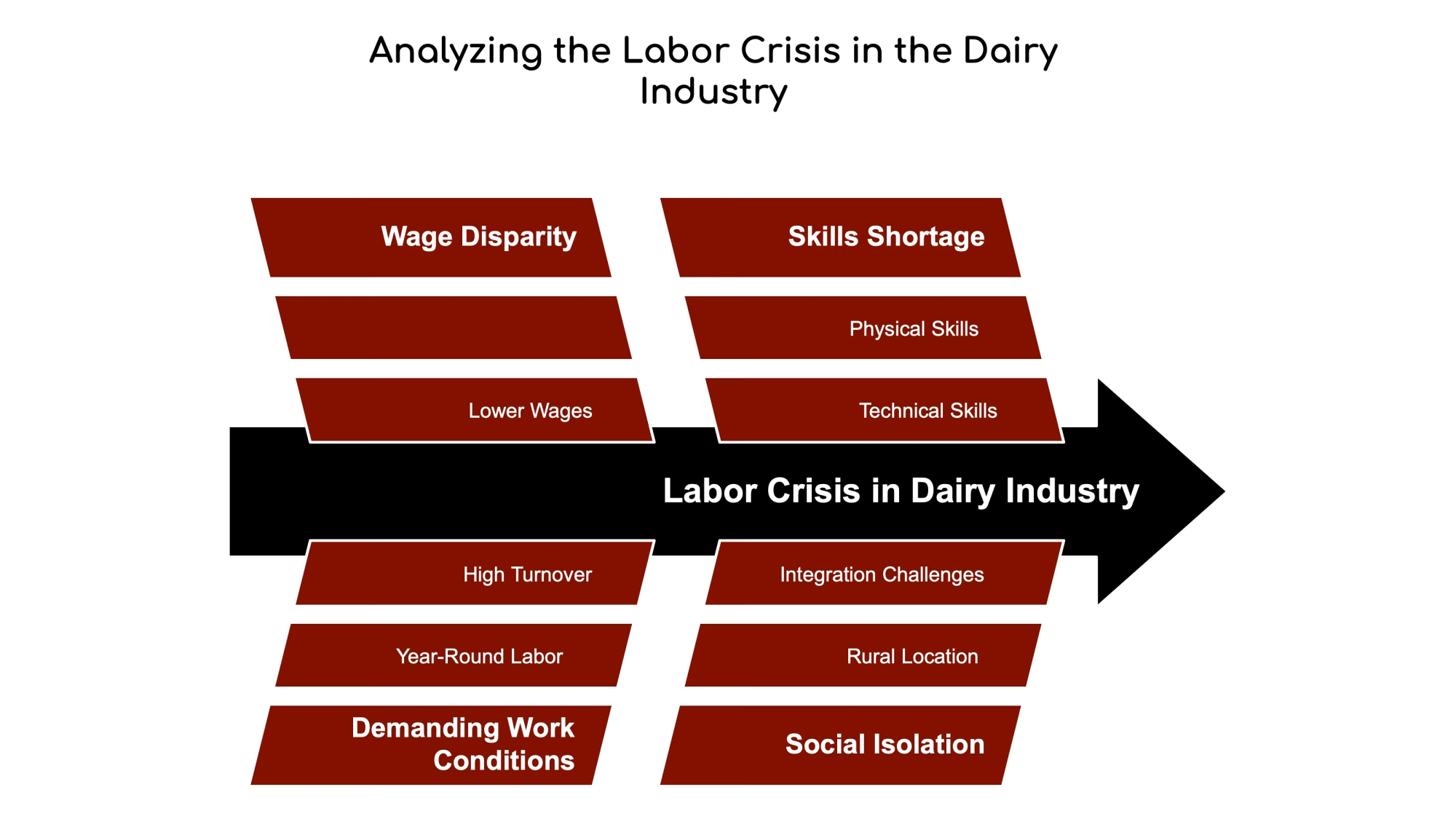
NewsSubscribe
First
Last
Consent

The Bull Who Changed Everything: The Johanna Rag Apple Pabst Story

Every Holstein on Earth traces back to one bull from a Wisconsin farm. Here’s how Johanna Rag Apple Pabst changed dairy genetics forever.

Johanna Rag Apple Pabst during his legendary show career in the mid-1920s, when he dominated Holstein competition across North America. The gentle giant from Hartford, Wisconsin, who went undefeated in 1924 and sold for the record price of ,000 in 1926, became the universal ancestor of every registered Holstein alive today—a genetic legacy that transformed an entire breed and continues to influence dairy farming worldwide nearly a century later.

The Western Union boy pedaled his bicycle through the crisp Quebec morning, telegraph wires humming overhead as spring awakened the countryside around Hudson Heights. When he finally turned up the winding, tree-shaded drive to Mount Victoria Farms, gravel crunching beneath his wheels, he carried fifteen words that would reshape Holstein history forever: “Johanna Rag Apple Pabst sold for $15,000. Congratulations. O.G. Clark.”

Inside the baronial estate overlooking Lake of Two Mountains, Thomas Bassett Macaulay carefully unfolded the telegram, his actuary’s mind already calculating the magnitude of what he’d just accomplished. The Montreal insurance magnate had just made the most expensive bull purchase in Holstein history, but this wasn’t about acquiring another champion. This was about capturing lightning in a bottle—the cornerstone of a vision so scientifically precise and audaciously ambitious that it bordered on the impossible.

What neither Macaulay nor anyone else at that legendary Wisconsin sale could have imagined was that the bull now making his way by rail to Canada carried within his genetic code something far more powerful than mere championship ribbons. Today, nearly a century later, step into any Holstein barn anywhere on Earth—from the rolling hills of Wisconsin to the green pastures of New Zealand, from the polders of Holland to the pampas of Argentina—and you’re witnessing the living legacy of that bull from Hartford, Wisconsin.

Every registered Holstein alive today traces back to Johanna Rag Apple Pabst. Every single one.

The Wisconsin Genesis

Johanna Rag Apple Pabst in his first photograph. The young bull who would become the genetic foundation of every Holstein alive today began his legendary journey on the modest Wisconsin show circuit, where his gentle demeanor and commanding presence first caught the attention of dairy enthusiasts across the Midwest.

Three miles north of Hartford, Wisconsin, winter was loosening its grip on the rolling farmland of Dodge County when change arrived at the Linker place. It was January 1921, and Philip Linker, at sixty-nine, was feeling the weight of nearly seven decades spent working the land. The 173-acre spread he’d built into a respected Holstein operation was gradually passing to younger hands—those of his son-in-law, Herbert Lepien, who’d married Linker’s daughter Della and brought fresh energy to the partnership.

The barn that morning was filled with the familiar sounds of a working dairy—the gentle lowing of cattle, the rhythmic swish of tails, the soft thud of hooves on the floor. But in one box stall, something extraordinary was taking shape. Princess Johanna Rag Apple Pontiac, barely two years old herself and heavy with her first calf, shifted restlessly in the deep straw bedding.

When her labor began, no one could have predicted they were witnessing the birth of a legend.

The calf that slipped into the world on January 24, 1921, was a bull—black and white, sturdy and alert, with eyes that seemed to hold unusual intelligence. In the dim-lit barn, as Herbert Lepien toweled the newborn dry and helped him to his unsteady feet, there was no fanfare, no proclamation of greatness. Just another Holstein calf taking his first breaths on a Wisconsin dairy farm.

But what happened next revealed the true measure of both cow and calf.

Fresh from delivering her son, Princess Johanna Rag Apple Pontiac stepped into the stall for her official test. In that week, as winter winds howled across the Wisconsin countryside, she produced twenty-six pounds of butter equivalent—a staggering performance for any cow, let alone a first-calf heifer. The numbers told a story that every cattleman understood: this young mother possessed something special, and if genetics held true, her bull calf might possess it, too.

Herbert Lepien had made the choices that led to this moment. Six months earlier, he’d hitched up the sleigh and made the fifteen-mile journey through the snow-covered countryside to Fred Pabst’s legendary operation. Pabst Farms was already famous throughout the dairy country, and its red barns and white fences marked it as one of Wisconsin’s premier breeding establishments. Lepien returned with Pabst Korndyke Star—a bull he registered in his own name, marking him as the true architect of what was to come.

The mating of this carefully chosen sire with the daughter of their previous herd bull, Rag Apple Pontiac Polkadot, was no accident. It was the result of careful thought, practical wisdom, and perhaps just a touch of that indefinable instinct that separates good cattlemen from merely competent ones.

Recognition and Destiny

Johanna Rag Apple Pabst as a two-year-old, circa 1923. The young bull who would reshape Holstein genetics worldwide displays the impressive frame and presence that caught Joe Piek's eye on the Linker farm. At this age, he was just beginning to demonstrate the show ring dominance that would make him a legend, but few could have imagined that every Holstein alive today would trace back to this promising Wisconsin calf. (Historical photograph courtesy of Holstein breeding archives)
Johanna Rag Apple Pabst as a two-year-old, circa 1923. The young bull who would reshape Holstein genetics worldwide displays the impressive frame and presence that caught Joe Piek’s eye on the Linker farm. At this age, he was just beginning to demonstrate the show ring dominance that would make him a legend, but few could have imagined that every Holstein alive today would trace back to this promising Wisconsin calf. (Historical photograph courtesy of Holstein breeding archives)

Eight months later, on a warm summer day when the corn stood tall in Wisconsin fields, county agent Milton Button paid a routine visit to the Linker-Lepien operation. Button’s job was to help farmers improve their herds, and his trained eye could spot potential where others saw only another calf. Something clicked when he watched the young bull move across the pasture—the way he carried himself, the width of his chest, the length of his stride.

“That’s a good bull,” Button told Herbert Lepien that day, words that would prove prophetic. “Someone should buy that calf.”

Six miles south of Hartford, Joe Piek was building dreams of his own. His farmhouse perched on a hillside southeast of town, looking out over the rolling countryside toward Holy Hill, the religious shrine that drew pilgrims from across the region. Piek had recently committed himself to Holstein cattle, purchasing fourteen heifer calves at a Fond du Lac sale—youngsters ranging from six weeks to eight months old, costing him anywhere from $60 to $150 each.

Like any beginning breeder worth his salt, Piek knew that his next decision would shape his entire program: selecting a herd sire. Feeling the weight of inexperience, he enlisted Milton Button’s guidance. Together, they canvassed the countryside, inspecting herds and evaluating prospects. When Button recommended the Lepien calf, Piek didn’t hesitate.

The young bull who arrived at Piek Spring Stock Farm that summer stepped into a world where excellence was the goal, and hard work was the only currency that mattered. In the farmhouse kitchen, nine-year-old Anna Piek was already mixing warm milk for calves on cold mornings, learning the rhythms of farm life that would shape her character. She had no way of knowing that one of those calves—the gentle giant following her around the barnyard like an oversized pet—would one day change the world.

Joe Piek had ambitious plans for his young bull. Each fall, he would rent a boxcar, outfit it with two-by-sixes screwed into the walls to secure the cattle, partition off stalls, and install water and feed barrels. This rolling barn would carry his hopes and dreams to county fairs across the upper Midwest, where cattle were judged not just on production records but on the indefinable quality called “type”—the visual embodiment of dairy perfection.

But first, the bull needed seasoning.

The Promise Fulfilled

Johanna Rag Apple Pabst in his prime during the legendary show career that would establish him as the most dominant Holstein bull of his generation. This photograph captures the massive frame and commanding presence that made him virtually unbeatable in the show ring, earning him three consecutive All-American titles from 1923-1925 before his record-breaking sale to Mount Victoria Farms in 1926.

At Walworth County Fair in 1922, as summer heat shimmered over the show rings and the air hung heavy with the scent of cattle and hay, Johanna Rag Apple Pabst made his public debut. Judge A.C. Oosterhuis examined the senior yearling class with the careful attention of a man who understood that his decisions could make or break a breeder’s dreams. When he pointed to the bull from Hartford, placing him first and naming him junior champion, Joe Piek felt the first flutter of vindication.

But the Wisconsin State Fair later that season brought humility. Fifth place in a class of seven—a showing that might have discouraged a lesser man. As Piek led his bull from the ring that day, his jaw set with determination, he turned to Herbert Lepien, whose own bull had placed second and made a declaration that would echo through Holstein history: “This is a good bull. I’ll get him in shape next year, and then I’ll show the boys a thing or two.”

True to his word, Piek transformed his bull into a phenomenon.

The 1923 season saw Johanna Rag Apple Pabst emerge as something unprecedented in Holstein circles. At the Illinois State Fair, as the orchestra played and spectators filled the grandstand, the massive bull from Wisconsin moved into the ring with surprising grace for his size. When the judge’s final decision came—grand champion—the crowd erupted. The same scene played out at the Waterloo Dairy Cattle Congress and the Pacific International Livestock Exposition.

The 1924 season brought something that had never been seen before in the Holstein competition: perfection. Johanna Rag Apple Pabst went undefeated in both class and grand championship competitions. Wisconsin State Fair, Illinois State Fair, Waterloo, the National Dairy Show—all fell before his supremacy like dominoes in a perfectly orchestrated game.

“Too thick in the pants,” his detractors muttered in the barns after the shows, but nobody seemed able to beat him. His consistency was remarkable—not just in winning but in his demeanor. While other bulls of his era were notorious for their unpredictable temperament, requiring skilled handlers and constant vigilance, “Pabst” had become the Piek family pet, as gentle with nine-year-old Anna as he was commanding in the show ring.

The 1925 season brought his third consecutive All-American title, placing him among the immortals of Holstein show history. But by then, whispers were spreading through dairy barns across the Midwest about something even more significant than show ring victories: his daughters were freshening, and their production records were creating sensations of their own.

The Production Promise

Johanna Rag Apple Pabst at twelve years of age in his final photograph, taken shortly before his death in late 1933. While this image captures the gentle giant in his twilight years at Mount Victoria Farms, his daughters across North America were already proving that his greatest legacy lay not in show ring victories, but in the revolutionary genetics he passed to the next generation—consistently producing the coveted four percent butterfat that would transform Holstein breeding forever.

While Johanna Rag Apple Pabst dominated show rings from Wisconsin to Oregon, his first daughters in Joe Piek’s modest herd quietly revolutionized expectations about what a bull could transmit to his offspring. Every daughter that freshened stepped into the test stall, and their performance was extraordinary: they averaged over 18 pounds of butter in seven days as junior two-year-olds, with two exceeding 25 pounds—figures that ranked among the very best of their time.

More significantly, these daughters consistently tested four percent butterfat or better, inheriting the remarkable trait from their grandam. Princess Johanna Rag Apple Pontiac’s own 4.18 percent test had marked her as exceptional, but seeing this trait transmitted so reliably to the next generation was something else entirely. In an era when most Holstein herds struggled to maintain butterfat percentages above 3.5 percent, four percent milk was like finding gold.

This combination of show ring dominance and proven transmitting ability created perfect market conditions. Bulls with such show credentials were rare. Bulls with daughters proving themselves in the test barn were rarer still. Bulls with both were virtually nonexistent.

Word spread through the Holstein community with the efficiency of a telegraph network. In farm kitchens across the dairy belt, breeders pored over Holstein-Friesian World and Farmers Advocate, studying the production reports and showing results that told the story of the bull from Hartford. They understood what they were seeing: a once-in-a-generation animal that could transmit both the visual excellence demanded by show rings and the practical performance required by commercial dairying.

This convergence of attributes caught the attention of a man four hundred miles northeast, whose vision for Holstein breeding was as methodical as it was ambitious.

The Vision of T.B. Macaulay

Thomas Bassett Macaulay (1860-1942) - The Montreal insurance magnate and Sun Life Assurance Company president who revolutionized Holstein breeding through scientific precision. Applying his actuarial expertise to genetics, Macaulay established Mount Victoria Farms in Quebec and developed the systematic breeding program that made Johanna Rag Apple Pabst the universal ancestor of all modern Holsteins.
Thomas Bassett Macaulay (1860-1942) – The Montreal insurance magnate and Sun Life Assurance Company president who revolutionized Holstein breeding through scientific precision. Applying his actuarial expertise to genetics, Macaulay established Mount Victoria Farms in Quebec and developed the systematic breeding program that made Johanna Rag Apple Pabst the universal ancestor of all modern Holsteins.

In the quiet evenings at Mount Victoria Farms, Thomas Bassett Macaulay could often be found in his study, lamplight illuminating the pages of Holstein Herd Books and back issues of agricultural publications. The Montreal insurance magnate approached his hobby with the same analytical precision that had made him president of Sun Life Assurance Company—one of North America’s largest financial institutions.

Outside his windows, the Quebec countryside stretched toward Lake of Two Mountains, where his estate’s 400 acres commanded a magnificent view. But Macaulay’s attention was focused on something far more complex than scenic beauty: the intricate mathematics of genetic improvement.

His experiments with corn breeding had opened his eyes to possibilities that most cattle breeders of his era couldn’t imagine. Between 1924 and 1928, Macaulay maintained between 100 and 170 separate corn plots annually, each planted with seed from a single selected ear, each carefully isolated to prevent cross-pollination. His methodical approach, grounded in Mendelian genetics, had convinced him that specific, predictable characteristics could be developed through strategic selection and inbreeding.

If it worked with corn, Macaulay reasoned with the logic of a mathematician, why not with cattle?

His vision was breathtaking in its precision: to develop a Holstein bloodline genetically pure for three crucial traits—superior show type, excellent udders, and a consistent butterfat test of four percent or better. This wasn’t the casual dream of a gentleman farmer; this was a scientifically designed project that would require the same methodical approach that had guided his insurance career.

Macaulay’s search for the perfect bull to anchor this project was exhaustive. In his study, surrounded by breeding charts and production records, he analyzed pedigrees with the precision of an actuary calculating mortality tables. A single, compelling conclusion emerged from months of research: Johanna Rag Apple Pabst possessed the exact combination of attributes his program required.

The bull’s exceptional show record proved his superior type. His high-producing, four percent testing dam suggested he could transmit both production and butterfat content. Most importantly, his own daughters were averaging four percent test under ordinary farm conditions—exactly what Macaulay’s mathematical breeding model required.

The Mission to Wisconsin

Joseph Piek (left) and Herbert Lepien (right), the two Wisconsin dairymen whose decisions shaped Holstein history. Lepien, farming in partnership with his father-in-law Philip Linker, selected Pabst Korndyke Star as herd sire and made the breeding decisions that produced Johanna Rag Apple Pabst. Piek recognized the calf's potential, purchased him at eight months old, developed his legendary show career, and ultimately sold him for the record price of $15,000 at Clark's Holstein Classic in 1926—setting in motion the genetic revolution that would transform the entire Holstein breed.
Joseph Piek (left) and Herbert Lepien (right), the two Wisconsin dairymen whose decisions shaped Holstein history. Lepien, farming in partnership with his father-in-law Philip Linker, selected Pabst Korndyke Star as herd sire and made the breeding decisions that produced Johanna Rag Apple Pabst. Piek recognized the calf’s potential, purchased him at eight months old, developed his legendary show career, and ultimately sold him for the record price of $15,000 at Clark’s Holstein Classic in 1926—setting in motion the genetic revolution that would transform the entire Holstein breed.

Macaulay dispatched Joseph I. Chandler to the modest farmstead near Hartford to evaluate Johanna Rag Apple Pabst firsthand. Chandler, whose business card read “Assistant to The President” at Sun Life, had recently been assigned as farm manager for Mount Victoria despite having no previous experience with Holstein cattle. However, he made up for what he lacked in cattle knowledge in business acumen and the ability to recognize excellence when he saw it.

Chandler’s train pulled into Hartford on a crisp Wisconsin morning, and the short drive to the Piek farm revealed the stark contrast between his urban Montreal background and this rural heartland. At Piek Spring Stock Farm, with its modest farmhouse overlooking the countryside, Chandler found himself face-to-face with the bull whose reputation had traveled over 1,000 miles.

What he discovered exceeded even Macaulay’s optimistic expectations.

Here was the top show bull of the day, barely five years old and fit for many more years of service. His massive frame spoke of masculine power, while his gentle demeanor revealed a temperament ideally suited for handling. But the data convinced Chandler’s business mind: upwards of a dozen daughters averaging four percent test on official work, all under ordinary farm conditions.

The bull’s sire, Pabst Korndyke Star, had already stamped his offspring with both type and productive ability—his first five daughters had created a sensation by averaging an unprecedented 720 pounds of fat as two-year-olds. The genetic mathematics were compelling: superior sire, exceptional dam, proven daughters. Everything aligned with Macaulay’s scientific breeding model.

Convinced beyond any doubt, Chandler hurried back to Montreal with his recommendations, then returned to Wisconsin for Colonel O.G. Clark’s Holstein Classic—the venue Joe Piek had chosen for his bull’s sale.

The Sale That Changed Everything

The stars of the sale that would make history: Colonel O.G. Clark (center) surrounded by the elite cattle that made his 1926 Holstein Classic the most talked-about auction of its era. On the left, Johanna Rag Apple Pabst poses as the All-American 2-year-old he had recently become, flanked by production powerhouses Crestmont Duchess Ormsby and former world champion Queen Bessie Pietertje Ormsby. The right side features Sir Triune Pansy—the yearling bull that expert Ray Arnold called "the nearest thing to perfection" he had ever seen—alongside record-breaking producer Aaggie Waconda 2d and influential sire Sir Bess Ormsby Fobes. At center, the portrait of May Walker Ollie Homestead, U.S. champion butter producer and dam of three All-American winners, presides over this assembly of genetic royalty. This promotional photograph captured the moment when Holstein breeding was about to change forever—when one bull's $15,000 sale price would echo through dairy history and establish a genetic legacy that flows through every Holstein alive today.
The stars of the sale that would make history: Colonel O.G. Clark (center) surrounded by the elite cattle that made his 1926 Holstein Classic the most talked-about auction of its era. On the left, Johanna Rag Apple Pabst poses as the All-American 2-year-old he had recently become, flanked by production powerhouses Crestmont Duchess Ormsby and former world champion Queen Bessie Pietertje Ormsby. The right side features Sir Triune Pansy—the yearling bull that expert Ray Arnold called “the nearest thing to perfection” he had ever seen—alongside record-breaking producer Aaggie Waconda 2d and influential sire Sir Bess Ormsby Fobes. At center, the portrait of May Walker Ollie Homestead, U.S. champion butter producer and dam of three All-American winners, presides over this assembly of genetic royalty. This promotional photograph captured the moment when Holstein breeding was about to change forever—when one bull’s $15,000 sale price would echo through dairy history and establish a genetic legacy that flows through every Holstein alive today.

Colonel O.G. Clark’s Holstein Classic was conceived as more than just an auction—it was the breed’s first major promotional extravaganza, designed to capture national attention and elevate the entire Holstein industry. With 450 head cataloged, it was the largest sale in volume to that time, averaging $391 per head in an era when many good cows sold for less than $200.

Clark himself was a force of nature in the livestock industry. Born in Georgia but headquartered in West Salem, Wisconsin, he possessed what contemporaries called “extraordinary nervous energy and driving power.” His reputation as a man “not afraid to take a chance” made him the perfect impresario for an event of this magnitude.

The sale venue buzzed with excitement as cattlemen gathered from across North America. Gourmet meals accompanied by orchestra music followed each day’s selling, creating an atmosphere reminiscent of a society gathering rather than a farm auction. But everyone understood what they were witnessing: history in the making.

Johanna Rag Apple Pabst had become the sale’s featured attraction, heavily advertised at Clark’s expense. When his moment came, the arena fell silent. The bidding began conservatively but quickly escalated as the significance of the moment became clear. When the hammer finally fell at $15,000, the assembled crowd rose as one, giving three lusty cheers for Canada. It was a record price that wouldn’t be matched until the wartime boom of 1942—equivalent to well over $200,000 in today’s currency.

But perhaps the most revealing moment came afterward, when twelve-year-old Elis Knutson, hired to care for cattle at the sale, overheard an exchange between Colonel Clark and Joe Piek. Ever the shrewd farmer, Piek suggested that Clark should reduce his commission because of the publicity the record price would generate.

Clark’s blunt response cut through any romantic notions about competitive bidding: “Nonsense… on the last five thousand dollars, Chandler and I were the only two bidding.”

Whether entirely accurate or embellished over decades of retelling, the story captures this pivotal moment’s human drama. When Western Union telegraphed the news across North America—”Johanna Rag Apple Pabst sold for $15,000″—it marked more than just a record price. It signaled the beginning of a new era in Holstein breeding.

The Mount Victoria Dynasty

The legacy of Johanna Rag Apple Pabst made manifest in his daughters. This 1936 photograph captures four of his most distinguished offspring, recognized as an All-American get of sire group. From left to right: Montvic Rag Apple Colantha Abbekerk (who would set a world record with 1,263 pounds of fat), Montvic Rag Apple Marion, Montvic Countess Rag Apple, and Montvic Rag Apple Bonheur (dam of the great Montvic Pathfinder). Together, these exceptional females embodied T.B. Macaulay's vision of genetic perfection—superior type, excellent udders, and consistent four percent butterfat production. Their uniformity and quality demonstrated that the bull from Hartford, Wisconsin, had indeed become the cornerstone of a Holstein dynasty that would transform the breed worldwide.
The legacy of Johanna Rag Apple Pabst made manifest in his daughters. This 1936 photograph captures four of his most distinguished offspring, recognized as an All-American get of sire group. From left to right: Montvic Rag Apple Colantha Abbekerk (who would set a world record with 1,263 pounds of fat), Montvic Rag Apple Marion, Montvic Countess Rag Apple, and Montvic Rag Apple Bonheur (dam of the great Montvic Pathfinder). Together, these exceptional females embodied T.B. Macaulay’s vision of genetic perfection—superior type, excellent udders, and consistent four percent butterfat production. Their uniformity and quality demonstrated that the bull from Hartford, Wisconsin, had indeed become the cornerstone of a Holstein dynasty that would transform the breed worldwide.

When the train carrying Johanna Rag Apple Pabst pulled into Hudson Heights station in April 1926, it carried more than just another expensive bull—it carried the future of the Holstein breed. The drive up the winding, tree-shaded road to Mount Victoria Farms took the bull from the railway to an estate unlike anything he’d known in Wisconsin.

Perched on its wooded plateau overlooking Lake of Two Mountains, Mount Victoria commanded a view that had captivated T.B. Macaulay when he first purchased the property in 1899. The elevation itself had been named Mount Victoria in honor of Queen Victoria, and now it would witness the beginning of a genetic revolution.

Macaulay had prepared for this moment with characteristic precision. The bull was housed in a special open-faced, two-story barn explicitly built for him, situated in a small paddock north of the main barnyard. From his quarters, Johanna Rag Apple Pabst could survey the rolling Quebec countryside like a monarch overseeing his domain—a fitting metaphor for what he would become.

The breeding strategy Macaulay implemented was as methodical as his corn experiments. The foundation females he had assembled—primarily of the Posch-Abbekerk strain tracing back to Prince Colanthus Abbekerk—were mated systematically with Johanna Rag Apple Pabst. Each resulting offspring was subjected to rigorous evaluation: production testing, show ring exhibition, classification for type, and strict culling based on predetermined standards.

Around the Mount Victoria cow stable, Macaulay could be seen with his trademark index cards, each containing numbers, flow charts, and diagrams pertaining to individual herd members. His actuarial background had taught him that complex problems required systematic data collection and analysis. He approached genetics like an insurance calculation, seeking to reduce risk by concentrating on proven genetics while tracking every variable that might affect outcomes.

The naming strategy alone revealed the scope of his vision. Offspring were collectively called “Rag Apples,” with individual names typically beginning with “Montvic Rag Apple” followed by a fourth name for specific identification. Before many years had passed, any Holstein breeder hearing “Rag Apple” would correctly assume the reference was to a descendant of Johanna Rag Apple Pabst.

His favorite quote from Beattie captured the philosophy driving this methodical approach: “What cannot art and industry perform, when science plans the progress of their toil.”

The Super Champion”: A 1931 advertisement for Johanna Rag Apple Pabst, the cornerstone sire of Mount Victoria Farms. This legendary bull, purchased for $15,000 in 1926, revolutionized Holstein breeding with his ability to consistently sire daughters with high butterfat percentages and excellent conformation. His influence on the breed was so profound that by the late 20th century, virtually every registered Holstein worldwide carried his blood.

The Super Champion”: A 1931 advertisement for Johanna Rag Apple Pabst, the cornerstone sire of Mount Victoria Farms. This legendary bull, purchased for $15,000 in 1926, revolutionized Holstein breeding with his ability to consistently sire daughters with high butterfat percentages and excellent conformation. His influence on the breed was so profound that by the late 20th century, virtually every registered Holstein worldwide carried his blood.

The Genetics of Greatness

What made Johanna Rag Apple Pabst genetically potent wasn’t an accident—it was the result of deliberate line breeding strategies employed by previous generations of Holstein breeders. His pedigree featured six crosses to the dominant sire Pontiac Korndyke and four crosses to another titan, Hengerveld DeKol. Additionally, he carried two crosses each to King Segis and Friend Hengerveld DeKol Butter Boy.

Approximately thirty-six percent of his genetic inheritance derived directly from these four exceptional sires—a concentration of proven genetics dramatically increased the likelihood that his offspring would inherit and transmit desirable traits. The mating of Pontiac Korndyke with daughters of Hengerveld DeKol was widely regarded as one of the most potent breeding combinations in Holstein history, and Johanna Rag Apple Pabst’s pedigree contained multiple instances of this golden cross.

This intensive line breeding represented the cutting-edge genetics of its era, comparable to today’s genomic selection in its attempt to concentrate superior genes while minimizing undesirable traits. Macaulay understood these principles intuitively, applying the same risk-assessment skills he used in the insurance industry to genetic improvement.

The results exceeded even his ambitious expectations. Daughter after daughter emerged with the combination of traits he sought: superior type, excellent udders, and four percent or better butterfat test. Sons proved equally valuable, with bulls like Montvic Pathfinder, Montvic Chieftain, and dozens of others carrying their sire’s genetic potency to herds across North America.

Mount Victoria’s 1927 Farmer’s Advocate ads showcase their prized bull Johanna Rag Apple Pabst and his offspring, highlighting the farm’s focus on superior genetics and high butterfat production. These ads reflect Thomas B. Macaulay’s ambitious vision to develop a strain of Holsteins consistently testing at 4% butterfat or higher.

Mount Victoria’s 1927 Farmer’s Advocate ads showcase their prized bull Johanna Rag Apple Pabst and his offspring, highlighting the farm’s focus on superior genetics and high butterfat production. These ads reflect Thomas B. Macaulay’s ambitious vision to develop a strain of Holsteins consistently testing at 4% butterfat or higher.

Tragedy and Transformation

Johanna Rag Apple Pabst’s life at Mount Victoria was productive but destined to be brief. After largely withdrawing from show competition following the 1926 season, he focused on the breeding duties defining his legacy. Macaulay couldn’t resist showing him again in 1928 at the Ottawa Winter Fair and Royal Winter Fair, where he added two more grand championships to his record, but his primary purpose was clear: building the herd to match the dream.

The end came suddenly in late 1933. At twelve years of age, while moving in his paddock overlooking the Quebec countryside he’d called home for seven years, the great bull broke his leg at the stifle. The injury was so severe that euthanasia was the only humane option. His death represented not just the loss of a valuable animal but the end of direct access to the genetic material that had been central to Macaulay’s vision.

By then, however, his influence was already spreading far beyond the borders of Mount Victoria. Sons and daughters were establishing themselves in herds across Canada and the United States, each carrying forward the genetic legacy that would eventually transform the entire Holstein breed.

When the Mount Victoria herd was dispersed in 1942, all but two of the 89 lots offered were home-bred descendants of Johanna Rag Apple Pabst. The dispersal, necessitated by Macaulay’s death earlier that year, scattered his progeny across North America like seeds from a rare plant, each with the potential to influence Holstein genetics for generations to come.

The Human Thread

Behind every great bull stands a network of human decisions, insights, and commitments that make greatness possible. Philip Linker’s dedication to quality bulls, even without formal testing programs. Herbert Lepien’s foresight in traveling to Pabst Farms and his eye for a superior sire. Milton Button’s recognition of exceptional potential in an eight-month-old calf.

Joe Piek’s relentless dedication to show ring excellence, his willingness to invest in fitting and travel, and his prophetic words about showing “the boys a thing or two.” His daughter Anna’s childhood memories of feeding a gentle giant who would follow her around the barnyard, never knowing she was caring for a future legend.

Most significantly, T.B. Macaulay’s revolutionary vision is an insurance man’s mathematical approach to genetics combined with unlimited resources and unwavering commitment to specific, measurable goals. His systematic pursuit of the four percent dream, tracked on index cards and guided by actuarial precision, created the foundation for every Holstein breeding program that would follow.

In farm kitchens across dairy country today, when a breeder opens her laptop to study genomic evaluations and plan matings for the next generation, she follows principles Macaulay pioneered with his corn plots and data cards. The tools have evolved—genomic testing has replaced visual appraisal, embryo transfer has expanded breeding possibilities, and artificial insemination has made superior genetics globally accessible—but the fundamental approach remains unchanged: identify the best, concentrate their genetics, measure the results, and build for the future.

The Universal Legacy

Historic Continuity at Mount Victoria: In this 1994 photograph, the legendary Holstein sire Hanoverhill Starbuck stands with Carl Saucier at Mount Victoria Farm in Hudson Heights, Québec—the same hallowed ground where his ancestor Johanna Rag Apple Pabst once resided. At 15 years old and still in active service, Starbuck displays the powerful frame that helped him sire over 200,000 daughters worldwide and distribute 685,000 semen doses across 45 countries. This image captures a profound moment of Holstein breeding continuity, connecting Starbuck’s revolutionary genetic impact with T.B. Macaulay’s pioneering breeding program that began seven decades earlier, symbolizing how generations of thoughtful selection transformed global dairy genetics.

In 1958, when T.B. Macaulay’s memory was honored by the dairy industry of the United States with the hanging of his portrait in the Pioneer Room at the Dairy Shrine Club, it was announced that over ninety percent of Canadian Holsteins were descendants of Mount Victoria breeding. That percentage, remarkable as it seemed then, was only the beginning.

Today, nearly a century after Johanna Rag Apple Pabst stepped off the train at Hudson Heights, the scope of his genetic influence defies comprehension. No registered Holstein exists anywhere on Earth that cannot be traced back to this bull. None. Not in the high-tech dairies of California’s Central Valley. Not in the grass-fed systems of New Zealand. Not in the ancient dairy regions of Europe where the breed originated. Not in the emerging dairy industries of Asia and South America.

This universal genetic dominance represents something unprecedented in livestock breeding—a single individual’s complete transformation of a global breed. In every barn, in every pasture, in every milking parlor where Holstein cattle convert feed to milk, the genetic essence of Johanna Rag Apple Pabst flows through their veins.

Walk into any modern dairy operation, and you’re witnessing the living fulfillment of T.B. Macaulay’s vision. The four percent butterfat that he pursued with such scientific dedication is now routine. The combination of type, udder quality, and production that seemed so ambitious in 1926 has become the baseline from which modern Holstein breeding programs advance toward even greater goals.

The production records that would astound dairymen of the 1920s—30,000 pounds of milk per lactation, 1,200 pounds of butterfat, five percent protein levels—are achieved by cows whose genetic makeup can be traced, line by line, back to that modest barn near Hartford where Princess Johanna Rag Apple Pontiac delivered her first calf on a cold January morning in 1921.

The Eternal Impact

Johanna Rag Apple Pabst, affectionately called 'Old Joe,' stands immortalized as a life-size sculpture on the site of the historic Mount Victoria farm in Hudson Heights, Quebec. Born on January 24, 1921, this legendary sire appears no less than 45 times in Hanoverhill Starbuck's pedigree, cementing his foundational influence on modern Holstein genetics. With 64 Montvic animals also contributing to Starbuck's lineage, 'Old Joe' remains a cornerstone of Canadian dairy breeding history. Pictured here in the summer of 2021, his legacy continues to inspire breeders worldwide.
Johanna Rag Apple Pabst, affectionately called ‘Old Joe,’ stands immortalized as a life-size sculpture on the site of the historic Mount Victoria farm in Hudson Heights, Quebec. Born on January 24, 1921, this legendary sire appears no less than 45 times in Hanoverhill Starbuck’s pedigree, cementing his foundational influence on modern Holstein genetics. With 64 Montvic animals also contributing to Starbuck’s lineage, ‘Old Joe’ remains a cornerstone of Canadian dairy breeding history. Pictured here in the summer of 2021, his legacy continues to inspire breeders worldwide.

In the basement office of a modern dairy farm, a young breeder studies genomic evaluations on her computer screen, making mating decisions with precision that would have amazed even T.B. Macaulay. The technology is revolutionary—SNP chips that read genetic code, computer algorithms that predict production potential, satellite-guided feed delivery systems, and robotic milking equipment that operates around the clock without human intervention.

Yet the fundamental principles that guide her decisions echo directly back to those index cards Macaulay carried around his cow stable: identify superior genetics, concentrate them through strategic breeding, measure the results, and build systematically toward clearly defined goals. The tools have evolved, but the vision remains remarkably consistent.

When she selects a sire for her best cows, she’s applying lessons learned from Johanna Rag Apple Pabst’s daughters. When she culls animals that don’t meet her standards, she’s following Macaulay’s relentless pursuit of genetic improvement. When she invests in genetic testing and superior sires regardless of cost, she’s channeling the same commitment to excellence that led Macaulay to pay $15,000 for a bull in 1926.

The four percent butterfat that dominated Macaulay’s breeding philosophy now seems almost quaint in an era where many Holsteins routinely exceed four and a half percent fat while producing volumes of milk that would have been unimaginable to earlier generations. However, the principle remains unchanged: genetic progress requires vision, commitment, measurement, and the courage to make difficult decisions based on long-term goals rather than short-term convenience.

In farm kitchens from Wisconsin to New Zealand and in breeding offices from Quebec to Queensland, the influence of Johanna Rag Apple Pabst continues. His story is not merely history—it’s the living foundation of modern dairy genetics, the genetic thread that connects every Holstein born today to a remarkable bull who changed everything.

From a modest Wisconsin farm to global genetic dominance, from a record-breaking $15,000 sale to influence worth billions in modern breeding programs, from one man’s scientific vision to an industry that feeds the world, the story of Johanna Rag Apple Pabst reminds us that sometimes the most profound changes begin with the simplest recognition of excellence.

“This is a good bull,” Joe Piek said after that disappointing fifth-place showing at the Wisconsin State Fair in 1922. In barns around the world today, as Holstein calves take their first steps and farmers plan their breeding programs for the next generation, that recognition continues. The genetic heart of Johanna Rag Apple Pabst—his influence on modern dairy production, his role in shaping the breed that feeds the world, his place as the universal ancestor of every Holstein alive today—beats on in every black and white calf born anywhere on Earth.

That’s the true measure of a bull who didn’t just change Holstein breeding—he became Holstein breeding itself, the genetic cornerstone upon which a global industry was built and continues to thrive. In an age of artificial intelligence and gene editing, robotic milking, and precision agriculture, the legacy of a bull born in a simple Wisconsin barn nearly a century ago remains more relevant than ever: once recognized and properly developed, excellence has the power to transform the world.

Every Holstein alive today carries his blood. Every glass of milk, every slice of cheese, every dairy product consumed anywhere on Earth bears his influence. In the end, perhaps that’s the most remarkable aspect of this story—how one exceptional animal, identified by observant farmers and developed by a visionary breeder, became not just a part of Holstein history but the genetic foundation of every Holstein’s future.

The bull who changed everything continues to change everything, one generation at a time, one calf at a time, one farm at a time, his genetic legacy flowing through the veins of the breed that feeds the world.

Key Takeaways

  • Universal Genetic Legacy: Every registered Holstein alive worldwide today traces back to Johanna Rag Apple Pabst—an unprecedented genetic influence in livestock breeding history.
  • Record-Breaking Investment: The $15,000 sale price in 1926 (equivalent to over $200,000 today) demonstrated early recognition of exceptional genetic value and set the stage for modern high-value breeding programs.
  • Scientific Breeding Vision: T.B. Macaulay’s methodical approach to genetics—using data cards, systematic record-keeping, and specific breeding goals—pioneered principles still used in modern genomic selection programs.
  • Show Ring to Production Integration: The bull’s combination of undefeated show ring performance and daughters consistently producing four percent butterfat proved that type and production excellence could be successfully combined.
  • Transformative Power of Strategic Breeding: The story illustrates how identifying exceptional genetics, applying scientific methodology, and maintaining long-term vision can fundamentally transform an entire global industry.

Executive Summary

Johanna Rag Apple Pabst, born on a modest Wisconsin dairy farm in 1921, became the most influential Holstein bull in history through a combination of show ring dominance and exceptional genetic transmitting ability. After going undefeated in 1924 and siring daughters that consistently produced four percent butterfat milk, he was sold for the record price of $15,000 to Canadian insurance magnate T.B. Macaulay in 1926. Macaulay implemented a scientifically precise breeding program at his Mount Victoria Farms, using the bull to develop a Holstein bloodline genetically superior in type, udder quality, and butterfat production. Through strategic line breeding and systematic selection, Johanna Rag Apple Pabst’s offspring spread across North America and eventually worldwide. Nearly a century later, every registered Holstein on Earth traces back to this single bull, representing the complete genetic transformation of an entire breed. His legacy demonstrates how visionary breeding, scientific methodology, and recognition of exceptional genetics can create lasting change that feeds the world.

Learn more:

The Sunday Read Dairy Professionals Don’t Skip.

Every week, thousands of producers, breeders, and industry insiders open Bullvine Weekly for genetics insights, market shifts, and profit strategies they won’t find anywhere else. One email. Five minutes. Smarter decisions all week.

NewsSubscribe
First
Last
Consent

Why 83% of Dairy Farms Will Disappear: How to Beat the Succession Odds Before It’s Too Late

83% of dairies vanish. Will yours? Beat succession odds before your legacy becomes a statistic. Bold moves. Real talk.

Staring down a cliff edge – that’s where the North American dairy industry finds itself. A quarter of operators are hanging up their boots within five years. According to Iowa State’s research, eight out of ten lack faith in their succession plans. And that gut-punch statistic? A staggering 83.5% of family dairies won’t survive to see a third generation running the parlor. Worse than even the dismal 16.5% survival rate plaguing family businesses generally. Make no mistake – what separates the operations still standing from those that vanish has nothing to do with luck. It’s about confronting the financial, familial, and operational barriers to transition with clear eyes and bold action.

Why Most Dairy Succession Plans Are Destined to Fail

Ready to join the statistical scrap heap? Despite family ownership dominating 97% of U.S. farms, the 2022 Ag Census paints a bleak picture – barely half have dipped their toes into succession planning. Worse still, only a pitiful 20% of those with plans actually believe they’ll work.

That financial mountain looms Everest-high. Converting your high-producing Holstein herd to A2A2 genetics overnight? Child’s play compared to today’s capital requirements. Land running $5,570 an acre. Parlor systems that’ll set you back north of $200k. TMR mixers costlier than luxury sedans. Breeding stock representing generations of genetic investment. No wonder the classic “buy-out” model crashes and burns. Expecting your successor to write that check while keeping the operation afloat? About as realistic as hitting a 30,000-pound RHA with second-cut hay and good intentions.

The real time-bombs never tick away in the freestall barn – they’re planted firmly around your kitchen table. Family conflicts have been smoldering for decades. Competing visions nobody dares discuss. Communication breakdowns that would make your cell service look reliable. Compeer Financial nailed it in their 2024 report: that deep-seated need to treat all children “equally” routinely shoots the farm’s survival right between the eyes. Sell those productive assets to square things up, and what’s left to transition?

Then come the emotional roadblocks no spreadsheet can navigate. Mom and Dad are clutching the checkbook like it’s the last life raft on the Titanic. Junior is desperate for enough authority actually to implement changes. This emotional standoff creates barriers taller than your corn in August – like trying to boost conception rates with premium semen when nobody’s bothering to check heats.

Hard truth time: Iowa State found 71% of farmers with retirement on the horizon haven’t even tagged a successor. Got a plan without addressing those human dynamics? Might as well install top-end milking equipment and let the neighbor kid run it – technical excellence means nothing without the human element.

Revolutionary Strategies That Transform Farm Transitions

What separates that elite 17% from the failed 83.5%? Not dumb luck or deep pockets, but a comprehensive blueprint that tackles every dimension of transition.

Early isn’t just better – it’s essential. Don’t wait till the rocking chair looks appealing. Successful transitions need a 5–10-year runway – roughly the time needed to grow those genomically-superior heifers into your mature herd backbone. Journal of Agribusiness research confirms wait too long, and you might as well be planting corn in November.

Family discussions going nowhere? Taken any deliberate steps, or just hoping uncomfortable topics disappear like mastitis without treatment? Progressive dairy families don’t leave communication to chance:

  • Monthly meetings with actual agendas – not just “whenever someone gets mad”
  • “Listening first” protocols, where everyone gets their say without interruption
  • Written records of agreements and sticking points – not memory-based revisionism
  • Professional facilitators, when needed, because family baggage dating to childhood rarely resolves itself

Has your financial structure already torpedoed your chances of a successful succession? Smart operations are dumping the “buy everything or nothing” model faster than you’d cull a three-quartered chronic. Think precision feeding versus one-size-fits-all TMR – the industry has evolved; shouldn’t your succession plan? Leading advisors increasingly recommend splitting operations into:

  • An asset-holding company (senior generation keeps the land/major equipment)
  • An operating company (the successor takes reins of production)

This structure slashes capital requirements while creating retirement income through lease payments. Canadian Bar Association case studies show it works – cleaner than separating dry cows from your milking string while efficiently serving both purposes.

Your advisory team makes or breaks the transition. Would you let some random vet who normally treats parakeets and poodles near your prize genetics? So why trust generic financial advisors with your farm‘s future? Find specialists who differentiate between a TMR mixer and a cement truck. You need agricultural estate planners who’ve seen more dairy transitions inside than most people have seen inside barns.

Never marry a successor without dating first. Forward-thinking farms now implement structured trial periods with clear metrics and escape hatches. Define specific responsibilities, set performance benchmarks, and create exit routes if the fit proves wrong – all before signatures hit paper. Makes more sense than dropping six figures on embryo work without genomic testing the bloodlines first.

Developing successors demands the same systematic approach you’d use to build your herd—formal education matters. Off-farm experience builds perspective. Gradual responsibility increases muscle without breaking bones. Regular feedback catches problems before they become disasters. Half-baked training produces half-capable successors.

When Expansion Powers Your Succession Plan

Nearly half of dairies view expansion as their succession ticket. But size for size’s sake? Pure folly. Does growth truly fit your transition story, or are you chasing industry trends like everyone chased those tall Holsteins in the 80s?

Economics must pencil at both scales and expansion becomes your anchor, not your engine. Leading operations analyze fixed cost dilution across larger herds, calculate capital efficiency metrics down to the penny, project cash flow through the capital-hungry growth phase, and structure financing to protect both generations from excessive risk.

Technology adoption doesn’t just change your operation – it transforms succession possibilities. Forward-thinking dairies leverage expansion to modernize, installing rotary parlors that slash labor needs, implementing herd management software that turns data into decisions, automating feed systems for TMR consistency your old mixer could never achieve, and deploying precision reproduction tech that makes your past breeding programs look like guesswork. Though initially painful to the pocketbook, Dairy Business Innovation documents how these investments often dramatically improve quality of life while boosting resilience.

Approaching expansion strategically or emotionally? That industry mantra “bigger is always better” deserves the same skepticism you’d give a feed salesman promising 10 pounds more milk. The USDA Economic Research Service confirms that economies of scale exist – larger herds generally show lower production costs. But focusing exclusively on land acquisition over productive assets? About as smart as fixating on milk volume while ignoring components. Michigan State’s research team found that investments in facility capacity and superior genetics often outperform land purchases, especially when the next generation starts with more ambition than capital.

Processor relationships? Overlooked by too many. Before breaking ground on those new barns, lock down whether your milk plant actually wants another tanker load daily. Secure those component premiums and transportation arrangements in writing. Nothing torpedoes expansion faster than surprise base-excess deductions slashing your milk check when those loan payments come due.

Next-generation input isn’t a nice-to-have – it’s do-or-die. Expansions that succeed involve successors from day one, collaborating on business plans, defining clear roles, openly discussing financial implications, and documenting transition timelines before the first shovelful of dirt moves.

The Strategic Power of Staying the Course

While expansion hogs the spotlight, maintaining current scale often makes brilliant strategic sense. Recognizing when “steady-state” fits your transition creates stability that many expanding farms would envy.

Component focus literally transforms your milk check. With butterfat driving 58% of revenue and protein adding 31% more, according to 2023 Multiple Component Pricing data, maximizing components frequently outperforms cow-number obsession. Smart operators targeting current-scale excellence prioritize component-focused genetics, dial in rumen fermentation for butterfat synthesis, eliminate acidosis and other component-killers, and master seasonal consistency. Ever calculated your operation’s true income per cow versus income per pound of components? That analysis often reveals more profit potential in your current herd than in expansion dreams.

Risk profiles rarely match between generations. Does your successor share your appetite for leverage and market exposure? Maintaining scale often creates a saner risk profile during transitions – lower fixed costs, reduced debt service, simplified management during leadership changes, and nimbleness when markets shift. Like balancing rations for optimal rumen function rather than maximum production, right-sizing creates stable platforms for transfer.

Resource optimization at the current scale drives profitability that expansion can’t always match. Leading steady-state operations obsess over return per unit – land, labor, or capital. They track production costs with near-religious devotion, strategically outsource non-core functions, mine DHIA data for hidden opportunities, and relentlessly pursue incremental efficiency gains that compound over time.

When lifestyle priorities align with business strategy, maintaining scale supports quality of life during transitions. Particularly valuable when young families need flexibility, multiple generations need income, senior members want continued involvement, or work-life balance trumps bragging rights at the coffee shop. Your best cows need dry periods for lifetime productivity – why shouldn’t your family business operate sustainably too?

How Your Decisions Are Reshaping Dairy’s Future

The collective impact of retirements, expansions, and steady-state operations is fundamentally redesigning North America’s dairy landscape. Understanding these shifts positions your operation advantageously, regardless of size or succession stage.

Consolidation isn’t coming – it’s already steamrolling through. USDA data tells the brutal story: U.S. dairy farm numbers in freefall from 648,000 in 1970 to barely 24,000 by 2022, with another 2,500 operations shuttering in 2020 alone. Yet milk production climbs as mega-dairies absorb that volume. Today, operations exceeding 2,500 cows produce over 60% of the nation’s milk, leveraging economies of scale that smaller farms can’t match.

But does bigger automatically mean better? Hardly. While the USDA Economic Research Service confirms that scale economies exist, innovation creates success stories across diverse sizes. What matters more than cow numbers? Strategic market alignment. Operational excellence at your chosen scale. Clear differentiation in cost structure or product attributes. Financial frameworks supporting generational transition. Just as selection indexes evolved from height-obsessed to lifetime-profit focused, successful dairies optimize their specific model rather than mindlessly chasing size.

Technology demolishes old limitations across farm scales. Robotic milkers, rumination monitors, and precision management tools create possibilities unimaginable a generation ago – slashing labor dependencies, improving work-life balance, enabling data-driven decisions, and attracting tech-savvy successors put off by traditional dairy drudgery. Like genomics democratizing elite genetics for farms of all sizes, technology levels key operational playing fields.

Component-focused strategies fundamentally reshape market dynamics. Multiple-Component Pricing systems drive evolution from volume obsession to composition focus. When did you last overhaul your genetic selection criteria and feeding programs to capture this shift? Progressive operations prioritize component-focused genetics, optimize production systems for butterfat and protein, and cultivate processor relationships rewarding composition excellence.

Environmental considerations increasingly impact succession planning. Forward-looking operations integrate sustainability through emission-reducing technologies, carbon sequestration practices, soil health, comprehensive nutrient management, preventing regulatory headaches, water conservation strategies, preserving vital resources, energy efficiency measures, slashing costs, and impacts.

Success Stories That Illuminate the Path Forward

Real-world examples cut through theoretical fog. Study these contrasts between successful transitions and train wrecks to map your own journey.

LLC formation turned transition dreams into reality for a 220-cow operation that looked hopelessly stuck. Rather than traditional asset transfer, owners formed a limited liability company housing all farm assets, structured incremental LLC interest sales to their 30-year-old successor, created a formal decade-long employment agreement for the senior operator, and established crystal-clear management divisions. This approach delivered liability protection, streamlined transfers, and generated tax advantages. It established operational guardrails – providing structure while preserving flexibility, much like a well-designed breeding program adapts to changing market signals.

Asset-operation splitting saved a Canadian dairy that seemed financially untransferable. The Canadian Bar Association highlighted how separating ownership from operations transformed succession possibilities. The senior generation formed a corporation holding land and major equipment, creating a second operating company that primarily sold to the successor. Leasing necessary assets slashed capital requirements while guaranteeing retirement income, functioning like separating mature cows from first-lactation heifers for optimized management of both groups.

Targeted expansion revitalized Ideal Dairy Farms’ multi-generational prospects. Their growth from 1,230 to 2,300 cows wasn’t expansion for ego’s sake – it centered on a state-of-the-art 72-cow carousel installation, energy-efficient technologies, strategic utilization of external audit programs and incentives, and laser-sharp focus on scale efficiencies. Their approach prioritized systems that optimized their specific scale targets, like selecting genetics that expressed their full potential under their unique management conditions.

Alternative models saved Challon’s Combe when conventional approaches failed. This UK operation’s shift to 100% pasture-based organic production slashed purchased feed costs, improved herd health metrics, enhanced environmental profile, and targeted premium markets for differentiated products. Their journey demanded fundamental reconceptualization, challenging conventional wisdom like crossbreeding programs, which questioned Holstein dominance but delivered through superior health traits and component production.

What kills transitions dead in their tracks? Waiting until retirement looms mean planning needs to start years earlier. Fuzzy math that ignores multiple household financial requirements. Sweeping “fair versus equal” discussions under the rug until they explode. Half-baked successor development is leaving critical skills gaps. Handshake agreements that evaporate when memories differ. Like ignoring transition cow needs, then wondering why metabolics run rampant, these fundamental mistakes guarantee failure.

The brutal truth? When 83.5% of operations fail to survive generationally, the culprits aren’t economic fundamentals but insufficient planning, poor communication, and inadequate successor development. Industry analyses consistently reveal these human factors, not market forces, doom most transitions.

The Bottom Line: Your Action Plan for Succession Success

Successful dairy transitions don’t happen by accident – they’re built deliberately, brick by difficult brick. Got the stomach for uncomfortable conversations? Ready to make tough decisions your operation’s survival demands? Follow this battle-tested roadmap:

  1. Start planning yesterday. Document your current operational reality – assets, liabilities, management systems. Establish baselines with the same methodical approach you’d apply to milk recording – you can’t measure progress without knowing your starting point.
  2. Talk. Then talk more. Schedule regular family meetings specifically for succession planning. Create safe spaces for honesty. Consider bringing in professional mediators when discussions hit landmines. Apply the same religious dedication to these conversations you give to your herd health protocols.
  3. Hire specialists, not generalists. Your operation deserves agricultural attorneys, farm-focused financial planners, and accountants who can tell a commodity from a cow. Would you trust your genetic program to someone who thinks a summary is a book report? Don’t saddle your farm’s future with advisors lacking agricultural expertise.
  4. Build successors systematically. Map out technical and management skill development. Create meaningful decision-making opportunities with increasing stakes. Provide honest feedback, both positive and corrective. Develop your next generation with the same attention you give your replacement heifers.
  5. Rethink financial structures from scratch. Entity splits, phased transfers, and strategic leases – succession demands creative approaches that balance opportunity with security. Like transitioning from conventional parlors to robotics, sometimes the winning path means fundamental restructuring, not minor tweaks.
  6. Put everything in writing. Document ownership transitions, management shifts, financial arrangements, and contingency plans. Your succession deserves the same detailed attention your breeding program receives – clear objectives, measurable outcomes, and regular evaluation.
  7. Review and revise relentlessly. Schedule annual progress assessments with your advisory team. Make necessary course corrections. Adapt to changing markets and family circumstances. Like monitoring feed efficiency and tweaking rations, this process keeps your succession on track despite changing conditions.

The dairy industry’s future belongs to those with enough guts to tackle succession head-on. Whether your strategy involves ambitious expansion, steady-state optimization, or creative alternative models, intentional planning remains non-negotiable.

Time for brutal honesty: Are you building something that outlasts you, or just maintaining an operation with an expiration date matching your own? This industry doesn’t need another sad statistic – it needs your farm as a lasting legacy. Unlike mastitis or repro problems that sometimes strike despite your best prevention, succession failures almost always trace back to things entirely within your control – inadequate planning and poor communication. Make your choice now: join the 17% success stories or the 83.5% failures? There’s no middle ground – today’s action or inaction is already writing your farm’s final chapter.

Key Takeaways:

  • Succession Failure is Epidemic: An alarming 83.5% of family dairy farms fail to transition to the third generation, primarily due to a lack of planning and poor communication.
  • Human Dynamics Over Economics: Unresolved family conflicts, reluctance to cede control, and inadequate successor development often derail transitions more than financial constraints.
  • Early, Comprehensive Planning is Non-Negotiable: Successful succession demands a 5-10 year runway, specialized advisors, and innovative financial structures, not last-minute fixes.
  • Strategic Alignment, Not Just Size, Drives Success: Whether expanding or maintaining scale, focusing on component value, technology, and clear successor roles is more critical than simply pursuing growth.
  • Intentional Action Separates Survivors from Statistics: Proactive, honest engagement with succession challenges is the single most important factor in determining a dairy farm’s legacy.

Executive Summary:

North American dairy faces a succession crisis with an 83.5% failure rate for multi-generational transfers, far exceeding general family business failures. This stems from financial hurdles, unresolved family conflicts, and a lack of proactive planning, with 71% of retiring farmers lacking identified successors. Successful transitions require early, comprehensive planning (5-10 years), open communication, specialized advisory teams, and innovative financial structures like asset-holding and operating company splits. Expansion or steady-state strategies both offer viable paths, but success hinges on aligning with market realities like component pricing, strategic technology adoption, and thorough successor development. Ultimately, intentional action and a willingness to confront difficult decisions are crucial to overcome these challenges and secure a farm’s future.

Learn more:

The Sunday Read Dairy Professionals Don’t Skip.

Every week, thousands of producers, breeders, and industry insiders open Bullvine Weekly for genetics insights, market shifts, and profit strategies they won’t find anywhere else. One email. Five minutes. Smarter decisions all week.
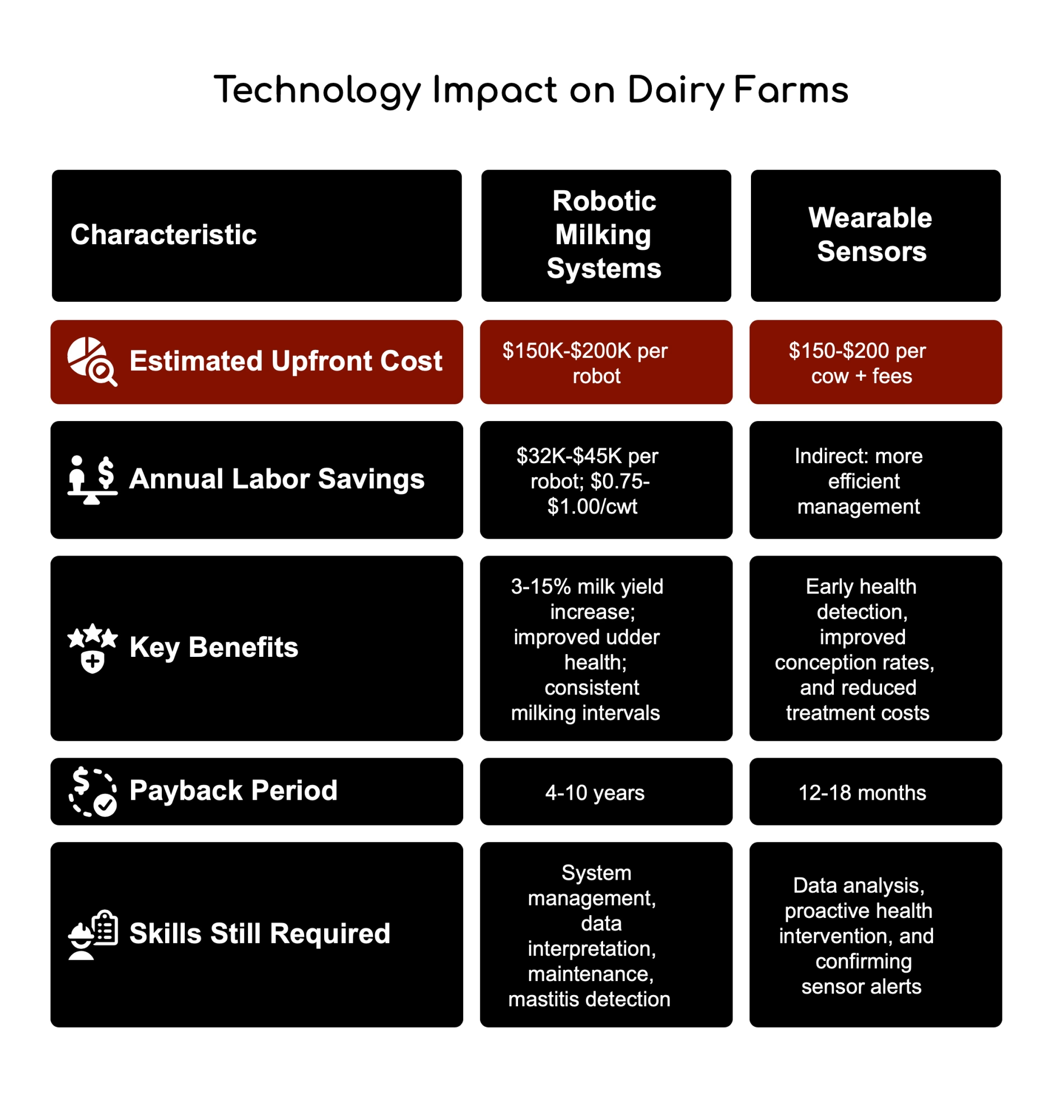
NewsSubscribe
First
Last
Consent

The Hidden Enemy: Why Biofilms Are Costing Your Dairy More Than You Know

Biofilms drain profits silently. Your ‘clean’ water troughs and milking gear harbor bacterial fortresses. Time to rethink dairy hygiene.

Every year, biofilms are silently draining thousands from your bottom line through treatment-resistant mastitis, elevated somatic cell counts, and decreased water consumption. Yet most dairy producers are still fighting yesterday’s battle – treating free-floating bacteria while ignoring the protected bacterial fortresses established throughout your operation. This isn’t just a sanitation issue – it’s potentially your farm’s most overlooked profit leak.

The Bacterial Citadels You Can’t See

When did you last think about what’s happening inside your water lines? Or consider what’s lurking beneath that “clean” stainless steel in your parlor?

The dairy industry has collectively mastered visible cleanliness. We’ve developed protocols for spotless parlors, gleaming bulk tanks, and crystal-clear water troughs. But this visible cleanliness is giving us a dangerous false sense of security. The real battle is happening at a microscopic level, where biofilms – sophisticated bacterial communities encased in protective slime – establish impenetrable strongholds throughout your operation.

Let’s be brutally honest: most of our conventional cleaning and treatment approaches were developed to target free-floating bacteria, representing the exception rather than the rule in bacterial lifestyles. It’s like designing your entire mastitis prevention program around summer conditions when you operate in Wisconsin.

“On a dairy farm, you can find biofilms everywhere,” explains Dr. Johanna Fink-Gremmels, a veterinary pharmacology and toxicology specialist. “They’re in water tanks and drinking facilities, milking devices, the rumen of the cow, and cow tissues.”

These aren’t just simple bacterial clusters – they’re sophisticated, organized communities with defense systems that would make a military strategist jealous. Bacteria can become up to 1,000 times more antibiotic-resistant within these protective fortresses than their free-floating counterparts. This explains why that chronic mastitis case keeps coming back despite your meticulous adherence to treatment protocols.

We’re not just rehashing the age-old advice to ‘keep things clean’; we’re diving into the microbial warfare tactics that explain why your best conventional efforts might still fail against these entrenched bacterial communities.

Scanning Electron Microscope (SEM) observation of S. thermophilus UC8547 biofilm on stainless steel. (A) The stainless steel wire at the beginning of the experiment. (B) S. thermophilus cells adhered to the surface after 3 h. (C) Sessile cells at 6 h and 18 h. (D) After 30 h, an evident biofilm is present over the stainless steel wire (E and F) and cells are included in a multilayer structure

The “Clean Water” Myth That’s Hurting Your Production

Most dairy producers pride themselves on providing clean water to their herds. But here’s an uncomfortable truth: that visibly clean water trough with no obvious dirt or algae could still cost you significant production if it contains a biofilm layer.

The slimy layer that forms in water delivery systems doesn’t just look unappetizing – it actively changes water palatability. Research from the University of Wisconsin shows that dairy cattle can detect even minor water contamination and will reduce their intake accordingly, similar to how they’ll sort a TMR when the silage isn’t properly fermented.

Think about that for a moment. Your high-producing cows must consume 4-5 pounds of water for every pound of milk they produce. What happens when that water has an off-taste they can detect, but you can’t? They drink less, and your production takes a hit – with you potentially blaming everything except the real culprit.

Dr. Fink-Gremmels emphasizes that “checking the water bucket for this slimy layer is one of the first and easiest measures a farmer can take to improve animal health and reduce the stress of infection.”

But are you actually doing this regularly? Or has water trough maintenance become one of those tasks that gets attention only when there’s visible contamination? Many operations have fallen into the trap of addressing what they can see while microbial biofilms flourish unseen.

Your Antibiotic Treatments Are Failing (And It’s Not the Drug’s Fault)

When was the last time you had a frustrating case of mastitis that just wouldn’t clear despite following all the right treatment protocols? Before you blame the drug, consider this:

The primary reason antibiotics fail against biofilms isn’t what we’ve always assumed. It’s not just that the physical barrier of the slime prevents antibiotics from reaching the bacteria – though that does happen. As Dr. Fink-Gremmels explains, the more significant issue is that “bacteria within a biofilm change their gene expression. They may turn down protein or membrane synthesis, which are common antibiotic targets, making the antibiotics ineffective because their target is gone.”

In other words, the bacteria in biofilms essentially remove the targets that antibiotics are designed to hit. It’s like trying to shoot at a bullseye that disappears when you pull the trigger.

This explains why between 60% and 80% of chronic infections in human medicine are biofilm-mediated infections – a statistic that also applies to your dairy herd. Those persistent cases of mastitis that never quite clear up? Are chronic metritis issues affecting your reproduction efficiency? The digital dermatitis that keeps recurring despite your footbath protocol? All likely have biofilms at their core.

And here’s the real kicker: whenever you treat these conditions with antibiotics that fail to eliminate the biofilm completely, you’re potentially creating the perfect environment for antimicrobial resistance to develop and spread. Biofilms act as “multipliers” for exchanging resistance genes between bacteria, meaning they’re not just protected communities but training grounds for superbugs.

The True Cost of Ignoring Biofilms

Let’s talk dollars and cents because that ultimately matters for your operation’s sustainability. The economic toll of biofilms extends far beyond visible disease outbreaks:

1. The Mastitis Money Pit Cornell University research indicates that managing a single case of clinical mastitis costs approximately $444 when accounting for treatment, discarded milk, and reduced production. But that figure assumes the treatment works. What’s the real cost when that same quarter flares up again three weeks later because the underlying biofilm was never eliminated? Or when subclinical mastitis persists for months, silently robbing 5-7% of potential milk production?

2. The Hidden Water Consumption Penalty: A 10% reduction in water intake due to biofilm-related palatability issues can translate directly to a 10% drop in milk production. For a 100-cow herd averaging 80 lbs/day at $20/cwt, that’s a potential loss of $160 daily – or over $58,000 annually – just from cows not drinking enough water.

3. The Equipment Replacement Paradox The dairy industry has been trained to replace rubber components like inflations according to rigid schedules – typically after 1,200-2,500 milkings. But what if your operation’s specific conditions promote faster biofilm development? You might be milking with colonized equipment for weeks before your replacement schedule kicks in. Conversely, premature replacement of components that aren’t yet harboring problematic biofilms wastes money unnecessarily.

For instance, how many operations specifically audit whether their standard acid/alkali CIP rotation, designed primarily for milkstone and fat removal, is truly effective against mature S. aureus biofilms on those inflations, or are we just hoping for the best based on planktonic bacterial kill rates?

4. The Reproduction Ripple Effect Biofilms in the uterine environment contribute to persistent metritis and endometritis, leading to extended days open and reduced conception rates. Every 21-day cycle a cow misses costs approximately in lost production value, not counting the added insemination costs and the long-term impact on calving intervals.

How many of these “invisible costs” are currently draining your operation’s profitability? And how much of your management focus is directed at symptoms rather than addressing these underlying causes?

Talking to Bacteria: The Quorum Sensing Revolution

While most of the industry continues to fight biofilms with the same old weapons, cutting-edge research is exploring a completely different approach: disrupting bacterial communication.

Bacteria aren’t mindless individual cells – they’re sophisticated communicators using a language called quorum sensing to coordinate their activities. Dr. Fink-Gremmels describes quorum sensing as “the language bacteria use to coordinate their metabolic and gene expression status to form a biofilm.”

This discovery has opened an entirely new frontier in biofilm management: what if instead of trying to kill bacteria (which often fails against biofilms anyway), we learned to disrupt their communication?

The most promising approach involves phytogenics – plant-derived compounds that can interfere with bacterial quorum sensing. Plants have been battling bacterial biofilms for millions of years and have evolved compounds that can effectively jam bacterial communication systems.

Dr. Fink-Gremmels believes that “90% of the effects seen with phytochemicals may be through microbial signaling via quorum sensing” rather than direct effects on the animal. This represents a paradigm shift away from conventional antimicrobial approaches.

These phytogenic compounds can be used to:

  • Optimize rumen fermentation, potentially reducing methane production
  • Support cows during stressful transition periods
  • Target specific pathogenic biofilms, like those involved in mastitis

But here’s the provocative question: how much longer will mainstream dairy production continue relying primarily on antibiotics that fail against biofilm-protected bacteria when these alternative approaches show such promise? Are we collectively stuck in an outdated “kill the bacteria” paradigm when “disrupt their coordination” might be far more effective?

Your Biofilm Management Checklist: Where to Start Tomorrow

Ready to take control of the hidden biofilm challenge on your farm? Here’s a practical action plan to implement immediately:

1. Water System Revolution

  • Establish a weekly cleaning schedule for all water troughs – don’t wait until they look dirty
  • Consider water treatment options that prevent biofilm formation
  • Test water not just for contaminants but for bacterial counts that might indicate biofilm presence

2. Milking System Biofilm Audit

  • Implement periodic use of biofilm-specific cleaning products, not just standard CIP
  • Develop a rubber component replacement strategy based on your specific conditions, not just the manufacturer’s generic recommendations
  • Consider using peracid-based sanitizers periodically, as they’ve shown better efficacy against biofilms than conventional products

3. Rethink Chronic Infections

  • View persistent mastitis cases as potential biofilm problems, not treatment failures
  • Consult with your veterinarian about protocols specifically designed for biofilm-associated infections
  • Track recurring cases meticulously to identify patterns that might indicate biofilm involvement

4. Explore Quorum Sensing Management

  • Discuss phytogenic options with your nutritionist, especially during transition periods
  • Consider plant-based approaches to support animals during stress
  • Track results meticulously when implementing these approaches

5. Invest in Better Detection

  • Consider periodic professional testing for biofilm presence in critical areas
  • Explore new detection technologies that might provide earlier warning of biofilm development
  • Train employees to recognize early signs of biofilm formation

The Bottom Line: Rethinking Your Approach to Invisible Enemies

Let’s face it: our industry has gotten comfortable fighting yesterday’s battles. We’ve mastered visible cleanliness, while invisible bacterial communities have established fortified positions throughout our operations. The economic impact is substantial but often misattributes to other causes, from nutrition to genetics and housing.

It’s time to acknowledge that many of our conventional approaches to sanitation, water management, mastitis treatment, and equipment maintenance were developed without a full understanding of biofilm dynamics. This doesn’t mean these approaches are wrong – but it does mean they’re incomplete.

The most progressive dairy operations are already incorporating biofilm-specific strategies into their management protocols, recognizing that this hidden challenge requires specialized approaches. They’re seeing results in reduced treatment costs, improved water consumption, lowered somatic cell counts, and enhanced profitability.

So, here’s my challenge to you: Take a fresh look at your operation through the biofilm lens. Walk your facility tomorrow, specifically looking for potential biofilm hotspots. Check those water troughs for visible cleanliness and the subtle slime that indicates biofilm presence. Review your treatment records for patterns of recurring infections that might indicate biofilm involvement.

Are you still fighting free-floating bacteria while biofilms are the real enemy? Or are you ready to adopt a more sophisticated approach to this complex challenge?

The choice is yours – but so are the consequences to your bottom line.

Key Takeaways:

  • Water systems are ground zero: Biofilms here reduce intake and spread pathogens 24/7.
  • Antibiotics often fail: Biofilms alter bacterial gene expression, making drugs ineffective.
  • Quorum sensing is the weak spot: Disrupt bacterial communication with phytogenics.
  • Economic ripple effect: Chronic infections cost $58k/year in lost milk for a 100-cow herd.
  • Act now: Scrub troughs weekly, audit milking equipment, and rethink “clean” surfaces.

Executive Summary:

Biofilms—slimy bacterial communities in water systems, equipment, and cows—are a hidden profit drain, causing chronic infections, antibiotic resistance, and reduced milk yields. Traditional cleaning often fails against their protective matrix, while 60-80% of persistent issues like mastitis and metritis are biofilm-driven. Quorum sensing, the bacteria’s communication system, offers new control avenues via phytogenics. Farmers must prioritize biofilm detection in water troughs, upgrade sanitation, and explore microbial signaling strategies to safeguard herd health and profits.

The Sunday Read Dairy Professionals Don’t Skip.

Every week, thousands of producers, breeders, and industry insiders open Bullvine Weekly for genetics insights, market shifts, and profit strategies they won’t find anywhere else. One email. Five minutes. Smarter decisions all week.

NewsSubscribe
First
Last
Consent

Words That Win: How Elite Dairy Judges Master the Art and Impact of Oral Reasons

Master dairy judging’s make-or-break skill: Oral reasons decide 50% of scores. Transform technical precision into career-boosting communication.

The sun beats down on the fairgrounds as a young dairy judge steps into the reasons room, takes a confident stance, and begins to explain why she placed a class of Holstein four-year-olds the way she did. For the next two minutes, she delivers a clear, convincing argument that transforms what could be seen as subjective opinions into logical, evidence-based evaluations. Much like a seasoned herdsman explaining breeding decisions to a farm owner or a nutritionist justifying ration adjustments to a client, her comparative language is precise, her delivery poised, and her justifications compelling. In this moment, she’s not just competing—she’s developing skills that will serve her throughout her dairy career and beyond.

Yet we must ask ourselves: Are we truly maximizing the educational potential of oral reasons, or have we become so focused on the competitive formality that we’ve lost sight of their real-world application?

This scene plays out countless times at dairy judging contests across North America each year—from county fairs to the prestigious World Dairy Expo, from 4-H events to the National Intercollegiate Dairy Cattle Judging Contest. While casual spectators might focus solely on the placings, industry insiders know that oral reasons represent far more than a scoring component—they’re the breeding ground for the next generation of articulate, analytical, and confident dairy leaders.

Why Mastering Oral Reasons Is a Game-Changer for Your Dairy Career

Oral reasons are crucial for judges to explain and defend their decisions when placing a class of dairy cattle or heifers. In most contests, reasons account for 50% of a contestant’s overall score, equal in weight to the accuracy of the placings themselves. This equal emphasis reflects a fundamental truth about evaluation: knowing what you’re seeing is only half the battle; being able to articulate and defend your observations is equally valuable.

“Dairy judging teaches decision making better than anything else I know. Oral reasons are necessary for that decision-making process,” explains a veteran coach. “It’s a classic situation of identifying a problem, exploring alternatives, collecting information, and making a final decision.”

The skills developed through crafting and delivering compelling oral reasons extend well beyond the competition ring. Just as a skilled herd manager must communicate clearly with employees about cow management protocols or a dairy nutritionist must explain complex ration adjustments to producers, former judging team members consistently report that these abilities—making keen observations, organizing thoughts logically, speaking confidently under pressure, and persuasively defending decisions—have proven invaluable throughout their professional lives.

“Public speaking causes students to be concise and make a point,” notes Dr. Les Hansen. These skills translate directly to farm management, veterinary practice, sales, consulting, and virtually every other aspect of the dairy industry where clear communication is paramount.

The Elements of Excellence: What Separates Average Reasons from Outstanding Ones

Judges evaluating oral reasons typically focus on two primary components: content and delivery. While both matter, content carries greater weight—after all, even the most eloquent presentation can’t compensate for inaccurate observations or poor analysis, much like how a state-of-the-art milking parlor won’t overcome poor mastitis management practices.

Content That Convinces: The Foundation of Winning Reasons

Accuracy Above All

The cardinal rule of oral reasons is absolute honesty—what many coaches bluntly call the “don’t lie” principle. Every statement must be based on actual, careful observations of the animals. If you didn’t see it, don’t say it. Like DHI records that reflect actual production rather than wishful thinking, this integrity is non-negotiable, as an experienced judge can quickly detect fabricated or exaggerated differences.

But here’s the uncomfortable truth: How many judges, particularly at youth levels, are fabricating differences they don’t actually observe because they feel pressured to fill their time allotment with “sufficient” detail?

Accuracy is the most essential thing in a reason set. Your credibility is shot when you mention traits that aren’t accurate for the animals.

Specific, Detailed, and Comparative

Vague generalizations like “better udder” or “nice dairy character” fail to demonstrate keen observation or understanding, similar to how a generic recommendation to “improve herd health” would be unhelpful to a dairy producer without specific protocols to implement. Elite judges use specific, comparative language that explains precisely how one animal differs from another.

Instead of saying “Cow 1 has a better udder than Cow 2,” compelling reasons might state: “1 shows a higher, wider rear udder attachment that’s more firmly attached, along with a stronger median suspensory ligament that creates more clearly defined halves, and a fore udder that blends more smoothly into the body wall compared to 2.”

This level of detail paints a vivid picture for the official, much like how a comprehensive genomic analysis provides specific trait data rather than just an overall ranking.

Prioritized by Importance

When comparing animals, leading with the most significant differences demonstrates sound judgment. While the PDCA Unified Scorecard assigns specific weightings to trait categories (Udder 40%, Dairy Strength 25%, Feet & Legs 20%, and Frame 15%), oral reasons should reflect the actual animals being evaluated—just as a herd manager must prioritize daily tasks based on immediate needs rather than following a rigid protocol.

“Within each pair, you must start with the most important and obvious difference between the two cows,” advises a successful coach. “If two cows have similar udders but one clearly excels in feet and legs, lead with that more apparent distinction rather than forcing an udder comparison.”

This isn’t to say scorecard priorities are ignored; instead, the initial attack on a pair focuses on the most glaring differences, while the overall emphasis given to traits like udder quality across the entire set of reasons should still reflect their fundamental importance.

We should ask this: Have we become so focused on the scorecard weightings that we’re creating artificial hierarchies for reasons that don’t reflect what we saw in the ring?

Organized for Clarity

Well-structured reasons follow a logical framework, similar to how a well-designed barn facilitates cow flow. The standard format includes an opening statement identifying the class and placing, systematic comparisons of each pair (1 over 2, 2 over 3, and 3 over 4), grants acknowledging where lower-placed animals excel, and a concise conclusion.

Within each pair comparison, address trait categories completely rather than bouncing between them. For instance, discuss all udder traits before moving to dairy strength or feet and legs. This organization makes it easier for the judge to follow your thought process. It evaluates your ability to organize information logically—a skill valued throughout the industry, whether developing breeding strategies or creating standard operating procedures for employees.

While this traditional structure provides an excellent foundation for learning, we must also ask if its rigid application always serves us best in developing the adaptable communication skills needed in today’s fast-paced dairy industry—a point we’ll explore further.

Breaking the Mold: When Traditional Approaches Fall Short

The tradition of highly structured, formal oral reasons has served the industry well for generations. But is this rigid format always the most effective way to develop real-world communication skills?

Professionals rarely have two minutes to deliver a perfectly structured comparison in the commercial dairy world. They need to make quick, incisive points that cut to the heart of the matter. A veterinarian explaining treatment options, a sire analyst justifying mating recommendations, or a nutritionist defending ration changes must be clear, persuasive, and efficient—often in less than 30 seconds.

Consider whether our emphasis on memorized structure sometimes produces contestants who can recite a perfect format but struggle to adapt their communication style to real-world scenarios. The most successful dairy professionals can adjust their approach based on the audience and situation, whether explaining complex concepts to fellow professionals or simplifying ideas for less technical listeners.

This doesn’t mean abandoning structure entirely. Instead, it suggests teaching students to understand the purpose behind the structure, so they can flexibly apply those principles in various professional contexts. Perhaps the next evolution in oral reasoning training should include practice scenarios that mimic real-world time constraints and audience needs.

Mastering the Language of Champions: Speaking in Dairy Terms

The dairy industry has developed a rich vocabulary for precisely describing cattle conformation. This specialized language allows judges to communicate subtle but significant differences that directly impact functional longevity and lifetime milk yield.

Comparative Language: The Heart of Effective Reasons

The fundamental rule of oral reasons is always comparing animals rather than merely describing them. This comparison provides necessary context and demonstrates evaluative judgment, much like how DHIR records are most valuable when viewed as comparisons within a herd rather than isolated numbers.

The simplest method for ensuring comparative language is using adjectives ending in “-er” (taller, wider, deeper, sharper, cleaner) or adding “more” when an “-er” form isn’t grammatically correct (more dairy, more capacious, more correct).

Avoid the general term “better,” which lacks specificity. Instead of saying “1 has a better udder than 2,” specify exactly how the udder is superior: “1 has a higher, wider rear udder attachment and a more strongly attached fore udder than 2.”

Essential Vocabulary for Each Scorecard Category

Udder Terminology (40% of scorecard) For discussing the most heavily weighted trait category, effective terms include:

  • “Stronger fore udder attachment with less bulging at the quarter junctions”
  • “Higher rear udder attachment with the secretory tissue starting well above the hock”
  • “Deeper crease in her udder indicating a stronger median suspensory ligament”
  • “Carries her udder higher above the hocks with more youthful suspension”
  • “More symmetry and balance of quarters with teats more centrally placed beneath each quarter”

Dairy Strength Terminology (25%) When evaluating a cow’s capacity for milk production and feed efficiency:

  • “More angularity with a longer, leaner neck transitioning smoothly into the shoulder”
  • “Cleaner about the head, neck, and withers with more defined bone structure”
  • “More open and well-sprung in her ribs with greater chest capacity”
  • “More incurving thigh providing evidence of adipose mobilization for milk production”
  • “Sharper over her topline while maintaining adequate width across the loin”

But let’s be honest: How often do we see significant differences in these traits that genuinely impact production, versus manufacturing differences to fit our predetermined placings?

Ringside to Reasons Room: The Critical Note-Taking Process

Effective note-taking forms the foundation of compelling oral reasons, serving as the critical bridge between evaluation in the ring and presentation in the reasons room. Without comprehensive, well-organized notes, even the most experienced judge will struggle to recall specific comparative details that substantiate their placings, just as a dairy producer without thorough herd records struggles to make informed management decisions.

Capturing What Matters Most

Strategic note-taking focuses on recording the key differences most significantly impacting placement decisions. Begin by noting any distinctive characteristics to help identify each animal (e.g., “the roan cow” or “tallest in class”).

Once a preliminary placing is determined, concentrate on documenting the major comparative differences between animals in each pair, prioritizing the most critical distinctions first. Be specific in recording details that support the main comparison points.

The hard truth many coaches won’t tell you: Great note-taking is often more valuable than a photographic memory. Even the most experienced judges can forget crucial details in the hour between viewing the class and delivering reasons. Your ability to capture the right observations in the moment often determines your success more than natural talent or speaking ability.

Delivering with Impact: The Performance Aspect of Oral Reasons

Even the most accurate and well-structured reasons can fall flat without effective delivery. The presentation style significantly influences how reasons are received and scored, much like how the same nutritional information can be received differently depending on whether a confident nutritionist or an uncertain feed representative delivers it.

Projecting Confidence Through Voice and Body Language

Non-verbal cues powerfully influence how oral reasons are perceived. Stand squarely on both feet, maintaining an upright posture approximately 5 to 8 feet from the judge. Many competitors choose to clasp their hands behind their backs to avoid distracting gestures.

Project a clear, distinct, and confident voice—strong enough to be easily heard without shouting. Maintain consistent eye contact with the judge throughout the presentation, as this conveys conviction and establishes a connection.

But we must confront an uncomfortable reality: We sometimes reward overly rehearsed, artificial delivery over genuine knowledge and passion. Are we teaching students to be theatrical performers rather than articulate professionals?

Training for Excellence: Practice Techniques That Create Champions

Mastering oral reasons requires dedicated practice using effective techniques that target both content development and delivery skills, not unlike how developing a high-producing herd requires both genetic selection and proper management.

Repeat Sets: The Power of Immediate Application

One particularly effective technique is “repeat sets,” where the speaker gives reasons for a class, receives specific feedback, and then immediately delivers the reasons again, incorporating the suggestions.

This iterative approach rapidly improves content and delivery, building confidence through tangible progress. The immediate application of feedback helps to reinforce correct techniques and correct errors before they become ingrained habits, similar to how immediate correction of milking technique prevents the development of bad habits that could lead to elevated somatic cell counts.

Recording for Self-Assessment

Video or audio recording practice sessions enable objective self-critique, allowing analysis of posture, eye contact, pacing, and terminology use. Many coaches recommend reviewing these recordings with specific focus areas in mind—first watching for content organization, then for delivery aspects like volume and enthusiasm, and finally for specific word choices and transitions.

This multi-layered review process helps isolate different components of the reasons for targeted improvement, much like how dairy farmers analyze milk components, reproductive performance, and health records separately to gain comprehensive insights into herd performance.

The practice technique most coaches overlook: Having students deliver reasons in real-world scenarios. Try having them explain a class to someone with no dairy background in just 30 seconds, or justify their decision to a skeptical farm owner who disagrees with their placing. These exercises develop adaptability that formal contest preparation often neglects.

Common Pitfalls and How to Avoid Them

Being aware of frequent mistakes helps judges at all levels refine their technique. Here are some of the most common errors and their solutions:

Using “Better” Without Specificity
Replace with specific comparative terms that detail exactly how one animal is superior (e.g., “1 is higher in the rear udder attachment” instead of “1 has a better rear udder”), just as specific breeding goals (“increasing component percentages”) are more actionable than general ones (“improving the herd”).

Describing Instead of Comparing
Always compare animals within a pair directly (e.g., “1 is taller than 2”) rather than describing one animal in isolation (e.g., “1 is a tall cow”), similar to how production records are most valuable when viewed comparatively within contemporary groups rather than as standalone numbers.

Disorganized Flow
Follow the standard structure (opening, pairs with grants, closing). Discuss one trait category completely before moving to another within a pair, just as milking protocols work best when followed in a consistent, logical sequence rather than haphazardly.

The most insidious pitfall of all: Going through the motions without genuine understanding. Too many contestants can recite perfect reasons without truly comprehending why the differences they’re describing matter functionally to a dairy cow‘s productivity and longevity. Are you explaining actual functional differences, or just regurgitating phrases you’ve been taught to use?

Beyond the Contest: How Oral Reasons Shape Industry Leaders

The process of mastering oral reasons develops a suite of transferable skills highly valued across academic, professional, and personal contexts. The structured decision-making required for placing a class and defending that placement cultivates critical thinking abilities applicable to countless real-world scenarios, from selecting replacement heifers to evaluating capital investments in farm infrastructure.

Creating the Complete Professional

The concise, persuasive communication demanded by the time-limited format builds public speaking confidence and articulation skills that serve individuals throughout their careers. As one industry professional notes, dairy judging teaches “talking and interacting with people, working with others, being part of a team, having a boss or coach, working toward a common goal and getting a job done”—all essential workplace competencies whether managing employees in a 5,000-cow operation or consulting with clients as a veterinarian.

Additionally, careful observation, methodical note-taking, and evidence-based reasoning form habits of mind that enhance problem-solving capabilities far beyond the judging arena. These skills prove invaluable when troubleshooting milk quality issues, reproductive performance challenges, or feed efficiency concerns on modern dairies.

A Call to Rethink Our Approach: Moving Forward

The time has come for a candid conversation about how we teach and evaluate oral reasons. While the traditional structure and approach have undeniable value, we must ensure we’re preparing students for the realities of modern dairy communication, not just competition success.

Ask yourself:

  • Are your reasons genuinely reflecting what you observed, or are you forcing observations to fit expected patterns?
  • Could you explain your dairy evaluation to someone outside the industry in a way they’d understand and find convincing?
  • Are you developing transferable communication skills, or just contest techniques?

I challenge every coach, judge, and contestant to incorporate these practical exercises into their reasons practice:

  1. Deliver a 30-second “elevator pitch” version of your reasons to someone with no dairy background. For instance, can you convey the essence of why your top cow won, focusing on just one or two key functional advantages, in the time it takes for an elevator ride? This hones your ability to be concise and impactful.
  2. Explain your placing to a skeptical producer who disagrees with your assessment
  3. Justify your evaluation without using any industry jargon whatsoever
  4. Record yourself giving reasons, then critically analyze whether you sound authentic or rehearsed

The dairy industry needs professionals who can communicate effectively in diverse contexts—not just those who excel in the artificial environment of a reasons room. By expanding our practice approaches and evaluation criteria, we can better prepare the next generation for real-world success while maintaining the valuable tradition of formal reasons.

The next time you step into a reasons room or coach a young judge, remember that the ultimate goal isn’t perfecting a two-minute memorized speech—it’s developing the ability to make sound decisions and communicate them persuasively in any setting. That’s the true legacy and value of the oral reasons tradition, and it’s up to all of us to ensure it remains relevant and effective for generations to come.

How will you transform your approach to oral reasons to better prepare yourself or your students for real-world dairy industry communication? The answer to that question may determine not just competitive success, but professional impact for years to come.

Key Takeaways:

  • 50% of judging scores hinge on oral reasons—prioritize accuracy, structure, and PDCA trait priorities (udder, dairy strength, feet/legs).
  • Comparative language > description: Use “-er” terms (e.g., “higher rear udder”) and grants to acknowledge lower-ranked strengths.
  • Notes are non-negotiable: Develop shorthand for real-time comparisons; organize by pair differences, not scorecard order.
  • Rethink tradition: Balance contest prep with adaptable communication drills (e.g., 30-second farm owner pitches).
  • Life skills payoff: Builds decision-making, public speaking, and persuasive clarity for leadership roles beyond the show ring.

Executive Summary:

Oral reasons—the ability to justify dairy cattle placings—are equally weighted with actual rankings in competitions, demanding technical accuracy, structured arguments, and persuasive delivery. Judges evaluate content (specific comparisons, PDCA scorecard alignment) and presentation (clarity, confidence), with note-taking and industry-specific terminology as foundational skills. The article challenges rigid traditional formats, urging adaptation for real-world scenarios like client consultations or herd management. By mastering comparative analysis and dynamic communication, competitors gain transferable skills in critical thinking and leadership, positioning oral reasons as both a competitive edge and career accelerator.

Learn more:

The Sunday Read Dairy Professionals Don’t Skip.

Every week, thousands of producers, breeders, and industry insiders open Bullvine Weekly for genetics insights, market shifts, and profit strategies they won’t find anywhere else. One email. Five minutes. Smarter decisions all week.
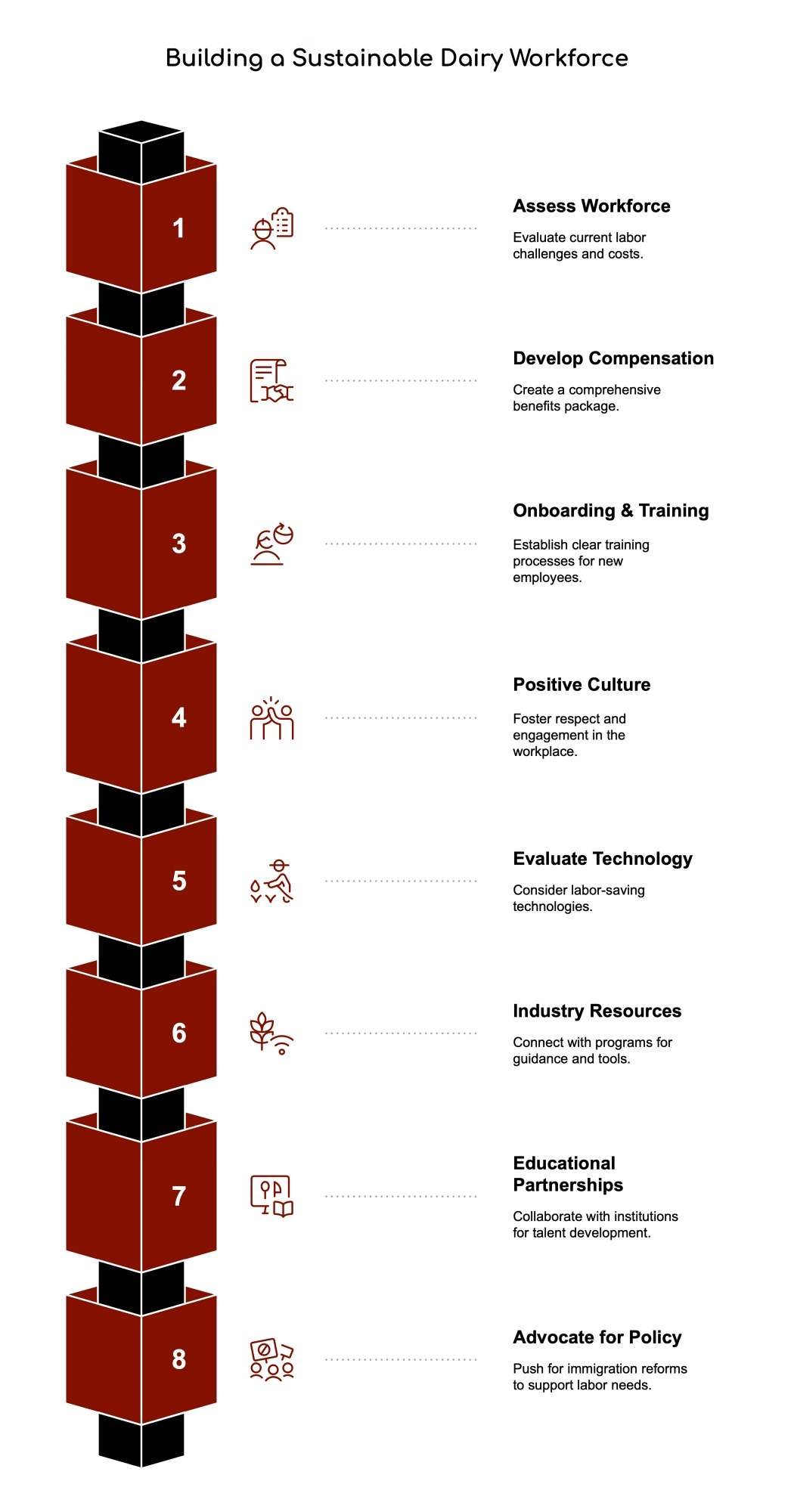
NewsSubscribe
First
Last
Consent

Dairy’s Bold New Frontier: How Forward-Thinking Producers Are Redefining the Industry

Discover how tech, sustainability, and bold strategies are revolutionizing dairy farming’s future.

The U.S. dairy landscape is undergoing unprecedented transformation. While milk prices continue their volatile dance and input costs steadily climb, a new generation of innovative producers is shattering outdated paradigms, embracing technology, diversifying revenue streams, and reimagining what success looks like in an industry being reborn. Their blueprint isn’t just about survival; it’s the roadmap for thriving in dairy’s next chapter.

The New Dairy Paradigm: Evolution, Not Extinction

The narrative surrounding dairy farming in America has frequently focused on decline, fewer farms, tightening margins, and mounting challenges. However, this perspective misses the remarkable reinvention occurring across the industry. Today’s dairy sector isn’t dying; it’s evolving at an unprecedented pace.

“What we’re witnessing isn’t the end of an era, but rather the birth of a new one,” observes Dr. Megan Richardson, agricultural economist and dairy industry analyst. “The most forward-thinking producers aren’t just adapting to change-they’re actively driving it, much like breeding for genetic improvement rather than accepting what nature provides.”

This evolution is evident in recent industry data. While the total number of dairy operations continues to decrease, with approximately 24,000 remaining as of 2022, representing a 39% decrease from 2017-those that remain display remarkable resilience and innovation. According to USDA Census of Agriculture data, this consolidation occurs at what industry experts describe as a “breathtaking pace,” with projections suggesting a potential 20-25% reduction by 2027. Despite these structural shifts, over the last five years, more than two-thirds of established dairy producers have maintained profitability despite volatile markets and rising input costs.

Are you positioning yourself among the innovators shaping the industry’s future, or are you merely reacting to changes as they come?

Several concurrent revolutions characterize the industry’s transformation:

Technology Integration: Two-thirds of U.S. dairies now employ at least one form of advanced feeding technology, with adoption rates for robotic milking, AI-driven health monitoring, and integrated data systems accelerating rapidly, creating “connected barns” that would be unrecognizable to previous generations.

Revenue Diversification: Approximately 80% of dairy operations now generate income from sources beyond the traditional milk check, with three-quarters involved in at least one beef-on-dairy practice, blending the historically separate worlds of dairy and beef production.

Sustainability Implementation: Over 60% of producers are engaged in at least one formal sustainability practice-from precision manure application to methane digesters-though awareness of comprehensive programs remains an industry challenge.

Workforce Evolution: Many operations now rely on non-family labor for at least half their workforce, with strategic automation helping address persistent labor shortages that threaten daily milk harvests.

Succession Planning: With a quarter of current operators planning to retire within five years, representing over a million cows changing hands, the industry faces a critical transition of assets and knowledge to a new generation.

Behind these statistics are real producers making strategic choices, reshaping the industry’s future. Let’s explore how these transformations play out and what they mean for your operation.

The Technology Revolution: From Adoption to Integration

The dairy barn of 2025 bears little resemblance to its counterpart from even a decade ago. Technology has moved beyond gadgetry to become the backbone of progressive operations, touching everything from TMR mixing and milking to health monitoring and data analysis.

The New Economics of Automation

The business case for technology adoption has never been stronger. Consider these returns on investment:

  • Robotic milking systems: While requiring substantial upfront investment ($150,000+ per robot), these systems deliver 5-10% increases in milk yield and labor savings of $0.75-$1.00 per hundredweight. According to recent studies published in the Journal of Dairy Science, farms implementing automatic milking systems (AMS) have reported 5-10% milk yield increases alongside significant reductions in labor requirements, up to 75% for milking-specific tasks and 29% for overall labor. On a 200-cow dairy, this can translate to $75,000+ in annual savings while improving milk quality metrics like SCC and butterfat percentage.
  • Precision feeding technologies: Farms implementing advanced TMR systems report 7-12% reductions in feed costs alongside improved feed efficiency. Research from Cornell University’s CNCPS (Cornell Net Carbohydrate and Protein System) nutritional modeling shows these technologies can decrease nitrogen and phosphorus excretion by 15-20% while enhancing feed conversion. When feed represents 40-60% of production costs and the milk-to-feed price ratio determines profitability, these savings quickly accumulate, potentially adding $100+ per cow annually to the bottom line.
  • Health monitoring wearables: Early detection of mastitis alone can save $444 per case (including treatment costs, discarded milk, and production losses), according to economic analyses published in Preventive Veterinary Medicine. AI-enabled health monitoring systems predict illness 24-72 hours before visual symptoms appear, with machine learning algorithms like Support Vector Machines (SVM) demonstrating 97% accuracy in classifying cattle behaviors based on sensor data.

But here’s the uncomfortable truth most tech vendors won’t tell you: without proper management protocols, even the most advanced technology becomes an expensive band-aid on deeper operational problems. The farms seeing transformational returns aren’t just buying equipment- they’re reimagining their entire management approach.

Dan Webber, who milks 320 cows in Wisconsin, saw his labor costs drop nearly 30% after installing robotic milkers. “Beyond the numbers, there’s a quality-of-life improvement that’s hard to quantify,” he notes. “No more 4 a.m. milking shifts means I can attend my kids’ school events without constantly checking my watch. It’s like the difference between being tied to the parlor three times a day versus letting the cows set their schedule.”

From Data Collection to Decision Intelligence

The most sophisticated operations move beyond simply collecting data to creating integrated systems that transform information into actionable intelligence. This is similar to how a skilled herdsman reads subtle cow signals at scale and with greater precision.

“Five years ago, we were drowning in data but starving for insights,” explains Sarah Chen, a fourth-generation dairy farmer managing 1,200 cows in California. “Today, our integrated platform pulls together everything from individual cow activity and rumination patterns to milk components, DMI, and weather forecasts. The system doesn’t just tell me what happened yesterday: it helps predict what will happen tomorrow, like knowing which fresh cow might crash before her CMT turns positive.”

This predictive capability represents the next frontier in dairy technology. Farms leveraging IoT and advanced data analytics report 15-20% productivity improvements, with particularly strong returns in reproduction efficiency (conception rates up 5-7%), feed optimization (F: Y ratio improvements of 0.05-0.10), and early health intervention.

The real question isn’t whether you can afford technology, it’s whether you can afford to be left behind as the technological divide between progressive and traditional operations widens by the day.

However, technology adoption isn’t without challenges. Access to capital remains a significant barrier, with 26% of producers citing it as their primary limitation, according to a multi-state survey of dairy farmers conducted by land-grant universities. Additionally, the availability of local technical support was identified as the most critical factor in technology selection decisions, followed by proven research results and simplicity of use.

The Bullvine Bottom Line for Your Operation:

  1. Evaluate your largest cost centers and bottlenecks first, and target technologies that specifically address these pain points
  2. Consider how different technologies work together as a system rather than in isolation
  3. Develop a 3–5-year technology adoption roadmap with clear ROI metrics for each investment

Beyond the Milk Check: Diversification as Strategic Imperative

For decades, dairy farming meant one thing: selling milk. Today, however, most successful operations view themselves as milk producers and diversified agricultural enterprises. This shift from single-commodity focus to multiple revenue streams isn’t just a hedge against price volatility; it’s becoming a cornerstone of modern dairy business models.

The Beef-on-Dairy Phenomenon

Perhaps no diversification strategy has gained more traction than beef-on-dairy (BoD) crossbreeding. According to comprehensive industry surveys, an impressive 72% of U.S. dairy farms now incorporate beef genetics into their breeding programs. This represents a fundamental shift in breeding philosophy, evidenced by semen sales data: 7.9 million units of beef sires were sold for use in dairy cattle in 2023, representing 31% of total dairy semen sales.

Yet I’m still encountering producers who view dairy and beef as separate enterprises, refusing to consider how strategic crossbreeding could transform their bottom line. When was the last time you critically evaluated your breeding program’s economic impact beyond producing replacement heifers?

The economics are compelling. According to market analyses from three major land-grant universities, crossbred calves command premiums of $350-$700 per head compared to straight Holstein bull calves, with 80% of participating farmers receiving such premiums. A 500-cow dairy breeding 200 cows annually to beef sires represents potential additional revenue of $ 70,000- $ 140,000, similar to improving your milk price by $0.70-$1.40 per cwt across your entire production.

The beef-on-dairy trend also benefits from favorable market conditions. U.S. cattle inventory recently hit a 73-year low, supporting strong beef prices. The impact on the beef supply chain is already substantial, with BoD cattle accounting for 7% of total U.S. cattle slaughter in 2022 (approximately 2.6 million head), and projections from the USDA Economic Research Service indicate this share could rise to 15% by 2026.

James Thornton, who operates a 400-cow dairy in Pennsylvania, began breeding the bottom quartile of his herd to Angus sires four years ago. “Initially, we were just looking to get better value for our bull calves,” he explains. “But we’ve since expanded into raising some crossbreds to finishing, and now we’re selling branded beef direct to consumers. What started as a minor sideline now accounts for about 15% of our total farm revenue; it’s like adding a profitable heifer-raising enterprise without the same headaches.”

Creating Value on Your Terms

While selling day-old crossbred calves represents the entry point for many, other producers are moving further up the value chain. Recent industry data shows that while the number of producers raising beef-on-dairy animals to finishing weight has moderated, there has been a notable increase in the sale of branded beef products directly from dairy farms.

This follows broader consumer trends showing increased demand for branded beef, particularly high-quality products with specific breed claims and traceability stories. Sophisticated dairy producers are capitalizing on this trend by developing their own branded products and marketing channels, similar to how some have succeeded with farm-branded artisanal cheese.

Let’s be brutally honest: Clinging to a “we just milk cows” mentality in today’s market environment isn’t loyalty to tradition; it’s a failure of imagination that’s leaving money on the table.

Beyond beef-related ventures, successful diversification strategies include:

  • On-farm processing: Converting raw milk into cheese, yogurt, ice cream, or flavored milk products to capture retail margins exceeding $20 per cwt equivalent.
  • Agritourism: Farm tours, educational workshops, on-farm stores, and event hosting provide additional revenue and valuable community connections, turning your operation’s daily routines into experiences consumers will pay for.
  • Crop and forage sales: Leveraging existing land and equipment to produce feed for sale to other operations, particularly in regions with high land values and favorable growing conditions.
  • Energy production: Methane digesters and solar installations turn waste products and underutilized space into revenue-generating assets, harvesting manure twice: once for energy and again for fertilizer.

The Bullvine Bottom Line for Your Operation:

  1. Conduct a resource inventory and identify underutilized assets (land, livestock, skills) that could generate additional revenue.
  2. Start small with diversification-test, test market demand before major investments
  3. Consider your competitive advantages- what makes your farm uniquely positioned for specific alternative ventures?

Environmental Sustainability: From Regulatory Burden to Competitive Edge

The concept of sustainability in dairy has evolved dramatically. What was once viewed primarily as an ecological obligation or regulatory burden is increasingly recognized as a business imperative with potential economic benefits. Today’s most progressive producers find that sustainable practices can drive efficiency and market advantage.

Adoption Trends and Business Benefits

Recent industry research reveals that 63% of U.S. dairy producers now implement at least one sustainable practice, according to comprehensive national surveys. However, this statistic masks significant variation in depth and breadth of adoption. Leading operations are going beyond piecemeal approaches to implement comprehensive sustainability strategies that deliver multiple business benefits:

  • Water recycling and conservation: On advanced dairy farms, water is recycled up to six times, used for cooling milk in plate coolers, cleaning equipment, flushing barn lanes, and ultimately irrigating crops. According to research from the Innovation Center for U.S. Dairy, this reduces both utility costs and environmental footprint.
  • Manure management and nutrient cycling: Beyond regulatory compliance, sophisticated manure handling systems capture value through biogas production while reducing fertilizer expenses. Studies from the University of Wisconsin Dairy Innovation Hub show some operations report annual savings of $70-100 per cow through optimized nutrient management, turning what was once considered a waste disposal problem into a valuable farm resource.
  • Precision feeding: Advanced ration formulation and TMR management reduce feed waste and minimize excess nutrient excretion. Cornell University research shows this can decrease nitrogen and phosphorus output by 15-20% while improving feed conversion efficiency.

The industry’s collective progress is measurable: producing a gallon of milk in 2023 required 30% less water, 21% less land, and generated a 19% smaller carbon footprint compared to 2007, according to lifecycle assessments published in the Journal of Dairy Science. These efficiency gains represent both environmental progress and economic savings, like how genetic improvements have simultaneously increased production efficiency and reduced resource intensity.

Global Context: The Dutch Experience

In the Netherlands, where environmental regulations are among the strictest in the world, dairy farms have pioneered circular farming practices that integrate crop production, livestock management, and energy generation. Dutch farms utilizing closed-loop nutrient management systems have demonstrated that sustainability can drive profitability, reducing purchased fertilizer inputs by up to 65% while maintaining or increasing forage yields. This model of regenerative dairy farming offers valuable lessons for U.S. producers facing increasing environmental scrutiny.

The Market Incentive

Forward-thinking producers recognize that sustainability credentials are increasingly valuable in the marketplace. Major processors and retailers are establishing sustainability requirements for their supply chains, and some offer premiums for verified sustainable production practices.

The sustainability divide is widening while some producers view environmental initiatives as costly distractions, others use them to secure price premiums and preferential market access. Which side of this divide will your operation be on five years from now?

“We initially implemented our methane digester because of regulatory pressure,” admits David Keller, who operates an 850-cow dairy in New York. “But we’ve since discovered it’s also a marketing advantage. Our processor’s sustainability program pays a $0.15 per hundredweight premium for farms that meet certain environmental metrics. That’s adding about $45,000 annually to our bottom line, similar to boosting components across the herd.”

Despite these opportunities, a significant awareness gap persists. Many producers implement sustainable practices without connecting them to broader industry programs or failing to document and communicate their efforts for potential market benefit. This disconnect is particularly pronounced among smaller operations and those outside the Western U.S., where sustainability programs have gained stronger traction.

The Bullvine Bottom Line for Your Operation:

  1. Identify which sustainability practices you’re already implementing but not getting market credit for
  2. Research processor sustainability programs that offer premiums or preferential contracts
  3. Start measuring and documenting your operation’s environmental impact; you can’t improve or market what you don’t measure

The Human Element: Solving Dairy’s Most Critical Challenges

With all the advancements in technology and business models, the future of dairy ultimately depends on the people who manage the operations and those who will lead them tomorrow. Two interrelated human capital challenges threaten the industry’s continued evolution: workforce shortages and succession planning gaps.

The Workforce Dilemma

The dairy labor landscape has transformed dramatically. Many operations now rely on non-family employees for at least half their workforce, with immigrant labor particularly vital. A comprehensive national survey found that immigrant workers account for 51% of all dairy labor nationally and produce 79% of America’s milk supply. In Western and Southwestern regions, this dependency approaches 80% according to analyses from the National Milk Producers Federation.

Let’s confront an uncomfortable truth: our industry has become utterly dependent on a workforce that lacks secure legal status or reliable pathways to obtain it. We can’t claim to be strategic business operators while ignoring this existential threat to our labor supply.

Despite this reliance, hiring and retention remain persistent challenges. The physically demanding nature of dairy work, often involving early hours and weekend shifts, makes attracting domestic workers difficult even at competitive wages. Meanwhile, immigration policies add another layer of complexity, as the H-2A agricultural guest worker program is poorly suited for year-round dairy labor needs, unlike seasonal harvests.

Economic modeling published in the Journal of Agricultural Economics demonstrates the potential severity of labor disruptions: a 50% reduction in immigrant dairy labor could result in a $16 billion hit to the U.S. economy. In comparison, complete elimination could increase retail milk prices by as much as 90%.

Innovative producers are responding with multi-faceted solutions:

  • Strategic automation: Beyond labor savings, technology investments are reshaping the nature of dairy work. “Our robotic milking system didn’t eliminate jobs-it transformed them,” explains Miguel Rodriguez, herd manager at a 600-cow operation in Idaho. “We now need fewer people in the parlor but more skilled technicians and cow managers. The jobs are less physically demanding and more intellectually engaging, more like herdsmen than milkers.”
  • Enhanced compensation strategies: Leading operations are moving beyond competitive wages to comprehensive packages including quality housing, flexible scheduling where operationally feasible, and performance-based incentives tied to milk quality or reproductive efficiency, similar to how premium genetics command higher prices.
  • Professional development pathways: Structured training programs and clear advancement opportunities improve retention by showing employees they have a future in the operation. “When we implemented our three-tier advancement program, turnover dropped by 40%,” notes Amanda Chen, HR director for a multi-site dairy enterprise. “People want to know there’s a path from milker to herdsman to manager, just like we develop heifers into productive cows.”

The Succession Imperative: A Step-by-Step Framework

Parallel to workforce challenges is the critical need for effective succession planning. Industry data from multiple national surveys indicates that approximately 25% of current dairy operators plan to retire within the next five years, yet nearly half lack a formal succession plan or are uncertain about their transition strategy.

The numbers are stark: less than one-third of family agricultural businesses survive the transition from first to second generation, and only about 16.5% make it to the third generation. Are we honestly prepared to confront that most dairy farms are one generation away from extinction?

Financial and family dynamics often complicate transitions. Modern dairy operations represent substantial capital investments- land, facilities, equipment, and livestock can easily total millions of dollars. Navigating fair distribution among multiple heirs while maintaining operational viability requires sophisticated planning and open communication.

“My parents avoided the succession conversation for years,” recounts Thomas Weber, a 32-year-old who recently took over management of his family’s 280-cow dairy. “When we finally engaged a transition specialist, we discovered the process would take far longer than anyone expected. Start five years before you think you need to, then double that timeline, much like how you’d begin breeding and raising replacements long before your herd needs them.”

Initial Framework for Kickstarting Your Succession Plan

  1. Start with vision alignment meetings: Before discussing financial or legal details, gather all potential stakeholders (on-farm and off-farm family members) to discuss values, goals, and aspirations. Use a neutral facilitator to ensure all voices are heard.
  2. Conduct comprehensive business assessment: Work with agricultural financial specialists to determine true farm value, operational efficiency, and viability. This provides the factual foundation for all future decisions.
  3. Develop multiple transition scenarios: Develop 2-3 potential transition models with your advisors rather than assuming a single pathway. These might include gradual transfer of management/ownership, partnership structures, or innovative approaches like equity partnerships with non-family members.
  4. Create a management transfer timeline: Successful transitions typically separate management transfer from ownership transfer, with the next generation assuming increasing management responsibilities before financial ownership changes hands.
  5. Establish regular review and adaptation processes: Once initiated, commit to reviewing the succession plan quarterly during the transition period and annually thereafter, adapting to changing circumstances, tax laws, and family dynamics.

Despite these challenges, there are encouraging signs. A new generation of dairy leaders is emerging, characterized by technological savvy, business sophistication, and environmental awareness. Various programs, including university extensions, dairy producer organizations, and private foundations, offer these aspiring dairy professionals educational resources and financial support.

The Bullvine Bottom Line for Your Operation:

  1. Schedule your first succession planning meeting within the next 30 days, even if just to establish timeline goals
  2. Build your advisory team, identify legal, financial, and farm transition specialists with specific dairy experience
  3. Conduct an honest assessment of your operation’s transferability, and what changes would make it more attractive to the next generation?

The Next Frontier: Integrating Innovation Across Your Operation

The most successful dairy operations recognize that individual technological advancements, diversification, sustainability, and workforce management don’t exist in isolation. The true pioneers are creating integrated systems where these elements work synergistically, amplifying benefits and creating resilient business models that can withstand market volatility.

The Systems-Thinking Advantage

Ryan Kimball, whose family operates a 750-cow dairy in Wisconsin, describes their approach: “We stopped thinking about ‘projects’ and started thinking about systems. Our robotic milkers weren’t just a labor solution; they generated data that improved our nutrition program, reducing feed costs while enhancing cow health and reducing veterinary expenses. Everything connects, much like how a well-balanced ration addresses multiple nutritional needs simultaneously.”

This systems thinking extends to business models as well. Operations that successfully integrate milk production, value-added processing, and direct marketing create multiple revenue streams while building a buffer against price fluctuations at any point in the value chain, similar to how genetic diversity in a herd protects changing market demands.

Is your operation still addressing challenges in silos, or have you begun to recognize the interconnected nature of modern dairy management?

Consider how these elements might work together in your operation:

  • Technology investments that simultaneously address labor challenges, improve animal welfare, and enhance sustainability metrics, like how automated calf feeders improve growth rates while reducing labor and enabling precise nutrition
  • Diversification strategies that utilize existing assets and capabilities while creating new market opportunities, similar to how crossbreeding leverages your dairy herd for beef production
  • Sustainability initiatives that reduce costs while positioning products for premium markets, such as precision manure application that saves on fertilizer while improving environmental credentials
  • Workforce development approaches that combine competitive wages with meaningful work and growth opportunities, creating career paths, not just jobs

Case Study: The Integrated Operation

The Sanchez family dairy in California exemplifies this integrated approach. Their 900-cow operation combines robotic milking technology, intelligent feeding systems, and advanced health monitoring. They’ve installed solar arrays that supply 80% of their electricity needs and implemented water recycling that reduces consumption by 40%.

On the diversification front, they breed 35% of their herd to beef sires, raising some animals to finishing weight while marketing others through regional beef brands. They’ve also developed a small on-farm creamery producing specialty cheeses sold through local retailers and direct-to-consumer channels.

“Each piece reinforces the others,” explains Maria Sanchez. “Our sustainability practices reduced costs while creating a marketing advantage for our specialty products. Our technology investments addressed labor challenges while improving animal welfare, which became part of our brand story. It’s all interconnected how cow comfort simultaneously impacts production, reproduction, and longevity.”

The Bottom Line: Your Blueprint for Future Success

The dairy industry is experiencing evolution and revolution in technology, business models, sustainability practices, and human capital approaches. While challenges abound, so do unprecedented opportunities for operations willing to break from convention and embrace strategic change.

As you consider your operation’s future, focus on these key principles:

  1. Think systems, not silos: Look for synergies across different aspects of your business, from production practices to marketing approaches-just as you’d view herd health as an integrated system rather than isolated treatments.
  2. Invest strategically in technology: Prioritize investments that address your specific pain points and offer multiple benefits across the operation, similar to focusing breeding decisions on your herd’s limiting factors.
  3. Diversify thoughtfully: Explore alternative revenue streams that leverage existing assets and capabilities while creating resilience against market volatility, creating enterprise diversity just as you’d diversify your genetic program.
  4. Embrace sustainability as an opportunity: Move beyond compliance to view environmental stewardship as a potential source of competitive advantage, turning potential regulatory burdens into marketable attributes.
  5. Prioritize people: Develop comprehensive workforce development and succession planning strategies to ensure long-term continuity, investing in human capital with the same diligence you apply to herd improvement.

Challenge yourself today: What conventional practice on your farm most deserves critical reevaluation? Whether it’s your breeding program, labor management, or business model, commit to an honest assessment of one area where innovation could transform your operation’s trajectory.

The dairy producers who will thrive in this new landscape combine operational excellence with strategic vision, maintaining the best traditions of animal husbandry and land stewardship while embracing innovations that enhance efficiency, sustainability, and profitability.

The industry’s transformation presents challenges, but for those willing to adapt and innovate, it also offers a pathway to renewed prosperity and purpose. Like the cow that peaks early in lactation with proper transition management, those who invest in preparation and adaptation now will enjoy stronger performance in the years ahead. The future of dairy belongs to the bold.

What’s one bold change you’ve implemented in your operation that’s paying dividends? Share your experience in the comments below; your innovation could be exactly what another producer needs to hear right now.

Key Takeaways:

  • Tech is non-negotiable: Two-thirds of dairies use advanced feeding systems, with robotic milkers cutting labor costs by 29% while boosting yields.
  • Diversification dominates: 80% of operations now earn beyond milk sales, led by beef-on-dairy crossbreeding ($350–$700 premiums per calf).
  • Sustainability pays: Farms using precision nutrient management cut nitrogen waste by 15–20% and tap into $0.15/cwt processor premiums.
  • Labor & succession crises: 50%+ of workforces rely on non-family labor, while 46% lack succession plans despite 25% retirements looming.
  • Growth mindset wins: 44% of producers plan to expand, blending tradition with tech to future-proof their operations.

Executive Summary:

The U.S. dairy industry is undergoing rapid transformation, driven by technological adoption (robotic milking, AI health monitoring), revenue diversification (72% use beef-on-dairy crossbreeding), and sustainability initiatives (63% of farms implement eco-practices). Despite labor shortages and a looming retirement wave (25% of operators plan to exit in 5 years), younger innovators are leveraging data-driven strategies and alternative revenue streams to boost resilience. While consolidation continues, proactive operators are redefining success through efficiency gains, branded products, and holistic integration of systems-proving adaptability is key to thriving in dairy’s new era.

Learn more:

The Sunday Read Dairy Professionals Don’t Skip.

Every week, thousands of producers, breeders, and industry insiders open Bullvine Weekly for genetics insights, market shifts, and profit strategies they won’t find anywhere else. One email. Five minutes. Smarter decisions all week.

NewsSubscribe
First
Last
Consent

Protecting Your Dairy’s Bottom Line: Essential Risk Management Approaches for 2025

2025’s dairy crisis is coming. Will your farm survive? Discover the risk management strategies separating thriving dairies from failing ones.

Is your dairy operation truly prepared for the storm that 2025 is brewing? Or are you still hoping yesterday’s playbook will see you through today’s volatility? Let’s cut to the chase: the difference between thriving and barely surviving this year will come down to how you manage risk-not just in theory, but in the gritty reality of your daily decisions.

The 2025 Dairy Risk Landscape: A Confluence of Pressures

Let’s be honest-2025 isn’t the year to wing it. We’re staring down a perfect storm: milk prices are as unpredictable as a fresh heifer, feed costs are one drought away from spiking, and the threat of Highly Pathogenic Avian Influenza (HPAI) is lurking in the background. Add in labor shortages, shifting consumer demands, and regulatory curveballs, and you’d have to be milking with your eyes closed not to see the risks.

Are you really willing to bet your farm’s future on a single forecast or a “wait and see” approach?

Milk and feed markets are volatile – and as a result, on-farm margins can swing widely. And, when considering hedging strategies, the best time to secure milk prices might not be the same as the time lock in feed costs. And, with the news constantly changing, it’s hard to keep track of all the market drivers. As such, working with a trusted risk management team is the cornerstone of a successful hedging program.

Jim Matthews, Ever.Ag

Managing Price and Financial Volatility

Let’s face it-hoping for the best is not a strategy. The USDA’s all-milk price forecast has already been revised downward to $21.10/cwt, and feed costs, while projected to ease, remain one bad weather event away from chaos. If you’re not layering your risk management tools, you’re playing Russian roulette with your bottom line.

Your Financial Toolkit-Are You Using All the Tools?

  • Dairy Margin Coverage (DMC): This is your foundation. It’s triggered payments in 66% of months since 2018, and it’s cheap insurance against margin collapse.
  • Dairy Revenue Protection (DRP): Lock in revenue floors when the market gives you a chance. DRP is flexible and subsidized-don’t leave this tool in the shed.
  • Livestock Gross Margin (LGM-Dairy): Layer this with DMC for extra protection, especially if your margins track Class III/corn/soybean meal futures.
  • Forward Contracts (DFPP): If your handler offers them, use them to lock in prices for a portion of your milk.
  • Futures and Options: For those comfortable with the CME, these tools let you hedge both milk and feed, but don’t forget the margin calls.

Every dairy is different – so there’s no one size fits all approach. It’s important to work with an experienced risk management team that understands your risks and can help you pick the right tools to protect against volatility. And, it’s not just one and done – with changing markets, the ideal strategy changes too. So it’s an important to have a trusted advisor watching out for your dairy. 

Katie Burgess, Ever.Ag

Don’t wait for the “perfect” price. Lock in protection when you can.

Securing Your Production: Disease and Climate Challenges

How robust is your biosecurity-really? If HPAI or another disease hits your herd, will your protocols hold up, or are you just checking boxes?

  • Biosecurity: Pasteurize all milk and colostrum, quarantine new animals, sanitize equipment like your operation depends on it-because it does.
  • Climate Adaptation: Are you investing in fans, sprinklers, and shade, or just hoping for a cool summer? Are you optimizing irrigation and planting drought-tolerant forages, or gambling with your feed supply?

Will you be caught off guard by the next heatwave or disease outbreak, or will your herd keep producing while others scramble?

Sponsored Content

Operational Efficiency: Technology and Labor

Are you still managing labor like it’s 1995? The workforce isn’t coming back, and those who stay expect more. Automation isn’t the future-it’s now.

  • Robotic Milking Systems: Cut labor by 60-75%. Yes, it’s a big investment, but so is losing your best employee during corn silage.
  • Automated Feeding and Wearable Sensors: Save time, spot health problems early, and let your best people focus on what matters.
  • Precision Feeding: Are you still eyeballing rations, or using data to drive decisions? The difference is $0.75 to $1.50/cwt in production costs.

Every dollar you save on feed or labor is a dollar you keep when prices drop.

Adapting to Market Shifts

Are you producing what the market wants, or what you’ve always produced? Consumer trends are shifting. If you’re not focusing on milk components, sustainability, and animal welfare, you’re leaving money on the table. On-farm processing, agritourism, beef-on-dairy, renewable energy-these aren’t just buzzwords. They’re proven ways to spread risk and capture new income. Have you diversified your revenue streams?

Will you adapt to changing consumer demands and market channels, or let the market leave you behind?

Creating Your Integrated Risk Management Plan

Are you still putting out fires instead of preventing them? The most resilient dairies are:

  • Diversifying their risk management portfolio: DMC, DRP, LGM, forward contracts, and options.
  • Strengthening herd health and biosecurity: Not just for HPAI, but for mastitis, lameness, and everything in between.
  • Investing in climate adaptation: Heat stress mitigation, water optimization, and forage resilience.
  • Enhancing operational efficiency: Automation, precision ag, and employee retention.
  • Adapting marketing approaches: Milk quality, sustainability, and niche markets.
  • Maintaining rigorous financial planning: Detailed budgets, scenario plans, and cash flow projections.
  • Staying informed on policy and regulation: Farm Bill, FMMO, environmental and animal welfare standards.

The Bullvine Bottom Line

Let’s not sugarcoat it: many dairies won’t survive this decade-not because they aren’t good farmers, but because they’re poor risk managers. Are you one of them?

The dairies that thrive will be those that are vigilant, adaptable, and relentless about improvement. They’ll use data, technology, and financial discipline to stay ahead. They’ll be honest about their weaknesses and ruthless about fixing them.

Don’t wait for a crisis to rethink your approach. Schedule a risk management audit with your team and your Ever.Ag advisor. Identify your vulnerabilities. Build a plan. Act. 

What action will you take today to secure your dairy’s future tomorrow?

Key Takeaways:

  • Layer financial protections: Combine DMC, DRP, and forward contracts to hedge against price collapses
  • Automate or stagnate: Robotics and sensors cut labor costs by 60%+ while improving herd health monitoring
  • Secure feed strategically: Lock in 60-70% of needs during price dips but preserve flexibility
  • Biosecurity = profitability: HPAI protocols prevent outbreaks that could cripple production
  • Milk components matter: Prioritize butterfat/protein to capture premiums in shifting markets

Executive Summary:

Dairy producers face unprecedented volatility in 2025 from market swings, HPAI threats, climate disruptions, and labor shortages. This article outlines essential strategies including layered financial protections (DMC, DRP, forward contracts), biosecurity overhauls, climate-resilient practices, and labor-saving automation. Emphasizing data-driven decisions and proactive risk management, it challenges farmers to abandon outdated approaches and adopt precision feeding, market diversification, and rigorous financial planning. Expert insights from Ever.Ag‘s Jim Matthews stress decisive action over wishful thinking, arguing that survival depends on embracing technology and strategic contracting rather than relying on tradition.

Learn more:

The Sunday Read Dairy Professionals Don’t Skip.

Every week, thousands of producers, breeders, and industry insiders open Bullvine Weekly for genetics insights, market shifts, and profit strategies they won’t find anywhere else. One email. Five minutes. Smarter decisions all week.

NewsSubscribe
First
Last
Consent

From Saving a Baby’s Life to Transforming Your Dairy Herd: The Gene Editing Revolution Is Here

Gene editing saved a baby; now it’s set to transform your dairy! Discover how CRISPR will create healthier, more profitable herds. Are you ready?

When gene editing saved baby KJ Muldoon from a rare genetic disease, it wasn’t just a human medical triumph but a glimpse into dairy farming’s imminent future. The same CRISPR technology physicians used to edit that infant’s DNA is poised to create mastitis-resistant Holsteins and heat-tolerant Jerseys within this decade. UC Davis and Cornell research shows this technology could save our industry billions in disease costs alone. You’re already behind if you’re still thinking this is science fiction. The question isn’t if gene-edited animals will transform dairy farming, it’s whether your operation will be a leader or a follower when they arrive.

Breaking Down Gene Editing: What It Actually Means in the Parlor and Pasture

Let’s cut through the scientific jargon. Gene editing, particularly using tools like CRISPR-Cas9, is essentially a molecular “find and replace” function for an animal’s DNA. Unlike older genetic modification methods that often insert foreign genes from different species (like Bt corn), modern gene editing makes precise changes within an animal’s genetic code, as detailed in numerous Journal of Dairy Science publications.

Think of it like having a highly precise, next-level genetic selection tool for your herd’s genetics, but at the DNA level. Scientists can now target specific genes to make small, precise edits- activating beneficial traits, removing problematic ones, or adjusting how specific genes function. Many of these changes could theoretically happen through conventional breeding, but gene editing accomplishes what might take decades in one generation through traditional progeny testing and sire selection.

Are we content to wait 20 years for conventional breeding to accomplish what gene editing can deliver next year? Research from agricultural experiment stations at land-grant universities indicates that approximately 55 years of traditional breeding could be achieved in a single generation through targeted editing.

What’s particularly important to understand is that you won’t be performing gene editing in your operation between morning and afternoon milkings. This is laboratory technology used by breeding companies and research institutions to develop elite animals whose genetics you’ll access through familiar channels like AI or embryo transfer, no different than ordering semen from your Select Sires or Genex representative today.

“Gene editing doesn’t replace our current breeding programs,” explains Dr. Alison Van Eenennaam, animal genomics specialist at UC Davis. “It enhances them by allowing us to make precise genetic improvements in a fraction of the time, much like how genomic testing accelerated genetic progress without changing the fundamentals of your breeding pyramid.”

The Game-Changing Benefits That Will Transform Your Bottom Line

As a dairy farmer, you’re constantly battling challenges that eat into your mailbox price and profitability. Gene editing targets several of these head-on:

Mastitis: The $2 Billion Problem We Keep Accepting

Let’s be honest, we’ve been managing mastitis the same way for decades, and it’s still bleeding our operations dry. According to findings published in the Journal of Dairy Science, a single clinical case in early lactation costs approximately $444 when accounting for milk loss, treatment protocols, discarded milk, labor, and premature culling. Industry-wide, mastitis costs reach billions annually, which could be going into your milk check instead of your treatment records.

Why are we still accepting these losses as “just part of dairy farming” when gene editing offers a path to resistant animals? Research at institutions like Cornell University targets genes in the immune response to mastitis-causing pathogens like Staphylococcus aureus. Successfully edited mastitis-resistant cattle would deliver multiple benefits: reduced antibiotic use, lower SCC, improved animal welfare, fewer treatments, and better milk quality premiums.

No More Dehorning Dilemmas in Your Calf Barn

How many more years will we continue dehorning calves when a one-time genetic edit could eliminate this practice forever? Dehorning is a pain, literally for your animals and figuratively for your employees. The POLLED gene edit would eliminate the need for this procedure entirely by producing naturally hornless calves.

According to economic analyses from multiple university extension services, this addresses a significant animal welfare concern while saving approximately $40 per animal in dehorning costs. Much like selecting for A2A2 has become standard practice for many herds, gene editing could make choosing for the polled trait effortless. According to USDA Agricultural Research Service projections, this trait is already in regulatory review with a commercial timeline of just 3-5 years.

Heat Tolerance When Climate Change Hits Your Freestalls

Climate change isn’t going away, and neither are the production losses when your THI exceeds 72 and your high producers start panting at the feed bunk. Research conducted at the University of Florida successfully introduced the “SLICK” gene through editing, creating cows with shorter, sleeker hair coats that better regulate body temperature.

Field trials published in agricultural experiment station reports suggest SLICK cattle could reduce production losses due to heat stress by 8-12%, representing significant savings during hot weather. One California organic dairy farmer noted heat stress costs about 15% of summer production, that’s like voluntarily taking a 15% milk price deduction three months of the year. The gene editing solution represents a permanent fix that would work alongside your existing cooling systems rather than temporary Band-Aids like adjusting the TMR or increasing fan runtime.

Specialty Milk for Premium Markets and Class I Alternatives

Gene editing also opens doors to specialty production. For example, it could efficiently convert A1 cows to produce only A2 milk by modifying the beta-casein gene. Studies published in the International Dairy Journal show growing consumer interest in A2 milk and demonstrated willingness to pay premiums, representing a potential value-added opportunity, like how organic production commands higher prices.

Other milk composition modifications explored include enhanced kappa-casein for improved cheese-making properties (think higher cheese yield and faster setting times) and elimination of allergens like β-lactoglobulin to create hypoallergenic milk options. AgResearch has already demonstrated the ability to double kappa-casein levels in experimental animals. In an era when fluid milk consumption continues to decline, these specialty products could help dairy farmers capture new markets and increase utilization value.

How Soon Will This Hit Your Breeding Program? The Uncomfortable Truth

You’re probably wondering when you’ll actually see these benefits in your herd health protocols and DHIA records, and what they’ll cost. Here’s the practical reality:

Most dairy farmers will access gene-edited traits through familiar breeding companies and AI services. The widespread use of AI in our industry means that once beneficial traits are introduced into elite sires, they can spread rapidly throughout the dairy population, like how polled genetics and A2A2 have increased in prevalence.

Here’s a breakdown of current timelines for key traits, based on research from the USDA Agricultural Research Service and university breeding programs:

TraitGene TargetProjected Commercial TimelineEstimated Economic Impact
HornlessnessPOLLED locus3-5 years~$40 per animal savings
Mastitis Resistancee.g., CD18 gene5-7 years$2 billion annually (industry-wide)
Heat ToleranceSLICK gene6-8 years8-12% less production loss during heat stress
Tuberculosis ResistanceNRAMP1 gene8-10 years$150 million annually (industry-wide)

Here’s the uncomfortable truth: these timelines are unnecessarily long, driven not by technical limitations but by regulatory obstacles and industry inertia. Economic analyses published in agricultural economics journals estimate that every year of delay in commercializing beneficial gene-edited livestock represents billions in lost opportunity for the dairy sector.

As for costs, gene-edited genetics will likely come at a premium compared to conventional semen or embryos, reflecting the development costs and added value. Think of it like the premium you pay for sexed semen or genomic-tested embryos, an upfront investment for long-term gains. However, these initial investments should be weighed against long-term savings:

  • Polled trait: $40 savings per animal by avoiding dehorning costs, plus improved early-life growth and lowered stress
  • Mastitis resistance: $400+ savings per clinical case, plus improved longevity and lower cull rates
  • Heat tolerance: 8-12% reduced production losses during heat stress, particularly valuable for Southern operations
  • Feed efficiency: Significant potential feed cost savings, which matters when your feed bill represents 50-60% of production costs

As the technology becomes more widespread, access costs are expected to decrease, following the pattern we saw with genomic testing, which initially cost hundreds of dollars per animal but has now become standard practice at a fraction of the original price.

Will we wait until our competitors have mastitis-resistant herds before we demand access to these genetics? According to an industry analysis published in Dairy Herd Management, the dairy farmers who push for faster adoption and regulatory clarity will reap the benefits first.

Will Consumers Drink Milk from Gene-Edited Cows? The Truth Behind the Fear

Perhaps the most critical question facing our cooperative boards and processing plants is whether consumers will accept products from gene-edited animals. After all, what good is a technology if the market rejects it, forcing you to discount your milk or find alternative markets?

Research from the Journal of Agricultural Communications shows a mixed picture. Studies suggest consumers tend to accept gene-edited foods more than older “GMO” technologies, especially when editing occurs within a species rather than transferring genes between unrelated organisms. According to surveys published by university agricultural experiment stations, approximately 45% of consumers believe food from CRISPR-modified organisms is safe for consumption.

However, explicitly labeling milk as coming from gene-edited cows generally decreases consumer willingness to pay compared to milk with no specific production information. This presents a potential market challenge if gene-edited genetics come at a premium cost to farmers, but consumers are unwilling to pay corresponding premiums, and worse, demand discounts. It’s like how rBST became a marketing liability despite its production benefits, a situation our industry should avoid repeating.

What’s more “unnatural”: making a precise genetic edit to prevent disease, or pumping antibiotics into a sick cow repeatedly? The power of the “benefit story” can’t be overestimated. Research compiled by the American Dairy Science Association identifies three factors that consistently increase public support for gene editing in livestock:

  1. Animal Welfare Benefits: Approximately 71% of consumers support gene editing to improve animal welfare, such as developing polled cattle to avoid dehorning. This mirrors how consumers have responded positively to cow comfort measures like sand bedding and access to pasture.
  2. Clear Health or Environmental Advantages: Acceptance increases significantly when consumers understand tangible benefits, like reduced antibiotic use or lower environmental footprint. As with automated milking systems or methane digesters, demonstrating how technology improves sustainability opens doors.
  3. Scientific Communication: According to communications research from agricultural universities, explaining the differences between gene editing and older GMO methods can increase acceptance by up to 19%. This highlights the importance of proactive communication, like how the dairy industry has had to educate consumers about modern farming practices.

For us as an industry, this means the narrative matters tremendously. We’ve been defending technology adoption for decades; it’s time to go on offense with a powerful story about how gene editing improves animal lives and environmental outcomes. Applications focused on animal welfare improvements, reduced environmental impact, or addressing fundamental health challenges will likely gain consumer acceptance.

The Regulatory Maze: Why Are We Letting Bureaucrats Decide Our Future?

Understanding the regulatory landscape is crucial for dairy farmers planning long-term breeding strategies. Different regions have drastically different approaches to gene-edited animals, creating a patchwork of policies that impact the economics of dairy production globally.

United States: The FDA Pathway

In the U.S., the Food and Drug Administration (FDA) regulates gene-edited animals as “intentional genomic alterations” (IGAs) under its animal drug provisions. This approach requires extensive safety assessments, including data demonstrating trait durability across multiple generations.

For cattle, with their long generation intervals, this can add years to the approval timeline, like how a two-year-old genomic-tested heifer gives you more confidence than a bull calf with no daughters in milk. According to FDA guidance documents, multiple non-contiguous generations of data may be required, adding potentially four years or more to the development timeline. However, there are encouraging signs of regulatory progress. The FDA has made low-risk determinations for some IGAs, such as SLICK-haired beef cattle, indicating workable pathways exist.

Are we content to let agencies with little understanding of our daily farming challenges dictate the pace of innovation? The current framework treats gene editing as inherently risky, despite growing evidence from agricultural experiment station reports that targeted edits within an animal’s genome pose minimal novel risks. According to economic impact studies published in the Journal of Dairy Science, every year of regulatory delay represents billions in lost opportunity and unnecessary animal suffering.

Canada’s Evolving Approach

Canada generally regulates products with “novel traits” regardless of the method used to create them. Recent regulatory updates have exempted some gene-edited plants and plant-derived livestock feeds from mandatory safety assessments if they don’t contain foreign DNA, according to Health Canada and CFIA documents.

However, animals with “novel traits” still face significant regulatory scrutiny. The distinction between “no foreign DNA” and “novel trait” remains critical in determining regulatory requirements, much like how the difference between “grass-fed” and “organic” certification requires different management practices and documentation.

European Union: The Strictest Standards

The EU currently maintains the most restrictive regulatory environment for gene-edited animals, regulating them under comprehensive GMO legislation. To date, no GM animals have been approved for food purposes in the EU, and while there are proposals to create more streamlined pathways for certain gene-edited plants, these changes don’t extend to animals, according to European Food Safety Authority guidelines.

This means EU dairy farmers will likely face the longest delays in accessing gene-edited cattle genetics compared to their North American counterparts, potentially impacting their competitive position, like how EU restrictions on rBST use created different production paradigms across the Atlantic.

When Ideology Clashes with Animal Welfare: The Organic Dilemma

For organic dairy producers, gene editing presents particular challenges. Current National Organic Program (NOP) standards explicitly prohibit genetic engineering, including gene editing techniques. This means organic dairy farmers cannot use gene-edited animals or their products while maintaining organic certification, much like how they can’t use antibiotics therapeutically without losing a cow’s organic status.

But here’s the uncomfortable question we need to ask: Is it more aligned with organic principles to let a cow suffer from heat stress when a simple gene edit could prevent it? Gene editing addresses many challenges, like heat stress or disease resistance, which significantly impact organic systems, too. University extension reports quote a California organic dairy farmer expressing willingness to adopt gene-edited SLICK cattle for heat tolerance if permissible and not productivity-impairing.

While currently incompatible with organic standards, this underlying interest highlights potential future discussions within the organic community as the benefits become clearer. When principles designed to protect animals actually prevent the adoption of technology that could improve their welfare, it’s time to reconsider those principles. It’s reminiscent of how organic production has evolved to cautiously embrace certain technologies like robotic milking while maintaining its core principles.

The Bullvine Bottom Line: What Smart Dairy Farmers Will Do Now

While gene-edited dairy cattle aren’t going to show up in your next Select Sires catalog or appear in tomorrow’s proof run, the technology is advancing rapidly. Forward-thinking farmers can take several steps to prepare:

  1. Stay Informed and Demand Access: Don’t just passively follow research developments- become an advocate for faster adoption and clearer regulatory pathways. Contact your cooperative, breed association, and industry representatives to push for accelerated development of these beneficial traits. The squeaky wheel gets the genetic grease. Agricultural experiment stations and extension services are excellent sources of reliable information on these developments.
  2. Evaluate Farm-Specific Priorities: Identify which challenges on your farm- persistent mastitis, heat stress, dehorning concerns, or others- might best be addressed by gene-edited traits. This will help you assess which innovations could offer the most significant benefits to your operation, like how you prioritize which barns to renovate or equipment to replace.
  3. Consider Long-Term Breeding Strategy: Think about how potentially incorporating gene-edited traits aligns with your operation’s goals. Will polled genetics reduce labor needs? Could mastitis-resistant genetics reduce treatment costs and improve milk quality premiums? This is simply an extension of your genetic planning when establishing breeding goals.
  4. Engage in Industry Discussions: Participate in conversations within the dairy community about the responsible development and deployment of these technologies. Research published in the Journal of Extension shows that farmer input shapes research priorities and public perception. Your co-op or breed association board meetings are good places to raise these topics.
  5. Prepare Your Marketing Story: Start thinking about how you’ll communicate the benefits of these technologies to consumers. Will you emphasize animal welfare improvements? Reduced antibiotic usage? Environmental benefits? Studies in agricultural communications journals indicate that the farms that thrive will be those that can tell a compelling story about why technology adoption aligns with consumer values.

The dairy industry has evolved by adopting new technologies that improve animal health, welfare, and farm profitability. From the transition to artificial insemination in the 1940s to the genomic revolution of the 2000s, our industry has embraced innovations that enhance genetic progress. Gene editing represents the next frontier in this ongoing progression. Are you going to help lead the charge or get left behind?

Just as you wouldn’t breed your entire herd to an unproven sire based solely on pedigree, a measured approach to gene editing makes sense. However, research from multiple land-grant universities indicates that the farmers who understand this technology and its implications will be best positioned to benefit as these innovations move from research labs to bull studs to your milking herd.

It’s time to ask yourself: If gene editing can already save a desperately ill baby like KJ Muldoon, what could it do for your herd’s health, welfare, and profitability? Are you ready to embrace the next revolution in dairy genetics, or will you be playing catch-up when your competitors are milking cows that rarely get mastitis, thrive in heat stress, and never need dehorning in the first place? According to every major dairy research institution, that future isn’t a matter of if, but when.

Key Takeaways:

  • Transformative Potential: Gene editing (e.g., CRISPR) offers unprecedented speed and precision to improve dairy cattle genetics, targeting traits like disease resistance, heat tolerance, polled (hornless), and milk composition.
  • Farmer Benefits: Key advantages include reduced veterinary costs (especially for mastitis), improved animal welfare (no dehorning), better adaptation to climate change, and potential for value-added milk products.
  • Critical Hurdles: Adoption faces challenges from complex and varied international regulations, initial costs for farmers, and the crucial need to gain consumer trust and acceptance.
  • Proactive Approach Needed: Dairy farmers should stay informed, evaluate how these tools fit their herd goals, and engage in industry conversations to shape responsible development and advocate for clear, science-based regulations.
  • Consumer Narrative is Key: Transparent communication focusing on animal welfare and health benefits will be vital for market acceptance and realizing the full potential of gene-edited dairy products.

Executive Summary:

The same gene editing technology, like CRISPR, that recently saved a baby’s life is poised to revolutionize the dairy industry by offering precise genetic improvements in cattle. This article explores how gene editing can enhance disease resistance (e.g., mastitis), improve milk composition, boost heat tolerance, and eliminate the need for dehorning, leading to healthier animals and increased farm profitability. While the science is advancing rapidly, challenges such as regulatory hurdles across different global markets, the cost of initial adoption, and the critical need for consumer acceptance remain. Dairy farmers must stay informed, engage in industry discussions, and prepare for a future where these powerful genetic tools will reshape breeding programs and on-farm management. The proactive adoption and communication of gene editing’s benefits, particularly in animal welfare, will be key to its success.

Learn more:

The Sunday Read Dairy Professionals Don’t Skip.

Every week, thousands of producers, breeders, and industry insiders open Bullvine Weekly for genetics insights, market shifts, and profit strategies they won’t find anywhere else. One email. Five minutes. Smarter decisions all week.

NewsSubscribe
First
Last
Consent

The $2.2 Billion Secret: How Flies Are Stealing Your Herd’s Potential

Flies cost U.S. cattle farms $2.2B annually. Are your herd’s profits flying away? Learn proven strategies to crush infestations and protect productivity.

Look, I get it. When you’re up at 4 AM for milking, fly control isn’t exactly top of mind. But here’s the hard truth: every uncontrolled horn fly is costing you about $1.40 per cow annually. With 200+ flies per animal being common in summer, that’s nearly $300 in lost production per cow before you even notice the problem.

Sunshine and green pastures might be great for growing cattle, but they’re also prime real estate for your farm’s most persistent pests. These aren’t just annoying bugs – they’re stealing money straight from your milk check.

The Real Cost: Why Fly Control Matters to Your Bottom Line

Animal Welfare Under Attack

We’ve all seen it – cattle bunching in the corner of the pasture instead of grazing, tails swishing constantly, stomping their feet raw. Flies don’t just annoy your cows – they fundamentally change how they behave:

  • Tail switching and foot stomping (especially with stable flies on their legs)
  • Head shaking and ear flapping (when face flies are working on their eyes)
  • Bunching together tightly (cranking up their body temperature on already hot days)
  • Standing in ponds or hiding in shade instead of eating

In bad infestations, cows flat-out stop eating. They’re too busy fighting flies to graze properly. That stress translates directly to your bulk tank and your checkbook.

The Production Drain You Can’t Afford to Ignore

Let’s talk numbers. University research shows exactly what flies are costing you:

Fly SpeciesAnnual Industry CostProduction ImpactEconomic Threshold
Horn$1+ billion10-20 lb weaning weight reduction; up to 18% decreased yearling gains200 flies/animal
Stable$2.2 billion0.44 lb/day ADG reduction; 306 lbs milk loss/cow annually5 flies/leg
Face$53+ million17-65 lb loss from pinkeye; 25% milk reduction in infected cows10-14 flies/face

Horn flies are blood-feeders that stay on cattle constantly. University of Nebraska research shows they can decrease calf weaning weights by 4-15%, with studies showing a 10-20 pound advantage when mothers had proper fly control. For your dairy heifers, that’s growth you’re paying for but not getting.

Stable flies hit your milking herd hardest. Research shows they can reduce milk production by up to 306 pounds per cow annually. Think about what that costs at current milk prices. And the threshold is ridiculously low – just 5 flies per leg is enough to impact production.

Disease Transmission: The Hidden Multiplier

Beyond production losses, flies are disease-spreading machines:

Face flies are the primary vector for pinkeye. They feed on eye secretions, scrape the cornea with their rough mouthparts, and shuttle bacteria between animals. A pinkeye outbreak can drop milk production by 25% in affected cows.

Horn flies contribute significantly to mastitis in heifers by creating teat-end lesions that allow Staph. aureus to enter. You know what that means – lost quarters before they even hit the milking string.

House flies might seem harmless, but they’re mechanical vectors for everything from mastitis pathogens to calf scours. They bounce between manure, feed, and your cows’ faces all day long.

Your Battle Plan: Building an Effective Fly Management Program

Miss spring monitoring? You’ve already lost the first fly battle.

You wouldn’t wait until your SCC hits 400,000 to address mastitis, so why wait until flies are out of control? An effective approach means hitting them from multiple angles.

The Foundation: Sanitation and Environmental Management

Pro Tip: Kansas State University trials (2023) proved weekly manure removal slashes stable flies by 80%.

The single most effective thing you can do costs nothing but time and diesel: clean up breeding sites. For stable and house flies, this means:

  1. Manure Management: Weekly cleanout of barns, pens, and loafing areas during fly season. Pay special attention to fence lines, edges of feed bunks, and calf areas.
  2. Bedding Management: Soiled bedding, especially straw, is fly heaven. Change it regularly, especially in summer.
  3. Feed Management: Clean up spilled TMR, silage, and grain. That wet feed around bunks is a five-star fly hotel.
  4. Water Management: Fix leaky waterers immediately. Proper drainage around buildings prevents wet spots where flies breed.
  5. Composting: Done right, composting kills fly larvae while creating valuable fertilizer. Maintain temps between 131°F and 170°F, turn regularly, and keep moisture at 40-65%.

Early Warning System: Monitoring Fly Populations

“You can’t manage what you don’t measure – fly counts are non-negotiable.” – Dr. Roger Moon, University of Minnesota.

Start watching for flies in early spring. Use:

  1. Sticky Traps: Hang these in barns and milk rooms to monitor house fly activity.
  2. Spot Cards: Simple white index cards placed where flies rest. Count the spots after a week – 100+ spots means high activity.
  3. Direct Counts: For horn flies, count one side of several animals and double it. For stable flies, check the lower legs. For face flies, watch the faces.

Strategic Weapons: Chemical Control Options

When monitoring shows you’ve hit threshold levels, it’s time to act. Your approach depends entirely on which flies you’re dealing with.

For Premise Flies (Stable, House)

Remember, ear tags and pour-ons DON’T WORK for stable and house flies because these pests spend most of their time off the animal.

Instead, use:

  1. Premise/Residual Sprays: Apply to walls, posts, and other resting surfaces. Reapply every 2-3 weeks.
  2. Space Sprays/Mists/Fogs: Good for quick knockdown during heavy outbreaks, but no lasting control.
  3. Baits: Place granules or bait stations where flies congregate, away from feed, water, and animal access.

For Pasture Flies (Horn, Face)

These flies spend significant time on the animal, so on-animal treatments work:

  1. Insecticide Ear Tags: Provide 12-15 weeks of control. For face flies, use two tags per animal. Don’t tag too early – wait until you hit threshold.
  2. Pour-ons: Offer about 28 days of protection. Effective for horn flies and can help with face flies if applied properly.
  3. Sprays: Provide quick knockdown but need frequent reapplication.
  4. Dust Bags and Back Rubbers: Self-application devices work well when placed in forced-use locations like gateway to water.
  5. Feed-Through Products: These pass through the animal and kill fly larvae in manure. Start 30 days before fly season and ensure consistent consumption.

Winning the Resistance War: Rotation Strategies That Work

Pro Tip: Rotate pyrethroid tags with organophosphates EVERY season – University of Nebraska research shows this cuts resistance risk by 65%.

Horn flies can develop resistance faster than you can change milk filters. To prevent this:

  1. Rotate Chemical Classes Annually: Switch between pyrethroids, organophosphates, and macrocyclic lactones each year.
  2. Time Applications Right: Don’t tag too early. Wait until you hit threshold (200 horn flies/animal).
  3. Remove Tags After Fly Season: Leaving tags in over winter creates resistant flies. Cut them out after the first frost.
  4. Use Multiple Approaches: Don’t rely solely on one control method.

The Bottom Line

Will you settle for being a fly buffet, or will you join the top producers who’ve figured this out? The choice – and the profit – is yours.

Implementing a comprehensive fly management program isn’t just about cow comfort; it’s about protecting your milk check. By combining rigorous sanitation, strategic chemical controls, and consistent monitoring, you can reclaim those lost pounds and dollars from these winged thieves.

Like a poorly managed lactation curve, unchecked fly populations crash your productivity. Don’t let flies dictate your farm’s future – take control and watch your herd’s potential soar.

Key Takeaways:

  • $300/cow at risk: Uncontrolled horn flies (200+ per animal) cost $1.40 daily in lost productivity
  • Sanitation is king: Weekly manure removal cuts stable flies by 80% (Kansas State, 2023)
  • Rotate or regret: Switch insecticide classes yearly to combat resistance—pyrethroids → organophosphates → macrocyclic lactones
  • Monitor early: 5 stable flies/leg or 10 face flies/muzzle signal economic damage
  • Feed-throughs matter: Start larvicides 30 days pre-season to break fly life cycles

Executive Summary:

Flies are stealth profit-killers, draining over $2.2B yearly through reduced weight gain, milk loss, and disease spread. Horn, stable, face, and house flies each pose unique threats—from horn flies siphoning 10-20 lbs from weaning weights to stable flies slashing milk yields by 306 lbs/cow. Effective control demands integrated strategies: rigorous sanitation to eliminate breeding sites, targeted insecticide use with resistance rotation, and vigilant monitoring of economic thresholds (e.g., 200 horn flies/animal). Prioritizing fly management isn’t optional—it’s essential for animal welfare, disease prevention, and protecting your bottom line.

Learn more:

The Sunday Read Dairy Professionals Don’t Skip.

Every week, thousands of producers, breeders, and industry insiders open Bullvine Weekly for genetics insights, market shifts, and profit strategies they won’t find anywhere else. One email. Five minutes. Smarter decisions all week.

NewsSubscribe
First
Last
Consent

The Silent Genetic Squeeze: Is Holstein Breeding Painting Itself into a Corner?

Holstein inbreeding has tripled in a decade. Discover how hidden genomic risks threaten dairy profits and what you can do to protect your herd’s future.

The relentless pursuit of genetic advancement in Holsteins has created an uncomfortable truth the industry refuses to confront: we’re creating a narrow genetic highway with no exit ramps. While milk production has soared through genomic selection, inbreeding has silently tripled in elite lines over just one decade. This genetic narrowing threatens long-term sustainability and demands immediate action from every stakeholder in the dairy industry – including YOU.

Remarkable genetic progress in Holstein cattle has transformed dairy production, but beneath the celebrated gains lurks a concerning trend that many farmers either don’t notice or choose to ignore. The genomic revolution that accelerated genetic improvement has simultaneously accelerated inbreeding at rates unprecedented in breed history.

You’ve probably heard whispers about this at dairy conferences or read passing references in industry publications. Perhaps you’ve noticed subtle changes in the “modern Holstein” – that increasingly angular, refined animal appearing in show rings and high-ranking genomic lists. But few connect these dots to the underlying genetic squeeze right before our eyes. And why would they? The major AI companies aren’t highlighting this problem in their glossy catalogs, are they?

The Inbreeding Paradox: What the Numbers Tell Us

When did you last scrutinize the inbreeding metrics in your genetic evaluations? If you’re like most producers, you monitor Expected Future Inbreeding (EFI) values when selecting service sires. But here’s the uncomfortable truth: EFI isn’t telling you the whole story – and the organizations supplying your genetics know it.

The divergence between genomic inbreeding levels in Holstein bulls (rising to 15.2%) and the declining number of active AI bulls (down 61%) creates a dangerous genetic bottleneck.

The difference between EFI and genomic inbreeding is like comparing your TMR formulation to what the cow’s sort and consume. One gives you the big picture; the other tells you what’s happening where rubber meets road.

EFI measures a bull’s average relationship to the broader population (currently heifers born in 2020), while genomic inbreeding (F_ROH) directly measures actual homozygosity in an individual’s DNA. This distinction matters tremendously when making mating decisions in your breeding program.

What makes this particularly troubling is that the base population used to calculate EFI is becoming more inbred each year. Between 2015 and 2020, the average EFI of the Holstein base population jumped from 7.5% to 9.4%. This means the genetic “yardstick” we use to measure inbreeding is shrinking, creating the illusion of stability when inbreeding is accelerating. It’s like measuring water depth in a sinking boat – the numbers stay the same while you slowly drown.

DEBUNKED: “If a bull’s EFI is low, he’s an outcross.” This common assumption falls apart under scrutiny. A bull can show a low EFI relative to today’s highly inbred base population yet still be closely related to other elite lines. This creates a false sense of security when making breeding decisions, particularly when using multiple “elite” bulls across your herd that secretly share recent common ancestry.

Contract limitations on elite bulls further distort the picture. When high Net Merit$ sires are restricted to specific breeding programs or available only through exclusive contracts, their genetics eventually enter the broader population through sons and maternal grandsons. By then, a new generation of even more inbred sires dominates the market, continuing a cycle of intensifying homozygosity that isn’t fully captured by EFI values.

Follow the Numbers: A Decade of Genetic Narrowing

The data tells a compelling story of rapidly diminishing genetic diversity. In just one decade (2010-2020), genomic inbreeding in Holstein bulls skyrocketed from approximately 5.7% to 15.2% – a staggering 168% increase.

Meanwhile, active AI bulls declined precipitously, from 2,734 in 2010 to just 1,079 in 2020. That’s a 61% reduction in the available gene pool in just 10 years.

Let’s put this in perspective:

Metric20102020Change
Elite Genomic Sires5.7%15.2%+168%
Active AI bulls2,7341,079-61%
EFI base population7.5%9.4%+25%

You might think, “But genomic selection has dramatically improved our herds. Isn’t this just the price of progress?”

That’s partly true. Genomics allows us to identify elite genetics with unprecedented accuracy and speed. But the unintended consequence is that we’re now selecting from an increasingly narrow pool of animals that share more and more of their ancestry.

Only 75-100 top genomic young bulls enter AI programs annually today, compared to over 1,000 pedigree-selected bulls pre-2010. With three major U.S. cooperatives now controlling over 80% of semen sales, we’re essentially drinking from the same concentrated genetic well – and it’s getting more focused every year. Is anyone asking what happens when that well runs dry?

What’s Driving This Trend?

This genetic bottleneck didn’t happen by accident. Several forces are working together to squeeze our Holstein gene pool:

Genomic selection efficiency

Genomic testing has revolutionized our ability to identify genetic outliers earlier and more accurately. That’s the good news. The flip side? We’re identifying the same families repeatedly because we’re selecting for the same traits using the same algorithms. It’s like using the same filter on your DHIA sheets month after month – you’ll keep identifying the same cows as top performers. As these related animals dominate the rankings, they’re used more intensively, concentrating their genetics in the population.

Restricted access to elite genetics

Have you noticed that the most exciting new bulls often have fine-print limitations? These restrictions aren’t just marketing gimmicks- they fundamentally alter how genes flow through the population. Elite bulls primarily mate with elite cows, creating a separate genetic stream that only gradually filters down to commercial herds, by which time inbreeding has intensified further within the elite nucleus. When did you last have unrestricted access to the industry’s absolute top genomic sires? The answer is likely never.

Industry consolidation

Remember when there were dozens of competitive AI organizations, each with distinct breeding philosophies? Today’s landscape looks vastly different. Stud consolidation means fewer decision-makers directing the genetic future of the breed, often with similar selection objectives driven by identical economic indices like NM$, TPI, and JPI.

The beef-on-dairy effect

The explosive growth of beef-on-dairy breeding, 7.9 million units of beef semen used in dairy herds in 2023, means fewer dairy females contribute to the next generation of purebred Holsteins. This further shrinks the dairy genetic pool, concentrating selection on a smaller nucleus of elite cows bred to elite bulls. It’s like how keeping fewer replacement heifers intensifies selection pressure – except now we’re doing it across the entire breed.

The Real-World Impact on Your Herd

This isn’t just an abstract genetic discussion; inbreeding has tangible effects on your bottom line and day-to-day operation.

The economic impact of inbreeding rises from 10% to 20%, the lifetime profit loss per cow escalates dramatically from $450 to over $3,700, with corresponding declines in production and fertility. *

For every 1% increase in inbreeding:

  • Lifetime milk production decreases by 177-400 pounds
  • First-lactation fat and protein yields drop by about 2 pounds each
  • Productive life shortens by approximately 6 days
  • Calving interval extends by 0.19-0.34 days
  • Net Merit declines by about $23-25

These might seem like small numbers individually, but they compound quickly, much like subclinical milk fever impacts that aren’t obvious day-to-day but erode profitability over time. A cow at 15% inbreeding (now increasingly common) could face production losses of 584-730 kg of milk, extended calving intervals of 5-8.5 days, and lifetime profit reductions of $1,035-1,890 compared to a cow at 5% inbreeding.

However, perhaps the most concerning thing for some breeders is the emerging correlation with linear type traits. While research hasn’t definitively linked inbreeding directly to specific conformational changes, there’s growing evidence that our current selection path is creating a “modern type” characterized by:

  • Decreased strength scores
  • Shallower body depth
  • Higher pin placement

These trends align with recent changes to selection indices. The April 2025 update to the CDCB Net Merit formula explicitly increased emphasis on “smaller stature cattle with more focus on dairy form” while penalizing stature at -$0.45/lb.

What if… we’re selecting a dairy cow that excels on paper but lacks the physical robustness to thrive in real-world conditions? What if the next major disease outbreak targets a genetic pathway we’ve inadvertently narrowed through intense selection?

Is this the robust dairy cow we want for the future? Or are we blindly following economic indices without questioning the long-term consequences? The answer depends on your perspective and breeding goals. Still, the narrowing genetic base means we’re increasingly locking ourselves into a particular type with fewer options to course-correct if needed.

Where Are We Headed? Projecting the Future

If current trends continue unabated, with inbreeding increasing at 0.25-0.44% annually, elite Holstein bulls could reach 18-22% average genomic inbreeding by 2030. The effective population size could drop below 50, which geneticists consider the minimum threshold for maintaining long-term adaptability.

What happens after another decade of accelerating genetic concentration? The risks intensify:

Emerging recessive disorders

As homozygosity increases, so does the probability of expressing harmful recessive genes. Through testing, we’ve managed known haplotypes like HH1-6, CVM, and BLAD, but new, currently unidentified recessives will inevitably emerge as inbreeding intensifies. Without genetic diversity to provide alternative alleles, these conditions could become increasingly difficult to manage, like controlling digital dermatitis when every cow in your herd carries the same susceptibility genes.

Reduced genetic resilience

A narrow genetic base means less capacity to adapt to new challenges, whether emerging diseases, climate shifts affecting heat tolerance, or evolving consumer demands requiring different milk components. The traits we might need in the future could be the ones we’re inadvertently selecting against today. Are we removing the very genes that might help dairy cattle survive in an uncertain climate future?

Diminishing returns on genetic progress

Eventually, we hit what geneticists call the “genetic ceiling”-the point where progress slows or stalls because we’ve exhausted the available genetic variation. The very tools that accelerated our progress could ultimately limit our future options.

The economic impact compounds over time:

Inbreeding LevelMilk Yield Loss (kg)Calving Interval (+days)Lifetime Profit Loss ($)
10%259-4061.9-3.4230-450
15%584-7305.1-8.51,035-1,890
20%1,168-1,46010.2-17.02,300-3,780

Taking Control: Practical Solutions for Your Breeding Program

Despite these concerning trends, you’re not powerless. Here are practical steps you can take to balance genetic progress with maintaining diversity:

ACTION CHECKLIST: 5 STEPS TO MANAGE INBREEDING TODAY

  1. DEMAND genomic inbreeding information (F_ROH) from your genetic provider
  2. IMPLEMENT genomic audits of your replacement heifers
  3. SET a maximum acceptable inbreeding increase per generation (<0.1%)
  4. DESIGNATE 15-20% of matings to true outcross sires
  5. MONITOR linear traits for signs of reduced robustness

Look beyond EFI

When evaluating bulls, don’t just check the EFI value. Demand genomic inbreeding information (F_ROH) from your genetic provider. Some progressive AI companies now include this data, particularly for bulls marketed as “outcross” options. Understanding the homozygosity in your prospective matings gives you a more accurate picture of inbreeding risk.

Implement genomic audits

Consider genomic testing your replacement heifers, not just for selection, but specifically to monitor inbreeding levels. Pay special attention to runs of homozygosity (ROH) greater than 4 Mb, which indicate recent inbreeding that’s particularly concerning. These genomic audits can reveal inbreeding hotspots in your herd that pedigree analysis might miss, like how milk culturing identifies specific pathogens that bulk tank SCC alone doesn’t reveal.

Utilize advanced mating software

Modern mating programs like Select Mating Service (SMS), Optimal Genetic Pathways, and Genetic Audit can optimize for genetic gain and inbreeding control. Set a maximum acceptable inbreeding increase per generation (ideally <0.1%) and let the software help you balance progress with diversity. Tools like MateSel or the CDCB’s Inbreeding Calculator can help identify matings that minimize inbreeding while maximizing genetic gain.

Strategic crossbreeding

Consider structured crossbreeding systems like ProCROSS (Montbeliarde × Viking Red × Holstein) for a portion of your herd. Research consistently shows these systems maintain productivity while improving fertility, reducing calving difficulties, and eliminating inbreeding concerns in the crossbred animals. Dedicating 20% of your matings to well-planned crossbreeding can provide valuable genetic risk management, like diversifying your feed inventory rather than relying on a single forage source.

Seek true outcross genetics

Work with your genetic provider to identify bulls less related to your cow families. Sometimes these aren’t the highest-ranking bulls on popular indices, but they may offer valuable genetic diversity that pays dividends in future generations. Don’t just look at the bull’s inbreeding- examine his relationship to your specific herd’s genetic makeup.

Consider embryos from gene banks

The US National Animal Germplasm Program (NAGP) preserves 98.2% of segregating loci found in Holsteins. Access to this genetic material could provide true outcross options that are increasingly rare in commercial channels. These “genetic time capsules” represent diversity rapidly disappearing from the active population.

The Industry’s Responsibility

Individual farmers can’t solve this challenge alone. The entire dairy genetics industry needs to acknowledge the problem and take collective action:

CDCB reforms

The CDCB should report genomic inbreeding (F_ROH) alongside EFI in evaluations to provide a more complete picture. They could also implement inbreeding caps within selection indices to discourage excessive homozygosity. Making inbreeding more visible in evaluations would bring much-needed transparency to the issue.

Sire diversity quotas

AI studs should maintain genetic diversity by ensuring that 15-20% of their catalogs feature bulls with less than 8% genomic inbreeding and low kinship to the top 100 sires. This provides accessible outcross options to all breeders, not just those with the resources to seek specialty genetics. Why don’t we demand this level of transparency from our genetic suppliers?

Transparent reporting

Breed associations like Holstein Association USA should regularly publish trends in genomic inbreeding, not just in population averages, but specifically in the elite breeding nucleus where future AI sires originate. This data should be publicly available and easily understood, allowing farmers to make informed decisions.

Research incentives

Universities and the USDA-AGIL should prioritize research on optimizing the balance between genetic gain and diversity preservation, including developing selection indices that explicitly value genetic uniqueness. Current economic indices focus almost exclusively on short-term production traits without accounting for the long-term value of genetic diversity.

Education initiatives

Extension services and industry organizations must help farmers understand the full implications of inbreeding and provide practical guidance on managing it effectively. Many producers don’t realize how dramatically inbreeding has increased or how it might affect their operations over the long term.

The Bottom Line

The Holstein breed stands at a genetic crossroads. We’ve made remarkable progress in productivity, but we’re borrowing from the future to pay for today’s genetic gains. The narrowing genetic base, evidenced by skyrocketing inbreeding coefficients and a shrinking bull population, threatens the long-term sustainability and adaptability of the breed we depend on.

As one dairy geneticist bluntly stated, “We’re mining genetic capital faster than replenishing it. The bill will come due in calves born with recessive defects we can’t even name yet.”

You have the power to influence this trajectory, both through individual breeding decisions and by demanding more transparency and commitment to genetic diversity from industry organizations. The Holstein breed has thrived because of its adaptability, ensuring it maintains enough genetic variation to evolve for the next century.

Ask yourself: Are you selecting for the subsequent lactation or breeding for the next generation? Like balancing your ration for immediate milk production versus long-term cow health, your genetic strategy requires thinking beyond immediate results. The answer will determine not just your herd’s future, but the future of the Holstein breed itself.

The time for action is now. Start by examining the true inbreeding levels in your herd. Challenge your genetic provider to supply bulls with verified low genomic inbreeding. Implement mating strategies that actively manage homozygosity. And most importantly, join the conversation about genetic diversity at industry meetings, breed association gatherings, and in discussions with AI representatives.

What will you do differently in your next genetic selection decision? How will you balance your breeding program’s immediate needs with the long-term sustainability of the genetic resources we all share? What’s the ONE change you’ll make to your breeding strategy after reading this?

The time for this conversation isn’t somewhere in the future- it’s now, while we still have genetic diversity to preserve.

Key Takeaways:

  • Elite Holstein genomic inbreeding tripled (5% → 15%) in 10 years, faster than EFI metrics reveal.
  • EFI vs. reality gap: Base population adjustments mask elite subgroup risks, enabling “hidden” homozygosity.
  • Rising inbreeding correlates with -400 lbs milk/1%, +9-day calving intervals, and weaker conformation traits.
  • $1,890+/cow profit loss at 15% inbreeding; 20% levels could double losses by 2030.
  • Solutions: Crossbreeding (ProCROSS), gene banks, and industry-wide sire diversity quotas.

Executive Summary:

Modern Holstein breeding faces a silent crisis: genomic inbreeding in elite lines has surged from 5% to 15% in 10 years, driven by AI consolidation and overreliance on top sires. While industry metrics like Expected Future Inbreeding (EFI) downplay risks, true genomic inbreeding correlates with reduced milk yields, fertility issues, and a concerning “modern type” of weaker, shallower cows. With active AI bulls halved since 2010 and studs controlling 80% of genetics, unchecked trends could slash lifetime profits by $3,700/cow by 2030. The article urges immediate action, from crossbreeding to demanding genomic inbreeding (F_ROH) data, to balance genetic progress with diversity before the breed hits a genetic ceiling.

Learn more:

The Sunday Read Dairy Professionals Don’t Skip.

Every week, thousands of producers, breeders, and industry insiders open Bullvine Weekly for genetics insights, market shifts, and profit strategies they won’t find anywhere else. One email. Five minutes. Smarter decisions all week.

NewsSubscribe
First
Last
Consent

6 Game-Changing ID Technologies Every North American Dairy Farm Needs Now: 17% Efficiency Boost Proven

While you’re still reading ear tags, tech-savvy competitors are banking $78,000/100 cows using ID tech that spots sick cows 3 days before symptoms appear.

Forget ear tags—your competition uses rumen biosensors that text heat alerts and facial recognition that spots lame cows before they limp. Did you miss this tech shift? You’re leaving 17% efficiency gains in the parlor pit.

While your neighbor agonizes over missing heifers, early adopters are banking significant returns from advanced ID systems—enough to cover a new robotic milker’s monthly payment.

For North American operations battling persistent labor shortages, these technologies aren’t luxuries; they’re survival tools that transform how modern dairy farms operate, track, and profit from their animals.

THE DIGITAL REVOLUTION: WHY NORTH AMERICAN DAIRIES CAN’T AFFORD TO FALL BEHIND

The dairy industry faces unprecedented challenges: labor shortages, volatile markets, and increasing pressure for sustainability and animal welfare. Digital transformation isn’t optional in this environment—it’s essential for survival.

“Finding and keeping qualified labor is our number one challenge,” says a 400-cow operation near Drummondville, Quebec, who has embraced digital tracking. “Before implementing collar technology, we needed six full-time employees. Now we operate with four while monitoring more health metrics than ever.”

According to the U.S. Chamber of Commerce, the country currently has about 10.4 million job openings but only around 5.7 million unemployed workers. This labor crisis drives unprecedented technology adoption as operations struggle to maintain production with fewer skilled workers.

For companies like GEA Farm Technologies, which recently moved manufacturing of their rotary parlor platforms to Galesville, Wisconsin, the surge in demand reflects this shift. “There’s been a surge in rotary parlor demand as dairy farmers look to milk more cows using less labor,” says Matt Daley, president of GEA Farm Technologies, Inc.

Modern ID technologies have evolved far beyond simple record-keeping tools. Today’s integrated systems create comprehensive digital identities for each animal, generating actionable insights that drive profitability from rumination patterns to health predictions. These technologies serve as round-the-clock digital herdspersons, allowing producers to make data-driven decisions that enhance productivity while improving work-life balance.

INNOVATORS VS. LAGGARDS: WHERE DO YOU STAND?

Before diving into specific technologies, it’s crucial to understand where your operation falls on the technology adoption curve. According to Everett Rogers’ “Diffusion of Innovations” model, dairy producers typically fall into five categories:

  1. Innovators (2.5%): These forward-thinking producers actively seek out new technologies, willingly invest in emerging solutions, and accept the risks of being first.
  2. Early Adopters (13.5%): Slightly more cautious than innovators, these producers quickly implement proven technologies after seeing initial successes.
  3. Early Majority (34%): These pragmatic operators adopt technologies only after early adopters have thoroughly tested them.
  4. Late Majority (34%): Often skeptical of new technologies, these producers wait until adoption is widespread before implementing changes.
  5. Laggards (16%): The most tradition-bound segment, these producers only adopt new technologies when necessary.

Research consistently shows that structural characteristics explain the difference between frontrunners (innovators and early adopters) and laggards. Farm size, market position, financial solvency, and operator age are all significant predictors of adoption behavior.

A comprehensive study from Wageningen University found that larger farms with better market positions tend to adopt innovations earlier. At the same time, older farmers with limited financial resources are more likely to be laggards. However, behavioral characteristics like active information-seeking and openness to external advice were even more critical in distinguishing innovators from early adopters.

One expert noted, “You don’t have to have the latest technology, but you have to compete with those who do.” With two-thirds of U.S. dairy farms disappearing in a generation while milk production increased by a third, the choice is clear: adapt or be left behind.

RFID: THE FOUNDATION YOUR HERD MANAGEMENT CAN’T SUCCEED WITHOUT

Radio-frequency identification (RFID) has revolutionized livestock identification, creating the foundational layer upon which advanced dairy management builds. Traceability systems across North America rely on RFID technology for individual animal identification throughout the supply chain.

In Canada, RFID tagging forms the backbone of DairyTrace, the national dairy cattle traceability program administered by Lactanet Canada. Various state and industry programs in the United States utilize RFID technology for animal tracking and disease management.

At Progressive Dairy Solutions in Chilliwack, BC, consultant Dave Taylor has seen the financial impact firsthand: “One 150-cow operation was losing approximately $11,500 annually just from misidentified animals. After implementing RFID with automated readers, their breeding errors dropped by 84%, and they’ve documented a 9.2-day reduction in days open. That’s real money.”

“In Denmark, 73% of herds now use RFID integrated with other monitoring systems as standard equipment,” notes Dr. Lars Nielsen of Aarhus University. “Our trials show direct improvements in management precision with every technology layer you add. When RFID enables accurate individual monitoring, we’ve measured a 0.23L/day milk yield increase per 0.1 pH unit improvement.”

Investment Breakdown: Basic RFID implementation costs approximately $20-35 per cow, including tags ($3-5 each), readers ($1,000-2,500), and software integration. Most operations recoup this investment within 12-18 months through reduced breeding errors, improved transition cow management, and enhanced parlor efficiency. For a 200-cow dairy, expect an initial investment of $8,000-12,000 with annual benefits of $15,400 based on industry averages.

Here’s the kicker—choosing traditional ear tags over advanced RFID systems is like using sundial-to-time parlor rotations—you’ll function but never optimize.

FACIAL RECOGNITION: THE TECHNOLOGY THAT SEES WHAT YOU’RE MISSING

While RFID provides excellent identification capabilities, cutting-edge computer vision and facial recognition systems take dairy identification to remarkable heights. These technologies can identify individual cows without physical tags, using their unique physical characteristics as natural identifiers.

Recent research has developed a novel unified global and part feature deep network model (GPN) that learns more discriminative and robust features to facilitate cow face representation. The GPN model builds three branch modules to extract features at different dimensions, creating a comprehensive digital identity for each animal.

Facial Recognition PerformanceStandard MethodsGPN-ST ModelImprovement
Rank-1 AccuracyBaseline+2.8%More accurate identification
Mean Average Precision (mAP)Baseline+2.2%Better overall performance
Dataset SizeN/A130,000 images/3,000 cowsRobust training foundation
Challenging Conditions HandledLimitedOcclusion, viewpoint changes, illumination varianceSuperior real-world performance

At Birkdale Farms near London, Ontario, early adoption of camera-based identification has transformed operations. “We installed four strategic cameras covering our holding area and return alley,” explains operations manager Melissa Burton. “The system flagged a cow with asymmetric gait three days before our herdsman noticed any lameness. That early intervention saved us roughly $300 in treatment costs and 240kg of lost milk production for that single animal. Multiply that across a year, and the technology paid for itself in under eight months.”

At Cornell University’s Agricultural Systems Testbed (CAST), researchers are developing and testing advanced monitoring systems that combine multiple sensor streams, including facial recognition, to improve dairy cow health management. Research has shown that automated sensors are as effective as intensive human inspection in reducing labor requirements.

Investment Breakdown: Camera-based identification systems require an initial investment of $15,000-25,000 for a mid-sized operation, including cameras ($600-1,200 each), server hardware ($3,000-5,000), and software licensing ($4,000-8,000 annually). While more capital-intensive than RFID, these systems deliver additional value through early lameness detection, automated BCS scoring, and non-invasive monitoring. The payback period ranges from 12-24 months, with operations realizing approximately $9,400 in annual benefits per 100 cows through earlier intervention in health issues.

The bottom line? These systems can identify health problems days before they become visible to human observers, enabling earlier intervention and dramatically reducing treatment costs.

RUMEN BIOSENSORS: YOUR 24/7 EARLY WARNING SYSTEM FOR HERD HEALTH

Perhaps the most revolutionary development in dairy cattle management is the emergence of internal biosensors—devices that monitor cows from the inside out. Smart boluses placed in the rumen continuously transmit data about internal temperature, pH levels, and activity patterns directly to farm management systems.

These devices are particularly valuable for monitoring rumen health and detecting acidosis, which occurs when rumen pH falls below 5.6 for an extended period. Normal rumen pH ranges between 5.5 and 7.0, and when it drops too low, feed consumption and rumination time decrease significantly.

Acidosis Detection ParametersNormal RangeSubacute AcidosisAcute AcidosisImpact on Production
Rumen pH5.5-7.05.1-5.5<5.0Key indicator for early intervention
Duration Below pH 5.6Temporary drops>3 hoursPersistentLonger durations increase severity
Feed Intake PatternConsistentReduced & variableSeverely reducedDirect impact on milk production
Rumination Time7-10 hrs/dayDecreasedMinimalAffects butterfat content and health

Jean-Philippe Breton of Ferme Bréton in Saint-Hyacinthe, Quebec, deployed rumen boluses in his high-production group after battling recurring acidosis issues. “The ROI calculation was simple,” Breton explains. “Each clinical acidosis case cost us approximately $285 in lost production, treatment, and extra labor. With subclinical cases, we saw a 2.7kg daily production drop that wasn’t connected to visual symptoms. After implementing boluses, we’ve reduced treatment cases by 63% and maintained an average pH of 6.06 versus our previous 5.91. That translates to $18,200 in annual savings for our 140-cow group.”

Investment Breakdown: Rumen boluses typically cost $120-180 per unit, with an additional $3,000-5,000 for base station equipment and software integration. Most operations focus initial implementation on transition and high-producing animals to maximize ROI. For a 300-cow dairy, outfitting the top 100 animals costs approximately $15,000-22,000 with annual benefits of $13,000 per 100 monitored cows. Most operations achieve full payback within 12-18 months.

Stop waiting for sick cows. Smart rumen boluses can detect these pH changes in real-time, allowing immediate intervention before production losses occur. As noted in Dairy Herd, “Being able to monitor movement, productivity, rumen function and health of cows, before health issues arise, can save hundreds of dollars per year for each animal on the average U.S. dairy farm and so will become indispensable.”

COLLAR TECH: TRANSFORMING COW BEHAVIOR INTO PROFIT-DRIVING DATA

Wearable collar technologies have emerged as a comprehensive solution for tracking multiple aspects of dairy cow health and behavior. These advanced devices combine activity monitoring, rumination tracking, and temperature sensing in easy-to-implement collars that provide 24/7 oversight.

Systems that operate via collar or pedometer continuously monitor activity and behavior patterns such as rumination and lying time. These can identify health issues days before symptoms become visible, allowing for earlier intervention and reduced medication use.

Dutch Dairy in Thorp, Wisconsin, was among the first U.S. farms to implement CowManager’s ear sensor technology. “The CowManager technology has taken a step up,” says Sander Peterman. “It’s the first thing I look at in the morning. The results for our farm have been very positive. The use of synchronization protocols for breeding has been reduced by 90 percent, and the pregnancy rate is currently 29 percent. We have also seen labor savings in animal care and reduced animal health costs.”

Millbrook Dairy Farm near Guelph invested in collar technology primarily for heat detection but discovered the system’s health monitoring capabilities delivered even greater value. “We were missing about 22% of heats using visual observation alone,” herd manager Ryan Woodall said. “The collar system increased our submission rate from 51% to 76%, translating to a 14-day reduction in days open. That’s worth approximately $129 per cow annually. But the real game-changer was early health alerts. We’ve reduced antibiotic usage by 36% because we’re catching issues before they require aggressive treatment. That’s better for our bottom line and our sustainability commitments.”

Investment Breakdown: Activity monitoring systems range from $80-150 per cow for hardware (collars/ear tags), plus base station equipment ($2,500-5,000) and software licensing ($1,800-3,600 annually). Implementation costs for a 200-cow dairy typically run $18,000-35,000 with monthly subscription fees of $150-300. The payback period averages 8-14 months, with most farms seeing significant improvements in 21-day pregnancy rates and fresh cow health. Expect annual benefits of $12,900 per 100 cows through improved reproductive performance alone.

Work smarter, not harder. This technology improves work-life balance by acting as a 24/7 herdsperson, alerting farmers to issues only when needed rather than requiring constant monitoring.

AI & MACHINE LEARNING: TURNING DATA OVERLOAD INTO MANAGEMENT GOLD

The true power of modern identification technologies emerges when artificial intelligence and machine learning are applied to the vast amounts of data collected. AI transforms simple metrics into predictive insights that drive proactive management decisions.

According to MarketsandMarkets, the Farm Management Software market is projected to reach US$5.8 billion by 2029 from US$3.4 billion in 2024, growing at a CAGR of 11%. This rapid growth reflects the increasing value of AI-powered solutions in agriculture.

AI Application AreaTechnology UsedBenefitsImplementation Complexity
Facial RecognitionGPN-ST with ResNet5092.1% accuracy in cow identificationModerate – requires camera installation
Health MonitoringML with biosensor dataEarly detection of acidosis (pH < 5.6)Low with rumen boluses already deployed
Reproduction ManagementPattern recognitionImproved heat detection accuracyLow with existing collar systems
Feed EfficiencyPredictive analyticsOptimized ration formulationModerate – requires integration

“The misconception is that AI requires a huge operation to be cost-effective,” explains Dr. Elsa Vasseur, Research Chair in Sustainable Life of Dairy Cattle at McGill University. “Our field trials with mid-sized operations showed that even farms milking 80-120 cows saw a 3.9:1 return on investment within the first year. The key is choosing systems that integrate with existing infrastructure and focusing on high-impact areas like reproduction and early health intervention.”

As the Digitizing Dairy guide from Ever.Ag notes, “The next iteration of digital solutions focuses on building digital solutions that not only serve internal needs but can benefit partners, suppliers, and customers across the supply chain… solving highly complex problems and achieving mutual efficiencies and synergies that enhance business operations.”

Investment Breakdown: AI systems typically build upon existing sensor infrastructure, with costs primarily in software licensing ($5,000-15,000 annually) and potential consulting services for implementation ($3,000-8,000). Many providers now offer AI capabilities as part of their standard subscription packages or as premium add-ons ($3-5/cow/month). The investment delivers significant value through predictive health alerts, optimized culling decisions, and improved reproductive timing. The expected payback period is 6-12 months with proper implementation.

AI doesn’t replace your expertise—it amplifies it. These systems excel at analyzing rumination patterns, activity levels, and physiological parameters simultaneously, creating a comprehensive picture of herd health and productivity that would be impossible for even the most attentive manager to achieve alone.

BLOCKCHAIN: SECURING YOUR FARM’S DIGITAL FUTURE

Blockchain doesn’t just track your heifers—it creates an immutable record of all farm data, ensuring transparency, traceability, and data integrity throughout the supply chain. This distributed ledger technology serves as the secure foundation upon which modern dairy management systems increasingly rely.

Blockchain offers a compelling solution for North American dairy processors facing increasing demands for transparency and traceability. The technology can track everything from feed sources to medication treatments to milk processing, creating an unbroken chain of custody.

“We’re receiving a $0.04/L premium for our verified production protocols,” notes Bill Van Nes, whose Cottonwood Holsteins in Seaforth, Ontario, sells to specialty processors. “The blockchain system documents everything from our feeding program to health treatments to milking procedures, giving processors verified records they can share with consumers. For our 250-cow herd, that premium adds roughly $105,000 to our annual revenue.”

Investment Breakdown: Blockchain implementation costs vary widely depending on scope, from essential participation in processor-led programs (minimal direct cost) to comprehensive on-farm systems ($10,000-30,000 for setup). Annual maintenance costs range from $2,000-8,000. The value proposition centers around premium market access, with operations reporting $0.02-0.06/L premiums for verified production practices. For operations marketing through conventional channels, value comes primarily through enhanced management capabilities rather than direct premiums.

Consumer trust equals premium prices. In combination with technologies like rumen pH monitoring for acidosis detection, blockchain can create verifiable records of health interventions and treatments, demonstrating responsible antibiotic use and sustainable farming practices to consumers increasingly concerned about these issues.

BARRIERS TO ADOPTION: WHAT’S HOLDING YOU BACK?

Despite the clear benefits of these technologies, adoption isn’t universal. According to research from AgFunder News, dairy farmers face several key challenges when implementing new technologies:

  1. Financial constraints: Implementing technology requires significant upfront investment. As Manuel Soares, CEO at California-based Milc Group, explains, “Not all dairy farmers are willing to spend the money required to reinvest in R&D. Technology is an expensive process, and the only way companies will invest in it is if they can sell enough product to invest back into the operation.”
  2. Data confusion: Many farmers struggle with siloed data systems that don’t communicate with each other. “One of the biggest challenges encountered was cow ID. It is hard to know which cow is in the milking stall at which time because they are all closed-off systems that link back to different sensors. We have been on farms where a cow has four different tracking systems that link back to four different sensors collecting similar data,” notes Bethany Deshpande, CEO at SomaDetect.
  3. Rural connectivity: Reliable internet access remains a challenge in many dairy regions, limiting the effectiveness of cloud-based solutions.
  4. Technical support: When technologies malfunction, prompt support is essential—but not always available.
  5. Resistance to change: Some producers prefer traditional management methods and resist technological solutions.

TRADITIONAL VS ADVANCED ID TECHNOLOGIES: COST-BENEFIT COMPARISON

Management AreaTraditional MethodAdvanced TechnologyAnnual Benefit Per 100 Cows
Animal IdentificationVisual ear tagsRFID + automated readers$7,700 (reduced errors, labor)
Health MonitoringVisual observationRumen boluses + collars$13,000 (earlier intervention)
Heat DetectionTail chalk, visualActivity monitoring$12,900 (improved conception)
Lameness DetectionVisual scoringComputer vision$9,400 (earlier treatment)
Labor EfficiencyManual record keepingIntegrated data systems$24,500 (reduced labor hours)
Premium Market AccessPaper recordsBlockchain verification$10,500 (price premiums)
TOTAL ANNUAL BENEFIT $78,000 per 100 cows

THE BULLVINE’S TAKE: STOP WASTING TIME – THE TECH TRAIN HAS LEFT THE STATION

Let’s cut through the BS here. You’re already behind if you’re still debating whether to adopt these technologies. Period.

While “wait and see” farmers hemmed and hawed over activity monitoring systems five years ago, their progressive neighbors were quietly banking an extra $129/cow annually in reproductive gains alone. Now, they’re exploring AI-integrated systems while the laggards are finally considering basic collar technology.

Here’s an uncomfortable truth: approximately 63% of U.S. dairy farms disappeared between 2003 and 2023, while total milk production increased by a third. Do you think that’s a coincidence? Think again. The operations that thrived were those that embraced technological efficiency.

Do we believe every farm needs all six technologies tomorrow? No. However, we are convinced that progressive implementation of these systems is non-negotiable for any dairy operation planning to exist a decade from now. The math is simple—when labor costs $20+/hour and supplies a fraction of these systems’ monitoring capability, the question isn’t whether you can afford the technology. It’s whether you can afford not to adopt it.

Look at the trajectory: milk production per cow has doubled since 1970, mainly through genetic improvement and management. The next doubling won’t come from genetics alone—it will require precision management enabled by these digital technologies. Early adopters will reap the benefits while traditionalists fight to survive.

THE BULLVINE BOTTOM LINE

The six ID technologies revolutionizing dairy herd management—RFID, computer vision, biosensors, wearable monitors, artificial intelligence, and blockchain—deliver measurable benefits for North American producers battling labor challenges and market pressures. The evidence is clear:

  • RFID systems reduce misidentification by up to 84%
  • Facial recognition systems achieve 92.1% accuracy without handling stress
  • Rumen boluses cut acidosis treatment costs by 63% through early detection
  • Collar systems increase heat detection rates from 51% to 76%
  • AI integration improves first-service conception rates by up to 18%
  • Blockchain verification enables access to premium markets worth $0.04/L

From 2003 to 2023, U.S. milk production soared by 33% to 226.4 billion pounds, while dairy herds plummeted by 63% to just 26,290. This stark contrast illustrates the power of technology to maintain and even increase productivity despite significant industry consolidation.

Large dairy operations, particularly those with over 1,000 cows, have leveraged technological advancements to thrive, seeing a 60% increase from 2002 to 2022. Meanwhile, smaller operations with fewer than 100 cows declined by more than 70%, unable to achieve the same economies of scale without technological assistance.

As milk prices fluctuate and labor becomes increasingly scarce, these technologies aren’t merely optional upgrades but essential tools for maintaining competitiveness in a challenging industry. Whether you’re managing 80 cows or 8,000, the ROI on these systems is compelling, with most technologies paying for themselves within 8-16 months.

Remember this hard truth: “You don’t have to have the latest technology, but you have to compete with those who do.” This observation has never been more relevant in today’s challenging dairy market.

The future belongs to those who embrace digital transformation, using advanced identification and monitoring technologies to create more productive, efficient, and sustainable dairy operations. The question isn’t whether you can afford these technologies—it’s whether you can afford to be without them.

Key Takeaways

  • Operations using collar systems have slashed synchronization protocols by 90% while maintaining 29% pregnancy rates
  • Rumen boluses cut acidosis cases by 63% with early intervention, maintaining pH at 6.06 vs. 5.91 in untreated cows
  • Facial recognition technology identifies early lameness 3 days before visual detection, saving $300 per case
  • Implementation costs vary by technology: RFID ($20-35/cow), rumen boluses ($120-180/unit), collars ($80-150/cow)
  • Total combined annual benefit across all six technologies: $78,000 per 100 cows, with most systems paying for themselves within 8-16 months

Executive Summary

North American dairy farms face a stark choice: embrace game-changing identification technologies or risk becoming part of the 63% of operations that disappeared. At the same time, total milk production increased by a third. Six revolutionary technologies—RFID, facial recognition, rumen boluses, smart collars, AI, and blockchain—deliver documented ROI within 8-16 months, regardless of herd size. Progressive producers implementing these systems report 17% efficiency gains, 84% reduction in misidentification errors, and 36% decreased antibiotic usage while freeing up critical labor hours. With comprehensive digital monitoring systems acting as 24/7 herdspersons, farms detect health issues days before visible symptoms appear and gain access to premium markets worth $0.04/L through verified production protocols.

Learn more:

The Sunday Read Dairy Professionals Don’t Skip.

Every week, thousands of producers, breeders, and industry insiders open Bullvine Weekly for genetics insights, market shifts, and profit strategies they won’t find anywhere else. One email. Five minutes. Smarter decisions all week.

NewsSubscribe
First
Last
Consent

The $4,250 Springer: Why Your Calf Nutrition Program Might Be Leaving Money on The Table

With Holstein springers fetching $4,250, are you sacrificing $1,000 in future value to save $20 on feed costs? Your calves aren’t just livestock—they’re assets.

Hey, have you seen those Holstein Springer prices lately? I nearly spilled my drink when I heard they hit $4,250. It’s not just some random spike; this is our new reality. Heifer inventories are tight as a drum in 2025, and those of us who’ve been treating our replacement programs like just another cost center are about to get a wake-up call.

I’ve been talking with some of the most forward-thinking dairy folks across Minnesota and California, and this revolutionary concept is changing how they view heifer development. They’re calling it “nutritional cash flow management.” Sounds like consultant-speak, right? But stick with me on this one—it’s brilliant when you break it down.

LET’S TALK CALF ECONOMICS (WITHOUT THE BORING PARTS)

Tana Dennis over at Cargill nailed it when she said, “We can think of each calf as its own business.” I love that framing! It originally came from Dr. Johan Osorio’s work on transition cows, but it works perfectly for calves, too.

Think about it—your business needs steady cash flow to pay bills, grow, and stay afloat. Well, your calves are no different. They need consistent energy streams, amino acids, and antioxidants to power everything they’re doing. It’s not just theoretical science—it shows up in your bottom line.

Ever wonder if you’re being penny-wise and pound-foolish with your feeding program? Are you saving $20 on feed costs today only to give up $1,000 in value down the road? Honestly, I’ve seen it happen more times than I can count.

ENERGY: THE STUFF THAT MAKES THE MAGIC HAPPEN

I like to think of energy as the fundamental currency in a calf’s world. When they don’t get enough—maybe they’re stressed, sick, or your feeding program isn’t cutting it—they experience a revenue collapse. They’ve got to dip into those limited fat reserves, like burning through your savings to keep the lights on.

Here’s the kicker—unlike your mature cows, which can carry some extra condition, your replacement heifers don’t have that luxury, especially in those first four months. Nutritionally speaking, they’re living paycheck to paycheck!

Check out how their “nutritional cash flow” needs to ramp up as they grow:

Table: Monthly Feed Requirements – The Growing Appetite

Age of calf (months)Daily consumption (kg)Monthly consumption (kg)
1-20.257.5
2-30.720
3-41.133
4-51.648
5-62.370
6-73.296

Source: Ontario Ministry of Agriculture, Food and Rural Affairs

Isn’t that progression wild? They start needing just 7.5 kg monthly and demand nearly 100 kg! If you’re still feeding the same way in month 6 that you did in month 2, you’re setting yourself up for trouble.

THE GREAT DIVIDE: INVESTORS VS. PENNY-PINCHERS

I swear the dairy industry is splitting into two camps these days. You’ve got folks who see nutrition as another expense to slash during budget meetings. Then you’ve got the forward-thinkers who view it as an investment with measurable returns.

Want to see something that’ll make your accountant’s head spin? Look at this ROI calculation:

ItemDetails
Extra cost for premium antioxidants+$32/calf
Money saved on treatments-$45/calf
Growth improvement15% faster growth
Extra value at market time+$375-625
Your actual return1,070-1,850%

Show me another investment on your farm with that kind of return! You can’t, can you?

This mindset difference shows up when you examine how different operations handle antioxidant supplementation. The brightest producers I know build an “antioxidant portfolio” like your retirement account but for your calves’ health.

Here’s something else that might surprise you. The more challenging your conditions, the HIGHER your return on nutritional investments:

Table: Feed Conversion Returns by Conditions

Feeding EnvironmentFeed Conversion Efficiency (kg feed : kg extra gain)What This Means For Your Farm
Excellent pasture quality, above-average milk production14-17:1Lowest return – like investing in a saturated market
Average pasture quality, average milk production8-10:1Moderate return – standard market conditions
Poor pasture quality, below-average milk production4.5-6:1Highest return – like finding an undervalued stock

Source: Ontario Ministry of Agriculture, Food and Rural Affairs

Crazy, right? When conditions are harsh, premium nutrition pays off the most! It’s completely counter to how most of us think about feed costs.

I talked with my neighbor last week and told him, “Your calves aren’t just livestock—they’re walking financial securities.” He laughed, but then he ran the numbers on his operation. He’s not laughing anymore—he’s expanding his heifer program!

BUILDING YOUR CALF’S ANTIOXIDANT PORTFOLIO

So, what does a smart antioxidant approach look like? Dennis explained it to me by comparing it to investing, which finally made it click.

First, you want backup protection. Different antioxidants tackle different types of oxidative stress. It’s like having stocks, bonds, AND real estate instead of putting everything in cryptocurrency.

Second, these nutrients work better as a team. Vitamin E and selenium are the perfect example—selenium helps recycle oxidized vitamin E molecules, so they’re way more effective together than separately.

Finally, this diversity protects you against the unexpected—like when a polar vortex drops temperatures by 30 degrees overnight or when your calves need to be transported during the summer heat.

As Dennis puts it, “By proactively feeding a variety of antioxidants, we are essentially building a well-diversified financial portfolio for calf health.” I couldn’t have said it better myself.

LET’S TALK REALITY: WHEN BUDGETS ARE TIGHT

Look, I get it. Not everyone can implement a premium program across their entire operation overnight. Milk prices still have their ups and downs, and sometimes, you’ve got to make tough choices.

If you’re working with limited funds, here’s where to focus:

Put Your Money Where It Counts Most

Spend your nutrition dollars during these high-return periods:

  • Those critical first 30 days when immune challenges are highest
  • During stressful times like weaning, moving pens, or extreme weather
  • On your genetically superior animals that’ll command top dollar later

When You Can Dial It Back

You don’t always need to go premium:

  • When your calves are cruising along in ideal conditions
  • If you’ve got high-quality pasture with natural antioxidants
  • When you’re already using well-formulated commercial products

Start Small and Build

If you’re hesitant, try this stepped approach:

  1. First, make sure you’re fortifying any whole milk or waste milk properly (it’s about 50% deficient in vitamin E and selenium)
  2. Then, add targeted supplements during known stress periods
  3. Eventually, work toward a comprehensive program as you see the results

THE COSTLY CRASH: WHEN CALVES GO INTO NUTRITIONAL DEBT

You know what keeps me up at night? Seeing calves in negative energy balance. It’s the nutritional equivalent of filing for bankruptcy—they burn more energy than they take in.

This typically happens during two critical periods that you need to be prepared for:

  1. In early life, when milk intake just isn’t enough
  2. During weaning, when starter intake hasn’t caught up to replacing milk nutrients

Dennis puts it perfectly: “If calves are fed a minimal cash flow diet or are low on savings, they are more vulnerable to oxidative stress, illness, and cell damage.”

I’ve seen this happen countless times, especially on farms using whole milk without fortification. It seems economical on paper, but here’s the reality check—whole milk contains about 50% less vitamin E and selenium than calves need. That’s a severe deficit you can’t ignore if you want top performance.

3 THINGS YOU CAN DO TODAY TO BOOST YOUR HEIFER PROFITS

Ready for some action steps? Here’s what’s working on the most profitable operations I visit:

1. Plan for Stress Before It Happens

Innovative producers build nutritional reserves before predictable challenges hit. It’s like keeping extra cash on hand for when you know your truck will need new tires.

Increase milk volume when cold weather is forecast. Add extra antioxidants before planned stressful events. Monitor starter intake carefully during weaning.

2. Mix Up Your Antioxidant Sources

The best operations don’t rely on just one type of protection. They use:

  • Glutathione precursors (fancy names for methionine and cysteine)
  • Vitamins A, C, and E
  • Trace minerals like selenium, copper, zinc, and manganese
  • Plant compounds that boost overall antioxidant function

3. Keep Your Eye on the Numbers

Successful businesses track metrics, right? Well, your calf program needs the same attention. Monitor health incidents, treatment costs, and growth rates. This data tells you whether your nutrition program is paying off.

As Dennis says, “A calf’s nutrient balance sheet should stay in the black, especially during challenging times when calves spend more of their energy and antioxidant currency.”

READY TO GET STARTED? HERE’S YOUR CHECKLIST:

Take a hard look at what you’re doing now: Is your feeding program providing adequate antioxidants?
Map out your stress points: When do your calves face the most significant challenges?
Fix your whole milk program: If you’re feeding whole milk, address that 50% deficit
Build reserves before stress hits: Don’t wait until calves are already struggling
Track your results: Keep records so you can calculate your actual ROI

BOTTOM LINE: CAN YOU AFFORD NOT TO?

With Holstein Springers fetching $4,250 at Pipestone, I’m not asking if you can afford premium nutrition—I’m asking if you can afford to skip it.

The operations that view each calf as their business entity—requiring steady nutritional cash flow, adequate antioxidant savings, and a diversified nutritional portfolio—are thriving in today’s market.

Those still treating nutrition as just another expense to minimize? I hate to say it, but they’re leaving serious money on the table through lost opportunities, higher treatment costs, and calves that never reach their full genetic potential.

So what’s it going to be? Are you investing in your calves or just feeding them?

Key Takeaways

  • Treat each calf as a financial asset: With replacement heifers valued at $4,250+, premium nutrition delivers measurable ROI through reduced treatment costs, improved growth efficiency, and higher market value.
  • Energy functions as working capital: Calves have limited reserves and require consistent nutritional cash flow, particularly during the first four months and stress events like weaning, transportation, and extreme weather.
  • Diversify your antioxidant portfolio: Multiple complementary compounds (vitamins, minerals, plant-derived antioxidants) work synergistically to provide comprehensive protection against various forms of oxidative stress.
  • Fortify whole milk programs: Standard whole milk contains approximately 50% less vitamin E and selenium than required for optimal growth, creating a dangerous nutritional deficit that requires supplementation.
  • Highest returns come during toughest conditions: Premium nutrition delivers the greatest ROI precisely when baseline conditions are challenging—similar to finding investment opportunities in underserved markets.

Executive Summary

In today’s market where Holstein springers command $4,250, forward-thinking dairy producers are revolutionizing heifer development by treating each calf as its own business requiring careful “nutritional cash flow management.” This approach recognizes that calves need consistent streams of energy, amino acids, and antioxidants—similar to how businesses require steady cash flow to operate successfully. By implementing a diversified “antioxidant portfolio” that provides backup protection, synergistic effectiveness, and risk management, producers are seeing returns of 1,070-1,850% on their nutritional investments. The most successful operations strategically build nutritional reserves before predictable stressors, fortify whole milk programs to address natural deficiencies, and carefully monitor health and growth metrics to maintain their calves’ “nutrient balance sheets in the black”—maximizing future value in a tight replacement heifer market.

Learn more:

The Sunday Read Dairy Professionals Don’t Skip.

Every week, thousands of producers, breeders, and industry insiders open Bullvine Weekly for genetics insights, market shifts, and profit strategies they won’t find anywhere else. One email. Five minutes. Smarter decisions all week.
NewsSubscribe
First
Last
Consent

Beyond the Barn Door: Unmasking the Real Powerhouse on Your Dairy – The Farm Mom!

Dairy’s REAL powerhouse isn’t just in the barn. Farm Moms are CEOs & strategists. Uncover their true impact & why their success IS your farm’s success!

Forget the stereotypes. The woman on your dairy farm isn’t just “helping out”-she’s a linchpin, a CEO, a chief strategist, and the heart of the entire operation. From managing complex financials and herd health to raising the next generation and often holding it all together, dairy farm mothers are the unsung heroes whose true economic and operational value is criminally overlooked. It’s time to pull back the curtain and give these incredible women the spotlight they’ve earned.

They are the operational backbone, the calm in the storm, and the visionaries quietly shaping the future of dairy. Yet, their contributions often fly under the radar, lost in the shuffle of daily farm life. Let’s be bold: the success and sustainability of many dairy farms rest squarely on their shoulders. So, let’s dive deep into the multifaceted world of dairy farm mothers, exploring their challenges, celebrating their resilience, and demanding the recognition they deserve.

The Farm’s Real CEO? More Than Just a Helping Hand

Does the farm run itself, or does “Mom” just handle the house and kids? Think again. Dairy farm mothers are integral managers, decision-makers, and skilled laborers whose work is critical to a farm’s daily grind and long-term survival. They’re not just supporting players; they’re often running the show from what one farmer aptly called “command central”.

Juggling It All: Farm, Family, Finances, and Future Dairy farm mothers are the undisputed queens of multitasking. In the U.S., women make up 36.3% of all agricultural producers, managing a colossal 407 million acres and contributing $222 billion of farm sales. Dig deeper, and you’ll find that over half (51%) of all U.S. farms have at least one-woman operator involved in management.

Now, let’s zoom in on our world: dairy. While 29.9% of dairy producers are women, 54% of dairy farms report having at least one woman as a “secondary operator” involved in crucial decision-making. Why the distinction? The USDA defines a “producer” as anyone making decisions for the farm. So, these “secondary operators” are producers, plain and simple. This under-titling often means their leadership is downplayed, potentially impacting everything from industry recognition to accessing resources.

Their to-do list is staggering:

  • Calf Care Commandos: Often the first and last line of defense for the herd’s future, meticulously overseeing colostrum management, passive transfer, and early nutrition programs that set the foundation for lifetime productivity.
  • Herd Health Gurus: Administering treatments, coordinating vet care, maintaining treatment protocols, and keeping a sharp eye on transition cow health, where profit margins are won or lost.
  • Financial Wizards: Manage payroll, like Minnesota’s Rita Vander Kooi, track milk quality premiums, and navigate complex farm finances, including feed cost and milk price ratios.

All this, while seamlessly weaving in the relentless demands of family life. It’s a dual role requiring immense skill and grit.

As one observer put it, “Moms generally are ‘command central’ for the farm family… hauling meals to the field, running for parts, driving a tractor or truck, keeping books, and keeping peace between family members”. Wisconsin’s Renee Clark is in the barn every morning mixing feed for the milking herd, carefully balancing the TMR to optimize rumination and butterfat production. Rita Vander Kooi coordinates with nutritionists and reproductive specialists, manages payroll, and ensures the team is fed during the chaos of harvest. This isn’t just ticking off tasks; strategic coordination is often an “invisible” layer of management that’s as essential to the operation as a properly functioning cooling system to bulk tank milk quality.

The Gauntlet: What Dairy Moms Are REALLY Up Against

Life on a dairy farm, especially for mothers, isn’t all picturesque sunsets over rolling pastures. It’s a demanding landscape, riddled with financial landmines, mental pressure cookers, and the Herculean task of raising kids amidst the 24/7 hum of machinery and animal needs. But if there’s one thing these women have in spades, it’s resilience.

Facing Down the Hurdles: Credit Squeezes, Mental Tolls, and Childcare Conundrums Let’s get real about the trifecta of challenges:

  • Access to Credit? Good Luck: Women-only farm operations are less likely to hold loans than those run by men. While the query mentioned a specific “46% obtain loans” figure, the broader truth is that restricted credit access stifles investment in crucial tech, expansion, or even just weathering economic storms. This isn’t just an inconvenience; it’s a barrier to profitability and growth, like trying to optimize milk production while feeding a subpar ration.
  • The Mental Weight: Agriculture is tough on mental health, and farm women often bear an invisible “triple burden”: on-farm work, off-farm jobs to make ends meet, and the primary responsibility for home and kids. One farm woman described her week as a complex calculus of meal plans, work schedules, kids’ activities, appointments, and farm needs, all while juggling babysitters. This isn’t sustainable without support. Tragically, male farmers and ranchers face alarmingly high suicide rates. While specific data for female farmers can be more complex to pin down, studies consistently show they report significant stress, depression, and anxiety, sometimes even higher than their male counterparts.
  • The Childcare Tightrope: “Farming is a 24/7 job and so is being a mother,” stated Wisconsin dairy farmer Renee Clark. “Women tend to carry more of the responsibilities with kids, and so it is difficult to give up some responsibilities you would like to maintain on the farm”. The lack of affordable, flexible rural childcare often means kids are on the farm, a constant worry for safety-conscious mothers, like having to keep an eye on both a wobbly calf and a toddler simultaneously.

These aren’t isolated problems. They’re a tangled web, much like a complex mastitis case that requires addressing the immediate infection and the underlying facility issues. Can’t get a loan for that labor-saving robotic milker? That means more manual labor, stress, and fatigue, which impact mental health and the ability to manage finances or seek support. It’s a vicious cycle.

Forging Ahead: Tech, Teamwork, and Tenacity. But dairy farm mothers are fighters. They adapt, innovate, and persevere. One game-changer? Technology. For instance, automated Milking Systems (AMS) can be a godsend. They reduce labor, improve cow welfare through voluntary milking and real-time health monitoring, and critically, offer a massive boost to work-life balance by breaking the tyranny of rigid milking schedules. This isn’t just about fancy gadgets; it’s about reclaiming time and sanity. Women entrepreneurs in dairy are actively leveraging tech to streamline operations while juggling family.

But tech alone isn’t the answer. Strong family bonds and community support are vital buffers against stress. Women farmers lacking family support face significantly higher odds of depression. This is where peer groups and women-in-ag networks become lifelines, offering emotional support and shared learning.

Why This Matters for Your Operation: Think about that AMS. Yes, it’s a big investment. But what’s the ROI on your partner’s (or your own, if you’re the mom!) well-being, reduced stress, and the ability to focus on higher-level management tasks instead of being chained to the parlor? Just as we calculate the somatic cell count benefits of a new prep routine, we should calculate the value of supports that reduce stress and burnout. The irony is those who’d benefit most from these tech leaps often face the biggest hurdles in affording them due to income gaps and credit issues. This isn’t just unfair; it’s bad for business.

The Living Legacy: How Farm Moms Shape Dairy’s Future, One Generation at a Time

The impact of a dairy farm mother echoes far beyond the current lactation cycle or harvest season. These women are the primary architects of agriculture’s future, meticulously passing down skills, core values, an unshakeable work ethic, and a deep-seated love for the land.

Passing the Torch: More Than Just Know-How. Mothers on dairy farms are living libraries of agricultural wisdom. They teach calf-rearing nuances, from the critical 4-hour colostrum window to reading a scours case before clinical signs appear. They instill principles of sustainable land management, lessons learned through seasons of observation and hard work. Research shows that informal, family-based learning and maternal mentorship are incredibly powerful in shaping future farmers. Raising kids on a farm isn’t just about chores; it’s an immersive education in responsibility and respect for agriculture, with Mom often as the lead instructor.

This “maternal mentorship” instills adaptability and a holistic view of the farm as an ecosystem, often emphasizing animal welfare and stewardship, which is critical for long-term sustainability in a fast-changing world. Like selective breeding that improves production and functional traits, mothers cultivate practical skills and vital character attributes in the next generation.

Global Echoes: The Universal Power of Maternal Mentorship. This isn’t just a Western phenomenon. In Moroccan farming households, women are crucial for intergenerational knowledge transfer and building resilience. Large-scale nutrition programs in India and Nigeria succeed by engaging mothers and grandmothers to drive behavioral change and share vital information. These programs use community platforms and trusted local figures – often women themselves – fostering peer support and tailored messaging. Could we adapt this model for agricultural knowledge transfer in dairy, especially for women who often face barriers to traditional, male-dominated extension services? Imagine women-centric dairy support groups, female peer educators for calf care or milk hygiene protocols, and respected older farm women as mentors. It’s a thought worth exploring.

The Overlooked Economic Engine: Let’s Talk Numbers (and Inequity)

Dairy farm mothers aren’t just nurturing souls; they are potent economic forces. They manage substantial assets, contribute significantly to production, and are increasingly recognized for their entrepreneurial spirit. However, a persistent earnings gap and unequal resource access often mask their true economic clout.

Beyond the Farm Gate: The Hard Stats Remember those figures? 51% of U.S. farms have at least one-woman operator. Women producers manage 407 million acres and generate $222 billion in sales. Impressive, right?

But here’s the kicker: women-led farms earn, on average, a staggering 40% less than those run by men. This isn’t a fluke; multiple sources confirm this gap. From 2017 to 2020, women-only operations had an average production value of just $28,492, compared to $209,083 for men-only farms. Government payments? Women-only farms got an average of $7,687, versus $24,964 for men-only operations. While reasons like farm scale and commodity specialization play a role, the disparity is undeniable – it’s like comparing a 20,000-pound production average to a 33,000-pound one, but with no clear genetic or management explanation.

Table 1: The U.S. Dairy Farm Mother: A Statistical Snapshot

MetricStatistic
% of U.S. agricultural producers who are women36.3%
% of U.S. farms with at least one female operator51%
% of U.S. dairy producers who are women29.9%
% of U.S. dairy farms with at least one female secondary operator54%
Average farm income disparity for female operatorsEarn 40% less than their male counterparts
Average value of production (women-only vs. men-only farms)Women-only: $28,492 vs. Men-only: $209,083
Access to LoansWomen-only ops are less likely to hold loans

This 40% gap isn’t just about farm size. It’s about that tougher access to credit, which means less capital for crucial investments – whether it’s genomic testing the heifer herd, upgrading the parlor, or installing that activity monitoring system. And it’s about the unquantified economic cost of all that “invisible” labor- the caregiving, household management, and farm support tasks that divert time from direct income generation.

Cooperative Strength: Lessons from Around the Globe Globally, cooperatives are empowering women in dairy. In India, where women comprise nearly 70% of the dairy labor force, “White Revolution 2.0” aims to integrate more women into organized dairy co-ops. These co-ops provide access to credit, training in everything from mastitis prevention to feed formulation, leadership roles, and fair market access, like the famed Anand Pattern Dairy Cooperatives that link producers directly to consumers, cutting out exploitative middlemen.

The story of Aparna Rani Singha in Bangladesh is a powerful example. Joining a project that offered fair pricing via collection centers and training in good dairy practices and digital tools transformed her from a small-scale farmer to a thriving entrepreneur.

Table 2: Global Perspectives: Women in Dairy at a Glance

FeatureUnited StatesIndia (Co-op Members)Nigeria (Fulani Pastoralists)
Key RolesManagement, operations, finance, animal care, advocacyLivestock care, milking, processing, marketing via co-opsPrimarily milk processing & sales; limited herd management
Decision-Making PowerIncreasing, often a secondary operator in dairy (54%)Growing via co-opsHigh in milk sales, low in herd ownership/farm decisions
Access to ResourcesChallenges for women-only farms (credit); general training accessImproving via co-ops (credit, training, inputs)Very limited formal credit/training; reliance on tradition
Impact of Co-ops/SupportLess formalized for women; networks like IDFA Women in DairyHighly impactful: economic & social empowermentEmerging, informal community support
Key ChallengesIncome gap (40% less), work-life balance, and childcareTraditional gender barriers, market access outside co-opsExtreme gender disparity (assets, income), conflict, and climate change

These co-ops aren’t just about selling milk; they’re comprehensive socio-economic empowerment tools, offering lessons for uplifting women in agriculture everywhere, much like how a well-managed forage program simultaneously supports milk production and rumen health.

Real Stories, Real Impact: Meet the Women Rocking the Dairy World

Stats are one thing, but real stories bring the impact home. Let’s meet a few of the incredible women making waves in dairy.

  • Jennifer Breen (Orwell, Vermont, USA) – The Fifth-Gen Innovator: Jennifer stepped up to ensure her family’s fifth-generation farm, Hall and Breen Farm, LLC, continued. With a communications degree and business management savvy from an off-farm job, she partnered with her father, embracing organic production and investing in a new 130-stall freestall barn equipped with robotic milkers to boost efficiency and family life. “I felt strongly that the farm should continue as a productive family enterprise,” she says. Recently, they secured a grant to transition to goat dairy, showcasing their adaptive spirit, much like a diversified feeding strategy that balances protein sources.
  • Rita Vander Kooi (Worthington, Minnesota, USA) – The Modern Farm Mom & Advocate: Rita is integral to Ocheda Dairy, a 2,500-cow operation. Her roles span newborn calf care, coordinating with nutrition consultants and reproductive specialists, managing payroll, and feeding the crew during harvest. Beyond the farm, ‘Married and Farming’ is her social media handle, where she engages over 34,000 followers on agricultural issues. “Being together as a family is one of our greatest joys,” she says, but adds, “Being a mother will always be my greatest calling”. She exemplifies the modern dairy mom: essential to a large-scale operation, a public advocate, and fiercely family-focused.
  • Aparna Rani Singha (Jashore District, Bangladesh) – Tech-Savvy Trailblazer: Starting with one heifer, Aparna grew her dairy business, overcoming challenges of low productivity and unfair milk prices. Joining Solidaridad’s SaFaL project gave her access to training and fair-priced collection centers. Later, a USAID-funded project introduced her to digital tools: IVR for farm management info and an app to track sales and receive mobile payments. Now debt-free with five cows, a biogas plant, and a deep well, her dream is to “help her daughters become good citizens”. She’s already a local school governor, inspiring other women.

What’s the common thread? An unshakeable entrepreneurial spirit and a fantastic ability to adapt. From Breen’s tech investments to Singha’s digital adoption, the Fulani milkmaids’ sheer grit, and Vander Kooi’s business and advocacy blend, women are problem-solvers and innovators, often against formidable odds. Like a high-performing dairy cow that keeps producing despite challenges, they consistently deliver results in the face of adversity.

The Iceberg Effect: Uncovering the Mountain of “Invisible” Work

“Invisible labor” on a dairy farm, especially for mothers, is like an iceberg: what you see is just a fraction of what’s there. We’re talking about a complex orchestra of responsibilities fundamental to the farm’s success and family well-being, yet often unquantified, uncompensated, and unseen economically, much like the hidden components of milk production that happen deep in the rumen.

The “triple burden” is real: on-farm work, off-farm income generation, and the bulk of caregiving and household duties. This “invisible” third pillar includes the mental load of childcare (education, emotional support), researching herd health protocols, meal planning, managing appointments, complex family schedules, and even “keeping peace” in a family business. Farm women report immense stress and guilt from juggling these roles, constantly worried about children’s safety in a hazardous farm environment due to a lack of rural childcare.

So, how do dairy moms redefine this invisible labor?

  • Strategic Management: They’re high-level executives coordinating schedules, managing intertwined household/farm finances, and researching solutions for countless challenges – from mastitis prevention protocols to finding the right reproductive technician.
  • Emotional Labor: They maintain family cohesion in high-stress businesses, support partners through volatility, and nurture children. This is a massive, uncredited contribution – the glue that holds the operation together, like the microbiome that silently maintains rumen health.
  • Risk Management: Constant, subconscious vigilance, especially for child safety around machinery, livestock, and chemicals – constantly scanning the environment like a good herdsperson watches for subtle changes in cow behavior.
  • Human Capital Development: Raising the next generation, instilling values, work ethic, and responsibility – investing in human potential with the same care a breeder selects for genetic improvement.

This “invisibility” isn’t just a social oversight; it has real economic bite. Because it’s unpaid and unquantified, it devalues the mother’s true economic role, contributing to that 40% income gap. If you had to outsource all that childcare, bookkeeping, mediation, and catering, the farm’s bottom line would look very different. It would be like suddenly having to pay for all the services a healthy rumen provides for free.

Enough Talk, Time for Action: Systemic Shifts to TRULY Support Dairy Moms

Want to see dairy farm mothers thrive? Applause is nice, but systemic change is essential. We must dismantle structural barriers and create an environment where their contributions are recognized and rewarded.

  • Crack Open the Credit Lines: Targeted loan programs for women in ag, revised credit criteria, and tailored financial literacy training are crucial to address current disparities where women-only operations are less likely to hold loans, giving them the same access to capital that’s needed for genetic advancement or facility upgrades.
  • Mental Health Lifelines: Accessible, affordable, rurally-aware mental health services are non-negotiable to combat the “triple burden” stress – investing in human wellness with the same priority we give to herd health.
  • Childcare Solutions, Stat! Investment in rural childcare, flexible options, and potential subsidies would be game-changers for farm mothers and family well-being, as essential as reliable calf care is to herd replacement.
  • Gender-Responsive Policies: Agricultural policies must recognize women’s diverse roles. This means equitable land rights, fair access to resources and programs, and training designed for them. Plus, better data collection to capture their full contribution is vital, much like comprehensive DHI testing reveals the complete performance story.
  • Boost Leadership & Networks: Supporting women-led co-ops and networks like IDFA’s Women in Dairy enhances market presence and bargaining power and provides mentorship, creating the same kind of strong connections that build successful breeding programs.
  • Unlock Labor-Saving Tech: Grants, subsidies, or innovative financing for tech like AMS, activity monitoring systems, or automated calf feeders can transform workloads and improve work-life balance – tools that multiply human effectiveness just as genetics multiplies production potential.

What This Means for Your Operation: These aren’t just “women’s issues.” They’re farm viability issues. A supported, empowered partner or key female manager is more effective, innovative, and resilient. Policies must work together: better credit access coupled with tech support and affordable childcare creates a powerful synergy for positive change, just as combining excellent nutrition, comfortable housing, and proper milking technique optimizes production.

The Sustainability Linchpin: Why Dairy Moms are Key to a Greener, More Ethical Future

The role of dairy farm mothers isn’t just about today’s bottom line; it’s about tomorrow’s sustainable dairy industry. Their unique perspectives, often focused on long-term well-being, environmental consciousness, and intergenerational knowledge, make them vital architects of a resilient, ethical, and eco-sound dairy future.

Evidence suggests women farm operators show greater interest in sustainable farming practices. This is critical as our industry faces pressure on its environmental footprint. Their nurturing approach often extends to the land and animals, fostering a stewardship ethic that treats soil health with the same care as udder health. As primary caregivers, they’re deeply concerned with food quality and safety, aligning with consumer demands for transparency. Empowered women in agriculture are often more resilient to climatic shocks, a crucial trait for future-proofing dairy.

Why is their role paramount for sustainable dairy:

  • Guardians of Long-Term Viability: Thinking in generations, they prioritize the farm’s, families, and community’s long-term health, focusing on lifetime profit rather than just peak lactation performance.
  • Drivers of Care & Welfare Innovation: Hands-on animal care leads to practical welfare improvements – just as attentive milking techniques prevent mastitis; their nurturing approaches often enhance overall herd wellbeing.
  • Advocates for Holistic Practices: Viewing the farm as an ecosystem, they can drive adoption of environmentally sound, socially equitable, and economically viable practices, understanding that soil health, cow comfort, and economic sustainability are interconnected like rumen function, milk production, and farm profitability.
  • Connecting with Consumers: Their authentic stories and values build trust and a positive industry image in an era of conscious consumerism – bridging the gap between producer and consumer, much like the important connection between farmer and veterinarian.

Empowering dairy mothers can catalyze a paradigm shift towards a dairy sector that’s productive and more environmentally responsible, ethically grounded, and socially connected, a deeper cultural evolution in how we farm.

The Bottom Line: It’s Time to See, Value, and Elevate Dairy Farm Mothers

The story of the dairy farm mother is one of relentless dedication, astonishing skill, and quiet strength. They are our farms’ operational wizards, emotional bedrock, and forward-thinking innovators. Their colossal contributions have been undervalued for too long, if not entirely invisible.

Enough is enough. As an industry, communities, and families, we must actively celebrate these incredible women. Think about the dairy mom in your life, your co-op, your town. The one juggling dry cow protocols and homework, milk quality premiums and family dinners, DHIA records and tradition.

This isn’t just about a pat on the back. It’s a call to action.

  • Recognize Their Full Value: Challenge the notion that their work is just “helping.” Quantify it, respect it, reward it – just as we now recognize that components, not just milk volume, determine true production value.
  • Advocate for Systemic Change: Support policies and initiatives that address the credit gap, childcare crisis, and mental health needs of farm women, creating the infrastructure they need as surely as cows need proper housing.
  • Foster Leadership: Encourage and create pathways for women to take on more formal leadership roles within your operation and the wider industry – develop their potential as carefully as you develop your herd.
  • Share Their Stories: Make the invisible visible. When we highlight their successes and challenges, we inspire others and educate those outside our world, showing the human face behind the milk.

The Bullvine challenges you: Nominate your dairy heroine. Let’s amplify their voices, whether for a local award, an industry recognition, or simply a public thank you in your community. Consider women who excel in operations, embrace innovation, champion animal welfare and sustainability, mentor others, contribute to the community, and show unparalleled resilience.

When we champion these unsung heroes, we’re not just giving credit where it’s overdue. Because of the incredible women at its heart, we’re investing in the future of dairy, a more equitable, resilient, and vibrant future. Let’s ensure their stories shine as brightly as a freshly scrubbed bulk tank in the morning light.

Key Takeaways:

  • Dairy farm mothers are not just helpers but central operational managers, decision-makers, and skilled laborers whose contributions in areas like herd health, calf care, and financial planning are vital to farm success.
  • Despite their critical roles, they face significant challenges, including a 40% average income gap compared to male counterparts, limited access to credit, immense mental load (the “triple burden”), and scarce rural childcare.
  • The vast “invisible labor” performed by dairy farm mothers – strategic planning, emotional support, risk management, and raising the next generation – is economically significant yet largely unquantified and uncompensated, masking their true value.
  • Systemic changes, including improved access to credit, mental health resources, affordable childcare, gender-responsive policies, and support for technology adoption, are crucial for achieving their economic parity and amplifying their visibility.
  • Empowering dairy farm mothers is intrinsically linked to the dairy industry’s future sustainability, innovation, and intergenerational continuity, as they often champion long-term viability, holistic practices, and animal welfare.

Executive Summary:

This article dismantles the outdated image of the “farmer’s wife,” repositioning dairy farm mothers as indispensable operational and strategic leaders. It highlights their multifaceted roles managing everything from intricate herd health and calf care protocols to complex farm financials and family responsibilities, often while facing significant hurdles like limited credit access, intense mental strain from the “triple burden,” and inadequate childcare. The piece argues that their substantial “invisible labor” – encompassing strategic management, emotional support, and human capital development – is critically undervalued, contributing to a stark economic disparity despite their massive contributions. Ultimately, it calls for systemic changes to ensure their visibility and economic parity, emphasizing that empowering these women is not just equitable but essential for the innovation, intergenerational success, and sustainable future of the global dairy industry.

Learn more:

The Sunday Read Dairy Professionals Don’t Skip.

Every week, thousands of producers, breeders, and industry insiders open Bullvine Weekly for genetics insights, market shifts, and profit strategies they won’t find anywhere else. One email. Five minutes. Smarter decisions all week.

NewsSubscribe
First
Last
Consent

The World Through a Cow’s Eyes: How Temple Grandin’s Unique Vision Continues to Reshape Dairy

Temple Grandin’s autistic “visual thinking” revolutionized dairy farming by seeing through cows’ eyes, boosting both welfare and profits.

Animal welfare pioneer Temple Grandin’s recent AVMA recognition showcases how neurodivergent thinking revolutionizes dairy operations. Her visual thinking approach, translating the cow’s perspective into practical facility design, consistently improves animal welfare and farm profitability through reduced stress, better milk yield, and smoother operations.

The Unseen Revolution: Grandin’s Enduring Impact and the 2025 AVMA Humane Award

You know what amazes me about the dairy industry? For all our cutting-edge technologies and advancements, sometimes the most revolutionary insights come from someone simply seeing the world differently. That’s exactly what Temple Grandin gave us, a completely fresh perspective that’s transformed how we handle our cows.

The news that Temple’s receiving the 2025 AVMA Humane Award isn’t just a well-deserved honor for her four decades of groundbreaking work. It’s a powerful endorsement of how neurodivergent thinking can solve problems the rest of us might never notice. Her autism gave her the gift of “thinking in pictures,” she leveraged that unique ability to see the world the way our cattle do.

Don’t get me wrong, Temple isn’t just some cow whisperer with good instincts. She’s a rigorous scientist with a PhD in Animal Science who translated her visual insights into measurable, testable systems. Her development of objective scoring systems moved animal welfare from vague impressions to hard data points that transformed industry practice. When McDonald’s adopted these standards, it wasn’t just good PR; it created real market incentives for better animal handling throughout the supply chain.

What I find most compelling is how Temple challenges the conventional dairy mindset that’s always chasing technological solutions. While we’re busy optimizing machinery, she consistently shows that understanding the cow’s sensory experience delivers better results for animals and our bottom line. And isn’t that what smart dairy farming being about?

Through a Cow’s Eyes: The Mechanics of Visual Thinking in Dairy Design

Worlds Apart: Cattle vs. Human Sensory Perception

Have you ever considered how differently your cows experience your farm compared to how you do? This gap between bovine and human perception explains many daily handling headaches.

For starters, cattle have panoramic vision exceeding 300 degrees; they can see almost behind themselves without turning their heads. Great for spotting predators in the wild, but it means they notice every little movement from the sides and behind that we wouldn’t think twice about. They’re susceptible to high-contrast patterns like sharp shadows or transitions from light to dark. That harmless shadow across your parlor entrance? To your cow, it might look like a hole in the ground.

Their hearing is more sensitive than ours, too, particularly to high-frequency sounds. Those clanging gates, hissing air lines, and shouting that seem like normal farm background noise to us? Major stressors for your herd. And remember, when a cow gets agitated, Temple points out it can take up to 20 minutes for her to calm down physiologically. That’s 20 minutes of lost productivity you’re never getting back.

When cows balk at seemingly nothing or hesitate where they shouldn’t, they’re not being stubborn- they’re responding to something in their environment that we’re completely missing. Once you start looking at your farm through a cow’s eyes, many handling “problems” suddenly make perfect sense.

Seeing is Believing: Facility Redesigns That Speak Cow Language

Let me share some real-world examples of how small, targeted changes based on bovine perception can dramatically improve cow flow and reduce stress.

On one farm, cows consistently balked at entering the milking parlor. Looking through a “cow’s eye view,” the problem became obvious- morning sunlight cast sharp shadows across the entrance alley, a poorly draining area created a reflective puddle, and the parlor entrance was dimly lit compared to the holding pen. The solution? Installing translucent panels to diffuse sunlight, regrading concrete to eliminate puddles, covering a distracting drain grate, and adding well-shielded lights at the entrance. The impact was immediate: cows entered more willingly, handlers stopped pushing and yelling, and parlor loading time decreased significantly.

Another operation struggled with its outdoor handling area. Cows would get agitated during routine health checks, showing rapid movements, frequent defecation, and occasional attempts to escape. The issue? Open-sided races allowed cattle to see distracting movements outside, while nearby workshop noises startled them. By installing solid panels on the sides of the crowd pen and race, fitting rubber dampeners on metal gates, and scheduling noisy workshop activities for different times, they achieved remarkably calmer cattle movement and easier, safer handling.

My favorite example involves a farm where cattle constantly turned back in the crowd pen rather than entering the single-file race, forcing handlers to resort to electric prods. Observation revealed the round crowd pen was significantly larger than Temple’s recommended 12-foot optimal radius, the race entrance had a sharp 90-degree turn, making it appear as a dead end, and a small flapping plastic marker near the entrance constantly distracted the cows. Simple fixes- installing a temporary panel to reduce the pen’s effective radius, modifying the race entrance with a short straight section before the curve, removing the flapping marker, and avoiding overfilling the pen, pen-dramatically improved cow flow and virtually eliminated electric prod use.

These examples highlight Temple’s core philosophy: small, observant changes based on understanding the cow’s sensory world yield substantial improvements in welfare and efficiency. That wobbly gate isn’t just an eyesore- it’s a daily tax on your herd’s patience and milk check.

From Calm Cows to Efficient Parlors: Connecting Perception to Performance

The benefits of designing facilities with cow perception in mind go straight to your bottom line. When cows move through well-designed spaces with minimal visual and auditory stressors, they arrive at the parlor in a much calmer state.

This calmness has direct physiological benefits. Stress hormones like adrenaline interfere with oxytocin release, essential for milk let-down. When a cow is frightened, her milk let-down may be incomplete or delayed, increasing residual milk and lengthening milking times. Research shows aversive handling can significantly reduce milk yield, while gentle treatment in a low-stress environment can increase production by 3.5-13 percent. Those numbers add up fast.

Remember, too, that chronic stress compromise’s immune function, making cows more susceptible to mastitis and contributing to higher SCC. We all know SCC has multiple causes, but minimizing stress is part of maintaining good udder health and milk quality.

The truth is, optimizing parlor efficiency starts long before the cow steps onto the platform. The design of approach lanes, the absence of shadows or startling noises in the holding pen, and ease of entry into parlor stalls all set the stage for optimal milking. Get this right, and everything else falls into place.

The Bottom Line of Bovine Contentment: Welfare-Business Synergy

Rethinking ROI: Beyond Traditional Metrics with Grandin’s Lens

I know what you’re thinking- all this sounds nice, but what’s the ROI? Fair question. We’re used to calculating inputs versus outputs in dairy: feed cost versus milk volume, equipment cost versus labor saved. But Temple’s approach forces us to consider the hidden costs of stress and the multi-layered benefits of enhanced welfare.

The underlying principle is simple: physical damage and stress have direct economic consequences. For dairy cows, this means issues like lameness from poor flooring, injuries in poorly designed facilities, and the physiological toll of chronic stress. Reducing these through better design and low-stress handling yields quantifiable savings: lower vet bills, improved reproductive efficiency, better feed conversion, and extended productive lifespan.

Have you ever calculated the true cost of that poorly designed chute? It’s not just the construction price- the ongoing operational “costs” in slower handling times, higher labor requirements, increased stress, potential injuries to cows and people, and even staff turnover when work becomes consistently frustrating.

This transforms animal welfare from a mere expense into a strategic tool for risk management and operational resilience. High-stress systems are inherently more prone to breakdowns in cow flow, higher injury rates, and greater susceptibility to disruptions. Low-stress systems designed using Temple’s principles are more predictable and efficient and promote better animal health.

The Stress-Yield Equation: A Comparative Look

The connection between stress and production isn’t just theory- it’s well-documented science. Various stressors trigger physiological responses in cows, including releasing cortisol and adrenaline. These hormones interfere with milk synthesis and inhibit oxytocin release, leading to incomplete milking and reduced yield. Energy that should go toward milk production gets diverted to handle stress, and chronic stress compromises the immune system, increasing mastitis susceptibility and SCC.

Table: The Stress-Yield Connection in Dairy Cattle

Stress IndicatorObservable SignsImpact on Milk YieldImpact on ComponentsImpact on SCC/Health
Handling StressBalking, rushing, vocalization, high electric prod useDecreased (3.5-13% from rough handling)Reduced fat/proteinIncreased mastitis risk
Facility-Induced StressShadows, noise, and poor flow are causing hesitationDecreased (inhibited let-down)Potentially alteredIncreased (hygiene issues)
LamenessAltered gait, reluctance to moveDecreased (~800 lbs/lactation)Altered fat (+0.68%), lactose (-2.15%)Elevated SCC
Heat Stress (THI > 72)Panting, reduced feed intakeDecreased (0.249 kg/day per unit THI increase)Decreased (protein affected)Increased (at THI > 78)

What’s particularly insidious is the cumulative effect of multiple minor stressors. A slightly slippery floor, occasional equipment noise, and sub-optimal lighting might not individually seem critical. Still, together they create chronic low-level stress that silently erodes productivity and compromises welfare. Each seemingly minor issue compounds the others.

Standardizing Success: The Power of Audits in Modern Dairying

Temple’s most significant contribution was developing objective animal welfare auditing systems. These audits moved us from subjective assessments to measurable, repeatable evaluations of handling practices and facility design.

The game-changer came when major food companies like McDonald’s adopted her protocols in 1999. This created real market pressure for improvement throughout the supply chain. While initially focused on slaughter plants, these principles have influenced farm-level programs like the National Dairy FARM Program.

For you as a dairy farmer, standardized audits provide clear benchmarks for welfare, help ensure consistency across employees and increasingly determine market access as retailers and consumers demand verifiable assurances of humane animal care.

The widespread adoption of Temple’s audits has created market-driven incentives for welfare improvements. When major buyers require adherence to science-based welfare criteria, it’s not just altruism’s strategic risk management and response to consumer demands. By providing objective metrics, Temple equipped corporations with tools to enforce higher standards, creating demand for better practices and pulling the entire industry forward.

Deconstructing Design: Grandin’s Philosophy in Action

The Genius of the Curve: Reverse-Engineering the Chute

Have you ever wondered why Temple’s curved chute design works so brilliantly? It’s not accidental, a masterpiece of reverse-engineering from the cow’s perspective.

Cattle are naturally wary of entering confined spaces, especially if they can’t see a clear path ahead. A straight chute directly depicts potentially frightening activities at the end, causing balking. The curve elegantly limits the animal’s forward sightline to two or three body lengths, preventing it from seeing distractions further down.

The curve also leverages cattle’s natural tendency to circle when moving around handlers. Moving around the bend creates the illusion that they’re returning to where they came from, from a direction they’re more willing to travel.

The solid, high sides are crucial too. Given cattle’s wide-angle vision, open-sided chutes expose them to peripheral visual stimuli that can be highly distracting. Solid sides create effective blinders, helping animals focus on the path ahead.

Diagram: Deconstructing the Curved Chute: A Cow’s Eye View. A top-down comparison showing how the curved design limits sightlines to reduce stress, provides solid sides to block distractions, and uses natural circling tendencies to encourage forward movement.

The effectiveness isn’t just in the geometry but in how that geometry interacts with cow psychology and sensory perception. It manages what the cow sees and experiences, guiding movement naturally rather than forcing it against instincts. A slightly longer, curved path that respects bovine psychology proves far more efficient by minimizing resistance and promoting voluntary cooperation.

“Don’t Let Bad Become Normal”: Modern Manifestations on the Dairy Farm

One of Temple’s most powerful principles is deceptively simple: “Don’t Let Bad Become Normal.” This demands continuous vigilance and a refusal to accept suboptimal conditions just because they’re familiar.

Think about your farm. Is there that one gate in the holding pen that always sticks and clangs loudly? The perpetually wet, slippery spot in a high-traffic alley? The flickering fluorescent tube casting weird shadows? These minor flaws collectively create a baseline stress level you’ve probably stopped noticing.

What about your staff who routinely raise their voices to move cows? Would occasional electric prods be unnecessary when a better design is used? Overcrowding the holding pen to save a few minutes? These habits become ingrained without regular monitoring and correction.

Have you gradually accepted elevated SCC levels or mild lameness as “just part of dairying” instead of aggressively pursuing improvements in flooring, footbath protocols, or stall comfort?

If your cows consistently balk at a particular turn or one group seems reluctant to enter the parlor, they communicate a problem. Dismissing these as “just how those cows are” lets bad become normal.

The danger is how these issues accumulate. Each alone might seem minor, but together they create an environment of chronic, low-grade stress that silently erodes productivity, compromises welfare, and impacts staff morale. The solution is regularly seeing your operation with fresh eyes, specifically your cow’s eyes.

Calculating Calm: Optimal Crowd Pen Radius

Temple’s research provides specific, evidence-based recommendations for crowd pen design. She’s adamant that “close enough” isn’t good enough regarding dimensions that affect cow behavior and stress.

According to Temple, “The ideal radius for a round crowd pen is 12 ft. If a crowd gate longer than 12 ft. is used, the pen will be too big. An 8-ft… gate is too small.” This 12-foot radius isn’t arbitrary, and it provides enough space for cattle to turn and align themselves without excessive pressure, yet not so much space that they can mill about or evade handlers.

This precise dimension reflects a fundamental understanding of cattle’s spatial needs and reactions to confinement. The crowd pen is a critical control point for stress levels throughout the handling process. If this initial gathering phase involves poor design, animals become agitated before entering the race, causing cascading problems throughout the system.

A Legacy in Motion: Grandin’s Evolving Influence

From Insight to Standard: Grandin’s Mark on AVMA Guidelines

Temple’s influence on the American Veterinary Medical Association’s guidelines shows how mainstream her once-revolutionary ideas have become. Serving on key AVMA advisory panels focused on Humane Slaughter, Euthanasia, and Depopulation, she helped shape official guidance documents that veterinarians nationwide rely upon.

Her research into animal perception, stress responses, and objective auditing tools provided the scientific foundation for more specific, behaviorally-informed welfare standards. AVMA guidelines now explicitly incorporate principles of minimizing stress, understanding animal behavior, and respecting the animal’s sensory world.

This evolution reflects our society’s growing concern for animal welfare. Temple provided practical, science-backed methods that allowed the AVMA and related industries to translate aspirational welfare goals into tangible practices, providing the “how-to” manual for implementing more humane systems.

Institutionalizing her principles within veterinary standards gives dairy farmers powerful tools to engage constructively with their veterinarians on facility design, handling protocols, and overall herd welfare using a shared framework of best practices.

The Next Frontier: Visual Thinking and the Robotic Milking Revolution

As dairy operations increasingly embrace automation-robotic milking systems, automated feeders, and sensor-based monitoring technologies, do Temple’s principles translate when the primary “handler” is a machine?

Her insights about minimizing fear-inducing stimuli remain directly applicable to robotic system design. A robot’s arm movements, sounds, lighting around the milking station, approach flooring texture, and perceived “escape routes” all influence a cow’s willingness to enter and use the system voluntarily. If these elements aren’t considered from the cow’s perspective, robots can become new sources of stress, potentially negating automation’s welfare benefits.

While automation offers consistency and reduces potentially negative human handling, over-reliance on sensor data without complementary holistic observation, kind of Temple champions risky, sensors measure specific parameters (milk flow, rumination time, activity levels). Still, they may not identify subtle environmental stressors that the system isn’t designed to detect, like a new reflection near the robot entrance or an aversive change in air currents. This is where skilled human observation remains indispensable, even in the most technologically advanced dairies.

The challenge isn’t to discard visual thinking principles in the age of robotics but to adapt and integrate them thoughtfully, ensuring technology serves human efficiency and the cow’s well-being, as perceived by the cow herself.

Bringing Grandin Home: A Practical Implementation Guide for Your Dairy

The “Cow’s Eye View” Audit: A Step-by-Step Facility Assessment Checklist

Want to apply Temple’s philosophy on your farm? Start with a systematic “Cow’s Eye View” audit of your facilities. Walk through your entire operation, specifically looking for environmental factors that could cause your cattle stress, fear, hesitation, or injury.

Key Areas to Assess:

Pathways, Alleys, and Movement Areas:

  • Is the flooring consistently non-slip? Check for worn areas, wet spots, or manure buildup.
  • Are there abrupt changes in flooring texture or color causing cows to hesitate?
  • Are there harsh shadows, especially at entrances or transition points?
  • Is there glare from sunlight or artificial lights shining into approaching animals’ eyes?
  • Are any dark areas creating “black holes” that cows might be reluctant to enter?
  • Look for dangling objects (chains, ropes, wires), flapping materials, or items hung on fences.
  • Are air drafts blowing into the faces of approaching animals?

Holding Pens:

  • Does the flow into and out of the holding pen move smoothly, or are there consistent balk points?
  • Is the pen appropriately sized for your group? (Neither overcrowded nor excessively large)
  • Are gates solid where appropriate, quiet in operation, and moved predictably?

Milking Parlor:

  • Is the entry well-lit, non-slip, and free of intimidating shadows or noises?
  • Is there anything causing discomfort while cows are being milked (unexpected air blasts, clanging equipment)?
  • Is the exit path clear, unmistakable, and non-threatening?

Treatment Areas:

  • Do approach areas incorporate sound chute design principles (solid sides, good lighting, no distractions)?
  • Is the equipment operating smoothly and quietly, applying appropriate pressure without causing panic?
  • Are there solid barriers preventing animals from seeing operators administering treatments?

During your audit, measure key outcomes:

  • Balk Score: Percentage of animals that hesitate at specific points
  • Slip/Fall Score: Number of animals slipping or falling in the given areas
  • Vocalization Score: Frequency of moos/bellows during handling (indicates stress)
  • Electric Prod Use: Percentage of animals moved with prods (aim for zero)
  • Turning Back/Agitation Score: Frequency of animals attempting to turn back or showing agitated behavior

Conduct this audit regularly, seasonally, or after significant facility or routine changes to identify and rectify subtle stressors that might go unnoticed.

Investing in Insight: Cost-Benefit Analysis for Your Herd

Understanding the potential return on welfare investments is crucial. While precise costs vary based on farm size and scope of modifications, a structured cost-benefit analysis clarifies the economic case for implementing Temple’s principles.

Potential Costs:

  • Materials: New gates, solid paneling, improved lighting, non-slip flooring
  • Labor: Installation, renovation, repairs
  • Staff Training: Time and resources for low-stress handling technique training

Potential Benefits:

  • Improved Milk Yield and Quality: Calmer cows often produce more milk with better components and lower SCC
  • Reduced Veterinary Costs: Fewer injuries from slips, falls, or struggles mean lower vet bills (preventing a single lameness case saves $76-$533)
  • Lower Cull Rates: Less stressed cows typically have longer productive lives
  • Improved Reproduction: Lower stress contributes to better conception rates and fewer days open
  • Increased Labor Efficiency: Smooth cow flow means less time moving animals
  • Enhanced Staff Safety: Working with calm animals in efficient systems reduces injuries
  • Meeting Market Requirements: Demonstrably high welfare standards improve market access

Simple Cost-Benefit Template:

ChangeInitial CostAnnual SavingsRevenue GainsQualitative BenefitsPayback Period
Improve Parlor Entry Lighting$500Reduced balking timePotential yield increaseCalmer entry, less handler frustrationCalculate
Add Solid Race Panels$300Less time coaxing animalsSmoother flowFewer startle responsesCalculate
Re-groove Slippery Alley$1,500Fewer lameness casesMilk yield recoveryIncreased cow confidenceCalculate
Low-Stress Handling Training$200Reduced handling timePotential yield boostBetter human-animal interactionsCalculate

The highest-impact changes are often relatively low-cost. Removing a visual distraction like a coat on a fence costs nothing but awareness. Improving critical area lighting involves modest expenditure. Adjusting handling techniques is about training and mindset, not expensive capital investment.

A comprehensive analysis should consider long-term benefits and risk mitigation aspects of welfare investments, including increased cow longevity and maintaining your social license, which are crucial to building a resilient dairy business.

Continuing the Conversation: Your Farm, Your Innovations

Beyond the Basics: Two Questions on Enrichment and Husbandry

Consider these questions in the context of your operation:

Enrichment & Practicality: Modern welfare science highlights the benefits of providing positive experiences through environmental enrichment, such as grooming brushes, exploration opportunities, or varied sensory stimuli. Given your current facilities and routines, what practical, low-cost environmental enrichment could you introduce to improve your cows’ well-being without disrupting essential operations? How would you measure its impact through behavior, health indicators, or productivity?

Observation & Adaptation: Reflect on a persistent handling challenge, cow flow issue, or undesirable behavior pattern you’ve noticed in your herd, something you’ve come to accept as “just the way it is.” If you rigorously applied Temple’s “cow’s-eye view” to this specific issue, what sensory detail might you have overlooked (a particular sound, reflection, texture underfoot, visual obstruction)? What simple experiment could you conduct to test if addressing that detail makes a difference?

The Future is Farmer-Led: A Call to Share Your Success Stories

While pioneers like Temple provide foundational principles, the ongoing evolution of best practices often springs from farmers’ ingenuity and experience. You’re on the front lines, adapting ideas and developing innovative solutions within your unique operation.

Dairy farmers who have successfully implemented facility modifications, adopted new handling techniques, or gained unique observational insights possess invaluable knowledge—sharing these success stories through industry publications, online forums, producer meetings, or conversations with peers is vital for the industry’s collective advancement.

What changes have you made inspired by seeing through your cows’ eyes? What were the challenges, costs, and ultimate benefits? Your experiences, both big and small, contribute to a growing body of practical wisdom.

Temple’s legacy isn’t just in her designs but in how she taught us to think differently about the animals in our care. By embracing this perspective, continuously observing and adapting, and sharing our collective learning, we can build a future where animal welfare and farm productivity thrive.

Key Takeaways

  • Cattle have fundamentally different sensory perception-including 300-degree panoramic vision and sensitivity to shadows, contrasts, and sounds-explaining why they balk at seemingly insignificant environmental elements.
  • Small, targeted facility modifications based on understanding bovine perception (like diffusing harsh shadows or adding solid side panels) can dramatically improve handling efficiency and reduce stress.
  • The “Don’t Let Bad Become Normal” principle demands vigilance against overlooking subtle environmental stressors that collectively create chronic, productivity-draining stress.
  • Conducting a systematic “Cow’s-Eye View” audit of your facilities can identify specific environmental factors causing fear or inefficiency, often leading to low-cost, high-impact improvements.
  • Investing in welfare improvements offers concrete ROI through multiple channels: increased milk yield, reduced lameness, improved reproduction, and extended cow longevity.

Executive Summary

Temple Grandin’s neurodivergent ability to “think in pictures” has transformed dairy farming by revealing how cows actually perceive their environment-a perspective most farmers miss. Her scientific approach translates cattle’s sensory experiences into practical facility designs that minimize stress and promote calm, willing movement. From curved chutes that limit sightlines to removing visual distractions that cause balking, Grandin’s principles consistently improve animal welfare while delivering measurable financial returns through increased milk yield (3.5-13% improvement), better components, and reduced veterinary costs. By teaching farmers to see through a “cow’s-eye view,” she challenges the industry to address often-overlooked stressors that silently erode productivity. Grandin’s legacy continues to evolve, influencing industry standards and adapting to new technologies like robotic milking systems.

Learn more:

The Sunday Read Dairy Professionals Don’t Skip.

Every week, thousands of producers, breeders, and industry insiders open Bullvine Weekly for genetics insights, market shifts, and profit strategies they won’t find anywhere else. One email. Five minutes. Smarter decisions all week.

NewsSubscribe
First
Last
Consent

72-Hour Calf Survival Guide: Next-Gen Strategies to Slash Mortality Rates in 2025

Save $1,300/calf! Discover AI monitoring, smart colostrum hacks, and aviation-style checklists slashing newborn deaths in 72 hours.

I’ve been thinking a lot about those first critical days after calving. You know what keeps me up at night? Those tiny, vulnerable calves that don’t make it past their first 72 hours. It’s heartbreaking—and expensive. Each lost calf costs us between 0 and 0 when you add up treatments, disposal, and all that future milk money walking out the door.

“50% of calves that experience a hard delivery will not survive weaning.”
– H.B. Dudley DVM, NC State College of Veterinary Medicine

We’re right in the thick of spring calving season up here in the Northern Hemisphere, and honestly, I think it’s time we stopped accepting these losses as “just part of farming.” I’ve been digging into cutting-edge approaches beyond the basics we all learned in Dairy Management 101. Let me share what I’ve found—some of this has completely changed my thoughts about those first three days.

The Hidden Cost of Calf Mortality: What International Data Reveals

Have you ever wondered how our calf mortality rates stack up globally? I was shocked when I saw the numbers:

CountryHeifer Mortality (%)Cow Mortality (%)Definition Used
United States12.18.0Dead at birth
Norway3.02.0Death within 24 hours
Australia10.85.1Death within 48 hours
Netherlands16.65.0Death within 24 hours of singleton calving

Wait—Norway’s only losing 2-3% of their calves while we’re sitting at 8-12%? And Dutch heifers are losing over 16%? These vast differences tell me something important: these deaths aren’t inevitable. They’re manageable with the right approaches. That’s not just hopeful thinking—it’s data.

10 Powerful Ways Colostrum 2.0 Can Save Your Calves (And Your Bottom Line)

Let’s talk colostrum. Yeah, I know—you’ve heard it a million times. But trust me, this isn’t your grandpa’s colostrum lecture.

We’ve all been taught that getting colostrum into calves is essential, but what if I told you we’ve been thinking about it all wrong? It’s not just about whether they get colostrum—it’s about optimizing what’s in it.

What Every Producer Should Know About IgG Supplementation

I was visiting a farm in Wisconsin last month where they’d been struggling with calves from difficult births. The manager showed me they now enrich maternal colostrum with commercial replacers to ensure consistent IgG levels. It makes perfect sense—why leave something so critical to chance?

This approach is essential for those calves from assisted calves and C-sections. Poor little guys often struggle to stand and nurse effectively. You’re essentially giving them an immune system in a bottle by standardizing their IgG intake.

Proven Colostrum ROI: The Numbers Don’t Lie

Check out these results—they speak for themselves:

IgG Delivery MethodSerum IgG (24h)Mortality ReductionCost/Calf
Maternal (22% Brix)18.2 g/LBaseline$0
+50g Replacer24.1 g/L19%$18
Heat-treated +100g Replacer21.7 g/L14%$24

For $18 a calf, you can reduce mortality by 19%. That’s a no-brainer in my book. Think about it—you spend more than that on coffee each week.

The Heat Treatment Dilemma: What You’re Not Being Told

Here’s something that caught me off guard. We’ve all jumped on the heat-treatment bandwagon to kill those nasty bugs in colostrum. Smart move, right? Well, yes and no.

A meta-analysis I stumbled across showed that heat treatment increases viscosity (making it thicker and harder to feed) and—here’s the kicker—reduces IgG concentration by about 7.4 g/L. That’s like leaving 15% of your calves walking around with “Kick Me” signs for every pathogen in the barn.

Don’t get me wrong—I’m not saying stop heat treating. But maybe test your colostrum first, and if it’s already borderline, consider supplementing after treatment.

5 Essential Wearable Technologies That Detect Illness Before You Can

You know what drives me crazy? Walking into the calf barn, I suddenly realized a calf had been sick for who knows how long. If only they could tell us when they first start feeling bad!

Well, now they can—sort of.

Why Your Eyes Can’t Compete With These Smart Sensors

I tried one of these systems on my friend’s farm last year. The setup is straightforward—sensors attached to ear tags, halters, neck collars, or leg bands continuously monitor temperature, activity, and feeding behavior. Some even track rumination in older calves.

What blew me away wasn’t the technology itself (though it is pretty fabulous) but how much earlier it caught problems. Your eyes simply can’t compete with 24/7 monitoring that detects subtle behavioral changes.

Detect Disease 12 Hours Earlier: The Technology That’s Changing Everything

Here’s the game-changer: these systems can flag a sick calf up to 12 hours before you notice clinical signs. Think about that—it’s like finding a fire when it’s just a spark instead of when the barn’s already half-gone.

One tip I learned the hard way: placement matters. For temperature monitoring, you need to position sensors on the neck’s lateral side where there’s less hair and better blood flow. I put one on the top of the neck once and got readings that would have indicated the calf was already dead!

At around $45 per calf, it’s not cheap. However, the math works out with treatment costs averaging $43.95 per sick animal (not counting labor or lost growth), especially for high-risk calves from heifers or difficult births.

The Ultimate Guide to AI Video Monitoring: How Smart Cameras Are Saving Calves in 2025

I’m not usually a tech geek, but this next innovation had me texting pictures to everyone I know. Imagine having an extra set of eyes watching your calving pen 24/7, never getting tired, never missing a sign, and alerting you exactly when intervention is needed.

That’s what systems like Ever.Ag’s Maternity Warden is doing, and it’s mind-blowing.

What 17 Behavioral Markers Reveal About Imminent Calving

These systems use regular cameras connected to AI that’ve been trained to recognize 17 specific behaviors that indicate a cow is calving—things like tail arching, abdominal contractions, and position changes that might be subtle to the human eye at 3 AM when you’re exhausted.

The accuracy sold me—97.27% in predicting calving within a 5-hour window. That’s better than most experienced herdsmen I know (don’t tell them I said that).

Shocking Dystocia Statistics Every Producer Should Know

When I saw these numbers, I gasped:

Calving FactorMortality IncreaseEconomic Impact/Case
Stage II labor >2 hours4.7x$1,290
Mechanical puller use3.2x$890
Unassisted placental failure5.1x$1,430

A cow in stage II labor for more than two hours is 4.7 times more likely to lose her calf? And it costs nearly $1,300 per case? No wonder those middle-of-the-night checks are so important.

How Dutch Dairies Slashed Calf Deaths by 19% in One Season

You’ve got to hear about this Dutch dairy, Koepon Holdings. They installed this system and created dedicated calving response teams. The result? They cut their intervention time from 22 to 8 minutes after getting an alert. Their calf survival rate jumped 19% in one lactation cycle.

Yes, the upfront cost is steep—about $15,000–$25,000 per 100 cows. However, a Wageningen University analysis showed that it pays for itself within 14 months for herds with stillbirth rates above 4%. As one Wisconsin farmer told me, “It’s like having an extra skilled calving attendant working every shift—without the coffee breaks.”

Why Airplane Pilots Are Better at Calving Than Your Team (And How to Fix It)

Stay with me here—this might sound weird at first. What do airline pilots and calving have in common? More than you’d think.

Pilots don’t rely on memory or experience alone when lives are at stake—they use checklists for everything. And it works. So why aren’t we doing the same in the calving pen?

“Training reduced stillbirth incidence by nine percentage points – from 15.5% to 6.5% – proving knowledge truly is power in the calving pen.”

– Ohio State University Dairy Extension

That’s a 9% reduction just from proper training and protocols. Imagine combining that with standardized checklists.

7 Must-Have Items on Your Pre-Calving Checklist

I reorganized our whole calving protocol last year after a particularly rough season. Now we verify everything ahead of time:

  • Cow scanning and expected calving dates (with twins flagged)
  • Vaccination status for scours and other diseases
  • Dry minerals were administered for 6 weeks pre-calving
  • Body condition scoring (this one’s crucial—cows with BCS >3.5 have way more calving difficulties)
  • Equipment prep (gloves, lube, calving jack, ropes, iodine, etc.)
  • Emergency medication inventory
  • Staff scheduling and training verification

“The use of proven sires with ease of calving should be a top priority – this single decision impacts every subsequent calving event.”

– FAES Dairy Management Guidelines

This one hit home for me. We switched to using only proven calving-ease sires on our heifers three years ago, and it’s made a world of difference.

The VIGOR System: What Top Producers Are Using in 2025

Have you heard about the VIGOR scoring system? It’s like the Apgar score they use for human babies but adapted for calves. We laminated cards with the scoring criteria and hung them in the calving area. Now, everyone—even the new guy—assesses calves similarly.

Our processing checklist includes exact specs for the following:

  • Navel dipping (what product, what concentration, how to apply)
  • Colostrum (testing procedure, volume, timing, feeding method)
  • VIGOR assessment (with specific intervention thresholds)
  • Documentation requirements

We maintain 72-hour sterility protocols for all medical supplies, too. Seems excessive? Maybe. But our calf mortality has dropped by nearly a third.

Investing in the First 72 Hours: The ROI That’s Too Good to Ignore

Look, I get it. Farming margins are tight, and new technology isn’t cheap. But when I ran the numbers on these approaches, I was shocked at the return.

The Ultimate Comparison: Which Strategy Gives You the Biggest Bang for Your Buck?

StrategyCost/CalfMortality ReductionROI Timeframe
Colostrum 2.0$2025%Immediate
Wearables$4540%3-6 months
AI Video$150-25030-40%14 months
Checklists$530%Immediate

Checklists cost nothing and reduce mortality by 30%? That’s the definition of low-hanging fruit.

3 Steps to Implement Today (Before You Lose Another Calf)

Here’s what I’d suggest:

  1. Start with one strategy this week. I’d pick checklists if you haven’t implemented them yet. They’re practically free.
  2. Track your 72-hour mortality rate before and after. Data doesn’t lie.
  3. Calculate your actual ROI and scale up what works for your operation.

Waiting even a week could cost you dearly. Each preventable loss is $1,300 walking out the door. I’ve seen firsthand how these approaches can transform a calving season from a stressful nightmare into a manageable, even rewarding process. The calves that survive those first critical 72 hours don’t just live—they thrive, becoming your most productive, resilient herd members down the road.

So what do you think? Which of these strategies might work best in your operation? I’d love to hear what you’re already doing or planning to try this season. The future of your dairy starts in those first 72 hours—are you ready to revolutionize your approach?

Key Takeaways:

  • Colostrum 2.0: Adding 50g IgG replacer boosts survival 19% ($18/calf)
  • Wearables Alert Early: Detect sickness 12+ hours sooner via neck sensors ($45/caft ROI in <6mo)
  • AI Video Works Nights: Reduces stillbirths 1.3-2.8% via 17 behavioral markers
  • Checklists = Cheap Wins: Standardized protocols cut deaths 30% ($5/calf)
  • ROI Varies: From immediate (checklists) to 14mo (AI) – pick your starting point

Executive Summary:

This guide reveals four proven strategies to dramatically reduce calf mortality during the critical first 72 hours. Cutting-edge approaches include AI video systems detecting calving distress (97% accuracy), IgG-boosted colostrum protocols (19% mortality reduction), wearable tech flagging illness 12 hours early, and aviation-inspired checklists standardizing care. With neonatal deaths costing $450-$750 per calf, these innovations offer immediate to 14-month ROIs—from $5 checklists to $250/calf AI systems. Practical implementation steps help producers protect their most vulnerable animals while improving herd productivity and welfare.

Learn more:

The Sunday Read Dairy Professionals Don’t Skip.

Every week, thousands of producers, breeders, and industry insiders open Bullvine Weekly for genetics insights, market shifts, and profit strategies they won’t find anywhere else. One email. Five minutes. Smarter decisions all week.

NewsSubscribe
First
Last
Consent

The Grain Gamble: Why Growing Your Feed Could Make or Break Your Dairy

Could growing your own grain save your dairy 15% on energy costs or bankrupt you? The truth depends on your farm size, location, and what the experts won’t tell you.

Your nutritionist recommends buying grain. Your banker suggests growing it. Meanwhile, Penn State researchers found that Pennsylvania dairy farms that grow their feed use 15% less fossil energy than those that import it from the Midwest.

So who’s right?

Let’s cut through the confusion and examine what the research shows versus what the sales pitches promise. The cold, hard truth about growing grain on dairy farms is more complex than either side admits, and knowing when it makes sense—and when it’s financial suicide—could be the difference between thriving and barely surviving the next market downturn.

WHY FARMERS ARE RUSHING BACK TO GRAIN PRODUCTION

Dairy farmers’ interest in producing feed grains has historically ebbed and flowed with market conditions. Still, we’re currently witnessing a significant upswing in consideration of this practice across multiple dairy regions.

This renewed attention isn’t happening in a vacuum—it’s a direct response to several converging factors in the dairy landscape that are causing many farmers to rethink their feed-sourcing strategies.

The appeal is understandable: growing your grain potentially offers greater control over feed costs, provides inventory security during supply chain disruptions, and creates flexible acreage that can be harvested as grain or forage depending on seasonal needs.

But before adopting this trend, farmers need to carefully evaluate whether on-farm grain production truly meets their operation’s specific circumstances.

THE SHOCKING ENERGY ADVANTAGE NOBODY’S TALKING ABOUT

Let’s start with some good news that might surprise you: Research from Penn State University found that dairy farms in the Northeast that grow their grain can reduce fossil energy inputs by up to 15% compared to farms that import feed.

The study compared three farming systems with identical herd sizes and milk output but varying degrees of feed self-sufficiency. Systems that produced both forage and grain on-farm lowered total fossil energy inputs per ton of milk by 15% compared to systems producing only forage.

How? Primarily by importing 71% less feed crops that would have been grown elsewhere.

“If you think about the Midwestern practices for growing feed crops, largely it’s done with synthetic nitrogen fertilizers, which are extremely energy-intensive to produce. We wanted to understand the energy use that this approach requires compared to growing feed on-farm, where that fertilizer requirement can be met, in part, with manure and through diversifying crop rotations to include perennial legume crops.” — Penn State University Researchers.

This significant reduction in energy usage comes from creating a more closed nutrient cycle on the farm. The researchers noted that nitrogen inputs were four times greater for imported corn grain than for that grown on the trial farm, where injected animal manure and nitrogen-fixing legumes met a significant portion of the crop’s nitrogen requirements.

More recent research from the University of Wisconsin-Madison confirms these findings, showing that integrated crop-livestock systems can reduce purchased fertilizer inputs by up to 80%, significantly lowering costs and environmental impacts. Their long-term cropping systems trial demonstrated that diverse rotations, including grain and forage crops, could maintain yields while reducing input costs by $40-70 per acre compared to continuous corn systems.

WHERE YOUR DAIRY’S ENERGY GOES

Dairy Farm Equipment/ProcessPercentage of Energy Use
Ventilation25%
Lighting24%
Milk Cooling22%
Vacuum Pumps17%
Manure Handling4%
Electrical Water Heating4%
Feeding3%
Miscellaneous Equipment1%

Source: NYSERDA Dairy Farm Energy Audit Summary Report, 2003

MILK COMES FIRST: THE PRINCIPLE MOST GRAIN-GROWING DAIRIES FORGET

Before you get seduced by potential energy savings, remember this fundamental truth: you’re a dairy farmer, not a grain producer. Your primary mission is putting milk in the tank – everything else is a distraction.

Every dairy farmer must ask whether adding grain production truly advances your operation’s ability to make milk or diverts precious resources from what you do best.

This debate primarily affects regions where homegrown forages already form the foundation of profitable milk production. If growing grain comes at the expense of high-quality forage or compromises any aspect of your dairy operation, you’re shooting yourself in the foot before you even start.

The farm must ensure the resources are available to plant these extra acres of row crops without compromising in other areas. Adequate forage inventories need to be secured before diverting acres to grain production.

When there are extra grain acres to plant, timely planting of forage crops and spring harvest of hay crops cannot be compromised.

THE BRUTAL ECONOMICS YOUR EQUIPMENT DEALER WON’T MENTION

Let’s talk money – the real bottom line that often gets obscured in discussions about on-farm grain. The actual cost calculation extends far beyond seed, fertilizer, and herbicide.

A comprehensive assessment must include:

  • Capital investments in specialized equipment
  • Storage facilities and processing technology
  • Additional labor requirements
  • Opportunity costs of land use
  • Potential impacts on overall farm operations

Even with the advantages of energy efficiency documented by research, the economic equation remains complex. When accounting for all factors, many farms discover that the financial advantage of homegrown grain only materializes when commodity prices reach relatively high levels.

THE REAL NUMBERS: CAPITAL INVESTMENTS AND PAYBACK PERIODS

According to data from the University of Minnesota Extension, establishing grain production capabilities on a dairy farm requires substantial capital investment. Here’s a breakdown of typical equipment costs and expected useful life:

EquipmentTypical Cost Range (New)Expected Useful LifeAnnual Depreciation
Combine$300,000-$500,00010-15 years$20,000-$50,000
Corn Planter$80,000-$150,0008-12 years$6,600-$18,750
Grain Drill$40,000-$80,00010-15 years$2,600-$8,000
Grain Storage Bins$1.80-$2.50 per bushel capacity20-30 years$0.06-$0.12 per bushel
Grain Handling Equipment$25,000-$80,00010-20 years$1,250-$8,000
Grain Dryer$40,000-$150,00015-20 years$2,000-$10,000

Source: University of Minnesota Extension, Farm Machinery Cost Estimates

For a medium-sized dairy farm (150-300 cows) looking to produce 50% of its grain needs, total capital investments can easily exceed $500,000. This doesn’t include additional labor costs, maintenance, and fuel expenses.

It’s critical to note that not every energy efficiency measure is economically worthwhile on every farm. Penn State Extension warns against “false efficiency” from measures that look good on the surface but cause more problems than they’re worth.

This applies perfectly to on-farm grain production – what appears efficient in one dimension may create inefficiencies elsewhere.

THE BREAKEVEN EQUATION: WHEN GROWING YOUR OWN FINALLY PAYS OFF

Cornell University researchers analyzed the economics of on-farm grain production versus purchasing, finding that breakeven dynamics vary dramatically based on farm size, existing equipment, and market conditions:

Farm Size (Acres dedicated to grain)Breakeven Corn Price ($/bushel)Years to Positive ROI at Average Prices
Small (50-100 acres)$5.80-$7.2515+ years
Medium (100-250 acres)$4.75-$5.608-12 years
Large (250+ acres)$4.10-$4.805-8 years

Source: Cornell University PRO-DAIRY Program, Farm Business Management Data

These figures assume new equipment purchases, including depreciation, maintenance, fuel, and labor costs. Farms with existing equipment or those able to use custom operators for specific tasks may realize significantly better economics.

THE MILLION-DOLLAR INVESTMENT QUESTION NOBODY’S ASKING

The most thought-provoking question dairy farmers must consider is opportunity cost: “If money is available for investment, what has the potential to have a greater impact on milk production efficiency? Investing in grain infrastructure or cow-centric upgrades to improve areas such as cow comfort, milking process, and feeding practices?”

The New York State Energy Research and Development Authority (NYSERDA) recommends following an “energy pyramid” approach, where farmers first conduct an energy analysis and then implement conservation measures and efficiency improvements before considering more capital-intensive projects.

This structured approach ensures farmers prioritize investments with the quickest and most substantial returns.

Given limited capital resources, investments that directly improve cow productivity and comfort – better bedding systems, improved ventilation, and more efficient milking parlors – may yield higher returns than grain production infrastructure. Every dollar tied up in specialized grain equipment is not working to improve the core of your business.

For perspective, adding a variable-speed drive to a milking vacuum pump can reduce that component’s energy use by as much as 60%, with typical savings of thousands of dollars per year for a medium-sized farm. Such targeted efficiency measures often deliver faster payback than diversification into grain production.

WHY HIGH-PRODUCING HERDS STRUGGLE WITH HOMEGROWN GRAIN

The challenge of homegrown grains often intensifies during storage and feeding. Commercial grain suppliers blend massive volumes to achieve consistent nutritional profiles and dilute potential quality issues.

Your operation can’t match this consistency, potentially leaving you vulnerable to quality variations impacting high-producing cows.

“Feeding high-moisture corn was fine when our cows were making 75 pounds of milk, but now they are at 105 pounds, and these cows notice any little hiccup in diet energy, high-moisture corn has become a real headache.” — Dairy Producer.

Modern high-producing cows have less tolerance for nutritional variability. Proper storage infrastructure represents both a significant investment and an ongoing management challenge.

Repurposing existing structures often seems economically attractive but frequently leads to excessive shrinkage and quality losses that eliminate potential savings. Every percentage point of shrink directly reduces the economic viability of homegrown grain.

“Shrink” refers to the loss of feed during storage, handling, and feeding. According to research from the University of Wisconsin, shrink losses for corn grain typically range from 4% to 15%, depending on storage methods. At current corn prices, each percentage point of shrink represents a loss of approximately $0.04-0.07 per bushel.

SUCCESS STORIES: WHEN GRAIN PRODUCTION WORKS

Despite the challenges, some dairy operations have successfully integrated grain production into their business model. Research from Michigan State University identified key characteristics of these successful integrated operations:

PROFILE: LARGE-SCALE INTEGRATED DAIRY (600+ COWS)

A 650-cow dairy in western New York operates 1,800 acres, with 1,100 acres dedicated to corn and soybeans for grain. Their success factors include:

  • Sufficient scale to justify full equipment ownership (2 combines, 3-grain trucks)
  • A dedicated grain management team separate from dairy operations
  • Modern grain storage with temperature monitoring and aeration
  • Proper equipment sizing to ensure timely forage harvest isn’t compromised
  • Crop consultant specifically for grain production decisions
  • Financial metrics tracking grain production as a separate profit center

“We track our grain production as its business unit with dedicated equipment and labor. This allows us to accurately compare our production costs against market prices and make informed decisions about which crops to grow versus buy each year.” — New York Dairy Farmer, 650 cows.

PROFILE: MID-SIZED PARTNERSHIP MODEL (300 COWS)

A 320-cow operation in Pennsylvania takes a different approach, sharing equipment and expertise with neighboring farms:

  • Equipment-sharing partnership with two neighboring grain farms
  • Custom harvesting arrangements that prioritize timing
  • Focused primarily on corn production, purchasing other grains
  • Uses flexible harvest approach – can choose grain or silage based on seasonal needs
  • Maintains emergency grain purchase relationships with local suppliers
  • Implements intensive soil testing to maximize fertilizer efficiency from manure application

This operation reports production costs approximately 15-20% below market prices in most years. It also has dedicated acreage that can be harvested as silage in drought years.

THE RESEARCH GAP THAT COULD BE COSTING YOU THOUSANDS

While the Penn State research demonstrates energy advantages for on-farm grain production in the Northeast, regional differences play a crucial role in this equation. The research specifically studied Pennsylvania dairy farms, where the energy intensity of transporting grain from the Midwest creates an opportunity for energy savings through local production.

“Relative to forage-only systems, even while requiring larger land areas locally, systems that produced both forage and grain on-farm lowered total fossil energy inputs per Mg of milk produced by 15%.” — Penn State Research Findings.

The researchers compared a novel cropping system implemented at Penn State University, which included a diverse rotation designed to produce forage, grain, and fuel on-farm (NSVO), with two model systems that produced either forage only (FOR) or forage and grain (FORGr).

They found that “relative to the FOR system, even while requiring larger land areas locally, the NSVO and FORGr systems lowered total fossil energy inputs per Mg of milk produced by 18% and 15% respectively”.

More recent research from Michigan State University Extension examined the economic performance of specialized versus diversified dairy operations across 246 farms. They found that specialized dairy farms (those focusing primarily on milk production and purchasing most or all feed) showed an 11% higher return on assets than diversified operations attempting to produce milk and significant grain crops. However, this advantage disappeared for farms larger than 500 acres, where economies of scale began to make grain production more feasible.

According to research, US farms doubled their energy efficiency in 25 years from 1994 to 2019. However, many opportunities to save energy remain, with many farms still operating outdated lighting systems and inefficient electric motors.

WHEN GROWING YOUR GRAIN MIGHT PAY OFF

Despite all the cautions, there are specific circumstances where on-farm grain production might be viable. Limited grain production could complement the dairy operation for farms with substantial excess acreage beyond forage needs, existing grain equipment, and experienced management capacity.

Regional factors play a significant role. The Penn State research specifically addressed Northeast dairy farms, where the energy intensity of transporting grain from the Midwest creates an opportunity for energy savings through local production. Farms in grain-producing regions may face entirely different energy and economic equations.

“On-farm fuel production lowered fossil energy inputs but required more land area and may not provide economic savings with current diesel fuel prices.” — Penn State Agricultural Systems Research.

The research also suggests that “on-farm fuel production in the NSVO system lowered fossil energy inputs but required more land area and may not provide economic savings with current diesel fuel prices.” This highlights the critical distinction between energy and economic efficiency—they don’t always align perfectly.

DECISION TOOL: IS GRAIN PRODUCTION RIGHT FOR YOUR DAIRY?

Use this self-assessment tool to evaluate whether grain production might be viable for your operation:

FAVORABLE CONDITIONS FOR ON-FARM GRAIN PRODUCTION:

✓ Farm has excess acreage beyond forage needs
✓ Operation already owns some grain equipment or has favorable custom work arrangements
✓ The farm is located more than 200 miles from significant grain production regions
✓ Management team has grain production experience or dedicated crop specialists
✓ Dairy size and land base allow for economies of scale (typically 2+ acres per cow)
✓ Operation has modern grain storage facilities or capital to build them
✓ Soil types and climate are favorable for grain production
✓ Dairy has sufficient equity position to absorb potential losses during the learning curve

WARNING SIGNS THAT GRAIN PRODUCTION MAY BE PROBLEMATIC:

⚠️ Farm struggles to produce sufficient high-quality forage
⚠️ Operation has limited equipment, labor, or management capacity
⚠️ Dairy focuses on high production per cow (90+ pounds)
⚠️ Farm is located in a traditional grain production region with competitive local markets
⚠️ Capital would be diverted from cow comfort or facility improvements
⚠️ Operation lacks modern grain storage facilities
⚠️ Farm struggles with timely completion of existing field operations
⚠️ Dairy has limited financial reserves to weather potential crop failures

YOUR DAIRY’S FUTURE: CORE BUSINESS OR DISTRACTION?

Dairy farms have attempted homegrown grain production for generations with wildly varying results. For some, it’s worked beautifully; for others, it’s been a financial burden. The difference between success and failure doesn’t come down to luck—it’s about a brutally honest assessment of your operation’s resources, capabilities, and core strengths.

Dr. Mark Stephenson, Director of Dairy Policy Analysis at the University of Wisconsin-Madison, notes: “The economic advantage of diversification into grain production varies dramatically with farm size, management capacity, and regional factors. The most successful dairies I’ve observed either focus intensely on milk production or achieve sufficient scale in both enterprises to justify the additional complexity.”

Before making any decisions about grain production, ask yourself:

  • Is producing grain indeed advancing your dairy’s primary mission?
  • Are you realistically equipped to manage the additional complexity?
  • And most importantly, where will your capital generate the highest returns?

For some operations, particularly those in the Northeast with sufficient scale and existing infrastructure, the 15% energy reduction from on-farm grain production may align with both environmental goals and economic realities.

For others, doubling down on what you do best – producing milk – will outperform grain production every time. The truth isn’t convenient, but it’s what The Bullvine delivers.

QUESTIONS TO ASK BEFORE DIVING INTO GRAIN PRODUCTION

For Your Equipment Dealer:

  • What is the total annual ownership cost, including depreciation, maintenance, and financing?
  • How many acres of production are needed to justify this equipment purchase?
  • What custom options exist that might allow less capital investment?
  • How will parts availability and service scheduling work during critical harvest periods?

For Your Nutritionist:

  • What quality variations should we expect with on-farm grain production?
  • How will these variations impact our high-producing cows?
  • What testing protocols should we implement for homegrown grain?
  • What storage and processing methods would work best for our operation?

For Your Financial Advisor:

  • How does this investment compare to other potential uses of capital?
  • What is our actual breakeven cost, considering all expenses?
  • How will this impact our debt-to-asset ratio and financial flexibility?
  • What risk management strategies should we implement for crop production?

Key Takeaways

  • On-farm grain production creates a 15% energy savings by reducing reliance on synthetic fertilizers and transportation, but these environmental benefits don’t always translate to economic advantages.
  • Equipment investments for grain production ($300,000-$500,000 for combine alone) require substantial scale to justify, with small operations (50-100 acres) facing breakeven corn prices of $5.80-$7.25/bushel and 15+ years to positive ROI.
  • Successful grain-producing dairies separate grain operations from dairy management, maintain modern storage with quality monitoring, and often operate at larger scales (600+ cows) or through strategic partnerships.
  • High-producing herds (90+ pounds/cow) are particularly vulnerable to the quality inconsistencies of homegrown grain, making specialized milk production generally more profitable for operations under 500 acres.
  • Before diversifying, use the article’s decision tool to evaluate whether your farm has the favorable conditions (excess acreage, equipment access, management capacity) or warning signs (forage struggles, limited capital, high-production focus) that predict success or failure.

Executive Summary

The decision to grow grain on dairy farms presents a complex trade-off between potential energy savings and significant financial risks that vary dramatically by operation. While Penn State research shows dairy farms producing their own grain can reduce fossil energy inputs by 15% compared to importing feed, the economics only work for specific farm profiles with sufficient scale, existing infrastructure, and management capacity. Success stories typically feature operations with 600+ cows, dedicated grain management teams, and modern storage facilities, while smaller farms often struggle to justify equipment investments that can exceed $500,000 and may take 8-15 years to provide positive returns. Before diversifying, dairy farmers must honestly assess whether grain production advances or distracts from their core mission of producing milk, as specialized dairy operations show 11% higher returns on assets compared to diversified farms below 500 acres.

Learn more

The Sunday Read Dairy Professionals Don’t Skip.

Every week, thousands of producers, breeders, and industry insiders open Bullvine Weekly for genetics insights, market shifts, and profit strategies they won’t find anywhere else. One email. Five minutes. Smarter decisions all week.

NewsSubscribe
First
Last
Consent

Dairy’s Ultimate Power Play: Your Insider’s Guide to Conquering World Dairy Expo 2025

Unlock dairy’s future at World Dairy Expo 2025: elite genetics, cutting-edge tech & global networking in Madison. Plan smart, reap rewards!

The Alliant Energy Center in Madison, Wisconsin, transforms into the global hub of dairy innovation during World Dairy Expo

For seven high-impact days this autumn, the global dairy industry converges on Madison, Wisconsin, transforming the Alliant Energy Center into the epicenter of dairy innovation and excellence. With over 650 companies showcasing tomorrow’s solutions, more than 1,600 head of elite dairy cattle competing for supreme honors, and targeted educational programming addressing the industry’s most pressing challenges, World Dairy Expo 2025 isn’t just another farm show – it’s your operation’s strategic advantage waiting to be seized.

But let’s be honest – showing up without a plan is like managing your herd without DHI records. You’ll miss crucial opportunities and waste valuable time navigating the vast Expo grounds. That’s why I’ve compiled this insider’s guide to help you approach WDE 2025 like a seasoned pro, maximizing every minute and dollar you invest.

Map of the Alliant Energy Center grounds, highlighting key venues like the Coliseum and Trade Show areas.

Essential Planning: Dates, Tickets, and Logistics That Matter

Mark your calendars now: World Dairy Expo 2025 runs Tuesday, September 30, through Friday, October 3, at the Alliant Energy Center in Madison, Wisconsin. Pre-event activities, including youth competitions and early breed shows, begin Saturday, September 27.

The smartest operations are already securing tickets and accommodations. Here’s your competitive edge:

Admission Strategy: Purchase tickets early to capture significant savings. Daily admission (ages 12+) is $15 if purchased through September 29, jumping to $20 at the gate. The season pass offers superior value for multi-day attendance at $40 pre-purchase or $50 onsite. Children under 12 enter free, making this an exceptional educational opportunity for your farm’s next generation.

Digital tickets, available through WDE’s online platform, can be printed at home, scanned from your mobile device, or shared with team members via text or email. They are perfect for operations, sending different staff on different days.

Travel Logistics: The Alliant Energy Center offers straightforward access from several major airports:

  • Dane County Regional Airport (MSN): 20 minutes
  • Milwaukee’s Mitchell International (MKE): 1.5 hours
  • Chicago’s O’Hare (ORD): 3 hours
  • Chicago’s Midway (MDW): 3.5 hours

Accommodation Strategy: This is where planning becomes critical. Like securing contracts for premium alfalfa before winter price spikes, booking your hotel early means better selection and rates. With over 55,000 attendees flooding Madison, hotel rooms near the venue become scarce months in advance. Consider these strategic options:

  • Onsite/Walking Distance: The Clarion Suites connect directly to the Exhibition Hall via a climate-controlled walkway, which is the ultimate convenience, but books are extremely early. Home2 Suites, Sheraton Madison, and Holiday Inn Express sit within a half mile.
  • Downtown Madison: Numerous quality options sit just a short drive away, including Madison Concourse, Hilton Madison, and DoubleTree-all, offering more upscale accommodations and access to Madison’s vibrant downtown scene.
  • Budget-Conscious: Properties like Super 8, Americas Best Value Inn, and Baymont Inn sit 1-2 miles away and typically offer more competitive rates.

For operations sending multiple staff members or those bringing cattle, on-site camping at Willow Island provides an economical alternative with electrical/water hookups and 24-hour restrooms and showers.

The Strategic Attendee’s Day-by-Day Game Plan

World Dairy Expo isn’t a one-size-fits-all experience. Different days offer distinct opportunities aligned with specific operational needs, much like how your feeding program adjusts through different lactation stages:

Pre-Expo Days (Saturday-Monday, Sept. 27-29): These admission-free days focus primarily on youth contests and early breed shows. Saturday features the Youth Fitting Contest and Youth Showmanship Contest, ideal for operations prioritizing next-generation development. Sunday introduces the National 4-H and Intercollegiate Dairy Cattle Judging Contests Alongside International Junior Holstein, and Guernsey Heifer shows. Monday continues with early breed shows and the valuable Career Connections event, perfect for operations seeking interns or new talent.

Tuesday, September 30 (First Official Day): The full Expo experience launches with the Trade Show opening (9 AM – 5 PM) alongside the continuation of breed shows (Ayrshire Cows/Groups, Jersey Cows/Groups, Brown Swiss Heifers). Educational programming begins with Knowledge Nook sessions, Virtual Farm Tours, and Expo en Español. Networking opportunities include the Attendee Appreciation Event (3-5 PM) and Happy Hour at The Tanbark (4-6 PM). The evening features the Top of the World Jersey Sale.

Wednesday, October 1: Trade Show continues with Milking Shorthorn Heifers, Brown Swiss Cows/Groups, and Red & White Heifers in the showring. The day’s educational lineup expands to include Dairy Forage Seminars. Evening highlights include the World Premier Brown Swiss Sale and the prestigious Recognition Awards Reception & Banquet.

Thursday, October 2: Often considered the peak networking day, Thursday continues the Trade Show alongside Milking Shorthorn Cows/Groups, Red & White Cows/Groups, and the highly anticipated International Holstein Heifers show. The exclusive International Reception creates valuable global networking opportunities, while the World Classic ’25 Holstein Sale attracts elite genetics enthusiasts. The day culminates with the Supreme Champion Heifer selections.

Friday, October 3: The final day features shortened Trade Show hours (9 AM – 4 PM) but delivers the marquee International Holstein Cows/Groups show, followed by the prestigious Parade of Champions – the dramatic conclusion showcasing the breed champions and supreme winners.

Strategic Scheduling Tip: Progressive operations often send different team members on different days to maximize coverage, much like you’d rotate parlor shifts for peak efficiency. Financial decision-makers might prioritize Tuesday-Wednesday trade show exploration while breeding managers focus on Thursday-Friday for Holstein competitions. Youth development leaders find tremendous value in the pre-Expo weekend activities.

Trade Show Intelligence: Beyond the Sales Pitch

The Expo's trade show features 650+ exhibitors showcasing cutting-edge dairy technologies and services
The Expo’s trade show features 650+ exhibitors showcasing cutting-edge dairy technologies and services

With over 650 companies spanning the Exhibition Hall, Trade Center, and Outdoor Trade Mall, the World Dairy Expo’s trade show represents dairy’s most comprehensive marketplace of innovations and solutions. But there’s an art to extracting maximum value from this experience.

Know Before You Go: The interactive exhibitor directory on the WDE website allows you to search by company name, product category, or specific solutions, enabling you to map a targeted route through the show floor. Progressive operations typically identify 15-20 “must-visit” companies addressing their current challenges or expansion plans, then add another 10-15 to explore emerging technologies.

Innovation Unveiled: This dedicated showcase highlights new products and research submitted by exhibiting companies that have entered the market since the previous Expo. Much like analyzing genomic data before making breeding decisions, this section helps you identify potential game-changers without wandering the show floor. These innovations are also featured in Knowledge Nook sessions, providing a deeper understanding of their applications and potential ROI.

Beyond Equipment: While machinery and technology naturally draw attention, don’t overlook exhibitors offering financial services, sustainability solutions, workforce development, and export opportunities. The most successful operations leverage the World Dairy Expo to address challenges across their entire business model, not just production, like how a comprehensive herd health program addresses more than just mastitis.

Engage Strategically: When visiting booths, move beyond the standard sales conversation with targeted questions like:

  • “What’s your typical implementation timeline for an operation our size?”
  • “Can you connect me with current users in my region?”
  • “How are you addressing [specific challenge] that many operations like mine face?”
  • “What do your most successful customers do differently with your product/service?”

These questions elicit insights far more valuable than brochure information, often leading to introductions with technical specialists rather than sales representatives.

Genetics Showcase: Strategic Viewing for Breeding Programs

Elite dairy cattle compete for top honors on the iconic colored shavings of the Coliseum

The colored shavings of World Dairy Expo’s Coliseum have launched countless breeding programs and reshaped genetic priorities across the global dairy industry. The 2025 cattle show features a new two-breed rotation schedule designed to enhance viewing experience and logistics, showcasing over 1,600 head representing the pinnacle of dairy genetics.

Strategic Viewing Schedule:

  • Sunday (September 28): International Junior Holstein Show, International Guernsey Show (Heifers)
  • Monday (September 29): International Jersey Show (Heifers), International Ayrshire Show (Heifers), International Guernsey Show (Cows/Groups)
  • Tuesday (September 30): International Ayrshire Show (Cows/Groups), International Jersey Show (Cows/Groups), International Brown Swiss Show (Heifers)
  • Wednesday (October 1): International Milking Shorthorn Show (Heifers), International Brown Swiss Show (Cows/Groups), International Red & White Show (Heifers)
  • Thursday (October 2): International Milking Shorthorn Show (Cows/Groups), International Red & White Show (Cows/Groups), International Holstein Show (Heifers)
  • Friday (October 3): International Holstein Show (Cows/Groups), Parade of Champions

Beyond the Showring: While the competitions capture attention, the true value for commercial producers often lies in the accompanying data and conversations. For those wanting a closer look than the show ring allows you to see the cattle in their exhibits. The New Holland Pavilions and Cattle Tent allow close-up evaluation of animals, while the WDE Mobile App helps locate specific animals or exhibitors.

Connect Results to Reality: The most successful breeding programs look beyond ribbons to understand how show-winning genetics translate to commercial performance. Conversations with exhibitors about component strengths, feed efficiency, and daughter fertility behind their show string often reveal insights not obvious from the showring alone.

Elite Genetics Access: The week features multiple elite cattle sales, including the Top of the World Jersey Sale (Tuesday), World Premier Brown Swiss Sale (Wednesday), and World Classic ’25 Holstein Sale (Thursday). These auctions provide access to genetics that might otherwise never enter the commercial market-similar to getting early access to high-ranking genomic young sires before they’re widely marketed.

Educational ROI: Knowledge That Pays Dividends

The WDE mobile app helps attendees build personalized schedules and navigate the expansive grounds

World Dairy Expo’s educational programming transcends theoretical discussions to deliver practical, implementable strategies addressing the industry’s most pressing challenges. Just as precision feeding maximizes your milk components, strategic session selection maximizes your knowledge ROI. The 2025 lineup features multiple formats tailored to different learning preferences:

Knowledge Nook Sessions: These concise 45-minute presentations in the Exhibition Hall atrium spotlight innovations introduced since the previous Expo. The format’s brevity forces presenters to focus on practical applications rather than technical specifications. Sessions run throughout each day, allowing you to integrate them between trade show exploration or cattle viewing.

Virtual Farm Tours: Consistently rated among attendees’ favorite educational offerings, these daily presentations showcase outstanding dairy operations, followed by direct Q&A with the farm owners or managers. They provide real-world implementation examples of new technologies and management practices, including honest discussion of challenges and adjustments-similar to how elite producers learn more from benchmarking against successful peers than from textbooks.

Dairy Forage Seminars: With feed representing 50-70% of production costs, these specialized sessions on the Dairy Forage Seminar Stage deliver immediately applicable strategies for improving forage quality, reducing shrink, and optimizing nutrient density-often with documented cost-saving potential. Like fine-tuning your TMR formulation, these sessions offer small adjustments that yield significant marginal returns.

Expo en Español: These dedicated Spanish-language sessions address topics relevant to Latino dairy professionals, recognizing their growing importance in workforce and management roles.

Strategic Learning Tip: Before arriving, identify 2-3 specific operational challenges you currently face, then select educational sessions specifically addressing these issues. The WDE Mobile App allows you to build a personalized schedule, ensuring you don’t miss critical presentations while maximizing your time across the vast Expo grounds.

Networking That Delivers Measurable Results

appy Hour at The Tanbark offers prime networking opportunities with industry leaders
Happy Hour at The Tanbark offers prime networking opportunities with industry leaders

World Dairy Expo’s true differentiator isn’t found in any single component but rather in the unparalleled concentration of industry leaders, innovators, and decision-makers gathered in one location. During these four days, strategic networking can yield connections worth thousands of dollars in future opportunities.

Targeted Networking Venues:

  • Attendee Appreciation Events: Held Tuesday through Thursday (3-5 PM) throughout the Exhibition Hall, Trade Center, and Coliseum, these events offer complimentary refreshments in a relaxed atmosphere conducive to candid industry discussions.
  • Happy Hour at The Tanbark: This popular gathering spot (Tuesday-Thursday, 4-6 PM) offers free refreshments and typically attracts a diverse mix of producers, allied industry representatives, and international visitors.
  • International Reception: Exclusively for registered international attendees and commercial exhibitors (Thursday, 5-7 PM), this event provides exceptional opportunities for exploring export possibilities or global partnerships.
  • Career Connections: For operations seeking talent, this Monday event connects job and internship seekers with increasingly valuable potential as labor challenges persist industry wide.

Beyond Small Talk: Effective networking transcends business card exchanges. As you wouldn’t select a bull based solely on his pedigree without examining his proof, don’t waste time on superficial conversations. Prepare thoughtful questions addressing industry challenges, regional differences, or future trends. Rather than generic conversations, position yourself as a thought leader by sharing specific insights from your operation that might benefit others.

Follow Through Matters: The most successful networkers maintain connections beyond the event. Note key discussion points on business cards collected, then follow up within two weeks with specific reference to your conversation. This small step dramatically increases the long-term value of connections made, like how consistent heat detection protocol leads to better conception rates than sporadic observation.

The International Advantage: Global Perspective for Local Success

World Dairy Expo attracts attendees from nearly 100 countries, creating unparalleled opportunities to gain a global perspective on industry challenges and innovations. This international dimension offers value for forward-thinking operations.

For Domestic Attendees: International participants offer fresh perspectives on common challenges, often sharing solutions developed under different regulatory or market conditions. As new genetic lines can strengthen your herd, incorporating global management strategies can revitalize stagnant operational practices.

For International Visitors: WDE provides comprehensive support services, including:

  • VISA Letters of Invitation (request early via the WDE website)
  • Dedicated International Registration Desk in the Exhibition Hall
  • International Lounge for networking and business discussions
  • Interpreters fluent in multiple languages (Chinese, French, German, Indonesian, Japanese, Portuguese, Russian, Spanish)
  • Organized local farm tours showcasing diverse Wisconsin operations

New for International Attendees: International visitors, particularly Canadians planning extended stays, should note new U.S. registration requirements for visits exceeding 30 days. Specifically, Canadians entering by land who don’t receive an I-94 or passport stamp should request one if planning a stay of 30+ days or register online via USCIS Form G-325R.

Biosecurity Note: International visitors who have had contact with livestock before traveling to the U.S. must strictly follow APHIS guidelines, including laundering clothing, cleaning footwear, and declaring livestock contact to U.S. Customs officials. These protocols are as critical to industry health as your on-farm mastitis prevention program is to your bulk tank SCC.

Beyond the Expo: Maximizing Your Madison Experience

While the World Dairy Expo commands the primary focus, Madison offers exceptional opportunities for those extending their stay or seeking evening activities after the show.

Culinary Adventures: Madison’s restaurant scene rivals much larger cities, offering everything from traditional Wisconsin supper clubs to innovative farm-to-table experiences. The Destination Madison visitor guide explicitly created for Expo attendees highlights local favorites and hidden gems worth exploring.

Local Attractions: The city’s unique position between two lakes (Mendota and Monona) creates a picturesque setting for exploration. Consider visiting the University of Wisconsin-Madison campus, the iconic State Capitol building, or the vibrant State Street shopping and dining district.

Regional Excursions: Operations sending teams earlier or extending beyond Expo might consider side trips to nearby attractions like the New Glarus Brewery (famous for Spotted Cow beer), the National Historic Cheesemaking Center in Monroe, or even the vibrant Milwaukee brewing scene just 90 minutes east. Just as rotational grazing provides variety for your herd, these side trips offer refreshing diversions that prevent trade show fatigue.

The Bottom Line: Maximizing Your World Dairy Expo Investment

The Parade of Champions crowns the week’s top cattle, a must-see finale for all attendees.

World Dairy Expo 2025 represents a significant investment of time and resources, one that consistently delivers exceptional returns for operations that approach it strategically. Like investing in genetic advancement or facility modernization, your Expo experience requires upfront planning to capture optimal returns. These key actions will ensure you maximize your ROI:

  1. Book Early: Secure accommodations and purchase tickets now for significant savings and preferred options.
  2. Plan Strategically: Use the official website and mobile app to create a targeted schedule aligned with your operation’s needs and challenges.
  3. Divide and Conquer: If sending multiple team members, assign specific focus areas to ensure comprehensive coverage of this vast event, like dividing herd management responsibilities among specialists.
  4. Set Specific Objectives: Identify 3-5 concrete goals for your Expo experience, whether evaluating specific technologies, exploring genetic lines, or connecting with potential partners. Without clear objectives, you’ll wander like a dry cow on unlimited pasture content but unproductive.
  5. Follow Through: The true value of the World Dairy Expo manifests in the weeks and months following as you implement insights gained and leverage connections made. Just as your nutrition program’s value isn’t measured by what’s in the TMR mixer but by what shows up in the bulk tank, your Expo ROI depends on post-event implementation.

In today’s challenging dairy economy, where component premiums, feed efficiency, and genetic advancement separate profitable operations from struggling ones, no producer can afford to miss the competitive advantages that World Dairy Expo provides. From robotic milking systems to precision feeding technologies, genomic selection tools, and labor management strategies, this singular event delivers unmatched returns for progressive dairy producers committed to long-term success.

Will I see you on the colored shavings this fall?

Key Takeaways:

  • Plan early: Book hotels/tickets by July 2025 for discounts and prime lodging near the Alliant Energy Center.
  • Prioritize strategically: Target breed shows, trade show innovations, and seminars like Virtual Farm Tours for ROI.
  • Network smarter: Leverage Attendee Appreciation Events, Career Connections, and the International Reception.
  • Use tech tools: The WDE mobile app is essential for real-time schedules, maps, and exhibitor searches.
  • Prepare for variables: Pack layers for Madison’s unpredictable fall weather and review biosecurity rules for cattle interactions.

Executive Summary:

World Dairy Expo 2025 (Sept 30–Oct 3 in Madison, WI) is the dairy industry’s premier event, blending a massive trade show (650+ exhibitors), world-class cattle competitions, and actionable educational sessions. Strategic planning is critical: secure discounted tickets early, book nearby hotels months in advance, and use the WDE mobile app to navigate breed shows, seminars, and networking hotspots like Happy Hour at The Tanbark. Key highlights include Innovation Unveiled tech showcases, Dairy Forage Seminars, and the Parade of Champions. Tailored logistics for international attendees and a focus on ROI-driven networking make this a must-attend for dairy professionals, farmers, and innovators aiming to stay competitive.

Learn more:

The Sunday Read Dairy Professionals Don’t Skip.

Every week, thousands of producers, breeders, and industry insiders open Bullvine Weekly for genetics insights, market shifts, and profit strategies they won’t find anywhere else. One email. Five minutes. Smarter decisions all week.

NewsSubscribe
First
Last
Consent

Canada’s New Liberal PM Carney: Friend or Foe to Dairy’s Future?

Carney’s PM win threatens Canada’s dairy fortress. Will supply management survive Trump’s trade wars and Quebec’s political clout?

Mark Carney’s surprising Liberal victory in Canada threatens to redefine the North American dairy trade at a critical moment. With Canada’s supply management system looking as vulnerable as a freshly calved two-year-old with ketosis, Carney’s Goldman Sachs pedigree and banker’s mentality have progressive producers wondering if their quota values are about to face the same volatility as Class III futures during a pandemic market swing.

The political winds have shifted north of the border, and the implications for dairy producers on both sides of the 49th parallel could be more dramatic than many expected. When former Bank of Canada and Bank of England governor Mark Carney secured a Liberal Party victory, defying pollsters who had predicted a Conservative landslide, ripples were sent through agricultural markets.

For Canadian dairy farmers who’ve enjoyed the protective embrace of supply management for generations, will Carney maintain the dairy fortress, or is the drawbridge about to lower under pressure from American trade demands?

The Unexpected Victor

No one saw it coming of all Canadian farmers, who were preparing for a Conservative government after years of Liberal policies that many viewed as disconnected from rural realities, like a nutritionist who’s never actually walked through a tie-stall barn. The Conservatives held commanding leads in pre-election polls, particularly in agricultural regions, before Trump’s rhetoric about “annexing Canada” triggered a seismic electoral shift.

Mark Carney wasn’t exactly at the top of most farmers’ wish lists, says Saskatchewan grain producer Kristjan Hebert. There’s genuine frustration with the Liberal Party’s agricultural track record over the past decade and serious concerns about what the next four years hold. (Read more: Prime Minister Mark Carney: will he be a friend or foe of the agriculture industry?)

The former central banker’s victory speech and bold proclamation to “build, baby, build” hinted at an aggressive economic approach that might disrupt established agricultural paradigms. But beneath the rhetoric, what does Carney’s ascension mean for dairy producers trying to maintain components while balancing higher input costs?

Dairy Becomes the Political Football

Let’s be blunt: Canadian dairy has long been the irritant in North American trade relations, persistent as chronic mastitis in a problem cow that would otherwise be a herd favorite. When Canada slaps a 200-300% tariff on American dairy products exceeding established quotas, it’s not just about protecting Canadian farmers- it’s about preserving an entire economic and social structure in rural Canada that maintains quota values sometimes exceeding $50,000 per cow.

The truth that neither government acknowledges. The dairy trade relationship is wildly imbalanced, not in the direction Americans claim. It’s like comparing a 40,000-pound lactation Holstein with an 18,000-pound Jersey and only measuring volume while ignoring component values.

The Canadian Dairy Commission reports that U.S. dairy exports to Canada increased nearly 50% since CUSMA (USMCA in American parlance) took effect in 2020, reaching over US$1 billion last year. That’s almost triple what Canada sold to the U.S. in the same period. The trade imbalance more dramatic than the difference between a high-PTAM (Predicted Transmitting Ability for Milk) genomic young sire and a decade-old proven bull.

Philippe Charlebois from the Canadian Dairy Commission cut through the political noise with this stark reality check: “To date, 100% of U.S. dairy imports to Canada were made free of tariff.” Those headline-grabbing 200-300% tariffs only kick in after negotiated thresholds are crossed- a nuance conveniently overlooked in political soundbites, much like how activists focus on “factory farming” while ignoring family-based operations that maintain exceptional animal welfare standards.

Carney’s Dairy Dilemma

For all his financial acumen, Carney now faces a political calculation more complex than balancing milk protein-to-fat ratios during a butterfat shortage: how to placate a new American administration threatening renewed trade wars while satisfying the powerful Quebec dairy lobby whose support his minority government may need to survive.

This isn’t just about economics- it’s existential. Quebec’s dairy industry isn’t merely an economic sector; it’s a cultural cornerstone and political powerhouse, with co-ops like Agropur wielding influence comparable to DFA (Dairy Farmers of America) in the States. With the Bloc Québécois potentially holding the balance of power in Parliament, Carney’s room to maneuver on dairy policy may be as restricted as a high-producing Holstein in a poorly designed tie-stall.

Carney’s declaration that “Canada’s dairy sector is off the table in any negotiations with President Trump” reads less like confident policy and more like a political necessity to how a farmer might publicly commit to never culling a beloved show cow even while privately calculating her diminishing economic value.

The Political Calculation

FactorLiberal ApproachConservative AlternativeImpact on Dairy
Quebec SupportMaintain $35,000-$50,000/cow quota values to secure Bloc Québécois backingMore openness to gradual quota reform with transition paymentsLiberals likely to protect status quo CQM/proAction standards
U.S. RelationsResist concessions on Class 7 milk ingredients while seeking compromises elsewherePotentially open to modifying special milk class pricing as trade leverageIncreased uncertainty for processors like Saputo and Agropur
Climate PolicyCarbon pricing affects feed, fuel, and power costs. $15,000/yr for 100-cow operationOpposition to carbon tax with alternative emission reduction incentivesHigher input costs under Liberals with minimal support programs
Processing Investment$200M Domestic Food Processing Fund for Vertical IntegrationMarket-driven approach favoring scale efficiencyPotential new processing capacity for value-added niche products

Beyond the Rhetoric: Carney’s Actual Dairy Agenda

Strip away the campaign promises and political posturing. Carney’s approach to dairy becomes clearer through his cabinet appointments and early policy signals. The appointment of Kody Blois as Minister of Agriculture and Agri-Food and Rural Economic Development speaks volumes. Blois, an MP since 2019 who previously chaired multiple parliamentary committees, represents a new generation of Liberal agricultural leadership less wedded to traditional dairy orthodoxy-think of him as a genomic young sire with pedigree promise but limited daughter-proven reliability.

The Liberal platform contains specific measures that will directly impact dairy operations:

  1. Doubling revenue protection for farmers under AgriStability from $3 million to $6 million per farm-equivalent to insuring a 200-cow herd against the kind of market swings that hit U.S. producers during the pandemic
  2. Establishing a $200 million Domestic Food Processing Fund to build processing potentially addresses the bottleneck more restrictive than a narrow return alley in an outdated parlor
  3. Providing an additional $30 million for market access initiatives critical for diversifying beyond fluid milk into value-added products like A2 specialty milk, artisanal cheeses, and grass-fed butter
  4. Adding $30 million to the Agriculture Clean Technology Program-supporting methane digesters, energy-efficient milk cooling, and heat recovery systems
  5. Doubling loan guarantee limits from $500,000 to $1 million under the Canadian Agricultural Loans, enough to finance a modest robotic milking installation or mid-sized parlor upgrade

These measures suggest a more nuanced approach than simple protection of supply management. The focus on processing capacity indicates a recognition that Canada’s dairy sector must evolve beyond simply producing raw milk-it must capture more value through processing.

Trump, Tariffs, and Tractors: The Equipment Equation

The dairy industry doesn’t operate in isolation. Carney’s ability to navigate broader agricultural trade tensions will determine dairy’s fate as much as any dairy-specific policy. Farm equipment manufacturing represents a perfect case study of the interconnected nature of North American agriculture. With farm machinery components regularly crossing the border multiple times during production integrated as the tightly linked genetics between Canadian and American Holstein populations-tariffs create a cascading effect of increased costs. The result? Farm equipment manufacturing sales declined by 18.4% in the U.S. and 5.7% in Canada during the first two months of 2025. Farmers on both sides are delaying purchases of new tractors, combines, and other essential equipment, creating a ripple effect in the agricultural economy that is more disruptive than a power outage during evening milking.

This equipment slowdown directly impacts dairy operations, which increasingly rely on automated milking systems, robotic feed pushers, rumination monitors, and other capital-intensive technologies to remain competitive. When Canadian dairy farmers delay technology investments due to economic uncertainty, their ability to compete in international markets-even with tariff protection-erodes faster than your SCC decreases after implementing a comprehensive mastitis control program.

The Climate Contradiction

Here’s where Carney faces his greatest contradiction- and potentially his greatest vulnerability with agricultural producers. Before entering politics, he was a climate warrior who advocated leaving fossil fuels unburned to reduce emissions. During the campaign, he pivoted toward energy independence and economic security.

This contradiction creates uncertainty for dairy producers, concerned about how climate policies will affect their operations, from methane reduction requirements to carbon pricing on essential inputs. The Liberal platform’s promise to make Canada “a world-leading superpower in both clean and conventional energy” sounds appealing. Still, the details matter enormously for energy-intensive dairy operations running everything from milk cooling systems to feed mixing equipment.

Will carbon pricing increase input costs for dairy farmers by -3/hl of milk produced? Will clean energy investments reduce on-farm energy expenses by making solar arrays and methane digesters more economical? These questions remain largely unanswered, creating anxiety throughout the agricultural sector akin to waiting for genetic evaluations on your most expensive embryo calves.

The Quebec Question

Let’s address the dairy elephant in the barn: Quebec. With approximately 4,700 dairy farms producing roughly 40% of Canada’s milk from smaller operations averaging 70 cows compared to Ontario’s 115-cow average or British Columbia’s 180-cow operations-Quebec isn’t just a player in Canadian dairy-it is Canadian dairy.

The province’s outsized influence in dairy policy has long frustrated Western Canadian farmers and American trade negotiators. With the Bloc Québécois potentially holding the balance of power in Parliament, that influence may grow even stronger, with a prominent bull stud dominating the genomic rankings.

For progressive dairy producers outside Quebec seeking modernization of supply management, Carney’s government may represent a step backward rather than forward. The political necessity of appeasing Quebec may override any economic logic for reform, much like tradition sometimes trumps efficiency in family farm succession planning.

What American Dairy Producers Misunderstand About Canada

The narrative south of the border often portrays Canadian dairy policy as a simple protectionist- a barrier to fair trade. This fundamentally misunderstands the purpose and function of supply management. Supply management isn’t merely about protecting Canadian farmers from competition; it’s about ensuring stability in rural communities, maintaining consistent butterfat and protein premiums for processors, and preventing the boom-bust cycles that plague the American dairy industry, where mailbox prices can swing wildly from $24/cwt to $14/cwt in a matter of months.

When American dairy producers face price collapses and farm foreclosures due to overproduction-losing operations at a rate of 7-9% annually compared to Canada’s stable dairy farm numbers-Canadian producers maintain stable operations. While this stability comes at the cost of higher consumer prices and limited innovation, it represents a conscious societal choice that Canadians have repeatedly endorsed through elections, much like how some farmers choose high-input confinement systems while others opt for grazing-based approaches.

American producers looking north with envy at stable Canadian dairy prices miss a crucial point: that stability exists because Canadian producers accept production limits that American producers would likely reject.

The Global Context: Beyond North America

Carney’s global financial background potentially brings a broader perspective to agricultural trade than his predecessors. While North American tensions dominate headlines, the real opportunities for Canadian dairy may lie elsewhere.

The EU-Canada Comprehensive Economic and Trade Agreement (CETA) has opened European markets to Canadian agricultural products. At the same time, the Comprehensive and Progressive Agreement for Trans-Pacific Partnership (CPTPP) provides access to fast-growing Asian markets hungry for trusted food sources-markets where Canada’s reputation for high-quality milk (with SCC standards of 400,000 cells/ml compared to the U.S. limit of 750,000) provides a competitive advantage.

These agreements represent potential diversification opportunities for Canadian dairy beyond the North American market if producers capitalize on them. Carney’s international experience and connections could prove valuable in expanding these opportunities further.

Innovation Under Constraint: The Canadian Dairy Paradox

The paradox of Canadian dairy is that the system that provides stability also constrains innovation. Supply management limits scale restricts entry of new producers and reduces competitive pressure to innovate. A quota cost of $35,000-$50,000 per cow means most capital is acquiring production rights rather than improving efficiency or developing new products.

Yet Canadian dairy producers have still managed impressive innovations within these constraints—robotic milking adoption rates in Canada rival Europe despite smaller average herd sizes. Genetic improvements in the Canadian dairy herd have maintained productivity growth despite structural limitations. Canadian Holstein remains among the world’s most sought-after genetics, with daughters performing in everything from 80-cow tie-stall barns to 5,000-cow rotary parlors.

Under Carney, this innovation paradox may intensify. Increased government investment in processing and technology could accelerate innovation.

The Bottom Line

Mark Carney’s Liberal victory represents both continuity and change for Canadian dairy. The fundamentals of supply management will likely remain intact due to political necessity. Still, the surrounding policy environment may shift significantly.

For progressive dairy producers seeking a path forward, Carney’s government offers a mixed bag:

  • Protection from immediate American pressure on supply management-maintaining quota values and preventing a California-style production collapse
  • Increased investment in processing capacity and technology driving specialized product development like the growth of A2 milk, grass-fed butter, and specialty cheeses
  • Potential climate policy impacts on input cost adding $2-3/hl to production costs without corresponding consumer price increases
  • Continued constraints on expansion and consolidation-limiting the 1,000+ cow operations every day in the U.S. but preserving family farm structure

The defining question for Canadian dairy under Carney isn’t whether supply management will survive, almost certainly, or whether it can evolve to meet 21st-century challenges while maintaining its core benefits. Can the system be modified to allow more new entrants, greater production flexibility for responsive component management, and improved processing capacity without sacrificing stability?

For American dairy producers, Carney’s victory likely means continued frustration with Canadian dairy policy despite the reality that the trade balance already heavily favors the U.S. The political rhetoric will undoubtedly exceed the economic reality, such as how widespread press coverage of dairy focuses on robot milkers and mega-farms while ignoring the mid-sized family operations that still form the backbone of the industry.

Ultimately, Carney’s success will be measured not by whether he preserves the status quo but by whether he can modernize Canadian dairy while maintaining its stability. That challenge would test even a former central banker’s considerable skills, such as balancing high components and peak milk production without compromising cow health.

The dairy chess match continues, with producers on both sides of the border watching closely to see who makes the next move.

Key Takeaways:

  • Supply management likely survives but faces innovation pressure from Carney’s processing investments
  • Quebec’s 40% dairy output gives Bloc Québécois outsized policy control in minority government
  • U.S. already enjoys 3:1 dairy trade surplus despite “protectionist” Canadian tariff rhetoric
  • Climate policies could add $2-3/hl production costs without price supports
  • Equipment tariffs delay robotic adoption, risking competitiveness vs EU dairy tech

Executive Summary:

Mark Carney’s unexpected Liberal victory reshapes Canada’s dairy landscape amid escalating U.S. trade tensions. While pledging to protect supply management, the former banker faces pressure to modernize the sector as Quebec’s dairy lobby tightens its grip on policy decisions. The article reveals how 200-300% tariffs mask a $1B U.S. trade surplus in dairy, analyzes Carney’s $200M processing fund gamble, and warns of climate policy impacts on feed costs. With equipment tariffs squeezing robotics adoption and Quebec holding parliamentary leverage, Canadian dairy’s stability faces its greatest test since NAFTA renegotiations.

Learn More:

The Sunday Read Dairy Professionals Don’t Skip.

Every week, thousands of producers, breeders, and industry insiders open Bullvine Weekly for genetics insights, market shifts, and profit strategies they won’t find anywhere else. One email. Five minutes. Smarter decisions all week.

NewsSubscribe
First
Last
Consent

Beat the Heat: Why Your Half-Measures Are Costing You More Than You Think

Summer heat isn’t just stealing milk-it’s draining $1,500+/cow annually. Your half-measures are costing more than you think.

The dairy industry is losing billions to summer heat stress while most farms continue applying band-aid solutions instead of comprehensive strategies. The difference between preventing heat stress and treating its symptoms could triple your return on investment.

Summer is coming, and with it, the annual battle against heat stress that silently drains profits from dairy operations across North America. But here’s the uncomfortable truth: most dairy producers are still approaching heat stress with outdated, piecemeal solutions that barely scratch the surface of the problem. You wouldn’t treat mastitis with only teat dip and no antibiotics, so why are you treating heat stress with only fans and no comprehensive strategy?

As temperatures climb in the coming months, the real question isn’t whether you’ll implement some cooling measures- it’s whether you’re ready to adopt the comprehensive approach that research now proves delivers dramatically better returns. The difference between merely “treating” heat stress and truly preventing it could be between surviving and thriving in an increasingly hot climate.

The True Cost: More Than Just Lost Milk

The financial drain of heat stress runs much deeper than most producers realize. While that summer milk drop is the most visible, like the tip of an iceberg that sank the Titanic, it represents the beginning of your troubles.

Even with current abatement strategies, the U.S. dairy industry loses between $897 million and $1.5 billion annually to heat stress. Without any mitigation, these losses could soar to $2.9 billion annually when adjusted for inflation. The dairy sector bears approximately 63% of the total economic impact of heat stress across all livestock industries. Yet somehow, we’re still treating this as a seasonal inconvenience rather than the profit-hemorrhaging crisis it truly is.

But here’s what should get your attention: the losses vary dramatically by region, from about $72 per cow annually in Wisconsin to nearly $700 per cow in Florida and Texas. That’s equivalent to throwing away the profit margin on 2,000-3,000 pounds of milk per cow yearly. Are you comfortable watching that money evaporate while you debate whether to invest in proper cooling?

The Hidden Damage You’re Probably Missing

The real problem with most heat stress management approaches is that they focus almost exclusively on maintaining milk volume while ignoring several other critical impacts:

Component Casualties: Heat stress specifically alters milk composition, often reducing protein percentage and yield while potentially triggering milk fat depression. This happens through multiple mechanisms, including reduced amino acid supply, impaired mammary protein synthesis, and disruptions in rumen function due to respiratory alkalosis and altered feeding behavior. With component pricing, these changes directly hit your milk check. A tenth point drop in fat content can cost you thousands of monthly money that no amount of volume can recover.

Reproductive Wreckage: Your reproductive program takes a beating that lasts far longer than the hot weather itself. Heat stress damages developing oocytes within ovarian follicles up to 40-50 days before ovulation. This means your July heat wave is still sabotaging conceptions in September. While everyone focuses on the immediate milk drop, your breeding program suffers long-term damage that will impact your operation for months. How many extra semen straws and pregnancy checks are you budgeting for this fall?

Health Headaches: Heat-stressed cows show compromised immune function, making them more susceptible to mastitis during summer. They also stand longer to dissipate heat, increasing lameness risk. The risk of subacute ruminal acidosis (SARA) rises due to reduced salivary buffering from panting and altered feeding patterns. You’re treating more sick cows precisely when your labor is stretched thinnest-have you calculated that hidden cost?

Dry Cow Disaster: Perhaps most overlooked is the impact on dry cows. Heat stress during this period impairs mammary gland development, reducing milk production in the subsequent lactation by 8-11 pounds per day, like starting your lactation with one-quarter blind. Even worse, maternal heat stress during late gestation negatively affects the developing fetus, resulting in calves with compromised immune function, reduced survival rates, and significantly lower lifetime milk production. Daughters of heat-stressed dams produce 5-14 pounds less milk per day across their first three lactations. That’s like genetically setting your herd back a decade of genetic progress with a single hot summer.

Cooling Systems: Are You Getting What You Pay For?

Not all cooling approaches deliver equal returns, and many farms are investing in the wrong places or implementing systems incorrectly-like putting a $10,000 sexed semen breeding program behind a $500 heat detection system. Understanding the effectiveness and economics of different cooling technologies is crucial for making smart investments.

What Works: System Comparisons

Fans + Sprinklers: This combination consistently outperforms either method alone, especially in humid climates. Sprinklers create droplets that wet the cow’s hair coat to the skin, while fans force air over the body, accelerating evaporation. Research shows this combination yields better results in reducing body temperatures and improving milk yield than either fans or sprinklers used independently. Yet, how many farms still have fans without sprinklers or sprinklers cycling at the wrong intervals? It’s like having a milking system without pulsation- you’re only getting half the benefit.

Tunnel/Cross Ventilation: These mechanically ventilated systems offer superior environmental control, especially when combined with evaporative cooling pads at the inlets. Well-designed tunnel barns can result in lower rectal temperatures and reduced seasonal variation in milk yield. They’re particularly valuable when natural ventilation is compromised due to barn size, orientation, or site constraints.

Climate Considerations: Your local humidity should dictate the choice between direct wetting (sprinklers) and air cooling (misters, evaporative pads). Sprinklers that soak the cow are preferred in humid areas where the air’s capacity to absorb more moisture is limited. Misters and evaporative cooling pads function best in arid climates with low relative humidity. Yet how many Midwest dairies have installed fine-mist systems that create a steam bath rather than a cooling effect?

The Investment Reality Check

Let’s talk money. While implementing comprehensive cooling systems requires capital, the return on investment is compelling:

  • Cooling dry cows shows favorable economics with payback periods of around 5.7 years
  • Milk pre-coolers offer payback around 3.5 years
  • Tunnel ventilation can justify an additional investment of up to $332 per cow space compared to fan/sprinkler systems due to reduced milk loss

The annual return generated by effective cooling systems through reduced losses in milk, reproduction, and health often represents a very high percentage return on investment, like getting paid interest on your operating loan instead of paying it. In lower-cost upgrades or situations with very high baseline losses, the savings accrued within the first season can approach or exceed the initial cost.

Yet many producers resist making these investments, preferring to absorb predictable annual losses rather than make one-time capital expenditures that would pay for themselves many times over. Would you take the same approach with your milking equipment or feed storage? Of course not. So why accept it with cooling?

The Nutrition Game-Changer: Beyond Just Adding Buffers

Most nutritional approaches to heat stress are woefully incomplete, focusing on a single additive rather than comprehensive ration reformulation. Here’s what a truly effective nutritional strategy looks like:

Energy and Protein Strategies That Work

To compensate for reduced dry matter intake, increasing energy density is crucial. Supplemental fats, particularly rumen-inert or “bypass” fats, provide a concentrated energy source with minimal heat increment from fermentation. Replacing a portion of dietary starch with highly digestible fiber sources can help maintain energy intake while mitigating SARA risk, such as installing a surge protector for your rumen.

Consider increasing density while emphasizing rumen-undegradable protein sources or utilizing slow-release nitrogen for protein. This ensures adequate amino acid flow to the small intestine despite potentially reduced microbial protein synthesis in the rumen.

The Supplements Worth Your Money

Buffers: Supplemental buffers, primarily sodium bicarbonate, are essential during heat stress to counteract reduced natural buffering from saliva. Increasing inclusion to 8-12 ounces per head per day helps stabilize rumen pH, supporting optimal fiber digestion and milk fat synthesis.

Electrolytes: Cows lose significant potassium and sodium through increased sweating. Dietary potassium levels should often be increased to 1.5-1.7% of DMI, while sodium intake should rise through adequate salt levels. Yet, how many summer rations do you see with the same mineral levels used in winter? It’s like expecting your truck to run the same in July as January without checking the cooling system.

Yeast: Specific strains of live yeast or yeast cultures can stabilize rumen pH, potentially lower core body temperature, and help maintain milk fat content during heat stress. These aren’t just fancy additives- they’re strategic tools for maintaining rumen function under adverse conditions.

Feed Management That Makes a Difference

Water access is non-negotiable. Intake can increase by 50% or more during hot weather, so provide multiple watering points, ensure adequate trough space, and clean troughs daily. Would you drink from a trough with green algae and floating feed? Then why expect your cows to?

Shift feeding to cooler parts of the day, typically late afternoon or evening, and feed more frequently to keep feed fresh and discourage slug feeding. Maintain a uniform TMR to prevent sorting and increase the frequency of feed push-ups throughout the day and night. These aren’t optional recommendations- they’re fundamental shifts in management that directly impact intake and rumen health.

Facility Design: Small Changes, Big Impact

Many producers overlook simple facility modifications that could dramatically improve cow comfort during hot weather, often at a fraction of the cost of treating the resulting health problems.

Ventilation Optimization

Proper ventilation serves two key functions: adequate air exchange to remove heat, moisture, and gases from the barn and sufficient airspeed directed at the cows. Summer targets are typically 40-60 air changes per hour for exchange and 3-5 mph air speeds over the cows.

Ensure large, unobstructed sidewall openings, adequate eave height, and correctly sized ridge openings for natural ventilation. When natural ventilation is insufficient, mechanical systems like tunnel and cross-ventilation become necessary optional luxuries. How many dairies are still trying to cool cows in barns designed for winter protection with inadequate openings and roof pitch?

Due to high stocking density and cow anxiety, the milking parlor holding pen requires dedicated, aggressive cooling. Multiple fans providing high air speeds and intermittent sprinklers are essential here, but this critical area is often the most neglected on many farms.

Water System Upgrades

Water is the most critical nutrient during hot weather. Provide multiple water troughs throughout the housing area, ensure sufficient linear trough space (1.5-2 inches per cow), and maintain a refill rate that keeps troughs full during peak demand.

Clean troughs frequently, ideally daily during hot weather, to prevent algae buildup and maintain palatability. Cool water is preferred, so strategies should be considered to prevent water heating in pipes exposed to the sun. These aren’t cosmetic improvements- they’re essential infrastructure investments directly impacting cow performance.

The Human Element: Protecting Your Team

While focusing on cow comfort is essential, don’t forget about your workforce. Implementing heat stress abatement strategies requires increased monitoring and routine adjustments, placing additional demands on employees during challenging weather.

Smart Scheduling

Reschedule strenuous tasks to cooler parts of the day when possible. For tasks that must be performed during hotter periods, implement more frequent rest breaks in cool areas, rotate workers through demanding tasks, and potentially assign additional staff to physically intensive jobs.

Pay special attention to new employees or those returning after an absence; they need time to acclimatize to working in the heat. OSHA data shows that a large percentage of heat-related fatalities occur within the first few days on the job. Can your operation afford that kind of tragedy?

Worker Protection Strategies

Provide easy access to cool drinking water and encourage workers to drink frequently, even before they feel thirsty. Ensure access to shaded or air-conditioned areas for rest breaks and encourage appropriate clothing choices.

Train supervisors and employees on the risks of heat stress, recognizing signs and symptoms, prevention strategies, and emergency procedures—even brief “toolbox talks” before shifts can reinforce safety messages.

Remember: a heat-stressed worker can’t properly care for heat-stressed cows. Your cooling strategy must protect both.

The Prevention Premium: Why Half-Measures Cost More

Here’s the bottom line: implementing comprehensive heat stress prevention delivers dramatically better returns than applying partial solutions after problems appear.

A comprehensive analysis estimated that implementing economically optimal abatement systems across the U.S. reduced the total annual cost of heat stress by nearly 40% (from a potential $1.5 billion down to $897 million). Another analysis suggested optimal cooling reduces the total cost (losses plus mitigation expense) by an average of 43% compared to taking no action.

The economic leverage provided by proactive abatement investment versus absorbing unmitigated losses is undeniably high. The cumulative value saved by avoiding multiple adverse outcomes (lost milk, failed breeding, mastitis treatment, culling, etc.) through prevention is considerably greater than the cost of addressing those problems individually after they occur.

Yet how many operations continue to treat the symptoms rather than prevent the cause? Would you take the same approach with transition cow diseases, accepting ketosis and DAs as inevitable rather than preventing them? Of course not. So why do we keep accepting heat stress as a seasonal inevitability rather than a preventable condition?

Your Action Plan: Prioritized Steps for Maximum Impact

Ready to transform your approach to heat stress? Here’s a prioritized action plan to implement before peak summer temperatures arrive:

1. Non-Negotiable Foundation

Ensure universal access to adequate shade for all animal groups and an abundant supply of clean, cool, easily accessible drinking water. These aren’t luxuries, or nice-to-haves-they’re fundamental requirements for basic thermoregulation and welfare, as essential as providing bedding or feed.

2. Targeted Cooling

Focus intensive cooling efforts on high-priority areas where cows congregate and experience significant heat load: the milking parlor holding pen and the feed bunk. Provide effective cooling for dry cows throughout the entire dry period. Ensure adequate airflow over resting areas.

3. Nutritional Support

Formulate and deliver rations designed explicitly for heat stress conditions. Key adjustments include optimizing energy density, ensuring adequate, effective fiber while minimizing sorting, adjusting protein sources, and supplementing with essential buffers and electrolytes. Consider targeted additives like yeast or chromium based on farm needs.

4. Management and Monitoring

Adjust daily routines to minimize stress during peak heat. Schedule animal handling and transport for cooler times. Use low-stress handling techniques consistently. Regularly monitor both cows and farm personnel for signs of heat stress. Ensure routine maintenance of all cooling equipment.

The Bottom Line

Heat stress is no longer just a southern problem- it’s a growing challenge for dairy producers everywhere as climate change intensifies. The difference between merely surviving summer and maintaining peak performance lies in your approach.

The old way of reacting to heat stress with partial solutions after milk production drops guarantees you’ll leave money on the table. The new paradigm-implementing comprehensive prevention strategies that address all aspects of heat stress deliver returns that can transform your summer profitability.

The choice is yours: continue with the status quo and accept the losses or embrace a genuinely integrated approach to heat stress management that protects production, components, reproduction, and your bottom line. With temperatures rising earlier each year, there’s no better time to switch.

What changes will you implement before the thermometer climbs this season? And more importantly, how much longer can your operation afford to treat heat stress as an inevitable seasonal challenge rather than a preventable economic drain?

Key Takeaways:

  • Prevention pays 3x: Cooling systems ROI outweighs treatment costs by reducing milk loss, mastitis, and reproductive failures.
  • Hidden profit leaks: Heat stress slashes protein yields, increases lameness, and sabotages future herds via in-utero damage.
  • Dry cows = profit engines: Cooling dry cows boosts next lactation by 8-11 lbs/day and protects daughters’ lifetime milk potential.
  • Target cooling zones: Parlor holding pens and feed bunks demand aggressive airflow + sprinklers-not just barn-wide fans.
  • Nutrition fixes matter: Summer rations need bypass fats, 1.7% potassium, and yeast to offset slug feeding and rumen chaos.

Executive Summary:

Heat stress costs U.S. dairies up to .9B yearly, with losses extending far beyond milk drops to cripple components, reproduction, and calf futures. High-producing cows face metabolic chaos at lower temperatures than previously thought, with dry cows and in-utero calves suffering multi-generational productivity losses. Proven cooling systems like tunnel ventilation and targeted sprinklers deliver 3x ROI by preventing-not just treating-stress. Nutrition tweaks (bypass fats, yeast, electrolytes) and facility upgrades (shade, water access) are non-negotiable. The data is clear: proactive heat abatement isn’t optional-it’s profit protection.

Learn more:

The Sunday Read Dairy Professionals Don’t Skip.

Every week, thousands of producers, breeders, and industry insiders open Bullvine Weekly for genetics insights, market shifts, and profit strategies they won’t find anywhere else. One email. Five minutes. Smarter decisions all week.
NewsSubscribe
First
Last
Consent

From Lowest to Legendary: The Extraordinary Tale of Hanoverhill Designer Miss

From $2,100 sale reject to Holstein royalty: How a John Lennon-bred underdog cow reshaped global dairy genetics.

HANOVERHILL DESIGNER MISS (EX-95 12*) photographed at Dixellen Farm. Purchased as a day-old calf for just $2,100-the lowest price at the 1985 Hanover Hill dispersal-this unassuming heifer would develop into one of Holstein history's most influential matriarchs, producing four Excellent daughters and establishing the renowned Mavis family line. Her journey from sale-day afterthought to breed-defining foundation dam exemplifies the unpredictable magic of dairy cattle breeding.
HANOVERHILL DESIGNER MISS (EX-95 12*). Purchased as a day-old calf for just $2,100-the lowest price at the 1985 Hanover Hill dispersal-this unassuming heifer would develop into one of Holstein history’s most influential matriarchs, producing four Excellent daughters and establishing the renowned Mavis family line. Her journey from sale-day afterthought to breed-defining foundation dam exemplifies the unpredictable magic of dairy cattle breeding.

There’s a certain magic in the unpredictability of dairy breeding. While most eyes are drawn to the record-breaking sales and celebrated pedigrees, sometimes the most profound impact comes from unexpected sources. Such is the remarkable story of Hanoverhill Designer Miss-a Holstein, whose journey from sale-day afterthought to breed-defining matriarch reminds us why we fell in love with this industry in the first place.

The Beginning: A Chance Discovery

The story begins not with Designer Miss herself but with a conversation between two industry professionals in the late 1970s. Jeffrey Nurse, the ambitious owner of Nurseland Farms in Georgetown, Ontario, was chatting with Halton County’s agricultural representative, Phyllis MacMaster, about securing some “index cattle, “a concept that had the dairy community buzzing with excitement.

Jeff Nurse (center) receives the 2013 Curtis Clark Achievement Award from 2012 winner Don Schwartz (left) and Orville Schmidt (right) at the Royal Agricultural Winter Fair-a moment honoring Nurse’s lifelong dedication, sportsmanship, and respected leadership in the Canadian dairy industry.

This conversation led Nurse south to Bill Hughes’ Apex, South Carolina farm. Hughes wasn’t just any breeder-he had an almost supernatural talent for spotting exceptional animals. There, amid the warm Carolina atmosphere, Nurse found himself captivated by a three-month-old Astronaut calf with a pedigree that would raise eyebrows. (Read more: Jeff Nurse: This Dairy Gentleman Walks the Talk)

From Peace Signs to Pedigrees: John Lennon and Yoko Ono during the period when they ventured into Holstein breeding in the late 1970s. Their brief foray into agriculture produced Miss Dreamstreet Fond Helen, a significant link in the maternal line that would eventually lead to Hanoverhill Designer Miss. This unexpected connection between rock royalty and Holstein bloodlines adds a unique chapter to the remarkable pedigree behind one of the dairy industry's most influential foundation females.
From Peace Signs to Pedigrees: John Lennon and Yoko Ono during the period when they ventured into Holstein breeding in the late 1970s. Their brief foray into agriculture produced Miss Dreamstreet Fond Helen, a significant link in the maternal line that would eventually lead to Hanoverhill Designer Miss. This unexpected connection between rock royalty and Holstein bloodlines adds a unique chapter to the remarkable pedigree behind one of the dairy industry’s most influential foundation females.

The calf’s dam, Miss Dreamstreet Fond Helen, had a story worth telling. As a Matt daughter, she’d been acquired by Hughes and his neighbor Gordon Newton at a Dreamstreet sale. But here’s where things get interesting-Helen had been bred by none other than John Lennon and Yoko Ono! Yes, that John Lennon. The Beatles icon and his wife had a brief but notable venture into cattle breeding. (Read more: John Lennon and Yoko Ono’s Hidden Past: The Surprising Story of Their Dairy Cattle Farms)

The Rock Star Connection

Helen’s dam, Velnare Proud Harriet, descended from Kerchendall Proud Clarion and could trace her lineage to a Canadian Holstein cow named Mooreline Reflection Bell. This pedigree blended quality and reliability with, quite literally, rock and roll flair.

Recognizing potential where others might not, Nurse purchased the calf, naming her Helen’s daughter Astronaut Keepsake Ray. Back in Canada, Ray thrived, eventually earning her place among the elite cows that would form the foundation of the Hanoverhill legacy.

The Sale That Changed Everything

Brookview Tony Charity (EX-97): The legendary Holstein who commanded a world-record $1.45 million at the 1985 Hanover Hill dispersal sale where Designer Miss was the lowest-priced lot. While Charity dazzled in show rings with four Royal Winter Fair Grand Championships, it was the unassuming Designer Miss whose genetic influence would ultimately reshape the Holstein breed. Photo: Maggie Murray

Fast forward to summer 1985. If you were anyone in the dairy industry, you were focused on Port Perry, Ontario, where the historic Hanover Hill dispersal sale was underway. The star attraction? Brookview Tony Charity, a phenomenal cow who commanded an astounding $ 1,450,000 world record at the time. (Read more: Brookview Tony Charity (EX-97-USA-11*): Incredible Perfection)

Meanwhile, elsewhere in the sale lineup, a different story was unfolding. Nurse had bred Ray to Hanover-Hill Triple Threat, resulting in a heifer named Monteith Miss Kanada. When this heifer was four months old, Nurse consigned her to the Allangrove Triple Threat Invitational Sale, where she caught Peter Heffering’s eye. Though the average price that day was $9,721, Heffering acquired Miss Kanada for significantly less-$4,800.

This impressive Holstein represents the elite maternal line that produced one of the breed's most influential foundational cows. MONTEITH MISS KANSAS, classified Excellent, achieved All-Canadian 5-Year Old honors in 1991 and shares her maternal heritage with Miss Kanada - the dam of legendary Hanoverhill Designer Miss. While her sister's daughter sold for the lowest price at the historic 1985 Hanover Hill dispersal, the family's genetic strength was validated through generations of excellence. Sired by Medway Missile rather than Triple Threat (who sired Miss Kanada), KANSAS demonstrates how maternal consistency can produce champions through different sire lines. The Monteith prefix connects her to Jeffrey Nurse's breeding program, where this remarkable cow family's journey began.
This impressive Holstein represents the elite maternal line that produced one of the breed’s most influential foundational cows. MONTEITH MISS KANSAS, classified Excellent, achieved All-Canadian 5-Year Old honors in 1991 and shares her maternal heritage with Miss Kanada – the dam of legendary Hanoverhill Designer Miss. While her sister’s daughter sold for the lowest price at the historic 1985 Hanover Hill dispersal, the family’s genetic strength was validated through generations of excellence. Sired by Medway Missile rather than Triple Threat (who sired Miss Kanada), KANSAS demonstrates how maternal consistency can produce champions through different sire lines. The Monteith prefix connects her to Jeffrey Nurse’s breeding program, where this remarkable cow family’s journey began.

By July 1985, Miss Kanada had just calved to Hanoverhill Designer at the Hanover Hill dispersal, producing a heifer calf with a double cross of Roybrook Telstar. Enter Doug Dixon, a 24-year-old breeder from Dixellen Farm in Cheltenham, Ontario. While others focused on the record-breaking prices and celebrity cows, Dixon purchased this day-old calf for a mere $2,100-the lowest price of the entire sale.

Two months later, when Dixon received the registration paper, he learned her name: Hanoverhill Designer Miss. Little did anyone suspect that this bargain purchase would become the cornerstone of an extraordinary legacy.

Building a Dynasty: The Designer Miss Impact

Designer Miss made her home at Dixellen Farm until she died in 1997, proving herself to be what breeders call a “Complete Cow.” She scored an Excellent classification with 95 points for rump, udder, feet, and legs. Her production was equally impressive: over eight lactations, she produced 176,367 pounds of milk, 7,755 pounds of fat, and 5,920 pounds of protein.

But her true value emerged through her offspring. She produced four Excellent and eight Very Good daughters, earning 12 Star Brood Cow points. Her son by Aerostar, Dixellen Design, became a popular Semex bull, particularly in Germany. During the Royal Agricultural Winter Fair, busloads of German breeders would visit Dixellen Farm specifically to inspect his family- a testament to Designer Miss’s growing international impact.

Erbcrest Duplex Marvellous (EX-94):
A sixth-generation Excellent descendant of Hanoverhill Designer Miss, Marvellous exemplifies the family’s hallmark combination of elite type, production, and longevity-building on a legacy that has shaped show rings and breeding programs across North America.
Erbcrest Duplex Marvellous (EX-94): A sixth-generation Excellent descendant of Hanoverhill Designer Miss, Marvellous exemplifies the family’s hallmark combination of elite type, production, and longevity-building on a legacy that has shaped show rings and breeding programs across North America.

The Mavis Legacy Takes Flight

One of Designer Miss’s most influential daughters was Dixellen Prelude Mavis, who produced Dixellen Rudolph Mavis. This exceptional cow topped the Dixellen Dispersal 2004, selling for $15,000 to Dan Erb of Erbcrest Holsteins in Milverton, Ontario. Rudolph Mavis classified Excellent five times and produced a staggering 253,000 pounds of milk in her lifetime. She gave birth to 23 daughters, none classified below Good Plus.

What’s truly remarkable is the consistency across generations. While many cow families deteriorate in quality over time, the Designer Miss lineage maintained even improved its excellence. From Designer Miss (EX-95) through Prelude Mavis (EX), Rudolph Mavis (EX-5E), and beyond, each generation upheld and advanced the family’s reputation.

Erbcrest Doc Marilou EX-93-95MS: Sixth generation excellence from the legendary Designer Miss family line. This exceptional daughter of Woodcrest King Doc continues the tradition of superior type and production established by her famous ancestor. Classified Excellent with an outstanding 95 points for mammary system, Marilou proudly represents the remarkable consistency of the Mavis maternal line at Erbcrest Farms, showcasing how Designer Miss's genetic influence continues to impact elite Holstein breeding programs today.
Erbcrest Doc Marilou EX-93-95MS: Sixth generation excellence from the legendary Designer Miss family line. This exceptional daughter of Woodcrest King Doc continues the tradition of superior type and production established by her famous ancestor. Classified Excellent with an outstanding 95 points for mammary system, Marilou proudly represents the remarkable consistency of the Mavis maternal line at Erbcrest Farms and Quality Holsteins, showcasing how Designer Miss’s genetic influence continues to impact elite Holstein breeding programs today.

From Show Ring to International Impact

The Mavis family continued to excel, producing show ring champions like Erbcrest Allen Melody, Damion Marvell, and Duplex Marvellous, all classified as Excellent. Duplex Marvellous produced Erbcrest Atwood Mariella, whose Stanleycup daughter became the sixth generation Excellent in this family branch.

This consistent achievement across multiple generations and through various sire lines (Prelude, Rudolph, Leduc, Allen, Damion, Duplex, Atwood, Stanleycup) demonstrates the incredible genetic influence of the Mavis family. They exemplify the power of a prepotent maternal line capable of stamping quality onto offspring regardless of the specific sire used- the holy grail for breeders aiming to build consistent, high-performing herds.

Holstein Legacy in Motion: Westmuir Doorman Vellous VG-87 represents the ninth generation of excellence descending from Hanoverhill Designer Miss. This Val-Bisson Doorman daughter from the renowned Mavis family line exemplifies how Designer Miss's genetic influence continues to produce superior type and production nearly four decades after being the lowest-priced animal at the historic 1985 Hanover Hill dispersal. With maternal ancestors including Erbcrest Duplex Marvellous EX-94 and the legendary Dixellen Rudolph Mavis EX-92-5E, Vellous carries forward the balanced traits that have made the Designer Miss lineage one of the Holstein breed's most influential maternal dynasties.
Holstein Legacy in Motion: Westmuir Doorman Vellous represents the ninth generation of excellence descending from Hanoverhill Designer Miss. This Val-Bisson Doorman daughter from the renowned Mavis family line exemplifies how Designer Miss’s genetic influence continues to produce superior type and production nearly four decades after being the lowest-priced animal at the historic 1985 Hanover Hill dispersal. With maternal ancestors including Erbcrest Duplex Marvellous EX-94 and the legendary Dixellen Rudolph Mavis EX-92-5E, Vellous carries forward the balanced traits that have made the Designer Miss lineage one of the Holstein breed’s most influential maternal dynasties.

The Crowning Achievement: Charwill Attic Marcy

Perhaps the most dramatic chapter in the Designer Miss story comes through her great-granddaughter, Charwill Attic Marcy. Born to Dixellen Leduc Mavis, William Martin purchased Marcy for just $2,500 at the Dixellen Dispersal. Despite numerous offers, she remained unsold as a yearling when Martin’s asking price of $6,000 wasn’t met.

The triumphant moment as Charwill Attic Marcy is presented as Grand Champion Holstein at the prestigious Royal Agricultural Winter Fair. This remarkable great-granddaughter of Hanoverhill Designer Miss represents the pinnacle of the Mavis family legacy, completing the journey from lowest-priced sale calf to show ring royalty. After being purchased by MilkSource Genetics earlier that year, Marcy's championship victory cemented her place in Holstein history and validated the extraordinary genetic potential that had been passed down through four generations of excellence.
The triumphant moment as Charwill Attic Marcy is presented as Grand Champion Holstein at the prestigious Royal Agricultural Winter Fair. This remarkable great-granddaughter of Hanoverhill Designer Miss represents the pinnacle of the Mavis family legacy, completing the journey from lowest-priced sale calf to show ring royalty. After being purchased by MilkSource Genetics earlier that year, Marcy’s championship victory cemented her place in Holstein history and validated the extraordinary genetic potential that had been passed down through four generations of excellence.

Marcy’s fortunes changed dramatically when she was sold to Gen-Com Holsteins in Quebec. Under their ownership, she became All-Canadian and All-American as both a two-year-old and a three-year-old. In March 2015, she was sold to MilkSource Genetics in Wisconsin for a rumored $500,000. Later that year, Marcy claimed the grand championship at the Royal Winter Fair, cementing her place in Holstein history. (Read more: Gen-Com Holsteins – Dairy Breeder Video Interviews)

Her journey from a $2,500 purchase to a $500,000+ show queen highlights the immense value that can emerge from seemingly modest beginnings. While Designer Miss provided the genetic blueprint, it took the expertise of operations like Gen-Com and MilkSource to realize Marcy’s championship potential fully.

The Invisible Threads of Holstein History

To fully appreciate the significance of Designer Miss, we need to understand the broader context of Hanoverhill Holsteins. Established in Canada in 1973 by R. Peter Heffering and Kenneth Wesley Trevena, Hanoverhill represented a paradigm shift in Holstein breeding philosophy.  (Read more: How Hanover Hill Holsteins Revolutionized the Dairy Breeding Industry)

History in Motion: R. Peter Heffering presents Brookview Tony Charity (EX-97-USA-11), as Judge Jeff Nurse awards her Grand Champion at the 1987 Royal Winter Fair. Charity made history as the only cow to win four Royal grand championships, symbolizing the culmination of generations of breeding excellence. This iconic moment connects the visible achievement to the invisible threads of Holstein genetics-where carefully cultivated cow families, visionary breeders, and strategic matings converge to create lasting legacies.

Before crossing the border, these visionaries had already achieved remarkable success in the United States in establishing what would become “the epicenter of the Holstein universe and the planet’s most influential Holstein herd.” Their approach was revolutionary: mating deep cow families with the breed’s best sires, emphasizing high production alongside exceptional type, and developing sophisticated marketing strategies.

By the mid-1980s, Hanoverhill’s influence had become truly global. Their breeding program had produced nine Class Extra sires-more than any operation in history-breaking the record previously held by Mount Victoria Farms.

Designer Miss stands out even more remarkably within this context of excellence. She emerged as one of the most significant maternal influences despite her humble beginnings in a program known for producing record-breaking cows and influential bulls.

Meier’s Showtime Meike (Glauco Meggie EX-91-6YR-CH EX-93-MS), a striking representative of the Hanoverhill Designer Miss family, exemplifies five consecutive generations of Excellent cows-proof of the enduring genetic strength and type transmitted by this legendary Canadian matriarch.

Lessons for Today’s Breeders

Designer Miss’s story offers profound insights for modern breeders. First, it reminds us that price tags rarely tell the whole story-genetic potential often reveals itself gradually across generations. Second, it demonstrates the value of focusing on fundamental traits rather than following trends. While the industry increasingly emphasized indexes and numbers, Designer Miss embodied the importance of physical conformation, production efficiency, and genetic prepotency.

Perhaps most importantly, her rise from sale-day afterthought to breed influencer reminds us of the beautiful unpredictability of genetic expression. In breeding, as in life, greatness often emerges from unexpected sources. Designer Miss wasn’t the product of a record-breaking mating, or a marketing phenomenon-she was simply an exceptional cow whose qualities became increasingly apparent with time.

The Bottom Line

As I reflect on Hanoverhill Designer Miss’s legacy, several lessons remain relevant for today’s dairy producers. First, genetic potential isn’t always obvious at first glance- the most promising animals sometimes come in unassuming packages. Second, consistency across generations is crucial; long-term success stems from cows that reliably produce quality offspring generation after generation. Third, the most valuable cows excel in both production and conformation.

While Brookview Tony Charity commanded headlines and a record-breaking price at the 1985 Hanover Hill Dispersal, it was Hanoverhill Designer Miss-the, the lowest-priced animal in the sale, proved to be arguably the best transmitting dam Hanover Hill ever bred. Her story is a powerful reminder of dairy breeding’s unpredictable nature and the potential for greatness within every calf.

So, the next time you’re at a sale and your eye wanders to that unheralded heifer in the corner, or you’re evaluating genetic potential beyond glossy catalog pages, remember Designer Miss. Her journey teaches us that in breeding and business, sometimes the best investments aren’t the ones with the highest price tags but those with the deepest foundations.

Key Takeaways

  • Undervalued Potential Matters: The industry’s most impactful animals may emerge from overlooked sale lots rather than record-priced “sure bets.”
  • Prep Potency Outshines Hype: Designer Miss’s ability to stamp quality across six generations of diverse sire pairings demonstrates rare genetic consistency.
  • Legacy > Instant ROI: While Brookview Tony Charity sold for $1.45M in 1985, Designer Miss’s descendants generated exponentially greater long-term value through sustained excellence.
  • Data Tells Half the Story: Physical conformation, mammary structure, and longevity proved more predictive of lasting impact than contemporary indexing systems.
  • Global Influence: From German AI programs to Wisconsin show champions, this Canadian cow family reshaped Holstein genetics across continents.

Executive Summary

Hanoverhill Designer Miss, the lowest-priced animal at a historic 1985 dispersal sale, defied expectations to become one of Holstein history’s most influential matriarchs. Descended from cattle bred by John Lennon and developed through Hanover Hill’s revolutionary program, this unassuming cow produced six generations of elite show champions and high-producing daughters while establishing a prepotent maternal line. Her story challenges conventional valuation methods, proving that genetic potential often reveals itself across generations through consistent type, production, and transmission of superior traits. The article underscores the importance of recognizing foundational breeding stock beyond immediate market trends, offering timeless lessons about patience, pedigree depth, and the unpredictability of genetic excellence in modern dairy operations.

Learn more:

The Sunday Read Dairy Professionals Don’t Skip.

Every week, thousands of producers, breeders, and industry insiders open Bullvine Weekly for genetics insights, market shifts, and profit strategies they won’t find anywhere else. One email. Five minutes. Smarter decisions all week.

NewsSubscribe
First
Last
Consent

Breeding for the Win: From Kentucky Derby Champions to World Dairy Expo Grand Champions

Kentucky Derby champs hold genetic secrets for breeding World Dairy Expo royalty. Outpace competitors with track-tested breeding strategies.

The pursuit of championship excellence isn’t limited to one species. The genetic principles that create Kentucky Derby winners hold powerful lessons for dairy breeders aiming to produce the next World Dairy Expo Grand Champion. Those who master these cross-species strategies will be milking champions while the competition struggles with mediocrity. It’s the difference between filling your barn with cows that command attention or settling for a herd that barely pays the bills.

Secretariat, the legendary 1973 Triple Crown winner, represents the pinnacle of Thoroughbred genetic selection. His record-setting performances at the Kentucky Derby, Preakness, and Belmont Stakes demonstrate how elite <a href='https://www.thebullvine.com/mating-recomendations/16-sires-dairy-breeder-accelerate-genetic-gain-herd/'>genetics translate into championship excellence-the same principles dairy breeders</a> can apply to produce World Dairy Expo champions. At necropsy, Secretariat’s heart was estimated at 22 pounds, roughly three times the size of an average horse’s heart, showcasing how exceptional physiological traits backed by strategic breeding create once-in-a-generation champions.” class=”wp-image-485478″/><figcaption class=Secretariat, the legendary 1973 Triple Crown winner, represents the pinnacle of Thoroughbred genetic selection. His record-setting performances at the Kentucky Derby, Preakness, and Belmont Stakes demonstrate how elite genetics translate into championship excellence-the same principles dairy breeders can apply to produce World Dairy Expo champions. At necropsy, Secretariat’s heart was estimated at 22 pounds, roughly three times the size of an average horse’s heart, showcasing how exceptional physiological traits backed by strategic breeding create once-in-a-generation champions.

Breeding Champions: A Tale of Two Species

Let’s be honest – what dairy breeder hasn’t dreamed of leading the Supreme Champion across the colored shavings at the World Dairy Expo? That moment when Judge Brian Carscadden or Pat Conroy raises their hand in your direction represents the pinnacle of breeding achievement, just as the Kentucky Derby winner’s circle does for Thoroughbred breeders. While these animals couldn’t appear more different, the genetic principles behind creating champions share striking similarities.

Pursuing genetic excellence in both arenas represent mankind’s highest achievement in selective breeding. It’s about identifying, selecting, and combining elite genetics with precision and purpose. But here’s the wake-up call: Thoroughbred breeders have been refining their craft since the 1700s and some of their strategies could revolutionize your dairy breeding program faster than a fresh heifer lets down her milk.

What’s fascinating is how these seemingly different worlds – dirt tracks and box stalls – follow parallel paths in the quest for genetic superiority. By examining what makes Kentucky Derby winners and applying these insights to dairy cattle, you gain a competitive advantage that most breeders overlook, like having access to sexed semen when everyone else is still using conventional.

Brookview Tony Charity-widely hailed as the greatest show cow of all time-claims the Supreme Champion title at World Dairy Expo, setting a standard for genetic excellence and show ring dominance that breeders still chase today.

From Foundation Sires to Genomic Revolutions

Thoroughbreds and dairy cattle traced their excellence to foundational breeding decisions centuries ago. The Thoroughbred originated from three foundation stallions that forever transformed horse racing – the Byerley Turk, Darley Arabian, and Godolphin Arabian. These three sires established the genetic building blocks for all modern Thoroughbreds, with approximately 95% of today’s racehorses tracing back to the Darley Arabian through the male line.

Similarly, the dairy industry evolved from famous herds like Round Oak Rag Apple Elevation’s breeding program or the famed Hanover Hill prefix. The progression moved from visual selection to the data-driven breeding programs we know today – from eyeballing udders on the Guernsey farm road to studying genomic predictions on your smartphone during morning milking.

The real game-changer for both industries? Genomics.

Since sequencing the horse genome around 2006, Thoroughbred breeders have transitioned from traditional pedigree methods to more targeted approaches using genetic markers. The dairy industry, however, has embraced genomic technology with unprecedented enthusiasm and coordination, becoming to genetics what the rotary parlor was to milk efficiency.

Why This Matters for Your Operation: Implemented in 2009, genomic selection has revolutionized dairy breeding by doubling genetic gain. “From 2005 to 2010, the average gain in Net Merit $ was $40.33 per year. That annual gain doubled to $79.20 per year from 2016 to 2020 as the benefits of genomic selection were realized.” This doubling represents one of the most significant advancements in agricultural breeding history – and yet many breeders still haven’t fully leveraged its potential, like having a TMR mixer but still throwing silage over the fence.

Citation storms home to win the 1948 Kentucky Derby by a commanding margin-an iconic moment in racing history and a testament to the power of elite genetics.

Elite Sires: The Game-Changers

Certain standout sires have transformed their respective breeds in both industries through exceptional genetic contributions. These genetic titans don’t just produce champions – they establish dynasties that dominate for generations, like the difference between a farm with a consistent 30,000-pound herd average and one struggling to break 20,000.

Thoroughbred racing has Tapit, a true genetic powerhouse. “Tapit broke the single-season progeny earnings record for a North American sire in three consecutive years (2014-2016).” As a “great patriarch,” Tapit has sired over 100 graded stakes and 32 Grade I winners, with progeny earnings exceeding $210 million.

In the dairy world, elite bulls like Farnear Delta-Lambda represent similar genetic goldmines for breeders seeking show ring dominance. As the Premier Sire of the International Holstein Show at the 2024 World Dairy Expo, Farnear Delta-Lambda has established himself as the go-to bull for producing champions on the colored shavings – the bovine equivalent of striking oil on your back forty. His daughters dominated the competition, leading to this prestigious title recognizing the bull whose progeny performed most successfully in the show ring.

But here’s the inconvenient truth: too many dairy breeders chase the hottest new genomic young sire without understanding how to build a genetic program with staying power. It’s like buying fancy sexed semen for your heifers but neglecting your transition cow program. The Thoroughbred industry teaches us that creating a genetic dynasty requires strategic thinking beyond single-generation success.

"🌟 Throwback to Legendary Genetics 🌟 Meet Wind Drift Countess Nora – the blueprint for modern dairy greatness. As the first-ever World Dairy Expo Supreme Champion (1970 and 1972), this icon proved elite genetics + flawless type = immortality on the colored shavings. One of only 37 cows to ever claim Expo’s highest honor, Nora’s legacy lives on in every heifer’s DNA test today. 🔥 Who’s your all-time Supreme Champion? Drop her name below ⬇️ for a chance to win our 50th-anniversary prize pack <a href='https://www.thebullvine.com/a-i-industry/celebrating-50-years-of-semex-a-symbol-of-genetic-progress-and-technological-innovation/'>celebrating the genetic</a> titans who shaped dairy history! ” class=”wp-image-485481″/><figcaption class=Wind Drift Countess Nora – the blueprint for modern dairy greatness. As the first-ever World Dairy Expo Supreme Champion (1970 and 1972), this icon proved elite genetics + flawless type = immortality on the colored shavings. One of only 37 cows to ever claim Expo’s highest honor.

The Speed Gene: What We Can Learn from Single-Gene Discoveries

While dairy breeders focus on complex indices balancing dozens of traits, Thoroughbred breeders received a genetic gift in 2010 that transformed their industry: the discovery of the “Speed Gene.”

Research led by Dr. Emmeline Hill identified a specific genetic variation near the MSTN (Myostatin) gene that strongly predicts a Thoroughbred’s optimal racing distance. This single-nucleotide polymorphism results in three possible genotypes, each with distinct performance profiles:

  • C: C Genotype: Horses develop muscle mass earlier and excel at shorter, faster races (sprints)
  • C: T Genotype: The most versatile type, performing well across a range of distances
  • T: T Genotype: These horses possess greater stamina and are best suited for longer races

This breakthrough was immediately commercialized as the “Equinome Speed Gene Test,” allowing breeders to decide precisely which horses to breed and how to train them.

Why This Matters for Your Herd: While many genes influence most dairy traits, the Speed Gene example reminds us to stay alert for major genetic discoveries that could transform breeding decisions. Think of it like the A2A2 beta-casein gene – a single genetic trait that suddenly created premium milk markets and breeding strategies virtually overnight. Similar markers for crucial dairy traits like metritis resistance or feed efficiency may be identified as genomic research continues. The breeders who quickly adopt these tools will gain substantial advantages in the market, just like early adopters of robotic milking systems or activity monitors for heat detection.

Seattle Slew thunders down the homestretch at Churchill Downs in the 1977 Kentucky Derby, the start of his historic Triple Crown campaign. As one of racing's most influential genetic powerhouses, Seattle Slew exemplifies the "foundation sire" concept discussed in the article - his bloodlines continue to influence champion Thoroughbreds nearly five decades later, similar to how elite dairy bulls can transform entire breeding programs for generations. Photo courtesy of the Kentucky Derby.
Seattle Slew thunders down the homestretch at Churchill Downs in the 1977 Kentucky Derby, the start of his historic Triple Crown campaign. As one of racing’s most influential genetic powerhouses, Seattle Slew exemplifies the “foundation sire” concept discussed in the article – his bloodlines continue to influence champion Thoroughbreds nearly five decades later, similar to how elite dairy bulls can transform entire breeding programs for generations. Photo courtesy of the Kentucky Derby.

Market-Driven Breeding Strategies: Know What Wins

Successful breeders in both industries recognize the importance of aligning breeding goals with market demands. For Thoroughbred breeders, this means understanding what characteristics buyers value.

“To profit in this industry, you need a clear strategy aligned with what buyers want. If you want to create foals that command high prices at auctions, you’ve got to think like a buyer and build a plan around that.” This market awareness extends to studying recent auction results, tracking bloodline preferences, and identifying emerging trends.

In the dairy show ring, similar market awareness is critical. Breeding for World Dairy Expo success requires understanding what judges reward and what traits create a lasting impression. The ideal champion combines structure, style, and the capacity for high production – the kind of balanced cow that looks as good on the colored shavings as she does on her DHIA records.

Here’s where many dairy breeders go wrong: they focus exclusively on either production metrics or show ring appeal without understanding how to balance both. It’s like having stellar component percentages or trouble-free calvings when you should be demanding both. The most successful breeders develop strategies aligned with specific market goals – commanding premium prices for show-quality genetics or maximizing lifetime production and component values in a commercial setting where PPDs (Predicted Producer Differentials) and component premiums drive your milk check.

Championship Genetics in Action: Erbacres Snapple Shakira-ET receives her second Supreme Champion banner at World Dairy Expo. This exceptional Holstein demonstrates the perfect fusion of elite breeding and meticulous preparation that creates a multi-year champion. Like the Kentucky Derby winners described in our article, Shakira represents generations of strategic genetic decisions culminating in show ring dominance on the colored shavings.

Genomics: Speed of Progress vs. Balanced Improvement

One significant difference between the two industries is their approach to generation intervals – the average age of parents when their offspring are born. Genomic selection has dramatically shortened generation intervals in dairy cattle breeding.

Research shows that generation intervals reduced significantly between 2009 and 2016, allowing for much faster genetic progress as elite animals are identified earlier and used for breeding at younger ages. This principle applies equally to both industries, though the dairy sector has leveraged it more aggressively through reproductive technologies like artificial insemination, embryo transfer, and in vitro fertilization.

Every dairy breeder should ask: Are you effectively utilizing these tools to accelerate genetic gain in your herd, or are you falling behind competitors who understand this fundamental principle? It’s like watching your neighbors install precision ag technology while you’re still using dead reckoning to apply fertilizer. The genetic gap widens every breeding season – measured in TPI, NM$, or LPI points directly affecting your bottom line.

Affirmed with jockey Steve Cauthen after winning the 1978 Kentucky Derby, the first leg of his legendary Triple Crown victory. Like elite dairy champions, Affirmed exemplified exceptional genetic merit combined with proper development and handling. His bloodlines through his sire Exclusive Native continue to influence Thoroughbred breeding, demonstrating how champion genetics create lasting dynasties - a principle equally valuable in dairy cattle breeding programs.
Affirmed with jockey Steve Cauthen after winning the 1978 Kentucky Derby, the first leg of his legendary Triple Crown victory. Like elite dairy champions, Affirmed exemplified exceptional genetic merit combined with proper development and handling. His bloodlines through his sire Exclusive Native continue to influence Thoroughbred breeding, demonstrating how champion genetics create lasting dynasties – a principle equally valuable in dairy cattle breeding programs.

The Strategic Mating Advantage

Creating champions in either arena requires more than selecting elite genetics- it demands strategic mating decisions that complement strengths and address weaknesses. Successful Thoroughbred breeding involves matching stallions and mares with complementary characteristics.

“Choose stallions based on pedigree compatibility, not marketing or stud fees,” advises one bloodstock expert. This philosophy emphasizes analyzing how specific crosses might combine strengths and offset weaknesses rather than simply pursuing the most fashionable or expensive sires.

In dairy breeding, a similar approach applies. When aiming for World Dairy Expo success, breeders must evaluate their females honestly and select bulls that complement their strengths while correcting weaknesses. This might mean using a bull strong in mammary traits on cows with average udders or selecting for improved feet and legs when that’s a family weakness.

Why This Matters for Your Breeding Program: Many dairy breeders make the critical mistake of using the highest-ranked bull on all their cows, regardless of individual strengths and weaknesses. It’s like treating all your mastitis cases with the same antibiotic without culturing first. Inspired by Thoroughbred approaches, strategic mate selection involves analyzing how specific crosses might combine strengths and offset weaknesses. This method produces animals with the optimal traits needed for show ring success and profitable production.

For example, if your Goldwyn daughters have tremendous mammary systems but tend to lack power and substance through their front ends, mating them to bulls like Impression or Jabir that add strength and chest width could produce much more balanced offspring than simply using the current #1 TPI bull. This thoughtful approach beats random mating like protein premiums beat fluid milk markets.

RF Goldwyn Hailey showcased on the iconic colored shavings at World Dairy Expo. This legendary Holstein exemplifies the 'dairy Ferrari' described in our article - combining breathtaking type with production power. Like a Kentucky Derby champion, she represents generations of strategic breeding decisions, demonstrating how exceptional conformation and balanced genetic selection create show ring royalty. When judges assess structure, style, and dairy strength, this is what championship excellence looks like."
RF Goldwyn Hailey showcased on the iconic colored shavings at World Dairy Expo. Like a Kentucky Derby champion, she represents generations of strategic breeding decisions, demonstrating how exceptional conformation and balanced genetic selection create show ring royalty. When judges assess structure, style, and dairy strength, this is what championship excellence looks like.

Beyond Genetics: Preparing Champions for the Spotlight

Even with perfect genetics, neither a Kentucky Derby winner nor a World Dairy Expo champion is created by DNA alone. Creating a champion extends beyond genetic selection to include proper development and management.

In Thoroughbreds, this encompasses specialized nutrition, meticulously planned exercise regimens, and handling that builds confidence and athletic ability. Similarly, World Dairy Expo champions require extraordinary preparation beyond their genetic potential.

The development of young animals, proper nutrition during growth stages, expert fitting, and professional presentation all contribute to championship success. This means paying as much attention to your dry cow TMR formulation as you do to your lactating ration. It means perfecting heifer-raising programs that develop frames without overconditioning. For show animals, it means mastering the art of hair training, udder edema management, feed program timing, and professional clipping and fitting that makes good cows look great.

One veteran dairy breeder noted, “Even with elite genetics, there’s no substitute for hard work, keen cow sense, and a passion for perfection.” The best-bred animal in the world won’t reach its potential without proper development – just like the best robotic milking system won’t perform without appropriate maintenance and management.

American Pharoah surges ahead to victory in the 2015 Kentucky Derby-showcasing the elite genetics, athleticism, and preparation that ended a 37-year Triple Crown drought and set a new standard for breeding champions.

Balancing Show Ring Excellence with Functional Performance

While a Kentucky Derby winner needs one perfect two-minute performance, the World Dairy Expo champion represents years of productive life in the milking string. This fundamental difference highlights the importance of balancing extreme type with functional traits in dairy breeding.

The most successful dairy breeders recognize that true champions must possess exceptional conformation and the genetic foundation for production, health, and longevity. The ideal World Dairy Expo champion combines structure, style, and the capacity for high production – a cow that not only pins the blue ribbon but also fills the bulk tank.

Here’s a provocative question: Has pursuing extreme dairy character and show ring style gone too far in some breeding programs? When cows are so sharp, they look like they’ve been on a starvation diet, so something’s wrong with our selection criteria. The Thoroughbred industry’s relentless focus on performance rather than appearance offers a valuable lesson in breeding for function first. After all, a Ferrari might look impressive in the driveway, but a well-built pickup truck gets the farm work done every day.

Cutting Edge T Delilah, 2018 World Dairy Expo Supreme Champion, represents the pinnacle of strategic genetic selection. Like Kentucky Derby winners, World Dairy Expo champions embody generations of careful breeding decisions, combining elite bloodlines with balanced traits for both show ring appeal and functional performance. This moment on the colored shavings-draped in the prestigious Supreme Champion blanket-symbolizes what dairy breeders strive for: genetic excellence expressed in its most magnificent form.

Traditional Selection vs. Genomic Revolution: A Comparison

AspectTraditional Breeding ApproachGenomic-Enhanced Approach
Age at SelectionBulls: 5+ years (after progeny testing)
Cows: Multiple lactations
Bulls: Birth
Cows: Birth
Selection AccuracyBased on performance data and pedigreeDNA analysis plus all available data
Generation Interval5-7 years2-3 years
Rate of Genetic GainApproximately 40/year (NM$)Approximately 80/year NM$)
Inbreeding ManagementPedigree-basedMore precise DNA-based
Trait SelectionLimited to easily measured traitsExpanded to include health, feed efficiency
Mystik Dan (rail) surges to a dramatic nose victory over Sierra Leone (outside) and Forever Young (middle) in the 150th Kentucky Derby’s unforgettable photo finish.

Lessons from Both Worlds: What We Can Apply Now

Let’s distill the key strategies from Thoroughbred breeding that can transform your dairy breeding program:

  1. Data-Driven Decisions: Like the Thoroughbred’s unwavering focus on race results, base your breeding decisions on comprehensive data rather than trends or marketing hype. A pretty picture in a sire catalog is worth less than solid proofs across multiple traits.
  2. Strategic Mate Selection: Don’t just use high-ranking sires – select bulls that specifically complement each cow’s strengths and weaknesses. Mating a cow with excellent production but poor feet and legs to a bull that excels in mobility makes more sense than using the same “corrective” bull across your entire herd.
  3. Elite Genetic Lines: Identify and intensify the influence of exceptional genetic lines, like how Tapit established a dynasty in Thoroughbred racing. When you find a cow family that consistently produces trouble-free, high-producing animals, double down on those genetics like you’d double down on your most profitable crop rotation.
  4. Market Awareness: Align your breeding goals with specific market demands, whether show ring success, component production, or feed efficiency. If your milk processor pays substantial premiums for butterfat, your breeding program should reflect that economic reality – just as you’d adjust your cropping program based on commodity prices.
  5. Generation Interval: Leverage genomics and reproductive technologies to accelerate genetic progress through shorter generation intervals. Using sexed semen on genomically tested heifers lets you turn generations faster than waiting to breed older cows – like harvesting a fast-growing crop three times versus a single cutting of a slower variety.
  6. Balance Function and Form: Remember that even the most beautiful cow needs to be productive and healthy – performance must accompany appearance. The cow that wins Grand Champion at your county fair should be able to walk back to the barn, eat aggressively, and milk with the best of them, not just stand pretty for the camera.
  7. Development Focus: Invest in your animals’ proper development and presentation, recognizing that genetic potential must be nurtured appropriately. The best genomic predictions won’t help if your calves face respiratory challenges from poor ventilation or your heifers are overweight at breeding – just as the best corn hybrid won’t perform in poorly drained soil.
Old Mill E Snickerdoodle stands proudly on the iconic blue shavings after being crowned Grand Champion at World Dairy Expo. This elite Holstein represents the pinnacle of strategic genetic selection and meticulous preparation discussed in our article – a living testament to what happens when breeders apply championship principles across generations. Note the perfect balance of dairy strength and style that judges reward, embodying the ideal combination of show ring excellence and functional performance that distinguishes true champions.
Old Mill E Snickerdoodle stands proudly on the iconic blue shavings after being crowned Grand Champion at World Dairy Expo. This elite Brown Swiss cow represents the pinnacle of strategic genetic selection and meticulous preparation discussed in our article – a living testament to what happens when breeders apply championship principles across generations.

What World Dairy Expo Can Learn from the Kentucky Derby’s Mainstream Magic

Let’s face the uncomfortable truth – the Kentucky Derby captures America’s imagination while the World Dairy Expo barely registers outside our industry bubble. Churchill Downs draws nearly 400,000 spectators annually (SIX Super Bowls’ worth of fans) and 16.7 million TV viewers who couldn’t tell you the difference between a yearling and a gelding. Meanwhile, the Expo remains our industry’s best-kept secret despite showcasing the world’s most elite dairy genetics. The difference? The Derby isn’t just marketing horses – they’re selling an experience that “transcends demographics” with equal appeal to bourbon-sipping traditionalists and TikTok influencers like Alix Earle.

World Dairy Expo openly admits they actively avoid marketing to the general consumer market – this event is all about dairy farming. There are many lessons we could learn from the Kentucky Derby. While Churchill Downs creates “cultural moments” with celebrity announcers like Simone Biles, non-alcoholic “Pony” mocktails for Gen Z, and fashion that dominates social media, we’re debating whether to let high schoolers take free pencils from our trade show booths.

World Dairy Expo has everything needed to captivate mainstream audiences. The colored shavings, legendary champions, multi-million-dollar cattle, cutting-edge genetics, and generational family stories are marketing gold – if we’d stop hiding them behind industry jargon and closed doors. One industry observer noted, “I’ve never seen such a sense of community as when I walked through the barns… It’s something you want to bottle up.” That’s the point – we must stop hoarding these experiences and start bottling them for larger consumption. Kentucky Derby organizers understand that “turning on the TV to see your favorite celebrity” drives curiosity about attending the event. If we want dairy farming to remain economically and culturally relevant, it’s time to steal their playbook before our industry becomes as obsolete as yesterday’s classification score.

Justify powers through the mud to victory at the 2018 Kentucky Derby, showcasing the elite genetics that made him the 13th Triple Crown winner in history. Like World Dairy Expo champions, his superior physical attributes and genetic excellence demonstrate how selective breeding creates exceptional athletes across species.

The Bottom Line

Whether at Churchill Downs or the World Dairy Expo, pursuing championship excellence relies on similar genetic principles applied in different contexts. By understanding how Thoroughbred breeders have created Kentucky Derby champions, dairy producers can refine their breeding programs for show ring success and profitability.

The genomic revolution has given dairy breeders unprecedented tools for genetic advancement – tools many in the Thoroughbred industry would envy. The question isn’t whether these technologies work; it’s whether you’re maximizing their potential in your breeding program. Are you still using conventional semen when your competitors are employing strategic combinations of genomic testing, sexed semen, and targeted embryo transfer?

For dairy breeders dreaming of leading the Grand Champion on the colored shavings at the World Dairy Expo, the lessons from Kentucky Derby breeding success provide a valuable roadmap. That championship dream can become a reality by leveraging genomic technologies, focusing on market-relevant traits, utilizing elite bloodlines, and implementing complementary mating strategies.

The path to breeding excellence may differ in detail between horses and cows, but the fundamental genetic principles that create champions remain remarkably consistent across species. With the right genetics, unwavering dedication, and a little show ring magic, that dream of standing in the spotlight on the colored shavings isn’t just possible – it’s practically inevitable.

Are you ready to rethink your breeding strategy and apply these cross-species lessons to create your next champion? The colored shavings await, and so does the profitable future of your dairy operation.

The Crowning Moment: Judge Pat Conroy signals his championship selection of Oakfield Solom Footloose at World Dairy Expo. Like Kentucky Derby champions, elite dairy winners combine perfect genetics with meticulous preparation - the difference is these bovine athletes must perform not just for two minutes but for years in the milking parlor. Footloose exemplifies the balanced breeding approach discussed in the article, where show ring excellence meets functional performance.
The Crowning Moment: Judge Pierre Boulet signals his championship selection of Oakfield Solom Footloose at World Dairy Expo. Like Kentucky Derby champions, elite dairy winners combine perfect genetics with meticulous preparation – the difference is these bovine athletes must perform not just for two minutes but for years in the milking parlor.

Key Takeaways

  • Genomic selection has doubled dairy genetic gains by slashing generation intervals
  • Adopt Thoroughbred-style strategic mate selection – pair cows’ weaknesses with bulls’ strengths, not just top indexes
  • Market-awareness matters: Breed show cows that milk like Ferraris but work like pickup trucks
  • 70% of genetic potential is wasted without proper heifer development and show prep rigor
  • Kentucky Derby’s mainstream appeal tactics could revolutionize how Expo markets elite genetics to consumers

Executive Summary

This provocative analysis reveals how dairy breeders can harness Thoroughbred racing’s elite genetics playbook to dominate the show ring and bulk tank. By decoding genomic selection breakthroughs, strategic mating tactics from Triple Crown bloodlines, and market-driven breeding philosophies, producers can accelerate genetic gains while balancing show-stopping type with commercial viability. The article challenges conventional dairy breeding wisdom through cross-species insights, demonstrating how genomic tools have doubled genetic progress rates and why preparation matters as much as pedigree. For breeders eyeing colored shavings glory, these track-proven strategies offer a blueprint for creating the next generation of balanced, profitable champions.

Learn more:

The Sunday Read Dairy Professionals Don’t Skip.

Every week, thousands of producers, breeders, and industry insiders open Bullvine Weekly for genetics insights, market shifts, and profit strategies they won’t find anywhere else. One email. Five minutes. Smarter decisions all week.

NewsSubscribe
First
Last
Consent

The Carbon Credit Goldmine: How Forward-Thinking Dairy Producers Are Turning Methane Reduction into Cash Flow

Forget emissions-dairy’s new cash cow is methane. Early adopters are cashing in while others lag. Your move.

While most dairy producers still treat environmental compliance like another cost burden alongside SCC penalties and FARM program requirements, a savvy group of innovative farmers is quietly banking profits that make component premiums look like pennies on the parlor floor. The inconvenient truth? Your operation is either positioned to profit from methane reduction, or you’re leaving serious money on the table.

Dairy farmers have mastered transforming forage and grain into milk solids for generations. An elite group is now learning something potentially more valuable: turning methane into money. As global pressure mounts to address agriculture’s carbon footprint, the question isn’t whether you’ll need to reduce emissions- it’s whether you’ll turn that challenge into a revenue stream or watch others in while you play catch-up.

But let’s cut through the manure, shall we? Is the “carbon goldmine” real, or just another consultant’s fantasy like those $30 cwt milk price projections we’ve all stared at? As some claim, can average producers generate $800-1,200 per cow annually from environmental programs? How can your operation profit from this emerging opportunity before the window closes faster than a milk house door in January?

The Carbon Market Reality Check: Opportunity vs. Hype

Let’s start with some straight talk: The widely circulated claim that dairy farms can generate $800-$1,200 per cow annually through carbon credits represents an optimistic best-case scenario rather than a typical outcome. It’s like saying every heifer will conceive on first service and every cow will peak at 150 pounds-theoretically possible, but not what you’d bank the mortgage on.

The reality is more nuanced. Recent analyses of anaerobic digester (AD) projects producing renewable natural gas (RNG) place typical annual revenue closer to $400-$450 per cow when combining California’s Low Carbon Fuel Standard (LCFS) and federal Renewable Fuel Standard (RFS) credits. Still, it is substantial- about $1.25-$1.50 per hundredweight equivalent- but hardly the goldmine some consultants promise.

This doesn’t mean the opportunity isn’t real- it is. But why are so many dairy producers sitting on their hands while early adopters are already cashing in? Is it fear of the unknown? Skepticism of “green” initiatives? Or is it simply the industry’s notorious resistance to change that keeps us a step behind?

Why Dairy Methane is Carbon Market Gold

What makes dairy operations uniquely positioned in carbon markets? It comes down to methane’s potency and the accounting methods used in carbon crediting.

Methane has been approximately 28 times more potent than carbon dioxide as a greenhouse gas for over 100 years. This means reducing one ton of methane is equivalent to reducing 28 tons of CO2-instantly multiplying the potential credit value. It’s like the difference between shipping whole milk versus protein concentrate- the same truck, exponentially more value.

For dairy operations, methane comes from two primary sources:

  1. Enteric fermentation – The natural digestive process in a cow’s rumen that produces methane, released primarily through eructation (belching). Your best 35,000-pound Holsteins can produce over 500 liters of methane daily, while your Jerseys might produce somewhat less per head but with higher intensity per pound of milk solids.
  2. Manure management – Methane is released when manure decomposes anaerobically in lagoons or pits. That 5,000-cow free-stall operation with a 3.5-acre lagoon can generate enough methane to power 1,000 homes.

Under California’s LCFS, dairy RNG receives exceptionally favorable treatment through a methodology that assigns negative carbon intensity scores by crediting “avoided methane emissions.” This accounting approach creates extraordinary value for dairy RNG projects that can access this market.

Let’s be blunt: The dairy industry has been handed a gift in this accounting methodology, and we’d be fools not to capitalize on it. How long do you think regulators will maintain this generous approach if we don’t demonstrate meaningful adoption?

The Methane Reduction Toolkit: What’s Working Now

Anaerobic Digesters: The High-Value Pathway

Anaerobic digestion remains the gold standard for generating maximum carbon revenue, particularly when manufacturing RNG for transportation fuel markets.

The economics are heavily scale-dependent operations (typically over 2,000 cows) benefit from economies of scale that make the substantial capital investment (often $3-10 million) more feasible. For medium-sized farms, viability usually depends on grant funding, co-digestion of food waste, or participation in cooperative “hub-and-spoke” models.

Beyond carbon credits, digesters generate valuable co-products: renewable energy, separated solids used as bedding (saving $80-100 per cow annually on sand or sawdust), and nutrient-rich digestate that can reduce commercial fertilizer costs for your corn silage ground.

The practical challenges are significant. Sand bedding- the gold standard for cow comfort and mastitis prevention- can wreak havoc on digester systems, requiring sophisticated separation equipment. Farms with flush systems must carefully consider dilution rates, as too-watery manure (under 3% DM) reduces biogas potential, while thicker scrape manure (8-12% DM) may require different digester designs.

The dairy industry’s current approach to AD adoption is fundamentally flawed. We’ve created a system where only the most significant operations can realistically access the highest-value pathways. Why aren’t we seeing more cooperative models where multiple mid-sized farms combine resources to build shared facilities? The answer lies in our stubbornly independent mindset- the same one that’s held back progress in other areas like genetic improvement, equipment sharing, and marketing innovation.

Feed Additives: The Accessible Option

For farms unable to justify the massive capital investment of digesters, feed additives targeting enteric methane represent a more accessible entry point to carbon markets.

Two leading options are making headway in North American dairy:

3-Nitrooxypropanol (3-NOP/Bovaer®): Developed by DSM-Firmenich and marketed in the U.S. by Elanco, this compound inhibits the enzyme that catalyzes methane production in the rumen. Studies consistently show 25-30% enteric methane reductions in dairy cattle.

The economics are complex. The additive costs approximately $0.15-0.30 per cow daily, and economic analyses suggest performance benefits alone may not offset this cost. Carbon credit revenue becomes essential for adoption, with breakeven estimates ranging from $0.10 to $0.45 per cow daily, depending on carbon price and performance assumptions.

Think of it like rBST back in the day: additive with a proven effect but requiring careful economic calculation. Just as you’d calculate the return on each $40 dose of a reproductive hormone, you need to calculate the return on methane reduction additives with the same precision.

Agolin® Ruminant: This blend of essential oils certified by The Carbon Trust shows more modest methane reductions (around 10-11%) but may offer better economics through improved feed efficiency and milk production. Some analysts suggest benefit-to-cost ratios exceeding 12:1 from performance improvements alone, with carbon credits providing additional upside.

Implementation can be straightforward for operations already using computerized feed management systems like Feed Watch, EZ Feed, or TMR Tracker, as these platforms can document additive inclusion rates and dry matter intake-critical data points for verification.

Here’s a hard truth: Most nutritionists aren’t discussing methane reduction options with their clients because they’re stuck in the mindset that their only job is maximizing milk output. Is your feed advisor bringing these opportunities to your attention, or are they still pushing the same old ration software outputs they’ve used for decades? It’s time to demand more from your nutrition team.

Show Me the Money: How Credits Work

The path from methane reduction to bankable revenue involves several critical steps many producers underestimate. It’s not unlike qualifying for your cooperative’s highest quality premiums- the potential payoff is there, but only if you’re willing to do the work.

Step 1: Project Identification & Feasibility Assessment

Before diving in, you must clearly define your methane reduction strategy and conduct a thorough feasibility assessment. This involves evaluating technical suitability for your specific farm, estimating potential methane reduction, projecting costs, and exploring revenue streams.

Just as you wouldn’t build a new parlor without calculating potential throughput and return on investment, you shouldn’t jump into carbon markets without understanding the numbers. If your BouMatic dealer or DeLaval rep proposed a new system based on best-case scenarios with no downside analysis, you’d show them the door. Apply the same skepticism to carbon project developers.

Step 2: Select Carbon Standard & Methodology

Next, you’ll need to choose a recognized carbon crediting program such as Verra, Climate Action Reserve (CAR), or American Carbon Registry (ACR) and select the specific methodology for your chosen activity.

This is like choosing between organic certification, conventional production, or specialized programs like A2 milk or grass-fed-each, which have specific requirements that dictate your management practices and verification needs.

Step 3: Establish Baseline & Demonstrate Additionality

This is where many projects stumble. You must determine your “business-as-usual” emissions scenario and prove that your reductions wouldn’t happen without carbon market incentives.

It’s somewhat like proving to your lender that you need that operating line to make it through to milk checks-if you’ve got a million in the bank, you won’t qualify for emergency financing.

Step 4: Implement Rigorous Measurement, Reporting & Verification (MRV)

Carbon markets demand meticulous documentation. For digesters, this means continuously measuring biogas flow rates, periodically testing methane concentration, and maintaining precise records of animal populations and manure inputs.

You’ll need to track inclusion rates, measure feed intake, and maintain detailed herd records for feed additives.

If you’ve ever been through a whole-herd DHIA verification for genetic evaluations or maintained records for a Certified Organic audit, you understand the level of detail required. The good news is that farms with existing management software like DairyComp 305, PCDart, or Dairy Management Systems already have many data structures needed for verification.

But many dairy farms still operate with record-keeping systems one step above a pencil and notepad. How can you possibly compete in carbon markets when you can’t even tell me your somatic cell count by string or your pregnancy rate by lactation group? The farms that will capitalize on carbon opportunities are the same ones already using data to drive decisions.

Step 5: Monetize Your Reductions

After verification confirms your emission reductions, you’ll receive carbon credits that can be sold through brokers, direct contracts, or partnerships with project developers.

As milk can be sold as fluid, cheese, powder, or components, carbon credits can be marketed with different value propositions and pricing structures.

The Implementation Roadmap: Different Paths for Different Farms

The optimal carbon strategy varies dramatically based on farm size and circumstances. Here’s how to approach it based on your operation:

For Large Operations (>1,000 cows)

You’re best positioned to consider capital-intensive technologies like anaerobic digesters, particularly those producing RNG for compliance markets. Your scale allows you to achieve the necessary economies to make AD financially viable, especially when leveraging LCFS/RIN credits.

A Western dairy friend with 5,500 Holsteins recently shared that his digester is now generating more annual profit than his milk production, $1.4 million in carbon credit revenue after expenses, while his milk margin hovers around $1.2 million in a good year. It’s become the tail wagging the cow, so to speak.

For Medium Farms (300-1,000 cows)

The economics of standalone AD systems are more challenging at your scale. Viability might be achieved through:

  • Significant grant funding
  • Co-digestion of off-farm organic waste (generating tipping fees)
  • Participation in cooperative “hub-and-spoke” models

Feed additives represent a more financially accessible option for direct methane reduction. Also, the focus should be on improving overall farm efficiency and implementing sustainable cropping practices.

Think of it like buying your combine versus using custom harvesters for your corn silage. The per-ton cost might be higher, but without the capital expenditure and maintenance headaches, it often makes more financial sense at your scale.

For Small Farms (<300 cows)

Individual AD projects are typically uneconomical at your scale unless exceptional subsidies or co-digestion opportunities exist.

Focus instead on:

  • Evaluating feed additives (if cost-benefit analysis is favorable with incentives)
  • Optimizing manure handling and storage to minimize emissions
  • Maximizing production efficiency
  • Adopting sustainable cropping and grazing management

Accessing carbon markets requires partnering with an aggregator who can bundle credits from multiple small farms to achieve marketable volumes.

Small farms are getting a raw deal in the carbon economy, but it’s partly our fault. While farmers excel at complaining about processors, cooperatives, and government, we’ve been painfully slow to form the collaborative structures needed to compete in these new markets. When will we learn that sometimes, the only way to maintain independence is through strategic collaboration?

The Early Mover Advantage: Why Timing Matters

The carbon opportunity isn’t static-it’s evolving rapidly, and early adopters stand to gain significant advantages:

  1. Securing favorable contracts: Early participants can negotiate better terms with developers or credit buyers before the market becomes more crowded.
  2. Operational experience: Gaining valuable experience in implementing reduction technologies and navigating MRV requirements leads to efficiency gains over time.
  3. Brand differentiation: Demonstrating proactive environmental leadership enhances your position with processors, consumers, and the community.
  4. Regulatory positioning: Establishing projects early positions your farm favorably should future regulations mandate emissions reductions.

However, early adoption also carries risks. Carbon markets are subject to significant price volatility, and policies underpinning compliance programs like LCFS and RFS can change, potentially altering eligibility rules or credit values.

It’s not unlike transitioning to robotic milking. Pioneers faced higher costs and steeper learning curves, but many now enjoy labor savings and operational advantages that latecomers are scrambling to match.

Ask yourself this: Are you typically an early adopter, or do you wait until technologies are proven before implementing them? And more importantly, how has that approach worked for your bottom line over the past decade? The dairy industry’s most profitable operators are rarely the first to adopt every innovation, but they’re never the last.

Avoiding the Pitfalls: Common Mistakes That Kill Carbon Projects

Many promising carbon projects falter due to avoidable mistakes:

1. Insufficient Due Diligence

Rushing into projects without a comprehensive understanding of the technology’s suitability, realistic costs and revenues, market risks, and contractual obligations.

Solution: Conduct thorough, independent feasibility studies and seek expert review.

It’s like buying a herd of cattle without seeing them or their DHIA records- the results rarely match the sales pitch.

2. Poor Partner Selection

Engaging with inexperienced or disreputable project developers, brokers, or verifiers.

Solution: Check credentials, demand references for similar completed projects, and verify adherence to industry codes of conduct.

As you carefully select your A.I. company, feed supplier, or equipment dealer, vet your carbon partners thoroughly. The wrong supplier can cost you far more than a few points of conception rate or a slight component drop.

3. Inadequate Record Keeping

Failing to establish robust systems for collecting, managing, and reporting monitoring data accurately and consistently.

Solution: Implement clear MRV protocols, use calibrated equipment, and maintain meticulous records.

Think of MRV as antibiotic residue prevention: The testing will happen, and if your records aren’t in order, the consequences will be severe.

4. Misunderstanding Complex Rules

Failing to fully grasp the nuances of additionality criteria, permanence obligations, or specific methodology requirements.

Solution: Work with knowledgeable advisors and carefully study the relevant protocols.

Carbon markets make the federal milk marketing order look simple by comparison. When hiring a milk marketing consultant for hedging strategies, bring carbon market expertise before committing.

5. Unrealistic Financial Expectations

Overestimating potential carbon credit prices or co-product values while underestimating capital or operational costs.

Solution: Use conservative assumptions and conduct sensitivity analyses.

We’ve all seen those enticing projections where everything goes perfectly- 100% conception rates, no transition cow issues, $25 milk-and reality never measures up. The same applies here.

The Bottom Line: Is Carbon Farming Right for Your Operation?

The dairy industry faces both challenges and opportunities as it addresses methane emissions. While the often-cited revenue potential of $800-$1,200 per cow per year represents an optimistic scenario rather than a guaranteed outcome, real financial opportunities exist.

Forward-thinking dairy producers who undertake thorough feasibility studies, select appropriate technologies and partners, implement robust MRV systems, and manage risk effectively can potentially transform environmental compliance from a cost center into a profit opportunity.

The most frustrating aspect of the dairy carbon discussion is watching farms drag their feet while consultants and developers with no skin in the game make all the decisions. It’s time for dairy producers to seize control of this narrative and develop carbon reduction strategies that benefit farms first and foremost, not just the middlemen.

As one innovative Wisconsin producer put it: “Carbon isn’t just about compliance anymore-it’s becoming as much a part of our business model as milk production itself. On our 1,200-cow operation, the methane we capture offsets the carbon footprint of our entire milk supply chain, and the processor premium we get for that is worth nearly a dollar per hundredweight. Between that and the bedding savings from separated solids, we’ve turned what used to be a waste management headache into a solid profit center.”

Your Call to Action

It’s time to stop viewing environmental practices as merely a cost of doing business and start recognizing them as potential profit centers. Here’s what you need to do today:

  1. Assess your farm’s carbon potential by requesting a baseline emissions assessment from a qualified consultant
  2. Explore multiple technology options, not just what the first salesperson tries to sell you
  3. Talk to producers who have already implemented these systems rather than relying solely on developer claims
  4. Demand more from your industry organizations in creating collaborative models that make carbon markets accessible to farms of all sizes
  5. Start improving your record-keeping systems now, even if you’re not ready to implement a carbon project immediately

The carbon opportunity won’t wait for those who drag their feet. Are you ready to mine the carbon goldmine on your farm, or will you watch from the sidelines as your competitors cash in?

Key Takeaways:

  • Methane isn’t just emissions-it’s a revenue stream via carbon credits, with compliance markets (LCFS/RFS) offering the highest payouts.
  • Anaerobic digesters dominate profitability but demand heavy upfront costs; feed additives (e.g., 3-NOP, Agolin) provide low-barrier entry.
  • The $800-$1,200/cow claim is aspirational-realistic returns hover near $400-$450/cow for RNG projects.
  • Early adoption matters: First movers lock in contracts, build expertise, and position as sustainability leaders.
  • Success requires feasibility analysis, risk mitigation, and leveraging USDA/EQIP grants or aggregator partnerships.

Executive Summary:

Forward-thinking dairy producers are transforming methane reduction from a regulatory burden into a lucrative revenue stream. By leveraging carbon markets, technologies like anaerobic digesters (generating $400-$450/cow annually via compliance credits) and methane-inhibiting feed additives are turning environmental compliance into profit. While the widely touted $800-$1,200/cow claim reflects peak market optimism, real opportunities exist for farms willing to navigate complex verification processes and volatile credit prices. Success hinges on strategic partnerships, rigorous feasibility studies, and aligning practices with compliance or voluntary markets. Early adopters gain competitive advantages as corporate sustainability demand grows, but scalability and policy risks require careful management.

The Sunday Read Dairy Professionals Don’t Skip.

Every week, thousands of producers, breeders, and industry insiders open Bullvine Weekly for genetics insights, market shifts, and profit strategies they won’t find anywhere else. One email. Five minutes. Smarter decisions all week.

NewsSubscribe
First
Last
Consent

The Silent Epidemic: Why Dairy Farmers Are Uniquely Vulnerable to Opioid Addiction

Dairy farmers face a hidden opioid crisis: 74% impacted. Physical pain, mental stress, and limited healthcare fuel addiction

While the industry obsesses over milk prices and component premiums, a devastating crisis quietly destroys farms, families, and futures. The opioid epidemic ravaging rural communities has a particularly destructive impact on dairy farmers—and nobody’s talking about it. This isn’t just another farm challenge—it’s an existential threat to the future of dairy farming itself.

The parlor lights flicker on at 3:45 AM as you go to the barn for morning milking. Your lower back screams in protest—the same pain that’s been your constant companion since that Holstein heifer pinned you against the headlock last winter. The bottle of pills prescribed after that incident sits in your pocket. You know you’re taking more than you should, but the cows need milking, TMR needs mixing, and equipment needs fixing—regardless of how much you hurt.

This scenario plays out across dairy operations throughout North America, where the demanding physical nature of the work, combined with relentless stress and limited healthcare access, has created a dangerous breeding ground for opioid dependency. While the industry readily discusses somatic cell counts, feed efficiency, and genomic evaluations, a deafening silence around this crisis is quietly destroying lives, farms, and rural communities.

Here’s the uncomfortable truth: the dairy industry has created the perfect storm for addiction vulnerability, then turned a blind eye to the consequences.

The Scope of the Crisis: Worse Than We’re Admitting

The statistics paint a grim picture that the dairy industry has been reluctant to confront. Approximately 74% of farmers or farm workers report being directly impacted by the opioid crisis, suggesting widespread exposure within their families or communities. More alarmingly, 26% of farmers and farm workers acknowledge having personally misused, been addicted to, or taken an opioid without a prescription. These figures highlight that opioid misuse is not a peripheral issue but one that has deeply affected the agricultural workforce.

What’s particularly alarming is the accessibility of these dangerous substances in farming communities. About 77% of farmers or farm workers believe it would be easy to obtain opioid painkillers without a prescription in their community—significantly higher than the 46% of general rural adults sharing the same belief. This suggests a troubling pattern of medication diversion and improper storage that’s particularly prevalent in agricultural settings. It’s like having an unlocked medicine cabinet in a free-stall barn—accessible to anyone.

When was the last time your dairy association meeting addressed opioid addiction? When did your farm consultant ask about pain management strategies? The silence is deafening—and deadly.

The geographic distribution reveals concerning patterns as well. Five predominantly rural states—Ohio, Kentucky, West Virginia, New Hampshire, and Pennsylvania—have the highest rates of drug overdose deaths in America. In Canada, the situation is equally dire, with over 50,000 apparent opioid toxicity deaths recorded between January 2016 and September 2024, averaging 21 deaths per day in the first nine months of 2024.

But these broad statistics only tell part of the story. The reality on dairy farms is often hidden behind a culture of stoicism and silence, much like how we once ignored transition cow diseases until the milk tank told the tale.

Why Dairy Farmers Are Uniquely Vulnerable

The Physical Toll Nobody Wants to Acknowledge

Dairy farming isn’t just physically demanding—it’s punishing. The daily routine involves lifting heavy objects (feed bags and mineral totes often exceeding 20kg), performing repetitive motions during milking procedures (whether in a herringbone, parallel, or rotary parlor), and working in awkward postures (bending, kneeling, reaching) often dictated by barn layouts or equipment design. Working near large, unpredictable animals also carries inherent injury risks.

These physical demands contribute to staggering rates of musculoskeletal disorders. Studies consistently show that 50-65% of dairy farmers report lower back pain, 47-61% experience shoulder pain, and many suffer from neck, wrist, hand, and knee problems. One study of large-herd dairy parlor workers found that over three-quarters (76.4%) reported work-related musculoskeletal symptoms in at least one body part.

“When you’re hurting, you still have to milk the cows twice a day,” explains one dairy producer who requested anonymity due to stigma. “Animals don’t wait for you to feel better. The cows need milking every 12 hours, just like clockwork—whether it’s Christmas morning or you’re running a 102-degree fever. The work must get done regardless of how much pain you’re in.”

We’ve spent millions on cow comfort while completely ignoring farmer comfort. We track lameness in our herds but ignore the limping herdsman. Is this the industry we want to be?

This reality creates immense pressure to manage pain effectively. When a dairy farmer sustains an injury, taking adequate time to rest and heal is rarely an option. The cows need milking every 12 hours, feed needs to be mixed and delivered, and equipment breakdowns require immediate attention. Just as you wouldn’t skip a milking because it’s inconvenient, you can’t skip farm work because of pain. This creates a perfect scenario for initial opioid prescriptions to evolve into dependency or misuse.

Table: Physical Toll of Dairy Work & Opioid Risks

Body Part Affected% of Dairy Farmers Reporting PainEveryday Tasks Linked to InjuryPrevention Strategies
Lower Back50-65%Heavy lifting (>20kg), milkingMechanical assists, proper lifting technique, core strengthening
Shoulders47-61%Repetitive milking motionsAdjustable equipment height, task rotation, stretching
Knees39-45%Squatting during calf careKnee pads, raised work surfaces, stool use
Hands/Wrists26-65%Machine operation, milkingErgonomic tools, wrist supports, regular breaks

The Mental Health Crisis We’re Not Talking About

The psychological burden of dairy farming compounds the physical challenges. Farmers face relentless financial uncertainty from volatile milk prices, high operational costs, and thin profit margins. In addition, weather events, animal disease outbreaks (like recent concerns over HPAI H5N1 in dairy cattle), equipment breakdowns, and complex regulatory requirements are unpredictable.

Studies show farmers experience significantly higher rates of stress, anxiety, depression, and burnout compared to the general population. A 2016 survey suggested as many as one-third of dairy farmers could meet the criteria for depression and 58% for anxiety.

“The cows need milking every day, no matter what else is happening—market crashes, family emergencies, or your health problems,” notes a dairy farmer. “This responsibility never stops, and that constant pressure weighs on you. It’s like having a herd of high-producing Holsteins that never go dry—the demands just keep coming without a break.”

The long hours (often 50-80 hours weekly) and isolation typical in dairy farming further intensify mental health vulnerability. This creates conditions where farmers may turn to opioids initially prescribed for physical pain to cope with emotional distress.

This psychological strain isn’t just a personal burden—it collides with a healthcare system that’s often miles away and ill-equipped to help. For dairy farmers, accessing treatment isn’t as simple as “just seeing a doctor.”

The Healthcare Access Problem Nobody’s Solving

When dairy farmers do develop substance use problems, they face significant obstacles to treatment. Rural areas typically have fewer healthcare providers, including primary care physicians, pain management specialists, and addiction treatment facilities. This creates a dangerous imbalance—relatively easy access to prescription opioids but difficult access to help if dependence develops.

Only one-third of rural adults surveyed felt addiction treatment would be easy to access in their community. This “treatment gap” allows problems to escalate, often until a crisis point is reached—like how limited veterinary access might delay treatment for a sick cow until the condition becomes critical.

Cultural factors further complicate the situation. A strong emphasis on self-reliance, stoicism, and privacy makes many farmers reluctant to admit vulnerability or seek help. As one farmer notes: “In farming communities, everyone knows everyone. The fear that others might find out you’re struggling with addiction keeps a lot of us from getting the help we need. It’s like having a cow with mastitis and not wanting to mark her with leg bands because you don’t want the neighboring farmer to see it when they drive by.”

Table: Rural vs. Urban Opioid Treatment Access

MetricRural Dairy CommunitiesUrban AreasDisparity Impact
Avg. distance to addiction clinic42 miles5 milesTransportation barriers, time away from the farm
Wait time for MAT treatment28 days7 daysContinued use during the wait, withdrawal risks
Providers offering OAT per 100,0003.212.6Limited treatment options, overcrowded clinics
% with insurance covering treatment64%83%Financial barriers to accessing care
Telehealth availabilityLimitedWidespreadConnectivity issues, tech barriers

The Ripple Effects: Beyond the Individual Farmer

The consequences of opioid misuse extend far beyond the individual, creating a cascade of negative effects that threaten the entire farm operation and surrounding community.

Farm Safety and Productivity: The Hidden Costs

Working with large animals and heavy machinery while impaired dramatically increases accident risks. The precision required in modern dairy management leaves little room for the inconsistency often accompanying substance use. Cows require strict milking schedules, regular feeding, careful health monitoring, and meticulous hygiene protocols.

Research documents that opioid use among agricultural workers leads to missed workdays, increased absenteeism, difficulty concentrating, and inability to complete daily tasks effectively. Workers with substance use disorders miss significantly more workdays annually compared to their peers—nearly five weeks versus the typical three weeks for illness or injury.

We obsess over milk quality penalties of a few cents per hundredweight while ignoring addiction costs that can bankrupt an entire operation. How’s that for misplaced priorities?

These impacts can be particularly detrimental in the context of a dairy operation. Even minor errors in a highly optimized modern dairy system can lead to significant operational disruptions and financial losses. A missed heat, an improperly mixed ration, or a delayed treatment for a sick cow can have cascading consequences. The demanding nature of the work leaves little margin for the inconsistency and reduced capacity associated with substance use.

Economic Devastation: The Financial Drain

The economic consequences can be devastating, especially for small and medium-sized operations operating on thin margins. Direct costs include increased healthcare expenditures for treating addiction, overdoses, and related health complications. Indirect costs mount through lost productivity, reduced efficiency, and high employee turnover rates.

For dairy farms, compromised animal health or milk quality due to operational disruptions can translate directly into significant financial losses. A single milk tank rejected for antibiotic residues due to a treatment protocol error can cost thousands of dollars. The cumulative financial burden of opioid-related issues—treatment costs, lost work time, accident liability, decreased productivity—can threaten the very survival of the farm.

Table: Financial Impact of Opioid Misuse on Dairy Farms

Cost CategoryAnnual Cost per FarmFrequencyImpact
Worker turnover/replacement$18,000 – $32,00063% of farmsLoss of experienced personnel, training costs
Milk loss from errors$8,50041% of farmsRejected tanks, quality penalties
Healthcare costs$11,000+58% of farmsTreatment, insurance increases
Productivity losses$15,000 – $25,00074% of farmsAbsenteeism, reduced efficiency
Accident-related costs$9,000 – $45,00029% of farmsEquipment damage, liability, workers’ comp

The Community Impact: Destroying Rural America

Perhaps most heartbreaking is the impact on farm families and rural communities. Families endure immense emotional trauma, stress, and relationship breakdowns as they cope with a loved one’s addiction. Financial hardship is common, stemming from treatment costs, lost income, and potential legal issues.

The crisis also depletes the rural workforce and erodes the social fabric through family trauma and community loss. It threatens generational farm succession when potential next-generation farmers are lost to addiction, incarceration, or premature death.

As drug overdoses became a leading cause of death for Americans under 50, many farming communities are losing individuals who might have represented the next generation of farmers, threatening the continuity of family farms and the agricultural way of life. It’s like losing your best replacement heifers before they ever enter the milking string—the future productivity of the herd is compromised.

The Industry’s Failure: Why We’re Not Addressing This Crisis

The dairy industry has largely failed to confront the opioid crisis head-on despite its devastating impact. Several factors contribute to this institutional silence:

The Stigma Problem

The stigma surrounding addiction remains powerful in agricultural communities. The industry’s celebration of self-reliance and toughness inadvertently creates barriers to discussing substance use openly. Industry publications and conferences rarely feature content addressing addiction, reinforcing the message that this isn’t a “legitimate” farming topic.

Misplaced Priorities

Industry organizations focus extensively on production efficiency, genetic improvement, and market development—all critical topics—but rarely dedicate similar resources to farmer health and well-being. This imbalance sends a clear message about priorities that value production over producers. We track somatic cell counts meticulously but ignore the health of the people managing the herd. When did cows become more important than the people caring for them?

Lack of Integrated Solutions

When health initiatives do exist, they often operate in silos, with mental health programs separate from pain management resources and both disconnected from addiction services. This fragmented approach fails to address the interconnected nature of physical pain, mental health, and substance use—like treating a cow’s mastitis without addressing the underlying lameness that caused her to lie in manure.

Some argue automation will reduce physical strain, but robotic milkers cost $250,000—a non-starter for small herds. For most, the human toll remains urgent. While technology can help, it’s not a universal solution to the immediate crisis facing thousands of dairy farmers today.

Breaking the Cycle: Solutions That Work

Despite these challenges, promising strategies are emerging to address opioid vulnerability among dairy farmers. The most effective approaches recognize the unique context of dairy farming and integrate solutions across multiple domains.

Farm-Specific Prevention That Respects Reality

Prevention programs designed explicitly for agricultural communities have shown promise. These include educating farming communities about mental health care and healthy ways to cope with farm stress, as demonstrated by initiatives like the Preventing Opioid Misuse in the Southeast (PROMISE) Initiative.

Effective prevention must acknowledge the legitimate pain management needs of farmers while promoting safer approaches to addressing both acute and chronic pain. This includes developing educational materials using relevant agricultural imagery and language, addressing the pain issues common in dairy work, and distributing information through trusted agricultural channels such as extension services, veterinarians, and dairy cooperatives.

Pain Management Alternatives That Work

Given the physical demands of dairy farming, providing accessible alternatives for pain management is essential. These include both non-opioid pain relievers and approaches such as physical therapy, ergonomic improvements to farming equipment, and strategies to reduce repetitive stress injuries.

As one dairy farmer who recovered from opioid dependency explains: “Learning proper lifting techniques and investing in equipment that reduced the physical strain made a huge difference. I still have pain sometimes, but now I manage it without opioids. It’s like switching from a tie-stall barn to a free stall with sand bedding—the cows are more comfortable, and so am I.”

Agricultural equipment manufacturers should be encouraged to design tools and machinery that reduce physical strain and injury risk, potentially decreasing the initial need for pain medication. Ergonomic milking systems, automated feeding equipment, and other technological innovations can help reduce the physical demands that often lead to injuries and subsequent pain medication use among dairy farmers.

Why aren’t we applying the same ergonomic principles to milking parlors that we use for office workstations? Why aren’t dairy equipment manufacturers marketing comfort and safety alongside efficiency?

Treatment Access That Recognizes Farm Realities

Efforts to improve treatment access include Rapid Access Addiction Medicine (RAAM) clinics, which offer walk-in assessment and treatment initiation, and mobile services (M-RAAM) that bring care closer to underserved communities. Telehealth options for counseling and medication management can also help bridge geographical barriers to specialty care in rural areas.

Designing treatment programs with flexible scheduling to accommodate farm demands is crucial. Just as veterinarians understand that farm calls need to work around milking schedules, addiction treatment providers need to recognize that farmers can’t simply take weeks off for inpatient care during harvest season. Financial barriers must also be addressed, potentially through sliding-scale fees, ensuring adequate insurance coverage, or utilizing grant funding.

Reducing Stigma Through Peer Support

Peer support programs, connecting farmers in recovery with those currently struggling, can be particularly effective by demonstrating that recovery is possible while maintaining one’s identity and role within the agricultural community.

Sharing personal stories of recovery through trusted agricultural publications, at industry events, or via farmer networks can help normalize seeking treatment and challenge negative stereotypes. Public awareness campaigns should frame addiction as a treatable health condition, not a moral failing—just as we now recognize that mastitis isn’t a moral failing but a manageable health condition.

The Industry’s Responsibility: What Needs to Change Now

The dairy industry must take a more proactive role in addressing the opioid crisis among its producers. This includes:

Integrating Health into Industry Priorities

Industry organizations should elevate farmer health to the same priority level as production efficiency and market development. This means dedicating resources, conference time, and publication space to health topics, including substance use. Just as we track milk components for premiums, we should value the health components of our workforce.

When was the last time your milk check included a wellness bonus? When did your co-op last offer addiction resources alongside milk quality incentives?

Creating Recovery-Ready Workplaces

Dairy industry organizations and individual farm employers should develop and implement clear substance-use policies that balance workplace safety requirements with compassionate and supportive pathways for employees seeking treatment and recovery.

Adopting principles of a “recovery-ready workplace” can be beneficial, recognizing that supporting employees in recovery can lead to a more stable and productive workforce, potentially reducing turnover and associated costs. Just as we implement transition cow programs to help animals through challenging periods, we need transition programs for humans facing recovery challenges.

Advocating For Policy Changes

The industry should advocate for policies that ensure comprehensive insurance coverage for farmers, including robust benefits for mental health and addiction treatment. Increased and sustained government funding for rural mental health services, addiction treatment infrastructure, and broadband expansion to support telehealth is critical.

Farm Action Plan: Practical Steps You Can Take Today

1. Secure Your Medications

  • Install a locking cabinet for both human and veterinary medications
  • Maintain an inventory log of all prescription medications
  • Dispose of unused medicines properly through take-back programs

2. Implement Ergonomic Improvements

  • Invest in adjustable-height milking equipment (e.g., BouMatic’s Xcalibur 360EX with adjustable cabinets)
  • Use mechanical assists for heavy lifting (feed handling, calf care)
  • Rotate workers between physically demanding tasks to reduce repetitive strain

3. Create a Farm Substance Use Policy

  • Develop clear guidelines about medication use while operating equipment
  • Establish confidential pathways for employees to seek help
  • Partner with local healthcare providers for education and screening

The Bottom Line: Our Industry’s Future Depends on This

The resilience of dairy farming communities is remarkable. Despite formidable physical, economic, and social challenges, many dairy farmers continue their operations with determination and adaptability. However, the opioid crisis threatens this resilience at its core.

The industry’s future depends not just on milk prices, feed efficiency, or genetic advances but on the health and well-being of the people who make dairy farming possible. By acknowledging the unique vulnerabilities dairy farmers face while supporting their strengths, we can help ensure that dairy farming remains economically viable and physically and mentally sustainable for those who choose this demanding profession.

It’s time for the dairy industry to break its silence on opioids and confront this crisis with the same determination and innovation it brings to other challenges. Just as we wouldn’t ignore a spreading disease in our herd, we can’t continue to ignore this epidemic in our farming communities.

What will you do today to address this crisis in your operation? Will you check in with that employee who seems to be struggling? Will you secure the medications in your farm office? Will you ask your co-op or association to provide resources? Or will you wait until addiction claims another dairy farm in your community?

The future of our industry depends on your answer.

Remember: Seeking help is a sign of strength, not weakness. Your farm needs you healthy just as much as your herd needs a healthy manager.

Mental Health Resource for Dairy Farmers

The Farm State of Mind initiative (American Farm Bureau Federation) provides a searchable national resource directory, peer support networks, and free Rural Resilience Training focused on stress management techniques. Key components include:

  • 988 Suicide & Crisis Lifeline: 24/7 text/chat/call services specifically promoted through agricultural extensions
  • Farm Aid Hotline (1-800-FARM-AID): Financial/legal counseling and mental health referrals available weekdays 9 AM–5 PM ET
  • Farm and Ranch Stress Assistance Network (FRSAN): USDA-funded program connecting farmers to regional mental health providers

The Canadian Centre for Agricultural Wellbeing launched a groundbreaking 24/7 National Farmer Crisis Line (1-866-FARMS01) staffed by CALP-trained counselors understanding quota systems and herd health pressures. Agriculture Wellness Ontario’s triad approach combines:

  1. Farmer Wellness Initiative: Free multilingual counseling (1-866-267-6255) with after-hours availability for parlor workers
  2. Guardian Network: 1,200+ volunteers trained in suicide prevention specific to farming contexts
  3. In the Know Workshops: Mental health literacy programs using dairy-specific case studies

Key Takeaways:

  • 74% of farmers report opioid misuse impacts in their communities; 26% admit personal misuse.
  • Chronic pain from lifting/repair tasks and mental stress from financial instability drive self-medication.
  • Rural healthcare gaps leave farmers with easy opioid access but scarce addiction treatment options.
  • Opioid use risks farm safety (equipment accidents) and economic stability (lost productivity, turnover).
  • Tailored solutions needed: ergonomic equipment, telehealth, and farmer-focused mental health support.

Executive Summary:

Dairy farmers are uniquely vulnerable to opioid addiction due to physically demanding work causing chronic injuries, relentless financial/mental stress, and rural healthcare gaps. Over 74% of farmers report opioid impacts in their communities, with 26% personally misusing prescriptions. The crisis threatens farm safety, productivity, and generational continuity, as impaired workers risk accidents and economic losses. Despite stigma and treatment barriers, solutions like ergonomic tools, telemedicine, and farmer-specific mental health programs offer hope. The industry must prioritize farmer well-being alongside productivity to ensure sustainability.

Learn more:

The Sunday Read Dairy Professionals Don’t Skip.

Every week, thousands of producers, breeders, and industry insiders open Bullvine Weekly for genetics insights, market shifts, and profit strategies they won’t find anywhere else. One email. Five minutes. Smarter decisions all week.

NewsSubscribe
First
Last
Consent

Mastitis E. Coli: Opportunistic Survivors, Not Specialized Killers

E. coli mastitis isn’t what we thought-new research reveals these bacteria aren’t specialized pathogens but opportunistic survivors. A paradigm shift for dairy farmers.

Why is everything you thought you knew about mastitis-causing, e., Coli, being turned upside down? The billion-dollar battle against E. Coli mastitis may have been misguided for decades. New research published in the Journal of Dairy Science (Mastitis Escherichia coli strains—Mastitis-associated or mammo-pathogenic?) reveals these bacteria aren’t the specialized mammary pathogens we thought – but something potentially more challenging to fight. This paradigm shift could revolutionize how you prevent and treat one of dairy farming’s most costly diseases.

For decades, dairy producers have waged war against Escherichia coli mastitis, costing the industry billions in lost milk production, treatment expenses, and premature culling. But what if we’ve been fundamentally misunderstanding our enemy all along?

Recent groundbreaking research is challenging the conventional wisdom about the bacteria responsible for some of your herd’s most severe mastitis cases. The scientific community is embroiled in a debate that could reshape mastitis prevention and treatment strategies on dairy farms worldwide: Are these bacteria specialized “mammary pathogens” with a specific arsenal of weapons designed to attack the udder? Or are they simply opportunistic bacteria that happen to thrive in the mammary environment when given the chance?

The emerging answer is revolutionizing how we understand these infections – and it might be time for dairy farmers to rethink their approach to this costly disease completely.

THE GREAT MASTITIS DEBATE: WHAT’S INVADING YOUR COWS’ UDDERS?

When your veterinarian diagnoses E. coli mastitis in your herd, you’re likely picturing a specialized bacterial invader armed with specific weapons to attack the udder. This view has shaped treatments and prevention strategies for generations. Researchers have traditionally searched for specific “virulence factors” – bacterial tools that allow these microbes to cause disease – that could be targeted by vaccines or treatments.

For years, scientists referred to these bacteria as MPEC (Mammary Pathogenic E. coli), suggesting they were a distinct “pathotype” with specific genes that enabled them to cause mastitis. This classification puts them in the same conceptual category as other specialized E. coli pathotypes that cause diseases in humans and animals, like those responsible for intestinal infections, urinary tract infections, or septicemia.

But here’s the bombshell: The more scientists examine these bacteria, the more they find that mastitis E. coli doesn’t fit this model.

What’s emerging instead is an understanding that these bacteria are better classified as MAEC (Mastitis-Associated E. coli), representing an “ecotype” – bacteria that are simply well-adapted to survive in the mammary gland environment – rather than a specialized pathogen with a specific set of disease-causing genes.

“This distinction isn’t just academic wordplay,” explains Dr. Richard Olson, a dairy researcher who has spent years studying mastitis pathogens. “It fundamentally changes how we think about preventing and treating these infections. If we’ve been searching for a ‘magic bullet’ targeting specific virulence factors that don’t exist, we’ve been wasting our time and resources.”

WHY THIS MATTERS TO YOUR BOTTOM LINE

Why should you care about this scientific debate? Because the economic impact of E. coli mastitis on your operation is substantial:

  • Clinical E. coli mastitis cases cost approximately $444 per incident
  • These bacteria are responsible for up to 80% of severe clinical mastitis cases in well-managed herds
  • Milk production losses can persist long after the infection resolves
  • Treatment costs, discarded milk, and culling of chronically affected cows further drain profits

Understanding the true nature of your enemy is the first step in fighting it effectively. If decades of research and vaccine development have been based on a fundamental misunderstanding of these bacteria, we must pivot quickly to more effective approaches.

WHAT SCIENCE HAS DISCOVERED: THE BACTERIAL IDENTITY CRISIS

The most striking revelation from recent genomic research is the genetic diversity of mastitis E. coli strains. Unlike other specialized bacterial pathogens that share common disease-causing genes, mastitis E. coli shows remarkable heterogeneity.

Here’s what the latest science reveals:

  1. They’re not specialized pathogens: Mastitis E. coli lacks a consistent set of virulence genes that would define them as a distinct pathotype. When scientists examine hundreds of strains, they can’t find a universal “smoking gun” – specific genes that all mastitis E. coli share and are absent in non-mastitis strains.
  2. They’re remarkably like harmless E. coli: Most mastitis E. coli belong to the same genetic groups (phylogroups A and B1) as the harmless E. coli found in cow manure and the farm environment. They’re essentially recruited from the everyday bacteria in your cows’ environment.
  3. They’re genetically diverse: Mastitis isolates are genetically heterogeneous, unlike other E. coli pathotypes that show genetic clustering. Strains causing similar clinical presentations can have vastly different genetic makeups.

“This diversity helps explain why mastitis vaccines targeting specific bacterial components often show inconsistent results on different farms,” notes Dr. Sarah James, a bovine immunology specialist. “Without a common target shared across all mastitis E. coli, vaccines developed against specific strains might not protect against the diverse strains on your particular farm.”

OPPORTUNISTS, NOT SPECIALISTS: THE ECOTYPE ADVANTAGE

Rather than possessing specialized weapons for attacking the mammary gland, mastitis E. coli appears to be ecological opportunists – bacteria that happen to have traits that allow them to thrive in the unique mammary environment when they gain access.

What makes them successful isn’t specialized virulence factors but somewhat enhanced fitness capabilities:

Iron Acquisition: The Key Advantage

The most consistent feature identified in mastitis E. coli is the ferric citrate uptake system (the fec operon). This system allows bacteria to efficiently capture iron from citrate, which is abundant in milk.

“Iron is like bacterial gold,” explains veterinary microbiologist Dr. Michael Chen. “It’s essential for bacterial growth but tightly controlled by the host’s immune system. Milk has high citrate levels, and bacteria with the fec system can use this to get the iron they need to multiply rapidly.”

Studies have demonstrated that E. coli lacking this system are significantly less able to cause mastitis, while those possessing it can thrive in the mammary environment. This doesn’t make them specialized pathogens – it simply gives them a fitness advantage in this ecological niche.

Metabolic Adaptations: Thriving in Milk

Successful mastitis E. coli also shows enhanced capabilities to utilize milk components:

  • Efficient lactose fermentation allows rapid growth in the lactose-rich milk environment
  • Some strains show an enhanced ability to metabolize D-serine and uric acid as alternative nitrogen sources
  • They can grow well under the low oxygen conditions found in the mammary gland

These adaptations allow certain E. coli strains to multiply rapidly once they enter the mammary gland, reaching high numbers before the cow’s immune system can effectively respond.

Defensive Capabilities: Surviving the Immune Response

Once the infection is established and the cow’s immune system begins to respond, bacteria face a more hostile environment. Successful mastitis E. coli typically possess:

  • LPS O-antigens that protect against the bactericidal activity of serum complement
  • Some degree of resistance to phagocytosis by neutrophils
  • Ability to adapt to changing environmental conditions as inflammation progresses

“These aren’t specialized virulence factors,” clarifies Dr. Chen. “They’re basic survival mechanisms found in many E. coli strains. The bacteria aren’t attacking the udder – they’re simply trying to survive, and their rapid multiplication triggers the cow’s inflammatory response, which causes the actual damage we see in mastitis.”

PRACTICAL IMPLICATIONS: WHAT THIS MEANS FOR YOUR HERD

This paradigm shift has profound implications for how you manage E. coli mastitis on your farm:

Prevention Strategies Need Rethinking

If mastitis E. coli are primarily opportunistic environmental strains that happen to possess fitness advantages in the mammary environment, prevention should focus on the following:

1. Environmental Management is Even More Critical

  • Maintaining clean, dry bedding with reduced bacterial loads becomes even more crucial
  • Focus on reducing overall environmental E. coli exposure since many environmental strains potentially have the fitness traits to cause mastitis
  • Pay particular attention to environmental cleanliness during periods of increased susceptibility (transition period, peak lactation)

2. Teat End Health is a Priority

  • Intact teat ends with functional sphincters are your first line of defense
  • Post-milking teat disinfection remains crucial despite these bacteria being “environmental.”
  • Consider strategies to reduce teat-end hyperkeratosis in your herd

3. Cow Resilience Matters More Than We Thought

  • Host factors that increase resistance to initial colonization become more important
  • Consider nutritional strategies targeting cow immunity during high-risk periods
  • Select for improved mastitis resistance in your breeding program

Treatment Approaches May Need Adjusting

Understanding that E. coli mastitis results from opportunistic infection rather than a specialized pathogen has implications for treatment:

1. The Antibiotic Dilemma

  • E. coli mastitis often shows high spontaneous cure rates, raising questions about routine antibiotic use
  • Antibiotic resistance profiles vary widely across farms and regions
  • Consider working with your veterinarian to develop culture-guided treatment protocols specific to your farm

2. Focus on Supporting the Cow

  • Since tissue damage results primarily from the cow’s inflammatory response, anti-inflammatory treatments may be beneficial in appropriate cases
  • Supportive care (fluids, pain management) remains crucial for severe cases
  • Discuss with your veterinarian when intervention beyond supportive care is warranted

3. Consider Time as a Treatment Factor

  • Short-term storage of mastitis milk samples leads to a natural reduction in viable bacteria
  • Acidification of milk (pH 4.0-4.4) has been shown to inactivate pathogens in recent studies
  • Discuss with your veterinarian how these approaches might complement other treatments

THE IRON CONNECTION: A NEW FRONTIER IN MASTITIS CONTROL?

The discovery that iron acquisition via the fec system is a key adaptation for mastitis E. coli opens intriguing possibilities for novel control strategies.

“Iron is the Achilles’ heel of these bacteria,” suggests Dr. Elena Martinez, who researches alternative mastitis treatments. “If we can develop strategies to restrict iron availability specifically to bacteria without disrupting the cow’s normal iron metabolism, we might have a new approach to prevention.”

Several innovative approaches are being explored:

  1. Iron-binding compounds that could be administered during high-risk periods to sequester iron and limit bacterial growth
  2. Competitive inhibitors of the fec system that could block bacterial iron uptake
  3. Vaccines targeting the FecA receptor protein potentially limit the bacteria’s ability to acquire iron
  4. Nutritional strategies to modulate iron and citrate levels in milk without compromising production

“These approaches are still experimental,” cautions Dr. Martinez. “But understanding the biological mechanisms these bacteria use to thrive gives us new targets to explore.”

VACCINATION: WHY RESULTS HAVE BEEN MIXED

The ecotype understanding of mastitis E. coli helps explain the variable results seen with mastitis vaccines. Current commercial vaccines against E. coli mastitis typically use the J5 mutant strain, which lacks the O-antigen and exposes the core LPS structure.

“These vaccines don’t prevent infection,” explains Dr. James. “But they may reduce severity by enhancing antibody responses to the conserved core LPS, potentially leading to faster neutralization of endotoxin or improved clearance.”

Recent research suggests promising new directions:

  1. Targeting the fec system components might provide broader protection across diverse MAEC strains
  2. Enhancing Type 3 immunity (characterized by Th17 cells and IL-17 production) could improve early neutrophil recruitment and function
  3. Local immunization strategies eliciting mammary-specific immune responses show promise in experimental models

“The field is moving toward vaccines that enhance the speed and efficiency of the initial immune response,” notes Dr. James, “rather than solely generating antibodies against variable surface antigens.”

ANTIMICROBIAL RESISTANCE: A CONCERNING VARIABLE

Mastitis E. coli shows significant variation in antimicrobial resistance patterns across farms and regions. This appears to be primarily a reactive process in response to antibiotic usage on farms rather than an intrinsic virulence trait.

“The resistance profiles we see reflect local antimicrobial use patterns,” explains Dr. Chen. “It’s one more reason why culture and sensitivity testing remains valuable, especially for farms dealing with recurring problems.”

Key points for farmers to consider:

  • Resistance to critical antibiotics like third-generation cephalosporins remains relatively low (<3%) in most regions
  • Multi-drug-resistant strains are increasingly common but vary widely by region
  • Extended-spectrum β-lactamase (ESBL) producing strains are emerging at varying rates globally
  • The milk environment itself can alter antibiotic efficacy – what works in the lab may not work as well in the udder

“Work closely with your veterinarian to develop protocols based on your farm’s specific situation,” advises Dr. Chen. “Generic approaches are increasingly outdated as resistance patterns evolve.”

THE FUTURE: REDEFINING MASTITIS MANAGEMENT

As our understanding of mastitis E. coli evolves from viewing them as specialized pathogens to seeing them as opportunistic environmental bacteria with specific fitness advantages, mastitis management strategies must evolve.

Key areas for future innovation include:

Predictive Microbiology

Researchers are developing tools to identify which environmental E. coli strains have the highest potential to cause mastitis by screening for fitness traits like the fec system. This could allow more targeted prevention strategies.

“Imagine being able to test your bedding and identify specific high-risk strains before they cause problems,” says Dr. Olson. “We could then implement targeted interventions for those specific threats.”

Microbiome Management

Understanding that mastitis E. coli is part of the typical farm environment opens possibilities for microbiome management approaches:

  • Introducing beneficial bacteria that outcompete potential mastitis pathogens
  • Creating less favorable conditions for the growth of bacteria with mastitis-associated fitness traits
  • Exploring the use of bacteriophages (viruses that infect bacteria) to target high-risk strains

Host-Focused Interventions

Since the damage in mastitis is largely caused by the cow‘s inflammatory response to bacterial multiplication, researchers are exploring ways to modulate this response:

  • Targeted immunomodulators that enhance bacterial clearance while limiting excessive inflammation
  • Genetic selection for optimal immune response patterns
  • Nutritional strategies to support balanced immune function

WHAT REMAINS UNKNOWN: RESEARCH FRONTIERS

Despite significant advances, essential questions remain unanswered:

  1. Strain Variation: Why do some infections resolve quickly while others become severe or persistent? Are there still undiscovered genetic factors that determine virulence?
  2. Teat Canal Colonization: How long can E. coli persist in the teat canal before causing infection? Could teat canal microbiome management prevent colonization?
  3. Microbiome Interactions: How do other bacteria in the farm environment influence which E. coli strains dominate and cause disease?
  4. Severity Predictors: Can we develop rapid tests to predict which infections might become severe, allowing for more targeted treatment approaches?
  5. Transmission Dynamics: Is there a link between increased shedding of specific E. coli strains in feces and mastitis outbreaks?

“These questions represent the next frontier in mastitis research,” says Dr. Martinez. “Each answer will bring us closer to more effective control strategies.”

PRACTICAL TAKEAWAYS: WHAT YOU SHOULD DO NOW

While research continues, there are concrete steps you can take today to apply this new understanding of mastitis E. coli:

1. Double down on environmental management

  • Clean, dry bedding remains your best defense
  • Pay special attention to areas where cows spend the most time
  • Consider bedding treatments that might reduce bacterial loads or make the environment less favorable for bacterial growth

2. Review your treatment protocols with your veterinarian

  • Determine if your current antibiotic usage aligns with this updated understanding
  • Consider implementing on-farm culturing to guide treatment decisions
  • Evaluate when anti-inflammatory treatment might be beneficial alongside or instead of antibiotics

3. Assess cow resilience factors

  • Review transition cow management to optimize immune function
  • Consider nutritional strategies that support mammary gland defense mechanisms
  • Evaluate genetic selection tools that might improve mastitis resistance

4. Prepare for future innovations

  • Stay informed about emerging technologies targeting the fec system or other fitness factors
  • Consider participating in research trials evaluating new prevention or treatment approaches
  • Discuss with industry advisors how this evolving understanding might impact future management recommendations

EXPERT VOICES: PERSPECTIVES ON THE PARADIGM SHIFT

Dr. Richard Olson, Dairy Research Scientist: “The realization that mastitis E. coli are opportunists rather than specialized pathogens explains why farms with excellent management still experience cases. These aren’t specialized invaders – they’re the same bacteria found everywhere on the farm that happens to possess the right combination of traits to thrive in the mammary environment when they gain access.”

Dr. Sarah James, Bovine Immunologist: “We need to shift our vaccination strategies away from targeting specific bacterial components toward enhancing the cow’s ability to recruit neutrophils and limit bacterial growth early in infection rapidly. The diversity of these bacteria means a one-size-fits-all vaccine targeting specific virulence factors is unlikely to provide consistent protection.”

Dr. Michael Chen, Veterinary Microbiologist: “The good news is that despite their diversity, mastitis E. coli does share some common fitness requirements – particularly iron acquisition via the fec system. This gives us potential new targets for intervention that might work across the diverse strains found on farms.”

Dr. Elena Martinez, Alternative Treatment Researcher: “Understanding that these are environmental bacteria with specific fitness advantages opens the door to ecological approaches to control – creating conditions that specifically disadvantage bacteria with these fitness traits without having to eradicate all E. coli from the environment, which would be impossible anyway.”

THE BOTTOM LINE: ADAPTING TO A NEW REALITY

The shift from viewing mastitis E. coli as specialized pathogens to seeing them as opportunistic environmental bacteria with specific fitness advantages represents a fundamental change in understanding this costly disease. This new paradigm – MAEC as an ecotype rather than MPEC as a pathotype – has profound implications for prevention, treatment, and control.

“The bacteria haven’t changed,” concludes Dr. Olson. “What’s changed is our understanding of them. And with that new understanding comes the opportunity to develop more effective strategies to protect our cows and livelihoods.”

For dairy farmers, this means adapting current practices while remaining open to innovative approaches based on this evolving science. By embracing this new understanding, you can position your operation at the forefront of effective mastitis management – reducing costs, improving animal welfare, and enhancing the sustainability of your dairy business.

The war against E. coli mastitis continues, but now we’re fighting with a more accurate map of the battlefield and a clearer picture of our enemy. Knowing your enemy isn’t a specialized invader, but an opportunistic survivor changes how you defend your herd.

Key Takeaways:

  • MAEC are ecological opportunists, not specialized pathogens, adapted to mammary gland conditions.
  • Survival hinges on fitness traits (e.g., iron scavenging, lactose metabolism), not universal virulence genes.
  • Prevention should focus on environmental hygiene, teat care, and immune support-not just antibiotics/vaccines.
  • Economic losses ($444/case) demand rethinking mastitis management strategies.
  • Antibiotic resistance varies regionally, underscoring the need for farm-specific treatment protocols.

Executive Summary:

The research from The Journal of Dairy Science challenges the traditional classification of mastitis-causing E. coli as a distinct “mammary pathogenic” pathotype (MPEC), arguing instead for an “ecotype” model (MAEC). Genomic studies show MAEC strains lack conserved virulence genes but thrive due to niche-specific fitness traits like iron acquisition via the fec system and metabolic adaptations to milk. Their genetic diversity mirrors environmental/commensal E. coli, suggesting opportunistic colonization rather than specialized virulence. This reclassification shifts focus from targeting hypothetical virulence factors to managing cow resilience, teat health, and bedding hygiene. The findings urge farmers to prioritize environmental control over pathogen-specific interventions.

Learn more:

The Sunday Read Dairy Professionals Don’t Skip.

Every week, thousands of producers, breeders, and industry insiders open Bullvine Weekly for genetics insights, market shifts, and profit strategies they won’t find anywhere else. One email. Five minutes. Smarter decisions all week.

NewsSubscribe
First
Last
Consent

Replacement Economics: Why Raising Your Heifers Just Became Profitable Again

Heifer prices hit record highs! Discover why raising your own replacements is now 54% cheaper than buying.

The North American dairy industry is witnessing a dramatic shift in replacement heifer economics. With market prices at historic highs and inventory at a 47-year low, the traditional “buy versus raise” equation has fundamentally changed. This comprehensive analysis reveals why 2025 has become the pivotal year when raising your replacements has regained its economic advantage for forward-thinking producers.

The Perfect Storm: Record Prices Meet Vanishing Supply

The current replacement heifer market is experiencing unprecedented pressure from multiple directions. Recent auction data from Ontario reveals the staggering reality: replacement heifers weighing over 900 pounds are commanding between $326.50 and $328.00 per hundredweight (cwt), averaging $326.92. Lighter replacement heifers in the 800-899 pound category fetch even higher prices, ranging from $372.00 to $383.00/cwt, while those in the 700-799 pound range are selling for $356.07 to $407.11/cwt, with peaks reaching $412.00.

These aren’t just numbers—they represent a financial barrier reshaping dairy farm economics. A single 900-pound replacement heifer costs approximately $2,942, making the purchase option increasingly prohibitive for many operations.

37,000 Heifers Vanished: Why Your Replacement Pipeline Is Drying Up

This price surge stems directly from a dramatic contraction in heifer availability. As of January 1, 2025, dairy heifers expected to calve totaled just 2.5 million head, down 0.4% from the previous year and representing the lowest level since USDA began tracking this metric. The broader category of dairy heifers weighing 500 pounds or more totaled merely 3.914 million head—a decline of 0.9% year-over-year and the smallest inventory since 1978.

What’s particularly alarming is that these official figures understate the actual severity of the shortage. USDA has made significant downward revisions to previous years’ inventory numbers. Between January 2023 and January 2024, the agency revised dairy replacement numbers by a staggering 371,600 head—an 8.6% reduction that wasn’t initially reported.

“We’re seeing the beef-semen-on-dairy-cow trend taking hold like shoppers looking to grab deals on a Black Friday shopping spree,” notes James Wilson, a dairy market analyst with AgriTrends. “With beef cattle numbers in retreat nationwide, this trend shows no signs of slowing.”

Unlock Hidden Profits: The True Economics of Home-Raised Replacements

While market prices for purchased heifers have skyrocketed, the cost structure for raising heifers on-farm offers a compelling alternative for producers who can manage their expenses effectively.

According to data from the Canadian Cow-calf Cost of Production Network, the average cost of raising a replacement heifer in 2023 was estimated at $2,904. This comprehensive figure includes opportunity costs, feed, labor, housing, and health management expenses.

“When we adjusted for a 10% open rate, the cost for each bred heifer was $2,382, assuming bred heifers will bear the cost of developing the opens,” explains Dr. Sarah Johnson, extension specialist at the University of Guelph. “That’s a significant savings compared to current purchase prices.”

The most significant component—approximately 60%—is attributed to the opportunity cost of not selling the heifer calf at weaning. Other significant expenses include labor (9%), feed (6%), machinery (6%), land (5%), and various smaller cost categories such as veterinary medicine, fuel, and building maintenance.

Labor Efficiency: The Make-or-Break Factor in Heifer Economics

Labor represents a critical component in the raise-versus-buy equation. Research from the Canadian Cow-calf Cost of Production Network reveals that labor intensity averages 15 hours per cow but varies dramatically based on operation size and management practices.

“The most profitable operations demonstrate significantly greater labor efficiency,” says Michael Thompson, who manages a 300-cow dairy in eastern Ontario. “We’ve cut labor costs by 40% by implementing automated feeding systems and strategic grouping. It’s made raising our replacements financially viable again.”

High-profit farms average 8.8 hours per cow compared to 23.9 hours in low-profit operations. This efficiency translates directly to the bottom line, with labor costs averaging $327 per cow and accounting for 18% of total production costs.

Genomics: The Game-Changer That Purchased Heifers Can’t Match

The most compelling reason to raise your replacements in 2025 isn’t just about avoiding high purchase prices—it’s about capturing the unprecedented value of genetic selection that purchased animals simply can’t match.

“Genomics cut our heifer losses by 40%—it’s not just for mega-dairies,” reports David Williams, who operates a 120-cow dairy near Woodstock, Ontario. “We’re seeing conception rates above 65% in our genomically-selected heifers compared to 52% in our conventionally-selected animals.”

Modern genomic testing has revolutionized replacement selection. The Replacement Heifer Profit Index (RHPI) places 80% emphasis on hybrid vigor score and 20% on seven traits associated with efficiency, growth, fertility, and longevity.

The results are remarkable: heifers with above-average RHPI scores demonstrated significantly lower open rates (13.7%) than below-average heifers (23.4%). This 9.7 percentage point difference resulted in nine more calves per 100 replacement heifers—a productivity improvement that no AI company can match regarding ROI.

Genomic Selection ROI Comparison

RHPI Score TierConception RateAvg LactationsLifetime Revenue Premium
Top 25%86.3%4.7+$2,810
Bottom 25%76.6%3.1Baseline

3 Questions Every Dairy Breeder Should Ask Before Buying Heifers

  1. What’s the true genetic potential? Purchased heifers often represent someone else’s genetic culls, while raising your own lets you implement your specific genetic strategy.
  2. What’s your labor efficiency? If you’re averaging more than 15 hours per cow annually, focus on improving labor efficiency before committing to raising replacements.
  3. What’s your feed cost advantage? Operations with homegrown forage typically save 30-40% on feed costs compared to purchased feed operations.

Critical Benchmarks That Determine Your Heifer Program’s Success

Producers should track several key benchmarks that provide insights into both short-term costs and long-term returns to evaluate the financial sustainability of an on-farm heifer-raising program.

The payback period—the years required for a replacement heifer to recover her development costs—is a critical benchmark for financial sustainability. Analysis of Canadian benchmark farms revealed that depending on the total cost of raising a replacement heifer, the payback period ranged from 5 years for low-cost operations to 7 years for medium-cost operations.

“We’ve found that operations with lower development costs not only achieve shorter payback periods but also maintain greater flexibility to adapt to changing market conditions,” explains Dr. Robert Chen, agricultural economist at the University of Manitoba. “The most successful operations maintain replacement costs under $2,400 per heifer.”

From a whole-herd perspective, the total cost of replacements distributed across the entire cow herd provides a valuable benchmark for comparing different operations. Canadian research indicates that the average replacement cost per cow was approximately $139 in 2023, ranging from $50 to $272 per cow, depending on the replacement rate and the cost of developing each heifer.

Cost Breakdown for Raising Dairy Heifers (2025 Projections)

Cost Component% of Total$/HeiferKey Drivers
Opportunity Cost60%1,742Record calf prices
Labor9%261$23.50/hr avg wage
Feed6%174Lower 2025 grain costs
Veterinary4%116Vaccine price increases

Why Mega-Dairies Are Hoarding Heifers (And What It Means For You)

The current heifer shortage isn’t just a market anomaly—it’s a strategic play by the industry’s largest operations. As milk production becomes increasingly concentrated among fewer, larger dairies, these operations have recognized the strategic advantage of controlling their replacement pipeline.

“The top 5% of producers are securing their genetic future while smaller operations struggle to maintain herd size,” warns industry consultant Jennifer Martinez. “They’re creating a genetic firewall that will widen the productivity gap over the next decade.”

With milk margins expected to remain above historical levels at $13.37/cwt in 2025, these mega-dairies are positioning themselves for expansion while smaller operations struggle to maintain herd size. The result is a self-reinforcing cycle: larger operations secure their replacement needs, driving prices higher for everyone else and further challenging smaller producers.

Health Management: Turning Science Into Survival

Implementing comprehensive health management protocols is essential for minimizing losses in replacement heifers and maximizing the return on investment in an on-farm raising program.

A well-structured vaccination program protects against common bovine diseases affecting heifer development and future productivity. Key vaccines include those for infectious bovine rhinotracheitis (IBR), bovine viral diarrhea (BVD), bovine respiratory syncytial virus (BRSV), parainfluenza-3 (PI3), and clostridial diseases.

Optimal vaccination timing generally includes initial immunization at about 4 months of age, with boosters administered 4-5 weeks before weaning, at pre-breeding (13-16 months), and 40-60 days before calving. This comprehensive approach helps ensure that heifers develop strong immunity to key pathogens at critical stages of development.

While feed prices dip in 2025, labor costs now eat 15% of heifer budgets—making robotic feeders and automated health monitoring systems increasingly essential rather than optional for competitive operations.

Long-Term Planning: Securing Your Herd’s Future Against Rising Costs

The ideal replacement rate varies depending on herd goals, but research indicates that most efficient operations maintain replacement rates between 10% and 14% annually. Data from Canadian benchmark farms showed that low-cost operations averaged a 10.4% replacement rate, medium-cost operations averaged 12.5%, and high-cost operations averaged 13.7%.

Modern reproductive technologies can help producers optimize their replacement strategies. Using sexed semen for genetically superior animals can increase the number of potential replacement heifers from the best cows in the herd. Conversely, using beef semen on lower genetic merit cows can reduce the number of dairy heifer calves while producing valuable beef-cross calves that generally command higher prices in the market.

This strategic approach to breeding allows producers to precisely manage their replacement pipeline while maximizing the value of all calves produced, whether destined to become herd replacements or marketed for other purposes.

The Bottom Line: 2025’s Replacement Reality

The current market dynamics, characterized by record-high heifer prices and reduced inventories, have created a favorable economic environment for raising replacement heifers on many operations. While purchasing replacements remain viable for some producers, particularly those facing resource constraints or seeking rapid genetic change, the financial advantages of raising replacements have become increasingly compelling in 2025.

Several factors contribute to this shift in the economic equation. The substantial gap between market prices for purchased heifers and the cost of raising replacements on efficient operations provides a direct financial incentive for on-farm development. The ability to implement targeted genetic selection programs enhances this advantage by improving the productivity and longevity of home-raised animals.

That “bargain” $3,000 heifer? She’ll need to birth 24 calves just to break even compared to the genetically superior animal you could raise yourself. The real question isn’t whether you can afford to raise replacements—it’s whether you can afford not to when your competitors are already breeding tomorrow’s profit engines today.

Key Takeaways:

  • 54% Savings: Raising replacements beats buying at 2025’s record prices (700-799 lb heifers: $388.81/cwt).
  • Genomic ROI: Top 25% RHPI-scored heifers deliver +$2,810 lifetime revenue via 86.3% conception rates.
  • Automation Wins: Robotic feeders cut labor costs by 40%, saving $261/heifer annually.
  • Ideal Rates: Maintain 10-14% replacement rates for herd sustainability.
  • Toolkit: Use the BCRC Calculator to model break-even points and genetic ROI.

Executive Summary:

In 2025, soaring heifer prices and shrinking supply have flipped the economics of herd replacements. Raising heifers on-farm now offers up to 54% cost savings over purchasing, driven by genomic tools that slash infertility rates by 41% and labor strategies saving $261/heifer. The article provides a roadmap for dairy producers, including critical benchmarks (10-14% replacement rates), real-world case studies, and the BCRC Replacement Heifer Calculator to optimize decisions. With mega-dairies strategically hoarding replacements, smaller operations must leverage these insights to remain competitive.

Learn more:

Join the Revolution!

Join over 30,000 successful dairy professionals who rely on Bullvine Daily for their competitive edge. Delivered directly to your inbox each week, our exclusive industry insights help you make smarter decisions while saving precious hours every week. Never miss critical updates on milk production trends, breakthrough technologies, and profit-boosting strategies that top producers are already implementing. Subscribe now to transform your dairy operation’s efficiency and profitability—your future success is just one click away.

NewsSubscribe
First
Last
Consent

The Family Dairy Time Bomb: Why 83.5% of Operations Fail by the Third Generation

83.5% of dairy farms vanish by the third generation. Is yours next? Discover the hidden math, family dynamics, and strategic fixes to secure your legacy.

Your dairy legacy has a staggering 83.5% chance of disappearing by the third generation. While you obsess over milk prices and feed costs, the real threat to your operation isn’t in the barn—it’s at your kitchen table. The uncomfortable truth is that most dairy operations aren’t destroyed by market forces but implode from within: siblings who can’t cooperate, next-generation farmers who lack drive, and assets that fail to grow with family needs. The most dangerous assumption in dairying today isn’t about production methods or genetics—it’s the delusion that your family farm will somehow magically survive without intentional succession planning. According to the USDA, 97% of all U.S. farms are family-owned, making succession planning a critical issue for most American farmers, yet recent surveys show only about 20% of farmers are confident their succession plan will achieve their goals.

“I’m sure you have heard the adage that the third generation loses the farm. This is not unique to America, and this saying has existed in almost all cultures over hundreds of years.”

The Ticking Time-Bomb Under Your Dairy Operation

That old adage about the third generation losing the farm isn’t just farmers’ gossip—it’s a statistical reality confirmed across cultures and centuries. According to the Small Business Administration, family businesses have less than a 33% chance of surviving from first to second generation, and only 16.5% of family-owned businesses successfully survive to the third generation. For dairy operations specifically, this risk is amplified by the 24/7 nature of milk production, specialized equipment investments, and complex regulatory requirements that make transitions even more challenging.

While “sustainability” gets tossed around regarding environmental practices, the most fundamental sustainability question remains unanswered on most dairy operations: Will your farm exist in thirty years? A recent survey found 80% of surveyed farmers plan to transfer control of their operation to the next generation. Still, only 20% of them were confident their succession plan would achieve that goal. Another study conducted by Iowa State University showed that 50% of farmers did not have an estate plan and 71% of retiring farmers had not identified a successor.

Is Your Operation Next on the Chopping Block?

When surveying farm operators about succession concerns, many fixate on estate taxes as their primary worry. While tax planning matters, this myopic focus misses the true killers of family legacies. Look around your community at once-thriving dairy operations that failed to transition successfully. Was it really a tax bill that destroyed them? More likely, these farms collapsed because they couldn’t scale fast enough to remain competitive, family members couldn’t navigate inevitable conflicts, or the next generation simply lacked the management capacity and drive to maintain what previous generations built.

Dairy’s Unique Succession Challenges

Dairy farming presents distinctive succession hurdles that compound the already difficult transition process. The capital-intensive nature of modern dairy operations—with robotic milking systems often costing upwards of 0,000 per unit—creates financial barriers for the next generation. According to a 2024 report from Compeer Financial, “given the escalating costs of asset ownership and the increasing scale of operations today, expecting the next generation to buy out other successors while maintaining the business is unrealistic”.

The 24/7 operational demands mean successors must commit to a lifestyle, not just a business. Recent research published in 2023 from Paraná State, Brazil found a significant positive correlation between farm size and number of lactating cows with the intention to adopt succession planning, indicating that large-scale dairy farmers have a higher probability of practicing succession planning. This confirms the reality that scale often determines whether succession planning is even attempted.

Additionally, specialized knowledge of herd genetics, reproduction, nutrition, and milk quality represents intellectual capital that must be transferred alongside physical assets. A 2023 study in the Journal of Agribusiness and Rural Development Research identified two primary succession patterns for dairy operations: farm transfer and farm handover, with both approaches requiring early successor participation to ensure sustainability.

Why Are You Setting Your Children Up for Failure?

The harsh reality is that without intentional intervention, your dairy operation is on a natural trajectory toward failure. Three critical elements determine whether your farm survives or joins the statistical majority that collapse during transition: unity, talent and drive, and asset growth. None of these elements develop organically—each requires deliberate cultivation and refuses to be left to chance.

Unity: The Illusion of Family Harmony

Think your family is different? That your children will naturally work together in harmony after you’re gone simply because they grew up together? Sandin Law, specialists in farm succession planning, identifies one of the most common challenges as having “one or more children who are involved in the farming operation, as well as one or more children who are not”. This scenario creates tensions around how to “divide and distribute the assets in a way that benefits all of the children fairly” while ensuring the operation’s continuity.

Table 1: What Unity Is and Isn’t in Family Farm Operations

Unity IS NOTUnity IS
Everyone always agreeing on every topicAsking for everyone’s perspective – even uncomfortable ones
Full consensus on all decisionsUsing conflict to debate topics and produce better results
Family members being best friendsGetting on board with decisions once they’re made
Equal pay, ownership and responsibilitiesHaving clear expectations for roles and compensation
Setting expectations for how family members treat each other
Agreeing in advance on entry paths for next generation
Agreeing in advance on exit strategies for senior generation

“Intentional unity over generations might be the number one reason why family businesses are sustainable. They talk about it, work up agreements, carve out time to stay connected and sometimes argue. But they never assume unity.”

According to Darrell Wade, founder of Farm Life Financial Planning Group, “We understand the fears families have about having these difficult conversations but not having them leads to many larger and greater problems in the future”. The most successful dairy operations establish regular family business meetings separate from operational discussions, creating time and space to address succession issues proactively.

Talent and Drive: Are Your Children Really Prepared?

The skills that built your dairy operation won’t sustain it into the future. Your parents or grandparents likely founded the farm through extraordinary sacrifice, working brutal hours with minimal comforts. Each subsequent generation typically experiences diminishing drive as comforts increase—a natural progression that must be countered intentionally.

“Sustainable family farms can’t exist long with low-drive owners or owners who don’t bring high levels of value to the business.”

According to the Canadian Bar Association, farming is “increasingly capital intensive, and success depends on technology and advanced management skills”. The percentage of farmers under 35 has decreased from 20% in 1991 to 8% in 2021, indicating fewer young people see agriculture as an attractive career path. For dairy operations specifically, this demographic trend creates a critical talent pipeline problem.

A 2024 article from Compeer Financial highlights this reality: “It is disheartening to witness the next generation of producers, often responsible for a significant portion of daily labor and management tasks, lacking a clear vision of the operation’s future. While they may assume an opportunity for ownership and involvement in executive management will arise, there is often no guarantee”.

Technology Transfer: The Hidden Succession Challenge

Modern dairy farming requires expertise in advanced technologies—from robotics to genetic selection software to data analytics platforms. The next generation needs not only traditional farming skills but also technological aptitude to manage these systems effectively.

Dairy Foods Magazine recently highlighted a case study showing the consequences of failing to plan for succession: “Ohio ice cream shop Loveland Dairy Whip announced its closure after 31 years because ‘the next Morgan generation is not interested in carrying on the ice cream tradition.’ The family-owned business that supported two generations must now be sold, potentially ending a half-century legacy”. This example demonstrates what happens when technological and operational knowledge isn’t successfully transferred to interested successors.

Asset Growth: The Mathematical Reality You’re Ignoring

Dairy farming demands enormous capital investment, making financial planning essential for succession. Yet many operators ignore the uncomfortable math: each returning child represents an additional household requiring financial support from the operation. Without sufficient growth in both assets and profitability, the economic equation becomes unsustainable.

“Let’s think about this a bit. If three kids come back to the farm, that’s three more households the farm must support. How much bottom-line net profit must be generated just to maintain household income for everyone?”

The 2024 research from Brazil confirms that “large-scale dairy farms have a higher probability of adopting succession strategies,” but importantly notes that “production scale is not the only determining factor”. This underscores that while economic scale matters, equally important are the communication and planning processes that accompany that scale.

Your Succession Action Plan: Five Steps to Defuse the Time Bomb

1. Assess Your Current Succession Readiness

Ask yourself these uncomfortable questions:

  • Do you have a written succession plan that ALL stakeholders have reviewed and agreed to?
  • Have you identified specific successors and aligned their training with future operational needs?
  • Have you calculated the precise financial requirements for each returning family member?
  • Does your current growth trajectory support those requirements?

If you answered “no” to any of these questions, your operation is already in the danger zone. According to succession planning experts, your plan should include “a three-year, and five-year business plan; a unanimous shareholder agreement; copies of lease or rental agreements; annual financial statements; and grooming plans, training, and knowledge transfer”.

2. Develop Financial Structures That Support Transition

The Canadian Bar Association highlights how strategic business structures can assist in navigating succession challenges: “One case study addressed the challenge of raising sufficient capital by splitting the farm into two different corporations. The first company continued to be owned by the incumbent farmer. It held the farm’s primary assets, like the farmland and machinery. The majority of the second company was sold to the successor. It operated the farm and leased assets from the holding company”.

This structure benefitted the successor because they only needed to raise sufficient capital to purchase the operating company rather than the whole farm. The incumbent benefitted by retiring from the day-to-day farm operations while receiving a steady stream of retirement income from the leased assets.

“Sustainable farms encourage each generation to learn skills that will be needed in the future, not just those that were necessary in the past.”

3. Start Meaningful Family Conversations Now

A 2023 study from Penn State Extension emphasizes that “the most challenging part of this process is the communication between parties. To achieve a successful farm transition, all involved parties should actively communicate with one another.” The research further notes that transitions in complex farming operations “can take 5 to 10 years even when done correctly and when everyone takes an active role”. This timeline underscores the urgency of starting conversations immediately, not years down the road.

The Bullvine’s article “Ensuring the Future: Strategic Succession Plans for Dairy Farmers” (February 2024) recommends that you “begin the succession planning process well in advance. Open and honest communication among family members is key. Discuss individual goals, aspirations, and expectations to ensure everyone is on the same page. Starting early allows for a smooth transition and minimizes conflicts”.

4. Develop Your Successors Intentionally

A 2024 article in Compeer Financial notes that “when evaluating credit requests, lenders inquire about the presence of a next generation in the business and the plans for their integration. A long-term investment may not be deemed viable if the business lacks a sound transition plan or is perceived as terminal”. This reality means that failing to plan for succession actively damages your operation’s ability to access capital today, not just in the future.

An effective succession plan requires systematic skill development—with or without formal education. A 2023 study published in Agraris Journal found that encouraging the participation of potential successors in family business early is critical “to ensure the sustainability of family dairy farming”.

5. Get Expert Help to Test Your Plan

A 2024 Compeer Financial article advises that “seeking guidance from experienced professionals, including attorneys, tax preparers, business consultants and perhaps lenders is vital. Each operation is unique, necessitating tailored plans to meet individual and business needs efficiently”.

Baker Tilly Canada notes that “family business succession planning involves many components, including family dynamics, leadership training, financial planning, management transition, legal agreements and – you guessed it – taxes”. This multifaceted approach requires coordinated expertise from various specialists.

Table 2: Succession Planning Implementation Timeline

Timeline StageKey ActionsCritical Questions
Immediate (0-6 months)Document current state of operationWhat assets exist? Who currently makes decisions?
Short-term (6-18 months)Develop written succession plan with professional helpWho will own what? How will management transition?
Mid-term (18-36 months)Begin management transitionAre successors developing necessary skills? Are senior members ready to let go?
Long-term (3-10 years)Complete ownership transitionIs ownership structure supporting both generations?
OngoingRegular revision of plansWhat has changed? What needs adjusting?

Alternative Succession Approaches

Not every dairy farm will transition to children. A 2024 case study from Dairy Foods Magazine highlights the Loveland Dairy Whip example where “the next Morgan generation is not interested in carrying on the ice cream tradition,” forcing the business to be put up for sale. The owners remained hopeful “a family will be interested in starting their new family tradition by purchasing the Dairy Whip,” illustrating an alternative approach to succession—transitioning to an unrelated family committed to continuing the dairy tradition.

Another alternative approach is worker cooperatives or employee ownership transitions. These models can preserve operations when traditional family succession isn’t viable. A 2023 report from the Ontario Ministry of Agriculture outlines how the farm succession planning process can accommodate various transition scenarios, not just traditional parent-to-child transfers.

Succession Self-Assessment: How Ready Are You Really?

Rate your readiness in each area on a scale of 1-5:

  • Written Planning: Do you have comprehensive written plans that all stakeholders understand and accept?
  • Financial Preparation: Does your current financial trajectory support your succession timeline?
  • Communication Systems: Have you established formal processes for addressing succession challenges?
  • Talent Development: Are your successors demonstrably prepared for their future roles?
  • Contingency Planning: Do you have plans addressing unexpected events like health issues or market disruptions?

A score below 20 indicates significant work needed before your succession plan has a reasonable chance of success.

“One of our clients recently told us that his goal was to not become terminal. He said he looked around and saw his friends and neighbors who have great farms today, but they aren’t sustainable past the current generation. He didn’t want this to be his farm.”

The Cost of Inaction: What’s Really at Stake

The statistics paint a sobering picture: according to the Small Business Administration, only about 33% of family businesses successfully transition to the second generation, and a mere 16.5% make it to the third generation. The 2024 Compeer Financial article states plainly: “It’s natural to assume ample time to address these matters, yet unforeseen events can significantly impact business longevity”.

While the financial implications are obvious, the emotional and psychological costs often prove even more devastating. Failed transitions frequently destroy family relationships along with business assets. Siblings who once played together become embroiled in bitter legal disputes. The legacy you hoped to build evaporates in acrimony and regret.

Are You Building a Legacy or a Liability?

Census data shows that “about 70% of the farm land in the U.S. will change hands within the next two decades”. This massive transfer of agricultural assets represents both unprecedented risk and opportunity for the dairy sector.

Penn State Extension (2023) frames succession planning not merely as asset transfer but as answering a vital question: “What would happen if the owners/operators of a farm were to suddenly become unable to complete the tasks the farm needs to operate?” They note that “farm businesses are now more complex and gone are the days of just dealing with it once someone passes”.

“Several farmers have confided that passing on a sustainable farm was the hardest thing they ever did, but it is also their proudest achievement. What do these farmers all have in common? None of them left farm sustainability to chance.”

The clock is ticking on your family dairy time bomb. The choice to defuse it—or let it detonate—rests entirely with you.

Key Takeaways

  1. 83.5% of dairy farms fail by the third generation due to poor succession planning, family discord, and inadequate financial scaling.
  2. Unity isn’t harmony—it’s structured conflict: Successful farms use formal agreements, family councils, and third-party mediation to align goals.
  3. Talent development requires intentional effort: Next-gen farmers must prove commitment through skill-building and leadership roles, not just inheritance.
  4. Asset growth is non-negotiable: Multi-generational farms need profit growth to support multiple households, often requiring creative financial structures (e.g., splitting asset/operating companies).
  5. Dairy’s unique hurdles demand tailored strategies: 24/7 operations and high-tech investments (robotic milking) necessitate specialized succession planning beyond general farming advice.

Executive Summary

The dairy industry faces a critical succession crisis, with 83.5% of family farms disappearing by the third generation. Despite being capital-intensive and demanding specialized knowledge, only 8.4% of operations have written succession plans. The article identifies three pillars for sustainability: unity (structured conflict resolution), talent/drive (developing capable successors), and asset growth (financial scalability). Dairy-specific challenges like 24/7 operations and robotic milking equipment costs amplify these issues without planning—family meetings, economic restructuring, and skill development—operations risk collapse. The next decade’s $53 billion land transfer underscores the urgency for actionable strategies to avoid becoming part of the grim statistics.

Learn More:

Join the Revolution!

Join over 30,000 successful dairy professionals who rely on Bullvine Daily for their competitive edge. Delivered directly to your inbox each week, our exclusive industry insights help you make smarter decisions while saving precious hours every week. Never miss critical updates on milk production trends, breakthrough technologies, and profit-boosting strategies that top producers are already implementing. Subscribe now to transform your dairy operation’s efficiency and profitability—your future success is just one click away.

NewsSubscribe
First
Last
Consent

Roy Ormiston: The Holstein Man’s Holstein Man Who Revolutionized Modern Breeding

How one man’s $750 gamble on a white cow created a Holstein dynasty that reshaped global dairy genetics and continues to influence breeding decisions today.

In the heart of Holstein history: Roy Ormiston at his Roybrook Farm office, surrounded by the trophies and images of the cattle that made him 'The Holstein Man's Holstein Man.' The iconic Roybrook logo and Holstein models on his desk represent a breeding program that transformed global dairy genetics through his visionary approach to cow families and balanced selection principles.
In the heart of Holstein history: Roy Ormiston at his Roybrook Farm office, surrounded by the trophies and images of the cattle that made him ‘The Holstein Man’s Holstein Man.’ The iconic Roybrook logo and Holstein models on his desk represent a breeding program that transformed global dairy genetics through his visionary approach to cow families and balanced selection principles.

The spotlights at Toronto’s Royal Winter Fair cut through the crisp November air of 1956, illuminating a magnificent white Holstein as she glided across the tanbark with the grace of a dancer. The crowd fell silent as the judge’s hand finally extended toward her, declaring her champion of the aged cow class and awarding the Best Udder trophy. A quiet revolution in Holstein breeding was born.

In the stands, Frederick Roy Ormiston watched with the measured satisfaction of a man who had glimpsed greatness where others saw merely a good cow. Just months earlier, this five-year-old beauty had been standing in Ben Brown’s modest Bowmanville barn, valued at a mere $750-a sum Ormiston had secured her for only after promising an additional $50 should her butterfat test exceed 3.6%. Now, as “The White Cow” claimed her crown, few could have imagined that this singular animal would become the cornerstone of a breeding empire that would reshape Holstein genetics for generations.

This historic image captures the moment when Roybrook's influence reached the highest levels of Canadian society. Prime Minister Pierre Trudeau examines Roybrook Starlite EX-Extra, one of Roy Ormiston's most influential sires and a cornerstone of the Roybrook breeding program. Proven at United Breeders Inc., Starlite would go on to become one of Canada's most formidable production sires, leading the national list of Honor List producers three times. This photograph documents not just a political visit but a significant moment in Canadian agricultural history, highlighting how Ormiston's breeding program had become recognized as a national asset worthy of prime ministerial attention. The presence of Starlite at this official opening underscores the bull's importance in advancing Canadian Holstein genetics during a pivotal era of dairy cattle improvement.
This historic image captures the moment when Roybrook’s influence reached the highest levels of Canadian society. Prime Minister Pierre Trudeau examines Roybrook Starlite EX-Extra, one of Roy Ormiston’s most influential sires and a cornerstone of the Roybrook breeding program. Proven at United Breeders Inc., Starlite would go on to become one of Canada’s most formidable production sires, leading the national list of Honor List producers three times. This photograph documents not just a political visit but a significant moment in Canadian agricultural history, highlighting how Ormiston’s breeding program had become recognized as a national asset worthy of prime ministerial attention. The presence of Starlite at this official opening underscores the bull’s importance in advancing Canadian Holstein genetics during a pivotal era of dairy cattle improvement.

The Making of a Master Breeder

Born into Holstein heritage as the son of pioneering breeder Fred Ormiston, young Roy’s destiny seemed intertwined with black and white cattle. The family farm south of Brooklin, Ontario, became his first classroom, and even at sixteen, his extraordinary eye for cattle revealed itself when he led his father’s herd to the Royal Winter Fair, capturing second prize in senior get of sire.

Ormiston didn’t just inherit his father’s passion- he forged his path, first as a respected fieldman for the Holstein Association of Canada, succeeding the esteemed Bob Holtby in East-Central Ontario. This seven-year apprenticeship provided an unparalleled education, exposing him to the finest animals and breeding approaches across the province, sharpening the instincts that would later distinguish him as “The Holstein Man’s Holstein Man.”

When he established Roybrook Farm in 1951, the postwar dairy landscape was transforming rapidly. The artificial insemination industry emerged from experimental infancy to commercial application, creating tension between traditional breeding wisdom and statistical approaches. Ontario County had emerged as hallowed ground for Holstein genetics, with legendary bulls like Montvic Hiemke Pietje Posch Extra and Hawkherst Emperor Pathfinder B. leaving their mark on the breed.

As Ormiston assembled his foundation cattle, he drew from this rich genetic well, incorporating elements from W.J. Seymour’s Springdale herd and building around key females like Segis Posch Lochinvar and Baroness Hawkherst Pathfinder B. Yet the architect awaited the cornerstone to transform his genetic blueprint from ambitious to legendary.

The White Cow Dynasty: Lightning Captured

Balsam Brae Pluto Sovereign ("The White Cow"), photographed circa 1956. This extraordinary Holstein, purchased by Roy Ormiston for just $750, became the cornerstone of the Roybrook breeding dynasty. Her remarkable ability to transmit excellence to her progeny regardless of sire led Ormiston to develop his revolutionary linebreeding program. Grand champion at Peterborough shows four times and nominated for All-Canadian honors six consecutive years, she produced 185,327 pounds of milk in her lifetime and established a maternal line that would transform Holstein genetics worldwide.
Balsam Brae Pluto Sovereign (“The White Cow”), photographed circa 1956. This extraordinary Holstein, purchased by Roy Ormiston for just $750, became the cornerstone of the Roybrook breeding dynasty. Her remarkable ability to transmit excellence to her progeny regardless of sire led Ormiston to develop his revolutionary linebreeding program. Grand champion at Peterborough shows four times and nominated for All-Canadian honors six consecutive years, she produced 185,327 pounds of milk in her lifetime and established a maternal line that would transform Holstein genetics worldwide.

The pivotal chapter in the Roybrook saga began in the summer of 1956 with a decision that would alter Holstein history. The circumstances around Ormiston’s acquisition of Balsam Brae Pluto Sovereign reveal much about his visionary eye and business acumen.

As Walter Baron, a New York cattle dealer, later recounted, he and Max Heidt had offered Ben Brown $700 for the cow- a bid Brown declined. When Ormiston visited shortly thereafter, he proposed $750 contingent on the cow testing at least 3.6% butterfat. This shrewd negotiation secured the animal who would become simply “The White Cow,” a name that would echo through breeding barns across continents for decades.

Her royal lineage proved worthy of her future impact. Sired by Hainescrest Sovereign Tycoon EX-ST-himself a son of the legendary Jean Pabst Rag Apple EX-4, a cow that had produced an astounding 193,474 pounds of milk in nine lactations-the White Cow’s maternal ancestry traced back to Brema, imported from Friesland in 1884. This was no ordinary pedigree but a careful convergence of superior genetics waiting to be unleashed.

Under Ormiston’s stewardship, the White Cow flourished spectacularly. Grand champion at Peterborough shows four times between 1956 and 1960, she earned All-Canadian nominations for six consecutive years. Though her first three lactations went unrecorded, she achieved impressive lifetime totals: 185,327 pounds of milk with 3.9% test and 7,254 pounds of fat.

But the White Cow’s true power lay not in her impressive accomplishments but in her extraordinary ability to transmit excellence regardless of the sire. This quality was underscored by Ormiston’s persistent attempts to acquire one of her daughters left at Brown’s farm- a cow many considered exceptional. Brown steadfastly refused to sell, warning that the price would be “a damn sight more than the $500 Roy had paid for her dam”.

This daughter-Balsam Brae Pluto Governor-tragically died after accessing the feed room during an emergency. Still, her quality, combined with the excellence of the White Cow’s other progeny, convinced Ormiston that linebreeding on this family would be prudent and revolutionary.

“Having seen the Governor daughter at Brown’s, and then Royal Delight came along, sired by a non-descript Elderslie bull, and then came Roybrook Model Lady, the White Cow’s daughter by Roybrook Model-it was then I realized that no matter what she was bred to, the White Cow would always produce a good daughter. That’s when I knew I could line breed on her,” Ormiston explained.

Her progeny became the architects of the Roybrook empire. Royal Delight EX-7, carried to Roybrook in dam, made history alongside her mother as the only dam-daughter pair to win best udder classes at the Royal Winter Fair. In ten lactations, she produced 179,519 pounds of 3.97% milk.

Another daughter, Roybrook Model Lady EX-3, won her class three times at the Royal Winter Fair and reached the Honour List with records exceeding 25,000 pounds of milk. Her twelve lactations yielded 243,799 pounds of milk with a 4.09% test and 9,969 pounds of fat, which would impress even today’s high-production era.

These remarkable females and the White Cow’s son, Roybrook Ace EX-ST, became the genetic architects of a dynasty unlike any other. Ormiston’s linebreeding concentrated on these closely related animals, often breeding maternal half-siblings together. This genetic concentration reached its zenith when Royal Delight was bred to Roybrook Model, producing Roybrook Model Lass EX-15, a cow destined to become the mother of bulls that would reshape global Holstein genetics.

The Global Roybrook Revolution: Telstar, Starlite, and Tempo

Roybrook Telstar EX-Extra-born of Roybrook Ace and Model Lass-emerges as a global Holstein icon. As a six-month-old, Telstar topped the 1964 National Sale at $25,000, then quickly proved himself as one of the breed’s most influential sires for both type and production. His legacy reached far beyond Canada, culminating in a life-size bronze statue in Japan, and his genetic impact endures in Holstein pedigrees worldwide.

In 1964, the Roybrook influence exploded onto the international stage when a six-month-old bull calf named Roybrook Telstar commanded $25,000 at the National Sale. This wasn’t just any calf-he represented three generations of Ormiston’s careful linebreeding, being the son of Roybrook Ace and Roybrook Model Lass.

Named after the revolutionary communications satellite launched in 1962, Telstar became aptly symbolic of Roybrook’s global reach. One of the youngest bulls to reach a Class Extra rating, his 739 classified daughters were 83% Good Plus or better, earning him a +31 rating for type while simultaneously proving +6 for milk production.

Before receiving his full proof, Telstar was sold to Japan’s Federation of Agricultural Societies at a record price for a Canadian Holstein. His influence in Japan was so profound that in 1978, Ormiston traveled there to unveil a life-size bronze statue erected in the bull’s honor, a testament to how far the genetics from a modest Ontario farm had traveled.

Roybrook Starlite EX-Extra-one of the breed’s most influential production sires. Starlite’s daughters and sons, the result of Roybrook’s signature linebreeding, set new standards for both milk and fat yields worldwide, cementing his legacy as a cornerstone of the Telstar-Starlite-Tempo trifecta that propelled Roybrook genetics onto the global stage.

Following Telstar came Roybrook Starlite EX-Extra, a son of Seiling Rockman EX-Extra and Roybrook Model Lass. Proven at United Breeders Inc., Starlite became one of Canada’s most formidable production sires, leading the national list of Honor List producers three times. His daughter Grasshill Starlite Madge VG made history as the first junior two-year-old in Canada to produce 1,000 pounds of fat.

Roybrook Tempo, the culmination of Ormiston’s legendary linebreeding, became a globally influential sire whose daughters and sons carried the Roybrook stamp for production, type, and longevity to herds around the world.

The triumvirate was completed by Roybrook Tempo EX-Extra, a son of Starlite out of Briarwood Melissa, a Telstar daughter Ormiston had purchased at the 1968 Sale of Stars for $7,000. This linebreeding masterpiece-essentially breeding the son of Model Lass (Starlite) to the granddaughter of Model Lass (Melissa)-produced a bull that earned an Extra rating in 1979 and was used extensively worldwide.

“The Telstar-Starlite cross showed the strength of the Roybrook line breeding program,” industry observers noted. The results were undeniable: cows like Roybrook Vale EX, with two Honor List records and six lactations exceeding 1,000 pounds of fat, and Roybrook Harriet EX, with five records surpassing 1,000 pounds of fat.

As Roybrook’s reputation soared, the unassuming Ontario farm became a global mecca. International visitors regularly made pilgrimages, especially during the Royal Winter Fair, to witness the source of genetics transforming herds across continents. By the late 1980s, Holstein World readers voted Ormiston “North America’s most admired breeder,” British Holstein expert Richard Beard described him as “a twentieth-century Merlin” for his seemingly magical breeding consistency.

This remarkable historical photograph captures Roybrook Valiant (VG-GM) alongside his famous sire, Roybrook Starlite (EX-Extra), at United Breeders in Guelph, Ontario, in May 1977. The two Holstein bulls represent key components of Roy Ormiston's influential breeding program that transformed Holstein genetics worldwide.

Roybrook Starlite, a son of Seiling Rockman EX-Extra and Roybrook Model Lass, was proven at United Breeders Inc. and became one of Canada's most formidable production sires, leading the national list of Honor List producers three times. As part of the legendary Telstar-Starlite-Tempo triumvirate, Starlite's genetics contributed to Ormiston's reputation as "North America's most admired breeder."

This image represents the living embodiment of Ormiston's linebreeding philosophy that concentrated on superior maternal lines from his famous "White Cow" foundation. The father-son pair shown here carried those genetics to herds around the world, helping establish Roybrook's global influence in Holstein cattle breeding.
Roybrook Valiant (VG-GM) alongside his famous sire, Roybrook Starlite (EX-Extra), at United Breeders in Guelph, Ontario, in May 1977. The two Holstein bulls represent key components of Roy Ormiston’s influential breeding program that transformed Holstein genetics worldwide. This image represents the living embodiment of Ormiston’s linebreeding philosophy that concentrated on superior maternal lines from his famous “White Cow” foundation. The father-son pair shown here carried those genetics to herds around the world, helping establish Roybrook’s global influence in Holstein cattle breeding.

The Ormiston Method: Breeding Philosophy for the Ages

Behind Roybrook’s spectacular success lay a breeding philosophy that was elegant in simplicity and profound in its insight. Roy Ormiston’s approach, refined through decades of careful observation and disciplined selection, offers striking parallels to challenges facing Holstein breeders in today’s genomic era.

“I like to compare a dairy cow to a building,” Ormiston once observed. “If you don’t have a very good foundation, then it isn’t going to stand up too long, especially in a storm, and that is heavy production.” This fundamental insight-that genetic selection must balance productive capacity with structural integrity remains as relevant in the age of genomics as it was during the era of visual appraisal.

Ormiston built his program on several enduring principles:

First came his unwavering focus on cow families. “I always believed in cow families,” Ormiston emphasized. “But when the best cows in the herd traced back to this one cow, you kept those. It got to the point where maybe two or three other cows weren’t of that bloodline, and then I had to decide. It wasn’t hard to make. The next best brood cow had a few progenies but didn’t breed as well as the White Cow. So, they eliminated themselves through culling”.

This ruthless concentration on superior maternal lines has a modern parallel in genomic breeding programs identifying elite cow families and exploiting them intensively. The difference is that Ormiston accomplished this through direct observation rather than genotyping.

He carefully distinguished his approach from close inbreeding: “It was line-breeding-not inbreeding. We never inbred”. He aimed to intensify the White Cow’s desirable traits without sacrificing vigor. Modern genomic tools now allow breeders to manage inbreeding at the molecular level, but Ormiston achieved similar objectives through careful pedigree analysis and deep knowledge of his cow families.

While critical of the industry’s overreliance on statistics, Ormiston maintained a remarkably balanced selection approach. He simultaneously improved udder conformation, component percentages, and productive efficiency- a holistic perspective that today’s genomic indices attempt to capture through complex economic weightings.

In an era when the average productive life of Holstein cows has declined despite genetic progress, Ormiston’s emphasis on breeding cows that remained trouble-free and productive for many lactations seems prescient. The Roybrook herd boasted cows routinely completing 8-12 lactations with exceptional production. Lady’s twelve lactations produce 243,799 pounds of milk, and Royal Delight’s ten lactations, yielding 179,519 pounds, demonstrate this focus on longevity.

Rainyridge Tony Beauty EX-5E 9*, pictured here in her prime, exemplifies Roy Ormiston's enduring genetic influence in modern Holstein breeding. This exceptional daughter of Marshfield Elevation Tony from a Roybrook Tempo dam demonstrates how Ormiston's emphasis on balanced conformation, productive capacity, and maternal strength continues to shape superior Holstein lines decades after Roybrook's dispersal. Her multiple "Excellent" classifications and proven ability to transmit excellence to her nine starred daughters illustrates the lasting relevance of Ormiston's breeding principles in today's genomic era. With her powerful frame and dairy strength combined with maternal traits, she represents the type of "balanced cow" that Ormiston championed throughout his career-a living testament to his visionary approach.
Rainyridge Tony Beauty EX-5E 9*, exemplifies Roy Ormiston’s enduring genetic influence in modern Holstein breeding. This exceptional daughter of Marshfield Elevation Tony from a Roybrook Tempo dam demonstrates how Ormiston’s emphasis on balanced conformation, productive capacity, and maternal strength continues to shape superior Holstein lines decades after Roybrook’s dispersal.

Modern Relevance: Ormiston’s Vision in the Genomic Age

As Ormiston’s active breeding career concluded with the 1990 dispersal sale, the Holstein industry stood on the threshold of a technological revolution. The genomic era, which would begin in earnest two decades later, would bring capabilities that even a visionary like Ormiston could not have fully anticipated.

Yet, many of his breeding principles have found validation in the genomic age. The modern emphasis on balanced breeding values like Net Merit $ or the Balanced Performance Index (BPI) echoes Ormiston’s insistence on improving type, production, and longevity. The industry’s growing focus on feed efficiency and health traits reflects his emphasis on trouble-free cows that efficiently convert roughage to milk.

Perhaps most significantly, Ormiston’s skepticism about overreliance on statistical evaluation offers a valuable counterbalance to potential pitfalls of genomic selection. In the last days of the twentieth century, he “deplored the artificial insemination industry’s increasing reliance on statistics at the expense of common sense, describing some of the material that the geneticists were placing before the Holstein public as an insult to the human race.”

This perspective finds renewed relevance as some breeders express concern about the potential overemphasis on genomic indices at the expense of careful observation. The most successful modern breeding programs often combine genomic data with traditional functional type evaluation, precisely the balance Ormiston advocated.

The international chapter of Roybrook’s direct breeding program concluded with the herd’s dispersal on October 1, 1990. Dubbed the “Roybrook Retirement Party,” the event drew over 3,000 attendees worldwide. The 74 lots averaged an impressive $14,094.59, with 64% selling to international buyers. The sale topper was a Walkway Chief Mark, son of Roybrook Vale, purchased for $140,000 by K.K. Tokachi A.I. Centre in Japan.

Though the dispersal ended Ormiston’s active breeding, it accelerated the global dissemination of his genetics. Today, many Holstein cows trace their pedigrees back to Roybrook bloodlines, particularly through the widespread use of the Telstar-Starlite-Tempo sire trio and their descendants.

the 2014 World Dairy Expo, Lovhill Goldwyn Katrysha strikes the perfect pose as Reserve Grand Champion. This exceptional EX-96 Holstein exemplifies the modern ideal of balanced type and production, <a href='https://www.thebullvine.com/news/supporting-dairy-cattle-immune-system-demonstrates-improved-health-production/'>demonstrating tremendous dairy strength and an extraordinary mammary system</a>.

Sired by the legendary Braedale Goldwyn, Katrysha’s impressive pedigree traces through five generations of remarkable cow families, including Indianhead Encounter, Hanoverhill Inspiration, and ultimately back to Roybrook genetics. Her distant ancestor, Roybrook Starlite, was part of Roy Ormiston’s influential sire triumvirate that transformed global Holstein genetics-a living testament to how deep pedigrees built on balanced breeding philosophies continue to produce excellence decades later.” class=”wp-image-485241″/><figcaption class=The 2015 World Dairy Expo Supreme Champion, Lovhill Goldwyn Katrysha. This exceptional EX-96 Holstein exemplifies the modern ideal of balanced type and production, demonstrating tremendous dairy strength and an extraordinary mammary system. Sired by the legendary Braedale Goldwyn, Katrysha’s impressive pedigree traces through five generations of remarkable cow families, including Indianhead Encounter, Hanoverhill Inspiration, and ultimately back to Roybrook genetics. Her distant ancestor, Roybrook Starlite, was part of Roy Ormiston’s influential sire triumvirate that transformed global Holstein genetics-a living testament to how deep pedigrees built on balanced breeding philosophies continue to produce excellence decades later.

The Legacy Continues: Beyond Pedigrees and Production Records

Frederick Roy Ormiston passed away in December 2015 at the remarkable age of 100, having witnessed the transformation of Holstein breeding from the art he practiced to the data-driven science it has essentially become. His many honors included Master Breeder shields in 1963 and 1988, the U.S. Dairy Shrine’s Distinguished Cattle Breeder Award in 1989, and induction into the Canadian Agricultural Hall of Fame in 1999.

Yet Ormiston’s legacy extends far beyond these accolades. His influence continues through thousands of animals worldwide that trace back to Roybrook bloodlines. He championed balanced selection, emphasis on cow families, and breeding for lifetime performance, which are foundational to successful dairy breeding in any technological era.

His legacy is also evident in his community of Brooklin, Ontario, where roads bear the names of his famous herd and where he generously donated 25 acres of land for a new hospital-physical reminders of his breeding achievements and character.

“I don’t think at first I had any definite plan,” Ormiston once reflected. “I was interested in Holsteins, and when you are interested in something, you want to breed the best.” Rather than chasing trends, this focus on fundamental excellence helped create animals that excelled not just in the showring or on production tests but in the broader measure of a lifetime contribution to the breed.

As genomic technology continues evolving, Ormiston’s career reminds us that behind every SNP chip and genomic evaluation lies the fundamental goal he pursued throughout his life: breeding trouble-free cows that efficiently convert feed to quality milk, generation after generation.

Roy Ormiston’s enduring contribution was the elegant balance he achieved between progressive innovation and timeless principles of genetic ballet choreographed by a master breeder whose work continues to influence Holstein cattle worldwide. In an industry constantly pursuing the next breakthrough, Ormiston reminds us that sometimes the most revolutionary approach is maintaining an unwavering focus on fundamental excellence across generations.

Key Takeaways

  • Ormiston’s greatest insight was recognizing the White Cow’s extraordinary ability to transmit excellence regardless of sire, leading to his successful linebreeding strategy
  • His balanced selection approach-improving udder conformation, component percentages, and productive efficiency simultaneously-created cows that thrived for 8-12 lactations with exceptional production
  • Ormiston’s skepticism of purely statistical evaluation offers valuable perspective in today’s genomic era, reminding breeders that behind every index lies the fundamental goal of breeding trouble-free, productive cows
  • The global influence of Roybrook genetics demonstrates how a focused breeding program from a modest farm can transform an entire breed through clear vision and disciplined selection
  • His philosophy-“I like to compare a dairy cow to a building. If you don’t have a very good foundation, then it isn’t going to stand up too long”-remains foundational to successful dairy breeding in any technological era

Executive Summary

Frederick Roy Ormiston revolutionized Holstein breeding through his visionary approach centered around a single remarkable cow-“The White Cow”-acquired for $750 in 1956. Through strategic linebreeding on this exceptional animal’s family, he created a dynasty that produced influential sires like Telstar, Starlite, and Tempo, whose genetics spread to six continents. Ormiston’s breeding philosophy balanced type with production while emphasizing longevity, rejecting the industry’s growing reliance on statistics in favor of deep cow family knowledge and careful observation. His principles of breeding trouble-free, efficient cows with sound structure and high components proved remarkably prescient, earning him recognition as “North America’s most admired breeder.” Though his active program ended with the 1990 dispersal sale, Ormiston’s genetic legacy and balanced approach remain profoundly relevant in today’s genomic era.

Learn more:

Join the Revolution!

Join over 30,000 successful dairy professionals who rely on Bullvine Daily for their competitive edge. Delivered directly to your inbox each week, our exclusive industry insights help you make smarter decisions while saving precious hours every week. Never miss critical updates on milk production trends, breakthrough technologies, and profit-boosting strategies that top producers are already implementing. Subscribe now to transform your dairy operation’s efficiency and profitability—your future success is just one click away.

NewsSubscribe
First
Last
Consent

Cash from Cow Burps: How Dairy Farmers Are Turning Climate Challenges Into $1,200/Head Profit

Dairy farmers slash methane emissions & boost profits by $1,200/head. Discover how climate action drives dairy’s sustainable future.

The dairy industry stands at a critical crossroads in 2025. While facing mounting pressure to reduce greenhouse gas emissions, forward-thinking producers are discovering that environmental stewardship and profitability aren’t mutually exclusive. The question isn’t whether to address emissions—how to leverage this challenge into a competitive advantage that puts real money in your pocket.

The global conversation around climate change has placed dairy farming squarely in the spotlight, with a significant focus on methane emissions from livestock production. For dairy farmers, this isn’t just an environmental issue—it’s a business reality that affects everything from operational decisions to market access and farm viability.

What’s remarkable is how rapidly the industry has evolved. Canadian dairy farmers have reduced their carbon footprint by 22% per liter of milk produced since 2011, demonstrating that progress is not only possible but already underway. Yet the journey toward sustainability is far from complete, with ambitious industry goals such as commitments to net-zero greenhouse gas emissions by 2050 setting a clear direction for the future.

“We implemented covered manure storage last year and saw a 65% reduction in methane emissions from that source alone,” says Martin Brodeur, a 120-cow dairy producer from Quebec. “The $85,000 investment is paying for itself through reduced odor complaints, improved nutrient retention in our manure, and a premium from our processor’s sustainability program.”

The Methane Math, They Don’t Want You to See: Dairy’s True Climate Impact

Let’s cut through the bull: Dairy farming contributes to greenhouse gas emissions, primarily through methane from cow digestion and manure storage. But here’s the truth activists don’t want you to hear – cutting every dairy herd’s emission by 50% would equal just a fraction of national GHG output. Only 10% of greenhouse gas emissions come from crop and livestock production combined.

According to Dalhousie University research using NASA and European Space Agency satellite data, a typical 100-cow dairy farm emits about 11,500 kg of methane in winter alone. That’s equivalent to 74 cars driven for a year. But context matters. Methane also comes from natural wetlands, fossil fuel extraction, and landfills. Nitrous oxide has multiple sources beyond agriculture.

For dairy farmers, understanding your specific emission sources is crucial:

  • Enteric methane (cow digestion): 40-60% of farm emissions
  • Manure methane: 20-35%
  • Nitrous oxide (manure and fertilizer): 10-20%
  • Carbon dioxide (energy use): 5-15%

Turning Methane into Money: The $1,200/Head Opportunity

Forget carbon credits—the real monies in your manure. University of Guelph data proves low-emission herds bank an extra $1,200 per head compared to high-emission operations. Here’s how to claim your share:

Methane Mitigation Roadmap

TimelineStrategyEmissions CutROI Considerations
ImmediateIncrease dietary lipids5-15%Low-cost; boosts milk fat
1-3 YearsCovered manure storage50-80%$85K investment; odor reduction benefits
5+ YearsMethane vaccines30-60%Pending CFIA approval

The Bullvine Bottom Line: Start with feed strategies for quick wins while planning for larger infrastructure investments with proven payback periods.

Feed Additives: The Low-Hanging Fruit

3-nitrooxypropanol (3-NOP), marketed as Bovaer, can slash methane by 20-40%. Has been approved, making it available to Canadian producers. While it may slightly reduce dry matter intake and milk yield, the economic analysis shows promising results, especially for larger operations.

“We started using Bovaer in our Total Mixed Ration (TMR) system in March, and we’re seeing about a 25% drop in methane with minimal impact on production,” reports Sarah Jennings, who milks 200 cows in Ontario. “The processor premium of $0.08 per liter more than covers the additive cost.”

Grazing for Green: Pasture Power

Emerging research shows that enteric methane emissions from cows fed fresh grass on pasture are 20-28% lower than silage-fed indoor herds. This underscore grazing as a potentially lower-cost approach to methane reduction.

Genetics: Breeding a Lower-Emission Herd

A University of Guelph innovation using genetic selection to reduce methane emissions in dairy cattle won the University’s Innovation of the Year Award for 2023. Semex is already developing genetic rankings to help producers select for lower methane genetics.

Methane Money Calculator

Herd SizeTechnologyInitial InvestmentAnnual Savings/RevenuePayback Period
50-100 cowsFeed additives (3-NOP)$8,000-15,000/year$12,000-22,000Immediate
100-200 cowsCovered manure storage$75,000-120,000$15,000-30,0004-5 years
200+ cowsAnaerobic digester$500,000+$50,000-100,000+5-10 years

Based on University of Guelph research and farm case studies. Actual results will vary based on specific farm conditions, management practices, and available incentives.

Beyond Emissions: Dairy’s Secret Weapon in the Climate Fight

When the emissions debate heats up, remember dairy’s unique superpowers:

Upcycling Champions: Turning Trash into Nutritional Treasure

Dairy cows are nature’s ultimate upcyclers, converting inedible byproducts into high-quality human food. Your herd transforms:

  • Distillers’ grains from ethanol production
  • Brewers’ grains from beer-making
  • Beet pulp from sugar processing
  • Canola and soybean meal after oil extraction
  • Wheat middlings and bran from flour milling

This isn’t just waste management; it’s resource efficiency at its finest.

“Our ration includes about 30% byproducts that would otherwise go to waste,” explains Jean-Pierre Lavoie, a Quebec dairy farmer with 150 cows. “We’re turning food processing waste into high-quality protein and essential nutrients. Try doing that with a soybean.”

Nutrient Density: More Bang for Your Environmental Buck

Dairy packs a serious nutritional punch. Milk shines when evaluating foods based on emissions per unit of nutrient delivered. It’s a concentrated source of:

  • Calcium: Essential for bone health and in low global supply
  • Vitamin D: Crucial for calcium absorption and immune function
  • Vitamin B12: Necessary for red blood cell formation and neurological function
  • High-quality protein, riboflavin, phosphorus, and potassium

The Dairy Farmer’s Cheat Sheet: 5 Immediate Actions to Boost Profits and Cut Emissions

  1. Test Bovaer on 10% of your herd today: This feed additive can reduce methane by 20-40% with minimal production impact.
  2. Improve forage quality: Better digestibility means less methane per liter of milk and better feed efficiency.
  3. Consider part-time grazing: Research shows 20-28% lower methane from cows on pasture versus those fed silage indoors.
  4. Upgrade manure management: Even simple covers can reduce methane emissions by 50-80%.
  5. Select for lower-emission genetics: New tools from Semex and Lactanet make it easier to breed for reduced methane production.

The Bottom Line: Turning Climate Challenges into Dairy Dominance

Stop apologizing for methane. Start monetizing it. Your cows aren’t the problem—they’re the solution. Now, turn that manure into money.

The most successful dairy producers will be those who view emission reduction not as a regulatory burden but as a catalyst for innovation and improvement. By focusing on strategies that align with environmental and economic goals, you can position your farm for long-term success in an increasingly carbon-conscious marketplace.

The industry has already demonstrated remarkable progress, with significant reductions in emissions per unit of milk over recent decades. This track record of continuous improvement provides a strong foundation for meeting ambitious targets like net-zero emissions by 2050.

As the global food system evolves, dairy’s unique contributions—from upcycling inedible materials to providing essential nutrients—will remain valuable. By addressing emissions while highlighting these benefits, the industry can strengthen its position as an essential part of sustainable food production.

For individual farmers, the path forward involves finding farm-specific solutions that reduce emissions while maintaining economically viable operations. This isn’t about choosing between profitability and sustainability—it’s about discovering how these goals can reinforce each other.

The dairy farmers who proactively engage with this challenge—finding their own “right balance” between environmental impact and nutritional contribution—will be best positioned to thrive in the decades ahead. Don’t just survive the climate conversation—use it to build a more profitable, resilient, and sustainable dairy operation for generations to come.

Key Takeaways:

  • Profit + Planet: Low-emission herds yield $1,200+/head via feed additives, manure tech, and genetics.
  • Methane Mitigation Roadmap: Immediate gains from improved forage, mid-term wins with covered manure, long-term solutions via vaccines.
  • Nutritional Powerhouse: Dairy delivers irreplaceable micronutrients (calcium, B12) while upcycling 30% of diets from food/ag byproducts.
  • Balance is Key: Emissions reduction isn’t about eliminating cows but optimizing their ecological niche for sustainable food systems.

Executive Summary:

Dairy farmers are proving environmental stewardship and profitability go hand-in-hand, with low-emission herds earning $1,200 more per cow. While methane from digestion and manure remains a challenge, innovations like methane-reducing feed additives (e.g., Bovaer), genetic selection, and grazing management offer practical solutions. Dairy’s unique role in upcycling agricultural byproducts and delivering essential nutrients like calcium and Vitamin D underscores its irreplaceable value. With industry commitments to net-zero by 2050 and tools like anaerobic digesters, farmers are balancing emissions reduction with economic viability. The future lies in leveraging efficiency gains and policy support to transform climate pressures into profitable opportunities.

Learn more:

Join the Revolution!

Join over 30,000 successful dairy professionals who rely on Bullvine Daily for their competitive edge. Delivered directly to your inbox each week, our exclusive industry insights help you make smarter decisions while saving precious hours every week. Never miss critical updates on milk production trends, breakthrough technologies, and profit-boosting strategies that top producers are already implementing. Subscribe now to transform your dairy operation’s efficiency and profitability—your future success is just one click away.

NewsSubscribe
First
Last
Consent

Ontario Spring Discovery Holstein Show 2025

April 23rd, 2025 @ Ancaster Ontario
Judge: Aaron Eaton, NY USA

The Ontario Holstein Spring Show featured exceptional quality across all divisions, with judge Aaron Eaton consistently emphasizing balanced frames, dairy strength, and structural correctness throughout his evaluations. UP-RIDGE ALLEYOOP FREEZIE from Up-Ridge Holsteins of Embro emerged as the show’s Grand Champion and Best Udder, praised for her “brilliant udder system” and “beautiful dairy quality from one end to the other.” The junior division saw ECHO GLEN MASTER IVY from Ronald Grandy of Oshawa claim Junior Champion honors, while GOLDENFLO LAMBDA DOMINATE from Hodglynn Holsteins of Kincardine secured both Intermediate Champion and Reserve Grand Champion. In the colored division, GOLDEN-OAKS ALEXIS-RED-ET exhibited by Hodglynn Holsteins claimed Red & White Grand Champion.

The show demonstrated remarkable depth with several exhibitors garnering multiple top placings. Ronald Grandy of Oshawa presented several class winners and champions, while Hodglynn Holsteins, Clarkvalley Holsteins, and Ferme Blondin all showcased multiple top animals. Judge Eaton’s commentary consistently highlighted the importance of “balanced” frames, “open ribs,” “dairy strength,” and superior “mammary systems” that blend “smoothly into the body wall.” Throughout his evaluations, Eaton demonstrated appreciation for both promising young animals and proven mature cows, emphasizing the dedication required to develop championship-caliber cattle “365 days a year.”

Grand Champion

Up-Ridge Alleyoop Freezie
Grand Champion
Ontario Spring Discovery Holstein Show 2025 
Up-Ridge Holsteins, Embro, ON
Up-Ridge Alleyoop Freezie Grand Champion Ontario Spring Discovery Holstein Show 2025 
Up-Ridge Holsteins, Embro, ON

The Grand Champion selection judged by Aaron Eaton represented the culmination of what the judge described as “a first class event,” bringing together class winners that exemplified exceptional dairy strength, udder quality, and overall balance. UP-RIDGE ALLEYOOP FREEZIE (Alleyoop), the first-place four-year-old exhibited by Up-Ridge Holsteins of Embro, Ontario, claimed both Grand Champion and Best Udder of Show honors with what Eaton described as a “brilliant udder system.” Standing as Reserve Grand Champion was GOLDENFLO LAMBDA DOMINATE (Delta-Lambda), the first-place winter two-year-old from Hodglynn Holsteins of Kincardine, a “beautiful, beautiful cow” that impressed the judge as “going to the next level,” particularly notable for competing so successfully as a young cow. Completing the championship lineup with Honorable Mention was GENDARRA DEMPSEY HOPSCOTCH (Dempsey), the first-place mature cow from Gendarra Farm of Bailieboro, a six-calver demonstrating “so much power, so much balance” that exemplified the judge’s appreciation for longevity in the breed. The championship selection highlighted exceptional quality across age divisions, with Eaton praising all exhibitors for their dedication to these outstanding animals “365 days a year.”

Grand Champion & Best Udder of Show: Up-Ridge Alleyoop Freezie (Alleyoop), 1st 4-year-old, Up-Ridge Holsteins, Embro, ON
Reserve Grand Champion: Goldenflo Lambda Dominate (Delta-Lambda), 1st winter 2-year-old, Hodglynn Holsteins, Kincardine, ON
Honorable Mention Grand Champion: Gendarra Dempsey Hopscotch (Dempsey), 1st mature cow, Gendarra Farm, Bailieboro, ON

Red & White Holstein Grand Champion

Golden-Oaks Alexis-Red
Red & White Grand Champion
Ontario Spring Discovery Holstein Show 2025 
Hodglynn Holsteins & Raymond Smygwaty, Kincardine, ON
Golden-Oaks Alexis-Red
Red & White Grand Champion
Ontario Spring Discovery Holstein Show 2025 

Hodglynn Holsteins & Raymond Smygwaty, Kincardine, ON

GOLDEN-OAKS ALEXIS-RED-ET (Unstopabull), exhibited by Hodglynn Holsteins and Raymond Smygwaty of Kincardine, Ontario, claimed the Grand Champion banner, having previously stood as the first-place Red & White in the four-year-old class. Standing as Reserve Grand Champion was PATIENCE MIRAND DAFFODIL (Mirand) from Parallel Genetics and Patience Holsteins of East Garafraxa, the first-place Red & White in the five-year-old division. Completing the championship lineup with Honorable Mention was the younger HODGLYNN UNSTOPABULL VENICE (Unstopabull), the sixth-place spring two-year-old exhibited by Clarkvalley Holsteins of Woodville who had earlier claimed the Red & White Intermediate Champion title. The championship class highlighted the exceptional quality of Red & White Holsteins present at this show, demonstrating the impressive progress breeders have made in developing colored animals that can compete at the highest levels of the breed.

Red & White Holstein Grand Champion: Golden-Oaks Alexis-Red-ET (Unstopabull), Hodglynn Holsteins & Raymond Smygwaty, Kincardine, ON
Red & White Holstein Reserve Grand Champion: Patience Mirand Daffodil (Mirand), Parallel Genetics & Patience Holsteins, East Garafraxa, ON
Red & White Holstein Honorable Mention Grand Champion: Hodglynn Unstopabull Venice (Unstopabull), 6th spring 2-year-old, Clarkvalley Holsteins, Woodville, ON

Intermediate Champion

GOLDENFLO LAMBDA DOMINATE 1st place Winter Two Year Old Ontario Spring Discovery Holstein Show 2025 
HODGLYNN HOLSTEINS, KINCARDINE, ON
GOLDENFLO LAMBDA DOMINATE
Intermediate Champion
Ontario Spring Discovery Holstein Show 2025 

HODGLYNN HOLSTEINS, KINCARDINE, ON

GOLDENFLO LAMBDA DOMINATE (Delta-Lambda) from Hodglynn Holsteins of Kincardine, Ontario, claimed the Intermediate Champion banner, impressing the judge noted her advantage of being “a little more up to the front,” suggesting superior fore udder attachment or front-end extension compared to her competitors. Standing as Reserve Intermediate Champion was LYSEM MASTER ANGEL (Master) from Ronald Grandy of Oshawa, Ontario, a cow that earned praise for her “beautiful balanced” udder, indicating exceptional symmetry and attachment in her mammary system. LYSEM LOYALL AUDE (Loyall) from Blondin Sires and Ferme Blondin of Saint-Placide, Quebec, completed the championship lineup with Honorable Mention, contributing to what the judge acknowledged as a class with “three tremendous deserving winners.” The championship class highlighted the exceptional quality of intermediate-aged cows presented at this show, with each animal demonstrating the balance of dairy strength and udder development that defines elite show cattle.

Intermediate Champion: Goldenflo Lambda Dominate (Delta-Lambda), 1st winter 2-year-old, Hodglynn Holsteins, Kincardine, ON
Reserve Intermediate Champion: Lysem Master Angel (Master), 1st spring 2-year-old, Ronald Grandy, Oshawa, ON
Honorable Mention Intermediate Champion: Lysem Loyall Aude (Loyall), 2nd spring 2-year-old, Blondin Sires, Ferme Blondin, Saint-Placide, QC

Red & White Holstein Intermediate Champion

Hodglynn Unstopabull Venice 
Intermediate Champion Red and White 
Ontario Spring Discovery Holstein Show 2025 
Clarkvalley Holsteins, Woodville, ON
Hodglynn Unstopabull Venice
Intermediate Champion Red and White
Ontario Spring Discovery Holstein Show 2025 
Clarkvalley Holsteins, Woodville, ON

HODGLYNN UNSTOPABULL VENICE (Unstopabull), the sixth-place spring two-year-old exhibited by Clarkvalley Holsteins of Woodville, Ontario, claimed the Intermediate Champion banner with what Eaton described as a “more balanced fore udder” and “nicer spring to that rib.” He particularly praised her “tremendous mammary system” and noted her advantage in being “more refined in bone” compared to her competitors. Standing as Reserve Intermediate Champion was UP-RIDGE ANALYST MAGNIFICENT (Analyst), the third-place junior three-year-old from Up-Ridge Holsteins of Embro, Ontario, impressing as a “big, straight line three-year-old” with superior qualities in her rear udder, showing “more height and width” with “nicer definition.” Completing the championship lineup with Honorable Mention was JACOBS UNSTOPABULL LISA-RED (Unstopabull), the fourth-place fall two-year-old from Fraeland Farms of Fergus, Ontario, a “beautiful balance” cow that the judge noted has a “bright future” ahead of her. The class demonstrated the impressive quality of the Red & White Holstein program at this show, with Eaton emphasizing the potential of these young cows.

Red & White Holstein Intermediate Champion: Hodglynn Unstopabull Venice (Unstopabull), 6th spring 2-year-old, Clarkvalley Holsteins, Woodville, ON
Red & White Holstein Reserve Intermediate Champion: Up-Ridge Analyst Magnificent (Analyst), 3rd junior 3-year-old, Up-Ridge Holsteins, Embro, ON
Red & White Holstein Honorable Mention Intermediate Champion: Jacobs Unstopabull Lisa-Red (Unstoppabull), 4th fall 2-year-old, Fraeland Farms, Fergus, ON

Junior Champion

ECHO GLEN MASTER IVY
Junior Champion
Ontario Spring Discovery Holstein Show 2025 
RONALD GRANDY, OSHAWA, ON
ECHO GLEN MASTER IVY Junior Champion Ontario Spring Discovery Holstein Show 2025 
RONALD GRANDY, OSHAWA, ON

The championship class showcased remarkable balance, dairy strength, and exceptional feet and leg structure throughout, with Eaton noting that all contestants were “beautiful legged heifers” who demonstrated impressive structural correctness and dairy character. ECHO GLEN MASTER IVY (Master), the first-place winter yearling exhibited by Ronald Grandy of Oshawa, Ontario, claimed the Junior Champion banner with what Eaton described as “everything I look for in a heifer” featuring a “beautiful balance and combination of dairy strength and tremendous leg.” Her “crisp” frame and superior “angle” gave her the advantage over the Reserve Champion. Standing as Reserve Junior Champion was MILKSOURCE A TIERNEY-RED-ET (Architect), the first-place fall yearling exhibited by Adam Clark, Jeff & Jim Butler, and Pierre Boulet of Woodville, who impressed with her “maturity” advantage and how she “blends out of her shoulder just a little bit nicer.” Completing the championship lineup with Honorable Mention was DARLING MASTER FREEZIE (Master), the first-place summer yearling from Coxlyn Farms Ltd. and Darling Holsteins of Uxbridge, a heifer that “really grabs when she walks in the ring” and is “so balanced and dairy from one end to the other.” The judge emphasized that all three champions were exceptional, describing them as “flawless” with “hard tops” and “exceptional sets of feet and legs.”

Junior Champion: Echo Glen Master Ivy (Master), 1st winter yearling, Ronald Grandy, Oshawa, ON
Reserve Junior Champion: Milksource A Tierney-Red-ET (Architect), 1st fall yearling, Adam Clark, Jeff & Jim Butler and Pierre Boulet, Woodville, ON
Honorable mention Junior Champion: Darling Master Freezie (Master), 1st summer yearling, Coxlyn Farms Ltd & Darling Holsteins, Uxbridge, ON

Red & White Holstein Junior Champion

MILKSOURCE A TIERNEY-RED
Junior Champion Red & White
Ontario Spring Discovery Holstein Show 2025
ADAM CLARK, JEFF & JIM BUTLER, PIERRE BOULET, WOODVILLE, ON
MILKSOURCE A TIERNEY-RED Junior Champion Red & White Ontario Spring Discovery Holstein Show 2025 ADAM CLARK, JEFF & JIM BUTLER, PIERRE BOULET, WOODVILLE, ON

MILKSOURCE A TIERNEY-RED-ET (Architect), the first-place fall yearling exhibited by Adam Clark, Jeff & Jim Butler, and Pierre Boulet of Woodville, ON, claimed the Junior Champion banner as a heifer that displayed exceptional “balance all the way through” and was “hard topped.” Eaton particularly admired her for having “tremendous sets of feet and legs” that complemented her overall dairy strength. Standing as Reserve Junior Champion was BOBMUR ALPHA NYLA (Alpha) from Bobmur Farms of Listowel, ON, another fall yearling that the judge praised for similar qualities, noting how both champion heifers showed “more openness” compared to other contenders. SANEXA ILLUST RED LAVENDER (Illustrator-P), owned by Kenneth Empey Jr. of Dorchester, ON, earned Honorable Mention honors, rounding out what the judge described as “three tremendous heifers.” Throughout his evaluation, Eaton emphasized how the top animals displayed exceptional “dairy quality all the way through” with “big open ribs” and were “quality from one end to the other.”

Red & White Holstein Junior Champion: Milksource A Tierney-Red-ET (Architect), 1st fall yearling, Adam Clark, Jeff & Jim Butler and Pierre Boulet, Woodville, ON
Red & White Holstein Reserve Junior Champion: Bobmur Alpha Nyla (Alpha), 3rd fall yearling, Bobmur Farms, Listowel, ON
Red & White Holstein Honorable Mention Junior Champion: Sanexa Illust Red Lavender (Illustrator-P), 11th fall yearling, Kenneth Empey Jr, Dorchester, ON

Winter Heifer

Born December 1st, 2024 to February 28th, 2025

REDCARPET DM CABRERA
1st place Winter Calf
Ontario Spring Discovery Holstein Show 2025 
CERTIFIED HOLSTEINS, CLARKVALLEY HOLSTEINS, TRISTAN RAE
REDCARPET DM CABRERA 1st place Winter Calf Ontario Spring Discovery Holstein Show 2025 
CERTIFIED HOLSTEINS, CLARKVALLEY HOLSTEINS, TRISTAN RAE

The Winter Calf class at the Ontario Holstein Spring Show featured an impressive lineup of young animals, with judge Aaron Eaton highlighting exceptional style and dairy character throughout the class. REDCARPET DM CABRERA-ET, exhibited by Certified Holsteins, Clarkvalley Holsteins, and Tristan Rae, claimed the championship ribbon with her exceptional balance and openness throughout her frame. Eaton praised her for “beautiful style and presence as she moves around the ring” and her superior dairyness through the front end. Standing in second was FRICOSONS MAJOR ALCOHOLIC from Fricosons Holsteins of Newcastle, Ontario, impressing with her “width all the way through” and “beautiful sweep to her rib,” demonstrating more substance throughout her frame compared to those placed below her. Completing the top three was ROBERTHAVEN MASTER DESIGN, owned by Jeremy Robertson and Keaton Phoenix of Elmvale, displaying outstanding “length of frame” and “bareness” along with being exceptionally “clean up through her head and neck”. KARNVIEW ENERGY MAJESTIC from Karnview Farms Inc. earned fourth place, distinguished by her dairy quality throughout and tracking more squarely on her rear legs compared to the “big body calf” KARNVIEW ACTIONMAN JEWEL in fifth position.

  1. REDCARPET DM CABRERA-ET, 3279784895
    CERTIFIED HOLSTEINS, CLARKVALLEY HOLSTEINS, TRISTAN RAE
  2. FRICOSONS MAJOR ALCOHOLIC, HOCANF15166385
    Bred & Owned sponsored by Unique Designs
    FRICOSONS HOLSTEINS, NEWCASTLE, ON
  3. ROBERTHAVEN MASTER DESIGN, HOCANF14624823
    JEREMY ROBERTSON, KEATON PHOENIX, ELMVALE, ON
  4. KARNVIEW ENERGY MAJESTIC, HOCANF15198976
    KARNVIEW FARMS INC, WOODSTOCK, ON
  5. KARNVIEW ACTIONMAN JEWEL, HOCANF15198974
    BROCK SICKAFOOSE, ALBION, IN
  6. WINRIGHT ALLIGATOR EVITA, HOCANF15179461
    BRIAN JOSEPH ENRIGHT, WINCHESTER, ON
  7. WCG UNIX COPYCAT, HOCANF14897994
    WILLOWCREEK GENETICS, HAGERSVILLE, ON
  8. MARTIN-VIEW BULLSEYE SYLVIE, HOCANF15218623
    RIVERDOWN HOLSTEINS, METCALFE, ON
  9. CHARBEND MASTER DESIREE, HOCANF15096601
    H. KEITH CHARLTON & CO, BRANTFORD, ON
  10. KAWARTHA JOHNNY MISSY-RED, HOCANF15047820
    1st place – Red & White
    CARL PHOENIX & FAMILY, KAWARTHA HOLSTEINS, SUNDERLAND, ON
  11. MORNINGSKY MASTER SHOWCRUSH, HOCANF15237176
    BECKRIDGE HOLSTEINS, QUALITY HOLSTEINS
  12. FRICOSONS ALLIGATOR ALLIE, HOCANF15166387
    BRIAN JOSEPH ENRIGHT, WINCHESTER, ON
  13. CLOVIS MASTER REINE, HOCANF121690666
    CLARKVALLEY HOLSTEINS, PIERRE BOULET, WOODVILLE, ON
  14. DELCREEK THE DARKSIDE, HOCANF15260166
    DELCREEK HOLSTEINS, WINCHESTER, ON
  15. MARFLOACRES MAJOR LIONA, HOCANF15136637
    CLARKVALLEY HOLSTEINS, WOODVILLE, ON
  16. CNOSSOME MAJOR PASSION, HOCANF15007861
    CNOSSOME HOLSTEINS, BRUNNER, ON
  17. FRICOSONS BULLSEYE HANNAH, HOCANF15166386
    BECKRIDGE HOLSTEINS, QUALITY HOLSTEINS, KESWICK, ON
  18. ECHO GLEN MASTER INOLA, HOCANF15064023
    ECHO GLEN FARM, DORCHESTER, ON
  19. DANDYLAND MAJOR AUGUSTA, HOCANF15052774
    DANDYLAND FARM, SCHOMBERG, ON
  20. KAROLSTEIN BROUILLY ANAHITA, HOCANF121541435
    SOURETH HOLSTEINS, NETHERLANDS
  21. BRIDGEVIEW RANDALL ALLEY, HOCANF15192839
    BRIDGEVIEW FARMS, BRANTFORD, ON
  22. KAWARTHA PH SALUTE PATRIOT, HOCANF15061534
    CARL PHOENIX & FAMILY, KAWARTHA HOLSTEINS, SUNDERLAND, ON
  23. SIEMERS-I DEVOUR TAQUITOS, HOCANF15196271
    STORY BOOK HOLSTEINS, OWEN SOUND, ON
  24. JACOBS CAPITAL GAIN BRILLONS, HOCANF15196270
    STORY BOOK HOLSTEINS, OWEN SOUND, ON

Fall Heifer

Born September 1st, 2024 to November 30th, 2024

ELITELANE RCG RAY LEWIS
1st place Fall Calf
Ontario Spring Discovery Holstein Show 2025 
WOODHILL HOLSTEINS, CLARKSBURG, ON
ELITELANE RCG RAY LEWIS 1st place Fall Calf Ontario Spring Discovery Holstein Show 2025 
WOODHILL HOLSTEINS, CLARKSBURG, ON

Taking the blue ribbon was ELITELANE RCG RAY LEWIS-ET from Woodhill Holsteins of Clarksburg, Ontario, a calf that impressed with exceptional “dairiness, angularity, and length of frame all the way through”. Eaton particularly noted how this calf “stands more squarely on front and rear legs,” giving her the edge over the second-place entry. Standing in reserve was KARNVIEW BRAEMAR MASTER AZTEC, exhibited by Keith Beer of Berne, Indiana, drawing praise for its tremendous “capacity, open ribs in the midsection,” and “balance and width all the way through”. KARNVIEW ENERGY MIDNIGHT, the Bred & Owned entry from Karnview Farms of Woodstock, completed the top three, with Eaton highlighting this “high style calf” for its “exceptional set of feet and legs” and “more width through the hooks”. The fourth-place VALE-O-SKENE MASTER BRYNN from Vale-O-Skene Holsteins of Little Britain displayed remarkable “style” and “length of frame” with a “beautiful dairy open rib”, standing a “rib longer” than the fifth-place CHARBEND HANIKO SAGE from H. Keith Charlton & Co., which demonstrated excellent “balance and correctness of parts” throughout its frame.

  1. ELITELANE RCG RAY LEWIS-ET, HO840F3279784867
    WOODHILL HOLSTEINS, CLARKSBURG, ON
  2. KARNVIEW BRAEMAR MASTER AZTEC, HOCANF15047200
    KEITH BEER, BERNE, IN
  3. KARNVIEW ENERGY MIDNIGHT, HOCANF15198960
    Bred & Owned sponsored by Unique Designs
    KARNVIEW FARMS INC, WOODSTOCK, ON
  4. VALE-O-SKENE MASTER BRYNN, HOCANF15196412
    VALE-O-SKENE HOLSTEINS, LITTLE BRITAIN, ON
  5. CHARBEND HANIKO SAGE, HOCANF15096596
    H. KEITH CHARLTON & CO, BRANTFORD, ON
  6. MILIBRO MASTER MOUSSELYN, HOCANF121956810
    BUTLERVIEW FARM, CHEBANSE, IL
  7. KARNVIEW BRAEMAR MAJOR AMERICA, HOCANF15047201
    BRAEMAR HOLSTEINS, KARNVIEW FARMS INC, ST. MARYS, ON
  8. GENDARRA LOYALL FIREBIRD, HOCANF14532928
    GENDARRA FARM, KEATON PHOENIX, BAILIEBORO, ON
  9. FRAELAND ALPHA PRECIOUS, HOCANF14505554
    PARALLEL GENETICS, EAST GARAFRAXA, ON
  10. KINGSWAY TARMAC RIPCORD, HOCANF14798995
    BECKRIDGE HOLSTEINS, QUALITY HOLSTEINS, KESWICK, ON
  11. ECHO GLEN MASTER IZZY, HOCANF15064022
    ECHO GLEN FARM, DORCHESTER, ON
  12. QUALITY SIDEKICK DONNIE DOODLE, HOCANF14788649
    DELCREEK HOLSTEINS, QUALITY HOLSTEINS, BECKRIDGE HOLSTEINS, WINCHESTER, ON
  13. HARVESTACRE RAISE THE ROOF, HOCANF122071663
    FRANKHAVEN HOLSTEINS, MASON BUCKLEY, INGERSOLL, ON
  14. PERRINRIDGE MASTER HEIDI, HOCANF14982803
    PERRINRIDGE FARMS LTD, AYR, ON
  15. KARNVIEW ALPHA MAPLELEAF-RED, HOCANF15047198
    1st place – Red & White
    KEITH BEER, BERNE, IN
  16. KARNVIEW ACTIONMAN ABLISS, HOCANF15047197
    KARNVIEW FARMS INC, WOODSTOCK, ON
  17. ELECTRAS ELECTRIC ENERGY, HO840F3286494378
    NEW MORNING HOLSTEINS, MONKTON, ON
  18. KARNVIEW ACTIONMAN ABLUSH, HOCANF15047206
    CARL PHOENIX & FAMILY, KAWARTHA HOLSTEINS, SUNDERLAND, ON
  19. VALE-O-SKENE MASTER IRONIC, HOCANF15196410
    PROSPECT HOLSTEINS, VALE-O-SKENE HOLSTEINS, PORT PERRY, ON
  20. HARVESTACRE MAGIC POTION, HOCANF122071661
    MORNINGSKY HOLSTEINS, MILBANK, ON
  21. REDSHIFT DROPBOX HAVANNAH, HOCANF14860272
    NATHANAEL KROESBERGEN, BRANTFORD, ON
  22. CEDARPATCH EYE CANDY JULIET, HOCANF15011370
    CEDARPATCH HOLSTEINS, EVAN BLANCHARD, MILDMAY, ON
  23. KAYMANOR ALPHA APEROL, HOCANF14869834
    2nd place – Red & White
    RED ROOTS, SPRINGFIELD, ON
  24. HC15137331 CRUSHING LADIES, HOCANF15096926
    PLEASANT NOOK FARM, AYR, ON
  25. JACOBS CAPITAL GAIN BRITCOIN, HOCANF14992048
    LORMARR LEA HOLSTEINS, STORY BOOK HOLSTEINS, OWEN SOUND, ON
  26. BROOKTURN ILLUSTRATOR-P LISBON, HOCANF15159661
    BROOKTURN HOLSTEINS, ST. ANNS, ON
  27. LOYALYN ANAHITA PHILADELPHIA, HOCANF14714655
    ROB & ALICE BUMSTEAD, OWEN SOUND, ON
  28. POTLUCK ALPHA WHITE ARROW, HOCANF40051194
    KAYMANOR HOLSTEINS, STRATFORD, ON
  29. GLENBERT DELTA LAMBDA SKYZELLA, HOCANF15127131
    GLENBERT HOLSTEINS, EMBRO, ON
  30. MILLEN LAMBDA ALLEGRA, HOCANF15100123
    MISTY GLEN FARMS LTD, BELMONT, ON
  31. WILLOWLANE BULLSEYE SPARKS, HOCANF15178461
    BRIAN SLAUGHTER, WARWICK TWP, ON
  32. BRANDERLEA MASTER KRAFT, HOCANF14293472
    BRANDERLEA FARMS, ROCKWOOD, ON
  33. WILLOWLANE MASTER BRINLEY, HOCANF15178458
    BRIAN SLAUGHTER, WARWICK TWP, ON

Summer Yearling

Born June 1st, 2024 to August 31st, 2024

DARLING MASTER FREEZIE
1st place Summer Yearling
Ontario Spring Discovery Holstein Show 2025
COXLYN FARMS LTD, DARLING HOLSTEINS, UXBRIDGE, ON
DARLING MASTER FREEZIE 1st place Summer Yearling Ontario Spring Discovery Holstein Show 2025 COXLYN FARMS LTD, DARLING HOLSTEINS, UXBRIDGE, ON

Leading the impressive class was DARLING MASTER FREEZIE, a Bred & Owned entry from Coxlyn Farms Ltd. and Darling Holsteins of Uxbridge, Ontario. Eaton praised this balanced heifer for her “beautiful capacity all the way through midsection” and exceptional “width up through her chest” that continued “all the way back through,” giving her the edge over the second-place entry. PATIENCE BRAYDEN CINDY-LOU, exhibited by Bill Gibson, Parallel Genetics, and Patience Holsteins Ltd. of Stayner, claimed the second spot with her “high style,” superior “length of frame,” and “dairyness up through her head and neck,” showing “more angularity all the way through” compared to lower placings. Completing the top three was ECHO GLEN CHIEF PHYLLIS from Echo Glen Farm of Dorchester, a “well-balanced heifer” that “doesn’t have a lot of holes” with “beautiful” leg structure and a “more desirable set to her legs” than those placed below her. CNOSSOME MASTER BUTTERTART from Cnossome Holsteins secured fourth place, standing out for her “nicer blending up through that shoulder,” appearing “more natural all the way through” with “flatter bone in her hock” compared to the “real strong square heifer” KARNVIEW BULLSEYE ABOOM in fifth position.

  1. DARLING MASTER FREEZIE, HOCANF14404720
    Bred & Owned sponsored by Unique Designs
    COXLYN FARMS LTD, DARLING HOLSTEINS, UXBRIDGE, ON
  2. PATIENCE BRAYDEN CINDY-LOU, HOCANF14954052
    BILL GIBSON, PARALLEL GENETICS, PATIENCE HOLSTEINS LTD, STAYNER, ON
  3. ECHO GLEN CHIEF PHYLLIS, HOCANF15064012
    ECHO GLEN FARM, DORCHESTER, ON
  4. CNOSSOME MASTER BUTTERTART, HOCANF15007834
    CNOSSOME HOLSTEINS, BRUNNER, ON
  5. KARNVIEW BULLSEYE ABOOM, HOCANF15047173
    CHAD & TIM EGOLF, CHURUBUSCO, IN
  6. FRICOSONS DENVER AVALANCHE, HOCANF14925618
    FRICOSONS HOLSTEINS, KEATON PHOENIX, NEWCASTLE, ON
  7. DELCREEK LOYALL TO YOU, HOCANF14788639
    BECKRIDGE HOLSTEINS, JENNA MASTERSON, PARALLEL GENETICS, QUALITY HOLSTEINS, KESWICK, ON
  8. BEAVERBROCK CRUSHABULL LENNON, HOCANF14404721
    BEAVERBROCK FARMS, DARLING HOLSTEINS, CANNINGTON, ON
  9. KARNVIEW MASTER JUKEBOX, HOCANF15047182
    KARNVIEW FARMS INC, WOODSTOCK, ON
  10. RED-VIOLET KICK OFF-ET, HO840F3279784811
    GRAYCON HOLSTEINS, ELMVALE, ON
  11. SANEXA ILLUST RED LAVENDER, HOCANF121242001
    1st place – Red & White
    KENNETH R. EMPEY, JR, DORCHESTER, ON
  12. CROVALLEY SPEEDUP P SHOWOFF, HOCANF13961016
    KAWARTHA HOLSTEINS , CARL PHOENIX & FAMILY, REABORO, ON
  13. KINGSWAY LAMBDA BONES, HOCANF14798939
    KINGSWAY FARMS, HASTINGS, ON
  14. QUALITY BECKRIDGE MAJ HARMONY, HOCANF14627427
    AGRIBER SOCIETA AGRICOLA SRL, BECKRIDGE HOLSTEINS, QUALITY HOLSTEINS
  15. RED-VIOLET GOING SOLO-ET, HO840F3279784821
    STORY BOOK HOLSTEINS, OWEN SOUND, ON
  16. KENNEBEC LEMAGIC NETBOOK, HOCANF121609787
    ANDREW DEN HAAN, DEVIN MARTIN, PLUM VALLEY HOLSTEINS, FERGUS, ON
  17. KARNVIEW ILLUSTRATOR ALOHA-RED, HOCANF15047192
    2nd place – Red & White
    CADEN FINLEY, J DOWSWELL FARMS LTD, KARNVIEW FARMS INC, WOODVILLE, ON
  18. CERTIFIED CV GOLD BREEZE, HOCANF14966901
    CERTIFIED HOLSTEINS, CLARKVALLEY HOLSTEINS, HOWE HOLSTEINS INC, STRATHROY, ON
  19. KARNVIEW MASTER JUBILEE, HOCANF15047183
    COLIN & KAREN LEACH, LINDSAY, ON
  20. MAPLEKEYS HANDSOME IZLA, HOCANF14905688
    MAPLEKEYS FARMS, AYLMER, ON
  21. SEL045 ACTIONMAN SALSA, HOCANF14985162
    FRANKHAVEN HOLSTEINS, INGERSOLL, ON
  22. WILLOWLANE COURAGE CONNIE, HOCANF14989434
    BRIAN SLAUGHTER, KYLE SLAUGHTER, WARWICK TWP, ON
  23. BWFW DELTA-LAMBDA CASSIE-ET, HO840F3286233256
    NEW MORNING HOLSTEINS, MONKTON, ON
  24. ORANGEVIEW MAJOR LOVER, HOCANF14933082
    ORANGEVIEW HOLSTEINS, MONO, ON
  25. MAPLEVUE TATOO UR TATAS, HOCANF14733887
    MAPLEVUE FARMS, LISTOWEL, ON
  26. VALE-O-SKENE ROBIN DORA, HOCANF14887617
    3rd place – Red & White
    DIAMOND HILL FARMS, VALE-O-SKENE HOLSTEINS, CORNWALL, PE
  27. SPARKSVIEW LEMAGIC LAST CALL, HOCANF13856414
    SPARKSVIEW GENETICS, WOODSTOCK, ON

Spring Yearling

Born March 1st, 2024 to May 31st, 2024

SILVERDREAM MAJOR TOOTSIE
1st place Spring Yearling
Ontario Spring Discovery Holstein Show 2025 
RONALD GRANDY, OSHAWA, ON
SILVERDREAM MAJOR TOOTSIE 1st place Spring Yearling Ontario Spring Discovery Holstein Show 2025 
RONALD GRANDY, OSHAWA, ON

Taking the blue ribbon was SILVERDREAM MAJOR TOOTSIE from Ronald Grandy of Oshawa, Ontario, a heifer that truly “minimizes balance from one end to the other” with “precise movements around the ring.” Eaton particularly highlighted her “long-frame” and “beautiful balance to her midsection,” noting that she earned her advantage over second place by striding “a little nicer” with “a more desirable set to those rear legs right down through her hawk.” MARFLOACRES MAJOR JUMBLE, exhibited by Keaton Phoenix of Stanhowe, secured second place with her “style and balance” and “beautiful dairy strength all the way through,” striking “more fluently on those high legs” compared to lower placings. Completing the top three was ECHO GLEN TATOO EDDIE, the Bred & Owned entry from Echo Glen Farm of Dorchester, described as a “very striking big rib” heifer. She claimed her position over fourth place through her superior “overall length of frame,” greater “extension up through her head and neck,” and enhanced “dairyness up through her front end.” ECHO GLEN HH ALPHA POPPY from Echo Glen Farm and Howe Holsteins Inc. earned fourth place with her “beautiful legged, very balanced” appearance, showing more “dairyness” with a “beautiful sweet” rib that “breaks a little tighter up through her shoulder” compared to the “powerful” fifth-place KARNVIEW ENERGY ABRAKAZAM from Karnview Farms Inc. of Woodstock.

  1. SILVERDREAM MAJOR TOOTSIE, HOCANF14672770
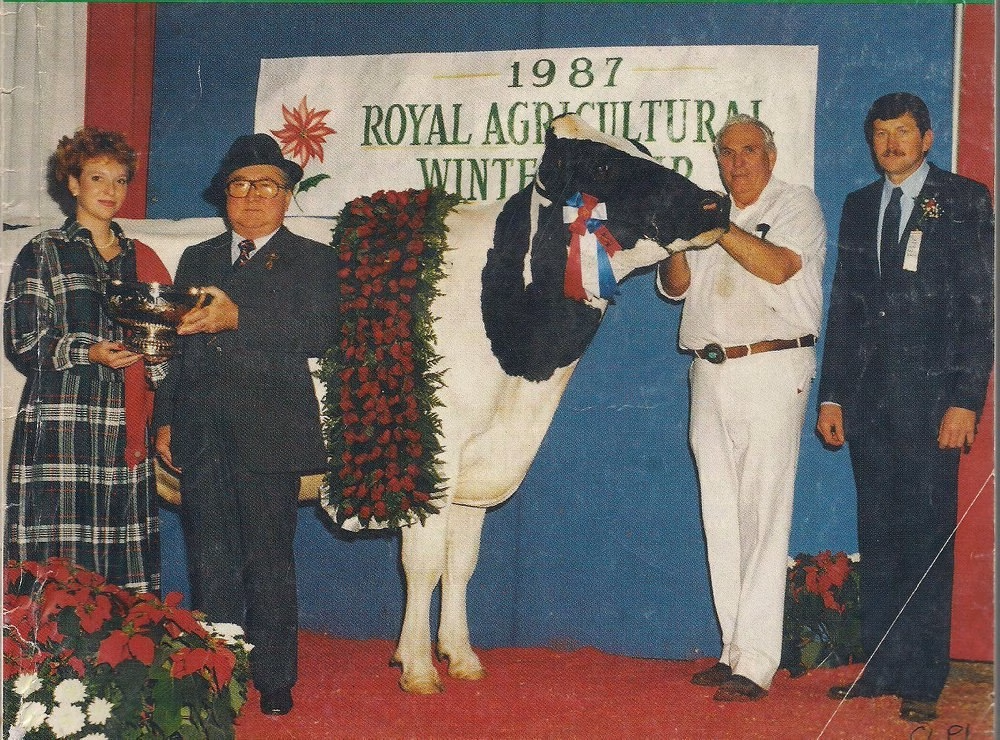
    RONALD GRANDY, OSHAWA, ON
  2. MARFLOACRES MAJOR JUMBLE, HOCANF14931480
    KEATON PHOENIX, STANHOWE
  3. ECHO GLEN TATOO EDDIE, HOCANF14804605
    Bred & Owned sponsored by Unique Designs
    ECHO GLEN FARM, DORCHESTER, ON
  4. ECHO GLEN HH ALPHA POPPY, HOCANF14804604
    ECHO GLEN FARM, HOWE HOLSTEINS INC, DORCHESTER, ON
  5. KARNVIEW ENERGY ABRAKAZAM, HOCANF14767428
    KARNVIEW FARMS INC, WOODSTOCK, ON
  6. KAWARTHA BULLSEYE REBA, HOCANF14654470
    CARL PHOENIX & FAMILY, KAWARTHA HOLSTEINS, SUNDERLAND, ON
  7. RADOMERE MASTER MINAJ, HOCANF14759846
    GLENBERT HOLSTEINS, EMBRO, ON
  8. KARNVIEW EYE CANDY ANTIGUA, HOCANF14767432
    KARNVIEW FARMS INC, WOODSTOCK, ON
  9. KARNVIEW LEMAGIC REVOLVE, HOCANF15047155
    KARNVIEW FARMS INC, WOODSTOCK, ON
  10. EXCELERANT REAL HOT-RED-ET, HO840F3213061648
    1st place – Red & White
    ALLARWAY HOLSTEINS, SUNNY TERRACE HOLSTEINS, BRANTFORD, ON
  11. CHAKELBURG ALPHA SALTEE, HOCANF12463489
    CHAKELBURG HOLSTEINS, JEFF & CHELSEY STEPHENS, MILDMAY, ON
  12. PERRINRIDGE MASTER HOPE, HOCANF14982780
    PERRINRIDGE FARMS LTD, AYR, ON
  13. ELDERSLIE DEALMAKER MEDALIST, HOCANF14925105
    ETHAN BLOOMFIELD, KEATON PHOENIX, ILDERTON, ON
  14. CRESTOMERE MASTER LYRIC, HOCANF14836207
    K S F HOLSTEINS, OTTAWA, ON
  15. HEADWATER EYE LASHES-ET, HO840F3285292252
    CARL PHOENIX & FAMILY, KAWARTHA HOLSTEINS, SUNDERLAND, ON
  16. BECKRIDGE MASTER LOOK AT ME, HOCANF14841658
    BECKRIDGE HOLSTEINS, KESWICK, ON
  17. MAPLEKEYS ALPHA ASTEROID, HOCANF14905637
    MAPLEKEYS FARMS, AYLMER, ON
  18. RANWAY EYECANDY RICOTTA, HO840F3284913299
    BRIAN JOSEPH ENRIGHT, DANDYLAND FARM, JAQUEMET HOLSTEINS, WINCHESTER, ON
  19. DELCREEK FATALLY FAMOUS, HOCANF14788627
    BECKRIDGE HOLSTEINS, QUALITY HOLSTEINS, KESWICK, ON
  20. H-BRIDGE IMPACT JATA P RED, HOCANF14746585
    2nd place – Red & White
    PARALLEL GENETICS, PATIENCE HOLSTEINS LTD, SILVERCAP HOLSTEINS, SMITHDEN HOLSTEINS INC, EAST GARAFRAXA, ON
  21. COBEQUID ILLUSTRATOR DERICA, HOCANF14858521
    CERTIFIED HOLSTEINS, HOWE HOLSTEINS INC, STRATHROY, ON
  22. KARNVIEW CHIEF APEACH, HOCANF14767429
    KARNVIEW FARMS INC, WOODSTOCK, ON
  23. HOFF IMPACT-P LUCIA, HOCANF14840268
    PARALLEL GENETICS, VECTOR GENETICS, EAST GARAFRAXA, ON
  24. MORNINGSKY MASTER TIFFANY, HOCANF14906235
    MORNINGSKY HOLSTEINS, MILBANK, ON
  25. WILLOWLANE MASTER KRISHELL, HOCANF14989419
    BRIAN SLAUGHTER, WARWICK TWP, ON
  26. FOREST LEE DOORMAN PEARABEAU, HOCANF15075568
    FOREST LEE FARMS LTD, SPRINGFIELD, ON
  27. VALE-O-SKENE SK HAPPY HOUR, HOCANF14887605
    VALE-O-SKENE HOLSTEINS, LITTLE BRITAIN, ON
  28. HIDDENVIEW MASTER BRADY, HOCANF14958426
    CAMERON GARCIA, DONOVAN MARTIN, CALEDON, ON
  29. MAPLEVUE ALLEYOOP MAGIC, HOCANF14733884
    MAPLEVUE FARMS, LISTOWEL, ON

Winter Yearling

Born December 1st, 2023 to February 29th, 2024

ECHO GLEN MASTER IVY
1st place Winter Yearling
Ontario Spring Discovery Holstein Show 2025 
RONALD GRANDY, OSHAWA, ON
ECHO GLEN MASTER IVY 1st place Winter Yearling Ontario Spring Discovery Holstein Show 2025 
RONALD GRANDY, OSHAWA, ON

Leading the class with commanding presence was ECHO GLEN MASTER IVY from Ronald Grandy of Oshawa, Ontario, a heifer that “puts it all together” with “so much balance” and “angularity” throughout her frame. Eaton specifically praised her for being “straight as a string” with “beautiful openness and dairy strength,” noting she “tracks out on the best set of feet and legs in the class,” which ultimately gave her the advantage over her closest competitor. The Bred & Owned KARNVIEW MASTER MAGICIAN from Karnview Farms Inc. of Woodstock secured second place, drawing admiration for her “sweep to that rib,” impressive “angularity throughout her frame,” and superior “overall balance of midsection” with excellent “drop to her forward rear rib.” BUTLERVIEW ANLYST FIONA-RED, the first-place Red & White entry exhibited by Allarway Holsteins and Kaymanor Holsteins of Brantford, claimed third position with her “very straight line” and “long body,” displaying superior “length of frame” and “dairy character up through her head and neck” compared to lower placings. Completing the top four was MS TANG EC A THOUSAND-ET from Beckridge Holsteins and Jenna Masterson of Keswick, a “well balanced heifer” noted for her “cleanliness all the way through” and “precise feet and legs” with “beautiful clean bone.”
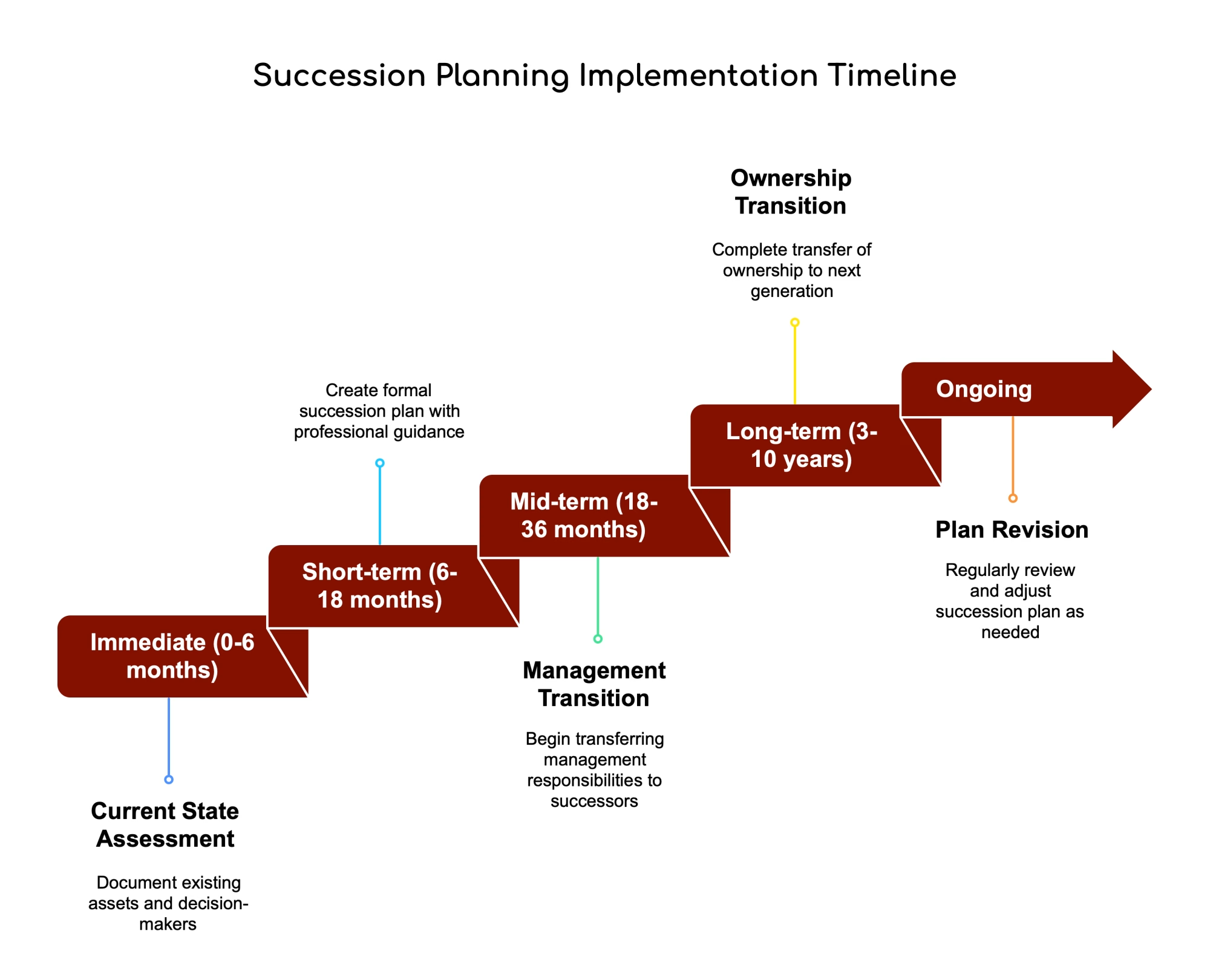
  1. ECHO GLEN MASTER IVY, HOCANF14804601
    RONALD GRANDY, OSHAWA, ON
  2. KARNVIEW MASTER MAGICIAN, HOCANF14767414
    Bred & Owned sponsored by Unique Designs
    KARNVIEW FARMS INC, WOODSTOCK, ON
  3. BUTLERVIEW ANLYST FIONA-RED, HO840F3280656203
    1st place – Red & White
    ALLARWAY HOLSTEINS, KAYMANOR HOLSTEINS, BRANTFORD, ON
  4. MS TANG EC A THOUSAND-ET, HO840F3269425894
    BECKRIDGE HOLSTEINS, JENNA MASTERSON, KESWICK, ON
  5. MAPLEKEYS MASTER PINKY, HOCANF14905590
    MAPLEKEYS FARMS, AYLMER, ON
  6. ALLARWAY REALISTS ROMANO, HOCANF12764958
    2nd place – Red & White
    BECKRIDGE HOLSTEINS, QUALITY HOLSTEINS, KESWICK, ON
  7. ALLARWAY REALISTS RAMIREZ, HOCANF12764959
    3rd place – Red & White
    ANDERSON ACRES, SUNNY TERRACE HOLSTEINS, RIDGETOWN, ON
  8. BRIDGEVIEW FUEL ICE, HOCANF14927147
    BRIDGEVIEW FARMS, BRANTFORD, ON
  9. DESDION ADVANCER NOMIE, HOCANF121542924
    4th place – Red & White
    ANDREW & JOEL MCOUAT, KEATON PHOENIX, MATTHEW MCOUAT, ST. ANDRE D’ARGENTEUIL, QC
  10. MAPLEVUE CHIEF HENNESSY, HOCANF14733881
    MAPLEVUE FARMS, LISTOWEL, ON

Fall Yearling

Born September 1st, 2023 to November 30th, 2023

MILKSOURCE A TIERNEY-RED
1st place Fall Yearling
Ontario Spring Discovery Holstein Show 2025 
ADAM CLARK, JEFF & JIM BUTLER, PIERRE BOULET, WOODVILLE, ON
MILKSOURCE A TIERNEY-RED 1st place Fall Yearling Ontario Spring Discovery Holstein Show 2025 
ADAM CLARK, JEFF & JIM BUTLER, PIERRE BOULET, WOODVILLE, ON

Leading the class with commanding presence was MILKSOURCE A TIERNEY-RED-ET, the first-place Red & White entry exhibited by Adam Clark, Jeff & Jim Butler, and Pierre Boulet of Woodville. Eaton praised this heifer for her exceptional “openness to her frame” and “beautiful combination of balance and dairy strength all the way through,” giving her the advantage through superior “length through her frame” and enhanced “extension up through her front end and head and neck.” The Bred & Owned KAWARTHA CHIEF BAILEY from Carl Phoenix & Family’s Kawartha Holsteins of Sunderland secured second place, impressing as a “beautifully balanced heifer” that stood “cleaner all the way through” with “more dairyness up through that head and neck” and notably “cleaner bone down through her hock.” BOBMUR ALPHA NYLA from Bobmur Farms of Listowel, the second-place Red & White entry, claimed third position overall as a “really well balanced heifer” that excelled in feet and leg structure, “striding a bit nicer” and putting “her feet down a little more comfortable.” Completing the top four was GOLDENFLO MASTER DRAGON from Beckridge Holsteins, Lily Beckett, and Quality Holsteins of Keswick, a “big powerful heifer” with “so much balance and sweep to that rump” and impressive “depth of both forward and rear rib,” prompting Eaton to note that “from her hips forward, she may be the winner in the class.”

  1. MILKSOURCE A TIERNEY-RED-ET, HO840F3247751030
    1st place – Red & White
    ADAM CLARK, JEFF & JIM BUTLER, PIERRE BOULET, WOODVILLE, ON
  2. KAWARTHA CHIEF BAILEY, HOCANF14654449
    Bred & Owned sponsored by Unique Designs
    CARL PHOENIX & FAMILY, KAWARTHA HOLSTEINS, SUNDERLAND, ON
  3. BOBMUR ALPHA NYLA, HOCANF14652033
    2nd place – Red & White
    BOBMUR FARMS, LISTOWEL, ON
  4. GOLDENFLO MASTER DRAGON, HOCANF14827516
    BECKRIDGE HOLSTEINS, LILY BECKETT, QUALITY HOLSTEINS, KESWICK, ON
  5. KAWARTHA MASTER VIOLET, HOCANF14654452
    CARL PHOENIX & FAMILY, KAWARTHA HOLSTEINS, SUNDERLAND, ON
  6. SUGAR-C LN EX AND OS-RED-ET, HO840F3264174598
    3rd place – Red & White
    BECKRIDGE HOLSTEINS, PATIENCE HOLSTEINS LTD, QUALITY HOLSTEINS, KESWICK, ON
  7. PERRINRIDGE MASTER HADDIE, HOCANF14804360
    PERRINRIDGE FARMS LTD, AYR, ON
  8. HARVESTACRE HONEY IM HOME, HOCANF121420112
    ANDREW & JOEL MCOUAT, ST. ANDRE D’ARGENTEUIL, QC
  9. TWINCOUNTRY DAFFODIL-RED-ET, HO840F3263452338
    4th place – Red & White
    BECKRIDGE HOLSTEINS, QUALITY HOLSTEINS, KESWICK, ON
  10. VALE-O-SKENE KINGDOC SHIMMER, HOCANF14887594
    VALE-O-SKENE HOLSTEINS, LITTLE BRITAIN, ON

Junior Exhibitor

  1. KARNVIEW FARMS INC
    WOODSTOCK, ON
  2. CARL PHOENIX & FAMILY, KAWARTHA HOLSTEINS
    SUNDERLAND, ON
  3. RONALD GRANDY
    OSHAWA, ON

Junior Breeder

  1. KARNVIEW FARMS INC (KARNVIEW)
    WOODSTOCK, ON
  2. ECHO GLEN FARM (ECHO GLEN)
    DORCHESTER, ON
  3. KAWARTHA HOLSTEINS (KAWARTHA)
    REABORO, ON

Junior Premier Sire

  1. GOLDEN-OAKS MASTER-ET
  2. ROBELLA MAJOR
  3. BLONDIN ENERGY

Summer 2 Year Old

Born June 1st, 2023 to August 31st, 2023

MILLEN MASTER MEMPHIS
1st place Summer Two Year Old
Ontario Spring Discovery Holstein Show 2025 
CLARKVALLEY HOLSTEINS, WOODVILLE, ON
MILLEN MASTER MEMPHIS 1st place Summer Two Year Old Ontario Spring Discovery Holstein Show 2025 
CLARKVALLEY HOLSTEINS, WOODVILLE, ON

Taking the blue ribbon was MILLEN MASTER MEMPHIS, the Bred & Owned entry from Clarkvalley Holsteins of Woodville, Ontario, who also earned Best Udder honors. Eaton praised this young cow for her “more open-ended” structure and superior “dairy sharp character up through her front end.” Her mobility particularly impressed the judge as she “strides a little nicer” and effectively “flexes her hocks” when moving. Memphis secured her victory through her exceptional mammary system, displaying “higher, wider tension on every runner” with an udder that sits “more low on the udder floor.” Standing in reserve was RALSTON DLAMBDA FAMOUS from Ferme Ralston S.E.N.C. of Coaticook, Quebec, a cow that demonstrated impressive “straightness of lines” and “collect of frame,” with Eaton noting her excellent potential as a “focus of a great future.” Both animals exemplified the exceptional quality present in the show ring on this day.

  1. MILLEN MASTER MEMPHIS, HOCANF14725786
    Bred & Owned sponsored by Unique Designs
    Best Udder
    CLARKVALLEY HOLSTEINS, WOODVILLE, ON
  2. RALSTON DLAMBDA FAMOUS, HOCANF121225708
    FERME RALSTON S.E.N.C, COATICOOK, QC

Spring 2 Year Old

Born March 1st, 2023 to May 31st, 2023

LYSEM MASTER ANGEL
1st place Spring Two Year Old
Ontario Spring Discovery Holstein Show 2025 
RONALD GRANDY, OSHAWA, ON
LYSEM MASTER ANGEL
1st place Spring Two Year Old
Ontario Spring Discovery Holstein Show 2025 

RONALD GRANDY, OSHAWA, ON

Taking the blue ribbon and Best Udder honors was LYSEM MASTER ANGEL from Ronald Grandy of Oshawa, Ontario, a cow that impressed as being “most my kind in her frame” with Eaton praising her for being “so balanced, so open, with so much dairy strength.” He particularly highlighted her advantage in being “deeper up through that chest fore” with “more openness to that rib structure” and superior “balance through the midsection,” while also preferring “the size and shape of the attachment on her fore udder.” Standing in second place was LYSEM LOYALL AUDE from Blondin Sires and Ferme Blondin of Saint-Placide, Quebec, a “beautiful long framed heifer” with exceptional “straightness of lines” and a “beautiful hard top,” showing impressive “symmetry to increase upper rear udder.” Completing the top three was the Bred & Owned entry PHOENIXHOLM DESTINY CINDY from Carl Phoenix & Family of Sunderland, Ontario, a recently fresh April heifer that Eaton noted was “moving a bit more comfortable out on the move” while “holding her top a bit more comfortable” compared to lower placings. MABEL LAMBDA LOVE STORY secured fourth place with her “real square frame” and superior “quality to that system,” appearing “cleaner of hide all the way through” with greater cleanliness “up through her head and neck.”

  1. LYSEM MASTER ANGEL, HOCANF121178304
    Best Udder
    RONALD GRANDY, OSHAWA, ON
  2. LYSEM LOYALL AUDE, HOCANF121178302
    BLONDIN SIRES, FERME BLONDIN, SAINT-PLACIDE, QC
  3. PHOENIXHOLM DESTINY CINDY, HOCANF14314751
    Bred & Owned sponsored by Unique Designs
    CARL PHOENIX & FAMILY, SUNDERLAND, ON
  4. MABEL LAMBDA LOVE STORY, HOCANF121299057
    FERME BLONDIN, FERME YVON SICARD, JEAN-PHILIPPE PROULX, SAINT-PLACIDE, QC
  5. QUALITY BECKRIDGE MASTER RUFI, HOCANF14199143
    AGRIBER SOCIETA AGRICOLA SRL, BECKRIDGE HOLSTEINS, QUALITY HOLSTEINS
  6. HODGLYNN UNSTOPABULL VENICE, HOCANF121318190
    1st place – Red & White
    CLARKVALLEY HOLSTEINS, WOODVILLE, ON
  7. GLEANN LAMBDA QUALIFY, HOCANF14659753
    HODGLYNN HOLSTEINS, KINCARDINE, ON
  8. ULMAR SIDEKICK ENTENSITY, HOCANF14502968
    BECKRIDGE HOLSTEINS, PFISTER DAIRY, QUALITY HOLSTEINS, KESWICK, ON
  9. KARNVIEW CHIEF LOVESTORY, HOCANF14510145
    KARNVIEW FARMS INC, WOODSTOCK, ON
  10. RALSTON SIDEKICK FIORIS, HOCANF121225767
    FERME RALSTON S.E.N.C, COATICOOK, QC
  11. FRICOSONS MASTER ATHENS, HOCANF14497910
    FRICOSONS HOLSTEINS, NEWCASTLE, ON
  12. KINGSWAY CRUSHABULL CATCH ME, HOCANF14262510
    FRICOSONS HOLSTEINS, SIKMADALE HOLSTEINS, NEWCASTLE, ON
  13. KARNVIEW CHIEF ABBRA, HOCANF14510136
    KARNVIEW FARMS INC, WOODSTOCK, ON
  14. MAPLEKEYS ENERGY JOJO, HOCANF14632348
    MAPLEKEYS FARMS, AYLMER, ON
  15. DELCREEK PUCKAROO, HOCANF14580313
    RONALD GRANDY, OSHAWA, ON
  16. PLUM VALLEY VICTOR BRIE, HOCANF14486076
    ANDREW DEN HAAN, MOUNT KOLB FARM, PLUM VALLEY HOLSTEINS, FERGUS, ON

Winter 2 Year Old

Born December 1st, 2022 to February 28th, 2023

GOLDENFLO LAMBDA DOMINATE
1st place Winter Two Year Old
Ontario Spring Discovery Holstein Show 2025 
HODGLYNN HOLSTEINS, KINCARDINE, ON
GOLDENFLO LAMBDA DOMINATE
1st place Winter Two Year Old
Ontario Spring Discovery Holstein Show 2025 

HODGLYNN HOLSTEINS, KINCARDINE, ON

Taking the blue ribbon and Best Udder honors was LYSEM MASTER ANGEL from Ronald Grandy of Oshawa, Ontario, a cow that impressed with her exceptional “length of frame” and “balance all the way through.” Eaton particularly highlighted her as a “beautiful, very open-ribbed” animal that “walks out on a beautiful set of feet and legs,” noting she “wears the best udder in the class” with an advantage in being “more symmetrical” with “nicer inner quarter.” Standing in second place was LYSEM LOYALL AUDE from Blondin Sires and Ferme Blondin of Saint-Placide, Quebec, a “beautifully balanced young cow” displaying superior “natural dairiness all the way through” with a “more desirable slope from hooks to pins” and an udder that “blends more smugly” with “nicer shape and turn to her rear udder.” Completing the top three was the Bred & Owned entry PHOENIXHOLM DESTINY CINDY from Carl Phoenix & Family of Sunderland, a “long frame” cow that appeared “airier” and “cleaner all the way through her frame” with “more dairiness all the way through” compared to lower placings. MABEL LAMBDA LOVE STORY secured fourth position with her “beautiful rear udder” showing “more height and width” with “more crease all the way right up to the top,” while also moving “a little freer” around the ring compared to the “beautiful dairy framed” fifth-place QUALITY BECKRIDGE MASTER RUFI.

  1. GOLDENFLO LAMBDA DOMINATE, HOCANF14592225
    Best Udder
    HODGLYNN HOLSTEINS, KINCARDINE, ON
  2. CNOSSOME ENERGY AVALYNN, HOCANF14470253
    BLONDIN SIRES, FERME BLONDIN, SAINT-PLACIDE, QC
  3. BLONDIN ENERGY SATELLITE, HOCANF121135191
    RONALD GRANDY, OSHAWA, ON
  4. GLEN ISLAY WV BAMBOOZLE, HOCANF14486066
    Bred & Owned sponsored by Unique Designs
    ANDREW DEN HAAN, MOUNT KOLB FARM, PLUM VALLEY HOLSTEINS, FERGUS, ON
  5. KARNVIEW ATHOLME MASTER DENALI, HOCANF14510119
    KARNVIEW FARMS INC, MEGAN ATKINSON, WOODSTOCK, ON
  6. NEWMORNING WARROIR SHARON RED, HOCANF14578347
    1st place – Red & White
    NEW MORNING HOLSTEINS, MONKTON, ON

Fall 2 Year Old

Born September 1st, 2022 to November 30th, 2022

LYN-VALE JUST BELIEVE IN ME
1st place Fall Two Year Old
Ontario Spring Discovery Holstein Show 2025 
AGRIBER SOCIETA AGRICOLA SRL, BECKRIDGE HOLSTEINS, QUALITY HOLSTEINS
LYN-VALE JUST BELIEVE IN ME
1st place Fall Two Year Old
Ontario Spring Discovery Holstein Show 2025 
AGRIBER SOCIETA AGRICOLA SRL, BECKRIDGE HOLSTEINS, QUALITY HOLSTEINS

The Fall Two Year Old class judged by Aaron Eaton featured diverse entries at various stages of lactation, with notable differences in frame, udder quality, and overall balance.

Claiming the blue ribbon and Best Udder honors was LYN-VALE JUST BELIEVE IN ME, exhibited by Agriber Societa Agricola SRL, Beckridge Holsteins, and Quality Holsteins. This cow distinguished herself with superior frame balance and “master of midsection” with “overall balance all the way through,” wearing what Eaton described as “the best udder in her class.” Standing in second place was the Bred & Owned entry BLONDIN ALPHA CALLIE from Blondin Sires and Ferme Blondin of Saint-Placide, Quebec, a “long body” heifer showing advantages in udder symmetry with “more fullness to those four quarters” throughout her mammary system. K S F OREO MCFLURRY from K S F Holsteins of Ottawa secured third position with her quality mammary system, displaying “more dairy quality all the way through” with well-formed “quarters all the way to the top.” Completing the top four was JACOBS UNSTOPABULL LISA-RED from Fraeland Farms of Fergus, Ontario, the first-place Red & White entry, described as a “beautiful balanced” cow with a quality mammary system showing “more bloom” throughout her udder structure compared to the “long body” fifth-place KNONAUDALE CREME CARAMEL.

  1. LYN-VALE JUST BELIEVE IN ME, HO840F3251621407
    Best Udder
    AGRIBER SOCIETA AGRICOLA SRL, BECKRIDGE HOLSTEINS, QUALITY HOLSTEINS
  2. BLONDIN ALPHA CALLIE, HOCANF121174743
    Bred & Owned sponsored by Unique Designs
    BLONDIN SIRES, FERME BLONDIN, SAINT-PLACIDE, QC
  3. K S F OREO MCFLURRY, HOCANF121123867
    K S F HOLSTEINS, OTTAWA, ON
  4. JACOBS UNSTOPABULL LISA-RED, HOCANF120983091
    1st place – Red & White
    FRAELAND FARMS, FERGUS, ON
  5. KNONAUDALE CREME CARAMEL, HOCANF14593935
    DALTON J. FARIS, EAST GWILLIMBURY, ON
  6. CHARWILL WARRIOR RED RUSTICO, HOCANF14235166
    2nd place – Red & White
    BECKRIDGE HOLSTEINS, QUALITY HOLSTEINS, KESWICK, ON
  7. HULSDALE A2P2 MAYBELL PP, HOCANF14391610
    BRAD HULSHOF, HULSDALE FARMS, STOUFFVILLE, ON
  8. BRIDGEVIEW CRUSHABULL KIRBY, HOCANF14566096
    BRIDGEVIEW FARMS, BRANTFORD, ON
  9. MADARD ALONGSIDE KNOBBERS, HOCANF14426388
    MADARD FARMS, PHELPSTON, ON

Junior 3 Year Old

Born March 1st, 2022 to August 31st, 2022

LYSEM AVENGER HARPE
1st place Junior Three Year Old
Ontario Spring Discovery Holstein Show 2025 
FERME LEVASSEUR, FERME LYSEM S.E.N.C, GHYSLAIN DEMERS, TROIS-RIVIERES, QC
LYSEM AVENGER HARPE
1st place Junior Three Year Old
Ontario Spring Discovery Holstein Show 2025 
FERME LEVASSEUR, FERME LYSEM S.E.N.C, GHYSLAIN DEMERS, TROIS-RIVIERES, QC

LYSEM AVENGER HARPE, the Bred & Owned entry from Ferme Levasseur, Ferme Lysem S.E.N.C, and Ghyslain Demers of Trois-Rivieres, Quebec, secured the blue ribbon and Best Udder honors. This recently fresh second-calver impressed with “steeper heel” and superior handling of her “hind pasterns,” while showing “more power all the way through her frame” and standing “more square on the front leg” compared to her competitors. FRAELAND BECKRIDGE BOASTFUL from Beckridge Holsteins and Fraeland Farms of Keswick claimed second place, standing out for her “balance in the floor of her udder” with “more quality, openness and natural dairy” throughout her “rib structure” despite being approximately 11 months fresh on her first calf. Completing the top three was UP-RIDGE ANALYST MAGNIFICENT from Up-Ridge Holsteins of Embro, the first-place Red & White entry, described as a “long-bodied rib cow” that appeared “cleaner all the way through her frame” and “cleaner down through the bone in that hock” with superior “quality of that mammary system” compared to lower placings. MILLEN UNIQUE ALTITUDE CRIMSON from Fraeland Farms of Fergus secured fourth position as a “big powerful” recently fresh cow displaying impressive “power all the way through” with exceptional “width all the way through.”

  1. LYSEM AVENGER HARPE, HOCANF120786250
    Bred & Owned sponsored by Unique Designs
    Best Udder
    FERME LEVASSEUR, FERME LYSEM S.E.N.C, GHYSLAIN DEMERS, TROIS-RIVIERES, QC
  2. FRAELAND BECKRIDGE BOASTFUL, HOCANF13757897
    BECKRIDGE HOLSTEINS, FRAELAND FARMS, KESWICK, ON
  3. UP-RIDGE ANALYST MAGNIFICENT, HOCANF14145233
    1st place – Red & White
    UP-RIDGE HOLSTEINS, EMBRO, ON
  4. MILLEN UNIQUE ALTITUDE CRIMSON, HOCANF14282350
    2nd place – Red & White
    FRAELAND FARMS, FERGUS, ON
  5. FRAELAND BECKRIDGE LIL BUTTER, HOCANF13757890
    BECKRIDGE HOLSTEINS, FRAELAND FARMS, KESWICK, ON

Senior 3 Year Old

Born September 1st, 2021 to February 28th, 2022

BUCKLAND BRAVE FLOWERCHILD
1st place Senior Three Year Old
Ontario Spring Discovery Holstein Show 2025 
CLARKVALLEY HOLSTEINS AND DUANE COLE, WEST SALEM, OH
BUCKLAND BRAVE FLOWERCHILD
1st place Senior Three Year Old
Ontario Spring Discovery Holstein Show 2025 

CLARKVALLEY HOLSTEINS AND DUANE COLE, WEST SALEM, OH

BUCKLAND BRAVE FLOWERCHILD from Clarkvalley Holsteins and Duane Cole of West Salem, Ohio, claimed the blue ribbon and Best Udder honors, impressing as she “moves around the ring with a bit more ease” showing “more power up through that front end” compared to her competitors. Standing in reserve was ANDREANE LAMBDA JAVA from Clarkvalley Holsteins of Woodville, Ontario, a cow just “fresh 20 days” that still displayed a “beautiful mammary system in her own right” with exceptional “length of dairiness to her frame” and “tremendous height and width through her rear udder.” Eaton particularly praised her for the “symmetry quality” and impressive “height and width through the top of her rear udder.” FAMIPAGE LEGEND BARABAS from Blondin Sires and Ferme Blondin of Saint-Placide, Quebec, secured third position as a “beautiful dairy cow” displaying “more dairy quality all the way through” with a preferred “slope angle from hips to pins” and “more quality all the way through her mammary system” compared to lower placings. Completing the top four was MILKWORTH KD ADELINE from Beckridge Holsteins and Quality Holsteins of Keswick, described as a “big open rib dairy cow” with a “more subtly attached” udder and “more power up through that front end of chest” than the fifth-place entry.

  1. BUCKLAND BRAVE FLOWERCHILD, HOCANF120839072
    Best Udder
    CLARKVALLEY HOLSTEINS AND DUANE COLE, WEST SALEM, OH
  2. ANDREANE LAMBDA JAVA, HOCANF120890663
    CLARKVALLEY HOLSTEINS, WOODVILLE, ON
  3. FAMIPAGE LEGEND BARABAS, HOCANF120922735
    BLONDIN SIRES, FERME BLONDIN, SAINT-PLACIDE, QC
  4. MILKWORTH KD ADELINE, HO840F3215231645
    BECKRIDGE HOLSTEINS, QUALITY HOLSTEINS, KESWICK, ON
  5. KINGSWAY LAMBDA JUSTICE, HOCANF13694504
    KARNVIEW FARMS INC, WOODSTOCK, ON
  6. MILLEN ASHBY BUTTERNUT, HOCANF14189217
    Bred & Owned sponsored by Unique Designs
    GENDARRA FARM, MILLEN FARMS, BAILIEBORO, ON
  7. ARWAY SIDEKICK LEIGHTON, HOCANF14248558
    ARWAY FARMS, ELMVALE, ON
  8. MAPLEKEYS EMILIO OMEEMEE, HOCANF14065291
    MAPLEKEYS FARMS, AYLMER, ON
  9. LILYKING R LAMBDA JAZLYN, HOCANF13597059
    AGRIBER SOCIETA AGRICOLA SRL, BECKRIDGE HOLSTEINS, BONNECHERE HOLSTEINS, LILYKING FARM, OSCAR & ERIC DUPASQUIER, QUALITY HOLSTEINS, RIPPLEBROOK FARM
  10. DOWNIEBROOK LORETTA CHIP, HOCANF13944228
    RENSIEM HOLSTEINS, TARTEN INN HOLSTEINS, WILMONT, ON
  11. BRIDGEVIEW SIDEKICK KAYA, HOCANF14273665
    BRIDGEVIEW FARMS, BRANTFORD, ON
  12. UP-RIDGE ALLIGATOR LUMINATE, HOCANF14145223
    UP-RIDGE HOLSTEINS, EMBRO, ON
  13. ROYAL-K LATE TEASE-P-RED-ET, HO840F3237710585
    1st place – Red & White
    PARALLEL GENETICS, EAST GARAFRAXA, ON
  14. GLENIRVINE DROPKICK HEADSCOUT, HOCANF11973941
    GLENIRVINE FARMS, FERGUS, ON
  15. BRISMER ALTITUDE JOYRIDE, HOCANF120791876
    2nd place – Red & White
    JASON MARTIN, NORTH POLLED GENETICS, PLUM VALLEY HOLSTEINS, ELMIRA, ON

4 Year Old

Born September 1st, 2020 to August 31st, 2021

UP-RIDGE ALLEYOOP FREEZIE
1st place Four Year Old
Ontario Spring Discovery Holstein Show 2025 
UP-RIDGE HOLSTEINS, EMBRO, ON
UP-RIDGE ALLEYOOP FREEZIE
1st place Four Year Old
Ontario Spring Discovery Holstein Show 2025 

UP-RIDGE HOLSTEINS, EMBRO, ON

Leading the impressive class with commanding presence was UP-RIDGE ALLEYOOP FREEZIE, the Bred & Owned entry from Up-Ridge Holsteins of Embro, Ontario, who swept the honors by earning Best Udder, Grand Champion, and Champion Holstein. Eaton praised this exceptional cow for being “extremely balanced” with “beautiful dairy quality from one end to the other.” He specifically highlighted her advantage through superior “silkiness” and cleanliness “up through that head and neck” with “nicer bone right down through the hock,” while noting she “wears the best udder in the class.” Standing in second position was GLEANN AVALANCHE GAEL from Ronald Grandy of Oshawa, a “big powerful cow” displaying impressive “straightness of the lines” and exceptional “openness to rib,” appearing “square all the way through” with “more length to that fore udder.” FRAELAND CRUSHABULL ANASTASIA from Fraeland Farms of Fergus claimed third despite being “recently fresh,” demonstrating greater “dairiness all the way through,” showing more depth “about her chest floor” and carrying “that flank back a little nicer” with “more bloom to that rear udder.” Completing the top four was GOLDEN-OAKS ALEXIS-RED-ET, the first-place Red & White and Grand Champion Red & White entry from Hodglynn Holsteins and Raymond J. Smygwaty of Kincardine, a “long body red cow” that “moves out on a nicer set of feet and legs” and appears “more comfortable as she moves around the ring.”

  1. UP-RIDGE ALLEYOOP FREEZIE, HOCANF13908811
    Bred & Owned sponsored by Unique Designs
    Best Udder
    Grand Champion
    Champion Holstein Best Udder
    UP-RIDGE HOLSTEINS, EMBRO, ON
  2. GLEANN AVALANCHE GAEL, HOCANF13862308
    RONALD GRANDY, OSHAWA, ON
  3. FRAELAND CRUSHABULL ANASTASIA, HOCANF13757803
    FRAELAND FARMS, FERGUS, ON
  4. GOLDEN-OAKS ALEXIS-RED-ET, HO840F3227771211
    1st place – Red & White
    Grand Champion Red & White
    HODGLYNN HOLSTEINS, RAYMOND J. SMYGWATY, KINCARDINE, ON
  5. ARWAY TATOO MONIQUE, HOCANF13879629
    ARWAY FARMS, ELMVALE, ON
  6. FRICOSONS S AWESOME ADVENTURE, HOCANF13963711
    2nd place – Red & White
    FRICOSONS HOLSTEINS, SIKMADALE HOLSTEINS, NEWCASTLE, ON

5 Year Old

Born September 1st, 2019 to August 31st, 2020

GLEANN DB GLORY, the Bred & Owned entry from Bruce Thomson of Antigonish, claimed the blue ribbon and Best Udder honors, impressing as a cow that’s “so balanced and open in her frame” with “beautiful depth and dairy strength up through her front end.” Eaton particularly highlighted her “tremendous width and dairyness all the way through,” noting her udder advantage as being “a little higher and wider” with “more bloom about that udder system” and “more drop to the udder floor.” Standing in second position was C V F KING DOC SUNSET from Dalton J. Faris of East Gwillimbury, a cow that has “been milking over a year” yet still excelled in “mobility,” as she “moves around the ring with ease” on “beautiful feet and legs” while remaining “long and dairy in her frame.” RALSTON UNIX CALL-ME from Ferme Ralston S.E.N.C of Coaticook secured third place, described as a “beautiful black dairy cow” showing superior udder qualities with “more bloom with that mammary system” that appeared “more symmetrical on the floor of her udder” and “higher and wider about that rear udder attachment” compared to lower placings. Completing the top four was PATIENCE MIRAND DAFFODIL from Parallel Genetics and Patience Holsteins Ltd. of East Garafraxa, the first-place Red & White and Reserve Grand Champion Red & White, standing out as a “balanced red cow” with superior mobility demonstrated through exceptional “flex and stride on those rear legs.”

  1. GLEANN DB GLORY, HOCANF13862301
    Bred & Owned sponsored by Unique Designs
    Best Udder
    BRUCE THOMSON, ANTIGONISH, NS, AB
  2. C V F KING DOC SUNSET, HOCANF13267436
    DALTON J. FARIS, EAST GWILLIMBURY, ON
  3. RALSTON UNIX CALL-ME, HOCANF120254017
    FERME RALSTON S.E.N.C, COATICOOK, QC
  4. PATIENCE MIRAND DAFFODIL, HOCANF13755695
    1st place – Red & White
    Grand Champion Red & White – Reserve
    PARALLEL GENETICS, PATIENCE HOLSTEINS LTD, EAST GARAFRAXA, ON
  5. BRIDGEVIEW DENVER ICE CUBE, HOCANF13524605
    BRIDGEVIEW FARMS, BRANTFORD, ON

Mature Cow

Born prior to September 1st, 2019 , in milk.

GENDARRA DEMPSEY HOPSCOTCH
1st place Mature Cow
Ontario Spring Discovery Holstein Show 2025 
GENDARRA FARM, BAILIEBORO, ON
GENDARRA DEMPSEY HOPSCOTCH
1st place Mature Cow
Ontario Spring Discovery Holstein Show 2025 
GENDARRA FARM, BAILIEBORO, ON

The Mature Cow class judged by Aaron Eaton showcased what he described as “a beautiful group of cows” demonstrating exceptional dairy strength, udder quality, and structural correctness. GENDARRA DEMPSEY HOPSCOTCH from Gendarra Farm of Bailieboro, Ontario, swept the honors as Best Udder, Bred & Owned, and Honorable Mention Grand Champion, impressing as a six-calver that’s been “milking since last fall.” Eaton specifically praised her for exceptional “power, dairy strength, and width all the way through” with “beautiful openness” throughout her frame. He noted her advantage in being “more level on her udder floor” with “more balance and width all the way through that midsection” while “moving with ease around the ring.” Standing in second place was SICY IMPRESSION GABE, exhibited by Ferme Blondin, Jean-Philippe Proulx, JM Valley Holstein, and Pierre Boulet of Saint-Placide, Quebec, a five-calver “recently fresh in the spring” that demonstrated qualities of a “beautiful-legged cow” with superior udder floor levelness. CARLETON BAD TO THE BONE from Hodglynn Holsteins of Kincardine secured third position, drawing praise as a cow with “beautiful balance all the way through” and “beautiful width all the way through,” described as a “beautiful front-ended cow” that “moves with ease.” The fourth-place BIRKENTREE DOORMAN BRITTA from Ronald Grandy of Oshawa demonstrated “more dairiness and openness to her frame” with “more height at the top of the rear” compared to lower placings.

  1. GENDARRA DEMPSEY HOPSCOTCH, HOCANF12231900
    Best Udder
    Bred & Owned sponsored by Unique Designs
    Grand Champion – Honourable Mention
    GENDARRA FARM, BAILIEBORO, ON
  2. SICY IMPRESSION GABE, HOCANF110897892
    FERME BLONDIN, JEAN-PHILIPPE PROULX, JM VALLEY HOLSTEIN, PIERRE BOULET, SAINT-PLACIDE, QC
  3. CARLETON BAD TO THE BONE, HOCANF13097129
    HODGLYNN HOLSTEINS, KINCARDINE, ON
  4. BIRKENTREE DOORMAN BRITTA, HOCANF13282368
    RONALD GRANDY, OSHAWA, ON
  5. FRICOSONS AVALANCHE ADORE, HOCANF12930753
    FRICOSONS HOLSTEINS, SIKMADALE HOLSTEINS, NEWCASTLE, ON

Longtime Production: 70,000 kg

OLORTINE WINDBROOK JOLENE
1st place Production Cow
Ontario Spring Discovery Holstein Show 2025 
FERME RALSTON S.E.N.C, COATICOOK, QC
OLORTINE WINDBROOK JOLENE 1st place Production Cow Ontario Spring Discovery Holstein Show 2025 
FERME RALSTON S.E.N.C, COATICOOK, QC

OLORTINE WINDBROOK JOLENE from Ferme Ralston S.E.N.C. of Coaticook, Quebec, claimed the blue ribbon and Best Udder honors as a “big massive frame cow” with exceptional “capacity through frame.” Eaton particularly noted her “snugger attachments” and how she was “showing us a little more udder today,” with the added advantage of “carrying her things just a little nicer.” Standing in second place was the Bred & Owned entry GLENBERT DUALANE DOORMN SKYLAR from Glenbert Holsteins of Embro, Ontario, an “extreme dairy cow” displaying “so much dairy strength” and “quality all the way through,” moving “around a little freer and easier” than lower placings. Completing the impressive lineup was PLEASANT NOOK GOLD TIARA from Pleasant Nook Farm of Ayr, Ontario, a remarkable nine-calver that was “recently fresh” yet still presented a “tremendous dairy system” that earned the judge’s admiration, prompting him to comment that she is “a tremendous dairy cow in her own right.” All three cows demonstrated the exceptional longevity, productivity, and structural correctness that define elite production cows.

  1. OLORTINE WINDBROOK JOLENE, HOCANF12474115
    Best Udder
    FERME RALSTON S.E.N.C, COATICOOK, QC
  2. GLENBERT DUALANE DOORMN SKYLAR, HOCANF12225767
    Bred & Owned sponsored by Unique Designs
    GLENBERT HOLSTEINS, EMBRO, ON
  3. PLEASANT NOOK GOLD TIARA, HOCANF12328379
    PLEASANT NOOK FARM, AYR, ON

Senior Breeder Herd

  1. Steven Fraser, Fergus, ON
  2. Joe Russwurm, East Garafraxa, ON
  3. Michael Lupton, Embro, ON

Google Circle
Join my Circle on Google+

Plugin by Social Author Bio

Send this to a friend