




Archive for pre-weaning ADG

The 22% Starter Made Better Calves – Not Bigger Ones. Here’s the 3-lb Test.

The difference showed up in tissue, not on the scale — and only in calves already eating enough starter to use it. Here’s what to measure first.

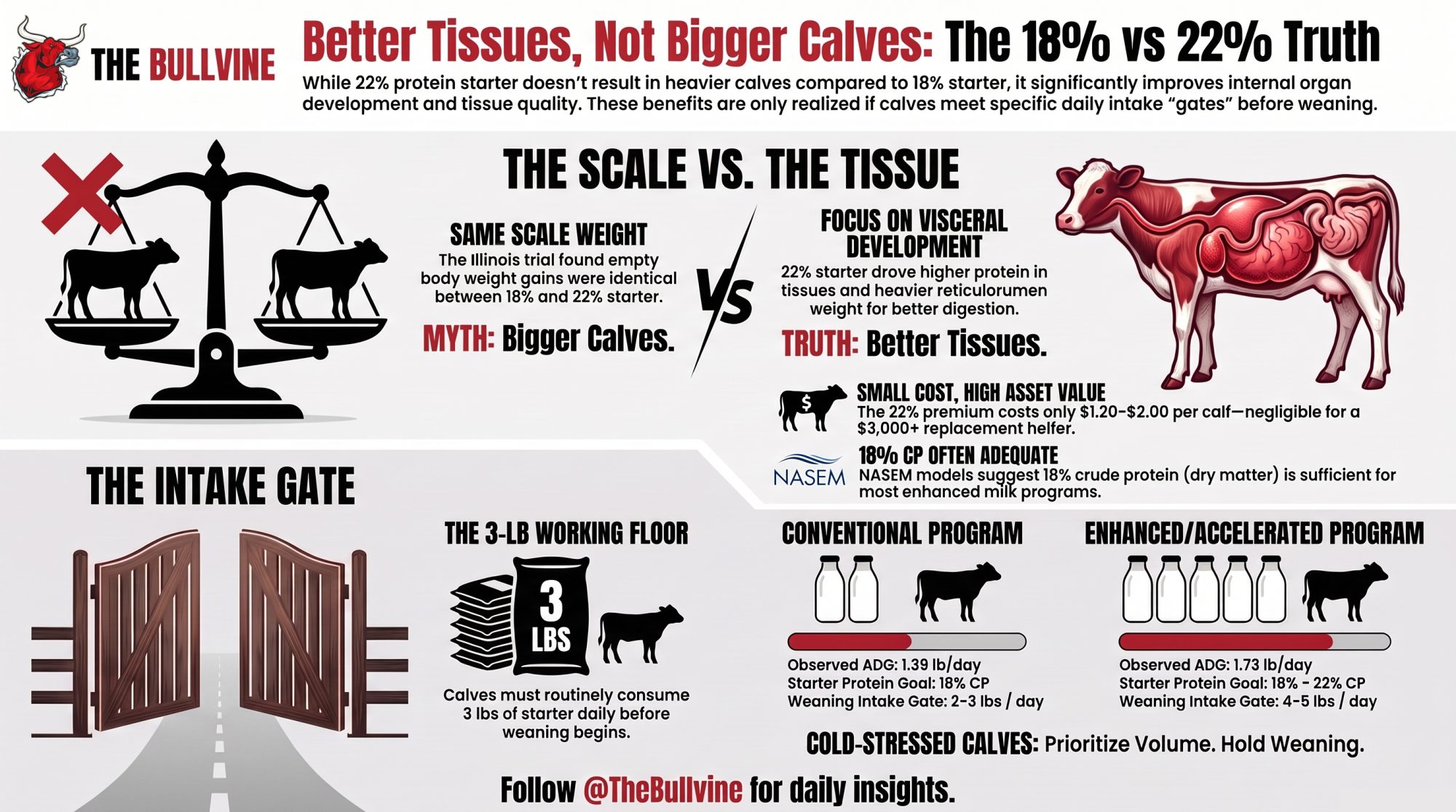
When Jennifer Stamey Lanier, James Drackley and their colleagues at the University of Illinois ran Holstein calves on 18% and 22% crude-protein starters, they found something the marketing rarely mentions. Empty body weight gains between the two starter groups weren’t different

Read that again before your next feed conversation. The study most often cited to justify a 22% starter did not produce heavier calves.
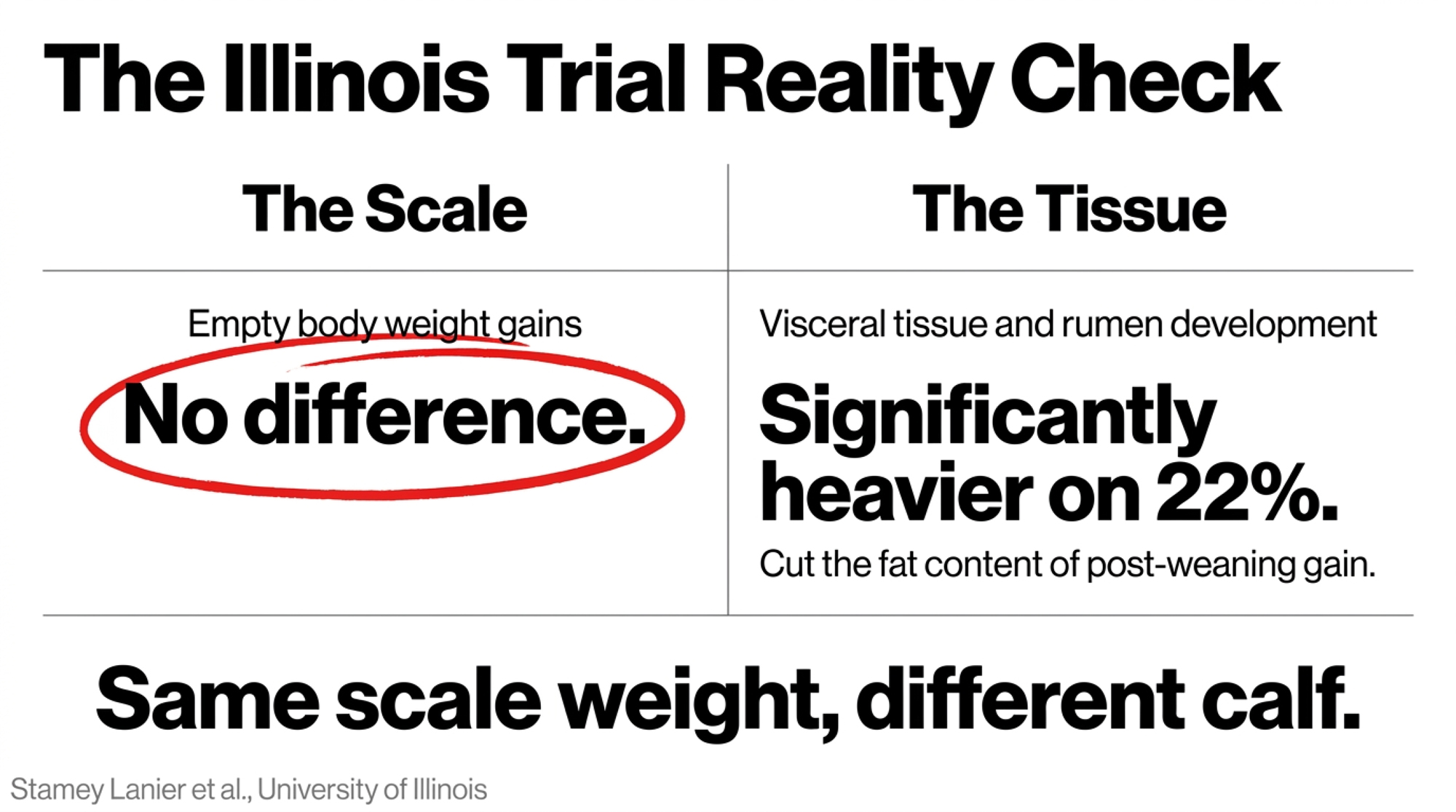
What it did show is more interesting, and more useful. The higher-protein starter drove greater visceral tissue gains and cut the fat content of gain during the post-weaning period. Same scale weight, different calf. That distinction is where the 18-versus-22 decision actually lives — and it only matters if calves are eating enough starter to make it real.

What the Illinois Trial Actually Tested

The design matters, because it’s the part that gets flattened in sales conversations.

Stamey Lanier, McKeith, Janovick, Molano, Van Amburgh and Drackley ran calves from birth to 10 weeks across both a conventional and an enhanced milk-replacer program, crossing that with two starter protein levels. The starters were formulated at 18% and 22% CP on an as-fed basis — the numbers you’d read off a tag. Analyzed, they came back at 22% and 26% on a dry-matter basis, equal to 19% and 23% as fed. 

Body weight gain was greater for calves on the high milk-replacer program. It was unaffected by starter protein. Average weekly starter intake didn’t differ between the enhanced treatments either.

Where the higher-protein starter showed up was in composition and organ development — heavier reticulorumen tissue, more total protein in calves on high milk replacer plus high-CP starter, and greater plasma BHB supporting gastrointestinal development.

And here’s a line worth carrying into your next nutritionist meeting. The authors note that the NASEM model suggests 18% CP on a dry-matter basis should be adequate for calves fed enhanced milk replacer. The researchers testing the higher-protein starter said that out loud in their own paper.

Bullvine Bottom Line: The Illinois work supports 22% as a tissue-quality and rumen-development play under a high milk program. It does not support 22% as a weight-gain shortcut, and the researchers themselves flag 18% as potentially adequate.

The Long-Term Numbers Are Real — And Contested

The reason anyone cares about early-life nutrition at all traces back to Cornell.

Fernando Soberon, Michael Van Amburgh and colleagues examined test-day records in a 2012 Journal of Dairy Science study. In the Cornell herd, each additional 1 kg/day of pre-weaning average daily gain was associated with 850 kg more first-lactation milk. In the commercial herd, that figure came in at 1,113 kg. Their 2013 symposium analysis reported 42.9 kg more first-lactation milk per 100 g/day increase in pre-weaning nutrient intake.

Those are associations within study populations, not a promise attached to a feed tag.
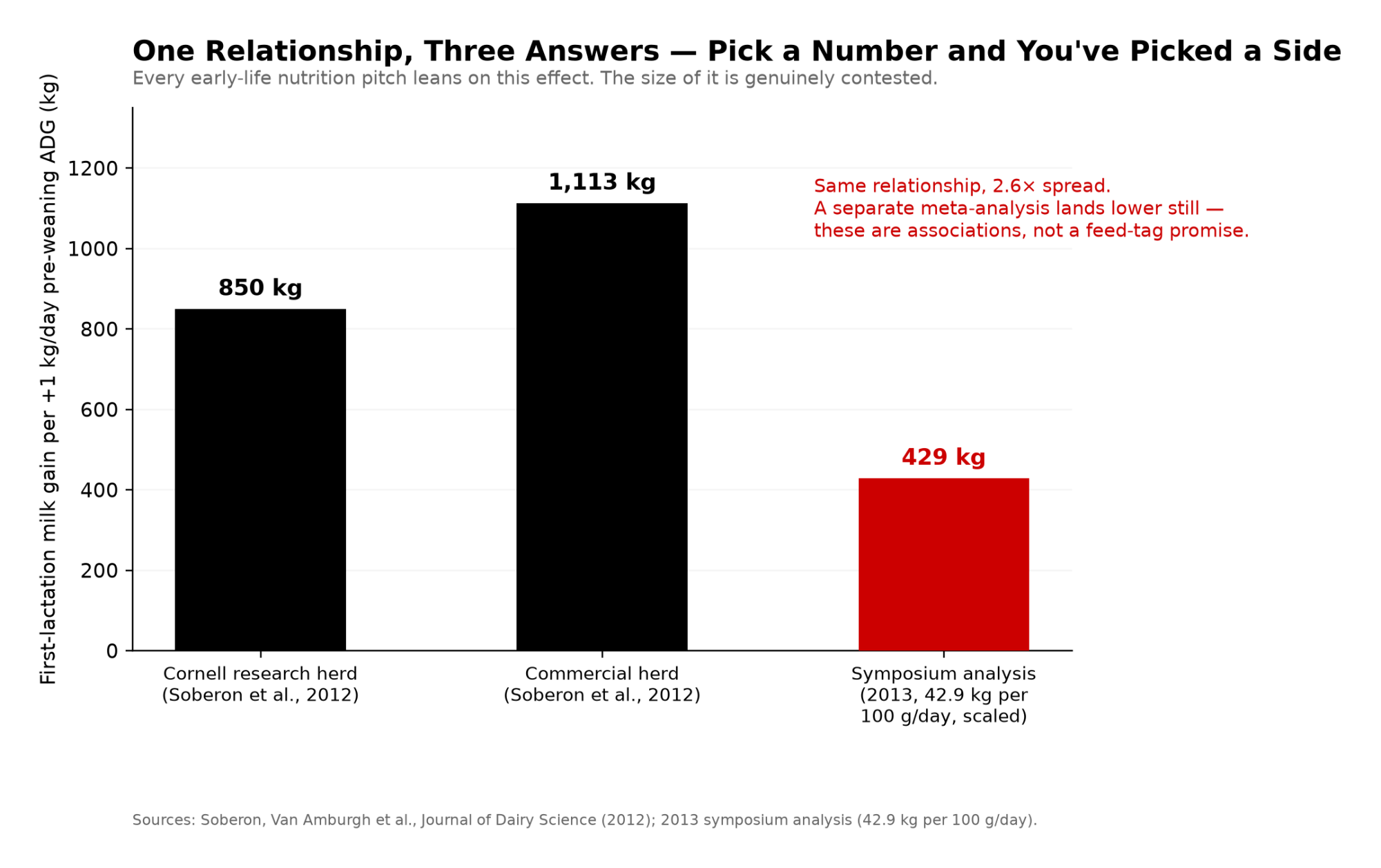
The effect size is also genuinely contested. A separate meta-analysis of pre-weaned calf nutrition and growth produced more modest estimates of the same relationship. That disagreement isn’t a reason to ignore early-life nutrition. It’s a reason to stop treating one number as settled and start measuring what happens in your own barn.

The First Question Is Intake, Not Protein

Jim Quigley’s threshold gives you a better starting point than any tag.

His 15 kg cumulative non-fiber carbohydrate benchmark asks whether the calf has eaten enough fermentable carbohydrate for the rumen to carry more of the load once milk drops. For a starter running 50–55% NFC on a dry-matter basis at roughly 90% DM, that works out to about 30–33 kg — 67–73 lb — of cumulative starter as fed.
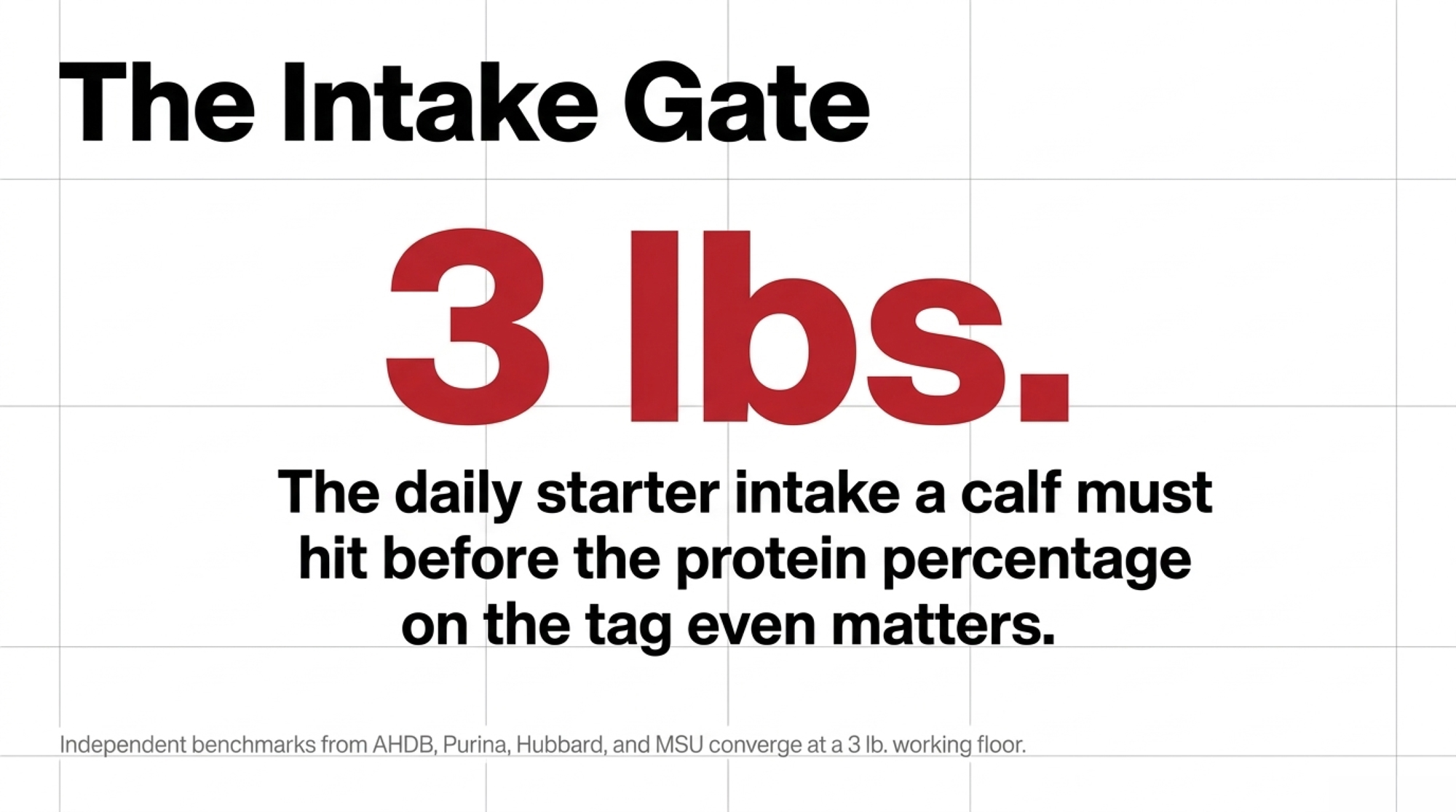
Daily benchmarks converge from four independent directions. AHDB puts a group ready to wean when calves are routinely consuming 1.5 kg per head per day of high-quality starter — about 3.3 lb as fed. Michigan State Extension puts early-weaned calves at 2–3 lb/head/day and accelerated-program calves at 4–5 lb/head/day. Call 3 lb your working floor.

That MSU split is the number most barns miss. The more milk you feed, the more starter a calf needs to be eating before you take that milk away.

On protein level, the NASEM 2021 guidance is a range rather than a single answer: 18–24% CP for large-breed calves, depending on the ratio of milk replacer to starter intake and your average daily gain goal. Which is another way of saying the tag can’t be evaluated without knowing the rest of the program.

Why Calendar Weaning Creates Trouble

Eight weeks is convenient. It lines up labor, grouping, deliveries, and calf movement. Convenience hides a weak transition when calves are still eating starter inconsistently.
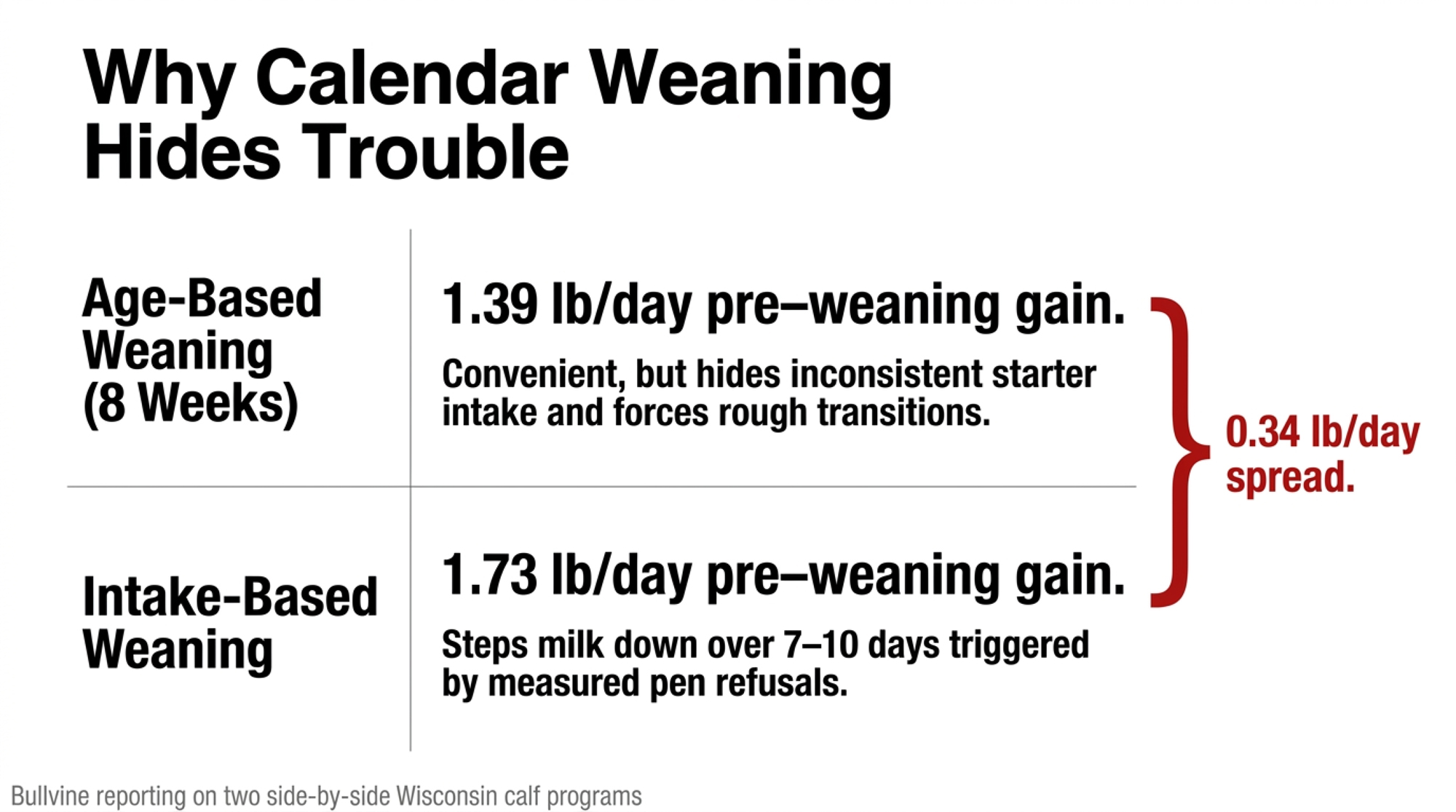
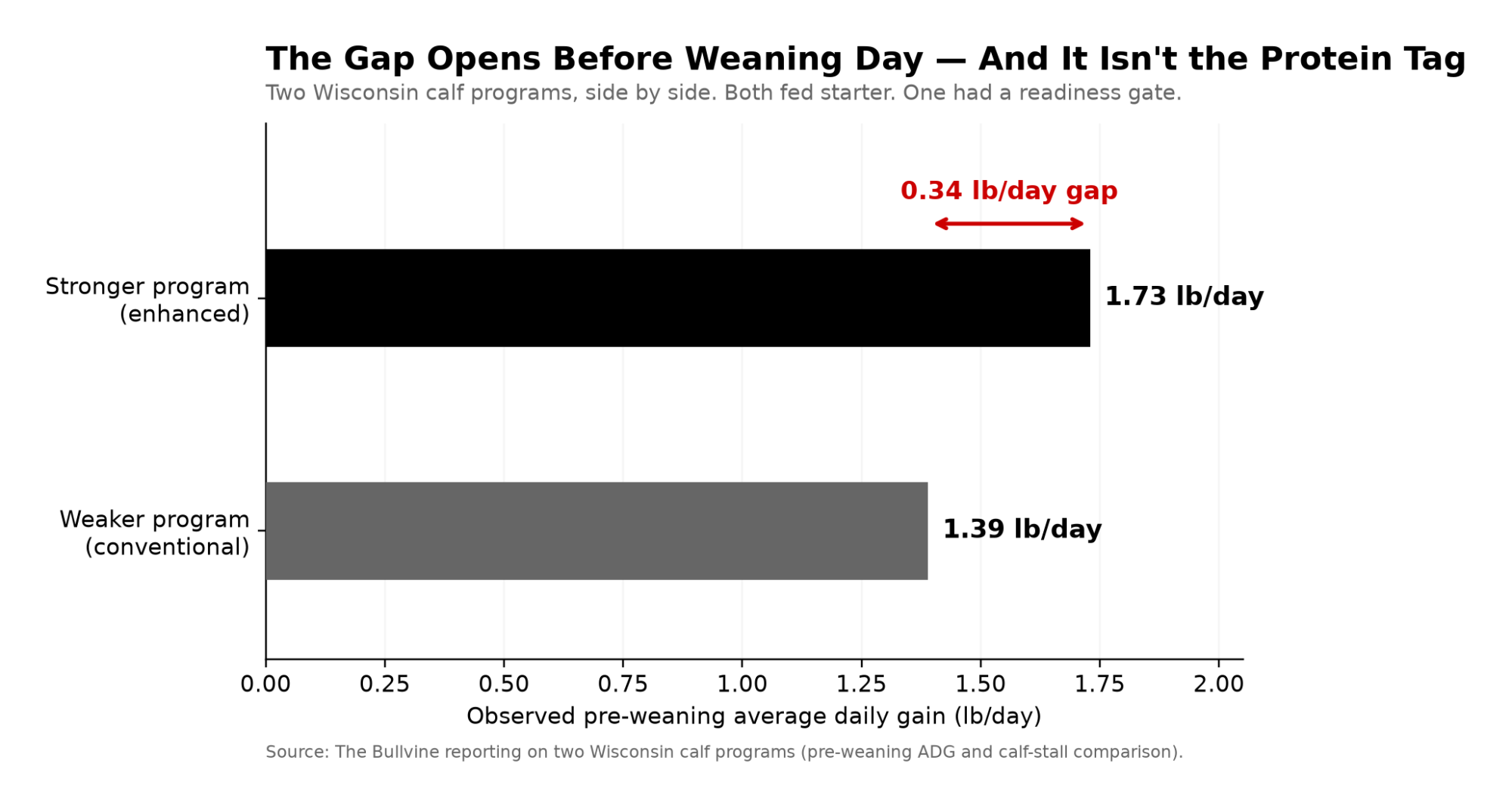
Bullvine reporting on two Wisconsin calf programs, side by side, found the gap opens early: 1.73 lb/day pre-weaning gain on the stronger program against 1.39 lb/day on the weaker one, a 0.34 lb/day spread. The recommendation from that data was to switch the weaning trigger from age alone to starter intake plus age, stepping milk down over 7 to 10 days rather than pulling it.
Measure by pen if individual tracking isn’t practical. Offer a known amount, measure refusals at the same time next morning, divide by head count, write it on the pen board.

That gives your calf team something better than “they’re old enough.” It also tells you whether the protein you’re already paying for is being eaten in enough volume to matter — which is the only reason the cost math below is worth running. If you want the full mechanics, we’ve broken down how starter intake should guide weaning separately.

Is the Premium Worth It on Your Delivered Price?

The gap between 18% and 22% starter moves with supplier, ingredients, freight, medication, and region. There’s no honest national premium to print, so use your own quotes.

ScenarioPremium spread ($/ton)Starter consumed (lb)Added cost per calfShare of a $3,100 heifer
Low-end quote, threshold intake$3568$1.190.04%
Typical spread at the intake gate$4070$1.400.05%
Wide spread, strong intake$5075$1.880.06%
Fed through the post-weaning window$40100$2.000.06%
Common planning error$4055 (assumed, not measured)$1.10 — understates real cost0.04%

Cost per calf = [(22% price per ton − 18% price per ton) ÷ 2,000] × total lb consumed.

Run it at the consumption level your intake gate actually implies. If calves are eating to that 67–73 lb cumulative threshold, a $40/ton delta over 70 lb is $1.40 per calf. A $35/ton delta over 68 lb is $1.19. A $50/ton delta over 75 lb is $1.88. Feed to 100 lb through the post-weaning window at $40/ton and you’re at $2.00.

The cost side stays small across the whole range. The milk side is where honesty matters.

USDA’s August 2026 Livestock, Dairy, and Poultry Outlook revised the all-milk forecast down 15 cents to $19.85/cwtfor 2026, with 2027 at $19.80. National benchmarks — not your mailbox price, component schedule, or basis. Use them as a sensitivity assumption:

Potential gross value per heifer = (milk response in lb ÷ 100) × your milk price per cwt.

The multiplication is easy. Choosing an honest response assumption is the hard part, and the Illinois data won’t hand you one for starter protein alone.

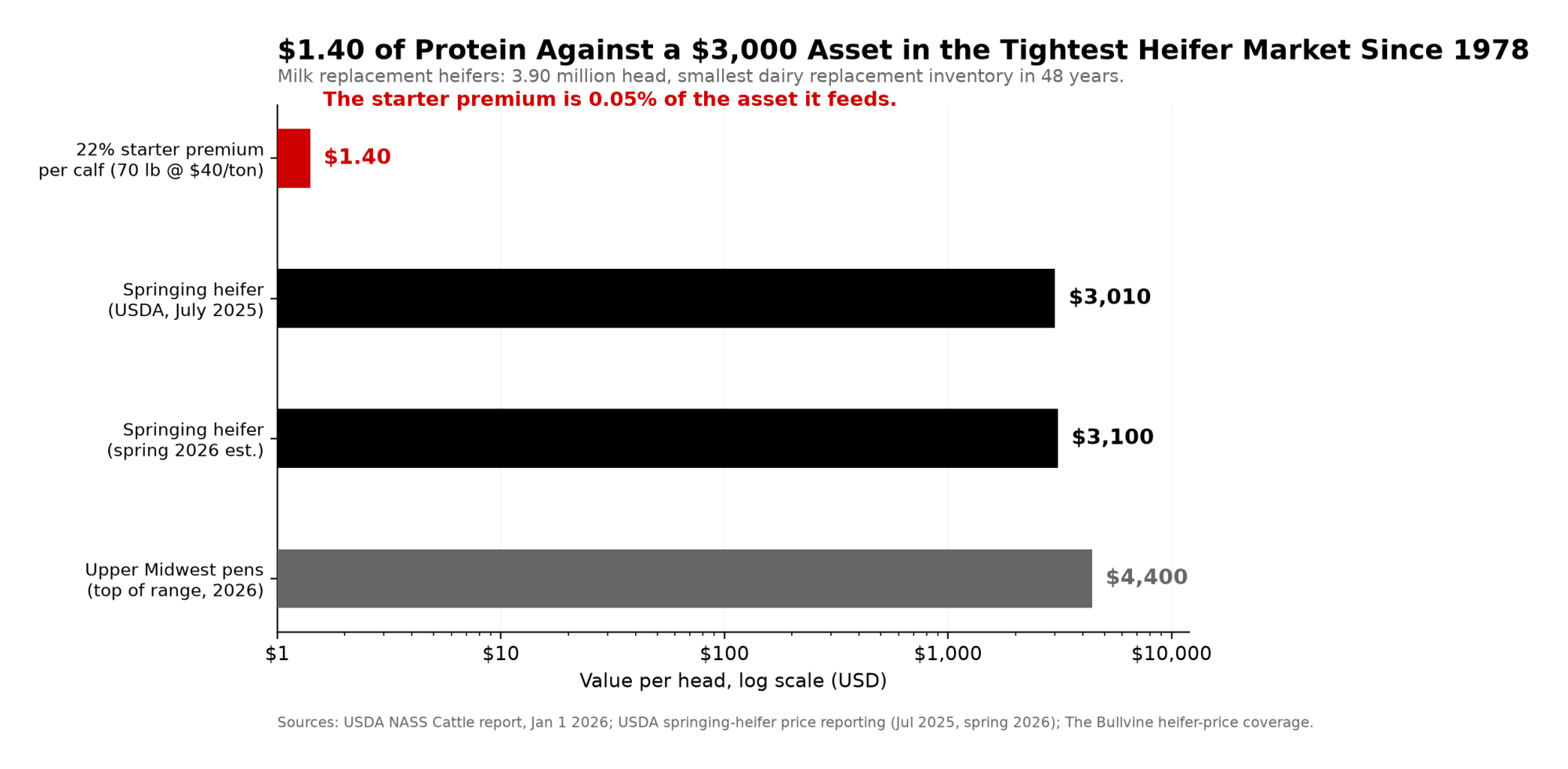
Now put a dollar of starter in context. USDA NASS’s January 1, 2026 Cattle report put milk replacement heifers at 3.90 million head, down again from the previous year and the smallest dairy replacement inventory in 48 years. USDA reporting had springing heifers at $3,010 nationally as of July 2025, with spring 2026 figures near $3,100 and Upper Midwest pens running $3,400–$4,400.

Against a $3,000-plus asset in the tightest replacement market since 1978, a dollar-forty of starter is not where your risk lives. The risk is a heifer that doesn’t arrive in good shape.
How Do You Run the Pen-Board Check This Month?

You don’t need a research station. You need consistent records on two comparable groups.

Day 1–30: Weigh calves at birth and weaning, or apply heart-girth estimates consistently. Track starter offered and refused by pen for at least three weeks around expected weaning. Record the milk step-down date and the actual intake number at that point.

Day 31–90: Audit treatment events through the transition window. Compare delivered feed cost per calf against weaning weights and average pen intake across both groups.

Day 91–365: Measure breeding readiness — stature and weight at 12–13 months — to see whether the earlier gains held. First-lactation milk belongs in that longer analysis, with enough animals per group that you’re not drawing conclusions from three standout heifers and one rough pen.

Don’t change every variable at once. Hold housing, calf-care routine, and weaning procedure steady, and document anything else that shifts. Otherwise you won’t know what moved the result.

Options and Trade-Offs

Stay with 18% and fix the first bottleneck. This fits when intake is inconsistent, calves transition roughly, or nobody’s built a reliable weight record yet. The Illinois authors themselves point to NASEM guidance that 18% CP on a DM basis may be adequate even under enhanced milk feeding. What it requires is unglamorous: clean water, fresh starter, dry bedding, measured intake, readiness-based weaning. The limit is real — as your gain targets climb toward the top of that 18–24% NASEM range, the adequacy assumption gets thinner. Within 30 days: establish baseline pen intake and weaning weights before changing a thing.

Move to 22% inside a defined growth program. This fits when you’re deliberately feeding for stronger early growth and calves already clear the intake gate. Expect what the research actually found — better visceral development and leaner gain composition, not a heavier calf on the scale. The risk is paying a premium while health, housing, or labor consistency does the real damage. It’s worth reading that against the full replacement-heifer cost model before you commit. Within 30 days: run one 18% and one 22% group under the same documented protocol, nothing else different.

Upgrade formulation quality before chasing the protein number. This fits when calves sort feed, leave fines, or eat erratically. Grain processing, protein source, palatability, and batch consistency can matter more than the guarantee on the tag. Premium textured starters use flaked grains and roasted soybeans for bypass protein, with prebiotic and probiotic package in both the 18% and 22% versions — so the comparison runs against your program and delivered cost, not the CP number alone. The trade-off: better physical form lifts acceptance but won’t fix a badly timed weaning. Within 30 days: put two samples side by side with your calf team and score form, fines, intake, refusals, and manure before converting the barn.
Sponsored Post

At a Glance: Matching Starter Protein to Your Program

ADG column shows observed field values from Bullvine program reporting, not recommended targets.

Liquid nutrition levelObserved pre-weaning ADGStarter CP guidanceWeaning intake gate
Conventional1.39 lb/day observed18% CP, lower end of the NASEM 18–24% range≥2–3 lb/day, 3 consecutive days
Enhanced / accelerated1.73 lb/day observed18% may suffice per NASEM; 22% shifts tissue composition, not gain≥4–5 lb/day, 3 consecutive days
Cold-stressedMaintenance demand rises before gain doesPrioritize intake volume over CP percentageHold weaning; add 50 g/day of milk powder for each 5°C below the thermoneutral zone 

Key Takeaways

  • If a rep cites the Illinois study to sell you weight gain, the paper doesn’t support it — empty body weight gains didn’t differ between 18% and 22% starter.
  • If large-breed calves aren’t routinely eating about 1.5 kg — 3.3 lb — per head per day, fix intake before you touch the protein number.
  • If you feed a higher plane of liquid nutrition, your intake gate moves to 4–5 lb/day, not 3.
  • If you want the tissue-composition benefit, you need the high milk program too — the Illinois effects showed up under enhanced nutrition, not on their own.
  • If delivered price decides it, run cost-per-calf at your real consumption level — 70 lb, not 55 — and expect $1.20 to $2.00 at typical spreads.
The decision isn’t whether 18% is dated or 22% is premium. It’s whether the feed in front of the calf matches the program you’re actually running, and whether she’s eating enough of it to care.

That same fit question waits at the grower phase, where early gains either hold through breeding or quietly disappear. Next installment.

Before you pay for another point of protein, walk out to the pen board. What does it say your calves ate yesterday?

Complete references and supporting documentation are available upon request by contacting the editorial team at editor@thebullvine.com.

Learn More

The Sunday Read Dairy Professionals Don’t Skip.

Every week, thousands of producers, breeders, and industry insiders open Bullvine Weekly for genetics insights, market shifts, and profit strategies they won’t find anywhere else. One email. Five minutes. Smarter decisions all week.

NewsSubscribe
First
Last
Consent

Maximizing Calf Performance: The Million-Dollar Investment in Your Dairy’s Future

Boost profits with science-backed calf care: How pre-weaning ADG drives lifelong milk production

Pre-weaning calf performance isn’t just about raising healthy calves – it’s about building your dairy’s future profit engine. The research is crystal clear: what happens in those first 60 days shapes your herd’s productivity for years to come. Each pound of average daily gain (ADG) during the pre-weaning period can translate to over 1,000 pounds more milk in first lactation. From colostrum management to disease prevention, early nutrition decisions are literally worth thousands per animal. This comprehensive analysis breaks down the latest research on pre-weaning ADG and provides actionable strategies that can dramatically boost your dairy’s bottom line.

THE PRE-WEANING ADG REVOLUTION: WHERE YOUR PROFIT POTENTIAL EXPLODES

The connection between early calf growth and lifetime productivity isn’t just theory – it’s backed by hard numbers that should make every dairy producer sit up and take notice. Research has consistently demonstrated that investments in calf nutrition during those critical first weeks deliver returns that continue for years.

The Cornell Connection: Early Growth Equals Future Production

Cornell University researchers have documented a remarkable relationship between pre-weaning growth and future milk production potential. Their groundbreaking analysis found that for every 1 kg increase in average daily gain during the pre-weaning period, heifers produced a stunning 850 kg more milk during their first lactation. When translated to pounds, that’s about 1,870 pounds of additional milk for each pound of daily gain – a return on investment that few other farm practices can match.

In commercial settings, the results were even more dramatic, with every 1 kg increase in pre-weaning ADG correlating with 1,113 kg more milk in first lactation. These findings demonstrate that early growth isn’t merely important – it’s fundamentally reshaping our understanding of dairy economics. The researchers concluded that pre-weaning ADG alone accounts for approximately 22% of the variation in first-lactation milk yield. Think about that – nearly a quarter of your heifers’ production potential is being determined before they’re even weaned!

Beyond Milk: The Full Economic Impact of Optimal ADG

The financial implications extend well beyond just milk production. Calves with higher pre-weaning ADG enter the breeding program earlier, reducing age at first calving and lifetime raising costs. According to current research, calves that have experienced respiratory disease or scours are significantly more likely to be culled before reaching their productive potential. Specifically, calves treated for scours are nearly three times more likely to calve after 30 months of age, dramatically increasing rearing costs while delaying revenue generation.

The numbers tell the story: heifers that avoid respiratory disease have twice the likelihood of successful calving. When we look at specific growth metrics, the NAHMS Dairy study found that excellent preweaning growth should exceed 1.8 pounds (0.82 kg) daily gain. Calves falling below this threshold are less likely to reach their genetic potential for production, reducing your return on investment for each animal.

COLOSTRUM: NATURE’S PROFIT-BOOSTING POWERHOUSE

If there’s one factor that stands above all others in setting up calves for success, it’s proper colostrum management. This “liquid gold” does more than just provide passive immunity – it fundamentally programs metabolic and growth pathways that enhance lifetime productivity.

First Hours, Lifetime Impact: Critical Timing for Colostrum Feeding

The window for effective colostrum administration is incredibly narrow. Research shows that feeding one gallon of quality colostrum within the first 4 hours of life is essential for optimal passive transfer of antibodies. Calves should receive an additional 2 quarts at the second feeding, establishing a strong foundation for both health and growth.

Quality standards matter tremendously – colostrum should measure at least 22-23% Brix when assessed with a refractometer to ensure adequate immunoglobulin content. A recent study demonstrated that calves receiving a supplemental colostrum feeding 12-16 hours after birth showed higher serum protein levels (9.7% Brix) compared to control calves (9.2% Brix), indicating improved passive immune transfer. This additional immune protection creates a cascade of positive effects – healthier calves focus energy on growth rather than fighting disease.

The Double Benefit: Colostrum as Treatment and Prevention

One of the most exciting developments in calf management is the emerging evidence that colostrum may serve as both prevention and treatment for common calf ailments. Researchers have found that colostrum shows significant promise as a treatment for scours, potentially reducing reliance on antibiotics. This approach makes perfect sense given colostrum’s remarkable composition – it contains more than 100 times the disease-protecting immunoglobulins found in standard cow’s milk and is packed with essential vitamins A, D, E, and B, plus high levels of critical minerals.

The bioactive compounds in colostrum, including lactoferrin, have been shown to prevent sepsis in calves. Additionally, colostral oligosaccharides help calm intestinal inflammation and promote the development of beneficial gut bacteria, addressing the root causes of digestive disruption. This dual function of colostrum – prevention and treatment – represents a valuable management tool that’s readily available on every dairy farm.

HEALTH CHALLENGES: OVERCOMING PROFIT ROADBLOCKS

Disease challenges during the pre-weaning period create significant drags on growth and future productivity. Understanding these challenges and implementing effective prevention strategies is essential for maintaining optimal ADG.

The Scours Challenge: Prevention, Impact, and Treatment Options

Scours remains one of the most significant health challenges for young calves, causing 56% of pre-weaning illness and a devastating 32% of pre-weaning deaths. The economic impact extends far beyond the immediate treatment costs of approximately $50 per case. Research shows that heifers that experienced scours will have about 50 grams per day less average daily gain throughout their growth period, 10% lower milk production in their first lactation, and are three times more likely to calve after 30 months of age.

What’s particularly concerning is that approximately 75% of scours cases in the U.S. receive antibiotic treatment, despite many cases being caused by viruses or protozoa that won’t respond to antibiotics. This practice not only fails to address the underlying cause but potentially creates lasting alterations to the calf’s gut microbiota that may further impact growth and health.

The promising news is that colostrum-based approaches show significant potential as alternative treatments. When dried colostrum was added to milk replacer, researchers observed a reduction in antibiotic treatment needs by over half, with lower incidence of scours, respiratory disease, and navel ill. This approach aligns with consumer preferences for reduced antibiotic use while potentially delivering better outcomes for the calves themselves.

Respiratory Disease: The Silent Profit Killer

Respiratory challenges represent another major obstacle to achieving optimal ADG. A recent prospective cohort study revealed that 83.4% of male dairy calves developed lung consolidations of 1 cm or more during the observation period, with only 53.9% of these cases resolving with antimicrobial therapy. Calves with uncured or chronic pneumonia showed significantly reduced ADG (992 ± 174 g/d and 930 ± 146 g/d, respectively) compared to healthy calves (1,103 ± 156 g/d).

Perhaps most concerning is that 17.6% of calves arrived at the facility with existing lung consolidation, which significantly increased their odds of developing chronic pneumonia later (odds ratio = 4.2). These calves with lung consolidation upon arrival had lower ADG (981 ± 159 g/d vs. 1,045 ± 159 g/d) than healthy arrivals. This highlights the critical importance of respiratory health from birth and the need for early detection tools like quick thoracic ultrasonography (qTUS) to identify subclinical cases.

PRACTICAL STRATEGIES FOR BOOSTING PRE-WEANING ADG

Implementing effective strategies to maximize ADG requires attention to multiple factors, from feeding protocols to environmental management. Here’s what the latest research reveals about optimizing growth during this critical period.

Precision Feeding: Quantities, Timing, and Content

Feeding sufficient quantities of high-quality nutrition is fundamental to achieving target ADG. Research indicates that calves require 2.5 L of whole milk or 3.0 L of milk replacer containing 20 percent protein and 20 percent fat just to meet maintenance requirements – with no nutrients left for growth. Recommended feeding levels that support growth include 1 gallon twice daily or 3 quarts three times daily starting from day 2 of life.

The quality of feed matters tremendously. Calves fed whole milk gained 0.22 lb/day (0.1 kg/day) more than calves fed milk replacer. This difference is likely due to the typically higher nutritional content in whole milk compared to many replacers, particularly in fat content. When milk replacer is used, protein content becomes a critical factor – dietary protein is considered the rate-limiting nutrient for growth. Formulations containing closer to 25 percent protein outperform the standard 20 percent options when fed in equal quantities.

Pasteurization also plays a significant role in improving outcomes. Calves fed pasteurized milk showed a 0.066 lb/day (0.03 kg/day) increase in ADG compared to those receiving unpasteurized milk. This simple processing step delivers measurable growth benefits while reducing pathogen exposure.

Environmental Management: Temperature, Housing, and Bedding Factors

Environmental factors significantly impact a calf’s ability to convert nutrients into growth. The NAHMS Dairy study found that bedding type makes a measurable difference in ADG – calves provided with sand bedding or no bedding gained significantly less than calves given other bedding types like straw. This seemingly simple management factor has real implications for growth performance.

Temperature management becomes especially critical during winter months. Calves require additional calories to maintain body temperature during cold weather, with maintenance requirements increasing substantially as temperatures drop. Without increased feeding rates during cold periods, calves will divert nutrients from growth to heat production, resulting in slowed or stalled ADG.

Consistency in feeding schedules and preparation methods also plays a crucial role in supporting optimal growth. Routine changes or variations in milk temperature, concentration, or feeding times create digestive stress that reduces feed efficiency and increases disease risk. Implementing standardized protocols that ensure consistent delivery of nutrition supports steady growth trajectories and minimizes health challenges.

THE BOTTOM LINE: YOUR ROADMAP TO CALF RAISING SUCCESS

The evidence is compelling – what happens during those first 60 days of a calf’s life has profound implications for your dairy’s future profitability. By implementing a comprehensive approach to pre-weaning management, you’re not just raising calves – you’re building the foundation for future production success.

Start by establishing clear ADG targets for your operation. The research supports aiming to double birth weight by weaning, which translates to approximately 1.5-1.8 pounds of daily gain. Regularly measuring and tracking growth allows for timely adjustments to nutrition programs and early identification of health challenges.

Prioritize colostrum management as your first line of both defense and offense. The research is unequivocal – proper colostrum administration sets the stage for everything that follows. Consider building a colostrum bank from high-quality sources to ensure availability for both newborn feeding and potential therapeutic use with scours cases.

Implement feeding protocols that deliver sufficient nutrition for both maintenance and growth, adjusting for seasonal temperature changes. Remember that investment in higher quality nutrition during this period pays dividends throughout the animal’s productive life.

Finally, adopt a proactive approach to health management, focusing on early detection and intervention for both respiratory challenges and digestive disruptions. Consider emerging technologies like quick thoracic ultrasonography to identify subclinical respiratory issues before they affect growth.

The bottom line is clear – your pre-weaning calf program isn’t just a cost center, it’s one of your dairy’s most powerful profit drivers. By applying these research-backed strategies, you’re positioning your operation for improved production efficiency, reduced replacement costs, and ultimately, enhanced profitability for years to come.

Key Takeaways:

  1. Higher pre-weaning ADG = More milk: Each pound gained early boosts lifetime production by 1,100+ lbs.
  2. Colostrum is liquid gold: Proper timing and quality are non-negotiable for immune function and growth.
  3. Feed smart, not hard: Precision nutrition (1 gal twice daily) and seasonal adjustments maximize growth potential.
  4. Health is wealth: Scours and pneumonia slash ADG; colostrum-based interventions reduce antibiotic reliance.
  5. Invest early, profit long-term: Doubling birth weight by weaning ensures healthier, more productive heifers.

Executive Summary:
Pre-weaning average daily gain (ADG) is the linchpin of dairy profitability, directly influencing lifetime milk production. Research shows each pound gained early translates to over 1,100 lbs more milk in first lactation. Colostrum management is critical—feeding 1 gallon within 4 hours of birth and ensuring 22% Brix quality sets the stage for immune function and growth. Strategic feeding (1 gallon twice daily or 3 quarts thrice daily) and environmental adjustments (e.g., bedding, temperature) optimize nutrient conversion into growth. Health challenges like scours and pneumonia drastically reduce ADG; proactive measures, including colostrum-based treatments, minimize antibiotic use and disease impact. Prioritizing these practices doubles birth weight by weaning, ensuring healthier heifers and higher long-term returns.

Read more

  1. Maximizing Calf Welfare: Nutritional and Management Insights for Dairy Farmers
    Delves into EFSA guidelines for fiber intake, calf-dam separation, and hygiene practices to balance welfare and productivity.
  2. Revolutionizing Calf Rearing: 5 Game-Changing Nutrition Strategies That Deliver 4:20 ROI
    Explores high-ROI strategies like extended colostrum feeding, stress-free weaning, and immunity-boosting nutrition to reduce disease costs and boost milk yields.
  3. 8 Ways to Ensure Calves Remain Alive and Thrive
    Foundational guide covering critical early-life care: colostrum quality testing, proper drying, and sanitation protocols to prevent mortality.

The Sunday Read Dairy Professionals Don’t Skip.

Every week, thousands of producers, breeders, and industry insiders open Bullvine Weekly for genetics insights, market shifts, and profit strategies they won’t find anywhere else. One email. Five minutes. Smarter decisions all week.

NewsSubscribe
First
Last
Consent
Send this to a friend