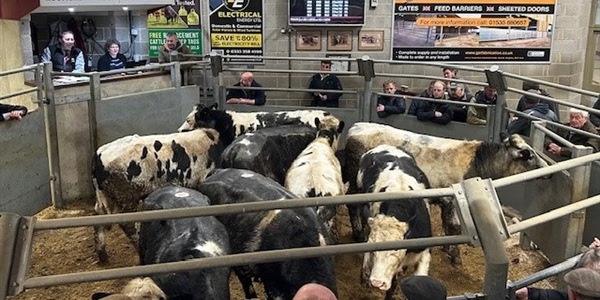
Still say ‘cull cow’? This mindset costs $$ & hurts welfare. Switching to ‘market cow’ boosts your bottom line & improves animal care. Maximize value!
EXECUTIVE SUMMARY: This article argues for a critical shift in dairy industry terminology, advocating for “market cow” to replace the detrimental “cull cow.” The term “cull” implies inferiority, negatively impacting animal management, welfare, and economic returns by fostering a disposal mindset. Conversely, “market cow” frames these animals as valuable assets, encouraging proactive management, better pre-sale conditioning, and adherence to fitness-for-transport standards. Recognizing that these cows contribute significantly to farm revenue (around 6.6% of sales) and the broader beef supply (20-25%), this change promotes practices that enhance their value. Adopting “market cow” aligns with higher animal welfare standards, addresses issues like bruising and transport stress, and improves the dairy industry’s public perception through responsible stewardship.
KEY TAKEAWAYS:
Language Matters: The term “cull cow” devalues animals and can lead to suboptimal care, while “market cow” frames them as assets, encouraging better management and welfare.
Significant Economic Impact: Cows transitioning to beef are a major revenue source for dairies (avg. 6.6% of farm sales) and contribute substantially (20-25%) to the U.S. beef supply; managing them as “market cows” captures more of this value.
Improved Animal Welfare: A “market cow” approach promotes better pre-sale conditioning, ensures animals are fit for transport, and aligns with industry welfare guidelines (AABP, BQA, FARM), addressing issues like bruising and transport stress.
Proactive Management Pays: Viewing these animals as “market cows” encourages strategic decisions regarding feeding, health, and timing of sale, leading to better prices and healthier animals.
A single outdated term is sabotaging your profitability, compromising animal welfare, and reinforcing negative perceptions about dairy farming. It’s time we kill “cull cow” and start treating end-of-lactation animals like the valuable assets they truly are.
When was the last time you thought strategically about the cows leaving your dairy? Most producers meticulously plan heifer development, obsess over breeding decisions, and fine-tune rations down to the gram, yet treat departing cows as afterthoughts to be discarded rather than assets to be maximized. This blind spot costs the dairy industry millions annually while undermining animal welfare and consumer trust.
Our language-“cull cow”-is actively working against us. The dictionary defines “cull” as “to select from a group and remove as inferior or worthless.” Is that really how you view the animals that have faithfully produced milk for your operation for years? As worthless?
The $100 Million Question: Are You Leaving Money on the Table?
Let’s talk numbers. According to industry data, dairy cows sold for slaughter contribute about 6.6% of total farm sales annually for a 250-cow Holstein operation, which translates to between ,000 and 0,000 annually. That’s equivalent to the component premium you might receive for an extra 0.2% butterfat across your entire herd for the year.
Yet how many hours did you spend last year analyzing your butterfat percentage versus strategically managing your market cow program?
When you mentally label a cow as a “cull,” you’re setting up a self-fulfilling prophecy. If you’ve already decided an animal is “inferior” or “waste,” why would you invest the feed, care, and attention needed to maximize her value? The “cull” mindset is a psychological barrier between you and thousands of potential profits.
The Beef Industry Already Knows What Most Dairy Farmers Don’t
Here’s a reality check that should make every dairy producer uncomfortable: Whether you acknowledge it or not, you’re in the beef business. And right now, most of you are doing it badly.
Dairy cattle contribute 20-25% of the U.S. beef market. Think about that. Nearly a quarter of America’s beef comes from dairy animals, yet most dairy producers treat this as an afterthought rather than a significant profit center deserving of strategic management.
Even more striking: the 2012 National Beef Quality Audit revealed that 75% of individual dairy cow carcasses are sold as whole cuts, particularly valuable rear leg round cuts. We’re not just talking about cheap ground beef here. These animals deliver high-value protein to consumers, and that value should be reflected in how you manage and market them.
The beef industry has already adopted the term “market cows and bulls,” while dairy clings to outdated “cull cow” terminology. Why is the beef sector, the actual end market for these animals, more progressive in its thinking than the dairy industry that supplies them?
Five Profit-Killing Mistakes Most Dairies Make With Their Market Cows
The National Beef Quality Audits consistently expose how dairy producers leave money on the table with their market cows:
1. Injection Site Damage Dairy carcasses show over twice as many rear leg injection lesions as beef cattle. These high-value cuts must then be trimmed away and discarded. Are you still giving shots in the wrong location even though BQA guidelines have been clear for decades? Since you’d never drain antibiotic milk into the bulk tank, why do you compromise beef quality with poor injection practices?
2. Poor Body Condition About 90% of dairy cows arrive too lightly muscled. While dairy breeds naturally favor glucose partitioning toward milk production, are you trying to transition these animals metabolically before marketing? As you meticulously formulate your lactating cow TMR for optimal milk components, have you considered developing a specific market cow ration that optimizes energy density for efficient weight gain?
3. Bruising and Contamination 66.7% of cow carcasses have bruises, and over 70% of dairy cows arrive with visible mud contamination. As you would never accept a bulk tank with high SPC or SCC, why are you accepting bruised or dirty market cows leaving your farm? Each bruise represents devalued meat and indicates poor handling or facility design.
4. Pregnant Cows at Harvest 25.4% of all cows surveyed at harvest carried a fetus, an increase from previous audits. Are you running basic pregnancy checks before shipping cows to market? Every pregnant cow represents lost genetic potential and wasted resources. Checking market cows for pregnancy should be as routine as your herd’s pregnancy diagnosis protocol.
5. Fitness for Transport Issues The 2016 National Beef Quality Audit found that cows arriving at processing plants nationwide were in transit for an average of 6.7 hours, with some riding over 24 hours. Are your cows ready for this journey? Most dairies have more rigorous protocols for determining when a cow needs mastitis treatment than if she can travel hundreds of miles to slaughter.
The Market Cow Mindset: Transform Your Thinking, Transform Your Profits
Adopting the term “market cow” isn’t just semantics; it’s a fundamental shift in how you view and manage these animals. A market cow is “an asset with value and opportunity” and “a quality animal in good health, fit for transport to the processing plant for beef.”
This perspective encourages you to:
Evaluate each cow’s potential market value
Optimize her condition before sale
Ensure proper handling to preserve meat quality
Verify she’s truly fit for transport
The economic upside can be substantial. Studies have demonstrated remarkable improvements in cows fed for an additional time before marketing:
One Canadian study showed fed cows gained an average of 188 pounds and improved BCS by 1.2 points over just 60 days
Another found fed cows had hot carcass weights 179 pounds heavier, with a 6.5% greater dressing percentage compared to those marketed immediately
Strategic feeding leads to improved marbling, tenderness, and whiter fat attributes that enhance value
Why Your Cows Leave (And How It Affects Their Value)
Understanding why cows exit your herd is crucial for optimizing their market value. Historical data from APHIS surveys show remarkable consistency in departure reasons over decades:
Reproduction issues: 27%
Udder/mastitis problems: 27%
Poor production: 22%
Lameness/injury: 15%
Other (disease, behavior, etc.): 9%
Cows generally leave under two conditions: voluntary (based on milk production, reproduction, or genetics) or involuntary (health issues like lameness, mastitis, or injury). Voluntary removals present the most significant opportunity for planned conditioning to optimize value.
Think of it like strategic dry-off timing- you wouldn’t abruptly stop milking a high-producer without preparation, so why would you market a cow without proper conditioning?
Is That Cow Ready for Transport?
Before any market cow leaves your operation, your personnel should assess:
Body condition (score greater than 2)
Mobility (no severe lameness or fractures)
Health status (no fever over 103°F, peritonitis, cancer eye)
The American Association of Bovine Practitioners (AABP), Beef Quality Assurance (BQA), and FARM Animal Care Program all provide clear guidelines on fitness for transport. But how many dairy operations are performing these assessments systematically?
Dr. Jennifer Van Os from the University of Wisconsin-Madison recommends asking three simple questions for every animal: Can she travel today? Does she need to recover? Or does she need to be euthanized?
Remember: your responsibility for that animal’s welfare doesn’t end when she leaves your farm gate.
Stop Making Excuses – Start Making Changes
I already hear the objections: “We don’t have space.” “We don’t have time.” “We don’t have the labor.” But here’s the uncomfortable truth: these aren’t reasons, they’re excuses. They’re signs that you don’t value this revenue stream enough to allocate resources.
For smaller operations, start with the easiest changes:
Correct injection site placement (costs nothing)
Identify cows in better initial condition for potential feeding
Consider cooperative arrangements for transportation or marketing
Implement simple record systems to track market cow performance
For medium to large dairies:
Develop dedicated market cow protocols
Train specific personnel in market cow assessment
Create a dedicated pen space for transition animals
Analyze the return on investment for conditioning programs
Regardless of size, every dairy farm can implement at least some aspect of better market cow management. Continuing to do nothing is a choice to leave money on the table.
The Bottom Line: Evolution or Extinction
Language shapes thinking, and thinking drives action. By replacing “cull cow” with “market cow” in your vocabulary, you acknowledge these animals for what they truly are: valuable assets that deserve strategic management.
This isn’t just semantics, a fundamental shift that can improve animal welfare, enhance beef quality, strengthen consumer trust, and significantly boost your bottom line.
Ask yourself these uncomfortable questions:
Why am I still using terminology from the 1950s to describe a significant profit center on my farm?
Am I truly managing these animals to maximize their value, or am I treating them as an afterthought?
What would change if I viewed every cow leaving my farm as a beef product rather than a dairy discard?
Then take action:
Eliminate “cull cow” from your vocabulary and farm documents. Make this change today- it costs nothing and starts the mindset shift.
Work with your veterinarian to establish clear fitness-for-transport guidelines. Develop a simple checklist for every animal before it leaves the farm.
Train all staff on proper handling to reduce bruising and stress. Low-stress handling preserves beef quality and improves animal welfare.
Consider feed strategies to improve body condition for thin cows. Even short feeding periods can significantly increase value.
Monitor market prices and timing to maximize returns. Historical data suggests higher prices in spring months compared to late fall.
Remember: you’re not just a dairy farmer but also a beef producer. Every market cow leaving your operation should receive the same careful attention you give to your high genetic merit heifers or top-producing cows. As you’d never tolerate 300,000 SCC milk in your bulk tank, you shouldn’t accept compromised animals entering the beef supply chain.
The industry continues to evolve through innovation, and managing lactation curves, reproduction protocols, and udder health have all seen tremendous advancements. Now it’s time for market cow management to experience the same evolution.
Will you be a pioneer in this shift, or will you be dragged along reluctantly while more progressive producers capitalize on the opportunity?
The choice is yours. But know this: continuing to use “cull cow” isn’t just outdated vocabulary, it’s a public admission that you’re leaving money on the table and failing to maximize the value of every animal in your care.
Every week, thousands of producers, breeders, and industry insiders open Bullvine Weekly for genetics insights, market shifts, and profit strategies they won’t find anywhere else. One email. Five minutes. Smarter decisions all week.
Temple Grandin’s autistic “visual thinking” revolutionized dairy farming by seeing through cows’ eyes, boosting both welfare and profits.
Animal welfare pioneer Temple Grandin’s recent AVMA recognition showcases how neurodivergent thinking revolutionizes dairy operations. Her visual thinking approach, translating the cow’s perspective into practical facility design, consistently improves animal welfare and farm profitability through reduced stress, better milk yield, and smoother operations.
The Unseen Revolution: Grandin’s Enduring Impact and the 2025 AVMA Humane Award
You know what amazes me about the dairy industry? For all our cutting-edge technologies and advancements, sometimes the most revolutionary insights come from someone simply seeing the world differently. That’s exactly what Temple Grandin gave us, a completely fresh perspective that’s transformed how we handle our cows.
The news that Temple’s receiving the 2025 AVMA Humane Award isn’t just a well-deserved honor for her four decades of groundbreaking work. It’s a powerful endorsement of how neurodivergent thinking can solve problems the rest of us might never notice. Her autism gave her the gift of “thinking in pictures,” she leveraged that unique ability to see the world the way our cattle do.
Don’t get me wrong, Temple isn’t just some cow whisperer with good instincts. She’s a rigorous scientist with a PhD in Animal Science who translated her visual insights into measurable, testable systems. Her development of objective scoring systems moved animal welfare from vague impressions to hard data points that transformed industry practice. When McDonald’s adopted these standards, it wasn’t just good PR; it created real market incentives for better animal handling throughout the supply chain.
What I find most compelling is how Temple challenges the conventional dairy mindset that’s always chasing technological solutions. While we’re busy optimizing machinery, she consistently shows that understanding the cow’s sensory experience delivers better results for animals and our bottom line. And isn’t that what smart dairy farming being about?
Through a Cow’s Eyes: The Mechanics of Visual Thinking in Dairy Design
Worlds Apart: Cattle vs. Human Sensory Perception
Have you ever considered how differently your cows experience your farm compared to how you do? This gap between bovine and human perception explains many daily handling headaches.
For starters, cattle have panoramic vision exceeding 300 degrees; they can see almost behind themselves without turning their heads. Great for spotting predators in the wild, but it means they notice every little movement from the sides and behind that we wouldn’t think twice about. They’re susceptible to high-contrast patterns like sharp shadows or transitions from light to dark. That harmless shadow across your parlor entrance? To your cow, it might look like a hole in the ground.
Their hearing is more sensitive than ours, too, particularly to high-frequency sounds. Those clanging gates, hissing air lines, and shouting that seem like normal farm background noise to us? Major stressors for your herd. And remember, when a cow gets agitated, Temple points out it can take up to 20 minutes for her to calm down physiologically. That’s 20 minutes of lost productivity you’re never getting back.
When cows balk at seemingly nothing or hesitate where they shouldn’t, they’re not being stubborn- they’re responding to something in their environment that we’re completely missing. Once you start looking at your farm through a cow’s eyes, many handling “problems” suddenly make perfect sense.
Seeing is Believing: Facility Redesigns That Speak Cow Language
Let me share some real-world examples of how small, targeted changes based on bovine perception can dramatically improve cow flow and reduce stress.
On one farm, cows consistently balked at entering the milking parlor. Looking through a “cow’s eye view,” the problem became obvious- morning sunlight cast sharp shadows across the entrance alley, a poorly draining area created a reflective puddle, and the parlor entrance was dimly lit compared to the holding pen. The solution? Installing translucent panels to diffuse sunlight, regrading concrete to eliminate puddles, covering a distracting drain grate, and adding well-shielded lights at the entrance. The impact was immediate: cows entered more willingly, handlers stopped pushing and yelling, and parlor loading time decreased significantly.
Another operation struggled with its outdoor handling area. Cows would get agitated during routine health checks, showing rapid movements, frequent defecation, and occasional attempts to escape. The issue? Open-sided races allowed cattle to see distracting movements outside, while nearby workshop noises startled them. By installing solid panels on the sides of the crowd pen and race, fitting rubber dampeners on metal gates, and scheduling noisy workshop activities for different times, they achieved remarkably calmer cattle movement and easier, safer handling.
My favorite example involves a farm where cattle constantly turned back in the crowd pen rather than entering the single-file race, forcing handlers to resort to electric prods. Observation revealed the round crowd pen was significantly larger than Temple’s recommended 12-foot optimal radius, the race entrance had a sharp 90-degree turn, making it appear as a dead end, and a small flapping plastic marker near the entrance constantly distracted the cows. Simple fixes- installing a temporary panel to reduce the pen’s effective radius, modifying the race entrance with a short straight section before the curve, removing the flapping marker, and avoiding overfilling the pen, pen-dramatically improved cow flow and virtually eliminated electric prod use.
These examples highlight Temple’s core philosophy: small, observant changes based on understanding the cow’s sensory world yield substantial improvements in welfare and efficiency. That wobbly gate isn’t just an eyesore- it’s a daily tax on your herd’s patience and milk check.
From Calm Cows to Efficient Parlors: Connecting Perception to Performance
The benefits of designing facilities with cow perception in mind go straight to your bottom line. When cows move through well-designed spaces with minimal visual and auditory stressors, they arrive at the parlor in a much calmer state.
This calmness has direct physiological benefits. Stress hormones like adrenaline interfere with oxytocin release, essential for milk let-down. When a cow is frightened, her milk let-down may be incomplete or delayed, increasing residual milk and lengthening milking times. Research shows aversive handling can significantly reduce milk yield, while gentle treatment in a low-stress environment can increase production by 3.5-13 percent. Those numbers add up fast.
Remember, too, that chronic stress compromise’s immune function, making cows more susceptible to mastitis and contributing to higher SCC. We all know SCC has multiple causes, but minimizing stress is part of maintaining good udder health and milk quality.
The truth is, optimizing parlor efficiency starts long before the cow steps onto the platform. The design of approach lanes, the absence of shadows or startling noises in the holding pen, and ease of entry into parlor stalls all set the stage for optimal milking. Get this right, and everything else falls into place.
The Bottom Line of Bovine Contentment: Welfare-Business Synergy
Rethinking ROI: Beyond Traditional Metrics with Grandin’s Lens
I know what you’re thinking- all this sounds nice, but what’s the ROI? Fair question. We’re used to calculating inputs versus outputs in dairy: feed cost versus milk volume, equipment cost versus labor saved. But Temple’s approach forces us to consider the hidden costs of stress and the multi-layered benefits of enhanced welfare.
The underlying principle is simple: physical damage and stress have direct economic consequences. For dairy cows, this means issues like lameness from poor flooring, injuries in poorly designed facilities, and the physiological toll of chronic stress. Reducing these through better design and low-stress handling yields quantifiable savings: lower vet bills, improved reproductive efficiency, better feed conversion, and extended productive lifespan.
Have you ever calculated the true cost of that poorly designed chute? It’s not just the construction price- the ongoing operational “costs” in slower handling times, higher labor requirements, increased stress, potential injuries to cows and people, and even staff turnover when work becomes consistently frustrating.
This transforms animal welfare from a mere expense into a strategic tool for risk management and operational resilience. High-stress systems are inherently more prone to breakdowns in cow flow, higher injury rates, and greater susceptibility to disruptions. Low-stress systems designed using Temple’s principles are more predictable and efficient and promote better animal health.
The Stress-Yield Equation: A Comparative Look
The connection between stress and production isn’t just theory- it’s well-documented science. Various stressors trigger physiological responses in cows, including releasing cortisol and adrenaline. These hormones interfere with milk synthesis and inhibit oxytocin release, leading to incomplete milking and reduced yield. Energy that should go toward milk production gets diverted to handle stress, and chronic stress compromises the immune system, increasing mastitis susceptibility and SCC.
Table: The Stress-Yield Connection in Dairy Cattle
Stress Indicator
Observable Signs
Impact on Milk Yield
Impact on Components
Impact on SCC/Health
Handling Stress
Balking, rushing, vocalization, high electric prod use
Decreased (3.5-13% from rough handling)
Reduced fat/protein
Increased mastitis risk
Facility-Induced Stress
Shadows, noise, and poor flow are causing hesitation
Decreased (inhibited let-down)
Potentially altered
Increased (hygiene issues)
Lameness
Altered gait, reluctance to move
Decreased (~800 lbs/lactation)
Altered fat (+0.68%), lactose (-2.15%)
Elevated SCC
Heat Stress (THI > 72)
Panting, reduced feed intake
Decreased (0.249 kg/day per unit THI increase)
Decreased (protein affected)
Increased (at THI > 78)
What’s particularly insidious is the cumulative effect of multiple minor stressors. A slightly slippery floor, occasional equipment noise, and sub-optimal lighting might not individually seem critical. Still, together they create chronic low-level stress that silently erodes productivity and compromises welfare. Each seemingly minor issue compounds the others.
Standardizing Success: The Power of Audits in Modern Dairying
Temple’s most significant contribution was developing objective animal welfare auditing systems. These audits moved us from subjective assessments to measurable, repeatable evaluations of handling practices and facility design.
The game-changer came when major food companies like McDonald’s adopted her protocols in 1999. This created real market pressure for improvement throughout the supply chain. While initially focused on slaughter plants, these principles have influenced farm-level programs like the National Dairy FARM Program.
For you as a dairy farmer, standardized audits provide clear benchmarks for welfare, help ensure consistency across employees and increasingly determine market access as retailers and consumers demand verifiable assurances of humane animal care.
The widespread adoption of Temple’s audits has created market-driven incentives for welfare improvements. When major buyers require adherence to science-based welfare criteria, it’s not just altruism’s strategic risk management and response to consumer demands. By providing objective metrics, Temple equipped corporations with tools to enforce higher standards, creating demand for better practices and pulling the entire industry forward.
Deconstructing Design: Grandin’s Philosophy in Action
The Genius of the Curve: Reverse-Engineering the Chute
Have you ever wondered why Temple’s curved chute design works so brilliantly? It’s not accidental, a masterpiece of reverse-engineering from the cow’s perspective.
Cattle are naturally wary of entering confined spaces, especially if they can’t see a clear path ahead. A straight chute directly depicts potentially frightening activities at the end, causing balking. The curve elegantly limits the animal’s forward sightline to two or three body lengths, preventing it from seeing distractions further down.
The curve also leverages cattle’s natural tendency to circle when moving around handlers. Moving around the bend creates the illusion that they’re returning to where they came from, from a direction they’re more willing to travel.
The solid, high sides are crucial too. Given cattle’s wide-angle vision, open-sided chutes expose them to peripheral visual stimuli that can be highly distracting. Solid sides create effective blinders, helping animals focus on the path ahead.
Diagram: Deconstructing the Curved Chute: A Cow’s Eye View.A top-down comparison showing how the curved design limits sightlines to reduce stress, provides solid sides to block distractions, and uses natural circling tendencies to encourage forward movement.
The effectiveness isn’t just in the geometry but in how that geometry interacts with cow psychology and sensory perception. It manages what the cow sees and experiences, guiding movement naturally rather than forcing it against instincts. A slightly longer, curved path that respects bovine psychology proves far more efficient by minimizing resistance and promoting voluntary cooperation.
“Don’t Let Bad Become Normal”: Modern Manifestations on the Dairy Farm
One of Temple’s most powerful principles is deceptively simple: “Don’t Let Bad Become Normal.” This demands continuous vigilance and a refusal to accept suboptimal conditions just because they’re familiar.
Think about your farm. Is there that one gate in the holding pen that always sticks and clangs loudly? The perpetually wet, slippery spot in a high-traffic alley? The flickering fluorescent tube casting weird shadows? These minor flaws collectively create a baseline stress level you’ve probably stopped noticing.
What about your staff who routinely raise their voices to move cows? Would occasional electric prods be unnecessary when a better design is used? Overcrowding the holding pen to save a few minutes? These habits become ingrained without regular monitoring and correction.
Have you gradually accepted elevated SCC levels or mild lameness as “just part of dairying” instead of aggressively pursuing improvements in flooring, footbath protocols, or stall comfort?
If your cows consistently balk at a particular turn or one group seems reluctant to enter the parlor, they communicate a problem. Dismissing these as “just how those cows are” lets bad become normal.
The danger is how these issues accumulate. Each alone might seem minor, but together they create an environment of chronic, low-grade stress that silently erodes productivity, compromises welfare, and impacts staff morale. The solution is regularly seeing your operation with fresh eyes, specifically your cow’s eyes.
Calculating Calm: Optimal Crowd Pen Radius
Temple’s research provides specific, evidence-based recommendations for crowd pen design. She’s adamant that “close enough” isn’t good enough regarding dimensions that affect cow behavior and stress.
According to Temple, “The ideal radius for a round crowd pen is 12 ft. If a crowd gate longer than 12 ft. is used, the pen will be too big. An 8-ft… gate is too small.” This 12-foot radius isn’t arbitrary, and it provides enough space for cattle to turn and align themselves without excessive pressure, yet not so much space that they can mill about or evade handlers.
This precise dimension reflects a fundamental understanding of cattle’s spatial needs and reactions to confinement. The crowd pen is a critical control point for stress levels throughout the handling process. If this initial gathering phase involves poor design, animals become agitated before entering the race, causing cascading problems throughout the system.
A Legacy in Motion: Grandin’s Evolving Influence
From Insight to Standard: Grandin’s Mark on AVMA Guidelines
Temple’s influence on the American Veterinary Medical Association’s guidelines shows how mainstream her once-revolutionary ideas have become. Serving on key AVMA advisory panels focused on Humane Slaughter, Euthanasia, and Depopulation, she helped shape official guidance documents that veterinarians nationwide rely upon.
Her research into animal perception, stress responses, and objective auditing tools provided the scientific foundation for more specific, behaviorally-informed welfare standards. AVMA guidelines now explicitly incorporate principles of minimizing stress, understanding animal behavior, and respecting the animal’s sensory world.
This evolution reflects our society’s growing concern for animal welfare. Temple provided practical, science-backed methods that allowed the AVMA and related industries to translate aspirational welfare goals into tangible practices, providing the “how-to” manual for implementing more humane systems.
Institutionalizing her principles within veterinary standards gives dairy farmers powerful tools to engage constructively with their veterinarians on facility design, handling protocols, and overall herd welfare using a shared framework of best practices.
The Next Frontier: Visual Thinking and the Robotic Milking Revolution
As dairy operations increasingly embrace automation-robotic milking systems, automated feeders, and sensor-based monitoring technologies, do Temple’s principles translate when the primary “handler” is a machine?
Her insights about minimizing fear-inducing stimuli remain directly applicable to robotic system design. A robot’s arm movements, sounds, lighting around the milking station, approach flooring texture, and perceived “escape routes” all influence a cow’s willingness to enter and use the system voluntarily. If these elements aren’t considered from the cow’s perspective, robots can become new sources of stress, potentially negating automation’s welfare benefits.
While automation offers consistency and reduces potentially negative human handling, over-reliance on sensor data without complementary holistic observation, kind of Temple champions risky, sensors measure specific parameters (milk flow, rumination time, activity levels). Still, they may not identify subtle environmental stressors that the system isn’t designed to detect, like a new reflection near the robot entrance or an aversive change in air currents. This is where skilled human observation remains indispensable, even in the most technologically advanced dairies.
The challenge isn’t to discard visual thinking principles in the age of robotics but to adapt and integrate them thoughtfully, ensuring technology serves human efficiency and the cow’s well-being, as perceived by the cow herself.
Bringing Grandin Home: A Practical Implementation Guide for Your Dairy
The “Cow’s Eye View” Audit: A Step-by-Step Facility Assessment Checklist
Want to apply Temple’s philosophy on your farm? Start with a systematic “Cow’s Eye View” audit of your facilities. Walk through your entire operation, specifically looking for environmental factors that could cause your cattle stress, fear, hesitation, or injury.
Key Areas to Assess:
Pathways, Alleys, and Movement Areas:
Is the flooring consistently non-slip? Check for worn areas, wet spots, or manure buildup.
Are there abrupt changes in flooring texture or color causing cows to hesitate?
Are there harsh shadows, especially at entrances or transition points?
Is there glare from sunlight or artificial lights shining into approaching animals’ eyes?
Are any dark areas creating “black holes” that cows might be reluctant to enter?
Look for dangling objects (chains, ropes, wires), flapping materials, or items hung on fences.
Are air drafts blowing into the faces of approaching animals?
Holding Pens:
Does the flow into and out of the holding pen move smoothly, or are there consistent balk points?
Is the pen appropriately sized for your group? (Neither overcrowded nor excessively large)
Are gates solid where appropriate, quiet in operation, and moved predictably?
Milking Parlor:
Is the entry well-lit, non-slip, and free of intimidating shadows or noises?
Is there anything causing discomfort while cows are being milked (unexpected air blasts, clanging equipment)?
Is the exit path clear, unmistakable, and non-threatening?
Treatment Areas:
Do approach areas incorporate sound chute design principles (solid sides, good lighting, no distractions)?
Is the equipment operating smoothly and quietly, applying appropriate pressure without causing panic?
Are there solid barriers preventing animals from seeing operators administering treatments?
During your audit, measure key outcomes:
Balk Score: Percentage of animals that hesitate at specific points
Slip/Fall Score: Number of animals slipping or falling in the given areas
Vocalization Score: Frequency of moos/bellows during handling (indicates stress)
Electric Prod Use: Percentage of animals moved with prods (aim for zero)
Turning Back/Agitation Score: Frequency of animals attempting to turn back or showing agitated behavior
Conduct this audit regularly, seasonally, or after significant facility or routine changes to identify and rectify subtle stressors that might go unnoticed.
Investing in Insight: Cost-Benefit Analysis for Your Herd
Understanding the potential return on welfare investments is crucial. While precise costs vary based on farm size and scope of modifications, a structured cost-benefit analysis clarifies the economic case for implementing Temple’s principles.
Potential Costs:
Materials: New gates, solid paneling, improved lighting, non-slip flooring
Labor: Installation, renovation, repairs
Staff Training: Time and resources for low-stress handling technique training
Potential Benefits:
Improved Milk Yield and Quality: Calmer cows often produce more milk with better components and lower SCC
Reduced Veterinary Costs: Fewer injuries from slips, falls, or struggles mean lower vet bills (preventing a single lameness case saves $76-$533)
Lower Cull Rates: Less stressed cows typically have longer productive lives
Improved Reproduction: Lower stress contributes to better conception rates and fewer days open
Increased Labor Efficiency: Smooth cow flow means less time moving animals
Enhanced Staff Safety: Working with calm animals in efficient systems reduces injuries
Meeting Market Requirements: Demonstrably high welfare standards improve market access
Simple Cost-Benefit Template:
Change
Initial Cost
Annual Savings
Revenue Gains
Qualitative Benefits
Payback Period
Improve Parlor Entry Lighting
$500
Reduced balking time
Potential yield increase
Calmer entry, less handler frustration
Calculate
Add Solid Race Panels
$300
Less time coaxing animals
Smoother flow
Fewer startle responses
Calculate
Re-groove Slippery Alley
$1,500
Fewer lameness cases
Milk yield recovery
Increased cow confidence
Calculate
Low-Stress Handling Training
$200
Reduced handling time
Potential yield boost
Better human-animal interactions
Calculate
The highest-impact changes are often relatively low-cost. Removing a visual distraction like a coat on a fence costs nothing but awareness. Improving critical area lighting involves modest expenditure. Adjusting handling techniques is about training and mindset, not expensive capital investment.
A comprehensive analysis should consider long-term benefits and risk mitigation aspects of welfare investments, including increased cow longevity and maintaining your social license, which are crucial to building a resilient dairy business.
Continuing the Conversation: Your Farm, Your Innovations
Beyond the Basics: Two Questions on Enrichment and Husbandry
Consider these questions in the context of your operation:
Enrichment & Practicality: Modern welfare science highlights the benefits of providing positive experiences through environmental enrichment, such as grooming brushes, exploration opportunities, or varied sensory stimuli. Given your current facilities and routines, what practical, low-cost environmental enrichment could you introduce to improve your cows’ well-being without disrupting essential operations? How would you measure its impact through behavior, health indicators, or productivity?
Observation & Adaptation: Reflect on a persistent handling challenge, cow flow issue, or undesirable behavior pattern you’ve noticed in your herd, something you’ve come to accept as “just the way it is.” If you rigorously applied Temple’s “cow’s-eye view” to this specific issue, what sensory detail might you have overlooked (a particular sound, reflection, texture underfoot, visual obstruction)? What simple experiment could you conduct to test if addressing that detail makes a difference?
The Future is Farmer-Led: A Call to Share Your Success Stories
While pioneers like Temple provide foundational principles, the ongoing evolution of best practices often springs from farmers’ ingenuity and experience. You’re on the front lines, adapting ideas and developing innovative solutions within your unique operation.
Dairy farmers who have successfully implemented facility modifications, adopted new handling techniques, or gained unique observational insights possess invaluable knowledge—sharing these success stories through industry publications, online forums, producer meetings, or conversations with peers is vital for the industry’s collective advancement.
What changes have you made inspired by seeing through your cows’ eyes? What were the challenges, costs, and ultimate benefits? Your experiences, both big and small, contribute to a growing body of practical wisdom.
Temple’s legacy isn’t just in her designs but in how she taught us to think differently about the animals in our care. By embracing this perspective, continuously observing and adapting, and sharing our collective learning, we can build a future where animal welfare and farm productivity thrive.
Key Takeaways
Cattle have fundamentally different sensory perception-including 300-degree panoramic vision and sensitivity to shadows, contrasts, and sounds-explaining why they balk at seemingly insignificant environmental elements.
Small, targeted facility modifications based on understanding bovine perception (like diffusing harsh shadows or adding solid side panels) can dramatically improve handling efficiency and reduce stress.
The “Don’t Let Bad Become Normal” principle demands vigilance against overlooking subtle environmental stressors that collectively create chronic, productivity-draining stress.
Conducting a systematic “Cow’s-Eye View” audit of your facilities can identify specific environmental factors causing fear or inefficiency, often leading to low-cost, high-impact improvements.
Investing in welfare improvements offers concrete ROI through multiple channels: increased milk yield, reduced lameness, improved reproduction, and extended cow longevity.
Executive Summary
Temple Grandin’s neurodivergent ability to “think in pictures” has transformed dairy farming by revealing how cows actually perceive their environment-a perspective most farmers miss. Her scientific approach translates cattle’s sensory experiences into practical facility designs that minimize stress and promote calm, willing movement. From curved chutes that limit sightlines to removing visual distractions that cause balking, Grandin’s principles consistently improve animal welfare while delivering measurable financial returns through increased milk yield (3.5-13% improvement), better components, and reduced veterinary costs. By teaching farmers to see through a “cow’s-eye view,” she challenges the industry to address often-overlooked stressors that silently erode productivity. Grandin’s legacy continues to evolve, influencing industry standards and adapting to new technologies like robotic milking systems.
Learn more:
Temple Grandin Wins Prestigious 2025 AVMA Humane Award: Learn more about Dr. Grandin’s recent honor and the profound impact her autism-shaped insights have had on revolutionizing dairy handling and livestock welfare worldwide.
The Lost Art of Dairy Cow Stockmanship. When Push … Nudge: Delve into the principles of good stockmanship, a core tenet of Grandin’s philosophy, and understand how calm, effective handling techniques benefit both cows and dairy operations.
The Sunday Read Dairy Professionals Don’t Skip.
Every week, thousands of producers, breeders, and industry insiders open Bullvine Weekly for genetics insights, market shifts, and profit strategies they won’t find anywhere else. One email. Five minutes. Smarter decisions all week.
To provide the best experiences, we use technologies like cookies to store and/or access device information. Consenting to these technologies will allow us to process data such as browsing behavior or unique IDs on this site. Not consenting or withdrawing consent, may adversely affect certain features and functions.
Functional
Always active
The technical storage or access is strictly necessary for the legitimate purpose of enabling the use of a specific service explicitly requested by the subscriber or user, or for the sole purpose of carrying out the transmission of a communication over an electronic communications network.
Preferences
The technical storage or access is necessary for the legitimate purpose of storing preferences that are not requested by the subscriber or user.
Statistics
The technical storage or access that is used exclusively for statistical purposes.The technical storage or access that is used exclusively for anonymous statistical purposes. Without a subpoena, voluntary compliance on the part of your Internet Service Provider, or additional records from a third party, information stored or retrieved for this purpose alone cannot usually be used to identify you.
Marketing
The technical storage or access is required to create user profiles to send advertising, or to track the user on a website or across several websites for similar marketing purposes.
To provide the best experiences, we and our partners use technologies like cookies to store and/or access device information. Consenting to these technologies will allow us and our partners to process personal data such as browsing behavior or unique IDs on this site and show (non-) personalized ads. Not consenting or withdrawing consent, may adversely affect certain features and functions.
Click below to consent to the above or make granular choices. Your choices will be applied to this site only. You can change your settings at any time, including withdrawing your consent, by using the toggles on the Cookie Policy, or by clicking on the manage consent button at the bottom of the screen.
Functional
Always active
The technical storage or access is strictly necessary for the legitimate purpose of enabling the use of a specific service explicitly requested by the subscriber or user, or for the sole purpose of carrying out the transmission of a communication over an electronic communications network.
Preferences
The technical storage or access is necessary for the legitimate purpose of storing preferences that are not requested by the subscriber or user.
Statistics
The technical storage or access that is used exclusively for statistical purposes.The technical storage or access that is used exclusively for anonymous statistical purposes. Without a subpoena, voluntary compliance on the part of your Internet Service Provider, or additional records from a third party, information stored or retrieved for this purpose alone cannot usually be used to identify you.
Marketing
The technical storage or access is required to create user profiles to send advertising, or to track the user on a website or across several websites for similar marketing purposes.