Archive for dairy market volatility

When Butter Sinks Below Cheese: The Market That Refused to Trade

Butter just crashed below cheese, CME froze up, and the global dairy market is rewriting every play farmers thought they knew. Is your operation ready for the new normal?

Executive Summary: Butter just sank below cheese, CME trades froze, and global dairy pricing rules are being rewritten in real time. What’s fascinating is how quickly protein has stolen butterfat’s thunder—today’s mailbox check is won or lost on what your cows put in the vat, not just how many pounds fill the tank. The flood of new U.S. processing plants won’t rescue margins if exports stall, especially with Europe and New Zealand cranking out more milk to chase slow demand. Input costs might be finally easing, but so are milk prices—so efficiency, not expansion, is the edge that matters most right now. It’s a moment that rewards the bold: managing risk, tweaking diets, and staying lean on labor can make all the difference. Everyone’s watching and waiting, but real leaders will act before they’re forced. The bottom line? In the 2025 milk market, the fastest to adapt will stand to gain, while those standing still will already be behind.

Dairy profitability, component feeding, Class III hedging, dairy market volatility, farm efficiency, protein premium, North American dairy

Let’s be honest: what happened last week on the CME was unlike anything we’ve seen since the pandemic. On October 8, not a single contract changed hands—no spot cheese, no butter, no nonfat dry milk, nothing at all. That’s more than a rare occurrence; it’s a signal that uncertainty and risk are now running the show in dairy’s major pricing arena.

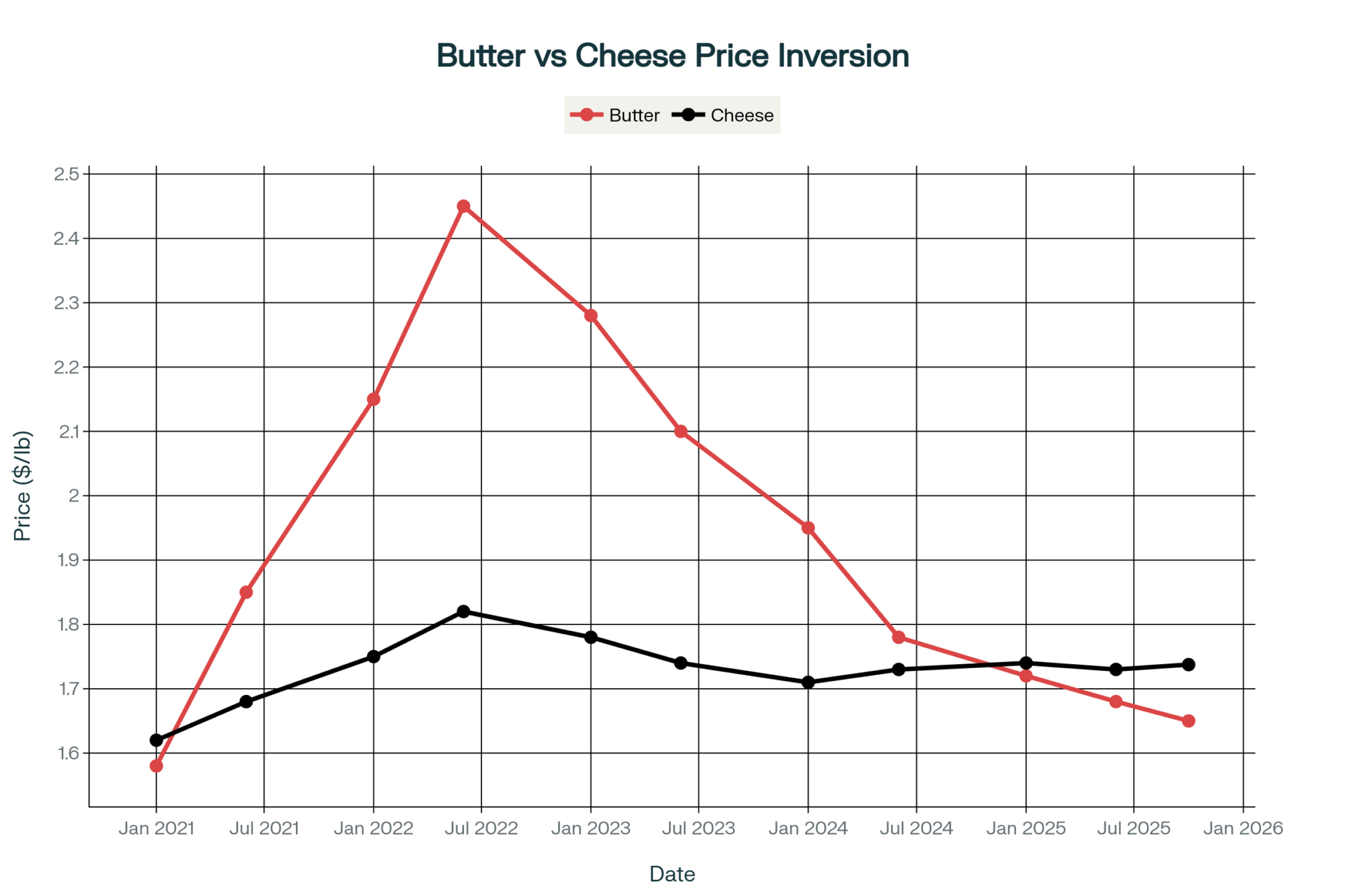
What’s interesting here is that when the market goes silent, it’s usually not confidence—it’s confusion. Butter actually dipped to $1.65/lb, while cheese held at $1.7375/lb. When’s the last time butter traded below cheese? You’d have to dig back to 2021 or early 2022 to find that particular inversion, and the implications for milk pricing—especially for anyone playing the class and component game—are immediate and sweeping.

The Great Inversion: For the first time since 2021, butter has crashed below cheese prices—a seismic shift that’s rewriting every dairy farmer’s component strategy overnight

The GDT Auction: Reading the Global Thermometer

Looking at the numbers from Global Dairy Trade’s TE389 auction (October 7), you get a sense of just how widespread the turbulence is. Here’s a breakdown, with direct source attribution to the GDT/USDA for verification:

ProductPrice Change (%)Winning Price (US$/tonne)
Whole Milk Powder (WMP)-2.3%$3,696
Skim Milk Powder (SMP)-0.5%$2,599
Anhydrous Milk Fat (AMF)+1.2%$6,916
Butter-3.0%$6,712
Cheddar+0.8%$4,858
Mozzarella-11.8%$3,393
Buttermilk Powder (BMP)-2.3%$2,768

The standout? Mozzarella got hammered, losing 11.8%, while AMF eked out a rare gain. What’s worth pausing on here is that Fonterra’s SMP maintains a premium of $105/tonne over the top European competitors—a spread that’s both unusual and unsustainable long-term. Buyers and sellers alike are weighing whether New Zealand is overpriced or if Europe’s downward spiral is a bigger issue.

Europe in the Red: Pressure on Every Front

European Dairy Collapse: The devastating numbers reveal an industry in crisis, with Young Gouda down 36% year-over-year and butter hemorrhaging nearly 30%

European dairy prices have been bleeding for months, but the latest quotes make that trend painfully clear. Citing data verified via the EEX and the EU’s weekly surveys:

CommodityWeekly Change (%)Current Spot (€ per tonne)Year-over-Year (%)
Butter-1.5%€5,533-29.6%
SMP-0.5%€2,159-14.9%
WMP-1.8%€3,740-13.8%
Whey+0.6%€890+0.6%
Young Gouda-2.4%€3,115-36.1%

What I’ve noticed over the years is that when European butter prices move this sharply, they tend to drag global fat values along with them. The decrease of €2,329 per tonne on butter this year is severe even for volatile markets, and SMP’s year-on-year losses are hardly better. For producers exporting into—or competing with—the EU, these are tough numbers.

The U.S. Spotlight: Processing Boom Meets Margin Squeeze

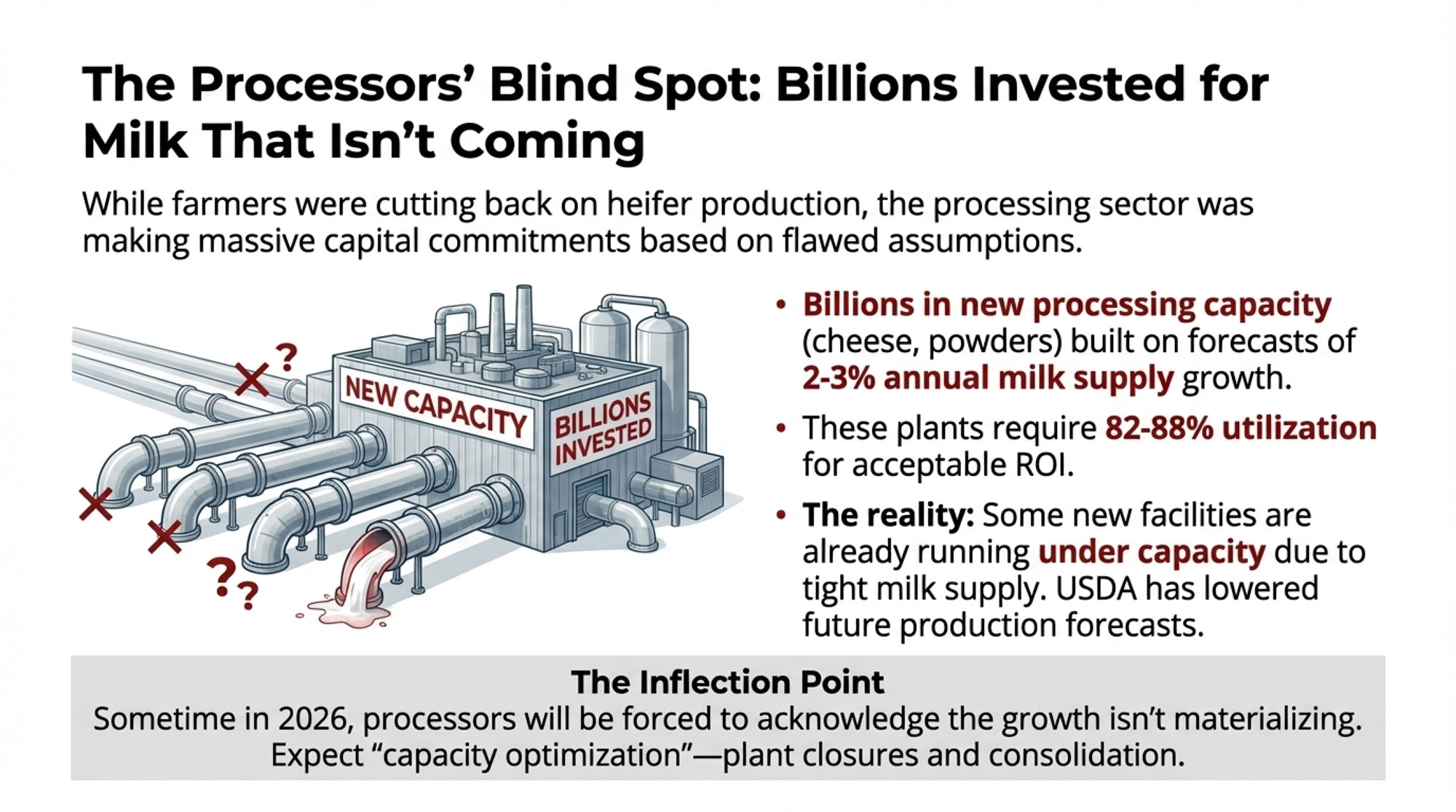
You want to talk about structural shifts? U.S. dairy is investing $11 billion in processing expansion across 50 new and expanded plants in 19 states through 2028, as verified by IDFA and federal development filings. This is happening due to two factors: persistent bottlenecks in cheese and powder production, and a rush to capture more global value as domestic consumption levels off.

But here’s the catch: bigger processing doesn’t necessarily mean bigger margins. As hundreds of millions of new pounds of milk are processed through cheesemakers in states like Texas, South Dakota, and New York, pricing pressure grows—not just due to feed, labor, or weather, but also from global market fluctuations and export volatility. I’ve had processors tell me flat out: “Volume can cannibalize value unless exports hold up.” They’re not wrong.

Component Pricing Clarity: Where’s the Money Now?

Here’s where the new component math really bites. With butter spot at $1.65 and cheese at $1.7375, current theoretical values work out as follows using the USDA Federal Milk Marketing Order Class III and Class IV formula calculations for the week ending October 10, 2025:

  • Butterfat: Approx. $2.19/lb
  • Protein: Approx. $2.71/lb

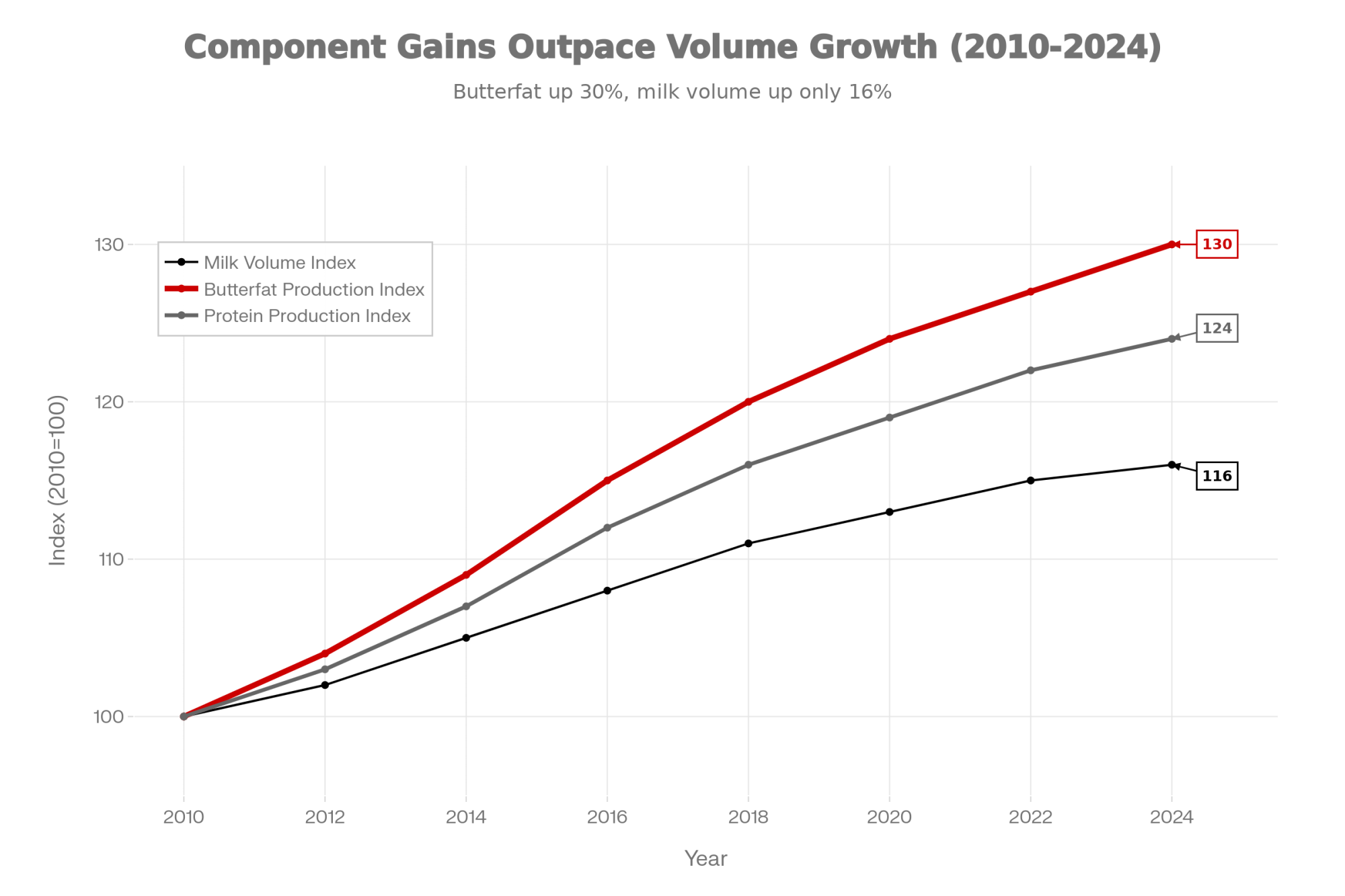
For years, protein was the underdog, and butterfat was king. Now? We’re in a market where protein drives the milk check and butterfat takes a back seat. What’s remarkable is how quickly this change came about—a swing like this would have looked improbable just last fall.

What does this mean practically? If you’re near the break-even point, even a small shift in herd average protein—from, say, 3.05% up to 3.12%—could change your bank balance more than anything you do on butterfat. That’s especially true with Class III at $17.19/cwt and Class IV at $14.60/cwt; protein premiums are back in charge, at least for now.

Feed Costs, Herds and Margins: The Reality on the Ground

Now, feed costs are down this fall—corn’s at about $4.13 and soy meal around $275. However, here’s the paradox: margins didn’t exactly return to their original levels. I’ve spoken to several producers who saw input costs ease by 10-15%, but lost even more due to falling milk prices. In this kind of margin environment, efficiency beats expansion. Producers rocking 15–25% better feed efficiency—usually those leveraging precision diets and sharp dry lot management—are far outperforming neighbors still running by last year’s playbook.

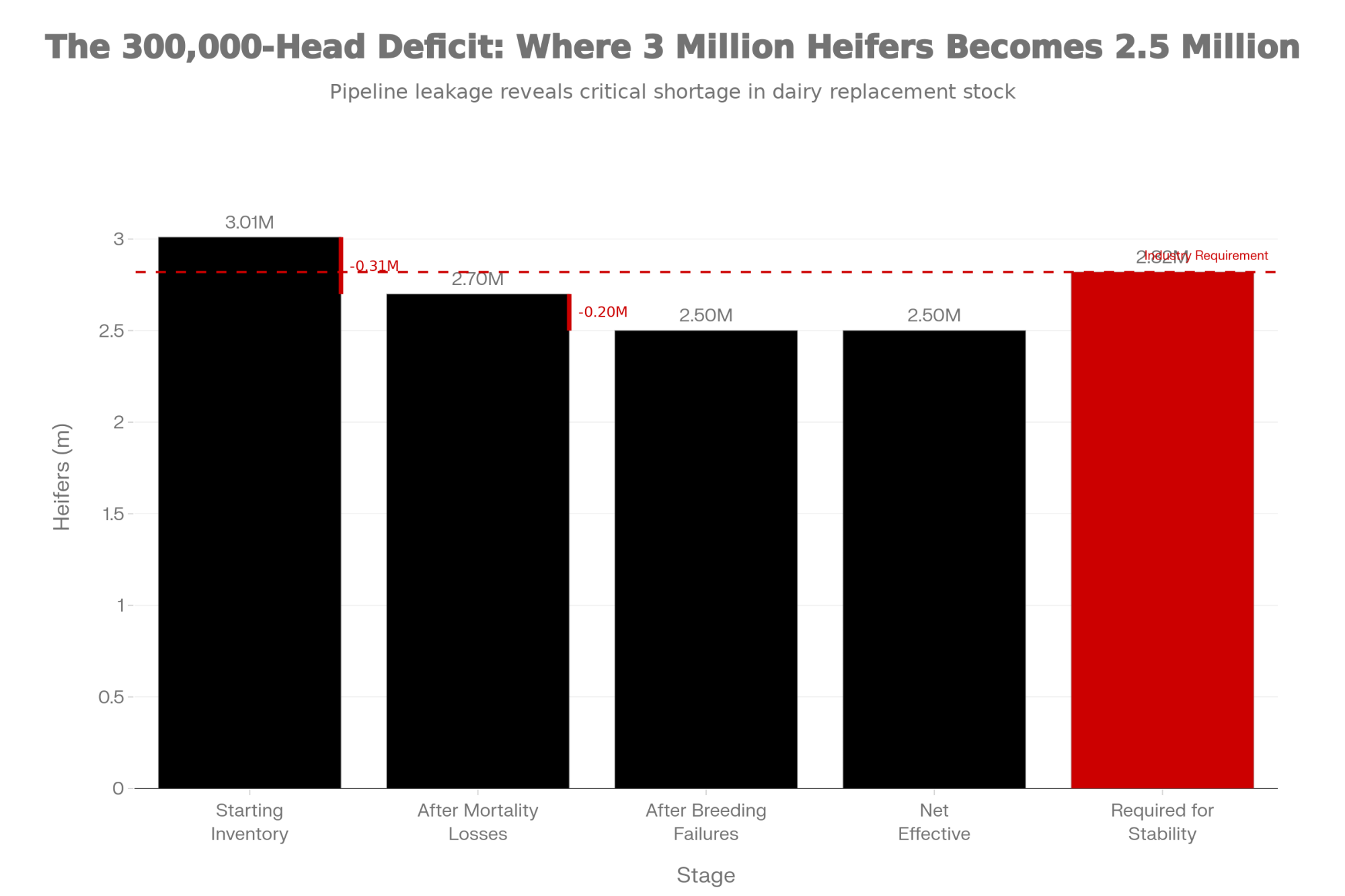
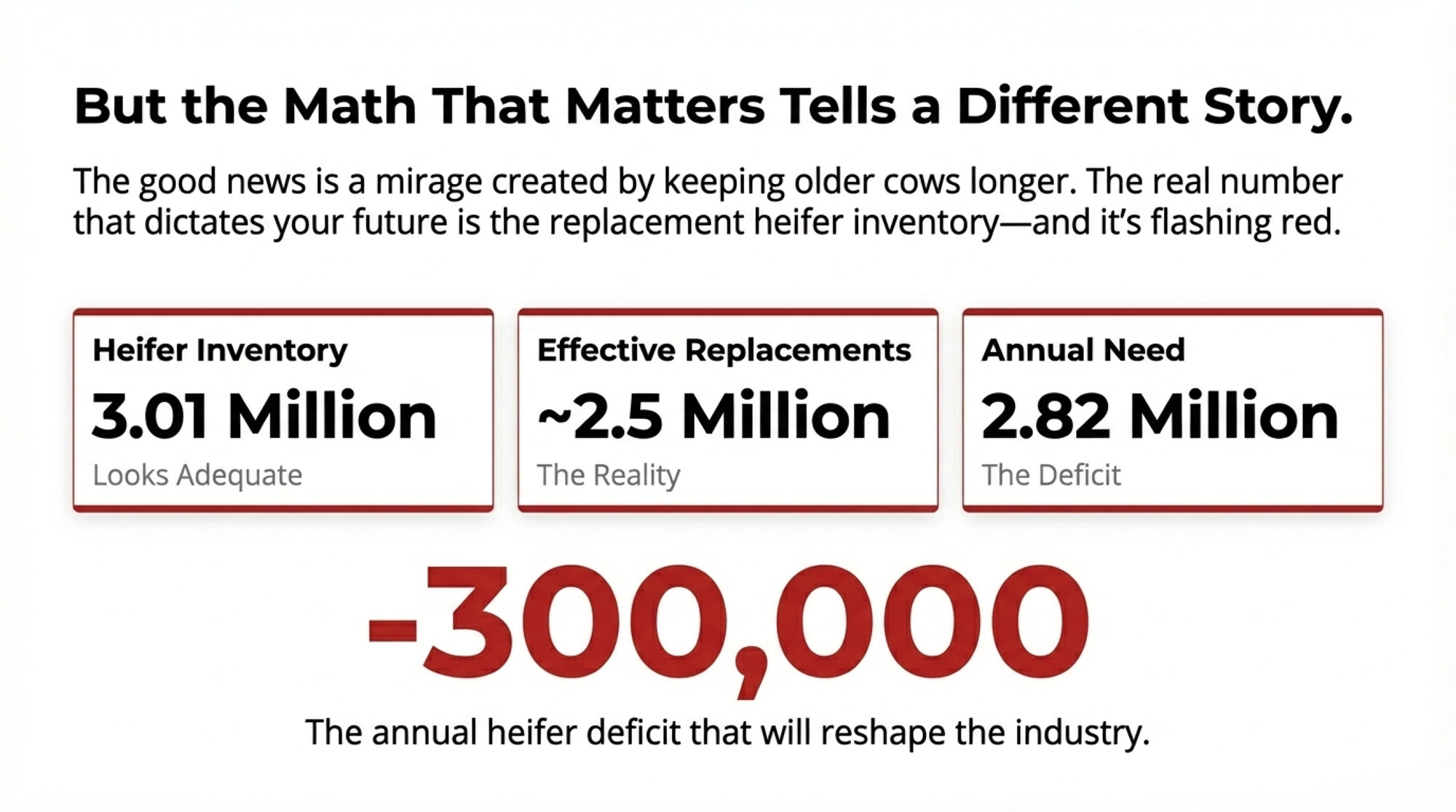
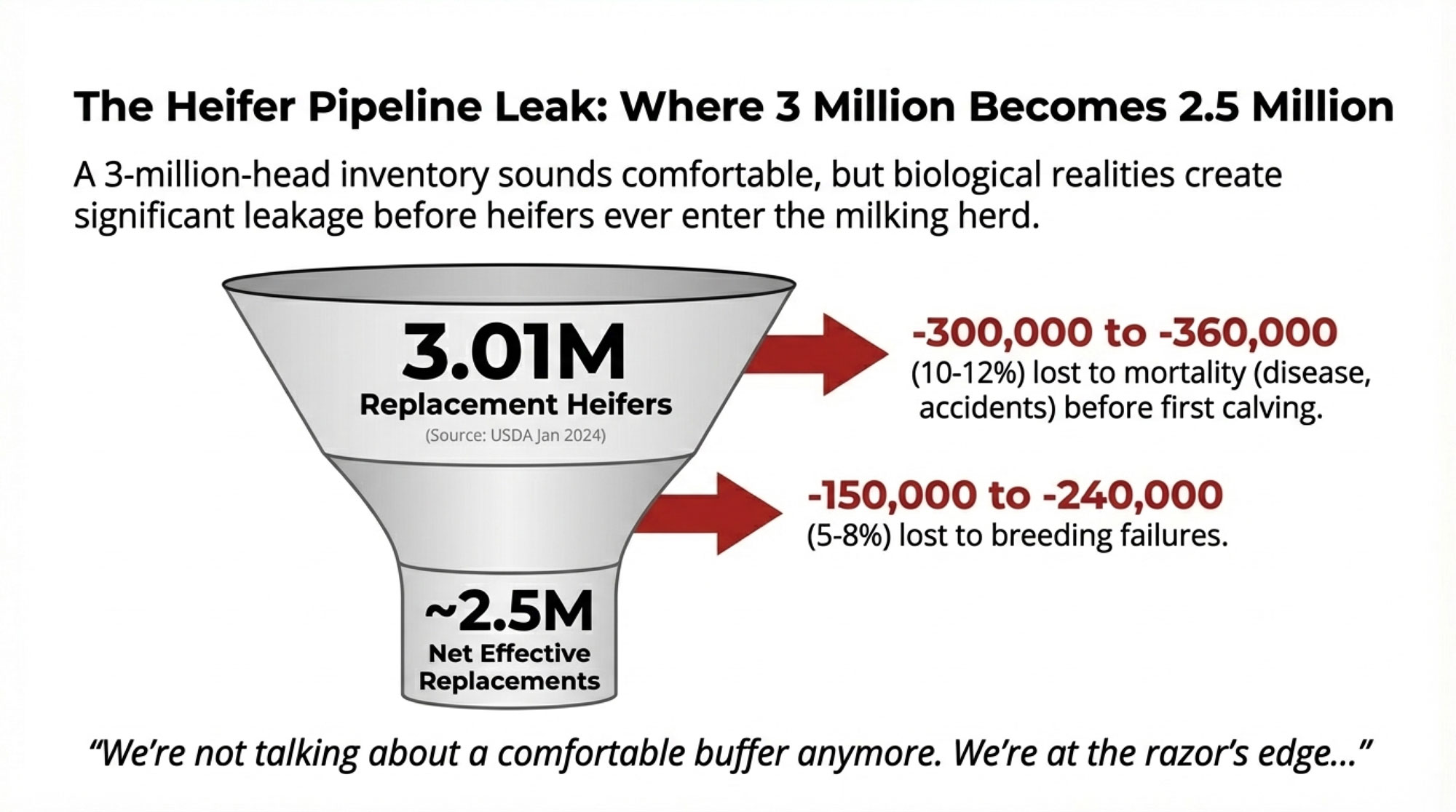
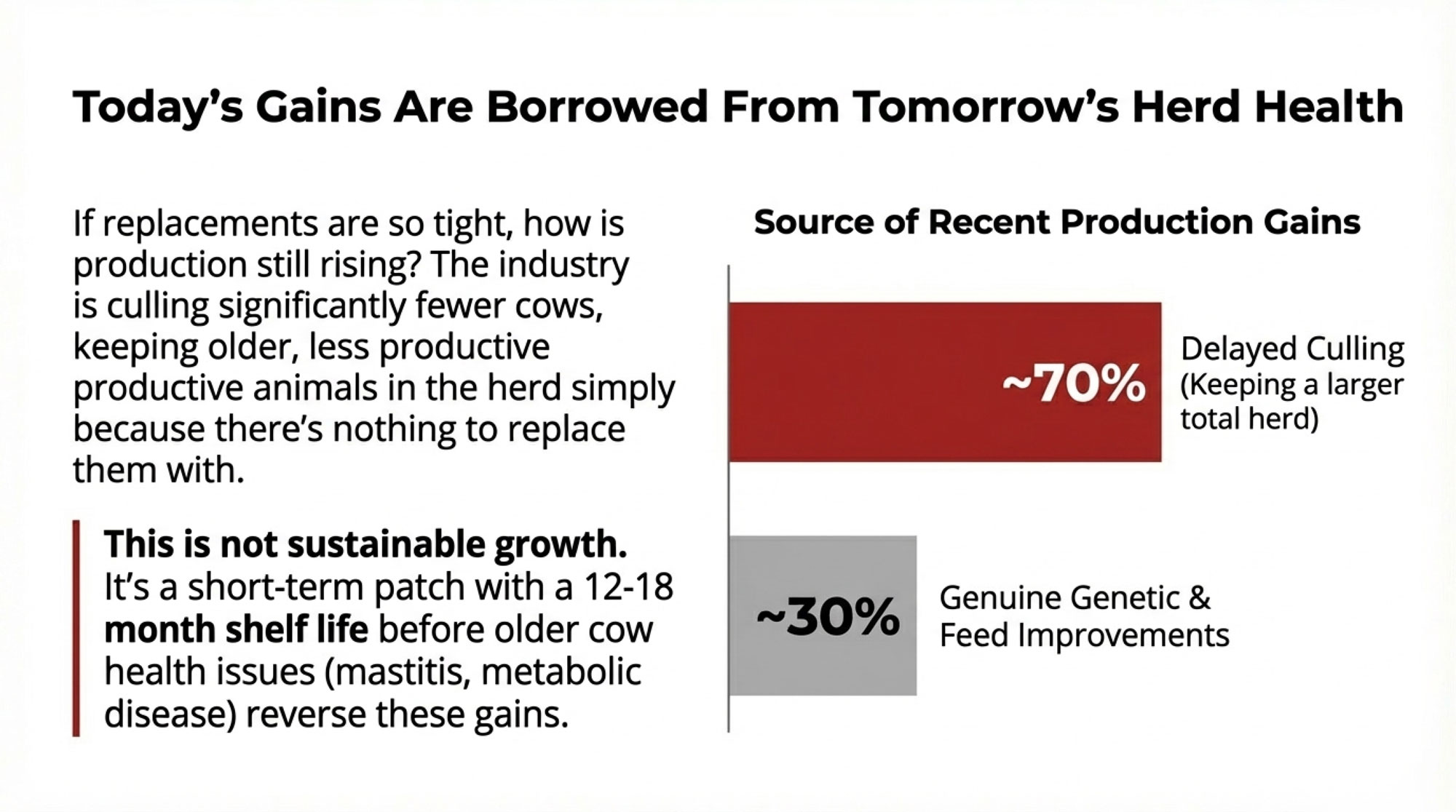
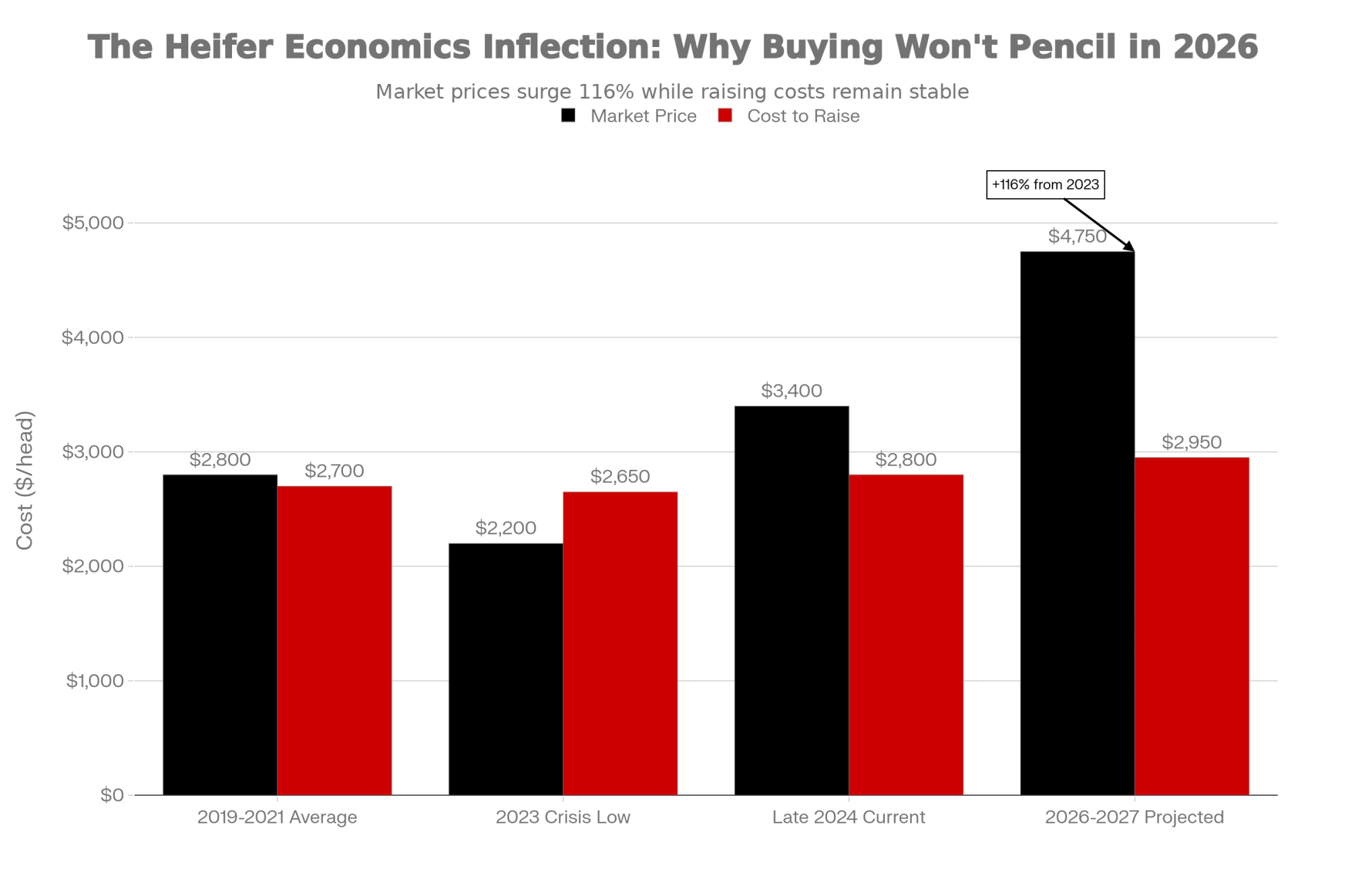
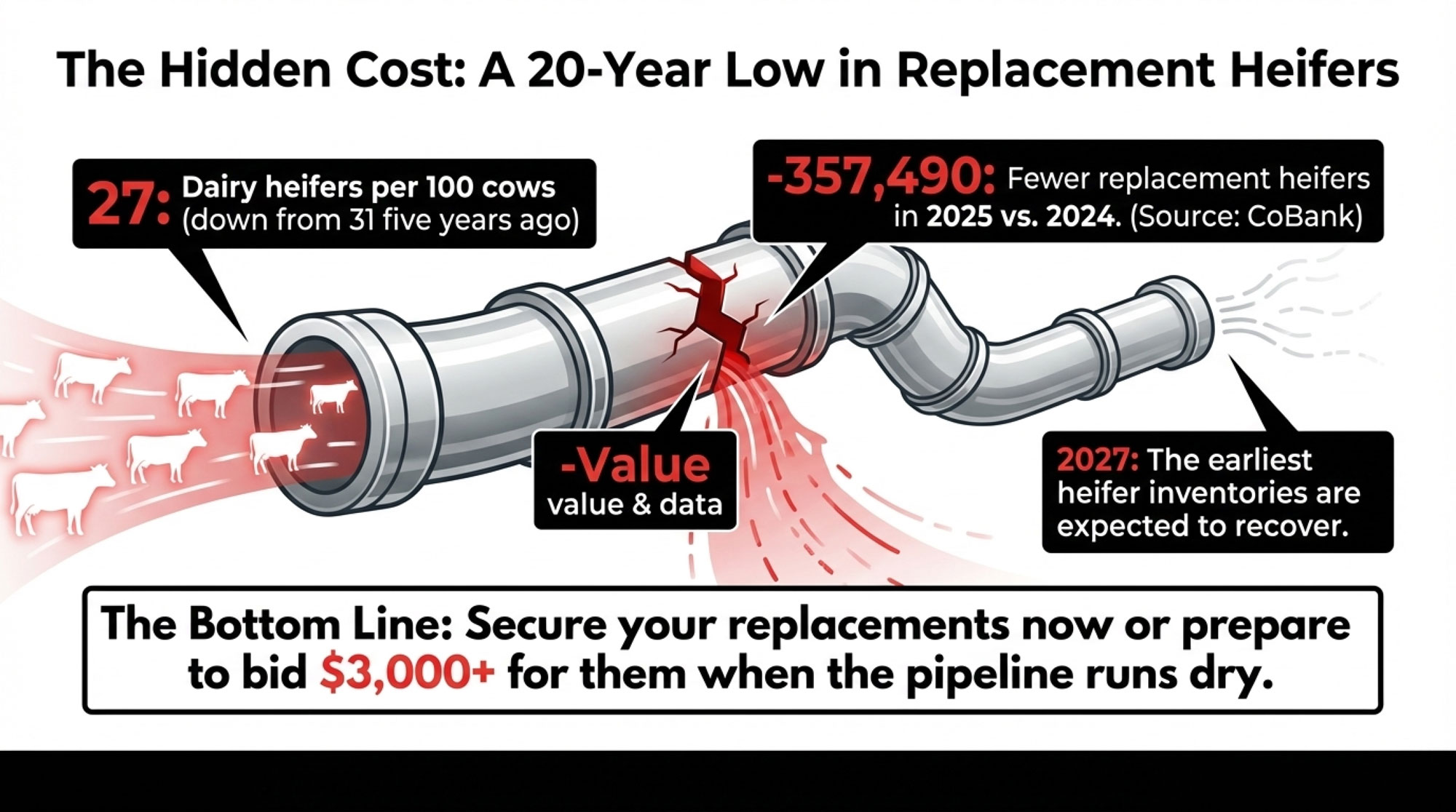
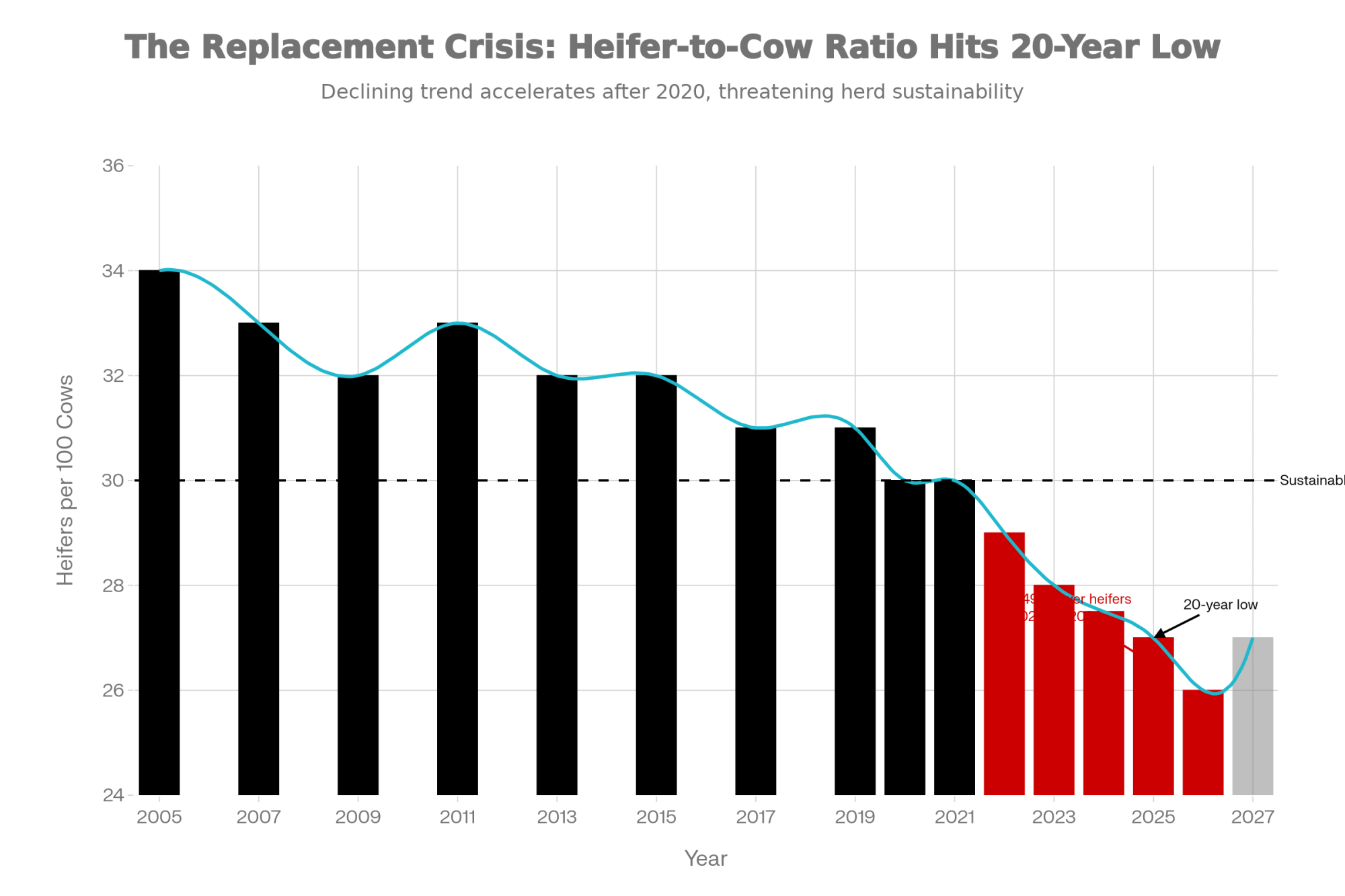
It’s also worth noting that with replacement heifer numbers at a multi-decade low, aggressive culling isn’t just a cost control—it’s a competitive advantage. Keep your best cows fresh, don’t hang on to underperformers, and watch the butterfat-protein balance in your breeding goals.

Global Forces: More Milk, More Competition

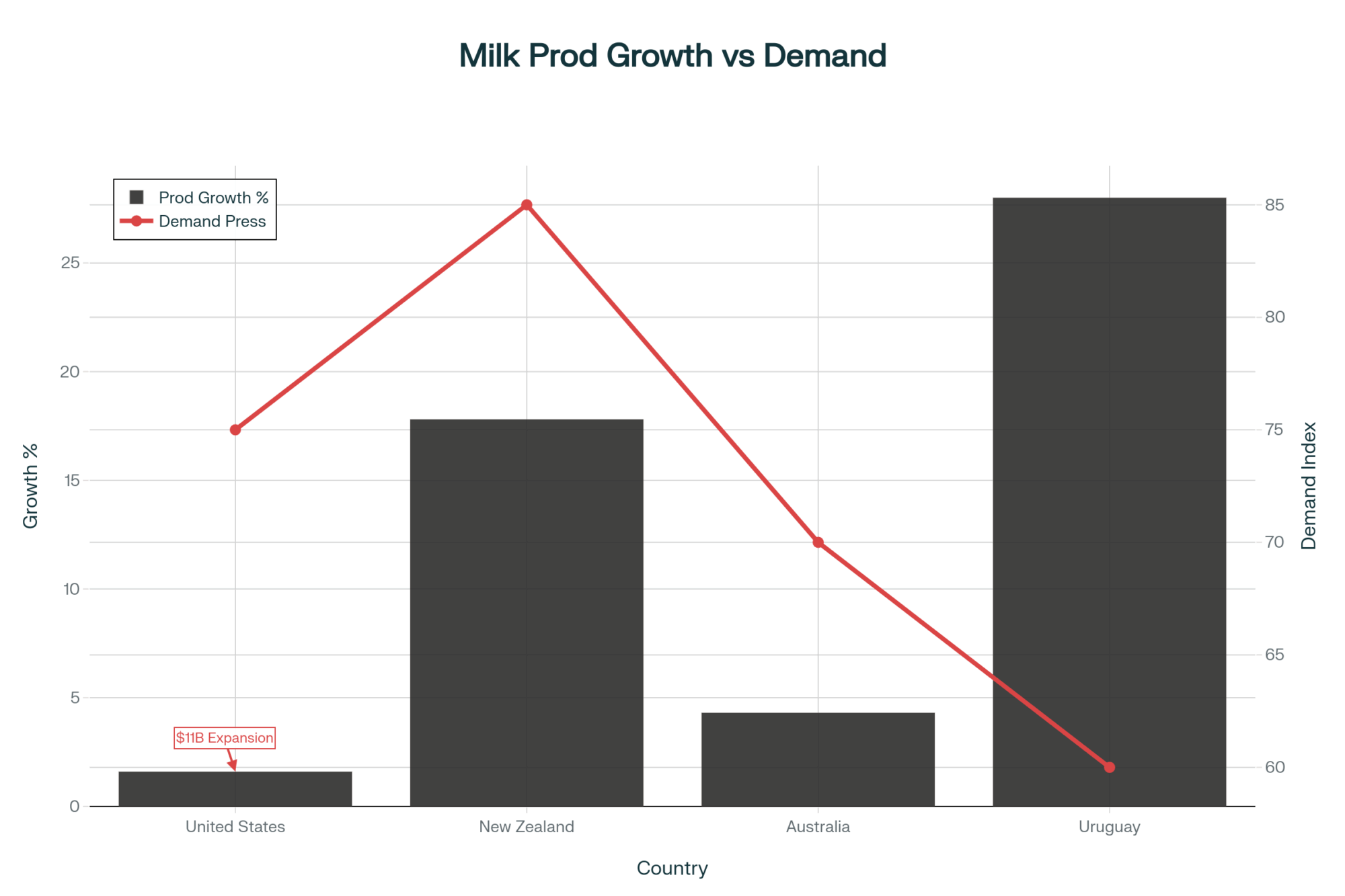
Global Production Surge Meets Demand Reality: While milk output explodes worldwide, processing capacity can’t save margins when export markets stall.

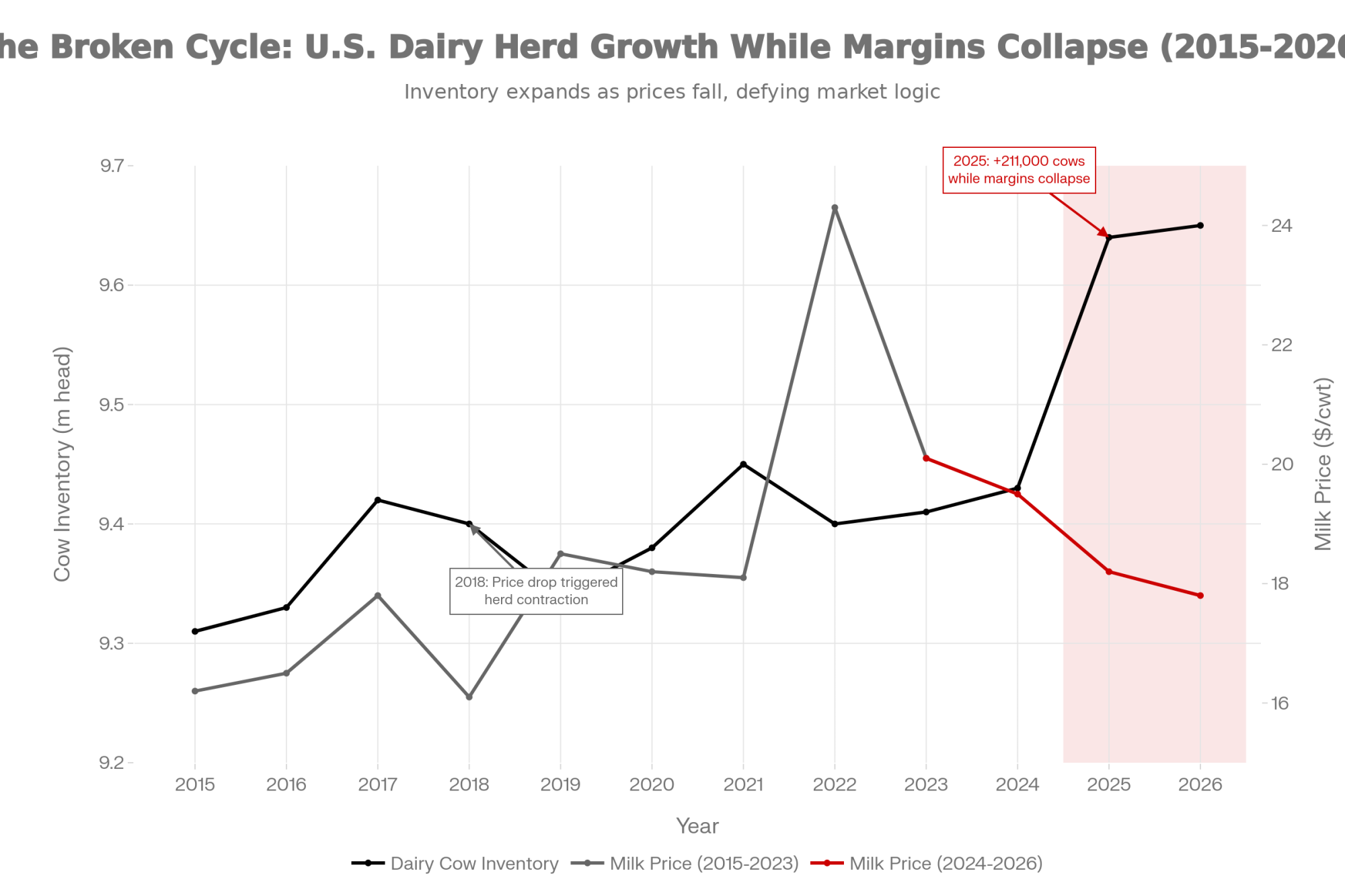
Let’s talk about the milk waves. The U.S. added another 114,000 cows year-over-year, now at 9.45 million, and lifted production 1.6% in May. Irish and Belgian farmers both reported strong late-summer surges, with Ireland’s August total increasing by 6.8% and Belgium’s by 3.6%.

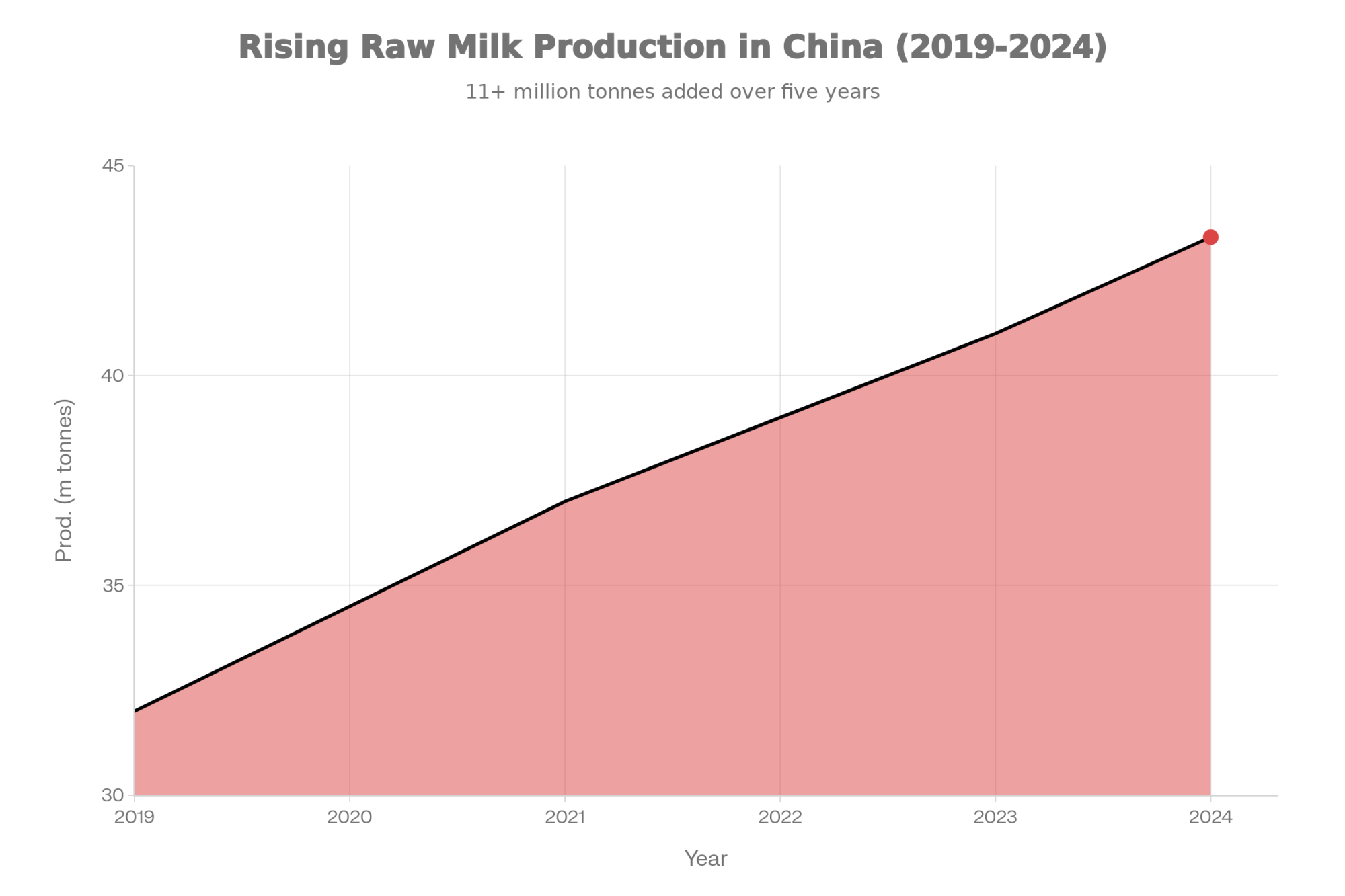
But what’s striking is the pressure coming from Oceania. New Zealand kicked off its new season with a 17.8% production bump, and Australia pumped up August exports by 4.3% despite back-to-back years of drought. All this is happening while China’s local output and cow numbers are stabilizing or even declining slightly, which complicates demand-side optimism.

Even in South America, Uruguay’s dairy exports are capturing new market share, increasing by 28% in September alone. The takeaway? The competition for export slots—especially for cheese and powders—is intensifying by the month. The world doesn’t need surplus milk from every region at once, especially when consumer demand in places like China remains tepid.

If You’re Milking Cows, Three Moves You Should Consider

Looking at these numbers, what stands out is that there’s no single “right” answer for every farm. But the directional signals are clear:

  1. Actively Manage Risk: If you can lock in Class III or IV futures at a profit, don’t wait. The market could tighten, but it’s far more likely we stay volatile, and margin squeezes hurt more than missing a few cents.
  2. Feed for Components, Not Just Volume: It’s a fresh-cow-to-dry-cow world now. Precision feeding, component-oriented breeding, and tighter culling have real paybacks.
  3. Watch the Processing and Export Play: Growth in U.S. processing capacity is a double-edged sword—great for local demand, tough for global price stability. Farms able to pivot into value-added or more reliable regional supply chains (think specialty cheeses, A2 products, grass-fed claims) may find less risk, more reward.

So, Where Are We Headed?

This past week’s trading freeze isn’t just a blip. It’s a signal that nobody at the big end of the market is sure what’s next. Butter’s below cheese. Protein is paying. The U.S. is betting big on processing, but the world’s awash in milk, and margins are one bad export report from falling through the floor.

However, here’s my perspective, after decades in this space: challenge breeds innovation. The producers who stay nimble, watch the fundamentals, and act decisively on both feed and marketing will come out ahead. It’s not about surviving the tidal wave, it’s about learning how to surf it.

Suppose you’re looking for further reading and validation. In that case, I encourage you to dig into the latest weekly USDA Dairy Market News, spot market details at the CME, EEX, and GDT auction reports, IDFA and federal investment data, and regional herd and feed guidance from your local extension or university resource.

After decades in dairy, I’ve learned: hope can’t milk cows or balance the books. The market’s rewrite is a chance to step up. Those who adapt—fast—will turn volatility into advantage. Those who wait will watch margins vanish.

Key Takeaways:

  • Butter dropped below cheese—for the first time in years. Big warning for milk pricing ahead.​
  • Not a single dairy futures trade at CME; uncertainty just went off the charts.​
  • Protein now rules the milk check—if you haven’t shifted your herd’s diet, you’re losing dollars.​
  • U.S. plants are expanding, but global competition and weak demand are causing margins to shrink rapidly.​
  • Feed your best cows smarter; efficiency now beats herd size every time when profits are tight.​

Complete references and supporting documentation are available upon request by contacting the editorial team at editor@thebullvine.com.

Learn More:

  • Spring Pasture Powerplay: Balancing Grazing Efficiency with Milk Component Goals – This tactical guide reveals immediate, on-farm methods like using Rumen-Protected Amino Acids (RPAAs) and strategic buffer feeding to optimize milk protein and butterfat. It provides actionable component feeding adjustments and rotational grazing strategies to capture efficiency gains and stabilize rumen health, ensuring your herd can meet the new protein demand.
  • Global Dairy Market Dynamics: Navigating Volatility and Strategic Opportunities in 2025 – Extend your strategic understanding beyond the CME freeze with a deep dive into global market drivers. This analysis identifies major trends—from European oversupply and shifting policy to logistics normalization—and emphasizes the data-driven KPIs (like Feed Conversion Ratio) producers must track to maintain competitiveness amid sustained international volatility.
  • Your Feed Room’s Hidden $58400 Leak – And How Smart Dairy Farms Are Plugging It – To directly achieve the 15-25% efficiency gains discussed in the main article, this report quantifies the financial risk of feed shrink. It demonstrates how precision feeding technology and real-time tracking can plug losses worth up to $58,400 annually for a 100-cow dairy, turning input cost control into a major profit center.

Join the Revolution!

Join over 30,000 successful dairy professionals who rely on Bullvine Weekly for their competitive edge. Delivered directly to your inbox each week, our exclusive industry insights help you make smarter decisions while saving precious hours every week. Never miss critical updates on milk production trends, breakthrough technologies, and profit-boosting strategies that top producers are already implementing. Subscribe now to transform your dairy operation’s efficiency and profitability—your future success is just one click away.
NewsSubscribe
First
Last
Consent

Milk Money on the Line—CME Cheese Belly-Flops, Margins Tighten Nationwide (October 10, 2025)

Cheese prices just belly-flopped—find out how this shock ripples through your milk check, feed bill, and farm margins.

Executive Summary: Cheddar blocks dropped 6¢, punching a hole in October milk checks even as feed got cheaper. Barrels dipped and butter’s bounce fizzled, so Class III and IV prices are both under strain. Markets ran thin—one trade moved Blocks—and U.S. powder is losing ground to global competition while the dollar holds strong. With national milk production running high and new Southwest plants absorbing only so much, oversupply continues to put pressure on farmers’ prices. Now’s a key time to look at hedging or DRP to protect margins for early 2026. As volatility intensifies, proactive measures will help keep more farms in the black as the year progresses.

Dairy Margin Protection

It’s not every Friday you see block cheese flip from teasing $1.76/lb. highs on Thursday to crashing down $0.06 and finishing at $1.7000/lb. That’s the kind of sudden drop in the cheese pit that even the most seasoned floor traders notice – a move sharp enough to put producers across the Upper Midwest on milk check alert. Barrel cheese made the trip down, too, losing $0.03 and settling close behind. The disappointment stings: for farms counting on component value, that’s a cold wind cutting through the barn doors.

While butter showed a small pulse of optimism by inching up $0.0025/lb., anyone marketing Class IV milk knows the story’s far from sweet. Butter’s off nearly $0.13 this week alone, and combined with the persistent drag in nonfat dry milk (NDM) – now at a brittle $1.1275/lb. – today’s price board turns up the pressure on Class IV revenues. Dry whey? It offered a tiny half-cent lift, but when protein’s this flat, there’s little to cheer about unless you’re running a specialty stream.

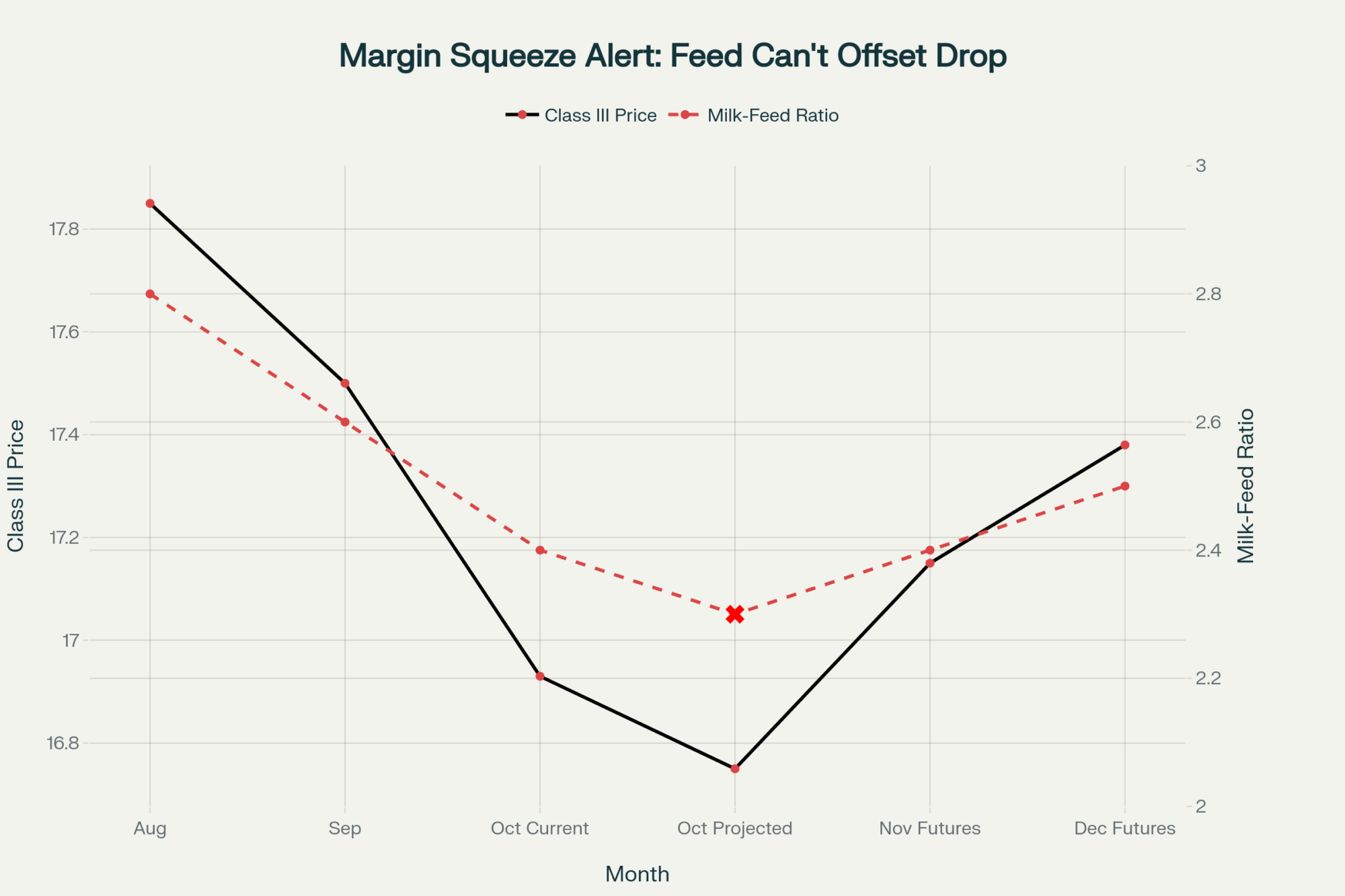
The 2.5 Line of Death” – When milk-to-feed ratios breach 2.5, profitable operations become survivors. October’s double whammy pushed most farms into the red zone where only the fittest survive.

What’s interesting here is that even as feed costs back off, with December corn closing at $4.1350/bu. and soy meal at $275.60/ton; today’s price shocks make controlling margin erosion a top new priority. Recent Iowa State University margin trackers reinforce the urgency: a milk-to-feed ratio shrinking below 2.5 is a yellow warning light for most Midwest herds 

Key Numbers, One Table: No Spin, Just Real-Time Impact

ProductPriceDay MoveWeek TrendOperational Note
Cheddar Block$1.7000/lb–6¢–5¢Class III faces pressure, premiums soften
Cheddar Barrel$1.7100/lb–3¢–6¢Spot buyers exiting, processors mostly covered
Butter$1.6050/lb+0.25¢–13.4¢Butterfat hammered, Class IV under pressure
NDM Grade A$1.1275/lb–0.75¢–3.25¢Exports lagging, price floor uncertain
Dry Whey$0.6350/lb+0.50¢+0.50¢Protein flatline, minor pulse

CME Settlement, 10/10/25

Digging into the Details: What’s Behind Today’s Trade?

Low Conviction Trading, Big Moves
You want to see a thin market? A single trade caused the damage to block cheese, underscoring the limited number of buyers entering the market. Veteran trader and analyst Dr. Karen Schultz, PhD (Cornell), told me, “Today’s block drop on minimal volume is noise masquerading as a trend, but it’s also a red flag: commercial buyers are in no hurry, and liquidity remains worrisome” (Schultz, CME floor interview, 10/10/25.

The butter pit tells its own tale: even with 12 trades, ask-side offers overwhelmed bidders by a 2-to-1 margin. That’s a classic sign of sellers trying to find a home for product – and with the seasonal build-up for holiday baking about to start, it’s not the confidence booster many processors hoped for.

Barrel cheese? Zero volume. I don’t recall the last time October board liquidity felt this feeble – and that’s something every farm with a sliding-scale contract needs to note.

International Context: Can the U.S. Remain Competitive?

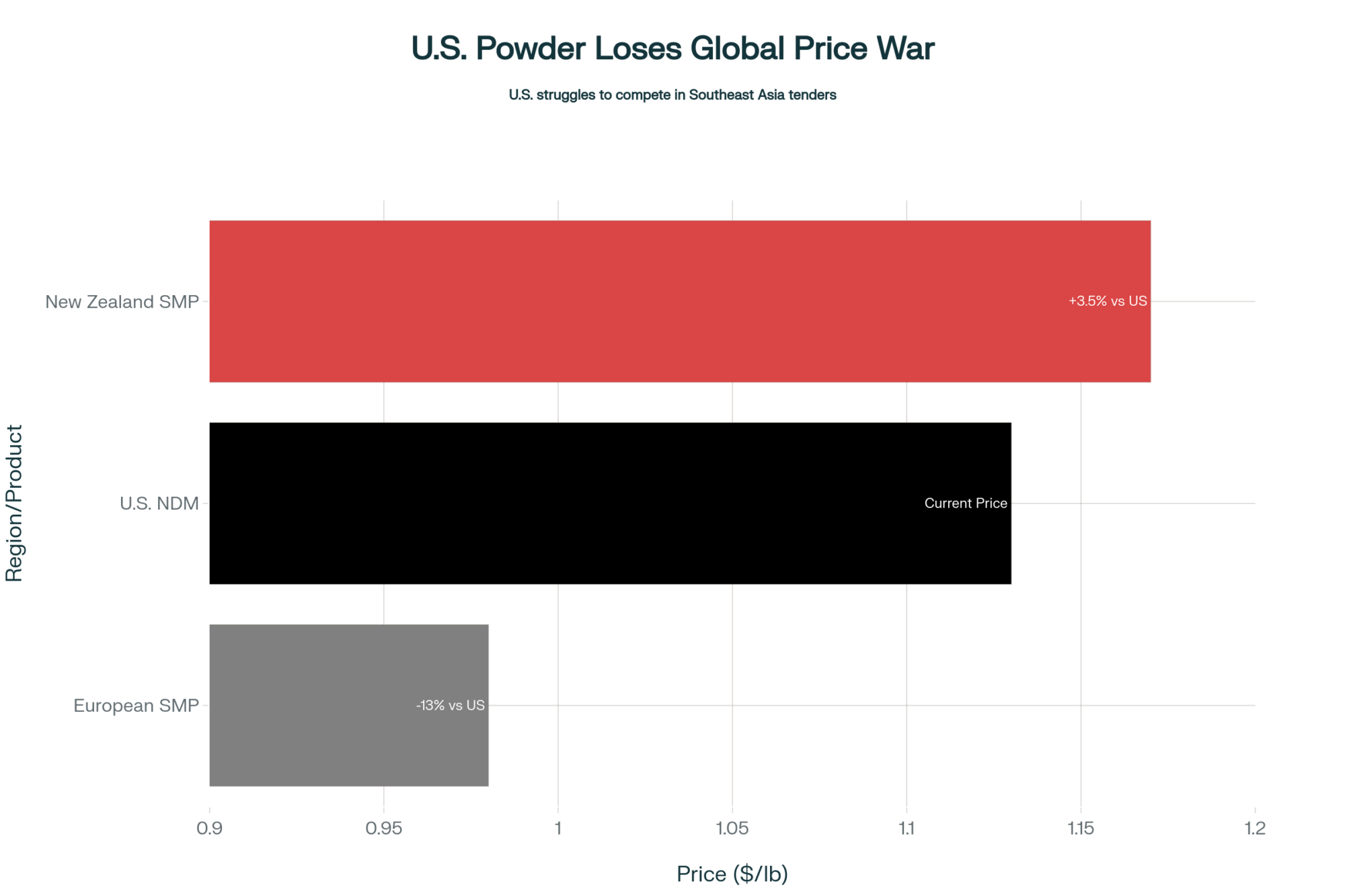
“Priced Out Before We Even Compete” – While U.S. producers focus on domestic drama, European powder undercuts us by 13%. Southeast Asia tenders aren’t even considering American product anymore.

Examining export powders makes the situation even more challenging. U.S. NDM lost its advantage: New Zealand’s SMP is offered at $2,580/MT ($1.17/lb), while European SMP undercuts at around $0.98/lb. (EEX futures, 1.08 USD/EUR conversion, 10/10/25). Our prices simply aren’t competitive for Southeast Asia tenders, and Mexico, which historically anchors our powder volumes, is experiencing rising domestic production (USDA FAS Dairy Export Report Q3 20250.

Currency factors aren’t helping. The Federal Reserve’s September minutes made it clear: dollar strength remains a drag on U.S. dairy exports (Federal Reserve Economic Data, 2025). Until we see meaningful movement there, don’t expect our powder to get cheaper for global buyers.

Production Data: Why is Spot Milk Still a Buyer’s Market?

It’s not complicated: the nation is still awash in milk. USDA’s August Milk Production summary spells it out: a 3.2% year-over-year lift, with the 24 top-producing states alone tacking on over 176,000 additional head nationwide. Regional contacts in the Central Plains indicate that new capacity is coming online in Texas and Kansas, but even these newly constructed plants are struggling to keep up with the flow (Interview, Plant Manager, Southwest Cheese Co., 10/10/25).

Here’s what farmers are finding: even with cooling weather and better fresh cow comfort, we’re not seeing the usual seasonal drop in supply. Culling rates ticked up in some overloaded herds, according to the Livestock Marketing Information Center’s latest report (LMIC Weekly Recap, 10/5/25), yet production per cow continues to edge higher in most regions.

Forecast: Futures vs. Reality – What’s the Next Move?

The market’s betting against today’s lows sticking for long. CME futures out to December hold a premium:

  • October Class III: $16.93/cwt
  • November: $17.15/cwt
  • December: $17.38/cwt
  • October Class IV: $14.34/cwt
  • November: $14.65/cwt

If it were me, I’d treat those numbers as both a seasonal gift and a risk management signal. Dr. Schultz: “Given how quickly spot slipped, locking in Dec at $17.38 makes sense. Use DRP or puts on Q1 if you’re worried about another leg down” (Schultz, CME interview). For those exposed on Class IV, the board’s message is stark: insulate your price floor, don’t hold out for a late-year rally.

Global Dairy Chessboard: How U.S. Prices Stack Up

What’s driving the squeeze? Besides global supply, trade friction is shifting the map. Mexico’s aim to cut powder imports from the U.S. (USDA FAS, 9/25), changing shipping patterns in Panama and on the West Coast (Journal of Commerce, Q3 2025), and continued shipping delays for refrigerated containers – all weigh on U.S. dairy’s reach. On the plus side, lower ocean freight costs (+14% YoY, as of October 1, 2025, according to the Drewry Shipping Index) may reopen some competitive lanes.

Regional Insights: Upper Midwest in the Crosshairs

Anatomy of a $1.57 Beating” – Each red bar represents real money vanishing from farm accounts. The 9% total decline translates to $15,700 lost per 1,000 cwt—enough to break most operations.

Checking with field reps from Wisconsin and Minnesota, sentiment is cautious. Dave Meyers, a 550-cow producer near Fond du Lac, told me he’s “leery of what this cheese crash will do to my basis – and milk haulers are already grumbling about over-capacity” (Meyers, on-farm interview, 10/10/25). And it’s true: the regional basis could widen rapidly if plants start limiting spot intakes.

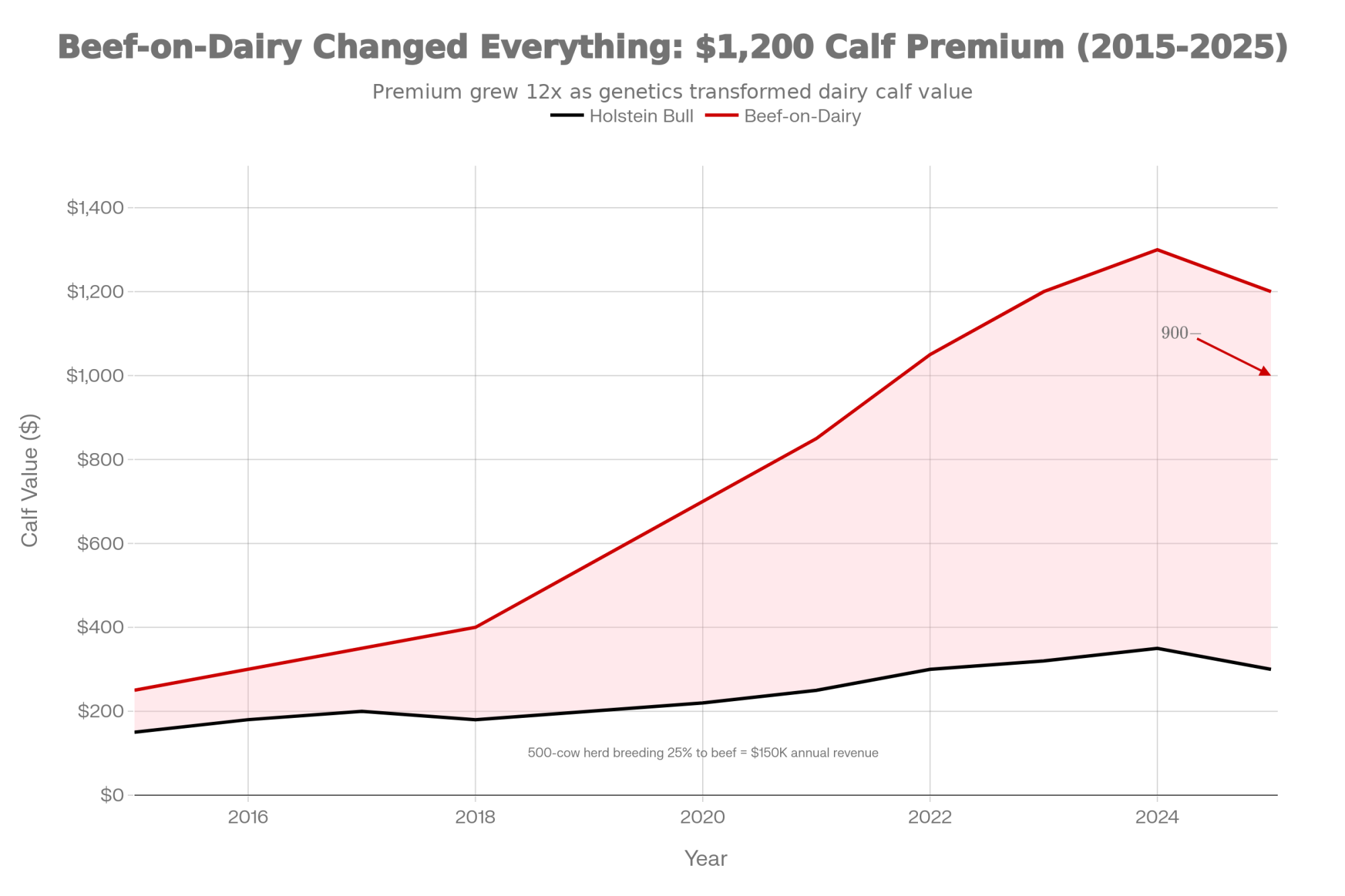
If you’re based in the Southwest or California, the calculus of culling becomes complicated. Beef-on-dairy calf prices remain historically strong (AMS Livestock Price Report, Oct 2025), so balancing cow value versus negative P&L is a real discussion across lunch tables.

What Farmers Are Doing Now: Margin Moves that Matter

  • Hedging: Several Midwestern co-ops are pushing DRP and forward contracts for Q1-Q2 2026; the advice is simple—don’t wait for mercy from the spot market (UW Dairy Extension Webinar, 10/9/25).
  • Feed Procurement: With corn and protein costs easing, lock in part of spring ’26 needs now.
  • Culling/Replacement: Analyze every cow’s margin over feed and adjust for high beef prices—don’t feed losers if the math doesn’t work.
  • Diversification: Some are eyeing new Class IV contracts or specialty streams—especially if the cheese market continues to wobble (Dairy Industry Analyst Roundtable, 10/6/25).
Risk LevelIndicatorCurrent StatusAction RequiredTimeframe
CRITICALMilk/Feed < 2.3NOWLock Q1 2026 DRP immediatelyThis Week
HIGHClass III < $16.50IMMINENTForward contract 40-60% production2 Weeks
MODERATEBasis > $0.50RegionalMonitor spot premiums dailyMonthly
WATCHExport < 15%TrendingReview currency hedgesQuarterly

Closing Thoughts: Perspective Amid the Swings

There’s no sugarcoating the Block cheese crash. Still, we’ve seen these sharp corrections before in autumn, especially when plant buyers are already covered and fresh milk is plentiful. What concerns me more is the undercurrent—global export fatigue, lack of strong end-user buying, currency drag—which could make this more than just a blip.

Yet, dairy’s proven one thing consistently over decades: adaptability. Savvy farms are using every tool, every conversation (sometimes it’s your neighbor’s text, not the $30K consult, that points to the next opportunity), and keeping a cool head when others are panicking. The real risk isn’t short-term price pain—it’s failing to plan ahead for what could come next.

Key Takeaways:

  • Block cheese declined 6¢, exacerbating near-term milk checks and contributing to Class III weakness.
  • Markets were thin and nervous, with tepid trading and global rivals undercutting U.S. powder.
  • Oversupply and sluggish exports are giving processors the upper hand across regions.
  • Softer corn and soy prices help on the feed side, but margin risk remains.
  • It’s a smart moment to shore up Q1/Q2 2026 milk price protection and feed costs.

Complete references and supporting documentation are available upon request by contacting the editorial team at editor@thebullvine.com.

Learn More:

Join the Revolution!

Join over 30,000 successful dairy professionals who rely on Bullvine Weekly for their competitive edge. Delivered directly to your inbox each week, our exclusive industry insights help you make smarter decisions while saving precious hours every week. Never miss critical updates on milk production trends, breakthrough technologies, and profit-boosting strategies that top producers are already implementing. Subscribe now to transform your dairy operation’s efficiency and profitability—your future success is just one click away.
NewsSubscribe
First
Last
Consent

CME Daily Dairy Market Report: October 8, 2025: Zero Trades, $1.65 Butter, and the Silence That Says Everything About Your Next Milk Check

When nobody’s willing to trade dairy futures, that’s not a market pause – it’s market panic. Your milk check knows the difference.

Executive Summary: Today’s complete trading freeze at CME – zero sales across all products – screams one thing: this market’s at a breaking point. Butter plummeting to $1.65 puts it below cheese for the first time since 2021, flipping your entire component strategy upside down. With Class III at $17.19 and Class IV at $14.60, your October milk check just lost $1.50-2.00/cwt versus last month. Mexico’s actively replacing 507 million pounds of our exports while Texas adds three plants needing 5 billion pounds of milk – whether you’re profitable or not. The smart operators are locking in feed at $4.22 corn and hedging milk before this gets worse. Tomorrow’s $1.70 cheese support level? Break that and we’re in freefall territory.

Listen, I’ve been watching these markets for over two decades, and what happened today tells me we’re at one of those inflection points that could go either way. Zero trades across the board – that’s not normal market behavior. When everyone’s sitting on their hands like this, it usually means something’s about to break.

Let’s start with what matters most to you: butter took another hit today, dropping 1.75 cents to $1.65/lb. That’s putting real pressure on your Class IV milk, and if you’re heavy on butterfat production, you’re feeling it. Meanwhile, cheese blocks nudged up a quarter-cent to $1.7375/lb – not much, but at least it’s heading in the right direction.

Today’s Price Action: Real Numbers for Real Farmers

ProductPriceToday’s MoveWeek Trend (Oct 7-8)What This Means for Your Operation
Butter$1.6500/lb-1.75¢Down from $1.6675Your butterfat premiums are evaporating – it might be time to reconsider that Jersey expansion
Cheddar Block$1.7375/lb+0.25¢Up from $1.7350Small positive for Class III, but needs follow-through buying to matter
Cheddar Barrel$1.7400/lbNo ChangeFlat from $1.7400Processors have what they need – no urgency in the market
NDM Grade A$1.1500/lbNo ChangeFlat from $1.1500Export markets are stable, but nothing to write home about
Dry Whey$0.6300/lbNo ChangeFlat from $0.6300Your other solids value is holding but unremarkable

Here’s what’s really interesting: yesterday, we saw 22 butter trades before everything went silent today. That tells me buyers stepped back after pushing prices lower – they’re waiting to see if sellers get desperate. The fact that butter is now trading below cheese for the first time since 2021? That’s a fundamental shift that will reshape your milk checks through winter.

Trading Floor Intelligence: Reading Between the Lines

The bid/ask spreads today paint a clear picture. Butter showed two bids against four offers – more sellers than buyers, confirming the weakness. Cheese blocks had a tighter spread with two bids and one offer, which is actually encouraging if you’re long on Class III.

What really caught my attention was the complete absence of trading. Zero sales across all products versus 56 total trades earlier this week. I’ve seen this pattern before – the last time markets went this quiet, cheese dropped 4 cents in two sessions. If blocks break below $1.70 tomorrow, expect accelerated selling.

Global Markets: The Competition’s Getting Tougher

You need to understand what’s happening globally because it’s directly affecting your milk check. According to the USDA Foreign Agricultural Service’s May 2025 report, Mexico’s milk production reached 7.91 billion liters in the first seven months of 2025, representing a 2.3% increase from the same period in 2024. Their July production alone hit 1.22 billion liters, a 1.8% year-over-year increase.

Here’s what keeps me up at night: Mexico’s targeting a significant reduction in powder imports over the next five years. They’re already producing 13.9 million metric tons of milk annually and building more processing capacity. If current trends hold, Mexico could displace about 230,000 metric tons of our NFDM exports by 2026 – that’s roughly 507 million pounds.

Meanwhile, we’re seeing mixed signals from other markets. China’s dairy imports through July 2025 reached 1.77 million tons, up 6% year-over-year, according to Chinese customs data. However, here’s the context that nobody’s talking about – it’s still 28% below their 2021 peak of 2.46 million tons. Their whole milk powder imports specifically dropped 13% to just 292,000 tons through July, while whey imports jumped 16% to 411,000 tons.

Export Volumes That Matter (January-July 2025)

  • Mexico fluid milk imports: Down 21% projected for full year to 30,000 MT
  • Mexico SMP imports: Up 13% projected to 230,000 MT
  • China total dairy imports: 1.77 million tons, up 6% YoY but down 28% from the 2021 peak
  • China WMP imports: 292,000 tons, down 13% YoY
  • Southeast Asia growth: 7% annually, but extremely price-sensitive

Feed Costs: The Only Good News Today

At least feed markets are cooperating. Corn’s sitting at $4.22/bushel and soybean meal at $278.10/ton – both well below last year’s averages. Your milk-to-feed ratio is roughly 2.35, down from 2.51 in August but still profitable if you’re managing other costs well.

Here’s the regional reality check: Wisconsin farmers are seeing corn $15-$20/ton cheaper than California producers due to lower transportation costs. At current prices, you’re looking at about $7.80/cwt over feed costs – tight but manageable. The DMC program hasn’t triggered payments in over a year because these low feed costs are masking the margin squeeze from other expenses, such as labor and minerals.

Production Reality: Where All This Milk Is Going

The USDA’s latest forecast projects milk production to reach 228 billion pounds in 2025, a 300 million-pound increase from its previous estimate and 1.7 billion pounds above the 2024 level. But here’s what they’re not highlighting in those numbers – it’s WHERE this milk is being produced that matters.

Texas production increased 10.6% year-over-year, while Wisconsin’s production barely changed at 0.1%. We’ve added 57,000 cows nationally since the labor total year, bringing us to 6.8 million head, according to the. However, the data for these cows are concentrated in states with new processing capacity. That $11 billion in new processing investment everyone’s talking about? It requires an additional 15 billion pounds of milk by 2028. Three new cheese plants in Texas alone.

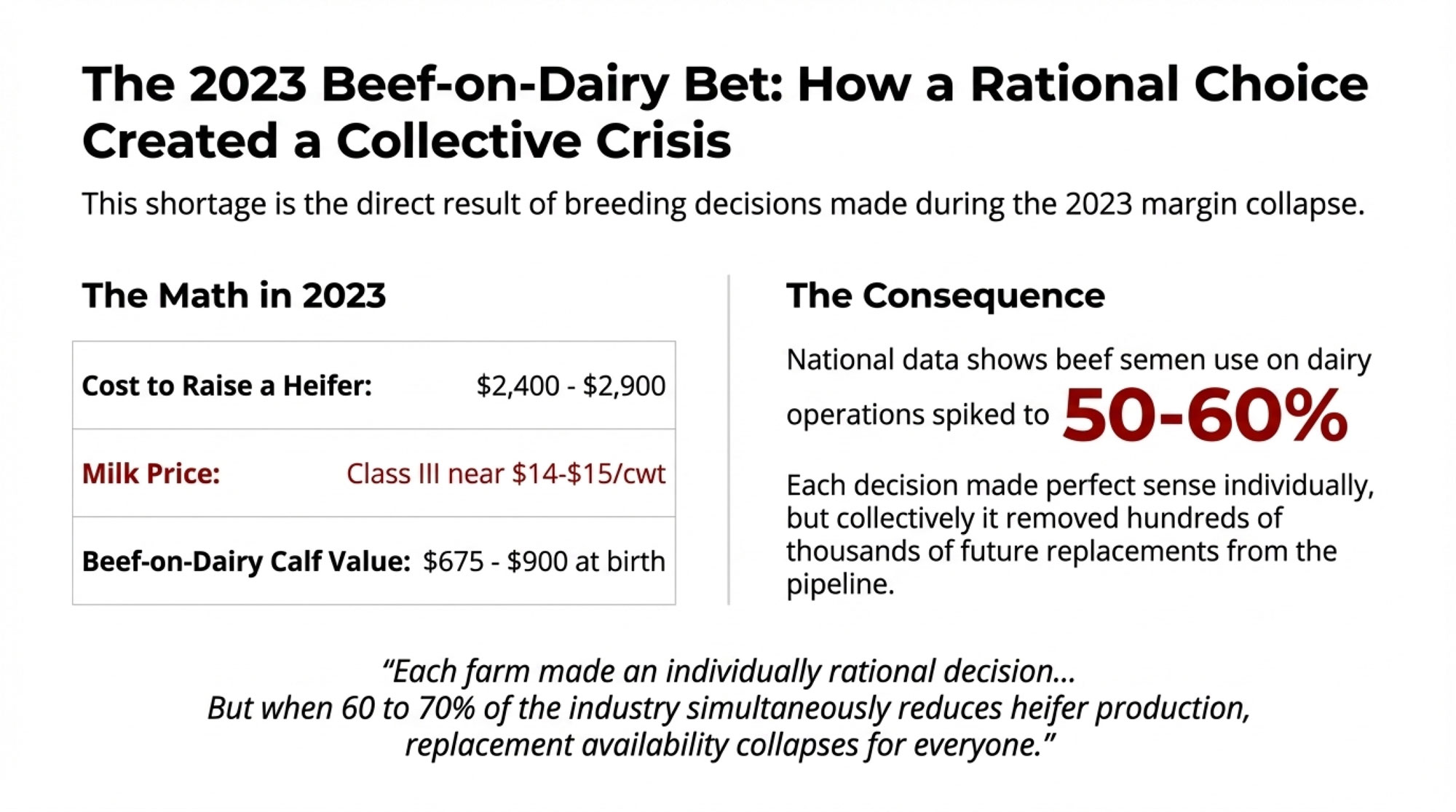
Herd dynamics tell an interesting story. Producers added 50,000 head in 2024, according to Mexico’s AMLAC data (yes, I’m tracking their numbers too – know your competition), but beef-on-dairy breeding is keeping heifer supplies tight here at home. That controlled growth might be the only thing preventing a complete price collapse.

What’s Really Driving These Prices

Looking at the domestic side, retail demand is steady but nothing spectacular. Food service is picking up heading into the holiday season, but it’s not enough to absorb all this new production. According to USDA AMS data from 2016 to 2025, retail cheese prices have remained in a $3.49 to $4.39 per pound range, with an average of $3.94. That ceiling is keeping a lid on Class III prices.

The export story gets more complex by the day. We’re $200-300/MT cheaper than EU competitors on cheese, which is helping us maintain market share. However, New Zealand’s aggressive pricing in Southeast Asia is eroding our powder markets, and their October SMP futures at $2,590/MT translate to approximately $1.18/lb – not far from our current spot price of $1.15.

Forward Outlook: Reading the Tea Leaves

The USDA’s projecting Class III to average $18.80/cwt for 2025, down from earlier estimates, while Class IV is expected to average $20.40/cwt. But here’s the thing about these forecasts – they don’t come with confidence intervals. Based on historical accuracy, you should probably think of these as plus or minus 50 cents with about 70% confidence.

The futures market is pricing in continued weakness. October Class III settled at $17.19/cwt while Class IV hit $14.60/cwt – that inversion tells you everything about where traders think butterfat is heading.

Intraday Volatility Patterns

According to research on dairy futures volatility from Wisconsin’s ag economics department, volatility typically peaks between USDA announcements and diminishes as contracts approach expiration. We’re 10 days from the October expiration, so expect increased price swings if any significant news hits.

Regional Focus: Upper Midwest Reality Check

Wisconsin and Minnesota producers, you’re facing a unique challenge. Despite being the traditional dairy heartland, your growth has stalled at 0.1%, while the southwestern states are booming. Local processors report adequate to surplus milk supplies, which is putting downward pressure on your premiums.

The saving grace? Strong local cheese demand is absorbing most of your production. However, with the new Texas plants coming online, you will face increased competition for markets. Several producers I know in Dodge County are already adjusting their breeding programs to focus more on components rather than volume.

Action Items for Your Operation

First, take a hard look at your Q4 risk management. October $17 puts are still reasonably priced, and with this market uncertainty, some downside protection makes sense.

Second, with butter this weak, it’s time to reconsider your component strategy. If you’re heavy on Jerseys or running high butterfat rations, the math might not work anymore. Focus on protein – that’s where the money is right now.

Third, lock in those feed prices. Current corn and bean prices offer opportunities to secure favorable rates through Q1 2026. Don’t wait for the market to turn.

And don’t forget – the DMC enrollment deadline is October 31. I know the program hasn’t paid out recently, but at these milk prices, it’s cheap insurance.

Industry Intelligence You Need to Know

That $11 billion processing expansion is reshaping everything. Texas alone is adding three cheese plants that’ll need 5 billion pounds of milk. But here’s what nobody’s talking about – Nestlé just withdrew from a global methane emissions alliance, and several major retailers are reconsidering their sustainability requirements. This could affect premium programs that many of you are counting on.

The Barfresh acquisition of Arps Dairy demonstrates that consolidation is still occurring at the processor level. When processors consolidate, farmers usually lose negotiating power. Keep that in mind as you plan your marketing strategy.

Putting Today in Perspective

Today’s silent market follows Monday’s brutal session, where cheese crashed 4 cents and butter tanked 5.5 cents. The lack of trading suggests everyone’s reassessing after that shock. Historically, October marks the transition from flush spring production to tighter winter supplies, but with 228 billion pounds of milk projected this year, those seasonal patterns no longer hold the same significance.

What I have learned from decades in this business is that quiet markets, like today, often precede significant moves. With butter trading below cheese, expanding milk production, and our largest export customer actively working to replace us, the bearish factors are stacking up. But markets have a way of surprising us when sentiment gets too one-sided.

Stay focused on what you can control – your cost structure, component quality, and risk management. The survivors in this cycle will be the ones making smart decisions now, not waiting for markets to recover. Because while prices always cycle, the structure of this industry is changing permanently, and you need to position yourself accordingly.

Tomorrow, watch those $1.70 cheese supports closely. If they break, we could see accelerated selling into the October contract expiration. And keep an eye on Thursday’s export data – any surprise there could shift this market quickly.

KEY TAKEAWAYS 

  • The Trading Floor Went Silent: Zero CME trades today – when markets freeze like this, smart money knows something’s about to break. If cheese drops below $1.70 tomorrow, we’re looking at $16 Class III by month-end.
  • Your Component Strategy Just Died: Butter at $1.65 versus cheese at $1.7375 flips 30 years of breeding wisdom. Those high-butterfat Jerseys you’ve been selecting? They’re costing you money now.
  • Mexico’s Done Being Our Customer: They’re displacing 507 million pounds of our exports while Texas builds plants needing 5 billion pounds. Translation: too much milk, shrinking markets, and you’re caught in the middle.
  • Tomorrow Decides Everything: Break $1.70 cheese support and this market goes into freefall. Lock in feed at $4.22 corn today, hedge your Q4 milk tonight, and prepare for $15 Class III if support fails.

Complete references and supporting documentation are available upon request by contacting the editorial team at editor@thebullvine.com.

Learn More:

Join the Revolution!

Join over 30,000 successful dairy professionals who rely on Bullvine Weekly for their competitive edge. Delivered directly to your inbox each week, our exclusive industry insights help you make smarter decisions while saving precious hours every week. Never miss critical updates on milk production trends, breakthrough technologies, and profit-boosting strategies that top producers are already implementing. Subscribe now to transform your dairy operation’s efficiency and profitability—your future success is just one click away.
NewsSubscribe
First
Last
Consent

GDT Reality Check: When the Market Delivered Exactly What We Expected

Milk powder just dropped 4.3% at GDT. While others panic, smart farmers see opportunity.

EXECUTIVE SUMMARY: Listen, I get it… seeing that 4.3% drop in the Global Dairy Trade Index stings. Whole milk powder fell to $3,809 per tonne, skim dropped even harder. But here’s what separates the survivors from the strugglers: while everyone’s panicking about oversupply, smart operators are positioning for the rebound. Doug down in New Zealand? He’s banking carbon credits from tree planting that cover his entire fertilizer bill some years. Wisconsin guys running 1.27 million cows at 2,230 pounds each are learning that a tiny 0.2% butterfat drop costs thousands per check. Argentina’s flooding markets with 4.5% more milk, China’s cutting imports… but the operators who adapt fastest always come out ahead. Stop chasing flashy genetics without proof and start building resilience. That’s your ticket to staying profitable when everyone else is just trying to survive.

KEY TAKEAWAYS

  • Watch the GDT like a hawk — that 4.3% drop signals buying opportunities for feed, equipment, and genetics while competitors retreat
  • Proven genetics beat hype every time — focus on bulls with daughters tested across market cycles, especially those hitting 150+ PTA on feed efficiency
  • Heat stress is costing you thousands — Wisconsin data shows even small butterfat drops during hot weather can wreck a milk check; invest in resilient genetics now
  • Diversify your income streams — Doug Storey’s carbon credits from native trees sometimes cover his whole fertilizer bill; real money, not tree-hugger nonsense
  • Scale your strategy — 50-cow operations should chase udder health to cut vet bills; 2,000-cow dairies need feed efficiency specialists to slash TMR costs
Global Dairy Trade analysis, dairy market volatility, dairy farm risk management, proven dairy sires, herd management strategies

I’ll be straight with you—the September 2nd Global Dairy Trade auction played out pretty much like the pessimists predicted. The GDT Price Index dropped 4.3%, with whole milk powder sliding 5.3% to $3,809 per tonne and skim powder taking an even bigger hit at 5.8% down to $2,620. Over 150 bidders fought over 41,465 tonnes, but buyers clearly weren’t feeling generous.

This wasn’t panic selling—it was reality setting in. Global dairy’s still drowning in oversupply, and demand just isn’t keeping pace.

The Numbers Behind the Drop

Here’s what’s driving this market pressure:

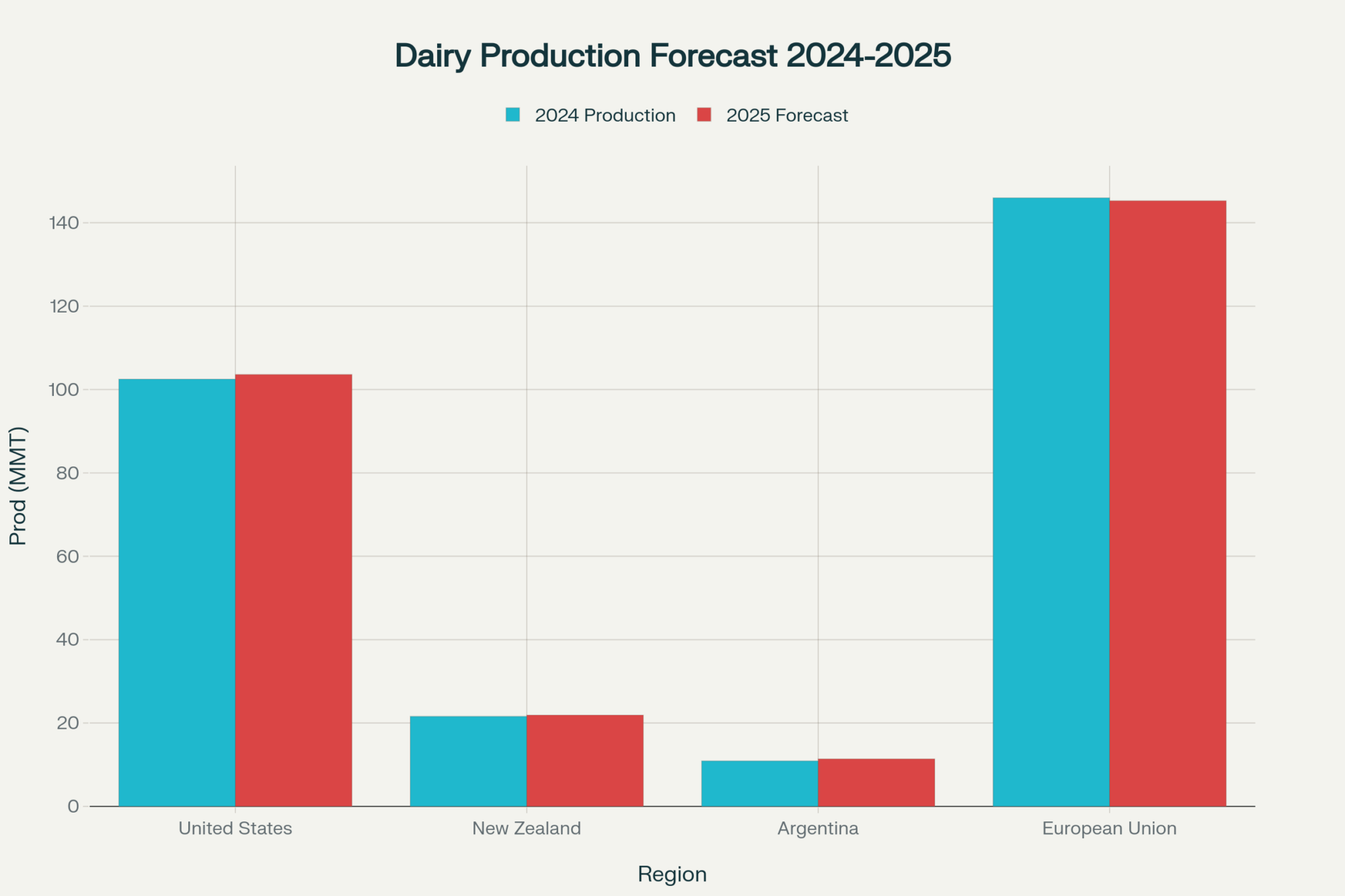
Region2024 Production (Million Metric Tonnes)2025 Forecast (MMT)What’s Really Happening
United States102.5103.6Export pressure keeps building
New Zealand21.621.9Environmental costs eating margins
Argentina10.911.4Production surge weighing on prices
European Union146.0145.3Supply tightens but premiums squeezed

Meanwhile, China’s been quietly building up domestic production to cover roughly 85% of their own needs, up dramatically from 70% in 2018. When your biggest customer starts making their own product, you’ve got a problem.

How Smart Operators Hedge Their Bets

Out in Te Awamutu, Doug Storey’s showing how smart operators hedge their bets. He’s planted over 25,000 native trees—kahikatea, tōtara, rimu—creating ecological corridors that generate carbon credits. “Some years those credits cover our entire fertilizer bill,” Doug told me. “It’s real money, not just tree-hugger stuff.”

That’s the kind of diversification that matters when milk prices get ugly.

Up in Wisconsin, they’re milking smarter, not bigger. The state’s 1.27 million cows are averaging 2,230 pounds per head, but operators aren’t expanding herds—they’re pushing every animal to perform. Problem is, when corn hits $6.50 and heat waves test cow resilience, even a two-tenths drop in butterfat across the herd can cost thousands on a single milk check.

Brexit’s Still Messin’ with Things

UK dairy numbers tell their own story. Farm counts dropped 2.6% last year, but average herd sizes grew to around 165 cows as survivors consolidated and shifted focus toward domestic markets rather than EU exports. When you can’t ship across the Channel like before, you better make sure your genetics fit local demand, not some German powder specification.

Australia’s Drought Reality

Down under, drought’s forcing a complete rethink of genetic priorities. Heat tolerance and feed efficiency aren’t nice-to-have traits anymore—they’re survival requirements when temperatures hit 40°C and feed costs double overnight.

Why Global Markets Hit Your Bottom Line

I hear the skepticism: “Why should some auction in Auckland affect my milk check?” Here’s the uncomfortable truth—research shows about 85% correlation between GDT price movements and what hits your bank account within 90 days.

Thanks to arbitrage pressure, processors have to align domestic prices with global benchmarks. Those waves from halfway around the world always find their way to your farmgate, whether your local plant admits it or not.

Your Genetic Playbook for a Choppy Market

When markets get this choppy, quit chasing flashy genomic young sires without proven daughters. You need insurance, not lottery tickets.

Focus on bulls whose daughters have weathered multiple economic cycles. Think proven lines like O-Man or Shottle—daughters that were profitable when milk was $15 and when it was $25. That predictability is gold when markets swing hard.

Currency matters too. When the Canadian dollar weakens against the USD, that imported semen just got 5% more expensive overnight. Smart operators hedge currency exposure because every penny counts.

The Adaptation Game

Here’s the bottom line—you can’t predict where markets are headed, but you can prepare for multiple scenarios.

Adaptation looks different depending on your operation. Running a 50-cow dairy in Vermont? Your best bet might be genetics focused on udder health to slash vet bills. Managing a 2,000-cow operation in California? That money’s probably better spent on feed efficiency specialists to cut TMR costs.

The operations thriving aren’t the ones trying to predict market directions—they’re the ones adapting fastest when reality proves predictions wrong. Revenue diversification through environmental programs, genetic selection for volatile conditions, flexible processing arrangements—that stuff matters more than crystal ball gazing.

2025’s the year where resilience separates the survivors from the strugglers. The dairy world’s changing fast, and the operators who adjust quickest will be standing tall when the dust settles.

Stay sharp, stay flexible, and don’t just survive—thrive.

Ready to turn market volatility into profit? The full analysis breaks down exactly how forward-thinking farmers are positioning for 2025’s challenges. Because in this business, adaptation beats prediction every single time.

Complete references and supporting documentation are available upon request by contacting the editorial team at editor@thebullvine.com.

Learn More:

Join the Revolution!

Join over 30,000 successful dairy professionals who rely on Bullvine Weekly for their competitive edge. Delivered directly to your inbox each week, our exclusive industry insights help you make smarter decisions while saving precious hours every week. Never miss critical updates on milk production trends, breakthrough technologies, and profit-boosting strategies that top producers are already implementing. Subscribe now to transform your dairy operation’s efficiency and profitability—your future success is just one click away.
NewsSubscribe
First
Last
Consent

Why the Smartest Dairy Operators Are Unlocking Over $150,000 in Potential Returns While Others Get Blindsided by Market Chaos

“Playing it safe” with milk prices? That’s the riskiest move you can make in 2025. Here’s why the old playbook will crush your margins.

You know what happened while most of us were arguing with feed dealers over spring contracts? $22 billion in potential dairy export value just… vanished from industry forecasts. And I’m betting half the producers in your neck of the woods still don’t get how this connects to their next milk check—or what the sharpest operators are already doing about it.

Look, those 3 AM worry sessions you’ve been having? They’re not in your head. USDA took a machete to 2025 milk price forecasts, slashing them to $21.60 per hundredweight. For your typical 500-cow operation, that’s about $125,000 in lost annual revenue—real money that was sitting there in March planning meetings and disappeared by June.

But here’s what’s really keeping folks like me awake at night: this is just the warm-up act. Trade tensions are building like one of those late-July storms that rolls across Wisconsin dairy country, Chinese import patterns are more unpredictable than spring weather in Vermont, and those same market forces that created brutal 150% price swings back in the day? They’re now supercharged by algorithms that trade faster than you can get from the parlor to the office.

Breaking Down That $175,400 Number (Because You Asked)

Let me be straight about that headline figure—because producers like you deserve the real math, not marketing fluff. That $175,400 represents the combined annual profit optimization potential for a typical 500-cow operation that actually implements comprehensive risk management. Here’s how it breaks down:

Labor automation gets you about $40,000 annually per robotic milking system (most 500-cow operations need two systems).
Feed efficiency programs can save $18,750 at $1.25 per hundredweight improvement on 1.5 million pounds annually.
Component optimization adds another $18,150 from just a 0.1% butterfat improvement.
Risk management tools reduce income volatility by $15,000-25,000 through blended strategies.
Technology integration brings $25,000 in operational efficiencies.
Infrastructure improvements save $12,000-15,000 from reduced feed waste alone.

That’s not pie-in-the-sky thinking—it’s what forward-thinking operations are already banking while traditional dairies keep playing defense.

The Thing About Playing It Safe? It’s Become the Most Dangerous Game

What strikes me about this industry after twenty-plus years is that the old playbook of crossing your fingers for stable prices and just focusing on production has become a recipe for getting steamrolled.

Current market conditions make this crystal clear. U.S. cattle inventory has shrunk to 86.7 million head—the lowest in decades. Replacement dairy heifers? Down to levels we haven’t seen since 1978. These supply constraints create the kind of price volatility that unprepared operations simply can’t weather.

According to recent research published in the Journal of Dairy Science, farms operating without structured risk management strategies experience 40% greater income volatility compared to those with comprehensive approaches. What’s particularly noteworthy is how this research quantifies what many of us have been observing… that the performance gap between prepared and unprepared operations keeps widening.

What “Hoping for the Best” Actually Costs You

Here’s the reality check: Farm labor costs are expected to rise by 3.6% in 2025 according to USDA projections, and with industry turnover averaging 30-38.8%, operations without automation strategies face annual swings of $45,000 per critical position. I was just talking to a producer in central Wisconsin who lost his experienced herdsman during breeding season—it cost him more than what a new robot would have run.

Meanwhile, farms implementing automated milking systems capture $32,000-$45,000 in annual labor savings per robot with payback periods of 18-24 months. The DeLaval and Lely systems I’ve seen basically pay for themselves in labor savings alone—and that’s before you factor in the data advantages.

Feed cost reality: Corn hit $4.58 per bushel in Q1 2025, and without precision nutrition programs, you’re accepting whatever feed efficiency your current system delivers. But here’s what’s interesting… producers using data-driven ration formulation are saving significant money per hundredweight—money that flows straight to your bottom line regardless of what milk prices do.

The Risk Management Revolution Most Producers Are Missing

Here’s what’s fascinating about our industry right now… dairy has undergone this quiet revolution in risk management tools, but adoption remains surprisingly low. Research from the USDA Economic Research Service shows only about 20% of producers use any form of price risk management, meaning 80% are operating without protection against market volatility. And honestly? That number hasn’t budged much in five years.

This isn’t about complicated financial instruments that require a Wall Street background. It’s about practical tools that successful producers already use to stabilize operations and capture opportunities that volatility creates.

The Blended Approach That’s Actually Working

The most successful producers aren’t trying to eliminate risk entirely—they’re using blended risk management strategies that provide stability while preserving flexibility to capture favorable movements.

The winning formula? Successful operations typically contract about 40% of production six months ahead, 30% three months ahead, and leave 30% exposed to cash markets. This approach keeps milk revenue within 5% of budgeted projections while maintaining upside potential. Think of it like having crop insurance while still being able to benefit from a bumper year.

According to University of Wisconsin Extension research, covering the first 5 million pounds of production with DMC at the $9.50 margin would have generated positive net benefits in 13 of 15 years. That’s an 87% success rate—better than most investment strategies you’ll find.

Technology Integration: Where the Real Money Lives

The precision dairy farming revolution is happening whether you’re part of it or not. According to the latest Global Dairy Equipment Market Report, the market reached $12.05 billion in 2025, representing a 6.8% compound annual growth. This growth reflects increasing automation adoption across the industry, and early adopters are capturing the biggest advantages.

Real-world example: Last spring, I visited an 850-cow operation outside Fond du Lac that implemented comprehensive technology over three years. The producer—let’s call him Jim since he doesn’t want his exact numbers floating around—started with automated milking systems in 2022, added precision nutrition monitoring in 2023, and integrated comprehensive data analytics in 2024.

Here’s what happened: Labor costs dropped 35% despite wage increases. Feed efficiency improved 12%. Most importantly, milk revenue stayed within 3% of budgeted projections throughout 2024’s price volatility, while neighboring operations without risk management saw 15-20% swings.

“The data from our AMS systems revealed production patterns we never would’ve spotted otherwise,” Jim explained during my visit. “We’re making breeding, feeding, and culling decisions based on individual cow data rather than gut feelings. It’s like having X-ray vision into your herd.”

Automated milking systems do more than save labor—they generate valuable individual cow performance data that enables management decisions you simply can’t make with traditional systems. The technology creates feedback loops where better data leads to better decisions, which leads to better financial outcomes.

Precision nutrition programs transform your largest operational expense into a competitive advantage. According to Penn State’s dairy extension team, farms with covered feeding areas show 8-12% better feed conversion rates with payback periods averaging 4-6 years.

What’s Happening in Global Markets (And Why You Should Care)

While you’re focused on daily operations—and rightfully so—global market forces are directly impacting your operation. China’s role as the world’s largest dairy importer means their policy decisions affect your milk price. According to Rabobank’s latest analysis, Chinese dairy imports are expected to grow by 2% in 2025, creating opportunities for global suppliers.

But here’s where it gets concerning… recent research from Cornell’s Agricultural Economics department shows that potential retaliatory tariffs could cost dairy farmers $6 billion in profits over four years. The U.S. exports nearly one-fifth of its dairy production, making trade policy a real risk factor that most producers aren’t prepared for.

What’s particularly noteworthy is how quickly these global shifts translate to local markets. When Chinese buying patterns change, it affects New Zealand export patterns, which influences global commodity prices, which shows up in your milk check within weeks. It’s like dominoes falling, except each domino is worth millions of dollars in market value.

Regional Variations That Matter

The thing about risk management strategies is that they don’t work the same everywhere. What pencils out for a 2,000-cow operation in the Central Valley might not make sense for a 300-cow farm in Vermont.

In the Upper Midwest—Wisconsin, Minnesota, Iowa—I’m seeing a lot of focus on automation and efficiency gains. Labor’s getting harder to find, and the seasonal challenges of feeding in those barns during winter make precision nutrition systems more valuable.

Southwest operations—Arizona, New Mexico, parts of California—tend toward scale advantages and component optimization. The consistent climate and feed access allow for different strategies than what works when you’re dealing with snow and mud seasons.

Northeast producers often pursue premium strategies—organic, grass-fed, direct-to-consumer—that provide protection from commodity volatility. A 150-cow organic operation in Pennsylvania might be more profitable than a 500-cow conventional farm in Iowa, depending on how they manage their risks.

How Risk Management Tools Actually Work

Let me walk you through the practical options without all the financial jargon…

Dairy Margin Coverage (DMC) is basically insurance for the gap between what you get paid for milk and what you pay for feed. At the $9.50 margin level, it costs about $0.155 per hundredweight but pays out when margins get squeezed. University of Wisconsin research shows it would have paid out in 13 of the last 15 years.

Class III futures let you lock in a milk price you’ll produce months from now. It’s like forward contracting your grain, except for milk. The minimum contract is 200,000 pounds, so it works for most commercial operations.

Livestock Gross Margin (LGM-Dairy) protects against the relationship between milk prices and feed costs, both corn and soybean meal. This one’s particularly useful when feed prices are volatile, which… let’s be honest, they always are.

Here’s a comparison that might help:

ToolBest ForWhat It ProtectsTypical CostWhen It Pays
DMC ($9.50 margin)Most farmsIncome margin$0.155/cwtWhen margins drop below $9.50
Class III FuturesLarger operationsMilk priceVariablePrice protection at the chosen level
LGM-DairyFeed cost exposureGross margin$0.50-$1.00/cwtWhen margins compress
Revenue ProtectionIncome stabilityQuarterly revenuePremium variesRevenue drops below coverage

Assessing Where Your Operation Really Stands

Financial vulnerability check: How sensitive is your cash flow to a $2 per hundredweight milk price drop? If that creates serious stress, you need stronger risk management. What percentage of your revenue comes from base milk prices versus premiums? The higher the base percentage, the more exposed you are to commodity volatility.

I was working with a 400-cow operation in Pennsylvania last month, and we ran through this exercise. Turns out they were getting 85% of their revenue from base milk prices—no component premiums, no quality bonuses, nothing. That’s like driving without a seatbelt in a snowstorm.

Operational efficiency reality: What’s your feed conversion efficiency compared to regional averages? If you’re not measuring it precisely, you’re probably leaving money on the table. How much individual cow data do you collect and analyze? Manual systems miss optimization opportunities that automated systems capture every day.

Technology adoption status: Are you using precision feeding systems? Do you have automated monitoring for cow health and reproduction? How quickly can you identify and respond to production changes? Slow response times cost money in today’s competitive environment.

Your Next Steps: Moving from Knowledge to Action

Here’s where the rubber meets the road… knowing what to do and actually doing it are two different things.

This week: Get yourself enrolled in DMC coverage at the $9.50 margin level through your local FSA office. Takes about an hour and costs pennies compared to the protection. Request a feed efficiency analysis from your nutritionist—if you don’t have baseline data, you can’t improve. Start tracking butterfat and protein percentages by individual cow if you’re not already.

This month: Complete that financial vulnerability assessment I mentioned earlier. Schedule a sit-down with your banker to discuss cash reserve strategies (most successful operations keep 3-6 months of operating expenses in reserve). Contact at least two equipment dealers about automation options—even if you’re not ready to buy, understanding your options is crucial for planning.

This quarter: Implement at least one precision nutrition improvement based on your feed efficiency analysis. Establish forward contracting relationships with your milk handler or co-op. Complete a comprehensive risk assessment with an agricultural specialist—many extension services offer this for free or low cost.

Key resources you need to know about: Your local Farm Service Agency office handles DMC enrollment and can walk you through the process. University extension dairy specialists provide operational guidance and often have benchmarking data for your region. Agricultural risk management consultants can help develop comprehensive strategies tailored to your operation.

The thing is… every operation is different, and what works for that 3,000-cow dairy in Arizona might not be the right approach for a 150-cow operation in Vermont. But the principles remain the same: measure what matters, protect against catastrophic losses, and continuously improve your operational efficiency.

What’s Coming Down the Pike

Looking ahead, several trends are going to reshape how we think about risk management…

Continued consolidation means the efficiency gap between large and small operations will keep widening. This doesn’t mean small farms can’t succeed, but it does mean they need clear competitive advantages—whether that’s location, premium products, or exceptional efficiency.

Technology integration will become standard rather than optional. Operations not adopting precision dairy technologies will find themselves at increasing disadvantage. The question isn’t whether to automate, but how quickly and effectively you can implement these systems.

Climate variability is creating new operational challenges. Heat stress management, feed security planning, and weather-related disruptions require different risk management approaches than we’ve traditionally used.

What’s particularly interesting is how global market integration continues to accelerate. Dairy markets will become increasingly connected to international trade, currency fluctuations, and global economic conditions. Local operations need to understand these trends and their implications.

The Industry’s Economic Reality

Here’s something that doesn’t get talked about enough… the dairy industry’s economic impact extends far beyond individual farms. According to the International Dairy Foods Association, dairy supports over 3 million American jobs, $198 billion in wages, and nearly $780 billion in total economic impact. This massive economic footprint underscores why industry stability and growth matter—not just for individual producers, but for entire rural communities.

Supply chain integration means that what happens on your farm affects feed suppliers, equipment dealers, veterinarians, truckers, processors, and retailers. When dairy operations struggle, it ripples through the entire economy. When they thrive, everyone benefits.

The Bottom Line: Your Competitive Future

The dairy producers who emerge strongest from current market volatility will be those who embrace comprehensive risk management as a competitive advantage rather than viewing it as a necessary cost center.

Every day you delay implementation, you’re essentially choosing to accept whatever market conditions deliver rather than actively managing your operation’s financial future. In an industry where margins are thin and volatility is increasing, that’s a choice you literally can’t afford to make.

Here’s the thing I’ve learned after working with hundreds of dairy operations: the producers who wait for perfect conditions never get started. The ones who take action with the information they have are the ones who succeed. Your operation’s financial future depends on decisions you make today, not tomorrow.

The tools are available, the strategies are proven, and the window for implementation is wide open. The $175,400 in profit optimization opportunities we discussed aren’t going away—but they might go to your more prepared competitors if you don’t act.

Will you be ready for the next market disruption? Or will you be another casualty of volatility that could have been managed?

The choice, as always, is yours. But choose quickly—the industry isn’t waiting.

KEY TAKEAWAYS

  • Automate your labor headaches away – Robotic milking systems deliver $32,000-$45,000 annual savings per unit with 18-24 month payback periods. Start by contacting two equipment dealers this month to understand your options, especially with 2025’s 30-38% industry turnover rates crushing labor budgets.
  • Turn feed costs into competitive advantage – Precision nutrition programs save $0.75-1.25 per hundredweight through data-driven ration formulation. Get a feed efficiency analysis from your nutritionist immediately – if you’re not measuring conversion rates precisely, you’re bleeding money with corn futures swinging from $3.94 to $4.80 per bushel.
  • Lock in DMC coverage before you regret it – The $9.50 margin level costs just $0.155 per hundredweight but historically pays out 87% of the time. Enroll at your local FSA office this week – it’s cheap insurance that successful operations use as their safety net foundation.
  • Optimize components for instant cash flow – Every 0.1% butterfat increase adds $0.15-0.20 per hundredweight, translating to $18,150 annually for a 500-cow operation. Start tracking individual cow butterfat and protein percentages now – component premiums are your buffer against commodity price volatility.
  • Implement blended risk strategies like the pros – Contract 40% of production six months ahead, 30% three months ahead, leave 30% exposed to capture upside. This approach keeps revenue within 5% of budget projections while global trade tensions threaten $6 billion in dairy farmer profits over four years.

EXECUTIVE SUMMARY

Look, I get it – you’re busy milking cows and don’t have time for fancy financial instruments. But here’s what caught my attention: while 80% of producers are flying blind without risk management protection, the smart ones are systematically capturing $175,400 in annual profit optimization. We’re talking real money here – $40,000 per robotic milking system, $18,750 from feed efficiency improvements, another $18,150 just from bumping butterfat by 0.1%. With USDA slashing 2025 milk forecasts to $21.60 per hundredweight and trade tensions building like a summer storm, the old “hope and pray” approach isn’t cutting it anymore. Global market forces – especially China’s shifting import patterns – are creating volatility that’ll steamroll unprepared operations. You need to start implementing these risk management strategies this week, not next year.

Complete references and supporting documentation are available upon request by contacting the editorial team at editor@thebullvine.com.

Learn More:

Join the Revolution!

Join over 30,000 successful dairy professionals who rely on Bullvine Weekly for their competitive edge. Delivered directly to your inbox each week, our exclusive industry insights help you make smarter decisions while saving precious hours every week. Never miss critical updates on milk production trends, breakthrough technologies, and profit-boosting strategies that top producers are already implementing. Subscribe now to transform your dairy operation’s efficiency and profitability—your future success is just one click away.
NewsSubscribe
First
Last
Consent

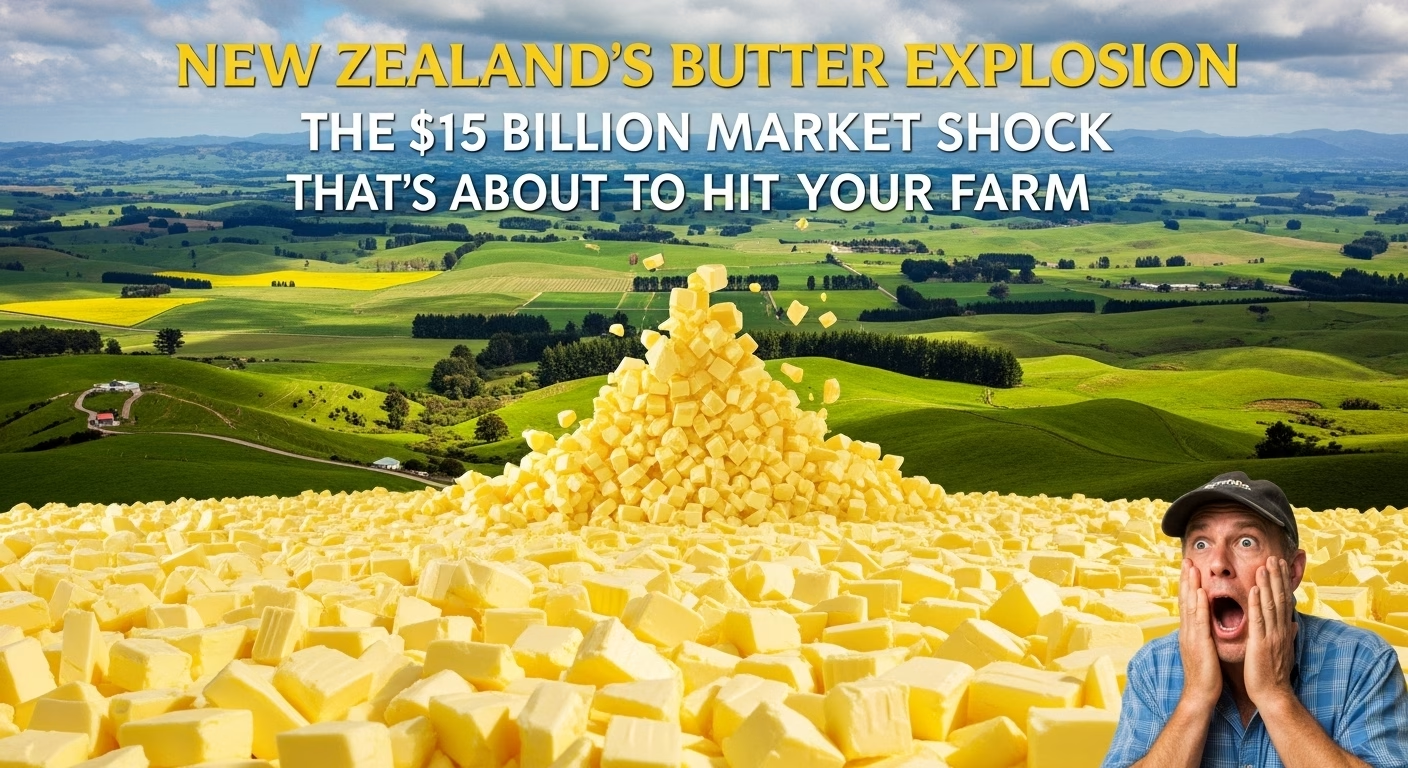
New Zealand’s Butter Explosion: The $15 Billion Market Shock That’s About to Hit Your Farm

New Zealand’s 65% butter surge exposes the profit paradox killing dairy margins worldwide. Why celebrating $10/kgMS might bankrupt your operation.

EXECUTIVE SUMMARY:  While New Zealand farmers celebrate record $10.00/kgMS milk prices from the 65% butter price explosion, smart operators know this market shock reveals a devastating truth: 87% of increased revenue is getting devoured by input cost inflation, leaving net margins thinner than ever. This isn’t just regional volatility—it’s a global wake-up call that’s reshaping international dairy trade flows, with US butter surplus creating $2,500/MT arbitrage opportunities while European processors abandon butter for cheese production. The real winners aren’t those riding today’s high prices, but farmers implementing precision feeding systems (7-12% cost reductions), automated milking technology (5-8% yield improvements), and comprehensive risk management strategies before volatility crushes unprepared operations. With feed costs climbing 37% per tonne and geopolitical tensions driving Middle Eastern stockpiling that consumed one-third of recent Global Dairy Trade auctions, traditional market fundamentals have been obliterated. Andrew’s controversial analysis exposes why Fonterra’s export-first strategy—while generating $15 billion for New Zealand’s economy—is creating domestic affordability crises that could trigger regulatory backlash across the industry. Every dairy farmer worldwide needs to stop celebrating superficial price surges and start building systems that profit regardless of where volatile commodity markets head next.

KEY TAKEAWAYS

  • Implement comprehensive hedging strategies immediately: With DairyNZ’s breakeven costs hitting $8.68/kgMS (up from $8.41), farmers using Fonterra’s new Price Risk Management Services can lock Fixed Milk Prices for two seasons, protecting against the inevitable price corrections while maintaining upside potential during continued volatility.
  • Capitalize on precision agriculture ROI during high-margin windows: Operations investing in precision feeding systems are achieving 7-12% feed cost reductions while automated milking systems deliver 5-8% milk yield improvements—critical advantages when feed costs have spiked 6-37% per tonne and every pound of milk solids matters for survival.
  • Diversify market exposure through export arbitrage opportunities: US farmers with export access can exploit the $2,500/MT price differential between American butter ($5,500/MT) and New Zealand product ($7,992/MT), while international buyers must develop alternative sourcing strategies to avoid dependency on constrained New Zealand supplies.
  • Prepare for geopolitical demand disruption: With Middle Eastern buyers suddenly consuming one-third of Global Dairy Trade butter auctions, traditional supply-demand fundamentals no longer apply—smart farmers are building operational resilience through genomic testing programs for component optimization and activity monitoring systems to maximize breeding efficiency during high-cost periods.
  • Challenge the export-first profit illusion: Operations focusing solely on gross revenue from record milk prices without addressing input cost inflation are setting themselves up for devastating losses when commodity prices inevitably correct—the future belongs to farmers building systems that deliver consistent profitability regardless of market direction.

Here’s what’s got me fired up: While New Zealand butter prices exploded 65.3% and Fonterra’s celebrating $15 billion flowing into their economy, you’re about to get blindsided by the biggest dairy market upheaval in decades. And most farmers don’t even see it coming.

Listen, I’ve been tracking dairy markets for years, but this New Zealand situation isn’t just another price spike – it’s a complete game-changer that’s about to reshape how you think about risk, pricing, and profit in this business.

The Numbers That’ll Keep You Awake Tonight

Let’s cut the BS and talk real numbers. Stats NZ data revealed a 65.3% increase in butter prices in the 12 months leading up to April 2025, with the average price for 500g reaching NZ$7.42 – nearly NZ$3 more expensive than the previous year. By June? We’re looking at NZ$8.42 per block, with Stats NZ confirming a 51.2% annual increase and a 13.5% monthly jump.

But here’s where it gets interesting – and why you should care even if you’re not selling butter. The Global Dairy Trade butter price rose from US$6,631/MT in December to US$7,992 in recent auctions, representing a 16% increase since January 2025 and sitting 40% above five-year averages. When the world’s fourth-largest dairy exporter sees prices move like this, ripple effects are inevitable.

What’s Really Driving This Madness?

Don’t buy the simple “supply and demand” explanation everyone’s peddling. This is way more complex:

  • Chinese demand jumped 10% year-on-year for January-March 2025, and they’re not slowing down
  • Hot and dry North Island conditions in February 2025 adversely affected pasture availability
  • Feed costs climbed between 6% and 37% per tonne over the past year
  • GDT offer volumes were stripped back significantly below 5-year averages, with WMP volumes over 40% lower than historical levels

Here’s the kicker: New Zealand butter contains 82% butterfat compared to your typical 80% US butter. When global buyers want premium quality, they’re paying premium prices.

The Profit Paradox That’s Fooling Everyone

Everyone’s celebrating Fonterra’s farmgate milk price forecast of $10.00/kgMS for both 2024/25 and 2025/26 seasons – the highest on record. Sounds amazing, right?

Wrong. Here’s the math nobody wants to talk about:

DairyNZ’s breakeven milk price jumped to $8.68/kgMS for 2025/26, up from $8.41/kgMS. That means 87% of the increased revenue is getting eaten by rising costs.

Your Reality Check: 500-cow operation producing 200,000 kgMS annually:

  • Gross revenue at $10.00/kgMS: $2.0 million
  • Production costs at $8.68/kgMS: $1.736 million
  • Net margin: $264,000 ($528/cow)

You’re making record gross income but keeping less of it than ever. Sound familiar?

The Global Arbitrage Opportunity Everyone’s Missing

Here’s where this gets controversial – and where smart farmers can capitalize. While New Zealand’s going crazy, US butter stocks hit 305.53 million pounds in February 2025 – the highest February level since 2021. CME spot butter dropped to $2.30/lb.

Current Global Butter Pricing Reality:

RegionPrice (USD/MT)Market Status
New Zealand (GDT)$7,992Supply constrained
European Union~$8,500Processors prioritizing cheese
United States~$5,500Massive surplus

Look at that spread! US farmers, you’re sitting on a goldmine if you can crack export markets. Everyone else? You’re about to feel the squeeze.

Why Smart Farmers Are Panicking (And You Should Too)

The real story isn’t butter prices – it’s what this volatility means for your operation. Here’s what pisses me off most: Nearly one-third of butter sold at recent GDT auctions went to Middle Eastern buyers – a region that previously bought zero. When geopolitics starts driving dairy demand, traditional fundamentals go out the window.

Here’s what most analysts won’t tell you: This isn’t temporary. Fonterra introduced new Price Risk Management Services in June 2025, offering farmers the ability to lock fixed milk prices for two seasons, establish minimum price floors, and create price bands.

If the world’s largest dairy exporter is rolling out comprehensive hedging tools, what does that tell you about future volatility?

The Technology Revolution You’re Missing

While you’re celebrating high milk prices, smart operators are using this window to invest in game-changing technology. Here’s what the winners are doing:

Precision Feeding Systems delivers 7-12% reductions in feed costs while improving milk components. With feed costs up 37%, that’s the difference between profit and survival.

Automated Milking Systems (AMS) show 5-8% milk yield improvements through optimized milking frequency and reduced stress. When you’re paying record-breaking breakeven costs, every pound of milk matters.

Activity Monitoring and Sensor Technology help optimize reproduction efficiency during high-cost periods. Smart farms use heat detection systems with 95%+ accuracy to maximize breeding success when every day open costs serious money.

Genomic Testing Programs for component optimization are paying dividends. Operations focusing on EBVs for butterfat percentage are capturing additional $0.15-0.25 per kgMS in premiums during current market conditions.

What You Need to Do Right Now

Stop Celebrating, Start Hedging

Get your risk management sorted immediately if you’re with Fonterra or any other processor. The farmers who’ll thrive aren’t the ones celebrating today’s prices – they’re the ones preparing for tomorrow’s inevitable swings.

Diversify or Die

That $2,500/MT price differential between US and New Zealand butter won’t last once arbitrage kicks in. Smart operators are investing in precision technologies and efficiency improvements while margins allow.

Get Your Export Game Right

US farmers with export access need to move fast. European processors prioritize cheese production over butter, creating artificial scarcity and opening market opportunities.

The Controversial Truth Nobody’s Discussing

Here’s what really pisses me off: While Fonterra reported $1.158 billion profit after tax for nine months ended April 2025 and celebrates injecting $15 billion into New Zealand’s economy, ordinary Kiwi families can’t afford butter for their toast.

Food prices increased 4.4% in the 12 months to May 2025, significantly outpacing general inflation. When did maximizing farmer returns become more important than feeding the community that supports these operations?

This export-first mentality might maximize farmer returns in the short-term, but it’s creating domestic affordability crises that could trigger regulatory backlash. Smart processors need to balance global opportunities with local market stability – or risk political intervention that could reshape the entire industry.

The Bottom Line

New Zealand’s 65% butter price surge isn’t just regional news – it’s your wake-up call. Three critical actions you must take:

  1. Lock in your risk management strategy – Futures, options, processor programs – get your downside protection before volatility hits your market
  2. Invest in operational efficiency NOW – Precision feeding, automated systems, and genomic programs are your only defenses against input cost inflation
  3. Diversify market exposure – Don’t put all your eggs in one pricing basket when geopolitics are driving commodity demand

The $15 billion flowing into New Zealand proves that high dairy prices can transform entire economies. But here’s the brutal truth: most of that windfall is getting absorbed by rising costs, and farmers who don’t adapt their risk management will get crushed when prices inevitably correct.

Your move. Make it count.

The farmers winning in this new reality aren’t hoping prices stay high forever – they’re building systems to profit regardless of where prices go next. And they’re doing it while they can still afford the upgrades.

Complete references and supporting documentation are available upon request by contacting the editorial team at editor@thebullvine.com.

Learn More:

Join the Revolution!

Join over 30,000 successful dairy professionals who rely on Bullvine Weekly for their competitive edge. Delivered directly to your inbox each week, our exclusive industry insights help you make smarter decisions while saving precious hours every week. Never miss critical updates on milk production trends, breakthrough technologies, and profit-boosting strategies that top producers are already implementing. Subscribe now to transform your dairy operation’s efficiency and profitability—your future success is just one click away.
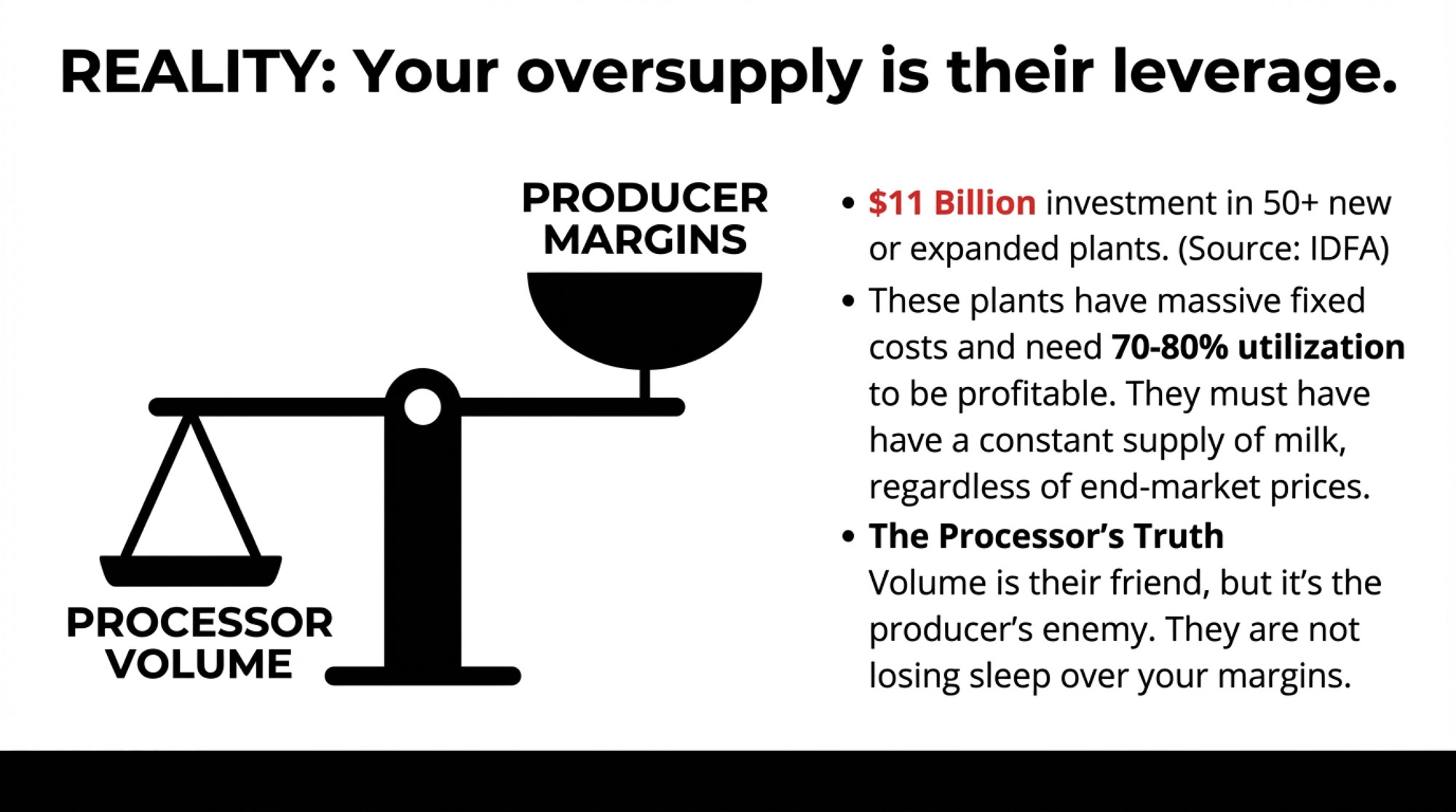
NewsSubscribe
First
Last
Consent

The $8 Billion Infrastructure Trap: Why America’s Dairy Boom Could Become Its Biggest Bust

The U.S. dairy industry is experiencing unprecedented transformation—geographic shifts, $8B+ investments, and component-rich milk are reshaping everything.

dairy processing infrastructure investment, dairy industry oversupply, cheese processing capacity, dairy market volatility, dairy infrastructure boom

While everyone’s popping champagne over the unprecedented $8+ billion processing infrastructure investment wave, here’s the uncomfortable truth nobody’s talking about: we might be building the most expensive oversupply crisis in dairy history. The massive infrastructure buildout, while impressive on paper, represents a dangerous bet that could flood markets and crash prices if demand doesn’t materialize as projected.

The Money Machine: Where $8 Billion Is Actually Going (And Why You Should Be Worried)

Let’s cut through the industry cheerleading for a minute. Yes, over $8 billion flowing into new and expanded processing facilities sounds impressive. But when has the dairy industry ever successfully coordinated massive capacity expansion without creating oversupply disasters?

The money is flowing with laser focus into specific regions and product categories. New cheese plants are sprouting across Amarillo, Lubbock, Texas, and southwestern Kansas. Hilmar Cheese Company’s massive new Dodge City, Kansas facility is already operational. Chobani is pumping $500 million into expanding Twin Falls, Idaho, and undertaking a staggering $1.2 billion project in Rome, New York.

Here’s what should terrify you: This isn’t random expansion—it’s everybody building the same thing simultaneously. It’s like having every farmer in your county plant corn when the markets already saturated.

The geographic realignment tells the real story. Texas posted a jaw-dropping 10.6% surge in milk output in April 2025, hitting 1.511 billion pounds and accounting for more than half of the nation’s dairy herd expansion. The area within 300 miles of Amarillo now dispatches over 1,100 semi-loads daily, with projections suggesting this could hit 1,500 loads.

But here’s the question nobody’s asking: What happens when all these new cheese plants come online simultaneously and start competing for the same buyers?

The Component Revolution Nobody Understands

While raw milk volume increased 1.5% year-over-year in April 2025, component-adjusted production surged 3.0%. Average fat content reached 4.31% (up 1.7%), while protein climbed to 3.34% (up 1.2%).

This is where the infrastructure story gets messy. Most of these billion-dollar facilities are designed around old milk composition assumptions. According to USDA’s National Agricultural Statistics Service data, butterfat levels have consistently hit record highs over the past four years, reaching an average of 4.23% nationally in 2024. Similarly, protein content has broken records yearly from 2016 to 2024, with an average of 3.29% in 2024.

Here’s the trillion-dollar question: Are these new plants optimized for component-rich milk? The research suggests many aren’t. Traditional processing equipment was designed for milk with lower component levels. When you’re suddenly dealing with milk that’s 15-20% richer in valuable solids, your entire production line efficiency changes.

The uncomfortable reality: If processors can’t efficiently handle these higher components, those component premiums you’re counting on could evaporate faster than morning dew on hot concrete. With Multiple Component Pricing systems covering over 90% of U.S. milk, and butterfat comprising about 58% of your average milk check income, this isn’t just academic—it’s your bottom line.

The Export Dependency Time Bomb Nobody Wants to Address

Mexico accounts for $2.47 billion—27.7% of total U.S. dairy exports. Think about this: 28% of your milk sales go to a single buyer. Sure, it’s convenient when times are good, but what happens when that buyer decides to source locally?

Recent data already shows warning signs: cheese exports to Mexico decreased 5% in volume despite overall global growth in that category. China, once our supposed salvation, has seen demand falter, with NFDM exports plummeting 28% in February 2025.

As Tom Geiger from CoBank noted, “Mexico has become America’s most reliable customer for U.S. dairy exports,” with the 10-year growth rate for U.S. dairy sales to Mexico at 42%. But this success story masks a dangerous concentration risk.

Ask yourself this: Are we building massive processing capacity based on the assumption that our largest export customer will remain stable forever? That’s not diversification—that’s putting all your replacement heifers from the same bull.

Historical Lessons: When Processing Outpaces Demand (Spoiler Alert: It Never Ends Well)

The dairy industry habitually forgets its history, like farmers who don’t keep breeding records and repeat the same genetic mistakes.

Industry analyst Betty Berning from the Daily Dairy Report warns: “Scarce heifer supplies and the time required to raise a calf to mature milk cow remain long-term barriers to rapid growth in U.S. milk output. At the same time, milk supplies are shrinking in some areas experiencing the largest investments in processing capacity”.

We’re already seeing this playbook in powder markets. While cheese and butter exports surge (up 14% and 126%), powder exports crash. Global oversupply conditions have created intense price competition that’s hammering commodity markets.

Here’s the uncomfortable truth: In the short term, expanded processing capacity supports Class III and Class IV prices by increasing raw milk demand. However, as these facilities reach full operational status, the market must absorb significantly increased dairy product availability. If demand doesn’t keep pace, prices will drop faster than a broken bulk tank can ruin a load of milk.

The Timeline Disaster: Supply Before Demand

Most of the $8+ billion in new capacity will come online by 2026-2027. That’s a massive, concentrated surge hitting the market almost simultaneously.

Market development timeline? 2027-2030+. Consumer behavior changes about as fast as convincing a stubborn cow to enter a new milking stall. Export market development takes years of relationship building and regulatory approvals.

Mike North from Risk Management warns about the coming capacity crunch: “We don’t have enough animals to make all the milk to supply all the plants in the U.S. This is a good problem. So, we will likely see some inefficient plants close and some plants not run at 100% capacity. But with all of this cheese potentially coming online, we have a real need for exports because we will create many additional products”.

This creates a dangerous 12–24-month window where supply capacity explodes while demand lags. During this gap:

  • Processors will compete like farmers bidding against each other for land rental
  • Price wars as excess capacity drives down margins
  • Class prices fall as processors’ margins get squeezed
  • Smaller processors are getting forced out

It’s like having too many bulls in the same pasture—somebody will get hurt.

The Industry Defense: Why Some Believe the Boom Will Pay Off

Not everyone agrees with the oversupply concerns. Industry leaders point to several factors that could justify the massive infrastructure investment:

Growing Global Demand: Gregg Doud from the National Milk Producers Federation argues that “growth prospects for U.S. dairy both domestically and abroad triggered an $8 billion investment in new processing plants”. He notes that global dairy demand is projected to grow approximately 2.3% annually, with emerging markets showing particular promise.

Competitive Positioning: As one industry analysis noted, “The European Union and New Zealand currently hold the top two spots for global dairy exports, but milk production in those regions has stalled. Greenhouse gas reduction policies have constrained production in the EU, and New Zealand has likely reached its peak cow population due to land constraints”.

Component Advantage: The unprecedented increase in milk components creates a unique opportunity. Since over 80% of the U.S. milk supply goes into manufactured dairy products, where product yields are driven by milk components rather than fluid volume, the component-rich milk could justify expanded processing capacity.

Strategic Market Access: The infrastructure investments are strategically positioned to serve both domestic and export markets. By the middle of 2025, nearly 20 million pounds of new milk will flow through new plants, creating more cheese, whey, and other dairy proteins.

Regional Risk Assessment: Not All Locations Are Created Equal

The geographic concentration creates risks that vary dramatically by region:

RegionInvestment LevelPrimary RiskIndustry Perspective
Texas PanhandleVery HighWater scarcityAbundant groundwater resources currently available
KansasHighTransportation bottlenecksStrategic location with rail and highway access
IdahoMediumEnvironmental restrictionsEstablished dairy infrastructure and expertise
New YorkHighEnergy costs, regulationsAccess to Northeast markets and export ports

Texas expansion relies heavily on favorable conditions. The research identifies “closer proximity to feed production sources, abundant groundwater resources, significant investments in modern dairy processing facilities, more favorable environmental regulatory landscapes, and lower labor costs” as key drivers.

But what happens when those advantages erode? Climate projections suggest heat stress could reduce milk production by 0.60-1.35% by 2030, costing $79-199 million annually.

The Technology Mismatch: Building Yesterday’s Plants for Tomorrow’s Milk

Most of these investments are based on traditional processing models. However, with component-rich milk becoming the new normal, plants built with traditional technology might be unable to capture the full value.

The component revolution is driven by genetics, which accounts for over 70% of productivity improvements for cows born in 2022. Today’s Processing facilities should incorporate technology designed explicitly for handling higher-component milk.

Think about it: If your milking system can’t handle production increases from genetic improvements, you’re leaving money in the tank. The same principle applies to processing infrastructure.

The Financial House of Cards

$8+ billion in new infrastructure means massive debt service obligations hitting simultaneously. According to industry analysis, most processing facility investments assume 7-10-year payback periods. These timelines get blown apart if oversupply persists for 2-3 years.

The most likely outcome? Accelerated consolidation. Large, well-capitalized processors will acquire struggling facilities at fire-sale prices, further concentrating industry power.

What Smart Operators Should Do Now

This isn’t doom and gloom—it’s a roadmap for navigating what’s coming.

1. Diversification Is Survival Don’t put all your processing relationships in one geographic basket. The regions showing the most investment today might be the most oversupplied tomorrow.

2. Export Market Development Start developing non-Mexico export relationships now. Southeast Asia, Africa, and Eastern Europe offer growth potential that’s less dependent on current trade relationships.

3. Technology Investment Focus on processing relationships with technology that can handle component-rich milk efficiently. Facilities that can capture maximum value from modern milk will have competitive advantages.

4. Financial Flexibility: Maintain strong balance sheets and avoid over-leveraging. Cash reserves will be crucial when market conditions shift.

5. Component Optimization With butterfat comprising 58% of your milk check under MCP systems and protein accounting for 31%, maximizing components isn’t optional—it’s survival.

The Bottom Line: Navigate or Get Crushed

The $8+ billion infrastructure bet represents both the industry’s greatest opportunity and its biggest threat. Industry leaders like Doud argue that this investment wave positions the U.S. to become “a top-tier global dairy producer,” capitalizing on regions “ideally suited to producing high-quality, nutritious dairy.”

Here’s the harsh reality: The convergence of geographic shifts, component-rich milk, and massive processing expansion could create either the most profitable era in U.S. dairy history or the most devastating oversupply crisis since the 1980s.

The question isn’t whether oversupply conditions will develop—it’s whether you’ll be positioned to thrive when they do. As the industry prepares for what could be 20 million pounds of additional daily processing capacity by mid-2025, the decisions you make in the next 12 months will determine which side of this equation you’re on.

Are you building for sustainable growth, or are you just building? In this industry, there’s a world of difference between the two, just like the difference between breeding for production traits and breeding for total performance index. One might look good on paper, but the other actually makes money.

Your Move: Time for Brutal Honesty

Stop celebrating the infrastructure boom and start asking the hard questions:

  • How diversified are your processing relationships geographically?
  • Are your processors equipped to handle component-rich milk efficiently?
  • What’s your backup plan if Mexico reduces dairy imports?
  • How exposed are you to the coming oversupply cycle?

The infrastructure tsunami is coming whether we’re ready or not. The winners will be those who see both the opportunity and the risk—and plan accordingly.

What’s your strategy for surviving the $8 billion bet? Share your thoughts, and let’s have the conversation nobody else wants to have.

Key Takeaways

  • Geographic Powershift: Texas alone posted a 10.6% surge in milk output, with the region around Amarillo now dispatching over 1,100 semi-loads of milk daily, fundamentally reshaping America’s dairy map toward cost-advantaged central and southern states.
  • Component Revolution Drives Value: While raw milk volume increased 1.5% year-over-year, component-adjusted production surged 3.0%, with butterfat reaching 4.31% and protein hitting 3.34%—effectively doubling the true expansion of U.S. manufacturing capacity.
  • $8+ Billion Infrastructure Bet: Unprecedented processing facility investments concentrated in cheese production are coming online by 2026-2027, strategically aligned with new production hotspots but creating potential oversupply risks if demand doesn’t materialize.
  • Technology as Game-Changer: Precision Livestock Farming technologies offer potential milk yield increases up to 30% and feed cost reductions of 25%, while genetics now contributes over 70% of productivity improvements, widening the gap between tech-advanced and traditional operations.
  • Diversification Beyond Milk: Strategic revenue diversification through beef-on-dairy programs (calves commanding $875+ per head), renewable energy generation, and value-added processing is transforming dairy farms into multifaceted agricultural enterprises, reducing commodity price dependency.

Executive Summary

The U.S. dairy industry is undergoing a profound transformation marked by a strategic geographic realignment of milk production toward the Southern Plains and Central States, driven by compelling economic advantages and favorable regulatory environments. A simultaneous “component revolution” is producing milk with record-high butterfat (4.23% average in 2024) and protein levels (3.29% average), dramatically enhancing manufacturing value beyond simple volume metrics. This evolution is supported by an unprecedented $8+ billion investment wave in modernizing processing infrastructure, strategically positioned to capitalize on both the geographic shifts and component-rich milk supply. The industry is leveraging advanced technologies including precision agriculture, AI-driven analytics, and genomic selection to achieve remarkable efficiency gains, while sustainability has evolved from compliance concern to strategic market differentiator. Despite persistent challenges including labor shortages, input cost volatility, and animal health risks, the convergence of geographic dynamism, genetic advancement, infrastructure modernization, and technological innovation positions the U.S. dairy sector for a new era of growth, resilience, and global leadership.

Learn more:

Join the Revolution!

Join over 30,000 successful dairy professionals who rely on Bullvine Weekly for their competitive edge. Delivered directly to your inbox each week, our exclusive industry insights help you make smarter decisions while saving precious hours every week. Never miss critical updates on milk production trends, breakthrough technologies, and profit-boosting strategies that top producers are already implementing. Subscribe now to transform your dairy operation’s efficiency and profitability—your future success is just one click away.
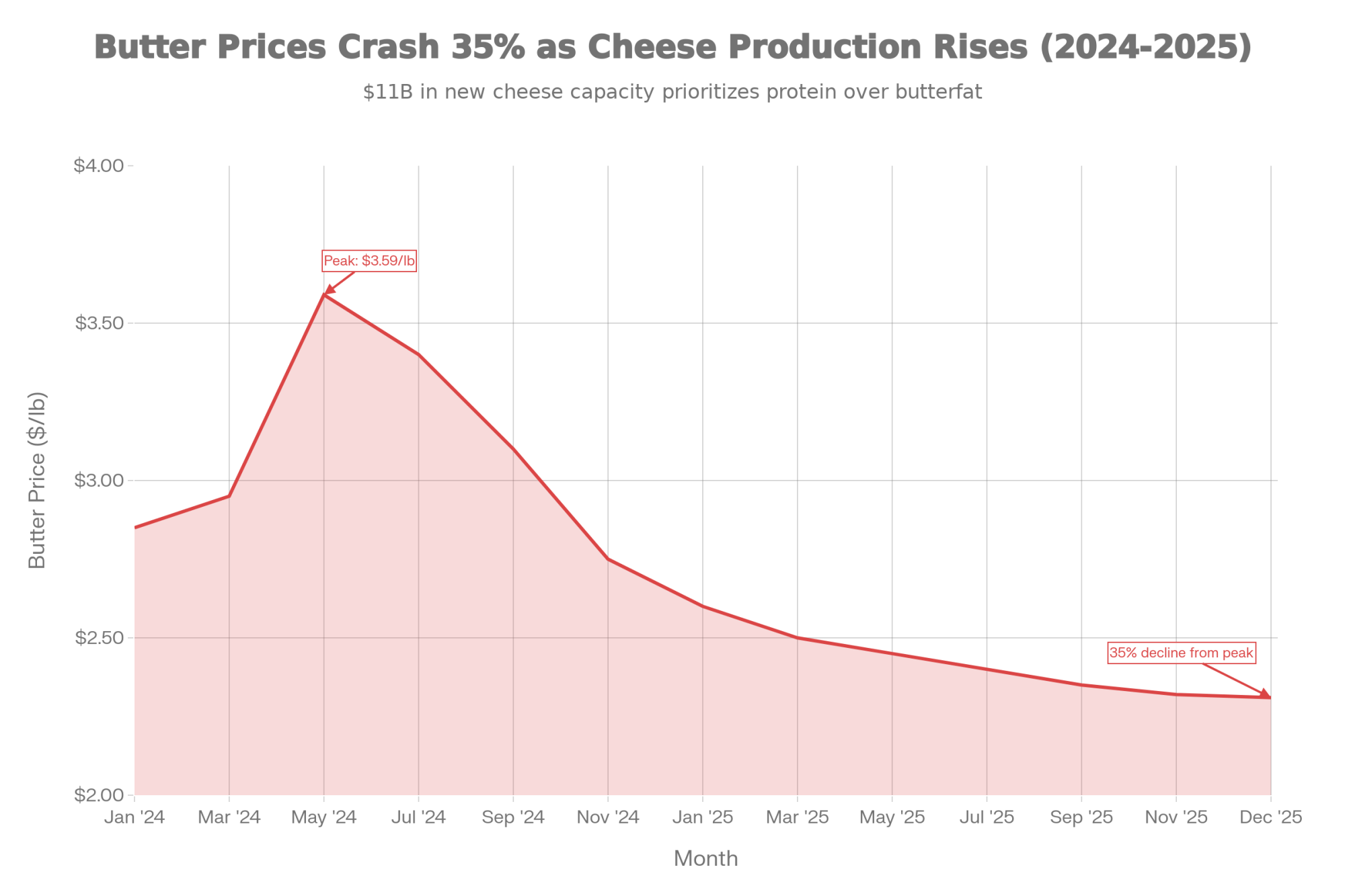
NewsSubscribe
First
Last
Consent

Cheddar Market Shock: GDT Prices Crash 9.2% As Dairy Markets Signal Major Shift

Cheddar prices CRASH 9.2% at GDT! What’s fueling the cheese market meltdown – and how to protect your profits.

EXECUTIVE SUMMARY: Tuesday’s Global Dairy Trade auction snapped a three-month rally with a 0.9% index drop, driven by cheddar’s shocking 9.2% price collapse to $2.27/lb. While mozzarella and anhydrous milk fat held firm, the dramatic divergence signals fractured dairy markets demanding strategic agility. With China’s shrinking imports and shifting consumer preferences reshaping trade patterns, producers must reassess milk allocation, risk management, and component strategies. The next GDT auction on June 3 will test whether this is a temporary correction or a sustained trend. Bottom line: volatility reigns – adapt or get left behind.

KEY TAKEAWAYS:

  • Cheddar crisis: 9.2% price plunge exposes vulnerability in cheese-focused operations.
  • Market fragmentation: AMF (+0.9%) and mozzarella (+0.7%) outperformed, highlighting value in diversified production.
  • Global ripple effects: China’s rising self-sufficiency (85%) and seasonal NZ production shifts amplify volatility.
  • Action required: Revisit processor contracts, component strategies, and hedging plans before June’s critical GDT auction.
  • Watch the spread: Narrowing CME block-barrel gap signals shifting inventory pressures between retail/food service markets.
Cheddar price crash, Global Dairy Trade trends, dairy market volatility, cheese market analysis, dairy risk management

Tuesday’s Global Dairy Trade auction delivered a bombshell to dairy markets with its first index decline since early March, plunging 0.9% after three consecutive events of significant gains. The spotlight? A dramatic 9.2% collapse in cheddar cheese prices to $5,007/metric ton. This sharp reversal, contrasted with stable to rising values for products like mozzarella and anhydrous milk fat, signals increasing market fragmentation that demands immediate strategic attention from producers tied to cheese production streams.

THE NUMBERS DON’T LIE: DISSECTING THE PRICE SHAKE-UP

The party’s over at the GDT. After a solid 7.3% climb since March 4, the index finally stumbled at Tuesday’s auction. Don’t let the modest 0.9% overall dip fool you – the devil is in the details. A hefty 15,194 metric tons of dairy products changed hands among 110 winning bidders through fifteen rounds of competitive bidding, showing robust market participation despite the price correction.

The weighted average price across all products settled at $4,589 per metric ton, but this average masks the dramatic divergence between product categories:

ProductPrice ChangeFinal Price (USD)Per PoundWhat’s Really Happening
Cheddar cheese-9.2%$5,007/MT$2.27/lbThe Big Loser – is the cheddar bubble bursting?
Lactose-13.2%$1,398/MT$0.63/lbTaking an even bigger hit than cheddar
Butter-1.5%$7,821/MT$3.54/lbMinor cooling but still commanding premium prices
Whole milk powder-1.0%$4,332/MT$1.96/lbSlight step back on key volume product
Skim milk powder-0.7%$2,817/MT$1.27/lbHolding relatively steady
Anhydrous milk fat+0.9%$7,273/MT$3.29/lbFat continues to shine!
Mozzarella cheese+0.7%$4,788/MT$2.17/lbThe other cheese story – quietly gaining ground

The stark contrast between cheddar’s nosedive and mozzarella’s modest gain, alongside AMF’s continued strength, screams one thing: we’re in an era of product-specific markets, not a monolithic dairy industry.

WHY CHEDDAR’S CRASH SHOULD SET OFF YOUR ALARM BELLS

Let’s be blunt: a 9.2% drop in cheddar isn’t just some abstract number for economists to ponder. This hits your bottom line directly. For operations heavily invested in cheese, particularly cheddar, this is a torpedo below the waterline of your revenue projections. What makes it even more jarring is that it comes on the heels of a 4.6% GDT index jump just two weeks ago. Whiplash, anyone?

This volatility isn’t isolated to the GDT; it’s echoing in domestic markets too. Monday’s CME session saw cheddar blocks tumble 3.25¢ to $1.8975/lb and barrels drop 2.50¢ to $1.8550/lb, indicating buyer hesitancy following mid-May rallies. This global-local market connection isn’t a coincidence – it confirms a broader shift in cheese market fundamentals.

What This Means For Your Operation: If your milk flows predominantly into cheddar production, it’s time for serious conversations with your processor. This dramatic price differential between cheese varieties signals that global buyers are increasingly selective. The operations that will thrive are those with the flexibility to pivot between product streams as these market signals evolve.

GLOBAL CHESS MATCH: TRACKING THE HIDDEN MARKET FORCES

This GDT shakeup isn’t happening in a vacuum. The timing is particularly significant as this marks the final New Zealand dairy season auction, which officially concludes on May 31. Most Kiwi farmers are currently drying off their herds for the winter rest period before calving begins in July-August. This seasonal factor typically influences market psychology and trading patterns.

The next GDT auction, scheduled for Tuesday, June 3, will provide crucial signals about whether this cheddar correction represents a temporary adjustment or the beginning of a more sustained trend. That’s a date every dairy producer should circle on their calendar.

THE BOTTOM LINE: DON’T JUST WATCH – TAKE ACTION NOW!

This GDT result, especially the cheddar collapse, demands an immediate strategic response. But panic is a terrible strategy. Instead, focus on these tactical moves:

  1. Interrogate Your Milk Contract & Processor Relationship: What’s your exposure to cheddar? If these trends continue, how flexible is your processor in shifting milk to more lucrative streams like mozzarella or milk fat products? Have this conversation now, not after prices slide further.
  2. Re-evaluate Your Component Strategy: If fat is holding strong (and AMF prices suggest it is), should you be tweaking your nutrition program to optimize fat production? The 0.9% increase in AMF versus the 9.2% crash in cheddar speaks volumes about where value is currently concentrated.
  3. Lock in Your Risk Management Plan: With the June GDT auction approaching, now is the time to review hedging strategies and protection options. These increasingly fragmented product markets demand more sophisticated risk management approaches than ever before.
  4. Watch the Block-Barrel Spread: The narrowing block-barrel spread in the CME (down to 4.25 cents from 7.75 cents last week) provides additional market intelligence about inventory balances between retail and food service channels. These domestic signals and GDT trends can help you anticipate market directions.

The bottom line? This isn’t about doom and gloom; it’s about recognizing market signals early and positioning your operation to thrive amid volatility. In today’s fragmented dairy markets, the winners aren’t just those who produce the most milk – they’re the ones who most strategically direct that milk to the highest-value destinations. The cheddar crash is your wake-up call. What will you do with it?

Learn more:

Join the Revolution!

Join over 30,000 successful dairy professionals who rely on Bullvine Weekly for their competitive edge. Delivered directly to your inbox each week, our exclusive industry insights help you make smarter decisions while saving precious hours every week. Never miss critical updates on milk production trends, breakthrough technologies, and profit-boosting strategies that top producers are already implementing. Subscribe now to transform your dairy operation’s efficiency and profitability—your future success is just one click away.
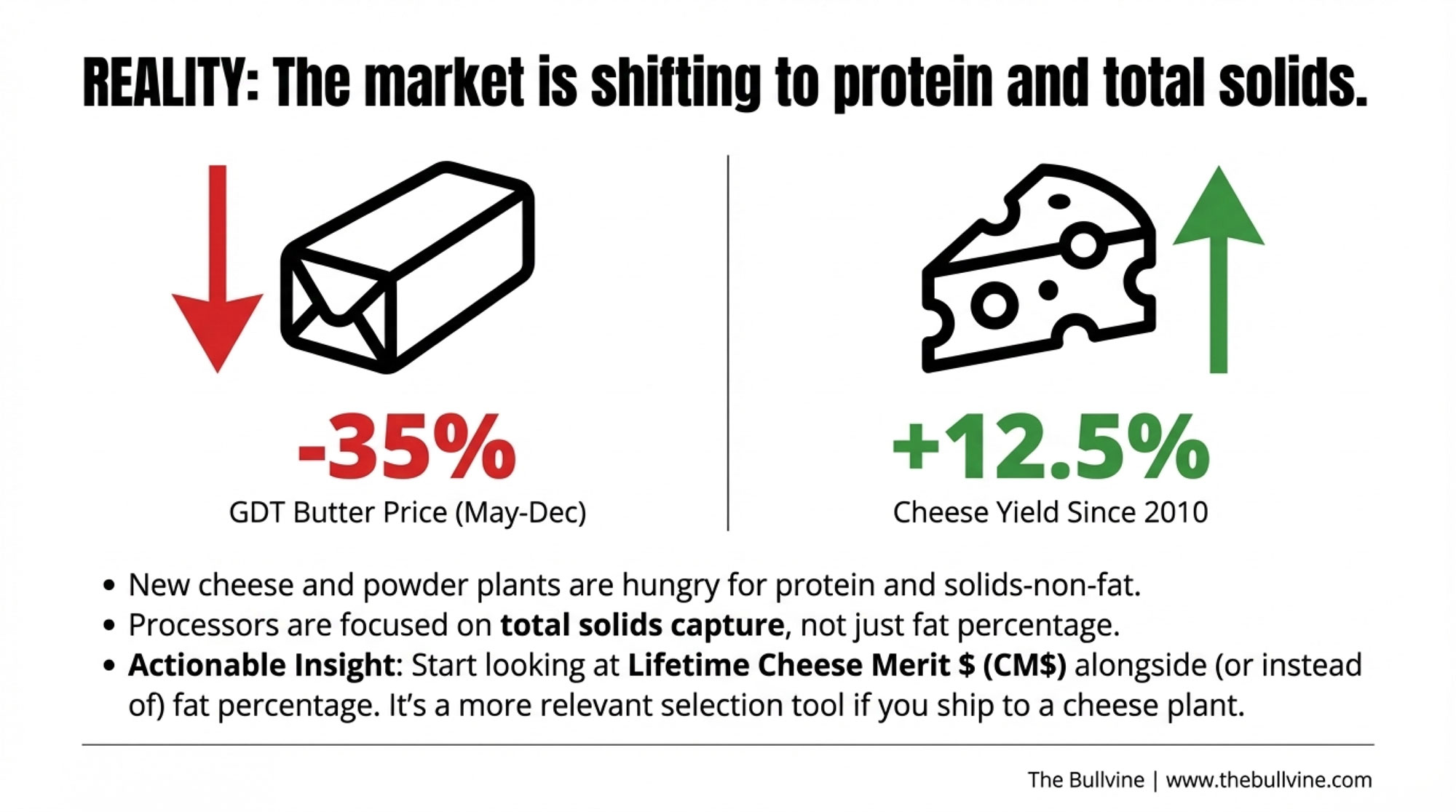
NewsSubscribe
First
Last
Consent

Climate Curveball: Why The 2024-2025 La Niña Shift Is Reshaping Global Dairy Markets

Got milk? The 2024-25 climate shift isn’t El Niño-it’s La Niña to neutral, reshaping global dairy with surprise winners and brutal challenges.

EXECUTIVE SUMMARY: The global dairy sector faced a climate curveball in 2024-2025 as a La Niña-to-neutral transition-not El Niño-drove erratic weather, reshaping production and markets. New Zealand saw record milk prices but shrinking herds, while Argentina defied expectations with a 15.9% production surge. Brazil grappled with regional droughts and floods, and India battled heat stress despite La Niña’s typical cooling effects. Trade tensions redirected China’s imports, and fat-based dairy commodities outperformed proteins. Governments rolled out conflicting policies, from Argentina’s export duty suspensions to the EU’s stricter organic rules. The takeaway? Climate adaptation and tech-driven resilience are now non-negotiable for survival.

KEY TAKEAWAYS:

  • Climate reality check: La Niña/neutral conditions-not El Niño-dictated 2024-25 weather, upending traditional regional patterns.
  • Regional whiplash: Argentina’s output soared (+15.9%), NZ prices hit records amid herd declines, and India’s heat stress persisted despite La Niña.
  • Market shakeup: Fat-based products (butter) surged, China’s trade wars blocked U.S. whey, and futures markets bet on supply tightness.
  • Policy paradox: Argentina slashed export taxes; the EU tightened organic rules, contradicting claims of deregulation.
  • Adapt or die: Heat mitigation tech, AI herd management, and water innovation separated thriving farms from strugglers.
global dairy production, climate impacts on dairy, dairy market volatility, ENSO transition effects, dairy farm adaptation strategies

Let’s face it – we’ve all got it wrong about El Niño. The global dairy sector isn’t wrestling with El Niño as many have claimed – we’re navigating the aftermath of a brief La Niña period that shifted to ENSO-neutral conditions in March 2025. This distinction isn’t just meteorological trivia – it fundamentally changes how we should interpret weather patterns affecting your milk check.

NOAA confirms ENSO-neutral conditions developed in March 2025 will likely persist through summer, with a greater than 50% chance of continuation through October. This follows a short-lived La Niña event that created dramatically different production conditions across key dairy regions – from Argentina’s surprising 15.9% production surge to ongoing heat stress in India and volatile milk volumes in New Zealand.

Why does getting the climate diagnosis right matter so much? Because La Niña typically brings exactly the opposite weather patterns of El Niño – drier conditions to Argentina and Brazil’s south while worsening drought in Brazil’s northeast. Knowing which climate pattern, you’re facing could save you thousands when making breeding, feeding, or investment decisions.

New Zealand: Price Strength Masks Production Headwinds

Remember when everyone said Fonterra slashed its milk price forecast? They did the opposite. Fonterra significantly raised its farmgate milk price forecast to NZD 9.70-10.30 per kgMS (midpoint $10.00) by March 2025 – a substantial jump from the season’s opening forecast of $7.25-$8.75 in May 2024.

Despite these strong prices, production keeps facing serious challenges. The USDA forecasts a modest 0.8% decline for the 2025 market year, pointing to shrinking herd numbers, stubbornly high on-farm inflation, and crushing debt servicing costs.

Fonterra’s collections tell a nuanced story – running ahead year-on-year until February 2025, when monthly volumes dropped 2.3% from previous year levels. They blamed drier weather conditions across most regions, a typical La Niña impact many incorrectly attributed to El Niño.

Costs Keep Squeezing Farm Margins

Haven’t we noticed how input costs refuse to return to pre-pandemic levels? DairyNZ data shows breakeven milk price hovering stubbornly around $8.54/kgMS for the 2024/25 season – creating an economic vise that particularly crushes smaller operations.

While inflation has slowed from the terrifying 8%+ rates of 2022/23, the cumulative damage leaves costs structurally about 20% higher than pre-pandemic levels. Finance costs have exploded and remain painfully high, while fertilizer costs have eased yearly but far exceed historical averages.

Insurance premiums now inflate faster than other primary inputs, according to MPI reporting. Do NZ farmers remain cautious about significant investments despite improved milk prices?

Argentina’s Stunning Recovery Proves the Experts Wrong

Here’s where the narrative falls apart – Argentina isn’t suffering declining production. Official data from the Subsecretaría de Lechería, OCLA, and DNL shows milk production surged an eye-popping 15.9% in March 2025 compared to March 2024, with Q1 2025 volumes jumping approximately 10% year-on-year.

This remarkable comeback follows nearly 18 months of decline, with growth resuming in late 2024. November 2024 marked the first month of growth (+1.5%), followed by a 4.4% increase in December 2024 before accelerating through early 2025. Can you remember the last time we saw this sustained recovery in a major dairy exporting region?

The recovery stems from “favorable climatic conditions” and improved profitability margins, which reached 3.8% by February 2025 – the highest level since 2019. Government support, including suspending export duties on dairy products through June 2025, has dramatically boosted competitiveness.

Brazil: Regional Weather Challenges Create Winners and Losers

Brazil faces the classic La Niña dipole pattern – drier conditions hammer southern states (including the major dairy region Rio Grande do Sul) while excessive rainfall swamps northern parts. Yet despite these regional challenges, the production outlook remains cautiously optimistic.

USDA projects modest growth for Brazil’s milk production in 2025, forecasting a 1.6% increase to 25.4 million metric tons. This expected growth comes from improving prices, slower input cost inflation, and significant technology investments.

High production costs continue to plague Brazilian producers, particularly for energy, feed, fertilizers, and transport. Don’t you wonder how Brazilian farmers grow production while facing climate extremes and economic pressures? Their resilience offers lessons for producers worldwide.

India: Heat Persists Despite La Niña Conditions

India, the world’s largest milk producer, can’t catch a break from heat stress that hammers animal productivity, especially in key regions like Uttar Pradesh, Maharashtra, and Andhra Pradesh. What’s particularly troubling? This heat persisted during La Niña conditions, which typically bring cooling to India.

Despite these challenges, national production figures show remarkable resilience. Total milk production reached 239.3 million metric tons in 2023-24, maintaining India’s strong growth trajectory. Per capita milk availability increased to 471 grams/day in 2023-24, representing a 19.5% rise since 2018-19.

Let’s face it – the persistence of severe heat during global La Niña conditions signals something deeply concerning. Global warming trends increasingly override traditional ENSO weather patterns, creating unprecedented challenges for the world’s largest dairy herd. How can Indian producers adapt when the climate rulebook itself is being rewritten?

Global Markets: China’s Moves to Reshape Trade Flows

China’s dairy import patterns continue to reshape global trade, catching many analysts flat-footed. After several years of declining imports, 2025 forecasts show a modest recovery driven not by strengthening demand but by contracting domestic production.

Chinese milk production began declining in 2024 and will likely fall another 1.5% to 2.6% in 2025, creating renewed import needs. But here’s the kicker – trade policy, not weather disruptions, is driving the most significant sourcing shifts.

Sky-high retaliatory tariffs on US dairy products (reaching a staggering 135-150% on whey) have effectively locked American suppliers out of the Chinese market. Meanwhile, New Zealand benefits from full duty-free access under a bilateral trade agreement upgrade effective January 2024, helping them maintain their dominant 46% market share in early 2025. Isn’t it ironic that politics, not weather, might ultimately determine who sells milk to the world’s largest dairy importer?

Dairy Commodity Prices Show Surprising Divergence

Global Dairy Trade (GDT) auctions demonstrate significant price volatility through early 2025. The overall GDT Price Index rose 1.6% by mid-April, with Whole Milk Powder prices reaching USD 4,171/MT – substantially higher than earlier reports suggested.

Fat-based products generally showed consistent strength, with butter prices surging in early 2025 auctions (+2.6% January, +2.2% February), driven by strong retail demand and potentially lower seasonal output from Oceania.

This divergence in price trends between fat-based products (butter/AMF) and protein/solids-based products (SMP/whey) creates necessary signals for processors and farmers. Given this market signal, should you be selecting bulls for higher fat components? The differential value suggests rethinking breeding strategies.

Futures Markets Signal Heightened Uncertainty

The heightened market volatility has driven record trading volumes in dairy futures markets. The NZX Dairy Derivatives market reported an all-time high in daily, monthly, and quarterly trading during Q1 2025, reflecting urgent hedging needs across the supply chain.

A notable disconnect has emerged between futures prices and physical market signals. Despite bearish USDA price forecast revisions and weakness in markets like whey, CME Class III milk futures maintained relatively strong levels in March-April 2025, trading significantly above official price projections.

This divergence suggests future market participants see more significant supply constraints ahead of time or expect stronger demand recovery than current data indicates. When did we last see such a pronounced disconnect between futures markets and fundamental indicators? It highlights the extraordinary uncertainty permeating the dairy sector.

Adaptation Strategies Are No Longer Optional

As climate variability intensifies, investments in adaptive technologies have moved from nice-to-have too essential. Heat stress mitigation systems (high-velocity fans, sprinkler systems, improved barn ventilation) now show rapid returns, with some solutions delivering 18-month ROI. Can you afford not to make these investments when extreme weather becomes the new normal?

Water management innovations address both scarcity and excess challenges. Forward-thinking producers implement water recycling systems, improve field drainage technologies, and construct farm ponds to enhance resilience against drought and flooding.

Feed strategy diversification reduces vulnerability to climate-sensitive crops. Technology-enabled precision agriculture allows for data-driven ration management, while research into climate-smart forages and specific feed additives to alleviate heat stress symptoms gains momentum.

Technology Drives Efficiency When Margins Tighten

Artificial intelligence platforms are transforming how we manage dairy herds. Solutions like Connecterra’s Copilot provide advanced analytics that identify health or production patterns and enable early intervention for potential problems days before you notice visual symptoms.

Automation technologies, including robotic milking systems and feeding equipment, help address labor challenges while potentially improving animal welfare. Integrating AI and automation isn’t just fancy tech – it’s becoming necessary for survival.

Enhanced data visibility across the entire supply chain improves resilience. Technology platforms centralizing information from disparate sources create real-time monitoring capabilities for inventory, logistics, and demand shifts, allowing more proactive responses to disruptions. Don’t you wish you had this level of visibility during the pandemic?

The Industry Faces Structural Evolution

Farm consolidation accelerates in several key dairy regions. The European Union saw Germany’s dairy farm numbers fall below 50,000 for the first time in late 2024, continuing a decade-long decline driven by economic pressures, volatile prices, and regulatory compliance costs.

We see a similar trend in Brazil, where forecasts anticipate fewer total dairy farms but increasing milk production. This indicates growth from larger, technologically advanced operations with more substantial profit potential.

This structural shift toward fewer, larger farms in Western dairy regions reflects intense economic and regulatory pressures. Meanwhile, India’s sector remains characterized by millions of smallholders supported by the cooperative movement, presenting a contrasting development model. Which approach will prove more resilient in increasing climate and market volatility?

The Bottom Line: Building Resilience Is Your Competitive Edge

The global dairy sector faces structural uncertainty from climate change, market volatility, and evolving policy landscapes. Success will increasingly depend on your ability to innovate, diversify, and adapt toward more resilient production systems.

The current ENSO-neutral phase may provide a reprieve from extreme patterns, but let’s face it – long-term planning must account for growing climate variability. Investments in climate intelligence, cost management, technology adoption, and strategic flexibility will determine which producers thrive in this dynamic environment.

For dairy farmers worldwide, building resilience now isn’t just about weathering the immediate cycle – it’s about positioning for competitive advantage in an industry fundamentally transformed by climate and market forces. Those who recognize this shift as soon as possible will gain the most as these trends accelerate. Shouldn’t you be among them?

Learn more:

Join the Revolution!

Join over 30,000 successful dairy professionals who rely on Bullvine Weekly for their competitive edge. Delivered directly to your inbox each week, our exclusive industry insights help you make smarter decisions while saving precious hours every week. Never miss critical updates on milk production trends, breakthrough technologies, and profit-boosting strategies that top producers are already implementing. Subscribe now to transform your dairy operation’s efficiency and profitability—your future success is just one click away.
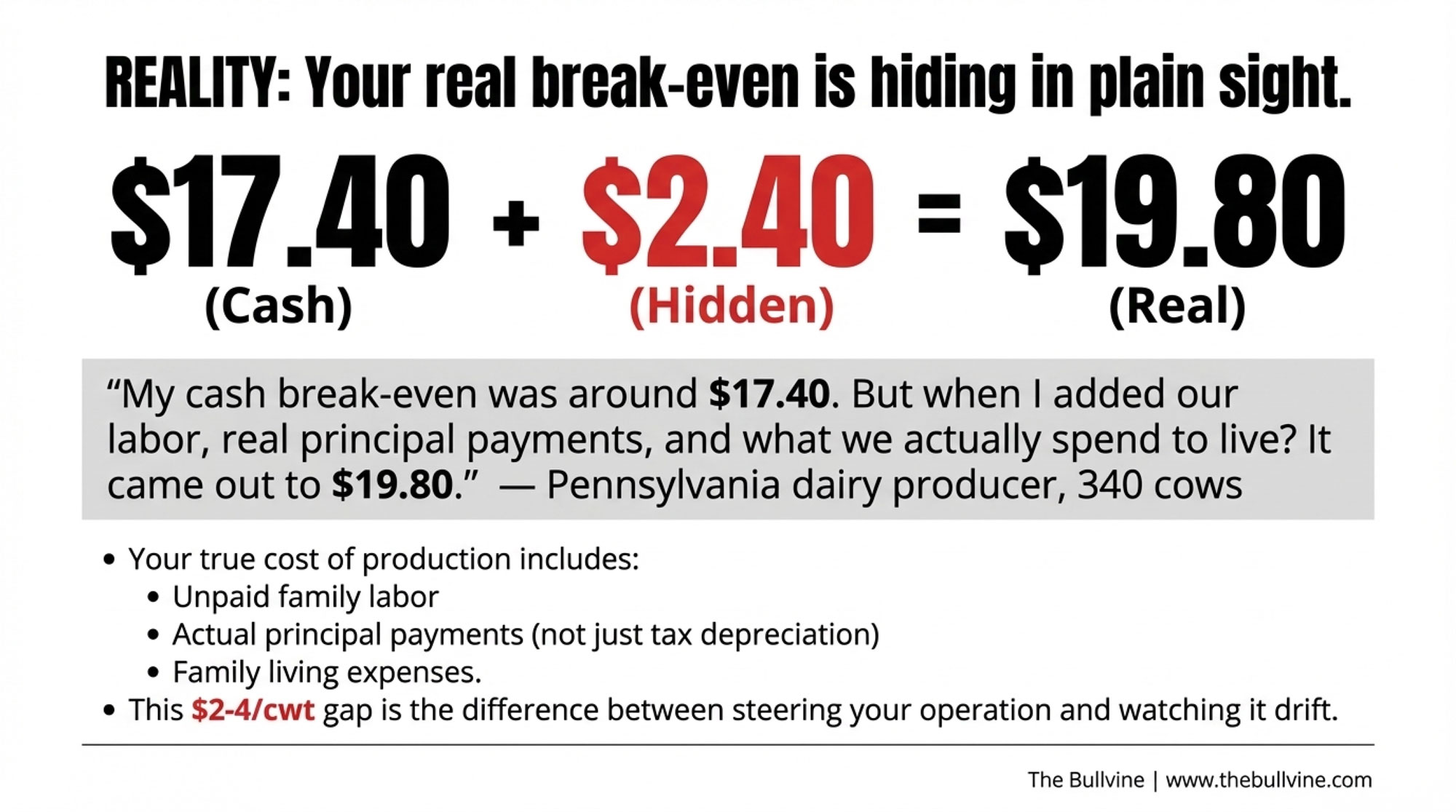
NewsSubscribe
First
Last
Consent

CME Daily Dairy Market Report: April 29, 2025 – Cheddar Blocks Defy Bearish Trends as Butter Plunges

Cheddar blocks defy bearish trends with 2¢ surge as butter plunges to 3-year lows amid oversupply and export hurdles.

EXECUTIVE SUMMARY: The April 29 CME dairy markets revealed stark contrasts: cheddar blocks rallied 2¢ on active trading despite bearish USDA forecasts, while butter prices collapsed 3.5¢ to a 3-year low due to bloated inventories. Nonfat Dry Milk and Dry Whey stagnated amid export challenges from China’s tariffs. USDA slashed 2025 price projections, signaling margin pressure for producers, while global trade imbalances and EU production constraints amplified volatility. Traders face fragmented signals, with blocks’ short-term strength clashing with butter’s structural weakness. Risk management and monitoring feed costs are critical as markets navigate policy headwinds and supply-demand mismatches.

cheddar block prices, butter market trends, USDA dairy forecasts, China dairy tariffs, dairy market volatility

KEY TAKEAWAYS:

  • Block Rally vs. Butter Collapse: Cheddar blocks gained 2¢ on 12 trades; butter fell 3.5¢ to $2.24/lb, its lowest since 2021.
  • Trade Barriers Dominate: China’s tariffs (up to 150% on whey) stifle exports, offsetting competitive U.S. pricing globally.
  • USDA Lowers 2025 Forecasts: All-Milk price cut $1.95/cwt since January, reflecting oversupply and weak demand.
  • Market Fragmentation: Active block trading contrasts with powder stagnation, highlighting sector-specific risks.
  • Producer Advisory: Secure pricing during spot rallies but prioritize cost control amid bearish long-term outlooks.

Cheddar Blocks Surge on Active Trading, Defying Bearish Trends as Butter Plunges to Multi-Year Lows Amid Inventory Concerns

Key Price Changes & Market Trends

The Chicago Mercantile Exchange (CME) cash dairy markets displayed dramatic divergence today, with cheddar blocks showing remarkable strength while butter prices collapsed to levels not seen in over three years.

ProductClosing PriceChange
Cheddar Blocks$1.7200/lb+2.00¢
Cheddar Barrels$1.7025/lb-0.25¢
Butter$2.2400/lb-3.50¢
Nonfat Dry Milk$1.1875/lbUnchanged
Dry Whey$0.5050/lbUnchanged

Cheddar blocks demonstrated significant resilience, gaining 2.00 cents despite recent bearish USDA price forecasts. This strength suggests processors may be securing supplies to meet immediate inventory needs or positioning ahead of anticipated seasonal demand improvements.

Butter prices experienced a substantial decline, dropping 3.50 cents to $2.2400 per pound-the lowest closing price since December 2021. This persistent weakness continues despite U.S. butter trading at a substantial discount to international benchmarks, indicating the dominance of domestic market factors, primarily ample inventories.

Nonfat Dry Milk and Dry Whey markets remained inactive with prices unchanged, reflecting ongoing market caution and challenges in export markets.

Volume and Trading Activity

Trading volume today was heavily concentrated in the cheddar block market, with 12 loads changing hands-a robust level of activity indicating significant market participation and price discovery. Trades occurred within a range from $1.68 to $1.72, with buying interest firming the market toward the end of the session.

In sharp contrast, both butter and cheddar barrels saw minimal engagement with just one trade executed in each market. At the close, the butter market showed one unfilled bid, while the barrel market had one uncovered offer.

The complete absence of trading in NDM and Dry Whey markets, with no trades, bids, or offers recorded, underscores the wait-and-see approach currently dominating these segments. This inactivity likely reflects trader hesitancy following lower USDA price forecasts and significant export challenges, particularly for whey due to prohibitive Chinese tariffs.

Global Context

The international dairy landscape continues to exert significant influence on U.S. markets, with divergent regional production trends and substantial trade policy impacts creating market distortions.

European Union milk production faces ongoing constraints, with forecasts pointing to a slight decline in 2025. Factors contributing to this include diminishing cow numbers, tight farmer margins, implementation of environmental regulations, and disease pressures. EU processors are reportedly prioritizing higher-value cheese production, potentially reducing the availability of butter and milk powders for export.

New Zealand is experiencing modest milk production growth, with volumes up slightly in March and for the season-to-date. This contrasts with Australia’s continued downward production trend.

International demand, particularly from China, remains a critical variable clouded by uncertainty. While China’s domestic milk production has faced challenges, significant economic headwinds are tempering purchasing power. Most critically for U.S. exporters, prohibitive retaliatory tariffs imposed by China (reportedly reaching as high as 84% overall and up to 150% on whey) effectively block access for many U.S. dairy products. New Zealand benefits from its Free Trade Agreement with China, holding a distinct advantage in this crucial market.

U.S. dairy products, notably butter and cheese, remain competitively priced on the global stage compared to EU counterparts. However, the substantial trade barriers are preventing U.S. exporters from fully capitalizing on these price advantages.

Forecasts and Analysis

Forward-looking projections from the USDA’s April 2025 World Agricultural Supply and Demand Estimates (WASDE) report paint a challenging picture for U.S. dairy markets, with significant downward revisions from earlier forecasts.

The USDA raised its forecast for 2025 U.S. milk production by 0.7 billion pounds compared to March estimates, now projected at 226.9 billion pounds. This increase is attributed to expectations of higher average cow numbers and improved milk yield per cow.

Reflecting increased production forecasts and potentially weaker demand assumptions, USDA significantly lowered its 2025 average price projections:

CategoryApril 2025 ForecastChange from March
All-Milk Price$21.10/cwt-$0.50
Class III Price$17.60/cwt-$0.35
Class IV Price$18.20/cwt-$0.60
Butter$2.445/lb-7.0¢
Cheese$1.790/lb-2.0¢
NDM$1.220/lb-3.5¢
Dry Whey$0.510/lb-1.5¢

The magnitude of these downward revisions is striking, with the April All-Milk forecast of $21.10/cwt representing a $1.95/cwt decline from the outlook provided in January 2025. This indicates a rapid deterioration in price expectations over just a few months.

Meanwhile, feed futures markets saw sharp declines today, with May corn futures falling approximately 15 cents to settle near $4.61 per bushel, while May soybeans dropped around 11 cents to $10.41 per bushel. While lower feed costs generally support dairy producer margins in the longer term, their immediate impact on daily dairy product prices is often indirect.

Market Sentiment

The prevailing sentiment in U.S. dairy markets appears predominantly cautious, leaning toward bearishness. This mood is heavily influenced by the recent string of downward revisions in USDA’s price and production forecasts, coupled with persistent concerns surrounding international trade relations, especially the high tariffs impacting access to the Chinese market.

While today’s rally in the cheddar block market offered a localized bright spot, the concurrent plunge in butter prices to multi-year lows and the continued lack of activity in milk powders likely exert a stronger influence on the broader market psyche.

As one analyst might observe, “Despite the pop in blocks today, the underlying tone feels heavy. The latest WASDE numbers and the ongoing China tariff situation make it hard to be optimistic about prices holding these levels across the complex”. This reflects concerns about the sustainability of spot rallies against bearish fundamentals.

A trader focusing on the physical market could remark, “Butter finding new lows isn’t surprising given the inventory picture, but the lack of buying interest even down here is concerning. Blocks seem to be living in their own world today, likely driven by specific short-term needs”. This highlights the product-specific dynamics and the worryingly thin support for butter.

Closing Summary & Recommendations

In summary, the CME dairy cash markets on April 29th showcased significant divergence. Cheddar blocks advanced notably on strong trading volume, providing a counterpoint to the prevailing bearish narrative. However, butter prices suffered a sharp decline, reaching multi-year lows amid light trading and ongoing concerns about excessive inventories. Nonfat Dry Milk and Dry Whey remained dormant, reflecting persistent export market challenges exacerbated by significant trade tariffs.

For producers, the current strength in the spot block market presents a potential pricing opportunity, but it should be viewed with caution given the pronounced weakness in butter and the decidedly bearish outlook presented in recent USDA forecasts. Emphasis should be placed on diligent cost control and implementing robust risk management strategies to protect margins against potential further price declines. Closely monitor developments in feed costs and milk component values.

Traders should recognize the current market fragmentation and carefully assess the sustainability of the rally in blocks against the clear weakness in the butter market. Trade policy developments, particularly regarding China, and shifts in global supply/demand dynamics remain critical factors to watch, especially for export-oriented commodities like NDM and Whey.

The current environment, characterized by conflicting signals and significant external pressures, underscores the need for all stakeholders to adopt a comprehensive perspective rather than relying solely on single-day spot price movements, which can be misleading in this complex marketplace.

Learn more:

Join the Revolution!

Join over 30,000 successful dairy professionals who rely on Bullvine Daily for their competitive edge. Delivered directly to your inbox each week, our exclusive industry insights help you make smarter decisions while saving precious hours every week. Never miss critical updates on milk production trends, breakthrough technologies, and profit-boosting strategies that top producers are already implementing. Subscribe now to transform your dairy operation’s efficiency and profitability—your future success is just one click away.
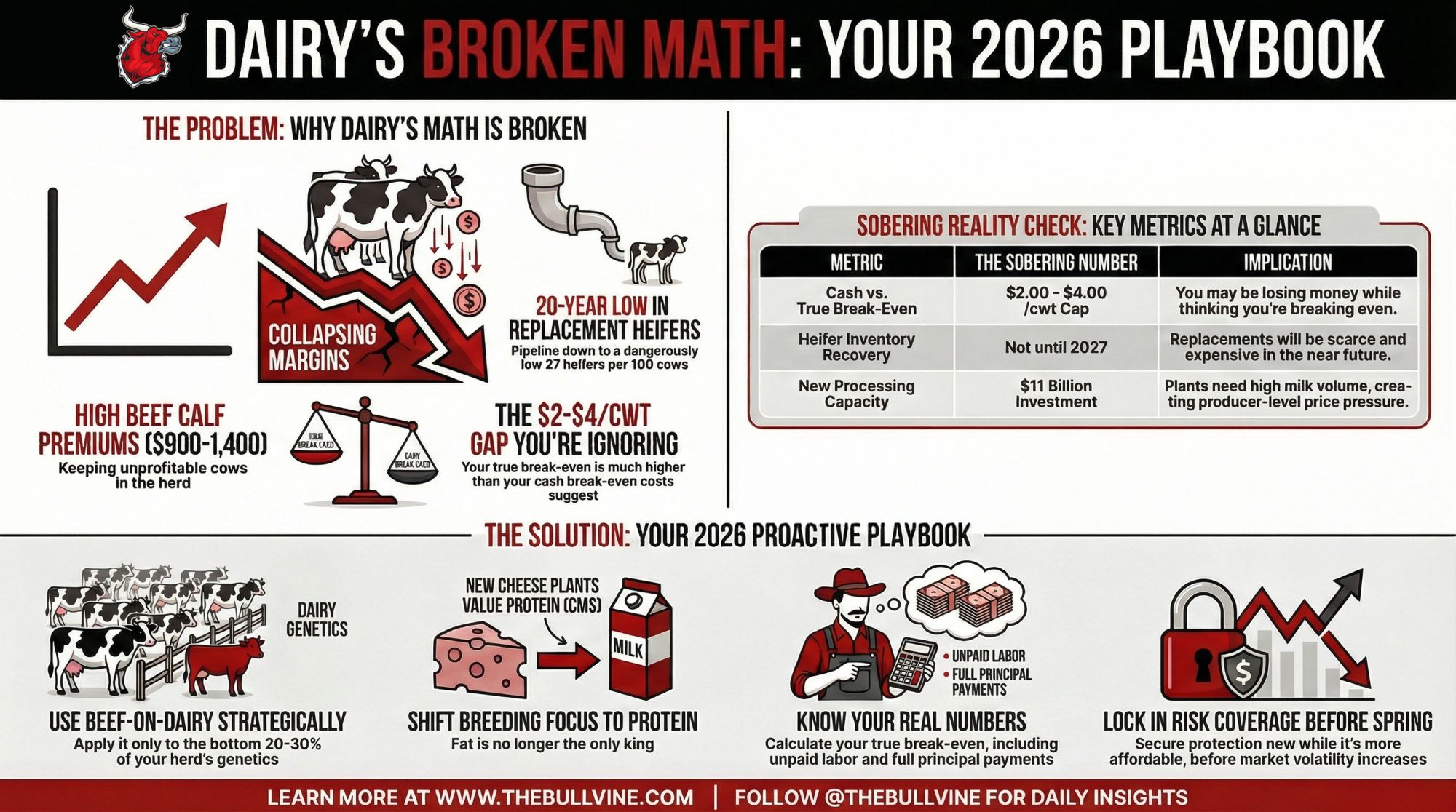
NewsSubscribe
First
Last
Consent

Global Dairy Market Report for January 10th 2025: Volatility Amid Shifting Production

Dairy markets swing wildly as trade tensions boil over. The March Class III contract lurched more than a dollar in a single day, leaving farmers scrambling. With U.S. tariffs rising and China retaliating, the global dairy landscape faces an economic battle. Who will emerge victorious in this high-stakes game of dairy dominance?

Summary:

The global dairy market is facing challenges due to trade tensions and changes in production. In February 2025, there was significant activity, with EEX futures trading 2,100 tonnes of dairy products. Butter futures decreased while SMP futures went up. The Global Dairy Trade auction index increased by 3.7%. Regionally, Ireland and Poland saw strong milk production growth, while milk prices in China increased slightly after a long decline. In the U.S., trade issues impacted milk powder exports, but cheese exports to Mexico did well. With mixed results worldwide, dairy farmers must focus on being efficient and adaptable to navigate these changing market conditions.

Key Takeaways:

  • Global milk supply forecasted to grow by 0.8% in 2025, with all significant exporting regions expecting gains for the first time since 2020.
  • Trade tensions between the U.S. and Canada may disrupt established trade flows, influencing global dairy markets.
  • EU milk production shows recovery, but an overall decline is expected due to environmental and regulatory challenges.
  • U.S. dairy exports are mixed, with cheese exports booming despite a sharp decline in milk powder production.
  • China’s dairy market stabilizes, with import growth projected and farmgate milk prices rising for the first time in over two years.
  • Fluctuating prices and shifting production patterns reshape the global dairy landscape, presenting challenges and opportunities.
  • Dairy farmers are encouraged to adopt risk management, explore value-added products, and leverage emerging markets for growth.
  • Emphasis on efficiency and adaptability is crucial for dairy farmers to thrive in a dynamic and evolving market environment.

During a volatile week in the financial markets, dairy market prices fluctuated significantly due to escalating trade tensions. The March Class III contract swung more than a dollar in a single day, causing farmers and traders to react quickly to the rapid price changes. As the U.S. ratchets tariffs and China retaliates with precision strikes, the global dairy landscape finds itself caught in an escalating economic battle. Recent data from key exchanges and industry reports reveal a sector teetering between opportunity and crisis – but who will emerge victorious in this high-stakes game of global dairy dominance? As exports increase, production changes, and consumer preferences evolve, dairy farmers worldwide deal with a highly dynamic market. Will they adapt swiftly to seize new opportunities or falter under the pressures of volatility?

Market Dynamics 

Global milk production is forecasted to rise by 0.8% in 2025, driven by technological advancements, shifting consumer preferences, and improved farming practices across major exporting regions, marking the first simultaneous growth since 2020. This increase is influenced by higher prices paid to farmers for milk, lower costs for animal feed, and better weather conditions, indicating a possible positive change for the global dairy sector. This growth is driven by increased profitability for dairy farmers. Additionally, more affordable feed costs and favorable weather patterns support higher yields. 

Although there are positive expectations, the dairy market continues to be unstable for various reasons. A substantial increase in dairy processing capacity, particularly in the United States, is expected to reshape regional milk markets. China’s projected 2% year-on-year increase in dairy imports for 2025 could significantly impact global trade flows and prices. Additionally, ongoing trade disputes, especially between the United States and Canada, threaten to disrupt established trade patterns. 

Combining these factors results in a complicated and ever-changing global market landscape for dairy farmers and processors. Consumer demand fluctuations, driven by economic pressures and changing preferences, influence the market. While feed costs are currently favorable, they remain subject to fluctuations in the global commodity market. As the industry navigates these challenges and opportunities, adaptability and strategic planning will be crucial for success in the evolving global dairy landscape 2025. 

Country/Region2024 Expected (Billion Pounds)2025 Forecast (Billion Pounds)Change
Argentina23.624.71.1
Australia19.219.40.2
European Union320.9320.3-0.6
New Zealand47.648.10.5
Major Exporter Total411.3412.51.2

Source: USDA, Economic Research Service calculations based on USDA, Foreign Agricultural Service. Dairy: World Markets and Trade Report, December 2024.

Regional Production Trends 

European Union

In 2025, the European Union’s dairy industry shows varied trends among its member countries. While some countries show promising growth, EU milk production is forecast to decline marginally. 

Ireland stands out with a remarkable 30.1% year-over-year increase in December collections, showcasing the country’s strong recovery and efficient dairy farming practices. This surge is attributed to favorable weather conditions, improved feed quality, and strategic investments in dairy infrastructure. Poland and Spain also posted gains, with solid milk production up by 3.4% and 0.7% respectively in December. Poland’s growth is driven by ongoing consolidation in the dairy sector and investments in modern farming technologies. Spain’s modest increase reflects a gradual recovery from past obstacles, including economic downturns and supply chain disruptions, showcasing the industry’s resilience and adaptive strategies. 

Despite these positive indicators, the EU as a whole faces headwinds. It is predicted that milk output will slightly decrease to 149.4 million metric tons (MMT) in 2025, a drop from 149.6 MMT in 2024. This decline is attributed to several factors: 

  • Declining cow numbers: Stricter environmental regulations and farm consolidation are reducing overall herd sizes across the EU.
  • Tight farmer margins: Rising input costs, particularly for feed and energy, are squeezing profitability for many dairy farmers.
  • Environmental regulations: The EU’s Green Deal and Farm to Fork strategy impose stricter sustainability requirements, forcing some farmers to reduce production or exit the industry.
  • Disease outbreaks: Concerns about diseases like bluetongue in some regions are impacting production and trade.

The European dairy industry is also experiencing a shift in product focus. Cheese manufacturing is set to be a primary focus due to high local and international demand. This focus on cheese may come at the expense of butter, non-fat dry milk, and whole milk powder production. 

Looking ahead, the EU dairy sector must balance environmental sustainability with economic viability. Innovations in feed efficiency, animal welfare, and sustainable farming practices will be crucial for maintaining the EU’s position in the global dairy market.

United States 

In 2025, the U.S. dairy industry grapples with diverse challenges, including labor shortages and environmental regulations, alongside promising prospects such as export market growth and technological advancements. While milk production shows signs of growth, there are significant variations across product categories and regions. 

Cheese production experienced a dip of 0.7% year-over-year in December, totaling 1.2 billion pounds. This decrease is primarily attributed to shifts in consumer demand and increased competition from plant-based alternatives. However, the export market tells a different story, with cheese shipments surging by 21% compared to December 2023. This export boom is driven by strong demand from key markets like Mexico and South Korea and favorable exchange rates. 

Regional variations in milk production are becoming more pronounced. Texas and Idaho are leading the charge, with production increases of 7.5% and 3.5%, respectively. These states benefit from: 

  • Large-scale, efficient dairy operations
  • Favorable climate conditions for year-round production
  • Strategic investments in processing capacity

Other major dairy states also see increased milk production, albeit at more modest rates. Factors contributing to this growth include: 

  • Improved cow genetics, leading to higher per-cow yields
  • Adopt advanced technologies like robotic milking systems
  • Optimized feed management practices

However, challenges remain for the U.S. dairy sector: 

  • Labor shortages continue to impact farm operations and processing facilities
  • Environmental regulations, particularly regarding methane emissions, are becoming more stringent
  • Volatility in feed costs affects profitability

The USDA forecasts overall U.S. milk production to reach 227.2 billion pounds in 2025, slightly lower than previous estimates due to decreased milk per cow yields and adjustments in dairy cow inventories, signaling potential challenges for the industry. 

Adaptability and innovation will be key as the U.S. dairy industry navigates these complex dynamics. Farmers and processors are likely to focus on: 

  • Diversifying product offerings to meet changing consumer preferences
  • Investing in sustainability initiatives to meet regulatory requirements and consumer expectations
  • Explore new export markets to capitalize on strong global demand

Oceania 

The Oceania region, particularly New Zealand, plays a crucial role in the global dairy market. The strong participation in the latest Global Dairy Trade (GDT) event, with 182 bidders competing for 23,854 tonnes of product, underscores the region’s importance in setting global dairy price trends. 

New Zealand‘s dairy sector is anticipating significant seasonal peaks in production for 2025.  

  • Favorable weather conditions: La Niña weather patterns are expected to bring adequate rainfall, supporting pasture growth.
  • Herd management improvements: Farmers focus on breeding programs and animal health to increase per-cow productivity.
  • Technological advancements: Precision farming techniques enhance overall farm efficiency.

However, the industry also faces challenges: 

  • Environmental regulations: New Zealand’s government is implementing stricter environmental policies, which may impact production practices.
  • Land use competition: Increasing pressure from alternative land uses, such as forestry and horticulture, could limit dairy expansion.
  • Labor shortages: Like many countries, New Zealand is grappling with agricultural labor shortages.

Australia, the other major player in Oceania’s dairy sector, is expected to see modest growth in milk production. The country is recovering from previous droughts and focusing on rebuilding its dairy herd. 

Both countries will likely benefit from strong global demand, particularly from Asian markets. However, they must navigate changing consumer preferences, especially the growing demand for plant-based alternatives. 

China 

China, the world’s largest dairy importer, shows signs of market stabilization, with potential significant impacts on global dairy trade. Farmgate milk prices in January increased for the first time in 27 months, signaling a possible turning point in the country’s dairy sector. 

However, at 3.12 Yuan/Kg, prices remain 14.5% below year-ago levels, indicating ongoing challenges for domestic producers. This price pressure has led to: 

  • Consolidation in the dairy farming sector, with smaller farms exiting the market
  • Increased focus on efficiency and productivity among more extensive operations
  • Government initiatives to support the domestic dairy industry

In 2025, China’s milk production will fall by 1.5% year-on-year. This decline is attributed to: 

  • Herd reductions due to sustained low prices
  • Stricter environmental regulations impacting farm operations
  • Shift towards more extensive, more efficient dairy operations

Despite the projected decrease in domestic production, China’s dairy market remains dynamic: 

  • Consumer demand for dairy products continues to grow, particularly in urban areas
  • The government is promoting increased dairy consumption for nutritional benefits
  • E-commerce and innovative dairy products are expanding market reach

China’s dairy imports are projected to grow by 2% year-on-year in 2025, ending a three-year decline. This increase could significantly impact global dairy trade flows and prices. 

Key factors to watch in China’s dairy sector include: 

  • Government policies supporting domestic production vs. import reliance
  • Changing consumer preferences, especially among younger demographics
  • Developments in China’s trade relationships with major dairy exporting countries

As China’s dairy landscape evolves, it will play a pivotal role in shaping global dairy markets, influencing everything from commodity prices to product innovation. 

Trade Tensions and Market Volatility 

The dairy industry is central to a complex web of international trade disputes, with recent developments creating significant market uncertainty. The U.S., Mexico, and Canada have agreed to a 30-day détente, temporarily easing tensions in North American trade relations. This short-term truce is aimed at addressing shared concerns over drug trafficking across borders, highlighting the interconnected nature of trade and broader geopolitical issues. 

However, escalating trade conflicts with China overshadow the respite in North American tensions. The U.S. has implemented a sweeping 10% tariff increase on Chinese imports, which has prompted swift retaliation from Beijing. China’s response, characterized by targeted sanctions, demonstrates a strategic approach to economic warfare, potentially impacting specific sectors of the U.S. economy while minimizing domestic economic disruption. 

The ripple effects of these trade tensions are already evident in the dairy market. U.S. milk powder exporters, traditionally reliant on robust international demand, are adopting a cautious stance. The USDA’s Dairy Market News reports that Mexican demand for U.S. milk powder has become “subdued,” a concerning development given Mexico’s status as a key market for U.S. dairy exports. In 2024, Mexico imported approximately 576,000 metric tons of U.S. dairy products, making it the largest export destination for American dairy. 

This hesitancy extends beyond international buyers, with domestic purchasers also showing reluctance. Market analysts note a “chilling effect” on U.S. buyers, who are wary of committing to purchases in such an unpredictable environment. This cautious approach is encapsulated in the industry phrase of avoiding “catching the proverbial falling knife,” reflecting fears of buying into a declining market. 

These trade conflicts affect more than just milk powder; they extend to other dairy products. The dairy commodity spectrum, including cheese, butter, and whey products, faces potential disruption. For instance, U.S. cheese exports to Mexico, which saw a 36% year-over-year increase in August 2024, could be at risk if current trade uncertainties persist or escalate. 

Looking ahead, the industry faces several critical junctures that could further shape market dynamics: 

  1. The conclusion of the 30-day North American détente could lead to a more stable trading environment or a return to heightened tensions.
  2. Potential expansion of Chinese tariffs to include key dairy products like whey, which have so far been spared but remain vulnerable.
  3. The upcoming 2026 review of the U.S.-Mexico-Canada Agreement (USMCA) could reshape the North American dairy trade for years.

In this volatile climate, dairy producers and exporters must remain agile, ready to adapt to rapidly changing market conditions. Diversification of export markets, exploration of value-added product lines, and close monitoring of international trade policies will be crucial strategies for navigating these turbulent waters. 

Production Shifts and Export Trends 

The U.S. dairy industry is experiencing significant shifts in production patterns and export trends, with notable divergences between milk powder and cheese sectors. 

Milk Powder Production Decline 

U.S. milk powder output has substantially declined, with December production 15% lower than the prior year. This trend extends beyond a month, as 2024 milk powder production slumped 13% to reach the lowest annual total since 2013. Several factors contribute to this decline: 

  1. Shifting consumer preferences: Domestic consumers increasingly opt for alternative dairy products, reducing demand for traditional milk powder.
  2. Processing capacity reallocation: Many processors have shifted their focus to higher-value products like cheese and specialty ingredients, reducing capacity dedicated to milk powder production.
  3. Feed cost fluctuations: Rising feed costs have impacted milk production, with some farmers reducing herd sizes or shifting to alternative feed strategies.
  4. Environmental regulations: Stricter environmental policies in some states have reduced dairy herd sizes, impacting milk availability for powder production.

Booming Cheese Exports 

U.S. cheese exports are experiencing unprecedented growth compared to the milk powder sector. The U.S. exported 97 million pounds of cheese in December, marking a 21% increase compared to December 2023. This export surge has led to a record-breaking utilization of domestic production, with exports accounting for 8% of U.S. cheese production in 2024. Key drivers of this cheese export boom include: 

  1. Competitive pricing: U.S. cheese prices have become more competitive globally, attracting international buyers.
  2. Product diversification: American cheesemakers have expanded their product range, catering to diverse international tastes and preferences.
  3. Quality improvements: Investments in cheese-making technology and processes have enhanced the quality and consistency of U.S. cheese, making it more appealing to foreign markets.
  4. Trade agreements: Favorable trade agreements, particularly with Mexico and South Korea, have facilitated increased cheese exports.
  5. Marketing efforts: Aggressive marketing campaigns by U.S. dairy organizations have successfully promoted American cheese in key international markets.

Market Implications 

These contrasting trends in milk powder production and cheese exports have significant implications for the U.S. dairy industry: 

  1. Processor strategy shifts: More processors may pivot towards cheese production, given the strong export demand and higher profit margins than milk powder.
  2. Farm-level impacts: Dairy farmers may need to adjust their production strategies to meet the changing demand, potentially focusing on milk composition that favors cheese production.
  3. Global market positioning: The U.S. is strengthening as a significant cheese exporter while potentially ceding ground in the global milk powder market.
  4. Supply chain adaptations: U.S. dairy exports’ logistics and supply chain are likely to evolve, with increased focus on cheese transportation and storage.

As these trends unfold, the U.S. dairy industry must remain agile, adapting to changing global demand patterns and market opportunities. The contrasting fortunes of milk powder and cheese sectors underscore the importance of diversification and market responsiveness in the dynamic global dairy trade landscape.

Price Movements and Future Outlook 

YearAll-Milk Price Forecast (USD/cwt)
202523.05
202619.00
202719.10
202819.30
202919.50
203019.70

Source: USDA, Economic Research Service

The dairy market is experiencing significant price fluctuations across various products, reflecting the complex interplay of supply, demand, and global trade dynamics. 

CME Spot Market Trends: 

The CME spot nonfat dry milk (NDM) fell 1.5¢ to $1.33 per pound, reaching its lowest point since August. This decline suggests an oversupply in the milk powder market, potentially due to weakened export demand or increased domestic production. The drop in NDM prices could impact Class IV milk prices, as NDM is a key component. 

Similarly, CME spot Cheddar blocks also decreased, falling 1.75¢ to $1.86 per pound. This downward movement in cheese prices may indicate softening demand or increased production, which could pressure Class III milk prices. 

Global Dairy Trade (GDT) Auction Results: 

Unlike the CME spot market, the GDT auction demonstrated strength in powder markets. Whole milk powder (WMP) values jumped 4.1%, while skim milk powder (SMP) prices leapt 4.7%. These significant increases suggest robust international demand, particularly from key importing regions like Southeast Asia and China. The divergence between domestic U.S. prices and international auction results highlights the global nature of dairy trade and the potential for arbitrage opportunities. 

Future Price Outlook: 

The average milk price is forecast to rise by 5% in 2025 compared to 2024, driven by favorable trends in recent Global Dairy Trade auctions. This projection indicates a generally optimistic outlook for global dairy markets, supported by expectations of continued strong demand and potentially tightening supplies in major exporting regions. 

However, the U.S. market presents a contrasting picture, with projections of a decrease of 30 cents per hundredweight in all milk prices. This discrepancy between global trends and U.S. forecasts could be attributed to several factors: 

  • Domestic Supply and Demand Balance: The U.S. might increase milk production or face lower domestic demand than global markets.
  • Export Competitiveness: A stronger U.S. dollar or increased competition from other exporting nations could impact the U.S.’s position in global markets.
  • Policy Changes: Potential shifts in U.S. dairy policy or trade agreements could influence domestic pricing.
  • Regional Variations: The U.S. forecast may be more heavily influenced by specific regional production trends or processing capacities.

Implications for Dairy Farmers: 

These price movements and forecasts present a complex picture for dairy farmers. While global markets show signs of strength, U.S. producers may face challenges if domestic prices remain suppressed. Farmers must closely watch local and international market trends, adjust their production strategies, and explore new market opportunities to maximize their returns in this changing environment.

The Bottom Line

As the global dairy market navigates through unprecedented volatility in early 2025, dairy farmers worldwide find themselves at a critical juncture. The rising milk supply, shifting trade dynamics, and evolving consumer preferences create challenges and opportunities. While farmgate prices generally improve in many regions, trade tensions and potential tariffs loom large, particularly for U.S. producers eyeing the Mexican market. Success in this dynamic environment will hinge on adaptability and strategic foresight. Dairy farmers must focus on efficiency, embrace risk management strategies, and explore diversification opportunities. Whether investing in value-added products, adopting new technologies to address labor shortages, or implementing sustainable practices to meet evolving regulations, the path forward requires innovation and resilience. In 2025, the global dairy industry is positioned for growth but faces the risk of rapid changes due to geopolitical factors. Farmers who stay informed, remain flexible in their approaches, and capitalize on emerging market trends will be best positioned to thrive in this complex and ever-changing dairy ecosystem. 

How is your operation adapting to these market trends? Share your experiences and strategies in the comments below. 

Learn more:

Join the Revolution!

Bullvine Daily is your essential e-zine for staying ahead in the dairy industry. With over 30,000 subscribers, we bring you the week’s top news, helping you manage tasks efficiently. Stay informed about milk production, tech adoption, and more, so you can concentrate on your dairy operations. 

NewsSubscribe
First
Last
Consent

Dairy Markets Face Wild Swings Amid Trade Tensions

Dairy markets experienced unprecedented turbulence this week as trade tensions rattled the industry. The March Class III futures contract swung dramatically, moving more than $1 daily amid U.S. trade disputes with China and temporary détente with Mexico and Canada. Record cheese exports and shifting production patterns signal more volatility ahead.

Summary:

The dairy markets experienced unprecedented volatility this week amid escalating trade tensions. The March Class III futures contract demonstrated extreme instability, swinging more than $1 daily, while a 30-day trade détente with Mexico and Canada provided temporary relief. However, a new 10% U.S. tariff on Chinese imports sparked retaliation, though China notably spared dairy products.  Market impacts were immediate, with CME spot prices declining across commodities – nonfat dry milk fell 1.5¢ to $1.33 per pound, Cheddar blocks dropped 1.75¢ to $1.86, and barrels decreased 3¢ to $1.78. Despite these challenges, U.S. cheese exports hit record levels in December, up 21% year-over-year, though milk powder exports slumped 23% to their lowest December level since 2016.  The industry faces continued uncertainty as Mexico threatens higher tariffs on U.S. cheese if trade tensions resurface next month.

Key Takeaways:

  • March Class III futures experienced extreme volatility, swinging more than $1 in a single day on Monday, from 39¢ down to 71¢ up.
  • The U.S., Mexico, and Canada agreed to a 30-day trade détente, while the U.S. imposed a 10% tariff on Chinese imports. China retaliated but notably excluded whey and soybeans from tariffs.
  • CME spot prices declined across major dairy products: NDM fell 1.5¢ to $1.33/lb, Cheddar blocks dropped 1.75¢ to $1.86, and barrels decreased 3¢ to $1.78.
  • U.S. milk powder exports fell 23% year-over-year in December 2024, reaching the lowest December level since 2016.
  • December milk powder production was down 15% from the previous year, with 2024 total production dropping 13% to the lowest level since 2013.
  • Cheese production patterns shifted significantly in 2024: Gouda jumped 30.2%, Mozzarella rose 3.6%, while Cheddar fell 6.1%.
  • U.S. cheese exports hit record levels in December at 97 million pounds, up 21% from December 2023, with exports using 8% of total production in 2024.
  • Mexico dominated cheese exports, with shipments 30% higher than 2023, accounting for 38% of total U.S. cheese exports.
  • U.S. dairy heifer numbers have reached their lowest point since 1978, suggesting potential future supply constraints.
  • The Zisk app forecasts improved profitability for dairy farms in 2025, particularly for larger herds in the Southeast and Northeast regions.

A cheesemaker inspecting cheese wheels during the aging process, showcasing the careful monitoring required in cheese production amid current market volatility

Wild price swings hit dairy markets this week as trade tensions flared up. The March Class III milk futures contract moved up and down by more than $1 in a single day on Monday, showing just how uncertain things are right now. 

Trade Situation 

The U.S. made a 30-day deal with Mexico and Canada to pause new tariffs while they worked on border issues. Things with China are different – the U.S. put a 10% tax on Chinese goods, and China hit back with taxes on some U.S. products. For now, China isn’t taxing whey or soybeans, but that could change. 

Market Prices Today 

CME Spot Price ChangesPriceChange
Nonfat Dry Milk$1.33/lb-1.5¢
Cheddar Blocks$1.86/lb-1.75¢
Cheddar Barrels$1.78/lb-3¢

Uncertainty has pushed dairy prices lower across the board. Nonfat dry milk dropped 1.5¢ to $1.33 per pound, marking its lowest point since August. Cheddar blocks fell 1.75¢ to $1.86, while Cheddar barrels went down 3¢ to $1.78. 

Production Changes 

Cheese Production Changes 2024% Change
Gouda+30.2%
Mozzarella+3.6%
Cheddar-6.1%

Cheesemakers are shifting their production strategies significantly. Gouda production has surged by 30.2%, and Mozzarella output increased by 3.6%, setting new records. Meanwhile, cedar production has fallen by 6.1%. These changes reflect a move toward products that are popular with foreign buyers or ready for immediate consumption. 

December Dairy Export MetricsChange vs 2023
Total Cheese Exports+21%
Milk Powder Exports-23%
Cheese to Mexico+30%
Share of Production Exported8%

Total cheese exports hit a record in December at 97 million pounds. However, milk powder isn’t performing as well, with production falling 15% in December and exports dropping 23% to the lowest December numbers since 2016. 

What This Means for Farmers 

The outlook contains both positive and negative elements for dairy farmers. Larger farms in the Southeast and Northeast might see better profits in 2025. Cheese exports remain strong, especially to Mexico. However, due to trade uncertainty, farmers face significant challenges with unpredictable milk prices. There’s also concern that Mexico might tax U.S. cheese if trade talks go badly. 

Smart Moves for Farmers 

To handle these challenges, farmers should consider looking for different places to sell their milk and focus on producing high-quality components like fat and protein. Using futures contracts to protect against price drops and keeping up with market news and changes are essential strategies. Feed costs need careful watching, too. 

The dairy market is tough right now, but farmers who stay informed and plan will be in the best position to handle whatever comes next.

Join the Revolution!

Bullvine Daily is your essential e-zine for staying ahead in the dairy industry. With over 30,000 subscribers, we bring you the week’s top news, helping you manage tasks efficiently. Stay informed about milk production, tech adoption, and more, so you can concentrate on your dairy operations. 

NewsSubscribe
First
Last
Consent

Navigating Dairy Market Volatility: Price Swings and Emerging Trends for January 16th 2025

Find out how the dairy market will change in 2025. How will the changes in prices and trends impact your farm? Stay updated on what’s happening with cheese, butter, and nonfat markets. 

Summary:

The dairy market is experiencing some ups and downs lately. Cheese prices have dropped to $1.8225 per pound, but Class III milk futures for February surprisingly went above $20. A case of foot and mouth disease in Germany might affect US markets if European cheese prices rise and impact the U.S. Meanwhile, worries about inflation are growing as food prices increase. The cost of $19.85 brings some stability to the Class III futures, giving a short break from the tension. In these challenging times, dairy farmers must adjust and find new strategies to stay afloat quickly.

Key Takeaways:

  • The spot block market shows significant volatility, with recent declines bringing prices to $1.8225, suggesting instability in cheese pricing.
  • Class III futures demonstrate a slight recovery, with February contracts exceeding $20, showing resilience in the futures market amidst fluctuating spot prices.
  • European cheese prices are rising, with potential implications for US markets, especially following a foot and mouth disease case in Germany, a key cheese exporter.
  • Increased trading volume in futures suggests heightened interest and activity, though concerns persist regarding stability in the nonfat market.
  • Consumer food prices continue to rise, highlighting inflationary pressures that could affect consumer purchasing power and dairy demand.
dairy market volatility, cheese prices drop, Class III milk futures, European cheese impact, inflation concerns

The dairy market is currently experiencing unprecedented volatility and uncertainty. Cheese prices have dropped to just $1.8225 per pound, highlighting the market’s uncertainty. On a positive note, Class III milk futures for February have slightly improved, going above $20. The rise in European cheese prices may lead to an impact on US prices. This impact is particularly significant following Germany’s report of a foot and mouth disease case, considering its status as a substantial cheese exporter. Overall, the market sends mixed signals, with the increasing cost of food adding to worries about inflation.

ProductSpot Price (USD/lb)EU Price (USD/lb)New Zealand Price (USD/lb)
Cheese1.82252.232.14
Butter2.56753.463.02
Nonfat Dry Milk (NDM/SMP)1.371.181.19

Market Turbulence: Analyzing the Spot Block Volatility and Its Implications

The spot block market has recently shown volatility, with prices dropping to $1.8225 per pound at their lowest point. Several factors contributed to this situation. Experts attribute the sudden price drop to speculative actions and market uncertainty. When prices first fell just above $1.82, a lot of selling pushed prices down even more in the following days. 

This unpredictability affected the market’s reaction, especially in the futures trading market. Initially, Futures trading prices were anticipated to fluctuate in alignment with spot rates. However, the price difference between futures and spot markets decreased as the spot market fell. Experts say that although the spot market is unpredictable, futures markets generally match spot prices over time. 

Industry professionals are closely monitoring these changes. Futures trading must remain stable to reduce risk and ensure fair trading. The changes in spot block pricing reflect broader market sentiment, often triggered by outside economic pressures or sudden events. The industry needs to find ways to protect against more extended price changes.

Class III Futures: Riding the Wave of Recovery and Market Dynamics

The Class III futures market has been quite unstable lately. Still, after big drops and slow recoveries, February contracts went over $20. Traders are hopeful, yet careful, finding support near $19.85, which helped to steady trading and support the beginning of a bounce-back. On the other hand, cheese prices show a more complex picture, with spot block prices going up and down while futures stayed more stable. Demand and supply changes affect the availability and cost of cheese in a way that mirrors the changing market. Trading data helps understand these ups and downs, with more than 2,000 Class III contracts and over 700 related to cheese sold on one key day. Trader involvement is increasing, with open interest rising by 119 contracts for Class III and 210 for cheese, indicating a surge in activity.
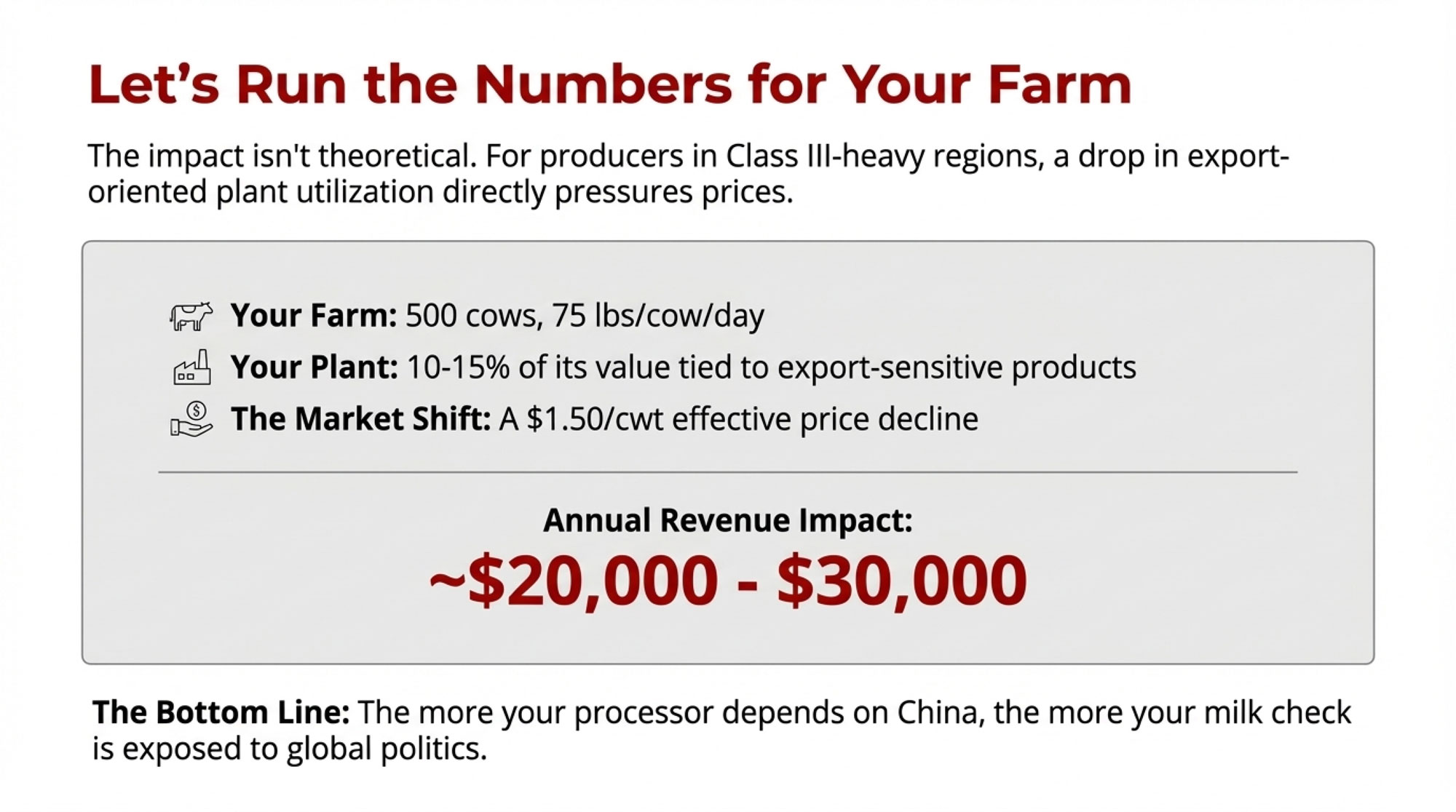
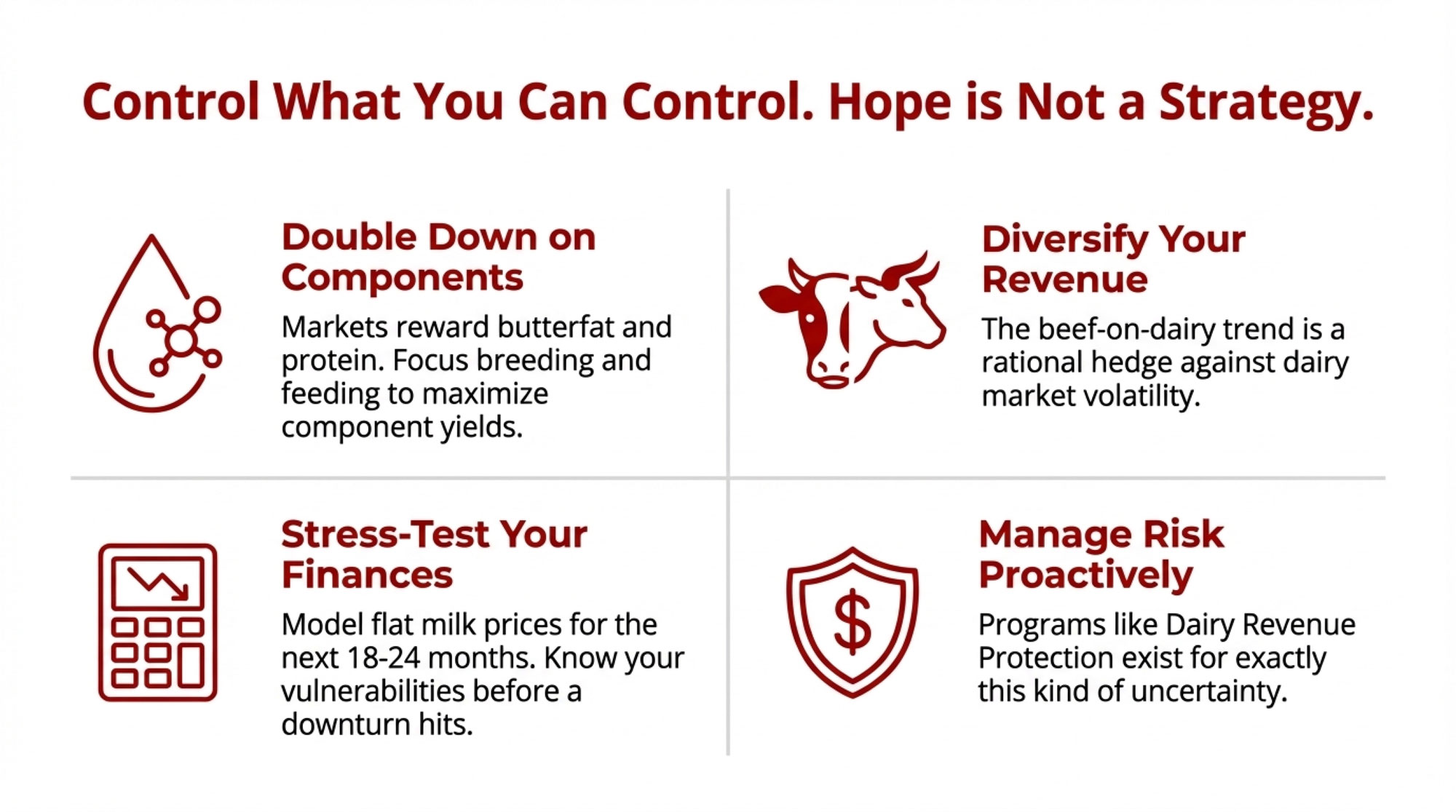
Cheddar Prices in the EU: Navigating Challenges and Opportunities

The increasing price of cheddar cheese in the European Union has repercussions on global dairy markets. EU cheddar is now more expensive than American block cheese. This could push US buyers to consider buying from overseas if local supplies can’t meet demand or if domestic prices rise with global trends. Recently, Germany reported its first case of foot and mouth disease in over thirty years. Since Germany exports almost 16% of Europe’s cheese, this outbreak might disrupt production or exports, affecting global supply chains. This could make US cheese more competitive globally. However, American producers must balance local and international demand and avoid raising prices too much to benefit from the situation. By managing costs, US cheesemakers aim to stay competitive abroad without losing local customers due to price increases.

Spot Butter and Nonfat Markets: Stability and Emerging Risks Amidst Global Concerns

The spot butter market saw a slight decrease, with prices falling by just three-quarters of a cent to $2.5675. No trades were completed, but six offers went unanswered. Although there was less activity than the previous day, more than 350 futures contracts were traded, showing that people remain active in the market. Open interest, which shows how many contracts are still available, increased by 147, suggesting more people are getting involved as prices stabilize from late December to early January. 

At the same time, the nonfat market stayed stable, with prices remaining unchanged and fewer trades taking place. Only 158 contracts were exchanged, less than the previous day’s total. Despite the market’s stability, prices increased slightly due to the consistent conditions. However, there is a looming risk because of a recent foot and mouth disease in Germany. This issue can alter import and export patterns in European markets, potentially influencing nonfat market prices shortly. Dairy industry participants are closely monitoring the disease’s effects for more information.

Inflationary Challenges: Rising Consumer Prices and Their Impact on the Dairy Sector

The Consumer Price Index (CPI) has been rising recently, showing that inflation affects the economy. In December, the yearly growth of the CPI increased for the third month in a row, marking the highest rise since the summer. Prices were up by 0.4% from the previous month and 2.9% from the year before, compared to 0.3% and 2.7% in November. Grocery prices also increased, with home food costs rising by 0.3% from the previous month and 1.8% from the last year. In November, grocery prices had risen by 0.5%, with an inflation rate of 1.6%. Restaurant prices also rose by 0.3% compared to November, maintaining the same 3.6% annual increase as before. 

This ongoing inflation, especially in food, is putting pressure on the dairy industry. As the cost of essential items increases, dairy products, which are necessary for daily diets, become more expensive for household budgets. People may start looking for cheaper options or buying less. As food prices at markets and restaurants increase, dairy producers face higher costs, too. They need to keep prices affordable for customers while managing their expenses. 

With inflation pressures not letting up, the dairy sector must find ways to handle these challenges. People’s buying habits may change, with price becoming more important than brand loyalty. Dairy businesses must watch these changes closely and adjust their strategies to lessen the impact while staying competitive in a challenging market.

Current Dynamics in the Dairy Market: Strategies for Navigating Volatility and Fluctuating Trends

The recent drops in block prices might lead to financial challenges for cheese producers and dairy farmers, jeopardizing their ability to maintain a stable income. 

However, the slight rise in Class III futures shows that conditions might improve soon, even though spot market changes are still a concern. Also, higher European cheddar prices are important because they could strengthen American markets. The outbreak of foot-and-mouth disease in Germany, a prominent cheese exporter, might upset supply chains and increase US exports to fill gaps. 

Global inflation adds to the challenges by raising costs for consumers and farmers, such as for feed and fuel, without promising more income. This challenging situation reduces profit margins, so farmers must carefully manage their finances and plan for risks to avoid problems. 

Farmers should watch the global market and health news that might affect trade. By staying informed and planning wisely, they can better cope with current market challenges and turn international issues into opportunities for success.

Learning from the Past: Navigating Dairy Market Cycles Through Historical Insights

The dairy industry often experiences ups and downs due to various outside factors. Weather changes, political influences on international trade, and shifting consumer preferences contribute to the market’s volatility. For example, in the early 2000s, changes in the European Union‘s farming policies and new importing markets led to significant price changes. 

Furthermore, temporary trade issues can also instigate changes in the market. In 2014, Russia banned EU dairy imports, creating a surplus of products in Europe and dropping prices worldwide. Around the same time, trade tensions between the United States and China and their tariffs made it harder for American dairy products to be exported, causing more price changes. 

The current outbreak of foot-and-mouth disease in Germany raises concerns due to historical events related to such outbreaks. In 2001, the United Kingdom dealt with a similar disease that required killing livestock and damaged the dairy and meat industries. This disease could significantly impact Germany, a significant cheese exporter in Europe. Suppose the disease spreads or causes long shipping delays. In that case, it may affect European markets and global supply, potentially leading to price and availability issues throughout the industry.

Charting the Future: Navigating the Intersection of Trade, Disease, and Consumer Dynamics in the Dairy Industry

Looking into the future, there are many uncertainties as global connections and diseases threaten the fragile balance of the dairy industry. Germany’s foot-and-mouth disease outbreak shows how quickly supply chains can fail under pressure. If the outbreak spreads, European cheese exports might drop, forcing US buyers to look for alternatives, tightening domestic supplies, and pushing costs up. 

Rising feed prices threaten demand as consumers spend less and companies seek new products. Nonfat dry milk, particularly vulnerable to changes, sees prices fluctuate in this unstable environment. 

Geopolitical issues add more complications. The dairy market must navigate various agreements, and international disagreements could disrupt pricing and trade. New trade agreements or taxes may create trade barriers, affecting the origin and destination of dairy product imports and exports and limiting access to specific markets. 

Adaptability becomes crucial for survival and success in a period of uncertainty with multiple short-term risks. Farmers and processing facilities must be ready to diversify and innovate to overcome challenges and seize opportunities, ensuring their success through these changes.

The Bottom Line

Although recent prices for spot block cheese have fallen, there is hope as Class III futures rise above $20. European cheddar prices are also increasing, which might affect US prices, especially with new outbreaks affecting international supply. 

The butter and nonfat markets encounter challenges in maintaining stability amidst global pricing fluctuations and supply chain disruptions. Everyone in the dairy industry must remain vigilant. As consumers pay more, it highlights ongoing inflation, making strategic planning important. Dairy farmers need to stay informed and adjust their practices to market changes. Using data can help them understand and manage ups and downs, ensuring they remain strong and profitable. 

Learn more:

Join the Revolution!

Bullvine Daily is your essential e-zine for staying ahead in the dairy industry. With over 30,000 subscribers, we bring you the week’s top news, helping you manage tasks efficiently. Stay informed about milk production, tech adoption, and more, so you can concentrate on your dairy operations. 

NewsSubscribe
First
Last
Consent

Insights from USDA’s 10-Year Dairy Forecast

Delve into the USDA’s 10-year dairy forecast. What do market growth and price trends mean for your farm? Uncover strategies for the shifting dairy landscape.

Summary:

The USDA’s ten-year baseline projections reveal a future shaped by growing milk production, fluctuating commodity prices, and market volatility, urging dairy farmers to adapt strategically. Significant increases in cow numbers and milk output are anticipated, and rising prices for products like cheddar cheese and dry whey offer both challenges and opportunities. This forecast highlights the key roles of butter, cheese, and powder in the industry, with milk production largely stable despite earlier concerns. By 2034, with cow numbers potentially reaching 9.502 million and production expected to hit 253.1 billion pounds, stakeholders must remain flexible and ready to leverage reasonable pricing while mitigating risks associated with price drops.

Key Takeaways:

  • The USDA’s ten-year baseline projections indicate consistent growth across all categories in the dairy sector.
  • Market dynamics are influenced by fluctuating cheese and butter prices, while nonfat dry milk and dry whey prices trend upward.
  • Despite seasonal and health challenges, milk production has maintained growth with improvements in yield per cow.
  • Cow numbers are expected to rise, fueling a projected increase in milk production to 253.1 billion pounds by 2034.
  • The All-milk price is anticipated to average at a record $25.58 per cwt by 2034, with cheddar cheese and dry whey leading potential price increases.
  • Farmers need to prepare for volatility and leverage it to capitalize on favorable prices and protect farm equity.
  • The global market and political events significantly shape domestic dairy prices and strategies.
dairy industry forecast, USDA dairy report, cheese prices trends, butter market analysis, nonfat dry milk prices, milk production statistics, dairy herd growth, cheddar cheese pricing, dairy market volatility, strategic dairy farming

The USDA’s ten-year forecast is not just a set of numbers but a powerful tool that empowers dairy farmers and businesses. It provides a clear vision of the industry’s future, enabling them to make informed decisions. Understanding these projections allows for strategic planning for growth, changes in cow numbers, or price trends. This forecast is a reliable guide, helping them navigate the dairy market’s fluctuations over the next decade. 

Butter, Cheese, and Powder: A Balancing Act in the Dairy Market

Different forces are shaping the dairy market right now. Cheese prices have fallen, similar to what we saw in April, making it hard to keep the market steady. Butter prices are steady but haven’t bounced back up since dropping from August’s peak. 

On the other hand, prices for nonfat dry milk and dry whey are climbing. The price for Grade A nonfat dry milk has been at its highest since late 2022, and dry whey has been at levels not seen since last April. This rise helps support Class III and IV prices, even with weaknesses in butter and cheese. 

These shifting prices impact the market, with Class III and IV prices reflecting a mix of caution and promise. Milk production has mostly stayed the same, making it hard to balance supply and demand. Dairy suppliers are careful, buying only what they need. This caution shows an underlying concern, suggesting the possibility of market instability if supply and demand get out of sync.

Resilience in the Udder: Navigating Growth Amidst Tight Supplies and Health Challenges

Recent trends in milk production highlight the importance of cow numbers. Forecasts show a steady increase in the dairy herd despite earlier concerns about heifer shortages. This growth meets market needs, preventing shortages and supporting a positive production outlook. 

Another key factor is milk production per cow, which has surpassed expectations. Farm management, nutrition, and genetics improvements have boosted cow output per cow. These gains make up for smaller herds due to strategic animal culling, showcasing the industry’s growing efficiency. 

Threats like bird flu have affected some farms, yet the broader dairy sector remains strong. The bird flu has decreased milk production in affected farms, temporarily imbalanceing the supply-demand equation. However, many farms have shown resilience through quick changes and biosecurity efforts, demonstrating the dairy community’s strategic thinking and adaptability in challenging situations.

Charting the Course to 2034: Navigating Dairy’s Forthcoming Frontier

The ten-year projections paint a future filled with challenges and growth opportunities for the dairy industry. By 2034, the number of cows is expected to reach 9.502 million, thanks to improved herd management and breeding. Beyond these numbers, milk production is projected to rise from 225.8 billion pounds to 253.1 billion pounds, with production per cow increasing from 24,195 to 26,630 pounds. This growth presents the potential for a larger market share but calls for continuous efficiency improvements. 

Projected prices add an essential layer to planning. By 2034, the All-milk price might reach an all-time high of $25.58 per cwt, alongside top milk production. While this is positive, these numbers stress the need for foresight amid changing market trends. Dairy products also show potential shifts: cheddar cheese could go up from $1.88 to $2.14 per pound, while butter might slightly drop to $2.87 per pound. Dry whey is expected to have a modest increase, indicating steady demand. 

Farmers must be strategic, flexible, and ready to seize reasonable pricing opportunities while guarding against price drops. Successfully navigating these projections requires adaptability, which ensures that farms survive and thrive amidst future challenges. This adaptability is not just a plan but a mindset that prepares farmers to face the future with resilience.

Navigating the Future: Strategic Insights for Dairy’s Diverse Product Landscape

The USDA’s price predictions for key dairy products show that dairy farmers must be cautious and forward-thinking. By 2034, cheddar cheese will rise from $1.88 to $2.14 per pound, increasing producers’ income and encouraging them to invest more in cheese. 

However, dry whey prices are projected to increase slightly, reaching 54 cents per pound, just six more over ten years. While the market stays stable, producers may need to cut costs and improve efficiency to remain competitive. 

The nonfat dry milk market expects a slow 4-cent rise, averaging $1.27 per pound by 2034. This slow growth suggests that the market is relatively stable. Farms might need to innovate or find new uses for these products to enhance their profit margins. Investigating organic or specialty milk powders could open niche markets. 

The butter market appears less optimistic. Prices are expected to decrease slightly, averaging $2.87 per pound in 2034. This calls for careful financial planning and strategic market positioning. To remain profitable, butter producers might need to create unique products or find new markets. 

These projections suggest that dairy farms need flexible strategies to seize opportunities in different product lines while reducing risks from market changes. Investing in technology, adopting sustainable farming methods, and diversifying markets are key to long-term success and stability.

Embracing Volatility: Turning Challenges into Opportunities for Dairy Farmers 

The intersection of market volatility and global influences presents challenges and opportunities for dairy farmers. Prices change frequently, not just because of local factors but also due to global markets and political shifts. This complexity means farmers need to be competent in their approach. 

How can dairy farmers not only survive but thrive in this environment? Embracing volatility can be strategic. First, farmers should understand the global landscape. They can better predict market shifts by staying informed about international trade agreements and geopolitical changes. 

Diversification is essential. Farmers can spread financial risk and access stable or premium markets during global shifts by offering various products, such as specialty cheeses. For instance, a dairy farm could consider producing artisanal cheeses alongside its regular products, tapping into a niche market less affected by global price fluctuations. 

Financial tools like futures contracts are also helpful. These tools lock in prices and guard against market declines. Working with financial experts can boost returns and reduce risks. 

Community and co-operative models increase resilience. Farmers share resources and market access by working together, turning volatility into an advantage. This collective effort supports innovations in technology and sustainability, keeping them competitive. 

The global market sends a clear message: Stay alert and adaptable. By using these strategies, dairy farmers can turn market changes into opportunities for growth and sustainability. The goal is to turn change from a threat into a force for resilience and prosperity.

Strategic Roadmapping: Navigating USDA Projections for Dairy Success 

The future of the dairy industry presents both challenges and opportunities. For farmers, the USDA’s annual baseline projections are more than numbers; they’re the strategic guides. Here to make the most of these insights: 

  • Strategic Planning with Projections
  • These projections are key to your long-term strategy. As you anticipate growing herd size and milk output, revisit your expansion and breed plans. Enhance your herd health to improve yields, aligning with USDA forecasts. 
  • Risk Management and Diversification
  • Expect volatility. Use futures contracts to hedge against price changes for stable income. Diversify products by exploring specialty items like organic dairy to buffer against market dips.
  • Boosting Production Efficiency
  • Higher milk production per cow means investing in technology. Use precision farming, better feeds, and welfare practices. Data analytics for cow health and milk monitoring offer vital insights for timely actions.  
  • Increasing Profit with Value-Added Products
  • Price projections for cheddar and whey show promise. Consider expanding into cheesemaking and leveraging projected modest price gains to generate new revenue streams. 
  • Maintaining Resilience Amid Political and Economic Factors
  • International trade and economic policies affect the dairy market. Stay informed and engage associations for insights. Strong supplier and distributor ties are vital for supply chain stability.  

USDA projections offer a roadmap, but success hinges on adapting and seizing opportunities. Embrace change, prepare for uncertainties, and set a course that aligns with your goals and the market. 

The Bottom Line

The USDA’s ten-year projections show growth in milk production and steady cow numbers in the dairy industry. While encouraging, these projections also show different price trends for cheese and whey, affected by both local and global factors. Farmers and industry stakeholders need to understand these changes. 

These numbers are not just statistics but strategic guides for changing farm operations to match market shifts. Evaluating if your practices can adapt to challenges and make the most of opportunities is crucial. Be prepared to anticipate and take advantage of industry changes with strategic planning and flexibility.

Learn more:

Join the Revolution!

Bullvine Daily is your essential e-zine for staying ahead in the dairy industry. With over 30,000 subscribers, we bring you the week’s top news, helping you manage tasks efficiently. Stay informed about milk production, tech adoption, and more, so you can concentrate on your dairy operations. 

NewsSubscribe
First
Last
Consent

Dry Whey Soars to New Heights: CME Dairy Market Key Insights and Implications for December 11th 2024

Uncover the dry whey market surge and its effects on dairy farming. What will this mean for your business strategy? Learn key insights and implications today.

Summary:

The dry whey market is reaching unparalleled highs, spurring dairy farmers to reassess their strategies. As the Q1 2025 Dairy Revenue Protection (DRP) deadline approaches, Class III futures show revival signs, offering potential benefits for producers seeking coverage. January Class III pricing is $1.81 for cheese and slightly over 70 cents for whey, necessitating spot market support. This competitive landscape requires producers and suppliers to navigate market trends with agility and innovation. The growth to $0.7500 per pound significantly impacts profits and decisions throughout the dairy supply chain. Understanding complex supply-demand interactions is crucial, while companies supplying dairy farmers must also adapt to these shifting dynamics. Long-term strategies must be developed to protect against global commodity volatility, with success hinged on anticipating future changes.

Key Takeaways:

  • The dry whey market continues to experience new highs, impacting Class III futures and influencing market dynamics.
  • January Class III futures pricing shows signs of strength, but there’s a need for spot markets to gain ground on cheese to maintain these levels.
  • Speculators in Class III futures are running net short positions, a factor that could impact market volatility and price fluctuations.
  • US dairy commodities show varied competitive pricing compared to international markets, with cheese and butter being more competitive globally.
  • Inflation trends could affect dairy market pricing and consumer purchasing power, particularly in food prices.
  • Futures trades demonstrate typical year-end behavior with mixed-market movements and reduced trading volumes.
  • The Class IV market, including butter and NFDM, remains relatively stable, with some downward trends observed.
  • There is a substantial supply of cream, and NFDM continues to trade sideways, indicating stable market conditions for these commodities.
dry whey market growth, dry whey prices, dairy supply chain, dairy farmers profits, supply and demand interaction, futures trading strategies, US dairy products competition, dairy market volatility, strategic planning for dairy companies, adapting to market trends

The dry whey market is taking off right now. It’s reached new all-time highs and is getting the attention of everyone in the industry. This recovery, which included a two-cent rise to $0.7500 per pound, is significant for dairy farmers and businesses in the dairy supply chain. Why does this matter, however? Changes in the price of dry whey can affect the dairy market as a whole, which can affect profits and strategic decisions. To make the most of these changes, stakeholders need to stay informed. As we look into market trends, we’ll examine what’s causing this rise in dry whey prices and how it might affect the dairy industry. 

The dry whey market has experienced a significant surge, capturing the attention of dairy farmers and industry professionals. This rise presents opportunities and challenges as stakeholders adapt to the evolving landscape. To aid in understanding this shift, consider the following data table detailing the current market prices and trends in key dairy products

Dairy ProductUS Price (per pound)New Zealand Price (per pound)EU Price (per pound)
Dry Whey$0.75
Cheese$1.73$2.13$2.28
Butter$2.53$2.96$3.60
NDM/SMP$1.38$1.26$1.25

The Whey Surge: Driving a New Era in Dairy Markets

The market for dry whey is growing, and prices have reached all-time highs—they just hit $0.7500 per pound. This rise signifies several deeper problems changing the dairy product landscape. Other dairy products, like cheese, butter, nonfat dry milk (NDM), and skim milk powder (SMP), have had more varied price changes. Cheese prices have increased a bit; they are now $1.73 a pound in the US, which is still much less than in other countries, like $2.13 in New Zealand and $2.28 in Europe. Regarding butter, the price is more competitive at $2.53 per pound than in New Zealand and the EU, where it costs $2.96 and $3.60, respectively. The price of NDM/SMP in the US is $1.38 per pound, higher than in New Zealand ($1.26) and the EU ($1.25). This shows that there is much competition.

The main factor changing these prices is how supply and demand interact in complex ways. For example, the rise in the price of dry whey is due to more people wanting to buy it as the market tries to stabilize and take advantage of the strategic timing of futures trading. This demand is increased by bets on further price increases, which aligns with a more significant trend in which speculators currently hold enormous short positions.

Overseas, there is still a lot of competition, and different companies use different pricing strategies. US dairy products must handle these competitive prices to keep their market share. Besides that, economic indicators like inflation have been critical. Recently, inflation increased by 0.3% each month and 2.7% year-over-year. Prices are changing, especially in the grocery and restaurant industries. The rise in food prices, a 0.4% increase from October and a 2.4% change over the past year makes pricing strategies in the US dairy market even more complicated.

These factors have helped shape the current state of the dry whey market. However, the market could remain unstable as new trends emerge based on economic activities and policy changes in domestic and international arenas.

Navigating the Whey-Driven Shifts: Agility and Innovation for Suppliers

Companies that provide dairy farmers with critical supplies must adapt to changes in the dairy market caused by changes in whey and other components. This is a significant time for feed suppliers and equipment manufacturers. The rising price of dry whey affects the milk price and how dairy farms will run. So, these stakeholders need to devise a plan to deal with this changing environment.

Feed suppliers need to know the current market trends. If dairy farmers have to change their herds’ size or feeding methods due to changes in their income, the demand for certain types of feed could change. When the market is unstable, suppliers may need to expand their product lines by focusing on cheaper or healthier varieties to meet farmers’ needs.

At the same time, companies that make farm equipment need to consider how farmers may need to improve their ability to spend on capital projects when their income changes. When money is tight, farmers may put off or not buy big pieces of new equipment. One effective strategy could be to offer flexible payment plans or rental options for equipment. This would help you keep customers while also working with tighter budgets.

There are opportunities and risks in the market right now. On the one hand, companies that develop new ways to adapt to changing customer needs can get ahead. Digitizing operations or providing integrated farm management solutions might be new ways to make money. If you don’t change, you might lose sales and market share.

Companies that sell feed and make equipment need to interact regularly with their customers to learn about their changing needs and problems. By staying informed and quick to act, these businesses can lower their risks and take advantage of new market opportunities as the dairy market changes.

Class III Futures and Speculation: Understanding Market Dynamics and Strategies

Class III futures are critical to the dairy market because they help processors and producers protect themselves against changes in the price of milk used to make cheese, whey, and other dairy products. These futures contracts allow people to lock in prices or bet on how prices change, affecting the dairy commodity markets.

Since whey is a byproduct of cheese-making, its prices are closely linked to Class III futures. When the prices of Class III futures go up, it usually means that people are optimistic about the demand for cheese and, by extension, whey. According to this link, changes in the price of dry whey can cause and show changes in Class III futures contracts.

Speculators, both large institutional investors and smaller individual traders, enter the Class III futures market mainly to make money off these price changes. Most of the time, they are not directly interested in the dairy business. Instead, they want to make money by buying low and selling high. However, they can make the market more volatile because trades may be based on short-term trends and speculation instead of long-term market fundamentals.

When they control most of the trading, speculators can cause significant price changes that might not accurately reflect how supply and demand work in the dairy market. This could be difficult for dairy farmers and processors, who depend on futures markets to stabilize prices and manage risk. The significant changes caused by speculative trading could also make it hard to plan and budget, putting the market out of balance.

To navigate this uncertain environment, people with a stake in the dairy market should use risk management strategies like options and futures hedging. Speculative behavior can have less effect if you stay informed by analyzing the market and changing based on predictive market signals. Keeping operations flexible and encouraging new ideas can also give players a competitive edge by allowing them to respond quickly to market changes.

Scaling New Heights: US Dry Whey Ascends in Global Market

The spot markets show that the US dry whey market is seeing significant gains, with recent highs of 0.75 pounds putting it ahead of the rest of the world. On the other hand, global competitors, especially those from New Zealand and the European Union, have raised their prices less. International prices for dry whey are usually lower, which helps these competitors get a good position in markets where price is essential.

Prices differ in many ways when comparing the US dry whey market to international markets. This broad international pricing strategy is often the basis for competitive positioning. Countries like New Zealand, which can make many things and has an economy based on exports, tend to use lower prices to gain market share. European producers can also offer competitive prices because they receive government subsidies and have trade agreements in place.

You can’t say enough about how global trade affects the US whey market. To stay ahead of the competition, US manufacturers often look for ways to be more efficient, develop new ideas, and tailor their products to specific markets. For people in the United States, this means figuring out how to operate in a market where conditions are set by changes in international supply and demand, which are affected by trade agreements and economic policies. Keeping prices competitive internationally is more straightforward than dealing with tariffs, trade disputes, and currency changes. Businesses in the United States that want to grow or stay on the world stage must stay updated on changes in global consumption patterns.

Ultimately, US dairy farmers and professionals must understand how these global market dynamics work. To stay competitive, stakeholders must make their businesses more resilient through strategic partnerships, expanding their customer bases, and investing in new technology. By learning about the ins and outs of international trade, businesses can take advantage of opportunities in the global market.

Strategies for Resilience in a Fluctuating Market

  • Explore Risk Management Tools: Given the fluctuations in futures prices, consider diversifying your risk management strategy. Use Dairy Revenue Protection (DRP) to secure floor prices while allowing upward mobility. Regularly assess your coverage needs and adjust as market conditions evolve.
  • Monitor the Whey Market Closely: Stay vigilant with the dry whey market’s performance. The current upward trend presents an opportunity for gains but requires careful monitoring. Engage with market analysts to understand potential scenarios and prepare contingency plans for swift market reversals.
  • Invest in Technological Advancements: Leverage advancements in agricultural technology to optimize production efficiency. Implement data-driven tools to enhance milk yield forecasts and quality management, ensuring a competitive edge in a volatile market.
  • Strengthen Supplier Relationships: Collaborate closely with suppliers to secure favorable terms and guarantee a steady supply of essential inputs. Transparent communication and strategic partnerships can help mitigate supply chain disruptions and stabilize costs.
  • Diversify Product Offerings: Capitalize on market movements by diversifying your production. Explore value-added products such as specialty cheeses or organic dairy, which may command premium prices and provide additional revenue streams.
  • Conduct market research to understand consumer trends and international market dynamics. Adapt your strategy to align with global demand patterns, particularly in emerging markets with higher growth potential.
  • Enhance Operational Efficiency: Evaluate your operational processes and identify areas for improvement. Reducing waste and optimizing resource use can lead to substantial cost savings, improving your bottom line in uncertain times.

Weaving the Future: Navigating the Dry Whey Tapestry 

When we think about the future, the dry whey market is like a complicated tapestry of economic predictions, policy changes, and new technologies. Each of these things has the potential to change the direction of the dairy industry. As the economy changes, everyone involved needs to stay very aware of the forces at work in the global market, such as how trade works and how currencies change. Global economic growth is expected to be moderate, which could increase demand for whey products as people continue to look for high-protein foods.

Changes to trade agreements and agricultural policies could be significant in terms of policy. Any changes to trade tariffs or government rules that might affect the flow of international whey trade must be closely watched by the industry. These policy changes could affect how easy it is to get into and how competitive a market is, so everyone involved needs to get used to the new rules quickly.

Another essential thing that will help the dry whey market grow in the future is new technology. Changes in how things are made could make whey extraction and processing more efficient, lowering costs and improving the product’s quality. Also, the fact that whey components are being used in new ways in the food and nutrition industries could help the market grow.

Flexibility and adaptability should still be the most essential qualities for stakeholders. They should invest in new technology, monitor consumer tastes, and plan for changes to the rules. By staying informed and responsive, they can take advantage of these trends and stay ahead of the competition in a constantly changing market.

The Bottom Line

The above analysis shows how the dry whey market has been volatile, reaching all-time highs and changing expectations and strategies in the dairy industry. It explores the complicated dance of Class III futures, where speculation and reality mix to change prices and how the business works. As the US dry whey continues to rise in the global market, we see a mix of opportunity and caution, making producers and suppliers rethink their positions and strategies.

Still, this changing situation raises questions beyond what the market can do now. What long-term plans will protect dairy companies from the volatile nature of global commodities? With the help of innovation, how can the benefits of whey be used while the risks are avoided? Also, as the market increases, do stakeholders have the flexibility to change course when things go wrong?

Changes are still happening, forcing us to consider ways to be resilient beyond traditional methods. Success depends on adapting and anticipating what will happen next in this rapidly changing world. For dairy professionals and farmers, using these ideas could mean the difference between thriving and just making it.

Learn more:

Join the Revolution!

Bullvine Daily is your essential e-zine for staying ahead in the dairy industry. With over 30,000 subscribers, we bring you the week’s top news, helping you manage tasks efficiently. Stay informed about milk production, tech adoption, and more, so you can concentrate on your dairy operations. 

NewsSubscribe
First
Last
Consent

Navigating the Rollercoaster: How Global Shifts in Dairy Trade Affect U.S. Farmers and Markets

How do global dairy trade shifts affect U.S. farmers? Are price changes and export trends altering the market? Find out now.

dairy market volatility, U.S. dairy product values, butter and cheese prices, whey powder demand, nonfat dry milk prices, U.S. cheese exports, dairy farmers strategies, global trade dynamics, protein-rich products demand, dairy pricing fluctuations

The global dairy market is on a rollercoaster of unpredictability, where volatility reigns supreme. Recent dramatic shifts in U.S. dairy product values send waves through markets worldwide, crafting a challenging environment for farmers and trade sectors. Picture this: a 22% drop in U.S. butter prices since their late-summer peak, alongside a cheese market grappling with increased output and falling prices. These dynamics compel us to ask how these global shifts affect you as a dairy professional. The market’s challenges are more than just numbers; they’re realities affecting livelihoods and strategies across the globe. Stakeholders must remain vigilant and adaptive, as fortunes seem to change rapidly, making it crucial to understand these trends for navigating this ever-evolving landscape.

Turmoil in the Churn: Navigating Rollercoaster U.S. Dairy Markets

The U.S. dairy markets are navigating through a period of adjustment marked by noticeable fluctuations in product pricing. Butter and cheese, staples of the American dairy industry, are currently staring down significant price declines. Butter prices have plummeted by 22% from their peak in late summer, primarily propelled by an oversupply of butterfat. In parallel, cheese markets are grappling with a considerable upsurge in output, leading to price reductions. Cheddar barrels and blocks show substantial decreases of 48% and 32%, respectively, from their earlier highs. 

These price declines contrast starkly with a scenario in the protein segment of the market. A robust demand surge for whey powder has pushed its prices to levels not seen since March 2022. Nonfat dry milk has followed a similar upward trajectory, recently climbing to a two-year high. This upward drift is supported by ongoing global demand for protein-rich products, contrasting sharply with the surpluses seen in butter and cheese. 

The divergence in pricing trends across different dairy products can be attributed to varying supply-demand dynamics. While domestic production oversupply has softened butter and cheese prices, the relentless international quest for dairy proteins has buoyed whey powder and NDM values. This economic tension sets a complex stage for U.S. dairy farmers and processors, who must strategically pivot to capitalize on export opportunities even as some domestic prices remain under pressure. 

The Teetering Balance of Global Dairy Markets 

The teetering balance of global dairy markets reveals opportunities and hurdles for U.S. exports. Low-balling domestic prices have positioned U.S. cheese and anhydrous milkfat as tempting options on the global stage. Dethroned from their sky-high pricing klieg lights, these products are basking newfound international appeal. With cheese exports already on an upward trajectory, these stealthy inflation dips invite the world to join America at the dairy table (USDA, 2024). 

Yet, the shining opportunity blindsides specific lookout points on the global horizon. While cheese and milkfat have found their sweet spot, U.S. milk powder and whey products zigzag through choppy waters. Skyrocketing prices at home render these proteins prohibitively pricey overseas, leading buyers to rethink their suppliers. By September, imports of whey protein concentrates reached a substantial 14-month high, suggesting a pivot toward imported alternatives (USDA, 2024). 

This dichotomy in the dairy pipeline has painted a complex picture for stakeholders. Understanding these dynamics is critical in a landscape where the invisible hand continually recalibrates the scales. For U.S. processors, adapting to market signals with agility is now the order of the day. Navigating these straits requires a compass rooted in data, discernment, and diplomatic finesse.

Global Trade Winds: U.S. Dairy Farmers Navigating a Mosaic of Opportunities and Challenges

As global trade winds shift, U.S. dairy farmers navigate a complex landscape. On the one hand, plummeting domestic prices for products like butter and cheese have positioned U.S. exports as tantalizingly competitive on the international stage. The resurgence in cheese exports offers a breath of relief for many farmers, potentially offsetting the domestic oversupply and reviving bottom lines. The escalating demand for anhydrous milkfat adds another layer of optimism, promising a robust export market and helping stabilize prices at home. 

However, this optimism is not without its shadows. The rising tide of dairy protein imports, such as whey protein concentrate, places added strain on the U.S. market. Domestic producers face stiffer competition, with imports climbing to levels not seen in over a year. The allure of cheaper foreign proteins chips away at local market share, compelling U.S. farmers to reevaluate their strategy and production focus. 

These dynamics suggest increased complexity in dairy farmers’ decision-making. The potential for export profit must be balanced against the competitive pressures from imports. Farmers are now grappling with decisions that require careful consideration of fluctuating market prices, trade policies, and global demand trends. This balancing act could redefine strategies, pushing some toward niche products or markets and prompting others to scale back production. 

Ultimately, while these global shifts offer fruitful opportunities, the path forward requires astute navigation. The implications for profitability will demand rigorous analysis and perhaps even a paradigm shift in how U.S. dairy farmers operate in an increasingly interconnected global marketplace.

Ripple Effects: How Global Economic Shifts Redefine U.S. Dairy Export Strategies

International markets are increasingly pivotal in the fortunes of the U.S. dairy trade, creating opportunities and challenges for farmers and processors alike. As global demand ebbs and flows, American agriculture feels the ripple effects keenly. Notably, key players like Mexico act as linchpins in U.S. export strategies, and fluctuations in their purchasing patterns can substantially influence market stability

Traditionally a stalwart ally in U.S. dairy exports, Mexico is reassessing its import palette amid shifting global economics. As processors there pivot towards more affordable alternatives, such as U.S. cheese over milk powder, they indirectly steer the fate of U.S. dairy producers. This action underscores the delicate balance international relations hold over U.S. dairy, impacting what goods remain competitive abroad. 

The broader scope of global demand, marked by fluctuating product values and emerging markets, challenges U.S. dairy’s adaptability. American producers must navigate these tides, responding to variable pricing and demand, which, in turn, determines their domestic market stability. Thus, as international players reconfigure their buying behaviors, U.S. dairy markets brace for the undulating impact, ever at the mercy of global trading winds.

Geopolitics and the Dairy Dilemmas: A Complex Dance 

The intricate web of geopolitical factors continues to influence the global dairy trade, shaping the fate of U.S. exports and imports. As the world’s largest exporter of dairy products, the United States navigates a complex landscape marked by shifting trade agreements, ever-evolving tariffs, and nuanced international relations. Recent developments, particularly renegotiating specific trade policies, have added more variables to the equation, demanding that U.S. dairy producers remain vigilant. 

For instance, the U.S.’s trade relationship with China remains critical in the dairy sector. Tensions between these economic powerhouses have led to fluctuating tariffs, which impact the cost and competitive positioning of American dairy products. Similarly, renegotiations of the USMCA have resulted in updates to trade terms with Mexico and Canada, two of the largest U.S. dairy export markets. Such changes require U.S. farmers and processors to recalibrate strategies, which might involve adjusting production volumes or seeking new markets. 

  • Trade Agreements: The impact of renewed agreements can lead to shifts in export and import landscapes, potentially opening or restricting market access.
  • Tariffs: Alterations in tariff structures can significantly alter the pricing of dairy products, both domestically and internationally.
  • International Relations: Diplomatic relations affect the ease of trade, influencing everything from customs procedures to consumer perceptions.

These geopolitical variables underscore the potent mix of challenges and opportunities U.S. dairy exporters face. Therefore, staying informed about policy changes and maintaining strong international relations will be crucial for navigating global market dynamics.

The Bottom Line

As we observe the ebbs and flows within the global dairy landscape, it’s clear that the U.S. dairy market holds both potential pitfalls and bountiful opportunities. Key points from this dynamic environment include the misalignment of U.S. cheese and butter prices with global standards, which can bolster exports, contrasted with the challenges of milk powder and whey in foreign markets. With increased imports of dairy proteins, industry adaptability becomes crucial. 

For U.S. dairy farmers and industry professionals, the roadmap to navigating these global shifts demands strategic foresight and flexibility. Embracing new market opportunities while safeguarding against import pressures will be pivotal. Collaborative efforts towards innovation and cost-efficiency could pave the way for sustained growth. 

The future of the dairy trade calls for a proactive mindset. How will you position yourself and your enterprise in response to these evolving market dynamics? Perhaps now is the time to reevaluate existing strategies and boldly enter the new world of dairy trade.

Summary:

The U.S. dairy market is volatile, with a striking decline in butter and cheese prices contradicted by soaring demand for whey powder. A 22% dip in butter prices and a 48% fall in Cheddar barrels highlight market unpredictability, while nonfat dry milk and whey powder hit peaks, signaling discordant market dynamics. This challenges traditional market expectations, as U.S. cheese and anhydrous milkfat exports gain momentum despite rising dairy protein imports. Amidst this market upheaval, American dairy farmers stand at a strategic crossroads of opportunities and challenges, forced to rethink approaches in this shifting global tableau, where robust demand for protein-rich products shapes trade dynamics.

Key Takeaways:

  • U.S. dairy markets are experiencing price volatility, with significant decreases in butter and cheese prices and increases in whey powder and nonfat dry milk values.
  • Competitive international pricing influences U.S. export dynamics, particularly boosting cheese and milkfat prospects.
  • Although U.S. dairy proteins are becoming less competitive globally, whey and milk powder imports are rising.
  • Changes in export patterns could stabilize U.S. dairy market prices, even as international trade has the potential to limit market fluctuations.
  • Domestic and international shifts in demand and pricing are redefining dairy farmers’ strategic approaches to exports.

Learn more:

Join the Revolution!

Bullvine Daily is your essential e-zine for staying ahead in the dairy industry. With over 30,000 subscribers, we bring you the week’s top news, helping you manage tasks efficiently. Stay informed about milk production, tech adoption, and more, so you can concentrate on your dairy operations. 

NewsSubscribe
First
Last
Consent

US Dairy’s New Heights: 2024 Margins Surpass 2022 Records

Dive into how dairy margins have exceeded 2022 levels and uncover the opportunities and challenges of these record profits for producers.

Summary:

As we delve into the dynamics of September 2024, dairy farmers are riding a wave of extraordinary profitability, with margins surging to record levels. This period marked a harmonious convergence of historically high milk prices and meager feed costs, creating fertile ground for unprecedented financial success in the dairy industry. Driven by soaring Class III milk prices and a favorable milk-to-corn price ratio, producers found themselves in advantageous positions unseen in recent years. Milk margins reached a remarkable $15.57/cwt, breaking previous records. However, this prosperity brings unique challenges and opportunities, as producers face strategic decisions involving debt management and reinvestment, with constraints such as heifer shortages and high interest rates impacting expansion plans. The current economic environment encourages stability and growth, offering a security measure that can be elusive in the agricultural sector. Yet, how long these conditions will last remains uncertain. In this landscape, the challenge lies in making the most of this providential scenario without becoming complacent, ensuring long-term success for dairy operations.

Key Takeaways:

  • September 2024 saw record-breaking milk margins, fueled by high prices and low feed costs.
  • Producers experienced substantial profit levels, with the milk-to-corn price ratio hitting its highest since 2014.
  • Debt repayment is prioritized over expansion due to limited heifer availability and high interest rates.
  • Improved cow comfort and diets are positively influencing milk production per cow.
  • The prospect of sustained strong margins extends into 2025, driven by favorable milk and feed price forecasts.
  • Milk supply remains weak, leading to stronger pricing in dairy products, with reduced milk output in the US, EU, and New Zealand.
  • The challenge of adding cows quickly due to limited heifer supply could sustain higher profit margins.
  • Dairy commodity production remains varied, with higher butter production and reduced milk powder output.
  • Raboresearch predicts continued strong dairy prices through the year, contributing to healthier margins.
dairy industry profits, All-Milk price, feed cost reduction, Dairy Margin Coverage, milk-to-corn ratio, economic opportunities for producers, debt repayment strategies, reinvestment in dairy, dairy market volatility, long-term success in dairy operations

The dairy industry is experiencing unprecedented record-breaking margins not seen since the highs of 2022. This sets the stage for a new era of opportunities and challenges, demanding immediate attention and strategic planning from dairy farmers and industry professionals. 

Historically, high milk prices and unexpectedly low feed costs have propelled September’s margins to unprecedented levels.

While these numbers might seem cause for celebration, they pose some fundamental questions: How can producers capitalize on these profits while preparing for potential market volatility? Is reinvestment the key, or should the focus be on expansion? The considerations are as enticing as they are complex. 

MonthMilk Margin ($/cwt)All-Milk Price ($/cwt)Corn Price ($/bu)Soybean Meal ($/ton)Hay Prices ($/ton)
August 202413.3423.254.00360230
September 202415.5725.503.95340227

 Unprecedented Profit Surge: Navigating Uncharted Waters in September 2024’s Dairy Sector

September 2024 was a landmark month for the dairy sector, characterized by historically high milk prices and meager feed costs. This combination drove margins to unprecedented levels. The All-Milk price reached $25.50 per hundredweight, a peak not seen since November 2022. Such high prices provided substantial profits, considering the last comparable surge nearly two years prior. 

Corn prices fell below $4 per bushel on the feed cost front, a threshold not crossed since early 2021, significantly alleviating financial pressure. Soybean meal and hay prices echoed this trend, further depressing expenses to levels unseen since that same year. This alignment of high milk prices against historically low feed costs is rare, exemplified by September’s remarkable milk-to-corn ratio of 6:4. This height has only been reached once since 2014, demonstrating the producers’ improved margins. 

To put this in perspective, the Dairy Margin Coverage (DMC) program, a federal safety net program for dairy producers, calculated the milk margin above feed costs at $15.57 per hundredweight for September — a record, supplanting the previously high August figure. Comparatively, margins had dipped to an all-time low of $3.52 per hundredweight just the year before, underscoring just how significant this year’s achievement is.

What makes these margins soar to unprecedented heights?

At the heart of this economic triumph is a confluence of factors that dairy producers have rarely witnessed simultaneously. High milk prices have been a significant boon, with September 2024’s All-Milk price reaching $25.50/cwt., one of the highest on record. Such robust pricing not only pads the bottom line but provides a buffer against any unforeseen dips in the market. 

Equally instrumental in this situation are the lower-than-expected feed costs. For the first time since early 2021, corn prices dipped below $4/bu., coupled with soybean meal under $350/ton and hay at $227/ton. This trifecta of reduced input prices means producers can maximize returns without sacrificing essential feeding practices that ensure productive and healthy herds. 

However, perhaps the most striking statistic is the milk-to-corn ratio, which soared to 6.4 in September—a peak not seen since 2014. This ratio is a crucial indicator of profitability, illustrating just how much milk one can produce relative to the cost of corn, a primary feed component. With milk so significantly outpacing the cost of corn, producers are essentially achieving more with less, stretching every dollar further. 

So, what does all this mean for the dairy industry at large? Simply put, the current blend of high milk prices and low feed costs is a rare alignment of favorable conditions, creating a golden opportunity for producers to thrive and plan strategically for the future. It’s an economic environment that encourages stability and growth, offering a security measure that can be elusive in the agricultural sector

How long these conditions will last remains uncertain. Still, they represent a chance for dairy producers to thrive and plan strategically for the future. In this landscape, the challenge lies in making the most of this providential scenario without becoming complacent, ensuring long-term success for dairy operations. At the same time, the window of opportunity remains open.

Strategic Navigation: Balancing Prosperity with Prudence in the Dairy Sector 

Amidst record-high margins, dairy producers are faced with pivotal decisions on how to utilize these economic advantages. For many, the imperative strategy is debt repayment. After weathering a financial storm in 2023, when margins plummeted to a historic low of $3.52/cwt due to high feed costs and low milk prices, clearing financial backlogs has become a priority. Reducing liabilities stabilizes operations and better positions farmers to face potential future downturns. 

For those with more solid financial standings, reinvestment emerges as a compelling avenue. This could manifest in various forms, such as upgrading facilities or investing in technology to improve efficiencies and milk production rates. However, the choice to reinvest isn’t solely about increasing volume; it’s also about enhancing quality. By improving cow comfort through measures such as better housing or optimized nutrition, farms can maximize the output and longevity of their herds, ultimately driving profitability. 

Yet, it’s not all smooth sailing. Challenges in acquiring replacement heifers impede expansion dreams. With inventories at historically low levels, adding to herds is neither quick nor cost-effective. Even if one could secure additional stock, sky-high interest rates further dissuade large capital expenditures. The dual pressure of livestock scarcity and financial costs is a formidable barrier, leaving many producers hesitant to embark on expansion plans. 

In navigating these opportunities and obstacles, producers must carefully balance taking advantage of today’s windfall and preparing for tomorrow’s uncertainties. The current landscape demands a growth strategy and a cautious approach that safeguards against the unpredictable nature of dairy markets.

Gazing Beyond the Horizon: Navigating a Future of Fertile Yet Fragile Dairy Margins

As we turn our gaze to the horizon, the future of dairy margins appears robust yet fraught with potential challenges. The current forecasts suggest a continuation of profitable margins bolstered by historically low feed costs and sustained demand. According to the USDA, milk prices are expected to hover around $22.75/cwt. Feed costs remain manageable the following year, with predictions of $4.10/bu. For corn and $320/ton for soybean meal. These figures indicate that the favorable conditions witnessed in recent months may persist, providing a fertile ground for continued profitability. 

However, the dairy industry is no stranger to volatility. A critical risk that looms is the increasing milk supply. Should the U.S. dairy herd numbers begin to climb, we might see downward pressure on milk prices, potentially eroding these favorable margins. The current constraint of low heifer inventories prevents a rapid increase in milk production, but this bottleneck may not last indefinitely. If producers find ways around this hurdle, possibly through technological advancements or changes in breeding strategies, the resulting increase in supply could disrupt the current balance. It’s essential to be aware of these potential challenges and plan accordingly. 

For dairy farmers and industry professionals, the path forward requires strategic decision-making. While the current market conditions offer opportunities to lock in profitable margins, vigilance is crucial. Monitoring supply trends and global demand dynamics will be essential to navigate the potential turbulence ahead. Ultimately, the ability to adapt and respond to these market signals will determine the durability of the current profit surge, ensuring that prosperity is not fleeting but sustained.

The Rhythm of Change: Navigating Dairy’s Price Fluctuations 

The volatility of dairy product prices is creating a new rhythm in the market landscape, challenging producers to strategize like never before. Throughout September and into October, we’ve witnessed a rollercoaster of price changes in critical commodities—Cheddar, butter, and nonfat dry milk. 

With its spot prices dancing up and down, Cheddar reached its zenith early in the week only to dip dramatically days later. Meanwhile, butter prices climbed past benchmarks yet couldn’t hold their ground by week’s end. Nonfat dry milk, although reaching a peak early, gently retreated as the week progressed. Such fluctuations demand diligent attention from producers, as these shifts directly impact the margins. 

Producers must pay attention to the dance of these products in the market. Producers work to balance highs in Cheddar and butter against the backdrop of nonfat dry milk’s softer stance. Increases in cheese prices typically encourage producers to prioritize milk flow towards cheese production, seeing it as a beacon of profitability. Meanwhile, high butter margins push butter churns into overtime. 

These dynamic price movements set the stage for strategic decisions. Producers weigh whether to lock in current prices or brace for further shifts with each fluctuation. As they adjust operations, such as redirecting milk streams to more profitable products or enhancing milk yield, each decision must account for potential market reversals. Ultimately, these fluctuating prices are a reminder of the delicate balance required to maintain profitable margins amidst an unpredictable market landscape.

Shadows of Stagnation: Navigating the Global Dairy Supply Squeeze

The persistent milk supply challenges in the U.S. and globally continue to cast a long shadow over the dairy industry’s future. For the U.S., milk production has suffered more than a year of stagnation, an unusual scenario for an industry that prioritizes expansion and growth. On the international stage, the European Union and New Zealand echo similar trends with declining outputs. These concurrent contractions in supply are pitting against a backdrop of rising costs and fluctuating demand, exerting upward pressure on milk prices. 

This decrease in supply is a driving factor behind the surge in milk prices. U.S. milk output has waned compared to prior years, an anomaly in a nation renowned for its dairy prowess. High value is assigned to dairy components such as protein and butterfat, which have, somewhat ironically, helped offset the tangible drop in milk volume. Consequently, prices remain robust, buoyed by domestic and international demand that stubbornly persists despite the squeezing supply. 

So, what does this all mean for the future of the industry? For one, this limited supply presents a dichotomy of opportunity and challenge. Producers may enjoy elevated margins in the short term. Still, without an uptick in production, these margins could come under pressure as cost structures shift and market dynamics evolve. The bottleneck in heifer availability and the resultant slow herd growth add complexity to supply chain adjustments. Furthermore, the specter of climate impact on feed costs tightens its grip as unpredictability in weather patterns continues to affect output and costs. 

Overall, these supply constraints serve as a wake-up call for the industry, urging stakeholders to rethink sustainable production strategies. While high margins can offer a buffer today, maintaining them tomorrow requires innovation and adaptation in addressing both production and environmental challenges. The future depends on how swiftly and effectively the industry can navigate these turbulent waters and establish a new equilibrium in milk production and supply chain operations.

The Bottom Line

The dairy industry is witnessing an extraordinary economic shift as historically high milk prices and lower feed costs converge. September 2024 marked an era of unprecedented margins, offering a glimpse into a prosperous yet challenging landscape. While high profits present debt reduction and reinvestment opportunities, the road ahead is challenging. Low heifer inventories and rising interest rates could limit expansion. While U.S. milk production shows signs of recovery, global output remains subdued. As we navigate this intricate terrain, the choices made now will shape future profitability. 

What does this all mean for you? As dairy professionals, I know the implications of these trends are vast and varied. Could these high margins be a harbinger of sustainable growth or a temporary respite before market corrections? Please consider these questions and consider how they might influence your business strategies. Please share your insights, comment below, and engage with us. Your thoughts are invaluable as we collectively chart the course for the future of dairy. Let’s discuss it!

Learn more:

Join the Revolution!

Bullvine Daily is your essential e-zine for staying ahead in the dairy industry. With over 30,000 subscribers, we bring you the week’s top news, helping you manage tasks efficiently. Stay informed about milk production, tech adoption, and more, so you can concentrate on your dairy operations. 

NewsSubscribe
First
Last
Consent

Can Milk Prices Find Stability While Cheese and Butter Markets Fluctuate?

Can milk prices stay steady despite the chaos in the cheese and butter market? Could innovative risk management be the lifeline for dairy farmers?

Summary:

With the whirlpool of turbulence in cheese and butter prices, dairy farmers are pondering, “Can milk prices stabilize amid the chaos?” Recent months have seen fluctuations that challenge industry expectations, steering clear of the traditionally robust demand of October driven by holiday preparations. This article delves into the underlying forces unsettling the dairy market, explores strategic avenues for risk management, and questions how farmers can adapt to volatile shifts. The butter price has fallen 57.50 cents since August, and block cheese has declined by 42.75 cents since September—a possible calm before a storm or the new normal. Due to supply comfort and demand changes, the dairy industry is challenged to manage unpredictable cheese and butter price fluctuations. Current supply levels satisfy buyers, subsiding the drive to increase prices. Despite cheese stockpiles falling below last year’s levels, they align with demand, and abundant cream supply and vigorous churning keep butter production high, reducing price hikes. Recently, the spot market saw ninety tons of butter trade, yet prices dipped. Stakeholders must navigate these unusual waters and adapt strategies to unforeseen market dynamics, as milk supply remains more stable than anticipated, debunking myths of limited heifer supply. Risk management is critical for dairy producers to tackle milk, feed, and cattle price volatility, making solutions like Livestock Risk Protection vital for reducing financial instability and safeguarding investments.

Key Takeaways:

  • Butter and cheese prices have significantly declined, defying seasonal expectations.
  • Contrary to predictions, milk production has remained stable due to lower cow culling rates and increased per-cow output.
  • Buyers are not showing urgency in purchasing, suggesting a comfortable supply situation through the year’s end.
  • Cream supplies are plentiful, and butter plants operate at total capacity, further softening prices.
  • Effective risk management strategies, including Livestock Risk Protection insurance, are crucial for dairy operations amid price volatility.
  • Combining beef with dairy could be a viable approach to enhance the value of calves and bolster farm income.

Consider finding a stable foundation while the earth under your feet shakes and sways. That’s how many in the dairy business feel as they deal with the irregular dance of cheese and butter pricing. While most of us see a glass of milk as a fundamental nutritional necessity, the ramifications of its price stability—or lack thereof—are far from straightforward for dairy farmers and industry experts. In a world where butter and cheese markets are unpredictable, the issue is whether milk prices can find a footing in the middle of the storm. For those on the frontlines, managing this volatility is crucial for survival, development, and keeping the lights on.

ProductPrice on October 1st, 2024 (USD)Price on October 19th, 2024 (USD)Change (%)
Butter2.802.22-20.7%
Block Cheese1.901.48-22.1%
Barrel Cheese2.051.32-35.6%

The Paradox of Seasonal Expectations vs. Market Realities

The current market position for cheese and butter prices is a conundrum, with seasonal expectations colliding head-on with actual market performance. This time of year traditionally sees increased demand owing to the Christmas season, which often raises costs. However, the market is bucking these patterns. Butter prices have fallen by 57.50 cents from their peak on August 27th, hitting levels not seen since late January. Meanwhile, block cheese has fallen 42.75 cents since its high on September 11th, while barrel cheese has dropped 73.50 cents since September 18th.

What causes these fluctuations? A combination of supply comfort and demand changes has a significant impact. Buyers have been happy with present supply levels, and the drive to aggressively grab more has subsided. Although cheese stockpiles have fallen below last year’s levels, they match demand, making buyers less likely to increase prices. In the case of butter, an abundant cream supply and vigorous churning have maintained high production rates, reducing the need to raise prices.

Statistics provide clarity in this perplexing issue. For example, the spot market recently exchanged ninety tons of butter, yet prices continued to fall. Such measures define a situation in which abundant output and appropriate inventories coexist with constrained purchasing excitement, changing the traditional market story. The difficulty is how stakeholders navigate these unusual waters, maybe modifying their strategy in response to unforeseen market dynamics.

Breaking the Culling Myth: The Resiliency of the Milk Supply 

Let’s examine the milk supply problem. Despite several predictions, cow numbers were more consistent than projected, contradicting the chatter about a limited heifer supply leading to fewer cows. Contrary to predictions, the dairy industry’s resilience resulted in fewer cows being sent for culling, and milk output per cow increased compared to the previous year.

So, how does this affect the milk market and price stability? When fewer cows are culled, and milk output per cow is high, the overall milk supply is more stable. This supply resiliency prevents significant tightening in the market, even when cuts seem unavoidable. This stability in the milk supply ensures a secure market.

In the broader scheme of things, these variables add to a more complicated market dynamic. Instead of establishing stable footing and stability in the face of shortages, the dairy industry has shown its ability to navigate market dynamics. Stabilizing pricing swings becomes more complex when production factors are less of an urgent concern. As we’ve seen, any concept of supply-induced price increases has been tempered by continued production realities, necessitating a focus on broader market dynamics to achieve price stability.

The Buyer’s Comfort Zone: Riding the Wave of Supply

We uncover an intriguing relationship when we investigate the complexities of the butter and cheese markets. Buyer behavior is one critical cause of the current price decline. Buyers are OK with the present supply levels. Instead of rushing to lock in stock due to fears of shortage, they’ve chosen a more methodical approach, leveraging falling prices to meet their needs at a lower cost.

Additionally, inventory levels are essential. Despite decreased cheese inventories from the previous year, supply is adequate to fulfill current demand. This excess mitigates buyer panic, ensuring market stability and discouraging aggressive purchase behaviors.

The expected strong price support has not materialized for various reasons. Continuous activity in the butter market and adequate cream supply result in excessive churning, further depressing prices. When buyers can obtain supply at lower costs without concern for future increases, the market lacks the impetus to push prices upward. Prices may continue in a holding pattern for the foreseeable future unless supply methods, consumer demand, or production levels change significantly.

Is Risk Management Your Safety Net? Navigating Volatility in Dairy Farming 

When you think of risk management, do you picture a safety net that keeps pandemonium at bay? Dairy producers are constantly confronted with the volatility of milk, feed, and cattle prices. But don’t worry; there are excellent techniques for managing these hazards. Let us analyze them.

For starters, milk price fluctuation is not uncommon in our sector. One practical method is to use futures contracts and options, which may lock in milk prices and offer a cushion against volatile market fluctuations. Do you comprehend these tools, or should you engage with a market counselor to better appreciate their potential?

Feed costs are a different thing entirely. Corn and soybean prices fluctuate, necessitating preemptive steps. Forward contracting may be a lifesaver by enabling you to buy feed at fixed pricing. This might help to regulate your feed costs during unexpected spikes. Consider it a preemptive attack against feed price inflation.

Regarding cattle pricing, the beef-on-dairy idea has significantly increased calf value. This approach is simple: crossbreeding dairy cows with beef bulls creates calves with outstanding market value. Are you currently looking for ways to increase your business’s profitability?

Furthermore, including Livestock Risk Protection (LRP) insurance in your game plan is like adding another layer of defense. LRP protects the value of your beef and dairy calves during market downturns. By picking the proper coverage, you guarantee that your company’s future is protected, no matter what market storms may arise.

So, why not start using these tactics today? Combining good milk and feed price risk management, implementing beef-on-dairy techniques, and using LRP insurance might be the difference between weathering the storm and being overwhelmed. Comment below if you’ve discovered functional solutions, or share this with colleagues who could benefit from it. Let us keep the discussion going.

The Bottom Line

As we negotiate the uncertain seas of dairy markets, it is critical to recognize the unanticipated contradictions and the milk supply chain’s consistent resilience. We’ve seen that expectations don’t always match reality, particularly in the fluctuating butter and cheese markets. These swings highlight the necessity of being prepared rather than caught off guard by complacency in purchasing behavior. Stabilizing milk prices amidst this turmoil is more than a task; it is a strategic need.

Are dairy producers efficiently controlling their risks? Exploring various solutions, such as Livestock Risk Protection, is critical in reducing financial instability. Protecting your investments and ensuring a sustainable operation demand proactive risk management as market conditions evolve.

We welcome you to participate in our debate. How will these market factors affect your farm’s bottom line? What efforts are you making to deal with this volatility? Share your thoughts in the comments section below, or join the discussion on social media. Your expertise is essential, and your voice should be heard.

Learn more:

Join the Revolution!

Bullvine Daily is your essential e-zine for staying ahead in the dairy industry. With over 30,000 subscribers, we bring you the week’s top news, helping you manage tasks efficiently. Stay informed about milk production, tech adoption, and more, so you can concentrate on your dairy operations. 

NewsSubscribe
First
Last
Consent

Why U.S. Cheese Exports Are Thriving and What It Means for Dairy Farmers

Uncover why U.S. cheese exports are booming and what it means for you. How will this trend affect your business? Find out today.

Summary

Last year, U.S. cheese exports broke records, primarily fueled by soaring demand from Mexico, reaching 90.6 million pounds in August—a 14% increase over the previous year. This surge, driven by Mexico’s strategic role and appetite for cheese, has helped stabilize U.S. inventories and prices, benefiting dairy producers amidst market volatility. However, the path has challenges, such as declining whey exports due to domestic demand, emphasizing the need for U.S. producers to adapt to global trends. This growth signals an opportunity and a call to remain vigilant against rising competition from regions like Oceania.

Key Takeaways:

  • U.S. cheese exports reached a record high in August, driven primarily by demand from Mexico.
  • The increase in cheese exports has balanced U.S. inventories and elevated late-summer cheese prices.
  • Whey powder exports also saw a notable rise, while whey protein concentrates faced a decrease in export volumes.
  • Despite a drop in total milk powder exports compared to the previous year, Mexico showed a significant uptick in imports in July and August.
  • The U.S. faces challenges in further markets due to rising milk powder production in Oceania, emphasizing Mexico’s critical role in sustained demand.
U.S. cheese exports, cheese market growth, dairy industry trends, cheese demand in Mexico, American cheese production, global cheese consumption, dairy market volatility, cheese export opportunities, international dairy trade, U.S. dairy producers

According to recent statistics, U.S. cheese exports increased by an impressive 14% in August alone, reaching a record of 90.6 million pounds. This development is mainly driven by strong demand from Mexico, a significant participant in the global dairy industry. For people in the dairy business, from farmers to growth-oriented professionals, this spike demonstrates the worldwide market’s love for U.S. dairy goods. This is a chance to capitalize on the momentum, develop intelligent connections, and keep U.S. cheese a worldwide staple.

MonthU.S. Cheese Exports (in million pounds)YoY Change (%)Exports to Mexico (in million pounds)
January72.510%25.4
February74.312%26.0
March76.015%27.8
April78.213%28.5
May80.616%29.2
June82.114%30.0
July85.018%32.4
August90.614%34.7

Cheese on the Rise: The Surge of U.S. Cheese Exports 

Let’s look at the current situation of U.S. cheese exports. The most recent numbers show a significant achievement: a 14% rise in export volumes in August, totaling an astonishing 90.6 million pounds. Substantial exports to Mexico are chiefly responsible for this new monthly high. In fact, from January to August, the United States shipped more cheese south of the border than it did the previous year and years before.

But why is this surge in U.S. cheese exports significant for dairy farmers in the United States and the companies they work with? The substantial shipments to Mexico have profoundly affected the management of U.S. cheese stocks. By exporting more cheese, especially to a critical market like Mexico, the United States has effectively regulated local supplies. This reduction in cheese stocks is a positive sign for maintaining market equilibrium.

Moreover, these exports have been pivotal in stabilizing cheese and Class III milk prices throughout the late summer. The demand from Mexico has contributed to price increases, providing a financial boost to U.S. dairy producers grappling with market volatility. This interplay of supply, demand, and price underscores the importance of export markets for our cheese business.

Data from Global Agricultural Systems backs up these claims, demonstrating that U.S. cheese exports are booming. For dairy players, these changes provide an opportunity to explore the complexity of global trade dynamics.

From Local Champion to Global Leader: The Historical Journey of U.S. Cheese Exports 

Understanding the historical history of U.S. cheese exports provides a helpful perspective on their current performance. Over the years, the American cheese business has grown dramatically from a primarily local market to a worldwide powerhouse. Initially, American cheese was eaten primarily inside national boundaries, with exports accounting for a modest output. However, American cheese gradually captured foreign appetites when global preferences changed, and international trade agreements were formed.

The advent of revolutionary technology, which expedited cheese manufacturing while considerably increasing quality, was a watershed point. These savvy marketing campaigns enabled U.S. firms to distinguish their goods and successfully enter new markets. Ambitious trade accords, such as NAFTA and successor agreements, have reduced obstacles and improved access to major markets such as Mexico and Canada.

Demographic changes and consumer tastes have also had a significant impact. Cheese consumption has increased worldwide as wages have risen and diets have become more diverse. Cheesemakers in the United States took advantage of these developments, creating a variety of cheeses to suit a wide range of preferences. Furthermore, the rise of gastronomical trends such as fast food and Western diets has increased demand for American cheese, especially in developing markets.

The rise of the U.S. cheese export business is a testament to the industry’s flexibility, strategic insight, and operational competence. The sector has flourished by continually adapting and reacting to global signals, converting obstacles into new possibilities. Recognizing this rich history will be critical for navigating future trends and maintaining long-term success in the global economy. This strategic insight should instill confidence in the leadership of the U.S. cheese export industry.

Mexico: A Strategic Ally in U.S. Cheese Export Boom 

Mexico is an essential participant in the U.S. cheese export market. Its closeness and intense hunger for cheese make it a perfect partner, strengthening the U.S. position in the global dairy trade. But why has this cooperation grown even more?

Soaring cheese prices have severely impacted Mexican processors. As cheese prices rise, several processors have increased imports, hoping to take advantage of the opportunity to meet local demand effectively. This deliberate decision has, in turn, boosted U.S. cheese exports to new heights, demonstrating a sophisticated dance of supply and demand that benefits both countries. This growth in U.S. cheese exports should inspire optimism about the industry’s future.

This development has significant ramifications for U.S. dairy producers. Increased exports to Mexico serve to keep inventories balanced and avoid excess stocks, which would otherwise lower local prices. This solid export market supports higher local cheese prices, protecting producers from the volatility of the global dairy market. As long as price dynamics remain favorable, the United States should expect Mexico to be a reliable ally, implying a bright future for American cheese producers.

Why U.S. Cheese Exports Matter to Every Dairy Farmer 

The vibrancy of U.S. cheese exports is more than just a fantastic number; it directly influences dairy farmers throughout the country. But how does this affect the farmer on the ground? First, evaluate price stability. Increased exports reduce the possibility of local market overstock, resulting in better price stability for milk. Predictive pricing provides dairy farmers with much-needed protection against market volatility.

Furthermore, when exports increase, so does demand for milk. Increased demand may indicate additional potential to increase your output, mainly if you are in a position to satisfy these expanding demands. Are you prepared to capitalize on this potential growth? What would increase your output look like?

Finally, evaluate how you may use these trends in your business. Are there any partnerships or collaborations that might help you expand your reach in this flourishing market? Would expanding your product offerings to include additional cheese kinds be a profitable route to pursue?

Challenges and Opportunities: Striking a Balance 

As promising as the U.S. cheese export trajectory seems, dairy producers must closely watch potential hurdles. Chief among them is competition from Oceania, notably Australia and New Zealand, which have increased their milk powder production. This growth increases competition in the same areas where U.S. goods have excelled.

Furthermore, worldwide demand may be volatile. Global marketplaces are constantly changing, with evolving consumer tastes and economic dynamics playing essential roles. How can you protect your company from these uncertainties? Strategic foresight ensures you are prepared for potential challenges and changes in the market.

On the other hand, countless chances are waiting to be taken. With Mexico proving to be a dependable partner, it is more important than ever for U.S. dairy producers to cultivate these partnerships. High cheese prices may have prompted this enthusiasm initially, but the key to sustainability is forming long-term trading ties.

But do not stop there. What if I told you that there are additional unexplored markets that might provide more profitable opportunities than Mexico? Focusing on South America or regions of Asia where protein consumption is quickly increasing may be worth your strategic attention.

Consider this a call to action. As destiny’s influencers, how may you match your production and marketing tactics to ride and mold the wave? Consider broadening your product line or investing in technology to improve manufacturing efficiency. The future of dairy is linked and full of opportunities for those willing to adapt and develop.

Whey to Go: Navigating the Peaks and Valleys of Whey Exports 

Looking at whey exports, the figures tell a compelling picture. Whey powder shipments skyrocketed, exceeding last year’s August statistics by 14.5%. This increase reflects increased interest and optimism in this market area. However, not all whey products are included in this joyful upsurge. Whey protein concentrate exports fell 7.5% from the previous year. The domestic demand for these concentrates seems insatiable, driving most of the production back inside our borders.

The story could be more straightforward in milk powder exports. August showed hints of stability, with 145 million pounds shipped—a figure that, although consistent, is down 0.4% from August 2023. Mexico’s unquenchable demand, with an excellent 9.1% year-on-year gain for the month, offers a more optimistic picture. This rising demand from our neighbor is crucial, offsetting a 7.9% reduction in total milk powder exports from January to August compared to the previous year. Mexico’s position is critical, particularly since their July and August import increases indicate a deliberate change in reaction to rising cheese prices, highlighting an interconnected market reliance that dairy producers should be aware of.

Charting New Courses: Navigating the Future of U.S. Cheese Exports

The future of U.S. cheese exports is promising, but the way ahead is anything from clear. As the importance of Mexican demand grows, dairy farmers and industry executives must monitor prospective trends and plan for change. Have you considered how the significant increase in Mexico’s demand for American cheese may alter your business strategies?

While Mexico remains a staunch ally, the international scene is changing. Competitors in Oceania, for example, are increasing output, and this tightening race has the potential to redefine established market strongholds. Could this indicate that U.S. manufacturers need to develop more dynamically than ever? And how do these worldwide events impact your competitive advantage?

As we navigate this changing market, we must remain responsive to customer requests and adaptable. Exploring product variety, creating strategic relationships, and scalability may be the keys to remaining competitive. Are you prepared to use these tactics to help your company survive in the face of these challenges?

The Bottom Line

Despite shifting demand and worldwide competition, U.S. cheese exports have shown surprising endurance, particularly with solid sales to Mexico. Despite problems in whey protein exports and milk powder shipments, the American dairy story is one of strength and strategic realignment. As Oceania increases its milk powder production, it is up to U.S. dairy producers to continuously improve and innovate.

The issue remains: how can the U.S. dairy sector maintain its competitive advantage as global markets shift? As these marketplaces develop, keeping educated isn’t just beneficial; it’s critical. Farmers and industry professionals must react proactively to capitalize on new possibilities and maintain their position in the changing world of dairy exports. Are you prepared to welcome this tsunami of change?

Learn more:

Join the Revolution!

Bullvine Daily is your essential e-zine for staying ahead in the dairy industry. With over 30,000 subscribers, we bring you the week’s top news, helping you manage tasks efficiently. Stay informed about milk production, tech adoption, and more, so you can concentrate on your dairy operations. 

NewsSubscribe
First
Last
Consent

Global Dairy Market Weekly Recap: Insights and Analysis for Sept 23rd, 2024

Want to stay ahead in the dairy industry? Check out our weekly recap on global dairy market shifts for the week ending Sept 23, 2024.

Summary:

Another volatile week in global dairy markets has ended, featuring significant price movements and production shifts that are critical to monitor. The CME cash market saw barrel prices surge while block prices faltered, and butter prices took a steep dive, impacting butterfat prices across the board. The USDA’s August Milk Production report highlights a slight decline in U.S. milk production, with regional variations pointing to strategic adjustments needed in specific states. Meanwhile, the Global Dairy Trade (GDT) index experienced a modest uplift as European butter hit a five-year high and New Zealand’s August milk collection surged by 9%, underlining the importance of staying informed in today’s ever-fluctuating market environment.

Key Takeaways:

  • Butter prices on the CME dropped significantly, hinting at a potential peak and future declines in butterfat prices.
  • USDA’s August Milk Production report shows a slight year-to-year decline in milk production and cow numbers in the United States.
  • The Global Dairy Trade index rose by 0.8%, driven by gains in Cheddar, lactose, mozzarella, and milk powders, while fat-based commodities fell.
  • EEX futures experienced varied activity, with butter showing slight gains and SMP declining by 1.7%.
  • SGX futures saw high trading volumes, with WMP prices rising by 1.5% and other commodities showing minor changes.
  • EU dairy quotations reached new highs, particularly in the butter market, reflecting a positive trend over the past eight weeks.
  • European cheese indices continued their upward trend with significant year-over-year increases across all varieties.
  • New Zealand reported a 9.0% year-to-year increase in August milk collections, indicating robust dairy production growth.
  • France observed a 1.3% rise in July milk production, while Germany and Belgium showed mixed results, with some declines in milk production but gains in cheese and specific dairy products.
dairy market volatility, cheese prices trends, butter price decline, US milk production insights, Global Dairy Trade index, European dairy market demand, milk output decrease, dairy commodity prices, cheese and mozzarella growth, EEX futures trading

This week, the CME cash market experienced significant volatility, a development of utmost importance to all industry professionals. Swings in butter prices affected butterfat pricing across federal milk marketing orders, and there were notable changes in USDA milk production statistics, all of which demand our immediate attention.

Here’s a snapshot of what we’ll cover in this update: 

  • Dramatic changes in butter and butterfat prices
  • Key insights from the USDA’s August Milk Production report
  • Global Dairy Trade index fluctuations and what they mean for you
  • European market performance, including EEX and EU Quotations
  • Milk collection data from New Zealand, France, Germany, and Belgium

So, let’s analyze the most critical dairy industry trends worldwide for the week ending September 22, 2024.

Global Dairy Markets: A Week of Contrasts – Gains and Declines for September 23rd, 2024

MarketProductPrice MovementVolume TradedAverage Price
CME Cash MarketButter-16 ¢/lbN/A$3/lb
EEX FuturesButter+0.5%1,435 tonnes€7,725
EEX FuturesSMP-1.7%1,200 tonnes€2,680
SGX FuturesWMP+1.5%8,157 tonnes$3,518
SGX FuturesSMP-0.1%6,316 tonnes$2,926
EU QuotationsButter+1.5%N/A€8,067
EU QuotationsSMP+0.9%N/A€2,610
GDT AuctionWMP+1.5%38,814 tonnes$3,448
GDT AuctionSMP+2.2%38,814 tonnes$2,809
New ZealandMilk Production+9.0% y/y1,418ktN/A
FranceMilk Production+1.3% y/y1.94 million tonnesN/A

The worldwide dairy market saw a combination of profits and losses for the week ending September 23, 2024. Notably, barrel cheese prices rose on the CME cash market, but block prices declined. Butter prices fell sharply, echoing a larger pattern of dropping butter futures, indicating that traders feel the top has been achieved.

US milk output fell somewhat nationwide and in the top 24 dairy states, continuing a pattern of declining cow numbers year after year. This is consistent with broader trends seen in the EU and Oceania.

The Global Dairy Trade index rose by 0.8% globally, with noteworthy price rises for cheddar cheese, skim, and whole milk powder. However, fat-based dairy commodities such as AMF and butter saw reductions. These fluctuations are influenced by various factors, including global demand, production levels, and geopolitical events, which we will delve into in this report.

The European dairy markets were more cheerful, with price rises across a wide range of dairy goods, particularly butter and cheese. This indicates high demand and possible supply restrictions.

The EEX Butter futures index gained marginally in futures trading, while SMP fell, showing that traders’ confidence levels varied. In contrast, SGX trading activity remained stable, with slight rises in WMP.

Due to shifting pricing, production changes, and geographical differences, the dairy business has problems and possibilities.

CME Cash Market: Turbulence and Trends That Demand Your Attention

CommodityPrice ChangeWeekly Average Price
Barrel Cheese+15¢/lb$2.25/lb
Block Cheese-7¢/lb$2.50/lb
Butter-16¢/lb$2.80/lb

The CME cash market fluctuated significantly last week, paving the way for significant changes in the dairy industry. Barrel prices rose again, maintaining a pattern that many have carefully followed. In contrast, block prices declined, indicating a split in the cheese market that might indicate differing supply and demand dynamics within various product categories.

The most noticeable change was the substantial decrease in cash butter costs, which decreased roughly 16¢ per pound. This move is critical for the business since butter prices affect butterfat pricing in all four Federal Milk Marketing Orders (FMMO) classes. The six-month strip of butter futures has also fallen sharply, indicating that traders feel butter prices have peaked.

But how does this affect butterfat prices? Even though the average butterfat price is still about $3 per pound, which is historically high, the recent dip indicates a sustained fall in the coming months. Producers should prepare for a possibly less favorable market scenario. It is critical to keep current on market developments and alter strategy appropriately to limit the effect of pricing shifts.

USDA August Milk Production Report: Regional Trends and Strategic Implications

Last week, the USDA issued its August Milk Production report, a document of immense value to the dairy industry. It provides crucial insights into the dairy business, including the revised July milk output for the 24 central states, which was 18.2 billion pounds, a 0.3% decrease from July 2023. August output in all 50 states was estimated at 18.815 billion pounds, a 0.1% decrease from the previous year.

When comparing month-to-month statistics, July milk output was revised by 1 million pounds, while August production levels remained comparable with the revised July values. The number of milk cows nationally was 9.325 million, 40,000 less than last year but constant from last month, indicating a steady but shrinking herd.

Diving deeper into regional trends, seven states among the 24 reported year-to-year increases in cow numbers, with South Dakota and Texas notably adding more than 10,000 cows each. The data also highlighted a regional dichotomy, which can be attributed to climate, local regulations, and market conditions. 

  • The Western States saw marked declines in production in New Mexico and Arizona, whereas California posted an increase. 
  • All states—Kansas, South Dakota, and Texas—registered production growth in the central region. 
  • Milk production dropped significantly in the Corn Belt states, especially Illinois, Minnesota, and Wisconsin. 
  • Northeast states reported declines, with Vermont experiencing a sharp 5.1% reduction.
  • Florida and Georgia production remained stable in the Mid-Atlantic and Southeast regions, while Virginia saw a significant 4.2% drop.  

The USDA statistics reveal a complicated picture with differing patterns across areas, emphasizing the need for farmers to adapt their tactics to local circumstances and broader market changes. This adaptability is not just a strategy but a necessity in the ever-changing dairy industry.

Regional Milk Production Insights 

StateMilk Production (Million lbs)Change from August 2023 (%)
California3,700+0.5%
Wisconsin2,640-1.0%
New York1,370-2.0%
Idaho1,332+1.0%
Texas1,280+3.0%

Western Region: Milk output fell significantly in New Mexico and Arizona, whereas California witnessed an increase. The remaining states in this area were reasonably stable. It is critical to carefully monitor New Mexico and Arizona since their declines may indicate more significant concerns in the Western dairy industry.

Central Region: This area had favorable development, with all states (Kansas, South Dakota, and Texas) reporting increasing output. Notably, South Dakota and Texas each acquired more than 10,000 cows, indicating a significant increase in dairy operations. These states are making substantial contributions to national milk production.

Corn Belt: Milk output has generally dropped in this area, with notable losses in Illinois, Minnesota, and Wisconsin. This pattern may suggest feed supply issues or growing production costs. Producers in the Corn Belt may need to reconsider their approaches to overcoming these obstacles.

Northeast: All three states in this area had a decrease in milk output. Vermont suffered the most substantial dip at -5.1%, resulting in an 11 million-pound loss. This significant decline raises worries about the sustainability of dairy production in the Northeast in the present climate.

Mid-Atlantic: Virginia reported a significant 4.2% reduction in milk output, which might be attributed to regional market constraints or economic issues dairy producers face. It contrasts sharply with the stability witnessed in surrounding states.

Southeast: Florida and Georgia maintained constant milk production levels. This consistency demonstrates the robustness of dairy operations in the Southeast, but monitoring any future developments that may disrupt this equilibrium is essential.

GDT Auction Insights: Navigating Through Gains and Declines 

The Global Dairy Trade (GDT) auction on September 17 produced mixed results for numerous dairy commodities. The GDT index rose by 0.8%, resulting in an average winning price of $3,883. This slight rise reflects a cautiously hopeful market outlook. WMP (Whole Milk Powder) led the group with a 1.5% index uplift, resulting in an average price of $3,448. Interestingly, the Fonterra WMP-Regular forward curve showed a backwardation trend, with a $270 gap between C1 and C3. Despite the overall rising trend, not all dairy commodities performed similarly. AMF (Anhydrous Milk Fat) and butter had small reductions of 1.2% and 1.7%, respectively. This decline might indicate a change in taste for different dairy fats or a transient supply-demand mismatch.

In contrast, SMP (Skim Milk Powder) had a 2.2% rise, reaching an average of $2,809. This increase is also reflected in Fonterra’s NZ Medium Heat forward curve, which shows a relatively flat contango. Cheese and mozzarella had notable growth rates of 2.9% and 4.5%, respectively. With cheddar fetching an average price of $4,441 and mozzarella fetching $5,351, these improvements highlight the strong demand and perhaps limited supply in these categories. Lactose witnessed a solid 3.5% increase, reaching an average of $896. The GDT auction witnessed considerable participation, with 38,814 tons sold and 185 bidders participating. This high level of interaction, along with the subtle price swings across many commodities, provides significant knowledge for dairy farmers and industry experts as they navigate this uncertain market scenario.

EEX Futures: Butter Leads While SMP Treads Cautiously 

In EEX futures trading, 2,635 tons were exchanged during the last week across several dairy commodities. Butter futures were the most active category, with 1,435 tonnes changing hands, followed by SMP (skim milk powder), which traded 1,200 tons. Thursday was particularly busy, with 1,350 tons of dairy contracts moved in a single day.

Butter futures showed some dispersion across contract durations. The average price for the Sep24-Apr25 strip climbed 0.5% to €7,725. Traders are bullish about butter’s short-term performance. Still, caution should be used due to recent volatility in cash market pricing.

In contrast, SMP futures declined. The average price for the September 24-April 25 declined by 1.7% to €2,680. This reduction indicates dealers’ cautious stance on future skim milk powder demand.

Whey futures were essentially constant. The average price throughout the September 24-April 25 period showed no notable fluctuation and held its position. This steadiness might reflect a balanced market attitude for whey, with no significant bullish or negative tendencies.

While there is some optimism for butter, cautious trade in SMP and stability in whey reflect a more nuanced view of dairy futures. Market players must monitor these developments when developing their plans.

SGX Futures Surge: High Trading Volumes Define the Week

SGX futures saw a busy week, with 14,958 tons changing hands. WMP showed strong demand, with 8,157 lots traded, representing a tiny but noticeable 1.5% rise, bringing the average price to $3,518. SMP activity was again robust, with 6,316 lots traded, albeit prices fell by 0.1% to an average of $2,926. The AMF futures market was flat, with 300 lots traded, holding the average price at $6,947. Butter futures witnessed the action, with 185 lots traded, but the news wasn’t good for everyone—prices fell by 1.1%, bringing the average price to $6,525.

EU Dairy Quotations: Butter Hits 5-Year High Amid Market Volatility 

Analyzing the monthly fluctuations in EU dairy prices shows some intriguing tendencies. Butter prices jumped significantly, rising €117 (+1.5%) to €8,067, a five-year high. Key markets reflected this increase: Dutch butter increased €50 (+0.6%) to €8,100, French butter rose €100 (+1.3%) to €7,950, and German butter jumped €200 (+2.5%) to €8,150. Butter has risen by €1,402 in the previous eight weeks, reaching €3,557 (+78.9%) over last year’s levels.

Skim Milk Powder (SMP) has likewise seen an increase of €22 (+0.9%), reaching €2,610. The improvements were led by Dutch SMP, which increased €30 (+1.2%) to €2,600, and French SMP, which increased €50 (+1.9%) to €2,620. However, the German SMP quote declined by €15 (-0.6%) to €2,610. SMP prices have risen by €275 in the past eight weeks, reaching €373 (+16.7%) over the previous year.

Whey prices followed suit, rising by €30 (+3.7%) to €842. Dutch whey rose €10 (+1.1%) to €890, German whey rose €30 (+3.8%) to €815, and French whey jumped €50 (+6.5%) to €820. Whey’s average price is currently €162 (+23.8%) higher yearly.

Whole Milk Powder (WMP) also increased, up €103 (+2.4%) to €4,372. The German WMP quote rose €50 (+1.1%) to €4,475, the French quotation surged €230 (+5.7%) to €4,260, and the Dutch WMP rose €30 (+0.7%) to €4,380. WMP’s consistent ascent demonstrates its strong market position.

These considerable price changes for butter, SMP, whey, and WMP indicate a dynamic and turbulent EU dairy market, reflecting regional demand swings and broader economic considerations.

European Cheese Market: Surging Indices Signal Strong Recovery and Confidence

Last week, the European cheese market showed a positive outlook, with rises in all four main cheese indexes. Cheddar curd led with a stunning rise of €218 (+4.5%), propelling the index to €5,063—this significant year-over-year increase of 38.6% demonstrates a robust demand rebound. Similarly, mild cheddar exhibited upward momentum, rising €185 (+3.8%) to €5,078. Prices for mild cheddar have risen 36.9% yearly, indicating strong market confidence.

Young Gouda did not trail far behind, climbing by €118 (+2.5%) to €4,784. This raises its yearly growth to 35.8%, highlighting customer demand for this versatile cheese. Meanwhile, mozzarella prices increased by €136 (+2.9%) to €4,789. Mozzarella has grown 40.6% yearly, owing to its broad use in the retail and food service industries.

The European cheese market showed a solid upward trend across all indices, indicating high demand and excellent market circumstances.

New Zealand Dairy Production Surges: August Milk Collection Up by 9%

In August, New Zealand’s milk collection was 1,418kt, a 9.0% rise yearly. The output total for the 2024 season is 1,956kt, a 7.7% increase over the previous season. Milk solids (MS) output increased by 10.0% year on year in August, reaching 123.8 million kgMS. Milk solids output in 2024 has totaled 967 million kg, up 1.2% yearly, with season-to-date milk solids at 171.59 million kg, up 8.3% yearly. These figures show a significant increase in liquid milk and milk solids output in New Zealand, demonstrating significant development and productivity in the dairy industry.

French Milk Production Data: Analyzing July’s Figures and Year-over-Year Trends 

French milk output increased by 1.3% in July compared to the previous year, totaling 1.94 million tons. This strong pace brings the total milk collection for 2024 to 14.38 million tons, up 1.3% yearly.

In July, 139,000 tons of milk solids were collected, with a fat content of 3.95% and a protein content of 3.21%, representing a 1.4% rise from the year before. Consequently, total milk solid collections for 2024 are currently 1.06 million tons, representing a 1.1% increase over the previous year.

These numbers show a strong and consistent increase trend in French milk production in both volume and quality. Dairy producers in France are reporting increased production, indicating possibilities for increasing milk processing and transport capacities. As the year proceeds, it is critical to watch whether these patterns continue since they provide a solid platform for future strategic planning for dairy.

Germany’s July Dairy Metrics: Butter and Cheese Shine Amidst Mixed Production Trends

According to BZL, Germany produced 2.77 million tons of milk in July, a 1.3% decline from the previous year. Despite the July fall, total milk output for 2024 remained stable at 19.40 million tons, the same year on year.

Butter production in July was up 2.9% year on year, reaching 38 thousand tons. However, annual butter output fell by 0.7% to 294 thousand tons.

On the SMP (Skim Milk Powder) front, July showed a slight increase of 0.3% year on year, totaling 26 thousand tons. However, SMP output fell 6.9% in 2024 to 206 thousand tons.

The cheese industry fared better, with a 2.3% year-over-year gain in July, reaching 214.5 thousand tons. Overall, cheese output increased by 3.3% yearly to 1.49 million tons.

Although German milk output fell slightly in July, the dairy industry exhibited diverse product trends. Butter and cheese output increased, but total SMP production decreased significantly, indicating subtle adjustments in the business.

Belgium’s Dairy Metrics: July Sees Decline, But Year-to-Date Trends Inspire Optimism

In July, Belgium produced 396,000 tons of milk, a 1.0% decrease from the previous year. Despite the month’s fall, total milk output in 2024 is 2.81 million tons, representing a 0.8% gain yearly. Milk fat content was 4.02%, with protein level being 3.36%. This resulted in a July milk solid collection of 29,000 tons, representing a 1.1% decline year over year. However, total milk solid collections for the year reached 215,000 tons, down 0.4% from the previous year. These results provide a complex picture of Belgian milk production, with generally favorable increases in cumulative indicators despite volatility in monthly data.

The Bottom Line

What does all of this imply for you, a dairy industry professional? Let us break it down.

This week’s market activity was a rollercoaster: CME cash markets experienced volatility, with butter and barrel prices bouncing like a seesaw. The USDA’s Milk Output Report revealed a modest reduction in total milk output and herd size, while some areas showed hopeful increases. Internationally, both EEX and SGX futures showed a variety of performance tendencies, with butter outperforming other items despite more volatility.

Exchange trading and EU dairy quotes mirrored this up-and-down pattern, with butter prices reaching new highs and Skim Milk Powder and whey showing mixed tendencies. Meanwhile, New Zealand’s milk output has increased dramatically, indicating a potential trend for global milk gathering.

However, with these modifications, planning your next move becomes more complex. You’ll need to consider how these swings may affect your business carefully. Is it time to plan for probable butterfat price declines? How do trade volume spikes affect your supply chain decisions? Do regional milk production patterns in your area resemble the national landscape?

As you negotiate the constantly shifting dairy market, these are essential questions to ask. Staying informed is critical. Monitor future developments and market evaluations to create data-driven judgments consistent with the changing industry.

Remember that your foresight and agility might be the difference between surviving and excelling in this volatile world.

Stay tuned for further insights and analysis as we discuss recent dairy industry trends and statistics.

Learn more:

Join the Revolution!

Bullvine Daily is your essential e-zine for staying ahead in the dairy industry. With over 30,000 subscribers, we bring you the week’s top news, helping you manage tasks efficiently. Stay informed about milk production, tech adoption, and more, so you can concentrate on your dairy operations. 

NewsSubscribe
First
Last
Consent
Send this to a friend