
In 1976, David Bachmann Sr. loaded a semi, drove 10,008 miles across ten shows, and came home with something no farm had ever done — Premier Breeder and Exhibitor at all three Nationals. He never chased a headline. He just bred better cows.
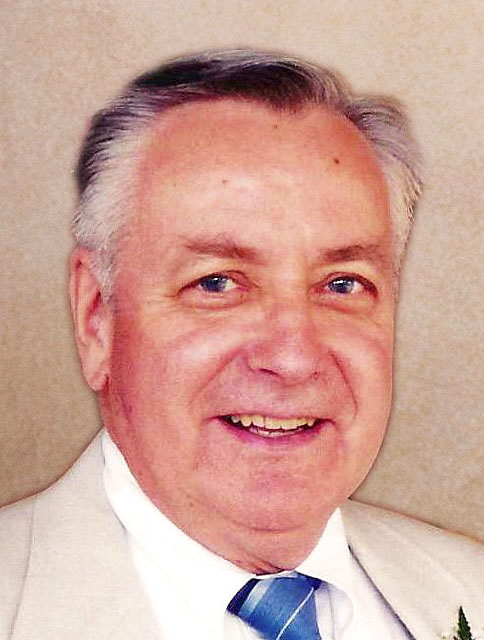
The barn at Sheboygan Falls, Wisconsin told you everything you needed to know before David said a word. Row after row of Registered Holsteins — deep-bodied, long-lived, heavy-producing — every one of them the product of a deliberate decision, a studied pedigree, and an eye that took decades to build but never could be fully explained. David Bachmann Sr. didn’t manage cattle. He read them. And for more than 50 years, what he read in them left a mark on the Holstein breed that no ribbon count will ever fully capture.
He was, simply put, one of the greatest dairy cattle breeders America has ever produced.
Where It All Began
In 1950, brothers David and Peter Bachmann purchased a farm from their grandfather, Peter Reiss, outside of Sheboygan Falls, Wisconsin. It wasn’t a grand beginning — just land, a family name, and two young men willing to work. What followed was the product of an eye that couldn’t be taught, a work ethic that never quit, and a quiet, unrelenting belief that every cow in the barn could be better than she was yesterday.
Over the decades, David purchased additional land, added new buildings, and transformed that modest homestead into an 800-acre operation carrying 300 Registered Holsteins. The numbers tell part of the story. But what Pinehurst Farms truly became was a standard — and that standard was built on something specific: a herd of extraordinary consistency, generation after generation, that breeders whispered about with reverence at shows from Harrisburg to Fresno, from Madison to Toronto.
The Eye That Couldn’t Be Taught
What set David apart wasn’t just ambition. It was something rarer — the ability to look at an unproven cow and see the champion inside her. Holstein Association USA described it plainly when they honored him with the 2019 Elite Breeder Award: David had “the uncanny eye to find a ‘diamond in the rough,’ take her home and turn her into a class winner.”
He built Pinehurst’s herd around a clear philosophy: longevity, high lifetime production, and superior type — all three, not a compromise between them. The proof was in the pedigrees. His ability to develop long strings of Excellent cows backed by outstanding production records attracted buyers from across North America and overseas — an export program that would eventually send Pinehurst genetics to Europe and beyond, often at prices that dwarfed what domestic buyers were paying. His most celebrated contribution was the Audrey Posch EX-93 GMD cow family — a lineage he developed into an uninterrupted 20-generation group of Excellent females, a dynasty within a dynasty. That kind of depth doesn’t happen by accident. It happens because one man, for over five decades, made the right call, again and again.
He loved the bull side of the business too. Pinehurst Peerless was his first All-American bull — and the launch of an export program that would go on to fund show campaigns and carry Pinehurst bloodlines into herds around the world.
1976: The Year the World Stood Up and Took Notice
If there was a single chapter that defined Pinehurst Farms for the world, it was 1976. The year was mapped out with cold-blooded precision — ten shows, five months, a blended string of homebred and purchased cattle, and a crew of young, eager handlers that included showmen Nelson Rehder, David Brown, and Danny Weaver. The plan wasn’t glory for its own sake. Each animal loaded on that semi had a defined purpose: individual ribbons, group classes, and the promotion of herd sires destined for export at prices that would dwarf the cost of the entire circuit.
It covered 10,008 miles. From Manitowoc to Lancaster to Des Moines to Harrisburg to Fresno.
The result was historic. Pinehurst became the first farm in history to be named Premier Breeder and Premier Exhibitor at all three national shows — Eastern, Central, and Western — in the ten-year history of the three-National format. They repeated the feat again in 1980.
The cattle that made it happen are the stuff of breed legend. Pinehurst Debonair — a son of homebred Pinehurst Copyright — was described as “as close to perfection as you could ever get,” a big, straight, long calf with style to burn and an incredible wide, deep, open rib, undefeated through the entire year. Then there was Jan Com Fond Matt Matilda EX-97, David Bachmann Jr.’s own 4-H cow, purchased as an unproven mature cow at World Dairy Expo in 1974. “If you didn’t like Matilda,” wrote Norm Nabholz, one of the men who showed her, “you didn’t like cows.” All white, easy as a summer morning, loved by everybody — and Matilda returned the good feelings.
The sale of just one animal from that string — Deppings Royalty Sunset, sold to the Rossetti family of Italy before the Royal Winter Fair — paid for the entire year’s show expenses. The plan had worked exactly as David drew it up. Of course it had.
The photo taken after the Western National win made the cover of Holstein World — the first cover in the magazine’s history to feature people with no cattle in the frame. By then, the people of Pinehurst Farms had become the story.
A Legacy Written in Ribbons — and in People
Over more than 50 years, the Pinehurst scorecard reads like a chapter from dairy industry folklore:
- 200+ All-American nominees
- 50+ All-American and Reserve All-American awards
- Premier Breeder or Exhibitor honors at 20 national shows
- World Dairy Expo Grand Champions in four different breeds, two named Supreme Champion
- 2013 Herd of Excellence award winner
How many farms in this industry have ever come close to half that list?
That question answers itself. And behind every number on it was the same man, making the same kind of quiet, deliberate decisions he’d been making since 1950.
He served on Holstein Association USA’s Board of Directors from 1986 to 1994, chaired the finance committee for two years, and served three years on the executive committee — contributing to the governance of the very organization whose standards he’d spent his career exceeding. More than that, he gave freely of what couldn’t be taught in a classroom — his knowledge, his eye, his time. As Holstein Association USA noted at the 2019 Elite Breeder Award presentation, “many young breeders have gained expertise from his guidance and support.”
The quiet word about a pedigree. The gentle correction on how to read a cow. The phone call taken when it didn’t have to be — and the conversation that lasted an hour longer than the caller expected, because David Bachmann never gave half an answer to a genuine question.
What He Leaves Behind
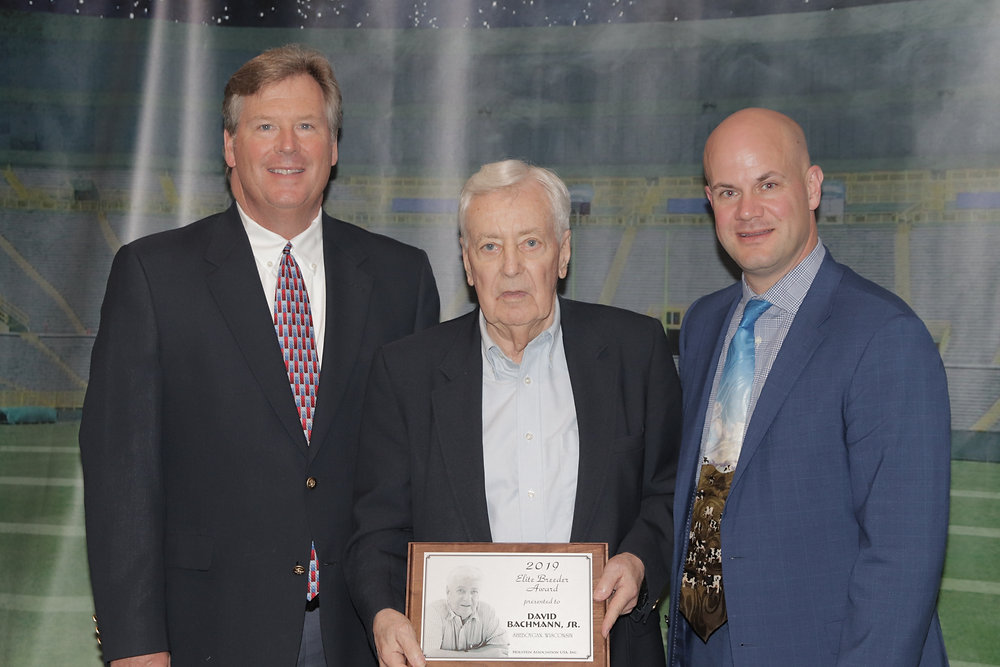
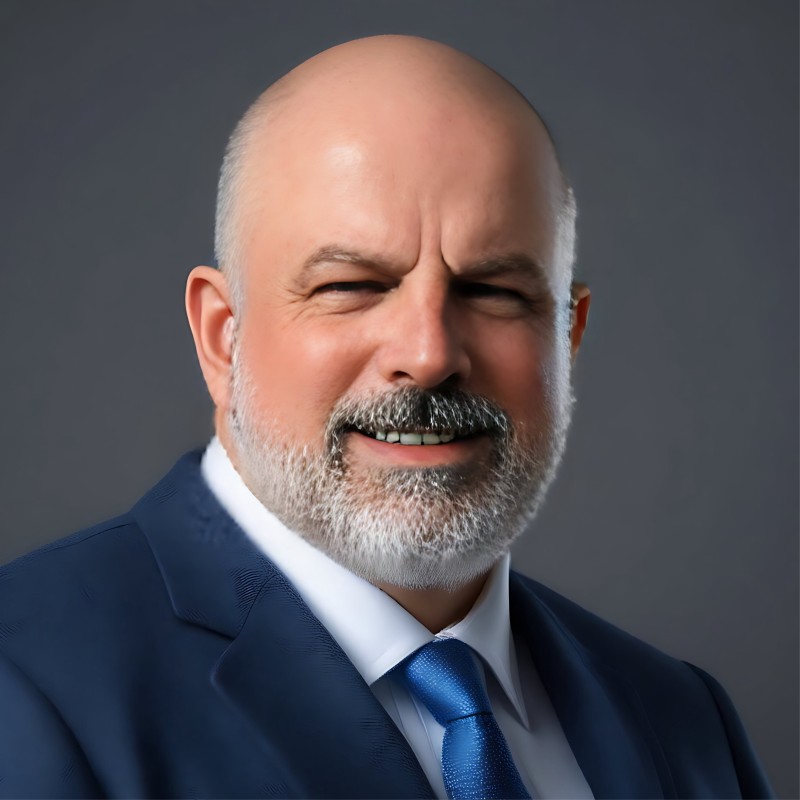
The 2019 Elite Breeder Award — presented at the National Holstein Convention in Appleton, Wisconsin, with Holstein Association USA CEO John M. Meyer and President Corey Geiger at his side — was the industry’s formal acknowledgment of what those who knew him had understood for decades. The photo shows a man at ease with the honor, because he’d been earning it his whole life.
Am I being as honest with my cattle as he was?
That’s the question David Bachmann Sr. leaves hanging in every barn that ever aspired to what Pinehurst was. He leaves behind not just a farm, not just ribbons, not just genetics — but a way of seeing. A belief that the best cow you’ve ever bred is only the foundation for the one you’ll breed next. He leaves behind the young handlers who loaded that semi in 1976 and drove 10,008 miles in pursuit of something they believed in. The breeders who picked up the phone and got more than they bargained for. The families who walked through the barn at Sheboygan Falls and left changed.
And he leaves behind the people who knew the man behind the ribbons. David is survived by his wife Diane; his son David Bachmann Jr., and David Jr.’s former wife Brenda Blum; their children Christopher, Matthew (Lauren), and Alexandra Bachmann; and Matthew and Lauren’s grandchildren Eleanor and Evander. He is also survived by his companion of 40 years, Nancy Thomson, and their children Laura (Nathália de Oliveira) Bachmann and Robert (Sarah Hadley) Bachmann.
They knew the David that the showring never fully showed — the father, the grandfather, the partner who came home after 10,008 miles and still had more to give.
Goodbye to a Giant
That semi left Sheboygan Falls in 1976 carrying something no one had ever brought home before. It came back with history. And the man who planned every mile of that trip spent the next 50 years proving it wasn’t a fluke — it was just who he was.
The dairy industry doesn’t produce men like David Bachmann Sr. on a schedule. They arrive rarely, leave marks that last generations, and when they’re gone, you feel it in the silence at the showring — in the blank space where his name belongs on a class entry form.
He was brilliant and calculating, but never cold. He was demanding, but generous. He was fiercely competitive, but he understood that the breed was always bigger than any one farm — even his.
Rest easy, David. The cattle you bred will carry your name forward. And the breeders you shaped will carry the rest.
— The Bullvine
The Sunday Read Dairy Professionals Don’t Skip.
Every week, thousands of producers, breeders, and industry insiders open Bullvine Weekly for genetics insights, market shifts, and profit strategies they won’t find anywhere else. One email. Five minutes. Smarter decisions all week.