



Archive – Page 8

The Robotics Revolution: Embracing Technology to Save the Family Dairy Farm

See how robots are changing family dairy farms. Can machines help farms last and bring in young farmers? Find out what the future holds. 

Amidst the quiet fields of Wisconsin, the Bauer family has been dairy farming with their herd of Holsteins for many years. However, the future looks challenging with fewer workers available and rising costs. Their situation is similar to many others. In this shrinking landscape, robotics offers a glimmer of hope, providing a way to survive and thrive. For families like the Bauers, using technology is essential to keep their tradition alive while facing today’s challenges.

YearNumber of Family Dairy FarmsPercentage DeclinePrimary Factors
1970640,000
1985300,00053.1%Industrialization, Milk Quotas
2000107,00064.3%Global Market Pressures
201051,00052.3%Regulations, Economic Downturn
202340,00021.6%Labor Shortages, Rising Costs

Navigating the Storm

The dairy industry today faces a significant challenge. Labor shortages make it difficult for farms to work well, and many family-owned dairy farms struggle to find enough skilled workers. Unpredictable milk prices change frequently, making it challenging for farms to keep going. This financial uncertainty is a real problem for many family farms

Another issue is that production costs are rising. This includes the cost of feed, maintenance, and following environmental regulations. All these added expenses cut into the farms’ profits, and some are close to shutting down. Family dairy farms have been vital to rural communities, representing a tradition of working with the land and animals. They’ve supported families for generations, creating bonds with their surroundings. But now, these farms are under more pressure than ever before. 

While introducing new technology requires investment and change, it also offers significant benefits. Technology can help achieve environmental goals more effectively, which incur costs and affect farm management strategies. These issues underscore the urgent need for substantial changes in the industry’s operations. As the dairy sector grapples with these challenging times, adopting new technologies like robotics could be the key to survival. This could help family farms preserve their traditions, meet modern needs, and thrive in the future.

Facing Reality: The Trials of Family Dairy Farms

Despite these significant challenges, family dairy farms, once the backbone of rural life, remain firm. They face complex issues, particularly in finding and retaining skilled workers. Farmers are overworked, and fewer workers impact their efficiency and quality. Many have increased their herds to stay profitable, which adds to their problems. Larger herds mean more work and strain, leading to tired farmers and worse animal care. However, their resilience and determination to adapt to the changing landscape of dairy farming are truly inspiring. It’s this resilience that gives hope for the future of dairy farming. 

In addition, farms must follow stricter environmental rules regarding waste and pollution. They must also examine their eco-footprint and adopt practices that meet today’s environmental standards, which adds more financial and logistical pressures. 

There is an urgent need to find new solutions. Technology, especially robotics, offers a way forward. It can smooth operations and lessen dependence on human labor. With these innovations, family dairy farms can survive the storm, keeping their legacy alive while adapting to a new world. 

The Arrival of Automation: Revolutionizing Dairy Farming 

Introducing automatic milking systems is changing how dairy farming works, bringing new technology to traditional practices. As old methods struggle with current challenges, automation gives hope to family dairy farms. These systems have robotic arms with sensors that clean and attach milking cups to cow udders. When a cow enters the milking station, sensors decide the best time to start milking, reducing stress and improving yield. Intelligent software oversees the process, giving each cow special attention based on health and past data.

A significant benefit is that robots can work nonstop, unlike humans. This allows cows to be milked multiple times daily based on their natural needs, increasing milk production and improving animal welfare. Cows choose when to be milked, reducing anxiety and enhancing herd well-being.

Automatic milking systems offer more than just efficiency. They blend data-driven decisions with animal care, creating a better workflow that helps both farmers and cows. This mix of technology and tradition opens up possibilities for ongoing success in dairy farming.

Benefits of Automation in Dairy Farming

Robotic milking systems and automation are becoming key tools in modern dairy farming. They help family farms face tough times by using technology to improve and make work easier. These systems change how dairy farms operate, making them more efficient and sustainable. 

  • One significant advantage of robotic systems is that they work 24/7, providing constant milk production. This nonstop work boosts efficiency and helps farms produce more milk without relying on human labor. It also reduces labor costs, freeing farmers to focus on other essential farm tasks. The results are precise: farms using robotic milking systems see a 5-10% boost in milk production [source]. Over time, the increased productivity and reduced labor costs can offset the initial investment in these systems, making them a sound economic choice for dairy farms.
  • Robotic milking is also better for cow welfare. Cows can choose when they want to be milked, lowering stress compared to regular milking schedules. This freedom makes cows healthier and can increase milk yields. Moreover, these systems are designed to be environmentally friendly, with sensors that collect data about milk quality and cow health. These sensors give valuable insights into farm performance and reduce the farm’s ecological footprint. 
  • Technologies like the Lely Astronaut and DeLaval VMS are leading the way. The Lely Astronaut focuses on each cow’s needs by feeding them the right amount. DeLaval’s VMS stresses flexibility and productivity, letting farms tailor settings to their needs. These tools show the future of dairy farming, mixing function with the latest research for modern needs. 

In this era of technology, adopting robotic systems is crucial for family dairy farms to continue to thrive. Technology’s potential to rejuvenate the industry and attract a new generation of farmers makes us optimistic about its future. With the right tools and strategies, the dairy farming industry can survive and thrive in the face of modern challenges. 

Challenges and Considerations

Switching to robotic milking systems comes with its own set of challenges. First, the start-up costs are high. A single milking robot costs between $150,000 and $200,000, which can be a significant expense for family farms. Learning to use this new technology also takes time and effort. Farmers who are used to traditional methods must learn about robotics and how to use data, which requires training and patience. 

Farms might also need to change layouts to accommodate the new robotic systems. Many barns built for older methods aren’t ready for robots, which means extra costs and planning during the switch. Another critical issue is keeping the robots running smoothly. Regular maintenance and the chance of breakdowns can interrupt daily farm activities, making good technical support crucial.

Adding robotic systems requires farmers to change how they manage their operations. They must learn new skills to handle these advanced machines, including training to run and fix the robots safely and efficiently. 

Learning to use robotic technology can also be challenging at first. Farmers need to watch how cows behave to ensure they are getting used to the new systems. Having someone ready to fix problems quickly is essential so there is as little downtime as possible. 

Robotics are expected to remain a key part of dairy farming, so farmers must keep learning about the latest advancements. Over time, many farmers have found that robotics improves technology, makes labor more efficient, boosts animal health, and helps improve the quality of life for the farm family and workers.

Unlocking Financial Benefits: ROI of Robotic Milking Systems

The return on investment (ROI) for robotic milking systems (RMS) in the United States can benefit many dairy farms. Here’s a simple look at the factors affecting ROI: 

Initial Investment and Costs 

Upfront costs for RMS are high: 

  • Each robot costs $150,000 to $200,000 and can handle 50-70 cows.
  • A new facility with four robots (240-280 cows) can cost $2.2-$2.4 million, including building and robots.

Extra costs include: 

  • Repair and maintenance, usually $7,000-$15,000 per robot yearly.
  • Possibly higher insurance and energy bills.

Labor Savings 

RMS can save on labor: 

  • Savings can be 75 cents to $1 per hundred pounds of milk.
  • Studies show labor savings of up to 29%.
  • Annual labor cost savings may reach $44,030 for a typical farm.

Milk Production and Quality 

RMS can boost milk production and quality: 

  • Milk yields can rise by 5-10% after switching to RMS.
  • Some farms see increases from 7,000 to 9,000 liters per cow annually.
  • Better milk quality can fetch higher prices.

Cow Health and Longevity 

RMS can improve cow health and lifespan: 

  • Less lameness and healthier teats.
  • Cows might have longer productive lives.

Payback Period and ROI Calculation 

The payback time for RMS can differ: 

  • Some estimates say a 7-year payback time.
  • ROI may be better for farms milking twice a day instead of three times.

To figure out ROI, consider: 

  • Higher milk production
  • Labor savings
  • Changes in running costs
  • Better cow health and lifespan

Factors Affecting ROI 

Things that can impact the ROI of RMS: 

  • Size of the herd and farm management
  • Current labor costs and availability
  • Milk prices
  • Loan terms and interest rates
  • Lifespan of the equipment (usually 10-13 years)

Although the initial investment in RMS is high, many U.S. dairy farms find the long-term benefits worth it. ROI can be handsome for farms with labor shortages or those wanting to improve cow welfare and milk production efficiency. However, each farm’s situation differs, so a detailed financial analysis is essential before investing.

Case Studies: Successful Implementations

Despite these challenges, many farms have successfully added robotic milking systems, showing how technology can transform dairy farming: 

  • Hinchley Dairy Farm, U.S.: Tina Hinchley faced labor shortages and high costs at her family farm. They installed Lely robots for tasks like milking and feeding. This brought a significant 10% boost in milk production. Cows now choose when to be milked, which helps their health. The farm became more efficient, tackling big financial and labor problems.
  • Elliot Family Farm, U.S.: This family farm in the U.S. uses 20 DeLaval milking robots, which cut work costs and increase milk production by 10%. These robots help keep cows healthy and milked regularly. The farm also reduces waste, using resources wisely to meet eco-friendly demands. 
  • The Casey Family Farm, Co Ireland: The Casey Family Farm used GEA’s robotic milking systems to reduce labor needs by 25%. This change saved money and improved cow health, which was threatened by a lack of help. Automation allowed the farm to focus more on managing the farm, overcoming the labor crisis, and achieving farming excellence.

The Crossroads: Traditional vs. Robotic Milking Systems

 Traditional Milking SystemsRobotic Milking Systems
Labor IntensityRequires significant manual laborMinimal manual intervention is needed
Operational CostsLower initial cost, higher labor costs over timeHigher initial investment, lower labor costs
Milking FrequencyFixed schedule, typically twice a dayFlexible, as cows can choose timing
Animal WelfareDependent on human managementEnhanced through more natural milking routines
Data CollectionLimited manual data recordingAutomated real-time data analytics

Every dairy farm has a big choice: traditional or robotic milking systems. This choice affects daily work and the farm’s future success. Traditional milking needs much human help and fixed schedules, which can stress cows and affect their health (source). Robotic systems, on the other hand, let cows be milked when they want, improving their health and reducing stress. 

  • Labor Efficiency: Traditional milking requires many workers, but robotic systems reduce the need for manual work.
  • Cow Welfare: Traditional systems make cows follow a fixed schedule, while robotic systems allow them to milk whenever they like, reducing stress.
  • Data Use: Traditional milking gives limited information, but robotic systems use sensors to provide real-time data about cow health and milk quality.
  • Initial Cost: Robotic systems are expensive, which can be challenging for small farms. Traditional systems cost less upfront.

These differences show how robotics can change dairy farming. Robotic systems can increase efficiency and sustainability for those ready to try something new. However, switching to these systems requires careful consideration of costs and changes in farm operations.

Future Outlook for Robotic Dairy Farming

When we consider the future of dairy farming, combining robotics and artificial intelligence promises significant changes. This isn’t just about new technology; it’s about changing old ways. Francisco Rodriguez, an expert in robotic milking, says, “We’ve seen great improvements in herd health and productivity, along with easier management due to detailed analytics.” His thoughts show how valid real-time data can be. 

New ideas are coming that will change dairy farming, such as: 

  • AI-Driven Health Monitoring: These systems change how farmers manage herd health. By constantly monitoring the herd’s health, they spot problems early so farmers can act quickly. This helps prevent diseases from spreading and keeps animals healthy. Healthier cows produce better milk, making these systems beneficial for animal welfare and farm productivity.
  • Predictive Maintenance for Robots: AI helps farmers predict when robotic equipment might break down. This allows them to fix problems before they occur, reducing stoppages and making machines last longer. This means the farm runs smoothly, and milking happens without disruptions. 
  • Precision Agriculture Integration: AI and precision farming work together to use resources like water and feed more efficiently. This targeted use cuts waste, increases sustainability, improves farm profits, and reduces environmental impact. As these techniques grow, farms will benefit more.

These advancements allow family farms to stay financially strong and show they care for their animals and the environment. With every new idea, the future of dairy farming gets brighter, ready to face the modern agricultural world

The Bottom Line

Adopting robotic milking systems is a significant change for family dairy farms. The challenges might seem harsh, but the benefits—better efficiency, improved cow health, and a better work-life balance for farmers—are enormous. In today’s dairy world, these technologies are crucial for farms that want to succeed. Robotic systems for family farms like the Bauers keep traditions alive while meeting modern needs. By carefully looking at costs and planning, dairy farmers can lead this tech revolution, ensuring a promising and prosperous future for the next generations. Embracing this new tech is not just an option; it’s crucial for securing the future of dairy farming. 

Key Takeaways:

  • Family dairy farms face increasing challenges like labor shortages and rising production costs.
  • Robotic milking systems offer 24/7 operation, increased efficiency, and significant labor savings.
  • Automation increases milk production and enhances cow welfare and work-life balance for farmers.
  • High initial investment and necessary technical skills are barriers to adopting robotic systems.
  • Successful case studies highlight the transformative potential of automation in dairy farming.
  • Future AI and machine learning advancements will further optimize dairy farming operations.
  • Embracing robotics is crucial for family dairy farms’ future sustainability and profitability.

Summary: 

This article explores how robotic milking systems are changing family dairy farms, which face problems like labor shortages, high costs, and the need for more sustainable practices. Using automation, these farms can work more efficiently, take better care of animals, and appeal to younger people, helping them stay profitable. The article discusses the benefits of robotics, such as increased milk production, improved work-life balance, and better sustainability. It also shares successful examples of farms using this technology while noting challenges like high costs and the need for training. Embracing robotics is essential for family dairy farms to succeed amid today’s agricultural challenges.

Learn more:

Join the Revolution!

Bullvine Daily is your essential e-zine for staying ahead in the dairy industry. With over 30,000 subscribers, we bring you the week’s top news, helping you manage tasks efficiently. Stay informed about milk production, tech adoption, and more, so you can concentrate on your dairy operations. 
NewsSubscribe
First
Last
Consent

The War on Milk: How Liberal Elites Are Trying to Destroy Your Livelihood

Dairy farmers fight to save their way of life. Will they win against plant-based milk and big corporations?

Plant-based milk, such as almonds and oats, has grown by more than 450% in the past ten years. This rapid growth poses a significant threat to rural jobs, as traditional dairy farming, essential to small-town life, struggles against the new ‘milk’ sold as healthier. The increasing competition means shoppers have more choices, but it’s not just about losing sales; it’s about losing our farming communities. 

Urban elites push these fake milks, cutting into sales and threatening family farms that have supported us for generations. John, a third-generation farmer, warns that losing traditional dairy means losing our culture and history. The stakes are high. If the move against real milk continues, we risk losing more than just what’s in our glasses; we risk losing an integral part of our cultural heritage. 

Dairy farmers face a significant threat, but we must remember that we are not alone. We must unite with strength and action to protect our future and lifestyle. Together, we can overcome this challenge.

The Silent Siege

The fight against milk feels like a threat to country life. It’s a big deal for many farming towns because it’s their primary way of living. Picture the countryside with green fields, cows, and milk trucks on the road in the morning. This tradition is slowly going away. Big companies are selling lab-made milk instead. They say it’s healthier and better for the environment. But if you look closely, these products don’t have the natural goodness of real milk. They’re made in factories with extra chemicals. 

Small-town dairy farms are about more than just jobs; they’re built on years of hard work and family ties. But plant-based options from big companies are becoming popular. This change could replace personal, local farming with big, impersonal businesses. 

The effects are harsh. Choosing factory-made “milk” instead of real milk weakens the social fabric and hurts the economy in these towns. Jobs disappear, economies shrink, and lively rural communities face an uncertain future.

The Assault on Tradition 

For years, milk has been more than just a drink in America. It was a key part of life, providing jobs and steady incomes, and was common in schools and homes. New options like almond, soy, and oat milk now claim to be just as good and better for the planet. Critics focus on the environmental cost of dairy farming. However, skipping over milk’s essential vitamins and nutrients misses much of its value. Also, new farming methods can help reduce pollution, like capturing methane and saving water. Dairy farming is getting greener. Do we need to give up old traditions and real health benefits for a view that ignores dairy’s improvements?

The Real Agenda: Control Through ‘Milk’ 

The rise of plant-based “milk” is more about control than health or the environment. Some influential groups want to weaken the family farm, the heart of American farming. These plant-based drinks claim to be healthier and better for the planet, but they want to change how we make food. 

Emily Lang from the National Milk Producers Federation says, “It’s about changing agriculture’s foundation.” By pushing these alternatives, they try to take power away from small farmers, giving it to big corporations instead. This change could have huge effects. Replacing family farms with big corporate ones harms local economies and rural communities. Big farms care more about profits than quality and tradition. Family farms value heritage, but big corporations produce heavily processed food. 

John, a third-generation dairyman, says, “They’re not just targeting our sales; they’re going after our livelihoods.” He fears that if big companies take over, farmers will lose their freedom and history. The push for plant-based products is less about diet and more about shifting power and money in the food industry, threatening the future of traditional farming.

Nutritional Superiority of Real Dairy 

NutrientReal Milk (per 8 oz)Almond Milk (per 8 oz)Soy Milk (per 8 oz)
Calories150 kcal30 kcal80 kcal
Protein8 g1 g7 g
Calcium300 mg450 mg299 mg
Vitamin D120 IU100 IU120 IU
Fat8 g2.5 g4 g

Real dairy is a nutrient powerhouse. A single glass of full-fat milk delivers crucial minerals like calcium and vitamin Dthat support bone strength as we age. Cow’s milk packs approximately 276–352 milligrams of calcium along with  B12, riboflavin, and minerals such as phosphorus and potassium. It boasts 13 essential nutrients, including vitamins A, vitamin D, and potassium.

On the other hand, plant-based milks like almonds, soy, and oats claim to be “healthier.” But let’s look closer. Almond milk often has only 30–40 calories and just 1 gram of protein per cup, while cow’s milk has 8 grams. Although plant-based milks are usually fortified with calcium and vitamin D, they lack the natural benefits of dairy. 

Many plant-based drinks add artificial vitamins, minerals, or other ingredients to improve taste and texture. These might include sweeteners or thickeners like carrageenan, which could cause digestion problems or inflammation [source: Harvard T.H. Chan School of Public Health]. 

In a world that favors quick options over natural nutrition, milk provides an irreplaceable source of nutrients without added chemicals. Its natural goodness can’t be copied.

Environmental Impact: Setting the Record Straight 

People who promote plant-based drinks often say that dairy farms hurt the environment. But the truth is a bit more complex. All types of farming affect the environment. Modern dairy farms have worked hard to be more eco-friendly. Studies show they’ve reduced greenhouse gases by up to 20% by better handling manure and feeding cows. They also use water and land more wisely, getting more from less, with precision farming techniques.

On the other hand, making plant-based milk also harms the environment. For example, almond milk requires a lot of water, worsening California’s drought. Research shows that almond farms use more water than some dairy farms. Growing soybeans and oats in small areas can harm the soil and native animals. This indicates that plant-based drinks aren’t always better for the environment. 

The carbon footprint of dairy milk can be 30% less than some plant-based alternatives like almond milk. A study from the University of Oxford shows that almond milk may use less land, but it requires a lot of water and produces carbon emissions similar to dairy milk. It’s important to consider these environmental factors when choosing which one to buy. [source]

Dairy farms must keep improving to be more sustainable. Ignoring their progress means ignoring the challenges of growing food responsibly. As people learn more about the environment, being open and trying new things in all types of farming will help everyone make better choices.

Fighting Back: Uniting to Preserve the Dairy Legacy 

The ongoing debate about truth in the dairy industry continues as farmers and business groups fight against false claims. They are working hard to educate people on the real benefits of milk. One effort by the Real Milk Alliance is through conventions and workshops nationwide. These events show live comparisons of real milk’s quality against plant-based options. 

“It’s amazing what people learn about real nutrition,” says Sarah Lee, a leader of these events, “when they see true nutrition facts.” The Dairy Farmers of America also started the Milk Truth Initiative, which uses social media to dispel myths and share facts about milk. This project uses stories from real dairy families to explain why milk is essential. 

Because of this, more support and milk drinking are becoming essential in certain areas. A dairy farmer, Tim, notes, “People in my community are supporting us and choosing real milk.” These inspiring success stories show the community’s strength and dedication to progress.

Action Steps for Dairy Warriors: Grassroots Mobilization for Change

As dairy farmers, you are defending your farms and lifestyle. Now is the time to act. Here are some ways you can protect the future of dairy farming: 

  • Contact local and federal officials. Ask them to support policies that help rural communities and the dairy industry. Make sure the government hears your voice.
  • Educate your neighbors about the value of real milk. Use social media to share facts and correct myths. Hold meetings to share the proud history of dairy.
  • Join groups that advocate for farmer-friendly policies. These groups have the resources and influence to support dairy’s future.
  • Work together with other farmers in your area. Combine efforts to inform the public and form strong opinions. Being united gives farmers more power. 

Getting involved can help keep dairy an essential part of our national and rural identity. By being committed and working together, we can ensure that this way of life lasts for future generations.

The Bottom Line

The dairy industry is in danger because of a global push for plant-based alternatives. This “war on milk” isn’t just about new products—it’s a plan by certain groups to replace family farms with big corporations. They say these new products are healthier and better for the environment, but they forget that real dairy has essential nutrients and a deep history. 

Saving our way of life means more than fighting false claims. It’s about protecting rural communities and the traditions they’ve built over many years. The need is urgent: America cannot lose its dairy farmers. Your involvement is key. Stay strong, get informed, work together locally, and ask for leaders who respect our farm history. 

Together, we can stop this threat and secure a future for the dairy industry, a big part of our nation. Join us, support your fellow dairy farmers, and protect our shared history.

Key Takeaways:

  • Liberal elites are perceived as waging a war on traditional dairy by promoting plant-based alternatives.
  • This movement is seen as threatening family farms, risking their replacement by corporate mega-farms.
  • Anti-dairy claims argue that plant-based “milk” offers health and environmental benefits, though they reportedly lack real dairy’s natural nutrients.
  • Dairy farmers fight these narratives by educating consumers and advocating for industry-supportive policies.
  • Action is encouraged among dairy farmers to protect their livelihoods, involving political engagement and community awareness efforts.
  • The battle over dairy’s future is framed as a broader cultural and economic struggle that impacts rural America’s way of life.

Summary:

The global war on milk is a growing threat to America’s dairy farmers, driven by liberal elites who promote plant-based alternatives. These elites argue that milk is sour for our health and the planet, but this seems more about control than truth. They want to replace family farms with big corporate farms. Plant-based drinks like almond and oat milk have risen by over 450% in the past decade, hurting sales for traditional dairy. These fake milks, pushed by urban elites, threaten small farms that have supported communities for generations. Real milk offers essential nutrients like calcium and vitamin D, crucial for strong bones, unlike plant-based drinks that are often low in protein. It’s vital to stay informed, work together, and seek leaders who support our farming heritage to protect our way of life.

Learn more:

Join the Revolution!

Bullvine Daily is your essential e-zine for staying ahead in the dairy industry. With over 30,000 subscribers, we bring you the week’s top news, helping you manage tasks efficiently. Stay informed about milk production, tech adoption, and more, so you can concentrate on your dairy operations. 
NewsSubscribe
First
Last
Consent

Daughter Pregnancy Rate (DPR) vs. Cow Conception Rate (CCR): Which will help you improve your herd’s fertility?

Learn the main differences between DPR and CCR in dairy cow fertility. How can these measures improve your herd’s breeding success and profits?

Think about dairy farming as solving a puzzle, where you want high milk production and healthy cow fertility. In the 1990s, breeders focused more on milk fat and protein, but this caused fertility problems. Cows had longer gaps between giving birth, which resulted in reduced productivity and profit. Today, we aim for balance, and tools like the Daughter Pregnancy Rate (DPR) and Cow Conception Rate (CCR) help us understand fertility better. However, it can be challenging to determine the appropriate times to use these tools and to distinguish between their unique functions. This article allows farmers to balance producing milk and keeping cows healthy to earn more money.

The Evolution of Dairy Cow Fertility Metrics

In the 1990s, the dairy industry focused on increasing milk production by selecting cows with higher milk fat and protein. However, this emphasis led to problems as cows became less fertile and required more time to conceive. By the early 2000s, a shift in strategy was necessary to address these fertility issues. 

YearAverage Milk Production (lbs/cow/year)% Improvement in Milk ProductionAverage Fertility Rate (%)% Change in Fertility Rate
199016,000 45 
200018,50015.63%42-6.67%
201020,0008.11%39-7.14%
202023,00015.00%36-7.69%

The introduction of the Daughter Pregnancy Rate (DPR) in 2003 offered a solution. The DPR predicts how frequently cows become pregnant every 21 days, enabling farmers to select bulls that produce more fertile daughters without compromising milk yield. In 2010, the Cow Conception Rate (CCR) was introduced to measure how likely cows are to conceive after insemination, allowing for more informed breeding decisions and improved herd health. 

Implementing DPR and CCR addressed the fertility challenges of the 1990s, resulting in healthier and more profitable dairy herds.

Delving Into Daughter Pregnancy Rate (DPR)

Daughter Pregnancy Rate (DPR) is a key measure in the dairy industry used to evaluate the fertility potential of dairy cows. It shows the percentage of non-pregnant cows that get pregnant every 21 days. This helps predict how well future daughters of a bull will become pregnant compared to the average. 

DPR calculation includes: 

  • Tracking ‘days open’ is the time from calving until a cow gets pregnant again.
  • Considering the waiting period after calving, this data can be turned into a pregnancy rate with a formula.
  • Looking at up to five lactations across different cows for a broad view.
  • Suppose the Predicted Transmitting Ability (PTA) for the pregnancy rate increases by 1%. In that case, it lowers ‘days open’ by four, showing potential genetic progress.

DPR is important for farmers who want to make their herd better over time. It’s included in key selection tools like Net Merit (NM$), Total Performance Index (TPI), and Jersey Performance Index (JPI). A study by the University of Wisconsin-Madison showed that raising DPR by 1% could make an average of $35 more per cow yearly.

However, DPR has its downsides. Its heritability is only 4%, meaning environment and management have a significant impact. Because of this, genetic progress is slower. Also, calculating the data needed for DPR can be challenging for some farmers.

The Precision of Cow Conception Rate

The Cow Conception Rate (CCR) is essential in dairy farming because it shows how well a cow can get pregnant. Unlike broader fertility measures, it measures how many inseminations lead to a confirmed pregnancy. This specific focus makes CCR valuable for checking if artificial insemination is working on farms. Its calculation is simple: it looks at the percentage of cows pregnant after being inseminated. This precise measure helps farmers evaluate their breeding plans quickly. Good CCR means fewer inseminations, which cuts costs and helps maintain steady calving, leading to regular milk production. This improves a cow’s overall productivity over its lifespan, showcasing the economic significance of CCR. 

Nevertheless, the Cow Conception Rate (CCR) presents challenges. It can be affected by factors like the cow’s health, semen quality, and the timing of insemination. These factors mean that CCR might not always be accurate, so farmers should consider them when interpreting CCR data. However, when used carefully, CCR helps improve dairy farming, supports genetic advancements, and promotes better breeding practices.

Cow Conception Rate (CCR) has even lower heritability, 1-2%. This means it’s even more affected by outside factors like breeding methods and cow health. Changing this trait with genetics alone is hard. Still, DPR and CCR are critical to improving the whole herd. Knowing how these traits are passed down helps farmers pick the right breeding goals and improve how they care for their cows to boost fertility.

Contrasting DPR and CCR

The Daughter Pregnancy Rate (DPR) and Cow Conception Rate (CCR) are critical for understanding dairy cows’ fertility. They measure different things, which affects how they are used. 

AspectDaughter Pregnancy Rate (DPR)Cow Conception Rate (CCR)
TimeframeExamine a cow for 21 days to determine whether she becomes pregnant.Examines each breeding attempt to decide whether or not it was successful.
ScopeIt covers overall herd fertility, including how well cows are detected in heat and inseminated.It focuses on whether each insemination results in pregnancy.
Genetic InfluenceMore about long-term genetic improvement focusing on genetics.About the immediate outcome and is more affected by factors like how well cows are managed.
Data RequirementsRequires extensive data, such as calving dates and the number of pregnant cows.It is more straightforward, requiring only information on whether inseminations worked.
Practical ApplicationsIt is excellent for long-term planning to improve cow genetics and reduce the time between calvings, helping keep cows healthy and farms profitable.It helps with quick decisions about breeding and shows how well an AI program is working, ensuring constant milk production.

Farmers use the Daughter Pregnancy Rate (DPR) and Cow Conception Rate (CCR) to help with breeding goals. Choosing bulls with high DPR scores improves herd fertility and encourages cows to give birth more often. This is usually combined with traits like milk production and disease resistance, which helps with herd health and long-term success

CCR shows how well cows get pregnant after insemination, which helps determine whether the expensive semen works. Watching CCR also helps plan when to breed cows, reduce the time without calves, and identify any food or health problems to increase productivity

Why Only Using Positive DPR Sires May Not Be The Best Strategy

Only bulls with a good Daughter Pregnancy Rate (DPR) might not be the best way to make cows more fertile. That’s because many things affect how well cows can have calves. First, DPR isn’t very reliable because only a tiny part, about 4%, comes from genetics. Weather, food, and care matter more for cows with calves. Also, sometimes bulls with good DPR might not be as good at producing milk, so it’s better to balance these traits for healthy cows. 

If you focus only on DPR, you could miss other vital traits like the Heifer Conception Rate (HCR) and Cow Conception Rate (CCR). These measures help understand how well cows can get pregnant. Plus, only thinking about genetics skips over essential factors like how cows are fed and cared for every day. Improving these areas can often boost how well cows reproduce faster and more effectively than just looking at their genes.

Another major problem with the Daughter Pregnancy Rate (DPR) is that it doesn’t account for the time farmers let cows rest before breeding, known as the voluntary waiting period (VWP). For example, suppose a farm lets high milk-producing cows wait longer before breeding. In that case, these delays can make their fertility look worse in the DPR calculations. This happened with the bull Lionel, whose daughters have a low DPR of -4.4 but a better Cow Conception Rate (CCR) of -0.3. Lionel’s daughters produce much milk, so owners let them keep milking longer before breeding them. Even though they get pregnant quickly once bred, the DPR unfairly lowers their fertility score because it doesn’t take this waiting time into account. Unlike DPR, CCR focuses on whether cows get pregnant, not when they are bred. Reflecting the shift from DPR to CCR, Holstein USA has reduced DPR’s importance from 0.4 to 0.1 and increased CCR’s from 0.1 to 0.4 in their fertility index. 

Embracing the Comprehensive Daughter Fertility Index

Farmers might consider using the Daughter Fertility Index (DFI) instead. DFI looks at more than just DPR, including calving ease and how often cows get pregnant, giving a better overview of a cow’s ability to reproduce. This helps farmers make better breeding choices, looking at the cow’s genetic traits and how well she fits into farm operations

In many places, the Daughter Fertility Index (DFI) is key for judging a bull’s daughter’s reproduction ability. DFI includes: 

  • Daughter Pregnancy Rate (DPR): Measures how many cows get pregnant every 21 days, showing long-term fertility.
  • Heifer Conception Rate (HCR): How likely young cows are to get pregnant when first bred.
  • Cow Conception Rate (CCR): Examines how often adult cows get pregnant after breeding.
MetricContribution to Profitability
Daughter Pregnancy Rate (DPR)Reduces days open, leading to more consistent milk production cycles and lower reproductive costs, enhancing long-term genetic improvement.
Cow Conception Rate (CCR)Focuses on immediate pregnancy success, reducing insemination costs, optimizing calving intervals, and improving short-term financial margins.
Daughter Fertility Index (DFI)Combines genetic evaluations to target comprehensive fertility improvements, effectively balancing reproduction with production demands to maximize profit.

Looking at these factors, DFI gives a fuller picture of a bull’s daughters’ fertility, helping farmers make smart farm breeding decisions.

Harnessing Technology

The future of dairy farming is changing with new technology. Tools like automated activity trackers help farmers determine the best time to breed cows by watching their move. This helps make more cows pregnant, improving the Cow Conception Rate (CCR). For instance, devices like CowManager or Allflex watch how cows move and eat, helping farmers know when to breed. This can make CCR better by up to 10% in some cases. One tool, the SCR Heatime system, uses rumination and movement tracking to find the best times for breeding, potentially raising pregnancy rates by up to 15%. 

Additionally, AI-powered imaging systems give detailed insights into cows’ health. They help find health problems early, making the herd healthier and more fertile. For example, some farms use AI systems that combine this tracking data with other scores to improve breeding choices, potentially boosting overall herd fertility by up to 20%. 

Data analytics platforms are essential for managing herds. They help farmers understand large amounts of data and predict health and reproductive performance. Reducing open days or when a cow isn’t pregnant can improve the Daughter’s Pregnancy Rate (DPR). 

Using data helps make dairy farms more efficient and profitable. These new tools allow for better choices, leading the way to the future of farming as we approach 2025 and beyond.

Leveraging DPR and CCR for Enhanced Herd Management

In today’s dairy farming, using the Daughter Pregnancy Rate (DPR) and the Cow Conception Rate (CCR) helps improve herd management and make more money. Here’s how they can help: 

  • Use DPR for Future Improvement: Choose bulls with high DPR scores to slowly improve your herd’s fertility. This can help cows get pregnant faster and shorten the time they don’t produce milk.
  • Apply CCR for Fast Results: Focus on CCR to speed up breeding decisions. This ensures that cows get pregnant on time and continue producing milk efficiently.
  • Leverage the Daughter Fertility Index (DFI): The DFI is an overall measure that includes genetic and environmental factors and can boost reproductive performance and sustainability.
  • Adopt New Technologies: Use advanced tools like health monitors and AI systems for real-time updates on cows’ health and fertility. These tools let you act quickly to fix any problems.
  • Review and Change Plans: Always review and change your breeding plans to accommodate your farm’s changing needs and market conditions.

Using DPR and CCR data to improve your breeding program, you can boost your herd’s fertility, productivity, and long-term gains, ensuring success on your farm. Start by checking your current metrics and getting advice from a breeding expert to make a customized plan for your herd.

The Bottom Line

We’ve discussed two essential ways to measure fertility in dairy cows: Daughter Pregnancy Rate (DPR) and Cow Conception Rate (CCR). These are helpful tools for dairy farmers who want to get the most out of their cows, both now and in the future. Knowing when and how to use DPR and CCR helps farmers make smart choices that fit their needs. 

The main idea here is about picking the right ways to improve how cows reproduce. As farming changes, mixing old methods with new technology is essential. Doing so can lead to a better and more prosperous future. This approach is like standing at a crossroads, choosing between old practices and the latest technology. 

It’s time for dairy farmers to look at their plans for breeding cows. Using what they’ve learned can help them make better choices. Imagine a future where every cow is used to its full potential and every choice is based on data. Are you ready to solve the final piece of this puzzle and revolutionize your herd’s potential?

Key Takeaways:

  • Daughter Pregnancy Rate (DPR) and Cow Conception Rate (CCR) are critical fertility metrics in dairy cattle breeding. Each provides unique insights into herd reproductive performance.
  • DPR evaluates long-term fertility and genetic improvement but is criticized for its instability due to calculation methods based on herd management variables rather than direct breeding outcomes.
  • CCR offers a more immediate assessment of a cow’s conception success, making it a practical tool for evaluating breeding effectiveness and managing costs in dairy operations.
  • The shift from primarily focusing on milk production to integrating fertility metrics like DPR and CCR is crucial for enhancing the profitability and sustainability of dairy farming.
  • Technological advancements in reproductive analytics are reshaping the dairy industry, offering farmers new tools to optimize reproductive strategies and overall herd management.
  • Farmers must balance DPR and CCR based on their specific operational goals. DPR favors long-term genetic strategies, while CCR addresses immediate breeding outcomes.

Summary:

The article looks at two essential tools in dairy farming: Daughter Pregnancy Rate (DPR) and Cow Conception Rate (CCR). These help farmers decide how to breed cows for better fertility and milk production. In the past, dairy farming focused too much on milk, which hurt fertility. DPR helps understand long-term fertility, while CCR shows how likely a cow is to get pregnant now. New technology like activity trackers and AI can help make dairy farms more productive and sustainable. But be careful with DPR; it’s not perfect. DPR and CCR can help farmers make smart decisions to improve their farms.

Learn more:

Join the Revolution!

Bullvine Daily is your essential e-zine for staying ahead in the dairy industry. With over 30,000 subscribers, we bring you the week’s top news, helping you manage tasks efficiently. Stay informed about milk production, tech adoption, and more, so you can concentrate on your dairy operations. 
NewsSubscribe
First
Last
Consent

Milk’s Hidden Superpower: Boosting Brain Health from Pregnancy to Preschool

Learn how dairy supports brain health and growth in early life. Are you providing the right nutrition for a strong start for future generations?

Is the key to boosting a child’s brain power hiding in your fridge? Dairy plays a vital role in brain health and learning, especially during pregnancy and early childhood. With the dairy industry facing talks on sustainability and nutrition, understanding its effect on early brain development is more critical than ever. Join us as we examine how dairy helps during the first 1,000 days of a child’s life, a crucial time for brain growth. Could adding more dairy be a simple way to support young minds?

Nutritional Powerhouses in Dairy: Building Blocks of Brain Health 

Dairy foods are packed with essential nutrients that keep our brains healthy. Let’s look at these nutrients, which help during pregnancy, early life, and beyond. 

  • Vitamin B12 (Cobalamin): This vitamin is necessary for the brain. It helps form myelin, which protects nerve signals and helps them travel. Without enough, there can be brain issues.
  • Iodine: Iodine makes thyroid hormones crucial for brain growth and function. 
  • Choline: Choline helps make a neurotransmitter essential for memory. It also keeps cell membranes in good shape, allowing brain signals to work well. 
  • Zinc: Zinc helps the brain make new cells and connections essential for learning and memory. It also helps repair brain tissue. 
  • Protein: Protein provides amino acids, the building blocks for neurotransmitters and essential brain proteins, supporting brain growth and repair. 
  • Vitamin A: Known for vision and immune health, vitamin A helps with brain cell growth and function. 
  • Omega-3 Fatty Acids: Though not as common in dairy as in fish, they help brain structure and reduce inflammation. 
  • Calcium: Besides bones, calcium is vital for brain communication and muscle work. It indirectly supports brain health by ensuring good blood flow. 
  • Glutathione (GSH): This antioxidant protects the brain from damage. Dairy might help boost brain levels of this protective substance. 

These nutrients highlight the value of dairy products in supporting brain health and development. Including dairy in your diet can help maintain a healthy brain.

Nurturing Minds: Maternal Nutrition’s Impact on Fetal Brain Development

What a mom eats plays a big part in how her baby’s brain develops during pregnancy. Dairy foods are super important because they give key nutrients needed for this process. 

  • Iodine and Choline: Super Nutrients: Iodine helps make thyroid hormones crucial for brain growth. Without enough iodine, there can be significant brain problems. Choline helps build the brain and is essential for memory and learning (source). 
  • What Studies Show: Research shows that pregnant women who eat plenty of dairy have kids with better thinking skills. These kids do well in language and memory tests (source). 

This proves why having enough dairy in a mom’s diet is essential. Dairy is easy to find and inexpensive, making it a great source of nutrients that help make smarter, healthier kids.

The Power of Dairy in the Critical First 1,000 Days

The first 1,000 days of life, from conception to a child’s second birthday, are key to brain growth. Children’s brains grow fast during this time and set the stage for lifelong learning. What helps this growth? Dairy does! Dairy is packed with nutrients that are essential for cognitive development. 

The brain needs a steady supply of essential nutrients during the first 1,000 days. Dairy products provide a mix of proteins, vitamins, and minerals. They offer high-quality protein and healthy fats that help build and repair brain tissues. Vitamins like B12 and iodine in dairy are crucial for thinking and learning. Research supports the role of these nutrients in cognitive development. 

Studies show that dairy consumption boosts brainpower. Kids who eat dairy regularly often have better problem-solving skills and memory. Dairy helps with things like analyzing, remembering, and learning. This supports academic success later on.  For example, a recent study highlights the correlation between regular dairy consumption and enhanced cognitive abilities in children. [link]

Besides physical growth, dairy supports mental and neurological health too. By including dairy in the diets of young kids and pregnant women, we can ensure they get the nutrients they need for their brains to develop well. This gives kids a head start in life.

Essential Dairy Guidelines for Cognitive Excellence in Pregnancy and Early Childhood 

Dairy is vital for brain growth and cognitive health, especially for pregnant women and young kids. Here are some simple guidelines to follow:  

For Pregnant Women:  

  • How Much: Pregnant women should eat at least three servings of dairy daily, which helps them meet their extra nutritional needs.
  • Types of Dairy: Choices include milk, yogurt, and cheese. Each nutrient is essential for the mom’s health and the baby’s development.
  • Why It Matters: Dairy offers calcium for strong bones, iodine for brain growth, and choline for building the brain’s cerebral cortex. It also provides Vitamin B12 and protein, both key for making DNA and brain cells.

For Young Children:  

  • How Much: Kids aged 1 to 3 should drink 2 to 2½ cups of dairy daily. For kids aged 4 to 8, aim for 2½ cups each day.
  • Types of Dairy: Use milk, yogurt, and cheese in meals and snacks to meet these needs and introduce different tastes.
  • Why It Matters: Early years are crucial for brain growth. Dairy supplies essential nutrients like zinc and Vitamin A, which boost memory and learning. Zinc is vital for forming brain connections and improving thinking skills.

Following these guidelines ensures that dairy supports brain development and boosts cognitive abilities from an early age.

Exploring Dairy Alternatives: Nourishing the Non-Dairy Way 

If you can’t have dairy, there are good alternatives that try to match the nutrients found in dairy. Plant-based milk, non-dairy yogurt, and cheese are the main options for various dietary needs.  

Plant-based milks, such as soy, almond, rice, oats, and coconut, are popular replacements. Soy milk is known for its high protein content, similar to cow’s milk, and is excellent for keeping muscles strong. These milks are often fortified with calcium and vitamins like B12, essential for bones and nerves. However, not all plant-based milk contains the same nutrients as dairy, primarily amino acids crucial for growth, especially in young children. (Learn more about the nutritional content of plant-based milk in this scientific study on plant-based milk alternatives).

Non-dairy yogurts and cheeses made from soy, almond, or coconut aim to replicate the texture and taste of dairy. These alternatives are often fortified with calcium and vitamin D to mimic dairy’s bone benefits. However, they might not have as much protein, and a lack of iodine is vital for brain development and thyroid function.  (Additionally, explore how these options compare nutritionally with traditional dairy in this comprehensive review on milk alternatives and dairy)

If you don’t consume dairy, eating a variety of foods is crucial to get all the necessary nutrients. Eating fruits, vegetables, nuts, seeds, and legumes can help fill the gaps. You may also need to take supplements like vitamin B12 and iodine, especially if you’re on an entirely plant-based diet. Consult a nutritionist to ensure your diet covers all the essential nutrients usually found in dairy.

Navigating the Dairy Debate: Discovering Nutritional Equivalence in Alternatives

People often talk about which is better, dairy or non-dairy options, when it comes to nutrition. Dairy is known for having essential nutrients like calcium, vitamin D, iodine, and protein. However, non-dairy options are starting to catch up with similar nutritional benefits.  

  • Calcium and Vitamin D: Dairy is an excellent source of calcium, but plant-based milks like soy, almond, and oat are often fortified with the same amount as cow’s milk. For example, calcium-fortified soy milk can contain as much calcium as dairy milk. 
  • Protein Content: Dairy contains high-quality protein essential for growth. Soy milk has about 7 grams of protein per cup, similar to cow’s milk. Some plant milks have less protein, so eating beans, nuts, and grains is essential.
  • Iodine and Choline: Getting iodine from non-dairy foods is challenging unless they’re fortified. Seaweed and iodized salt are other sources. Choline, which is essential during pregnancy, can be eaten in combination with eggs and certain vegetables.

Getting the proper nutrients without dairy requires careful preparation. Fortified non-dairy products and foods like beans, seeds, nuts, and vegetables can help fill the gaps. Both dairy and non-dairy options have benefits, so a balanced diet supports brain health and cognitive development.

Unraveling the Complex Web of Cognitive Development

Dairy is good for brain health, but other things are crucial for brain development. The brain grows through the interaction of many influences. 

  • Genetic Influences: Our genes play a significant role in developing our brains. What we inherit can affect how we learn and solve problems. Some genes can change how we remember, talk, and focus. Even with a good diet, genetics remain essential.
  • Overall Diet Quality: Besides dairy, eating a balanced diet is also key. Eating fruits, vegetables, and whole grains helps dairy work better. Nutrients like folic acid, iron, and omega-3s support brain health. Eating a variety of foods can boost the benefits of dairy.
  • Environmental Factors: Our surroundings also shape brain development. Family income, education, and home life make a difference. Places rich in learning opportunities can improve cognitive skills.

These elements often influence cognitive growth, so it’s essential to consider all these factors when considering brain development.

Beyond Brain Health: Dairy’s Role in Holistic Development 

Dairy helps with more than just brain health; it also aids overall body development. The calcium and vitamin D in dairy is essential for bone health, helping to build strong bones and teeth, which are necessary as kids grow. The high-quality proteins in dairy support muscle development, giving children the strength to be active and enjoy learning through play.  

Zinc and vitamin A in dairy are crucial for a healthy immune system. A strong immune system helps kids fight off infections, so they miss less school and have more chances to learn. All these benefits work together to support the physical and mental growth needed for children to succeed in their learning environment.

The Bottom Line

Dairy is key for brain health and cognitive growth, especially in the first 1,000 days of life. Dairy products contain essential nutrients like protein, iodine, and choline that help the brain grow and work well. These nutrients boost cognitive skills and overall child development. 

Adding dairy to pregnant women’s and young children’s diets has clear benefits. It helps improve memory, learning, language, and focus. Following dairy intake recommendations can fill nutritional gaps and lay the groundwork for cognitive health. 

As more research comes out, it’s clear that dairy supports brain health. Are you ready to make dairy a core part of your nutrition plan to help future generations reach their full potential?

Key Takeaways:

  • Dairy products offer essential nutrients like vitamin B12, iodine, choline, zinc, and protein, which are crucial for brain development.
  • Regular dairy consumption during pregnancy can positively impact children’s fetal brain development and cognitive outcomes.
  • The first 1,000 days, from conception to age two, are critical for brain growth, and dairy nutrients like choline and iodine play significant roles.
  • Experts recommend specific dairy intake guidelines for pregnant women and young children to ensure optimal brain development.
  • Non-dairy alternatives such as soy or almond milk can supply similar nutrients, though they may require careful nutritional balancing.
  • Dairy products support holistic development, including bone health and immune function beyond cognitive growth.
  • Understanding and including dairy nutrients in the diet is pivotal for supporting the cognitive potential of future generations.

Summary:

Dairy products are vital for brain health and development, especially during pregnancy and the first 1,000 days of life, when a baby’s brain grows the most. They are packed with nutrients like iodine, choline, and B12, which support brain function. Studies show that pregnant women who eat dairy have children with better thinking and language skills. While some people choose plant-based alternatives like nut milk or non-dairy yogurt, these might not have as much protein or iodine, which is essential for brain growth. It’s critical to include at least three servings of dairy daily or find other ways to get these nutrients. Eating a balanced diet with fruits, vegetables, and nuts can help fill gaps. Dairy is affordable and easy to find, making it an excellent choice for building innovative, healthy kids.

Learn more:

Join the Revolution!

Bullvine Daily is your essential e-zine for staying ahead in the dairy industry. With over 30,000 subscribers, we bring you the week’s top news, helping you manage tasks efficiently. Stay informed about milk production, tech adoption, and more, so you can concentrate on your dairy operations. 
NewsSubscribe
First
Last
Consent

USDA’s New Milk Pricing Rules: What Dairy Farmers Need to Know

Find out how the USDA’s new milk pricing rules affect your income. Are these changes good or bad for dairy farmers? Stay updated and adjust now.

Will the USDA’s new milk pricing rules help or hurt our dairy farmers? The dairy industry faces a significant change as the USDA introduces new milk pricing rules. These rules result from a two-year process to update federal milk marketing orders. Now that they’re approved, farmers and processors need to understand them as they affect everything from milk to prices throughout the sector. Our analysis shows that these rules might cut dairy farmers’ income by about 5% yearly [Reference]. This news is a wake-up call for everyone in the industry to rethink and plan for the future with these new rules in place.

Balancing Equities: The Crucial Role of FMMOs in Dairy Pricing 

Federal Milk Marketing Orders (FMMOs) are key tools in the US dairy industry, ensuring fair milk pricing nationwide. The USDA’s Agricultural Marketing Service (AMS) manages these orders to help keep milk prices steady for farmers and consumers. By setting minimum prices that processors must pay, they protect farmers from significant price changes in the market. 

These rules are essential because they help balance the supply and demand of dairy products. They prevent huge differences in milk prices that could result from regional factors, seasonal changes, or consumer demand shifts. This helps farmers, who might otherwise face uncertain pay, and ensures consumers have a steady supply of dairy products at fair prices. 

The recent updates to the FMMOs followed a lengthy national hearing in 2023. Many people, including farmers, processors, economists, and consumer advocates, shared their views. The aim was to address today’s market needs and make necessary changes to the FMMOs to better suit current economic conditions. This process helped create fair rules that balance the needs of everyone in the dairy supply chain

USDA Amendments to Milk Marketing: Impact on Composition and Pricing

The USDA’s changes to federal milk marketing orders will significantly affect the dairy industry, focusing on new composition factors and pricing methods.

  • A key update is an increase in skim milk composition factors—raising true protein to 3.3%, other 6%, and nonfat solids to 9.3%. These changes will be implemented after a 6-month delay, reduced from the initially proposed 12-month delay. This increase mirrors today’s production realities and consumer habits. 
  • These updates also remove 500-pound barrel cheddar cheese prices from the Dairy Product Mandatory Reporting Program survey to improve data collection. By relying solely on the 40-pound block cheddar cheese price, this change aims to stabilize prices and better reflect market realities. This change should make dairy pricing more accurate and valuable for market analysis. 
  • The revisions to Class III and Class IV manufacturing allowances add complexity. These are now $0.2519 for cheese, $0.2272 for butter, $0.2393 for nonfat dry milk, and $0.2668 for dry whey.  Additionally, all allowances included a marketing cost factor of $0.0015 per pound. They’re set to reflect today’s processing costs but might affect farmers’ pay and regional costs. 
  • The shift back to the ‘higher-of’ pricing method for the Class I skim milk price formula is a significant change. This approach sets the Class I skim milk price based on whichever is higher between the advanced Class III or IV prices each month. This change aims to make prices fairer, especially for products with a longer shelf life. It offers a more stable pricing system for producers dealing with market changes.
  • The changes in Class I differential values aim to cover the higher milk delivery costs to the Class I market. The final plan includes some minor adjustments to specific county-level Class I differentials. This attempt to share pricing benefits more widely has received mixed reactions from people in the dairy industry.

Revolutionizing Dairy Pricing: Evaluating the Impact of USDA’s Proposed Amendments 

The USDA is about to change the Federal milk marketing orders, which could significantly affect dairy farmers’ incomes and the overall market dynamics. One significant change is the update to skim milk composition factors. This means recognizing more nonfat solids in milk, which could change how milk is priced and make it more challenging for farmers with small profit margins

The American Farm Bureau Federation is worried about these changes. They believe farmers might earn less, a big concern as they are vital to the agricultural economy. Also, the new manufacturing allowances aim to reflect actual production costs. Still, they might lower what farmers earn per gallon of milk. 

The changes to Class I differentials are also causing issues. Although they are supposed to match local economies better, some areas worry they might lose pricing benefits, making them less competitive. Critics say this could widen the economic gap and make it harder for farmers in disadvantaged regions to compete. 

The new manufacturing allowances are also criticized for potentially lowering farmers’ incomes by not covering increased costs. Stakeholders ask for a reevaluation to ensure fair financial impacts throughout the processing chain. 

These changes aim to update dairy industry pricing. However, they could upset the economic structures that farmers rely on, leading to calls for fairer, more balanced changes. 

Regional Dynamics in Dairy Pricing: Local Challenges and Adjustments

Regional factors significantly affect how the USDA’s new milk marketing rules affect different parts of the country. Production costs and local market conditions can change how these rules work in each area. This means some places might need to tweak their policies, especially regarding milk pooling, to meet their specific needs. 

Milk pooling helps ensure fair prices for all producers, but local costs can impact it. Areas with high transportation and processing costs might need to adjust pooling rules to make sure their farmers continue to earn well. For example, Wisconsin, known as America’s dairy hub, might face challenges due to its large cheese production. Dairy farmers there might push for changes to balance lower price differences and varied manufacturing costs. 

On the other hand, Florida has a different situation. It focuses more on fluid milk than cheese; changes to milk pooling could raise consumer prices due to changes in Class I differentials. This might lower demand and affect the whole supply chain. Florida might seek to adjust rules to keep consumer demand up while ensuring fair payment for its producers. 

These examples show the different needs of regional dairy markets. As the industry undergoes significant changes, region-specific adjustments will likely occur. With its economy and products, each area must determine how federal changes fit its situation. This will probably lead to discussions about more modifications to keep the industry fair and balanced.

Embracing Change: Unveiling the Benefits of USDA’s New Pricing Paradigm

The USDA’s new pricing rules for the dairy industry could bring many benefits. One of the biggest is better pricing transparency. This means more explicit market information, which makes things fairer for everyone involved. By refining how prices are set, these changes aim to stabilize the market and make prices more predictable. 

These new, precise pricing methods could spark innovation in the dairy sector. Farmers and processors can make smarter choices about investing in technology and improving their production practices with more exact signals from the market. As these changes happen, the industry may see more efficient production and possible economic growth

The USDA is also working to balance the different interests in the dairy chain, from farmers to processors to consumers. It encourages collaboration by listening to feedback and making changes based on it. This approach helps reduce tension and encourages cooperative solutions, strengthening the dairy industry and making it more sustainable.

The Future of Dairy: Navigating Federal Milk Order Amendments

The recent changes to Federal Milk Marketing Orders are making big waves in the dairy world. Beyond the immediate impacts, these changes could shape the industry’s future, affecting how farms operate, stay sustainable, and compete globally. These updates might affect many parts of the dairy business, from farm management to strategies for selling on the world stage. 

  • Changes in Farm Size: The new rules might push the industry towards larger farms that can handle the higher processing costs. This shift could make it difficult for small, family-run farms, leading to significant changes in dairy structure.  Farms that can change and grow with these rules will have a better chance to survive in the fast-moving global milk market.
  • Going Green: As profits get tighter, farmers might have to use more sustainable methods to save money and be more efficient. Investing in renewable energy and reducing waste could be key to meeting economic and environmental goals
  • Competing Worldwide: Getting used to new price rules might help US dairy products be more competitive worldwide. By adopting advanced technologies, American dairies could improve their operations, making them appealing in the global market. 
  • Business Changes: With these new price rules, companies might start making various products to stay profitable. 
  • Flexibility in the Market: Flexibility might be key as global market needs change. 
  • Using New Technology: Cutting-edge processing technologies could boost efficiency and product quality. 

In conclusion, these USDA changes will likely lead to more than just money adjustments; they could significantly shift how the dairy industry functions globally. Adapting to these changes is vital to building a strong future for dairy producers worldwide.

Strategic Adaptations: Navigating New Dairy Pricing Rules

The new pricing rules present both challenges and opportunities for dairy farmers. It’s essential to diversify products. Farmers can produce more cheese or yogurt using higher milk solids, which meets market demands and opens up niche markets with better profits. 

Investing in technology is crucial. Automated milking systems can streamline operations, making them more efficient. These tools help farmers manage their herds better and cut costs. They also optimize milk production and improve resource use, essential in unpredictable markets. 

Using renewable energy can save farmers a lot of money. Farmers can lower energy costs and become more sustainable by incorporating solar or biogas systems. This approach benefits the environment and protects against market fluctuations by reducing operational expenses. 

Advocating for fair policies is essential. Farmers can promote rules that address their needs by engaging with policymakers and participating in industry discussions. Forming cooperatives can increase their bargaining power for better terms and fair pricing. These alliances ensure smaller farms have a stronger voice in policy-making, protecting their interests in the evolving dairy industry. 

Charting the Course: Monitoring Amendments for a Resilient Dairy Future

With these changes in place, the dairy industry is ready to see how they will affect everyone involved. Leaders are creating systems to ensure adjustments help farmers, processors, and consumers. Here’s the plan:

  • Regular surveys to gather data on costs and market changes.
  • Advisory groups with farmers, processors, and economists for advice.
  • Feedback loops for farmers to share concerns with policymakers.
  • Pilot studies to see regional impacts and make targeted changes.

Ongoing evaluation is essential to adjust approaches and ensure growth and sustainability. By integrating these plans, the dairy sector aims to achieve a transparent and flexible market ready to face new federal rules. 

Innovative Proposals in Dairy Pricing: Navigating a Landscape of Competing Visions

In dairy pricing, many ideas helped shape the USDA’s new rules. People in the dairy industry suggested ways to make the rules fairer. One idea was to set prices based on local costs and market needs, considering each area’s unique economy. Supporters believed this could fix unfair national pricing and give local producers and processors more control. Another idea was cost-plus pricing, where prices cover farmer expenses like production and transportation plus a profit. Critics worried about measuring these costs correctly across different farm sizes, mentioning possible management issues—a third idea focused on gathering better data for accurate pricing. Using technologies like blockchain and AI, supporters thought they could improve dairy production and sales data, leading to fairer pricing. This approach aimed to build trust by making data more accurate and accessible. Ultimately, more traditional ideas were chosen because they fit better with current rules. Decision-makers looked at the pros and cons of each idea and chose ones that balanced new ideas with practicality. As the dairy industry adapts to these changes, these past proposals show the different options for shaping dairy regulations.

The Global Dairy Pricing Maze: Insights from Canada, the EU, and the US 

When we look at dairy pricing reforms worldwide, we see different approaches. Canada uses a supply management system with quotas and controlled imports to stabilize prices, unlike the more open market approach in the United States. This method protects Canadian farmers from market swings but can limit profits when global demand increases. The European Union supports dairy farmers with subsidies and direct payments as part of their Common Agricultural Policy (CAP). This gives European farmers some financial security even if the market is unstable. However, these subsidies often spark debates about affecting international trade

The US Federal Milk Marketing Orders, set up in the 1930s, aimed to keep milk prices steady across regions. They’ve been questioned on their effectiveness in meeting modern needs. Pricing and pooling aim to balance interests between producers and processors for fair pay in different areas. Updating skim milk composition and manufacturing allowances shows that these rules are becoming more flexible and data-driven. These comparisons show the complexity of dairy policy, where Canada’s quotas, the EU’s subsidies, and the US’s evolving methods highlight different ways to ensure sustainable and fair agriculture.

Historical Paradigms in Dairy Pricing: Lessons Amidst Change 

The history of dairy pricing has changed a lot to meet the world’s needs. 2000, the Federal Milk Marketing Order Reform adjusted milk prices by examining different milk components. This was done to ensure fairness, similar to today’s talks about regional pricing. The challenge was maintaining fair prices nationwide while keeping the dairy industry strong. 2008, with the global dairy market evolving quickly, new policies were introduced to keep US farmers competitive worldwide. This relates to today’s conversation on manufacturing costs and their impact. These historical moments show our efforts to strengthen the dairy industry while ensuring fairness across all regions. The aim is to help farmers meet consumer demands and adapt to market changes, which are still crucial today.

Consumers on Alert: Navigating the Ripple Effect of Federal Milk Marketing Orders 

The changes in the Federal Milk Marketing Orders will affect not just farms and factories but also the consumers. People might notice changes in milk prices and product availability. As milk composition and processing rules change, milk and dairy products might cost more on supermarket shelves. So, what does this mean for your grocery budget and the variety of dairy products you buy? Here are some questions to think about: 

  • Will these changes make dairy products more expensive?
  • Could prices change in different areas?
  • Will some products be less available or be of varying quality as companies adjust?

Understanding these impacts is key as the industry tries to meet the needs of everyone – farmers, companies, and shoppers.

The Bottom Line

The USDA’s changes to Federal milk marketing orders are changing the dairy industry. These changes update skim milk composition, adjust manufacturing costs, and change prices for different classes of milk. While these changes aim to be fair, some groups like the American Farm Bureau Federation worry they might lower farmer’s income. Dairy professionals must understand these new rules, which could affect prices and vary by region. It’s essential to join industry talks and watch how these changes play out to protect farmers’ interests. Farmers and processors should consider how they’ll adapt as the industry goes through these changes. What strategies will you use to handle these changes and keep your dairy farm running smoothly? 

Key Takeaways:

  • The USDA has finalized amendments to pricing formulas for Federal milk marketing orders after comprehensive industry hearings.
  • Significant changes include updates to skim milk composition factors and revised manufacturing allowances.
  • Most amendments are set to take effect in June 2025, with some adjustments delayed until December 2025.
  • These changes are projected to adversely affect dairy farmers’ pay prices, raising opposition from groups like the American Farm Bureau Federation.
  • Adjustments to Class I differentials have sparked concerns from regional producer groups over potential impacts on payments.
  • New rules are expected to shift milk pricing and market dynamics, prompting a reevaluation of traditional practices in the dairy sector.

Summary:

The USDA has introduced new changes to the Federal Milk Marketing Orders, starting in June 2025. These updates, focusing on skim milk content and manufacturing costs, aim to make pricing fairer and clearer. Some groups, like the American Farm Bureau Federation, worry these changes might lower what farmers earn. Regions also worry about fair pay differences across states. “These changes try to make things fair,” said a Midwest Dairy Association representative, “but it might not work as intended.” The changes were made after long discussions in the industry and will roll out in phases, with some starting in June 2024 and others delayed until December 2025. Overall, the USDA aims for more stable pricing, but there’s a call to review financial impacts to ensure fairness throughout the industry.

Learn more:

Join the Revolution!

Bullvine Daily is your essential e-zine for staying ahead in the dairy industry. With over 30,000 subscribers, we bring you the week’s top news, helping you manage tasks efficiently. Stay informed about milk production, tech adoption, and more, so you can concentrate on your dairy operations. 
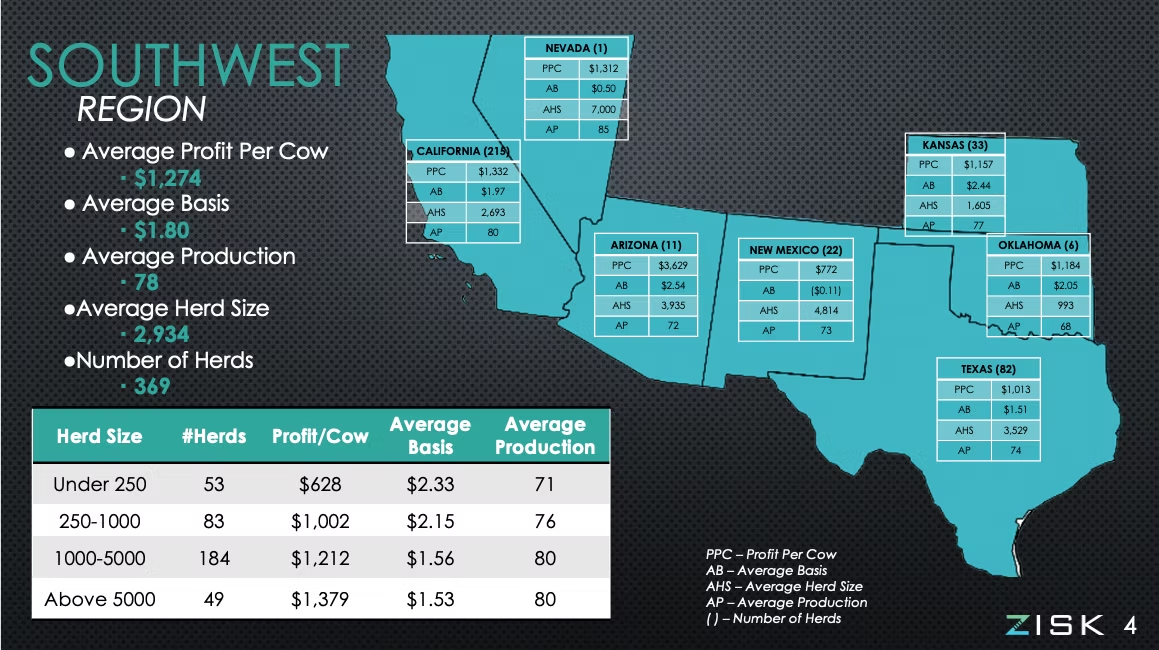
NewsSubscribe
First
Last
Consent

The Energy Efficient Dairy Cow: Leveraging Genetics and Nutrition for Sustainable Dairy Farming

Explore how genetics and nutrition affect energy efficiency in lactating cows. Can improving these factors enhance your farm’s productivity and sustainability?

Are your cows using energy efficiently with the best nutrition? In today’s dairy farming, reducing methane and being eco-friendly is crucial. A cow’s genes and diet affect its energy use, which impacts milk production and farm sustainability. Recent research shows that differences between cows explain up to 42.5% of energy use changes, especially in how they make methane and use food energy. Using this can help make your herd more efficient and eco-friendly.

Decoding the Genetic Puzzle: Unveiling Energy Dynamics in Cows 

Learning about how cows use energy while making milk is essential. Each cow’s genetics and where it lives affect how well it uses energy. Differences among cows come from how much dry matter they eat, how they use energy, and how their nutrients break down. Recent studies show that these differences can explain up to 42.5% of the variation in energy use, especially in making methane and using food energy. Dr. Addison Carroll from the University of Nebraska-Lincoln explains this complex topic (Journal of Dairy SciencePartitioning among-animal variance of energy utilization in lactating Jersey cows). Carroll points out the importance of understanding differences in cows’ energy use. Although how much dry matter a cow eats matters, cows also differ in how they make methane and waste energy when adjusted for DMI. These differences come from their diet, unique genetics, and environment. 

Understanding these differences is key to making farms more productive and sustainable. Farmers can make smarter choices about breeding and managing by figuring out which cows naturally use energy better. For example, choosing genetics that improves energy efficiency can create a herd that produces more milk with less work. Also, making nutrition plans to fit each cow’s genetics can boost performance and reduce waste. Carroll’s research stresses the need to understand these natural differences to improve farming by using the natural efficiencies seen in livestock.

The Genetic Blueprint: Shaping Energy Efficiency in Cows

Genes in dairy cows play a significant role in their energy use, affecting their growth and milk production. Two critical traits are dry matter intake (DMI) and energy balance. These traits are influenced by the cow’s care and environment and are linked to its genetic makeup. The heritability of dry matter intake (DMI) is between 0.26 and 0.37. This means genes have a strong influence on it. Heritability, a measure of how much of the variation in a trait is due to genetic differences, is between 0.29 and 0.49 for energy balance, showing a strong genetic influence on how well cows use energy. 

Selective breeding has improved milk production significantly over the years. Careful selection of cow genes has boosted milk production by about 34% to 50% over the past 40 years (VanRaden, 2004; Shook, 2006). This means cows can produce more milk while eating the same amount or even less, making them more energy-efficient. Genetic selection also helps cows use nutrients more efficiently, decreasing the environmental impact of farming cows. 

The future of dairy farming looks promising, as evidenced by ongoing genetics research. Identifying specific genes that can enhance cows’ energy utilization is possible. This discovery could lead to breeding strategies focusing on these traits, thereby advancing dairy herds. Furthermore, understanding genetic factors influencing methane production could lead to more efficient energy use and reduced environmental impact. As research progresses, the dairy industry could witness significant changes toward more sustainable and efficient practices, instilling a sense of hope and optimism in dairy farmers.

Fueling the Future: Nutrition’s Role in Maximizing Cow Energy Efficiency

Efficient food utilization by cows in dairy farming greatly influences milk production and industry sustainability, affecting their energy use. A cow’s diet plays a massive role in helping them turn feed into milk efficiently, affecting their energy use. Better diets help cows get more out of what they eat, impacting their energy needs. Dry Matter Intake (DMI), the amount of feed a cow consumes that is not water, is key to how well cows use energy when making milk. Researchers at the University of Nebraska-Lincoln found significant differences in DMI among herds, affecting energy efficiency. By improving DMI with tasty and nutritious food, farmers can give cows what they need to make more milk efficiently. 

Nutrient absorption is a critical factor that should be taken into account. How well cows break down their food affects how much energy they can use. The Nebraska study showed that choosing the right feed helps cows better digest nutrients like crude protein (CP) and neutral detergent fiber (NDF). Good absorption reduces energy lost in waste, improving efficiency. 

Farmers can improve how cows use energy and cut losses by changing diets. For example, adjusting starch levels matches energy needs with milk production, and balancing fiber aids digestion, increasing energy efficiency. The study shows dairy farmers can boost productivity and reduce environmental impact by carefully planning their diets, improving digestion, and maximizing DMI.

Methane and Tissue Energy: Unlocking Energy Variance in Jersey Cows

Recent studies show that differences in methane production and tissue growth are significant factors in how lactating Jersey cows use energy. Measuring methane energy per unit of dry matter intake (DMI) increases by 4.80%, which shows that cow differences affect how much methane they produce. Methane might be a small part of energy loss in dairy farming, but it dramatically impacts the environment and farm energy use. 

There are also differences in how cows grow tissue. At first, there isn’t much variation, but once you consider DMI, variation increases. This means cows have different abilities to grow tissue using energy, which impacts efficiency and energy management in the herd. 

These findings are essential. High differences in energy use among cows can lead to inefficient resource use and more emissions. Since methane affects our economy and environment, reducing production is essential. 

There are effective strategies to reduce methane emissions in dairy farming. Genetic selection, which involves breeding cows that naturally produce less methane, is one such strategy. Studies have hinted at a link between genetics and methane, opening up opportunities to breed for better environmental efficiency without sacrificing milk production. Nutrition also plays a crucial role. By making dietary changes to improve digestion, farmers can reduce methane emissions. Feeding cows with supplements to enhance digestion or adding ingredients to reduce methane-producing bacteria could be effective. These strategies inspire and motivate dairy farmers to implement changes that significantly reduce their farm’s environmental impact. 

Although different methane and tissue energy levels pose challenges, they also provide opportunities. Dairy farmers can use genetics and diet strategies to improve energy use, lower emissions, and work towards sustainable farming.

Genetic vs. Nutritional Approaches: Navigating Energy Efficiency in Dairy Cows

The dairy industry is at a crossroads, deciding how to boost energy efficiency in milking cows. Some say that improving cow genetics is the answer to producing more milk with less waste. They believe genetic differences significantly impact energy use, primarily methane and tissue energy. Supporters of this idea think that using advanced genetics can help breed cows that use energy more efficiently. 

On the other hand, some focus on designing the right feeding plans. They think genetics matter, but how you feed the cows is what boosts productivity. They highlight the progress made through better feeding and care, showing that nutrition is crucial to farm success. 

Future research might combine both ideas, using genetic insights to improve feeding strategies and create a system that continually enhances efficiency. Studies on how intake affects energy use show the complexity and potential for discovering new ways to improve. 

These concepts are not just theoretical; they directly impact dairy farmers’ everyday decisions. Farmers must consider different approaches and apply them to their farms as the industry changes. This has a significant effect on farming, pointing to a future where data and the specific needs of each herd guide decisions. Leveraging these insights could lead to a shift from stagnant growth to enhanced farm productivity and sustainability.

Investing in Energy Efficiency: Weighing Costs and Returns 

Farmers must understand how cows use energy and how this affects their business. Improving cows through genetics and feeding can cost a lot but yield good results. Better breeding or buying high-quality cattle costs money. This includes expenses for gene tests and paying more for top cows. However, these costs might save on feed over time and improve cow energy use, which means more milk. This can increase profits and make farming more sustainable. 

Spending on good nutrition can change from farm to farm. Farmers may buy high-quality feeds and supplements or hire experts to create diets that improve energy use. While costly, the benefits can be significant. Better feeds help cows digest and absorb nutrients better, reducing methane emissions for each milking unit. This is key for sustainability; extra money might come from eco-conscious markets. Also, reducing energy waste through nutrition can increase milk production and cattle growth, cutting costs from low productivity or health issues. This approach can save on veterinary bills by preventing nutrition-related diseases. 

Ultimately, getting a return on these investments requires careful planning. Farmers should weigh the initial costs against the savings or added income. Speaking with agricultural economists can offer insights into balancing costs with financial and environmental benefits.

The Complexities of Achieving Energy Efficiency in Dairy Farming

Genes and nutrition can help make dairy farming more sustainable, but some problems must be solved first. The fact that genetic selection is hard to predict is a big problem. We can pick traits that help us use energy more efficiently, but the results aren’t always accurate. Traits like dry matter intake (DMI) and methane production are passed down in many ways. Focusing on one trait could have unintended effects on other critical areas, such as reproduction or health in general. Also, focusing too much on saving energy could hurt the genetic diversity needed for herds to be strong and healthy.

Nutritional methods also pose problems. Plans for advanced feeding can be expensive for many dairy farms. Ensuring that each cow gets the right feed, supplements, and diets for her energy needs requires a lot of money and knowledge. When feeding changes are made, cows’ health and behavior must also be considered, as these can affect how nutrients are used and how much milk is produced.

Rules and market needs may also make using genetic or feeding methods hard. People who want to buy “natural” or “organic” products might not like genetic changes or artificial supplements meant to make things use less energy. Crop quality, weather, and farm management make these efforts more difficult.

The Bottom Line

Understanding the link between a cow’s genetics and diet is key to improving energy use in dairy cows. Tailoring herd traits and feeding plans can boost milk while cutting waste like methane. A uniform approach won’t work well since every cow uses energy uniquely. Instead, creating diets based on genetic needs maximizes productivity sustainably. Some cows do better with diets that highlight their strengths and minimize weaknesses. Selective breeding can also enhance efficiency traits. Farmers can boost production and protect the environment by accepting complexity, ensuring future success. It’s time to rethink old habits and use the mix of nature and nurture for a better future.

Key Takeaways:

  • Among-animal variance significantly contributes to the variation in energy utilization, particularly in lactating Jersey cows.
  • This variance accounts for approximately 29.3% to 42.5% of differences observed in energy metrics.
  • Methane and tissue energy show increased variance when expressed per unit of dry matter intake (DMI), highlighting genetic differences among cows.
  • DMI variance is notably high, underscoring its critical role in energy efficiency and partitioning in dairy cows.
  • Advancements in feed efficiency and genetic selection could help optimize energy use, improving farm productivity and sustainability.
  • Understanding the balance of genetic and nutritional influences is essential for improving energy efficiency in dairy production.

Summary:

Can genetics and nutrition boost the energy efficiency of lactating cows? A study from the University of Nebraska-Lincoln revealed that differences between Jersey cows significantly affect energy use, especially in methane and tissue energy. These differences account for 29.3% to 42.5% of the energy variance, highlighting the role of genetics and diet in making cows more efficient. With 115 Jersey cows and over 560 data points, the study shows that focusing on genetic selection and nutrition can enhance productivity and sustainability in dairy farming. By understanding these factors, farms can reduce emissions and improve milk production, paving the way for a more eco-friendly future for the dairy industry.

Learn more:

Join the Revolution!

Bullvine Daily is your essential e-zine for staying ahead in the dairy industry. With over 30,000 subscribers, we bring you the week’s top news, helping you manage tasks efficiently. Stay informed about milk production, tech adoption, and more, so you can concentrate on your dairy operations. 
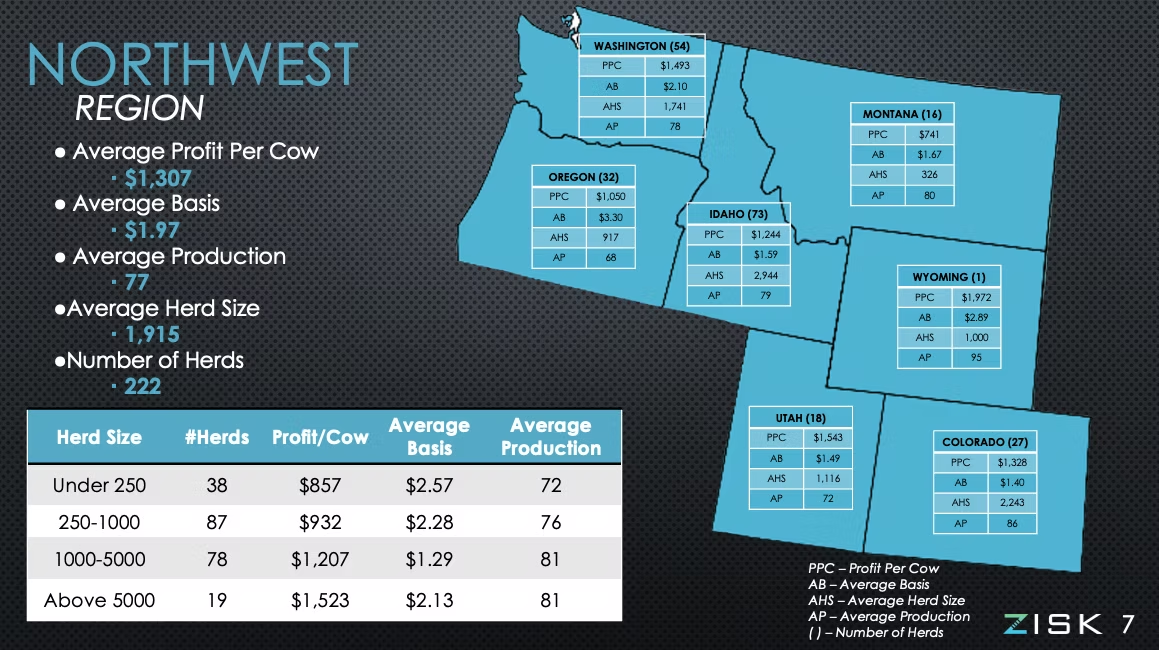
NewsSubscribe
First
Last
Consent

Exploring the Role of Semi-Skimmed Milk in Reducing Depression and Anxiety

Find out if semi-skimmed milk could help ease depression and anxiety. Could this everyday dairy product be vital in farmers’ mental health plans?

Picture starting your day with a glass of semi-skimmed milk, not just for its surprising psychological effects but also for its nutrients. Regular consumption of this type of milk, as per new studies, may reduce the risks of depression and anxiety, thus highlighting a significant link to mental well-being. This presents an empowering opportunity for dairy farmers to underscore the benefits of milk beyond physical health. With depression affecting roughly 3.8% of the global population and anxiety affecting 4%, the need for actionable solutions is crucial. This presents a chance for dairy farmers to play a pivotal role in reimagining how milk can be integrated into mental health plans, not just for consumers but also in terms of marketing dairy.

A Silent Battle: Unraveling the Shadows of Depression and Anxiety 

Two of the most often occurring mental diseases today, depression and anxiety, affect millions of people worldwide. These disorders strain mental and emotional aspects of life and force medical systems to their capacity. Depression affects approximately 264 million people worldwide, according to the World Health Organisation; anxiety disorders affect a similar number; hence, they are a major worldwide problem.

Mental health problems have enormous personal costs. Many people suffer, lose interest in everyday activities, and worry a lot. Physical health can also deteriorate since anxiety and depression connect to chronic conditions like diabetes and heart disease. These diseases influence society beyond only personal suffering. They cause lost output, more disability claims, and increased healthcare expenses. Their broad influence indicates that they are among the leading causes of world disability.

Presently used treatments mainly consist of medicine and therapy. For some, they work; for many, they are insufficient. Many times, with side effects and slow action, antidepressants and anti-anxiety medications leave a gap for those in need of immediate assistance. Furthermore, access to mental health care differs significantly depending on area and income level, which makes it challenging for everyone to get the required treatment. This unequal access accentuates the hunt for workable answers.

This reality is apparent: less than half of the worldwide burden of these diseases is covered by conventional therapies. This emphasizes the need for fresh ideas. Studies on food and mental health reveal that diet could assist in the battle against mental health problems. Changing your diet and including some milk kinds seems interesting. They provide hope by stressing the need for creative approaches to mental health treatment and investigating the relationship between food and mood. It is abundantly evident as we examine these connections that our diet may assist in the combat of anxiety and depression.

Mood Swing: Milk’s Role in Mental Health Through History and Science 

People have long been fascinated by the relationship between milk intake and mental health. Dairy was a diet mainstay long ago because it provided vital nutrients. Though its mental health advantages were hypothetical then, the Greeks and Romans prized milk for its strength-giving qualities. Our understanding changed with science. Dairy’s calcium and vitamin D content came to be seen as vital for physical and psychological well-being.

Turning to the late 20th century, scientists began examining how diet influences mental health and the brain. Studies revealed that the kinds of fat and vitamins in milk could affect anxiety and mood. Still, there were arguments about this. Some mid-1900s research questioned the advantages of high saturated fat, usually found in whole cream milk, linking it more to physical health problems. This produced recommendations for semi-skimmed or skimmed milk.

Research into the effects of semi-skimmed milk on mental health is not a recent development; it has a long legacy. Modern techniques are now helping researchers better understand these connections. This history of research is a testament to our progress in understanding the relationship between diet and mental health. It also serves as a call to action, urging us to continue our exploration and make informed decisions about our health and well-being.

Pouring Over Data: Milk’s Subtle Impact on Mental Health Examined

Particularly about depression and anxiety, the study looked at whether milk intake affects mental health. Examining 357,548 people without these problems first using the vast UK Biobank data, The aim was to find how various milk kinds affect mental health. Considering age, gender, lifestyle, and health, the study found relationships between milk intake and new cases of depression and anxiety using Cox proportional hazards models. Mendelian randomization (MR) analysis was conducted to support these results and search for causality. This approach avoids typical prejudices by using genetic variations affecting milk consumption to grasp better if these links can influence mental health. Emphasizing diet’s crucial part in mental health, the study generally suggests that semi-skimmed milk could help prevent depression and anxiety.

Cow’s Counsel: Semi-Skimmed Milk as a Shield Against Depression and Anxiety 

According to the study, drinking semi-skimmed milk has a significant relationship with reduced depression and anxiety risks. Comparatively to those who did not drink semi-skimmed dairy, those who consumed it had a 12% lower risk of depression and a 10% lower risk of anxiety. Mendelian randomization analysis supports this by showing protective effects on mental health problems, including anxiety and depression. On the other hand, although it did not affect depression, full-cream milk was linked to less anxiety. Skimmed milk and other milk varieties did not show protective effects for these mental health issues, meanwhile. The study notes semi-skimmed milk as a possible mental health booster.

The Nutritional Symphony: Exploring Milk’s Role in Mental Wellness 

A brand-new field of research examining how our diet influences our mental health is nutritional psychiatry. Our brain function and our diet can affect mood. Reduced cases of problems like depression and anxiety are associated with a diet that includes the correct nutrients. This indicates that adjusting our diet might help control mental health issues. Rich in minerals, vitamins, and proteins, milk is Not only is it good for our bones; it may also improve our mental health. Tryptophan in milk helps synthesize serotonin, our “happiness hormone.” Mood depends on serotonin; thus, drinking milk could reduce anxiety and depression risk. Other milk nutrients, including potassium and vitamin B12, help brain function. While potassium supports nerve action, vitamin B12 helps generate brain chemicals that influence mood. Given these advantages, milk could be a good component of a diet meant to support mental health.

Farmers at the Forefront: Navigating the Intersection of Dairy and Mental Health 

Dairy producers are not just farmers but are at the forefront of a crucial intersection between farming and health. Their choice of output gives them a unique opportunity to influence public well-being. By focusing on semi-skimmed milk, they can become major players in nutritional psychiatry, the study of how diet influences mental health problems, including anxiety and depression. Their role is to produce milk and promote mental health and well-being.

Strategies for Production and Marketing 

Clever manufacturing and marketing strategies can help promote semi-skimmed milk. Farmers should emphasize sustainable and ethical farming to maximize milk’s natural advantages and align with consumer values. They can attract health-conscious consumers who seek quality by choosing organic methods and green technologies.

  • Brand Building: Storytelling about farm-to-table methods and milk’s mental health advantages will help build consumer interest and confidence.
  • Collaborative Efforts: Working with retailers and health professionals to emphasize semi-skimmed milk as part of a healthy diet can highlight its psychological advantages.

Benefits for the Dairy Industry and Consumers 

Emphasizing semi-skimmed milk will help dairy companies appeal to health-conscious markets and establish their leadership in nutrition and wellness. This focus on supporting mental health can increase customer loyalty and boost demand, aligning with the trend towards functional foods. 

Consumers will benefit from informed decisions and improved mental health. They can select a dairy product that might help control their mood, reducing the demand for medication.

How the Nutrients Work 

The nutrients in semi-skimmed milk—especially calcium and tryptophan, which are essential for producing neurotransmitters—probably help explain its advantages for mental health. Calcium is a key mood regulator, and tryptophan, a precursor of serotonin, suggests that milk may improve mood and stability via these mechanisms.

These nutrients highlight semi-skimmed milk’s importance in physical and mental wellness. They support brain function and might help with symptoms of mood disorders.

Nutrient-Packed Remedy: How Semi-Skimmed Milk’s Composition Supports Mental Health

Semi-skimmed milk addresses not only essential nutrition but also mental health, more especially depression and anxiety. This could be related to its nutrients and how they influence brain systems, such as serotonin, which is crucial for controlling mood.

Nutritional Perks: 

  • Proteins: Contains casein that might lower stress hormones and anxiety.
  • Calcium: Helps in making serotonin, which can boost mood.
  • Fats: Has both healthy and moderate saturated fats that support brain health.

Boosting Brain Chemicals: 

  1. Serotonin Support: Helps increase serotonin, a chemical linked to happiness.
  2. Dopamine Help: Provides fats that help make dopamine, the key to feeling good.

Combining nutrients in semi-skimmed milk could benefit the brain, support mood, and improve mental health. However, more research is needed to understand these impacts better.

Cows and Conscious Choices: The Semi-Skimmed Milk Revolution on the Horizon

This study will be of great relevance to dairy farmers. The research links semi-skimmed milk to mental health advantages, influencing consumer decisions. Imagine the marketing increase: advertising semi-skimmed milk for mental health and nutrition. This might affect manufacturing techniques and raise demand.

Semi-skimmed milk could be a top choice for calorie-conscious consumers and everyone searching for better options. Since consumers are more aware of diet and health, commercials stressing these psychological advantages could be a good way to target this new market. Educational campaigns, partnerships with mental health organizations, or professional endorsements could support these initiatives.

From a production standpoint, dairy producers might change their methods to satisfy this increasing demand. Reviewing breeding programs to increase yields or streamlining feed to guarantee quality and quantity could help. New product development has promise, such as new semi-skimmed milk products emphasizing these results.

This study might open a new chapter for dairy production and put farmers at the junction of mental health and nutrition. Accepting these results has financial advantages and fits current lifestyle trends, enhancing consumer confidence and loyalty.

Sipping Your Way to Serenity: Daily Nutrition Strategies with Semi-Skimmed Milk 

As we explore the benefits of semi-skimmed milk for mental health, here’s how you can easily add it to your diet: 

  • Try It Out: If you are not yet inclined to use semi-skimmed milk, please initially put it in your tea or coffee. This is a fundamental approach to acculturating to the taste.
  • Smoothie Addition: Substitute semi-skimmed milk for water or sugary juices in your smoothies. It provides protein, calcium, and creaminess.
  • Baking Swap: Baking calls for semi-skimmed milk rather than full cream, which reduces saturated fat while maintaining taste.
  • Pair with Fiber: Enjoy semi-skimmed milk alongside fruit and whole grains. This can help you maintain your emotional balance.
  • Choose What Works: If you prefer plant-based choices or are lactose intolerant, look at lactose-free or fortified substitutes.
  • Moderation is Key: Semi-skimmed milk should be part of a balanced diet with various nutrients.

Though diet changes are only one aspect of the picture, they can improve mental health. See a medical practitioner to identify the ideal foods for you.

The Bottom Line

Semi-skimmed milk is an excellent help for mental health in a world of difficulties. It shows how our daily decisions shape our minds and is part of a comprehensive approach to feeling good. This concept emphasizes the close correlation between our mood and our diet. It motivates more investigation of these relationships. Farmers, dietitians, and researchers are poised for significant revelations that might alter our perspective on mental health. With increasing data, everyone has an exciting opportunity to see the advantages of semi-skimmed milk. Including it in daily meals helps us to realize how much our food decisions affect our mood. 

Dairy producers depend significantly on this period. Maintaining these results stimulates sector innovation and demonstrates how dairy can enhance public health. Using these realizations offers an opportunity to start conversations about how diet supports mental fortitude. Let’s investigate how semi-skimmed milk might help us create a better future. Your next sip might bring more strength and peace.

Key Takeaways:

  • The study suggests a protective link between semi-skimmed milk consumption and lower risks of depression and anxiety.
  • Semi-skimmed milk’s unique nutrient composition may play a role in supporting mental wellness.
  • Data comes from a significant pool of over 357,000 UK Biobank participants, offering robust insights.
  • Mendelian randomization further supports potential causal relationships between semi-skimmed milk and mental health improvements.
  • Full cream milk similarly showed benefits regarding anxiety but not depression.
  • No significant connections were found between skimmed milk and mental health conditions.
  • Further research is critical to understand fully how milk influences mental health and confirm these findings.
  • Dairy farmers can play a crucial role in mental health dietary strategies by promoting semi-skimmed milk.
  • Limitations include self-reported data and a focus on an older demographic of European descent, indicating the need for broader studies.

Summary:

Did you know that semi-skimmed milk might do more than help your bones? A significant study with over 350,000 people found that this type of milk could help protect you from depression and anxiety. Every glass you drink might boost your mental health, which is an excellent win for dairy farmers! People are getting more thoughtful about what they eat, and choosing semi-skimmed milk could be a step towards feeling physically and mentally better. New research shows that regularly drinking semi-skimmed milk might lower the risks of depression and anxiety. These mental disorders affect a large portion of the population, and they’re tied to physical health issues, too. Traditional treatments include therapy and medication, but they aren’t always easy to get. That’s why exploring how food affects mental health is essential. Dairy companies have a chance to make a difference, and farmers should focus on sustainable practices to offer milk that aligns with people’s values.

Learn more:

Join the Revolution!

Bullvine Daily is your essential e-zine for staying ahead in the dairy industry. With over 30,000 subscribers, we bring you the week’s top news, helping you manage tasks efficiently. Stay informed about milk production, tech adoption, and more, so you can concentrate on your dairy operations. 

NewsSubscribe
First
Last
Consent

Managing Mycotoxin Risks and Enhancing Dairy Cattle Health: Essential Strategies for Feed Management and Reproduction

Learn to handle mycotoxin dangers in dairy feed. Boost cow health and reproduction with innovative methods. Ready to boost your herd?

Did you know that up to 68% of dairy cow diseases come from mycotoxins? In today’s dairy farming world, many might be surprised to find out how these tiny toxins impact milk production and cow health. With the high demands of the dairy industry, understanding and managing mycotoxins can be a game-changer for farmers. Now more than ever, focusing on herd health and productivity is key. Even though they’re small, mycotoxins can cause big problems. This article will explore their world, show how they sneak into feed, and how they harm our herds. We’ll look at their financial impact and how they mess with reproduction. We’ll also discuss new ways to handle these issues, give tips on choosing the best mycotoxin binders, and help you manage them better overall. So, are you ready to understand these threats and improve your herd’s health? Let’s get started!

MycotoxinSourceEffects on CowsPrevention Strategies
AflatoxinCorn, peanuts, cottonseedLiver damage, reduced milk production, immune suppressionProper drying and storage of feed
Deoxynivalenol (DON/Vomitoxin)Wheat, barley, oatsReduced feed intake, vomiting, immune suppressionUse of mycotoxin binders, testing feed regularly
FumonisinCornLiver and kidney damage, negatively impacts rumen functionMaintain feed hygiene, use binders
ZearalenoneCorn, wheatReduced fertility, reproductive issuesCrop rotation, use detoxifying agents
OchratoxinBarley, wheat, cornKidney damage, immune system suppressionControl moisture in storage, regular monitoring

Mycotoxins: The Hidden Enemies and Unseen Allies of Dairy Farming

Mycotoxins are harmful substances made by fungi that are found everywhere around us. Molds often make these chemicals appear on farm crops like corn, barley, and wheat, especially when stressed. Stress? Yes! These tiny fungi, suitable for the soil, make mycotoxins when stressed by heat, cold, wetness, or drought. Not all mycotoxins are indeed harmful. Some are bad and can hurt people and animals, while others are good and are found in antibiotics like penicillin. Fungi are like two sides of a coin: one side helps, and one side hurts.

Certain mycotoxins can be particularly harmful to the feed given to dairy cattle. Flavonoids, such as Aflatoxin B1, can damage a cow’s liver and weaken its immune system. Fumonisins, like Deoxynivalenol, affect the immune system and respiratory function. Zearalenone, a mycotoxin, can disrupt reproductive systems, leading to fertility issues and prolonged pregnancies. In different ways, each of these things hurts the health and productivity of cattle, so farms need to manage and stop them. Trying to keep these unwanted guests away to protect our cattle friends is like walking through a minefield.

The Stealthy Saboteurs: How Mycotoxins Lurk in Dairy Farms and Challenge Herd Health 

Mycotoxins have sneaked into dairy farms, hurting cows’ health without anyone knowing. Sometimes, they don’t make much noise, but the damage they do can be terrible for your dairy herd. At first glance, everything might look fine—cows happily munching away. However, many problems are going on below the calm surface that cows and farmers have to deal with because of mycotoxins.

One big problem is that less milk is being made. Imagine that your herd used to be full of milk, but now there is only a trickle. This isn’t just a drop in production; it shows that mycotoxins are causing health problems in dairy cattle that go deeper. Without realizing it, the cows struggle with things that make them tired and hurt their output.

Another problem that mycotoxins cause is trouble with reproduction. They mess up hormones, which makes it hard to get pregnant and causes more abortions. Imagine putting much work into a herd only to have problems with reproduction, which could slow the herd’s growth in the long run.

There’s more. These hidden enemies make it hard for cattle to digest food properly, leading to digestive issues and potential illnesses. Cows eat less because mycotoxins make their digestion worse. They might suddenly stop liking the greens they used to love. They may also have diarrhea when their digestive system tells them something is wrong.

Let’s examine how they are connected to inflammation now. When cows get sick, mycotoxins worsen their health. Inflammation can either slowly build up or quickly worsen, both signs of trouble. Cows with chronic inflammation use much energy to fight it, which hurts their overall health and production. The digestive system is under attack and has a more challenging time. Mycotoxins mess up the rumen, an essential part of digestion for cows. They make microbes angry and hurt digestion and nutrient absorption, which is bad for health. Digestive problems weaken the immune system, making it harder for the cow to fight off diseases.

If farmers notice that their cows aren’t producing as much milk, have changes in appetite, or exhibit signs of diarrhea, it may indicate mycotoxin-related problems in the herd. These signs could indicate the presence of ‘silent pests’ like mycotoxins, which could cause low milk yield and health problems that can’t be explained. Because of these signs, the cows’ health should be checked for mycotoxins. These ‘silent pests’ are called so because they can cause significant health problems without overtly visible symptoms, highlighting the need for regular monitoring and testing.

Ultimately, the dairy farmer is responsible for understanding and controlling the effects of mycotoxins. You can protect your animals from this sneaky threat by being proactive and vigilant. The key is to spot the signs and address the problems at their source. This way, health and productivity go hand in hand, and you can keep your cows healthy and thriving by being aware of mycotoxins and keeping a close eye on them.

Balancing the Budget: Mycotoxins’ Unseen Toll on Dairy Farm Economics

Picture yourself walking through a quiet dairy farm where cows moo softly in the background. But in this peaceful place are mycotoxins, which are little things that can make a big mess. When mycotoxins get into feed, they hurt more than just cows; they also lower the quality and amount of milk produced. Think about this: If a farmer wakes up one morning and finds less milk and milk that tastes and feels different, what should they do? This is a warning sign that you might lose money because of fewer sales and poor quality.

Take a look at the numbers. Not making as much milk isn’t just a minor issue; it can be enormous! Mycotoxin-contaminated feed can lower milk production by up to 10%, about 200 liters per cow annually. This drop in production means less money coming in, with losses of $100 to $300 per cow per year. And what extra money does it cost to treat sick cows? Each one can add up to $50 to $100 very quickly. Also, it can cost $15 to $20 per ton to test and fix contaminated feed. This hidden cost of mycotoxins is a big issue that needs to be taken seriously.

Some farmers may feel stuck because they must choose between the risks of doing nothing and the cost of taking action. In reality, avoiding problems is a lot like buying insurance—Mycotoxin binders, which you can think of as muscular club bouncers, stop harmful mycotoxins from spreading. To protect the quality of the milk, these binders can reduce exposure to toxins by up to 40%, resulting in improved milk quality. It may seem expensive at first, about $1,000 to $3,000 a year, to do clever things like crop rotation and proper storage. Still, they pay off big time in the long run through higher productivity and stronger economies.

Spending money now to eliminate mycotoxins or paying more is a significant choice in the long run. It’s not just about saving money; it’s also about making sure the farm will be successful and last for a long time. Dairy farms can make more money and milk more cows if they plan and ensure the animals are healthy and happy. So, which would you pick: taking preventative steps today or making emergency repairs tomorrow?

Piecing Together the Reproductive Puzzle: Mycotoxins in the Dairy Farm Mystery

It can be hard to get animals to reproduce in dairy farms, like trying to put together a puzzle without all the pieces. Mycotoxins are one of those missing pieces that significantly affect cow reproduction. See how they’re making our cows feel. It’s like waiting for calves to be born, but mycotoxins make things difficult by shortening their time. Fungi make these chemicals, which stress cows and mess up their everyday processes, which can cause them to give birth early.

It’s not a minor issue. If calves are born too early, they might develop problems, making them more likely to get hurt. This can be challenging for smaller calves and harm their health and growth. Premature births also put the dam at risk for complications and stress after giving birth, which could affect her ability to have children in the future.

We can fight back by examining gestation lengths to find problems caused by mycotoxin. Mycotoxins, such as Aflatoxin M1, can increase the likelihood of abortion and fertility issues by disrupting the hormonal balance necessary for reproduction. This can lower the chance of getting pregnant or, in the worst cases, stop the reproductive process altogether. Not only does this affect health, but it also affects the economy, lowering income and making things less stable financially.

Why should farmers do this? Organize your records! Accurate gestation lengths, which refer to the duration of pregnancy in cows, help find problems early on. To determine mycotoxin’s effects, you should look at the environment. Getting aware is key. Regular feed testing and using mycotoxin binders are ways to protect cattle’s reproductive health. We can better protect our herds as we learn more about these poisons.

Remember that every entry in your barn ledger or farm app tells a story of work and hope as you make changes. Knowing about mycotoxins can ensure that good things happen on your farm.

Mastering the Symphony of Feed: Artful Mycotoxin Management 

Controlling the risks of mycotoxins is like getting good at an art form. The first thing you should do is test your feed regularly. Putting on your detective hat to find out what your herd eats is like that. You can quickly find contaminants in feed, which helps you decide whether to keep it or throw it away. This protects your cows’ health and milk yield.

Allow us to discuss the rates of inclusion now. Changing the amount of each feed ingredient can make a big difference, and changing these rates can also affect mycotoxin levels. When using an ingredient, use less of the dirty and more of the clean. It’s like getting your orchestra to play in tune.

The thing that will save you is Total Mixed Rations (TMR). TMR mixes everything to make a healthy meal. So, each cow gets the same food, lowering their mycotoxin exposure. When you use TMR, you create a consistent diet that makes you less likely to get sick.

Being smart about handling feed and taking action can protect your herd and make your farm more successful. Every test and change to the TMR makes the dairy farm healthier. Remember that happy cows will milk more.

Choosing Your Farm’s Shield: Deciphering the World of Mycotoxin Binders

Mycotoxins can get into cows’ food on busy dairy farms and make them sick. Mycotoxin binders save the day by getting rid of these harmful chemicals. But what do farmers need to know about them, and how do they work? Like a safety net, binders catch mycotoxins and help the animal eliminate them. However, not all binders are the same, so consider these points: 

  • Specificity: Make sure the binder targets the mycotoxins found on your farm.
  • Absorption Capability: Choose binders that capture as many toxins as possible.
  • Compatibility: Ensure the binder doesn’t contaminate the feed’s nutrients.
  • Safety: Pick a binder that is safe for long-term use and has no toxicity risks.
  • Cost-Effectiveness: Find a binder that fits your budget but doesn’t skimp on quality.

Adding binders to your cow’s food can make them healthier, help them have more babies, and make them produce more milk. They keep people safe by reducing the number of unexpected health problems and costs. However, don’t just use binders. They should be part of a bigger plan that checks the feed and ensures that storage is handled correctly. Remember that binders can catch some toxins, but not all may depend on different factors. Talk to feed experts or vets to find the best binder for your farm. This gives your cows a strong defense against mycotoxins, which keeps them healthy and productive.

The Symphony of Success: Embracing Holistic Mycotoxin Management on Dairy Farms 

Managing mycotoxins in a whole-person way is like leading an orchestra—every part is essential. You must look at your dairy business, not just one problem at a time. Take a picture of a farmer working in lush fields who knows that mycotoxins could grow somewhere. Farmers are health guardians, so they know that fighting mycotoxins is like chess: you must plan and be flexible. Farmers need to view managing mycotoxins as a continuous work cycle to achieve success.

Think about the weather. Has it rained? These situations can help fungi grow faster, raising the threat of mycotoxin. Farmers can spot risks and change their plans as needed by keeping an eye out.

Coming up, think about feed storage. Think of a grain silo as a massive building on your farm. It can become a mycotoxin nest if you don’t store it right. Because avoiding problems is better than dealing with them, farmers must store feed in dry, airy places to keep out the moisture that fungi need.

That’s not all, however. As an extra defense, check and monitor the quality of the feed regularly. Managing mycotoxins well isn’t something you do once; it needs to have checks and balances all the time. Ensure you have screening tools to test the feed before it reaches the cows.

Animal diets should also be balanced in nutrition. Animals that eat various foods can lessen the effects of the mycotoxins they eat, keeping them strong against possible threats. Farmers who consider all aspects of farm management, such as weather monitoring and balanced diets, play a crucial role in maintaining the herd’s health.

You’re protecting yields, cows’ health, way of life, and future generations. Your farm is a living thing that needs balance and harmony. Let’s take a more complete look at things and ensure our dairy farms do well, even though mycotoxins are a part of our rural story.

The Bottom Line

As dairy farmers, we need to share our knowledge. Thanks for coming along with us on this journey through mycotoxin management. Now it’s your turn. What stories do you have? What steps have you taken to deal with these problems on your farms? Your experiences could help other people. Effective feed management is vital for the health and reproduction of your herd, and it is not just a theoretical concept. Staying alert and well-informed is crucial to protect the health of our cows and improve dairy farm productivity. Share your stories in the comments below to learn and grow together. We can make the dairy industry strong and ready for the challenges of tomorrow if we all work together.

Key Takeaways:

  • Mycotoxins are chemical compounds produced by fungi, impacting animal health and dairy farm productivity.
  • They are a common problem due to their presence in feed and forage, often triggered by environmental stress.
  • < UNK> Some mycotoxins are harmless, but others can lead to significant production issues, like low milk yield and reproductive challenges.
  • Shortened gestation length in cattle is a practical indicator of mycotoxin exposure and stress.
  • It’s crucial to monitor field and storage conditions to manage mycotoxin risk effectively.
  • The stability of mycotoxins means they withstand heat processing, complicating control measures in by-products.
  • Proactive management involves regular testing and adjusting feed inclusion rates to mitigate contamination.
  • Holistic approaches to monitoring animal health and feed quality are essential for managing mycotoxin-related impacts.

Summary:

Have you ever woken up by an invisible force? For dairy farmers, that’s mycotoxins—sneaky toxins from fungi that quietly harm cow health and cut into farm profits. They’re more than just pests; they also lower milk production and affect fertility. However, it’s not all bad news! By understanding these toxins and using innovative feed strategies like specific binders, farmers can shield their herds and keep productivity high. For example, Emily noticed her cows weren’t as active, and milk production slipped due to these toxins from crops like corn and wheat. They mess with cows’ health by harming their liver, messing up digestion, and throwing off reproduction, which can lead to fertility issues. Knowing about mycotoxins and their effects is crucial for any dairy farmer to maintain a thriving herd.

Learn more:

Join the Revolution!

Bullvine Daily is your essential e-zine for staying ahead in the dairy industry. With over 30,000 subscribers, we bring you the week’s top news, helping you manage tasks efficiently. Stay informed about milk production, tech adoption, and more, so you can concentrate on your dairy operations. 

NewsSubscribe
First
Last
Consent

Why Cutting Methane in Dairy Cows Isn’t the Climate Game-Changer You Think

Wondering how dairy farmers can strike the perfect balance between methane and hydrogen emissions for a sustainable future on the farm? Are you ready to tackle this challenge and boost farm efficiency?

Ever stop and think about how much you’re doing to cut down emissions on your farm? You’ve been excellent at slashing methane, but the real story is more tangled. Once you factor in hydrogen, the overall impact is less than 1% (source). Your role is super important here; getting a grip on this balance is the first move towards a future that’s a bit greener. Understand me—your hard work to cut methane is valuable beyond measure, but it’s all about seeing the grand scheme. As a dairy farmer, mastering this balance is key for the planet and your day-to-day operation. Let’s dive into how methane and hydrogen fit into this climate change conundrum and what they spell out for you, your farm, and the world.

Emission TypeImpact on ClimatePrimary SourcesPercentage of Total GHG Emissions
MethaneHighEnteric Fermentation, Manure9.6% (Global), 25% (U.S. Dairy Sector)
HydrogenIndirect via MethaneMethane Reduction ProcessesLess than 1% when considering additional hydrogen emissions
Nitrogen OxidesModerateFertilizers, Soil Management5% (Agricultural Contribution)
Carbon DioxideHighFossil Fuels, DeforestationUp to 65% (Global)

Understanding the Methane-Hydrogen Tango in Dairy Farming: A Delicate Balancing Act 

Tackling the emissions challenge in dairy farming isn’t about crunching numbers or dazzling stats; it’s about cracking the code on how methane and hydrogen are linked. As cows munch away on their feed, there’s some fascinating chemistry at play inside their bellies. Teams of microbes turn both hydrogen and carbon dioxide into methane. And don’t overlook hydrogen, that shy player—it’s there whenever cows digest their food. 

Here’s the twist: When dairy farmers adjust cow diets to reduce methane, it can quietly bump hydrogen levels. Why? If less hydrogen is converted into methane, it starts building up. 

Why bother getting this balance just right, you ask? To keep our farming practices truly sustainable, methane and hydrogen need wrangling. While hydrogen isn’t the greenhouse villain that methane is, excess hydrogen messes with the atmospheric chemistry, causing methane to linger longer and keep the planet warming. This is something we can’t just sweep under the rug. 

Understanding this dynamic is crucial for farmers. It’s not just about reducing methane emissions; you must also monitor hydrogen. The goal is to ensure that any changes you make benefit the environment and your farm. Mastering this balance could revolutionize farming methods, enhancing both the planet’s health and the success of your business. The good news is that practical strategies are available to help you achieve this balance, giving you the tools and confidence to make a positive impact.

The Invisible Tug-of-War: Methane and Hydrogen’s Subtle Impact on Your Farm 

Inside every cow, there’s a remarkable process known as enteric fermentation. It’s a big deal when it comes to methane production. When cows munch on their feed, tiny stomach microorganisms break down plant fibers. The endgame? Methane—is released mainly through burps. It’s a rigid greenhouse gas that traps heat and pushes climate change forward.

But wait. While everyone’s talking about methane, don’t forget that hydrogen is also involved in digestion. These clever microbes crank out hydrogen and volatile fatty acids as they do their thing. Hydrogen might not trap heat like methane, but it fiddles with how other gases behave in the atmosphere. 

So yeah, hydrogen isn’t directly warming the planet but plays a supporting role. Up there, hydrogen interacts with hydroxyl radicals—the usual methane cleaners. When there’s more hydrogen around, fewer of these hard-working radicals let methane stick around, heating things even more. This is because hydrogen, while not a greenhouse gas, affects the behavior of other atmospheric gases, including methane, a potent greenhouse gas. 

This intricate dance between methane and hydrogen emissions shows there’s more to it than counting greenhouse gases. These interactions can shift the overall levels. Dairy farms need an innovative plan to manage emissions, reducing methane production without accidentally cranking up hydrogen levels.

The Methane-Hydrogen Paradox: Unraveling the Unforeseen Consequences of Emission Reduction 

Here’s a surprise that might catch you off guard: you might find hydrogen levels shockingly increasing while you try hard to lower methane emissions. This change alters the behavior of gases far up in the heavens. What is happening then? Reducing methane will cause hydrogen to rise from changes in cow digestion. Although hydrogen has a sneaky way of influencing hydroxyl radicals, it isn’t as strong as methane in heat-trapping. Like the cleaners of the atmosphere, these radicals break down methane to prevent it from clinging about. However, more hydrogen added to the mix causes these radicals to lose their grooves, allowing methane to linger longer than we would wish. Thus, the warming consequences of methane may be more important than anticipated.

Knowledge of this chain reaction is vital for all the farmers out there. It reminds us to consider less obvious ripple effects and the direct consequences of emissions, akin to a flashbulb event. Just as a flashbulb captures a moment, understanding these effects will help us search for environmentally friendly farming methods that allow the temperature. Understanding the nuances of this scenario will help us improve our farming methods to maintain equilibrium on our farms and in the surroundings.

Unearthing the Intricacies: Insights from Recent Studies on Methane and Hydrogen in Dairy Emissions

To learn startling information, explore the fascinating relationship between methane and hydrogen emissions in dairy production. Thorsteinsson and the gang disco other increased hydrogen release of roughly 24 grams, an unexpected side effect of reducing cow methane emissions by an impressive 78%. This methane reduction comes with a trade-off: It leads to increased hydrogen emissions. It’s like negotiating a challenging game of trade-offs, where reducing one emission can lead to a rise in another.

Melgar’s research added yet another twist: 84% of hydrogen not consumed for methane generation feeds bacteria and fatty acids. Everything is connected in a chain reaction, so we must consider the whole picture to cut emissions properly (source). 

Returning to 2015, Hristov noted that cutting methane might produce some other gases, but adding an additive like 3-nitrooxypropanol helps to offset this effect. It’s like having a little trick ready (source). 

By 2024, Martins and de Ondarza discovered that dairy cows produce roughly 0.83 grams of hydrogen daily, compared to a slimmer 0.26 grams for beef cattle (source). Perfecting techniques depend on awareness of these emission variations, whether cow or water buffalo.

The exciting bit? Continuous research and breakthroughs are paving the way for more savvy farming methods, infusing hope for a bright future in dairy. This ongoing innovation offers the potential for significant improvements in farming methods, making the future of dairy farming even more promising.

Strategies for Balancing Emissions: Practical Approaches for Dairy Farmers 

Balancing methane and hydrogen emissions may seem harsh, but don’t worry—you can make it work with the right strategies. Here are some tips for finding that sweet spot on your farm: 

  • Feed Additives: Improving Diet to Cut Emissions: Feed additives, like 3-nitrooxypropanol, can cut methane emissions without raising too much hydrogen. These additives stop enzymes that create methane in cows’ stomachs. By adding them to your herd’s diet, you can lower emissions. 
  • Diet Changes: Getting Nutrition Just Right: Changing what cows eat can help, too. Adding more fermentable carbohydrates can help them use hydrogen better. Including fats and oils from canola or sunflower seeds can change gut microbes to lower methane.
  • Breeding: Gene-Based Solutions: In the long run, choosing cows that naturally emit less methane is wise. Use genetics to select cows with lower emissions traits and focus on breeding them. 
  • Farm Management: Smart Strategies for Less Emissions: Improving farm management is key. Try rotational grazing to reduce high methane conditions. Advanced manure management systems like anaerobic digesters capture methane before it escapes. 

These ideas help control emissions and make your farm more efficient and profitable. By being proactive, you’re helping the environment and securing your dairy farm’s future.

Harmonizing Methane Reduction with Hydrogen Dynamics: Crafting a Symbiotic Strategy for Climate Resilience

The dance between hydrogen and methane in our atmosphere considerably affects the global climate. Methane is a potent greenhouse gas that helps warm our planet. On the other hand, hydrogen is not a greenhouse gas. Still, it affects how long other greenhouse gases stay and their impact. Understanding these interactions is key if we’re going to reduce greenhouse emissions

Methane traps more heat than carbon dioxide, though it doesn’t last as long. Reducing methane is crucial for fighting climate change because it allows us to see results faster. But here’s the twist: reducing methane boosts hydrogen levels, complicating things. 

Higher hydrogen levels are challenging. Hydrogen doesn’t directly warm the planet but interferes with hydroxyl radicals, which are critical for breaking down methane. More hydrogen can mean fewer radicals, which allows methane to last longer in the atmosphere and makes it harder to fight global warming. 

We must carefully consider these effects. While cutting methane is a priority because it significantly warms the planet, we must also consider hydrogen’s indirect effects. By doing this, we can develop better strategies for reducing methane and evaluate its impact on the atmosphere. 

Balancing these gases opens the door to new ideas for reducing emissions. Solutions that combine these two can make a big difference in reducing greenhouse gases and might give us new ways to fight climate change.

The Bottom Line

When tackling emissions on dairy farms, things can get pretty tricky—cutting down on methane emissions? That sounds awesome. But the catch is it can unexpectedly bump up hydrogen levels—yep, it’s a bit more complex than it looks. Balancing these emissions isn’t just some scientific problem; it’s part of a dairy farmer’s everyday life. By giving a shot to innovations like feed additives, selecting specific breeds, and tweaking diets, you can keep your farm running smoothly and be kind to the environment. Each small change steers us closer to a greener and more profitable future. 

Now, let’s hear from you. How are these emissions impacting your day-to-day on the farm? What’s been working for you? Join the conversation, link with other farmers, and discover methods to safeguard the Earth and keep dairy farming strong. Together, we can shape a brighter, greener tomorrow. 

Key Takeaways:

  • Reducing methane emissions in dairy cows is critical, but it can inadvertently increase hydrogen emissions.
  • The relationship between methane and hydrogen is complex and requires a balanced approach to manage both effectively.
  • Hydrogen, while not a direct greenhouse gas, can extend the atmospheric lifespan of methane, affecting climate dynamics.
  • Innovative strategies are needed to cut methane emissions without triggering a rise in hydrogen emissions.
  • Recent studies reveal the nuanced interactions between methane and hydrogen, emphasizing the need for tailored solutions.
  • Dairy farmers can leverage strategies like feed additives, high-quality feed, and selective breeding to manage emissions.
  • Understanding hydrogen’s role in climate dynamics is crucial for developing effective climate policies.
  • Collaboration between scientists, policymakers, and industry stakeholders is essential for sustainable solutions.
  • The net climate benefit of methane reduction may be lower than anticipated due to increased hydrogen emissions.
  • Keeping abreast of current research and adapting strategies is vital for sustainable dairy farming practices.

Summary:

In the world of dairy farming, there’s an unexpected twist when cutting down methane emissions—it can lead to a spike in hydrogen levels. This brings a new set of challenges to the table. While slicing methane is a crucial step to fighting climate change, the surge in hydrogen can muddy the waters and actually lessen the climate benefits. So here’s the kicker—farmers need to figure out how to keep both these emissions in check.  That’s where strategies like using specialized feed and breeding select cows come in. Staying on top of the latest research and joining the conversation about how these emissions affect farming is key. Understanding the dance between methane and hydrogen is essential in this game. Methane can heat things up, while hydrogen influences how long methane sticks around in the atmosphere. It’s not just about trimming down on methane; it’s about creating plans that won’t ramp up hydrogen.  By getting a grip on these interactions, we can make smart moves that are good for the environment and ensure that farming thrives. Together, we can make strides in paving a sustainable future while keeping our farms running smoothly.

Learn more:

Join the Revolution!

Bullvine Daily is your essential e-zine for staying ahead in the dairy industry. With over 30,000 subscribers, we bring you the week’s top news, helping you manage tasks efficiently. Stay informed about milk production, tech adoption, and more, so you can concentrate on your dairy operations. 

NewsSubscribe
First
Last
Consent

Unlock the Secrets to Dairy Farm Profitability: Discover Which Regions Will Soar in 2025!

Find out how the 2025 Zisk App predictions can boost your farm’s profits. 

As we enter 2025, the focus for many dairy farmers is clearly on profitability. Farmers must make informed decisions today if they expect to thrive tomorrow. Introducing Kevin Hoogendoorn’s Zisk app, a profit-prediction tool for dairy farmers that offers valuable insights into milk prices, feed costs, and other factors, aiding financial decision-making. The app provides a 12-month forecast of profits by region and herd size to assist farmers in identifying and adapting to market trends. Zisk has recently released their dairy farm profit projections for 2025. Join us as we discover which herd sizes and regions will thrive in 2025.

Empowering Dairy Farmers with Zisk: Predictive Insights for Strategic Growth

The Zisk app is an innovative tool that empowers dairy farmers to increase their profits. Its primary responsibility is forecasting a farm’s finances for the entire year, giving farmers a clear view of their current situation and the ability to make decisions that will benefit their farm’s future. Developed by Kevin Hoogendoorn, an animal healthcare professional, the app was created to give farmers the necessary predictive analytics, giving them a sense of control and confidence in their decision-making.

The Zisk app makes projections based on a comprehensive analysis of milk prices, feed costs, herd sizes, and economic indicators sourced from industry databases and market research. This helps farmers understand their financial situation and the future. Such predictions enable them to make sound decisions and navigate the changing business landscape.

But Zisk is more than just a profit calculator. It’s a trusted partner that helps dairy farms tackle real-world challenges. Whether managing resources, planning for the future, or exploring new growth opportunities, Zisk guides farmers every step of the way. It’s not just about predicting profits; it’s about making those predictions a reality.

A Transformative Year: Unveiling the Impact of the 2025 Zisk Report on Dairy Farm Profits 

The 2025 Zisk report is shaking up the dairy industry! It predicts significant profit increases for various regions and herd sizes this year. Southeastern farms milking over 5,000 cows are expected to lead, with profits of $1,640 per cow. That significantly increased over last year, indicating additional earnings and growth potential. Large herds in the Northeast are not far behind, with prices expected to reach $1,625 per cow. Even smaller farms, such as those with fewer than 250 cows in the Southeast, are seeing gains, with $531 per cow expected this year compared to losses last year. These optimistic forecasts are generating excitement and opening up new growth opportunities. The prospect of increased profits this year excites and motivates dairy farmers nationwide.

A Closer Look: Exploring Regional Dynamics and Profitability in US Dairy Farms

The 2025 Zisk report provides a detailed look at dairy farm profits in various US regions. It divides profits into the Midwest, Northeast, Southeast, Southwest, and Northwest. Each region exhibits distinct characteristics, such as herd sizes, milk production levels, and profits per cow, demonstrating the dairy industry’s diversity and potential.

Midwest: There are 2,277 herds with an average of 932 cows, each producing 78.85 pounds of milk. Smaller herds with fewer than 250 cows earn $733 per cow, while 1,000 to 5,000 cows profit $1,373 each. Even the largest herds, with over 5,000 cows, perform well at $1,181 per cow, demonstrating efficiency at all sizes.

Northeast: The Northeast has 707 herds, with an average of 468 cows and 75 pounds of milk. Herds with over 5,000 cows are highly profitable at $1,625 per cow, demonstrating the advantages of a more extensive scale. Herds of 1,000 to 5,000 cows perform well, earning $1,607 per cow.

Southeast: This region, with 95 herds and an average of 1,382 cows, produces 71 pounds of milk. The more enormous herds, with over 5,000 cows, earn $1,640 per cow. The smallest herds, with under 250 cows, earn $531 per cow, up from last year’s losses.

Southwest: The Southwest has 369 herds, with an average of 2,934 cows and a production of 78 pounds. Herds with over 5,000 cows earn $1,379 per cow. Medium-sized herds of 250 to 1,000 cows are also profitable at $1,002 per cow.

Northwest: With 222 herds averaging 1,915 cows and 77 pounds of milk, the Northwest leads in profits, particularly for herds of more than 5,000 cows, earning $1,523 per cow. Even smaller herds with fewer than 250 cows earn $857 per cow thanks to effective small-scale management.

This regional summary highlights the diverse nature of the dairy industry and the pivotal role of strategic planning in achieving optimal economic outcomes. It emphasizes the need for careful planning and management and makes it clear that strategic planning is key to success regardless of the size of the herd.

Economies of Scale: Harnessing Herd Size for Enhanced Dairy Profitability 

The profitability of a dairy farm is notably influenced by the size of the herd, as demonstrated in the 2025 Zisk report. Larger herds tend to earn more per cow. In the Southeast, for example, farms with more than 5,000 cows are expected to earn $1,640 per cow, while smaller farms with fewer than 250 cows will earn only $531. This trend is similar in the Midwest, where 1,000 to 5,000 cows expect $1,373 per cow versus $733 for smaller herds.

Why do larger herds perform better? They make better use of resources such as feed and labor, frequently purchasing in bulk and employing cutting-edge technology to reduce costs and increase profits. Key components of their infrastructure, such as advanced storage facilities and streamlined distribution systems, play a crucial role in the timely and efficient collection, storage, and distribution of milk. Furthermore, proximity to good feed sources or processing facilities can increase earnings depending on the location.

While larger herds present unique challenges, the Zisk report data clearly shows that if appropriately managed, they can outperform smaller farms in terms of profit per cow.

Strategic Agility: Confronting 2025’s Surging Costs and Market Dynamics in Dairy Farming

Dairy farmers face numerous challenges in 2025 as they strive to achieve the optimistic profits predicted by the Zisk report. One major challenge is fluctuating milk prices. Factors such as global economic shifts, regional demands, and market saturation can lead to fluctuations in milk prices, creating challenges for farmers to sustain their profits. To address this, farmers must carefully plan their pricing and use future contracts to secure prices, avoiding market surprises. Feed is a significant portion of farm costs. It can fluctuate due to weather changes, supply chain issues, and global politics. Farmers can manage these costs by using precision agriculture to use feed more efficiently and considering alternative feed sources to reduce costs.

  • Strategic Partnerships: Collaborating with local distributors and stores, such as partnering with grocery chains for exclusive product placement or participating in community events to increase brand visibility, can help farmers secure a steady demand for their dairy products.
  • Technology Integration: Leveraging tools like automated milking systems for efficient milking processes and implementing IoT technology for real-time monitoring of herd health and behavior significantly boost productivity and streamline operations on dairy farms.
  • Continual Education: Keeping up with tech developments and market trends helps farmers make smart decisions for better profits.

Though the profit goals for 2025 are challenging, dairy farmers have many strategies for overcoming these obstacles and achieving growth and sustainability. By engaging in thoughtful planning, optimizing resource utilization, and expanding into new markets, farmers can surpass Zisk’s profit targets and secure the future success of the dairy sector.

The Bottom Line

Making money in dairy farming is challenging, but 2025 is a promising year. Farmers can use the Zisk app to monitor market trends and increase profits. The Zisk report identifies potential growth areas. It’s more than just numbers; it’s an opportunity to improve daily operations and meet long-term objectives. Explore the Zisk website, review the reports thoroughly, and implement the insights into your strategic planning.

Key Takeaways:

  • The Zisk app forecasts improved profitability for dairy farms in 2025, particularly in the Southeast and Northeast regions with larger herds.
  • Farms in the Southeast region milking over 5,000 cows are predicted to have the highest profit per cow at $1,640, showcasing the potential for significant return on investment in more extensive operations.
  • While smaller herds show the least profit per cow, there’s a marked improvement from previous years, indicating positive trends even for smaller-scale farms.
  • Regional differences in profitability highlight the importance of location-specific strategies for enhancing farm profitability.
  • Dairy farmers are encouraged to leverage predictive insights from the Zisk app to make informed decisions and drive strategic growth in 2025.
  • Significant variations in profitability per cow suggest that economies of scale are crucial in maximizing dairy farm profits.

Summary:

The start of 2025 looks promising for dairy farmers, thanks to new insights from the Zisk App, created by veterinarian Kevin Hoogendoorn. This app predicts farm profits over the year and shows that huge U.S. dairy farms in the Southeast can expect solid earnings per cow, with over $1,600 expected. Smaller farms, although not as profitable per cow, will still see improvements from past years. These insights help farmers make smart choices about milk prices, feed costs, and how to run their farms most effectively. It’s not just about calculating profits—it’s about using data to make wise decisions for the future.

Learn more:

Join the Revolution!

Bullvine Daily is your essential e-zine for staying ahead in the dairy industry. With over 30,000 subscribers, we bring you the week’s top news, helping you manage tasks efficiently. Stay informed about milk production, tech adoption, and more, so you can concentrate on your dairy operations. 

NewsSubscribe
First
Last
Consent

Uncovering Ray Brewer’s $8.75 Million Cow Manure Scam: A Cautionary Tale for Dairy Farmers

Explore Ray Brewer’s $8.75M manure scam. How did he trick investors and farmers? Learn the lessons and safeguard your farm investments.

Ray Brewer offered something too good: investors could make money by turning cow dung into green energy and profits. With the charm of an experienced salesman, Brewer painted a picture of hope by talking about money and the environment. However, it was simply a cover for a significant deception. According to court records, from March 2014 through December 2019, what seemed like a big step forward in anaerobic digesters was a massive scam that took $8.75 million over five years. This mess hurt dairy farmers and made investors and farmers doubt the reliability of renewable energy projects. Brewer’s actions squandered funds and damaged the reputation of authentic advancements in sustainable agriculture. His story serves as a cautionary tale for businesses looking to expand.

Ray Brewer: The Charismatic Scam Artist of Agriculture 

To gain credibility, Ray Brewer became well-known in the agricultural field by saying that he had been an engineer in the military. It’s unclear what Brewer did in the military, but he seemed like an expert engineer who could handle complex projects. This assertion was crucial to his identity and bolstered the confidence of investors and farmers in him. Brewer was six feet tall and weighed 300 pounds. His physique, silver mustache, and confident attitude gave the impression that he was an expert in renewable energy, especially regarding anaerobic digesters.

Brewer used strategies that investors and farmers liked to calm people down. He played a leading role in agricultural advancements by participating in industry events and conferences. At these events, he showcased what he said he knew about advanced digester technology, machinery, and market opportunities that could bring in large amounts of money from selling methane and carbon credits.

Brewer’s best quality was his ability to create stories that people would want to believe. He demonstrated success and new ideas through charts, photos, and business plans. He could fit in with the dairy and green energy industries without anyone questioning him by using technical language and making profit projections that were too good to be true.

An Illusion of Green: Brewer’s Masterful Manipulation in a Time of Environmental Fervor

The plan by Ray Brewer was a clever trick that took advantage of people’s growing interest in green energy. He said methane gas could be made from cow manure in anaerobic digesters, which would make money by selling renewable energy credits. Sustainable farming is a big trend, so Brewer wrote a story that fits that. Exploiting the rising interest in green technology, he portrayed himself as an experienced engineer capable of revolutionizing dairy farms through pollution reduction and increased profits. Inexperienced investors found it challenging to simultaneously reject the opportunity to contribute to environmental conservation and financial gain. So, Brewer’s plan was not what it seemed to be. He fabricated numerous documents to lend credibility to his fraudulent scheme. He faked lease agreements with stupid dairy farmers and said he had land for digesters as part of this. Brewer showed investors changed photos and detailed reports showing the growth and profits of digesters that didn’t exist. This was done to make his business look like it was doing well.

He also made fake deals with big companies to trick investors into thinking he had made deals that would make money for the methane outputs and set up ways to make money. Investors felt better about their money after seeing these fake contracts. He also changed his bank statements to make it look like he had loan approvals and financial support from reputable banks, which made investors feel safe.

Brewer often gave worried investors fake progress reports that showed made-up project progress and successes to keep up the act. This made current investors feel better and brought in new ones, which kept the money coming in for his Ponzi scheme.

In short, Brewer was very good at taking advantage of the complicated nature of anaerobic digestion and the growing interest in green energy to trick people who wanted to help make the world a better place while hiding that he was trying to make money for himself.

The Faces Behind the Fraud: Personal Stories of Brewer’s Victims 

Behind Brewer’s elaborate scam were real people—farmers and investors—who trusted what seemed like a promising opportunity to profit from waste. Their stories reveal the deep betrayal they experienced when their trust was shattered and their lives were upended. 

John, a  Dairy Farmer in Fresno County: “Ray made us believe we were part of something important. As a farmer, I wanted to be more eco-friendly. His project seemed perfect. I signed up, hoping for more money for my family. But there was no digester or money—it was a mess. I had to take out a loan on my farm to keep going.” 

Susan, Investor, Sacramento: “I thought I was doing something good by investing in green energy. Brewer’s project sounded profitable and ethical. I put in my savings, thinking it was a win-win. But I lost more than just money. It hurt that I trusted Brewer. We all did.” 

These aren’t just personal stories of struggle. Brewer’s scam affected the agriculture world, causing doubt and mistrust. Genuine partnerships between farmers and green tech might face more careful checks. 

The substantial financial losses resulting from the scam have significantly hindered progress for many individuals in the agricultural sector. As a result, farmers seeking eco-friendly solutions have become more cautious, fearing they may fall victim to deceptive schemes once more. This is a lesson in the need for careful checks and building trust in agriculture. 

“Brewer’s scam didn’t just hurt my wallet; it also dampened my motivation to try new things,” Martinez adds, echoing many who fell for the false promises of the scam. 

These stories underscore the importance of implementing stringent verification processes and establishing robust support networks among farmers. Thorough checks and fostering a supportive community within the agricultural sector are imperative to safeguard against similar scams. The industry needs to come together to rebuild trust and guard against these types of scams in the future.

Essential Lessons for Dairy Farmers: Guarding Against Scams 

In today’s fast-moving world, dairy farmers need to stay sharp. Scams like Ray Brewer’s can cause serious trouble, both to your wallet and the reputation of the farming industry. To safeguard your farm from potential deception, consider the following protective measures: 

Check Things Out 

Before diving into something new, it’s wise to check things out: 

  • Look Into Backgrounds: Find out more about the people and businesses you’re dealing with. Ask for references from those who’ve worked with them before.
  • Check Finances: Review financial documents to ensure everything is in order. Being open about money builds trust.

Watch for Red Flags 

Be aware of these signs to avoid getting scammed: 

  • Too Good to Be True: Promises of significant, fast returns should make you cautious.
  • Suspicious Documents: Take notice if documents or photos seem odd or don’t match up.

Get Professional Advice 

Seeking expert help can make a difference: 

  • Consult Experts: Get opinions from agricultural specialists to evaluate new opportunities.
  • Legal Help: Have a lawyer review contracts to ensure they’re valid.

Build Reliable Networks 

Connect with other farmers and industry professionals. Share experiences, stay informed about scams, and learn about new technologies together. A supportive network can be a valuable resource for help and information. 

Protecting your farm from fraudulent schemes like Ray Brewer’s requires proactive efforts. By conducting thorough groundwork, recognizing warning signs early, and seeking reliable advice, you can protect your interests and prevent falling victim to deceit. Remember, vigilance and knowledge are your primary defenses against deceit.

Unraveling the Threads: How Justice Caught Up with Ray Brewer 

The intricate web of deceit spun by Ray Brewer eventually unraveled, culminating in significant legal consequences that marked the beginning of his downfall. The collaborative efforts of various investigative agencies played a pivotal role in unveiling Brewer’s fraudulent activities and holding him accountable for his misdeeds. The Criminal Investigation Division of the IRS, the FBI, and the Office of Inspector General of the Social Security Administration all worked together to bring Brewer to justice. Working together was very important in revealing Brewer’s dishonesty. Assistant U.S. Attorneys Joseph D. Barton and Henry Z. Carbajal III meticulously collected evidence related to the case and presented it in court. They looked at Brewer’s fake papers, tracked down financial records, and followed the trail of stolen money. Because of all their hard work, beer was charged with wire fraud, money laundering, and identity theft. There was much evidence against Brewer in court. The legal process showed him the truth even as he tried to lie more by using fake names and saying he had done heroic things. Brewer got more than six years in prison and had to pay back $8.75 million to the people he hurt. This sentence is not only a punishment for Brewer but also a warning to other people who might be tempted to cheat in farming. The issuance of the restitution order emphasizes the legal system’s dedication to holding individuals accountable for fraudulent actions. It underscores the commitment to providing financial compensation to those who suffered losses due to the deception. This clarifies that lying to get something for yourself will have serious legal consequences.

The Ripple Effects of Deceit: Ray Brewer’s Impact on the Renewable Sector 

It’s not just swindling that Ray Brewer is up to; his web of lies affects policy discussions and boardrooms all over the renewable energy sector. While green energy is becoming more popular, Brewer’s scam makes people less trusting of the switch to greener ways of doing things. Brewer not only stole millions of dollars from investors by lying about progress and calling it “new technology” but also hurt the reputation of real renewable projects.

Amidst rapid growth and innovation, the renewable energy sector faces the ongoing challenge of balancing progress with adhering to stringent regulatory frameworks. This delicate equilibrium is essential to ensuring sustainable development and maintaining credibility within the industry. Brewer’s fraud shows what can happen when rules aren’t followed closely enough. Scams like these show how important it is to monitor new ideas closely.

Brewer’s actions damaged genuine efforts to use green energy. Scammers also damage trust,   essential for investment and an industry’s image. Moving forward, investors are reluctant to engage in the sector due to concerns about fraudulent activities, which may impede the realization of genuine progress in renewable energy initiatives. This hesitancy could hinder the crucial funding for advancing sustainable technologies and solutions and delay the arrival of necessary funds for the progression of renewable technologies.

Because of what Brewer did, policymakers and business leaders must rethink how to protect investors and the renewable energy industry’s reputation. To solve these problems, we need stricter checks, more thorough reviews of new businesses, and better communication between companies and regulatory bodies. Keeping things clear and trustworthy is essential as we move toward more environmentally friendly options. This will help stop fraud and encourage the growth of green energy projects.

The Bottom Line

We need to be careful with green promises, as shown by the story of Ray Brewer. We must be honest, check the facts, and do our homework, especially regarding ideas that will help the environment. It’s important for dairy farmers and people who work in the industry to stay informed, question things that seem too good to be accurate, and do their homework. As we try to do things more environmentally friendly, it’s essential to tell the difference between real and fake innovations. We can establish a support system to protect ourselves from future scams by engaging in open discussions. Let’s make a community where everyone can learn from each other and be ready to face problems together. Your stories are essential, so please share them in this important talk. Keep up with the news. Keep an eye out. And most importantly, keep in touch.

Key Takeaways:

  • Ray Brewer orchestrated a multi-million dollar fraud using the appeal of green energy to exploit investors’ trust and finances.
  • Brewer’s scheme capitalized on the complexity and rising interest in anaerobic digesters, highlighting the need for skepticism and due diligence in emerging technologies.
  • The fraud, although elaborate, eventually unraveled due to fake documentation and undelivered promises, emphasizing the importance of verifying claims and checking credentials.
  • This case illustrates the vulnerabilities in the renewable energy sector to scams, serving as a cautionary tale for investors and farmers alike.
  • Brewer’s scam victims ranged from individual farmers to large investors, showing how wide-reaching and impactful financial fraud can be.
  • Brewer’s downfall was precipitated by the combined efforts of federal investigations and legal actions, showcasing effective law enforcement against white-collar crime.
  • This case’s lessons stress the importance of cross-checking financial, legal, and operational aspects before investing significantly in agricultural technology.
  • The incident raised awareness about the necessity of transparency and accountability in the growing renewable energy solutions market.
  • Ray Brewer’s capture and sentencing underline the legal consequences of identity theft, money laundering, and persistent deceit in white-collar crime.
  • The broader impact on the renewable sector is a caution for future investments, urging due diligence and a critical eye towards too-good-to-be-true opportunities.

Summary:

Ray Holcomb Brewer pulled off a $8.75 million scam that shook the agriculture industry by promising green energy made from cow manure—a dream built on lies. According to court records, from March 2014 through December 2019, claiming to be an expert engineer, Brewer used fake documents and deals to fool investors and farmers. This deception didn’t just cost money; it also hurt trust in future green energy projects. Dairy farmers, known for being innovative and challenging, now need to be extra careful to avoid scams. Key tips include checking references, reviewing financial records, staying alert for warning signs, and getting expert advice to safeguard their farm’s future.

Learn more:

Join the Revolution!

Bullvine Daily is your essential e-zine for staying ahead in the dairy industry. With over 30,000 subscribers, we bring you the week’s top news, helping you manage tasks efficiently. Stay informed about milk production, tech adoption, and more, so you can concentrate on your dairy operations. 

NewsSubscribe
First
Last
Consent

Maximizing Dairy Cow Fertility Through Genetic Selection: Current Strategies and Future Directions

Maximize dairy cow fertility through genetic selection. Explore current strategies and future directions. How can we ensure consistent performance across different systems?

Fertility is the cornerstone of herd productivity and economic profitability. Fertile cows, which conceive sooner after calving and need fewer inseminations, produce more milk and have reduced operating expenses. The primary goal of genetic selection for fertility is to minimize ‘days open’ or the time between calving and conception. This metric is a crucial indicator of reproductive efficiency and herd health. It includes various reproductive processes such as uterine involution and fertilization. Concentrating on heritable qualities that increase fertility can create a strong herd capable of surviving reproductive problems. Join us as we investigate the present state and future directions of genetic selection for fertility in dairy cows, looking at different reproductive management techniques, the underlying genetics, and why they are critical for consistent performance across farming systems.

The Current State of Dairy Cow Fertility: A Reflection of Selective Breeding and Diverse Management Practices 

Dairy cow fertility has improved over time via selective breeding and management approaches. Days open—the interval between calving and successful conception—is critical. It reflects how rapidly cows recover to fertility after calving.

YearAverage Days OpenImprovement from Previous Year
2015120N/A
2016118-2
2017115-3
2018113-2
2019110-3
2020108-2
2021105-3
2022103-2
2023100-3

Different dairy systems use various reproduction mechanisms. Less intensive methods depend on spontaneous estrus detection and minimum hormonal intervention. Days open are a solid predictor of fertility in this context since they include various reproductive processes such as uterine involution and fertilization.

In more advanced systems, hormonal therapies like PGF2α and GnRH may synchronize estrus for scheduled artificial insemination (AI). These strategies may boost pregnancy rates, but they may overshadow the value of specific fertility components. Nonetheless, days open remain a vital statistic.

Historically, genetic selection has been a powerful tool in our efforts to reduce open days and improve reproductive efficiency. By understanding and choosing specific fertility components, we can ensure high fertility in future cows, regardless of our management techniques. This knowledge empowers us to take control of our herd’s fertility.

Genetic selection and management practices influence the fertility landscape. As we get a better knowledge of fertility genetics, we can enhance reproductive efficiency across several systems, resulting in consistent and dependable fertility results.

The Biological Odyssey to a Successful Pregnancy in Dairy Cows 

The path to a successful pregnancy in dairy cows comprises a series of sophisticated biochemical processes, each potentially heritable and contributing to total fertility. Let’s explore these critical phases, beginning with uterine involution.

  • Uterine Involution: Following delivery, the cow’s uterus must return to its pre-pregnancy size and condition, a process known as uterine involution. This stage establishes the foundation for future reproductive activities. Quicker involution, governed by genetics, results in a shorter period between calving and the subsequent successful pregnancy.
  • Estrous Cycle Re-establishment: The cow’s estrous cycle must continue after uterine involution. This process includes hormone control in preparation for pregnancy. The time and regularity of these cycles influence when a cow is ready for insemination again, with genetics having a role.
  • Estrus Expression and Detection: Estrus (known as “heat”) must be visible and identifiable for successful insemination. Although management influences the severity and detectability of estrus activities, genetics also plays a role. Cows that exhibit more obvious estrus behaviors are inseminated at the best moment, increasing fertility rates.
  • Ovulation: Ovulation, the release of an egg from the ovary, occurs after estrus detection. The timing of ovulation and insemination is critical for conception. Genetic differences may influence the time of ovulation and, hence, fertility.
  • Fertilization and Corpus Luteum Formation: After ovulation, the egg must encounter sperm to fertilize. Following fertilization, the corpus luteum develops and produces progesterone to sustain pregnancy. The efficiency of fertilization and progesterone production is genetically determined.
  • Support of Early Cleavage and Pregnancy Establishment: The oviduct promotes early embryo growth, whereas the uterus provides an optimal environment for implantation. Hereditary factors heavily influence early pregnancy stages.

Understanding the genetic basis of dairy cows’ reproductive features is essential and critical. This understanding is vital to improving fertility in a variety of dairy systems. Recognizing genetic underpinnings helps dairy farmers and researchers aim for selective breeding, resulting in more efficient and sustainable farming operations. This emphasizes the urgency and significance of the subject.

Enhancing Reproductive Performance through Genetic Insights 

Understanding the genetic basis of fertility features in dairy cows is critical for improving their reproductive success. Heritability, which measures the proportion of attributes handed down genetically, demonstrates how well humans can choose these traits. Important reproductive factors such as uterine involution, estrous cycle regularity, estrus expression, sperm capacitation, and ovulation have varying heritability levels.

Fertility TraitHeritability
Uterine Involution0.10
Estrous Cycle Regularity0.15
Estrus Expression0.20
Sperm Capacitation0.12
Ovulation0.18

According to research, certain qualities, such as estrus expression and cycle regularity, have moderate to high heredity. Still, others, such as successful fertilization and early embryo development, have lower heritability. This variance emphasizes fertility as a complicated and multidimensional feature. For example, the characteristic days open, representing the time between calving and successful pregnancy, encompasses these separate occurrences, demanding genetic and phenotypic techniques for proper selection.

Dairy farming has developed to prioritize these heritable features via modern genetic testing and genomic technology. Currently, genomic selection is used in breeding programs to estimate the genetic potential of young animals based on DNA markers related to fertility. This method accelerates the genetic increase in fertility.

These methods have resulted in better fertility rates over time. Using genetic data to predict heredity may improve breeding choices, reduce open days, and increase conception rates. However, knowing how genetic factors interact with environmental and management variables is necessary due to the diversity of reproductive management approaches throughout dairy systems.

Effective genetic techniques use balanced selection indices, including productivity and fertility features. This balance ensures that reproductive advances do not compromise other essential qualities. However, it’s important to remember that continuous research and monitoring are crucial for improving these techniques and maintaining high fertility in dairy cows. This ongoing commitment keeps us engaged in improving our herd’s fertility.

Adapting Genetic Selection to Different Reproductive Management Systems 

Understanding the influence of various reproductive management strategies on dairy cow fertility allows for more informed genetic selection choices. In minimum intervention systems, cows are inseminated once estrus is recognized, depending on natural estrus expression and detection. Estrous cycle regularity and sperm viability are essential characteristics in this context.

In contrast, intensive systems employ hormonal therapies (e.g., PGF2α and GnRH) for scheduled artificial insemination. These technologies decrease uncertainty in estrus detection and insemination timing while emphasizing the relevance of the cow’s hormonal response and sperm survival in a controlled environment.

Crucial Genetic Traits for Optimizing Fertility in Dairy Cows

Breeders should prioritize many essential genetic assessment features when selecting enhanced fertility in dairy cows. These characteristics aid in identifying cows with improved reproductive performance, boosting the herd’s overall efficiency and output.  The most significant traits include: 

    • Days Open: The number of days from calving to the cow being successfully pregnant. Shorter days open indicate better fertility.
    • Conception Rate: This metric represents the proportion of inseminations that result in a successful pregnancy. Higher conception rates indicate higher fertility.
    • Calving Interval: This is the period between two consecutive calvings. A shorter interval often indicates improved reproductive effectiveness.
    • Estrous Cyclicity: A cow’s capacity to resume regular estrous cycles after giving birth, suggesting reproductive health and readiness to rebreed.
    • Heifer Pregnancy Rate: The possibility of a cow being pregnant at a certain age. This is critical for determining the future reproductive capacity of young calves.
TraitEstimated Heritability (%)
Days Open5-10%
Conception Rate3-9%
Calving Interval5-10%
Estrous Cyclicity20-30%
Heifer Pregnancy Rate15-20%

Balancing Natural Fertility and Hormonal Management: Lessons from the Global Dairy Industry 

Minimal intervention methods concentrate on natural reproductive characteristics, while intensive systems prioritize hormone responsiveness and uterine receptivity. Understanding the genetics of these features allows cows to function successfully under various management techniques.

New Zealand is an excellent example of effective genetic selection for fertility. Dairy producers have established a breeding program to improve qualities such as calving interval, days to first heat, and conception rate. This program, led by the Livestock Improvement Corporation (LIC), employs modern genetic methods to select bulls whose daughters have greater fertility. Over time, this concentration has dramatically increased herd reproductive efficiency.

Scandinavian dairy industries, notably in Sweden and Norway, provide another example. Their Total Merit Index (TMI) evaluates health and fertility features, resulting in increased milk production and better reproductive performance. Genomic selection has improved their capacity to find fertility-enhancing genes.

How can dairy farmers apply effective tactics for their herds?  Here are some practical steps: 

  • Genomic Testing: Use genetic studies to identify cows and bulls with exceptional reproductive features. This enables educated breeding decisions.
  • Record Keeping: Meticulous records of calving intervals, days to first heat, and conception rates. This information is critical for choosing animals to breed.
  • Consultation: Collaborate with a geneticist or breeding expert to create a customized breeding strategy. Experts may provide insights tailored to your herd’s requirements.
  • Emphasize Health: Maintain proper health habits. There is a substantial relationship between fertility and general health. Ensure enough diet, shelter, and veterinary care.
  • Adopt Technology: Use estrus detection technologies and timed AI procedures to increase breeding efficiency and shorten calving intervals.

Adopting these genetic selection tactics may increase your herd’s fertility, resulting in higher production and profitability.

The Bottom Line

Finally, dairy cow fertility is determined by a combination of genetic factors and reproductive activities. A cow’s rapid return to pregnancy after calving is critical for dairy farm output. Genetic selection aims to reduce the number of days open, but various management approaches provide variable fertility results. Understanding the genetics of fertility events, as well as adopting sophisticated reproductive technology, may help us increase fertility rates. Future advances in genetic selection and reproductive control will contribute to constant fertility in dairy cows, assisting the global dairy sector.

Key Takeaways:

  • Genetic selection for fertility is critical in enhancing dairy cow reproductive efficiency.
  • Successful pregnancy soon after calving involves heritable factors such as uterus involution and ovulation.
  • Dairy systems use either natural estrus detection or hormonal treatments and timed AI for managing reproduction.
  • The primary goal is to reduce ‘days open’ to improve herd health and productivity.
  • Understanding the genetic basis of fertility is essential for consistent performance across diverse management systems.
  • Enhanced reproductive efficiency leads to greater overall productivity and profitability in dairy herds.

Summary:

Dairy cow fertility, a focal point for genetic selection within the dairy industry, hinges on establishing pregnancy soon after calving. This complex process involves heritable factors like uterus involution, estrous cycles, and ovulation. Different dairy systems employ varying reproductive management practices, from natural estrus detection to hormonal treatments and timed artificial insemination (AI). Through targeted genetic selection, the goal is to minimize ‘days open’ (time between calving and conception), thereby boosting reproductive efficiency and herd health. As the industry evolves, understanding the genetic basis of fertility components is crucial to ensuring cows perform well across diverse management setups, enhancing overall productivity and profitability in dairy herds.

Learn more:

Join the Revolution!

Bullvine Daily is your essential e-zine for staying ahead in the dairy industry. With over 30,000 subscribers, we bring you the week’s top news, helping you manage tasks efficiently. Stay informed about milk production, tech adoption, and more, so you can concentrate on your dairy operations. 
NewsSubscribe
First
Last
Consent

The Looming Labor Crisis: How Mass Deportations Could Devastate the US Dairy Industry

Explore how Trump’s deportation plans could harm the US dairy industry. Can it survive without its crucial immigrant workers?

Imagine getting up early in California. Jorge is preparing for his day at the dairy farm. But Jorge is not there. Many immigrant workers like him are essential to the success of America’s dairy industry, but President-Elect Trump has said he wants to send Jorge back home. The challenge is our favorite dairy products might not be around without Jorge and people like him. Bruce, a dairy farmer in Idaho, says, “We wouldn’t survive without them.” He speaks for many others in the business. Over half of the U.S. dairy workers are immigrants, making up almost 80% of the workforce. These jobs are often not appealing to American workers. Not only is their role important, it can’t be replaced. There is, however, a big problem to solve. According to President-elect Trump’s plans, many immigrants will face deportation. This could significantly affect the dairy industry and put the whole economy at risk.

FactorStatistics
Percentage of Immigrant Workers in DairyUp to 80%
Contribution to U.S. Milk Supply (by Immigrant-Staffed Farms)79%
Estimated Economic Loss (50% Labor Loss)$16 billion
Potential Increase in Food Prices (Post-Deportation)10%
Dairy Farm Closures RiskOver 7,000 farms

The Complex Web of Politics: Understanding Trump’s Immigration Policy and Its Implications

A big part of the immigration plan being discussed is deporting many people. Still, learning more about how complicated immigration policy is shows how it is linked to many different areas of life, including politics, the economy, and society. He talked a lot about the need for stricter controls during his campaign. He stated, “The current system is causing problems like economic stress and security risks.” Trump planned to stop illegal immigration, which he saw as costing American taxpayers money and taking jobs away from Americans. In a Pew Research report in 2022, the US had about 10.5 million illegal immigrants living in the U.S. This shows how Trump’s policies could affect this group. According to the Federation for American Immigration Reform, he said that these people cost taxpayers $116 billion every year.

Studies did not find any proof of the link he made between illegal immigration and crime. A study in the journal Social Science Quarterly found that there was no significant link between people coming to the countries illegally and violent crime. Still, voters are worried about safety and the economy, connected with President-elect Trump’s story. At rallies, Trump often said, “We are going to secure our borders and protect American lives.” However, this approach poses many problems for industries like dairy that depend on immigrant workers. Since 51% of dairy workers are immigrants, the push to deport them is linked to political goals, concerns about safety, and economic effects, which are causing debate in many communities and sectors.

Balancing America’s Dairy Needs and Labor Realities 

The U.S. dairy industry is at a turning point and heavily relies on immigrant labor. 51% of dairy farm workers are immigrants, and 79% of U.S. milk comes from immigrant-run farms. The economic benefits of this labor force are significant. Many Americans are unwilling to work on dairy farms due to the demanding nature of the job. “I haven’t been able to hire an American since 1997,” said a farmer from Wisconsin. I tried!” This shows how hard it is to find U.S.-born workers for complex, low-paying jobs. The meat and dairy industries in the United States lack sufficient workers. Even with all the new technology, dairy farming still needs people to do the work, and a steady staff is essential. “The U.S.’s self-sufficiency is in danger if mass deportations continue,” said Rick Naerebout, CEO of the Idaho Dairymen’s Association. (Look into Midwest).

Farms and the agricultural economy depend on workers from other countries. To meet the needs of the American dairy industry now and in the future, hiring problems must be fixed. The U.S. dairy industry is concerned about the implications of President-elect Trump’s immigration plans. Up to 80% of the immigrant workers in the industry could be affected by his plan, which makes people worry about labor and milk production. Experts say there will be a significant shortage of workers. According to a study by Texas A&M University, a 50% reduction in unions could lead to a $5.8 billion drop in milk sales, costing the U.S. economy $16 billion. There could be huge problems with the farming infrastructure.

Dr. Linda Schwartz, an expert in agricultural labor markets, says that the lack of workers in the dairy industry also affects many other industries. When farms are having trouble, it affects the transportation, retail, and farming industries. Due to these shortages, there may be a 20% reduction in the transportation of dairy products. An industry analyst, John Kerrigan, says the possible effects on local economies are harmful. He says that higher costs and delays in the supply chain could cause prices to go up by 5 to 7 percent. Dr. Mariana Lopez also says that dairy farms are essential to the economies of rural areas and that a downturn could cost the state $50 million a year in tax money. To safeguard the U.S. dairy industry and its economic ties, it is imperative to implement sensible immigration and labor regulations.

There are economic worries about possible inflation. According to the Peterson Institute for International Economics, food prices are projected to increase by 10% due to a shortage of workers. This affects a lot of different areas of agriculture, not just dairy. People in the industry are worried. Many farms may face closure due to a lack of immigrant workers. Things are hard for dairy farmers right now. Bruce, a dairy farmer in Idaho, said, “Our five or six employees do work that no one else will do.” “We would not be able to live without them” (Dairy Herd Management). These stories show how important farms are and how this labor crisis is.

Because of the economic crisis, we must think and act immediately. The numbers show how vital immigrant workers are to dairy farms in the United States. As experts and lawmakers discuss these facts, finding a solution becomes more than necessary; it becomes urgent. Delaying action increases the risk to our dairy industry and its workforce. The urgency of this situation cannot be overstated, and it’s time for us to take action to protect our dairy industry and the livelihoods of those who depend on it.

Personal Stories of Strength and Dedication: Maria and Juan in America’s Dairy Industry 

Let’s take Maria, an immigrant laborer on a dairy farm in Wisconsin. She came to the U.S. to improve her life more than ten years ago. She is now a significant contributor to the dairy farm she works at. She asks, “Who will care for the cows if we leave?” This shows how worried many immigrant workers are about being sent back to their home country. Behind every number in Maria’s story is a person whose life and family are in danger.

Maria is worried but not the only one who is worried. Juan, who also works in Idaho, agrees. He’s worked on dairy farms for almost 15 years, doing the work others don’t want to do. “We’re the ones who keep the milk coming,” he adds. Many people in the industry think this, highlighting a key workforce that doesn’t get noticed but is necessary to keep things running.

These personal stories show how hard it was for the immigrant workers and how big their hopes and dreams were. Like many others, Maria and Juan want to keep working in the industry and hope to become legal so their families can have better lives. They do vital work; they are the backbone of American dairy farms, and losing them would affect many places besides the barns.

Standing Firm: The U.S. Dairy Industry’s Quest for Adaptation Amidst Disruption

The U.S. dairy industry is working hard to deal with problems that might arise. Industry leaders and advocacy groups are working hard to find ways to protect the core of the American dairy business.

  • Making Current Workers Legal: The National Milk Producers Federation wants to give undocumented immigrant workers in the dairy industry permanent legal status. They think this is very important for the industry’s stability. Losing just half of these workers could cost the economy $16 billion (Investigate Midwest).
  • Reforming the Guestworker Program: Many people in the dairy industry want to change the H-2A farmworker program so that dairy farms can get the workers they need all year, and there aren’t as many job openings. For now, it mainly helps people who work during the summer. Dairy farms need workers yearly, so this reform could help them deal with their ongoing labor problems. It’s said Rick Naerebout, CEO of the Idaho Dairymen’s Association, “Without change, we’ll face a huge food security crisis.”
  • Supporting Comprehensive Immigration Reform: There is a growing call for comprehensive immigration reform to keep up with changing agricultural needs and ensure the dairy industry has a steady workforce. The goal is to recognize the critical role of immigrant workers and ensure they can legally and effectively do their jobs. A complete approach means not just quick fixes but also long-term answers to the problem of a lack of workers in agriculture.

The dairy industry is committed to getting past the problems that stand in its way. These ideas could protect not only the dairy industry but also the agricultural economy as a whole by combining economic need with support for human rights.

The Political Challenge: Navigating Immigration Reform Amidst Dairy Industry Fears

Understanding the politics behind immigration reform is just as challenging as understanding the laws. Since Trump’s team stepped in, the stakes for the dairy industry have gone through the roof. Trump’s plan to deport illegal immigrants could hurt the job market, which is essential for keeping this vital sector going. He says it will bring jobs back to the United States, but things might not turn out that way.

Let’s examine what critical political figures and groups have to say. Trump has made his views clear. In a 2016 campaign speech, he said, “We will take care of our American workers.” Many in his party agree with this. Their main goals are to secure the border and deport people.

On the other hand, Democrats often push for immigration reform, which could include a way to become a citizen. According to The New York Times, President Biden said, “Our immigration laws are out of date, and we need comprehensive reform to support industries like agriculture.” In line with this point of view, the dairy industry stresses the importance of a legal workforce for long-term success and growth.

When Congress tries to pass comprehensive immigration reform, it often encounters problems. The Citizenship Act of 2022, or House Bill H.R. 1177, tried to give undocumented immigrants legal ways to stay in the U.S. but didn’t get enough support from both parties (Congress.gov).

The focus goes beyond the policy to consider its future meaning. Politics and farm needs are at odds in the dairy industry. Changes to the law could be imminent, and a lot is at stake. It’s important for dairy farmers and others who want certainty in uncertain times to stay on top of this political maze.

Innovative Solutions for Dairy’s Labor Predicament: Embracing Technology and Creative Workforce Approaches 

The U.S. dairy industry needs to find new ways to recruit workers and new technologies to help them. Because traditional workers are hard to find, the industry must find long-term solutions to keep things going.

Exploring Automation and Robotics in Dairy Farming 

AI and robots are a big part of the answer in dairy farming. This technology reduces the amount of work that needs to be done by hand. For example, robotic milking systems have changed the game by producing 20% more milk.

But what does this mean for the people who already work? These systems cost $150,000 to $200,000 per unit, plus maintenance and training. Small farms may find it hard to handle these costs, but larger farms can save money and be more productive.

Alternative Labor Sources 

Automation cannot do everything that people can, especially when it comes to tasks that require skill and decision-making. So, it’s essential to find new places to hire workers. One idea is to hire veterans or people moving from cities to rural areas. Moving is a big problem, but the U.S. Department of Labour can help.

A member of the Dairy Associations Coalition stressed the importance of using technology and training to grow the workforce.

The Feasibility of Long-Term Solutions 

Cost, policy, and business cooperation are essential for these solutions to last. Tech investments need fast internet and school training to make a tech-savvy workforce.

The National Milk Producers Federation said, “We need both tech and labor reform for a strong dairy industry.” This means that policymakers must also work on immigration reforms.

To summarize, a way to deal with labor shortages is through automation, training, and policy changes. Despite labor problems, the industry must work hard and change its rules to protect its future.

Echoes of the Past: Navigating Current Dairy Labor Challenges with Historical Insights

The U.S. dairy industry’s difficulty in hiring is not a new problem. Similar problems have occurred in agriculture before, and those lessons can help us now.

  • The Bracero Program: Fixing Old Labour Problems: From 1942 to 1964, the Bracero Program sent more than 4.5 million Mexicans to work on U.S. farms. It helped fill job openings, but there were problems, like lousy working conditions and pay disputes (UC Davis—Migration Dialogue).
  • Lessons learned: Guest worker programs can help when there aren’t enough workers, but only if the workers are treated fairly and paid well. Good oversight is also necessary to prevent problems.
  • Reforms in the 1980s and Their Effects: The Immigration Reform and Control Act (IRCA) tried to curb illegal immigration in the 1980s. It legalized 2.7 million undocumented immigrants, many of whom worked in agriculture, stabilizing the job market (Economic Policy Institute).

As the dairy industry prepares for possible deportations, we can learn from the past that guest worker visas and changes in legal status can be invaluable in dealing with labor problems. We can also better deal with today’s problems if we learn from the past. There isn’t a single correct answer, but these examples from the past show how important it is to have policies that are fair and protect workers’ rights.

The Bottom Line

The U.S. dairy industry faces imminent peril due to mass deportations. Many of the people who work in the dairy industry are immigrants. They are essential to the stability of our food supply chain. Without a solution, the industry could find it hard to find workers and lose much money. It is essential to find a way to balance immigration rules with dairy farms’ economic needs right now. Those invested in the dairy industry understand it’s not just about policy; it’s about survival for farms and workers.

Advocating for new policies to provide legal pathways for workers can positively impact the future. Being informed and actively engaging in discussions for balanced solutions can positively impact this crucial industry. At this point, you should act because your participation can change things. How do you feel about coming up with solutions that meet both economic and moral needs? Let’s talk about how to protect America’s dairy farms in the future.

Key Takeaways:

  • The U.S. dairy industry heavily depends on immigrant labor, which makes up a significant portion of the workforce on dairy farms.
  • Potential mass deportations of undocumented immigrant workers could lead to a critical labor shortage, threatening the stability of the dairy industry.
  • The economic ramifications include potential billions in losses and increased food prices across the country.
  • Solutions proposed to address labor shortages include legalizing current workers and reforming guestworker programs to meet the industry’s year-round labor needs.
  • There is a pressing need for comprehensive immigration reform to balance immigration policy with the economic realities and needs of U.S. agriculture.
  • Innovative approaches such as automation and robotics in dairy farming may offer partial solutions to labor shortages over time.
  • The industry faces challenges in adapting to new labor dynamics while maintaining productivity and meeting consumer demands.

Summary:

The U.S. dairy industry is facing tough times as President-elect Trump’s immigration plans could lead to a big drop in its workforce. As many as 80% of workers in some areas are immigrants, and their deportation could cause serious damage to not just the dairy farms but also the communities that rely on them. Bruce, a dairy farmer, highlights the industry’s need for these workers, saying, “We wouldn’t survive without them.” With 51% of the industry’s workforce being immigrants, the work they do is crucial. Trump’s stricter immigration rules raise fears of a $5.8 billion hit to milk sales and a $16 billion loss to the wider economy. Critics argue that deporting illegal immigrants could actually harm the job market, and advocates are pushing for reforms—like legalizing current workers and improving guestworker programs—to keep America’s food supply stable and plentiful.

Learn more:

Join the Revolution!

Bullvine Daily is your essential e-zine for staying ahead in the dairy industry. With over 30,000 subscribers, we bring you the week’s top news, helping you manage tasks efficiently. Stay informed about milk production, tech adoption, and more, so you can concentrate on your dairy operations. 
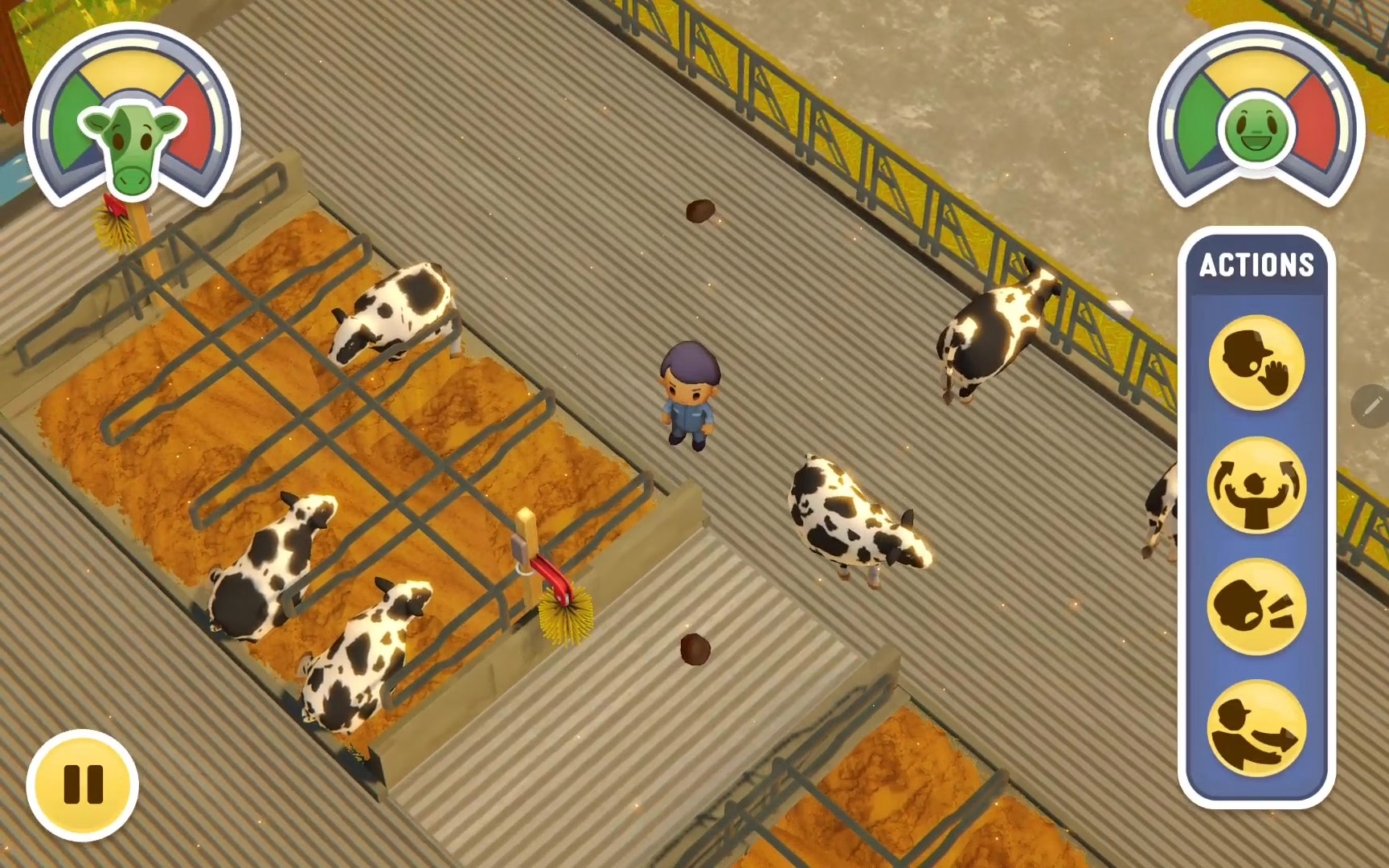
NewsSubscribe
First
Last
Consent

Cold Weather Dairy Herd Management: Essential Diet and Care Strategies for Optimal Productivity

Learn key ways to manage dairy herds in winter. How can you improve diets and care to enhance productivity and safeguard calf health?

Imagine a cold January morning at a dairy farm in Wisconsin. The icy wind bites the farmer as he takes care of his cows. He remembers learning that cows need about 10-20% more energy to stay warm in the cold, which affects their milk production and health. Ensuring cows’ comfort in winter is not only about warmth but also essential for their productivity. So, how do farmers handle this chilly challenge? Let’s explore ways to keep cows warm and produce milk effectively.

Temperature (°C / °F)Additional Feed Requirement (%)Expected Impact on Milk Production
0 / 3210%Minimal Reduction
-5 / 2312%Small Reduction
-10 / 1415%Moderate Reduction
-15 / 518%Significant Reduction
-20 / -420%Severe Reduction


Embracing Winter’s Challenges: Boosting Dairy Cows’ Energy and Well-Being

Cold weather brings unique challenges for dairy cows, making them adjust physically. As it gets colder, cows need more energy to stay warm, which is key for their health and productivity. They naturally eat more to get this extra energy. When temperatures drop, cows increase their dry matter intake, consuming more calories to help keep them warm. This extra energy is essential for warmth and functions like milk production and growth. 

The consequences of not meeting cows’ nutritional needs are significant. If cows don’t receive enough nutrients, they can become stressed, leading to a drop in milk yield. This not only affects the farm’s productivity and profits but also the well-being of the cows. It’s a reminder of the farmer’s responsibility to ensure that the cows’ nutritional needs are met, especially during winter. 

Farmers must adjust their diets by adding feeds rich in carbohydrates and fats, which help generate heat efficiently. They must also check barn conditions to ensure cows are well insulated and free from drafts, keeping them healthy and productive in winter. 

Tackling Winter’s Nutritional Demands: Customizing Dairy Cows’ Diets to Enhance Resilience and Performance 

Winter can be harsh on dairy cows, increasing their energy needs. Adjusting their diets can help keep them healthy and productive. Let’s explore some strategies to optimize cow health during the colder months. 

  • First, cows need more dry matter intake to keep warm. Dry matter intake refers to the amount of feed a cow consumes that is not water. This means they’ll eat more food, so providing plenty of high-quality forage is essential. Did you know lactating cows might eat up to 3.5% of their body weight in dry matter daily when it’s cold? (source)
  • We should also boost energy with fermentable carbs. Carbs give cows energy, and more fermentable ones can provide extra calories. However, be careful! Adding too many sugars and starches can upset their digestion and lead to issues like subacute ruminal acidosis, a condition where the pH of the rumen becomes too acidic. Dr. Heather Dann from the Miner Agricultural Research Institute warns about these risks (source).
  • Plus, introducing fats in the diet can help. Fats offer more than twice the energy per gram compared to carbs. Adding up to 5% fat can satisfy energy needs without increasing the feed quantity. 

While boosting energy is crucial, maintaining dietary balance is equally important. Farmers must ensure their cows’ diets include enough neutral detergent fiber to support good rumen function. This balance is not just about productivity but about the health and well-being of the cows, a responsibility that farmers must take seriously. Optimizing winter diets involves creating a balanced approach to herd health, even in the coldest weather. Every herd is different, so monitor them and make changes as needed.

Conquering the Freeze: Mastering Frozen Silage Management for Healthier Herds

Frozen silage is a big challenge during winter. When silage freezes, cows might eat less because they’re less interested in the meal. This can lead to loose stools and changes in digestion. So, what’s going on here? And how can we handle it to keep our herds healthy? 

The problem with frozen silage is its size. When large pieces end up in the feed, cows might pick through their meals and leave out parts they don’t want, affecting how much they eat and their diet’s nutrition. Keeping silage fresh and cutting it correctly helps cows digest better and stay productive. [source] 

Here’s how you can deal with this: 

  • Face Management: Keep the silage face smooth and cut daily to prevent freezing. In harsh winter months, remove six inches or more daily.
  • Defacing Tools: Use a silage defacer to break up frozen pieces. It helps prevent cows from picking through their feed.
  • Monitor Feed: Keep an eye on how much cows eat and the milk they produce. Change diets based on weather predictions to avoid problems. Check out our comprehensive guide, Top 7 Data Points to Track for Optimal Herd Performance, which provides detailed information on the key data points to monitor for maintaining herd health and productivity.Plastic Covers: Ensure silage covers are long enough to reduce exposure to rain or snow, which leads to freezing.

Handling frozen silage isn’t just about keeping production up—it’s about keeping our herds healthy. As an expert once said, “Consistency is key.” [source] 

These tips can reduce cold stress and help cows stay warm, productive, and happy even in chilly weather. 

Maximizing Barn Efficiency: Navigating Cold Weather Challenges in Dairy Barn Management 

As winter’s grip tightens, maintaining optimal barn conditions becomes essential for a thriving dairy herd. Investing time and effort into ensuring that your free stall facilities are up to par can make all the difference in combating the adverse effects that cold weather can impose on your operations. 

  • Ensuring Proper Ventilation: Proper ventilation prevents wind chill effects that can exacerbate cold stress in dairy cows. A well-ventilated barn facilitates air circulation while minimizing drafts that may sneak up on your cows and leave them shivering. Remember, the goal is to balance between avoiding stagnant air and not blowing chilly wind onto your herd. Metrics dictate that temperature fluctuations inside a regulated building should remain within a five-degree Celsius range to ensure comfort and productivity (source). Continual monitoring and adjustments can foster an environment where cows can perform optimally, even in the coldest months.
  • Managing Barn Temperatures: Minimizing the effects of wind chill requires a keen awareness of the barn’s temperature. Suspending chilly airflows might seem trivial, but it can promote comfort, improve milk yields, and reduce stress levels. Always be keen to fix any broken parts facilitating drafts, notably overhead doors, which can often become troublesome in inclement weather. 
  • Maintaining Equipment: Your barn’s efficiency relies on its components’ functionality. Farmers should focus on maintaining equipment like overhead doors, which are pivotal in controlling external cold air infiltrators. Regular checks and prompt repairs ensure equipment functions as needed, especially during cold snaps. It is crucial to keep everything tightly sealed and well-insulated to maintain barn efficiency.
  • Adjusting Feed Ingredients: When it comes to feeding, freezing molasses or other liquid supplements can be detrimental to dietary balance. Consider switching to winter-stable formulas to avoid such issues. An anecdote from a dairy farmer: “When we adjusted the molasses content, it became evident how a small change can avert larger problems in cold feeds.” For more insights on managing feed ingredients, check out this guide on feed solutions

Implementing these strategies can better position your dairy operation against winter’s frigid challenges. Continually assess your processes to refine your management approach and equip your herd for success year-round! 

Caring for Non-Lactating Animals: Meeting the Cold Weather Needs of Heifers and Calves 

As winter sets in, it’s crucial to focus on the needs of heifers and calves. Unlike cows, these young ones need special care to stay warm and healthy. 

  • Keeping Them Cozy with Bedding: One easy way to help heifers and calves is by giving them enough bedding. Bedding is key to keeping them warm. Using straw lets calves snuggle in for warmth. It’s essential to keep bedding dry, as snow can dampen it. A bedding depth of six inches is best, balancing warmth and cleanliness.  
  • Watching Hair Coat Changes: Heifers and calves grow thicker coats to stay warm as the weather gets colder. But if these coats get messy with mud or manure, they lose their ability to keep the animals warm. Keeping their environment clean and grooming them often helps maintain a clean coat. 
  • Feeding Newborn Calves Right: Newborn calves need more energy to fight the cold. Give them more milk or a nutrient-rich milk replacer to keep them warm. Increasing feedings from twice a day to three times can significantly improve their health. Studies show that extra feedings and warm shelters boost weight gain and reduce death rates in winter. Winter feeding isn’t just about surviving; it’s about making calves healthy and strong.

Focusing on heifer and calf care during winter helps prevent cold stress and keeps your herd healthy. Farmers can ensure their animals grow up strong and ready for the herd by providing cozy bedding, checking their coats, and adjusting feeding. 

Safeguarding Herd Vitality: The Critical Role of Health Vigilance Amid Winter’s Trials 

Keeping a close watch on the health of dairy cows during winter isn’t just a good idea—it’s a must. Regular health checks help catch the adverse effects of cold stress early on, allowing farmers to step in quickly to protect their herds. 

The body condition score (BCS) is valuable in these checks. Watching the BCS helps farmers see if cows have enough energy to fight off the cold. Ideally, a cow’s BCS falls between 2.5 and 3.5 on a 5-point scale. Any difference could mean the cows lack proper nutrition or have health problems (see Top 7 Data Points to Track for Optimal Herd Performance for more). 

It’s also crucial to look for signs of stress or discomfort. Cows huddled up and shaking might be very cold, and less milk production can be another sign of trouble. Cows can’t tell us when they’re cold, so we must watch for signs and pay attention to what they’re doing.

Besides watching the cows, farmers should check barn conditions, such as temperature and humidity. Tools like thermal cameras can help ensure the barn is comfortable for the cows, reducing such issues. 

Regular health monitoring helps farmers keep their cows’ barns running smoothly during coproduction. For more tips on keeping cows productive in different weather conditions, check out Recognizing and Preventing Heat Stress in Dairy Cattle: Proactive Measures for Hot Seasons.

Embracing Technology: Modern Innovations for Managing Winter’s Chill in Dairy Farming

As winter’s cold grip takes hold, dairy farmers are using modern technology to help their herds stay healthy in the cold. 

Temperature sensors are key to keeping barns warm. They give precise temperature readings, helping farmers adjust ventilation and heating systems. These sensors allow barns to stay warm, reducing cold stress and protecting milk production and cow health. 

Automated feeding systems are also changing winter herd care. They accurately and consistently provide feed, ensuring cows get the nutrients they need, even in harsh weather. These systems also have sensors that track feed use and update farmers in real-time. Studies show that automated systems can make feeding more efficient by up to 10%, boosting productivity (source). 

Research on SMART barn technology shows promise for winter care. These barns use the Internet of Things (IoT) to control climate, lighting, and feeding from one location. This improves cow comfort and lowers labor costs, enhancing farm efficiency. 

IoT integration in dairy farming isn’t about saving money and building sustainable and resilient farm operations. Farmers report lower energy costs and increased productivity with intelligent systems (source). 

Embracing technology in dairy management has challenges, like initial costs and training. However, the benefits to herd health and productivity, especially in winter, show the potential these tools offer innovative farmers.

The Bottom Line

We’ve discussed how to handle winter’s challenges, and it’s clear that being prepared is key to keeping dairy herds healthy. Adjusting diets and using new technology can boost productivity and health. We encourage you, as dairy farmers, to use these tips. Try the strategies and contact experts or other farmers if you need help. The community is here to support you with resources and encouragement during the colder months. Embrace these changes and join the movement towards improving your operations. Together, we can build a strong dairy industry that succeeds even in the cold.

Key Takeaways:

  • Cold stress can significantly impact dairy cows’ productivity and overall health during winter months.
  • Adjusting diets by increasing fermentable carbohydrates and monitoring structural carbohydrates is essential to help cows maintain energy levels.
  • Proper management of frozen silage, including effective face management and feedout practices, helps prevent feed quality issues.
  • Maintaining ventilation while protecting from drafts supports barn efficiency and prevents additional cold stress factors.
  • The care of non-lactating animals, particularly heifers and calves, requires attention to bedding, housing, and dietary adjustments to ensure their warmth and nutritional needs are met.
  • Health vigilance in winter includes protecting against illnesses that cold weather can exacerbate, with proactive health measures being critical.
  • Incorporating technology and modern innovations can aid in adapting to winter challenges in dairy farming.

Summary:

This article explores how dairy farmers can adjust herd diets and practices in winter to keep cows warm and healthy. Cows in Wisconsin need 10-20% more energy in the cold, affecting milk and health. Farmers should add carbs and fats, boost dry matter intake, and check barns, ensuring good ventilation and stable temperatures. Too many sugars and starches can cause digestive problems, so balance is key. Non-lactating cows, like heifers and calves, also need special care. Using modern tech can help tackle these winter issues.

Learn more:

Join the Revolution!

Bullvine Daily is your essential e-zine for staying ahead in the dairy industry. With over 30,000 subscribers, we bring you the week’s top news, helping you manage tasks efficiently. Stay informed about milk production, tech adoption, and more, so you can concentrate on your dairy operations. 

NewsSubscribe
First
Last
Consent

How to Boost Production by up to 20% through Nutrition and Cow Comfort

Unlock dairy success with expert tips on nutrition and comfort. Boost productivity and profits. Are your cows thriving?

Did you know that improving nutrition and keeping cows comfortable can increase milk production by up to 20%? Every drop of milk counts in today’s fast-paced dairy industry. Nutrition and keeping cows comfortable are critical for increasing productivity and overall profitability on dairy farms. If you get these components correctly, you’ll have healthier cows and higher yields. However, achieving this balance can be challenging. Dairy producers face various issues, including shifting market demands and increased need to be sustainable while managing their finances. So, how can we navigate this complex scenario so that our herds and companies thrive?

As we delve into unlocking the secrets behind dairy profitability, it becomes crucial to highlight the potential returns various investments in nutrition and cow comfort can yield. Understanding these figures empowers farmers and paves the way for informed decision-making in fostering a thriving dairy environment. 

InvestmentTypeROI (%)
High-Quality ForageNutrition20%
Feed Efficiency TechnologiesNutrition30%
Comfort Bedding SystemsCow Comfort15%
Ventilation and Cooling SystemsCow Comfort25%
Automated Feeding SystemsNutrition18%

 The Power of Nutrition: Elevating Dairy Success 

Nutrition is essential in dairy production, affecting milk yields and herd health. Any competent dairy farmer will tell you that a healthy diet is more than simply food; it is the foundation of a profitable dairy operation. So, how can nutrition indeed increase milk production?

  • Balanced Diets and High-Quality Forage: To maximize milk production, it’s crucial to craft balanced diets rich in high-quality forage. This is not just a theory but a practical strategy that can be implemented on your farm. Cows operate at their peak when fed a diet tailored to their nutritional needs. Providing cows with good pasture ensures they receive the necessary nutrition without harmful pollutants, significantly enhancing milk output and maintaining cow health. This is a tangible step you can take to improve your dairy operations. 
  • Importance of Fiber Digestibility: Remember to consider the importance of fiber digestibility! Fiber digestibility refers to the cow’s ability to efficiently break down and utilize the nutrients in their feed. Due to high fiber digestibility, cows can make the most of their feed, which increases output. According to the Journal of Dairy Science, making fodder easier to digest can increase dry matter intake and milk production by 2 to 3 pounds per cow daily. This statistic emphasizes the genuine benefits of paying attention to fiber quality in feed. 
  • Clean, Contaminant-Free Forages: In addition to what you offer your herd, it is essential to keep forages pure. This prevents health concerns from interfering with the milk supply. Mycotoxins, for example, can seriously disrupt cow milk production and potentially impact the herd’s overall health. Regular testing and proper storage of forages, such as alfalfa and clover, can keep things clean and prevent costly health issues in the future.

Dairy farms may increase milk production and keep operations running smoothly by incorporating these ideas into feeding techniques.

Fueling the Future: The Cow Comfort Revolution 

Imagine a world where dairy cows thrive instead of just surviving. The key to this vision is keeping cows comfortable, crucial for boosting dairy production. Why is cow comfort so important? It’s simple: A stress-free cow is a productive cow. When cows are comfortable, they spend more energy producing milk than managing stress. 

Space is vital. Like us, cows need room to relax, move, and behave naturally. Overcrowding leads to stress and competition, which hinders milk production. A well-structured barn that offers ample space encourages a peaceful environment among the herd. Features such as adjustable bedding, improved ventilation, and softer floors can prevent hoof issues, boosting cow health and milk output. Modern farms focus on reducing stress with better cow handling and humane practices. These improvements can lead to a productivity jump of 20%. 

Dairy research shows that cows in top-notch conditions can increase milk production by up to 300% compared to less ideal settings. However, reaching these conditions requires effort, underscoring the importance of cow comfort for profitability. Dairy farmers face many challenges, from shifting productivity needs to sustainability and economic pressures. Prioritizing cow welfare by balancing nutrition, comfort, and sustainability can help farmers succeed in today’s competitive industry.

Smart Investments: The Key to Dairy Profitability and Sustainability

Today, money plays a significant role in dairy farmers’ success. Managing costs is vital for making a profit. Quality forage can make a huge difference. Farmers can save money on buying extra feed by investing in top-notch, clean forage. This cuts costs and leads to healthier cows and more milk. 

But for this to work, you must also invest in cow comfort. Happy cows are productive cows. Therefore, spending on good barn designs, cooling systems, and plenty of space is essential. These factors boost cow health and milk production. 

Dairy farmers are learning to manage the economy’s highs and lows by making smart investments. They must weigh the initial costs of making cows comfortable and improving forage against the potential earnings. Remember, every dollar spent on better cow welfare and feed quality leads to a more profitable and sustainable dairy farm.

Embrace Innovation: Harnessing Technology for Dairy Excellence

Technology is making dairy farming easier and better for the environment. Farmers now use tools to monitor cow health and eating habits closely. By noticing data changes, they can detect health issues before they become serious. That’s what modern tech can do! 

Great software helps create diet plans and feeding methods tailored to your needs. These tools manage info on feed types and costs, giving you the best nutrition without spending too much. This boosts milk production and maintains herd health, increasing profits. 

Tech is growing fast, so staying updated is necessary. Farmers who use new technology have an edge, making better products and lowering their carbon footprint. Embracing new ideas in this changing world helps farmers succeed and meet efficiency and environmental goals.

Bridging the Gap: Aligning Dairy Farming Realities with Public Perceptions 

Many people think dairy farming is just about cows relaxing in fields. But running a productive and eco-friendly farm isn’t so simple. The challenge is to use green farming methods while maintaining high production. Efficient farms can lower emissions per milk produced, but that doesn’t always match what consumers think farms should look like. 

Dairy farmers need to balance being green and running their farms well. Investing in energy-saving tools and better nutrition is essential, but it can be expensive. With tight budgets, farmers might struggle without clear financial help. 

Open about farming practices can help close the gap between people’s thoughts and the truth. Farmers should share how they use new technology and methods to reduce emissions. Hosting farm visits, sharing learning materials, and collaborating with green groups can improve understanding and trust. The dairy industry’s future relies on balancing green practices with making a profit, allowing farmers to meet public expectations and stay successful in the long run.

Empowering Your Workforce: The Backbone of Dairy Productivity

The success of today’s dairy business hinges on a skilled workforce. Is your team equipped with the knowledge to ensure that cows are comfortable and well-fed? Understanding cow behavior and nutrition can significantly boost farm productivity. When employees manage cattle calmly and efficiently, cows are more likely to thrive and produce more milk. 

Nutritional expertise in your team is invaluable. Well-trained staff can precisely follow feeding protocols, producing better milk yield and quality. Regular training in new techniques and technologies prepares your crew to enhance farm outcomes. This ongoing learning is crucial for staying competitive in the dairy industry. 

Continuous development creates a thriving work culture that benefits animals and boosts your profitability. Investing in your team sets a foundation for sustained growth and success in your dairy operations. Are you ready to elevate your farm’s potential?

The Bottom Line

Our discussion highlighted the importance of nutrition and cow comfort in boosting dairy farm productivity. Ensuring high-quality forage, innovative feeding management, and stress-free environments are key to increasing milk yield and achieving economic and environmental sustainability. By using technology and enhancing management practices, dairy farmers can tackle market challenges and meet customer expectations. Consider how you might enhance your farm’s nutrition and cow comfort to ensure long-term success in modern dairy farming.

Key Takeaways:

  • Nutrition and cow comfort are crucial for maximizing dairy productivity, with a focus on both fed diets and managing stress-free environments.
  • Improving forage quality and controlling contamination can reduce external feed costs and increase farm profitability.
  • Innovations in technology and management practices allow for more accurate monitoring and feeding, enhancing cow health and production efficiency.
  • The dairy industry faces a conflict between sustainable practices and economic constraints, with a need for balanced integration.
  • Employee training and understanding cow behavior contribute significantly to operational success and animal welfare.
  • Aligning dairy farming practices with public expectations while maintaining efficiency remains a key challenge.
  • Continued research and development are essential for evolving feeding strategies and achieving optimal dairy outcomes.

Summary:

Unlocking dairy success hinges on nutrition and cow comfort, critical factors for elevating dairy productivity. Dairy producers. They can realize substantial gains in milk production, fat yield, protein content, high-quality forage, and stress-free living conditions. Effective management strategies, innovative technologies, and comprehensive approaches are crucial for sustainable and profitable dairy farming. This involves blending cost-effective feed ingredients, understanding cow comfort for stress reduction, and integrating advanced systems that bridge farm realities with public expectations. Addressing challenges like productivity demands, market pressures, and sustainability requires balancing nutrition, comfort, and economic constraints. Producers can enhance operations by prioritizing high-quality forage, proper storage, and intelligent investments in foraging while minimizing off-farm feed costs. Technology, including real-time monitoring tools, customizes diet plans for dairy excellence. Farmers can further bridge the sustainability gap by being transparent about cutting-edge practices and emphasizing technological and eco-friendly approaches. Empowering the workforce through cow handling and nutrition management training is vital for maintaining productivity and staying updated with industry advancements.

Learn more:

Join the Revolution!

Bullvine Daily is your essential e-zine for staying ahead in the dairy industry. With over 30,000 subscribers, we bring you the week’s top news, helping you manage tasks efficiently. Stay informed about milk production, tech adoption, and more, so you can concentrate on your dairy operations. 

NewsSubscribe
First
Last
Consent

Bovaer and the UK Dairy Industry: Revolutionizing Sustainability or Just a PR Nightmare?

Discover Bovaer’s impact on UK dairies—revolutionary step or PR hurdle? Explore the debate and draw your conclusion.

Methane emissions have become a significant problem in the fight against climate change, especially in the dairy industry. When trapped in heat for over 100 years, methane is a greenhouse gas more than 25 times stronger than carbon dioxide. Most of it is released when cows belch. Ignoring this part of dairy farming means missing a crucial environmental puzzle. That’s where Bovaer comes in—a new feed additive that promises to significantly cut methane emissions, making it a potential game-changer for sustainability in farming. 

Some hail Bovaer as a breakthrough, a beacon of hope in the fight against climate change. With just a tiny addition to cow feed, it has the potential to reduce emissions by up to 30%. However, like any transformative idea, Bovaer has faced skepticism and consumer pushback. The ‘path to sustainability seems full of controversies as much as it is full of possibilities.’ While some see Bovaer as a hopeful step toward lessening environmental impact, others are concerned about its implications for dairy products and food safety. 

A Tiny Spoonful with a Giant Impact: Revolutionizing Dairy Sustainability with Bovaer

Bovaer is a new feed additive made by DSM to address a significant environmental issue in farming: methane emissions from dairy cows. Methane, a potent greenhouse gas, is mainly produced in the stomachs of ruminants like cows through enteric fermentation. This process involves breaking down food using microbes, producing significant methane, and contributing to climate change

Bovaer, the result of over ten years of rigorous research and testing, is a safe and effective solution. This additive targets a specific enzyme in the cow’s stomach that produces methane, reducing emissions by about 30% when used correctly. It is effective in tiny amounts—a quarter of a teaspoon per cow daily can achieve methane-reducing results, providing a reliable and practical solution to a pressing environmental issue. 

Bovaer has been embraced in more than 60 countries, including major dairy producers like the United States, demonstrating its global acceptance and potential impact. The approval process involved thorough trials and evaluations by scientific and regulatory groups, proving its effectiveness and safety for animals and humans. This widespread acceptance underscores the additive’s role in achieving worldwide sustainability goals in the dairy industry, making the audience feel part of a united global effort. 

The Double-Edged Sword of Social Media: Bovaer’s Trial and the Unleashed PR Storm

The power of social media can be both good and bad, as seen with the backlash against Arla’s plan to try Bovaer. What started as a simple press release quickly became a PR disaster, showing how fast misinformation can spread online. The trial, which included only a tiny number of Arla’s farmers, was meant to test methane reduction, but the reaction was simple. Soon after the announcement, social media, especially X, became filled with different opinions, with false information and conspiracy theories taking over. 

Some people mistakenly said Bovaer was not just a feed additive but a dangerous chemical that could make dairy products unsafe—a colossal misunderstanding. There were false claims about changes to milk and even suspicious hints of corporate wrongdoing, which fueled fears. Crazy accusations linked Bovaer to political and health conspiracy theories, dragging in people like Bill Gates without any factual basis, making mistrust and confusion worse. 

Because of this, consumers panicked and called for a boycott of Arla’s products. This reaction was based more on fear than facts, as social media gossip drowned out scientific studies and official approvals showing Bovaer’s safety. This situation shows how easily public opinion can be influenced, especially when sensational stories overshadow the truth, serving as a warning for the whole dairy industry.

Farmers at a Crossroads: Bovaer’s Promise and the Economic Reality 

The introduction of Bovaer has sparked different opinions among UK dairy farmers, highlighting the tough choices surrounding new farming technologies. Some farmers see Bovaer as a key step toward eco-friendly dairy farming. In today’s world, cutting carbon footprints is necessary, and Bovaer helps in the battle against climate change. These farmers want to be part of the global solution and make caring for the environment a central part of their work. 

However, many farmers are still unsure. Their main worry is the cost of using Bovaer. Since it doesn’t boost milk yield or quality, it’s an extra cost without a clear benefit other than less methane, which can’t be easily measured without special tools. This makes it a tough choice, especially for farmers already struggling financially. 

There is also concern about getting caught in a public relations mess. Some farmers fear that misunderstandings, like the ones during Arla’s trial announcement, might upset customers. This could damage farmers’ reputations or lead to boycotts, worsening their financial situation and hurting the relationships they’ve built with consumers. 

The disagreement over Bovaer shows a more significant issue in the industry: balancing short-term financial needs with long-term sustainability goals. As talks continue, it’s essential for everyone involved to work together and address these concerns so that projects like Bovaer provide clear and practical benefits to everyone.

Stuck Between Green Dreams and Red Bottom Lines: The Economic Tug-of-War Over Bovaer

Dairy farmers face significant financial hurdles when using Bovaer in their feeding routines. Farmers don’t see immediate profits because this new feed additive costs money. Many farmers already have tight budgets, so they must choose between being environmentally friendly and economically stable. 

The main issue is that while Bovaer cuts down on methane emissions, it doesn’t lead to more milk or better quality, which could make up for its cost. Farmers must spend money to use Bovaer without any extra income, making it hard to justify the additional expense. 

What’s more, there aren’t any strong financial incentives to help. Government programs don’t provide enough support or subsidies to help with these costs, leaving farmers to pay the price of becoming more sustainable. 

Retailers also add to the problem by not wanting to pay for sustainability efforts. They want to stay profitable and hesitate to take on extra costs for environmental reasons. This means farmers bear the full financial brunt, even though society benefits from lower emissions. Farmers face a tough challenge if retailers and others don’t pitch in. 

For Bovaer to succeed, we need to change our economic thinking. Everyone involved, including retailers and policymakers, must share responsibility and offer financial help. Only when we all work together can the goal of cutting emissions align with keeping farmers economically strong.

When Delay Spurs Doubt: The Urgent Call for Timely and Robust Regulatory Action 

The Bovaer controversy swept through the UK dairy sector like a storm, and the slow response from regulatory bodies like the UK’s Food Standards Agency was hard to ignore. In today’s world, where news (and rumors) spread as fast as a tweet, waiting too long to confirm Bovaer’s safety made public worries worse. This delay only fueled doubts as people waited for an official statement amidst rumors and false information. The situation highlights how crucial it is for trusted sources to communicate quickly and clearly when public trust is at stake. 

Another missed opportunity is the lack of government incentives to help adopt technologies that reduce methane. While everyone agrees that reducing methane is good for the environment, dairy farmers still bear the cost of these technologies. Even though reducing methane aligns with national and global sustainability goals, government policies don’t offer much support. Farmers wonder why they should pay to care for the environment without help or recognition from those in power. 

In a time when sustainability is supposedly a top government priority, not having policies to encourage the use of products like Bovaer seems like a strategy mistake. It raises the question: If the government doesn’t support essential sustainability projects, who will push for positive environmental change in the industry? This challenge remains unsolved, leaving dairy farmers stuck between wanting to be more environmentally friendly and facing the challenging economic truths of making it happen.

The Global Dairy Odyssey: Navigating the Intersection of Sustainability and Trade with Bovaer

The story of Bovaer is just one part of a more significant trend in the global dairy industry. This trend is concerned with reducing environmental impact and managing trade issues. As countries aim to make their food systems more eco-friendly, technologies like Bovaer become essential tools. However, they also face the challenge of fitting into global trade systems. 

Today, environmental issues heavily influence policies and consumer choices. Bovaer showcases a mix of innovation and necessity. It highlights the growing awareness that agricultural emissions must be reduced to meet climate goals. Yet, Bovaer is not alone in this mission. Worldwide, other technologies like Rumin8 and seaweed extracts are being explored to lower methane emissions from cattle [DSM]. The potential for these technologies to work together shows the importance of international cooperation. 

As countries update their trade deals, the movement of new products like these will become crucial. Many nations acknowledge their climate duties and add sustainability clauses to trade agreements. This could lead to shared strategies where countries exchange methane-reducing technologies and research, promoting a joint effort in cutting agricultural emissions worldwide. 

Groups like the United Nations Food and Agriculture Organization and the International Dairy Federation could support these sustainability efforts by creating consistent global policies and establishing trade rules that encourage rather than hinder innovation. For companies and dairy farmers, aligning with these global initiatives could help reduce methane emissions and improve their market position, which is increasingly focusing on sustainability. 

While Bovaer faces challenges at home, its story reflects the more significant issues and opportunities at the intersection of sustainability and global trade. The international dairy industry is poised for a new era in which collaboration, rather than competition, might lead to a greener future.

The Bottom Line

The story of Bovaer in the UK dairy industry is a tale of opposites. On one hand, it promises to reduce methane emissions, a big step towards helping the environment and fighting climate change. But, on the other hand, it’s causing many arguments, mainly because of what people think about it and how much it costs. While some farmers are eager to use Bovaer for its green promise, others worry about the cost, as it doesn’t improve production. This raises a key question: can the dairy industry balance new ideas like Bovaer with consumer concerns and financial pressure? 

Regulatory bodies have a significant role to play. They must ensure safety and openness and create an environment that helps new technologies. As the Bovaer story continues, the future is uncertain. Will people eventually support it, trusting the scientific backing it has? Can financial challenges be solved with better policies and support for farmers? All these things will shape the future of Bovaer and dairy sustainability. As someone involved in the dairy industry, you’re in the tough spot of figuring out how to mix innovation with public perception in your ongoing effort to be sustainable.

Key Takeaways:

  • Bovaer, a feed additive developed to reduce methane emissions in dairy cows, is at the forefront of sustainability efforts but is mired in controversy.
  • The backlash on social media exemplified a significant PR crisis, with misconceptions fueling public distrust and calls for boycotting brands associated with Bovaer.
  • The divide within the dairy industry reflects concerns over the cost of Bovaer without direct financial return, highlighting the economic challenges of adopting sustainable practices.
  • The lack of adequate government response and support intensifies challenges for farmers wary of embracing innovations that may not yield immediate financial benefits.
  • Global interest in sustainable dairy practices signals potential but underscores the need for comprehensive studies and strategic communication to gain consumer and industry trust.
  • Farmers must navigate the delicate balance between contributing to environmental goals and maintaining economic viability, emphasizing the need for innovative solutions that consider all stakeholders.

Summary:

Bovaer, a methane-reducing feed additive, has sparked significant controversy in the UK dairy industry. Touted as a sustainability breakthrough, it triggered a public relations storm due to consumer misunderstandings amplified by social media. The additive, which can cut emissions by 30% with just a quarter teaspoon daily per cow, has been accepted in over 60 countries. However, its implementation has divided dairy farmers; some recognize its potential for sustainable practices, while others object to its costs and lack of direct production benefits. This uproar highlights broader challenges in aligning environmental goals with economic realities. The case calls for improved regulatory communication to harmonize consumer perceptions with scientific facts. Ultimately, Bovaer’s adoption tests the dairy sector’s adaptability and engagement in global sustainability discourse, further accentuated by evolving international trade considerations.

Learn more:

Join the Revolution!

Bullvine Daily is your essential e-zine for staying ahead in the dairy industry. With over 30,000 subscribers, we bring you the week’s top news, helping you manage tasks efficiently. Stay informed about milk production, tech adoption, and more, so you can concentrate on your dairy operations. 

NewsSubscribe
First
Last
Consent

Seaweed to the Rescue: How Dairy Farmers Can Slash Methane Emissions and Boost ROI

Learn how seaweed can slash dairy methane emissions and enhance ROI. Can this natural remedy revolutionize your farm’s sustainability and profits?

More attention is paid to the dairy industry because it releases methane, a potent greenhouse gas that worsens climate change. But what if the answer to eliminating these pollutants resounds in the ocean? Seaweed could be a big deal for dairy farming because it can significantly cut methane emissions. Adding seaweed to cattle feed could cut methane emissions from cows by up to 82%, according to research from the University of California, Davis [UC Davis research]. Not only is this good for the environment, it’s also good for business. Think about the two advantages: a better environment and more money. There are as many choices as there are waves in the ocean.

Methane: The Hidden Giant of Dairy Farming Emissions 

The release of methane during dairy production is a significant cause for concern. Methane is a potent greenhouse gas that keeps heat in the atmosphere about 25 times better than carbon dioxide over 100 years [EPA]. Enteric fermentation is the primary way that dairy cows make methane. The EPA says that about 10% of all greenhouse gas emissions in the United States come from agriculture, with livestock being the most significant source.

For example, the EPA says a dairy cow produces about 220 pounds of methane yearly. Given the millions of dairy cows in the US, methane emissions aren’t a minor problem; they’re a big problem that needs real solutions.

We can’t ignore how this affects the environment. Greenhouse gas emissions, like methane from dairy production, have a significant effect on the health of our planet, and we have looked into our business. As new emissions goals and environmental laws are implemented, regulatory pressures are rising. Do you feel the heat of these problems? Many dairy farmers aren’t sure how to make changes without reviewing their budgets. We need solutions that think about both the environment and the economy at the same time.

Seaweed: The Secret Weapon in Cutting Methane Emissions 

Seaweed isn’t like other plants that grow near the coast; its unique properties can help dairy farms reduce methane emissions. What’s different about seaweed? Let’s get started.

Bioactive chemicals like bromoform are found in large amounts in some types of seaweed, especially Asparagopsis. This chemical is crucial for stopping the enzymes in a cow’s digestive tract that make methane. These enzymes help a biological reaction make methane when cows digest their food. Bromoform dramatically reduces the production of methane by blocking these enzymes.

A Journal of Cleaner Production study found that giving cows minimal Asparagopsis—about 2% of their diet—could cut methane emissions by more than 80%. This is a significant drop, showing that seaweed could be a good long-term option for dairy farmers who want less environmental impact.

Have you ever considered how a slight change to the feed could have such a significant effect? Because of how it is made, seaweed is a natural, effective, and very cheap way to reduce one of the most significant sources of greenhouse gas emissions from dairy farming.

Seaweed: The Miracle Additive for Dairy Farmers 

So, how precisely can using seaweed in calf feed lower methane emissions? It’s easier than you would imagine. When cattle digest their meal, bacteria in their stomachs (especially the rumen) break it down. This process generates hydrogen and carbon dioxide, which certain microorganisms convert to methane, a potent greenhouse gas.

The seaweed Asparagopsis taxiformis has chemicals that impair this mechanism. According to a CSIRO study, these chemicals, particularly bromoform, may considerably inhibit the activity of methane-producing microorganisms. This means that when a cow consumes seaweed, the chemicals in the seaweed interfere with the microbes in the cow’s stomach, preventing them from producing methane during digestion.

According to Dr. Rob Kinley, a lead researcher at CSIRO, “When we add a small amount of this seaweed to a cow’s diet, it creates a reaction that stops the microbes from making methane without affecting the animal’s digestion or productivity” [CSIRO].

Studies [ScienceDirect] have shown that adding 0.2% seaweed to the diet may lower methane output by up to 80%. This is a win-win. Situation: The cows stay healthy and productive, and you contribute to a cleaner, greener environment.

The Financial Perks of Seaweed: Your Golden Ticket? 

When you consider investing in new procedures, the financial benefits must stack up, right? Seaweed might be that golden ticket. One of the immediate benefits is cost reductions. Consider using less feed for your cattle. Cows released less methane when fed seaweed, according to trials [USDA]. Consider the potential savings over a year!

Now, let us discuss milk production. Healthy cows generate more milk. Early research suggests that cows given seaweed supplements may have higher milk production. A study by the University of California, Davis, found that adding seaweed to cattle diets might improve milk output by up to 10% [UC Davis]. But what about the taste and quality of the milk? Studies have shown that the milk from cows fed with seaweed is not only as good as conventional milk but also has added health benefits due to reduced methane emissions. More milk equals more income, plain and easy.

But that is not all. The government acknowledges the environmental advantages and possible financial savings for seaweed farmers. The USDA provides subsidies and incentives for implementing environmentally friendly measures, including a [specific amount] subsidy for every cow fed with seaweed. Such incentives make it even more cost-effective since they allow you to test something that might save you money and increase your earnings.

Finally, the financial advantages of seaweed may considerably increase your ROI—less feed, more milk, and government help. Isn’t it time to examine seaweed as a potential investment in your agricultural operation?

Turn Your Dairy Farm Into an Eco-Friendly Powerhouse 

Imagine changing your dairy farm’s operations while drastically reducing emissions. Farmers worldwide are using seaweed to achieve this goal.

One famous case is California, where a dairy farmer added seaweed to his cow diet. According to research conducted at the University of California, Davis, methane emissions were reduced by more than 50% in only a few months. “It has been a game changer,” he adds. We have cut emissions significantly, and our herd’s health and milk production have remained stable.”

Across the Atlantic, in Ireland, another dairy farm saw similar results. Incorporating seaweed resulted in a 30% decrease in methane emissions and a substantial improvement in cattle digestion. “We were skeptical at first,” says the farmer, “but the results speak for themselves.”

Furthermore, a farm in Australia saw increased production after transitioning to a seaweed-infused diet. According to their analysis, milk output rose by 10%, owing to improved overall cow health. The Australian government has noticed and is exploring subsidies for seaweed additions in cow feed.

Can you see the possible advantages to your farm? Reduced emissions, happier cows, and increased milk output can all be achieved with a seaweed supplement. These success tales are not unique examples; they demonstrate what is possible. Are you prepared to pioneer this transformation in your agricultural practices?

Ready to give seaweed a shot on your dairy farm?

Here’s how you can get started

  • Sourcing Seaweed: Begin by locating trusted vendors. Look for products with organic certifications and honest sourcing procedures. Ask other dairy producers who have previously used seaweed for ideas. You may also ask agricultural institutions or extension organizations for a list of reputable vendors.
  • Incorporate Seaweed into Feed: Introduce seaweed gradually into your cattle’s feed to prevent intestinal problems. Begin with a tiny dose and gradually raise it over a few weeks. Standard practice recommends 1-2% of dry feed consumption. Consult a livestock nutritionist to adjust the amount for the best outcomes.
  • Monitor and Measure: As you add seaweed, keep a watchful eye on your cows’ health and milk output. Track methane emissions using existing technologies or collaborate with researchers who can offer methane monitoring equipment. This information will allow you to examine the effect of seaweed and make any required changes.

Best Practices 

  • Ensure the seaweed is free from contaminants and heavy metals.
  • Mix the seaweed thoroughly with other feed components to ensure even distribution.
  • Regularly check for changes in the cows’ behavior, health, or milk yield.
  • Engage with your local agricultural extension for ongoing support and updates on best practices related to seaweed usage.

These steps help you smoothly integrate seaweed into your dairy operations, potentially reducing methane emissions and improving sustainability.

The Other Side of the Coin: Challenges with Seaweed Integration 

While the advantages of seaweed in lowering methane emissions are apparent, it is essential to examine certain obstacles. First, the cost of seaweed might be high. Are you willing to bear higher feed expenses? This is not a one-time expense; it is a continuing investment. Furthermore, seaweed availability might fluctuate. Not all places have easy access to seaweed providers, which may increase transportation costs and logistical issues.

Then there’s the subject of adding seaweed to your cows’ meals. It might be challenging to mix it uniformly and ensure that all animals ingest the appropriate quantity. Do you have the necessary equipment and procedures in place to handle this?

Of course, solutions exist. Some growers are collaborating to purchase seaweed in bulk, lowering expenses. Others are investigating local supplies or the potential of growing seaweed themselves. Innovators in the feed business are also working on more efficient methods of integrating seaweed into conventional feed mixes.

So, do you find these obstacles manageable? Yes, it’s a riddle, but one that may be worth solving for the sake of your farm’s production and environmental impact.

Seaweed: The Future of Sustainable Dairy Farming 

Seaweed could change the way sustainable dairy production is done. New research suggests that different kinds of seaweed may have different health benefits, and scientists are working on making them easier to absorb. For instance, researchers are looking for ways to standardize the nutrition in seaweed so that it is the same for all herds and all areas.

New technologies like ocean aquaculture have the potential to make seaweed easier and cheaper to obtain. This new idea might lower costs, which means that even the smallest dairy farms could use it. Farming seaweed lowers methane levels and may act as a carbon sink, adding to its environmental benefits.

As we consider these accomplishments, one question comes to mind: Are you ready to contribute to this sustainable future? Using seaweed makes you look like a forward-thinking farmer, which is good for the environment and the farming industry. Are you going to jump?

The Bottom Line

We’ve discussed seaweed’s many benefits, such as lowering methane emissions and making your business more profitable. Consider turning your dairy farm into an eco-friendly powerhouse that makes much money. Seaweed is a good choice because it helps dairy farms stay in business and make money at the same time. However, figuring out the problems is essential for making a wise choice.

One question remains: Are you willing to try the seaweed solution? It could have significant benefits for the environment and the economy.

Key Takeaways:

  • Seaweed added to cattle feed can reduce methane emissions by up to 80%.
  • Seaweed represents a sustainable solution for the dairy industry.
  • Dairy farming contributes to significant methane emissions, a potent greenhouse gas.
  • Research supports seaweed’s effectiveness in emission reductions.
  • Adopting seaweed in feed can help balance environmental and economic demands.
  • Government subsidies and incentives are available to promote seaweed usage.

Summary:

Imagine a world where dairy farms could significantly cut their methane emissions with a simple dietary change. That’s the promise of seaweed. By adding it to cattle feed, farmers can slash methane emissions by as much as 80% [Agriculture.com]. “Seaweed in cattle feed could be a game-changer for the dairy industry, paving the way for more sustainable farming practices,” says Dr. Mark Jones, Agricultural Scientist [Dairy Farmers of America]. The dairy sector significantly contributes to methane emissions, a significant greenhouse gas. Research from the University of California, Davis, shows that including seaweed in cattle feeds could reduce these emissions by up to 80%. Dairy cows produce methane primarily through enteric fermentation, making up 10% of US greenhouse gas emissions. As regulatory pressures rise, many dairy producers struggle to balance environmental responsibility and economic reality. Seaweed emerges as a natural, effective, low-cost alternative, with the government providing subsidies and incentives to encourage its use.

Learn more:

Join the Revolution!

Bullvine Daily is your essential e-zine for staying ahead in the dairy industry. With over 30,000 subscribers, we bring you the week’s top news, helping you manage tasks efficiently. Stay informed about milk production, tech adoption, and more, so you can concentrate on your dairy operations. 
NewsSubscribe
First
Last
Consent

Can Gene Editing Transform Dairy Farming Forever?

Could gene editing transform dairy breeding? Will it replace or improve traditional ways? See what’s next for dairy farming.

Could gene editing mean the end of traditional dairy breeding? In a world where technology changes fast, how we’ve always bred dairy cows might soon be outdated. With new tools like CRISPR, gene editing is shaking up the farming world, suggesting a significant change that could forever alter how we produce dairy. These advances could achieve what used to take decades with traditional breeding, making us question the future of old methods. We are beginning a new era, and it’s time to look closely at how these changes could benefit the industry.

Unpacking the Genetic Revolution: The CRISPR-Cas9 Phenomenon 

Gene editing is a significant scientific advancement, allowing for precise gene changes. Tools like CRISPR-Cas9 make this possible. But what makes it so unique, and why is it a significant breakthrough? 

How CRISPR-Cas9 Works 

CRISPR-Cas9 works like tiny, precise scissors. Scientists use it to target specific genes and cut them accurately. It has two main parts: the CRISPR part, which is like a map guiding where to cut, and the Cas9 enzyme that does the cutting. 

  • Scientists create a CRISPR guide matching the gene they want to change.
  • This guide leads Cas9 to the exact spot in the DNA.
  • Cas9 then cuts the DNA at that spot.
  • The cell naturally repairs the DNA, allowing for changes like adding or removing genes.

This precise method ensures that only the right spot is changed, reducing the risk of mistakes. CRISPR-Cas9 is also faster and cheaper than older methods, which makes it stand out. 

Gene Editing vs. Adding Foreign DNA 

Unlike methods that add genes from one species to another, gene editing mainly changes genes already in the animal. Adding foreign genes can create new traits and face significant ethical and environmental issues. 

Gene editing focuses on tweaking genes in the same species. This method can boost positive traits or remove bad ones without mixing genes from different species. This makes gene editing more accepted by laws and the public, avoiding many issues faced by adding foreign DNA. 

Why It Matters 

Gene editing changes the game for several reasons: 

  • Accuracy: Can target the exact genes for change, unlike random changes in breeding or adding foreign DNA.
  • Speed: Changes that took years through breeding can now happen quickly.
  • Cost: It’s cheaper and saves time compared to older ways.
  • Ethics: Fewer concerns about mixing species helps solve ethical issues.

Overall, gene editing with CRISPR-Cas9 opens new, exciting possibilities in dairy breeding and other fields, balancing scientific goals and public opinions.

The Age-Old Method: Is Traditional Breeding Running Out of Steam?

Traditional dairy breeding has been the primary way farmers improve their cattle. It involves picking the best animals over generations to get better traits, like milk production, fertility, and staying healthy. Farmers look at family history and visible traits to choose which animals to breed together. The animals with the best scores are used to form the next generation

Traditional breeding is a very slow process. Trait improvements, like milk yield, happen gradually in each generation. Adding one good trait to the herd can take 15 to 20 years. This happens because it depends on how genes mix naturally, which makes predicting results hard. 

The main problem with traditional breeding is that it depends on natural gene changes and takes a long time because cows have long lifespans. It’s slow, and the data about cow traits isn’t sometimes precise. Also, traditional breeding can accidentally reduce the variety of genes, using a limited number of animals to obtain certain traits. This could lead to inbreeding, causing unwanted traits or making the herd less adaptable. 

Even with these challenges, traditional breeding has helped improve dairy cattle genetics. It shows the value of patience and careful planning in farming. But now, with new technology like gene editing, farmers might find faster, more focused ways to improve cattle without the downsides of traditional breeding. 

Beyond the Horizon: Unleashing the Precision and Power of Gene Editing in Dairy Cattle

Gene editing is very promising for dairy cows because it’s precise and fast. Using tools like CRISPR-Cas9, scientists can accurately change a cow’s genes. This helps improve good traits in cows without adding foreign genes, which reduces the risk of problems. 

Gene editing works much faster than old breeding methods, which can take many generations to see changes. This fast work can quickly improve dairy cow genetics. 

Gene editing can improve important traits like milk production, helping farms become more efficient and profitable. It can also make cows more resistant to diseases, saving money and keeping them healthier. 

Additionally, gene editing could help eliminate painful practices like dehorning by changing the genes responsible for these traits. This would lead to more humane and sustainable farming. 

In short, gene editing in dairy cows means making precise and fast changes for better milk production, disease resistance, and animal welfare. It complements old breeding but does it much more effectively.

The Future is Now: Accelerating Dairy Breeding with Gene Editing

Gene editing offers many advantages over traditional breeding, especially with tools like CRISPR-Cas9. It lets us make changes at specific spots in the DNA so we can add the traits we want without random chance. This means we can make genetic improvements much faster. What used to take decades with traditional breeding can now be done with gene editing in just a few years. 

Gene editing isn’t just about choosing specific traits. It can also fix complicated traits that involve multiple genes, like disease resistance and adapting to the environment. For instance, scientists have used gene editing to help protect animals from diseases like Bovine Viral Diarrhea Virus (BVDV), which shows how it can improve animal health and productivity. However, there’s a worry about making mistakes in other parts of the DNA, so research is needed to be more precise and reduce the risks. 

Looking deeper into these advancements, we see that traditional methods have limits. Take OCD Thorson Ripcord-ET, the current #1 NMS in the world at 1485. Compare this to a “Supercow,” which could have an NM$ of $6745 using the best genetics in Holsteins. The genetic gain of traditional breeding is about $94 NM annually. It would take about 55 years to reach the level of a “Supercow.” This shows the power of gene editing, which can skip over the limits of natural breeding. However, challenges like changes in efficiency remain, meaning we need to keep improving gene editing technologies to make them reliable and effective in changing the future of dairy cattle genetics.

Gene Editing: A Brave New World or a Pandora’s Box? 

The argument about using gene editing in farm animals raises many ethical worries, especially about animal welfare. Gene editing aims to make animals healthier by giving them traits that fight diseases or avoid painful things like dehorning. But there’s still a question about what might happen in the long run. Could these genetic changes accidentally create new health issues that harm the animals’ quality of life? 

Aside from welfare, there’s the issue of animal dignity. Ethical arguments ask if it’s right to change the genetic makeup of living beings for human gain. Is there a big difference between selective breeding, which is very old, and cutting genes to fit a plan? Do these actions harm the natural dignity of animals by turning them into tools for production? 

The possible environmental effects are also a concern. If genetically edited animals somehow join nature, it might surprisingly change ecosystems. Changes in one species could affect the whole food chain, impacting biodiversity and natural habitats. It’s crucial to balance promoting farming improvements with environmental protection and ethical standards.

Regulatory Labyrinth: Navigating Global Standards for Gene-Edited Animals 

The rules for gene-edited animals vary worldwide, like a patchwork quilt of different pieces. Each country or region has its way of evaluating this technology based on its culture and beliefs. These differences can affect how quickly these technologies are adopted and change how they are used in global markets

  • United States: The United States is generally open to gene editing, with the Food and Drug Administration (FDA) leading the way. The FDA treats gene-edited animals like regular farm animals as long as the edits can happen naturally or through regular breeding. However, the FDA still requires careful checks to ensure they are safe for animals and people. This approach encourages new ideas but raises questions about managing them in the long run. 
  • European Union: The European Union (EU) has stricter rules, treating gene-edited organisms like GMOs (genetically modified organisms). These rules require detailed labeling and safety tests. This can make introducing gene-edited animals in their markets hard and might slow progress and competition. The EU wants to stay cautious about new genetic technology while ensuring public confidence. 
  • Japan: Japan’s rules are more flexible, and each case is examined individually. If a gene-edited animal doesn’t have DNA from other species, it might not be considered a GMO. This approach could avoid some strict regulations, making it easier to approve. However, it must carefully maintain consistent rules and consumer trust. 

All these rules aim to ensure the safety of gene-edited animals without stopping innovation. However, challenges like off-target effects, where unintended changes occur, add complexity to safety checks. Bringing more uniformity to these rules globally is essential. It can help with transparency, market access, and broader acceptance of these new technologies

While these different approaches show varying ideas, they all focus on a shared goal: protecting public and environmental health while keeping pace with advancements in animal genetics. The conversation continues as experts and policymakers work together to find a balance in this new era.

Cautious Optimism: Charting the Future of Dairy Breeding with Gene Editing

The dairy industry hopes gene editing will change the game. The industry sees many benefits, such as higher productivity, better animal welfare, and more sustainable farming. Gene editing allows us to add specific traits quickly, speeding up breeding progress that usually takes decades. 

But, costs are a significant consideration. Starting with gene editing can be expensive. However, these costs should go down as more people use these technologies. Compared to traditional breeding, which can be slow and pricey, gene editing might be cheaper to improve genetics in the long run. 

The key issue is whether people accept gene-edited products. Some consumers hesitate, but explaining and educating the public can help change their opinions. The dairy industry needs to talk to consumers and show how safe and beneficial these advancements are in building trust. 

Gene editing will likely add to, not replace, traditional breeding methods. Gene editing is precise and efficient, but traditional methods still have a place, especially where gene editing faces limits or regulations. Together, these two methods could work well, using each of their strengths to improve the genetic quality of dairy cattle. 

Pioneers of Progress: Gene Editing’s Tangible Impact on Dairy Cattle

The reality of gene editing in dairy cattle is not just science fiction. It’s a growing field that is making real progress. A good example is the work of Recombinetics, a biotech company that is doing extraordinary things. Working with the University of Minnesota, they’ve achieved big wins in breeding polled cattle. Using gene editing to remove the horned trait, they aim to improve animal welfare by eliminating the painful process of dehorning, a significant concern for dairy farmers

Similarly, Acceligen, another Recombinetics branch, shows how gene editing can work. Acceligen edits cattle genes to give traits like heat tolerance, which helps them deal with climate challenges. These edited cattle can stay productive in hot weather, proving how helpful gene editing can be in keeping livestock healthy

The Roslin Institute in Scotland is another place that is doing great work on gene editing. Famous for cloning Dolly the sheep, it now uses CRISPR technology to boost disease resistance in dairy cattle. Its work shows that gene editing can increase productivity and improve health by stopping diseases from spreading. 

These examples prove that gene editing is more than a theory. It’s laying a strong foundation for a future where traditional breeding and new genetic technologies work together. As we see these changes, it’s clear that the leaders in this field are not just pushing technical limits but also focusing on making gene-edited cattle a reality in ethical and practical ways.

The Consumer Conundrum: Navigating the Perceptions and Pitfalls of Gene-Edited Dairy

People have mixed opinions about products made from gene-edited animals, including dairy, which makes it hard for everyone to accept them. A survey by Pew Research in 2023 found that about 50% of Americans think using gene editing on animals is a harmful use of technology, while only about 31% see it in a positive light [Pew Research 2023]. The public’s worries make sense because there’s been much pushback against GMO products before. A 2023 study by the International Food Information Council (IFIC) showed that 62% of people would not feel safe with gene-edited foods or animal products [IFIC Study 2023]

The UK’s reaction to Bovaer, a new feed additive that reduces methane emissions in dairy cattle, shows how skeptical people are towards new biotechnologies in farming. Even though Bovaer is praised for possibly making dairy farming more sustainable, it faces questions about food safety and its long-term impact on health and the environment. These fears are similar to gene-edited products, raising doubts about whether these advancements care more about profits than health. Critics worry about how little information is shared with consumers, arguing that they lack enough information to make informed decisions. 

All these debates focus on one thing: trust. Whether about feeds reducing methane or gene-editing cattle, technology will only move forward with public trust. Gaining this trust requires more than just showing the benefits: talking to the public, being transparent, and proving that safety checks are strict. The agricultural industry must listen to people’s worries and address them seriously, finding ways for new tech to exist alongside public approval. 

Despite these concerns, there’s hope. Younger people, usually open to new technology, might change how people see gene editing. However, building trust through clear information, labeling, and proving safety over time is essential for gene editing to succeed in stores. Marketing challenges continue, like educating people about the benefits of gene editing and showing how it’s different from GMOs. To change the negative “Frankenfood” image, industry leaders, regulators, and scientists need to work together.

The Bottom Line

In conclusion, gene editing is a big deal for the future of dairy breeding. It’s precise and fast, a massive step forward from old methods. Traditional methods have remained for good reasons: They’ve created strong systems for animal production and diversity. Mixing new technology with old knowledge seems not only wise but also necessary. 

Will gene editing start a new phase that renders old breeding methods useless, or will it just become part of what we already do in dairy farming? This critical question challenges us to think beyond technology and envision a future where new ideas work hand in hand with our values and ethics. 

As people involved in this story, we should all consider and discuss what gene editing means for farming. Having an open discussion about its ethical and technical sides isn’t just a good idea—it’s essential. How will these new tools change our dairy world? Let’s discuss and find a way to balance progress with tradition together.

Key Takeaways:

  • Gene editing, particularly CRISPR-Cas9, offers precision and rapid genetic improvements in dairy cattle, potentially outperforming traditional breeding methods.
  • While technological advancements are promising, concerns about off-target effects and efficiency variations warrant careful monitoring and further research.
  • Ethical considerations encompass animal welfare, dignity, and potential ecological impacts of genetically edited livestock.
  • Regulatory approaches are currently diverse, with some regions imposing strict rules similar to those for GMOs. This impacts global uniformity in gene-editing practices.
  • The dairy industry anticipates benefits from gene editing, yet consumer acceptance and cost considerations remain crucial hurdles.
  • Gene editing is likely to complement, rather than replace, traditional methods, creating a synergistic breeding strategy.
  • Maintaining genetic diversity while achieving targeted improvements should be a focal point in the future of dairy breeding.

Summary:

Imagine a world where dairy cows, designed for maximum efficiency and health, are no longer just a result of natural selection and traditional breeding but are products of precise genetic modifications. As the science of gene editing rapidly progresses, breeders utilize advanced tools like CRISPR-Cas9 to enhance traits, transforming the dairy industry’s foundational processes. This raises profound questions about the future: could this spell the end for traditional dairy breeding practices as we’ve known them? With the ability to swiftly introduce desired genetic attributes and eradicate undesirable ones, gene editing stands at the forefront of modern science. This method is faster, cheaper than older methods, and more accepted by laws and the public. However, challenges like efficiency changes remain, requiring continuous improvement of gene editing technologies. Ethical concerns, including animal welfare, dignity, environmental effects, and varying global regulatory standards, suggest gene editing will be a significant step for the future of dairy breeding. The central question remains: will it render old breeding methods obsolete or integrate into existing practices?

Learn more:

Join the Revolution!

Bullvine Daily is your essential e-zine for staying ahead in the dairy industry. With over 30,000 subscribers, we bring you the week’s top news, helping you manage tasks efficiently. Stay informed about milk production, tech adoption, and more, so you can concentrate on your dairy operations. 

NewsSubscribe
First
Last
Consent

Top 12 Game-Changing News Stories of 2024 That Every Dairy Farmer Needs to Know

Explore the top 12 essential news stories of 2024 that every dairy farmer needs to know. Ready to revolutionize your farm with these insights?

In the fast-changing world of the dairy industry, staying informed isn’t just a good idea—it’s a must. With new inventions, market changes, and significant events, one piece of news can significantly affect your daily work. Think about each news story as a puzzle that helps you plan for the future. This year, the news stories show how things are changing and the challenges we face. They are about not just surviving but also getting stronger. These stories can potentially influence farmers’ operations in the coming year and spark new ideas. 

“Knowing what’s happening can mean the difference between a successful year and a tough one.”

Let’s look at the top 12 news stories of 2024. Get ready to learn about essential events every dairy farmer needs to know. From setting records and facing surprises to big decisions and new trends, these stories show what’s happening in the industry. This information could change your future in dairy farming. Get ready for the ride. 

12. Meet Viatine-19: The World’s Most Expensive Cow Worth $4 Million.

Viatine-19, a Nelore meat cow hailing from Minas Gerais, Brazil, recently fetched a remarkable four million dollars, underscoring the critical role of elite animals in today’s marketplace and the impact of genetic excellence in meat production. With roots tracing back to the Ongole cattle of India, the Nelore breed is celebrated for its heat tolerance, disease resistance, and adaptability to grazing—a combination that gives it undeniable economic value. Viatine-19’s sale embodies a transformative moment in the cattle industry, heralding a surge in investment toward superior cattle genetics and elevating the Nelore breed’s reputation. This landmark transaction is set to influence ranchers and breeders globally, establishing new standards in meat yield and redefining pricing frameworks in the industry. While international breeding initiatives spurred by trade agreements present promising opportunities, they also pose questions about maintaining genetic diversity and preventing disease proliferation. The sale of Viatine-19 signifies a paradigm shift towards prioritizing genetic advancement, shaping market trends, and elevating industry benchmarks across the globe.

(See more at https://www.thebullvine.com/news/meet-viatine-19-the-worlds-most-expensive-cow-worth-4-million/)

11. Massive Blaze Engulfs London Dairy Farms: Over 450,000 Litres of Water and Excavators Deployed to Battle Fire

In Ontario, a big fire broke out at London Dairy Farms, and firefighters had to use 450,000 liters of water to put it out. It started in a hay barn and was challenging for the dairy farms. Firefighters worked all night, using lots of water and two excavators to tackle the fire. This is the second big fire at the farm in ten years, and help came from Central Elgin and Thames Centre to support the effort.

(See more at https://www.thebullvine.com/news/massive-blaze-engulfs-london-dairy-farms-over-450000-litres-of-water-and-excavators-deployed-to-battle-fire/)

10. May 2024 Milk Prices: A State-by-State Earnings Comparison for US Dairy Farmers

In May 2024, US milk prices reached $20.30 per hundredweight (cwt). This change is because fewer cattle are sent to slaughter, more exports, and increased local demand. Milk prices vary depending on the region. The Northeast has higher prices because of its cooler weather, while the Midwest has stable prices due to good infrastructure. The South has lower prices because it’s hotter there, it costs more to feed cattle, and they are exporting more. In the West, droughts keep prices moderate. For dairy farmers, this price increase is a bit of good news. However, dairy farmers must watch the weather, global trade, and consumer preferences since these can change prices. Staying informed and flexible is very important. 

(See more at: https://www.thebullvine.com/news/may-2024-milk-prices-a-state-by-state-earnings-comparison-for-us-dairy-farmers/)

#9. World Dairy Expo Declines Trump Campaign Visit

The World Dairy Expo in Madison made an essential choice by saying no to a visit from former President Donald Trump’s campaign. This decision fits the Expo’s promise to stay neutral and avoid politics. The Expo is a big deal for the dairy industry because it shares new technology, equipment, and essential services for dairy farming worldwide. In Dane County, where many people support Democrats, the decision has political importance. Trump’s visit might have energized local Republicans and provided a chance to talk about important issues like farm subsidies, trade policies, and rural healthcare, possibly helping the GOP close the gap in the state.

(See more at https://www.thebullvine.com/news/world-dairy-expo-declines-trump-campaign-visit/)

#8. Mega Dairy’s Downfall: The $125M Collapse of New Zealand’s Waitonui Group

New Zealand’s Waitonui Group, once a mighty name in the dairy industry, has become a reminder of how big farming plans can sometimes fail. With farms covering 3,500 hectares, this $125 million mega-dairy was a sign of big dreams, producing millions of kilograms of milk each year. However, financial mistakes and high costs led to the group’s collapse. Judge Rachel Sussock noted that the appointment of receivers indicates the companies cannot manage their debts, emphasizing the severe financial difficulties. Although attempts were made, such as partial repayments and a significant deal to address farm debt, the group’s challenges affected farmers, workers, and entire communities. Milltrust International Group, which left the partnership in 2021, stated their move was to “align with our broader vision to realign our investments and foster sustainable prosperity globally.”

(See more at https://www.thebullvine.com/news/mega-dairys-downfall-the-125m-collapse-of-new-zealands-waitonui-group/)

#7. Vermont Dairy Farmer Elle St. Pierre Breaks Records and Earns Thrilling 5K Victory at US Olympic Trials

Elle St. Pierre, from the beautiful dairy lands of Montgomery, Vermont, has wowed everyone by winning the 5,000-meter race at the US Olympic Track and Field Trials in Eugene, Oregon. Her victory has earned her a spot at the Paris Olympic Games. Her journey from working on a farm to competing internationally reflects her community’s hard work and support. St. Pierre’s mix of farm strength and athletic talent is inspiring, showing how dedication to agriculture can translate into sports success. During the race, she made a smart move to overtake Florida’s Parker Valby and take the lead. She finished with a time of 14:40.34, breaking the old Trials record of 14:45.35 set by Regina Jacobs in 1998. As a top athlete and a loving mom, St. Pierre’s story is admired by many. Her determination is poised to inspire many more individuals as the Paris Olympics approaches.

(See more at https://www.thebullvine.com/news/vermont-dairy-farmer-elle-st-pierre-breaks-records-and-earns-thrilling-5k-victory-at-us-olympic-trials/)

#6. Top 10 Best Places to Farm in the US Revealed by 20-Year USDA Study.

The ‘Best Places to Farm’ report is a 20-year study examining 3,056 US counties to see where farming makes the most money. It focuses on three things: how much you get back from what you own, profit margins, and how well you use what you own. It shows how these places can be profitable because they have big, high-quality land and great soil. But don’t forget about the weather and market changes. Favorable weather supports successful farming, while adverse conditions such as droughts or floods can be detrimental. Significant fluctuations in market prices can directly impact your earnings. More significant and fertile areas usually improve, but unpredictable weather and market changes decide success. The countries that handle tough times well and take advantage of market chances always stand out. The top 10 farming areas are great at staying strong and making money, even with changing markets and weather conditions. Their success is due to smart spending on the latest machines and buildings, excellent farming practices, and quickly adapting to market needs and weather changes.

(See more at: https://www.thebullvine.com/news/top-10-best-places-to-farm-in-the-u-s-revealed-by-20-year-usda-study/)

#5. Pon Holding to Sell Majority Stake in €600M URUS Group to CVC: Potential Merger Ahead

Pon Holding is getting ready to sell most of its shares in the URUS Group to a British investment company called CVC. The deal is worth more than 600 million euros. This sale will bring significant financial benefits to Pon Holding and shows that there might be future mergers in the industry. URUS Group includes important businesses like Alta, Genex, Jetstream, Trans Ova Genetics, Peak, SCCL, and VAS. Last year, Urus made much money, 427 million euros, and half of that came from the United States. Pon Holding and CVC discuss merging, which could mean significant changes in cattle genetics and farm management. CVC wants to join Urus with another big company in the field, making partnerships that could strengthen Urus’s market position and lead to more new ideas.

(See more at https://www.thebullvine.com/news/pon-holding-to-sell-majority-stake-in-e600m-urus-group-to-cvc-potential-merger-ahead/)

#4. Apple-Red Makes History: The First Red Holstein with Over 100 EX Daughters

Apple-Red, a leader in the Holstein breed, has reached a fantastic goal as the first Red Holstein to have over 100 EX daughters. Her strong genetic traits have greatly influenced red and white breeding programs worldwide, pushing them to new heights. Known for her successful show career and record-setting offspring, Apple-Red has consistently set a high standard for excellent form. Her rise to fame began at the 2006 World Dairy Expo, where she won in the Jr.2 Holstein class. A key moment came in 2008 when she was sold for an impressive one million dollars, making her one of the most valued cows ever. Her pedigree brings together top genetic potential and excellent form, with her father, Carrousel Regiment-Red, contributing to her success and fathering the well-known two-time World Champion, Lavender Ruby Redrose.

(See more at https://www.thebullvine.com/news/apple-red-makes-history-the-first-red-holstein-with-over-100-ex-daughters/)

#3. End of an Era: The Final Days of Hartford’s Last Dairy Farm

The Miller family is saying goodbye to their beloved Jericho Hill Farm in Hartford, Vermont, ending a long history that began in 1907 when George Miller’s great-grandfather bought the land. For over 100 years, this farm produced about 150 gallons of milk daily, showing the family’s lasting dedication to farming. As George and his wife, Linda, wrap up this vital part of their lives, they think about the hard work and determination it took to run the farm. Linda, who retired from her other job in 2018, was crucial in keeping the farm going through tough times. Today, Windsor County has only 17 dairy farms left, a significant drop from the 84 it had in 1997. This highlights an essential change in Vermont’s dairy world. Meanwhile, Oakridge Dairy in Connecticut, now the largest in the area, provides 20% of the state’s milk supply. This transformation illustrates the evolution of dairy farming in Vermont, underscoring the necessity of adapting to change.

(See more at https://www.thebullvine.com/news/end-of-an-era-the-final-days-of-hartfords-last-dairy-farm/)

#2. Controversial 30,000-head Lost Valley Mega-Dairy Decommissioned.

Lost Valley Farm, once a busy dairy facility in Eastern Oregon, had many problems with breaking environmental rules and dealing with government inspections. Canyon Farms is the new owner and wants to close the Confined Animal Feeding Operation (CAFO). However, the land still suffers from past mistakes, and pollution is a concern. Operations stopped in 2017 after over 200 rule violations, with fines reaching $187,000. Six years later, high nitrate levels in the groundwater due to poor waste management remain a worry. The Oregon Department of Agriculture has told Canyon Farms to take down the CAFO structures—milking parlors, barns, and animal stalls. However, the real damage is the loss of community trust. Canyon Farms bought the land in 2023 and started the closing process, marking a clear end to dairy operations at this site.

(See more: https://www.thebullvine.com/news/controversial-30000-head-lost-valley-mega-dairy-decommissioned/)

#1. Oakfield Solomon Footloose Named 2024 World Dairy Expo Grand Champion

Oakfield Solomon Footloose was named the 2024 Grand Champion of the International Holstein Show, which exhibited Showbox Sires and Vierra Dairy in Rudolph, Wisconsin. Erbacres Snapple Shakira was awarded Reserve Champion exhibited by a coalition of Jacobs, Antelimarck, Ty-D Hol, K Theraulaz, and Attaboy Holsteins. Jacobs Excalibur Bahamas won the Four-Year-Old class, while Jeffrey-Way Hard Rock Twigs was unexpectedly absent from the results. The World Dairy Expo referenced its Showring Policy and Code of Ethics, which outline the standards and guidelines for competitions and exhibitors.

(See more at: https://www.thebullvine.com/news/oakfield-solomon-footloose-crowned-2024-world-dairy-expo-grand-champion/)

The Bottom Line

Looking at the big stories of 2024, we see the dairy industry at a turning point. Oakfield Solomon Footloose’s win at the World Dairy Expo shows the importance of good genetics. On the other hand, the closing of the Lost Valley Mega-Dairy and the failure of New Zealand’s Waitonui Group show the risks of running giant farms. These events highlight the need for solid risk management and sustainable practices

The closing of Hartford’s last dairy farm marks the end of an era. It will change who farms and what the market wants, prompting experts to consider connecting with communities and keeping dairy traditions alive. 

Meanwhile, achievements like Apple-Red’s records or Viatine-19’s high price show the potential for new ideas and quality in the dairy market. These stories hint at investing in unique and top-quality breeds to stand out. 

Possible partnerships and mergers, like the expected CVC-URUS Group deal, could change how dairy companies work, leading to new strategies and growth for the businesses involved. 

Also, detailed studies on the best places to farm or state-by-state milk price comparisons provide key information, helping farmers make smart decisions about efficiency and marketing. 

These stories push dairy farmers to rethink their roles in the industry. 

As you think about these significant events, consider how they might influence your decisions. What can you do to ensure your farm thrives? How can these ideas make you more innovative, sustainable, and profitable? The stories of 2024 present both challenges and opportunities for dairy farmers. It’s up to you, a leader in dairy farming, to use them for a successful future.

Key Takeaways:

  • The dairy industry faces significant changes, from both external pressures and internal adaptations, emphasizing the need for flexibility among producers and suppliers.
  • Top dairy places in the US are defined by long-term studies, highlighting the importance of geographical considerations in farm success.
  • Historic milestones, such as Apple-Red’s achievements, showcase innovation in cattle breeding and its potential impact on dairy genetics.
  • Dairy leaders are striking strategic partnerships, such as URUS Group’s potential merger, to enhance future growth prospects.
  • Events like the World Dairy Expo reflect broader industry trends, having both cultural significance and implications for market positioning.
  • Individual victories, like Elle St. Pierre’s, inspire and reflect the diverse opportunities within the dairy community.
  • Economic comparisons of milk prices are essential to understanding regional disparities and planning for profitability across states.
  • Crises like the massive farm fire in London underscore the vulnerability of dairy operations and the vital importance of effective risk management strategies.
  • The sale and valuation of elite cows provide insight into the premium placed on genetics and the market dynamics of high-value dairy assets.

Summary:

This year’s top news in the dairy industry reveals a vibrant mix of triumphs, challenges, and significant transitions, from Oakfield Solomon Footloose’s prestigious recognition at the World Dairy Expo to the historic achievement by Apple-Red. The decommissioning of Lost Valley Mega-Dairy marks bold regulatory moves, while Hartford’s last dairy farmclosure signals poignant change. Economic shifts are evident with potential mergers like Pon Holding and URUS Group and the dramatic collapse of New Zealand’s Waitonui Group. A USDA study unveils ideal farming locations, and varying dairy prices present diverse scenarios for farmers across states. New records and hefty investments, such as Elle St. Pierre’s athletic victory and Viatine-19’s astounding valuation, mark individual and industry accomplishments. With the industry rapidly evolving, staying informed is crucial for farmers to plan and adapt for the future.

Join the Revolution!

Bullvine Daily is your essential e-zine for staying ahead in the dairy industry. With over 30,000 subscribers, we bring you the week’s top news, helping you manage tasks efficiently. Stay informed about milk production, tech adoption, and more, so you can concentrate on your dairy operations. 

NewsSubscribe
First
Last
Consent

How Epigenetic Factors Influence the Next Generation of Dairy Cows

How do epigenetic factors shape dairy cows’ future? Can we unlock potential in production and health by understanding these influences?

As technology grows quickly, researchers find new ways to explore the details of our genes and epigenetic features. This doesn’t just apply to people; it also includes dairy cows, which are essential to our food and economy. We are learning that both genes and epigenetic changes have long-term effects. These discoveries could change how we care for and breed livestock, affecting future dairy cows’ health, productivity, and lifespan. This can also impact the profits and sustainability of the dairy industry.

Understanding the Science of Epigenetics

Exploring epigenetics shows promising possibilities for dairy farming. Epigenetics studies how changes in the environment can affect the appearance and characteristics of an organism, like dairy cows. Recent progress in this field has helped us understand how these changes happen. 

What’s fascinating is that these changes don’t just stop with one generation. Epigenetic factors can be passed down to future generations, creating a “ripple effect.” This is called intergenerational or transgenerational epigenetic inheritance. This means environmental changes can have long-term effects, changing how genes are expressed in future generations. 

This ongoing change in genetic expression has significant effects, especially in animal breeding and improvement, like with dairy cows. This insight goes beyond dairy; it also matters in farming, where we can control environmental factors to get desired genetic traits. 

One exciting aspect is its potential to boost disease resistance. Understanding epigenetics can lead to stronger and healthier farm animals, improving disease resistance. 

Considering these impacts, it’s clear why more researchers are interested in epigenetics worldwide. By learning more about these secrets, we can significantly improve farming methods, making herds healthier and businesses more successful. 

Despite these fantastic benefits, we should remember that our understanding of epigenetics is still new. More research will uncover more ways to use it in dairy farming and agriculture. Who knows what discoveries await us then?

The Role of Epigenetics in Dairy Cow Genetics

Epigenetics plays a key role in dairy cow genetics. It influences gene expression to control traits like milk production, disease resistance, and fertility. This lesser-known method of changing genes’ structure, not the content, is becoming an exciting area in animal breeding and development. 

Imagine flipping a light switch. Epigenetic processes, like methylation, act like switches. They turn genes on and off, affecting milk components in dairy cows. Singh K et al. found clear evidence that this regulation is essential for milk production. These systems, genetics and the environment shape how animals look and behave. 

Understanding this is important because it allows us to use nature’s systems to control genetics. Instead of complex genetic modification, breeders can change a cow’s environment or diet slightly to gain significant benefits in production and disease resistance. 

This impact might last beyond one generation, which is especially important. Evidence showing that a mother’s conditions during pregnancy in dairy cattle affect a daughter’s fertility and milk production suggests transgenerational effects through epigenetic changes. This could change breeding methods to be more sustainable and better for the future of dairy production. 

Remember the term epigenetics? It might be the solution breeders need to boost production, improve cattle health, and secure the future of dairy farming. Its importance will grow as we learn more about our living environments.

The Power of Epigenetics: Enhancing Dairy Cow Breeding

Epigenetics is revolutionizing the dairy cow breeding industry by improving milk quality and quantity. Genetic and epigenetic data can help us better predict a cow’s future milk production. Omics technologies are crucial because they give us different biological insights, such as genetics, epigenetics, proteomics, and metabolomics. These have already shown potential in enhancing traits in dairy cattle. 

Though using epigenetic information to improve livestock might seem difficult or too technical, it’s really about how the environment affects cows’ DNA. Factors like body condition, nutrition, environment, and overall health can impact the epigenetic control of milk production. While genetic selection has already increased milk production and quality, adding epigenetics may boost these gains by targeting key factors. 

For instance, methylation control, an epigenetic process, affects dairy cows’ milk production and composition. Understanding and possibly changing these methylation levels can directly increase a cow’s milk yield

Another exciting prospect is using epigenetic regulators to improve animal production and health. Epigenetic changes could lower genetic risks for illness, leading to healthier, more resilient herds. Our cows could enjoy better lives and higher productivity. 

There’s also the intriguing idea of using epigenetic biomarkers to improve cattle traits. Biomarkers can signal the cow’s health or production level. Advances here might allow early detection of illness or nutritional gaps and enhance breeding selection. 

With all these possibilities, we can imagine a future where dairy cow breeding is not only more productive but also more attuned to the health and welfare of our herds. Combining scientific understanding with practical farm management could lead to more efficient dairy production regarding quality, quantity, and cow welfare.

The Bottom Line

You’ve looked into the world of epigenetics and how it affects the genetics of dairy cows. It can also help improve breeding results. Research by He et al. (2016), Ju et al. (2020), Sajjanar et al. (2019), and Song et al. (2016) shows how critical these studies are for understanding and improving IMF deposition in beef cattle and dairy cows. Using these findings, we can get closer to precise livestock farming and better treatment of animals. Knowing epigenetics in dairy cow genetics is fascinating whether you’re a farmer, interested in genetics, or just curious. What’s the main point? Epigenetics is about the next generation of dairy cows and creating a more exact and fair way to care for animals.

Key Takeaways

  • Epigenetic modifications significantly influence phenotypic characteristics in dairy cows, affecting traits from milk yield to disease resistance.
  • Environmental factors can induce epigenetic changes transmissible across generations, impacting long-term breeding programs.
  • Precision livestock farming can benefit from integrating epigenetic insights, potentially leading to enhanced genetic selection and breeding strategies.
  • Understanding epigenetic mechanisms offers opportunities for improving animal welfare, disease resilience, and overall dairy production efficiency.
  • Combining scientific knowledge of epigenetics with practical farm management practices can result in superior quality and quantity of dairy production.

Summary

In this comprehensive exploration of the epigenetic impacts on dairy cows, we delve into how environmental changes affect and modify phenotypic characteristics, leading to transgenerational epigenetic inheritance. Emphasizing its potential to revolutionize dairy cow breeding, this discussion covers the pivotal role epigenetic modifications play in shaping desirable traits such as disease resistance. By integrating epigenetic insights for precision livestock farming, we advocate for enhanced genetic manipulation strategies to achieve superior dairy production, improved animal welfare, and greater resilience in the face of disease. Combining scientific knowledge with practical farm management promises more efficient dairy production in terms of quality, quantity, and animal welfare.

Learn more: 

Join the Revolution!

Bullvine Daily is your essential e-zine for staying ahead in the dairy industry. With over 30,000 subscribers, we bring you the week’s top news, helping you manage tasks efficiently. Stay informed about milk production, tech adoption, and more, so you can concentrate on your dairy operations. 

NewsSubscribe
First
Last
Consent

How Large Dairies Are Leading in Precision Tech Adoption

How is precision agriculture reshaping farms? Are larger farms setting the pace? Dive into USDA insights on growth and tech trends.

Envision a world where every drop of milk is crafted with precision, every acre of farmland is optimized to its full potential, and yields are maximized. This is not a distant dream, but a reality we live in, thanks to the transformative power of precision agriculture. These cutting-edge technologies are ushering in a new era in the dairy industry, a sector traditionally steeped in age-old practices. The latest reports from the USDA reveal a fascinating trend: as farms expand, they increasingly embrace precise technologies such as autosteering systems and robotic milking setups.

Precision agriculture is not just a buzzword. As the 2024 USDA report highlights, it’s a game-changer, especially for larger farms that leverage these technologies to stay ahead in a competitive market.

The numbers show that bigger farms are at the forefront of this technological change, which opens the door for a more in-depth discussion of how these new technologies affect farming. These technologies promise to make farming more efficient, but they could also change what it means to farm, which has led to a debate about what that means for farmers of all sizes.

Farm Size CategoryAdoption Rate of Precision Technologies (%)Growth Since 2000 (percentage points)
Midsize Farms52+44
Large-Scale Crop-Producing Farms70+61
Large Farms with Yield Monitors68+60
Small Family FarmsVaries by TechnologyN/A

Precision Farming: A 20-Year Odyssey from Fiction to Essential Practice 

Precision agriculture has advanced dramatically in the last twenty years, with rapid innovation and significant changes in the farming industry. As technology improved, farms that used old-fashioned methods and new digital tools also improved. This change wasn’t just aimed at new tools; it also meant changing how farming was done to fit an era that was becoming more focused on efficiency and sustainability.

One thing that makes this shift stand out is guidance autosteering systems. Twenty years ago, the idea of a tractor or harvester being able to steer itself precisely was a science fiction idea. These systems are now not only accurate but also widely used. With GPS technology at their core, they have reduced human mistakes and improved field operations, saving fuel and time and keeping the soil from getting too compact.

Yield monitors and technology for mapping yields have also become essential to modern farming. A yield monitor measures crop yield during harvest and is now essential to many large-scale operations. Farmers have a good understanding of their fields when they use yield maps broken up into sections that are easy to use. With this level of detail, they can make smart choices about using resources and getting the most work done.

And then there are soil maps, handy tools that go deep. Soil maps show essential details about the fertility and makeup of the soil. This information is beneficial because it helps with precise fertilization, which gives plants precisely what they need to grow well without wasting anything or hurting the environment.

Large farms often have trouble managing large areas with different soil and crop conditions, so these precision agriculture technologies are essential. Larger farms can buy these high-tech tools better because they have more money to spend. With this investment, they can run their business more efficiently and become leaders in using sustainable farming methods. These technologies must now be used together in modern agriculture; not doing so is not an option. This marks the beginning of a future where digital precision drives productivity and sustainability.

Unequal Technological Terrain: Why Large Farms Leap Ahead While Smaller Farms Linger

New data from the USDA shows a big difference in how farms of different sizes use precision agriculture technologies. Smaller family farms are slower to adopt these new ideas than larger farms. Why this difference? The answer lies in the complicated worlds of work, ability, and economics. Small farms often have limited resources and face challenges adapting to new technologies due to their traditional farming methods and the financial risks of investing in new equipment.

Because they are bigger, farms can afford to buy new technologies like GPS-guided tractors and advanced soil mapping tools at first. This is called ‘economies of scale, a concept where the cost per unit of output decreases as the scale of production increases. Their large production makes the investment worthwhile, and they expect to get it back through higher efficiency and lower operating costs. According to the USDA’s 2023 report, 70% of large farms that grew crops used autosteering systems. This significant increase turned these farms into centers of technological progress [USDA Data, 2023].

On the other hand, small farms are having trouble with this digital transformation. It’s not just technology stopping them; it’s also money. Small farms often have Gross Cash Farm Income (GCFI) of less than $350,000, making it hard to justify the costs when their sales don’t promise a proportional return. This hesitation makes them more determined to stick to traditional farming methods, where costs and possible increases in yield must be carefully weighed.

These problems are made worse because most people on small farms are older. Many of the major operators are retired or close to retirement, and they are often wary of the complicated technology that they think is only for the more prominent players. This difference in how different generations use technology is a good example of more significant problems with modernizing agriculture. It makes you wonder how small farms can stay competitive in a world where things change quickly.

To ensure fairness, targeted support and educational initiatives are crucial to empower these smaller businesses. This will help bridge the technological gap and ensure that all farms, regardless of their size, have the opportunity to thrive in today’s farming landscape.

Precision Agriculture: Maximizing Yields, Minimizing Waste, and Mending Ecology

Precision agriculture involves many technology-based practices that help farmers in many ways, including increasing crop yields, saving money, and protecting the environment. It tries to improve field-level management by giving farmers valuable data that they can use to innovate and sustain their farming. By reducing the use of water, fertilizers, and pesticides, precision agriculture can help minimize environmental impact and promote ecological balance.

First, consider the significant boost to yield enhancement. Farmers can monitor their crops’ health in real time using data from sensors and satellites. They can also precisely change what they put into the plants to meet their changing needs. This targeted approach helps farmers achieve the best growth conditions while minimizing waste and producing the highest yields using the proper water and fertilizers.

One of the best things about precision agriculture is that it saves time and money on labor. Technologies like self-driving tractors and robotic systems make farming tasks easier without people. For example, automated guidance systems remove the need for constant human supervision during planting and harvesting. This lets farm owners focus on long-term planning instead of doing manual work.

Precision farming also reduces input costs by using precise input application maps to apply seeds, fertilizers, and pesticides only where needed. Farmers can use fewer seeds, fertilizers, and pesticides correctly. This saves money, makes crops healthier, and reduces input costs; precision agriculture is good for the environment, which is a big reason to do it. It helps balance the ecosystem by reducing the chemicals in nearby waterways and greenhouse gases released during farming. Soil-focused strategies improve soil health, such as crop rotation, cover crops, and minimal disturbance. In the long run, this benefits both the environment and farming output.

Small Farms, Big Challenges: Bridging the Gap to Precision Agriculture

It is hard for small family farms to get to the point where they can use precision agriculture. The prohibitively high costs of high-tech equipment are the most important of these. Often, small farmers need help to afford the high prices of advanced guidance systems and robotic milking machines, essential tools for modern farming. This problem with money is made worse because small businesses need help getting credit and capital, making it hard for them to invest in upgrades that could significantly improve their efficiency and productivity.

Furthermore, technological know-how, or the lack of it, is a significant problem. Many small farm owners might need help understanding how to use precision agriculture technologies. It can be hard to learn how to set up and maintain these systems, which keeps farmers from getting involved in this technologically advanced part of farming.

Small family farms may also have logistics problems because of their size. Because precision agriculture tools are usually made for bigger jobs, they might not work as well or be as easy to use on smaller farms. This mismatch can make these technologies less valuable when they are finally used.

Targeted support systems could be the answer to these problems. Government grants and subsidies to make precision technologies more affordable could be significant. Small farmers with financial incentives can access these technologies more quickly. Adding educational programs and technical support services could also help close the knowledge gap by giving farmers the tools to run more advanced farming systems.

Working together could also make the distribution of technology more fair. Small farms could collaborate to form cooperatives or partnerships and share costs and resources. This would create an economy of scale that let members use precision farming technologies they couldn’t afford. These partnerships could also make sharing technical knowledge and experience easier, making the transition even more straightforward.

Precision farming may be difficult for small family farms to start, but with strategic help and teamwork, the path can be made clear. As the farming world changes, farms of all sizes must use new technologies to ensure a sustainable future. Small family farms can survive and even thrive if they take the proper steps. They can turn problems into chances for growth and new ideas.

Tech Providers: Guardians of Farming Innovation or Keepers of the Status Quo? 

Technology providers are very important to the complex web of precision agriculture. They designed and made the tools that make modern farming possible. For dairy farmers, especially smaller ones, these companies do more than handle transactions. It becomes a partnership that depends on the farms’ survival and success.

Still, do the tech companies we use do enough to help small dairy farmers? Because of their significant purchasing power, the focus has been on more extensive operations in the past. However, the chance to reach the small farm market grows as the landscape changes. Companies need to change how they do things to help these farmers. This means providing solutions of the right size and strong support systems for setting them up and using them.

Getting educated is very important. Technology companies should invest in complete training programs designed for small businesses. Removing the mystery of precision farming technology allows these farmers to use it to its fullest without feeling overwhelmed. Companies could also consider flexible pricing models or financing options, allowing small farms to afford advanced technologies. This would make access more open to everyone.

The farms are as big as the innovations just around the corner. The time is right for more user-friendly interfaces to ensure that technologies are robust and easy for everyone to use. Putting artificial intelligence and machine learning together can improve farming by giving each farm specific advice based on its data.

Companies could also make it easier for people in rural areas to connect to the Internet, a significant problem that makes precision agriculture more challenging. Satellite internet or other new ways to connect can help close the technology gap, allowing farms in the most remote areas to join the revolution in precision agriculture.

Ultimately, technology providers are not just sellers but essential allies in the quest for a sustainable agricultural future. By changing their strategies to include the smallest farms, they can get a more significant market share and help make farming more fair and effective. Innovation is on the horizon, and it’s time to ensure everyone can use it.

The Digital Dawn: Emerging Technologies Reshaping the Farming Horizon

As we look toward the future of precision agriculture, we see new technologies ready to transform farming methods. These changes aren’t just dreams; they are the future of farming, powered by advances in Artificial Intelligence (AI), Machine Learning (ML), and the Internet of Things (IoT).

  • AI and Machine Learning: Smartegaing Up Farms
    AI and ML will soon be central to farming, going from futuristic ideas to everyday tools. They help process large amounts of data to give helpful advice, helping dairy farmers make better choices about growing crops, caring for animals, and managing resources. Automated systems can predict soil needs and weather, bringing new accuracy to planting and harvesting. 
  • The IoT: Connecting the Farm
    The IoT, working with AI and ML, creates a network of devices across farms. These gadgets, like soil sensors and temperature collars for cows, constantly send data. This ongoing feedback helps improve every aspect of dairy farming, from tracking animal health to saving water. This connectivity improves operations, cuts costs, and boosts output. 
  • The Next Step: Clever Data and Self-Running Machines
    Using innovative data with self-running machines could ease the workload on dairy farms. Imagine machines that independently plow, plant, and harvest, learning to adjust to each field’s needs. This tech could significantly cut down on labor, allowing people to focus on strategy while boosting productivity and efficiency.
  • Managing Farms with Blockchain
    While primarily used in finance, blockchain technology could benefit agriculture by improving transparency and tracking. Applying blockchain could transform supply chains, ensuring each step from farm to customer is recorded and trustworthy, which is crucial for dairy producers aiming to uphold high standards. 
  • The Future of Farming: Focusing on Sustainability
    The merging of these new technologies points to a shift towards sustainable farming centered on conserving the environment and using resources wisely. Future dairy farms could reduce their environmental impact by cutting waste and using resources more effectively, even as global milk demand rises. 

As we progress with precision agriculture, the path ahead is filled with technological possibilities and the duty to improve dairy farming. The farm of the future is about innovation, intelligence, and sustainability, designed to tackle the challenges of a growing world with limited resources.

The Bottom Line

As we’ve seen, precision agriculture is changing how farming is done, going from being a concept for the future to an essential practice. Larger farms have been ahead of this change because they have the resources and size to do so. On the other hand, smaller farms face problems that need creative and cooperative solutions. The new technologies in this area are not just options; they are necessary to boost crops, cut down on waste, and adopt environmentally friendly methods that are good for business and the environment. Precision agriculture is an example of how new ideas can be used to solve significant problems in agriculture, leading to increased efficiency and resilience.

But the trip is still ongoing. This is a call to action for everyone involved in agriculture to consider using precision technologies in their work to benefit everyone. As landowners, it is our job to push this necessary change forward and ensure that farming in the future is productive but also sustainable, flexible, and open to everyone.

Key Takeaways:

  • Adoption of precision agriculture technologies is strongly linked to the size of the farm, with larger farms leading in utilization.
  • Guidance autosteering systems and yield mapping technologies are commonplace on large-scale farms.
  • Small family farms show the lowest adoption rates, particularly those with retired operators or low sales.
  • Technologies are adopted primarily to enhance yields, save labor, reduce costs, and mitigate environmental impacts.
  • The high cost of advanced technologies like robotic milking systems is a barrier for smaller farms.

Summary:

Over the past two decades, American farms have experienced a remarkable shift with the adoption of precision agriculture technologies, particularly by large-scale operations. As reported by the USDA, tools such as guidance autosteering systems and yield maps have transitioned from niche applications to standard practice, showcasing the technological divide between farm sizes. While larger farms utilize these advancements to enhance efficiency and boost yields, smaller farms face barriers in integrating these innovations, highlighting a persistent technological gap. Precision agriculture is revolutionizing the dairy industry, introducing efficiency-driving technologies like autosteering and robotic milking. These advancements reduce human errors and enhance operational decisions. Yet, smaller family farms often lag in adoption due to complex issues of capability and resources, underscoring the need for targeted support and education. With emerging technologies like AI, Machine Learning, and IoT transforming agricultural methodologies, there’s a pressing need for equitable access to these cutting-edge tools.

Learn more:

Join the Revolution!

Bullvine Daily is your essential e-zine for staying ahead in the dairy industry. With over 30,000 subscribers, we bring you the week’s top news, helping you manage tasks efficiently. Stay informed about milk production, tech adoption, and more, so you can concentrate on your dairy operations. 

NewsSubscribe
First
Last
Consent

The Benefits of Rumen-Protected Methionine for Transition Cows

Looking to boost your farm’s productivity? Rumen-protected methionine for transition cows can enhance milk yield and cow health. Want to know more? Keep reading.

In dairy farming, productivity is more than a measure; it is the lifeblood of your business. Every gallon of milk, pound of fat, and gram of protein matters and may be the difference between a profitable and failing company. But everybody in the business knows that the transition period, which lasts three weeks before and three weeks after calving, is a critical phase that requires your full attention. Dairy cows often have a negative energy balance, which leads to lower feed intake, reduced milk output, and even health problems. This is where rumen-protected methionine (sRPMet) enters the picture as a possible game changer. Imagine raising your cows’ production without significantly increasing feed expenses. Adding sRPMet to their diet during the transition may aid with this. Increased milk supply, higher milk fat and protein concentrations, and better total feed consumption boost milk production and improve your herd’s general health and well-being. Continue reading to learn about the science behind sRPMet and how it may enhance your dairy farming techniques.

Understanding Transition Cows

  • Transition Cows: What and Why
    Transition cows from the dry stage (late pregnancy) to early lactation. This phase typically lasts three weeks before and three weeks after calving. Cows undergo considerable physiological changes as they prepare for and begin milk production. Their dietary demands become crucial because they must maintain their health and produce an adequate supply of high-quality milk.
  • Nutritional Needs During Transition
    Cows’ nutritional demands rise during transition due to the energy and nutrients necessary for fetus development, milk production, and body maintenance. Unmet requirements may negatively impact cow health and production.
  • The Concept of Negative Energy Balance
    One fundamental problem now is the possibility of a negative energy balance. This happens when a cow’s energy output for milk production surpasses the energy she consumes from her diet. In simpler terms, it’s like a cow spending more energy making milk than it gets from eating. Cows often have increased energy needs following calving, but their feed intake may not keep up.
    A negative energy balance may have various undesirable consequences. It generally results in weight loss because the cow metabolizes body fat to fulfill its energy requirements. While weight loss may not seem essential initially, long-term negative energy balance may impair immunological function, increase vulnerability to ketosis and fatty liver disorders, and lower milk output and quality. Furthermore, it may impact reproductive performance by delaying the cow’s return to estrus and decreasing conception rates.

Addressing these nutritional problems with precision diet design and supplementation, such as rumen-protected methionine (sRPMet), may help minimize the effects of negative energy balance. Providing cows with the correct nutrition at the right time improves their milk production, general health, and reproductive efficiency.

Unlocking the Benefits of Rumen-Protected Methionine: A Vital Tool for Dairy Farmers

Rumen-protected methionine (sRPMet) is a carefully designed form of the amino acid methionine, essential for dairy cows’ general health, productivity, and milk quality. Unlike ordinary methionine, which bacteria may degrade in a cow’s rumen before being taken into circulation, sRPMet is coated or encapsulated to endure the first digestion process. This protection guarantees that a large amount of methionine enters the small intestine and may be successfully absorbed. By bypassing the rumen, sRPMet provides more accurate nutrient delivery, boosting milk production, improving protein use, and promoting animal health. This focused strategy is essential during the transition phase before calving when cows’ nutritional requirements increase.

The Foundation of Future Productivity: Prepartum sRPMet as a Strategic Investment

While rumen-protected methionine (sRPMet) supplementation before calving may not significantly change prepartum responses, the true benefit is recognized postpartum. The research found that prepartum dry matter intake (DMI), body weight (BW), and body condition score (BCS) were unaltered (As shown in table 1, which compares these factors in cows with and without sRPMet supplementation). So, why should you invest in prepartum supplements? Consider it the basis. You feed sRPMet before calving, preparing your cows for a more vigorous and productive lactation phase.

Cows with prepartum sRPMet had significantly higher postpartum intake, milk output, and milk component concentrations such as fat and natural protein after calving. This leads to higher overall production, as indicated by higher milk fat and absolute protein levels at 21 days in milk (DIM, which stands for ‘days in milk’ and is a standard measure of a cow’s lactation period). It’s similar to sowing seeds in healthy soil: the more prepared your cows are before calving, the more milk they can produce once production starts.

Furthermore, frequent administration of sRPMet helps minimize the usual production decrease as breastfeeding continues. Early advantages in postpartum milk supply and component concentration provide a head start that can be maintained over time. Understanding and harnessing these early-stage advantages allows farmers to tailor feeding methods for the most significant long-term effects on their herds.


Item
ControlResponse to sRPMet
N2n2MeanSDN2n2MeanSEMP-value
Prepartum3         
DMI, kg/d2230913.11.68263620.190.1400.184
BW, kg1522171357.419274−0.082.400.974
BCS142073.510.23118260−0.010.0200.846
Postpartum4         
DMI,5 kg/d2938719.43.54405100.450.1560.006
DMI21DMI      1.380.283<0.001
BW, kg2130362040.929404−2.133.100.498
BCS162382.920.326202910.010.0310.707
Yield         
Milk,5 kg/d2938735.66.44405100.800.2710.006
Milk21DIM      2.130.515<0.001
Fat,5 g/d293871,288285.84051075.811.63<0.001
Fat21DIM      117.623.32<0.001
True protein,5g/d263621,032168.83445643.410.4<0.001
True protein21DIM      92.118.39<0.001
Concentration, %         
Fat293873.620.303405100.1500.032<0.001
True protein5,6263622.850.094344560.0660.016<0.001
True protein21DIM      0.1400.028<0.001
Mcal secreted7         
/d52636224.944.64344561.130.211<0.001
/d21DIM      2.180.363<0.001
/kg DMI263621.300.235344560.0150.0100.126

Table 1 – Responses to initiating supplemental rumen-protected Met (sRPMet) feeding to transition cows1

Post-Calving Power Play: Witness the Transformative Benefits of sRPMet in Dairy Cows 

After calving, the advantages of feeding dairy cows with rumen-protected methionine (sRPMet) become apparent.  Dairy farmers can expect to see notable improvements in several key areas: 

  • Increased Dry Matter Intake (DMI): Postpartum DMI increased by 0.45 kg/day, reaching a remarkable 1.38 kg/day at 21 days in milk (DIM). This increase in DMI is crucial since it directly promotes increased milk production and overall cow health.
  • Enhanced Milk Yield: With the addition of sRPMet, milk output increased by 0.80 kg/day, reaching 2.13 kg/day at 21 DIM. This increase is essential for sustaining high output levels, particularly during early breastfeeding.
  • Elevated Milk Fat and True Protein Concentrations: The findings show considerable increases in milk components. Milk fat output increased by 75.8 grams daily, reaching 117.6 grams at 21 DIM. Similarly, milk’s correct protein output increased by 43.4 grams daily, reaching 92.1 grams at the same 21 DIM levels. The concentrations of these components also increased: milk fat concentration increased by 0.15%. In comparison, appropriate protein content increased by 0.066%, demonstrating enhanced yields and quality combined advantages.

These statistics demonstrate the compelling benefits of including sRPMet in postpartum diets, making it a strategic option for dairy producers looking to maximize output and improve milk quality.

From Surge to Stabilization: Understanding the Decline in Benefits of sRPMet Supplementation Over Lactation 

Despite the initial boost in output shown during early lactation, the effects of rumen-protected methionine (sRPMet) supplementation tend to diminish as lactation develops. This declining impact may be seen in numerous critical performance parameters, including milk output, milk fat, and appropriate protein concentrations, which peak in the early postpartum period but then decline. Why is this happening? Early lactation is a vital period when the cow’s metabolic need for amino acids, especially methionine, is at its highest. Cows have significant physiological and metabolic changes during the transition from non-lactating to lactating. During this period, sRPMet helps to bridge the gap between food intake and the cow’s nutritional demands, resulting in increased milk output and better milk composition.

As lactation progresses, these metabolic needs stabilize, and the cow’s capacity to take nutrients from her food improves. The sizeable initial response to sRPMet is partly due to the cow’s apparent negative energy and protein balance postpartum, which eventually recovers, limiting the relative advantage of prolonged high doses of sRPMet.

The drop in benefits does not diminish the significance of sRPMet but rather highlights the necessity for deliberate nutrition control over the lactation cycle. While early supplementation is critical for increasing production, long-term methods should concentrate on providing balanced nutrition that matches the cow’s evolving physiological demands as her lactation proceeds. Dairy producers can explore a phase-feeding plan to maximize both the economic and productive elements of methionine supplementation, ensuring that their cows perform well while avoiding excessive spending on supplements with declining returns.

Maximizing Returns: The Prime Time for sRPMet Supplementation is the Transition Period

Given the evidence from several research, it is evident that the effects of sRPMet supplementation are much more significant during the transition period than throughout the established lactation phase. When sRPMet is administered before and after calving, the immediate postpartum period significantly increases dry matter intake (DMI), milk production, and milk component yields such as fat and true protein. For example, after 21 days in milk (DIM), an extra 1.38 kg/day of DMI and 2.13 kg/day of milk production was observed, with milk fat and correct protein outputs rising by 118 and 92 g/day, respectively. This contrasts with the moderate gains in established lactation when DMI and milk output responses are less pronounced.

During established lactation, production responses to sRPMet supplementation are often lower, demonstrating the reduced influence compared to the early postpartum period. According to research, milk component increments are much smaller during established breastfeeding, indicating a more temperate response than the transition phase. Such data highlight the importance of timing, implying that starting sRPMet supplementation around calving results in peak productivity benefits that subsequently drop as lactation proceeds.

Although sRPMet supplementation is helpful throughout a cow’s lactation phase, its effects are most evident and transformational when initiated during the transition period. This deliberate sequencing promotes improved immediate postpartum performance while establishing the groundwork for long-term productivity.

Practical Recommendations for Implementing sRPMet Supplementation 

So you’re persuaded of the advantages of rumen-protected methionine (sRPMet), but how do you get it into your herd? Here are some practical steps: 

  1. Determine the Right Dosage
    The studies imply an average prepartum supplementation of 8.20 grams per day and a postpartum supplementation of 10.53 grams per day. It is critical to speak with a nutritionist to alter these numbers depending on your herd’s requirements and current diet. Remember that too little may not provide the desired advantages, while too much may be wasteful.
  2. Timing is Critical
    The best time to begin sRPMet supplementation is during the transition phase, which lasts around 21 days before calving and continues until early lactation. This time is critical for increasing production and reducing metabolic stress, so note your calendar and oversee your cows.
  3. Economic Considerations
    While sRPMet has been demonstrated to increase milk supply and component concentrations, consider the expenses of supplementation. Compare the cost of sRPMet against the possible increase in milk income. Determine if your organization can sustain these expenditures, especially during volatile milk prices. Some farmers have discovered that, although the initial costs are more significant, the return on investment is beneficial, particularly when considering fewer health concerns and increased reproduction rates.
  4. Monitor and Adjust
    Monitoring the effects of sRPMet supplementation on your cows can give helpful information for fine-tuning your strategy. Monitor body condition, milk output, and general health. Adjust your supplementing plan as needed, beginning with a lower dosage and gradually increasing depending on observed advantages.
  5. Consult with Experts
    Nutritional practices significantly impact your herd’s production and health. Consult with dairy nutritionists and veterinarians to verify that your sRPMet program matches your herd’s requirements. They may provide insights into current research and assist in developing an efficient and cost-effective program.

By following these procedures, you may successfully include sRPMet supplementation into your dairy farming business, maximizing its advantages to increase production and enhance cow health.

The Bottom Line

Before and after calving, feeding rumen-protected methionine (sRPMet) has shown significant improvements in transition cow productivity and health. The critical implications of this meta-analysis include the following: In contrast, prepartum stages show minimal change; the postpartum period sees considerable increases in dry matter intake (DMI), milk output, and critical milk components like fat and true protein. Cows supplemented with sRPMet shortly after calving produced an impressive 118 grams of more milk fat and 92 grams of increased true protein daily after 21 days in milk. Such enhancements boost immediate productivity and provide long-term benefits despite decreases as breastfeeding develops.

Given these facts, including sRPMet in your herd’s diet during the transition phase seems intelligent and has significant potential benefits. Consider the possible increase in total farm output and the health advantages to your cows. Isn’t it time to rethink your supplement plan and explore sRPMet for the new season? It may be critical to the success of your cows’ transition and the production of your farm.

Key Takeaways:

  • sRPMet supplementation is especially beneficial during the transition period, increasing milk yield, milk fat, and true protein concentrations.
  • Pre- and postpartum feeding of sRPMet helps mitigate negative energy balance and supports overall cow health.
  • Precision diet design incorporating sRPMet can enhance dry matter intake (DMI), making it a strategic nutritional investment.
  • Maximizing productivity with sRPMet supplementation can lead to improved milk component concentrations.
  • sRPMet supplementation is a practical recommendation for dairy farmers looking to boost their herd’s performance and productivity.

Summary:

Are your dairy cows underperforming? It might be time to consider the benefits of rumen-protected methionine (sRPMet) supplementation. Recent studies show that sRPMet can significantly boost milk yield, milk fat, and true protein, particularly during the critical transition period. This meta-analysis dives deep into how pre- and postpartum sRPMet feeding can maximize productivity and improve overall health. Precision diet design and supplementation such as sRPMet can help mitigate negative energy balance and enhance milk production, dry matter intake, and milk component concentrations, making it a strategic investment for dairy farmers. Read on to uncover practical recommendations and insights into sRPMet supplementation and its transformative impacts on your dairy farm.

Learn more:

Join the Revolution!

Bullvine Daily is your essential e-zine for staying ahead in the dairy industry. With over 30,000 subscribers, we bring you the week’s top news, helping you manage tasks efficiently. Stay informed about milk production, tech adoption, and more, so you can concentrate on your dairy operations. 

NewsSubscribe
First
Last
Consent

Feed to Win: How to Maximize Your Dairy Show Heifers Potential

Unleash your show heifer’s full potential. Optimize feeding strategies for their success in the show ring. Explore practical insights for superior performance. 

Are Your Show Heifers Reaching Their Potential? The answer could be in the feeding strategies you’re using now. Picture entering the show ring, knowing your heifer is beautiful and at the peak of her genetic potential. The food they eat could unlock this power. Optimizing feeding isn’t just about growth—it’s about using that genetic power to make a good performance into a great one. The judges’ applause starts long before the show, powered by the proper nutrition at each growth stage. This journey goes past the basics, exploring the feeding strategies tailored to each life stage of your show heifer development.  From their early growth phases to the competitive show season, this article looks into how to feed show heifers for energy and presence in the ring. Are you ready to change your approach and set new standards in the dairy show world?

Fueling Champions: The Art and Science of Customized Feeding 

Nutrition plays a significant role in creating a winning show heifer, influencing its growth and performance. A balanced diet from birth helps a heifer develop strong bones and muscles, which are essential qualities that judges look for in the show ring. High-protein diets, adjusted according to age and weight, help develop muscle tone for a fit body, improving its appearance. 

A heifer’s coat quality shows off her nutrition and health. Diets rich in good fats, vitamins, and minerals create a shiny, healthy coat. Omega fatty acids give a smooth coat that stands out in the competition. Overall health, supported by a balanced diet, boosts a heifer’s immune system, digestion, and energy, reducing the risk of illness and improving vitality. 

Custom feeding plans focusing on a heifer’s unique genetics and breed-specific needs are essential. By considering genetic traits, these diets help heifers reach their natural growth potential and achieve show quality, offering a competitive edge. This strategic approach to nutrition ensures that heifers are strong and prepared for show day. 

Building Champions from Day One: Laying the Groundwork with Strategic Early Rumen Development 

During the first weeks of a calf’s life, setting the stage for a future champion show heifer is crucial. One key factor in this early stage is developing a strong rumen. A well-developed rumen drives growth and protects the calf from nutritional issues. Giving whole milk or a quality milk replacer with 20-28% protein is essential for optimizing the calf’s digestion. Calves should consume approximately 10% of their body weight in milk daily; for example, a 100-pound calf would drink 1 gallon daily. This helps gradually shift their diet to solid foods, enhancing their rumen function. Consistency in feeding times and methods reduces stress and promotes healthy growth patterns. 

During these early weeks, introducing solid food with a high-quality starter grain right after milk feedings is vital since calves are naturally inclined to eat. This tasty and balanced grain supports rumen development, helping the calf smoothly transition from milk. In the first weeks after weaning, about 1 to 2 pounds of grain daily is recommended, increasing to around 5 pounds as the calf grows. This steady increase aids rumen development, helping the calf become less reliant on milk-based nutrients. Regularly checking grain intake ensures it matches the calf’s size and growth. 

It’s also crucial to encourage water intake. Always keep clean, fresh water available as it boosts grain consumption. A calf will eat less without enough water, slowing its rumen development. Ensure water quality by checking and refilling it daily. 

Early nutrition has lasting benefits. A strong rumen supports better growth post-weaning and helps calves adjust to diet changes. This early focus on nutrition and rumen health ensures the heifer’s long-term well-being and readiness. These initial strategies are key to developing future champions. 

Smooth Sailing Through Weaning: Navigating the Nutritional Shift with Precision and Care 

Weaning a heifer from a milk-based diet to solid feeds is both a challenge and an opportunity. This phase is crucial to developing show heifers, requiring careful planning and execution to manage the changes they experience. A critical part of this period is the gradual reduction of milk, which reduces stress and potential digestive problems. You can cut milk intake by half every five days until it stops completely. This method allows the heifer’s digestive system to adjust, making it easier to switch to a diet of grain and hay. 

Adding high-quality starter feeds is essential during this transition. These feeds should have a good balance of nutrients, usually with more protein and fat, to compensate for the calories lost when milk is removed. A starter feed with about 18% protein and 3% fat keeps the heifer’s energy levels up and supports her growth. As the heifer grows, switching to protein-dense pellets, with around 40% protein, becomes essential for further development. 

It’s crucial to monitor the amount of grain the heifer eats to assess her adjustment to the new diet. The goal should be to start with about 5 to 8 pounds of starter feed daily, increasing to 10 to 12 pounds as she reaches three or four months old. Monitoring this period can help spot problems like low feed acceptance or digestive issues, allowing for quick solutions. 

Consistency in hay quality is vital when transitioning post-weaning heifers. The best hay should have a balanced nutritional profile—about 50% NDF for fiber and 8% to 10% protein content to help with muscle growth. A steady supply of consistent hay avoids fluctuations that might otherwise cause uneven growth or digestive issues. First-cutting hays, known for their reliability, can be a stable base during this dietary transition. 

A well-thought-out weaning strategy that includes gradual milk reduction, the right choice of starter feeds, careful monitoring of grain intake, and uniform hay quality is key to successfully moving from milk to solids. This approach ensures that your heifers stay on track and continue to grow into strong competitors in the show ring.

Mastering the Maturation Phase: Elevating Yearling Heifer Management 

Yearling Holstein heifers are at a crucial stage in their growth and may appear self-sufficient. Yet, they require careful attention to their diet and exercise. These elements are vital for keeping them healthy and in good condition as they mature. At this point, it’s essential to maintain their body shape while helping them reach their full potential. 

Yearlings need a diet of high-quality hay with a grain mix with added protein to maintain their muscles and support growth. The grain mix should ideally have at least 16% protein and should be fed at 1.5-2% of the heifer’s body weight. Monitoring their intake closely ensures they get the proper nutrition without overeating. Yearlings don’t need as many calories as younger calves, so their diet should be balanced with enough nutrients to support muscle strength without causing weight gain. This means using a mix of hay, moderate starch, and protein supplements to maintain muscle tone. 

Exercise is a key part of caring for yearlings. Regular, gentle exercise, like walking, helps build muscle and manage weight. This activity prepares them for shows, where they must be handled and presented well. Leading them to water and keeping them active mirrors what they will experience on show days. 

Even with a great plan, breeders sometimes overlook things because they see the animals daily. Getting feedback from experienced breeders or using online platforms to display photos and videos for review can help find areas for improvement. This outside input improves the condition of the heifers. It enhances the breeder’s overall methods, leading to ongoing learning and better practices. 

Caring for yearlings involves a proper diet, regular exercise, and being open to feedback. This combination, combined with careful management and planning, helps create good-looking but strong and healthy heifers.

Capitalizing on Genetic Distinctions and Breed-Specific Requirements in Heifer Feeding Programs 

Understanding the unique traits of different breeds and using their genetic strengths to make effective feeding plans has become essential in catering to each heifer’s needs. Various breeds have their growth patterns and nutritional needs, which should be addressed with a proper feeding strategy. For example, Jerseys need an energy-packed diet, while Holsteins might need a more balanced diet to support their larger size. 

Genetic testing and regular growth tracking are essential in further shaping these feeding plans. Advanced genetic testing allows Breeders to find specific genetic markers that show how well a heifer uses different food components. Some heifers might do well on high-protein foods, while others might flourish on high-energy foods. This detailed understanding helps adjust feeding plans, ensuring they align with each heifer’s genetic makeup to maximize feed efficiency and overall growth. 

Although uniform size and growth are often desired for competition, having genetic diversity within a herd offers significant benefits. It can increase disease resistance and adaptability, providing security that uniformity does not. Balancing this is crucial; aiming for uniform growth should not weaken the herd’s overall health and diversity. By using strategic breeding and genetic advancements, breeders can achieve this balance, ensuring that heifers meet show standards and have strong health and adaptability to different conditions.

Holistic Heifer Care Practices 

Heifer care includes essential grooming practices like clipping, washing, and halter breaking, which help with animal welfare and competition performance. These practices, rooted in tradition, improve the heifers’ appearance and boost their well-being and readiness for shows. 

  • Clipping: Clipping is a key grooming activity that keeps heifers clean and prepared for shows. It helps show off the animal’s body shape by trimming hair that may cover essential features. Routine clipping can also prevent skin issues and catch health problems early. A regular clipping routine, which usually starts at the tail and moves to the head, keeps the heifer consistent and show-ready. Using blades of different sizes makes the animal look smooth and uniform, meeting show standards and highlighting its natural look. 
  • Washing: Washing heifers is about more than just cleanliness; it builds trust between the animal and the handler. Regular washing with lukewarm water and gentle soap keeps the heifer’s hair and skin healthy. Choosing the right grooming products, like shampoos and conditioners with balanced pH levels, is essential to maintaining a shiny and soft coat. Suitable drying methods are also crucial to prevent rashes and frizz, ensuring the heifer looks its best. 
  • Halter Breaking: Training heifers with a halter is essential for managing them and ensuring they’re calm in the busy showring. Starting this training early and using gentle handling helps them get used to humans and the shows’ activities. This involves leading them calmly and rewarding them for good behavior, which builds a strong bond. Halter breaking reduces stress by helping heifers get used to the structured patterns of shows. 

Focusing on these care practices improves the heifer’s appearance, supports its health and comfort, and enhances its performance in competitive settings. The breeder’s attention to clipping, washing, and halter breaking shows a strong commitment to the animal’s welfare and excellence.

Mapping the Path to Excellence: Harnessing Data-Driven Strategies for Heifer Growth Optimization 

Regular documentation is not just a snapshot of growth; it’s a key tool for evaluating and improving feeding programs based on facts. This precision is crucial for making changes that fit each heifer’s genetic potential, ensuring they reach their best performance. 

To track and improve growth effectively, follow a structured plan: 

  • Growth Monitoring Schedule: Set up a monthly routine to measure growth. Record measurements from the ground to the top of the shoulders and compare them to breed standards to check growth rates and spot any problems.
  • Body Condition Scoring (BCS): A BCS system checks heifers’ overall condition. It examines fat and muscle in different areas to ensure they receive the proper nutrition and are not too fat or thin.
  • Advanced Technology Utilization: Use tools like digital weight scales and growth software. These make recording and analyzing data easier, allowing you to adjust the feed quickly to promote steady growth.
  • Periodic Reviews and Adjustments: Regularly compare growth data with records and industry standards to spot trends. This helps tweak feeding programs to match the heifer’s current growth stage and genetics.

Breeders gain a clear picture of their heifers’ growth through organized data collection and analysis, which leads to smarter decisions and better feeding strategies. This ensures immediate growth goals are met and supports long-term health and success, preparing show heifers for top performance in dairy competitions. 

Pro Tips for Show Heifers

  • Enhancing Socialization: Top breeders stress the value of getting heifers used to different people and situations to prepare them for the chaos of shows. You can invite neighbors or community members to spend time with the animals. Letting them explore different areas of the farm can also help reduce stress during show day.
  • Community Collaboration: It’s essential to learn from the experience of others in the show community. Join local breeder groups, attend workshops, and visit fairs where tips on preparing and showing heifers are shared. Working together builds your knowledge and creates a supportive community that cheers on everyone’s success. 
  • Enjoying the Process: Raising show heifers is about more than just winning contests. Embrace the learning journey and build friendships in the show community. These connections and shared experiences make the process more rewarding and help you grow personally and professionally. A strong support network offers motivation and friendship throughout the show season and beyond.

The Bottom Line

Carefully created feeding programs and innovative exercise plans are crucial for helping heifers grow according to their genetic potential. By using a precise and flexible method, breeders can maximize their show heifers’ natural abilities and ensure they’re at their best when it counts. Each growth phase—from early days to yearling—needs specific nutritional plans for healthy development without stressing the animals. 

The strategies shared provide valuable tips that, when implemented, will improve your heifer’s competitiveness. By carefully measuring and checking growth, breeders can make smart choices to improve feeding plans, boosting their heifers’ genetic potential and preparedness for the show ring. This is a chance to start a journey of careful management, where every check and change leads to real improvements in your show animals’ health, appearance, and performance. Begin today and see your heifers’ performance and appearance improve. 

Key Takeaways:

  • An effective feeding program is essential for promoting healthy heifer development, enhancing growth, and maximizing genetic potential.
  • Recognizing different growth stages and adapting nutrient requirements are crucial for optimizing heifer growth and performance.
  • Fostering early rumen development in calves is pivotal to long-term health and mitigating potential growth stalls.
  • Carefully manage the transition from starter feeds to advanced high-protein pellets to support lean growth and minimize stress.
  • Weight management and appropriate exercise in yearlings are vital for maintaining the ideal body condition required for successful show participation.

Summary:

Within the intricate world of showing heifers, the path to victory is mapped out by the polish in the ring, and the meticulous groundwork laid long before. Developing strong competitors requires an astute understanding of various growth stages and the precise nutritional needs accompanying them. By honing customized feeding strategies, exhibitors can unlock the full potential of their heifers, ensuring necessary muscle tone, stature, and robust health for competition triumph. As the show season approaches, breeders must question whether they are genuinely maximizing their heifers’ genetic potential through strategic nutritional programs. Integrating cutting-edge insights and leveraging genetic distinctions ensures heifers are primed to redefine show standards. Nutrition, especially a balanced diet from birth, develops strong bones and muscles, which are crucial for judges’ approval. High-protein diets help develop muscle tone and a fit body, while a diet rich in fats, vitamins, and minerals creates a shiny coat. Tailored feeding programs are essential for achieving natural growth potential, while consistency in feeding routines reduces stress. Yearling Holsteins need careful diet and exercise attention to maintain health and reach full potential.

Learn More: 

Join the Revolution!

Bullvine Daily is your essential e-zine for staying ahead in the dairy industry. With over 30,000 subscribers, we bring you the week’s top news, helping you manage tasks efficiently. Stay informed about milk production, tech adoption, and more, so you can concentrate on your dairy operations. 

NewsSubscribe
First
Last
Consent

How a Trump Presidency Could Transform America’s Dairy Industry: Opportunities and Challenges for 2025 and Beyond

How will Trump’s presidency reshape the US dairy industry? What challenges and opportunities await dairy farmers in 2024 and beyond?

The American dairy industry isn’t just about the milk in our fridge. It’s a key part of the US agricultural economy. This sector supports about three million jobs and adds over $628 billion annually [International Dairy Foods Association]. It faces tough challenges, like changing milk prices, trade barriers, and new consumer trends. As the second Trump administration approaches, many wonder if his policies could boost American dairy. In this article, we’ll look at how potential deregulation, trade deals and tax changes could affect the future of American dairy.

The Crossroads of Opportunity and Challenge 

Despite its challenges, the US dairy industry is a resilient sector at a crossroads with challenges and opportunities. Market volatility, influenced by changing milk prices and unpredictable weather, impacts production. The USDA’s 2024 report notes that ‘average milk prices fell by 3% last quarter, adding financial stress on farms’ [USDA, 2024]. This uncertainty makes stable incomes tough for dairy farmers, but their resilience is a testament to the industry’s strength. 

Consumer tastes are shifting, offering both hurdles and opportunities. Many now lean towards health-conscious, sustainable, and plant-based choices. “Alternative milk products gained 15% in market share this year,” demanding adaptation from traditional dairy farms [Nielsen, 2024]. Going organic and sustainable could offer a competitive edge, aligning with consumer preferences. Moreover, the market for specialty dairy products, like artisanal cheese, is growing, with a projected 12% rise in yearly sales [USDA, 2024]. 

The current state of the US dairy industry is complex. Despite market swings and foreign competition, there’s potential for those ready to innovate and meet consumer needs. The industry’s future depends on its ability to adapt and seize these opportunities.

Trump’s First Term: A Double-Edged Sword for the Dairy Industry

During Trump’s first term, deregulation was a significant focus in agriculture. It aimed to cut costs by removing complex rules, giving farmers more flexibility. However, the dairy industry faced challenging issues like unpredictable prices and market access. 

Trade policies also played a crucial role. The change from NAFTA to USMCA aimed to improve the dairy market by lowering Canada’s tariffs. Although initially seen as a win, many farmers were skeptical about its impact on their profits. The US-China trade conflict also reduced dairy exports to China, adding financial stress. 

To address these problems, the government offered direct payments to farmers impacted by trade wars. This move received mixed responses; it provided immediate help but didn’t fix deeper issues. Dairy industry leaders have called for policies that effectively use deregulation and market access while addressing domestic market saturation and global competition.

Opportunities Amidst Uncertainty: Navigating Policy Shifts in the Dairy Industry

A renewed Trump administration could significantly impact the dairy industry through potential shifts. One possibility is that regulations might be loosened to alleviate bureaucratic pressure on dairy farmers. Trump’s strategy often centers on cutting red tape to foster competitiveness, which could simplify rules for the dairy sector, reduce costs, and increase efficiency. 

Trade policies are crucial to dairy’s profitability. Previous tariffs, like those on Chinese goods, suggest Trump might leverage tariffs in new negotiations. This could reopen trade talks, bringing risks and opportunities for US dairy exporters. Sharp tariffs might push foreign nations to agree to better terms, expanding international market access for American dairy products. 

Subsidies could become a focal point. Trump has historically supported subsidies for key sectors. For dairy farmers, this could mean more excellent stability amid market shifts, with potential funding for price support and technology upgrades to boost productivity and reduce environmental impact. Such measures could enhance the industry’s resilience against economic fluctuations. 

Trump could also renegotiate trade agreements to strengthen the dairy sector. Favoring bilateral deals over multilateral ones, he might secure new agreements that expand US dairy exports. Such deals could unlock new markets and improve American dairy’s global stature. 

A second Trump administration might introduce complex yet promising changes to the dairy industry. While some policies could be contentious, they offer significant growth prospects for those who can adapt to the evolving political climate, instilling optimism in the industry’s future.

Charting the Course: Navigating the 2025 Dairy Landscape with Strategic Foresight

The US dairy industry will be under pressure in 2025 and must adopt flexible strategies. Global competition is intense, with foreign producers offering lower costs and facing fewer regulations. American dairy farmers must innovate and improve efficiency to stay viable. 

Climate change further complicates matters. Unpredictable weather affects feed and milk production, forcing farmers to adjust. The push for sustainability adds another layer of complexity as farmers balance environmental and economic demands. 

The federal milk marketing order (FMMO) system is due for an update. Farmers must work with policymakers to advocate for reforms as market dynamics evolve. Depending on how they are approached, changes to the FMMO can either boost competitiveness or cause friction. 

Policy under the second Trump administration presents both opportunities and challenges. Regulatory compliance requires financial investments and adaptability to meet new standards. 

Consumer preferences are shifting towards plant-based alternatives and transparency. This trend presents both a challenge and an opportunity for the dairy industry, which must address public perceptions and market demands through proactive marketing and product development. 

Labor shortages, worsened by strict immigration policies and rural depopulation, continue to impact dairy farms. These issues highlight the need for resilience and strategic planning as the industry moves through 2025.

Harnessing Innovation: The Catalyst for a Modern Dairy Revolution

New technology is making the dairy industry more modern, efficient, and better for the environment. The Trump administration’s plans could support these changes by promoting advanced technologies. With fewer rules and tax breaks, using tools like automated milking machines, choosing the best genes for cows, and advanced farm systems might become more manageable, improving farms and producing more milk. 

These technologies help farms work better and aim to protect the environment, which is a big goal for the future. Things like precision farming cut down waste and manage resources better, meeting customers’ wants for sustainable dairy products. For instance, one farm in Pennsylvania increased milk output by 30%. It cut labor costs by 20% using robot milking [Source: Agricultural Tech Study 2023]. This shows how new technology can make farms more profitable. 

The government’s help is significant. Funding for research and development could encourage the use of new tech, and teaming up with universities, tech companies, and farmers could lead to significant discoveries. With Trump focusing on dairy technology, there might be a jump in economic growth and market competition. With strong policy support, these innovations could reshape the future of American dairy, leading to a new era of success.

Navigating Trade Tides: Balancing Risks and Rewards in the Dairy Sector 

The global trade landscape presents opportunities and hurdles for the US dairy industry. Leadership is key in uncertain markets. With the possibility of a second Trump administration, dairy farmers are carefully eyeing global expansion. Trump’s America-first policies have global ramifications, affecting US export interactions. Renegotiating trade deals, like transforming NAFTA into the USMCA, could again yield benefits [Trade.gov]. 

But what does this mean for dairy? Could these negotiations boost exports? Experts believe focusing on quality could help US dairy access new markets, though international trade remains volatile. Tariffs as a tool for addressing unfair practices are concerning. Could higher US tariffs trigger retaliation? If so, new tariffs might hurt the US dairy industry’s competitiveness [Cato Institute]. 

Asia, with rising dairy demand, presents an opportunity. Under Trump, progress was made with countries like Japan through the U.S.-Japan Trade Agreement [USTR.gov]. Building on such deals could help expand US dairy globally. However, negotiations must align with American and foreign interests. China, a complex trade partner, must be noticed. Trump’s policies could either ease or complicate this, impacting dairy exports. 

Finding a balance between protectionism and openness is crucial for US dairy to thrive globally in another Trump term. Industry leaders should strive for policies safeguarding domestic interests while unlocking global potential. These high-stakes negotiations will affect the livelihoods of American dairy farmers and the global market.

Sustainability at the Forefront: The Dairy Dilemma Under Trump 2.0

Farmers are worried about making dairies better for the environment. Problems like methane emissions and managing waste and water are significant challenges. What will the second Trump administration do about these issues? 

During Trump’s first term, some environmental rules were relaxed to help businesses. This gave dairy farmers more freedom but also caused concern about the environment. 

The Environmental Protection Agency (EPA) rules about waste and methane emissions might change again. While fewer rules could lower costs and increase profits, being eco-friendly is still essential, as more people want products that are good for the environment. 

The future of dairy farming requires growth while being good for the environment, which means using new ideas and technology. Will Trump’s policies help or fail to meet people’s expectations? This balance is key to dairy success.

Voices from the Field: Navigating the Second Act of Trump’s Influence on Dairy

As the second Trump administration forms, US dairy farmers are voicing their hopes and worries about what lies ahead. Their perspectives highlight the mix of challenges and opportunities that new policies might bring. 

John Miller, a third-generation dairy farmer in Wisconsin, holds cautious optimism. “During Trump’s first term, we benefited from some trade deals, but the instability was stressful. This time, we hope for steadier trade policies,” he emphasized, noting the need for consistency in their livelihood [Dairy Farmers Association, 2023]. 

Ellen White, who runs a mid-sized Pennsylvania farm, expressed concerns over labor policies. “Our industry heavily relies on immigrant workers. Strict immigration policies could hurt us,” she pointed out, stressing a vital issue the dairy sector faces [National Dairy Producers Coalition, 2023]. 

Industry leaders share these mixed feelings. Tom Johnson, head of a major dairy cooperative, sees innovation as key. “Support for new technologies can boost efficiency and sustainability. It’s our chance to lead on a global stage,” he said, identifying a significant growth opportunity [Dairy Innovation Center Report, 2023]. 

However, skepticism remains. Sarah Blake, a California farmer, remains doubtful. “Subsidies and investments are often promised but rarely reach smaller farms. We need policies that help everyone,” she asserted, calling for fair support [Independent Dairy Producers Association, 2023]. 

These views reflect the complex mix of anticipation and worry as dairy farmers prepare for what’s ahead with the second Trump administration. Their insights are essential, guiding policymakers while reminding them of the realities at the grassroots level.

The Bottom Line

The story of America’s dairy industry under Trump’s second term is a tale of opportunities and challenges. Protectionist policies and regulatory changes are creating mixed results for dairy farmers. On one hand, trade shifts and growth fueled by innovation offer hope. On the other, sustainability requirements and market volatility present formidable challenges. How Trump’s policies affect globalization and environmental rules might reshape the industry’s operations. 

Sustainability, often thought to conflict with economic growth, calls for innovative solutions that marry efficiency with environmental care. The real task isn’t just to navigate these changes but to set oneself up for success despite them. So, the big question for every dairy industry player is: How will you help build a strong and prosperous future in this changing world? Think about your role and the legacy you aim to create. By tackling these challenges directly, the industry can secure a future that honors tradition while embracing new ideas.

Key Takeaways:

  • Trump’s policies significantly impact key dairy-producing states, with Wisconsin being a significant focus.
  • The second Trump administration could alter the global competition landscape, affecting tariff implications for the dairy industry.
  • Strategic foresight is crucial for dairy farmers to convert potential challenges into growth opportunities.
  • Policy and agricultural expectations are essential in shaping the dairy industry’s future.
  • Industry insights from experts highlight the importance of proactive measures to handle workforce and export challenges.
  • Sustainability remains a critical yet challenging priority for the industry during the new administration.

Summary:

As the second Trump administration unfolds, the U.S. dairy industry stands at a crucial juncture, poised between opportunity and uncertainty. The sector must strategically navigate potential changes in trade relations, technological advancements, and sustainability demands. The echoes of Trump’s policies will resonate through milk barns, pastures, and global markets. Challenges, such as changing milk prices, trade barriers, and evolving consumer trends, demand attention. While Trump’s first term focused on deregulation, market access issues remain. The industry is urged to leverage loosened regulations and tariffs while addressing domestic saturation and global competition. The renewed administration may bring complex changes, offering growth prospects for adaptable entities. As 2025 approaches, the industry faces pressure from climate change and sustainability demands, necessitating flexible strategies.

Learn more:

Join the Revolution!

Bullvine Daily is your essential e-zine for staying ahead in the dairy industry. With over 30,000 subscribers, we bring you the week’s top news, helping you manage tasks efficiently. Stay informed about milk production, tech adoption, and more, so you can concentrate on your dairy operations. 

NewsSubscribe
First
Last
Consent

Eggnog Overload? Discover Why Cheddar is the Perfect Holiday Remedy

Feeling the eggnog blues? See how cheddar can save your holiday. This cheese is the ultimate fix for dairy fans this season.

Imagine this: holiday lights twinkling, the smell of pine filling the air, and glasses of eggnog—a traditional holiday drink that people have enjoyed since colonial times. The rich mix of milk, cream, nutmeg, and vanilla is as much a part of the holiday season as the sound of sleigh bells. But not everyone loves eggnog; it’s a drink that divides people. A poll by YouGov shows that one out of four Americans pick eggnog as their favorite holiday drink, and it’s especially popular with older people. Last year, Americans drank more than 16 million gallons, showing just how loved it is during the season.  

However, drinking too much eggnog, significantly when it’s spiked with alcohol, can have its downsides. The creamy, festive drink might lead to after-party regrets for some. That’s where cheddar cheese comes into play. This dairy classic is now being seen as a possible solution. New research shows that Cheddar, rich in probiotics, might help break down alcohol in the body and reduce hangovers. We might need to add Cheddar to our holiday snack plates.  

In this science-supported twist, Cheddar could become a helpful friend in avoiding the aftereffects of too much eggnog. Imagine pairing cheddar cheese with a glass of eggnog—not just because they taste great together but because Cheddar could make us feel better after festive indulgence. It’s an exciting idea—a blend of good taste and well-being that might change how we enjoy holiday traditions, letting us savor the season’s treats with more peace of mind.

The Timeless Tapestry of Eggnog: A Toast Through History

Ah, eggnog—a creamy drink with a unique charm that adds a special touch to the winter season. For many, it’s as much a part of the holidays as twinkling lights and festive gatherings, bringing comfort and nostalgia with its frothy top. The rich, creamy texture and the sweet, spicy taste evoke memories of holidays past, making it a genuinely heartwarming tradition. 

The history of eggnog goes back centuries. It started with the British “posset,” a hot milk drink mixed with ale or wine. When settlers brought it to America, it changed, as milk and eggs were easier to find here than in Britain. People added rum or bourbon, which became a treat at gatherings and parties. 

Today, eggnog is a taste of cheerful indulgence and old traditions. When late November rolls around, it’s like seeing an old friend. According to a YouGov survey, one in four Americans picks eggnog as their holiday drink, showing its lasting popularity. The anticipation of its arrival adds an extra layer of excitement to the holiday season. Interestingly, older folks love it even more, adding to the festive spirit. 

The magic of eggnog comes from its simple, rich ingredients. It’s deliciously thick and mainly made of eggs, cream, and milk, with spices like nutmeg and cinnamon. Some versions add vanilla or caramel with a bit of brown sugar. Adding spirits like rum or brandy turns it into a cozy drink. 

Nowadays, there are vegan and lactose-free eggnogs, making them available to more people. However, it never loses its creamy goodness, welcoming everyone during the holidays. 

Whether you scoop it from a bowl surrounded by friends or grab a carton at the store, eggnog is a key part of holiday traditions. Its appeal combines the past and present in a swirl of creamy richness.

Eggnog Magic: The Hearty Holiday Elixir

Eggnog is a festive treat with real nutritional benefits in the holiday flavors. Its creamy texture and sweet taste make it a holiday favorite, but there’s more to it than tradition. 

Eggnog is known for being high in protein. A small four-ounce serving has about 5 to 6 grams of protein, making it a filling holiday drink. However, it’s also high in calories. A small cup can have over 223 calories, especially if it’s traditionally made with cream and whole eggs. 

While delicious, eggnog’s richness can lead to overindulgence. Adding alcohol can increase the calories and the chances of drinking too much, possibly leading to an unpleasant morning after. 

This is where cheddar cheese comes in as a balancing act. Aged Cheddar is tasty and has probiotics that help with alcohol metabolism and support liver health. These probiotics, similar to those found in yogurt, aid digestion and boost the immune system, which is a nice perk during the wintertime. Cheddar also contains a lot of calcium, which is good for your bones. Additionally, it contains compounds like CLA, which may reduce inflammation and support heart health. As we enjoy the holiday season, cheddar cheese is the perfect savory partner to keep our eggnog indulgence in check.

Cheddar Cheese: The Unassuming Hero of Holiday Celebrations

Cheddar cheese is an integral part of holiday meals and recipes. It is one of the most popular cheeses in the world, adding flavor and nutrition to festive dishes. Its versatility allows you to enjoy it on a cheese board or incorporate it into various recipes, sparking creativity in your holiday cooking. 

Cheddar is not just tasty; it’s also nutritious. It’s packed with protein, which helps keep your energy up during the hectic holiday season. Plus, aged Cheddar is full of probiotics, the healthy bacteria that support your gut and might help your body process alcohol. This makes it a valuable addition to your holiday meals, particularly if you have eggnog with a little extra kick. 

Cheddar’s probiotics, similar to yogurt’s, help with digestion and boost the immune system, which is a nice perk during the wintertime. Cheddar also contains a lot of calcium, which is good for your bones. Additionally, it contains compounds like CLA, which may reduce inflammation and support heart health. These benefits contribute to overall well-being during the holiday season. 

After enjoying eggnog, Cheddar can help reduce hangover symptoms thanks to its probiotics. It aids in breaking down alcohol and protecting the liver, which is especially helpful if you’ve had one too many drinks. Pairing Cheddar with holiday snacks satisfies your taste buds and protects against overindulgence. 

So, when you set out the cheese platter, remember that Cheddar is more than an add-on. It’s a key player in your festive celebrations, providing taste and health benefits and proving it’s a holiday hero. Why not pair it with your next glass of eggnog and see how it enhances your holiday experience?

Cheddar: The Science-Backed Saviour for Eggnog Excess

If you’ve had too much eggnog, there are more than just old stories about using cheddar cheese to help. Cheddar’s power in fighting alcohol’s effects comes from probiotics. A study published in the reputable Journal of Functional Foods shows that probiotic cheeses can help break down alcohol and ease hangover symptoms. 

The study explains that certain probiotics in aged cheeses help process alcohol. These probiotics in cheeses like Cheddar, Swiss, Feta, and Gouda help the liver handle alcohol better. They break down alcohol byproducts less harmlessly, offering protection against liver damage. 

The researchers say these probiotics make alcohol processing more efficient, reducing liver damage and easing hangover symptoms by helping restore the body’s natural balance [Journal of Functional Foods, 2024]. So, reaching for the cheddar platter might be wise if you indulge too much.

Cheddar’s Timeless Melody: Supporting Dairy’s Seasonal Crescendo

As holiday celebrations grow and eggnog flows at parties, cheddar cheese quietly supports the dairy industry. A classic favorite with strong ties to dairy farming, Cheddar is key in meeting holiday food needs and boosting the economy for dairy producers. Its lasting popularity and flexible use in food and retail offer a foundation for economic stability, balancing out year-round changes in the market. 

Cheddar cheese production is a significant part of the dairy industry, providing a valuable income source for dairy farmers. The strong demand for Cheddar isn’t just a holiday—it’s crucial for the dairy business all year. Each year, making Cheddar helps farmers maintain a steady income, as it is regularly used in homes and restaurants. This steady need confirms Cheddar’s importance to the economy. When the holidays kick in, dairy farms rely on Cheddar to take advantage of increased dairy use. 

Besides the bubbly charm of eggnog and holiday excitement, cheddar cheese is a steady guard against market ups and downs. Used in all kinds of recipes, from fancy to simple, Cheddar is loved by both chefs and shoppers. This popularity keeps sales high in grocery stores and specialty shops during the holidays and beyond. Such market trends make cheddar an appealing option for dairy farmers to match buyers’ wants and follow economic patterns. While milk and cream shine through eggnog, Cheddar quietly fills shelves and tables during festive times.

From Turkey to Tarts: The Cheddar Revolution in Holiday Cuisine 

Cheddar cheese is a creative way to spice up holiday meals and snacks. While eggnog is a holiday favorite, Cheddar can offer a fun and tasty twist to your celebrations. Try these ideas to impress your guests with some cheesy flair. 

Picture a juicy Cheddar and Cranberry-Stuffed Turkey Breast. The sharp cheddar flavor mixes well with tart cranberries, creating a delightful taste experience. To make this dish, open the turkey breast, fill it with Cheddar and cranberry sauce, roll it up, and bake it. This dish adds an exciting twist to the turkey and will wow your guests. 

Cheddar and chives scones are perfect for adding a touch of class. They combine Cheddar and fresh chives for a savory treat that balances out the season’s sweet desserts. Serve them with herb butter or smoked salmon as a tasty starter. 

A cheddar fondue will be a hit at your holiday party. Melt Cheddar with white wine and garlic to make a smooth dip for bread, apple slices, and veggies. This dish warms the room and gives guests a reason to gather and enjoy themselves. 

For dessert, try something new with a Cheddar and Apple Pie. Adding Cheddar to the pie crust gives a savory twist that pairs well with sweet apples. This unique dessert will surely be a hit and spark conversations. 

Using Cheddar in these dishes shows its versatility in the kitchen. These creative recipes offer a cheesy eggnog alternative and inspire your guests to think outside the box. Enjoy the festive season, and let Cheddar bring excitement to your holiday table.

The Bottom Line

In the holiday season of indulgence, cheddar cheese becomes more than just a side dish; it turns into a helpful friend—especially when we’ve had too much eggnog. Filled with probiotics and able to help process alcohol, Cheddar provides more than just its delicious taste; it helps maintain health during celebrations. When you enjoy the taste of eggnog and rich meals this holiday season, consider including Cheddar as an appetizer and an essential part of your festive plans. 

Think about the role this unique dairy product could play in your holiday events. Could this be the year when Cheddar moves from the cheese platter to be a star in your holiday dishes? By welcoming Cheddar, you add taste and bring a tradition of health and joy into your celebrations. As you plan your parties, consider making Cheddar a central part of your gatherings. What are your choices today to nourish your body and cherished holiday traditions?

Summary:

As the holiday season envelops us in its familiar warmth and cheer, eggnog emerges as a quintessential flavor, beloved by countless Americans yet an acquired taste to many. This rich, creamy concoction, complemented by hints of nutmeg and vanilla, has been a staple since colonial times. However, moderation remains key when partaking, especially in its boozy variant. For those indulging more liberally, an unlikely savior in the form of cheese awaits. Recent studies highlight probiotic-rich cheeses such as Cheddar for their ability to ameliorate the effects of alcohol. According to the Journal of Functional Foods, Cheddar might enhance alcohol metabolism, lessen liver injury, and dampen hangover severity. These findings present new avenues for cheese consumption and market opportunities for dairy producers during this season of heightened demand, providing a valuable income source for dairy farmers. Whether a juicy Cheddar and Cranberry-Stuffed Turkey Breast or a savory cheddar fondue, Cheddar cheese adds nutritional richness and supports holiday culinary traditions.

Key Takeaways:

  • Eggnog increases the demand for cream during the holiday season, boosting the dairy industry.
  • Probiotic-rich cheeses like Cheddar can aid in alcohol metabolism, potentially reducing hangover symptoms when consumed with alcoholic eggnog.
  • Eggnog is a holiday favorite, with many Americans enjoying it at home during the festive season.
  • Aged cheeses, such as Cheddar and Gouda, contain beneficial probiotics that support digestion and liver health.
  • Cheddar cheese plays a dual role by enhancing holiday celebrations and supporting dairy producers during peak seasonal demand.

Learn more:

Join the Revolution!

Bullvine Daily is your essential e-zine for staying ahead in the dairy industry. With over 30,000 subscribers, we bring you the week’s top news, helping you manage tasks efficiently. Stay informed about milk production, tech adoption, and more, so you can concentrate on your dairy operations. 

NewsSubscribe
First
Last
Consent

Dairy Farmer Christmas Wishlist 2024

Explore the perfect Christmas gifts for dairy farmers. What adds cheer to their holidays? Check our expert guide for thoughtful ideas.

As the sun rises over snowy fields and turns the farm into a golden landscape, winter wraps its peaceful embrace around hard-working dairy farmers. But as the holiday season nears, these farmers face a unique challenge. While others relax, they work hard to keep our tables filled with dairy treats. This article explores gift ideas that bring joy and usefulness, celebrating their nonstop efforts with a bit of holiday spirit during their busy days.

Gifts That Resonate with the Rhythm of the Farm

Dairy farming is more than just a job; it’s a way of life for those who do it. The dedication of dairy farmers, who wake up before most people to start their morning routine out of duty and love for their animals, is truly inspiring. “Every morning, no matter how you feel, you have to be there for the cows,” says Emma, a third-generation dairy farmer. “It’s like they’re part of your family.” This level of commitment makes their work unique and worthy of acknowledgment. 

Farm work requires physical and mental strength, often leaving farmers with sore muscles and tiredness as they manage tools, move feed, and work in the fields. Being alone on the farm can be challenging, too. Farmers need to be independent but also need support. Studies from the Department of Labor show that over half of dairy farmers find stress a significant part of their job. So, when picking gifts for dairy farmers, focus on practicality and thoughtfulness. 

Gifts that fit their lifestyle become meaningful signs of understanding and care. Items that make their work easier, like strong gloves or warm clothes for cold mornings, are appreciated. The best gifts recognize the life they live. Only some people can get it or understand their challenges. When choosing a gift for a dairy farmer, think about what makes their work unique and pick items that acknowledge their hard work while making their day a little easier and brighter.

Embracing the Chill: Practical Gifts for the Resilient Farmer 

Picture waking up on a chilly morning and putting on strong boots that keep your feet warm and help you avoid slipping on icy fields. These are among the many practical gifts that can make a dairy farmer’s day more manageable and comfortable. For those facing the weather, high-quality gloves and warm clothes aren’t just lovely—they’re essentials. Brands that use rigid materials and innovative designs are getting great reviews and are favorites in our farming community. 

Innovative technology is changing dairy farming. By automating routine tasks, these gadgets save time and reduce mistakes. For example, innovative milking systems let farmers check the progress in real-time with apps. This technology gives them more time for other important jobs and ensures cows are milked at the best times. 

Amy, a dairy farmer from Wisconsin, says, “Our new automated feeding system has changed our day-to-day life. We don’t have to guess how much to feed anymore—it saves us hours and keeps our cows healthy all year.” This feedback shows how valuable these technologies are, pointing to a trend in more innovative farming. 

Investing in tools that offer benefits over time is key. From multi-tools that can fix many things to advanced systems for watering crops, each tool helps keep the farm running smoothly. Whether starting or ending the day, good equipment is a gift that keeps on giving, year after year.

The Essential Power of Unwinding: A Farmer’s Pathway to Wellness

Relaxing is vital after a long day of hard work on the dairy farm. Dairy farmers do more than just milk cows at sunrise; they deal with challenging work and all kinds of weather. Picture relaxing with a massage, sitting in a comfy chair, or watching your favorite shows. These moments help recharge energy and maintain focus. 

How you feel mentally and physically makes a big difference on the farm. Studies show that taking time to relax can improve focus and energy. A Journal of Occupational Health Psychology study found that regular relaxation reduces stress and improves job happiness and performance (APA Journal). Thus, a relaxed farmer is happier and works better. 

Add a massage device to your gift list—it can help soothe tired muscles after a long day. Handheld massagers and massage chairs offer a spa-like experience right at home. A cozy recliner or ergonomic chair invites more relaxing moments, offering a nice spot to unwind while watching the snow outside. 

A streaming service subscription can also provide hours of fun and learning. Streaming is a great way to relax, whether you enjoy funny shows or documentaries about farming. 

Treat the dairy farmers you know this holiday season with the gift of relaxation. Show appreciation for their hard work with something that enhances their well-being and boosts productivity.

Personal Touches: Gifts That Speak the Heart’s Language

A tractor in the field might hum a familiar tune, but what truly warms a farmer’s heart is a gift that feels personal. Personalized gifts mean more than their material value. They reflect the steady beat of a farmer’s life, where work and identity blend. Imagine Joe, a third-generation dairy farmer, smiling as he receives an engraved wrench set. Each tool, carved with his initials, is more than just steel; it’s a nod to his dedication and long hours in the field. The depth of meaning in such gifts is profound. They don’t just fill space; they occupy cherished spots in memory and heart. 

Custom-made items like personalized farm signs offer both use and meaning. These signs, displaying family names or farm mottos, proudly stand by the driveway, welcoming visitors and reminding the farmers of their achievements whenever they head out to milk the cows at dawn. Sally, another farmer in the heartland, treasures her sign, “Sally’s Sanctuary.” It was a gift from her daughter, symbolizing the haven she built with her hands and spirit. 

The impact of such gifts is profound. They don’t just fill space; they occupy cherished spots in memory and heart. Receiving something reflecting a farmer’s interests or identity creates deeper appreciation and understanding. Mary, who loves art and cattle, received a hand-painted portrait of her favorite cow. The portrait brought her farm’s story to life on canvas, and she proudly displays it in her dining room as a testament to her dual passions. 

Every personalized gift tells a tale of connection and thoughtfulness. These gestures resonate deeply because they aren’t just objects—they’re stories, reminders of heritage, and tokens of appreciation that hold more meaning than their initial purpose. As the festive spirit of Christmas settles on the farm, consider gifts that evoke a sense of identity and belonging. The best gifts speak to the soul, much like the rhythm of the farm itself.

Harvesting Green: Eco-Conscious Gifts for the Planet-Savvy Farmer

Today, as we all focus more on environmental issues, farmers are leading the charge toward sustainability. For dairy farmers, sustainability isn’t just a fad; it’s a lifestyle. These practices are essential because they help protect nature and keep farms running smoothly. The U.S. Dairy Sustainability Alliance has reported that by using sustainable practices, dairy farmers have cut their carbon emissions by 63% over the last sixty years. With the shift towards being eco-friendly, gifts that reflect this mindset can mean a lot to farmers who care about the environment. 

Think about giving practical items like good-quality reusable water bottles. Brands like Hydro Flask offer insulated ones that keep drinks hot or cold, which is handy for long days on the farm. For farmers who love tech, solar-powered gadgets such as solar panels for small devices or solar lanterns make great gifts. These align with eco-friendly values and can lower carbon emissions by around 30%.

Organic products, whether skincare items or snacks, also fit well with the values of farmers who care for the earth. Organic farming boosts biodiversity and keeps soil healthy without using chemicals, much like the care dairy farmers give to their animals and crops. Giving these eco-friendly gifts shows that both the giver and receiver are committed to helping save our planet.

The Bottom Line

As we’ve explored this dairy farmer’s Christmas gift list, each suggestion reflects the life and strength of those working hard in the dairy industry. These gifts aim to improve their well-being and show care for the environment. From gifts that match farm life to wellness options and eco-friendly choices, these gifts mean more than material value—they show appreciation and understanding.

Thoughtful and practical gifts are crucial for dairy farmers. They aren’t just ways to say thank you; they are tools that improve their work and lives on the farm. As you think about gifts this season, consider the unique needs and likes of the farmers you know. Personal touches and eco-friendly gifts can make a big difference, showing respect for their hard work and dedication.

So, as you choose the perfect gift, ask yourself: How can your gift positively impact Farmer’s Day and the larger farming community? The effect of a meaningful gift is more significant than we think, helping create a community of gratitude and support.

Key Takeaways:

  • Explore gifts that align with the daily rhythms and challenges of dairy farming, enhancing efficiency and comfort.
  • Consider practicality with gifts that embrace the cold, equipping farmers for the demanding outdoor conditions.
  • Recognize the importance of wellness gifts that promote relaxation and personal well-being for hard-working farmers.
  • Incorporate personal touches into your gifts to ensure they have meaningful connections and emotional value.
  • Focus on sustainability by selecting eco-conscious gifts that reflect the commitment to environmental stewardship.
  • Balance thoughtful presents with budget considerations, keeping in mind the bottom line for both giver and receiver.

Summary:

The article offers a detailed guide to selecting the perfect Christmas gifts for dairy farmers, emphasizing ideas that complement their distinct lifestyle and profession. Highlighting aspects like practicality, wellness, personal touches, and eco-friendly options, it engages readers through a lively, conversational tone with relatable farming insights. Written with an expert voice, it encourages deep reflection on the values and requirements of dairy farmers, ensuring that every gift is thoughtful and meaningful. It’s a tribute to the resilience and dedication of the farming community, providing much to consider when choosing gifts for dairy farmer loved ones or clients. Dairy farming is demanding, requiring both physical and mental fortitude, with stress being a significant challenge for over half of all dairy farmers. Thoughtful gifts such as durable gloves, warm apparel, and advanced technology can greatly support their work. Technology like automated milking systems allows farmers to manage tasks efficiently, improving productivity and reducing errors. Relaxation after a long day enhances focus and energy, promoting overall well-being. Personalized, eco-conscious gifts and sustainably produced goods also contribute positively to a farmer’s life. Thoughtful, practical gifts are crucial as they provide essential support and express gratitude, improving both the work and lives of those on the farm.

Learn more:

Join the Revolution!

Bullvine Daily is your essential e-zine for staying ahead in the dairy industry. With over 30,000 subscribers, we bring you the week’s top news, helping you manage tasks efficiently. Stay informed about milk production, tech adoption, and more, so you can concentrate on your dairy operations. 

NewsSubscribe
First
Last
Consent

Unlocking the Power of Data: How AI is Revolutionizing Dairy Farming and Why You Should Own Your Data

See how AI transforms dairy farming and why owning your data is key for productivity and informed decisions. Ready?

Data is the new currency of contemporary dairy production. Today’s farmers are gathering more data, ranging from milk productivity and feed efficiency to health measurements and genetic information. Conversations with other dairy experts got me thinking about how important and revolutionary data has become. These talks highlighted a rising interest in using artificial intelligence (AI) to transform raw data into valuable insights.

During one such interaction, a software supplier revealed their newest AI-powered solutions, which would be provided at no additional charge. My immediate response was excitement and skepticism: what’s the catch? This prompted me to look at the more significant implications of AI in agriculture. While AI promises to increase efficiency and simplify processes, it also presents legitimate data ownership and privacy issues.

“Everyone would like to use software that makes data easier to digest or use AI to generate more productivity, and at the same time, no one wants AI coming for their job or their proprietary information.”

In the age of artificial intelligence, dairy farmers have an unparalleled potential to enhance their operations via data-driven decision-making. AI empowers farmers, giving them control over their operations. However, maintaining a balance is critical as we embrace these enhanced technologies. AI might assist in determining the optimal time to inseminate cows, improve feeding patterns, and even identify health concerns before they occur. However, we must stay attentive to who owns the data and how it is utilized. AI has great potential, but it also carries significant risks. As we traverse this scenario, the aim should be precise: producers must control their data to use its potential fully.

Transforming Dairy Farming: AI-Powered Precision for Increased Productivity and Efficiency 

Artificial intelligence (AI) has enormous potential for dairy farming, with solutions to revolutionize the industry. Imagine not having to go through complicated dashboards to figure out what’s essential; instead, AI can alter how data is utilized, inspiring a new way of farming.

One notable use of AI in dairy production is activity monitors and sensors. These gadgets can monitor cow activity in real-time, alerting farmers to anomalies that might suggest health problems or inadequate production circumstances. Farmers may use such technologies to solve issues they might not have discovered otherwise immediately. According to studies, farms utilizing these gadgets enhance output by up to 81%.

Consider the advantages of AI in operational choices. An AI-powered system may evaluate market movements and weather predictions to help choose when to purchase feed. Feeding schedules and compositions may be adjusted to increase milk output depending on each cow’s requirements. This kind of individualized information may save time and money while also increasing the profitability of each gallon of milk.

AI’s timely, context-aware suggestions fit nicely into a farmer’s everyday operations. Instead of depending simply on gut instinct, farmers now get data-driven recommendations, altering decision-making processes. Skepticism is understandable when using new technology, but as many farmers have discovered, the advantages often surpass the early learning curve. By incorporating AI, dairy farming may move from reactive to proactive, resulting in a more efficient and productive sector.

Unlocking Economic Benefits: How AI Transforms Dairy Farming

The economic benefits of AI in dairy farming are substantial. As Purdue University’s research demonstrates, by adopting AI-based technology, dairy farmers can significantly reduce labor expenses. Automating regular chores such as milking, feeding, and health monitoring allows farmers to manage their resources more efficiently.

In terms of productivity, AI raises the bar tremendously. A case study from the University of Minnesota found that farms that used AI-driven management systems had a 15% boost in overall efficiency. When an AI system regularly observes cow behavior and health, it may identify diseases before they become serious, resulting in faster treatments and fewer output interruptions.

Higher milk production is another area where AI demonstrates its benefit. Advanced AI algorithms evaluate data from multiple sensors to improve feeding schedules and nutritional regimens, resulting in healthier cows and increased milk output. Research by the University of Florida discovered that farms utilizing AI-enhanced feeding systems had a 10% increase in milk output.

What’s the bottom line? AI not only modernizes dairy production but also provides significant economic advantages. By lowering costs, increasing productivity, and increasing milk production, AI enables dairy producers to have a more lucrative and sustainable future. This reassurance should instill a sense of security and optimism in the audience.

With technology improving, dairy farming is becoming brighter, more efficient, and kinder to animals. If you haven’t done it yet, maybe it’s time to consider bringing these tech advances to your farm.

Data Ownership: The Bedrock of Trust in AI for Dairy Farming 

Data ownership and utilization are critical concerns for dairy producers. The importance of this issue cannot be overstated, especially when considering the adoption of new AI-powered technologies. Producers must maintain control over their data and its use to build trust in these innovative solutions.

Several software companies have introduced more detailed data usage clauses and practices to address these concerns. For instance, a supplier just guaranteed farmers unequivocally:

“Producers own the data. We shall not use their data unless they explicitly consent to its usage. We feel that we own whatever we’ve produced for data analytics. They have access to such metrics as users.”

This level of openness is a positive step forward. Ensuring farmers maintain ownership of their data and control over its use builds confidence. It promotes more comprehensive use of new technology. After all, it’s more than simply gathering data; it’s about providing producers with insights from that data while protecting their intellectual property.

Finally, the underlying premise is straightforward: producers should own their data. Dairy producers may confidently incorporate AI technologies into their operations since they control how their data is utilized.

Conversational Data: Revolutionizing Dairy Farm Management 

Conversational data marks a fundamental change in how dairy producers use technology. Unlike conventional data systems, which often need human sorting and interpretation, conversational data uses AI to give real-time, simple insights in a natural language format. Consider having a virtual assistant that notifies you when a cow shows early disease indications or recommends the best time to buy feed based on market trends. This is not simply speculative thinking; it is the reality we are rapidly approaching.

The value of conversational data in decision-making cannot be emphasized. For example, with real-time animal health warnings, producers may take quick action to minimize illness escalation and improve overall herd health. Similarly, timely advice to change feeding practices or resource allocations may boost production while lowering expenses. No more gazing over complicated screens; choices may be as simple as speaking with a professional adviser.

However, we have yet quite to get there. One of the most critical difficulties remains the data latency. According to Wisconsin dairyman Mitch Breunig, the latency between data gathering and valuable insights might last months. This latency prevents prompt decision-making, resulting in lost opportunities and inefficiency. AI and data integration breakthroughs will be required to close this gap, allowing for real-time communication.

Ultimately, the idea is to turn raw data into a continuous, informative discussion between farmers and their technology, allowing for educated and timely choices. This transformation might reshape dairy production, making it more responsive, efficient, and lucrative.

Real-Time Data: The Antidote to Dairy Farming’s Frustrating Lag

Consider the instance of Mitch Breunig. During a PDPW conference, he explains a common difficulty in contemporary dairy operations: invaluable data irritating delay. Mitch emphasizes that it is already May as he examines his first-quarter financial statistics from January to March. If he identifies areas for improvement, executing such changes causes a substantial delay. As he progresses through the months, it is not until November, when the third-quarter data is available, that he can determine if his improvements have produced the anticipated effects. 

This backward-looking character of data has a significant influence on decision-making. Even minor, incremental changes on the farm might take months to assess and verify, making agile responses practically impossible. Mitch’s story highlights a systemic issue. The delay generates an inefficient feedback loop, reducing productivity and slowing operational progress. His instance highlights a more significant business issue: the critical need for speedier, more conversational data systems on dairy farms. This would enable real-time decision-making, such as a timely and continuous discussion rather than sporadic and delayed communication.

Real-Time, Conversational Data: The Gateway to Instant, Informed Decisions 

As we look to the future, the potential for data use in dairy production is enormous. Imagine a future in which real-time, conversational data helps producers make quick, educated choices. This data significantly minimizes the time lag that now afflicts the sector. Farmers may obtain actionable information right now instead of waiting months to evaluate and act on data, allowing them to pivot and alter their operations on the spot.

Consider a system that says, “Check the health of cow #302; she’s showing early signs of illness,” or “Today’s conditions are optimal for fertilizing that specific pasture.” These quick, conversational cues can change dairy farm operations by enhancing efficiency and output. By combining artificial intelligence with real-time data analysis, dairy producers can make fast and accurate choices to improve their operations.

However, the foundation of this future is built on trust. Producers must be confident in the data offered by these innovative technologies. Trust is not formed overnight; it is based on consistent, clear, and dependable evidence that has shown its usefulness over time. When producers trust the technology that supports their data, they are more likely to fully embrace new technologies, resulting in a feedback cycle of improved data accuracy and operational success.

The transition to a more data-driven future in dairy farming will be challenging, but the advantages exceed the dangers. Real-time, conversational data may be a game changer, allowing farmers to make more imaginative, timely, and effective choices. As technology advances, so will the ability of data to alter the dairy sector, making it more efficient and ultimately lucrative.

The Bottom Line

The use of AI in dairy production has enormous promise for increasing productivity and efficiency. However, the cornerstone of this change is to keep data ownership firmly in the hands of producers. This article discusses how AI technologies might transform operations by making data conversational and actionable in real time. However, this requires faith in technology providers’ data use practices.

At the core of this debate is the significance of quick, intelligible data transmission that can assist decision-making on the go. This change from historical data to real-time insights will allow farmers and ranchers to make more educated and quicker choices, eventually enhancing operational results.

How can the industry guarantee that technical improvements are accessible and trustworthy for all producers? The solution to this question will determine the future of dairy farming in the AI era.

Key Takeaways:

  • AI-powered tools can offer significant benefits for dairy farming, such as better data management and improved productivity.
  • Producers must be vigilant about their data ownership and ensure their inputs and outputs remain confidential and not used without consent.
  • Good analytics should deliver actionable insights directly, making data more accessible and perceptible.
  • Real-time, conversational data is crucial for timely decision-making in the dairy industry.
  • Current data use on farms often lags, causing delays in implementing necessary changes based on new information.
  • Trusting new technology, such as activity monitors and sensors, can enhance farm management and animal care over time.
  • Producers need systems that provide immediate feedback to maintain a continuous and meaningful conversation with their data.

Summary:

Data usage in dairy farming is rapidly evolving, with AI-driven tools promising new levels of productivity and efficiency. However, as we embrace these advancements, data ownership, and real-time utility issues come to the forefront. Artificial Intelligence (AI) is revolutionizing dairy production by transforming raw data into valuable insights and enhancing operations through data-driven decision-making. Challenges such as data ownership and latency can impact prompt decision-making. Yet, activity monitors and sensors can provide real-time, simple insights, replacing gut instinct with data-driven recommendations that can increase output by up to 81%. The potential for data use in dairy production is enormous, but producers must be confident in the data offered by these innovative technologies. This article explores the critical role of data ownership, the transformative power of AI, and the need for real-time, conversational data to drive immediate, informed decisions on dairy farms

Learn more: 

Join the Revolution!

Bullvine Daily is your essential e-zine for staying ahead in the dairy industry. With over 30,000 subscribers, we bring you the week’s top news, helping you manage tasks efficiently. Stay informed about milk production, tech adoption, and more, so you can concentrate on your dairy operations. 

NewsSubscribe
First
Last
Consent

How Dairy Farmers Profit from Strong Beef Prices Amid Historic Highs

Explore how dairy farmers benefit from high beef prices. Are you optimizing profits with crossbred calves? Discover strategies to enhance your income.

Are you ready to deal with the unpredictable changes in the price of beef? Recently, the price of live cattle went over $190/cwt, which is a level that has only been reached a few times since 2024. This economic trend significantly affects dairy farmers who breed their cows with beef bulls to make crossbred calves valuable assets. In addition to the money that can be made immediately, this trend affects the supply of heifers and the interest rates on loans based on the assets’ value. These changes show how important it is for dairy businesses to change their plans as the markets change. Find out why these price changes are significant and what they mean for the future of dairy businesses.

MonthPrice ($/cwt)Historical Comparison (%)
January175+15%
February180+10%
March185+12%
April190+18%
May192+20%
June189+17%
July191+22%
August193+25%
September195+28%
October197+30%
November198+29%
December190+26%


Beef Market Surge: Navigating Through Supply Shortages and Unyielding Demand

Recently, beef prices have been higher than ever before. This is primarily because of a lack of supply and strong demand. According to the industry’s most industry data, prices in the area have reached an all-time high, almost reaching the critical mark of $190 per hundredweight—a level only seen five times this year [USDA Reports, 2024].

The supply side is currently limited because of a long period of herd liquidation. This trend is a direct result of the previous drought, which forced cattle farmers to reduce their herds, which meant fewer animals were available for slaughter. Recent studies show that the number of beef cows on hand has dropped to its lowest level in almost ten years [National Cattlemen’s Beef Association, 2024]. This is supported by the fact that the number of cows has dropped 89% from its peak. Because of the lack of supply, prices have gone through the roof, a fundamental economic principle called supply and demand.

From the demand side, the situation is extreme. People are still hungry for beef, which is helped by higher incomes and a renewed interest in protein-rich foods. In the United States alone, people have eaten about 2% more beef per person over the past year, showing a steady growth trend [Economic Research Service, USDA, 2024]. Also, international demand has been significant. Even though supply has decreased, exports have increased because key markets like Japan and South Korea still prefer U.S. beef for its quality and safety.

According to experts’ studies, these trends will likely continue in the next few to five years. Currently, it’s a seller’s market, a term used to describe a market where the demand exceeds the supply, giving sellers an advantage. Since fewer cattle are coming to market, prices are staying the same. However, if demand continues to rise, they could go up.

This situation creates unique operational challenges and lucrative chances for people involved in beef production and related fields. As the market changes, producers and observers stay alert, navigating a world where supplies are limited and consumer demand is always high.

Strategic Crossbreeding: Dairy Farmers’ Savvy Shift to Beef Bulls 

The interplay between dairy farming and the beef industry has evolved into an intelligent financial strategy for many astute dairy producers. As they pivot towards breeding their dairy cows with beef bulls, this strategic shift, which involves a calculated response to capitalize on the robust beef market, is more than an experiment; it’s a well-thought-out business move. Farmers are increasingly seeing the economic advantages of this practice, as reflected by the noteworthy calf prices. 

Consider this: calf prices at the New Holland Livestock Auction have significantly increased. A crossbred beef bull calf now fetches between $810 and $910 per head, while a Holstein bull calf is priced at $550 to $650. To put this into perspective, these prices represent an increase of $250 per head compared to the previous year. This significant uptick underscores the burgeoning profitability of crossbreeding strategies

For dairy producers, the economics are compelling. Crossbred calves demand fewer resources than replacement heifers, which require extensive feeding, housing, and veterinary care over two years before joining the milking herd. In 2023, these hybrid sales emerged as vital contributors to non-milk income for many dairies. Reports from industry analysts highlight a more than 10% increase in revenue from non-milk avenues in pivotal dairy states like California, Texas, and New Mexico between 2022 and 2023. This financial boon often translated into an additional income exceeding $1 per hundredweight (cwt) of milk production

This strategic maneuver boosts immediate cash flows and fortifies balance sheets. With calf values continuing to rise, the decision to breed dairy cows with beef bulls positions producers to leverage market conditions effectively, providing a buffer and potential growth amidst the volatile landscape of agricultural economics.

Harnessing Beef Boom: Redefining Dairy Profitability with Strategic Crossbreeding 

The growing beef market presents many business opportunities, instilling a renewed sense of profitability among dairy farmers. The additional income from beef calves alleviates financial pressures and reshapes the economic landscape of dairy farming. This supplementary income source is gaining significance as regular milk prices fluctuate and costs escalate. Dairy farmers in California, Texas, and New Mexico are reaping substantial profits by incorporating beef cattle genetics into their operations, paving the way for a promising future.

One compelling example is California, where dairy farms, traditionally grappling with financial challenges due to high costs and regulations, are now experiencing a financial upturn courtesy of beef calf sales. Industry data reveals that these additional earnings have surpassed expectations, significantly covering non-milk-related costs in their budgets. A similar trend is observed in Texas and New Mexico, where beef calf sales are reported to boost non-milk income streams by more than 10% annually. This is a testament to the strategic economic shift reshaping the dairy industry, inspiring others to follow suit.

These states show how using crossbred calves for beef can improve cash flow and make it easier to manage cash flow. For example, Texas dairy farms have benefited directly from having more cash, allowing them to invest more in farm infrastructure. These farms have also been able to invest in new technologies like automated milking systems because they are making more money. These technologies will help them be more efficient and productive in the long run. The dairy industry’s strategic shift toward crossbreeding isn’t just a short-term way to make more money; it’s a long-term model changing how profits are made.

Crossbreeding Pitfalls: Weighing Long-Term Costs Amid Beef Market Gains 

While dairy producers are capitalizing on the beef market surge, there are critical considerations regarding long-term sustainability. The shift towards breeding beef calves reduces the number of heifer calves available, contributing to the current shortage of replacement heifers. Consequently, the costs for these animals have escalated, posing significant financial challenges for operations reliant on expanding or sustaining their milking herd. “When the supply of heifers is tight, prices can skyrocket. Higher costs for replacement heifers are problematic because they increase production costs,” argues a leading dairy economist. This reality could eventually erode the economic advantage crossbreeding for beef currently provides. 

Moreover, the strategy leans heavily on the assumption that beef prices will remain buoyant. However, unforeseen market fluctuations driven by changes in consumer demand, international trade policies, or global economic downturns could weaken this assumption, leaving operations financially exposed. Reduced genetic diversity from continued use of beef sires may impact herd resilience, affecting milk yield and animal health in the long term. 

Dairy farmers must carefully consider their genetic management strategies. Diversification might be key to mitigating risks, ensuring the sustainability of their herds, and keeping a stake in the lucrative beef market.

Rising Asset Valuations: Unlocking Financial Resilience and Growth in Dairy Farming

The sustained rise in dairy cow values alongside young stock prices extends far beyond the immediate gains from calf sales. As dairy cow values climb, producers are experiencing a favorable shift in their farm balance sheets. This change results in a more robust financial foundation through increased asset valuations. The enhanced worth of dairy cows translates into a more significant overall net worth for farmers, which bankers and financial institutions closely evaluate when assessing creditworthiness and determining lending rates. 

Higher cow values benefit dairy farmers when negotiating terms with lenders. The increased valuation acts as improved collateral, offering farmers better capital access. This access is crucial for financing various farm operations, including expansion plans or technological upgrades, often necessary to maintain competitiveness in a dynamic agricultural landscape

A solid balance sheet also instills confidence among stakeholders, including investors and potential partners, presenting attractive investment opportunities. Consequently, this enhanced financial position gives dairy farmers the leverage necessary to navigate market fluctuations more effectively, ensuring sustainability and growth in an industry subject to frequent economic cycles. Thus, the amplified values of dairy cows not only elevate direct profits but also fortify the long-term financial health and resilience of dairy operations.

Shifting Financial Paradigms: The Ripple Effect of Rising Beef Prices on Dairy Economics

The story of rising beef prices goes far beyond the immediate sale of calves. It weaves through the complicated web of farm economics and capital valuation. The rise in the prices of hybrid calves has had a noticeable effect on the values of dairy cows. This change results from market forces and a significant shift in how dairy farms make money.

If the value of a dairy cow goes up, it means that other assets on the farm are also worth more. This is good for dairy farmers in several short-term and long-term ways. To begin, higher cow values raise the value of a farm’s assets. In terms of money, this increase strengthens the farm’s equity, which results in a stronger balance sheet. A farmer’s relationship with banks can be significantly affected by how strong their balance sheet is. As part of their risk assessment process, lenders often look at the value of real estate. Because of this, higher asset values make better collateral and may make lenders see the farm as less of a risk.

This increase in collateral can lead to better terms for borrowing money. Farmers may get better loan terms, like lower interest rates or longer terms for paying them back. Access to more credit facilities is also a real benefit because it gives farmers the cash to invest in projects that improve their farms or help them grow. In a world where getting capital is always challenging, the rising value of dairy assets opens up new opportunities to drive innovation and long-term growth in the dairy sector.

Ultimately, the rising value of dairy cows is integral to a farmer’s overall financial plan. It shows how important it is for the dairy industry to manage its assets, especially when the market is unstable. This dynamic protects farmers from possible downturns and gives them the power to make strategic decisions with an eye toward the future, making their businesses more financially stable.

Revolutionizing Agri-Markets: A Fusion of Innovation and Sustainability

Economic, environmental, and technological factors will likely change the beef and dairy markets in the coming years. The limited supply drives the beef price, which could continue if the number of heifers stays low. This lack of supply will only go away for a while, which means that the beef and dairy markets could keep prices high. But predicting future economic conditions isn’t always easy. Feed costs, changes in consumer demand, and possible policy changes about animal welfare and sustainable farming could all significantly affect the markets.

As we look to the future, the continued demand for crossbred beef calves gives dairy farmers a chance to make more money. But there is a risk in this. As dairy farms focus more on genetics that make beef, they must also be ready for changes in market demand, which could be caused by new consumer trends that favor lab-grown or plant-based proteins. Having a strategy that can be changed as needed is very important. This means incorporating new breeding technologies while keeping business models flexible so that they can change if needed.

Environmental concerns and the growing focus on eco-friendly methods will likely significantly impact the industry. More efficient farming methods are likely needed because of issues like water use, greenhouse gas emissions, and land management. Adopting cutting-edge technologies like genetic engineering and precision agriculture could be very important for increasing productivity while reducing environmental damage.

So, dairy farmers and beef producers should consider expanding their businesses, investing money into environmentally friendly methods, and keeping up with new technologies. Making decisions based on data and building strong market alliances could be the keys to successfully navigating the unknowns of the future. Ultimately, who does best will depend on how well they can use new ideas while managing their resources, ensuring their businesses stay open and grow in this changing world.

The Bottom Line

The study shows that dairy farmers have a dynamic and likely profitable chance to profit while beef prices are high because fewer beef cattle are available. Producers who want to profit have smartly switched to strategic crossbreeding, taking advantage of higher prices for beef genetics to boost income and asset values on their farms. However, these gains mean fewer heifer calves are available, which drives up the cost of replacements and makes it take longer for heifer numbers to recover.

Farmers must balance the short-term financial benefits with the possible long-term effects on their businesses. Their current choices could change how their businesses make money for years.

As dairy farmers struggle through this challenging but profitable terrain, now is the time to rethink and adapt their strategies to capitalize on the changing market. Do you produce dairy products? Are you ready to adapt to meet these new needs while protecting the future of your business?

Key Takeaways:

  • Live cattle prices are high, driven by tight beef cattle supplies.
  • Dairy producers capitalize on high prices by crossbreeding dairy cows with beef bulls, selling calves at premium rates.
  • The crossbreeding trend increases dairy profitability but leads to fewer heifer calves, raising replacement costs and impacting heifer numbers.
  • The strong beef market boosts dairy cow values, improving farmers’ financial standing and lending conditions.
  • A shift towards breeding for the beef market may delay recovery in heifer numbers for several years.
  • Higher revenues from beef calf sales contribute significantly to dairy farm income, potentially exceeding $1/cwt. Of milk production.

Summary:

Live cattle prices have soared to nearly $190 per hundredweight due to limited beef cattle supplies, compelling dairy farmers to breed cows with beef bulls and sell crossbred calves at premium prices. While this boosts profitability, it produces fewer heifer calves, leading to higher replacement costs and shortages. Market dynamics, driven by prolonged herd liquidation, have dropped beef cow numbers to their lowest point in nearly a decade, while strong consumer demand persists domestically and internationally. This trend bolstered dairy farmers’ asset values, aiding potential farm expansions and impacting the overall dairy economic landscape, with expectations for these conditions to persist over the coming years.


Download “The Ultimate Dairy Breeders Guide to Beef on Dairy Integration” Now!

Are you eager to discover the benefits of integrating beef genetics into your dairy herd? “The Ultimate Dairy Breeders Guide to Beef on Dairy Integration” is your key to enhancing productivity and profitability. This guide is explicitly designed for progressive dairy breeders, from choosing the best beef breeds for dairy integration to advanced genetic selection tips. Get practical management practices to elevate your breeding program. Understand the use of proven beef sires, from selection to offspring performance. Gain actionable insights through expert advice and real-world case studies. Learn about marketing, financial planning, and market assessment to maximize profitability. Dive into the world of beef-on-dairy integration. Leverage the latest genetic tools and technologies to enhance your livestock quality. By the end of this guide, you’ll make informed decisions, boost farm efficiency, and effectively diversify your business. Embark on this journey with us and unlock the full potential of your dairy herd with beef-on-dairy integration. Get Started!

Learn more:

Automated Milk Feeders and Genetic Selection: The Secret to Unstoppable Dairy Calves

Explore how automated milk feeders and genetic selection enhance calf resilience. Ready to unlock your herd’s potential?

Dairy farming is a key part of agriculture, facing changes due to climate shifts and the need for more production. Resilience, or the ability to bounce back from problems, is crucial for growing dairy calves. Automated milk feeders (AMF) have become essential tools, making calf care easier and saving labor through precise farming techniques. By focusing on genetic traits that boost resilience, AMFs point to a future where technology and genetics help shape herds that can handle environmental challenges. A study,  Trait development and genetic parameters of resilience indicators based on variability in milk consumption recorded by automated milk feeders in North American Holstein calves, on 10,076 Holstein calves shows how using AMF data and genetic findings can improve resilience in young calves, helping create a more sustainable future in dairy farming.

The AMF Revolution: Breeding Healthier, Resilient Calves with Cutting-Edge Precision 

Automated milk feeders (AMFs) are changing how we take care of calves on dairy farms, making it easier and better. These machines use technology to monitor how much milk calves drink and adjust it as needed, which is a big step from old methods. 

AMFs have advanced sensors and software that track every calf’s milk intake. This helps farmers detect health problems before they get worse. 

One of the best things about AMFs is that they give each calf the right amount of milk. This setup is more like a natural nursing process than feeding by hand. With AMFs, calves can drink milk several times a day, which helps them grow steadily and develop their stomachs properly. 

AMFs help with calf health and save farmers time and effort. Since these machines handle much of the work, farmers can focus on other essential aspects of herd management. This time savings also means farmers can save money, especially those with many calves to care for. 

AMFs significantly improve calf welfare by supporting healthy growth and resilience, leading to a healthier herd overall. A study of over 10,000 Holstein calves showed that better resilience and welfare lead to better outcomes, making a strong case for farmers who use this technology.

Resilience Redefined: Crafting Resilient Calves for Unpredictable Conditions 

In dairy farming, resilience refers to how well an animal handles stress or health problems and returns to normal quickly. This is important for calves because they face different challenges on the farm, and resilience helps them grow healthy. 

A few key traits in resilience include amplitude, perturbation time, and recovery time. Amplitude measures how much a calf’s feeding changes when stressed. If a calf has a lower amplitude, it means it is less affected by stress, which indicates that it is more substantial. Perturbation time measures how long a calf stays in a stressful state. Shorter perturbation times mean the calf deals with stress better and faster. 

Recovery time is another vital trait that shows how quickly a calf can return to regular feeding after being disturbed. Calves that recover quickly are often better at dealing with illnesses or changes in their surroundings. Together, these traits help us understand how well a calf can handle challenges, which helps breed stronger, healthier livestock. 

Breeding for Resilience: Harnessing Genetic Insights for Future-Ready Dairy Herds

Genetic selection for toughness in dairy calves is a new trend in the industry. It could benefit animal health and farm success in the long term. This study examines genetic factors that influence these toughness traits and offers a plan for future breeding programs. 

In this context, toughness means how well a calf can keep growing and stay healthy despite challenges. The study discusses the heritability of different toughness traits like amplitude (AMP), time of reaction (PT), and recovery time (RT). Although these traits don’t pass down much from parent to calf, ranging from 0.01 to 0.05, they still have some genetic impact. This means that while environmental factors are essential, there’s a chance to make a difference through genetics. 

One interesting finding is the link between the size of a reaction and the speed at which a calf recovers. This suggests that some calves naturally bounce back from stress quickly. Such findings show the possibility of choosing traits that make calves more challenging without affecting important qualities like milk production

The study also points out new genetic signs, such as variance (DV) and log variance (LnDV), that could help measure calves’ toughness. Targeting these new signs in breeding programs could change how breeders tackle issues like bovine respiratory disease and changing weather

The findings of this study are essential for breeding. By focusing on traits that make calves more challenging, farmers could have substantial herds when facing problems and be productive in different environments. Such breeding strategies could lower disease treatment costs, improve herd health, and boost the sustainability of dairy operations over time. 

Resilience TraitMeanStandard DeviationHeritabilityRepeatability
Amplitude of Deviation (L)5.633.700.0470.077
Perturbation Time (days)2.921.820.0110.012
Recovery Time (days)3.232.260.0250.027
Maximum Velocity of Perturbation (L/d)1.430.980.0390.13
Average Velocity of Perturbation (L/d)0.980.670.0380.12
Area Between Curves28.9433.520.0390.042
Recovery Ratio0.960.0240.053
Deviation Variance (L²)3.324.680.0490.095
Deviation Log-Variance0.471.430.0270.056
Deviation Autocorrelation0.0050.390.0100.012

Embarking on the Resilience Frontier: Decoding Dairy Calves’ Robust Future

The study takes a bold step into understanding how calves handle stress, using detailed data and thoughtful analysis techniques. At the center of this project are Förster-Technik automated milk feeders (AMF). These advanced machines are great at recording how much milk each calf drinks. With information from 10,076 North American Holstein calves collected over several years, this study has plenty of data to uncover calf resilience and health patterns. 

A big part of this analysis is quantile regression. This fancy method helps predict patterns in how much milk calves drink, even when they are stressed or sick. It’s different from methods that look at averages because it can reveal more about the calves’ milk intake. 

Along with these analytics, genomic evaluation plays a key role. By examining the DNA of 9,273 calves, researchers can determine whether milk consumption and health traits are linked through genetics. This information can help breed stronger dairy cows in the future. 

Working with such a large data set is not just about collecting numbers—it’s hugely important. The data makes results reliable and accurately depicts Holstein’s calves. It also helps make better future predictions and ensures accurate genetic evaluations, giving a clear view of resilience traits.

Unleashing the Genetic Potential: How AMF Innovation Shapes Future Dairy Herds 

The study investigates how calves can be more resilient and shows how automated milk feeders (AMF) can significantly help. Key results show that genetics influences traits like amplitude (AMP), the time it takes for changes to happen (PT), and the time it takes to recover (RT), although this influence is modest. A strong genetic link between AMP and RT suggests that recovery time is more genetically controlled. 

These findings are helpful for dairy farmers. They can use AMF technology to monitor and optimize calves’ milk consumption, improving resilience and welfare. Breeding strategies can also focus on traits like recovery time, a sign of resilience. This aligns with growing evidence that supports the genetic links to health and productivity, helping create breeding programs for strong and adaptable dairy herds

The impacts are significant: Farmers can use these genetic insights to improve calf health and productivity. Focusing on resilience can increase yield and efficiency while boosting disease resistance and herd stability. As farming faces unpredictable climate and economic challenges, informed breeding is key for sustainable dairy production and long-term farm success.

Resilience Against the Odds: Navigating the Complex Terrain of Genetic and Environmental Interactions 

Breeding dairy calves that can handle stress is not easy. To do this, scientists need to understand genetics and how the environment affects those genetics. The environment can affect the genetics significantly, depending on where the calves are raised. 

One big challenge is finding the signs of resilience in calves. This study uses cumulative milk intake (CMI) to assess calves’ resilience. But looking at milk intake alone can be tricky. Many things, like how much food is available or any health treatments given, can change milk intake patterns, making it hard to see what’s due to genetics. 

Another issue is determining how much resilience is passed down genetically. This study shows negligible heritability, meaning genetics only plays a small part. However, with the right new strategies, selective breeding could still help improve resilience, even if challenging. 

The study has some limitations. It used data from just one farm, which means its findings might only apply to some farms. Different farms manage animals and environments differently. The study only examined calves for 32 days, which isn’t enough time to see their resilience throughout their development. Observing them for longer could show more about how resilience appears over time. 

This study is essential for the dairy industry. Making calves more resilient improves herd health, productivity, and profits. Resilient animals are key to sustainability in an industry facing climate change and trade challenges. Breeding for resilience could help keep milk production steady and improve animal welfare even as conditions change. 

To turn these scientific findings into real-world breeding programs, the dairy industry must collaborate across different areas and combine new tech with traditional methods. By solving these challenges and broadening research, the industry can work toward a future where livestock survive and thrive. 

Navigating the Genetic Labyrinth: Unraveling Dairy Calf Resilience for a Decisive Leap Forward 

The journey to understand resilience in dairy calves is just starting, and future research should dig deeper into the genes that create these essential traits. Examining the parts of the genome that control resilience can help create targeted breeding plans, strengthening dairy herds. Using genetic tools, researchers could find specific genetic markers linked to resilience, giving breeders a clear guide to selecting these traits more effectively. 

Studying more than one farm is essential. Research on farms with various climates and management styles can help scientists understand how resilience appears in different conditions. These studies could show how genetics and environment work together, giving insights into how different factors affect recovery times and overall calf health. 

In addition to genetics, combining Automated Milk Feeder (AMF) data with other precision livestock technologies offers excellent potential. AMF data, real-time health monitors, environmental sensors, and nutrient trackers can give a complete view of calf development. This combination would help farmers spot and respond to stressors quickly, improving animal welfare and productivity. 

These integrated systems also allow for personalized management plans, tailoring feeding and care to each calf based on their unique resilience profiles. The dairy industry can use big data and advanced analytics to innovate precision farming and set higher standards for calf care worldwide.

The Bottom Line

In the fast-changing world of dairy farming, staying strong is essential to keep things running smoothly. Automated Milk Feeders (AMFs) and choosing the right genetics can help improve this strength, offering a solid way to breed calves that do well even when things get tough. By focusing on traits like how quickly a calf bounces back, farmers can raise herds that can handle stress better, helping ensure a strong future for dairy farming. As farmers explore these new ideas, they should consider using AMFs and genetic selection as part of their routine, checking out all available resources and sharing what they learn to move dairy farming forward sustainably. 

Key Takeaways:

  • The study emphasizes the potential of automated milk feeders (AMF) in improving calf resilience by monitoring deviations in milk consumption patterns.
  • Genetic parameters like amplitude, perturbation time, and recovery time of milk intake suggest a moderate heritable component, highlighting genetic factors in resilience.
  • Findings suggest prioritizing genetic selection based on recovery time as it signifies stronger genetic control and resilience against stressors.
  • There’s a noteworthy genetic correlation between recovery traits and general calf health, indicating potential for breeding more resilient dairy calves.
  • The research underscores the need for precision farming to manage large herds effectively amidst environmental challenges such as climate change.
  • Data from the AMF system, paired with genomic insights, creates a robust framework for breeding programs focusing on resilience.
  • The study calls for long-term data collection post-weaning to better understand these resilience traits in mature dairy cows.
  • Diversification of study farms could give broader insights into managing calf resilience across different environmental and management conditions.

Summary:

Automated milk feeders (AMFs) have revolutionized dairy farming by precisely managing Holstein calves and enhancing their resilience to environmental stressors. A study of over 10,000 calves identified genetic traits like recovery time, heritability, amplitude, perturbation time that correlate with improved stress responses, particularly against bovine respiratory disease. Despite lower than anticipated genetic influence, these traits highlight opportunities for selective breeding. AMFs enhance calf care and save labor by monitoring milk intake, allowing timely intervention for health issues and optimal nutrition. The trend of genetic selection for resilient calves promises long-term benefits for animal health and farm productivity. Although limited by single-farm data, this research paves the way for breeding programs focused on resilience, aiding in future-proofing global dairy operations. Collaborative efforts integrating advanced technologies with traditional methods are essential for the dairy industry to implement these findings effectively.

Learn more:

Join the Revolution!

Bullvine Daily is your essential e-zine for staying ahead in the dairy industry. With over 30,000 subscribers, we bring you the week’s top news, helping you manage tasks efficiently. Stay informed about milk production, tech adoption, and more, so you can concentrate on your dairy operations. 

NewsSubscribe
First
Last
Consent

Sire Summaries Simplified: A Dairy Farmer’s Guide to U.S. Genetic Evaluations

Unlock the U.S. genetic system. Make smarter breeding choices and improve your herd’s productivity. Ready?

Understanding the U.S. genetic system empowers you to make better breeding decisions. This knowledge can boost your herd’s production and profitability. Learning to read sire summaries helps you choose the best breeding options, leading to better efficiency and profits. Tools like Breeding Value and Predicted Transmitting Ability predict how well an animal will perform. Having reliable data makes breeding decisions easier. Essential organizations like CDCB and Holstein USA play a significant role in genetic testing. Knowing what they do can help you make smart choices with confidence.

Deciphering Genetics: Breeding Value vs. Predicted Transmitting Ability (PTA)

Understanding the Basics: First, let’s break down the difference between Breeding Value and Predicted Transmitting Ability (PTA). Breeding Value is about an animal’s potential in a breeding plan for traits like milk or protein. Conversely, PTA is about what that animal will likely pass on to its offspring.

The Power of Data: Fueling Genetic Advancement in Dairy Farming

Data is the key to growth in dairy farming. The U.S. uses data from different farms and regions to support its genetic assessment system. Your help in collecting this data is vital for building reliable Predicted Transmitting Abilities (PTAs). These PTAs guide breeding decisions and can significantly boost your herd’s performance. Be proud of your essential role in this progress. 

The accuracy of these genetic predictions depends on the amount and variety of data we gather. More data means more precise and helpful genetic insights, which allows farmers to make wise choices, leading to healthier, more productive animals and a more successful dairy business

This approach is led by organizations like the Council on Dairy Cattle Breeding (CDCB) and Holstein USA. They work hard behind the scenes to collect and study vast amounts of genetic data. Their work ensures that genetic studies are detailed and reflect the conditions faced by dairy herds across the country. 

Strong data systems in these organizations form the foundation of the U.S. dairy genetic framework. This team effort demonstrates how data is essential for genetic progress and keeps U.S. dairy competitive worldwide.

The Dynamic Duo: How CDCB and Holstein USA Lead Dairy Genetics

When studying dairy genetics, it is essential to know the roles of the Council on Dairy Cattle Breeding. CDCB gathers and reviews data about milk production and health traits, which form the basis of its genetic evaluations and indexes. 

On the other hand, the Holstein Association USA concentrates on type and conformation traits. It handles classification evaluations that help breeders understand their herds’ physical traits, such as udder shape, leg formation, body size, and other key type characteristics. 

Together, CDCB and Holstein USA work to create comprehensive indexes like the Total Performance Index (TPI) and Net Merit (NM$). The TPI combines productivity, health, and type traits into one measure, helping farmers track genetic improvements and make informed breeding decisions. The NM$ assesses a bull’s worth based on lifetime earnings, considering production, lifespan, and health traits. These tools help farmers choose sires to boost their herd’s productivity and lifespan.

Unlocking Genetic Potential: The Role of PTAs and STAs in Herd Optimization

Understanding traits and their effects is key for dairy farmers who aim to boost their herd’s genetic potential. PTAs are listed as STAs, which makes it easier to compare traits. Traits like milk yield, fat, and protein significantly affect profit. On the other hand, traits like Udder Composite and Feet & Legs Composite are crucial for a cow’s longevity and functionality. Farmers can use this information to make smarter breeding choices.

Proven Versus Genomic Young Bulls: Crafting a Balanced Genetic Strategy

When selecting genetics for your herd, it’s essential to understand the difference between proven bulls and young genomic bulls. Proven bulls have daughter data, which makes their ratings more reliable. This data helps us make better breeding choices. 

Conversely, young genomic bulls offer a glimpse into future potential. Although they have less reliability due to a lack of daughter performance data, they can speed up genetic gains. We evaluate these bulls based on genetic predictions, suggesting how they might perform over time. 

By mixing the two, dairy farmers can have the reliability of experienced bulls and the fresh potential of young genomic bulls. This approach enables a flexible breeding strategy, ensuring steady production and continuous genetic improvement.

Genetic Innovations: Charting a Sustainable Future for Dairy Farming

The future of genetic selection is exciting. Genetic assessments now include new traits like feed efficiency and methane reduction. These traits can make your dairy business more profitable and eco-friendly. They hold great potential for the future of dairy farming and offer new opportunities.

Your Guide to Identifying the Ideal Sire for Your Herd 

  1. Identify the Sire: Take note of the bull’s registration name, number, and percent registered Holstein ancestry (%RHA). This information is generally included at the beginning of the report and is used to identify the bull accurately.
  2. Check Genetic Status and Codes: Examine the genetic codes for specified conditions, such as BLAD, CVM, or Brachyspina. Note whether the bull is free of these or any other problems. This will allow you to prevent possible health concerns in your herd.
  3. Review Parentage Details: Examine the pedigrees, including TPI values, categorization scores, and genetic codes for the father and mother. This will provide a more complete picture of the genetic pool from which the Sire originated.
  4. Evaluate Production Traits: Inspect the PTAs for Milk, Fat, and Protein. These values reflect what the father will likely pass on regarding milk output and components to his progeny. Compare his statistics to his parents’ and the herd’s averages.
  5. Analyze Reliability Scores: Note each attribute’s percentage R (reliability). A higher dependability percentage indicates that the genetic assessment is more trustworthy and based on more evidence.
  6. Understand Health Traits: Examine the health attribute PTAs, including Productive Life (P.L.), Somatic Cell Score (SCS), Sire Calving Ease (SCE), and Daughter Calving Ease (DCE). These characteristics are critical for lifespan, mastitis resistance, and calving ease.
  7. Explore Fertility Indexes: Consider composite measures such as Net Merit (NM$), Cheese Merit (CM$), and Fertility Index. These scores integrate many attributes to estimate the bull’s potential influence on profitability and fecundity.
  8. Review Type and Conformation Traits: Attention the PTA Type (PTAT) and linear trait STAs. These scores indicate the type and conformation qualities, such as udder conformation, feet, and leg quality, which are critical for functioning and lifespan.
  9. Check Distribution of Daughters: Consider the amount and distribution of daughters utilized in the bull’s appraisal. A diversified and large sample size makes assessments more trustworthy across various environmental situations.
  10. Cross-Check Ownership Information: Finally, validate the controller, breeder, and owner information. This information aids in determining the source and availability of the Sire’s genetics for purchase or consultation.

Glossary of Key Terms in Dairy Genetics  

  • Allele: One of two or more gene variants found at a specific chromosomal location.
  • Chromosome: Chromosomes are structures inside cells that carry DNA and numerous genes; calves have 30 pairs.
  • Genotype: A single organism’s genetic makeup often refers to particular genes or alleles.
  • Phenotype: Observable physical qualities of an organism that are influenced by genetics and the environment.
  • Homozygous: Having two identical alleles for a particular gene or genes.
  • Heterozygous: Having two distinct alleles for a specific gene or genes.
  • Predicted Transmitting Ability (PTA): An estimate of a characteristic that a parent will pass on to children.
  • Sire: A male father of an animal.
  • Dam: The female parent of an animal.
  • Linear Composite Indexes: A single numerical value is obtained by combining measurements of numerous related qualities.
  • Somatic Cell Score (SCS): A mastitis indicator; lower scores are preferred as they imply reduced somatic cell count.
  • Productive Life (P.L.): The number of months a cow is estimated to be fruitful in a herd.
  • Net Merit (NM$): A selection index that measures the projected lifetime earnings of an animal.
  • Genomics is the comprehensive study of an organism’s genes (genome), providing extensive genetic information.
  • Standard Transmitting Ability (STA): Genetic assessments for characteristics are stated on a standardized scale to allow for comparison.
  • Inbreeding: Mating between people who are genetically closely related.
  • Outcrossing: Mating unrelated individuals within the same breed increases genetic diversity.
  • Haplotypes: Allele combinations at several chromosomal locations that are inherited together.
  • Embryo Transfer (E.T.): This reproductive technique allows breeders to have several children from a superior mother.
  • In Vitro Fertilization (IVF): A method in which egg cells are fertilized by sperm outside of the animal’s body, often employed in combination with E.T.
  • Dairy Herd Information Association (DHIA): Organizations that use standardized testing protocols to give genetic and managerial information.
  • Council on Dairy Cattle Breeding (CDCB): A company that gathers and analyzes data to provide genetic assessments for dairy cattle.
  • Holstein Association USA: This is the largest dairy cow breed association in the United States, renowned for its comprehensive genetic examinations and services.
  • Sire Summary, A publication including genetic assessments of numerous bulls available for breeding. 
  • Proven Sire: a bull that has recorded genetic assessments derived from data and the performance of its daughters.
  • Genomic Young Bull: a young bull with genetic assessments primarily based on genomic data instead of progeny performance.

Frequently Asked Questions About the U.S. Genetic System 

What is the primary difference between Breeding Value and Predicted Transmitting Ability (PTA)? 

Breeding value is the overall genetic potential of an animal for a specific trait. Predicted Transmitting Ability (PTA), however, indicates the genetic traits an animal will pass on to its offspring. PTA is half the breeding value because offspring inherit only half of their parent’s genes.

How reliable are the PTAs in predicting an animal’s future performance? 

PTAs can be reliable, especially when a lot of data, including genetic details and offspring performance, is used. The reliability ranges from 68% to 99%, and a higher percentage means greater confidence in the prediction.

How do CDCB and Holstein USA data contribute to the TPI and Net Merit indexes? 

Holstein USA provides type and conformation stats, while the Council on Dairy Cattle Breeding (CDCB) provides productivity and health data. Both are key for creating indices like TPI and Net Merit, which are crucial for assessing genetic progress and making smart breeding decisions.

Why is the reliability of genomic young bulls generally lower than that of proven bulls? 

Genomic young bulls have a 68-73% reliability rate. This is because their evaluations rely mostly on genetic testing and parental averages. Proven bulls, however, are over 90% reliable. Their scores include real-world data from the actual performance of their daughters.

What factors influence the development of genetic formulas and indexes? 

Changes in breeding goals, market demands, and economic values impact genetic formulas and indexes. These formulas are updated regularly to reflect industry trends, such as the value of milk components or new health traits like feed efficiency and methane reduction, ensuring they stay relevant to the industry.

Why is collecting phenotypic data still crucial in the genomics era? 

Phenotypic data, like production records and categorization scores, are vital because they verify and enhance genetic predictions. More solid data sets boost the accuracy and reliability of genetic assessments, aiding better selection decisions.

Can use a proven bulls guarantee superior genetic outcomes? 

Selecting a proven bull with high reliability increases the chances of obtaining the desired genes. However, the overall breeding plan, including the matching traits of the dam, must also be considered. Successful genetic improvement requires both careful selection and variety in breeding decisions.

How does the U.S. Genetic System ensure the accuracy of genetic evaluations? 

The U.S. Genetic System ensures precise and reliable genetic evaluations using data from millions of cows. It employs advanced statistical models and receives continuous updates from organizations like CDCB and Holstein USA.

What is the significance of Somatic Cell Score (SCS) in genetic evaluations? 

The Somatic Cell Score (SCS) helps show how well a cow can resist mastitis. A lower SCS means less mastitis, lower treatment costs, better udder health, and higher milk quality.

The Bottom Line

Discovering the secrets of the U.S. genetic system will allow you to make wise, statistically-based choices for your dairy herd. Understanding the functions of CDCB and Holstein USA, the need for PTAs and STAs, and the advantages of both proven and genomic young bulls will help you maximize your breeding program for sustainability and output. Are you thus ready to raise the caliber of your dairy operation?

Key Takeaways:

  • Understanding the difference between breeding value and predicted transmitting ability (PTA) is crucial for informed breeding decisions.
  • The U.S. Genetic System relies on comprehensive data collection from CDCB and Holstein USA to create reliable genetic evaluations.
  • PTAs provide a robust estimate of an animal’s potential to transmit specific traits to offspring, aiding in herd optimization.
  • Reliability in genetic evaluations increases with the volume of data collected from daughters, making proven bulls generally more reliable than genomic young bulls.
  • Genetic advancements and innovations, such as genomics and ecofeed indexes, are shaping the future sustainability and efficiency of dairy farming.
  • Phenotypic data remains essential to validate genetic predictions and ensure accuracy in the genomics era.
  • Dairy farmers should leverage high-reliability PTAs, data analytics, and diverse genetic strategies to achieve optimal herd performance and profitability.
  • Regular review of genetic evaluations and the use of top-ranking sires can help make significant genetic advancements in dairy herds.

Summary:

As the cornerstone of dairy farming, genetic selection can significantly influence herd performance and profitability. This article illuminates the intricacies of the U.S. Genetic System, offering insights into data-driven decisions to optimize breeding outcomes. We delve into Breeding Value vs. Predicted Transmitting Ability (PTA), examine the roles of the Council on Dairy Cattle Breeding (CDCB) and Holstein USA, and explore how technology and data collection shape future dairy genetics. Emphasizing the significance of TPI and Net Merit indices, this discussion underscores the balance of proven and genomic young bulls, the importance of phenotypic data collection, and the aim for sustainability and output in dairy herd management.

Learn more:

Join the Revolution!

Bullvine Daily is your essential e-zine for staying ahead in the dairy industry. With over 30,000 subscribers, we bring you the week’s top news, helping you manage tasks efficiently. Stay informed about milk production, tech adoption, and more, so you can concentrate on your dairy operations. 

NewsSubscribe
First
Last
Consent

From Milk Machines to Component Champions: How Genomics and Sexed Semen Are Remaking the Dairy Cow

Explore how genomics and sexed semen are turning dairy cows into component giants. Ready to rethink milk’s future?

For years, the dairy industry was primarily focused on producing liquid milk. However, a significant shift is underway, with a growing emphasis on producing milk’s valuable components—butterfat and protein. This shift, far from being just a strategy change, is a boon for farmers. It meets the increasing demand for specialized dairy products and opens up new avenues for profitability. The introduction of advances like genomics and sexed semen has been instrumental in driving this change. These technologies, which allow farmers to enhance genetic traits for milk rich in components and to select herds with the best yields, are reshaping success in today’s dairy market.

Genomics and Sexed Semen: The Dawn of a New Era in Dairy Breeding 

The introduction of genomics and sexed semen has dramatically changed dairy breeding. These cutting-edge techniques allow for a precise selection of traits, revolutionizing how we breed dairy cattle. Genomics studies the genetic code of cows, helping farmers choose genes linked to essential traits like milk production, butterfat, and protein. It’s like writing a dairy herd’s future, ensuring only cows with the best genetics pass on their traits. 

Sexed semen has changed herd management by letting farmers choose the sex of new calves, favoring females. This reduces the number of male calves, which are less valuable in dairy and focuses resources on raising female replacements. This makes managing herds more efficient, matching herd potential with market needs for milk components. 

The improvements from these technologies are significant. Genomic selection has doubled or even quadrupled the rate of genetic improvement in traits like fertility and production in breeds such as Holstein cattle. This advancement is mirrored in increased productivity, especially in milk components like butterfat and protein. Milk production has reached new heights, and it is now focusing more on boosting component yields. This approach values quality over quantity, aligning with industry trends seeking valuable products over mere volume.

The Complex Dance of Trait Correlations: Challenges and Opportunities in Dairy Breeding

The complex network of trait correlations in dairy cattle breeding offers both challenges and opportunities for breeders. Understanding these correlations is crucial for improving production while steadily maintaining herd health and efficiency. Notably, the nearly zero correlation between Predicted Transmitting Ability for Milk (PTAM) and Predicted Transmitting Ability for Fat (PTAF) implies that selecting more milk does not automatically mean more milk fat. This affects breeding goals, especially since milk components, like butterfat and protein, often drive profitability more than volume. Therefore, it’s essential to directly select these components to boost the production of premium dairy products like cheese. 

The strong links among health traits—longevity, fertility, and disease resistance—underscore how interconnected cattle health and productivity are. Improvements in these traits elevate herd performance and operational costs, reducing the need for replacements and vet visits. Understanding these trait relationships is crucial in making wiser breeding decisions. It allows for a balanced breeding approach focusing on herd sustainability and productivity, ensuring that the industry moves forward sustainably and efficiently. 

As efficiency becomes a primary focus, complications arise. Prioritizing production efficiency may mean compromising on physical strength. For example, cows with less body weight may have reduced maintenance costs. Still, they can be weaker or have poorer reproductive performance. Breeders must find a balance between efficiency and strength. Including thorough efficiency metrics and actual body weights in genetic evaluations could refine selection criteria, shaping a herd that meets modern demands without losing key traits.

From Fluid to Forte: Navigating the Component Revolution in Dairy 

The change in milk from just a fluid to a component-rich product has reshaped the dairy industry. This is about more than just better nutrition; it relates directly to processing and profits. Since 2011, butterfat and protein have increased faster than milk volume. By 2023, milk production was up by 16.2%, but protein rose 22.9%, and butterfat jumped 28.9%. These numbers show a fundamental shift in what the dairy sector provides. 

This change dramatically matters for cheese, one of the dairy’s biggest earners. In 2010, 100 pounds of milk made about 10 pounds of cheese. By 2023, with more butterfat and protein, that grew to almost 11 pounds. This shift not only improves efficiency but also promises increased profits. For dairy farmers, focusing on components is as important as fluid volume. Genomics and sexed semen help breed cows for better yield traits, boosting profits. With over 80% of U.S. milk used for manufacturing instead of drinking, aligning production with market needs is essential and promising for the future. 

Companies need to innovate and adapt to higher component yields industry-wide. This is not just a suggestion but a necessity in changing industry trends. This means updating facilities, refining marketing, and building new partnerships across the supply chain. As composition trends in the industry continue to change, everyone must embrace these changes to stay relevant. This challenge pushes us to rethink milk’s future and adapt to the changing landscape of the dairy industry, inspiring us to take action and stay ahead of the curve.

Beyond the Gallons: Redefining Milk Production Reports for the Modern Dairy Era

The USDA’s Milk Production report has been the key measure of the nation’s dairy output for almost a hundred years. However, as the dairy industry changes, focusing only on milk volume misses essential details about today’s milk components. The report’s focus on liquid volume leaves out crucial information about butterfat and protein, giving consumers and manufacturers an incomplete picture. 

Why is this important? Over 80% of U.S. milk is used for manufactured products like cheese, which depend heavily on these components and often have more economic value than raw liquid. To truly understand production trends, we must consider milk’s nutritional and functional components, not just the gallons. 

The USDA report should focus more on component data, especially butterfat and protein, to improve accuracy and help farmers and industry professionals make better decisions. Precision is not just a luxury in today’s dairy industry; it’s a necessity. So, updating our metrics is vital to understanding and progressing in this rapidly changing market. Click here for more information on how different breeds compare in this changing market.

Shifting Paradigms: From Gallons to Gold—The Component Revolution in Dairy 

For years, dairy farmers focused on making more milk, seeing it as a sign of success. But now, the focus is shifting to milk’s more valuable components: protein and butterfat. Consumers want dairy products like cheese, butter, and yogurt that need these components and are willing to pay more. 

This focus on high-component milk is more profitable because the payment models pay more for solids like butterfat and protein than just the milk’s volume. It also fits well with the goal of farming more efficiently, as higher components mean more value from each cow, even if they produce less milk overall. This is especially helpful in areas where feeding and land costs are high, showing the need for strategies centered on milk components. 

The future of the dairy industry depends on the value of these milk components. Understanding this shift is key for farmers who want to maximize profits and efficiency. Adapting to this change is more than just keeping up with the market and taking the lead.

Weighing the Future: Overcoming Challenges in Accurate Body Weight Integration for Dairy Breeding 

Integrating actual body weights into genetic evaluations is a significant challenge for the dairy industry. This is mainly because data collection is complicated, and there’s resistance to changing how things have always been done. In the past, measuring body weight was considered difficult and expensive, so it was often estimated instead of measured. This has led to poor breeding decisions, focusing on high production while ignoring overall efficiency. 

However, accurate body weight data could transform genetic evaluations. By choosing cows that produce well without being too heavy, breeders can create herds that need fewer resources. This cuts down on feed costs, a significant expense in dairy farming. Also, lighter cows that produce the same amount of milk can help lower the farm’s carbon footprint, meeting environmental rules and consumer demands for sustainable farming

These changes lead to more efficient and profitable dairy operations and help farmers tackle modern challenges. Embracing this change could lead to a shift in focus, encouraging breeders to prioritize long-term efficiency over short-term production gains. Though complex, the benefits of using actual body weight data for better profitability and sustainability are significant.

Beef Meets Dairy: A Fusion of Innovation and Profitability

Sexed semen and genomics have also revolutionized the industry with beef-on-dairy practices. This innovative approach helps dairy herds achieve top-notch genetic quality. By using sexed semen, only the best females in the herd reproduce, while the others are bred with beef semen. This strategy boosts the quality of dairy replacement heifers. It increases the value of other offspring by crossing them with beef breeds. 

“Beef on dairy has changed the industry, helping dairy farms make more money by tapping into beef markets while keeping high-quality dairy genetics.”

The advantages of beef over dairy are many: 

  • Better Genetic Selection: Genomics helps farmers pinpoint and keep the best cows in the herd for future dairy production.
  • More Revenue Sources: Producing beef calves along with dairy calves lets farmers earn from the beef market, diversifying their income.
  • Lower Carbon Footprint: A more efficient herd using this dual-purpose strategy supports sustainability by reducing waste.
  • Efficient Resource Use: The combined approach ensures that farm resources are used to their fullest potential.

Beef on dairy represents an innovative evolution in breeding strategies and highlights a trend toward integrated farming. As the dairy industry faces economic and environmental challenges, these innovative practices are key to sustainable progress in agriculture.

The Unseen Dichotomy: Technology vs. Tradition in Modern Dairy Breeding

In today’s fast-changing dairy industry, sexed semen and genomics, when combined with in vitro fertilization (IVF), have brought another significant change. These advancements have nearly replaced the traditional role of the master breeder. Skills and animal care that were once central to dairy breeding are now overshadowed by the precision and predictability that modern science offers. 

This shift creates a contrast: on the one hand, we are achieving genetic progress and efficiency at unprecedented rates, aiming for higher productivity with less environmental impact. On the other hand, we are losing the human element, the art of dairy breeding that has developed over centuries. Master breeders, known for their ability to understand animal lineages and potential, now operate in a world led by data and science. 

For those trying to bridge this gap, the challenge is to integrate the wisdom of master breeders with the modern tools available. It’s about valuing tradition and innovation, ensuring that as technology advances, the fundamental knowledge of the breed remains intact. (Read more:  Master Breeder Killed in Triple Homicide)

The Bottom Line

The dairy industry stands at a pivotal moment, driven by changes in breeding and production. Focusing less on sheer milk volume, the industry now aims to optimize components like butterfat and protein. Genomics and sexed semen have advanced genetics, paving the way for a future that boosts these components. 

Yet, the complexity of traits and genetic indices presents challenges. Current milk production reports must be more accurate, highlighting the need for updated data that aligns with modern demands. 

As we move through this transformation, we must ask: How will dairy stakeholders—farmers, breeders, policymakers—adapt to prioritize component growth? Can the industry work together to use genetic evaluations as a public asset, balancing sustainability and innovation? 

Industry leaders must decide whether to push toward a more efficient, component-focused future in dairy. Can they balance profit with environmental care while satisfying a knowledgeable market? The journey ahead offers challenges but also opportunities for those ready to adapt.

Key Takeaways:

  • The integration of genomics and sexed semen has transformed the dairy industry from a milk production focus to component production, enhancing genetic progress and productivity.
  • Correlation constancy holds for most dairy traits, but PTAM and PTAF diverge, indicating distinct pathways for volume and fat breeding efforts.
  • Body weight’s negative correlation with Net Merit challenges breeders to balance efficiency with strength, urging the incorporation of actual weights in evaluations.
  • USDA’s Milk Production report, in its current state, offers an incomplete view of actual production dynamics, necessitating updates that reflect changing milk composition trends.
  • Component growth, exemplified by increased cheese yield, emphasizes the criticality of butterfat and protein tracking in assessing dairy productivity.

Summary:

The dairy industry is shifting from focusing on liquid milk volume to enhancing valuable components like butterfat and protein. Driven by advancements in genomics and the strategic use of sexed semen, this evolution has led to significant genetic progress, particularly in breeds like Holstein cattle, where productivity in butterfat and protein has seen remarkable gains—28.9% and 22.9%, respectively, by 2023. Despite these advancements, the USDA’s Milk Production report has lagged in capturing the accurate growth trajectory of milk components, providing an outdated view. With over 80% of milk now directed towards manufactured products, reports are urgently needed to accurately reflect these changes and capture the industry’s current economic focus. Redefining milk production reports and incorporating accurate body weight data in genetic evaluations can help create efficient, sustainable herds that meet modern environmental, economic, and consumer demands.

Learn more:

Join the Revolution!

Bullvine Daily is your essential e-zine for staying ahead in the dairy industry. With over 30,000 subscribers, we bring you the week’s top news, helping you manage tasks efficiently. Stay informed about milk production, tech adoption, and more, so you can concentrate on your dairy operations. 

NewsSubscribe
First
Last
Consent

Why 2025 Could Be the Most Profitable Year for Dairy Farmers Yet!

Discover how record dairy investments will transform the industry. Will U.S. farmers address global demand challenges and seize opportunities?

As trade and the economy around the world change quickly, the US dairy industry stands out as a fantastic example of how things can change. Just a few decades ago, it was mainly focused on serving customers in its own country and had few plans to expand internationally. But this business, once called a “quaint pillar of American agriculture,” has changed quickly. Strategic moves like the North American Free Trade Agreement (NAFTA) and the creation of the US Dairy Export Council have made the US a strong player on the world stage. It is now the third-largest dairy exporter in the world. This path is a story of growth, strategic planning, and changing to stay ahead in a challenging market.

The industry’s transformation from a local supplier to a global powerhouse was not overnight. It was the result of meticulous planning, technological advancements, and a relentless pursuit of growth.

As 2024 comes to a close, the industry gets ready for yet another massive wave of change. A one-of-a-kind $8 billion investment in dairy processing projects will push the US dairy industry to new heights. These investments are not just numbers or statistics; they show how production might change, how far the market reaches, and how the economy is affected. The possible effects could change everything about the industry, from how milk is made to how dairy professionals and stakeholders approach the market. This considerable investment will not only increase capacity but also make the US more competitive when it comes to exporting dairy products to other countries.

Seizing the Reins: US Emerges as a Dairy Dynamo 

Both opportunities and challenges are unique to the global dairy market. Thanks to the European Union and New Zealand, these areas have been seen as powerhouses for the dairy industry. However, strict policies on climate change have recently put pressure on this landscape and started to change it. The European Union is trying to cut down on carbon emissions, but this is stopping the growth of its dairy herd. As a result, it is less able to meet the growing global demand. In the same way, New Zealand has to deal with strict environmental rules and limited land, making it much harder for the country to produce more milk.

While the EU and New Zealand grapple with the effects of climate change, the US dairy industry sees this as a strategic opportunity. With access to more land and fewer regulatory constraints, American dairy farmers are poised to capture a larger share of the international market. This shift aligns with significant economic benefits, such as favorable conditions for feed crops that enhance the cost-effectiveness of dairy production.

As competition changes, US dairymen are poised for unprecedented growth opportunities. The following investments are meant to build on this momentum and make the United States a more critical player in the global dairy industry, making it more resistant to changes in other markets.

Unveiling Dairy’s Dawn: US Industry on the Brink of Transformative Growth

The American dairy industry is about to undergo massive change. An unprecedented $8 billion has been set aside for new processing facilities. This huge investment is part of a plan to capitalize on the growing demand for US dairy products, mainly cheese and whey, in the US and worldwide. Not content with keeping things the same, these changes show a strong push toward consolidation and growth, which will keep the US a major player in the global dairy arena.

This significant capital investment will manifest in several state-of-the-art plants planned for key locations, mainly in the Central Plains and the Texas Panhandle. The dairy industry can quickly move goods through these areas because they have favorable climates for farming and are close to areas that produce milk. The choice of these sites shows a strong focus on milk availability and distribution efficiency in each region, which are essential for meeting the growing demand for dairy products.

Cheese is at the front of this wave of investments. The investment is aimed at a wide range of cheeses because consumer tastes are shifting toward unique and different ones. When combined with cheese, whey production also gets a big boost. Once considered a waste product, whey is now used in many health and nutrition situations, raising its market status and requiring increased production. The interaction between the cheese and whey streams allows the industry to make more products and make the most money from the vertically linked processes.

As a result of these new facilities, milk production will have to increase significantly. Based on what we know now, we will need an extra 20 million pounds of milk daily to meet the growing demand for dairy products. This rise is both a problem and a chance for dairy farmers nationwide. On the one hand, increasing the milk supply makes it more critical, which could cause farmgate milk prices to rise when demand is high. On the other hand, it gives dairy farmers a chance to invest in growing and improving their herds, which leads to higher productivity and longer-term success in the sector.

Even though the US dairy industry is bustling, it can be challenging to understand. As demand for milk rises, the lack of replacement heifers, a direct result of the economic downturn in the past few years, could cause a bottleneck. Farmers may have to choose between the short-term benefits of higher demand and the longer-term challenges of ensuring their herds keep growing. As these new plants get closer to being fully operational, the landscape will grow, and farming methods and strategies will also need to be reevaluated to keep up with how the industry is changing.

The Price Conundrum: Navigating the Highs and Lows of Dairy’s Global Marketplace 

The US dairy market is about to face harsh price conditions because of the expected rise in dairy production due to considerable investments in processing. When a lot of cheese and whey products hit the market around the middle of 2025, they might cause dairy prices to go down. This isn’t just a short-term drop; it’s part of a more significant trend where supply may rise faster than demand, especially if international markets can’t handle the extra well.

With such significant expansions, there are risks of price pressure. Domestic and international markets will become too full as the US increases production. When supply increases sharply without demand increasing at the same rate, prices must go down. While these price cuts might benefit consumers, they could hurt farmers’ profits and make them less likely to invest in new production tools.

The dynamics of international trade make things even more complicated. Tariffs could significantly affect trade since Mexico and China buy many US dairy products. Although tariffs are meant to protect local industries, they can hurt US exports by making them more expensive for people in other countries to buy. The US sends 4.5% of its dairy products to Mexico and about 1% to China.

Tariffs could have effects beyond raising prices. They might change how trade moves worldwide, forcing the US to look for new markets or renegotiate existing trade terms. Past evidence shows that imposing tariffs on goods can hurt trade relationships for a long time, affecting prices and market stability.

Ultimately, these changes mean the US dairy industry must stay alert. We must increase production and ensure the right tools and plans are in place to balance supply and demand worldwide. Tariff strategies, export diversification, and competitive pricing models that can withstand market pressures are some things that need to be considered.

The Impending Storm: Navigating Dairy’s Critical Crossroad 

There are a few big problems that the US dairy industry needs to solve before 2025 that could have a significant impact on its future. One big worry is that replacement heifers have steadily decreased for several years. This is a critical issue because replacement heifers keep dairy herds growing and going. With counts at their lowest level in 20 years, there is little room to increase milk production. Adding to the problem is that getting replacement heifers has become very expensive, with auction reports saying they cost more than $4,000 each. This price increase puts much financial stress on dairy farmers who want to grow their businesses.

Because of this, using beef semen strategically has become a good way to deal with problems caused by herd size. Dairy farmers bought an impressive 7.9 million units of beef sperm in 2023. Even though this is a new idea, it is also a calculated move because it plays into the urgent need for replacement numbers. Two to three years might take before this strategy pays off regarding replacement numbers. So, people who work in dairy farming need to be very careful during this time, balancing the need for immediate production with plans for long-term growth in what looks like a rough time for milk production. The choices made today will impact the industry for a long time, so everyone needs to be flexible and able to think ahead.

Harnessing Opportunities: Thriving Amidst Dairy’s Dynamic Landscape

A good time to make money appears as the dairy industry experiences rapid change. The price of things like grain and feed has dropped significantly, giving dairy farmers a great chance to improve their finances. With these lower input costs and strong margins, the case for a stronger bottom line is strong.

But the plot gets more complicated as farmers try to devise ways to take advantage of these good conditions. To do well in this situation, dairy farmers need to not only keep up or even increase the amount of milk each cow produces. You must be smart about nutritional science and herd management to do this.

In this case, feed additives are among the most essential tools. Farmers can increase milk yields by adding things that help the digestive system and metabolism work better. The science behind these supplements is strong, and they promise to increase milk volume and quality, which will directly lead to higher profits.

Customized practices for managing herds are also a powerful tool. Precision feeding, which means changing feed rations to meet the needs of each cow in the herd, ensures that cows get the best nutrition, which helps them breastfeed better. Regular checkups and health checks prevent problems, protecting the herd’s productivity.

At the same time, buying technology like automated milking systems can improve productivity by making operations run more smoothly, reducing labor costs, and gathering helpful information.

As dairy farmers consider these options, the promise of higher milk prices becomes the cherry on top, giving them even more reason to improve production. The plan is clear: focus on efficient operations with a high yield to secure and increase financial returns in this perfect economic climate.

Milking Innovation: Navigating the Nexus of Technology and Sustainability in 2025

As 2025 approaches, technological progress and environmentally friendly methods are becoming increasingly important to the dairy industry as ways to grow and stay strong. Using new ideas in feed additives, herd management, and environmental practices is not just a choice; it’s a must to increase productivity and sustainability.

Farmers who raise dairy cows are seeing a revolution in feed additive technology meant to increase milk production and make animals healthier. These additives do more than feed; they give specific nutritional support to increase milk production while keeping cows healthy. Some new ideas are probiotics, which help the digestive system work better, and additives that support metabolic health. These help the body use nutrients more efficiently and release less methane. With this double benefit, they improve both productivity and environmental sustainability, making them essential in today’s dairy industry.

Using technology to change herd management is another change that is happening. Smart collars and other wearable tech give farmers real-time information about their cattle’s health and welfare, which lets them take a more proactive approach to their care. These technologies make it easier to spot signs of illness and stress early on so that people can get help immediately and avoid losing work time. In addition, they help make better decisions about breeding and culling, ensuring that genetic goals and market needs are met while also managing the herd’s health.

The need to protect the environment is changing the way dairy farms work. Technologies that help dairy farms leave less of an impact on the environment are becoming more popular. Separators and digesters in modern manure management systems reduce waste and turn it into biogas and other renewable energy sources. Together with precision agriculture techniques that maximize resource use and reduce waste, these new technologies are essential for making dairy farms better environmental stewards.

The dairy industry is on a good path thanks to the combination of new technologies and environmentally friendly methods. Farmers who use these new technologies will be able to make their operations more efficient and meet the growing demand for environmentally friendly practices. As 2025 comes to a close, the question for dairy professionals is still: How quickly and effectively can these new ideas be scaled up and used in daily operations to ensure the dairy sector has a bright future?

The Bottom Line

The US dairy industry is about to undergo unprecedented growth and change. The sector is ready to take advantage of new global markets because it has made significant investments to increase capacity, especially in cheese and whey production. However, there are significant problems ahead. Finding the right balance between increasing output and staying profitable when prices constantly change requires strategic planning. It’s also getting harder because domestic consumption is decreasing, and more replacement cows must be replaced.

We must consider how the dairy industry will distinguish between new ideas and old ways of doing things in this change. What plans will keep US dairy at the top of the global market and ensure its long-term success and growth? As time goes on, it’s essential for everyone involved to embrace innovative solutions that use technology and environmental friendliness to change the story of dairy farming. Are we ready for the coming paradigm shift? What part will each of us play in steering this change? In the same way that the future of US dairy depends on the decisions we make today, the answers do so.

Key Takeaways:

  • Investment in U.S. dairy processing is forecasted to be unprecedented, with $8 billion earmarked for new projects through 2026.
  • The demand for high-quality dairy proteins like cheese and whey is driving growth, but an increase in production may put downward pressure on prices.
  • International demand for U.S. dairy remains strong, with significant contributions from export markets like Mexico and China.
  • The U.S. dairy industry faces a challenge with a shortage of replacement heifers, which could limit the potential for increased milk production in the near term.
  • Dairy farmers have an opportunity to benefit from lower feed costs and higher milk prices, supporting margins and encouraging investment in production-enhancing feed additives.

Summary:

In 2025, the U.S. dairy industry stands at the forefront of international dairy production, driven by a remarkable $8 billion investment in dairy processing, primarily focusing on cheese. This positions the U.S. as an even more formidable global dairy powerhouse. With this infusion, there are notable expectations of shifts in dairy product prices due to the introduction of new products and potential trade challenges. A pressing issue is sourcing additional milk supply amidst a decreasing number of dairy replacement heifers. Despite these challenges, increased component levels in milk present opportunities for higher-yield products. Still, the industry must tackle hurdles like historically low replacement heifer numbers. The U.S. dairy sector needs to keep pace with these transformations, aiming to enhance production while effectively managing global supply and demand dynamics.

Learn more:

Join the Revolution!

Bullvine Daily is your essential e-zine for staying ahead in the dairy industry. With over 30,000 subscribers, we bring you the week’s top news, helping you manage tasks efficiently. Stay informed about milk production, tech adoption, and more, so you can concentrate on your dairy operations. 

NewsSubscribe
First
Last
Consent

Gamifying Cow Handling: How a Smartphone App is Revolutionizing Dairy Farm Training

Explore how the Mooving Cows app revolutionizes dairy farm training by enhancing cow-handling skills and safety through a game-based approach.

Mooving Cows is a new app that has changed how dairy farm workers worldwide learn to interact with their herds in an entirely new way. This educational game, designed with safety in mind, has been downloaded more than 14,000 times in over 100 countries in just one year since it came out. It’s not just an app; it’s a revolutionary tool anyone can use to learn how to handle cows, regardless of their experience. Mooving Cows is beyond traditional training methods by simulating real-life farm situations in a safe virtual world. It was made using an innovative gaming approach.

“We’re dealing with 2,000-pound animals,” Jennifer Van Os, an assistant professor of animal and dairy sciences at the University of Wisconsin–Madison, said, emphasizing how important it is to get good training on handling cows.

“The demand for an engaging and practical training solution was evident,” she said, “and this app offers a novel method that can vastly improve both human and animal welfare in a diversity of settings.”

The app’s global availability underscores the universal quest for better herdsmanship, transcending borders and cultures. Mooving Cows imparts valuable skills and sustains user interest by transforming learning into a game, ensuring rapid and enthusiastic learning.

Breaking the Mold: Revolutionizing Dairy Farm Training Through Serious Games 

Many problems arise in the dairy industry when training new workers, especially those with little or no experience handling cows. Suitable training materials are essential for new employees to care for animals and maintain high animal welfare standards safely.

Traditional training methods rely heavily on passive learning methods like watching videos and reading books. Even though these methods teach basic things, they don’t always keep students interested. Farm workers come from various educational backgrounds and may need help finding materials that are easy to understand or relevant. Language barriers are also a big problem. Many people in the workforce speak different native languages, making it hard to give consistent, easy-to-understand training to teams with many different people.

Here comes the idea of “serious games,” which have become a revolutionary way to train people in many fields, such as the military and professional fields, schools, and health education. These games aim to have fun and teach important lessons through immersive and interactive experiences. They give trainees the chance to experience real-life situations that are hard to recreate in the old way because of issues like cost or safety. Serious games are a great way to change how dairy farm workers are trained because they let you use your hands to help you remember and understand things.

From Concept to Cow: The Collaborative Creation of “Mooving Cows” 

The ‘Mooving Cows’ app represents a significant leap in educational tools for dairy farming, made possible by a collaborative effort. The project was initiated at the University of Wisconsin–Madison under the leadership of Dr. Jennifer Van Os, a renowned expert in animal and dairy sciences. Recognizing the need for an engaging training tool, Van Os partnered with Jordan Matthews from Rosy-Lane Holsteins and Filament Games, an educational game developer in Madison known for creating enjoyable learning games.

The app was primarily made with input from dairy farmers and their workers, who were the people it was meant to help. From the beginning, Van Os and Matthews wanted to hear from people who work with cattle regularly. They wanted to learn about the most important ways to handle cows and the most common problems farms face. This constructive feedback ensured the game was valuable and relevant by adding real-life situations similar to farm life. Matthews’ farm, Rosy-Lane Holsteins, was the first place where the idea was tested because it has innovative ways of hiring new workers and diverse staff, including many people new to dairying who need to speak English as their first language.

The development process was highly iterative, with multiple changes based on user feedback. The initial versions of the game revealed that the time required to complete them was impractical for use during busy farm training schedules. Matthews promptly addressed this issue. He had his employees test the game and sought feedback from family members. This revealed that different people have different play styles, emphasizing the need to balance educational content and playtime efficiency.

These incremental improvements were significant. At first, the basic version took players over an hour to complete. However, after feedback was considered, the game was tweaked so that it could be completed in about 30 minutes, which is a more reasonable amount of time for farm operations. These improvements ensured that students received a complete education and that the tool could be used on farms of all sizes.

Users’ feedback greatly impacted how the game changed, showing how useful collaborative feedback loops can be in making educational tools. By doing this, “Mooving Cows” became a groundbreaking digital training tool and an example of how important it is to use community feedback to make useful educational technology.

Unleashing Potential: Elevating Dairy Training with Bilingual Support, Interactive Tutorials, and Real-Time Feedback

The “Mooving Cows” app stands out because it has unique features that make learning fun. These features combine advanced teaching methods with real-world usability. One of the best features is that the app’s interface is available in English and Spanish. This feature makes the app more practical for a broader range of users. It helps with language barriers common in the dairy industry, especially where people speak more than one language at work.

Another essential part of the app is the interactive tutorials. These tutorials use step-by-step narration to make learning more fun. They walk students through the basic ideas of cow handling, making complex ideas easier to understand so that users can learn about the ins and outs of cow behavior and handling without getting too stressed. Learning by doing keeps people interested, which helps them remember things better than reading training materials or watching videos.

The app also has features that give immediate feedback, essential for learning by doing. As users move through the app’s different scenarios, they get real-time feedback on their performance. This instant response helps users quickly understand the results of their actions so they can quickly change and improve their methods. When you use standard training methods, you might not get feedback until after the session. This immediate assessment lets you immediately fix mistakes and learn from them in a safe, controlled setting.

Another significant benefit of the “Mooving Cows” app is that it is easy for everyone to use. Smartphones, tablets, and Chromebooks are just some devices that can play the game. This means that users can access the training material anytime and anywhere. The app’s flexibility makes it easy to use while traveling. It lets you set your learning times, so it fits right in with the busy schedules of dairy farm workers.

The Testament of Transformation: Real-Life Experiences and Testimonials of “Mooving Cows” on Dairy Farms

Mooving Cows is becoming increasingly popular, and its effect on dairy farms is becoming more apparent through touching testimonials and thought-provoking stories from people who have used this new training tool. The app has changed more than just training methods on farms like Rosy-Lane Holsteins. It has also changed how teams interact with the herd every day, which should lead to a safer and more efficient operation.

As Jordan Matthews, the herd manager at Rosy-Lane Holsteins, said, “Adding the Mooving Cows app was like turning on a light in our training program.” Now, everyone hired is on the same page from the start. This app can fill language and experience gaps. It has become an essential part of our training, cutting down on classroom time considerably and letting our employees learn by doing instead of just watching.

Another farm worker said, “Before working here, I’ve never worked with cows.” The Mooving Cows game made it less scary, and after playing it a few times, I learned how to move around the herd without scaring them. This kind of feedback shows that the app can help beginners understand how to handle cows, which makes it a good way to bring people from different backgrounds together in the workplace.

The app has improved job satisfaction and productivity. Training used to be boring, but now it’s fun and even competitive, says a seasoned worker. “We talk about scores and strategies during breaks, and it’s become a bonding experience that has boosted morale and teamwork.” This game-like element has added excitement to the usually tedious task of caring for cows, making the workers more interested and eager to improve their skills.

Feedback has also shown that safety has improved significantly. “Thanks to the app, our incident reports have decreased by 40%,” says Matthews. He thinks this is because the realistic scenarios in the game have helped him better understand how cows behave. This knowledge makes things safer for the cattle and those working with them.

Mooving Cows is a training app that is changing how dairy farms work. It has encouraged better communication, understanding, and even a competitive spirit among farm staff, making the workplace safer and the team more productive and cohesive.

Mastering Cow Sense: Bridging Theory and Practice in Dairy Farm Training 

The educational goals of “Mooving Cows” are closely linked to improving cow-handling skills through an interactive and immersive platform. The game’s primary goal is to help players learn how cows behave and handle them without stress. This educational tool simulates situations on dairy farms. It lets players do everyday things like moving cows into the milking parlor, handling them in free-stall barns, and learning how they react to repeated situations.

Each level of the game helps you understand the “flight zone” and the “point of balance” better, which are essential ideas in animal care that help cows move more safely and efficiently. So, the game fills a gap in traditional training by turning theoretical knowledge into valuable skills. It does this by building on the ideas taught in the FARM (Farmers Assuring Responsible Management) Animal Care program as a whole. This national quality assurance program requires people caring for animals daily to keep learning about stockmanship. It also requires that procedures be followed to keep animals safe and reduce their stress.

The certificate of completion that players get when they finish all of the game’s levels is essential for the professional growth of dairy farm workers. It shows that the person has mastered critical cow-handling skills and met the FARM program’s educational requirements. This certificate is official proof that a worker is committed to upholding high standards of worker welfare in dairy farms.

In addition, the certificate makes a worker more skilled and trustworthy in the field. It shows how hard they worked to learn new, more advanced methods, which could lead to more career advancement opportunities. Continuing education is essential for any professional field to grow; this certification proves a worker’s skills. It ensures that they know how to handle animals safely and reduce signs of stress, leading to a more productive and humane farming environment.

Charting New Horizons: The Future Expansion and Influence of “Mooving Cows” 

As long as the “Mooving Cows” app keeps entertaining and teaching its wide range of users, it has much room to grow. Language skills are one of the most important things that will change in the future. The app only works in English and Spanish, but adding more languages could make it much more helpful for dairy farm workers worldwide, regardless of their language or cultural background. Not only does this multilingual expansion make education more available to everyone, but it also makes it more inclusive.

Regarding training scenarios, the app could simulate more complex situations on a dairy farm. In future updates, you might be able to handle cattle that can’t walk, navigate calving and maternity pens, and prepare for emergencies that are difficult to practice in the usual way. By simulating these situations, the app can give workers a well-rounded learning experience that prepares them for various real-life problems.

Adding games to training has effects on areas other than the dairy industry. If this method works, it could lead to similar changes in how people learn in other areas of agriculture, like raising chickens, pigs, and crops. The idea of “serious games” could also be used in fields where safety and practical skill development are paramount, such as construction, logistics, and healthcare. These fields can gain a lot from interactive learning tools that get people involved. These tools can teach, lower risk, and improve performance.

Strategic partnerships will be needed to keep “Mooving Cows” going and help it reach more people. Working with agricultural groups, schools, and people with a stake in the industry could help get funding and add expertise to improve app features. Sponsorships from companies that care about animal welfare and agricultural technology could also be significant for keeping the app free and helping it grow.

Ultimately, the “Mooving Cows” app isn’t just a tool for now; it’s also the basis for how farmers will be trained. Its development will likely set a standard for educational innovation across all fields, showing how gamified learning can change traditional training.

The Bottom Line

With its unique mix of interactive learning and realistic simulations, the “Mooving Cows” app is a big step forward in training people to work on dairy farms. This learning tool is unique because it turns complicated cow-handling skills into a game-like experience. This makes learning more fun and keeps the cows and their handlers safe. The app has filled a significant training gap in the dairy industry by offering honest feedback from farmers, bilingual help, and immediate feedback on performance.

The work of experts and game designers has not only created a training tool that helps with language barriers and problems with passive learning but has also set a new standard for teaching agriculture. Testimonials from real dairy farms show how the app has changed traditional training methods, making staff more engaged and improving safety and animal welfare.

The “Mooving Cows” app could become essential to dairy training programs worldwide as it improves. However, this new idea makes us consider the more significant effects: How can technology continue to change farming and make the whole industry more environmentally friendly? As professionals, it is essential to embrace and invest in technological advances. This will help create a future where farming and the latest digital innovations work together.

This journey of change encourages professionals in the dairy industry and beyond to consider and support the ongoing integration of technology. This will ensure that agriculture keeps up with the changes needed to meet tomorrow’s challenges.

Key Takeaways:

  • The “Mooving Cows” app has gained over 14,000 downloads from 100 countries within a year, illustrating its global reach and popularity among dairy professionals.
  • Developed by the University of Wisconsin-Madison, this educational game addresses the need for effective cow-handling training, combining scientific research with practical farming insights.
  • The collaborative efforts of academics and dairy practitioners, such as Jennifer Van Os and Jordan Matthews, were crucial in shaping the game’s content and functionality.
  • The app’s design incorporates serious gaming elements to enhance engagement, learning outcomes, and retention, surpassing traditional training methods.
  • Features like bilingual support (English and Spanish), real-time feedback, and interactive tutorials promote accessibility and a deeper understanding of cow behavior and handling.
  • “Mooving Cows” empowers users to safely experiment with handling techniques, learning from mistakes without risking real-life consequences.
  • The application is a recognized continuing education tool under the national FARM animal care program, offering certification upon completion.
  • Looking forward, the app’s language options and scenario simulations, such as handling nonambulatory cows, could be expanded, showcasing the scalability of digital learning resources.
  • Overall, the game is pioneering in leveraging technology to address language barriers and passive learning in the dairy industry.

Summary:

In the quest for innovation, “Mooving Cows,” a groundbreaking educational smartphone app, is revolutionizing cow-handling training on dairy farms globally, reaching over 14,000 downloads in 100 countries. Developed by the University of Wisconsin-Madison, this app addresses gaps in traditional training by offering an engaging platform to practice essential skills, ensuring both human safety and animal welfare. As Jennifer Van Os, assistant professor of animal and dairy sciences, highlights, the app allows users to explore actions and understand consequences, enhancing experiential learning. The game’s bilingual support and adaptable approach cater to diverse learning styles, making it a versatile tool for farm teams. This effort, involving Rosy-Lane Holsteins’ Jordan Matthews and Filament Games, ultimately lays the foundation for a more productive and humane farming environment, marking a significant leap in agricultural educational tools with its comprehensive language support and user certification.

Learn more:

Join the Revolution!

Bullvine Daily is your essential e-zine for staying ahead in the dairy industry. With over 30,000 subscribers, we bring you the week’s top news, helping you manage tasks efficiently. Stay informed about milk production, tech adoption, and more, so you can concentrate on your dairy operations. 

NewsSubscribe
First
Last
Consent

Bovaer Unleashed: The Controversial Additive Changing Dairy Forever

Discover how Bovaer, now FDA-approved, is changing dairy farming. Can it bring sustainability and profit despite the controversy?

Envision a future where dairy farming is profitable and a significant force in combating climate change. With the recent FDA approval of Bovaer, a revolutionary feed additive that can slash methane emissions by up to 45%, this future is within our grasp. Bovaer has the potential to revolutionize agriculture. As we usher in this new era of technology, our foremost concern is the safety of our farms, cows, and the planet. How do we navigate this intricate task? 

“The FDA’s approval of Bovaer isn’t just a regulatory milestone—it’s a powerful signal for the future of sustainable agriculture.” – Jeff Simmons, CEO, Elanco Animal Health.

Introducing Bovaer raises essential questions about balancing the push for new ideas in agriculture with the priority of safety. As the dairy industry approaches this turning point, it’s crucial to consider the potential environmental benefits alongside any health concerns. Let’s explore what this new chapter in dairy farming means—where the search for sustainability meets the ongoing need for consumer trust

The Methane Menace: A Conundrum in Climate Containment

Methane, a potent greenhouse gas, is often less talked about than carbon dioxide. However, it’s more than 25 times better at trapping heat over a century. Though it doesn’t last as long in the air, its immediate impact is critical in fighting climate change. 

The need to reduce methane emissions is evident in farming, especially dairy farming. As cows digest their food, they naturally produce methane, which accounts for almost 20% of all emissions from livestock. Therefore, reducing methane emissions from dairy cows is essential for better environmental practices. 

Lowering methane emissions from dairy farming is key to protecting the environment and meeting global climate goals. The dairy industry is crucial as the planet reaches ecological tipping points. Using methane-cutting solutions like Bovaer helps reduce significant greenhouse gas emissions from agriculture. This connects tradition with the pressing need for sustainability and helps the world meet climate goals for a cleaner planet in the future.

3-NOP: The Science Behind Bovaer’s Methane Reduction 

The main ingredient in Bovaer is 3-Nitrooxypropanol (or 3-NOP), which works in a specific, science-based way to reduce methane emissions. When cows eat, the microbes in their stomachs (especially in the rumen) turn the feed into different gases, including methane. 3-NOP steps are here to block the enzymes that help make methane. This stops the process, meaning a lot less methane is produced. 

This method offers environmental and economic benefits that are attractive to dairy farmers. Cutting methane emissions helps reduce greenhouse gases, which is crucial in fighting climate change. Using Bovaer, dairy farmers play a key role in promoting more sustainable farming practices worldwide. 

Financially, the benefits are equally appealing. With sustainability becoming a strong selling point, dairy products made using Bovaer can fetch higher prices in markets that value environmentally friendly practices. Moreover, farmers can also take advantage of carbon credit markets because of their lower carbon emissions, creating an additional way to earn money. Therefore, Bovaer offers both environmental care and economic advantages, making it a game-changer for today’s dairy farms.

FDA Approval: The Green Light for a Dairy Revolution 

The FDA’s approval of Bovaer has significant implications for the dairy sector. This approval doesn’t just validate a product; it builds trust and confidence among farmers and consumers. The FDA’s process is detailed and involves strict safety checks and scientific analysis. So, dairy farmers can use Bovaer confidently, knowing it’s safe and can significantly boost sustainable dairy farming. 

Think about how this could influence consumer trust. People today care more about transparent and eco-friendly food production. Using Bovaer in dairy farming shows an actual move toward sustainable practices. Field trials have shown that Bovaer significantly cuts methane emissions, so consumers can feel good knowing their dairy choices help the planet. 

This approval doesn’t just benefit one sector; it encourages more expansive use of sustainable farming across agriculture. It could lead more farmers to adopt green practices, showing a path to lower carbon emissions. This aligns with global climate goals and could spark a shift toward greener farming methods. Ultimately, the FDA approving Bovaer could be pivotal, fostering a new trust in more transparent and eco-friendly dairy industries.

Pervasive Doubts: Dissecting the Social Media Storm over Bovaer

People are skeptical about Bovaer and often express their concerns on social media. Some worry about the safety and long-term effects of its main ingredient, 3-NOP, similar to concerns raised by the U.K. Food Standards Agency. These worries have sparked ongoing discussions online, especially on platforms like TikTok, where fears about health risks sometimes lead to boycott calls. 

Much of this skepticism stems from misinformation. Despite lacking evidence, some narratives falsely connect Bovaer’s development to figures like Bill Gates. Such tales often foster distrust of scientific advancements. 

Experts assure that Bovaer is safe. Dr. Joseph W. McFadden states that no 3-NOP residues remain in the milk, addressing concerns about product safety. Additionally, worries about male infertility stem from misinterpreting safety measures meant for handlers of pure 3-NOP, not consumers. 

Bovaer’s supporters emphasize its rigorous scientific testing and focus on reducing methane emissions to meet climate goals. This balanced perspective shifts the conversation from skepticism to informed understanding. In a world of rampant misinformation, clear and transparent communication is crucial for bridging the digital divide and adopting technologies vital for environmental progress.

Tweeting for Truth: Navigating the Social Media Sales Pitch and Pitfalls for Bovaer

Nowadays, social media greatly influences how people think and what they buy. Apps like TikTok and Twitter allow news about products like Bovaer to spread quickly. While this can help teach people, it can also lead to the spread of incorrect information. 

Companies like DSM-Firmenich and Elanco face the challenge of using social media to build trust and fight false stories about Bovaer. They know more than just talking about Bovaer’s scientific benefits is needed. To gain trust, they need to engage with people honestly. 

One way is by communicating proactively. DSM-Firmenich and Elanco use social media to share strong, fact-based stories about Bovaer’s reliability and safety. They tackle common myths with simple facts to clear up confusion and reassure the public. 

They also work with influencers and experts to spread trusted messages about Bovaer’s advantages. By being open and encouraging questions, these companies help create a supportive community that can speak well about Bovaer. 

Moreover, DSM-Firmenich and Elanco see the value of getting support from respected outside groups. By teaming up with well-known industry organizations to produce informative content, they aim to add credibility to their message. These methods combat false information and establish trust in today’s dynamic digital world.

Monetizing Green: Unlocking Economic Potential with Bovaer 

Think about a world where your dairy farm is famous not just for great milk but also for being eco-friendly. Adding Bovaer to your cows’ feed is a big step in that direction. Bovaer cuts down the methane gases from your cows, which means new chances to make money. 

This opens up the chance to sell your dairy products for more money. Nowadays, people care more about the environment and like to buy from brands that match their values. By showing that you use Bovaer, you can attract these customers and possibly charge more. You could also earn carbon credits for reducing methane emissions, bringing in extra income for your farm. 

You must prove you’re environmentally responsible to take advantage of these opportunities. Elanco’s Uplook helps. Uplook is a tool that tracks and shows the methane reduction from using Bovaer. It provides solid information to back up your green claims, boosting your farm’s reputation. Think of it as your tech partner, ensuring people know your farm is serious about sustainability. 

With Uplook, you can get detailed data on emissions and share your green track record with buyers and partners. This openness builds trust and gives your brand an edge in markets that care about the environment. So, using Bovaer and Uplook isn’t just good for the Earth; it sets your business up to do well in the future.

Bovaer’s Regulatory Rodeo: A Global Dance with Diverse Priorities 

Bovaer’s journey through global regulations shows how regions prioritize and approve products like this feed additive. Bovaer is approved in 68 countries, indicating its role in worldwide farming systems. 

The European Food Safety Authority (EFSA) supports Bovaer in Europe, emphasizing the region’s focus on sustainability and environmental care. European rules are very detailed, and lots of data is needed to ensure that new products are safe and innovative for the environment. This careful process helps build trust in European markets where eco-friendliness often influences purchasing decisions. 

There is a rising interest in sustainability in North America, but regulations focus on balancing economic gain and environmental protection. The emphasis is on clear evidence of reduced emissions, which suits the region’s need for solutions that boost productivity without harming animals or consumers. 

Bovaer’s approval in Brazil shows a practical approach. Given the sector’s importance to the country’s economy, regulations consider how quickly such innovations can benefit large farming operations. The focus is on both environmental perks and economic growth

Unique challenges exist in Asia and Africa. Regulations vary based on development, farming needs, and policies focused on food security and financial stability. Consumers in these areas might not prioritize the environment immediately, affecting how quickly Bovaer is used. Education and incentives are vital here to connect ecological goals with local needs. 

Overall, Bovaer’s success in these markets relies on meeting and understanding regulatory demands and communicating its benefits to suit local priorities. As countries pursue climate goals, aligning regulations with market strategies is crucial for making Bovaer a regular part of dairy farming worldwide. 

From Feed to Future: Embracing Innovations for a Sustainable Dairy Revolution

When considering modern dairy farming, adopting Bovaer is not just one move; it’s a big step toward being more eco-friendly. These technologies change how we farm, forcing us to rethink old methods and ideas. 

Using feed additives like Bovaer is about more than just cutting emissions. It demonstrates a new way of thinking that combines productivity with environmental care. This is essential to addressing global climate and sustainability issues. As industry leaders, you must embrace changes, focusing on making money while protecting the environment and our communities. 

Being sustainable isn’t just about new techniques; it’s about having a mindset that makes environmental care a key part of agricultural success. As caretakers of the land, you must help shape a future that balances the planet’s needs with financial success. Supporting practices that lessen environmental impacts while still profitable ensure the dairy industry stays strong and adapts to changing market demands and environmental challenges. 

By supporting Bovaer and other breakthroughs, you’re leading the way toward sustainable dairy farming. Working together to encourage these changes will set new industry standards and help reach global climate goals, bringing us to a time when responsible food production is in line with caring for our planet.

The Bottom Line

Dairy farming is at a key point where being eco-friendly and making money meet, and Bovaer is a big part of this change. This article examined how much methane emissions affect climate change and why farming now needs solutions. Bovaer promises to help the environment and make money. The FDA’s approval is a big step towards regular use. However, it must still deal with public opinion and different rules in various countries. 

We also talked about the false information spreading about Bovaer and how vital clear communication is in fighting this. As farming aims to be more sustainable, farmers are becoming seen more as land caretakers. They need to protect the environment while also being profitable. 

Still, significant questions remain: How can dairy farming use new ideas without ignoring safety? Will adding products like Bovaer change industry rules, or will they face pushback because of doubt and bad info? Discussing how tech and new ideas will shape dairy farming’s future is essential as we move forward.

Key Takeaways:

  • Bovaer, a newly FDA-approved bovine feed additive, promises to significantly reduce methane emissions from dairy farms, aligning with global sustainability goals.
  • The active ingredient, 3-Nitrooxypropanol (3-NOP), targets and disrupts methane-producing enzymes in cows, reducing emissions by 30-45%.
  • While the FDA’s approval boosts consumer trust, public debate and concern linger regarding Bovaer’s composition and safety.
  • Social media platforms amplify support and skepticism toward Bovaer, affecting consumer perceptions and market behaviors.
  • Dairy farms implementing Bovaer can benefit economically by accessing potential revenue from carbon credits and meeting low-carbon market demands.
  • Bovaer’s international acceptance varies, with differing regulatory and consumer views emphasizing the need for region-specific market strategies.
  • Effective communication and transparency from manufacturers like DSM-Firmenich and Elanco are crucial to counter misinformation and build trust in Bovaer’s safety and benefits.
  • The broader adoption of Bovaer underscores the dairy industry’s shift towards balancing profitability with sustainable practices and environmental stewardship.

Summary:

The FDA’s approval of Bovaer represents a transformative shift in dairy farming, promoting sustainability by cutting up to 45% of methane emissions. This innovative feed additive aligns economic benefits with environmental responsibility, paving the way for climate-conscious agriculture. However, its adoption faces hurdles, including safety debates and conspiracy theories. Bovaer uses 3-NOP to effectively reduce emissions, offering eco-friendly product markets and new income through carbon credits. Despite social media myths, the FDA’s endorsement assures safety and boosts confidence among farmers and consumers, positioning Bovaer as a vital component in achieving global climate targets. Dr. Ermias Kebreab highlights the significance of Bovaer, stating, “Bovaer is not just an agricultural product; it’s pivotal in our conversation about the environmental future, blending science, market strategy, and ethical considerations.” With its approval, Bovaer sets a path towards eco-friendly dairy practices, underscoring the intersection of innovation and environmental stewardship.

Learn more:

Join the Revolution!

Bullvine Daily is your essential e-zine for staying ahead in the dairy industry. With over 30,000 subscribers, we bring you the week’s top news, helping you manage tasks efficiently. Stay informed about milk production, tech adoption, and more, so you can concentrate on your dairy operations. 

NewsSubscribe
First
Last
Consent

Sustainable Dairy Farming: Revolutionizing Practices for a Greener, Profitable Future

Sustainable dairy farming boosts profits and benefits the environment. Ready to transform your dairy operations for a greener future?

The dairy industry stands at a crossroads in an era of environmental challenges and consumer awareness. Sustainability is imperative in shaping the future of farming. As stewards of the land and providers of essential nutrition, dairy farmers play a pivotal role in this transformation. The increasing consumer demand for sustainable products is a testament to the connection between farmers and their customers. Forward-thinking strategies conserve resources, reduce environmental footprints, and boost operational efficiency—imagine harnessing practices that turn waste into energy or use water twice as efficiently. Recycling water significantly cuts usage, and efficient feed practices reduce greenhouse gases. Converting waste to energy through biogas exemplifies energy innovation. By adopting sustainable practices, dairy farmers can safeguard the environment while maintaining their competitive edge, appealing to forward-thinking professionals eager to innovate and improve their operations.

Redefining Dairy Farming: The Intersection of Ecology and Economy 

A pivotal shift is underway in the intricate world of modern dairy operations—a shift towards sustainability that intertwines economic vitality with environmental responsibility. At the core of this transformation are practices designed to mitigate impact, enhance productivity, and unlock new avenues for revenue. 

Water Conservation: Water is the lifeline of any dairy farm. Innovative farms now harness technologies like water recycling systems and efficient irrigation. Imagine systems where wastewater is treated and reused, drastically reducing consumption. In California, which is leading the charge, dairy farms report up to a 30% reduction in water use, simultaneously slicing costs and conserving this precious resource. 

Waste Management: Once a burdensome byproduct, manure is now a valuable resource. Farms adopt anaerobic digesters to transform waste into biogas. This approach cuts methane emissions and paves a profitable path; the biogas can power the farm and be sold to grid operators. According to the EPA’s AgSTAR program, farms that leverage digesters can boost revenues by embracing this circular economy practice. 

Soil Health Improvement: The land’s health reflects the business’s health. Techniques such as rotational grazing and cover cropping rejuvenate the soil and boost forage quality and yield. Picture verdant pastures that sustain herds while their root systems draw down carbon, fortifying the earth against erosion and drought—an investment in resilience for generations. 

Carbon Footprint Reduction: The carbon problem presents an opportunity. Farms can markedly shrink their carbon footprint by optimizing feed efficiency and breeding livestock with lower methane emissions. This has a compelling dual benefit: healthier animals and compliance with looming emissions regulations. Studies [Journal of Dairy Science] note a 10% decrease in emissions with these targeted nutritional strategies. 

These practices redefine what it means to farm sustainably and weave financial prudence into ecological stewardship. As these examples illuminate, the path to sustainability is a journey toward better farming and a thriving, thriving future for the dairy industry. 

Technological Innovations Paving the Way for Sustainable Dairy Farming

Technology is revolutionizing the sustainability of dairy farming, offering solutions that enhance efficiency while minimizing environmental impact. This is about reducing costs and making operations more eco-friendly and sustainable in the long run. 

Precision Agriculture: Precision agriculture uses GPS and sensor technologies to monitor crop growth, soil conditions, and weather patterns. This data-driven approach allows farmers to apply water, fertilizers, and pesticides precisely where needed, reducing waste and the environment’s footprint.

Robotic Milking systems improve animal welfare by allowing cows to be milked when they choose, reducing stress and increasing milk yield. Additionally, robotic milking significantly reduces labor costs.

Data Analytics: Big data is a game-changer in dairy farming. With advanced analytics, farmers can manage herds more effectively, monitor health, and optimize feed efficiency. This allows for better resource allocation and operational decisions, increasing productivity and reducing environmental impacts.

Genetic Advancements: Breeding technology has advanced to allow for selecting specific traits that enhance sustainability, such as improved feed conversion rates and disease resistance. These genetic improvements can drastically reduce the resources needed per unit of milk produced, contributing to the industry’s lower carbon footprint.

By integrating these technologies, dairy farmers can meet current demands and align with future sustainability goals and regulatory standards. 

Profits of Change: The Integral Role of Sustainability in Modern Dairy Farming 

The economic advantages of sustainable dairy farming cannot be overstated. For many in the industry, the appeal goes beyond ethical considerations—it resonates deeply with the fundamentals of good business. Sustainable practices reduce waste and optimize resource use, leading to significant cost savings. Imagine slashing your water usage by adopting recycling technologies or cutting down on electricity bills through efficient energy management systems. These changes preserve the environment and improve your bottom line, offering a promising future for your operations. 

Furthermore, sustainability opens doors to premium markets. Consumers today are increasingly willing to pay more for environmentally friendly products. A Nielsen report found that sustainable product sales have increased by over 20% in recent years. This trend opens lucrative pathways for dairy farmers willing to adapt their practices and position themselves as eco-friendly brands. 

Government incentives further sweeten the pot. Many regions offer subsidies, tax breaks, and grants to farms implementing sustainable methods. These incentives offset initial costs and encourage the transition to greener practices. Farmers can reduce financial risk by tapping into these resources while modernizing their operations. 

The long-term viability of sustainable operations can also not be ignored. As regulatory pressures mount, especially in Europe and North America, sustainability is no longer optional—it is becoming necessary. By getting ahead of the curve, dairy operations mitigate compliance costs and secure a competitive edge in the marketplace. 

Although the shift towards sustainability might initially seem daunting, its potential to enhance profitability is undeniable. The returns could be substantial economically and environmentally for those willing to invest in the future.

Future-Proofing Farming: Navigating the Challenges and Opportunities of Sustainable Dairy Practices 

The horizon of sustainable dairy farming suggests a dynamic era marked by evolving regulations, shifting consumer preferences, and technological innovations. Dairy farmers stand on the brink of a transformative phase, during which adherence to upcoming regulatory changes will be crucial. Governments globally are poised to impose stricter environmental regulations to reduce greenhouse gas emissions and promote animal welfare. Compliance will be mandatory and instrumental in maintaining operational licenses and qualifying for future subsidies and tax incentives. 

Consumer demand, too, is on a distinct trajectory. There’s a marked shift towards products that emphasize provenance and sustainability. Dairy products labeled “sustainably produced” command higher market prices as consumers increasingly align their purchasing decisions with environmental consciousness. This trend offers a lucrative opportunity for dairy farmers to tap into premium markets but also necessitates a commitment to transparent and certified sustainable practices. 

On the technological front, the next few years are expected to witness the proliferation of innovations like blockchain for supply chain transparency and AI-driven analytics for precision farming. These technologies will enable farmers to optimize every aspect of their operations—from feed management to waste reduction—resulting in increased efficiency and reduced environmental impact. Staying abreast of these technological advances will be essential for farmers aiming to maintain a competitive edge. 

The competitiveness of sustainable dairy practices globally cannot be overstated. Countries that adopt sustainable practices will dominate export markets and attract foreign investments. As international trade policies increasingly favor environmentally sound farming practices, dairy farms must innovate consistently to match global standards and expand their market reach. 

In summary, the path forward for dairy farmers is clear yet challenging. Anticipated changes will require agility and a proactive approach. By preparing for regulatory shifts, embracing consumer trends, and integrating emerging technologies, dairy farmers can ensure long-term sustainability and profitability, securing their place in a competitive global landscape.

The Bottom Line

The essence of sustainable dairy farming lies at the intersection of ecological responsibility and economic viability. As we’ve explored, incorporating water conservation, efficient waste management, and carbon footprint reduction into daily operations benefits the environment and enhances farm productivity and profitability. Integrating technology like precision agriculture and data analytics furthers these achievements, promising a future where dairy farming thrives on innovation. 

We urge you, our valued readers, to reflect on how adopting sustainable practices could transform your operations. Embrace these changes as a compliance requirement and a genuine opportunity to enhance your farm’s resilience and market competitiveness. Together, let’s pave the way for a brighter, more sustainable future in dairy farming.

Key Takeaways:

  • The intersection of ecological practices and economic viability is crucial for the future of dairy farming.
  • Innovations such as precision agriculture and data analytics are reshaping sustainable dairy farming.
  • Sustainable practices present economic benefits, including cost savings and access to premium markets.
  • The future of dairy farming will be influenced by changing consumer demands and evolving regulations.
  • Committing to sustainability ensures long-term success and competitiveness in global markets.

Summary:

Dairy farming stands at a pivotal point where ecological responsibility meets economic viability, driven by consumer demands and regulatory pressures. Embracing innovations in water conservation, waste management, and carbon footprint reduction allows farmers to balance high-quality milk production with environmental stewardship. Key practices include water recycling, anaerobic digestion for waste-to-energy conversion, rotational grazing for soil health, and nutritional strategies reducing emissions by 10%. Technological advancements like precision agriculture and robotic milking enhance efficiency while cutting environmental impact. Economic incentives such as cost reductions and new market opportunities further emphasize sustainability’s critical role in the future of dairy farming, positioning it as a blend of ecological responsibility and profitability.

Learn more:

Join the Revolution!

Bullvine Daily is your essential e-zine for staying ahead in the dairy industry. With over 30,000 subscribers, we bring you the week’s top news, helping you manage tasks efficiently. Stay informed about milk production, tech adoption, and more, so you can concentrate on your dairy operations. 

NewsSubscribe
First
Last
Consent

Choosing the Right Robotic Milking System: Brands, Experiences, and Future Preferences

Discover leading dairy robot brands and user experiences. Would you make the same choice again? Gain insights for better farm decisions.

The quiet transformation of dairy farming inspires the industry as robots take over tasks like milking. A decade ago, the idea of machines milking cows was met with skepticism, but today, nearly 60% of large dairy farms in the U.S. have embraced automation in some form. This shift is not just a trend but a strategic move to stay competitive in a market where efficiency and accuracy are paramount. 

The role of dealer support when considering adopting a robotic system cannot be overstated. The right system can propel your farm forward, while the wrong one can lead to constant repairs and problems. It’s crucial to seek advice from those who have already ventured into automation. Ask them, “What robot system do you use and why? Would you choose the same brand again?” This emphasis on dealer support ensures that you’re not just investing in a system but in a reliable and supportive partnership. 

The Robotic Evolution: Transforming Dairy Farming

The progress in dairy farming technology, particularly in robotic systems, is remarkable. An essential brand in this field is Lely. Lely started by automating the milking process, and today, it offers advanced systems like the Lely Astronaut. This system uses high-tech sensors, software, and the Horizon app to give farmers easy-to-use tools for tracking each cow’s health and performance. This integration with herd management has changed farmer-cow interactions. 

GEA is another leader in this area with its R9500 robotic milking system. It combines one-touch technology and 3D cameras to handle the milking process efficiently. This technology reduces the need for manual work and improves milk quality. Additionally, the feeding system in these robots allows for multiple feed types, making feeding more flexible. 

DeLaval has made strides with the VMS™ V310 system. The Daily Cow Monitor provides real-time information about cows’ reproductive status, helping farmers make smart breeding decisions and improve herd fertility. Options for guided flow and manual attachment further add flexibility to the systems. 

The advancements in dairy robotics are not just about automation but a leap toward more innovative and sustainable farming. The focus is on better data, real-time options, and sound resource management. Today’s robots do more than automate—they pave the way for a future where farmers can better care for dairy cows, focusing on efficiency and sustainability. 

As robotics advances, farmers gain new tools that save time and cut costs while improving herd health. This evolution is about more than machinery—it’s about a new way of farming that emphasizes efficiency, sustainability, and animal welfare.

Lely: Merging Innovation with Unmatched Support in Dairy Automation

The Lely brand is known for being reliable and cutting-edge in dairy farm robotics. Farmers love Lely’s advanced machines and consistent support and service. This combo is key, as many dairy farmers praise Lely for its easy-to-use system and handy “Horizon app,” which help blend technology into daily work without hassle. Such tools are crucial for helping farmers use technology effectively. 

Good service support is essential, mainly when breakdowns occur. Lely’s strong support system builds trust and ensures smooth operations, even during repairs. As technology has advanced, users have seen Lely’s systems become easier and more reliable, showing their commitment to meeting the changing needs of the farming community

But no system is perfect. While many like Lely, some farmers may prefer brands like Gea for features like manual teat cup attachment, which Lely doesn’t offer. Yet, overall, the ease of use, better performance, and strong dealer network usually make Lely the top choice. The saying “once you go Lely, you’ll never go back” describes the loyalty it inspires among users. 

With its mix of strengths and room for improvement, Lely remains a strong leader in dairy robotics. It is backed by high farmer satisfaction and a focus on user-friendly tech innovation.

GEA: Pioneering with Precision and Efficiency in Dairy Robotics

GEA stands out in robotic dairy solutions by combining the latest technology with ease of use. Their one-touch system and 3D camera technology are game-changers in this field. 

The one-touch system significantly simplifies the milking process. It combines several steps—washing, stimulating, discarding, milking, and post-dipping—into one smooth operation. This feature is perfect for dairy farmers who want to improve efficiency with less hands-on work. 

Another key feature is GEA’s 3D camera technology. It helps ensure precision by detecting and adjusting for different cow sizes, making the milking process more effective. Plus, it can separate milk from quarters with high somatic cell count (SCC), which is crucial for maintaining high milk quality. 

However, GEA’s system could be better. Some users have found it requires careful maintenance. This highlights the importance of good dealer support, which can significantly affect the system’s performance over time. 

Despite some mixed reviews, GEA is still a strong choice in dairy automation. Anyone considering GEA should consider its advanced features and the support needed to keep things running smoothly.

DeLaval: Balancing Innovation and Practicality in Dairy Farming 

Delaval excels in dairy farming automation and is known for its helpful features, such as the progesterone tester and guided flow options. These tools help improve dairy management, smooth operations, and keep cows healthy. The progesterone tester is essential for farmers who are focused on reproduction. It offers quick and accurate hormone information to help breed and catch health issues early. Farmers appreciate that this tool boosts birth rates, shortens calving intervals, and reduces the need for vets. 

The guided flow system directs cows within the barn, ensuring they use automated milking stations well and stay calm. This boosts efficiency, increases milk production, and improves cow health. Many farmers like Delaval because of its dealer support and manual attach feature, which allows them some control over the milking process. 

Delving into dairy automation with Delaval machines can be intimidating without proper dealer support. A reliable dealer network is crucial for smooth farm operations for any milking system, especially for DeLaval.

Relying on the Right Support: The True Backbone of Dairy Automation

In dairy robotics, dealer support is crucial. It often decides how happy farmers are with their automation system. Many farmers stress how important strong dealer support is. One user says, “Good service is a must, no matter the machine.” Another agrees, “Dealer support can make or break the machine.” This shows that loyalty is more than just the machine; it includes the reliability of the support network. Quick and skilled service is vital in dairy automation, where breakdowns happen. These stories show that while features are essential, excellent service is key when choosing a system. For farmers, dealers are not just sellers; they are essential partners. This need for support builds brand loyalty and leads to picking systems that offer innovation and reliable help when needed. Choosing a dairy robot means having a ready service team to help when needed.

Titans of Dairy Automation: Navigating the Giants of Lely, GEA, and DeLaval

Dairy automation is dominated by three major players: Lely, GEA, and DeLaval. Each has unique systems designed to meet different farmer needs. Understanding what each offers can help farmers make better decisions. 

  • Main Features: Lely is known for its easy-to-use systems and innovative software, such as Lely Horizon, which makes it simple to fix problems when they arise. GEA is known for its one-touch system, which uses advanced 3D camera technology to make milking easy and efficient. It also allows for multiple types of feed, which can be cost-effective for farmers. DeLaval offers systems that guide cow movement and monitor cow health, including features like progesterone testing. 
  • Advantages: Lely’s most significant advantage is its reliability and strong service support, which make it appealing to those who value post-purchase service. GEA stands out for its precision and ability to handle multiple feed options, which can save money and boost production. DeLaval is praised for its supportive dealers and innovative monitoring, which helps keep cows healthy. 
  • Challenges:  No system is perfect. Lely might not suit those who prefer doing some tasks manually, whereas GEA offers more hands-on options. GEA’s complex technology might overwhelm those not used to high-tech systems. While offering detailed monitoring, DeLaval might feel too complicated for farmers looking for more straightforward solutions.
  • Choosing the Right System: Farmers must balance new technology and practicality. They must consider how much they need tech advancement versus strong dealer support, which is crucial. The dealer’s network could be more important than the brand, highlighting the need for good service support. 

The system choice depends on a farmer’s personal preferences, needs, and the practical realities of their farm. While each system can boost productivity, the right choice should fit the farm’s goals and abilities.

The Future Beckons: Embracing AI and Sustainability in Dairy Robotics

The world of dairy robotics is on the edge of significant changes. New technology is pushing old ways aside and moving the industry forward. Dairy farmers now want robots that work better, are sustainable, and can adapt to changing market needs. Fast-growing technologies like artificial intelligence (AI) and machine learning aim to create more intelligent robots. These could improve herd management by giving farmers real-time data for better decisions. Plus, AI could predict machine problems before they happen, helping reduce downtime. 

Farmers are also looking for systems they can customize and expand. Future robots are expected to have modular designs, making it easier for farmers to adjust them based on herd size and production needs. This flexibility is essential because farms are not all the same size or output. They require solutions that grow with them. 

Sustainability is also a key concern for future robots. Consumers are more aware of environmental issues, and demand for systems that reduce ecological impact is growing. Technologies like renewable energy and better waste management are expected to make farms more eco-friendly. 

Experts think the next generation of robots will also improve animal welfare. Better sensor technology might help monitor health, ensuring timely care. Innovations in feeding systems could increase milk production and quality. 

Moreover, companies compete to offer the best support and service, as these are critical factors for farmers choosing robots. As tech advances, strong support networks become even more critical. This illustrates the need for strong ties between equipment providers and farmers. 

In summary, the future of dairy robotics has the potential to change farming. The possibilities appear exciting and endless if we embrace these new technologies while focusing on sustainability, efficiency, and animal health.

The Bottom Line

The choice of a robotic system for dairy farming is more complex. As our exploration revealed, each leading brand—Lely, GEA, and DeLaval—offers unique strengths, from user-friendly interfaces and advanced heat identification systems to comprehensive dealer support and innovative animal management solutions. The undeniable factor across all experiences is the critical role of dealer support, which can significantly influence the functionality and long-term success of these systems on your farm. 

Understanding your farm’s specific needs is the key to making the right choice. Whether you prioritize precision, efficiency, or support, aligning your decision with these requirements to optimize your investment is essential. As you weigh your options, ask yourself: Are your current systems meeting your operation’s demands, or is it time to embrace new technologies and support networks? The future of dairy farming beckons with promise and potential, so keep questioning and striving for improvement.

Key Takeaways:

  • Dairy automation is evolving with significant contributions from companies like Lely, GEA, and DeLaval, demonstrating varied innovation and user support strengths.
  • Lely remains a preferred choice for many due to its user-friendly interface, integrated systems, and reliable dealer support, emphasizing the importance of after-sales service in decision-making.
  • GEA provides a precision-driven approach with features like the one-touch system and advanced feeding options, yet past experiences with system issues highlight the variability in performance.
  • DeLaval is appreciated for its guided systems and practical features like manual operation, reinforcing the value of tailored functionalities in dairy robotics.
  • Purchasing decisions should consider robotic capabilities and the quality of regional dealer networks. Consistent service and support are critical to maintaining operational efficiency.
  • Continued investment and innovation in automated milking systems are essential for advancing sustainability and efficiency in the dairy industry. Artificial intelligence is shaping the future of farming.

Summary:

The dawn of robotic milking systems has revolutionized the dairy industry, offering farmers critical choices that affect productivity and workflow. Brands like Lely, GEA, and DeLaval stand out, each with distinct advantages such as Lely’s user-friendly interface, GEA’s precision-oriented features, and DeLaval’s innovative solutions combined with robust dealer backing. As Olivia Courtney Platt aptly suggests, “Dealer support can make or break the machine,” highlighting the importance of after-sale service. With nearly 60% of large U.S. farms incorporating automation, selecting the right system becomes pivotal—impacting advancements or leading to persistent issues. As the industry evolves, the future of dairy robotics promises advancements through AI and machine learning, fostering intelligent robots for improved herd management and minimized downtime, with farmers seeking customizable and modular designs.

Learn more:

Join the Revolution!

Bullvine Daily is your essential e-zine for staying ahead in the dairy industry. With over 30,000 subscribers, we bring you the week’s top news, helping you manage tasks efficiently. Stay informed about milk production, tech adoption, and more, so you can concentrate on your dairy operations. 

NewsSubscribe
First
Last
Consent

How Nutrient-Rich Diets Cut Methane Emissions

Explore how new feeding strategies can reduce methane in dairy farming. Ready to make your farm more efficient and sustainable?

In dairy farming, your actions impact your money and the planet’s future. Reducing methane emissions is critical. It’s about lowering greenhouse gases and using challenges as opportunities to make farms more efficient and profitable. Methane reduction methods can enhance farm productivity and sustainability. This article explores how reducing methane can be achieved through innovative supplements, the right diet, and proper doses. Farmers can adjust feed and additives to cut methane emissions significantly. By understanding how dose, diet, and supplements work together, dairy farms can lead to efficiency and environmental care. 

Whispers of the Pastoral Harmony: Unveiling the Hidden Greenhouse Giant 

Imagine peaceful dairy farms with cattle grazing calmly. Yet, under this calm scene, there is a significant environmental issue—methane emissions. Methane is a potent greenhouse gas, 28 times more effective than carbon dioxide at holding heat. It is about 16% of global greenhouse gas emissions (Ann. Rev. Anim. Sci.). In the U.S., most of this methane comes from livestock, especially dairy cattle. Agriculture was responsible for 10% of the country’s total greenhouse gas emissions in 2021, with a third from enteric fermentation. That year, the U.S. Environmental Protection Agency found that dairy cattle’s enteric fermentation comprised 25% of livestock emissions (USEPA). But here’s the empowering part-cutting these emissions is key to sustainable farming and climate goals. It’s not just about taking care of the planet; it’s also about saving money. Methane reduction methods can improve feed efficiency and boost productivity, providing financial and environmental gains. This goal aligns with global efforts like the Paris Agreement, which aims to control global warming. The dairy industry, including you, will have an important role. By using innovative strategies, dairy farmers can help the environment and secure their profits for the future, becoming key players in the global sustainability mission.

Methane Mitigation: The Balancing Act of Efficiency and Emissions 

StrategyStudies ReviewedMean Reduction in Daily CH4 Emission (%)Key Impact
Asparagopsis spp. (Macroalgae)529.8 ± 4.6Significantly reduces emissions when dosed properly.
3-Nitrooxypropanol1228.2 ± 3.6Highly effective, interacts with dietary fiber levels.
Nitrate718.5 ± 1.9Potentially risky without gradual adaptation.
Lipids4112.6 ± 2.0Efficacy depends on processing and dietary content.
Tannins8Minor impact on CH4 yield, variable results.
Direct-fed Microbials (DFM)3 (Bacterial), 5 (Fungal)No significant effect noted, needs further exploration.

Reducing methane is crucial for dairy farmers, who work hard to improve efficiency and reduce greenhouse gases. These strategies can make farms more sustainable and profitable. 

  • Algae, especially Asparagopsis spp., are very effective in reducing methane. They contain compounds like bromoform that disrupt methane production in the rumen. However, their success can be influenced by diet, particularly the amount of fiber they consume. 
  • 3-Nitrooxypropanol (3-NOP) is excellent at blocking methane production. It targets the enzyme needed for methane creation, redirecting hydrogen away from methane. It’s most effective with low-fiber diets. 
  • Nitrate is an alternative to hydrogen that reduces methane emissions. Its effectiveness depends on the dose and is influenced by the amount of starch in the diet, highlighting the importance of diet in reducing methane. 
  • Lipids offer energy and help reduce methane. High-fat diets can change rumen fermentation, limiting hydrogen for methane. Free oils can increase this effect. Learn more here
  • Plant secondary compounds, such as tannins and essential oils, can change rumen microbes and fermentation. Their impact changes depending on the situation, especially with more fiber in the diet. 

Understanding nutrition and methane science is essential for combining diet, supplements, and methane reduction. Farmers who do so are ready to succeed in the changing world of sustainable dairy farming.

Precision in Dosing: The Secret Ingredient in Dairy’s Methane Mitigation Recipe 

In the changing world of dairy farming, the amount of supplements like Asparagopsis spp. and 3-Nitroxypropanol (3-NOP) you use is essential. This study shows that using more Asparagopsis spp. can reduce methane by about 6.8% for each unit over an average of 5.2 g/kg DMI.  (Journal of Dairy Science – Effects of dose, dietary nutrient composition, and supplementation period on the efficacy of methane mitigation strategies in dairy cows: A meta-analysis) This highlights the importance of getting the dosage right to maximize its effectiveness. It’s about using more and the right amount at the right time. Precision in dosing is the secret ingredient in dairy’s methane mitigation recipe, and it’s a skill that every dairy farmer should master to improve efficiency and reduce emissions. 

With 3-NOP, a dosage of 82.5 mg/kg DMI can significantly reduce methane emissions. Unlike Asparagopsis spp., 3-NOP works well at this level, suggesting that using more will not necessarily yield better results. This means using the right amount to achieve the best outcome and avoid wasting resources is essential. 

The study’s main takeaway is that finding the right balance is essential. Instead of just using more and more, farmers should use precise doses based on solid information. By getting the right amounts of Asparagopsis spp. and 3-NOP, dairy farmers can improve efficiency and help reduce agriculture’s environmental impact.

Diet and Emissions: The Subtle Equation Behind the Barn Doors 

Understanding how a cow eats affects methane emissions is key to reducing them. This study shows how dietary fiber, starch, and fats impact methane production in dairy cows

  • The Fiber Factor
    Cows are commonly fed high-fiber diets, as seen in the forage-to-concentrate (F: C) ratio. However, more fiber can lessen the effectiveness of methane-reducing methods like Asparagopsis spp. and 3-NOP because they support methane-producing microbes in the stomach.
  • Starch as an Aid
    Starch helps supplements cut methane better. It also helps 3-NOP and nitrate work by using extra hydrogen to make propionate instead of methane.
  • Role of Dietary Fat
    Fats in the diet, known as ether extract, improve methane reduction strategies by 4.9% with each percentage increase. However, too much fat can slow down fiber digestion, so balance is essential. 

These insights assist dairy producers in creating diets that boost productivity while lowering emissions for sustainability. 

The Art of Patience: Mastering Supplementation Periods for Maximum Methane Reduction

Understanding how long we use supplements can help reduce methane emissions. Some additives work better when used for more extended periods. For instance, adding lipids can improve methane reduction by 0.2% daily for every kilogram of energy-corrected milk (ECM) source. This measure, ECM, accounts for the energy content of milk and helps farmers understand the energy efficiency of their production. Plant-derived bioactive compounds (PDBC) also become more effective over time, cutting down daily methane by 1.0% and yielding by 0.6% each day. These findings highlight the need for consistent, long-term feeding strategies to reduce methane more effectively. For mid-sized dairy farmers, using these practices can be essential to improve sustainability and control emissions. 

Reaping Economic Harvests from Methane Mitigation in Dairy Farming 

Exploring ways to reduce methane in dairy farming helps the environment and boosts farm profits. Feed additives like nitrates and 3-NOP or shifting to lipids can make feed more efficient. Since methane uses up to 12% of a cow’s energy, cutting it means more energy for growth and milk production. Imagine the financial gains if methane emissions are cut by 30%. Farms can use less feed while producing the same amount of milk, saving resources and improving the farm’s finances. Using 3-NOP, which cuts daily methane by 28.7%, can significantly increase the energy available for milk production, painting a promising picture for the future. 

Suppose methane emissions are cut by 30%. In that case, farms can use less feed while producing the same amount of milk, saving resources and improving the farm’s finances. Using 3-NOP, which cuts daily methane by 28.7%, can increase the energy available for milk production

For example, a farm with 100 cows could save about 0.25 kg of grain per cow daily with better feed use, leading to significant yearly savings. Better nutrient use can also mean higher profits and increased milk production. Adding lipids to feed, which cuts methane by up to 14.8%, can improve milk fat and yield without raising costs, increasing milk income. 

These strategies can help farms stand out in the market. As consumers increasingly want eco-friendly dairy products, such products can often be sold at higher prices and may receive subsidies for reducing emissions. 

In short, reducing methane emissions isn’t just good for the environment; it’s a way to boost farm efficiency and profit. By using these strategies, farmers can cut emissions and secure a more profitable future. 

Navigating the Methane Maze: Challenges in Greening Dairy Farming 

Working towards making dairy farming greener by cutting methane is challenging and full of potential. However, the price of additives like 3-NOP and Asparagopsis spp. can be too high for middle-sized farms, making farmers consider the initial costs versus long-term savings and better animal performance. 

Another challenge is getting these supplements. New supplements like macroalgae and worldwide supply chain challenges make access uncertain. 

Different farm conditions mean strategies need to be customized. Differences in feed, weather, and how the herd is managed mean that something other than what works in one place might not work in another. The farm’s setup, herd size, and local rules also affect how well a strategy works. 

Farmers must balance herd diets when using these additives. Changing fiber or starch in the feed can impact methane emissions, so careful planning is needed to keep the diet right for producing milk. 

Ongoing learning and tech support are crucial. Farmers need expert help to apply scientific discoveries practically. Working together with scientists is key to making smart, cost-effective choices. 

Despite the challenges with costs, supplies, and knowledge, reducing methane can lead to meeting regulations and a greener future for dairy farming, ultimately boosting farm earnings.

Embracing the Future: Technological Triumphs and Traditional Techniques in Methane Mitigation

New technologies and research are changing how methane emissions are controlled in dairy farming today. As the pressure to combat climate change grows, the dairy industry will blend sustainability with profitability. 

  • AI-powered precision feeding is becoming a popular method of lowering methane emissions. This technology can adjust the feed in real-time, optimizing the animals’ nutrient intake and reducing emissions, which boosts farm efficiency. 
  • Breeding programs are developing cattle that naturally emit less methane, aiming to balance sustainability and better productivity. New probiotics are being researched to change the microbes in the rumen, potentially reducing methane production. 
  • Blockchain technology can track emissions transparently, benefiting farmers financially by rewarding them for reducing emissions and increasing consumer trust in sustainable dairy products. 
  • Plant-based feed additives present another option. They contain bioactive compounds that can disrupt methane production and improve livestock health

The future of dairy farming involves integrating these innovations with traditional farming practices, moving towards eco-friendly and efficient operations. 

The Bottom Line

We’ve found key methods to cut methane: the correct dose, a balanced diet, and how long you use supplements. Using Asparagopsis spp., 3-Nitrooxypropanol, nitrates, and lipids can significantly lower emissions. Getting the dose just right is essential for these to work well. Changing how much fiber versus starch is in feed can affect how well these methods work. Using supplements for longer might give more benefits, balancing costs with what you get back. For farmers, this means helping the environment, saving money, and improving productivity. The challenge is using these strategies on the farm, which might mean changing practices, using new tools, and keeping up with policy changes and incentives. This helps both the environment and future profitability.

Key Takeaways:

  • Dairy farming must address the dual challenge of reducing greenhouse gas emissions while maintaining productivity.
  • Effective methane mitigation in dairy cows relies on specific dosing, precise dietary nutrient composition, and optimal supplementation periods.
  • Technological innovations, such as algae and chemical inhibitors, promise to reduce methane emissions significantly.
  • Dairy farmers face financial and operational challenges in adopting methane mitigation strategies but can benefit from efficiency gains and potential market advantages.
  • Research underscores the complexity of balancing dietary changes with methane reduction, highlighting trade-offs in farm management.
  • Increasing farm evaluation periods for supplements like lipids can enhance their effectiveness in reducing emissions.
  • Successful methane mitigation demands a comprehensive approach integrating advanced techniques and traditional farming knowledge.

Summary:

In the ever-evolving landscape of dairy farming, reducing methane emissions is both an environmental imperative and a pathway to increased profitability. An in-depth exploration of data from 219 studies reveals how dosage, dietary composition, and supplementation timings interact as critical elements in methane mitigation strategies for dairy cows. (Journal of Dairy Science – Effects of dose, dietary nutrient composition, and supplementation period on the efficacy of methane mitigation strategies in dairy cows: A meta-analysis) With 16% of global greenhouse gas emissions stemming from methane and dairy cattle in the U.S. contributing 10% to this figure, adopting effective practices is crucial. Innovations like Asparagopsis spp. and 3-Nitrooxypropanol (3-NOP) are leading efforts in emission reduction by altering fermentation processes, with nitrogen and lipids showing similar promise when used thoughtfully alongside strategic feed compositions. Integrating traditional wisdom and modern technology is essential for crafting a sustainable dairy ecosystem. Precision dosing and consistent, long-term feeding regimes present a roadmap for mid-sized dairy farmers aiming to enhance sustainability while maintaining operational efficiency.

Learn more:

Join the Revolution!

Bullvine Daily is your essential e-zine for staying ahead in the dairy industry. With over 30,000 subscribers, we bring you the week’s top news, helping you manage tasks efficiently. Stay informed about milk production, tech adoption, and more, so you can concentrate on your dairy operations. 

NewsSubscribe
First
Last
Consent

Is the Federal Milk Marketing Order Reform Benefiting Dairy Farmers or Only the Processors?

Does the Federal Milk Marketing Order reform help dairy farmers or benefit processors? Find out if these changes are truly advantageous for your farm.

Is the Federal Milk Marketing Order (FMMO) reform truly beneficial for dairy farmers, or does it primarily benefit processors? This pressing question has ignited a heated debate as the industry is poised for significant changes. The U.S. Department of Agriculture (USDA) proposes revisions to update pricing formulas for all 11 FMMOs. A referendum until December 31, 2024, allows eligible dairy producers to vote on these proposed changes. If two-thirds agree, new pricing models will roll out; if not, some FMMOs might be dissolved, creating more uncertainty. This referendum will significantly impact whether these changes strengthen the farmers’ position or continue tilting the scales in favor of processors, affecting the industry’s financial health and future direction.

The Federal Milk Marketing Order: A Tale of Market Evolution and Modern Reform

The Federal Milk Marketing Order (FMMO) has a rich historical context, dating back to the Agricultural Marketing Agreement Act of 1937. This act, born out of the tumult of the Great Depression, aimed to stabilize chaotic agricultural markets. The FMMO, a key component of this act, was designed to mitigate milk price fluctuations that adversely affected producers and consumers. It achieved this by establishing fair minimum prices based on the intended use of the milk, whether for fluid consumption or the production of products like Cheese and Butter. 

Fast-forward to today: The dairy industry has transformed, sparking the need for reform. When these orders were first implemented, they didn’t foresee shifts like changes in consumer preferences or technological advances in processing. Present-day producers face challenges like increased supply chain consolidation and international trade pressures that the original pricing formulas didn’t consider. 

The USDA regularly updates these orders through its Agricultural Marketing Service to reflect current market realities. A recent 49-day hearing initiated by the dairy industry highlighted the urgent need to revise these orders due to changing dynamics. The hearing focused on necessary changes to factors like milk composition. It surveyed commodity prices, addressing long-standing inefficiencies in the pricing system. 

The proposed amendments are a wide-ranging effort to modernize milk pricing and marketing. They are meant to align the FMMO with today’s market and ensure this framework benefits all involved—producers, processors, and consumers. As the USDA progresses with the referendum, it is dedicated to balancing federal oversight with industry flexibility, keeping the American dairy sector competitive and sustainable in our rapidly shifting agricultural economy. 

A New Era for Milk Pricing: Unpacking the Reflective Amendments to Federal Milk Marketing Orders

The Federal Milk Marketing Orders are getting a makeover to suit today’s market needs better. Here’s a simplified look at what’s changing: 

  • Milk Composition Factors: Protein is now at 3.3%, other solids at 6.0%, and nonfat solids at 9.3%. This update aims to match the milk farmers’ supply more accurately with pricing.
  • Surveyed Commodity Products: Forget the 500-pound barrel cheddar cheese prices. Based on market realities, the focus is shifting to the 40-pound block cheddar cheese prices.
  • Class III and Class IV Formula Factors: Manufacturing allowances adjust to new rates, such as $0.2519 for Cheese and $0.2272 for Butter. The butterfat recovery is bumped to 91%, reflecting more efficient costs and methods.
  • Base Class I Skim Milk Price: The pricing will stabilize the market by taking the higher Class III or Class IV skim milk prices and making a new adjustment for products with an extended shelf life.
  • Class I Differentials: The changes will better reflect the costs in varying counties, ensuring that milk pricing is locally fair and transparent.

These updates aim to align milk marketing with modern-day realities, striving for a fairer and more transparent pricing system in light of evolving production and market conditions.

The Great Milk Debate: Are Farmers Being Milked?

The Federal Milk Marketing Order (FMMO) changes have sparked serious debate among dairy farmers nationwide. These updated pricing formulas promise to modernize milk price settings, offering potential benefits. Adjusting milk composition factors and surveying commodity products aim to align prices with current production costs better. With its high-Class I milk utilization, the Southeast stands to gain from these updates, possibly seeing improved returns. This potential for improved returns should bring a sense of hope and optimism to dairy farmers. 

Yet, there’s significant criticism, especially from farmers who fear financial loss. Concerns arise in areas like the Upper Midwest, where farmers predict a potential revenue drop of $0.70 to $0.80 per hundredweight. This is especially worrying in a sector already under pressure. Regional differences in impact also raise issues of market control. In areas dominated by processors, there’s fear that they could further tighten their hold, leaving farmers with little say over milk prices. This is a significant worry where cooperatives blur the lines between producers and processors, leading farmers to question the benefits of these reforms. 

Ultimately, these reforms aim to align pricing with today’s economic reality. Still, their success depends on local dynamics and market structures. Dairy farmers must weigh modernization against the risk of financial instability.

Processors vs. Farmers: Who Really Benefits from the FMMO Amendments?

As the controversy over the Federal Milk Marketing Order amendments grows, many are eyeing the potential benefits for milk processors. The adjustments, which focus on pricing formulas and allowances, seem poised to bolster processors’ margins. 

Updating the manufacturing allowances for Cheese, Butter, NFDM, and dry whey might reduce processors’ financial strain. These changes could help them manage costs efficiently while providing a safety net to protect their profits. 

The shift to using only 40-pound block cheddar prices instead of including 500-pound barrels simplifies the pricing process. This might benefit processors focusing on block cheese, allowing for a more stable financial outlook. 

Dairy farmers, however, express concerns that these changes seem skewed. They worry about a widening gap between their earnings and processors’ profits. Pressure mounts as farmers fear losing significant earnings per hundredweight, and they question whether these reforms genuinely support them. 

The debate is lively. Critics argue that processors might exploit these new conditions at farmers’ expense. As the dairy industry shifts, tensions run high, and farmers are unsure how these changes will affect them.

Regional Ripples: Navigating the FMMO’s Uneven Impact Across America 

Understanding the impact of the Federal Milk Marketing Order reforms across regions is essential as they approach. The Midwest, a cornerstone of the dairy industry, faces challenges different from those in the Southeast. By understanding these regional differences, dairy farmers can feel more informed and prepared for the potential impact of the reforms. Skepticism surrounds the proposed changes in the Midwest, which has strong milk production. High production costs and minimal Class I milk usage limit the benefits. Farmers in states like Wisconsin may find these reforms disrupting their delicate financial situation. 

In contrast, the Southeast presents a different picture. Here, higher Class I usage offers the potential for increased revenue. In states like Florida, where demand for milk exceeds supply, these reforms could be favorable. The area’s unique pricing structure and dependence on imported milk might make the changes advantageous. 

The regional adjustments within these reforms are crucial. In the Northeast, where production costs are similar to those in the Midwest but Class I usage is high, opinions are divided. Some see the changes as a step towards market stability, while others doubt long-term benefits. With such varied conditions, the FMMO reforms could create division rather than unity among dairy farmers. As the referendum continues, these regional differences will influence discussions, affect votes, and shape the agricultural story.

The Bottom Line

The path of Federal Milk Marketing Order reforms is stirring tensions in the dairy world. These changes aim to bring milk pricing up to speed with industry developments. Yet, there’s a conflict: do they favor processors more than farmers? This varies across the country. The Southeast may benefit, while the Midwest has reservations. Here’s the big question: Will these reforms make things fairer or widen the gap even further? 

If you’re involved, it’s crucial to participate. Voting in the referendum is your chance to protect your interests. Joining industry groups and sharing your thoughts with processors can boost your influence. 

Dairy producers and professionals must stay informed and use their power. The USDA website and agricultural groups have plenty of information and ways to get involved. As the vote deadline nears, remember that your decision today shapes the future of dairy. Are you ready to drive this change?

Key Takeaways:

  • The USDA’s referendum on the Federal Milk Marketing Order reflects significant proposed amendments to milk pricing categories aimed at modernizing industry standards.
  • The proposed changes are controversial, with debates centered around whether they substantially benefit farmers or disproportionately favor milk processors.
  • Regional disparities exist, with some areas potentially benefiting more than others, highlighting the complexities of the US dairy market.
  • The referendum’s outcome could result in either implementing new pricing structures or terminating certain FMMOs if not approved by a two-thirds majority.
  • Industry stakeholders express skepticism regarding the long-term benefits of government reform for dairy farmers, suggesting that the influence of processors remains a critical concern.
  • The discussions emphasize the persistent tension between the need for fair pricing mechanisms and the interests of different market players.

Summary:

The National Federal Milk Marketing Order (FMMO) referendum, driven by the U.S. Department of Agriculture, addresses key shifts in the dairy industry with proposed amendments to modernize milk pricing systems. From updating milk composition factors to revising cheese price surveys and altering Class III and Class IV formula factors, these changes aim to reflect evolving market dynamics better. The U.S. Department of Agriculture (USDA) seeks to modernize milk pricing to benefit producers, processors, and consumers by aligning milk composition factors with modern standards and focusing on 40-pound cheddar cheese prices. With manufacturing allowances adjusted and butterfat recovery increased to 91%, the Base Class I Skim Milk Price is stabilized, and Class I Differentials are updated for county-specific costs. However, the initiative raises a critical question: Are these proposals genuinely advantageous for farmers, or do they primarily benefit processors? Some farmers fear a potential revenue decline of $0.70 to $0.80 per hundredweight, highlighting the need to balance modernization with financial stability.

Learn more:

Join the Revolution!

Bullvine Daily is your essential e-zine for staying ahead in the dairy industry. With over 30,000 subscribers, we bring you the week’s top news, helping you manage tasks efficiently. Stay informed about milk production, tech adoption, and more, so you can concentrate on your dairy operations. 

NewsSubscribe
First
Last
Consent

Cocaine vs. Milk: Trump’s Tariff Targets and Canadian Trade Tensions

Is Trump’s tariff plan truly about cocaine, or is it a move to unlock Canada’s dairy market? Join the debate to uncover the true motives behind these tariffs threats.

Are President Trump’s tariffs about stopping cocaine from Canada, or is there another agenda, like milk? Comparing the drug scene with the dairy industry is wild. These tactics could shake up the financial world and put dairy farmers in a tough spot. Understanding how these trades are linked is crucial to handling the shifting economic landscape.

Tariff Tactics and Trade Showdowns: A Dance of Economics and Strategy

The US-Canada trade relationship has been a rollercoaster ride, mired in deals, disputes, and tariffs. President Trump’s use of tariffs, a hallmark of his economic plan, often feels like wielding a blunt instrument to force partners into better terms for the US.

Tariffs between the two have historically shifted. In 2018, Trump slapped tariffs on Canadian aluminum and steel, citing security concerns. Canada responded with tariffs on US goods, including milk. 

Tariffs are necessary for global trade. They shield domestic markets from foreign competition, help balance trade, and generate revenue. In politics, they are tools for enforcing rules and advancing strategic goals. 

Tariffs were key to Trump’s drive for economic nationalism during his term. Their ripple effects, especially in dairy, are still felt in trade discussions between these neighboring titans.

Milking Tensions: The Timeless Tug-of-War in US-Canada Agricultural Trade

For years, the US-Canada economic ties have been a mix of teamwork and tension, especially in agriculture. This goes back to 1989, when the Canada-United States Free Commerce Agreement was first signed, kicking off a new phase in North American trade. While this agreement aimed to break trade barriers and boost economic growth, it also brought its fair share of challenges. 

Dairy has often been central to these disputes. Canada’s strict supply management system, designed to stabilize dairy prices and protect local farmers, frequently clashes with the US’s free-market approach. This system caps production and limits imports, holding back the influx of American dairy and sparking repeated trade disagreements. While these regulations have given Canadian dairy producers a secure market, they’ve also led to US protectionism claims. 

NAFTA, established in 1994 following the 1989 agreement, sought to integrate the US, Canadian, and Mexican economies. However, it struggled with agricultural trade, mainly because US negotiators persistently pushed for more access to Canada’s dairy markets

In recent years, the USMCA—NAFTA’s successor—has brought these agricultural debates back to the forefront. The slight opening of the Canadian dairy market was seen as a win for US dairy farmers, though Canadians had mixed reactions. 

These historical trade agreements highlight a core tension: the US’s desire for market entry versus Canada’s protective stance on its dairy industry. As trade relations evolve, these deep-rooted issues remain central to understanding the complex narrative of US-Canada trade. Like many other products, milk is more than just a commodity; it represents national economic goals and cultural identity.

Cocaine Chronicles: The White Line Crisis Along the US-Canada Border

The US and Canada share one of the longest borders globally, a testament to trade and teamwork. Yet, only some things crossing this line are welcome. Cocaine, a persistent threat, slips through with alarming regularity. In 2022, US Customs and Border Protection seized over 20,000 pounds of cocaine at the border (source: CBP Drug Seizure Stats). This staggering figure underscores a grim reality that tariffs can’t quickly solve. 

Drug trafficking is a societal blight. It fuels addiction, strains healthcare, and erodes community fabric. Cocaine alone accounts for approximately 16,000 overdose deaths each year in America (source: National Institute on Drug Abuse). These statistics paint a sad picture of a crisis that needs more than tariffs to tackle. 

Suggesting Canadian tariffs could stem cocaine flow is, at best, misguided and, at worst, politically evasive. Tariffs disrupt legal trade more than the illegal drug market. They might divert attention without addressing the root causes—border security, global partnerships, and domestic demand. 

So, how do we tackle such a deep-rooted problem? Tariffs are broad strokes when we need a scalpel’s precision. A mix of international cooperation, public education, and law enforcement adjustments might beat any tariff in breaking drug networks.

Taking a Thirsty Stance: The Battle Over Canada’s Dairy Fortress

Canada’s dairy dilemma is tangled in a web of its own making. The country’s supply management system is like a fortress, fortified with quotas, taxes, and price controls to keep the domestic market steady. This means producers work under strict output quotas that match local demand, shielding them from the chaos of global markets. The trade-off? Over 200% tariffs on certain imported dairy products [Global Affairs Canada]. Sure, this keeps foreign competition at bay, but it also limits consumer choices and increases prices. 

So, what does the US dairy industry see in Canada’s tightly regulated market? In a word, opportunity. Imagine tapping into a $50 billion annual industry [USDA], with American dairy producers eyeing Canada as the perfect place to offload surplus supply. The US has the muscle of more extensive operations and cost efficiencies, making it a formidable contender on the world stage

The numbers are hard to ignore. Lowering or scrapping tariffs could open the floodgates to potential profit. Snagging a slice of the Canadian market could fatten US dairy farmers’ wallets by a cool $200 million a year [Agri-Marketing Magazine]. This isn’t merely a spat over trade for the American dairy sector. It’s a strategic move to expand its reach and secure its industry in an unpredictable global scene.

Decoding Intent: Are Tariffs a Cover for Political Games or Genuine Economic Strategy?

What truly sparks Trump’s tariff maneuvers? Is it about combatting a drug crisis or subtly tipping the market toward American dairy? 

Politically, Trump’s America First stance spotlights American businesses. US dairy producers have long felt the squeeze from Canada’s restrictive policies. So, could Trump’s tactics be a strategic push to open Canada’s doors wide to American milk? 

The economic stakes are high. Bridging the dairy divide could bolster an American industry that’s recently experienced downturns. This move could also rally support from rural America, a vital voting bloc. Remember how Wisconsin dairy farmers swung votes in Trump’s favor? 

Then there’s crime. Trump’s narrative often underscores law and order, with tariffs fitting into an anti-drug storyline. Some critics argue that these tariffs as crime-fighting tools might be a political façade. 

So, Trump’s motives seem layered—a mix of political chess, economic gain, and social statements. The real agenda remains murky, leaving everyone guessing what’s behind the ‘white goods’ brawl.

Clash of the White Giants: Tariffs Ripple Through the Dairy Industry

Tariffs pack a punch in the dairy industry across the US and Canada, hitting pocketbooks hard. American dairy producers now face a 6% rise in production costs due to supply chain hiccups and tariffs, a figure reported by the USDA. The impact? Higher milk prices undermine the US’s edge in global markets. 

Up north, Canadian dairy farmers are feeling the pinch, too. According to the Canadian Dairy Commission, steep tariffs block their access to the US markets, leading to a dairy glut at home. Prices have nosedived almost 12%, squeezing farmers out of profits as they grapple with these challenging economics. 

Tariffs stir up trade tensions, rattling prices, and supply systems. US and Canadian dairy producers struggle for essential equipment and feed, often sourced cross-border. This blockage worsens the situation, disrupting the once smooth flow of goods that supported farmers and economies alike.

The Bottom Line

The trade tensions between the US and Canada are like a dramatic show packed with economic strategies and political moves. On the one hand, the flow of illegal drugs poses serious issues. At the same time, the dairy industry showcases the power of cross-border collaboration. 

Trump’s tariff plans mix drugs and dairy, revealing their complex nature. Are they just politics disguised, or do they aim for true economic impact? This question looms over U.S.-Canada relations, urging us to consider how these strategies shape our economic future. 

As we navigate these border challenges, what will the future bring? A thriving trade gateway or a hotspot for illegal activity? Future policies will determine the answer, forcing us to examine how they will influence the connections between these two intertwined nations.

Key Takeaways:

  • The US-Canada trade dynamics showcase a complex interplay between economic strategy, agricultural interests, and border security.
  • Tariff tactics often serve dual purposes, potentially masking deeper political agendas under the guise of economic necessity.
  • The dairy industry is a significant point of contention, highlighting longstanding protective measures versus market demands.
  • Criminal activities, such as drug trafficking, exacerbate cross-border tensions, influencing broader trade discussions.
  • Understanding Trump’s motivations requires discerning between economic strategy and political maneuvering.
  • Tariffs, while economically impactful, also have strategic implications for American and Canadian industries.

Summary:

The narrative unfolds With high tensions over the US-Canada trade dynamics, spotlighting the opposition between drugs and daily trade. Amidst Trump’s tariff threats, questions arise—are these genuinely about controlling cocaine or opening milk markets? This analysis challenges conventional thinking, positioning tariffs as multifaceted tools in economics and international relations. The US-Canada trade, marked by deals and disputes, highlights Trump’s tariff strategy as a blunt force for better US terms. In 2018, Trump’s tariffs on Canadian metal led to Canadian tariffs on US goods, including milk. Tariffs protect domestic markets and are central to economic nationalism, affecting the dairy sector. The US-Canada agricultural trade mixes cooperation and tension, with Canada’s supply management clashing with the US free market, fueling trade disputes. The USMCA, following NAFTA, rekindles these agricultural debates, with Canada’s dairy market opening slightly to benefit US farmers.

Learn more:

Join the Revolution!

Bullvine Daily is your essential e-zine for staying ahead in the dairy industry. With over 30,000 subscribers, we bring you the week’s top news, helping you manage tasks efficiently. Stay informed about milk production, tech adoption, and more, so you can concentrate on your dairy operations. 

NewsSubscribe
First
Last
Consent

When Fear Takes the Wheel: How Consumer Backlash To Arla Foods Bovaer Trail Are Steering the Future of UK Dairy

Uncover the Bovaer debate in UK dairy. How do consumer worries influence dairy’s future? Get expert insights and opinions.

In a rapidly evolving world where sustainability is more crucial than ever, the dairy industry in the UK finds itself at a crossroads, caught between innovation’s potential and the formidable power of consumer perception as Arla Foods UK steps into the spotlight with its ambitious trial of the methane-reducing feed additive Bovaer, a wave of controversy has erupted, challenging the very fabric of modern dairy farming practices. This initiative—seen by some as a pioneering stride towards a greener future—sparks a heated debate fueled by public skepticism and widespread misinformation. What does this consumer backlash mean for the future of dairy farming, and how might it dictate the path of sustainable agriculture?

Harnessing Innovation: The Dairy Sector’s Battle Against Methane

Methane emissions, a significant contributor to agricultural greenhouse gases, present a pressing challenge within the dairy industry. As the global community grapples with the urgent issue of climate change, the dairy sector stands at a critical juncture. Balancing growth and sustainability, the industry strives to reduce its methane footprint significantly. The urgency of this task is underscored by methane’s heat-trapping capability, which is 80 times greater than carbon dioxide over a two-decade period. 

Introducing Bovaer, a revolutionary feed additive developed by DSM-Firmenich with the potential to curb methane emissions. With just a quarter teaspoon per cow per day, Bovaer could reduce enteric methane emissions from dairy cattle by a remarkable 30%. For beef cattle, the reduction could reach up to 45%. This innovation represents a significant step towards sustainability, offering a robust response to the pressing demands of the current climate crisis and instilling hope for a greener future in the dairy industry. 

The global push to address methane emissions extends beyond the dairy industry, encompassing international initiatives like the Global Methane Pledge. This pledge aims to slash methane emissions by 30% by 2030. Innovative technologies like Bovaer play a pivotal role in this collective effort, providing immediate emissions reductions and paving the way for future advancements. By participating in the Bovaer trial, the dairy industry contributes to a global movement towards a more sustainable future. 

As countries worldwide commit to ambitious climate targets, adaptable and scalable solutions such as Bovaer highlight the intersection of science and sustainability. These pioneering efforts demonstrate the potential for substantial environmental impact, driving the industry towards a greener future and setting a precedent for innovations that align economic and ecological objectives. 

A Pioneering Path: Arla’s Green Ambitions with Bovaer

Arla Foods UK has embarked on a groundbreaking trial to test the efficacy of Bovaer on 30 dairy farms. This strategic move aligns with Arla’s broader sustainability vision, which aims to mitigate the environmental impact of dairy production. By collaborating with several major grocery retailers, Arla seeks to assess the practical implications of implementing Bovaer on a larger scale and collect comprehensive methane reduction data from real-world settings. 

The rationale behind this trial is deeply rooted in Arla’s commitment to reducing Scope 3 greenhouse gas emissions and furthering its decarbonization efforts. Bovaer, a feed additive developed by DSM-Firmenich, promises to cut enteric methane emissions by significant margins — up to 30% for dairy cows. Such results support the dairy industry’s environmental targets and represent a tangible solution to one of the most pressing climate challenges. 

The regulatory nod for Bovaer in the UK came in January, following its approval by the United States Food and Drug Administration (FDA). This feed ingredient is commercially available in 68 countries, underscoring its global reach and the widespread recognition of its potential benefits in reducing livestock methane emissions. This trial signifies more than just an attempt to test a novel product; it is a step toward steering the dairy industry toward a more sustainable future.

When Innovation Meets Skepticism: The Bovaer Trial’s Unexpected Turmoil 

Arla Foods UK’s announcement of the Bovaer trial inadvertently triggered a whirlwind of unexpected consumer backlash. Public figures, such as UK MP Rupert Lowe, played pivotal roles in amplifying dissent. Lowe openly declared his refusal to consume products containing Bovaer and urged an expedited review by Defra. This vocal stance resonated with sections of the public, many of whom apprehended the introduction of a synthetic additive into a staple like milk. 

Social media perpetuates rampant misconceptions, adding fuel to the fire. A key driver of this was the unfounded association of dsm-Firmenich, the feed additive supplier, with high-profile tech billionaire Bill Gates. This erroneous linkage was shared widely, propagating suspicion and sowing doubt about the initiative’s intentions despite Arla and DSM-Firmenich’s clarifications. 

With its unparalleled reach and speed, social media became a fertile ground for spreading skepticism. Its echo chambers reverberated with misinformation, making it increasingly challenging for factual, nuanced details from the companies involved to gain traction. Arla and DSM-Firmenich faced significant hurdles in tackling these challenges, navigating a complex landscape of consumer mistrust that extended beyond mere additive concerns to broader corporate transparency and integrity themes. 

Addressing these deep-seated reservations involved both organizations engaging with stakeholders through various channels. They aimed to dispel myths and underline Bovaer’s rigorous scientific backing. Nevertheless, the rapid pace at which social media can distort narratives presented a formidable obstacle, underscoring the intrinsic challenge of managing corporate communications in an era where virality often outweighs veracity.

Navigating the Maze of Mistrust: Unraveling Consumer Attitudes Toward Chemical Additives

In the complex landscape of consumer behavior, skepticism towards food additives and chemicals often stems from a cocktail of psychological factors and societal influences. Dr. Jan Dijkstra, an associate professor in ruminant nutrition at Wageningen University, succinctly captures this sentiment by pointing to a growing distrust within Western society. He notes a prevalent ideology that aligns with ‘nature is better,’ suggesting that consumers increasingly gravitate towards what is perceived as natural or organic. This preference arises partly from a fear of the unknown—chemical names like 3-nitroxypropanol, for example, are dauntingly complex and conjure unease. 

Philip Graves, managing director at behavioral insights consultancy Shift, adds another layer by delving into the psychological underpinnings of these consumer reactions. He explains that the language used in communications about products like Bovaer can inadvertently trigger negative associations. For instance, ‘trial’ implies uncertainty, feeding into consumers’ inherent aversion to risk and loss. This mental association-building often skews perception, causing a new product to be viewed with suspicion. 

In addition to these psychological facets, the influence of social media and popular influencers significantly colors public perception. Influencers with vast followings can amplify skepticism, intentional or not, by perpetuating myths or expressing personal biases. This effect is magnified in a media landscape where sensationalism often outshouts reasoned debate, leaving many consumers wary and misinformed. 

The cumulative impact of these factors underscores a critical challenge for industry stakeholders: the need for transparent, science-backed communication strategies. By effectively addressing consumer concerns and enhancing education about the safety and benefits of food additives, companies can shift perceptions and build trust in innovations designed to meet urgent environmental goals.

Forging Trust: The Imperative of Transparent Communication in Navigating Consumer Crossroads 

Due to the recent consumer backlash against Bovaer, companies find themselves at a crossroads. Transparency and proactive engagement must become central to their strategies. The journey towards consumer acceptance begins with open, candid communication that demystifies the science behind feed additives. Organizations need to build a narrative around the safety, purpose, and ecological benefits of these innovations, presenting data in a format that is not only accessible but also relatable to the average consumer. 

Scientific backing plays a crucial role here; it is the foundation upon which trust can be built. Companies must be willing to fund comprehensive, high-quality research that stands up to scrutiny and critics alike. By publishing these results in peer-reviewed journals and making them available to the public, firms can reinforce the credibility of their claims. Furthermore, highlighting endorsements from independent regulatory bodies can help bridge the gap between skepticism and acceptance. 

Education is another critical pillar in mitigating backlash. Educational campaigns should illustrate the functionality and safety of additives like Bovaer and place them within the broader context of climate change mitigation efforts. Comparisons to everyday chemicals such as salt and vinegar—each beneficial yet widely accepted—could help consumers make cognitive connections that ease resistance. 

Engaging with trusted influencers can significantly enhance these efforts. These figures can act as ambassadors, dispelling myths and addressing concerns through relatable content that resonates with a broader audience. By leveraging their established platforms, influencers can help shift public perceptions and steer the conversation toward a more informed understanding of the benefits and necessities of such innovations. 

Ultimately, the industry must listen attentively to consumer feedback, conducting surveys and focus groups that uncover underlying fears and misconceptions. This dialogue can provide invaluable insights, enabling companies to tailor their communications and engagement strategies effectively. By fostering an environment of transparency and informed discourse, the dairy industry can chart a path forward that advances sustainability and garners consumer trust and acceptance. 

The Power of Perception: Navigating Consumer Psychology in Sustainability

Consumer psychology is a complex tapestry that significantly influences public reception of sustainability initiatives. Perception often triumphs over reality, profoundly shaping consumers’ attitudes. When sustainability efforts, like the Bovaer trial, encounter consumer skepticism, the problem is often rooted in the intricacies of psychological response. 

Experts such as Philip Graves underscore the pivotal role of framing and language in shaping these responses. In the psychological landscape consumers navigate, words are not mere conveyors of information but powerful triggers of emotion and belief. Phrases that suggest uncertainty or imply experimentation, such as “trial” or “considered safe,” can inadvertently cast shadows of doubt rather than enlightenment. 

Companies must delve into the art of positive priming to turn the tide. This involves crafting messages that resonate with authenticity and align with the public’s environmental aspirations. The clear, affirmative language contextualizing the environmental benefits can guide the narrative from skepticism to supportive engagement. 

Moreover, situating the initiative within a broader environmental context is essential. By connecting the dots between product usage and tangible environmental outcomes, companies can bridge the gap between consumer concerns and ecological advancements. Avoiding negative associations is about more than just avoiding them; it’s a call to inspire hope and confidence in the shared journey toward sustainability.

Charting a Sustainable Course: The Dual Challenge and Promise of Feed Additives in Dairy

As the dairy industry strives toward a future where sustainability is not just a preference but a necessity, the role of feed additives like Bovaer becomes increasingly pivotal. The spotlight on environmental responsibility has never been sharper. With livestock emissions under intense scrutiny, there is a pressing need for solutions to curb methane output. Feed additives’ potential to do just that places them at the forefront of this ecological endeavor. 

However, the journey is full of hurdles. Consumer concerns linger, casting long shadows over synthetic solutions despite their proven efficacy and cost efficiency. The industry is walking a tightrope between leveraging scientific advancements and addressing the alarm bells being rung by a skeptical public. The divide between synthetic and natural additives is stronger than ever, with calls for ‘natural’ solutions gaining traction despite the scientific complexities they may harbor. 

Yet, the allure of reducing greenhouse gases at a reduced cost cannot be ignored. Additives present a viable, economically sensible pathway to reduce the carbon footprint associated with dairy production. This dual advantage makes them an attractive prospect for stakeholders determined to align their operations with sustainability goals, even as they navigate the intricate dynamics of consumer acceptance. 

The choice between synthetic and natural additives may hinge on a critical balance of consumer perception and scientific advocacy. The industry’s commitment to greenhouse gas reduction seems unwavering, and feed additives, regardless of origin, will play a crucial role in this mission. The path forward will undoubtedly involve innovation in product development and communication of these advancements to an ever-discerning public.

The Bottom Line

In conclusion, Arla Foods UK’s trial of Bovaer has revealed the potent influence of consumer reactions on the dairy industry’s trajectory. This controversy underscores the intricate balance between embracing groundbreaking innovations and addressing consumer skepticism. As the industry advances, the imperative lies in fostering trust through transparent communication and engaging consumers positively to ensure that sustainability goals are effectively achieved. 

The conversation around Bovaer reveals more than just the challenges of implementing new technology; it highlights consumer perception’s critical role in the industry’s future. It prompts us to ponder: How can the dairy sector reconcile innovation with consumer acceptance to advance sustainability efforts while maintaining public trust? As stakeholders in this vital industry, the path forward hinges on informed decision-making and an understanding of consumer psychology in driving the sustainability agenda.

Key Takeaways:

  • The trial of the Bovaer feed additive has sparked significant controversy and consumer skepticism in the UK.
  • Misinformation and associations with known figures like Bill Gates exacerbated consumer backlash.
  • Growing public mistrust towards synthetic additives and chemicals in food influences perceptions.
  • Clear, transparent communication and scientific backing are crucial for businesses to build consumer trust.
  • Studying consumer psychology is vital to understanding and addressing their concerns.
  • The debate reflects broader consumer skepticism about sustainability claims and their perceived benefits.
  • Companies must navigate consumer attitudes by aligning with trusted influencers and providing relatable examples of additive use.

Summary:

The introduction of Bovaer, a feed additive designed to reduce methane emissions from cattle, has sparked controversy in the UK amidst growing consumer skepticism. Arla Foods UK’s trial, in collaboration with major grocery retailers, aimed to assess the potential for broad implementation but instead highlighted public distrust often fueled by misinformation. Despite Bovaer’s ability to cut methane emissions from dairy cattle by 30% and up to 45% for beef cattle—reflecting significant potential against the potent greenhouse gas—the trial provoked a backlash, emphasizing the importance of transparent communication. To navigate consumer perceptions, industry stakeholders must proactively engage and dispel myths, reinforcing the product’s scientific rigor and role in sustainable farming.

Learn more:

Join the Revolution!

Bullvine Daily is your essential e-zine for staying ahead in the dairy industry. With over 30,000 subscribers, we bring you the week’s top news, helping you manage tasks efficiently. Stay informed about milk production, tech adoption, and more, so you can concentrate on your dairy operations. 

NewsSubscribe
First
Last
Consent
Google Circle
Join my Circle on Google+

Plugin by Social Author Bio

Send this to a friend
