

Archive for dairy processing investment

Chobani’s Rome Plant Needs Up to 2 Million Pounds of Milk a Day for Phase 1. Who Carries the Expansion Risk?

IDFA’s count of planned dairy processing investment has passed $15 billion. The Bullvine found no public document committing any of it to a supplying farm.
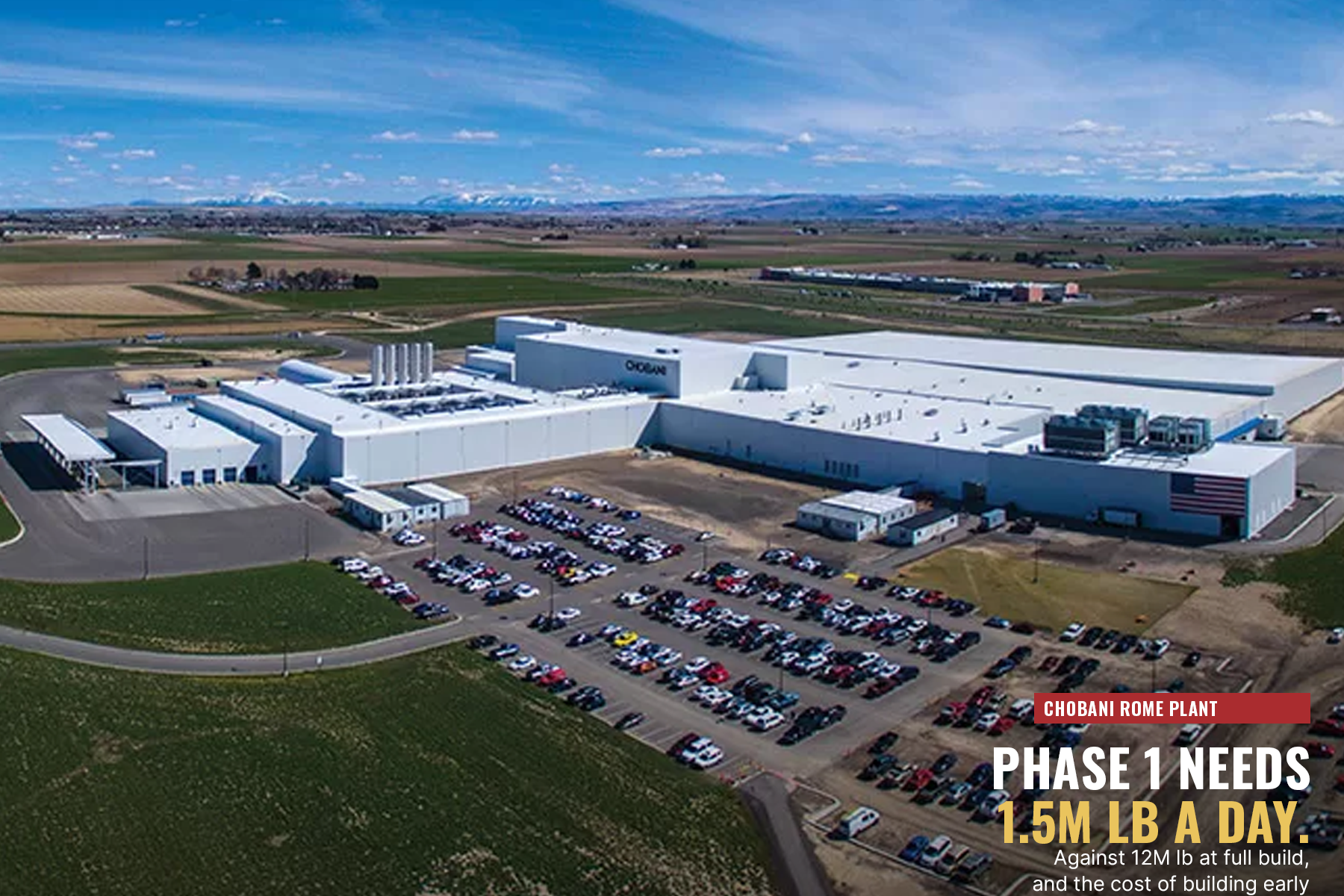
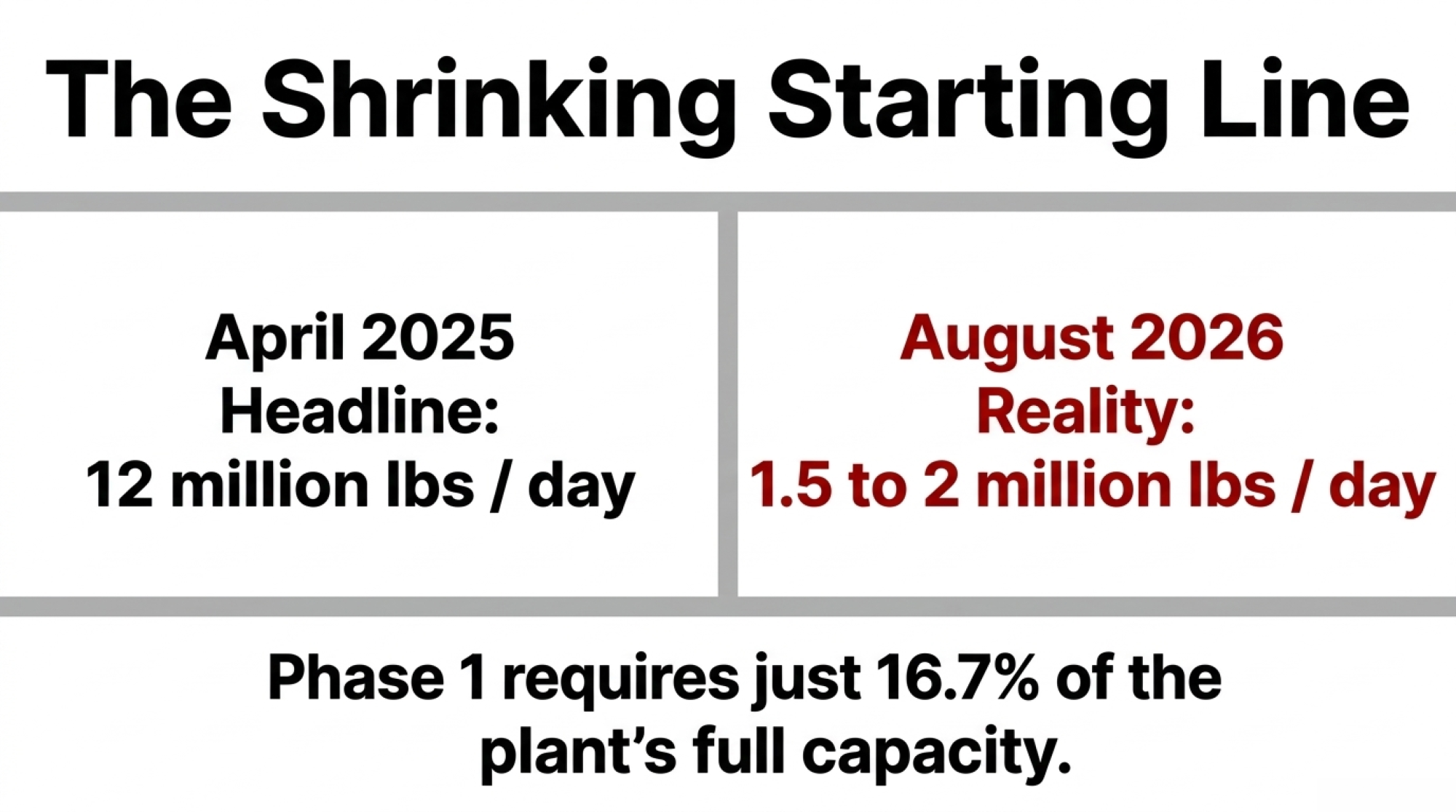
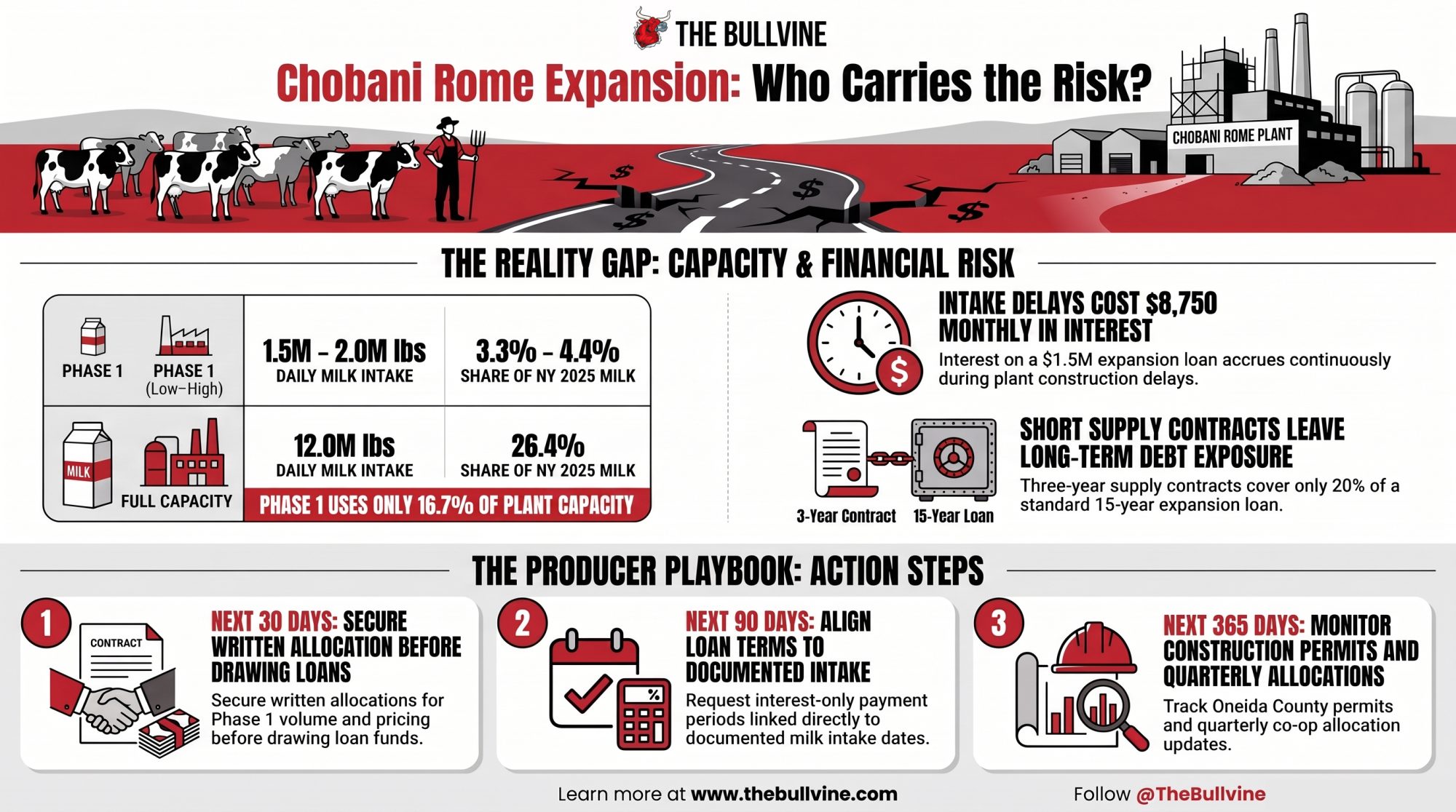
New York herds eyeing Chobani’s Rome plant are caught between two numbers. When New York announced the project in April 2025, the headline figure was 12 million pounds of milk a day at full capacity. Sixteen months later, Chobani’s chief impact officer, Nishant Roy, gave the Rome Sentinel a much smaller starting number: Phase 1 will require about 1.5 to 2 million pounds a day. Even at the top of that range, Phase 1 is 16.7% of the plant’s full milk capacity.
For New York herds, that gap is the Chobani Rome milk supply story. DairyHerd’s October 1 report, which interviewed IDFA president and CEO Michael Dykes, counts $14.4 billion across 77 projects in 21 states. Bullvine hasn’t seen the project list behind that count. The capital commitments are public. Any supply commitments to farms would sit in separate documents, and Bullvine found none published.

What did New York commit Chobani to?

The April 22, 2025 release describes a $1.2 billion, 1.4-million-square-foot plant “capable of producing over one-billion pounds” of dairy products a year, with “more than 1,000 jobs.” Ulukaya said Rome would have Chobani “partnering with hard working people across the heartland of New York.” State Agriculture Commissioner Richard A. Ball called it “tremendous news for our state and for our dairy farmers, who will be supplying milk to this state-of-the-art processing facility.”

The public money is tied to infrastructure and jobs:

  • Excelsior Jobs Program: up to $73 million in performance-based tax credits from Empire State Development, tied to more than 1,000 jobs (Governor’s Office, April 22, 2025).
  • FAST NY: $32.6 million to Oneida County for infrastructure at the Griffiss Triangle Site, announced by Governor Hochul on August 19, 2025, with Roy in the room (Governor’s Office transcript).

Neither award sets a price formula, base allocation, hauling terms, procurement radius, contract length or intake date for a supplying farm.

Chobani held a ceremonial groundbreaking in April 2025. Food Processing reported on August 13, 2026 that the company had planned to start full construction in 2026. The Sentinel now reports a construction start between spring 2027 and summer 2028 (Food Processing).

How much milk does Chobani Rome need at startup?

The phasing isn’t new. At the April 2025 announcement, Chobani president and COO Kevin Burns described the project as “phase one,” adding, “We’re building a campus, really,” according to WXXI. What’s new is a number. Roy told the Sentinel that Phase 1 brings four to six of a planned 28 production lines online, with about 300 to 450 hires, and Phase 2 adds seven to 10 lines. Oneida County officials now put total jobs closer to 1,800, WKTV reported on August 12, 2026.

The Sentinel reported that Roy said Chobani is engaged with more than 400 local dairy farms and co-ops, and has worked with farmers and co-ops since before the 2025 announcement. “Engaged” can mean conversations, prospect lists or co-op planning, and co-ops in that count may represent some of the same farms.

New York produced 16.568 billion pounds of milk in 2025 from 642,000 cows averaging 25,807 pounds each, according to USDA NASS’s annual summary, released April 30, 2026.

Rome capacity measureDaily milkAnnualizedShare of NY 2025 productionNY-average cow equivalent
Phase 1, low1.5 million lb547.5 million lb3.3%~21,200 cows
Phase 1, high2.0 million lb730 million lb4.4%~28,300 cows
Full capacity12 million lb4.38 billion lb26.4%~169,700 cows

Bullvine calculation using the NY Governor’s Office release (April 22, 2025), Roy’s Phase 1 range as reported by the Rome Sentinel (August 11, 2026), and USDA NASS 2025 New York data (April 30, 2026).

Chobani already buys more than 1 billion pounds of New York milk a year, according to Oneida County’s April 21, 2025 release. Phase 1’s annual demand, at the high end, equals at most 73% of that. No public source says how much of Phase 1 will be new demand rather than milk now going to Chobani’s existing plants, and that’s the first question your co-op should be able to answer.

The plant’s scale and schedule have both moved since April 2025, and our earlier math didn’t hold up even against the original announcement. Checked against the announced figures and the new Phase 1 range, four previous Bullvine estimates need correcting:

  • April 24, 2025. We put the plant at roughly 100,000 cows, with completion in late 2026.
  • June 16, 2025. We equated 12 million pounds a day with about 1,200 high-producing cows, understating it by more than 168,000 cows.
  • October 19, 2025. We listed a Chobani Rome premium of $0.75 to $1.25/cwt for 3.3%-plus protein. We have found no published Chobani document that sets a premium for a plant that hasn’t operated.
  • November 21, 2025. We said 40 mid-size farms or three to four mega-dairies could supply it. At New York’s 2025 yield, 40 farms would need about 4,240 cows each.

Pennsylvania gets Chobani milk demand first

Chobani’s second $1.2 billion bet starts sooner. Governor Josh Shapiro’s office announced on August 31, 2026 that Chobani’s plant at 7356 Industrial Boulevard in Upper Macungie Township will, at full scale, source more than 3 billion pounds of Pennsylvania milk a year. That’s about 30% of the state’s current production, with production expected to begin in 2027 (reported by the Morning Call). Three billion pounds averages about 8.2 million pounds a day (Bullvine, September 3, 2026).

PennLive reported a mid-summer 2027 start after $270 million in upgrades (PennLive, September 25, 2026). Pennsylvania is also offering $127 million in loans and grants to farmers who expand to meet the demand.

For a New York herd, the order matters. Pennsylvania’s full-scale daily volume is more than four times Rome’s Phase 1 high, and it’s due to start a year or more earlier. Whether Chobani supplies Upper Macungie from Pennsylvania farms only, or New York co-op milk crosses the line, isn’t in any public document. That’s the second question for your co-op.

When will Chobani Rome start taking milk?

Chobani’s 15 months has been reported two ways. WKTV reported on August 12, 2026 that operations are set to begin 15 months after construction starts, with the whole project finished by 2030. Syracuse.com reported on August 19 that Roy said the three-phase project would take 15 months to complete. On WKTV’s reading, first milk arrives between mid-2028 and late 2029 (Bullvine calculation from the Sentinel’s construction window).

Oneida County Executive Anthony Picente gave an earlier date. He said he looked forward to “the upwards of 450 jobs that phase one of the Rome plant will bring to Oneida County in early 2028,” according to the Oneida Dispatch on September 7, 2026. Chobani hasn’t published a date that settles it.

The Sentinel reported that Chobani moved the start while juggling new market demand and Mohawk Valley winters. Roy also said, “we are also not abandoning our commitment to Rome. We’re coming,” as quoted by Food Processing.

Who carries the risk while Rome phases in?

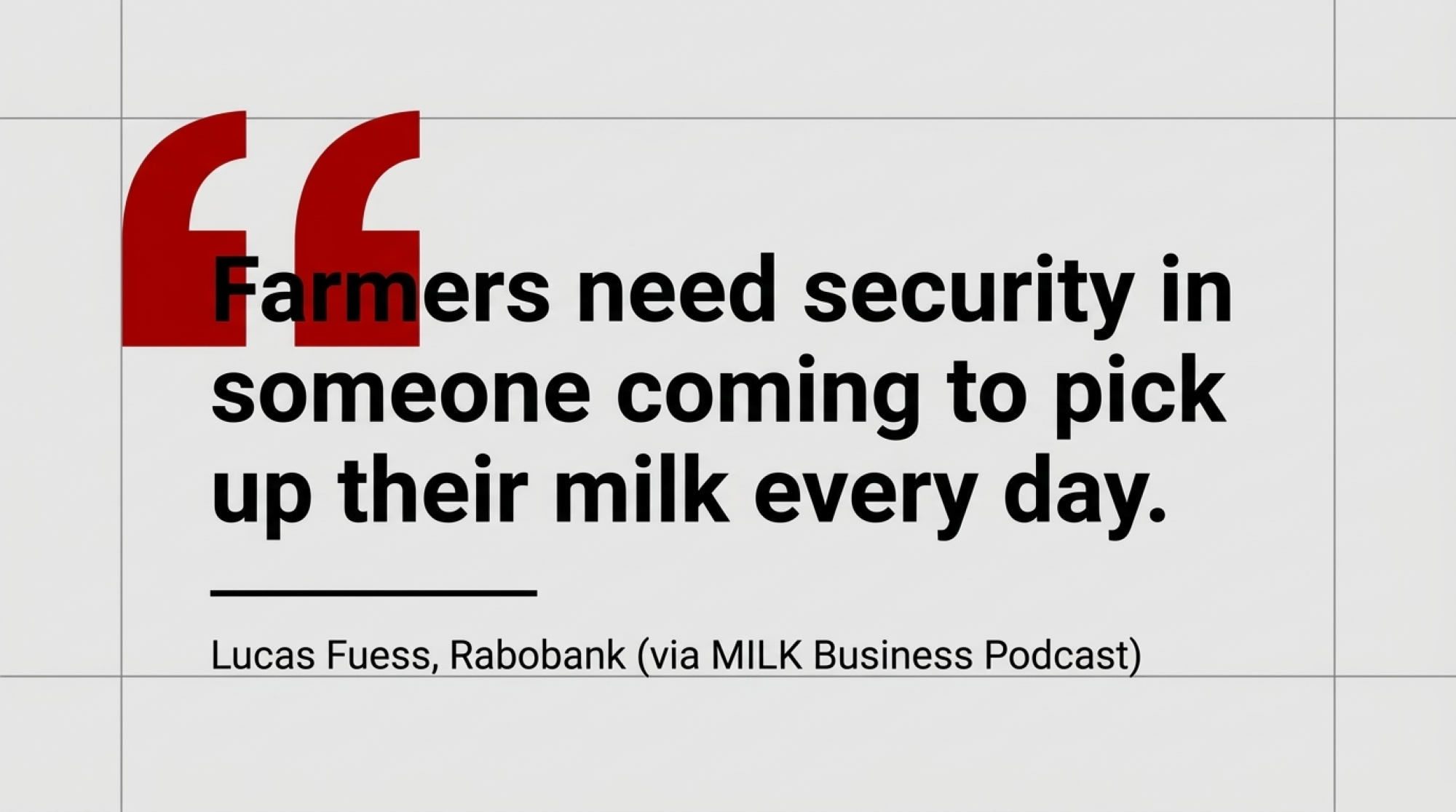
On the MILK Business Podcast, as reported by Lucas Fuess of Rabobank, a major dairy lender, described the standoff. Co-ops and processors won’t spend, “in some cases, $1 billion on a new plant” without security in milk supply growth, he said, and farmers need “security in someone coming to pick up their milk every day.”
Dykes said profitability has to exist “at the farm level and the processing level.” He also acknowledged that a farmer being able to switch milk buyers is “not necessarily the case today.”

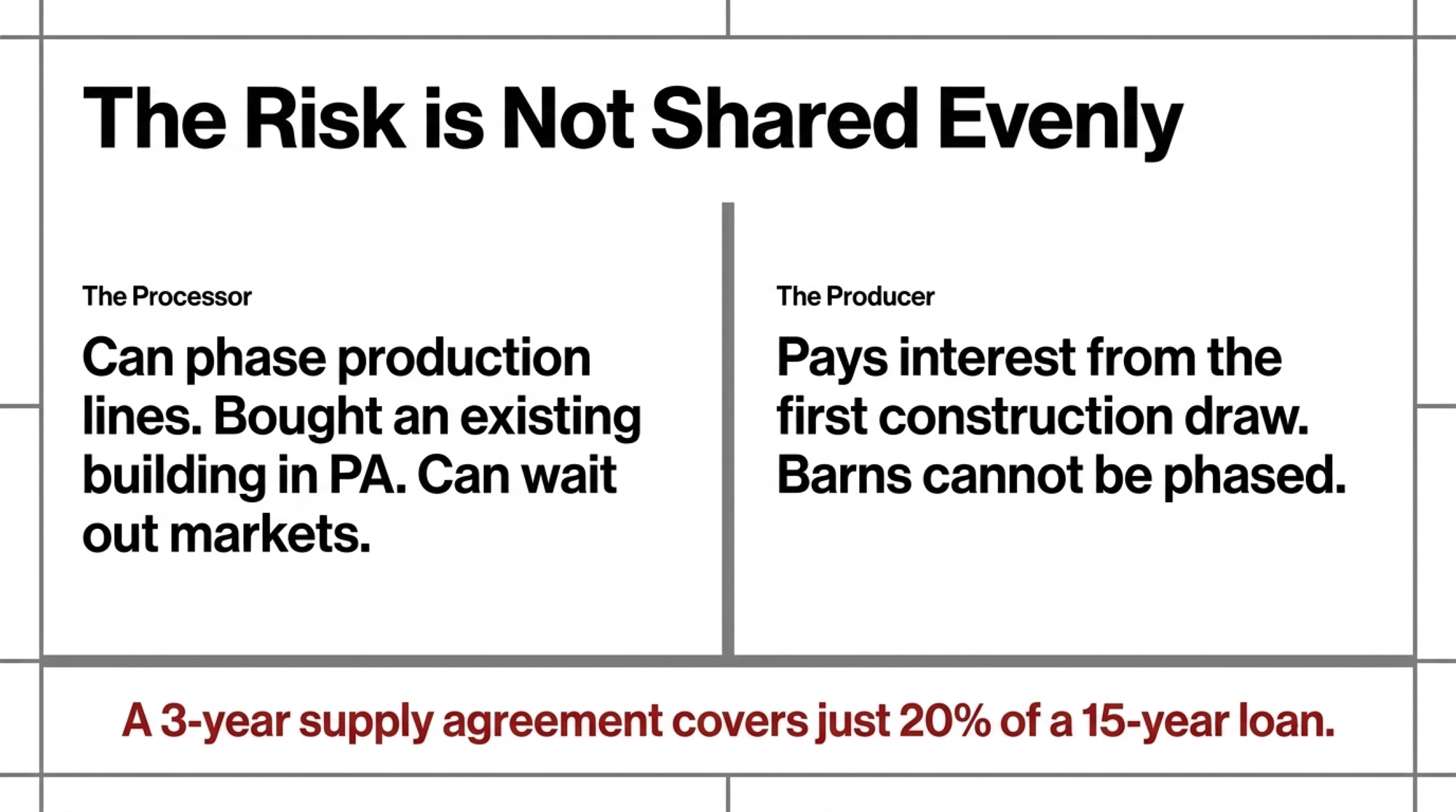
In our analysis, the risk isn’t shared evenly. Chobani can phase lines in, and in Pennsylvania it’s bought an existing building that starts producing sooner. A producer who builds a barn pays interest from the first construction draw, whether Rome takes milk in mid-2028 or late 2029.

Running the Numbers: Building ahead of a phased plant

Published evidence

  • New York 2025 yield: 25,807 lb/cow (USDA NASS, April 30, 2026, state average).
  • Capital: “maybe $25,000 a cow, depending on land prices,” from Dykes describing a whole new dairy.
  • Construction-start window: spring 2027 to summer 2028, about 16 months (Rome Sentinel, August 11, 2026).
  • 2027 U.S. all-milk price forecast: $19.80/cwt (USDA ERS, Livestock, Dairy, and Poultry Outlook, September 2026).

Stated assumptions

  • A 400-cow New York herd adds 100 cows, shipping 25,807 cwt more a year.
  • Capital per added cow: $25,000 high (Dykes’s whole-dairy figure), $20,000 central, $15,000 low. An addition on an existing site likely costs less, so the takeaways use the low case.
  • Loan: 7% interest (illustrative, not a quoted rate), 15-year amortization with annual payments (factor 0.109795).
  • Supply contract: three years, starting the same year as the loan.

Bullvine calculation (USD)
 LowCentralHigh
Expansion capital$1,500,000$2,000,000$2,500,000
Annual principal and interest$164,692$219,589$274,487
Debt service per added cwt$6.38$8.51$10.64
Debt service as share of $19.80 all-milk32%43%54%
Interest carry per month of delay$8,750$11,667$14,583
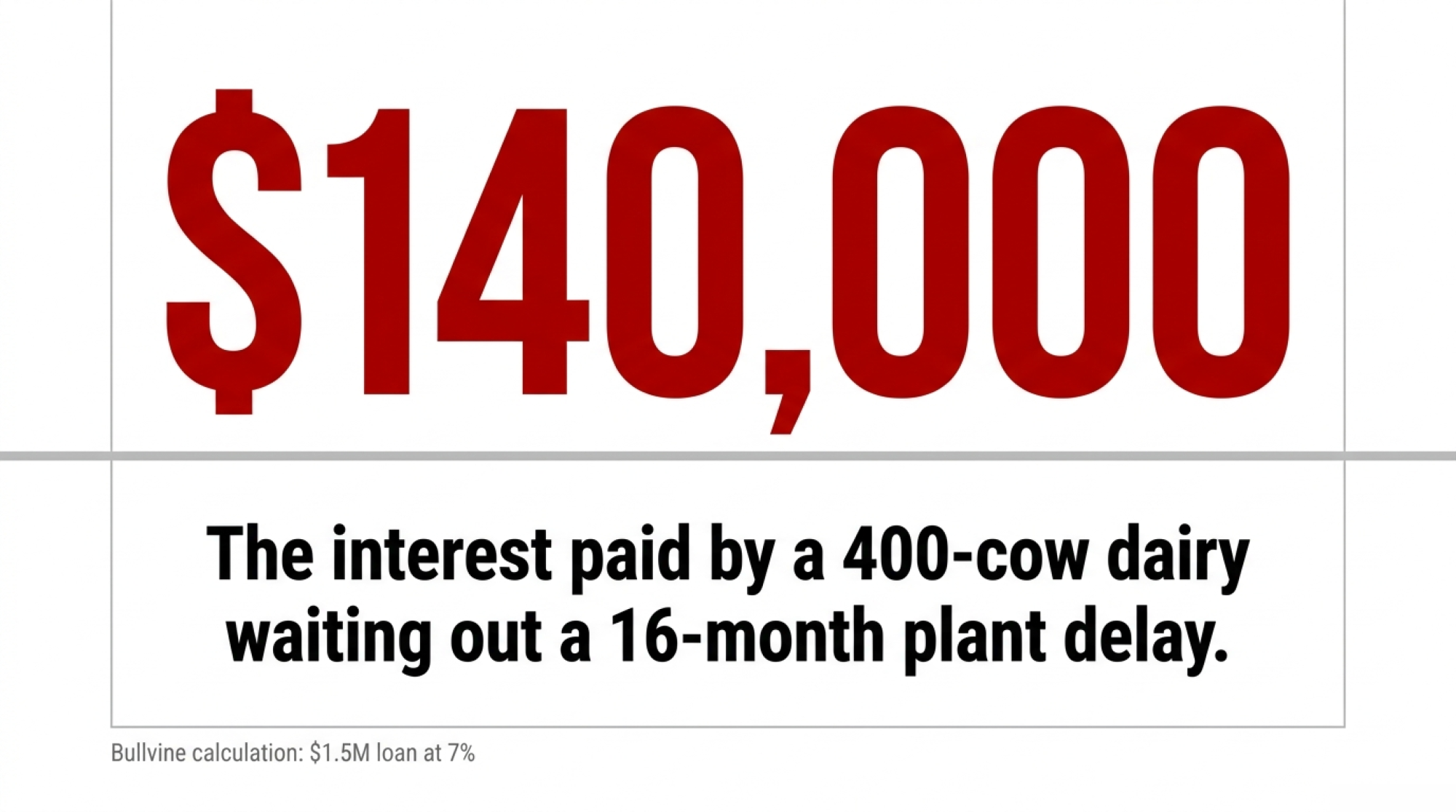
Interest carry across a 16-month slip$140,000$186,667$233,333
Remaining payments after a 3-year contract ends (principal + interest)$1.98 million$2.64 million$3.29 million

On our low case, a producer who has drawn $1.5 million at 7% pays $8,750 a month in interest while waiting for the plant to take milk.

The principal still owed after three years is about $1.31 million on the low case. The table row is larger because it adds 12 years of interest to that balance.

On the low case:

  • A 16-month slip, the spread between Chobani’s earliest and latest construction starts, costs $140,000 in interest.
  • Debt service alone takes $6.38 of every $19.80 the added milk is forecast to earn in 2027, before feed, labour or heifers.
  • Each $1.00/cwt over-base discount on the added milk costs $25,807 a year, or 9.4% to 15.7% of the annual loan payment across the three cases.
  • A three-year agreement covers 20% of a 15-year loan.

Methodology note. Delay carry is interest-only on the full drawn balance. With monthly payments, the low case runs $161,790 a year and leaves $1.94 million in payments after the contract ends. The $19.80 forecast is a U.S. average; New York pay prices differ. The herd is a model, not a named farm’s books. For how a rally-year budget hides this exposure, see the $5.39/cwt debt trap in 2026 expansion budgets.

What does $15 billion tell New York producers?

The count grows as the window widens:

DateCountScope
October 2, 2025more than $11 billion50+ projects, 19 states, 2025 to early 2028
October 1, 2026$14.4 billion77 projects, 21 states
Accessed October 5, 2026more than $15 billion2025–2030

IDFA, which represents dairy processors, split its October 2025 total by product: cheese $3.20 billion, milk and cream $2.97 billion, yogurt and cultured $2.81 billion. USDA ERS forecasts 238.6 billion pounds of U.S. milk for 2027.

That’s what the counts tell a New York producer: where processors are putting capital. They don’t report contracted farm pounds, so none of them tells you whether any of it is committed to your milk.

What does my co-op milk check actually show?

Under 7 CFR §1001.73(e), a Northeast handler paying producers must give each one a statement showing the minimum rate owed, any different rate actually paid, each deduction and the net payment. The rule carves out producers whose milk was received from a cooperative association acting as a handler under §1000.9(a) or (c). Under §1001.73(b), the handler pays the cooperative for that milk, and §1001.73 doesn’t set what the member’s own pay statement must show.

If your milk moves through a co-op, a Chobani premium paid to the co-op could arrive blended into your pay price, without its own line. That’s a visibility gap, and the rule alone says nothing about whether anything is withheld. You can’t confirm from the statement that Rome milk is worth more to you, so ask.
The Rome playbook: 30, 90 and 365 days

The same written questions apply to any producer being courted by a new plant, in New York, Pennsylvania or elsewhere.

Next 30 days: Get the supply answer in writing

The Action: Ask your co-op field rep or buyer for, in writing, Phase 1 committed pounds, which co-ops hold them, intake date, contract term, how over-base milk is priced, and whether your milk could be routed to Upper Macungie instead.

The Requirement: One email and 12 months of pay statements to compare against.

The Red Flag: You can’t get a written volume allocation for your added milk before your lender’s first construction draw. On the model above, every month between that draw and first intake costs $8,750 per $1.5 million borrowed at 7%.

The Backfire: Budgeting on Roy’s reported engagement with more than 400 farms and co-ops. Budget on pounds and dates in writing.

Next 90 days: Tie the loan to the contract

The Action: Ask your lender about an interest-only period tied to a documented intake date, or stage the build so cows arrive with the contract.

The Requirement: The written answer from step one, a cash-flow budget at your current net price and a lender meeting.

The Trigger: Your offered contract runs shorter than your loan. On the model, a three-year deal covers 20% of a 15-year note.

The Backfire: Staging raises per-cow cost or delays the herd past the intake date. Price both paths before choosing.
Next 365 days: Watch for the signal that changes the bargain

The Signal: A confirmed construction start, through a contractor award, building permit or Chobani announcement, would narrow the window in the model from 16 months to a date. That’s the point where co-ops have a reason to compete for added milk.

The Action: Track Oneida County and City of Rome planning records, watch Upper Macungie’s 2027 ramp, and ask your co-op each quarter whether your Phase 1 allocation has changed.

The Watch Item: Whether any offer prices protein specifically. Rome is a yogurt and cultured-products plant, and no Chobani premium schedule for Rome has been published.

Chobani can wait out markets, winters and its existing sites. A producer carrying construction debt can’t. Before you sign a loan, can your co-op show you, in writing, how many pounds of your milk Rome has committed to take, and when?
Learn More

The Sunday Read Dairy Professionals Don’t Skip.

Every week, thousands of producers, breeders, and industry insiders open Bullvine Weekly for genetics insights, market shifts, and profit strategies they won’t find anywhere else. One email. Five minutes. Smarter decisions all week.

NewsSubscribe
First
Last
Consent

The 18-Month Protein Window: $11 Billion in New Plants Signals It’s Time to Rethink Your Sire Lineup

$11 billion in new processing capacity. A protein-hungry consumer base. And an 18-month breeding window that will shape your milk check through 2030.

Executive Summary: The protein line on your milk check is about to matter more—and your next 18 months of breeding decisions will determine whether your herd is positioned to benefit. GLP-1 weight-loss medications now reach 15.5 million Americans, with clinical guidance steering patients toward protein-dense dairy like Greek yogurt and cottage cheese. Processors have responded by locking in $11 billion in new cheese and cultured capacity across 19 states, scheduled to come online by 2028. University of Minnesota research shows many Holstein herds already carry significant A2 and favorable kappa-casein genetics without active selection, and genomic testing at $30-50 per head makes it practical to know where you stand. The timeline is clear: calves from 2026 matings will hit peak production just as this new capacity reaches full stride. Whether you’re scaling for growth, navigating mid-career capital decisions, or planning a clean exit, the protein opportunity is real, and the window to position for it is now.

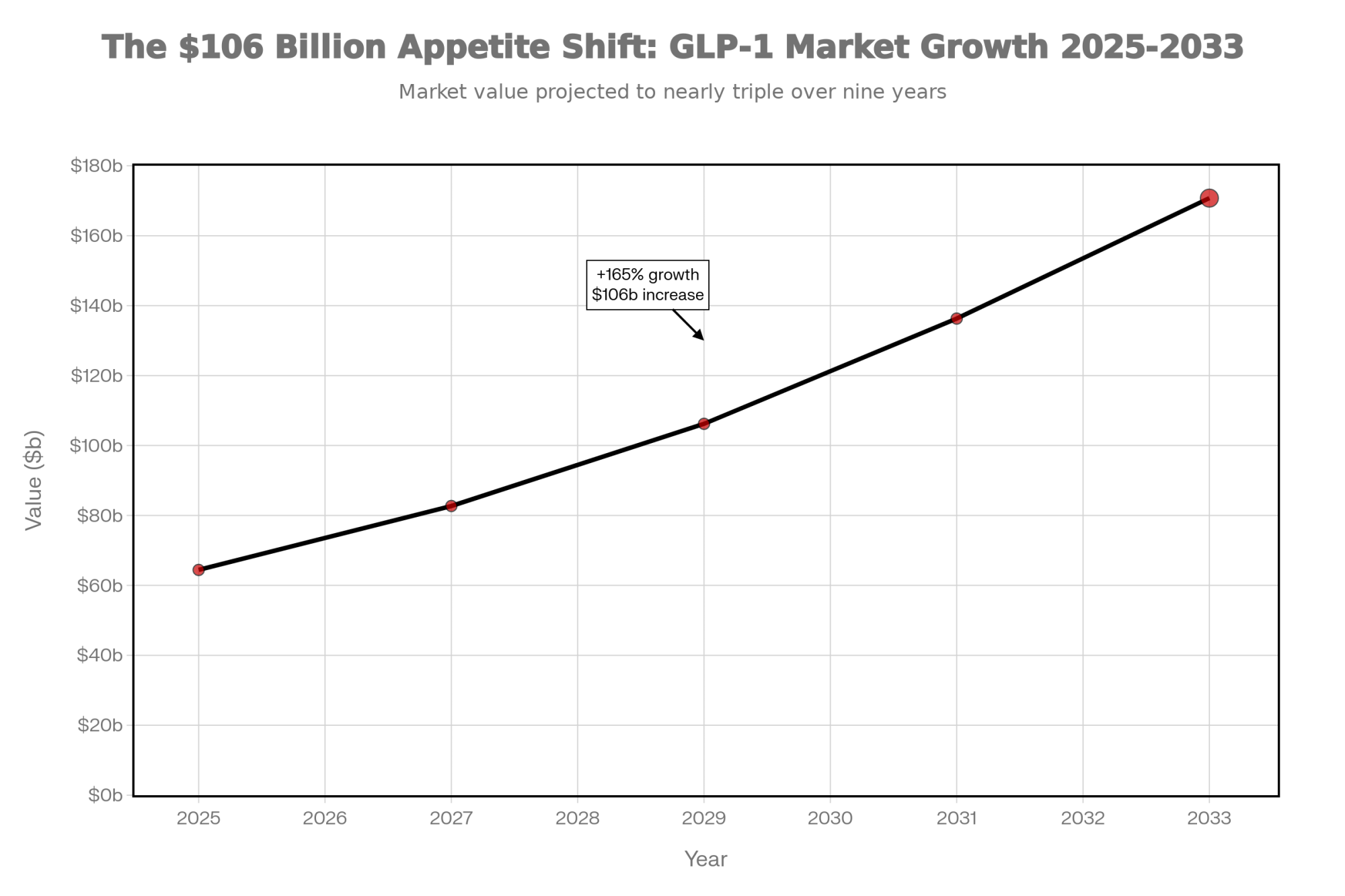
Healthcare analysts tracking GLP-1 medications like Ozempic, Wegovy, and Mounjaro are projecting that this class of drugs could grow from about 64.42 billion dollars in annual sales in 2025 to roughly 170.75 billion by 2033—around 13 percent growth per year, according to MarketsandMarkets’ latest global forecast. And that number may have more to say about your protein line than any milk market report you’ve read this year.

Here’s what’s interesting: analysts have been telling food and agriculture reporters that a market that big doesn’t just change what’s in the pharmacy aisle. It spills over into what people put in their carts and on their plates, because these drugs influence appetite, satiety, and what doctors and dietitians tell patients to look for in the grocery store.

And that’s where our dairy conversation really starts to get interesting over coffee.

Why Protein Seems to Be Doing More of the Work

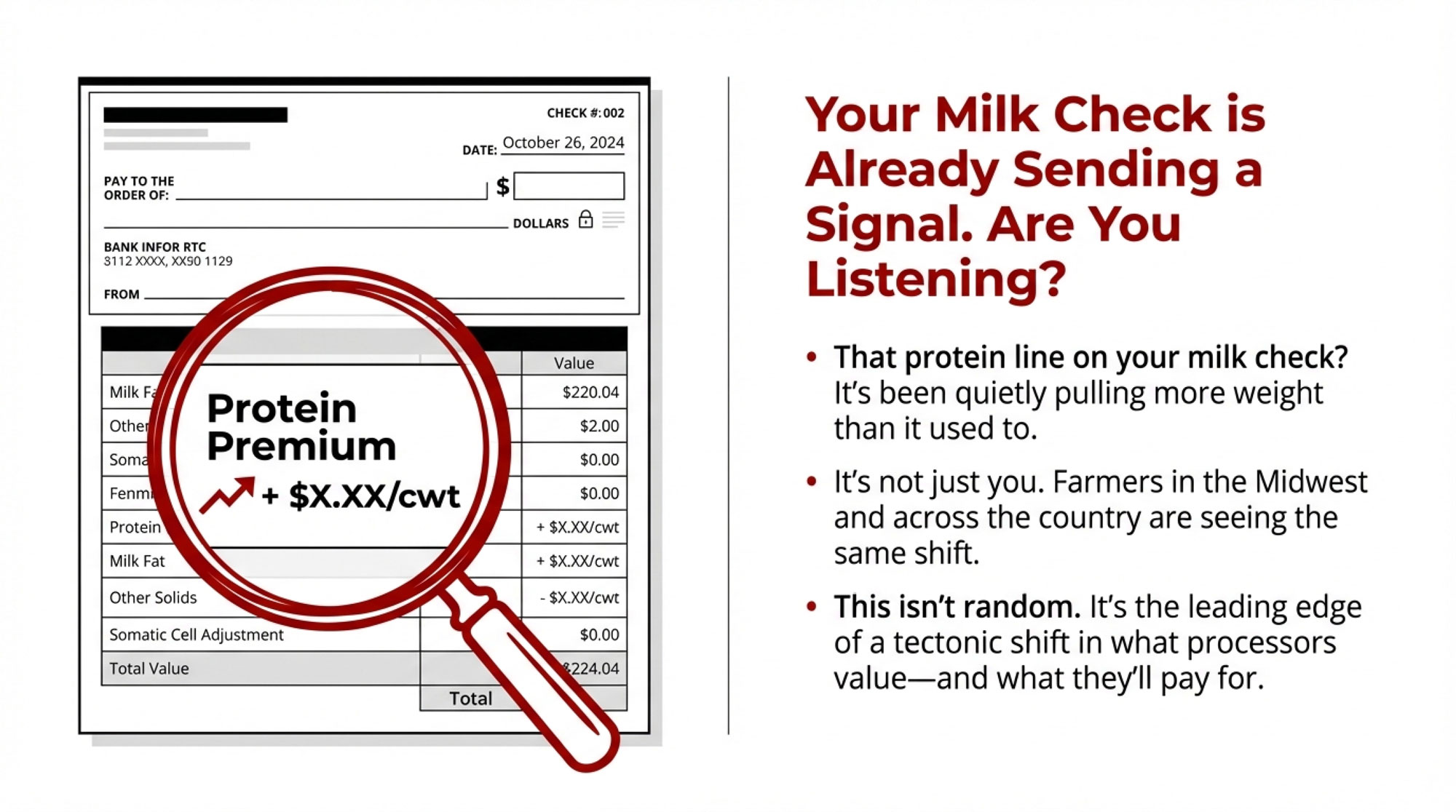
Not long ago, I was at a winter meeting in Wisconsin and a producer leaned over between sessions and said, “You know, I’m starting to see protein doing more of the heavy lifting on my milk check than it used to. It’s not huge yet, but it’s moving.” In a lot of Midwest herds, when folks actually line up a few years of milk cheques, they see the same thing—the protein line quietly pulling a bit more weight relative to butterfat performance than it used to.

If you look north of the border, the Canadian Dairy Commission has adjusted support prices and farm-gate returns to reflect rising feed and operating costs, and those decisions feed into the detailed component-based payment formulas that provincial boards publish. When you study those formulas in Ontario or across Western Canada, you can see that protein and other non-fat solids account for a substantial share of the value, especially in classes tied to cheese and yogurt.

On the U.S. side, federal order component pricing and plant pay schedules in cheese-oriented markets show the same general pattern: butterfat still matters a lot, but protein has become more important as plants capture value from cheese, powders, and high-protein ingredients.

The thing that jumps out to me is that this shift at the pay-stub level isn’t happening in isolation. If you step back and connect a few dots—the GLP-1 story, a growing stack of gut-health research around yogurt and fermented dairy, and more than 11 billion dollars in new processing investments that IDFA says are already locked in—you start to see a pretty coherent picture pointing toward solids, and especially protein.

That’s why I keep coming back to this simple idea: the bulls you pick over the next 18 months are a direct bet on what your milk check looks like in 2029.

GLP-1: The Drug Class Turning Up the Volume on Protein

Looking at this trend, we’ve got to spend a little time on GLP-1 drugs, even though they can feel a long way from the parlor.

Peer-reviewed clinical reviews published in PubMed-indexed journals describe how these medications mimic incretin hormones and work on several fronts: they reduce appetite, slow gastric emptying, improve insulin secretion, and lead to substantial weight loss in people with type 2 diabetes and obesity when used as prescribed.

What the clinical literature also shows—and this is where it becomes relevant for us—is that rapid weight loss can involve loss of lean mass if patients don’t maintain adequate protein intake and engage in some resistance activity. That’s why many clinicians now emphasize maintaining a solid protein intake, or even increasing it, when patients start GLP-1 therapies.

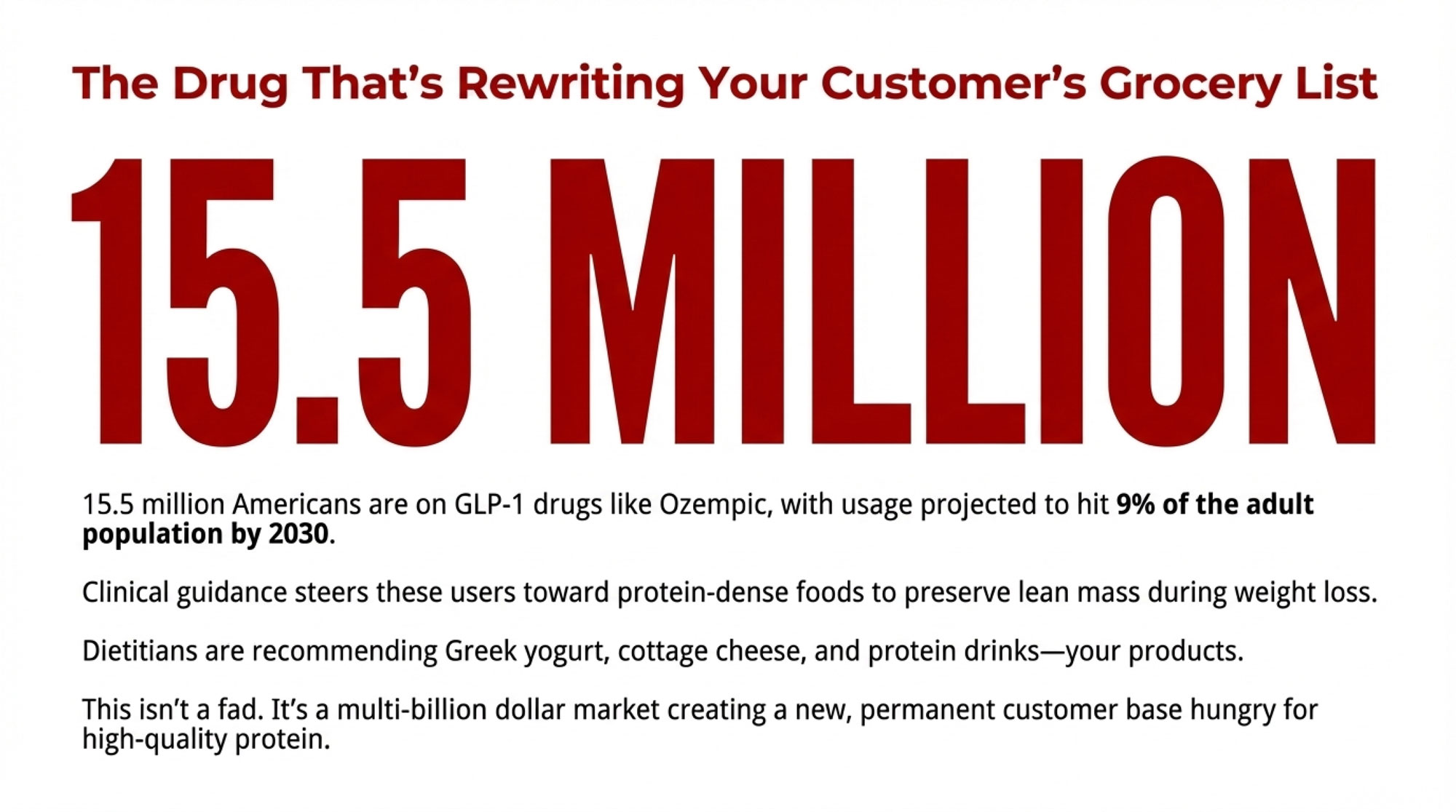
Dairy-focused outlets have begun connecting that clinical guidance to what’s happening in the dairy case. Analysis that combined polling and retail data showed that around 15.5 million U.S. adults were using GLP-1 injectables as of 2023, with adoption expected to reach roughly 9% of the adult population by 2030. Those users reported cutting daily calories by about 20 percent—roughly 800 kilocalories—while shifting away from high-sugar products toward lean proteins.

Registered dietitians explained that they often recommend Greek yogurt, dairy-based protein drinks, and cottage cheese to patients on GLP-1s because these foods deliver convenient, high-quality protein and align with satiety- and gut-friendly patterns supported by the clinical literature.

Now, it’s worth saying out loud that not every GLP-1 user suddenly becomes a model high-protein eater. Real-world adherence, side effects, out-of-pocket costs, and insurance coverage limits all affect how many people stay on these medications and how they actually use them.

But when you put tens of billions of dollars in current GLP-1 sales together with a well-publicized forecast that the market could more than double, and you pair that with a consistent medical message—”eat less overall, but don’t short yourself on protein”—it’s not surprising that food companies and retailers are re-examining their high-protein offerings.

If your cows are producing the milk that ends up in those products, that’s a signal worth keeping in mind the next time you’re standing in front of the semen tank.

Gut Health, Fermented Dairy, and the Slow Burn That’s Paying Off

At the same time, yogurt and fermented dairy have been building their own steady momentum, well before GLP-1 became a household word.

Large prospective nutrition cohorts, such as the Nurses’ Health Study and the Health Professionals Follow-up Study, have tracked people’s diets and health outcomes for decades. Analyses of those cohorts published in journals like the American Journal of Clinical Nutrition have repeatedly found that higher yogurt consumption is associated with a lower risk of type 2 diabetes, even after adjusting for body mass index, smoking, and physical activity.

Umbrella reviews that pool data from multiple observational studies have reached similar conclusions, reporting that yogurt intake tends to align with modestly lower diabetes risk and somewhat better cardiometabolic profiles overall.

On the intervention side, randomized controlled trials have tested yogurt enriched with prebiotic fibers, such as inulin and konjac glucomannan, in adults with type 2 diabetes. Over a few weeks to months, those enriched yogurts improved insulin sensitivity, fasting glucose levels, lipid profiles, and, sometimes, inflammatory markers compared with control products.

Reviews of fermented dairy and the gut microbiome describe how specific cultures and fermentation processes can shift gut bacteria toward profiles that appear beneficial for metabolic and digestive health.

So what do shoppers do with all that? Market research shows that consumers consistently rank yogurt, kefir, and other cultured dairy products among the foods they see as “good for their gut,” and sales data indicate these categories have grown into multi-billion-dollar markets with high single-digit or better growth in many recent years.

Put that together with the GLP-1 protein push, and you can see why there’s so much interest in milk that shows up with consistent protein and butterfat performance, not just volume.

What Jumps Out: The 11-Billion-Dollar Vote for Components

One of the clearest signals in all of this isn’t in survey data at all; it’s in concrete and stainless.

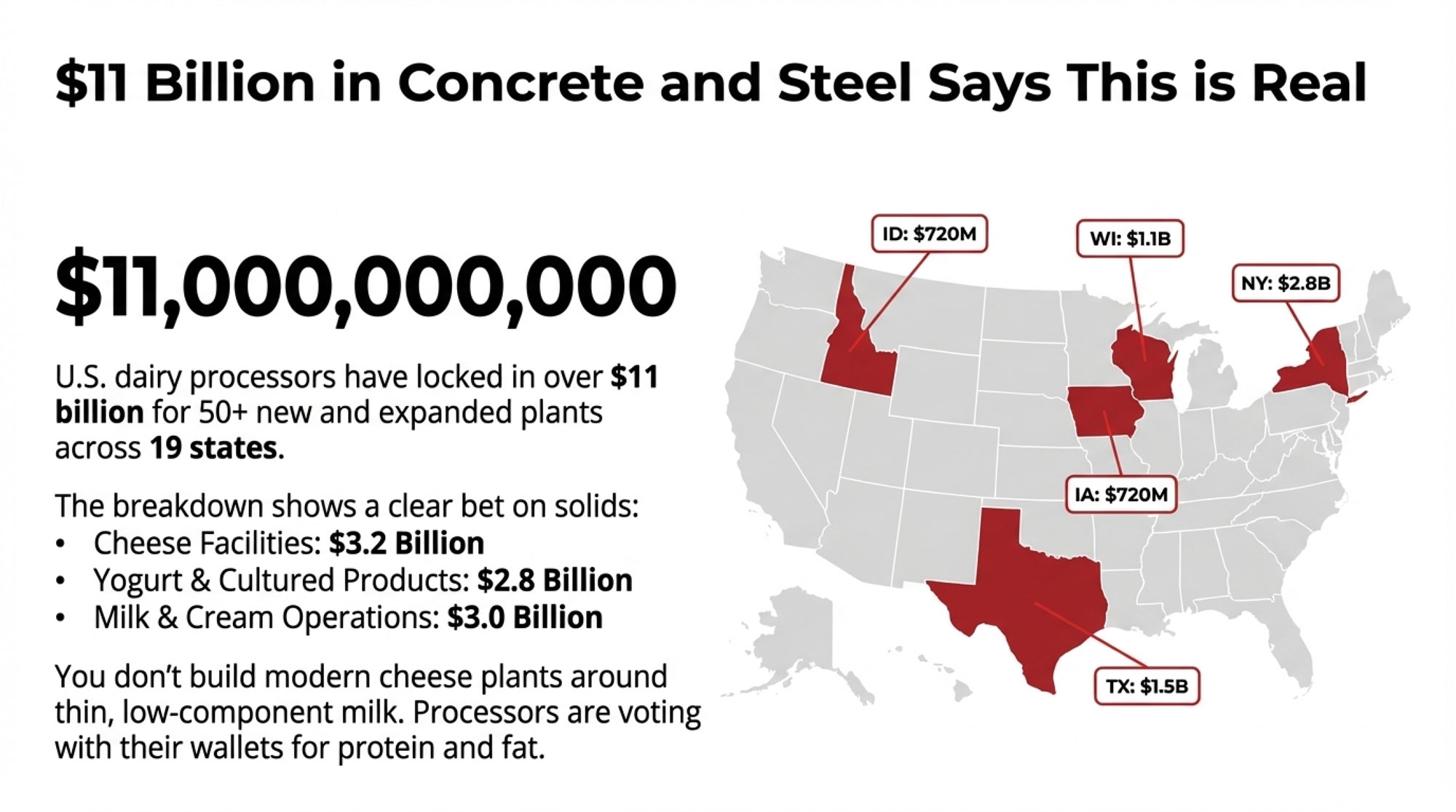
In October 2025, IDFA kicked off Manufacturing Month by highlighting that U.S. dairy processors are investing more than 11 billion dollars in new and expanded processing capacity across 19 states, spread across more than 50 individual building projects scheduled between 2025 and early 2028.

IDFA president and CEO Michael Dykes, D.V.M., has said this reflects a “growth mindset” among processors who expect U.S. milk production to rise by about 15 billion pounds by the end of the decade and want to be ready to turn that milk into higher-value products rather than dumping it into lower-value uses.

When you look at the breakdown, cheese facilities are attracting about $ 3.2 billion. Milk and cream operations account for nearly 3 billion, while yogurt and cultured products draw another 2.8 billion.

By state, New York is slated to receive about 2.8 billion in projects, Texas roughly 1.5 billion, Wisconsin around 1.1 billion, and Idaho and Iowa about 720 million each, making those states some of the biggest beneficiaries of this capex wave.

In New York, those projects layer onto a milk shed already producing roughly 16 billion pounds of milk per year, according to USDA NASS data. Texas has climbed into the top three milk-producing states, anchored by large dry lot systems in the Panhandle and High Plains. Wisconsin continues to deepen its role as a cheese and whey hub, while Idaho and Iowa are adding cheese and powder capacity that fits their existing dairy and feed bases.

You can see where this is going: when processors put that kind of money into cheese vats, separators, and dryers, they’re voting for solids. You don’t design a modern cheese plant or whey protein line around thin, low-component milk. You design it around protein and fat. That doesn’t mean volume suddenly doesn’t matter—but it does change what kind of volume they value most.

The Genetics: You Might Be Closer Than You Think

Now, at this point, somebody usually asks, “Okay, but how far behind am I really?”

Here’s where the data is a bit more encouraging than a lot of folks expect.

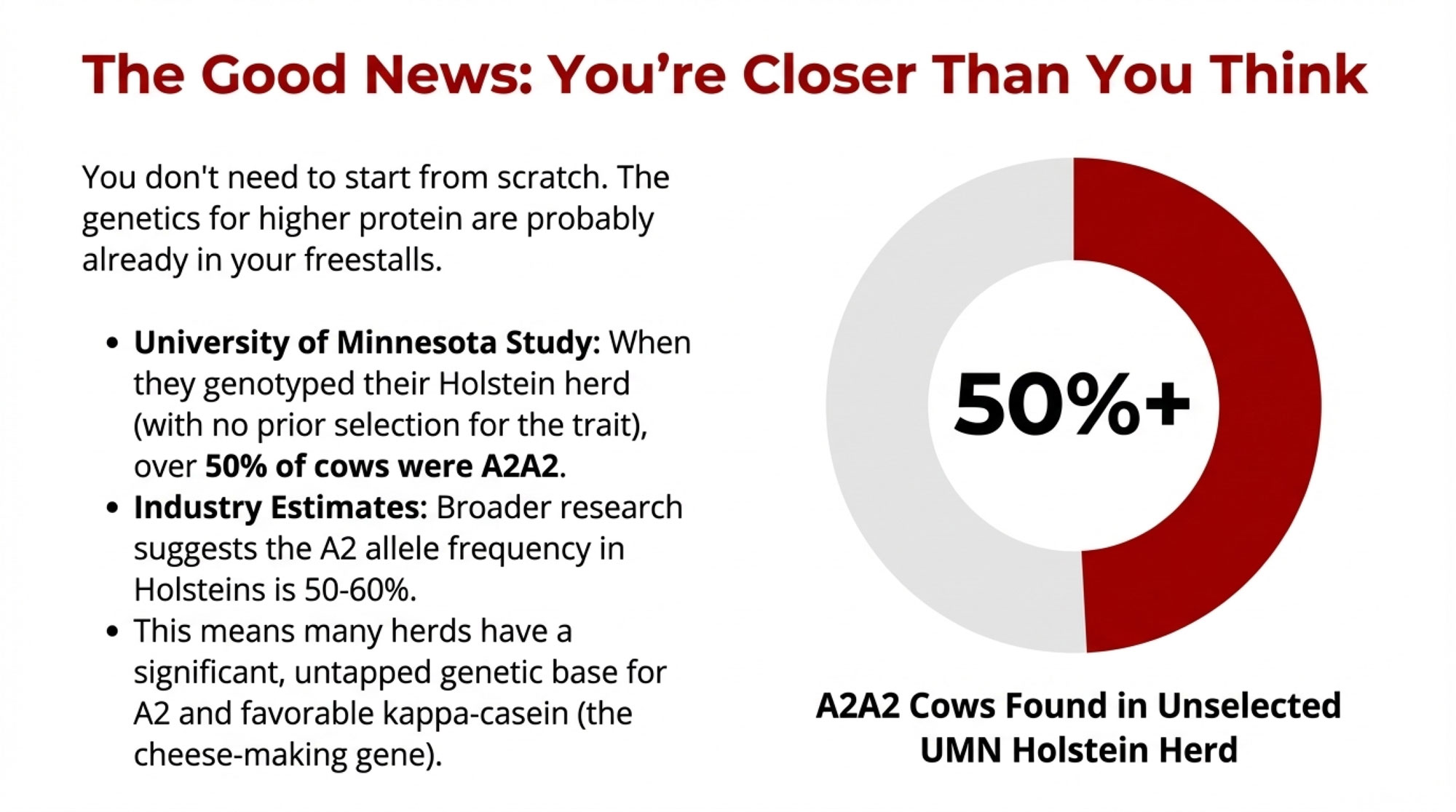
When the University of Minnesota genotyped its entire research herd in 2019, more than 50 percent of the Holstein cows turned out to be A2A2 for beta-casein, even though the herd hadn’t been selected for that trait. A separate 1964 Holstein genetic line in the same project had only 26 percent A2A2, showing how selection can shift things over time, and their crossbred cows and heifers ranged from 36 to 50 percent A2A2.

Herd Type / PopulationSelection Pressure for A2?A2A2 Frequency (%)Key Insight
UMN Holstein Research Herd (2019)None50%Half the herd was A2A2 without trying
UMN 1964 Genetic LineNone (frozen 1964 genetics)26%Shows effect of modern selection drift
General Holstein Population (est.)Minimal to moderate~33%Roughly 1 in 3 Holsteins could be A2A2
Jersey / Guernsey / Brown SwissLow to moderate70%+Heritage breeds carry higher baseline
UMN Holstein-Jersey CrossesNone (F1 crosses)36-50%Crossbreeding can accelerate A2 shift

Broader genetic research published in peer-reviewed animal science journals suggests the A2 allele frequency in Holsteins runs somewhere in the 50 to 60 percent range, which mathematically implies that roughly a third of Holsteins in general might be A2A2, with the rest mostly A1/A2.

Jersey, Guernsey, Normande, and Brown Swiss populations tend to carry higher A2 frequencies—often 70 percent or more in Swiss breeds and even higher in some heritage populations.

Now, that doesn’t mean every commercial Holstein herd is sitting at UMN-level A2A2 percentages. Actual numbers vary with sire usage and the age of sire lines. But the university data and industry allele estimates suggest that many herds probably have more A2 genetics—and more favorable kappa-casein genotypes—walking around than you’d guess just by looking at cows in the freestalls.

Over the past 10 to 15 years, genomic testing has really changed how we can use that information. Modern genomic panels routinely report beta-casein type, kappa-casein genotype, predicted transmitting abilities for fat and protein yield and percentages, and indices for health, fertility, and even feed efficiency.

In practical terms, most commercial genomic panels used on heifers and cows today cost between $ 30 and $ 50 per head, depending on the panel and the volume of samples. Holstein Canada’s 2024 fee schedule shows base animal testing at $ 33, which aligns with what extension budgets and on-farm case studies report.

AI catalogs from major studs show that A2A2, high-component, favorable kappa-casein bulls often carry a small price premium over more “average” Holstein sires, but still sit within what most breeding programs can handle.

This suggests that for many herds, this isn’t a “start from scratch” situation. It’s more a case of figuring out what you already have and then nudging your breeding decisions in a direction that lines up with where the plants and the people seem to be going.

A Wisconsin Coffee Shop Scenario

Let’s ground this with a scenario that’ll feel familiar to a lot of Midwest producers.

Say you’re running 450 Holstein cows in south-central Wisconsin. You’re milking in a double-12. You’ve got sand-bedded freestalls, respectable butterfat performance, and good enough fresh-cow management in the transition period that you don’t dread opening the DHI packet. At the same time, your stall bases and manure system are over 20 years old, and every January you catch yourself wondering which piece of steel or concrete is going to cause trouble this year.

If you look at UW-Extension summaries and USDA cost-of-production data for similar-sized freestall herds in Wisconsin, total economic breakevens often fall in the mid- to high-teens per hundredweight, once you account for hired labor and realistic debt service. Let’s say your true breakeven is around 17 dollars. A lot of Wisconsin operations would recognize that as a believable number when they work through their own books.

You’re 48. Your daughter is finishing a dairy science degree and wants to come back, but she wants to see a path that looks like building a business for the next 15 to 20 years, not just hanging onto tired infrastructure.

In that position, here’s the kind of path I’ve seen work in real herds:

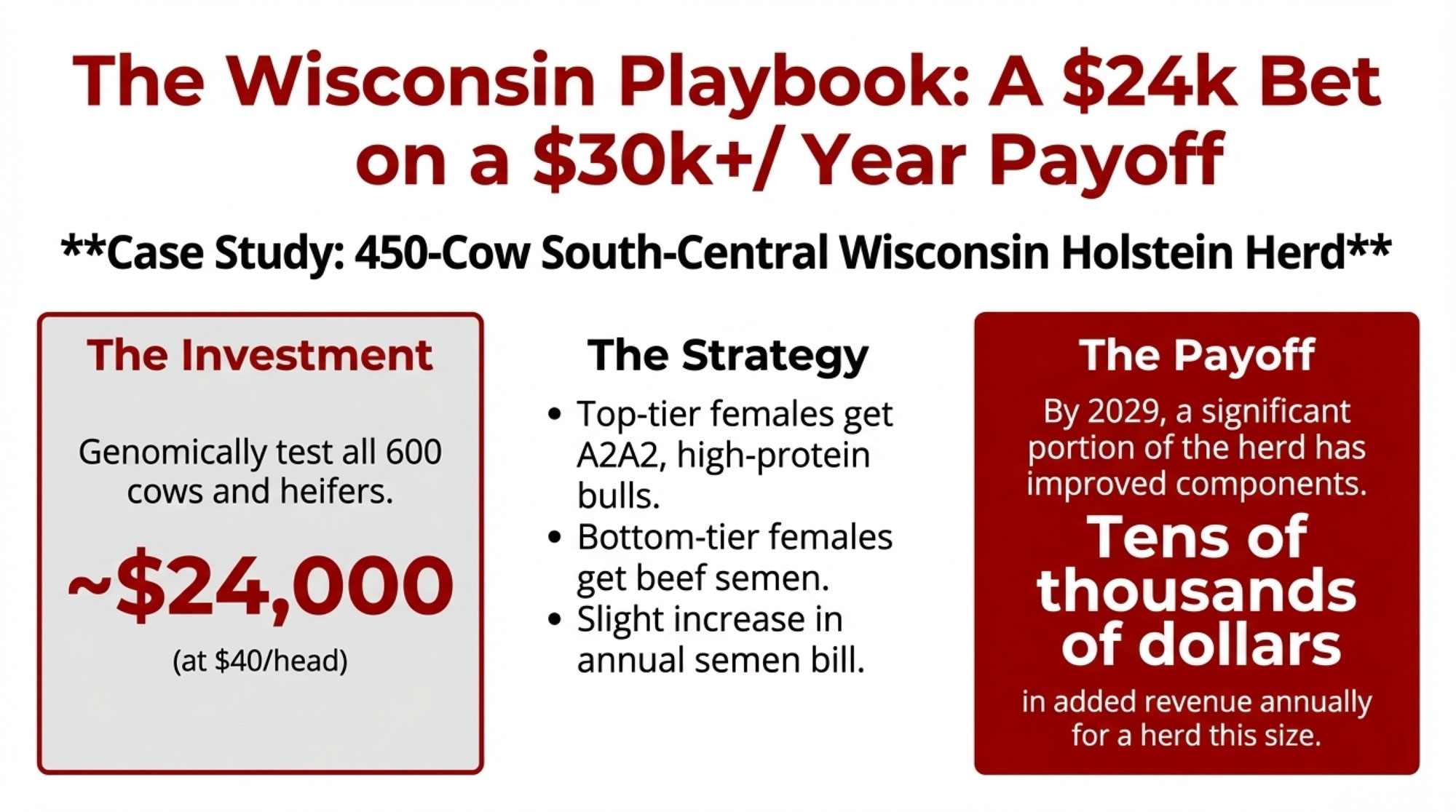
  • You decide to test all milking cows and heifers genomically. At roughly 40 dollars a head and 600 head total, that’s about 24,000 dollars—a noticeable check to write, but still a fraction of any major building project.
  • The results come back and, like UMN, you discover a decent chunk of your Holsteins are A2A2 and that a meaningful fraction carry kappa-casein genotypes that cheese makers like.
  • You sit down with your genetics advisor and draw up a simple plan: the top tier of heifers and cows on components and health get bred to A2A2, high-protein, favorable kappa-casein bulls; the bottom tier gets beef semen. Your overall semen bill goes up a bit—maybe a thousand or two a year—but you stop multiplying the genetics that hold back components and cow health.
Investment ItemCost / ValueTimelineNotes
Genomic Testing (600 head)$24,000One-time upfrontTests all cows + heifers; identifies A2, kappa-casein, component PTAs
Premium A2/High-Component Semen+$1,500-$2,000/yearOngoingSmall incremental cost vs. standard Holstein semen
Total First-Year Investment~$26,000Year 1One-time test + first year of premium semen
Milk Production (450-cow herd)20-22 million lbs/yearBaselineTypical for well-managed Midwest freestall herd
Component Value Improvement (conservative scenario)+$0.15-$0.25 per cwtYears 3-5+Even modest protein % gains + favorable casein = higher pay
Annual Return (conservative)$15,000-$30,000+/yearOngoing after calves freshenBased on 20M lbs at $0.15-0.25/cwt improvement
Simple Payback Period<2 years—$26K investment / $15-30K annual return
10-Year Net Benefit (conservative)$120,000-$270,000Years 1-10Assumes modest component gains hold across herd lifecycle

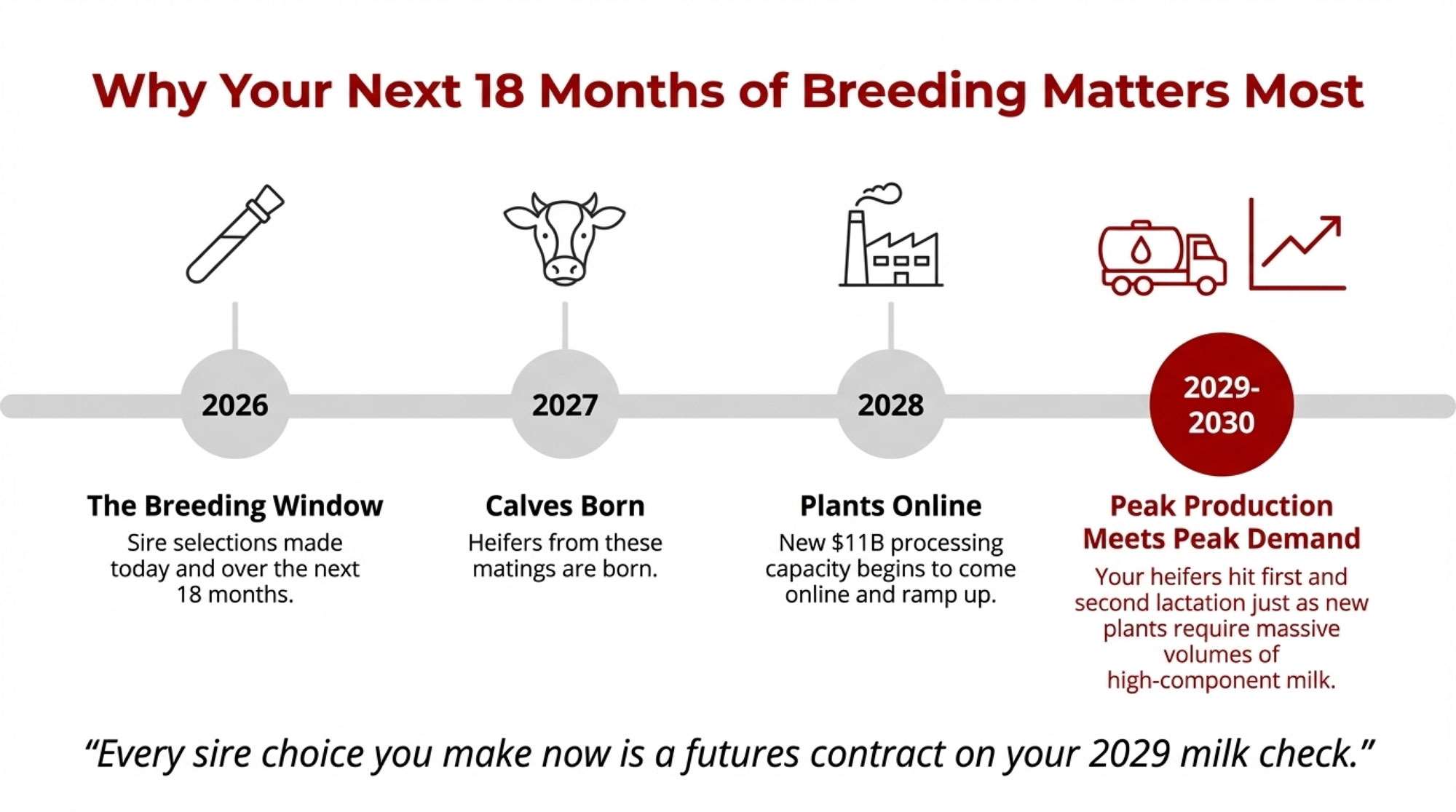
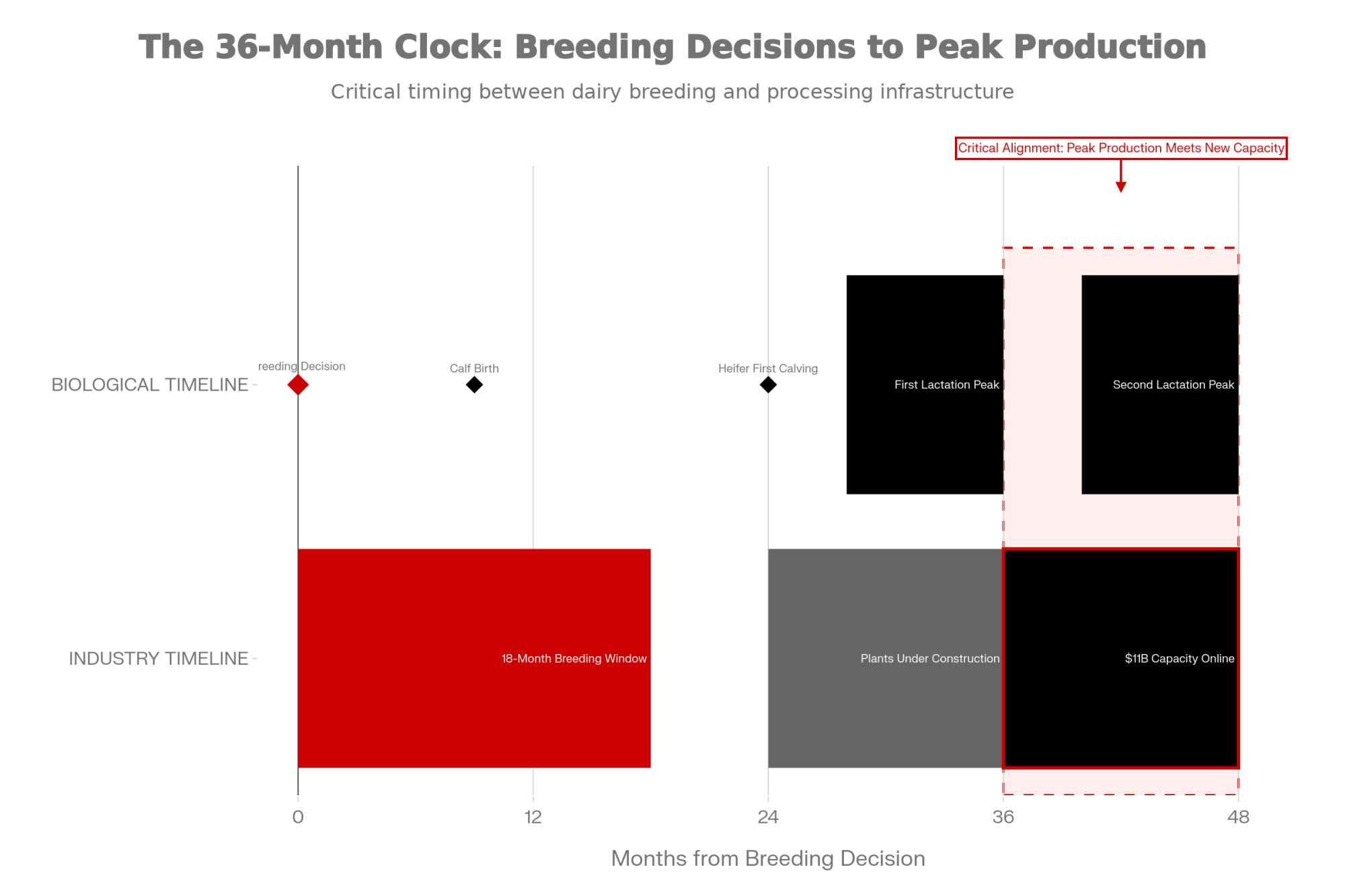
On the calendar, calves from those matings in 2026 are born through early 2027. Those heifers freshen in your parlor in 2028. By 2029-2030, a big slice of your herd is in second lactation with more consistent protein percentages and solid butterfat performance, as long as your nutrition and cow comfort keep pace.

A 450-cow herd milking well could easily be shipping on the order of 20 to 22 million pounds of milk a year. In some component pay systems used by cheese-oriented plants, even a small improvement in how protein is valued—a couple of cents per pound of protein, depending on the exact formula—can turn into tens of thousands of dollars a year for a herd that size when you run real solids and volume numbers through actual federal order and plant pay schedules.

Nobody can guarantee exactly what your protein line will look like in 2030. Pay formulas and markets change. But when the cost side of the strategy is a one-time genomic investment and a modest ongoing semen premium, and the upside sits in that “tens of thousands per year” range in a world that’s clearly leaning into protein-dense dairy, you can see why more producers are at least sharpening their pencils.

Western Dry Lot Systems: When Components Become “Exported Water”

Now, slide that coffee mug over to a friend running 3,000 cows in a dry lot system in the Texas Panhandle or eastern New Mexico, and the conversation sounds a little different. The underlying theme is the same, though.

In those systems, water and purchased feed are usually the top two headaches.

U.S. Geological Survey data on the Ogallala Aquifer shows that in heavily irrigated parts of western Kansas and the Texas High Plains, groundwater levels have dropped significantly over the past several decades—in some areas, declines of 50 to 70 feet or more in the most heavily pumped townships. USDA Climate Hubs data shows similar patterns in Texas and Oklahoma. That’s a long-term structural issue, not just a “bad year.”

Climate and hydrology work on the Colorado River basin tells a similar story. Multiple research studies and federal data confirm that since about 2000, average river flows have been roughly 20 percent below the 20th-century average. The Nature Conservancy, Colorado State University researchers, and coverage in High Country News all point to reduced snowpack and higher temperatures—a “hot drought” pattern that’s likely to persist under current climate projections.

At the same time, USDA hay market reports and Western extension bulletins regularly show Supreme and Premium alfalfa in states like California, Arizona, Idaho, and New Mexico, bringing noticeably higher prices per ton than comparable hay in Wisconsin or Minnesota, reflecting irrigation costs and freight.

Delivered costs for corn and other concentrates are also higher when you’re far from the Corn Belt, something our previous coverage has been highlighting in its pieces on regional profitability and the “processing gap” between where milk is produced and where it’s processed.

So in that context, when Western producers talk about components, they’re often thinking less about a formal protein premium line on the cheque and more in terms of “How many pounds of fat and protein can I ship for each unit of water I’m legally and affordably pumping and each ton of feed I’m buying?”

That’s what people really mean when they talk about components as a way of “exporting water.” You’re not literally putting your irrigation water in the tanker, but the more solids you produce per acre-inch of water and per ton of dry matter, the more value you’re effectively moving off the farm with each load of milk.

In practical terms, that’s where genomic selection for traits like protein percentage, feed efficiency, and health, paired with sharp ration work and solid fresh cow management during the transition period, becomes a survival tool rather than just a nice genetics project.

Why the Next 18 Months Matter More Than They Seem

If you lay all this out on a simple timeline, you can see why a lot of conversations keep circling around an “18-month window.”

From breeding to first calving is about nine months of gestation. Then you’ve got a couple of months for the heifer to get through the transition period and settle in, and at least one full lactation before you really know who she is in terms of components, health, and fertility. Realistically, it takes several years of consistently breeding in a chosen direction before that genetic shift really shows up in the bulk tank.

On the processing side, most of the projects in that 11-billion-dollar wave are slated to start up between now and the end of the decade. If they stay roughly on schedule, the new cheese, yogurt, and ingredient plants will be running full out right when the calves you breed in the next 18 months are in their first and second lactations.

GLP-1 use and gut health awareness aren’t expected to disappear over that same period, either, based on current clinical and market outlooks.

So, whether you think about it this way or not, every sire selection you make today is a kind of futures contract on your 2029 milk check. You’re deciding how much of your herd, three to five years from now, will be built mainly for volume, and how much will be built for components that match the products and markets your milk will flow into.

Talking With Your Processor: Three Questions Worth Asking

I’ve noticed that the farms that navigate this best aren’t just tweaking genetics in a vacuum; they’re also having better conversations with the folks who cut the checks.

If you pick up the phone or catch your field rep in the yard, three simple questions can open up a lot:

  • First: “Looking at the new plants we’re building into, how do you expect protein and butterfat to be valued over the next five to ten years compared to today?”
  • Second: “Are there specific quality or composition targets—like protein percentage, A2 status, or other specs—that you expect to reward more as these projects come online?”
  • Third: “Based on your data, where does my herd stand today on components and quality relative to your overall supplier base?”

Processors and co-ops often have more visibility into future product mix than we do from the farm side. Asking these questions doesn’t mean you’ll get a perfect forecast—nobody has that—but it can help you decide how aggressively to steer your genetics, nutrition, and fresh cow management toward components.

And honestly, that’s the kind of conversation that separates the farms steering the bus from the ones just along for the ride.

Different Farms, Different Plays—And That’s Okay

As many of us have seen over the years, there’s never just one “right” answer that fits every farm.

If you’re a younger operator—say under 45—with a competitive cost of production and a realistic plan to be milking for another 15 to 20 years, this protein-heavy future probably looks more like an opportunity than a threat. Genomic testing a meaningful share of your herd, tightening sire selection around protein, butterfat, and casein while still protecting fertility and cow health, and working with your nutritionist to support solids as well as volume, are all moves that research and extension work suggest can pay back over a longer time horizon.

If you’re in that mid-career zone—mid-40s to mid-50s—and staring at a parlor, freestalls, or manure setup that’s near the end of its useful life, your decisions get more complicated. Industry data shows robotic milking units typically ranging from 150,000 to 230,000 dollars per unit, and full conversions for 400- to 600-cow herds can easily clear a million dollars once buildings and support systems are included. Payback estimates often fall in the seven- to ten-year range, depending on actual labor savings, component shifts, and day-to-day management.

In that situation, what a lot of mid-career producers are doing is leaning first on lower-capital levers: improving genetics for components and health, tightening fresh cow management in the transition period, putting serious effort into forage quality and consistency, and, where appropriate, using tools like Dairy Margin Coverage or private revenue protection to soften some of the income swings while they make those improvements.

If you’re closer to retirement and there’s no clear successor ready to step in, the smartest move may be different again. USDA and land-grant land value reports show that farm real estate in good dairy regions—especially around the Great Lakes—has held value well and, in many cases, has increased substantially over the past 15 years. In some strong dairy counties, values have doubled or more.

In that context, it often makes sense for someone in their late 50s or 60s to focus on maintaining cow health and respectable components, avoid taking on major new debts that won’t realistically be paid off during their working years, and keep the place clean and marketable so they can sell or rent out on their own terms when the time feels right.

None of these paths is “better” in every situation. They’re just different ways of responding to the same set of signals, depending on where you and your family are in your own story.

A Note for Canadian Producers

For those of you milking under quota north of the border, the component picture plays out a little differently—but the underlying direction is similar.

Canadian Dairy Commission support prices and provincial board formulas have always valued butterfat heavily, and that hasn’t changed. But the rising importance of protein in cheese yields and in high-protein consumer products is shaping how milk classes are structured and valued.

If you’re considering A2 or kappa-casein genetics, the economics work a bit differently under quota than under U.S. federal orders, but the potential for premium marketing channels—particularly for fluid A2 milk and specialty cheese—is growing in Canada too.

Reports show that in early 2025 that Minnesota dairy farmers are increasingly interested in A2 milk, and that interest is mirrored across the border as Canadian processors explore differentiated product lines.

The strategic question is similar: know your herd’s genetic profile, understand where your processor is headed, and make breeding decisions that line up with both.

The Long Game: Water, Land, and Where Dairy Stands

Before we drain the coffee pot, it’s worth zooming out one last time and thinking about the long game.

Those water trends I mentioned earlier—the Ogallala declines, the Colorado “hot drought”—are already forcing Western agriculture, including dairies, to adjust cropping patterns, scale back irrigated acres, and in some cases rethink long-term viability.

RegionPrimary Water SourceStatus / TrendLong-Term OutlookStrategic Implication
Texas / Kansas / Oklahoma High PlainsOgallala Aquifer-50 to -70 feet in heavily pumped areas since 2000Continued decline; fossil waterRisk: Rising costs, limited expansion, potential exit
Southwest / Colorado River BasinColorado River-20% avg. flow since 2000; persistent “hot drought”Likely permanent reduction per climate modelsRisk: Competing demands, regulatory limits on ag water
Great Lakes Region (WI, MI, NY, PA, OH)Great Lakes + groundwaterStable; 20% of global fresh surface water; renewableSecure; regulated but abundantOpportunity: Water-secure base for high-component dairy
Northeast / Upper Midwest (MN, IA)Surface + renewable groundwaterGenerally stable; localized stress in some areasSecure to moderately secureOpportunity: Can support expansion near processing hubs
Idaho / Pacific NorthwestSnake River, Columbia BasinModerate stress; dependent on snowpack trendsVariable; snowpack declines a concernMixed: Secure short-term; watch long-term snowpack

Meanwhile, regions around the Great Lakes and much of the Northeast, while facing their own regulatory and environmental pressures, sit over comparatively robust and renewable water supplies.

In outlook meetings and trade coverage, economists from places like UW-Madison and the Food and Agricultural Policy Research Institute have pointed out that, over the long term, water-secure regions in the mid-section and upper Midwest are likely to remain very competitive bases for high-value, component-dense dairy production, especially as water limits and climate volatility tighten elsewhere.

So when you put all of this together—GLP-1 nudging people toward higher-protein diets, gut-health research backing fermented dairy, processors pouring billions into cheese and cultured capacity, herd genetics already carrying more A2 and kappa-casein variation than many of us realized, and export demand for high-protein powders and cheeses continuing to grow in markets like Asia and the Middle East—it’s not surprising that so many barn-office and meeting-hall conversations keep circling back to components.

Key Takeaways for Your Farm

If you like things boiled down, here are a few questions and actions worth mulling over in the next 18 months:

  • Know your genetics: Do you actually know your herd’s A2, kappa-casein, and component profile, or are you guessing? A targeted genomic test can answer that.
  • Align sires with where plants are going: Are you picking bulls that match the protein-heavy, cheese-and-cultured future your local plants are investing in?
  • Talk to your buyer: Have you asked your processor how they expect to value protein and fat over the next five to ten years, and how your herd stacks up today?
  • Match strategy to stage: Given your age, equity, and family plans, are you better off leaning into growth, tightening the current system, or focusing on a clean exit with strong land value?

The Bottom Line

If we were actually sitting at your kitchen table, I wouldn’t pretend there’s an easy, one-size-fits-all answer.

What I’ve seen, watching a lot of different farms, is that the ones that come through big shifts like this in the best shape aren’t always the biggest or the fanciest. They’re the ones that stay curious, pay attention to where the science and the money are pointing, and then make a handful of well-timed, thoughtful decisions instead of either doing nothing or trying to change everything at once.

When you lay the GLP-1 billions, the 11-billion-processor bet, and your own protein line side by side, it’s hard to argue that this is just another passing fad. The genetics are already in your pens, at least to some degree. The concrete is being poured at the plants. The health trends aren’t evaporating next week.

The real question is how you want to position your herd—and your milk check—for the chapter that’s already starting to unfold.

Complete references and supporting documentation are available upon request by contacting the editorial team at editor@thebullvine.com.

Learn More

The Sunday Read Dairy Professionals Don’t Skip.

Every week, thousands of producers, breeders, and industry insiders open Bullvine Weekly for genetics insights, market shifts, and profit strategies they won’t find anywhere else. One email. Five minutes. Smarter decisions all week.
NewsSubscribe
First
Last
Consent

Why 2025 Could Be the Most Profitable Year for Dairy Farmers Yet!

Discover how record dairy investments will transform the industry. Will U.S. farmers address global demand challenges and seize opportunities?

As trade and the economy around the world change quickly, the US dairy industry stands out as a fantastic example of how things can change. Just a few decades ago, it was mainly focused on serving customers in its own country and had few plans to expand internationally. But this business, once called a “quaint pillar of American agriculture,” has changed quickly. Strategic moves like the North American Free Trade Agreement (NAFTA) and the creation of the US Dairy Export Council have made the US a strong player on the world stage. It is now the third-largest dairy exporter in the world. This path is a story of growth, strategic planning, and changing to stay ahead in a challenging market.

The industry’s transformation from a local supplier to a global powerhouse was not overnight. It was the result of meticulous planning, technological advancements, and a relentless pursuit of growth.

As 2024 comes to a close, the industry gets ready for yet another massive wave of change. A one-of-a-kind $8 billion investment in dairy processing projects will push the US dairy industry to new heights. These investments are not just numbers or statistics; they show how production might change, how far the market reaches, and how the economy is affected. The possible effects could change everything about the industry, from how milk is made to how dairy professionals and stakeholders approach the market. This considerable investment will not only increase capacity but also make the US more competitive when it comes to exporting dairy products to other countries.

Seizing the Reins: US Emerges as a Dairy Dynamo 

Both opportunities and challenges are unique to the global dairy market. Thanks to the European Union and New Zealand, these areas have been seen as powerhouses for the dairy industry. However, strict policies on climate change have recently put pressure on this landscape and started to change it. The European Union is trying to cut down on carbon emissions, but this is stopping the growth of its dairy herd. As a result, it is less able to meet the growing global demand. In the same way, New Zealand has to deal with strict environmental rules and limited land, making it much harder for the country to produce more milk.

While the EU and New Zealand grapple with the effects of climate change, the US dairy industry sees this as a strategic opportunity. With access to more land and fewer regulatory constraints, American dairy farmers are poised to capture a larger share of the international market. This shift aligns with significant economic benefits, such as favorable conditions for feed crops that enhance the cost-effectiveness of dairy production.

As competition changes, US dairymen are poised for unprecedented growth opportunities. The following investments are meant to build on this momentum and make the United States a more critical player in the global dairy industry, making it more resistant to changes in other markets.

Unveiling Dairy’s Dawn: US Industry on the Brink of Transformative Growth

The American dairy industry is about to undergo massive change. An unprecedented $8 billion has been set aside for new processing facilities. This huge investment is part of a plan to capitalize on the growing demand for US dairy products, mainly cheese and whey, in the US and worldwide. Not content with keeping things the same, these changes show a strong push toward consolidation and growth, which will keep the US a major player in the global dairy arena.

This significant capital investment will manifest in several state-of-the-art plants planned for key locations, mainly in the Central Plains and the Texas Panhandle. The dairy industry can quickly move goods through these areas because they have favorable climates for farming and are close to areas that produce milk. The choice of these sites shows a strong focus on milk availability and distribution efficiency in each region, which are essential for meeting the growing demand for dairy products.

Cheese is at the front of this wave of investments. The investment is aimed at a wide range of cheeses because consumer tastes are shifting toward unique and different ones. When combined with cheese, whey production also gets a big boost. Once considered a waste product, whey is now used in many health and nutrition situations, raising its market status and requiring increased production. The interaction between the cheese and whey streams allows the industry to make more products and make the most money from the vertically linked processes.

As a result of these new facilities, milk production will have to increase significantly. Based on what we know now, we will need an extra 20 million pounds of milk daily to meet the growing demand for dairy products. This rise is both a problem and a chance for dairy farmers nationwide. On the one hand, increasing the milk supply makes it more critical, which could cause farmgate milk prices to rise when demand is high. On the other hand, it gives dairy farmers a chance to invest in growing and improving their herds, which leads to higher productivity and longer-term success in the sector.

Even though the US dairy industry is bustling, it can be challenging to understand. As demand for milk rises, the lack of replacement heifers, a direct result of the economic downturn in the past few years, could cause a bottleneck. Farmers may have to choose between the short-term benefits of higher demand and the longer-term challenges of ensuring their herds keep growing. As these new plants get closer to being fully operational, the landscape will grow, and farming methods and strategies will also need to be reevaluated to keep up with how the industry is changing.

The Price Conundrum: Navigating the Highs and Lows of Dairy’s Global Marketplace 

The US dairy market is about to face harsh price conditions because of the expected rise in dairy production due to considerable investments in processing. When a lot of cheese and whey products hit the market around the middle of 2025, they might cause dairy prices to go down. This isn’t just a short-term drop; it’s part of a more significant trend where supply may rise faster than demand, especially if international markets can’t handle the extra well.

With such significant expansions, there are risks of price pressure. Domestic and international markets will become too full as the US increases production. When supply increases sharply without demand increasing at the same rate, prices must go down. While these price cuts might benefit consumers, they could hurt farmers’ profits and make them less likely to invest in new production tools.

The dynamics of international trade make things even more complicated. Tariffs could significantly affect trade since Mexico and China buy many US dairy products. Although tariffs are meant to protect local industries, they can hurt US exports by making them more expensive for people in other countries to buy. The US sends 4.5% of its dairy products to Mexico and about 1% to China.

Tariffs could have effects beyond raising prices. They might change how trade moves worldwide, forcing the US to look for new markets or renegotiate existing trade terms. Past evidence shows that imposing tariffs on goods can hurt trade relationships for a long time, affecting prices and market stability.

Ultimately, these changes mean the US dairy industry must stay alert. We must increase production and ensure the right tools and plans are in place to balance supply and demand worldwide. Tariff strategies, export diversification, and competitive pricing models that can withstand market pressures are some things that need to be considered.

The Impending Storm: Navigating Dairy’s Critical Crossroad 

There are a few big problems that the US dairy industry needs to solve before 2025 that could have a significant impact on its future. One big worry is that replacement heifers have steadily decreased for several years. This is a critical issue because replacement heifers keep dairy herds growing and going. With counts at their lowest level in 20 years, there is little room to increase milk production. Adding to the problem is that getting replacement heifers has become very expensive, with auction reports saying they cost more than $4,000 each. This price increase puts much financial stress on dairy farmers who want to grow their businesses.

Because of this, using beef semen strategically has become a good way to deal with problems caused by herd size. Dairy farmers bought an impressive 7.9 million units of beef sperm in 2023. Even though this is a new idea, it is also a calculated move because it plays into the urgent need for replacement numbers. Two to three years might take before this strategy pays off regarding replacement numbers. So, people who work in dairy farming need to be very careful during this time, balancing the need for immediate production with plans for long-term growth in what looks like a rough time for milk production. The choices made today will impact the industry for a long time, so everyone needs to be flexible and able to think ahead.

Harnessing Opportunities: Thriving Amidst Dairy’s Dynamic Landscape

A good time to make money appears as the dairy industry experiences rapid change. The price of things like grain and feed has dropped significantly, giving dairy farmers a great chance to improve their finances. With these lower input costs and strong margins, the case for a stronger bottom line is strong.

But the plot gets more complicated as farmers try to devise ways to take advantage of these good conditions. To do well in this situation, dairy farmers need to not only keep up or even increase the amount of milk each cow produces. You must be smart about nutritional science and herd management to do this.

In this case, feed additives are among the most essential tools. Farmers can increase milk yields by adding things that help the digestive system and metabolism work better. The science behind these supplements is strong, and they promise to increase milk volume and quality, which will directly lead to higher profits.

Customized practices for managing herds are also a powerful tool. Precision feeding, which means changing feed rations to meet the needs of each cow in the herd, ensures that cows get the best nutrition, which helps them breastfeed better. Regular checkups and health checks prevent problems, protecting the herd’s productivity.

At the same time, buying technology like automated milking systems can improve productivity by making operations run more smoothly, reducing labor costs, and gathering helpful information.

As dairy farmers consider these options, the promise of higher milk prices becomes the cherry on top, giving them even more reason to improve production. The plan is clear: focus on efficient operations with a high yield to secure and increase financial returns in this perfect economic climate.

Milking Innovation: Navigating the Nexus of Technology and Sustainability in 2025

As 2025 approaches, technological progress and environmentally friendly methods are becoming increasingly important to the dairy industry as ways to grow and stay strong. Using new ideas in feed additives, herd management, and environmental practices is not just a choice; it’s a must to increase productivity and sustainability.

Farmers who raise dairy cows are seeing a revolution in feed additive technology meant to increase milk production and make animals healthier. These additives do more than feed; they give specific nutritional support to increase milk production while keeping cows healthy. Some new ideas are probiotics, which help the digestive system work better, and additives that support metabolic health. These help the body use nutrients more efficiently and release less methane. With this double benefit, they improve both productivity and environmental sustainability, making them essential in today’s dairy industry.

Using technology to change herd management is another change that is happening. Smart collars and other wearable tech give farmers real-time information about their cattle’s health and welfare, which lets them take a more proactive approach to their care. These technologies make it easier to spot signs of illness and stress early on so that people can get help immediately and avoid losing work time. In addition, they help make better decisions about breeding and culling, ensuring that genetic goals and market needs are met while also managing the herd’s health.

The need to protect the environment is changing the way dairy farms work. Technologies that help dairy farms leave less of an impact on the environment are becoming more popular. Separators and digesters in modern manure management systems reduce waste and turn it into biogas and other renewable energy sources. Together with precision agriculture techniques that maximize resource use and reduce waste, these new technologies are essential for making dairy farms better environmental stewards.

The dairy industry is on a good path thanks to the combination of new technologies and environmentally friendly methods. Farmers who use these new technologies will be able to make their operations more efficient and meet the growing demand for environmentally friendly practices. As 2025 comes to a close, the question for dairy professionals is still: How quickly and effectively can these new ideas be scaled up and used in daily operations to ensure the dairy sector has a bright future?

The Bottom Line

The US dairy industry is about to undergo unprecedented growth and change. The sector is ready to take advantage of new global markets because it has made significant investments to increase capacity, especially in cheese and whey production. However, there are significant problems ahead. Finding the right balance between increasing output and staying profitable when prices constantly change requires strategic planning. It’s also getting harder because domestic consumption is decreasing, and more replacement cows must be replaced.

We must consider how the dairy industry will distinguish between new ideas and old ways of doing things in this change. What plans will keep US dairy at the top of the global market and ensure its long-term success and growth? As time goes on, it’s essential for everyone involved to embrace innovative solutions that use technology and environmental friendliness to change the story of dairy farming. Are we ready for the coming paradigm shift? What part will each of us play in steering this change? In the same way that the future of US dairy depends on the decisions we make today, the answers do so.

Key Takeaways:

  • Investment in U.S. dairy processing is forecasted to be unprecedented, with $8 billion earmarked for new projects through 2026.
  • The demand for high-quality dairy proteins like cheese and whey is driving growth, but an increase in production may put downward pressure on prices.
  • International demand for U.S. dairy remains strong, with significant contributions from export markets like Mexico and China.
  • The U.S. dairy industry faces a challenge with a shortage of replacement heifers, which could limit the potential for increased milk production in the near term.
  • Dairy farmers have an opportunity to benefit from lower feed costs and higher milk prices, supporting margins and encouraging investment in production-enhancing feed additives.

Summary:

In 2025, the U.S. dairy industry stands at the forefront of international dairy production, driven by a remarkable $8 billion investment in dairy processing, primarily focusing on cheese. This positions the U.S. as an even more formidable global dairy powerhouse. With this infusion, there are notable expectations of shifts in dairy product prices due to the introduction of new products and potential trade challenges. A pressing issue is sourcing additional milk supply amidst a decreasing number of dairy replacement heifers. Despite these challenges, increased component levels in milk present opportunities for higher-yield products. Still, the industry must tackle hurdles like historically low replacement heifer numbers. The U.S. dairy sector needs to keep pace with these transformations, aiming to enhance production while effectively managing global supply and demand dynamics.

Learn more:

Join the Revolution!

Bullvine Daily is your essential e-zine for staying ahead in the dairy industry. With over 30,000 subscribers, we bring you the week’s top news, helping you manage tasks efficiently. Stay informed about milk production, tech adoption, and more, so you can concentrate on your dairy operations. 

NewsSubscribe
First
Last
Consent
Send this to a friend