Archive for dairy farmers – Page 3

Butter Prices on the Rise: What Every Dairy Farmer Needs to Know About the Global Market

Find out why butter prices are skyrocketing and how it affects your dairy farm. Ready for global market changes? Learn how to stay ahead.

Summary: Oceania’s butter prices are surging, and it’s crucial for dairy farmers to understand the reasons and implications. The global butter market varies across regions, which means farmers need to adopt strategies like diversifying products, improving efficiency, and exploring new markets. The future of butter prices is uncertain, so a proactive approach is vital for stability and profitability in the dairy industry.  This quarter saw a 20% rise in Oceania’s butter prices, stressing the importance of staying informed. Factors like international demand, climate affecting milk production, and changing consumption patterns are driving prices up. While Europe remains steady, North America’s market is fluctuating due to shifts in consumer preferences and production variabilities. For dairy farmers in Oceania, this could mean higher income but also increased production costs. Monitoring market trends and maintaining efficient practices are key.  The global butter market’s unpredictability affects regions differently. To navigate this, dairy farmers should diversify products, invest in advanced management tools, and explore new markets, including exports, local farmers’ markets, and online direct-to-consumer platforms.

  • Oceania is experiencing a significant 20% rise in butter prices this quarter.
  • Farmers need to understand and adapt to global market variations to remain profitable.
  • Strategy recommendations include diversifying product offerings, improving operational efficiency, and exploring new markets.
  • Future butter prices are uncertain, necessitating a proactive and informed approach for stability.
  • Increased international demand, climate impacts on milk production, and changing consumption patterns are key drivers of the price surge.
  • Europe’s butter market remains stable, while North America’s market is marked by fluctuations.
  • Oceania’s farmers may see higher income but also face rising production costs due to market dynamics.
  • Exploring exports, local farmers’ markets, and online sales can help farmers navigate market unpredictability.

Butter prices play an essential part in setting global markets in the ever-changing dairy business, and the recent 20% increase in Oceania’s butter pricing this quarter has left many dairy producers trying to grasp the long-term ramifications. This spike is more than just a statistic; it’s a call to action driven by factors such as shifts in international demand, climatic conditions affecting milk production, and changing consumption patterns. It emphasizes the critical need for farmers to stay informed and proactive to ensure long-term growth and competitiveness.

Global Butter Market: Why Oceania’s Price Surge Could Change Everything! 

Examining the present global butter market landscape reveals diverse patterns in significant areas such as Oceania, Europe, and North America.

MonthPrice (USD per kg)
January 20245.20
February 20245.40
March 20245.70
April 20245.95
May 20246.10
June 20246.30

Butter prices in Oceania have risen significantly owing to strong demand and scarcity. Recent statistics show that prices are growing due to market pressures, emphasizing the region’s essential position in the global dairy supply chain.

MonthPrice (€/kg)
January 20245.50
February 20245.55
March 20245.60
April 20245.70
May 20245.75
June 20245.80

The market in Europe seems to be stable, with prices trending slightly higher. The European market is relatively stable compared to other areas because of low output growth and constant consumption rates.

MonthPrice (USD per pound)
January 2024$2.45
February 2024$2.50
March 2024$2.55
April 2024$2.60
May 2024$2.65
June 2024$2.70

In contrast, North America’s butter market has seen varying patterns caused by shifting customer tastes and unpredictable production outputs. The present market scenario shows increased retail demand and conservative production responses from dairy producers.

Overall, the worldwide butter market is distinguished by regional variations that reflect local supply and demand situations, influencing price dynamics in distinct ways.

Unraveling the Causes Behind Oceania’s Butter Price Boom! 

The rise in butter prices, especially in Oceania, may be ascribed to several events that have drastically impacted the market environment. Firstly, persistent supply chain problems have had a significant impact. According to the USDA, logistical issues ranging from labor shortages at important ports to transportation disruptions have resulted in bottlenecks hindering delivery and raising expenses.

Furthermore, adjustments in customer demand have led to the price increase. Throughout the pandemic, a clear shift toward at-home cooking resulted in increased butter use. This trend, supported by FAO market statistics, demonstrates a persistent growth in demand for dairy products as more individuals cook at home.

Finally, the increasing manufacturing costs cannot be neglected. Rising feed costs and energy prices have increased the costs associated with dairy production. The USDA claims that animal feed costs have increased by 20% in the past year alone, placing further strain on farmers. Supply chain challenges, increased consumer demand, and growing production costs clearly show why butter prices have risen in recent months.

So, How Do These Rising Butter Prices Impact You, the Dairy Farmer?

So, how do these rising butter prices impact you, the dairy farmer? It’s a mixed bag of benefits and challenges. 

Positive Impacts: 

First and foremost, rising butter prices might lead to improved income opportunities. With increased worldwide demand for butter, particularly from Asia and the Middle East, producers in countries such as Oceania may discover new product markets. This might significantly increase earnings. For example, a New Zealand dairy sector case study found that higher butter prices in 2021 increased farmers’ profits by 15%.

Negative Impacts: 

In contrast, rising butter prices may raise manufacturing costs. Feed, labor, and maintenance expenditures may climb to fulfill output requirements. For example, a farmer in Victoria, Australia, reported that although butter earnings increased by 20%, operating expenses also rose, reducing net profits.

Additionally, volatile market prices might make financial planning difficult. A sharp reduction in butter prices might leave producers overstocked and unable to afford the more significant expenditures spent during peak production periods.

Although there are compelling prospects for more significant income, weighing them against the possibility of increasing production costs and market instability is critical. Monitoring market trends and maintaining efficient manufacturing techniques might help reduce specific hazards.

Global Butter Market: A Rollercoaster Ride for Different Regions 

When we focus on global market dynamics, delving into the intricacies of various areas shows a complicated yet intriguing world. Take Oceania, for example, where butter costs have just increased. According to Rabobank, this increase is due to reduced milk supply and increased worldwide demand. Climate change has impacted milk production in New Zealand and Australia, resulting in a tighter supply chain. In contrast, butter prices in the European Union and the United States have been relatively steady.

Meanwhile, the situation in the United States remains fascinating. American butter stockpiles have been strong enough to withstand the price volatility in Oceania. According to a USDA study, butter output in the United States has remained robust, with rising inventory levels helping to stabilize prices.

Comparing these locations demonstrates how specific variables, such as environmental conditions in Oceania or production levels in the EU and the United States, significantly impact the global dairy market. These differences are critical for the intelligent dairy farmer to comprehend. This information gives insight into possible export prospects and emphasizes the significance of managing regional risks to stay competitive globally.

Expert Strategies to Navigate the Unpredictable Butter Market 

To help you navigate the unpredictable terrain of the butter market, here are some expert strategies: 

Diversify Your Product Offerings 

Diversification is not just a term; it is a requirement. Consider creating dairy products, including cheese, yogurt, ice cream, and cream cheese. This generates several income sources while minimizing the risks associated with price variations in a single product line.

Improve Operational Efficiency 

Efficiency is essential for surviving turbulent markets. Invest in modern farm management tools to improve herd management, milk monitoring, and feed efficiency. Automated milking systems may cut labor expenses while increasing milk output. Studies have shown that farms that use precision farming technology increase production by 20%.

Explore New Markets 

Look for new markets to sell your dairy goods. Export prospects, local farmers’ markets, and internet direct-to-consumer platforms may provide additional income streams. 

Adopting these tactics can improve your capacity to deal with market volatility and maintain the long-term viability of your agricultural firm. Staying educated and adaptive is critical to success in the ever-changing dairy market.

Peering Into the Future: What’s Next for Butter Prices?

Looking forward, butter prices seem volatile and affected by various variables. Industry analysts predict varied developments; for example, Rabobank predicts a slight rise in global dairy prices, citing tighter supply chains and higher production costs. Meanwhile, the OECD-FAO anticipates constant to slightly lower prices owing to predicted increases in milk output in Australia and New Zealand.

Trade agreements also have essential importance. The newly negotiated Regional Comprehensive Economic Partnership (RCEP) may promote market access and competitiveness, possibly stabilizing prices via increased trade flows between Asia-Pacific nations. Disruptions or renegotiations in key dairy export agreements, such as New Zealand’s with China, might add volatility to the market.

Furthermore, climate change poses a looming uncertainty. Extreme weather patterns, such as chronic droughts and floods, especially in crucial producing locations such as Oceania, might considerably influence milk supply. The Intergovernmental Panel on Climate Change (IPCC) predicts a rise in the frequency and intensity of such occurrences, presenting a threat to supply stability and price trends.

Producers must remain aware and adaptive as the dairy sector navigates these factors. Monitoring these trends and aligning strategies properly can help reduce risks and capitalize on new possibilities in the ever-changing global butter industry.

The Bottom Line

The recent changes in the global butter market, particularly the price increase in Oceania, highlight the significance of monitoring and agility for dairy producers. Farmers may better manage the uncertain terrain by understanding the underlying reasons for these fluctuations and adopting options such as product diversification, operational efficiency improvement, and market exploration. Staying current on market developments is critical for making educated judgments and maintaining profitability. We advise you to be proactive by subscribing to market reports or joining a local dairy farmer group. These tools may give vital insights and help, allowing you to stay competitive in a constantly evolving business. Let us keep ahead of the curve together

Learn more:

EU Commission Greenlights Genetically Modified Maize for Food and Feed: Authorisation Lasts 10 Years

The EU has approved genetically modified maize for food and feed use for the next 10 years. What does this mean for health and safety?

On July 2, the European Commission authorized two genetically modified maize crops for food and animal feed, and another maize crop authorization was renewed. These decisions, valid for ten years, allow the import of these crops under strict regulations, maintaining high standards of human and animal health and environmental safety. With rigorous safety standards and the EU’s meticulous labeling and traceability rules, dairy farmers can confidently introduce these genetically modified maize products into their feed regimen. This development promises to enhance feed efficiency and ensure a steady supply chain, mitigating risks related to crop failures and market fluctuations.

A Delicate Balance: EU’s Rigorous but Cautious Stance on GMOs 

The European Union takes a comprehensive and scientific approach to regulating genetically modified organisms (GMOs), ensuring rigorous safety assessments before market introduction. This regulatory framework, which aims to protect human and animal health and the environment, is rooted in an array of directives, regulations, and decisions. Public debate and political considerations have historically shaped this process, making the path to authorization meticulous and contentious. 

Regulation (EC) No 1829/2003 on genetically modified food and feed establishes the GMO assessment and authorization procedure alongside Directive 2001/18/EC detailing environmental risk assessments. Entities seeking approval must submit a detailed dossier to the European Food Safety Authority (EFSA), which conducts a thorough scientific evaluation to assess safety impacts. A favorable EFSA opinion leads to further scrutiny by the European Commission and member states in the Standing Committee on Plants, Animals, Food, and Feed. 

Previous authorizations, like maize MON 810 and soybean MON 40-3-2, illustrate the EU’s stringent processes, including extensive risk assessments and consumer consultations. Strict labeling and traceability rules ensure transparency and consumer awareness of GMO product origins and safety. 

The authorization process, however, is not free from political dynamics. Member states’ diverse views on GMOs can influence outcomes, often leaving the European Commission to decide when a qualified majority is not reached, as seen in the recent approval of two new genetically modified maize crops and the renewal of another.

Strategic Approvals Amidst Diverse Opinions: A Deep Dive into the EU Commission’s Recent GMO Decisions

The European Commission recently authorized two genetically modified maize crops: MON 87427 × MON 89034 × 1507 × MON 87411 × 59122 and 5307 × GA21. Additionally, they renewed the authorization for maize MON 810, a variant already deemed safe. These approvals are strictly for importation of food and animal feed, prohibiting cultivation in the EU. 

The European Food Safety Authority (EFSA) exhaustively assessed each maize variant’s safety, covering impacts on human and animal health and the environment. The EFSA’s favorable conclusion confirms that these genetically modified products are as safe as conventional maize. 

Products from these maize crops will comply with the EU’s stringent labeling and traceability regulations, ensuring transparency and consumer information. The Commission’s decision was necessary after Member States failed to reach a qualified majority in the Standing and Appeal Committees, reflecting procedural requirements and a commitment to safety and transparency.

E FSA’s Crucial Role: The Pillar of Scientific Rigor and Safety in GMO Regulation

The European Food Safety Authority (EFSA) is crucial in regulating the EU’s genetically modified organisms (GMOs). As the scientific authority on food safety, EFSA conducts a rigorous evaluation process for GMOs, assessing health risksenvironmental impacts, and overall safety. This involves a detailed review of scientific data submitted by applicants, including molecular, toxicological, and allergenicity studies. Independent experts examine this data, often requesting further studies to resolve uncertainties. 

EFSA’s scientific opinion, formulated after exhaustive evaluation, forms the foundation for the European Commission and member states’ regulatory decisions. For the genetically modified maize in question, EFSA concluded that these crops are as safe as conventional varieties based on comparative analysis. This positive assessment confirms that GM maize meets the EU’s stringent safety standards, ensuring the protection of public health and the environment.

From Deadlock to Decision: The EU Commission’s Role in Streamlining GMO Authorizations

The European Commission must make final decisions on GMO authorizations whenever the Member States fail to reach a qualified majority during both the Standing Committee and the Appeal Committee sessions. This obligation prevents regulatory stagnation and ensures food and feed safety decisions are made promptly. The authorization process for genetically modified maize begins with a comprehensive assessment by the European Food Safety Authority (EFSA). EFSA’s evaluation considers the impact on human and animal health and the environment. Once EFSA issues a positive scientific opinion, the proposal goes to the Standing Committee. If this committee fails to decide, the Appeal Committee reviews it next. Should the Appeal Committee also reach an impasse, the European Commission must make the final call. This structured approach ensures a scientifically sound and democratically accountable process. 

Navigating Innovation and Regulation: The EU’s Strategic Stance on GMO Maize Imports 

The authorization of genetically modified maize for food and animal feed within the EU highlights a significant intersection between innovation and caution, with broad implications for the industry. By permitting these imports, the EU Commission enhances production efficiency and resource management. Resiliently against pests and climate adversities, these crops promise a stable supply chain, potentially lowering costs for consumers and farmers. However, despite the comprehensive EFSA assessment, public skepticism toward GMOs persists in many Member States. This skepticism influences market dynamics, potentially increasing demand for non-GMO products and emphasizing the need for transparent labeling and strict traceability. The industry must balance the economic benefits of GMO imports with maintaining consumer trust. Additionally, the EU’s stringent labeling and traceability rules require significant compliance investments, which may disproportionately affect smaller businesses. These complexities reflect a narrative of progress tempered by caution, illustrating the delicate balance of innovation, public opinion, and regulatory demands.

Transparency and Accountability: The EU’s Rigorous Labeling and Traceability System for GMO Products

The European Union’s strict labeling and traceability rules for genetically modified crops ensure transparency and consumer awareness. Each product is clearly labeled, allowing consumers to make informed choices. Additionally, the EU mandates comprehensive traceability from farm to final product, involving extensive documentation at every supply chain stage. This system enables precise tracking of GMO ingredients, facilitating rapid responses to any health or environmental concerns. These measures uphold the EU’s commitment to safety and consumer confidence in the food supply chain.

The Bottom Line

At its core, the European Commission’s authorization of genetically modified maize for food and animal feed balances technological advancement with stringent safety measures. Limited to importation, this move underscores the EU’s commitment to food safety and environmental protection. The European Food Safety Authority’s (EFSA) comprehensive assessment ensures these GM maize varieties are as safe as their conventional counterparts, with authorizations valid for the next decade. The EU offers transparency and accountability by enforcing strict labeling and traceability rules. This decision could enhance options in the food and feed sectors, driving innovation and efficiency in animal farming. Embracing regulated GM maize use could improve feed quality, animal health, and productivity, working towards a sustainable and advanced agricultural framework where safety and innovation coexist.

Key Takeaways:

  • The authorisations for genetically modified maize are valid for a period of 10 years.
  • Approved maize can be imported for food and animal feed usage but cannot be cultivated within the EU.
  • The European Food Safety Authority (EFSA) has conducted comprehensive assessments and confirmed the safety of these genetically modified maize.
  • Products derived from these genetically modified crops will adhere to the EU’s stringent labeling and traceability regulations.
  • The European Commission made these authorisations legally mandatory due to the absence of a qualified majority decision from Member States.

Summary:

The European Commission has authorized two genetically modified maize crops for food and animal feed, valid for ten years, under strict regulations to maintain high standards of human and animal health and environmental safety. This allows dairy farmers to introduce these products into their feed regimen, enhancing feed efficiency and ensuring a steady supply chain. The EU takes a comprehensive and scientific approach to regulating genetically modified organisms (GMOs), ensuring rigorous safety assessments before market introduction. Entities seeking approval must submit a detailed dossier to the European Food Safety Authority (EFSA), which conducts a thorough scientific evaluation to assess safety impacts. A favorable EFSA opinion leads to further scrutiny by the European Commission and member states in the Standing Committee on Plants, Animals, Food, and Feed. Previous authorizations, like maize MON 810 and soybean MON 40-3-2, demonstrate the EU’s stringent processes, including extensive risk assessments and consumer consultations.

Learn more:

How Dairy-Producing Swing States Could Decide the 2024 Presidential Election

Could dairy-producing swing states like Pennsylvania, Wisconsin, and Michigan decide the 2024 election? Discover how these key states hold the keys to the White House.

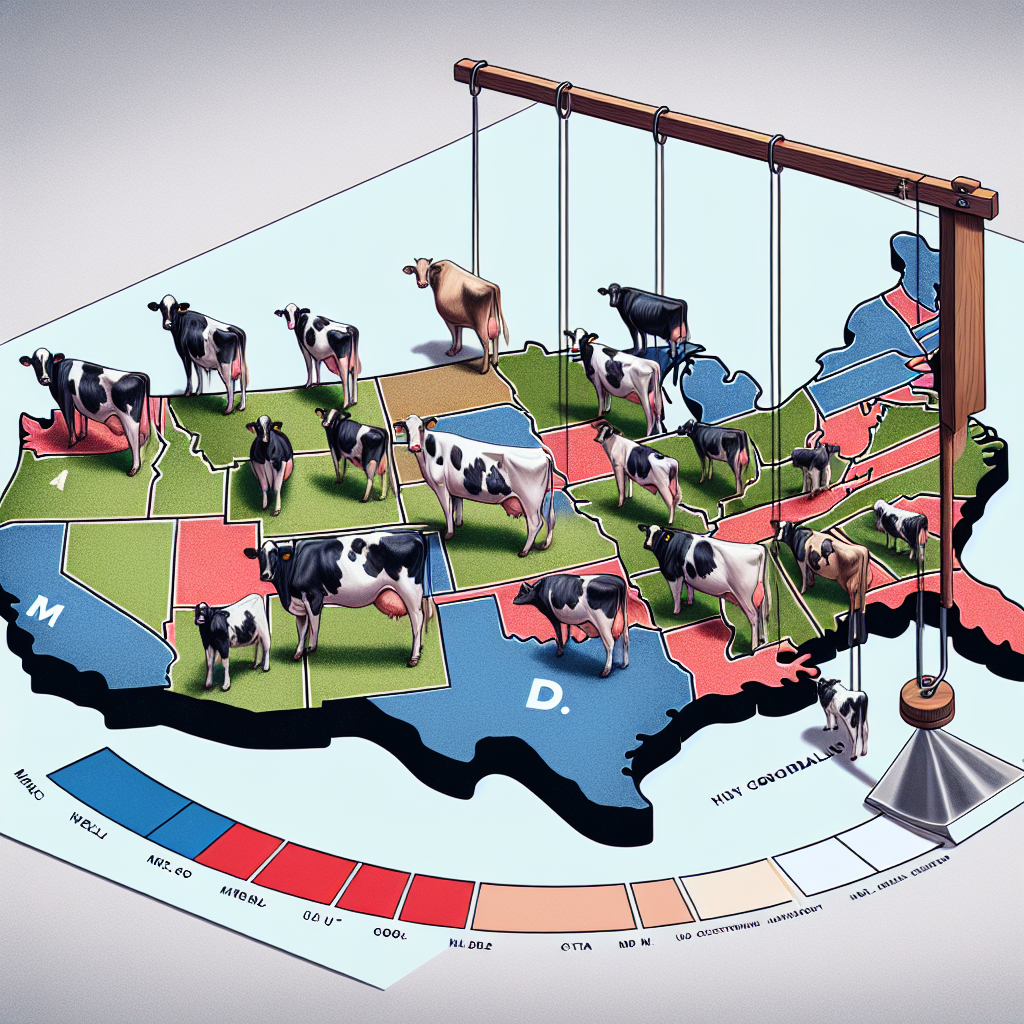
If you are a dairy farmer in America’s heartland, the 2024 presidential election will significantly impact your livelihood. With Joe Biden’s withdrawal, the field has narrowed to Donald Trump and Kamala Harris. This conflict is about more than simply politics; it is about policies influencing agricultural subsidies, trade, and rural development, all of which are essential to the dairy business. Farmers are America’s backbone, and policy choices determine their success or failure. Despite Biden’s departure, crucial states like Pennsylvania, Wisconsin, and Michigan remain essential. These top dairy-producing areas are critical for achieving an Electoral College win and implementing policies that affect dairy operations, such as milk price and labor restrictions. Dairy producers should be aware and active since the decision will impact their future.

Swing States: The Heartbeat of the U.S. Presidential Election 

Swing states, or battlegrounds where neither major political party has overwhelming power, are essential to the U.S. presidential election. Because the Electoral College is winner-take-all, these states are critical in determining the result. While certain states continuously vote Democratic or Republican, swing states change parties from election to election, making them essential campaign objectives.

Swing states are important because they may tilt the balance of power. As contenders compete for the 270 electoral votes required to win the President, the unpredictable nature of swing states encourages them to devote disproportionate time, money, and resources to gaining an advantage. This electoral calculation implies that wins in these critical places may balance losses in more predictable locations.

Historically, states like Pennsylvania, Wisconsin, and Michigan have represented the swing state phenomena. Their shifting political allegiances highlight their status as kingmakers in presidential elections. For example, the razor-thin wins and subsequent reversals seen in these states during the 2016 and 2020 elections demonstrate how swing states may shift the whole electoral map.

As a result, the significance of swing states goes beyond simple numbers; they reflect the fluid and changing sands of public opinion that politicians must negotiate. The emphasis on these states highlights the more extensive approach of adapting communications and policies to local issues, highlighting their importance in selecting who occupies the White House.

From Coast to Heartland: The Powerhouses of America’s Dairy Industry

The United States has a diverse and vibrant dairy sector, with numerous states leading the way in milk production. California is the most significant supplier, accounting for most of the nation’s milk supply. California’s agricultural geography supports dairy farms and allied businesses, and the state produces a substantial amount of milk yearly.

Wisconsin, sometimes known as “America’s Dairyland,” is critical to the United States dairy industry. Wisconsin produces a large volume of milk, contributing considerably to the country’s cheese and other dairy products.

While Idaho is not historically known as a dairy powerhouse, the state’s dairy business has expanded rapidly. The state’s good dairy farming circumstances have allowed it to become a significant participant, contributing significantly to the national milk supply.

Texas, renowned for its extensive ranches and agricultural operations, contributes considerably to U.S. milk production. Texas’ dairy business is diversified, with a mix of large-scale commercial farms and traditional family-owned companies serving local and national markets.

New York remains a central dairy-producing state in the heavily populated Northeast. New York’s dairy farms contribute significantly to the national milk supply, highlighting the state’s long-standing legacy.

Michigan leads in dairy production with efficient agricultural procedures and high-yield cows. Michigan’s dairy farms provide:

  • A tremendous output.
  • Ranking #1 nationwide in pounds of milk produced per dairy cow.
  • Making the state an essential player in the national dairy scene.

Breach and Reclaim: The Battleground States of 2016 and 2020 

Pennsylvania, Wisconsin, and Michigan were in the limelight during the 2016 and 2020 elections because of their significant roles in deciding presidential outcomes. Historically, these states have formed part of the so-called “Blue Wall,” a phrase used to designate states that have consistently voted Democratic in presidential elections. However, the strength of this wall was severely tested and finally broken in 2016, when Donald Trump won all three states by razor-thin margins.

Trump won Pennsylvania by around 44,000 votes, overturning a state that reliably voted for Democratic candidates since 1992. Wisconsin had an even thinner margin, with Trump winning by little over 22,000 votes, the first time the state voted Republican since 1984. Michigan followed a similar trend, with Trump winning by around 10,700 votes, the narrowest margin in the nation that year and a significant shift from its past Democratic leanings.

Let’s fast forward to the 2020 election. These states resurfaced as important battlegrounds, but this time, Biden was successful in recovering them for the Democrats, although by similar thin margins. Biden won Pennsylvania by roughly 80,000 votes, Wisconsin by nearly 20,000, and Michigan by about 154,000. This razor-thin victory highlighted the states’ continued competitiveness and importance on the political map.

The varying voting patterns in Pennsylvania, Wisconsin, and Michigan throughout these two election cycles demonstrate their volatility and relevance. Their position as members of the Blue Wall is no longer taken for granted, making them significant targets in future Democratic and Republican elections.

As November 5 Approaches, Dairy States Pennsylvania, Wisconsin, and Michigan Become Electoral Epicenters

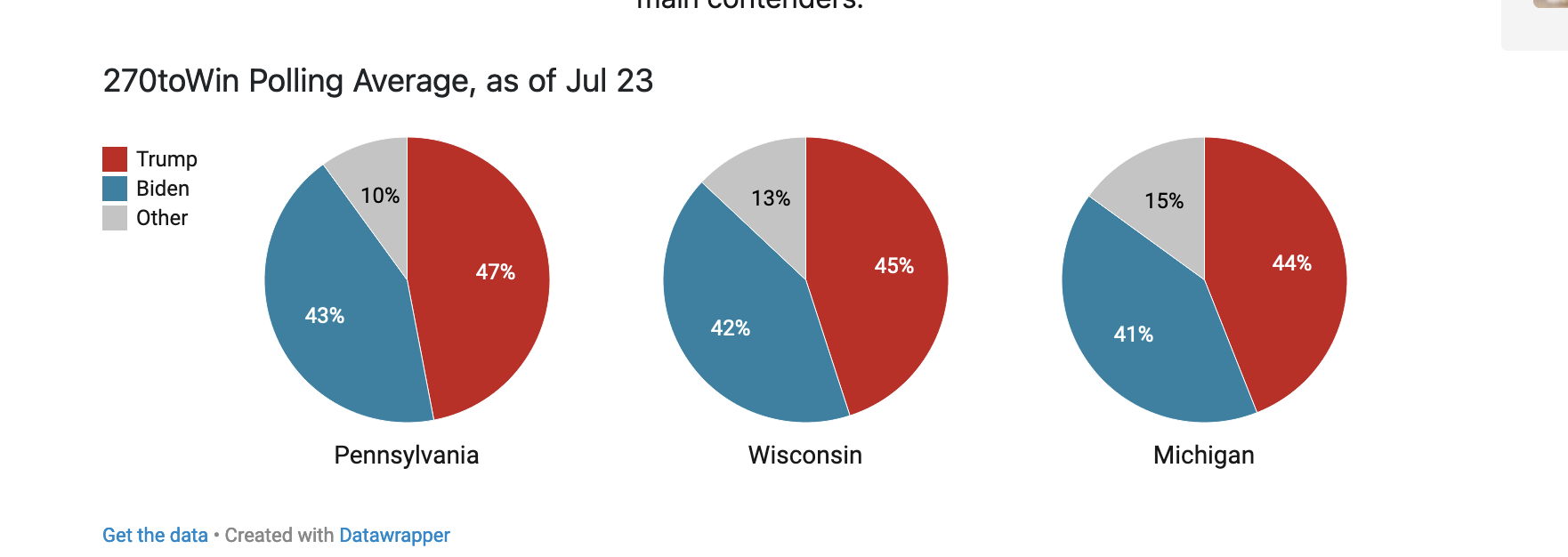
As the November 5 election date approaches, the emphasis shifts to the critical dairy-producing battleground states of Pennsylvania, Wisconsin, and Michigan. According to the most recent surveys and estimates compiled by 270toWin, the race remains very close, with both Trump and Harris vying for supremacy in these critical areas.

Pennsylvania: Trump now leads by a razor-thin 1% edge, indicating a very close contest that might go either way if voter opinion evolves. The state’s substantial dairy business should not be underestimated since it influences rural and urban voters.

Wisconsin: Polls show a similarly acrimonious climate, with Trump leading Harris by 0.5%. This state’s dairy industry, the second-largest in the country, remains a critical political battlefield, with both candidates intensively campaigning to persuade hesitant voters.

Michigan: Unlike Pennsylvania and Wisconsin, Harris leads Trump by 1.2%. Known for its high milk output per cow, Michigan remains a trailblazer despite shifting political preferences and economic ties to the dairy sector.

These forecasts highlight the precarious balance among these states, which jointly hold the keys to the White House. As both major parties ramp up their efforts, the impact of the dairy sector on rural economic policy and environmental concerns cannot be understated. Trump and Harris both appreciate the importance of these sectors, and their campaigns include focused attempts to win over this critical voting category.

Electoral College Dynamics: The Keystone of the Presidential Race 

The Electoral College is at the heart of the United States presidential election system, allocating votes to states based on congressional representation. Each state’s total electoral votes are equal to the number of senators (always two) plus the number of representatives (which varies according to population). A contender must get a majority of these electoral votes, at least 270 out of 538, to win the presidency.

The current consensus projection highlights the precarious balance of power. According to 270toWin, Republicans have 251 electoral votes while Democrats have 226. This leaves a limited margin for both parties to move, with Pennsylvania, Wisconsin, and Michigan emerging as critical players in the electoral equation. These states, an essential section of the so-called Blue Wall, have traditionally shifted between the two parties and are expected to be hotly fought again in 2024.

Pennsylvania, with its 20 electoral votes, is particularly significant. If Republicans win this state, they will have enough votes to surpass the 270-vote barrier and capture the President. In contrast, if Democrats duplicate their achievement in 2020 by capturing Pennsylvania, Wisconsin (10 votes), and Michigan (16 votes), they will jump ahead, gaining precisely 270 votes. This scenario would leave Republicans fighting for the remaining 17 electoral votes in less predictable states like Nevada and Arizona.

The electoral map, therefore, depicts a closely fought campaign in which the fortunes of Pennsylvania, Wisconsin, and Michigan will most likely decide the nation’s political destiny. As the campaigns heat up, both parties will surely devote significant resources and strategic attention to these battleground states, knowing their unmatched relevance in determining the result of the 2024 election.

Economic Influence: How Dairy Drives Both Industry and Politics in Crucial Battleground States

The economic impact of the dairy sector in Pennsylvania, Wisconsin, and Michigan must be considered. These states are major election battlegrounds and dairy powerhouses, with the industry serving as a critical foundation of their local economy. Dairy farms provide billions of dollars in income, support thousands of employment, and contribute to rural towns’ socioeconomic fabric. Dairy farming has a far-reaching impact on related businesses such as feed production, veterinary services, and dairy processing. This economic importance translates into significant political weight; aspirants for the White House cannot afford to ignore it.

Dairy policy is more than a specialized interest for these states’ electorates; it directly influences their lives. As candidates consider maximizing subsidies for small-to-medium-sized dairy producers, balancing land use rules, and tackling significant environmental problems such as methane emissions and water pollution, vote shifts in favor of solid dairy assistance might be crucial. Regulatory policies that offer more support for sustainable farming practices while reducing regulatory burdens on family-scale enterprises may win favor with voters here. As a result, the emphasis on dairy policy may lead to significant differences in voter preferences, underscoring the sector’s position as a predictor of overall election results.

Strategic Gambits: The Electoral Chessboard of Pennsylvania, Wisconsin, and Michigan

The electoral fates of Pennsylvania, Wisconsin, and Michigan provide fascinating possibilities for drastically changing the election picture. If the Republicans win all three states, the electoral map will alter substantially. Under this scenario, Trump would secure the requisite electoral votes with a clear advantage, putting all Democratic dreams to rest, even probable victories in other battlegrounds such as Nevada and Arizona. This Republican sweep would demonstrate their ability to overturn previously blue districts.

In contrast, a Democratic sweep of seven key states leads them to 270 electoral votes, securing Kamala Harris’ triumph. This result would be similar to Biden’s victory in 2020, confirming the party’s capacity to reclaim and keep control of the Blue Wall. This scenario would demonstrate the Democrats’ political strategy’s efficacy and connection with voter concerns in these key dairy states.

A split scenario, in which each party claims one or two of these states, might result in a fractious and uncertain election night. For example, suppose Trump wins Pennsylvania, and Harris wins Michigan and Wisconsin. In that case, both candidates’ paths to victory will be shorter, depending primarily on the remaining swing states to tilt the balance. This fractured result would highlight each electoral vote’s razor-thin margins and essential significance.

The Bottom Line

As the political landscape shifts, the impact of key dairy-producing states such as Pennsylvania, Wisconsin, and Michigan in the race for the White House is apparent. These states might choose the next President of the United States. These dairy states are agricultural powerhouses and critical political battlegrounds, alternating between Republican and Democratic leadership. The recent polls show a fierce contest that can change the Electoral College balance.

Beyond political significance, the decisions here will influence the lives of dairy farmers who face issues such as shifting milk prices and environmental laws. Dairy producers and stakeholders must participate actively in the election process. Advocacy, developing connections with political candidates, and casting educated votes are more important than ever. Your impact goes beyond the farm and into America’s political process. Make your opinion known and help influence the future of both the country and dairy sectors’ future.

Key Takeaways:

  • Joe Biden’s withdrawal hasn’t drastically altered the election landscape, with Trump and Kamala Harris emerging as principal contenders.
  • Dairy states like Pennsylvania, Wisconsin, and Michigan remain pivotal in determining the electoral outcome, similar to their significance in the 2016 and 2020 elections.
  • These states are categorized under the “Blue Wall,” historically Democratic but hotly contested in recent elections.
  • Current electoral projections indicate a tight race, with the Republican and Democratic parties needing these key states to secure victory.
  • The influence of the dairy industry in these states underscores the importance of political and economic strategies tailored to this sector.
  • Public relations and advocacy efforts by the dairy industry could potentially sway voter sentiment and impact the election results.
  • The economic and regulatory environment shaped by the election outcomes will significantly affect the dairy industry’s future.

Summary:

The 2024 presidential election will significantly impact dairy farmers in the US, with swing states like California, Wisconsin, Idaho, Texas, New York, and Michigan playing crucial roles in the dairy sector. Pennsylvania, Wisconsin, and Michigan were historically part of the “Blue Wall” and voted Democratic in presidential elections. However, Donald Trump won all three states by razor-thin margins in 2016, and Biden successfully recovered them for Democrats in the 2020 election. The Electoral College, which allocates votes to states based on congressional representation, is at the heart of the U.S. presidential election system. Dairy policy directly influences the lives of these states’ electorates, making the 2024 election a pivotal moment for the dairy industry.

Learn more:

Why Milk Processors Earn More Than Dairy Farmers: Key Factors Explained

Ever wondered why there’s a significant earnings gap between milk processors and dairy farmers? Delve into the advantages of economies of scale, the impact of value addition, the leverage of market power, and the myriad challenges faced by farmers. Intrigued? Continue reading to uncover the insights.

Imagine devoting your life to early mornings, long hours, and backbreaking dairy farming, only to discover that your profits are a fraction of what milk processors gain from your efforts. The revenue gap between milk processors and dairy farmers is a crucial problem impacting lives and rural communities. Join us as we examine why this financial imbalance occurs, concentrating on essential aspects such as economies of scale, value addition, market power, operational expenses, inherent risks, and regulatory issues. Understanding these concepts may help dairy farmers navigate the economic environment, negotiate better terms, fight for more equitable rules, and discover innovative methods to add value to their products. Let’s look at these aspects and how they influence the fortunes of people who provide the milk that feeds millions.

Harnessing the Power of Economies of Scale: How Milk Processors Gain a Competitive Edge

By integrating milk from several farms, processors may take advantage of economies of scale, a concept that refers to the cost advantages that a business obtains due to expansion. This economic notion decreases costs per unit by increasing production efficiency. This enables them to maximize equipment and staff usage, resulting in much cheaper per-unit expenses than individual farmers. They produce considerable cost savings by spreading fixed expenditures like equipment and manpower over a greater output. This efficiency gives processors a competitive advantage, resulting in increased profit margins. Processing large amounts of milk lowers costs and increases negotiating power with suppliers and retailers, boosting profitability. Thus, combining milk from many farms into a uniform framework emphasizes the financial benefits achieved from economies of scale.

Unlocking Market Potential: How Value Addition Transforms Raw Milk into Profitable Products

Milk processors increase the value of raw milk by transforming it into high-quality products such as cheese, yogurt, and butter. These changes include enhanced processes and quality checks to ensure that goods match customer expectations. By providing a variety of items with longer shelf lives and more significant market appeal, processors may access more profitable markets and increase profit margins.

The Leverage of Market Power: How Milk Processors Dominate Price Negotiations 

Dairy processors have a huge advantage in terms of market power. With extensive operations and comprehensive product portfolios, processors wield significant power in pricing discussions with retailers. Their capacity to provide diverse products, from essential dairy items to luxury goods, corresponds with retailers’ desire to fulfill changing customer preferences. This leverage is reinforced by the massive amounts of milk they process, which allows for bulk contracts with advantageous terms and constant profit margins.

In contrast, individual dairy producers are at a considerable disadvantage. As price takers, they have little say over the pricing established by processors and the market. Their smaller-scale enterprises concentrate on raw milk production and need more added value of processed goods. This leads to little bargaining leverage, pushing farmers to accept market pricing or processing contracts. The perishable nature of milk exacerbates the problem since producers must sell fast, often at unfavorable rates, to minimize waste. As a result, the power balance overwhelmingly favors milk processors, leaving dairy producers with limited negotiation strength and high price volatility. Processors may get access to more profitable markets and increase profit margins by providing a variety of items with longer shelf life and more significant market appeal.

The Financial Weight: Navigating the High Costs of Dairy Farming vs. Predictable Expenses of Milk Processing

A dairy farm requires significant investment in land, cows, feed, equipment, and manpower. These costs are substantial and fluctuating, creating financial uncertainty for farmers. Feed price fluctuations and unexpected veterinary bills might cause economic disruptions. The considerable initial capital and continuing upkeep further burden their financial stability, making constant profit margins difficult to maintain.

In sharp contrast, milk processors have more predictable operational expenses. Their primary expenditures are for processing facilities, which, once completed, have relatively steady running expenses. Processors may use technology and established procedures to generate economies of scale, which lowers per-unit costs and increases profit margins. This regularity enables them to arrange their finances more accurately, giving a cushion that dairy producers often lack.

Facing Unpredictable Challenges: The High-Stakes World of Dairy Farming vs. the Resilience of Milk Processors 

Dairy farming is a high-risk profession. Disease outbreaks in cattle, such as bovine TB, may decimate herds and force obligatory culling, resulting in significant financial losses. Furthermore, milk price volatility reduces farmers’ revenue since they have limited influence over market dynamics. Price drops may result in severe revenue losses while growing feed and veterinary expenses reduce profit margins. Droughts and floods are hazardous to agricultural operations, limiting pasture availability and milk output, as shown here. However, despite these challenges, dairy farmers demonstrate remarkable resilience and determination in their pursuit of a sustainable livelihood.

In contrast, milk processors reduce these risks via diversification and contractual agreements. Processors mitigate raw milk price volatility by broadening their product lines to include cheese, yogurt, and butter. These items fetch higher, steady pricing, resulting in more predictable income streams. Contracts with retailers and suppliers protect processors from market volatility, providing economic certainty that most dairy producers cannot afford.

Regulatory Framework: The Double-Edged Sword Shaping Dairy Farmers’ Earnings 

Government rules greatly influence dairy producers’ revenues, frequently serving as a double-edged sword. On one hand, these guidelines are intended to stabilize the dairy industry and provide a consistent milk supply for customers. However, they also set price ceilings, limiting what farmers can charge. While this keeps consumer costs low, it reduces farmer profit margins. Farmers can only sometimes pass on growing expenses like feed and veterinary care. Still, processors may employ scale economies to retain higher profits. This regulatory environment emphasizes farmers’ vulnerability and the need for legislative measures that balance consumer requirements and farmer financial security. It’s a delicate balance that requires careful consideration and potential adjustments to ensure a fair and sustainable dairy market for all stakeholders.

The Bottom Line

The revenue disparity between milk processors and dairy farmers stems from structural conditions favoring processors. However, this is not a fixed reality. Processors increase profitability by utilizing economies of scale, lowering per-unit costs. Transforming raw milk into higher-value goods like cheese and yogurt improves their market position. Processors may negotiate better terms with retailers because they have more market power. At the same time, farmers are sometimes forced to accept predetermined rates. Dairy producers have high and unpredictable operational costs, while processors have more predictable charges. Disease outbreaks and shifting feed prices threaten farmers’ incomes, but processors reduce these risks via diversification and contracts. Regulatory efforts often reduce farmers’ profit margins while seeking market stability. Understanding these factors is vital for promoting a more equitable dairy market. Advocating for regulatory changes, cooperative structures, and novel farming methods may improve dairy farmers’ financial health by encouraging improved industry practices and enabling them to obtain equitable terms and long-term development. This potential for change should inspire hope and optimism among industry stakeholders and individuals interested in the economics of dairy farming.

Key Takeaways:

  • Economies of Scale: Milk processors operate at a larger scale than individual dairy farmers, allowing them to reduce costs per unit of milk processed and achieve higher profit margins.
  • Value Addition: By transforming raw milk into high-demand products like cheese, yogurt, and butter, milk processors can command higher prices and derive greater earnings.
  • Market Power: The considerable market influence of milk processors enables them to negotiate better prices with retailers, in stark contrast to dairy farmers who are often price takers.
  • Operating Costs: The high and variable operating costs of dairy farming – including land, cattle, feed, equipment, and labor – stand in opposition to the more predictable and controllable expenses of milk processors.
  • Risk Management: Dairy farmers face significant risks such as disease outbreaks, price volatility, and weather-related challenges, whereas milk processors can offset these risks through diversification and contracts.
  • Regulation: In certain regions, government regulation of dairy prices can limit the income that farmers receive for their milk, further contributing to the financial disparities between farmers and processors.

Summary:

The revenue gap between milk processors and dairy farmers is a significant issue affecting rural communities. Factors such as economies of scale, value addition, market power, operational expenses, inherent risks, and regulatory issues contribute to this financial imbalance. Processors gain a competitive edge by integrating milk from multiple farms, increasing production efficiency and resulting in cheaper per-unit expenses. They also have market power due to their extensive operations and comprehensive product portfolios, allowing them to negotiate better terms with retailers. Dairy farmers face challenges due to the financial weight of farming vs. predictable expenses of milk processing, which require significant investment in land, cows, feed, equipment, and manpower. Processors mitigate these risks through diversification and contractual agreements, ensuring higher, steady pricing and more predictable income streams. Government rules significantly influence dairy producers’ revenues, often serving as a double-edged sword. Advocating for regulatory changes, cooperative structures, and novel farming methods may improve dairy farmers’ financial health by encouraging improved industry practices and enabling them to obtain equitable terms and long-term development.

Learn more:

Big Milk Checks and Low Feed Costs: A Profitable Summer for Dairy Producers

Learn how dairy producers are earning big milk checks and benefiting from low feed costs this summer. Will this profitable trend last despite challenges like heifer shortages?

Dairy farmers are reaping substantial milk checks while benefitting from decreased feed prices. This unusual position provides a tremendous opportunity for everyone in the dairy business, including farmers and analysts. The present very favorable economic climate enables dairy producers to expand their businesses. A boom like this typically results in more milk supply and cheaper pricing. Still, problems like heifer scarcity and external factors limit expansion. Understanding how to handle these moments may help dairy producers achieve immediate and long-term success. The dairy sector environment is reshaped by fundamental market factors, such as decreasing feed prices and increased meat income.

Unprecedented Financial Prosperity: Dairy Producers Enjoy Robust Revenue Streams and Low Feed Costs

MonthCorn ($/bushel)Soybeans ($/bushel)Soybean Meal ($/ton)
April4.2011.00325.00
May4.1010.75320.00
June4.0010.50310.00
July3.9010.35307.40

The present financial picture for dairy farmers is powerful. Substantial milk checks and increased money from cattle sales have greatly improved the bottom line. Low feed costs boost financial wealth. Beneficial weather in the maize Belt has caused the USDA to rank 68% of maize and soybeans in outstanding condition, providing dairy farmers an ideal opportunity to lock in feed prices at multi-year lows. This attractive mix of high revenues and minimal inputs opens up untapped opportunities for financial stability and future challenge preparedness.

Converging Challenges: Factors Constraining Dairy Production Growth

The present market dynamics in the dairy business are heavily driven by variables that limit milk production growth. The heifer scarcity is a significant barrier, restricting herd growth and driving prices to $3,300 per head. Higher interest rates hamper dairy investment by increasing financing costs. Hot summer temperatures diminish milk output and impair herd health, necessitating extra attention. Furthermore, avian flu disrupts feed supply systems. Despite reduced feed prices, interruptions due to health problems in associated industries increase unpredictability. These issues, taken together, create a harsh climate for dairy farmers. While they provide good profits, their potential to increase milk output is restricted, limiting oversupply and stabilizing milk prices in the near run.

Soaring Heifer Prices Reflect Unprecedented Demand Amid a Heifer Shortage 

DateLocationAverage Price per HeiferPrice RangeRemarks
Last WeekTurlock Livestock Auction Yard$3,075$2,850 – $3,300Record price range indicating high demand
This WeekPipestone, Minnesota$3,150Top 25 AverageSustained high prices despite limited supply

Heifer prices are skyrocketing, indicating a significant demand for dairy farmers to fill their barns. At the Turlock Livestock Auction Yard’s monthly video auction, Holstein springers recently sold for $2,850 to $3,300 each. Similarly, the top 25 springers averaged $3,150 each in the Pipestone, Minnesota auction. These rates reflect the necessity of securing heifers in the face of scarcity.

Concurrently, cull rates have dropped to record lows. In the week ending July 6, dairy cow slaughter fell to 40,189 head, the lowest level since December 2009 and 20.6% lower than the same week in 2023. This reduction suggests that farmers hold on to cows they could have slaughtered because of high heifer prices and replacement issues.

Consequently, dairy cow numbers are expected to grow, possibly boosting milk production. However, integrating lower-producing cows may decrease the average output per cow, making it challenging to optimize milk quality and efficiency.

Uneven Demand and Supply Dynamics Threaten Dairy Market Stability

CommodityAverage Price (July 2024)Quantity Traded4-Week Trend
Whey$0.50552Up
Cheese Blocks$1.863023Stable
Cheese Barrels$1.898022Stable
Butter$3.114069Up
Non-Fat Dry Milk$1.179510Down

The dairy market’s trajectory is finely balanced between demand and supply dynamics. Despite the present affluence, low demand for dairy products poses a considerable concern. Cheese consumption remains high due to local promotions and increased exports based on previous low pricing. However, it is still being determined if this tendency will continue. While spring’s record exports lowered cheese stocks, this activity is projected to slow, possibly raising inventory levels and increasing prices if fresh demand does not materialize.

Future cheese sales domestically are uncertain. A slowdown may quickly lower prices. The CME spot market shows volatility, with spot Cheddar barrels increasing by 6.25˼ to $1.9125 per pound and Cheddar blocks decreasing by 2.5ͼ to $1.865. These differences highlight cheese demand’s unpredictable nature.

Cheese’s domestic appeal helps to balance the market against shortages. Still, a reduction in demand or underperforming exports might upset this equilibrium. Industry worries are reflected in uneven spot market movements. Elevated pricing and deliberate inventory sell-offs are a balancing act against declining exports and unreliable domestic demand. The dairy industry’s survival depends on managing these uncertainties and reducing risks.

Converging Pressures: Divergent Trends in Whey and Milk Powder Markets Define Dairy Sector’s Future 

The whey industry is increasing due to increased domestic demand, especially for high-protein varieties. This demand has limited dry whey production, raising prices. CME spot whey powder gained by 0.75̼ this week, hitting 51.75̼, its highest level since February. The USDA’s Dairy Market News indicates that supplies are limited, with producers selling out monthly.

In contrast, the milk powder market in the United States has recurrent production deficits and poor export prospects. At the most recent Global Dairy Trade (GDT) auction, prices of skim milk powder (SMP) and whole milk powder fell by 1.1% and 1.6%, respectively. CME spot nonfat dry milk (NDM) initially followed this pattern. Still, it rallied late in the week, closing at $1.1975, up 1.75 percent from the previous Friday.

The effect of these changes is noticeable. Strong domestic demand has reduced whey supply and raised costs. Meanwhile, the milk powder market faces restricted supply and sluggish exports, limiting prospective price increases. These opposing developments show the dairy market’s varied pathways.

Heatwave-Induced Strain: Analyzing the Ripple Effects on Butterfat Levels and Cream Pricing Dynamics

The warmer weather has significantly impacted milk output and butterfat levels. Cream prices rose in the East and West but stayed stable in the Central Region. Butter output has decreased due to the bad weather, particularly in the West. Despite this, butter prices dipped this week due to heavy trade in Chicago. The market’s forecast of stable pricing through October promotes fast sales to prevent storage expenses. The CME spot market saw an astonishing 69 cargoes change hands, the most in over a year. Despite the high costs, buyers remain active, fearing future shortages.

Whey and Cheddar Surge Lifts Class III Futures: Strong Market Dynamics Promise Financial Stability 

The healthy whey and cheddar barrel markets have bolstered 2024 Class III futures. The August contract increased by 28 cents to $19.97 per cwt, while the September and October contracts gained roughly 50 cents, finishing in the mid-$20s. Despite Class IV futures holding high at about $21.50, most contracts lost money. This pricing should cover expenditures and allow for debt repayment or future planning.

Weather-Induced Prosperity: Dairy Producers Benefit from Ideal Crop Conditions Driving Down Feed Costs

The present level of feed prices provides a significant relief for dairy farmers, owing to the healthy condition of the maize and soybean harvests. Favorable weather in the Corn Belt has resulted in extraordinary crop growth, with the USDA rating 68% of corn and soybeans as good to excellent. Cooler-than-normal temperatures have helped maize during its crucial pollination season, resulting in record-high yields. Feed prices have dropped further, with September corn futures reaching $3 and the December contract ending at $4.055 per bushel, a 9 percent decrease from last Friday.

Similarly, increased confidence in soybean supply has pulled November soybean prices down by 30 to $10.355 per bushel, while December soybean meal futures have declined by $6.70 to $307.40 per ton. These patterns enable dairy farmers to lock in feed prices at multi-year lows, allowing them to profit on historically strong dairy margins.

Crafting a Comprehensive Risk Management Strategy for Dairy Producers

Dairy farmers need effective risk management to navigate fluctuating market situations. Locking down feed prices at current lows is an appealing approach. Producers that secure feed contracts today may stabilize input costs, reducing future price concerns and assuring more predictable financial planning. This foresight ensures profitability even if feed markets rise suddenly.

Furthermore, the Dairy Income Protection (DRP) scheme provides a strong safety net, protecting against quarterly milk sales income declines based on pricing and production levels. This protects farmers from market changes and ensures revenue stability. Futures and options also help to control price risk. Hedging future milk sales or feed purchases allows producers to lock in advantageous pricing while reducing market vulnerability. This guarantees that manufacturers may maintain lucrative margins by taking advantage of rising pricing.

Locking low feed costs, participating in the DRP program, and leveraging futures and options contribute to a holistic risk management plan. It enables dairy farmers to control expenses, protect income, and take advantage of favorable market circumstances, resulting in a more predictable and profitable financial future.

The Bottom Line

Dairy farmers face an environment characterized by high milk check income and low feeding expenses. Celebrating their financial success, they also confront a unique set of obstacles and possibilities. High heifer prices, low slaughter rates, and robust demand all point to continued profitability. However, low demand, export uncertainty, and weather changes need a deliberate strategy. Dairy farmers must lock in low feed prices, use risk management techniques such as Dairy Revenue Protection (DRP), and keep alert to market trends. To achieve long-term success, be educated and nimble. Now is the moment to use the economic recovery to increase your farm’s resilience and sustainability.

Key Takeaways:

  • Producers are experiencing significant financial gains, with high milk checks and additional revenue from beef sales.
  • Feed costs are at multi-year lows, providing an opportunity for dairy producers to secure favorable financial terms.
  • Efforts to increase milk production are hampered by a shortage of heifers, along with elevated interest rates, high summer temperatures, and the bird flu.
  • Heifer prices have surged, reflecting heightened demand against a backdrop of scarce supply.
  • Despite reduced cull rates, milk yields may decline as producers hold onto lower-production cows due to heifer shortages.
  • Cheese and whey markets show variable trends, with strong domestic demand driving prices upward, while export volumes appear poised to decrease.
  • The combination of high temperatures and decreased butterfat levels has led to fluctuating butter and cream prices.
  • Class III futures are buoyed by strong whey and Cheddar prices, promising financial stability for dairy producers.
  • Ideal weather conditions in the Corn Belt are contributing to low feed costs, enhancing economic prospects for dairy producers.

Summary:

Dairy farmers are experiencing financial prosperity due to increased milk checks and decreased feed prices, allowing them to expand their businesses and increase milk supply and cheaper pricing. However, problems like heifer scarcity and external factors limit expansion, such as higher interest rates, hot summer temperatures, and avian flu. Heifer scarcity restricts herd growth, driving prices to $3,300 per head. Cull rates have dropped to record lows, and dairy cow slaughter has fallen to 40,189 head, the lowest level since December 2009. Uneven demand and supply dynamics threaten dairy market stability. The dairy industry faces challenges such as increasing domestic demand for high-protein varieties, limited dry whey production, and fluctuating market dynamics. Weather-induced prosperity has provided ideal crop conditions, driving down feed costs. Effective risk management strategies are needed to navigate fluctuating market situations, such as locking down feed prices at current lows and using futures and options to control price risk.

Learn more:

Donald Trump’s Shooting: Critical Information for Dairy Farmers

Understand the ramifications of Trump’s shooting on dairy farming. Discover essential measures to safeguard your operations and ensure your livelihood. Access expert insights and practical guidance today.

In an unsettling turn of events, former President Donald Trump was shot during a public appearance, an incident that has reverberated through the entire nation. This event—amid increased political unrest—is especially noteworthy for America’s dairy farmers. We are already struggling with issues like changing milk costs and labor difficulties, so we now deal with further uncertainty. For dairy producers, the effects are instantaneous: psychological stress on an already strained society and unstable markets. Knowing these dynamics will help one negotiate the following days and weeks.

A Sudden Shock: The Incident’s Immediate Aftermath and Ongoing Investigations

A shooting occurred at a Donald Trump rally on Saturday in Butler, Pennsylvania, at 6:13 PM. Loud noises filled the air as Trump was struck in the right ear. He was quickly aided by security and later declared “fine” after a medical checkup. Unfortunately, one spectator died, and at least two others were injured. The rally site is now an active crime scene, with the FBI heading the investigation. 

The suspect, Thomas Matthew Crooks, 20, was killed by the Secret Service. Crooks, a self-proclaimed anarchist with a history of mental health issues and political disenchantment, saw Trump as a symbol of systemic failure. His online forums and manifesto revealed deep frustrations and disdain for authoritarian figures. This raises the urgent need to address mental health and the radicalization of politically disillusioned individuals.

An Environment of Tension: The Context Leading Up to the Incident

Leading up to Donald Trump’s shooting, the political and social milieu was tense and divided. Trump’s divisive words and actions over time widened social gaps and created an atmosphere where political conflict often went personal and sometimes violent. Many were offended by his policies on immigration, healthcare, and environmental rules; others loved his attitude to economic development and deregulation. The nation was also dealing with a protracted epidemic, financial turmoil, and more active social justice movements concurrently. The unexpected occurrence was built up by this almost unheard-of polarizing and historically low public confidence in political institutions. Social media fed the fires of debate and false information, aggravating existing differences.

Shocks to the Political Landscape: Implications for the Dairy Industry Amidst Donald Trump’s Shooting 

Shocks to the political landscape, such as Donald Trump’s shooting, can significantly affect various economic sectors, including the dairy industry. Initially, this incident can cause market uncertainty and volatility, impacting milk prices and consumer behavior. Political instability often leads to dips in consumer confidence, which may decrease demand for dairy products. Dairy farmers need a strategic approach to balance supply and demand, adjusting production levels to minimize losses during such periods. 

The incident could also influence international trade relations. As the U.S. dairy industry is integrated into global markets, disruptions in geopolitical stability can affect trade agreements and export opportunities. Staying informed about trade policies, tariffs, and market conditions is crucial. Engaging with trade organizations and updating policy knowledge will help navigate these complexities. 

In summary, while the long-term impacts on the dairy market are uncertain, dairy farmers must remain proactive and informed. By anticipating market changes, adjusting production, and staying attuned to international trade developments, they can better manage the challenges arising from this unprecedented event.

Catalyst for Change: How Donald Trump’s Recent Shooting Could Shift Agricultural Policies 

Donald Trump’s recent shooting could lead to significant shifts in agricultural policies and regulations, unexpectedly impacting the dairy industry. This incident might trigger a reevaluation of current policies focusing on national security and public health, potentially resulting in stricter regulations. This translates to increased scrutiny and compliance obligations for dairy farmers, emphasizing the industry’s critical role in food security

One key area of potential change is occupational safety and health standards. While farming operations with ten or fewer employees are exempt from OSHA enforcement, heightened safety concerns could spark debates on extending these standards more broadly. This could mean new mandates for excellent worker safety, impacting farm operations and possibly increasing costs

The incident may also affect agricultural subsidies and financial assistance programs. Political stability is crucial for consistent support of farming businesses, and an event of this magnitude introduces uncertainties. Policymakers might reconsider funding allocations, leading to adjustments in subsidy programs, which would require dairy farmers to adapt proactively to new economic conditions. 

Regulations to protect public health might tighten, affecting everything from dairy production processes to cheese curd handling. These changes could require investments in compliance measures, impacting operational costs within the dairy industry. 

Market dynamics influenced by political events should be considered. Volatility in trade policies may alter demand-supply equations. Dairy farmers must stay informed, as changes in international trade agreements or domestic market protections could create new opportunities or impose challenges. 

The shooting incident has significant implications for dairy farmers, who must navigate a changing regulatory landscape. Staying informed and adaptable will be crucial for mitigating disruptions and leveraging new opportunities in the wake of this event.

Resilience Through Unity: Strengthening Community Bonds in Times of Crisis 

In these turbulent times, community support for dairy farmers is paramount. Nationwide, farmers are uniting to pool resources and sustain operations amidst uncertainty. Local initiatives are thriving, with communities developing networks to share best practices, labor, and tools. These networks are essential, especially for smaller farms with limited resources. Regional agricultural associations also provide legal, logistical, and emotional support, ensuring dairy farmers remain connected and resilient.

The Bottom Line

The sudden and violent incident involving Donald Trump has sent shockwaves through various sectors, including the dairy industry.  Dairy farmers must stay vigilant and adaptable. Keeping up with these developments will protect their operations and ensure a stable food supply for the public. Knowledge and preparedness are the best tools to navigate the uncertainty. Stay proactive, connect with your community, and advocate for supportive policies in the dairy industry.

Key Takeaways:

  • Political Instability: The incident has heightened political tensions, which could lead to changes in agricultural policies and subsidies that impact dairy farmers directly.
  • Market Volatility: Fluctuating markets and economic uncertainty may follow, affecting milk prices and export demands.
  • Community Resilience: Emphasizing the importance of solidarity within the agricultural community to navigate these trying times together.

Summary:

Former President Donald Trump was shot during a rally in Butler, Pennsylvania. The incident could impact international trade relations, affecting trade agreements and export opportunities. Dairy farmers must remain proactive by anticipating market changes, adjusting production, and staying attuned to international trade developments. The incident may trigger a reevaluation of current policies focusing on national security and public health, potentially resulting in stricter regulations. Market dynamics influenced by political events should be considered, as changes in international trade agreements or domestic market protections could create new opportunities or impose challenges. Community support is crucial for dairy farmers, as they unite to pool resources and sustain operations amidst uncertainty.

Learn more:

Will the Surge in Milk Prices Last? Analyzing Trends and Future Outlook

Will the surge in milk prices last? Discover the trends and future outlook for milk, cheese, and butter prices, and what it means for your grocery budget.

The early-year increase in milk prices has pleasantly surprised dairy producers in changing agricultural markets, characterized by shifting consumer preferences and fluctuating grain prices. While Class IV milk reached $21.08, a level not seen since mid-2022, June’s Class III milk price was notably $19.87, the most since December 2022. The economic situation of dairy farmers depends on this increase, which also influences the whole agricultural industry. With May’s revenue above feed price rising to $10.52, the greatest since November 2022, dairy producers have optimism given changing grain prices.

Record Highs in Class III and IV Milk Prices Signal Potential Market Stability

MonthClass III Milk Price ($)Class IV Milk Price ($)
January 202318.2719.60
February 202318.8820.22
March 202319.1720.75
April 202319.4421.05
May 202319.7521.08
June 202319.8721.08

The recent record highs in Class III and IV milk prices, the highest since December 2022, signal a potential market stability. With Class III milk reaching $19.87 and Class IV prices hitting $21.08, this increase could provide a stable market environment that would benefit both customers and operators, instilling a sense of reassurance in the industry.

Optimizing Feed Costs: A Path to Enhanced Dairy Farm Profitability

MonthFeed Cost ($/ton)
January290
February285
March275
April270
May268
June265

The recent increases in revenue above feed cost have substantially benefited dairy producers. Driven by dropping grain prices, the May number of $10.52 is the highest since November 2022. Grain prices fall; lowering feed costs increases dairy farmers’ profit margins. Should present grain market patterns continue, dairy producers might lock in low feed costs, thus providing financial stability for the following year. Using forward contracts or other financial instruments to hedge against growing feed costs can guarantee ongoing profitability. Although the future is bright, awareness is required as grain market volatility might rapidly alter the scene and call for swift decisions. The conditions provide a great chance to maximize feed costs and increase revenue above feed prices, enabling a steady and prosperous future in the dairy sector.

The Evolution of Cheese Production: American vs. Italian Varieties 

MonthAmerican Cheese Production (Million lbs)Italian Cheese Production (Million lbs)
January475.2487.1
February450.6472.8
March460.5485.9
April470.3490.7
May488.2505.0
June473.0498.3

The mechanics of American cheese manufacturing have shown interesting patterns deserving of conversation. Since the beginning of the year, output has been steadily declining; May 2023 shows a 5.7% drop over the year before. This tendency is shocking when compared to consistent milk output statistics. Production methods and market tastes most certainly have the answer. Particularly Italian-type cheeses, there is a clear shift towards other cheese types. Italian cheese output is much greater than it has been in 2023 and exceeds past year averages. Changing consumer preferences, such as preferring mozzarella and parmesan over conventional American cheese, caused this change.

Essential elements include worldwide gastronomic trends and well-liked meals such as pasta and pizza with Italian cheese. Driven by a passion for culinary variety and premium, handcrafted goods, consumer behavior demonstrates a rising predisposition for varied and gourmet cheese selections. Responding to worldwide demand trends, the sector is realigning its manufacturing strategy to take advantage of higher-margin items.

Therefore, the whole cheese production spectrum is vital even if American cheese stocks are still below the previous year’s. This implies that American cheese production is declining, led by Italian-type cheese’s appeal and significant outputs, but the sector is rebounding. The industry creates paths for possible market stability and profitability as it adjusts to these changing consumer patterns.

Analyzing American Cheese Inventory: What Lower Levels Mean for Future Pricing

MonthAmerican Cheese Inventory (Million Pounds)Year-Over-Year Change (%)
January700-3%
February710-2%
March720-1%
April715-4%
May700-5%

American cheese inventory has always been below last year, which should help to explain why prices should rise given demand growth. The fluctuations in overall cheese output—some months larger and others lower—have kept stockpiles close. Still, demand for American cheese has not skyrocketed; careful consumption has kept prices erratic instead of steadily increasing.

Should demand follow last year’s trends, limited supply may cause prices to rise. Cheese consumers’ careful approach shows a wait-and-see attitude toward changing output. Record-high cheese exports in March, April, and May positively signal worldwide solid demand, supporting the market even with higher pricing points.

American cheese prices can get under increasing pressure if strong export demand meets or surpasses local consumption. Stable or declining feed prices increase the likelihood of this, enhancing dairy companies’ general profitability. Thus, cheese inventory and demand dynamics provide a complex projection with possible price rises depending on the stability of the local and foreign markets.

Robust Cheese Exports: Navigating Record Highs and Future Uncertainties 

Month2022 Cheese Exports (million pounds)2023 Cheese Exports (million pounds)Percentage Change
January75.581.2+7.5%
February68.172.4+6.3%
March73.078.5+7.5%
April74.280.1+7.9%
May76.482.3+7.7%

With record highs in March, April, and May, the latest patterns in cheese exports show a strong market presence. This expansion indicates a robust global demand even if cheese prices increase. Higher costs usually discourage foreign consumers, but the consistency in export numbers indicates a strong worldwide taste for U.S. cheese. This helps the dairy sector maintain a competitive advantage in changing pricing.

Still, the viability of this tendency is being determined. Should prices keep rising, specific foreign markets could change their buying policies, reducing demand. A wide variety of cheese products appealing to different tastes might balance this risk and guarantee ongoing demand.

Strong cheese exports support the worldwide posture of the U.S. dairy sector and help to steady home milk prices. Strong cheese and butter exports should provide dairy producers a solid basis as worldwide butter demand increases, enabling them to negotiate price constraints and market expectations boldly.

Although cheese exports are moving in an encouraging direction now, stakeholders must be alert. Maintaining development depends on examining price changes and reactions in foreign markets. Balancing high local pricing with worldwide solid demand will rely primarily on creative ideas in strategic market participation and product offers.

Global Butter Demand: Navigating the Surge and Potential Market Ripples 

YearDomestic Demand (Million Pounds)International Demand (Million Pounds)Total Demand (Million Pounds)
20201,4801,2952,775
20211,5251,3202,845
20221,5451,3502,895
20231,5701,3752,945

A promising increase in international butter demand suggests a possible influence on butter prices in the following months. Driven by better economic times and a rising consumer taste for dairy products, recent statistics show a consistent comeback in world butter exports. Rising worldwide demand will cause butter prices to be under increasing pressure. Strong export demand historically matches rising local pricing, which helps manufacturers. Should export growth continue, this tendency is likely to endure.

Nevertheless, supply chain interruptions, geopolitical concerns, and changing feed prices might influence market circumstances. Low-cost manufacturers from developing nations also bring challenges of price competition. Driven by strong worldwide demand, the butter industry seems ready for expansion, yet players must constantly observe changing dynamics.

Strategic Outlook: Navigating the Future of Milk Prices Amid Market Dynamics and Economic Factors

Milk prices’ path will rely on several significant variables that combine market dynamics with general economic circumstances. While sustained high prices provide hope, they also present possibilities and problems for buyers and producers.

High prices allow producers to increase profitability through capitalization. Locking in favorable feed prices might lead to significant cost savings, considering the present grain price pressure. Diverse manufacturing of highly sought-after cheeses, including Italian-type cheeses, could improve income sources, fostering a sense of optimism in the industry.

Risks, however, include changes in foreign demand and erratic market circumstances. Higher costs discourage worldwide consumers, affecting local pricing and exports. Furthermore, changes in consumer tastes toward plant-based dairy substitutes might slow down conventional dairy industry expansion. To stay competitive, the sector has to be creative.

Buyers must guarantee consistent supply chains in retail and food service despite changing customer patterns and costs. Higher prices need flexible pricing policies and intelligent buying. Matching goods with customer tastes for sustainability, and better choices might provide a business advantage.

Although milk prices’ future is bright and unknown, stakeholders may utilize strategic foresight and flexibility to seize possibilities and reduce risk. Tracking consumer behavior and market trends can help buyers and producers flourish in a changing dairy environment.

The Bottom Line

The present success in Class III and IV milk pricing shows a solid but delicate balance for dairy farmers as we negotiate the subtleties of the dairy market. Recent highs encourage a look at lifespan and environmental impact. Changing cheese production patterns, grain price swings, and better revenue over feed ratios highlight a dynamic market. The drop in American cheese output against the increase in Italian cheese reveals a complicated customer choice and market adaption story. Strong cheese export performance reveals the sector’s worldwide resiliency even against growing prices. This should inspire cautious optimism by implying better circumstances ahead and continuous foreign demand. Still, volatility is natural, especially given the changing global butter demand and possible export rebounding. Shielding against downturns mostly depends on careful planning and hedging of expenses. In the end, even if the increase in milk prices provides relief and a promising future, monitoring and market and consumer trend adaptability are crucial. Maintaining momentum and guaranteeing long-term viability will depend on pushing sustainability and openness.

Key Takeaways:

  • Higher Milk Prices: Both Class III and Class IV milk prices reached their highest levels since December 2022, signaling potential market stability.
  • Enhanced Income Over Feed: The income over feed price has been improving, with lower grain prices potentially boosting dairy farm profitability in the near term.
  • Shift in Cheese Production: A noticeable trend towards Italian-type cheese production, despite a decline in American cheese output, could reshape market dynamics.
  • Consistent Cheese Inventory: Lower American cheese inventory levels, paired with steady demand, may lead to higher prices if consumption rises.
  • Strong Export Markets: Record-high cheese exports in recent months indicate robust international demand, which could sustain higher prices moving forward.
  • Global Butter Demand: Improving international butter demand suggests potential price increases if export strength continues throughout the year.

Summary:

The dairy industry has experienced a significant increase in milk prices, signaling potential market stability. Class IV milk reached $21.08, the highest level since mid-2022, and June’s Class III milk price was $19.87, the most since December 2022. This has impacted the economic situation of dairy farmers and the agricultural industry. May’s revenue above feed price rose to $10.52, giving dairy producers optimism due to changing grain prices. Record highs in Class III and IV milk prices provide a stable market environment that benefits both customers and operators. Lowering feed costs can increase dairy farmers’ profit margins, and if present grain market patterns continue, producers might lock in low feed costs, providing financial stability for the following year. Using forward contracts or other financial instruments to hedge against growing feed costs can guarantee ongoing profitability. The evolution of cheese production, particularly American vs. Italian varieties, has shown interesting patterns, with strong export demand meeting or surpassing local consumption, enhancing dairy companies’ profitability. Global butter demand is expected to influence butter prices in the coming months, driven by better economic times and rising consumer tastes for dairy products.

Learn more:

Declining Grain Prices Offer Major Financial Relief for Dairy Producers

Uncover how falling grain prices are alleviating financial pressures for dairy farms. Could reduced feed expenses enhance the profitability of the dairy sector? Find out more.

The agricultural sector is rife with anxiety as plummeting grain prices disrupt farming communities. While crop producers bear the brunt, a glimmer of hope shines in the dairy industry. Here, reduced grain prices mean cheaper feed, offering dairy producers a significant opportunity to enhance their profit margins.   Falling grain prices have varying impacts on the diverse agricultural landscape. For dairy producers, low-cost feed is a boon, alleviating expenses that can consume up to 50% of income. Each farm must assess feed costs based on specific needs and forage quality.   This scenario showcases a divided world in agriculture. Grain growers scramble to maintain profitability, yet dairy farmers benefit from reduced operational costs.

The Feed Puzzle: A Crucial Component in Dairy Farm Economics 

In dairy farming, feed expenses are significant outlays that affect financial sustainability. Depending on internal feed production, these expenses could account for 20% to 45% of a dairy farm’s total revenue. Dairy finance expert Gary Sipiorski points out that purchasing all feed may drive this cost to almost 50% of the milk check, underscoring the critical requirement of innovative feed management to preserve profitability. You play an essential part in this process.

MonthFeed Cost ($/cwt)Year-over-Year Change (%)
January10.50-5%
February10.30-6%
March10.00-8%
April9.80-9%
May9.50-11%

Grain Price Declines: A Financial Boon for the Dairy Sector 

Lower grain prices have brought financial comfort to dairy farmers by lowering a significant outlay and increasing profitability.Ag Insights president Phil Plourd notes this pattern, pointing to the concurrent cost drop and increase in milk futures. This double benefit makes margins more appealing than in the prior two years. Although Plourd warns that the circumstances may change, the present financial status of the dairy sector is bright. 

Driven by reduced feed costs and robust milk futures, Plourd notes a good profit increase for dairy farmers. Although theoretical models point to favorable circumstances, actual complexity, like erratic weather and market volatility, might skew this view. Producers should so approach the matter with strategic preparation and cautious hope.

Strategic Steps for Capitalizing on Declining Grain Prices

Jay Matthews is Ever’s vice president in the feed and dairy producer segment.Ag emphasizes the long-term advantages of lowering grain prices for dairy farmers. Given consistent milk prices, margins are right now rather appealing. Especially if waiting for improved base values on maize and protein, Matthews advises growers to enter fresh crop physical purchases and have hedges in place. However, He advises against complacency, given that erratic weather and seasonal variations might compromise these benefits. He emphasizes the danger of managed money covering their net short position in the summer, mainly depending on unfavorable weather. Protecting profits and maximizing profitability among market volatility and environmental uncertainty depend on deliberately controlling feed cost risk.

The dairy industry has to be alert about possible hazards even if dropping grain prices indicates a promising future. Jay Matthews emphasizes the importance of a proactive strategy, as erratic weather and seasonal variations might undermine existing benefits. Managed money covering net-short positions in lousy weather could set off quick changes in the market. Mainly maize and protein, dairy farmers should create robust risk management plans involving hedging for new crop holdings and tracking basis levels. Dairy farmers may better negotiate uncertainty and maintain profitability by being ready.

Historical Trends Highlight Substantial Decrease in Feed Costs

Analyst Monica Ganely of the Daily Dairy Report and Quarterra founder notes a significant decrease in feed expenses. May’s feed costs were about $3 per cwt. Less than last year, the most significant drop since 2021. This drop gives dairy companies substantial financial benefits that help them maintain good profit margins.

The Bottom Line

For dairy farmers, the declining trend in grain prices provides a significant benefit regarding feed expense reduction. This financial relief improves profit margins and gives the dairy industry fresh hope—a rare occurrence given more general agricultural difficulties. To fully enjoy these economic advantages, producers have to be proactive. This covers planned feed purchases and readiness for weather and market changes. Using hedging techniques and being alert helps dairy farmers protect their margins against volatility. Producers should keep educated, review their financial plans often, and be ready to react quickly to developments. This time of low feed prices should be both a call to action and a possibility to guarantee a strong future for dairy farming.

Key Takeaways:

  • Lower grain prices are reducing feed costs for dairy producers, which can take up a substantial portion of a dairy farm’s gross income.
  • Independent consultant Gary Sipiorski estimates feed costs to range between 20% to 45% of gross income, depending on farm specifics.
  • Phil Plourd from Ever.Ag Insights highlights concurrent decreases in feed costs and high milk futures, resulting in strong prospective margins.
  • Ever.Ag’s Jay Matthews advises dairy producers to secure new crop physical purchases and hedges amid favorable margins and current market conditions.
  • Analyst Monica Ganely provides data showing May’s feed costs significantly lower than last year, delivering the lowest levels since 2021.
  • Producers are urged to stay cautious of market volatility and environmental changes that could affect these gains.

Summary:

The agricultural sector faces a crisis due to falling grain prices, disrupting farming communities. However, the dairy industry has seen a bright spot as reduced grain prices mean cheaper feed, offering a significant opportunity to enhance profit margins. Low-cost feed can alleviate expenses that consume up to 50% of a dairy farm’s income. In dairy farming, feed expenses are significant outlays that affect financial sustainability, accounting for 20% to 45% of a farm’s total revenue. Dairy finance expert Gary Sipiorski points out that purchasing all feed may drive this cost to almost 50% of the milk check, underscoring the critical requirement of innovative feed management to preserve profitability. Lower grain prices have brought financial comfort to dairy farmers by lowering a significant outlay and increasing profitability. However, actual complexity, like erratic weather and market volatility, might skew this view. Producers should approach the matter with strategic preparation and cautious hope. Historical trends show a significant decrease in feed costs, with May’s feed costs being about $3 per cwt, the most significant drop since 2021.

Learn more:

DFC Research Review 2023: Breakthroughs and Future Directions in Dairy Science IRCs

Learn about the newest discoveries in dairy science! How are IRCs making cattle healthier, happier, and more sustainable? Check out DFC’s 2023 research highlights now. 

The development of the dairy sector depends on creativity and conquering new difficulties. How can we guarantee that dairy farming’s bright future will be sustainable? The successes and opportunities of Industrial Research Chairs (IRCs) in dairy research are discussed along with future possibilities in this paper. Spending $2 million yearly in research, the Dairy Farmers of Canada (DFC) works with the Natural Sciences and Engineering Research Council (NSERC) and many partners. With an eye on essential areas such as dairy cow health, welfare, longevity, infectious illness, and biosecurity, this funding supports the National Dairy Research Strategy. Acknowledging these IRCs emphasizes their role in determining the direction of dairy production.

See full report here DFC 2023 research highlights report

Fueling Innovation: DFC’s $2 Million Annual Investment Elevates Dairy Research and Industry Contributions. 

Every year, the Dairy Farmers of Canada (DFC) commits $2 million to progress dairy production research, human health, and nutrition. This significant investment illustrates DFC’s dedication to creativity and improvement of the dairy sector’s social contributions. By focusing these funds on scientific research, DFC hopes to provide practical solutions benefiting consumers and industry stakeholders.

The National Dairy Research Strategy is the core of these initiatives. It’s a framework that identifies important topics of investigation. This approach prioritizes sustainability, human nutrition, and dairy cow health and welfare, among other things. The aim is to support sustainable dairy production, lower health hazards, and emphasize the nutritional value of dairy products.

To finance initiatives tackling significant problems and grabbing fresh possibilities, DFC works with top academic institutions, business partners, and government organizations. This deliberate method guarantees that research produces practical applications, promotes industrial development, and improves public welfare. Thus, the National Dairy Research Strategy dramatically enhances the resilience and competitiveness of Canada’s dairy industry.

Industrial Research Chairs: Catalysts for Progress through Collaborative Research 

Industrial Research Chairs (IRCs) are vital in advancing the dairy sector by encouraging cooperation. Supported by academic institutions, industry partners, and government agencies such as the Natural Sciences and Engineering Research Council (NSERC) and the Dairy Farmers of Canada (DFC), IRCs address high-priority dairy sector challenges through focused research projects.

IRCs’ power is in organizing many research initiatives within a shared framework. Leading networks spanning scientists, veterinarians, industry leaders, and legislators by chairholders and subject-matter experts help. This convergence of many points of view directs research activities to address sector problems.

Dairy sector concerns, including dairy cow health, welfare, biosecurity, and sustainability, rank highest among IRCs. Through a diverse strategy, they create creative ideas for application in the sector, fostering resilience and ongoing development.

Moreover, knowledge translation and transfer (KTT) depends much on IRCs. They provide study results to dairy producers, consultants, and industry players through podcasts, webinars, and trade magazines. This guarantees that the most recent scientific developments are practical and readily available, promoting the dairy sector’s expansion and sustainability.

Transforming Dairy Health: The Five-Year NSERC IRC on Infectious Diseases in Dairy Cattle, Led by Dr. Herman Barkema at the University of Calgary (2019-2024) 

Under Dr. Herman Barkema of the University of Calgary (2019–2024), the five-year NSERC IRC on Infectious Illnesses in Dairy Cattle aimed to change how infectious illnesses are handled in the dairy sector. This project sought to improve herd health, welfare, and production using innovative research and pragmatic solutions.

The IRC tackled significant problems with an eye toward:

  • Knowing Johne’s disease’s epidemiology, diagnosis, and control strategies helps one.
  • We are developing early identification, prevention, and treatment plans for mastitis.
  • Investigating use trends and advocating sensible substitutes help to address antimicrobial resistance.
  • Veterinarian-Farmer Communication: Increasing dialogue can help to guide decisions and control diseases.
  • We are examining how outdoor access affects illness frequency and the general state of health.

The effort produced noteworthy results that shaped policies and best practices throughout the dairy industry. For instance, the IRC on Infectious Diseases in Dairy Cattle, led by Dr. Herman Barkema, significantly improved herd health, welfare, and production. The cooperative research strategy reinforced strong linkages between academics, on-farm applications, and industry stakeholders, promoting a resilient and health-conscious dairy sector.

Using DFC’s knowledge-translation tools, industry conferences, and scientific publications, results from this IRC have been extensively disseminated to guarantee significant distribution throughout the Canadian dairy scene.

25 Years of Advancement: Celebrating UBC Animal Welfare Program’s Groundbreaking Contributions

Approaching a significant turning point in animal care, the UBC Animal Care Program has advanced astonishingly during the last 25 years. Under the direction of Dr. Dan Weary and Dr. Marina von Keyserlingk, this project has been instrumental in raising dairy cow welfare and standards both here at home and abroad. Their studies have addressed problems like lameness, social housing, pasture access, and pain treatment, laying a scientific basis for optimum standards. By their committed work, Drs. Weary and von Keyserlingk have greatly improved animal welfare in the dairy sector, highlighting science and activism’s transforming potential.

Under Dr. Elsa Vasseur’s direction of the NSERC/Novalait/DFC/Valacta IRC on the sustainable life of dairy cattle (2016–22), three main topics surfaced: cow comfort and management, cow longevity, and environmental sustainability. Emphasizing cow comfort, Vasseur upgraded bedding, housing, and social interactions to raise cow welfare, health, and production.

Regarding cow lifetime, her studies focused on management and genetic elements to increase dairy cow productivity. Voseur sought to keep cows healthy for longer by tackling health problems and stresses.

Vasseur investigated environmentally friendly methods like waste management and resource-efficient feeding techniques to lessen the impact of dairy production. This harmonic approach underlined the junction of environmental issues and animal welfare.

Now co-chairing the WELL-E Research Chair (2023–28) with Abdoulaye Baniré Diallo, Vasseur is pioneering sophisticated informatics and artificial intelligence to further improve animal welfare and lifespan. This creative project marks a daring step toward a more ethical and environmentally friendly dairy sector.

Pioneering Biosecurity in Dairy: Leadership of Simon Dufour and Juan Carlos Arango Sabogal at Université de Montréal

Launched in 2020, the five-year RC in biosecurity of dairy production is led by Simon Dufour and Juan Carlos Arango Sabogal of the Université de Montréal’s veterinary medicine school. Focusing on biosecurity, diagnostics, and disease management to limit economic losses, safeguard animal welfare, and reduce public health and environmental consequences, this program offers dairy producers techniques to avoid and treat infectious illnesses.

Developing protocols and best practices for biosecurity measures helps this topic be pragmatic and reasonably priced. Good biosecurity strategies help protect herd health, increasing general farm output.

Advanced diagnostics are vital. By improving disease detection and identification and using new techniques and technology for consistent findings, farmers can react quickly and effectively to health hazards.

Researching and using creative illness monitoring and management strategies is essential. The aim is to establish a solid basis for disease prevention, quick reaction to outbreaks, and ongoing farm practice improvement.

Through its targeted topics and cooperative leadership, this research project seeks to provide the Canadian dairy sector with the necessary information and instruments to improve farm sustainability and animal welfare.

Bridging the Gap: Knowledge Translation and Transfer (KTT) Tools for Dairy Industry

DFC created Knowledge Translation and Transfer (KTT) technologies to close the distance between innovative research and helpful applications. These instruments guarantee quick acceptance of innovations and best practices by efficiently distributing research results to dairy farmers, on-farm advisors, and industry stakeholders. KTT technologies simplify challenging scientific data to help stakeholders improve operations and make evidence-based choices.

KTT tools exist in many readily available forms meant to meet diverse needs:

  • Podcasts are audio recordings with insights from top professionals, perfect for on-the-job learning.
  • Visually pleasing images are stressing essential lessons and valuable applications.
  • Short, exciting films called animated videos help to make study topics enjoyable and remembered.
  • Trade Publications: Research results and practical advice shared in sector magazines.
  • Webinars are interactive online lectures, including research presentations, and are accompanied by Q&A sessions.

Dairy Farmers of Canada guarantees significant research findings are accessible and practical by using these various KTT methods, enabling stakeholders to apply changes that propel the sector ahead.

The Bottom Line

The Dairy Farmers of Canada (DFC) spends $2 million yearly on research; Industrial Research Chairs (IRCs) have transforming power. Given substantial financing and partnerships, these projects are essential for promoting dairy health, welfare, and sustainability. Advances in infectious disease management, animal welfare, sustainability, and biosecurity show their relevance. Strong and sustainable dairy depends on a dedication to academic quality, pragmatic innovation, and stakeholder cooperation via IRCs. We must keep supporting these essential research initiatives even as we honor these successes. With constant investment and effort, we can ensure a bright future for the dairy sector, benefiting society, consumers, and farmers.

Key Takeaways:

  • DFC invests $2 million annually in research focused on human health, nutrition, and dairy production.
  • IRCs coordinate multiple research projects under one initiative to address industry-wide priorities.
  • Significant impact areas include dairy cattle health, welfare, longevity, infectious disease, and biosecurity.
  • Collaborative funding from DFC, NSERC, and sector partners ensures targeted investment in crucial research areas.
  • NSERC IRC on infectious diseases in dairy cattle, led by Dr. Herman Barkema, focuses on herd health and productivity.
  • University of British Columbia’s Animal Welfare Program has significantly improved animal care and welfare internationally.
  • The IRC on sustainable life of dairy cattle, chaired by Dr. Elsa Vasseur, emphasizes cow comfort, longevity, and environmental sustainability.
  • Since 2020, the RC in biosecurity of dairy production works towards preventing and controlling infectious diseases on farms.

Summary:

The dairy sector’s growth relies on creativity and overcoming challenges. Industrial Research Chairs (IRCs) are instrumental in advancing the sector by encouraging cooperation and addressing high-priority issues through focused research projects. The Dairy Farmers of Canada (DFC) spends $2 million annually on research, working with the Natural Sciences and Engineering Research Council (NSERC) and partners to focus on dairy cow health, welfare, longevity, infectious illness, and biosecurity. The National Dairy Research Strategy prioritizes sustainability, human nutrition, and dairy cow health and welfare. IRCs provide study results to dairy producers, consultants, and industry players through podcasts, webinars, and trade magazines, ensuring the latest scientific developments are practical and readily available. Knowledge Translation and Transfer (KTT) tools facilitate the quick acceptance of innovations and best practices by efficiently distributing research results to dairy farmers, on-farm advisors, and industry stakeholders.

Learn more:

How Advanced Data Tracking Software Benefits Dairy Farms During Avian Flu Outbreaks

Learn how advanced data tracking software on dairy farms can boost health monitoring and decision-making during Avian Flu outbreaks. Ready to improve your farm’s efficiency?

As dairy farms undergo a silent revolution, grappling with the highly pathogenic avian influenza (HPAI) crisis, the role of data monitoring and management tools becomes increasingly crucial. These tools provide dairy farmers with reassurance and confidence in their operations and pave the way for further technological advancements. This paper will discuss the importance of these technical developments, especially in light of the HPAI crisis, and the potential benefits that further advancements can bring, enhancing operational effectiveness and animal care.

Recent HPAI events emphasize how critical data systems are. More efficient reactions and faster diagnosis follow from farmers monitoring and managing livestock with unheard-of precision made possible by sophisticated technologies. Modern dairy production depends on including sophisticated data monitoring.

Data-driven decisions are pivotal in swiftly isolating a viral epidemic and preventing widespread illnesses and financial losses. We will explore how tracking tools aid in monitoring cattle health, ensuring protocol compliance, and optimizing feed economy. Emerging technologies like IoT devices and machine learning instill hope and optimism in dairy farmers, promising a more efficient and user-friendly disease management system.

Understanding and implementing these technologies is not just beneficial; it’s essential for farmers striving to enhance herd health and agricultural output. The financial implications for the dairy sector are significant, and meeting customer expectations for transparency and animal welfare is necessary. The solutions are within reach, and the potential benefits are substantial.

From Poultry to Dairy: Navigating the Ripple Effects of HPAI with Data-Driven Precision 

The highly pathogenic avian influenza (HPAI) devastated poultry. Its knock-on effects also reached dairy farms and the more general agriculture sector. Although dairy animals are not immediately affected, the linked character of farming makes vigilance essential for dairy producers.

HPAI outbreaks, especially those caused by the H5 and H7 viruses, require strict biosecurity and monitoring. These outbreaks have resulted in declining consumer trust, poultry losses, and trade restrictions that have caused financial losses. Dairy farms have a more significant agricultural effect, so they must be proactive even if they are not directly impacted.

Recent HPAI events highlight the need for thorough data collection and real-time observation. Modern herd management systems provide exact monitoring and movement of animals, enabling early identification and confinement. This technology guarantees quick identification of odd health trends, reducing the effect of diseases.

The cooperation between farmers and software developers emphasizes the requirement of user-friendly interfaces and practical data. Accessible data entering and readily available, reliable information enable farmers to make timely choices based on knowledge. Along with robust biosecurity policies, improving these digital technologies will safeguard animal health and strengthen agricultural operations against the next pandemic.

Data Tracking: Revolutionizing Dairy Farm Management for Enhanced Efficiency and Animal Health 

Data tracking transforms dairy farm management by improving animal health monitoring, honing decision-making, and increasing farm efficiency. Gathering and evaluating data using sensors and software may holistically approach herd management.

One significant advantage is careful medical attention. Comprehensive records of health indicators like rumination, milk production, and mobility patterns enable early identification of health problems. As demonstrated with HPAI, early discovery enables quick treatment and reduces illness transmission across the herd.

Moreover, data monitoring enhances decision-making. Real-time and historical data access helps farmers decide on general management, feeding, and breeding policies. By exposing milk production patterns connected to feeding schedules, analytics helps to optimize diets for the highest output. For best efficacy, data-driven insights may direct treatment and immunization scheduling.

Data tracking technologies improve agricultural efficiency overall. Real-time monitoring and automation simplify labor-intensive operations so farmers may concentrate on more critical chores. Standardized data collection guarantees constant procedure adherence and helps decrease mistakes. Combining many data sources into one system helps provide flawless operations and coordination across agricultural activities.

Data tracking is crucial for dairy farm management. Improved health monitoring, decision-making, and efficiency enable farmers to run contemporary dairy operations precisely and effectively.

Empowering Farmers with Accessible and Actionable Data: Practical Tips for Maximizing Data Utility 

Ensuring data is accessible and actionable to fully use data monitoring in dairy production. These valuable pointers help to increase data usefulness.: 

  • One of the critical aspects of effective data monitoring is the use of user-friendly interfaces. By selecting intuitive software, data entry and retrieval become easy tasks for farm staff, ensuring that the data is accessible and actionable for everyone involved in the dairy production process. Mobile Apps: Mobile apps record data in real time, minimizing errors and saving time.
  • Regular Training: Train staff regularly to use data tools and understand their importance.
  • Automation: Automate tasks like vaccination notifications and health checks to ensure consistency.
  • Data Reviews: Hold regular data review sessions to spot trends and areas for improvement.
  • Customizable Reports: Use systems that allow custom reports and dashboards to meet specific farm needs.
  • Data-Driven Decisions: Base decisions on empirical data rather than intuition to efficiently predict trends and allocate resources.

Dairy farms may make educated choices, maximize operations, and improve animal care by stressing user-friendliness, real-time data input, regular training, automation, frequent data reviews, configurable reporting, and a data-driven attitude.

Bridging the Information Gap: Using Digital Tools to Enhance Transparency and Consumer Trust

On farms, openness and customer confidence depend on the integration and advantages of communicating sophisticated technologies. Emphasizing the farm’s dedication to animal care, sustainability, and food safety closes the distance between growers and customers.

Practical means for this communication include digital channels like a farm’s website, social media, and QR codes on packaging. Frequent updates, blog entries, and real-time data exchange help to powerfully show technology developments.

A farm’s website may provide real-time representations of animal health and productivity data, such as rumination durations and milk output. Live feeds and video tours improve openness, enabling customers to make physical sense of processes.

Fostering enduring customer confidence and loyalty will depend on farms adopting new technology and embracing these communication techniques.

The Future of Dairy Farming: Advancements in Technology Promising Enhanced Animal Care and Efficiency 

With new technology poised to transform animal care and farm efficiency, dairy farming looks bright. Machine learning, artificial intelligence (AI), and improved camera systems are critical to this shift- observing animal health and behavior.

Machine learning and artificial intelligence excel at analyzing vast data sets, which can assist farmers in making choices. Tracking data from milking machines, sensors, and environmental monitors, these systems may spot patterns and project health problems. AI can, for example, identify minor variations in milk supply or eating habits, indicating possible diseases early on and enabling quick treatments.

Computer vision cameras are revolutionizing herd surveillance by autonomously assessing cow activity and bodily condition. This real-time input enables quick resolution of lameness or mobility difficulties, lowering the long-term health risk. Furthermore, these cameras can track feeding habits, guaranteeing that every animal eats right—a necessary condition for the herd’s general health.

The Internet of Things (IoT) improves these sophisticated technologies. It collects and transmits real-time data to give a dynamic picture of agricultural operations. When integrated with artificial intelligence and machine learning, IoT can maximize feeding, milking, and breeding operations according to individual requirements. Customizing helps agricultural efficiency and animal welfare.

As technology develops, smaller and larger farms should find these improvements more accessible, and the expenses and complexity of implementation should be lower. This will enable innovative technologies to be more widely distributed, guaranteeing better efficiency and animal welfare advantages. Ultimately, dairy farming will evolve with more creative approaches emphasizing health and quality, redefining industry norms.

The Bottom Line

Dairy production must use data monitoring systems to address highly pathogenic avian influenza (HPAI) issues. Data-driven technology improves herd health, efficiency, and profitability, strengthening dairy operations. Individual cow data is crucial for detecting health problems, monitoring movements, and guaranteeing procedure adherence. Rumination monitoring systems help farmers make wise choices, lower mistakes, and improve animal welfare. Their real-time insights help simplify agricultural operations and efficiently use resources and labor. By using technology that provides actionable information, dairy farms may proactively manage health concerns, increase herd production, and help ensure food security. Our analysis shows how technology innovation benefits real-world farm management, establishing data as the pillar of animal welfare and agricultural effectiveness. Farmers have to welcome new instruments for technology, educate their employees, and build a continuously improving culture. Doing this will protect our cows from dangers such as HPAI and open the path for a more robust and profitable dairy sector.

Key Takeaways:

  • Data tracking software provides real-time monitoring of livestock health, improving early detection and management of diseases such as HPAI.
  • Protocols and record-keeping can be standardized and streamlined, ensuring consistency in animal care practices across different farm sites.
  • Enhanced data analytics enable more informed decision-making, from individual animal health interventions to broader farm management strategies.
  • Technology such as mobile apps and wearable devices for livestock simplifies data entry and increases the accuracy of recorded information.
  • Collaboration between data-centric companies like Dairy One and BovaSync ensures comprehensive solutions for dairy farmers, integrating various data sources into a cohesive management system.
  • Advanced technologies, including machine learning and automation, are poised to further revolutionize dairy farming by providing predictive insights and optimizing resource allocation.
  • Using data to enhance transparency can help build consumer trust and communicate the high standards of animal care practiced on modern dairy farms.

Summary: 

The integration of advanced tracking software and data-driven methodologies in dairy farming not only helps address pressing concerns such as the spread of avian influenza but also enhances overall farm management by improving animal health monitoring, optimizing nutrition, and increasing operational efficiency. With the ongoing development and adoption of new technologies like machine learning, IoT-based monitoring systems, and real-time data analytics, the future of dairy farming promises even greater advancements in animal care and productivity, offering farmers actionable insights to make informed decisions and foster consumer trust.

Learn more:

Defending Dairy: Countering the Push for Plant-Based School Lunch Menus

Activists are pushing for plant-based school menus. Learn how to protect dairy in schools and counter their influence.

Imagine your child’s school lunch menu shifting from milk and chicken nuggets to tofu wraps and almond milk. With vegan activists progressively advocating for ‘plant-based’ diets in schools, the need for immediate action to change the nutrition for millions of pupils becomes increasingly urgent. This paper investigates the emergence of this movement and its ramifications for the dairy sector and children’s nutritional welfare.

The goal is to find activists’ tactics—from grassroots campaigns in primary schools to college policy changes. Although the shift towards better food options is admirable, we must also consider the potential benefits of this change, particularly its positive effects on the dairy sector and children’s nutritional welfare. This paper aims to shed light on these hopeful outcomes.

The Humane Society of the United States, a leading advocate for animal welfare, wants half of school lunches to be plant-based by 2027. We will review case studies like the University of Michigan’s commitment to cutting animal-based alternatives, examine the most recent AVA Summit in Washington, D.C., and provide actions dairy supporters may take to buck these trends. This problem addresses dietary freedom, financial livelihoods, and essential elements of nutritional education in modern societies.

The Shifting Sands of School Menus: Navigating the Rise of Plant-Based Choices 

Targeted lobbying is driving the growing momentum for plant-based diets in schools. Universities ranging from Western Oregon University to the University of Michigan and the University of Wisconsin-Madison have drastically cut animal-based meals. By providing more plant-based choices, the University of Michigan, for example, is actively striving toward sustainability objectives.

Currently, plant-based options account for up to 20% of meals in K–12 classrooms, while colleges and institutions show higher percentages of 20% to 30%. This discrepancy shows different degrees of acceptance and application across various phases of schooling. With a strong push towards changing eating alternatives, the Humane Society of the United States (HSUS) wants to increase plant-based meals to 50% by 2027.

Important events highlighting the need to integrate younger generations include the Animal & Vegan Advocacy (AVA) Summit in Washington, D.C. Integrating more plant-based options on school menus, advocates seek to inculcate lifetime behaviors emphasizing animal kindness and environmental sustainability.

Activists’ Multi-Pronged Strategy to Plant the Seeds of Change 

Advocates use a diverse strategy to support plant-based diets in schools. Emphasizing the need to address younger audiences—from kindergarten—at the AVA Summit in Washington, D.C., the Early introductions of plant-based ideas seek to instill these ideals into the way of life of youngsters, so vegan alternatives appeal more as they grow.

Crucially important is social media outreach. Facebook, Instagram, and TikHub, activists interact with a large audience, sharing knowledge and success stories. This digital approach uses popular culture and young trends to make plant-based diets attractive and readily available.

Crucially, there are also relationships with young-targeted brands. Working with well-known businesses that appeal to younger groups helps include plant-based messages in goods and marketing initiatives targeted at children and teens. These alliances help make plant-based options on school menus more legitimate and accessible.

These tactics ultimately seek to standardize school plant-based diets, continuously impacting schools. Early education, internet interaction, and deliberate brand partnerships try to change younger generations’ nutritional tastes toward more plant-based choices.

Repercussions on the Dairy Industry: Navigating a New Norm 

The growing number of plant-based meals offered at colleges and universities may significantly change the dairy sector. Traditional dairy products may lose the market as educational institutions move toward plant-based options, endangering the lives of dairy farmers who have long been vital agricultural community members. Less young people drawn to dairy might affect the long-term demand for milk, cheese, and yogurt, influencing the whole supply chain.

Dairy farmers might have to vary their offerings to incorporate plant-based substitutes or risk losing market share to new rivals. Companies that have previously invested in plant-based dairy alternatives might have an advantage, forcing conventional dairy farmers to create or collaborate with plant-based companies. This change might also impact allied businesses, such as equipment makers, veterinary services, and feed producers, and, therefore, influence the whole agriculture industry.

A Proactive Approach to Ensuring Dairy’s Place in School Meals 

To counteract the rising push for plant-based menus, it’s crucial to implement a robust strategy advocating for dairy in school meals. Here are actionable steps: 

  1. Nutritional Education Initiatives 
    Develop comprehensive nutrition education programs that highlight dairy’s benefits. Emphasize essential nutrients like calcium, vitamin D, and protein in milk, cheese, and yogurt. Conduct workshops with dietitians to engage students and parents in understanding dairy’s role in a balanced diet. 
  2. Establishing Strong Partnerships with Schools 
    Forge partnerships with local schools to ensure dairy remains on menus. Collaborate with school nutritionists to create appealing dairy-rich meal options. Sponsoring school events and wellness programs can keep dairy at the forefront of students’ choices.
  3. Highlighting Balanced Diets 
    Promote balanced diets through campaigns focusing on the synergy between food groups. Use social media, newsletters, and community outreach to share how dairy, whole grains, fruits, and vegetables contribute to health. Professional testimonials add credibility.
  4. Dairy-Focused Campaigns and Initiatives 
    Implement campaigns showcasing dairy’s benefits. Activities can include dairy-tasting events, farm tours, and cooking classes. Collaborate with school TV channels and online portals to stream educational content on dairy farming and its dietary role. 
  5. Student and Parent Engagement
    Organize informational sessions and participatory activities for students and parents. Create programs where children learn to prepare meals with dairy—host parent-teacher meetings to address nutritional concerns and respond to plant-based arguments.
  6. Showcasing Dairy’s Role in Local Economies 
    Highlight how dairy farming benefits local economies. Present data on jobs and revenue generated by the dairy industry in-school presentations and community events to foster support for local dairy farmers. 

Implementing these strategies will ensure that dairy’s benefits are well-communicated and appreciated, safeguarding its place in future dietary choices.

Notable Success Stories in Dairy Promotion

The NFL’s “Fuel Up to Play 60” initiative, sponsored by the National Dairy Council, is one noteworthy success story. This program advances school dairy consumption by promoting better living with nutrient-dense foods like milk, cheese, and yogurt. Higher demand for dairy in program cafeterias by schools has been noted, therefore stressing its influence on school menus.

The Dairy Council of California’s “Dairy Optimization in School Meals” project is another outstanding effort. This initiative offers instructional materials on the advantages of dairy and teaches school nutrition personnel to include dairy in well-balanced meals. Participating schools have seen improved diversity and quality of dairy products, raising student happiness and involvement in school lunch programs.

The Bottom Line

Unquestionably, plant-based activists are making significant breakthroughs within academic buildings as we negotiate the changing dynamics of school meals. Driven by activists committed to imprinting their beliefs in the next generation, the demand for “plant-based” alternatives in schools is expanding. This endeavor differs from early kindergarten influence to alliances with young-oriented companies and social media marketing.

By 2027, organizations like the Humane Society of the United States want more plant-based meals available at K–12 institutions, colleges, and universities. Survey data and favorable taste-testing event answers indicate an increasing student inclination for these alternatives. For the dairy sector, this change offers both possibilities and difficulties; it must change to stay in school meals.

The consequences are significant, pointing to a societal change toward a more plant-based future connected with ethical and environmental issues. Strong school alliances, nutritional education, and campaigns stressing balanced meals, including dairy, should form part of our proactive strategy. Although the emergence of plant-based meals at educational institutions poses difficulties, it also enables the dairy sector to interact significantly with the younger generation. The encouragement of dairy’s advantages and local economic contributions can guarantee that it remains a mainstay of school food.

Key Takeaways:

  • Vegan and animal rights activists are advocating for increased “plant-based” menus in K-12 schools, colleges, and universities.
  • Institutions like the University of Michigan, University of Wisconsin-Madison, and Western Oregon University have pledged to reduce animal-based choices.
  • The Humane Society of the United States (HSUS) aims for 50% of institutional dining program meals to come from “plant-based” sources by 2027.
  • Currently, “plant-based” offerings comprise 20% to 30% of college and university menus but only up to 20% of school district menus.
  • The AVA Summit emphasized indoctrinating younger children, starting from kindergarten, to further vegan and animal rights agendas.
  • Activists employ strategies like social media outreach, university campus tables, and partnerships with youth-focused brands to gain interest.
  • Dairy advocates can mitigate the influence of these activists by adopting proactive measures.

Summary:

Vegan activists are advocating for plant-based diets in schools, causing a shift in nutrition for millions of students. The Humane Society of the United States (HSUS) aims to increase plant-based meals to 50% by 2027, addressing dietary freedom, financial livelihoods, and essential elements of nutritional education. Advocates use various strategies, including grassroots campaigns, social media outreach, and working with young-targeted brands to make plant-based options more accessible. However, the growing number of plant-based meals in colleges and universities may significantly change the dairy sector, potentially affecting traditional dairy products and endangering dairy farmers. Dairy farmers may have to adapt their offerings to incorporate plant-based substitutes or risk losing market share to new competitors. Companies that have invested in plant-based dairy alternatives may have an advantage, forcing conventional dairy farmers to create or collaborate with plant-based companies. To counteract this trend, a proactive approach to advocating for dairy in school meals is crucial, including developing comprehensive nutrition education programs, establishing strong partnerships with schools, and promoting balanced diets through campaigns focusing on the synergy between food groups.

Learn more:

Leveraging Dietary Starch and Amino Acids for Optimal Component Yields: Boosting Dairy Cow Productivity

Boost dairy cow productivity with optimal dietary starch and amino acids. Discover how to enhance component yields and improve feed efficiency. Ready to maximize your herd’s potential?

Profitability for dairy farmers depends on increasing the fat and protein output in milk. To maximize milk output, dairies must implement nutrition plans that stress high digestibility and the exact balance of critical elements. Precision nutrition—which emphasizes the proper ratio of carbohydrates to amino acids—is crucial. In the upcoming sections, we investigate techniques to maximize essential nutrients, enabling dairy farms to balance production, maintain herd health, and enhance overall efficiency and success.  Maximizing milk components isn’t just about feeding more; it’s about feeding smarter. Precision nutrition ensures that every bite contributes to superior productivity and animal well-being.

Key strategies covered include: 

  • The importance of evaluating feed efficiency and component yields
  • The critical role of forage quality and inventory management
  • Balancing starch and NDF for optimal rumen function
  • Incorporating sugars and soluble fibers
  • The strategic use of amino acids and fatty acids
  • Innovative solutions amidst forage shortages
  • Addressing common bottlenecks in dairy management

Maximizing Dairy Cow Productivity: Key Metrics for Success 

Two primary indicators assess dairy cow productivity: feed efficiency and daily milk output adjusted for fat and protein, known as Energy Corrected Milk (ECM). A feed efficiency ratio of 1.4 to 1.6 pounds of milk per pound of dry matter intake (DMI) is effective for high-producing dairy cows.  Good ECM values vary based on breed, lactation stage, and dairy operation goals. Generally, Holstein cows, which yield high milk volumes, tend to have higher ECM values. However, context and herd-specific factors are crucial when evaluating ECM.

Furthermore, the daily consumption of fat and protein or ECM is essential. ECM standardizes milk production to include fat and protein levels by offering a better picture of a herd’s output. Higher fat and protein content milk often commands more excellent pricing. Dairy farmers may boost component yields by emphasizing feed economy and ECM. These are linked: better feed efficiency increases fat and protein yields, increasing dairy businesses’ profitability and output.

The Crucial Role of Forage Quality in Dairy Production 

Forage quality becomes extremely important for dairy production, particularly with the digestion of neutral detergent fiber (NDF). High-quality fodder improves herd efficiency and nutritional intake. NDF digestibility primarily focuses on the cow’s ability to break down cellulose, hemicellulose, and lignin-based plant cell walls. Excellent digestibility ensures cows convert fiber into energy effectively, enhancing rumen performance.

High digestibility forages offer several advantages to optimize rumen efficiency and overall productivity: 

  • Improved Feed Efficiency: Better nutrient absorption, minimizing waste, and maximizing diet benefits.
  • Enhanced Rumen Function: A stable and efficient ruminal environment with better fermentation and more volatile fatty acids is essential for milk production and energy levels.
  • Increased Milk Components: Improved energy availability supports higher milk fat and protein yields, boosting economic viability.
  • Better Health and Productivity: Reduced risk of metabolic disorders, leading to healthier cows and sustained productivity.

Ultimately, dairy farm managers may strategically address forage quality and NDF digestibility. High digestibility forages guarantee effective feed use, better cows, and increased milk output, promoting a sustainable dairy enterprise.

Balancing Starch and NDF: The Key to Enhanced Dairy Cow Productivity

Enhancing dairy cow productivity hinges significantly on the precise management of starch content in their diet. As a cornerstone energy source, starch is pivotal for achieving high milk yields. However, it must be judiciously balanced with neutral detergent fiber (NDF) to prevent metabolic issues and maintain overall cow health. 

The interplay between starch and NDF can profoundly influence milk production and component quality. While starch boosts milk yield and energy levels, excessive amounts can lead to acidosis, disrupting rumen health and decreasing feed intake. Conversely, insufficient starch limits energy availability, thereby reducing milk production. 

The ideal NDF to starch ratio can vary based on forage type, lactation stage, and overall diet. Typically, an effective diet consists of 30-32% NDF and 25-28% starch. This balance maintains rumen function and provides energy for milk production.

Cows need an adequate supply of NDF to sustain optimal rumen function and avert digestive complications. While increasing starch can enhance milk yield and protein content, the inclusion of highly digestible starch sources, such as maize, is often preferred for their efficiency. At the same time, incorporating highly digestible NDF sources, such as citrus or beet pulp, can mitigate the risks associated with high-starch diets. These fibers improve rumen function and help maintain higher milk fat production. 

Dairy producers can carefully balance starch and NDF to optimize milk output, component yields, and overall herd health. Although starch remains crucial, its optimal utilization requires a nuanced approach. Managing the interaction between starch and NDF is essential to maximizing milk production and quality while safeguarding cow health.

Strategic Benefits of Incorporating Sugars and Soluble Fibers in Dairy Cow Diets

Incorporating soluble fibers and sugars into dairy cow diets presents clear advantages. By immediately providing energy, sugars play a pivotal role in enhancing rumen fermentation and increasing butyrate levels. Additionally, certain fatty acids are essential for effective milk fat production. By strategically lowering starch and increasing sugar content to 5–7%, butyrate production is maximized, thus improving the quality of milk fat. Soluble fibers, such as those from beet or citrus, augment the pool of fermentable fibers. These fibers break down rapidly in the rumen, thereby boosting butyrate levels. These dietary adjustments raise milk fat content and enhance energy efficiency, increasing dairy farm profitability and output.

The Essential Role of Amino Acids in Enhancing Dairy Cow Productivity

Dairy cow diets require amino acids, significantly affecting milk output and general health. Lysine, methionine, and histidine are essential amino acids because they function in protein synthesis and metabolism.

Lysine is essential for muscle protein synthesis, calcium absorption, immune function, and hormone production. As the first limiting amino acid in dairy diets, lysine supplementation is vital for maximizing milk protein yield. Adequate levels can be ensured through high-lysine feeds or supplements. 

Methionine is critical for methylation and influences DNA and protein synthesis. It also helps produce other amino acids like cysteine and taurine. Methionine levels can be maintained with methionine-rich feeds (e.g., soybean meal) or specific additives. 

Histidine supports histamine and carnosine production, which is essential for muscle function and metabolism. Its direct influence on milk production makes it vital. Histidine is typically sourced from blood meal. 

To maintain adequate amino acid levels, diet formulation should include: 

  • Analyzing feed components for amino acid content.
  • High-quality protein sources like canola, blood, and soybean meal are used.
  • Employing supplements for targeted amino acid delivery.
  • Monitoring cow performance to adjust diets as needed.

Maintaining nitrogen balance and maximizing feed efficiency depends on carefully balancing these amino acids between rumen-degradable and rumen-undegradable protein needs. Emphasizing these essential amino acids produces better cow health, yields, and financial returns.

The Strategic Role of Fatty Acids in Dairy Cow Diets 

Dairy cow diets must include fatty acids as they affect metabolic processes necessary for milk output. Usually considered energy sources, certain fats like palm oil and high oleic beans may significantly increase milk fat content and general energetic efficiency. Rich in palmitic acid (C16:0), palm oil powerfully promotes milk fat production. It increases milk fat production by supplying necessary fatty acids for triglyceride synthesis in the mammary gland, saving the cow’s metabolic energy for other uses. This produces more milk fat without draining the cow’s energy supply too rapidly. 

High oleic beans, with oleic acid (C18:1), increase mammary glands’ cell membrane fluidity and metabolic flexibility. This improves milk fat synthesis and digestion, guaranteeing that energy intake is effectively transformed into useful outputs like more excellent milk fat percentages. 

Including these fatty acids in dairy cow diets calls for a measured approach. Reducing feed efficiency and causing metabolic problems may be the result of overfeeding. However, adequately controlled lipids from palm oil and high oleic beans may significantly increase production, enabling a dairy farming system with maximum efficiency.

Navigating the Challenges of Variability in Blood Meal for Dairy Nutrition 

One major challenge in dairy nutrition is the variability in feed ingredients, especially blood meal. Blood meal’s inconsistency in bioavailability and digestibility can complicate diet formulations and affect herd productivity. This variability often results from differences in processing, handling, and sourcing. Regular testing and analysis of blood meal batches are essential to tackle this. Implementing assays to estimate bioavailability and working with reputable suppliers can help ensure consistent product quality.

Additionally, diversifying protein sources by incorporating fish, soybean, or other high-quality supplements can reduce reliance on blood meal and mitigate its variability. Utilizing precise feed formulation software that adjusts nutrient levels based on ingredient analyses can also help maintain balanced diets. While blood meal variability is challenging, proactive management and diversified supplementation can ensure consistent nutrient delivery and enhance dairy cow productivity.

Innovative Solutions for Maintaining Optimal NDF Levels Amid Forage Shortages

When forage availability is limited, innovative solutions are needed to maintain optimal NDF levels and support rumen function. Utilizing non-forage fiber sources can be effective for dairy producers facing constrained forage supplies. Consider incorporating the following alternatives: 

  • Wheat Mids: Enhance the overall fiber content of the diet with this valuable NDF source.
  • Soy Hulls: Rich in digestible fiber, they boost dietary fiber without affecting feed efficiency.
  • Beet pulp is high in fiber and palatable and supports rumen health.
  • Citrus Pulp: Adds soluble fibers, improving digestion and nutrient absorption.

These non-forage fiber sources can help balance the diet, ensuring adequate fiber to support healthy rumen function and productivity, even when forage supplies are limited.

Addressing Common Management Bottlenecks: Unlocking Dairy Cow Productivity

Maximizing dairy cow output depends on addressing typical management obstacles such as crowding and limited water space. Overcrowding decreases resting time, raises stress, lowers feed intake, and affects milk output and general health by reducing resting time. Following advised stocking densities is essential to help mitigate these problems so that every cow has adequate room to walk, eat, and relax. Gradually reducing stocking density will significantly improve animal comfort and output. 

Furthermore, ensuring water troughs are sufficiently spaced and easily reachable is crucial, as design defects might restrict adequate water availability, affecting hydration and feed efficiency. Optimizing cow comfort requires sufficient lighting, good ventilation, and dry, clean bedding. Frequent observation of the barn surroundings helps to avoid respiratory problems and support steady milk output. 

Good time management is essential. Maintaining constant feeding schedules, structuring the cows’ day to promote rest and rumination, and limiting disturbances aids digestion and nutrient absorption, directly affecting milk output. Regular evaluations of cow behavior and health markers help to spot early stresses or inefficiencies. Using wearable technology or routine health inspections, minute indicators of pain or disease may be identified, enabling quick treatments and continuous output.

The Bottom Line

Understanding vital benchmarks like feed efficiency and pounds of fat, protein, or energy-corrected milk daily helps maximize dairy cow output. Excellent forages are essential; their primary goal should be to raise digestible NDF to improve ruminal efficiency and general cow condition. Energy supply and milk components depend on carefully balancing starch and NDF levels. Adding soluble fibers and sugars enhances fermentation and increases milk fat synthesis. Adding methionine, lysine, and histidine—essential amino acids—helps to maximize protein synthesis and milk supply. Adding fatty acids improves milk fat production and meets energy demands. Dealing with the fluctuations in blood meal as a protein source guarantees a consistent dairy cow diet. When premium forages are few, non-forage fiber sources may help preserve NDF levels. Addressing management issues such as water availability and congestion significantly affects output. These techniques improve general herd health, milk supply, and feed efficiency, promoting economic success. By being knowledgeable and flexible, producers can ensure the welfare of their herds and support successful, environmentally friendly farming.

Key Takeaways:

  • Feed efficiency and pounds of fat and protein per day are critical metrics for evaluating dairy cow productivity.
  • Increasing utilizability of Neutral Detergent Fiber (NDF) in forages significantly enhances dairy cow performance.
  • Balancing dietary starch levels while optimizing NDF can lead to higher component yields.
  • Incorporating sugars and soluble fibers into cow diets can boost butyrate production and overall efficiency.
  • Amino acids, particularly lysine, methionine, and histidine, play an essential role in maximizing milk production.
  • Fatty acids, such as those from high oleic beans, contribute to higher milk fat and overall productivity.
  • The variability of blood meal can impact its effectiveness; monitoring and adaptation are necessary for optimal use.
  • Non-forage fiber sources can help maintain optimal NDF levels when forage availability is limited.
  • Common management bottlenecks like overcrowding and inadequate water space can inhibit productivity despite a well-balanced diet.

Summary:

Dairy farmers’ profitability relies on increasing fat and protein output in milk through nutrition plans that focus on high digestibility and balance of critical elements. Precision nutrition, which emphasizes the proper ratio of carbohydrates to amino acids, is crucial for dairy farms to balance production, maintain herd health, and enhance efficiency. Key strategies include evaluating feed efficiency, balancing starch and NDF for optimal rumen function, incorporating sugars and soluble fibers, strategic use of amino acids and fatty acids, innovative solutions amidst forage shortages, and addressing common dairy management bottlenecks. Higher feed efficiency increases profitability, lowers feed costs, and improves environmental sustainability.

Harnessing AI: How Dairy Farmers Are Tapping Into the $200 Billion Health and Wellness Market

Explore how dairy farmers are harnessing AI to penetrate the thriving $200 billion health and wellness industry. Could milk emerge as the ultimate health food? Uncover the possibilities here.

In today’s bustling wellness market, where kale chips and kombucha reign, a traditional favorite is making a remarkable comeback, powered by cutting-edge technology: milk. Dairy farmers are leveraging the potential of artificial intelligence (AI) to redefine health and wellness, showcasing milk’s extraordinary benefits and the industry’s adaptability and innovation. 

Consumers spend over $350 billion annually on health-focused food and drink. Yet, many are dissatisfied with existing options—a $200 billion opportunity in the U.S. alone. Dairy farmers are utilizing AI to enhance efficiency and maximize the potential of milk. Dairy Management Incorporated (DMI) is at the forefront, using strategic intelligence to align consumer needs with dairy benefits. This advancement places dairy farmers at the center of a health revolution, offering nourishment and targeted wellness solutions for modern consumers. 

As Senior Vice President of Strategic Intelligence at DMI, Eve Pollitt recently joined the Uplevel Dairy Podcast to discuss “How Milk is Winning New Consumers with Wellness.” Leading the foresight practice within DMI’s strategic intelligence team, Eve looks five-plus years ahead to identify trends affecting the dairy industry. Her work in leveraging AI and market intelligence aligns dairy’s health benefits with consumer demands, driving innovation and showcasing the full potential of milk.

Decoding Consumer Data to Transform the Dairy Industry: Insights from DMI 

Consumer insights and market intelligence are crucial to understanding the evolving dairy industry, especially current trends and future opportunities. These insights provide a data-driven foundation for stakeholders to make informed decisions that align with consumer demands and market dynamics. 

Dairy Management Incorporated (DMI) exemplifies the importance of these insights. Comprehensive research by DMI shows that more than 50% of consumers seeking health and wellness solutions via dietary choices are dissatisfied with the current market options. This gap translates into a $200 billion opportunity within the United States alone. 

By leveraging consumer insights, the dairy industry is innovating and demonstrating a deep understanding of consumer needs. This approach fosters trust and loyalty, making consumers feel integral to the industry’s success.

AI is Revolutionizing Dairy: Unleashing the Potential of Scientific Literature Analysis AI’s potential in revolutionizing the dairy industry is immense. By efficiently handling scientific literature, AI is unlocking new possibilities and reshaping the industry’s future, showcasing its forward-thinking approach. Traditionally, the sheer volume of research data created bottlenecks, slowing identifying new health benefits. However, AI can quickly process thousands of scientific papers, unlocking new possibilities. 

By centralizing and analyzing extensive scientific knowledge, AI identifies beneficial components in dairy more efficiently than humans. AI platforms can sift through numerous scientific journals, making connections between dairy molecules and their health benefits rapidly. What would take years for a human to do can be done by AI in hours. 

This rapid analysis is not just about speed but also accuracy. AI can uncover new health benefits in products not yet marketed. AI also helps formulate the required scientific evidence for new health claims, ensuring they are robust and ready for regulatory approval. 

As a result of these advancements, the dairy industry is not just meeting current consumer needs but also creating significant growth opportunities. This optimistic outlook is a testament to the industry’s potential and resilience.

Unlocking Dairy’s Health Potential through AI: Targeted Nutrition Meets Consumer Demand 

Health and wellness are increasingly becoming focal points for consumers, with dairy products standing out as potential key players across various areas. Here are some key examples: 

  • Bone Health: Dairy’s high calcium content is well-known, but AI now helps highlight other components like phosphopeptides that improve calcium absorption and boost bone density. This paves the way for new products tailored for osteoporosis and bone health.
  • Brain Health: AI has identified dairy components such as omega-3 fatty acids and sphingomyelin, which aid cognitive function and memory and combat neurodegenerative diseases. Targeted dairy products for brain health could be brought to market more swiftly.
  • Skin Health: AI-driven research has recognized lactoferrin in dairy for its anti-inflammatory and antibacterial properties, which are beneficial in combating acne. This could lead to dairy-infused skincare products for both teens and adults.
  • Gut Health: AI pinpoints probiotics in fermented products like yogurt that improve digestion and boost immunity. Future dairy products can be optimized with specific bacteria strains for enhanced gut health.
  • Immune Support: Insights from AI analysis reveal components like immunoglobulins and lactoferrin that boost immune responses. This can lead to fortified milk products, addressing the increased focus on immune health post-pandemic.

AI’s role in accelerating the identification of nutrient benefits in dairy is significant. By shortening the time needed to market new dairy products, AI benefits consumers and promotes growth and trust in the dairy industry, underscoring its commitment to consumer health.

Whole, Nutrient-Dense Foods: The Resurgence of Dairy in Modern Diets

Consumer preferences are increasingly shifting towards whole, nutrient-dense foods, driven by health awareness and skepticism towards processed items. This has significantly benefited the dairy industry, making it a top choice for genuine nutrition. The resurgence of whole milk exemplifies this trend, with consumers recognizing its nutritional value and natural richness. Today, whole milk is lauded for its essential fats, proteins, and vitamins crucial for overall well-being. 

Clean labels are a critical factor in this shift. Consumers scrutinize ingredient lists, favoring minimally processed products. Dairy, with its straightforward ingredients, fits this demand perfectly. Authentic, additive-free dairy products, from yogurts to cheeses, resonate with health-conscious shoppers who trust milk’s simple goodness. 

This trend aligns with the broader movement towards holistic health. As consumers prioritize foods that support long-term well-being, dairy’s natural, nutrient-rich profile becomes more compelling. The industry’s ability to meet these expectations boosts market appeal. It reinforces milk’s role in a balanced diet, driving sales and consumer trust.

Debunking Dairy Myths: The Skin Health Paradox Unveiled by AI

In today’s health landscape, misconceptions about dairy persist, particularly the belief that dairy exacerbates skin conditions like acne. However, advances in AI are challenging this narrative. Researchers using AI to analyze extensive scientific literature have found that components in dairy, such as lactoferrin, may benefit skin health. 

AI’s ability to process and synthesize thousands of studies allows for re-evaluating these myths. For example, lactoferrin has shown potential in reducing acne, contradicting the belief that dairy worsens it. This highlights AI’s power to reveal hidden health benefits in dairy and debunk myths, paving the way for increased consumer trust and market opportunities.

AI Innovations: Expanding Horizons for Dairy Farmers 

These advancements offer a multifaceted approach to directly benefit dairy farmers, focusing on three key areas: increasing sales, expanding product lines, and entering new markets. 

Increasing Sales: By using AI to identify and validate health claims, dairy farmers can boost the appeal and trust of existing products, driving higher sales. For example, new health benefits discovered in milk components can be marketed to health-conscious consumers, encouraging them to pay a premium. 

Expanding Product Lines: Identifying additional health benefits allows for creating new products targeting specific health concerns like bone, brain, or skin health. This diversification taps into niche markets with high growth potential, such as products with lactoferrin for acne mitigation aimed at younger consumers. 

Entering New Markets: AI insights help dairy farmers meet international regulatory standards, opening global markets. Backed by scientific evidence, these products can attract new consumers worldwide, increasing revenue streams and reducing dependency on domestic markets. 

These technological advancements empower dairy farmers to enhance product offerings and market reach. This drives sales, diversifies product lines, and opens new markets, ultimately boosting the bottom line.

The Bottom Line

Milk is gaining new consumers by positioning itself as a cornerstone of wellness and nutrition, thanks to advancements in technology and science led by Dairy Management Incorporated (DMI). Artificial intelligence (AI) is validating and expanding dairy’s health benefits, reshaping the narrative around milk in today’s diets. 

Firstly, DMI’s consumer data analysis reveals a significant gap in the health and wellness market that dairy products can fill. Consumers seek nutrient-dense solutions for health conditions, and dairy fits the bill. 

Secondly, AI is revolutionizing dairy by rapidly analyzing vast scientific literature to uncover hidden health benefits. This allows for quicker, targeted product innovations that address specific consumer health needs. 

The resurgence of nutrient-dense foods has boosted dairy’s popularity. Consumers recognize the value of whole foods, such as dairy, over overly processed alternatives. 

Additionally, debunking myths about dairy, like its impact on skin health, positions milk as a multifaceted health food. AI validates these benefits, refuting misconceptions and opening new market avenues. 

AI innovations are broadening the horizons for dairy farmers, enabling them to meet consumer demands with precise, science-backed health benefits. This enhances the bottom line for dairy producers. 

Looking ahead, the narrative around dairy is set for evolution. With AI-driven insights and a growing consumer focus on health, dairy farmers provide essential, scientifically validated health solutions. This promotes dairy as a vital health food and underscores the respect and trust that dairy farmers earn from consumers.

Numerous resources are available for those eager to delve deeper into Dairy Management Incorporated’s (DMI) pioneering efforts, including its innovative health and wellness initiatives. Start by visiting usdairy.com, where you’ll find a wealth of information regarding the organization’s research, strategic insights, and industry updates. Additionally, tune into the Uplevel Dairy Podcast hosted by Peggy Coffeen for those interested in a more conversational exploration of dairy-related topics. This podcast provides insightful discussions, expert interviews, and practical advice for dairy professionals. 

Key Takeaways:

  • AI, specifically artificial intelligence, is revolutionizing the dairy industry by centralizing and analyzing knowledge at unprecedented speeds, identifying health and wellness benefits, and debunking misconceptions.
  • Health and wellness is the primary area where consumers are willing to spend, yet over half are dissatisfied with current market options, presenting a $200 billion opportunity for dairy.
  • Key consumer health concerns include bone health, brain health, and mental well-being, with dairy positioned to become a critical solution provider.
  • DMI’s research supports that whole, nutrient-dense foods, including dairy, are regaining popularity due to their essential nutrients and overall health benefits.
  • AI-enabled insights into dairy components, like lactoferrin for acne treatment, offer new avenues for product claims and market expansion.
  • DMI is actively working to ensure future dairy products meet evolving consumer health demands, drive sales, and increase respect and trust in dairy farmers.
  • The narrative around dairy is shifting towards recognizing it as a modern, essential, and health-forward food product, aligning with future consumer expectations and trends.

Summary:

Artificial Intelligence (AI) is revolutionizing the dairy industry by identifying dairy components that improve calcium absorption and bone density, and omega-3 fatty acids and sphingomyelin that aid cognitive function and memory. This has led to a $200 billion opportunity in the U.S. alone. Dairy Management Incorporated (DMI) is at the forefront of this revolution, using strategic intelligence to align consumer needs with dairy benefits. AI-driven research has identified dairy components like phosphopeptides that improve calcium absorption and boost bone density, and omega-3 fatty acids and sphingomyelin that aid cognitive function and memory. The resurgence of whole, nutrient-dense foods in modern diets is driven by health awareness and skepticism towards processed items. Dairy, with its straightforward ingredients, fits this demand perfectly. AI advancements have challenged misconceptions about dairy, particularly the belief that dairy exacerbates skin conditions like acne. Researchers using AI to analyze extensive scientific literature have found that dairy components, such as lactoferrin, may benefit skin health. AI innovations offer a multifaceted approach to dairy farmers, focusing on increasing sales, expanding product lines, and entering new markets.

Learn more:

Maximize Herd Health and Profitability: A New Approach to Utilizing Dairy Herd Management Tools

Maximize herd health and profitability with advanced dairy management tools. Ready to rethink how to care? Discover how real-time insights and custom alerts can transform your herd.

Imagine the power to boost your herd’s productivity while cutting health costs—a dream for every dairy farmer. Healthy cows produce more milk and require less intervention, directly impacting profitability. How can you ensure this consistently? Health-focused herd management tools are the answer. These tools provide valuable insights and preventative measures to maintain a thriving herd. They help you monitor cow care, offer real-time alerts, and allow for data comparison, enabling swift, informed decisions. Integrating these tools can revolutionize your dairy farming. Ready to take control of your approach and boost your profitability? These innovative tools can transform your dairy farm.

Preventative Measures: The Cornerstone of Effective Herd Health Management 

Preventative measures form the cornerstone of effective herd health management. These measures, like regular vaccinations and nutritional planning, preemptively tackle health issues, safeguarding the herd’s overall well-being. Tailored vaccination protocols target pathogens specific to the herd’s unique circumstances, significantly reducing disease incidence and associated costs. Strategic nutritional plans further bolster cows’ immune systems, making them more resilient against infections and other health challenges. 

Despite meticulous preventative strategies, unforeseen factors can still threaten herd health. Environmental changes, such as sudden shifts in weather patterns or natural disasters, can destabilize the herd’s living conditions, leading to stress and increased health issues. Unforeseen disease outbreaks can rapidly spread, undermining even the most rigorous measures. In these situations, quick, calculated interventions are crucial. Advanced herd management tools with real-time monitoring and rapid response capabilities enable farm managers to adapt strategies, swiftly maintaining herd health and productivity.

Real-Time Monitoring: A Game Changer in Dairy Herd Management 

Real-time monitoring and alerts play a pivotal role in cow care, significantly enhancing the speed and precision of decision-making. These systems continuously track health metrics and send instant notifications, allowing for prompt interventions and preventing minor issues from escalating into major crises. This approach ensures early treatment, thereby improving overall cow health. With up-to-date data, you and your team can swiftly adjust management practices, ensuring animal welfare and profitability.

The Health Index: A Comprehensive Metric for Herd Well-Being and Economic Sustainability 

The health index value is a comprehensive metric for gauging each animal’s well-being. It compiles data on age and health-related costs, such as treatments and vet visits. This index lets you identify animals that underperform or use excessive healthcare resources. 

Assigning a numerical health index to each animal helps you pinpoint those contributing disproportionately to healthcare costs, facilitating decisions on whether to invest in their health or cull them. Customizing the thresholds for your health index allows for a tailored approach that meets your operational and financial goals. 

Notably, the health index aids in predicting future health events and costs, supporting proactive herd management. Monitoring and adjusting based on these values can improve overall herd health and optimize efficiency and profitability. Thus, the health index becomes vital for managing animal health and economic sustainability.

Customizing Health Index Thresholds: Essential for Identifying High-Risk Animals and Making Informed Herd Decisions 

Customizing Health Index thresholds is crucial in identifying high-risk animals and making informed herd decisions. By adjusting these thresholds based on age, breed, and past health events, you can better evaluate your herd’s unique needs. This allows for early intervention on animals falling below expectations, preventing minor issues from becoming costly health events. 

A tailored Health Index threshold also helps identify animals that pose significant risks to herd health and economic sustainability. By pinpointing these animals, you can decide their place in the herd. This focused approach ensures efficient resource allocation, boosting productivity and reducing health expenses. Ultimately, this strategy improves herd health and enhances profitability.

Dynamic Benchmarking: Elevating Herd Health Insights with Contextual Precision 

Benchmarking against industry averages helps dairy managers gauge their herd’s health and performance relative to market standards. While this identifies strengths and weaknesses, static benchmarks can be misleading due to seasonal and regional variability. Dynamic benchmarking filters state, breed, and herd size comparisons, offering precise and relevant insights. This empowers managers to make informed, timely, and region-appropriate decisions, ultimately boosting herd health and profitability.

Customization: The Key to Harnessing the Full Potential of Herd Management Tools 

Customizing data reporting is essential for effectively leveraging herd management tools. Each dairy operation has unique challenges, and a generic reporting system won’t work. Focusing on specific health events like mastitis, ketosis, metritis, and pneumonia allows you to monitor these critical issues closely. Fine-tuning filters within your reporting system help you efficiently sift through data, ensuring you get information that matches top management priorities. This customization equips you with relevant data for timely decisions, securing herd health and financial sustainability.

Centralized Health Data Analysis: A Pillar for Enhanced Dairy Herd Management 

Centralizing health data analysis offers significant advantages for dairy herd management. By providing a comprehensive view of the herd’s health, multiple data streams can be integrated into one platform, allowing herders to identify trends and address potential issues before they escalate quickly. This centralized approach can bring relief, knowing that all the necessary information is at your fingertips, ready to be interpreted and acted upon. 

Moreover, a centralized tool enhances decision-making by consolidating health metrics and historical data, which can be easily accessed and interpreted. This helps managers prioritize resources and focus on high-risk areas, optimizing herd health and profitability. 

In essence, centralizing health data improves the accuracy of health assessments. It supports a more responsive and economically sound herd management strategy. Integrating real-time data with historical trends allows herders to make informed, data-driven decisions, fostering a healthier, more productive herd.

The Bottom Line

Rethinking your dairy herd health tools can enhance cow care and boost financial returns. Using health-focused herd management software, farmers can gain critical insights, benchmark against peers, and create custom alerts for proactive measures. Real-time monitoring and dynamic benchmarking offer a detailed view of health trends, aiding in informed decisions. Customizing Health Index thresholds and centralizing data analysis help manage costs and improve herd well-being. Integrating these tools reduces health risks and ensures a profitable, sustainable operation. Embracing these innovations leads to healthier herds and resilient businesses.

Key Takeaways:

  • Utilize herd management tools to gain valuable insights into your herd’s health and performance compared to industry peers.
  • Implement real-time monitoring and alerts to avoid potential health issues and make informed decisions.
  • Customize Health Index thresholds to identify high-risk animals and evaluate their impact on your herd’s bottom line.
  • Leverage dynamic benchmarking to compare your herd’s performance with peers, considering factors like state, breed, and herd size.
  • Tailor your herd management software to track standard and custom health events and analyze data effectively.
  • Centralize health data to streamline analysis, identify trends, and make smarter management decisions.

Summary:

Dairy farmers can enhance their profitability by using health-focused herd management tools. These tools offer valuable insights and preventative measures, enabling farmers to monitor cow care, provide real-time alerts, and compare data for swift, informed decisions. The Health Index is a comprehensive metric for gauging animal well-being and economic sustainability, compiling data on age and health-related costs. Customizing the thresholds for the Health Index allows for a tailored approach that meets operational and financial goals. Adjusting these thresholds based on age, breed, and past health events provides for early intervention on animals falling below expectations. Dynamic benchmarking helps dairy managers gauge their herd’s health and performance relative to market standards, providing precise insights. Customization is critical to harnessing the full potential of herd management tools, with specific health events like mastitis, ketosis, metritis, and pneumonia allowing for close monitoring and fine-tuning filters within reporting systems. Centralized health data analysis improves the accuracy of health assessments and supports a more responsive and economically sound herd management strategy.

Learn more:

Boosting Milk Yield: How Adjusting Palmitic and Oleic Acid Ratios Enhances Dairy Cow Performance

Discover how adjusting the palmitic to oleic acid ratio in dairy cow diets can boost milk yield and efficiency. Curious about the optimal ratio for peak performance?

Ensuring an adequate energy supply for dairy cows during early lactation is paramount for maintaining optimal production performance. This critical period, which follows calving, demands significant energy as cows adjust to increased milk output and replenish their reserves. Without sufficient power, cows can encounter various health issues, including decreased milk production and poor reproductive performance. 

Fatty acids (FA) have emerged as vital components in lactating cows’ diets due to their role in boosting energy supply. FAs vary in chain length and degree of saturation, influencing their impact on the cow’s metabolism and productivity. Specifically, integrating these components into feed has shown promise in addressing energy deficits during early lactation. 

“This study was conducted to evaluate the effect of different ratios of palmitic acid (C16:0) to oleic acid (cis-9 C18:1) on the production performance, nutrient digestibility, blood metabolites, and milk FA profile in early lactation dairy cows.”

By examining the variations in the ratios of palmitic acid to oleic acid, researchers aimed to discern how these changes could optimize dairy cow performance. The potential benefits of this study’s findings could lead to better dietary formulations supporting lactating cows’ health and productivity, offering a promising future for dairy cow nutrition.

The Balancing Act: Harnessing the Dual Benefits of Palmitic and Oleic Acids in Dairy Cow Nutrition

Palmitic acid, a saturated fatty acid known chemically as C16:0, is commonly found in palm oil, meat, butter, cheese, and milk. Being a long-chain fatty acid, it is solid at room temperature. It plays a significant role in animal energy storage and cell membrane structure. Conversely, oleic acid is a monounsaturated fatty acid denoted as cis-9 C18:1, predominantly sourced from olive oil, avocados, and nuts. Its liquid state at room temperature and single and double bonds contribute to its distinctive properties, including enhancing cell permeability and fluidity. 

Previous research has highlighted the distinctive impacts of these fatty acids on milk production and overall cow health. Palmitic acid has been associated with increasing milk fat content, potentially elevating milk’s energy density. However, excessive amounts can sometimes lead to metabolic issues in cows, such as impaired liver function and increased body fat stores. Conversely, oleic acid has been shown to enhance milk yield and improve the milk’s fatty acid profile, promoting healthier milk fat composition. Studies have also indicated that oleic acid could improve feed efficiency and nutrient digestibility, offering potential benefits for early lactating dairy cows. 

The cumulative findings from these studies suggest a nuanced interplay between palmitic and oleic acids in dairy cow diets. While palmitic acid predominantly boosts fat content, oleic acid supports overall milk yield and cow health, making it a valuable component in balanced dairy cow nutrition.

A Meticulously Controlled Study: Tailoring Fatty Acid Ratios for Optimal Dairy Cow Performance 

The study was meticulously designed to evaluate the influence of varying ratios of palmitic acid (C16:0) to oleic acid (cis-9 C18:1) on early lactation dairy cows’ production performance and health. This  meticulous design ensures the reliability and accuracy of the study’s findings, instilling confidence in the research’s outcomes. 

The cows were randomly divided into three treatment groups, each consisting of 24 cows. These groups were assigned distinct iso-energy and iso-nitrogen diets, ensuring uniform energy and nitrogen intake across all groups but differing in the ratios of C16:0 to cis-9 C18:1 fatty acids: 

  • Group 1: 90.9% C16:0 + 9.1% cis-9 C18:1 (90.9:9.1)
  • Group 2: 79.5% C16:0 + 20.5% cis-9 C18:1 (79.5:20.5)
  • Group 3: 72.7% C16:0 + 27.3% cis-9 C18:1 (72.7:27.3)

The fatty acids were added to the diets at 1.3% on a dry matter basis, ensuring the cows received consistent and controlled amounts of the specific fatty acids to accurately assess their effects on production performance, nutrient digestibility, blood metabolites, and milk fatty acid profiles.

Maximizing Dairy Cow Performance: The Impact of Higher cis-9 C18:1 Ratios

As the ratio of cis-9 C18:1 increased, notable improvements were observed in milk yield, milk protein yield, and feed efficiency, all of which showed linear increases. Specifically, a higher cis-9 C18:1 ratio correlated with a boost in milk production and protein output. Although the percentage of milk protein and milk fat yield remained consistent across treatments, milk fat percentage tended to decrease. Additionally, the study indicated that higher cis-9 C18:1 ratios resulted in a linear increase in lactose yield and a slight increase in lactose percentage. In contrast, the overall rate of total solids and somatic cell count in milk experienced a decline. 

Body weight loss among cows decreased linearly with the rising cis-9 C18:1 ratio, underscoring the dietary benefit of this fatty acid in maintaining healthier body conditions. The nutrient digestibility for ether extract and neutral detergent fiber improved linearly, improving overall nutrient absorption. On the blood metabolite front, plasma glucose levels increased linearly, whereas triglyceride and nonesterified fatty acid concentrations decreased linearly. These results underscore that a 72.7:27.3 C16:0 to cis-9 C18:1 ratio yields the most significant benefits for dairy cows in early lactation, enhancing performance metrics and reducing body weight loss.

Nutrient Digestibility and Blood Metabolite Adjustments: The Role of Higher Oleic Acid Ratios 

Regarding nutrient digestibility, the study found a significant linear increase in both ether extract and neutral detergent fiber digestibility as the ratio of cis-9 C18:1 increased. This suggests that higher levels of oleic acid provide more energy and enhance the cows’ ability to process fibers and fats, which are critical for maintaining overall health and production efficiency. These findings highlight the potential for dietary adjustments to optimize feed efficiency and minimize wastage, empowering dairy farmers in their feeding regimens

Regarding blood metabolites, the research showed notable changes linked to the incremental inclusion of cis-9 C18:1. Plasma glucose levels rose linearly, indicating an improved energy status critical for sustaining high milk production. On the other hand, concentrations of triglycerides and nonesterified fatty acids (NEFA) decreased linearly. These decreases in NEFA can be particularly beneficial as high NEFA levels are often associated with metabolic stress and health disorders in dairy cows. Thus, by better balancing fatty acid ratios, dairy farmers might be able to mitigate some common health issues and support more robust milk production.

Optimizing the Milk Fatty Acid Profile: A Symbiotic Adjustment 

Delving into the milk fatty acid profile, it became evident that altering the ratios of C16:0 to cis-9 C18:1 had a considerable impact. Specifically, as the proportion of cis-9 C18:1 increased, there was a noteworthy quadratic decline in de novo fatty acids synthesized directly within the mammary gland by approximately 10%. Concomitantly, there was a linear rise in mixed and preformed fatty acids by 15% and 20%, respectively, the latter being directly absorbed from the diet or mobilized from body fat reserves. This shift in the fatty acid profile highlights the body’s adaptive responses to dietary modifications, aiming to optimize energy utilization and milk production.

Revolutionizing Dairy Nutrition: Strategic Fatty Acid Ratios for Peak Early Lactation Performance 

The implications of this study are profound for dairy farmers striving to optimize their herd’s performance during early lactation. By carefully adjusting the ratios of palmitic acid (C16:0) and oleic acid (cis-9 C18:1) in the cows’ diets, farmers can substantially enhance milk production, protein yield, and feed efficiency. The study suggests that increasing the proportion of oleic acid to 27.3% in the dietary fat blend boosts milk yield and supports better lactose production, which is crucial for milk quality. 

Moreover, this targeted nutritional strategy appears to mitigate body weight loss typically observed in early lactation, promoting better overall health and longevity of dairy cows. Enhanced nutrient digestibility and favorable changes in blood metabolites, such as increased plasma glucose levels and reduced triglycerides, further underscore the health benefits of this diet adjustment. Implementing these findings in feeding regimens can thus lead to more robust cows that maintain high milk productivity with improved metabolic health. 

For practical application, dairy farmers should consider incorporating higher oleic acid ratios into their feeding programs, particularly during the critical early lactation period. This approach supports optimal production performance and contributes to the herd’s well-being, promising long-term benefits in milk yield and dairy cow health.

The Bottom Line

This study underscores the critical role that the dietary ratio of palmitic acid (C16:0) to oleic acid (cis-9 C18:1) plays in enhancing the production performance of early lactation dairy cows. Key benefits emerge from increasing the cis-9 C18:1 ratio, which includes improved milk yield, protein yield, feed efficiency, and a reduction in body weight loss. Notably, the research identifies the optimal C16:0 to cis-9 C18:1 ratio as 72.7:27.3, achieving the most substantial positive effects on dairy cow health and productivity

Based on these findings, adjusting the fatty acid ratios in the cow’s diet could be a game-changer for dairy farmers aiming to optimize their herd performance. By carefully incorporating a higher proportion of cis-9 C18:1, you can maximize milk production and improve the overall well-being of your cows during the critical early lactation period. 

Farmers are encouraged to consult additional resources and scientific literature to explore practical implementation and further details. Reviewing dairy nutrition journals or seeking guidance from cattle nutrition experts may be beneficial for a deeper dive into the study’s methodology and comprehensive results. 

Embrace the potential to revolutionize your dairy farming approach by fine-tuning dietary fatty acid ratios—your cows’ performance and health could significantly benefit.

Key Takeaways:

  • Enhanced Milk Production: Increasing the ratio of cis-9 C18:1 led to a linear increase in milk yield and feed efficiency. Milk protein yield also saw significant improvement.
  • Variable Fat Content: While the milk fat percentage tended to decrease, lactose yield and lactose percentage increased with higher cis-9 C18:1 ratios.
  • Body Weight Dynamics: Cows experienced decreased body weight loss, highlighting better energy utilization and overall health.
  • Nutrient Digestibility: There was a linear enhancement in nutrient digestibility, particularly in ether extract and neutral detergent fiber.
  • Blood Metabolites: A rise in plasma glucose concentration was observed, though triglyceride and nonesterified fatty acid concentrations decreased.
  • Milk Fatty Acid Profile: The concentration of mixed and preformed fatty acids increased, while de novo fatty acids saw a quadratic reduction.

Summary:

A study aimed to assess the effects of different palmitic and oleic acid ratios on early lactation dairy cows’ performance, nutrient digestibility, blood metabolites, and milk FA profile. The researchers aimed to understand how these changes could optimize dairy cow performance and improve dietary formulations. Palmitic acid, a saturated fatty acid found in palm oil, meat, butter, cheese, and milk, plays a crucial role in animal energy storage and cell membrane structure. On the other hand, oleic acid, a monounsaturated fatty acid from olive oil, avocados, and nuts, enhances cell permeability and fluidity. The study found that increasing the cis-9 C18:1 ratio led to improvements in milk yield, milk protein yield, and feed efficiency. Higher oleic acid ratios significantly improved nutrient digestibility and blood metabolites. The optimal C16:0 to cis-9 C18:1 ratio is identified as 72.7:27.3.

Dairy Cooperative Pushes for Timely Payment Rule in Farm Bill to Protect Farmers

Can timely milk payments protect dairy farmers? Discover why Edge Dairy Farmer Cooperative is pushing for new rules in the farm bill to safeguard their livelihoods.

Imagine the dedication of a dairy farmer, tending to a herd of cows before sunrise every day, regardless of the season. This commitment is not just a personal choice but a crucial part of maintaining the stability of the dairy industry. Dairy cooperatives play a significant role in this, providing regular payments and assisting farmers in selling their milk, thereby ensuring the industry’s stability.

Processors under the Federal Milk Marketing Orders (FMMO) must pay farmers at least twice a month. Still, not all milk is insured by the FMMO, which increases financial risk.

Tim Trotter of Edge Dairy Farmer Cooperative says, “The risk we have right now, especially in the upper Midwest, is there’s an increasing amount of milk deployed and not covered by the FMMO.”

The issue of timely payments is not just a financial concern but a matter of urgency. Farmers in Minnesota, Wisconsin, northern Iowa, northern Illinois, and eastern North and South Dakota areas, where most of the country’s milk is outside the marketing pool, live in financial instability without the legal mandate for timely payments. Immediate action is needed to address this pressing issue.

Delayed payments affect individual farmers and have a ripple effect on the community’s well-being and agricultural operations. To prevent such social and economic disruptions, the farm bill needs to clearly outline and enforce conditions regarding timely milk payments.

The Untold Challenges of Depooling: Navigating the Complexities of Federal Milk Marketing Orders (FMMOs) 

Federal Milk Marketing Orders (FMMOs) guarantee producers are paid fairly and help maintain steady milk prices. These rules help manage cash flow and financial stability by requiring milk processors to pay dairy farms at least twice a month.

But “depooling” ruins this mechanism. Milk is taken from the controlled price pool depools, exempting it from the FMMO payment schedule. This might result in uneven and delayed payments, significantly affecting farmers in places where much milk is deployed.

Risk of Financial Instability for Dairy Farmers in Federal Order #30: The Urgency for Timely Payment Requirements

For farmers, particularly those under Federal Order #30 covering portions of Minnesota, Wisconsin, Iowa, Illinois, North Dakota, and South Dakota, the absence of prompt payment obligations for deployed milk exposes particular dangers. Although processors pay farmers twice a month under FMMOs, this regulation does not cover deployed milk, exposing producers to payment delays.

This financial volatility is problematic, given that 30% of the country’s milk comes outside the marketing pool and might cause cash flow problems. Delayed payments impede everyday spending, long-term sustainability, and farm upkeep.

Producing most of the deployed milk, farmers under Federal Order #30 need more with quick payment assurances. Legislative action mandating prompt payment for all milk might provide more security and assist in operational management and growth by farmers.

Advocating for Dairy Farmer Security: Why Timely Milk Payment is Crucial for Federal Order #30 Farmers

Under Tim Trotter’s direction, The Edge Dairy Farmer Cooperative seeks timely milk payments included in the farm bill. They contend this will financially safeguard dairy producers, particularly in milk deploying cases from Federal Milk Marketing Orders (FMMOs). Historically, processors have paid on time, but this is only assured with a legislative mandate. About thirty percent of the milk in the country is outside the marketing pool. Hence, prompt payment policies are significant for farmers—especially those under Federal Order #30—to minimize financial uncertainty.

Unbiased Milk Quality Assessments: The Imperative of Third-Party Verification Services for Accurate Component Testing

Verification services guarantee accurate and consistent milk component testing. These outside assessments validate the tools used to evaluate milk components like lactose, fat, and protein. This ensures exact measurements, which directly impact financial stability and payment computations. These services should be codified in the agriculture bill. It guarantees precise and objective quality tests for every dairy farmer, even those with deployed milk, safeguarding their income and encouraging industry openness.

The Bottom Line

Protecting dairy producers impacted by milk depooling depends on the farm bill, which includes prompt payment rules and verification tools. Verifying third-party milk quality and requiring processors to pay twice monthly helps lower financial risks and ensure correct pay. These steps support a consistent agricultural economy and guarantee the stability of the more significant dairy sector.

Key Takeaways:

  • Federal Milk Marketing Orders currently require processors to pay dairy farmers at least twice a month.
  • Farmers face a growing risk, particularly in the upper Midwest, as more milk is depooled and falls outside the protection of FMMOs.
  • Approximately 30% of the nation’s milk is outside the marketing pool, with many affected farmers in Federal Order #30 covering parts of the Midwest.
  • The cooperative seeks to ensure the payment requirement is legally mandated to guarantee its continuance.
  • Third-party verification services for component testing are also needed to ensure accurate milk checks, especially for depooled milk.

Summary:

Dairy farmers are vital to the dairy industry’s stability, providing regular payments and assisting in milk sales. However, not all milk is insured by the Federal Milk Marketing Orders (FMMO), leading to financial risk. Farmers in certain areas, such as Minnesota, Wisconsin, northern Iowa, northern Illinois, and eastern North and South Dakota, face financial instability without legal mandates for timely payments. Depooling disrupts the FMMO mechanism, causing uneven and delayed payments and impacting cash flow and farm upkeep. The Edge Dairy Farmer Cooperative advocates for timely milk payments in the farm bill to safeguard dairy producers, especially those under Federal Order #30. Codifying verification services in the agriculture bill would ensure accurate and consistent quality tests for every dairy farmer, safeguarding their income and encouraging industry openness. Protecting dairy producers impacted by milk depooling depends on the farm bill, which includes prompt payment rules and verification tools. Ensuring third-party milk quality and requiring processors to pay twice monthly can lower financial risks, support a consistent agricultural economy, and provide dairy sector stability.

Learn more:

How to Keep Your Dairy Cows Cool and Feed Fresh for Higher ROI

Prevent feed spoilage in cows and boost dairy profits. Learn how to combat heat stress and contamination in your herd. Ready to improve your ROI this summer?

Cows, hailing from Ice Age ancestors, thrive best in the cool 40-60°F (4.4-15.6°C) range. In the summer heat, they struggle, mainly when fed unstable, spoiled feed. This situation isn’t just uncomfortable—it’s detrimental to their health and your dairy farm‘s profitability. 

Heat stress and spoiled feed can drastically reduce a cow’s intake and production, making summer a tough season for dairy farmers

Recognizing cows’ natural preference for cooler climates underpins the need to effectively tackle heat stress and feed spoilage. It’s not only about comfort but also about protecting your herd and maximizing your investment returns. The solution begins with proper feed management.

Unseen Threats: The Real Culprits Behind Feed Spoilage 

Many people think mold is the main issue with feed spoilage. Still, the real problem is the rapid growth of spoilage microorganisms, especially wild yeasts, in warm and humid conditions. These tiny organisms are nearly invisible but can cause significant nutrient losses before mold even appears. They thrive when temperatures consistently exceed 60°F/15.6°C, exceptionally when moist. 

Wild yeasts lie dormant on crops and come alive when exposed to air, such as during silo opening. Under the right conditions, their population can double in about two hours, leading to massive feed contamination. This rapid growth destroys the highly digestible nutrients crucial for cattle health and productivity

As yeasts consume sugars and lactic acid in silage, they produce heat and increase the pH, allowing mold and bacteria to grow. This accelerates spoilage and causes significant dry matter (DM) losses, reducing feed quality. Aerobic spoilage driven by these microorganisms can lead to DM losses as high as 30% to 50%, drastically impacting the feed’s nutritional value and profitability.

High Yeast Counts: A Silent Saboteur in Your Silage 

Hours ExposedYeast Count (per gram)
0100,000
2200,000
4400,000
6800,000
81,600,000
103,200,000
126,400,000
24400,000,000

High yeast counts can drastically impact aerobic stability, leading to significant nutrient losses. When yeasts proliferate, they consume highly digestible nutrients for your dairy herd‘s health and productivity. Aerobic spoilage can cause dry matter (DM) losses between 30%-50%. Even short-term air exposure can result in up to a 6% DM loss in corn silage within a couple of days (Ranjit and Kung, 2000). 

As yeasts increase, they raise the temperature and pH of silage, making it prone to bacterial and mold contamination. This chain reaction reduces feed quality and digestibility, hurting intake and production. For example, high-moisture corn in an aerobic environment saw a rise in yeast levels and a decline in milk yield over 14 days (Kung 2010). 

Financially, a 15°F/8.4°C rise in a ton of 30% DM silage can consume over 6.3 MCal of energy, equating to about 20 pounds (or 9 kilograms) of lost milk production per ton of silage. This increases feed costs as you need to replace lost nutrients and DM, affecting profitability. 

Understanding and controlling yeast levels are crucial for maximizing cattle health and improving the return on investment in your dairy operations.

When Prevention Fails: Practical Strategies to Counter Feed Spoilage

When prevention is no longer an option, there are still ways to mitigate feed spoilage’s impact. One strategy is dilution: mix small amounts of spoiled silage with fresh feed, but keep it minimal—a mere 5% spoilage can reduce feed digestibility

Chemical additives are another tool. They inhibit spoilage microorganisms and enhance silage stability. For best results, choose products backed by research. 

Minimizing oxygen exposure is crucial. Smaller, frequent feedings reduce air exposure time, limiting spoilage. Ensure your silage is tightly packed and well-covered to keep oxygen out and maintain feed quality.

Setting the Stage for Success: Steps to Prevent Contamination 

Producers can take several steps to prevent contamination and set themselves up for success. The most important thing is good silage management. 

  • Harvesting 
    Start with proper harvesting. Ensure forage is at the right maturity and moisture level. Chop and process it correctly, fill quickly, and pack it tightly (minimum 45 pounds fresh weight per cubic foot or 720 kilograms per cubic meter). Avoid delays, and cover, weigh, and seal the silage immediately to prevent air exposure. 
  • Inoculation 
    Consider using a high-quality forage inoculant. Research shows these products improve aerobic stability both in the silo and during feeding. Look for an inoculant with specific strains, applied at 400,000 CFU/g for forage or 600,000 CFU/g for high-moisture corn. This can prevent wild yeast growth and enhance stability. Such inoculants ensure fast fermentation, better digestibility, and extended aerobic stability, maintaining silage hygiene. A proven inoculant maximizes forage quality and strength, leading to healthier cattle and a better ROI.
  • Monitoring 
    Regular monitoring is crucial for maintaining feed quality and your cows’ health. By catching early signs of spoilage, you can prevent more significant issues and keep productivity high.  Use silage temperature probes to detect potential spoilage. These probes help you spot temperature changes that signal aerobic instability. Regular checks at different depths are essential to early detection.  Send samples to a lab for a more detailed analysis. This can reveal harmful microbes and spoilage agents not visible to the eye. Combining these methods ensures your cows get the best nutrition.

The Bottom Line

Unseen threats like wild yeasts can silently sabotage your silage, leading to nutrient and dry matter losses. High yeast counts harm feed intake, milk production, and profitability. Practical steps like proper harvesting, effective inoculants, and vigilant monitoring can help mitigate these issues and protect your cattle’s health. 

Feed quality doesn’t just maintain health—it impacts your return on investment. The calm, stable feed can enhance cow performance and improve your financial outcomes. Remember, hot cows hate hot feed, and preventing spoilage results in healthier herds and better profits.

Key Takeaways:

  • Cows prefer cooler temperatures ranging from 40-60°F (4.4 – 15.6°C) due to their lineage tracing back to the Ice Age.
  • Heat stress in cows is exacerbated by unstable, heated, and spoiled feed, which fosters harmful microbes and compromises intake, performance, and profitability.
  • Unseen spoilage microorganisms, particularly wild yeasts, proliferate rapidly in warm, humid conditions, causing nutrient losses before mold is even visible.
  • Aerobic spoilage can lead to dry matter (DM) losses of up to 30%-50%, further diminishing feed quality and impacting ROI.
  • Effective feed management strategies include dilution, chemical additives, and proper harvesting techniques to minimize oxygen exposure and microbial growth.
  • Implementing high-quality forage inoculants and regular monitoring of feed temperatures and stability are crucial preventive measures.
  • Properly managed feed results in healthier cows, improved milk production, and better overall profitability for dairy farms.

Summary: Cows, native to the Ice Age, thrive in cooler climates, but summer heat can lead to instability and spoiled feed, negatively impacting their health and profitability. This makes summer a challenging season for dairy farmers, as they must recognize cows’ natural preference for cooler climates for effective feed management. The main issue with feed spoilage is the rapid growth of spoilage microorganisms, especially wild yeasts, in warm and humid conditions. These microorganisms cause significant nutrient losses before mold appears, leading to massive feed contamination. Aerobic spoilage driven by these microorganisms can lead to DM losses as high as 30% to 50%, significantly impacting the feed’s nutritional value and profitability. Practical strategies to counter feed spoilage include dilution, chemical additives, and minimizing oxygen exposure. Proper harvesting, inoculation, and monitoring are essential steps to prevent contamination and maintain productivity.

Healthy Hooves, Healthy Herd: The Ultimate Guide to Reducing Cow Lameness in Transition Cows

Prevent cow lameness with effective strategies. Learn how to keep your dairy cows healthy and off their feet. Are your cows suffering from lameness? Find solutions here.

As a dairy farmer, you play a crucial role in keeping your herd healthy and productive, especially during essential transition times. Preventing lameness is a key part of this responsibility. Physiological and environmental pressures, particularly during transitional times like calving and late summer through early fall, can make cows more susceptible to lameness. By implementing early management strategies, you can ensure better cows and a more successful farm. This article is here to equip you with the knowledge and techniques to reduce lameness, thereby safeguarding your cows’ welfare and the seamless functioning of your dairy farm.

The Silent Epidemic: Unmasking the Causes of Lameness in Dairy Cows 

StudyLocationHerd SettingsIncidence Rate
Cha et al. (2010)USAIntensive Dairy Systems20-25%
Cook and Nordlund (2009)USAFreestall Barns24-30%
Von Keyserlingk et al. (2012)CanadaFreestall Barns20-30%
Olechnowicz and Jaskowski (2011)PolandTie-stall and Free-stall barns10-20%
Phillips et al. (2014)AustraliaPasture-Based Systems7-10%

First, one must understand the particular factors causing lameness. Among the most often occurring are sole ulcers and hairy heel warts. Hard surfaces and inadequate foot care lead to sole ulcers and sore sores. Infectious and fast-spreading hairy heel warts—also known as digital dermatitis—cause significant pain and mobility problems.

The hormone relaxin affects transition cows, which are cows that are in the process of transitioning from the dry period to lactation. This transition period, particularly noticeable after calving, makes them more prone to lameness.

It’s crucial to understand the severity of lameness issues. Many dairy herds experience lameness every year, which demands quick and continuous attention. This widespread problem requires strong management plans to be put in place. By addressing lameness, you’re not just improving the health of your cows, but also ensuring the long-term success of your farm.

Navigating the Perils of the Transition Period and Seasonal Challenges 

TimeIncreased Prevalence of Lameness (%)Contributing Factors
Pre-Calving15%Hormonal changes, increased pressure on feet
Post-Calving25%Body condition loss, relaxin effects
Late Summer20%Heat stress, standing time
Early Fall18%Environmental factors, standing time

Note: Monitoring these periods closely and addressing the respective contributing factors can significantly reduce the incidence of lameness in dairy herds.

Dairy cows depend on the transition period—the weeks surrounding calving—which increases lameness risk. This fragility results from major metabolic and physiological changes, most notably from relaxin. Relaxin softens hooves, which can cause sole ulcers and other hoof problems, even as it helps birth by relaxing tissues.

Late summer and early autumn provide extra difficulties, particularly with heat stress. High temperatures force cows to stand longer, which stresses their feet and increases their risk of lameness. They are reluctant to lie down. Furthermore, climatic elements like humidity and damp weather throughout these seasons affect hooves and raise the danger of infections and injuries.

Understanding these sensitive times helps dairy producers to create plans to reduce these hazards. Correcting bedding and cooling systems during these periods can improve hoof health and lower the prevalence of lameness.

Mitigating the Damaging Effects of Relaxin by Reducing Pressure on Transition Cows’ Feet 

Reducing the effects of relaxin depends on lowering pressure on the feet of transition cows. Farmers must design surroundings that inspire cows to lay down, lessening their foot strain. Good stalls depend mainly on enough bedding. The bedding is comfortable and soft, clean, and promotes greater relaxation, therefore reducing hoove pressure.

Think about marathon runners who treat their feet very well to avoid injury. Walking up to seven kilometers a day, dairy cows require the same care. While helping birth, the hormone relaxin compromises the hoof structure as well. Conditions such as sole ulcers or hairy heel warts might result from too much standing. Ensuring cows lay down helps to preserve hoof health and releases immediate pressure.

You can adopt strategic measures to reduce lameness and enhance overall animal welfare and productivity: 

  • Provide Adequate Stall Space: Ensure stalls are appropriately sized and sufficient in number so cows can ruminate and lie down for 10 to 14 hours daily.
  • Enhance Bedding Quality: Use soft, clean materials like sand or straw to entice cows to lie down and protect their hooves.
  • Optimize Stall Design: Design stalls to support natural cow behaviors and comfortable movement.
  • Maintain Appropriate Stocking Densities: Avoid high densities to reduce competition for lying space and stress.
  • Minimize Time Away from Stalls: To reduce lameness, limit the Time cows spend away from feed, water, and stalls, especially during milking or checks.
  • Regular Hoof Care: Establish consistent hoof trimming and inspection to prevent minor issues from escalating.
  • Utilize Grass Surfaces: Allow cows to graze on grass surfaces to promote optimal hoof health, enhance joint range, and decrease pressure points.

By focusing on these strategic measures, you can significantly mitigate lameness, boosting both cow welfare and farm profitability. These strategies have been proven effective in numerous studies, giving you the confidence that you’re making the right choices for your herd.

The Unseen Battle: Combating Heat Stress to Prevent Lameness in Transition Cows

Temperature (°F)Humidity (%)Incidence Rate of Lameness (%)
854020
905025
956035
1007045

In dairy production, heat stress is a major difficulty, especially in relation to lameness in transition cows. High temperatures may interfere with cows’ normal behavior, causing them to stand more to disperse heat, therefore raising foot pressure and the risk of lameness.

Producers can take several steps to reduce heat stress and encourage cows to lay down: 

  • Enhanced Ventilation: Installing fans and ensuring good air circulation in barns can reduce heat stress. Position fans to target feeding and resting areas.
  • Misting Systems: Using misters or sprinklers can lower the ambient temperature. Combined with ventilation, these systems are highly effective.
  • Shading: Providing shade through trees or shelters helps protect cows from direct sunlight, especially in pasture or holding areas.
  • Hydration: Ensure cows have access to plenty of cool, clean water to help regulate their temperature.
  • Bedding and Stall Comfort: Comfortable and dry bedding encourages cows to lay down. Focus on stall design with adequate space and softness.

Farmers can significantly reduce heat stress by implementing these strategies, promoting better hoof health and overall cow well-being.

Striking the Balance: The Imperative of Body Condition Management for Dairy Cow Mobility and Health

Body Condition Score (BCS)Increased Incidence Rate of Lameness (%)
2.0 – 2.57
2.6 – 3.03
3.1 – 3.50
3.6 – 4.01
4.1 – 4.55

Dairy cows’ movement and general health depend on their body condition, which also affects lameness and bodily condition, which has a relationship that rests in the diet. Cow lameness is more likely when they lose too much body condition when fat stores from their feet are digested. This fat loss weakens the digital cushion, lowering its capacity to absorb weight and stress. Low body condition score cows, therefore, have more risk for unpleasant disorders such as digital dermatitis, also referred to as hairy heels, and sole ulcers.

Balancing mobility and well-being depends on maintaining modest bodily condition. Cows who are neither too lean nor too fat are better able to control the physical demands of milking and consistent activity, considerably lowering their chances of lameness. A good diet that preserves stable body conditions enhances the structural integrity of the hoof and the digital cushion, a soft pad of tissue located between the hoof wall and the pedal bone, increasing cows’ resilience against frequent hoof diseases. Maintaining cows in ideal bodily shape can help farmers lower lameness, extending their herds’ lifetime and output.

Addressing Lameness in the Outer Claws

Foot health in dairy cows is intimately related to their general satisfaction, especially with regard to lameness in the outer claws of the hind feet. Because of their structural orientation and weight distribution, which frequently reflect greater strain and wear, these claws are vulnerable to diseases like warts and ulcers. Reducing lameness, therefore, depends critically on improving cow comfort.

Strategic management is really crucial. While regular hoof trimming preserves correct foot form and lowers pressure, ensuring soft yet durable flooring lessens hoof impact. This preventative action tackles the structural flaws in the outer claws.

Choice of bedding also affects hoof condition. Deep, cushioned beds help cows lie down, lowering their standing Time and foot strain. Furthermore, enough stall width and space help avoid congestion, reducing tension and encouraging comfort.

Preventing certain foot diseases, like sole ulcers or digital dermatitis, mostly depends on diet and hygiene. While a balanced diet high in minerals and vitamins maintains hoof integrity, clean, dry living quarters avoid infections.

By emphasizing cow comfort, structural hoof care, and environmental management, one may considerably lower lameness in dairy cows’ rear feet, fostering general health and production.

The Bottom Line

Stopping lameness in dairy cows depends on good management. Targeting the weaknesses in transition cows around calving and in late summer and early autumn can help farmers reduce this expensive condition. 

Key actions include:

  • Addressing the effects of relaxin.
  • Make sure cows lie down with improved stall facilities and cooling strategies.
  • Preserving ideal body condition.

Understanding cow comfort and nutrition in lameness can help improve bovine mobility. Farmers should use these techniques to lower lameness factors and foot pressure, guaranteeing better herds and lowering economic losses. Healthy dairy cows depend on proactive, alert, knowledgeable herd management.

Key Takeaways:

Lameness in dairy cows incurs substantial costs and challenges for farmers, especially during critical periods such as calving and the late summer to early fall transition. Understanding the underlying factors and implementing strategic measures can significantly reduce the incidence of this debilitating condition. 

  • Critical Periods: Transition cows around calving and in late summer/fall are highly susceptible to lameness.
  • Relaxin’s Role: The hormone relaxin, crucial for birth, compromises hoof health by weakening supportive tissues.
  • Pressure Management: Encouraging cows to lay down through comfortable bedding and stalls mitigates pressure-related hoof damage.
  • Heat Stress: Effective cooling strategies during hot weather can prevent cows from standing excessively.
  • Body Condition: Maintaining a moderate body condition is essential to avoid excessive fat loss from feet and mitigate lameness.
  • Outer Claw Vulnerability: Lameness predominantly affects the outer claws of rear feet due to cow comfort and potential nutritional issues.
  • Holistic Approach: A comprehensive management strategy addressing comfort, nutrition, and environmental factors is critical to reducing lameness.

Summary: 

Dairy farmers are crucial in maintaining the health and productivity of their herd, especially during transitional periods like calving and late summer through early fall. Preventing lameness is essential due to physiological and environmental pressures, particularly during these periods. Understanding the specific factors causing lameness is essential, as it can lead to sole ulcers and hairy heel warts, causing pain and mobility problems. The hormone relaxin affects transition cows, making them more prone to lameness. Monitoring the transition period and seasonal challenges closely and addressing contributing factors can significantly reduce lameness incidence in dairy herds. Strategies to reduce lameness include providing adequate stall space, enhancing bedding quality, optimizing stall design, maintaining appropriate stocking densities, minimizing time away from stalls, establishing consistent hoof trimming and inspection, and using grass surfaces. By focusing on these strategic measures, dairy farmers can significantly mitigate lameness, boost cow welfare, and increase farm profitability.

Learn More:

For further insights on identifying risk factors and overcoming barriers, you might find these articles helpful: 

Navigate the World Dairy Expo Like a Pro: The Ultimate Guide for Dairy Enthusiasts

Planning to attend the World Dairy Expo? Discover essential tips, must-see events, and insider advice in our ultimate guide for dairy enthusiasts. Ready to dive in?

Welcome to the greatest celebration of all things dairy—the World Dairy Expo! For everyone who loves dairy, this yearly spectacle is not just any event; it’s a must-see site. Drawing people from all over the world, the World Dairy Expo presents a special fusion of knowledge, creativity, and community. Still, what really distinguishes it? 

Imagine thousands of dairy experts, farmers, and enthusiasts gathering in one location to exchange information, investigate the most recent technical developments, and honor their shared dairy passion. Here, you’ll be able to:

  • Witness world-class dairy cattle competitions.
  • Explore cutting-edge dairy technology and equipment.
  • Attend educational seminars and workshops.
  • Network with industry leaders and fellow enthusiasts.

The ideal forum for this is the World Dairy Expo. It’s where worldwide innovation meets enthusiasm for dairy. The World Dairy Expo is more than simply an event for people who like dairy; it’s an experience that will inspire, inform, and link you with the core of the dairy community.

The World Dairy Expo: From Humble Beginnings to Global Renown

The World Dairy Expo has a storied history that dates back to 1967. Originally conceived as a regional event, its primary goal was to showcase the best dairy cattle from the Midwest. Over the years, it has evolved into an internationally renowned gathering, attracting participants from over 90 countries. Today, the Expo is not just about cattle; it’s a comprehensive celebration of all things dairy. From cutting-edge technology displays to robust educational seminars, the World Dairy Expo represents the pinnacle of dairy industry achievement and innovation. 

“The World Dairy Expo is where the global dairy industry meets.” – A sentiment echoed by countless attendees year after year.

This transformation from a modest regional fair to a global powerhouse is a testament to the industry’s dedication to progress and excellence. Whether you’re a seasoned dairy farmer, an agri-business professional, or a passionate enthusiast, attending the Expo provides unparalleled opportunities for growth, learning, and networking.

Your Essential Guide to the World Dairy Expo 2024 

Held yearly in Madison, Wisconsin, the World Dairy Expo is the main event for those who like dairy products and attracts a varied worldwide attendance. Set for October 1–5, 2024, this five-day event turns the Alliant Energy Center into a hive of dairy innovation and legacy.

With more than 850 businesses exhibiting the newest in dairy technology, genetics, equipment, and services, participants may fully explore a plethora of goods and knowledge. Breed exhibits, Knowledge Nook educational seminars, and networking events like the evening Happy Hours at The Tanbark abound at the fair.

Who Will You See? Dairy farmers seeking to improve their operations, business leaders investigating the newest developments, and dairy product aficionados ready to find fresh, creative ideas draw a diverse audience to the World Dairy Expo. This broad mix of participants guarantees dynamic and exciting surroundings, promoting learning and teamwork.

The World Dairy Expo has something for everyone, regardless of your level of experience or merely enthusiasm for dairy. This is a unique chance to interact with business professionals, learn from their experiences, and honor the dynamic world of dairy.

Planning Ahead: Practical Tips for a Seamless World Dairy Expo Experience 

Making the most of the World Dairy Expo requires advance planning. These helpful guidelines will help you to guarantee a flawless and fun experience:

Travel Arrangements 

First things first, figure out your Madison, Wisconsin transportation. Book your flights early to maximize the discounts. Just a short drive from the event, the nearest airport is Dane County Regional Airport (MSN). Although there is plenty of parking at the Alliant Energy Center for those driving, it is advisable to come early to guarantee a place.

Accommodation Options 

Madison offers lodging to suit various budgets. For convenience, consider booking a hotel room near the Alliant Energy Center. Popular choices include the adjacent Clarion Suites and the Sheraton Madison Hotel. Look at local Airbnb properties or bed and breakfasts if you want a more homelike vibe. Book early, as accommodations fill up quickly during Expo week!

What to Pack 

  • Comfortable Shoes: You’ll be on your feet often, so wear comfortable walking shoes.
  • Weather-Appropriate Clothing: Wisconsin weather can be unpredictable, so pack layers.
  • Reusable Water Bottle: Stay hydrated while exploring the exhibits and attending sessions.
  • Notebook and Pen: Jot down insights from Knowledge Nook Sessions and breed shows.
  • Business Cards: Perfect for networking with industry professionals.

Must-See Attractions at the World Dairy Expo 

The World Dairy Expo is bursting with exciting events covering every aspect of the dairy business. Every dairy lover will find anything from modern technological displays to animal demonstrations.

The cattle exhibitions scheduled from Sunday through Friday are among the attractions. These events provide an opportunity to see the best dairy cattle, highlighting outstanding breeding successes and genes. These exhibitions are both fascinating and instructive regardless of your level of breed passion or just curiosity about several varieties of dairy cattle.

The dairy product samples are worth visiting if you like dairy delights. From luscious yogurts to matured cheeses, you may taste a great variety of dairy products from across the globe. This is a great chance to investigate unusual tastes and discover your favorite dairy product.

Like those housed at the Knowledge Nook, the exhibition hosts instructional sessions. Deep dives into market trends, creative ideas, and new findings abound from scheduled presentations at 9:30 AM, 10:30 AM, 11:30 AM, 12:30 PM, 1:30 PM, and 2:30 PM. Anyone trying to keep current with industry developments or increase their expertise will find these sessions perfect.

Ultimately, the technological exhibitions show how innovation meets agriculture. These displays highlight the newest dairy innovations, from sophisticated herd management software to automated milking equipment. Visiting these areas may provide an understanding of the direction of dairy farming and offer possibilities for implementing new technology that might increase production and efficiency in your business.

All in all, the World Dairy Expo is a treasure trove of knowledge, taste, and experience of the best the dairy business has to offer.

Enhance Your Knowledge: Educational Opportunities at the World Dairy Expo

One of the World Dairy Expo’s most vital points is the wide range of educational possibilities it presents. The Expo is meant to be a center for the professional growth and education of the dairy community, in addition to a show. 

Several Knowledge Nook Sessions will be held during the event, each providing priceless analysis of the most recent developments and dairy business trends. For example, you might go to events including:

  • 9:30 AM – 10:15 AM: Start your day with a deep dive into advanced dairy genetics, focusing on cutting-edge techniques for improving herd quality.
  • 10:30 AM – 11:15 AM: Learn about innovative dairy farm management practices to enhance productivity and sustainability.
  • 11:30 AM – 12:15 PM: Explore the latest in dairy nutrition to ensure optimum health and yield from your herd.
  • 12:30 PM – 1:15 PM: Get updated on new dairy technologies and how they transform farm operations.
  • 1:30 PM – 2:15 PM: Engage in case studies discussing real-world challenges and solutions in dairy farming.
  • 2:30 PM – 3:15 PM: Discover insights on dairy market trends and how to stay competitive globally.

Anyone trying to keep ahead of the fast-changing dairy sector depends on these courses. They provide a unique opportunity to network with other professionals, get fresh ideas, and learn from subject-matter specialists. Maximizing your experience depends on the World Dairy Expo’s educational programs, whether your goals are to increase the efficiency of your farm, dig into the most recent studies, or investigate new business ideas.

Networking at the World Dairy Expo: Your Gateway to Industry Connections 

At the World Dairy Expo, networking offers opportunities to meet business partners, industry leaders, and other dairy aficionados. The Expo’s multifarious layout creates an atmosphere ready for meaningful connections.

Spend time at exhibitors’ booths. These areas are networking gold mines for more than exhibits and demonstrations. Talk with exhibitors to learn more and build relationships. Feel free to trade contact details for further projects.

Breed exhibitions and competitions, which will take place Sunday through Friday in 2024, draw a varied group of dairy experts. Use these meetings to network with colleagues and professionals. Sharing your passion and knowledge will inevitably spark significant discussions and possible cooperation.

Sponsored by Kemin Animal Nutrition & Health, Happy Hour from 4:00 PM to 6:00 PM at The Tanbark is not to be missed. These laid-back environments are ideal for socializing with new people. Carry business cards and be ready to discuss your initiatives and interests.

Attending Knowledge Nook Sessions is a great way to meet others who are equally passionate about something. These meetings are held every day and provide perfect chances to discuss the most recent ideas and market trends. Be active during Q&As and mingle with speakers and attendees afterward. 

Utilize Social Media: Leverage platforms like LinkedIn, Twitter, and Facebook to connect with attendees and follow Expo-related hashtags. Many industry professionals will share their experiences online, making it an excellent way to continue conversations and build relationships even after the event. 

To make the most of these interactions, be prepared with a brief yet impactful personal introduction and an elevator pitch. Have plenty of business cards, and follow up with fresh connections after the Expo to keep the dialogue continuing. Recall that every interaction is a chance for dairy business growth and learning.

Diving into the Local Culture and Cuisine of Madison, Wisconsin 

The World Dairy Expo 2024 isn’t just a showcase of dairy excellence; it’s also a launchpad for the latest efforts in sustainability and innovation within the industry. These themes resonate throughout the event, emphasizing their critical role in shaping the future of dairy farming. 

Start your culinary adventure by visiting local favorites like The Old Fashioned on Capitol Square, a restaurant renowned for its cheese curds and traditional Wisconsin fare. For a unique farm-to-table experience, head to L’Etoile, where locally sourced dairy products take center stage. 

Don’t take advantage of the Dane County Farmers’ Market, held every Saturday morning around the state capitol. It’s the perfect spot to sample and purchase artisan cheeses, fresh milk, and other dairy delights directly from local producers. 

If you’re interested in dairy-related attractions, a University of Wisconsin-Madison’s Dairy Barn tour is necessary. This historic barn is part of the university’s dairy science program. It offers a fascinating glimpse into modern dairy farming techniques. 

For a deeper dive into the region’s dairy history, The National Historic Cheesemaking Center in nearby Monroe, Wisconsin, provides an engaging and informative look at cheesemaking traditions through exhibits and hands-on experiences. 

Whether you indulge in gourmet meals or explore the local dairy industry, your time in Madison will be both culturally enriching and deliciously satisfying.

Driving the Future: Sustainability and Innovation at the World Dairy Expo 2024 

The World Dairy Expo 2024 isn’t just a showcase of dairy excellence; it’s also a launchpad for the latest efforts in sustainability and innovation within the industry. These themes resonate throughout the event, emphasizing their critical role in shaping the future of dairy farming. 
You’ll find that sustainability is not just a buzzword here; it’s a commitment seen in various exhibits and sessions. Exhibitors showcase technologies focused on reducing the environmental footprint of dairy farming, from advanced manure management systems to eco-friendly feed options. This year’s standout features include live demonstrations of cutting-edge dairy equipment designed to enhance efficiency while minimizing waste. 

The importance of these themes cannot be overstated. As the global demand for dairy grows, the industry must adapt to ensure environmentally sound and innovative practices. The World Dairy Expo is a powerful platform for sharing knowledge, sparking new ideas, and encouraging the adoption of practices that guarantee the industry’s economic and environmental future. 

By engaging with these sessions and exhibits, you’ll expand your knowledge and contribute to a broader movement towards a more sustainable and innovative dairy industry. Take advantage of this transformative conversation.

The Bottom Line

The World Dairy Expo is a pinnacle event for anyone passionate about dairy. There’s something for everyone, from the sprawling trade show and top-tier cattle showcases to many networking opportunities and educational sessions. The Expo brings together the best in the industry and provides a platform for learning, connecting, and innovating. 
So, whether you’re an industry veteran or a newcomer eager to dive into the dairy world, start planning your visit now. Seize the chance to expand your horizons, forge meaningful connections, and immerse yourself in the vibrant culture of the dairy community. With so much to explore and experience, the World Dairy Expo 2024 is a must-attend event that promises to enrich your daily journey in ways you can’t imagine. 

Don’t take advantage of this extraordinary opportunity. Mark your calendars, book your tickets, and prepare for an unforgettable experience at the heart of the dairy world. We’ll see you there!

Key Takeaways:

  • Plan your travel and accommodation early to secure the best options.
  • Pack appropriately: think comfortable shoes, weather-ready clothing, and essential items for networking.
  • Allocate ample time to explore must-see attractions, educational sessions, and innovative exhibits.
  • Take advantage of networking opportunities and engage with industry leaders and peers.
  • Dedicate time to enjoy the local culture and cuisine of Madison, Wisconsin.
  • Stay updated on sustainability trends and innovations driving the future of the dairy industry.


Summary: The World Dairy Expo, held annually in Madison, Wisconsin, attracts over 850 dairy businesses to showcase the latest dairy technology, genetics, equipment, and services. The event attracts dairy farmers, business leaders, and enthusiasts seeking to improve their operations. Attendees should pack comfortable shoes, weather-appropriate clothing, a reusable water bottle, a notebook, pen, and business cards for networking. The event offers attractions like modern technological displays, animal demonstrations, and cattle exhibitions, as well as instructional sessions providing insights into market trends and creative ideas. Technological exhibitions showcase dairy innovations like herd management software and automated milking equipment. Attendees can also engage in discussions, exchange contact details, and enjoy local attractions like The Old Fashioned on Capitol Square, L’Etoile, and the Dane County Farmers’ Market.

Facing Change in the Dairy Industry: The Bullvine’s Journey from Controversy to Community

Uncover the Bullvine’s journey in revolutionizing dairy industry discussions into a vibrant community. Are you prepared to be part of the discourse and spearhead change in dairy farming?

The Bullvine has always tackled the challenging issues others avoid, igniting essential conversations across the dairy industry. With the internet and social media amplifying these discussions globally, the Bullvine has become a powerful voice for change. For instance, our in-depth coverage of A.I. organization practices led to a significant shift in public opinion and industry standards, demonstrating the tangible impact of our work. 

Our dedication to addressing controversial topics stands out in an era dominated by digital platforms. From A.I. organizations to photo ethics, we aim to drive meaningful change by spotlighting often-overlooked issues. It’s important to note that we do not take a neutral stance on these matters. We firmly believe in the need for ethical reform and transparency, and our articles reflect this commitment.

Beginning with a Purpose: Forging a Path Towards Transparency in the Dairy Industry 

In the early days of The Bullvine, our vision was propelled by an unwavering commitment to address the pressing issues that many within the dairy industry preferred to sidestep. Founded to inject transparency and ethical discussion into dairy cattle breeding, The Bullvine emerged as a bold, new voice in an industry steeped in tradition. Our articles and discussions have shed light on previously unexplored aspects of the industry, sparking a wave of transparency and ethical reform. This journey was initiated by firsthand experiences in barns and cattle shows, where it became clear that a significant section of the community was desperately calling for change. 

The driving force behind our inception was the desire to provide a platform where the concerns and ideas of dairy farmers, breeders, and industry stakeholders could be voiced and heard. We sought to challenge the status quo, tackling controversial topics such as A.I. organization practices, photo ethics, show ethics, and the implications of high-pressure herd management. Our aim was not just to present our viewsbut to foster a constructive dialogue that would lead to collective understanding and, Ultimately, Positive Change

The Bullvine did not embark on this mission with naive optimism. Our team, seasoned by years of involvement at various levels of the dairy industry, recognized the enormity of our task. We knew that change would come slowly and with resistance. Indeed, the initial responses ranged from enthusiastic support to vehement opposition. Stakeholders from both ends of the spectrum were, and still are, deeply invested in their viewpoints, each convinced of the validity and virtue of their practices. 

From the outset, these efforts sparked passionate exchanges. We witnessed robust engagement from individuals who saw their livelihood and heritage tied to the arguments. This raw passion underscored a fundamental truth: the dairy industry is not merely an occupation for those involved but a way of life imbued with deep emotional and cultural significance. This intrinsic connection has only fueled the ongoing discussion and debate, uniting us all in a collective push toward a more progressive and ethical future for the industry.

Unwavering Commitment to Tackling the Dairy Industry’s Core Issues 

The Bullvine has persistently addressed several contentious yet pivotal issues within the dairy industry, showing a fearless commitment to transparency and reform. Among the most significant topics we’ve tackled are: 

A.I. Organizations: Artificial Insemination (A.I.) organizations play a vital role in the dairy industry by providing necessary genetic material for breeding. However, the inter-company dynamics and market strategies have not always aligned with the best interests of breeders and farmers. For instance, in our article “Business Ethics and Marketing Dairy Cattle Genetics,” we delve into the ethical concerns and the need for more cooperative strategies among A.I. organizations to better serve the community. 

Breed Associations: Dairy breed associations play a vital role in maintaining standards and supporting breeders. To progress, these groups must embrace change and strong leadership. Leaders need to be well-versed in industry technicalities and future trends, fostering a cooperative spirit. As discussed in business ethics in dairy cattle genetics, breed associations must align with modern dairying demands. This requires business acumen, adaptability, and a continuous learning mindset. By encouraging passionate professionals to lead, we ensure these associations remain relevant. Articles like Are Dairy Cattle Breed Associations Nearing Extinction? and Empty Chairs at Empty Tableshighlight the urgency for leaders to shape the future of our purebred dairy industry.

Photo and Show Ethics: The integrity of cattle photography and show ethics has been another hotly debated topic. The importance of authenticity in depicting prize cattle cannot be overstated, as seen in our detailed analysis “Dairy Cattle Photography: Ethics and Copyright.” This article explores the ethical quandaries surrounding photo enhancement and its implications on credibility and trust within the industry. 

Hothouse Herds: The phenomenon of hothouse herds, characterized by their intensive management and the skewed sampling of sires, has raised questions about the long-term sustainability and genetic diversity of cattle populations. Our investigative piece “The Hot House Effect on Sire Sampling” sheds light on how these practices can lead to inflated expectations and the potential erosion of genetic robustness. 

Each article thoroughly examines the issue, providing historical context, current challenges, and forward-looking perspectives to advocate for a more transparent and ethical dairy industry.

Embodying Courageous Leadership in the Dairy Industry

You are in the direct line of fire when you take a leadership position. While some prefer to lead from the rear, that has never been our style. For instance, when my parents recognized the need to cut costs and eliminate redundancy, they led the dissolution of the Canadian Association of Animal Breeders, an organization they had deeply invested in. This was not an easy decision, but it was a necessary one to ensure the industry’s long-term sustainability. They faced the reality of putting themselves out of work rather than letting the industry duplicate and be inefficient, moving CAAB services to other organizations including CDN (now Lactanet) and the Canadian Livestock Genetics Association. 

You are in the direct line of fire when you take a leadership position. While some prefer to lead from the rear, that has never been our style. For instance, when my parents recognized the need to cut costs and eliminate redundancy, they led the dissolution of the Canadian Association of Animal Breeders, an organization they had deeply invested in. . This was not an easy decision, but it was a necessary one to ensure the industry’s long-term sustainability. They faced the reality of putting themselves out of work rather than letting the industry duplicate and be inefficient, moving CAAB services to other organizations including CDN (now Lactanet) and the Canadian Livestock Genetics Association. 

At the Bullvine, we embrace this legacy of bold decision-making and unwavering resolve, knowing full well that advocating for change in a tradition-rich industry like dairy farming evokes strong reactions. The discussions we instigate are deeply personal because, for many, dairy farming is not merely a profession; it is a heritage and a way of life. This understanding prompts us to navigate these conversations with courage and sensitivity, ensuring we honor the past while zealously steering toward a more dynamic future. We deeply respect the industry’s traditions and heritage, and our goal is not to erase them, but to evolve them in a way that aligns with modern ethical standards. 

This ethos of leadership with personal accountability underpins every initiative we take. While the journey is fraught with challenges and resistance, it is also replete with the fulfillment that comes from contributing to an industry we are passionate about. We stand at the intersection of tradition and innovation, fully aware of the sacrifices required, fueled by the conviction that meaningful change, though arduous, is indeed achievable. Our courage and resilience in the face of adversity should inspire hope for a better future in the dairy industry.

Confronting Resistance: Navigating the Deeply Personal Nature of the Dairy Industry 

The dairy industry’s profoundly personal nature lies at the heart of the challenge. It’s an industry built on passion, heritage, and familial ties, where livelihoods intertwine as professions and as ways of life. Consequently, resistance was inevitable when the Bullvine began to address controversial topics. 

This resistance emanates from an inherent fear of change, a common sentiment among those who have devoted their lives to traditional practices. The Bullvine’s calls for transparency and accountability threatened to disrupt long-standing norms, provoking apprehension among industry veterans. These individuals, who have spent years honing their craft, are not just facing a change in methodologies, but a potential upheaval of their very identity. Understanding and empathy for their personal sacrifices is crucial in our journey towards a more ethical dairy industry. 

Moreover, the intimate connections that define the dairy community often magnify opposition. Relationships and reputations are at stake, making the discourse profoundly personal. It’s not just about altering business practices; it’s about challenging the status quo and, in doing so, risking the ire of peers and mentors whose approval carries significant weight. 

Add to this the phenomenon of vocal yet reticent supporters who, while advocating for change behind closed doors, hesitate to publicly back initiatives out of fear of isolation or retribution. The Bullvine has encountered such resistance firsthand, noting that many who passionately discuss the need for reform in private settings are the same individuals who retreat when the debates become public and contentious. 

This multifaceted resistance underscores a critical truth: change in the dairy industry is not merely a procedural shift. It requires a cultural transformation that demands courage and collective will. Yet, despite these challenges, The Bullvine remains resolute, driven by the belief that an industry as vital as dairy deserves a future where innovation and integrity coexist.

From Elite Abandonment to Grassroots Revival: The Bullvine’s Evolution

A funny thing happened on the way to change. The call started by some of the biggest names in the industry, which have abandoned the charge, is now supported by the average breeder. The groundswell of support we have received from our readers has been insane! Upon the stones laid by those turncoats, the banner was taken up by those who felt they never had a voice. And that, too, has changed the voice of the Bullvine. What started as a voice for education in the marketplace has now become a megaphone for the market to educate its leaders on the need for change. What began as a new way to market, sell, and breed dairy cattle has now become a rallying cry for those who never had their voices heard.

The Bottom Line

As we reflect on our journey from a small group to a burgeoning and passionate community, we recognize our significant strides. The transformation has been remarkable, fueled by a collective yearning for transparency and a commitment to advancing the dairy industry. The Bullvine began as a voice for a few. Still, it has grown to echo the concerns and aspirations of many, spanning diverse backgrounds and expertise levels. This groundswell of support is a testament to our efforts and an affirmation of the universal desire for positive change. 

The path has been laden with challenges, from facing resistance to navigating the industry’s deeply personal nature. However, with each hurdle, our resolve has only strengthened. We’ve witnessed firsthand the trials of advocating for change. Still, we’ve also seen the power of unity and the impact of a principled stand. The initial sense of isolation has given way to a robust and dynamic community built on shared values and a vision for a brighter future. 

We remain steadfast in our commitment, undeterred by the obstacles. Our mission still needs to be completed, but our progress speaks volumes about what is possible when passion, integrity, and a shared purpose converge. Together, we march forward, driven by the belief that a better future for the dairy industry is not just a possibility but an inevitability. With new leaders emerging and fresh voices joining the chorus, the Bullvine will continue championing the cause for excellence, innovation, and enduring change.

Key Takeaways:

  • The Bullvine challenges traditional practices in the dairy industry, addressing issues such as AI organizations, photo ethics, show ethics, and herd management.
  • This platform aims to give a voice to dairy farmers, breeders, and industry stakeholders who seek change and transparency.
  • The Bullvine’s efforts have sparked significant discussions, promoting transparency and ethical reform within the industry.
  • The publication acknowledges the passion and personal investment of those involved in the dairy industry, recognizing that this drive fuels the demand for change.
  • Courageous leadership is highlighted as essential for the industry’s long-term sustainability and ethical advancement.
  • The Bullvine started with support from prominent industry figures but now finds significant support from average breeders, indicating a grassroots revival.
  • The platform has grown into a major community-driven movement, advocating for the future of dairy farming with a vision greater than financial gain.
  • New leaders and voices have emerged, inspired by the Bullvine’s mission, reinforcing that change, though challenging, is crucial and worthwhile.

Summary: The Bullvine is a platform that addresses controversial topics in the dairy industry, such as artificial insemination (AI) organizations, photo ethics, show ethics, and high-pressure herd management. Established to provide a platform for dairy farmers, breeders, and industry stakeholders to voice their concerns, the Bullvine has emerged as a bold new voice in an industry steeped in tradition. Their articles and discussions have shed light on previously unexplored aspects of the industry, sparking a wave of transparency and ethical reform. The Bullvine’s vision was driven by an unwavering commitment to address pressing issues that many within the dairy industry preferred to sidestep. Their efforts have sparked passionate exchanges from individuals who see their livelihood and heritage tied to the arguments. Courageous leadership in the dairy industry is essential for ensuring long-term sustainability and promoting ethical practices.

Australian Farm Confidence Drops Amid Drought and Rising Costs: Rabobank Survey Reveals

Uncover the reasons behind the decline in Australian farm confidence due to drought and rising costs. How are farmers managing these hurdles? Dive into the newest Rabobank survey findings.

As you navigate the world of dairy farming, it’s crucial to stay abreast of industry trends. The recent Rabobank survey, published on Wednesday, is a key resource. It reveals a drop in farm confidence across Australia, providing essential insights into the economic outlook within the agricultural sector

The survey’s findings are stark. Persistent drought in Tasmania, Western, and South Australia, coupled with rising input costs, has significantly eroded farmer confidence. This impact is particularly felt by dairy farmers , who are now grappling with a less optimistic outlook for the future. 

Let’s dive into how these issues affect farm confidence and what they mean for your dairy operations.

The Struggle of Farmers in Tasmania, Western Australia, and South Australia Amid Dry Conditions

Dry conditions have severely affected the farming landscapes of Tasmania, Western Australia, and South Australia. 

In Tasmania, the situation is dire. Shriveled pasturelands are posing a challenge for livestock farmers who rely on green fields for grazing. This not only threatens livestock health but also productivity, painting a grim picture for dairy farmers in the region. 

Western Australia faces a dry autumn with late or nonexistent autumn breaks, delaying winter crop planting and creating uncertainty about yields. 

South Australia also needs help with scant rainfall, drying out fields and threatening crop yields, contributing to the decline in agricultural confidence. 

These dry spells highlight the crucial need for regular rainfall for successful farming. They expose vulnerabilities in Australia’s agricultural sector, making adaptive strategies and support essential for farmers’ livelihoods.

Bleak Outlook in Rabobank’s Latest Survey Signals Escalating Farmer Pessimism

Farmer SentimentPrevious QuarterCurrent Quarter
Expecting Improvement31%15%
Expecting Conditions to Worsen16%36%
Expecting Stability46%46%

Rabobank’s quarterly survey vividly highlights the declining confidence among Australian farmers. A mere 15% of respondents expect the agricultural economy to improve over the coming year, a stark drop from 31% just three months ago. Additionally, the survey indicates a significant rise in pessimism, with 36% of farmers anticipating worsening conditions, up from 16% in the last poll.

Pre-Rain Concerns: Understanding Farmer Sentiment Before the Relief

The timing of Rabobank’s survey is crucial for understanding the sentiment among farmers. Conducted before the recent rains offered some much-needed relief, the survey results reflect the anxiety and uncertainty prevalent at that time. We understand the difficulties you, especially in Tasmania, Western Australia, and South Australia, have faced with dry conditions and rising input costs. However, since the survey was conducted, the advent of rain holds promise for improving planting conditions and boosting farmer morale shortly.

Cotton Growers’ Optimism Shines Through the Gloom: A Bright Spot in the Agricultural Landscape

Cotton growers are more optimistic compared to other farmers. Their confidence comes from a promising season and rising commodity prices, showing that some agricultural sectors are doing better than others.

Recurring Dry Spells and Their Persistent Impact on Farm Confidence

Farm confidence in Australia has dipped, reflecting the sentiments during dry spells in 2023 and 2018-2019. These periods were marked by severe drought, leading to low farmer morale. The recurring nature of these challenges highlights the agricultural sector’s ongoing vulnerability to weather changes. Despite occasional boosts from good conditions or rising commodity prices, persistent dry weather impacts farmer confidence and crop yields.

The Bottom Line

Rabobank executive Marcel van Doremaele acknowledges the dip in farmer confidence but emphasizes a generally positive outlook for the agricultural sector. He mentions that recent rainfall and the potential La Nina event could significantly improve farming conditions. Van Doremaele also notes that commodity prices in grain, dairy, and cotton have remained stable, which helps offset economic challenges. Despite current issues, he believes the agricultural landscape holds promise for resilience and growth, offering hope for the future.

Key Takeaways:

  • Declining Farm Confidence: Only 15% of Australian farmers expect the agricultural economy to improve, a significant drop from 31% three months prior.
  • Regional Drought Conditions: Tasmania, Western Australia, and South Australia have faced severe dry conditions, impacting crop yields and pastures.
  • Rising Input Costs: Increased operational costs are adding to farmers’ concerns, further eroding confidence levels.
  • Cotton Growers’ Optimism: Cotton growers remain the most hopeful due to favorable season expectations and rising commodity prices.
  • Potential La Nina Effect: The possibility of La Nina developing later in the year brings hope for wetter conditions in eastern Australia.

Summary: A recent Rabobank survey shows a decline in farm confidence across Australia, particularly among dairy farmers. Persistent drought in Tasmania, Western, and South Australia, coupled with rising input costs, has significantly eroded farmer confidence. Dry conditions have severely affected farming landscapes, posing challenges to livestock health and productivity. In Tasmania, shriveled pasturelands are posing a threat to livestock health and productivity. Western Australia faces a dry autumn with late or nonexistent autumn breaks, delaying winter crop planting and creating uncertainty about yields. South Australia also needs help with scant rainfall, drying out fields and threatening crop yields. These dry spells highlight the crucial need for regular rainfall for successful farming and expose vulnerabilities in Australia’s agricultural sector. A mere 15% of respondents expect the agricultural economy to improve over the coming year, a stark drop from 31% just three months ago.

Safeguard Your Dairy Farm Legacy: Essential Estate and Succession Planning Tips Before Tax Changes

Secure your dairy farm’s future. Learn essential estate and succession planning tips before tax changes impact your legacy. Are you prepared for the upcoming shifts?

For dairy farmers, the land and assets they build are a livelihood and a legacy. Let’s consider the case of a dairy farmer who passed away without a succession plan. His hard-earned assets were lost, causing heartache and financial strain for his children who were not prepared to manage the farm. This is a clear example of how failing to plan is planning to fail. This is especially true for farming families who risk their legacy due to lacking a solid succession plan. Potential issues include family disputes, heavy estate taxes, and the forced land sale to cover debts. Taking proactive steps is crucial in securing your family’s future. This article explores critical estate and succession planning aspects, providing practical techniques and expert advice to help dairy farmers protect their assets for the next generation.

Seize the Moment: Shield Your Farm’s Future from Impending Estate-Tax Changes

The estate-tax exemption is $13.61 million per person, allowing families to transfer estates up to this value without incurring federal estate taxes. This offers a significant chance to preserve wealth and sustain farm operations. However, this exemption is set to drop to $5 million, adjusted for inflation, by the end of 2025. This impending change is not a distant threat, it’s a pressing issue that urgently requires farmers to protect their assets and ensure a smooth transition to the next generation. The time to act is now. 

This reduction in exemption limits could have profound implications. Without proper planning, more of your estate could be subject to taxation, potentially leading to financial strain or the forced sale of assets. However, by strategically transferring wealth now, you can leverage the higher exemption limit, minimizing future tax burdens, and safeguarding your legacy. The key here is to act promptly. The earlier you start planning, the more options you have and the better prepared you are to protect the long-term viability of your family farm.

Breaking the Silence: The Dangers of Avoiding Critical Conversations in Farm Succession Planning 

Avoiding crucial retirement and succession planning conversations jeopardizes your farm’s long-term viability. Many families fear discussing control and mortality, leading to unclear retirement plans, uncertainty, and potential family discord. 

Not establishing a solid succession plan poses operational and financial challenges. Let’s consider a scenario where a dairy farmer passes away without a plan. The lack of a clear successor and a plan for the farm’s future can lead to operational disruptions and financial instability. Early, proactive planning is essential to prevent conflicts and ensure sustainability, securing your farm’s future. 

Dividing assets evenly among heirs, regardless of their farm involvement, can create operational challenges. On-farm heirs may feel slighted, while off-farm heirs may struggle with liquidity. Allocating assets equitably—but not necessarily equally—can foster a smoother transition. For example, one heir may receive the farm while another receives a different asset of equal value. This approach can help balance the interests of all heirs and maintain the farm’s operational integrity.

Inflation and Soaring Land Values: A Call to Action for Dairy Farmers to Cement Their Legacy

As inflation rises and land values soar, dairy farmers’ anxiety over estate tax rates increases. Inflation erodes the purchasing power of money, making it harder to fund operations and investments. Meanwhile, higher land values push many estates near or beyond the estate-tax exemption threshold. This urgent need for proactive planning is evident. Without proper measures, onerous estate taxes could decimate their legacy. Farmers must communicate transparently and develop robust strategies to ensure their farm’s continuity and prosperity.

Strategic Asset Management: Techniques to Optimize Your Estate Value and Ensure a Seamless Transition

In the face of impending estate-tax changes, it is recommended that you take a strategic approach to asset management. This means carefully considering how you distribute and manage your assets to maximize their value and minimize your tax burden. Here, we delve into three essential techniques: gifting assets, moving assets to the next generation, and freezing asset values. These strategies can help you optimize your estate value and ensure a seamless transition to the next generation.

Maximizing Exemptions Through Strategic Gifting: A Path to Preserving Your Farm’s Legacy

Gifting assets involves transferring land ownership and other assets to heirs while both spouses use their estate-tax exemptions wisely. This method allows you to transfer substantial value without exceeding the estate-tax exemption. For example, one spouse can gift part of the farm’s assets to the next generation. At the same time, the other retains its exemption, maximizing the $13.61 million per person exemption before it potentially drops to $5 million. This strategy can significantly reduce the taxable value of your estate, easing the financial burden on your heirs. It’s crucial, however, to carry out this plan with the assistance of professionals like attorneys and CPAs to navigate the legal complexities and adhere to tax laws. Expert advice is essential for understanding the timing and division of asset transfers, making this approach both effective and compliant.

Transferring Assets to the Next Generation: Navigating Complexities for Lasting Legacy 

Transferring assets to the next generation requires careful planning and expert guidance. This process involves navigating legal complexities and family dynamics to protect your legacy and ensure financial stability for retiring and incoming generations. 

One key benefit of transferring assets now is significant tax savings. By acting before the estate-tax exemption drops, families can leverage the higher exemption to minimize the taxable estate’s value. This proactive step reduces financial burdens on heirs, allowing them to focus on maintaining and growing the farm. 

Asset transfer also facilitates a smoother transition of management responsibilities. Younger family members can gradually take control, building the confidence and competence for the farm’s long-term success. 

However, the process comes with challenges, such as managing legal documents, avoiding family disputes, and balancing the interests of on-farm and off-farm heirs. Strategic planning and transparent communication are crucial to ensure equitable asset division while maintaining the farm’s operational integrity. 

Engaging a multidisciplinary team, including an attorney, CPA, and family business consultant, is not just beneficial, it’s essential. These experts provide the necessary guidance to address legal, financial, and family issues, helping to create a robust plan tailored to your family’s needs. Their expertise will reassure you and instill confidence in your planning process, ensuring that you are making the best decisions for your farm’s future. 

Investing the time and resources in a comprehensive asset transfer strategy will preserve your farm’s legacy and secure its prosperity for future generations.

Freezing Asset Values: A Critical Move to Shield Your Estate from Looming Tax Changes

Freezing your assets’ value now is a strategic move to protect your estate from future tax increases as tax-exemption rates drop. Setting a fixed value on your property today guarantees a constant baseline even as land values and inflation rise. This is crucial with the estate-tax exemption set to drop from $13.61 million to $5 million per person, adjusted for inflation, at the end of 2025. With this step, your estate could avoid higher taxes due to increased property valuations, potentially losing up to 40% to taxes. Freezing asset values helps avoid this risk, ensuring a stable financial future for your retirement and the next generation.

Taking Charge Today: Initiate Your Farm’s Succession Planning to Secure a Flourishing Tomorrow 

Taking the first step towards securing your farm’s future begins with initiating the planning process today. The importance of acting promptly must be balanced, as waiting could result in missed opportunities and increased tax burdens. Here are the essential steps to devise a robust strategy to achieve your retirement goals or pass on the estate: 

  1. Assemble Your Team of Professionals: Find a knowledgeable attorney, a certified public accountant (CPA), and a family business consultant specializing in farm succession planning. This team will provide you with the expertise needed to navigate the complex legal and financial landscape.
  2. Set Clear Goals: Outline your retirement objectives and vision for your farm’s future. Whether you’re ensuring financial security for retirees or establishing a smooth transition to the next generation, having clear end goals will guide your planning process.
  3. Engage in Transparent Communication: It is crucial to involve all family members in open and honest discussions about expectations, roles, and responsibilities. Transparent communication empowers everyone, aligns them with the farm’s goals, and fosters a sense of control over the transition.
  4. Explore Your Options: Work with your professional team to evaluate various strategies, including gifting assets, transferring ownership, or freezing asset values. Understand the benefits and potential drawbacks of each option to make informed decisions.
  5. Develop a Specific Plan: Once you’ve explored your options, map out a detailed plan that outlines the steps for achieving your goals. This plan should be flexible enough to adapt to changes in tax laws, land values, and family circumstances.
  6. Communicate the Plan: Communicate the agreed-upon plan to all involved parties. Ensuring everyone understands their roles and responsibilities will help prevent misunderstandings and family strife.
  7. Monitor and Adjust the Plan: Regularly review and, if necessary, adjust your plan to reflect any changes in laws, financial circumstances, or family dynamics. Ongoing communication with your professional team will be crucial in maintaining its effectiveness.

By taking these steps now, you can help ensure that your farm remains a thriving enterprise for future generations while securing all family members’ financial stability and personal fulfillment.

Enlisting Professional Expertise: A Pillar of Successful Farm Succession Planning

Collaborating with professionals is vital for a seamless transition. Enlisting an attorney, CPA, and family business consultant ensures that every legal, financial, and relational detail is covered. Finding the right experts takes time and thoughtful consideration. Still, it’s crucial to select those who understand your unique needs and share your vision for the farm. This team will help set clear goals, explore strategic options, and create a well-communicated plan. Investing in professional guidance now can ensure a smooth transition and preserve your farm’s legacy for future generations.

The Bottom Line

Estate and succession planning are vital for dairy farmers to secure their farms’ future and family legacy. With the potential reduction in estate-tax exemptions, focusing on gifting, asset transfers, and value freezing is essential. Honest discussions on retirement and succession can avoid issues of silent legacy and ensure fair solutions for all heirs. 

With inflation and rising land values, it is urgent to work with experienced attorneys, CPAs, and consultants to create a solid plan. Starting early helps families find the right professionals, set goals, and communicate clearly, reducing conflict and building trust. Taking action today ensures a prosperous future, preserving wealth and the family farm for future generations.

Key Takeaways:

  • Engaging in early and honest conversations about retirement and succession planning is vital.
  • Prepare for the estate-tax exemption drop from $13.61 million to $5 million per person by end of 2025.
  • Utilize strategies such as gifting assets, moving assets to the next generation, and freezing asset values to minimize tax burdens.
  • Work with a team of professionals – including attorneys, CPAs, and family business consultants – to create a comprehensive plan.
  • Addressing these issues proactively can prevent family conflicts and secure the farm’s legacy.

Summary: Dairy farmers’ land and assets are crucial for their livelihood and legacy, and without a solid succession plan, the loss of these can lead to financial strain for their children. Proactive planning is essential, especially as the estate-tax exemption is set to drop to $5 million by the end of 2025. By strategically transferring wealth now, farmers can leverage the higher exemption limit, minimize future tax burdens, and safeguard their legacy. Early, proactive planning is essential to prevent conflicts and ensure sustainability. Equitably allocating assets can foster a smoother transition, but not necessarily equally. Farmers must communicate transparently and develop robust strategies to ensure their farm’s continuity and prosperity. Strategic asset management techniques, such as gifting assets, moving assets to the next generation, and freezing asset values, can optimize estate value and ensure a smooth transition. Working with experienced attorneys, CPAs, and consultants is essential for creating a solid plan.

Celebrate Dairy Month: Honoring the Heart and Hard Work of Dairy Farmers

Celebrate Dairy Month by honoring the dedication of dairy farmers. Discover why their hard work deserves recognition and how you can support them. Ready to learn more?

Every June, communities nationwide unite to celebrate Dairy Month, a tradition rooted in 1937’s National Milk Month. This occasion started to boost milk consumption during peak production but has grown into a month-long celebration of the dairy industry‘s rich heritage and vital contributions. Dairy Month is our chance to honor the hard work, dedication, and resilience of dairy farmers who play an essential role in our lives. 

Dairy Month is more than recognition; it’s a time to reflect on the multifaceted impact of dairy farming on our economy, nutrition, and culture. Acknowledging the farmers’ commitment, we highlight the importance of sustainable practices that benefit our communities and environment. 

Join us as we explain why we should enthusiastically celebrate Dairy Month. We will spotlight the crucial role of dairy farmers and how their efforts enrich our lives. By examining their challenges and achievements, we aim to deepen our appreciation for these unsung heroes of agriculture.

Anchoring Economic Stability and Nutritional Well-Being: The Undeniable Importance of Dairy Farming 

As we embark on Dairy Month, it is crucial to understand the profound impact of dairy farming on our economy, our health, and our communities. By delving into the data, we not only honor the tireless work of dairy farmers but also underscore the importance of their industry. Let’s begin by examining some key statistics that highlight the significance of dairy farming in the United States

Data PointValue
Annual Milk Production (billion pounds)223.1
Number of Dairy Farms31,657
Average Milk Production per Cow (pounds/year)23,149
Total Economic Impact ($ billion)628
Jobs Supported by Dairy Industry3,993,000

In an era of economic instability and health crises, dairy farming remains a pillar of financial stability and nutritional well-being. The agricultural sector, crucial to rural communities and food security, finds a significant champion in dairy farming. This industry supports local economies through robust job creation—over 900,000 direct and more than 2 million total jobs—and integrates deeply into communities through various outreach initiatives. Its economic impact, nearing $200 billion annually, highlights the indispensability of dairy farming in driving national prosperity and sustaining countless families. 

On the nutritional front, dairy products are essential for a balanced diet. For instance, a glass of milk provides about 30% of the daily recommended intake of calcium, which is crucial for bone health. Yogurt, another dairy product, is a good source of probiotics, which promote a healthy gut. These nutrients are crucial for bone health, muscle function, and overall bodily growth. Dairy is a powerful countermeasure in a society plagued by dietary deficiencies and lifestyle diseases, enhancing public health and reinforcing its status as a health imperative. 

Celebrating Dairy Month transcends mere festivity; it is a call to honor the contributions of dairy farming. It underscores the industry’s economic and health benefits, advocating for continued support and appreciation of the dairy farmers who enrich our lives and communities.

Dairy farmers, foundational pillars within their communities, face an intricate web of daily challenges that test their resilience and dedication. Economic pressures are a significant hurdle, driven by fluctuating milk prices, rising operational costs, and international trade dynamics that can abruptly shift market demands. These financial strains are further compounded by the necessity for substantial investments in technology and infrastructure to maintain competitive and sustainable operations. Moreover, climate change poses a significant threat to milk production, with extreme weather events and changing seasons affecting the health and productivity of dairy cows. 

Overcoming Challenges: Labor Shortages and Environmental Responsibilities in Dairy Farming 

The sector grapples with labor shortages, a critical issue threatening farm efficiency. Skilled labor is increasingly scarce, and the demanding nature makes it hard to attract and retain workers. This shortage escalates labor costs and strains farm owners and their families, who often have to fill in the gaps. 

Environmental concerns add complexity. Dairy farmers must responsibly manage land and water resources to balance productivity with sustainability. Stringent regulations target reducing carbon footprints, managing manure, and mitigating farming impacts on ecosystems. Innovations like methane digesters and precision agriculture are solutions but require significant investments and expertise. 

These challenges underscore the unwavering dedication and resilience required in dairy farming. Farmers continually adapt, investing in operations and skills to stay ahead of evolving standards and expectations. Their commitment to feeding nations and supporting economies is a testament to their indomitable spirit, underscoring the importance of recognizing their contributions, especially during Dairy Month.

Weaving Tradition and Community: The Deep Cultural Fabric of Dairy Farming in America 

Dairy farming‘s cultural significance extends beyond economics and is deeply ingrained in various regions’ social fabric. Nationwide, this practice is celebrated as an agricultural pursuit and a heritage cornerstone. In the Midwest, events like Wisconsin’s Dairy Days highlight communal pride and the historical roots of dairy farming, drawing in farmers, families, and tourists, fostering a sense of shared heritage and pride. 

In New Mexico, dairy farming is the top cash crop, tightly woven into the region’s cultural identity and economy. The production of local dairy products like artisanal cheeses is not just a business but a way of preserving our traditions and promoting self-reliance. Farmers markets abound with these products, underscoring sustainability and our commitment to our heritage. 

The Northeast, especially Vermont, boasts a pastoral tradition with family-owned dairy farms maintaining generational stewardship. These farms often hold educational tours and farm-to-table dinners, drawing the public into the dairy farming lifestyle and preserving community bonds. 

Dairy farmers frequently act as community pillars, engaging in volunteer work and local development projects year-round. This community spirit enhances the socio-economic landscape, embedding dairy farming into the essence of local customs. 

By celebrating Dairy Month, we honor these diverse contributions and ensure that dairy farming’s legacy and cultural significance endure.

Consuming with Conscience: The Power of Supporting Local Dairy Farmers 

Supporting dairy farmers through conscious consumer choices is more than a preference; it’s a responsibility. By buying local dairy products, consumers directly uplift their communities. Local purchases ensure fresher products and fewer food miles while sustaining local agriculture and livelihoods. 

Visits to dairy farms reveal the dedication and work ethic of farmers. Many farms provide tours, tastings, and educational events, especially during Dairy Month, offering a profound educational experience about our food’s origins. 

Participating in Dairy Month events like farm tours, meet-and-greets, and product samplings bridges the gap between consumers and farmers. Such events enhance appreciation for the industry and inform consumers about its challenges and contributions. 

Informed consumer choices wield significant power. By prioritizing local and sustainable options, consumers can directly bolster local economies, sustain jobs, and preserve traditions. Celebrating Dairy Month with mindful consumption is not just a celebration but a call to action that honors the resilience and value of the dairy farming industry, empowering consumers to make a difference in their communities. 

The Bottom Line

As we reflect on the dairy farming industry, its profound economic impact, resilience, cultural significance, and the imperative to support local farmers become clear. The industry’s nearly $200 billion contribution to the economy, over 900,000 direct jobs, and more than 2 million total jobs highlight its role as a pillar of financial stability, representing the past and future of our food systems and traditions. 

Celebrating Dairy Month honors the multifaceted benefits of dairy farming. It recognizes the tireless dedication of farmers who feed our nation, sustain economic vibrancy, and uphold rural heritage. 

To the dairy farmers, your unwavering commitment does not go unnoticed. Your resilience and passion nourish our bodies, fortify our communities, and enrich our culture. We extend our deepest gratitude for your relentless dedication and enduring contributions.

Key Takeaways:

  • Financial Stability: Dairy farming bolsters local and national economies by providing consistent employment and contributing to economic growth.
  • Nutritional Well-Being: Dairy products are crucial for a balanced diet, offering essential nutrients like calcium and probiotics for health maintenance.
  • Cultural Heritage: The practice of dairy farming is deeply ingrained in American culture, reflecting values of tradition and community engagement.
  • Labor and Environmental Challenges: The industry faces significant obstacles such as labor shortages and environmental responsibilities, which require innovative solutions and public support.
  • Consumer Impact: Supporting local dairy farmers through informed purchasing decisions positively influences the economy and community well-being.


Summary: Dairy Month, a tradition dating back to 1937, is celebrated every June to honor the dairy industry’s rich heritage and vital contributions. The month-long celebration highlights the hard work, dedication, and resilience of dairy farmers, who play an essential role in our lives. Dairy farming is more than just recognition; it’s a time to reflect on the multifaceted impact of dairy farming on our economy, nutrition, and culture. In an era of economic instability and health crises, dairy farming remains a pillar of financial stability and nutritional well-being. Dairy products are essential for a balanced diet, providing about 30% of the daily recommended calcium intake for bone health. Yogurt, another dairy product, is a good source of probiotics, promoting a healthy gut. Dairy is a powerful countermeasure in a society plagued by dietary deficiencies and lifestyle diseases, enhancing public health and reinforcing its status as a health imperative. Dairy farming faces significant challenges, including labor shortages and environmental responsibilities. Participating in Dairy Month events bridges the gap between consumers and farmers, enhancing appreciation for the industry and informing them about its challenges and contributions.

Essential Tips for Successful Robotic Milking with Fresh Cows: Maximize Milk Production

Maximize milk production with robotic milking. Learn essential tips for managing fresh cows, optimizing diet, and ensuring frequent robot visits. Ready to boost your yield?

Robotic milking systems are revolutionizing the dairy farming landscape, and the success stories are truly inspiring. Consider the case of [Farm A], where the adoption of a robotic milking system led to a remarkable 20% increase in milk production. This achievement was made possible by encouraging cows to visit the robots frequently, a key strategy for optimizing milk production. Frequent visits not only boost milk yield but also enhance overall herd health, reduce stress, and improve cow comfort. These benefits are not just theoretical, they are proven and can be a reality for your dairy farm. 

“Frequent visits to the robotic milker can boost milk yield and improve overall herd health,” notes dairy expert Jamie Salfer, a University of Minnesota Extension educator, 

As a dairy farmer, you are not a mere observer in this process; you are a key player in the success of robotic milking systems. Your role in ensuring cows visit the robots on their own is vital, and you have the power to create the right environment for this. By [maintaining a calm and quiet atmosphere around the robots], you can encourage cows to visit more frequently. This behavior starts in early lactation and is supported by good pre-calving management. Your focus on these areas can unlock the full potential of your robotic milking system, leading to higher milk production and better farm efficiency.

The Foundation of Robotic Milking Success: Fresh Cows and Early Lactation

Early lactation, the period immediately after calving, is a critical phase for the success of a robotic milking system. This is when cows develop habits that greatly influence their willingness to visit milking robots, highlighting the importance of timing and preparation in maximizing milk production. Focusing on early lactation and pre-calving management can inspire higher milk production and better farm efficiency. 

In early lactation, cows naturally have an enormous appetite and higher milk production needs. This drives them to seek food and milk more often. By providing comfort, proper nutrition, and a smooth transition, you encourage cows to visit robots voluntarily, boosting overall production and cow well-being. 

Effective pre-calving management and a robust transition program are not just empty promises; they are provensuccessful strategies. This includes [ensuring cows are in good body condition before calving], [providing a clean and comfortable calving area], and [monitoring cows closely for signs of calving]. These strategies have been tested and have shown promising results. They help fresh cows start healthy and adapt to the robotic system quickly. In short, the more cows visit the robot, the better the milk production and efficiency. So, you can be confident in the effectiveness of these strategies.

Nurturing Success: Essential Precalving Strategies for Robotic Milking 

Success with robotic milking starts before calves even arrive. Key factors include a stocking rate of 80% to 90% for fresh cows and ensuring at least 30 inches of bunk space. This reduces stress and boosts feed intake for a smoother lactation transition. 

A good transition cow program , a set of management practices designed to prepare cows for the transition from dry to lactating, is crucial. Daily monitoring of rumination, activity, and manure is essential to spot health issues early. A balanced diet before calving meets nutritional needs and boosts post-calving intake. By emphasizing the importance of daily monitoring and a balanced diet, you can instill confidence in your ability to optimize milk production. 

Investing in a solid transition program trains cows to voluntarily visit robotic milking systems after calving. This reduces manual work and maximizes milk production, making the automation process much smoother.

Keys to Optimizing Robotic Milking Efficiency: Stocking Rates and Bunk Space 

Maintaining a proper stocking rate, the number of cows per unit of land, is critical to optimizing robotic milking. Ensuring an 80% to 90% stocking rate for refreshed cows creates a less stressful environment, helping cows adapt to the new milking routine. Overcrowding can cause resource competition and stress, reducing visits to the milking robot and lowering productivity. 

Equally important is providing at least 30 inches of bunk space per cow. Adequate space ensures each cow can comfortably access the feed, promoting better partial mixed ration intake (PMR). This supports higher nutritional intake, which is essential for the energy needed for frequent robot visits and high milk production. 

When cows are less stressed and have easy access to nutritious feed, they are more likely to visit the robotic milking system independently. This boosts the system’s overall efficiency and helps increase milk production. Proper stocking rates and bunk space are foundational for a smooth transition to robotic milking and enhanced farm productivity.

Daily Observations: The Cornerstone of Fresh Cow Health and Robotic Milking Readiness 

Regular checks of fresh cows are not just necessary; they are crucial for their health and readiness for robotic milking. Monitoring rumination, the process by which cows chew their cud, activity, and manure daily allows for quick adjustments, ensuring cows are fit for frequent robot visits and high milk production. This emphasizes the need for continuous monitoring and adjustment.

Feeding Success: The Role of Nutrition in Robotic Milking Systems 

A well-balanced diet is fundamental for high post-calving intake. Proper nutrition supports fresh cows’ health and encourages frequent visits to the robotic milking system. 

Fresh cows are sensitive to dietary changes. Providing a consistent and nutrient-rich diet makes a big difference. High-quality feed maintains energy, supports immune function, and ensures healthy digestion. This keeps cows active and engaged, leading to more visits to the milking robot. 

Frequent visits are essential as they boost milk production. Each visit maximizes milk yield and optimizes components like fat and protein. A well-formulated diet greatly enhances the cow’s comfort and willingness to visit the robot. 

A solid nutrition plan is crucial for a robotic milking system. High post-calving intake improves cow health and well-being and encourages behavior that maximizes milk production.

The Central Role of Partial Mixed Rations (PMR) in Robotic Milking Success 

The Partial Mixedration (PMR) delivered to the feedback is crucial to robotic milking systems. The PMR supplies 80% to 90% of the essential nutrients dairy cows need. This ensures cows have a balanced diet, which is vital for their health and milk production. 

Importance of PMR: A consistent, high-quality PMR at the feedback is essential. It gives cows continuous access to necessary nutrients, reducing the risk of metabolic disorders and supporting high milk yields. 

Boosting Milk Production: A well-formulated PMR delivers essential proteins, carbs, fats, vitamins, and minerals. For instance, a balanced PMR might include 16-18% crude protein, 30-35% neutral detergent fiber, 3-4% fat, and a mix of vitamins and minerals. These nutrients sustain peak lactation, maximizing milk output and providing better economic returns. 

Encouraging Robot Visits: The PMR keeps cows healthy and energetic, prompting them to visit the milking robot. The optimized feed composition entices cows to the robot for supplementary feed, creating a positive cycle of frequent milking and higher milk production. A well-formulated PMR can also reduce the risk of metabolic disorders, improve immune function, and support healthy digestion, all of which contribute to higher milk yields.

The Bottom Line

Success with robotic milking starts before calving. Proper pre-calving management and preparing fresh cows for early lactation are crucial. Maintaining the appropriate stocking rates and ensuring enough bunk space lets cows thrive. 

Daily checks of rumination, activity, and manure matter. A balanced diet boosts post-calving intake and promotes frequent robot visits. Partial Mixed Ratios (PMR) are crucial to driving milk production. 

Automated milking aims to meet cows’ needs, keep them healthy, and optimize milk production efficiently. Focusing on these aspects ensures your robotic milking operation runs smoothly and sustainably.

Key Takeaways:

  • Early Lactation is Crucial: Habits formed during early lactation influence the cow’s willingness to visit the robots.
  • Precalving Management Matters: A solid transition cow program is essential to get cows off to a good start.
  • Optimal Stocking Rates: Aim for a stocking rate of 80% to 90% for prefresh cows to encourage voluntary robot visits.
  • Bunk Space Requirements: Ensure at least 30 inches of bunk space per cow to prevent overcrowding and stress.
  • Daily Monitoring: Pay close attention to rumination, activity, and manure to keep fresh cows healthy.
  • Nutritional Focus: A good diet and precalving management promote high post-calving intake, leading to more visits to the robot and increased milk production.
  • Importance of PMR: Partial Mixed Rations are indispensable for maintaining high milk production and encouraging robot visits.


Summary: Robotic milking systems are transforming dairy farming by increasing milk production by 20%. This success is attributed to the optimal environment for cows to visit the robots, which can boost milk yield, herd health, reduce stress, and improve cow comfort. Dairy farmers play a crucial role in the success of robotic milking systems by creating the right environment for cows to visit the robots. Early lactation is crucial as cows develop habits that influence their willingness to visit the robots. Key factors for success include a stocking rate of 80% to 90% for fresh cows and at least 30 inches of bunk space. A good transition cow program and a balanced diet before calving meet nutritional needs and boost post-calving intake. Optimizing robotic milking efficiency involves maintaining a proper stocking rate, providing at least 30 inches of bunk space per cow, and monitoring rumination daily.

May 2024 Milk Prices: A State-by-State Earnings Comparison for US Dairy Farmers

Learn how May 2024 milk prices differed across the US. Which states gave dairy farmers the best earnings? Check out our state-by-state comparison.

Have you ever wondered why milk prices vary from state to state? It’s not just a simple question—it’s essential for understanding the economic landscape that dairy farmers navigate. This article, set against the backdrop of the US dairy farming sector, delves into the May 2024 milk prices across the United States. 

Comparing milk prices isn’t just about numbers; it reveals the pressures and opportunities shaping the dairy industry. Examining these differences gives you a clearer picture of how factors like local demand, production costs, and state policies impact farmers. 

Understanding the disparity in milk prices helps farmers and sheds light on trends affecting the entire country. 

This article explains why these price differences matter and what they reveal about the U.S. dairy farming sector. You’ll find comparisons and insights illuminating the economic realities facing dairy farmers today. 

Sourcing and Accuracy: Behind the May 2024 Dairy Price Analysis 

Our analysis of May 2024 milk prices draws on multiple reliable sources. We gathered data from Illinois Farm Business Farm Management (FBFM) Association records, USDA reports, and state agricultural departments. This data was then cross-referenced with regional market reports and verified with dairy producers nationwide to ensure accuracy. 

We surveyed dairy producers nationwide and cross-referenced with regional market reports. To ensure data accuracy, we clarified any discrepancies directly with producers. 

Inflation adjustments were made using the Consumer Price Index (CPI) for dairy products, ensuring that current market conditions were reflected. 

We focused on states like California, Wisconsin, and New York for their significant milk production. States with varied regional pricing trends were also included for a comprehensive national view. 

Rest assured, our robust data sources, diligent data collection, inflation adjustments, and strategic state selection ensure the reliability of our May 2024 milk price analysis. You can trust the insights and recommendations we provide to navigate the dairy market.

Milk Price Trends in May 2024: A Beacon of Economic Optimism for Dairy Farmers 

RegionMay 2024 Milk Price ($ per cwt)May 2023 Milk Price ($ per cwt)YoY Change (%)
Northeast21.5019.758.86%
Midwest21.0019.209.38%
South20.7518.909.79%
West20.9519.109.69%

In May 2024, average milk prices in the U.S. increased, reflecting significant market shifts. The national average hit $20.30 per hundredweight (cwt), up from $18.75 in May 2023 and $19.50 in April 2024. This rise is attributed to reduced cow culling and better export performance. 

Increased domestic consumption has also boosted milk prices, signaling a potential opportunity for dairy farmers. This demand surge began in late 2023 and continued into 2024, driven by household and food service needs. The milk market remains resilient despite a drop in cheddar cheese and mozzarella prices, offering a glimmer of hope in these challenging times. 

Regional variances show some states with sharper price rises due to localized supply issues and varying production costs. Overall, the trend looks promising for dairy farmers. 

These changes suggest cautious economic optimism for the U.S. dairy market, which faces challenges like regional production differences and fluctuating domestic demand. Looking ahead, factors such as weather conditions, global trade policies, and consumer preferences will continue to influence milk prices, making it crucial for dairy farmers to stay informed and adaptable.

Regional Breakdown of May 2024 Milk Prices: Climate, Costs, and Market Impact 

RegionAverage Milk Price (per cwt)Key Influencing Factors
Northeast$21.50Cold climate, High production costs
Midwest$20.20Favorable climate, Low production costs
West$19.80Drought conditions, Export demand
Southeast$20.75High feed costs, Moderate climate
Southwest$20.00Tight milk supplies, Strong domestic use

When looking at May 2024 milk prices across the U.S., we see apparent regional differences: 

Northeast: Milk prices here are higher. The cold climate raises heating costs and affects feed quality. Plus, proximity to big cities like New York drives demand and prices. 

Midwest: Prices are stable thanks to robust dairy infrastructure and ample feed resources. While cheese prices, particularly cheddar, dropped by 8.5%, diversified dairy production keeps incomes steady. 

South: Lower milk prices are seen here due to the hot climate, which increases cooling costs and stresses dairy cows. Higher feed costs and lower demand also play a role, though better export performance offers some hope. 

West: California’s dairy farmers face moderate prices influenced by high feed and water costs from ongoing drought conditions. However, rising butter stocks help stabilize prices. 

These regional prices are shaped by climate, feed costs, and market demand, showing how important it is for dairy farmers to adapt to changing conditions.

Unpacking May 2024 Milk Prices by State: Key Patterns and Outliers 

Grasping the milk prices by state for May 2024 is essential to understanding the broader trends and economic impacts on dairy farmers. Let’s examine the data from different states and spot key patterns and outliers.

StateMay 2024 Price per cwt ($)April 2024 Price per cwt ($)TrendAnalysis
California21.3020.85▲ 2.2%Strong export markets and stable production.
Wisconsin22.1021.50▲ 2.8%Increased output per cow and regional demand stability.
New York20.7520.20▲ 2.7%Higher domestic use and tight supplies.
Texas19.8019.50▲ 1.5%Recovering from regional production declines.
Idaho21.0020.60▲ 1.9%Stable production and export performance.
Pennsylvania20.6020.05▲ 2.7%Increase in local demand and tighter supplies.

Milk prices in May 2024 vary by region. California, a key dairy producer, charges $3.75 per gallon, while Florida charges the highest, $3.90 per gallon. This difference stems from production costs, climate, and market demand.

Understanding the Economic Impact of Milk Prices on Dairy Farmers 

Understanding the economic impact of milk prices on dairy farmers is crucial. Variations in milk prices can affect profitability, sustainability, and the long-term viability of dairy farms across states. 

Higher milk prices often lead to improved incomes and more significant investment in farm infrastructure. This can mean better herd health management and higher productivity. Conversely, lower prices may reduce profitability, making it difficult for farmers to cover costs and potentially leading to smaller herds or delayed updates. 

Profitability impacts sustainability, too. Higher revenue can help farmers adopt sustainable practices like advanced feed systems or better waste management, benefiting both efficiency and the environment. Lower prices might force cost-cutting, compromising sustainability efforts and posing long-term risks. 

Varying milk prices also affect the long-term viability of dairy farms. Consistently higher prices encourage farmers to pass their operations to future generations, preserving farming traditions. Persistent low prices, however, could force exits from the industry, reducing the number of operational dairy farms. 

In conclusion, while higher milk prices generally support dairy farmers’ profitability, sustainability, and viability, lower prices create significant challenges. Balancing these fluctuations is vital for the overall health of the dairy sector. To navigate these price variations, dairy farmers can consider strategies such as diversifying their product offerings, improving operational efficiency, and exploring new markets.

Dairy Farmer Journeys: A Glimpse Into State-Specific Innovations 

Every dairy farmer’s journey is unique, and in May 2024, milk prices have impacted them differently. Here’s a look at a few of their stories: 

Case Study 1: Illinois – The Adaptive Farmer 

For over two decades, John Miller, a dairy farmer in Illinois, saw a revenue boost in May 2024 with improved milk prices. “This year, prices help us reinvest in better feed and expand our herd,” he says. Enrolled in the Illinois Farm Business Farm Management (FBFM) Association, John uses essential data to make informed decisions, seeing a brighter, more sustainable future

Case Study 2: California – The Sustainable Visionary 

Maria González, running a mid-sized organic dairy farm in California, is a champion of sustainable farming. The rise in butter stocks and strong export performance in May 2024 boosted her farm’s profitability. “Higher prices allow us to maintain organic certifications and invest in eco-friendly tech,” Maria shares. Still, she is cautious due to regional production disparities and slower domestic demand. 

Case Study 3: Wisconsin – The Technological Innovator 

Wisconsin’s Ryan Thompson embraces technology at his family’s dairy farm. Improved milk prices in May 2024 enabled advanced herd management tools, including the Livestock Indemnity Program (LIP) decision tool by the USDA. “These tools help with loss documentation, saving time and reducing stress,” says Ryan. Milk prices offer operational stability and growth despite a slight dip in cheese prices. 

These stories highlight the diverse experiences of dairy farmers across the United States. May 2024, milk prices have provided relief and optimism, enabling farmers to adapt, innovate, and invest in their operations.

Understanding Milk Price Dynamics: Policies, Subsidies, and Market Forces at Play 

Understanding milk price dynamics involves evaluating policies, subsidies, and market forces. These measures provide stability, helping farmers withstand market fluctuations. In May 2024, several factors stood out. 

The USDA introduced a new online Livestock Indemnity Program (LIP) decision tool and farm loan resources. This initiative aids farmers with loss documentation and financial aid, potentially stabilizing milk prices by reducing financial strain and preventing abrupt market exits. 

Market forces were also crucial. Early May saw a significant reduction in cow culling, with slaughter volumes dipping below 50,000 head for the first time in nearly eight years. This shift points to altered herd management strategies, likely influenced by improving milk prices and more robust export performance. Stable cheese inventories and rising butter stocks also supported a favorable pricing landscape. 

External market conditions, such as changes in domestic use, also impacted supply and demand dynamics. Increased domestic use due to higher disappearance rates in late 2023 and into 2024 shaped the pricing environment. 

The interplay of these policy tools and market adaptations highlights the complexity behind dairy pricing. While higher milk prices brought economic optimism, the ongoing balance of production and demand continued to define the financial landscape for dairy farmers in May 2024.

Embracing the Future: Insights from May 2024’s Dairy Price Data

Looking ahead, May 2024 data offers insights into future milk price trends. With a significant drop in cow culling, herd management is shifting. This trend could lead to more stable herd sizes, impacting supply and prices positively. 

Strong export performance and better domestic use create dual opportunities for farmers. Exports provide a lucrative market while growing domestic consumption signals further potential. 

Yet, challenges remain. Regional production disparities and slower domestic demand in some areas create economic imbalances. States like Illinois may innovate, but others might need help with these issues. 

Price drops in essential dairy products like cheddar and mozzarella hint at market volatility. Farmers may need to adjust production strategies to stay competitive. 

On a positive note, tools like the USDA’s online Livestock Indemnity Program (LIP) decision tool offer valuable risk management and planning resources. 

In summary, May 2024 promises better milk prices and strong exports. However, balancing these opportunities with ongoing challenges is critical to profitability and sustainability in milk production.

The Bottom Line

May 2024’s dairy price analysis shows a mix of optimism and challenges for dairy farmers. While improved prices and robust exports are positive, regional disparities and varying market forces bring different hurdles and opportunities. State-by-state variations in climate, operational costs, and market conditions significantly affect milk prices. 

Staying informed about policy changes, market trends, and regional insights is crucial. Embracing innovative practices, adjusting herd management, and leveraging new technologies can enhance sustainability and profitability. By being adaptable and informed, the dairy industry can better navigate economic fluctuations and seize emerging opportunities.

Key Takeaways:

  • National Price Increase: The national average milk price rose to $20.30 per hundredweight (cwt), a significant boost for dairy farmers.
  • Regional Variations: Prices experienced notable differences across states due to localized supply issues and production costs.
  • Economic Drivers: Factors such as reduced cow culling, better export performance, and increased domestic consumption contributed to the price surge.
  • Climate Impact: Weather conditions played a crucial role, with colder climates in the Northeast leading to higher prices, and hotter Southern climates contributing to lower prices.
  • Technological and Sustainable Advances: Dairy farmers in states like Wisconsin and California are leading the way with tech innovations and sustainable practices, respectively.

Summary: Milk prices in the US have risen significantly in May 2024, reaching $20.30 per hundredweight (cwt), reflecting the challenges and opportunities in the dairy industry. This rise is attributed to reduced cow culling, improved export performance, and increased domestic consumption. Regional variations show some states with sharper price rises due to localized supply issues and varying production costs. However, the trend is promising for dairy farmers, suggesting cautious economic optimism. Factors such as weather conditions, global trade policies, and consumer preferences will continue to influence milk prices, making it crucial for farmers to stay informed and adaptable. Regional breakdowns show Northeast experiences higher prices due to cold climate, Midwest prices remain stable due to robust infrastructure, South experiences lower prices due to hot climate, higher feed costs, lower demand, and better export performance, and West farmers face moderate prices due to drought conditions.

Dutch Dairy Farmers Face 30-40% Income Loss Due to Manure Crisis: Report by Wageningen Economic Research

Uncover how the current manure crisis is cutting dairy farmers’ income by 30-40%. Find out if new regulations and reducing herd sizes can prevent further industry losses.

Imagine the resilience of dairy farmers who, despite losing nearly half of their income overnight, continue to persevere in the face of the manure crisis. New rules, like the end of derogation, buffer zones, and NV areas, have significantly impacted their earnings, yet they remain steadfast in their commitment to their profession. 

A report by Wageningen Economic Research reveals that these changes have resulted in a 30 to 40 percent average income loss for dairy farmers, highlighting the issue’s seriousness. The report details the impact of Minister Adema’s Plan of Action Mestmarkt on the farming community. 

“The loss of income due to these regulatory changes varies but can be devastating, with intensive dairy farms experiencing the highest impact,” the report notes.

As the crisis deepens, the insights from Wageningen Economic Research become not just important, but vital for understanding the broader implications and potential solutions for struggling dairy farmers. This research is a beacon of knowledge in these uncertain times.

The Manure Crisis Hitting Dairy Farmers 

New regulations and policy shifts fuel the manure crisis hitting dairy farmers. The loss of the derogation—a rule that lets farmers spread more manure than EU regulations usually allow—forces them to find pricier manure disposal methods, bumping up their operating costs. 

Moreover, buffer zones that protect local water quality restrict manure application near rivers and streams. This limits usable farmland and increases transportation and waste management costs. 

In addition, the designation of NV (Natuur en Milieu) areas enforces stricter rules on where manure can be applied. Farmers near these regions face higher expenses due to more stringent manure management practices

These factors—loss of derogation, buffer zones, and NV area restrictions—drive up manure disposal costs while shrinking productive land. This dual challenge results in a significant financial strain, slashing farmers’ income by 30 to 40 percent.

Wageningen Report Highlights Stark Financial Impact on Dairy Farmers

The Wageningen Economic Research report highlights a troubling financial setback for dairy farmers. On average, there’s a 27,500 euro income loss when manure sells at 20 euros per tonne. If the price rises to 30 euros per tonne, the loss could surge to 40,000 euros. Intensive farming operations feel this impact more acutely than extensive ones.  

These changes press farmers to adapt, often by reducing herd sizes or acquiring more land. The stricter nitrates loading rules, especially the nitrogen limit cut to 220kg, compound the challenges. Farms need adequate land to spread manure within these limits, adding complexity and cost.  

The economic ripple effect is widespread. Small family farms, crucial to rural economies, are particularly vulnerable. As their income drops, rural economic stability falters. Rental ground, dry stock farmers, and tillage ground also face increased pressure, contributing to a broader national economic strain.  

The reduction in derogation impacts productivity and hits farm incomes, creating broader financial challenges within the sector. It’s not just financial pressure; many farmers express frustration over the lack of governmental support for navigating these changes.  

Protests have erupted as dissatisfaction grows—not just over financial issues but due to changes in EU rules and delayed payments. This tension strains relationships between farmers and regulatory bodies, highlighting the need for more supportive measures to help farmers through these difficult times.

Facing the Looming Threat: Solutions to Address Financial Strain on Dairy Farmers 

To confront the looming threat of a generic discount on phosphate rights, researchers put forth a range of solutions to alleviate the financial burden on dairy farmers. A pivotal strategy involves high participation in the Executive and LBv+ regulations, which would necessitate a reduction in the dairy herd by approximately 180,000 cows by 2025. This high level of participation would require more farmers to adopt improved nutrient management and adhere to stricter manure distribution guidelines, aiding in the achievement of the more challenging phosphate ceiling targets. Farmers would need to transition to more sustainable practices, utilize advanced manure management technology, and consider less intensive farming models. 

High participation means more farmers must adopt better nutrient management and follow stricter manure distribution guidelines. This would help reach the more challenging phosphate ceiling targets. Farmers would need to shift to more sustainable practices, use advanced manure management technology, and consider less intensive farming models. 

Researchers predict that skimming and buy-out programs could potentially decrease the herd, offering a glimmer of hope for the future. This could lead to a more sustainable and economically viable dairy farming sector, a future that is within our reach. 

Anticipated Land Needs for Dutch Dairy Farming by 2030 

The researchers forecast that in 2030, Dutch dairy farming will need nearly 987,000 hectares of land, a significant increase from the current 897,000 hectares. This additional 90,000 hectares reflects the intensified land requirements due to new regulations. 

These regulatory changes have real-world impacts, potentially forcing dairy farmers to reduce herd sizes or acquire more land. The economic burden could be overwhelming for many tiny family farms

Impact on Small Farms and Rural Economies

The reduction in derogation, starting January 1, 2024, and fully implemented by January 1, 2026, could severely affect small family farms. The limit will drop to 220kg/ha from 250kg/ha, making compliance challenging without significant cutbacks. 

This isn’t just about individual farms. The rural economy could feel the strain as rental ground becomes scarcer and more expensive. Demand for external acreage to produce roughage will rise, impacting dairy and drystock farmers and tillage ground. 

Implications for National Agriculture and Economy 

Nationally, the reduced nitrates derogation could reduce herd sizes by up to 57%, affecting the grass-based dairy sector and agricultural production. This balance between environmental sustainability and a robust agricultural sector is crucial. 

An increase in ACRES places to 70,000 might offer relief, helping farmers navigate these challenges. The road ahead demands careful planning, supportive policies, and a commitment to sustainable practices that benefit both the environment and farmers.

The Bottom Line

The new regulations pose a formidable challenge for dairy farmers, leading to a drastic 30 to 40 percent reduction in their incomes—equating to tens of thousands of euros. The manure crisis, including buffer zones and potential generic discounts on phosphate rights, further exacerbates the financial strain. Wageningen Economic Research underscores the necessity of reducing herd sizes to counter these losses. The future land requirements by 2030 should closely align with current usage if regulatory participation remains robust. These changes necessitate meticulous planning and robust support to safeguard dairy farmers’ livelihoods and the broader agriculture sector.

Key Takeaways:

  • Dairy farmers are experiencing an average income loss of 30 to 40 percent due to new regulations and policy shifts.
  • The disappearance of derogation, establishment of buffer zones, and designation of NV areas are primary contributors to the financial losses.
  • Researchers from Wageningen Economic Research highlight a potential income drop of up to 40,000 euros, depending on manure disposal costs.
  • A looming threat of a generic discount on phosphate rights could further decrease income by an average of 28,000 euros.
  • Intensive dairy farms are particularly vulnerable, facing more substantial financial impacts than extensive farms.
  • Dutch dairy farming will need nearly 987,000 hectares of land by 2030 to accommodate all dairy cattle and roughage production.
  • The current scrutiny on nitrate levels and manure disposal is driving a push towards sustainable practices and improved nutrient management.


Summary: The manure crisis has significantly impacted dairy farmers, particularly intensive farms, resulting in a 30-40% average income loss. New regulations and policy shifts have exacerbated the issue, increasing manure disposal costs and shrinking productive land. Intensive dairy farms, crucial to rural economies, are particularly vulnerable as their income drops, causing economic instability. Rental ground, dry stock farmers, and tillage ground also face increased pressure. To alleviate the financial burden, researchers propose solutions such as high participation in Executive and LBv+ regulations, reducing the dairy herd by 180,000 cows by 2025, adopting improved nutrient management, adhering to stricter manure distribution guidelines, transitioning to more sustainable practices, using advanced manure management technology, and considering less intensive farming models. Dutch dairy farming will need nearly 987,000 hectares of land by 2030, and reduced nitrates derogation could reduce herd sizes by up to 57%.

From Farm to BBQ: How Dairy Farmers Make Your Memorial Day Delicious

Explore the indispensable role dairy farmers play in enhancing your Memorial Day BBQ. Have you ever considered the journey that brings fresh cheese and creamy dips to your table? Delve into this fascinating process now.

As we usher in Memorial Day, a time of remembrance and celebration, there is a less obvious hero worth acknowledging—our dairy farmers. When we think of Memorial Day, images of barbecues, gatherings with loved ones, and delicious spreads come to mind. Yet, how often do we pause to consider the integral role that dairy farmers play in these festivities? From refreshing milk glasses to creamy cheese slices, dairy products are indispensable in the American BBQ tradition. The sizzle of burgers topped with melted cheese, the rich flavor of butter-spread corn on the cob, and the creamy delight of homemade ice cream are all testament to dairy farmers’ hard work and dedication. 

“Dairy farming is more than a job; it’s a way of life,” shares John, a third-generation dairy farmer from Wisconsin. “We’re not just producing dairy products; we’re contributing to the joy and togetherness of our community’s celebrations.”

Dairy farming is a labor of love, demanding early mornings, meticulous care of livestock, and an unwavering commitment to quality. This Memorial Day, as we gather around our tables, let’s take a moment to appreciate the journey that dairy products undertake—from the farm to our festive celebrations. This article will delve into the intricate process of dairy farming, shedding light on how these dedicated agricultural heroes make our Memorial Day celebrations delicious and memorable. 

The Unsung Heroes: Dairy Farmers’ Role in Memorial Day

Amidst the barbecue gatherings and patriotic parades of Memorial Day, a lesser-recognized group works tirelessly to make these celebrations nourishing and heartfelt: dairy farmers. Their connection to Memorial Day might be obscure, but these unsung heroes contribute significantly to the festivities. Many farmers are veterans or reside in rural communities that deeply respect military service. 

A compelling narrative is the transition of military veterans into agricultural professions, a journey often supported by the USDA through various programs. From providing technical assistance and loans to spearheading community development projects, the USDA empowers veterans to channel their skills into farming and dairy production. This not only sustains American farming traditions but also offers a therapeutic vocation for veterans, a testament to the community involvement of dairy farmers. 

An inspiring example is the Agricultural Outreach and Veteran Services (AOVS) initiative, which launched an urban farm in Memphis, TN, in 2018. This farm provides job training for veterans and fresh produce to food-insecure communities. It showcases how veterans turned dairy farmers to nourish their communities. 

In Douglas County, Oregon, the USDA-backed Source One Serenity’s Composting and Food Waste Reduction project exemplifies innovative approaches combining environmental sustainability and veteran empowerment. Such initiatives resonate deeply during Memorial Day as they embody a tribute to those who have served and American farming traditions. 

As we savor our Memorial Day feasts, let’s acknowledge the dairy farmers who provide the milk, cheese, and butter on our tables. Their dedication is a testament to their commitment to their profession and communities. Many of these dairy farmers have served in the armed forces, representing a crucial facet of rural life and national service. By choosing locally sourced dairy products, we can directly support these farmers and our local economy, which is a powerful consumer choice. 

On this Memorial Day, as we honor those who have sacrificed for our country, let’s also recognize the dairy farmers whose labor enables us to enjoy the day. Their contributions add depth and sustenance to our acts of remembrance.

Fire Up the Grill: BBQ Favorites with Dairy Ingredients

Regarding BBQ, the quintessential American celebration, dairy often plays a starring role, silently enhancing flavors and textures. Dairy products are indispensable in creating memorable, mouth-watering dishes, from the melted cheese atop your perfectly grilled burgers to the tangy buttermilk in your favorite marinade. Let’s explore some of these dairy-infused BBQ favorites that highlight the versatility of dairy and pay tribute to our dairy farmers’ hard work. 

Here are some quintessential dairy pairings that can take your holiday gathering from good to unforgettable: 

  • Burgers and Cheese: A Timeless Duo
    Every great BBQ features burgers sizzling on the grill, and what makes a burger genuinely iconic? The cheese! Whether it’s a sharp cheddar that melts just right, a slice of creamy American cheese, or a more adventurous choice like blue cheese, the addition of dairy elevates the humble burger into an unforgettable taste experience. Consider experimenting with different cheeses this Memorial Day to find your favorite combinations.
  • Ranch Dressing and Dips: The Perfect Accompaniments
    No BBQ is complete without a selection of dips and dressings, and dairy is often the key ingredient in these beloved sides. Ranch dressing, for example, combines the richness of buttermilk with herbs and spices to create a dip perfect for vegetables, chicken wings, and more. For a twist, try adding Greek yogurt to your dip recipes; it adds creaminess without the extra fat, making it a healthier yet delicious option.
  • Buttery Corn on the Cob
    Another BBQ staple is corn on the cob, which is best enjoyed slathered in butter. Dairy butter, with its unparalleled richness, brings out the corn’s natural sweetness while imparting a creamy texture that’s hard to resist. For an added layer of flavor, try mixing in some garlic, herbs, or even a touch of grated parmesan cheese.
  • Dessert: Creamy, Dreamy Delights
    Finally, no Memorial Day BBQ would be complete without dessert. Dairy shines here, too, whether in homemade ice cream, creamy cheesecakes, or chilled pudding on a hot day. These desserts provide a sweet end to the meal and highlight the essential role of dairy in creating velvety, satisfying treats.

As you fire up the grill and gather with friends and family this Memorial Day, take a moment to appreciate the dairy farmers who contribute to these delightful dishes. Their dedication ensures that we have high-quality dairy products to enjoy, making our celebrations even more special. This Memorial Day, let’s raise our glasses—perhaps filled with a refreshing, cold glass of milk—and toast to the unsung heroes of the dairy industry.

Honoring Dairy Farmers This Memorial Day

As Memorial Day approaches, it’s the perfect time to support local dairy farmers. By choosing locally sourced dairy products for your BBQs, you enjoy top-notch ingredients and boost the local economy. Here’s how: 

  • Encouraging Locally Sourced Choices 
    Imagine a smoky, grilled burger with a slice of rich, local cheese or a creamy potato salad made with fresh dairy. By opting for local dairy, your Memorial Day feast will be more delicious and support community farmers who often practice sustainable and humane farming, thereby promoting environmental stewardship
  • The Economic Impact 
    Supporting local dairy farms boosts the economy by keeping money within the community, sustaining jobs in rural areas, and helping small farmers thrive. Your support on Memorial Day ensures the livelihoods of these farmers and the availability of fresh, local products. 

Tips for Finding and Purchasing Dairy Products Locally 

  • Visit Farmers’ Markets: Buy fresh dairy directly from local farmers.
  • Explore Local Food Cooperatives: Co-ops source products from nearby farms, offering member benefits.
  • Use Online Resources: Websites like LocalHarvest.org or USDA’s local food directories can help you find nearby farms and markets.
  • Join a CSA (Community Supported Agriculture) Program: Some CSAs include dairy, delivering fresh products to your door.
  • Check Grocery Store Labels: Look for locally sourced products or visit the local produce section.

The Bottom Line

As we gather to celebrate Memorial Day, let’s remember the hard work behind our festive spreads. Dairy farmers stand out for providing the milk for our ice cream and the cheese for our burgers, making our meals delightful. 

“Dairy farmers don’t just produce food; they cultivate traditions and memories integral to our holiday celebrations.”

Recognizing their efforts is critical, as it celebrates their commitment to their craft. Their work involves long hours in harsh conditions to bring us high-quality dairy. This Memorial Day, let’s raise a toast to these tireless workers. 

Supporting local agriculture on Memorial Day highlights our appreciation for those securing our nation’s food. We enjoy fresher foods and support the local economy by choosing locally sourced-dairy. Let’s honor our dairy farmers who make our celebrations meaningful and delicious.

Key Takeaways:

  • Dairy farmers: These hardworking individuals ensure that the dairy products we enjoy, from cheese to butter, are available for our holiday recipes.
  • Connection to Memorial Day: Dairy farmers often work tirelessly without recognition, much like the soldiers we honor. Their dedication to their craft supports not just our food supply, but also the broader American agricultural tradition.
  • Community and economy: Supporting local dairy farmers means investing in our communities and boosting the local economy, which is especially poignant during national holidays that focus on remembrance and unity.

“As we fire up our grills this Memorial Day, let’s take a moment to appreciate the tireless efforts of dairy farmers who help keep our traditions—and our plates—rich and flavorful.” 


Summary: Memorial Day is a time for remembrance and celebration, but it’s crucial to recognize the role of dairy farmers in making these festivities memorable. Dairy products are essential in the American BBQ tradition, and the USDA supports the transition of military veterans into agricultural professions, empowering them to channel their skills into farming and dairy production. This not only sustains American farming traditions but also offers a therapeutic vocation for veterans, a testament to the community involvement of dairy farmers. Examples include the Agricultural Outreach and Veteran Services initiative in Memphis, TN, and the USDA-backed Source One Serenity’s Composting and Food Waste Reduction project in Douglas County, Oregon. By choosing locally sourced dairy products, we can directly support these farmers and the local economy.

How Heat and Humidity Impact Milk Production in Holstein Cows: Insights from a 10-Year Study

Explore the impact of heat and humidity on Holstein cow milk production. What insights can a decade-long study provide on adapting dairy farming practices to an evolving climate? Learn more.

Picture this: rolling pastures with black and white Holstein cows under a clear, azure sky. While it may seem idyllic, beneath this serene landscape lies a pressing challenge for dairy farmers—how to safeguard milk production in the face of shifting environmental conditions. Increasing temperatures and fluctuating humidity rates are more than just atmospheric trivia; they are impactful variables affecting the very livelihood of dairy farming. Understanding how these climatic factors influence milk traits is not simply academic but indispensable for those tasked with the stewardship of these productive animals. 

In the quest for better insights, a decade-long retrospective study has analyzed the effects of heat and humidity on Holstein cows’ milk production and composition. Covering data from 723,091 test-day records collected between 2012 and 2021 across 157 farms in northern Italy, this extensive research delves into the intricate relationship between temperature-humidity indexes (THI) and various milk characteristics. The study’s goals are clear: 

“By meticulously associating historical environmental data with milk yield and composition, this research aims to offer dairy farmers actionable insights. Identifying critical thresholds at which milk production begins to wane can inform strategies to mitigate the detrimental impacts of heat stress.”

The study’s findings are not just academic, but they hold significant implications for the dairy industry. They provide a scientifically backed basis for developing both immediate and long-term strategies to sustain dairy farming amid climatic changes. This knowledge empowers dairy farmers and industry stakeholders to make informed decisions and take proactive measures to ensure the productivity and well-being of their herds.

Understanding the Temperature-Humidity Index (THI)

The Temperature-Humidity Index (THI) measures the combined effects of temperature and humidity on Holstein cows. By factoring in both elements, THI offers a better gauge of environmental heat load than just temperature or moisture. This is vital in dairy farming as high THI levels impact cow comfort, milk yield, and overall herd health

The Temperature-Humidity Index (THI) is a crucial tool for dairy farmers to understand the thermal conditions their cows face. It’s calculated with a simple formula: THI = (1.8 * T + 32) – (0.55 – 0.0055 * RH), where T is the temperature in Celsius, and RH is the relative humidity in percentage. This index provides a comprehensive view of the heat load on dairy cows , helping farmers make informed decisions about their herd management. 

This study used various THI indices to evaluate their effect on milk traits. Test-day records paired with historical weather data allowed for calculating yearly and seasonal THI indices. The annual index, like the average daily THI (adTHI) and maximum daily THI (mdTHI), offered a comprehensive view of the annual heat load. The seasonal index focused on the hottest months (June to August), using measures like average daily summer THI (adTHIs) and maximum daily summer THI (mdTHIs). 

THI significantly affects not only milk quantity but also its composition. Higher THI values correlate with reduced milk yield, altered fat and protein content, and changes in somatic cell counts, an indicator of udder health. These findings underscore the need for dairy farmers to monitor THI and adopt strategies to mitigate heat stress, ensuring sustainable milk production amid rising temperatures.

How Heat and Humidity Impact Holstein Cows’ Milk Yield

The study’s findings on the sensitivity of milk yield to temperature-humidity indexes (THI) are of utmost importance for dairy farmers. The data revealed a significant decline in milk production as THI levels increased, highlighting the vulnerability of Holstein cows to heat stress. This underscores the need for dairy farmers to monitor THI and adopt strategies to mitigate heat stress, ensuring sustainable milk production amid rising temperatures. 

During the summer months, the situation worsened. The average daily summer THI (adTHIs), maximum daily summer THI (mdTHIs), and the average daily THI of the hottest four hours (adTHI4h) significantly impacted milk yield. In contrast to milk fat, which plateaued under extreme conditions, milk yield declined, reflecting prolonged heat stress’s broader effects. 

This decline is primarily due to cows’ physiological responses to heat stress, such as increased core body temperatures, heightened respiratory rates, and reduced feed intake, diminishing nutrients available for milk synthesis. Maintaining optimal milk yield under rising temperatures is challenging without effective interventions. 

Elevated THI was linked to higher milk β-hydroxybutyrate (BHB) concentration, indicating a greater risk of negative energy balance. This metabolic shift suggests cows rely on body reserves, exacerbating milk production declines. High THI also correlated with increased somatic cell scores (SCS), stressing cow health and potentially leading to compromised milk quality and higher mastitis susceptibility. 

Given these insights, it’s crucial for dairy farmers and industry stakeholders to recognize the profound impact of THI on milk yield and composition. This understanding should motivate them to take proactive measures like improved ventilation, shading, and optimized feeding. As global temperatures rise, it’s our collective responsibility to safeguard dairy herds’ productivity and well-being.

Changes in Milk Composition Due to Heat Stress

The connection between elevated temperature-humidity index (THI) and milk composition in Holstein cows is not just a statistic but a sign of the physiological stress these animals face. Notably, as THI exceeds certain thresholds, we see a decline in milk’s fat and protein content, with milk yield dropping at an even higher THI. These changes highlight a complex bio-response to heat stress, impacting the milk’s yield and nutritional quality. 

Moreover, the study reveals a significant rise in milk β-hydroxybutyrate (BHB) levels with higher THI, indicating a negative energy balance as cows struggle to cope with heat. Elevated BHB levels hint at metabolic shifts that could affect dairy herds’ overall health and productivity

The somatic cell score (SCS) increases with higher THI, indicating inflammation or potential infection within the mammary gland, such as mastitis. A climb in SCS complicates milk quality and cow health, presenting further challenges for dairy farms

De novo fatty acids like C14:0 and C16:0 also decrease as temperature and humidity rise, suggesting impaired mammary gland function under heat stress. This reduction affects the milk’s taste and nutritional value, indicating broader physiological disruptions within the cows. 

Given these findings, yearly THI indexes are recommended for studying heat load effects on milk composition over time. However, for traits susceptible to extreme conditions—such as somatic cell count and milk yield—seasonal indexes for the hottest months offer more detailed insights. As global temperatures rise, the dairy industry must prioritize early identification and managing heat stress to protect milk quality and ensure animal welfare. This requires integrating adaptive measures and technological advances to mitigate the adverse impacts of elevated THI on dairy herds.

Seasonal Variations in Milk Production: Summer vs. Year-Round Analysis

The study highlights a substantial contrast between summer-specific and year-round temperature-humidity indexes (THIs) concerning their impact on milk production and composition. During summer, milk yield notably declined with high THIs, which is linked to increased cow stress and physiological adjustments to reduce heat stress. 

Summer-specific indexes like the average daily summer THI (adTHIs), maximum daily summer THI (mdTHIs), and the hottest four hours THI (adTHI4h) effectively showcased these stress responses. They revealed significant changes, such as increased β-hydroxybutyrate (BHB), indicating a likely negative energy balance during hot periods. 

In contrast, yearly indexes—average daily THI (adTHI) and maximum daily THI (mdTHI)—offered a broader view of how ongoing heat affects milk composition. These indexes are essential for continuous monitoring and developing strategies to counteract heat stress over time, helping dairy managers adapt to various climatic conditions throughout the year. 

The study advises using yearly THIs to examine milk composition changes due to heat load. Summer-specific THIs are recommended for acute heat effects and immediate drops in yield or somatic cell counts. As global temperatures rise, detecting and addressing heat stress with these indexes will be crucial for the sustainability of dairy farming operations.

Identifying Heat-Stressed Herds: Key Indicators

Recognizing heat-stressed herds involves identifying key indicators in milk composition and cow health. A primary sign is the decline in milk yield, which starts at higher THI levels than protein and fat content changes. This yield reduction results from the physiological stress heat imposes on cows, impacting their milk production capability. 

Alterations in milk composition, particularly in somatic cell scores (SCS) and milk β-hydroxybutyrate (BHB), also signal heat stress. Increased SCS, linked to udder health and infection, is a typical response to elevated THI, suggesting heightened stress and vulnerability to health issues. Similarly, elevated BHB levels indicate a higher risk of negative energy balance, as heat stress affects cows’ metabolic rates and energy needs. 

Changes in milk fatty acid composition, like reduced de novo fatty acids C14:0 and C16:0 at higher THI levels, point to compromised mammary gland activity. Monitoring these changes is crucial for dairy producers, as they affect milk’s nutritional quality. 

Using different THI indexes, such as yearly average daily THI (adTHI) and maximum daily THI (mdTHI), helps provide a detailed understanding of heat load impacts on milk traits over time. These indexes are adequate for studying chronic heat stress. In contrast, summer-specific indexes like the average daily summer THI (adTHIs) and the average daily THI of the hottest 4 hours (adTHI4h) target acute heat stress during peak summer months. 

Early identification of heat-stressed cows or herds through these milk composition indicators is vital for timely action. As global temperatures rise, the dairy industry must adopt adaptive measures to mitigate elevated THI’s effects on milk yield and composition. Enhancing cooling systems, adjusting feeding strategies, and employing selective breeding are essential actions to ensure the sustainability and productivity of dairy farms.

Adapting to Rising Temperatures: Strategies for the Dairy Industry

The dairy industry must take action to counteract the adverse effects of rising temperatures on milk yield and composition. Implementing cooling systems such as fans, sprinklers, and air conditioning in barns can help reduce heat stress on cows. Shade structures and better ventilation also play critical roles in lowering ambient temperatures. 

Dietary adjustments are another strategy to manage heat stress. Adding antioxidants, electrolytes, and buffers to feed can stabilize cows’ internal physiological processes, often disrupted by high heat and humidity. 

Early identification of heat-stressed herds through regular monitoring of milk composition is crucial for timely intervention. Precision dairy farming technologies, like automated milking systems with sensors, allow for real-time milk yield and quality tracking. These tools enable farmers to detect issues and address heat stress effects promptly. 

Genetic advancements provide a promising avenue for breeding more heat-tolerant Holstein cows. Selecting traits associated with heat resistance can gradually build more resilient herds. Continued research and collaboration with geneticists are essential for accelerating these developments. 

Continuous education and training for dairy farmers are paramount. Workshops, seminars, and extension services can offer valuable insights into the latest heat stress management strategies. Community knowledge sharing can lead to widespread adoption of best practices, ensuring the industry is better prepared for climate challenges

With global temperatures expected to rise further, the importance of these adaptive measures cannot be overstated. The dairy industry’s resilience will depend on its ability to innovate and implement effective strategies to protect milk production and composition from elevated temperature-humidity indexes.

The Bottom Line

The 10-year retrospective study demonstrates that increased temperature-humidity index (THI) detrimentally impacts milk yield and composition in Holstein cows. As THI rises, milk production declines, with protein and fat content being particularly vulnerable. Higher THI also corresponds with increased β-hydroxybutyrate (BHB) levels, indicating a risk of negative energy balance, alongside elevated somatic cell counts, which signal stress and potential mastitis. Changes in de novo fatty acids C14:0 and C16:0 further reveal impaired mammary gland function under heat stress. 

These findings emphasize the need for dairy farmers to adopt proactive management practices. Early detection systems to monitor milk composition changes can help identify heat-stressed herds. Implementing cooling systems and nutritional adjustments is critical to maintain milk productivity and ensure animal welfare as global temperatures rise. Preparing for the challenges of elevated THI will enable dairy producers to protect their livestock and livelihoods.

Key Takeaways:

  • Temperature-Humidity Index (THI) Importance: Elevated THI values are significantly associated with changes in milk yield and composition.
  • Milk Yield Reduction: Milk yield starts to decline at higher THI values, with protein and fat content decreasing even earlier.
  • Altered Milk Composition: Elevated THI impacts somatic cell scores (SCS), milk β-hydroxybutyrate (BHB) concentration, and milk fatty acid profiles, indicating stress and potential health risks for cows.
  • Seasonal Differences: Yearly and summer-specific THI indexes both influence milk traits, but summer indexes are crucial for examining extreme conditions.
  • Negative Energy Balance: Increased BHB concentration under high THI suggests cows face a greater risk of negative energy balance during heat stress.
  • Mammary Gland Activity: Higher THI results in reduced de novo fatty acids, impacting milk fat synthesis and overall milk quality.
  • Strategic Monitoring: Continuous monitoring of THI can help in early identification and timely intervention for heat-stressed herds.
  • Adaptation Strategies: Implementing measures to mitigate heat stress effects is essential for protecting milk yield and composition in the face of rising global temperatures.

Summary: A decade-long study in northern Italy has found that the Temperature-Humidity Index (THI) significantly impacts Holstein cows’ milk production and composition. High THI values correlate with reduced milk yield, altered fat and protein content, and changes in somatic cell counts, an indicator of udder health. The study highlights the need for dairy farmers to monitor THI and adopt strategies to mitigate heat stress, ensuring sustainable milk production amid rising temperatures. During summer months, increased THI levels significantly impact milk yield due to cows’ physiological responses to heat stress. High THI was linked to higher milk β-hydroxybutyrate (BHB) concentration, indicating a greater risk of negative energy balance, and increased somatic cell scores (SCS), stressing cow health and potentially leading to compromised milk quality and higher mastitis susceptibility. The study reveals a significant difference between summer-specific and year-round THIs in their impact on milk production and composition. Yearly THIs offer a broader view of how ongoing heat affects milk composition, essential for continuous monitoring and developing strategies to counteract heat stress over time.

Danville Dairy Daddies: Boosting or Hurting Dairy Farmers’ Publicity?

Are the Danville Dairy Daddies boosting or hurting dairy farmers’ publicity? Discover how this baseball team impacts the local dairy industry and its public image.

The umpire’s whistle cuts through the air, the crowd roars, and the Danville Dairy Daddies take the field to cheers. For many, this is a classic American experience: baseball, community spirit, and local heroes. Yet, behind this image is a web of economic and ethical questions that have put the Dairy Daddies in the spotlight. 

Recently, the team has become a symbol of a more significant debate about the influence of sports sponsorships on agricultural industries, especially dairy farming. This debate, which is not just about the Dairy Daddies, but about our community and its values, has been sparked by their sponsorship by significant dairy producers . Is this partnership good for brand visibility and community engagement, or does it hide the struggles of small dairy farmers? 

“The Danville Dairy Daddies have made baseball in our town more exciting than ever, but it comes at a cost many are unwilling to confront,” said local agricultural expert Dr. Janet Wilburn. 

The controversy centers on marketing practices that favor large dairy conglomerates over small, local farms. While the Dairy Daddies have brought attention to dairy farming, the media often highlights large operations with big marketing budgets, overshadowing small-scale farmers. 

Let’s discuss whether the Danville Dairy Daddies are a beneficial platform for local agriculture or a problematic mix of sports and industrial agriculture. We will analyze the arguments on both sides to understand the implications for the future of dairy farming and community integrity. I encourage you to share your thoughts and experiences in the comments section below to enrich this discussion.

Scoring Big or Striking Out? The Pros and Cons for Dairy Farmers

Looking at how the Danville Dairy Daddies affect local dairy farmers shows both good and bad sides. The team’s tribute to Virginia’s dairy business helps bring attention to dairy farmers. However, it’s essential to consider both the benefits and the possible problems of this type of promotion.

The Positive Impact of the Danville Dairy Daddies

The Danville Dairy Daddies have quickly become a big name in collegiate summer league baseball, bringing much attention to the dairy farming community. Their popularity, seen through the rapid sale of merchandise across the U.S. and even internationally, shows the team’s strong branding. But what does this mean for dairy farmers

Firstly, the increased publicity for dairy farmers is enormous. By linking themselves to baseball, dairy farmers gain a lot more awareness. The team’s name and focus on dairy farming get people talking locally and globally. This could help local farmers become more well-known and gain more support. 

Secondly, the community support for the local dairy industry has grown with the team’s fame. Local businesses, residents, and outsiders gather around the team, boosting community pride. This increased support enhances morale and brings economic benefits. Local dairy farms might see more visitors, partnerships, and support, creating a beneficial cycle between the team and farmers. 

Lastly, the promotion of dairy products and industry awareness has risen with the Dairy Daddies’ fame. With media and public focus on the team, there’s a chance to teach more people about the dairy industry. Events, sponsorships, and themed game nights can show consumers the benefits and challenges of dairy farming, boosting both sales and support.

The Negative Impact of the Danville Dairy Daddies

While the Danville Dairy Daddies have attracted much attention, it’s essential to look at the possible downsides, especially regarding the reputation of dairy farmers. Does the light-hearted portrayal weaken the severe nature of an industry known for hard work and resilience? Dairy farming in our community is more than just a charming image; it’s a crucial agricultural sector of tradition and economic importance, with many small-scale farmers struggling to compete with larger operations. 

We must also consider the ethical side. Does this campaign, in some ways, turn hardworking farmers into mascots for entertainment? Reducing them to simple characters can be seen as minimizing their significant contributions and struggles, raising questions about the respect and dignity they deserve. Moreover, does the sponsorship by large dairy producers create an unfair advantage for them, further marginalizing small-scale farmers? 

Another concern is the campaign’s need for more focus on the challenges facing the dairy industry. Shouldn’t we address issues like fluctuating milk prices, labor shortages, and sustainability rather than just showing dairy farming as quirky or glamorous? How effective is a campaign if it doesn’t highlight these critical issues, making the story feel incomplete and somewhat shallow?

Weighing the Advantages and Disadvantages 

In the complex setting of agricultural marketing, including the Danville Dairy Daddies baseball team in promotional campaigns for dairy farmers has sparked mixed reactions. To balance the benefits and cons, it’s essential to look at ways to keep the positive aspects while addressing criticisms and finding new ways to promote dairy farmers. 

Maintaining the positive aspects of the Danville Dairy Daddies requires a varied approach. The campaign should continue to highlight the benefits of dairy products in fun and appealing ways, which can increase consumer interest and support for local farmers. Moreover, fostering community engagement through events and social media can strengthen the link between the team and dairy farming, potentially enhancing brand loyalty and trust. 

“Community engagement through events and social media strengthens the connection between the team and dairy farming, boosting brand loyalty.” 

Addressing concerns and criticisms is not just a necessity, but an opportunity for positive change. Critics say such campaigns might glamorize sports over the real hard work of dairy farming or give misleading ideas about the industry’s challenges. Therefore, it’s crucial to include honest messaging highlighting the genuine efforts and innovations in dairy farming. Sharing educational content that accurately reflects the industry’s realities can curb misrepresentations and help create a more informed public view, paving the way for a more balanced and supportive narrative.

Community Support: How Fans View Dairy Farmers Through the Team

The arrival of the Danville Dairy Daddies has changed how the community views dairy farmers, connecting their everyday challenges with the love of baseball. But does this new appreciation turn into tangible support for dairy workers? Is it just surface-level admiration, or does it help the dairy industry meaningfully? 

The team’s branding highlights agricultural themes, including its mascot and marketing. This can raise awareness and interest in dairy farming, making people value it more. However, does this visibility solve dairy farmers’ more significant problems, like economic and sustainability issues? Can a baseball team drive real change in a struggling industry? 

The strong fanbase, shown by merchandise sales across the country, indicates a willingness to celebrate the dairy trade. But does this enthusiasm translate into supporting local farms, buying dairy products, or pushing for policies that help the dairy sector? These are essential questions to consider to understand the team’s true impact. Your support, as a member of our community, is crucial in shaping the future of our local dairy industry. 

In theory, this high-profile support can increase financial and political backing for dairy farmers. However, is this optimism realistic? Does the community’s excitement fade once the novelty wears off? Community support needs to move beyond temporary interest to long-term, practical advocacy. Will the Dairy Daddies continue to support the local dairy farming community in the long run, or is this just a short-term trend?

The Bottom Line

As we consider the Danville Dairy Daddies baseball team, several key points emerge. Initially, we considered the possible benefits of greater visibility and community engagement for dairy farmers, suggesting the team could boost financial and political support. On the flip side, we also considered potential downsides, asking if the team’s impact would last and if such efforts truly lead to lasting advocacy. Additionally, we looked at how the community might view the dairy industry through the lens of sports.

Given these points, readers should consider the impact of campaigns like the Danville Dairy Daddies. Do they drive real change or just offer temporary attention? It’s important to support efforts that foster lasting awareness and support for the farming community.

While publicity is valuable, the real challenge is to ensure it genuinely benefits those it aims to help. For dairy farmers, it’s crucial to turn short-term visibility into long-term support that addresses the industry’s challenges. We can only ensure that dairy farmers’ interests are truly represented and supported through balanced efforts.

Key Takeaways:

  • The Danville Dairy Daddies baseball team, backed by major dairy producers, is a contentious figure in the agricultural sector.
  • While the team brings significant publicity to dairy farming and enhances public awareness, it often overlooks the daily struggles faced by small-scale farmers.
  • Marketing practices associated with the team tend to favor large dairy conglomerates, potentially marginalizing smaller, local farms.
  • A balanced, multifaceted marketing approach that includes digital innovation and educational collaborations can maximize the positive impact of the Danville Dairy Daddies.
  • Engaging broader audiences through strategies like influencer partnerships and virtual farm tours is essential for sustained support for local dairy farmers.
  • Community projects and curriculum integration are recommended to foster a long-term appreciation and understanding of dairy farming.

Summary: The Danville Dairy Daddies baseball team, sponsored by major dairy producers, has become a symbol of the influence of sports sponsorships on agricultural industries, particularly dairy farming. The controversy revolves around marketing practices favoring large dairy conglomerates over small, local farms. The positive impact of the Danville Dairy Daddies on the local dairy farming community is significant, as it increases publicity for dairy farmers and elevates their profile in public consciousness. However, the negative impact must be critically examined, particularly concerning the dairy farmers’ reputation and the ethical implications of the campaign. The campaign’s apparent oversight of the pressing challenges plaguing the dairy industry is also concerning. To maintain the positive aspects of the Danville Dairy Daddies, a multifaceted approach is needed. Ensuring the campaign continues to highlight the benefits of dairy products through popular and engaging means can significantly boost consumer interest and support for local farmers. Diversifying strategies could include leveraging digital platforms like influencer partnerships and virtual farm tours to reach wider audiences. Collaborating with educational institutions to integrate dairy farming into curricula and community projects can also be an effective tool.

Strategies for Dairy Farmers: Managing Feed Variation to Minimize Economic Stress

Find out how to handle feed variation and reduce stress on your dairy farm. See how you can cut losses and increase profits with better feed management.

Are you a dairy farmer trying to increase profitability without sacrificing your cows’ health or stress-free condition? Your daily operations depend on feed management, which frequently makes up 45% of your expenses. A well-controlled feed saves money and reduces stress for your staff and herd. Adjusting feed methods may mitigate financial losses and improve cattle health.

Read more for advice on reducing feed variability and stress. From bunkers to total mixed rations (TMR), these pointers will assist in simplifying processes and improving output. All set for some practical, financially wise guidance? Let’s go right in.

Overcoming Feed Variations: Ensuring Herd Health and Economic Stability 

Your herd’s health and the financial stability of your dairy farm may be much influenced by control of feed changes. At the bunker silo, silage packing and sealing are very vital. Here, poor methods cause oxygen intrusion and feed spoiling, compromising nutrients and generating financial waste.

Inconsistent mixing periods and imbalanced ingredient loading at the feed mixer might produce a TMR lacking consistency. This encourages cows to sort the feed, therefore upsetting their balanced diet and raising their chance of stomach problems.

Uneven particle sizes in feed may impede digestion in the cow’s stomach. Too tiny particles increase the danger of acidosis, while coarse particles lower the microbial digesting efficiency. Both badly affect herd health and milk output.

Economically, feed spoilage and digestive problems may cause wasted feed investments, decreased milk output, more veterinary bills, and less profitability. Strict feed management techniques assist in guaranteeing that your feed investment optimizes herd health and production.

Mastering Bunker Management: The Cornerstone of Dairy Farm Success 

The success of a dairy farm depends on good bunker management, which affects feed quality and the economy. Concentrate silage face management, feed-out rates, sealing quality, and packing density to save feed and lower spoilage.

When cutting silage, silage face management involves maintaining a smooth, vertical face. This reduces rotting and air exposure. Sharp cutting tools can also protect the silage integrity and prevent jagged edges.

Remove around thirty centimeters of silage daily for feed-out rates to minimize aerobic deterioration. Timing and amount are critical to maintaining a fresh, constant-quality feed for your herd.

Sealing Quality is really crucial. Seal the bunker silo with premium plastic and oxygen-limiting barrier films; fasten them with tires or sandbags. This maintains an anaerobic condition, therefore conserving feed nutrients and avoiding spoiling.

Over 700 kg of dry stuff per cubic meter is a necessary packing density. Layer and crush silage completely with heavy equipment to remove oxygen pockets and preserve silage quality.

Using these techniques improves dairy profitability and helps reduce feed waste. Proper bunker management is critical to the financial viability of your farm.

Optimizing Silo Dimensions: A Key to Safe and Efficient Feed Management

Silo dimensions are crucial for safety, cost, and feed management. Ensure the maximum height is accessible by defacing equipment and the minimum width matches two packing trailers. 

Remove 30 centimeters of silage daily to limit oxygen infiltration and minimize spoilage. Pack and seal the pile carefully, using plastic and oxygen-limiting barrier films secured with tires or sandbags.

Adhering to these guidelines maintains a reasonable feedout rate, enhances safety, and boosts dairy farm profitability.

Effective Silo Packing and Covering: Your Key to Reducing Spoilage and Boosting Silage Quality 

Packing and covering your silo correctly is critical to keeping oxygen out and preserving silage quality. Spread the silage evenly during filling to ensure uniform density. Use heavy machinery for tight packing to minimize air pockets. 

Cover the silo immediately with high-quality plastic and oxygen-limiting films to create an airtight seal. Lay the plastic carefully, avoiding gaps or tears. 

Secure the cover with tires or sandbags placed closely side by side. This helps maintain the seal and adds pressure. Focusing on these steps can reduce dry matter loss and preserve nutritional value, boosting profitability.

The Art of Feedout: Safeguarding Your Silage and Your Bottom Line

Removing silage from the bunker is a vital part of feedout practices. Proper removal prevents spoilage and ensures quality feed for your cows. Aim to remove about 30 centimeters of silage daily to keep it fresh and maintain the silage face. Please ensure no leftovers are at the bottom, as they can spoil and lead to economic losses.

Total Mixed Ration (TMR): The Backbone of Effective Feed Management 

The Total Mixed Ration (TMR) is vital for effective feed management in dairy farming. It ensures each cow gets a balanced diet, providing a mix of forages, grains, proteins, vitamins, and minerals crucial for cow health and milk production. 

Fiber and forage in TMR are essential for chewing and saliva production, which help maintain ruminal pH and a healthy rumen. Proper pH levels prevent digestive issues like acidosis, which can harm cow health and milk yield. 

However, TMR benefits can be recovered if forage particles are shorter. Otherwise, cows will sort the feed and miss essential nutrients. Conversely, particles that are too short may not provide enough fiber. 

Accurate measurement and mixing of feed ingredients are crucial. Tools like Feed Supervisor can track TMR composition and allow real-time adjustments. By doing so, dairy farms can enhance herd nutrition and farm profitability.

Optimizing Forage Particle Size: A Catalyst for Higher DMI and Enhanced Milk Production

The physical characteristics of the ration are crucial for increasing dry matter intake (DMI) and meeting your cow’s energetic needs for milk production. When forage particles are sized correctly, cows can consume more feed efficiently. However, if particles are too long, they can cause rumen distention and potential health issues. 

Proper particle length helps maintain rumen health by preventing selective eating, where cows leave behind coarser feed. This can lead to an unbalanced diet and digestive disorders like acidosis. Addressing this ensures balanced intake, promotes cow health, and optimizes milk production.

The Meticulous Preparation of Total Mixed Ration (TMR): How to Optimize Productivity and Profitability 

The meticulous preparation of Total Mixed Ration (TMR) directly impacts your farm’s productivity and profitability. Here’s how to ace it: 

  • Ingredient Order: Load long forages first, then smaller forages, grains, and supplements. This ensures even mixing.
  • Scale Accuracy: Calibrate your scales regularly. Accurate weighing guarantees a balanced diet for every cow.
  • Mixing: Use moderate speed and recommended times. This ensures a uniform mix.
  • Ration Distribution: Distribute TMR evenly in the feed bunk to avoid nutrient imbalances.
  • Feeding Frequency: Feed and push up frequently to keep TMR fresh, boosting intake and preventing selective eating.

Following these TMR prep steps enhances feed investment returns. Balanced nutrition boosts rumen health, dry matter intake, and milk production, leading to higher profits.

The Bottom Line

Effective feed management is critical to your dairy farm’s success. By addressing feed variations—from silage prep and silo dimensions to TMR consistency—you can reduce waste and boost milk production. Proper bunker management and meticulous silo packing maintain silage quality while optimizing forage particle size in the TMR ensures a balanced diet and reduces digestive issues. 

Comprehensive feed management improves herd health and dry matter intake (DMI), driving milk production efficiency. Reporting tools help make informed decisions, reducing feed costs and boosting profitability. Consistent feeding practices enhance livestock health and productivity, proving that well-managed feed solutions are crucial for your dairy farm’s economic stability.

Key Takeaways:

  • Effective feed management is critical to reducing economic losses in dairy farming.
  • Proper bunker management techniques can minimize feed spoilage and maximize profits.
  • Well-optimized silo dimensions are essential for safety and efficient feed management.
  • Packing and covering silage properly can significantly reduce the risk of oxygen infiltration and spoilage.
  • The total mixed ration (TMR) must be balanced to avoid digestive disorders and improve cow health.
  • Ensuring the correct forage particle size can enhance dry matter intake (DMI) and milk production.
  • Precise TMR preparation, including correct ingredient loading and mixing instructions, can boost farm productivity and profitability.

Summary: Dairy farmers must prioritize feed management to increase profitability without compromising cow health. Feed management accounts for 45% of daily expenses and can save money, reduce stress, and improve cattle health. Poor bunker management methods can lead to oxygen intrusion, feed spoiling, nutrient compromise, and financial waste. Inconsistent mixing periods and imbalanced ingredient loading can cause a TMR lacking consistency, leading to cows sorting the feed and increasing the risk of stomach problems. Uneven particle sizes in feed can also hinder digestion, affecting herd health and milk output. Mastering bunker management is crucial for dairy farm success, as it affects feed quality and the economy. Focusing on silage face management, feed-out rates, sealing quality, and packing density can save feed and lower spoilage. Optimizing silo dimensions is essential for safety, cost, and feed management. Feedout practices are essential for dairy farming, ensuring quality feed and preventing spoilage. Accurate measurement and mixing of feed ingredients are crucial, and optimizing forage particle size is essential for higher dry matter intake and enhanced milk production. Preparing TMR directly impacts farm productivity and profitability, boosting rumen health, dry matter intake, and milk production, leading to higher profits.

How Walmart’s Milk Takeover is Crippling Dairy Farmers: A Story of Survival and Struggle

Discover how Walmart’s entry into milk production is devastating dairy farmers. Can small farms survive the big box takeover? Read their stories of struggle and hope.

Summary: Walmart’s decision to produce its own milk has greatly impacted dairy farmers, leading to contract cancellations and plummeting milk prices. This development has compounded the challenges dairy farmers face, including declining consumption and the rise of plant-based alternatives. Farmers like those at Myers Century Farm and Dirie’s Dairy Farm share their concerns and experiences, highlighting the bleak outlook for small-scale dairy operations. Industry experts predict tougher times ahead due to an oversupplied market and ongoing competition from big retail chains.

  • Walmart’s move to produce its own milk is threatening small dairy farmers.
  • Over 100 farmers in eight states have had their contracts canceled by Dean Foods.
  • The milk surplus in the US, especially in the Northeast, is at a record high.
  • Milk consumption has significantly declined while production continues to increase.
  • Plant-based milk alternatives are becoming more popular, impacting traditional dairy markets.
  • Smaller farms face significant challenges as larger farms and corporations dominate the industry.
dairy farmers, milk production, Walmart milk, dairy industry challenges, Dean Foods contract, competition big box stores, dairy market surplus, milk consumption decline, dairy farming struggles, nut-based drinks impact, soy-based drinks impact, dairy analyst insights, milk bottling plant, Walmart dairy plant, Northeast milk surplus, dairy pricing issues, small dairy farms, future of dairy farming, milk supply problem

Have you ever wondered how big corporations impact small farmers? What happens when a retail giant decides to produce its milk? Imagine waking up before dawn, tending to your cows, and pouring your heart into your dairy farm only to find out you’re being squeezed out by one of the most prominent players in retail. This isn’t a hypothetical scenario for dairy farmers in states like Pennsylvania and New York—it’s their new reality. 

“If the farms keep getting bigger and bigger and hiring immigrants, they can make all the milk they want. People like us will be the ones working for them.”
— Dawn Erlwein, Myers Century Farm

With Walmart stepping into the milk production game, small dairy farmers face unprecedented challenges. Contracts are being canceled, payments are dropping, and the future looks increasingly uncertain. How could this shift in the industry alter the landscape of your local dairy farm? Let’s dive in.

Let’s Face It: The Dairy Industry Isn’t What It Used to Be 

Let’s face it: the dairy industry isn’t what it used to be. Nowadays, dairy farmers are facing an uphill battle. With milk consumption declining—Americans are drinking less milk than they did a decade ago—things look pretty grim. On top of that, production has ramped up, leading to a milk surplus. Imagine producing more and more of a product, only to find fewer people who want it. 

The struggle gets even more challenging when you factor in lower milk prices. When supply exceeds demand, prices plummet. It’s a simple economic principle, but for dairy farmers like those in upstate New York, Ohio, and Pennsylvania, it translates to financial hardship. These farmers are not just numbers; they are families and communities being pushed to their limits. Rising production costs only add to the pressure, making it harder for them to keep their farms afloat. 

Traditional dairy farms are feeling the squeeze from increased competition, with big-box retailers like Walmart entering the milk production scene to the shift towards plant-based alternatives like soy and almond milk. It’s a perfect storm of declining demand, oversupply, and falling prices wreaking havoc on an industry already on shaky ground.

Ever Wondered Why Your Local Dairy Farm is Struggling to Keep Afloat? 

Have you ever wondered why your local dairy farm is struggling to keep afloat? Let’s dive into how Walmart’s recent decision to produce milk has sent shockwaves through the industry, leading Dean Foods to cancel contracts with over 100 farmers. 

Walmart’s move to open a milk bottling plant in Fort Wayne, Indiana, is part of its broader strategy to control its supply chain. This decision is a significant hit to traditional dairy farmers. According to Reace Smith, a spokeswoman for Dean Foods, “The introduction of new plants at a time when there is an industry-wide surplus of fluid milk processing capacity forced us into this position” [NBC News]. 

Dean Foods had to drop over 100 farmers across eight states—Indiana, Ohio, Pennsylvania, New York, Kentucky, Tennessee, North Carolina, and South Carolina. The hardest hit? Pennsylvania, where 42 farmers, a large number from the Amish country in Lancaster County, received termination notices. 

Why is this significant? Per capita milk consumption in the U.S. has declined by about 11 gallons since 1975, and the dairy industry is currently producing surplus milk—350 million more gallons each year over the previous year [CNBC]. A dairy industry analyst, Matt Gould, points out, “The total market has been in decline for many years, and this is before Walmart got into the business.” This surplus makes it even harder for small farmers to survive. 

The ripple effects are profound. Farmers like Dawn Erlwein from Myers Century Farm in New York express a bleak outlook. “If the farms keep getting bigger and bigger and hiring immigrants, they can make all the milk they want to,” she laments. “People like us will be the ones working for them.” 

Walmart’s quest for supply chain dominance reshapes the dairy landscape, creating a challenging environment for traditional dairy farmers.

Homegrown Tales of Dedication and Uncertainty

Let’s bring this closer to home. Meet Dawn Erlwein, whose family’s Myers Century Farm in Jeffersonville, NY, dates back to 1837. Imagine the pride of nurturing a legacy that spans almost two centuries—a legacy currently shared with 120 cows. Yet, despite such deep-rooted history, Dawn admits, “If the farms keep getting bigger and bigger and hiring immigrants, they can make all the milk they want. People like us will be the ones working for them.” The frustration and uncertainty in her words capture the essence of what many traditional dairy farmers feel. 

Then there’s Rianne Erlwirn-Owens, Dawn’s daughter. At just 24, Rianne embodies the future of farming. She went to Utica College, earned a degree as a registered nurse, and worked in the field for just two weeks before returning to the family farm. “I’m very proud of being an RN, but I love farming,” she confides, underscoring her family’s calling’s emotional and personal pull. Her parents wanted her and her brother to have a fallback career, but Rianne’s heart remains tethered to the soil and the cows. 

These personal stories highlight the love and dedication poured into the craft and paint a sharply realistic picture of the impending challenges. The fabric of their family’s tradition is threatened, leaving them hoping for the best in a seemingly bleak future.

A Perfect Storm: Milk Surplus, Plant-Based Trends, and Big Box Behemoths

Industry experts like Matt Gould and Reace Smith highlighted why dairy farmers feel the squeeze. One glaring issue is the staggering milk surplus. Gould notes that the Northeast alone dumped an unprecedented 160 million pounds of skim milk in December 2017, highlighting how severe the overproduction problem has become. 

Reece Smith from Dean Foods ties part of this surplus to Walmart’s new milk bottling plant, which she claims exacerbates an already flooded market. Smith says, “The US dairy industry is producing 350 million more gallons of milk each year than before.” That’s a massive surplus compounding an already difficult situation for dairy farmers. 

Adding to these woes is the rise in popularity of plant-based milk alternatives. Americans drink about three gallons less milk per person yearly compared to 2010. Since 1975, per capita milk consumption has plummeted by about 11 gallons. This shift in consumer preferences towards nut- and soy-based drinks further eats into the traditional milk market

Matt Gould emphasizes that the decline in milk consumption started long before Walmart entered the market. “The total market has been in decline for many years,” he says, clarifying that the dairy industry’s challenges are multifaceted and deeply entrenched. 

Many dairy farms struggle to stay afloat because of increased competition, falling prices, and soaring production costs. The insights from industry experts underscore a grim reality: the traditional dairy industry is grappling with profound challenges that require urgent attention and innovative solutions.

So, What Does the Future Hold for Small Dairy Farmers? 

So, what does the future hold for small dairy farmers? With Walmart diving head-first into milk production, the long-term effects look grim. Forecasts from those like MaryAnn Dirie aren’t painting a rosy picture. Dirie has been vocal about the ongoing financial struggles, noting, “They’re not paying us for our milk as it is, and now they’re going to drop the prices.” It’s an unsettling prospect that can potentially lead to more small farms shutting down. 

The community is rife with uncertainty and fear. Many are questioning their viability in a market increasingly dominated by big corporations. The financial strain is becoming unbearable for some—pay cuts are the norm, not the exception. And with Walmart slashing prices by about 10%, small farmers find it even harder to compete. 

Farmers like Dirie worry that this trend could turn once-thriving family operations into memories of the past. The sentiment echoes through many dairy farms: if the trend continues, fewer and fewer small farms will remain. The rise of corporate farming might spell the end of the local dairy farm as we know it.

The Bottom Line

The dairy industry is undoubtedly navigating a tumultuous storm, rocked by declining consumption, an overproduction crisis, and intense competition from giants like Walmart. Each day brings new challenges and uncertainties for dairy families who have invested generations into their farms. So, what can be done to support these small yet vital farms? Could consumer demand for locally sourced products and a shift towards sustainable practices provide some relief? 

As we look ahead, it’s crucial to consider the broader implications of corporate actions on local communities. How will the dairy industry adapt to these seismic shifts? Will small dairy farmers find innovative ways to survive, or will they be squeezed out by the relentless march of big box stores and plant-based alternatives? 

These questions aren’t easy answers, but they are essential to ponder. The future of dairy farming hangs in the balance, reliant not just on farmers but on society’s choices and priorities. Let’s stay informed, supportive, and hopeful.

Learn more: 

Send this to a friend