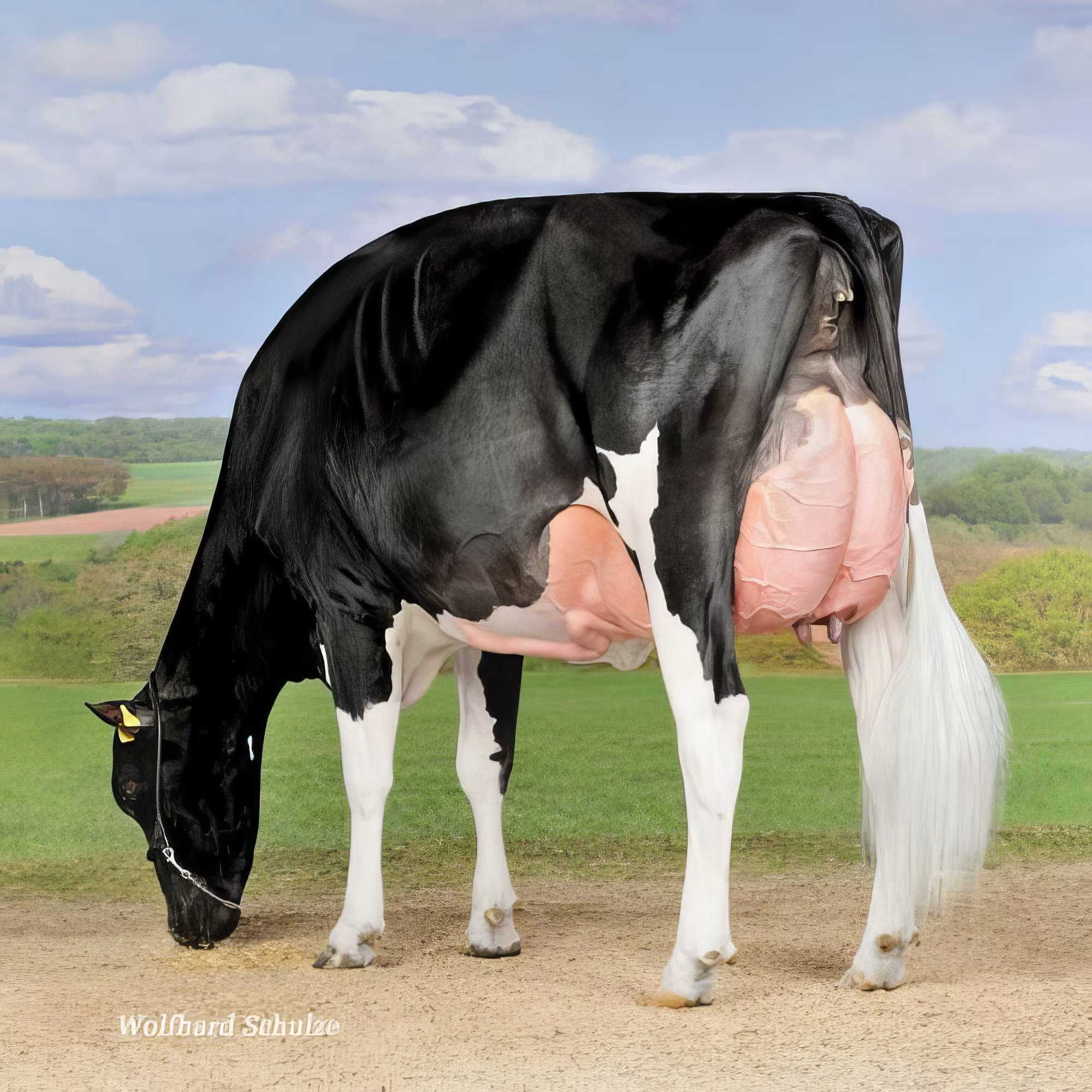
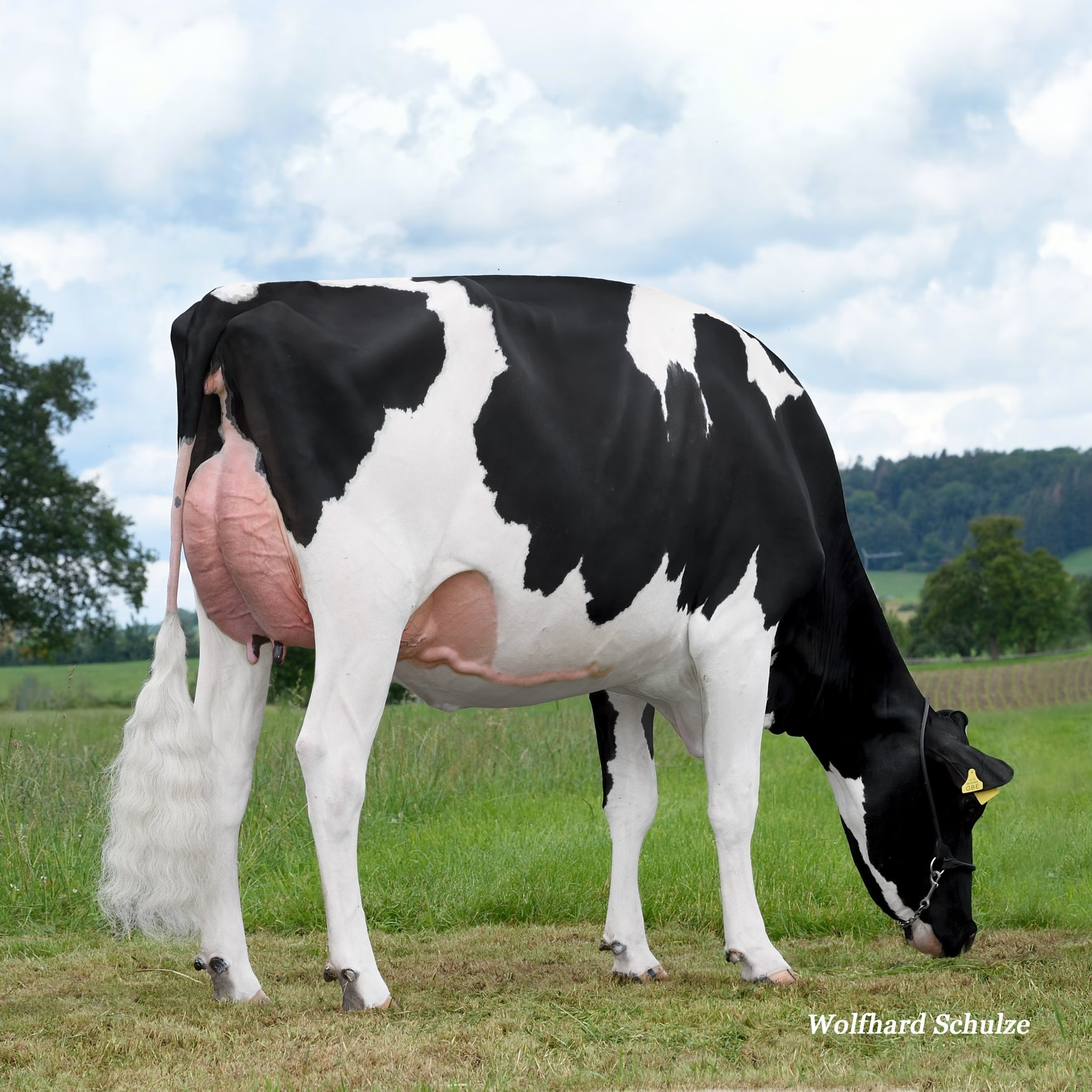
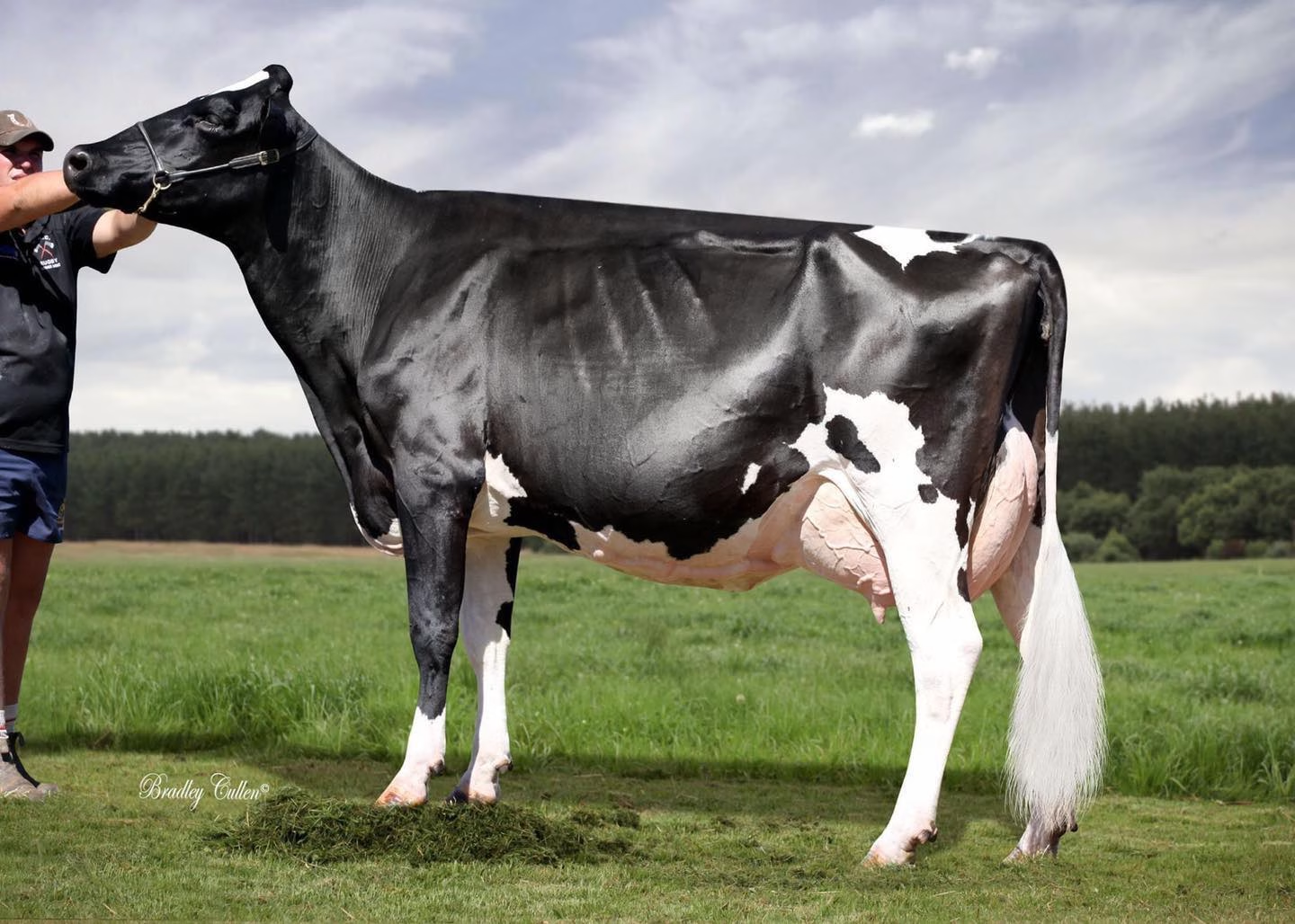
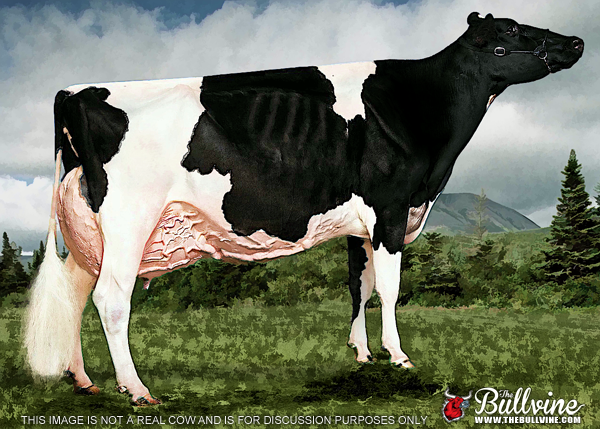
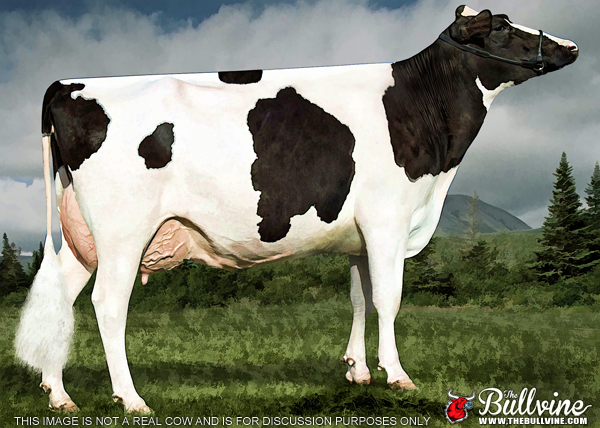
Just found out our 90-lb cow loses $3/day while our 85-lb cow makes $10/day. The difference? 6kg of feed. This changes everything
Executive Summary: What if your highest-producing cows are actually costing you money? Feed efficiency technology deployed across 3,000 dairy farms proves it’s not just possible—it’s common. The numbers are stark: cows producing identical 100-pound milk yields show daily profit swings from -$7 to +$10, based solely on whether they consume 17kg or 23kg of feed. Ryzebol Dairy transformed this insight into action, breeding inefficient cows for beef ($700 premiums) while focusing genetics on the efficient third that actually drives profit. At $75-150K investment returning $470/cow annually, payback takes just 3-5 years. The industry is splitting fast between operations still chasing volume, and those chasing profit—and the profit-chasers are pulling away.
For nearly a century, dairy farming has operated on a simple equation: more milk per cow equals more profit.
But what farmers are discovering through new feed efficiency technology is turning that fundamental assumption on its head. The highest-producing cows in many herds are actually the least profitable—a revelation that’s prompting forward-thinking operations to reimagine their breeding, feeding, and culling strategies completely.
I recently had a fascinating conversation with Clare Alderink, general manager of Ryzebol Dairy’s 3,000-cow operation in Bailey, Michigan. When his farm implemented Afimilk’s feed efficiency estimation system, the data revealed something that challenged everything he thought he knew about his herd.
“There’s no way the service knew these cows were from the same farm, yet all those cows found themselves on the top of the list as the most feed efficient.”
All of his most feed-efficient animals traced back to one group of purchased Holsteins—cows that weren’t his top milk producers but were generating the highest profit per dollar of feed consumed.
The Hidden Economics That Traditional Metrics Miss
You know, what’s really striking when you dig into the economics is just how much variation exists between seemingly similar operations.
The folks at Vita Plus Corporation ran an analysis in 2024 examining 20 Midwestern herds—all shipping roughly 100 pounds of energy-corrected milk per cow daily. What they found should make every dairy farmer pause.
Income over feed cost ranged from less than $7 to greater than $10 per head per day.
Think about that $3.50 daily difference for a moment. On a 1,000-cow operation, we’re talking about over $1.2 million in margin opportunity annually. Money that’s essentially invisible if you’re only tracking milk production.
QUICK TAKE: THE EFFICIENCY GAP
Cow Group
Dry Matter Intake (kg/day)
Difference (kg/day)
Cost Savings per Cow (lactation period)
Efficient
17.30
6
$700
Inefficient
23.30
6
$0
What’s interesting here is that we’re finally understanding the mechanism behind this variation through individual cow measurement. A study published in Frontiers in Genetics in 2024 evaluated genomic markers for residual feed intake in 2,538 US Holstein cows.
The differences they found between efficient and inefficient animals were eye-opening:
First-lactation cows? The most efficient animals consumed 17.30 kg of dry matter daily, while the least efficient needed 23.30 kg
Second-lactation cows showed an even wider gap, with efficient cows eating 20.40 kg versus 27.50 kg for inefficient animals
Now, here’s where it gets interesting for those of us looking at feed bills.
According to University of Wisconsin Extension data, feed costs in the Upper Midwest are averaging around $381 per ton of dry matter. That 6 kg daily difference? It represents roughly $700 per cow per lactation in feed cost variation between animals producing identical milk volumes.
Shane St. Cyr from Adirondack Farms in New York put it perfectly:
“You have the income half of the equation on most dairies. But without that expense equation, you’re really kind of flying blind.”
The Strategic Breeding Revolution: Beef-on-Dairy Meets Feed Efficiency
Perhaps the most dramatic shift I’m seeing—and I’ve been watching this space closely—is how farms are completely rethinking their breeding strategies once they have feed efficiency data in hand.
Instead of the old approach (trying to create replacement heifers from every cow that’ll stand still long enough to breed), operations are now using what’s essentially a three-tier system:
TOP 20-30% (HIGH EFFICIENCY):
Bred with sexed dairy semen
Create the next generation
Keep these genetics forever
MIDDLE 40-50%:
Conventional dairy semen
Backup replacement strategy
Flexible based on herd needs
BOTTOM 20-30% (LOW EFFICIENCY):
Bred exclusively with beef semen
Generate $350-700 premiums per calf
Transform losses into profit centers
The beef-on-dairy market has absolutely exploded in ways that, honestly, nobody saw coming five years ago.
Purina Animal Nutrition surveyed 500 dairy producers in 2024 and found that 80% are now receiving premiums for beef-on-dairy calves. Some crosses are fetching over $1,000 in tight cattle markets, particularly in Texas and the Central Plains.
For Ryzebol Dairy, this strategic allocation based on feed efficiency data has completely transformed how they view their inefficient cows.
“I want that efficient cow to stay in my herd a long, long time,” Alderink explained. “Whereas the other inefficient cows I would want to use to make a beef calf because she’s a lower-value cow.”
What University Research Missed: The Power of Individual Variation
Here’s something that really drives home why on-farm measurement matters more than controlled research trials. Ryzebol’s experience with high oleic soybeans illustrates this perfectly.
The university studies—Penn State ran a trial with 48 Holstein cows in 2024, and Michigan State published similar work—showed that high-oleic soybeans improved energy-corrected milk and components. The improvements were significant, particularly for butterfat. Solid research. Peer-reviewed. Convincing stuff.
So Ryzebol implemented them herd-wide and saw improvements.
But then Alderink did something the research couldn’t do. He used individual cow feed efficiency data to dig deeper.
“Increasing the average doesn’t always tell the whole story. It may have made our best cows really efficient and done little for the low cows.”
What he discovered should make every nutritionist rethink how we apply research findings:
TOP 30% OF COWS:
Excellent milk and component response
Strong returns on premium ingredient cost
Worth every penny
MIDDLE 40%:
Marginal improvement
Barely justified the extra cost
Questionable economics
BOTTOM 30%:
Little to no benefit
Essentially throwing money away
Better off with standard ration
This insight—that research-validated improvements don’t apply equally to all animals—represents a fundamental shift in how we can optimize nutrition economics.
The Technology Landscape: Understanding What’s Real vs. What’s Promised
Let’s talk about what this technology actually does, because there’s plenty of confusion out there.
Afimilk’s feed efficiency service represents a breakthrough in estimating individual cow feed efficiency through collar sensor data. The system tracks eating time and rumination patterns, then combines this with milk production information to generate efficiency values for each animal.
You’re entering weekly dry matter intake data from your feeding software to calibrate the estimates. According to validation studies at UW-Madison, the correlation between the algorithm’s estimates and actual measured intake has proven strong enough for commercial application.
THE NUMBERS THAT MATTER:
Investment
Annual service
Payback period
ROI
Beef premium
Feed savings
$75,000-$150,000 (500 cows)
$10,000-$25,000
3-5 years
$470/cow/year
$350-700/calf
$700/cow/lactation
Early adopters are reporting that the technology can deliver $470 per cow in annual profitability gains through better breeding and culling decisions.
On a 1,000-cow operation? That’s nearly half a million dollars in annual value.
Though I should note—and this is important—that’s assuming farms actually act on the data.
The Adoption Reality: Barriers Beyond Technology
Despite these clear economic benefits, several factors are creating real headwinds for adoption.
CAPITAL CONSTRAINTS We’re talking $75,000-$150,000 for basic sensor systems on 500 cows. Field data from early adopters suggests payback periods of 3-5 years. But that upfront investment? It’s tough when milk prices are volatile.
SYSTEM INTEGRATION Feed efficiency estimation needs to pull data from multiple sources:
Milk meters
Cow ID systems
Feeding software
Health records
According to Progressive Dairy’s 2024 tech adoption survey, approximately 70% of North American dairies have older equipment or mixed vendors. Additional integration costs that nobody mentions in the sales pitch.
PSYCHOLOGICAL RESISTANCE Here’s the barrier nobody wants to talk about. Kent Weisenberger from Vita Plus put it bluntly in a recent podcast:
“The technology works fine. Whether farmers will cull their favorite high-producing cow because she’s inefficient? That’s the real question.”
It’s worth noting that feed efficiency estimation isn’t a silver bullet for every situation. Grazing-based operations or farms with highly variable feed quality from homegrown forages might find the economics less compelling.
Environmental Benefits: The Profit-Sustainability Alignment
What I find particularly interesting about feed efficiency selection is how environmental benefits just naturally emerge from economic optimization.
You’re not trying to save the planet—you’re trying to make money—but the planet benefits anyway.
Research from Wageningen University in 2024 found that methane production varies by approximately 25% within herds due to genetic factors. The correlation between feed efficiency and methane reduction is strongly positive.
Since April 2023, Canada has been implementing national genetic evaluations for methane emissions through Lactanet. They’re projecting 20-30% reductions in breeding alone by 2050.
The Council on Dairy Cattle Breeding calculates that genomic selection for feed efficiency has already delivered $70 per cow per year in additional value—before accounting for any environmental benefits or carbon credits.
The key point? You don’t need expensive additives. Simply breeding from more efficient animals reduces methane automatically at zero additional cost.
Looking Ahead: The Industry Transformation
Here’s where things get really interesting for the bigger picture.
If enough operations start breeding away from high-volume, low-efficiency genetics, it fundamentally challenges what the breeding industry has been selling for decades.
VikingGenetics launched their Feed Efficiency 3.0 program earlier this year, explicitly prioritizing efficiency over raw production. Meanwhile, established players like Semex and Alta have scrambled to launch “sustainable genetics” programs.
The uncomfortable truth? While high producers generally dilute maintenance costs effectively (gross feed efficiency), metabolic efficiency—measured as Residual Feed Intake—is a distinct genetic trait. You can have a high producer that’s metabolically inefficient, or a moderate producer that’s exceptionally efficient at the cellular level.
For 40 years, the breeding industry chose production over efficiency. With feed accounting for 50-75% of operating costs, according to USDA data, the math increasingly favors a more nuanced approach.
THE BULLVINE BOTTOM LINE: Your Monday Morning Action List
IMMEDIATE ACTIONS (THIS WEEK): □ Calculate your current income over feed cost variance between top and bottom cows □ Call your nutritionist—ask if they’ll support data-driven feeding changes □ Visit a farm already using the technology (find one in your area)
EVALUATION PHASE (NEXT 30 DAYS): □ Get quotes from 3 vendors for feed efficiency estimation systems □ Run your herd’s numbers: What’s your potential at $470/cow/year? □ Talk to your banker about financing options (3-5 year payback)
DECISION CHECKPOINT: □ Can you afford to wait while neighbors gain $700/cow/lactation advantage? □ Will you act on uncomfortable data about favorite cows? □ Are you ready to challenge 40 years of production-first thinking?
The technology exists. The economics are proven. The only question: Will you act before your neighbors do?
As Alderink reflects: “I think we are just scratching the surface on all this, but it is taking us down a path where we can really start to look at these things because we have something to measure it.”
That ability to see which cows convert feed efficiently—versus which simply produce milk—represents the difference between optimizing for volume and optimizing for profit.
In today’s margin environment, that distinction increasingly determines which operations thrive and which struggle to survive.
Your move.
Key Takeaways:
The $700 Discovery: Efficient cows (17kg DMI) and inefficient cows (23kg DMI) produce identical milk but differ by $700/lactation in profit—measure to know which you have
Transform Your Breeding: Feed data creates three profit tiers → Top 30% get premium genetics | Bottom 30% produce beef calves ($350-700 each) | Middle 40% flex by needs
Precision Feeding Pays: Individual response data shows premium feed additives only benefit ~30% of cows—saving $200+/cow by removing non-responders from expensive rations
Competitive Clock Ticking: 3,000 early adopters gaining $470/cow annually are building herds 10-15% more efficient by 2030—each month you wait widens the gap
Complete references and supporting documentation are available upon request by contacting the editorial team at editor@thebullvine.com.
Learn More:
The Beef-on-Dairy Wake-Up Call: What Some Farms Are Still Missing – Strategic Analysis: Challenges the lingering “Holstein purity” mindset that holds 20% of dairies back, detailing the exact opportunity cost of delaying genomic selection and why “old-school” breeding is bleeding money in the current market.
5 Technologies That Will Make or Break Your Dairy Farm in 2025 – Innovation Guide: Expands beyond feed efficiency to evaluate five specific 2025 investments—from calf sensors to precision feeding robots—helping you decide which tools deliver genuine ROI versus which are just expensive toys.
The Sunday Read Dairy Professionals Don’t Skip.
Every week, thousands of producers, breeders, and industry insiders open Bullvine Weekly for genetics insights, market shifts, and profit strategies they won’t find anywhere else. One email. Five minutes. Smarter decisions all week.
Plot twist: Dairy farms now produce more beef profit than beef ranches. $1,400/calf vs. their $800. The math is devastating.
EXECUTIVE SUMMARY: Dairy has stumbled into the opportunity of a generation: we’re producing 230 billion pounds of milk while simultaneously filling the void left by beef’s collapse to 1961 lows—effectively owning both markets. Three strategies are generating $600-770K in additional annual revenue for progressive operations: beef-on-dairy genetics transforming worthless bull calves into $1,400 assets; component optimization capturing $84,000 from butterfat premiums; and export positioning, as China and India desperately need our proteins. The proof is compelling—producers investing $70,000 are returning $200,000 in year one, with 60% efficiency. Here’s the urgency: only 28% have moved while premiums are maximum; by 2027, when adoption hits 70%, the window closes. Make no mistake—this isn’t about incremental improvement, it’s about who survives the next decade.
I was reviewing the November USDA reports, and something remarkable jumped out that deserves our attention. The latest WASDE data shows dairy production surging to 230 billion pounds, while beef production drops by 70 million pounds and pork production falls by 80 million pounds. What’s particularly noteworthy is how few producers have fully grasped the implications of this shift.
This development builds on what we’ve been seeing across the industry—not just another typical market cycle, but what appears to be a fundamental restructuring of North American protein production. Several economists I’ve spoken with are describing this as an 18-month window of genuine opportunity, and the more I analyze the data and talk with producers, the clearer the pattern becomes.
The consumption trends align with this narrative. USDA’s Economic Research Service shows Americans consuming record levels of dairy products, reaching historic highs that would have seemed impossible just five years ago. Globally, the milk protein market continues its substantial growth trajectory, with multiple analyses projecting sustained expansion through 2032. This coincides with the beef cow herd dropping to approximately 28 million head—USDA data confirms this represents the lowest level since the early 1960s.
In recent conversations with producers from various regions—Wisconsin cooperatives, California independents, Texas operations—those experiencing the most success share a common trait: they’re adapting now, even if imperfectly, recognizing that this convergence of factors presents opportunities we haven’t encountered in decades.
Beef-on-dairy calf prices have surged from $225 to $1,439 in under three years—a 540% increase—while Holstein bull calves remain virtually worthless at $50. This $1,389 price gap represents the single largest profit opportunity in modern dairy history
The Beef-on-Dairy Revolution: From Liability to Asset
How Forward-Thinking Farms Discovered the Formula
Here’s what’s happening on farms across the country. Producers are telling me they used to essentially give away Holstein bull calves—some mentioned getting as little as five dollars for two calves just a few years back. Today, according to USDA Agricultural Marketing Service data this fall, those same genetics bred to carefully selected beef sires are commanding $1,200 to $1,400 each.
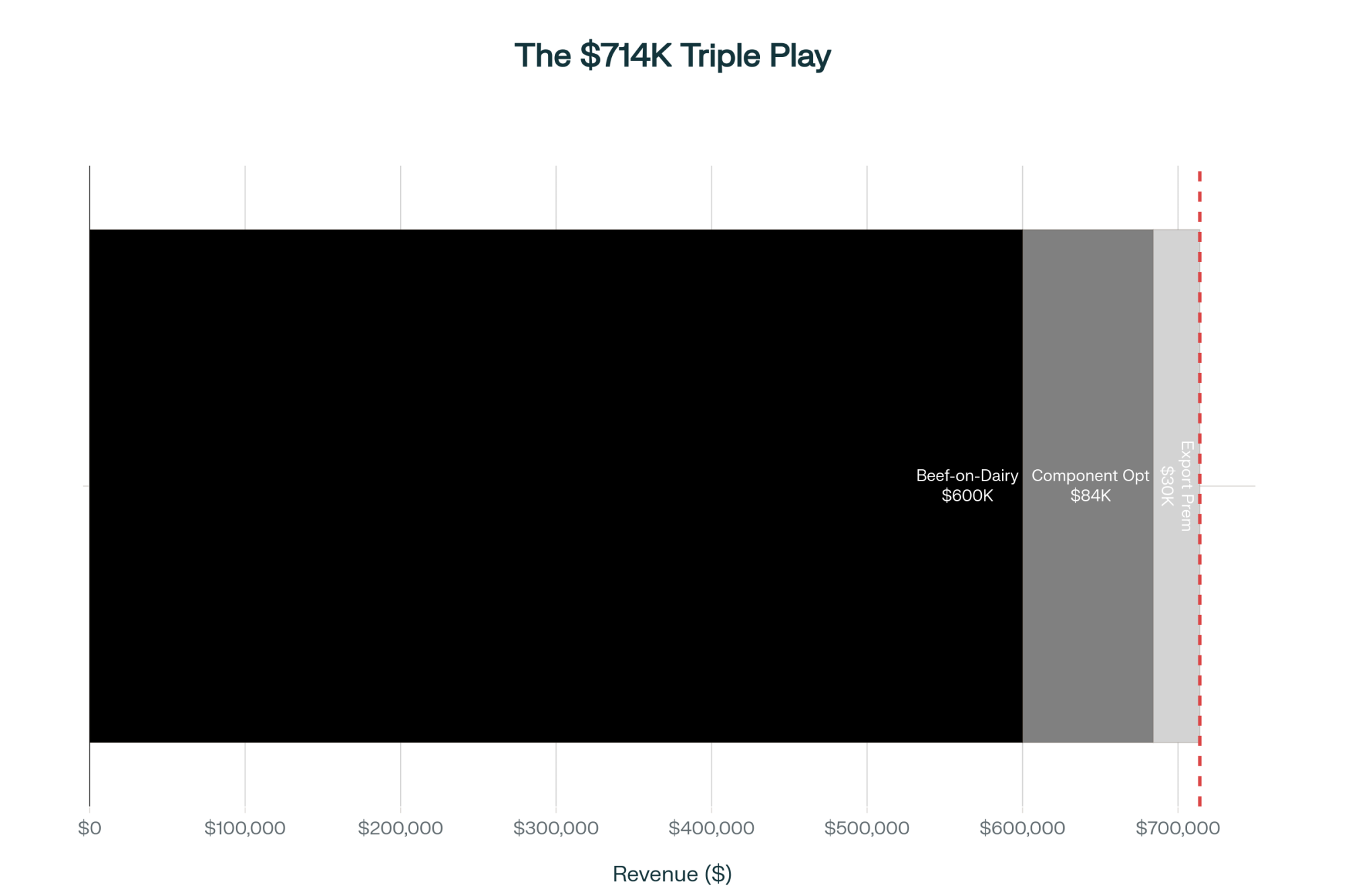
For perspective, a large dairy operation implementing this strategy could potentially generate $600,000 to $770,000 in additional annual revenue, depending on their size and execution. Same facilities, same management team, fundamentally different economics.
What’s particularly interesting—and this has been confirmed through discussions with extension specialists at both Cornell and Wisconsin—is how beef genetics on dairy has evolved beyond simple calf value. It’s reshaping our entire approach to genetic progress and herd optimization.
The Strategic Framework That Makes It Work
The most successful implementations I’ve observed, from California’s Central Valley to New York’s traditional dairy regions, share common elements that go well beyond basic crossbreeding.
Progressive producers are walking me through their approach: genomic testing of the entire herd at approximately forty dollars per animal, creating a precise roadmap of genetic potential. This allows targeted breeding decisions—sexed semen (at a fifteen to twenty-five dollar premium per breeding) on the top 40 to 50 percent of cows, while the remainder are bred to proven beef sires.
The sire companies report Angus and SimAngus dominating these selections, and for good reason—the calving ease and growth characteristics align well with dairy operations. University of Wisconsin research continues to validate this approach, showing consistent economic advantages.
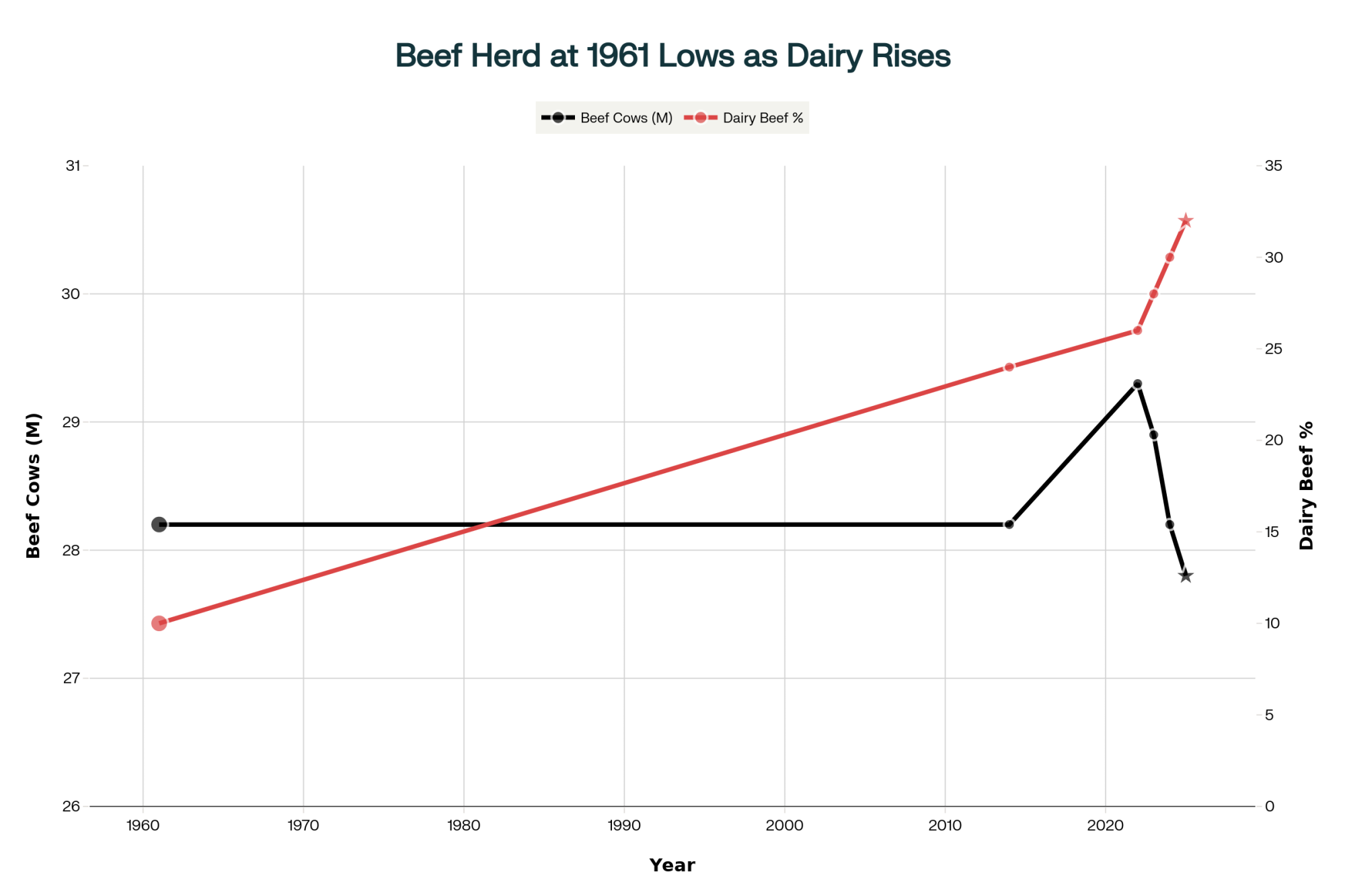
The beef cow herd has crashed to 27.8 million head—matching 1961 levels—while dairy’s contribution to the beef supply has surged from 10% to 32%. Dairy isn’t supplementing beef production anymore; it’s becoming the backbone of the entire protein system
Current industry data indicates dairy contributes approximately 28 percent of the total U.S. calf crop, compared to roughly 24 percent in the mid-1990s. Given beef cow rebuilding timelines—typically five to six years minimum based on historical cattle cycles—this percentage could realistically reach 32 to 35 percent by 2027.
The math is brutal: as adoption rates surge from 28% today to 70% by 2027, beef-cross calf premiums will collapse from $1,400 to $800. Early movers capture maximum value; late adopters fight for scraps. The 18-month window isn’t marketing hype—it’s market mechanics
Component Optimization: The Hidden Value in Every Tank
Why Volume-Based Production Is Becoming Obsolete
Producers in California have been showing me compelling comparisons of their milk checks from 2023 versus the current year. The transformation in how milk is valued has been striking.
When Federal Order changes took effect this summer, the entire pricing dynamic shifted. California pricing announcements show butterfat reaching $2.62 per pound, making component optimization increasingly critical. The economics are straightforward yet powerful—every 0.1 percent increase in butterfat adds approximately thirty-five cents per hundredweight in additional revenue.
Component premiums reward precision nutrition: a 0.2% butterfat improvement from 4.1% to 4.3% delivers $61,320 in additional annual revenue for a mid-sized operation, with zero additional cows or facilities. It’s not glamorous, but it’s pure margin expansion
For a typical herd producing 24,000 pounds daily, improving from 4.1 to 4.3 percent butterfat could translate to roughly $84,000 in additional annual revenue under optimal conditions.
These aren’t just theoretical projections—producers are seeing real improvements in their milk checks.
Progressive dairy operations are stacking three distinct revenue streams—beef-on-dairy genetics ($600K), butterfat optimization ($84K), and export premiums ($30K)—to generate over $714,000 in additional annual revenue without adding a single cow to the milking herd
The Genetic Revolution Driving Component Gains
The April genetic base change data from the Council on Dairy Cattle Breeding revealed something significant—a 45-pound rollback in butterfat Estimated Breeding Values, representing substantial industry-wide genetic progress.
During a recent genetics conference, specialists characterized this as unprecedented selection intensity for components. The practical impact? Producers selecting bulls with plus-50 pounds butterfat and plus-40 pounds protein are creating meaningful competitive advantages over operations using industry-average sires.
Nutritionists working with herds across Wisconsin are sharing their evolving approach: precise rumen pH management, maintaining a pH of 6.0 to 6.2 for optimal fat synthesis, and transitioning from generic bypass fats to targeted palmitic acid supplements at 200 to 250 grams per cow daily. University research from this past spring demonstrates that this can increase butterfat by 0.2 percent within 30 days—seemingly modest yet economically significant across an entire herd.
While the U.S. Trade Representative confirms 135 percent tariffs on many dairy products to China, the underlying trade dynamics tell a more nuanced story. USDA Foreign Agricultural Service data from this fall reveals interesting patterns in China’s import behavior.
According to trade data, imports of sweet whey powder have been growing significantly year over year, even as imports of commodity milk powder have declined. The driver appears to be specialized demand for swine feed ingredients and infant formula components rather than bulk commodities.
Producers shipping to export-oriented processors are reporting premiums of approximately forty cents per hundredweight for high-protein milk that yields better in whey extraction. For a mid-sized operation, that could translate to meaningful additional annual revenue—we’re talking potentially $25,000 to $30,000 for a 600-cow herd.
India’s Protein Crisis Opens New Channels
The opportunity in India may be even more significant, based on USDA attaché reports from New Delhi. Given that 70 to 80 percent of Indians do not meet daily protein requirements, according to the Medical Research Council, the government has launched a revised National Program for Dairy Development with substantial funding for fortification initiatives.
The tariff structure clearly reveals the opportunity. India applies approximately 30 to 60 percent tariffs on fluid milk and cheese imports, yet only around 8 percent on whey protein and 5 percent on lactose—reflecting limited domestic production capacity for these specialized ingredients.
European Market Dynamics
What’s also developing—and this hasn’t received much attention—is the European Union’s shifting protein strategy. With increasing pressure on their livestock sector from environmental regulations, industry reports suggest EU imports of specialized dairy proteins have been growing substantially since 2023. U.S. producers meeting specific sustainability metrics are finding opportunities for premium access to these markets.
The Operations at Risk: Recognizing Warning Signs
Who Faces the Greatest Challenges
We need to acknowledge candidly that not all operations are positioned to capture these opportunities. USDA’s Agricultural Resource Management Survey data from recent years indicates that operations with fewer than 200 cows face average production costs of around $20.93 per hundredweight, compared to $16.50 for operations with more than 1,000 cows.
Producers who’ve recently exited the industry have shared their experiences. When cooperatives announce infrastructure deductions—like the documented four-dollar-per-hundredweight case with Darigold in May—smaller operations can face thousands of dollars in additional monthly costs. For a 150-cow operation, that could mean over $7,000 in additional monthly expenses, creating immediate cash-flow challenges.
Studies suggest the majority of recent dairy exits have involved smaller operations with single-processor relationships and limited value-added strategies. While difficult to discuss, understanding these dynamics is essential for informed decision-making.
Regional Variations Matter
The strategies that succeed in Wisconsin may face challenges in Georgia—regional context matters tremendously. University of Florida dairy specialists have documented that Southeast operations often face production costs per hundredweight that are 2 to 3 dollars higher due to heat-stress management and feed procurement requirements.
Conversely, Texas Panhandle operations benefit from proximity advantages. Producers there report capturing an additional hundred to hundred-fifty dollars per calf on dairy-beef crosses compared to operations shipping longer distances, simply because of their location near multiple beef feedlots.
Technology Adoption Patterns
What’s interesting is how technology adoption varies by operation size. Research suggests operations between 500-1,000 cows often show strong adoption rates for genomic testing and precision feeding—they seem to hit a sweet spot of having adequate resources while maintaining operational flexibility.
Practical Implementation: Learning from Those Who’ve Done It
The Measured Approach That Works
Producers who’ve successfully transitioned share common timelines and approaches. They typically start with genomic testing—investing approximately $40-50 per animal for a comprehensive herd evaluation. This provides the genetic roadmap.
Within a few months, they’re implementing sexed semen on superior genetics. Then comes beef sire selection tailored to their facilities—calving ease often proves critical, especially in older barn configurations. By the following fall, they’re seeing the first beef-cross calves arriving.
“Year one, we captured perhaps 60 to 70 percent of the potential while learning the system. Even at that efficiency level, we generated substantial additional revenue on essentially unchanged feed costs.” — Minnesota dairy producer
Investment Reality Check
Based on producer experiences and consulting firm analyses, here’s the realistic investment framework:
Genomic testing: $40-50 per animal (one-time investment)
Sexed semen: $15-25 premium per breeding above conventional
Nutritionist consultation: $2,000-5,000 monthly, depending on service level
Component feed adjustments: Approximately $0.50 per cow daily
Data management software: $200-500 monthly for quality tracking systems
For a representative mid-sized operation, year-one implementation might total $60,000 to $80,000. However, combining beef-calf premiums with component improvements could potentially generate substantial additional revenue. While results vary, the fundamentals of economics generally favor well-managed operations.
Sustainability Considerations
What’s encouraging for long-term viability is how these strategies align with sustainability goals. The genetic improvements that reduce days to market for beef-cross calves can translate into lower lifetime emissions per pound of protein produced. Several processors are beginning to consider these metrics—something worth monitoring as carbon markets develop.
Looking Ahead: The Questions That Matter
Is This Sustainable or Another Bubble?
In discussions with agricultural economists and market analysts, the consensus suggests solid fundamentals underpin current conditions. Beef cow herd rebuilding faces structural constraints, with projections indicating a return to pre-drought inventory levels at the earliest in 2030. Global protein demand maintains 2 to 3 percent annual growth,according to FAO data—this reflects structural rather than cyclical factors.
However, appropriate caution is warranted. As beef-on-dairy adoption increases—already substantial in certain regions—some premium compression is likely. Markets are already seeing variation, with premiums ranging from $1,000 to $1,400 depending on genetics, location, and buyer relationships.
The indicator I’m monitoring most closely? USDA’s quarterly Cattle on Feed reports tracking dairy replacement heifer inventories, currently at approximately 1.88 million head—the lowest since the late 1970s, according to NASS data. Continued decline through 2026 would suggest structural transformation; recovery above 2.1 million might indicate temporary market dynamics.
What About Farmers Who Can’t or Won’t Change?
I’ve spoken with veteran producers approaching retirement who’ve made the conscious choice to maintain current practices rather than implementing new strategies. With paid-off operations and no succession plans, this approach has validity.
Industry observers suggest a significant portion of current operations may exit within the next decade, regardless of market conditions—due to demographic realities rather than economic failure. For these producers, operational stability may appropriately outweigh optimization opportunities.
Key Takeaways for Your Operation
After extensive data analysis, producer conversations, and expert consultation, several key insights emerge.
The opportunity window exists, but it continues to narrow. Early adopters captured the highest premiums with limited competition. Current implementers are seeing good returns, though not quite at early-adopter levels. By 2027, returns may normalize further, though they will remain profitable for efficient operations.
Geography influences profitability more than scale—surprising but documented. A strategically located, smaller dairy near beef infrastructure can perform well compared to larger operations that face logistical challenges. Understanding your regional advantages and constraints proves essential.
Processor relationships have evolved from customer-vendor to strategic partnerships. If your processor cannot articulate clear export strategies or component valuation methods, opportunities may remain unexploited. Business alignment now matters as much as traditional loyalty considerations.
Experience teaches that perfection often impedes progress. Producers achieving partial efficiency in year one while generating meaningful profits demonstrate that imperfect action often surpasses perfect planning.
Your Next Steps
Looking at actionable items for interested producers:
Request genomic testing information from your breed association or genetics provider—understanding costs and logistics is the first step
Schedule a conversation with your nutritionist about component optimization potential in your current ration
Contact your processor to understand their component pricing structure and export market positioning
Reach out to beef breed associations for information on dairy-appropriate sires and local calf buyer networks
Connect with producers who’ve already made transitions—their practical experience proves invaluable
As we consider the industry landscape this November, dairy isn’t declining—it’s transforming. Producers who recognize the shift from commodity milk production to strategic protein business models position themselves for success. Those awaiting return to historical norms may discover that “normal” has fundamentally changed.
The data supports action. Strategies have proven effective. Progressive neighbors are already implementing changes. The question has evolved from whether to adapt to how rapidly you can position your operation for emerging opportunities.
KEY TAKEAWAYS
The $1,400 Reality Check: Your Holstein bull calves are worth $1,400 to smart producers, $50 to you—the difference is three breeding decisions and genetics testing
Triple Revenue Stream, Same Cows: Beef-on-dairy ($600K) + butterfat optimization ($84K) + export premiums ($30K) = $700K+ additional annual revenue without adding a single cow
The 18-Month Countdown: Today, only 28% have adapted; when it hits 70% by 2027, premiums crash from $1,400 to $800—early movers win, others consolidate
Proven ROI Formula: Invest $70K (genetics + nutrition + consulting) → Return $200K year one, even at 60% efficiency—this isn’t theory, it’s what producers are doing now
Complete references and supporting documentation are available upon request by contacting the editorial team at editor@thebullvine.com.
The $1,350 Replacement Advantage – Analyzes the critical heifer shortage driving replacement costs to over $3,000, providing specific breeding strategies to balance beef premiums against the rising cost of maintaining herd size in a shrinking inventory market.
Every week, thousands of producers, breeders, and industry insiders open Bullvine Weekly for genetics insights, market shifts, and profit strategies they won’t find anywhere else. One email. Five minutes. Smarter decisions all week.
4.2 million on GLP-1 drugs just shifted dairy demand. Yogurt up 3x. Cheese down 7%. Your protein premiums won’t last past 2027.
EXECUTIVE SUMMARY: Right now, the same tanker of milk earns $10,755 more monthly at a cheese plant than a butter plant—that’s the historic $4.78 Class III-IV spread talking. Here’s why it matters: processors invested $10 billion in capacity designed for 3.35% protein milk, but they’re getting 3.25%, forcing them to import protein at $6.50/lb while offering domestic producers $3-5/cwt premiums. Smart farms are already cashing in through amino acid programs (paying back in 60 days), beef-on-dairy breeding ($950 extra per calf), and direct processor contracts. Add 4.2 million new GLP-1 patients needing triple the yogurt, and this protein shortage has legs through 2026. But genetics will catch up by 2027, making this an 18-month window. Your first move: enroll in DMC by December 20th—$7,500 buys up to $50,000 in margin protection when Class III corrects.
Monday morning’s USDA Milk Production Report delivered some surprising news that I think reveals one of the most significant opportunities we’ve seen in years. You know how September production hit 18.99 billion pounds—up 4.2% from last year? Well, our national herd expanded by 235,000 head to reach 9.58 million cows, which is the largest we’ve had since 1993.
And here’s what caught my attention: within 48 hours of that report, December through February Class III contracts on the CME dropped toward $16 flat, yet whey protein concentrate is holding steady at $3.85 per pound according to the latest Dairy Market News.
What I’ve found, analyzing these component value spreads and the processing capacity situation, is that we’re looking at opportunities worth hundreds of millions of dollars across the industry. The farms recognizing these signals over the next year and a half… well, they could find themselves in much stronger positions than those who don’t.
When Component Values Don’t Make Sense Anymore
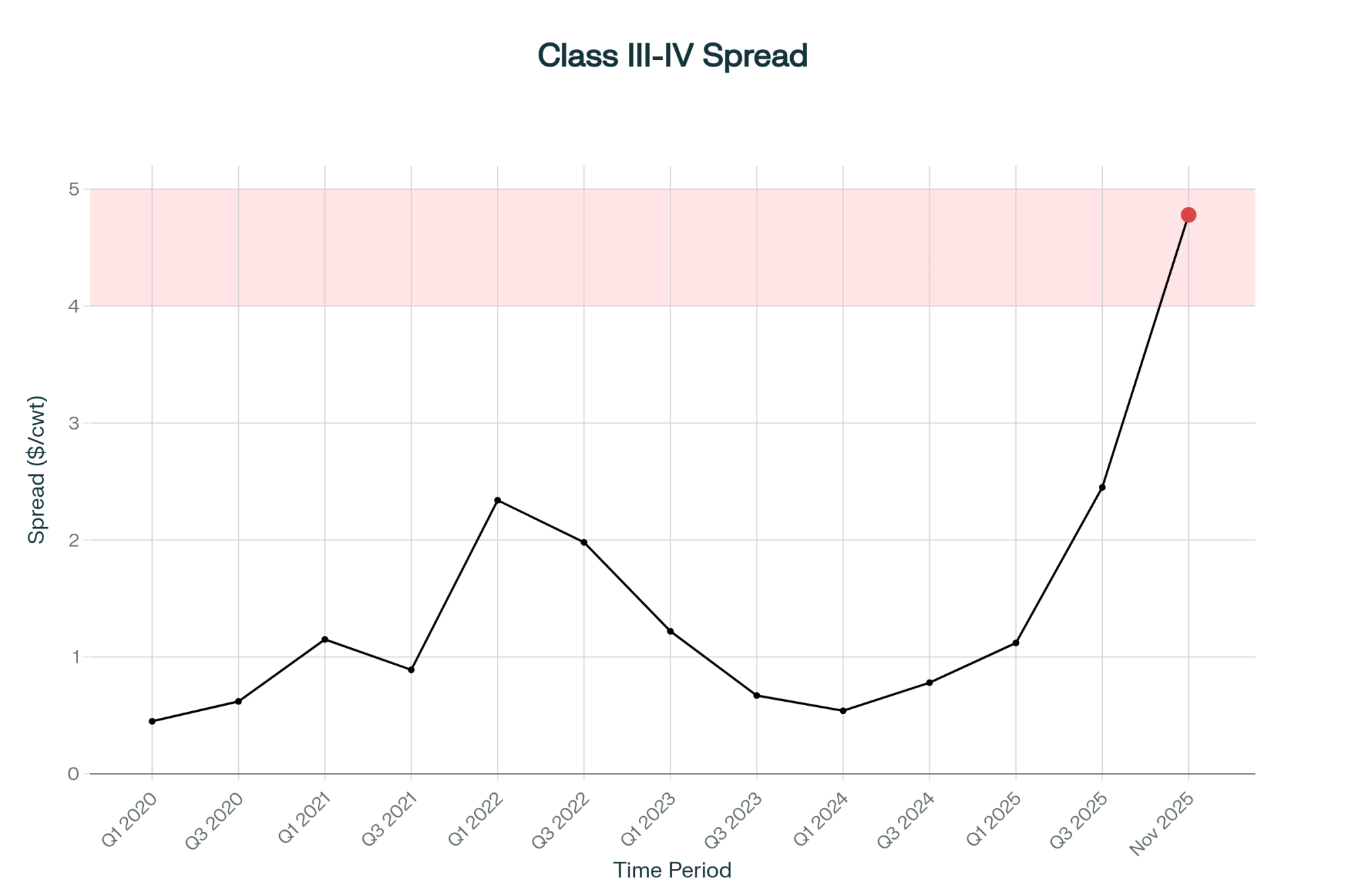
Let me share what’s happening with the Class III-IV spread—it hit $4.78 per hundredweight this week. That’s the widest gap we’ve ever had in Federal Order history, based on the CME futures data from November 13th.
You probably already know this, but for a 1,000-cow operation averaging 75 pounds daily, that’s a $10,755 monthly difference in revenue. Just depends on whether your milk heads to cheese or butter-powder processing. We’re talking real money here.
What’s even more dramatic is the component breakdown. USDA’s weekly report from November 13th shows whey protein concentrate at 34% protein trading at $3.85 per pound. But WPC80 instant? That’s commanding $6.35 per pound, and whey protein isolate reaches $10.70. Meanwhile—and this is what gets me—CME spot butter closed Friday at just $1.58 per pound.
I’ve been around long enough to remember when these components traded pretty much at parity. This protein-to-fat value ratio of about 2.44:1… that’s not your normal market fluctuation. It’s fundamentally different.
Here’s what the dairy market’s showing us right now:
Class III futures sitting at $16.07-16.84/cwt through Q1 2026
Class IV futures stuck in the mid-$14s
That record $4.78/cwt Class III-IV spread
Whey products are at historically high premiums
Butter near multi-year lows, even with strong exports
The Processing Puzzle: Creating Opportunities
What’s interesting here is that between 2023 and 2025, processors committed somewhere around $10-11 billion to new milk processing capacity across the country—the International Dairy Foods Association has been tracking all this. We’re seeing major investments: Leprino Foods and Hilmar Cheese each building facilities to handle 8 million pounds daily, Chobani’s $1.2 billion Rome, NY plant, which they announced in 2023, plus that $650 million ultrafiltered dairy beverage facility Fairlife and Coca-Cola broke ground on in Webster, NY, last year.
Now, these plants were all engineered with specific assumptions about milk composition. The equipment manufacturers—Tetra Pak, GEA, those folks—they design systems expecting milk with 3.8-4.0% butterfat and 3.3-3.5% protein. That’s what everything was sized for.
But what’s actually showing up at the dock? Federal Order test data from September shows milk testing 4.40% butterfat but only 3.25% protein. That 17% deviation from design specs creates all sorts of operational headaches.
You see, cheese yields suffer because the casein networks can’t trap all that excess butterfat during coagulation—there’s been good research on this in the dairy science journals. One Midwest plant manager I spoke with—he couldn’t go on record, company policy—but he mentioned they’re dealing with reprocessing costs running $150,000-200,000 monthly, depending on facility size.
The result? According to USDA Foreign Agricultural Service trade data from July, U.S. imports of skim milk powder jumped 419% year-over-year through the first seven months of 2025. Processors are literally importing milk protein concentrate at $4.50-6.50 per pound—paying premium prices for components that domestic milk isn’t providing in the right concentrations.
The GLP-1 Factor Nobody Saw Coming
Looking at Medicare’s new GLP-1 coverage expansion, they enrolled 4.2 million patients in just two weeks after announcing medication prices would drop from around $1,000 monthly to $245 for Medicare Part D participants. The Centers for Medicare & Medicaid Services released those enrollment numbers on November 14th.
These medications—Ozempic, Wegovy—they dramatically change what people can tolerate eating. Consumer tracking research shows cheese consumption drops around 7% in GLP-1 households, butter falls nearly 6%, but yogurt consumption? It runs three times higher than the typical American rate. These patients, they can’t physically handle high-fat foods the way they used to.
The nutritional requirements are pretty specific, too. Bariatric surgery guidelines recommend patients get 1.0-1.5 grams of protein per kilogram of body weight daily to preserve muscle mass during weight loss. For someone weighing 200 pounds, that’s 91-136 grams of protein every day.
With potentially 6.7 million Medicare beneficiaries eligible, according to Congressional Budget Office projections, we’re looking at roughly 38 million pounds of additional whey protein demand annually. And that’s just from this one demographic.
What’s Working for Farms Right Now
Quick Wins (Next 60 Days)
What I’m seeing with precision amino acid balancing is really encouraging. Dr. Charles Schwab from the University of New Hampshire has been recommending targeting lysine at 7.2-7.5% of metabolizable protein and methionine at 2.4-2.5%. Farms implementing this are seeing 0.10-0.15% protein gains within 60-75 days—that’s based on DHI testing data from operations in Wisconsin and New York.
For your typical 200-cow herd in the Upper Midwest or Northeast, that translates to about $2,618-3,435 monthly in improved component values at current Federal Order prices. Plus, you avoid those Federal Order deductions when the 3.3% protein minimum kicks in on December 1st.
The cost? It costs about $900-1,500 per month for rumen-protected amino acids from suppliers like Kemin, Adisseo, or Evonik. Pretty straightforward return on investment if you ask me.
On the calf side, beef-on-dairy’s generating immediate cash. The Agricultural Marketing Service reported on November 11th that crossbred calves are averaging $1,400 at auction while Holstein bulls bring $350-450. So a 200-cow operation breeding their bottom 35%—that’s 70 cows—captures an additional $70,000 annually.
Several producers I know in Kansas and Texas are forward-selling spring 2026 calves at $1,150-$1,200, with locked prices. That provides working capital for other investments, which is crucial right now.
Strategic Medium-Term Moves
What’s proving interesting is how some farms approach processors directly rather than waiting for co-op negotiations. I know several operations in Vermont and upstate New York that secured $18.50-20.00/cwt contracts for milk testing above 3.35% protein. That’s a $3.00-5.50 premium over standard Federal Order pricing.
The genetics side is evolving quickly, too. Select Sires’ August proof run data shows that farms using sexed semen from A2A2 bulls with strong protein profiles—+0.08 to +0.12%—are well positioned for the late-2027 market when these animals enter production. Bulls like 7HO14158 BRASS and 7HO14229 TAHITI combine A2A2 status with solid protein transmission according to Holstein Association genomic evaluations.
Out in New Mexico, one producer working with a regional yogurt processor mentioned they’re getting similar premiums for consistent 3.4% protein milk. “The processor needs reliability more than volume,” she told me. “They’re willing to pay for it.” That Southwest perspective shows these opportunities aren’t just limited to traditional dairy regions.
The Jersey Question
Now, I realize suggesting Jersey cattle to Holstein producers usually gets some eye rolls. But here’s what successful operations are doing—they’re not converting whole herds. They’re introducing 25-50 Jersey or Jersey-Holstein crosses as test groups.
One Vermont producer I talked with added 40 Jerseys last year and is seeing interesting results. These animals naturally produce 3.8-4.0% protein milk and carry 60-92% A2A2 beta-casein genetics according to Jersey breed association data.
Yes, Jerseys produce 20-25% less volume. But they also eat 25-30% less feed based on university feeding trials. When you run the full economic analysis—feed costs, milk volume, component premiums—several farms report net advantages of $1.90-3.30 per cow daily.
Of course, results vary by region. What works in Vermont might not pencil out in California’s Central Valley or Idaho. You’ve got to run your own numbers.
A central Wisconsin producer running 600 Holsteins told me last week: “I’ve got too much invested in facilities and equipment sized for Holsteins to start mixing in Jerseys. For my operation, focusing on amino acids and genetics within my Holstein herd makes more sense.” And that’s a valid perspective—it really does depend on your specific situation.
Down in Georgia, another producer with 350 cows mentioned they’re seeing entirely different dynamics. “Our heat stress issues mean Jerseys actually perform better than Holsteins during summer months,” she said. “The component premiums plus heat tolerance make them work for us.” Regional differences matter.
Timing the Market: When Windows Close
Beef-on-Dairy Reality Check
Here’s something to watch carefully. Patrick Linnell at CattleFax shared projections at their October outlook conference showing beef-on-dairy calf numbers reaching 5-6 million by 2026. That would be 15% of the entire fed cattle market, up from essentially zero in 2014.
October already gave us a warning when USDA-AMS reported that prices had dropped from $1,400 to $1,204 per head in just a few weeks. Linnell tells me the premium, averaging $1,050 per calf, will likely shrink significantly as supply increases. His advice? Lock forward contracts now at $1,150-1,200 for 2026 calf crops. Once the market gets oversupplied, we could see prices settling at $900-1,050 by late 2026. Still better than Holstein bull prices, but not today’s windfall.
The Heifer Shortage Nobody’s Prepared For
Ben Laine, CoBank’s dairy economist, published some concerning modeling in their August 27th outlook. We’re looking at 796,334 fewer dairy replacement heifers through 2026 before any recovery begins in 2027.
This creates an interesting dynamic in which beef calves might be worth $900-1,050, while replacement heifers cost $3,500-4,000 or more. For a 200-cow operation needing 40 replacements annually, that’s $150,000 for heifers, while your beef calf revenue only brings in $136,500. That’s a $13,500 gap that really squeezes cash flow.
Farms implementing sexed semen programs now can produce their own replacements for $45,000-60,000 in raising costs, according to University of Wisconsin dairy management budgets. Those still buying heifers in 2027? They’ll be paying premium prices that could strain even healthy operations.
Why European Competition Isn’t the Threat
With European butter storage at 94% capacity according to EU Commission data from November, and global production up 3.8% per Rabobank’s Q4 report, you might wonder—why won’t cheap imports flood our market?
Well, USDA’s Foreign Agricultural Service analysis from October shows U.S. dairy tariffs add 10-15% to European MPC landed costs. Container freight from Europe runs $800-1,200 per 20-foot unit—that’s roughly $0.04-0.06 per pound based on the Freightos Baltic Index from November. When you add it up, European MPC lands here at $4.74-5.33 per pound. Not really undercutting domestic prices.
Plus, companies like Fonterra and Arla are pivoting toward Asian markets where they get better prices without tariff hassles. Fonterra announced in August that it’s selling its global consumer business to Lactalis for NZ$4.22 billion ($2.44 billion USD) to focus on B2B ingredients for Asian and Middle Eastern markets.
Though I should mention, one California dairyman running 800 cows pointed out that trade dynamics can shift quickly. What protects us today might not tomorrow. That’s a fair perspective worth monitoring.
Surviving the Next 90 Days
With Class III futures at $16.07-16.84 according to CME closing prices from November 15th, and many operations facing breakeven costs of $13.50-15.00 based on October profitability analysis, margins are tight. Really tight.
Creative Financing That Works
FBN announced in November that they’re offering 0% interest through September 2026 on qualifying purchases—that includes amino acids and nutrition products. No cash upfront, payments due next March after your protein improvements show in milk checks. Farm Credit Canada offers similar programs with terms of 12-18 months, according to its 2025 program guidelines.
For beef-on-dairy, several feedlots are doing interesting things with forward contracts. One Kansas feedlot operator pre-sells 40-50 spring calves at $1,300 with a 50% advance payment. That generates $26,000-$32,500 in January working capital—enough for Jersey purchases or to cover operating expenses during tight months.
Some processors are even offering advances against future protein premiums. I’ve heard of deals—companies prefer not to be named—where they’ll provide $15,000-20,000 upfront against a 24-36 month high-protein supply agreement. The advance recovers through small deductions from premium payments.
Critical December Dates
Here’s what you need on your calendar:
December 1st: Federal Order 3.3% minimum protein requirement takes effect. If you’re testing below that, deductions start immediately.
December 20th: DMC enrollment deadline for 2026 coverage. Some states have earlier deadlines—check with your local FSA office this week.
December 31st: Last day to lock beef-on-dairy forward contracts for Q1 2026 delivery at most feedlots.
The One Decision That Can’t Wait: DMC Enrollment
If you take nothing else from this discussion, please hear this: enroll in Dairy Margin Coverage at $9.50/cwt before December 20th.
At $7,500 for 5 million pounds of Tier 1 coverage, DMC provides crucial protection. Mark Stephenson from the University of Wisconsin found that 13 of the last 15 years delivered positive net benefits at $9.50 coverage. With margins at $5.07-6.34/cwt based on current milk and feed prices, and production growing 4.2%, the odds of needing this protection in early 2026 are pretty high.
Think about it—if margins drop to $9.00/cwt with Class III at $15.50, you’d receive $25,000. Drop to $8.50/cwt? That generates a $50,000 payment according to the DMC calculator. When’s the last time $7,500 bought you that kind of downside protection?
Looking at the Bigger Picture
What we’re seeing here isn’t just another market cycle. Dr. Marin Bozic at the University of Minnesota characterizes these conditions as a significant structural shift—the kind that happens maybe once in a generation. You’ve got mismatched processing capacity, changing consumer preferences accelerated by weight-loss drugs, and genetics still catching up to new realities, all converging at once.
The arbitrage opportunities won’t last forever—that’s just how markets work. Current trajectories suggest beef-on-dairy saturates by mid-2026, protein premiums moderate by 2027, and heifer shortages resolve by 2028. But for producers acting strategically over the next 18-24 months, there’s a real opportunity to strengthen operations.
The November 10th production report showing 4.2% growth might seem like bad news at first glance. But understanding component economics and arbitrage opportunities actually illuminates a path forward. The math is compelling—it’s really about positioning yourself to take advantage.
Key Actions This Week
Looking at everything we’ve discussed, here’s what I’d prioritize:
This Week’s Must-Do List:
Call your FSA office about DMC enrollment—deadline’s December 20th, but varies by state
Get quotes on rumen-protected amino acids and ask about input financing terms
Contact at least three feedlot buyers about spring 2026 calf contracts
Schedule meetings with specialty processors within 50 miles
Planning Through 2026:
Target 3.35-3.40% protein through nutrition management
Consider sexed semen on your top 40% for A2A2 and protein traits
Evaluate a small Jersey trial group if facilities and regional economics align
Keep an eye on protein contract opportunities above $2.50/cwt
Risk Management Priorities:
Watch beef calf forward pricing—below $1,150 means reassessing your breeding program
Monitor heifer prices in your area—over $3,200 signals a serious shortage ahead
Track processor premium offers—lock anything over $2.50/cwt
Review component tests monthly and adjust accordingly
What other producers are telling me is that the farms coming out ahead won’t necessarily have perfect strategies. They’ll be the ones bridging the next 90 days through smart financing and risk management while these component markets sort themselves out.
DMC enrollment alone could make the difference between staying in business and having difficult conversations with your lender come February.
You know, this opportunity window is real, but it won’t stay open indefinitely. The clock’s ticking—DMC enrollment ends December 20th, and every day you wait on strategic decisions is a day your competition might be moving ahead. The question isn’t whether these opportunities exist… it’s whether you’re positioned to capture them.
And that’s something worth thinking about over your next cup of coffee.
KEY TAKEAWAYS
DMC by Dec 20 (Non-Negotiable): $7,500 premium buys $25,000-50,000 protection when Class III corrects—enrollment closes in 33 days
Protein Boost Pays Fast: Amino acids cost $1,200/month, deliver 0.15% protein gain in 60 days, return $3,000+ monthly for 200 cows
Beef-on-Dairy Has 12-Month Window: Today’s $1,400 calves drop to $900-1,050 by late 2026—lock $1,150+ contracts now
Chase Processor Premiums: Direct contracts pay $3-5/cwt for 3.35%+ protein milk, but only through 2027 as capacity fills
The Math Is Clear: $4.78 Class III-IV spread = $10,755/month extra at cheese plants. This historic gap closes within 18-24 months.
Complete references and supporting documentation are available upon request by contacting the editorial team at editor@thebullvine.com.
The GLP-1 Gold Rush: Why Dairy Protein is Pharma’s New Best Friend – Dives deeper into the “GLP-1 Factor,” showing how new consumer health trends are creating a massive protein market and why selecting for specific genetic traits like A2A2 and high protein deviation is the key to capturing premiums.
The Sunday Read Dairy Professionals Don’t Skip.
Every week, thousands of producers, breeders, and industry insiders open Bullvine Weekly for genetics insights, market shifts, and profit strategies they won’t find anywhere else. One email. Five minutes. Smarter decisions all week.
Why Today’s Best Dairies Cull Healthy Cows That Could Produce for Years
Executive Summary: Wisconsin dairyman Eric Grotegut no longer culls cows in crisis—he replaces them strategically on “Monday afternoons,” capturing a $1,350 per head advantage that’s reshaping dairy economics nationwide. Despite cows being genetically capable of living 13 months longer than they did 20 years ago, the math now favors earlier replacement: while a third-lactation cow generates $234 in annual profit, her $350 genetic lag means a younger replacement creates $2,704 in value over three years. This shift, powered by genomic selection tripling genetic progress to $75 yearly, beef-on-dairy premiums of $370-400 per calf, and IVF technology approaching commercial viability, has created an unexpected crisis—heifer inventory down 18% with prices soaring from $1,720 to over $3,000. The optimization technology driving these decisions requires an annual investment of $26,000-78,000, achieving positive ROI only above 400 cows, accelerating consolidation that may reduce U.S. dairy farms from 26,000 to 15,000-18,000 by 2035. With environmental genomics launching in 2026-2027, producers face three paths: scale up to 600+ cows and embrace technology, develop specialized niches like organic or direct marketing, or exit strategically before 2030 while preserving asset value. The longevity paradox reveals a fundamental truth—in modern dairying, keeping cows longer often means keeping the operation shorter.
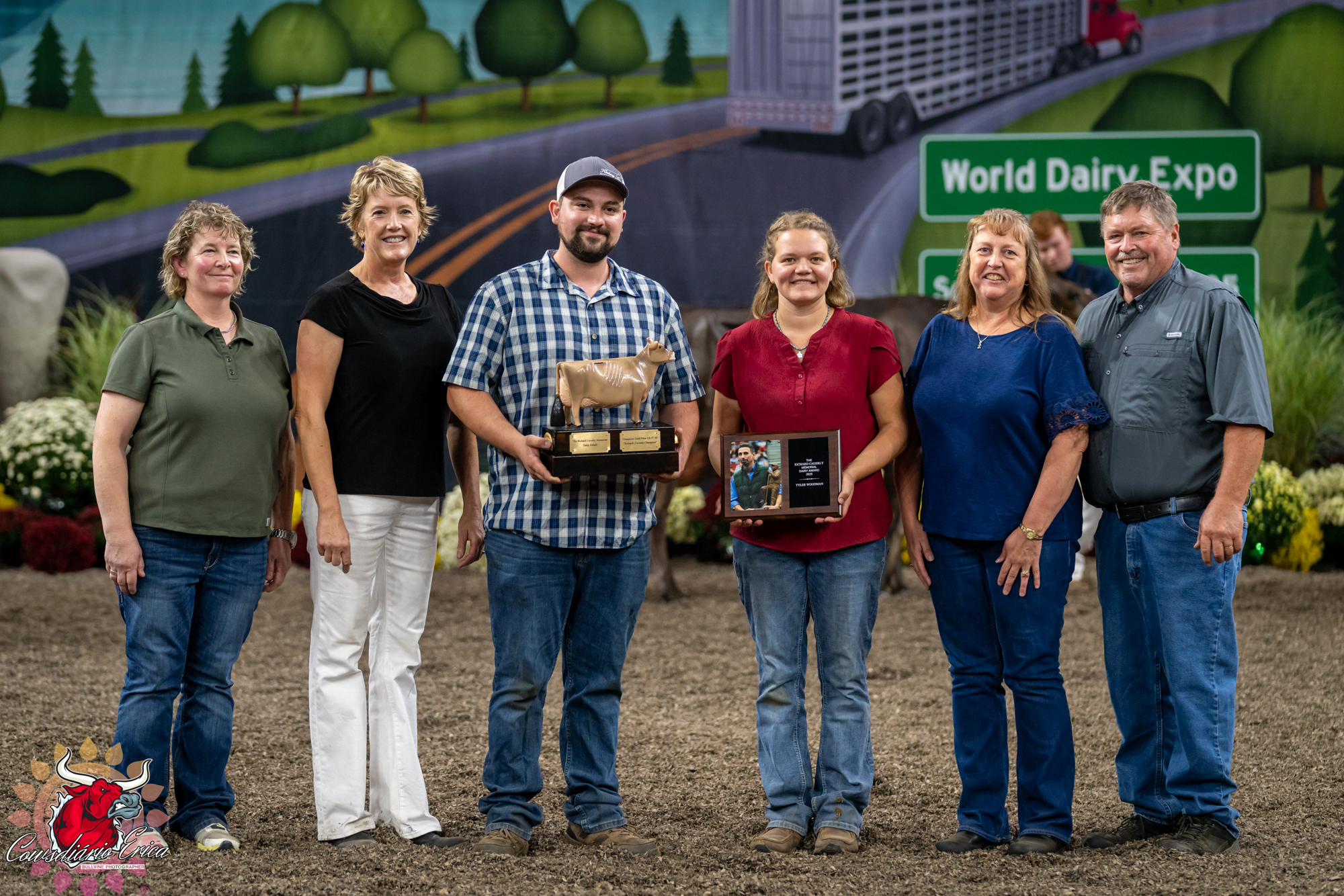
You know, there’s something that doesn’t quite add up when you really think about it. Our cows today are genetically capable of living 13.2 months longer than they did twenty years ago—that’s what the folks at CDCB showed us at the October meeting held during World Dairy Expo, saying we’ve gained about 4.7 months of productive life per decadethrough genetic selection. But here’s what’s interesting: many of the most progressive producers I know are actually replacing them earlier, not later.
Eric Grotegut, who runs 1,400 cows up in Wisconsin, said something at that meeting that really stuck with me.
“15 to 25 years ago, it seemed like I was selling cows every day for a lame cow, a mastitis cow, a pneumonia cow—something all the time. Now most cull cows are on Monday afternoon.”
Monday afternoon. That shift—from emergency culling to what Eric calls “Monday afternoon” strategic replacement—well, that tells you everything about how dairy economics have completely flipped in the last decade or so.
The Math That Changes Everything
So I’ve been digging into what the researchers call the Retention Payoff calculation, or RPO for short. Basically, you’re asking: does keeping this cow generate more profit than replacing her with a younger animal? And what I’ve found is…the numbers are surprisingly clear-cut.
Here’s how it breaks down in a real scenario that many of us face. You’ve got a third-lactation cow producing 68 pounds daily—decent production, no major health issues, right? She’s profitable, generating about $234 in annual profit above her direct costs, according to the Wisconsin Extension models. So, naturally, you’d think, why would anyone replace her?
Component
Mature Cow
Replacement Heifer (3 Years)
Annual Profit Above Costs
$234 (with $350 genetic lag at $75/yearprogress)
Year 1: $97Year 2: $720Year 3: $1,031
Genetic Opportunity Cost
$233/year (USDA analysis)
No lag—current genetics
Net Present Value
$1,353 (over 3 years)
$2,704
Bottom Line Advantage
—
$1,350 more value from replacement
Here’s what’s really happening, though. That cow carries genetics from roughly 4-5 years ago, which means she’s about $350 behind current genetic averages. We’re seeing genetic progress at $75 PTA Net Merit per year now—both CDCB and the Canadian Dairy Network have confirmed this. And that creates what Paul VanRaden at USDA calls a “genetic opportunity cost“—essentially $233 per year in lost value from not having current genetics in that stall.
“We’re not just looking at whether a cow covers her feed costs anymore. We’re evaluating whether she’s the most profitable use of that stall space given all available options.” — Tom Overton, Cornell’s dairy management professor at the Western Dairy Management Conference
Three Technologies Converging to Change Everything
What’s driving this shift isn’t just one breakthrough—and this is what I think many folks miss—it’s three technologies hitting maturity at the same time, each reinforcing the others in ways nobody really predicted five years ago.
Genomic Selection Has Changed the Game Entirely
Since USDA launched official genomic evaluations for Holsteins and Jerseys back in January 2009, we’ve gone from experimental to essential. Today, 95% of U.S. AI bulls are genomically tested, and about 20% of heifer calves get tested within their first week of life, according to CDCB’s latest data.
The impact on genetic progress? Man, it’s been dramatic. Before genomics, we were seeing gains of about $28 PTA Net Merit per year. Now? We’re hitting $75 per year—nearly triple the rate.
The Canadian Dairy Network’s 2024 report shows even more dramatic shifts in specific traits. Production traits have doubled their rate of improvement, but here’s what’s really impressive: tough traits like daughter pregnancy rate have increased threefold to fourfold. That’s…that’s game-changing for our industry.
Kent Weigel at the University of Wisconsin, who’s been tracking this since the beginning, tells producers that “farmers typically cull the bottom 15 to 20% of calves based on genomic testing, but the exact proportion depends on the number of surplus heifer calves available on a given farm.” And he’s right—it’s all about finding that sweet spot for your operation.
Genomics didn’t just speed up progress—it blasted a hole in the old ceiling. Black bars for ‘then,’ red for ‘now.’ That’s a revolution in every stall.
Sexed Semen: Strategic but Still Limited
Now, sexed semen adoption in the U.S. sits at 25-30% according to NAAB statistics. Compare that to the UK, where they’re at 84% based on AHDB’s 2024 report. Why the gap? Well, the challenges are real, as many of you probably know.
Conception rates with sexed semen still run 15-20% below conventional, based on large-scale field data from Alta Genetics and Select Sires. The stuff costs 2.3 times more—you’re looking at $50-64 versus $18-28 for conventional. And during summer heat stress? Forget about it.
Peter Hansen’s group down at the University of Florida has shown that pregnancy rates can drop to 25-30% with sexed semen when the temperature-humidity index exceeds 72. Those of us dealing with hot summers know exactly what that means for breeding programs. July and August can be brutal.
But here’s what’s working: virgin heifers in fall and winter. You can still hit 60% conception rates with good management. Matt Lauber, working with Paul Fricke at Wisconsin, showed that with proper synchronization protocols, the fertility gap narrows to just 8-12%—making sexed semen far more viable in optimized systems. It’s not about using sexed semen everywhere—it’s about using it where it pencils out.
Beef-on-Dairy: The Revenue Stream Nobody Saw Coming
This might be the biggest shift I’ve seen in twenty years of watching this industry. We’ve gone from 200,000 beef-cross dairy calves in 2008 to 2.9 million in 2025, according to Rabobank’s analysis. These calves now represent 12-15% of the U.S. fed cattle supply. Think about that for a minute.
What’s driving it? Money, plain and simple. Day-old beef-cross calves are bringing $370-400 premiums over straight dairy bull calves based on USDA auction reports from Wisconsin and California. For a 1,000-cow operation breeding 60-70% to beef, that’s $222,000 to $280,000 in annual premium revenue that didn’t exist before 2015.
Glenn Klein, who manages 3,600 cows across multiple sites in Wisconsin, explained their approach at the Industry Meeting: “We’ve been doing beef-on-dairy since I think 2018 or 2019. We do it somewhat strategically based on the cow. We look at her genomics, see her past history, and basically decide whether she gets sexed semen or beef semen.“
The Constraint Nobody Planned For
Lowest heifer numbers, record-busting prices. What felt like a quiet trend just crashed into reality, and every buyer’s feeling it.
But here’s where things get complicated—and it’s a perfect example of unintended consequences in our industry. This strategic shift toward beef-on-dairy has created the worst heifer shortage in 20 years.
CoBank’s August 2025 analysis shows national dairy replacement heifer inventory at 3.914 million head. That’s 18% below 2018 levels and the lowest we’ve seen since 2005. They’re projecting inventories will shrink by another 800,000 head before recovering in 2027.
The math is straightforward but painful. With 60-70% of the national herd now bred to beef—that’s per National Association of Animal Breeders data—we’ve essentially cut our replacement pipeline in half.
Heifer prices tell the story: from $1,720 in April 2023 to $3,010 by July 2025, according to USDA market reports. And I’ve seen high-quality Holsteins fetching over $4,000 at auctions in Turlock, California, and New Ulm, Minnesota.
This creates a real paradox, doesn’t it? While the RPO math strongly favors replacement, producers are actually reducing culling rates—down from 32.7% in 2019 to 27.9% in 2024, according to Canadian Dairy Information Centre data, which is the best North American dataset we have. They’re keeping marginal cows they would’ve culled five years ago when heifers cost $1,200.
“We know the economics favor replacement, but you can’t replace what you don’t have. So producers are keeping cows a bit longer than optimal while rebuilding heifer inventory.” — Mike Overton, DVM, who directs technical services at Elanco
IVF: From Seedstock Tool to Commercial Reality
What’s fascinating to me is watching IVF technology move from the seedstock world into commercial dairies. Current pregnancy rates have climbed above 50-55% based on 2024 data from Trans Ova Genetics and other major providers—matching or even beating conventional AI in some cases.
The cost trajectory is what really matters, though. We’re at $350-450 per pregnancy today, but industry projections show that dropping to an estimated $200-300 by 2027-2029 as volumes scale and protocols improve.
Several technical improvements are converging here:
Optimized FSH protocols during the voluntary waiting period increase oocyte yields by 51%—that’s from Wisconsin research
Time-lapse embryo selection with continuous monitoring from fertilization through day 8 improves pregnancy rates by 15-25 percentage points, according to Animal Reproduction Science
Vitrification technology—that ultra-rapid freezing technique—now allows frozen embryos to match fresh transfer success rates
Sean Nicholson, who runs 1,600 cows in Tulare County, California, shared his experience with the California Dairy Magazine: “IVF pregnancy rates markedly exceed what we see with conventional AI, especially during summer when heat stress hammers traditional breeding.” His operation now uses beef IVF embryos for 7% of pregnancies—producing purebred Angus calves from Jersey recipients that bring even higher premiums than regular beef-crosses.
For operations above 800 cows, IVF is starting to pencil out. You can take your elite donors—that top 3-5%—and produce 10-15 pregnancies annually versus one naturally. This creates what I call a three-tier system: elite cows produce all your replacements via IVF, middle-tier cows just make milk, and bottom-tier cows produce beef calves for cash flow.
Success Story: Minnesota’s IVF Innovation
Take a look at how one Minnesota operation is making this work. They’re running 850 cows, started genomic testing everything three years ago, and now use IVF on their top 25 females. Last year, those 25 cows produced 180 pregnancies—enough to cover all their replacement needs plus some to sell. Meanwhile, they bred the rest of the herd to beef and captured an extra $240,000 in calf revenue. That’s…that’s transformative economics.
What’s interesting is they’re not doing this alone—they’ve partnered with two neighboring farms, each running 400-500 cows, to share IVF technician costs and expertise. It’s the kind of cooperative approach that makes advanced technology accessible at smaller scales.
Environmental Pressure: The Next Wave Coming
Here’s something that hasn’t hit most U.S. producers yet, but it’s definitely coming. John Cole at CDCB revealed in October that methane emissions evaluations will launch in 2026-2027, with disease resistance traits following shortly after. When these environmental traits are integrated into selection indices, genetic progress could accelerate from the current $75 per year to an estimated $110-125 per year, depending on the heritability and economic weightings of these new traits. That’s a 47-67% jump.
The University of Wisconsin’s $3.3 million methane project has found heritability of 0.20-0.28 for residual methane traits. That’s moderately to highly heritable, which means we can effectively select for it. They’re using milk spectral data and even fecal microbiome profiles as proxies for rumen emissions, which would make large-scale phenotyping actually feasible.
What’s particularly interesting is looking at what’s already happening in Europe. UK and Irish producers are getting 2-4 pence per liter premiums for verified emission reductions, according to Arla Foods’ 2024 sustainability report. Every dairy bull calf they raise counts against their farm’s carbon intensity score. When similar pressures reach U.S. markets—and trust me, they will—cows with poor environmental genetics might become economically unjustifiable regardless of their production level.
The Reality Check: Who Can Actually Execute This?
Now, all this sophisticated RPO optimization sounds great in theory. But after talking with producers and consultants across the country, I’ve realized there’s a massive gap between what’s theoretically optimal and what most farms can actually implement.
The industry basically breaks into five distinct tiers based on what I’m seeing:
Elite operations—those running 1,000+ cows and producing about 45% of U.S. milk—they’ve got the whole package. Daily milk weights, genomic testing for every calf, activity monitors —the works. Eric Grotegut’s Wisconsin operation falls squarely into this category. They’re truly optimizing these RPO calculations daily.
Progressive commercial farms running 400-1,000 cows —roughly 30% of our milk supply —have most of the tools but use them monthly rather than daily. They’ll perform genomic testing on 60-80% of calves and run activity monitors on breeding-age animals.
Mainstream operations—150-400 cows, about 20% of milk—they operate on rules of thumb. Kristen Metcalf, running 360 cows in Minnesota, described improving health through “implementing more frequent hoof trimming and rubber mats in the barn.” That’s good management, absolutely, but it’s not sophisticated RPO optimization.
Smaller operations with fewer than 150 cows, which produce about 5% of our milk, simply don’t have access to these tools. At $26,000-78,000 annual investment for full RPO infrastructure—genomic testing, monitors, software, consultants—it only achieves positive ROI above 400 cows.
You know, research from ETH Zurich published in the Journal of Dairy Science found that suboptimal culling decisions cost 1.55 Swiss francs per cow monthly. And here’s the kicker: losses from keeping cows too long were three times greater than premature culling losses. But that analysis required dynamic programming models with detailed farm data—exactly what most mid-size operations lack.
Practical Strategies by Farm Size
What farmers are discovering varies dramatically by scale, and honestly, there’s no one-size-fits-all answer here. Let me break down what’s actually working:
For Large Operations (800+ cows):
Go all-in on the technology. Full genomic testing runs about $40-50 per calf through companies like Zoetis or Neogen—that’s $12,000-20,000 annually for a 1,000-cow herd, but it pays back quickly.
Consider IVF programs for your top 3-5% once you’ve identified them genomically. Keep beef-on-dairy at 60-70% to maximize that revenue stream while beef premiums stay high.
And start preparing for environmental compliance now. Methane measurement infrastructure is projected at $50,000-100,000 based on current equipment costs, though specific U.S. regulatory requirements are still being developed.
For Mid-Size Operations (200-600 cows):
Focus on what I call the 80-20 approach—capture 80% of the value with 20% of the complexity:
Definitely genomic test all your heifers and cull the bottom 15-20% before spending $2,900 to raise them
Use your monthly DHIA test to identify cows below 75% of herd average production who are also open past 120 days
Put beef semen on your bottom 50% by either genomic merit or production
The key decision: can you scale to 600+ cows in the next 3-5 years? If not, start developing a niche strategy now
Consider cooperative approaches—some 400-cow operations are exploring shared IVF programs with neighbors to access technology at a viable scale
For Smaller Operations (under 200 cows):
Your economics are fundamentally different, and that’s okay. Focus on:
Reducing involuntary culling through better fresh cow management and hoof health
If you’re in the right location, organic certification can capture $7-12/cwt premiums that offset scale disadvantages
Direct marketing through on-farm stores or agritourism might work
But let’s be honest here—if you don’t have a clear competitive advantage like paid-off land, unique market access, or family labor, start planning your exit strategy for 2027-2030 before technology requirements intensify
Regional Realities Shape These Economics
It’s worth noting that these dynamics play out differently across regions. California’s massive operations—many running 3,000-5,000 cows—they’re already deep into IVF and sophisticated optimization. Meanwhile, Vermont’s pasture-based systems face entirely different economics where land constraints and organic premiums create alternative value equations.
The Upper Midwest sits somewhere in between, with operations like Grotegut’s finding that sweet spot of scale and technology adoption. Texas and New Mexico operations? They’re dealing with water constraints that trump genetic optimization. Each region has its own version of this story, you know?
And seasonally, everything shifts. Summer heat stress in the Southeast makes sexed semen nearly unusable from June through September. Wisconsin producers might have a solid eight-month breeding window, while Arizona dairies face reproductive challenges year-round. These aren’t minor details—they fundamentally change the economics.
The Consolidation Nobody Wants to Talk About
Here’s the uncomfortable truth: we need to face it directly. Every trend we’re seeing—RPO optimization, IVF scaling, beef-on-dairy, environmental genomics—creates economies of scale that favor large operations.
Based on current trajectories and what we saw from 2000-2020—a 54% decline in farm numbers while production increased 16%—I expect we’ll see U.S. dairy farm numbers drop from today’s roughly 26,000 to somewhere between 15,000 and 18,000 by 2035. That’s a 30-40% reduction.
These aren’t just business decisions—they’re family legacies facing new realities. Farms that have been in families for generations are weighing whether the next generation can make the economics work. And that’s…that’s tough to watch.
Technologies providing 10-20% efficiency improvements only achieve positive ROI at 400-800+ cow scale. Operations below these thresholds aren’t “behind”—they’re structurally excluded from the tools that enable optimization.
What to Watch in 2026
Looking ahead, here’s what I’m keeping an eye on:
Methane genomic evaluations launching mid-2026, according to CDCB’s timeline
Heifer inventory beginning recovery late 2026 into early 2027, per CoBank’s projections
IVF costs potentially hitting that $250-300 sweet spot—watch Trans Ova and other providers
Environmental regulations in California are potentially creating templates for other states
The Bottom Line for Your Operation
The longevity paradox—cows that can live longer but shouldn’t economically—it’s just one symptom of a broader transformation. What really matters is understanding where your operation fits in this changing landscape.
If you’re above 400 cows, the math increasingly favors aggressive adoption of advanced technologies and strategic culling based on genomic merit. That $1,350 RPO advantage? It’s real, and it compounds over time.
If you’re between 200-400 cows, you’re at a crossroads. Either develop a clear path to 600+ cows or find a niche that offsets your scale disadvantage. There’s no shame in either choice, but indecision…that’s what’s costly.
If you’re under 200 cows, be realistic about your options. Unless you have structural advantages—debt-free land, unique market access, off-farm income—the economics are working against you. A well-timed exit in 2027-2029 might preserve more value than struggling through 2030-2035.
The dairy industry is experiencing what economist Joseph Schumpeter called “creative destruction“—old systems giving way to new ones that are more efficient but also more capital-intensive. Cows built to last longer are leaving sooner, not because they can’t produce, but because the math increasingly says they shouldn’t.
Understanding and adapting to this reality—rather than fighting it—that’s what’ll determine which operations thrive in the next decade. The genetics exist for cows to live longer. The economics increasingly say they won’t. That’s not a bug in the system—it’s become the system itself.
But you know what? Within these constraints lie opportunities for those willing to adapt, whether through scale, specialization, or strategic partnerships. And there’s innovation happening at every scale—I’m seeing 200-cow operations finding profitable niches, 500-cow farms forming cooperative IVF programs, and yes, larger operations pushing efficiency boundaries we couldn’t imagine five years ago.
The key is making clear-eyed decisions based on your specific circumstances, not industry averages or what your neighbor’s doing. Because at the end of the day, the best strategy is the one that works for your land, your family, and your future.
Key Takeaways:
The $1,350 replacement advantage is real and compounds annually: Even profitable third-lactation cows generate less value than younger replacements due to $75/year genetic progress—making strategic culling more profitable than longevity
Your scale determines your future: Operations need 400+ cows for optimization technology ROI, 600+ for sustainable competition, or a clear niche strategy (organic, direct marketing) to survive below these thresholds
Maximize beef-on-dairy NOW before 2027: With current $370-400 premiums and 60-70% breeding to beef optimal, this revenue stream won’t last—heifer inventory recovery and beef cycle correction will compress margins within 24 months
Technology adoption isn’t optional, it’s existential: Genomic testing ($40-50/calf), IVF (dropping to $200-300), and environmental compliance ($50,000-100,000) will separate survivors from casualties when methane regulations hit in 2026-2027
Decision time is 2026, not 2030: Whether scaling up, specializing, or exiting, waiting means competing against operations that have already optimized—make your strategic choice while you still have options
Complete references and supporting documentation are available upon request by contacting the editorial team at editor@thebullvine.com.
Decide or Decline: 2025 and the Future of Mid-Size Dairies – For producers at the 200-600 cow “crossroads,” this article analyzes the strategic choices. It details the financial realities of scaling up versus the operational pivots required for successful specialization and technology adoption.
Every week, thousands of producers, breeders, and industry insiders open Bullvine Weekly for genetics insights, market shifts, and profit strategies they won’t find anywhere else. One email. Five minutes. Smarter decisions all week.
This 28-year-old started with his grandfather’s teachings and one 4-H calf. Today, Tyler Woodman runs two farms, but more importantly, he’s teaching the next generation what we’ve forgotten.
Jim Strout’s voice cut through the mechanical rhythm of the feed mixer somewhere in the middle of morning chores. Tyler Woodman – the kind of guy who’s been working cattle since before he could drive – wedged his phone against his shoulder, silage dust coating everything, that sweet-sour smell of fermented corn mixing with the October morning fog rolling off the Connecticut River.
“Tyler, you sitting down?” Strout asked.
Woodman laughed. Who sits down when you’re feeding 400 head across two farms before most people’s first alarm goes off?
“I had no idea what was coming,” Woodman recalls, still sounding genuinely surprised months later. Here’s a guy who’d been up since 4:30, checked his Alta NEDAP NOW app while the coffee was brewing, reviewed alerts for both Mapleline’s Jerseys and neighboring Devine Farm’s Holsteins, moved fresh cows, and was halfway through morning feed… and he’s about to learn he’s won the 2025 Richard Caverly Memorial Dairy Award.
The moment that sparked a conversation: Tyler Woodman accepts the 2025 Richard Caverly Memorial Dairy Award at World Dairy Expo. But as the article argues, this isn’t just a feel-good story—it’s a critical look at the future of dairy succession.
Look, I’ll be straight with you – this isn’t just another feel-good story about a young farmer getting recognized. This is about something bigger. According to the latest Census data, we lost 39% of dairy farms between 2017 and 2022, went from 40,336 to just 24,470 operations. Meanwhile, 83.5% of family farms won’t make it to the third generation. Tyler Woodman represents exactly what we’re losing. And that should scare the hell out of every one of us still milking cows.
The Sandy Lineage: When a 4-H Project Becomes a Dynasty
Woodman-Farm MadMax Sandy EX-94 5E: The 13-year-old matriarch who launched Tyler Woodman’s dynasty. This cow, his first 4-H project, proves that true breeding excellence comes from understanding cow families, not just chasing fleeting trends.
Here’s the thing about breeding excellence that nobody wants to admit… it doesn’t happen by accident, and it sure doesn’t happen overnight.
Woodman’s foundation traces back to a cow most people would’ve shipped years ago. Woodman-Farm MadMax Sandy – turning 13 this December, still scoring EX-94 5E, still throwing daughters that make you stop and look twice – came from River-Valley Tri-P Secret. That was Tyler’s first 4-H project back when he was just a kid in New Hampshire trying to figure out why some cows just looked right and others didn’t.
“Sandy has always been special,” Woodman says, and you can hear something in his voice that every real breeder understands. Seven daughters on the ground, three milking daughters all scored excellent, granddaughters selling from Vermont to Wisconsin. You know what this is? This is what happens when you actually understand cow families instead of just chasing whatever bull everyone’s pushing this month.
Proof that a teenager’s vision can outperform industry trends. Woodman-Farm Burdette Victoria Secret EX-94 3E, a daughter of Sandy, is a two-time All-American nominee—the direct result of a mating decision Tyler Woodman made when he was just starting out.
Victoria Secret – one of Sandy’s daughters from a Burdette x MadMax cross that Woodman made when he was barely old enough to understand progeny proofs – was a two-time All-American nominee, most recently scoring EX-94 3E. Let that sink in. A mating made by a teenager is now producing cows that stop traffic at Expo.
The Genomic Revolution Nobody’s Talking About (But Everyone Should Be)
Let me paint you a picture of where we’re at in October 2025…
The industry’s generated $4.28 billion – that’s billion with a B – in cumulative economic impact from genomic testing since 2010. Annual genetic gains jumped from $37 to $85 per cow. That’s a 129% acceleration, folks. And yet… walk into any sale barn from here to California and half the guys there still think genomics is some fancy nonsense for the mega-dairies.
Woodman doesn’t buy into that old-school BS. “I have always been known to use milk bulls on my type cows and type bulls on milk cows,” he explains, like he’s talking about the weather. That breeding strategy sounds backward until you see the results walking around his barn.
Richard Caverly – God rest his soul – understood this before most of us could even spell genomics. He was pushing Ayrshire breeders to embrace testing when everyone else was clutching their paper pedigrees like they were the Ten Commandments. One time, Woodman had tested an animal for sale, and Caverly reached out immediately. Recognized the cow family from some herd in rural New England that had dispersed years earlier. That’s the power of combining old knowledge with new technology.
The April 2025 base change has already taken effect, and yes, it has made every animal look worse on paper, even though they’re genetically superior to what we had five years ago. If you’re not using this data, you’re essentially breeding blind while your neighbors are using night vision goggles.
WOODMAN’S GENOMIC SELECTION CHECKLIST(What He Actually Does, Not Theory)
Test every heifer calf at 2 months – earlier is better, always
Look for +150 Net Merit minimum – anything less goes to beef breeding
Check health traits first, production second – sick cows don’t pay bills
Cross-reference with actual dam performance – genomics lie sometimes
Use outcross bulls on high genomic heifers – heterosis still matters
Keep detailed records on every mating – memory fails, spreadsheets don’t
The Eastern States Revelation
Sometimes the moments that shape us come when we least expect them. For Woodman, it happened in the cattle barn at Eastern States – you know, that old building where the roof leaks every time it rains, but the acoustics are perfect for hearing a good cow bellow.
Picture this: young Tyler, still trying to build his show string, stops to admire some mature Ayrshire milk cows. The cow that caught his eye was a mature Ayrshire that, years later, he’d realize was connected to the legendary Sweet Pepper Black Francesca, a cow Caverly himself had developed. This older guy starts talking to him about the cows, really getting into the details about balance and dairy strength…
That stranger was Richard Caverly. Caverly worked with household names in the industry: Gold Prize, Nadine, Melanie, Delilah, Ashlyn, Victoria, Veronica, and Frannie. Working with his partner Bev, Caverly had developed the famed Sweet Pepper Black Francesca, the two-time Ayrshire Grand Champion at the World Dairy Expo and Eastern States Exposition.
“Breed your cow the way you want your cow to be, not what everyone else thinks they should be,” Caverly told him that day. Sounds simple, right? But in an industry where we’re all chasing the same bulls, the same families, the same trends that some university professor declared important… Caverly was telling a young breeder to trust his gut. Revolutionary stuff, really.
Managing Two Herds While Building Your Own Empire
Since July, Woodman’s mornings have gotten… interesting doesn’t quite cover it.
Managing both Mapleline Farm’s Jerseys – that beautiful spread in Hadley where the river valley creates perfect growing conditions – and Devine Farm’s Holsteins, while maintaining his own Ayrshire program split between Massachusetts and New Hampshire? That’s not a job. That’s three jobs, and he’s crushing all of them before your first cup of coffee gets cold.
Drive down through the Connecticut River Valley early morning, you’ll see the fog lifting off those fertile fields, and there’s Mapleline’s freestall barn lit up like a beacon. The Jerseys are already lined up for milking, their breath creating little clouds in the October air.
His morning routine would break most people. Hell, it would break most of the “farmers” posting sunrise photos on Instagram. 4:30 AM wake-up, immediately check the Alta NEDAP NOW app on his phone – because who needs coffee when you’ve got heat detection alerts pinging at you? The system tracks eating, rumination, and inactive behavior, essentially telling him which cows need attention before they even realize they need it.
“The Ayrshires adjust very well to the commercial setting with the Jerseys,” he notes. “They milk well and look good doing it.”
But here’s what he’s not saying – what most people don’t understand. Integrating specialty breeds into commercial operations requires a level of management skill that perhaps only 5% of dairymen possess. It’s one thing to run straight Holsteins where everything’s standardized. It’s a whole different ballgame optimizing nutrition, breeding, and management across multiple breeds simultaneously.
Oh, and in his “spare time”? He’s doing relief AI work for Alta, helping other farms improve conception rates. Because apparently managing 400+ head across two locations isn’t enough of a challenge. The man’s either crazy or brilliant. Probably both.
Creating the Stars and Stripes Sale: Because Waiting for Opportunity is for Suckers
Memorial Day weekend 2025… everyone remembers that weather. Rain coming sideways, temperature barely cracking 50 degrees, the kind of New England spring that makes you question your life choices.
What could’ve been a disaster for the Stars and Stripes sale in Greenfield turned into something else entirely. But here’s the thing about people like Woodman – they don’t wait for perfect conditions. Never have, never will.
Working with his wife, Toni (a Jersey girl through and through, who knows her way around a show halter better than most), and partners Zach Tarryk and Caitlin Small, they didn’t just organize another cattle sale. They built something bigger. Workshops the night before – actual hands-on teaching about fitting, show prep, and judging. Not some PowerPoint presentation in a stuffy room, but real learning with real cattle.
They specifically recruited youth to lead animals in the sale ring. Put a young person on the sales staff to make actual decisions. You know why that matters? Because most sales treat kids like decoration. Woodman made them participants.
The real “Stars and Stripes” team: Tyler Woodman (far right) and his crew, including wife Toni and their son Kacey (next to Tyler), celebrate success at the 2025 National Summer Ayrshire Spectacular. This moment embodies the collaborative, youth-focused approach that defines their growing enterprise.
“We didn’t quite realize how many miles were driven, how many great cows we saw on the road, and the number of new friendships & connections we gained,” Woodman reflects. Translation: they worked their asses off, and it paid off bigger than anyone expected.
The Livi and Maddy Effect: Why Mentorship Actually Matters
The ultimate return on investment. Livi Russo with the calf that started it all—a relationship built not on a sale, but on a six-hour drive and a commitment to mentoring the next generation. This is the real-world result of Woodman’s belief that people, not just pedigrees, build a sustainable future.
You want to know what real impact looks like? Not Facebook likes or Instagram followers… actual impact? Let me tell you about Livi Russo.
In 2020, in the midst of the COVID-19 pandemic, when everything was sideways, her family reached out looking for a project calf. Most people would’ve just run the credit card and shipped the animal. Woodman? He loads up the trailer, drives the calf up to Northern Vermont himself – a six-hour round trip – and starts a relationship that would transform this kid’s life.
Fast forward to World Dairy Expo 2025, where those iconic colored shavings are popular, often featured in pictures. “One fond memory I have is watching Livi show her first Bred and Owned,” Woodman shares. He and Chris sat in those uncomfortable metal bleachers – you know the ones, where your back hurts after ten minutes – supposedly evaluating the class but really “just being so proud to see her succeed to this level.”
That’s not mentorship. That’s investment in the industry’s actual future.
Then there’s Maddy Poitras. Coming from longtime Jersey breeders – good people, who know their cattle – but she caught the Ayrshire bug working with Woodman. “Maddy has never backed down with any challenge we have thrown at her,” he says with obvious pride.
Here’s what kills me about all this: dairy programs are closing left and right. 4-H participation is dropping every year. FFA chapters can barely field a dairy judging team. And we have people like Woodman volunteering their time – their most valuable resource – to teach kids about topline clipping and breeding decisions. Then we wonder why succession rates are in the toilet?
The Milk Price Reality Check
Let’s discuss what nobody wants to talk about at the co-op meetings…
Class III milk futures for October 2025 are hovering around $16.94/cwt – and that’s if you believe the Chicago Mercantile Exchange knows what it’s doing. Meanwhile, genomic progress is accelerating. Annual genetic gains have more than doubled. But milk prices? They’re not keeping pace with anything except maybe our frustration levels.
According to the USDA’s latest numbers, we’re producing 226.4 billion pounds of milk with 26,290 licensed dairy herds. That’s up from 170.3 billion pounds in 2003, when we had 70,375 herds. Do the math – we’re producing 33% more milk with 63% fewer farms.
You know what Woodman’s response is? Work harder. Work smarter. Manage two farms. Do relief breeding. Organize sales. Mentor kids. Build his own herd on the side.
This is the new reality, whether we like it or not. The days of managing one 60-cow herd and sending the kids to college? Those days are dead and buried. You either scale up, specialize, or get incredibly efficient. Woodman’s doing all three, and he’s 28 years old.
What’s keeping the rest of us from adapting? Pride? Stubbornness? Fear? Pick your poison.
Family First, But Make It Profitable
The partnership that fuels the entire operation. Tyler and his wife, Toni, with their son Kacey and daughter Keegan. Behind every successful dairy is a family that understands the sacrifice and shares the vision for the future.
Behind every successful dairy operation – and I mean actually successful, not just surviving – is usually a spouse who gets it. For Tyler, that’s Toni, and together they’re raising their three-year-old son, Kacey, and one-year-old daughter Keegan, in the barn. Not despite it. In it.
“Kacey’s favorite is pushing cows through the freestall & milking,” Woodman shares. That little boy, barely tall enough to reach the panel switches, already knows the difference between a close-up cow and a fresh cow. While other kids are at daycare learning their ABCs, Kacey’s learning that cows have personalities, that fresh milk tastes nothing like the white water they sell at Stop & Shop, and that real work starts before the sun comes up.
This isn’t a photo op; it’s a succession plan in action. Tyler with his son Kacey and daughter Keegan, proving that the next generation of dairy farmers isn’t raised in a daycare—they’re raised in the tractor cab.
They’re doing something else smart too – hiring college students from local universities. “Some who do not have cattle backgrounds but are willing to learn something new.” You watch these kids discover that they actually love this life and choose to stay in the industry… that’s how you build the future workforce. Not by complaining about “kids these days” at the feed store. By actually teaching them.
While others complain about the next generation, Woodman invests in it. Here, he gives UMass students a real-world lesson in dairy management—actively building the future workforce instead of just waiting for it to show up.
The Philosophy That Changes Everything
“Breed my cow the way I want my cow to be, not what everyone else thinks they should be.”
Caverly’s words, living through Woodman’s work. In an industry obsessed with trends – remember when everyone was chasing +3000 GTPI bulls like they were lottery tickets? – this philosophy is almost rebellious.
But here’s the kicker… it works. Using milk bulls on type cows and type bulls on milk cows sounds like contrarian nonsense until you realize it’s producing cows that excel everywhere. Commercial dairies want different things than show herds. Export markets have different requirements than domestic processors. The cheese plants want components, the fluid guys want volume. One-size-fits-all breeding? That ship has sailed.
The 2025 component revolution proves this. Butterfat and protein are at record highs because genomics finally lets us select for what processors actually pay for. Yet I’d bet half of you reading this are still selecting for volume when the market’s paying for solids. Why? Because that’s what we’ve always done?
What This Really Means for the Industry
Tyler Woodman receiving the Richard Caverly Memorial Dairy Award… it’s not just nice recognition for a hardworking young farmer. It’s a warning shot across the bow.
Here’s a 28-year-old who embodies everything the industry needs: technical expertise married to traditional values, innovation balanced with common sense, and the work ethic to juggle multiple operations while building his own future. He’s not waiting for the industry to hand him opportunities – he’s creating them from scratch.
Meanwhile, according to the 2022 Census of Agriculture, dairy farms have decreased to 24,470 from 40,336 just five years earlier. That’s a 39% drop. The consolidation train isn’t slowing down – if anything, it’s accelerating.
But Woodman’s story shows there’s another path. You don’t have to be the biggest. You don’t have to have the newest parlor or the fanciest robot. You do have to be smart about genetics, ruthlessly efficient in operations, and actually invested in the next generation. Not just talking about it at Farm Bureau meetings. Actually doing it.
The Morning After
The morning after receiving the award at World Dairy Expo – standing on those colored shavings while the crowd watched – Woodman was exactly where you’d expect. 4:30 AM, checking his NEDAP reports, moving fresh cows, planning breedings. The purple banner was already old news. The work continues.
“Being humble and supportive of your peers in the industry is what matters most,” he says, and coming from someone with nearly 20 All-American nominations means something. “Purple banners and blue ribbons are always great, but to receive them with hard work, perseverance, and dedication behind it means even more.”
That wooden carving of Glenamore Gold Prize EX-97-6E – Caverly’s favorite cow – sits on a shelf somewhere in Woodman’s office. But the real legacy? It’s in the youth he mentors. The genetic progress he’s driving. The example he sets every damn morning at 4:30.
Because here’s the truth nobody wants to say out loud at the co-op meetings or the breed association conventions: if we had more Tyler Woodmans – people willing to work multiple operations, embrace technology without abandoning tradition, mentor youth without expecting anything in return – we wouldn’t be talking about an 83.5% failure rate for generational transfers.
We’d be talking about the revival of American dairy farming.
The question is: will you be part of the problem or part of the solution?
Because while you’re thinking about it, scrolling through your phone, complaining about milk prices at the coffee shop… Tyler Woodman’s already three hours into his day, making decisions that’ll impact the industry for generations. Teaching a kid how to fit a heifer. Running genomics on next year’s calf crop. Building something that’ll outlast us all.
And that phone that rang in the middle of morning chores? It wasn’t just announcing an award winner.
It was announcing what the future of dairy farming looks like – if we’re smart enough to pay attention.
Key Takeaways:
The 4:30 AM Advantage: Woodman manages Mapleline’s Jerseys AND Devine’s Holsteins before your alarm goes off – his NEDAP app alerts replaced morning coffee because “sick cows don’t wait for convenience”
Breed YOUR Way, Not THE Way: His contrarian formula (milk bulls on type cows, type bulls on milk cows) created Victoria Secret EX-94 from a teenage mating decision – proving Caverly’s mantra: “Breed for your barn, not the catalog”
Sandy’s 13-Year Lesson: His first 4-H project still scores EX-94 5E with seven daughters, three milking – while you culled her genetics chasing the latest fad bull that’s already forgotten
Youth ROI Beats Genomics: Woodman drives 6 hours to deliver one calf because “Livi showing at World Dairy Expo matters more than any breeding decision I’ll ever make”
The Genomic Checklist That Actually Works: Test at 2 months, cull under +150 NM to beef, use outcross bulls on high genomics – “spreadsheets don’t lie, memories do”
Executive Summary:
Tyler Woodman proves your dairy’s biggest threat isn’t milk prices or feed costs—it’s your refusal to adapt. At 28, this Caverly Award winner runs 400 cows across two farms, starting his day at 4:30 AM with NEDAP alerts, while your kids can’t even spell “succession.” His contrarian breeding strategy (milk bulls on type cows) created 20 All-Americans from a single 4-H project, exposing why genomic trends are killing your herd’s profitability. While 83.5% of farms die by generation three, Woodman drives 6 hours to mentor youth because he knows something you don’t: teaching one kid today saves ten farms tomorrow. His morning routine will shame you, his breeding philosophy will anger you, and his results will force you to admit everything you believe about dairy succession is wrong. This isn’t inspiration porn—it’s the blueprint for the only dairy model that survives 2030.
Learn More:
Boost Your Dairy Profits: Proven Breeding Strategies Every Farmer Must Know – This guide provides actionable breeding strategies that move beyond theory. It reveals methods for integrating beef and sexed semen to maximize calf value and ensure herd replacements, directly complementing Woodman’s focus on practical, profitable genetic progress.
The Robot Revolution: Transforming Organic Dairy Farms with Smart Tech in 2025 – While the main article mentions herd monitoring apps, this piece explores the next frontier of automation. It demonstrates how robotic milking and AI-driven feeding systems can increase efficiency and cow welfare, offering a look at the technologies shaping modern dairies.
The Sunday Read Dairy Professionals Don’t Skip.
Every week, thousands of producers, breeders, and industry insiders open Bullvine Weekly for genetics insights, market shifts, and profit strategies they won’t find anywhere else. One email. Five minutes. Smarter decisions all week.
Overdrive son crushes it while former leaders take a hit in August evaluations
Executive Summary: Italy just dropped their August genetic evaluations and Peak Spellbound-ET jumped to #1 with his impressive +1.07% fat and +0.54% protein, while former top dog Peak Vindicate-ET fell 20 points to second place. But here’s the kicker – Cookiecutter Hadley-ET went from #2 to #10, losing 102 points in one round. Meanwhile, the proven bulls? Rock steady. ZFZ Crisalis RF actually gained 29 points and strengthened his #1 proven position with that killer +1.95 udder composite. The Italians are obsessed with cheese production profits (their ICS-PR€ index), and guess what – the bulls ranking highest on both genomic and economic merit are the ones staying power. You want my advice? Start weighting proven performance heavier in your breeding decisions, especially with feed costs still brutal in 2025.
The August Italian genetic evaluations just dropped, and honestly? The reshuffling is pretty dramatic. Peak Spellbound-ET came out of nowhere to grab the #1 spot among international genomic bulls with a gPFT of 5458. This Overdrive son is putting up some serious numbers – +1.07% fat and +0.54% protein – which explains why Italian cheesemakers are paying attention.
But here’s what’s really catching my eye: while the genomic bulls are bouncing around like ping-pong balls, the proven bulls are sitting pretty with much more stability. Makes you wonder if we’re getting a little too excited about these genomic predictions, doesn’t it?
The Genomic Roller Coaster Continues
Rank
Bull Name
Sire
gPFT
ICS-PR€
Milk kg
Fat %
Protein %
AI Center
1
Peak Spellbound-ET
Overdrive
5458
1290
940
1.07
0.54
Novagen S.R.L.
2
Peak Vindicate-ET
Samson
5445
1385
1628
0.72
0.35
Novagen S.R.L.
3
Danhof Calculus-ET
Owen
5438
1258
1654
0.57
0.32
Semex Italia SRL
4
Smartie P-ET
Sega P RDC
5417
1398
1541
0.22
0.37
Novagen S.R.L.
5
Delta Morgan
Gladius
5394
1171
1810
0.21
0.31
Novagen S.R.L.
6
Peak Altasafezone-ET
Overdrive
5382
1501
1220
0.73
0.43
Alta Italia – MI
7
Peak Powerhouse-ET
Wheelhouse
5346
1240
1792
0.65
0.36
Novagen S.R.L.
8
Progenesis Vivify-ET
Royalflush
5334
1368
1258
0.42
0.25
Semex Italia SRL
9
OCD Rad Lightsaber-ET
Rad
5333
1244
2056
0.59
0.21
ST Gen Group
10
Cookiecutter Hadley-ET
Pattern
5332
1131
1657
0.83
0.27
Semex Italia SRL
Top 10 Foreign Genomic Bulls – August 2025
Peak Vindicate-ET, who was sitting pretty at #1 back in April, dropped to second place. Not a disaster by any means – he’s still at 5445 gPFT – but that’s a 20-point slide. This Samson son from Zemini bloodlines is still delivering solid milk production at 1628 kg with an impressive ICS-PR€ of 1385. The Italians love that cheese production index, and for good reason.
The real shocker? Cookiecutter Hadley-ET absolutely tanked from #2 in April all the way down to #10 in August. We’re talking about a 102-point drop here – from 5434 down to 5332. That’s the kind of volatility that should make any breeder nervous about putting all their eggs in one genomic basket.
What strikes me about these swings is how they contrast with the proven bull rankings. ZFZ Crisalis RF actually gained 29 points and strengthened his hold on the #1 proven spot. This Gywer son is showing what real daughter data looks like – +1.95 udder composite and solid type traits that actually hold up over time.
Rank
Bull Name
Sire
gPFT
ICS-PR€
Milk kg
Fat %
Protein %
AI Center
1
ZFZ Crisalis RF
Gywer
5169
921
1276
0.17
0.19
Intermizoo – PD
2
Idevra Royal Inseme Carlomagno
Bramante
5062
858
1539
0.07
0.27
Inseme
3
Isolabella Distefano ET
Hothand
4948
872
638
0.22
0.24
Italian Genetics
4
KNO Ecuador P
Hothand
4943
839
1374
0.05
0.22
Intermizoo – PD
5
K&L RM Inseme Barone Rosso R
Santorius
4844
354
992
0.09
0.25
Italian Genetics
6
All.Nure Wendat
Einstein
4837
919
1206
0.18
0.24
Intermizoo – PD
7
Smirne
Supreme
4832
867
643
0.16
0.25
Intermizoo – PD
8
SFH Redshift R
Gywer
4815
847
1545
-0.08
0.05
Intermizoo – PD
9
Wilder Holocron
Aristocrat
4812
623
817
0.23
0.33
Intermizoo – PD
10
Dotti Dorando
Letsgo
4780
895
585
0.13
0.24
Intermizoo – PD
Top 10 Italian Proven Bulls – August 2025
The Overdrive Factor
Peak Spellbound’s rise to the top signals something interesting happening with the Overdrive bloodline in Italian programs. His ICS-PR€ of 1290 puts him right in the sweet spot for Italian dairy operations focused on cheese production. When you’re dealing with Parmigiano-Reggiano and Gorgonzola, those component percentages matter more than raw volume.
Peak Altasafezone-ET, another Overdrive son sitting at #6 with 5382 gPFT, is showing similar strengths. The economic merit on that bull is even stronger – ICS-PR€ of 1501. That’s the kind of number that gets Italian producers’ attention, especially with feed costs still brutal in 2025.
The thing about Overdrive genetics… they’re delivering this combination of components and economics that works really well for the Italian market. But I keep coming back to the volatility issue. These genomic predictions are jumping around based on relatively small daughter groups, while the proven bulls with thousands of daughters are showing much more consistency.
Proven Performance Tells a Different Story
While genomic bulls are doing their volatility dance, the proven rankings tell a more stable story. ZFZ Crisalis RF moved from 5140 to 5169 gPFT between April and August. That’s real improvement based on actual daughters in real herds.
Idevra Royal Inseme Carlomagno held steady at #2 with only a 3-point drop to 5062. This Bramante son continues putting up solid milk production numbers – 1539 kg – with the kind of consistency you want to see from proven genetics.
What’s particularly noteworthy is Isolabella Distefano ET jumping 43 points to secure #3 at 4948 gPFT. This Hothand son is showing exceptional type traits with a +2.93 udder composite. Those are the kind of numbers that translate to longevity in commercial herds.
The Economics Tell the Real Story
Here’s what I find fascinating about the Italian system – they’re putting serious weight on economic merit through their ICS-PR€ index. Smartie P-ET leads all bulls with matching IES€ and ICS-PR€ values of 1398. That kind of balance between total merit and cheese production profit is exactly what Italian operations need.
The proven bulls average around 800-900 ICS-PR€, while the top genomic bulls are pushing 1200-1400. Either the genomic predictions are overly optimistic, or we’re seeing some real genetic progress. Given the volatility we’re witnessing, I’m leaning toward the former.
Bloodline Diversification Continues
Owen, Samson, and Overdrive sons are all making strong showings in the top rankings. Danhof Calculus-ET and Progenesis Pellegrino, both Owen sons, are performing particularly well in milk production traits. The maternal grandsire diversity is providing some balance to these genetic packages, which is encouraging.
But here’s the thing – we’re seeing the same sire lines dominating across multiple countries. That concentration should make us nervous about long-term genetic diversity, especially when genomic predictions are driving so much of the selection pressure.
What This Means for Your Program
If you’re looking at these Italian evaluations for breeding decisions, here’s my take: Weight the proven performance much more heavily than these genomic predictions. Peak Spellbound might be #1 today, but will he still be there in December? The 102-point drop for Cookiecutter Hadley suggests probably not.
The proven bulls like ZFZ Crisalis RF are showing the kind of consistency that translates to profitable daughters. When you’re dealing with real farms, real feed costs, and real milk prices, that stability matters more than chasing the latest genomic superstar.
For Italian operations specifically, those ICS-PR€ numbers are critical. Don’t get distracted by flashy gPFT scores if the economic merit isn’t there. Cheese production profitability is what pays the bills, especially in today’s economic environment.
The volatility we’re seeing in these genomic rankings should be a wake-up call. We’re making multi-generational breeding decisions based on predictions that can swing 100+ points in a single evaluation. That’s not the foundation for sustainable genetic progress – it’s speculation.
Focus on proven performance, diversify your genetics, and remember that consistency often beats peak performance when you’re building a sustainable dairy operation.
Editorial Note: Following publication, ANAFIBJ Technical Coordinator Maurizio Marusi provided important statistical context regarding the evaluation changes highlighted in this article. Key technical clarifications include:
The correlation between April and August genomic evaluations was 99%, indicating high consistency in the underlying genetic predictions– The standard deviation of the genomic gPFT index is 700 points, meaning the 100-point changes discussed represent approximately 1/7 of a standard deviation – well within normal statistical expectations for genomic evaluations– The differential between genomic and proven bull averages in Italy (TOP 20 genomic: 1108-1325 ICS-PR vs. TOP 20 proven: 827-1067 ICS-PR) is comparable to similar differentials seen in other international systems, including the United States– Ranking changes of 8 positions with minimal genetic value differences should be interpreted within the context of 75% reliability levels and the addition of competitive new bulls to the genomic pool
These statistical insights provide important context for interpreting genomic evaluation movements and underscore the importance of understanding the technical framework underlying these genetic predictions. We appreciate ANAFIBJ’s commitment to transparency and technical accuracy in their evaluation system.
Think chasing top TPI is pure profit? Your pocketbook might be tanking from inbreeding you can’t see.
A sentiment echoing from industry leaders around the world is that the genetic diversity challenge is about to shift from crucial to absolutely critical. What we’re seeing with inbreeding today is just the tip of the iceberg — this is poised to become a major industry crisis if we don’t get ahead of it now.
You know what keeps coming back to me during all these dairy chats I’ve been having lately? It’s how much time we spend chasing the highest genomic indexes and fancy TPI numbers, but we hardly ever dig into what’s lurking beneath those shiny scores — the risk of losing genetic diversity and quietly bleeding cash without even realizing it.
Just last month, I was up in upstate New York, walking through a solid 2,500-cow operation. The owner was beaming, boasting about his herd’s average TPI, which had hit 2,800. Great numbers, right? But here’s the thing… behind those glittering stats, the genetic base looked dangerously narrow. That’s when our conversation flipped — from celebrating elite genetics to facing the looming threat of a shrinking gene pool.
And honestly? It got uncomfortable real quick.
The Math That Should Keep You Awake at Night
Let’s talk dollars and cents — those losses you actually feel in your wallet. Every 1% uptick in a cow’s inbreeding coefficient can cost you around $22 to $24 in lifetime profit. That’s not some theoretical number buried in research papers; that’s real money walking right out your barn door.
Economic impact of inbreeding depression showing cumulative losses per cow based on inbreeding coefficient levels
However, here’s the kicker that really makes me sit up: a 2023 Italian study suggested that the real damage might be 40% worse than previous estimates indicated. Put simply, where pedigree-based calculations said you’d lose 44 kg of milk per 1% inbreeding increase, genomic data showed a 61 kg drop. Ouch.
Comparison of milk production losses calculated using pedigree-based versus genomic-based inbreeding assessments
With milk prices hovering near $18.93 a hundredweight and labor costs pushing $18 an hour, those losses aren’t small potatoes. They add up fast, especially when you multiply them across your entire herd.
Have you actually calculated your operation’s inbreeding exposure? Most producers I know haven’t. And I get why — it’s not exactly the sexy topic your AI rep brings up during sire selection meetings.
Economic Impact of Inbreeding on Dairy Cattle Showing Milk Yield and Profit Loss over Inbreeding Level (1-15%)
When “Elite” Becomes the Problem, Nobody Wants to Talk About
The unspoken consensus among many industry geneticists is that our most powerful tool for genetic advancement has become a double-edged sword. While genomic selection has driven incredible progress, it has also accelerated inbreeding at an unprecedented pace, creating a genetic bottleneck that threatens the health and productivity of our dairy herds.
“Our most powerful tool for genetic advancement has become a double-edged sword.”
That’s the paradox that’s reshaping everything. The numbers back this up. According to Council on Dairy Cattle Breeding data, genetic concentration in North American AI programs reached concerning levels by 2017, when just a handful of elite sires were responsible for producing the majority of young bulls entering AI programs globally. When you multiply that concentration across millions of breeding decisions… well, you get the picture.
The genetic bottleneck becomes inevitable.
Trend showing increasing inbreeding levels in Holstein cattle from 2000-2025, comparing pedigree-based versus genomic-based measurements
Enter the “Elite Outcross” Revolution
So what’s the fix? This is where things get interesting…
Once, outcrossing had a bad reputation — people feared it would dilute their prized bloodlines. Random mating to genetically distant but inferior animals? Yeah, that would set any breeding program back.
But now? It’s precision science, leveraging genomic data to make calculated, surgical strikes, not wild gambles.
Here’s something that’s caught my attention lately — many industry insiders from companies like Select Sires and ABS are moving away from the term “outcrossing” altogether. They’re talking about “diversity” instead, and their reasoning makes a lot of sense. The real goal isn’t just finding one genetically distant bull — it’s about using many different genetic lines to build true resilience in your herd. A single outcross bull might still be mediocre quality, but when you focus on genetic variety across both sides of the pedigree, you’re building something much stronger.
Look at proven examples: CO-OP BOSSIDE MASSEY brought wide appeal, ZANI BOLTON MASCALES introduced European bloodlines to North America, and more recently, stars like 14HO15179 TROOPER and his son 7HO16276 SHEEPSTER proved you can blend unique maternal lines with high merit to create genuine value.
These bulls validate the strategy: outcrossing isn’t gambling when robust genomic data and clear breeding objectives back it.
What’s fascinating is how this shifts the entire conversation. Instead of just asking “What’s his TPI?” the smart money now asks “What’s his relationship to my herd?” and “How does his genetic background complement what I’ve got?”
How the Smart Money Is Playing This Game
AI companies have figured this out, and they’re adapting fast. They’re not just selling semen packages anymore — they’re selling sophisticated genetic risk management.
However, here’s the challenge they’re all facing: German AI professionals have observed that large commercial operations often prioritize top performance indexes over everything else, including diversity of pedigree. The market reality is that many large dairies will select the bull with the highest TPI, regardless of genetic relationships, which doesn’t exactly reward companies for maintaining diverse genetic portfolios.
That’s what makes the Canadian approach so interesting. Semex has deliberately maintained what they call genetically “free” female lines — unique cow families that aren’t heavily related to the mainstream population. This strategy ensures they can always bring something genuinely different to the market when diversity becomes critical. It’s a long-term vision that’s particularly relevant for us here in Ontario, where Semex’s home base provides them with a Canadian perspective on sustainable breeding.
Take ABS Global’s approach. Their Genetic Management System 2.0 utilizes genomic intelligence to guide mating choices, explicitly incorporating genomic inbreeding calculations to manage relationships with greater precision than pedigree-based methods have ever allowed.
Semex hands the keys to farmers through tools like SemexWorks and OptiMate, letting producers define their own economic parameters and build personalized selection indexes. It’s like giving you the GPS instead of just telling you where to go.
Select Sires? They’re mixing high-touch consulting with modern tech, offering programs like StrataGEN that manage inbreeding by rotating distinct, unrelated sire lines every 18 months. Simple but brilliant.
My advice? Don’t take the sales patter at face value. Ask hard questions about true genetic diversity in their outcross catalogs. Who’s really getting you diverse genetics, and who’s just selling shiny promises?
The Future: When AI Meets Genetics
Timeline showing the evolution of dairy cattle breeding methods from visual assessment to AI-optimized genetic management
Here’s where it gets really exciting… the future belongs to machine learning, crunching massive genomic databases and optimizing matings through algorithms like Optimal Contribution Selection (OCS).
Think of it as playing chess on a global board, where every move considers not just immediate genetic gain but long-term sustainability. OCS calculates the ideal genetic contribution from each potential parent to maximize progress while simultaneously constraining inbreeding to acceptable levels.
The companies mastering this intersection of artificial intelligence and artificial insemination? They’ll dominate the next chapter. It’s not just about who has the best bulls anymore — it’s about who has the sharpest algorithms.
Your Action Plan (Because Knowledge Without Action Is Just Expensive Education)
First things first: audit your genetic risk exposure. Most producers I work with have zero clear picture of their herds’ inbreeding levels or the relationships among their AI sires. Begin by conducting genomic testing on your breeding females to establish a baseline.
Second, evaluate your AI company’s diversity management capabilities honestly. Companies that utilize genomic inbreeding calculations, offer genuine outcross options, and provide sophisticated mating programs will deliver superior long-term results.
Third, develop a systematic approach to elite outcrossing. Consider this scenario: You have cow families tracing back to the same popular sire line as half of your herd. Instead of using another bull from that same genetic background, identify a high-merit outcross that brings fresh genetics while maintaining or improving economic performance.
That’s not gambling. That’s strategic breeding.
The Global Picture (Because Your Herd Doesn’t Exist in Isolation)
Here’s something that might surprise you: the Holstein breed is now effectively a single global population. Elite genetics flow freely across borders, and North American bloodlines dominate worldwide — sometimes representing over 90% of genetics in certain regions.
Italy is taking this challenge seriously at a policy level. They’ve updated their national genetic index — the PFT — to include a direct mathematical correction based on each bull’s Expected Future Inbreeding. Bulls that increase inbreeding are penalized in their official rankings, while those that bring genetic diversity receive a boost. It’s the first time I’ve seen a country incorporate inbreeding management into its national breeding policy.
Organizations such as the Council on Dairy Cattle Breeding and Interbull work behind the scenes to coordinate international genetic evaluations and ensure data integrity. Their systems help producers understand how genetics will perform under specific conditions while managing global genetic diversity.
Looking Ahead: The Technology Revolution Continues
Gene editing with CRISPR holds incredible promise for precise genetic tweaks — adding polled genetics to elite lines, boosting disease resistance, even modifying milk composition for better cheese yield — all without the linkage drag of traditional breeding.
Think of it as the ultimate “elite outcross.” It’s the surgical introduction of desired genetic diversity without any of the associated baggage.
But regulatory and ethical hurdles remain significant, and public perception will play a huge role in adoption.
The Bottom Line
Ignore genetic risk management at your peril — it quietly drains profits while you’re not looking.
“The most expensive cow isn’t the one that costs the most upfront; it’s the one that silently costs you money for years without you knowing it.”
Start by gauging your herd’s genetic risk, rethink sire selection strategies, and demand transparency from your AI partners. This isn’t just theory — it’s what will separate thriving operations from those scrambling to catch up a decade down the road.
What questions do you have about your herd’s genetic diversity strategy? Because honestly, this conversation is just getting started, and waiting only makes managing the risk more expensive.
Those who act now will be the winners when genetic diversity becomes the industry’s scarcest resource.
KEY TAKEAWAYS:
Save up to $24 per cow annually by managing inbreeding levels strategically. Start by genomic testing your breeding females to establish baseline inbreeding coefficients (FROH). Context: Essential with 2025’s margin squeeze from high feed and energy costs.
Recover potentially 61kg of lifetime milk production per cow by reducing genetic bottlenecks. Ask your AI rep specifically about “elite outcross” sires that bring diversity without sacrificing merit. Context: Part of the global shift toward sustainable genetic management happening right now.
Cut veterinary and replacement costs through better fertility and longevity outcomes. Push for mating strategies using Optimal Contribution Selection (OCS) that balance gain with genetic health. Context: Forward-thinking operations are already seeing results with these AI-driven tools in 2025.
Future-proof your operation against the genetic squeeze that’s tightening worldwide. Demand transparency from your genetics provider about actual relationships in their bull lineup — don’t just take TPI at face value. Context: Critical as global “holsteinization” continues consolidating the gene pool faster than ever.
EXECUTIVE SUMMARY:
Look, I just dug into some eye-opening research that’s got me pretty fired up. That relentless chase for sky-high genomic indexes? It’s quietly costing you $24 per cow for every 1% jump in inbreeding — and most of us have no clue it’s happening. Here’s the kicker: new Italian data shows we’ve been underestimating milk losses by 40% — we’re talking 61kg drops per percentage point, not the 44kg we thought. With feed costs still brutal and milk prices bouncing around in 2025, this isn’t pocket change anymore. The thing is, this genetic squeeze is happening globally as the same elite bloodlines get used everywhere through AI. But here’s what smart producers are already doing — they’re using genomic testing and something called “elite outcrossing” to keep their herds genetically strong without sacrificing performance. Trust me, you need to get ahead of this before it really bites your bottom line.
Complete references and supporting documentation are available upon request by contacting the editorial team at editor@thebullvine.com.
Inbreeding Alert: How Hidden Genetic Forces Are Reshaping Your Dairy Herd’s Future – This article provides tactical steps for managing herd diversity. It explores the practical impact of the 2025 genetic base change on PTAs and delivers actionable strategies for outcross sire selection and using mating programs to improve your herd’s resilience.
5 Technologies That Will Make or Break Your Dairy Farm in 2025 – Looking forward, this piece showcases the innovative technologies that complement advanced breeding. It details how smart calf monitoring, automated feeding systems, and whole-life sensors are creating the data-rich environments necessary to maximize the potential of your genetic investments.
The Sunday Read Dairy Professionals Don’t Skip.
Every week, thousands of producers, breeders, and industry insiders open Bullvine Weekly for genetics insights, market shifts, and profit strategies they won’t find anywhere else. One email. Five minutes. Smarter decisions all week.
The dairy industry’s obsession with young genetics got shattered by an “over-the-hill” 8-year-old Canadian cow whose son became Holstein royalty.
Picston Shottle, the speckled bull who defied every breeding convention to become the 7th most influential Holstein sire in history and the only European bull among the top 20 worldwide. Born at Picston Farm in the rolling Staffordshire countryside on July 23, 1999, from an 8-year-old dam deemed “too old” for modern AI breeding, Shottle would go on to sire 9,674 Excellent daughters globally—more than any bull in Holstein history—proving that genetic greatness often emerges from the most unexpected places.
The barn was quiet that day in 1950, save for the soft shuffling of calves in their pens. Ed McLean called his seventeen-year-old son over to the side of the calf pen in their Barrie, Ontario barn, his weathered hands resting on the wooden rail. “There they are, son, pick one of ’em,” he said simply, gesturing toward the young heifers before them.
Just out of high school and standing at the threshold of his future, Don McLean studied the calves carefully. Something about one particular heifer caught his eye—perhaps it was her bearing or the name that would be registered on her papers. He chose Cranford Sovereign Marjorie, a decision that would ripple through generations and eventually reshape the global dairy industry in ways neither father nor son could have imagined.
“He always called her ‘Marge,'” the records note, and Don was particularly drawn to the “Sovereign” in her name, having heard the legendary stories of Montvic Rag Apple Sovereign that every dairy enthusiast knew by heart. This simple gift from father to son—intended to give the young man “a leg up in life”—would ultimately establish what pedigree expert Douglas Blair would later describe as “the best proof in the world today” and “a royal family whose ultimate expression was Picston Shottle.”
Don and Connie McLean at Condon Farm: The patient builders of a genetic dynasty. From a teenager’s choice of a heifer in 1950, Don and his wife Connie would spend decades developing the cow families that would eventually produce Condon Aero Sharon, the dam of Picston Shottle. Their story begins with the empire that made it all possible.
The Empire That Started It All
To understand the magnitude of what began in that Ontario barn, we must first travel back to the Great Depression and the remarkable empire of Howard Crane. Born in 1895 in Tillsonburg, Ontario, Crane was the kind of entrepreneur who thrived when others struggled. By the 1930s, he had become “the most prominent and prosperous citizen” of Boston and Waterford, Ontario, building an agricultural empire that defied the economic devastation surrounding him.
Picture the morning symphony of Crane’s operation: the rhythmic pulse of milking machines drawing milk into 80-gallon cans, the satisfied lowing of 140 Holstein cows producing “over 23 cans of milk daily,” and the rumble of seven trucks carrying genetic gold to American farms. His success was built on an almost superhuman work ethic and business acumen. He acquired farms at the astonishing rate of one every two years over a decade, eventually owning a dozen properties. Four were dedicated to dairying, while another housed a flock of Shropshire sheep.
But Crane’s genius for cattle trading truly set him apart. “Howard Crane made his fortune by buying and selling dairy cows,” the records state. “All through the 1930s, he shipped 25 head each week to the U.S. alone”. Cows typically remained in his possession for only a day or two—a high-volume, lightning-fast operation that moved cattle through his farms like a river of genetic potential.
The Auction That Changed Everything
The original 1941 newspaper advertisement for Howard Crane’s “unreserved auction sale”—the Depression-era dispersal that would unknowingly scatter the genetic foundation of future Holstein royalty. Among the 2,000+ attendees at this “commercial extravaganza” was Ed McLean, whose routine purchase of a three-year-old heifer named Cranford Elaine Burke would set in motion a genetic revolution culminating in Picston Shottle nearly six decades later.
In early 1941, Crane made a pivotal business decision. He wanted to purchase the Duncombe Coal and Feed Mill at Waterford and establish a transportation business. To focus on these new ventures, he decided to sell everything—all his farms, cattle, and equipment- in what would become one of Holstein’s most significant genetic dispersal events.
The auction, held on March 26-28, 1941, was advertised as “The largest sale of cattle and farm machinery ever held in Western Ontario.” What followed was nothing short of a “commercial extravaganza” that drew over 2,000 people from Ontario, Quebec, and New Jersey, and Pennsylvania.
The scene was almost carnival-like. Four auctioneers worked in relay, bleachers were erected around the auction ring, and the crowd was so vast that emergency orders for additional lunch supplies had to be dispatched. The air buzzed with excitement as prices soared—a grain separator brought over $1,000, a combine sold for over $600, and the top cow fetched $175.
Among the sea of buyers that day was Edgerton “Ed” McLean, an Elmvale farmer who made what seemed like a routine purchase: a three-year-old Holstein heifer named Cranford Elaine Burke. It was a transaction that would unknowingly lay the foundation for a genetic revolution decades in the making.
The Royal Family Begins
Two years later, Cranford Elaine Burke, now settled in McLean’s herd, gave birth to a heifer calf. Lacking his farm prefix, Ed McLean borrowed Crane’s renowned “Cranford” designation and registered the calf as Cranford Sovereign Marjorie. This was the heifer he would later offer to his teenage son as a gift that would change both their lives.
Don McLean treasured that gift. After helping on the home farm for four years, he eventually established his own operation—Condon Farm, combining his name with that of his wife, Connie. There, he began the patient, methodical work of building a dynasty around Marjorie and her descendants.
Cranford Sovereign Marjorie proved to be an extraordinary foundational cow. She produced four Very Good daughters, each establishing distinct family lines that Don would develop over decades. Her daughter Sovereign Stella Eglantiers became the matriarch of the Princess family, while Condon Texal Cora founded the Molly family, and Condon Citation Elsie established the Sally family.
But the most remarkable genetic story would unfold through the Sally family—specifically through Condon Citation Elsie. Seven generations later, this lineage would produce a heifer named Condon Aero Sharon, whose impact on global Holstein genetics would prove unprecedented.
The Gamble That Defied Convention
Condon Aero Sharon (EX-91) – The eight-year-old Canadian cow deemed “ancient by artificial insemination standards” whose breeding to Carol Prelude Mtoto defied every convention in the AI industry. When the Pickfords and Judges Choice program chose to “give excellence a chance” with this aging matriarch, on what would become “arguably the most powerful brood cow in United Kingdom history” – a gamble that produced Picston Shottle and revolutionized global Holstein genetics.
In 1991, Don McLean made the difficult decision to disperse his Condon herd. Among the animals offered was a nine-month-old heifer representing seven generations of careful breeding since his father’s gift. This was Condon Aero Sharon, carrying within her genetic code the accumulated wisdom of decades of selection.
J.E. Hale of England recognized something special in this young heifer and paid £4,400 to bring her across the Atlantic. Upon her arrival in England, Hale promptly offered her at auction, where she caught the attention of John and James Pickford of Picston Farm in Staffordshire, along with Anthony Brough of Tallent Farm in Cumbria. Together, they paid £10,000 for what they saw as an investment in “a genetic legacy that stretched back to Howard Crane’s Depression-era empire.”
Helen Pickford with her children Jonathan (at right), James, and Louise at Picston Farm in Staffordshire. The Pickford family’s decision to invest £10,000 in an eight-year-old Canadian cow would prove to be one of the most consequential breeding decisions in Holstein history, ultimately producing Picston Shottle and revolutionizing global dairy genetics.
Sharon would prove to be “arguably the most powerful brood cow in United Kingdom history,” accumulating an impressive 60 brood cow points based on 37 daughters averaging 87 points and seven sons with a median score of 91 points. Her own production was equally impressive: 36,230 pounds of milk at 4.3% fat and 3.3% protein in a single 305-day lactation.
But Sharon’s age would become both a challenge and, ultimately, a triumph. When the Pickfords decided to breed her to Carol Prelude Mtoto, she was already over eight years old—an age considered “ancient by artificial insemination standards” and “too old for the marketing of AI sires.” Conventional wisdom suggests that “genetic progress moved too quickly to waste time on older dams.”
However, the Pickfords and the visionary St. Jacob’s Judges Choice program at ABS made a calculated wager. They chose to “give excellence a chance, even from an eight-year-old Canadian cow whose best years were supposedly behind her.” This decision would later be hailed as providing “an unrivalled service to global Holstein breeding.”
The Birth of a Legend
On July 23, 1999, amidst the tranquil Staffordshire countryside at Picston Farm, Condon Aero Sharon gave birth to a speckled bull calf. The Pickfords named him Picston Shottle, following their system of giving all of Sharon’s offspring names beginning with “S” and “H”—”My husband believed there was only one Sharon and she would remain unique,” Helen Pickford would later explain.
Nothing about this birth seemed extraordinary to outside observers. Yet this calf carried “an extraordinary genetic convergence destined to reach barns across six continents and redefine the very essence of a superior dairy cow.”
The mating that produced Shottle was itself a masterpiece of genetic planning. His sire, Carol Prelude Mtoto, was a highly influential bull known for transmitting “strong, functional type combined with low somatic cell counts.” In 2004, Mtoto was the number one sire of sons in the U.S., with 96 sons averaging impressive genetic merit. His pedigree traced back through legendary names: Prelude-Blackstar-Chief Mark-Bell-Elevation-Bootmaker, connecting him to the foundational genetics of the modern Holstein breed.
Crucially, both parents carried strong connections to Hanoverhill Starbuck, whose influence would permeate 83% of sequenced North American Holsteins by the 21st century. Sharon’s sire, Madawaska Aerostar, was a prominent Starbuck son, while Mtoto carried the Starbuck influence through his paternal line. The union was deliberately designed to create what breeders called a “Starbuck ambassador”—a bull carrying this legendary sire’s influence through both sides of his pedigree.
Breaking All the Rules
Shottle’s entry into artificial insemination might never have happened under conventional breeding programs. His advanced-age dam and unconventional pedigree would typically have eliminated him from consideration. However, The Judges Choice program specifically sought bulls with “alternative pedigrees” saw potential where others saw liability.
The gamble paid off spectacularly. Picture the scene that unfolded across the global dairy community on that January morning in 2008: geneticists in American AI studs doing double-takes at their screens, urgent phone calls buzzing between breeding cooperatives, and progressive dairy farmers in remote corners of the world immediately requesting semen from this unexpected European phenomenon. Shottle’s Total Performance Index (TPI) ranking had soared to an “unprecedented 2060,” a figure that “shattered the ceiling” and caused an immediate stir among geneticists worldwide.
A year later, his impact was further validated when his Lifetime Profit Index (LPI) in Canada reached an astonishing 3944—”a figure described as ‘never seen before'”—solidifying his position as Canada’s #1 LPI leader. These weren’t just numbers; they represented a new era of “balanced excellence” in breeding that promised to enhance dairy operation profitability for decades to come.
By December 2010, Shottle continued to dominate ABS sire summaries with impressive production figures: milk +1334, fat +63, protein +36, and an overall type rating of +2.95 across over 30,000 daughters in 7,276 herds, with semen commanding $100 per dose.
The Daughters That Transformed Daily Life
Huntsdale Shottle Crusade EX 95 3E, Nasco International Type and Production Award Winner at World Dairy Expo, exemplifies the revolutionary daughters that made Picston Shottle legendary—combining show ring excellence with the practical, trouble-free performance that transformed daily dairy operations worldwide.
However, Shottle’s true legacy lay not in statistics but in the quiet revolution he brought to dairy farming operations worldwide. His daughters didn’t just perform well on paper—they transformed the daily experience of working with cattle in ways that made farming more profitable, sustainable, and enjoyable.
Farmers began noticing something different about their Shottle daughters in milking parlors from Wisconsin to New Zealand. These weren’t just cattle that looked good at classification day—they were cows that made every day easier. They walked into the parlor with purpose, settled into their stalls without the nervous shifting that marked high-maintenance animals, and consistently delivered the kind of trouble-free performance that allowed farmers to focus on managing their operations rather than constantly treating problems.
Managing a 500-cow Holstein herd in Wisconsin, Tom captured what these numbers meant in practical terms: “I’d been in the dairy business for thirty years, and I’d never seen anything like those first Shottle daughters. They just did everything right—milked well, bred back easily, stayed sound. It was like having employees who never called in sick”.
Farmers quickly discovered that Shottle daughters averaged 18 days longer lifespan than their contemporaries—a seemingly small difference that translated directly into reduced replacement costs and maximized return on investment. These daughters possessed superior conformation that went far beyond show ring appeal. Their excellent mammary systems significantly reduced mastitis treatments, while their sound feet and legs virtually eliminated costly lameness issues. The result was a direct reduction in veterinary expenses and easier day-to-day management.
Fertility, that critical but often elusive trait, was another Shottle daughter strength. They bred back reliably on schedule, maintaining optimal calving intervals and ensuring consistent milk flow—the lifeblood of any dairy operation.
The daughters also adapted seamlessly to varied feeding and housing conditions, proving essential for diverse global dairy operations. And farmers consistently noted their “fantastic temperament,” which transformed routine chores into more pleasant experiences.
Global Domination
Geneticists witnessed something unprecedented in research centers across 15 countries where EX classifications were awarded. Picston Shottle had achieved 9,674 EX daughters worldwide, significantly surpassing other legendary bulls like Braedale Goldwyn (8,593) and Regancrest Elton Durham (5,515).
This achievement was particularly remarkable because it represented success across diverse countries and classification systems. In Great Britain, Shottle sired 4,979 EX daughters, and in Ireland, another 638, making him “by far the sire with the most EX daughters” in those regions. But his influence extended far beyond his home territory—he ranked 11th in the USA with 1,500 EX daughters and appeared near the top of lists in Canada, France, Italy, Germany, Spain, New Zealand, and Sweden.
This achievement was even more significant because Shottle accomplished it while being “used more intensively and on the best cows worldwide than Durham or Goldwyn.” From elite herds in Holstein, USA, to progressive farms in New Zealand, the world’s most discerning breeders made the same choice—when they wanted to breed their very best cows, they reached for Shottle straws.
Shottle’s global success story established him as “the proud nr. seven on the list of most influential Holstein sires ever”—remarkably, “the only European bull in the top 20, which North American sires otherwise dominate”.
A Legacy That Endures
Even as Shottle aged and eventually passed away in March 2015, his genetic influence continued to expand through an ever-growing network of descendants. Rather than diminishing his relevance, the genomic era amplified his impact by making identifying and propagating his superior genetics easier.
Larcrest Cosmopolitan, a direct daughter of Picston Shottle, achieved the coveted #1 GTPI position among US Holstein cows in the genomic era. Through her daughter Larcrest Crimson (Global Cow of the Year 2016), she launched an entire dynasty of influential AI sires including Calibrate, Camelot, Chavez, Conquest, Casual, and Cyclone—proving that Shottle’s genetic revolution continues to reshape dairy barns worldwide, one generation at a time.
A compelling example is the Larcrest Cosmopolitan family. Larcrest Cosmopolitan, a direct daughter of Shottle, achieved the coveted #1 GTPI position among US Holstein cows in the genomic era, launching an entire dynasty of influential AI sires, including Calibrate, Camelot, Chavez, Conquest, Casual, and Cyclone through her daughter Larcrest Crimson (Global Cow of the Year 2016).
Genus ABS continues to actively market semen from his grand sons and great-grandsons, ensuring his genetic blueprint remains active globally. His name frequently appears several generations back in modern genetic evaluations, underscoring his sustained contribution to breed improvement across decades.
Conservative estimates project that his 100,000 daughters will produce over £5 billion worth of milk over their lifetimes—enough revenue to fund thousands of farm expansions, pay for countless college educations for farmers’ children, and secure retirement plans for families who bet their futures on Holstein genetics.
The Shottle Standard: Practical Lessons for Today’s Breeders
For modern dairy farmers seeking to capture the economic advantages that made Shottle’s daughters legendary, his genetic contribution offers a proven template for sustainable breeding decisions. Understanding these principles can guide contemporary farmers toward more profitable, efficient operations:
Prioritize Longevity Over Peak Production: Shottle’s daughters consistently demonstrated that cows lasting an average of 18 days longer than contemporaries create significantly more value through reduced replacement costs and maximized return on investment. Modern breeders should select bulls with Shottle in their maternal lines when seeking to extend productive herd life.
Focus on Functional Conformation: The excellent mammary systems and sound feet and legs that characterized Shottle daughters translate directly to reduced veterinary expenses. Selecting for these traits minimizes common health issues like mastitis and lameness, creating healthier herds that require less intervention.
Select for Consistent Fertility: Shottle daughters’ ability to breed back reliably on schedule maintains optimal calving intervals and overall herd productivity. This trait becomes essential for maintaining consistent milk flow in an era where reproductive efficiency directly impacts profitability.
Choose Adaptable Genetics: Shottle’s daughters performed well across varied feeding and housing conditions, proving essential for diverse global dairy operations. This adaptability becomes increasingly valuable as farms face labor shortages and need cattle that thrive under different management systems.
Embrace Efficiency Over Extremes: The environmental responsibility demonstrated by Shottle daughters—producing more milk per unit of feed while reducing methane emissions and water usage—provides both economic and regulatory advantages. As environmental regulations tighten, these efficient genetics offer biological solutions for sustainable dairying.
Value Temperament: In today’s world where skilled dairy workers are scarce, Shottle daughters offer something invaluable—cattle that make inexperienced hands confident and veteran workers more efficient. Their “fantastic temperament” isn’t just nice—it’s essential for modern operations.
The Human Thread
Perhaps the most remarkable aspect of Shottle’s story is how it demonstrates the profound impact of human vision and courage in genetic improvement. At every critical juncture—Ed McLean’s gift to his son, Don McLean’s patient development of the Condon herd, the Pickfords’ investment in an aging Canadian cow, and ABS’s willingness to try an unconventional mating—individuals made decisions that defied conventional wisdom.
Douglas Blair, the respected pedigree expert who recognized Shottle’s exceptional breeding, captured this perfectly: “Picston Shottle has the best proof in the world today. I have never seen a modern pedigree with so many respected Canadian bulls and prefixes. The bulls: Prelude, Aerostar, Inspiration, Commissioner, Ormsby, Thornlea, and Citation R. The prefixes: Madawaska, Hanover Hill, Browndale, Spring Farm, Thornlea, and Rosafe, all in a row. And Springbank further back”.
This wasn’t an accident. It was the culmination of decades of patient selection, careful mating decisions, and the courage to recognize genetic potential wherever it appeared—even in a heifer offered to a teenager as “a leg up in life.”
The Crane Legacy Lives On
The story of Picston Shottle also represents the end of one era and the beginning of another. The Crane family, whose Depression-era dispersal started this genetic journey, gradually moved away from the cattle business over subsequent generations. Howard’s son Cecil became a prominent cattle dealer but faced legal challenges in the 1940s. Cecil’s son John continued as a cattle agent through the 1960s and ’70s but eventually transitioned to antiques and pony rides after the suicide of a major client.
“The Cranes were a very well-known and prosperous family and were basically quite honest. Good people. Too bad there aren’t any of them left,” the records lament. Yet, in a very real sense, the Crane legacy lives on in every Shottle daughter milking in barns around the world.
The Enduring Lesson
As the dairy industry continues to evolve with genomic selection, robotic milking, and precision agriculture, Shottle’s story offers timeless lessons about the fundamentals of genetic improvement. His success wasn’t built on following trends or chasing extreme production figures but on the patient accumulation of functional traits that make cows more profitable and sustainable over their entire lifetimes.
Modern breeders would do well to remember that efficiency and longevity are not merely abstract genetic ideals but “indispensable economic necessities for the viability and sustainability of modern dairy farming.” The seemingly small improvements Shottle’s daughters brought—milking a little better, lasting a little longer, requiring a little less intervention—when “multiplied across millions of animals, represent billions of dollars in enhanced productivity and sustainability.”
Today, when a dairy farmer in Wisconsin watches a Shottle granddaughter calmly enter the milking parlor or when a producer in New Zealand notices the exceptional feet and legs on his Shottle-influenced herd, they’re witnessing the culmination of a story that began with a seventeen-year-old’s choice in a Canadian barn more than seven decades ago.
The bull who should never have been born—the son of an eight-year-old cow deemed too old for modern breeding—became the seventh most influential Holstein sire in history. His story serves as a powerful reminder that “the most profound changes come not from following the crowd but from having the courage to recognize greatness in unexpected packages.”
In an industry built on the daily miracle of turning grass into milk, Picston Shottle’s legacy reminds us that the greatest genetic treasures often come not from following trends but from recognizing proven excellence wherever it appears. His influence continues through genomic evaluations that identify and amplify his superior genetics, ensuring that the vision of a teenager choosing a heifer in 1950 will shape dairy farming for generations to come.
The magic of genetic improvement lies not just in science and statistics but in the human stories of patient vision and unwavering belief that once recognized and nurtured, excellence can change the world—one daughter, one generation, one farm at a time.
KEY TAKEAWAYS
Longevity Trumps Youth: Shottle’s daughters from an 8-year-old dam averaged 18 days longer productive life, directly reducing replacement costs by $300-500 per cow while maximizing return on genetic investment in today’s $2,000+ heifer market.
Efficiency Equals Profitability: His daughters’ superior feed conversion ratios and milk-per-unit-feed efficiency addressed 2025’s dual challenges of environmental regulations and feed cost management, delivering both regulatory compliance and improved profit margins.
Health Traits Reduce Hidden Costs: Excellent mammary systems and sound feet/legs in Shottle daughters significantly reduced mastitis treatments and lameness issues, cutting veterinary expenses and labor intensity when skilled workers are increasingly scarce.
Global Genetic Democratization: As the only European bull in the top 20 most influential sires, Shottle proved that genetic excellence transcends geographical boundaries, offering progressive farmers alternatives to North American genetic monopolies.
Sustainable Production Model: With conservative estimates of £5 billion in milk value from his daughters, Shottle demonstrated that balanced genetics focusing on durability and efficiency create generational wealth while meeting 2025’s consumer demands for sustainable dairy practices.
EXECUTIVE SUMMARY
The dairy industry’s obsession with young genetics just got shattered by an “over-the-hill” 8-year-old Canadian cow whose son became Holstein royalty. Picston Shottle—born from a dam considered “ancient by AI standards”—defied every breeding convention to become the #7 most influential Holstein sire globally and the only European bull in the top 20. His 100,000 daughters generated over £5 billion in milk value while averaging 18 days longer productive life than contemporaries, delivering measurable ROI through reduced replacement costs and veterinary expenses. With 9,674 Excellent daughters worldwide (surpassing legends like Goldwyn and Durham), Shottle’s genetics proved that efficiency and longevity create more value than extreme production alone—producing more milk per unit of feed while reducing methane emissions and management intensity. In 2025’s challenging economic climate where sustainability regulations tighten and labor shortages persist, this story demands every progressive dairy farmer reevaluate their genetic selection priorities.
The Sunday Read Dairy Professionals Don’t Skip.
Every week, thousands of producers, breeders, and industry insiders open Bullvine Weekly for genetics insights, market shifts, and profit strategies they won’t find anywhere else. One email. Five minutes. Smarter decisions all week.
Holstein inbreeding has tripled in a decade. Discover how hidden genomic risks threaten dairy profits and what you can do to protect your herd’s future.
The relentless pursuit of genetic advancement in Holsteins has created an uncomfortable truth the industry refuses to confront: we’re creating a narrow genetic highway with no exit ramps. While milk production has soared through genomic selection, inbreeding has silently tripled in elite lines over just one decade. This genetic narrowing threatens long-term sustainability and demands immediate action from every stakeholder in the dairy industry – including YOU.
Remarkable genetic progress in Holstein cattle has transformed dairy production, but beneath the celebrated gains lurks a concerning trend that many farmers either don’t notice or choose to ignore. The genomic revolution that accelerated genetic improvement has simultaneously accelerated inbreeding at rates unprecedented in breed history.
You’ve probably heard whispers about this at dairy conferences or read passing references in industry publications. Perhaps you’ve noticed subtle changes in the “modern Holstein” – that increasingly angular, refined animal appearing in show rings and high-ranking genomic lists. But few connect these dots to the underlying genetic squeeze right before our eyes. And why would they? The major AI companies aren’t highlighting this problem in their glossy catalogs, are they?
The Inbreeding Paradox: What the Numbers Tell Us
When did you last scrutinize the inbreeding metrics in your genetic evaluations? If you’re like most producers, you monitor Expected Future Inbreeding (EFI) values when selecting service sires. But here’s the uncomfortable truth: EFI isn’t telling you the whole story – and the organizations supplying your genetics know it.
The divergence between genomic inbreeding levels in Holstein bulls (rising to 15.2%) and the declining number of active AI bulls (down 61%) creates a dangerous genetic bottleneck.
The difference between EFI and genomic inbreeding is like comparing your TMR formulation to what the cow’s sort and consume. One gives you the big picture; the other tells you what’s happening where rubber meets road.
EFI measures a bull’s average relationship to the broader population (currently heifers born in 2020), while genomic inbreeding (F_ROH) directly measures actual homozygosity in an individual’s DNA. This distinction matters tremendously when making mating decisions in your breeding program.
What makes this particularly troubling is that the base population used to calculate EFI is becoming more inbred each year. Between 2015 and 2020, the average EFI of the Holstein base population jumped from 7.5% to 9.4%. This means the genetic “yardstick” we use to measure inbreeding is shrinking, creating the illusion of stability when inbreeding is accelerating. It’s like measuring water depth in a sinking boat – the numbers stay the same while you slowly drown.
DEBUNKED: “If a bull’s EFI is low, he’s an outcross.” This common assumption falls apart under scrutiny. A bull can show a low EFI relative to today’s highly inbred base population yet still be closely related to other elite lines. This creates a false sense of security when making breeding decisions, particularly when using multiple “elite” bulls across your herd that secretly share recent common ancestry.
Contract limitations on elite bulls further distort the picture. When high Net Merit$ sires are restricted to specific breeding programs or available only through exclusive contracts, their genetics eventually enter the broader population through sons and maternal grandsons. By then, a new generation of even more inbred sires dominates the market, continuing a cycle of intensifying homozygosity that isn’t fully captured by EFI values.
Follow the Numbers: A Decade of Genetic Narrowing
The data tells a compelling story of rapidly diminishing genetic diversity. In just one decade (2010-2020), genomic inbreeding in Holstein bulls skyrocketed from approximately 5.7% to 15.2% – a staggering 168% increase.
Meanwhile, active AI bulls declined precipitously, from 2,734 in 2010 to just 1,079 in 2020. That’s a 61% reduction in the available gene pool in just 10 years.
Let’s put this in perspective:
Metric
2010
2020
Change
Elite Genomic Sires
5.7%
15.2%
+168%
Active AI bulls
2,734
1,079
-61%
EFI base population
7.5%
9.4%
+25%
You might think, “But genomic selection has dramatically improved our herds. Isn’t this just the price of progress?”
That’s partly true. Genomics allows us to identify elite genetics with unprecedented accuracy and speed. But the unintended consequence is that we’re now selecting from an increasingly narrow pool of animals that share more and more of their ancestry.
Only 75-100 top genomic young bulls enter AI programs annually today, compared to over 1,000 pedigree-selected bulls pre-2010. With three major U.S. cooperatives now controlling over 80% of semen sales, we’re essentially drinking from the same concentrated genetic well – and it’s getting more focused every year. Is anyone asking what happens when that well runs dry?
What’s Driving This Trend?
This genetic bottleneck didn’t happen by accident. Several forces are working together to squeeze our Holstein gene pool:
Genomic selection efficiency
Genomic testing has revolutionized our ability to identify genetic outliers earlier and more accurately. That’s the good news. The flip side? We’re identifying the same families repeatedly because we’re selecting for the same traits using the same algorithms. It’s like using the same filter on your DHIA sheets month after month – you’ll keep identifying the same cows as top performers. As these related animals dominate the rankings, they’re used more intensively, concentrating their genetics in the population.
Restricted access to elite genetics
Have you noticed that the most exciting new bulls often have fine-print limitations? These restrictions aren’t just marketing gimmicks- they fundamentally alter how genes flow through the population. Elite bulls primarily mate with elite cows, creating a separate genetic stream that only gradually filters down to commercial herds, by which time inbreeding has intensified further within the elite nucleus. When did you last have unrestricted access to the industry’s absolute top genomic sires? The answer is likely never.
Industry consolidation
Remember when there were dozens of competitive AI organizations, each with distinct breeding philosophies? Today’s landscape looks vastly different. Stud consolidation means fewer decision-makers directing the genetic future of the breed, often with similar selection objectives driven by identical economic indices like NM$, TPI, and JPI.
The beef-on-dairy effect
The explosive growth of beef-on-dairy breeding, 7.9 million units of beef semen used in dairy herds in 2023, means fewer dairy females contribute to the next generation of purebred Holsteins. This further shrinks the dairy genetic pool, concentrating selection on a smaller nucleus of elite cows bred to elite bulls. It’s like how keeping fewer replacement heifers intensifies selection pressure – except now we’re doing it across the entire breed.
The Real-World Impact on Your Herd
This isn’t just an abstract genetic discussion; inbreeding has tangible effects on your bottom line and day-to-day operation.
The economic impact of inbreeding rises from 10% to 20%, the lifetime profit loss per cow escalates dramatically from $450 to over $3,700, with corresponding declines in production and fertility. *
For every 1% increase in inbreeding:
Lifetime milk production decreases by 177-400 pounds
First-lactation fat and protein yields drop by about 2 pounds each
Productive life shortens by approximately 6 days
Calving interval extends by 0.19-0.34 days
Net Merit declines by about $23-25
These might seem like small numbers individually, but they compound quickly, much like subclinical milk fever impacts that aren’t obvious day-to-day but erode profitability over time. A cow at 15% inbreeding (now increasingly common) could face production losses of 584-730 kg of milk, extended calving intervals of 5-8.5 days, and lifetime profit reductions of $1,035-1,890 compared to a cow at 5% inbreeding.
However, perhaps the most concerning thing for some breeders is the emerging correlation with linear type traits. While research hasn’t definitively linked inbreeding directly to specific conformational changes, there’s growing evidence that our current selection path is creating a “modern type” characterized by:
Decreased strength scores
Shallower body depth
Higher pin placement
These trends align with recent changes to selection indices. The April 2025 update to the CDCB Net Merit formula explicitly increased emphasis on “smaller stature cattle with more focus on dairy form” while penalizing stature at -$0.45/lb.
What if… we’re selecting a dairy cow that excels on paper but lacks the physical robustness to thrive in real-world conditions? What if the next major disease outbreak targets a genetic pathway we’ve inadvertently narrowed through intense selection?
Is this the robust dairy cow we want for the future? Or are we blindly following economic indices without questioning the long-term consequences? The answer depends on your perspective and breeding goals. Still, the narrowing genetic base means we’re increasingly locking ourselves into a particular type with fewer options to course-correct if needed.
Where Are We Headed? Projecting the Future
If current trends continue unabated, with inbreeding increasing at 0.25-0.44% annually, elite Holstein bulls could reach 18-22% average genomic inbreeding by 2030. The effective population size could drop below 50, which geneticists consider the minimum threshold for maintaining long-term adaptability.
What happens after another decade of accelerating genetic concentration? The risks intensify:
Emerging recessive disorders
As homozygosity increases, so does the probability of expressing harmful recessive genes. Through testing, we’ve managed known haplotypes like HH1-6, CVM, and BLAD, but new, currently unidentified recessives will inevitably emerge as inbreeding intensifies. Without genetic diversity to provide alternative alleles, these conditions could become increasingly difficult to manage, like controlling digital dermatitis when every cow in your herd carries the same susceptibility genes.
Reduced genetic resilience
A narrow genetic base means less capacity to adapt to new challenges, whether emerging diseases, climate shifts affecting heat tolerance, or evolving consumer demands requiring different milk components. The traits we might need in the future could be the ones we’re inadvertently selecting against today. Are we removing the very genes that might help dairy cattle survive in an uncertain climate future?
Diminishing returns on genetic progress
Eventually, we hit what geneticists call the “genetic ceiling”-the point where progress slows or stalls because we’ve exhausted the available genetic variation. The very tools that accelerated our progress could ultimately limit our future options.
The economic impact compounds over time:
Inbreeding Level
Milk Yield Loss (kg)
Calving Interval (+days)
Lifetime Profit Loss ($)
10%
259-406
1.9-3.4
230-450
15%
584-730
5.1-8.5
1,035-1,890
20%
1,168-1,460
10.2-17.0
2,300-3,780
Taking Control: Practical Solutions for Your Breeding Program
Despite these concerning trends, you’re not powerless. Here are practical steps you can take to balance genetic progress with maintaining diversity:
ACTION CHECKLIST: 5 STEPS TO MANAGE INBREEDING TODAY
DEMAND genomic inbreeding information (F_ROH) from your genetic provider
IMPLEMENT genomic audits of your replacement heifers
SET a maximum acceptable inbreeding increase per generation (<0.1%)
DESIGNATE 15-20% of matings to true outcross sires
MONITOR linear traits for signs of reduced robustness
Look beyond EFI
When evaluating bulls, don’t just check the EFI value. Demand genomic inbreeding information (F_ROH) from your genetic provider. Some progressive AI companies now include this data, particularly for bulls marketed as “outcross” options. Understanding the homozygosity in your prospective matings gives you a more accurate picture of inbreeding risk.
Implement genomic audits
Consider genomic testing your replacement heifers, not just for selection, but specifically to monitor inbreeding levels. Pay special attention to runs of homozygosity (ROH) greater than 4 Mb, which indicate recent inbreeding that’s particularly concerning. These genomic audits can reveal inbreeding hotspots in your herd that pedigree analysis might miss, like how milk culturing identifies specific pathogens that bulk tank SCC alone doesn’t reveal.
Utilize advanced mating software
Modern mating programs like Select Mating Service (SMS), Optimal Genetic Pathways, and Genetic Audit can optimize for genetic gain and inbreeding control. Set a maximum acceptable inbreeding increase per generation (ideally <0.1%) and let the software help you balance progress with diversity. Tools like MateSel or the CDCB’s Inbreeding Calculator can help identify matings that minimize inbreeding while maximizing genetic gain.
Strategic crossbreeding
Consider structured crossbreeding systems like ProCROSS (Montbeliarde × Viking Red × Holstein) for a portion of your herd. Research consistently shows these systems maintain productivity while improving fertility, reducing calving difficulties, and eliminating inbreeding concerns in the crossbred animals. Dedicating 20% of your matings to well-planned crossbreeding can provide valuable genetic risk management, like diversifying your feed inventory rather than relying on a single forage source.
Seek true outcross genetics
Work with your genetic provider to identify bulls less related to your cow families. Sometimes these aren’t the highest-ranking bulls on popular indices, but they may offer valuable genetic diversity that pays dividends in future generations. Don’t just look at the bull’s inbreeding- examine his relationship to your specific herd’s genetic makeup.
Consider embryos from gene banks
The US National Animal Germplasm Program (NAGP) preserves 98.2% of segregating loci found in Holsteins. Access to this genetic material could provide true outcross options that are increasingly rare in commercial channels. These “genetic time capsules” represent diversity rapidly disappearing from the active population.
The Industry’s Responsibility
Individual farmers can’t solve this challenge alone. The entire dairy genetics industry needs to acknowledge the problem and take collective action:
CDCB reforms
The CDCB should report genomic inbreeding (F_ROH) alongside EFI in evaluations to provide a more complete picture. They could also implement inbreeding caps within selection indices to discourage excessive homozygosity. Making inbreeding more visible in evaluations would bring much-needed transparency to the issue.
Sire diversity quotas
AI studs should maintain genetic diversity by ensuring that 15-20% of their catalogs feature bulls with less than 8% genomic inbreeding and low kinship to the top 100 sires. This provides accessible outcross options to all breeders, not just those with the resources to seek specialty genetics. Why don’t we demand this level of transparency from our genetic suppliers?
Transparent reporting
Breed associations like Holstein Association USA should regularly publish trends in genomic inbreeding, not just in population averages, but specifically in the elite breeding nucleus where future AI sires originate. This data should be publicly available and easily understood, allowing farmers to make informed decisions.
Research incentives
Universities and the USDA-AGIL should prioritize research on optimizing the balance between genetic gain and diversity preservation, including developing selection indices that explicitly value genetic uniqueness. Current economic indices focus almost exclusively on short-term production traits without accounting for the long-term value of genetic diversity.
Education initiatives
Extension services and industry organizations must help farmers understand the full implications of inbreeding and provide practical guidance on managing it effectively. Many producers don’t realize how dramatically inbreeding has increased or how it might affect their operations over the long term.
The Bottom Line
The Holstein breed stands at a genetic crossroads. We’ve made remarkable progress in productivity, but we’re borrowing from the future to pay for today’s genetic gains. The narrowing genetic base, evidenced by skyrocketing inbreeding coefficients and a shrinking bull population, threatens the long-term sustainability and adaptability of the breed we depend on.
As one dairy geneticist bluntly stated, “We’re mining genetic capital faster than replenishing it. The bill will come due in calves born with recessive defects we can’t even name yet.”
You have the power to influence this trajectory, both through individual breeding decisions and by demanding more transparency and commitment to genetic diversity from industry organizations. The Holstein breed has thrived because of its adaptability, ensuring it maintains enough genetic variation to evolve for the next century.
Ask yourself: Are you selecting for the subsequent lactation or breeding for the next generation? Like balancing your ration for immediate milk production versus long-term cow health, your genetic strategy requires thinking beyond immediate results. The answer will determine not just your herd’s future, but the future of the Holstein breed itself.
The time for action is now. Start by examining the true inbreeding levels in your herd. Challenge your genetic provider to supply bulls with verified low genomic inbreeding. Implement mating strategies that actively manage homozygosity. And most importantly, join the conversation about genetic diversity at industry meetings, breed association gatherings, and in discussions with AI representatives.
What will you do differently in your next genetic selection decision? How will you balance your breeding program’s immediate needs with the long-term sustainability of the genetic resources we all share? What’s the ONE change you’ll make to your breeding strategy after reading this?
The time for this conversation isn’t somewhere in the future- it’s now, while we still have genetic diversity to preserve.
Key Takeaways:
Elite Holstein genomic inbreeding tripled (5% → 15%) in 10 years, faster than EFI metrics reveal.
EFI vs. reality gap: Base population adjustments mask elite subgroup risks, enabling “hidden” homozygosity.
Rising inbreeding correlates with -400 lbs milk/1%, +9-day calving intervals, and weaker conformation traits.
$1,890+/cow profit loss at 15% inbreeding; 20% levels could double losses by 2030.
Solutions: Crossbreeding (ProCROSS), gene banks, and industry-wide sire diversity quotas.
Executive Summary:
Modern Holstein breeding faces a silent crisis: genomic inbreeding in elite lines has surged from 5% to 15% in 10 years, driven by AI consolidation and overreliance on top sires. While industry metrics like Expected Future Inbreeding (EFI) downplay risks, true genomic inbreeding correlates with reduced milk yields, fertility issues, and a concerning “modern type” of weaker, shallower cows. With active AI bulls halved since 2010 and studs controlling 80% of genetics, unchecked trends could slash lifetime profits by $3,700/cow by 2030. The article urges immediate action, from crossbreeding to demanding genomic inbreeding (F_ROH) data, to balance genetic progress with diversity before the breed hits a genetic ceiling.
Every week, thousands of producers, breeders, and industry insiders open Bullvine Weekly for genetics insights, market shifts, and profit strategies they won’t find anywhere else. One email. Five minutes. Smarter decisions all week.
Mexico imports 8K Aussie Holsteins to supercharge dairy! Heat stress hurdles & global trade shifts ahead.
EXECUTIVE SUMMARY: Mexico’s 2025 import of 8,014 Australian Holstein heifers marks a strategic push to boost milk production and genetics, driven by U.S. supply shortages and China’s reduced demand. The deal, Mexico’s first major dairy cattle purchase from Australia since 2010, prioritizes high-yield genetics (10,220 kg/year) but faces heat stress risks in arid states like Durango. Rigorous biosecurity protocols and 24-day sea voyages underscore the operational complexity, while larger farms gain most from elite cows. The trade highlights shifting global dairy alliances but faces uncertainty from climate adaptation challenges and volatile markets.
KEY TAKEAWAYS:
Genetic Gamble: Elite Holsteins could boost Mexico’s milk output by 15% by 2030 but require costly heat-stress management.
Trade Realignment: Australia fills gaps left by China’s demand drop and U.S. herd shortages, leveraging CPTPP trade terms.
Farmer Divide: Tech-equipped large farms benefit most; smallholders risk being priced out without subsidized breeding programs.
Welfare Tightrope: 24-day sea voyages test Australia’s live-export reputation amid global scrutiny of animal transport ethics.
Climate Wildcard: THI levels above 80 in key states threaten to erase production gains without innovative cooling strategies.
Mexican dairy farmers are betting big on Australian genetics to boost the country’s milk production, with over 8,000 high-producing Holstein heifers arriving at Mazatlán port so far this year. In what dairy experts are calling “the deal of the decade,” Mexico has accepted two massive shipments in March and April, with two more planned for 2025. This bold move marks the first Australian dairy cattle imports to Mexico since 2010, creating a win-win for both nations: Mexico gets the elite genetics it desperately needs, while Australian breeders find a new home for cattle originally destined for China.
The timing couldn’t be better for Mexico’s dairy sector. With the US herd at a 70-year low and prices through the roof, Mexican producers needed alternatives. Meanwhile, these imported Holsteins – capable of pumping out a whopping 10,220 kg of milk annually per cow – are now settling into farms across five key dairy states: Jalisco, Durango, Chihuahua, Guanajuato, and Aguascalientes.
“Somebody up there must like dairy farmers,” says Juan Hernández, who manages a 500-cow operation near Lagos de Moreno, Jalisco. “These Aussie girls drink more water than my teenagers, but their udders are worth every peso we spend keeping them cool!”
During hot months, all five destination states see conditions that would make even the toughest Holstein sweat bullets. Durango hits the danger zone hardest, with June temperatures around 92°F and a temperature-humidity index (THI) of 83 – well into the danger zone for milk production losses.
“When that THI pushes past 72, you’re losing money with every degree,” explains Hernández. “We’ve installed misters throughout the barn and added fans over the feed bunks. Without cooling, these high-producers would drop 12% of their milk overnight.”
Research from the University of Melbourne confirms what Mexican farmers are seeing firsthand. Despite having modern cooling systems like shade, sprinklers and misting fans, researchers observed cows suffering from heat stress during Australian summers – suggesting current strategies may not be enough during the most brutal heat waves.
BATTLE-TESTED COOLING STRATEGIES
Smart farmers aren’t leaving comfort to chance. University of Queensland researchers found that extending cooling into nighttime hours significantly improves both milk production and cow health during heat waves.
The most effective setup combines:
Overhead sprinklers with large droplets (not fine mist) in holding yards
Powerful fans strategically placed at the feedpad and loafing areas
Through-wetting “shower arrays” when cows exit the parlor
Ducted fan-forced air blowing onto cows at night
Nutrition plays a crucial role too. During heat stress, cows need diet adjustments to maintain production without overheating their internal “engine.”
“I’ve cranked up the sodium bicarbonate in our ration to 0.8% of dry matter,” notes Hernández. “It’s like giving them natural Tums for their rumens. We also feed 6-7 smaller meals throughout the day instead of 2-3 large ones. Keeps their body temperature more stable.”
At minimum, experts recommend 0.75% sodium bicarbonate in the diet (about 0.15 kg daily for a cow eating 20 kg of dry matter).
WHAT THIS MEANS FOR YOUR OPERATION
The Australia-Mexico cattle pipeline represents more than just a short-term fix – it’s reshaping global dairy genetics flows. With two more shipments confirmed for 2025, Mexican dairy genetics are getting a significant upgrade.
For large operations with advanced cooling systems, these elite genetics could be game-changers. The math makes sense: each Holstein potentially produces over 30,000 kg of milk during her productive life, plus valuable offspring carrying those same high-production genes.
For smaller producers, the true test will be heat management. Try our interactive Heat Stress Calculator: plug in your farm’s location, THI values, and current cooling setup to see if your operation can handle these high-octane Holsteins.
Research from a Sonoran dairy shows that properly managed cooling systems can maintain production during brutal summer conditions. In their study, Holstein cows with enhanced cooling maintained milk production while producing an additional 3.1 liters daily – translating to 23.25 Mexican pesos more income per cow.
THE BOTTOM LINE: MAKING THE AUSSIE CONNECTION WORK
Mexico’s Holstein haul speaks volumes about where global dairy is headed – but success hinges on management, not just genetics.
For progressive operations ready to invest in serious cooling infrastructure, the Australian genetics represent a fast track to production gains. The 24-day ocean journey from Victoria to Mazatlán may seem extreme, but with US prices sky-high and supplies tight, geography matters less than genetics and cost.
“The Australian cows have been worth every headache,” Hernández says. “Provide enough shade, water and cooling, and these girls will make you money. Skimp on the cooling, and you’ll be watching your investment literally sweat away dollar by dollar.”
What cooling strategies have worked best on your farm? Are you considering upgrading your herd with imported genetics, or focusing on heat tolerance instead? The choice between maximum production and environmental adaptability remains the dairy farmer‘s eternal dilemma.
Elite Holstein Genetics Shine in 2024 BAA Rankings Highlights top-performing Holstein herds and breeding strategies, offering benchmarks for evaluating the long-term potential of Australia’s exported cattle in Mexican operations.
The Sunday Read Dairy Professionals Don’t Skip.
Every week, thousands of producers, breeders, and industry insiders open Bullvine Weekly for genetics insights, market shifts, and profit strategies they won’t find anywhere else. One email. Five minutes. Smarter decisions all week.
From $2,100 sale reject to Holstein royalty: How a John Lennon-bred underdog cow reshaped global dairy genetics.
HANOVERHILL DESIGNER MISS (EX-95 12*). Purchased as a day-old calf for just $2,100-the lowest price at the 1985 Hanover Hill dispersal-this unassuming heifer would develop into one of Holstein history’s most influential matriarchs, producing four Excellent daughters and establishing the renowned Mavis family line. Her journey from sale-day afterthought to breed-defining foundation dam exemplifies the unpredictable magic of dairy cattle breeding.
There’s a certain magic in the unpredictability of dairy breeding. While most eyes are drawn to the record-breaking sales and celebrated pedigrees, sometimes the most profound impact comes from unexpected sources. Such is the remarkable story of Hanoverhill Designer Miss-a Holstein, whose journey from sale-day afterthought to breed-defining matriarch reminds us why we fell in love with this industry in the first place.
The Beginning: A Chance Discovery
The story begins not with Designer Miss herself but with a conversation between two industry professionals in the late 1970s. Jeffrey Nurse, the ambitious owner of Nurseland Farms in Georgetown, Ontario, was chatting with Halton County’s agricultural representative, Phyllis MacMaster, about securing some “index cattle, “a concept that had the dairy community buzzing with excitement.
Jeff Nurse (center) receives the 2013 Curtis Clark Achievement Award from 2012 winner Don Schwartz (left) and Orville Schmidt (right) at the Royal Agricultural Winter Fair-a moment honoring Nurse’s lifelong dedication, sportsmanship, and respected leadership in the Canadian dairy industry.
This conversation led Nurse south to Bill Hughes’ Apex, South Carolina farm. Hughes wasn’t just any breeder-he had an almost supernatural talent for spotting exceptional animals. There, amid the warm Carolina atmosphere, Nurse found himself captivated by a three-month-old Astronaut calf with a pedigree that would raise eyebrows. (Read more: Jeff Nurse: This Dairy Gentleman Walks the Talk)
From Peace Signs to Pedigrees: John Lennon and Yoko Ono during the period when they ventured into Holstein breeding in the late 1970s. Their brief foray into agriculture produced Miss Dreamstreet Fond Helen, a significant link in the maternal line that would eventually lead to Hanoverhill Designer Miss. This unexpected connection between rock royalty and Holstein bloodlines adds a unique chapter to the remarkable pedigree behind one of the dairy industry’s most influential foundation females.
The calf’s dam, Miss Dreamstreet Fond Helen, had a story worth telling. As a Matt daughter, she’d been acquired by Hughes and his neighbor Gordon Newton at a Dreamstreet sale. But here’s where things get interesting-Helen had been bred by none other than John Lennon and Yoko Ono! Yes, that John Lennon. The Beatles icon and his wife had a brief but notable venture into cattle breeding. (Read more: John Lennon and Yoko Ono’s Hidden Past: The Surprising Story of Their Dairy Cattle Farms)
The Rock Star Connection
Helen’s dam, Velnare Proud Harriet, descended from Kerchendall Proud Clarion and could trace her lineage to a Canadian Holstein cow named Mooreline Reflection Bell. This pedigree blended quality and reliability with, quite literally, rock and roll flair.
Recognizing potential where others might not, Nurse purchased the calf, naming her Helen’s daughter Astronaut Keepsake Ray. Back in Canada, Ray thrived, eventually earning her place among the elite cows that would form the foundation of the Hanoverhill legacy.
The Sale That Changed Everything
Brookview Tony Charity (EX-97): The legendary Holstein who commanded a world-record $1.45 million at the 1985 Hanover Hill dispersal sale where Designer Miss was the lowest-priced lot. While Charity dazzled in show rings with four Royal Winter Fair Grand Championships, it was the unassuming Designer Miss whose genetic influence would ultimately reshape the Holstein breed. Photo: Maggie Murray
Fast forward to summer 1985. If you were anyone in the dairy industry, you were focused on Port Perry, Ontario, where the historic Hanover Hill dispersal sale was underway. The star attraction? Brookview Tony Charity, a phenomenal cow who commanded an astounding $ 1,450,000 world record at the time. (Read more: Brookview Tony Charity (EX-97-USA-11*): Incredible Perfection)
Meanwhile, elsewhere in the sale lineup, a different story was unfolding. Nurse had bred Ray to Hanover-Hill Triple Threat, resulting in a heifer named Monteith Miss Kanada. When this heifer was four months old, Nurse consigned her to the Allangrove Triple Threat Invitational Sale, where she caught Peter Heffering’s eye. Though the average price that day was $9,721, Heffering acquired Miss Kanada for significantly less-$4,800.
This impressive Holstein represents the elite maternal line that produced one of the breed’s most influential foundational cows. MONTEITH MISS KANSAS, classified Excellent, achieved All-Canadian 5-Year Old honors in 1991 and shares her maternal heritage with Miss Kanada – the dam of legendary Hanoverhill Designer Miss. While her sister’s daughter sold for the lowest price at the historic 1985 Hanover Hill dispersal, the family’s genetic strength was validated through generations of excellence. Sired by Medway Missile rather than Triple Threat (who sired Miss Kanada), KANSAS demonstrates how maternal consistency can produce champions through different sire lines. The Monteith prefix connects her to Jeffrey Nurse’s breeding program, where this remarkable cow family’s journey began.
By July 1985, Miss Kanada had just calved to Hanoverhill Designer at the Hanover Hill dispersal, producing a heifer calf with a double cross of Roybrook Telstar. Enter Doug Dixon, a 24-year-old breeder from Dixellen Farm in Cheltenham, Ontario. While others focused on the record-breaking prices and celebrity cows, Dixon purchased this day-old calf for a mere $2,100-the lowest price of the entire sale.
Two months later, when Dixon received the registration paper, he learned her name: Hanoverhill Designer Miss. Little did anyone suspect that this bargain purchase would become the cornerstone of an extraordinary legacy.
Building a Dynasty: The Designer Miss Impact
Designer Miss made her home at Dixellen Farm until she died in 1997, proving herself to be what breeders call a “Complete Cow.” She scored an Excellent classification with 95 points for rump, udder, feet, and legs. Her production was equally impressive: over eight lactations, she produced 176,367 pounds of milk, 7,755 pounds of fat, and 5,920 pounds of protein.
But her true value emerged through her offspring. She produced four Excellent and eight Very Good daughters, earning 12 Star Brood Cow points. Her son by Aerostar, Dixellen Design, became a popular Semex bull, particularly in Germany. During the Royal Agricultural Winter Fair, busloads of German breeders would visit Dixellen Farm specifically to inspect his family- a testament to Designer Miss’s growing international impact.
Erbcrest Duplex Marvellous (EX-94): A sixth-generation Excellent descendant of Hanoverhill Designer Miss, Marvellous exemplifies the family’s hallmark combination of elite type, production, and longevity-building on a legacy that has shaped show rings and breeding programs across North America.
The Mavis Legacy Takes Flight
One of Designer Miss’s most influential daughters was Dixellen Prelude Mavis, who produced Dixellen Rudolph Mavis. This exceptional cow topped the Dixellen Dispersal 2004, selling for $15,000 to Dan Erb of Erbcrest Holsteins in Milverton, Ontario. Rudolph Mavis classified Excellent five times and produced a staggering 253,000 pounds of milk in her lifetime. She gave birth to 23 daughters, none classified below Good Plus.
What’s truly remarkable is the consistency across generations. While many cow families deteriorate in quality over time, the Designer Miss lineage maintained even improved its excellence. From Designer Miss (EX-95) through Prelude Mavis (EX), Rudolph Mavis (EX-5E), and beyond, each generation upheld and advanced the family’s reputation.
Erbcrest Doc Marilou EX-93-95MS: Sixth generation excellence from the legendary Designer Miss family line. This exceptional daughter of Woodcrest King Doc continues the tradition of superior type and production established by her famous ancestor. Classified Excellent with an outstanding 95 points for mammary system, Marilou proudly represents the remarkable consistency of the Mavis maternal line at Erbcrest Farms and Quality Holsteins, showcasing how Designer Miss’s genetic influence continues to impact elite Holstein breeding programs today.
From Show Ring to International Impact
The Mavis family continued to excel, producing show ring champions like Erbcrest Allen Melody, Damion Marvell, and Duplex Marvellous, all classified as Excellent. Duplex Marvellous produced Erbcrest Atwood Mariella, whose Stanleycup daughter became the sixth generation Excellent in this family branch.
This consistent achievement across multiple generations and through various sire lines (Prelude, Rudolph, Leduc, Allen, Damion, Duplex, Atwood, Stanleycup) demonstrates the incredible genetic influence of the Mavis family. They exemplify the power of a prepotent maternal line capable of stamping quality onto offspring regardless of the specific sire used- the holy grail for breeders aiming to build consistent, high-performing herds.
Holstein Legacy in Motion: Westmuir Doorman Vellous represents the ninth generation of excellence descending from Hanoverhill Designer Miss. This Val-Bisson Doorman daughter from the renowned Mavis family line exemplifies how Designer Miss’s genetic influence continues to produce superior type and production nearly four decades after being the lowest-priced animal at the historic 1985 Hanover Hill dispersal. With maternal ancestors including Erbcrest Duplex Marvellous EX-94 and the legendary Dixellen Rudolph Mavis EX-92-5E, Vellous carries forward the balanced traits that have made the Designer Miss lineage one of the Holstein breed’s most influential maternal dynasties.
The Crowning Achievement: Charwill Attic Marcy
Perhaps the most dramatic chapter in the Designer Miss story comes through her great-granddaughter, Charwill Attic Marcy. Born to Dixellen Leduc Mavis, William Martin purchased Marcy for just $2,500 at the Dixellen Dispersal. Despite numerous offers, she remained unsold as a yearling when Martin’s asking price of $6,000 wasn’t met.
The triumphant moment as Charwill Attic Marcy is presented as Grand Champion Holstein at the prestigious Royal Agricultural Winter Fair. This remarkable great-granddaughter of Hanoverhill Designer Miss represents the pinnacle of the Mavis family legacy, completing the journey from lowest-priced sale calf to show ring royalty. After being purchased by MilkSource Genetics earlier that year, Marcy’s championship victory cemented her place in Holstein history and validated the extraordinary genetic potential that had been passed down through four generations of excellence.
Marcy’s fortunes changed dramatically when she was sold to Gen-Com Holsteins in Quebec. Under their ownership, she became All-Canadian and All-American as both a two-year-old and a three-year-old. In March 2015, she was sold to MilkSource Genetics in Wisconsin for a rumored $500,000. Later that year, Marcy claimed the grand championship at the Royal Winter Fair, cementing her place in Holstein history. (Read more: Gen-Com Holsteins – Dairy Breeder Video Interviews)
Her journey from a $2,500 purchase to a $500,000+ show queen highlights the immense value that can emerge from seemingly modest beginnings. While Designer Miss provided the genetic blueprint, it took the expertise of operations like Gen-Com and MilkSource to realize Marcy’s championship potential fully.
The Invisible Threads of Holstein History
To fully appreciate the significance of Designer Miss, we need to understand the broader context of Hanoverhill Holsteins. Established in Canada in 1973 by R. Peter Heffering and Kenneth Wesley Trevena, Hanoverhill represented a paradigm shift in Holstein breeding philosophy. (Read more: How Hanover Hill Holsteins Revolutionized the Dairy Breeding Industry)
History in Motion: R. Peter Heffering presents Brookview Tony Charity (EX-97-USA-11), as Judge Jeff Nurse awards her Grand Champion at the 1987 Royal Winter Fair. Charity made history as the only cow to win four Royal grand championships, symbolizing the culmination of generations of breeding excellence. This iconic moment connects the visible achievement to the invisible threads of Holstein genetics-where carefully cultivated cow families, visionary breeders, and strategic matings converge to create lasting legacies.
Before crossing the border, these visionaries had already achieved remarkable success in the United States in establishing what would become “the epicenter of the Holstein universe and the planet’s most influential Holstein herd.” Their approach was revolutionary: mating deep cow families with the breed’s best sires, emphasizing high production alongside exceptional type, and developing sophisticated marketing strategies.
By the mid-1980s, Hanoverhill’s influence had become truly global. Their breeding program had produced nine Class Extra sires-more than any operation in history-breaking the record previously held by Mount Victoria Farms.
Designer Miss stands out even more remarkably within this context of excellence. She emerged as one of the most significant maternal influences despite her humble beginnings in a program known for producing record-breaking cows and influential bulls.
Meier’s Showtime Meike (Glauco Meggie EX-91-6YR-CH EX-93-MS), a striking representative of the Hanoverhill Designer Miss family, exemplifies five consecutive generations of Excellent cows-proof of the enduring genetic strength and type transmitted by this legendary Canadian matriarch.
Lessons for Today’s Breeders
Designer Miss’s story offers profound insights for modern breeders. First, it reminds us that price tags rarely tell the whole story-genetic potential often reveals itself gradually across generations. Second, it demonstrates the value of focusing on fundamental traits rather than following trends. While the industry increasingly emphasized indexes and numbers, Designer Miss embodied the importance of physical conformation, production efficiency, and genetic prepotency.
Perhaps most importantly, her rise from sale-day afterthought to breed influencer reminds us of the beautiful unpredictability of genetic expression. In breeding, as in life, greatness often emerges from unexpected sources. Designer Miss wasn’t the product of a record-breaking mating, or a marketing phenomenon-she was simply an exceptional cow whose qualities became increasingly apparent with time.
The Bottom Line
As I reflect on Hanoverhill Designer Miss’s legacy, several lessons remain relevant for today’s dairy producers. First, genetic potential isn’t always obvious at first glance- the most promising animals sometimes come in unassuming packages. Second, consistency across generations is crucial; long-term success stems from cows that reliably produce quality offspring generation after generation. Third, the most valuable cows excel in both production and conformation.
While Brookview Tony Charity commanded headlines and a record-breaking price at the 1985 Hanover Hill Dispersal, it was Hanoverhill Designer Miss-the, the lowest-priced animal in the sale, proved to be arguably the best transmitting dam Hanover Hill ever bred. Her story is a powerful reminder of dairy breeding’s unpredictable nature and the potential for greatness within every calf.
So, the next time you’re at a sale and your eye wanders to that unheralded heifer in the corner, or you’re evaluating genetic potential beyond glossy catalog pages, remember Designer Miss. Her journey teaches us that in breeding and business, sometimes the best investments aren’t the ones with the highest price tags but those with the deepest foundations.
Key Takeaways
Undervalued Potential Matters: The industry’s most impactful animals may emerge from overlooked sale lots rather than record-priced “sure bets.”
Prep Potency Outshines Hype: Designer Miss’s ability to stamp quality across six generations of diverse sire pairings demonstrates rare genetic consistency.
Legacy > Instant ROI: While Brookview Tony Charity sold for $1.45M in 1985, Designer Miss’s descendants generated exponentially greater long-term value through sustained excellence.
Data Tells Half the Story: Physical conformation, mammary structure, and longevity proved more predictive of lasting impact than contemporary indexing systems.
Global Influence: From German AI programs to Wisconsin show champions, this Canadian cow family reshaped Holstein genetics across continents.
Executive Summary
Hanoverhill Designer Miss, the lowest-priced animal at a historic 1985 dispersal sale, defied expectations to become one of Holstein history’s most influential matriarchs. Descended from cattle bred by John Lennon and developed through Hanover Hill’s revolutionary program, this unassuming cow produced six generations of elite show champions and high-producing daughters while establishing a prepotent maternal line. Her story challenges conventional valuation methods, proving that genetic potential often reveals itself across generations through consistent type, production, and transmission of superior traits. The article underscores the importance of recognizing foundational breeding stock beyond immediate market trends, offering timeless lessons about patience, pedigree depth, and the unpredictability of genetic excellence in modern dairy operations.
Every week, thousands of producers, breeders, and industry insiders open Bullvine Weekly for genetics insights, market shifts, and profit strategies they won’t find anywhere else. One email. Five minutes. Smarter decisions all week.
Siemers Holsteins’ century-old legacy & cutting-edge genetics earn 2025 National Dairy Shrine’s top breeder honor.
The National Dairy Shrine’s 2025 Distinguished Dairy Cattle Breeder Award celebrates Siemers Holsteins of Newton, Wisconsin, as a paradigm of genetic innovation, operational excellence, and multi-generational leadership in the dairy industry. Siemers Holsteins has redefined modern dairy cattle breeding with a sixth-generation family operation that balances cutting-edge technology, sustainable practices, and a practical breeding philosophy rooted in practicality. Their 8,000-cow herd, boasting a rolling average of 33,924M 4.39%F 3.13%P, and a genetic portfolio featuring 369 AI sires, exemplifies the synergy of production prowess and type refinement. This report unpacks their journey, the award’s significance, and their indelible impact on global dairy genetics.
The National Dairy Shrine: Guardians of Dairy Legacy
Historical Foundations and Mission
Established in 1949, the National Dairy Shrine emerged post-World War II to honor dairy pioneers and inspire future leaders. Initially focused on purebred breeders, it expanded to include educators, scientists, and industry advocates, cementing its role as a custodian of dairy heritage. The Shrine’s Museum in Fort Atkinson, Wisconsin, houses artifacts and portraits of honorees, including Guest of Honor awardees like Dr. Gordon Doak, whose genetics and international trade work shaped modern AI practices.
The Distinguished Dairy Cattle Breeder Award recognizes breeders who merge genetic excellence with sustainable business models
Siemers Holsteins: A Century of Strategic Breeding
Multi-Generational Roots and Expansion
Founded in 1890, Siemers Holsteins has evolved from a small Wisconsin farm to a global genetic powerhouse. The current operation, managed by Dan, Janina, Paul, and their sons, spans 5,400 acres and employs 50 workers. Key milestones include:
1971: Construction of a 200-cow free-stall barn, enabling scalability.
1994: Relocation to a modern facility with advanced milking systems.
2020s: Installation of a 110-cow rotary parlor and genomic testing integration.
Their “land and cow” philosophy underscores a commitment to environmental stewardship, earning them the 2016 U.S. Dairy Sustainability Award for nutrient management innovations that boosted yields by 30%.
Breeding Philosophy: “Genetics for Cow People”
Siemers’ approach prioritizes balanced production, health, and conformation to create cattle that thrive in commercial settings. Unlike programs chasing single-trait extremes, they focus on:
Type: 1,300 Excellent cows, including four EX-95 homebreds.
Longevity: 75 EX-94+ cows and 460 Gold Medal Dams.
Marketability: 369 Siemers-bred bulls in AI, averaging 2,902 TPI in heifers.
This strategy mirrors Ernie Kueffner’s (2022 honoree) emphasis on functional udders and feet, ensuring cows remain productive across lactations.
Innovations Driving Genetic Excellence
Reproductive Technologies and Genomic Testing
Siemers Holsteins adopted early embryo transfer (ET) and in-vitro fertilization (IVF), accelerating genetic gains. Genomic testing identifies elite heifers, with 95% of the herd homebred-a rarity at their scale. Their success is evident in Holstein International’s Global Cow of the Year titles for Siemers Lmda Paris (2023) and Siemers Lstr Hanan (2024), whose offspring populate herds worldwide.
Herd Analytics: Somatic cell counts under 100,000 reflect sand-bedding investments.
Genetic Stacking: Sire selections emphasize maternal lines with proven production.
Industry Impact and Global Influence
Redefining Commercial Viability
Siemers’ “blue-collar” cows are sought after for profitability. Annual sales of 600 surplus cows to commercial dairies validate their balanced approach. Kevin Jorgensen, Select Sires analyst, notes, “Few herds have influenced global genetics like Siemers-1,300 EX cows and three Global Cow of the Year winners speak volumes”.
Educational and Community Leadership
The family actively mentor’s youth, hosts judging contests, and serves on boards; the Shrine’s mission is to nurture future leaders. Their scholarships and internships, like those awarded to Hayley Daubert and Regan Kramer, ensure knowledge transfer to the next generation.
The Bottom Line
On September 29, 2025, the Siemers family will join past honorees like the Luttropps (2023) and Zwaltds (2021) in the Dairy Hall of Fame. Their portrait will symbolize the fusion of tradition and innovation- a testament to dairy’s evolving future.
Siemers Holsteins’ 2025 recognition by the National Dairy Shrine underscores a truth: sustainable dairy excellence requires equal parts science, stewardship, and soul. Their ability to scale without sacrificing genetic quality or environmental ethics offers a model for breeders worldwide. As genomic tools advance and consumer demands shift, Siemers’ “cow-first” philosophy will remain a north star-proving that the most impactful legacies are built one balanced heifer at a time.
Key Takeaways:
Award-Winning Balance: Recognized for merging genetic excellence (369 AI sires, 75 EX-94+ cows) with sustainable business practices.
Tech Pioneer: Leveraged IVF, genomic testing, and precision agriculture to achieve 30% higher corn silage yields and elite herd health.
Global Genetic Impact: Home to back-to-back Global Cow of the Year winners (2023, 2024) and 460 Gold Medal Dams.
Multi-Generational Legacy: Sixth-generation operation blending century-old wisdom with modern innovation (5,400 acres, 50 employees).
Executive Summary
Siemers Holsteins of Wisconsin has been named the 2025 National Dairy Shrine Distinguished Dairy Cattle Breeder for its unmatched blend of genetic innovation, sustainability, and multi-generational excellence. With a 33,924M rolling herd average, 369 AI sires, and 1,300+ Excellent cows, the farm’s “Genetics for Cow People” philosophy balances production, health, and marketability. Early adoption of IVF, genomic testing, and a 110-cow rotary parlor underscores their tech-driven approach, while a 2016 U.S. Dairy Sustainability Award highlights eco-practices. Their global influence-three Holstein International Global Cow of the Year winners-solidifies their role as a blueprint for modern dairy breeding.
Join over 30,000 successful dairy professionals who rely on Bullvine Daily for their competitive edge. Delivered directly to your inbox each week, our exclusive industry insights help you make smarter decisions while saving precious hours every week. Never miss critical updates on milk production trends, breakthrough technologies, and profit-boosting strategies that top producers are already implementing. Subscribe now to transform your dairy operation’s efficiency and profitability—your future success is just one click away.
How one unassuming cow born in rural Ontario revolutionized Holstein genetics worldwide, bridging show ring glamour with genomic science.
Do you know what amazes me about the dairy world? How a single cow can change everything. That’s exactly what Aitkenbrae Starbuck Ada did. Born in 1986, this remarkable cow didn’t just win ribbons—she created an entire dynasty that’s still shaping Holstein genetics worldwide. I’ve always been fascinated by how one exceptional animal can transform an entire breed’s trajectory. Ada’s story perfectly exemplifies this—bridging old-school showring excellence with today’s cutting-edge genomics.
Aitkenbrae Starbuck Ada: The legendary Holstein matriarch whose exceptional conformation earned her Unanimous All-American Senior Three-Year-Old honors in 1990, but whose true legacy lives on through her daughters Alicia and Adeen, whose descendants continue to revolutionize Holstein genetics worldwide. Her remarkable balance of show ring excellence and genetic prepotency bridged the divide between type and production, establishing a dynasty that remains influential in modern genomic breeding. Photo: Maggie Murphy
The Holstein Landscape of the Mid-1980s
The 1980s were a weird time for dairy breeding. Remember that period everyone calls “The Great Divide Between Type and Production”? The industry was at this fascinating crossroads. Since the mid-60s, all this genetic evaluation data had been pouring in, especially for milk output and fat content. Meanwhile, AI organizations were pushing young sire sampling programs.
This created this massive philosophical split. You had your traditional display herds stubbornly focused on type traits—making sure their cows looked gorgeous in the showring. Then you had these forward-thinking farmer-breeders embracing genetic indexes and production metrics. Two completely different approaches to breeding! Honestly, the type-focused herds were gradually losing influence as those production-oriented operations started showing better economic returns.
Ada walked into this changing landscape where the pendulum was swinging away from pure conformation toward a more balanced approach. The industry analysts noted how “leadership in genetic improvement started to shift from breeds and prominent herds to artificial insemination organizations.” Little did anyone know that Ada’s descendants would eventually bridge these competing priorities through their incredible dual excellence in type and production.
The Birth of a Legend
So here’s where it all begins. September 13, 1986—Aitkenbrae Starbuck Ada is born at the Aitkenbrae farm in Holstein, Ontario. Her pedigree? A fascinating combination: sired by the legendary Hanoverhill Starbuck out of Aikenbrae Sheik Arlene (Good Plus-80-2YR-CAN). This genetic cocktail would prove transformative for the Holstein breed.
But Ada’s story starts much earlier. Her lineage traces back to the 1940s with Banostine Dutchland Clothilde, who set a world fat record as a senior two-year-old in 1948 with 623 pounds of fat from 16,272 pounds of 3.8% milk. Tom Hayden, who established the Banella prefix (combining names from his foundation cows Banostine and Ella), bred Banostine to Spring Farm Sovereign Supreme. The resulting heifer, Banella Sovereign Supreme Delight, was disappointingly poor—so much so that Hayden sold her cheaply to his friend Cecil Barber.
Barber, however, saw potential in Delight and bred her to Lifloc Re-Echo Voyageur, producing Sheila Voyageur. When bred to Pabst Walker Ollie, Sheila produced C-Bar Ollie Belle, born May 1, 1959. In the mid-1960s, Walter Aitken, looking to improve his herd, purchased the five-year-old Ollie Belle through cattle dealer Bill Sniveley.
Aitkenbrae Farm wasn’t just any dairy operation. It was run by the partnership of Morley Aitken and Don Lantz, who started working together in 1978. They developed a superior herd under the Aitkenbrae prefix, regularly winning Premier Breeder and Exhibitor banners at Grey County Black & White Day. Their breeding expertise earned them two Master Breeder shields, a prestigious recognition in the Holstein world.
Don Lantz’s connection to the farm began in childhood. When his father died in 1962, Don was just six years old, and his uncle Walter Aitken took him under his wing. Don spent his weekends and summer holidays at Aitkenbrae Farm, developing a deep love for farming and Holstein cattle. This attachment lasted through his youth, and when he came of age, Don went straight to his uncle for his first job. When Walter retired, he was farming in partnership with his son Morley, and recognizing Don’s talent and work ethic, Walter offered to sell his nephew his share of the business.
Despite Ollie Belle’s apparent lack of maternal instinct (her first two calves at Aitkens died at birth), one daughter did survive—Aitkenbrae Radar Olive. Through several generations of strategic breeding, this line eventually produced Aitkenbrae Sheik Arlene, who bred to Hanoverhill Starbuck and gave birth to Aitkenbrae Starbuck Ada on September 13, 1986.
When Ada calved in 1988, Brian Carscadden, first noticed something special about her. At the time, he was working as a fitter and attending school but also wheeling and dealing with cattle. He and Ken Empey were regulars at the Aitkenbrae barn, having bought animals from them before. As Lantz recalled, “When Ada calved in 1988, Brian Carscadden was first to notice her. He was wheeling and dealing in cattle while fitting and attending school. He and Ken Empey were always in and out of Aitkenbrae. Aitkenbrae had sold cattle to both. There was some consultation between Carscadden and Empey about Ada. Empey ended up buying her.
Don Lantz had this practical philosophy about their breeding program: “Morley and I were always willing to let a good one go. We were trying to cash flow with a 50-cow herd and realized that for a cow to get a full opportunity, she would need to get out of here, into the hands of a good promoter.”
The Early Career: From Ontario to the American Show Ring
After Ken Empey purchased Ada, her journey was just beginning. An Ohio investment group, Hygerian Associates, including Robert Binger and William Atkins, was looking to invest in Holsteins. They contacted Empey, who took them to see Ada when she was two months fresh and looking fantastic. They bought the heifer and took her to Ohio, where she completed her impressive two-year-old record: 25,000 pounds of milk with 908 pounds of fat at 3.6% and 798 pounds of protein at 3.2%.
During this lactation, Binger and Atkins and a new partner named Lawson Bennett took Ada to the Michigan State Fair in the summer of 1989. There, she won the senior two-year-old class and was named grand champion. Her next stop was Madison, where, with Howard Binder judging, she 2nd and later moved to third after the milk out behind Dupasquier Stab Winnie and Comestar Laurie Sheik.
At Madison, Ada caught the attention of Douglas King of Kingstead Farms in Damascus, Maryland, and Grey Wilcom of Ijamsville, Maryland. King initially considered Ada “a little on the small side but very correct.” He was impressed enough that he and Wilcom approached Hygerian to buy her, which they did in December 1989.
Under King and Wilcom’s ownership, Ada grew taller and was prepared for the 1990 show season. This would prove to be her breakout year. She won the three-year-old class and was named Supreme Champion at the Eastern National Show. She continued her winning streak by placing first with the best udder in class at Madison. These impressive showings culminated in her being named the Unanimous All-American Senior Three-Year-Old of 1990.
The Shore Connection: Strategic Breeding Decisions
At the close of the 1990 show season, Hardy Shore, Jr., principal of Shoremar, Inc., purchased a half-interest in Ada. Shore had previously worked as a hoof trimmer and was particularly impressed by Ada’s feet and legs. He described her as the best “footed” cow he had ever seen. This appreciation for functional conformation would influence his breeding decisions with Ada.
When the Shoremar herd was dispersed in 1991, Ada sold for $71,000—the sale’s second-highest price—returning to the ownership of Kingstead and Wilcom, who dissolved their partnership with Shore.
During his ownership period, Shore made a critical breeding decision that would shape Holstein history. He flushed Ada to several bulls, including Donnandale Skychief (EX-Extra). Shore admired Skychief but recognized that the bull needed improvement in feet, an area where Ada excelled. This strategic pairing would produce the daughters establishing Ada’s legacy as a brood cow.
Charlie McEvoy, a respected figure in the dairy industry with decades of experience, singles out Ada as “one of my favorite young cows of all time.” He emphasizes her lasting importance, noting, “Her descendants, whether male or female, have changed our barns and show strings forever.” This endorsement from an industry veteran underscores the significance of Ada beyond her accomplishments.
The Skychief Sisters: Building the Ada Empire
The flush to Donnandale Skychief produced two daughters who would become legends in their own right: Shoremar S Alicia and MS Kingstead Chief Adeen.
Shoremar S Alicia EX-97 3E 7*: Daughter of Aitkenbrae Starbuck Ada and one of only 35 registered Holsteins in North America to achieve the coveted Excellent-97 classification. This remarkable cow was nominated All-American five times, crowned Supreme Champion at the 2000 Royal Winter Fair, and established herself as an exceptional brood cow with more than a dozen Excellent daughters. Her legacy continues through descendants that dominate show rings and breeding programs worldwide. Photo: Maggie Murphy
All-American Alicia: Extending Excellence
Shoremar S Alicia, born in 1995, elevated the family’s status to unprecedented heights. Classified Excellent-97, Alicia joined an elite group of only 35 registered Holsteins in North America to achieve this near-perfect score. Her show career eclipsed even her dam’s impressive record, as she was nominated All-American five times in milking form and crowned Supreme Champion of the Royal Winter Fair in 2000.
The story of how Alicia came to be involves another key figure in Holstein breeding. David Innes of the City-View herd at Woodstock, Ontario, met Hardy Shore at a show and inquired about buying embryos. Ada had just produced a great flush to Skychief, so a deal was made for two embryos. The two resulting calves were jointly owned by Shore and Innes, one of them being Shoremar Alicia, who would become a World Champion.
Under the ownership of Jeff Butler, Howard Binder, and Kingstead, Alicia topped the five-year-old class at Madison and won the grand championship at the Royal Winter Fair in 2000. These accomplishments made her the unanimous choice for All-American and All-Canadian 5-year-old that year. After winning the 125,000-lb. cow class and the grand championship at the Eastern National Show in 2003, she was voted All-American aged cow. She continued her show ring success with a Reserve All-American nomination in 2004 and High Honorable Mention in 2005.
Beyond her show ring dominance, Alicia firmly established herself as a brood cow in her own right. With more than a dozen Excellent daughters from various sires, she continued Ada’s pattern of reliably transmitting elite type. Her influence branched primarily through her Startmore Rudolph daughter, Cityview R Alicia (Excellent-92-CAN 23*), and her Durham daughters BKB Abby (Excellent-95 3E DOM) and BKB Amanda (Excellent-92 GMD DOM).
MS Kingstead Chief Adeen EX-94 2E DOM (1997-2011): The extraordinary daughter of Aitkenbrae Starbuck Ada who left an indelible mark on Holstein breeding with 51 Excellent daughters worldwide—ranking her second all-time for most EX offspring. This influential matriarch established a genetic dynasty through sons including Atwood, Atlantic, and Aftershock, while demonstrating the rare ability to transmit both superior type and genomic excellence across generations. Her profound impact continues through descendants winning championships globally, cementing her legacy as one of the most consequential brood cows in modern Holstein history. Photo: Cybil Fisher
All-American Adeen: Expanding the Influence
The second Skychief daughter, MS Kingstead Chief Adeen, born in 1997, proved equally influential but through different channels. Described as a “foundation cow for several herds,” Adeen established connections to names that would become Holstein royalty: Atwood, Atlee, Ariel, and Autumn.
Adeen’s story takes an interesting turn. In 1997, Kingstead sold their herd to three Maryland breeders. By the flip of a coin, one of the buyers, Cranberry Meadows Farm, owned by Gary and Crystal Dell of Westminster, acquired the two-week-old Chief Adeen. When the time came, she was flushed to Maughlin Storm, resulting in five heifers that all classified Very Good as two-year-olds. One of these was MD-Delight Storm Amberlee-ET, who would play a crucial role in extending the family’s influence.
Adeen was later sold as a two-year-old to a syndicate of Billy and Mike Heath, Gerald Todd, and Amlaird Callum McKinven. During the six months she was in their ownership, she was flushed successfully to Comestar Lee. The star of this flush was Amlaird Lee Alice, the first Junior 2-year-old at the World Dairy Expo in 2003 and named All-American.
In 2000, the Shoremar S Alicia and MS Kingstead Chief Adeen duo reached their pinnacle in the show ring. They were the unanimous choice for All-American Produce of Dam. Chief Adeen was nominated All-American as a junior 3-year-old in 2000 for Jeff Butler and Lance and Amy Ruppert, producing over 30,000 pounds of 4% milk that year.
Adeen then sold to Jeff Butler, Lance, and Amy Ruppert. At the World Dairy Expo 2000, Adeen stood 6th in the Junior-3 class and paired with her older sister Alicia to win the Produce of Dam class. Shortly afterward, Kingstead bought out Ruppert’s share, and from that time onwards, all progeny were registered with the BVK prefix for Butlerview and Kingstead.
Jeff Butler of Butlerview Farms, who owned Chief Adeen from 1999 until she passed away in 2011 at age 14, described her as “one of the most influential and one of the only cows in the breed with offspring over +2500 on genomics and All-American progeny.” This dual achievement—excelling in traditional show type and modern genomic metrics—foreshadowed the family’s future significance, bridging these two worlds.
Adeen’s reproductive career was remarkable by any standard. She left behind 51 Excellent daughters classified worldwide, ranking her second only to Ashlyn for the most Excellent daughters of all time. This prolific production of high-quality offspring established her as an “industry elite” and exponentially expanded the Ada family’s influence.
Douglas King reflected on working with these remarkable cows: “It was the thrill of a lifetime to work with those two great cows, Adeen and Alicia. I’ve often thought how special it would be to assemble all the daughters of Adeen and Alicia in one barn. What a sensational barn full of cows you would have!”
From Show Ring to Genomic Revolution
MD-Delight Durham Atlee EX-92-4YR-USA DOM GMD 2*: The pivotal Holstein matriarch whose Goldwyn sons revolutionized type breeding worldwide. After catching Michael Heath’s eye as a young heifer and selling for $20,000, she achieved Reserve Intermediate Champion at the 2005 International Holstein Show. Though her life was cut short by cancer in 2008, her legendary “golden flush” to Braedale Goldwyn produced six sons with Superior Type credentials, including the influential Atwood, Atlantic, and Aftershock. As a granddaughter of Aitkenbrae Starbuck Ada through MS Kingstead Chief Adeen, Atlee represents the perfect bridge between show ring excellence and genomic merit in modern Holstein breeding. Photo: Cybil Fisher
The Durham-Atlee Connection: A Critical Genetic Branch
While many breeding decisions contributed to the Ada family’s expansion, perhaps none proved more consequential than those involving Adeen’s granddaughter, Durham Atlee. On September 11, 2001, MD-Delight Storm Amberlee gave birth to MD-Delight Durham Atlee-ET, sired by Regancrest Elton Durham. Michael Heath of Heath Holsteins, Rick, Shannon Allyn, and Jason Lloyd purchased Atlee as a bred heifer from the Dells.
Heath’s decision to buy Atlee came with some hesitation. He was working his last sale as a professional fitter, the Maryland Convention Sale, when he first noticed Atlee. “Where we had the fitting chute set up, Atlee was tied just six feet away. I kept looking at the calf, liking the calf, looking at the calf, liking the calf, but she was small for her age,” Heath shared. About a year later, Heath traveled to North Carolina to Foster’s, who had bought Atlee at the Maryland Convention Sale. Priced at $20,000 as a springing heifer, Heath took a chance on her. He liked her pedigree and thought she could make money selling embryos if she classified at least Very Good-85 as a two-year-old.
Heath’s gamble paid off spectacularly. Atlee was trucked from North Carolina to Massachusetts for their state show on one of the hottest summer days, but she pulled it together and won her class the following day. She later placed 15th in the senior two-year-old class at the World Dairy Expo.
As a senior three-year-old, Atlee was supposed to be due September 1, but they had the wrong breeding date. She ended up calving mid-September, and the partners weren’t sure if she would be ready for the show. Heath convinced them to send her anyway, figuring they had nothing to lose. Less than a week later, MD-Delight Durham Atlee was named Reserve Intermediate Champion of the 2005 International Holstein Show.
Heath reflected, “She is worldwide known by name, and I don’t know how big of name she would have been if she hadn’t gone to Madison.” This observation highlights the continued importance of show ring exposure in building a cow family’s reputation, even as the industry moved toward more data-driven breeding decisions.
Whittier-Farms Jasper Atlanta VG-85-CH 2YR: This striking cow exemplifies the global impact of the Ada family’s genetic excellence, earning 2nd place honors at the prestigious Swiss Expo 2014. As a granddaughter of MD-Delight Durham Atlee EX-92-USA, she represents a critical branch in the Ada dynasty, connecting directly to the influential maternal line that produced industry-changing sires Atwood, Golden Dreams, Delete, Amazing, and Aftershock. Her dairy strength, angularity, and overall style showcase the consistent type transmission that has made this cow family so valuable to Holstein breeders worldwide. Atlanta’s international success further validates the Ada family’s remarkable ability to produce superior animals across continents and generations, continuing a legacy of excellence that began with Aitkenbrae Starbuck Ada. Photo: Wolfhard Schulze
The Golden Flush: Birth of a Genomic Giant
The truly transformative moment for the Ada family’s international impact came through what has become known as the “golden flush”—the breeding of Durham Atlee to Braedale Goldwyn. In 2007, this mating produced several sons who would become influential sires: Maple-Downs-I GW Atwood, Allyndale-I Attic, Allyndale-I Atticus, Maple-Downs-I GW Atlantic, Allyndale-I GW Arden, and Mr. Atlees Altaamazing.
These bulls were distributed among major AI organizations: Atwood, Arden, and Atlantic went to Select Sires, Attic, and Atticus to Semex, and Altaamazing to AltaGenetics Inc. In the same year, MS Atlees SHT Aftershock, Atlee’s Shottle son, was purchased by St. Jacobs A.B.C.
GALYS-VRAY EX-94-CH EX-95-MS: This exceptional Atwood daughter exemplifies the enduring legacy of Aitkenbrae Starbuck Ada. Grand Champion at the 2016 European Show in Colmar and Swiss Expo, GALYS-VRAY showcases the perfect blend of show ring excellence and production prowess that defines the Ada family. Her achievements, including multiple Grand Champion titles at Expo Bulle, cement her status as one of the most influential cows in modern Holstein breeding, bridging continents and generations with her remarkable genetic impact. Photo: Wolfhard Schulze
Steve Velthuis of Velthuis Farms purchased embryos from this flush, resulting in three heifers and five bulls. In a twist of fate that demonstrates the sometimes unpredictable nature of breeding, Velthuis shared that Atwood was initially “the one left that no one wanted” when other AI organizations made their selections. “He was right at the time of genomics, and the other brothers were high enough that they didn’t need to test Atwood. We collected him before we got his genomics,” shared Velthuis.
Through a conversation between Velthuis and Ed Fellers, a syndicate was formed for Atwood that enabled his sampling program. The results would exceed all expectations, as Atwood emerged as the leader with soaring demand. As Velthuis noted, “Most people can’t get Goldwyn semen, so Atwood is a good replacement for those that want Goldwyn blood.”
Charwill Attic Marcy: The triumphant 2015 Royal Winter Fair Grand Champion represents the culmination of the Ada legacy through her sire Attic, a son of Durham Atlee. This exceptional female validated Tim Abbott’s claim about Atlee’s extraordinary type transmission, completing an undefeated show season by capturing grand championships at both Madison and the Royal. Her victory under judge Michael Heath—who had earlier recognized Atlee’s potential—demonstrates how the Ada family continues to dominate show rings worldwide, extending the dynasty’s influence into yet another generation of Holstein excellence. Photo: The Bullvine
By the end of 2013, Atlee’s six proven sons had all earned Superior Type credentials; five were in the top 10 for type. This remarkable achievement prompted Tim Abbott to claim that “Atlee’s ability to transmit type appears to be as strong as any cow in breed history.” This assessment was validated in the fall of 2015 when Charwill Attic Marcy (EX-95-USA), a daughter of Allyndale-I Attic owned by MilkSource, Kaukauna, Wisconsin, ended an undefeated show season by winning the grand championships at both the Royal Winter Fair and International Holstein Show.
The same flush also produced MS Atlees Goldwyn Ariel-ET (VG-89), Reserve All-American junior 2-year-old 2009. She was later purchased for $1.5 million by a Canadian syndicate, further cementing the family’s economic impact on the breed.
Ruegruet High Octane ALLYSON VG-86-2YR CH: The sixth-generation descendant of Aitkenbrae Starbuck Ada exemplifies the enduring legacy of this extraordinary Holstein family. With her balanced dairy form and strong mammary system, ALLYSON showcases the genetic excellence that has defined the Ada lineage for over three decades. As a Very Good-86 two-year-old, she continues the tradition of superior type and production that flows through her impressive maternal line—from her dam Whittier-Farms Jasper ATLANTA EX-91-3E (2nd place Swiss Expo Lausanne 2014) back to the legendary foundation dam Ada. ALLYSON represents the global reach of the Ada influence, with her success in European show rings demonstrating how strategic breeding decisions continue to produce exceptional animals across generations and continents. Photo: Wolfhard Schulze
The Ada Legacy in Modern Holstein Breeding
Bridging Breeding Philosophies
The evolution of the Ada family parallels the broader transformation of dairy cattle breeding over the past four decades. From the mid-1960s through 1980, the industry experienced what has been described as “The Great Divide Between Type and Production,” where traditional display herds focused exclusively on conformation while progressive farmer-breeders embraced genetic indexes for production traits.
Their ability to excel across this divide makes the Ada family remarkable. This family has maintained relevance through every phase of the industry’s development, beginning with Ada’s show ring success, continuing through Alicia and Adeen’s exceptional type transmission, and culminating with Atwood’s emergence as a genomic giant.
In today’s breeding landscape, “DNA indexes have become the starting point in animal selection decisions for breeders regardless of their trait priority: type, production, fertility, health, or functionality.” The Ada family’s success in adapting to this paradigm shift demonstrates the rare ability to combine traditional type excellence with modern genetic merit.
Mario Park Goldwyn Alicia EX-93-3E 8*: The 2018 Holstein Australia Cow of the Year exemplifies the global impact of the Ada family legacy. Descending from world-renowned Aitkenbrae Starbuck Ada through Shoremar S Alicia EX-97-3E, this exceptional Goldwyn daughter combines remarkable production (lifetime exceeding 80,000 liters) with superior type traits, including an EX-95 score for dairy strength. Owned by Murray and Jane Polson, she’s established herself as one of Australia’s most influential brood cows, with her progeny consistently excelling in both show rings and production records. Her extraordinary fertility, production persistence, and ability to transmit superior type to her offspring demonstrate how the Ada genetics continue to shape Holstein breeding excellence worldwide. Photo: Bradley Cullen
Global Impact Through Multiple Generations
The influence of the Ada family extends far beyond North America. Their descendants have succeeded in show rings and breeding programs worldwide, demonstrating the family’s genetic prepotency across diverse environments and management systems.
In Japan, for example, TMR Adeen Dundee Chief-ET, a Dundee daughter of Chief Adeen, was named first place senior three-year-old and grand champion at the Hokkaido Black and White Show, described as “the biggest spring show in Japan.”
Blondin T&L Avalanche Angela VG-87-2YR (Max): Exemplifying the continuing excellence of the Ada family, she traces directly back to the influential MS Kingstead Chief Adeen-EX-94-11*. Her maximum VG-87 score as a two-year-old highlights her outstanding conformation and dairy quality, continuing the legacy of elite type that defines descendants of Aitkenbrae Starbuck Ada. Exhibited proudly by Ferme Blondin of Saint-Placide, Quebec, she represents the enduring impact of the Ada maternal line in modern Holstein breeding. Photo: The Bullvine
Lessons for Modern Breeders
If there’s one thing the Ada family teaches us, it’s the value of strategic mating decisions. From Ada’s original mating to Donnandale Skychief that produced Alicia and Adeen to the “golden flush” of Durham Atlee to Braedale Goldwyn that produced Atwood, key breeding decisions amplified the family’s influence exponentially.
In today’s era of genomic selection, where 70% of dairy breed pregnancies come from high-index genomic bulls, the principles demonstrated by the Ada family remain relevant. The most successful breeding programs still balance genetic data with visual assessment and family history.
The Ada family shows us how to balance tradition and innovation. While modern dairy breeding has embraced genomic selection and advanced reproductive technologies, the fundamental principles of identifying and propagating superior genetics haven’t changed.
Want to see the impact of this approach? Just look at the production statistics. Holstein cows in 1920 produced about 2000 kg of milk annually. Today’s Holsteins average over 10,000 kg annually with the same solids content. That’s not just progress—that’s transformation.
The commercial success of the Ada family demonstrates the economic potential of elite genetics. The “Impact of Ada Sale” averaged an estimated $6,200 on 103 head, all from a single bloodline. This premium has only increased in the genomic era, exemplified by the $1.5 million price tag for MS Atlees Goldwyn Ariel.
MS GOLDWYN ALANA EX-96-2E (97MAM): The epitome of Holstein excellence as captured at her Grande Championne victory at the 2015 Quebec Spring Show. This extraordinary Goldwyn daughter exemplifies the continuing legacy of Aitkenbrae Starbuck Ada through her dam line, descending from the legendary Shormar BKB S Alicia. Her near-perfect classification score, including an exceptional 97 points for mammary system, reflects the superior genetic transmission that has defined the Ada family for generations. With multiple championship titles including Reserve Grand at the 2015 Royal Winter Fair, ALANA showcases the remarkable balance of dairy strength, angularity, and udder quality that has made descendants of Ada so influential in both show rings and breeding programs worldwide. Her commanding presence continues to validate the remarkable prepotency of the Ada maternal line across four generations of Holstein breeding excellence. Photo: Vicki Fletcher
The Future of Holstein Breeding: Building on Ada’s Legacy
The Holstein breed continues to evolve, with genomic selection accelerating improvement. The Ada family’s ability to maintain relevance through these technological shifts provides a blueprint for breeders seeking sustained success.
As the dairy industry evolves, the challenge for breeders will be maintaining Holstein’s distinctive characteristics while advancing performance across multiple traits. The Ada family shows how the elite type can coexist with production efficiency and genetic merit.
Remember, the modern Holstein results from centuries of selective breeding, dating back to the crossing of black “Batavians” with white “Friesians” 2000 years ago in The Netherlands. The breed has continuously adapted to changing agricultural needs throughout this long history while maintaining its core identity.
Conclusion: The Enduring Significance of Aitkenbrae Starbuck Ada
Isn’t it amazing how one cow born in Ontario in 1986 could reshape an entire breed globally? Through her daughters Alicia and Adeen, her granddaughter Atlee, and descendants like Atwood, the Ada family has maintained relevance across multiple eras of dairy breeding—from the show-focused 1980s through the production-driven 1990s and into today’s genomic age.
As Charlie McEvoy perfectly put it, her descendants “have changed our barns and show strings forever.” This transformation extends beyond the show ring to commercial dairy operations worldwide.
For modern breeders navigating an increasingly complex landscape, the Ada family offers an inspiring example—a reminder that behind all the genomic data and reproductive technologies, the art of identifying and propagating exceptional individuals remains at the heart of successful dairy breeding.
The final chapter of Aitkenbrae Starbuck Ada’s story is still being written. But one thing’s for sure—her influence will continue to shape the Holstein breed for generations.
Key Takeaways
Ada’s story exemplifies how a single exceptional individual can transform an entire breed through thoughtful breeding decisions and genetic prepotency
The Ada family’s rare ability to excel in both show ring type and modern genomic metrics provides a blueprint for breeders seeking to balance tradition with innovation
Strategic matings—particularly Ada to Skychief and later Atlee to Goldwyn—demonstrate how complementary genetic pairings can exponentially amplify desirable traits
The economic value of elite genetics is highlighted by the commercial success of Ada’s descendants, including the $1.5 million sale of MS Atlees Goldwyn Ariel
The continued relevance of the Ada family across multiple eras of dairy breeding underscores how fundamental breed quality maintains value even as selection technology evolves
Executive Summary
Born in 1986 at Aitkenbrae farm in Ontario, Aitkenbrae Starbuck Ada transformed from promising show cow to Holstein dynasty matriarch through strategic breeding decisions that amplified her genetic influence across generations. After being crowned Unanimous All-American Senior Three-Year-Old in 1990, Ada’s true legacy emerged through her two exceptional Donnandale Skychief daughters—Shoremar S Alicia and MS Kingstead Chief Adeen—who produced dozens of excellent offspring and established Ada’s family as genetic royalty. This lineage reached its pinnacle with the “golden flush” breeding of Ada’s granddaughter Durham Atlee to Braedale Goldwyn, producing the globally influential bull Atwood and other superior sires. Ada’s family uniquely bridged the historical divide between show ring conformation and production traits, creating a genetic pathway that continues influencing modern Holstein breeding across all continents.
Join the Revolution!
Join over 30,000 successful dairy professionals who rely on Bullvine Daily for their competitive edge. Delivered directly to your inbox each week, our exclusive industry insights help you make smarter decisions while saving precious hours every week. Never miss critical updates on milk production trends, breakthrough technologies, and profit-boosting strategies that top producers are already implementing. Subscribe now to transform your dairy operation’s efficiency and profitability—your future success is just one click away.
AI crushes tradition: BANNs boost dairy genetics accuracy by 5%+. Will your herd lead or bleed?
EXECUTIVE SUMMARY: A groundbreaking AI model called Biologically Annotated Neural Networks (BANNs) is revolutionizing dairy genetics, outperforming traditional methods like GBLUP and BayesB by up to 7.46% accuracy in key traits such as mastitis resistance and milk yield. By analyzing DNA in 100kb “genomic neighborhoods,” BANNs capture complex gene interactions that linear models miss. While the tech promises massive gains—like 14% fewer mastitis cases per herd—it risks overfitting and demands heavy computing power. Industry giants like CRV and ABS Global are already racing to adopt it, but experts warn farmers to balance AI’s power with genetic diversity. The question isn’t if to adopt BANNs, but how fast before competitors leave you behind.
KEY TAKEAWAYS:
5% Accuracy Edge: BANNs outperform GBLUP/BayesB in milk yield, mastitis resistance, and conformation.
DNA Neighborhoods: 100kb genomic windows reveal hidden gene interactions traditional models ignore.
Risks vs. Rewards: Overfitting threatens genetic diversity; compute costs may strain small farms.
Industry Arms Race: CRV and ABS Global are piloting BANN integrations by 2025–2026.
Farmer Action Plan: Demand transparent AI tools and diversify breeding to hedge risks.
Dairy genetics just took a quantum leap forward. A groundbreaking study published in the Journal of Animal Science and Biotechnology(2024) reveals that Biologically Annotated Neural Networks (BANNs) outperform traditional genomic prediction models like GBLUP and BayesB by up to 7.46% accuracy in key traits such as milk yield and mastitis resistance. This isn’t incremental progress—it’s a seismic shift in how we understand cattle DNA. With over 6,500 Chinese Holsteins analyzed (sharing 78% of SNPs with North American herds per CDCB’s 2024 genomic survey), the findings have immediate relevance for dairy operations worldwide. As Dr. Li Chen, lead researcher, starkly notes: “We’ve been using oversimplified models for decades. BANNs force us to confront the messy reality of how genes actually interact.”
Why 100kb Windows Are Changing the Game
At the heart of BANNs’ success is their unique approach to genomic analysis: dividing the genome into 100kb windows (100,000 DNA base pair segments). Unlike traditional gene-based models that treat genes as isolated units, this method mimics biology’s complexity by analyzing how SNPs interact across functional genomic neighborhoods.
The results speak for themselves. For milk yield, BANN_100kb achieved a 7.46% accuracy boost over GBLUP, while mastitis resistance predictions jumped 4.2%—a critical gain given that mastitis costs the U.S. dairy industry over $2 billion annually (USDA, 2023).
This breakthrough matters because it finally bridges the gap between statistical models and biological reality. As the study shows, BANNs capture non-additive genetic effects—synergies and antagonisms between genes that linear models ignore. For instance, a SNP influencing milk yield might only show its full effect when paired with another SNP 50kb away. Traditional methods miss these interactions; BANNs exploit them.
PIP = Posterior Inclusion Probability (measure of genetic influence)
The Risks Lurking Behind the 5% Advantage
While the accuracy gains are undeniable, the study issues stark warnings. BANNs’ ability to model complex interactions comes with a catch: overfitting. The AI may prioritize short-term prediction accuracy at the expense of long-term genetic diversity, potentially creating herds optimized for today’s traits but vulnerable to tomorrow’s challenges. Researchers explicitly caution against applying BANNs to breeds like Jerseys without further validation, as the model was trained exclusively on Holstein data.
Industry experts echo these concerns. Dr. Chad Dechow, a dairy geneticist at Penn State, warns: “A 5% accuracy gain only matters if it translates to real-world ROI. Farmers need solutions they can trust, not black-box algorithms”. Computational demands also pose hurdles—BANNs require 2.8x more processing power than GBLUP, which could strain smaller farms or AI providers slow to upgrade infrastructure.
How the Industry Is Responding
Major players are already mobilizing. CRV announced plans to trial BANN-integrated indexes by late 2025, while ABS Global emphasizes a hybrid approach: “AI should enhance breeder expertise, not replace it”. Meanwhile, the CDCB hints at U.S. evaluations rolling out by 2026, pending further validation.
These developments signal a critical juncture. Brian Van Doormaal, Chief Services Officer at Lactanet and architect of Canada’s genomic evaluation system, emphasizes practicality: “Dairying is a difficult business. Farmers need solutions that deliver clear ROI, not just technological hype”.
For dairy farmers, the stakes are clear. A 14% reduction in mastitis cases could save thousands annually—money that flows directly to the bottom line.
Your Path Forward in the BANN Era
For dairy professionals, the message is clear: complacency is riskier than change. Start by grilling genetics providers about their BANN adoption timelines—CRV’s public commitment sets a benchmark others must match. Diversify breeding strategies by pairing BANN-selected bulls with proven sires, creating a genetic safety net against overfitting pitfalls. Most crucially, demand plain-English explanations of how these models work. The era of blindly trusting genomic predictions is over; the winners will be those who marry AI’s power with human wisdom.
The Bottom Line
BANNs aren’t a distant promise—they’re rewriting dairy genetics today. Farmers who dismiss this 5% gap risk obsolescence, while early adopters could secure generational advantages. As the Journal of Animal Science and Biotechnology team concludes: “This isn’t an evolution. It’s a revolution.” The question isn’t whether you’ll join—it’s how quickly you’ll turn this disruption into profit.
Learn more:
Longevity: The Hidden Profit Center In Your Barn Explore how breeding for longevity—like the record-breaking Canadian Milking Shorthorn with 100,000kg lifetime milk—reduces replacement costs and maximizes ROI, aligning with BANNs’ potential to enhance genetic durability.
AI vs. Breeders: Who Really Drives Genetic Progress? Dive into the debate over AI’s role in modern breeding, featuring insights from top geneticists on balancing cutting-edge tools like BANNs with traditional breeder expertise.
Join over 30,000 successful dairy professionals who rely on Bullvine Daily for their competitive edge. Delivered directly to your inbox each week, our exclusive industry insights help you make smarter decisions while saving precious hours every week. Never miss critical updates on milk production trends, breakthrough technologies, and profit-boosting strategies that top producers are already implementing. Subscribe now to transform your dairy operation’s efficiency and profitability—your future success is just one click away.
Sick of treating calf scours? New genetic tool slashes disease rates by 44%! Discover how selecting the right bulls could revolutionize your dairy farm’s health and profits.
EXECUTIVE SUMMARY: Lactanet Canada is set to launch a game-changing Calf Health Index for Holstein breeders in August 2025. This innovative genetic tool allows farmers to select bulls whose daughters show significantly improved resistance to diarrhea and respiratory diseases in calves. Based on extensive data analysis from over 78,000 heifers, the index reveals dramatic differences between top and bottom-ranked bulls, with potential to reduce disease rates by up to 44%. The index will be expressed as Relative Breeding Values (RBVs) and integrated into Canada’s Lifetime Performance Index by 2026. With nearly 3,000 bulls already evaluated, this breakthrough promises to transform calf health management, reduce treatment costs, and boost long-term profitability for dairy operations.
KEY TAKEAWAYS:
New Calf Health Index debuts August 2025, focusing on diarrhea (0-60 days) and respiratory problems (0-180 days) in Holstein calves
Top-ranked bulls produce daughters with up to 44% fewer cases of diarrhea compared to bottom-ranked bulls
Index combines genetic data with economic analysis to maximize impact on farm profitability
Will be incorporated into Canada’s Lifetime Performance Index by April 2026, reflecting industry shift towards health and sustainability traits
Offers potential to significantly reduce treatment costs and improve lifetime productivity of dairy cattle
You know those endless battles with calf scours and pneumonia that keep us up at night? Well, I just learned about a genetic solution coming our way, and honestly, I can’t wait to tell you all about it. Lactanet Canada is launching a brand-new Calf Health Index for Holsteins this August (2025). I was chatting with some folks in the industry last week, and they’re buzzing about this. It’s a genetic tool that helps us select bulls whose daughters are naturally more resistant to diarrhea and respiratory problems in calves.
Think about it – what if you could cut your calf treatment costs by making smarter breeding decisions? That’s precisely what this index promises.
The Science Behind It (Don’t Worry, I’ll Keep It Simple!)
Lactanet didn’t just come up with this idea out of thin air. They’ve analyzed nearly 89,000 health records from over 78,000 heifers across more than 1,200 Canadian farms. Data nerds like me find this stuff fascinating—they looked at records from 2007 through December 2024!
What they found confirms what we’ve all experienced in our barns: about 19.5% of calves deal with respiratory issues, while 21.1% battle diarrhea. Those numbers match pretty closely with what I’ve seen over the years.
But here’s where it gets exciting. Check out this table showing the difference between the top and bottom bulls:
Trait
Bull Group
RBV Values
% of Healthy Calves
Average
SD
Min
Max
Average
SD
Min
Max
Respiratory
Top 10
116
1.9
114
119
86
10.4
61
100
Respiratory
Bottom 10
83
1.7
80
85
64
15.2
26
81
Diarrhea
Top 10
114
0.6
113
115
95
5.9
86
100
Diarrhea
Bottom 10
82
2.1
78
84
51
13.6
33
68
When I saw these numbers, my jaw dropped. The top bulls for diarrhea resistance produced daughters with 95% healthy calves, while the bottom bulls’ daughters were healthy only 51% of the time. That’s cutting your disease rates in half by picking the right genetics!
What’s In It For Your Farm?
You might wonder, “Okay, but what does this mean for my operation?” Great question!
Here’s the deal: if you’re using bulls with an RBV below 90 (that’s their Relative Breeding Value), their daughters are 1.8 times more likely to get diarrhea and 1.3 times more likely to get respiratory disease compared to daughters of bulls with an RBV above 110.
And we all know these diseases aren’t just a short-term headache. Calves that get sick often produce less milk in their first lactation and have fertility problems, too. It’s like a gift that keeps giving – in the worst way possible!
How They Built This Thing
The new index puts more weight on diarrhea (70%) than respiratory problems (30%). At first, I thought that seemed odd, but it makes perfect sense when you understand their reasoning. Diarrhea often leads to respiratory problems later on, so if you can prevent the first domino from falling, you might avoid the whole cascade.
Genetic science is pretty cool, too. Even though the heritability isn’t super high (5.4% for respiratory problems and 4.4% for diarrhea), there’s a strong genetic correlation of 0.53 between the two traits. This means for you and me that when we select one trait, we’re making progress on the other one, too. Talk about efficiency!
Parameter
Respiratory Problems
Diarrhea
Heritability
5.4%
4.4%
Genetic Correlation
0.53
0.53
Putting This to Work in Your Breeding Program
When the index rolls out this August, it’ll use the standard RBV system with a mean of 100 and a standard deviation of 5. Any bull above 100 is better than average for disease resistance. Simple enough?
The good news is there are already 2,974 bulls with official evaluations, so you’ll have plenty of options. And with a reliability of about 84.6%, you can trust these numbers aren’t just guesswork.
I’m already talking to my genetic advisor about how we’ll incorporate this into our breeding decisions. You might want to do the same – get ahead of the curve!
Where This Fits in the Big Picture
Lactanet isn’t stopping with just releasing this index. They plan to incorporate it into the Health & Welfare subindex of the Lifetime Performance Index (LPI) by April 2026. This is part of the industry’s more significant shift toward breeding for health and sustainability, not just milk production.
I’ve been in this business for years, and I’ve seen many new indexes come and go. But this one? It’s going to stick. It addresses a real pain point for producers while also helping us show consumers that we’re serious about animal welfare. Win-win!
Join over 30,000 successful dairy professionals who rely on Bullvine Daily for their competitive edge. Delivered directly to your inbox each week, our exclusive industry insights help you make smarter decisions while saving precious hours every week. Never miss critical updates on milk production trends, breakthrough technologies, and profit-boosting strategies that top producers are already implementing. Subscribe now to transform your dairy operation’s efficiency and profitability—your future success is just one click away.
Discover the legacy of Mount Victoria Farms, where one man’s vision revolutionized Holstein breeding. From unlikely beginnings to global influence, this tale of scientific innovation and relentless pursuit of excellence shaped the future of dairy cattle worldwide—a game-changer in agricultural history.
T.B. Macaulay, who owned Mount Victoria Farm, Hudson Heights, Quebec, founded the Rag Apple bloodline.
Few names resonate as powerfully in the annals of dairy cattle breeding as Mount Victoria Farms. Nestled in the picturesque landscape of Quebec, Canada, this unlikely crucible of genetic innovation would reshape the entire Holstein breed, leaving an indelible mark on dairy farms worldwide.
In 1899, a 44-year-old insurance executive, Thomas Bassett Macaulay, purchased a 200-acre farm overlooking the Lake of Two Mountains. Little did the world know that this seemingly ordinary land acquisition would be the first step in a revolutionary journey that would span decades and transform an entire industry.
“Macaulay, armed with a sharp analytical mind from his work in actuarial science, approached cattle breeding with precision and creativity.”
He aimed to create a strain of Holstein cattle that consistently produces milk with high butterfat content while maintaining excellent conformation. What unfolded over the next four decades was nothing short of extraordinary. Through meticulous selection, innovative breeding practices, and an unwavering commitment to his vision, Macaulay and his team at Mount Victoria Farms developed bloodlines that would come to dominate the Holstein breed for generations.
This is how one man’s passion for genetics, business acumen, and scientific approach created a legacy. This legacy revolutionized dairy farming globally. It’s a tale of perseverance, innovation, and the pursuit of perfection that continues to influence dairy producers today. Prepare to step into Mount Victoria Farms, where one of the most significant breeding experiments in agricultural history took place, forever changing the face of the Holstein breed.
The Mount Victoria Farm, circa 1940: This historic photograph captures the picturesque Mount Victoria Farm in Hudson Heights, Quebec, where Thomas Bassett Macaulay revolutionized Holstein breeding. The farm’s scenic location overlooking the Lake of Two Mountains provided an idyllic setting for Macaulay’s groundbreaking work in developing influential bloodlines that would shape the Holstein breed worldwide for generations to come.
The Unlikely Breeder
In 1899, at 44, Thomas Bassett Macaulay made an unconventional decision that would reshape the future of Holstein breeding. The successful actuary and president of Sun Life Assurance Company purchased a 200-acre farm in Hudson Heights, Quebec, overlooking the picturesque Lake of Two Mountains. This acquisition was far from a retirement plan; it began an extraordinary journey into the world of dairy cattle genetics.
Macaulay’s farm, which he named Mount Victoria, was initially a sandy plot with poor soil quality, presenting a challenging canvas for his breeding ambitions. Undeterred, he set about improving the land with the same methodical approach he applied to his insurance work. He acquired diverse livestock, including French-Canadian cattle, goats, sheep, and horses. Macaulay’s insatiable curiosity drove these early experiments in animal husbandry, as did his desire to understand the principles of breeding and genetics.
For 25 years, Macaulay honed his skills and knowledge in animal management while continuing to lead Sun Life to new heights. His unique background in actuarial science provided him with a distinct advantage: the ability to analyze complex data and apply statistical principles to breeding decisions. This analytical approach would later become the cornerstone of his success in Holstein breeding.
In 1924, at the age of 69, an age when most men were considering retirement, Macaulay embarked on a new adventure: his legacy. He purchased his first Holstein cow, marking the beginning of one of the most influential breeding programs in the breed’s history. This late entry into Holstein breeding, far from being a disadvantage, proved to be Macaulay’s secret weapon.
Unencumbered by traditional practices and preconceived notions, Macaulay approached Holstein breeding with an outsider’s fresh perspective and a scientist’s rigorous methodology. He meticulously studied breed journals, pedigrees, and production records, applying his actuarial skills to identify the most promising genetic combinations.
Macaulay’s unique approach quickly set him apart from other breeders. He wasn’t content with following established practices; instead, he sought to revolutionize the breeding process through careful selection, innovative breeding techniques, and a relentless focus on improvement. His goal was clear: to create a strain of Holsteins that consistently produced high butterfat milk while maintaining excellent conformation.
As word of Macaulay’s innovative methods spread, the dairy farming community watched with curiosity and skepticism. Many doubted that an insurance executive with no formal agricultural training could succeed in the competitive world of Holstein breeding. Little did they know that this unlikely breeder was about to embark on a journey that would forever change the face of the Holstein breed and leave an indelible mark on dairy farming worldwide.
The Foundation
In the early 1920s, Thomas Bassett Macaulay embarked on a quest to reshape the Holstein breed. Armed with his analytical mind and passion for improvement, he dove deep into dairy cattle genetics. Macaulay spent countless hours reviewing breed journals, studying pedigrees, and analyzing production records. His goal was clear: to create a strain of Holsteins that would consistently produce high butterfat milk while maintaining excellent conformation.
Macaulay’s research led him to a surprising conclusion. The best Holstein genetics in North America were not found in the established herds of New York or Wisconsin but in the rolling hills of Oxford County, Ontario. With its rich dairy farming tradition, this region had become a hotbed of Holstein innovation.
In 1924, Macaulay made his first significant move. He attended the dispersal sale of Newton Chambers, a respected Oxford County breeder. He purchased Oakhurst Colantha Abbekerk for $900, the sale’s highest price. This cow would become the foundation of Mount Victoria’s Colantha family and prove a wise investment.
The following year, Macaulay set his sights on Alfred Hulet’s herd, another Oxford County breeder known for his work with the Posch-Abbekerk bloodlines. At Hulet’s dispersal, Macaulay acquired several key animals, including Dixie Colantha Hartog and Lady Meg Posch. These cows would establish essential families within the Mount Victoria herd.
JOHANNA RAG APPLE PABST: One of the founding fathers of the Canadian Holstein breed. This legendary bull, purchased by Thomas B. Macaulay for $15,000 in 1926, became the cornerstone of Mount Victoria Farms’ breeding program. His influence was so profound that by the late 20th century, virtually every registered Holstein in the world carried his blood.
However, Macaulay’s most audacious move was yet to come. In 1926, he sent his farm manager, Joe Chandler, to a sale in Wisconsin with instructions to purchase a bull named Johanna Rag Apple Pabst. This bull, already famous for his show ring success and production-siring ability, was the missing piece in Macaulay’s breeding puzzle.
Chandler hesitated when the bidding reached $15,000 – an astronomical sum for the time. He called Macaulay, who gave the go-ahead to continue bidding. Ultimately, “Old Joe” came to Mount Victoria for $15,000, setting a post-World War I record for a Holstein bull at public auction.
The acquisition of Johanna Rag Apple Pabst sent shockwaves through the Holstein breeding world. Many questioned Macaulay’s judgment in spending such a sum on a single animal. However, Old Joe would prove to be worth every penny. His daughters consistently produced milk with over 4% butterfat, a highly sought-after trait but challenging to achieve.
With his foundation animals in place, Macaulay was ready to begin his ambitious breeding program. He had assembled a group of cows with strong production records and excellent conformation and now had a herd sire capable of elevating their offspring to new heights. The stage was set for Mount Victoria Farms to become one of Holstein’s most influential breeding establishments.
The Super Champion”: A 1931 advertisement for Johanna Rag Apple Pabst, the cornerstone sire of Mount Victoria Farms. This legendary bull, purchased for $15,000 in 1926, revolutionized Holstein breeding with his ability to consistently sire daughters with high butterfat percentages and excellent conformation. His influence on the breed was so profound that by the late 20th century, virtually every registered Holstein worldwide carried his blood.
The Macaulay Method
Thomas Bassett Macaulay’s approach to Holstein breeding was nothing short of revolutionary. Drawing on his background as an actuary, Macaulay applied rigorous scientific principles to cattle breeding in an unprecedented way for his time. At the heart of Macaulay’s method was a deep understanding of statistics and probability. Just as he had used mathematical models to predict life expectancy and risk in the insurance industry, Macaulay now applied similar principles to predict and shape the genetic outcomes of his breeding program.
Macaulay’s breeding strategy was built on four key pillars:
Systematic Inbreeding and Line Breeding: Macaulay understood its power to concentrate desirable traits, unlike many breeders who feared inbreeding. He carefully planned matings to increase the frequency of genes for high butterfat production and excellent conformation. However, he balanced this with rigorous selection to avoid the pitfalls of inbreeding depression.
Data-Driven Selection: Macaulay instituted a comprehensive milk testing and record-keeping system far ahead of its time. Every cow at Mount Victoria was regularly tested for milk volume and butterfat percentage, and the records were meticulously analyzed to inform breeding decisions.
Focus on Butterfat: When most breeders were focused solely on milk volume, Macaulay set the ambitious goal of developing a strain of Holsteins that would consistently test at 4% butterfat or higher. This foresight would prove invaluable as the dairy industry later shifted towards valuing butterfat content.
Holistic Approach to Breeding: While many breeders focused on production or conformation, Macaulay insisted on simultaneously improving both. He believed genetic progress could only be achieved by selecting all economically important traits.
Macaulay’s office at Mount Victoria was meticulously organized, with walls covered in pedigree charts and production records, showcasing his commitment to a scientific approach. He developed a complex system of index cards for each animal, tracking not just their performance but that of all their relatives. This allowed him to calculate what we now recognize as estimated breeding values for each animal.
One of Macaulay’s most innovative practices was using “progeny testing,” which was used long before it became standard in the industry. He would hold back promising young bulls and breed them to a select group of cows, carefully observing and evaluating the resulting offspring before deciding whether to use the bull more widely. This patient, data-driven approach starkly contrasted to the more common practice of using bulls based solely on their pedigree or appearance.
Macaulay also instituted a practice of “contract matings” with other breeders. He would send his best bulls to be used on top cows in different herds, with the agreement that he could buy back any outstanding offspring. This allowed him to expand his genetic base and test his bulls in diverse environments.
The results of Macaulay’s scientific approach were remarkable. By the late 1930s, the average butterfat test of the Mount Victoria herd was over 4%, when the breed average was closer to 3.5%. Moreover, the herd’s production levels and show ring successes proved that high butterfat could be achieved without sacrificing other essential traits.
Mount Victoria’s 1927 Farmer’s Advocate ads showcase their prized bull Johanna Rag Apple Pabst and his offspring, highlighting the farm’s focus on superior genetics and high butterfat production. These ads reflect Thomas B. Macaulay’s ambitious vision to develop a strain of Holsteins consistently testing at 4% butterfat or higher.
Although Macaulay’s methods were highly successful, they were not without controversy among traditional breeders. Many criticized his approach as too clinical, arguing that successful breeding required an intuitive “eye for cattle” that couldn’t be reduced to numbers. Others were skeptical of his inbreeding practices. However, as the results spoke for themselves, more and more breeders began adopting Macaulay Method elements.
In many ways, Thomas Bassett Macaulay laid the foundation for the modern approach to cattle breeding based on genetics. His insistence on data-driven decisions, his understanding of population genetics, and his willingness to challenge conventional wisdom set a new standard for scientific breeding that continues to influence the Holstein industry today.
The Key Players
At the heart of this remarkable breeding program were six exceptional females that came to be known as “The Big Six,” a term coined by William Prescott of Holstein-Friesian World. These cows would form the foundation of Mount Victoria’s success and shape the future of the Holstein breed worldwide.
The story of the “Big Six” cows begins in the early 1920s with Macaulay’s methodical and scientific approach to assembling his herd. Thomas Bassett Macaulay, an insurance executive passionate about cattle breeding, began making his herd then. Macaulay sought the best genetics to build his program.
The first two “Big Six” members were acquired at the Newton Chambers’ dispersal sale in 1924. Oakhurst Colantha Abbekerk, a daughter of the influential Prince Colanthus Abbekerk, was purchased for $900, the sale’s highest price. This cow would establish the Abbekerk family at Mount Victoria, becoming a five-time Grand Champion, including at the prestigious Royal Winter Fair. At the same sale, Macaulay acquired Ingleside Pietje Posch for $550. This cow had already made a name for herself, placing first in the Junior Yearling class at the 1923 Royal Winter Fair and being part of Ontario’s winning State Herd at the National Dairy Show in Syracuse that same year. Ingleside would find the Pietje family at Mount Victoria.
The third “Big Six” member came from Alfred Hulet’s 1924 dispersal sale. Dixie Colantha Hartog, born in 1917, was purchased for $700, the highest sale price. Dixie would establish the Hartog family at Mount Victoria and set a Canadian record for milk production for several years.
The Hulet Estate Sale in 1925 provided two more members of the “Big Six.” Lady Meg Posch, described in the pre-sale promotion as one of the top show prospects of the offering, was acquired for $1,000, the sale’s top price. Bonheur Abbekerk Posch 2nd, born September 23, 1924, was also purchased at this sale. These two cows would become the cornerstones of the Posch and Bonheur families, respectively.
The final “Big Six” member joined the herd in 1928, when Macaulay made his most audacious purchase yet. At the National Ormsby Sale in Minneapolis, he acquired Triune Papoose Piebe for $11,100. This cow, already famous for her show ring success, would become one of the most distinguished female show winners of all time, claiming All-American honors for six consecutive years.
Together, these six cows formed the backbone of the Mount Victoria breeding program. Their descendants would dominate show rings and milk production records for decades, with their influence still felt in modern Holstein pedigrees worldwide. The “Big Six” story is a testament to Macaulay’s vision and ability to identify exceptional animals. By bringing together these diverse but complementary bloodlines, he created a herd that would redefine the Holstein breed and leave a lasting legacy in the world of dairy cattle breeding.
Part of the senior section of the Mount Victoria show herd, 1926. Left to right: Countess Amelia Posch, with five first prizes, including 2-year-old in milk class at the Royal; Lady Meg Posch, four firsts, including dry 3-year-old at the Royal; Ingleside Pietje Posch, Reserve Grand Champion once; Oakhurst Colantha Abbekerk, five-time Grand Champion, including at the Royal, and Reserve All-American aged cow; Johanna Rag Apple Pabst, All-American for four consecutive years and six-time Grand Champion, including at the Royal.
The Impact on the Breed
The influence of Mount Victoria Farms on the Holstein breed is a tale of genetic dominance that spans continents and decades. What began as one man’s vision in Quebec, Canada, would go on to reshape dairy cattle populations worldwide in ways that even Thomas Bassett Macaulay could scarcely have imagined.
By the late 1950s, Mount Victoria genetics had already had a staggering impact. An estimated 90% of Canadian Holsteins could trace their lineage to this remarkable herd. But the story doesn’t end there. Today, it’s widely acknowledged that every registered Holstein globally carries Mount Victoria blood, showcasing the profound impact of Macaulay’s breeding program.
The global spread of Mount Victoria genetics occurred through several channels. In the years following World War II, as countries sought to rebuild their agricultural sectors, there was a surge in demand for high-quality Holstein genetics. Mount Victoria descendants, particularly those of the legendary Johanna Rag Apple Pabst, were in high demand.
The impact was profound in Europe. Countries with strong dairy traditions, such as the Netherlands, Germany, and Italy, imported Mount Victoria bloodlines to improve their herds. The result was a marked improvement in milk production and, crucially, butterfat percentages. In the 1960s and 1970s, European breeders reported significant increases in butterfat tests, often attributing this improvement to the influence of Mount Victoria genetics.
South America saw a similar revolution. In countries like Brazil and Argentina, where dairy farming was expanding rapidly, Mount Victoria’s descendants played a key role in establishing high-producing herds. The adaptability of these genetics was particularly noteworthy, as they seemed to thrive even in the diverse climates of South America.
In Australia and New Zealand, where dairy farming is a cornerstone of the agricultural economy, Mount Victoria bloodlines contributed to a new era of productivity. Farmers reported improvements in milk yield and longevity, a trait Macaulay had emphasized in his breeding program.
Even in Asia, where dairy farming was less traditional, Mount Victoria’s influence was felt. As countries like Japan and South Korea developed their dairy industries in the latter half of the 20th century, they often turned to North American genetics, with Mount Victoria descendants prominently featured.
The impact of Mount Victoria breeding went beyond just production traits. The emphasis on strong udder conformation, a hallmark of Macaulay’s breeding philosophy, led to significant improvements in udder health and milking efficiency worldwide. This focus on functional type would prove particularly valuable as the global dairy industry moved towards more intensive production systems.
Perhaps most remarkably, the influence of Mount Victoria genetics has endured. Even in the age of genomic selection and advanced reproductive technologies, the foundational impact of this herd continues to be felt. Top show winners and high-producing cows worldwide often trace their pedigrees back to Mount Victoria multiple times, a testament to the enduring quality of these genetics.
Mount Victoria’s impact on the Holstein breed is not just a story of numbers and percentages. It’s a story of how one breeder’s vision and scientific approach created a genetic legacy that transformed dairy farming, improved farmers’ lives, and contributed worldwide food security. Mount Victoria’s influence stands as a compelling testament to how focused breeding can have profound and enduring impacts, fundamentally shaping the future of a breed.
GET OF MONTVIC PATHFINDER: All-American get of sire, 1941. Left to right: Montvic Duchess Abbekerk, Montvic Bonheur Emily, Montvic Bonheur Pietje B., and Montvic Bonheur Dale.
Global Influence
The impact of Johanna Rag Apple Pabst on the Holstein breed transcends mere statistics or pedigrees. His influence sparked a genetic revolution that reshaped dairy cattle breeding worldwide, leaving an indelible mark on the industry that persists. Born in 1921 on Philip Linker’s farm in Hartford, Wisconsin, “Old Joe,” as he came to be known, was destined for greatness from the start. His sire, Pabst Korndyke Star, and dam, Princess Johanna Rag Apple Pontiac, were both exceptional producers, foreshadowing the genetic potential that lay within their son.
When Thomas B. Macaulay purchased Johanna Rag Apple Pabst for the then-astronomical sum of $15,000 in 1926, few could have predicted the seismic shift this bull would bring to the dairy world. Macaulay’s vision of creating a strain of Holsteins with consistently high butterfat percentages found its perfect vehicle in Old Joe.
Significant genetic progress occurred when Johanna Rag Apple Pabst was bred with carefully selected foundation females at Mount Victoria Farms. The resulting progeny, particularly those from the Posch-Abbekerk bloodlines, was phenomenal. These offspring combined the high production and excellent conformation of their sire with the strong dairy characteristics of their dams, creating a new standard for the Holstein breed.
As news of the exceptional qualities of the Rag Apple descendants spread, breeders from across North America and beyond sought to incorporate this bloodline into their herds. The demand for Rag Apple genetics skyrocketed, with bulls and cows commanding premium prices at sales and auctions.
In Canada, the combination of Johanna Rag Apple Pabst’s bloodlines with those of another influential sire, King Toitilla Acme, proved particularly potent. This blend of genetics produced animals that excelled in the show ring and the milk parlor, setting new benchmarks for the breed.
A sire’s greatness is truly tested by the achievements of his descendants over generations. In this regard, Johanna Rag Apple Pabst’s legacy is unparalleled. His sons and grandsons became influential sires in their own right, spreading the Rag Apple influence far and wide. Notable among these were Montvic Rag Apple Abbekerk, Montvic Rag Apple Sovereign, and Montvic Bonheur Rag Apple, each leaving their mark on herds across the continent.
By the late 20th century, almost every registered Holstein worldwide could be traced back to Johanna Rag Apple Pabst, showcasing his widespread influence. This level of genetic saturation is unprecedented in livestock breeding and speaks to the enduring quality of the traits Old Joe passed on to his descendants.
The Rag Apple revolution wasn’t confined to North America. As dairy farming modernized globally in the post-World War II era, many countries looked to import superior genetics to improve their local herds. Rag Apple bloodlines became highly sought after, with descendants of Johanna Rag Apple Pabst going to Europe, South America, Japan, and New Zealand.
Johanna Rag Apple Pabst’s influence can still be seen in dairy barns worldwide nearly a century after his birth. His legacy is a testament to the power of selective breeding and the profound impact that one exceptional animal can have on an entire industry. The Rag Apple bloodline, born from the vision of Thomas B. Macaulay and the genetic potential of Old Joe, remains a cornerstone of modern Holstein breeding. It is a living legacy of a bull that genuinely changed the face of dairy farming forever.
Get of CRESTON GRAND MAJESTY (VG-GM): All-American get of sire, 1958 and 1959, Reserve in 1957, for Christ A. Mayer, Slinger, Wisconsin. Mayers Mistress Dark Anna (EX), at left, was dam of the highly-rated Mayers Dark Leader (GP-ST), a Wis Leader (EX-GM) son proven at Central Ontario Cattle Breeding Assoc., Maple, Ontario, ‘Then four cows, all classified Excellent, were all from Glenafton Rag Apple Ambassador dams. Ambassador was a son of Abegweit Showdown (son of Abegweit Milady) and out of the 1167-Ib. Jasmine Pabst Meg Posch (VG), a Montvic Pabst Rag Apple daughter.
Lessons for Modern Breeders
The story of Mount Victoria Farms and Thomas Bassett Macaulay offers a wealth of inspiration and lessons for today’s dairy breeders. This tale of an insurance executive turned cattle breeder revolutionizing the Holstein industry is a testament to the power of innovation, determination, and scientific thinking in agriculture.
Vision and Goal-Setting
Macaulay began with a clear, ambitious vision: to create a strain of Holstein cattle that consistently produced milk with 4% butterfat while maintaining excellent conformation. This goal, considered nearly impossible then, guided every decision he made in his breeding program. Modern breeders can learn from Macaulay’s example by setting specific, measurable goals for their herds and aligning all breeding decisions with these objectives.
Data-Driven Selection
Macaulay’s background as an actuary gave him a unique perspective on cattle breeding. He meticulously recorded and analyzed data on each animal in his herd, using this information to make informed breeding decisions. His office walls were covered with pedigree charts and production records, and he developed a complex system of index cards to track the performance of each animal and its relatives.
This data-driven approach allowed Macaulay to identify the most promising animals for his breeding program and make objective decisions about which traits to prioritize. Today’s breeders have access to even more sophisticated genetic analysis tools, but the principle remains the same: objective, data-driven selection is key to consistent genetic progress.
Scientific Rigor in Breeding
Macaulay approached breeding with the exactitude and rigor of a seasoned scientist. He was well-versed in the works of Gregor Mendel and applied the principles of genetics to his breeding program. His experiences in corn breeding directly influenced his methods in cattle breeding, demonstrating the application of scientific principles across disciplines.
One of Macaulay’s most innovative practices was using “progeny testing” long before it became standard in the industry. He would hold back promising young bulls and breed them to a select group of cows, then wait to evaluate the offspring before deciding whether to use the bull more widely. This patient, data-driven approach starkly contrasted with the prevalent practice of selecting bulls based solely on their pedigree or appearance.
Challenging Conventional Wisdom
Macaulay’s late entry into Holstein breeding at 69 allowed him to approach the industry with fresh eyes. He wasn’t bound by traditional practices or preconceived notions about how things should be done. This outsider perspective enabled him to challenge conventional wisdom and develop innovative breeding strategies.
For example, while many breeders of his time feared inbreeding, Macaulay understood its power to concentrate desirable traits when combined with rigorous selection. He carefully planned matings to increase the frequency of genes for high butterfat production and excellent conformation, balancing this with strict culling to avoid the pitfalls of inbreeding depression.
Patience and Persistence
Macaulay dedicated nearly two decades to building the Mount Victoria herd into a world-class breeding program. He understood that genetic improvement is a long-term process and was willing to invest the time and resources necessary to achieve his goals.
Macaulay’s patience extended to his breeding decisions. He was willing to wait to see the results of his choices, often holding onto promising animals for multiple generations to evaluate their genetic potential fully. This long-term perspective allowed him to make sustained genetic progress over time.
Holistic Approach to Breeding
While many breeders of his era focused on production or conformation, Macaulay insisted on improving both simultaneously. He believed that genetic progress could only be achieved by selecting all economically important traits. This holistic approach to breeding resulted in animals that excelled in the show ring and the milk parlor, setting a new standard for the breed.
Mount Victoria Farms’ legacy demonstrates that remarkable animal breeding results can be achieved with vision, scientific rigor, and unwavering dedication. As modern breeders face new challenges, including the need for increased efficiency, improved health traits, and adaptation to changing climates, Thomas Bassett Macaulay’s example continues to offer valuable lessons in innovation, persistence, and the power of applying scientific principles to the art of cattle breeding.
The Bottom Line
Thomas Bassett Macaulay stands as a testament to the profound impact one visionary breeder can have on an entire breed. Through careful selection, innovative breeding practices, and an unwavering commitment to improvement, Macaulay created a genetic powerhouse that reshaped the Holstein breed worldwide.
Key points that underscore Mount Victoria’s greatness include:
The acquisition and strategic use of Johanna Rag Apple Pabst, whose influence became so pervasive that every registered Holstein today carries his blood.
The development of influential cow families like the Bonheurs, Colanthas, and Hartogs produced generation after generation of superior animals.
The creation of breed-defining sires like Montvic Pathfinder, whose descendants dominated show rings and milk production records for decades.
The focus on high butterfat percentages helped redirect the industry’s attention towards producing milk components.
Applying scientific principles to breeding sets a new standard for the industry.
Mount Victoria’s influence exceeded its herd, shaping breeding programs in North America and worldwide. The farm’s dispersal in 1942 scattered these valuable bloodlines, allowing countless other breeders to benefit from Macaulay’s work. Perhaps most importantly, Mount Victoria demonstrated the power of a clear vision, scientific approach, and long-term commitment in achieving remarkable genetic progress. Macaulay’s willingness to challenge conventional wisdom and his patient, data-driven approach to breeding inspire breeders today.
In the annals of Holstein history, Mount Victoria Farms is one of the most significant breeding establishments. Nearly a century after its founding, its influence is still felt in dairy barns worldwide. Mount Victoria’s story powerfully illustrates how one breeder’s vision and dedication can shape a breed’s future, leaving a legacy that spans generations.
Key Takeaways:
Thomas B. Macaulay, an insurance executive, founded Mount Victoria Farms in Quebec in 1899 at age 44.
Macaulay began breeding Holsteins 1924 at age 69, applying his analytical skills from actuarial work to cattle breeding.
He purchased the influential bull Johanna Rag Apple Pabst in 1926 for $15,000, which became the cornerstone of his breeding program.
Macaulay focused on developing a strain of Holsteins with consistently high butterfat (4%+) while maintaining good conformation.
He used scientific breeding methods, including line breeding, inbreeding, and rigorous selection.
Key foundation cows included the “Big Six”: Oakhurst Colantha Abbekerk, Ingleside Pietje Posch, Dixie Colantha Hartog, Lady Meg Posch, Bonheur Abbekerk Posch 2nd, and Triune Papoose Piebe.
Mount Victoria developed influential cow families and sire lines that shaped the Holstein breed globally.
By the late 1950s, over 90% of Canadian Holsteins traced back to Mount Victoria breeding.
Today, it’s believed every registered Holstein worldwide carries some Mount Victoria blood.
Macaulay’s scientific approach to breeding set new standards for the dairy cattle industry.
Summary:
Mount Victoria Farms, founded by Thomas Bassett Macaulay in Quebec, Canada, became one of Holstein’s most influential breeding establishments. Macaulay developed bloodlines that continue to impact the global Holstein population through careful selection, innovative breeding practices, and a focus on high butterfat production. The cornerstone of his breeding program was Johanna Rag Apple Pabst, purchased in 1926, whose descendants dominated show rings and milk production records for decades. Macaulay’s scientific approach to breeding, combining his background as an actuary with genetic principles, led to the creation of influential cow families like the Bonheurs, Colanthas, and Hartogs. The impact of Mount Victoria genetics extended far beyond Canada, shaping breeding programs worldwide. By the late 1950s, over 90% of Canadian Holsteins could trace their lineage back to Mount Victoria, and today, it’s believed that every registered Holstein in the world carries some Mount Victoria blood.
Bullvine Daily is your essential e-zine for staying ahead in the dairy industry. With over 30,000 subscribers, we bring you the week’s top news, helping you manage tasks efficiently. Stay informed about milk production, tech adoption, and more, so you can concentrate on your dairy operations.
Check out the December 2024 CDCB Evaluations. Learn about updates on RFI, NM$ trends, and Brown Swiss evaluations. Keep up to date.
Summary:
The December 2024 CDCB evaluations introduce significant advancements in dairy cattle genetics, focusing on precision and transparency. Updates include an increased protein coefficient for Residual Feed Intake (RFI), aligning with the Nutrient Requirements of Dairy Cattle and impacting only 16 animals with changes greater than 1. The strategic exclusion of certain crossbred animals stabilizes Net Merit Dollars (NM$) trends, resulting in breed-specific evaluations reflective of true genetic potential. The integration of international evaluations for Brown Swiss Rear Teat Placement enhances genomic predictions. The new ‘Powered by CDCB’ logo reinforces data integrity and transparency, providing farmers with reliable evaluations for informed breeding strategies, thereby optimizing herd productivity and profitability.
Key Takeaways:
The updated protein coefficient in Residual Feed Intake (RFI) calculations aligns with modern industry standards, ensuring more accurate evaluations.
Excluding crossbred animals from Net Merit $ (NM$) trends offers a clearer and more stable evaluation for breed-specific trends, especially for Ayrshire and Milking Shorthorn.
Incorporation of international data for Brown Swiss Rear Teat Placement enhances the precision and global relevance of evaluations.
The introduction of the ‘Powered by CDCB’ logo aims to increase transparency and confidence in genetic evaluations by highlighting their independent and data-driven origins.
CDCB’s dedication to high-quality data collection and analysis supports the reputation of U.S. genetic evaluations as a global benchmark.
As the dairy industry braces for transformation, the December 2024 CDCB evaluations emerge as a beacon of progress, illuminating pathways for more precise genetic predictions. These updates are not just routine markers; they signify a profound evolution essential for dairy farmers and industry professionals. At the core of this year’s evaluations are the adapted calculations for Residual Feed Intake, the integration of international data for Brown Swiss traits, and the strategic exclusion of certain crossbreds in Net Merit $ trends. “The impact of these evaluations on genetic progress is like a domino effect – improving one element can redefine breeding strategies nationwide,” commented Paul VanRaden. These changes collectively influence breeding decisions that can ripple through the entire industry. For those seeking to navigate the intricate landscape of genetic evaluations, the implications of these updates are expansive, demanding attention and action. Understanding the nuances of these updates is critical, as they align with contemporary nutritional standards and enhance the reliability of genetic evaluations on a global scale. Dairy professionals who grasp these developments position themselves at the forefront of a competitive market, armed with the knowledge to make informed, innovative breeding decisions.
Refining Precision: A Closer Look at the Updated RFI Protein Coefficient
The updated calculation for Residual Feed Intake (RFI) reflects an increased protein coefficient in determining milk energy content, from 5.63 to 5.85. This subtle adjustment aligns with the Nutrient Requirements of Dairy Cattle, ensuring accuracy by adhering to the latest industry standards. Although this revision might appear minor, its impact on genetic evaluations is significant—it enhances precision without drastically altering results. The comparison between original and updated protein coefficients yielded a correlation of over 0.999 in Predicted Transmitting Abilities, demonstrating minimal disruption, with only 16 animals experiencing a change more significant than 1 in their evaluations. Such updates are crucial because they maintain the integrity and relevance of genetic evaluations amid evolving nutritional guidelines. By ensuring genetic evaluations reflect current nutritional realities, dairy producers can rely on them for informed decision-making in breeding and management strategies, reinforcing the evaluations’ utility and credibility.
Paving the Way for Purity: The Strategic Exclusion of Crossbred Animals in NM$ Trends
In removing crossbred animals from the Net Merit Dollars (NM$) trends, the CDCB has marked a significant shift toward more stable and accurate breed-specific evaluations. The exclusion focuses on animals with uncertain genetic backgrounds, which have often muddled the NM$ trends, creating inconsistencies in understanding breed performance. By clearly defining a cutoff heterosis value of 50%, this adjustment ensures that only animals with verified genetic purity contribute to the trend analysis.
The decision has yielded promising results for breeds like Ayrshire and Milking Shorthorn. The August 2024 test run highlighted a notably steadier NM$ trend for these breeds, demonstrating a newfound reliability for dairy farmers focused on genetic precision. This consistency means that farmers can make more informed decisions, relying on evaluations that reflect the true genetic potential of individual breeds without the distortion caused by crossbred influences.
The implications for dairy farmers are profound. As the industry gravitates towards precision agriculture, having access to accurate breed-specific data becomes crucial for breeding strategies and economic planning. It empowers farmers to make breeding decisions based on dependable evaluations that align closely with their herd’s genetic goals. This change could foster renewed confidence in the CDCB’s evaluations, urging more farm operations to base their decision-making on data that genuinely reflects breed integrity and potential productivity.
Global Integration for Precision: Elevating Brown Swiss Evaluations
The integration of international evaluations for Brown Swiss Rear Teat Placement marks a significant advancement in the accuracy and reliability of genetic assessments within the breed. Including international data allows for a broader scope of genetic information, ensuring that evaluations are nationally and globally aligned. This approach enhances the precision of genomic predictions, making them more comprehensive and reflective of worldwide genetic diversity.
Incorporating international data into the U.S. evaluation process underlines the benefits of cooperative data sharing and standardization, fostering improvements in overall trait evaluation results. This integration ensures that bull and cow evaluations are enriched with Multi-country Assessment Coefficient (MACE) evaluations when international Predicted Transmitting Abilities (PTA) reliabilities surpass domestic figures. Thus, producers receive a robust dataset that reinforces confidence in breeding decisions.
Moreover, correcting format flaws in the Jersey breed evaluations highlights the CDCB’s commitment to precision and accuracy. Flaws in the formatting of the bulls’ files, which previously hindered the proper implementation of MACE-based Rear Teat Placement and type composites, have now been rectified. This ensures that the information used for Jersey cattle is current, accurate, and in line with international standards, leading to more reliable data for breeders to act upon.
A Mark of Integrity: Unveiling the ‘Powered by CDCB’ Logo
The unveiling of the Powered by CDCB logo signifies a pivotal moment for the U.S. dairy sector, as it underscores a commitment to transparency in genetic evaluations. This emblem guarantees that the genetic data utilized in breeding and managerial decisions is sourced from an objective and independent process. The assurance comes from the CDCB’s stewardship of the National Cooperator Database, where unbiased data offers producers a reassuring degree of reliability.
By incorporating this mark, the CDCB reinforces the integrity of its evaluations, much like the impact of the REAL® Seal on dairy products. As João Dürr, the CEO of CDCB, eloquently puts it, the mark connects producers with the quality and objective nature of the genetic information they trust. The ‘Powered by CDCB’ logo is also a beacon of the collaborative industry effort that strengthens the services and results associated with the CDCB’s work. This initiative is pivotal in ensuring that producers receive comprehensive and credible genetic evaluations and recognize the quality assurance embedded within the data cultivated through contributions by their herds.
The Bottom Line
The December 2024 CDCB evaluations herald pivotal advancements in dairy cattle genetics. From recalibrating the RFI protein coefficient to strategically excluding crossbred animals in NM$ trends, these changes reflect a commitment to precision and purity. The integration of international data for Brown Swiss evaluations marks a new era in global collaboration, while the ‘Powered by CDCB’ mark enhances transparency and trust.
These developments offer dairy farmers and industry professionals substantial opportunities to refine breeding strategies and management practices. Stakeholders can elevate herd productivity and profitability by aligning with these enhanced evaluation metrics.
We encourage you to delve deeper into these updates and consider their potential impacts on your operations. For comprehensive guidance and support, explore additional resources and industry insights by visiting the social media channels at www.uscdcb.com and the Council on Dairy Cattle Breeding.
Bullvine Daily is your essential e-zine for staying ahead in the dairy industry. With over 30,000 subscribers, we bring you the week’s top news, helping you manage tasks efficiently. Stay informed about milk production, tech adoption, and more, so you can concentrate on your dairy operations.
Learn how Katie Shultz‘s passion for dairy farming earned her the first Richard Caverly Memorial Dairy Award. What makes her story so inspiring?
Imagine dedicating your life to dairy farming, honing your skills, and nurturing the next generation, only to be recognized with an award that reflects your unwavering commitment. Katie Shultz of Chambersburg, Pennsylvania, is set to receive the inaugural Richard Caverly Memorial Dairy Award. This prestigious accolade, established in memory of dairy legend Richard Caverly, celebrates young individuals aged 18 to 30 who embody Richard’s exceptional cow sense, passion for dairy cattle breeding, and dedication to mentoring future enthusiasts. Katie’s involvement with various breeds, advocacy for genomic testing, and guidance from novice dairy producers testify that she deserves this honor. Join us as we delve into her remarkable career and contributions to the dairy industry.
Richard Caverly: A Legacy of Excellence and Mentorship in Dairy Farming
Richard Caverly, renowned in the dairy sector, devoted his life to dairy cattle showing and mentoring future dairy enthusiasts. Richard was born and raised in Cornville, Maine, and had a strong interest in dairy farming. His inherent “cow sense” and dedication to farming became apparent early in his career, distinguishing him in the dairy industry. His work with award-winning cattle, particularly the famed Glenamore Gold Prize EX-97-6E—nicknamed “Prize”—solidified his reputation.
Aside from showing cattle, Richard was a strong champion for young development in the dairy business. He thought that the future of dairy farming hinged on well-trained and enthusiastic young farmers. Richard often took young breeders under his wing, providing hands-on experience and vital insights. His passion for coaching the next generation made an unforgettable impression on everyone who had the opportunity to learn from him.
The Richard Caverly Memorial Dairy Award, a testament to Richard’s enduring influence, was established by his friends and admirers. This award, which honors individuals between 18 and 30 who embody Richard’s values of ethics, dairy cow breeding achievement, and youth mentoring dedication, ensures that his legacy of passion and dedication continues to inspire future generations.
Katie Shultz: Cultivating Her Path from Dairy Novice to Industry Luminary
Katie Shultz’s dedication to the dairy industry is truly inspiring. Her journey began in adolescence and has blossomed into a successful profession. She manages a small herd of Ayrshires and Milking Shorthorns with Dr. Jeffrey McKissick, showcasing her versatility in rearing numerous breeds such as Brown Swiss, Guernseys, Red & Whites, and Holsteins. She lives in Chambersburg, Pennsylvania, with her fiancée, Brian Reichard, and their son Brock.
Her passion and expertise in breeding and cattle ranching have garnered 32 Junior and Open All-American nominations. Katie’s debut appearance with an Ayrshire at the World Dairy Expo in 2014 marked the start of her rise in the business. She has spent the past decade honing her skills as a cow fitter, gathering experience via sales, shows, and barn trimming. Katie learned significant skills in breeding, producing, and presenting superior cattle while maintaining the integrity of the business while working under Micheal Heath’s supervision.
In addition to her hands-on work with cattle, Katie is an online marketing specialist for Cowbuyer. She interacts with herds nationwide, employing her extensive industry expertise to link buyers and sellers efficiently. Her diverse position in practical and digital dairy farming areas demonstrates her extensive skill set and commitment to advancing the profession.
The Unsung Hero: A Testament to Katie Shultz’s Expertise and Mentorship
One nominator praised Katie’s vast knowledge of pedigrees and great recollection of where, when, and how much cattle went for and who presently owns them. It was highlighted that she shares Caverly’s firm view that Ayrshire breeders must employ genomitc testing. “All Ayrshire cattle that Shultz works with are genomic tested to add to the breed’s database while making sound breeding decisions,” the person who submitted the nomination said.
Another nominator praised Shultz’s commitment to youth development in the dairy business, writing, “Katie is a great champion for youth development in the dairy industry. She routinely offers fitting workshops for young individuals who must develop experience and confidence before fitting their cattle. Katie is devoted to enabling youngsters to participate in performances, often accompanying and assisting them. She gives hands-on training, enabling the kids to learn by doing while still being there to provide assistance and answer questions.”
Shultz’s most important contribution may be her one-on-one mentorship. Her collaboration with Hannah Gingerich serves as an excellent illustration of this. Hannah attended the World Dairy Expo and NAILE with her heifer to exhibit and learn under Shultz’s supervision. She joined Shultz’s squad and traveled to the Western Spring National in Utah and the Maryland State Fair. Katie has been teaching Hannah clipping procedures, bagging schedules, troubleshooting, and other skills, ensuring that Hannah feels confident and competent in her abilities. Shultz’s commitment to teaching and fostering emerging talent such as Hannah distinguishes her in the profession.
A Symbol of Excellence: The Prestigious Traveling Trophy and Commemorative Plaque
This outstanding prize comes with a one-of-a-kind traveling trophy: a wooden sculpture of Glenamore Gold Prize EX-97-6E created and given by Scott Hussey, Richard Caverly’s close friend. Richard’s favorite bovine was “Prize,” a five-time Grand Champion at the Royal Winter Fair in Toronto, Canada, representing quality and commitment to dairy production. Each receiver is privileged to care for this beautiful work of art, recognizing their part in carrying on Caverly’s legacy.
Award recipients are presented with a commemorative plaque as a lasting reminder of their accomplishments and an embroidered item of their choosing to personalize the award.
The 2024 Richard Caverly Memorial Award ceremony will be held on Thursday, October 3, at 10 a.m., at the World Dairy Expo in Madison, Wisconsin. The presentation will take place near the renowned globe outside the Coliseum. It will be moved to the World Dairy Expo Media Room at New Holland Pavilion 1 in adverse weather. This magnificent event celebrates the honoree and brings together the dairy community to celebrate industry success and mentoring.
The Bottom Line
Katie Shultz exemplifies the Richard Caverly Memorial Dairy Award, which recognizes unmatched devotion to dairy farming, a commitment to teaching the next generation, and unshakable honesty. Her accomplishments, mentoring, and support for genetic testing represent the principles that Richard Caverly upheld. Katie’s rise from dairy beginner to acknowledged industry expert is a tribute to her dedication and commitment.
Mentorship is crucial in determining the future of the dairy business. Katie continues to mentor new enthusiasts like Hannah Gingerich, imparting technical skills while instilling confidence and love for dairy farming. Consider the industry’s potential growth if more experienced individuals spend time mentoring the next generation.
If Richard Caverly’s legacy or Katie Shultz’s story has inspired you, please consider contributing to the Richard Caverly Memorial Dairy Fund. Your gift contributes to continuing initiatives to develop new talent in the dairy sector. To give, go to the RCMDF Facebook page or contact Committee Chair Jim Strout for further details. Together, we can continue to promote development and quality in this critical area.
Join the Revolution!
Bullvine Daily is your essential e-zine for staying ahead in the dairy industry. With over 30,000 subscribers, we bring you the week’s top news, helping you manage tasks efficiently. Stay informed about milk production, tech adoption, and more, so you can concentrate on your dairy operations.
Find out which AI company is the leader in dairy cattle genetics. Compare the top sires and see who really dominates the industry. Who has the most power in this genetic competition?
A long time ago in a galaxy not so far away, the fate of dairy cattle genetics was firmly in the hands of farmers and breeders. Today, the balance of power has shifted dramatically. Artificial Insemination (AI) companies now command unrivaled control over the genetic future of dairy herds worldwide. Much like the interstellar battles in Star Wars, these AI giants wield incredible influence, shaping the destiny of dairy cattle and the dairy industry. But one question remains: Who holds the most power among these titans?
As these companies duel with pedigree charts in one hand and genomic test results in the other, the landscape of dairy cattle genetics has become a battleground for supremacy. Each AI company claims to have the best sire lineups. Like the legendary clashes between the Sith and the Jedi, only one can truly dominate the genetic universe. So, let’s embark on this journey to uncover which AI company reigns supreme.
TPI
URUS
Select Sires
ABS
Semex
STgen
Other
Proven TPI
16
30
10
8
31
5
Genomic TPI
9
32
4
24
20
11
TPI
25
62
14
32
51
16
Select Sires holds the largest market share at 31%, featuring a well-balanced group of both proven and genomic sires. Hot on their heels is STgen with a 25.5% share, boasting the strongest proven sire TPI lineup. Semex completes the top studs with a 16% market share, driven by an impressive genomic sire lineup.
NM$
List
URUS
Select Sires
ABS
Semex
STgen
Other
Proven NM$
17
18
24
4
32
5
Genomic NM$
25
6
4
34
20
11
NM$
42
24
28
38
52
16
STgen shows impressive strength with a 26.5% share of top NM$ sires. Meanwhile, URUS steps up with a robust NM$ lineup, claiming 21% of the top sires. Rounding out the top, Semex holds a solid 19% and a very strong genomic NM$ sire lineup.
PTAT
URUS
Select Sires
ABS
Semex
ST
Ascol
Blondin Sires
Other
Proven PTAT
7
7
4
2
24
11
15
30
Genomic PTAT
5
9
7
12
16
12
9
30
PTAT
12
16
11
14
40
23
24
60
STgen leads the PTAT rankings with a commanding 20% market share, showcasing a robust lineup of proven sire PTATs. Next is the specialist AI stud Blondin Sires, which boasts the second strongest lineup, combining both proven and genomic lists, capturing a 12% share. Completing the top three, Ascol holds a 12.5% share, demonstrating its impressive offerings.
Red & White
Alta Genetics
Select Sires
ABS
Semex
ST
Ascol
Blondin Sires
Other
Red & White
4
10
5
21
5
6
7
42
When it comes to the most diverse list of top Red & White PTAT sires, Semex takes the lead with 21% of the top sires. Right behind them are Select Sires with 10% and ST with 13%.
Polled
Alta Genetics
Select Sires
ABS
Semex
ST
Other
Polled
6
15
13
22
22
22
Similar to the Red & White list, the top 100 polled sires feature a diverse range of ownership. A notable shift from the past is that major AI companies have now significantly strengthened their lineups. Semex and ST each command 22%, closely followed by Select Sires at 15%.
Genomic Sire Lineup
Alta Genetics
Select Sires
ABS
Semex
ST
Other
49
72
33
113
83
155
When it comes to the major players in the genomic sire market, Semex undeniably takes the lead, boasting a formidable 22% of the top genomic sires. Trailing behind them is STgen with 16%, and Select Sires at 14%. This marks a significant shift from our previous analysis when Select Sires held the top position with 19%, followed by ABS Global at 18%, and STgen at 14%. Semex has clearly upped their game, immensely strengthening their genomic lineup.
Proven Sire Line Up
Alta Genetics
Select Sires
ABS
Semex
ST
Other
40
55
38
14
87
66
In the proven sires’ category, STgen is leading the pack, boasting 29% of the top sires. Trailing behind, Select Sires holds an 18% share, while Alta Genetics and ABS are tied at 13%. It’s also worth noting that Semex, with a 5% share, explains why they have been focusing heavily on genomic sires to revamp their overall lineup.
Overall Line Up
Alta Genetics
Select Sires
ABS
Semex
ST
Other
89
127
71
127
170
216
STgenetics leads the pack with a commanding 21% share of the top sires. Their robust genomic and proven lineup underscores the value of ongoing investment in superior genetics. Tied for second place are Select Sires and Semex, each holding 16% of the top sires with 127 entries apiece. Despite arriving at the same percentage, they employ markedly different strategies. Semex has ramped up their genomic investments to compensate for a relatively weaker proven lineup compared to their competitors. Interestingly, our analysis reveals a significant shift in the last couple of years. ABS, previously holding an 18% share, now only 9%. Meanwhile, Ascol and Blondin Sires have each doubled their market share from 2% to 4%.
The Bottom Line
The genetics universe of dairy cattle is vast and continuously evolving. Our journey through the galaxies of TPI, NM$, PTAT, Red & White, Polled, Genomic, and Proven Sire Lineups has revealed the power dynamics of the major players and the emergent contenders. STgen, Semex, ABS Global, and the Select Sires federation remain strong forces, innovating and adapting their strategies to maintain dominance. Meanwhile, new entrants like Blondin Sires and Ascol are trying to shake the status quo, offering tantalizing glimpses of the future.
As you navigate the cosmic landscape of dairy cattle genetics, the key takeaway is balancing both proven and genomic sires. Keeping an eye on emerging trends, understanding the strengths and weaknesses of each player, and making informed decisions will steer your herd toward stellar success. The universe may be unpredictable, but you can chart a course toward prosperity with the right choices. May the force of informed decision-making be with you!
Summary: The landscape of dairy cattle genetics is evolving rapidly, with major players like STgen, Select Sires and Semex, and new entrants such as Blondin Sires and Ascol making significant strides across various segments. While traditional metrics like TPI and NM$ still hold weight, the focus on specialized categories such as Red & White, Polled, and genomic sires shows a dynamic shift towards more targeted breeding strategies. Companies like Validity Genetics are carving out notable shares, particularly in the genomic Polled segment, indicating a competitive and diverse market. This evolving competition among Artificial Insemination companies highlights the increasing importance of niche segments and innovative genetic offerings, reshaping the power dynamics in the dairy cattle genetics universe.
Two months ago I had one of those conversations. A friend said to me “you know Murray I am moving on from just simple genomics”. That perked my ears up and I listened more intently. “Yep I am now thinking about epigenomics”, he said. Well that was enough to set me off investigating what is out there that is beyond what our industry is currently considering and using when it comes to genomic. Relax a little, this may seem like rocket science today, but it is in tune with what our industry has always done in the past. We look to find more accurate ways of indentifying the elite animals. Then we figure out how knowing that information gives us ways to make dairy breeders and dairy farming more profitable.
Already Many Steps Too Far?
So now ‘epigenomics’ was pinned to my clipboard. But I didn’t get any further before I had a Master Breeder husband and wife corner me for half an hour and ‘inform’ me that “The Bullvine was leading the industry astray”. They stated to me that “they were from Missouri” and perhaps we should “still only be using the actually officially authenticated information – DHIR records and breed classification results – when it comes to selecting bulls and marketing females. They asked how can we know that the hair pulled and submitted for DNA testing actually came from said animal.” I have known this couple for almost forty years so I took the discussion on to a review great cows of the past and how they would not compare to the great show and brood cows of today. As we started to conclude our conversation the lady, who had been somewhat quiet during our sharing, commented “You (Murray) have a good point about how the genetic evaluation results over our lifetimes have resulted in the fact that we have far superior cows for both conformation and production, but our herd’s current biggest genetic problem is cows not getting back in calf. We just do not now get to have very many ten year old and older cows in our herd, liked we used to.” That gave me the opportunity to talk to them about genomics and having fairly reliable information, early in an animal’s life, on its genetic merit for reproductive traits.
The husband’s concluding comment warmed my heart. “Our grandson plans to come home to our family farm and he tells us that at university his professors are saying the information we have today on genomics is just the start. So don’t give up on us old guys. You folks at The Bullvine just keep giving us the facts and helping the industry do an even better job of breeding dairy cattle. We don’t own a computer but our family keep us quite up-to-date on what The Bullvine is writing about.” Obviously this couple are not as set in their ways as they led me to understand at the start of the conversation.
So if we have just scratched the surface, let’s delve a little deeper.
Epigenomics – What’s That?
By definition, epigenomics is the study of modification of the expression of the genetic material in a cell. Sounds rather out of the norm. Something can alter what the DNA says is the genetic merit of an animal? Let’s think that through a bit more.
As cattle breeders we can all think of times when three full sisters all had very similar performance. And I expect many of us can also remember situations where two of the sisters were very similar but the third sister just did not measure up to the other two. The question that breeders always ask is did the third one not get the good genes, or did she get the good genes but something inhibited her from being able to express them. I have even heard very knowledgeable breeders say that the third one will breed just a good as the other two. How they arrived at that conclusion I am not really certain. But I have seen it happen as they predicted.
Research in mice has shown that the diet of a sire can influence the gene expression of their progeny. So that fits under the definition of epigenomics. Dr. Jacques Chesnais of Semex feels that “there is a definite possibility that epigenomics plays as important role in adaption to the environment. In particular, in our industry, the way we feed and treat a cow in the early stage of pregnancy could affect the calf for a lifetime and therefore affect the future productivity of the herd.” Hearing that made me wonder if the recipient dams of ET calves may have an influence on how those calves pass on their genetics.
Leaders in the study of epigenomics in livestock Dr Marc-Andre Sirard and Dr Claude Robert, Laval University, are currently investigating how epigenomics applies to the bovine and in particular to female reproduction and embryo development. It will be interesting to follow their reports.
There is obviously much to be studied and learned about epigenomics in the bovine. Definitely traits like reproduction, health and immunity are ones that dairy breeders wish to know more about as they relates to inheritance.
So then – What is Nutrigenomics?
The second new kid-on-the-block, so to speak, is nutrigenomics. The study of the effects of foods and food constituents on gene expression. By definition “Nutrigenomics can be described as the influence of genetic variation on nutrition, by correlating gene expression or SNPs with a nutrient’s absorption, metabolism, elimination or biological effects.” Think about it. If we know the genetic make-up of our dairy cows we would be able to design their diets accordingly. Are there cows out there that can make better use of lower quality forages? Wouldn’t that be a boon for the economics of dairy farming. Especially given that feed costs are 52-58% of total dairy enterprise costs and low quality forages are less costly.
I asked two nutritional consultants about this. I got two very different responses. The first one said – “don’t bring that on too quickly I still have another ten to fifteen years in my working career”. The other consultant said “Well it would change my job but if it means dairy farming can be profitable and sustainable and if we can feed the hungry world – well bring it on”.
Expect Genetics to Play an Even Bigger Role in the Future
Investigation by Canadian Dairy Network (CDN) has predicted that, in stable milk pricing times and on milk production focused farms, half of the increased on-farm profits comes from increasing the genetic merit of sires and cows used to produce the next generation of females. With a better understanding and more definitive knowledge of epigenomics and nutrigenomics it could possibly be that 60+% of on-farm profits could be as a result of the genetics used.
From the DNA analysis using hair follicles, breeders now know with 50-70% accuracy the genetic merit of their animals for a host of important traits. Think what might be possible if by including epigenomics and nutrigenomics information. The accuracy levels could rise to 70-80%.
The Bullvine Bottom Line
The research phase of studying how epigenomics and nutrigenomics relate to the dairy cow is well underway. We can expect refinements to our genetic evaluation procedures based on what the research tells us. And in time breeders will have information so they can better breed, feed and manage their herds. Stay tuned to the Bullvine for more great insight into these two future changing technologies.
Not sure what all this hype about genomics is all about?
Want to learn what it is and what it means to your breeding program?
Sure when a mating works out you say you planned it or it was the result of a great mating decision. But what do you say when it doesn’t work? Most of the time you blame the sire. In reality, you cannot leave your breeding programs to chance. If you do you are just as likely to end up with a puke as you are to get a great one by a fluke.
While some of us may not agree with Don’s filters for which sires he uses, there is no arguing that he has a very clear plan. A clear plan that is based on what works for the management style and profitability of his North Florida Holsteins. .
While many breeders dream about getting a cow that looks like this
The problem with many breeders’ breeding programs is that they don’t have a plan that centers around the way their farm makes money. Think about it. How often do you select a mating sire for the reasons you typically cull animals, as opposed to what your perceived ideal cow looks like? Sure when it works and you get that great show cow you claim that it was planned and was a result of years of thought and that you have cattle sense. BS to that. Unless you set out a clear plan for your herd, then claims that these animals are a result of great “dairysense” are just bull. Trust me I have walked through herds and asked them, what the “iffier” looking ones are sired by and more often than not they blame it on the sire not working instead of taking responsibility for not having a plan and making smart breeding decisions.
The reality is they should be breeding for something like this
Sure flukes do happen. But, even in the show ring these days, I see less and less flukes and more and more show winners coming from generations of great breeding that have had careful thought put into exactly which sire to use. For most of these herds that does mean using the high type sire that is obviously getting the job done. But if you are like most breeders you are not making your money selling show winners. Your money is coming from those that deliver the most milk, as efficiently as possible, and last for multiple lactations. So tell me why don’t your sire selection filters reflect this production goal?
Now you ask me, “Andrew how do you know that we are not doing this?” and my answer to that is pretty simple. Most breeders are not looking at fertility and SCS as their top two filters, and yet those are the top two reasons most cows are culled from the herd (Read more: FACT VS. FANTASY: A Realistic Approach to Sire Selection). Instead I hear comments like she needed more dairy strength as a key issue. Did you know four out of the top five sires for dairy strength are below +1000 kg. of milk. And four of the five are also negative on at least protein% or fat% deviations. So I ask you how much does dairy strength correlate to overall production?
The Bullvine Bottom Line
Don’t get me wrong there are herds that have done very well and been very profitable breeding for high type generation after generation. Two great examples are Ferme Jacobs (Read more: Ferme Jacobs: Success Is All In The Family!) and Quality Holsteins (Read more: Quality Holsteins – Well-deserved Congratulations and Quality Cattle Look Good Every Day). Both these herds have bred for type generation after generation and have amazing high conformation herds to visit. But that is because they had taken a lot of time and energy to carefully plan out how they will make money and how their breeding program will map to it, instead of the other way around. The big lesson is that instead of leaving everything to chance you need to have a plan, otherwise all you will end up with are the flukes and pukes.
To provide the best experiences, we use technologies like cookies to store and/or access device information. Consenting to these technologies will allow us to process data such as browsing behavior or unique IDs on this site. Not consenting or withdrawing consent, may adversely affect certain features and functions.
Functional
Always active
The technical storage or access is strictly necessary for the legitimate purpose of enabling the use of a specific service explicitly requested by the subscriber or user, or for the sole purpose of carrying out the transmission of a communication over an electronic communications network.
Preferences
The technical storage or access is necessary for the legitimate purpose of storing preferences that are not requested by the subscriber or user.
Statistics
The technical storage or access that is used exclusively for statistical purposes.The technical storage or access that is used exclusively for anonymous statistical purposes. Without a subpoena, voluntary compliance on the part of your Internet Service Provider, or additional records from a third party, information stored or retrieved for this purpose alone cannot usually be used to identify you.
Marketing
The technical storage or access is required to create user profiles to send advertising, or to track the user on a website or across several websites for similar marketing purposes.
To provide the best experiences, we and our partners use technologies like cookies to store and/or access device information. Consenting to these technologies will allow us and our partners to process personal data such as browsing behavior or unique IDs on this site and show (non-) personalized ads. Not consenting or withdrawing consent, may adversely affect certain features and functions.
Click below to consent to the above or make granular choices. Your choices will be applied to this site only. You can change your settings at any time, including withdrawing your consent, by using the toggles on the Cookie Policy, or by clicking on the manage consent button at the bottom of the screen.
Functional
Always active
The technical storage or access is strictly necessary for the legitimate purpose of enabling the use of a specific service explicitly requested by the subscriber or user, or for the sole purpose of carrying out the transmission of a communication over an electronic communications network.
Preferences
The technical storage or access is necessary for the legitimate purpose of storing preferences that are not requested by the subscriber or user.
Statistics
The technical storage or access that is used exclusively for statistical purposes.The technical storage or access that is used exclusively for anonymous statistical purposes. Without a subpoena, voluntary compliance on the part of your Internet Service Provider, or additional records from a third party, information stored or retrieved for this purpose alone cannot usually be used to identify you.
Marketing
The technical storage or access is required to create user profiles to send advertising, or to track the user on a website or across several websites for similar marketing purposes.







 The Sunday Read Dairy Professionals Don’t Skip.
 The Sunday Read Dairy Professionals Don’t Skip.