Two herds. Same 18% pregnancy rate. One’s missing heats, the other’s missing pregnancies — and the manager watching conception rate can’t tell which. The fix for one is the wrong move for the other.
Picture two herd managers at the same repro meeting, both staring at a 21-day pregnancy rate of 18%. Same number, same screen, same shrug. One of them is missing heats. The other is missing pregnancies. And neither one can see it, because they’re both watching conception rate instead.
That’s the trap. It quietly costs herds real money while the actual problem hides one column over — and the fix for one manager is the exact wrong move for the other.
The Number Everyone Quotes, and Few Actively Manage
Ask a herd manager for their conception rate, and you’ll get an answer before you finish the question. Ask for their 21-day pregnancy rate and watch them reach for the software. That gap tells you how the industry got trained.
Conception rate is a fine number. It’s just answering the wrong question. It tells you how well a breeding worked — nothing about how many cows were even in the room when the breeding happened. Paul Fricke’s framing at the 1999 Western Canadian Dairy Seminar laid this out decades ago: pregnancy rate is the product of two levers — service rate (the share of eligible cows bred in a 21-day window) and conception rate (the share of those breedings that hold).
So the math is simple and unforgiving. Breed 40% of your eligible cows, get 50% of them pregnant, and your 21-day PR is 20%. Conception rate is a lever. Pregnancy rate is the scoreboard.
Here’s the piece worth sitting with. The whole ecosystem was built to celebrate the outcome of a single breeding, not the flow of cows from open to pregnant. The U.S. Council on Dairy Cattle Breeding’s Cow Conception Rate PTA is defined per-insemination. Extension bulletins teach it cow-by-cow — “two pregnant out of four bred, that’s 50%.” Even the ultrasound hands you a verdict on one animal at a time. It’s no surprise many managers think in cows, not in cycles.
Two Herds, One Number, Two Different Diseases
This is where the diagnostic gets clean once you know to look. Take those two 18% herds.
Metric
Herd A (The Detection Battle)
Herd B (The Fertility Battle)
21-Day Preg Rate
18%
18%
Service Rate
45% (low)
65% (strong)
Conception Rate
40% (strong)
28% (low)
The real disease
Missing heats (detection / rebreeding)
Missing pregnancies (transition / health)
The wrong move
Spending on Double-Ovsynch
Doubling down on heat detection
Multiply the two levers and both herds land at 18%. Identical from the outside. Completely different problems underneath.
Herd A has a heat-detection problem — cows aren’t getting bred often enough. Herd B has a fertility problem — cows are getting bred plenty, but too few pregnancies stick.
The 18% is just the symptom. The two levers tell you where the disease actually lives.
Schefers and colleagues (Journal of Dairy Science, 2010) put real ranges around this across 200 U.S. Holstein herds. Conception rates ran from 20% to 44%, averaging 32.2%. Service rates ranged from 39% to 76%, with an average of 55.6%. They also found that herds rebreeding quickly after a non-pregnant diagnosis pushed their service rate up — proof that one of these levers is a management decision, not a biological ceiling.
So when a repro report lands in front of you, split the PR back into its two parts and check each against those ranges. Service rate low, conception fine? You’ve got a detection and rebreeding problem. Service rate fine, conception low? Now you’re looking at transition health, body condition, and protocol design — a different barn, a different budget, a different conversation.
Lever
Schefers Range (200 US Holstein herds)
Target Threshold
If You’re Below → The Real Fight
Service Rate
39% – 76% (avg 55.6%)
Above ~55%
Under 50%: heat detection, rebreeding intervals, detection discipline
Conception Rate
20% – 44% (avg 32.2%)
Above ~32%
Under 30%: transition health, bunk, body condition 2.75–3.0
21-Day Preg Rate
~14% (2000s) → 21%+ today
20%+ (60% of DRMS herds now clear it)
Split into the two levers above before spending a dollar
Value of +1 point PR
$3–$6/cow/yr (conventional)
Six-point gain ≈ $18–$36/cow/yr
Doing nothing is the expensive choice
Where Do You Actually Pull These Numbers?
This is the part the textbooks skip. The diagnostic only works if you can get the two levers from your herd software, and the definitions have to be clean, or the whole thing lies to you.
In DairyComp 305, the workhorse command is BREDSUM\E — it runs the 21-day pregnancy rate and insemination (service) rate broken out by heat interval, with conception rate pulled from the same breeding analysis. In PCDART, it’s Standard Report 126, the Pregnancy Rate Summary, which calculates PR over 21-day intervals. Either way, use the rolling figure, not last week’s snapshot. A single 21-day cycle is too noisy to act on — a heat wave, a bad semen-tank week, one tech on vacation, and your PR bounces. Pull the trailing year and the signal steadies.
The trap is the eligibility definition. Service rate depends entirely on which cows the software counts as “eligible” in each 21-day window. If your voluntary waiting period is set incorrectly, or do-not-breed cows aren’t flagged, the service rate will read high or low for reasons unrelated to your heat detection. Before you trust either lever, confirm the VWP, the breeding cutoff, and the do-not-breed list are current.
The Cycle Most Managers Never See
Here’s the piece that runs underneath everything. Fixing pregnancy rate doesn’t just improve one lactation. It rewires the herd’s biology going forward.
Fricke calls it the high fertility cycle, and his 2023 JDS Communications mini-review defines it precisely. Cows that establish pregnancy by 130 days in milk have shorter calving intervals, gain less body condition during the lactation, and dry off and calve at a lower body condition score — 2.75 to 3.0. After calving, those cows lose less condition, hit fewer health problems, breed back with greater fertility, and lose fewer early pregnancies, which lets them get pregnant again by 130 DIM.
That’s the loop. And it’s self-reinforcing in a way that makes it genuinely hard to break into from the outside. Middleton and colleagues (Journal of Dairy Science, 2019) tracked body condition change from a week before calving to 30 days after in 851 Holstein cows in a single herd, and the cows that held or gained condition bred back better with lower pregnancy loss.
Once a herd is inside that cycle, the cows are doing half the repro work for you. Good energy balance produces better embryos and fewer losses, resulting in more timely pregnancies and preventing cows from getting too fat at the tail end of lactation. The herds stuck outside it are fighting the reverse: long days open, over-conditioned cows, transition wrecks, poor fertility, more long days open.
The scale of the shift is real. Fricke’s UW-Madison Extension work on the high fertility cycle (updated August 2025) reports that the U.S. average 21-day pregnancy rate now exceeds 21%, with more than 60% of DRMS Holstein herds above 20% — a long way from the roughly 14% average of two decades ago, when 20% was a stretch goal few herds hit.
When Does Double-Ovsynch Actually Earn Its Keep?
This is where the protocol conversation gets sharp, because it’s really a sequencing problem. Too many farms reach for the most sophisticated tool first, before they’ve earned the right to use it.
The evidence for Double-Ovsynch is genuinely strong in the right herd. Nowicki’s 2017 review in the Journal of Veterinary Research reported final pregnancy rates of 49.7% for Double-Ovsynch versus 41.7% for Presynch-Ovsynch across the summarized trials, crediting the edge to better handling of anovular and inactive-ovary cows. A 2024 Frontiers in Veterinary Science study (Z. Li et al.) in high-producing cows found Double-Ovsynch cut follicular cysts to 0.8% (from 2.8%) and inactive ovaries to 0.2% (from 1.7%), with a numerically — though not statistically — higher pregnancy rate, 48.2% versus 41.8%.
The most striking recent result comes from Berean and colleagues (Animals, 2025), who compared four protocols in 216 multiparous Holstein cows at a single 1,800-cow farm in Alba County, Romania, between October 2023 and May 2024. Double-Ovsynch with a single timed AI hit a 64.8% pregnancy rate — well ahead of standard Ovsynch with one AI at 42.6% — at the lowest cost per confirmed pregnancy, €89.51 (roughly $97 at the 2024 average euro-dollar rate). Adding a second insemination didn’t help. Double-Ovsynch with two AIs came in slightly lower at 61.1% and pushed cost per pregnancy up to €127.65 (about $138). One healthy-cow, single-herd result in one country. Read it as directional, not a promise for your barn.
The economics back it up where fertility is the true bottleneck. Ricci and colleagues (Journal of Dairy Science, 2020) modeled seven programs and found Double-Ovsynch+PGF more profitable than Presynch-Ovsynch — earning about $42 more profit per cow per year than one Presynch-Ovsynch variant — and calculated that U.S. hormone costs would need to run 5 to 14 times higher (2 to 6 times higher in the European market) before any Presynch program overtook it. Borchardt and colleagues (Journal of Dairy Science, 2021) pooled data from 9,735 cows across 11 studies and found that adding a second PGF dose during Ovsynch increased pregnancy per AI by 5.6 percentage points and was profitable in 95% of their scenarios.
The Seasonal Caveat: Why Those Returns Move With the Calendar
None of those economics hold still through the year. Heat stress hammers conception — cows in summer show weaker heats, more silent ovulations, and lower fertility to detected estrus. UW-Madison’s own DairyComp heat-stress work shows the pattern in hard numbers: one herd holding a 36% 21-day pregnancy rate in the cooler months dropped to 27.5% across June, July, and August.
That’s part of why the timed-AI advantage widens in hot months. When cows aren’t expressing strong heats, a program that breeds every eligible cow on schedule protects your service rate in the exact window when estrus detection falls apart. The Z. Li 2024 work pointing to fewer cysts and inactive ovaries under Double-Ovsynch matters most in the herds and seasons where ovarian function is already under strain. A protocol that looks like overkill in October can look like insurance in July.
But none of that rescues a broken foundation. Double-Ovsynch is a scalpel, not a magic wand. If your service rate is stuck at 45% because heat detection is broken, more hormones won’t fix cows that never get bred. If your transition pens are throwing metritis and ketosis, and cows are dropping a full point in body condition, the protocol is decorating a problem that lives in the close-up pen. The honest sequence: fix body condition and transition, tighten detection and rebreeding, then reach for the scalpel.
The Barn Math That Stops the Shrug
At some point, a manager sitting at 22% PR decides that’s fine. Here’s the number that tends to change the conversation — a line item with a herd size attached, not a simulation.
Lauber and colleagues (Journal of Dairy Science, 2026) modeled net return per one-percentage-point gain in 21-day PR: $3 to $6 per cow per year for conventional-semen herds, $2 to $7 for sexed-plus-beef scenarios, depending on the starting point. An earlier Lauber stochastic evaluation (Canadian Journal of Animal Science, 2015) pegged the gain from moving PR from 10% to 30% at roughly US$75 per cow per year, driven mostly by fewer days open and fewer reproductive culls.
Run it on your own herd. A move from 22% to 28% PR — six points — lands somewhere near $18 to $36 per cow per year in Lauber’s 2026 framework. In a 500-cow herd, that’s roughly $9,000 to $18,000 a year. In a 1,000-cow herd, double it. And Cabrera’s reproductive economics work (Animal, 2014) puts the value of a single pregnancy in high-yielding confined herds at roughly $128 to $232 — so a few points of PR across hundreds of eligible cows is dozens of pregnancies you didn’t have before.
The sharp part isn’t the cost of doing something wrong. It’s the cost of doing nothing differently.
Your 30-Day Repro Audit Checklist
▢ Check the software setup first. Before running any numbers, confirm your voluntary waiting period (VWP), breeding cutoffs, and do-not-breed flags are accurate in DairyComp or PCDART — so your service-rate calculation isn’t lying to you.
▢ Pull the trailing 12-month average. Run BREDSUM\E or Report 126. Don’t act on a single 21-day cycle snapshot — it’s too noisy.
▢ Isolate your bottleneck. Compare your service and conception rates against the Schefers benchmarks (targets: service rate above ~55%, conception rate above ~32%).
▢ Align your checkbook with your bottleneck. If service rate is under 50%, fix heat detection, rebreeding intervals, and detection discipline (tail paint, activity monitors, whatever your barn runs) before buying more hormones. If the conception rate is under 30%, focus on fresh-cow transition, bunk management, and body condition (aim for 2.75 to 3.0 at calving) before implementing a complex timed AI protocol.
▢ Do the barn math. A six-point PR gain — say 22% up to 28% — is worth roughly $18 to $36 per cow per year on Lauber’s 2026 conventional-semen range. Multiply the low end by your herd size for a conservative budget — 500 cows × $18 = $9,000 a year just off the floor of the range — then use that figure to size your next protocol change.
When your next repro report lands, you’ll face a quiet choice most managers never notice they’re making: read the number the tech hands you, or read the two numbers your milk cheque is actually keeping score with. One of them tells you the herd is stuck. The other tells you where to dig. Which one are you going to manage to this breeding season?
Key Takeaways
Conception rate tells you how well a breeding worked, not how many cows got bred. Split your 18% into service rate and conception rate before you spend a dollar — the number alone hides which problem you actually have.
If service rate is under 50%, fix heat detection and rebreeding first; more hormones won’t get open cows bred. If conception rate is under 30%, the fight is in the close-up pen — transition, bunk, and body condition at 2.75–3.0.
Double-Ovsynch earns its keep when fertility is the real bottleneck, especially through summer heat stress. It’s a scalpel, not a rescue for a barn that never gets cows bred.
Pull your trailing 12-month BREDSUM\E or PCDART Report 126 this month, check both levers against the Schefers ranges, and a six-point PR gain is worth roughly $18–36 per cow a year on Lauber’s 2026 numbers.
Complete references and supporting documentation are available upon request by contacting the editorial team at editor@thebullvine.com.
Learn More
Dairy herd health and reproduction 2026 benchmarks – The Bullvine — Deliver an immediate operational edge using concrete thresholds for blood BHB screening, Brix refractometer colostrum values, and Double-Ovsynch cost-per-pregnancy targets to eliminate fresh cow transition failures before breeding.
Daughter Pregnancy Rate | The Bullvine — Uncover a hidden genetic bottleneck where subclinical heat stress at a THI of 60 silently cripples conception rates, allowing you to filter out vulnerable cow families and select sires built for hot-weather fertility.
The Sunday Read Dairy Professionals Don’t Skip.
Every week, thousands of producers, breeders, and industry insiders open Bullvine Weekly for genetics insights, market shifts, and profit strategies they won’t find anywhere else. One email. Five minutes. Smarter decisions all week.
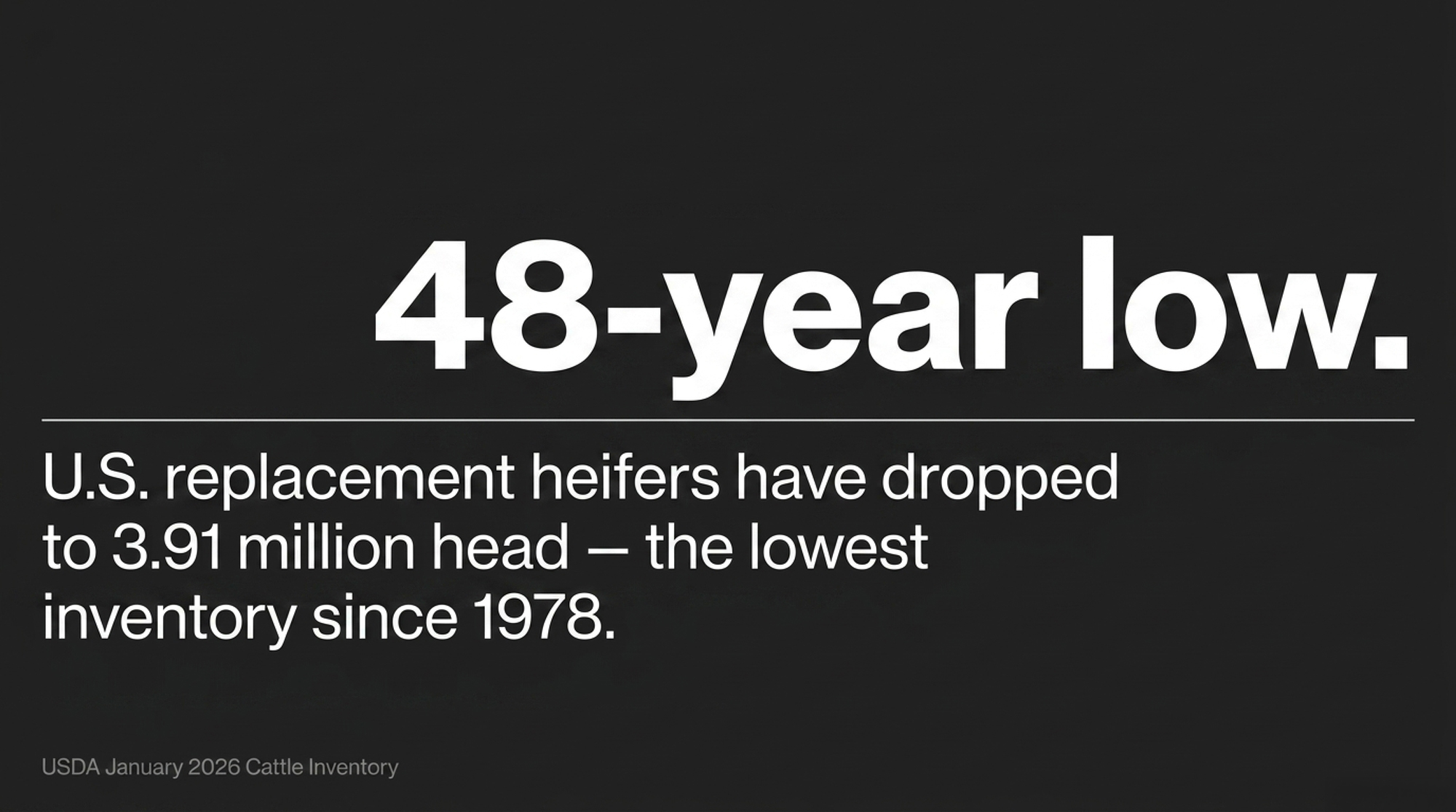
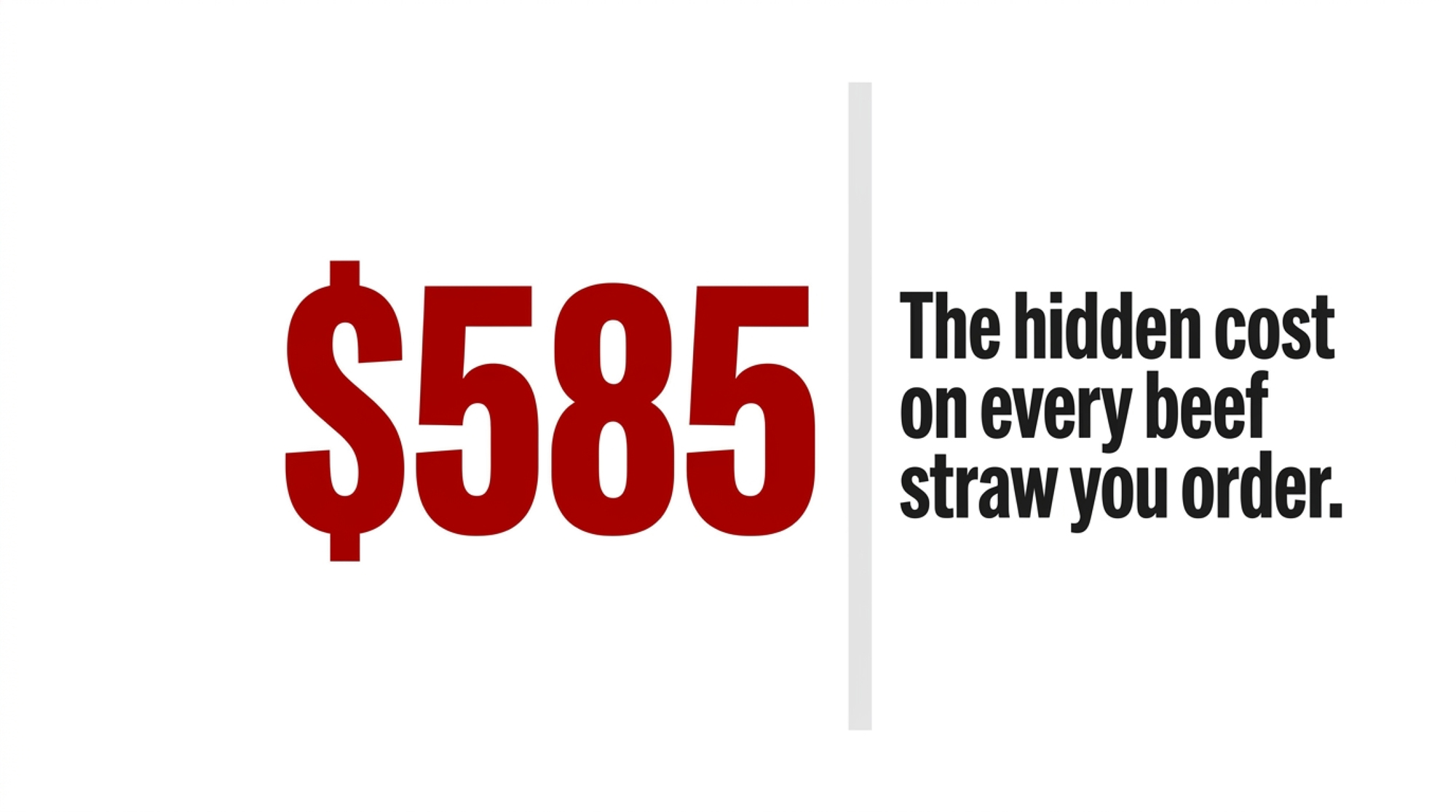
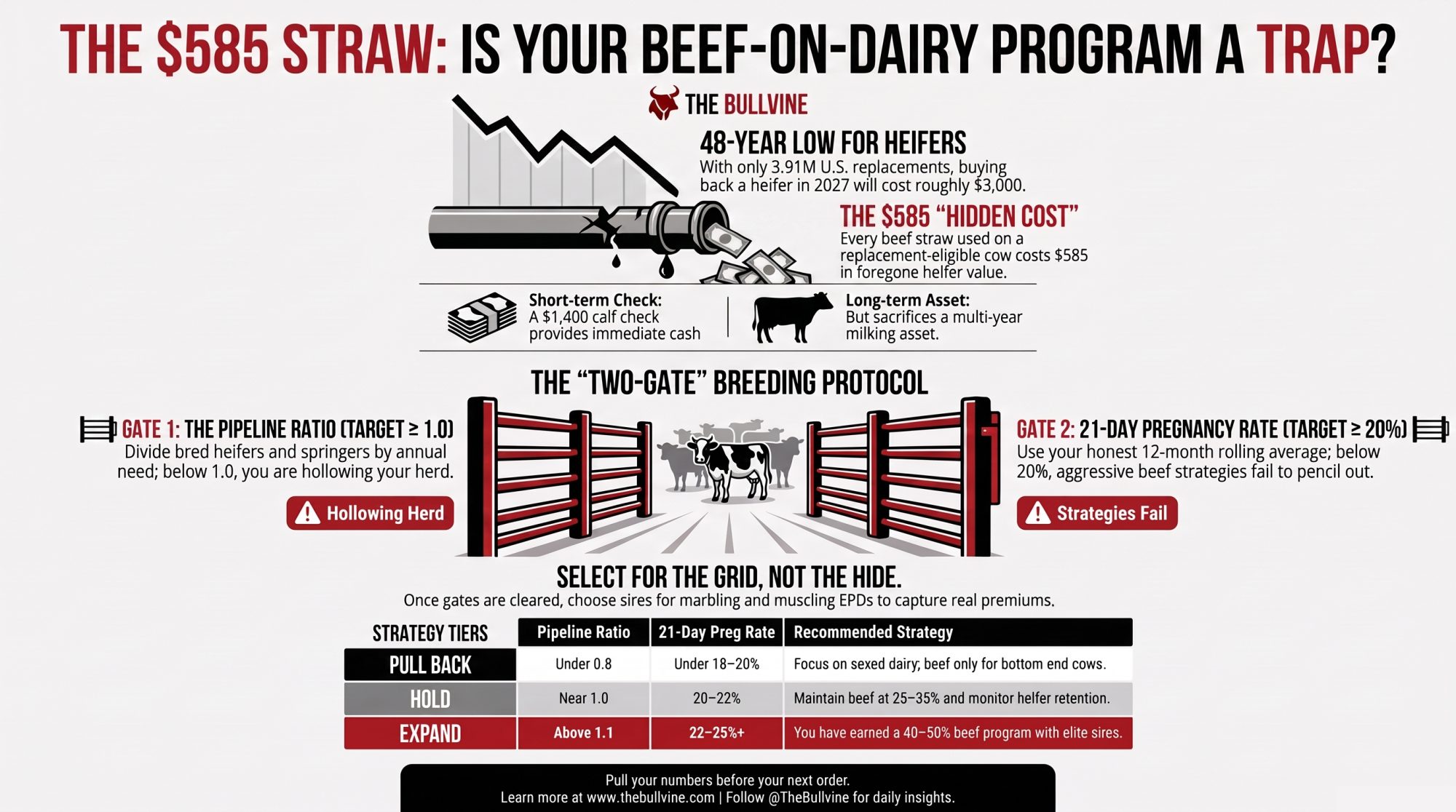
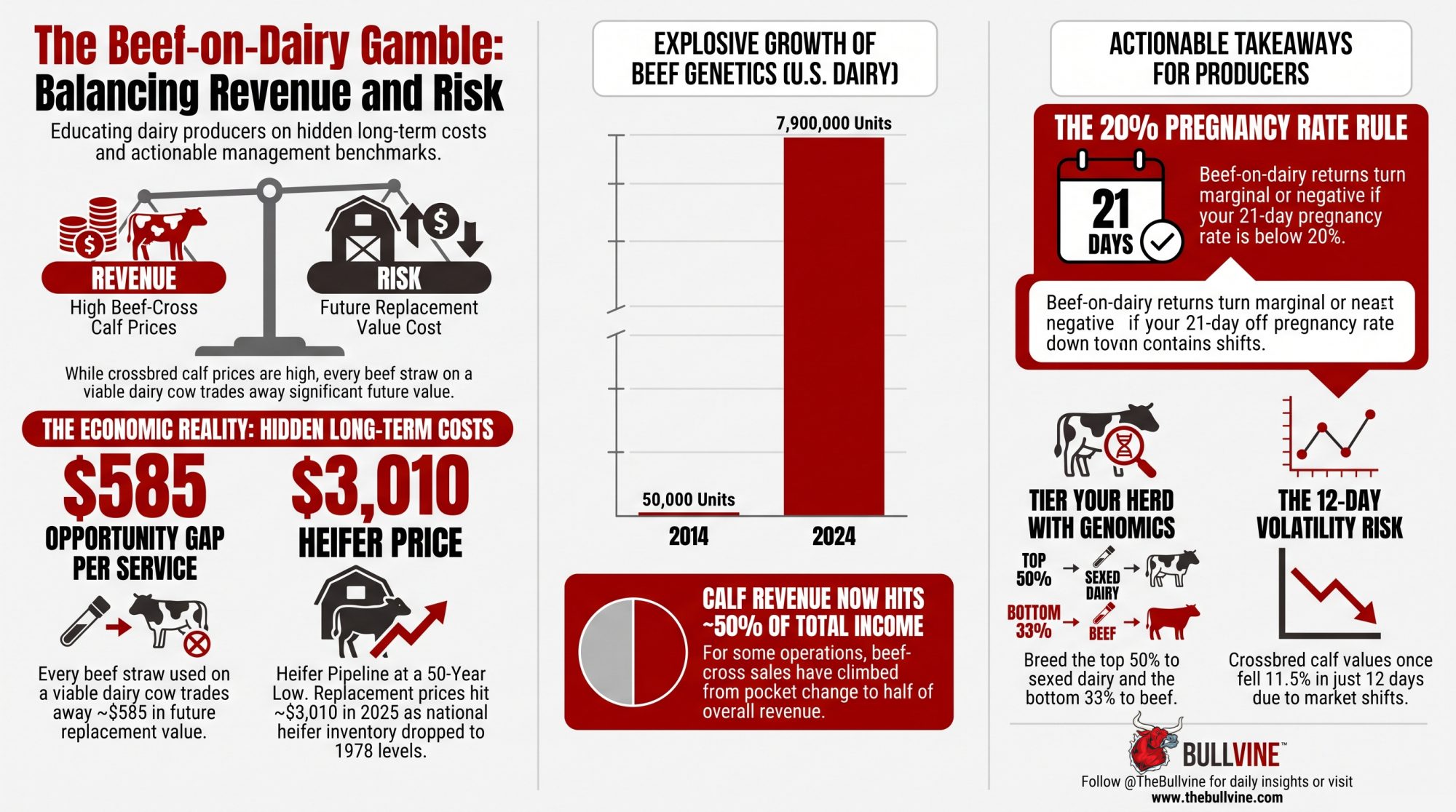
$585. That’s what one beef straw really costs once you count the $3,000 replacement you didn’t breed — with heifers at a 48-year low, that calf check isn’t free money. It’s borrowed.
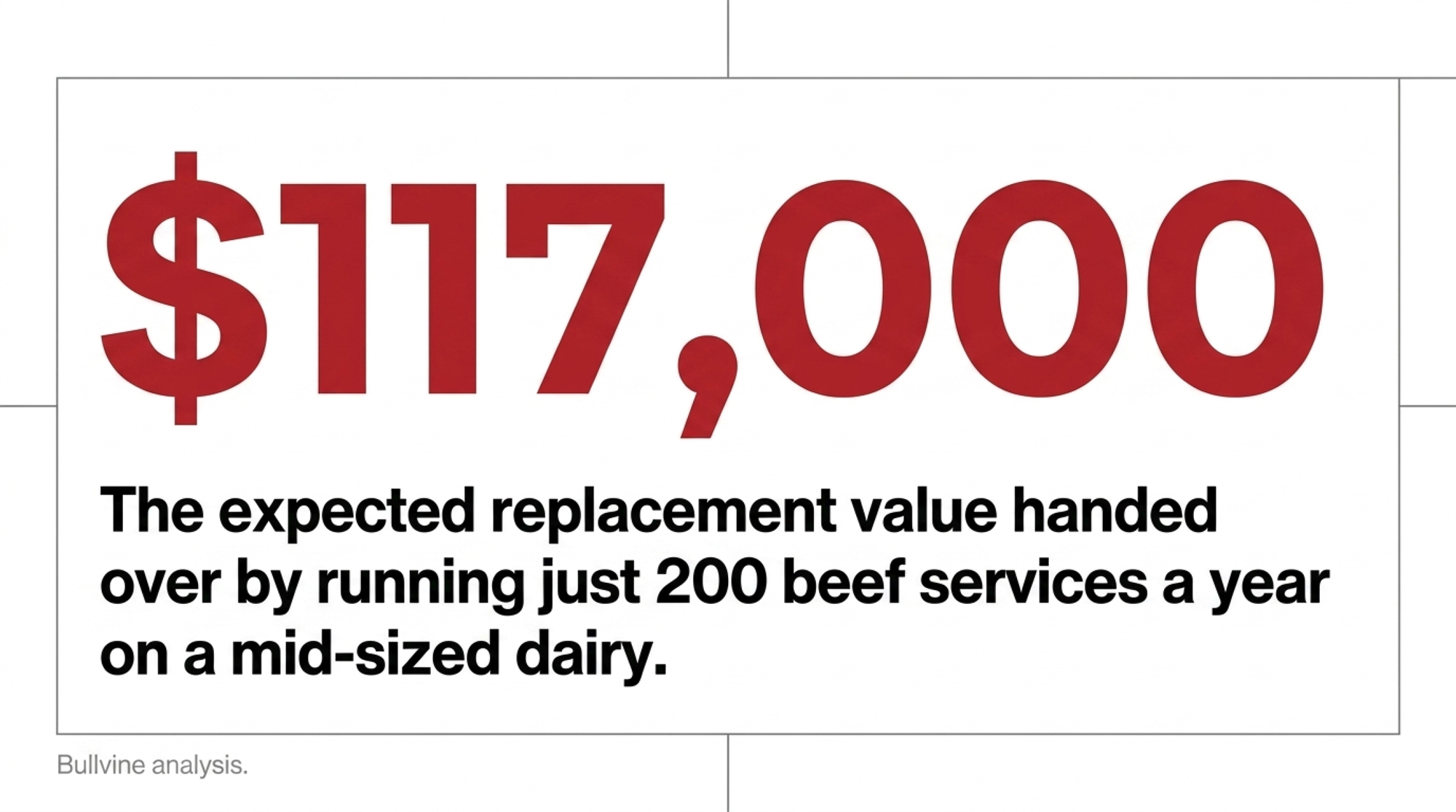
Executive Summary: With U.S. replacements at 3.91 million head — the lowest since 1978 — a single beef straw carries a hidden $585 cost: the $3,000 replacement heifer you didn’t breed and will buy back in 2027. Run 200 beef services on a 500-cow herd, and you’re looking at roughly $117,000 in foregone replacement value the calf check quietly hides. Whether that’s a smart play or a slow leak comes down to two numbers most herds never pull before the semen order: your pipeline ratio (bred heifers plus springers ÷ annual replacement need — you want ≥1.0) and your honest rolling 12-month 21-day pregnancy rate (≥20%). Below either line, UW–Madison’s modeling says there’s no aggressive beef strategy that pencils once you’ve covered replacements — you’re drawing down the herd you’ll need when milk tightens and everyone’s bidding on the same scarce heifer. Clear both gates and the leak moves to the bull: carcass-trait selection, not hide colour, is where the grid premium actually lives. Before your next order goes in, pull those two numbers and decide if your beef percentage is earning its place — or costing you a herd you’ll rebuy at $3,000 a head.
Editor’s note: The breeding-meeting scene and the two herd scenarios below are composites, modeled from multiple U.S. dairy operations to illustrate how the math plays out at different pipeline and reproduction levels. The cow numbers, replacement rates, ratios, and pregnancy rates in those examples are illustrative. Every market figure, study result, and economist quote is real and sourced as cited.
The breeding meeting starts the same way on a lot of farms right now. Someone slides the calf-sale receipts across the table — beef-cross calves cashing $1,200, $1,400, even $1,700 a head — and asks the obvious question. Why aren’t we breeding more cows to beef? The calf buyer wants more. The semen rep has a black bull he loves. And the milk check, forecast under $19/cwt for 2026, isn’t doing anyone any favors.
Here’s the tension nobody at that table is pricing in. Every one of those beef calves is a dairy heifer that doesn’t exist. With U.S. replacement heifers now at a 48-year low, that missing heifer isn’t free — you’ll buy her back in 2027, at roughly $3,000 a head. On many farms, the beef-on-dairy premium is no longer a bonus. It’s become load-bearing. And that’s exactly when it gets dangerous.
What’s Really at Stake When You Order Semen
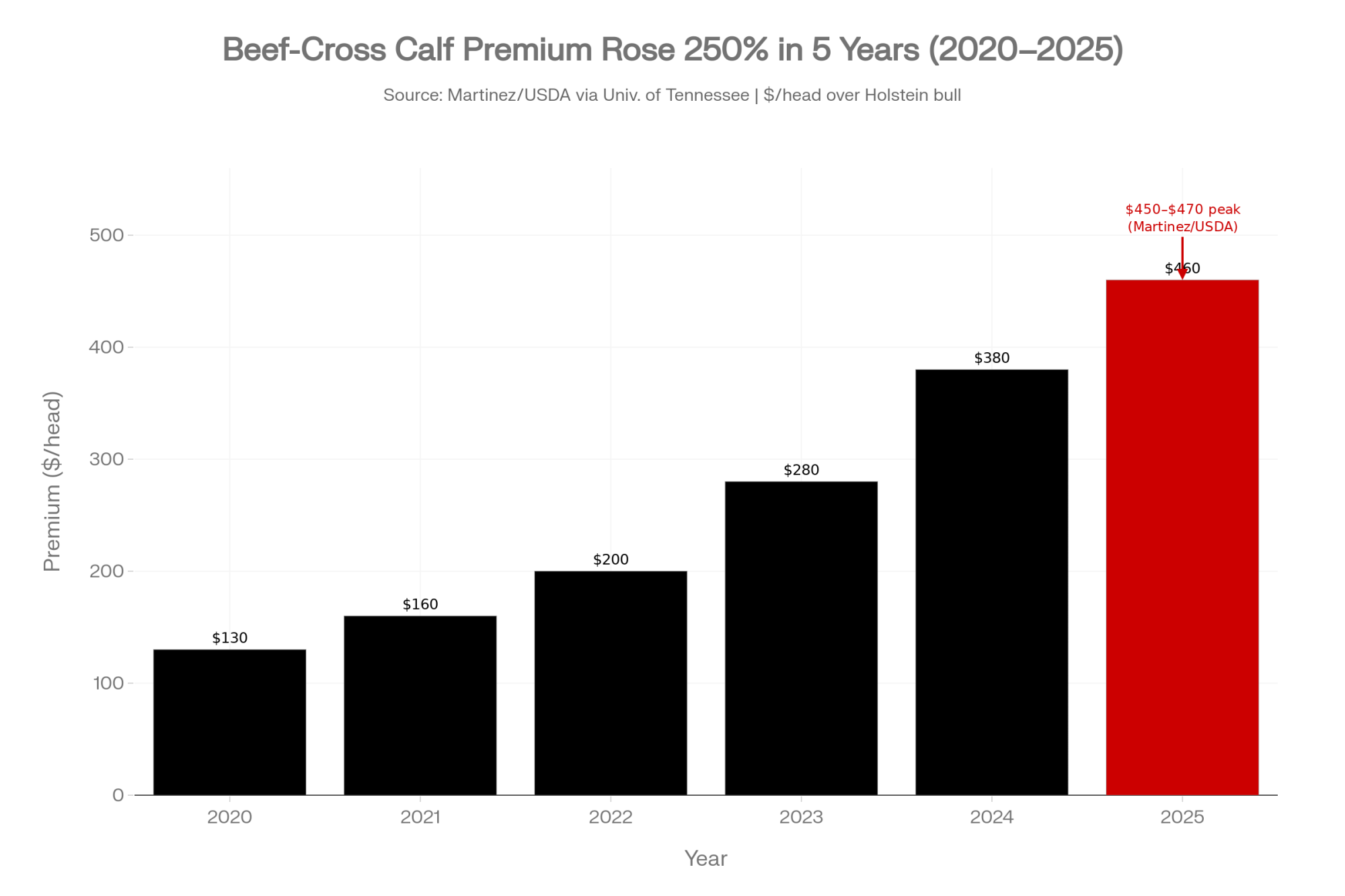
The calf premium is real. University of Tennessee economist Charley Martinez, summarizing USDA data, pegged the typical 2020–2024 beef-cross premium at $130–$200 per head, climbing to a $450–$470 peak in 2025. Nobody’s arguing beef-cross calves don’t pay better than Holstein bulls. They do.
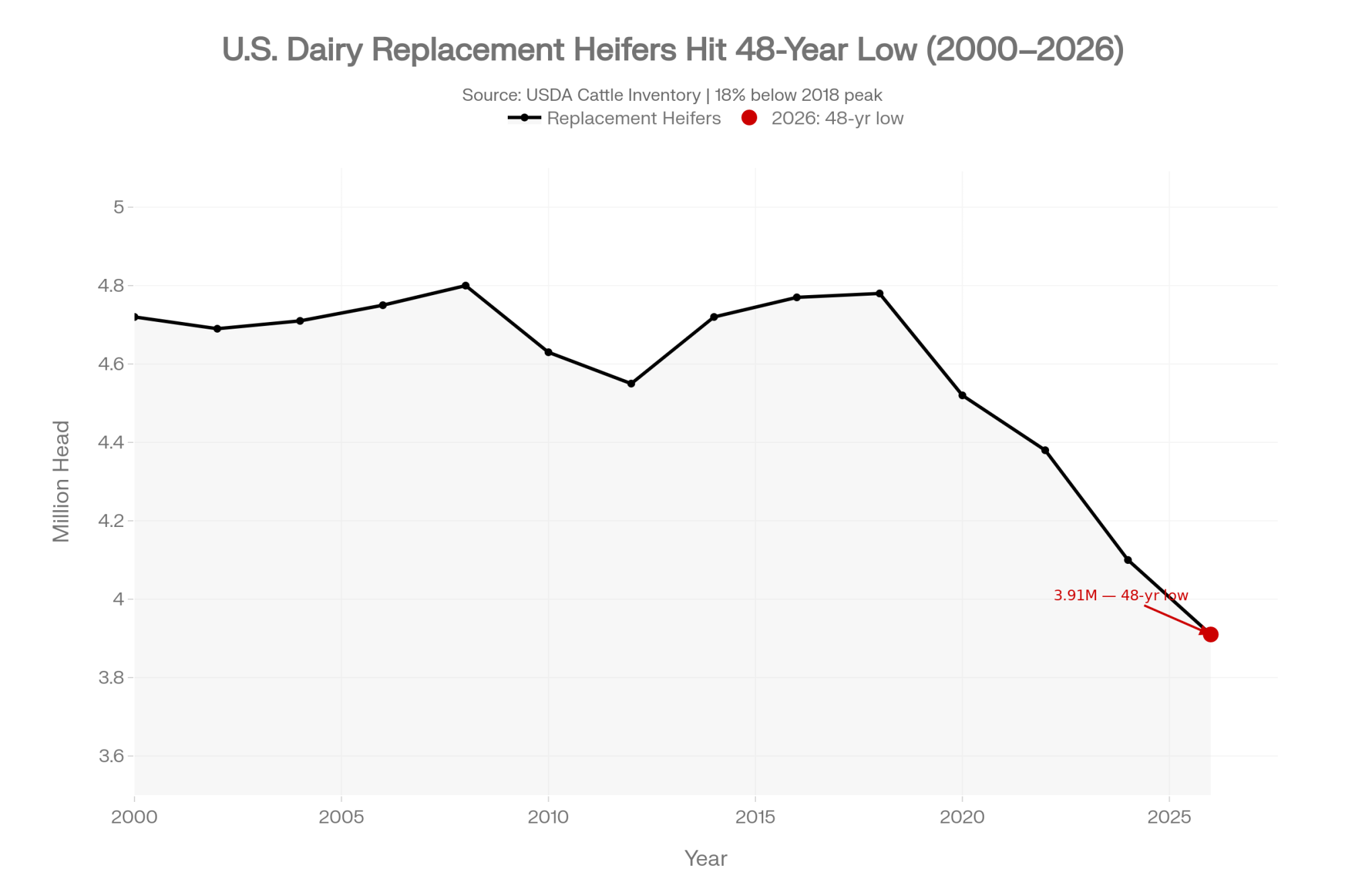
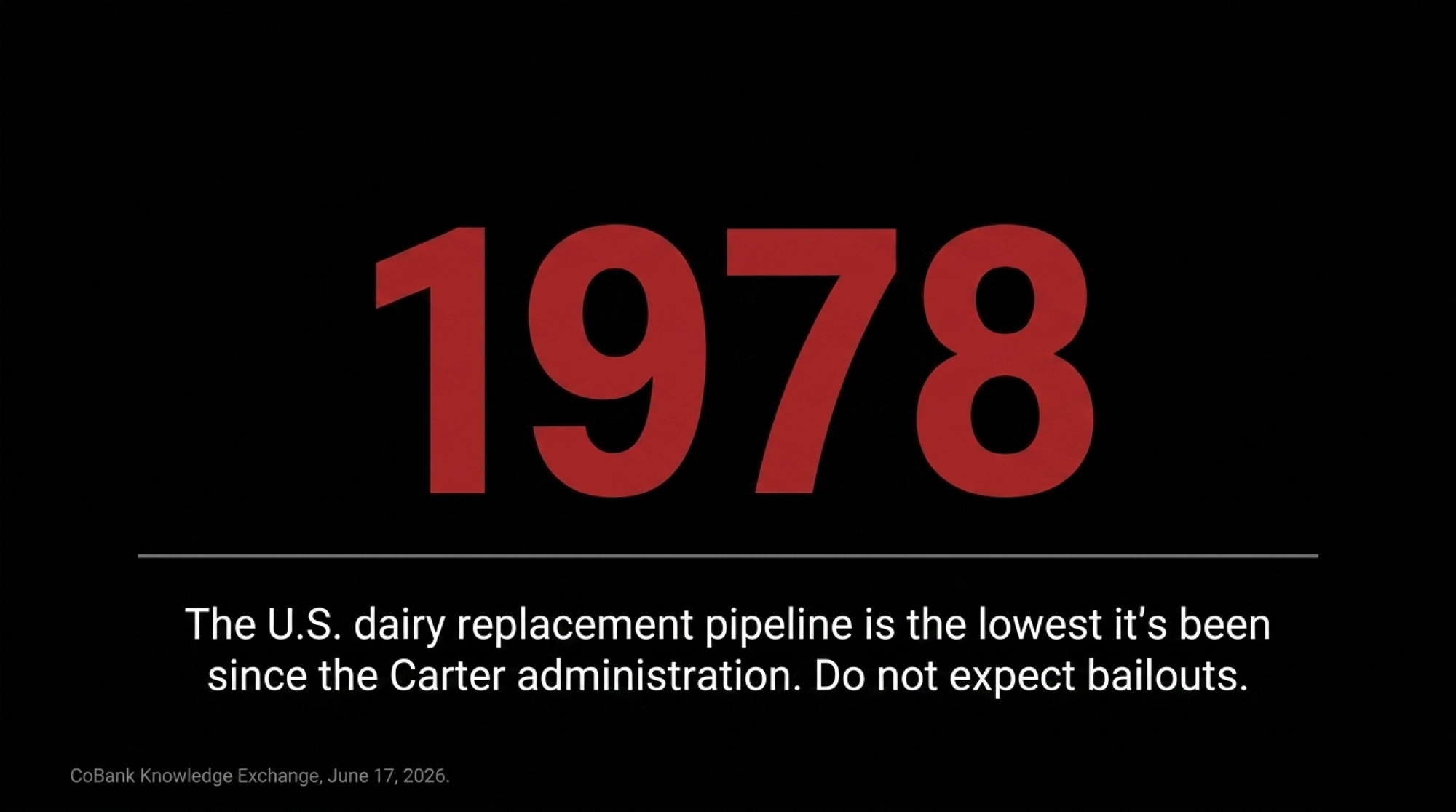
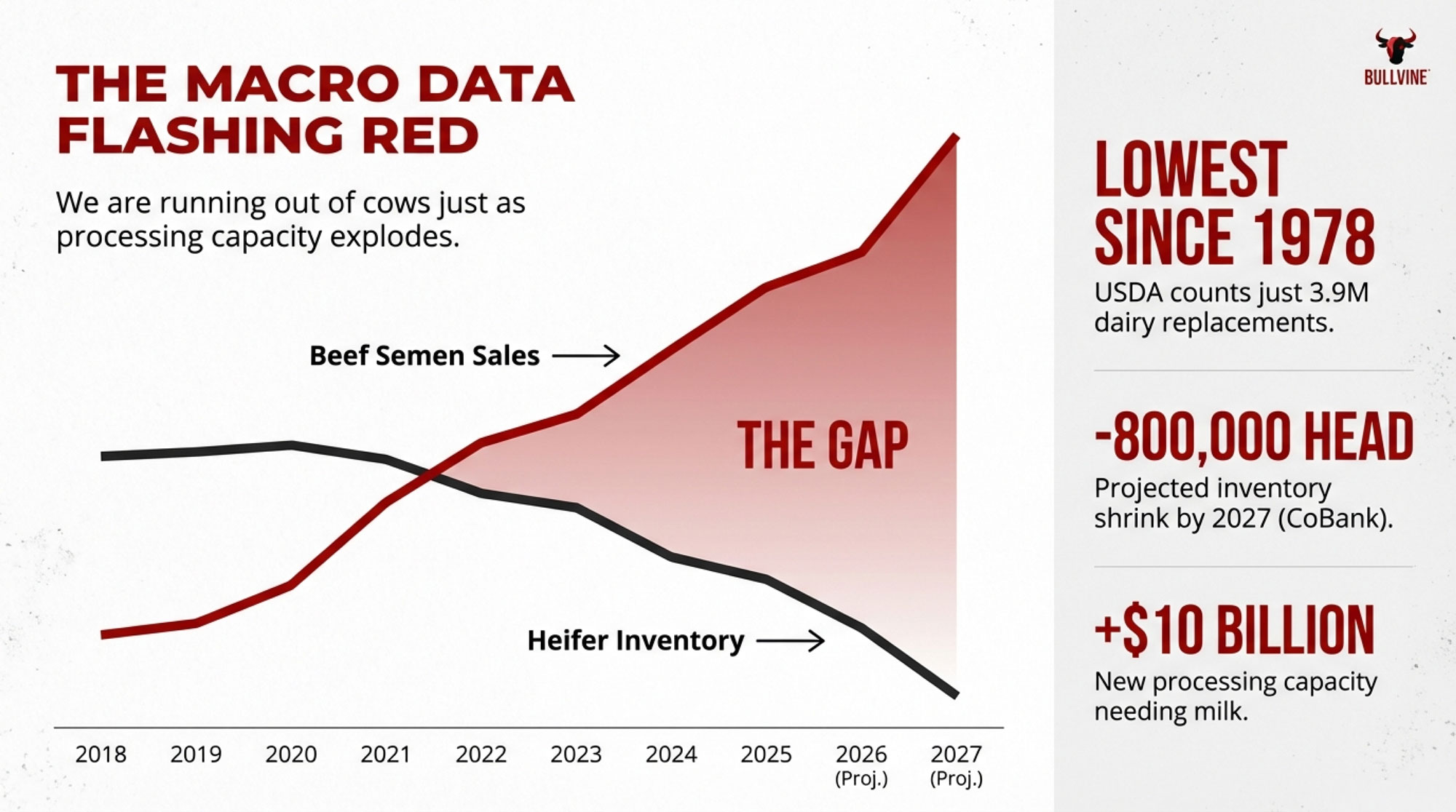
But the calf check is one side of a two-sided ledger, and the other side is getting expensive fast. USDA’s January 30, 2026 Cattle Inventory pegged dairy replacement heifers at roughly 3.91 million head — the lowest since 1978 and about 18% below the 2018 peak. The American Farm Bureau’s read on that same report was blunt: milk cow numbers are at their highest since 1993, even as the replacement pipeline thinned to a 48-year low, a divergence the Farm Bureau tied to short-term herd management decisions rather than true expansion. Translation: a lot of those missing heifers got bred to beef.
CoBank’s lead dairy economist Corey Geiger put it plainly on Iowa PBS in May 2026: “This year we’re going to have 438,000 fewer dairy replacements becoming milk cows compared to last year. And this won’t rebound until 2027, when we see an improvement of 285,000.” So the real Monday-morning question isn’t “what will the calf pay?” It’s “what will the heifer cost me?” That reframe is the whole story.
The $585 That Stops the Room
Most operators know what a beef-cross calf is worth, and what a straw costs. What they haven’t done is multiply two numbers they each accept on their own.
Walk it through, one step at a time. A sexed-semen service on a replacement-eligible cow produces — in typical field and modeling terms — somewhere around 0.33 to 0.35 heifers, once you account for conception and calf losses. Multiply that by a replacement value of roughly $3,000 to $3,300 — USDA’s January 2026 inventory put the range right there — and you’ve got roughly $1,000 to $1,150 of future heifer riding on that single service. That’s the most expensive heifer market in a generation: USDA Agricultural Prices data put the 2025 replacement average in the $2,860–$3,110 range, more than double where it sat five years earlier. This isn’t a soft number.
Now net it against the beef calf. Take the midpoint of that foregone value — call it about $1,085 — and subtract a calf advantage of roughly $500, which sits at the top of the premium range Martinez tracked in 2025. You land near a $585-per-service true cost on every beef straw you put into a cow that could have made a replacement. Run 200 of those services on a 500-cow herd, and you’re looking at roughly $117,000 in foregone replacement value. Use a fatter premium and the cost shrinks; use today’s $3,000-plus heifer, and it grows. Either way, it’s real money the calf check hides.
The calf clears in three weeks. The heifer would’ve milked for years. That’s the multiplication most breeding meetings never finish — the pieces get accepted one at a time, so the total never has to land. (Run your own numbers in The Bullvine’s Pipeline Index Calculator.)
“I Can’t Afford to Stop” — Is That a Reason, or a Trap?
When the $585 finally lands, the pushback usually isn’t “your math is wrong.” It’s “I can’t afford to stop.” That line tells you everything. The calf premium has stopped being gravy and become structural — it’s covering feed bills and loan payments, not buying anyone a new pickup.
And that’s the real bind. It’s hard to buy breeding strategy for 2028 when you’re trying to make next Tuesday’s payment. A $1,400 calf check that keeps the line of credit off its limit is a powerful argument, and pretending otherwise insults anyone who’s actually run a barn through a sub-$19 milk year. The trap isn’t choosing the calf check. The trap is choosing it without ever pricing the heifer you gave up to get it.
A few defenses come up again and again, and each holds a kernel of truth. The calves are paying the bills — fair, and HighGround Dairy projected beef income above $4.50/cwt over a twelve-month window in its October 2025 analysis. I’ll buy heifers back if I need them — except you’d be buying into a structurally short market, with CoBank’s modeling pointing to a combined 796,000 fewer replacements entering the milking herd across 2025 and 2026. The university says beef-on-dairy is a win — but UW–Madison’s Cabrera model built its $51/cow/year advantage on $570 calves and $2,355 heifers, not the $1,500 calves and $3,000-plus heifers we’re actually breeding into today.
Input Parameter
UW–Madison Cabrera Model Assumption
2025–2026 Actual Market
Direction of Risk
Beef-cross calf value
$570/head
$1,400–$1,700/head
↑ Favorable
Replacement heifer value
$2,355/head
$3,000–$3,300/head 🔴
↑ Hugely unfavorable
Foregone heifer per beef service
~$800
~$1,050–$1,150 🔴
↑ Cost overstated
Net advantage per cow/year
$51/cow
Recalculated lower 🔴
↓ Shrinks significantly
Replacement heifer availability
Ample market
48-year low — 3.91M 🔴
↑ Supply risk
Milk price assumption
~$20–22/cwt
<$19/cwt forecast 2026🔴
↓ Margin pressure
Heifer completion rate assumed
~90%
79% actual (Overton, 85 herds) 🔴
↓ Pipeline cushion smaller
None of those is a dumb argument. They don’t erase the foregone heifer. They postpone the moment you have to look at it. The honest read: beef-on-dairy can be a smart play or a slow leak, and the difference comes down to two numbers most herds aren’t checking before they pick up the phone.
Have You Actually Earned the Right to Run Beef?
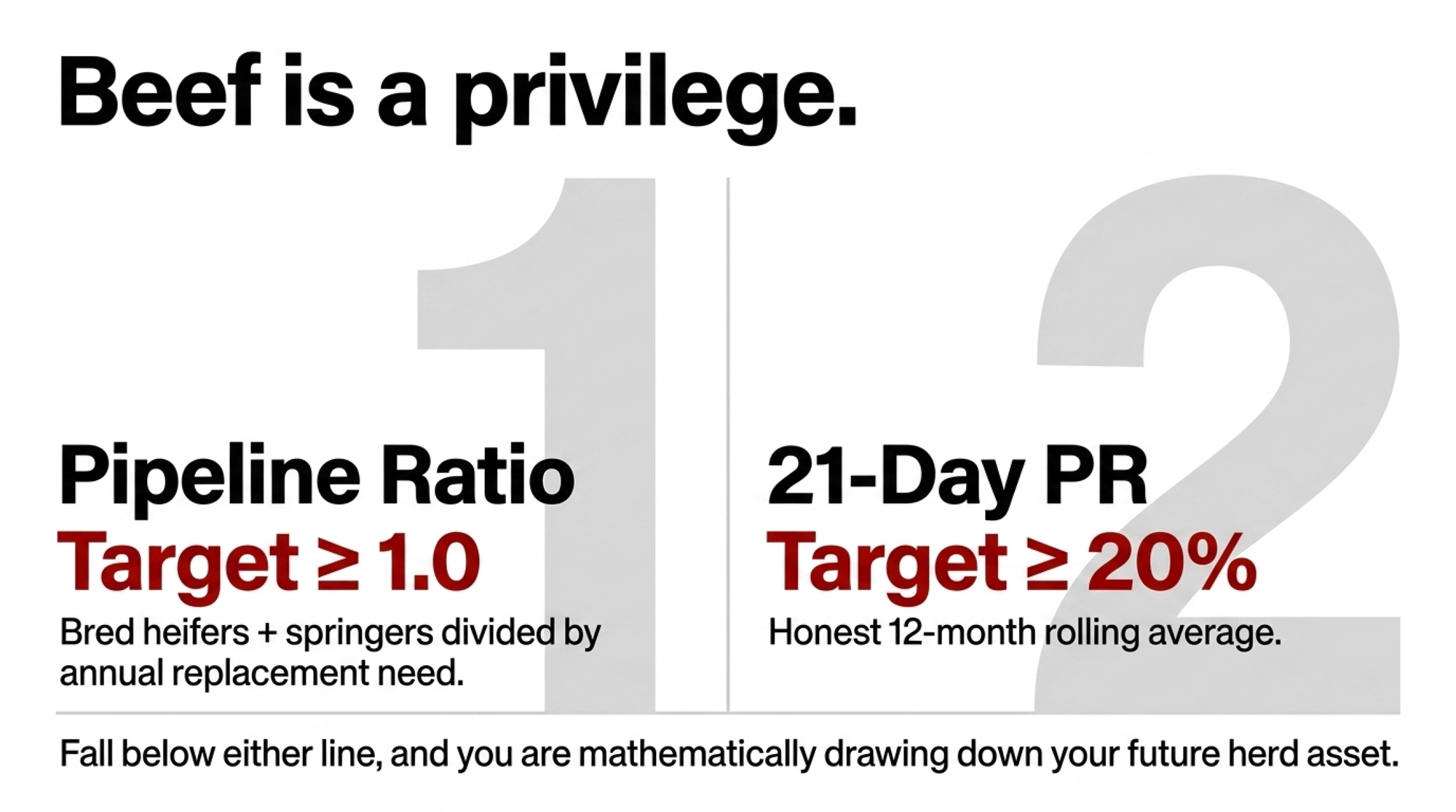
That’s the question that reframes everything. Plenty of producers treat beef-on-dairy like a right. The math says it’s a privilege you qualify for — and you qualify with two numbers, pulled before the semen rep answers.
The first is the pipeline ratio: bred heifers plus springers on hand, divided by annual replacement need. Take a 500-cow herd at a 27% replacement rate. That’s 135 heifers needed a year. If you’ve got 120 bred heifers and springers on the ground, your ratio is about 0.89 — already underwater. The Bullvine’s April 2026 thresholds are blunt: at or above 1.0, you’re covering your need; below 1.0, you’re already short; below 0.8, you’re mathematically short by 2027 in every scenario, including the optimistic one. (How chasing beef premiums broke the replacement pipeline.)
The second is your rolling 12-month 21-day pregnancy rate — the real number off your DHI or herd-management software, not the target you’d like to hit. As The Bullvine framed it in December 2025, the figure that matters is your actual rolling 12-month 21-day pregnancy rate, not your target — that single number largely determines which strategies fit your operation. A lot of producers think they’re sitting at 25–30%. Pull the report, and a fair share are actually living in the 18–22% range — wrong in the direction that flatters them. (Check the dollars with the Pregnancy Rate Economics Calculator.)
Two Herds, Same Calf Market, Opposite Calls
Numbers in the abstract don’t change behavior. Two herds reading the same January inventory do. The two operations below are illustrative composites, built to show how the same calf market drives opposite right answers.
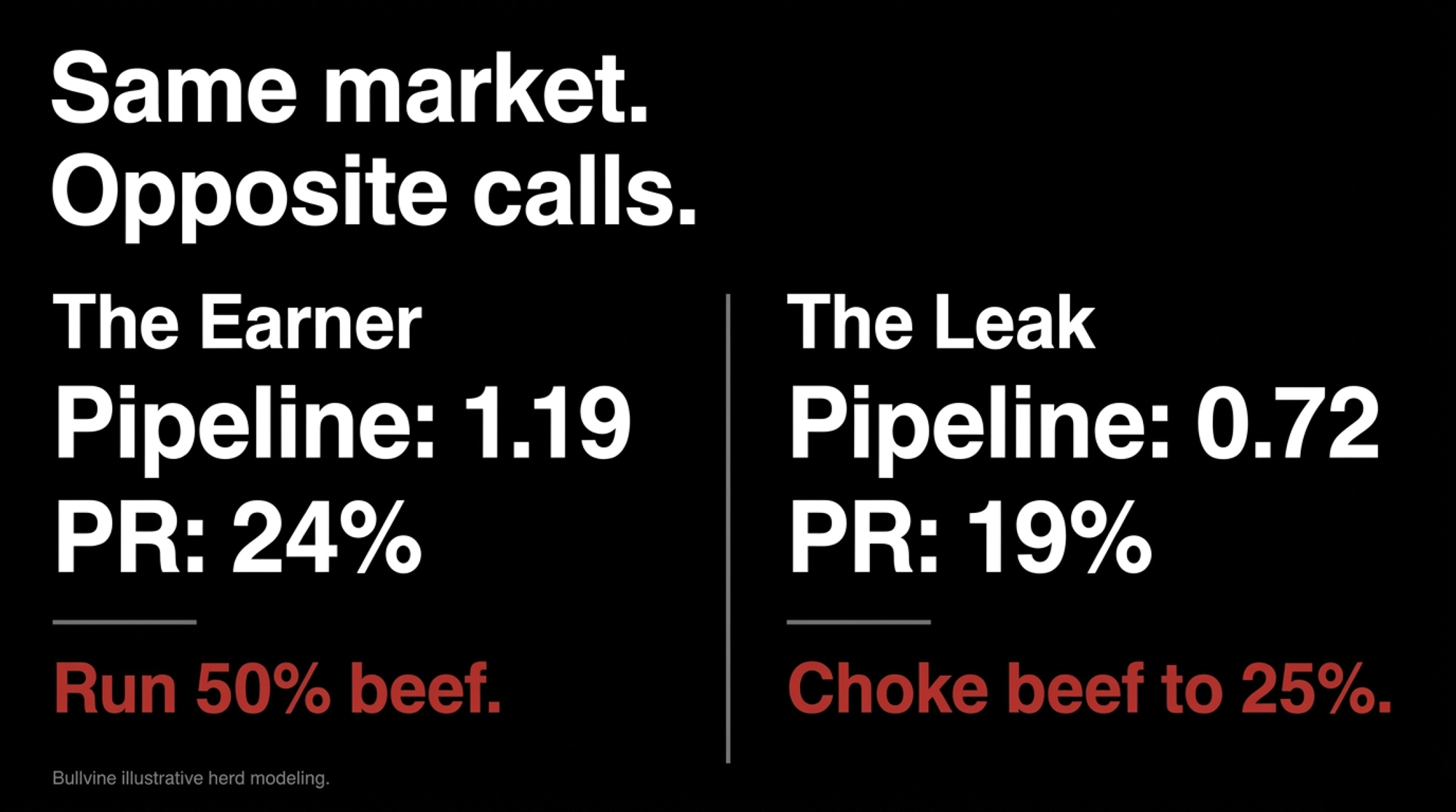
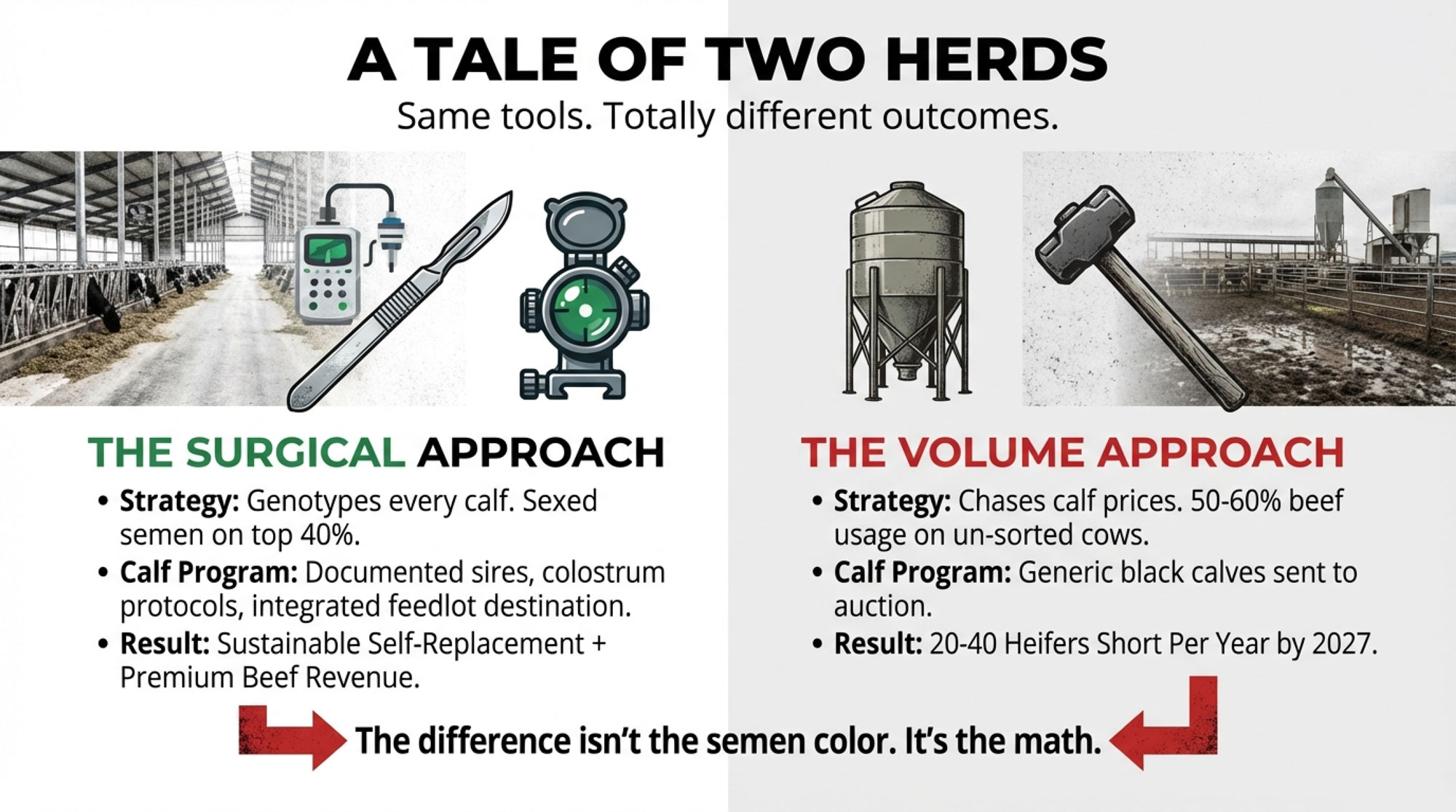
Picture a 250-cow herd running a 25% replacement rate — 63 heifers needed a year — with 75 bred heifers and springers in the yard. That’s a pipeline ratio near 1.19, and a verified 21-day PR around 24%. This herd has earned its program. It can run beef on 45–50% of the herd, push sexed dairy onto its best cows, and bank the calf check without bleeding future replacements. The $585 math still applies to each straw, but the herd is generating heifers faster than it needs them, so the foregone-heifer cost is cushioned by surplus.
Now picture a 600-cow herd at a 30% replacement rate — 180 heifers needed — sitting on 130 bred heifers and springers. Ratio: about 0.72. Its 21-day PR, pulled honestly off the software, comes back at 19%, not the 26% the manager assumed. Same calf buyer, same black bulls, same tempting receipts. But this herd is already short, and at a sub-20% pregnancy rate, the UW–Madison modeling says there’s no aggressive beef strategy that pencils once replacements are covered. The right call here is to choke beef back to 25–30%, lock sexed dairy onto the top end, and rebuild the pipeline before chasing the calf premium. Two herds, one market, two completely different right answers — and the difference is two numbers, not the calf check.
Metric
Herd A: Pipeline-Healthy
Herd B: Pipeline-Broken
Herd size
500 cows
600 cows
Replacement rate
25%
30%
Annual heifer need
~63 head
~180 head
Bred heifers & springers
75 head
130 head
Pipeline ratio
1.19 ✅
0.72 🔴
Verified 21-day PR
24% ✅
19% 🔴
Max defensible beef %
45–50%
25–30% max
$585 cost absorbed by surplus?
Yes — generating ahead of need
No — deepening the hole
Recommended action
Run full program, upgrade bull team
Choke beef back, fix repro first
What the Numbers Say You Can Run
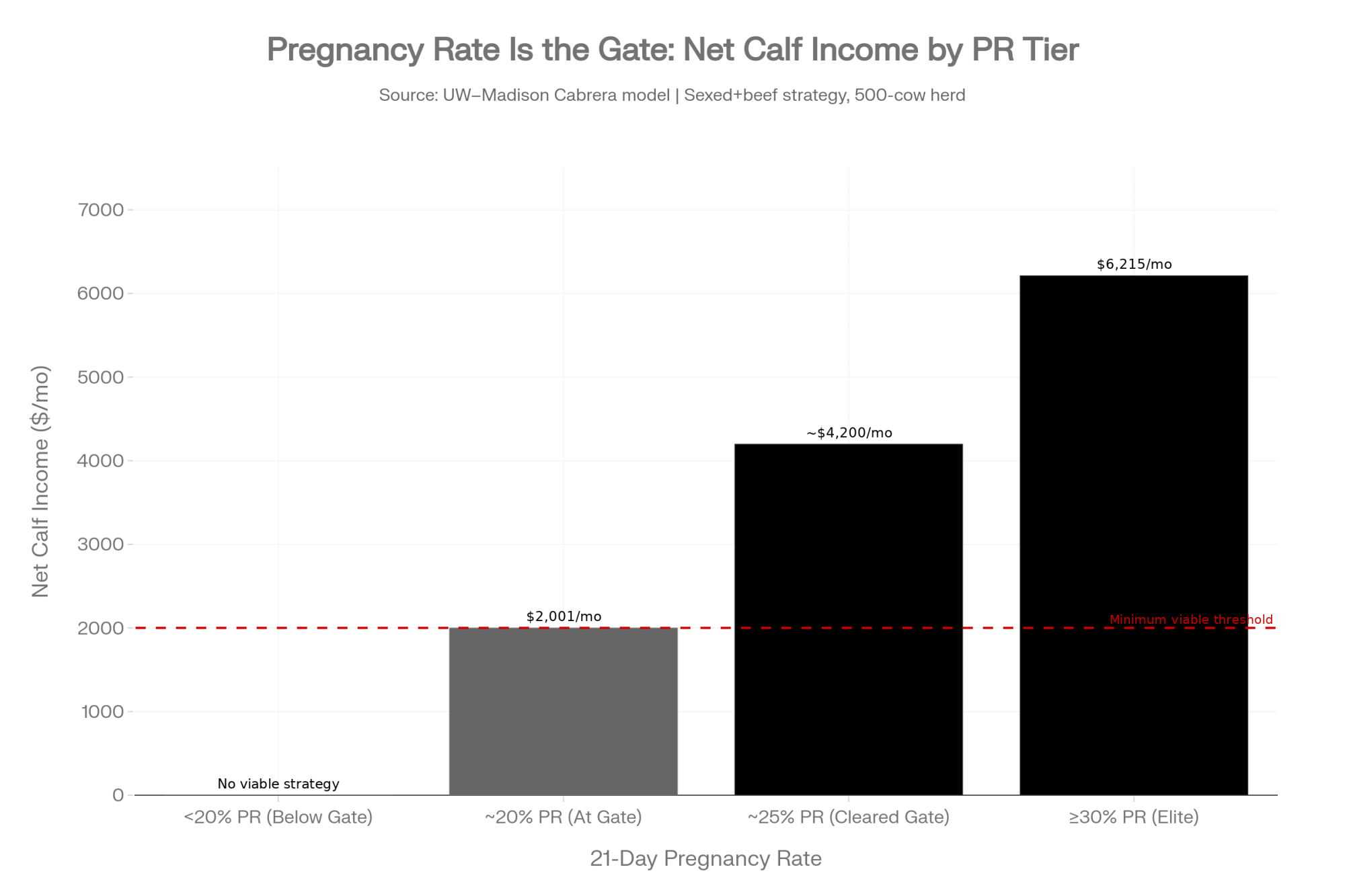
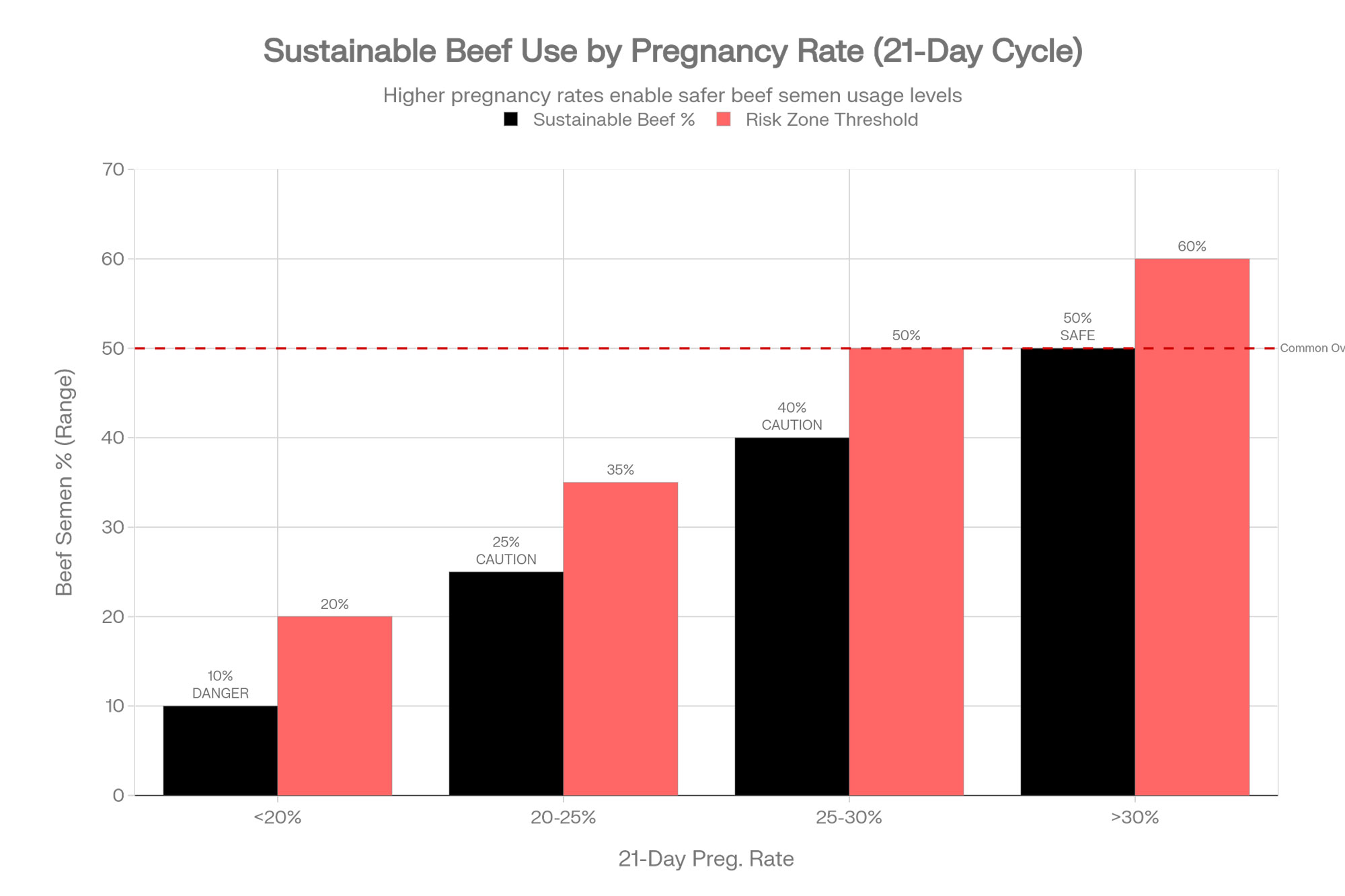
UW–Madison’s modeling, translated into herd-level terms by The Bullvine, sketches the tiers clearly. Herds at 30%+ 21-day PR can see roughly $6,215/month in net calf income from a sexed-plus-beef strategy. Herds near 20% drop to about $2,001/month. And below 20%, the research found no economically viable beef semen strategy once replacement needs were covered. The repro rate isn’t a footnote. It’s the gate.
The replacement side sets the other gate. Bullvine’s modeling, working from a 35% beef-cap framework, describes herds walking into breeding meetings with a pipeline ratio sitting at 0.70–0.75 — and the call is to choke beef back to 25–30% until the ratio recovers, with sexed dairy locked onto the top cows. Pair the two numbers, and you get a working rule of thumb:
Pipeline ratio under 0.8, or 21-day PR under 18–20%: Pull beef back hard. Order more sexed and conventional dairy on cows you’d want daughters from. Beef goes only on clear bottom-end and late-lactation cows.
Ratio near 1.0, 21-day PR around 20–22%: Hold beef where it is — often the 25–35% range — and revisit in six to twelve months once repro or heifer retention improves.
Ratio at or above 1.0–1.1, 21-day PR 22–25%+: You’ve earned a real program at 40–50% beef. Now the job shifts to picking the right bulls.
There’s a reality check buried in those replacement numbers, too. Overton’s 85-herd beef-on-dairy study found an average heifer completion rate — liveborn heifer calf to first calving — of just 79%, not the 90% a lot of breeding plans quietly assume. If only four of every five heifer calves actually make it into the milking string, your pipeline math needs more cushion than you think, not less.
Does the Border Change the Math?
The framework travels; the inputs don’t. The $585 figure and the USDA inventory numbers above are U.S. data — American replacement values, an American calf market, FMMO milk pricing. The logic underneath is just arithmetic: foregone heifer value minus calf premium. That holds anywhere.
North of the border, the inputs shift significantly. Canadian replacement heifers trade strong — The Bullvine’s own September 2025 market coverage put dairy replacements averaging north of $3,000 with the best animals topping $4,000 at major auctions — and quota asset values reward a highly predictable milk volume, so the penalty for a hollowed-out pipeline is arguably even steeper than in the U.S. The calf-premium side differs too, dictated by local packer grids rather than U.S. frameworks. The takeaway for a Canadian reader isn’t to dismiss the math — it’s to plug local numbers into the same two gates. Same gates, different dollar signs.
The Sire Gap: Paying First-Class, Flying Coach
Say you’ve cleared both gates. You’ve earned a real program. Here’s the last leak — and it’s a quiet one.
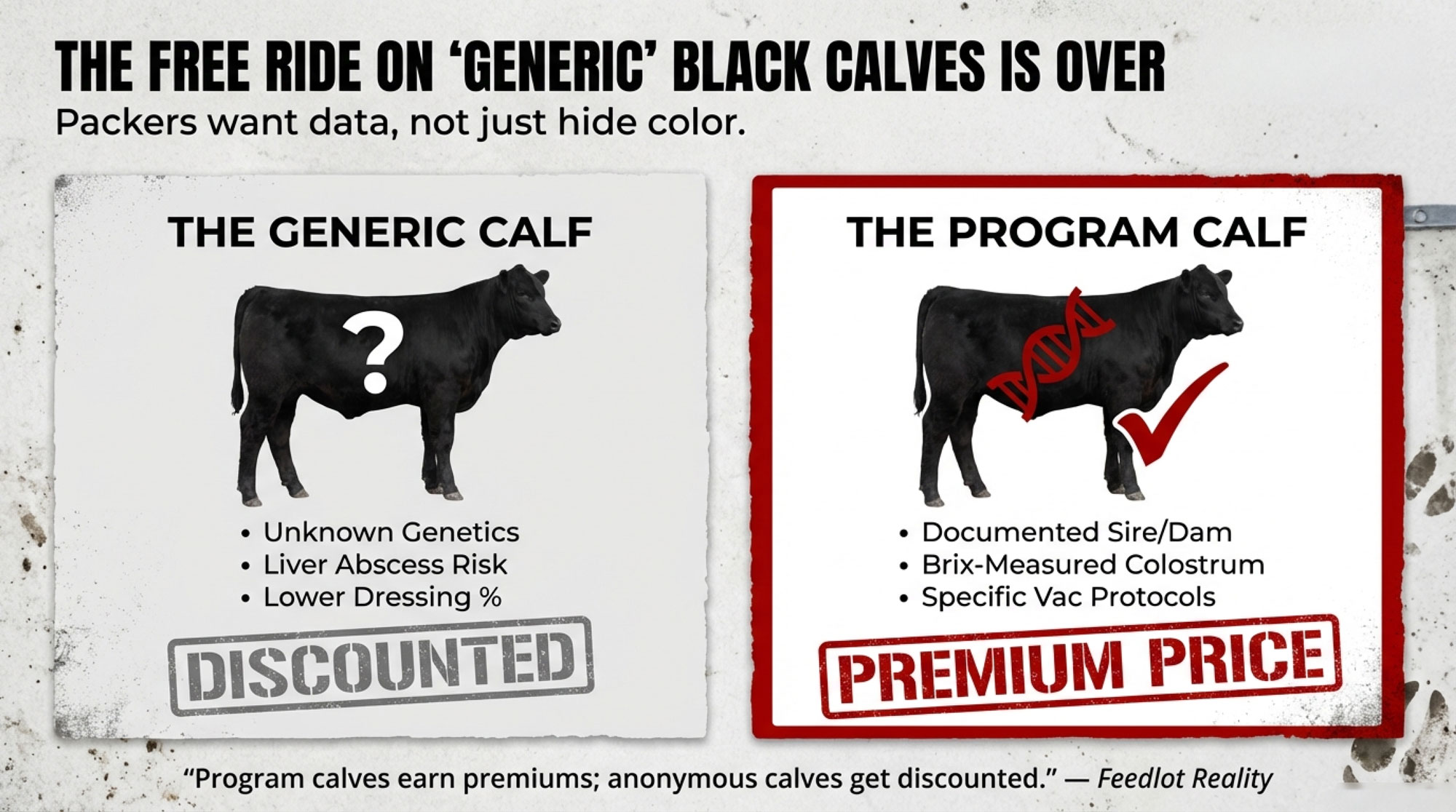
A 2021 UW–Madison Extension survey of 40 Wisconsin dairy farms found producers ranked beef sire selection on the “three C’s”: conception rate, calving ease, and cost per unit. Carcass traits lagged. USDA ARS’s summary of the same work was blunter — relatively few farms weighted carcass traits such as muscling, marbling, or terminal indexes, traits ARS describes as critical to lifting dairy-beef carcass value. The selection is still dairy-centric, built to protect the cow and the semen invoice. The money, meanwhile, has moved to the packer grid.
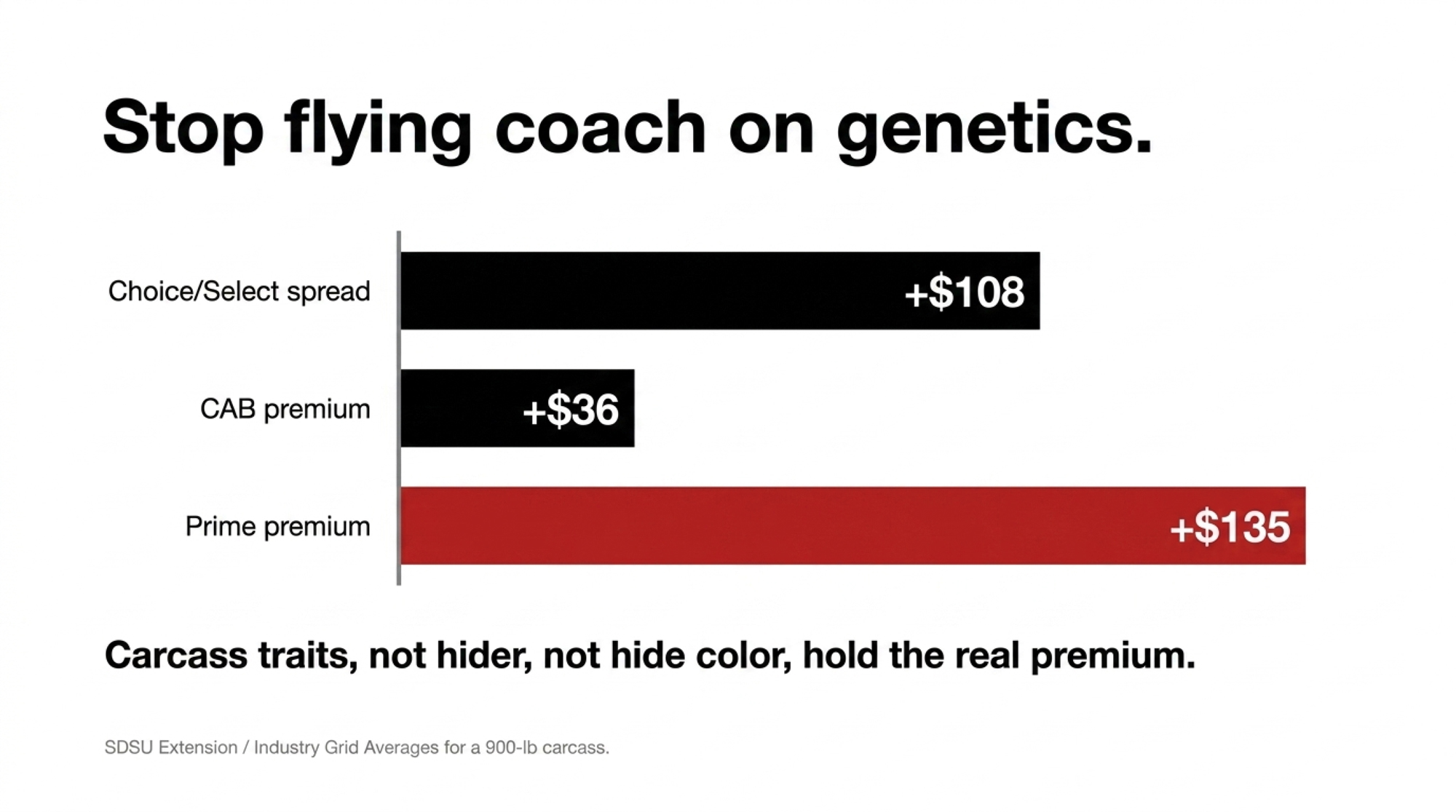
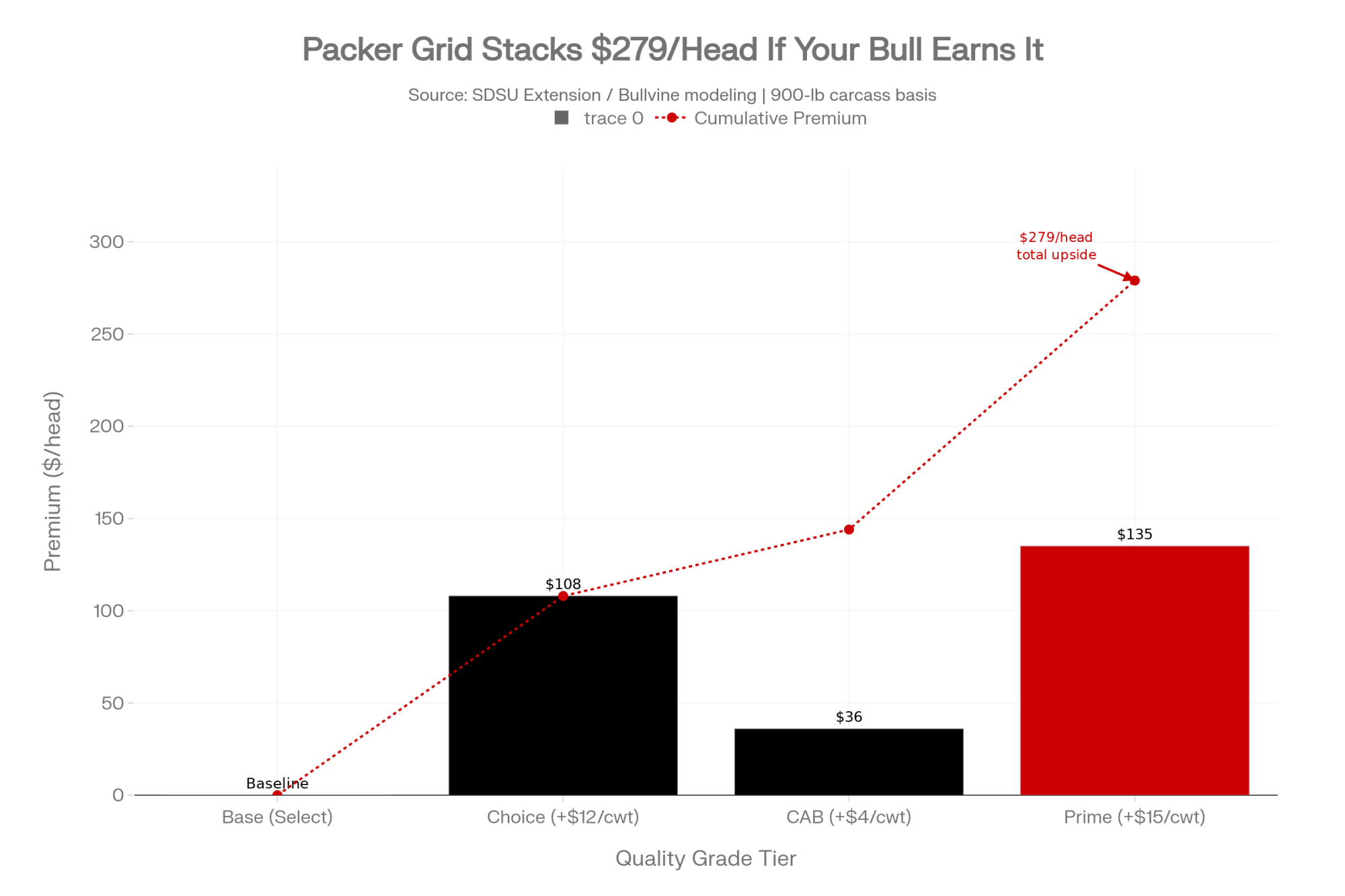
Work the grid for a second, because this is where the leak shows up in dollars. SDSU Extension warned back in 2020 that picking beef sires to throw a black-hided calf creates cattle that lack the muscling and ribeye improvements needed to merit any premium over straight Holstein beef. Take a finished beef-on-dairy carcass near 900 pounds — in the range trial data has reported for these cattle — and the grid premiums stack up fast, scaling with whatever your own carcasses actually weigh. On a 900-pound carcass, a $12/cwt Choice/Select spread is worth about $108 a head; clearing the bar for a $4/cwt CAB premium adds roughly $36; hitting Prime at a $15/cwt premium is another $135 on top. The bull either gets your calf into those tiers or it doesn’t. Bullvine’s June 2026 modeling put the gap between a high-marbling sire at +0.65 Marbling EPD and a bargain bull near +0.30 at $50 to $100 per head. Premier Select Sires’ April 2024 ProfitSOURCE brochure reported program carcasses — sired by its TD Beef genetics — bringing roughly $190 to $210 more per head than the comparison cattle on a grid basis. That’s the company’s own data, not an independent study, and the major AI studs all run competing carcass-value programs — but it points the same direction as the grid math: carcass-trait selection, not hide colour, is where the premium lives. (How sire selection sets your grid cheque.)
That’s the picture in one line. You take all the replacement risk, all the repro risk, and then hand the grid upside to the packer because the bull didn’t clear the spec. First-class ticket, coach seat.
The Two-Gate Breeding Protocol
Before the next semen order goes in, run these three steps in order. The first two decide whether you’ve earned a beef program at all; the third decides whether it pays once you have.
1. Check the pipeline ratio — target ≥ 1.0. Divide your total bred heifers and springers by your annual replacement need. If you’re below 1.0, stop. You don’t have surplus heifers; you’re actively drawing down your future herd asset, and every beef straw deepens the hole.
2. Verify the 21-day pregnancy rate — target ≥ 20%. Pull the hard 12-month rolling average from your management software, not the target in your head. If your actual PR is under 18–20%, choke beef semen back to 25% or less. Aggressive beef-on-dairy needs elite reproductive efficiency to avoid a pipeline crash.
3. Select for the packer grid — target real market premiums. If you clear both gates, stop buying beef straws on cost and conception alone. Target carcass traits, marbling EPDs, and a defined dairy-beef index so the calf actually lands in the Choice, CAB, and Prime tiers you’re paying genetics for.
What This Means for Your Operation
Run the pipeline ratio before you run anything else. Bred heifers plus springers, divided by annual need. Under 1.0 and the calf market doesn’t get a vote — you’re drawing down a herd asset you’ll rebuy at $3,000-plus.
Pull the real 21-day pregnancy rate, not the one in your head. If your honest rolling 12-month number is under 18–20%, fix reproduction before you expand beef. The economics don’t close below that line.
Treat each beef straw on a replacement-eligible cow as a ~$585 decision, not a free calf check. Decide whether your pipeline has the surplus to absorb that cost.
If you’ve cleared both gates, the leak moves to the bull. Ask whether your current beef sires actually clear your buyer’s marbling and ribeye spec, or just throw a black calf.
If you farm under quota, re-run both gates with your own numbers. The penalty for a hollow pipeline is steeper north of the border, not softer.
Ask whether you could defend your current beef percentage to your lender using your pipeline ratio and 21-day PR — not the national average.
Key Takeaways
If your pipeline ratio is under 1.0, order more sexed dairy before you add a single beef straw — every beef straw below that line is borrowed against a heifer you’ll buy back at $3,000-plus.
If your verified 21-day PR is below 18–20%, fix reproduction before you expand beef; the economics don’t close below that line.
If you’ve earned a real program, a small, disciplined bull team that clears your buyer’s specs beats a tank full of cheap black straws.
If two herds can read the same calf market and land on opposite right answers, the calf check was never the deciding number — your pipeline and your repro rate are.
This month: pull your rolling 12-month 21-day pregnancy rate and count your bred heifers and springers against your annual need. Two numbers, written down, before the next order goes in.
The national semen mix on dairy cows ran about 43% sexed, 24% conventional, and 33% beef in NAAB’s 2025 year-end report. But that one-third beef figure is an average sitting on top of a herd base with only 3.91 million replacements behind it. So the question at your next breeding meeting isn’t whether you belong in that third — it’s whether your own numbers earned the spot, or whether you’re about to pay $3,000 a head to join it late. Which number is setting your breeding strategy right now: your pipeline, or last week’s calf check?
Run Your Numbers
Bullvine Pipeline Index Calculator — Feed in your herd size, heifer inventory, cull rate, replacement cost, and sexed-vs-beef mix, and the Index scores your replacement pipeline green, yellow, or red. It turns the pipeline-ratio question into one number: are you replacing faster than you’re rebuilding, or bleeding heifers to that beef check?
Complete references and supporting documentation are available upon request by contacting the editorial team at editor@thebullvine.com.
Learn More
$3010 Per Heifer. 800000 Short. Your Beef-on-Dairy Bill Is Due. — Arms you with an immediate framework to audit your breeding sheet and balance current calf checks against the soaring cost of replacements. Discover how to protect cash flow without leaving your herd vulnerable to regional heifer shortages.
The 800000-Heifer Shortage Reshaping Dairy: Why Some Farms Will Thrive While Others Exit — Delivers a stark macroeconomic breakdown of structural dairy restructuring, charting how a 16% reliance on beef-cross checks impacts asset valuation. Learn to position your business against major processing disruptions and regional heifer capacity swings over the next five years.
The Heifer Crisis Hiding in Plain Sight: Why Your Next 90 Days Determine Your 2028 Herd — Exposes the hidden biological leakage killing your pipeline, tracing exactly how mortality and breeding failures turn 3 million replacement animals into a devastating 300,000-head industry deficit. Master the precise math to secure long-term herd health today.
The Sunday Read Dairy Professionals Don’t Skip.
Every week, thousands of producers, breeders, and industry insiders open Bullvine Weekly for genetics insights, market shifts, and profit strategies they won’t find anywhere else. One email. Five minutes. Smarter decisions all week.
This Independence Day, the beef-on-dairy calf check is the quiet reason a lot of American dairy families still own their barns. But every beef straw you put in a viable dairy cow trades away roughly $585 in future heifer value — so the real question on the Fourth isn’t whether it works. It’s whether that calf check is funding your independence or slowly mortgaging it.
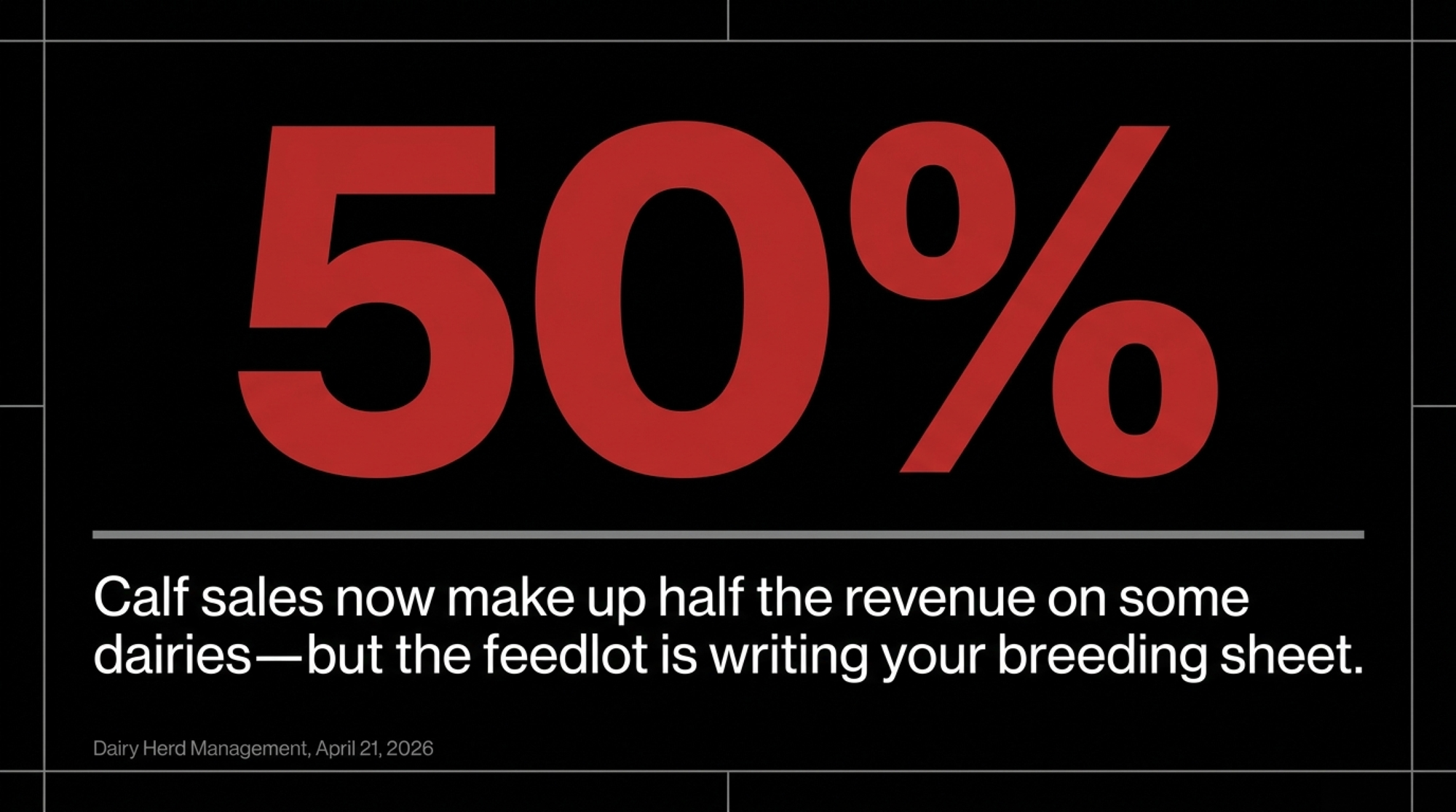
Ken McCarty used to barely glance at what his bull calves brought. On the McCarty family’s roughly 20,000-cow operation near Colby, Kansas, those calves were something you loaded out and forgot about. Then the math flipped. Today, McCarty shared that calf sales “went from something that you basically ignored in your budget to something that really today accounts for, depending on the month in the market, somewhere around 50% of our overall revenue”.
Half the revenue. From the calf nobody used to write up.
There’s something fitting about telling this story on the Fourth. Independence, for a dairy family, has never been an abstraction — it’s whether you still hold the deed, still call the shots, still decide what gets bred to what. And right now, for thousands of U.S. operations, the thing keeping that independence intact isn’t the milk check. It’s the calf that used to ride out on the cull trailer.
On a lot of American dairies this Fourth of July, that calf check isn’t a bonus — it’s the reason the family still owns the barn. And that’s exactly what’s worth pausing on. Independence you didn’t quite decide to buy can turn into dependence you never saw coming. Replacement heifers now run around $3,010 a head (USDA Agricultural Prices, mid-2025), up from $1,140 back in April 2019. So every time you breed a cow that could’ve thrown a viable dairy heifer to beef instead, you’re handing over roughly $585 in expected future value (Bullvine analysis; see Methodology Note). It’s a great trade until it isn’t. And most farms never sat down and decided to lean this hard on the calf check — they slid into it, one semen straw and one good sale barn check at a time.
From Throwaway to Half the Check
Beef-on-dairy stopped being a side hustle years ago. In 2014, U.S. dairies used around 50,000 units of beef semen. By 2024, the NAAB report put total U.S. beef units at 9.7 million — with 7.9 million going straight onto dairy cows and 1.8 million into beef herds (NAAB 2024 Regular Members Semen Sales Report). Beef-on-dairy now accounts for roughly a third of all U.S. dairy services (NAAB 2025), and about 72% of U.S. dairy herds run some beef genetics (American Farm Bureau). Nobody drifted into that by accident. They followed the check.
And the check got serious. Dairy market analyst Mike North lays out the scale plainly: beef revenue has climbed from around $1.00 to $1.50 per hundredweight of milk-equivalent in late 2022 to roughly $5.00 to $5.50/cwt today — tripled, in some cases quadrupled, in four years (Mike North interview, June 2, 2026). University of Wisconsin Dairy Research pegs the strategic beef-cross premium at $350 to $400 per calf (University of Wisconsin Dairy Research, 2025). When a calf line moves your milk-equivalent needle by five bucks a hundredweight, your lender stops treating it like pocket change.
The timing is what makes this urgent right now. USDA cut its 2026 all-milk forecast to $20.70/cwt in June — down $0.55 in a single report — while CME spot milk sat near $16/cwt (USDA Economic Research Service, June 17, 2026;Southeast AgNET, June 22, 2026). For a lot of operations, the calf check is the thin line between red ink and black. That’s the reason it deserves a hard look, not a victory lap.
It’s Not Just the 20,000-Cow Crowd
Randy Ebert saw this coming before most. He milks about 6,800 Holsteins at Ebert Enterprises near Algoma, in Kewaunee County, Wisconsin, and he’s been breeding Angus crosses for 14 years — back when the neighbors still treated a crossbred calf as a curiosity. He calls beef-on-dairy “one of the few things that is helping us combat inflation costs of what we do” (Brownfield Ag News, July 9, 2025). He didn’t chase a fad. He made a bet more than a decade ago and watched the market walk over to meet him. That runway matters — the farms doing this well didn’t start last Tuesday.
Smaller operations are in it too. Glacier Edge Dairy near Milton, Wisconsin was a 300-cow farm when the Wisconsin Beef Council profiled it, and it built beef cattle into the income “shortly after we started” — a plan, not a panic move. The Metcalf family has since grown the herd to about 750 registered Jerseys (The Bullvine, February 24, 2026). Different scale, different breed, same lesson: this works when you build it in on purpose instead of bolting it on in a bad month.
The Micro Barn-Math Breakdown
Independence looks great on a banner. It looks different on a spreadsheet. Here’s the piece you can map straight onto your own place. Take one viable dairy dam. At today’s prices, here’s what each breeding decision is really worth:
Service Type
What It Can Become
Expected Value
Sexed dairy service
A $3,010 replacement heifer
$854
Beef straw
A beef-cross calf
$271
The opportunity gap
Value handed over per service
~$585
Bullvine analysis; components round independently. See Methodology Note.
The whole-herd cost: Run 200 of those beef services a year on a mid-sized dairy and you’ve handed over about $117,000 in expected replacement value. On a 300-cow family herd making just 60 of those calls against its best cows, it’s still roughly $35,000 a year. That’s not cash out of the checkbook today. It’s heifers you won’t have tomorrow.
Herd profile
Beef services/yr on viable dams
Annual value handed over
Warning flag
300-cow family herd
60
~$35,000
Manageable if repro is strong
Mid-sized dairy
200
~$117,000
Calf check funding heifer drain
~170+ service threshold
170+
North of $100,000
Premium funded by your pipeline
1,500-cow @ 40% beef
Oct 2025 price break
~$196,000 revenue wiped
~$130.72/cow in 12 days
Now here’s the part that gets forgotten when the calf check is fat: the beef market can turn on you inside two weeks.
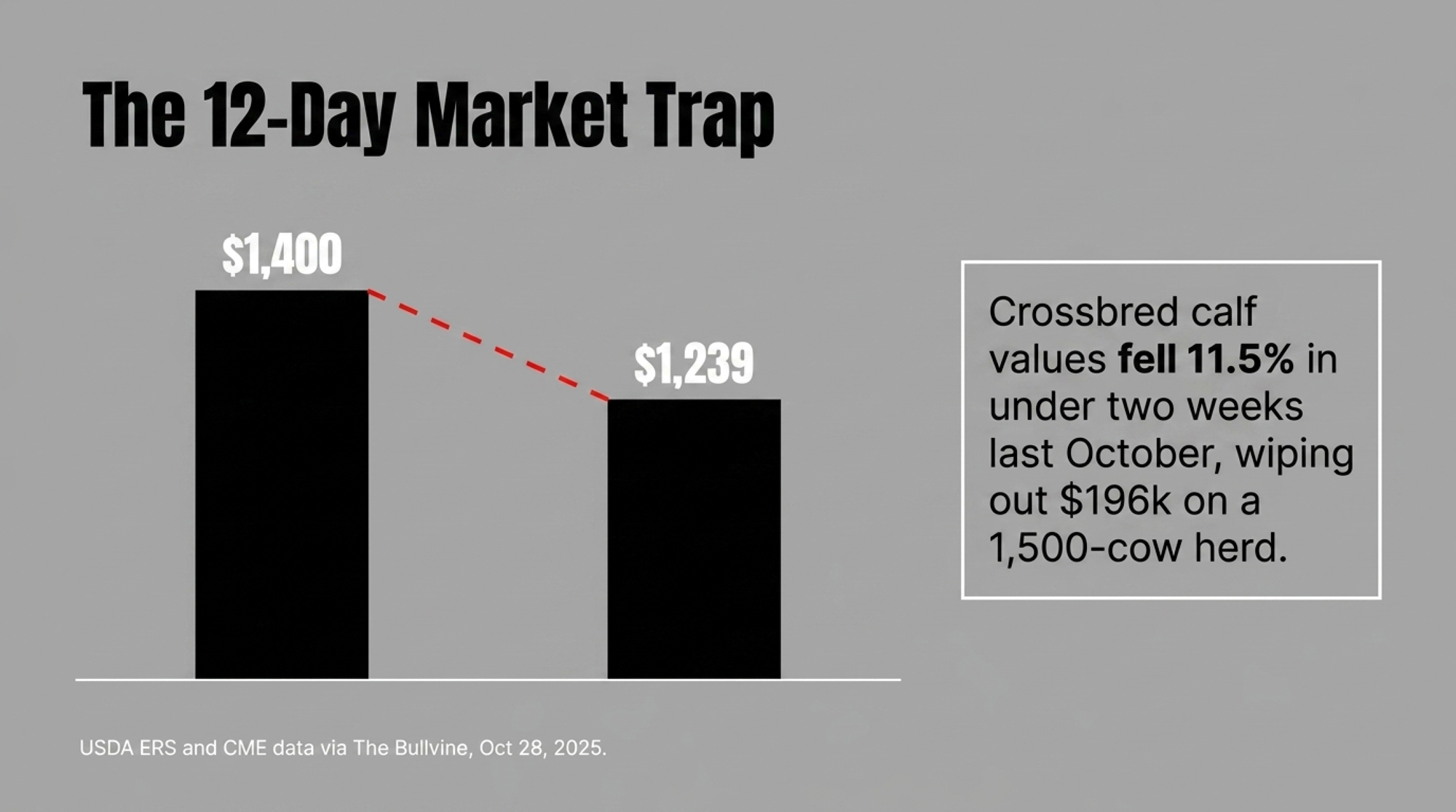
⚠ Twelve days. One import headline. Last October, crossbred calf values fell 11.5% — from about $1,400 to $1,239 a head — in roughly 12 days, after a market break tied to signals about reopening cattle and beef imports. For a modeled 1,500-cow herd breeding 40% to beef, that swing wiped out around $196,000 in annual calf revenue — about $130.72 per cow across the whole herd (The Bullvine, October 28, 2025, citing USDA ERS and CME data).
The futures moved just as hard. CME December Live Cattle dropped from $247.88/cwt on October 16 into the mid-$220s inside two weeks. None of that volatility shows up in the premium when the calf buyer quotes you a friendly price on a Tuesday.
How Much Does That Beef Straw Actually Cost You?
Start with why one straw is worth $585 in the first place. Two markets are fighting over the same cow. The replacement heifer pipeline is the tightest it’s been in nearly half a century — about 3.905 million dairy replacements as of January 1, 2026, the lowest count since 1978. CoBank projects the pipeline entering the milking herd shrank by a combined 796,000 head across 2025 and 2026 — 357,490 fewer in 2025, 438,844 fewer in 2026 (CoBank Knowledge Exchange, June 17, 2026). Fewer heifers, pricier heifers. Which makes the dairy pregnancy you didn’t create worth more every year the shortage runs.
The math itself is just arithmetic once someone lays out the pieces. A beef service is worth your calf price times the odds it becomes a sellable calf. A sexed-dairy service is worth your local heifer cost times a stack of probabilities — conception, calf survival, heifer survival, and the share that actually make it all the way to first calving. That last one is where most people fool themselves. It’s roughly 79% (interquartile range 74–84%), out of Dr. Michael Overton’s 85-herd study presented at the 2026 High Plains Dairy Conference. Plug in a $3,010 heifer and a $500 calf, and a beef calf would have to clear about $1,580 a head to break even against sexed dairy. Most markets aren’t paying that right now.
So run your own version. The $585 isn’t a universal constant — it moves with your heifer price, your calf price, and your conception rates. But at today’s roughly $3,010 heifer and $500 calf, that’s where it lands. Multiply it by how many viable dairy dams you bred to beef last year. North of $100,000 in traded-away value — roughly 170-plus beef services at the $585 gap — and your calf premium is quietly being funded by your own heifer pipeline. Most producers have never run that exact multiplication. This week’s a good week to.
Here’s a faster gut check, the kind of stress test a lender runs. Take your last 12 months of calf and cull revenue per cwt and knock 35% off it. If that single change flips you from positive to negative cash flow, you’re not just a dairy anymore — you’re a leveraged beef play (The Bullvine, February 21, 2026). If you can’t answer that off the top of your head, that’s the first number to find.
Is Your Breeding Barn Quietly Working Against You?
There’s a deeper mechanic hiding under the dollars, and it’s easy to miss until calf revenue climbs toward half your top line. When that happens, the buyer at the far end of the chain starts writing your breeding decisions for you. Packers pay for calves that hit carcass specs, so feedlots chase the calves most likely to hit them — and that pressure runs all the way back to the straw your breeder picks up at your farm gate. You still own the cows. But somewhere in there, the spec started co-authoring your breeding sheet.
That’s exactly why operations like McCarty’s genomic-test every female, breed the top half to sexed dairy and the bottom to beef, and match sire selection to what the feedlot and packer actually want. The discipline isn’t optional at that scale. It’s the whole reason the 50%-of-revenue calf check is an asset instead of a liability. Even the researcher who built the industry’s beef-on-dairy model thinks the pendulum swung too far: “We used too much beef semen,” Dr. Victor Cabrera of UW-Madison told The Bullvine. “We entered into the problem — which I think now we are coming out of.” The farms that get burned are the ones running beef by feel, breeding good cows to Angus because last month’s check felt good — and not noticing they’ve over-beefed their best genetics until the heifer bill lands.
Options and Trade-Offs for Your Herd
There’s no single right answer here. There’s a right answer for your fertility, your debt, and your heifer needs — and it probably isn’t your neighbor’s. Here’s how farms are actually playing it.
Strategy
Best-fit herd
When it works
Where it bites
Genomic-tier it (top½ dairy, bottom⅓ beef)
Any herd with repro discipline
Best genetics build your line; calf check rides the rest
Skip the annual recheck and you over-beef your best cows by drift
Rank every female. Breed the top half to sexed dairy, the bottom third to beef, and post the policy where the breeding calls actually get made. This fits almost any herd with reproductive discipline. It needs genomic testing and a written plan.
When it works: You keep your best genetics building your line while the calf check rides on the animals you weren’t keeping anyway.
Where it bites: Skip the annual recheck and you’ll over-beef your best cows by drift — and catch it too late.
2. Cap the beef share around one-third of pregnancies
Hold beef to roughly a third of pregnancies, in line with the broader industry mix — sexed dairy runs about 37% of the market and beef-on-dairy about 32% (Ag Proud, 2024; NAAB 2025).
When it works: You bank calf income without draining the replacement tank in a $3,000-plus heifer market.
The trade-off: You leave some short-term premium on the table today to keep from being a forced springer buyer tomorrow.
3. Insure the calf stream
Once beef is a real revenue line, price Livestock Risk Protection on it the way you’d run Dairy Revenue Protection on milk. Ag lenders are increasingly pushing producers to do exactly that.
When it works: It insulates cash flow from a sudden break like last October’s.
The trade-off: It costs premium dollars in the calm years — and last October is the entire reason it exists.
4. Push beef harder — but only if your reproduction has earned it
A genuinely high-fertility herd that consistently makes more dairy heifers than it needs can run more beef with a clear conscience, because it isn’t borrowing from a pipeline it can’t refill. Fix repro first. Cabrera’s peer-reviewed modeling found beef semen is an attractive proposition only for herds with at least a roughly 20% 21-day pregnancy rate — and that the return turns negative or marginal for low-performance herds around 15%, while herds at 30% can generate the strongest calf income (Cabrera et al., JDS Communications, 2021). The right beef share for a 30% pregnancy-rate herd is simply not the right share for one sitting at 17%.
One forward-looking piece to fold into all of this: don’t count on the heifer market bailing you out. CoBank projects the rebuild finally starts in 2027 and 2028 — but adds back only about 360,200 head over the two years, with 285,400 entering the milking herd in 2027. Enough to slow the bleeding against a 796,000-head hole. Nowhere near enough to refill the tank. Budget replacements at $3,800 to $4,800 a head through the 2027 peak, and pencil it in before anyone at the kitchen table wants to say that number out loud.
Key Takeaways
If you bred more than a handful of your good cows to beef last year, run the $585 multiplication before your next repro meeting. North of $100,000 in traded-away value means your calf premium is funded by your own heifer pipeline.
If knocking 35% off last year’s calf and cull revenue would flip your cash flow negative, you’re a leveraged beef play — cap the exposure now.
If your 21-day pregnancy rate is under 20%, park the beef-share debate and fix reproduction first.Cabrera’s modeling says beef semen’s return goes marginal or negative below that line.
If you haven’t repriced replacements lately, budget $3,800–$4,800 a head through the 2027 peak. The rebuild is a crawl of about 360,200 head over two years, not a comeback.
If beef sales clear ~20% of your revenue, price the LRP this quarter. Lenders already treat that income like milk. So should you.
If you can’t state your beef-share ceiling out loud, you don’t have one. Write it down before drift decides it for you.
The Real Independence Question
There’s a fitting irony for the Fourth. The trade keeping so many farm families independent — on their own land, on their own terms — is the same trade that can hand your fate to one volatile market overnight. Independence was never the calf check. It’s knowing your own numbers well enough that no single price swing gets to decide whether you’re still farming next year.
McCarty sits at 50% of revenue from calves because he built a system precise enough to carry that weight. Plenty of farms never built the system — they just leaned harder on the beef straw because the check cleared and the milk price didn’t. So the honest question this Independence Day isn’t whether beef-on-dairy works. It clearly does. The sharper one: if calf prices dropped 11.5% again next month, would your operation feel a dip — or a hole?
Pull your last breeding records and 12 months of calf revenue before your next repro meeting, run both the $585 math and the 35% test against your own numbers, then take them to your genetics rep and your lender in the same week. While the big systems argue over where dairy’s headed — the War of the Worlds fight over the industry’s future playing out over your head — this is how one farm actually survives the crossfire, one breeding decision at a time. We’re breaking down the full per-service and whole-herd model by herd size in the next Bullvine Weekly. That’s where the real numbers live.
Methodology Note. The $585-per-service figure and its components come from a single Bullvine model and are illustrative at today’s prices, not fixed constants. The model assumes a roughly $3,010 national-average replacement heifer (CoBank Knowledge Exchange, mid-2025) and a roughly $500 beef-cross calf. Expected value of a sexed-dairy service (about $854) is heifer cost times conception probability, calf survival, heifer survival to breeding, and heifer completion to first calving — the last using the ~79% completion rate (IQR 74–84%) from Dr. Michael Overton’s 85-herd dataset presented at the 2026 High Plains Dairy Conference. Expected value of a beef service (about $271) is calf price times beef conception and calf-survival probabilities. The components round independently, so the gap prints as roughly $583–$585. The ~$117,000 (200 services), ~$35,000 (60 services on a 300-cow herd), and $1,580 breakeven calf price all shift with your own inputs. Recalculate with your numbers. The arithmetic, not the specific dollar figure, is the part that transfers.
Complete references and supporting documentation are available upon request by contacting the editorial team at editor@thebullvine.com.
Learn More
Transform Your Dairy Economics: How Beef-on-Dairy Crossbreeding Delivers 200% ROI — Arms your breeding program with actionable crossbreeding metrics like average daily gain and feed conversion. This protocol shifts focus onto genetic selection science, showing how matching specific beef sires can cut down feed costs by over $100 per head.
$3010 Per Heifer. 800000 Short. Your Beef-on-Dairy Bill Is Due. — Exposes the long-term structural reality of the nation’s 800,000 missing replacements against a massive $10 billion processing plant expansion. Learn how to navigate four concrete paths to protect your herd turnover without sacrificing cash flow.
Every week, thousands of producers, breeders, and industry insiders open Bullvine Weekly for genetics insights, market shifts, and profit strategies they won’t find anywhere else. One email. Five minutes. Smarter decisions all week.
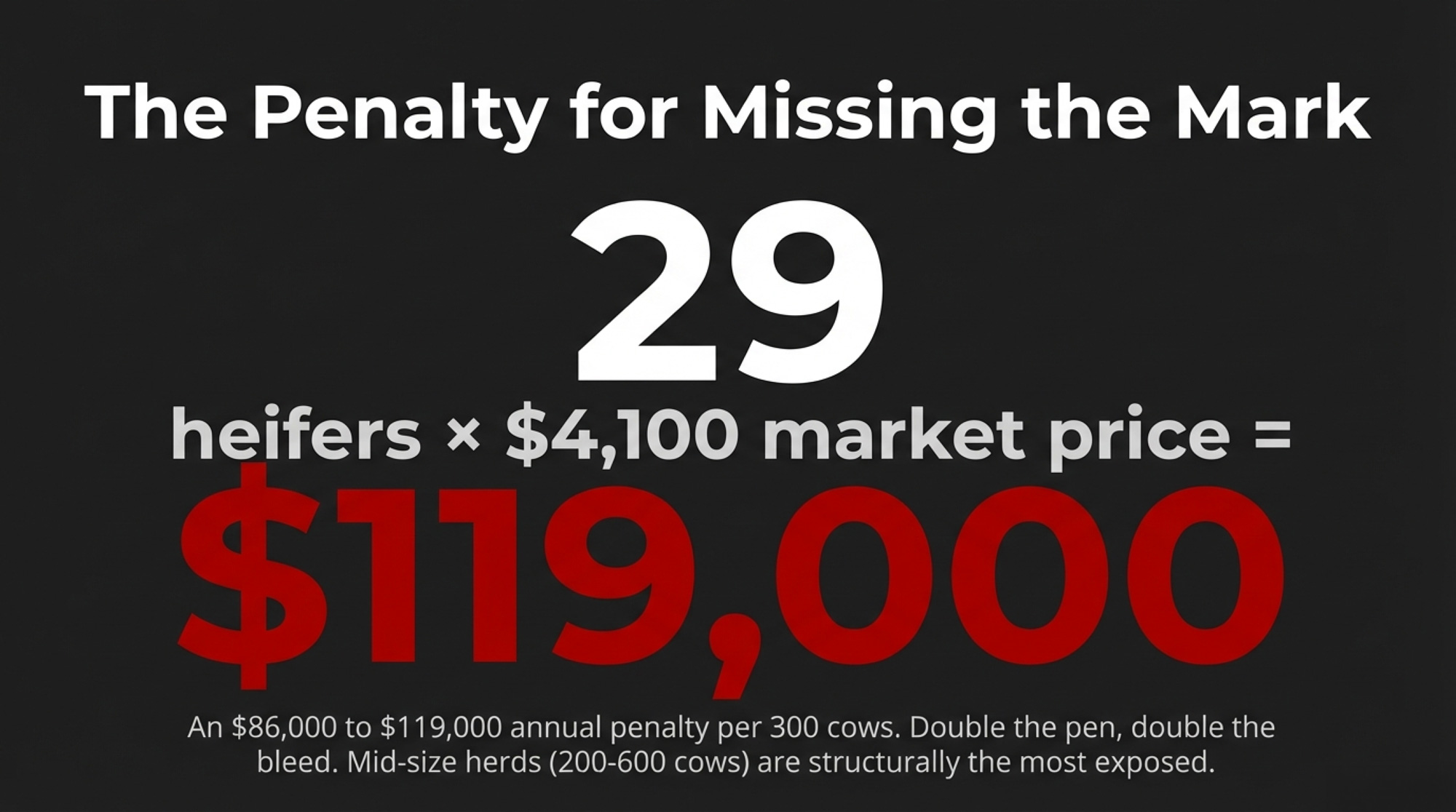
Beef‑on‑dairy made your calf cheque bigger. Did it also steal 29 heifers and $86K–$119K from your next two years?
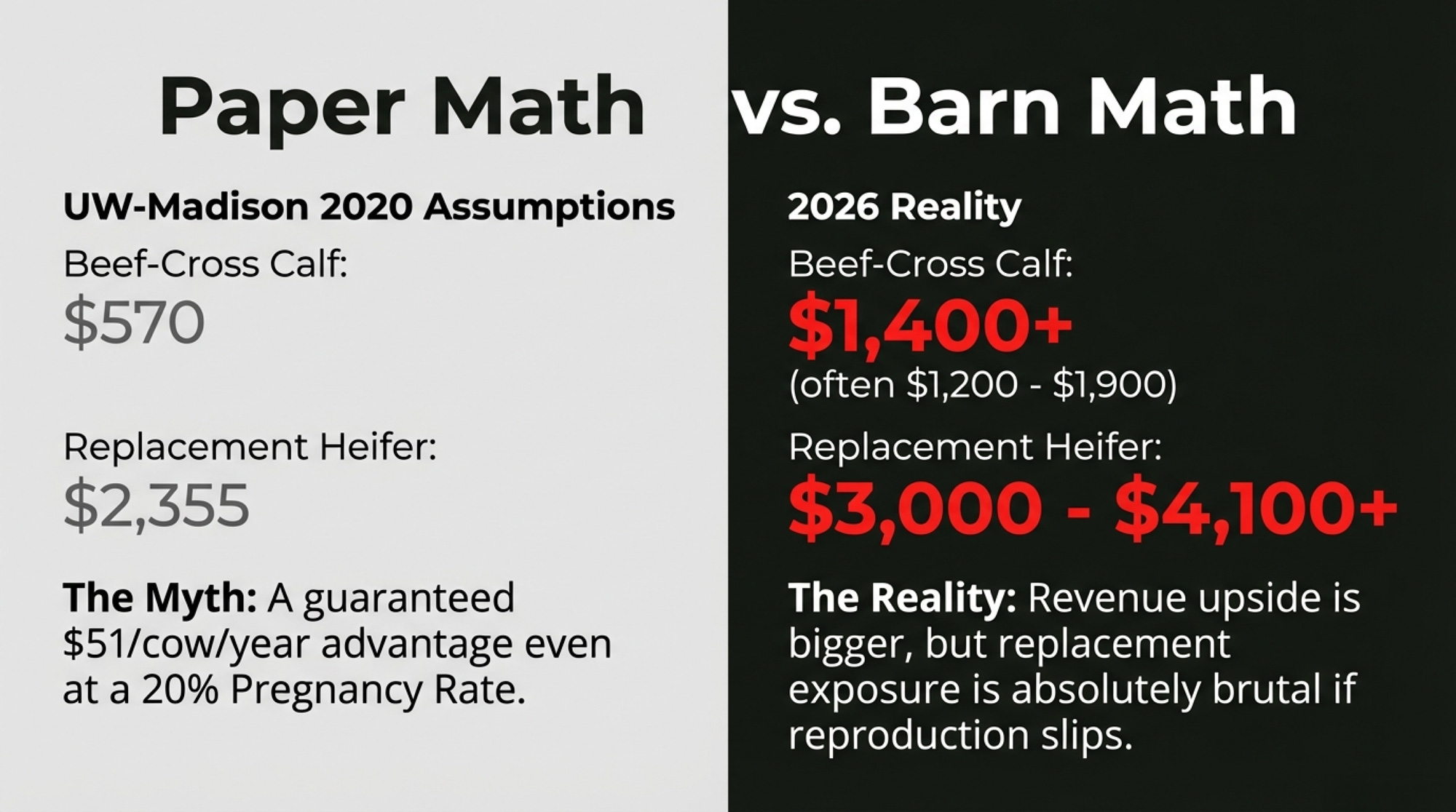
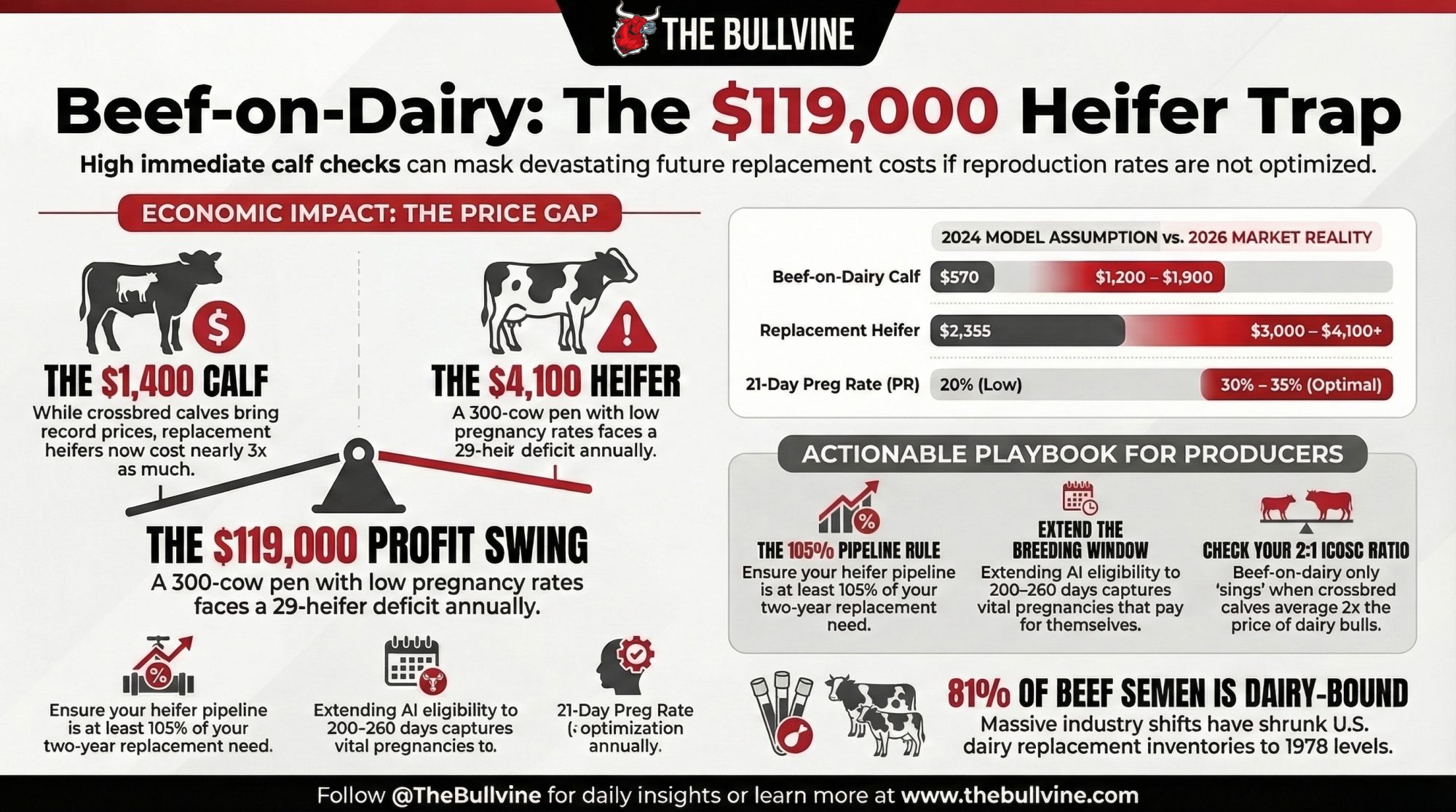
Executive Summary: UW–Madison’s beef‑on‑dairy simulation says a sexed‑plus‑beef program earns about $51/cow/year at 20% preg rate — but that’s built on $570 calves and $2,355 heifers, not today’s prices. In 2026, beef‑on‑dairy calves are bringing roughly $1,200–$1,900, while replacement heifers often cost $3,000–$4,100+, which means the model’s revenue upside is bigger — and the replacement bill is brutal if repro slips. Run the same tiered breeding strategy on a 300‑cow group, and you get two very different outcomes: a high‑PR herd with a 17‑heifer surplus, and a low‑PR herd that’s 12 heifers short — a 29‑head swing worth $86,000–$119,000 a year at current heifer prices. The core takeaway is simple: beef‑on‑dairy is a reproduction strategy first and a calf‑marketing strategy second, and the economics only really work when your 21‑day PR is closer to 30–35% with solid heifer survival. UW–Madison’s most uncomfortable insight is that the optimal insemination window under these calf prices stretches out to around 260 days in milk, so cutting cows at 150–180 days quietly throws away pregnancies and future replacements. The article finishes with a 30/90‑day playbook: pull your PR and 24‑month replacement inventory, check whether your beef‑on‑dairy calves actually average close to 2× your dairy bull calves, and decide how far you can lean into beef‑on‑dairy before you’re forced to buy back heifers at the top of the market.
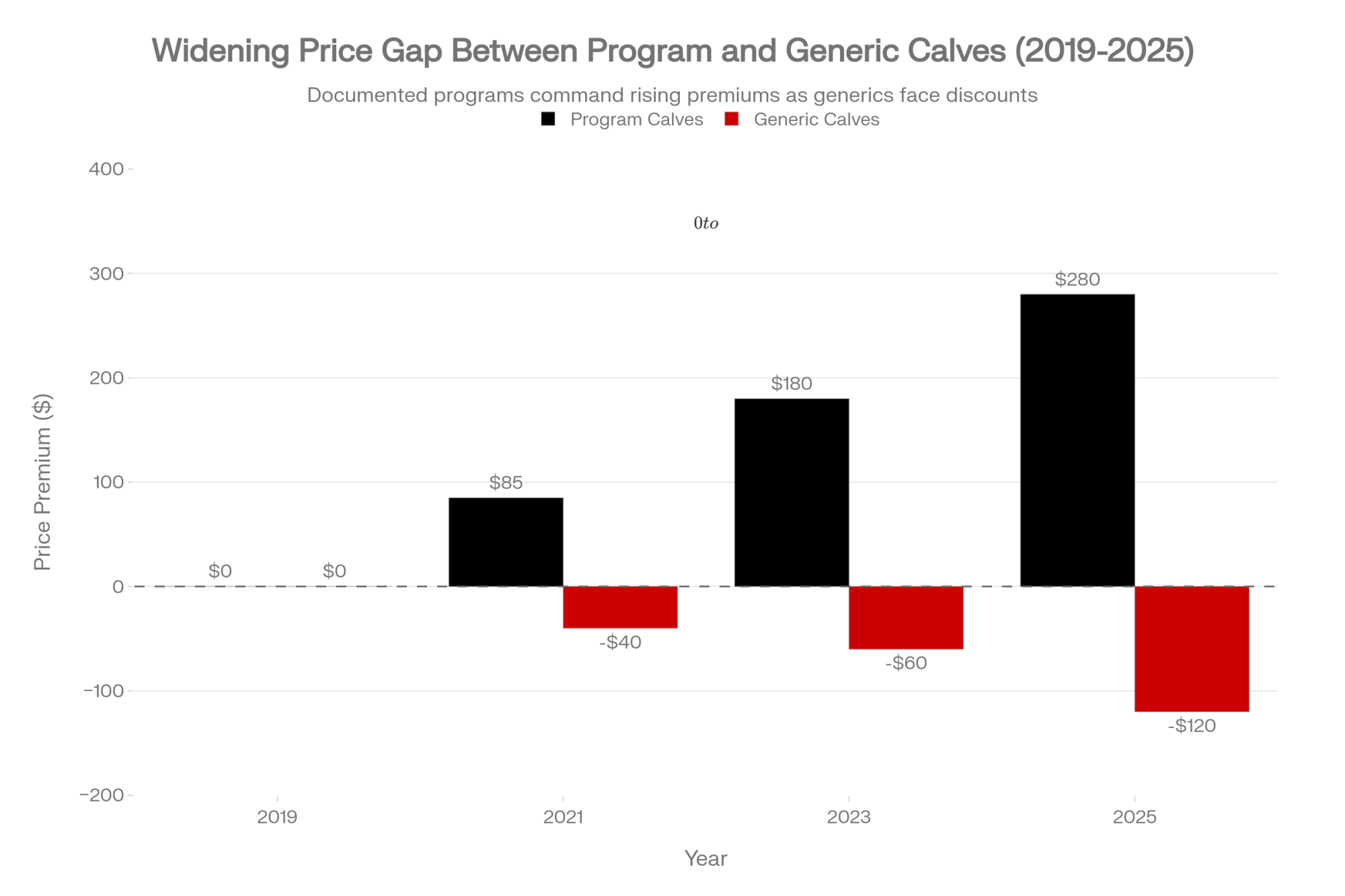
A replacement heifer that cost $2,355 in UW–Madison’s 2024 assumptions is now a $3,000–$4,100 line item in real markets. The same model valued beef‑on‑dairy calves at $570 — calves that now commonly bring $1,200–$1,900 at major auctions. On paper, the strategy adds $51/cow/year at low pregnancy rates. In the barn, the wrong breeding plan can torch $86,000–$119,000 per 300‑cow pen in replacement costs.
Price Component
UW–Madison Model (2024)
Real Market (Early 2026)
Variance
Impact
Beef × Dairy Calf
$570
$1,200–$1,900
+111% to +233%
Higher revenue (but see replacement crisis)
Dairy Bull Calf
$385
$900–$1,200
+134% to +212%
Narrows beef-on-dairy advantage vs. conventional
Replacement Heifer
$2,355
$3,000–$4,100
+27% to +74%
Replacement bill brutal if PR slips
Net Advantage (20% PR)
$51/cow/year
$264+/cow/year
+418%
Looks great—until you’re 12 heifers short
300-Cow Replacement Gap
29-head swing assumed manageable
29 heifers × new prices = $86K–$119K/year
—
The bill the calf cheque doesn’t cover
The Industry Sprint Toward the Calf Cheque
Corey Geiger, lead dairy economist at CoBank, summed up the last five years of beef‑on‑dairy in one line: “What happened was we pivoted too hard, too quick.” The industry didn’t just pivot. It sprinted toward the calf cheque and tripped over the empty heifer pens.
Eighty‑one percent of all beef semen sold domestically now goes into dairy herds — 7.9 million units out of 9.7 million, according to NAAB’s 2024 year‑end report. Conventional dairy semen sales shrank 46.5% in that same window. USDA’s January 2026 Cattle report shows U.S. dairy replacement heifers at 3.905 million head, the lowest since 1978. CoBank projects inventories will shrink by 357,490 head in 2025 and another 438,844 head in 2026 before rebounding by 285,387 head in 2027.
Those numbers mean the calves you’re selling today, and the heifers you’re not making will collide in your barn, not just in a spreadsheet.
The $4,100 Heifer vs. the $1,400 Calf
UW–Madison’s economic simulation — published in Journal of Dairy Science in late 2025/early 2026 — modeled a 1,000‑cow dairy using a tiered breeding program: top cows to sexed semen, middle to conventional, bottom to beef. Their default economics looked like this:
Beef × dairy crossbred calf: $570 per head.
Dairy bull calf: $385.
Dairy heifer calf: $167.50.
Replacement heifer rearing cost:$2,355.
Using those inputs, a herd at 20% 21‑day pregnancy rate (PR) with a 170‑day insemination eligibility period (IEP)earned about $51 more per cow per year from a sexed‑plus‑beef strategy than from an all‑conventional program. That’s the famous $51.
Now line that up with what you’re seeing in early 2026:
Premier Livestock’s February 12, 2026, report lists beef‑dairy cross calves at $1,200–$1,910 per head.
Abbotsford Stockyards’ January 14, 2026, report shows baby calves averaging $1,680 with a $500–$2,500 range and Holstein bull calves at $390–$680.
USDA’s January 2026 National Dairy Comprehensive Report has No. 1 bull calves (0–14 days) averaging $1,187.42/cwt and No. 2 at $1,094.10/cwt nationally.
CoBank’s heifer analysis and multiple auction summaries put replacement heifers consistently at $3,000–$4,000+, with some lots exceeding $4,100.
So the calf UW assumed was worth $570 is now worth closer to $1,400. The heifer priced at $2,355 is now more like $3,000–$4,100. The per‑cow advantage is better than $51 at current prices. The replacement exposure is a lot worse.
UW–Madison’s Simulation vs. Your Barn Math
Dr. Victor Cabrera’s 2021 work clarified why beef‑on‑dairy looked like free money. He defined ICOSC — income from calves over semen costs — and showed that beef‑on‑dairy pencils when the beef‑cross calf brings roughly 2× the dairy calf price in herds with at least a 20% 21‑day PR. That 2:1 ratio became gospel.
In 2026, the ratio’s not that clean:
Beef‑on‑dairy calves often bring $1,200–$1,900.
When you translate current cwt and regional reports, Holstein bull calves commonly sit at roughly $900–$1,200equivalent.
Some weeks you’re well past 2:1. Others you’re barely at 1.3–1.5:1. ICOSC advantage has turned into a local, week‑by‑week math problem — not a guaranteed win.
M.R. Lauber, Cabrera, and Paul Fricke went further in their JDS paper, building a discrete Markov‑chain simulation that looked at herd size, semen types, IEP, PR bands from 20–40%, and heifer survival from 75–90%. When they raised the beef‑cross calf value in the model from $570 to $1,125, the net return advantage at 20% PR climbed from $51/cow/year to $264/cow/year. That fits current markets.
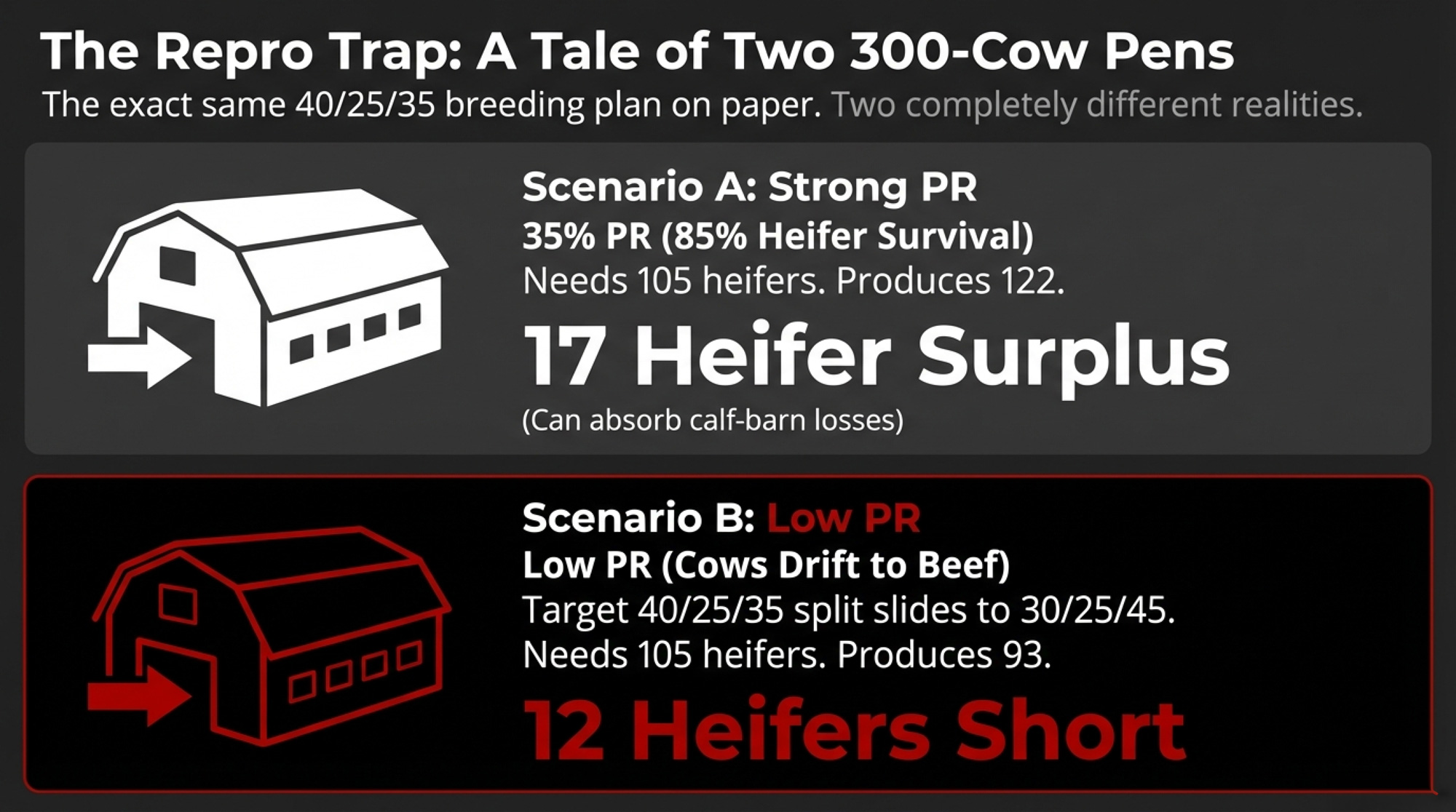
Conventional matings: 75 cows × 46.7% female = ~35 heifer calves (Silva del Río et al. 2007 conventional estimate).
Beef matings: 105 calves = 0 replacements.
Total dairy heifers born: ~144. After 85% survival: ~122 replacements available.
You need 105. You’ve got a 17‑heifer cushion. That pen can absorb some calf‑barn losses and still hold herd size.
Scenario B — Low‑PR Herd (More Cows Drift to Beef)
Drop the 21‑day PR and something ugly happens. Fewer cows conceive in that early sexed‑semen window. They cycle back, enter later services, and more of them get bred to beef.
Total dairy heifers born: ~117. After 80% survival: ~93 replacements available.
You still need 105. Now you’re 12 heifers short. Every year. Same herd size. Same breeding plan on paper. The only difference is reproduction and survival.
The Dollar Hit
UW–Madison priced replacements at $2,355 based on 2020 rearing costs. CoBank and current sale data now peg them at around $3,000–$4,100. That 29‑heifer swing between Scenario A and Scenario B works out to:
29 heifers × $3,000 = $87,000.
29 heifers × $4,100 = $118,900.
Call it $86,000–$119,000 per year on a 300‑cow group. Double the group, double the bill.
That’s without counting lost milk from cows you culled sooner because you wouldn’t carry them open to 260 days, or the premium you’ll pay if you’re forced into the replacement market when everybody else is short, too.
Mid‑size herds — 200–600 cows running 33–36% replacement rates — are structurally more exposed than 3,000‑cow herds sitting closer to 28–31%. Same program, much less room to miss.
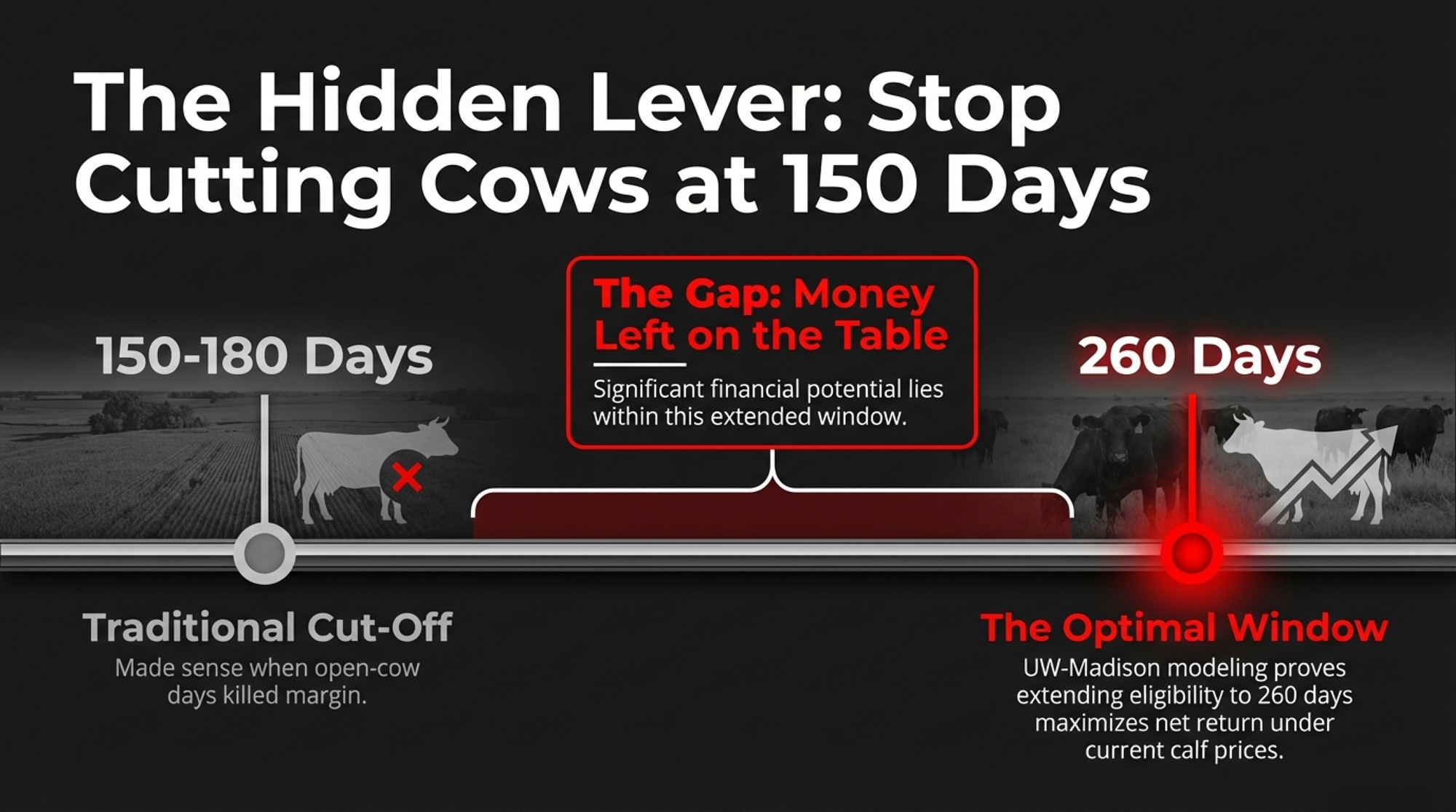
The Hidden Lever: 260‑Day IEP (The One Thing Most Herds Are Getting Wrong)
One of the quiet bombshells in Lauber, Cabrera, and Fricke’s modeling is their answer to a simple question: how long should a cow stay eligible for AI in a beef‑on‑dairy system? Not just “what’s your PR?” or “what semen are you using?” but “when do you stop trying?”
In their model, the optimal insemination eligibility period for sexed+beef herds typically sat around 200 days, and they tested windows all the way out to 260 days. The bigger message is that most herds are stopping far too early in a beef‑on‑dairy world.
Most of you are still removing cows from the breeding pool at 150–180 days in milk. That made sense when every extra breeding had limited upside and open‑cow days killed margin over feed. With beef‑on‑dairy in the mix, the upside of one more pregnancy looks very different.
Pro‑Tip: The 260‑Day Window
UW–Madison tested IEPs from 50 to 260 days and found that, at today‑equivalent calf values, extending eligibility beyond 170 days — often toward roughly 200 days for sexed+beef programs — moved net return up as long as replacement needs were covered.
Stopping at 170 days under a beef‑on‑dairy program leaves pregnancies — and replacement heifers — on the table.
The trade‑off is real: more open days means higher feed and housing costs per pregnancy. But at current beef‑cross prices, the model says those extra calves more than pay for the added days.
So if you’re obsessing over which beef bull to order while quietly chopping your IEP short, you’re probably solving the wrong problem.
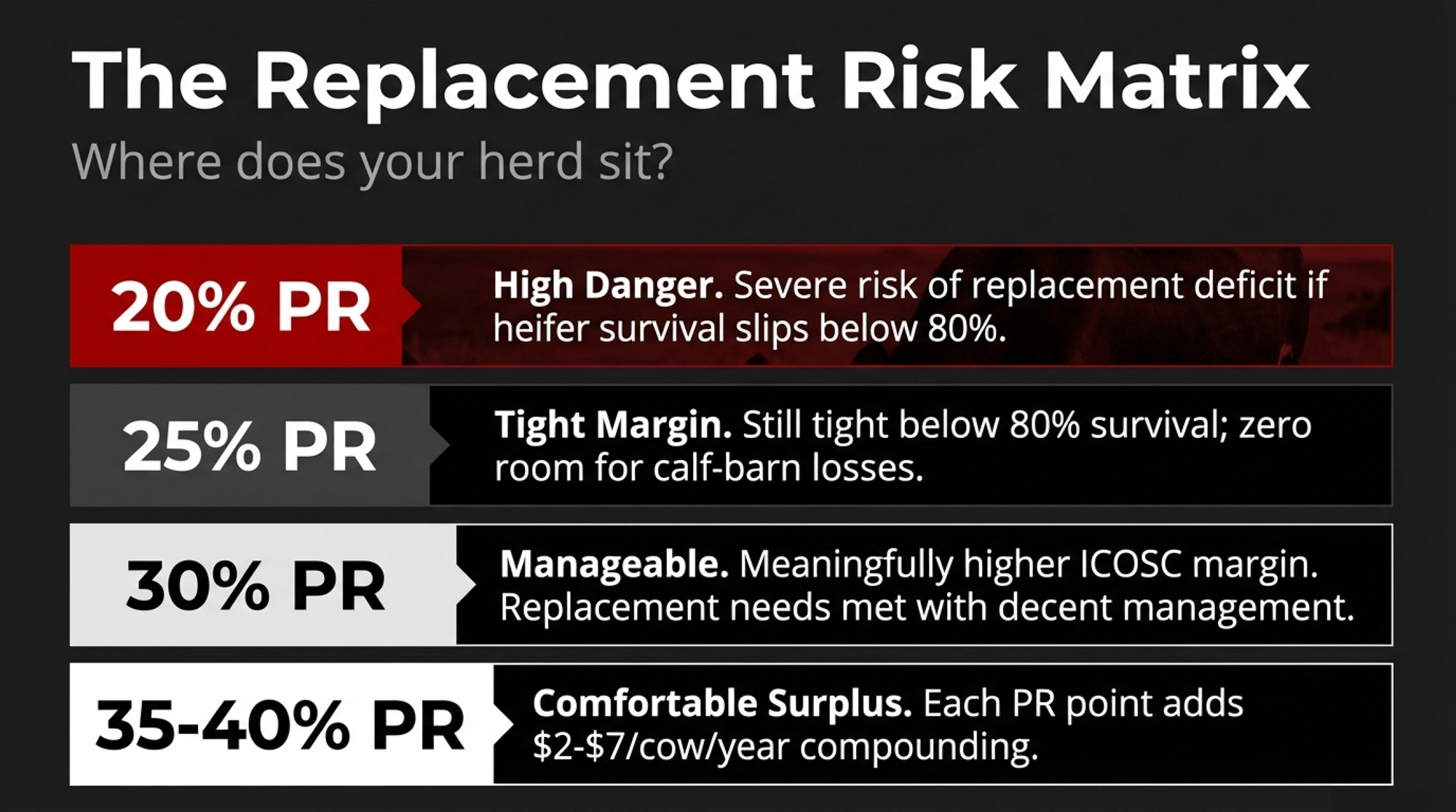
Replacement Risk: The PR Table That Should Make You Pause
Strip away the modeling details, and what’s left is a simple grid: your 21‑day PR and how much replacement risk you’re buying.
Your 21‑Day PR
Net Return Advantage (Sexed+Beef vs. Conventional)
Replacement Risk
20% (low)
≈ $51/cow/yr at $570 calves; significantly higher at today’s $1,200–$1,900
High risk of replacement deficit if heifer survival slips below 80%.
25% (below avg)
~$51 + $10–$35/cow from better PR and tiered breedings
Still tight below 80% survival; little room for calf‑barn losses.
30% (average)
Meaningfully higher ICOSC margin and calf revenue
Replacement needs manageable with decent calf and heifer management.
35–40% (high)
Substantially higher; each PR point adds $2–$7/cow/yr, compounding at herd level
Comfortable surplus in most modeled scenarios, even with lower survival.
The punchline: beef‑on‑dairy is first a reproduction strategy and only then a calf‑marketing strategy. If you’re playing it at 20–24% PR, you’re taking a high‑wire act that the UW model already flagged as thin at old-heifer prices.
Has Beef‑on‑Dairy Already Peaked?
CattleFax projected beef‑on‑dairy calf production reaching 4–5 million head annually by 2026, putting it firmly into the core of the U.S. beef supply. Purina’s 2025 beef‑on‑dairy report suggests those volumes have “likely reached their peak,” with a gradual 300,000–400,000 head decline expected in the next few years.
Semen sales tell a similar story. CoBank’s August 2025 work shows beef semen sales essentially flat from 2023 to 2024, while gender‑sorted dairy semen sales jumped 17.9% — 1.5 million extra units in a single year. “Those calves hitting the ground will become milk cows in 2027,” Abbi Prins said. The replacement pipeline is refilling. Slowly.
USDA’s January 2026 National Dairy Comprehensive Report shows No. 1 bull calves at $1,187.42/cwt and No. 2 at $1,094.10/cwt. That $93/cwt spread tells you quality already matters in the calf barn — and some of the calves you’d love to ship are the ones you may need to keep.
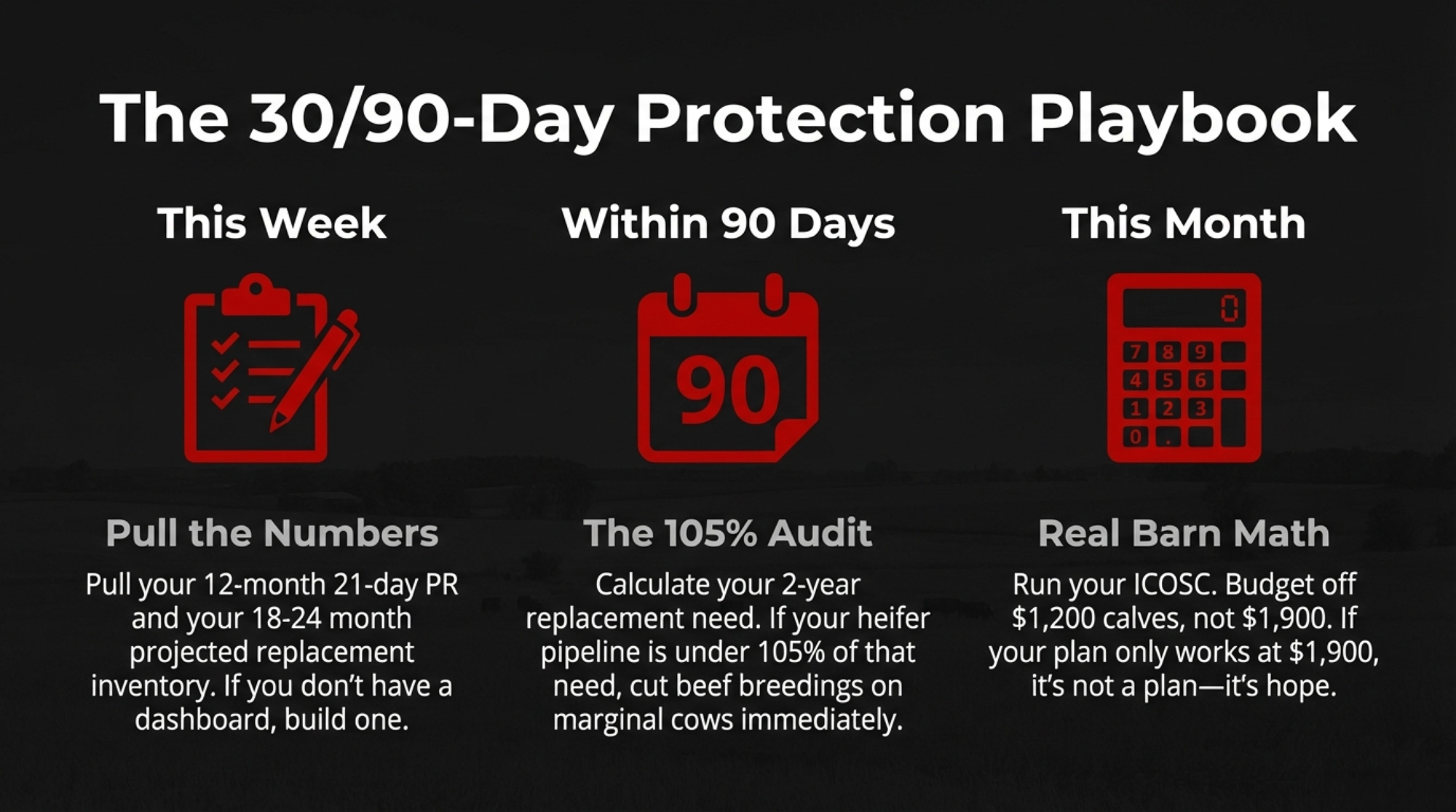
What This Means for Your Operation
This is where the story stops being about “the industry” and starts being about your next breeding cycle.
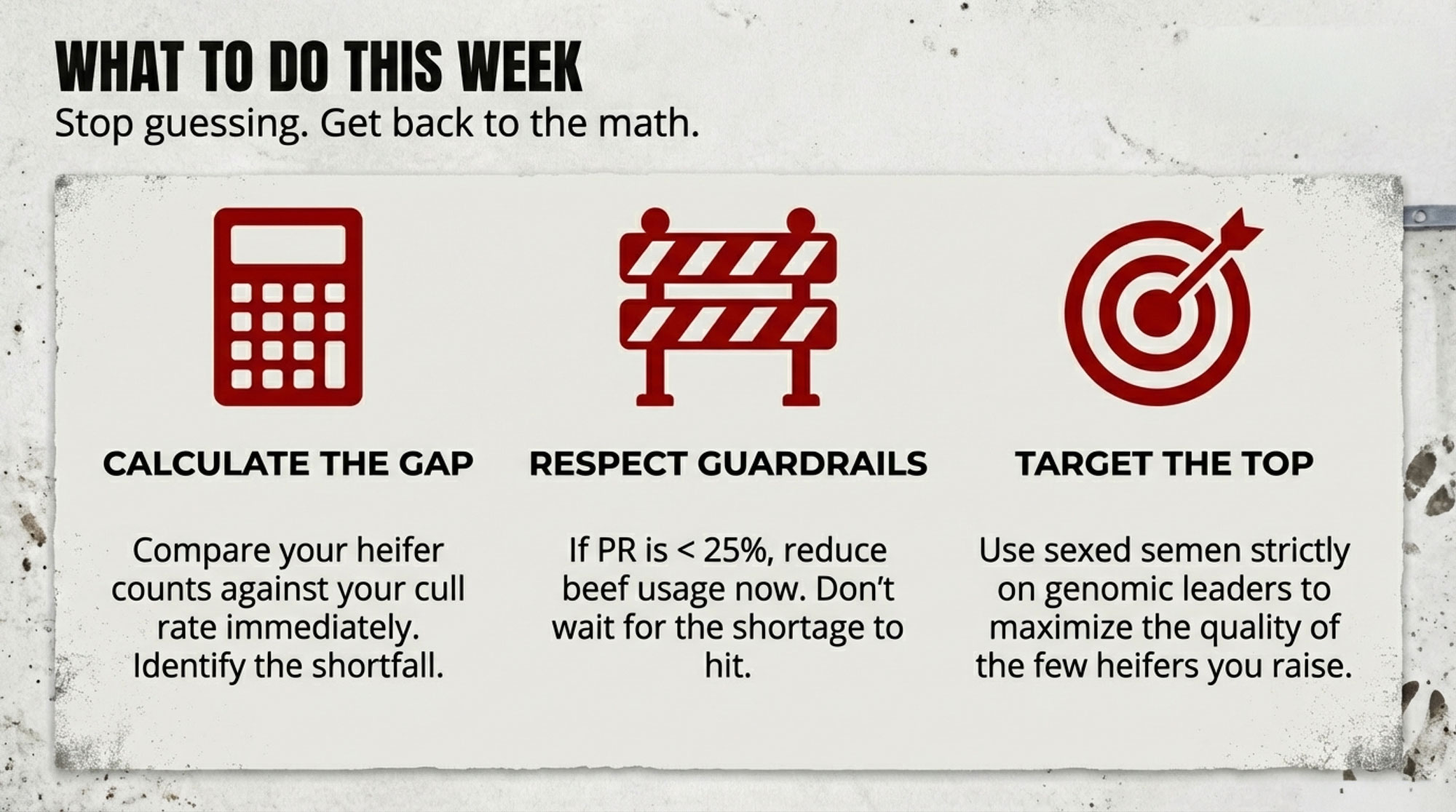
This week: Put PR and replacements on the same page.
Pull two reports:
Your rolling 12‑month 21‑day pregnancy rate.
Your projected replacement heifer inventory 18–24 months out (bred heifers + open heifers + heifer calves × your real survival rate).
If you can’t get both out of your herd software or records, that’s the first problem to fix. You’re running a replacement‑sensitive strategy without a dashboard. For a deeper management lens, come back to Bullvine’s beef‑on‑dairy management playbook.
Within 90 days: Run a 24‑month replacement audit.
Calculate your two‑year replacement need: herd size × (cull rate + death loss) × 2.
Stack that against your heifer pipeline: breds + opens + calves × survival.
If the pipeline is under 105% of your two‑year replacement need, that’s a yellow light. Under 100%, it’s red. Your next breeding round should cut beef breedings on marginal cows and push more sexed/conventional semen until the pipeline is back above that 105% buffer.
By your next annual breeding review: Put beef‑on‑dairy on a cash basis.
Add up 12 months of beef‑on‑dairy calf revenue.
Add up 12 months of replacement heifer costs (purchased and fully costed home‑raised, to first calving).
Subtract the heifer cost from the calf revenue.
That net number — not your best calf‑sale week — is what beef‑on‑dairy is actually earning your operation.
This month: Run your own ICOSC check.
Take actual dairy bull calf and beef‑on‑dairy calf prices from the last 12 months.
If your beef‑cross calves aren’t averaging close to 2× your dairy bull calves, the ICOSC advantage Cabrera modeled at 20% PR gets thinner for your herd.
That doesn’t mean abandon beef‑on‑dairy. It just means the economics only really sing when reproduction has your back.
At your next repro strategy meeting: Talk about 260 days, not just “too many open cows.”
Ask your vet and nutritionist:
Which cows can realistically stay in the breeding pool to 260 DIM and still make sense in terms of production and health?
Which cows still need to leave earlier because of feet, legs, mastitis, or poor milk?
Model what happens if you extend the IEP from 170 to 220 to 260 days — how many pregnancies do you pick up, and what does that add in calf revenue vs. extra feed cost? UW’s model says the extra pregnancies pay at current prices; your numbers should verify that.
Budget off $1,200 calves, not $1,900.
If your plan only holds together when beef‑on‑dairy calves bring $1,800–$1,900, it’s not a plan — it’s hope. Build the math on $1,200 and let the good weeks be real upside.
Key Takeaways
If your 21‑day PR sits near 20%, beef‑on‑dairy is a high‑risk play. The UW model’s $51/cow/year advantage at 20% PR is based on $570 calves and $2,355 heifers. At today’s prices, the revenue is better — but the same model shows you can easily fall short on replacements if heifer survival sags or too many cows drift into beef breedings.
If you’re above 30% PR, the question isn’t “should we?” It’s “how hard do we lean?” Each PR point adds $2–$ 7 per cow per year to the breeding‑strategy advantage. On a 500‑cow herd, a 10‑point PR jump is $10,000–$35,000/year from semen strategy alone.
If you haven’t done a forward replacement count, you’re not managing beef‑on‑dairy — you’re hoping the bill isn’t too big. The same breeding plan can leave one 300‑cow group with a 17‑heifer surplus and another 12 heifers short, a 29‑head swing worth $86,000–$119,000 at current heifer prices.
If you’re still cutting breeding eligibility off at 150–180 days, you’re almost certainly leaving pregnancies and heifers on the table. UW–Madison’s work points to an optimal 260‑day IEP under current calf values. You gain more calves and replacements; you give up some feed efficiency. The money is in deciding where that trade‑off lands on your farm.
The Bottom Line
The calf cheque is immediate. The replacement bill is patient. Geiger’s warning about sprinting toward beef‑on‑dairy and Prins’s view that heifer prices haven’t peaked both land yet in the same place. UW–Madison, working off assumptions that now look cheap, still only found a $51/cow edge at low pregnancy rates.
You already know what your beef‑on‑dairy calves brought last week. The better question is simple and uncomfortable: how many heifers are you short 18–24 months from now, and what’s that really costing you?
Complete references and supporting documentation are available upon request by contacting the editorial team at editor@thebullvine.com.
Learn More
Beef-on-Dairy’s $6,215 Secret: Why 72% of Herds Are Playing It Wrong – Reclaim your herd’s profitability with a precision blueprint that stops the breeding guesswork. This breakdown reveals the specific reproductive “guard rails” that turn a $2,000 monthly gain into $6,000, arming you with a clear, performance-based strategy for your next pen.
$3,010 Per Heifer. 800,000 Short. Your Beef-on-Dairy Bill Is Due. – Secure your operation’s future against a structural 800,000-head heifer deficit. This analysis exposes the upcoming 2027 supply collision, delivering the market intelligence you need to navigate $4,000 price tags and lock in essential processor partnerships before the window slams shut.
Every week, thousands of producers, breeders, and industry insiders open Bullvine Weekly for genetics insights, market shifts, and profit strategies they won’t find anywhere else. One email. Five minutes. Smarter decisions all week.
If your only beef-on-dairy metric is today’s calf cheque, you’re ignoring the $3,000 heifer bill with your name on it.
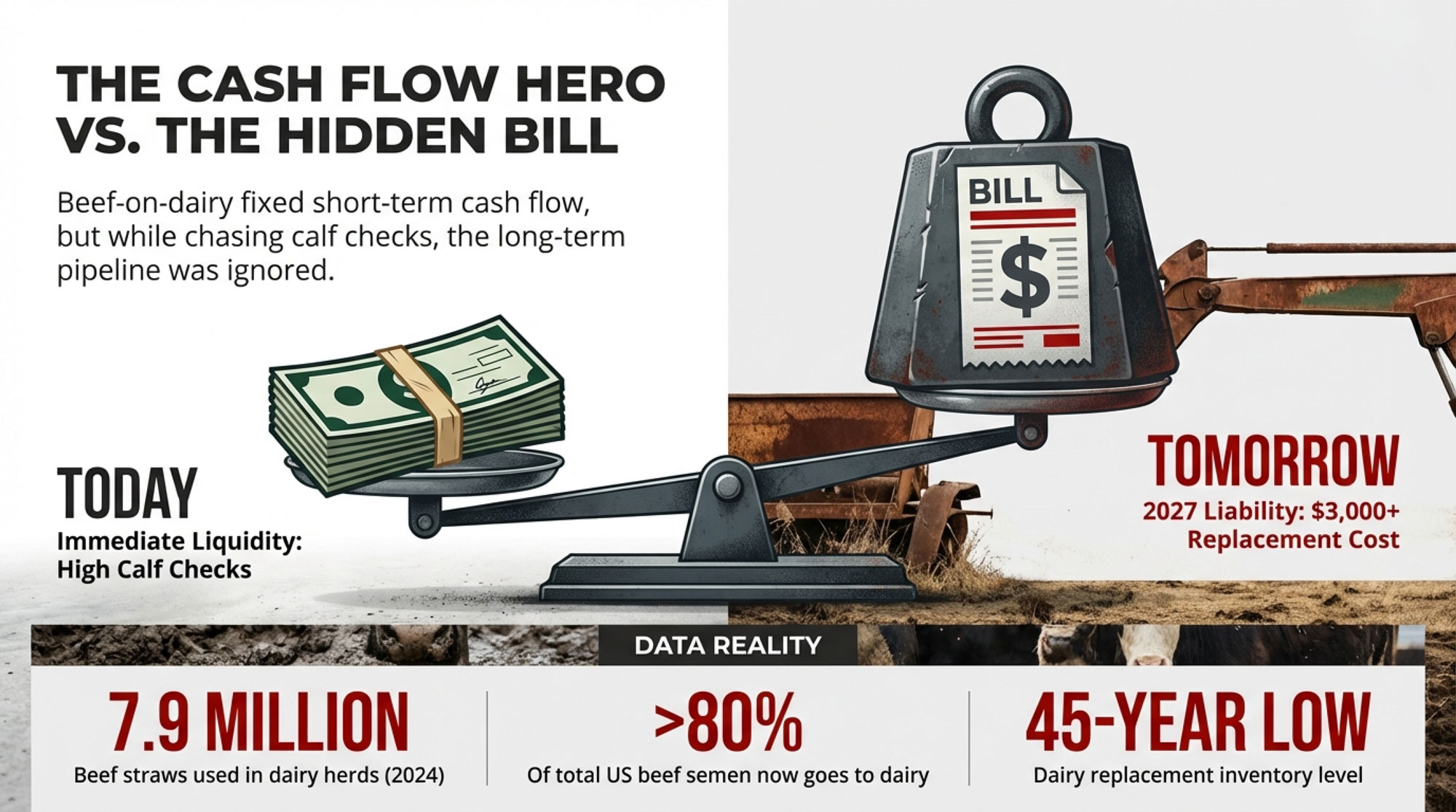
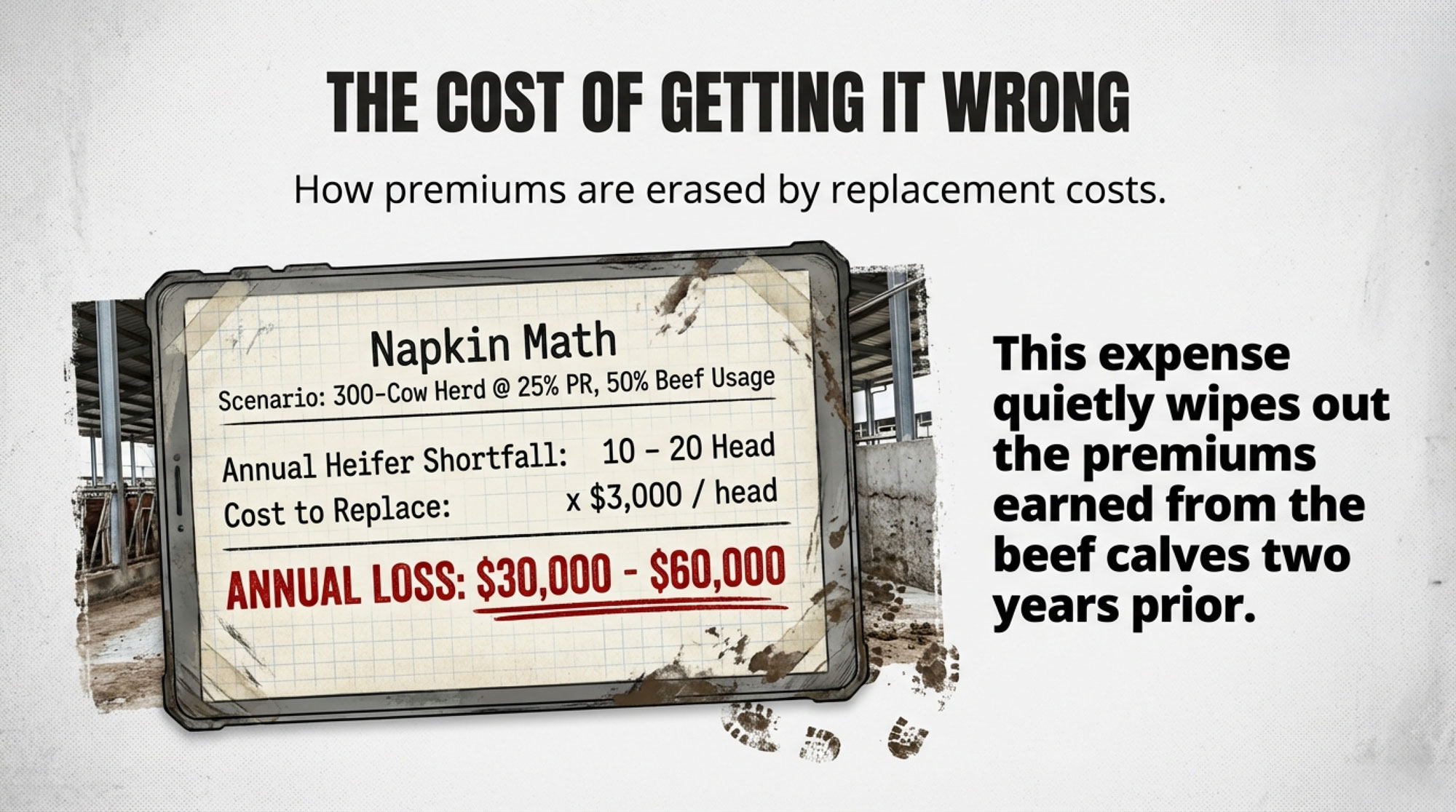
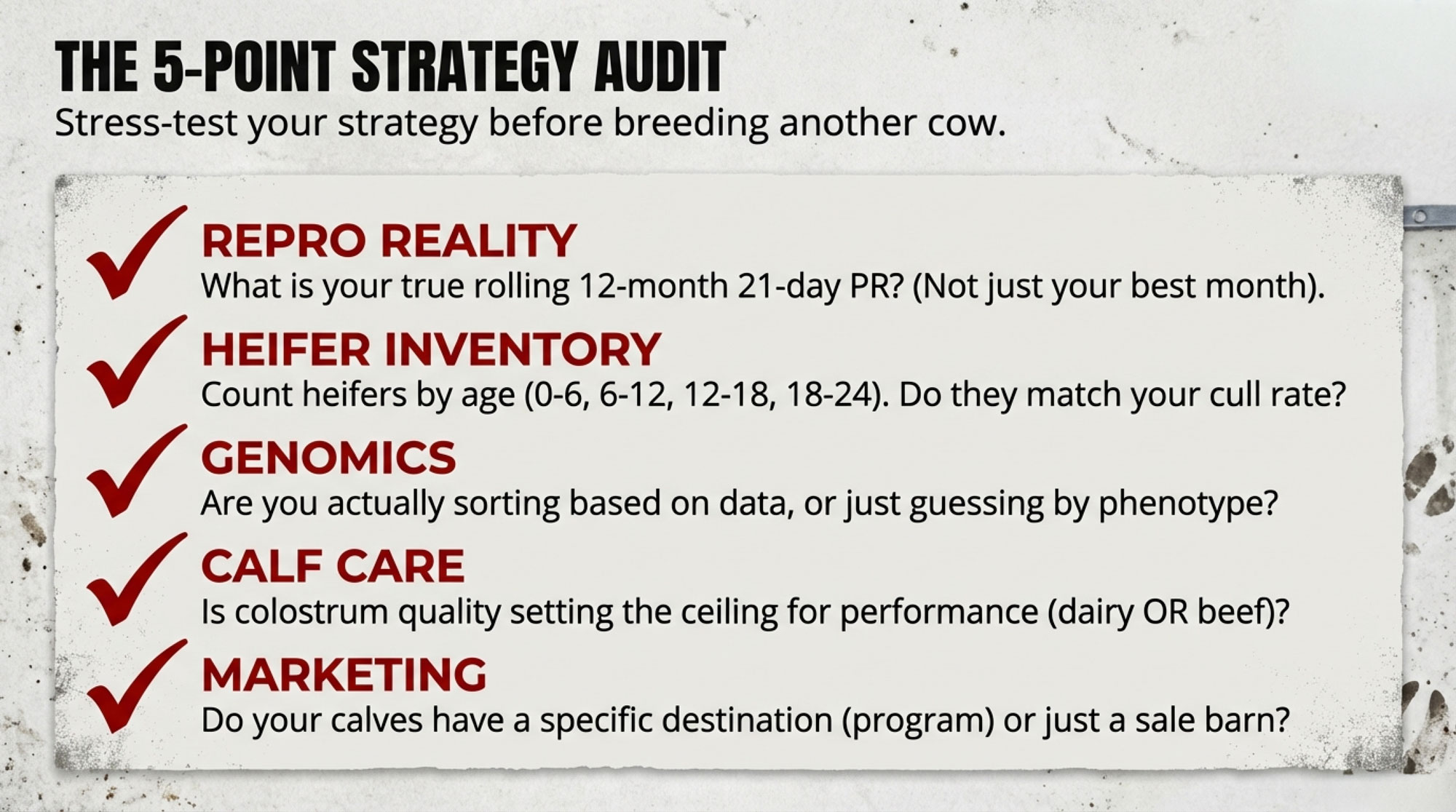
EXECUTIVE SUMMARY: Beef‑on‑dairy has been a cash‑flow hero for many herds, but the big math now flashing red is hard to ignore: 7.9 million beef straws into dairy cows, 800,000 fewer heifers ahead, and replacement prices already north of US$3,000 in many regions. USDA counts just 3.914 million dairy replacements as of January 1, 2025—the lowest since 1978—while CoBank projects inventories will shrink by about 800,000 head before recovering near 2027, right as roughly US$10 billion in new processing capacity comes online and needs milk. What’s interesting here is that the article shows reproduction, not semen color, is the real gatekeeper: herds under roughly 20% 21‑day PR that breed heavily to beef aren’t just “cashing in,” they’re effectively scheduling a heifer shortage and future cheques for someone else’s US$3,000 heifers. Drawing on economic modeling from Albert De Vries, PhD (University of Florida), and sector work by Jan Hulshof, PhD (Wageningen), it outlines practical “guard rails” for how much beef‑on‑dairy a herd can safely run at different PR levels, especially when combined with genomics and sexed semen on the top genetics. A five‑question framework then helps producers stress‑test their own program—repro, heifer pipeline, genomic use, calf/transition management, and calf marketing—so they can see whether they’re building a sustainable strategy or quietly writing a US$30,000–60,000‑a‑year heifer bill for 2027 and beyond. The takeaway is simple but not always comfortable: beef‑on‑dairy is a powerful profitability tool, but only when it sits on top of strong reproduction and disciplined heifer planning instead of short‑term calf prices.
If you sit down with dairy folks this winter—from big freestalls in Wisconsin to tie‑stalls in Ontario to those dry lot systems in the Texas Panhandle—you’ll hear a familiar line: “Beef‑on‑dairy really helped our cash flow… and now we’re wondering where the heifers went.”
What’s interesting is that this isn’t just coffee‑shop talk. The national numbers are telling the same story a lot of you are seeing when you walk past your heifer pens—and now we’re staring at US$3,000‑plus heifer tags when it comes time to fill the gaps.
The latest Regular Members Semen Sales Report from the National Association of Animal Breeders (NAAB) shows that in 2024, U.S. producers bought about 9.7 million units of beef semen, and roughly 7.9 million of those units were used in dairy herds, not beef herds. Industry reports indicate that more than 4 out of 5 beef straws in the U.S. now go into dairy cows.
At the same time, USDA’s January 1, 2025, cattle inventory report put the U.S. beef cow herd at about 27.86 million head. Analysts at Angus Journal and university extension have highlighted that the smallest U.S. beef cow herd since the early 1960s is down several million head from where it sat in 2019. So we’ve got record beef semen use in dairies sitting on top of the tightest beef cow numbers in more than half a century.
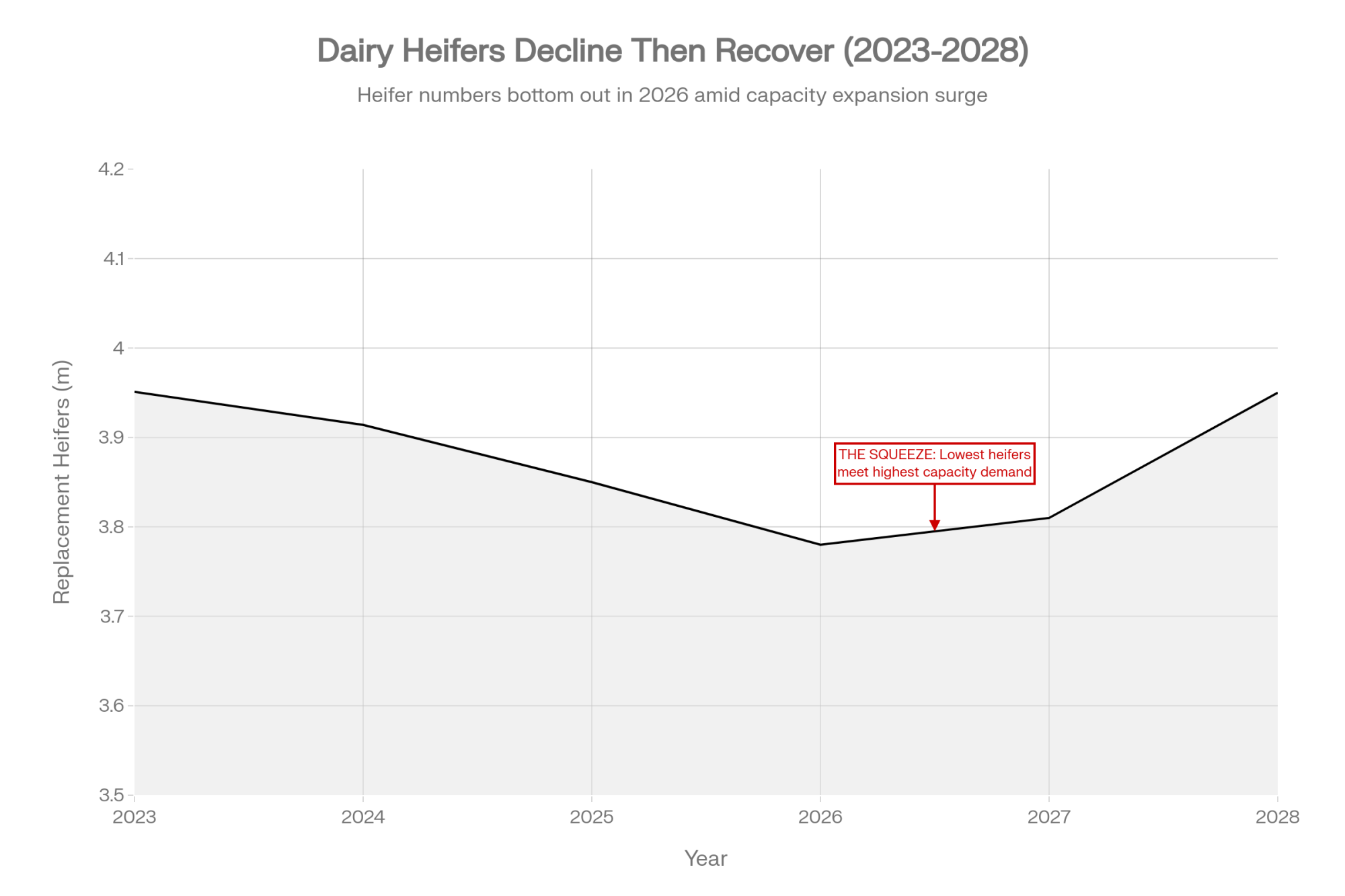
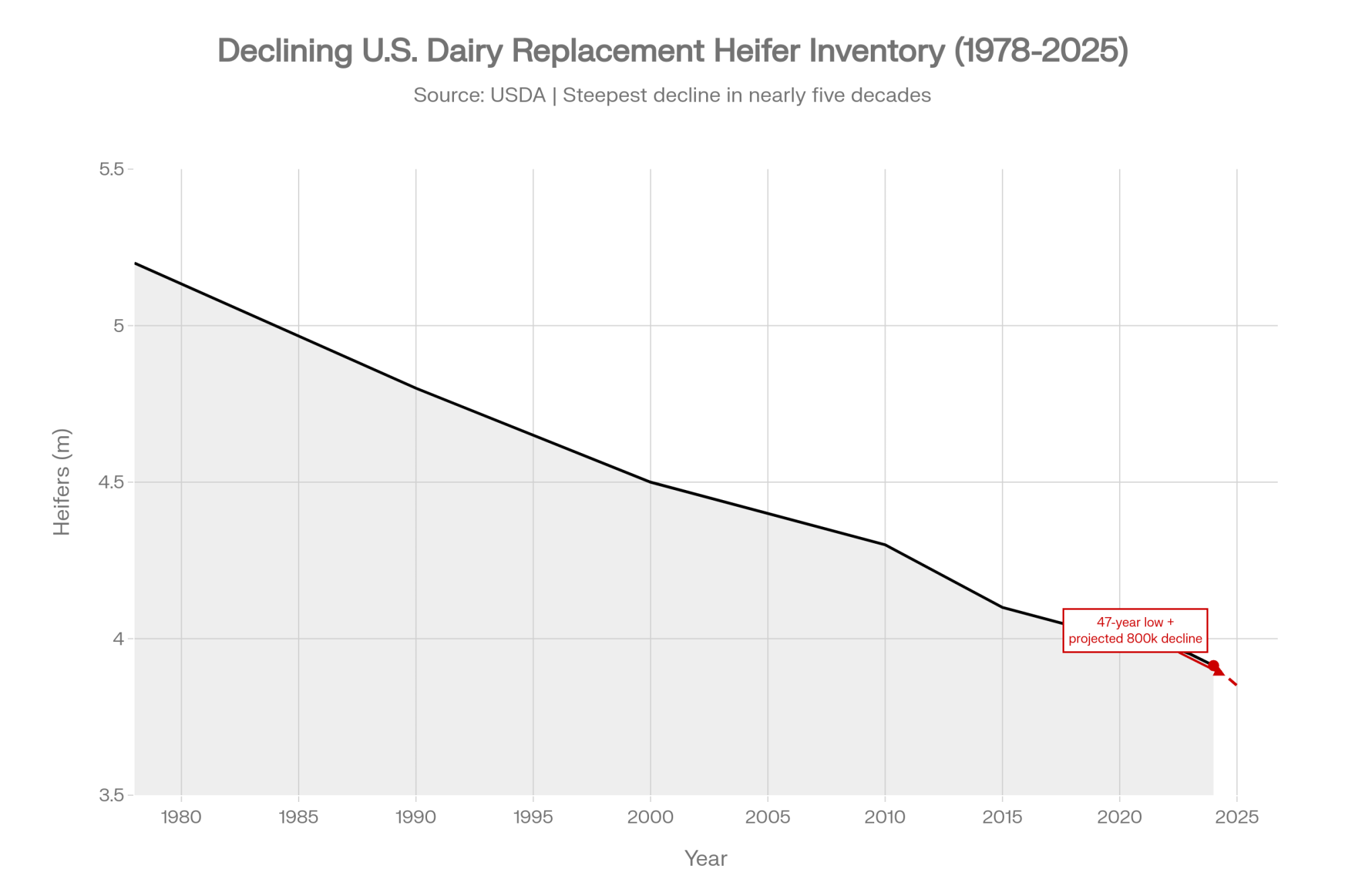
And here’s where the conversation really sharpens. CoBank’s dairy team, led by Corey Geiger, MBA, released a 2025 analysis showing that U.S. dairy replacement heifer inventories are already at about a 20‑year low and could shrink by an estimated 800,000 head over the next two years before starting to rebound closer to 2027. That same CoBank work highlights that roughly 10 billion dollars in new dairy processing capacity, much of it cheese and ingredient plants that live on butterfat performance and protein, is scheduled to be online by 2027. Those plants will need milk, and milk needs cows.
Year
Replacement Heifers (M)
New Capacity Online (USD B)
2023
3.951
$2.1
2024
3.914
$4.2
2025
3.85 (proj)
$6.8
2026
3.78 (proj)
$8.9
2027
3.81 (recovery begins)
$10.2 (peak)
2028
3.95
$10.2+ (operational)
So the real question isn’t just “Is beef‑on‑dairy a good idea?” It’s “Given where milk, beef, and heifer supplies are heading, is the way we’re using beef‑on‑dairy going to build our business—or back us into buying very expensive heifers a couple of years from now?”
Let’s walk through that together, the way we’d talk it through over coffee at the kitchen table.
How We Got Here: Three Big Shifts That Opened the Door
Looking at this trend, three big changes really opened the gate for beef‑on‑dairy: sexed semen that finally works well enough to plan around, genomics that actually drive decisions, and a beef cow herd that’s the smallest it’s been in decades.
1. Sexed semen finally got reliable enough to plan around
You probably remember the early days of sexed semen. Back in the late 2000s and early 2010s, university trials and extension bulletins regularly reported conception rates 25–30 percent lower than conventional semen in many herds, and that matched what plenty of us saw in our own breeding records. It was great when it worked, but too many repeats and open cows made it a tough sell outside a handful of show heifers or elite donors.
Over the last decade, that story has shifted. With improved sorting technology, better extenders, and higher sperm numbers per straw, modern sexed semen has narrowed the gap. Extension educators and field data now suggest that in well‑managed heifer programs, sexed semen often delivers conception rates in the mid‑40 percent range, sometimes approaching 50 percent in top herds, while conventional semen on the same heifers tends to run about 5–10 points higher. In cows, the difference is often similar or slightly wider, and it’s more sensitive to fresh-cow management and heat detection.
So in real‑world terms, what farmers are finding in solid heifer programs is that sexed semen now runs roughly 75–85 percent of conventional conception rates, with a few very dialed‑in herds creeping up closer to 90 percent. That aligns with the research summaries from land‑grant universities and industry meetings. It still demands good transition‑period care, sharp heat detection, and careful semen handling, but it’s finally good enough to build a replacement strategy around instead of just dabbling.
2. Genomics went from “nice‑to‑have” to “we actually use this”
The second big shift is genomics. Ten or twelve years ago, genotyping felt like something that happened in AI stud offices and a few elite Holstein barns. Today, millions of animals are genotyped, and research from USDA’s Agricultural Research Service (ARS) and the Council on Dairy Cattle Breeding (CDCB) shows that genomic evaluations for young heifers deliver substantially higher reliability than old‑style parent averages for traits like milk, fat, protein, daughter pregnancy rate, and some health traits.
What I’ve noticed, especially in Midwest and Ontario herds that are leaning into this, is that once producers start using genomic rankings, it changes the conversation around both beef‑on‑dairy and replacement rearing:
Heifer calves get genotyped through CDCB‑approved programs.
The herd ranks them on Net Merit, Pro$, or a custom index that weights production, components, fertility, mastitis resistance, and longevity in line with how their milk is priced.
The best group becomes the “sexed semen group,” a middle group is flexible, and a lower‑merit group is deliberately steered toward beef semen or not raised at all.
In an economic simulation published in JDS Communications, Albert De Vries, PhD, at the University of Florida, and colleagues modeled this kind of strategy—sexed semen on the top end, beef semen on the bottom, genomics guiding who’s who—and found that income from calves over semen and rearing costs improved compared with a simple “all dairy semen” approach. That finding lines up with what many progressive herds report: they raise fewer marginal heifers, capture more value from beef‑on‑dairy calves that never belonged in the milking string, and keep their replacement pipeline more intentional.
3. The beef cow herd shrank—and it’s not bouncing back quickly
The third piece is beef. USDA’s cattle inventory reports show the U.S. beef cow herd has dropped from around 31.7 million head in 2019 to 27.86 million as of January 1, 2025. Extension economists note this is the smallest beef cow herd the U.S. has seen since the early 1960s, driven by multi‑year drought in the Plains and West, high feed costs, and an aging rancher base that hasn’t rushed to rebuild.
Rabobank’s beef team analyzed cow–calf returns over the last decade and found that from 2013 to 2017, U.S. cow–calf operations averaged about 153 U.S. dollars per cow per year. From 2018 through 2022, those returns flipped negative, averaging roughly minus 21 dollars per head per year when revenue was stacked up against operating costs, labor, taxes, and insurance. When you put drought risk on top of that, it’s not surprising that a lot of ranchers were slow to restock.
On the dairy side, CoBank points out that U.S. dairy is in the midst of an historic processing build‑out—about $ 10 billion in new or expanded plants, largely focused on cheese and ingredients that reward butterfat and protein. Those plants will want milk, and they’ll want it relatively quickly over the next couple of years.
Meanwhile, industry sales data using CattleFax estimates show beef‑on‑dairy calves going from about 410,000 head in 2018 to around 2.6 million in 2022. An American Association of Bovine Practitioners (AABP) paper titled “The future of dairy‑beef in cattle production,” led by Daniel Grooms, DVM, PhD, at Michigan State University, projects that with widespread use of sexed semen, more than 3.5 million beef‑on‑dairy animals could be entering the U.S. fed beef supply annually in some scenarios.
So this development suggests a pretty clear story: fewer native beef calves, more dairy cows bred to beef, tight heifer numbers, and big new processors coming online. Beef‑on‑dairy has moved from side‑gig to structural pillar in a hurry.
Two Ways Herds Are Using Beef‑on‑Dairy—and Why the Outcomes Look So Different
Once you accept that the big‑picture economics support beef‑on‑dairy, the real question becomes: “How are we using it on our farm?” That’s where you start to see two very different paths.
The “surgical” approach: disciplined, data‑driven, and usually well‑rewarded
Picture a 750‑cow Holstein freestall in eastern Wisconsin or a 1,200‑cow dry lot herd in California’s Central Valley. They’re working with a herd veterinarian, a PhD nutritionist who lives in the fresh cow data, and a genetics adviser who knows their goals cold.
What farmers are finding in operations like this is that beef‑on‑dairy is treated like a scalpel, not a sledgehammer:
Almost every heifer calf is genotyped within 60 days of birth.
Twice a year, cows and heifers are ranked on a profit‑focused index (Net Merit, Pro$, or a custom index using CDCB and herd data).
Breeding decisions follow that ranking very closely:
Top 35–40 percent get sexed dairy semen on first service and often second.
A middle 20–30 percent is a “swing group” that may get sexed, conventional, or beef, depending on projected heifer needs.
The bottom 30–35 percent get beef semen exclusively.
On the beef side, they’re using bulls from programs built for beef‑on‑dairy—high calving ease, strong marbling and ribeye EPDs, moderate mature size, and documented performance on dairy crosses, drawing from Beef Improvement Federation guidelines and AI stud beef‑on‑dairy sire lists. They’re not just chasing black hides; they’re aiming for cattle that will grow, grade, and hang a carcass the packer wants.
Those calves usually aren’t disappearing into the local sale barn. Many go into integrated dairy‑beef programs in Nebraska, Kansas, and the High Plains. These programs typically require:
Recorded sire IDs and, ideally, dam information.
Colostrum measured by Brix refractometer, with documented volumes and timing.
Specific vaccination and weaning protocols.
Consistent shipping ages and weights.
In return, feedlots and packers share performance and carcass data, including average daily gain, health outcomes, liver scores, dressing percentage, quality, and yield grades. National Beef Quality Audit (NBQA) reports show that marbling scores and the share of carcasses grading Choice and Prime are at or near record highs, and dairy‑influenced cattle contribute to that when they’re managed appropriately. Research from Texas Tech and other universities has shown that when marbling levels and cooking conditions are matched, consumers generally rate steaks from dairy‑influenced cattle as comparable in tenderness and flavor to those from conventional beef breeds.
That’s why well‑documented dairy‑beef calves from known programs are often bringing a clear premium over generic calves at similar weights in recent sale reports. In herds that follow this “surgical” approach, beef‑on‑dairy fits cleanly into a bigger system: repro, genetics, calf care, and marketing all point in the same direction.
The “volume” approach: chasing calf prices, then feeling the heifer pinch
Now let’s think about a more typical picture for a lot of farms in the Northeast, Great Lakes, and Ontario: a 250‑ to 400‑cow herd, solid people, busy days, plenty going on.
In 2022 and 2023, many of these barns saw local auction reports and buyer bids showing very strong prices for crossbred beef‑on‑dairy calves—often several hundred U.S. dollars higher than straight Holstein bull calves of similar weight. In some U.S. regions and Canadian sales, top‑end dairy‑beef calves were creeping into the upper hundreds of dollars and, at times, flirting with four‑figure prices if they were the right type at the right time.
So they did what any rational business would do in that moment: they leaned into beef semen.
Maybe 50–60 percent of cows got bred to beef, often targeting older or softer cows, but usually without genomic data to define “bottom end.”
Heifers saw some sexed semen, more to “make sure we have enough heifers” than as part of a tightly modeled plan.
Calves were sold through local barns as beef crosses, with basic colostrum and vaccinations, but few records following them, and no integrated program specs.
For a year or two, those calf cheques looked great. Pens were busy. It felt like the right move.
Then, USDA and CoBank put some harder numbers to the national heifer picture. They highlighted that on January 1, 2025, the U.S. had just 3.914 million dairy replacement heifers—down from 3.951 million the year before and the lowest since 1978. CoBank’s report projected that inventories could shrink by around 800,000 head over the next two years before recovering in 2027, and that high‑quality heifers were already bringing record prices with potential to go “well above $3,000 per head” in many regions.
When these “volume” beef‑on‑dairy herds sat down with their advisors and laid out heifer inventories by age—0–6, 6–12, 12–18, 18–24 months—and rolled those forward against their normal cull rate, some discovered they were on track to be 20–40 heifers short of their usual replacement needs for 2026–2027. In the same breath, market reports in the U.S. and Canada showed quality replacements bringing about US$3,000 or more in tight U.S. areas and C$4,000–5,000 at special sales in parts of Ontario and Western Canada.
So the narrative quietly shifted from “Beef‑on‑dairy saved our cash flow” to “We might have to buy a truckload of very expensive heifers because we got ahead of our repro and replacement planning.”
On top of that, feedlots and packers have been vocal—through AABP sessions, NBQA debriefs, and trade press—about preferring calves from known herds with documented genetics and health histories, and discounting anonymous calves where they don’t know what they’re getting. That gap in value between “program calves” and “generic black calves” has widened as more dairy‑beef cattle hit the system.
Same toolbox: sexed semen, beef semen, genomics. Very different outcomes.
What Packers and Feedlots Are Really Saying About Dairy‑Beef
When you listen closely to packer reps and feedlot managers at meetings or in interviews, they’re not out to shut down dairy‑beef. What they want is cattle that work on their end of the ledger.
The good news: they like how it eats
From a meat‑quality standpoint, dairy‑influenced cattle can be a real asset:
The 2022 National Beef Quality Audit reported that marbling scores were the highest ever recorded in the NBQA series, with a larger share of carcasses grading Choice and Prime than in previous audits. Dairy‑influenced cattle, both Holstein and beef‑on‑dairy crosses, contribute to those marbling numbers when they’re fed and managed well.
Research at Texas Tech and other universities, summarized in dairy and beef industry media, has shown that when marbling and cooking conditions are similar, consumer taste panels often rate steaks from dairy‑cross and conventional beef cattle similarly for tenderness and flavor.
So from the consumer’s perspective—knife and fork in hand—well‑finished dairy‑beef can perform just fine.
The pain points: health, conformation, and dressing percentage
Where the challenges show up is in three familiar areas:
Liver health. NBQA findings and packer feedback point to liver abscesses as a persistent and costly issue, particularly in some high‑grain finishing programs, and the AABP dairy‑beef paper flags liver abscess rates as a key concern in some dairy‑beef pens. Each condemned liver is lost value and is usually a sign that subclinical health issues have already trimmed average daily gain.
Carcass conformation. Holsteins and many dairy crosses tend to be narrower and more framey than traditional beef steers at a given weight. Board‑invited reviews in Translational Animal Science have noted that this can make it harder to hit certain boxed beef and steak‑size specs, especially for programs that want a consistent ribeye size or steak portion.
Dressing percentage. Those same reviews and multiple feedlot trials show dairy‑influenced cattle generally dress lower than conventional beef steers. Even a couple of points difference in dressing percentage can mean a meaningful shift in dollars per head on most grids.
What’s encouraging is that none of this is a deal‑breaker. The AABP paper and extension work on dairy‑beef and surplus calf management emphasize that strong colostrum programs, consistent calf rearing, thoughtful step‑up rations, and smart sire selection can make dairy‑beef cattle very competitive. The key is whether those calves show up as part of a system that’s designed for that, or as random calves with unknown histories.
The 2026 Heifer Squeeze: A Lagging Result of 2023–2024 Choices
Now let’s swing back to replacements, because that’s where this all lands for most herds.
You already know the biology, but it helps to line it up with the calendar:
Breed a cow today, and if she settles, you get a calf in about nine months.
If that calf is a heifer and you raise her, she’ll freshen roughly 22–24 months later, depending on your heifer program.
So the heifers freshening in 2026 are mostly the product of what you bred in 2023 and early 2024—the exact period when beef‑on‑dairy semen use really spiked.
NAAB’s semen data shows that domestic beef semen sales hit new highs in 2023 and 2024, with about 9.7 million beef units sold in 2024 and 7.9 million of those going into dairy herds. USDA’s January 2025 cattle report pegged dairy replacement heifers at 3.914 million head, down from 3.951 million a year earlier and the lowest since 1978.
CoBank’s 2025 heifer report took those numbers, combined them with typical calving and culling patterns, and concluded that total replacement heifer inventories are likely to shrink by around 800,000 head over the next two years before starting to rebound near 2027. They also noted that high‑quality heifers have already reached record values—well above US$3,000 per head in some U.S. regions—and could move higher if supplies tighten as expected.
So if you’re looking at your heifer pens this winter and thinking, “This feels thinner than it should be,” you’re not alone—and you’re not imagining it. Part of that is the national picture. Part of it traces straight back to how aggressively you used beef semen in 2023–2024 relative to your reproduction and heifer‑raising performance.
How Much Beef‑on‑Dairy Can Your Herd Really Support?
Here’s where fresh cow management and reproduction quietly decide how far you can safely push beef‑on‑dairy.
Looking at this trend, the consistent message out of economic modeling and extension work is that the 21‑day pregnancy rate is the key gatekeeper. In a series of papers, De Vries and co‑authors showed that the higher the 21‑day PR, the more room a herd has to use beef semen without starving itself for replacements, especially when using sexed semen on the top genetics.
Putting it into everyday terms—and blending what the models say with what consultants see—these “guard rails” keep popping up:
21‑day PR under about 20 percent. For most herds in this band, it’s hard enough just to make enough replacement heifers with mostly dairy semen. Modeling and field experience suggest that if you’re in this range and breeding a big chunk of the herd to beef, you’re almost certainly scheduling a heifer shortage and future heifer purchases.
21‑day PR in the 20–25 percent range. At this level, there’s usually room for some beef‑on‑dairy—often something like 20–30 percent of matings—if you’re using sexed semen on your best cows and heifers and actually tracking your heifer pipeline by age group. But there’s not much slack for a spike in culls or a health event in the heifer program.
21‑day PR in the 25–30 percent range. Here, the economics and the farm‑level stories line up: many herds can support roughly 35–45 percent of breedings to beef semen and stay self‑replacing, provided they keep heifer losses modest and stick to a genomic or performance‑based ranking for who gets sexed semen.
21‑day PR consistently above 30 percent. Once herds reach 30 percent 21‑day PR, with solid transition performance and steady culling, they often have substantial flexibility. These herds can frequently breed around half—or a bit more—of their cows to beef semen and still maintain or even grow herd size, as long as they’re disciplined about using sexed semen on the right animals.
That 2023 Animals paper from Wageningen University & Research, led by Jan Hulshof, PhD, reached a similar conclusion in European modeling: beef‑on‑dairy improves efficiency and profitability when combined with sexed semen and strong reproduction, but it creates pressure on replacements and can raise welfare issues if used mainly to chase high calf prices without that foundation.
If you want the blunt version of what’s hiding in those graphs, it’s this: if your 21‑day PR is under 20 percent and roughly half your services are to beef, in most herds you don’t have a beef‑on‑dairy strategy—you have a scheduled heifer problem.
To make this more concrete, let’s run a quick example.
Say you run a 300‑cow herd with a 32 percent annual cull rate. That means you need about 96 replacement heifers freshening each year just to hold steady.
At 25 percent 21‑day PR, using a mix of dairy and sexed semen, you might reasonably expect to produce enough heifers to replace those 96 cows and keep a small buffer, as long as calf and heifer losses are modest. If 30 percent of your breedings are to beef semen, you’ll likely still be self‑replacing.
But if you push beef to 50 percent of services at that same 25 percent PR, simple spreadsheet math often shows a shortfall—maybe 10–20 heifers per year—that you’ll need to cover with purchases. At US$3,000 per head, that’s US$30,000–60,000 a year in heifer purchases that quietly offset a lot of those earlier calf cheques.
Now imagine that same herd at 30 percent 21‑day PR. With stronger repro and the same cull rate, the modeling and real‑world experience suggest you can often support 40–50 percent of matings to beef and still have enough heifers coming, especially if you’re steering sexed semen toward your best genetics and managing heifer losses tightly. That’s where beef‑on‑dairy becomes a sustainable part of the business rather than a short‑term cash grab.
For Canadian quota herds, where expansion room is limited, and every cow slot carries its own capital cost, this math gets even tighter. You can’t just “buy more quota” to cover a heifer shortfall the way a U.S. herd might buy more cows. Getting the beef‑on‑dairy balance wrong means either paying top dollar for scarce heifers or watching your production rights sit underutilized while you wait for replacements to catch up.
A Simple “Over‑Coffee” Framework to Check Your Own Program
When this topic comes up at winter meetings or around kitchen tables, we often end up sketching the same handful of questions on a napkin. Here’s a simple framework you can walk through with your own team.
Metric
Scenario A: Disciplined (30% Beef)
Scenario B: Aggressive (50% Beef)
Year-Over-Year Impact
Herd Size
300 cows
300 cows
—
21-Day PR
25%
25%
—
Annual Culls (32% rate)
96 cows
96 cows
—
Heifers Needed (replacement buffer)
96–100
96–100
—
Beef Semen %
30%
50%
—
Female Calves Born (annual)
~1,200
~1,200
—
Expected Dairy Heifer Calves
~588
~588
—
Heifers Raised to 24m
~540 (with 8% loss)
~540 (with 8% loss)
—
Heifers Freshening Annually
~102
~96
Shortage: 6 heifers
Cumulative 2-Year Shortage
0 (self-replacing)
16–20 heifers
—
Replacement Heifer Cost (2026–2027)
$0 (self-replacing)
$48,000–60,000 (at $3,000/head)
+$50,000/2 years
Avg. Annual Beef Calf Premium (2023–24)
$180/calf × 360 calves = $64,800
$220/calf × 600 calves = $132,000
+$67,200 gross
Premium Over 2 Years (2024–2025)
$129,600
$264,000
+$134,400
Less: Heifer Purchase Bill (2026–2027)
$0
–$54,000
–$54,000
Less: Heifer Management Opportunity Cost
~$12,000
~$18,000
–$6,000
Net Advantage After 3-Year Cycle
$129,600 cumulative
$186,400 cumulative
+$56,800
BUT: Scenario B at Risk If PR Drops or Culls Rise
Stable
Deficit grows fast
Vulnerable
1. Where’s your reproduction really at?
Start here, every time:
What’s your true rolling 12‑month 21‑day pregnancy rate—not just your best month last summer?
Are transition‑period problems like metritis, ketosis, and displaced abomasum dragging that number down more than semen choice is?
When did you last review voluntary waiting period, heat detection (visual plus activity systems), and AI timing with your vet or repro consultant?
Land‑grant extension programs from places like the University of Wisconsin, Penn State, and Cornell keep showing that investments in cow comfort, fresh cow management, and heat detection often deliver some of the strongest returns in dairy herds. Without that foundation, changing semen color won’t fix the underlying issue.
2. Do you truly know your heifer pipeline?
What farmers are finding is that a simple age‑structured heifer count is one of the most eye‑opening tools you can use:
How many heifers do you have today in each age band: 0–6, 6–12, 12–18, 18–24 months?
If you project those forward and apply your typical cull rate and target herd size, will you have enough first‑lactation cows to hold or grow your herd in 2027 and 2028?
If you assume you won’t buy heifers, what does your herd size look like three years out?
CoBank did this math on the national herd and came up with that projected 800,000‑head shortfall. Doing it on your own numbers will tell you very quickly whether your current beef‑on‑dairy level makes sense—or whether it’s quietly eating tomorrow’s replacements.
3. Is genomics actually changing your decisions?
Genomics is only worth paying for if it changes what you do:
Are genomic results directly influencing which animals get sexed semen, which get beef, and which aren’t raised?
Are there heifers that look “good” to the eye but that the genomic numbers clearly put at the bottom of the list, that you’re still raising?
CDCB, USDA‑ARS, and university researchers have shown that many herds raise more heifers than they truly need, and often not the right ones, when decisions are based only on pedigree and appearance. Using genomics to sort those heifers can free up dollars and space to focus on the replacements that will actually drive your herd forward.
4. How strong is your calf and transition program?
We can talk about semen and proofs all day, but colostrum and fresh cow management still set the ceiling:
Are you routinely checking colostrum quality with a Brix refractometer and ensuring the right volume is delivered to calves within the recommended timeframe?
Do your calf facilities provide the drainage, bedding, and ventilation that your vet and extension resources recommend, even when it’s cold, wet, or windy?
On the cow side, are your close‑up and fresh pens hitting targets for stocking density, bunk space, and stall design, or do those pens get crowded when you’re short on beds?
Research summarized in the Journal of Dairy Science and in calf‑raising guides from Penn State and UC Davis shows that calves with strong colostrum and early‑life care have lower morbidity, better growth, and better performance later in life—whether they end up as dairy cows or dairy‑beef cattle.
5. Where do your beef‑on‑dairy calves actually go?
Finally, follow the calf beyond your driveway:
Are you selling into a structured dairy‑beef program or to a regular buyer who lays out expectations and occasionally shares feedback on performance?
Or are most of your calves going through local sale barns as anonymous black calves with little information attached?
AABP’s dairy‑beef work and reports from feedlots in Kansas, Nebraska, and Texas suggest that as beef‑on‑dairy numbers grow, feedlots and packers are increasingly willing to pay premiums for calves with known backgrounds—from herds they trust—and are more cautious on price with unknown cattle. It’s worth noting that those premiums depend on meeting specific contract specs that can change quickly, so there’s some marketing risk to manage along with the opportunity.
If your only metric for beef‑on‑dairy success is this month’s calf cheque, you’re missing half the story.
Where This All Seems to Be Heading
When you stack up the NAAB semen trends, USDA herd numbers, CoBank’s heifer modeling, the beef‑on‑dairy research, and what vets and consultants are seeing across barns, a few patterns start to show through the noise.
In larger freestall and dry lot herds in the Upper Midwest, West, and Southwest, beef‑on‑dairy is quickly becoming part of the core business model. These herds are tying beef‑on‑dairy into their genetic strategy, fresh cow management, heifer planning, and marketing. They’re monitoring butterfat performance and components for the milk cheque, and calf contracts and feedlot relationships on the beef side.
In mid‑sized herds across the Northeast, Great Lakes, and Ontario, there’s a lot of recalibrating going on. Many of these farms enjoyed the bump from beef‑on‑dairy calf prices in 2022–2023, but they’re now staring at tighter heifer numbers and higher replacement costs. They’re asking tougher questions about how far to push beef semen, where to invest next—reproduction, genomics, heifer housing, or structured calf marketing—and how to balance short‑term cash flow with long‑term herd stability.
In smaller tie‑stall and grazing systems—from Vermont to Quebec to the Prairies—beef‑on‑dairy is often being used more selectively: beef semen on clearly lower‑merit cows, while day‑to‑day focus stays on forage quality, butterfat performance, cow longevity, and labor efficiency. Some of these farms are teaming up with a few trusted calf buyers or dairy‑beef programs so they can capture better value for calves without taking on all the logistics themselves.
The Wageningen University Animals paper and other sector‑level analyses in Europe and New Zealand point the same direction as what we’re seeing here: beef‑on‑dairy can be a powerful tool to improve profitability and resource use when it’s built on strong reproduction, sexed semen, and careful replacement planning, but it can create pressure on replacements and welfare if it’s used mainly as a way to ride high calf prices for a season or two.
The Bottom Line
What I’ve noticed, walking freestalls in Wisconsin, parlors in New York, dry lots in the High Plains, and tie‑stalls in Ontario, is that beef‑on‑dairy doesn’t really change what it takes to run a strong dairy. It just makes the strengths—and the cracks—a lot more visible.
Strong reproduction and fresh cow management buy you the freedom to use beef semen without starving your heifer pipeline. Genomics and thoughtful sire selection help you decide which animals should build your next generation of cows and which should produce high‑value beef calves. Good colostrum and calf care protect the value built into every pregnancy. And clear relationships with buyers and feedlots help turn those calves from “generic black crosses” into predictable, valued cattle in somebody’s beef chain.
So maybe the most useful question to bring back to your own kitchen table is this:
Are we using beef‑on‑dairy in a way that builds on the real strengths of our herd—reproduction, genetics, fresh cow and calf management, marketing—or are we leaning a bit too hard on strong calf prices to cover for things we already know we should fix?
If the honest answer is “a bit of both,” that’s actually a good place to start. It means you’ve already identified where your next management dollar is most likely to pay you back—in heifers you don’t have to buy, in calves that earn a premium instead of a discount, and in a herd that’s ready for whatever milk and beef markets throw at it between now and that 2027 wave of new processing capacity.
Diagnostic Criteria
✅ Sustainable Beef-on-Dairy
🔴 Scheduled Crisis (Hidden Bill Coming)
21-Day PR
25–30%+ (rolling 12-month average)
<20% or volatile 15–22%
Reliable base for 30–45% beef semen
Inadequate base; even 40% beef starves replacements
Basic colostrum; calf housing crowded or inconsistent; transition pens cramped when volume spikes
Strong colostrum sets all calves (dairy or beef) up for performance
Weak colostrum and housing drag down heifer health/growth
Beef Calf Marketing
Documented program: sire ID, dam info, colostrum, vaccination, weaning protocols; partner with known feedlot/dairy-beef program; receive performance/carcass feedback
Anonymous sale barn sales; minimal traceability; generic “black calf” pricing; no feedback loop
Earn $280–400/head premium over commodity; build brand
Leave $3,000–4,000 per truckload on the table; buyers discount unknown cattle
Overall Herd Status
Multi-year plan in place; beef-on-dairy as one tool, not the solution
Riding high calf prices now; financing 2027 heifer crisis later
Action This Week
Fine-tune; confirm heifer counts; adjust sexed % if needed
STOP; audit repro; model heifer shortage; plan heifer purchasing or pivot beef % down
This week, before you get too far into spring breeding decisions:
Check your 12‑month 21‑day PR.
Lay out your heifers by age band and run them against your cull rate.
Decide which cows truly deserve sexed semen—and which calves truly deserve a beef premium.
That’s the math that will tell you whether beef‑on‑dairy is working for your herd, or whether you’re quietly writing yourself a very expensive heifer cheque for 2027.
KEY TAKEAWAYS
The beef-on-dairy math has flipped. 7.9 million beef straws went into U.S. dairy herds in 2024, but USDA counts just 3.914 million replacement heifers—the lowest since 1978—and CoBank projects another 800,000-head shrink before inventories recover near 2027.
Reproduction is the gatekeeper, not semen color. Herds under 20% 21-day PR breeding heavily to beef aren’t cashing in—they’re scheduling a heifer shortage. Above 30% PR, many herds can safely run 40–50% beef and stay self-replacing.
The hidden bill adds up fast. A 300-cow herd at 25% PR pushing 50% beef could come up 10–20 heifers short annually. At US$3,000+ each, that’s US$30,000–60,000 per year quietly erasing those 2023 calf premiums.
Program calves earn premiums; anonymous calves get discounted. Feedlots and packers increasingly separate documented dairy-beef calves from generic “black calves” on price—and that gap is widening.
Your move this week: Check your 12-month 21-day PR, map heifers by age against your cull rate, and decide which cows truly deserve sexed semen. That math tells you whether beef-on-dairy is building your herd—or billing it.
Complete references and supporting documentation are available upon request by contacting the editorial team at editor@thebullvine.com.
Learn More
Beef-on-Dairy’s $6,215 Secret: Why 72% of Herds Are Playing It Wrong – Stop the guesswork and find your profit tier. This guide breaks down the specific reproductive “guard rails” that separate top-tier earners from those losing ground, providing a Monday-morning blueprint for maximizing monthly revenue.
The Next Frontier: What’s Really Coming for Dairy Cattle Breeding (2025-2030) – Unlock the next decade of genetic advantage. This feature reveals how breakthroughs in casein selection and AI-driven health markers can generate an extra $5,000 per cow, transforming your breeding program into a high-value protein factory.
The Sunday Read Dairy Professionals Don’t Skip.
Every week, thousands of producers, breeders, and industry insiders open Bullvine Weekly for genetics insights, market shifts, and profit strategies they won’t find anywhere else. One email. Five minutes. Smarter decisions all week.
Andrew grew up on a dairy farm in southern Ontario — which means he learned about herd management, hard work, and tight margins long before it became a career. He went on to build an animal genetics marketing company, running campaigns that actually moved the needle in a notoriously tough-to-reach industry. Today he channels that background into The Bullvine, where he writes about genetics, farm business, and the decisions that separate profitable operations from struggling ones. He doesn’t pull punches, and dairy farmers seem to appreciate that.
To provide the best experiences, we use technologies like cookies to store and/or access device information. Consenting to these technologies will allow us to process data such as browsing behavior or unique IDs on this site. Not consenting or withdrawing consent, may adversely affect certain features and functions.
Functional
Always active
The technical storage or access is strictly necessary for the legitimate purpose of enabling the use of a specific service explicitly requested by the subscriber or user, or for the sole purpose of carrying out the transmission of a communication over an electronic communications network.
Preferences
The technical storage or access is necessary for the legitimate purpose of storing preferences that are not requested by the subscriber or user.
Statistics
The technical storage or access that is used exclusively for statistical purposes.The technical storage or access that is used exclusively for anonymous statistical purposes. Without a subpoena, voluntary compliance on the part of your Internet Service Provider, or additional records from a third party, information stored or retrieved for this purpose alone cannot usually be used to identify you.
Marketing
The technical storage or access is required to create user profiles to send advertising, or to track the user on a website or across several websites for similar marketing purposes.
To provide the best experiences, we and our partners use technologies like cookies to store and/or access device information. Consenting to these technologies will allow us and our partners to process personal data such as browsing behavior or unique IDs on this site and show (non-) personalized ads. Not consenting or withdrawing consent, may adversely affect certain features and functions.
Click below to consent to the above or make granular choices. Your choices will be applied to this site only. You can change your settings at any time, including withdrawing your consent, by using the toggles on the Cookie Policy, or by clicking on the manage consent button at the bottom of the screen.
Functional
Always active
The technical storage or access is strictly necessary for the legitimate purpose of enabling the use of a specific service explicitly requested by the subscriber or user, or for the sole purpose of carrying out the transmission of a communication over an electronic communications network.
Preferences
The technical storage or access is necessary for the legitimate purpose of storing preferences that are not requested by the subscriber or user.
Statistics
The technical storage or access that is used exclusively for statistical purposes.The technical storage or access that is used exclusively for anonymous statistical purposes. Without a subpoena, voluntary compliance on the part of your Internet Service Provider, or additional records from a third party, information stored or retrieved for this purpose alone cannot usually be used to identify you.
Marketing
The technical storage or access is required to create user profiles to send advertising, or to track the user on a website or across several websites for similar marketing purposes.








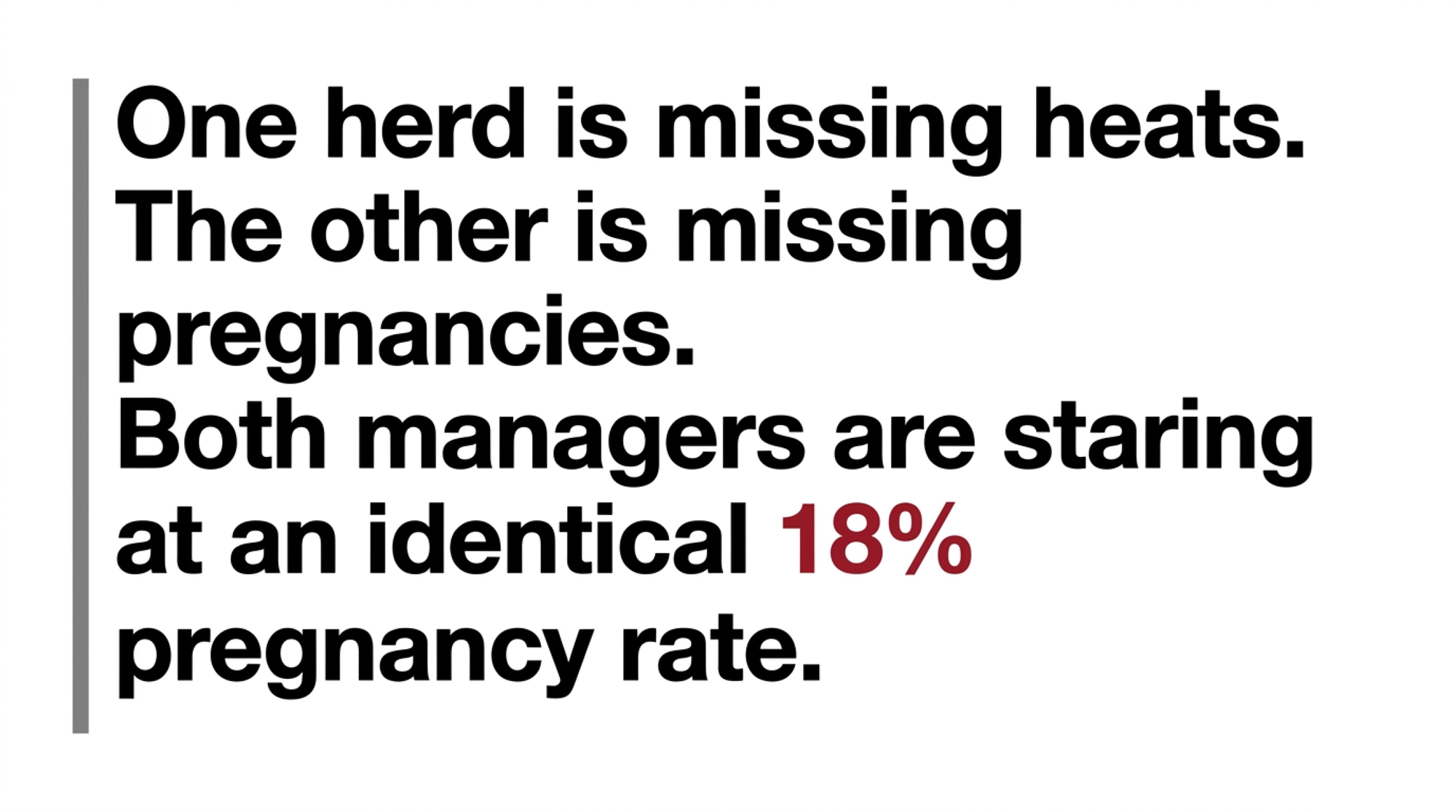
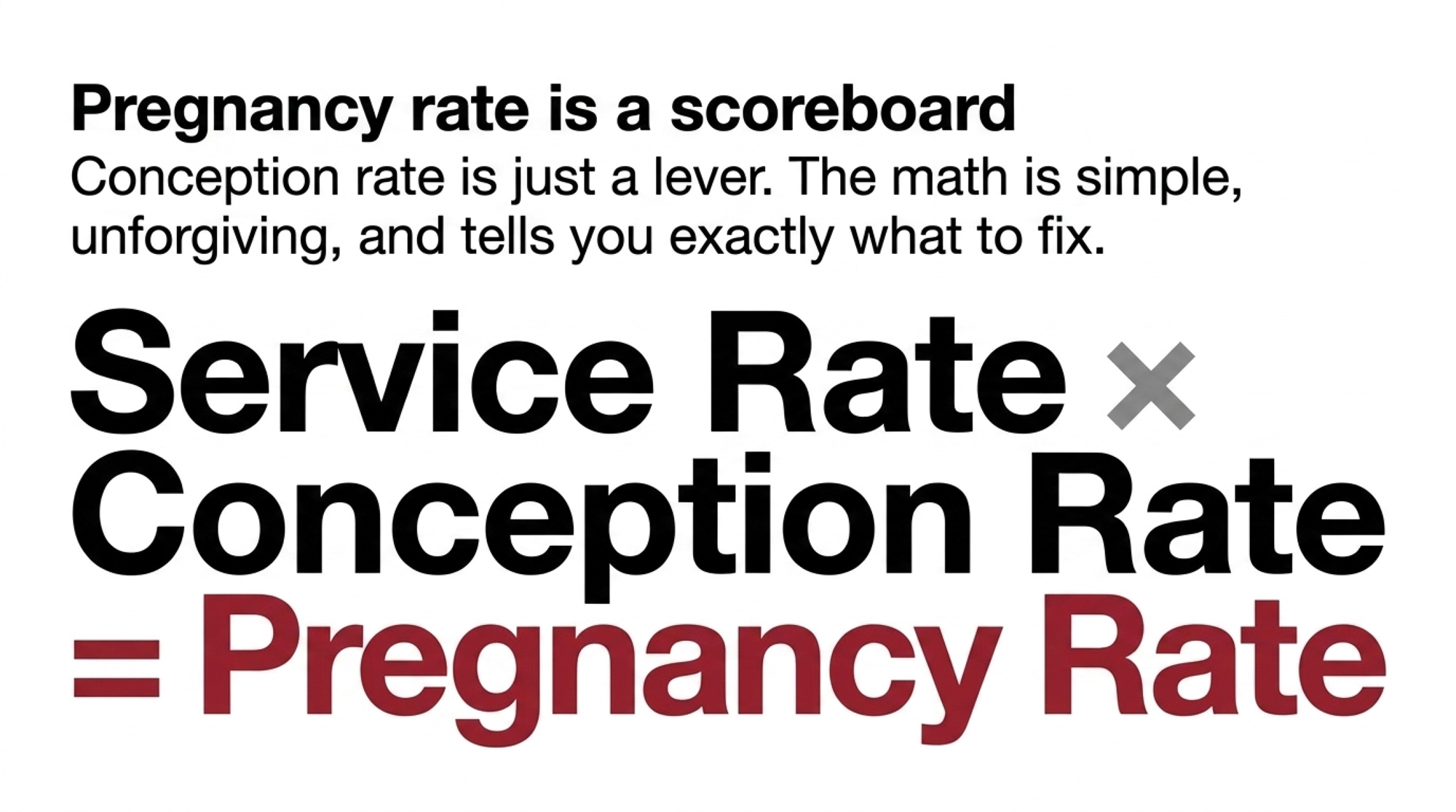
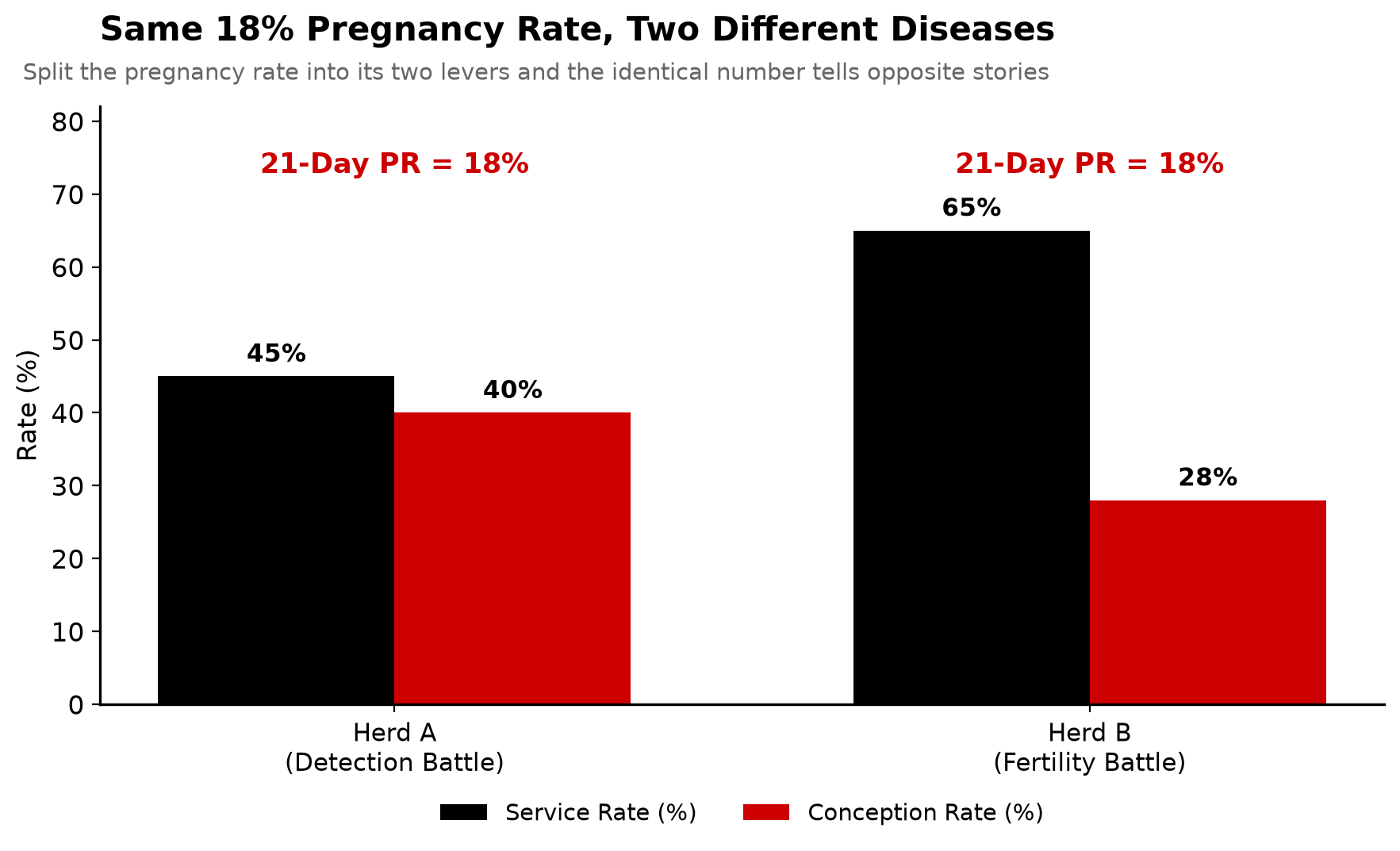
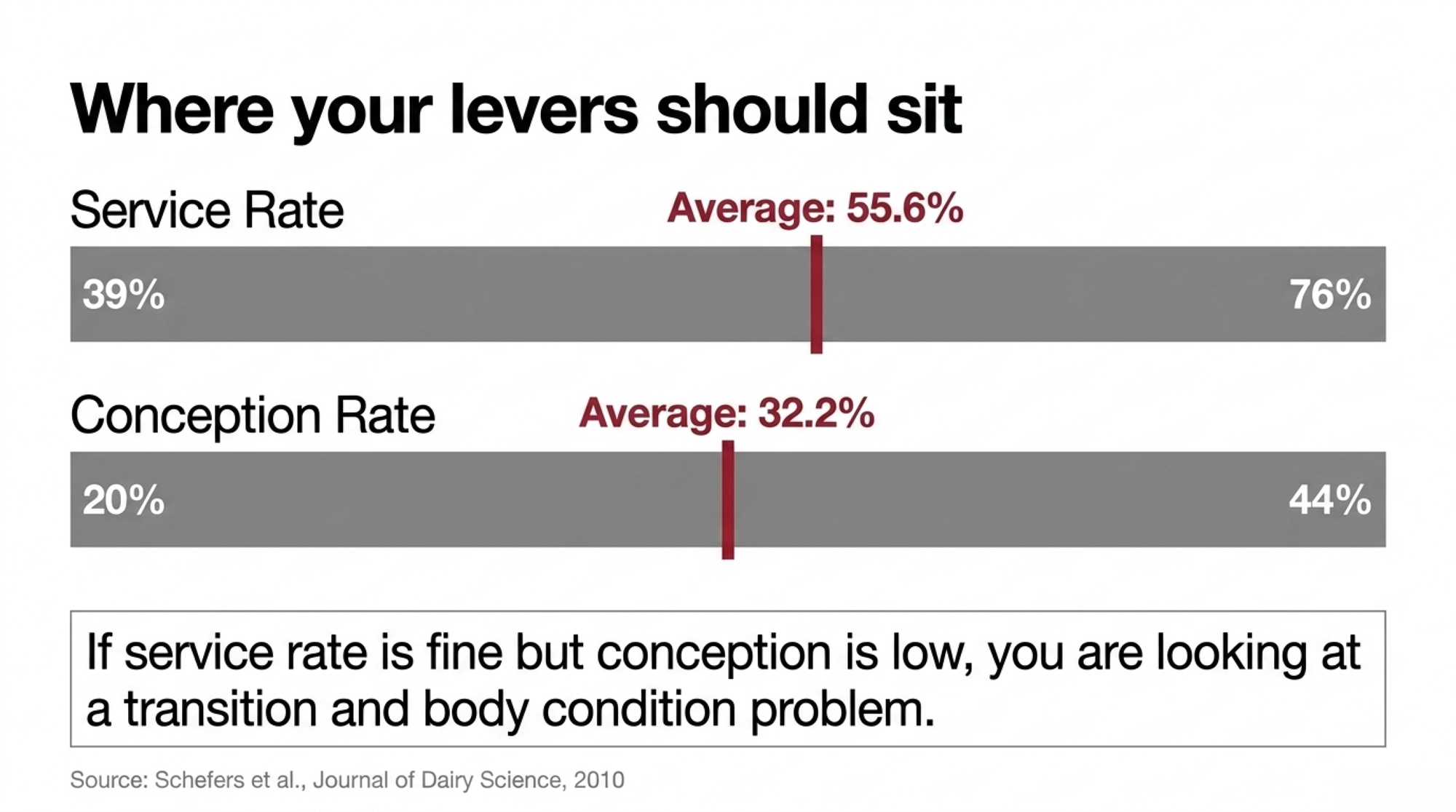
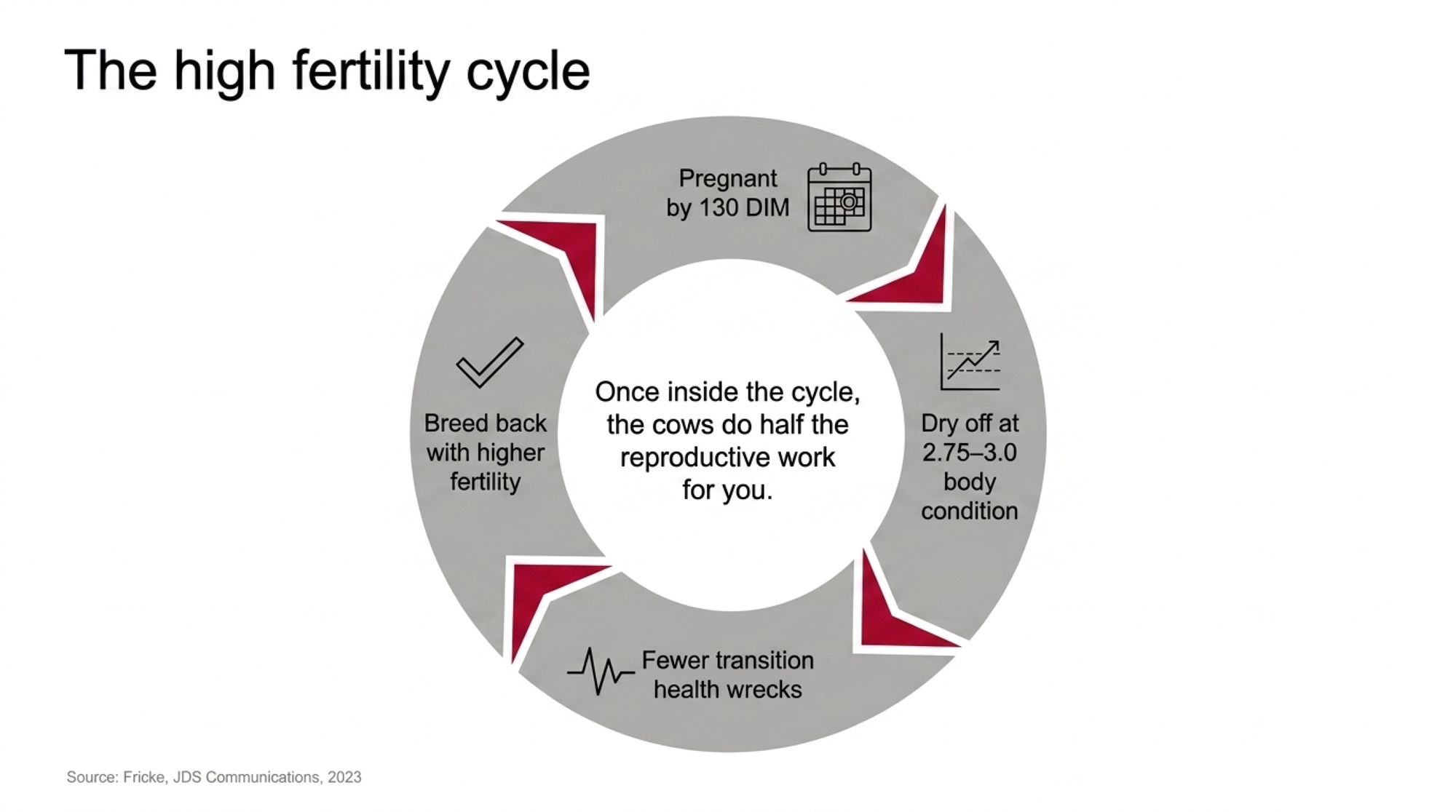
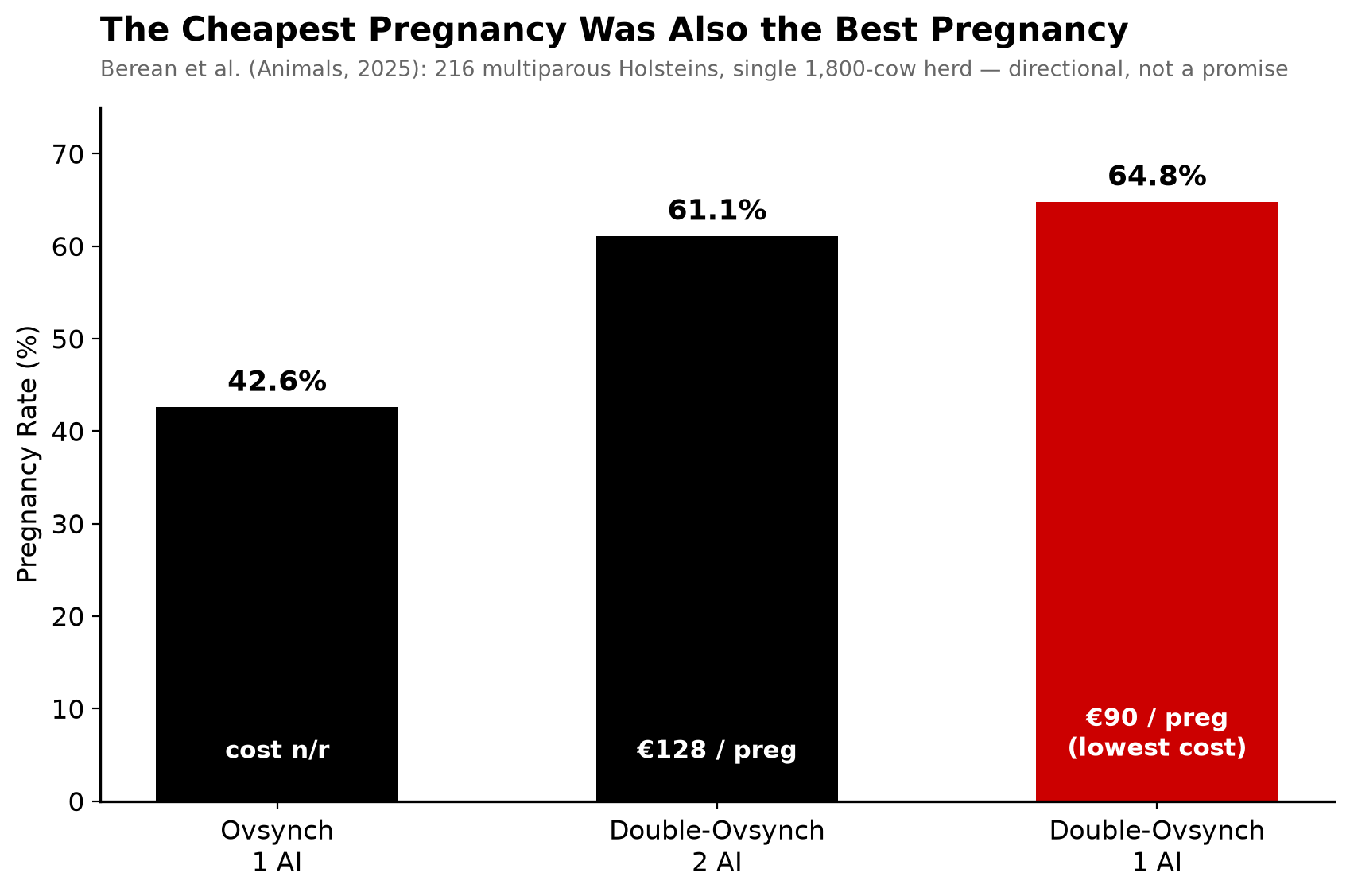
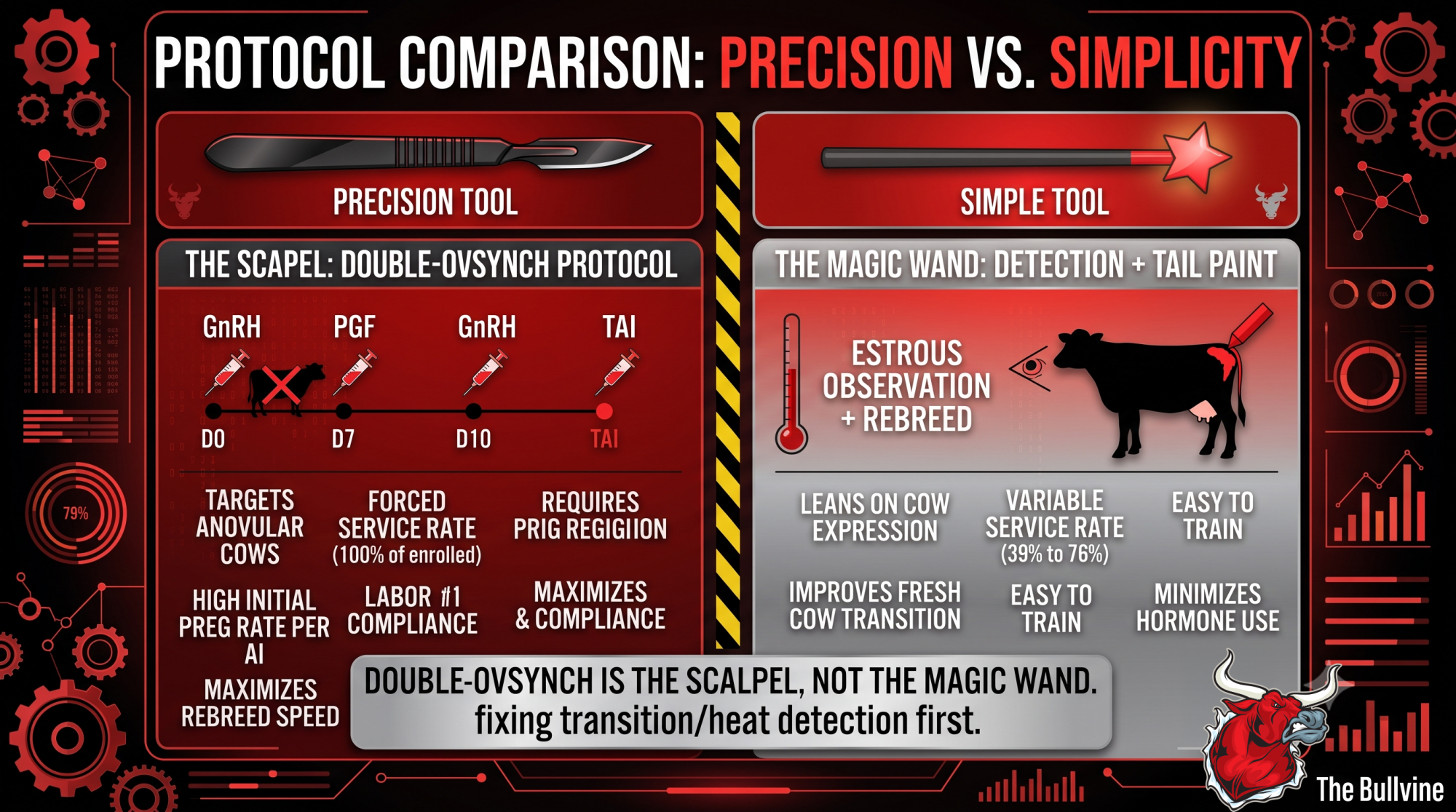
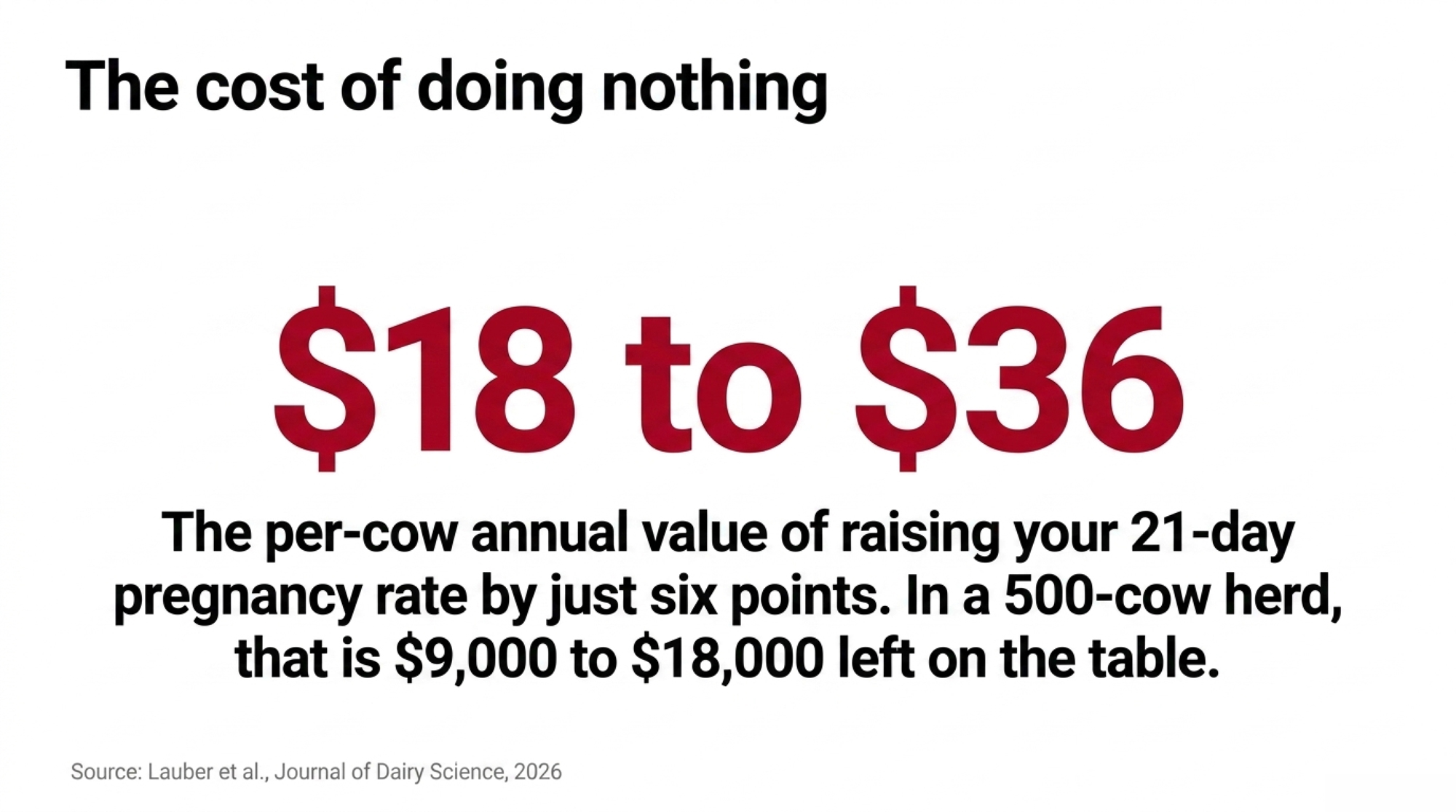
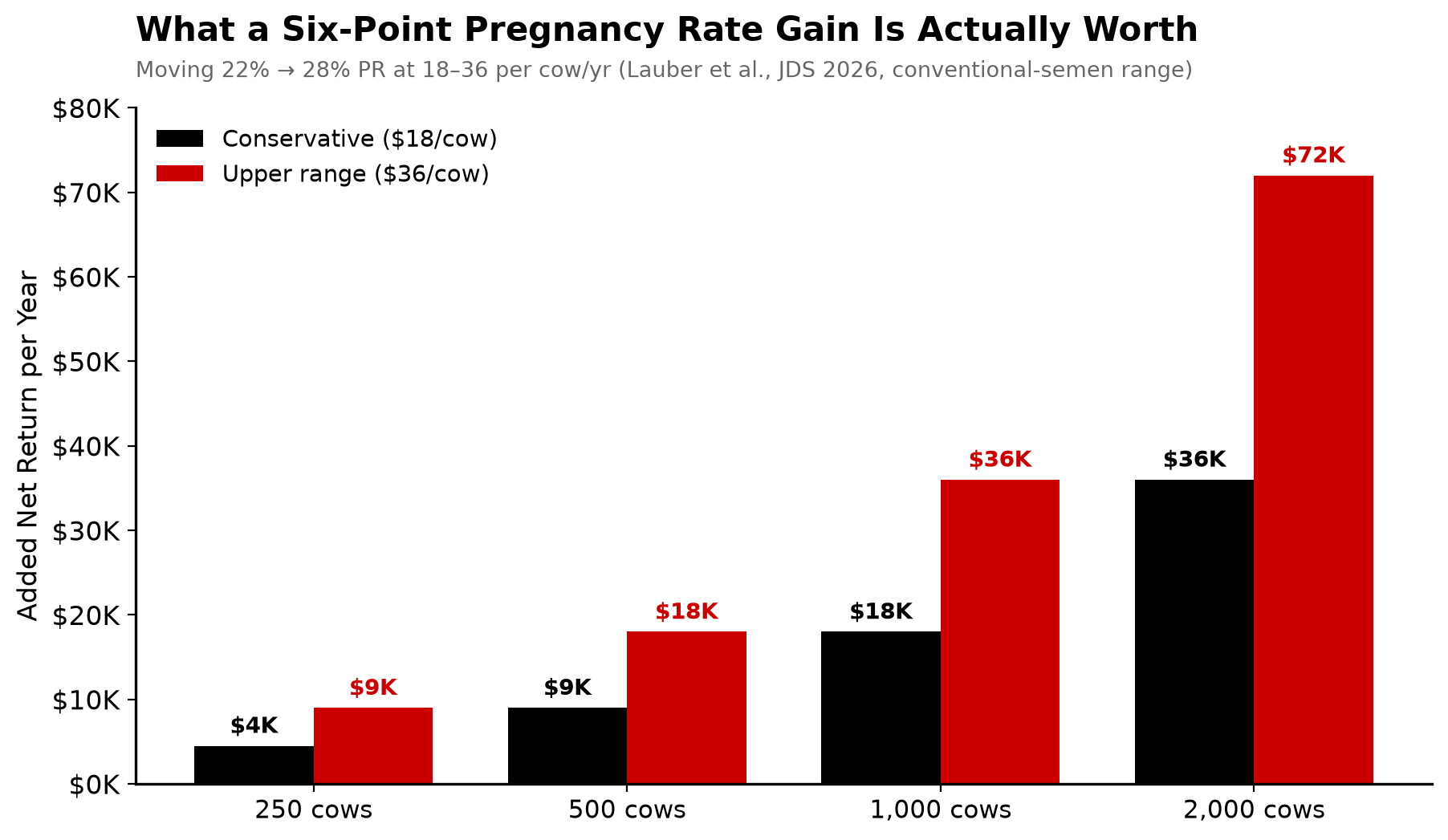
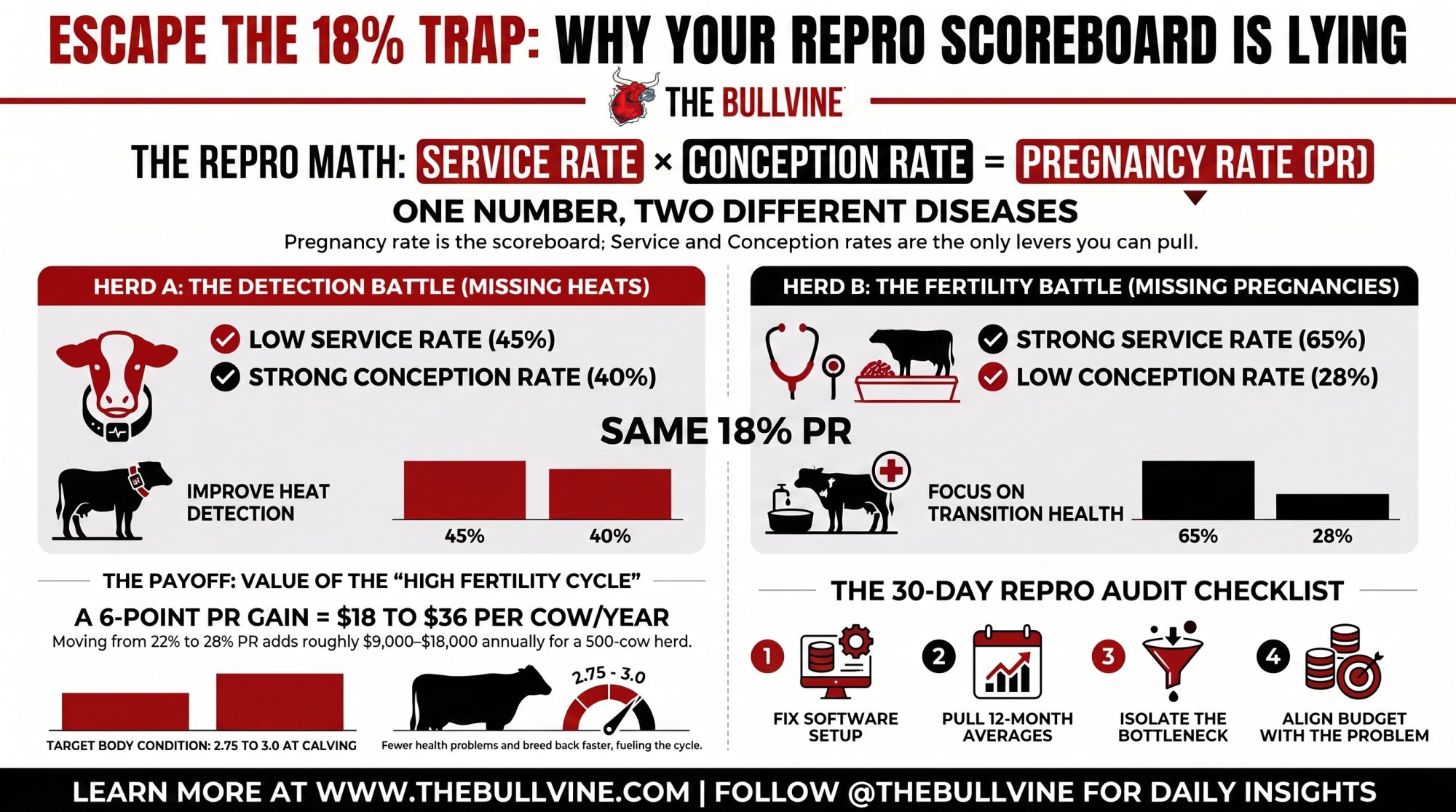
 The Sunday Read Dairy Professionals Don’t Skip.
 The Sunday Read Dairy Professionals Don’t Skip.