Five dairy operations exited on their own terms. They all wish they’d done it sooner. The equity gap between a strategic dispersal and a forced one can run past half a million dollars.
Executive Summary: Five real farms — including Hank Choate’s 485‑cow, 32,000‑RHA Holstein herd and Jim Beardsley’s 237 registered cows — chose to sell while they were still winning, and all of them say they should’ve done it sooner. The piece shows how waiting 18 months too long can quietly turn into a $400,000–$600,000 equity hit, walking through a 250‑cow barn‑math example where two years of $2/cwt losses plus delayed upgrades burn roughly $575,000. You see the human side — Jim’s sale‑day letter asking buyers to “please be good to them, they are my friends” — alongside the cold numbers on breakeven, debt, and heifer prices pushing $3,010/head. A simple three‑question Successor Test helps you figure out whether you truly have a next‑generation manager or just a helper, and what that means for your timeline. The article then lays out concrete thresholds (six months above breakeven, 50%+ debt-to-asset ratio, major capex due) and a 30‑day action: sit down with your family, have the succession conversation, and set a date before the lender or your body does it for you. Current 2025–2026 realities — labor shortages, interest‑rate pressure, and legal landmines like Metske v. Metske — are woven through so you can see exactly how today’s environment changes the exit math. It doesn’t tell you to quit; it gives you the numbers and stories you need to decide whether staying or leaving actually protects your herd’s legacy and your family’s balance sheet.
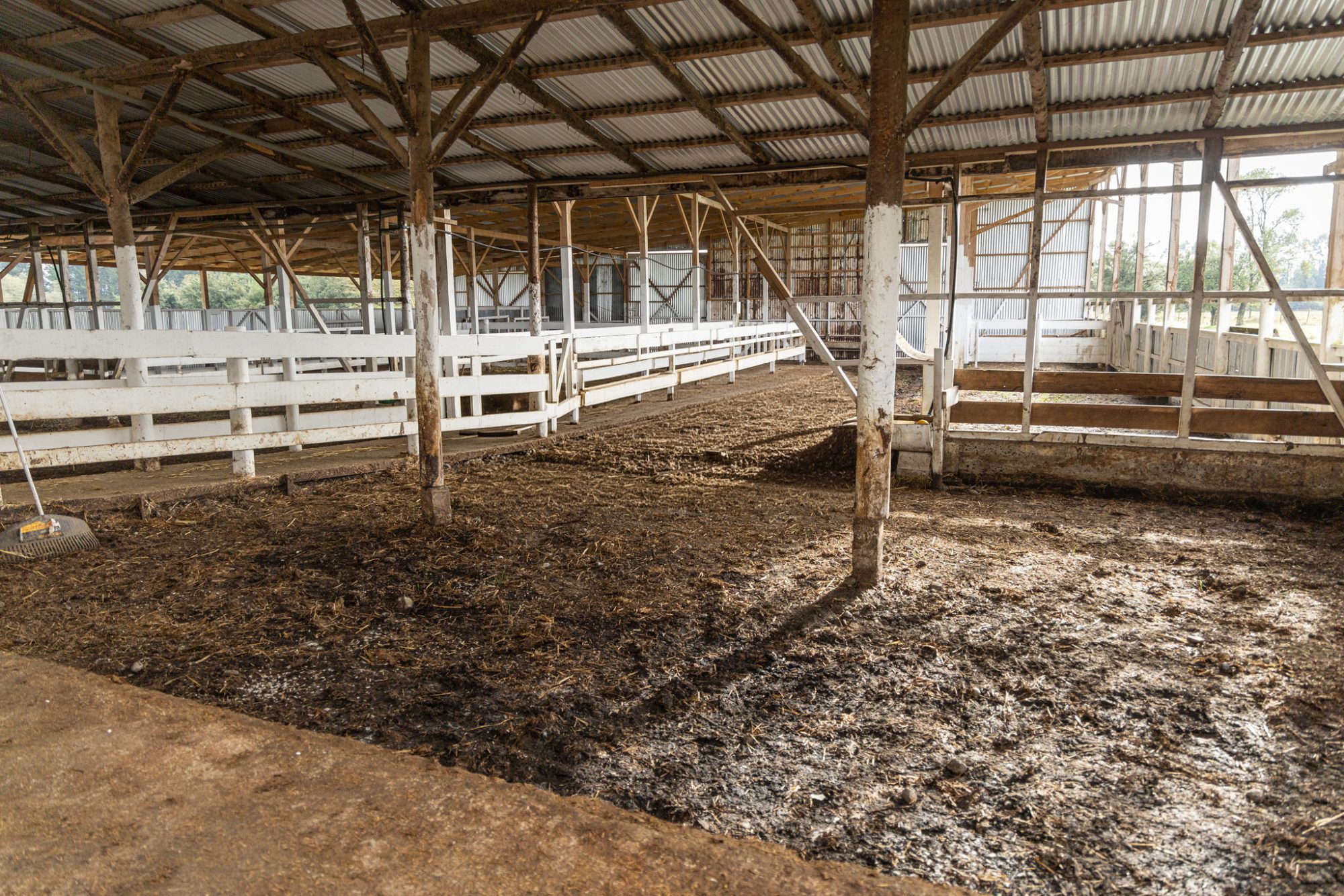
Hank Choate’s 485-head Holstein herd at Choate’s Belly Acres was rolling a 32,000-pound average. Back in 2016, when Michigan State University named him Dairy Farmer of the Year, the herd produced 29,133 pounds of milk, 1,068 pounds of fat, and 877 pounds of protein — valued at $4,660 per cow. By the time of the dispersal, the numbers had only climbed. His freestalls in Cement City, Michigan, had seen nine years and $1.3 million worth of improvements — expansions in 2009 and 2012, a heifer barn in 2014, new manure storage, and a larger bulk tank. A family homestead on land the Choates had worked since 1837, the entire milking string bred through AI. On paper, this operation was winning.
Then Hank, 71, and his brother Randy, 66, made the call. On August 18, 2021, a five-hour online dispersal moved the entire milking herd and every heifer set to calve before January. “To be honest, I’m relieved,” Hank told Farm Progress afterward. Randy put it more simply: “It’s time to do other things — things the cows always took priority over.”
After 53 years without missing a milk check, Choate’s Belly Acres was out of the dairy business.
This isn’t a story about failed farms. These herds were performing. The question is what made the people behind them decide to stop — and what it costs the ones who wait too long to ask it.

The Gap Nobody Talks About
Using the USDA’s originally published 2024 figures, the U.S. lost 1,202 licensed dairy farms in 2025. Pennsylvania alone accounted for 490 of those exits — 41% of the national total — dropping to 4,360 dairy farms. February 2026 USDA data shows the bleeding hasn’t stopped: PA cow numbers fell another 11,000 head year-over-year in January while milk output dropped 3%.
That’s the gap you’re living in if you just keep grinding, hoping next year is better, instead of running the numbers. That pattern captures the brutal math of consolidation: the industry doesn’t need your farm to survive. It just needs your cows — and someone bigger will absorb them.
Most of those exits are forced. The bank calls. The processor drops the route. The body gives out. A bad calving season cascades into a cash-flow crisis that eats three generations of equity in eighteen months.
Voluntary exit at the peak is different. When your herd is healthy, your components are strong, your equity is intact, and your neighbors still think you’re crazy for quitting — that decision carries a weight that forced liquidation never does. No villain to blame, no crisis to point at. Just a clear-eyed look at the numbers, the calendar, and the family.
Here’s what makes it so hard: the same traits that built a top operation — stubbornness, optimism, pride in the work — are the exact traits that make it nearly impossible to let go. Dairy rewards people who push through bad years. It punishes people who recognize when the push has become the problem.
Strategic Exit vs. Forced Liquidation
| Factor | Strategic Exit (Today) | Forced Liquidation (Month 18) |
| Herd Value | Premium — active RHA, strong components, current health records | Market floor — urgent sale, no leverage |
| Equipment | 80–90% of market value (industry estimates) | 40–60% distressed / as-is (industry estimates) |
| Asset Liquidity | Orderly timeline, multiple buyers compete | Fire sale, single-bid risk |
| Genetic Preservation | Cow families placed intentionally; embryos, contracts possible | Bulk lot — decades of breeding decisions scattered |
| Equity Preserved | $400,000–$680,000 | $100,000–$200,000 |
Based on Bullvine analysis of USDA asset data and recent dispersal auction results for 200–500 cow operations.
That gap — sometimes north of half a million dollars — comes down largely to one variable: timing.
Hank Choate: The Dairyman Who Couldn’t Find Help
Choate’s Belly Acres — Cement City, Michigan | 485 cows | Sold August 18, 2021
Hank Choate didn’t leave dairy because milk prices broke him. He left because he couldn’t find anyone willing to do the work.
At its peak, Choate’s Belly Acres was a showcase — nearly 500 registered Holsteins, bred through AI, rolling that 32,000-pound average. Hank and Randy built the operation across three counties and 2,000 tillable acres. The dynamics of the dairy industry had been changing, Hank told Farm Progress, but with their efficiencies and production level, “We had a margin that we could live on.”

But labor was disappearing. When one employee left in 2015, it took more than four months to find a replacement — and Hank was paying more than $5 above Michigan’s $9.87 minimum wage. In recent years, the farm had “difficulty finding youth who have an aptitude toward agriculture or any type of work ethic — to show up for work with a desire to learn,” Hank told Farm Progress. He was pulling 15- to 17-hour days on maybe 3.5 hours of sleep. “In the evening, I’d sit down, have a bite to eat, and within 20 minutes my eyes would slam shut,” he said.
The trigger wasn’t one event — it was the accumulation. During the summer, Hank’s granddaughters, Allie, 14, and Kaylin, 11, stepped up to handle calf chores. But school was closing in. A young man had recently left for another job. Shortly after, Randy’s son was offered off-farm work with more pay and scheduled hours.
On a dreary Saturday afternoon — June 26, according to Farm Progress — Hank, Randy, and Hank’s son Levi met in the farm shop to talk it through. One option: sell the cows, keep the 1,800 acres of row crops, and shrink the workforce from eleven to three — just Hank, Randy, and Levi — with zero reliance on outside labor. The other: hold on a few more months and aggressively recruit. Five days later, they met again. “We decided now was the time to say goodbye to the girls,” Hank said.
Why 18 Months Can Cost You Everything
The Choates had invested $1.3 million into the dairy over nine years — decisions made to stay competitive, not to get out. “That wasn’t done with the idea of getting out of it,” Hank told Farm Progress. “But it really came down to not being able to find labor with a skill set to do the job that I want, which is always focused on the health and well-being of the animals.”
The question became whether to keep hemorrhaging labor costs and grinding through the exhaustion to service that investment, or pivot to a cash-crop model that three family members could run without hiring a soul.
Hank hoped the dispersal would reward the herd’s genetic quality. It partially did. “I’ve learned cattle at second lactation or younger do quite well, but the older cows did not,” he told Farm Progress. “I guess I thought a herd with over 32,000-pound rolling-herd average that some third- and fourth-lactation cows would maybe do better than they did.” Cows 90 days into milk, averaging 130 pounds daily with strong components, were going for only $250 to $300 over cull prices. The market pays for youth and production potential — not the decades of breeding decisions behind a mature cow.
Life After the Last Milking
By December 2022, Hank described himself as a “reconditioned dairy farmer” in an interview with Brownfield Ag News. Still farming 1,800 acres of corn, soybeans, and wheat with his son and brother. The freestalls had been converted to machinery storage.
“It’s a different life than 54-plus years as a dairy farmer,” he told Brownfield. His blood pressure was down. He was healthier than he’d been in a long time. One thing hadn’t budged — Hank told Farm Progress he was hoping to sleep past 3:15 a.m. Old habits.
He acknowledged he could have started the process sooner. The $1.3 million invested over nine years was the right call at the time — but the labor writing was on the wall for years. Starting the exit conversation earlier would have meant selling into a stronger cattle market and preserving more of that investment. His daughter Stacey Hughes summed up the family’s philosophy in the Farm Progress piece: “This land has been in our family since 1837, and we intend to keep it that way. Unfortunately, big and hard decisions need to be made to do so.”
Jim Beardsley: The Registered Man Whose Body Said Enough
Beardsley Registered Holsteins — Columbiana County, Ohio | ~150 cows | Dispersed November 22, 2019
Jim Beardsley built his life around registered Holsteins. He’d built his herd from 50 cows on a rented farm in Medina County in 1988 to nearly 150 head on his own place in Columbiana County — tie stalls, then free stalls, a milking parlor, a heifer barn. This wasn’t a commercial string. Beardsley Registered Holsteins carried cow families Jim had developed himself, genetics with his prefix, bred for the ring and the tank.
“I always loved cows,” he told Farm and Dairy in 2020. “That was my big thing. I enjoyed the farm work too, but I enjoyed working with the animals the most.”
Then, in March 2015, Jim slipped on the ice while walking to the barn and tore his quadriceps tendon. Surgery. Two weeks later, a staph infection put him back in the hospital. A second surgery on his leg in December. In 2016, his hands went numb — he couldn’t lift a cup of coffee above his head in the parlor. Carpal tunnel surgery didn’t fix it. Doctors eventually found he’d pinched a vertebra in his neck. Another surgery. Five surgeries in five years.
And while Jim’s body was breaking down, the milk market was, too. “In December 2014, we got $23 a hundredweight,” he told Farm and Dairy. “By March 2015, we were down to $17.50 a hundredweight. Our income dropped — 2014 was the best year we ever had.” When Jim got hurt, he had to hire another full-time person. They milked more cows to cover the labor cost.
The Decision That Preserved Everything
Jim didn’t have a next generation lined up. His three stepchildren weren’t interested in running a dairy, as he told Farm and Dairy. If he’d had a son who wanted to farm, he said, he’d have farmed until there was nothing left. Without that, the math was clear: keep milking at 61 with a failing body and thin margins, or sell while the herd was healthy and the equity intact.
“We didn’t have to. We chose to,” Jim told Farm and Dairy. “You never want to sell your farm or cattle or equipment when you’re forced out. Neither the bank nor my body made me sell those cows. That was a decision my wife and I made.”
Sale Day
Jim woke up at 5 a.m. that Friday — November 22, 2019 — like always, he told Farm and Dairy. The cows had been milked the night before. He spent the morning moving cows around and putting fresh sawdust in the barns. “When I looked out from the house, people were lined up down the road,” he said.
Four hundred bidders signed in, according to auctioneer Randall Kiko. Before the cows were sold, the herd veterinarian read a letter Jim had written to the crowd: “For those of you who purchase cattle, I would like to thank you in advance and hope they work as hard for you as they did for me. Please be good to them. They are my friends.”
“I didn’t shed any tears that day. It was sad. But the fact that so many people came to buy cattle and they were selling well, that’s a tribute to your whole life’s work.” — Jim Beardsley, Farm and Dairy, 2020
The 237 registered Holsteins averaged $1,160 calves to cows. The top cow brought $4,150. The sale brought in enough to pay off the Beardsleys’ debts and keep the farm.
Where the Genetics Landed
Even before the dispersal, Jim’s cow families were making their mark outside his barn. In June 2017, Victoria Deam — a junior exhibitor from Jenneil Holsteins in Sugarcreek, Ohio — showed Beardsley Atwood Gwynne, a senior two-year-old Atwood daughter Jim had bred, to reserve intermediate champion and reserve grand champion of the junior show at the District 3 Holstein Club Open Invitational in Dover, Ohio, according to Farm and Dairy’s show results coverage. At the same show, another Beardsley-bred animal, Beardsley Defiant Taran, was shown by the Deam family as reserve junior champion of the open show.
Jim’s prefix was already carrying forward under someone else’s care — and winning.
When the dispersal came two years later, Jim kept Gwynne and a couple of heifers. Once Gwynne calved, she’d go live on a farm in Belmont County to be shown — Jim’s pick, not the auctioneer’s.
That’s the part of genetic preservation that doesn’t show up on a balance sheet. In a forced liquidation, Gwynne goes in a bulk lot. In a strategic exit, Jim chose exactly where she landed.
What Happened Next
Jim took four days off after the sale, Donna told Farm and Dairy — she was surprised he took that many. They went out to breakfast a couple of mornings and enjoyed the new pace. Then Jim started converting his free-stall barns for beef cattle. One hundred and ten steers moved in on December 7. A neighbor had called before the sale to see if Jim would consider feeding out some cattle. “He wanted to let me know that there was life after dairy cows, I guess,” Jim said.
Instead of 100-hour weeks, he was down to about 50. He started attending choir practice — before, he’d show up on Sunday morning and run through the songs before service.
“He’s more relaxed,” Donna told Farm and Dairy.
“I’m still tired,” Jim said.
“I think you’re just catching up, after all those years,” she replied.
Donna told Farm and Dairy she thinks Jim probably should have retired years ago, when the health issues first began. But she wasn’t going to force him. “That was his decision he had to make. Those were his cows,” she said. “I told him, ‘You’ll know when you’re ready.'”
“You can’t ignore the numbers. You see people that do that, they’re going through their equity. And you get on the side where there’s no way you can get out. It’s ugly.” — Jim Beardsley, Farm and Dairy, 2020
Your gut is always late. The numbers never are.
Minnesota, Wisconsin, Ontario: Three More Exits, Same Pattern
Michele Schroeder — Glenwood, Minnesota | Sold November 2018
Michele Schroeder’s exit didn’t follow the usual script. The family sold their dairy herd when 2018’s rock-bottom prices collided with equipment that needed replacing. As The Bullvine reported in Michele’s profile: “Rock-bottom milk prices. Bulk tank needed replacement. The writing was on the wall.”
But instead of leaving dairy entirely, she became something the industry desperately needs — a relief milker. Since early 2019, Michele and her kids have been helping area farms, sometimes for a single milking, sometimes for days at a time, driving 45 minutes or more in the dark. “I am thankful that nearly every dairy farm I go to allows me to bring my kids,” she told Dairy Star. “They learn hard work, meet others in the dairy industry, learn to be responsible and trustworthy, and learn more about dairy.”
Jim Goodman — Wonewoc, Wisconsin | 45 cows | Sold June 2018
Jim Goodman’s family had milked cows on the same Wisconsin ground since 1904. He knew all 45 by name. But by 2018, he couldn’t find anyone to take over — and couldn’t justify asking them to. “Dairy farming is little more than hard work and possible economic suicide,” he wrote in a December 2018 essay for The Washington Post, republished by the Cornucopia Institute.
He sold his herd at the end of June and couldn’t watch them leave. “I milked them for the last time, left the barn and let the truckers load them,” he wrote. “A cop-out on my part? Perhaps, but being able to remember them as I last saw them, in my barn, chewing their cuds and waiting for pasture, is all I have left.” His reflection: “My retirement was mostly voluntary. Premature, but there is some solace in having a choice. Unlike many dairy farmers, I didn’t retire bankrupt.”
Fred Stuyt — Richmond, Ontario | 60 registered Holsteins | Sold May 2017
Fred Stuyt milked a registered purebred herd his entire working life — 60 cows, cow families built over decades. The exit was clean and planned. “No longer having the long hours. There’s quite a decrease in workload,” he told Farmers Forum in 2023 when asked what was best about being out. The hardest thing? “Missing the cows. I had a registered purebred herd… When you’re breeding cattle your whole life, you tend to get a little more attached to the cow families that you have. It’s kind of a culture shock going 24/7 and then all of a sudden, it just kind of stops.”
He transitioned to cash-cropping 250 acres and offered this advice: “Have a plan with what you’re going to do with your time after you’re done, whatever that may be. It depends on your finances and everything, but have a plan to keep busy. Idleness is unhealthy in many respects… You need something to get you out of bed in the morning.”

Why Did Every One of Them Say They Waited Too Long?
Line up these five exits and the same threads keep surfacing — threads that have nothing to do with whether someone was a good farmer and everything to do with when and how they made the call.
Labor and burnout are the real triggers, not milk price. Hank Choate wasn’t losing money at Belly Acres. Jim Beardsley’s registered herd was performing. A bad market squeezed out neither. The breaking point was human — the inability to find workers, the physical toll, years of sleep deprivation compounding. Milk price matters, but most voluntary exits happen when the operator’s body or mind hits a wall the milk check can’t fix.
In early 2025, Wicklow auctioneer David Quinn reported that the lack of a successor was a factor in six of the eight dairy dispersal sales he’d handled that year. That pattern runs straight through every profile here. Jim Beardsley had no one coming. Jim Goodman had no one who wanted it. Hank Choate’s son stayed — but for crops, not cows. Fewer than one in six dairy farms reach the third generation, and USDA’s 2013 Agricultural Resource Management Survey found only about 30% of U.S. farm businesses had a succession plan — a share that hadn’t meaningfully improved by the 2022 Census of Agriculture.
So what kept the successful exits from turning into identity crises? Every one of them had something lined up. Hank farmed crops for over a year after the milking herd sold — a gradual offramp. Jim Beardsley converted freestalls to beef steers within days. Michele Schroeder became a relief milker. Fred Stuyt cash-cropped 250 acres. Across exit research — including NODPA profiles of organic producers who’ve transitioned — the farmers who stopped cold, with nothing planned on the other side, tended to struggle hardest.
And every one of them wished they’d started sooner. Donna Beardsley told Farm and Dairy that Jim probably should have retired years earlier. Hank Choate acknowledged losing selling leverage by waiting. As Jim Goodman wrote in The Washington Post: “My retirement was mostly voluntary. Premature, but there is some solace in having a choice.”
Does the Math Actually Support Quitting While You’re Winning?
This is where the napkin math gets uncomfortable.
Say you’re running 250 cows, carrying $2.2 million in debt at a blended 6.5% rate, and your breakeven sits at $23/cwt. You’ve got three capex items staring you down: parlor upgrades ($175,000), manure storage compliance ($90,000), and heifer facility repairs ($60,000). Total: $325,000 over the next 24 months.

If milk averages $21/cwt over that period, you’re losing roughly $2/cwt on 250 cows shipping 70 lbs/day. That’s 525,000 pounds of milk per month — 5,250 cwt — times a $2 loss. About $10,500 per month in operating losses, or roughly $250,000 over two years, before you’ve touched the capex list. Add both, and your equity erodes by at least $575,000. That’s roughly the gap Hank Choate avoided by not waiting for a labor force that was never coming.
Plug in your own herd size, debt load, and breakeven. The math either supports staying or it doesn’t — but you can’t know until you run it.
When quitting at the top doesn’t make sense: if your breakeven is below market price, you have a committed successor, your debt-to-asset ratio is under 40%, and you’ve got a signed processor agreement — stay. The industry is consolidating around fewer, larger farms. Those that survive the next decade will operate in a less competitive landscape with better margins.
| Scenario | Cost / Outcome |
| Parlor replacement (200–400 cow operation, industry estimates) | $150,000–$250,000 |
| Interest rate repricing on $4.5M debt (400-cow dairy) | +$120,000/year in debt service |
| Heifer replacement (USDA data tracked by CoBank, July 2025) | $3,010/head national average |
| Strategic exit equity preserved (Bullvine analysis) | $400,000–$680,000 |
| Forced liquidation 18 months later (Bullvine analysis) | $100,000–$200,000 |
What Should You Actually Do If You’re 5–10 Years Out?
Calculate your real breakeven this week. Include unpaid family labor at prevailing local rates, depreciation at replacement cost, and management compensation. USDA ERS cost-of-production estimates based on the 2021 ARMS dairy survey show total economic costs averaged $23.56/cwt nationally in 2024, according to Farmdoc Daily’s analysis of ERS data. For most 200–500 cow operations, the realistic range falls between $22–$26/cwt — but top-quartile producers within each size class typically run $3–$5/cwt below those averages, per the ARMS data. If your breakeven sits above market price for six consecutive months, you’re converting equity into expenses.
Have the succession conversation within 30 days. Not “sometime this year.” This month. Ask the question directly: who wants to run this operation, and under what terms? Vague family assurances and years of contributed labor don’t automatically create property rights — in Metske v. Metske (2025 ONCA 418), the Ontario Court of Appeal overturned a $405,000 trial award and reduced a son and daughter-in-law’s recovery to just $31,700 — the net value of tangible improvements — after six years of labor on their parents’ dairy farm, because the family never formalized the arrangement with price, timing, or terms in writing. That’s not just a Canadian problem — the principle holds anywhere a handshake replaces a contract.
The Successor Test: Laborer or Manager?

Before you assume a family member is “the successor,” answer honestly. This isn’t about any one family — it’s a framework for your own conversation.
- Do they manage the P&L — or just the chores? A successor runs the business: milk checks, feed contracts, debt service, and tax planning. If they’ve never seen the bank statement, they’re labor, not management.
- Would they do this if they didn’t grow up here? The kid who stayed because it’s familiar isn’t the same as the kid who chose this. One inherits a routine. The other inherits a strategy.
- Can they cull the favorite cow when the math demands it? Jim Beardsley told Farm and Dairy that if he’d had a son who wanted to farm, he’d have farmed until there was nothing left. That’s love talking. The question is whether your successor can override sentiment with numbers when the moment demands it.
If you answered “no” to two or more: you don’t have a successor. You have a helper. Plan accordingly — and plan now.
Talk to Your Lender and CPA Within 90 Days
When the bank shifts from quarterly to monthly financial reporting requests, your negotiating position has already eroded. Proactive borrowers get restructuring options. Reactive ones get workout officers. And if you’re already in deeper financial distress, understand what a strategic restructuring under Chapter 12 actually looks like before your lender explains it to you on their terms.
On the tax side, depreciation recapture on equipment and breeding stock is taxed as ordinary income rather than at the lower capital gains rate. Producers who dump everything in one tax year can face an effective rate that shocks them. An installment sale structure, Section 1031 exchange, or — in Canada — the Lifetime Capital Gains Exemption (expected to be approximately $1,275,000 for 2026 under CRA’s inflation indexation, up from $1.25 million effective June 2024) can dramatically change the after-tax picture. These tools require planning years in advance, not months.
Joseph Davidson, a Winchester Springs dairy farmer who sold his 31-cow herd in October 2022, told Farmers Forum that setting a firm date was the single most important step: ” Set a date. I told myself I was getting done at the end of October, and I stuck to that. So there were no regrets at all when the end of October came along, I was more than fine with everything. To have a plan is what I’d be saying, and have a purpose to get out, so you’re not sitting in the house all the time wondering what you should do.”
Within the next year, model three exit scenarios. Run the numbers on: (1) selling the herd and equipment but keeping the land, (2) selling everything, and (3) a phased wind-down — sell the milking herd, raise out the remaining heifers, and transition the farm to crops or beef. Each path carries different tax and cash-flow consequences. If you’re unsure where to start, transition frameworks built around real herd data can make the modeling less abstract.
Stop assuming kids will change their minds. If your children are 25 and haven’t expressed a genuine, specific interest in operating the dairy — not helping out, not living on the property, but managing the P&L and the 4 a.m. shift — plan as though they won’t. You can always adjust if they do. You can’t recover years of equity erosion if they don’t.
And plan what you’re doing the Monday after the last milking. Jim Beardsley was converting barns for beef steers four days after his dispersal. As Fred Stuyt told Farmers Forum: “Once a farmer, always a farmer.”
If the weight of these decisions is affecting your health, Do More Ag (domore.ag) and Farm Aid’s hotline (1-800-FARM-AID) connect farmers with confidential support.
Key Takeaways
- If your breakeven exceeds market price for 6+ months and you have no committed successor, run the strategic exit math now — not when the bank forces the conversation.
- If you haven’t had a direct succession conversation with your kids, schedule it within 30 days. Run the Successor Test above. Vague assumptions aren’t a plan — and untested handshake deals aren’t contracts.
- If your next three capex items total more than 18 months of operating margin, model the exit scenario alongside the expansion scenario. On a 250-cow dairy losing $2/cwt, that’s $10,500 a month in equity erosion before you’ve touched the upgrade list.
- If you’re over 55 with a debt-to-asset ratio above 50%, a strategic exit while equity is intact could preserve several hundred thousand dollars more than a forced liquidation 18 months down the road.
The Bottom Line
By December 2022, Hank Choate was farming 1,800 acres with his son and his brother, healthier than he’d been in years. He still couldn’t sleep past 3:15 in the morning. But for the first time in 53 years, he had a choice about what to do with the hours that followed.
That’s what a strategic exit buys you. Not a perfect ending — there’s no such thing in dairy. Just the chance to decide what comes next before someone else decides it for you. Where does your breakeven point sit right now? And who’s actually in line to run this thing after you?
This article draws on published interviews and public records. The individuals profiled were not contacted directly for this piece; all quotes are attributed to their sources.
Continue the Story
- Nipponia Holsteins: How BSE, Divorce, and Debt Created the Ultimate Pivot Story – Ken’s transformation at Nipponia walks a similar path to Jim Beardsley’s, where a breeder’s passion is tested by forces beyond the parlor. It proves the point that your expertise survives the dispersal, even when the cows leave.
- More Milk, Fewer Farms, $250K at Risk: The 2026 Numbers Every Dairy Needs to Run – Shaped by the same forces that pushed Belly Acres to the brink, this analysis reveals the structural reset hollowing out dairy’s middle class. It’s the necessary context for understanding the market’s refusal to reward tradition over scale.
- Only 12% of Dairy Farms Reach Generation Three – A 2025 Court Ruling Exposes Why Succession Fails and How to Fix It – This piece carries forward the conversation on legacy by examining the legal landmines that can derail even the best intentions. It’s the next chapter for families wrestling with how to protect their equity for those coming behind them.
 The Sunday Read Dairy Professionals Don’t Skip.
 The Sunday Read Dairy Professionals Don’t Skip.
Every week, thousands of producers, breeders, and industry insiders open Bullvine Weekly for genetics insights, market shifts, and profit strategies they won’t find anywhere else. One email. Five minutes. Smarter decisions all week.