Discover how a financial disaster in the 1980s gave birth to a Holstein dynasty that is still shaping dairies worldwide today.
Have you ever noticed how some of the best genetics in our industry often emerge from the most challenging moments? Pull up a chair and grab that coffee—I’ve got a story that’ll change how you think about breeding decisions, and honestly, it’s one every dairy producer should know by heart.
Picture this: It’s a brutal January morning back in the mid-80s. Jack Stookey—this larger-than-life character who once ruled the Holstein scene—can’t even scrape together payroll. We’re talking about a guy who owned some of North America’s most elite cattle, now forced to send prize bull calves to slaughter just to keep the electricity on. (Read more: The Notorious Jack Stookey)
Now, most of us have felt those margin squeezes… you know, when corn hits $8 a bushel and you’re wondering if you can make the equipment payment. But Jack’s situation? That was a whole different level of desperation.
Here’s what strikes me about the whole mess, though—out of that complete financial wreckage emerged Stookey Elm Park Blackrose, probably the most influential Holstein cow you’ve never heard enough about. And if you’re running a serious breeding program, I guarantee her genetics are working in your herd right now.
The Crazy Money Days
Let me paint a picture of the early ’80s for you. The Investor Era—man, what a time that was. Thanks to Section 46, this tax provision, which essentially allowed wealthy outsiders to write off cattle purchases against their personal income, suddenly drew every investment banker and surgeon with money to burn to Holstein royalty. (Read more: The Investor Era: How Section 46 Revolutionized Dairy Cattle Breeding)
I’m talking about people who literally couldn’t tell a fresh cow from a dry one, throwing around cash like they were buying stocks. Prices went absolutely insane. A buddy of mine in Wisconsin still talks about sales where cows were selling for what would be equivalent to a million dollars today.
Jack Stookey was the perfect guy for that era—smooth as silk, could charm anyone. The man had this way of making you believe you absolutely needed to own whatever cow he was selling. He built this empire on other people’s money, snapping up champions like Georgian Quality Pat and the legendary Nandette TT Speckle-Red.
But you know how these stories go… bubbles always burst.
When It All Falls Apart
The IRS started getting wise to these tax schemes, and boom—the money dried up overnight. What followed was just devastating, not just for Jack but for all the farm families who’d trusted him with their best cattle.
I’ve heard some heartbreaking stories from guys who lived through it. Take the Browns up in Canada—they sold Speckle for what would be approximately $550,000 in today’s money and never received the last two payments. Just… gone. Can you imagine? That’s like selling your prize cow and getting stiffed on half a million dollars.
But here’s where it gets really tough to hear about. When Jack hit bottom, he started sending valuable bull calves—animals worth tens of thousands—straight to slaughter. Just to pay the electric bill. Those genetics that could’ve shaped the breed for generations, turned into hamburger because of cash flow. What really gets me is how this mirrors some of the pressures we see today—on a different scale, but farms are still being squeezed by cash flow, still making impossible decisions when margins disappear.
The Guy Who Saw Gold in the Wreckage
Now, here’s where the story gets interesting, and why I think Louis Prange deserves much more credit than he receives. While everyone else was running from the Stookey mess, this guy looked at that barn full of world-class cattle sitting in legal limbo and saw opportunity.
Think about it—decades of careful breeding don’t just vanish because someone files for bankruptcy, right? The genetics are still there. The potential is still there.
So Prange worked out this deal with the bankruptcy trustee. Lease the best cows, flush embryos, split the proceeds three ways. Among those salvaged genetics was Nandette TT Speckle-Red—the same red-and-white cow that’d been dominating shows just years before.

Here’s what I love about Prange’s thinking… he had this vision for what breeders call a “corrective cross”—that’s when you mate two animals whose strengths perfectly complement each other’s weaknesses. He wanted to breed Speckle to To-Mar Blackstar, this production powerhouse who could pump out incredible milk volumes but needed help on the structural side.
From today’s perspective, with all our genomic tools and mating programs, this is exactly what we’re trying to achieve. Except that Prange was doing it by pure instinct and experience.
But Jack? Even in bankruptcy, the guy was still trying to call shots, pushing for different bulls. When it came time to deliver the semen… “My tank ran dry,” he told Prange during that famous phone call.
So Prange went with his gut. March 24, 1990—that’s when Stookey Elm Park Blackrose came into this world.
From Bargain Sale to Genetic Revolution
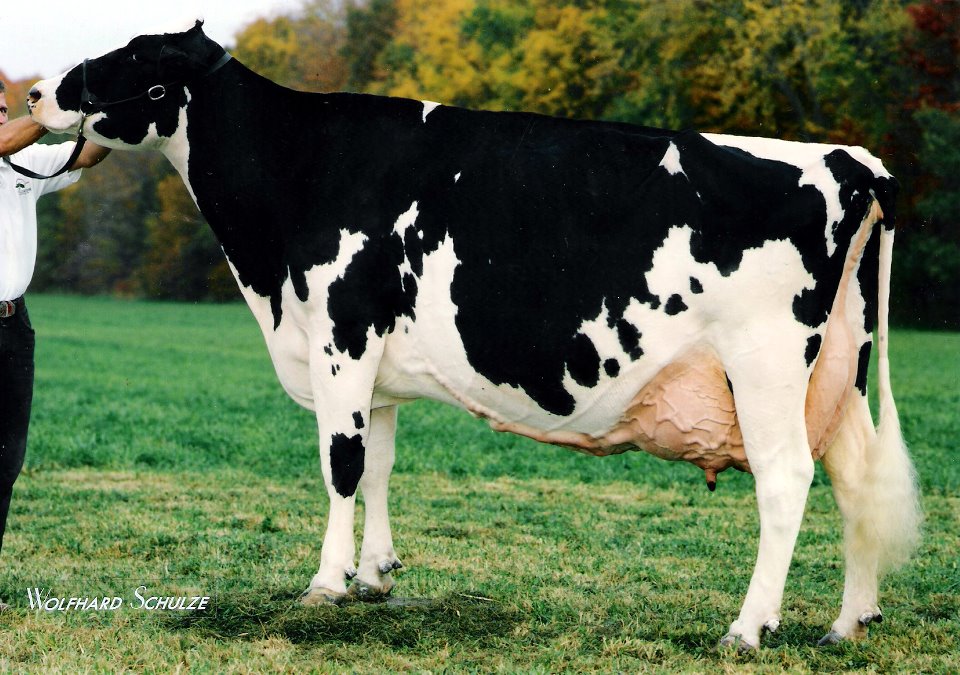
Fast forward to December ’91. This 18-month-old Blackstar daughter hits the auction block at the Elm Park Red Futures sale for $4,500—about $9,000 in today’s money. Not exactly pocket change, but not too extravagant either.
Mark Rueth was fitting cattle at that sale, and he had this feeling about her. I love what he told his buddy Mark VanMersbergen: “This heifer’s got something special. Deep-ribbed, wide-rumped… you just know.” Together with the Schaufs from Indianhead Holsteins, they partnered up on what turned out to be one of the most significant cattle purchases in Holstein history.
And man, did she deliver. Blackrose grew into this massive, commanding presence that just dominated wherever she went. When she walked into a show ring, other cows looked ordinary by comparison.
Her numbers were off the charts: 42,229 pounds of milk at five years old, with 4.6% butterfat and 3.4% protein. That EX-96 classification put her in the conversation with the most structurally perfect cows ever evaluated.
But here’s what really set her apart—she won All-American honors as both a junior two-year-old and junior three-year-old. That’s incredibly rare. Then in ’95, she captured Grand Champion at the Royal Winter Fair, joining this exclusive club of U.S. cows to win Canada’s most prestigious show.

The Real Magic Was in What She Produced
Now, Blackrose’s individual achievements were spectacular, don’t get me wrong. But the real treasure was her offspring. Her sons became some of the most influential sires of their era, though… well, they weren’t always the easiest to work with.
Take Indianhead Red-Marker. This bull stamped daughters with incredible power and frame, but his genetic proof showed some challenges. Specifically, his daughters often had issues with udder depth and could be, let’s say, temperamental in the parlor. You had to be smart about using him—mate him to cows that could correct those weak spots.
What’s interesting about the Blackrose sons is that they didn’t give you balanced, easy-to-use genetics. They gave you these incredibly potent but specialized tools. Breeders valued that raw power so much that they kept using them for generations, just being really strategic about their mating decisions.

And the daughters? They built dynasties. Rosedale Lea-Ann became the direct link to Lavender Ruby Redrose-Red, who in 2005 did something that still gives me goosebumps—became the first and only Red & White cow ever named Supreme Champion over all breeds at World Dairy Expo. First and only. Think about that. (Read More: Never a thorn in the career of Lavender Ruby Redrose-Red)
Today’s Success Story

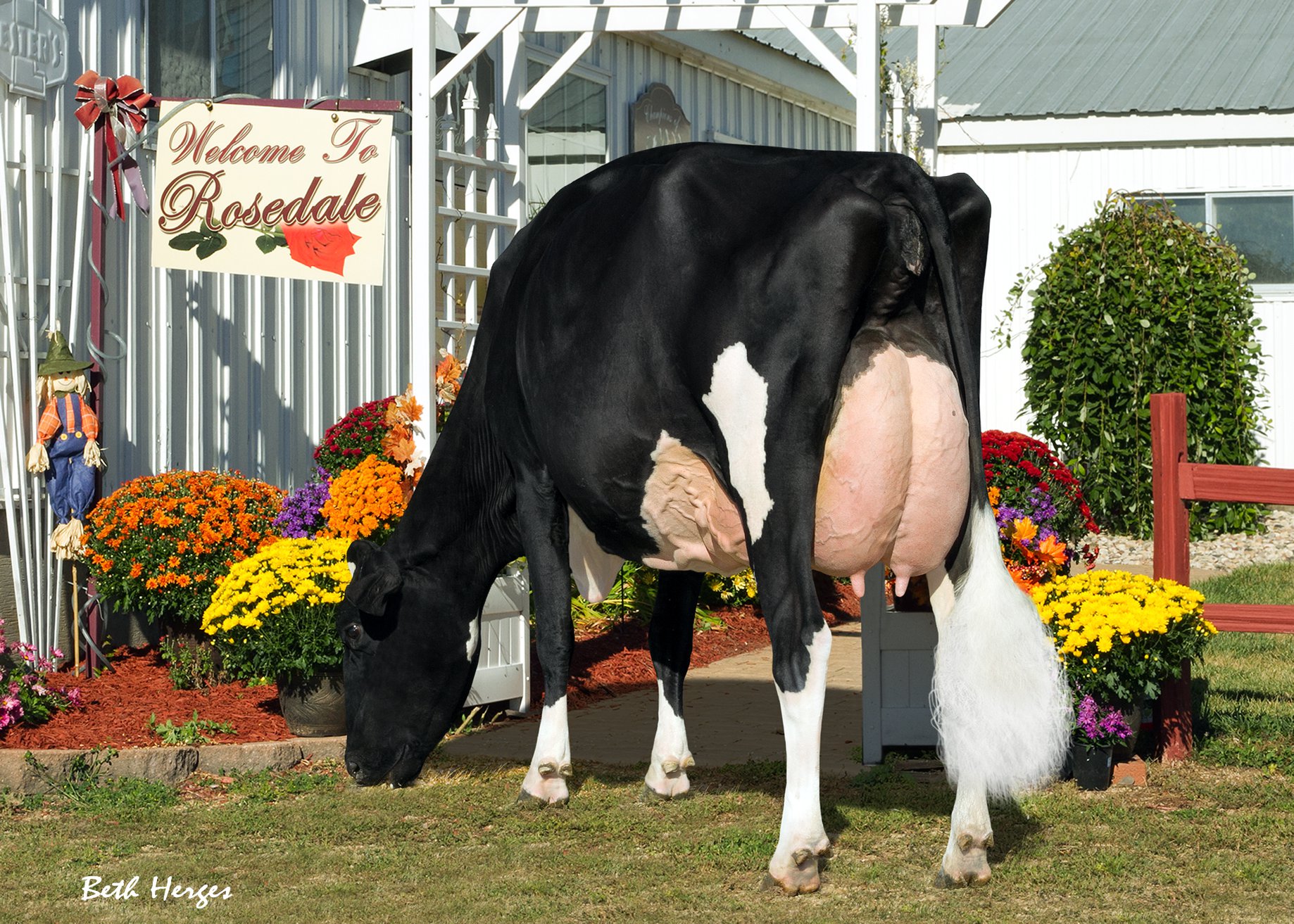
That genetic dynasty didn’t end with Redrose’s championship in 2005. In fact, it’s arguably stronger than ever, rewriting record books in show rings right now. Meet Ladyrose Caught Your Eye—born just six years ago in March 2019, and she’s already changing everything we thought we knew about consistent transmitting ability.
This Unix daughter has earned an EX-96 classification and won the World Dairy Expo three consecutive years, from 2021 to 2023. But what’s really impressive is her consistency as a transmitting cow—she’s got 16 milking daughters classified VG-87 or higher, with seven daughters sporting PTATs of 4.00 or better.
“The way Caught Your Eye transmits is comparable to many of the greats in the Red & White breed. Her consistency is just incredible.”
Her sons are making waves as well. MB Luckylady Bullseyem, Eye Candy and Caught-Up are shaping breeding programs from Wisconsin to Ontario. The difference is that Eye Candy’s always been the more refined of the two—you need to use him on good, strong cows. Bullseye brings more power. Both produce daughters that absolutely catch your eye. (Read more: From Pasture to Powerhouse: The GenoSource Story)
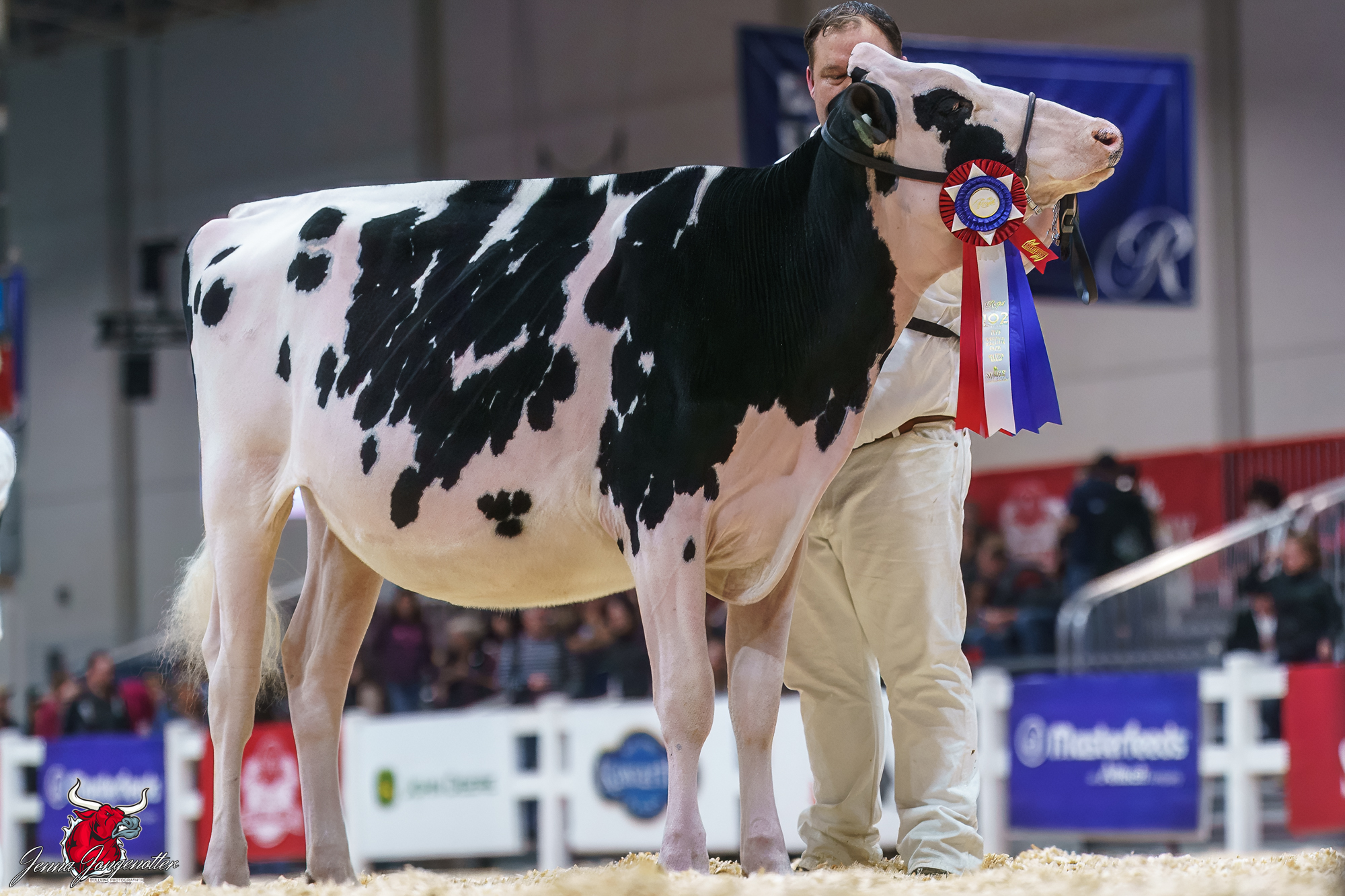
At the 2024 Canadian Royal, a Bullseye daughter took Junior Champion. These aren’t just show-ring curiosities—they’re the foundation genetics for commercial programs across North America.
What This Means for Your Breeding Decisions
The fact is, there are valuable lessons here for modern breeding strategies that extend far beyond the historical context.
First, superior genetics are incredibly resilient.
The complete collapse of Stookey’s operation could have destroyed these bloodlines forever, but quality has a way of surviving and finding new expression.
Second, the power of corrective breeding—what Prange did instinctively, we can now predict with genomic testing.
We can run thousands of potential matings through computer models and identify those “golden cross” opportunities before we even order the semen.
But the fundamentals haven’t changed much, have they? You still need to understand the traits you’re trying to improve, balance production with durability, and think in generations rather than lactations.
What’s fascinating about today’s challenges is how they echo what we’ve always dealt with, just on a different scale. Feed costs are hitting $300 a ton in some parts of the Midwest, labor shortages are slowing operations from Minnesota to New York, volatile milk prices… sound familiar?
The difference now is that we have tools Prange could only dream of. Genomic predictions, automated monitoring systems, precision feeding—but they’re all built on those same fundamental breeding principles.
And here’s something that’s becoming huge in our decision-making: feed efficiency. Getting more milk per pound of feed isn’t just economics anymore—it’s environmental responsibility. Modern genomic selection lets us identify genetics that produce more milk with less feed, better disease resistance, and improved longevity.
Dr. Paul VanRaden from CDCB puts it well: “The carbon footprint of efficient genetics is becoming critical as we face new environmental regulations. We’re selecting for cows that produce more with less and stay healthy longer.”
Therefore, breeding decisions today must consider both profit and the planet.
That’s how we stay ahead of regulations while maintaining profitable operations.
The Financial Lessons That Still Matter
What really strikes me about Jack’s story is how the financial pressures sound so current. Overextending on credit, relying too heavily on outside capital, not having the cash flow cushion to weather downturns…
We see versions of this today when farms invest in new facilities or robotic systems without solid financial planning. I know operations that took on massive debt for parlor upgrades right before milk prices tanked—same principle, different decade.
The beauty of genetics, though, is that they outlasts financial crises. They don’t forget. Every mating choice we make echoes through decades.
Looking at Your Own Program
Which brings me to you and your breeding decisions. When you’re planning matings—whether you’re running full genomic evaluations or working with more traditional approaches—remember this story.
Sometimes the most valuable genetics come from the most unexpected places. Maybe it’s that moderate cow in the back of the barn whose daughters just keep producing, or that bull everyone’s overlooking because his numbers aren’t flashy enough.
The decisions we make today will still be showing up in our herds—or someone else’s—twenty years from now. That’s both the challenge and the incredible opportunity we have as breeders.
Think about it: Blackrose was conceived in bankruptcy court, sold as a modest heifer, and went on to reshape the Holstein breed. Her descendants are still winning shows, still improving herds, still contributing to profitable dairy operations from California to Quebec to Germany.
In barns across North America and beyond, Blackrose genetics continues contributing to successful operations. They’re not just show-ring champions anymore—they’re the foundation for commercial breeding programs, combining with today’s best genomic sires to produce cattle that are more efficient, more profitable, and more sustainable than ever.
So next time you’re studying pedigrees or reviewing genomic reports, remember this: consistency and long-term vision turn crises into champions.
Because in the end, that’s what we’re really doing—building legacies that outlast us.
KEY TAKEAWAYS
- The resilience of elite genetics can turn economic and financial disasters into opportunities for breeding innovation.
- Stookey Elm Park Blackrose exemplifies the power of corrective breeding, combining top production traits with superior conformation.
- Her descendants continue to influence both show and commercial operations worldwide, showcasing enduring genetic value.
- Modern breeding strategies, augmented by genomic tools, build on lessons from historic success stories, such as Blackrose.
- Sustainability and profitability hinge increasingly on balancing genetics, health, and feed efficiency.
EXECUTIVE SUMMARY
Stookey Elm Park Blackrose, born during the 1980s dairy financial crisis, remains a pivotal figure in Holstein genetics today. Rescued from bankruptcy by Louis Prange, she combined top production with exceptional conformation and show success. Her influence extends globally through powerful sons and dynasty-building daughters, such as Lavender Ruby Redrose-Red and Ladino Park Talent. Modern descendants, including Ladyrose Caught Your Eye, demonstrate outstanding performance and genetic consistency. This story highlights the resilience of superior genetics in the face of economic turmoil and the effectiveness of strategic corrective breeding. The Blackrose legacy shapes both championship show cows and profitable commercial herds worldwide, remaining vital to dairy sustainability.
Learn More:
- Breeding for Profit: The Ultimate Guide to a More Profitable Herd – This guide provides a step-by-step framework for building a breeding program focused squarely on your bottom line. It details practical strategies to select genetics that boost production efficiency, health, and fertility for maximum financial returns in your herd.
- The 2025 Dairy Market Outlook: Key Trends Every Producer Must Know – Move from the historical financial lessons of the Blackrose story to today’s economic reality. This analysis reveals the market trends, consumer demands, and global factors shaping dairy profitability, helping you make smarter, forward-thinking strategic decisions for your operation.
- The Feed Efficiency Revolution: How New Genetic Indexes Are Cutting Costs – While Blackrose highlights timeless efficiency, this piece explores the innovative tools of today. It demonstrates how to leverage new genetic indexes for feed efficiency to directly attack and reduce the single largest variable cost on any dairy farm.
 The Sunday Read Dairy Professionals Don’t Skip.
 The Sunday Read Dairy Professionals Don’t Skip.
Every week, thousands of producers, breeders, and industry insiders open Bullvine Weekly for genetics insights, market shifts, and profit strategies they won’t find anywhere else. One email. Five minutes. Smarter decisions all week.