Brian Preston’s feed bill dropped, and his components went up — at the same time. Three herds, three states, and the barn math that explains why it’s not a fluke.
Executive Summary: Preston Farms in Michigan pulled bypass fat out of a 1,000‑cow ration, fed 8 lb/cow/day of home‑grown high‑oleic soybeans, and still gained about $0.60–$1.00/cow/day in IOFC. Three very different herds — Holsteins in Michigan, Brown Swiss in Iowa, Holsteins in New York — all used high‑oleic beans to replace part of their purchased fat and meal without giving up milk or components. The upside shows up when you’re spending real money on bypass fat and soybean meal and can grow decent‑yielding soybeans; that’s where the ration shift starts to pencil as $18,000–$30,000/month on 1,000 cows instead of a neat research slide. The risk is yield and agronomy: an 8 bu/acre yield drag or a weed‑control misfit can quietly turn a “$1/cow/day” win into a marginal quarter. The article walks through a simple green‑light/red‑light test — seed access, acres, current fat spend, and advisor experience — so you can see if high‑oleic belongs in your 2027 crop plan or on your watch list. If you’ve been buying high‑fat genetics and still shipping “flat” butterfat, it also shows how a high‑oleic‑friendly ration can stop the rumen from vetoing the proofs you’ve already paid for.
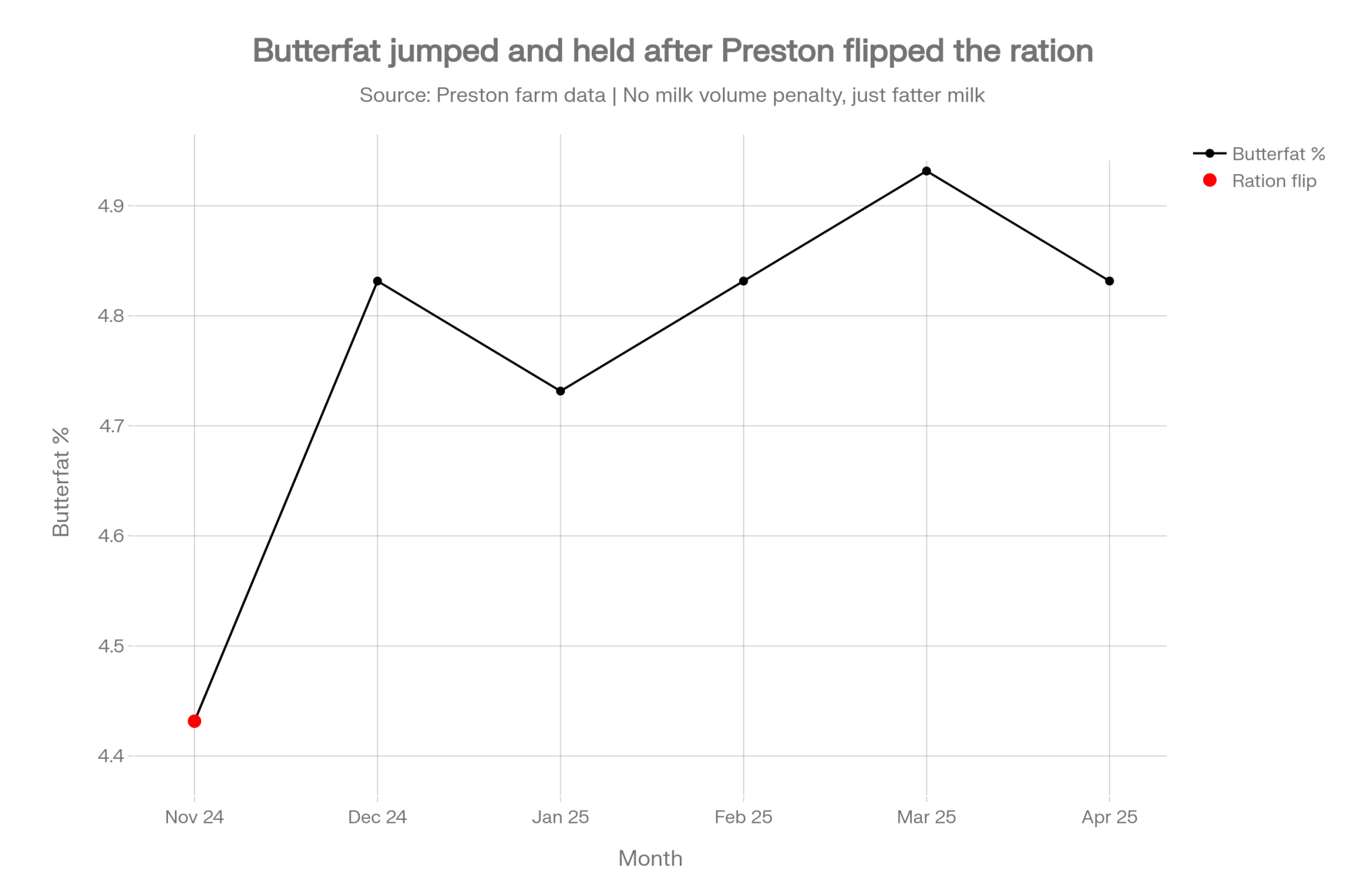
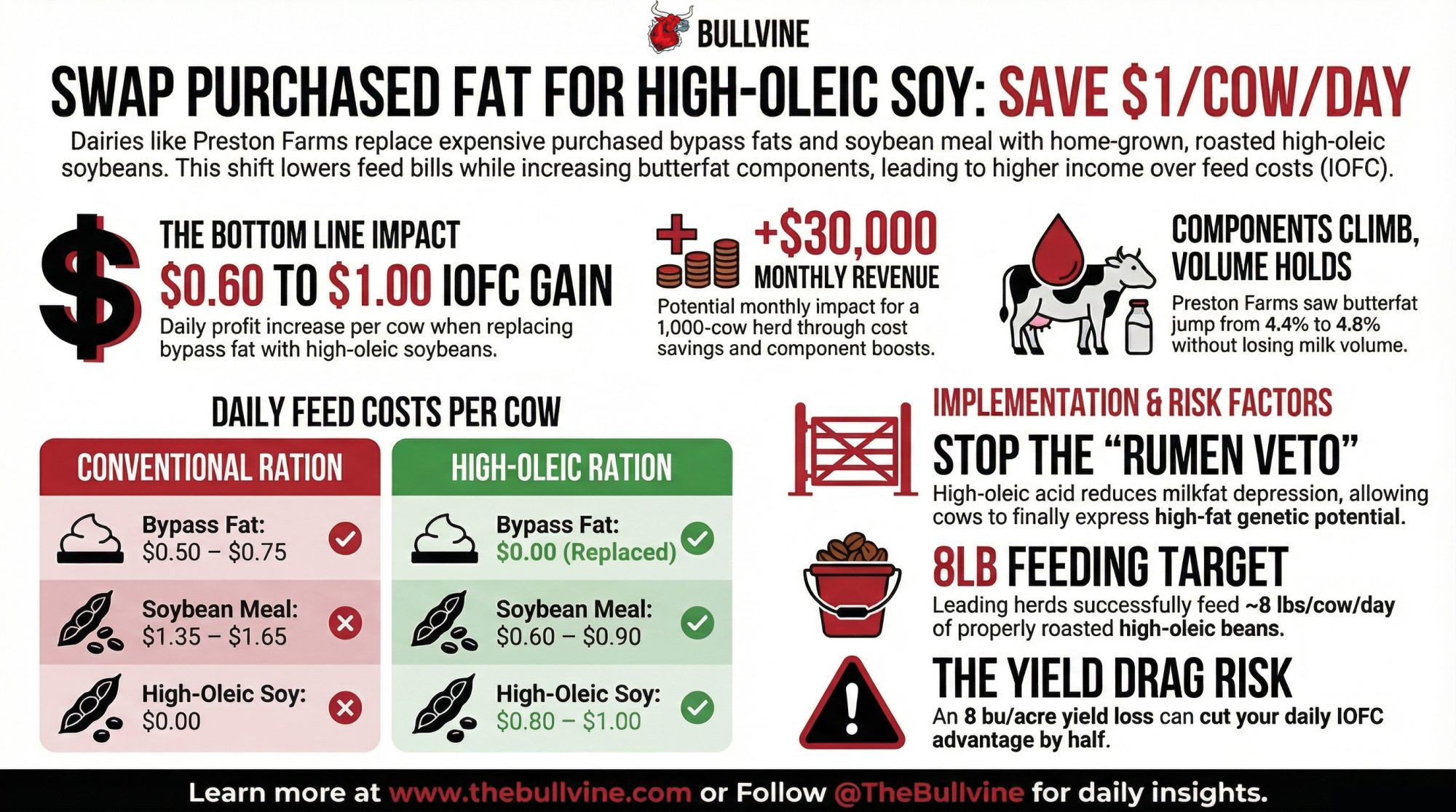
In November 2024, Brian Preston loaded the first batch of roasted high‑oleic soybeans into the TMR on his family’s farm in Quincy, Michigan. Within days, butterfat climbed from 4.4% to 4.8%, and the milk volume didn’t flinch. Six months later, even after component prices softened, Preston was still netting about 60–70 cents per cow per day, and Michigan State University summarized his early peak as “more than $1 per cow per day in income over feed cost.”
“We got both,” he told Farm Progress — lower costs and better components — “which rarely ever happens.”
That line has echoed across MSU, Farm Progress, and the broader U.S. soy world ever since. But between seed access, weed pressure, roasting logistics, and changing butterfat markets, copying Preston’s move is not as simple as swapping one ingredient line for another. The operators who treat this like a full‑system decision — not just a shiny new feed ingredient — are the ones most likely to keep the dollars Preston and others are now banking.
The Day Preston Flipped His Ration
Preston Farms is a fourth‑generation dairy in southern Michigan. Brian works with his dad, Keith, uncle Glenn, and cousin Adam on roughly 1,600 acres near the Indiana line, milking about 1,000 Holsteins, raising contract hogs, and growing corn, soybeans, and alfalfa. Before high‑oleic, their model was simple: grow grain corn, buy soybean meal, and buy bypass fat.
MSU’s Adam Lock had been in their barn more than once with a bold pitch. His group had identified high‑oleic soybean lines with more oleic acid and less linoleic acid than conventional soy, and they were seeing a very different impact on milkfat when those beans were properly roasted and fed. The theory was straightforward: if you could push more oleic and less linoleic acid to the small intestine, you could feed more fat, pull expensive calcium salts and palm‑based fats out of the ration, and still gain on butterfat without crashing the rumen.
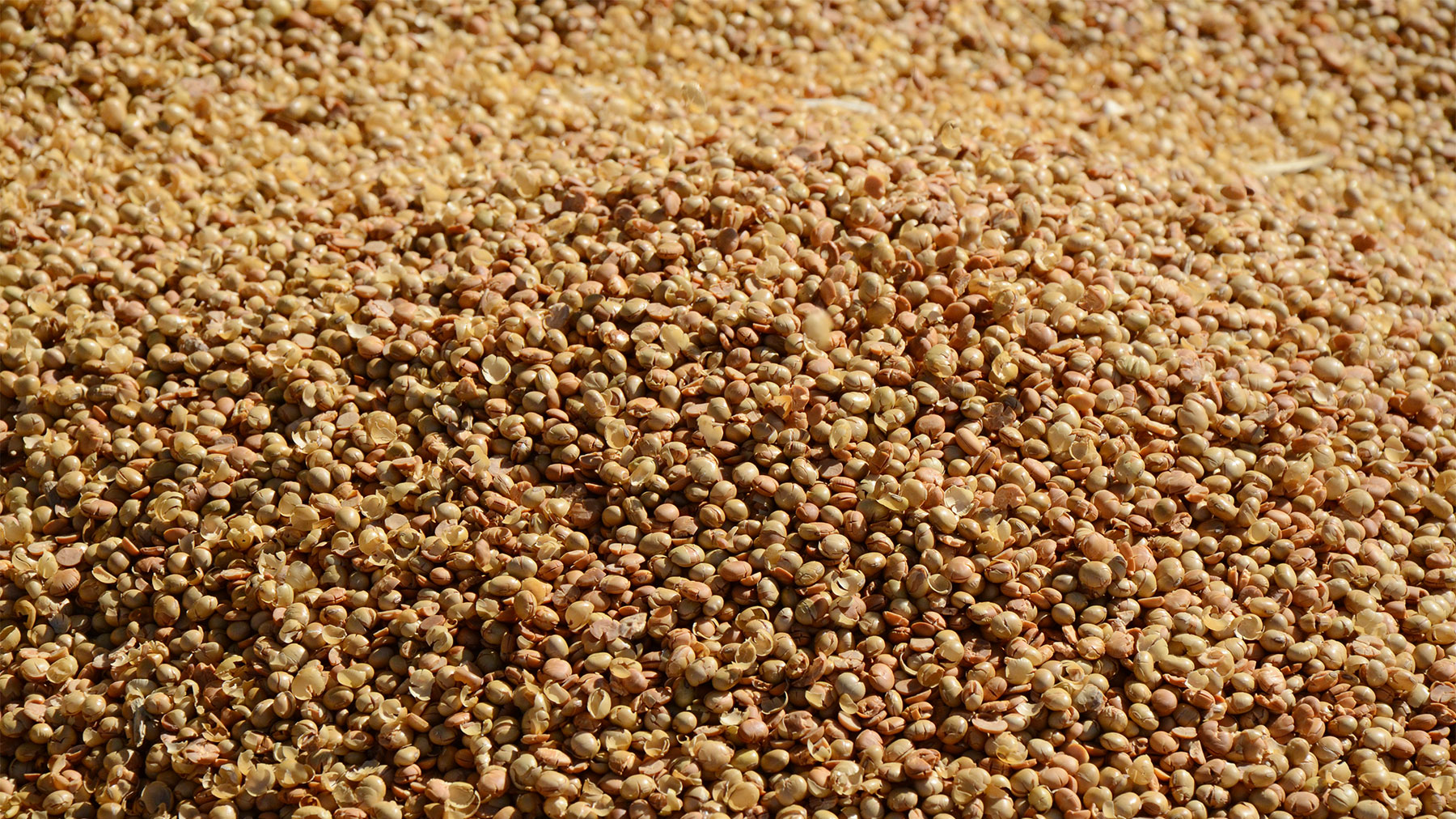
In 2024, the Prestons put that theory to the test. They seeded about 300 acres of high‑oleic soybeans on their own land and lined up another block of beans from neighbors to cover their needs — roughly 400 acres total when you add contracted ground. They installed an electric soybean roaster, worked with MSU on roasting targets, and by November started feeding around 8 lb/cow/day of roasted high‑oleic soybeans in the lactating ration.
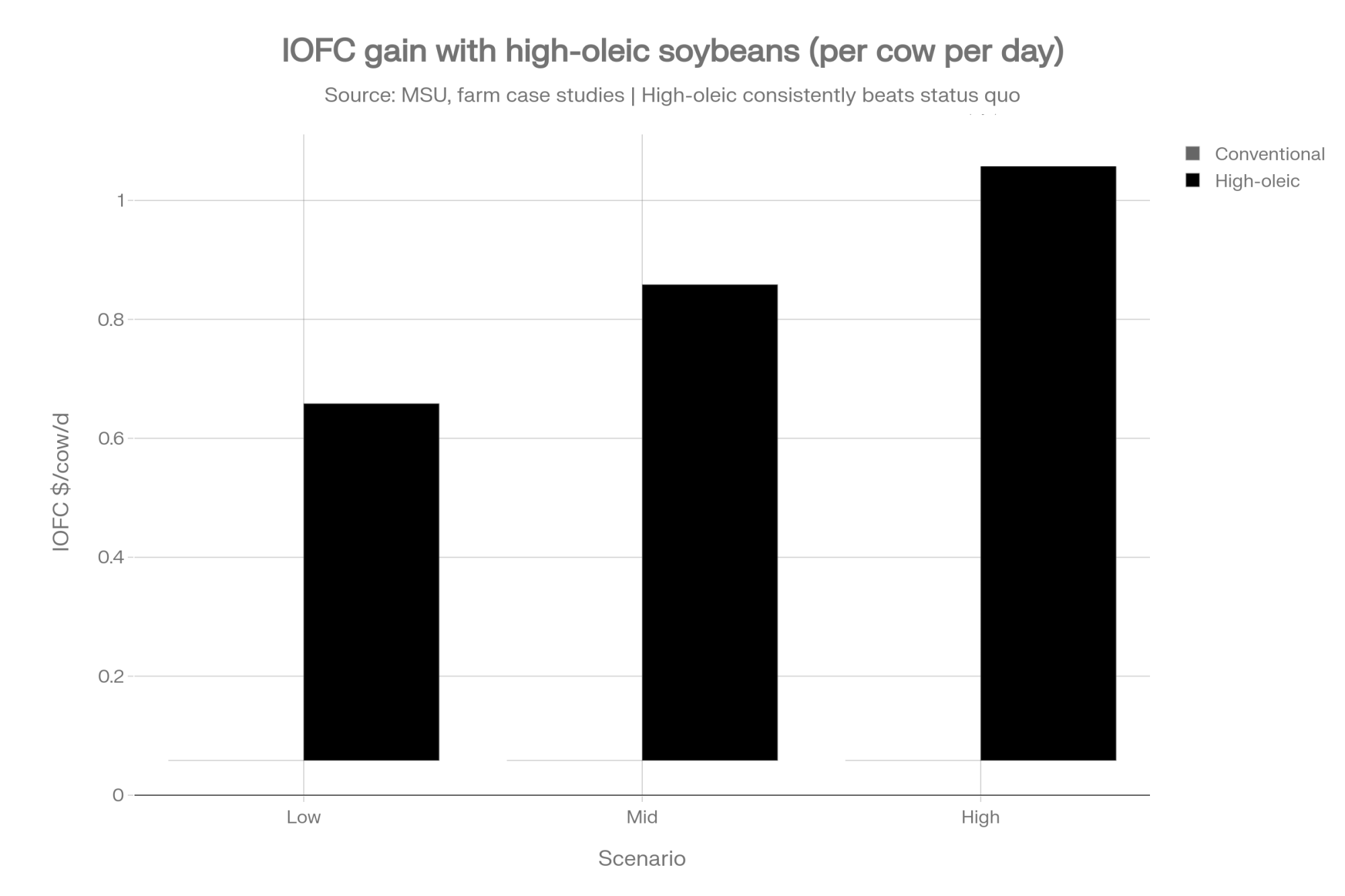
“What was different with high‑oleic beans,” Preston told Farm Progress, “we were able to cut out the calcium salts and some of the palm fats for a significant feed savings with higher butterfat and the same pounds of milk.” MSU’s Michigan Alliance for Animal Agriculture report put it bluntly: the shift “allowed one southwest Michigan dairy farm to add more than $1 per cow per day in income over feed cost.” As butterfat and protein prices eased off the 2024 highs, that advantage settled into the $0.60–0.70 per cow per day lane — still worth roughly $18,000–21,000 a month on 1,000 cows.
Preston also used high‑oleic soybeans to rebalance his cropping rotation. After years of corn‑on‑corn, adding triticale and high‑oleic soybeans let them harvest three crops off the same acres over two years — triticale, corn silage, then high‑oleic soybeans — without sacrificing feed quality. It wasn’t just a ration tweak. It was a whole‑farm adjustment.
How Much Is Your Bypass Fat Really Costing You?
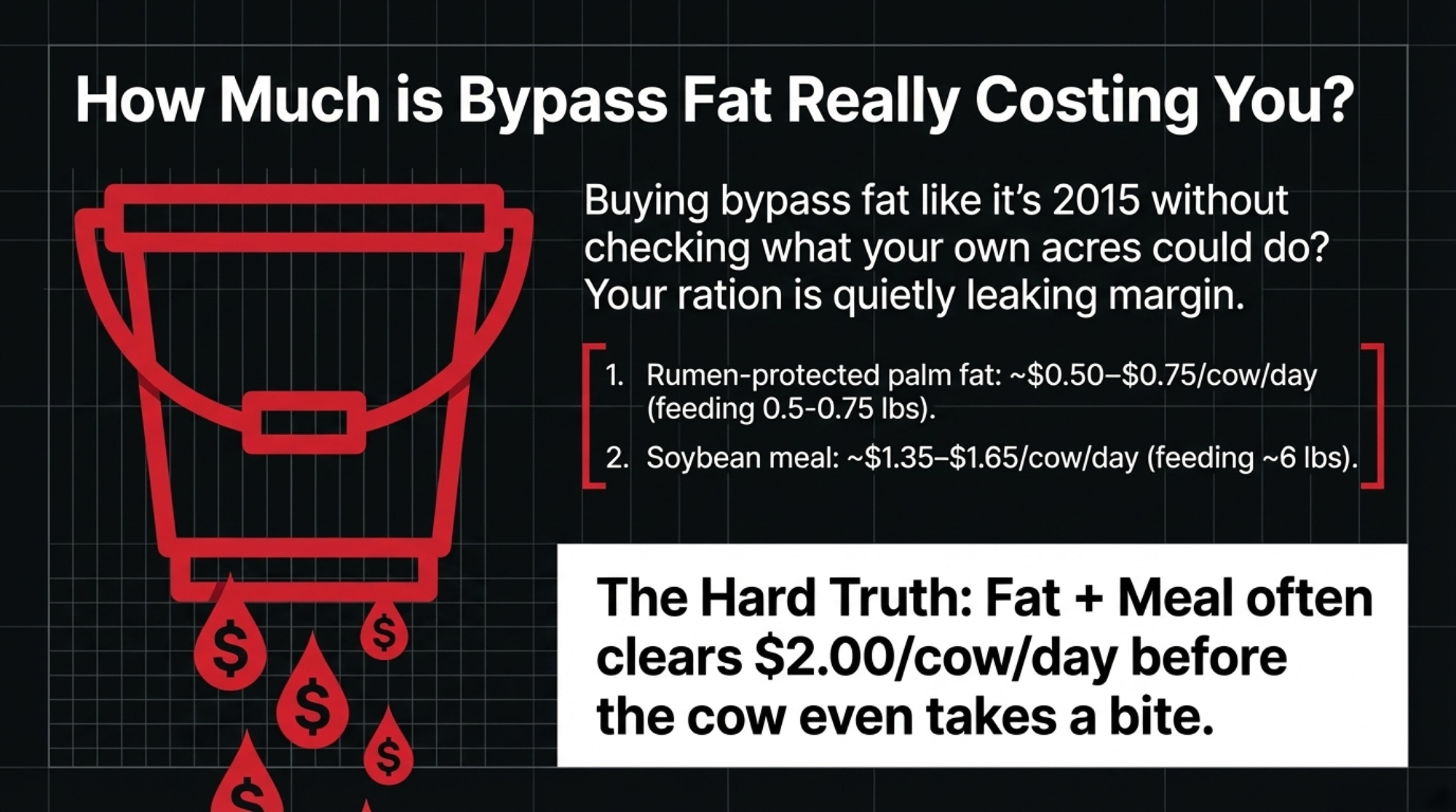
If you’re still buying bypass fat like it’s 2015 without checking what your own acres could do, you’re almost certainly leaving money on the table. And if your current ration is already leaking margin through purchased fat and protein, that problem won’t fix itself.
Take a common “before” scenario on a high‑producing herd:
- Bypassing fat add up fast. Many herds are feeding roughly 0.5–0.75 lb/cow/day of rumen‑protected palm fat. At recent price bands of about $1,700–2,000/ton, that often lands in the neighborhood of $0.50–0.75/cow/day, and higher where feeding rates or prices sit above those mid‑range examples.
- Soybean meal quietly stacks the bill. Feeding around 6 lb/cow/day of soybean meal, at $450–550/ton, easily tacks on about $1.35–1.65/cow/day.
- Together, fat + meal often clears $2.00/cow/day. For a lot of herds, those two lines alone sit in the ~$2.00/cow/day or more range.
Now picture the Preston‑style “after” where you let high‑oleic beans do more of the work:
- Home‑grown HOS takes over both fat and part of the protein. Feeding 7.5–8 lb/cow/day of roasted high‑oleic soybeans grown on your own acres, at an all‑in cost of roughly $450–520/ton, works out around $0.80–1.00/cow/day.
- Soybean‑meal dependence drops. With beans carrying more of the protein load, soybean meal spend might drop into the $0.60–0.90/cow/day band instead of $1.35–1.65. That’s ration‑specific, but it’s the pattern Preston, Hilltop, and Half Full have followed.
- Bypass fat can legitimately become a zero line. When roasted high‑oleic beans carry the energy and fat load, bypass fat has a clear path to $0.00/cow/day.
Put side‑by‑side, it looks like this:
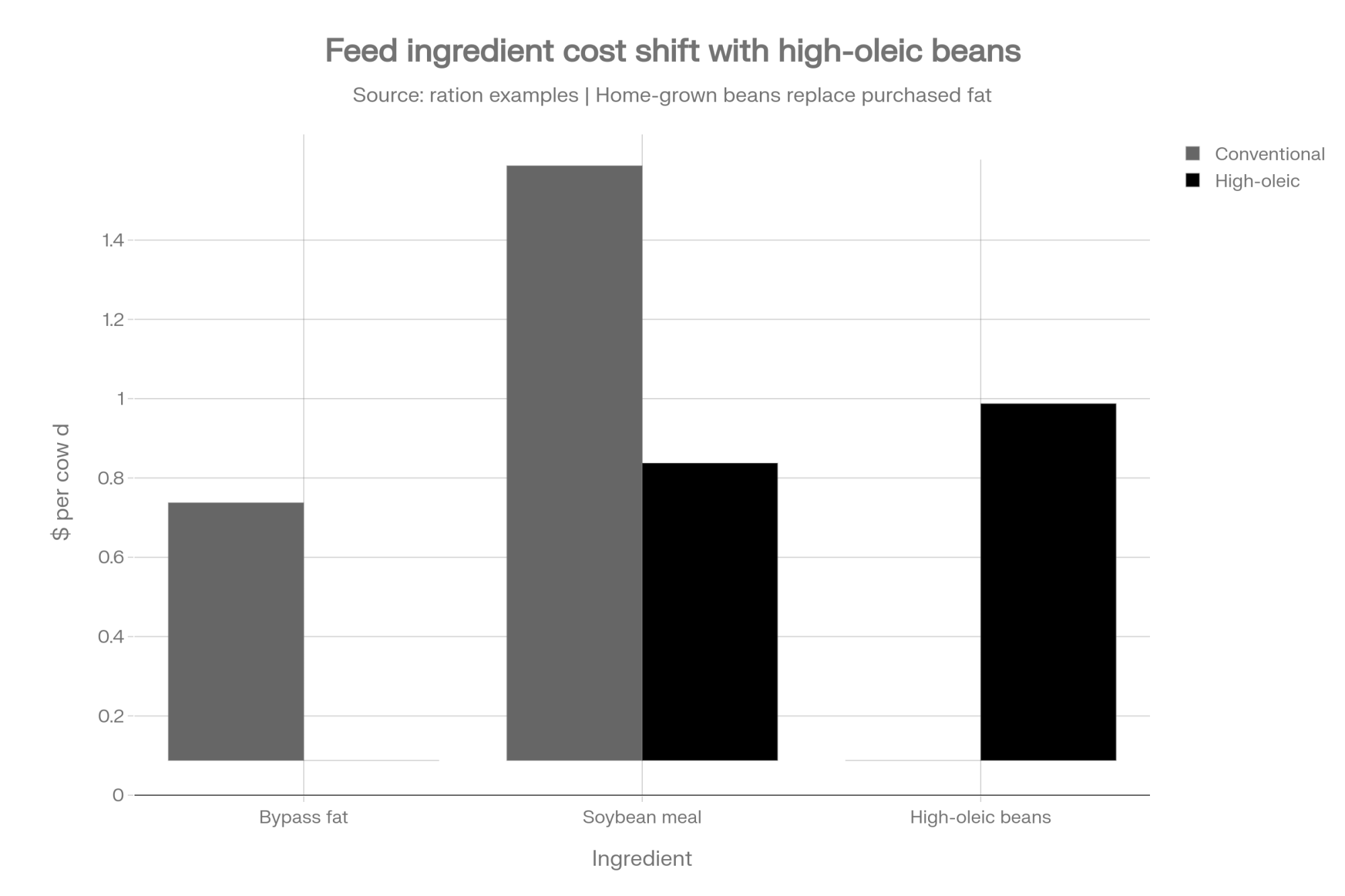
| Input | Conventional Ration (Approx. Cost) | High‑Oleic Ration (Approx. Cost) |
| Bypass fat | $0.50–0.75/cow/day | $0.00/cow/day (replaced) |
| Protein (soybean meal) | $1.35–1.65/cow/day | $0.60–0.90/cow/day (partial replacement) |
| High‑oleic soybeans | $0.00/cow/day | $0.80–1.00/cow/day (home‑grown, roasted) |
| Estimated IOFC gain | Baseline | +$0.60 to +$1.00/cow/day |
That table is why Preston’s numbers — and MSU/UW‑Madison modeling — land in that $0.60–1.00/cow/day IOFC gain range. On ingredient cost alone, you’re largely swapping one expense for another. The extra money shows up when butterfat and protein go up, and milk volume doesn’t drop.
What Happens When the Crop Doesn’t Cooperate?
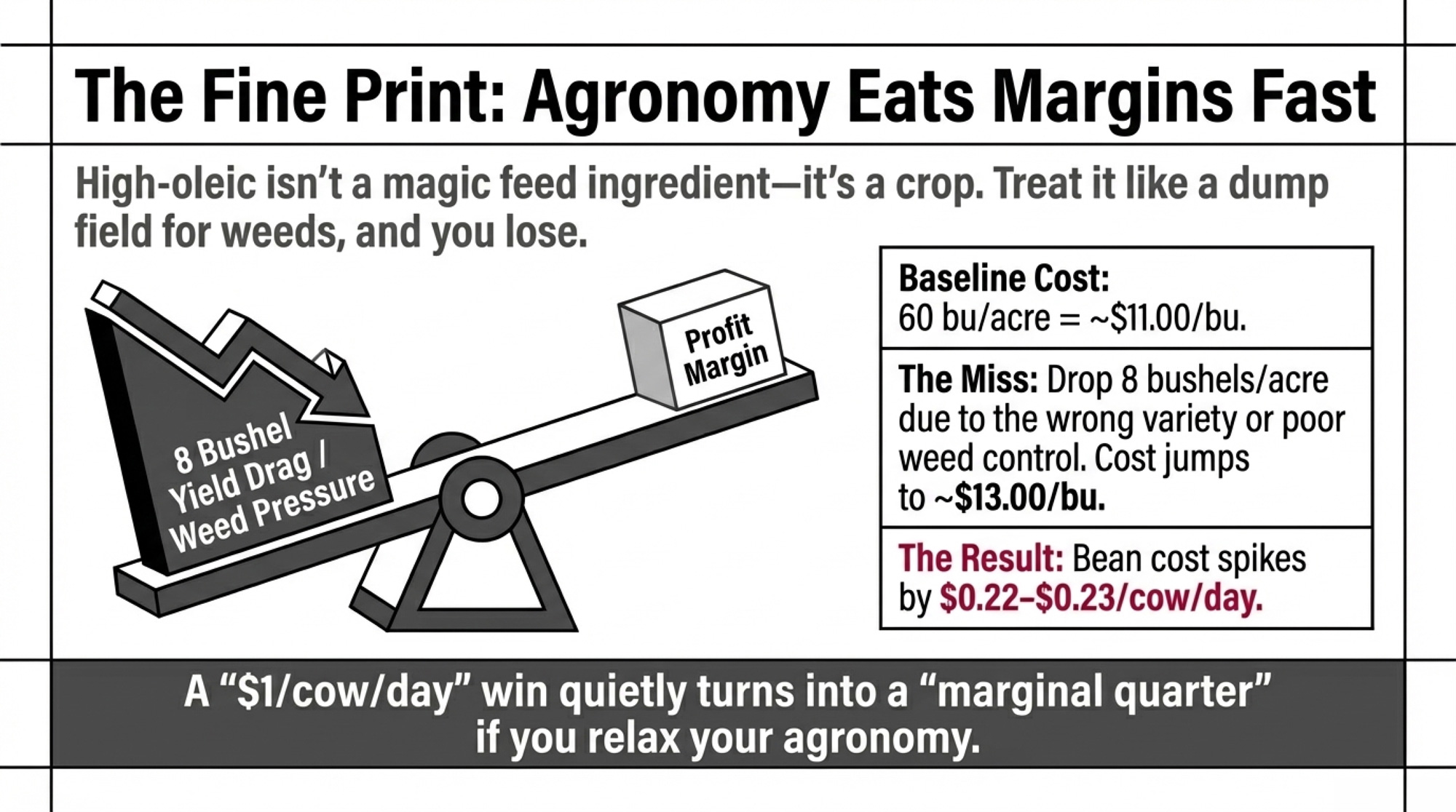
None of that works if the beans don’t yield. And an agronomic miss on your feed crop feels a lot like discovering your “fine” ration has been burning cash.
- High‑oleic can yield like your normal beans — if you treat them like it. USB and the Iowa Soybean Association both point out that high‑oleic soybeans have performed on par with comparable conventional varieties when they’re matched correctly to soil type and weed‑control programs.
- A yield drag hits your IOFC faster than most vendors admit. Say your soybean COP sits around $650–700/acre and you expect 60 bu/acre — that puts you roughly in the $11–11.50/bu zone. Drop eight bushels because you put the wrong variety on the wrong field, or your weed program wasn’t tight enough, and the same cost per acre jumps to about $12.70–13.00/bu. At 7.5–8 lb/cow/day, that adds roughly $0.22–0.23/cow/day to your bean cost.
- A “dollar a cow” can quietly become “a quarter a cow.” If your IOFC gain at strong butterfat prices was $0.60/cow/day, that kind of yield drag can cut your advantage by roughly a third to a half, depending on your other ingredient prices.
The early misses all rhyme:
- Putting high‑oleic beans on your worst weed‑pressure acres. Treating HOS as a place to dump risk fields is a reliable way to guarantee yield penalties as resistant weeds get a free run.
- Choosing a high‑oleic variety that doesn’t match your herbicide program. If the trait stack doesn’t fit your existing weed tools, you either pay to adopt new chemistry or accept more weeds. Neither is free.
- Relaxing fungicide and plant‑population decisions because “it’s just feed.” High‑oleic soybeans don’t get a pass on agronomy just because they don’t go straight to a food‑grade contract.
The trait isn’t the problem. The field choices are.
Can Your Seed Rep Actually Get You the Right Variety?
High‑oleic soybeans have quietly moved from niche curiosity to real acreage.
- Farmers in 16 states grew high‑oleic soybeans on roughly 800,000 acres in 2024. USB and Brownfield reporting put the footprint there, with the heaviest concentrations in states like Indiana and Ohio, where crushers and food markets are already lined up.
- Seed choice isn’t just “yes/no,” it’s traits and maturity. USB and partner seed companies list 21 high‑oleic varieties for recent seasons, with maturity groups from roughly 1.9 to 4.8 and trait stacks ranging from Plenish high‑oleic Enlist E3 to SOYLEIC lines with other herbicide packages.
- Feed isn’t the first destination — yet. USB data suggest about 35% of high‑oleic soybeans currently go into dairy rations, about 60% into food uses, and around 5% into industrial markets.
Your practical test is simple:
- If your rep can name a specific high‑oleic variety in your maturity group, with the herbicide traits your weed pressure actually needs, and commit to delivering enough units, you’re in the game. That doesn’t guarantee success, but it means the supply‑side friction is manageable.
- If the answer is “we’ll see what we can find,” you’re watching the first wave, not riding it. That’s a signal to keep pushing your suppliers and watching the data — not to build your 2027 feed strategy on a hypothetical seed supply.
Who’s Actually Running This Play Today?
Preston isn’t the only operator betting real money on high‑oleic. He’s just one of the easiest to find on a map.
Hilltop Acres Farm, Iowa — Brown Swiss on beans. In northeast Iowa, Dennis Mashek runs Hilltop Acres, an eight‑generation Brown Swiss herd near Calmar. About four years ago, his nutritionist suggested feeding his own high‑oleic soybeans. “My nutritionist told me high oleic soybeans could raise butterfat by a point to a point and a half, so I thought I’d give it a try, and it did,” Mashek told the Iowa Soybean Association. Today, he feeds six pounds of ration containing high‑oleic soybeans per head per day, roasts beans on‑farm at about 280–310°F, and has eliminated Novameal from the ration. His Brown Swiss herd is running roughly 4.9 fat and 3.7 protein, and he plans to keep high‑oleic soybeans in the rotation.
Half Full Dairy, New York — chasing ROI when palm fat spiked. In Warners, New York, Half Full Dairy started feeding high‑oleic soybeans in 2020 as palm‑fat prices spiked and supply got choppy. Owner AJ Wormuth worked with Dairy One nutritionist Brian Rapp to source high‑oleic beans, dial in roasting and grinding, and rework the ration. They replaced bypass fat and some soybean meal with high‑oleic soybeans and saw about $0.37/cow/day in savings, with components holding.
The whole‑system view in Iowa. The Iowa Soybean Association and Iowa State University are now running HOS from ISU field plots through the feed mill into the ISU dairy herd, explicitly to understand how growing, processing, and feeding high‑oleic all fit together for dairies like Mashek’s.
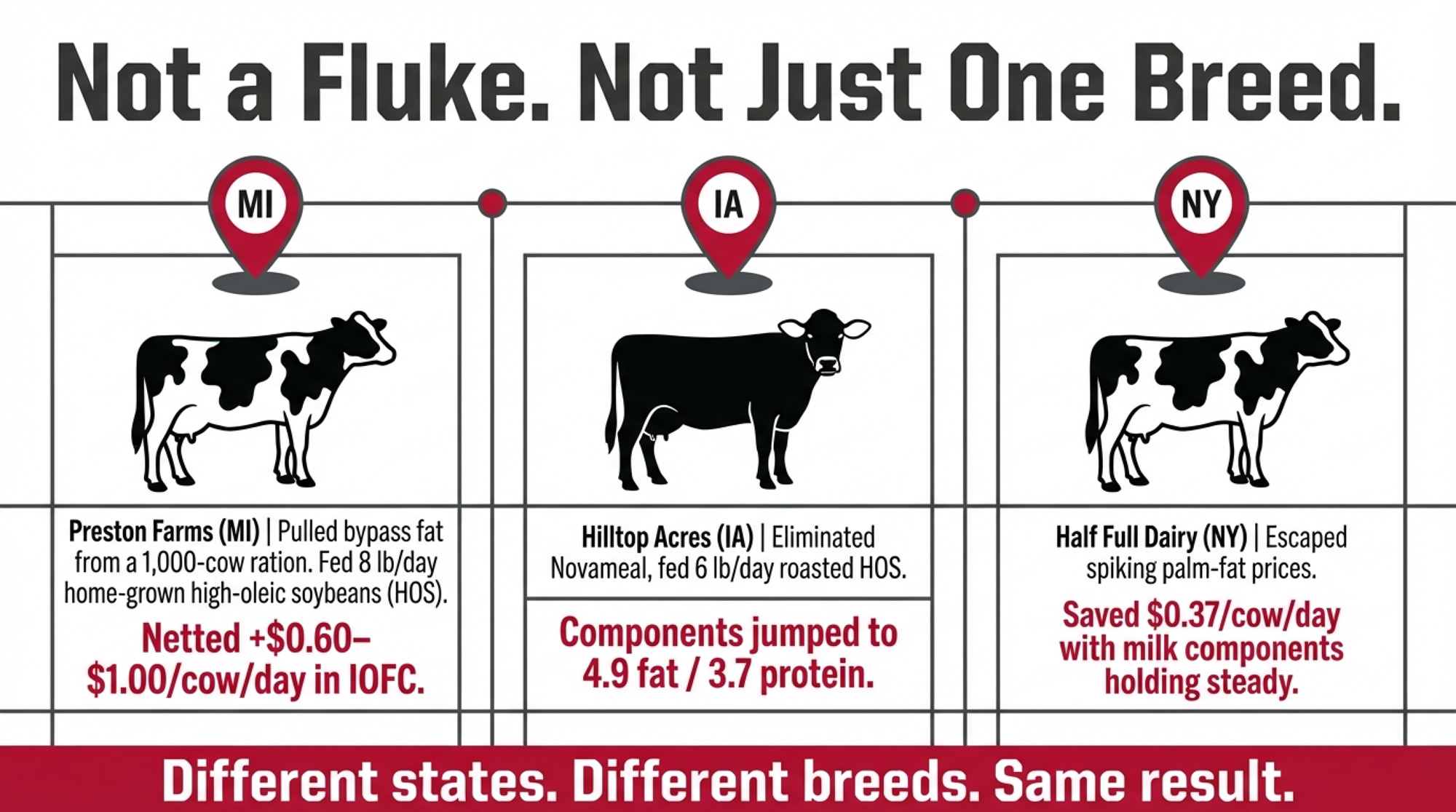
Different states, different breeds, different cooperatives. Same pattern: acres, a nutritionist willing to do more than “tweak,” and a farm family prepared to live with the result if the experiment doesn’t pay.
Are Your High‑Fat Genetics Hitting a Rumen Wall?
High‑oleic soybeans aren’t just a feed‑cost story; they’re a quiet genetics story too.
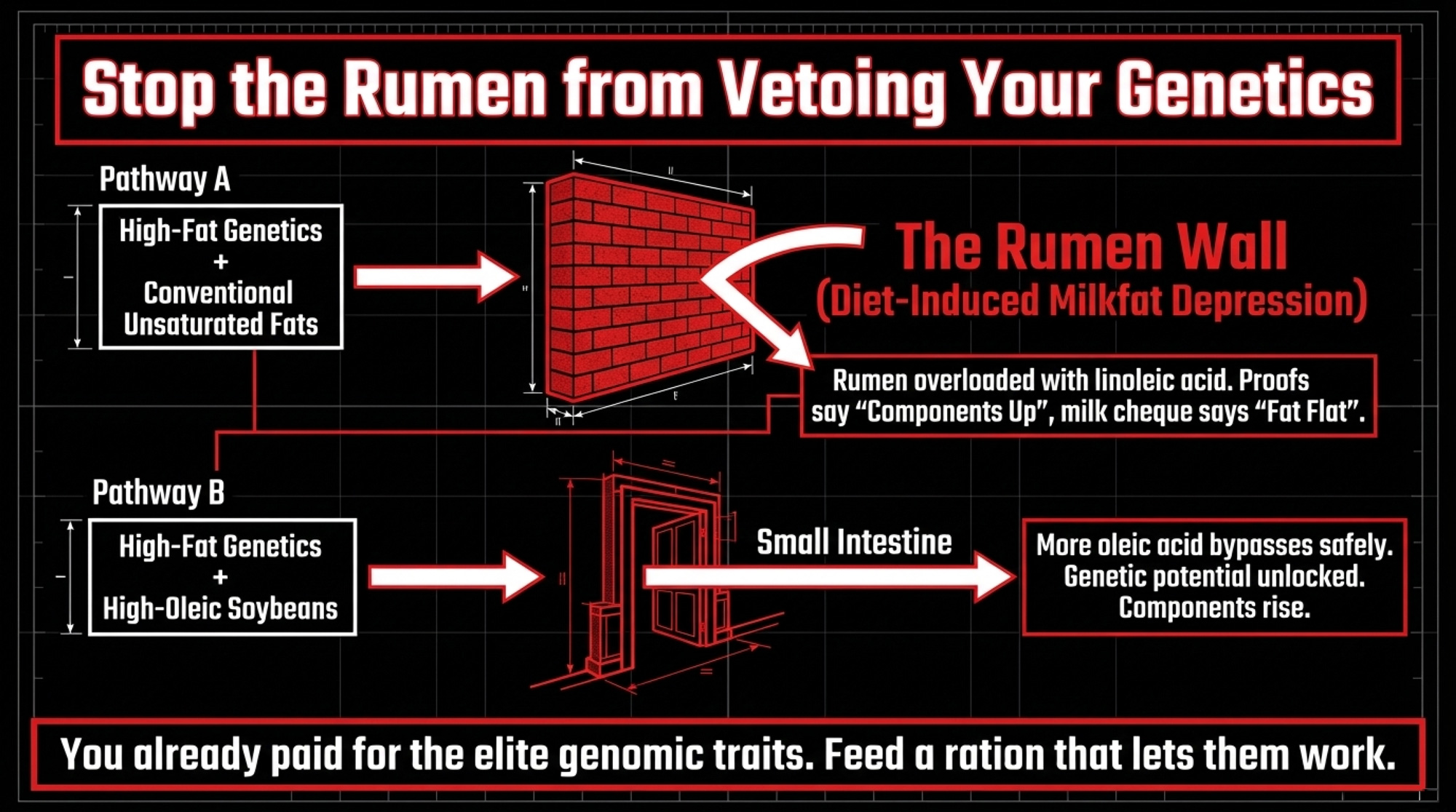
If you’ve spent years stacking bulls for higher fat and component kilos, but your ration leans hard on rumen‑active unsaturated fats from “cheap” sources, you’ve probably watched proofs that say “components up” turn into milk cheques that say “fat flat.” The rumen is vetoing the genetics.
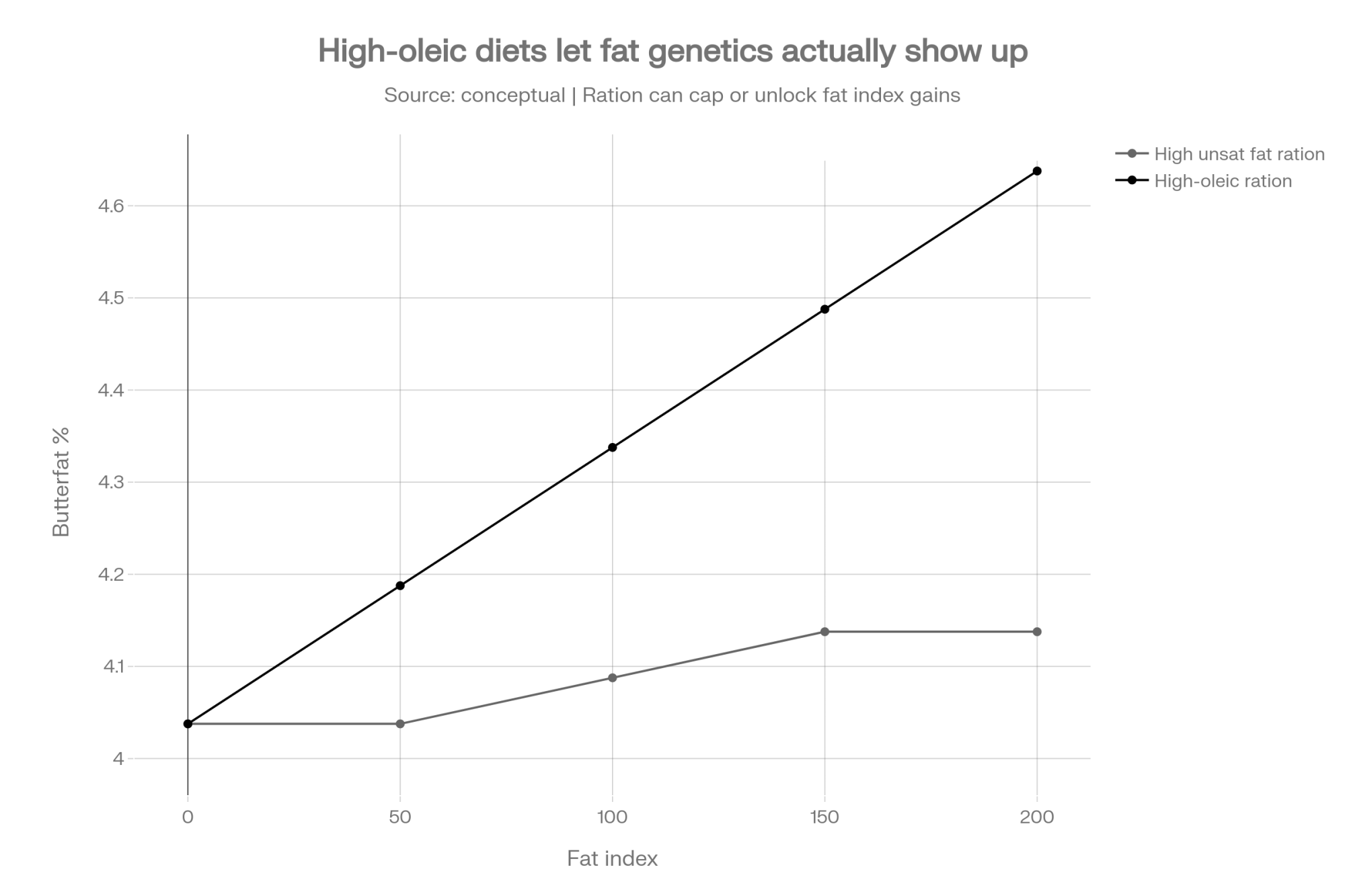
By pushing more oleic and less linoleic acid to the small intestine when beans are properly roasted, high‑oleic soybeans reduce the risk of diet‑induced milkfat depression that often comes with feeding more unsaturated fat. That’s the kind of environment where high‑index cows are more likely to show the fat yield their proofs predict, instead of hitting a rumen wall. If you’re already using genomic proofs to chase higher fat and component kilos, a high‑oleic‑friendly ration is one of the few realistic tools that helps those numbers show up consistently on your butterfat line rather than staying hypothetical.
Worth thinking about: you’ve already paid for those genes. What’s your ration doing to let them express?
Does This Still Pencil When Butterfat Prices Slide?
You don’t need a Ph.D. to ask the obvious question: what happens when butterfat isn’t paying as it did in 2022–24?
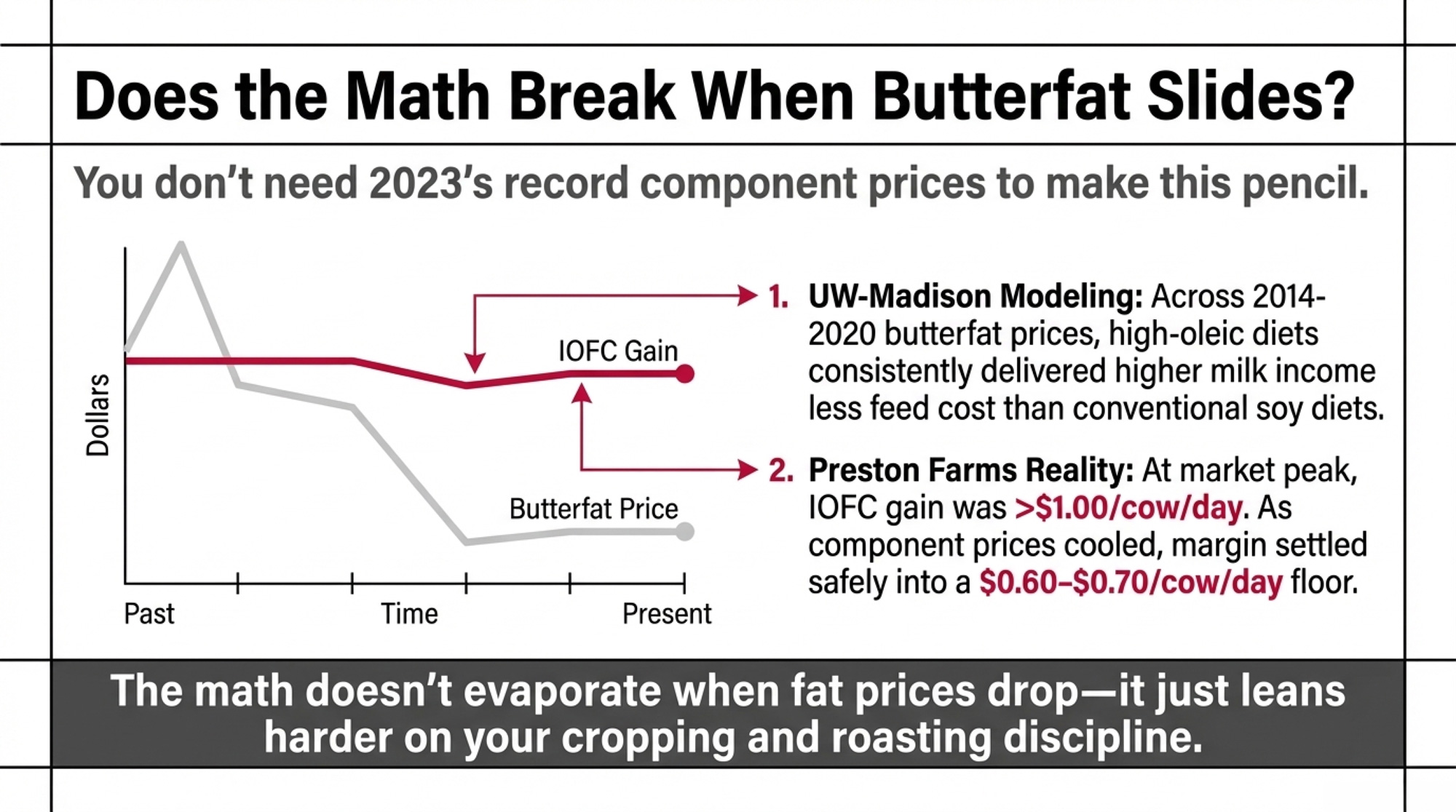
In a 2024 Journal of Dairy Science paper and a companion UW‑Madison Dairy Innovation Hub seminar, Nicholson and colleagues pulled data from five feeding trials, modeled high‑oleic soybeans at 5% of diet DM, and ran the economics across butterfat prices from 2014 to 2020. Even at lower butterfat prices, high‑oleic diets delivered higher milk income less feed cost than conventional soybean diets in their model. Higher butterfat prices make the math prettier, but they’re not the only thing holding it together: in strong fat markets, the “more pounds of fat shipped” side of the ledger does a lot of work; as prices move back toward “normal,” more of your win comes from turning bypass‑fat and meal spend into home‑grown beans with a solid yield.
Preston’s own numbers track that curve. When markets were strong, he was over $1.00/cow/day ahead; as prices cooled, he settled into the $0.60–0.70/cow/day band. The math doesn’t evaporate when fat prices come off their highs. It just leans harder on your cropping and roasting discipline. And the protein side of this equation deserves its own audit in a future piece.
Green Light / Red Light: Are You Ready for High‑Oleic in 2027?
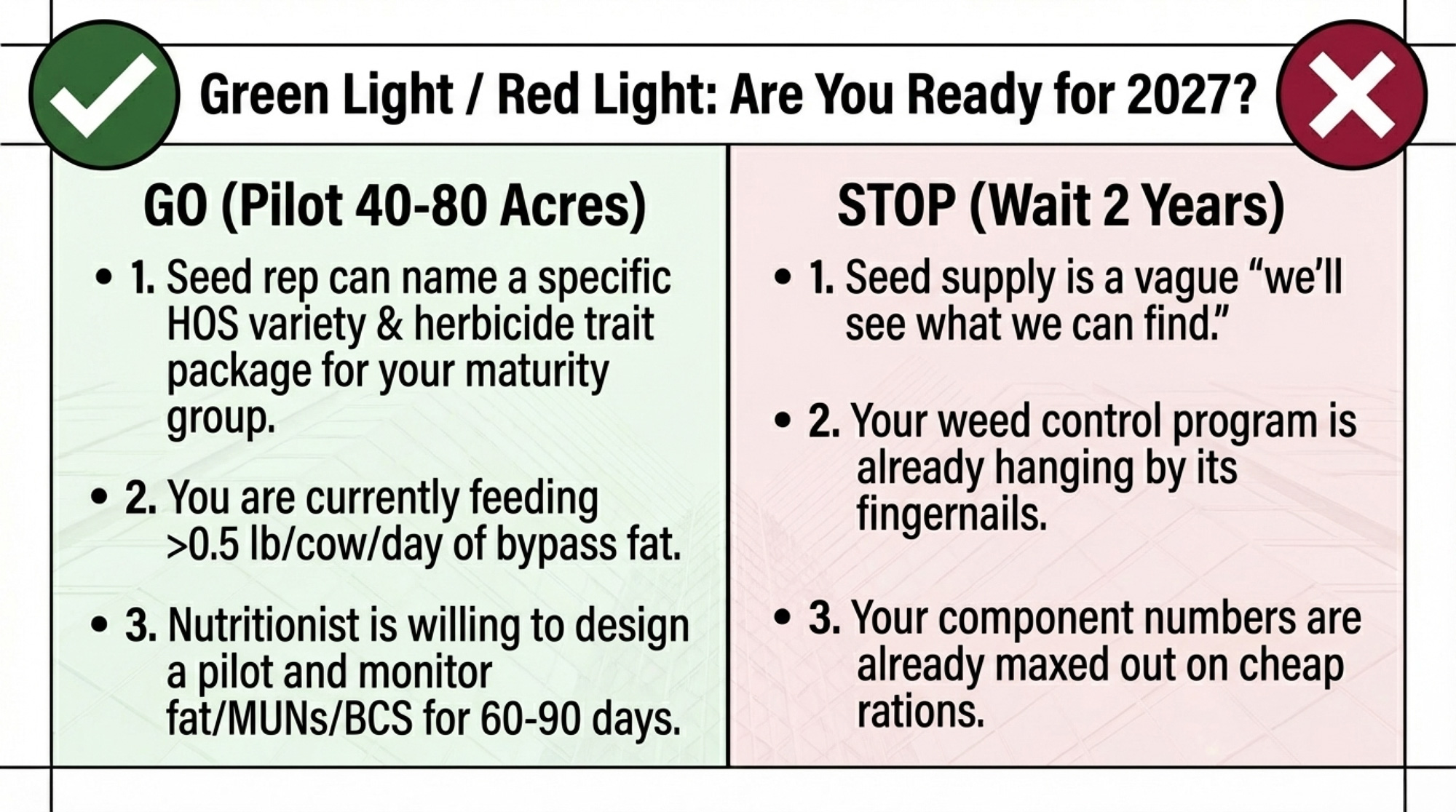
🟢 Green Light Signals
- You already grow soybeans in a high‑oleic geography. You’ve got soybean acres in a region where high‑oleic seed is actually available in your maturity group — not just “somewhere in the state.”
- Your seed rep can be specific, not vague. When you ask, “Which high‑oleic variety in my maturity group, with the traits my weed pressure needs, can you actually deliver for 2027?”, your rep can name the variety, the trait package, and a realistic unit count.
- You’re spending real money on bypass fat and soybean meal. Your current ration uses at least 0.5 lb/cow/day of bypass fat and a healthy dose of purchased protein, so there’s legitimate room for cost replacement.
- Your nutritionist is up for more than a paper exercise. They’re willing to design a ration with 5–8 lb/cow/day of roasted beans, understand roasting targets, and commit to watching fat, protein, MUNs, and body condition for at least 60–90 days instead of assuming everything will be fine on day one.
- You can commit 40–80 acres without jeopardizing your whole crop plan. You’ve got enough acres to run a meaningful pilot, but not so many that a yield miss takes down your feed budget.
🔴 Red Light Signals (Wait 2–3 Years)
- Seed supply is a shrug, not a plan. Your rep can’t guarantee a specific high‑oleic variety in your maturity group, with the trait stack your weed history requires, for 2027. That’s a supply‑chain issue, not a personal failure — and a sign to hold fire this cycle.
- Your weed program is already hanging on by its fingernails. You’re leaning hard on trait stacks and herbicides to stay ahead of waterhemp, ragweed, or Palmer, and the available high‑oleic options would be a step backward on weed control.
- You don’t buy much bypass fat now. If your ration uses little to no bypass fat and your components are already strong, your upside is smaller and might not justify the agronomy and roasting learning curve in 2027.
- No one on your advisory bench has actually done this. If your nutritionist, seed dealer, co‑op nutrition team, and local extension all only know high‑oleic from a brochure, you’d be testing a new crop, a new feed ingredient, and a new advisory model all at once.
| Factor | Green‑Light Herd | Red‑Light Herd |
|---|---|---|
| Seed supply | Named high‑oleic variety, 40–80 acres secured | “We’ll see what we can find” for 2027 units |
| Bypass‑fat use | ≥0.5 lb/cow/day, fat+meal ≥2.00 $/cow/day | <0.25 lb/cow/day, fat+meal ≤1.50 $/cow/day |
| Soy acres & risk | Can pilot 40–80 acres without stressing feed plan | High‑oleic would tie up >50% of soybean acres |
| Weed control | Solid herbicide program that matches HOS trait stack | Program already “hanging on by fingernails” vs. waterhemp |
| Advisory bench | Nutritionist + seed rep have at least one HOS case | No one on team has fed or grown HOS yet |
| Monitoring discipline | Plan to track butterfat, protein, MUNs 60–90 days | No time or systems to watch ration response |
Whatever column you’re in, write an exit plan before you plant.
If you’re contracting high‑oleic for food or industrial markets, know where beans you don’t feed will go and at what basis. If you’re planting strictly as a feed crop, talk to your elevator now about whether they’ll treat those beans like commodity soy, discount them, or refuse them. High‑oleic beans are still soybeans. But they’re not automatically just “beans” in every local market.
What This Means for Your Operation
- Audit your last 90 days of feed invoices for fat and protein spend. Add your bypass‑fat and soybean‑meal lines and divide by cows. If that combined number is under roughly $1.50/cow/day, high‑oleic is a second‑wave decision, not a 2027 emergency.
- In the next 30 days, put your seed rep on the spot. Ask: “What specific high‑oleic variety in my maturity group, with the herbicide traits my weed pressure requires, can you actually deliver for 2027?” If they can’t answer cleanly, that’s your answer for this cycle.
- Run a simple stress test with your nutritionist instead of guessing. Model high‑oleic at three butterfat prices (today, a stronger case, and a stressed scenario) and two yield levels (your five‑year soybean average and minus 8 bu/acre). If the only line that works is “high fat price + no yield drag,” you know this is a gamble, not a plan.
- Start small and intentionally if you go ahead. Treat 40–80 acres as a deliberate pilot for agronomy, roasting, and ration performance — not as proof of a sales pitch.
- Add a genetics lens to your feed decisions. If you’re already stacking bulls for fat and components, look at whether your current fat sources are helping those high‑index cows show up on the milk cheque or quietly capping them with diet‑induced fat depression. A high‑oleic‑friendly ration is one of the few tools that pushes the rumen in the same direction your proofs are pushing the cow.
- Write your abort criteria now. Something as simple as “If we don’t have seed with the right trait stack in hand by [date], or if butterfat stays below [target price] for six months, we pause this plan” will save you from talking yourself into a marginal bet later.
Key Takeaways
- If you’re not already feeding at least 0.5 lb/cow/day of bypass fat, high‑oleic soybeans are probably a “watch and plan” tool for 2027, not the first place you throw capital.
- If your seed rep can’t name and secure a specific high‑oleic variety in your maturity group with the herbicide traits your weed pressure demands, you’re early in the curve; your smartest move is to push for better options and watch the next two years of data, not to force a half‑supplied experiment.
- If you can grow and roast your own high‑oleic soybeans and you’re currently writing big cheques for bypass fat and soybean meal, the most durable play is treating high‑oleic as a cost‑replacement crop, not a bolt‑on fat booster — you’re trying to grow a big slice of the fat and protein you currently buy.
- And if you’ve already spent years investing in high‑fat, high‑component genetics, a high‑oleic‑friendly ration may be one of the few realistic ways to stop leaving that genomic potential in the pipeline and start seeing it show up, consistently, on your butterfat line.
The Prestons in Michigan, Mashek in Iowa, and Wormuth in New York didn’t wait for everyone in the industry to agree this was safe; they had enough of the pieces in place to try something new, with an exit plan if it didn’t deliver. The question for your farm is simple: over the next crop cycle, are you going to keep treating bypass fat and soybean meal as fixed costs — or are you ready to see whether your acres, your cows, and your numbers can turn high‑oleic soybeans into your own $0.60–$1.00 per cow per day?
Complete references and supporting documentation are available upon request by contacting the editorial team at editor@thebullvine.com.
Learn More
- Why High Oleic Soybeans Are About to Change Everything for Dairy Producers – Gain an immediate management advantage by learning how to swap expensive palm fats for raw, ground high-oleic beans. This implementation guide delivers a low-risk $50,000+ annual efficiency boost without requiring an upfront investment in roasting equipment.
- FMMO Pays $1.71/lb for Butterfat Worth $2.95: What USDA’s December Report Tells You About Your Milk Check in 2026 – Arm yourself against widening market gaps by exposing the $1.24/lb disconnect between global values and your milk check. This economic breakdown reveals why capturing every drop of home-grown fat is critical for long-term survival in 2026.
- Net Merit 2025 | The Bullvine – Master the new “weight tax” and genetic rules that now reward smaller, high-component cows over sheer size. This deep dive into the 2025 indices shows how to align your breeding strategy with the feed-efficiency gains high-oleic beans provide.
 The Sunday Read Dairy Professionals Don’t Skip.
 The Sunday Read Dairy Professionals Don’t Skip.
Every week, thousands of producers, breeders, and industry insiders open Bullvine Weekly for genetics insights, market shifts, and profit strategies they won’t find anywhere else. One email. Five minutes. Smarter decisions all week.