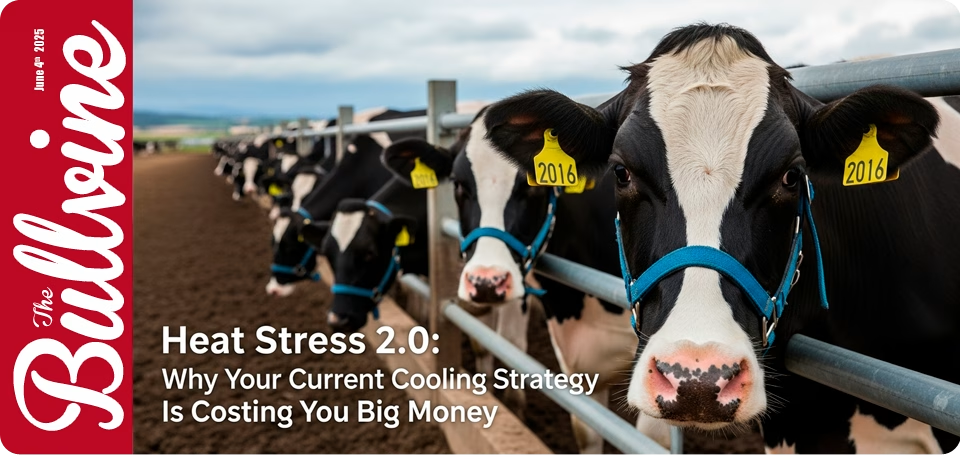





Old cooling methods are costing you $$$. Discover 2025’s advanced heat stress fixes: smart tech, genetics, and nutrition that protect profits & cows.
The old playbook for dairy heat stress management is officially obsolete. With climate projections showing hotter, longer summers ahead and the 2024 heat stress losses hitting record highs across North America, continuing with basic fans and sprinklers is like trying to cool your high-producing Holsteins with a household box fan. The most progressive producers are implementing integrated, advanced strategies that preserve milk checks and protect cow health and longevity in ways basic cooling never could.
As we approach the summer of 2025, it’s time to have a frank conversation about heat stress. The half-measures and band-aid solutions that might have sufficed a decade ago won’t cut it anymore. The economic reality is stark: the U.S. dairy industry loses approximately $1.5 billion annually due to heat stress in lactating cows, with individual farm losses ranging from $72 per cow per year in milder regions like Wisconsin to a staggering $700 per cow in hotter states such as Florida and Texas.
Let’s be even clearer about what’s at stake. When discussing heat stress losses, we’re not just talking about the immediate milk check impact. We’re talking about the hidden costs that quietly drain your profitability: reduced conception rates, increased metabolic disorders, compromised immune function, and perhaps most insidious, the “legacy effect” where heat-stressed dry cows produce offspring with permanently reduced productive potential. Much like a poor heifer raising program can handicap your herd for years, inadequate heat abatement today will affect your herd’s performance for generations.
Here’s the uncomfortable truth: While you’re meticulously fine-tuning your genetic selection program and debating the merits of the latest feed additive, your cows might be suffering from heat stress, negating all those investments. How many AI dollars have you wasted on failed breedings during the summer months? How much of that fancy TMR is going uneaten because your cows are too hot?
This article won’t waste your time. It provides basic advice about providing shade and water. Instead, we’ll dive into the cutting-edge strategies that forward-thinking producers are implementing – advanced cooling technologies with solid ROI numbers, breakthrough nutritional interventions that deliver, genetic selection tools that are commercially available today, and smart monitoring systems that can detect problems before they cost you money. Most importantly, we’ll show you how to integrate these approaches into a comprehensive system that works for your specific operation.
The science is clear. The economics are compelling. The question isn’t whether you can afford to implement advanced heat stress management – it’s whether you can afford not to.
Beyond Basic Fans: The Revolution in Cooling Technology
Let’s be honest – those 36-inch panel fans you installed fifteen years ago aren’t cutting it anymore. Modern dairy genetics have created cows that produce more milk than ever and generate more metabolic heat. Meanwhile, your cooling technology may be stuck in the early 2000s – about as effective as cooling your milking parlor with an open freezer door.
What’s Wrong with Your Current Cooling Approach
If you’re still relying on basic cooling methods, you’re likely facing these problems:
- Inconsistent airflow creates “dead zones” where cows congregate and overheat
- Wasteful water usage from outdated sprinkler systems
- Skyrocketing energy costs from inefficient fans
- Missed opportunities in critical areas like holding pens
The good news? Recent technological advances have transformed what’s possible in dairy cooling, with solid ROI numbers to back up the investment.
Next-Gen Cooling Systems That Pay for Themselves
Intelligent Soaking Systems: Forget timer-based sprinklers that waste water. Systems like the VES-Artex Intelligent Soaker 2.0 use sensor technology to activate only when cows are present and when temperature thresholds are met. These systems can reduce water usage by 50-70% compared to traditional setups while providing more effective cooling.
Smart soaking is all about precision cycling – short, effective soaking periods (30-45 seconds) followed by longer fan-only drying periods (4-5 minutes). This approach maximizes evaporative cooling while minimizing water waste, preventing wet bedding and increased mastitis risk. Much like the precision of robotic milking compared to batch milking, these systems deliver cooling exactly when and where it’s needed.
Advanced Ventilation Redesigned: Your ventilation strategy might be fundamentally outdated. Modern approaches include:
- Tunnel Ventilation: Creating high-speed airflow (1.0-2.5 m/s) that can lower the perceived temperature by approximately 3.7°C through the wind chill effect. At an airspeed of 400 ft/min, cows experience significant relief even when ambient temperatures remain high.
- Cross-Ventilation: Directing airflow perpendicular to the feed lane and parallel to the stalls provides more effective cooling where cows rest. Studies from the University of Wisconsin show respiratory illnesses in cross-ventilated barns can be about half those seen in naturally ventilated barns.
Smart Controllers Are No Longer Optional: The days of simple thermostat-controlled fans are over. Today’s controllers use:
- Variable Frequency Drives (VFDs) that allow gradual adjustments to fan speed based on temperature
- Environmental data from multiple sensors
- Precision control algorithms that optimize cooling while minimizing resource use
A 2024 California Department of Food and Agriculture study showed optimized controllers reduced electricity consumption by 28% annually compared to thermostat-based systems. The difference is like comparing a modern TMR mixer with precise ingredient inclusion to an old-fashioned grain shovel approach.
The Numbers Don’t Lie: ROI Analysis That Will Convince Your Banker
Still wondering if advanced cooling technology is worth the investment? Here’s the uncomfortable truth: You’re probably spending more on genomic testing with less ROI than you’d get from proper cooling. Consider these numbers:
- Cooling Dry Cows: Shows consistently favorable economics with a 5.67-year payback and a benefit-cost ratio 1.45. Even at milk prices as low as $13.50/cwt, cooling dry cows remains profitable in operations with over 100 heat stress days annually.
- Tunnel Ventilation: Can justify an additional investment of up to $332 per cow space compared to basic fan and sprinkler systems due to its effectiveness in reducing milk losses.
The economics become even more compelling when considering maintenance costs and energy efficiency. Selecting a fan with low energy efficiency can nearly double the operating cost of any ventilation system. This makes fan choice pivotal for your operation’s bottom line, as critical as choosing the right genetics for your breeding program.
Small Farm vs. Large Farm: Tailoring Your Approach
The right cooling technology depends partly on your operation’s size:
Small Farms (including Tie-Stalls):
- Focus on targeted, cost-effective solutions
- Individual fans over stalls
- Feed line soakers
- Positive pressure tube systems for improved air exchange
Medium Freestall Farms:
- More comprehensive fan and soaker systems
- Consider upgrading to well-designed natural ventilation with fan assistance
- Prioritize dry cow cooling for high ROI
Large Freestall Farms:
- Advanced mechanical ventilation systems (tunnel or cross-ventilation with VFDs)
- Comprehensive smart monitoring and control systems
- Evaporative pads were climate-appropriate
The Industry’s Dirty Secret: Your Holding Pen Is Killing Your Cows
If there’s one area where the dairy industry collectively sticks its head in the sand, it’s the holding pen. This is consistently the hottest place on most dairies yet receives the least cooling investment. Without aggressive cooling, a cow’s body temperature can rise by 3°F in just 20 minutes of standing in the holding pen.
Think about that for a moment. You’ve invested in cooling your freestall barn, you’ve got fans over the feed bunk, but three times a day, you’re essentially putting your cows in a sauna before milking. How much sense does that make?
What’s truly baffling is that holding pen cooling often delivers the fastest and highest ROI of any heat abatement strategy. Yet farm after farm continues to underinvest in this critical area. Are you one of them?
The solution isn’t complicated:
- High-capacity fans delivering at least 1,000 cfm per cow
- Soaker systems with large water droplets in an overlapping spray pattern
- Open sidewalls (at least 60%)
- Proper cow flow to minimize time spent in this area
If you take nothing else from this article, upgrade your holding pen cooling before summer 2025. Your cows- and your milk check- will thank you.
Nutrition That Works: Beyond Snake Oil and Magic Potions
Your feed rep probably has a drawer full of heat stress additives they’re eager to sell you. But which ones deliver results? Let’s cut through the marketing hype and focus on nutritional interventions with solid science behind them.
Heat stress fundamentally alters a cow’s physiology, reducing DMI, impairing rumen function, and increasing maintenance energy requirements. Strategic nutritional adjustments can help counteract these changes, but not all approaches are created equal.
Feed Additives That Deliver
Osmolytes (Osmoprotectants): These compounds help cells maintain fluid balance, which becomes critical during heat stress.
- Betaine (Trimethylglycine): Not just another feed sales pitch. A 2024 Journal of Dairy Science meta-analysis confirmed betaine’s positive impact on milk yield and DMI in heat-stressed ruminants. The research shows supplementing with 15 grams per day can improve milk yield by helping cows retain water and partition more energy toward milk synthesis.
Yeast Cultures with Proven Impact: Specific strains of Saccharomyces cerevisiae do more than just sound impressive on a feed tag:
- They stabilize rumen pH, counteracting the tendency toward subacute ruminal acidosis (SARA) during heat stress
- Promote the growth of fiber-digesting bacteria, improving feed efficiency when intake is reduced
- Support immune function at a time when heat-stressed cows are more vulnerable
A 2025 Journal of Animal Science study demonstrated that S. cerevisiae supplementation decreased rectal temperature and respiratory rate in heat-stressed animals while improving physiological performance by favorably modifying energy metabolism.
Electrolytes That Matter: Heat stress increases sweating and panting, leading to significant losses of key electrolytes, particularly potassium (K) and sodium (Na).
- Increase dietary K to 1.5-1.8% of DM and Na to 0.45-0.50% of DM during hot weather
- Focus on DCAD (Dietary Cation-Anion Difference) management. A more positive DCAD (the balance of positive and negative ions in the diet) helps counteract metabolic acidosis and improves DMI and milk yield for lactating cows under heat stress. Think of DCAD as the pH balancer for your cows’ entire system.
Strategic Fat Supplementation: During heat stress, reduced DMI makes it challenging for cows to meet energy requirements. Adding fat to the diet increases energy density without generating as much metabolic heat as carbohydrates or protein.
- Use rumen-protected fats to avoid negative effects on rumen fermentation
- Target 3-5% protected fat without negatively impacting rumen microflora
What Your Nutritionist Should Be Telling You but Isn’t
The effectiveness of nutritional interventions depends on implementing them before severe heat stress hits. Waiting until cows are panting, and milk production has dropped means you’re already losing money. This is like waiting until your corn is drought-stressed before installing irrigation – the damage is already done.
When was the last time your nutritionist presented a comprehensive summer heat stress feeding program in February? If they haven’t, you might need to discuss proactive planning rather than reactive adjustments.
Additionally, nutritional strategies work best when combined with effective cooling. If your cows are severely heat-stressed, even the best-formulated ration won’t fully compensate for inadequate environmental management. This isn’t an either/or proposition – you need both, just like you need good genetics and management to achieve top milk production.
The Genetic Frontier: Breeding for a Cooler Future
While most producers focus exclusively on milk production traits in their genetic selection programs, forward-thinking dairies incorporate heat tolerance into their breeding strategies. Climate projections indicate heat stress will become more frequent and severe – shouldn’t your genetics evolve accordingly?
The “Slick” Revolution You Can’t Ignore
The most well-known gene influencing heat tolerance is the “Slick” gene – a dominant mutation in the prolactin receptor gene that results in cattle having a very short, sleek hair coat. This isn’t theoretical – it’s commercially available today:
- Cattle carrying the Slick gene maintain body temperatures about 1.1°F lower during the hottest parts of the day
- University of Florida research shows Slick-coated cows produce approximately 10 pounds more milk per day during hot months
- Select Sires began offering Holstein sires heterozygous for the slick allele as early as April 2021
What’s most impressive is the real-world impact. Rafael López-López, a dairy producer in Puerto Rico, has been breeding SLICK Holsteins for decades and reports an additional 1,800 pounds of milk per lactation and improved reproductive efficiency. Farmers in southern U.S. states like Kentucky and Florida report SLICK cows appearing more comfortable in the heat and maintaining good milk production. This is like discovering polled genetics that boost production in the genetics world.
Beyond Slick: The Broader Genetic Approach
While the SLICK gene offers a distinct advantage, broader genomic selection for heat tolerance is also advancing:
- Australia has had genomic breeding values (BVs) for heat tolerance since 2017
- These BVs capture genetic variability in how an animal’s milk production declines as temperatures increase
- The heritability of direct indicators of heat stress (measured at 0.13-0.17) is sufficient for making genetic progress through selection
Interestingly, fertility traits show increased genetic variance and heritability under higher temperatures. This suggests that selecting for fertility during hot weather could be particularly effective – essentially breeding cows that remain reproductively efficient despite heat challenges.
Implementing Heat-Tolerant Genetics in Your Herd
Incorporating genetic selection for heat tolerance doesn’t mean abandoning your focus on production. The key is balanced selection that considers:
- Current climate conditions in your region
- Climate projections for the next 10-20 years
- Your current cooling infrastructure
- The economic value of heat tolerance in your specific operation
Ask your genetics provider specifically about heat tolerance traits and SLICK carriers. If they can’t provide concrete information, it might be time to explore other options. After all, you wouldn’t base your herd’s health program on outdated advice from the 1980s – why would you ignore climate adaptation in your breeding program?
Smart Monitoring: Detecting Problems Before They Cost You Money
The most progressive dairies are leveraging technology to detect heat stress in its earliest stages – before it leads to significant production losses or health problems. These smart monitoring systems provide real-time animal physiology and behavior data, allowing for proactive rather than reactive management.
Beyond the Eyeball Test: Why Visual Observation Isn’t Enough
You’re already losing money when you notice cows panting heavily or see a drop in bulk tank average. Smart monitoring systems can detect subtle changes days before visual symptoms appear:
Rumen Boluses: These continuously measure core body temperature, a critical indicator of heat stress.
- Detect increases in core temperature before visible signs appear
- Monitor rumination activity, which often declines during heat stress
- Some advanced systems can track water intake, rumen pH, and even heart rate
A 2024 study in the Journal of Dairy Science found decreases in milk productivity when rumen temperatures exceeded 39.15°C (102.47°F) – information you could know in real-time with the right monitoring system.
Wearable Sensors: Collars, ear tags, and leg bands track behavioral changes that signal heat stress:
- Reduced rumination time
- Decreased lying time (heat-stressed cows often stand more to increase body surface exposure)
- Changes in activity patterns
- In some cases, skin temperature
Automated Milk Data Analysis: While often a lagging indicator, milk data can provide valuable insights:
- Decreased milk yield
- Altered milk composition (particularly milk fat depression)
- Increased conductivity or SCC during heat stress
Translating Alerts into Action
The true value of smart monitoring is in the response it enables. An effective system should trigger specific protocols:
Early Warning (Mild Heat Stress):
- Verify barn conditions
- Ensure maximum cooling system readiness
- Prepare for dietary adjustments
Moderate Heat Stress:
- Activate all cooling systems at optimal settings
- Implement feed bunk management strategies to encourage DMI
- Minimize activities that add additional stress
Severe Heat Stress:
- Operate the cooling at maximum capacity
- Prioritize cooling for vulnerable groups (fresh cows, high producers)
- Implement emergency nutritional interventions
Think of these monitoring systems like the warning lights on your milking system – they alert you to problems before they become disasters, allowing for preventive rather than emergency action.
Integration: Why Your Piecemeal Approach Is Failing
Most dairies’ biggest mistake in heat stress management is addressing individual components without considering how they work together. A holistic, integrated approach is essential for maximizing effectiveness and ROI, as reproductive management requires coordination between nutrition, health, and breeding programs rather than isolated interventions.
Would you be satisfied with a reproductive program that got your cows pregnant but burned through 5 straws per conception? Or a mastitis treatment that cleared infections but crashed milk production? Then why accept cooling systems that run your water bill through the roof or bedding that looks clean but causes heat stress?
Success Stories: Integrated Approaches That Deliver Results
Real-world examples demonstrate the power of integration:
Kansas Dairy Case Study: A farm significantly improved heat abatement by upgrading fans in the freestall barn (from 48-inch fans to larger 72-inch models) and enhancing cooling in the holding pen and parlor with additional fans and a high-pressure fogging system. After these improvements, vaginal temperatures became comparable to a neighboring dairy with better existing cooling, and fertility metrics showed consistent improvement.
Oostdam Dairy Economic Impact: Establishing integrated cooling systems (soakers and fans) on feed lines and in wash pens projected an extra monthly income of over $10,000 from increased milk production and improved reproductive fertility.
The 2025 Heat Stress Action Plan: What You Need to Do Now
With summer approaching rapidly, here’s your concrete action plan for implementing advanced heat stress management:
Step 1: Complete Your Heat Vulnerability Audit
Start by identifying your operation’s specific vulnerabilities:
- Climate Zone Analysis: Humid climates require different approaches than arid regions
- Farm Type Assessment: Tie-stall, small freestall, or large freestall each needs tailored strategies
- Infrastructure Evaluation: Identify your weakest links (shade, ventilation, water access, holding pen)
Step 2: Implement This Tiered Approach
Phase 1: Foundational Elements (Implement Immediately)
- Ensure universal shade access for all animal groups (40-50 sq ft/cow)
- Provide abundant clean water (1.5-2 linear inches of trough space per cow)
- Maximize basic ventilation (clear obstructions, maintain fans, optimize natural ventilation)
Phase 2: Enhanced Cooling (Before Peak Summer Heat)
- Target cooling in high-risk areas (especially the holding pen – have I mentioned that enough yet?)
- Implement or improve dry cow cooling
- Explore water/energy efficiency upgrades like intelligent soaker systems and VFDs
Phase 3: Advanced Integration (Long-term Strategy)
- Formulate heat-specific nutritional programs with your nutritionist
- Incorporate heat tolerance into your genetic selection strategy
- Consider smart monitoring technology for early detection
- Adjust management practices (timing of stressful activities, handling protocols)
Step 3: Calculate Your Heat Stress Economics
Do you know what heat stress is costing your operation? Most producers don’t, and it’s likely 2-3 times what you think. To justify investments, quantify your current heat stress losses:
- Compare milk production during cool months vs. hot months
- Calculate reproductive impacts (services per conception, days open)
- Estimate health costs related to heat stress
- Project the benefits of your planned interventions
- Calculate payback period: Total Investment Cost / Annual Net Benefit
The Bottom Line: Stop Making Excuses and Start Making Changes
Heat stress management is no longer just about getting through the summer with minimal milk loss. It’s about long-term sustainability in a warming climate. The economic calculations are clear – comprehensive heat stress management delivers compelling returns through:
- Preserved milk production during hot weather
- Improved reproduction and reduced days open
- Better transition cow health and reduced metabolic disorders
- Enhanced longevity and reduced involuntary culling
- Improved calf health and future production potential
The most profitable dairies of the future won’t be those who invest in heat stress management when it gets hot – they’ll be the ones who make it an integral part of their year-round management strategy, with continuous improvements and adaptations. Much like preventive herd health protocols have replaced reactive treatment approaches, proactive heat stress management is becoming the new standard of excellence.
So, here’s my challenge: Stop accepting summer production drops as inevitable. Stop waiting until June to think about cooling. Stop putting band-aids on your heat stress problems.
Instead, commit to a comprehensive approach integrating facilities, nutrition, and genetics. Talk to your consultants about surviving this summer and building true heat resilience for the decades to come. Run the numbers on what heat stress truly costs your operation – I guarantee it will justify more investment than you currently make.
The question isn’t whether you’ll address heat stress this summer – it’s whether you’ll do it reactively, after the losses have already occurred, or proactively with the advanced tools and strategies now available. Your decision will impact not just this summer’s milk check, but your dairy’s profitability and sustainability for years.
Are you ready to move beyond basic cooling and implement Heat Stress Management 2.0? Your cows – and your bottom line – will thank you.
Key Takeaways:
- Upgrade cooling tech: Tunnel ventilation and smart soakers cut losses, with dry cow cooling paying back in 5.7 years.
- Feed strategically: Betaine, yeast cultures, and DCAD-balanced rations combat heat’s metabolic toll.
- Breed for resilience: SLICK gene carriers maintain milk yield +10 lbs/day in heat.
- Monitor early: Rumen boluses alert to stress 24hrs before visible symptoms.
- Integrate systems: Combine facilities, nutrition, and genetics for compounding ROI.
Executive Summary:
Heat stress costs U.S. dairy farms up to $1.5B annually, but basic cooling strategies are no longer enough. This article reveals advanced solutions: intelligent soaking systems that slash water use by 70%, genomic breeding for heat-tolerant “SLICK gene” cows, and targeted nutrition with osmolytes like betaine. Smart sensors detect stress before milk drops, while integrated facility designs optimize airflow and cow flow. With ROI analysis showing paybacks as quick as 3 years, producers must combine these strategies to combat rising temperatures, protect $700/cow losses in hot states, and future-proof their operations against climate change.
Learn more:
- Beat the Heat: Why Your Half-Measures Are Costing You More Than You Think
A practical guide to prioritizing shade, targeted cooling, and nutrition to maximize heat stress relief and protect herd performance. - Boost Dairy Cow Fertility & Profits with New THI Thresholds
Explore how earlier cooling activation and precision monitoring can safeguard fertility and profits as heat stress thresholds are redefined. - Heat Stress in Dairy Cattle: Understanding the Long-term Consequences
Delve into the lasting impacts of heat stress on cow health, reproduction, and future generations-and what you can do to break the cycle.
 The Sunday Read Dairy Professionals Don’t Skip.
 The Sunday Read Dairy Professionals Don’t Skip.
Every week, thousands of producers, breeders, and industry insiders open Bullvine Weekly for genetics insights, market shifts, and profit strategies they won’t find anywhere else. One email. Five minutes. Smarter decisions all week.