




OSHA priced six dead dairy workers at $246,609. Wayne County priced one dead dairyman at 75 tractors and weeks of unpaid chores.
Reed Hostetler was 31, co-owner of L&R Dairy in Marshallville, Ohio, and father of three kids under five. On March 5, 2025, he was killed in an accident involving the manure pit at the family farm.
Within days, the same barn where Reed and Abby Hostetler had been married was pressure-washed, scraped, and transformed into a funeral venue — by neighbours who showed up without being asked. An estimated 75 to 100 tractors, trucks, semis, and implements lined the road outside Grace Church in Wooster, organized by local farmers and custom harvesters, according to Farm and Dairy. Weeks later, people were still arriving before dawn to feed calves and clean pens, then leaving before anyone could thank them.
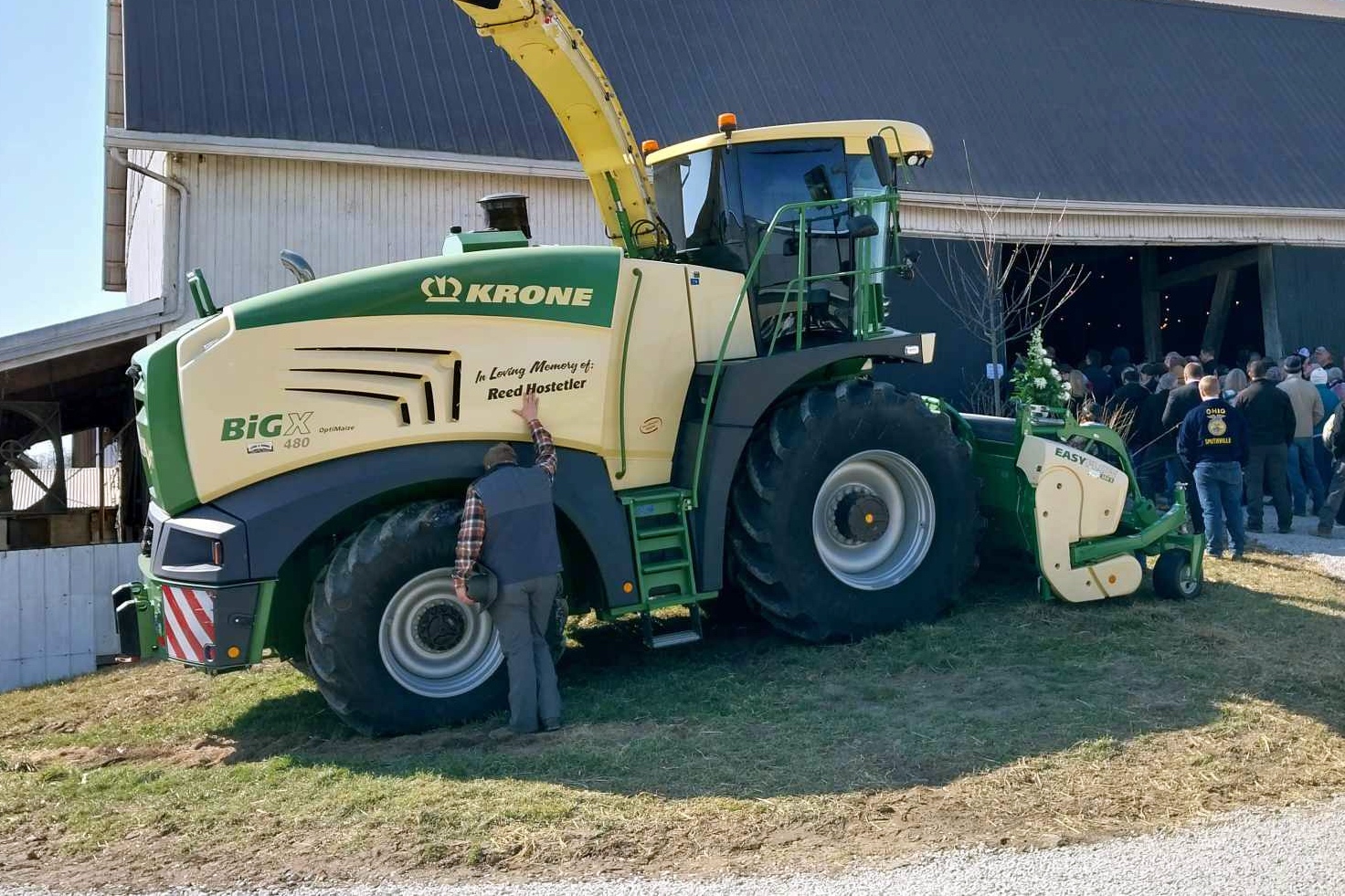
Wayne County didn’t have a crisis-response committee. It had relationships — built over years of co-op meetings, barn clean-outs, and late-night calving calls. That’s what this piece is actually about. Not the crisis. The thing you build before one. (Read more: A 31-Year-Old Dairy Farmer Died in a Manure Pit. What Wayne County Did Next Is a Playbook You Can Steal.)
The Same Pattern, Six Times
We tracked six dairy crises across five years and four structural threats — climate, immigration enforcement, workplace safety, and processing collapse. Different regions, different triggers, same lesson: operations with community infrastructure before the crisis recovered faster than those without.
When the River Turned a Dairy Region Into a Lake
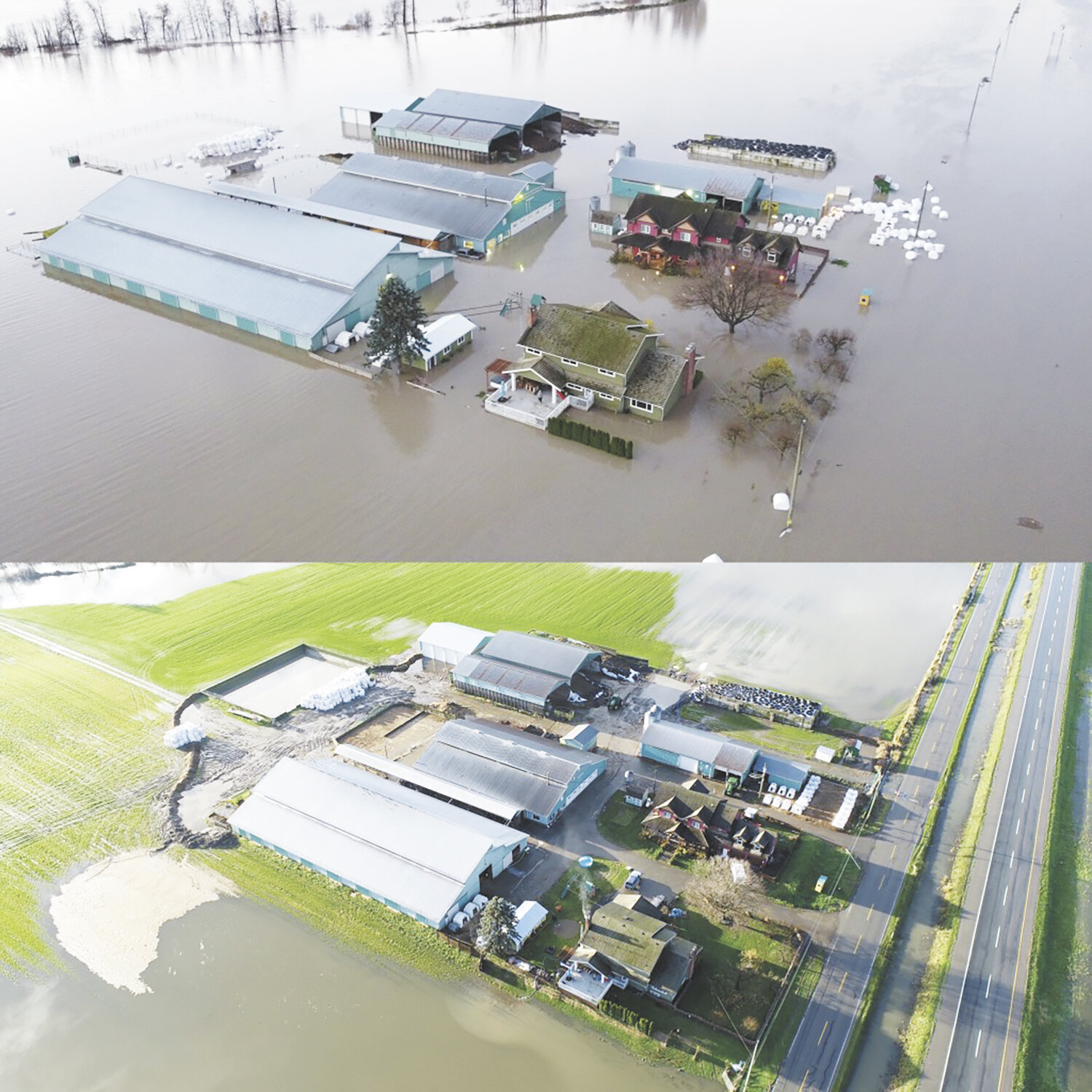
On November 14, 2021, an atmospheric river dumped a month’s worth of rain on British Columbia’s Fraser Valley in 48 hours. The Nooksack River breached into Sumas Prairie — one of Canada’s most productive dairy regions — and the B.C. The Dairy Association reported more than 600 farms affected, with thousands of animals stranded.
Abbotsford Fire Chief Darren Lee told CBC News the flooding moved at a rate he’d never seen in 30 years of emergency services. B.C. Agriculture Minister Lana Popham said she’d been on video calls with farmers who had dead cattle visible behind them.
The community response started before the government’s. Sumas Prairie farm women Jimi Meier and Alison Arends launched a Facebook donation page that collected more than $470,000 in hay, feed, equipment, and cash — tracked through a 2022 Rotary Club accounting. Dairy families from the Fraser Valley, Chilliwack, and Vancouver Island drove in feed while roads were still partially impassable.
Dr. Lisa McCrea Hemphill, a veterinarian who documented the disaster for the Western Canadian Dairy Seminar in 2024, put it bluntly: the 2021 event “was not the first of its kind for Sumas Prairie and it will not be the last.”
The people who showed up first knew which farm had a flatbed, which neighbour had generator power, and which operation kept extra feed on hand. That informal network — built over years of milk truck routes and co-op meetings — was the actual first responder. For the full story of how Sumas Prairie dairy families turned three floods into a rebuild blueprint, read “Three Floods, One Lifetime”.
What Happens When 35 Workers Disappear in One Morning?
June 4, 2025, at Outlook Dairy in Lovington, New Mexico. ICE officers detained 35 workers in what the Albuquerque Journal described as a targeted enforcement operation. Owner Isaak Bos told the Journal the workers had provided false documentation, and the dairy was cooperating fully with the investigation — the dairy itself was not accused of wrongdoing. But the operational hit was immediate: Bos said milking and feeding “effectively ceased” for a period after the detentions.
Replacing a 35-person crew in Lea County — one of the most remote dairy regions in the country — isn’t a phone call. It’s a months-long rebuild.
What the Outlook Dairy story exposed isn’t about one farm’s hiring practices — Bos made clear the dairy cooperated fully and wasn’t accused of wrongdoing. It’s about an industry-wide labour structure that everyone in dairy knows, and almost nobody talks about publicly. NMPF’s 2015 economic analysis with Texas A&M estimated immigrants account for 51% of all U.S. dairy labour, and dairies employing immigrant workers produce 79% of the nation’s milk supply. Dr. Robert Hagevoort of New Mexico State University, speaking at the Dairy Cattle Reproduction Council in late 2024, said he believes the true percentage is even higher — that study’s a decade old, and dairy’s reliance on immigrant labour has only deepened.
What happened next: family members, office staff, and local teenagers traded summer plans for scraping alleys and attaching milking units. Neighbours from surrounding operations covered shifts. Three days later, at a town hall in Hobbs, Governor Michelle Lujan Grisham heard about the impact firsthand. “It is a real issue, and I’m very worried about it,” she told the Albuquerque Journal.
Nobody had a playbook for “ICE raid response.” They built one in real time. The full account of how Lovington built a response from nothing goes deeper into the labour math and what happened in the months after.
The Three-Day Rule — and the Road That Broke It
Most tragedies in farm country follow a pattern: three days of intensity, three weeks of fading attention, then silence — while the family is still trying to figure out how to milk cows and raise three kids alone.
Wayne County broke that pattern after Reed Hostetler’s death.
Shuttle buses ran from Marshallville Park to the barn funeral. Local companies brought gravel to shore up the lane. A phrase circulated — “Lead Like Reed” — and it served as a decision rule, not a bumper sticker. If something needed doing — calves to feed, kids to watch, hay to chop — people didn’t wait to be asked. They just did it.
Green Elementary’s PTO, led by president Shelly Baumgardner, organized a “Dine to Donate” night at a local restaurant, using a student day-off incentive to bring in more families and raise money for the Hostetlers. Groceries, diapers, and hot meals kept arriving for weeks. As Abby told Farm and Dairy: ‘It has shown me that when our community needs help, help comes. And… the next time our community needs help, I will be there and I will show up.
What made Wayne County different wasn’t that people cared more than anywhere else. It’s that the support network was already there. People had been helping each other with harvest, calving, and equipment breakdowns for years. Reed’s reputation — the kind of guy who’d show up in someone else’s barn without being asked — was the deposit. The community’s response was the withdrawal.
For the piece-by-piece breakdown of what Wayne County built — the shuttle logistics, the gravel, the fundraisers, the chore crews — that’s the playbook worth stealing.
Six Workers Dead in Minutes — and the Fines OSHA Proposed
Five months after Reed’s death, the same hazard — manure gas — killed six workers at Prospect Valley Dairy in Keenesburg, Colorado.
On August 20, 2025, according to OSHA’s investigation, a pipe connected to the manure management system disconnected, releasing hydrogen sulfide. One worker went down almost immediately. Then five more went in to save him. All six died. The Weld County coroner confirmed toxic gas exposure as the cause of death.
The victims: Alejandro Espinoza Cruz, 50, of Nunn, and two of his sons — Oscar Espinoza Leos, 17, and Carlos Espinoza Prado, 29. Jorge Sanchez Pena, 36, was related to the family by marriage. Ricardo Gomez Galvan, 40, and Noe Montanez Casanas, 32, rounded out the toll. A father, two sons, and three more men — gone in minutes.
“They were extremely hardworking and humble,” Tomi Rodriguez, an outreach worker for Project Protect Food System Workers, told CPR News. “They were a very united family.”
OSHA cited three businesses in February 2026, classifying the violations as “serious” — not “willful.” Total proposed fines across all three entities came to $246,609 — about $41,000 per life lost. The largest single penalty: $132,406 to Prospect Ranch LLC, the entity operating Prospect Valley Dairy. OSHA calculates fines per violation, not per fatality, but the math is hard to ignore either way.
All citations remain proposed and subject to employer contest. Prospect Ranch LLC has not publicly commented on the citations beyond the formal contest process.
Attorney Sam Cannon of Cannon Law in Fort Collins, representing four of the victims’ families, told KUNC: “We’re no nearer figuring out why this system malfunctioned.” He added: “Family members deserve to understand why this system was operating when it wasn’t safe.”
That impulse — I’m going in after him — is the rawest form of community response. Workers risking their lives for a friend, a father, a coworker. But this story doesn’t have Wayne County’s arc. In Keenesburg, the community showed up with condolences, a benefit dance, and organized services for the families, as the Colorado Sun reported.
Wayne County’s sustained, months-long operational support — the before-dawn chore crews that were still running weeks later — requires a pre-existing infrastructure that not every community has in place when a crisis hits. That gap isn’t about generosity. Every road has generosity. It’s about whether the relationships were already built. For the full OSHA citation breakdown and what the industry hasn’t done, that piece walks through every violation, every dollar, and the confined-space fix that costs less than two cows.
What Does Your Road Look Like When There’s Nobody Left to Call?
Not every crisis arrives with sirens. Some arrive as a letter from your processor.
North Dakota went from 1,810 dairy farms in 1987 to 18 by early 2026 — a 99% decline in less than four decades, per USDA Census data and the Holle family’s own count. That collapse left the state with almost no local processing infrastructure. The Holle family runs Northern Lights Dairy, a 1,000-cow operation about 12 miles south of Mandan — one of just 18 Grade A dairy farms left in the state. After Prairie Farms closed its Bismarck plant in 2023 and DFA ceased operations at Pollock in 2024, the Holles were forced to find a new market for their milk twice in 30 months. They now ship to a Bongards plant in Perham, Minnesota — a five-hour haul, one way.
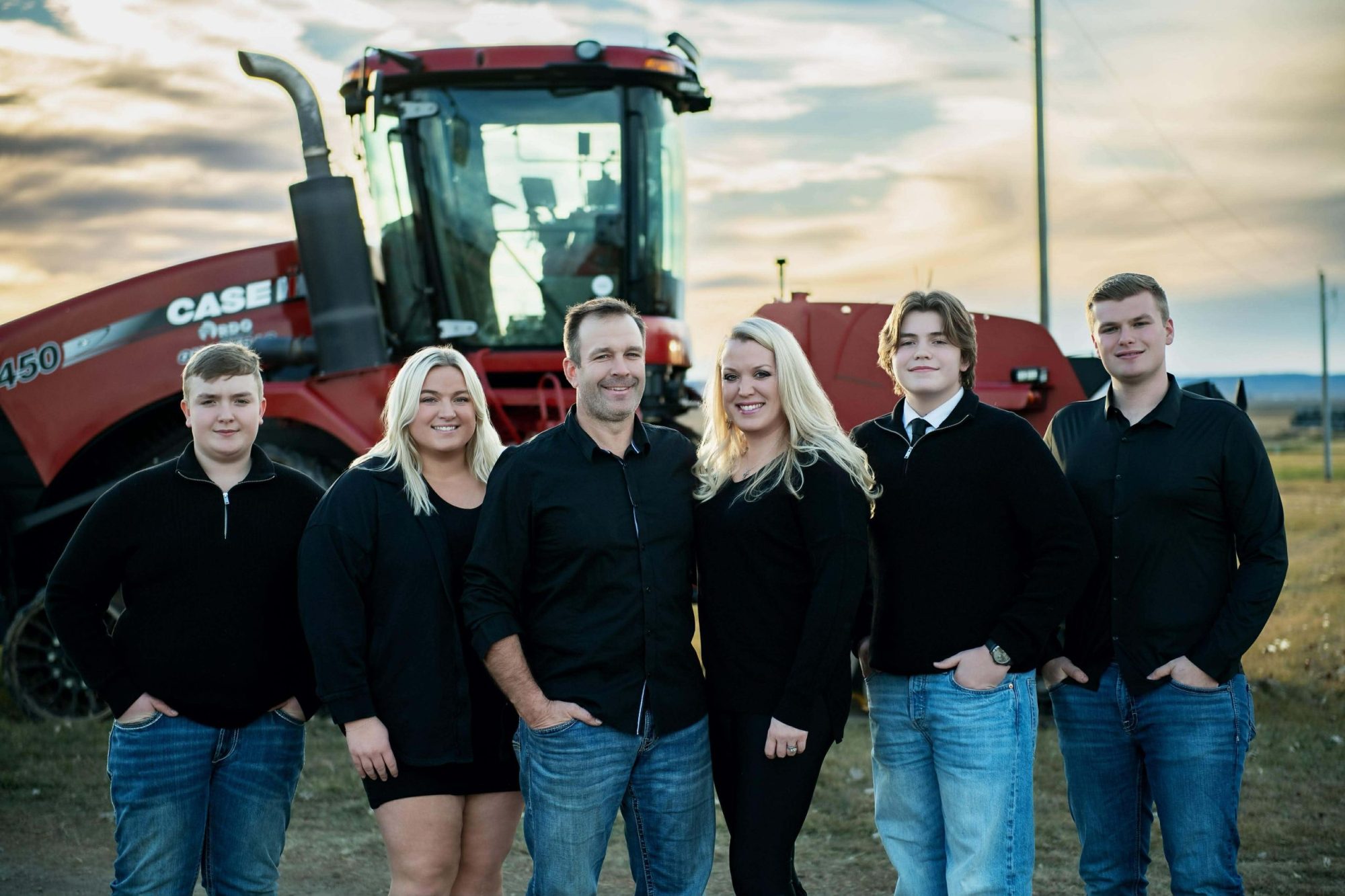
But the Holles aren’t waiting for an answer to find them. The family is exploring adding on-farm processing — Dawson Holle, their son and a state representative who sits on the House Agriculture Committee, told the North Dakota Monitor the family has plans for a processing plant, though the timeline remains uncertain. And two new large-scale dairies announced for eastern North Dakota along the I-29 corridor are projected to bring $122–$227 million in annual gross revenue to the state, according to a December 2025 NDSU Extension analysis. The 18 farms still standing aren’t just surviving — they’re building the infrastructure that disappeared around them.
(Read more: From 1,810 Dairy Farms to 18: How North Dakota’s Processing Collapse Cornered the Holle Family – and Could Corner You)
Agriculture Commissioner Doug Goehring has publicly noted that “with no other processors nearby, those dairies will likely pay for shipping longer distances that will be deducted from their milk checks.” Every extra mile eats into the milk check — and the further you haul, the harder it gets to pencil out staying in business.
And when a herd sells out in a region this thin, there’s nobody to absorb the loss — no neighbour to take on heifers, no local market for the genetics, no route density to keep the hauler coming.
From 1,810 farms to 18 is what community infrastructure looks like after it’s gone. For the full 1,810-to-18 diagnostic, including the Holle family’s testimony and the processing closures that cornered them, that piece is the warning label.
How Do You Spot the Farm That’s Quietly Going Under?
Not every crisis shows up as a manure pit or a flood. Some show up as yards that don’t look quite like they used to. Ration sheets that haven’t been updated in weeks. A kid who quietly steps back from 4-H. A familiar face missing from the co-op meeting — not once, but three meetings running.
University of Guelph researchers have documented what most producers already sense: farmers carry higher levels of stress, depression, anxiety, and burnout than the general population. Financial pressure and workload consistently top the list. CDC studies published in the agency’s Morbidity and Mortality Weekly Report — including Peterson et al. (2020) analyzing 32 states and Sussell et al. (2023) covering 49 states — have consistently found suicide rates among agricultural workers significantly elevated compared with the general working population. Earlier state-level studies found the disparity to be two-fold or higher when measured against the broader population.
The rescue in this story isn’t dramatic. It’s a vet walking back to the truck after a DA, leaning on the door instead of climbing in, and saying, “You look worn out. How are you really holding up?” It’s a retired dairyman feeding calves three mornings a week without being asked. It’s the neighbour who notices the late barn lights and calls — not texts, calls — to say, “I’ll swing over. Put the coffee on.”
Those interventions buy something that doesn’t show up on any milk statement: time to think clearly. When stress is driving your decisions, you’re more likely to make rushed calls on genetics, culling, expansion, or exit that feel necessary in the moment but leave you with fewer options six months out. The data behind why dairy farmers face a 3.5× higher suicide risk — and what the people closest to them can actually do — goes deeper than any headline.
What Does a Lost Herd Actually Cost Your Road?
Here’s a piece of math most people skip. When a 250-cow herd sells out, you don’t just lose one family’s income. You lose roughly 6.4–6.8 million lbs of annual milk volume on the truck route — that’s 250 cows at 70–75 lbs/day, every day of the year — and your processor starts thinking about rationalizing pickups and consolidating drop points.
That exit takes an estimated $8,000–$15,000/year in genetics purchases with it — semen, embryos, show heifers — money that supported your local AI tech and breed association. Gone, too, are an estimated 50–100 hours of informal labour and equipment sharing per year that nobody tracks but everybody depends on. And you lose one seat at the co-op board, one voice at herd improvement days, one barn where kids learned to fit calves for the ring.
On a 200-cow herd, a single missed milking costs roughly $1,100–$1,400 in lost milk alone — January 2026 Class III hit $14.59/cwt per USDA AMS, the January all-milk price came in at $17.50/cwt per USDA Agricultural Prices (Feb. 27, 2026), and USDA’s February WASDE forecasts $18.95/cwt all-milk for the full year. That’s before the SCC spike and mastitis risk that compounds for days afterward. If your neighbour’s crisis means your backup milker no longer exists, that math applies to your bulk tank too.
Community isn’t charity. It’s risk management you can’t buy from an insurance company.
What You Can Build in 30 Days
You can’t control floods, raids, pit gases, or processor closures. You can control whether anyone on your road faces one alone.
Build a phone tree this week.
Eight to ten names — neighbours, church, co-op, school. Who calls whom in the first 15 minutes after an accident, barn fire, or sudden death? Write it down in the milk house. Tape it next to the bulk tank. This costs nothing and takes one evening. If you can’t fill 8 names without thinking hard, that tells you something.
Check three farms this month.
Not by text. By call or visit. “How are you doing — really?” Be ready for the answer to take longer than you planned. If a yard on your road has been slipping — gates not closed, lane rough, a familiar face missing from meetings — that’s not “busy.” That’s a signal. The earlier you show up, the more steering room exists.
Know your backup processor before you need one.
If your only buyer closes or tightens terms, where does your milk go tomorrow? Contact your co-op or marketer to request a contingency routing plan. The Holle family at Northern Lights Dairy didn’t get a warning. Neither will you.
Put mental health on the agenda — out loud.
At your next discussion group, dairy association meeting, or men’s breakfast, share one real story. Be the person who goes first. In the U.S., Farm Aid’s hotline (1-800-FARM-AID) connects you with staff who understand agriculture. In Canada, the Do More Agriculture Foundation maintains a current directory of crisis lines and counselling by province. If a conversation turns serious and you’re worried about someone’s safety, the 988 Suicide & Crisis Lifeline (U.S.) and Crisis Services Canada (1-833-456-4566) are 24/7.
Give your kids a crisis role
4-H and FFA clubs can own comfort jobs — cards, freezer meals, calf chores. Clear roles mean kids grow up knowing how to show up. And the families that keep their kids connected to 4-H, shows, and herd improvement days through the rough years are quietly protecting the infrastructure that decides who’s still farming in a decade.
Not Every Road Has a Wayne County
This piece would be dishonest if it pretended that every road has that kind of response waiting to be activated.
Some barns are too far apart for quick drop-ins. In some regions, most families work full-time off-farm, and there aren’t extra hands available. Pride keeps good people from speaking up until they’re closer to the edge than anyone’s comfortable with. And sometimes the structural forces — processing deserts, debt loads, a market that doesn’t want your milk at any price — are bigger than anything a neighbour with a skid steer can fix.
Farmer suicide — rates significantly elevated compared with the general working population, per Sussell et al. in CDC’s MMWR (December 2023) — isn’t something you solve with casseroles. It requires professional support, funded infrastructure, and an industry culture that treats “I’m not okay” as maintenance, not weakness.
But here’s what six stories across five years and six provinces and states prove: operations with community infrastructure before the crisis recovered faster — financially and operationally — than those without it. That’s not soft thinking. That’s business continuity.
Key Takeaways
- If you can’t name 8 people who’d be in your yard within 15 minutes of a crisis, you don’t have a phone tree. Build one this week — it’s the single cheapest piece of risk management on your operation.
- If you don’t know your second processor option, call your co-op or marketer this month and ask for contingency routing. The Holles didn’t get a warning.
- If a yard on your road has been slipping for a month, that’s not “busy.” Call — not text — and ask one honest question. Early is always cheaper than late.
- If missing one milking costs you $1,100–$1,400 and you don’t own standby power, know whose generator you’d borrow and whether it’s wired to connect. Virginia Tech Extension’s standby generator guide walks through the sizing math.
Whose lane are you turning into tonight?
Randy Roecker is training milk haulers to spot the signs that a farmer is in trouble — because haulers are the last person on every road, every other day. That story is worth 10 minutes of your time. And if the deeper economics of processor loss, generator ROI, or what it really costs your road when another herd exits — that’s the kind of analysis we build out in The Bullvine Weekly and our Tier 2 management playbooks. North Dakota’s 1,810-to-18 collapse is the diagnostic tool.
Tonight, the only math that matters is the distance between your lane and the next one over.
Learn More
- 3 Temptations Taking Down Dairy Farms in 2026—and the 40-Day Discipline That Saves Them – Arms you with a 40-day audit protocol to stress-test your operation’s debt and processor dependency before spring commitments. Exposes the financial “temptations” currently driving a 46% surge in farm bankruptcies and delivers a survival roadmap for 2026.
- The $11 Billion Reality Check: Why Dairy Processors Are Banking on Fewer, Bigger Farms – Reveals the structural shift in global processing that favors mega-dairies, helping you position your operation for the next three years. Breaks down why 80% of future supply is already pre-secured, allowing you to secure your contract before regional consolidation closes your window.
- Six Colorado Dairy Workers Dead. OSHA’s Price: $41,101 a Life—and No Jail Time. – Exposes the deadly “rescue chain” math and the $450 technology fix that prevents confined-space fatalities. Delivers an immediate safety framework that integrates with herd management software, turning a catastrophic liability risk into a documented, insurance-ready competitive advantage.
 The Sunday Read Dairy Professionals Don’t Skip.
 The Sunday Read Dairy Professionals Don’t Skip.
Every week, thousands of producers, breeders, and industry insiders open Bullvine Weekly for genetics insights, market shifts, and profit strategies they won’t find anywhere else. One email. Five minutes. Smarter decisions all week.