








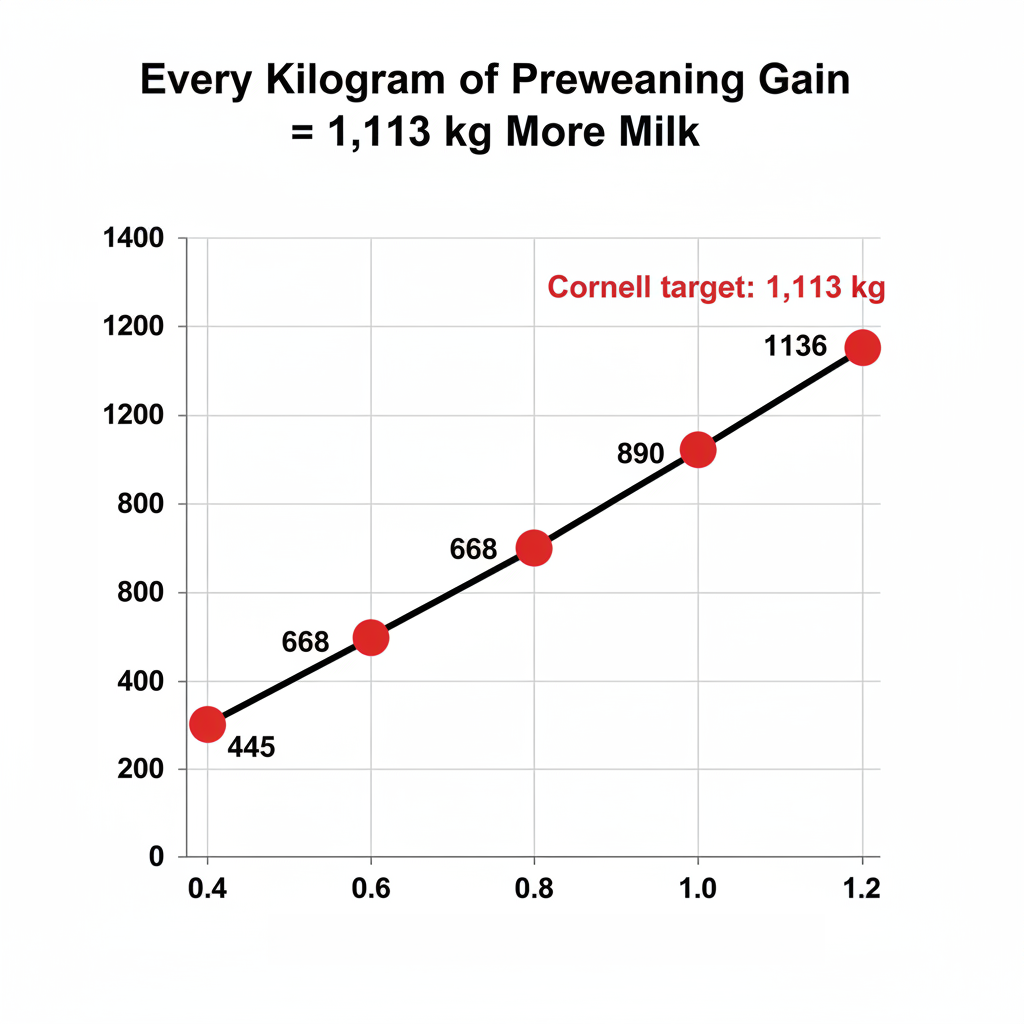
One kilogram of preweaning gain. 1,113 kilograms more milk. The real question is what your calf starter is doing with that opportunity.

Here’s a number that stopped me cold when I first came across it: 1,113 kilograms of additional milk in first lactation for every single kilogram of preweaning average daily gain. And no, that’s not a typo. It comes from Cornell University work led by Fernando Soberon and Dr. Mike Van Amburgh, published in the Journal of Dairy Science back in 2012—and you know what? It’s held up remarkably well as more data have come in over the years.
I recently spoke with a Wisconsin producer who’d seen this research presented at a nutrition conference. His reaction was similar to mine: “I’ve been buying dairy calf starter feed the same way for twenty years. Maybe it’s time to ask some different questions.”
For most of my time covering this industry, dairy calf starter occupied that comfortable category of “necessary but unremarkable.” You bought it primarily for price, made sure it met the tag minimums, and moved on to the next item on your list. That thinking is starting to shift on a meaningful number of operations, and the reasons why are worth exploring.
A meta-analysis published this year in the Journal of Dairy Science combined 18 studies and confirmed what the Cornell team found over a decade ago—calves that grow faster before weaning consistently produce more milk in their first lactation. The exact response varies somewhat by study and herd, but the positive relationship appears again and again.
But here’s the question that’s really driving the current conversation: If early nutrition matters this much, does the consistency of that nutrition matter too?
Why Your Rumen Bugs Care About Consistency
Let me walk through the science here, because it’s genuinely fascinating once you dig into it—and it has real practical implications for how we think about calf feeding programs.
We’ve known for decades that the calf’s rumen microbiome undergoes rapid colonization during those first weeks of life. What’s newer, and what’s really caught my attention, is our understanding of just how diet-dependent that colonization process is.
The microbial foundation you establish in those hutches appears to influence how well these animals perform in the years ahead.
Think about what that means for your operation. The bugs establishing themselves in your calves’ rumens right now are being shaped by what those calves eat—and that foundation may well stick around through first calving and beyond.
It’s a bit like laying concrete: what you do in those early days sets up the structure for everything that follows.
Dr. Mike Van Amburgh over at Cornell—he’s a Professor of Animal Science there and leads the development of the Cornell Net Carbohydrate and Protein System (which, as many of you probably know, is used to formulate diets for roughly 70 percent of dairy cows in North America)—has been studying this connection for over two decades. Cornell’s calf nutrition program emphasizes a straightforward goal: double birth weight by weaning through adequate and consistent milk replacer and starter intake.
Why is this significant? The long-term numbers tell the story.
Industry technical summaries based on the Cornell data show just how much this matters over a cow’s productive life. In one commercial herd tracked by researchers, cows that made it to three lactations produced about 1,287 kilograms more milk across those lactations for every extra kilogram of preweaning gain. The Cornell research herd showed even larger responses.
| Lactation | If Benefit Stopped After L1 | Commercial Herd Actual | Research Herd (High Response) |
| L1 | 1,113 | 1,113 | 1,113 |
| L2 | 1,113 | 1,200 | 1,350 |
| L3 | 1,113 | 1,287 | 1,500 |
The early nutrition effect doesn’t just show up once and disappear—it builds on itself over time.
It’s worth noting that genetics also play a role here. Operations heavily focused on genomic selection for feed efficiency are seeing these early nutrition effects interact with genetic potential—calves with strong genetic merit for production seem to respond particularly well to optimized early nutrition. Nutrition and genetics work together rather than independently.

So what happens when feed formulations shift on your calves? The rumen microbiota need time to adapt to new feed ingredients. Research on rumen microbial dynamics, including work by Schären and colleagues published in Frontiers in Microbiology, shows that meaningful adaptation can take anywhere from a day or two to three weeks or more when diets change substantially.
During those adaptation periods, feed efficiency typically drops, and the risk of digestive upset increases. And when formulation changes occur frequently—as can happen with feeds optimized first for ingredient prices rather than consistency—the rumen may never fully stabilize.
That’s the biological argument. But biology, as we all know, is only part of the decision.
What the Treatment Data Actually Show
The USDA’s National Animal Health Monitoring System (NAHMS) provides solid benchmarks here. Their Dairy 2014 study collected data from 104 operations across 13 states, which is about as representative as you’re going to find for this kind of work.
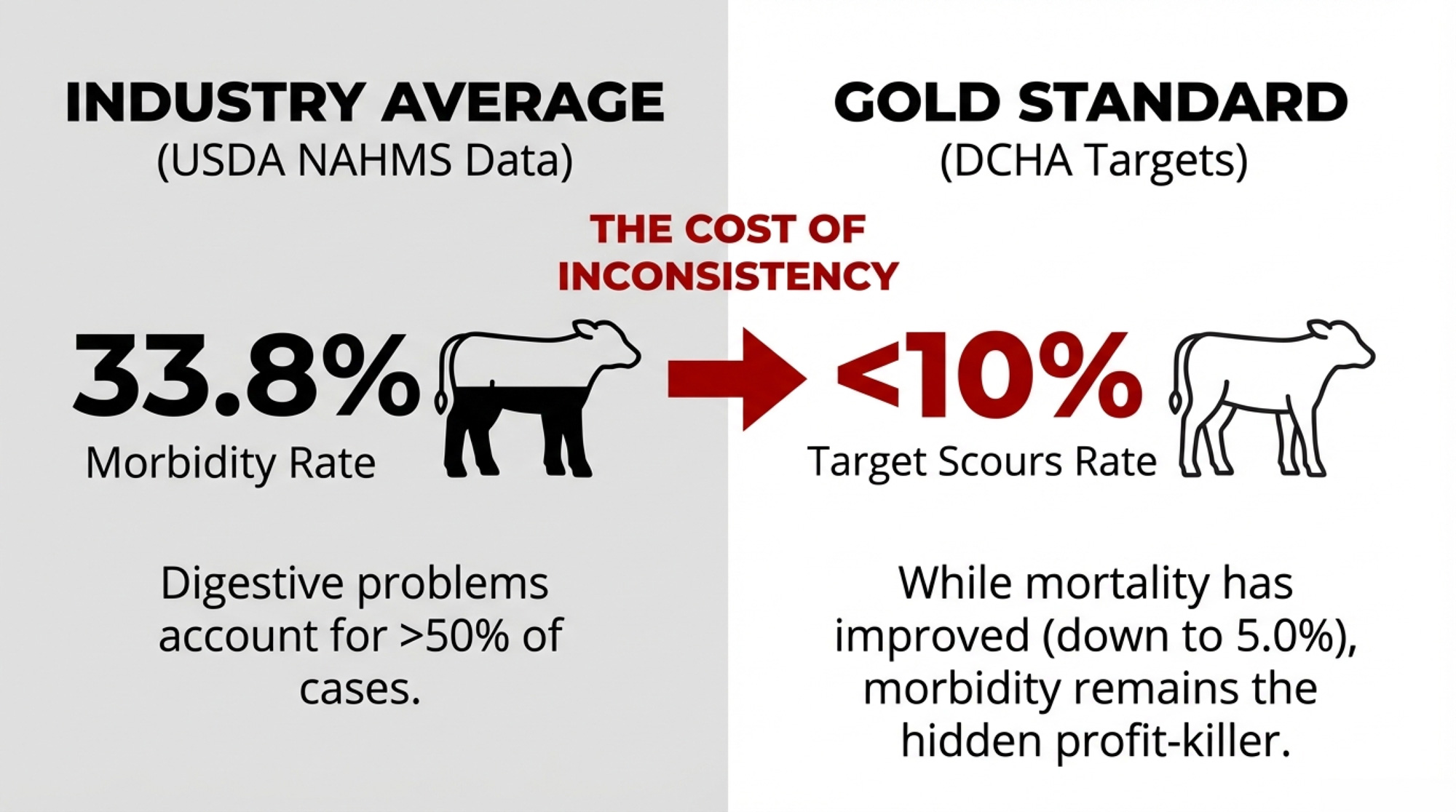
Here’s what they found: about 33.8 percent of preweaned heifers experienced at least one bout of illness, with digestive problems accounting for just over half of those cases—50.9 percent to be exact. Mortality stood at 5.0 percent overall.
Now, context matters here. These numbers actually represent real improvement from earlier surveys. NAHMS reported mortality rates of 8.4 percent back in 1992 and 7.8 percent in 2007. So the industry has improved significantly in keeping calves alive and healthy over the past few decades. That’s encouraging, and it reflects genuine progress in housing, colostrum management, and overall calf care protocols.
But the current numbers also suggest room for continued progress. The NAHMS study compared those results to Dairy Calf and Heifer Association (DCHA) targets at the time—25 percent morbidity and 5 percent mortality. It’s worth noting that the current DCHA Gold Standards are actually more stringent: scours incidence below 10 percent preweaning, pneumonia below 15 percent preweaning, and survival rates of at least 97 percent from 24 hours through 60 days of age. High-performing operations across the country are hitting these numbers. Some are doing even better.
| Health Metric | USDA NAHMS National Avg (2014) | DCHA Gold Standard Target | High-Performing Operations | Est. Cost Gap ($/calf) |
|---|---|---|---|---|
| Preweaning Scours Rate | 17.2% ⚠️ | <10% | 6–8% | $8–12 |
| Preweaning Pneumonia Rate | 16.2% ⚠️ | <15% | 8–10% | $15–20 |
| Preweaning Mortality | 5.0% ⚠️ | <3% (≥97% survival) | 2–2.5% | $45–60 |
| Overall Morbidity | 33.8% ⚠️ | <25% | 15–18% | $25–35 |
I spoke with a calf manager at a large California operation last spring who’d brought her scours rate down to around 6 percent—well under that DCHA target. When I asked what changed, she walked me through several factors, but consistent nutrition was near the top of her list. “We stopped chasing the cheapest option every delivery,” she told me. “Once we did that, we could actually see what else was going on.”
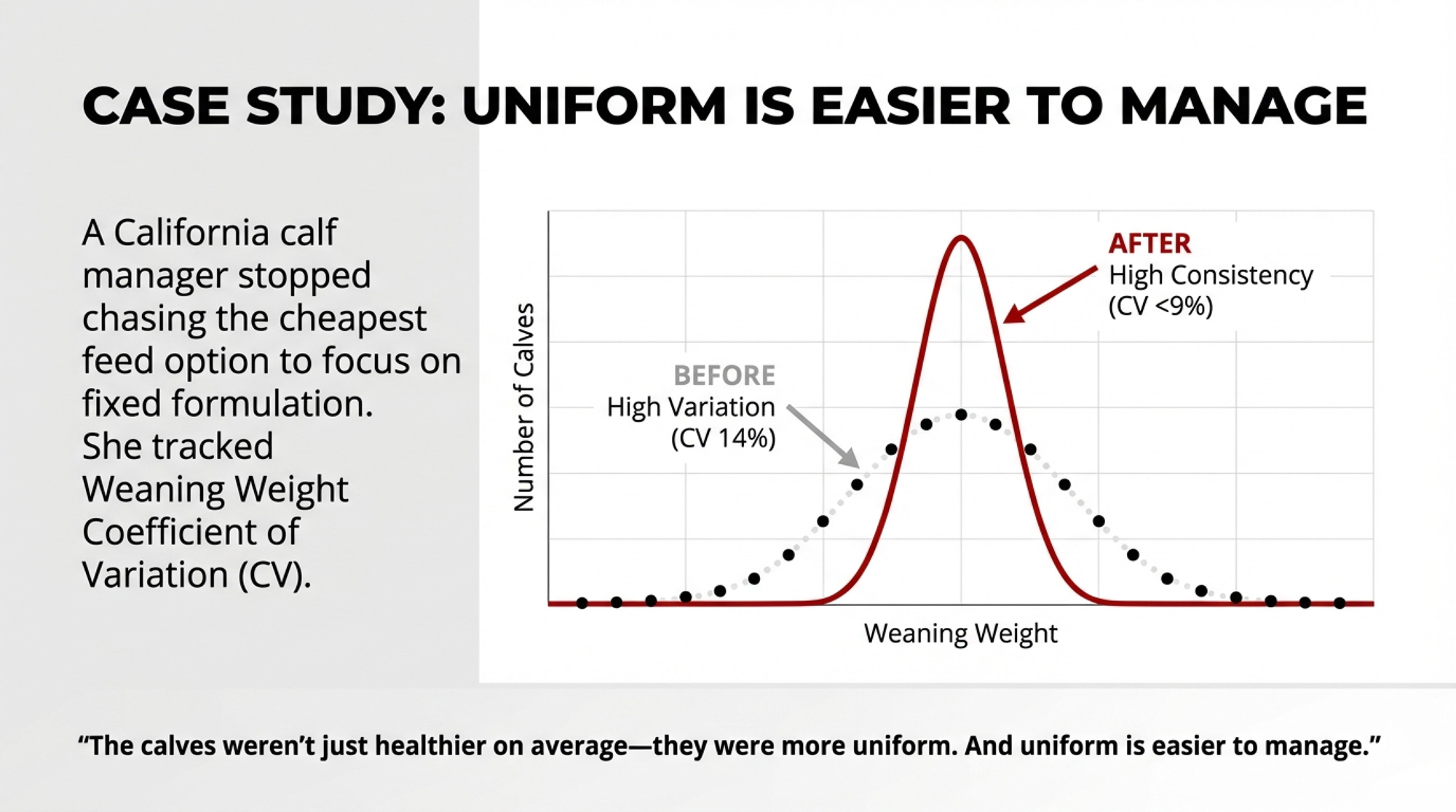
What I found particularly telling was her approach to tracking the change. She started measuring weaning weight coefficient of variation alongside her treatment records—something she hadn’t done systematically before. Within about four months, her CV had dropped from around 14 percent to just under 9 percent. “That’s when I knew the consistency piece was real,” she said. “The calves weren’t just healthier on average—they were more uniform. And uniform is easier to manage.”
That observation—about finally being able to see the other variables—comes up repeatedly in conversations with producers who’ve improved their numbers. Eliminating feed variability actually allowed them to troubleshoot the other factors. When feed was no longer confounding their analysis, they could isolate issues with housing, or ventilation, or colostrum protocols.
I should be honest with you here, though: controlled comparisons in the published literature remain limited. The evidence connecting feed consistency specifically to improved outcomes is suggestive rather than definitive at this point. Much of what we know comes from producer experience and biological reasoning. That’s valuable information, but it’s different from randomized trial data.
Quick Reference: Key Benchmarks
- 1,113 kg additional first-lactation milk per 1 kg preweaning ADG (Soberon & Van Amburgh, Journal of Dairy Science, 2012)
- ~1,287 kg additional milk across three lactations per 1 kg preweaning ADG in one tracked commercial herd (Cornell research technical summaries)
- 33.8% average preweaned heifer morbidity (USDA NAHMS Dairy 2014)
- <10% scours, <15% pneumonia, ≥97% survival current DCHA Gold Standards targets
- Days to 3+ weeks, typical rumen microbiome adaptation period to diet changes (Schären et al., Frontiers in Microbiology, 2017)

Sponsored Post
The Economics: Running Your Own Numbers
The financial case for feed consistency depends heavily on individual operation parameters, which is why I get a little skeptical when I see generic ROI claims floating around. Your math isn’t my math, nor is it your neighbor’s math.
But the framework for calculating it is straightforward, and the research coefficients are reasonably solid at this point.
What the research tells us: the 2025 meta-analysis confirms that for meaningful increases in preweaning ADG, you’re looking at real gains in first-lactation milk yield—the positive relationship holds across diverse management systems and keeps showing up study after study. And as the Cornell data show, those effects appear to persist across multiple lactations, not just the first one.
The NAHMS data suggest that reducing morbidity from the 33.8 percent average toward those tighter DCHA Gold Standard targets would reduce treatment costs in ways that add up. When you factor in drugs, labor, and lost performance, the total cost of a treated calf can run into the tens of dollars per case—sometimes considerably more depending on your vet costs and how much growth gets set back. Across a calf crop, which accumulates quickly.
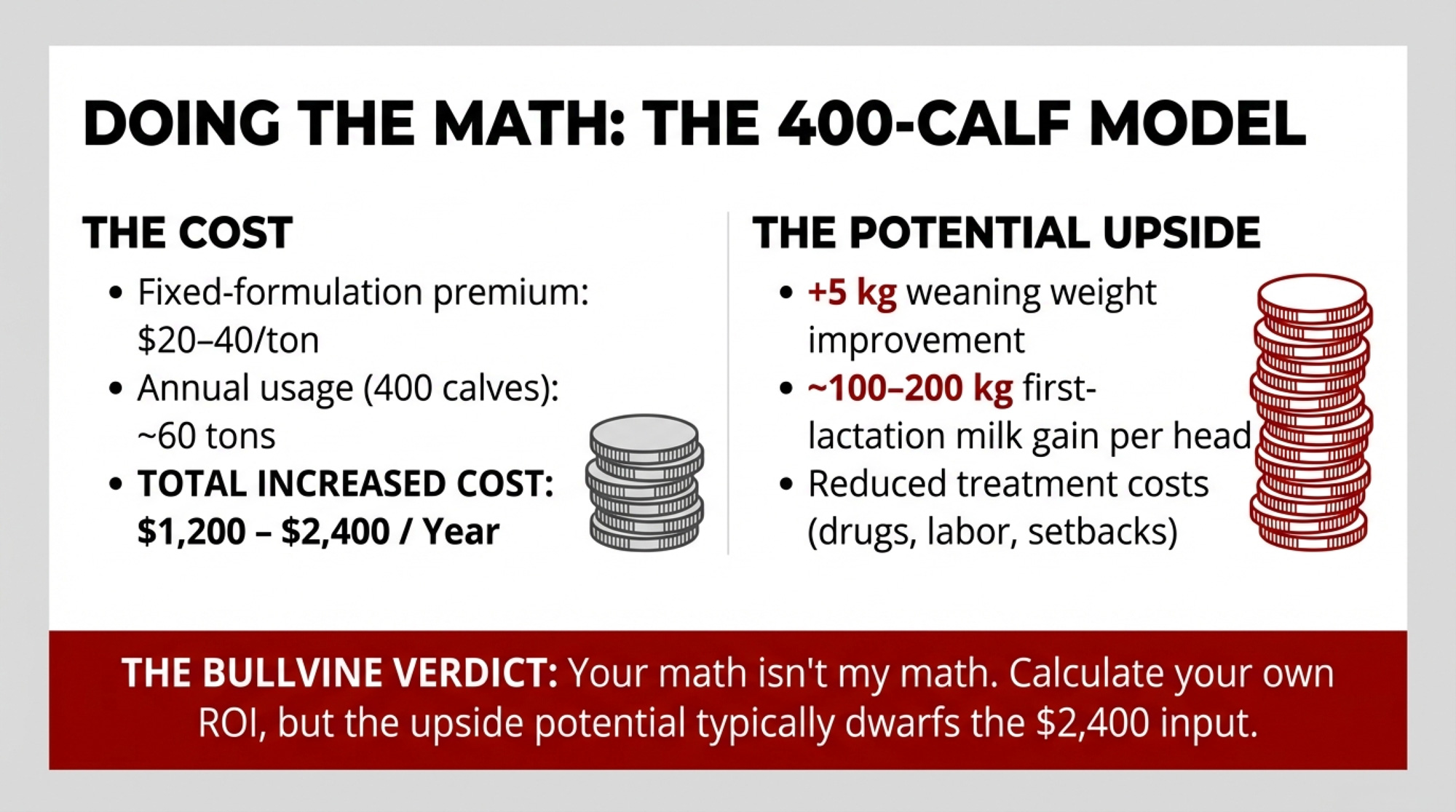
The Basic Math: A 400-Calf Operation
| Factor | Estimate |
| Annual starter usage | ~60 tons |
| Premium for fixed-formulation | $20–40/ton |
| Additional annual feed cost | $1,200–$2,400 |
| Potential return per calf | |
| Plausible weaning weight improvement | +5 kg average |
| First-lactation milk gain (using Cornell relationship as a guide) | typically on the order of ~100–200 kg/head, depending on how much of that 5 kg reflects true ADG improvement and your current baseline |
| Multi-lactation compounding effect | Additional gains in L2, L3 are likely when those early gains carry through |
| Reduced treatment costs | Variable by operation |
The question isn’t whether the research is real—it is. The question is whether your specific operation’s baseline makes the investment worthwhile.
What this means for your operation depends explicitly on your current baseline. If you’re already achieving tight weaning weight distributions and low morbidity, the marginal benefit from changing feeds may be modest. If you’re seeing high variability and treatment rates above industry benchmarks, the potential benefits of a stronger nutrition and management program are considerably larger.
On the cost side: from conversations with nutritionists and producers across several regions, many report that fixed-formulation dairy calf starters often cost somewhere in the ballpark of $20–40 per ton more than strictly least-cost options. Some regions see higher premiums where supplier choices are limited. Because prices vary so much by company and freight, you’ll want to confirm this with your own quotes.
Run your own calculation. Pull your weaning weight data from the last three cohorts. Calculate your coefficient of variation—that’s your standard deviation divided by your mean, expressed as a percentage—as a measure of how much variability you’re seeing. Look at your treatment records. The math will tell you whether the potential upside justifies the definite cost increase—and that answer genuinely varies by operation.
Knowing When to Prioritize Other Investments First
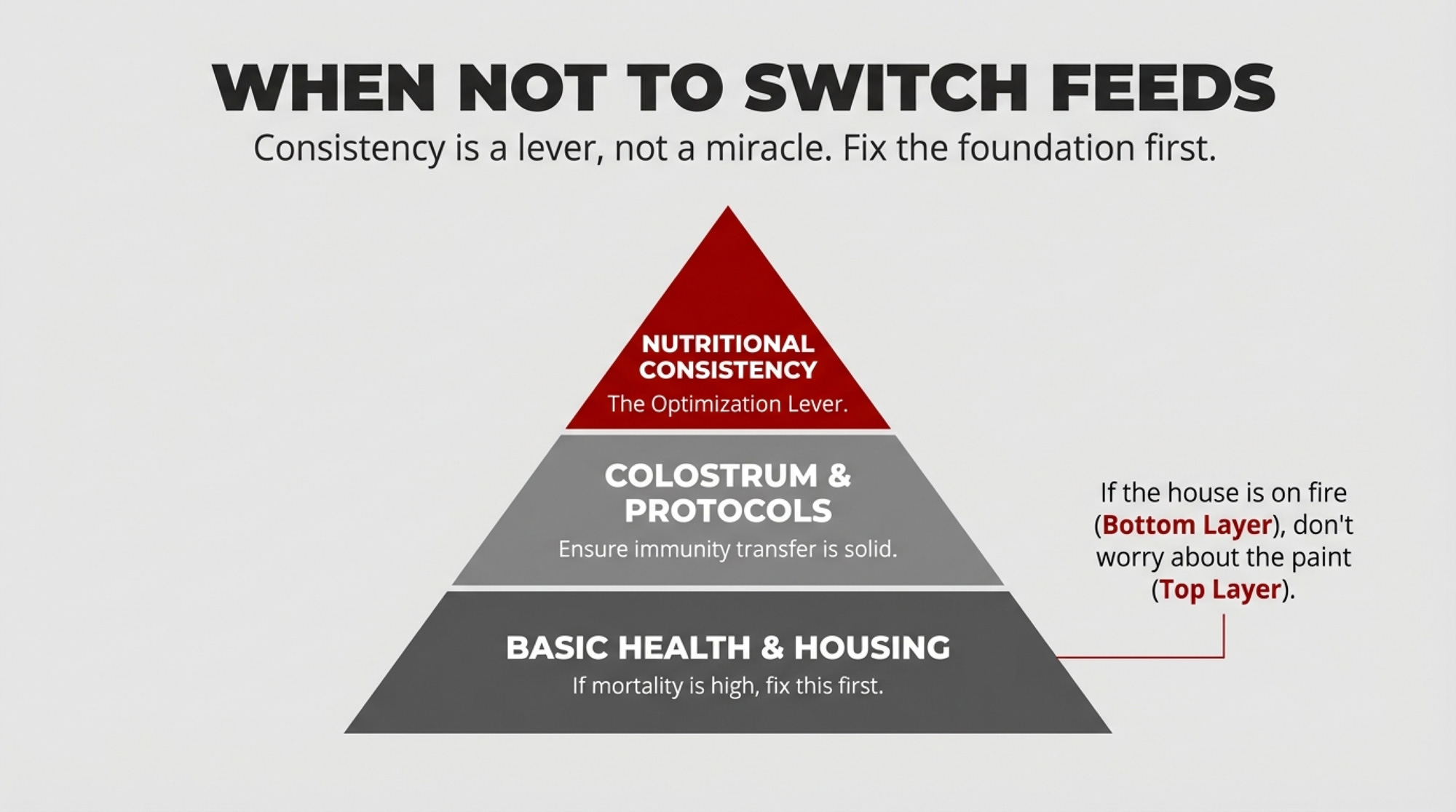
I’d be doing you a disservice if I presented this as a simple “switch feeds immediately” recommendation. Every operation has competing priorities, and feed consistency is one variable among many affecting calf performance.
On some farms, the bigger wins might come first from tightening up colostrum delivery, improving housing and ventilation, or addressing transition-cow bottlenecks before focusing on feed formulation details for calves. On others, especially where calf programs are already fairly sound, but weaning weights and health records still look noisy, dialing in nutrition consistency can be the logical next move.
One nutritionist I spoke with—who asked me not to use his name because he consults for suppliers using different formulation approaches—put it this way: “The right feeding strategy depends on the operation’s specific goals, constraints, and current performance baseline. What works exceptionally well for one farm might not be the highest-priority investment for another.”
That strikes me as exactly right. The consistency question isn’t about whether variable-formulation feeds meet regulatory requirements—they do. It’s about whether feed consistency represents the best next investment for your operation, given where you are today and where you want to go.
Evaluating Supplier Approaches
If you decide feed consistency is worth investigating for your operation, how do you actually figure out whether a supplier delivers it? I’ve found that a few direct questions reveal a lot—and most suppliers will give you straight answers if you ask clearly.

Questions that tend to cut through the marketing:
“Can you provide batch records showing our specific product’s formulation over the past year?” A supplier with consistency systems will generally have this readily available—it’s just how they operate. A supplier using a more flexible formulation will show ingredient variation that tracks commodity prices. Neither response is inherently wrong. What matters is that it tells you what you’re actually buying.
“What percentage of your ingredient sourcing uses fixed-supplier relationships versus spot-market commodity purchasing?” This gets at their underlying business model. There’s no single “right” answer—but you should know what you’re getting.
“Do you conduct incoming ingredient testing beyond supplier certifications?” Operations with NIR spectroscopy or proximate analysis on incoming loads can verify what they’re receiving. Those relying solely on supplier certificates are trusting their ingredient sources. Reputable companies in the marketplace use both approaches.
| Factor | Fixed-Formulation Approach | Variable (Least-Cost) Formulation | Hidden Cost of Variability |
|---|---|---|---|
| Ingredient Sourcing | Long-term supplier contracts, consistent sources | Spot-market purchasing, ingredients change batch-to-batch | Rumen adaptation stress every 2–4 weeks |
| Feed Price | $20–40/ton premium over least-cost | Lowest price per ton at time of purchase | False economy if growth/health suffer |
| Rumen Microbiome Stability | Consistent substrate = stable microbial community | Frequent substrate changes = constant re-adaptation | 3–21 days adaptation per change = chronic inefficiency |
| Weaning Weight CV | Typically 8–10% (tighter distribution) | Typically 12–16% (wider distribution) | Harder to manage, delayed breeding, culling pressure |
| Treatment Rate Patterns | Consistent baseline, easier to troubleshoot | May spike after formulation changes | Difficult to isolate non-feed variables |
| Documentation | Batch records, formulation history available | Limited transparency, formulas are “black box” | Can’t analyze trends or root-cause issues |
| Best Use Case | Operations targeting DCHA Gold Standards, tight protocols | Operations prioritizing low upfront cost, high risk tolerance | Depends on baseline performance and goals |
What the responses typically reveal:
- Detailed documentation with specific dates and formulations → you’re likely dealing with a consistency-focused supplier
- General assurances about quality control without specific records → approach is unclear, and it’s worth following up
- Acknowledgment that formulations adjust based on ingredient prices → that’s a more flexible formulation model, and there’s nothing inherently problematic about that if it fits your goals
The key is understanding which model you’re buying and whether it aligns with what you’re trying to accomplish.
The Transition Timeline: Setting Realistic Expectations

Operations that switch to a more consistent, fixed-formulation feeding program typically experience a transition period before realizing the anticipated benefits. Based on producer conversations and the biological literature on rumen adaptation, here’s roughly what to expect:
Weeks 1–3: Initial adjustment. Some producers report slight changes in fecal consistency as the rumen microbiome adapts to the new substrate—even though that substrate will now remain consistent. This is the period of highest uncertainty, and it’s easy to second-guess your decision. Stick with it unless you’re seeing serious problems.
Weeks 3–6: Early signals start to emerge. Starter intake patterns should smooth out. Fecal scores stabilize. Treatment incidence may begin declining in new calves entering the program—though calves already through the highest-risk period won’t show dramatic changes.
Weeks 6–8, around weaning: First measurable outcomes appear. Weaning weight distribution should tighten—look for your standard deviation narrowing—and cohort uniformity generally improves. This is when you can start to see whether the change is actually delivering for you.
Months 3–6: The pattern becomes clear. By this point, enough cohorts have moved through the system to distinguish signal from noise. If consistency delivers value on your operation, you should see it by now.
| Phase | Duration | Key Milestones |
| Weeks 1-3: Initial Adjustment | Week 0-3 | Rumen microbiome adapting; possible fecal consistency changes; highest uncertainty |
| Weeks 3-6: Early Signals | Week 3-6 | Starter intake patterns smooth out; fecal scores stabilize; treatment incidence begins declining in new calves |
| Weeks 6-8: First Outcomes | Week 6-8 | Weaning weight standard deviation narrows; cohort uniformity improves; first measurable confirmation |
| Months 3-6: Pattern Clear | Week 12-24 | Multiple cohorts processed; signal distinguished from noise; definitive performance data available |
The timeline matters for setting expectations. Feed changes don’t produce overnight results. Operations that switch, see some initial variability during the adaptation window, and immediately switch back may never realize any potential benefit. Give it time to work—or not work—before drawing conclusions.
A Practical Assessment Framework
For producers considering whether feed consistency deserves attention alongside other calf management priorities—colostrum protocols, housing ventilation, transition feeding, fresh cow management—here’s a straightforward framework:
Step 1: Benchmark your current performance
- Calculate the weaning weight coefficient of variation for your last three cohorts. If you’re already below 10 percent, you’re doing well.
- Document treatment incidence rates against the NAHMS benchmarks and DCHA Gold Standards.
- Note any patterns in timing—do problems tend to cluster after feed deliveries or lot changes?
Step 2: Understand your current supplier’s model
- Ask the questions outlined above.
- Request documentation if they claim consistency.
- Pay attention to whether the answers satisfy you or leave you with more questions.
Step 3: Calculate your specific economics
- Use your operation’s numbers, not industry averages.
- Include both direct costs (treatment, mortality) and opportunity costs (production potential).
- Factor in realistic switching costs and the transition period.
Step 4: Prioritize against other investments
- How does this compare to other calf program improvements you could make?
- Where’s your biggest current gap—nutrition, housing, health protocols, colostrum management?
- Would the money deliver better returns somewhere else in your operation?
Step 5: Make a data-informed decision
- Current performance is strong, and your supplier can demonstrate consistency? You may be well-positioned already.
- Unexplained variability in weaning weights or treatment rates? The consistency question is worth investigating.
- Economics don’t pencil out clearly? A pilot approach—one cohort on a new feed while maintaining your current program—can give you operation-specific data.
What It All Adds Up To
The research connection is real. Preweaning nutrition has measurable, long-term effects on lifetime milk production. The work from Cornell and the 2025 meta-analysis show consistent associations between early growth and first-lactation performance. This isn’t speculation—it’s well-documented science that keeps getting confirmed.
The consistency question is more nuanced. While the biological case for nutritional consistency is plausible—stable rumen microbiome, reduced adaptation stress, better feed efficiency—the controlled research comparing consistent versus variable formulations remains limited. Much of the evidence comes from producer experience and biological reasoning rather than randomized trials. I think being honest about that is important.
The economics are genuinely operation-specific. A 400-calf operation with high current variability might find substantial opportunity here. A smaller operation with already strong performance might find limited benefit. Run your own numbers rather than relying on anyone else’s projections—mine included.
Supplier models vary legitimately. Different formulation strategies correspond to distinct business approaches with distinct trade-offs. Understanding which model your supplier uses—and whether it aligns with your priorities—matters more than assuming one approach is universally superior.
Context always matters. Feed consistency is one of many variables affecting calf performance. Operations with excellent colostrum programs, well-designed calf housing, and strong health protocols may see less marginal benefit from feed consistency improvements than operations with gaps in those areas. Consider where your biggest opportunities actually lie.
The conversation around feed consistency reflects a broader shift in how progressive operations are thinking about calf-raising these days: as a foundational investment in lifetime productivity rather than a cost center to minimize. Whether that perspective applies to your operation depends on your specific circumstances—but it’s a question worth asking.
Key Takeaways
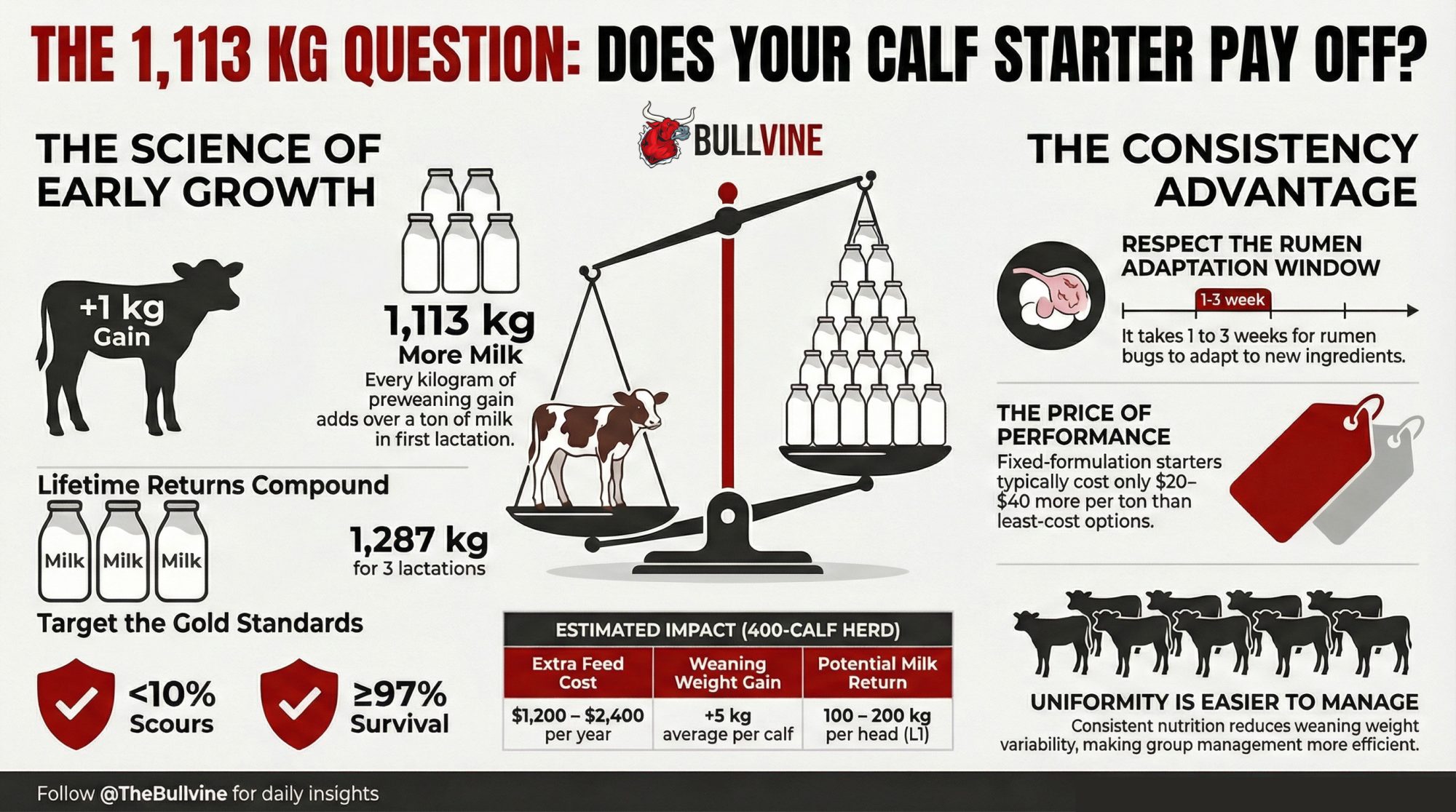
- Early-life growth pays: Cornell work links each extra kilogram of preweaning gain to roughly 1,113 kg more milk in the first lactation, with multi-lactation benefits on top.
- Consistent calf starter helps the rumen microbiome settle, reduces stress when calves hit diet changes, and can make weaning weights and health records a lot less “noisy.”
- National data (NAHMS, DCHA) show calf health has improved, but many herds still sit above target levels for scours, pneumonia, or death loss—leaving money on the table.
- For a 400-calf operation, paying about $20–40/ton more for a fixed-formulation starter means roughly $1,200–$2,400 extra feed cost per year, which can pencil out if it boosts growth and trims treatments.
- There’s no one-size-fits-all answer; the article gives a simple checklist and supplier questions so each farm can decide whether calf starter consistency is the right next lever to pull.
Executive Summary:
This article looks at a simple but powerful question: could the consistency of your dairy calf starter be quietly influencing lifetime milk production? Cornell research links each extra kilogram of preweaning gain to about 1,113 kilograms more milk in first lactation, with follow-up work and industry summaries showing those gains can carry into later lactations. It pairs that science with USDA NAHMS data and current DCHA Gold Standards to show where calf health has improved and where there’s still room to tighten things up. From there, the piece walks through how inconsistent formulations can disrupt rumen development and drive avoidable health bumps, while also being upfront that direct, controlled research on feed consistency itself is still limited. A practical “400-calf” example lays out the likely cost premium for more consistent starter versus the potential milk and health returns, then offers a step-by-step framework to run the numbers with your own data. Producers also get concrete questions to ask feed suppliers, a realistic transition timeline if they switch feeds, and guidance on when other investments—such as colostrum, housing, or fresh cow management—might warrant priority. The aim is to give dairy producers a clear, research-grounded context so they can decide whether dialing in calf starter consistency is the right next move for their own operation, not to sell a one-size-fits-all solution.
Complete references and supporting documentation are available upon request by contacting the editorial team at editor@thebullvine.com.
Learn More
- 17-26x ROI: Why Top Dairies Stopped Saving Calves and Started Preventing Loss – Arms you with a ruthless economic audit of your calf barn. This breakdown reveals how top-tier dairies generate a 26x return by pivoting to aggressive prevention, stopping the scours avalanche before it erodes your herd’s lifetime production potential.
- $3,010 Per Heifer. 800,000 Short. Your Beef-on-Dairy Bill Is Due. – Exposes the brutal reality of the 800,000-heifer shortage and skyrocketing replacement costs. It delivers the decision framework you need to navigate the next 24 months, ensuring your breeding sheet keeps you a preferred partner for processors.
- Gene Editing in Dairy: When the Revolution Makes Sense—And When It’s Just Expensive Hype – Breaks down how gene editing is moving from expensive hype to practical advantage. You’ll gain an insider’s look at CRISPR-driven traits like heat tolerance, arming you with the strategy to eliminate dehorning costs and boost summer milk stability.
The Sunday Read Dairy Professionals Don’t Skip.

Every week, thousands of producers, breeders, and industry insiders open Bullvine Weekly for genetics insights, market shifts, and profit strategies they won’t find anywhere else. One email. Five minutes. Smarter decisions all week.