Recently we have come under attack for opinions expressed on our different social media platforms. Some readers have felt that other reader’s opinions should not be expressed. For us that is completely OPPOSITE to what we believe in. We believe that everyone should have the right to express their own opinion. We not only believe in it, we encourage it!
Then there are the daily conversations that we have on the different social media platforms. Instead of locking down what is being said, or worrying about the legal ramifications of comments made by breeders, we have actually encouraged dairy breeders to express their opinion. Our number #1 goal here at The Bullvine is not to control the industry like some other publications try to do. Our goal is to make breeders think and to get breeders talking. Yes we want to know your opinion. Yes we want you to feel you have the right to express it … Even if we don’t agree with it.
Bring It On!
An interesting thing has happened over the past few months. The Bullvine has gone from the hunter to the hunted. When we first started The Bullvine we were the hunter. We were the ones gunning for the bigger publications with the larger readerships. But now that has all changed. We are now the ones with the largest daily digital dairy readership and we find ourselves in the cross hairs. We listen. We learn. We share. Now everybody is shooting for The Bullvine and that’s just the way we like it.
Our very first post on The Bullvine clearly laid out how we were going to be different and how we thought others were missing the boat (Read more: Twice The Bull – Half the S**T). But we didn’t stop there. We continued to highlight things we felt relevant along the way. Including how other dairy magazines are old school (Read more: How Social Media Is Changing the Holstein World) and how our readership is more engaged and larger than the others (Read more: The Fakebook – Our Secret Is Exposed). So it’s only fair that when the others start gunning for us that we accept and deal with it.
Gandhi once said “First they ignore you, then they laugh at you, then they fight you, then you win!” A pattern we have seen perfectly since starting The Bullvine. When we first started many ignored us. After a little while they started to laugh at us. And now more recently they have started to fight us. We surmise that we are starting to take the next step. (Read more: I’m Sorry But I’ve Had Just About Enough Of….)
The Bullvine Bottom Line
Who are we to be very opinionated and then not let others express their opinion? If we tried to control what others say, it would make us hypocrites. What makes the dairy industry so amazing is that everyone is so passionate about what we do, and we all have our own opinion. So please share your opinion. What issues would YOU like to target? Take aim. It’s good for all of us.
Many heads are perking up to the siren call of “Decrausaz Iron O’Kalibra *RC EX-96-SW.” Bred by Fredy Decrausaz and Sons who also bred her dam, this Swiss Miss has set off much debate.“Many North American experts say she should walk on the colored shavings at Madison and give the North American cattle a run for their money”.
Decrausaz Iron O’Kalibra Grand Champion 2013 All European Championship
O’Kalibra “Where the Wins Keep Flowing Like Champagne”
Decrausaz Iron O’Kalibra – Mammary Photo from All European Championship Show 2013
Where is O’Kalibra Now?
At a cattle show in the Switzerland she stood out for Edwin Steiner, GS Alliance (Buerglen Switzerland) who bought her almost dry as a 2 year old. When she was fresh as a 4 year old a share was sold to Pat Conroy (Indiana USA). GS Alliance started with a predominantly Brown Swiss herd. Currently GS is 60% Holstein, 20% Red and White and 20% Swiss. To fulfill their goals of providing buyers with varied top quality breeding, they seek out exceptional cattle. Edwin explains, “Additions made to our herd are either show cows or bull dams and we invest in individuals with a deep pedigree. This way we seek to develop cows that satisfy every breeder.” Pat Conroy who partnered in the purchase of O’Kalibra, who still resides in Switzerland, adds to the story. “We bought her when she was fresh and for Edwin and I, it was her massive frame, wide chest, and high quality udder that caught our attention. It was only a bonus that she had a pedigree that made her marketable outside the show ring.”
Decrausaz Iron O’ Kalibra *RC EX-94-SW (3rd Lactation Photo) Grand Champion Swiss Expo 2013 Grand Champion Swiss Expo 2012 Res. Grand Champion Expo Bulle 2011 Hon. Mention Grand Champion Swiss Expo 2011 Res. Grand Udder Champion Swiss Expo 2011
And the Best Just Keeps Getting Better
Although not a common sire stack, O’Kalibra is backed by well proven sires. Her sire Boss Iron (Bookie x Chief Mark) was proven over a decade ago in Italy. He has many strengths, including high daughter fertility, fat percent, daughter calving ability, somatic cell score and productive life. This easily makes him the kind of sire many breeders look for today. Beyond Iron her sire stack goes to Integrity (Blackstar x Chief Mark) who is known for his deep bodied show type daughters. After that her sires are Milestone, Factor and Astre. Definitely the inclusion of Chief Mark twice in her sire stack is well expressed in O’Kalibra’s dairy strength and overall style.
Decrausaz Iron O’ Kalibra *RC EX-94-SW (4th Lactation Photo) Grand Champion Swiss Expo 2013 Grand Champion Swiss Expo 2012 Res. Grand Champion Expo Bulle 2011 Hon. Mention Grand Champion Swiss Expo 2011 Res. Grand Udder Champion Swiss Expo 2011
Five Generations Makes O’Kalibra Special
O’Kalibra traces back five generations to Cloverlands Skylar Cherry Red 11 Stars and two Superior Production records made famous by Granduc Holsteins, Quebec, Canada. Her fourth dam Granduc Carla Astre 9 Stars was one of three outstanding Astres from Cherry. Her third dam was a Milestone embryo sold by Lystel Holsteins to David Clark, UK. Originating from this same famous cows family are Dudoc Mr Burns (Thunder x Storm X Astre x Cherry) GLPI 1715 popular also as red carrier and Granduc Tribute a full brother to Mr Burns’ Storm grandma who is 4Stars with three Superior Production lactations. Her owners feel there are even more ways that she is special. Edwin proudly points out that “O’Kalibra has the build for longevity and a pedigree to go along with it. She is an extremely good day to day cow. She is the kind of cow that can look after herself, and never has a bad day. In addition to that, she milks like crazy.”
GRANDUC CARLA ASTRE
O’Kalibra Is An Excellent Swiss Hitter
O’Kalibra recently has been nominated for Excellent 96 and will see the panel next week. Her outstanding parts are Mammary and Frame. Not far behind those top areas are great scores for Rump and Legs. She has fulfilled the predictions of many that she would move beyond 94.
First calving at 2 years 2 months, in305 days O’Kalibra produced a respectable 9166 kgs, 3.6 % fat and 3.3% protein. Her best record in 305 days was as a four year old: 14,247 kgs., 4.0% fat and 2.9% protein. Great production runs in her pedigree with her dam producing 13,372 kgs as a four year old. Her grand dam produced 14,217 kgs as a seven year old. It goes all the way back to her fifth dam who produced 17,621 kgs as a three year old.
You’re Doing Fine O’Kalibra
Pat Conroy is happy with O’Kalibra. “We have sold a Sid daughter to a guy in Australia, a Sid bull to Select Star in Switzerland, an Acme son to Swiss Genetics, a Red Destry son to Swiss Genetics, and an Atwood choice in the USA to Morasci/Borba&Glaeser. We will also sell an Armani or MAS choice in the Field of Dreams sale May 24 in West Union Iowa.” Although he acknowledges that the best cross is yet to be determined he says, “All of her daughters and sons so far have been very good “do-ers”. We will decide which has been the best cross as the daughters freshen or sons transmit. Plans are to do a flush on her in 2 weeks to Armani (Goldwyn x Apple).”
It’s Beyond Okay for O’Kalibra in the Future
Both Pat and Edwin have a positive attitude toward O’Kalibra’s potential. “At this point, we will consider showing her again in the future” “when she really looks perfect.” When asked to compare her to cows in North America these proud owners remain positive but humble, “She has a bit more strength than most, however we do not want to take away anything from cows over there.”
The Bullvine Bottom Line
When encouraging breeders to breed the best Pat sums up his and Edwin’s theory. “Personally we would say that cows that have some power and strength, yet are still dairy, will ultimately outlast and out milk the high style younger cows that seem to be one hit wonders.” For both gentlemen it is obviously a shared opinion when Pat concludes, “I think that Iron O’Kalibra is one example that proves this fact to be true”.
Producing The Bullvine keeps us in touch with the best people in the world – dairy breeders. The unlimited passion, commitment and enthusiasm that they share with us is awesome. We recently struck pure dairy gold when we reached out to Neil and Melanie Hunter of Hometown Jerseys in Bath, Ontario. If you can believe it, they thanked us for the opportunity. Neil responded, “You don’t often take time to take a picture of your activities and just stand back and look at it. I decided to write it as it happened so somebody can give it to our grandkids.” And what a story he forwarded to us! In the Hunt family we call it the stuff legends are made of. The legend of Hometown is a two part series: Part 1: Against All Odds Part 2: Beating the Odds
Against All Odds
Unlike most dairy stories, the hero and heroine did not grow up on dairy farms but were infected with the bug through family, friends and mentors who turned their interest, into passion and eventually into a shared dream. Their paths, separate and together, led them through part time employment, to flushing from proven cow families until by 2005 they were ready to risk it all and start farming on the farm they purchased from Melanie’s grandparents; the same grandfather who had given Melanie her 1st Jersey heifer.
Neil, Chelsea and Melanie Hunter
Disaster Strikes Hometown More Than Once
Neil takes over the story. “In September 2002, I purchased 50 Holstein heifers and 5 old Jersey flush cows to provide my part of our future herd base. The following spring BSE hit and the fresh Holstein heifers I was counting on selling for $2200-$2500 that fall were now worth $500-$600. For those wanting to do the math, 50 x $2000 difference equals $100,000 in cash flow (all borrowed money). Luckily, the private lender holding the loan was pretty understanding about having to wait for his money until I had either worked it off or borrowed enough to cover it as I stepped into the next venture. Uncle Ralph Cherry (a past Holstein Canada President), was hired to help calve out these Holsteins and raise the ET Jersey calves until weaning, as I needed to work full-time and then some with such a big hole I had dug myself.” The hole may have been deep but Neil held to his dream and had prepared a detailed business plan for commercial lenders and, with a little bit of luck, had it approved. However…..
“The approved business plan had been to purchase the farm, 5.1kgs immediately and the balance of 25kgs of quota that fall at the budgeted $25,000/kg price tag. By the time bidding in the fall came around, the price was almost $30,000/kg and was no longer within the reach of our business plan and borrowing capabilities. We were stuck. Gut check time. Do we struggle along hoping for a break and find a use for our extra milk or quit? For the next 6 months we fed pigs, extra calves, etc. In the spring we managed a milking reduction sale, which included another herd of cows we purchased to increase our sale numbers in order to make it worth the trip for buyers. We sold everything saleable, leaving us with the ¾, old and high SCC cows and a few select unfresh heifers.” Keeping strong through all of these physical and financial setbacks would have been enough on their own, however, disaster seems to come in multiples. Sadly Neil relates what happened next to the first and one of the finest of Neil’s mentors.. “It was on the way home from the sale that Uncle Ralph Cherry, who so eagerly was there to assist where he could, died after hitting a transport.” It was definitely a very low day “Not only did we have to sell most of the cattle we were trying to build up but then we lost one of the key mentors of our efforts to that point.”
After Hard Knocks, Opportunity Knocks?
Obviously not ones to give up Neil and Melanie hung on. Finally, the break every start-up needs. We were provided with an opportunity to milk another person’s 30 cows and fill their quota for up to a year under DFO’s disaster relief program on a shared facility arrangement due to his sudden illness. This turned out to be the break every start-up needs. This opportunity allowed us to create cash flow, utilize the freshening cows/heifers of our own in the herd and create a financial track record for the financial institutions to scrutinize at a reasonable 35kg start-up level. It was kind of like our own DFO start-up program with the ability to equivalently rent all of the quota for 1 year to prove we could do it while holding down full-time jobs and therefore borrow that amount needed using our own cash flow records, rather than the estimated numbers for the average Holstein herd the banks wanted to compare us to.
“Around the time this opportunity ended, DFO was announcing the quota cap at $25,000 and related new rules. (Note: this was the $ level for quota we had previously been approved at) We could see that only being able to bid on a maximum of 10% of quota holdings each month was going to be like trying to climb Mount Everest since we only owned 5.1kgs.” And then came the decisions that make the Hometown story remarkable. Neil chooses his words carefully. “ After thorough scrutiny of the rule book, we made what is clearly the ballsiest (riskiest if you prefer) move to date. We sold our 5.1kgs in July in order to be considered a “New Entrant” on the September quota exchange.
A Special Anniversary Project
When many look back on anniversaries with candlelight and roses, Neil and Melanie share a much different memory. “Because we were an approved bidder without quota in September, we were allowed to bid on up to 35kgs and would get it as long as we were one of the 1st three bidders. Melanie and I spent our wedding anniversary sitting in the Purina Feed dealership office where I worked in order to utilize the direct line, high speed internet in Napanee. The glow of the heat lamp overtop of some unclaimed new chicks from earlier in the day was our candle as midnight approached. Not knowing whether DFO’s clocks were the same as ours, we sat with the internet form filled out with our bid, hitting the bid button and the back button for the last 10 minutes before midnight. The closer it got to midnight, the faster I would do it. Fingers sore and heart racing as blinding button punching speed ensued until… pop! It was done. Our bid was accepted. It was not for a few days before we knew that our bid got in 1st and we were going to ship 35kgs of milk starting October 1st. Yes, we finally had achieved our goal.” Was there every any doubt Bullvine asks?
Alert for Opportunities
As we follow these two on their dairy quest it is obvious that they are not ones to rest on their laurels. Soon they would respond to another opportunity. “Yet another dairy farmer had fallen ill. Having heard about our past shared facility agreement, he contacted us to see if he could work with us to utilize the DFO disaster relief program and move his 20kgs of quota to us as well while his teenage son decided to go to school the next fall or stay home to milk cows. Since we are gluttons for punishment and needed the cash flow, we agreed. We phoned the bank and our rep wasn’t going to be able to come out to for a couple of days to discuss our needs. The trusses for the new building to be used to house the new herd of cows and swing them in/out of the tie stall arrived 30 seconds after the banker stepped out of his car later that week. After quickly showing the driver where we wanted the trusses, we presented our new business cash flow and borrowing needs to the banker for the 1st time. It was one of those make it or break it meetings early in a business relationship that had to go well. That day, and several times since, that same banker realized we had a plan, but weren’t afraid to change it as new opportunities needed to be capitalized on. Milking 60 cows in a 40 cow tie stall barn, while maintaining 2 full-time jobs, nearly killed us for 9 months, but gave the business a much needed cash flow boost and left another structure the dairy barns needed to support the eventual goal of 50 milking cows and supporting young-stock.” Opportunity knocks but not everyone has the Hunter’s welcome for hard work while chasing possibilities and potential.
Way-Bon Counciller Mystery SUP EX 95-5E HM. Grand Champion – NY Spring Show 2013 2nd Place 100,000 Lb. Cow – NY Spring Show 2013 6th Place Mature-Cow – Royal Winter Fair 2010 1st Place Mature-Cow – Ontario Spring 2010 2nd Place Mature-Cow – Ontario Summer 2010 4th Place Mature-Cow – Royal Winter Fair 2009 Nominated All-Canadian – Mature-Cow 2008 6th Place Mature-Cow – Royal Winter Fair 2008 4th Place Mature-Cow – Ontario Spring 2008 Nominated All-Canadian – 5-Year-Old 2007 3rd Place 5-Year-Old – Royal Winter Fair 2007 Female Offspring: 8 Daughters Average 87.75 Points Including 3 Excellent Daughters Dam of Semex Genomax Sire: Hometown On The Money
Hometown Jerseys and Genomics
The Hunter’s vision for the future allows them the occasional rose colored glasses viewpoint but they never wear blinders and are always ready to look into the leading edges of science and technology. Genomics came knocking next. “That fall, after the RAWF, we had too much time on our hands so we surveyed the activities and new technology being rolled out in the Holstein industry in the form of genomics. Since we had sold our 1st bull to AI (Hometown On The Money @ Semex – On-Time x Way-Bon Counciller Mystery SUP EX 95-5E) we had some new found confidence that this was a business we could do as well in the Jersey breed. We reviewed what key breeders in the Holstein circles had done to utilize genomics in the year before Jerseys started releasing information.” This time Neil and Melanie didn’t have to use a heat lamp to work on the internet but they did stay up late says Melanie.”Three months of nightly research went into finding a high genomic Jersey family which we felt had a similar type standard to the herd we were developing. To get into this venture, it was imperative that the new cows could be appreciated by all breeders and that they would “fit in” whenever visitors came to view our herd.” This opportunity would mean taking to the road as described by Neil. “A trip to Greeneville, TN to Gabys Jersey Farms with childhood neighbour and adored Jersey Master Breeder, Bill Fletcher was planned. The goal was to purchase Gabys Blair Aruba, a VG 87 2 yr old and sister of the then #1 JPI Jersey cow in the US, Gabys Artist Ambrosia. Ambrosia had been the #1 cow for an unprecedented 24 months straight. After a very enjoyable day-long tour of the 150 milking cows and equal number of heifers, we were left dumbfounded by the deal offered. We elected to purchase the cow we went for, Aruba, a sister to her dam and 50% of Ambrosia. Ambrosia was clearly the most expensive cow in the offering, but by buying 50% of her, a long-term relationship was about to be built sharing the American breeding guidance and marketing connections of Henry Gaby for the foreseeable future.” The planning had paid off. What next?
Gabys Blair Aruba VG 87 2 yr old #1 Protein, #2 Fat and #2 Milk among genomically tested cows in Canada in December 2010 Full sister to former #1 JLPI cow – Gabys Artist Ambrosia Dam of Gabys Arrow at Semex
Hometown IVF Ready
Not ones to shy away from the unknown Neil reports Hometown’s first experience with IVF. “All of Greeneville purchases stopped at Transova Maryland, for our 1st experience with IVF on their way to Canada. It was also the place where we made exportable embryos to Canada by a sire Mack Dairy Region, who was the highest type sire in the US, but not available in Canada. These embryos became part of the 1st genomic marketing effort in Canada by Hometown. 10 embryos were offered in the RJF Red Carpet Sale that summer with 2 bull contracts and a 2 bull, 1 heifer guarantee. Nothing like this had ever been done before in the Jersey breed and caused lots of discussion (pro/con) when it sold to John Claessens, Ingersoll, ON for the highest price of the day at $22,000. Genomics had officially arrived in the Canadian Jersey breed!” As they say on TV, obviously, Fear Wasn’t a Factor for Hometown Jerseys” as their enthusiasm for elite cattle breeding continued to grow.
Gabys Artist Ambrosia EX 91 Former #1 JPI Cow (for 24 months) Two Second-calve daughters with maximum lactation scores in the US of EX-91 Five sons in A.I. 4th generation EX bull dam
“More Opportunities Right Around the Corner”
Neil and Melanie exemplify how enthusiasm breeds more enthusiasm and soon they were finding another way to get ahead of the curve but this time in “Polled” Jersey cattle. Neil explains, “I had learned of a really high genomic test for a polled “Legal” son of a cow I had picked out of 350 cows in the Schultz herd of Jim Huffard, of Virginia, on the way down to Gaby Jersey Farms in 2010. The test would make this 6 month old calf the highest ranking “Polled” bull within any dairy breed ever; being released around #8 in the Jersey breed. With this knowledge in hand, I reconnected with Jim Huffard and purchased Schultz Mygent Chilli-P EX. Back to Transova-Maryland we went for extensive IVF.” Hometown was very literally living the part of the dream where the rubber hits the road.
Schultz Mygent Chili-P EX-90 She is a polled daughter of Schultz Paramount Mygent-P out of a Hallmark dam. She has a GJPI of +179 (04/11).
Another Hurdle or Another Hometown Opportunity?
Sometimes we miss opportunities because they come disguised as too expensive or too risky. Neil and Melanie have been there and done that … but they never let it hold them back from their continued quest to add the best genetics. They did the pedigree research to make that happen and as they tell it, “We tripped onto a son of a past RAWF Champion, Huronia Connectn Crystalyn SUP EX 95-3E. The bull was by Impressive Indiana (probably the best Renaissance son who was not available in Canada). When I approached Lorne Ella, Hornby, ON to purchase Rock Ella Impression, I was told that I would have to outbid AI, namely ABS. After inspection of the bull, we agreed to pay the price asked as long as we had the opportunity to purchase at least 50% of Crystalyn and be able to take her home to work with her. After a couple of days, Lorne phoned back with the offer to purchase all of Crystalyn at double the price. Not knowing where we would find that money too, Melanie and I jumped at the chance to own this world renowned Jersey cow. It was clearly a huge honor to have this revered Jersey Master Breeder sell to a young, upstart couple like us, what we thought was his best bred Jersey cow. We also knew she had a huge number of admirers/marketability. Having the bull’s semen sales pay for them both was the NEW plan!”
Huronia Connectn Crystalyn EX-95-2E the 2006 Royal Grand Champion and All Canadian in 2006 and 2007. Neil and Melanie purchased Crystalyn from Lorne Ella along with her son, Rock Ella Impression (by Indiana)
The Bullvine Bottom Line
Having a solid plan is what gave Melanie and Neil their start at Hometown Jerseys and against all odds they have continued to build toward success. Don’t miss Part 2 of their story “Beating the Odds.”
Even though we write from Canada where Supply Management supports against extreme variation in milk prices, there are more and more of our fellow producers in from Canada and the US quietly exiting from the dairy industry. For the time being, total production is maintained by the increased herd size. Whether it`s exiting from the business entirely, or deciding which cattle are not pulling their freight (Read more: Why You Should Get Rid of the Bottom 10%), the decisions you make about the future of each cow directly affect your dairy farming future.
The Numbers are Up
In the US after dropping from high levels in January to a more-normal range in February, slaughter of cull dairy cows crept back up in March. According to the “Livestock Slaughter” report by the USDA on Thursday, April 26th 274,000 dairy cows were slaughtered under federal inspection in March. — up 15,000 head from February, but down 4,000 head from March 2012. In January, the number of slaughtered dairy cows reached 297,000 — the highest monthly slaughter figure since 1986. This high cull rate came as no surprise, since many farms have had to deal with high feed cost and low profitability.
Tough Call! Tough Cull!
When you`re already facing mounting costs on every front, it`s seems disloyal to put any of the blame at the feet (or udders) of the cows you love working with every day. For many, although necessary, it isn`t as easy as firing the bottom 10% (Read more: Why You Should Get Rid of the Bottom 10%). The question involves a full range of variables including the financial, the emotional and all the other “when, why and how” questions.
Say “When!”
Quite often when serving family and friends a beverage we automatically offer the choice, “Say when!” Unfortunately, when the glass of dairy life is filling with the hard issues of debt and sustainability, deciding when enough is enough is much more difficult and definitely not hospitable.
At a basic level the decision to cull less-productive cows is made on how much room is available for housing and/or how many are needed to fill quota. At the financial level, bankers and lenders have definite opinions on keeping the barn full for cash-flow reasons. Ironically, lenders should be the first ones who see the value in pencilling out all the numbers. In an article entitled, “Rewriting Culling Decision with Changing Marketing Decisions” Dr. Jeffrey Brewley of the University of Kentucky urges dairy breeders to consider 4 steps:
Calculate the breakeven production level necessary to cover feed costs.
Each cow, at a minimum, should produce enough milk to cover the costs of the feed she is eating.
Cows below the minimum level must be culled from the herd. As feed prices increase or milk prices decrease, the breakeven production level increases.
Although difficult to consider, if the majority of the herd falls below the breakeven level it is time to seriously consider exiting the dairy industry.
Leaving by Example
The very informative Brewley article provides statistical examples and tables of production costs
Table 1. Breakeven milk production levels (pounds per cow) needed to cover daily feed costs for varying daily feed costs and milk prices.
“For example, when milk prices are high ($25 per cwt) and feed prices are low ($4 per cow per day), breakeven milk production level to cover just feed costs is only 16 pounds per cow per day.
On the other hand, when feed costs are high ($10 per cow per day) and milk prices are low ($12 per cwt), breakeven milk production level is 83 pounds per cow per day. With today’s feed costs for many herds in the $8- to $10-per-cow range with milk prices around $20 per cwt, breakeven milk production levels range from 40 to 50 pounds. As feed and milk prices change, dairy producers need to re-evaluate when cows should be culled.” Jeffrey Brewley goes on to say,” This method for calculating when to cull dairy cows only accounts for feed costs. Feed costs account for the largest percent of total costs (50 to 75 percent) but do not account for all costs.
Thus, the true breakeven milk production level will be a few pounds higher and will vary considerably from farm to farm.”
Beyond the Milk
Unfortunately, culling decisions are seldom based on a single factor. For a cow beyond mid-lactation the most important issue is whether or not she is pregnant. Cows pregnant in later lactation and producing below daily feed costs can be dried off early. Of course, the future for these cows depends on other factors such as the feed costs during her dry period, the length of the dry period and the projection of whether she will be able to produce enough to pay for the next lactation. Finally, the availability of a replacement for her must be factored in.
“Show Me the Money!”
The constant repetition of the demand for the sports agent in the movie Jerry McGuire to “Show Me the Money” was humorous but not entirely without a reasonable basis for sustaining a profitable dairy business. The actual calculations for this “money showing” retention pay-off are fairly complex. Dr. David Galligan from the University of Pennsylvania has an excellent dashboard to calculate the retention pay-off for an individual cow in your herd (Click here to view this dashboard). The concept is also useful when deciding what cows to cull. It comes down to weighing of the future income potential compared to the income potential of the replacement heifer brought into the herd. Culling is recommended when numbers show that the future heifer will outperform the present cow.
How Old is Too Old?
Experts, such as Dr. Greg Bethard of G&R Dairy Consulting Inc., caution that the bottom line on culling decisions is also affected by the age of the animals involved and the decisions are different for younger cows than they are for older ones. “The future income potential of an older cow is limited. The future income potential of a pregnant cow in late gestation is much higher than that of an open cow. The future income potential of a non-lame, low SCC cow is higher than a lame, chronically high SCC cow.” The list of cull reasons for your particular situation could be much longer than the ones mentioned here. The basic points to consider are:
Every milking cow needs to cover the cost of the feed she consumes. No debate.
Pencil in the realistic amount earned by the current animal compared to the potential income from her replacement. Do the math.
The Bullvine Bottom Line
Business minded breeders are finding that culling is key. With such important decisions affecting success on the dairy farm, your knowledge of your own herd, your cows and your marketplace is the key to your survival. It’s your cull.
Accountability, Wikipedia tells you that accountability is the answerability, blameworthiness, liability, acknowledgment and assumption for the resulting consequences. Yet in the dairy genetics marketplace it seems to be a word that is seldom used, although very much required.
Dairy cattle genetics is big business. Millions of dollars change hands every year, yet the level of accountability, in some cases, appears to be non-existent. Once the genetics are sold who has the liability for the resulting animals? Why are the breeders or sellers not responsible for the performance of the resulting animals? Genomics and other tools have given us greater “confidence” in the reliability of the genetics we are investing in, so why aren`t the sellers of these genetics more responsible for the results?
Genetic Mutations
Recently there have been a couple of situations that have raised my concerns about responsibility. The first occurred in New Zealand, about a year ago. More than 1500 animals descended from Matrix a commercial Holstein-Friesian bull carry a genetic mutation that produces hairy, heat-intolerant, poorly lactating heifers. The breeders affected by this problem feel the semen company did not deal openly with the problem and are being less than “cooperative” in seeking a solution for their affected members. (Read More: New Zealand Dairy Farmers Seek Compensation For Hairy Calves). Now this case is a very challenging one as Matrix is actually a result of a genetic mutation that occurred naturally and happens regardless of the breeding method used. Genetic defects such as BLAD, CVM, Brachspia, Factor XI, DUMPS, CIT, and Mule Foot are all tested for and screened by the A.I. companies and as a result see very limited occurrence. “Hairy calves” such as these ones resulting from Matrix have not been tested for and as a result it is surprising that there has been such a case. So while it is genetically explainable and no one could have predicted this, the reaction of the company that sold and marketed Matrix, Livestock Improvement (LIC) is a concern. They are refusing to pay any compensation as “most farmers recognize that these rare mutations are naturally occurring and simply a fact of life.” Having said that, for the future, the LIC is no longer selling Matrix semen and offers free genetic testing to identify calves with the mutation. The question of legal and financial responsibility appears to be one that will take some time to answer in this case.
Through multiple, independent genetic tests, it has been confirmed that 7HO11781 Pine-Tree Colt SHINE-P-ET does not transmit the polled gene as previously believed.
Now not all mutations are a bad thing. There was a time when Red & White calves where disposed of. Today this is a “mutation” that many breeders desire. Another mutation that is heavily sought after is polled (Read more: Polled Genetics – Way of the future or passing fad? and They’re Sold On Polled). In this case, the resulting polled heifers sell up to 250% higher than non-polled animals of equal genetic merit (Read more: An Insider’s Guide to What Sells at the Big Dairy Cattle Auctions). However this highlights another story that caught my eye. Recently Select Sires announced that Pine-Tree Colt SHINE-P-ET does not transmit the polled gene as previously reported (Read More: Shine P Conflicting DNA Results for Polled Gene). This touched off some very interesting reactions from breeders. The polled trait in dairy cattle can only be genetic tested with haplotype marker testing, which does allow for rare errors to be made. This is quite different than actual gene testing that is available for genetic recessives like CVM or BLAD. Having said that, how did this sire make it to market without being more thoroughly screened? The fact that once Shine-P’s non-polled status was discovered he was removed from their “Super Sire ™ lineup and no longer marketed”. This indicates that his main genetic merit was the fact that he was a polled sire. Though I do commend Select for taking instant action and putting out a press release. Not wanting to sweep it under the carpet they handled this well. In such cases in the past other studs have not disclosed this information or claimed it was a case of mistaken ear tags. Is there a test for stupidity?
Are Dairy Cattle Genetics Companies Made of Teflon?
Now both of these stories highlight some very rare occurrences, which in their own right would not have me thinking that the companies who sell dairy cattle genetics are not willing to take responsibility for the product they sell. However they got me thinking about other issues, such as – inability to conceive, short herd life, deep udders, bad feet, poor production. If a sire or animal is marketed to be high in these traits and the resulting animal proves to be well below expectations, exactly who is to blame?
Currently the only recourse is in not purchasing genetics from that company again. This is an action many breeders are slow to take, as they seem to bleed the colors of their desired A.I. company. After all, it’s hard to believe that the AI company they’re loyal to is unconcerned about unfulfilled claims. However, should that be the case? So should breeders suffer?
The Dairy Marketing Code of Conduct LOGO Program members can use this logo to show that they uphold to the standards of this program.
Marketing Accountability
Another example of this is when it comes to dairy cattle marketing. The false representation of animals has been a hot question among many breeders and has inspired us here at the Bullvine to start the Dairy Marketers’ Code of Conduct (Read more: Introducing The Dairy Marketing Code of Conduct and Dairy Cattle Photography – Over Exposed). The lack of accountability for the resulting genetic product is one of the biggest differences between photo retouching of super models versus dairy cattle. You are not purchasing the super model’s genetics you are purchasing the clothes, perfume, etc. that she is wearing. Even though you are purchasing the genetics of the animal in question, you never really know if the cow/heifer/bull actually looks like she/he does in their picture. Hence the need for some symbol to ensure that the company marketing these genetics is willing to take responsibility for the outcome.
The Bullvine Bottom Line
The genetic advancement of your herd is one of the greatest long-term investments breeders make. If you invest thousands of dollars in something you should have a minimum level of expectation for performance? There are no guarantees in life. Having said that, what happens when expected performance and actual performance are not even in the same stratosphere? What if it was your tractor? Your milking equipment? That’s right. People justifiably get mad….. in most cases. So why is this not the case when you invest in dairy cattle genetics?
Sometimes life is going to hit you in the head with a brick. Don’t lose faith. You have to find what you love to do because, whatever you do, your work is going to fill a large part of your life. Dairy farming is not the most lucrative work. You have to love it in order to excel at it. The only way to be truly satisfied is to do what you believe is great work. And the way to do great work is to do what you love. Dairy farming for many is great work, and that is why so many dairy farmers love what they do.
Dancing Among the Stars
This past week the dairy industry suddenly lost a great member. Mike Rakes had worked in the A.I. industry for 33 years with World Wide Sires (Read more: Mike Rakes of World Wide Sires Passes). On Monday of this week Mike suffered a massive heart attack and died on the operating table. Although, during the last 12 years, he battled one kind of cancer after another he never let that slow him down. Just 3 weeks ago Mike’s daughter Brilynn, who is legally blind, had been featured on ABC’s Dancing with the Stars. She’s an award-winning classical ballerina and contemporary dancer from Visalia. She was just accepted at Fordham University in New York City.
It was Mike who has been one of the greatest supporters of Brilynn in overcoming her challenge. “When I was six, my dad told me I could do that,” she said during an interview with Access Hollywood. He spoke to each of his four daughters before he went into surgery at Kaweah Delta Medical Center. “He was joking up until the end,” she said. “He loved his girls,” she said. “He wanted to make sure Brilynn went to college. He was just concerned for everyone else.”
All of us who have had similar health challenges can very much relate to Mike’s situation. Mike loved what he did and loved his family very much. His work took him on 19 overseas trips last year alone. In his interview with the producers of Dancing with the Stars Mike said “I’m a very high output guy. Small issues or concerns of health never worry me,” he said. “Doctors shake their heads at me and say keep doing what you’re doing.” “I’m fine, but I am a miracle,” he said. “I don’t worry about anything. I defy the odds.” The producers wanted to include some of the above interview in their story about Brilynn being featured on ABC’s Dancing with the Stars, but he would have none of that. It was Brilynn’s time to shine, he said.
Mike loved what he did. In an interview with his father Jerry, Jerry said “his goal was to feed the world.” “India used to depend on us for food, but now they produce their own milk because of people like Mike.”
Lessons from Steve Jobs
In his 2005 commencement speech at Stanford Steve Job’s said, “If you live each day as if it was your last, someday you will most certainly be right. Each day you need to look in the mirror and ask yourself if today where the last day of your life, would you want to do what you are about to do today? If the answer comes back no with any regularity, something needs to change. Remembering that we are all going to die at some point, means that you need to live life to the fullest.
All of life’s toughest decisions are that much easier when you remember only what is truly important. Remembering that you are going to die is the only way to avoid the trap of thinking that you have something to lose. So follow your heart and these decisions will become much easier.
Job’s went on to say that no one wants to die. Even people who want to go to heaven, don’t want to die in order to get there. And yet death is the destination that we all share. No one has ever escaped it. And that is the way it should be. Because death is very likely the very best invention of life. It’s life’s change agent. It clears out the old to make room for the new.
The Bullvine Bottom Line
Your time is limited. So don’t waste it living someone else’s life. If dairy farming is not your dream don’t do it. But if it is, do so with all the passion in the world. Don’t be trapped by dogma, which is living with the results of other people’s thinking. Don’t let the noise of other’s opinions drown out your own inner voice. While there are always people who want to tell you what you should do or give you “advice”, remember to listen to your own inner voice. Have the courage to follow your heart and intuition, they somehow already know what you truly want to become. Everything else is secondary.
There are some issues that polarize everybody and the debate over GMOs (Genetically Modified Organisms) does that. People emphatically declare that the facts are black or white, wrong or right one way or the other. If you’re on the wrong side, you are not only politically incorrect but you offend science, religion and the environment. This does not sound like the win-win situation that we are encouraged to seek in most areas of life. Indeed when it comes to GMOs we are determined to prove only one thing… and that is that… the OTHER side is absolutely wrong.
GMOs Throw Dirt… Lose Ground
It’s a no win situation with both sides throwing dirt at each other in the press, on TV, in rallies, parades and even, resorting to boycotts and stand offs. There’s an old saying that my grandmother (a mother of 10 and grandmother of 43) quoted effectively when rivalry escalated to harmful levels, “Whenever you throw dirt, you lose ground.” Today`s dirt throwing GMO war of the words has shifted the focus from the production of sustainable, healthy food to a challenge of the very character of the producers. Like anything, even when incorrect, if it is repeated often enough, it gains the perception of truth. As a result consumers are beginning to bite the very hand that feeds them.
The Win-Sin Battle between Good and Evil
Emotions run high when you’re talking about the life-giving food required by every living thing. Add into the mix, the conspiracy theory that money will make food producers sell their souls and it becomes a battle between right and wrong, good and evil. At the other extreme, the equally evil fanaticist viewpoint is that farmers, unlike their apparently perfect forebears, are working fiendishly with big science or big companies to give you cancer, make you fatter and, generally, ruin your good health.
It`s Your Choice
The underlying fear of sickness, misinformation about food-raising processes and a desire for an absolute answer propels the attack on food producers. If only it were that simple. A target allows us to lay the blame for sickness and obesity onto someone else. But at the end of the day it isn’t some agricultural trickster but our own choices that are making us sick and fat. It’s the choices that are made that produce the results that raise alarms for the health of future generations. And choice is a fundamental part of the GMO or anti-GMO debate. People who are anti-GMO have the absolute right to choose what they eat. People who produce food have the absolute right to choose what to grow. It’s hypocritical to limit the choice of either side.
Take off the Rose Colored Glasses
We often look to the past and assume it must have been better and healthier then. We must not overlook the facts. There are reasons that the life expectancy for our farming forefathers was considerably less than today’s norms. Every early farmer practiced genetic selection to improve food production. It’s even harder and more necessary to select for improvement today. Try growing an organic garden in the city with all of the challenges – air pollution, lack of water and too much or not enough sunshine. Imagine if your life depended on the results. That’s farming!
Where Praise is Due
That’s were kudos go to the scientists who are creating seeds and foods that can withstand so many adversities. Kudos to scientists and farmers who are taking responsibility for reducing chemical applications. With the advent of GMO crops there is significantly less usage of insecticides and herbicides. With so few farmers providing for so many, subsistence farming is now obsolete.
Survival of the Fittest or “Who Controls Who?”
Whether you`re talking animal genetics or plant genetics, survival of the fittest has been nature`s way of modification. Weeds, like any other life form, adapt to survive. Weeds adapt to cultural practices as well as chemical. Growing food or crops in a “steel city”, as we do, is a challenge before a single chemical has been applied to the fields. One “strong” unrestrained monoculture that provides no edible benefits for man or animals is an ever present challenge. Drive along any roadway and ask yourself what has happened to biodiversity? It’s not blame but “better” that we need to aim for.
Here at The Bullvine we raise the question of animal genetics and GMOs (Read more: Are You Ready For Genetically Modified Cattle? ). Again ours is an industry with numerous regulations and scientific studies driving profitability and sustainability. Again there are big guys, bad guys and concerns for safety and health issues of the food products we are producing. And again, it isn’t blame but “better” that should be the driving mantra for the future. It will be too bad if we resort to, “Don’t confuse me with facts, my mind is made up”.
Two Different Paths … the Same Destination
Total agreement is not the goal. Total vindication of one side or the other doesn`t serve any constructive purpose. Regardless of absolute right or wrong there is one absolute truth,
The world must be fed.
During the next 40 years the world`s population is projected to reach more than nine billion people. Demand for food is expected to increase by 60 percent. The competition for land, water and food will escalate and is having a very real impact on food production and therefore on health, poverty and hunger. We must find a way to safely and sustainably support the world`s poorest and most vulnerable.
Without returning to everyone becoming a food producer, there is no way to feed the huge and growing demand. Yes! Small scale farmers feed 70% of the world…but they are subsistence farming to sustain their own family. North American farmers are producing to provide for a growing population. Not every country can do this. But imagine a scenario where everyone ate only locally grown, organic food. Where does that leave metropolitan areas? We cannot turn back the clock on large cities. In that scenario, what would become of Tokyo, New York, London or Rio de Janeiro?
The Bullvine Bottom Line
In every responsible home there is the desire to make better choices for the health of our families. On the farm, we make those choices too with the added responsibility of providing for others. There is a time and a place to hear the concerns of all sides of the debate. We farmers must defend and guarantee the food products we produce. Don’t throw dirt but hold our ground. We must not be silent.
Before there was Donald Trump, there was Jack Welch, one of America’s greatest business leaders in history. During Jack Welch’s 20-year career as chairman and CEO of General Electric, GE’s company value rose 4000%. That is a 200% per year growth rate. More than 50 times that of the average company. How did Jack do it? He got rid of the bottom 10% of GE’s employees every year.
Such bold and committed action could also apply in dairy farming. Although most of us are so entrenched in our own operations that we cannot always be objective. But we should be objective. Managers must make the tough decisions. Are you ready to Fire the Bottom 10%? Management choices or decisions could very well be significantly dragging down your profits.
Random Poll
So The Bullvine polled dairy producers asking them:
“In managing your dairy enterprise, if someone said to you fire the Bottom 10% in order to increase your profits what would you do?”
The following four management areas were the ones the producers identified as their top “fire the bottom” moves.
Heifer Rearing
Producers tell us that the easiest and quickest change they can make is to stop raising all their heifer calves. In the past selling springing bred heifers or recently calved in first calvers was a revenue source. Some long for those days to return. The reality is that those days in North America are not about to reoccur with increased use of sexed semen and producers finding ways to retain still profitable older cows.
One producer in expansion mode dropped his heifer numbers back and used the barn space and feed to milk more cows. He did it using the heifer sized free stalls for a group of 22-26 month old milkers. Another producer changed his program to lower feed costs using a very high forage diet for all milking females thereby needing more cows to fill his daily milk shipments. His plan is that by dropping from 75 to 65 pounds of milk per cow per day he will have less cow turnover, a shorter calving interval and more profit per cow per day of productive life. Profit per cow per day (sometimes referred to as daily return over feed costs) is a term all producers are now using extensively.
Some producers report selling all heifer calves to a heifer raiser with the option of buying back needed replacements at $200 over going market price for any of his own heifers. He is very satisfied with them and he knows their ancestry. The only limiting factor being he must take care not to cause his farm any biosecurity problems with the reintroductions. He is considering testing his reintroduction for common diseases. But still sees that new cost much outweighing the cost for feed, labour or capital costs associated with raising his own replacements.
Reproductive Performance
Producers tell us that reproduction is their biggest thief of profits. Changing reproductive performance is not easy to put in place. Steps being taken include: not breeding back cows or heifers that have a history of poor reproductive performance; milkers requiring a fourth breeding are not rebred; purchasing heat monitoring systems; creating a group of cows 60 days in milk until confirmed pregnant or a decision is made not to rebreed and using high genomic bulls instead of AI.
Other producers have worked with specialists and redesigned their transition cow program. Many report excellent results relative to calving, no retained placentas or metritis, quick entry into the milking string and high percent of first heats post calving by 50 days in milk. They have found a savings in staff time handling problems and maintaining detailed records.
Still other producers have handed off heat checking to their AI technician with very good results. It is one less job for the milkers and animal feeders to do.
Animal Health
Producers share about the frustration with the excessive time required by a sick cow, or a lame cow or a sick calf. ‘If only we did not have to be taking an extra twenty minutes per day to deal with each animal with a health problem, besides the drugs cost and lost milk’.
One producer shared how he has built an expensive barn and manure handling system only to find that the number of cows with feet problems has exploded. His thinking is that producers are too willing to accept lameness, feet problems, foot trimming, footbaths, loss of milk, treatment costs and other detrimental issues as a cost of doing business. To that he added that in the end he had to spend even more money to re-design his housing system and now he has sand wearing out his equipment. He actually longed for the good old days when cows could walk on dry natural surfaces.
Few of the producers see a way clear of health problems. This suggests that, as an industry, we need to think – if what we are doing isn’t working for us we definitely need to step back from the problem and find effective approaches to handling animal health.
Technology
Producers have given this topic much consideration and many have implemented changes. The list was quite long but it often does not hurt to repeat what producers are doing. The list includes: install robotics; milking the cows less than 120 days fresh 3x; hiring out the field work to a custom operator thereby eliminating labour and capital cost; capturing more cow information at every milking in both parlour and tie stall barns, (as mentioned above) heat detection systems; training and assigning specialty jobs to staff; purchasing software programs that capture and analyze data so manager can make quick accurate decisions and the list went on. In all cases it appears that dollar cost-benefit criteria were used to base decisions on. Definitely this is an area that producers feel more comfortable with. Which is reassuring given that the average herd size is growing and wage rates are increasing.
The Bullvine Bottom Line
Jack Welch earned a reputation for brutal candor in his meetings with executives. He rewarded those in the top 20% with bonuses and stock options. Sometimes as dairy breeders we are guilty of looking at our operations as a way of life and not as a business. The hard truth is the dairy business decisions need to be based on dollars. Firing poor performers is not just good for your dairy business, it’s necessary. Where do you draw the firing line?
Dairy producers around the world can be forgiven for having a romanticized vision of producers in Australia. We imagine that, like the country, the industry is big, bold and populated by the friendliest people you could ever meet. Well, that`s the story. But unfortunately our peer group is finding it impossible to stick with it! Headlines report that a full blown “Crisis” is turning things upside down with “Massive job losses!” and “Rural Debt Approaching $60 Billion” It is hard to imagine what they’re going through. However, it isn’t only financial strife that is hitting that usually Teflon group known as Aussie dairy farmers. The downturn has gone on so long that it is spreading beyond the farm. Many rural towns that rely on farm dollars are closing businesses because of the financial impact. Banks are closing down on lending. It’s dire straits for everybody. In the long term it doesn’t look any better. ABARES (Australian Bureau of Agricultural and Resource Economics andSciences) forecasts a 36 cents per litre farm-gate price within five years – well below the cost of production. For many families who make up the backbone of Australia’s third biggest agricultural industry, the threat of going under has turned from “it will never happen” to “it could happen soon”!
Quit or Lose Everything?
Yes! Although renowned for their warmth and informality and universal love for their country, today’s Australian dairy farmer is facing serious challenges. It is estimated that 20 per cent of south-west Victorian dairy farmers are potentially in great trouble with the banks. The current 6,700 dairy farmers in Australia is a number that is down considerably from 12,000 a decade ago. And instead of enjoying productivity and success even fourth generation dairy farmers are on shaky ground and seeking options before it’s too late. For many that time is here. “There comes a time when you’ve got to stop. That’s why we’re getting out because I don’t want to walk away with nothing.” Year after year of losses have affected what options they face in leaving too. Those who have clung desperately to their dairy operations are finding it next to impossible to sell, especially in the last two years. There are hundreds of dairy farms for sale in south-west Victoria. Unfortunately there are very few buyers. Farmers who previously expect up to $7000 an acre are struggling to get offers of $4000 or $5000. On the sale of an entire farm that could mean a million dollars less after years of dedication and hard work.
Dollars and Senselessness
From the outside looking in, we would love to identify what caused this situation in Australia and, hopefully, guarantee that our own national industry, wherever we’re from, isn’t on the same path. However, the causes of Australia’s crisis are eerily familiar:
Milk prices are NOT rising.
Input costs – electricity, fuel, wages, feed and water – ARE rising.
Investments were made that look foolish in hindsight.
New policies and new taxes add new burdens.
Not heeding #’s 1 to 4.
… C.O.P.s and Robbers
Two variables have had particularly unpleasant repercussions in Australia. Dairy farmers are usually resilient and cope with Cost of Production challenges with belt-tightening and management methods that have seen them through the regular up and down cycles of the dairy industry. However, COP creativity can’t make a stand against the highway robbery that appears to be happening in Australian grocery store aisles. Press releases report that “At the moment the milk price we’ve been getting is 25 or 26 cents a litre. The cost of production does vary from farm to farm, but for us it’s around 43 cents a litre.” As if that wasn’t disheartening enough, the strong Aussie dollar (and who doesn’t want a strong national currency) is severely weakening the dairy industry. But the blows just keep on coming.
Coles says the milk war is not to blame for lower prices.
Milk Wars
Dairy producers worldwide face country specific challenges. Even so the battle between two parts of the same industry is disconcerting for Australian producers. “Two years ago Coles discounted its home brand milk to $1 a litre. Its decision sparked a milk war as the other supermarket chains followed suit. This has driven down the farm gate milk price. Coles argues the milk war is not to blame and has undertaken an advertising campaign to put a better spin on their role. Dairy Farmers president Noel Campbell replies, “Part of the reason why people are so angry with the Coles situation is, whether you supply domestic or the export market, people think milk being sold for $1 a litre is just wrong. “The amount of capital expended on the farm,. The amount of labour expended on the farm, long hours etcetera, people just see it as a slap in the face.”
Seeking Solutions
When milk is cheaper than water, a universal cry is raised, “Help!” Some Australian groups turn to the government. “The government should appeal to the consumer to support our local dairy industry and the additional 50 cents per litre would be distributed direct to each farm by way of 12 cents per liter and would keep this quality product on our supermarket shelves,” Coffey Hunt On-Farm Agribusiness partner Garry Smith said. “We need to get more money paid for our milk and continue to reduce our costs and inputs.” Good suggestions but another hurdle is thrown up since there have been savage cuts to agricultural R&D right around the country. Places to seek innovative solutions and leadership are running out. Farmers are understandably agitating for low interest or no interest loans to help them through until prices improve. One suggestion is that there could be a consumer-paid 50-cents-a-litre Dairy Industry Support Initiative on milk.
Is Today’s Crisis Tomorrow’s Disaster?
Wherever they are, but most especially in Australia, farmers need to start thinking about the big picture beyond the farm gate. Failure to face the future could mean that the opportunity to build a sustainable industry is lost. Profitability is the goal. We need to stop internal competition and fighting before the entire industry is lost.
The Bullvine Bottom Line – Who’s Next?
The milk industry is volatile and affected by many variables. That’s not new but now there is a new world order of dairying nations. Everyone – perhaps foolishly – buys into the story of a glowing future where demand soars and there is a wealthy future for dairy farmers. Unfortunately here and now Australian dairy farmers must face the reality that they are no more profitable now than they were a decade ago. Something needs to change or the down under romantic story will become the down under dairy industry tragedy.
Face it, the tactics that have been used for the past 50 years don’t work anymore. The same old ads. In the same old magazine. Advertising the same old genetics. After you’ve seen one, or two, or 10, you’ve seen them all! Boring! However, a Purple Cow? Now that would be something. Are you remarkable enough to have a Purple Cow? In today’s day and age of in vitro fertilization, genomics and social media, you’re either remarkable or invisible.
Seth Godin’s book Purple Cow: Transform Your Business By Being Remarkable is perfectly titled for dairy breeders today. Godin’s understanding of dairy cattle is limited as represented by his comment “Cows, after you’ve seen one, or two, or 10, are boring,” but his point about needing to be remarkable, in order to stand out from the herd, is spot on.
Every day breeders come face to face with a lot of boring stuff – even a lot of the same old boring cows – but you can bet they would never forget a Purple Cow. Now getting a Purple Cow marketing idea doesn’t happen overnight. It’s not as if you can just wake up one morning and change your marketing to have your “Purple Cow” idea. You need to breed for it. You need to manage for it. And then and only then can you market it.
The Game Changers
For years, generation after generation of consistent breeding was enough to have your genetics in demand around the world. However, that is no longer enough thanks to in vitro fertilization (Read more: IVF: Boom or Bust for the Dairy Industry and FAST TRACK GENETICS: More Results in Less Time). With so many breeders leveraging this technology and producing more and more cattle at the top end of the genetic scale, there has been a shift in the marketplace. What used to be unique is becoming commonplace. In this recent spring sale season, I saw no less than three full sisters (Uno’s from the great Apple) selling at three different sales in a 1-week period. And then of course there were still more sisters at home. IVF has changed things so much that even at the very top end, owners of the very best genetics are having trouble differentiating their product. Genetics that at one time would have been sale headliners, are now selling in those lull sections of the sale that minimize profits. Combine that with the cost to produce these animals and the ROI is shrinking. Of course IVF is a catch 22 technology. If you don’t use it and other breeders are using it on their top genetics, you’re still left behind.
In one sense you could say Genomics has brought harmony to the world (Read more: The impact of genomics on cattle breeding and How Genomics is Killing the Dairy Cattle Breeding Industry). No longer are cattle from different countries viewed as inferior or of lesser genetic merit. Genomic testing has brought uniformity to the world market. But as a result it has also brought globalization to the industry and breeders can no longer differentiate their genetics by country of origin. This means that instead of the top 1% of the genetics in the world being in high demand, it is now the top 0.1% (Read more: An Insider’s Guide to What Sells at the Big Dairy Cattle Auctions). Either you are at the very top of the lists or you had better find a new niche or way to differentiate your genetics (Read more: Marketing Lessons from Glen Drummond Aero Flower).
AMMON-PEACHY SHAUNA a very popular purple cow
If you want to get your message out to the world, there is nothing better than social media. The power of tools like Facebook to let breeders around the world know what animals you have is amazing (Read more: 7 Reasons Why Your Dairy Farm Needs To Be On Facebook and The Anti-Social Farmer: On the Verge of Extinction?). The thing is, it still takes those animals that are the “Purple Cows” in order to be noticed. Hailey, O’Kalibra, Missy, Happy Go Lucky and Rae Lynn are cows whose show ring successes have also caused social media success for their breeders. On the genomic side, cows like Shauna, Lucia, and Hue have attracted a lot of attention. Another aspect that helps pictures on Facebook go viral is the ones that comply with the Dairy Marketers Code of Conduct (Read more: Introducing the Diary Marketing Code of Conduct and Dairy Cattle Photography – Over Exposed ). However, in order to achieve this sustained viral status you first need to be unique. You need to know your niche. You need to be a “Purple Cow.”
Valleyville Rae Lynn is certainly a Purple Cow
The Bullvine Bottom Line
In Purple Cow, Seth Godin urges you to put Purple Cow differentiation into everything you build and everything you do, to create something truly noticeable. It’s a manifesto for dairy breeders looking to take their genetics programs to a new level. Pretty ads, generations of VG or EX and nice cattle pictures will not pay the bills. Either you set yourself apart or you are wasting your time. What makes you unique? Have you found your Purple Cow breeding program or marketing idea?
In any industry there are those who adapt and those who die. It really is that simple. For example look at the dairy cattle publication world. Those that are trying new things are thriving while others are wandering around lost in no man’s land or living on life support. There is no question that if you cannot adapt you will die. In the dairy cattle breeding and marketing world that means, using the same old methods that have been used for the past 50 years. They just don’t cut it today. The dairy cattle breeding industry of the past is dead. In order to embrace the new you need to lead not follow the path of others into a world that has reconfigured the possibilities. Blame science. Blame technology. Blame the Bullvine. But don`t stop there.
Leaders Never Worry About Being Average
Tomorrow’s leaders are not the ones who seek to be average today. Tomorrow’s leaders are the ones who are willing to be seen as outlandish today because they believe in a different and better tomorrow.
A great example of this is Jerry Jorgensen (Read more: Breeding Ri-Val-Re: Where Looking Good in the Stall Is Just as Important as Looking Good on Paper and $10,000 a dose polled semen). Instead of worrying about what has been done in the past, Jerry is always looking for new ways to do things in breeding and marketing. For his recent sale, instead of just trying to do all the same old boring advertising everyone else does, Jerry looked outside the box and tried something new. He set up a free giveaway for all those people on Facebook that helped spread the word about his upcoming sale. The results were outstanding. He reached the right people and got a far greater response from one simple giveaway and request than all his other marketing combined. And at a fraction of the cost I might add.
This promotion by Jerry Jorgensen was seen by over 100,000 people and liked and shared by thousands.
I watch as more and more breeders embrace technology such as Facebook. I see some of the most traditional breeders, leveraging the power of social media to spread the word about newsworthy events in their breeding programs. A fine example of this is Quality Holsteins who are seen by many, including myself, as the model for successful “traditional” breeding and marketing (Read more: Quality Holsteins – Well Deserved Congratulations). Recently Quality started a Facebook page and has seen their already great “brand” explode to thousands more people than a traditional “ad” would have reached, again – at a fraction of the cost. They simply take a few minutes each day to share firsthand the great things that are happening at Quality. This willingness to step outside of the “traditional” and into the “new” has Quality reaching a much larger marketplace than many even imagine!
This mammary system photo of VALLEYVILLE RAE LYNN owned by Quality Holsteins has been seen by over 200,000 people and shared thousands of times.
You Don’t Have To Pander
Just giving people what they think they want is a shortcut to banality, mediocrity and ultimately invisibility. For the dairy cattle magazine world that means doing the same rote coverage of all the same events, year after year. These magazines are living on borrowed time. For dairy breeders, it means putting up the same boring ads every month reaching the same ad readers of the past 20 years and expecting them to purchase from you. This segment has not been inspired to buy before. What makes you think things are going to change now?
Stop pandering to past perceptions. The Bullvine is living proof that you don’t need everyone to love you and your work. When you focus on the out-there, the passionate and changing segment of the industry, you are focusing on issues that generate emotion and targeted reaction. You then can highlight the extraordinary – and watch it spread -instead of watering everything down to the status quo.
The Dairy Marketing Code of Conduct LOGO Program members can use this logo to show that they uphold to the standards of this program.
Take our recent articles about dairy cattle marketing ethics (Read more: Dairy Cattle Photography – Over Exposed and Introducing the Dairy Marketing Code of Conduct) . We knew long before we ever wrote them that our position on this issue would cause problems for some. But instead of worrying about how people would react, we focused on where the industry needed to be in the future. And man already things are starting to change. Pictures carrying the DMCC (Dairy Marketing Code of Conduct) logo have become some of the most viral shots seen over the past few months. Breeders are not only accepting this new program, they are starting to request it. And yes we know there is a very long, long road ahead, but these changes show us where the market is heading and early adopters are great about encouraging us to drive forward.
The Bullvine Bottom Line
There certainly has been no shortage of reaction to some of the material we have written about here on the Bullvine. But instead of worrying about whether everyone will love us, or who will agree with what we are writing, we decided not to knuckle under to the average but instead to seek out the segment that some would consider “far out”. I am talking about those outliers in the dairy industry that are willing to think outside the box and try new things, to look at things differently and ultimately to drive change and make things so much better. Are we killing the dairy cattle marketing industry? Or are we saving?
We all know what an oxymoron is: working holiday, tight slacks and freezer burn. Well here’s another one “An anti-social dairy farmer”. Farmers have always enjoyed the “social” aspect of their 24-7 business. Wherever there are two farmers there is bound to be good gossip.. ahemm … good conversation going on.
Can we talk?
In an industry blown about by the whims of Mother Nature, politics, local regulations and world issues … there’s a lot to talk about. Facebook and all other social media are all about connecting (Read more: 7 Reasons Why Your Dairy Farm Needs To Be On Facebook). It is absurd to think that our already social business would not grasp digital social networking with open arms and tapping fingers. Think about it. Today at some point you will “social” ize with someone coming in your lane. Whether it’s a sales person of genetics, feed, seed, nutrition or health … you will meet, greet and connect at some level. To me, it follows that it should be natural to welcome delivery of the same informed decision-making tools from cyberspace.
Social media is made for farmers
Farmers are completely familiar with sharing opinions, recommendations and trusting those who have their feet in our barnyard, feed alley or under our board table or kitchen table. Couple this with the home truth that farmers rarely have the opportunity to do their networking on the golf course, a sandy-beach or at the gym and social media is not only the logical choice it’s the perfect choice!
Videos such as Ram Trucks’ “Farmer” Super Bowl ad have gone viral promoting farmers to 0ver 20 million viewers on YouTube alone
Not that it doesn’t take getting used to.
Those of us, who spend time in social media, tend to live and breathe the space as if it were real life, which of course it isn’t. It is however, a great place to build a network, to find like minded people and discover what they are working on, and learn with and from them. Just like over the line fence or at the farm supply store or at a farm meeting. It`s a place to live, learn and move forward.
The goal is to apply what we learn to real life.
Like any social interaction, the benefit comes from applying what you know to what you are doing. New ideas for improving the logistics, cash flow, genetics and marketing of our dairy businesses are what we are seeking out. Doing these things better doesn’t only pay the bills, it also provides satisfaction for those who love their work. Now we can come in from the barn after a long day and have the quiet satisfaction of having a day’s work well done and take time to enjoy a more technical version of “cow talk”.
“The most important connection in marketing today is business to business”
I would challenge everyone in the dairy industry to modify that mantra to, “the most important connection in dairy marketing today is barn to barn”. Numbers wise, there are not a lot of us left out there. In times past you looked to the horizon and saw farms as far as the eye could see. Today, it’s hard to see a fellow farmer from that viewpoint. It doesn’t mean the network is lost, it simply means in the 21st Century it actually is a “network” of connected internet users.
From Face-to-Face to Place-to-Place
We need to receive these “online” conversations in the same way we receive face-to-face conversations. When face to face we can express our view and assume from the non-reaction of the person we’re expounding to that they support our position. It’s too bad we don’t hear their report when they share it with the next person who comes into the milk house.
There is the question of tone of voice being missing from social media. Anyone who has had the tone in one of their emails misread will understand the problem. It’s hard to convey the subtlety of face-to-face or telephone interaction using words or text only. However, when was the last time your spoken words were misunderstood? Nothing promises total perfection.
What`s Next?
If you’re reading this, you’re probably already beyond the beginner level with email and Facebook. Do you have a Website or Blog? Don’t skip this step. Your website is the first place you can let the market know that you have something they’re looking for. Even if you’re not planning to conduct all your business on line, you still want to drive customers to your website or to your farm.
So how do you get started?
There are online Guides for every social media program. Check them out and set up accounts on Twitter, Facebook, YouTube and LinkedIn. Of course (bias aside) you could check out the Dairy Breeders Guide to Facebook. The wonderful thing about technology is that there are many ways to learn the how, what and when. A simple question placed on “Google” and you can discover step by step instructions to your success using social media.
The first step is always the hardest.
The neat thing is that there is always somebody close to you that has the expertise to help you join up. While “joining” is easy, it is wise to consider that rushing in and then doing nothing is like that New Year’s resolution to workout. You join the gym but your membership is as active as the clothes hangar otherwise known as your Treadmill. While you won’t lose it if you don’t use it, remember that it is “social” and why join, if you intend to remain a wallflower?
There are two questions to ask yourself.
What do people need to know about you and your dairy operation?
What do you need to know about the marketplace?
The primary goal in becoming “social” is to have your prefix, product or genetics come to a buyer’s mind the minute they have identified what they are looking to buy. Hit people with your features and benefits and you win their minds. Get your story out there and you win their hearts.
Make sure that you share new births, fresh heifers, your genetic successes, your dairy industry issues and your pride in your family business. You can never post too many pictures.
Continually polish and perfect your “story”. It’s the social magnet to attract more business.
The Bullvine Bottom Line
At the end of the day dairy farmers are definitely social. We’re not talking extinction …but dairy DIStinction. Far from being on the verge of extinction, farmers are prime candidates for using this handy new tool. In reality (a word overused today) we probably do better when our social life takes place in a variety of ways. If we limit ourselves to one form … we limit ourselves period. Let’s get social.
Julia James of Norwich, Ontario has the wisdom of a seasoned business analyst, the heart of a philosopher and the adrenaline of a long distance runner. However the secret of success for this one-of-a-kind dairy dynamo is the well-honed focus that allows her to live the lifelong dream of owning a dairy farm every single day. She is not yet 30!
Growing by Leaps and Bovines
Julia has numerous examples of how long she has held the dream of owning a dairy farm. What makes her one-of-a-kind is that she apparently never put that dream on the back burner for any of the commonly accepted reasons. “I started milking cows on August 1st, 2008 in a rented facility just outside of Woodstock.” This is a mere two years after graduating with a B. Sc. Agr. (Animal Science) from the University of Guelph. She outlines the process. “I purchased my beginning quota from my parents who reside in Lanark County (Eastern Ontario). Since my start date and through buying quota as often as cash-flow allowed I have been able to grow my total quota holdings by 24% in 5 years.”
The Dream is Real. Today.
Obviously, Julia is not waiting for a better time, a different time or any time that means waiting or holding to the status quo. She describes her setup. “Currently I milk 29 cows in a 3 row free stall, slated floor rented barn. The herd is a mixed herd of Jersey and Holstein. I raise all of my own replacements for a total of 78 head currently. Where the cows are currently milked is a rented facility. Where I reside is a 54-acre farm that I purchased last year in hopes that someday a dairy facility would be built there.” Her use of “currently” reflects her acceptance of and push toward continuous change.
FUELING THE DREAM: Education. Collection. Selection.
There’s an old saying that people often miss opportunities because they come disguised as work. It’s unlikely that Julia James will ever miss an opportunity. She works everything in. “When I first graduated I worked as an AI technician for ABS Global for 2 years. Then started milking in 2008, once settled into my routine of farming I was hired by Select Sires Canada in June of 2009 where I currently work today as a reproductive specialist.” The key word for Julia is that she is working.
Positively Positive
Many would consider her grueling schedule as a deterrent to success, but Julia, as expected, has a different viewpoint. “Being a driven, independent person I don’t see many things as challenges but rather learning opportunities. There are days when it is challenging getting through your to-do list, but by putting one foot in front of the other I always manage to get there. I also have great students who help out during the week with some chores.” She loves the support of agricultural community, family and friends. “Over the past 5 years, there are definitely more people cheering me on than standing in my way or providing negative energy.” Julia is also a cheer-leader of her favorite pastimes (soccer, curling, cycling), community groups (church and milk committee) family and friends, especially Thomas. “When you’re doing what you love,” says this dynamo “there’s a time and place for everything … including dehorning and cleaning calf pens.”
In dairy farming Julia has found her pot of gold.
Julia James on a Mission Statement
Businesses are encouraged to be able to briefly express their goals. For Julia the word mission could be replaced by the word passion. She says,” I am driven by passion. My heart, my passion and my dreams are rooted in the dairy industry. I am very happy and fortunate to be doing what I love and receive great satisfaction from contributing to the economy everyday as a primary producer of a safe and quality product.” That could be a motivational posting in every dairy barn.
Don’t Keep Your Dreams on the Shelf
Julia’s dreams are being achieved because she has an eye for those to follow and emphasizes that “My parents and family have always been supporting me and cheering me on, even in times when they may not agree with some of the decisions I make. “ She encourages others. “Anyone who takes responsibility for who they are and what they believe in and works hard and smart to make themselves happy all while being a productive member of society is a salt-of-the-earth hero to me. For Julia fear of the future is not an option. “People are afraid to take risks and chance their dreams in fear of failure or lack of self-confidence. You never know until you try and you have to chase your dreams. With proper research, networking and planning you will get there. But you never know unless you try and you must remain positive.” This dairy entrepreneur has teaching and mentoring talents in her resume too.
Appreciate the Gift of Every Day
Julia thrives on learning and modestly claims she has much to look forward to. “My greatest accomplishment is still a work in progress. Every day I celebrate little achievements. Whether it is a new baby heifer calf alive and well running around in its pen or watching all of my cows lie-down chewing their cud an hour and a half after milking. It could be a satisfied customer, or being in bed by 9:00 with the to-do list empty and all animals healthy and resting, preparing to start a new day. These are all accomplishments to me.” It sounds like she has achieved the perfect idyll already but she sees great things ahead. “My work in progress is to be able to farm one day with the one I love, raising a family on the farm, and running a very successful, sustainable dairy farm with my best friend, fellow team-mate and husband. Thomas and I are well on our way there taking on the challenges as they come and making them into opportunity.”
Ready for a Sustainable Future
Julia’s special talent is having her hands taking care of the “now”, while her eye is targeting the “future” with realistic assessments. She has considered the challenges ahead. “The biggest change I see coming is sustainability. Many aspects of the industry achieve this on some level already probably more so than many others. Taking responsibility for what we do and making sure our passion for what we do is evident will be critical in growing our markets and further establishing the trust of our consumers.” She rallies her dairy peers to provide a foundation for the next generation to build on.
Flying High Between Chores
It isn’t surprising to hear that Julia would like to take speed lessons and learn to fly in an hour. “If I could learn to fly in an hour, I would do it in a heartbeat. There is so much to see in the world and so much to learn outside your own back-yard. Being able to fly would allow me to experience these wonders all between chores.”
Choose it. Do it. Achieve it.
Even when she fantasizes about having her head in the clouds, Julia’s feet are firmly planted on the ground. “Take time to smell the roses (even if they are growing in the manure pile). Never stop dreaming, believing, achieving and ALWAYS have fun!! Her dream of her ultimate dairy farm is powered by the Julia’s amazing ability to live the dream every day.
The Bullvine Bottom Line
Some people dream of a life they hope to have some time.Julia has a three word answer to anything and everything that may be holding you back, “Do it now!”
Three times a year every breeder and dairy cattle enthusiast pours over the newly released bull proofs or genomic indexes. We review the rankings to see if the bulls we are using or are planning to buy are near the top of the lists. It seems every year we hear about another bull that has had a million doses of semen sold in his lifetime. All that is exciting information however it does not necessarily translate into the improvement that needs to occur in a population of dairy cattle. So what does tell the story of sires contributing to advancement?
Milking Daughters
In fact, in addition to the sons a bull has enter AI, it is the number of milking daughters of a bull that determines the contribution he will have on the breed. The Bullvine decided to investigate the female registrations by sire to determine which bulls breeders are actually using.
Population geneticists tell us that about 25% of the improvement in a population comes from the sires that produce the milking daughters. By comparison the contribution from the sires of AI young sires is 43%, the contribution from the dams of AI young sires is 25% and the contribution from the dams of the milking females is 7%. Even though the sires of milking daughters contribution is not the most important factor in an Al breeding population, it is the most important factor that breeders have control of in their herd.
Canada – 2012
The ten sires with the most registered daughters in 2012 in the Canadian Holstein Herdbook accounted for 23% of all female registrations. All ten sires were daughter proven and all listed in Table 1.
Table 1 Sires with the Most Registered Canadian Daughters (2012)
Click on image for enlargement
Every sire has his own merits and limitations. In our analysis the Bullvine decided to consider the Percentile Rank (%RK) each sire has for each of LPI and its three major components – Production, Durability and Health & Fertility. The ranges in and overall averages for %RK for these ten sires are very revealing. Even though these sires are 94%RK for LPI it can be seen that Canadian breeders put more emphasis on Durability (think Conformation) at 95%RK, moderate emphasis on Production at 79%RK and little emphasis on Health & Fertility at 54%RK.
Only one sire is below 94%RK for Durability and only two sires are below 75%RK for Production. However a very limiting factor to genetically advancing Canadian Holsteins is the fact that only four sires, Fever, Dempsey, Manifold and Jordan, are over 75%RK for Health and Fertility. The fact is that little attention is being paid to Daughter Fertility when breeders use sires. That should concern us all.
What’s Happening in 2013
Holstein USA provides on its website a report called “High Registry Activity by Bull”. The report is updated daily and is for the most recent two week time period. The following is the report for April 22, 2013 (registrations April 08 to April 19).
Table 2 Sires with the Most USA Daughters (April 2013)
Click on image for enlargement
It is worthy of note that Mogul, McCutchen, Gold Chip and Supersire are all genomically evaluated bulls without any daughters included in their indexes. The other six sires are all daughter proven.
The Bullvine does not have the Percentile Rank tables for the USA bulls so the numbers in Table 2 are their actual index numbers. However the results are very similar to the top ten Canadian sires in 2012. TPI, PTAT, UDC and FLC are all relatively high index numbers on average. And the indexes for Net Merit, SCS and Milk are moderate to high. However standing out as being below average is Daughter Pregnancy Rate (DPR). So USA breeders, like their Canadian counterparts, are also not placing emphasis on a breed problem – fertility.
The Numbers Tell the Story
One question we had was “How much are genomic sires being used?”. Table 2 shows four genomic sires in the top ten in the USA. In fact in the top thirty most used American sires in 2013 there are eleven genomic sires. That compares to three in the top thirty in Canada in 2013. Breeders in the USA are making much more use of sires with genomic evaluations than Canadian breeders are.
The proof of the pudding is in the eating. The sires that advance a population are the ones that breeders use not the ones that top the ranking lists.
The Bullvine’s assessment on the sires breeders are currently using is:
Production – Maintain the current amount of emphasis
Type / Durability – the emphasis can be diminished
Health & Fertility – the emphasis needs to be increased
The Bullvine Bottom Line
Given that many breeders tell The Bullvine that they wish to genetically improve health and fertility in their herds, it is time for breeders and AI organizations to become much more discriminating in these areas. Young sires entering AI will need to genomically rank in the top 25% of the population for DPR or DF. Many sires currently getting use in North America do not measure up for health and fertility. The genetic merit of sires selected and used in the coming years needs careful re-consideration.
Indexes are like having a compass. First you have to know where you want to go. Then you have to USE the information or you could still wind up lost.
On an average day we get about 100-120 different comments on our website, Facebook page and other social media sites about how dairy cattle showing is inhumane and unethical. On Saturday alone we had over 200 comments on our Facebook page about how some of our udder shots were just downright cruel. (Read more: What PETA Does Not Know About Raising Dairy Cattle!) Now fortunately we do have filters and staff setup to handle this, but it still got me thinking about this issue. Is dairy cattle showing cruel and unusual treatment, or is it that the general public doesn’t understand that some cows just want to dance?
RF Goldwyn Hailey – A great show cow who just loves to dance
The image some would have you believe is that these cows are being badly treated, that they are in constant pain, and that they live a very harsh life. This quite simply is not the case at all. In reality these show cows receive the best possible treatment. They receive a bath pretty much every other day, they get all the best feed they can eat and are loved by those who care for them. And that is not just at the show. This treatment occurs on a daily basis.
Think about it, they get regular haircuts so that they look pretty. They get a little hairspray to make sure their hair stays in place. They receive a massaging bath to make sure they feel good. And they get all the nutritious food they could eat. What more could a pampered “lady” ask for?
Beverly Donavon and the great show cow Sweet Pepper Black Francesca
Oh yes, the love of a good man? Well they receive that as well. The breeders exhibiting these animals truly do love their show cows. Many times these cows become like family to the breeders who love and care for them and they wouldn’t do anything to hurt them. And to be “politically” correct there are many woman who love these great animals as well (Read more: The Magic of Francesca). In reality they do everything they can to provide for them. They give these animals names and they treat them, some would say, better than their own children because there are no mind games, or time out for bad behavior.
VALLEYVILLE RAE LYNN – Mammary System – RAWF 2012
Now there is the question about how cows mammary systems are prepared for show. While most can understand the washing, clipping and feeding, they just can’t get their head around the apparent “pain” they perceive that cow udders endure The practice of letting the cows udder fill to capacity has some thinking that these lactating boobs are about to explode. Well I look at it like this. When a young woman is out looking her best does she not put on her best dress and “push up” bra? That is the same as a cow has when she goes into the show ring. She wants to look her best and her “push up bra” helps her do that.
R-E-W Happy Go Lucky – Mammary System – NY Spring Show 2013
Now I know some would ask, “How do you know that the cow actually enjoys it?” Well look in their eyes. There are some cows that love to show. Just like there are some women who love to get all dressed up and go out on for a night on the town. The second these dairy-girls step in the ring, something changes, they just want to dance. And man can some of them do it. They walk into that ring as if they are walking down a runway in Paris, New York or Milan.
The Bullvine Bottom Line
While some would condemn the treatment of show cows, those that actually understand the practice, appreciate that these cows are some of the best cared for animals in the world. You see, for some of these cows, it’s as if they are “moovie” stars walking down the red carpet at the premier of their next big film. They just love it!!! All eyes are on them and there is nowhere else they would rather be. They just love to dance.
Over the past month I have been to 5 cattle auctions and 7 cattle shows in 4 different states or provinces. To say that I spent some time on the road driving from one event to the next is an understatement. And, while all of these events were amazing in their own unique way, there was one consistent thing that surprised me. Less and less people are attending these events.
RF Goldwyn Hailey – Grand Champion NY Spring Show
Now normally this would cause one to think that dairy cattle showing is dying, but in reality I actually think that the exact opposite is true. Consider this. The quality of cattle at these shows has been the best I have ever seen. I have had the opportunity to see the great RF Goldwyn Hailey multiple times, and this last time at NY Spring Show I would say that she looked the best I had ever seen her (Read more: RF Goldwyn Hailey Rides to the Top Spot at NY Spring Carousel and New York Spring Holstein Show 2013 Results). Also in NY I saw one of the most competitive Sr. 2 year old classes ever, where the legend in the making R-E-W Happy Go Lucky was beaten for the first time in milking form. Though in all fairness she is in the later stage of her lactation and the others are peaking.
Valleyville Rae Lynn – Reserve Grand Ontario Spring Show
So what is it then? Why are less and less people attending the shows?
In discussing this with Randy Blodgett, newly appointed publisher of Holstein World and mastermind behind Holstein World Productions, the answer becomes pretty clear. They are all watching the coverage online.
Decrausaz Iron O’Kalibra Class 9 winner, Sr & Grand Champion – 2013 All European Championship
During the recent NY Spring Show, there were over 5,000 people watching on the live video stream. This reminded me of the video stream we shared of the EU Championship Show where there were so many people wanting to watch that we had up to 1,000 people waiting to get one of the coveted spots to watch the live stream on the Bullvine alone(Read more:The All European Championship Show: The Greatest SHOW on Earth and Decrausaz Iron O’Kalibra Wins Grand at the 2013 All European Championship). Interesting note about the EU Championship show. The show itself did such a great job of covering the show, we here at the Bullvine didn’t even have to attend the show and we had the largest viewership in the world, thanks to the power of digital and social media.
3X as many people watched the 2013 All European Championships on www.bullvine.com then all other publications combined.
And now we are talking about just those who are able to take the time to watch it live. If you add in those that watch the coverage on the various publications and Facebook you would easily be over 12,000 viewers. There are more publications than ever covering the shows. Gone are the days when you were lucky to get covered in your national breed publication and that’s it. In today’s digital dairy media world, you are likely to have 4 or 5 publications there taking pictures and sharing the results. Who knows maybe someday we will have coverage comparable to a professional sporting event? Imagine it, commentators during the cow show bring you all the play by play.
From the great camera angles combined with the very professional in ring cameras combined with the outstanding music and exceptional ring announcer the experience was riveting for all at the 2013 All European Championships.
Brian and Rob Eby embrace after Ebyhomle Goldwyn Marcia is named Reserve Grand Champion at the 2012 RAWF
Watch out for those “Moovie” Stars
Actually, it’s almost scary how much some things have changed. Just write or share a picture of Hailey, O’Kalibra, Happy Go Lucky, or Rae Lynn and the piece goes viral. These cows have become “Moovie” Stars. They have their own cult following that would rival that of One Direction, Maroon 5 or Justin Bieber.
While I am sure that many dairy breeders are not “Beliebers”, they are very passionate about great cows and these four certainly are that. And yes I am sure that many of the showmen that show these animals do have egos as big as Justin’s is. Things have changed so much that the showmen of these cattle have gone from complaining about or at least ignoring the photographers in the ring, to a point where they make sure they have the animal set up correctly. They are all looking good and appreciate the exposure. So much so that in the past 2 weeks alone we have had over 20 requests by breeders for pictures from the show for use in ads and other marketing efforts. A “money shot” of their animal winning their class or better yet the show, brings coverage you just can’t buy and a boring side shot cannot compare with. (Read more No Cow Is Perfect – Not Even in Picturesand Introducing the Dairy Marketing Code of Conduct)
The Power of Social Media
Starting today in Wisconsin is the Mid-West Spring National. This is a show that I am sure will be great. But I will not be there. That’s because between, myself and my trusty traveling partner (my father and Bullvine writer), we need time to rest. Yes the time in the car is fine for discussing many of the great events or challenges facing the dairy industry and leads to some great articles (Read more: Where is the Balance in Balanced Breeding?)., we need time to get caught up on the other things in our lives.
We were stressing out that we needed to be there but just couldn’t do the 11hr drive back and forth and still get everything done that we need to do. So we are not going. The amazing part is, when I mentioned on Facebook about the show and asked what animals were there and who looked good, we got some super responses. The best of them were the people that said they would take some pictures for us and share with us all the “juicy” details about the stories behind the story. To our faithful readers who are doing this for us we send a BIG thank you. To those looking for results, we say “Don’t worry we’ve got you covered”.
Touch my heart
Now there is one event that I would love to be at. And yes it does happen today, and yes it is at a cattle show, but NO it is not happening in the show ring. Since starting the Bullvine we have had the opportunity to get to know many amazing people. One such case is Beverly Donavon, the passionate owner of the great Ayrshire show cow Sweet-Pepper Black Francesca. Their story has touched our hearts and made us huge fans of both (Read more: The Magic of Francesca).
Through the power of social media we have gotten to know Beverly and her husband Richard. Recently Richard mentioned to me that a great young artist, Emma Caldwell, had painted an amazing picture of “Frannie” and that he would be attending the Ayrshire Spring Show in Quebec today with Beverly to meet the artist and pick up the picture (Read more Emma Caldwell’s Art Stirs Mind and Heart!). Now you see Richard may come sometimes come across as a sarcastic wrangler but when you get to know him, you can’t help but like him. This special event that he has arranged, and that Beverly knows nothing about, is just another reason why. When Frannie passed this past winter, Beverly was understandably devastated and Richard has done everything he could think of to help her through this tough time. This picture is just one of the many things he has done to help her through it. Emma Caldwell has graciously agreed to auction of her latest painting “Hailey” with a portion of the proceeds to go towards a charity (click here to learn more).
Emma Caldwell’s painting of the great “Frannie”
So my interest in being there has nothing to do with the show, which I am sure will be great. It has nothing to do with covering this story, which I am sure will be a tearjerker. But rather, it has EVERYTHING to do with the power of the human spirit. Three amazing people will get to meet, share a few tears (Bev most certainly), and celebrate an amazing cow and a very thoughtful gesture by all in involved. There will not be a big presentation in the center of the ring. There will not be any announcement over the public address system. If you see Bev with tears in her eyes over her trademark heartwarming love for one of her favorites , be sure to give her a big hug and say, “Way to go, we all loved Frannie and she was one of the best ever.”
So this is where I will be this weekend.
The Bullvine Bottom Line
While we here at the Bullvine will not be able to attend as many shows as we would like, I think that is also the case for many passionate dairy breeders. However thanks to the power of social media and the enhanced coverage many of the trade publications are providing, you can rest assured that you will be able to get the full story. To those who pioneered this, such as Randy Blodgett over 16 years ago, when he first did digital real time coverage at Expo, “Way to go Randy”. To those that have stepped up to help bring us the story behind the story at Mid-West Spring National, we say “Thanks”. Yes show attendance is down, but there is no question that the show passion lives on.
Over the past couple of weeks I have heard numerous references to the word ‘balance’ when referring to the dairy cattle breeding industry. Do we over use the term? Or worse still do we use it incorrectly? At this moment I am thinking ‘yes I don’t think we do justice to the word when it comes to genetically advancing our dairy cattle’. But let’s take a look at how we do use the term.
Numerous Interpretations
Two weeks ago at the Quebec Holstein Spring Show (Read more: Do We Speak the Same Language? and Quebec Spring Show Results) I had the opportunity to converse with a veteran dairy farm manager from Europe who spoke to me about balancing his time between breeding better cattle and the economics of running a successful dairy farm.
A week ago today a breeder, who was about to receive his Canadian Master Breeder Shield, defined for me balanced breeding as placing equal emphasis on production and type when he selects bulls and culls cows (Read more: Holstein Canada Annual Meeting 2012 – From Coveralls to Niagara Falls).
RF GOLDWYN HAILEY EX-97-CAN Considered by many to be one of the most balanced conformation cows in the history of the Holstein breed.
On Friday at the Canadian Holstein Annual Meeting, an attentive audience heard Chief Classifier, Tom Byers (Read more: TOM BYERS: “THAT’S CLASSIFIED!”), describe that a cow’s parts need to be in balance. “That varies depending on whether you are looking at a just fresh 24 month old heifer or a mature cow 120 days in milk in her sixth plus lactation” said Byers.
This past Monday, as I attended the New York Spring Holstein Show (Read more: RF Goldwyn Hailey Rides to the Top Spot at NY Spring Carousel and New York Spring Holstein Show 2013 Results), I heard balance or balanced used in four other ways. A sire analyst spoke about getting the sires of sons from a balance of daughter proven and genomic evaluated bulls. Richard Keene past Holstein USA Director and very well respected cattle judge used balance in two different ways. First he spoke about the importance of balancing the emphasis being placed on cows and bulls in genetic advancement. Secondly he spoke about balancing the needs several ways – breed improvement, lifetime milk production, profits cows return to the enterprise and serving senior versus junior members. And finally the 2013 NY Holstein Spring Show Judge Michael Heath spoke about a cow having balance between dairyness and enough capacity to consume, balance in her mammary system and balance between high at the front end and ability to walk with ease.
Are you still with me? So many uses of the word. I am sure you may be able to add other ways that you use the word balance. So why so many ways of interpreting balance?
Digging Deeper
Like beauty, balance appears to be in the eye of the beholder or the reality of the breeder.
Gerrit Wensink, EastGen Director, who milks 400 cows using six robots he feels that the Canadian Holstein Cow has improved her conformation to the point where in sire selection his emphasis is on milk component percentages and calving ease. Whereas some breeders, who will be dispersing their herds in the next few years, want to have animals for sale that will bring the highest price. And then other breeders may want to maximize revenue per stall, profit per cow per day or daily production of fat & protein per cow. Still other breeders want to minimize costs. Minimal labour per animal, minimal health problems, the lowest replacement cost per cow per year or put in a different way the lowest reproduction costs per cow per year.
So each of us has a different definition of what Balanced Breeding means to us.
Breed Guidance
To assist breeders, organizations have developed total merit indexes that breeders can use in selection and culling. Holstein USA ranks animals using the TPI™ index. Canadian breeders have the LPI (Read more: Everything You Need To Know About TPI and LPI and TPI™ and LPI – Marketing or Mating tools?). And USDA geneticists rank animals using the Net Merit index. In fact almost every country, region or continent has a total merit index. All these indexes have many traits included with each weighted according to economic values. Breeders are encouraged to use these indexes for both genetic and marketing purposes. Yet do they in fact maximize both breed advancement and breeder profitability?
Some History – Current Needs
At various times in their histories breeds have identified major needs and focused on those needs. Holstein have genetically address low butterfat content, deep udders and high somatic cell counts. While the other breeds have all addressed low volume of milk produced. But what are breeders’ current most major needs? Genetically for the Holstein breed they could well be rear foot conformation, fertility and perhaps even feed efficiency. Are they the same for all cow housing systems? Are they different for in tie stall barn pipeline milked, parlour milked or robotically milked cows (Read more: Robotic Milking: More than just automation it’s a new style of herd management). And yes beyond the cow, breeders also face the challenges and opportunities associated with animal welfare and increasing the profit per cow per day of life.
One young South American dairy couple recently told me that they see it quite differently. They want to breed for fat & protein yield plus fertility and manage for conformation and health. So they are only using the highest genomically evaluated Holsteins bulls for fat, protein and fertility that they can find anywhere in the world. Their idea is to drive up revenue per cow and keep costs under control.
Considering all factors, some of which may not have a genetic component, when breeding for improvement it gets to be a big challenge and perhaps we could even say complicated.
The Reality Is
There is no such thing as uniformity of breeder needs when it comes to Balanced Breeding. Total merit formulas are for the average but do not address the top priorities. For instance breeding for enhanced rear feet is very difficult as the trait is not uniformly measured and what genetic differences are known are lost when a Feet & Leg rating is produced for a bull. Definitely when it comes to the genetic difference between animals in genetic merit for fertility, we are just starting to scratch the surface.
For interest sake the Bullvine has produced articles that change the emphasis placed on traits (Read more: Bullvine Performance Index (BPI – Top Sires December 2012 and Top BPI Heifers from Around the World ) and we even produced a bull index for daughter feed efficiency ((Read more: 30 Sires That Will Produce Feed Efficient Cows). Some AI organizations also produce their own bull ranking indexes that place emphasis on major breed needs. However all of these total merit indexes come up with numbers that water down the greatest genetic needs. The end result is that we select for so many traits that we average everything out and make less than optimal progress for the areas of greatest need.
The reality is we will not make significant progress for the areas of greatest genetic need until breeders routinely use the bulls that rank in the top 1-5% of the breed. For traits like feet and female fertility for milking cows there are not even listing produced that give the top ranking bulls of the breed. How can breeders address their biggest needs when they do not have access to the best bulls there are genetically.
The Bullvine Bottom Line
Balance Breeding formula are for the masses but not for the breeders truly committed to improving their herds for their greatest genetic needs. Total merit indexes are a good first sort tool for getting a short list of bulls. However breeders truly interested in genetically attacking their most limiting traits, in improving their herds and in having the facts to show when marketing their genetics, it is time to rethink if the Balanced Breeding is the right approach. To move forward genetically requires that breeders select only the best and ignore the rest.
When successful artists recount their early inspirations, they often recall their youth. Emma Caldwell isn’t yet old enough to look back from that distant viewpoint, but this already attention-attracting artist confirms that she is inspired by her dairy roots.” I grew up on Maple Holme Farms, a dairy farm in Carp. We milked 45 Holsteins in a tie stall barn, until we sold our quota in 2007. We mainly do cash crops now. I have been a member of the Carp 4H dairy clubs for the past 12 years. After we sold our herd, I borrowed calves from Sandy Crest Holsteins, Riview Jerseys and Drentex Jerseys for my 4H projects. Last year I bought half of a jersey calf which I co-own with Mike & Monique Bols of Russell, Ontario. The past three years I have been helping the Bols of Drentex Jerseys along with Jenna James with their show string and helping out with clipping and preparing for the classifier. This will be my last year in 4H, but I hope to continue working with Drentex.”
Emma’s recent painting “Hailey” of the great RF Goldwyn Hailey. Want to own this this painting? Click on the picture to find out how
In Praise of Painting
It’s exciting to hear how young Emma was when her artistic talent took root. “I think I have been drawing since I was old enough to hold a pencil, and it was something my dad and I did together after he got in from morning chores.” Looking at Emma’s portfolio, one envies the vision and talent that produce such art with apparent ease. It turns out that it was indeed a special talent. “I have two learning disabilities, and up until I was diagnosed I really struggled with school. I think if you don’t think you’re good at much else you’re going to focus on anything that gets you that bit of praise from your teacher or peers. So I guess art was attractive to me from a very early age because it was and still is a method of communication that I find most natural.”
Painting Her Way to the Top
Despite challenges along the way, 21 year old Emma has always set and achieved her goals. “I think my greatest accomplishment will be graduating from Queen’s University with a Bachelor of Fine Arts. I have struggled throughout my entire education with learning disabilities. The Fine Arts program at Queen’s only accepts 30 students out of the 300 that apply each year, and since Queen’s was my first choice, to be one of those 30 is something I worked really hard for, and am really proud of.” This is a special achievement for Emma and one that, through her art, she can continue to share.
Basically Bovine with a Unique Perspective
As more art enthusiasts get the opportunity to explore Emma’s portfolio, they will become part of the evolution of this artist who feels her style is still developing. “I am always trying to grow as an artist. I want my art to have energy. I use a lot of bright colours, splashes and drips of paint with brushy strokes of paint. I like it when I let some of the underpainting show through, and leaving hints that there is more than meets the eye underneath. This year I started using gold leaf in some works and I really love the contrast it brings to a painting. It is not important that a painting be totally realistic, I am more concerned with the impression of character or presence. I think sometimes when I leave a part unfinished or just give a suggestion of something like hooves, it brings more life to the painting than I would achieve by trying to copy a photograph. What really draws me to cows is their personalities that you only get to know from being in close contact with them your whole life. I want my paintings to feel like they have captured the character of an animal.”
Emma’s painting that was auctioned off as part of the 2012 Jersey Ontario AGM.
Expressing Dairy Strength and Power
One of the great pleasures of being an artist is having the opportunity to explore the different aspects of the chosen subject. “With cattle this becomes challenging,” says Emma, “because they do not fall into the two usual categories of animal painting: pets or wildlife.” She elaborates, “Cows are working animals, and although we love them, they’re not our pets, they are still bred for a purpose. I want to capture the strength and power that humans have bred them to be.” She sees the contrasting sides of these dairy animal partners. “Cows have been bred to be big, strong animals but also to have wonderful quiet temperaments that allows people to work with them). I try to convey the calm air that a mature cow has AND that tremendous physical strength that is absolutely necessary in an enduring cow, which is only really obvious in person, but also present her as feminine, dairy and stylish. That is a challenge exclusive to cow painting.” In eagerly accepting this challenge, Emma also recognized others who excel in this field and therefore are role models for her. “Bonnie Mohr has had the biggest influence on my artistic career. Not in terms of style, I am not going to try and be the next Bonnie Mohr because there is only one Bonnie Mohr, I just want to be myself. But I definitely look to Bonnie as my role model, especially her work ethic and setting goals for myself.” (Read more: Bonnie Mohr – Science and Art Together Creates a Holstein Love Story)
Emma’s picture of Gillette E Smurf who holds the world record for the highest milk yield in a lifetime by Guinness World Record. (Click on image to see enlarged version)
From Work in Progress to Charitable Fund Raiser
Emma’s art has provided her with special experiences recently as she explains, “When I am at school I often tweet pictures of my ‘works in progress’. One of the works I did at school was a painting of the legendary Ayrshire Sweet Pepper Black Francesca (Read more: The Magic of Francesca). I tweeted a picture of the unfinished work and a couple retweets later, Francesca was recognized. Deer Hill Ayrshires inquired about the painting and Jason French & Kris McLeod of Holstein Ontario asked if I could work on something for the branch AGM’s fun auction. These exchanges all happened within an hour.” The painting of Ferme Gillette’s Smurf was a highlight of the auction and was purchased by another passionate bovine observer, Patty Jones. The final site for hanging the painting was also meaningful to Emma, “It was so generous of Patty Jones to hang Smurf at Gillette. I think she looks right at home!”
Check out the detailed work on “Smurf” udder
Sharing Art in a Social World
Emma is continually surprised and humbled by the speed with which her work has reached people and inspired their enthusiasm. “Thanks to social media, my art has reached more people from across the world than I ever dreamed. I am absolutely blown away by the response, and when people retweet or share an image of mine I am absolutely just so humbled that people want to share my art with their followers or friends. It truly is an amazing time to be growing up with social media.” This modern change inspires her to reflect on what agricultural artists who precede her faced. “It gives me so much more respect for artists like Ross Butler who were as successful as they were in getting their art out there. It used to be just word of mouth and making sure you got your art seen and traveling.”
The Agricultural Spirit – Unlimited!
Forecasting the future for this rising artist is another broad canvas for Emma, seeing as she is so recently out of school. “Right now I am still just working as establishing myself as an artist, but in the future who knows! I think that there are many opportunities out there for myself as an agricultural artist. However, I don’t want to limit myself to only one area of art. There is so much I want to do and learn.”
Motivated by a tweet by an individual alarmed about dirt on their potatoes, Emma painted this in response. (Click on image to read the full story)
The Bullvine Bottom Line
Despite her youth, or perhaps because of it, Emma has a clear vision of the possibilities she is facing. “A lot of my work at school has to do with the future of Canadian agriculture and I think my goal as an artist will always be to depict the passion of life that Canadian agriculture embodies. The farming community in Canada takes tremendous pride in the beauty and life in our land, and my art is a reflection of that spirit.” Obviously her artistic future is in good hands … her own!
After winning a close battle at the Ontario Spring Show, Hailey quickly jumped on a truck and headed to NY to show that she is still the top show cow in North America (Read more: Ontario Spring Discovery – Nothing Slipped Past Judge “Crack”). For all those in attendance there really wasn’t any question. It was an amazing show, with great quality throughout Hailey took us along for an amazing ride and easily won the NY Spring Carousel.
Grand Champion RF GOLDWYN HAILEY
Following behind Hailey in this merry-go-round was MS GOLDWYN ALANA, the Goldwyn daughter of Shormar BKB S Alicia 2 EX-94-2E (the clone to the great Shormar Alicia), for the Premier Breeder of the show Ferme Pierre Boulet, or as Judge Health liked to call him “Mr Bullet”. Alana was a sleeper for Judge Michael Heath, who had her 2nd in her own class at one point, before her outstanding mammary system caught his eye and led to her winning the 5yr old class and ultimately Reserve Grand Champion of this historic carousel ride.
Grand Champion RF GOLDWYN HAILEY & Reserve Grand Champion MS GOLDWYN ALANA
Talking about some true legends, the 150,000 lb cow class saw two greats battle it out. SAVAGE LEIGH LEONA bred and owned by Christopher Savage, the 2012 Reserve All-American 125,000 Lb. Cow edged out the extremely popular ELMBRIDGE FM LOVEABLE RED, who had been Reserve Grand Champion the day before in the Red & White Show (Read more: New York Spring Red & White Show 2013 Results) for Lookout Holsteins and Jerseys.
1st place 150,000 lb cow SAVAGE LEIGH LEONA, 2nd place ELMBRIDGE FM LOVEABLE RED
A cow with a great future was the 1st place 4yr old CAR-BON GOLDWYN ANGELA, who Budjon Farms had purchased earlier last fall from a neighboring farm in Wisconsin. She is another cow that had been shown at the Ontario Spring Show and jumped on the truck, this time moving up one spot to winning the class and many fans (Read more: Ontario Spring Discovery Results).
Car-Bon Goldwyn Angela 1st place 4yr old
In a switch from the Ontario Spring Show results, Judge Health went with CHARWILL ATTIC MARCY (exhibited by Gen-Com) as his first place Sr. 2yr old and Intermediate Champion, followed closely in class and for Intermediate Champion by ARCROIX GOLDWYN JAMAIQUE (exhibited by Budjon), who had been the 1st place Sr. 2yr old and Res. Intermediate Champion from Ontario Spring Show. What is interesting here is that both cows, as well as the great Hailey, are all managed by Budjon and demonstrated yet again their ability to make sure cows look great at all times.
Charwill Attic Marcy 1st place Sr. 2yr old and Intermediate Champion
Arcroix Goldwyn Jamaique – 2nd place Sr. 2yr old and Reserve Intermediate Champion
In a class that saw the extremely popular R-E-W HAPPY GO LUCKY be beaten for the 1st time in milking form (she placed 3rd and was in a much later stage of lactation than the top two animals in the class).The much rumored CROVALLEY KNOWLEDGE AKIKA was also in the class. While many of the Jr. 2yr olds for 2013 have yet to calve, BUDJON-JK SNCHZ EXCHANGE exhibited by Maple-Downs, Packard and Cacciola, certainly impressed many with her outstanding mammary system.
R-E-W HAPPY GO LUCKY
CROVALLEY KNOWLEDGE AKIKA
Coming in behind Marcy and Jamique for Honorable Mention Grand Champion was EASTRIVER GOLD DEB 850, the 1st place Sr. 3 year old. The Reserve All-Canadian & All-American Milking Yearling 2011 has calved in again and looked amazing for Butlerview (Read more: Exciting Times for Butlerview), who were also named Premier Exhibitor of the show. The senior 3 year old class actually had the first 4 animals all sired by the great show legend Braedale Goldwyn. I can only imagine what the class would have looked like if Valleyville Rae Lynn had made the trip to New York as well.
Eastriver Gold Deb 850 1st place Sr 3yr
BVK ATWOOD ARIANNA continued her winning ways for owners Jeff Butler & Frank and Diane Borba & Ponderosa Holsteins, as she took 1st place in the Jr 3yr old class. Arienna has certainly caught our attention here at the Bullvine as she was named to World Dairy Expo Investment Worthy list as well as being the 2012 Breeder’s Choice Award Winner (Read more: The 2012 Breeder’s Choice Awards – The Tanbark Trail Edition)
BVK Atwood Arianna 1st place Jr 3yr old
In the heifer classes Judge Heath went with the 1st place Spring Yearling MS LULUS FEVER LEGACY exhibited by West Coast Holsteins as his Junior Champion, followed by his first place Fall Yearling FANICO REGINALD MARTY exhibited Eaton, Cates & Morrill and Winter Yearling Cobequid Goldwyn Bayonet exhibited by Doeberiener, Bowen, Boulet & Cole. This left his 1st place Fall Calf and the recent Taste of Ontario Convention sale topper Pierstein Gold Chip Rockstar, exhibited by Butlerview Farms, out of his parade. Expressing his appreciation for the strength of the yearlings in the show, Judge Health chose to go with all yearlings for his parade.
DNA profiling is a complimentary tool for the discerning breeder who is committed to genetic advancement for three reasons:
More accurate genetic selection
Increased profit
More effective management
Added to these three is the potential for breed advancement. Therefore, using DNA analysis is definitely a win-win-win situation.
Higher Quality Cattle – Better Genetic Selection
There are already the industry leading early adopters (5%) who quickly recognized the benefits of DNA profiling. Since the dairy industry ranks every animal in the world (Indexes), a new tool that is able to genetically rank every animal in your herd makes sense. The Bullvine has compiled the top 5 ways that DNA analysis can fine tune your selection decisions beyond the elementary keep, cull or sell.
Identify genetically superior heifers to maximize their value and use for extended reproductive work (ET)
Identify heifers to cull or use as embryo recipients
Identify heifers within a cow family that are more likely to be the ones to carry on the family
Identify AI or natural use sires that will assist in achieving a herd’s genetic plan
Identify heifers to be sold as herd replacements. As the overall genetics of your herd improves, even lower-end cull heifers will likely make good-quality replacement heifers when sold.
Progress is all about maximizing the potential of every animal. DNA profiling is an identification tool which not only provides the above five points – and perhaps more – but also has three other quick-to-appreciate advantages.
Provides a jump on genetic information well in advance of a bull being proven
Provides the best available index values for health and fertility traits
At the simplest level, provides verification of parentage.
If you’re still hesitating, ask yourself how often a new practice gives you eight ways to advance?
On Farm Profit Could Win by a Hair
Everyone can appreciate the financial incentive of raising the genetic level of your herd. Beyond that there are additional financial incentives from costs saved and revenue generated. The logistics of raising dairy animals is all about efficiently using space and resources. Heifer rearing costs are generally accepted between $2.75 and $3.25 per heifer per day. With DNA analysis at $45 to $60 per animal there is immediate payback. Do the calculations for a 100 cow herd? The revenue from and growing costs saved by selling the lowest four calves will more than pay for the testing of all female calves.
On Farm Management: Better timing – Identified culling
It isn’t only proactive elite breeders who focus on performance and added value. Even those who are most skeptical about trends perk up their ears when positive examples start piling up. Breeders with specific goals relating to high performance, long herd life, or top show type can appreciate a tool that helps accurately identify specific attributes. Furthermore, using DNA analysis to level out the peaks and valleys in freshening rates allows breeders to keep steady numbers in the calf hutches and heifer pens. More accurately identifying your own cattle makes it that much easier to market them to the specific needs of buyers. The genomic numbers become part of promoting animals in ads, social media and in the barn. Not only is it a genetic tool but a full-disclosure marketing tool, when the information is available to all buying and selling scenarios.
Industry Advancement: Pedigree accuracy – Breed purity
Much like requiring RFID tags for all animals, a DNA profile has the potential to add much to the breeding stock industry
– Will assist in improving low heritability traits: health and fertility
– Allows for a breed society to require that all males registered be DNA profiled
– Allows for a breeding company to require that all daughters in a sire’s proof be DNA profiled and parentage verified
– As more herds sample their females for genomics, expect the technology to become more accurate and cost-efficient
How & When – Determine Your Strategy
There is not one procedure or process that will work for all herds. Determine the simplest, most accurate steps available to you. The suggested best practice is testing every heifer calf at one day of age or by 30 days of age. Determine how the following choices could work for you.
– DNA profile as close to registration as possible. The sooner the better.
– Chose which panel. Low density unless for bulls for AI or top heifers to be sold
– Even if a breeder may not practice ET, the top 15% should be bred to the highest genomic sires for total index, type, production or health and fertility.
– The middle range should be bred using sexed semen
– The bottom 10% could be sold as embryo transfer recipients or bred to beef semen
Question for Breed Associations to Ponder
Is it in fact a good long term strategy to have DNA analysis remain optional or should it be mandatory some time in the future? __Optional? __Mandatory?
The Bullvine Bottom Line
DNA Profiling will allow the vast majority of breeders to sort, select and sell females according to their personal herd strategies and mate retained heifers for more rapid genetic progress. The benefits to individual breeders and the Holstein breed as a whole will be measureable. What are you waiting for?
Not sure what all this hype about genomics is all about?
Want to learn what it is and what it means to your breeding program?
Combined with the Holstein Canada National Convention, Ontario played host to breeders from across Canada, with the biggest names in the Canadian show ring on display. Given the task to evaluate the proceedings and determine the winners was David Crack Jr. a very accomplished dairyman who has shown time and time again that he is not afraid to make the tough decision (Read more: Dairy Show Judging – It Takes Courage)
With many of the Canadian owned winners from the Royal making the trip to Ancaster, there was no question that the 2013 Ontario Spring Discovery would be the best ever. Playing host to the Holstein Canada National Convention not only attracted many of the top animals but it also attracted a capacity ringside crowd. Not even the cold wet weather could deter these passionate breeders from seeing round 2 of Hailey vs. Marcia or the rise of what is sure to be the next great one, Valleyville Rae Lynn.
As David has done many times before, he quickly established the pattern that he liked, deep bodied dairy cattle with a great set of feet and legs. With the fan favourite from Quebec Spring Show Jr. Show (Read more: Quebec Spring Holstein Show Results) and Taste of Ontario Convention Sale topper (Read more: Taste of Ontario National Convention Sale Averages $7960) already headed down to her new owners Butlerview, this left the door wide open for others to take home the coveted Jr. Champion prize. Winright Sid Elegance, the Intermediate Yearling Pine-Tree Sid daughter was more than capable and deserving of the Junior Champion prize. She was followed by the 1st place Summer Yearling Belfontaine Attic Ceyla and the 1st place Junior Yearling Crovalley Gold Rapcity.
MS RollNView Gold Divine
Coming into the milking cow classes is where you knew things would start to get really interesting. Leading the way in the Jr. 2yr old class was MS RollNView Gold Divine. Exhibited by Hodglynn Holsteins, Devine is the Goldwyn daughter of RICHARDO DUNDEE DAWNETTE EX-95-2E-CAN, 3 times HM All-Canadian and 2 times Res. All-American.
Arcroix Goldwyn Jamaique
In the Sr. 2yr old class Arcroix Goldwyn Jamaique edged out Charwill Attic Marcy, Blondin Goldwyn Bordeau and Dougal Lea Goldwyn Danita. It was a close battle, with many of these cows at different stages of lactation. Jamaique used her size, balance and udder quality to take the prize in an outstanding class of Sr. 2yr olds.
Sharp Acres S T Maeve
Seeing our first repeat winner from Quebec Spring Show, Sharp Acres S T Maeve exhibited by Ferme Blondin, earned many more fans. This Showtime daughter used her overall capacity, smooth fore udder and dairyness throughout to lead an impressive class of Jr. 3yr olds.
Valleyville Rae Lynn
Catching the eye of everyone when she walked in the ring, but certainly not new on anyone’s radar was Valleyville Rae Lynn (Read more: The 2012 Breeder’s Choice Awards – The Tanbark Trail Edition). Exhibited by Quality Holsteins, Ponderosa & AL-BE-RO Cattle Co (Read more: Quality Holsteins – Well-deserved Congratulations and DON SCHWARTZ: “Love what you do and do the best you can!” ), this 2nd calf Sr. 3yr old looked amazing. Her trademark mammary system has only gotten that much better since the Royal, and she has cleaned off and bodied down since showing very fresh at the Royal. While winning her class was no easy feat as both Budjon-Vail Gold Dreams, Quebec Spring Show Intermediate Champion and Desnette Alexia Roseplex a looked amazing. Rae Lynn was just that much taller, dairyer and displayed her outstanding udder quality, to not only win the class but also take Intermediate Champion honours. Arcroix Goldwyn Jamaique squeezed in between Rae Lynn and Gold Dreams for Reserve Intermediate Champion.
High Point Golden Rose
Catching the eye of many breeders was the smooth, very dairy and balanced 4 yr old High Point Golden Rose. Her sire stack reads like a who’s who of the show biz. Thus Rose edged out equally impressive sire stack Car-Bon Goldwyn Angela and Quebec Spring Show winner MS Pride Gold Invite 761. Golden Rose looked spot on. She displayed more width throughout and a very balanced mammary system.
Gerann Roy Grendel
Also peaking from Quality Holsteins was Gerann Roy Grendel. On the power of her massive frame, smooth fore udder and dairyness throughout, Grendel edged out Bourgival Goldwyn Oriel and Coxlyn Fireworks Pansy for the 5 year old prize.
Then came the much anticipated rematch between Hailey and Marcia (Read more: The 2012 Royal Winter Fair Holstein Show – One of the greatest stories ever told). From the moment they entered the ring, you knew it was going to be a battle of the two stars, although Tween Bays Sara Goldwyn did everything she could to attract some of the attention. Many have talked about who they prefer between Hailey and Marcia. While both cows are absolutely amazing and looked spot on in the ring, they really are two different styles of cow. Hailey is your long dairy and very balanced cow. Marcia is just a massive, deep bodied wide rear uddered cow. Judge Crack not afraid gave each one a thorough analysis and determined that for him today it was Hailey who would get the nod.
For some at this point it seemed like an easy stroll for Grand and Reserve for these two greats, but Judge Crack wanted to keep everyone on their toes and went with the extremely popular and future superstar Valleyville Rae Lynn for Reserve and her herdmate Gerann Roy Grendel for Honorable Mention. Obviously he felt that these two cows fit his pattern a little more.
The Bullvine Bottom Line.
While certainly a different atmosphere than that of Quebec Spring Show, the addition of many of the top cattle from Quebec as well at the US certainly helped create a very unique atmosphere in Ontario. It certainly displayed to all breeders at ringside as well as online that great things are happening in the show ring these days and at Spring Discovery 2013 nothing slipped through the “Crack”.
Around the world whenever the province of Alberta is mentioned everyone pictures beautiful images of the Rocky Mountains. Ranchers and dairy farmers are farming in one of the most scenic settings in the world. Imagine for a moment what it would be like to move from a country like the Netherlands with the goal of “going dairying”. For Gys and Silia Van Den Pol and their three daughters Corien, Djoeke and Tilly they not only moved there but used the mountains, buttes and foothills as encouragement to take their goals higher all the time!
Gys and Silia Van Den Pol and their three daughters
All the Right Moves!
Silia and Gys both grew up on dairy farms in the Netherlands. Gys had been on international exchange programs to New Zealand and Canada and considered moving to New Zealand. Married in 1985 the couple’s first move involved raising (hogs). It was good training for their future because that industry is fast moving with emphasis of technical results and management skills can make a big difference. In 1998 they visited Canada. In 1999 they bought a going concern dairy farm near Picture Butte, Alberta which included a 60-cow purebred Holstein herd and a quarter section of land (160 acres). Seven years later (2005) they moved to their present 160 acres farm outside of Coaldale, Alberta.
Higher Ground Overview of Pol Butte
This part of Alberta is (ranch country) so you can imagine how a tie-stall barn would stand out in this free-stall landscape. Corien sums up the Van den Pol Farm logistics. “We currently milk 80 purebred Holsteins in a modern tie stall facility. We raise our own young stock of 130 head, as well as 50 young bulls for future breeding purposes as natural sires. We farm 150 acres of irrigated land, where we produce our own corn and alfalfa hay.”
“The Home of Contented Cows”
The Van Den Pol family are dedicated to fulfilling their farm slogan, “Home of Contented Cows”. It is the foundation of their breeding philosophy which Gys outlines for us. “My breeding philosophy is to strive for good udders and feet and legs. Sires are selected on genomic numbers and depth of pedigree. We have also been investing high profile cow families to breed the next generation from.” Gys makes his own breeding decisions and strives for a balance of type and production. For beginners he urges, “Start with a purchase of cows from solid cow families that will give less risks of failure in the future. And watch for health traits!”
A Work in Progress – Then and Now
“When we purchased the original herd in 1999, it had 2 VG cows and was 50% GP and better. Our last classification round showed our improvement. We are now 100% GP and better.” This is remarkable but it is not the only benchmark that is being met. “We are also expecting 4 of our homebred cows to surpass 100,000 kgs this year.” Their herd average is 11,953 kg milk 3.8% F 3.1% P putting them in the top ten herds in Alberta. Oh yes and they also flush 40-50 cows a year and genomic test about 40 animals. Not to mention that three years running they were Premier Breeder and Exhibitor at the Green Acres Club Show (2009-2011). Gys looks realistically toward the future and the changes ahead. “Marketing will change and genomics testing of our young bulls is ahead. The very fast pace of new genetics – coming and going – will create higher risks of failures.” He cautions. “We have to watch that we don’t go too far now and just focus on genomics and index and the end number.”
Gys is obviously a man prepared to take action when he sees something he likes and he always liked what he knew about (Barbie) and her descendants with a Goldwyn x Shottle x Durham sire stack. “I saw Barbie herself a few months before her passing. She made such an impression on me that I was determined to purchase something from this tremendous cow family. I was also very impressed by her offspring. Her Shottle and Goldwyn daughters were just recently milking. So when the Goldwyn sale in PEI (2009) offered a Goldwyn choice from Brasilia, we went after it. After the genomic results were in, Banner proved to be an easy pick.” Corien expresses the family enthusiasm for Banner. “Banner is special because she’s not just a cow. She has her special spot in the barn and shines when she gets that extra special treatment.” She is already recognizably special and the #1 Genotyped Conformation cow in Canada. This continues to attract attention. “We still get regular email requesting offspring from her.”
Regancrest Brasilia-ET EX-92 DOM
Cows and Families: Worth the Drive to Pol Butte
All the hard work would hardly be worth it, if there wasn’t a market for the results. The Van den Pols have invested in many different cow families so there is always something for the variety of buyers local and international who make their way to the Van den Pols. Imagine going to Pol Butte Holsteins and being able to buy from cow families like Barbie, Corey, Crimson, Delia, Fools Gold, Janice, Linda, Paradise and Zandra. A great choice, no matter how you stack it and well worthy of consideration.
Breeding Naturally from Top Marketable Sires
Gys looks for popular bulls with good numbers who rank at the top of the lists. He will use high genomic young sires only if they have a solid cow family behind them. Ì look for bulls that can sire long living, good framed, open ribbed cows with good udders and feet and legs. We currently have heifers by Dempsey, Goldchip, Beau, SuperSire, MCCutchen, Meridian, Hero, Cancun, Number Uno, Mogul, Colt P, Epic and Lavaman.” He sums up other points they consider. “We don`t need a 64-inch, show cow, but because one of our biggest customers is the Hutterite Colonies who buy natural bulls, we do need to also breed a good framed, commercial, barn cow with good feet and legs who can walk in a free- stall.” With a keen eye for cattle, they also watch the marketplace.
Make Contacts and Keep Them Coming
Corien explains “If you don’t have something to offer, they won’t come here. It’s a fast moving market. You have to find things sometimes outside of the box to attract people.” They value other means of marketing too. “We have our own website http://www.polbutte.com/ and we advertise in magazines. We do keep in touch with the sire analysts and give them updates. We regularly visit our customers who purchase our natural breeding bulls. We also enter animals into sales and shows.” A unique marketing feature was added several years ago. “We added a free-stall training area to sell more animals into the local commercial market.” Gys explains that simple changes can be very important. “The simpler you keep things, the fewer mistakes you can make.” Wise words.
The Bullvine Bottom Line
The Van Den Pols live by the motto, “Always do your best. Nothing half way.” So there will always be new breeding mountains for Gys and Silia and the girls to climb. They would like to win a Master Breeder Shield. And dear to their parental hearts “It would be great to see one of the girls eventually take over the farm.” Regardless of the surrounding terrain …. mountains, buttes, flatlands or valleys, Pol Butte Holsteins have their sights set on moving on and moving up. We wish them all the best!
In this information age it is surprising how difficult it can be to get the latest information on proof day. For that reason the Bullvine has compiled a quick summary of the genetic evaluations from the United States and Canada.
US HIGHLIGHTS
DE-SU OBSERVER debuts as #1 gTPI sire in the USA.
Call it validation or even redemption but, if Observer’s first proof had him falling drastically, it might have put the industry back a few years. With over 195 sons already being sampled, there is no question that the industry could not afford to have him not achieve a successful daughter proven proof. Fortunately for all, he not only held his most recent (December 2012) genomic index, but he actually went up. The biggest change in his numbers was an increase of 142 lbs. of milk, while maintaining his component percentages. Observer also saw significant increases in his type composites, something the breeders who had been milking Observer daughters had already been forecasting. While he still needs to be protected on body depth and F&L, he is now over 3 points for udders and has a solid score for rumps. (Click here for a High Ranking Sire Report (April 2013) and Top 100 TPI International Bulls (April 2013) )
ZAHBULLS UNO GULLIVER new #1 gPA TPI Sire in the USA
While there were not many new sires in the top gTPI list other than Observer, the same is not true for the gPA TPI list. Leading the way is ZAHBULLS UNO GULLIVER (Though Supersire may still be the #1 gPA TPI available sire at this time). GULLIVER is a NUMERO UNO from a DORCY then Toystory and Rudolph. His dam ZAHBULLS DORCY GLAMOUR was fresh in December and is yet to be classified. His 2nd dam JOHNAN TOYSTORY GLITTER is classified EX and has a 4yr record of 29,220 lbs. of 3.5%f 3.0%P. Look for GULLIVER to sire strong components, especially fat, with solid type. He will need to be protected slightly on his straight legs and depth of heal, but will greatly improve bone quality and foot angle. His daughters will not win many shows, but they will be large enough however, they will need protection on body depth. He will bring loads of genetic potential in the areas of health and fertility, especially productive life. (Click here for Top 100 gPA TPI Sires April 2013) (Please note semen available is subject to stud and age)
BUTZ-HILL SUPERSIRE 1757 new #2 gPA TPI Sire in the USA
From the EASTSIDE LEWISDALE GOLD MISSY EX-95-CAN, Supreme Champion WDE and RAWF 2011, family. Missy could, by the end of this week, also be the 2012 Canadian Cow of the Year (Read more: Eastside Lewisdale Gold Missy: 2012 Canadian Cow of the Year Nominee). 1757 has it all. He is a Supersire from a Man-O-Man followed by Dolman then Goldwyn. Look for him to bring a balanced package. With no real holes in his type breakdown, strong components and very desirable health and fertility traits, he is sure to be on many peoples’ must have list. (Click here for Top 100 gPA TPI Sires April 2013) (Please note semen available is subject to stud and age)
LADYS-MANOR DORCY AMIRA debuts at #5 gTPI Cow in the USA
From the same family as the long-standing #1 gTPI Cow, Ladys-Manor PL Shakira, Amira is a VG 86 Dorcy from 85 point Planet. While from a different line of the Ladys-Manor Delightful Jem family, Amira certainly packs a strong genetic punch. (Click here to see Top 25 GTPI Cows)
CDN HIGHLIGHTS
BADGER-BLUFF FANNY FREDDIE new #3 gLPI Sire in Canada
Already having over 2,200 registered daughters born in Canada, Badger-Bluff Fanny Freddie (O Man x Die-Hard) hits the mark with his first official domestic evaluation at #3 LPI. Coming in almost exactly where his MACE proof and genomic test would have indicated, Freddie’s Canadian proof shows the same strong production as in the USA, with great health and fertility, while needing to be protected on conformation, especially dairy strength. At just 65% GP or better and only 12 VG 2yr olds in Canada (on 253 daughters), Freddie is certainly not a type specialist, but can give you that great shot of herd life, daughter fertility, and calving ease when needed. His daughters excel at herd life, daughter fertility, body condition score and production traits from shallow smooth fore uddered mammary systems. It is recommended that he be used on large framed females, with strong median suspensories. He breeds a consistent pattern of worky functional daughters that should be robot compatible. For breeders wanting to move their genetics along quickly, they may consider using a high genomically evaluated Freddie son from a large framed dam. (Click here to read a full breakdown of the Canadian Holstein Evaluation Highlights – April 2013)
END-ROAD O-MAN BRONCO new #6 gLPI Sire in Canada Bronco (Oman x BW Marshall) has his first Canadian proof coming in at #6 LPI progeny proven sire. Like his sire, Oman, he leaves functional cattle but Bronco’s daughters excel at production. He is in the top 1% of the breed for both milk and protein yields. His daughters have good Dairy Strength and Foot Angle is steep and Heel Depth is deep. Rear teat placement is slightly wide and udders are slightly shallow which will work well for robotic milking systems. His daughters are likely the ones milk producers hardly notice as they go about producing large volumes. (Click here to see Top LPI Canadian Proven Holstein Sires)
REGAN-ALH DIPLOMAT #7 gLPI and Highest New Release Sire in Canada Regan-ALH Diplomat*RDC (Mr Burns x O Man) takes the spotlight as the highest young sire graduate this round at #7 LPI and the new leader among red carrier sires proven in Canada. His dam A-L-H DESTINY has many superior progeny including top sons, Danillo and Goldday, in Europe (Read more: 12 Holstein Sires to Maximize Genetic Gain) and his second dam is none other than Markwell Durham Daisy (Read more: Markwell Durham Daisy – 2012 Golden Dam Finalist). DIPLOMAT ( Mr Burns x Oman x Durham) has his first proof based on 62 classified and 123 milk recorded daughters. His production and durability ratings are well above average and he earns the distinguished Class Extra rating. Care needs to be taken, as he is slightly below average for milking speed and calving ability. He will likely qualify as a sire of sons mating sire, especially for red.
SUNTOR JOYRIDE new #1 gPA LPI Sire in Canada JOYRIDE is from the same family as Oconnors Jay, as his 2nd dam OCONNORS GOLDWYN JASMINE EX-92 is the Goldwyn sister to Jay (Read more: The Bloom is On Oconnors Goldwyn Jasmine). His dam SUNTOR MAN O MAN JELENA VG-2YR sold for $30,000 in the 2012 Sale of Stars (Read more: Genomic Stars Shine at Sale of Stars), a steal for a cow that has proven she can throw extremely high genomic progeny. No doubt the commission from semen sales on this one will be larger than the sale price of the dam. Joyride, sired by Epic, offers extreme production (+106 kgs protein) from outstanding type with strong health and fertility traits. With a DGV of +19 for conformation, there is no question that Joyride will leave you those nice sharp cut calves that will draw attention and top dollar at all the genomic sales in a year’s time. (Click here to see Top LPI Genomic Holstein Young Sires)
Some might call it a quieter round in North America, with only one new top proven sire in the US and many of the new Canadian sires already proven in the US. However, this round is certainly an emphatic validation for the different proving programs. The fact that Observer came out where he did validates the genomic evaluation system. Additionally, having many sires that receive their official proofs in Canada matching the US MACE conversion also validates the Interbull MACE system. Many new genomic sires were released this time, providing terrific opportunities to discover the next Observer.
Understanding and correctly using genetic indexes is important to breeders who derive a significant portion of their profit from dairy cattle breeding decisions. Major changes in the expression of indexes do not occur frequently but when they do occur it can be a time of confusion and perhaps lack of trust. The Canadian total index, LPI, has been used for over twenty years by Canadian breeders, as well as by breeders from other countries who source genetic material from Canada. When changes occur in the LPI indexing system, as is the case just now in April 2013, it is important that the reasons for the changes and the results be understood and incorporated into breeders’ decision processes.
Why Change?
For some time now the LPI values, especially for Holsteins, have been increasing quickly for all animals but it has been most noticeable for animals that have genomic evaluations. Breeders questioned how these young animals with indexes that are about 65% reliable can be significantly superior to recently proven top end bulls and active cows with their own performance values. As most breeders refer to the absolute LPI number, significant differences between the leaders on the various listings left doubt in accuracy in breeders’ minds. For breeders who think is bottom line terms and do not follow the LPI numbers closely, comment were often heard about the fact that numbers are numbers but it is annual cow profit that pays the bills, expands the business and sends the kids to college. Point being that the LPI difference between animals over-stated the net dollar difference between animals. These questions, comments and concerns were heard loud and clear by the CDN’s Genetic Evaluation Board so it studied the matter and took action.
LPI Scaling
The extreme range (-3500 to +3500) in Canadian Holstein LPI values had many drawbacks. It assigned most older long-lived profitable cows a negative value thereby telling a story that was not true and limiting the saleability of their subsequent generation. It assigned values that indicated significant differences between animals when the actual dollar differences were not that large. And due to the scaling effect for animals at the very top of the breed it gave values far exceeding the actual differences. This latter point was especially true for bulls and heifers with only parent averages and genomic evaluations.
While studying possible solutions, CDN noted that in other major dairy breeding countries the scale for their total merit index is much much smaller than Canada’s 7000 point range. CDN decided to adopt a publication methodology for the LPI similar to what the TPI™ has used for many years. That involves calculating a value and adding a ‘constant’ to it.
New LPIs
Effective April 09, 2013 the new LPI formula is ½ Previously calculated LPI + Constant.
Note that the highest progeny proven sires do not change in value.
Note that the range in values of Holstein LPIs is now much more similar, although slightly more, than the range for Holstein TPI™
Sire LPIs
It is important to note that this re-scaling of LPI does not re-rank animals. But it does bring the progeny proven sires and genomically evaluated young bulls much closer in their values.
It is important to remember that LPI is the Canadian system for ranking animals according the weights assigned to the numerous genetic indexes of important for lifetime profit. For Holsteins the weights at 51% Production, 34% Durability and 15% Health and fertility while for Jerseys those weightings are 57%, 33% and 10% respectively. Breeders wanting to place more or less emphasis on the various can calculate their own rankings using the CDN calculator available at www.cdn.ca or going the Bulvine’s bull listings for alternative ranking systems (Read more: Bullvine Performance Index (BPI) – Top Sires December 2012).
Using Genetic Indexes
Indexes are a very constructive tool to genetically breed better animals for the future. As genetics is less than half of the reasons animal differ in profitability, much depends on breeders to not only produce the animals that will be profitable but also to feed and manage them. Some suggested ground rules to follow when making sire or heifer selections are:
Use LPI, TPI™ or Net Merit are you primary list reduction tool for sires or herd replacements
Always check out the index values for the traits important to you (i.e. protein, fat, feet & legs, udders, SCS, fertility,..). Eliminate animals from the list that do not meet your requirements.
A quick way to eliminate animals is to use % RK (percentile rank).
Animals below 75% RK for any yield or conformation traits will likely leave progeny that reduce your profit.
Animals below 60% RK for health and fertility traits will not move your herd ahead for these traits of emerging importance.
The Bullvine Bottom Line
Even though the method of expressing genetic indexes may differ from trait to trait or country to country, it is always important to have a plan on what you want to improve genetically in your herd and then to select the sires or replacement females that will produce the results. The re-scaling of the LPI values will come closer to the actual dollars amount animals return in their lifetime profit and will more accurately compare older and younger animals. By all means keep your genetics current and on target to your needs. It is best to throw out the semen from low indexing bulls. Buy high ranking genetics. It always pays big dividends.
There are many changes going on in the dairy industry these days. Producers must try to understand what programs are worth still participating in and what ones to drop. At the Bullvine we have had some producers ask, “Should I still classify my cows?” To that we say a resounding, “YES!” The following article explains why.
First, I would be remiss if I did not disclose that my father ran the Type Classification program here in Canada for 18 years, before it passed into the very capable hands of Jay Shannon and Tom Byers. I was raised understanding type classification and how the system works. From when Dad and the late Dalton Hodgins first started playing with the handheld units to when it was time to update the True Type Model, you could say that classification was bred into me. For me to even have to consider whether the program has merit is a very challenging situation. But when a breeder from California asked me the other day, “Why should I still type classify?” this caused me to stop and think about that, as I didn’t have an instant answer for him. So, in typical Bullvine fashion, I did some more thinking about it, a little bit of research and here is what I came up with.
Why Type Classify if you Genomic Test All Your Females?
Tom Byers said it best, in our interview a year ago. “Classification will be the conformation verification of our Genomic selected sires.” (Read more: Tom Byers – “That’s classified”). Genomics is not a perfect science and, in order to improve the accuracy of the genomic predictions, we need a larger data set. That means we need more daughters classified by these new genomic sires so that the geneticists can compare the genomic predictions of these sires to the actual performance of their daughters. Only then can the geneticists improve the formulations so their predictions become more accurate. Currently you can feel about 95% confident that a sire will come within 10% of their genomic prediction. With more information, that rate of confidence will increase while the range will decrease.
It’s also important to understand how these sires work in your herd. I cannot tell you the number of times I have seen some sires work wonders in some herds and totally fail in others. While the sire’s proof may average out over all herds, that does not mean he or his blood lines will work well in yours. That is why you still need programs like type classification and milk recording to validate that what you see on paper (genomic tests) is what you actually get in reality.
Why Classification is More Important than Ever When Marketing Your Cattle
It used to be that when a fresh 2 year old went Very Good many breeders wanted to see her picture to see if she really was a VG 2 year old. Often times it was felt that maybe that animal got a gift and maybe would have only been a GP84 in a different herd. Nowadays, with the state of dairy cattle photo ethics the way it is, I actually jump back to the classification to see if the picture really resembles the animal.
When I look at the picture and the heifer looks VG87+ but yet she is only classified VG85, I wonder why. Often I notice that animal may only be a 2 or 3 for loin strength, yet in her picture with all the “hair” added she looks closer to a 9. This causes a drastic change to the general appearance of the animal and greatly misrepresents her rump. That is why now, more than ever, I look at the full classification breakdown in order to get a better understanding of just what the animal looks like.
Another area I often notice is size and stature. With so many pictures having the original background removed and often the leadsperson as well, it is hard to get an accurate reference for the exact size of the animal. When the photographer or graphic designer is adding in the new background, they are doing so by what makes the animal look the best. While this is considered acceptable by today’s standards, it can greatly misrepresent the size and stature of the animal. (Read more: Has Photo Enhancement Gone Too Far?).
Another area where it is impossible to get an accurate read is heel depth and angularity. Because these animals are being cropped out of their original images, often they lose some of the depth of heal in the picture as well as their necks get accidentally cleaned up. While I do not think most photographers do so intentionally, the programs they are using combined with photographer’s Photoshop skills often cause some of these parts to be cropped, leaving a shallower foot and a cleaner head and neck. It is for these reasons we have recently started the Dairy Cattle Marketer’s Code of Ethics (Read more: Introducing The Dairy Marketing Code of Conduct) in order to help re-establish credibility in dairy cattle photographs.
The Bullvine Bottom Line
There is no question that the industry is changing at a very rapid rate. For some it`s not changing fast enough. For others, it seems too fast. While all programs need to evolve to meet the needs of the modern dairy producer, there is no question that a dynamic Type Classification program has its place. Since genomics is not a perfect science, and some dairy cattle photographs do not tell the full story, type classification remains the one constant for identifying the strengths and weaknesses of the individual, so that we can correctively mate to help the next generation function best in the different environments we ask her to work in. This combination of science and cow sense is what will lead us into a very prosperous future.
I always love heading to Quebec. From seeing Patrice Biron, the former Holstein Canada President that I spent summers trying to learn French from, to the memories of St. Huberts and my trip with my father, sister and David Houck, the legendary manager from Rommandale Farms, where I would pull the seat release causing his chair to go flying back, earning me the nickname “my worst enemy” from David (I guess some things never change…read more: The Bullvine- Wanted Dead or Alive), I just loved making those memories. . While my French still is not as good as it could be, and David is no longer with us, my enjoyment of Quebec will never change. One thing that is for sure a constant is how great the Quebec people are and the passion they have for the dairy breed.
There is something to be said about how Quebecer’s can put on a show. Just like Cirque de Soleil and the Montreal Canadiens award ceremonies for former greats, Quebecer’s put on a show like none other. Their hospitality and friendliness comes through no matter what language you speak.
The one thing that seems to unify them all is their passion for great dairy cattle. And man do they have some great cattle. Even as we walked through the barns before the show, previewing the sale consignments you knew that all this does not happen by accident. It takes time, dedication and more importantly passion. Passion that unites all, regardless of language
TAG You`re IT!
One place where there was no question that passion drives it all was attending the Trans America Genetics’ Genomic Giants sale. This amazing sale averaged an outstanding $38,472 ((Read more: Genomic Giants Sale Averages an Outstanding $38,472). With many of the top TPI and LPI animals in the world set to be offered you knew it was going to be very special (Read more: The Dairy Cattle Investor’s Guide to Spring Show Madness). And while this may be a tamed down version of the show they put on in the fall sale, there was no question that it too was a great one. One of the things I learned in speaking with Patrice and Natalie Simard, the passionate couple that helps drive TAG`s success, is that 3 of the top sellers were a result of their breeding programs. As we talked more, I learned about just how well thought out their strategy is and how they are really thinking about how to take things to new level. It`s passion and attention to detail that has helped them to attract new investors, the most recent of which are not from the dairy industry, but rather people who see the great business plan combined with the passion and have decided to invest in TAG. Outstanding!!!! Love to see new money coming into the industry.
Grand Champion: Wendon Goldwyn Allie, 1st mature cow, Ferme Rayon d’Or Res. Grand Champion: Ms Goldwyn Alana, 1st 5-year-old, Pierre Boulet HM Grand Champion: Desnette Alexia Roseplex, 1st Sr. 3-year-old, Yvon Sicard, Desnette Holstein
Great Cattle Unite Us All
Donald Dubois showing Ms Pride Gold Invite 761 1st 4yr old
There is just something special about attending a dairy cattle show in Quebec. The quality of cattle is always outstanding and the people truly passionate. This guarantees that the experience something you will never forget. From the Red and White show on Wednesday that made up for its small classes with outstanding quality (Read more: Quebec Spring Red & White Show Results) to the Holstein Show on Thursday (Read more: Quebec Spring Holstein Show Results) that had milking cow classes in excess of 25 animals , the heart of dairy cattle showing in Canada is certainly in Quebec. One great thing to see was Donald Dubois, winner of the showman Breeder’s Choice awards (Read more: The Winners of the 2012 Breeder’s Choice Awards are…) in the ring. Donald is truly one of the greats and was in fine form at the show.
From the first class of the day, highlighted by Pierstein Gold Chip Rockstar who won the Sr. Calf class and went on to become Honorable Junior Champion and who will sell in the Canadian National Convention Sale (Read more: National Convention Sale), you knew the classes were going to be deep and have tons of quality. Handling this was none other than the living legend Marc Comtois. While there isn’t anything Marc has not accomplished in the industry, it was great to see Marc working in the ring, passing on his considerable experience to his son Steve, who has now become a partner in Comestar. Holsteins.
Great uncle Carl Saucier and the 3rd generation ferme Jacobs having fun at Quebec Spring Show.
Speaking of passing it on to the next generation, anyone attending the show had to be touched by some of the special moments from young ferme Jacobs these cute kids. And if the picture from the Premier Breeders presentation is any indication, it is certainly a family affair (Read more: Ferme Jacobs – Success is all in the family!).
Watching Marc handle the mature cow class that came down to a battle between two greats Wendon Goldwyn Allie and Boulet Goldwyn Chalou reminded me of when Marc judged the Royal and had to choose between two legends Acme Star Lily and Rainyridge Tony Beauty. Just like on that November back in 1999, Marc handled the situation with class and diligence, thoroughly going over them and ultimately choosing Allie for the win. Just like 1999 the mature cow class winner went on to be Grand, the same way Lily had.
The Bottom Line
We all face many challenges in the dairy industry and there is a great deal of uncertainty in some areas these days. A quick visit to Quebec will show you that as long as you have passion for cattle, it doesn’t matter what language you speak or problems you face. Let your heart drive you and your head guide you and success is sure to follow.
We are all familiar with the saying, “It’s not WHAT you know, but WHO you know that counts!” when you’re looking for a job. However, when you’re in the business of selling cattle, it isn’t who you know but who knows YOUR COWS that will get the job done!
If you don’t intend to sell dairy genetics, stop reading now. However, if selling is in your future, this article is for you.
Selling breeding stock in 2013 is a rapidly changing market which means that old marketing strategies like waiting for someone to beat a path to your door just doesn’t cut it anymore. I know the argument, “But I’ve got the best (fill in the blank with cows, bulls, calves, embryos or genetics.) They sell themselves.” To start with, all the great genetics in the world won’t have you making deposits in the bank, unless the right people (aka the buyers) know what you have to offer.
Grab Customers by the Horns and Fire Up Your Brand
You could be the best dairy cattle breeder the world has ever seen, however, if no one knows you exist you might as well be doing something else. Branding is about letting the world know that you are here and that you are selling exactly what they need. Just like a brand burns into cowhide, you want to make a memorable impression on the marketplace. When they’re looking for embryos, heifers, cows and bulls, you want your Herd Prefix to spring immediately to their minds. Long before you offer a product for sale, make sure you know what the market is looking for.
Don’t Just Shoot the Bull. Get Them Talking About Your Cows!
Every time you shake a hand, you market your brand. Think of all the people you interact with daily. Share your passion so that when people talk about you they become walking, talking advertisements for what you’re selling. What other farmers say about dairy breeders is becoming the most important input in cattle genetics buying decisions. Statistics say that more than two-thirds of buyers seek review or recommendations from others. And we’ve all been put off a product or service by a lone bad review. Make sure that everybody has heard great things about your herd. Revenue starts with your reputation and the reputation of your cow families.
You Must Have a Tale – not just a Tail – to Sell
Even if you don’t believe what you offer is truly spectacular – and it’s important to be honest with yourself about that – there are still many ways to differentiate yourself from others. Every breeder is not starting from the top 10% and there are many improvements to be made along the way. Make sure you know what your genetic “improvers” are. Educate the audience so they know the story of your success breeding strategy and how it can work for them. Of course, your usual farm charm and gregariousness will help too. Buyers love to be part of a success story. Share your good news! Follow up with buyers. Encourage their success and share it online, on your website and over the farm fence.
Establish Your Cow-Know-How
Once you have captured the interest of your audience, you must then establish your cow sense. People do business with those they trust. Deliver what you promise. That is your brand.
But some will say, “I’m not a company. I’m just a one-person-show. There is no one else to help me market my genetics.” That’s one of the biggest branding myths out there! Everyone you know is on your “marketing team” and can help spread the word! The truth is everyone already has perceptions, thoughts and feelings about you and your herd. This is why it’s so critical to take charge of your brand definition. Leaving it to chance is no way to build a genetics business. After all great herds didn’t get to be great by accident.
You Can’t Sell All By Keeping Secrets
So let’s get down to the nitty-gritty. If you want people to buy genetics from you, they have got to know what’s in it for them. What can they expect to improve in their own herd, if they buy something from yours? This means you have to be as open about problems as you are with successes. It is never as simple as the single sale. That customer who leaves your farm– glad or sad – is going to have an impact on your future sales too! You have heard the saying, “Make new friends, but keep the old. One is silver and the other gold?” Well these “old friends” are your existing customers. Just how golden are they? Studies show that it costs six to nine times as much to attract a new sale as it costs to keep a current customer happy. Responsiveness is the name of the game today.
Talk Back
There will undoubtedly be times when you face a less than perfect situation. There are many things that can change both before and after money changes hands. The only mistake is trying to “shout down” or “freeze out” any unpleasant discussion. Learn from big business examples. BP failed to engage with the debate after the Gulf of Mexico oil spill in 2010. Their big budget advertising retaliation only served to alienate people and further damage the company’s reputation. In the real world and with dairy genetics in particular, caring trumps bullying every time. The ability to engage with customers one-on-one particularly after purchase is vital to success and key to customer loyalty. Focus on making sales transactions, easy, convenient and delivery of real benefits.
Market Dissemination. 10 Ways to Achieve Sales Success.
The test of your marketing success will be the number of customers who know to come to you for what they need. Your goal is to have your Prefix seemingly appear everywhere. Seize every opportunity to make sure customers have heard about your Prefix from several different validating sources
Make it easy for customers to find you and your cattle genetics information.
Use all media: Internet, television, radio, farm signage. Start small. Keep growing.
Subscribe to industry e-newsletters and blogs, follow Twitter, “like” or comment on dairy articles on Facebook, share YouTube videos. Your “brand” will come naturally.
Invest in a good website. Unfortunately a bad one will work against you. Highlight what makes your genetics unique.
Make it easy for customers to find you, find your farm and find your genetics.
Learn how to work with potential clients to help them meet their goals.
Always provide full disclosure, in writing, of cows available for sale, their performance and what you see as their strengths and weaknesses. Trust travels fast.
Make sure information is always up-to-date and that you are always ready to work with customers to meet their needs.
Don’t hesitate to send customers to another seller if you don’t have what they’re looking for. . Your openness will be appreciated and the favor could come back in the future, from this same potential customer or even from your competitor.
Keep up the connection. Don`t miss future sales because of poor follow-up.
The Bullvine Bottom Line
If you can engage customers and enhance their good experiences with cattle breeding, you will undoubtedly build long-term dairy breeding sustainability and value! At the end of the day the it`s not YOU but YOUR CATTLE that will do the talking!
Three times in the past two weeks serious dedicated dairy cattle breeders have asked the Bullvine questions that we too have been wondering about.
QUESTION 1: Why do we accept breeders collecting DNA samples but not owner recorded milk weights?
QUESTION 2: Why can’t milk weights from robotic systems be considered for publication purposes?
QUESTION 3: Why don’t milk recording programs take all relevant details about a cow when the milk yield data is captured?
We decided to turn those queries into a think piece so that even more breeder input can be brought into the discussion.
The Reality Is
The current data included in national data bases is based on what was the norm a couple of decades back. As well it is based on the previously accepted fact that only human eyes could determine if a recording was accurate or unbiased.
Times have changed. Today robots milk cows without human oversight. Technology is coming out every year on ways to capture more details that can help in breeding, feeding and managing dairy animals.
It is true that individual owners own their animal’s data. They paid for its capture, but only through having all the data for dairy cows in one or inter-linked data systems will breeders be able to advance their animals as quickly as possible. No one breeder is an island onto themselves so the approach must be to use and make available all the animal data.
The reality is that it is time to put energy and resources into addressing the needs and possibilities when it comes to the data captured, stored and reported.
Capturing Cow Data
In both robotic and large herds owners do not milk the cows. The computers or cow milkers have no bias towards any one cow. Also systems are being used in some tie stall barns where the RFID tag identifies the cow and the system electronically captures the yield. In these systems the data is captured for each and every milking.
QUESTION 4: Why is that data not available for others to see?
QUESTION 5: What can be more accurate than recording every milking?
Surely we are not prepared to argue that eight to ten single milking observations in a lactation by a third party person is more accurate than every milking captured by the milking system.
Canada found twenty years ago that owner recorded milk weights and collected milk samples were accurate enough for sire proving purposes. Data that is 95% accurate is much superior to no data at all.
In the foreseeable future there will be parlour systems that can instantaneously provide readings for butterfat %, protein %, SCS, milk temperature and hormone levels and we expect in time readings for fat composition, protein composition and a host of other readings. Wow won’t that be useful information to use to breed, feed and manage?
Question 6: Will this further information be moved off the farm into the national data system?
Just last week it was reported at the Progressive Dairy Operators Conference that RFID ear tags may have use for measuring temperature and ear movement to monitor heats in tie stall barns. That is interesting.
Data Starts Early
Calves are to be identified at birth with RFID tags.
Question 7: Why is it not possible to use technology that now exists to collect a piece of the ear tissue for DNA analysis?
That way every animal would have a DNA profile at birth. With the very interesting things we are learning on DNA profiles and heifer management, we have just scratched the surface of this crystal ball.
Calves are now being fed by computers from day three or four of age. There will potentially be a very useful data set there that can be of great benefit when determining genetic merit, feeding programs and management practices.
Let’s Dream the Possible Dream
But it does not end there! Many other details and data sets exist that are not part of the national data base but that can be useful for animal traceability, food safety (mastitis and other drug treatment), foot care, reproduction, production limiting diseases (i.e. Johnes), pedometers, rumen boluses (i.e. temperature),… and the list goes on.
Question 8: Are plans being made to link all dairy cattle data bases?
But Is It Official?
In the past, if a piece of information could not be authenticated then it could not be published. In the future, every farm using genetics to advance their animals will, out of necessity, need to capture and use more data than they have ever had to in the past. Official and unofficial applied when breeders were or were not prepared to trust the method of data capture.
In today’s world there are many systems of marketing and commerce that are monitored as necessary but without a third party observing every event. Breeders are routinely putting on Facebook events about their cows, including their milk yields, an animal’s profit per day, flushing history and ability to come into heat when milking 120 pounds per day. The world of dairy cow information is changing and changing quickly.
QUESTION 9: What does the current “official” actually mean in the bigger future scheme of things?
The Bullvine Bottom Line
THE ALMOST FINAL ANSWER: Future data standards will need to address that more information will be needed and that data must be universally available. Breeder input is needed now to guide the development of future standards for data captured, stored and reported.
It’s in the air! Spring shows are starting. In some regions cows are getting outside for the first time in months. Most importantly, in major league baseball, spring training is over and it’s time to start the games that really matter. Every year Opening Day is marked with great anticipation by baseball fans. You can smell the hot dogs cooking on the grill and the feel of the leather glove in your hands. It’s baseball time baby. Now I bet you are wondering what dairy breeders can learn from baseball? Well here are three lessons dairy breeders can learn from professional baseball.
Lesson #1: Moneyball
The book and movie (starring Brad Pitt) Moneyball tells the story of how Billy Beane, GM for the Oakland A’s, used statistical analysis to find players who were undervalued by other teams. The movie was nominated for six Academy Awards, including Best Picture. It made over $100 million. Billy Beane forever changed the way major league baseball teams look at assembling their teams. No longer is it about your gut feel. You need Jedi senses in order to develop winners. .
In modern major league baseball, managers now play the percentages. They usually go with what has a higher likelihood of success. So left-handed hitters bat against right-handed pitchers and vice versa. Certain individuals will be in the lineup against certain pitchers because of their record against that pitcher. Fielders shift to cover the hitting tendencies of batters (like the famous Jim Thome shift). Does this mean right-handed batters can’t hit against right-handed pitchers? No. Does it mean batters always hit to the same location or that the past will always repeat itself? Certainly not.
In dairy cattle breeding, when we talk numbers, that means Genomics. Genomics has greatly changed the way many breeders go about sire selection. (Read more: The Dairy Breeders Guide to Genomics, Genomics: Think Big Not Small and The Truth About Genomic Indexes – “Show Me” They Work! ) By knowing your breeding goals, understanding the genetics you have in your herd, and leveraging the power of genomics, breeders can greatly accelerate their genetic programs, and more importantly increase the efficiency. (link 30 efficient sires)
In baseball the teams that win the championships are not always the ones who have the highest payroll, or the biggest names, instead it the ones who have mastered the basics and can do so consistently. Advancing the base runner (hit, sacrifice or bunt), throwing to the correct base to get the lead runner out, backing up every throw and not throwing the ball away and getting the leadoff batter out, these are all the little things that contribute greatly to the success of major league baseball teams.
The same is true for your breeding program. Using the greatest sires in the world, on the most expensive females in the world does not guarantee success. You still need to master the basics of dairy farming in order to make success happen. Producing high-quality forage, producing high-quality milk (SCC <100,000), raising healthy calves and healthy cows is pivotal to any breeder program. Without mastering these basics all the genetics in the world will not make you a winner. Think about it. How many traits are highly heritable and how many are heavily management dependent? (Read more: The Genomic Advancement Race – The Battle for Genetic Supremacy)
Lesson #3: You need a good manager
Bob Melvin was named 212 AL Manager of the Year.
Just like having players that do the basics well, it’s important to have a good manager. Often a good manager is the reason professional baseball players are willing to do the basics well. A good manager is able to step back, assess the team that he/she has and then leverages player strengths and protects or improves their weaknesses. Some dairy breeders think of their breeding programs as an art form and do not give it the level of analysis and business management it requires. The best dairy farmers and breeders take the time to step back and ask themselves “What areas in my operation need more management?”
The Bullvine Bottom Line
As in baseball, success in dairy breeding does not happen overnight. It’s a long season in baseball and you have to be patient. You can’t make all the necessary changes right away. It takes years to build a championship team. The same is true for a successful breeding program. It takes the right moves and an attitude of continuous improvement. There will be setbacks and there will be lean times, but keep working at building a competitive business. Don’t be discouraged. Don’t get impatient. Never be complacent. In baseball it’s three strikes and you are out. In dairy breeding it depends on Moneyball, Mastery and Management. Fail at these three basics and there is no question your breeding program will strike out.
The art of dairy cattle photography has certainly changed over the past 15 years. With the introduction of digital cameras and advancements in programs like Adobe Photoshop, there is no question the industry is forever changed. The problem is, with all these changes, there has been no one to establish or regulate a code of ethics to ensure that the animal you see in pictures is the same animal you are investing in when you buy embryos, progeny or semen from them.
I cannot tell you the number of times breeders have told us that the cow they saw in the picture looked nothing like the animal in real life. While this non-reality has become acceptable for super models, that should not be the case with dairy cattle photos. In the fashion industry you are not buying the genetics the super model has to offer, but rather the clothing she is wearing. That’s a key difference. A difference that many need to remember when taking and editing dairy cattle photos. (Read more: Dairy Cattle Marketing Ethics – Do they exist? And Business Ethics and Marketing Dairy Cattle Genetics) Sure we all want the animal to look her best but that means she still looks like herself and not some other animal all together.
The following are three techniques that many livestock photographers use that “most” would consider acceptable and yet they really do a great deal to make the animal look considerably different than her true genetic self.
Addition to Toplines
While photographers have been adding hair, foam, tape, etc. to cows’ toplines for years, programs like Photoshop make it much easier to do and even harder to detect. (Read more: Has Photo Enhancement Gone Too Far) The following is an example of just how much the typical picture has had added. The light overlay (Fade) is the amount that was present in the final picture and the dark is the cow’s natural self.
Not a big deal some would say, but there is no question that this adds about 3-5 points on loin strength, 1-2 points on rump and drastically enhances general appearance. It is being done so often these days that it actually catches your eye when it’s not done. This is very much a FALSE representation of what an animal’s actually genetic potential is.
Over Exposure of Photos
To hide this type of work many photographers will over expose (brighten) the white sections of the photos or burn (darken) the black sections of an animal so the average eye cannot catch what has been done. Here is an example of a cow that has had this one. The following is a picture comparing her topline as it appears in the final picture and the same topline with the exposure corrected.
A very flat loined heifer that would have looked very common in her picture ended up looking much better. In measuring the proportions of this animal we estimate that this animal has had 6-7 inches of “hair” added. The interesting point is that this animal is classified VG-85 and yet in her picture looks more like 88 or even 89 points. A big difference especially in an animal that many breeders could potentially be purchasing genetics from and, more importantly, semen from her sons.
This not only makes a difference in their toplines, but also in the cleanliness of their legs and other parts. By over or under exposing details as needed you can greatly hide their flaws. Some photographers comment that since they didn’t “edit” the conformation of the cow, it’s acceptable. By hiding the flaws with these techniques, they are greatly misrepresenting the animal’s natural appearance and genetic potential.
Clarity
Have you ever noticed that the pictures you take with your own camera, even your phone camera, have more clarity than the ones that are taken by most professional photographers who have cameras and equipment costing thousands of dollars? Why do you think that is? Typically this is because of the Photoshop skills of the photographer. To make all these “typical” edits and still maintain that level of clarity requires a great deal of skill. Since most of the photographers are just that photographers and not graphic designers, that is an area that they have not mastered yet. The easiest way to account for this is to reduce the clarity so that some parts of the picture are very clear and others are not. Here is an example of the clarity of what a typical professional dairy cattle photographer’s picture should look like. It is taken with the same level of equipment, and has only had slight color correction and no exposure adjustments to the animal.
How many professional photographers’ photos look this clear? They should. They easily have the equipment to achieve this or even greater results.
The Bullvine Bottom Line
While there is no doubt programs like Photoshop make it so that anything is possible, should it not be the job of the photographer to make sure the image they produce is the best possible representation of that animal and not just what they think will sell the most embryos or semen?
There are those in this industry that would have someone crucified for the littlest mistake. They seem to never forget the wrongs people have done and yet can’t remember the good things they have done as well. While I totally understand the saying, “You never get a second chance to make a good first impression,” I also think of what Mahatma Gandhi said, “The weak can never forgive. Forgiveness is the attribute of the strong.”
Since starting the Bullvine we have always tried to profile breeders who were “doing it right.” By that we mean breeders who were trying to do the best they could. Breeders who were trying new things such as using social media to market their cows, or individuals who have faced great adversity to achieve outstanding success. More recently some of our selections for whom to profile has come under attack by profiling some individuals with a colored past. To answer that I come back to being strong enough to forgive. People do make mistakes and I think they should be punished. But they should be forgiven and given the opportunity for a second chance. There’s nothing as exciting as a comeback – seeing someone with dreams, watching them fail, and then getting a second chance. We are human beings. When you forgive, you in no way change the past – but rather you work at changing the future.
Sex, Religion and Politics – Three of our favorite things
Now it may seem I have gone all religious on you here, which is something the Bullvine may have stayed clear of in the past. I do understand those three things they tell you never to write about: Sex, Religion and Politics. Well since starting the Bullvine we have already talked about Sex and Politics, so why leave religion out of it?
Today marks Good Friday, the religious holiday celebrated by Christians around the world commemorating the crucifixion of Jesus Christ. In this holy week, we celebrate the resurrection of Jesus Christ and the forgiveness of our sins. That is correct. It’s at this time God gave his only Son to forgive or sins.
Now before I offend those who are not Christian, remember that, most world religions include the teaching of forgiveness. Buddhism teaches that forgiveness is a practice for removing unhealthy emotions that would otherwise cause harm to our mental well-being. Judaism teaches that ideally a person who has caused harm, needs to sincerely apologize, then the wronged person is religiously bound to forgive. However, even without an apology, forgiveness is considered a pious act. In Islam the word Islam itself is derived from the Semitic word slm meaning “peace” and forgiveness is a prerequisite for genuine peace. No matter what religion you practice there is no question that forgiveness is a key part.
Let He Who Is Without Sin Cast the First Stone
Over the course of the past year there is no question we here at the Bullvine have tried to push the limits of traditional thinking. We have tried to bring awareness to issues and conversations that most would not touch with a ten-foot pole. Several times our tactics have come under fire by some as being to risqué or even stepping over that line. And I totally understand that.
What I ask for is forgiveness and understanding. Understanding that our intentions are good even if our execution sometimes lacks. Moreover, forgive us for those times when we do cross that line. Because sometimes when you walk that line, it’s hard to know when you have crossed over it.
The Bullvine Bottom Line
The weak never forgive. Forgiveness is an attribute of the strong. On this Good Friday it could be the perfect time to offer forgiveness to those who have done wrong?
“My Grandpa gave me my first Holstein when I was 6.” and that gift of Wishing Well Mata-RC really sparked Stephanie Aves lifelong interest in dairy cattle. In case there was any doubt where the family saw the future, Stephanie’s parents, Kevin and Julie, took her name and her brother Kyle’s and christened the farm with the prefix, “St-yle!” That happy label was further inspiration for Stephanie who reports that she was always involved trying to do chores and then “From age 8 I began showing at local and county fairs.”
Show Your Winning St-yle
Stephanie had successive years in the winner’s circle and has added these honors to her show ring credits:
2005 Senior Showmanship Winner World Dairy Expo Fitting & Showing
2006 Jr Champion Grand Int. Red & White Show (JR/Open)
2007 Winner of Sr Showmanship World Dairy Expo
2008 Supreme champion JR Show World Dairy Expo
2009 Grand Champion Grand International RW Jr Show
2010 Bred the Intermediate Champion Grand International RW Jr Show who then became my first Bred & Owned JR All American.
Also was honored with the Merle Howard Award in 2010.
2011 Won the Sr Best 3 Class at the Grand International RW Show. (All daughters of Joyful by Advent)
Currently In St-yle
Stephanie provides this St-yle update where we can see that the show ring is definitely part of the big picture. “Currently ST-YLE Holsteins consist of my Parents, Kevin & Julie, and my brother Kyle and I. We have about 100 head of cattle total on the farm consisting of Holsteins, Red & Whites, and Jerseys. We also are currently boarding about 10 show quality animals being Red & White, Jersey, Guernsey, and Holstein. In 2007 we completed our show barn that features 2 big box stalls to hold a max of 8 milking cows, along with 7 individual pens for heifers, and 2 box stalls for individual cow care when calving or needed for show rations.”
Do You Have That in Red?
Whenever you set goals that include the show ring, there are bound to be opportunities and obstacles. Stephanie confesses “The biggest challenge to me has been to find sires that combine the pedigrees along with the conformation that are Red & White or RC. Those Red of RC sires are few and far between that have something that I would use to breed to make the next show winner. It has even gotten harder with increase in genomics.
Once again, we hear how “luck” played a part in hard-working, well-planned dairy operations that achieve success. “I have had a great amount of luck over my past 10 years. I have 2 animals that were the foundation of ST-YLE Holsteins. Scenic-Edge Joyful who I purchased in May 2006 who was JR Champion WDE, then on to be named Supreme Champion as a 2 year old at WDE. Joyful now has 4 daughters on the farm. 3 by Advent, and 1 by Talent-RC. Savage-Leigh Alexee-ET is also another great individual that I owned she was the 2007 All-American Spring Calf. Both these 2 were foundation animals that have truly left an impact on ST-YLE.
Joyful was purchased after Spring Show 2006. I saw Joyful show in her class that year and I knew I needed her. Seven years later Joyful is still leaving that impression on me. When I saw her was the complete package she had everything I wanted style, balance, and strength. Joyful also has a great pedigree which is a huge selling point in animals to me. They have to be able to back up the looks that they have and show that they are going to be able to make a great cow.
From exporting embryos around the world Joyful now has 1 bull testing to be in stud at KI De Toekomst in Holland. Defender is a Debonair out of Joyful. He also has a full sister in Sweden. Semen will be available in April in the UK. In July 2013 Joyful will also have 1 heifer and 1 bull in Columbia.
SAVAGE-LEIGH ALEXEE EX-90
Alexee I picked at the Savage Leigh sale in 2007. Alexee caught my eye being the biggest calf in the group combining that with the pedigree she had. I remember the day I bought her my mom said “She’s a 1 month old calf, and you never know how she’s going to turn out.” I knew even though she was very young she had every potential to be my next All American. “
ST-YLE-SA JUMPN 4 JOY-RED-ET Advent X Joyful-Red
Currently Looking Good and In St-yle
We love to hear how people are moving forward and what their focus is. “Currently we are working with 2 Advent X Joyful- Jumpn 4 Joy (4yrOld), and Itz Joytime (5YrOld). I bred both of these and own Joytime still. In September 2012 a part of Jumpn was sold to Todd Galton. Advent was a choice I made as there was not a huge selection of RW Sires. Advent was popular and fit the need at that time. We also have a Fall Yearling for 2013 (JumpRope) out of a herd bull, and have a Redburst Heifer by Joytime (Itz SpringTime).”
ST-YLE-SA IZ JOYTIME-RED-ET (EX-91) Advent X Joyful-Red
St-yle Savvy Sires
As previously mentioned, Stephanie finds it’s very slim pickings when looking for red and white sires to use. She explains. “It is especially hard to find ones to use on Advents. We are currently using Redburst on the Advents X Joyful as he is making them a little more dairy, and longer necked. As far as Holstein’s bulls we have been using Gillete Windbrook and Atwood.
Stephanie Aves’ passion for showing dairy cattle earned her the 2010 Merle Howard Award
St-yle Must Have Pedigree – Pick from the Name Brands
This youthful dairy breeder encourages others to follow their dream. “The biggest piece of advice I have is to make sure when you are purchasing animals to make sure they have the pedigree to back the animal up. I’ve seen a lot of people older and younger make huge investments in animals that have nothing behind them to fall back on. At least animals with a pedigree that can’t be shown you can say there is pedigree and that it holds value for the animal otherwise they are just another heifer.”
St-yle is getting the Word Out: Black and White and Read All Over
Having a market to sell to is especially crucial when you’re breeding show type animals. “Social Media and Word of mouth is the 2 biggest things we use to market ourselves. We have set up a Facebook page for the farm and use that as our primary marketing tool. We used to have a website, but didn’t find the amount of interest was there from the website that couldn’t be on Facebook. I actually sold more embryos online on Facebook in 1 year then on my website in 2 years. Keeping things fresh and updated is the key. The more you see it the more it sticks in their mind. We have giveaways here and there to give away St-yle gear. People enjoy getting gifts and its free advertising for you.”
The Bullvine Bottom Line: Tomorrow’s Style Forecast
There are times when we fantasize that we would like to have three wishes granted. Stephanie imagines what her questions would be. “What are the right choices of the dairy industry to make things profitable, and successful for my dairy career? Is it genomics, polled, red and white, Holsteins, or colored breeds? If someone could tell me now what even 3 years in the dairy industry is going to be let alone what 10 years will bring could help set up what I am doing today to make things assist in a successful tomorrow.” We hope she shares if she finds the answers.
The udder may be a cow’s most prized physical asset, but her feet and legs literally provide the support for everything she does. How many situations with problem cows boil down to problems with their feet and legs?
In most herds foot care and hoof trimming are considered to be a very necessary event and, therefore, an expense that cannot be avoided. With this absolute in mind, we tend to march on breeding, feeding and managing cows without taking the time to consider ways to stop merely treating the symptoms we`re stuck with. Solving the problem before it becomes a health or management problem could completely avoid starting our animals off on the wrong foot. The Bullvine invites you to consider the genetics of feet and legs with us to stimulate a breeding solution for these issues.
The Heels of a Dilemma
In milk recorded herds, culling cows for feet and leg problems is #1 on the list of conformation culling reasons. In the past, udder breakdown was once the leader. However breeders have placed sufficient emphasis on improving udders that we are now to the stage where milk producers are saying they do not need to select bulls for udder traits except to avoid ones that are too deep. It’s encouraging to know that with focus and time identified problems can be solved.
Although removal of horns may be the current hot button for people concerned about the welfare of animals, and therefore breeders are selecting for polled, there are numerous reports predicting that lame cows will be the next and much larger target.
Certainly, there are no dairypersons who are saying that feet and legs are good enough that genetic improvement for feet and legs is not needed.
Locomotion is Costing Us an Arm and a Leg
Reports show that for a cow with one temporary sore foot it reduces her annual profit by at least $100. So what is the cost of a cow with foot construction that requires trimming 3-5 times per year, medication, less milk production, milk withdrawal, extended calving interval and premature culling? Feet and leg problems could be costing some herds $300 per cow per year. On a one hundred cow herd that is $30,000 less profit. Significant by anyone’s standard.
A Vet Looks at the Genetics of Lameness
Gordon Atkins, DVM and a member of Holstein Canada’s Type Classification Advisory Committee, was a speaker at the recent annual meeting of the Wisconsin Holstein Association. He is not prepared to accept the fact that feet and leg heritabilities are as low as they currently appear to be. Additionally, he shared some interesting facts about feet and legs:
Lameness is 88% a rear foot situation
That leaves only 12% for it being a front feet and leg problem
The outside rear claws bear the brunt of the lameness issue
The fact is that the rear outside claw grows faster because it is growing tissue in response to the greater pressure it endures while walking
Thin cows have a higher incidence of lameness
Thin cows mobilized fat from their bodies including the fat from the foot pad or digital cushion within the base of the heel structure. This results in less protection for the foot and heel.
The foot’s fatty pad can be replaced as the cow regains body condition but over time scar tissue will form when adequate fat is not present in the pads
Dr Atkins went on to highlight
His very telling statement followed, that being, “we need to evaluate feet and legs better”
Diagram – Cross Section of a Bovine Foot
Let`s Go Toe to Toe with the Facts Only Please
Let’s summarize:
Dairy cattle have a genetic problem relative to feet and legs especially for animals not allowed to get off cement or to exercise
It is rear feet that are the major portion of the problem with respect to lameness
The Achilles Heel for Classifiers
The classification system scores numerous traits but there are factors in the area of feet and legs that are beyond their control. Foot angle is not a good trait to measure because it is so variable due to foot trimming. Cattle owners have feet trimmed before classification so type classifiers do not see the animals in their natural state. Classifiers do the best they can, given the circumstances. Add to this the fact that classifiers do not see every cow walking. Since the ability to walk is what is most important, classifiers again are at a distinct disadvantage.
Estimating heritability using classification data shows these percentages:
30% for bone quality (moderate)
24% for rear legs side view (moderate)
13% for rear legs rear view (low)
11% for foot angle (low)
8% for heel depth (low)
Yes the report card is in – we need to improve the evaluation feet and legs especially for rear feet and rear legs rear view. Genetically we have bred for thin cows and thus less fat in the foot pad. The only place we collect feet and leg data for genetic purposes is in the type classification programs and there the classifier, as mentioned, is at a disadvantage. What’s left that breeds, classifiers, people doing the genetic evaluations and breeders can do?
Getting a Toehold on the Solution
A collective approach is needed:
We must admit that we have a problem and that we need to find a solution to more accurately knowing the genetics of feet and legs.
The problem is not limited to one country and it is more prevalent in cattle not allowed to walk on natural surfaces.
Resources (people and money) must be allocated to investigation and research.
Some suggestions the Bullvine has heard on ideas to consider include:
observe or measure the females over their lifetime
evaluate the feet on calves at weaning
evaluate the feet on heifers at first breeding
measure the feet on first lactation females on their first milk recording test day (before they are trimmed)
compare sire’s daughter feet and legs on confined versus pastured daughters
compare the genomic profiles of cow families that are both desirable and undesirable for feet (and legs)
It is encouraging to see that there is one hoof trimmers’ guild that has public support for a study to collect pedigree information at the time of trimming, to complete a report of the condition of the feet before trimming and then to have the data analyzed. That could be a start.
In the Interim… Feet Forward
Research takes time and cows are bred every day, in the mean time, breeders must use the information currently available from sire indexes or proofs. It is strongly recommended that sires be highly ranked for Net Merit, TPI or LPI and higher than 1.5 FLC or +7 Feet & Legs. A recent addition to the information to consider on bulls is their Body Condition Scoring index. Bulls whose daughters do not get as thin during lactation should not drain all the fat from their foot pads. (Some Bullvine recommended sires to use can be found at From Fantasy To Reality – Top Sires To Address Herd Culling Problems)
The Bullvine Bottom Line- “Stop “Digging in Our Heels”
What is needed is an international approach to studying dairy cattle feet, much like the approach being taken to studying feed efficiency. Hopefully a way will be found to move feet research in dairy cattle to the DNA level. If the industry collectively has the will, there will be a way. All we need now is a champion to take the first step.
“All we know for sure is it was in our blood.” This is the heartfelt reason given by every member of the family at Keightley and Core Jerseys when asked to answer the question, “What motivates you?” The Core’s who live and farm in Salvisa, Kentucky believe this is the healthy force that keeps them going strong. “While dairy farming and the show business can be a rewarding life, it also isn’t easy. You really have to make sure that you understand the hard work, dedication, and sacrifices involved. At the end of the day, you have to have and understand the passion that is needed.” The Core family has it: Alta Mae and Jeff, son Brady, daughters Brittany and Brooke Powers (married to Chad) and grandchildren Jackson and Embry personify the vision of a close knit farm family.
They’re Putting Down Roots and Raising Records
Having found their passion the family works together to keep their focus on doing better all the time. “We currently farm about 250 acres and milk right around 70 cows with a total herd size of 175. We are truly a family run operation and employ no outside help. We are very proud to announce that we have recently achieved 2 milestones in production and classification. After a resent classification our herd of 71 cows has an average of 90 points, this is a first for us as we have average 89 for many years. Second, in the March issue of the Jersey Journal you will find that in the 40-79 lactation herd size we now rank 3rd in the nation for milk at 22,207 lbs of milk, 4th for protein, and 10th for fat, another exciting accomplishment at KCJF!”
Alta Mae Core recalls the 1964 Kentucky Nationals because her dad, A.J. Keightley, sold a champion cow that year, Sleeping Jester Kate.
Valued Family. Family Values.
Families are the building block that provides the foundation for how people develop in life. Alta Mae acknowledges this influence. “My parents definitely helped shape the person I am today. I was raised on a small registered Jersey farm and was taught at a young age that the hard work is the key to success. Both of my parents, AJ and Adelene Keightley believed in the Jersey breed and instilled that same passion within me.”
Watch the Best. Ask Questions
This nationally renowned dairy judge and 1999 Klussendorf winner expresses warm praise for other influences too. “I was also fortunate to grow up in the golden age of showing Jerseys. I had the honor and the privilege to watch and compete against Happy Valley, Vauclause Farm, Heaven Hill, Mayfield Farms, and many others. It was both a thrill and a learning experience to see how the great cowmen associated with these farms ran the operations and managed the show string. I’m sure as a kid I was a little annoying to some of them as well as their staff. I can remember watching and asking questions as they tended their cattle. I was eager to learn the fine points of what they did whether it was making the pack, putting the immaculate edge on the pack, putting up their display ( years ago some of these places wouldn’t have a straw out of place), or even the fine art of fluffing a switch. Norm Nabholz was and is probably the master of the switch. (Read more: Halter, Pen and Gavel. That’s Just the Norm.) But people like “Big John” Bob Finberg, Dick Walraven and many many others were people I watched. Also Lew Porter and Max Gordon were people that I looked up to for their class and professionalism.”
The Family “Treasure” Album
Although there are plenty of cows that still hold a special place in our heart we consider ourselves blessed to have had the opportunity to breed and develop KCJF Regency Treasure. She is not only one of the few 97 points cows in the breed but is also homebred on both sides of her pedigree by a homebred sire out of a homebred cow family. Treasure has not only been a five time All American but has also won numerous production awards and at 12 years of age continues to be an impact on our herd. She defines our breeding philosophy of strong cow families and a breeding program that balances type and production.”
KCJF Regency Treasure EX-97 Supreme Champion 2012 KY State Fair
Family Hall of Fame: Ritzy
“Treasure is obviously still a large part of our current program and her impact is felt in the pedigrees of numerous other cows we are currently working with. Most notably KCJF Tracers Ritzy, winner of the 2012 National Jersey Jug Futurity is by a Treasure son. In addition Ritzy was All American Junior Two Year Old in 2011. Ritzy’s mother KCJF Centurion Ritz is also a cow that is still in our herd and show string and was All American Senior Two Year Old in 2009.” (Read more: Gary Sauder – The Muse in his Studio)
Puttin on the Ritzy
Family Hall of Fame: Molly
Another cow family of note that is making a current impact on the Keightley-Core herd is KCJF Sambo Molly, 2008 National Jersey Jug Futurity Winner. They tell us, “While Molly may be gone, she left behind numerous offspring both male and female that are making waves in our herd currently. We recently had 3 Two Year Olds all score 89 points who are all directly from that family. In addition, Molly’s son KCJF Molly’s Ren Motion sired 1 All American and 2 Reserve All Americans in 2012. Another son that has been collected and is now being used in many herds besides our own is KCJF One in a Million.”
KCJF Sambo Molly 2008 National Jersey Jug Futurity Winner
Keightley-Core Values
At this point it is hard to say how genomics will affect our operation. It is something we will definitely watch long term to see how it will meld into our breeding philosophy. Probably due to my upbringing and parents influence we have always believed in using bulls out of good strong cow families whether it was our own farm bred bull or from another. Breeding strategies are as varied as the people who devise them. Keightley-Core Jerseys has a strategy that works for them. “We definitely use a number of our own homebred bulls such as Million, Motion, Regency and although we did not breed Hollylane Response we did purchase and collect him and still use him in our current program. We also use a number of other AI sires from both American and Canadian genetics.”
Generation “Next”
At Keightley-Core they are concerned about the steady reduction of family farms nationally, however, they have also seen many positive changes in the Jersey breed and they point specifically to the areas of productivity and efficiency. Jeff and Alta Mae agree wholeheartedly on one other thing. “Raising our children to have an interest in the Jersey breed and our farming operation has definitely been our greatest accomplishment. All three of our children were educated in the Agriculture field and continue to be involved in the farm. Now we also have grandchildren and are beginning to see their interest as well. It is a great feeling of satisfaction to see the future generations taking an interest in the future of our farm and the desire to continue the legacy that was started by both Jeff and my families.”
The Bullvine Bottom Line
It is all about building on heartfelt passion for family – both home and livestock. Everyone at Keightley and Core Jersey Farm knows exactly where their heart is!
The call for ethics in dairy cattle marketing has never been louder. With the increased power of programs like Adobe Photoshop, the ability to edit and manipulate pictures and ads has never been easier. For this reason, the Bullvine in combination with other dairy cattle marketers is pleased to introduce The Dairy Marketing Code of Conduct.
What is the Code?
The Code sets out specific standards of conduct for participants in the dairy cattle marketing industry in relation to individuals, organizations and consumers and serves as a benchmark in the highest level of ethics showing to all breeders that they can buy with confidence that the images, ads, and promotional materials they are seeing are of the highest ethical standard.
The requirements of the Code are based on common sense and are matters of fairness and honesty. The Code not only promotes ethical behavior but also is intended to serve as a point of reference for Members to ensure they follow acceptable best practices and ethical guidelines.
The Objectives of the Code :
To ensure business and consumers have access to the product and service information they need to make informed accurate choices and decisions
To promote a culture among members of conducting their businesses fairly, honestly, ethically and in accordance with best practices; and
To increase business and breeder confidence in doing business with dairy cattle genetic companies and breeders.
Why Is The Code Necessary?
The world dairy genetics market is big business. No longer is it possible for breeders to personally see the animals they are looking to invest in. Because we now operate at a distance rather than face-to-face with fellow breeders, dairy genetics organizations and breeders must place greater emphasis on establishing breeder confidence and trust. This is especially true in dairy cattle livestock photos, where tools like Adobe Photoshop have taken the potential of digital editing and photo manipulation to completely new levels.
The future expansion of dairy marketing depends on the players conducting their business in a fair, honest and ethical manner in dealing with other businesses and with consumers. Only by doing so can the reputation of the industry be enhanced so that breeder demand will continue to grow.
Programs like Adobe Photoshop have made it possible for breeders to tell what is real and what is fake.
To Whom Does This Code Apply?
Livestock Photographers
Graphic Designers
Artificial Insemination Companies
Dairy Cattle Genetics Companies
Dairy Cattle Breeders
The Dairy Marketing Code of Conduct LOGO Program members can use this logo to show that they uphold to the standards of this program.
What are the benefits of membership?
With breeder confidence in the images and ads they see at an all-time low, the ability to display to breeders that your marketing and genetics meet the highest ethical standards is a great way to reassure them that you value your relationship with them.
All members of this program will have the ability to place the Dairy Marketing Code of Conduct (DMCC) logo on their images and ads, showing all who view those ads/images that they can buy with confidence knowing that the decisions they make based on these ads and images meet the highest standards in the industry.
Members will be entitled to exclusive training. That is correct, as part of the program there will be training from some of the greatest experts in the industry today. In such areas as:
Photoshop and digital post production for dairy cattle marketers
Video and post production for dairy cattle marketers
Advanced photo and video capture best practices
Dairy cattle ad design concepts and best practices
What are the penalties for violation of the code?
For all those who sign up for the program and then do not adhere to its code of conduct the follow actions will occur:
Original photos must be provided upon request
All claims must be able to be substantiated with factual proof/documentation.
There will be an appeal process where said individuals/organizations can defend their case against being expelled.
If it is deemed that those photos/images/claims do not comply with the program, said member will be publicly expelled from the program.
Who is responsible for running the program?
Initially, the Bullvine and its agents will be responsible for the development and enforcement of the program for a 1 year period. After that, there will be the development of a Council for Ethical Dairy Cattle Marketing that will take over the development and encouragement of ethical practices, with the Bullvine supporting and administering the program.
The Bullvine Bottom Line
While this Code of Conduct is obviously in the early stages of development, we trust that photographers, graphic designers and other members of the dairy marketing community will take time to think about where the industry is headed and why now is the time for the establishment of best practices and ethical guidelines that help grow business for all community members.
Since starting the Bullvine over a year ago, I have learned to accept that we have become a polarizing entity. While most tell us how much they love what we are doing, there are also those who have put a bounty on our heads. This means there are moments when I have wondered if I have been wasting my time. Living life as a marked man is definitely not boring. When you’re blazing new ground, there is always the chance that you could be shot down in a blaze of glory.
Sometimes I get some sleep. Other times it seems like you are sleeping on a bed of nails not knowing what is going to happen next. Now some might say that I am being dramatic and I accept that. However, I am not sure that they understand the pressure that has come with running The Bullvine. In starting the Bullvine I have had to open up my soul to the world. With that comes a completely different experience than most would ever expect.
First comes a rush that many never experience. We have had days where we have literally reached hundreds of thousands of people around the world and you feel like Superman. Yet there are other days when you wonder if it was all worth it. Is it worth people slandering your name? Questioning your ethics? Is it worth losing relationships that have meant the most to you?
We wanted to bring about change, and that meant talking about, saying and doing things others wouldn’t. Have I said or done things that I regret? ….Sure who hasn’t? I don’t apologize because not even for one moment have I regretted our bigger purpose. (Read more: I’m Sorry, But I’ve Had Just About Enough of…) When pouring your heart and soul into something, you are going to react as much out of emotion as out of logic. There have been times where many thought that we were going down for the count. However, what they didn’t realize is we are fighters. If you don’t knock us out, watch out because we are coming back twice as strong and twice as hard.
Then there are the weeks where everything just seems to come together and you know what you’re doing is exactly what is needed and well worth it.
Take this past week for example. On Monday we profiled an amazing dairy farm mom, Mary Lou King. Mary Lou is like most farm wives, her day starts before the sun rises and doesn’t end still after the sun sets and she does it all while raising her children. (Read more: Dairy Farm Moms are Unstoppable) This story reached over 20,000 people.
We then had the opportunity to profile Carrie Mess and her remarkable blog, about a city girl who has become one of the biggest advocates for the dairy industry. (Read more: Dairy Carrie- Diary of a City Kid Gone Country) Very fitting for National Ag Day, where the Bullvine set a new Facebook dairy record reaching over 200,000 people in a single day.
Then in true Bullvine style, we profiled many of the upcoming sales. However, unlike the others, instead of promoting who paid us the most money, we did our own detailed homework on all the sales and gave our true opinion. We did this, because like everyone else, we are also breeders and wanted to make sure we were not missing any great investment opportunities. (Read more: The Dairy Investors Guide to Spring Sale Madness). I guess people like what we are saying because we had feedback from sales managers about how much it helped and how they have sold animals because of it.
Following that was the opportunity to profile Dusty Schirm. A young man, who much like myself, has faced criticism. But with the help of a great woman, has really become an outstanding member of the dairy industry. (Read more: Dusty Schirm- From Show Ring to Sales Ring Building a Franchise). For me personally this meant a lot. You see when others were running for the hills when we first started the Bullvine, Dusty has been a supporter since day one. For that the chance to share Dusty’s story was the least we could do. So yes we have been sharing lots about Dusty’s upcoming Sale on Monday (Read more: The Franchise Kind II), but if we cannot help those who have supported us, then why are we doing this?
The topper to the week was when Jerry Jorgensen of Ri-Val-Re Holsteins came to me wanting to try something outside of the box. You see we have had the opportunity to get to know Jerry pretty well since starting the Bullvine. He first hit our radar when he offered to purchase Golden-PP semen for $10,000 a dose (Read more: $10,000 a Dose Polled Semen) and ever since we have been a huge fan of Jerry’s. Being able to tell his story has been great (Read more: Breeding Ri-Val-Re: Where Looking Good in the stall is Just as Important as looking good on paper). So when he wanted to try something different we jumped on the opportunity. We assisted Jerry in promoting his upcoming sale by doing an innovative promotion on Facebook. The Result – In less than 12 hours it was seen by over 50,000 people on the Bullvine’s Facebook page alone. All at a fraction of the cost of a single ad in any major dairy publication. Goes to show that the power of Facebook is something that every breeder should look into (Read more: 7 Reasons Why Your Dairy Farm Needs to Be On Facebook)
The Bullvine Bottom Line
Since starting the Bullvine we have had one hell of a ride. We have started a ripple that has grown into a tsunami. We have gone from a small upstart to the largest daily digital reach in the dairy industry. Larger than all our other competitors combined. There are so many amazing breeders who made it all worthwhile. To those few who still may have me in your sights, I say FIRE. But you had better kill me cause if you miss…..If you don’t finish the job……be ready for me to come back firing twice as hard….twice as fast…..and shooting to kill. At The Bullvine we are that passionate about what we are doing and love being the dairy industry`s “Most Wanted!”
We all look forward to those times in life when all the pieces come together. That is exactly what is happening for Dusty Schirm who resides in Chebanse Illinois with his wife Nicole and son Wyatt, awaiting the arrival of their second son due in June. Dusty is the Show Manager at Butlerview Farm where he tells us he feels fortunate to work with some of the top show cattle and most sought after genetics. (Read more: Exciting Times for Butlerview) “I spend the vast majority of my time working with Joe Price and our crew with the show cattle, preparing everything for the upcoming show season.” This life he loves started at home for Dusty.
In His Footsteps
Dusty has always had a keen eye for cows and people and gives credit to his father, Larry Schirm. “The biggest influence in my life has always been my dad. He is a man I have respected as long as I can remember. He has always been sought after to judge the greatest shows in the world and is someone everyone always enjoys. Mike Heath is someone who has helped me along with every aspect of learning cattle. When I was first starting out I would spend weeks with him touring around looking at cattle and trying to learn how to see them in the rough just like he does. He has also been one of the toughest critics on me and never afraid to push me to be better.”
Dusty’s First Top Model
Dusty’s father and Grandpa both contributed to the star maker he would become. He looks back fondly, “My start in cattle started in Junior Jersey shows. Both of my grandparents were Jersey breeders and the passion for not only dairy cattle but the show ring started at a young age. When I was 8 my grandpa Schirm let me pick out a calf to start my own cow family with and to show that year. I spotted my calf. She was a broken color Jersey with quite a bit of white on her and I named her Dusty’s MX Butterscotch and she was a March calf. Little did I know she would go on to be very successful the following year and be named Jr Champion at all the national shows (World Dairy Expo, Harrisburg, Louisville) and that was when I was hooked!”
Learning the Saw-Dusty Trail
Some people have a natural talent for bringing out the best in dairy cattle. Dusty is modest and prefers to give credit to others. “I first started fitting around the age of 16 and was very fortunate to have some great teachers. Starting out with Terry Rawn and Steve Deam. Once I turned 18 I worked with Delbert Yoder for the first year and learned many valuable tools. After that I was fortunate to work along with all the great fitters, Paulo, Roger Turner, Mike Heath, Joel Kietzman and Mark Rueth.” He continues to study these talents.
Roadways, Roses and Runways
For the observer, fitters are the magic makers of the show scene. We rarely consider what hard work that must be. Dusty explains, “For me the hardest challenge in being a fitter was the lifestyle I lived. I would spend 320 plus days a year on the road never having much free time and when I did have some time off I would usually spend that looking for the next great one on the road. It is a wear and tear business and not for everyone. There are many highs and lows that also come with being a fitter and a lot of scrutiny win or lose!” Dusty has learned to make it work.
Learning from the Topliners!
Being at the top of your chosen career is never easy but Dusty has advice to those who would follow the fitters dream, “Starting out is not as tough as one might think. There are many great people in this business that will give anyone a chance. My advice is when you get an opportunity, take full advantage of the people you are surrounded by. The reason you are working with those individuals is because they have the formula for success. Take what they do and apply it to your own goals.”
From Heads and Tails to Setting Sales
Looking back Dusty’s career path is a straight line from show string to sales string but thinks it has more serendipity (he encouraged the Bullvine to use big words). “Last year was my first sale on my own. It is a funny story how I got pushed into doing one though. Mike Heath always had a very successful Spring Valley Jersey Sale every other year and last year would have been time for him to do another sale. When he told me he wasn’t going to do one I thought well, do you think I could do one. He more or less said yep you are doing one and that was it. Following in his footsteps was not an easy task because his success with his sales has always been top level. Mike was great though with helping me through all the steps of having my own sale and with his help and many others we had a very successful sale.” A little serendipity. A lot of hard work.
Happy Talk is the Measure of Success
Everybody measures success differently. For Dusty Schirm he likes to have people talking about him. “Success for me is getting calls from all the consignors that let me know they saw their animal win at a show or they just talked to the buyer of the animal who wants to come to the farm to purchase another one or to see the animal’s cow family. That for me is how I measure success from a sale when seller and buyer are happy and say, “Thank you!”
Dusty Follows the Stars from Runway to Retail
Over the course of his “hands-on” career, Dusty has been side-by-side with many great cows. As always, cow-men find it hard to pick out favorites. “There are so many I have loved to be part of. From Jerian Sterling Mason, Dupasquier Cousteau Mamie, Friendly-Acres Linjet Murphy, Co-Vista Airliner Sarah, SavageLeigh Linjet Joy, Harvue Roy Frosty to current stars such as Cookview Goldwyn Monique, Silvermaple Damion Camomile and R-E-W Happy Go Lucky. I have been so fortunate to be associated with these individuals over my short career. But I would have to say my favorite all time was JIF Little Minnie. I bought Little Minnie as a 3yr old many moons ago in an old tie stall barn before she was popular and she has now gone on to be such a marquee cow in the Jersey breed.”
JIF Little Minnie EX-96 4E All-Canadian Mature Cow 2002 & 2004 All-Canadian Champion Cow 2002
Making Change when Shift Happens
For Dusty the biggest change he has witnessed in his career has happened in the marketplace. “The value of show cattle is increasing to extremely high ends at the top and losing some of the value for the state show and regional type of cattle. It used to be if you had a real nice cow with a great pedigree that could win or compete at state show levels, she would be worth $7500-$15000. Though it’s great to see the value on the greatest show cattle in the world at an all time high, it’s sad to see that the markets for smaller homebred herds to market their individuals are losing their value.” This brings Dusty to face the future with a forecast.
Survival of the Fittest
Not one to mince words, Dusty looks ahead with a clear eye. “The number one change ahead for my generation is survival. This means that milking cows will probably not cut it to raise a family so you must find a niche market to provide more income to support your love for dairy cattle. Also we must learn the art of mating cattle to achieve our personal goals. Taking the time to study pedigrees that would be the ideal cross on a cow to make the next great one. It seems more and more we use the “HOT” sire, which is ok for some matings, but we really need to learn about cow families and thinking outside the box. Some of the best cattle ever have been as a result from someone doing something no one else would have!”
Fortunes, Favorites and Fatherhood!
Dusty says he is fortunate to have been involved in many great accomplishments from fitting cattle that have won at Madison to owning or selling individuals that have been National Winners or All Americans. However, these are not number one on his achievement list. He points out, “My proudest moment ever is seeing my little guy for the first time!” He continues to add special achievements, “My greatest accomplishment so far would be seeing so many individuals go on to be successful from our Jersey Sale this past spring. It is truly one of my proudest moments seeing the Reserve Jr Champion and Honorable Mention Jr Champion heifers from Madison that sold in the Franchise Sale last spring.” (Check out the great work Dusty and the team are doing for The Franchise Kind II Sale)
Wit, Wisdom and a Happy Wife
Dusty loves the new opportunities opening up in his life and has special visions for the future. Jokingly he suggests, “Perhaps I will start up an internet site that tells the truth about the cattle industry… OOPS! … That’s been done .. The Bullvine!”
The Bullvine Bottom Line
Then seriously Dusty concludes, “I would like to continue the blessings of time shared with my wonderful wife and family and someday have my own herd of cows that my children could carry on with.” No doubt his boys will enjoy learning hand-in-hand with their dad. Dusty Schirm is a shining example!
Spring is in the air and it seems to do things to people’s heads. Maybe it’s being cramped up in the barn all winter, or maybe it’s because we start a new show season and much like the start to a pro sport everyone thinks they still have a chance at this point. With that in mind, The Bullvine decided to take a closer look at some of the sales coming up and find out which consignments caught our attention.
With over 40 to be offered that have a gPA LPI of over 3,000 or a gPA TPI of over 2,500, there is no question that this sale is going to attract a lot of attention. In fact there are even three heifers in the sale that have over 4,000 DGV LPIs. With so many outstanding individuals in this sale, there are sure to be some great buys and many wise investments. Here are the lots that, on paper, caught our eye.
T-GEN-AC SUPERSIRE RUTH – Lot 3
Supersire x Observer x Bolver
From the same family as the popular TAG sires Domain and new release Determine, at 2619 gTPI and 3757 gLPI Ruth numbers well no matter how you look at it. She was the #3 gTPI female on the March genomic run and is the #2 Supersire in the breed. That also makes her the #12 gTPI female in the world. These high numbers combined with a strong family flush history makes Ruth a money making machine.
T-GEN-AC MOGUL SHIMMER – Lot 8
Mogul x Shottbolt x Boliver
Sure to attract the interest of many, including the A.I. companies, this Mogul is also from the same family – Domain and Determine. Her DGVs are off the charts at +4179 DGV LPI. That is 559 points above her gPA LPI. While I would like to see her dam’s DGVs be higher than her gPAs there is no question that this heifer will be in demand with her extreme fat and the fact that she is the #2 Mogul in the breed.
EDG CT UNO CINERGY – Lot 1
Numero Uno x Watson x Justice
Being in the top 10 gTPI heifers in the world pretty much gives you a license to print money. Combine that with the strong family flush history and here is a rare opportunity to get into the genomic powerhouse De-Su breeding at the very top and you have a great package. Her dam Chart Topper is due in May and looks great at Bryhill (Read more: Bryhill International Genetics: 10 Big Steps To Following Their Dream)
KERNDTWAY EHRDT DALLAS – Lot 44
Earnhardt P x Observer x Shottle
There is no question that polled is hot (Read more: Polled Genetics – Way of the future or passing fad? and $10,000 a dose Polled Semen) and Dallas is a polled heifer believed to be the #4 GTPI Polled heifer in the breed. While I would love to mate this heifer to some high health and fertility sires, Dallas has strong type numbers and outstanding production that will certainly have her in high demand for sons to service the massive commercial market that many A.I. companies covet.
T-SPRUCE MOGUL 7260 – Lot 36
Mogul x Planet x Shottle
For those of you who don’t think good plus is good enough (Read more: Is Good Plus Good Enough?) this lot may not be for you. However, as this sale has proven before, it is certainly good enough for the genomic market (Read more: Janardan – The Making of a Genetic Super Star and TAG’s Genomic Power Sale Averages an Outstanding $30,167). This may be a sleeper lot that if her dam could ever jump up to VG status could prove very profitable. Strong production with solid type helps this heifer to be among the top 10 gTPI *RC in the breed.
Other lots to watch for
EDG MIST UNO MYLIFE – Lot 2 – The #11 gTPI female in the world.
LACTOMONT NIKOTA SARGEANT – Lot 6 – DGV LPI over 4,000
JOSEY-LLC UNO SANGARIA – Lot 16 – Over 3,000 DGV LPI Red Carrier
T-SPRUCE MAYFIELD 7251 – Lot 43 – Could be the #3 *RC polled female in the breed.
CLOVIS MOGUL SPECIAL – Lot 71 – DGV LPI over 4,000
Also in Quebec there will be another outstanding installment of the Spring Fever Sales managed by David Crack Jr. Crackholm Holsteins. Not to be outdone by the Genomic Giants Sale, this sale also has many high genomic females and also features some show-winning animals as well.
DE-SU 1912 – Lot 1
Mogul x Oman x Ramos
Similar to the Genomic Giants Sale, lot 1 in the Crackholm Spring Fever Sale III is right from the heart of the De-Su program. This heifer is a sister to the former #1 gTPI heifer in the world, De-Su 1438 sired by Shamrock. Their dam Clear-Echo M-O-M 2150 is the #5 gTPI cow on the locator list (12/12). This rare opportunity will not go unnoticed as she sells ready to flush and her outstanding components combined with strong type will make her in demand the world over. Also selling in the sale (lot 5) is the Peoti sister to EDG CT UNO CINERGY lot 1 in the Genomic Giants Sale who has a DGV LPI of 3855, which is 200 points over her gPA LPI.
WELCOME MOGUL PATTS – Lot 6
Mogul x Bookem x Jose
This heifer really is the complete package. Her gPA TPI of +2479 combined with a gPA LPI of +3651 makes her attractive no matter what base you are looking at her from. What really makes her stand out is her DGV LPI of 4069, making her one of the rare few over 4,000 since CDN introduced its new regression formula. Her dam is fresh and looks good at Welcome-Stock farms. This heifer is higher than her pa’s in every major category.
CLEAR-ECHO MCCUTCHEN 2820 – Lot 3
Mccutchen x Man-O-Man x Lauden
Coming in as the #1 LPI Mccutchen in the world will certainly attract attention. This fancy Oct 2012 is also within 2 months of the oldest McCutchens, something not to be lost on many looking to get ahead in the genomic race. While this heifer does have outstanding DGVs, you may want to make sure that you protect her on health and fertility in each mating as her sire stack and genomic test indicate this is her biggest area for improvement.
LOOKOUT PESCE M HONEY – Lot 8
Mayfield x Man-O-Man x Shottle
Honey’s dam COOKIECUTTER MOM HUE who recently scored VG-88-2YR could very well be the #1 LPI cow, or at least a top 10 LPI cow in Canada come this next round. This Mayfield daughter has outstanding numbers including a DGV Conformation of +21. Combine that with a family that has proven to flush well and is in demand and you have an outstanding money making machine. Also selling are her AltaSuplex, Cobra and Epic sisters.
WELCOME-TEL OBSERV SAINT – Lot 12
Observer x Socrates x Boliver
For those of you looking for something that is already milking there is Observ Saint. From the same family as Super, Obersv Saint is a potential top 50 LPI cow in Canada. She is fresh since January and gave 38.2 kg of 5.5%F and 3.0%P on her first test. She has balanced breeding values, but you may want to protect her on type especially rump and dairy strength, as both her sire stack and genomic test indicate this.
CRACKHOLM WIND HAILEY & CRACKHOLM WIND HELLO – Lot 23 & 24
Windhammer x Baxter x Hailey
Adding a little spice to the genomic mix are many family members of the great RF GOLDWYN HAILEY EX-97, 2012 World Dairy Expo and Royal Winter Fair Supreme Champion. Highlighting the bunch are Wind Hailey and Wind Hello, the Windhammer daughters from the VG-86-2YR daughter of Hailey. Given the type potency this family has proven to produce (read more. Dominate Expo Quebec) combined with the Windhammer these heifers are sure to be impressive.
Held in conjunction with the Quebec Spring Show, the Vente Nationale de Printemps is certainly a sale you will not want to miss.
SUMMERLIZ MAN O MAN LAUSYA – Lot 1
Man-O-Man x Shottle x Champion
This VG-2yr sells fresh since August 13. This heifer has the potential to be a top 100 gLPI cow and comes from a family that has flushed well in the past. While she may not be a top 10 gLPI cow, she will certainly be a great seed animal in any breeding program.
CALBRETT NUMERO UNO BRIN – Lot 8A
Numero Uno x Superstition x Talent
Brin’s Dam, Rainyridge Super Beth *RC VG-86-CAN 2yr, is the #2 *RC CTPI Cow in North America and the #3 DGV LPI *RC cow in Canada. Combine that with the fact that Beth’s dam is none other than the great Rainyridge Talent Barbara EX-95 (Read more: Lasting Legacy – A Tribute to Rainyridge Talent Barbara) and you have one extremely marketable package.
MS MOVIESTAR MOGUL MIMI – Lot 16
Mogul x Planet x Shottle
With an extremely popular sire stack, Mimi is a sister to the hot new release sire MR MOVIESTAR MODEL from Jetstream Genetics. The Productive Life, Health Trait blood lines of the Wesswood-HC Rudy Missy family pours the best into this heifer that is extremely balanced. Add to that a family that flushes extremely well and you have a money making machine.
LOOKOUT PESCE MOGUL HAPPY & LOOKOUT PESCE HONEY – Lot 11a and 11b
Mayfield x Man-O-Man x Shottle
Honey is a full sister to lot 8 at the Crackholm sale, so you will certainly have the opportunity to see just what these heifers are worth before sale day. With the highest LPI heifer from Hue selling for $130,000 at the 2012 Planet Holstein Sale (Read more: The Planet Explodes at World Dairy Expo – 2012 Planet Holstein Sale Recap) and Hue herself selling for $200,000 at the Sale of Stars (Read more: Genomic Stars Shine at Sale of Stars) this is certainly a family that is in demand.
JOLICAP MOGUL WIKITA – Lot 14
Mogul x Observer x Shottle
This heifer is the complete package and her 2nd dam UFM-DUBS SHERAY EX-USA is the former #1 CTPI cow in the breed. This heifer has outstanding balance to her index and offers an outstanding opportunity to build around that as the family has proven to flush well.
RAYON D’OR SHAW EMILIA – Lot 19A
Shaw x Shottle x Justice
Talk about combining two of the hottest genomic families in the world. On the paternal side you have the great Ammon-Peachy Shauna VG-87-2yr (Read more: Ammon-Peachy Shauna: 2012 Golden Dam Finalist and Charting the right course at Seagull Bay Dairy) and maternal side you have WABASH-WAY-I SHOTTLE EMBER VG-86 1st Calf, dam of MR LOOKOUT P ENFORCER +3837 gPA LPI and MR LOOKOUT P EMBARGO +3467 gPA LPI.
Other lots to watch for:
MS APPLES UNO ADELE – Lot 3 – Uno from KHW REGIMENT APPLE-RED
T-GEN-AC LAYNE RUSSIA – Lot 20 – Super Layne from the same family as Domain.
LOOKOUT PESCE PNDE KARMA – Lot 25 – Epic from MS C-HAVEN OMAN KOOL the extremely promising Man-O-Man daughter now housed at Bulterview Genetics.
STE ODILE MODEL CRISTAL – Lot 32 – Sudan Cri x from #1 GLPI Cow in Canada, LES091 BAXTER MODEL RUBIS VG-87.
JACOBS GOLDWYN CHARM – Lot 40 – Full sister to Robrook Goldwyn Cameron EX-92, All-Canadian & All-American 2011 & 2012, Res. Intermediate Champion 2012
Not wanting to focus only on Canada there are also some great opportunities to be had south of the border. Leading the way is The Quest for Success Sale hosted by Bella-View Holsteins.
T-GEN-AC MOGUL LYANNA – Lot 66
Mogul x Observer x Socrates
Catching our eye pretty quickly is Lyanna with her outstanding genomic test results highlighted by her gTPI of 2421 and gLPI of 3485 and an impressive DGV LPI of 3849. With no Man-O-Man, Goldwyn, or Shottle, Lyanna certainly has a lot of options in sire selection (Read more: 12 Sires to Use in Order to Reduce Inbreeding).
A&M-BUSHMAN SUNBURN-RED – Lot R1
Contender x Advent x Skychief
Wanting to have something for everyone this sale also has a nice selection of red animals on offer. Highlighted by A&M-BUSHMAN SUNBURN the HM All-American Red and White spring calf and maternal sister to the 4x All-American, MD-Hillbrook Sunburst-Red-ET EX-92.
GOLDEN-OAKS COLT POPPY-RED *PP – Lot R15
Colt-P x Mitey P x Redliner
For those of you looking for something a little different there is GOLDEN-OAKS COLT POPPY-RED the homozygous polled Colt-P from the Perk Rae Family (2012 Golden Dam Finalist).
Other lots to watch for
L-L-M-DAIRY S S PHAWN – LOT 2 – gTPI +2476 gLPI +3178 DGV +3343
Continuing on from the success of the 2012 Co-Vale tag sale, the following lots that caught our eye.
First North American Choice form Decrausaz Iron O’Kalibra*RC EX-94-SW – Lot B
Certainly catching our eye for a long while now has been O’Kalibra (Read more: The All European Championship Show: The greatest SHOW on earth and Decrausaz Iron O’Kalibra Wins Grand at the 2013 All European Championship). Not only is O’Kalibra one of the greatest show cows in the world today but she also comes from an outstanding pedigree. She is from the same family as Dudoc Mr. Burns and Granduc Tribute. This calf will be the 1st heifers available from O’Kalibra available here in North America.
Also catching our eye are:
Lot A Choice of full sisters to 2012 All American 4yr old T-Triple-T Gold Prize EX-92
Lot 18 MD-Dun-Loafin Lau Elly- Full sister to MD-Dun-Loafin Lauth Elli All-Canadian & American Fall Calf 2012
Lot 28 Jacobs Sid Beauty – Pine-Tree Sid from Jacobs Goldwyn Brittany EX-95, 1st 4yr-old Royal Winter Fair 2011
For those of you wanting to get a little color with your show ring winners there is certainly the Milk Source Tag Event highlighted by Blondin Redman Seisme (2 Time WDE and RAWF R&W White Grand Champion), Budjon-Nitzy Destiny Red and Dupasquier Contender Whitney.
If red and white Holsteins are not enough, or you prefer Jersey, you certainly do not want to miss the 3rd installment of the Franchise Kind sale. Highlighted this year by Page-Crest Excition Karlie (All-Canadian Senior 2-Year-Old 2012), Woodsview Excitation Tracy (2nd Jr 2yr old WDE’11 and 3rd Jr 2yr old RAW ’11) and South Mountain Socrates Lavish (Show results) this sale is certainly going to be one of the top Jersey sales of the year. Watch tomorrow for interview with sale co-manager Dusty Schirm.
Canadian National Convention Sale – Taste of Ontario
Rounding out the major spring sales is the Taste of Ontario sale held in conjunction with the Canadian National Convention. Highlights include daughters of many of the great show winners including
Lot 1 – MS APPLES UNO ASPIRE – Uno from KHW REGIMENT APPLE-RED
Lot 4 – DUCKETT-SA WNDBRK FUJITA – Windbrook from HARVUE ROY FROSTY
Lot 5 – JACOBS GOLDWYN CANDY – Full sister to Robrook Goldwyn Cameron VG-87 2Yr, All-Canadian & All-American 2011 & 2012
Lot 6 – BOULET WINDBROOK CLOTY – Windbrook x Boulet Goldwyn Chalou EX-95 2E 2*, Champion Bred & Owned WDE, Madison 2012 H.M. All-Canadian 2012, Res. All-American 2012
Lot 8 – QUALITY MOGUL FIXI – Mogul x Shottle x Goldwyn x Quality B C Frantisco EX-96 3E 18*, Supreme Champion 2004 & 2005, believed to be the highest index member of the Frantisco family
The Bullvine Bottom Line
With all the excitement around a new year, it is easy to get caught up and make investments that you may regret later. It is always best to do your homework and invest wisely. These lots are the ones that caught our eye and are sure to help spur on the spring sale madness.
“I grew up in Madison WI, exactly 2 miles south of the World Dairy Expo grounds.” So begins what could be a simple diary entry. But there is nothing simple about the writing of Carrie Mess who was raised in the heart of dairy land but not exactly part of it – at least not in the beginning. “Aside from seeing lots of cattle trailers on the Beltline as a kid, I had zero connection to dairy farms.” That all changed when Carrie met Patrick Mess whose family has been in the dairy business for generations. “After we got married I left my job in town and started working on the farm. We knew we wanted farming to be a part of our future but I had no idea if I could hack it on a dairy farm. I literally knew nothing about cows when I started but fell in love fast and found what I believe is the path I was meant to be on.” Those who know Carrie wholeheartedly agree.
Blogging In Vicariously!
Carrie had found her path but there would be some twists and turns. Technology became one helpful signpost along the way. Carrie explains some of the first steps. “Via twitter I found a group of farmers that called themselves the AgChat Foundation. This group was all about using social media to tell the story of agriculture. I attended the 2nd AgChat Foundation 2.0 Conference and started thinking about creating a blog. At the time I was searching for a strong connection to agriculture. Patrick and I had had changes in our lives and weren’t on the dairy farm. I wanted something that kept me part of the dairy industry. A few weeks later I wrote my first post and the rest is history!” History yes! But a lot more interesting for her readers!!
“All the Moos About Me!”
Patrick and Carrie are back on the farm now and have formed an LLC (Limited Liability Company) with his parents to purchase their 100 cow dairy. Carrie manages the herd health side of things as well as scheduling a few part time employees. She is a blog writer but her passion makes it so much more as she explains, “My blog is centered around agriculture and mainly dairy. However the title is “The Adventures of Dairy Carrie” and my life does include things outside of cows. Sometimes I will blog about music, food or whatever else I am thinking. It’s my blog so I make the rules! I find that writing about non dairy topics is also a great way to connect with people outside of agriculture.” You might say that anything relating to pen-manship — on the farm or on the keyboard — inspires Carrie.
This Merry Prairie Carrie has Mentors
Actresses have role models and bloggers do too! Once again, Carrie aspires to the unexpected. “When I grow up I want to be a combination of the Pioneer Woman and Mike Rowe*. They are both great at sharing stories in a fun and entertaining way.” However, Carrie’s career path has been mentored well on the serious side too. “When it comes to the cows, my in-laws, Clem and Cathy Mess have taught me the vast majority of what I know about dairy cattle. The care they give their cows is an example for all of us.” (Michael Gregory “Mike” Rowe is an American media personality best known as the host of the Discovery Channel series Dirty Jobs)
Carrie is Caring, Sharing and Calling YOU!
Carrie’s commitment to agriculture is a rallying cry for all of us. ““I believe that the future of agriculture, the very future of our food supply, rests in my hands and the hands of the people out there on Twitter, Facebook and YouTube sharing their lives.
Does She Get Carried Away? Absolutely!!
As the wave of Carrie’s dairy enthusiasm grows, so does the pressure on her schedule. She admits, “I don’t sleep very much and my smart phone is glued to my hand. Between the farm, my full time position with Udder Comfort, selling semen for Sierra Desert Breeders and Dairybullsonline.com, my blog is often neglected. I try to post at least one post a week. A post can take me anywhere from 20 minutes to write to hours. I’ve found that some of my most popular posts are posts that I put up in a hurry. I guess I should take that as a hint and not to over think everything that I write.” Judging from her popularity Carrie probably could rest on her laurels and fall back on, “If it ain’t broke don’t fix it!” That’s not the Carrie way however!!
The Big Barn Theory Hammers Home Carrie’s “Shocking” Message
Carrie has used many means to deliver her message and one of them was especially revealing. “My most popular post, with over 42,000 views was the video I made showing what really happens on a dairy farm. I set it up as a “shocking undercover video” to mimic the animal rights videos that get out. Again, I was blown away by the response I got! The video was shot quickly and put up so I wouldn’t feel guilty about not posting all week. I think it went over so well because people who were expecting to see something bad instead watched, laughed and learned and didn’t even realize it. I find humor is the best approach to the heavy stuff. Makes it all easier to digest.” Whatever her method the results are music to dairy lovers everywhere.
Someday She Will Carrie a Tune
This dynamo has many fields that she would like to cover in the future. “I would really love to learn to play the guitar. I am a huge music lover and wish I had the talent to make my own music.” She’s modest but her musical enthusiasm led to a connection that was behind this hardworking ambassador’s promotion of another agricultural event. ““The Departed song “Worth the Fight” is a really great tune; it really gets me revved up and rocking,” It was the inspiration behind her Farming: Worth the Fight! Agvocacy. “The song has been my biggest inspiration. Last fall when I was organizing a Hay Drive to help struggling farmers and ranchers in Oklahoma and Texas, the guys from The Departed helped me out by sharing the Hay Drive info to their fans. I really appreciated their help and thought that this was a great way to say thanks to them, as well as tie my love for agriculture and music into one big post.” When Carrie loves something, you’re going to hear about it.
Diary of Another Fine Mess
Inspired by the family farm and loving her life with husband Patrick Mess, Carrie says he is the one she relies on. “He can make or fix anything and he keeps me sane when life starts spiraling out of control.” And that is probably why she so firmly believes that there is hope even though as she puts it, “ the future of farming in our country is teetering on the edge of disaster.” and needs all of us to raise our voices. “Misinformation is running wild across the news channels and internet. If the people out here making the decisions about how food in this country is produced don’t speak up and provide the transparency that our customers are demanding, soon our decisions will be made for us.” Hear here!!
The Bullvine Bottom Line – Carry Forward!
With champions like Carrie sharing her Dairy Diary and carrying the Dairy Torch, the future looks brighter indeed. Let’s help her keep carrying on!! It’s good for all of us!
Mary Lou King winning LIVE with Kelly and Michael’s Search for Unstoppable Moms contest
Mary Lou King looks like a typical, loving dairy farm mother, but she is anything but ordinary. Like most of her peers she has unrelenting dedication to her family and farm. What does make her extra special is that she is grand prizewinner of an “Unstoppable Mom” contest run by the national morning television show “LIVE with Kelly and Michael” (Formally known as Live! With Regis and KathieLee).
Her daughter nominated Mary Lou King, of Cochranville Pennsylvania, with the following letter being sent into the show:
Dear Kelly & Michael,
My mom is the most amazing woman in the whole entire world! I’m sure everyone claims this title for their mother, but I guarantee you have never met someone as special as my mom. Being 21, and the oldest of 4 kids, my mom has been the one and only role model of my life. My family all grew up on our 300 cow dairy farm in PA. My mom has been milking the cows at 4:00am and 4:00pm every day with my dad ever since they were married back in 88′. She never has off weekends, holidays, and VERY rarely goes on vacation, but this doesn’t phase her at all. My parents have been married for 24 years and are still head over heels in love. I mean, us kids still catch them making out in the barn! Their constant love and joy for each other has been the best model for me and my new husband of 4 months. I just admire how after 24 years and 4 kids, my parents are still so close. My mom is also a nurse. She went to school and received her degree right after high school, which inspired me to do the same thing, and my 18 year old sister now as well, who is starting nursing school this fall. My mom’s nursing degree also helped her when my youngest sister, Kandy, was born mentally handicapped.
My Mom is the most amazing, selfless, inspiring, and uplifting woman in this entire world. She is defiantly unstoppable and will forever be the best mom ever!
Like most dairy farm moms, Mary Lou’s day starts at 4am milking cows and then a very full day of working on the farm and taking care of her family. She and her husband of almost 25 years, Neil, own a 300-cow dairy farm in rural Pennsylvania, where Mary Lou seamlessly juggles the responsibilities of running the farm, while also raising their four children.
Even though her day starts before sunrise and ends well after sunset, Mary Lou still finds the time to serve a family dinner every night. She’s in the barn with the cows for a good chunk of the day, also spending her mornings and nights caring for their youngest daughter, Kandy, who was born with a mental handicap. King’s day lasts late into the evening, only to have her rise the next morning and start all over again. Trained as a nurse, this hard-working and selfless woman inspired both of her daughters to attend nursing school as well.
In addition to the $100,000 grand prize presented to Mary Lou, each finalist received a surprise gift from “LIVE” – ranging from a cruise, to a $5,000 shopping spree, to a resort vacation – plus an additional $10,000 for each mom as a ‘thank you’ for all they do.
The Bullvine Bottom Line
Mary Lou has been cast into the national spotlight and like “The Farmer” Super Bowl commercial (Read more: Agriculture Takes Center Stage at the largest TV event of the year!) her story has done wonders to portray the dairy industry in a great light. Mary Lou is a humble, compassionate woman and I cannot think of anyone more deserving than her to win. You can easily see the love she has for her family and the admiration her family shares for her. Mary Lou is a shining example of what makes Dairy Farm moms so unstoppable.
Andrew grew up on a dairy farm in southern Ontario — which means he learned about herd management, hard work, and tight margins long before it became a career. He went on to build an animal genetics marketing company, running campaigns that actually moved the needle in a notoriously tough-to-reach industry. Today he channels that background into The Bullvine, where he writes about genetics, farm business, and the decisions that separate profitable operations from struggling ones. He doesn’t pull punches, and dairy farmers seem to appreciate that.
To provide the best experiences, we use technologies like cookies to store and/or access device information. Consenting to these technologies will allow us to process data such as browsing behavior or unique IDs on this site. Not consenting or withdrawing consent, may adversely affect certain features and functions.
Functional
Always active
The technical storage or access is strictly necessary for the legitimate purpose of enabling the use of a specific service explicitly requested by the subscriber or user, or for the sole purpose of carrying out the transmission of a communication over an electronic communications network.
Preferences
The technical storage or access is necessary for the legitimate purpose of storing preferences that are not requested by the subscriber or user.
Statistics
The technical storage or access that is used exclusively for statistical purposes.The technical storage or access that is used exclusively for anonymous statistical purposes. Without a subpoena, voluntary compliance on the part of your Internet Service Provider, or additional records from a third party, information stored or retrieved for this purpose alone cannot usually be used to identify you.
Marketing
The technical storage or access is required to create user profiles to send advertising, or to track the user on a website or across several websites for similar marketing purposes.
To provide the best experiences, we and our partners use technologies like cookies to store and/or access device information. Consenting to these technologies will allow us and our partners to process personal data such as browsing behavior or unique IDs on this site and show (non-) personalized ads. Not consenting or withdrawing consent, may adversely affect certain features and functions.
Click below to consent to the above or make granular choices. Your choices will be applied to this site only. You can change your settings at any time, including withdrawing your consent, by using the toggles on the Cookie Policy, or by clicking on the manage consent button at the bottom of the screen.
Functional
Always active
The technical storage or access is strictly necessary for the legitimate purpose of enabling the use of a specific service explicitly requested by the subscriber or user, or for the sole purpose of carrying out the transmission of a communication over an electronic communications network.
Preferences
The technical storage or access is necessary for the legitimate purpose of storing preferences that are not requested by the subscriber or user.
Statistics
The technical storage or access that is used exclusively for statistical purposes.The technical storage or access that is used exclusively for anonymous statistical purposes. Without a subpoena, voluntary compliance on the part of your Internet Service Provider, or additional records from a third party, information stored or retrieved for this purpose alone cannot usually be used to identify you.
Marketing
The technical storage or access is required to create user profiles to send advertising, or to track the user on a website or across several websites for similar marketing purposes.








 The thing that makes The Bullvine different from all the rest is that we have also made this a two-way conversation. We have run many contests and polls asking the dairy community for their opinion on different issues. Highlighting this was the 2012 Breeders’ Choice Awards (Read more: Vote for the 2012 Breeder’s Choice Awards, The 2012 Breeder’s Choice Awards – The Tanbark Trail Edition and The Winners of the 2012 Breeder’s Choice Awards Are).


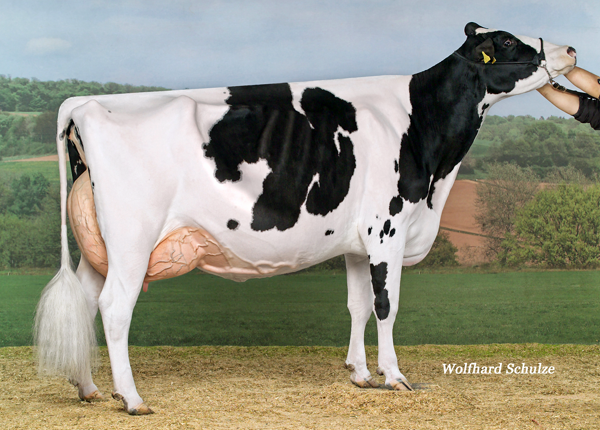
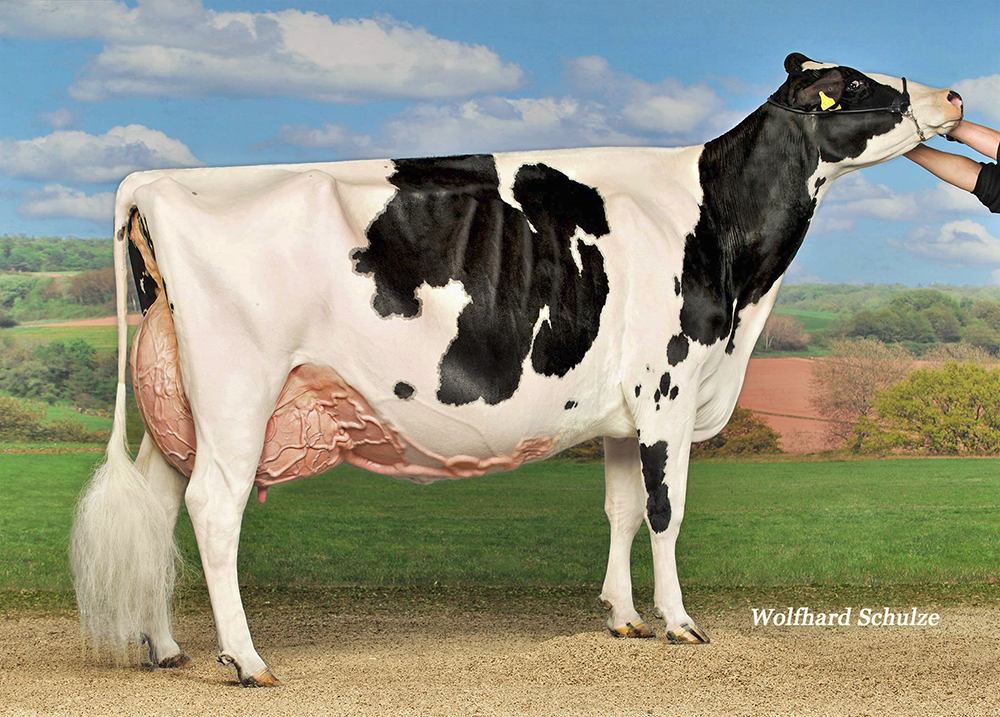
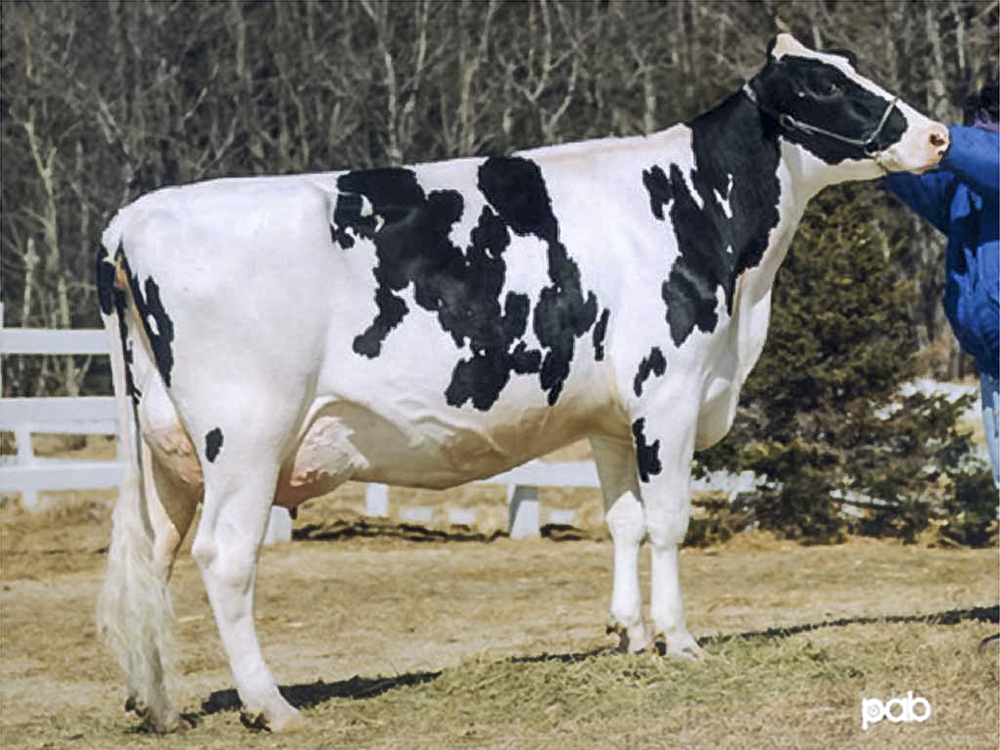
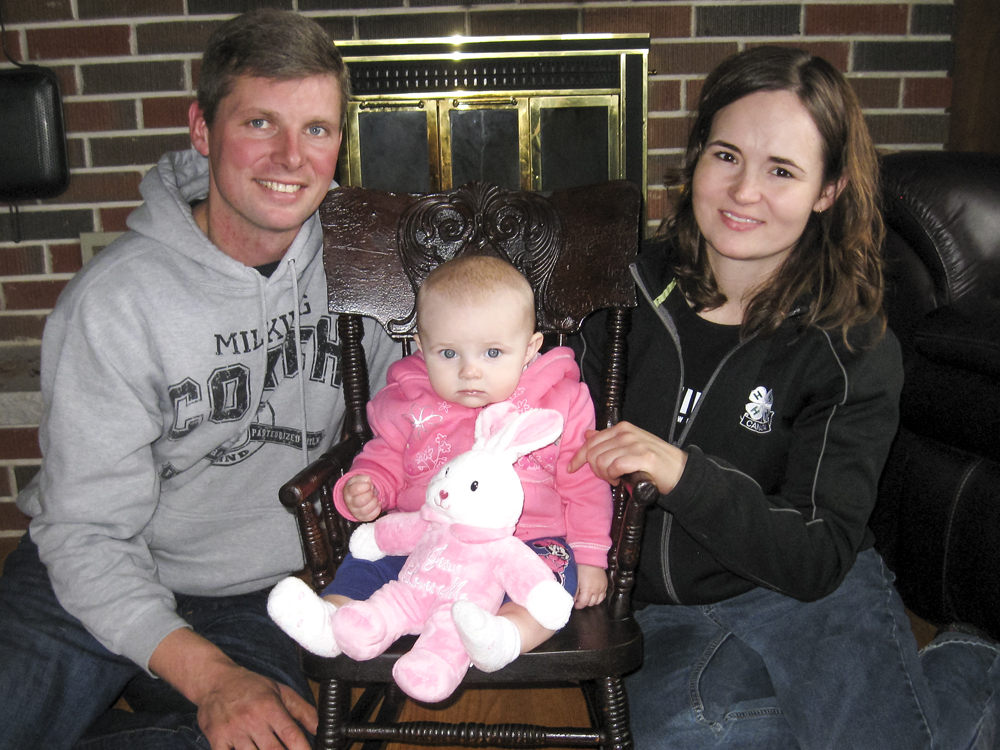
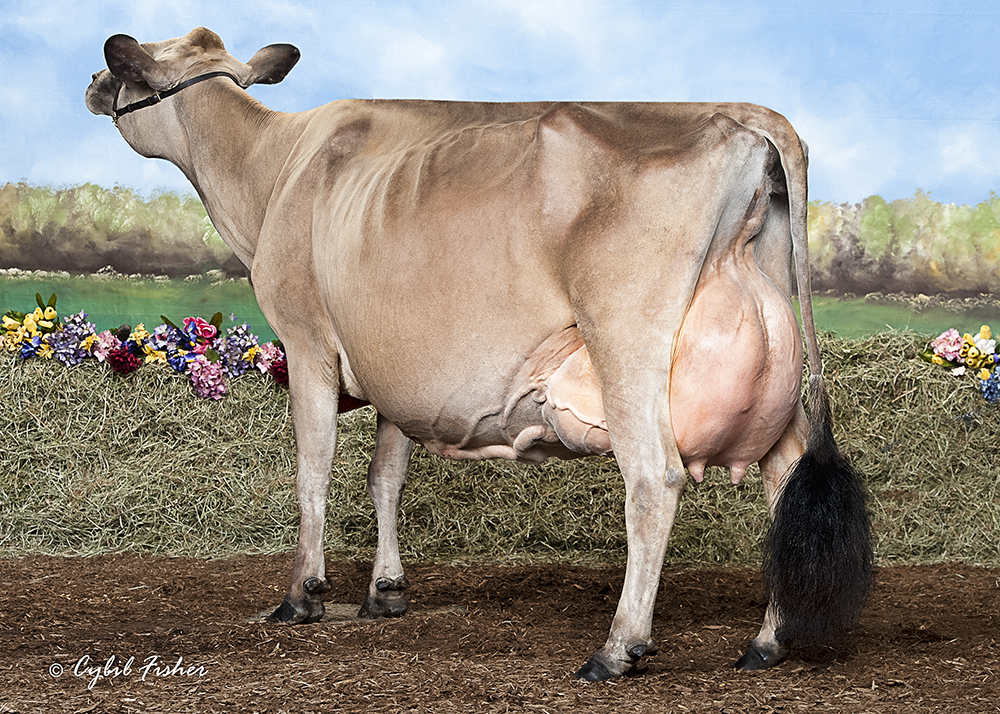
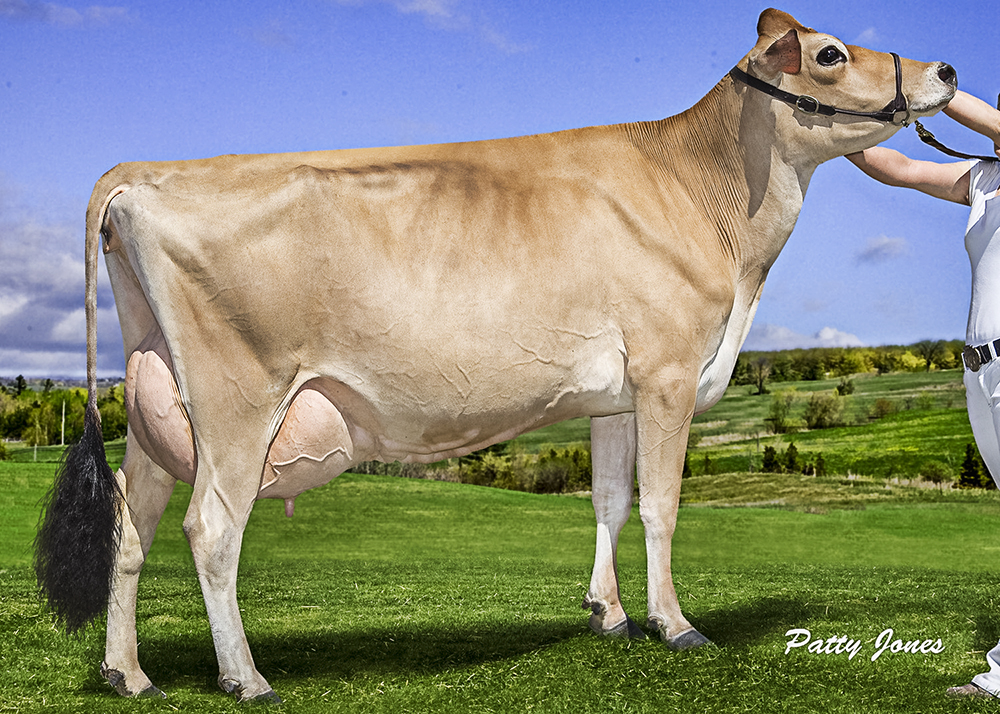
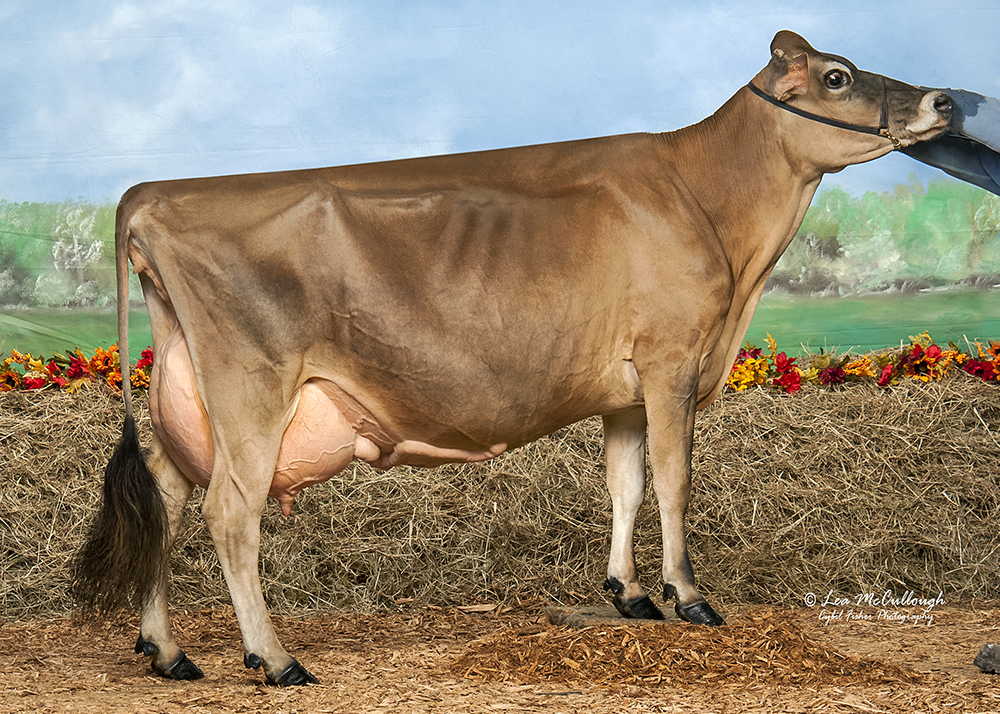
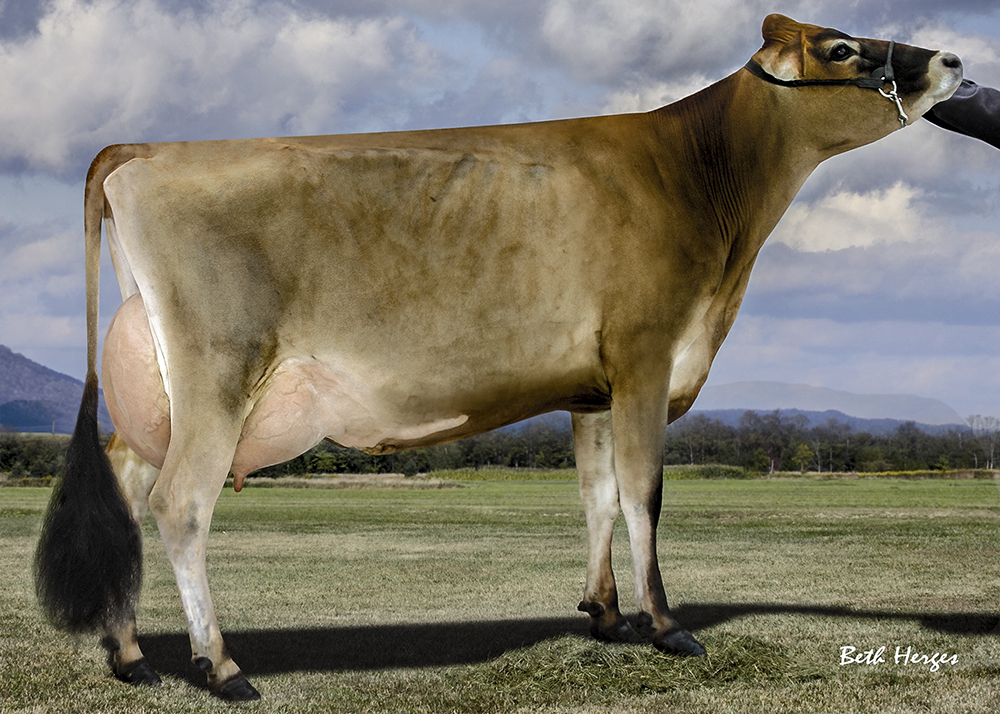
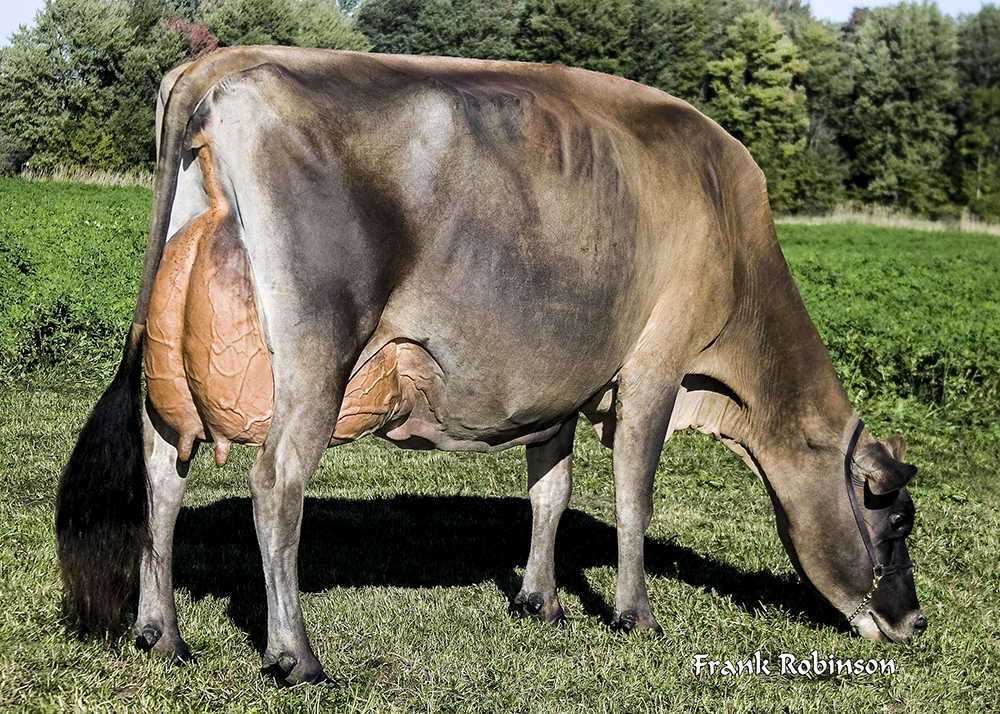
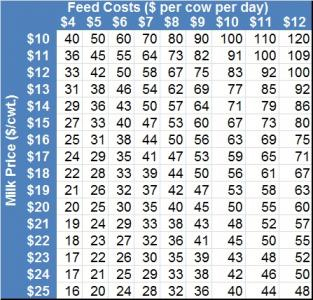
![7HO11781[1]](https://www.thebullvine.com/wp-content/uploads/2013/05/7HO117811.jpg)



![bigpc[1]](https://www.thebullvine.com/wp-content/uploads/2013/04/bigpc1.gif)

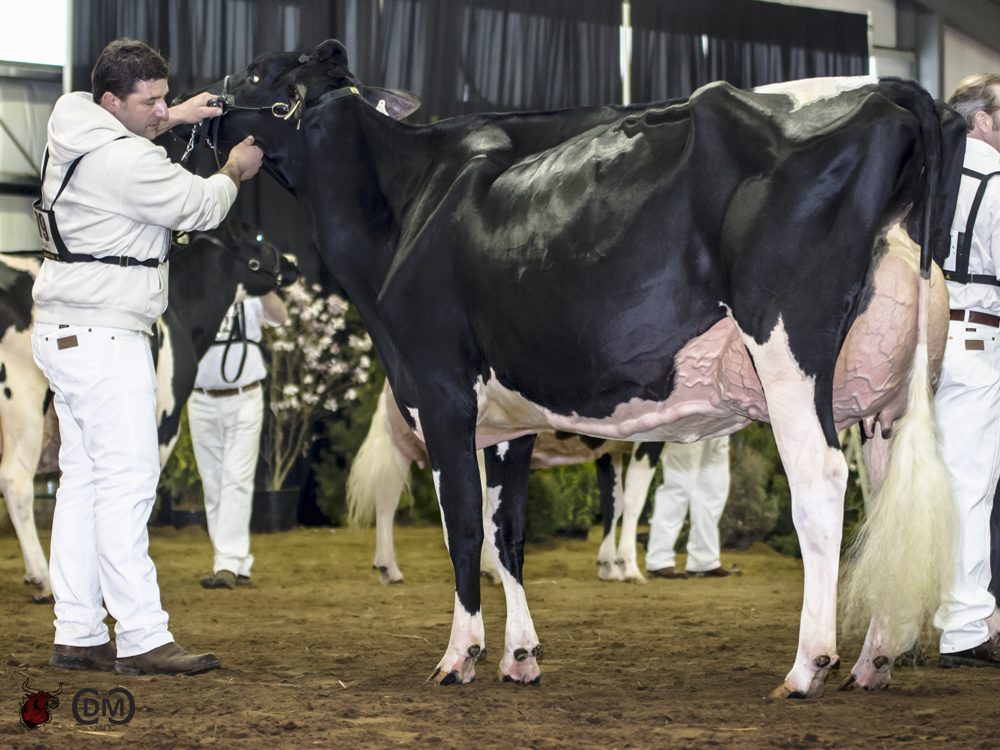


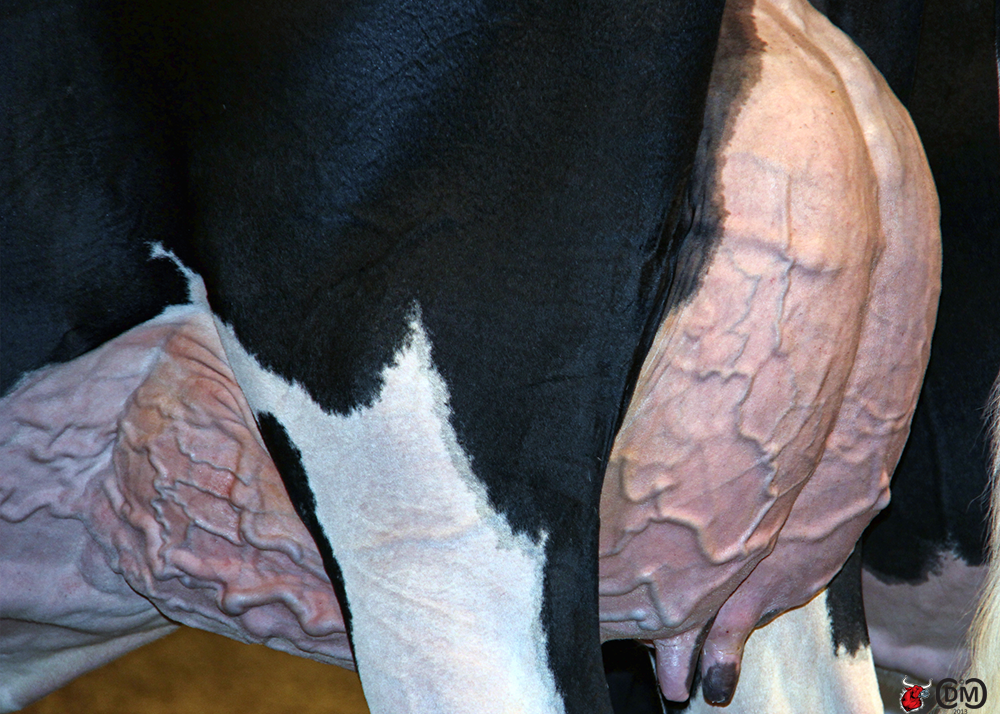
 Julia James of Norwich, Ontario has the wisdom of a seasoned business analyst, the heart of a philosopher and the adrenaline of a long distance runner. However the secret of success for this one-of-a-kind dairy dynamo is the well-honed focus that allows her to live the lifelong dream of owning a dairy farm every single day. She is not yet 30!

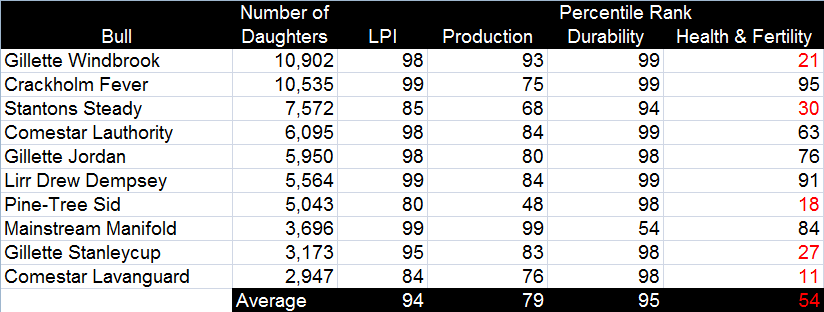
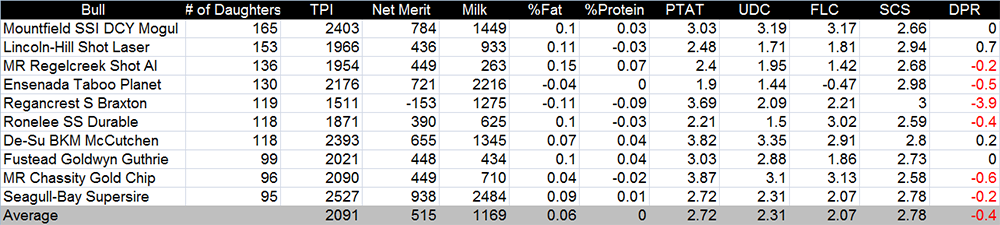
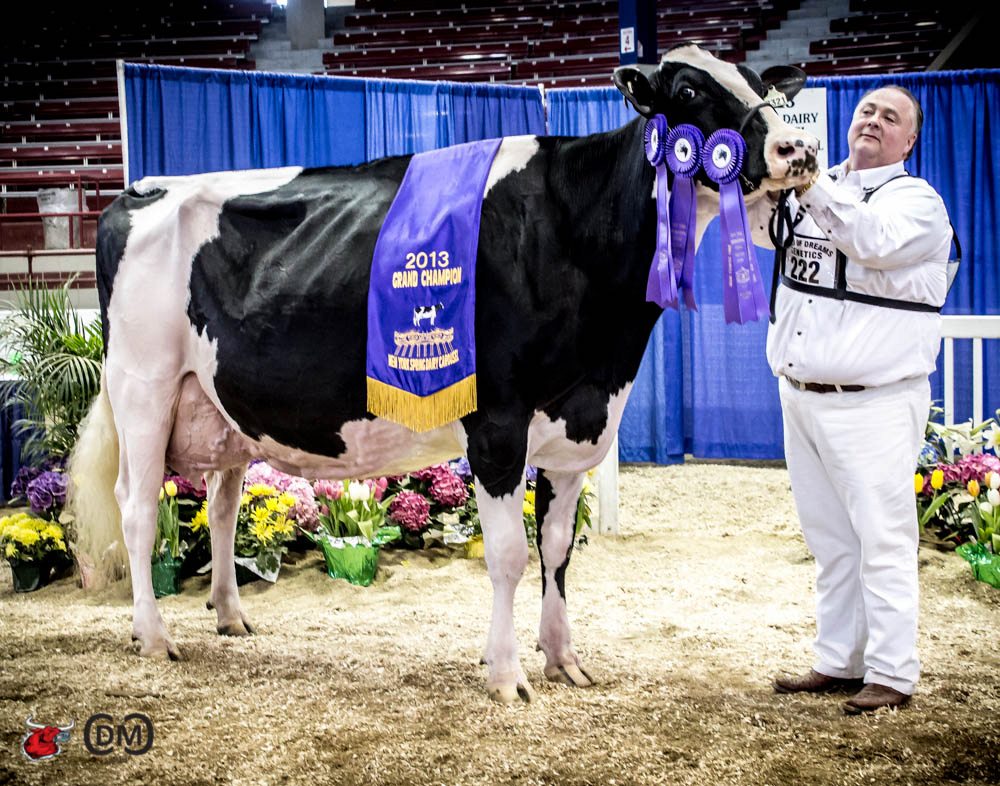
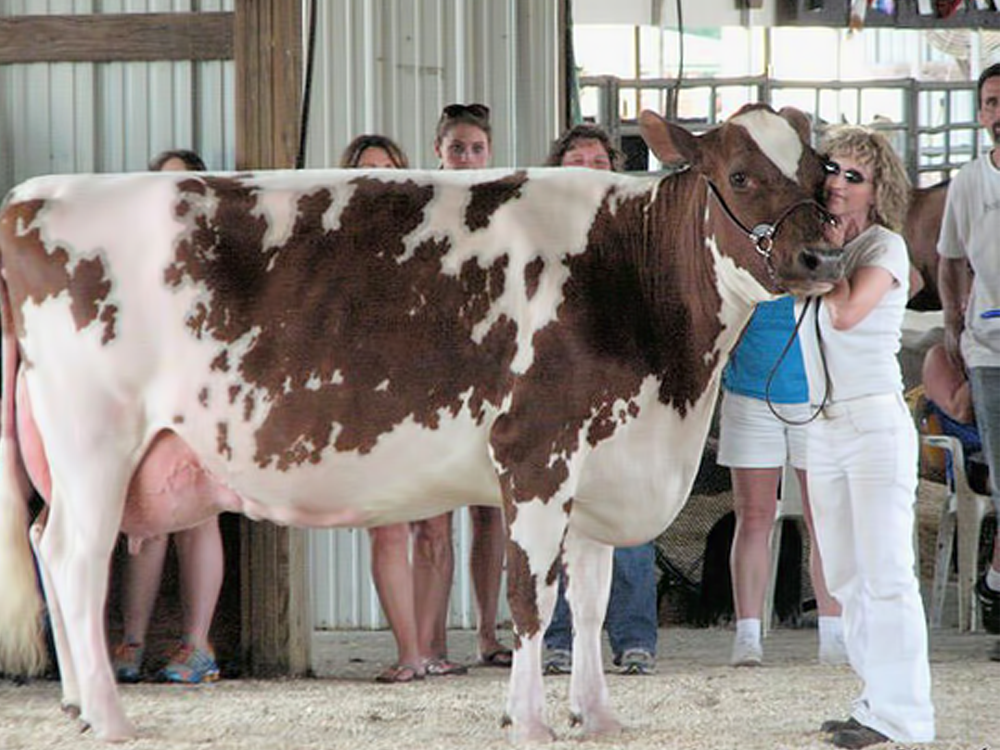
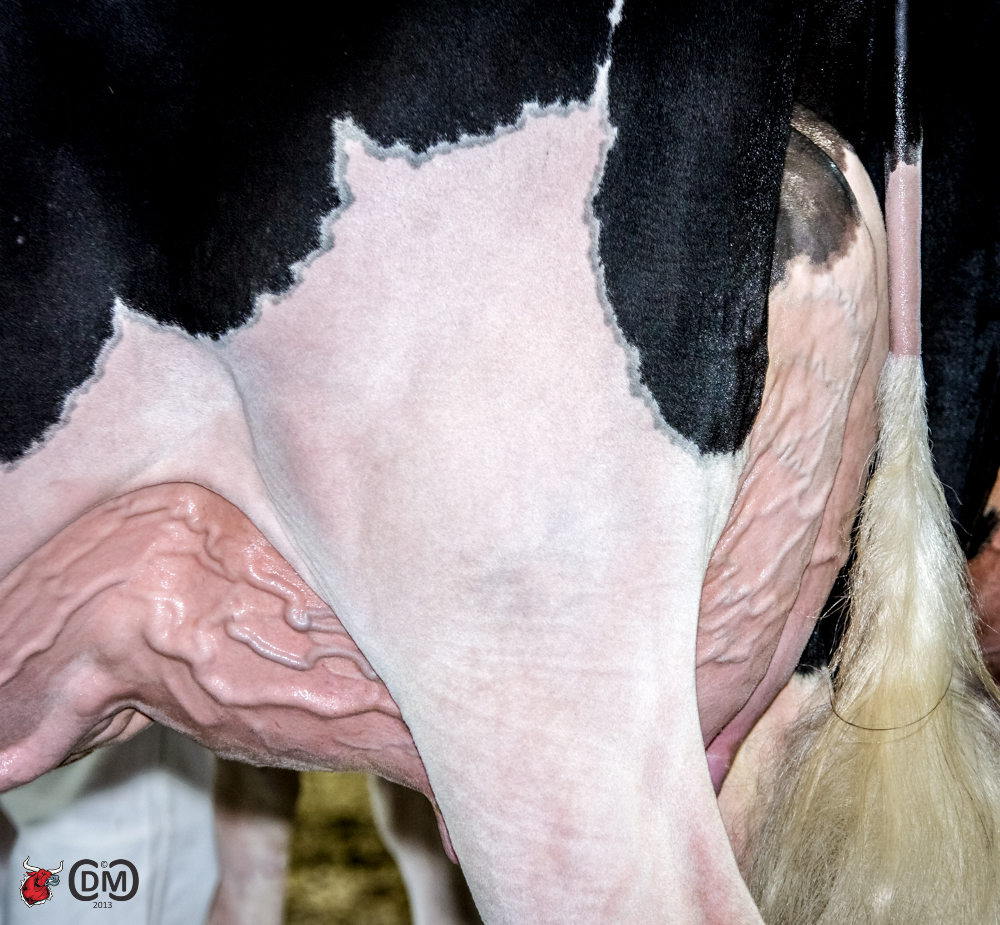
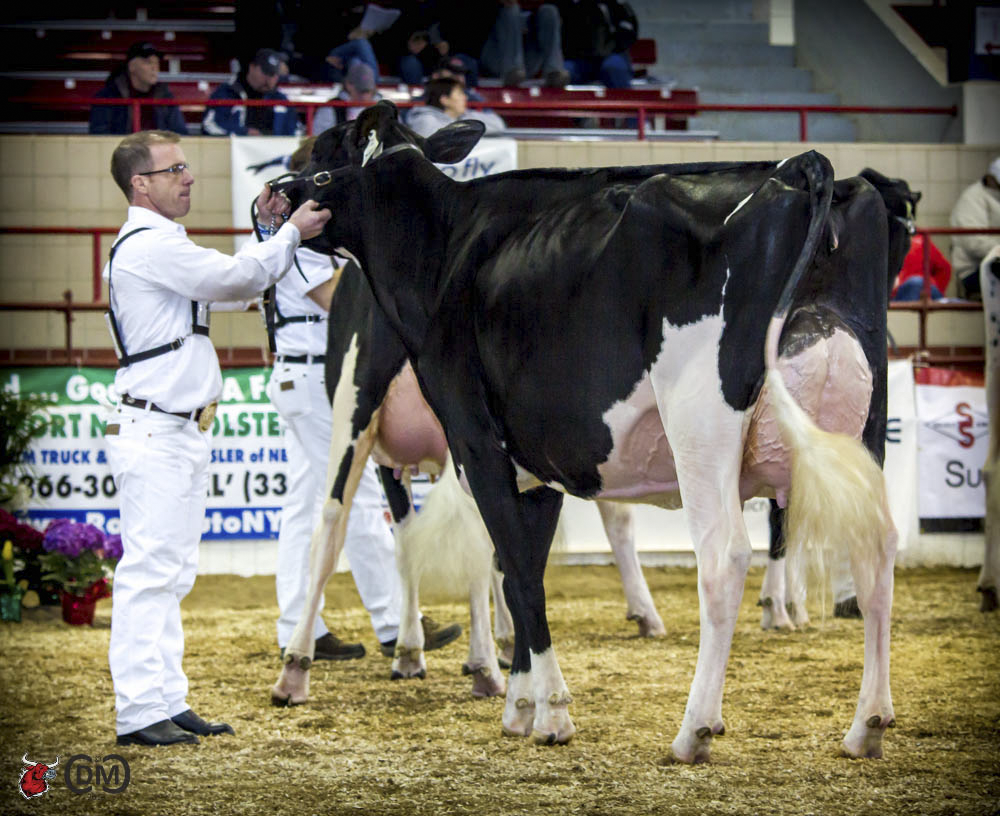
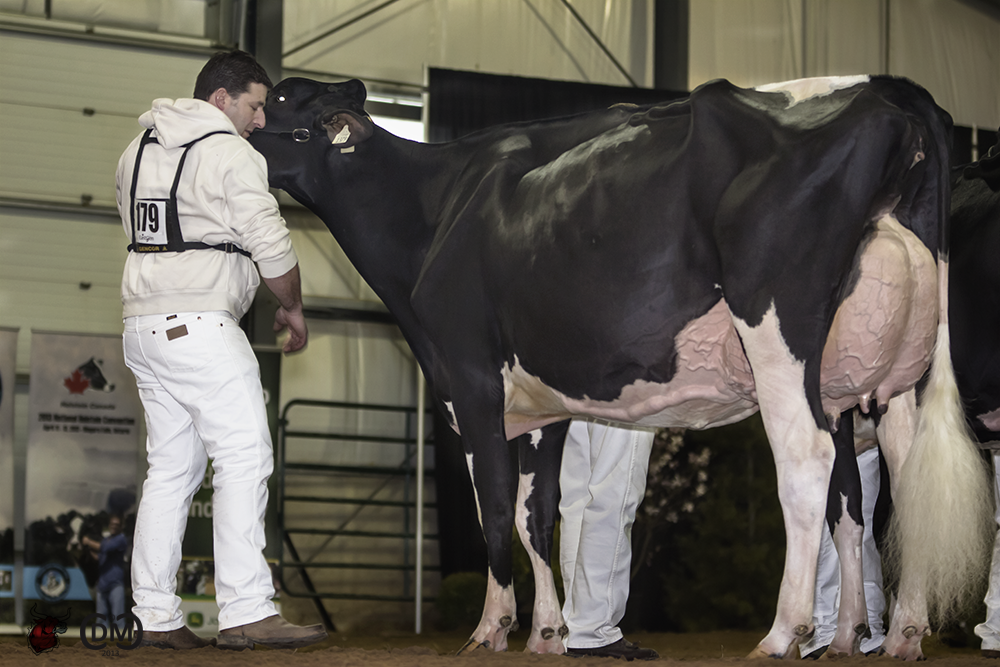
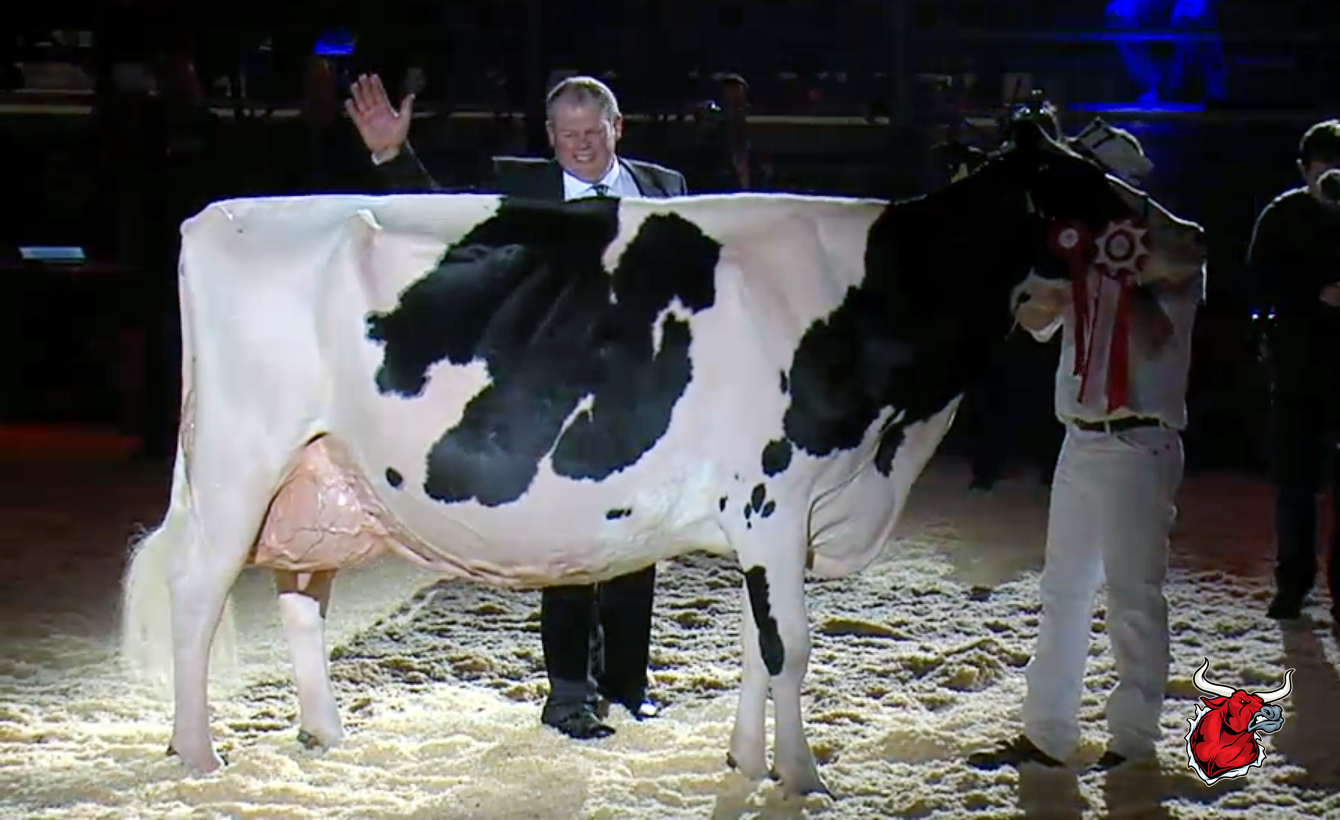

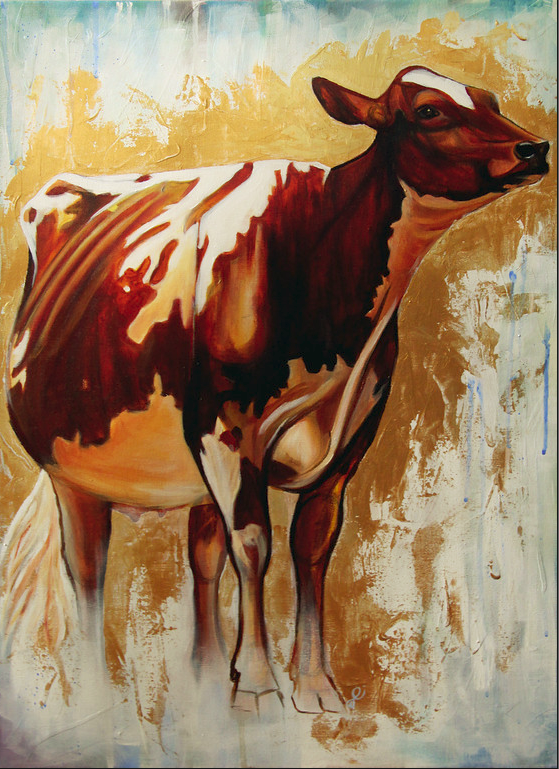

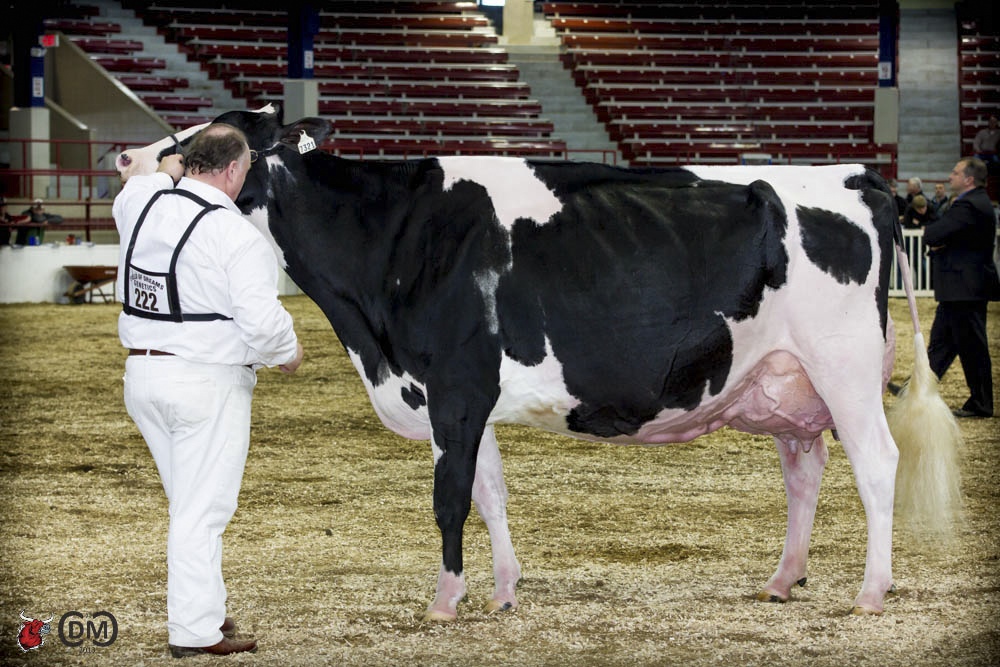
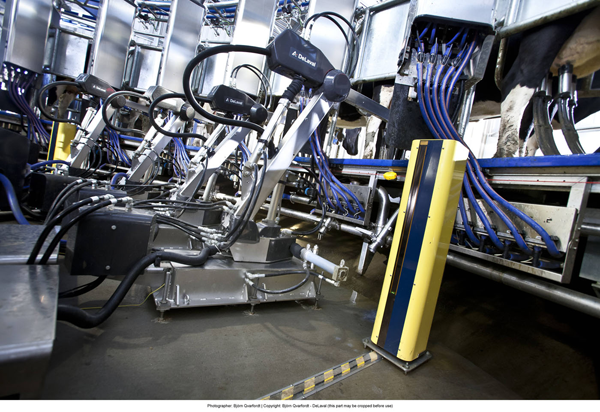

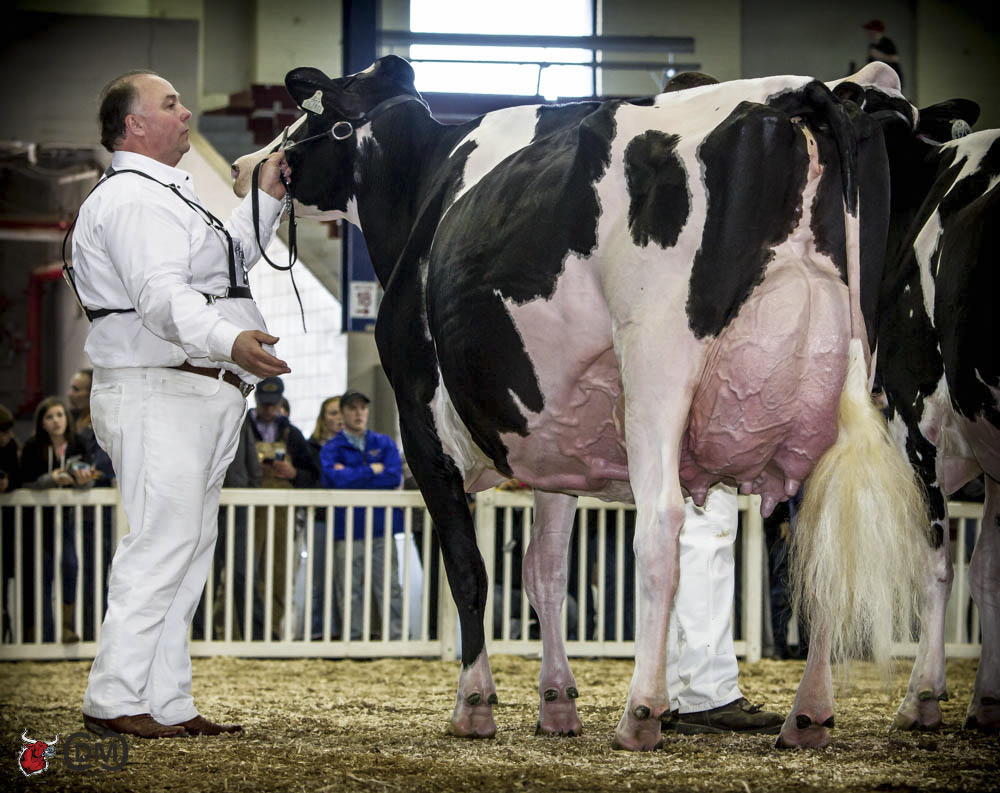
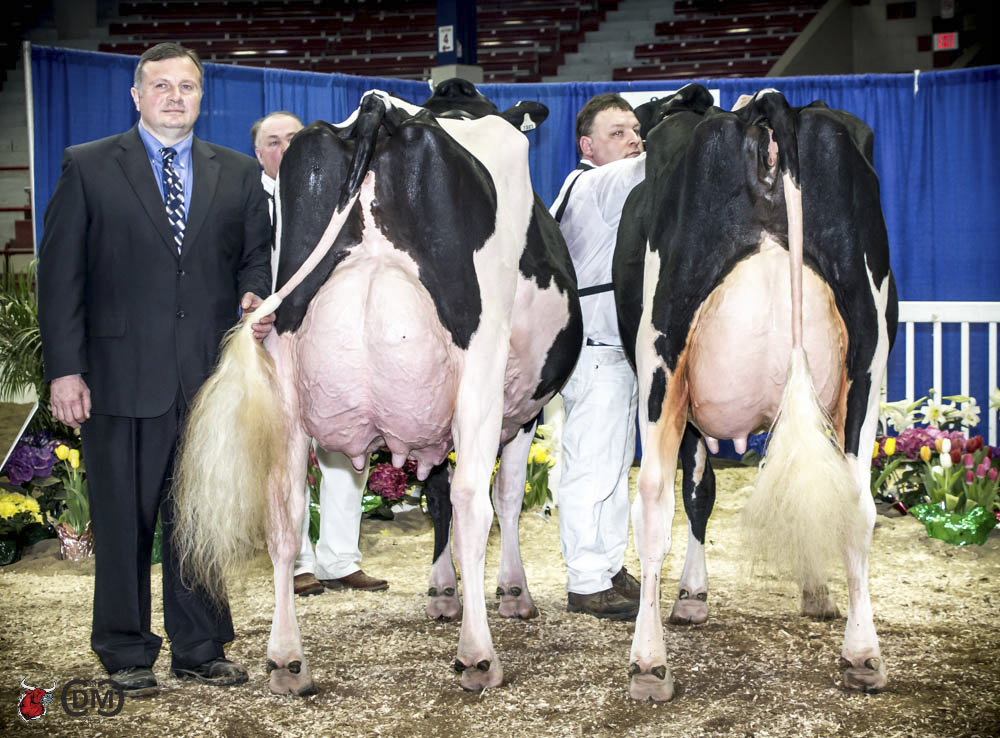
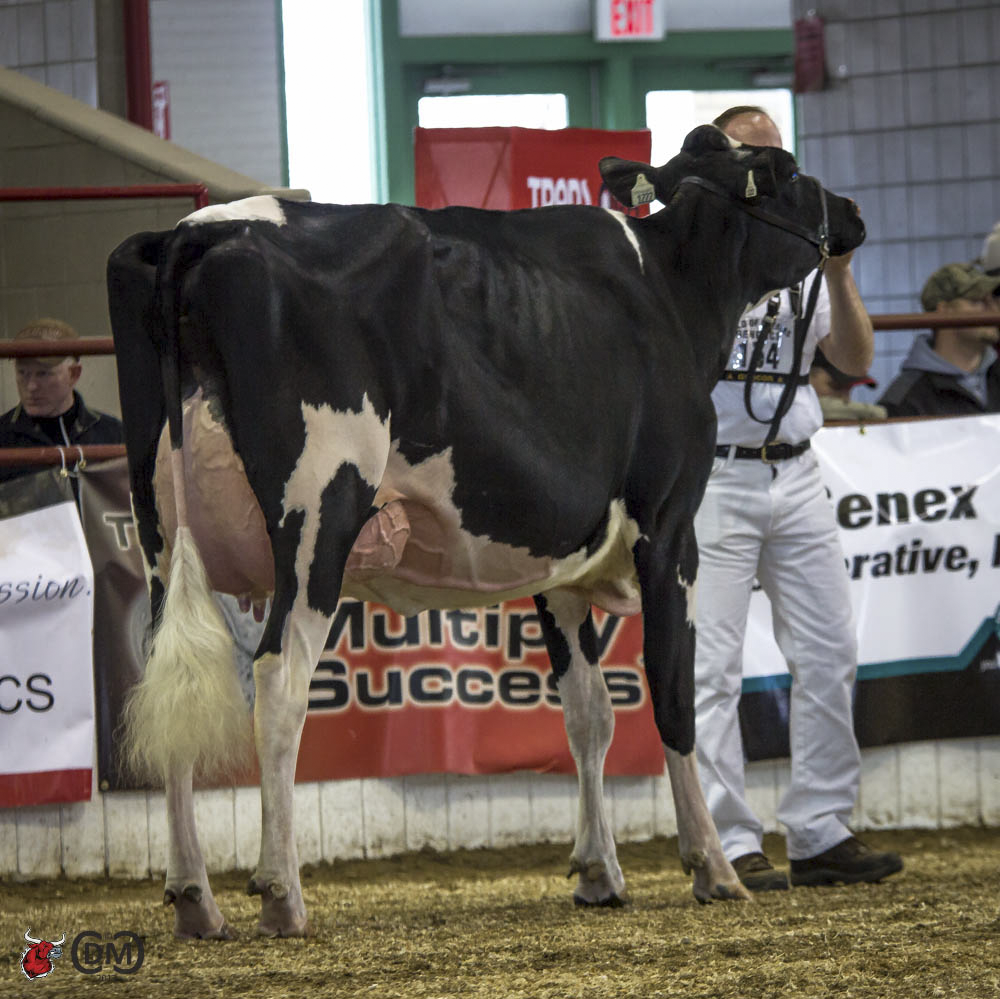
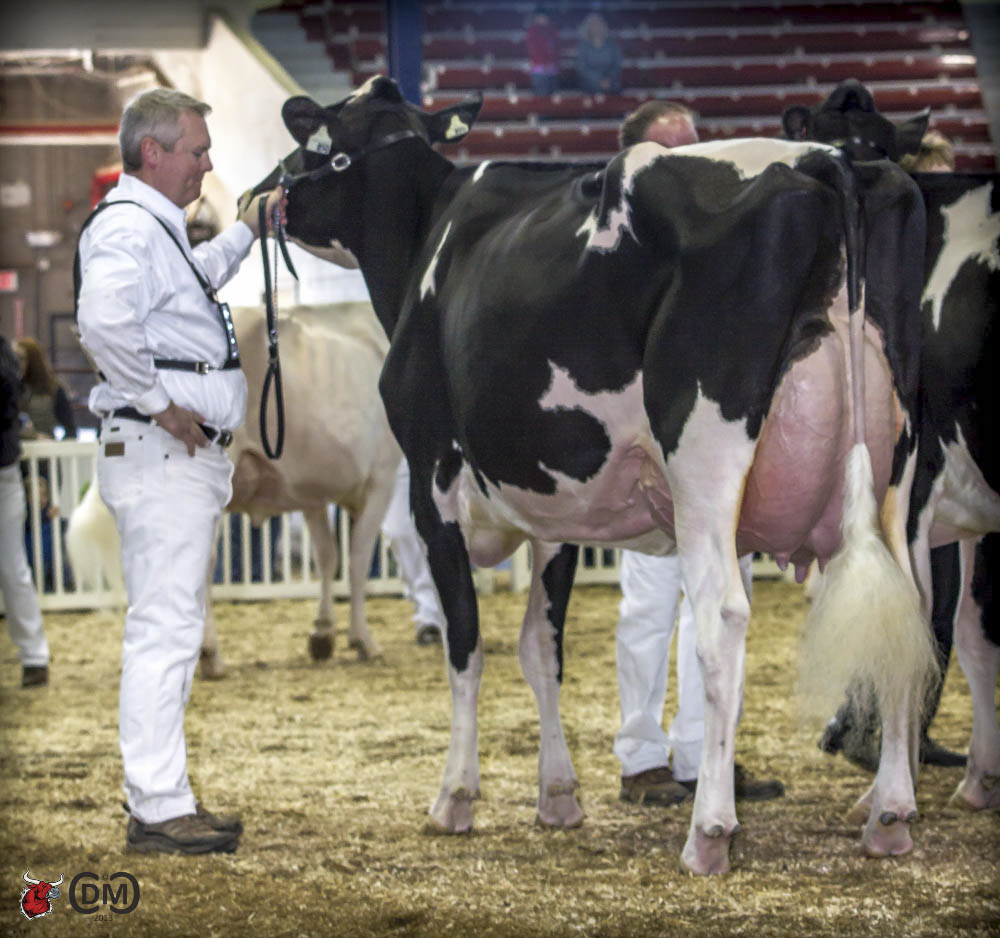
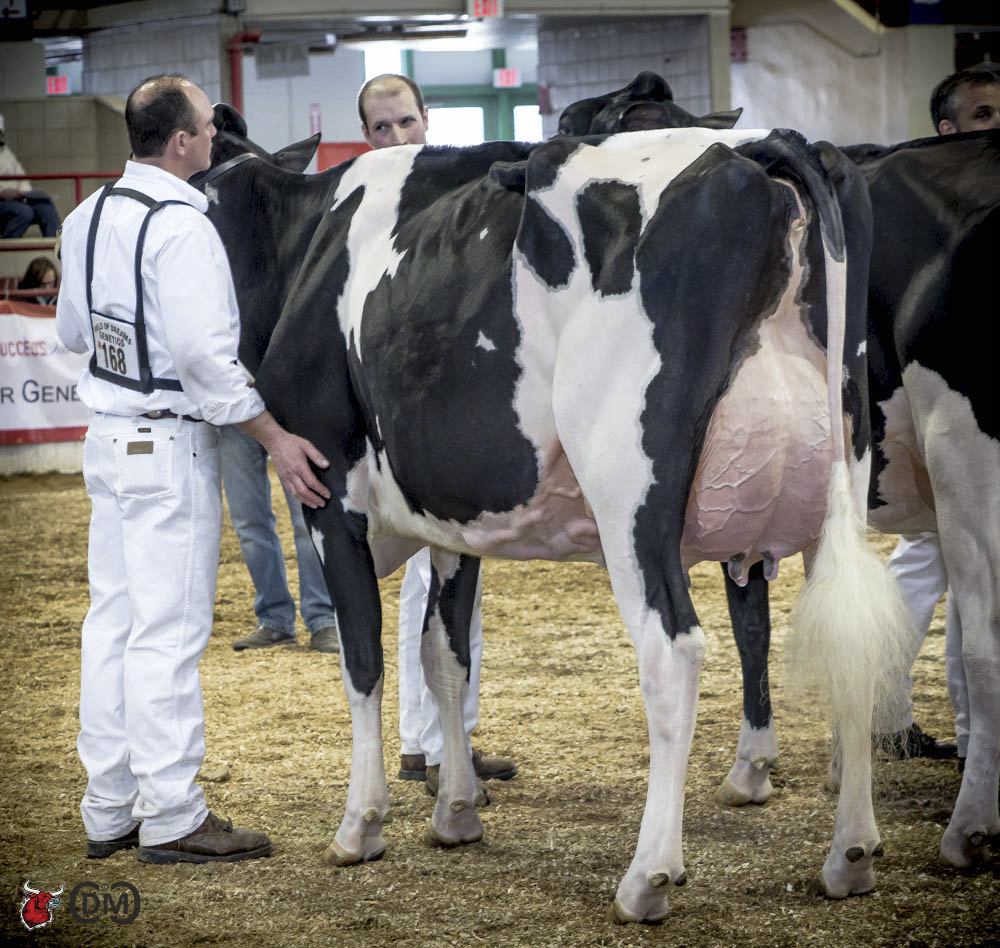
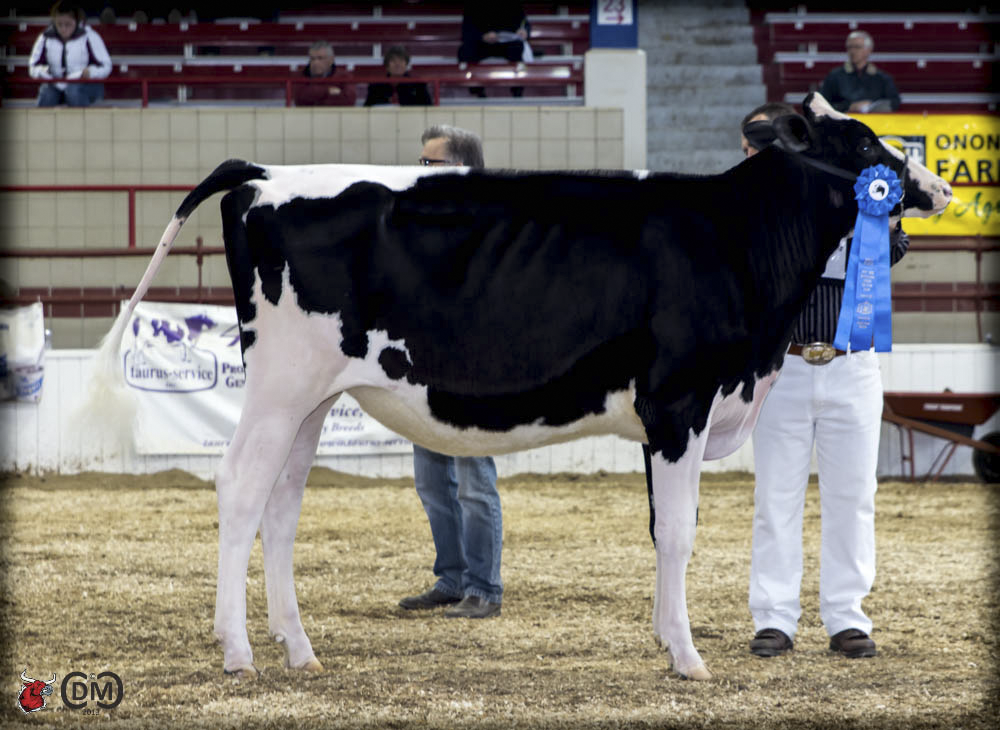
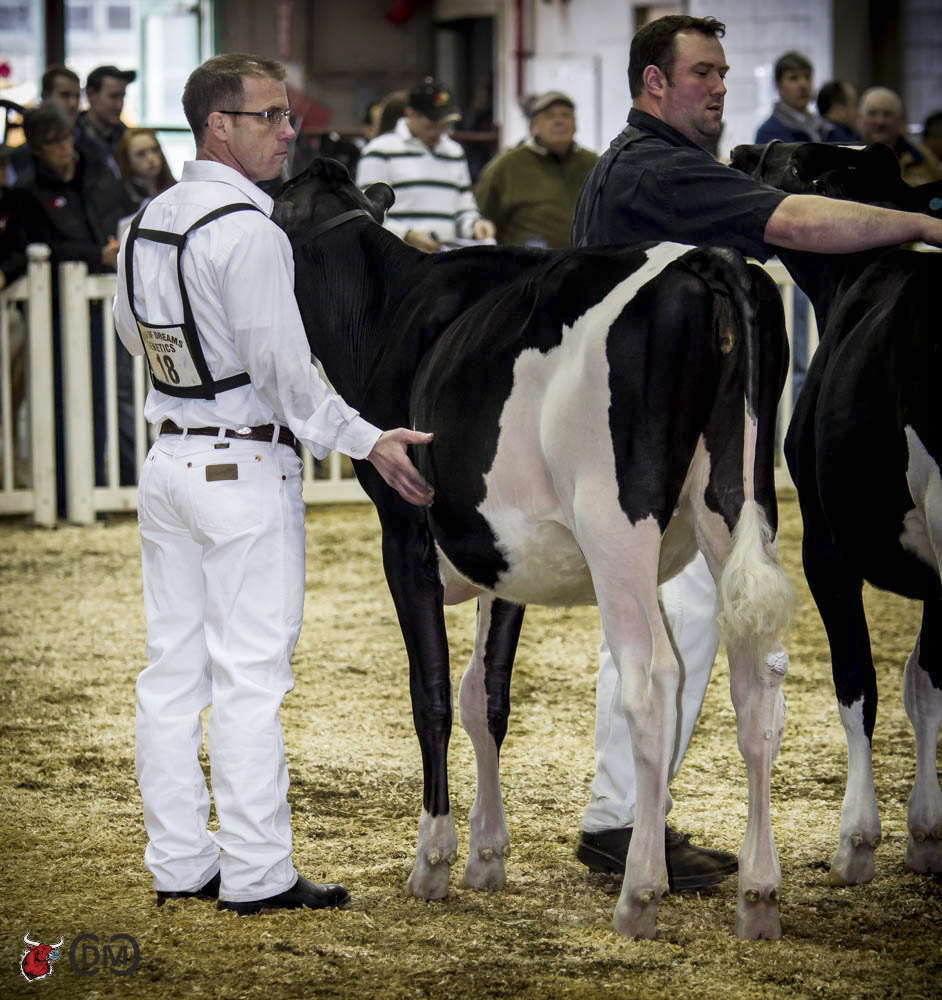
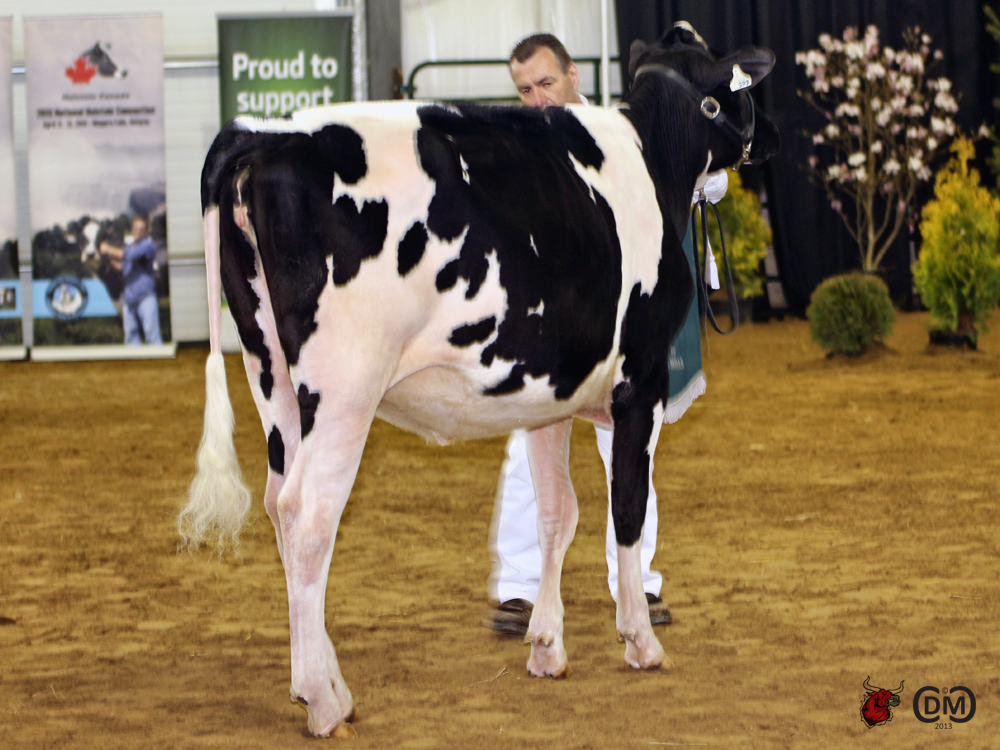
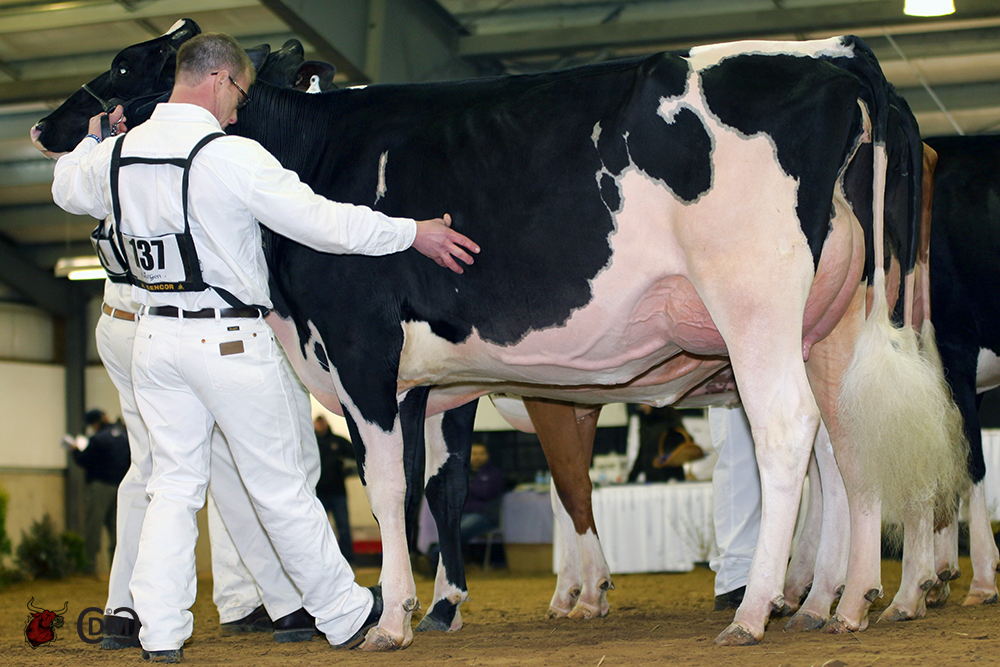
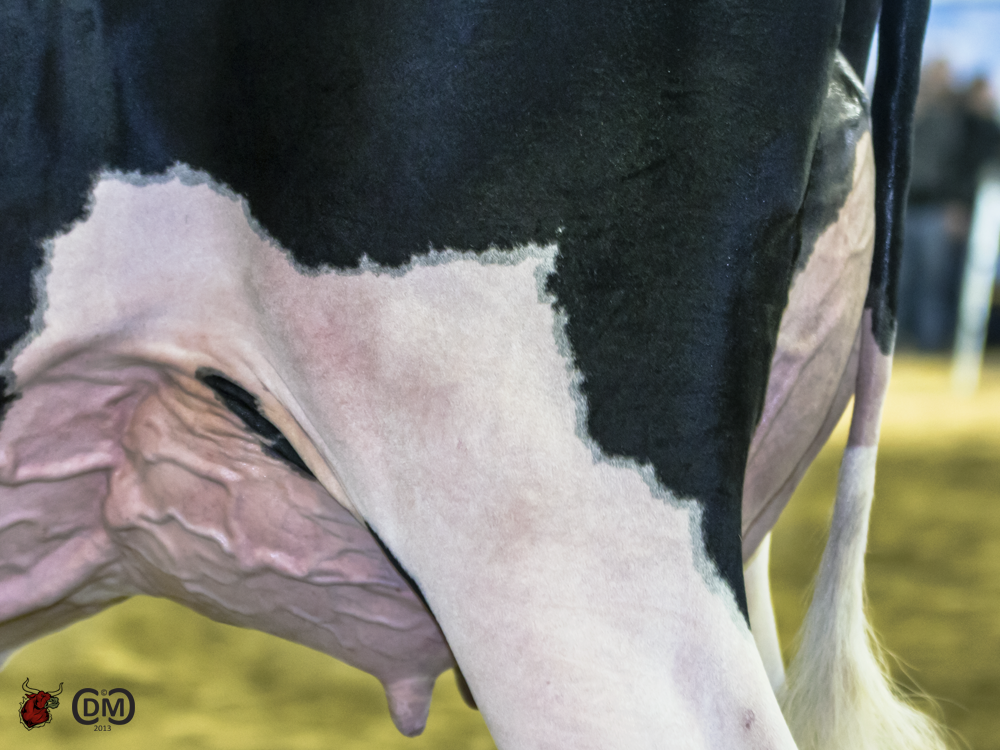
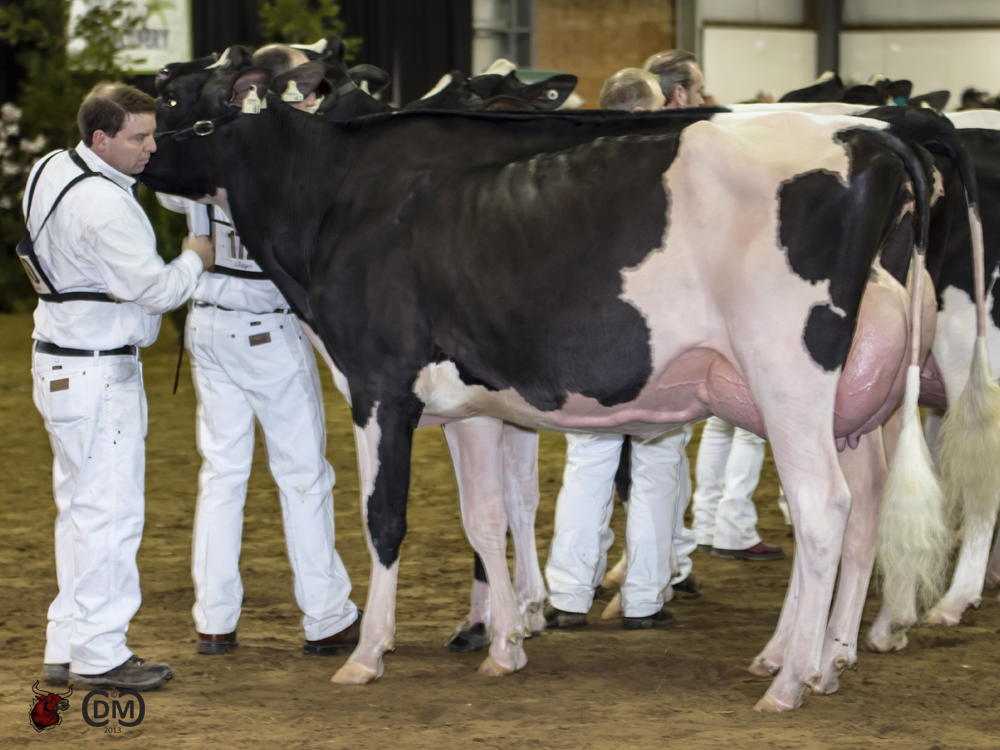
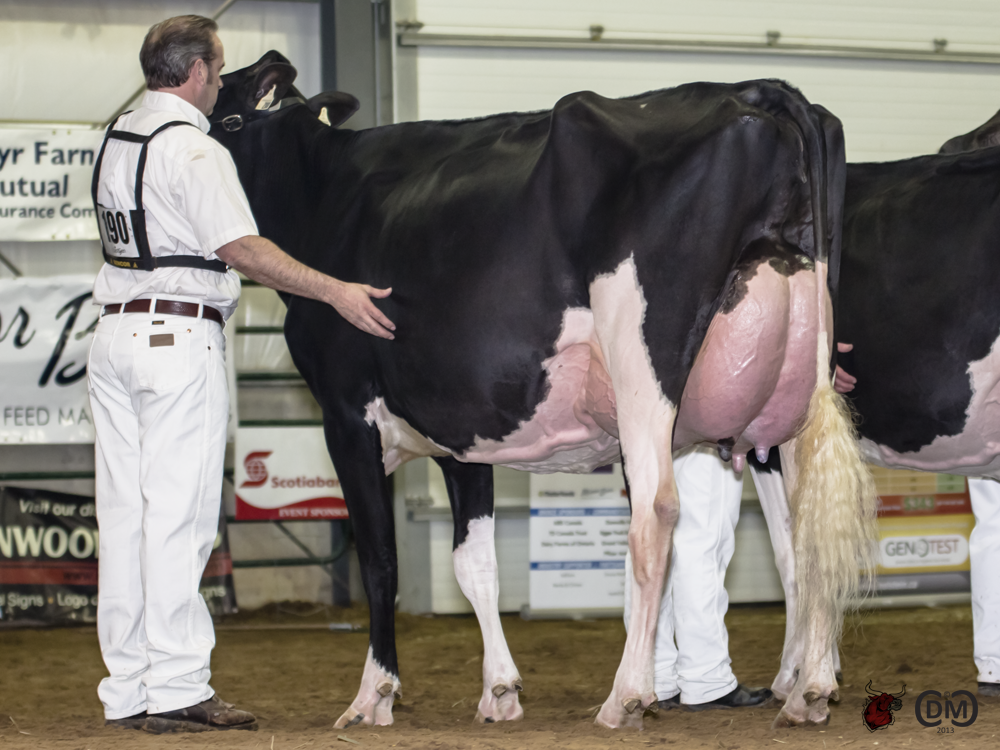
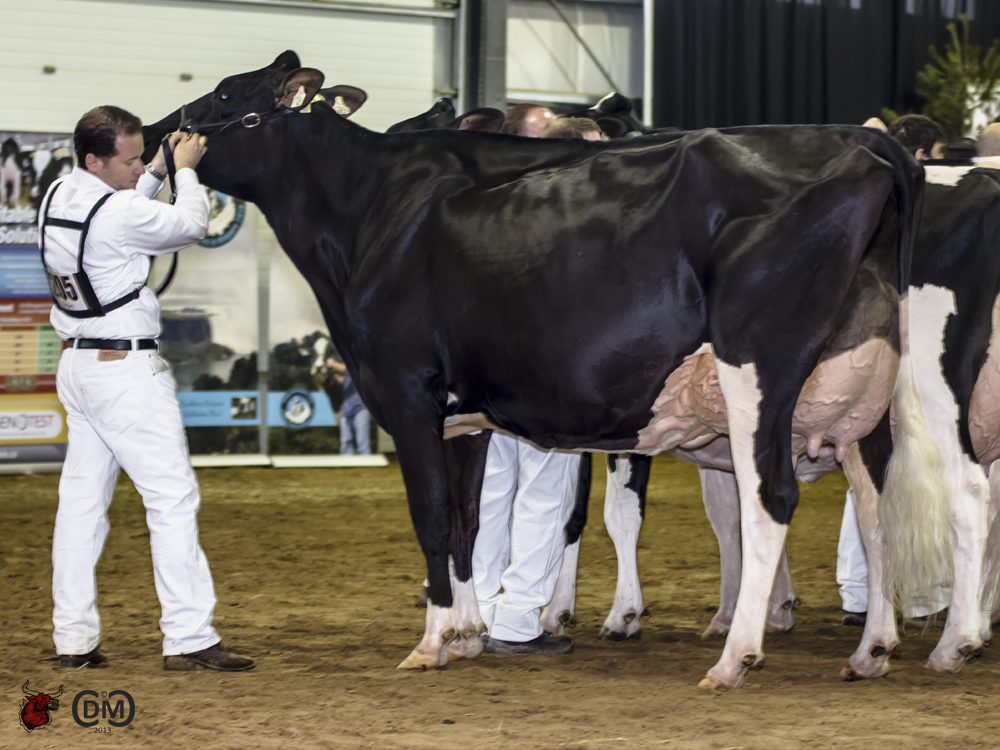

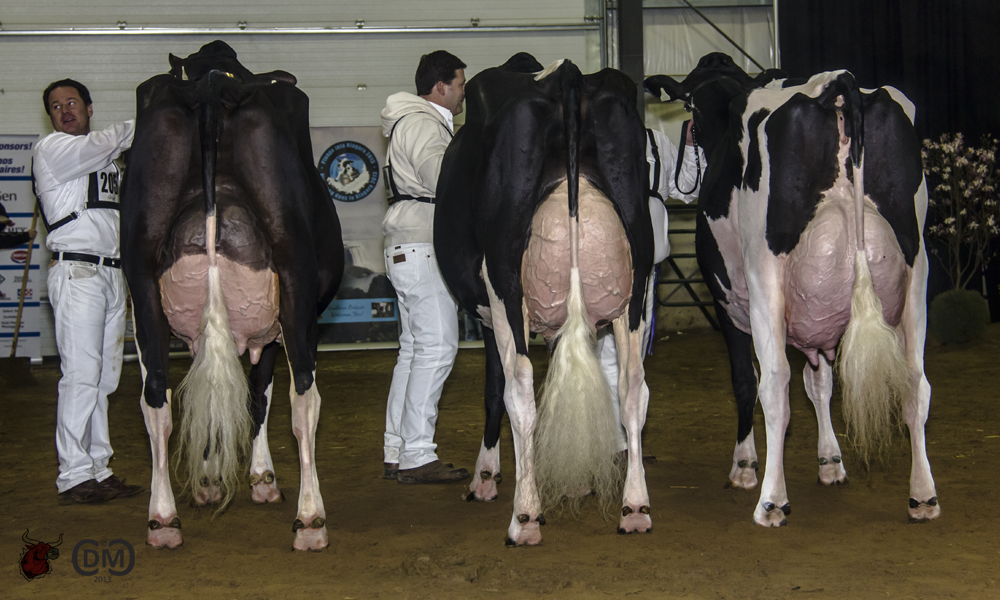
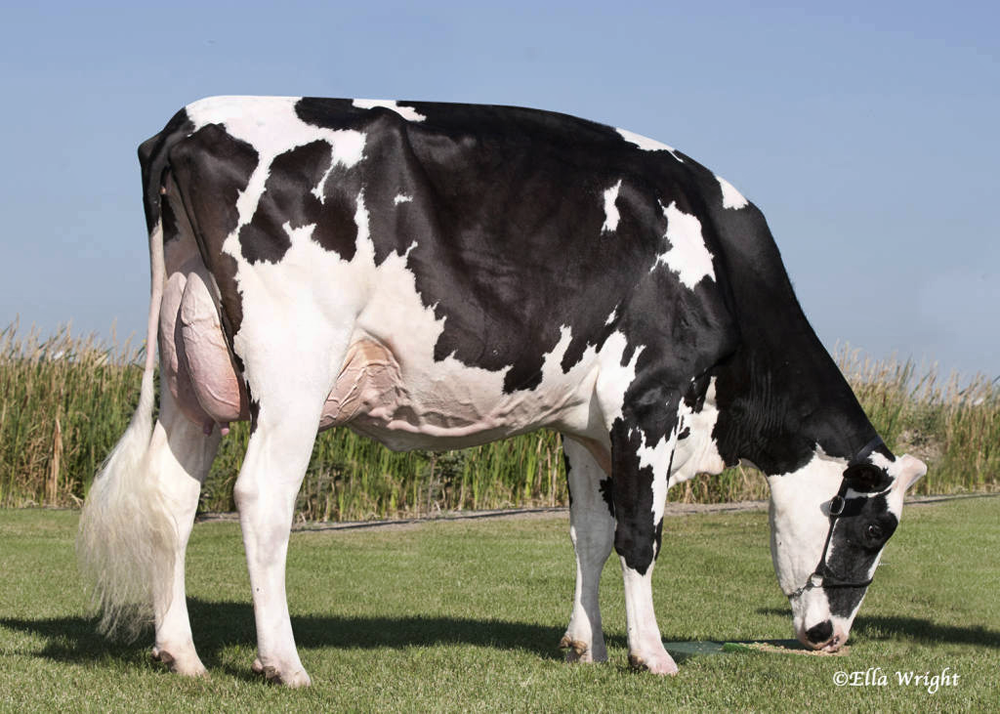
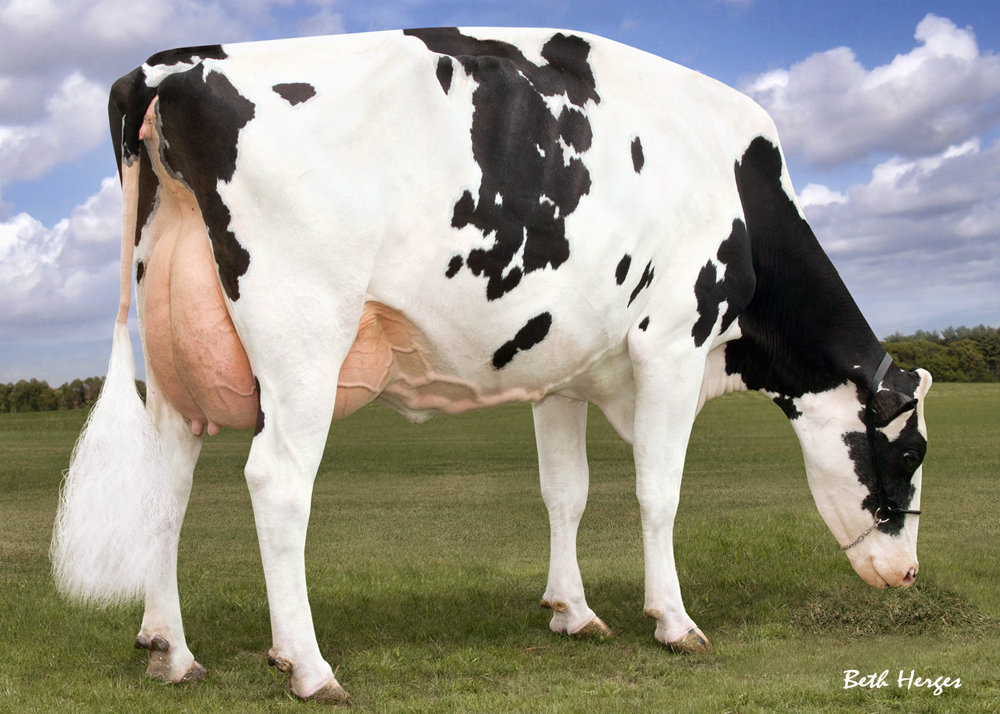
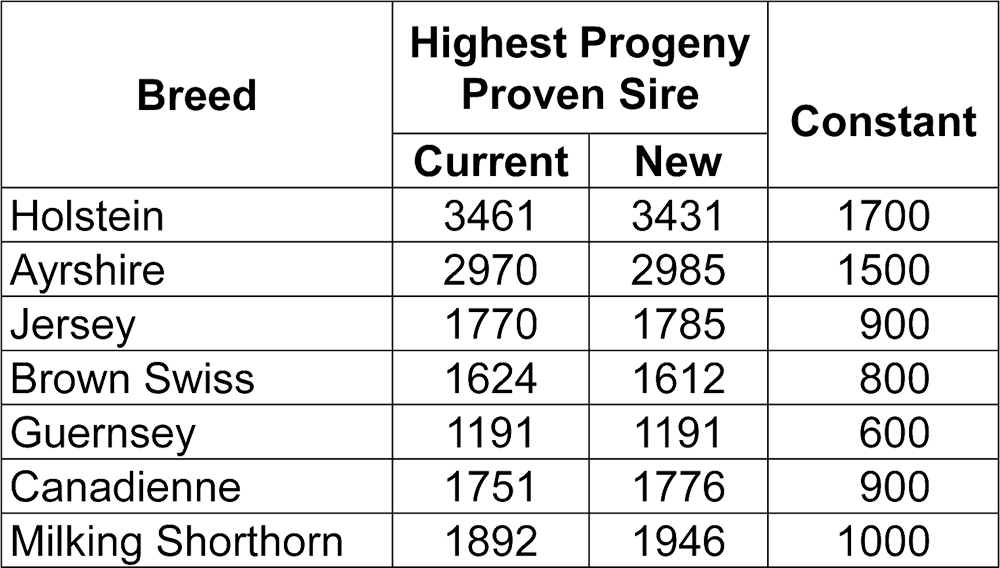
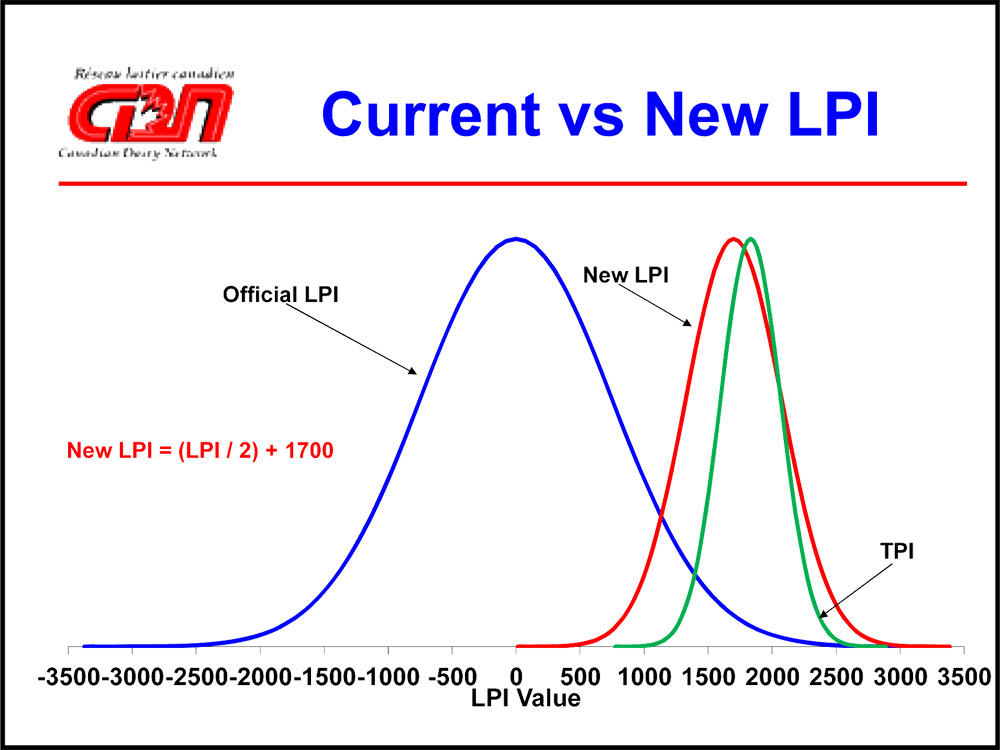
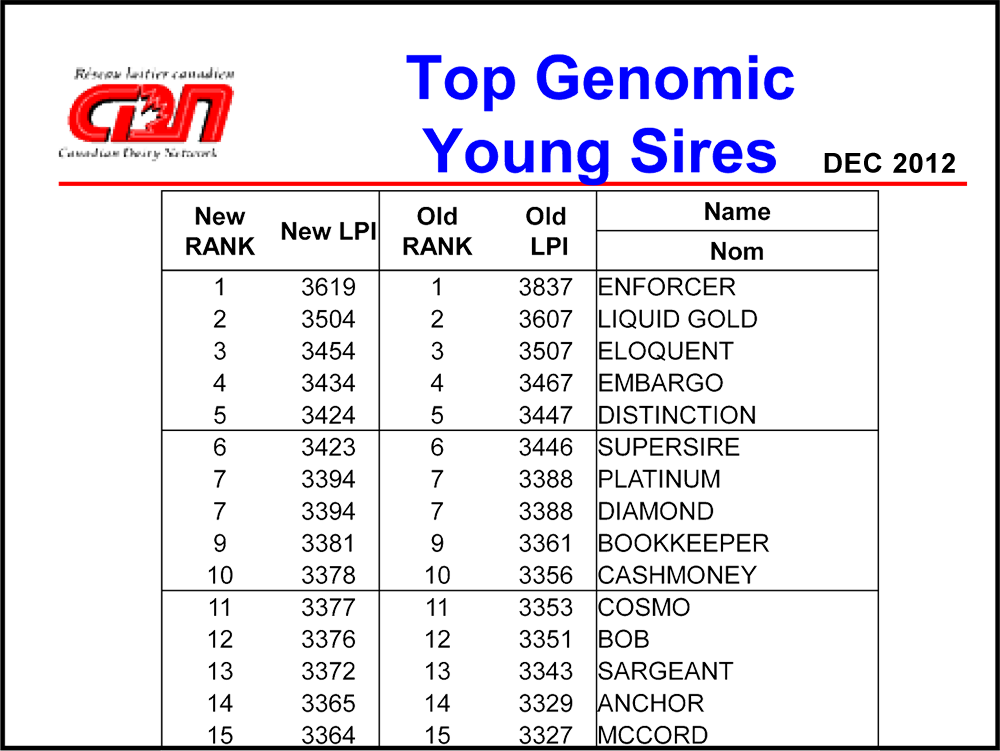
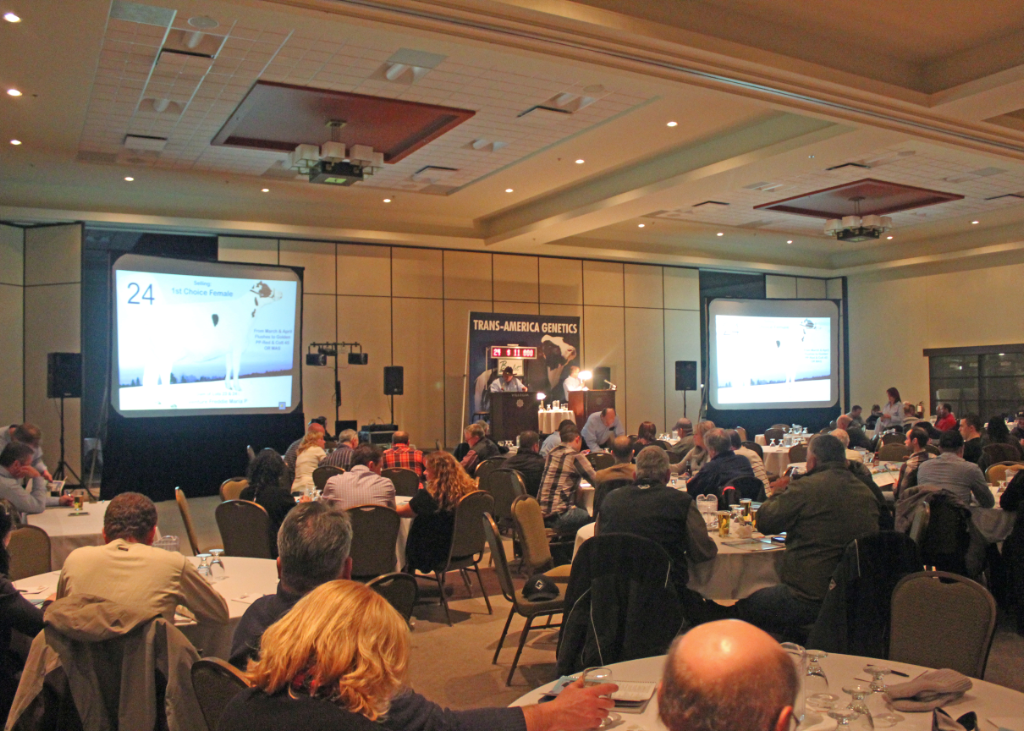

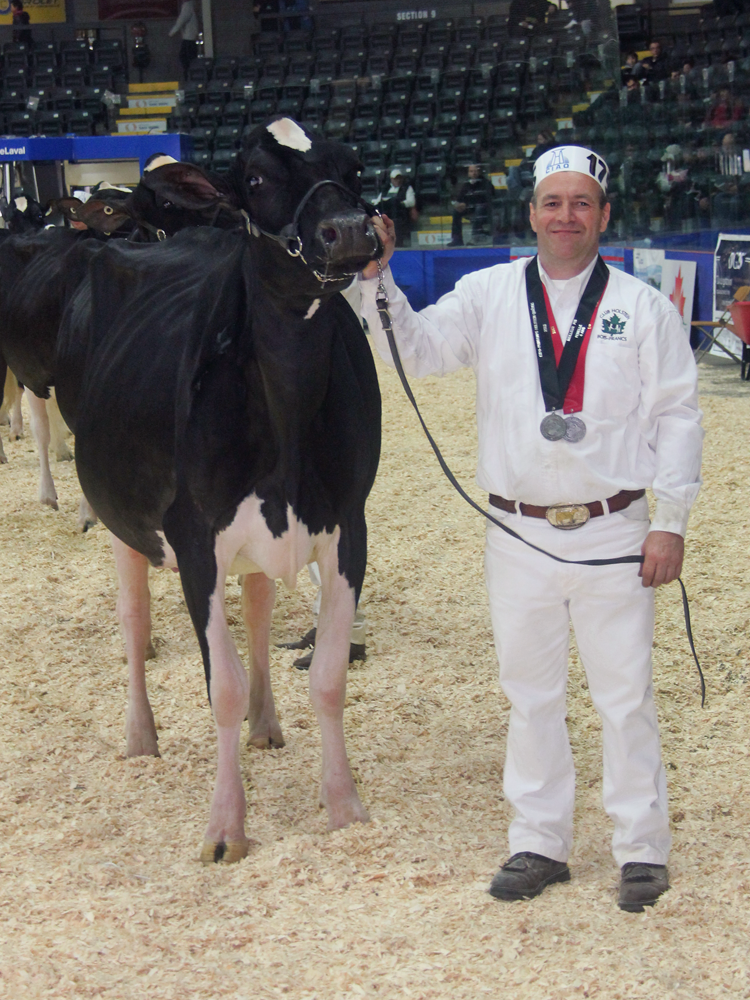
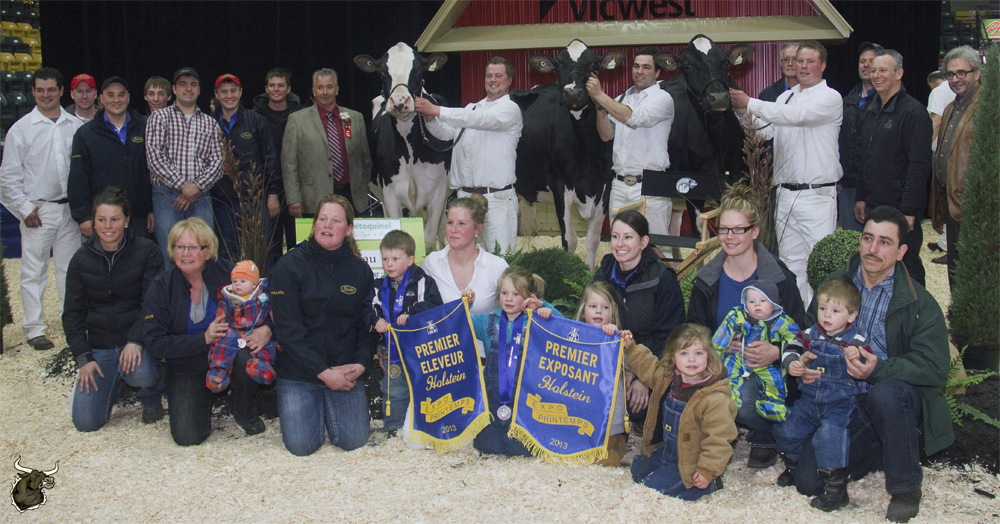
 The book and movie (starring Brad Pitt) Moneyball tells the story of how Billy Beane, GM for the Oakland A’s, used statistical analysis to find players who were undervalued by other teams. The movie was nominated for six Academy Awards, including Best Picture. It made over $100 million. Billy Beane forever changed the way major league baseball teams look at assembling their teams. No longer is it about your gut feel. You need Jedi senses in order to develop winners. .
 In baseball the teams that win the championships are not always the ones who have the highest payroll, or the biggest names, instead it the ones who have mastered the basics and can do so consistently. Advancing the base runner (hit, sacrifice or bunt), throwing to the correct base to get the lead runner out, backing up every throw and not throwing the ball away and getting the leadoff batter out, these are all the little things that contribute greatly to the success of major league baseball teams.

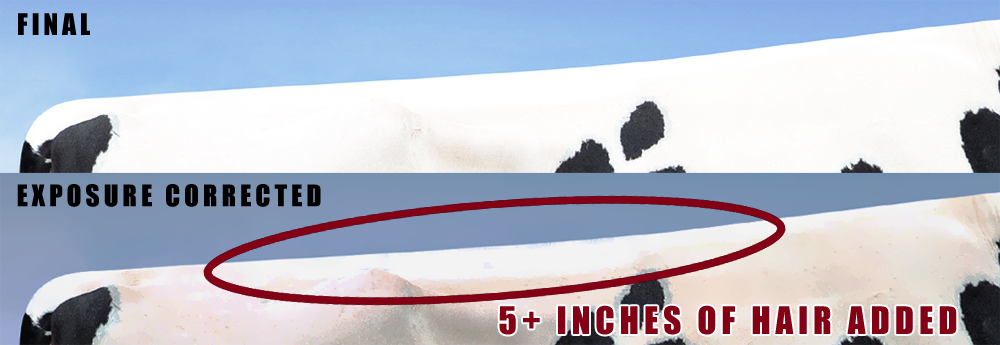
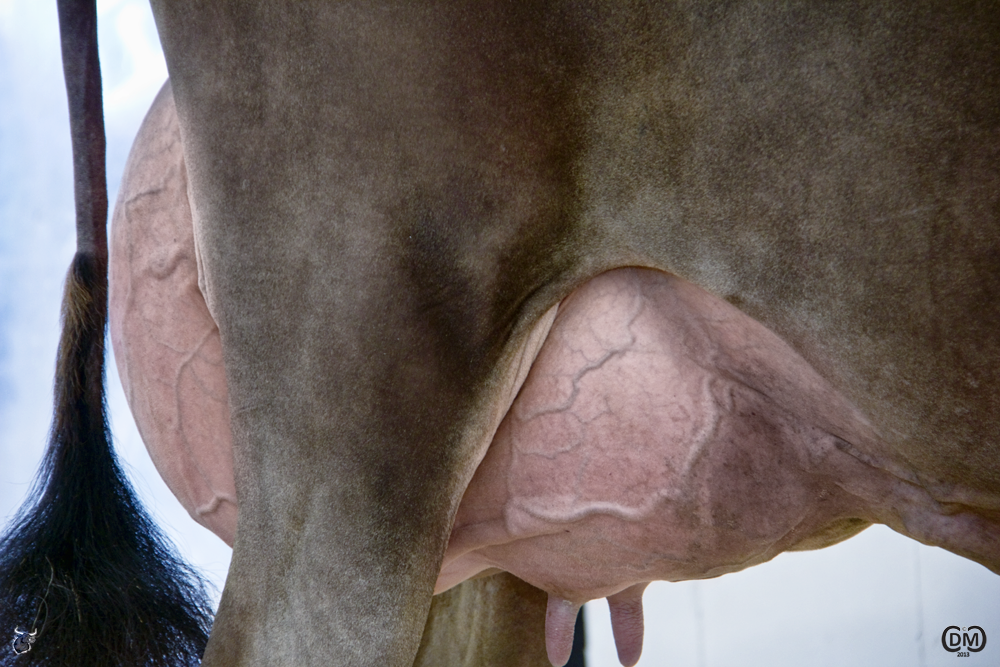
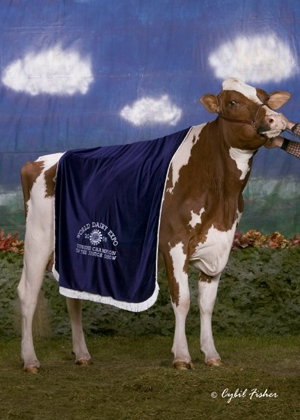
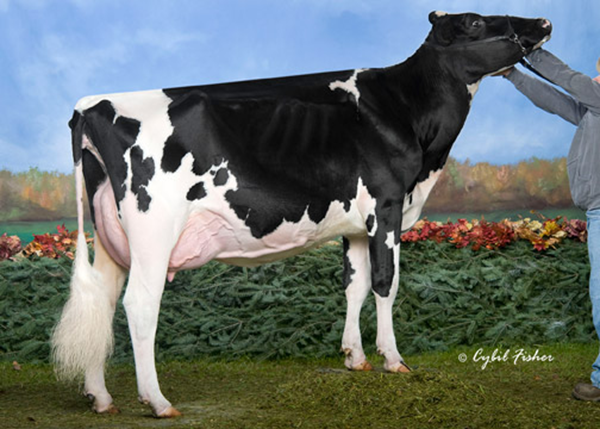
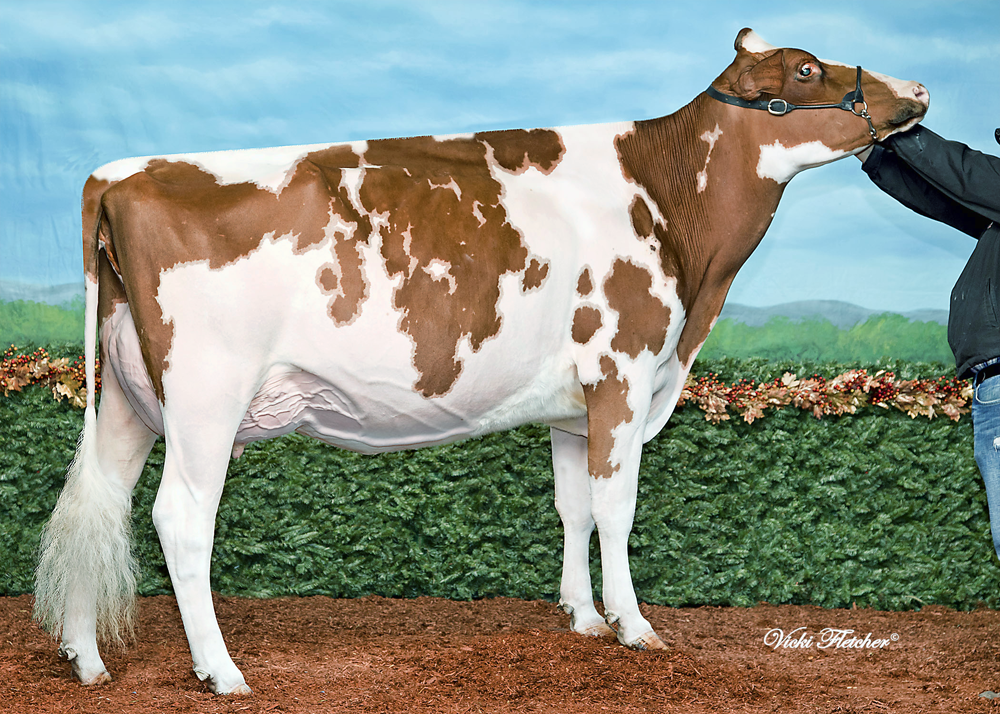
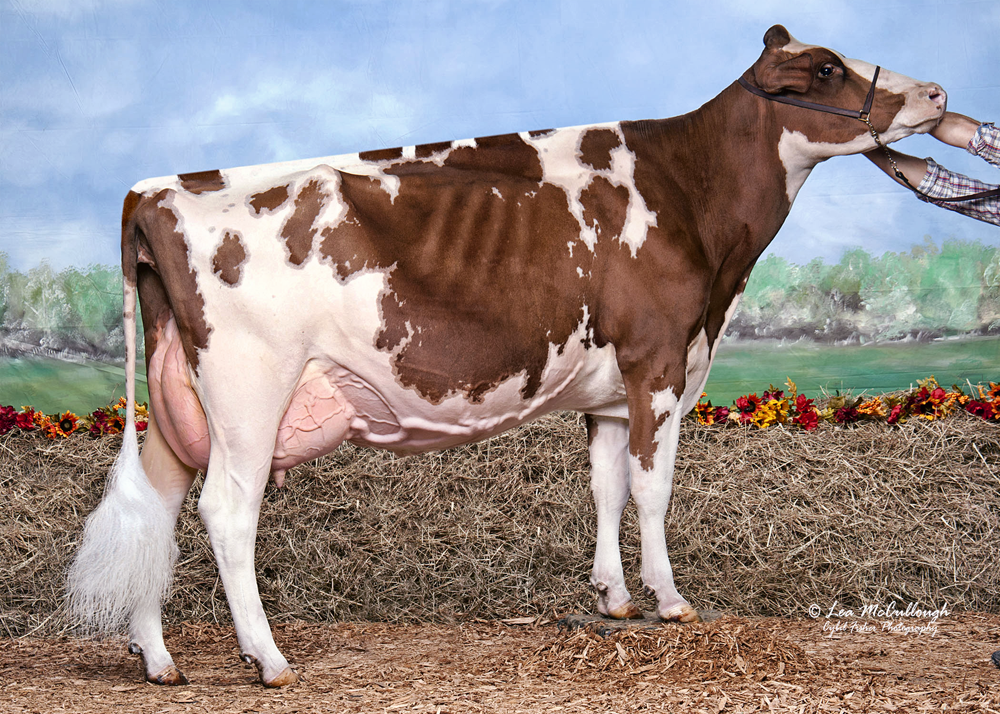

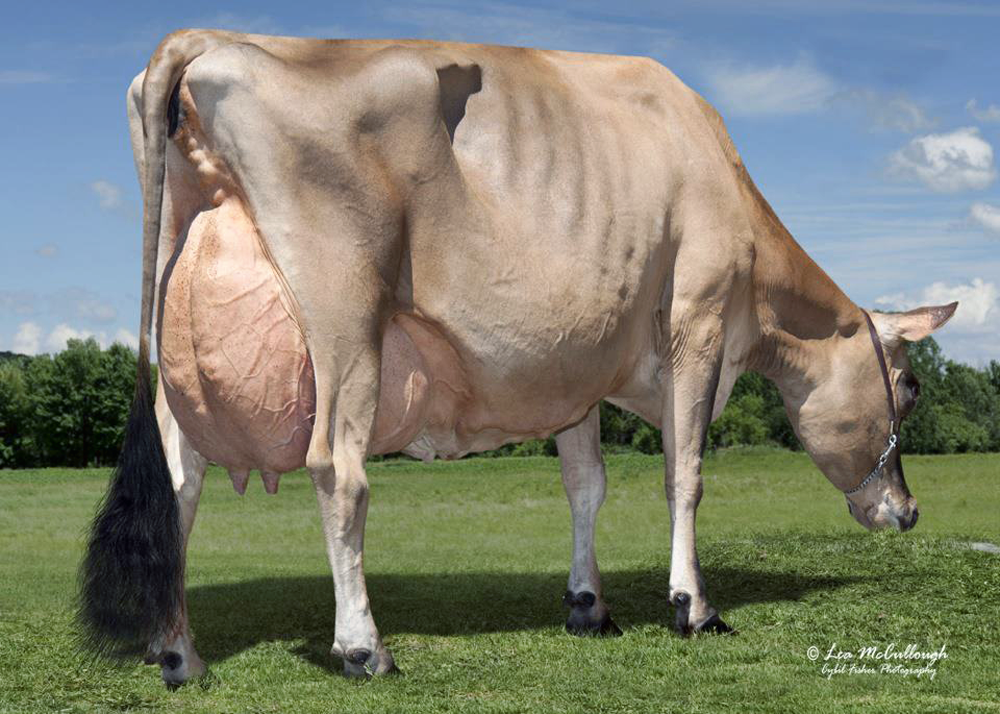
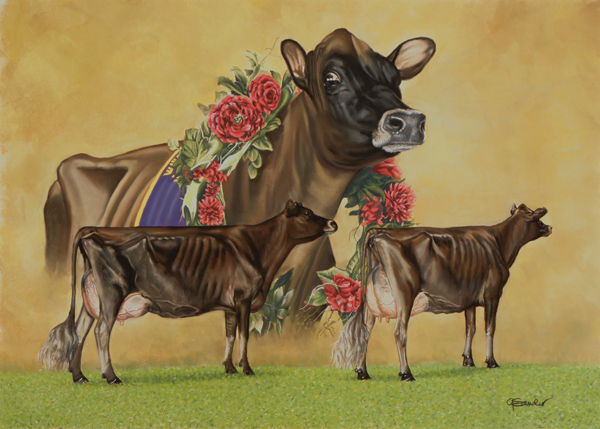
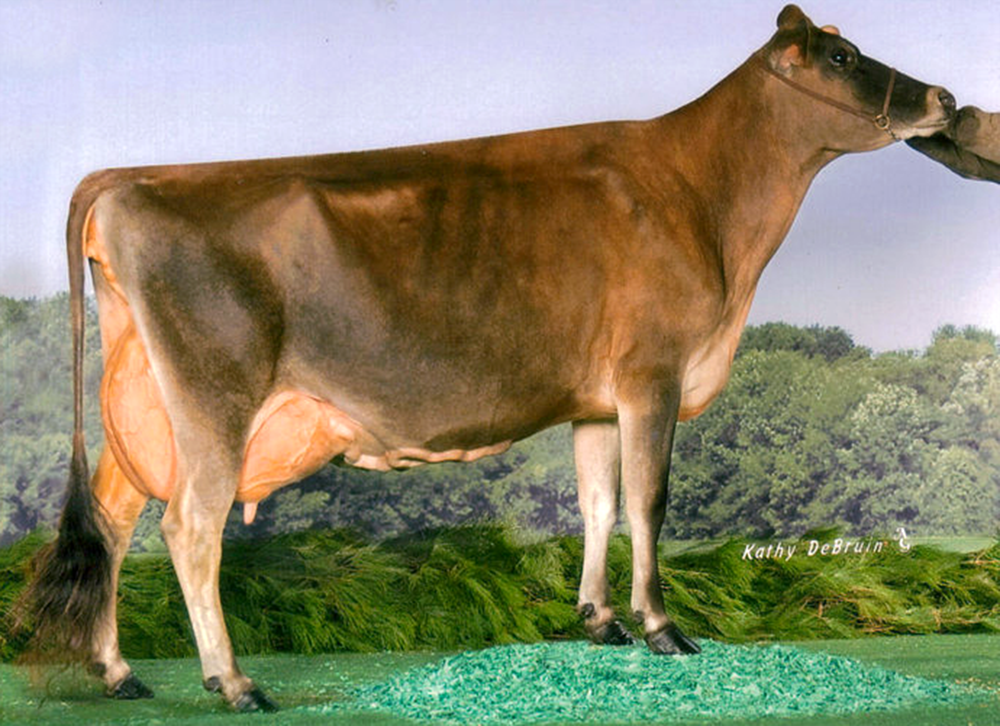
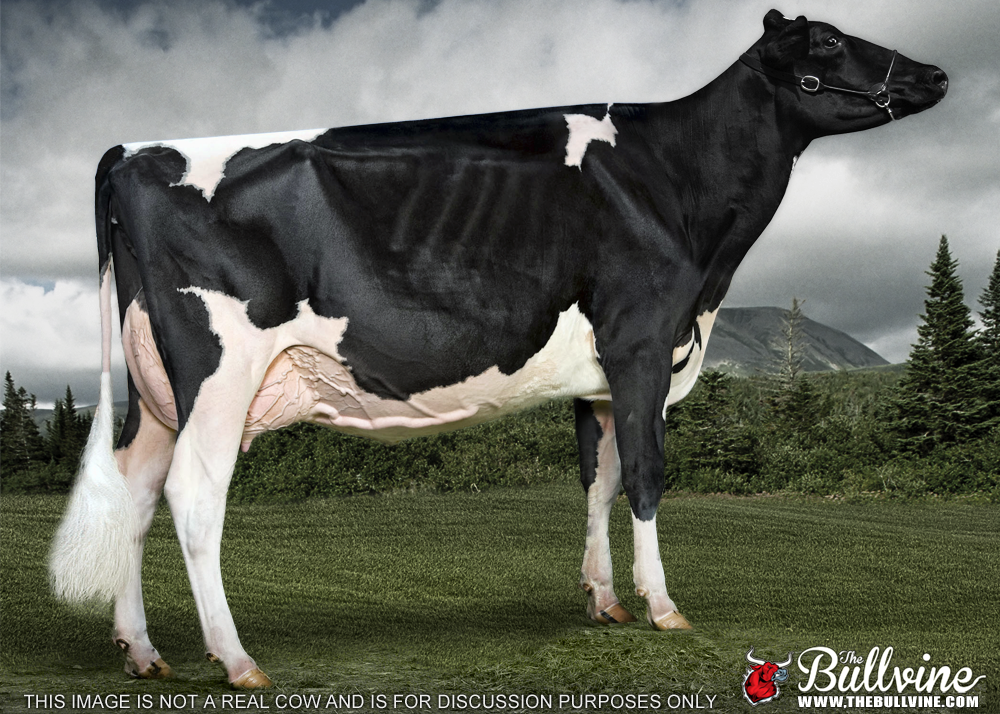
 Learning the Saw-Dusty Trail
 From Heads and Tails to Setting Sales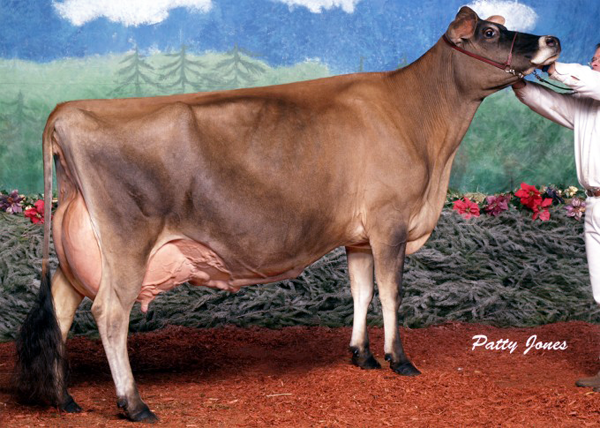
 Fortunes, Favorites and Fatherhood!





 “I grew up in Madison WI, exactly 2 miles south of the World Dairy Expo grounds.” So begins what could be a simple diary entry. But there is nothing simple about the writing of Carrie Mess who was raised in the heart of dairy land but not exactly part of it – at least not in the beginning. “Aside from seeing lots of cattle trailers on the Beltline as a kid, I had zero connection to dairy farms.” That all changed when Carrie met Patrick Mess whose family has been in the dairy business for generations. “After we got married I left my job in town and started working on the farm. We knew we wanted farming to be a part of our future but I had no idea if I could hack it on a dairy farm. I literally knew nothing about cows when I started but fell in love fast and found what I believe is the path I was meant to be on.” Those who know Carrie wholeheartedly agree.