Last night I had the opportunity to go back to the county show that I had exhibited at for over 20 years. It has been a few years since I was last at the Brant Wentworth County Show held at Paris Fairgrounds, but man did many memories come rushing back to me.
Sometimes it’s too easy to get caught up in all the big names and issues like show ethics, that you forget what it really means to show dairy cattle. Watching the 19 pre 4-H show people in the ring brought back many memories for me. While the faces have changed, many of the names have not. I guess it’s a sign of getting older, but all the same kids that I used to compete against when I was young, now have children of their own in the pre 4-H class. There is something so pure about watching these young people compete. These kids are not doing it for the money. They are not doing it for the glory. They are doing it for the love of dairy cattle and the show ring.
This is when you remember what makes county shows so great. It’s not the money you are going to make by breeding or selling a class winner. After all, let’s face it there is none. It’s not the fame that will come from it because, in most cases, no one will ever really know about the results. It’s about community experience and love of dairy cattle. For me last night was the purest confirmation of why we love dairy farming that I have seen in a long time. These kids put on a show second to none for enthusiasm, tension and crowd appeal. I loved it! I grew with much the same experience as many of these kids: working each day on the farm, helping my parents and learning to appreciate being a dairy farmer. There is something about being a dairy farmer that is very special. It is hard to describe to someone who has not had the experience. Ingrained in every child raised on a dairy farm is a set of values and sense of accomplishment, that can’t ever be taken away, even though many of these youth eventually end up off the farm.
Getting the opportunity to talk to many of the dairy community members that I have known for over thirty years was great. It was also super to meet so many new faces that will be the next generation leading the dairy industry into the future.
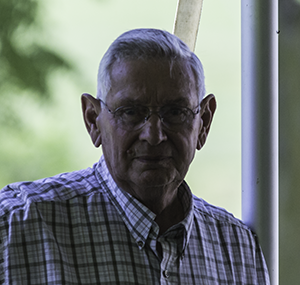
L-R John Innes, David Loewith, Anne Louise Carson
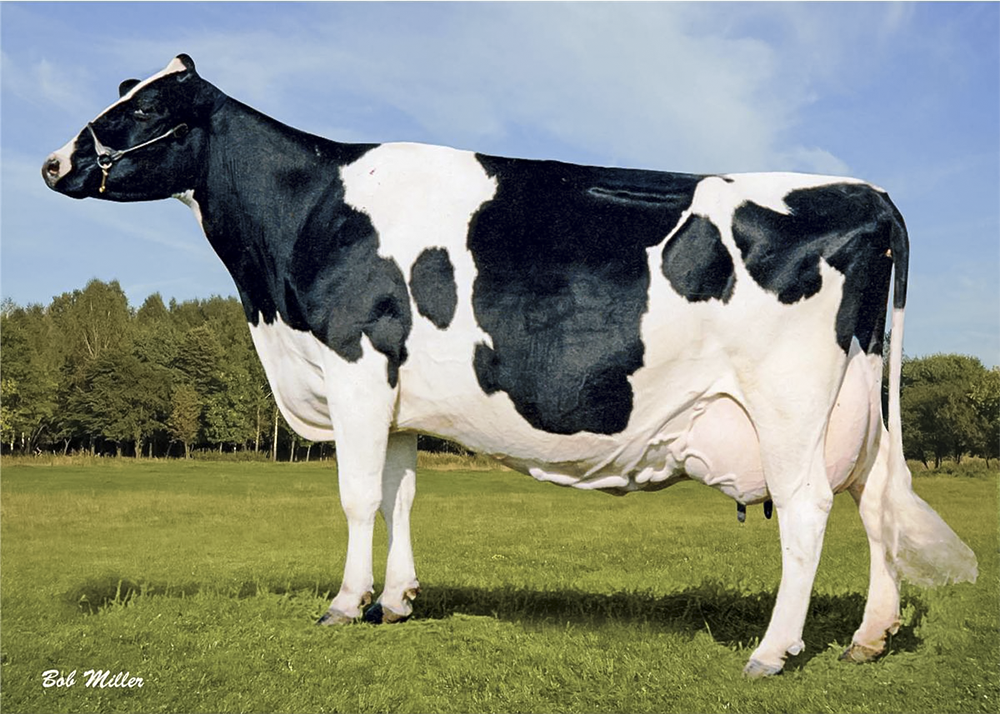
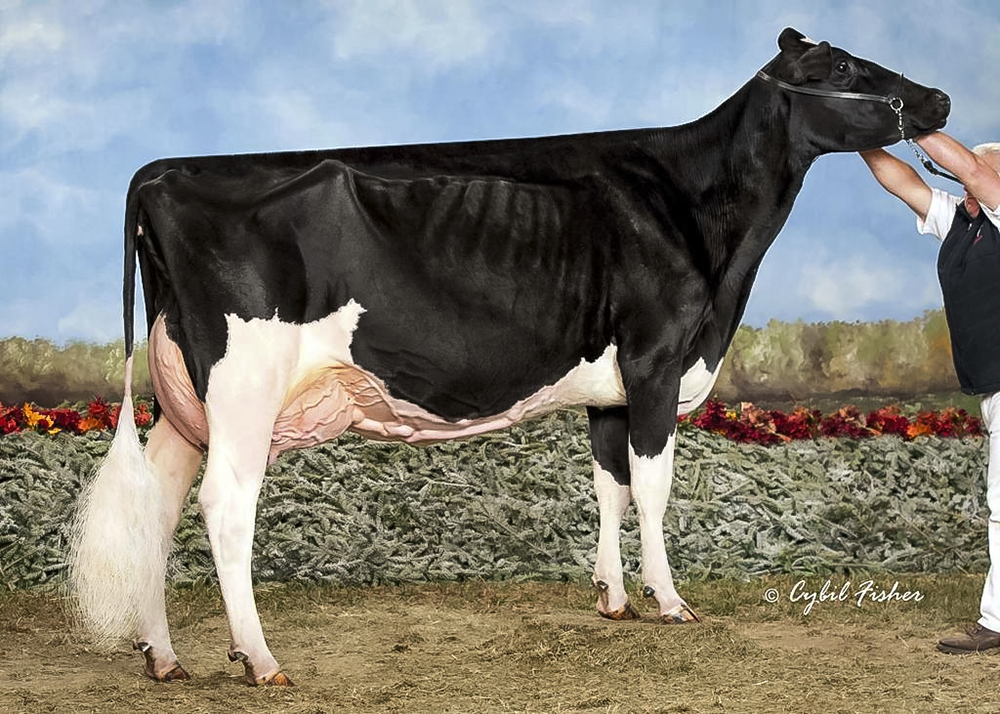
As much as it seems like the world is changing every day, events like this remind me how deep the roots of the dairy industry remain. At this local show we had many generations of dairy producers as well as several different types of producers. We are fortunate in our county to rub shoulders with some of the most progressive milk producers in the industry, such as David Loewith (seen here with Holstein Canada Secretary Manager Ann Louise Carson), as well as one of the top index herds in Canada, Mapelwood Holsteins. By the way, Mapelwood also took home Grand Champion honours with Willsey Jasper Rockette.
Grand Champion – Willsey Jasper Rockette Exhibited by Mapelwood Farms.
In talking with Clarence Markus about his recent barn fire and how they are already starting to build again. (Read more: Your Barn Is On Fire!) Clarence commented about how the dairy community from around the world has been great in supporting him through this tough time. He also said the thing that surprised him most was how, even though you don’t realize it, everyone is watching you and that the great things that you do to support others, don’t go unnoticed.
The Bullvine Bottom Line
Sometimes I wonder what the future of the dairy industry holds. At one time, Wentworth County that I grew up in had over one hundred dairy producers and its own show. Now there are less than thirty and it can be hard for two counties, Wentworth and Brant, to get enough cattle out. At times I wonder if there is much future. Then I have moments like last night, when these 19 future dairy leaders showed the world exactly what it means to fall in love with dairy cattle and the show ring and I think to myself, “Man the future is looking bright!”
Herd profitability is front and centre in the minds of breeders as they build their genetic base for the future. Current and future profit does not come by chance. It takes both breeder instinct and skilled management. Two important factors breeders and managers must consider is how long the workers stay on the job and how productive they are. And when it comes to workers on dairy farms it starts with the cows. Longevity along with productivity go hand in hand with making a profit.
What is Longevity?
According to our current indexes longevity is productive life (PL) or herd life (HL). But what does that mean? Is it one more month in the herd for an average daughter of a bull? What makes the difference?
Let’s take a moment and think about how great it is when your workers stay with your organization for at least five years. Instead of frequently giving new staff basic training, the organization can spend more time on advanced skills training. Productivity will increase and thereby profit can be pushed to new heights.
When it takes 1.0 to 1.5 lactations before a heifer you have raised or purchased to start to show a net lifetime profit, then culling heifers before the end of two lactations means just breaking even. A couple of months longer stay before the end of the 2nd lactation is really no big thing. Especially if the cow is below average for productivity.
When considering longevity how “long” is long enough?
What is Ideal Longevity?
Let’s start with what it is not. On a highly bred, fed and managed farm, averaging 25,000 lbs and 13.0 month calving interval, longevity is not a cow that stays around for five lactation yielding 20,000 lbs and calving every 14 months. She has two problems – her volume of output is below average and she takes a month longer off work than her contemporaries. In short she is a free-loader.
Each of us will have our own definition of longevity. Years back for many breeders longevity was the cow that won the county show, produced okay and from which daughters could be sold. For other breeders it is the cow that causes no problem, conceives on 1st or 2nd service and produces at least 10% above her contemporaries. For today’s profit oriented breeders it is the cow that produces 200,000 lbs (90,909 kgs) in 8-9 lactations, that calves back within 13 months. It is the cow that, after calving quickly and smoothly, moves into lactation, does not require vet visits, maintains a low SCS as she ages and operates without problems within the herd’s housing and milk systems. Now that is longevity that is measurable and profitable!
Breeding for the Ideal
We can all see what we like when we look at the twelve year old cow but breeding is not a retrospective matter. Breeding is about creating the future. Idealizing the past is not breeding. Breeding is creating that heifer calf that arrives healthy without causing momma any problems, is able to resist illness and then calves before 24 months of age, is functionally correct and can cost effectively produce above her contemporaries and stays for many lactations.
Achieving ideal longevity takes more than genetics. Management plays a major role. When breeders get both genetics and management on longevity right they are able to have low herd turn-over (25%), save considerable dollars by raising fewer heifers (every heifer not raised saves $2200), and less expense for drugs, insemination, labor, feed, ..etc.
Current Tools Available
Two overall indexes currently published are PL (USA) and HL (Canada). Many other supporting indexes assist in interpreting PL and HL. Those include: SCS, DPR/DF, Udder Depth, Feet, Rear Legs Rear View and Maternal Calving Ease. Of course yields of fat and protein (Link – Is Too Much Water Milking Your Profits) are important however a few more pounds of fat and protein in a lactation can in no way compare to getting that fifth, sixth and seventh lactation from a cow. Lactations where yield and profit are at their peak. Total merit indexes, like NM$, TPI™ and LPI, do factor in longevity but if breeders have genetically overlooked length of herd life, by placing their focus on show type or production, then these indexes will under estimate the emphasis that should be placed on longevity.
Future Tools Needed
What our current PL and HL indexes fail to do is to place emphasis of getting cows that make it to those fifth, sixth and seventh lactations. Adding a couple more months to cows that stay for 2 to 3 lactations is not what breeders need. They need some way of knowing which bulls leave daughters that profitably make it to those later lactations. Hopefully our genetic evaluation researchers will study some accurate way to identify bulls that produce long lived productive cows.
Let’s Talk Bulls
In breeding it always comes down to which bulls to use. Should I use Atwood or Bookem or should I use Windbrook or Fever?
Atwood, a current popular bull of show type, has PL of –0.5 while Bookem, a newly daughter proven bull, has a PL of 5.7. Bookem’s stay in the herd over six months longer. How does Bookem do that? Well it is by having higher DPR, superior calving ease and maternal calving ease, lower stillbirths and higher production. If show winnings are not important to you then Bookem should be your choice.
Both Windbrook (+15) and Fever (+16) sire superior conformation, yet Fever has a HL of 116 compared to Windbrook’s HL of 103. Fever’s significant superiority in SCS, DF, milking speed and daughter calving ability give him the distinct advantage. DCA is often not used by breeders but Fever at 111 is in the top 2% of the breed for his daughters to calve without difficulty.
So in breeding for longevity breeders must dig deeper and find out all the facts. Bulls that have a PL over 5.5 or a HL over 110 are unlikely to produce daughters that have problems for somatic cell count, daughter fertility, milking speed, maternal calving ease, depth of udder or mobility.
The Bullvine Bottom Line
Longevity is a lot easier to describe than it is to achieve. What are our choices? We could sit and anticipate a ‘genomic-like’ breakthrough in this area of dairy breeding and management. That would be easy. But that way we are losing dollars and productive animals every day. Or we can act to immediately incorporate strategies that keep our animals, trouble free, healthy and producing longer. When it comes to longevity proactive means profitable.
Not sure what all this hype about genomics is all about?
Want to learn what it is and what it means to your breeding program?
T. B. Macaulay, Mount Victoria Farms (Montvic), (Read more: Mount Victoria Farms: The Art and Science of Great Breeding) ninety years ago had a plan. One component of his plan was 4% butterfat. He built his herd around Johanna Rag Apple Pabst and his 4% fat daughters. The history books do not specifically identify Macaulay’s reason for wanting 4% butterfat except we know that back then Holsteins were considered to be ‘low testers’.
Roy Ormiston, breeder of the world famous Roybrook Farms, developed an excellent herd with the three pillars being high % fat, excellent conformation and high lifetime production.
The importance of fat yield has also been stressed by many leading USA breeders. Over forty years ago Dr. Gene Starkey, the very well respected Wisconsin Dairy Extension Specialist, in his speeches talked about herds where cows averaged over 900 pounds of butterfat per year with only limited reference to the milk yield number for top herds.
When Protein Ruled
Fat took a backseat to show conformation and then to % protein in the later 1970’s and into the 1980’s. The trendy thing was to use a bull the improved % protein but dropped % fat. The thinking was that consumers wanted to exclude fat from their diets but that protein was needed to make cheese. The trend meant the majority of breeders paid only limited attention to % fat and the national Holstein averages for % fat dropped.
How Milk is Sold
On a global basis the majority of milk is sold in a solid and not a liquid state (Read more: “Got Milk” is becoming “Got More” and MILK MARKETING: How “Got Milk?” BECAME “Got Lost”). Milk processors and marketers recognized this and so payment to farmers changed from volume and % fat to become based on the component yields. This is known as MCP, multiple component pricing. Today the pendulum has swung to where butterfat is back in fashion. Thus the quantity of solids a cow produces is important to her ability to generate income.
Milk is sold as a drink often has fat removed by processors. That fat is used to make other products and thus it is a source of revenue, not a cost, for the processor. .
The end result is that breeders are paid for the total fat and protein content in the milk they ship. And in the future it is entirely possible that breeders will be paid for the specific fats (i.e. conjugated linoleic acid) and proteins (i.e. casein) they ship.
Avoid the Water
In today’s and likely tomorrow’s world having more water than necessary in milk is a cost and not a source of income. These cost factors include:
high peak milk yields adds stress on the cow and increased labor and health costs
high milk yields magnifies the challenge and cost to getting cows to conceive
to achieve higher milk yield adds to cow feed costs for high energy grains
cows and their rumens function best when a high percent of the diet is high quality but low cost forages
longer milking times to harvest the higher volume of milk adds labor and utility costs
on-farm more volume adds to cooling cost and the need for increased storage capacity
water removal at the farm is costly
extra milk volume adds to transportation cost
added volume increases processor cooling costs and storage capacity
high volumes adds to environmental costs and the disposal of water at the processing plant
If we could calculate the total for those ten items it might shock us how much money could be saved by having a higher content of fat and protein in milk. It all starts with the milk our cows produce.
Let’s Talk Genetics
At the farm level cows that produce 85 pounds at 4.0% fat and 3.4% protein are generating the same revenue and at less cost to all the partners in the supply chain than cows that produces 100 pounds at 3.4% fat and 2.9% protein. For sire selection this means selecting for fat yield, protein yield, % fat and % protein. Ideally, although not always possible, this means selecting bulls for less milk yield. Today most total merit index formulas (TPI™, LPI, NM$,…etc.) are based on fat and protein yield of a bull’s daughters without regards to the volume of milk they produce. This means that high yield bulls that drop % fat and/or % protein do not ranking near the top on these indexes. A help to breeders when selecting bulls to use.
Top Sires
The following table identifies top total merit bulls for their daughters’ genetic ability to produce fat and protein and have a high % fat and % protein. For bulls to appear in this table they had to be breed improvers for productive life or herd life.
Bulls Ranked by Fat plus Protein Yields * USA – pounds / Canada – kilograms Click on image for enlargement
Supersire tops the list for the ability to sire daughters for fat yield and total fat and protein yield Jabir is high in all areas including NM$. For breeders wanting higher % fat and % protein should consider AltaIota, AltaRazor, Eloquent, Ahead or Overtime P.
The Bullvine Bottom Line
Much emphasis is currently being placed on cows that are functional and healthy, yet productivity can’t be ignored. Without the ability to generate high levels of revenue from milk sales, it is hard to make a profit from dairy farming. When it comes to production, don’t let low component milk water down your success.
Not sure what all this hype about genomics is all about?
Want to learn what it is and what it means to your breeding program?
From soap bubbles of the past to the milk moustaches of today, farming is putting stars in our eyes!
Whether it’s famous celebrities like Dwayne Johnson or Carrie Underwood or newly minted rising stars like the Petersen Brothers, agriculture is turning on the star power! Actors used to sell soap and cars and endorse life insurance. Today they’re milking farming for all it’s worth. Well known and wannabe stars both see the benefit of appealing to the rural roots of the spending public. Milk jugs and melting butter are sharing the spotlight with bachelors and beauties down on the farm!
We Have Stars in Our Ears!
There’s big money in celebrity-endorsed advertising and the agents who spend their days poring over Nielsen ratings and viewer demographics are happy to have their stars in the agricultural spotlight. From the consumer side, we feel we “know” these folks and because of that familiarity and their obvious success, we tend to listen to what they’re saying. Rightly or wrongly we are prepared to trust these folks who are high above us in the stratospheres of fame. They capture our attention.
Agriculture’s Rising Star
There is no question that the “So God Made a Farmer” commercial that aired at Super Bowl XLVII on February 2013 resonated with millions of viewers. It began: “And on the eighth day, God looked down on his planned paradise and said, “I need a caretaker.” Entirely comprised of pictures it nevertheless told a story that engaged the audience and generated an avalanche of comments.
Star Roars
Not all celebrity attention brings a pat on the back. On April 18th 2013, singing star Carrie Underwood posted her viewpoint on the so-called ag-gag bill on Twitter and Facebook. It rapidly went viral with huge numbers of views and comments. Probably unwisely Tennessee State Rep Andy Holt responded that Underwood “should stick to singing”. Carrie’s prompt comeback verified how wrong it is to try to shut-down social media or to bully the opposition. She replied. “I should stick to singing? Wow…sorry, I’m just a tax paying citizen concerned for the safety of my family.”
Look Who’s Talking
There are two sides to every story. Celebrity draws the attention. Agriculture needs to respond with the same desire for what is best for the consumer, while making reasoned explanations of the valid issues facing farmers. When the bright light is shining on the stars it can also pick out all the details of any skeleton’s agriculture might prefer to have in the shadows.
Farmers Are Stars Too!
You don’t have to have millions of dollars and an advertising slot at the Super Bowl to become an agricultural celebrity. The video filmed by the 11 year old sister of the Peterson Farm Brothers proved that. Their parody “I’m Farming and I Grow It’ is a parody of LMFAO’s “I’m Sexy and I Know It.” It was uploaded to YouTube on June 25th. Three days later the video had broken the 1 million views mark and continues to generate a phenomenal response. At this writing it stands at 8,644,701 views and continues to light up farm Agvocacy with lively discussions around the issues of growing the food we need to survive. Another of their parodies is my personal favorite. Entitled “Fresh Breath of Farm Air” it is a Fresh Prince Parody and is making stars of these three farm boys simply by showing every day farming exactly like it is.
The Bullvine Bottom Line
While we might hope that all the publicity farming gets is positive, at the end of the day what is most important is that agriculture is being talked about. Open communication is the first step toward positive progress. Personally – good or bad — bright or dull — I love it “when the stars come out!”
It had to happen and this past weekend it did. Over the past 21 months RF Goldwyn Hailey has been unbeatable. But this past weekend the inevitable happened.
Given the fact that Hailey has been milking for 15 months and recently injured her non show hip, many wondered if she could do it. When I first heard that Hailey had been hurt and that she was at the show, I wondered if she had bitten off more than she could chew. Both Britany and Maya are fresh again and are looking amazing. Hailey was sure to have her toughest battle yet.
Jacobs Goldwyn Britany EX-96-2E Getting ready for the show
As I watched Hailey over the 24 hours prior to the show, there was no doubt that she would come out looking great for a cow milking 15 months! But would that be enough? Maya and Britany were tied side by side in the Ferme Jacobs string (Read more: Ferme Jacobs: Success Is All In The Family! ) and it is there that I started to realize that Maya was in top form. Her width and power throughout and her udder was the best I have ever seen it. I started to wonder. Could this be the day? Could it really happen?
Bonaccueil Maya Goldwyn EX-95 Getting ready for the show
As Hailey walked to the show ring, I realized that her injury had not in any way affected her mobility and would not be a factor in the results. Then it came down to Judge Melanie Boulet’s preference. Both Hay and Maya looked great and you could give reasons either way. Certainly a tough decision. One that reminded me of the 1997 Royal. When Acme Star Lily faced off against Rainyridge Tony Beauty. Judge Marc Comtois had to choose between two amazing cows. It came down to preference and style. (Note: Comestar was not at this show as Marc was judging in South America. Also absent from the show was Ferme Boulet and Pierre Boulet, as their sister was judging and Ferme Blondin, yet the show still had a great turn out).
RF Goldwyn Hailey EX-97 1st place mature cow
Judge Boulet had done a very good job all day. Now the Mature Class would be her toughest decision of the day. Giving it lots of thought, Judge Boulet went with Hailey. A decision that got mixed reviews. But, until you are in that position, it’s easy to be a ringside judge. While I would have gone with Maya, who for me now becomes the mature cow to beat for the upcoming World Dairy Expo and Royal Winter fair, I do respect Judge Boulet’s choice.
Bonaccueil Maya Goldwyn EX-95 2nd place mature cow
After the mature cow class, everyone, including myself, thought that it would be smooth sailing to Grand for Hailey. But on this day that was not to be. As Judge Boulet was about to name the much anticipated but expected Grand Champion, I had my camera focused on Hailey. Thinking that I would get that perfect moment when the judge does the Grand slap. Then as Judge Boulet was walking around the Intermediate Champions, and I am taking a moment to rest my hands, thinking that she is just adding drama to an already inevitable decision, Judge Boulet slaps Roquet Jasmine Sanchez, also owned by Gen-Com Holsteins, as her Grand Champion.
Grand Champion – Roquet Jasmine Sanchez Junior 3 Year Old, Gen-Com Holsteins Ltd, PQ
To say I was shocked would have been an understatement. While Jasmine certainly had a very impressive mammary system and loads of dairy strength for a Jr. 3 yr old, I did not see her contending for Grand. I actually thought she should have been Reserve Intermediate Champion, behind the winning Jr. 2yr old, Belfast Goldwyn Lasenza, a young cow with a great future. Two former classifiers at ringside commented that Lasenza should be used as the True Type Model for what a Junior 2yr old should look like. A special thanks to Gilbert Valois for the great visit to Ferme Boulet and Pierre Boulet’s operations, where I saw the great Kendra…..looking amazing at 13 years of age. My father first hired Gilbert many years ago as a classifier at Holstein Canada and the two share many stories.
Reserve Intermediate Champion – Belfast Goldwyn Lasenza Junior 2 Year Old, Belfast Holsteins Enr. & Mary Inn Holsteins, PQ
The Bullvine Bottom Line
I always say that as long as you get the correct group in the parade of champions, the judge has done a great job. On this day, Judge Boulet did just that. She moved through the heifer classes with relative ease naming Jacobs Windbrook Bally, Junior Champion. Here is a heifer that should be able to contend at WDE. And then she went with Jasmine and Lasenza as her Intermediate Champions. Again two cows that will be contending at WDE. Although Judge Boulet caught at least me by surprise by going with Jasmine as her Grand, I certainly do appreciate the added drama that her selection brought to this amazing show. For the Gen-Com team, there is a silver lining. If Goldwyn Hailey is going to be beaten, it`s certainly a good thing when it`s done by one of your own cows.
Sure when a mating works out you say you planned it or it was the result of a great mating decision. But what do you say when it doesn’t work? Most of the time you blame the sire. In reality, you cannot leave your breeding programs to chance. If you do you are just as likely to end up with a puke as you are to get a great one by a fluke.
While some of us may not agree with Don’s filters for which sires he uses, there is no arguing that he has a very clear plan. A clear plan that is based on what works for the management style and profitability of his North Florida Holsteins. .
While many breeders dream about getting a cow that looks like this
The problem with many breeders’ breeding programs is that they don’t have a plan that centers around the way their farm makes money. Think about it. How often do you select a mating sire for the reasons you typically cull animals, as opposed to what your perceived ideal cow looks like? Sure when it works and you get that great show cow you claim that it was planned and was a result of years of thought and that you have cattle sense. BS to that. Unless you set out a clear plan for your herd, then claims that these animals are a result of great “dairysense” are just bull. Trust me I have walked through herds and asked them, what the “iffier” looking ones are sired by and more often than not they blame it on the sire not working instead of taking responsibility for not having a plan and making smart breeding decisions.
The reality is they should be breeding for something like this
Sure flukes do happen. But, even in the show ring these days, I see less and less flukes and more and more show winners coming from generations of great breeding that have had careful thought put into exactly which sire to use. For most of these herds that does mean using the high type sire that is obviously getting the job done. But if you are like most breeders you are not making your money selling show winners. Your money is coming from those that deliver the most milk, as efficiently as possible, and last for multiple lactations. So tell me why don’t your sire selection filters reflect this production goal?
Now you ask me, “Andrew how do you know that we are not doing this?” and my answer to that is pretty simple. Most breeders are not looking at fertility and SCS as their top two filters, and yet those are the top two reasons most cows are culled from the herd (Read more: FACT VS. FANTASY: A Realistic Approach to Sire Selection). Instead I hear comments like she needed more dairy strength as a key issue. Did you know four out of the top five sires for dairy strength are below +1000 kg. of milk. And four of the five are also negative on at least protein% or fat% deviations. So I ask you how much does dairy strength correlate to overall production?
The Bullvine Bottom Line
Don’t get me wrong there are herds that have done very well and been very profitable breeding for high type generation after generation. Two great examples are Ferme Jacobs (Read more: Ferme Jacobs: Success Is All In The Family!) and Quality Holsteins (Read more: Quality Holsteins – Well-deserved Congratulations and Quality Cattle Look Good Every Day). Both these herds have bred for type generation after generation and have amazing high conformation herds to visit. But that is because they had taken a lot of time and energy to carefully plan out how they will make money and how their breeding program will map to it, instead of the other way around. The big lesson is that instead of leaving everything to chance you need to have a plan, otherwise all you will end up with are the flukes and pukes.
Thinking of our personal health and hearing the term ‘nutrition’, you might be motivated to eat more vegetables. That’s simple and we all like the K.I.S.S. (keep it sweet and simple) principle.
Dairy Breeding is Simple Too
All you have to do is pick the right dairy breed, the right dairy genetics and, at least occasionally, manage to have Mother Nature and the marketplace somewhat on your side and it follows that you will produce buckets of milk and be the proud owner of a sustainable dairy business. And that’s exactly why we more often face the O.U.C.H. syndrome – Overworked Underproducing Cattle Herds. Why is it that, with all the technology, science and passion at our fingertips, we are missing something?
They Are What They Eat!
Cows eat every day. Cows are milked every day. It would seem to follow that those simple, daily actions could be the key to simplifying our dairy success. Perhaps dairy breeders are missing opportunities and should seek expert help from nutrition consultants. After all, meeting production, herd health and economic goals directly affects the profitability of every dairy herd. The tricky part is that every dairy operation has unique issues that must be considered as part of the nutrition solution.
Why Bother With a Nutrition Consultant?
An effective nutrition consultant will investigate and analyze all the issues impacting your cows and thus impacting your success. The Bullvine went to Dr. Scott Bascom to get some insight on the value of working with a nutrition consultant. Dr. Bascom is the Director of Technical Services at Agri-Nutrition Consulting, Inc. (ANC) (Read more articles about animal nutrition by Dr. Bascom). He confirms “nutrition consultants can design a customized feeding program to meet their client’s specific goals and make the best use of the resources they have on the farm, and are skilled at feeding cows, heifers, and dry cows in a manner that will keep them healthy and highly productive.” However his years of experience starting at college have given him a wider viewpoint. While in college he attended a lecture given by Dr. Paul Chandler. Chandler shared, “There are many reasons beyond economics that a nutritional consultant provides value.” He feels that one of the best resources that a good nutrition consultant can develop is in maximizing the human side. “You have days when you are also a financial advisor, psychologist, marriage counselor and a loyal friend.” He continues, “At the time I didn’t comprehend what Dr. Chandler meant but now I recognize that he was telling us we would have to go beyond our skill in nutrition to develop a high level of trust with our clients if we were going to be successful.”
Not Just a Quick Fix. And BORING is good too!
The very nature of dairy breeding has conditioned breeders to the fact that any process we implement or change we make must be undertaken not as a short term fix but with a view to profitability for many years to come. Changes are both feared and welcomed. Feared because they’re never easy. Welcomed because of the potential for improvement. Dr. Bascom has a somewhat unconventional view of change as it relates to nutrition. “With my clients I am striving for BORING. I want a boring ration that never changes because we feed the same thing all the time. I want cows that are BORING because they are healthy, comfortable and get bred in a timely fashion. I want my herd visits to be BORING because we have no major issue to consider. My point is the goal is to get our clients to a place where we are meeting our goals and rarely need to make any big changes. At this point we make very minor adjustments when we need to make a change. The cows are happy, the producer is happy, and I am happy.”
From the Bunker to the Bank!
We spend research dollars to identify a cow’s genes to the smallest snippet. We spend millions of dollars on the cow with the best dairy conformation. But we can’t agree on what to feed her at the bunker. Dr. Bascom feels that dairy nutrition is economically imperative. “The producer that isn’t working with a nutritionist has a lot as risk financially. The value of feed fed to a lactating cow can be $8 or more per day. For a 100 cow herd the value of feed fed in a year is well over $250,000! With feed costs so high, optimizing income over feed cost becomes critical.” He backs up the statistics with personal experience. “When ANC picks up a new client that was not using a nutritional consultant prior to me, it is not unusual for us to increase income over feed cost by $0.25/cow/day. This adds up to a significant increased annual income.”
Keep Your Money Growing Just for You
“Another significant reason to work with a nutritional consultant is that they can bring new ideas to the farm. Consultants are exposed to a diverse range of information including what we learn from other clients, trade shows, continuing education, and other people in our support network. Part of our job as an advisor is to filter through all this information and bring back to our clients what is most applicable to their situation?”
How to Increase Milk Production
As I write this, I begin to see that the practice of nutrition is like the practice of medicine. Being blessed with both an animal nutritionist and a medical doctor in the family, it is increasingly clear to me that the really good practitioners in either field are the ones who not only understand the science but can put it into practice. Dr. Bascom readily is a storehouse of working examples derived from dairy nutrition consulting. “Let’s talk about increasing income over feed cost. Often this includes increasing milk production. However, too often we can fall into the trap of pushing for higher milk production in a way that isn’t profitable. When we decide that higher milk production is the key to increasing income over feed cost then we look at forage quality, cow comfort, facilities, and a variety of management factors to decide how to reach this goal. The answer is different on every farm. For example if I have a client that has average days in milk of 250 days then we are not going to increase milk production until we improve reproduction. On the other hand, a client that is overstocking their facilities might experience an immediate increase in milk per cow and total milk shipped by culling out some of their bottom end cows thus improving cow comfort for the rest of the herd.”
What Does Quality Cost?
In polling dairy breeders who do not use consultants, the number one reason given is that either the consultant or the feed program will be too expensive. Dr. Bascom appreciates the opportunity to answer this concern. “Again, we start by talking about income over feed cost! Sometimes decreasing out –of-pocket costs drops income over feed cost! The answer to this question is to look for ways to make the best use of the resources available on the farm. We ask questions like, are we getting the most value out of the forages we are feeding? Are we feeding commodities that are competitively priced? Are we wasting feed?” Too often we measure financial success by decreased input dollars. Sometimes we have to spend a little to make more. A key learning to internalize is that you can waste money just as easily on excessive quality as you can on deficient quality. Optimum quality is the goal.
Let’s Ruminate on Components!
“In most cases increasing components will increase income over feed cost. The exception would be in markets that don’t pay premiums for high component milk. Low components could be an indication of cow health issues. So fat and protein tests are something I watch closely.
The first step in high component milk is about feeding a healthy rumen. Forage quality is paramount. We need high quality forages to optimize rumen health. So the first step is to make sure forage quality is optimum. We also balance carbohydrates and degradable protein to encourage rumen health. The rumen bugs produce very high quality protein that drives both milk yield and components. After we have designed a diet for optimum rumen health and to maximize the production of high quality protein by the rumen then we look at additives. These would include bypass protein sources and rumen protected amino acids.”
Beyond the Basics to Practical and Personal
One of the most rewarding aspects of being connected to the dairy industry is hearing stories such as the ones Dr. Bascom shared with us. “Years ago I worked with a dairyman in the southeastern part of the US that told me I got more milk for him than anyone else. I was only able to get his cows to 50 lbs. of milk but he was close to 30 when we started. This won’t get me on the cover of a major dairy magazine but to him it was a really big deal.” Of course there are times ANC’s client’s success has meant rising to a challenge. “One of my ANC clients challenged me to feed as much forage as we could feed to his cows and maintain healthy cows, production at 75 lbs. of milk, and high components. We were able to get the diet up to 82% forage as a percent of dry matter. We maintained milk at 75 lbs., fat test over 4.0%, protein at 3.3%, cut purchased feed costs, cow health improved, and reproductive performance improved. I didn’t think we could take the forage to this level without losing milk!” Every client has different goals, says Bascom. “Several years ago I started working with a new client that markets embryos. The goals were to maintain fat test at 4.0%, protein at 3.4%, and cut purchased feed cost. We made adjustments to the diet to feed more of their homegrown forages to cut purchased feed cost. We also added a liquid feed to the ration and made some adjustments in how the TMR was mixed. Not only did we save money but the cows came up in both protein and fat test. This put more money in the milk check and also made more cows in the herd eligible for the foreign embryo market.”
ROF is Good. Return on Relationship (ROR) is Great.
It doesn’t matter what facet of the dairy industry you work in, you’re going to find passionate people. Dr. Bascom is one of them. “I love cows,” says this ANC consultant and adds, “Following a career in nutrition allows me to be around cows and people who love cows.” And that is a key motivator for him. “The cow success stories are rewarding but perhaps the most rewarding experiences are the people success stories. I have celebrated weddings and the birth of children with my clients. I have watched their children grow-up and find their way into the dairy operation. I have cried tears at the loss of their loved ones. These experiences are just as rewarding as celebrating high rolling herd averages, the sale of bulls into AI, All-American nominations, and high classification scores. This is very much a people business and it is so rewarding to gain the trust of my clients in a way that they want to share good times and the hard times in life with me.”
The Bullvine Bottom Line
We can all identify with the passion that makes a career in dairying the focus of our daily lives. However, we can’t let rose colored glasses cause us to limit our dairy herd success. Dairy nutrition consultants help us to investigate and discover ways to overcome unnecessary or unseen obstacles. So that leaves the Simple Question: “Why bother with nutrition consultants?” And leads to the Simple Answer: “You can’t afford not to.”
Five years ago dairy cattle breeders were first hearing the word genomics. Over many generations of cows they had followed the recommended practice of using plus proven A.I. sampled sires on the majority of their herd with limited use (20-30%) of high indexing young unproven bulls. This practice had made it possible for them to improve their herd, help the breed improve and to generate revenue from the sale of breeding animals. And then along came a new way to look at accuracy for young animals and the merits of a cow without having to wait for her to have many milking daughters.
For most of us it was something that shook the foundation of what we knew about breeding cattle. How could an analysis of the genes change the method of breeding we knew and had been very comfortable with using? As expected breeders have had a variety of reactions. Some instantly adopted genomics. Some cautiously considered and used it to a limited extent. Many took a wait and see approach.
Today much has changed to the point where half the semen used is that of genomically evaluated bulls. We are learning more every month and every index run about genomics. The Bullvine decided to address some of the current questions and thoughts about genomics that we are hearing expressed by our readers.
Learning from Observer
DE-SU OBSERVER
De-Su Observer, a former high ranking genomic bull, born in November 2008, received his first official proof, which included daughter performance, in April 2013 and he had a gTPI of 2332. However with last week’s index release (Read more: August 2013 Holstein Sire Evaluations Highlights From Around the World) his gTPI dropped by 188 points to 2144. Many breeders are asking why? Can we trust genomics and the very first proofs with daughter performance included? Let’s think this one through.
High genomic bulls are now used by A.I. and breeders as mating sires for the next generation mostly using ET. The female mates of these bulls, with few exceptions, are also high indexing. Their progeny’s genetic evaluations will be adjusted for their parent’s high genetic merit by the genetic evaluation centres. However the extra care and treatment breeders give to these future star females, from birth to the end of their first lactations, cannot be totally adjusted for in the genetic evaluations. This means we can expect these young bulls to be over-evaluated in their first official proof based on the performance of their first 30-60 daughters. Until we can capture more details at the herd level for yields, health, reproduction, herd management, type assessment and heifer performance we can expect that high genomic bulls, after they get their very first official proof, will subsequently fall back slightly in some part of their proof.
This just happened to Observer. Between April and August he added 582 milking daughters to reach 800 and 283 classified daughters to reach 349. In April he was and in August he still is a 99%RK gTPI sire but he dropped from #1 to #21 on the TPI list (#8 among those with 99% reliability for MF). His breeding pattern for type did not change. His daughters have outstanding mammary systems but are only average feet and legs and below average dairy strength. His ratings for fertility and longevity were essentially unchanged. If anything they are up slightly. However Observer’s ratings for the yield traits dropped. The decreases were milk -14%, fat -26% and protein – 21%. He is still a top proven bull and a good bull to have in the pedigree or to use to make productive profitable cows. With the high number of daughters now in his proof we can expect he will not changed to a similar extent in December.
Considering a bull’s rank on a total merit index list is the first step in selecting bulls. However knowing how his strengths and limitation match your herd’s genetic needs is the important second step.
What about Robust, Bookem, AltaMeteor and AltaRazor?
All these bulls had their first official proofs in August after being highly rated on their genomic information. Their August Reliabilities range from 89% to 91%. So we can expect some movement in their indexes, as they have information added on daughters, the same as happened with Observer. Remember they can go up as well as down. They are all top of the class graduates but like all new graduates we can expect to know their attributes more exactly come December or next April. For discerning breeders this means use them but not any one of them to an excessive amount. Between them these four bring to the industry high NM$, high protein yield, high udder composite and high fat yield. All things commercial breeders include in their breeding plans (Read more: What’s the plan?).
Can more Genomic Related Information be Published?
To most breeders, it seems that genomic indexes are high, and constantly increasing. It is almost impossible to keep up. Go to an auction sale and hear the pedigree person say that ‘this bull is leaving many high genomic progeny” and what is the average breeder to take that to mean. It can be confusing even for people “in the know”. But what about people who do not follow the results closely? Furthermore for breeders that follow more than one breed, they see what is top numbers in one breed may seem ordinary in another breed. Has the time come to consider changes such as:
Publishing the %RK for indexes – that way an animal’s strengths and limitations was be easily seen
Widely publishing the levels for all indexes for 99%RK, 90%RK and 50%RK
Identifying animals that leave top genomic progeny for all traits not just for the total merit indexes.
Keep moving Forward
Genetic Evaluations Centres around the world are studying ways to use the records from bulls’ daughters where the bull may not have been randomly sampled. Excluding records from analysis is not as easy as not using the data from ET daughters or for the first 50 to 100 daughters born. These steps could be well and good if this matter only involved the genetic side of our business. But it impacts marketing and revenue generation from top animals and therefore it gets complicated. It could well be some time before we have a solution.
Breeders need a breeding and marketing plan for their herd. And then they need to use the most up-to-date genetic indexes for both bulls and cows. It does not change the process: first sort the bulls by your preferred total merit index; and then correctively mate your cows or group of cows with the best mate on your selected list. It is up to each breeder to decide whether to use the genomic information or not. The advantages from using genomic information are a faster rate of genetic improvement by having more accurate indexes on young animals and the use of the very top animals, especially bulls.
The Bullvine Bottom Line
Breeding is about creating animals that are genetically superior to our current herd of animals. It does not simply happen by adding one and one to get two. It involves using all the skills including planning, cow awareness, genetic theory, accurate information, the turning of generations,..etc. Genomics is proving to be a good new tool. No doubt it and genetic evaluations will improve considerably over the next five years. More knowledge is always a good thing.
Many of us grew up with the jingle, “Let’s all go to the Dairy Queen!” The promise then – and now – is that dairy products, especially fresh frozen ones, are a delicious answer to the question, “What should we do now?”
Derrick Frigot, WJCB President, was raised on a well-known dairy farm on Jersey. Today as an co-author and with an international team of researchers and contributors, he has helped carry to completion the book “The Dairy Queen.” This isn’t a cold calorie laden dairy dessert but it does dish up dairy information about Jersey cattle that is magnetic in its appeal, broad in scope and richly satisfying.
The Isle of Jersey Marks the Beginning
Derrick thoroughly enjoyed those early days on his uncle’s farm. “He was a leading breeder and exporter of Jersey cattle. As a youngster it was exciting to meet well-known North American Jersey importers like Paul Spann and Lea Marsh.” This experience prepared Derrick for his career path. “When leaving school, I worked in the office of the Royal Jersey Agricultural & Horticultural Society for six years, followed by a couple of years in a livestock feed company, and finally as manager of the Jersey Artificial Insemination Centre Ltd, the Island’s first AI company.”
Co-Author Derrick Frigot
Artificial Insemination Provides the Background for Authorship
AI on the island of Jersey became the next influence on the unfolding of Derrick’s career. “In 1975 the island’s government took over the local operations of artificial breeding and our company concentrated on cattle and semen exports from Jersey. In the mid 1980s we began importing international Jersey semen into the UK and became the leading suppliers to UK Jersey breeders. “
Now not everyone who works in the AI field automatically becomes an author but for Derrick writing “The Dairy Queen” was a welcome extension of his interest in Jersey dairy cattle. “I was delighted to be asked to assist with the completion of this book so ably started by Hans Norgaard who is a dedicated Jersey breed historian from Denmark. “
Author Hans Norgaard (Photo by Niels Damsgaard Hansen)
“The Dairy Queen” is the Unique Written Record of an Exceptional Breed
A book for anyone interested in dairy cattle, The Dairy Queen, is the first truly global account of the development of the world’s most efficient dairy producing cow. Derrick points out the unique features of this special book. “It tells the story from the early origins of the breed to modern times, throughout the world. It will appeal to all dairymen interested in cattle breeding and its 300-plus pages with over 700 pictures is a glorious presentation of the Jersey breed. The great cattle breeders and individuals who influenced the historical progress of the Jersey cow are well documented along with anecdotes of incidents that literally changed the progress of the breed. For example, the concerns of cattle breeders in the Island of Jersey in 1947 when dockworkers refused to load cattle onto ships for export – they were concerned about shortage of milk for island families following the five-year occupation by German forces in World War II.
Another example is the introduction of multiple component pricing that triggered the strong move to Jerseys in the USA coupled with the success story of Hilmar Cheese in California, owned by a group of Jersey cattlemen that has expanded the breed greatly in that state and also Texas.”
Showing in the first half of the 20th Century (A page from the book)
The Written Word is Inspired and Supported by Jersey Enthusiasts
Such a significant undertaking obviously would require a huge commitment of time. Derrick appreciates those who influenced his work on the book. “Anne Perchard, MBE who was the Patron of the World Jersey Cattle Bureau and a long-time close friend of mine. Anne was the World Dairy Expo’s “International Person of the Year” in 2011 and the first woman to be awarded honorary membership of the American Jersey Cattle Association. She wrote the foreword for the book and sadly, passed away just a month before publication.” Derrick also appreciates “All the Jersey breeders of this world for sharing their stories. It has been my privilege in working with the dairy industry all my life, which your readers will agree, is the greatest industry in the world.”
The Bullvine Bottom Line
The Bullvine does agree with Derrick Frigot that dairying is the world’s greatest industry and so we congratulate him on the publication of “the Dairy Queen” and for answering so thoroughly the question “And why is that?” So next time you need to discover more about the people and passion that have made such a positive impact on the Jersey Breed, you would be wise to go to “The Dairy Queen!”
Are you just starting out? Are you growing your breeding program and needing to get bank financing? Maybe you’re transitioning to the next generation. Whatever your situation a well-thought-out business plan is the vehicle you need to get you there. Like any other viable business, your farm is more likely to succeed with a written business plan.
For many the thought of taking the time to write a business plan seems too daunting. There are so many other things that need to be done. But that is exactly the reason you need a business plan. With so many things that can impact your dairy operation, you need to know how to steer through the issues. The following are just a few reasons why your farm needs a business plan:
To avoid big mistakes: The last thing you want to do is work on something year after year , only to realize you were doomed from the start to fail. That is exactly what can happen to many dairy operations. Because they don’t take the time to plan everything out, they don’t account for all the potential mistakes they could be making. Instead, they try to “change” the plan as they go along. The problem was there never really was a plan to start with. Developing and sharing a business plan can help ensure that you avoid the hurdles and sprint down the right path.
To counterbalance your emotions: If you are like many dairy breeders you are very passionate about your ideas. The problem is this driving passion can make you susceptible to losing sight of reality. It’s a lot to carry on your shoulders. There are times that you may be overwhelmed by doubt, fear, or exhaustion. When your emotions get the best of you, having a business plan lets you step back, and take an objective look at what you are doing and why, what you know for a fact and what you are trying to figure out.
To make sure everyone’s on the same page: Chances are, you are not building your farm by yourself. Ideally, you’ll have family, children, maybe even parents involved. A business plan helps get everyone involved and heading in the same direction. There is nothing worse than find out part way down the road that someone on the team had a different plan than you did. When I was in University, many classmates went back to the family farm. Now some of them were very wise and established a plan before going back to the farm. However, others didn’t and now find themselves lost and facing an uncertain future.
To develop a game plan: Dairy farming is a business. Breeders forget that at their peril. As with any sustainable business, execution is everything. That means you have to set priorities, establish goals, and measure performance. You also need to identify the key questions to answer, like “What will we specialize in?” “Will we breed for profit or personal genetic gain?” and “What is the next generation transition strategy?” These are all things you’ll address during the business planning process.
To raise capital. If you raise or borrow money—even from friends and family—you’ll need to communicate your vision in a clear, compelling way. A good business plan will help you do just that. A good business plan will not only make it easier for you to get the financing you require to achieve your goals, but oftentimes it will help you achieve lower financing rates, or qualify for a larger amount of financing.
More often than not, dairy producers have a basic business plan for their farm, but they certainly don’t have a plan for their genetic programs. They may have some basic ideas about what type of cow they want, or what are their minimum requirements for sire selection, but they haven’t sat down and developed a clear genetic program. This means setting measureable goals from start to finish. What sires they are going to use. How will genetics play a role in herd profitability? What type of cattle will be needed in two years. You see the breeding decisions you make today, typically won’t affect your profitability until two or three years from now. This is especially true if you are planning on selling genetics (embryos, calves, bulls…). You need to have a very clear plan. These ventures require a significant financial investment, and no financial investment should be made without a clear understanding of exactly what the expected return is.
The Bullvine Bottom Line
Of course no plan is any good if you don’t follow it. That doesn’t mean you cannot change the plan. Actually, I think the plan should always be adjusting. The marketplace is always changing. A clear but flexible plan is exactly what you need to steer you through the good times and the bad times. Plan on it!
After attending the Ontario Red and White Show (Read more: 2013 Ontario Red & White Holstein Show Results) and watching the events unfold at the US Red & White Convention Sale, I find myself asking if red is still relevant in the marketplace? To answer that question I thought I would look at both sides of the argument.
The Case for Red
For years there has been growing demand around the world for Red and White Holsteins. In the US last year the largest total number of Red Holsteins were registered in history. The top selling animal for $184,000 at the Parade of Perfection Sale, OCD McCutchen Duchess-ET *RC, was a red carrier from Curr-Vale Obsrvr Delta and the second highest seller at the World Classic sale for $122,000 MS M-P Dak 4777 Pie-Red the #1 gTPI Red Animal in the USA at the time. In Europe, at the recent All-European Show in Switzerland, the top sellers were all red & white or red carrier animals.
Blondin Redman Seisme EX-96 2E Reserve Supreme Champion Royal 2011 & 2012 Grand Champion R&W Royal 2010, 2011 & 2012 Grand Champion Red & White Madison, 2010, 2011 & 2012
Red Holsteins are also seeing their greatest success and popularity ever. Cows like Blondin Redman Seisme EX-96 2E and KHW Regiment Apple-Red-ET EX-95 2E are two of the most popular cows in the world today. Many descendants of Apple are winning in both the show ring and on the red index charts.
KHW Regiment Apple-Red-ET EX-95 2E Unanimous All-American Red & White 1st 4-year-old & HM Senior Champion 2012 International Red & White Show
Then there are red sires like Kulp-Dale Golden PP-Red. Golden PP-Red’s first five units of semen sold for $50,000 (Read more: $10,000 a dose Polled Semen). With that came a 90-day exclusive guarantee, a unique deal struck between some very progressive thinkers. While there is no question being the highest homozygous polled bull at the time-helped drive the demand, the fact that he is red also added another desirable element to his market appeal.
The Case against Red
First let’s look at it from a milk production standpoint. While some will make the comment that their red coat helps them in the heat, in reality red coat actually has relatively low relevance to efficient milk production. Even polled that is more a consumer/animal welfare issue than it is a herd management issue, has more relevance to efficient milk production than red cattle.
Then there is the issue of genetic potency. The top R&W proven sires are almost 18% lower for genetic merit than the top black genetics available, and the top *RC are 17% lower. When it comes to young sires, the top Red or Red Carrier bulls are 9% lower than their black contemporaries are. While it does show that Red genetics are advancing at a fast rate they are still a significant distance behind. This means that red breeders have to take a substantial genetic loss in order to obtain the red gene.
Part of the reason for red’s relevance issue may be the popularity of polled (Read more: From The Sidelines To The Headlines, Polled Is Going Mainline!, Why Is Everyone So Horny For Polled?, Polled Genetics: Way Of The Future Or Passing Fad?). For years red has been one way for breeders to breed for something unique. Something that makes the animal special. Both in the barn and in the sales ring polled has gained significantly in industry popularity. While proven polled bulls are almost 23% lower in genetic merit than their horned contemporaries, genomic polled sires are 13% behind. This shows that polled genetics are actually advancing at a faster rate than red genetics.
The Bullvine Bottom Line
While it is hard to predict the future, there is no question that the demand for polled is both a good thing and a bad thing for the red and white breed. With polled being far more prevalent in red and red carrier cattle, the Red and White breed has seen significant increase in demand as a result of the increased demand for polled. That blessing can also be a curse. Since polled has now gone mainstream, many of the top polled sires are no longer red or red carriers. Contrary to polled, Red and White cattle will always have a challenge gaining traction in large commercial herds. For that reason it is destined to be a niche market.
However, after attending recent red and white events and seeing the demand for red in Europe, there is no question that while small in number, red and white breeders are some of the most passionate in the industry today.
It used to be that when you went to a high quality sale you looked the animals over and selected one or two that would most help your herd and were within your price range. That was when a cow produced one calf every thirteen months and proven A.I. sires stayed in vogue for half a decade. Well that was yesteryear and yesteryear is behind us now.
What do you do today if there is a choice of three high genomic full sisters in a sale? To become the successful buyer here is what do you need to do?
Homework Required
Very definitely before going to the sale you need to research the national data file to get the facts. Don’t get only the pedigree but also the dam’s performance, the sire’s indexes, the number of and indexes of the siblings. And it does not stop there. You need to decide if the animal you may buy will give you the opportunity to achieve your goal. Bidding without having a goal and plan and knowing the facts is dangerous. Not physically dangerous, but dangerous from an investment point of view. This homework will pay big dividends in time.
Step One – The Plan
Decide what your plan or goal is in buying. Do you want the animal for improving your herd, for breeding top indexing progeny, for selling embryos … etc? You decide. Play it as if you are the manager of a major league baseball team. Will your decision on the player’s contract (aka animal) you purchase enhance your team’s chances of winning the World Series? I always admire how cool and confident 99% of the baseball managers are. They have a plan for the game and for the year and they stick to it.
In setting your plan, you will need to decide which piece of information is most important for you. Is it TPI, LPI or NM$? Or does the pedigree have cow family or show appeal? Or is it high genetics for Health & Fertility or longevity that you want to add to your herd? Are there any minimum index values that you will not go below when purchasing? Does the conformation of the animal you are purchasing matter? Be fully prepared.
Step Two – Know the General Sales Details
Check out on-line or using a hard copy catalogue what is listed about the sale lot. And what the terms are for payment. Very definitely you need to know the animal’s health & vaccination status. In the future we will need to know the health status of all animals at the sale. As biosecurity and the health status of animals is becoming more important every day. The Bullvine strongly suggests that you wear clean clothes to the sale and most definitely clean footwear or plastic boots over your footwear. We can’t be too clean.
Step Three – Check Every Animal Detail
Now it is time to get down to the nitty gritty details.
Check to make sure you know if the sire stack and the cow family qualify according to your plan. If you are looking for something novel or non-inbred, make sure those criteria are met. Do an extensive check of all the dam’s progeny. Are there other full sisters not offered in the sale and what are their indexes? You do not want to have a choice of the three poorest full sisters with the seller having the best ones that will be competing with you for selling embryos. Also check out the half sibs for their genomic indexes. They may be high and the competition for selling embryos. Check not only the performance of the parents but also the gTPIs or gLPIs. Personally I like to carefully review the DGVs (Direct Genomic Values) of the sisters and compare them. DGVs are the basis on which every animal’s index is built.
If you are wanting to operate in the elite of the Holstein breed, you will need to be thinking of only buying animals over 2400 gTPI, over 3000 gLPI or over 700 NMS, over 2.0 PTAT / +9 CONF, below 2.90 SCS, above 3 Productive Life / 108 Herd Life and above 1.0 Daughter Pregnancy rate / 105 Daughter Fertility for black and white horned animals. As yet few if any polled or red animals have reached these levels but it will not be long before that occurs.
Step Four – At the Sale
Now you are ready to attend the sale with your research file and chequebook in hand. Remember the clean clothes and footwear. Do a thorough inspection of all of the full sisters present. Try to imagine what they will look like as they grow. Will they make at least GP83 and 9,000 kgs in their first lactation? We all know that heifers go through many stages before they calve but feet, legs, stature/mass, strength of topline, pin setting,… are all body parts that can be judged at any stage of life. Make sure you ask for any updates to the catalogued information. Often those details are crucial when you are deciding to bid or not or what level you are prepared to bid to.
Everyone has their own techniques they use when bidding. Some want to know who they are bidding against. Others like to bid quickly or slowly. There are almost as many techniques as there are bidders. Do whatever works for you.
While at the sale make sure you network with breeders and marketers.
International Intrigue 2013
In preparing for this sale Lot 2 stood out for me. It was a choice of three Cashcoin females from the Lot #1 MS C-Haven Oman Kool, a high indexing fresh VG87 first lactation Man-O-Man and the #2 protein cow in North America. The sire stack was Cashcoin x Man-O-Man x Shottle x BW Marshall x Patron x Aerostar. All well respected sires. These three full sisters were very early Cashcoins. The indexes were not in the catalogue as the calves were very young but it was reported that the genomic information would be available on sale day. My last minute research before leaving for the sale showed that there were about seven Cashcoin x Kool daughters but none had genomic results in the CDN data system. As you would expect all seven have exactly the same PA LPI when I looked them up.
MS C-Haven Oman Kool VG-87-2YR
When I got to the sale Kool was there and she looked awesome – what a mammary system and she was milking 111 lbs per day. However the calves were not present being less than two months old and likely not old enough to be health tested to enter Canada. The genomic information was available and they very very similar and high. The ranges in indexes were gTPI 2418 to 2426, gLPI 3357 to 3413, NMS 789 to 809, Productive Life 4.8 to 6.2, DPR 0.2 to 0.9 and PTAT 2.72 to 3.00. The update sheet said the buyer would get the 2nd choice from the three. I wondered how these three compared to the other four. I tried logging into CDN and find out the DVGs for the other four but I could not find out that information. The question, at sale time, being would potential buyers have enough facts to feel confident to bid, knowing that these three were like peas in a pod for their indexes but where did they rank compared to the other four. I had done my homework but would have liked to know more.
MS C-Haven Oman Kool VG-87-2YR
Since the sale I have done some checking and I found that the three offered were #3, #4 and #5 based on gLPI of the Cashcoin x Kool daughters. All are within 46 gLPI of each other. The second choice of these three is only 120 LPI behind the #1 and 62 LPI behind the #2. Of course the end to the story has not been written and I do not know which of these three full sisters the buyer took. But I know how the calculation formula for gLPI indexes works and with all seven of the Cashcoin x Kool daughters so close it will depend very much on their own performance as cows that will identify which one is the best. The buyer likely made a very good decision having paid the very reasonable sum of $18,000 for the second choice of the three offered at the sale.
The Bullvine Bottom Line
In general full sister are not as close as the three Cashcoin x Kool’s above. Often there is clearly one that stands out. The key is to do your homework and the vast majority of the time you will get an animal that will fulfill your needs. Buying on genomics indexes is quite accurate and it will become more accurate as more animals are genomically tested and then performance tested. It is quite simple in the end. Buy the sister that most closely meets your needs.
It’s that time of year again. Time when you have to dump all the semen you have out of your tank and replace it with the new hot sires. Or if you have been good about choosing your sires, your semen usage may not change that much. The following is a recap of the sire genetic evaluations from around the world.
USA
Proven Sires
Interesting things are happening on the US list. CO-OP BOSSIDE MASSEY moves up from his #5 spot last time to regain his #1 ranking. More notably is how DE-SU OBSERVER drops from his #1 spot down to #21 (Dropping 144 TPI points). There was also some new release sires catching attention:
ROYLANE SOCRA ROBUST
Socrates x Oman x Manat
The popular genomic sire of sons comes through with a strong proof. His extreme production and components power him to the #6 position on the International TPI list. While his type is solid, he will need to be protected on rumps and especially dairy strength. At -5 for stature, -6 for body depth, and -3 for chest width and angularity he is certain to be more widely used in commercial environments.
DE-SU 521 BOOKEM
Planet x Ramos x Hershel
Similar to Robust, Bookem was also a popular sire of sons and adds more daughter numbers to be officially released as a proven sire at #7. He is also an extreme production sire that offers breed leading protein and milk, with strong health and fertility traits. Showing a little more balance than Robust, Bookem’s type breakdown shows the only significant protection needed on his rumps.
SULLY ALTAMETEOR
Planet x Shottle x Oman
Continuing Alta’s strong proof run was AltaMeteor. A full brother to the popular bull dam SULLY PLANET MANITOBA GP-83-2YR, AltaMeteor offers a pretty balanced package. His component scores are slight negatives, but he does offer strong production. He does excel in his type improvement, specifically his udders and legs, though he will need to be protected in his rump angle and teat length. Also catching our attention was his Dtr PG rate and semen fertility.
LARCREST CANCUN
Planet x Shottle x Outside
Cancun is the Planet son from the extremely popular LARCREST COSMOPOLITAN VG-87-3YR-USA DOM GMD. With solid numbers across the board, he is sure to add to the popularity of this cow family. However, his higher calving ease score would mean that he should not be used on virgin heifers.
Genomic Sires
There is excitement around the GPA TPI results with many newcomers to the list. Gulliver (also known as Alta1stClass) drops to the #2 spot, with former #2, 1757 (also known as MegaSire) moving into the #1 spot. Making a big jump from the #18 spot to the #3 placing is EDG RUBY MOGUL 1336 (also known as Rubicon). Newcomers to the top 10 are:
VIEW-HOME MONTEREY
McCutchen x Robust x Zenith
From the Wesswood-HC Rudy Missy family, Monterey, like his sire, offers extreme health and fertility traits. Look for his daughters to be extremely low maintenance cows that will last a long time in most herd environments. Though I would protect him on high pinned heifers and cows.
MORNINGVIEW MCC KINGBOY
McCutchen x Superstition x Shottle
Another McCutchen son with high health and fertility traits, this time from the Whittier-Farms Lead Mae family. With a similar transmitting pattern to Monterey, it will be interesting to see which sire gets used more. The determining factor may be the slightly higher dairy strength of Kingboy vs the slight edge in health and fertility of Monterey.
S-S-I SUPERSIRE MAGICDAY
Supersire x Shamrock x Shottle
From the Select Sires ART program (Read more: Select Sires vs. Semex – A Contrast in Cooperatives and A Wake-up Call to All A.I. Companies) comes Magicday. Magicday traces back to the Lynmead Celsius Minnow family. Talk about a balanced sire with strong rankings in all major categories. This is a sire that is sure to work on many different cattle, though will need to be protected on his quality of bone in his feet and legs.
While Man-O-Man maintains his #1 ranking, four newcomers emerge in the top 10 with three in the top five.
Mel-Crest AltaRazor
Baxter x Goldwyn x Throne
Coming in at 110 kgs for Fat puts AltaRazor number 2 in the breed for Fat as well. AltaRazor traces back to the legendary MARKWELL BSTAR E RAVEN EX-95-3E-USA GMD DOM 5*. He combines that with strong type (+12) and solid health and fertility traits. AltaRazor will need to be protected on rumps, especially pin setting and has an extreme rump angle (9L).
Regancrest AltaIota
Oman x Ito x Emory
AltaIota gets a strong Canadian proof to go with his established US numbers. Great components and outstanding health and fertility traits are the trademark of AltaIota daughters. He does have strong overall type, though would need some protection on Feet & Legs and Rump.
De-Su Authority
Joc x Oman x BW Marshall
This much hyped sire comes in at #5 (#4 protein) and is one of the first Joc sons proven in Canada. Combined with his extreme protein is elite fat and production with solid type. He will need to be protected on dairy strength and body depth. One area that is particularly glaring is his 58 rating for semen fertility.
Genomic Sires
Joyride’s ride runs short as three sires move above him to top the list. As the extremely popular sire of sons Supersire moves into the #3 slot, there are 2 newcomers in the top two spots:
Champion AltaBookel
Bookem x Man-O-Man x Shottle
With Bookem coming out strong in the US his sons are going up as well. AltaBookel’s pedigree may not be that well known to North American breeders, but he traces back to Broeks MBM Elsa (Read more: 2012 Golden Dam Finalist). AltaBookel fits well in the Canadian LPI system, with his outstanding production and type. Sure to be a popular flush sire, I would advise breeders to make sure that they are using him on high health and fertility families as that is where the international market is heading.
Ste Odile Satisfaction
Epic x Man-O-Man x Baxter
An early Epic son, Satisfaction traces back to COMESTAR MODEL LADY VG-89-4YR-CAN 22*. Like most of the top genomics sires, Satisfaction possesses outstanding type and production numbers, but he also combines that with strong health and fertility traits, sure to make him a very popular flush sire. Though I would caution his use on straight legged cows and heifers.
Boldi V Lifeline
Hefty x Planet x Shottle
Another high genomic sire that traces back to LYLEHAVEN LILA Z EX-94-CAN 16*. Lifelion is like many members of this family that excel in their production and type numbers, though may need to be protected on some health and fertility traits, specifically calving ability.
Top proven bulls UK & International for type
#1 Heavenly Golden Dreams (S: Goldwyn) TM 4.53
#2 Toc-Farm Goldsun (S: Goldwyn) TM 4.40
#3 Bertaiola Mincio (S:Bolton)TM 4.07
Top proven bulls UK & International for PLI
#1 Guarini (S: Goldwyn) PLI +262,
#2 Cogent Twist (S:Shottle) PLI+256
#3 Ballycairn OMan Pello (S:OMan) PLI+252
Top genomic bulls on the UK system for type
#1 Stantons Eberle (S:Shamrock)TM 4.0
#2 Mr Atwood Brokaw (S:Atwood)TM 3.97
#2 Ladys-Manor Savior (S:Lauthority)TM 3.97
Top genomic bulls on the UK system for PLI
#1 De-Su RB Moonray 11038 (S: Robust) PLI +279
#2 Welcome Armitage Pesky (S:Armitage) PLI +274
#3 Parile Locarno (S:Pierre) PLI+268
While you may not have to throw out all your old semen. With so many new sires coming out, you will certainly have many new choices in deciding just what are the perfect crosses for your genetic programs.
For generations dairy cattle breeders have had reasons to explain why their cows did not quickly conceive or why the show cows needed to stay open and then calve at a particular time of the year in order to look their best for the show season. Well those are not reasons. They are excuses. We buy equipment, use drug therapy, manage groups, ask the vets to perform miracles and yes even lose sleep in attempts to raise our herd’s conception and pregnancy rates and lower our day’s open and extra days in the dry pen. But then we tell ourselves and fellow breeders that at only 5% heritability there is nothing we can do about genetically improving fertility in our dairy cattle.
If it was anything else, like a broken tractor, we’d go about getting it repaired even though it was a costly undertaking. Enhancing the genetics of dairy cattle fertility however falls into that ineffective area where – we keep doing things the same old way but expect different results. The truth is we must do things differently. Until we revamp the genetics of the dairy cows, we can not expect to reduce the costs and lost revenue associated with infertility.
What Oman Has Shown Us
Mention the name Oman to a Holstein breeder and you can expect a reaction. He is categorized as either the best sire to come along in years or he has ruined the breed. This icon does not inspire fence sitters. On the like side both Don Bennick (Read More – North Florida Holsteins: Aggressive, Progressive and Profitable!) and Chris Buchner (who I recently visited with at Elmwold Farms) extol Oman’s virtues. Don’s favourite cow is an Oman daughter. Chris put it this way – “We just loved our Omans. Sure they would not win a show but the Omans did it for us as we are in the business of efficient profitable production measured by maximizing fat and protein in the tank per cow per day of course at reasonable input costs’. This raises the question “Does function follow form or does form follow function?”. For Don and Chris, it is form that follows function
Oman did many things right when it comes to fertility. Calves are born easily, able to be productive cows before two years of age, able to breed back quickly while yielding a high volume of solids and able to do it year after year. And they do it in any environment. Oman showed us that calving ease, reproduction and longevity can all fit into a package and that cows do not have to be tall, dairy, flat boned or angular. In fact what Oman did was to show that there are genetic differences between sires when it comes to female fertility and it stimulated breeders to measure all traits independently instead of trying to define the model perfect cow. One size does not fit all.
Female Fertility
Both phenotypic and genetic trends for female fertility have spiralled downwards as production increased in the past forty years. We put our focus on milk production and picture perfect conformation, using what is often called a combined production and type index. But the amount and quality of data captured and stored relating to female reproduction has been sadly lacking. For the milking herd that situation has been reversed in the past half decade due in part to the great expansion in herd management software programs with the data uploaded to central data bases where genetic analysis and evaluations are performed. But the same can not be said for heifer information. Any data that does exist for heifers remains on farm so, except in education or research herds, we can not correlate, on a population basis, the heifer stage of development with lifetime performance.
Where once we relied on what we called “cow sense” we now have genetic evaluations, for cows and bulls, for the following traits that correlate well with female fertility:
Calving Ease For years breeders felt that calves had to be large at birth to develop into large framed cows. Today commercially oriented breeders want live calves that are born unassisted and cows, especially first calvers, that deliver a live calf without assistance. Two genetic indexes are published – one for the birth of the calf (Calving Ease / Calving Ability) and one for the mother’s ability to deliver ( Maternal Calving Ease / Daughter Calving Ability). Sires rated above 7 in the USA or below approximately 97 in Canada for either calving ease index should be avoided unless breeders are prepared to attend and assist the birth. The cost of a difficult calving is significant when you consider the risk of death of calf and mother, vet and drug costs, an anestrous period, a longer time in the dry pen and less yield for both the lactation and lifetime.
Pregnancy Rate – No pregnancy, no calf, no lactation!
That says it all. Getting a pregnancy when a cow is lactating at a high level is no mean feat but is the reality of dairy cattle farming. Sires that rate below +1.0 for Daughter Pregnancy Rate (USA) and 105 for Daughter Fertility (Canada) will not improve the genetic merit of a herd for pregnancy rate. Correlated positively with sire ratings for Daughter Fertility in Canada is Body Condition Score (BCS). Correlated negatively is Dairy Form (USA) and Angularity (Canada). Bulls that have a rating above 105 for BCS have daughters that get pregnant whereas bulls above average for Dairy Form and Angularity are more difficult to get in calf. Using all these indexes assists breeders to get the overall picture so wise decisions can be made when selecting sires to use.
Length of Life
Some breeders prefer to select only for Productive Life (USA) or Herd Life (Canada) instead of selecting for the fertility traits. Additional factors beyond fertility go into calculating the length of herd life including SCS and udder depth. Therefore selecting for longevity may not get the boost in female fertility a breeder may be looking for. Again, as with the other indexes sires will need to have high ratings for Productive Life (over +3) and Herd Life (over 105) to positively impact the genetic merit of a herd.
Genomic evaluations
have been a major step forward in ranking bulls for female fertility traits. Accuracies of genomic indexes are more than double what they were with Parent Averages alone. The general recommendations on using genomic sires applies when addressing daughter fertility – use many sires not just one or two.
So what is improved female fertility worth?
A definitive answer may not be available, but considering that for the average cow it starts when she is bred as a heifer and finishes when she has completed about three lactations. This, on average, covers about 54 months, and the total can mount up to a considerable amount from loss of revenue and added expense. If improving the genetics for female fertility in a herd could give you an added profit in a cow’s lifetime equivalent to the value of milk for half a lactation would it be worth putting more selection pressure of female fertility? I think it would.
Male Fertility
A.I organizations go to considerable effort to package the semen from each sire so the optimum conception rates can be achieved from that bull. High semen fertility is not a genetic measurement for male fertility but it has a very positive effect on herd profit. Dr Bob Welper of Alta Genetics estimates that in a 500 cow herd using somewhat below average bulls for Sire Conception Rate (SCR) compared to using bulls that are above average for SCR costs the breeder a minimum of $35,000 per year. Having six more pregnancies every twenty-one days, higher herd average production, less semen cost, less labor required and more calves in a year are where the added profits come from.
Perhaps a breeder’s semen tank should have a warning label that reads – “Warning- Semen put in this tank must be above average for conception rate and able to produce fertile female offspring”.
The Bullvine Bottom Line
Female fertility can no longer be ignored when selecting sires to use or cows that are to be the mothers of heifer calves. Many tools exist that assist with female reproduction on a farm however the use of genetically inferior animals for female fertility as the parents of the next generation is costing much more than we care to admit. In time there will no doubt be additional female genetic fertility index. The time to start using the current indexes is now. Big dividends await breeders who make the effort to use the current genetic tools for female fertility.
“Drink your milk.” Dairy farmers aren’t the only ones who have been raised with this mantra and its follow-up don’t-argue-with-me reasoning, “It’s good for you!” There are many parenting proverbs that haven’t stood the test of time. but milk`s goodness has.
Milk has Already Got More Good Stuff
There is significant recent scientific research to prove that milk contains several disease- fighting compounds. Research is also evaluating the potential health benefits of proteins that are found in milk.
Cows are Putting More Good Stuff Into the Milk
With the proof of milks’ already healthy properties, comes the good news that scientists have learned that these properties can be increased by feeding cows specialized diets. The potential is definitely here for dairy farmers to change the way they feed their cows and thereby raise the health-enhancing properties of milk.
For example, in a recent study, Oregon State researchers were able to increase the level of omega-3 fatty acids in milk. They also were able to decrease the amount of saturated fat. Both these results came through feeding flaxseed to cows. This is great news for consumer health. Less cholesterol and more omega-3 fatty acids in our human diet reduces the risk of heart disease.
What More Has Milk Got for Me?
Research trials have shown that consuming butter with elevated levels of CLA can reduce the size of cancerous tumors. CLA is Conjugated Linoleic Acid and is a naturally occurring anti-carcinogen. Researchers at several universities, including Cornell. have discovered they can increase the level of cis-9 trans-all CLA by feeding cows certain nutrients.
Other news from this area reports that a2 brand milk comes from cows specially selected to produce A2 beta-casein protein rather than A1. Most cow milk contains both types of beta-casein protein – A2 and A1. The A1 beta-casein protein has been linked with digestion and health issues so having more A2 is a plus.
A2 Corporation, the manufacturer of a2 brand milk products, targets three areas of growth: building its beverage business in Australia and New Zealand, capturing niche shares of global milk and dairy product markets and developing an infant formula business with an initial focus on China. In April 2012, they announced a strategic agreement with Synlait Milk Limited in New Zealand to manufacture a2 brand nutritional powders, including milk powders and infant formulas for A2C. According to A2C managing director Geoffrey Babidge, the a2 brand’s growing credibility will provide a platform for the firm’s expansion plans in the UK, Ireland and China. In December 2012 production of the China-destined a2 branded infant formula was set to begin.
Milk has Got to Have More Taste!
When a food has earned the label “good for us”, we sometimes choose not to eat or drink it claiming it doesn’t register on our taste scale. Since the 1970s milk consumption has been declining and certainly consumer taste preferences are part of that statistic. In the U.S. the volume of total liquid dairy is declining. Consumption of white milk is forecast to decline by 6.5% between 2011 and 2015. But then comes the “good taste” news. Consumption of flavored milk is growing and expected to increase to 9.5% by 2015. Flavored milk, the second most widely consumed Liquid Dairy Product (LDP) after white milk, is forecast to increase globally by a compound annual growth rate (CAGR) of 4.1% between 2012 and 2015, rising from 17.0 billion liters to 19.2 billion liters.
The World Wants More Flavors
In the past five years, 2009 to 2013, four emerging countries – Brazil, China, India and Indonesia – are driving the increased demand for flavored milk. While developing countries accounted for 66% of flavored milk consumption, this is forecast to rise to 69% by 2015.
Research shows that China, South Asia and Southeast Asia drink more than half the world`s flavored milk. In fact, just six Asian countries – China, India, Indonesia, Malaysia, the Philippines and Thailand – consume 47% of the world`s flavored milk. This highlights that emerging economies are the growth engines of the dairy industry.
North America`s Got Apple Pie Milk and More
While not leading the consumption of flavored milk, North America is certainly not out of this tasteful picture. Just in time for birthday celebrations on Independence Day Shatto Milk Co. of Osborn, Mo., stocked store shelves with apple pie-flavored milk to celebrate its own 10th anniversary. Other flavors this flavorful company produces include cherry chocolate and mint chocolate milk. According to Dennis Jonsson, President and CEO of Tetra Pak Group “For consumers unwilling to compromise on taste, health or convenience, flavored milk is proving to be an increasingly popular alternative to other beverages.”
Flavored Milk’s Got More with Less Packaging
Cartons have become the established packaging format for flavored milk, according to Tetra Pak. They accounted for 62% RTD (ready to drink) flavored milk packaging in 2012, up from 57% in 2009, and are expected to rise to above 64% in 2015. Portion packs are expected to reach 81% of RTD flavored milk consumption.
Milk’s Got More Added Value
Whether you`re attracted to milk for its high nutrition, health benefits or good taste, milk products today can meet a huge range of needs. It starts with the desire for nutritious and healthy food. Developing countries are turning to nutrient-rich milk products. In prosperous urbanized areas of the world the fast pace of modern life demands tasty, flavored milk in convenient packaging. Consumers are eager to try new and unusual food and drinks. New varieties of milk products will most definitely increase milk consumption. Additionally, these “designer” dairy products could sell for premium prices.
The Bullvine Bottom Line
Kudos to dairy producers, the scientific community and marketing wizards. The production of milk with so many “Got-More” features means we are improving the health of the consumer and the health of the dairy industry simultaneously! Now that’s more like it! So “Drink your milk! It’s good for you!”
Just like Alex Rodriguez and Major League Baseball, the dairy genetics industry has a drug problem.
You cannot go very far without reading something about the latest drug scandal involving a pro athlete. This week it`s 13 major league baseball players headlined by Alex Rodriguez the league’s highest paid player. Experts in sports doping believe that the problems in baseball — and cycling, track and field and other sports — remain widespread and that policing sports is proving to be nearly impossible. With recent events at a few of the dairy cattle shows, has me asking whether the dairy industry also has a drug problem.
According to major league baseball, the point of the testing is to keep the sports-entertainment industry functioning, to maintain its loyal public and to stay in business. For these very same reasons, wouldn`t it be a good idea to set up some form of rules around the use of performance enhancing drugs in the dairy industry?
Yes I am well aware that there is the use of ultrasounds at the Royal and World Dairy Expo. However, they can only catch so much and it means that some exhibitors just switch to a different drug of choice. For some that means the use of dextrose to get that cow alert and veins popping while she is in the show ring. Though many have admitted that dextrose is not that effective, it still could be viewed as a performance-enhancing drug. The big issue is that, whenever there is testing, there will always be those who are one-step ahead of the tests.
However, as I said earlier, the bigger issue is not with the show ring but rather with the fact that some of the genetic index stars are getting that extra edge on classification day, or on the day they are pictured or they are even getting the day-to-day production boost they need in order to get ahead of the rest. These animals have absolutely no testing to prove whether they are simply living up to their genetic potential or why they are far exceeding it.
In talking with many average producers, and especially in talking with many commercial producers – both groups who represent the largest purchasers of semen, I have heard a consistent theme, about how they have lost trust in the seed stock industry, especially certain high index cattle. They feel that generation after generation have shown that they are unable to cut it in the working day-to-day environments.
Do we really want to clean it up?
The dairy industry is guilty of ignoring the drug issue, just like the NFL. Just because you don’t have positive tests, does not mean there is not an issue.
Even with all the talk about what needs to change, there has been very little done over the years to actually bring about change. It’s kind of like the way the NFL does not want to admit it has an issue with drugs. Do you really believe a 300-pound lineman can run 40 yards in 4.4 seconds? The National Football League generates millions and millions in revenue, clobbers everything in the television ratings and is a national obsession. The NFL brags about its drug-testing program and, while they catch a few players from time to time, the inference is that the majority of the players are clean. Yep, that’s probably true. Those offensive linemen are bulking up to 335 pounds on good diet and weight lifting. Sure they are. Instead of dealing with the issue, they would rather look the other way.
The same is true in the dairy genetics marketplace. Instead of addressing this issue, many in the industry would rather sweep it under the carpet and not discuss it. Here at The Bullvine we have written many articles on marketing ethics (Read more: Dairy Cattle Marketing Ethics – Do they exist? and Business Ethics and Marketing Dairy Cattle Genetics), and for the most part the A.I. companies, those who make the most money from these practices, have decided to bury their heads in the sand, not wanting to buck the system. That is because they are the ones making the most money from this and yet not the ones actually committing the crime. Similar to how the owners of the baseball, hockey, soccer, and football teams are trying to pin the issue of drugs in professional sports solely on the athletes. If they really wanted to clean up the game, they could do so, since they are the ones controlling the most important part in this equation. The money.
Are we doing enough?
One of the big knocks on sports like Hockey and Football is that you never hear about any players actually being caught for the use of illegal drugs. The same is true for the show ring. You never hear about a cow failing a test, as we recently did in the beef industry (Read more: Stampede steer champion disqualified after drug test). While some would tell you that is because there are none, those in the ring and the barns know that is not the case. At least the shows are doing something. What are the photography and seed stock industries doing?
The Bullvine Bottom Line
While certainly everyone loves to talk about what show cows are fixed and which ones are not, the bigger issue for me is that of the seed stock industry. Yes genomics has helped eliminate some of the hothouse cattle but it certainly has not changed the way many of these top cattle are cared for (Read more: Preferential Treatment – The Bull Proof Killer) and how they are marketed. So the answer to the drug question boils down to this. Until changes are made in these areas the dairy genetics industry will continue to have a problem!!!
The Global 4H Summit which will be held in Calgary, Alberta from August 19th to 25th is shaping up to be an outstanding event targeting the vital issue of “Feeding a Hungry Planet”. As a natural extension of the 100th anniversary theme of “Food for Thought” the summit will tackle food challenges facing the world today. The global representation includes 60 Canadian delegates from across the country, 20 American delegates, and 40 international delegates from 22 different countries (Australia, Brazil, Chile, Finland, France, Germany, Ghana, Indonesia, Italy, Japan, Kenya, Mexico, New Zealand, Nigeria, Pakistan, Poland, South Africa, Taiwan, Uganda, United Kingdom, Zambia, and Zimbabwe), plus 25 mentors and other staff, for a total of 161 representatives will attend and participate in the Summit.
Tammy Oswick-Kearney, Special Projects officer for 4-H Canada, provides some background on why feeding world populations is such an important issue. “In November 2011, the United Nations declared that the planet’s population surpassed 7 billion people. By 2050, experts predict an additional 2 billion people will need healthy food and nutrition. No one person, company or nation holds the answer, but through discussion, collaboration and innovation, these young adults know ground breaking agricultural solutions can be found, acted upon and achieved.” Fortunately, there were groups who saw the need and stepped up to address the possibilities. The Summit came about because of the 100th anniversary of 4-H in Canada. 4-H and their partner, Bayer Crop Science wanted to host a “unique” event that would address “Feeding a Hungry Planet” and be in line with the 100th anniversary theme of “Food for Thought”. In the intervening time, much has already taken place. “The summit will use a combination of pre-summit work, guest speakers, group discussions, tours and a facilitated process towards viable actions, to enrich the experience of participants from around the world. There will also be the opportunity for youth from around the world to be engaged in the summit, even if they are unable to participate.”
Click on map for enlargement
Over 400 Applications Received
It is obvious that 4-H youth today are inspired by the urgency of the issue. Applicants were given the following question to address in an essay or video presentation. Over 450 applications were received from around the world.
“In the next 40 years the world’s population will grow from 7 billion to 9 billion, yet already today, 1 billion people do not have enough safe and nutritious food to eat.
Using your own village, town, city or country as your point of reference, tell us what YOU think the underlying causes of food insecurity are and why, and the effect it can have on a population (both locally and globally). Explain how sustainable agricultural practices could solve these issues and how you would use the Global 4-H Youth Ag Summit to advance your solution(s).”
The Summit Marks Commitment to New Beginnings
Through combined pre-summit work, guest speakers, group discussions, tours and a facilitated process towards viable actions, youth will have the opportunity to create, discuss and further implement their action plans when they return home. Each delegate will leave the event with three personal actions that they will commit to follow through on with the support of their mentor, upon returning home. We encourage that these individual actions are S.M.A.R.T.: Specific, Measurable, Actionable, Realistic and Timely. The entire delegation will develop a collective action plan that all delegates are willing to commit to, using the content of the working group presentations, to build a shared action statement.
Click on image for enlargement
Teamwork brings a great idea from concept to reality
There are many times when a wonderful plan breaks down on the long road through red tape, finances and other logistics of international endeavors. There can never be too many “Thank you’s” extended to Bayer Crop Science who has been working alongside 4-H Canada to ensure that this Summit comes to fruition, as well as continuing beyond the August 19-25th dates. It boggles the mind to think of how many dedicated volunteers have worked tirelessly behind the scenes to also ensure that this Summit is successful. Tammy emphasizes their importance. “Without the volunteers, we may not have been able to deliver such a diverse opportunity to so many deserving young adults around the globe.” There is an extensive list of sponsors who support this Summit including – Agriculture Canada, Alberta government, Cargill, Agrium, John Deere, Richardson Pioneer, Farm Credit Canada, Alberta Innovates Bio Solutions, who have come to the table to ensure the success of this event. As well Agri-Trend, Alta Genetics, the Calgary Stampede, Canadian Cattlemen’s Association, Copithorne Ranch, McDonald’s Canada and Sunterra who are participating by providing speakers and/or giving tours.
Passion with a Purpose
The purpose of the Summit is to identify, connect and create ideas, all aimed at progressing agriculture around the world with the next generation of agricultural participants. This collaborative approach aims to leave participants with actionable ideas that they can take back to their home country as well as their personal operations/careers. The core themes throughout the week are: Goal setting, innovation, Sustainability, Leadership and Celebration.
A Lofty Goal for the Global Summit
It is exciting to even consider such incredibly challenging topics. To do so with enthusiasm and with the ultimate goal of taking action is astounding. Speaking on behalf of the committed visionaries and volunteers Tammy Oswick-Kearney says, “I hope the delegates will take away their action items and implement them quickly. I want the delegates to continue to use their mentors for support and advice as they move to implement the united Youth Ag Summit plan. I want the conversation, ideas and solutions to continue long after the Summit has come to a close. With the growing world population set to reach 9 billion by 2050, we cannot let this conversation, these ideas and solutions, die.”
A “Working” Committee with Milestones to Reach
Organizers report that a working committee will be established to carry forward the work that will be completed over the course of the Youth Ag-Summit. From its inception the Youth Ag Summit milestones have been:
To create awareness and garner interest in the global food crisis by inviting youth ages 18-25 to apply to attend an expense paid trip to Calgary, Alberta, Canada to address the issue of “Feeding a Hungry Planet”. This gathering will provide an avenue for agriculturally focused 4-H youth from around the world to dialogue on how they can address feeding a growing world population in an atmosphere that fosters international networks and friendships and provides the opportunity to produce youth-driven action plans focused on feeding a growing world population, for themselves and policy makers around the world.
The Ultimate Goal of the Global Summit
The three key outcomes of the summit are:
To provide an avenue for agriculturally focused 4-H youth from around the world to dialogue on how they can address feeding a growing world population.
To create an atmosphere that fosters international networks and friendships.
To produce youth-driven action plans focused on feeding a growing world population, for themselves and policy makers around the world.
The Bullvine Bottom Line
The global 4-H Youth Ag Summit [YAS] will bring young people together to share knowledge, while pursuing a vital cause. They will also share understanding and become a forum for future leadership at the highest levels. We can only applaud and encourage these young minds and hearts that are prepared to put their hands to work to feed their families, their community and the world! Bravo!
There are many pivotal moments on the way to cattle breeding success. Niels Erik Haahr is clear about his personal ones, “I was born with the virus to be a breeder.” His father was interested in horse breeding and cattle breeding but the next big impetus came when Niels Erik was thirteen. “I invested in my first Holstein calf and she was successful.” There is no inoculation that can cure that fever but it burned even hotter after Niels Erik visited Glen and Vanda McNeil when he was 18. “I went to Heather Holme farm in Canada and, from that moment, it was clear in my mind that my mission was to create a top Holstein herd.” (Read more: Glen McNeil: Communication, Common Sense and Respect for the Speed Bumps Delivers Holstein Leadership)
It Isn’t Lonely for Anderstrup at the Top
Located in Denmark, Niels Erik Haahr of Anderstrup Holsteins in some respects has a somewhat unique dairy resume. “Today I farm together with my brother. We have an operation of 300 milking cows, 500 heifers, and 100 bulls. We milk 3 X. The herd average is 14,350 Kg 3.7 % F 3.3 P somatic cell last 12 months 103,000.” So having noticed the 100 bulls, the details on this herd continue to catch our attention. “The average score is VG 86.5.” The logistics are also interesting. “We handle 350 hectares of land with grass and corn. We make 175-200 ET calves every year.” For this dairy breeder, the main market is Scandinavia (NTM), Germany (RZG), and Holland (NVI). But the outstanding piece of information is that this single herd has produced four of the top 10 bulls on their AI list. And an outstanding further addition is that “In the last 12 months 32 bulls from Anderstrup Holstien have been accepted into A.I.!”
Anderstrup Goldwyn Mali VG-89-DK 2yr. She has 8 sons in AI She has 9 daughter which 8 of them are already contracted @ CRV She is the highest producing 2yr. Old in her herd Maternal sister to the #1 Jango son World Wide: Dukefarm Highlife @ Semex Same family produced the great sire Long-Langs MAN-O-MAN
Anderstrup Aims High
Not everybody can build such a resounding success story. Niels Erik gives credit to his parents influence. “My mother and father always taught us that if you work hard and you have a little bit of talent, in the end you will succeed at whatever you are working with. To make good results in breeding you need to be hard working the year around. With the genomic world you need to try to be up front every day to make the next high one. If you slow a little bit down you can very fast be out of the game of selling bulls to Al.”
What Makes the Difference?
The Bullvine always encourages breeders to pinpoint the differences. Niels Erik starts with obvious national ones. “I think the difference is getting smaller and smaller – but no doubt our cost per kg of milk produced is higher in Denmark than in the US. We have more debt per cow because of high prices of buying land and quota for the production and the salary level – for staff- is also higher than in the US.”
Those would appear to be hurdles rather than easy steps. Haahr continues. “My passion has always been to breed great cows. When I was young I did focus mostly on breeding great show cows – but with the years it changed. Now I go for total breeding with high production, with good secondary traits combined with great type. But we still want to make some top show cows so we have a small part of the herd that is bred to top type bulls. So today the herd is split in 3 groups 1 – Cows/heifers with high genomic potential 2 Type cattle 3 Recipients”
Anderstrup MOM Carine VG-89-DK EX-91-MS 2yr. The #3 GTPI Man-O-Man daughter in Europe! She is dam to the #1 & #2 GTPI Bookem dtrs in Europe and to the #1 & #2 Levi dtrs in Europe The #1 genomic cow in Denmark with +40 NTM
Carine Means Success — Pure and Simple
Of course, the Anderstrup method is working well. “My best home bred is Anderstrup Didrik Carine EX 92. She managed to be a show cow together with making 365 D 18,255 kg 4.5 F 3.5 P in her 2 lactations. In her 2nd lactation, she was flushed to Man O Man. The result was the number 1 bull in Scandinavia Viking Mandel and the Number 1 cow in Scandinavia Anderstrup Man O Man Carine VG 89 2 Y. This Man O Man is also testing well in the US with a gTPI of 2292. She is the dam of number 1 and 2 Bookem and the number 1 and 2 Levi in Europe.” Those are astounding benchmarks to be set by a single herd.
Anderstrup Levi Classi he #1 GTPI Levi-daughter in Europe! Her full sister is the #2 GTPI Levi in Europe Dam is the #3 GTPI Man-O-Man in Europe – #6 GTPI Cow in Europe and #1 NTM Cow in Denmark – Anderstrup MOM Carine VG-89-DK EX-91-MS 2yr.
At the Top with Anderstrup
The success story continues to build. Anderstrup is working with several high cows and heifers including
Anderstrup Man O Man Carine and daughters by Bookem, Levi and Massey
Anderstrup Snowman Heaven (Snowman x Boliver VG 87) is the Number 1 gTPI Snowman in Europe and the highest RZG heifer in Germany at 159. At the moment there are 25 pregnancies coming from her.
Tirsvad Big Time Noma (Big Time x VG 87 Stol Joc x VG 87 Oman, owned with Tirsvad Holsteins). She is the dam of Tir An Uno Nyala gTPI 2525 RZG 155. She sold in the Eurogenes summer sale at 84.000 Euro. Noma is also the dam of several heifers above gTPI 2400 and over 150 in RZG. Her 2 Lexor sons are numbers 2 and 3 of all European bulls tested in Germany both at RZG 161. Noma has 2 full sisters and in total there are 25 heifers from the 3 sisters. One of them is the number 1 heifer in Scandinavia sired by the German bull Maximum. Niels Erik reports that the 3 sisters will soon be fresh and they look promising.
Anderstrup G-Force Malin (G Force x VG 89 Bismark x VG 87 Baxter) is the number 2 heifer in Denmark and the number 5 in Germany at RZG 158.
Calbrett Supersire Barb RC (Supersire x Rainyridge Super Beth VG 86 x Talent Barbara EX 95) gTPI 2527. Number 1 gTPI RC in the world. She is owned with Diamond Genetics and Drakkar Holsteins. Recently topped the Cormdale Summer Sale at $265,000. (Read more: Cormdale Summer Sale 2013 Results)
Topping the sale Cormdale Summer Sale at $265,000 was the #1 gLPI and gTPI *RDC heifer of the breed Calbrett Supersire Barb. The Seagull-Bay Supersire daughter from the extremely popular Superstition daughter Rainyridge Super Beth VG-86-2yr projected to 222-218-239% BCA who sold for $75,000. The next dam is Rainyridge Talent Barbara (Ex-95-2E-USA-2*), the “Talent” who was All-Canadian and All-American 5-year-old in 2010 who traces to the noted Rainyridge Tony Beauty (Ex-5E-9*). Offered in the sale by Cormdale Genetics Inc. and their partners Diamond Genetics of Holland and Al.Be.Ro. Land & Cattle of Italy, she was purchased by Anderstrup Holsteins with partners Diamond Genetics and Drakkar Holsteins.
Investing in the Top End is The Key to Exceptional Dairy Breeding.
Niels Erik says: “Invest in the genetics from the top end.” Currently at Anderstrup they are using the following bulls:
Genomic : Mandel (DK), Miracle (DK), Boss (DE), Big Point (DE), Balisto (US), P.Aiko (Tjekk), Seargeant (US), Shottglass (US), Aikman (US),Model (US), Predstine (US), Chevrolet (NL), Picanto (DE)
Type: Gold Sun (US), Goldwyn (CA), Attwood (US), Bradnick (US), Fever (CA), Lauthority (CA), and Meridian (US).
Anderstrup Gets Genomics and Gets the Calls!
Once again, we learn how important it is to get name recognition. ““We do a little bit of advertising in different magazines. We try to get our best cows’ pictured so we have them ready for the catalog and future Ads but the only thing that really works is to have your cattle high on the genomic list. That is what makes people start calling.” He goes on to describe why genomics is a big part of the Anderstrup program. “For us genomics has been great. It has been a big challenge to get the Al to travel the long way to come to Denmark. With the genomic test it makes it so much easier to catch the attention of customers around the world. It has not changed the dairies in Denmark but we have picked up genetic speed. Hopefully the results will mean there are more profitable cows for the commercial farmers.”
Anderstrup has been was the Premier Breeder and Exhibitor for the last 8 National shows they have been at in Denmark. 2013 will mark a end to this streak as Niels Erik will be the judge. Pictured here is part of the 2012 team, Gr.Champion Anderstrup Goldwyn Jolly EX, Res.Gr Champion Anderstrup Stormatic Krista EX, Hon Mention Gr Champion Anderstrup Damion Jenny EX.
Where Do you Go When You’re Already at the Top?
Having already inputted an amazing 40% of the top 10 bulls on the Scandinavian AI list, you might assume that Erik Niels would have rested on his laurels for awhile. You would be wrong to do so! This committed dairy over-achiever still had very definite targets that he aimed for and achieved. He shares them. “In the Index world to breed the number 1 bull, Mandel (Man-O-Man), and 2 bull, Miracle (Miracle) in Scandinavia and the number 1 and 2 female in the same year 2013.” The herd has 6 females in the top 10 females in Scandinavia. He already had set his sights on the show world and was the Premier Breeder and Exhibitor for the last 8 National shows they have been at in Denmark. And the icing on the dairy breeding cake for this gentleman who started judging at 16 came when he judged the European Red and White Show in 2013. No doubt with such focus even more aspirations will become achievements.
Don’t Overlook the Challenges
With such commitment and enthusiasm also comes an awareness of the challenges. Niels Erik confirms his concerns. “I am nervous that the Al companies only focus on making the next top bull and forget our bigger and bigger inbreeding problem in the Holstein breed, we are all focused on making the new leader – and in that battle we all forget to make enough outcross combinations because that what the breed really needs. I am also nervous that in the future the laboratory breeding will more or less take over the influence that breeders have today. If we see what has happened in the last 5 years in the labs I am really concerned that in the future it is more important that Al companies work with the best labs and then they work with the best breeders”.
Anderstrup Roumare Gisela VG-89-DK 2yr. Former #1 GTPI Roumare in Europe Dam is the full sister to DT Improver and DT Impress Dam is maternal sister to Tenetic @ Amelis, France Her Grand dam Genua has over 20 sons at European AI’s
Better Management = Better Performance. Better information = Better Decisions.
For those who can only dream about such a high level of achievement, Niels Erik has clear advice. “Start with putting your management of the herd at the highest level. Visit top farms. Get inspired and try to copy all the things that can bring your herd to a top management herd. If you have a top management herd, the chances for success in breeding are much higher.” Along with high management levels, Haahr feels that there has to be equally high information. “Be updated at all times about what is going on in the breeding world. Ask leaders in the breeding world that you trust to advise you. You need to be a 100 % updated to be up front.”
The Bullvine Bottom Line – Dairy Passion: Catch it. Breed It. Live it.
“Work hard and be focused on what your goal is.” Niels Erik Haahr knows that actually doing that can sometimes be easier said than done. He encourages dairy breeders. “Don’t lose your focus if the results are not coming. We are working with spreading of Mendel in the genetic world so you also need luck – but – in the end, you will succeed if you keep your focus on your goals and work hard to reach them” Good advice from someone who caught the dairy passion and lives it at the highest level.
There are many ways to get from Point A to Point B whether you’re on the asphalt highway or the genetic highway. A genetic plan for your herd is like a GPS – it can help you reach your genetic destination faster, with fewer detours and more profit in your pocket. It really depends on picking the coordinates that mean the most to you.
Your Future Starts Now!
The time to put in place a genetic plan is now. The bulls used will be 90% of that plan in all but the very elite genetic herds. In those herds the emphasis will be 60% bulls and 40% females. Remember that with a four year average generation interval in a herd, it means that the bulls selected this month will form the base of the herd you are milking in four to five years time.
The Clock is Ticking!
Next week will be bull selection time again for dairy cattle breeders. It’s time to decide whether to stick with the same or similar bulls or is it time to chart a new course? Over the past few month The Bullvine has covered various breeding approaches covering the spectrum from a main focus on show winning animals such as Riverside Jerseys (Read more: Riverside Jerseys: Travelling Hearts – A Girl, A Guy and Their Jersey Love Story) to a very definite focus on functional profitable cows as selected at North Florida Holsteins (Read more: NORTH FLORIDA HOLSTEINS. Aggressive, Progressive and Profitable!!). Both these breeders have a dynamic plan and they follow it successfully. Both have secured a profitable pinnacle but there are many who struggle in various low points in between. We feel their struggle relates directly to herd genetics decision planning that is unfocused or not undertaken at all.
Where Has the Money Gone?
The premium for selling good quality purebreds no longer exists. The animals that formerly sold for $4,000 to $10,000 now bring just slight over the cost of raising them. The market for replacement cows is a fraction of what it once was. With the use of technology such as sexed semen and better herd management practices, herds that formerly bought replacements have enough of their own. The few they do have to sell contributes to lowering the market price for replacements.
On the bull side, indexes for young sires are now almost twice as accurate thanks to genomics. Fewer are being sampled and incentives for young sire use or price discounting of their semen have disappeared.
Show Money is a “No Show”
There once was a market for animals that could win the county show. Today, with 4H calves being one exception, the average milk producer have discontinued exhibiting cattle. At a practical level, the large tall show type animals aren’t the best fit for modern housing facilities. The trend is that show type farms will be a much smaller portion of national herds. Where once perhaps up to 20% of farms selected bulls based mainly on their PTAT or CONF proofs, that is likely to be one in a thousand farms within five years time. Selecting bulls only on their type indexes will not position breeders to generate a profit from cattle sales or to have efficient milk production.
Where is the Money Now?
Cattle sales once made up 10 to 30% of revenue for purebred breeders. Today the milk check is the key revenue source. The embryo market does not match former cattle sale levels. The most valuable animal on the farm is no longer the 4-5 year old brood cow but the high genomic indexing 6-8 month old heifer from a proven cow family. Buyers want first lactation females only. Second and later lactation females are suspected as being sold for a problem (i.e. high SCS). Commercial breeders are speaking out for efficient more agile cows with high yields. We can expect to see the trend for high prices for the genetically elite but after that there will be little or no premium pricing.
Put Your Money Where the Bull Is
If your farm’s primary focus is profit from efficient fat and protein production, then consider using NM$ as your primary selection index. Once you have a list of bulls over NM$ of 600 you can eliminate bulls from that list based on their inferiority for traits that you feel are important.
Using second tier bulls (gTPI below 2100, gLPI below 2500 or NM$ below 600), daughter proven or genomically tested, will not give you animals or a herd that are in demand by other breeders. Red adds little to a breeding program unless you can generate significant income from cattle sales. It would be a wise move to start using polled bulls on a portion of your herd. (Read more: Is Polled the NEW Red?) It is false economy to use anything but the top bulls. Don’t skimp when it comes to buying the semen from the top bulls for genetically advancing your herd. Do not be swayed by a salesperson. They are looking out primarily for their own bottom line. It only works if it’s right for your plan. Using the right bulls will drive up your revenue and keep costs due to genetic issues under control.
Healthy is Wealthy
Using bulls with breeding values in the bottom 60% of the population for Daughter Pregnancy Rate, Daughter Fertility, SCS, Productive Life and Herd Live (below 1.0 on USA indexes of below 105 on Canadian indexes) will mean that you are not advancing the genetic merit of your herd for these increasingly important traits as fast as your fellow breeders are. Today more accurate predictions are available on bulls for their daughters’ longevity, SCS and fertility, using genomic indexes. With the increasing number of animals per worker, there is less time for individual care. Genetic selection for better health and reproduction is high on the priority list. Feet and hoof care are receiving more management attention but on the genetic side this area needs more focus. Technology, equipment and management of herds are advancing all the time and health and reproduction needs to keep up. Never forget that animal treatment and welfare are also receiving more focus. Polled is going mainline and herds with lame animals will be centered out for negative attention. (Read more: From the Sidelines to the Headlines, Polled is Going Mainline!)
The Bullvine Bottom Line
Without clear thinking, five years from now you may find you haven’t made any forward genetic progress. Analyze your genetic program. If certain decisions you made in the past are no longer producing profitable results, then be ruthless, and move on to something better. Times have changed. Have you?
Not sure what all this hype about genomics is all about?
Want to learn what it is and what it means to your breeding program?
There is no question that social media has changed our world. From the ability to talk to people of like mind from anywhere in the world to the ability to learn the latest news instantly, the dairy industry has changed dramatically as a direct result of social media.(Read more: How Social Media Is Changing the Holstein World)
Every second 2,200 tweets are posted, 580 users update their Facebook status and 24 minutes of video are uploaded to YouTube. The scary part is that adoption rates of new social networks are accelerating. It took LinkedIn 3.5 years to reach 10 million users. The same feat took Twitter just over 3 years, and Facebook 2.5 years. Most recently Google+ did it in just 2 weeks. The reach of social networks is spreading faster than any infectious disease in the history of mankind. From 2005 to2010, Facebook gained over 500 million users. More than the entire world population at the time of the Black Death. (Read more: How Social Media Is Changing the Holstein World)
Shocked and Amazed in the Show Ring at Summer Show
This past week’s events highlighted for me just how astonishingly fast social media is. First, while attending the Ontario Summer Show, the power of the Internet and social media certainly flexed its muscle (Read more: Ontario Summer Show 2013 Holstein Results). Coming into the show, I would have told you that Valleyville Rae Lynn VG-89-2yr, the Res. All-Canadian Sr. 2yr old from 2012 and 1st Senior 3 & Intermediate and Reserve Grand Champion Ontario Spring Show 2013 would be able to stroll her way to an easy win. Then entered Raivue Sanchez Pamela and Desnette Alexia Roseplex and you could hear the excitement in the crowd rise to another level. Roseplex, a cow that probably has one of the greatest side profiles I have ever seen, has been developing well since winning Intermediate Champion at the 2013 Quebec Spring Show and has gained more chest width and rear udder width to go with that amazing profile. Then there is Pamela that on any other day, against any other competition might have been the talk of the town. Instantly, I was getting messages from breeders around the world saying how amazing that class was and speculating about who would win. The shared pictures from all three cows were extremely popular. But once you saw these three amazing cows in line, you realized that Rae Lynn was simply that much longer and dairier than these other two also outstanding cows.
Valleyville Rae Lynn VG-89-2YR First Senior 3 year old, Intermediate Champion and Reserve Grand Champion Owned by Quality, Granja Ponderosa, Al-Be-Ro Land & Cattle, ON and Spain
Almost instantly the questions switched to asking when we will see Rae Lynn against the likes of Butz-Butler Gold Barbara VG-89-2yr and Eastriver Gold Deb 850 EX-92 EX-92 MS? The challenge is that since Rae Lynn has been milking since last October and is not due again until March 2014, we may not see her again until the Royal, passing on the long trip to World Dairy Expo. Let’s hope that we may see her at Madison to give us the greatest Senior 3 year old class in history.
Calbrett Goldwyn Layla EX-95 1st Mature Cow and Grand Champion Ontario Summer Show For then owners: Cormdale, Genervations, Kruger, Al-Be-Ro land and cattle. Now owned by Comestar Holsteins and Ponderosa farms of Spain.
Having said that, none of this chatter could compare to what was to follow around Calbrett Goldwyn Layla EX-95. Normally, when it’s time for the mature cow class, it comes down to which cow has had held up to the wear and tear. However, this year at Ontario Summer Show, things were a little different. The winning mature cow was a 3rd calf 7 year old. This became a subject that was very polarizing to breeders at ringside and especially online. She was shown perfectly by the great showman David Dyment. He always seems to know how to make a cow stand out. There is no question that Layla catches your eye. She is extremely dairy and strong and looked the part. She did handily win the class. The part that shocked many was when Judge Bruce Mode went on to name Goldwyn Layla Grand Champion of the show. We are certainly fans of judges who take bold moves here at the Bullvine (Read more: Dairy Show Judging – It Takes Courage)
The reaction online was certainly mixed. Almost instantly, there were comments being posted either in agreement or disagreement. Questions starting coming in about just how good did she look and did she need extra help in order to make it to the ring? It’s not unusual for these rumors to swirl around champions. And stories — true and false — begin to be shared. Today they’re shared instantly!! Call it marketing. Call it borderline ethical. The concern is there, especially for young breeders who are looking to get into the marketing of elite cattle genetics. If the concerns are true, what message does this send to them? Here we may have a cow being rewarded for all the wrong reasons. Will she contend at Madison or the Royal? Will she even be there? Moreover, how is she beating a cow that has the potential to become one of the greatest of all time?
Changing the Conversation
Fortunately, it didn’t take long for the conversation to change to a more positive note. This year’s International Intrigue Sale hosted by Ferme Blondin was certainly a positive for the industry. (Read more: International Intrigue: Forget the Records It’s About the People and International Intrigue at Ferme Blondin Sale Results 2013). While the sale didn’t have some big name World Dairy Expo Grand or Intermediate Champion contender, it certainly did have a strong line up with many outstanding individuals. Extremely popular online was Jacobs Sid Bamba, a Sid from World Dairy Expo contender Jacobs Goldwyn Britany EX-96 who sold for $50,000 and Ms C-Haven Oman Kool-ET (VG-87-2YR), the former number one gTPI “Man-O-Man” daughter in the U.S. and second highest protein cow at +80, who sold for $92,000.
Jacobs Sid Bamba A Sid from World Dairy Expo contender Jacobs Goldwyn Britany EX-96 Sold for $50,000 at the International Intrigue Sale
While Layla selling to Comestar and Ponderosa for $125,000 at the Cormdale Summer Sale on Monday (Read more: Cormdale Summer Sale Results) re-ignited the conversation, I thought we would have a quieter time for the rest of the week. However, that certainly was not the case. Normally it’s my personal opinion editorial pieces that get us here at The Bullvine in trouble. This time it was our interview with Don Bennink (Read more: North Florida Holsteins: Aggressive, Progressive and Profitable!!) that took the conversation in a different direction and to completely new levels. This time is wasn’t just the small segment of the marketplace that follow the shows, but rather it was the dairy community at large who felt the need to let their opinions be known. There is no question that Don’s opinions about type classification, type evaluations and how they predict longevity have fueled this polarizing subject. . As a strong supporter of type classification, it has caused mixed thoughts in my own head (Read more: The Truth About Type and Longevity) and has generated some amazing conversation on Facebook.
Just When You Think It’s All Over
Just when I think that it’s all over, and that we can now settle down to a holiday long weekend with the family, a completely new fire erupts. One of our news items from the weekend about how the Whitaker family of Georgia had the unfortunate occurrence of having one of their trusted employees suspected of illegal activities leading to 40+ cop cars, and SWAT personnel in cooperation with the family descending on the farm. This led to the finding of several guns, marijuana and methamphetamines, which investigators estimated could be worth $50,000. While this is certainly unfortunate for a great family who are strong members of the dairy community, the reaction to the news article we collated “FBI Storms Whitaker Farm For Drug Bust”, certainly caused a commotion on Facebook with a few breeders who felt the title did a disservice to this family. Yet another example of the power and speed of social media.
The Bullvine Bottom Line
Everyone is entitled to his or her own opinion. Dairy farmers have never been short on having them. The difference is that, through social media platforms like Facebook and Twitter, breeders can now share their opinion with thousands instantly instead only with a few local breeders. You no longer have to call several breeders to find out what happened at the show or sale. You don’t even have to wait for it to be printed in one of the old school magazines. Things are happening in real time and the news is now coming to you, instead of you having to go and find it. One of the biggest changes we have noticed since starting the Bullvine is how many breeders no longer go to the news sections of the dairy publications anymore. They now watch their Facebook news feed and if there is an article or news item of interest that has been shared by a fellow breeder or company they follow, they go ahead and read it. No longer do they have to surf through many sites just to find the few tidbits they would be interested in. Now they can get it all in their Facebook news stream complete with the ability to share their opinion with their friends and fellow breeders. It is truly shocking the speed of Social Media and how it has affected the dairy industry.
For years there has been debate about whether show type is relevant to the commercial producer. But more recently the deeper question is coming up that asks if type itself in any form matters anymore.
“Don feels that the current philosophy of the Holstein Association is very contrary to (profitability).” He gives three main targets that he seeks out as profitable. “High production with health traits and feed efficiency are our bywords. The present classification and type evaluation system are 180 degrees away from cattle that pay the bills. Bigger, taller, sharper doesn’t cut it. The latest correlation of final type score with stature is .77. Worse yet, the correlation of udder composite with stature is .59. That means if you breed 100% for udder composite, you will increase stature at more than half the rate that you would if you bred for stature alone.” There is only one conclusion for this dairy farmer. “The current 88 and 89 point 2 year olds are dysfunctional for the guy making milk for a living.”
Don also highlights:
“With the current correlation of .59 between udder composite and stature, it is not unusual to see the same udder scored good on a short or medium sized heifer that is very good on a tall heifer. No study including the ones done by Holstein show any real correlation of foot and leg composite with foot health or herd life. Bulls with +3.00 and +4.00 type proofs have daughters that are too big and too sharp for commercial dairymen. For this reason gTPI or TPI are essentially ignored in bull or female selection. Net Merit $ has some value.”
The question really becomes why do we evaluate type?
The ultimate reason for evaluating type is to predict longevity. In the Canadian LPI formula type is actually called durability. In the US TPITM formula type elements are used to calculate longevity. But then I ask why are we creating a composite index of other elements to help predict longevity when we actually have the data in Herd Life (CDN) and Productive Life (US)? This makes me ask what is the more accurate index? An index we have created based on evaluation of many subjective parts? Or is it more accurate when derived from the actual herd data on longevity? That data would show exactly how long a bull’s daughters last in a herd.
When you look at the current top twenty Productive Life sires over 95% reliability in the US, you notice that only 2 sires have a PTAT over 2 points (DE-SU OBSERVER and SILDAHL JETT AIR) and as a group they average 0.65 for PTAT. Even more alarming is that as a group they average 0.86 for UDC and 1.02 for F&L composite, two traits that are typically key in predicting longevity. On the other hand, relating directly to longevity they all have relatively high net merit scores, low somatic cell scores and, for the most part, are calving ease sires. Why the disconnect?
Name
Lbs. Milk
PL
SCS
CE
NM$
PTAT
UDC
F&L C
TPI
DE-SU OBSERVER-ET
1602
7.2
2.76
6
792
2.7
3.02
0.89
2332
HONEYCREST BOMBAY NIFTY-ET
236
7.2
2.62
7
553
-0.46
-0.13
0.97
1810
POTTERS-FIELD KP LOOT-ET
1004
7.2
2.68
7
650
0.08
1.71
-0.24
1954
KELLERCREST BRET LANDSCAPE
81
7.1
2.36
8
506
0.65
1.27
1.16
1838
WHITMAN O MAN AWESOME ANDY
202
6.9
2.55
5
754
0.32
-0.17
1.21
2063
ZIMMERVIEW BRITT VARSITY-ET
410
6.8
2.62
6
668
0.71
-0.47
1.55
2013
CLEAR-ECHO NIFTY TWIST-ET
942
6.8
2.62
8
748
-0.32
-0.42
1.17
2039
KED OUTSIDE JEEVES-ET
355
6.8
2.83
10
515
1.37
0.97
1.74
1913
ENSENADA TABOO PLANET-ET
2216
6.7
2.98
6
721
1.93
1.44
-0.47
2176
GOLDEN-OAKS GUTHRIE-ET
1078
6.7
2.78
6
535
-1.15
-1.24
0.36
1728
DALE-PRIDE MANFRED ALFIE
519
6.6
2.96
6
461
-0.63
-0.36
-0.01
1702
LAESCHWAY JET BOWSER 2-ETN
200
6.5
2.84
7
455
1.62
2.03
1.83
1940
ELKENDALE DIE-CAST-ET
-872
6.5
2.72
6
370
0.68
1.85
1.99
1718
LAESCHWAY JET BOWSER-ET
200
6.5
2.84
7
455
1.62
2.03
1.83
1940
BADGER-BLUFF FANNY FREDDIE
1236
6.4
2.7
5
779
1.57
1.6
2.87
2292
CABHI AUSTIN POTTER-ET
151
6.4
2.81
6
520
0.05
0.41
0.02
1766
CABHI MOOSE-ET
45
6.4
2.64
6
373
0.18
0.3
1.11
1625
SILDAHL JETT AIR-ET
1118
6.3
2.64
6
644
2.88
2.26
2.91
2168
SPRING-RUN CAMDEN
-67
6.2
2.91
7
433
0.57
1.79
0.6
1762
KERNDT MAXIE GOLDSTAR-ET
199
6.2
2.57
6
449
-1.28
-0.61
-0.96
1631
The Canadian story is not that much different. When you look at the top 35 sires with CDN proofs, only 3 sires (CRACKHOLM FEVER, TRAMILDA-N ESCALADE and SILDAHL JETT AIR-ET) are over 10 for Conformation and all have relatively low SCS. In fact NORZ-HILL FORM WIZARD who is tied for the top proven Herd Life sire in Canada is -3 for conformation, -4 for feet and legs and -10 for dairy strength. And as a group the sires average only +3 for conformation, +4 for Mammary System, +3 for Feet and Legs and -2 for dairy strength.
For years I have heard commercial producers tell me that they don’t care as much about type and that it’s the seed stock breeders that are putting all the emphasis on type. The thing is, as Don points out, “the function of a seed stock producer is to produce the animal that is the most profitable for the commercial dairyman.” If that is the case are we as seed stock producers missing the mark by emphasizing type sires? In today’s free agent bull market, it is more profitable to have a sire that sells well in the commercial market than just in the pedigree market. Should we work to have the correlation between PTAT /Conformation with Herd Life/Productive Life as high as possible, as that is the whole point in evaluating type traits?
When it comes to supply management, many proclaim to know the absolute truth. They either profess “It will never be sold out.” or they’re emphatically on the other side stating “Supply Management is dead!” (Read more: Why the Future of the North American Dairy Industry Depends On Supply and Demand) Unless you can read the minds of the politicians (and even The Bullvine won’t pretend to go that far), you are putting your future in someone else’s hands.
Come Out Come Out Wherever You Are!
The issue of supply management raised its head in the late 60s. Many think that once implemented that’s all there was to it! WRONG. In 1976 the MSQ was decreased by 18% in response to a serious surplus of production. RIGHT MOVE. Then later on the word was out that Supply Management was coming to an end. Some prepared instantly. WRONG. Today many aging dairy farmers want to retire … but their children are not sure whether the “security” their parents had is going to continue. Others worry that a closed off dairy industry will be unable to provide the opportunities they’re looking for.
In the Beginning
Supply-management was introduced by the federal government in the 1970s as a way to ensure local farmers could meet domestic demand and be rewarded fairly for their effort. The introduction of quota levels helped to control supply while creating stable prices for Canadian consumers. Prices for milk worldwide had led to fluctuating prices and instability in Canadian markets. The government sought to fix this by implementing a system to provide milk and poultry for the Canadian market by Canadian producers.
Is Government the Game Changer?
Why do we modern day business people never ask ourselves what our parents did to adapt to change? Unlike them – we accept that their solution is “forever”. At a certain age somewhere between 40 and 65, we assume that we have done all that there is to do and the way things are right now is the way they should remain…. full STOP. But that’s just the problem. Why would the next generation want to come into an industry that is fully stopped?
But back to the issue of supply management. What if— supply management ends in the next 5 to 10 years? What if supply management stays? How will your children continue dairying? Oh! They’re not interested you say. Well then how will the next generation of dairy farmers get interested in getting into the industry? We know it’s an awfully expensive entry price. And, if we keep the status quo, the industry is shrinking from both ends of the marketplace. Less consumption. Fewer producers. What’s the game changer that we MUST find?
Is Everybody Playing Fair?
Canada`s milk supply management is increasingly a hot button issue when it comes to trade negotiations. Many quote rules of fair trade that exclude supply management never acknowledging that there are hidden subsidies supported by other players in other countries. Subsidies accounted for only 14% of gross farm receipts (2011) in Canada. Considerably less than the 19 per cent average of among OECD countries. This raises the question of what would happen if in the interest of big picture trade negotiations Canadian officials eliminate farm marketing boards and subsidies while other countries were able to keep subsidizing their farmers? In Japan, South Korea, Norway and Switzerland that means more than half of what farmers earn is from government support. Yes! Over 50%!!
Are Governments Changing the Playing Field?
Everyone loves to throw the term “level playing field” into the discussion. But is it really possible? After all can you name any industry that isn’t subsidized? And secondly, is a level field really what you want when it involves food production. After all, without food we die. That’s more level than I’m looking for!
True Lies
The theory is that if supply management was terminated, larger more efficient farms would readily compete against cheaper imports. Really? And who is prepared to deal with how “larger” farms will rile up the anti-large contingent? But consumer prices will be lower and that makes it all worth it, right? WRONG. The cost comparison between supply management and the market-determined price is like comparing apples and oranges. When the market sets the price, the direct expense to consumers does not generally reflect the outlays incurred by the farmer. As a result, government must provide billions of dollars worth of subsides annually to farmers if they are to stay in business. The critics of supply management do not factor these hidden taxpayer dollars into the cost of a litre of milk, no matter how critical that support may be to its production.
Is Free Trade Fair Trade?
Economists Jason Clemens and Alana Wilson of the Fraser Institute unfortunately get it wrong in their assessment of Canada’s supply-management system for dairy products in their May 15 column: “Free market for groceries is better for the poor”. Where is their proof that there is suddenly a lower retail price without supply management? A real example is the experience in New Zealand. They once had supply-management before switching to a free-market situation in the mid-1980s. Surprisingly, to some, prices increased for consumers and a monopoly was established where one dairy controls 90 per cent of the milk farms. A parliamentary investigation has been undertaken to determine why prices increased. Milk is known there as white gold.
It’s Better for the Consumer
Opponents claim that supply management gouges consumers at least when compared with prices set by “the market”. They talk glowingly about free trade and the positive impact of open markets on industry. Where do they look when there are market meltdowns, rising unemployment and natural catastrophes? It’s obviously their choice to turn a blind eye to the crutch provided by governments in these “healthy” economies. Even if we could accept the global marketplace who decides the priority markets when drought devastates the food supply of your global partner? I suspect that the home market would be highest on the list.
Who (or What) is Hiding?
There are certainly a considerable number of issues with the Canadian food system. Surface comparisons would suggest that food is much cheaper in the States. Closer to reality, is the fact that there are 300 million more people to share the cost of subsidizing the industry. Ron Versteeg of Dairy Farmers of Canada says Canadians have nothing to hide. “We stand alone in providing, clean, consistent and transparent access to our market, while other countries hide behind phony non-tariff barriers.” There is no hidden subsidy provided by Canadian taxpayers to dairy farmers. Each time consumers buy milk or cheese they contribute to dairy sustainability and resilience, to say nothing of this country’s food security. By comparison, U.S. Subsides to dairy producers represent about 40 per cent of American dairy farmer incomes, when it reaches them. These subsidies come directly from taxpayers’ pockets. At the store, the U.S. consumer pays only a portion of the overall cost of producing milk. The rest is paid through their taxes. Without that hidden support, American dairy products would be much more costly for consumers, and much more expensive than the equivalent Canadian product.
But You Can’t Get Into the Game!
The quota value for a small forty cow operations is over $1 million. Barrie McKenna, columnist with the Globe and Mail, suggests decline in farms is directly related to barrier of entrance in the industry. Making it impossible for young farmers to finance that in addition to cattle, land, barns and equipment. Supporters of supply-management argue the high quota shows that the industry is healthy and, like other profitable businesses, dairying require high start-up costs, similar to purchasing franchise fees to begin operations. There are many other non-agricultural businesses that no longer have “mom and pop” operations. Decreasing economies of scale make it difficult for small businesses to compete; this decline in numbers extends beyond the dairy industry. Having said that, just because the problem is difficult does not mean that we should give up.
The BULLVINE BOTTOM LINE “Nowhere to Hide!”
You can hide in the bushes and hope that it will all turn out right in the end. But wouldn’t you rather be “It!” In the past successful builders of the dairy industry did not wait for the dreaded pronouncement “You must be caught!” Supply management was their solution. What is ours?
“With persistence and a plan anything is possible”. Don Bennink grew up in Western New York in a small family who were not farmers. Early cattle purchases which he housed in the garage were the first remarkable chapter of this lawyer-cattleman’s inspiring story. Don looks back. “I started accumulating Holsteins while in junior high school and high school and managed to maintain them through college. On graduating from college, a 35 stall tie stall barn was rented and a small Farmers Home loan obtained. Eventually several farms were purchased and the herd size expanded cow by cow. In 1980, the move from New York to Florida was made.” He makes the evolution sound easy but we know that there are many blanks that had to be filled in between those early highlights and the 10,000 head that comprise the current operation known as North Florida Holsteins!
North Florida Holsteins Sets Example of 180 Degree Turn Toward Healthy and Profitable
North Florida Holsteins is the single largest dairy in Florida and home to roughly 4800 cows and 4400 heifers. The balance are bulls and steers. The current acreage is about 2,400 acres. Don outlines a very clear mission statement for their dairy genetics. “We believe that the function of a seed stock producer is to produce the animal that is the most profitable for the commercial dairyman.” He doesn’t mince words in referring to the breed association. “Don feels that the current philosophy of the Holstein Association is very contrary to this.” He gives three main targets that he seeks out as profitable. “High production with health traits and feed efficiency are our by words. The present classification and type evaluation system are 180 degrees away from cattle that pay the bills. Bigger, taller, sharper doesn’t cut it. The latest correlation of final type score with stature is .77. Worse yet, the correlation of udder composite with stature is .57. That means if you breed 100% for udder composite, you will increase stature at more than half the rate that you would if you bred for stature alone.” There is only one conclusion for this dairy farmer. “The current 88 and 89 point 2 year olds are dysfunctional for the guy making milk for a living.” (Read more: The Perfect Holstein Cow)
Focused on Generations of High Health Produces Results
With such extensive experience, it is exciting to have Don describe an outstanding example of North Florida breeding. “The individual cow that has had the largest effect on our breeding is NO-FLA Oman Heidi 20611. Heidi was the result of us stacking high health sires up for generations. We have not used a negative DPR bull for decades. One of her sons is either the highest or second highest DPR available in AI. He also has a 9.1 PL. An added bonus is he is a 4 on both sire and daughter calving ease.” Thus it isn’t a surprise that nearly every major bull stud has one or more of her active sons and Don expands on Heidi’s impact. “Her daughters are among our best individuals and indications are they are transmitters. Her dam is an Excellent Mtoto with over 200,000 milk and the next dam an EX Rudolph. This is a cow family that came down with us from NY. A major portion of the herd traces to this family.”
NO-FLA DA RUDO SUE 15039 EX-94 Lifetime 259,313 8069F 7374P Dam – EX-93 Blackstar
Major emphasis has been placed on established cow families.
Early North Florida breeding decisions were very specific. “These were largely centered around tough, rugged, long lived, high producing, consistent individuals. Commonly whole herds were bought to get a cow family. Don prefaces this list with the comment, “These kind of folks are way under recognized! Some of our best cow families came from Joe Dell in New York, Dick Wheeler in Pennsylvania, Brian Young, CV Vincent in Tennessee, Ted Olsen in Kentucky, David Greene from Tennessee, DeWitt Head from New York and the Newberry family from Georgia. We then used the best production and health traits sires that were outcrosses to them and balanced their weakest traits.”
By-My Rudolph Salley
“Genomics has added an enormous opportunity to breeding Holsteins.”
So says this early adaptor of many leading edge technologies. “When I was young, a common statement was you have a maximum of about 10 generations of dairy cattle breeding to prove yourself as a breeder. That was because a bull or cow was about 5 or 6 years old before you knew whether he or she met the standards you were breeding for. Now that I am in my seventies, with a new generation every year, we can do 10 generations in a decade. With a considerable number of examples in stock to prove it, I place a lot of confidence in production and health trait genomics. “
Woodwind Juror Gutele
“I place no confidence in type genomics.”
Once again Don holds a firm position supported by numbers. “With the current correlation of .59 between udder composite and stature, it is not unusual to see the same udder scored good on a short or medium sized heifer that is very good on a tall heifer. No study including the ones done by Holstein show any real correlation of foot and leg composite with foot health or herd life. Bulls with + 3 and + 4 type proofs have daughters that are too big and too sharp for commercial dairymen. For this reason gTPI or TPI are essentially ignored in bull or female selection. Net Merit $ has some value.”
Jerseys Show and Work. Holsteins are the Princess Breed.
My good friend in New Mexico, Buster Goff, and his son milk 5,000 Holsteins on one farm and 5,000 Jerseys on another. Buster loves to show. He shows his Jerseys because when the shows are over, he can take his Jerseys home and turn them in with the other cows. If he were to show winning Holsteins, he would have to have a special barn because show type Holsteins can’t survive commercial conditions.
WAKEUP HOLSTEIN AMERICA!
Don feels strongly about the urgency of the issues facing the Holstein dairy industry. “Today in the US, 3 % of the dairy farms make half the milk. A decade ago Jerseys were 2% of the cow population. Today 15% to 17% of the population is Jersey and Jersey crosses. There are about 7 herds over 30,000 cows. These are either all Jersey or switching to Jersey. The difference between 1% too much milk in the market and 1% too little milk in the market is $4 per cwt. The difference between 15% too many Holstein heifers in the market and 15% too few is $500 to $1,000 per head. The people that used to buy surplus Holstein heifers in volume are switching breeds.” This is a crisis which Bennink sums up this way, “ The US Holstein Association badly needs a wakeup call. Our Holstein cow and our Holstein breeders are the losers if we continue to ignore the obvious long term stable customer.”
Choose Lifetime Achievement Over Star Chasing
With almost his entire lifetime devoted to dairy cattle, Bennink accepts the changes as well as the challenges. “Early on the grade dairyman looked to the purebred breeder as a source of genetic improvement. Today the commercial dairyman looks at a purebred breeder as someone chasing stars. The incomes of a substantial number of commercial dairymen are on par with CEO’s of substantial corporations and that of professional sports stars. Rather than tap this resource, the typical purebred breeder is trying to market to someone wanting a winning show cow or a fly by night individual with a dream of owning some fancy cows.” Certainly never one to be defined as “typical”, Don outlines the parameters that he uses.
“We are using the highest production and health sires we can find.
All AI matings have inbreeding coefficients run on them. About two thirds of our heifers and a substantial portion of our cows are pregnant to IVF embryos from the top 3% of our females. We breed the type of cow that is most profitable for us. The market is ignored. If folks like what we are doing and want to be part of it, they are welcome to see if there is a fit. Our milk market doesn’t pay for protein but we emphasize it because it is in our future.”
Making Milk for a Living
Don urges all dairy breeders to weigh decisions carefully. “Even though bigger, taller, sharper means shorter life, lower feed efficiency and fewer bottom line dollars, the show ring and the classifier prevail. What we have found to be the best index for the person making milk for a living is one put out by John Metzger. It prioritizes factors according to their effect on bottom line.
With sixty years of experience Don recommends anyone starting out not to use the established dairy farm as his example. “The first test is to be sure that you have the right stuff in the form of integrity, knowledge, ambition, reliability and performance. If you have these, opportunities will come because you are a commodity in short supply.” After that Don Bennink, progressive dairy breeder, has five important principles that he feels are key to dairy success.
Pay your bills and keep your word.
You can rent a lot better setup than you can own when funds are low.
Don’t be too proud to milk three titters or whatever to get your start.
Don’t try it if your family is not behind it and willing to participate.
Seven day weeks and long days will be in your future for some time.
The Best of Mentors. A Network of Friends.
As a responsible mentor himself, Donn Bennink looks to a special friend who excelled in this role. “Undoubtedly the major influence on me was Pete Blodgett. The last 15 years of his life, he would come by and stay with us 4 or 5 days about 8 to 10 times a year. Much time was spent on how to create the kind of beast that would best pay the bills for a dirt farmer like myself. Digging out early health trait data any way we could was actively pursued.” Whether it’s staff, customers, friends or peers, Don puts people first on every major list at North Florida Holsteins. “Our greatest accomplishment in dairy farming and Holstein breeding is the network of friends that we have established around the country and around the world. They inspire us and add satisfaction to the challenges of a 24/7 lifestyle. Helping them achieve as they have helped us achieve is the reward.
The Bullvine Bottom Line
When it comes to the Bottom Line, as every sustainable business should, Don has a clear formula for success. “The quality of the team is a major contributor. We have tools available to fix the problem within our breed. The future is to be had by those that please the commercial producer and the consumer.” Wise words from a recognized advocate, educator and leader. No doubt there will be continuing achievements for North Florida Holsteins!
At an ever increasing rate new equipment and information becomes available that dairy farmers can use to advance the way in which they manage their herds. The early adopters often go out on a limb and install systems on their farms that they hope will make their operations more profitable. Making better decisions or having information that gives advance notice of potential cow problems is critical to increased herd profit.
New on the Scene
Recently the Bullvine took the opportunity to get close-in on a new piece of equipment by visiting two reference farms. This equipment is called Herd Navigator™ (HN), a product of DeLaval/FOSS, and it has just completed verification in Canada using four Ontario dairy farms. It had been developed, field tested and implemented in Europe and at the present time it is being installed commercially in additional farms in Canada.
In brief what it does is take milk samples from selected cows on selected days and, based on the analysis of the milk, provides reports for herd managers to use. As one would expect, this requires equipment for sampling (a sampler and a sorter) and testing (on-farm mini lab), computer software and linkage to the herd management software used on the farm by the herd manager, the nutritionist or the veterinarian.
Designed as the next tool for top herds
The focus of HN is cows in robotic and parlour herds from calving to being pregnant again. (Read more: Robotic Milking: More than just automation it’s a new style of herd managment) Nancy Charlton DVM (Nutrition & Herd Management Specialist, DeLaval Canada) started her explanation and demonstration of HN by saying that “…. lets start with the basics. A herd must have an effective cow and heifer transition program. That is a well proven fact. HN is then a tool to make very good managers even better at their job.” That made me want to listen even harder to Dr Charlton as she very adeptly went through the various procedures and reports for HN.
Multi-Purpose Tool
HN takes a milk sample at prescribed times and provides information on four areas important to herd management and profitability. Users of the HN™ system set up Standard Operating Procedures for all four areas, reproduction, mastitis, ketosis and urea level in the milk. When results for metabolic conditions exceed owner determined levels an alarm sounds (more correctly a report is generated) notifying the herdsman. Acting before a cow becomes a problem means less cost, more production and more profit.
It is a well known fact that managing REPRODUCTION takes detailed recording, considerable staff time, is a significant expense and reduces the average revenue per cow per year. For the time period starting 30 days before the voluntary waiting period until 55 days pregnant progesterone levels are monitored on critical days. Herd managers have access to detailed reports including: changes in progesterone levels; heats and the best time to breed; prolonged post partum anestrous; follicular cysts; luteal cysts; potential pregnancy; and early embryonic loss or abortion.
Life for herd managers would be much simpler if MASTITIS did not occur. But that would be a perfect world. HN uses the milk sample to measure the enzyme Lactate Dehydrogenase (LDH) which is released into the milk in an affected quarter during inflammation. Increasing LDH levels are highly correlated with the increased presence of somatic cells and the early stage of subclinical mastitis. The herd manager can choose to monitor the situation or to treat the cow immediately. At the very least the manager can look the cow up and make a visual or hands-on assessment. The creators of HN see using LDH as a more accurate way of determining the presence of mastitis. The frequency of testing cows for LDH is recommended as once per day for the first thirty days of lactation and after that it depends on the cow’s history and the herd’s standard operating practice.
The metabolic disease KETOSIS can be a thief of profit for cows by causing the loss of milk, lowering peak milk yield and cost of treatment. HN monitors the concentration of ketone bodies in a cow’ milks early in lactation. Measurements start on day four of lactation and continue until readings indicate there is a small chance of ketosis occurring. It is significant that HN reports on subclinical ketosis. Thus alerting the herd manager to take action before full blown ketosis occurs, either by altering the fresh cows diet or by treating the cow. Recent research indicates that subclinical ketosis is much more prevalent than dairymen are aware of. Potentially all herds are losing production due to subclinical ketosis and do not know it.
The final area that HN monitors is the UREA level in the milk a cow produces. This is similar to the MUN (milk urea nitrogen) service offered by CANWEST DHI but does not require that the owner wait until a milk recording test day. As yet this part of HN may not get as much use as the three previously mentioned areas. It is important to know if protein level in the diet are too high, just right or too low. Over feeding protein, the expensive part of the ration, costs money while under feeding means a cow’s potential is not being achieved and other feed ingredients are not being fully utilized. From what I heard when speaking with the two herd owners, that I visited, this area has yet to be ‘discovered’ for use by HN owners.
In summary these four areas give herd managers the opportunity to increase the profitability of their herds from just a milk sample.
Information Provided
At any time the herd manager can go to his computer and call up any reports. HN is definitely designed for larger herds that manage cows by groups. It provides information so that individual cows within the groups can have their current problem addressed. Only problem cows need to receive the attention of the herdsman.
Sytse Heeg of Heegstee Farms commented “I only need to give my attention to cows with problems. It would not be possible for my wife and me to manage without HN. We have 110 cows milking on two robots, all the young stock and our family to attend to every day and also the field work during the summer time. We do have assistance from my father part time and a summer student. I am so much more in control of my herd than I was before HN. And I am getting the results (profit) I wanted to get. Already 4 kgs more milk per cow per day with cows back in-calf as well as very low levels of mastitis and ketosis. In non-busy times it is even possible for us to take a vacation. But don’t forget I can remotely watch what is happening back home.”
At Elmwold Farms (Buchner Families), Jennifer is responsible for searching out the details from their 170 cow 3x herd that on the day I visited were producing, on average, 2.8 kgs (6.2 pounds) of fat & protein per day. When I visited Jennifer was on vacation so father (Chris) and brothers ( Greg and Derek) and cousin (Kevin), over a cold ice tea in the shade on a very hot summer day, described the many ways that their farm uses HN to better manage their herd. Chris Buchner provided the details. “Our herd is focused on efficient high fat plus protein yield. That is what we are paid for kgs of fat and protein sold off-farm. But it is more than that. We were having too many cows on holidays, aka in the dry pens, too much of the time. We calve the vast majority of our heifers before two years of age so we give a bit of a break in having them calve back but the herd average calving interval is 12.6 – 12.8 months. We are running a 24% pregnancy rate, we average 2.2 inseminations per pregnancy, our reproductive cull rate has gone from 28% down to 22%, the vast majority of our cows are pregnant by 120 days into lactation and using the urea numbers we have been able to lower our TMR from 18 to 17% protein. We purchased HN to improve our daily management of cows by focusing on cows outside the norm and to use our facilities to their maximum. We will soon build additional cow housing and will give more attention to our fresh cows with one pen for fresh heifers only as we already know that they get pushed out of the feed bunk by older cows in the fresh group. We looked at using pedometers but after seeing how much more HN could do we made the decision to purchase it. We are very happy we decided to go this route. Our family operation is growing and I am proud to say that the next generation is keen to be profitable dairy farmers.”
Cost Benefit
Top notch herd managers always want to know the cost benefit of any input, service or tool. The DeLaval website suggest that using HN a herd can increase revenue by $330 US$ (250 euros) per cow per year with annual material costs of 130 US$ per cow and an equipment cost of 500 US$ per cow for a two hundred cow herd. All of these numbers do not include the savings in feed for fewer cows (milking and dry) as well as the need for less housing facilities. Definitely it does require that a herd be of sufficient size to justify the initial cost of the equipment.
Another thing about the HN system is that it does all the work and testing thus allowing the herd manager to avoid the time to search out cows and do cow side testing. And, best of all, it does it before there is a problem not after the fact.
Muhieddine Labban (Automated Milking Systems Manager at DeLaval) sees the benefits in these ways “I like to call it return on investment with the results being: 1) accurate feeding – lower cost and waste; 2) lower cull rate; 3) lower use of antibiotics; 4) higher production per cow; 5) more effective use of the herd veterinarian; 6) higher pregnancy rate; 7) fewer inseminations lowering costs and semen used; 8) less herd manager frustration; 9) more family time for the dairy producer; and last but not least 10) the use of technology which will encourage the next generation to be dairy farmers”. An impressive list for every herd managers to consider.
The Bullvine Bottom Line
For breeders looking to manage better and increase their per cow profit, more attention to cows needing individual attention is an avenue to pursue. It definitely does pay to have cows reach peak production, avoid mastitis and get back in calf as quickly as possible. Knowing the facts to base decisions on is the way to go.
There wasn’t your million dollar cow…..There wasn’t your 2013 Intermediate or Grand Champion at World Dairy Expo or the Royal…..But the 2013 International Intrigue hosted by Ferme Blondin was a roaring success!
I guess it shouldn’t be any surprise considering that with Ferme Blondin (sale hosts) and Butler Fellers Auctions (auctioneers) you are bringing together two of the largest players in the North American Genetics marketplace. But the interesting part wasn’t that the sale had an insane sale topper that instantly adds $10,000 to the sale average. Neither was there a bunch of packages of 30 animals that could count as one lot in the final average. In reality, the strong $15,844 average on 167 lots was earned the good old school way. International Intrigue earned it through a high quality line up with great consigners and extremely happy buyers. (For full sales results click here and for more pictures click here)
While yes, the top four selling animals did sell in absentia, that was not because they were not pretty, but rather because in today’s competitive genomic market, these very valuable animals were on or preparing for the money making program, also known as IVF (Read more: IVF: Boom or Bust for the Dairy Industry). But the animals that were there certainly had the crowd buzzing.
It’s about the People and the Passion
It was a very interesting crowd indeed. Present at the sale was an almost perfect cross section of the North American genetics market. Naturally, being hosted in Quebec, you had the very passionate French breeders that came out to support this great event being hosted in their home province for the second time. But then you also had many of the top breeders from the east to west coasts of Canada and United States as well.
Simon Lalande and Kim Côté and their family
Everytime I go to Quebec I am impressed with the visible passion of the breeders there. (Read more: Do We Speak the Same Language?) Maybe it’s because sometimes I find the rest of us to be somewhat dry and familiar. Watching the Quebec breeders share their passion is invigorating. The sale opened with as touching a welcome from the hosts as I have ever seen. Normally reserved for those complete herd auctions where a long time breeder is selling their cattle for the final time (Read more: Ebyholme – The End of an Era), the welcome from sale hosts Simon Lalande and Kim Côté made me laugh but then also made me cry. It made me laugh when Simon went to introduce Kim. He made us almost think that he was about to get down on one knee. Even more touching was when Simon’s father shared how proud he is of his son and how everything that you see at Ferme Blondin has been inspired and built by the passion Simon has for the dairy business. A great story of how a young commercial producer got the dairy genetics bug.
Future Stars – Shinning Bright
While it was often speculated that an early contender for this year’s fall shows, Willowholme Goldwyn Jessica would be added to the sale lineup, in the end there were no immediate contenders for Intermediate or Grand at the WDE or the Royal. Highlights of the sale were Godin Bless Windbrook, Cameron-Ridge Atwood Beauty and Jacobs Sid Bamba. All three come from outstanding pedigrees with Beauty tracing back to the great Rainyridge Tony Beauty and Bamba being an own daughter of a cow that is sure to be a contender at WDE and the Royal, Jacobs Goldwyn Britany EX-96.
Godin Bless Windbrook sells for $62,000
Cameron-Ridge Atwood Beauty sells for $62,000
Jacobs Sid Bamba sells for $50,000
On the index side there certainly was no shortage of animals to choose from. Highlighted by the sale topper Welcome Jerod Gola, the April 2013 “Jerod” heifer calf who is the number 33 gTPI female in the breed at +2569. Selling for $145,000 in absentia and consigned by Welcome Stock Farm, LLC, Schuylerville, N.Y., she is from Welcome Russell Gotcha (VG-85-USA), a “Russell” with 26,374 lbs. milk, 4.4% fat, 3.3% protein as a yearling who completes nine generations of Very Good. She was #3 on the new gTPI female list in June 2013. She stands #33 gTPI female in the breed.
Sidelines that will be future Headlines
A very interesting consignment in the sale was the first choice of a “Chevrolet” male from Bryhill One Sassy P, a December 2012, polled “Numero Uno” with a +3142 PA gLPI and +2313 gTPI. This consignment came from Bryhill Farm Inc. and Riverbye Holsteins, Ormstown, Que. The buyer is guaranteed at least one male to be polled and above PA for gTPI. Gone are the days when you could get $10,000 max for a top bull. The $100,000 paid by a syndicate shows that the cost for top bulls is only getting hotter (Read more: Who Is Selling Your Bull?).
Another interesting element to watch during the sale was the coming of age of the live webcast and real-time bidding. There were 177 Bids from 15 different online bidders, 37 contending bids, and total bids of $849,200. The average of all bids taken online was $4,796. The 37 contending bids is a new record!
Highest selling milking female at $92,000 to Alain Choiniere of Alna Holsteins, Notre-Dame-de-Stanbridge, Que., was 3-year-old Ms C-Haven Oman Kool-ET (VG-87).
On a personal note, I was very excited to see Ms C-Haven Oman Kool-ET (VG-87-2YR), the former number one gTPI “Man-O-Man” daughter in the U.S. and second highest protein cow at +80. My parents had purchased a daughter of Kool at last year’s Sale of Stars in Toronto when Kool was still a maiden heifer and we were excited to see her and get a glimpse of the potential (Read more: Genomic Stars Shine at Sale of Stars). Her new owners Alain Choiniere of Alna Holsteins, Notre-Dame-de-Stanbridge, Que, will be extremely happy as this family has the two most important components for any moneymaking investment. They have high numbers and they flush extremely well.
The Bullvine Bottom Line
Don’t get me wrong, just like at cattle shows (Read more: Is the Show Ring the Center of the Dairy World?), I do love looking at great cows, but more importantly, it’s about the people. The fifth edition of International Intrigue was built around the two most important things in the world – passion and family. The sale hosts Simon and Kim set the tone. Everyone in attendance had a great time at a great sale. For in the end, it’s not about the records you do or don’t set, it’s the people that make events like these so great!
Now there is a question that you will get many different answers to. From your die hard show supporters that believe the earth revolves around the show ring, to your commercial producers that would tell you there could be nothing further from what really matters. Everyone has an opinion. The question becomes, ”Who is right?” For me personally this question comes up as I prepare to head out to the Ontario Summer Show and then on to the International Intrigue Sale at Ferme Blondin on Saturday. On the one hand, I am questioning if this is really that important to 99% of the breeders out there? And beyond that, how much will the results of this show and the sale affect the dairy industry?
I wonder will the Grand Champion of the show really have any genetic effect on the rest of the industry?
Probably not. For example, take a look at last year’s World Dairy Expo and Royal Winter Fair Grand Champion, RF Goldwyn Hailey. Are her genetics setting the breed on fire? NO.
RF GOLDWYN HAILEY EX-97-2E-CAN GRAND ROYAL 2012 GRAND MADISON 2012
So then if it’s not from the genetic advancement standpoint, what is it that’s important about dairy cattle shows?
Will the standard from the show ring become the new standard for type classification? No. In many cases type classification and show ring evaluation could not be farther apart (Read more: Over-Scored and Over-Rated). Therefore, it’s not the show ring that is setting the standard for which all other cows will be measured.
So then what is it that has so many breeders excited about showing?
Could it be the thrill of competition? There is no doubt that as a society we put our great athletes on pedestals and maybe the show cows are just like the great athletes, whom we idolize so much. Just as in every day society, the vast majority of us could not name the top executives at the world’s Fortune 100 companies, many breeders could not tell you the top ten gTPI or gLPI females in the breed. HOWEVER … we all can tell you our favorite show cow. And just like we have Green Bay Packer, Montreal Canadians or Toronto Blue Jays fans who would die for their team, there are fans of the many great show cows that would scorn anyone who says anything negative about them.
I think another great thing about shows is the way they bring everyone together. Whether you love showing cows or not, pretty much all breeders are passionate about dairy cattle. Anytime you can get this number of people together who are passionate about the same thing, you are sure to have a good time. There is no question that dairy breeders are very passionate about what they do. You certainly cannot say you got into dairy farming for the money, because there are much greater opportunities to make money in other industries. However, you certainly will be hard pressed to find a greater community where everyone shares the same passion as they do in the dairy industry.
The Bullvine Bottom Line
Is the show ring the center of the dairy world? Probably not. But is it the perfect opportunity to see amazing cattle and talk with fellow breeders about what is great about this industry? Yes. I love to show…I love going to shows…..I love looking at great show cows…..most importantly I love talking with dairy breeders about cows. All of these things happen at a show. So for me, the answer is “Yes!” For that day, that show is definitely the center of the dairy industry!
So you have a high testing bull that all the A.I. studs want…Great! Now the headaches begin. Sure the day you got the test results back it felt like you had won the lottery. But it’s not that simple. There is a lot more work to be done. You see, picking which A.I. center to lease your bull to is a lot more complicated than most think. It’s not simply figuring out who will pay you the most money. Anyone who has read a sire lease agreement knows that you need a masters in law and mathematics in order to calculate just how much money you will actually get paid. With that in mind the Bullvine decided to highlight some of the key factors that many breeders may not be paying enough attention to when they decide who to lease their bull to.
Market Share & Distribution
Bigger is not always better (Read more: Does Size Matter). Having said that, when it comes to which stud to lease your bull to, size can’t hurt. Think about it. The big 5 studs have more than 10 times the distribution of even the medium studs. That would mean that you need to get 10x the % royalty that you would get from a smaller stud. For example if Stud A has a 25% market share and offers a 10% royalty, a smaller stud that has say 5% market share would have to offer 50% royalty in order to deliver the same net revenue.
Market Segment
Probably just as important as market share is market segment. This means that you would not lease a high type sire to a stud whose core clientele is commercial producers. They just would not have the correct distribution network to move the maximum amount of semen for you. For example, studs like Alta Genetics, Genex and ABS have a strong commercial producer clientele, so a NM$ sire would be better to lease to them than a high type sire would be. Conversely, studs like Semex and Select Sires have strong type lineups. Hence they have developed great distribution channels that work well for show and pedigree breeders.
Taking this one step farther, it’s also important to see how strong that studs lineup is that would compete with your bull. For example Select Sires has a strong all around line-up (Read more: Stud Wars – The Battle for AI Supremacy), so your bull may be one of many top sires to market in that segment. Whereas studs like ABS and Accelerated have a strong market segment to the commercial producers, but currently do not possess as strong a lineup of NM$ sires in relation to their market share. Leasing your high NM$ sire to one of these studs would probably result in greater marketing and distribution efforts for your sire, as it would be more unique in their lineup, and still be in that stud’s wheel house.
Marketing/Lease Agreement
Seth Godin probably said it best “Never sign a contract or make an investment that you don’t understand at least as well as the person on the other side of the transaction.”
In reviewing many of the contracts offered by most studs these days, the wording is so vague about what you will actually get paid, and who owns the rights to what, that it can be hard for most non lawyers to even understand what you are signing. You may know the stud’s personnel or the sire analyst that you are dealing with quite well. But what happens if they get fired? What happens if new ownership or technologies come out? Things like first release semen, cloning, etc are all key parts of any agreement. These are just a few of the details that you need to understand clearly.
We keep a law firm on retainer for all contracts we sign for the work that we do. This has helped since starting the Bullvine for those interesting times when some threaten to sue us. When I showed our lawyers the contracts that the major A.I. studs have breeders sign, they first laughed, and then said that breeders should never sign them. Everything should be clearly put in writing. Until you are crystal clear on how the agreement will work (in writing), you should never sign anything.
There are key questions you need to be clear on: what is their definition of domestic semen; what is the value of early release semen; and what is the difference between the retail and wholesale selling price? Each of these terms can have a huge impact on the revenue you will receive. For example many of the larger studs sell semen to their member co-operatives or sister organizations very cheaply and that is the rate you get your lease from. Even though these studs then go and sell that semen for 5 and 6 times as much. Since you are paid on what the originating stud sells it for and not their member co-operative or sister organization sells it for, you could be losing out on thousands of dollars.
One thing I am surprised about is that more breeders aren’t demanding and more studs aren’t delivering a full accounting of exactly how many units were sold and for what price. In a sense they are asking you to trust them in blind faith that the numbers they tell you are correct. Now I am not saying the studs are trying to cheat you, but for everyone involved an accurate accounting for total number of units sold and blend price is necessary to build trust in these partnership arrangements.
It`s also important to make sure that the agreement is a Win-Win for both sides. You may think you have gotten the best of the stud for the arrangement you get, but if it is not a win for them they just won’t move semen, and that is an extremely key element in any lease. You see if it costs them too much to sell your bull and they have other bulls that are close and cost way less, naturally they are going to move those other sires.
Also realize that in today`s genomic market, 6 months after a bull is released there is a good chance that the bull will no longer be in the top of the list, so an agreement that worked well for a list topper, may no longer work well for a sire who is in that no man’s land between early release and proven sire status. Make sure you have arrangements and agreements in place with the stud that keeps semen moving and is still a win-win for both sides. One arrangement I have seen work well is a % of net royalty for the first year and then a set price per dose after that. That way you capitalize on the high value, early release semen and then agree to a very manageable set price for the stud after that. This way, they can continue to market and promote the sire.
The Bullvine Bottom Line
The “aw shucks I am glad to be selling a bull to A.I.” days are over. This is a business. Big business. And with big business comes contracts. In order to maximize your revenue, you really need to become adept at contract negotiations. Only then can you know who is really selling your bull and exactly how much money you are making.
What would you do if you were awakened in the middle of the night to thumping and banging on doors and windows, just to find out that 30 years of your hard work was burning to the ground? That is exactly what happened to two time Master Breeder Clarence Markus early this past Monday morning. (Read more: 100 Cattle Dead After Barn Fire at Markvale Holsteins)
This is all that remains of the barns at Markvale Holsteins.
Years of his family’s hard work was going up in smoke in front of them and there was nothing they could do. Next to the loss of a child I could not imagine something as devastating as this. Clearance and his wife, Wendy, have poured their lives into developing this Master Breeder herd to one of the most respected in the area. But greater than the herd they have developed is the respected place they have earned in the community. The outpouring of support from friends and neighbours has been outstanding and extremely touching for the Markus family.
Approximately 75 firefighters took part in the battle against the barn fire at Markvale.
I have been privileged to know the Markus family my whole life. Clarence has served on many committees over the years, dating way back to the WOBI (Western Ontario Breeders Inc.) days and there is one outstanding point I always think of when I think of Clarence and Wendy…..That is how outstanding they are as parents. Being just a little bit older than the Markus kids gave me the opportunity and the perspective to see the extent Clarence and Wendy went to be great parents. There are three things that I always noticed in what Clarence and Wendy have done for their kids:
Lead by Example
Clarence and Wendy have always modeled the behaviour they wanted to see in their children. They didn’t preach one thing and do another. Instead they instilled a strong sense of values in their children, through living a life that they could be proud of, no matter who was watching.
Develop Their Children
Clarence and Wendy did more than just “be parents” to their children. They have always worked hard to be developers of them. From the days when the kids were just starting out and it could have been easier to do the work for them, they have always instilled in the kids a sense of work ethic and determination that they could succeed at anything.
Inspired Their Kids
There is no doubt that parents teach their children how to view the world. Clarence and Wendy have worked very hard to inspire their kids to success. I have always found Clarence to be a man of strong will, and now find it interesting that I see the same strong internal spirit in his children. It is interesting to note that they did not force their viewpoints on the kids, but rather, allowed them to develop their own.
Clarence, Wendy and the Markus family.
Of course we all know that the ultimate measure of a person is not where they stand in moments of comfort and convenience, but where they stand during times of challenge and controversy. What distinguishes people with extraordinary character is how they respond when life sends one of its inevitable curves. Watching the CTV interview with Clarence showed me exactly what I always thought to be true here is a man of great character.
There is no doubt in my mind that the Markus family will come out twice as strong as a result of this experience. In looking through history, I am reminded of the tragedy that struck the Patenaude family, Gillette Holsteins, in 1994. A barn fire killed 205 cows, destroying their main free-stall barn and milking parlour, plus the show barn. One of the few animals to survive was the “miracle” cow Gillette Blackstar Christiane VG-88 17*, who literally rose from the flames and ashes of the blaze. She would go on to win Holstein Canada’s Cow of the Year Award in 2000. Despite the enormous set-back, the Patenaudes never gave up hope. (Read more about the success the Patenaude family has had, GILLETTE BLITZ 2ND WIND – 2012 Golden Dam and Top Ten Most Influential Holstein Breeders of All Time) The Markus’s also have their own “miracle” cow. She is Markvale SS Erica, who Clarence calls his best cow. “She was six or seven cows in, but somehow she got out. How we don’t know. It’s a miracle.” He says.
The Bullvine Bottom Line
No life is perfect. Mine certainly isn’t. We all face challenges both large and small. This very minute, somewhere in the world, there are parents dealing with the death of a child. This very minute, someone has suffered an accident that will devastate their loved ones. This very minute, there are human beings dealing with illness in a hospital bed. Sickness, loss, disappointment. As the Markvale fire can attest, no one gets through life without experiencing the hard times. But we have the power to choose to rise above external circumstances. We have the opportunity to use these stumbling blocks as stepping stones to a greater life. Just as the Markus family is demonstrating! They have our respect and sincere good wishes as they pull together through this adversity.
At Jeanlu Holsteins a growing dairy business is run with the passion and commitment we have learned to expect from Holstein dairy breeders. However the cows aren’t the only ones who receive special care and attention. Upon arriving in St-Georges in Quebec, all visitors to Ferme J.P. Poulin & Fils will be welcomed by the warm hospitality of this passionate dairy farm family that had its beginnings in 1956 with Lucille Labbé and Jean Paul Poulin.
(l-r) Maxime,Karine, Jeannine, Simon and Sarah
This Farm Family Keeps Up the Good Work
Ferme J.P. Poulin has been owned by Simon Poulin since 1982. At that time he had his brother Daniel took over the farm operation from their parents. In 1999, Simon’s wife bought Daniel’s share. In January 2013 their daughter Sarah (23) joined her parents and became the third partner in the current farm. There are two other siblings, Karine (25) who works for Agropur in Granby and Maxime (19) who works on the farm. Karine’s boyfriend Samuel Jacques is one of two full-time employees. With family and a few students every year, they have created a great team to take care of over 300 head of cattle on 650 acres of land (500 owned and 150 rented).
Their Passion Shows Results in the Show Ring and in the Barn
Sarah admires her father’s passion for showing cows. “He started to show his own cows in 1988 and has never stopped since then.” Every year Jeanlu has a full string at their county show and they take a few cows or heifers to the Quebec Spring Show, Quebec Fall Show and sometimes to World Dairy Expo and the Royal. These show strings are the natural result of the Jeanlu breeding philosophy which as Simon says, “The goal is to breed great show cows.” He loves that his cows have awesome udders and everyone who visits the herd can see that!! The Jeanlu herd is comprised of 100 milking cows. They aren’t just pretty to look at they have production too. The herd classification is 16EX, 68 VG and 25 GP. The milking average is close to 10,800 kg with 4.1% Fat and 3.2% Protein.
For Sarah It Starts with Love
There can be no holding back, according to Sarah, when you are buying a heifer or cow. “You have to love her when you first see her and love her pedigree.” She goes on from her personal experience. “Every animal that I bought I fell in love with them!” She encourages others to do the same. “Don’t be shy. Talk with other people that you trust. You have to have a budget. Sometimes it’s a lot of money but, most of the time it’s worth it because, if you buy a good one, you will make money!”
Ms Chassity Freddie Cala VG-2YR Freddie x Regancrest S Chassity – EX-92 DOM GMD 4*
Simon Says Hello to Genomics
In the past few years Simon has started to introduce genomics into his breeding. Sarah reports that in 2009 they started to buy high genomic heifers – some from sales and some privately. She updates the success they have had. “We are currently working with three amazing cows!” The three she is referring to are MS Chassity Freddie Cala now VG 2yrs, Farnear Brocades Bea (Observer) now VG86 2 yrs and Speek-NJ Observ Fandango now VG86 2 yrs. When Sarah and Simon buy heifers or cows they have definite parameters that have to be met. “They have to be from a great and strong cow family (like Barbie, Adeen, Debutante-Rae, Pledge) and they have to be nice heifers too – with great feet and legs, good rumps and they must look good underneath.”
Farnear Brocades Bea VG-86-2yr 2885 GPA LPI / 2946 DGV / 2156 GTPI +17 in type! Sired by Observer Dam Regancrest G Brocade EX-92 DOM
Genomics on the Sire Side
Simon believes in genomics as long as the sires are from a great cow’s family, and that he likes the cross and likes the proof of the sire. Sarah describes the process “There are so many new bulls we have to choose the great ones. Sometimes we need to talk with people that know both bulls and genomics in order to make a good choice.” Simon likes to talk with Yvon Chabot and Thierry Laberge to find the best breeding cross on his best genomic cattle. He and Sarah recognize that genomics represent big changes for breeders in the past few years. They feel, “Everyone has to use genomics a bit, if they want to make their herd progress faster. Some people don’t trust or believe in genomics, but if we make a smart choice in our cross, it does improve the genetics and the breed.” Sarah notes. “When we choose a sire, we make sure he is a good type bull, low SC and good in health and fertility. We are currently using some genomic sires like Anton, Distinction, Eloquent, Flame, Bookkeeper, Gold Chip, Mccord… We also use Fever, Aftershock and we still use Goldwyn.”
Ransom-Rail Explode Pati VG-86-2YR-CAN Her dam: Welcome Mac Peytan VG-87 2nd dam: Welcome Goldwyn Penya VG-89 2 yr-old
Working to Build the Future of Jeanlu
There are successes both past, present and future for this dairy breeding family. “Probably the best heifer that we bred is Jeanlu Stardust Fidele who was Junior Champion in 1998 at both World Dairy Expo and the Royal Winter Fair. She was owned by Comestar Holsteins.” The current scene is looking good too. “We are flushing Ransom-Rail Explode Pati VG86 2 yrs from the Welcome Goldwyn Penya family. We are excited for MS Brasilia Bryce (Gerard) who has calved and looks amazing! Her Supersire daughter is the highest GLPI heifer at Jeanlu. She is at 3342 GLPI and 3491 DGV. We also have a Bookem from Scientific Deluxe Rae EX and a Goldwyn from Windy-Knoll-View Prairie EX-92. They are both due this fall. We also have 4 daughters of Adeen: a Goldwyn VG-86, Alexander VG and a Jeeves GP83 2 yrs. The fourth will be sold this summer.
Speek-NJ Observ Fandango VG-86-2yr Only 3 weeks fresh on the pic! 2058 GTPI – 8 EX dams! Her Mogul daughter sells in the International Intrigue Sale
Hot Summer Sellers
The Poulin family welcomes the hot days of summer, especially if it involves heated interest in their cattle that are being offered for sale. Referring to what she considers their best of four Adeen daughters, Sarah says, “We are selling BVK Casino Adrian VG87 2 yrs! She is a fantastic Jr 2 with an awesome udder. She is a powerful young cow with a great future! She is probably the first Casino in milk.” Casino is the full brother of Gold Chip so this is an incredible cross with Goldwyn, Adeen and Barbie in the same pedigree. She goes further.” We are also proud to offer in the International Intrigue Sale the highest Mogul Daughter of Speek-NJ Observ Fandango. This heifer is 3284 gLPI, 3429 DGV and 2397 gTPI. Fandango has 8 generations Excellent dams!” In August they will be selling a calf in the Heatwave Summer Sale. “We are selling an awesome calf by Numero Uno from Farnear Brocades Bea (Observer). Jeanlu Uno Beauty is 3086 gLPI, 3123 DGVand 2395 gTPI.” For both Simon and Brian Craswell Beauty has it all. “She is the complete package: Numero Uno x Observer x Goldwyn x Barbie.” It is clear that Poulin can be passionate about both the buying and the selling of great dairy cows!
BVK Casino Adrian VG-87-2yrs CASINO x MS KINGSTEAD CHIEF ADEEN EX-94-2E-USA DOM 3* Sells in the International Intrigue Sale
Jeanlu is Ready to Learn from the Best!
The Poulin family have been inspired by great Holstein breeders like Brian Craswell and Jeff Butler for their “exceptional sales.” They also praise Simon’s close personal friend, Marc Comtois. Sarah says, “For Simon, Marc is one of the best breeders in the world. He is an awesome guy, always positive and enthusiastic to develop the Holstein breed. He keeps investing in great cows and selling some good ones too. He made the Comestar prefix well-known worldwide and we would like to do the same with the Jeanlu prefix!”
Jeanlu Invites You to See Their Best
No doubt by now you would like to get an eyeful of the Jeanlu herd. You may have seen their magazine ads in Cowsmopolitan, Holstein Journal and the Revue Holstein Quebec. Sarah gives other sources. “We have a website that we keep updated and you can find our website on the Holstein World and Cowsmopolitan websites. “We also have a Facebook page. We think it’s the best advertising we can do for free!” On the “reality” side of promoting the herd, Simon feels his biggest accomplishment was buying a second farm and land close to the main barn two years ago. “We renovated the whole barn to make it look like a show barn. This is where we put the show cows and heifers and the high genomic heifers. It’s a sweet barn where cattle are comfortable and happy!” During the 2012 Holstein Quebec convention Jeanlu presented a Tag Sale there. In residence now is Jacobs Baxter Brune VG89. She was 5th Jr two year old at World Dairy Expo in 2011 and was nominated All-American, All-Canadian and All-Quebec that year. “She is fresh now as a 4yr old and looks fantastic!”
Jacobs Baxter Brune VG-88 Nom. All-American, All-Canadian and Tout-Québec 2011 5th Jr 2 WDE 2011 2nd Jr 2 Expo Québec 1st, best udder & Honorable Mention Expo Bassin de la Chaudière 1st & best udder Expo de Beauce Dam: Jacobs Goldwyn Brillance EX Full sister of Goldwyn Britany EX-96 2E
The Bullvine Bottom Line
Jeanlu Holsteins enjoy the challenge of running a successful dairy enterprise. One of the keys to their success is that they don’t measure it in prizes won or animal indexes alone but in the connections they make with people. They take care of their cows. They especially take care of their family, friends and fellow breeders. That’s the way Ferme J.P. Poulin & Fils takes care of business. Merci Beaucoup!
If you’re looking for the excitement of genetic discovery or want to keep updated on the mystery of what is the best and you are hoping to find it all rolled up in a wonderfully hospitable event … you need to make your way to St. Placide, Quebec for the International Intrigue Sale 2013 Edition hosted by Ferme Blondin on July 27, 2013. This could be one time where delving into Intrigue may cost you money but could also put you further ahead as you build your herd of top genetics, genomics and cow families.
According to Simon Lalande there will be something for everyone.
“The sale will be offering the best of all worlds, high genomics heifers, big time show cows and heifers and well-known cow families. Kim Cote enthusiastically agrees. “Jeff, Ed, Tim and Simon had done an amazing job when taking consignments to assure that it was only the best!!! People that attend the sale can expect an amazing line-up of cattle and an opportunity to visit with other Holstein breeders with the hospitality going on from Friday afternoon to late Saturday night. We want that everyone attending the sale have a great time and relax with good friends!” Of course there will be the usual amount of exacting attention paid to every detail from the catalog to extensive advertising. Everything pulls together to make this a must-attend event where you can see some of the top animals in the world and have a lot of fun at the same time.
If enthusiasm is any indication, then the 5th Intrigue sale is already headed for success.
With their customers’ best interests in mind, some changes have been incorporated into this sale. “The program of the sale will be similar to the last sale but we will have more live animals selling this time and less choices. For Ferme Blondin, it is important to have something for every kind of breeder. “We want everyone to find what they like in the sale and have the chance to bid and buy one whatever their budget is. In the future, we want to keep doing lower profile sales at our farm so we don’t want to scare our customers with only high prices. “
Ms Pride Gold Invite 761 VG-89-CAN 3yr Res. Intermediate Champion Quebec Spring Show ’12 Grand dam is the dam to the very popular bull Regancrest AltaIOTA! Family with al lot of proven bulls like Durham, Dundee, Damion, Mac, Million and many more! Goes back on the legendary brood Cow Snow-N Denises Dellia EX-95 3 daughters selling in the sale
Obviously “International Intrigue” is good for cattle buyers but it has proven benefits for the hosts such as Ferme Blondin too.
“Hosting the Intrigue sale the first time was really good for us because it brought us a lot of people that never had the chance before to come and visit the farm. We made a lot of new contacts in the business and a lot of new friends!” Kim Côté has encouraging words for future hosts, “If someone has the potential of hosting one of the future sales, they should go ahead! It has been a pleasure for us to work with Jeff, Ed and Tim. They are great people that all share the same passion: cows!
Ronbeth Alexander Pearl (Alexander) 1st place Senior 2 Year Old Maxville Sells as lot 21
Ferme Blondin will be selling 50 head in the sale
With 2/3 that are milking cows, Kim highlights some of the lots. “We will be offering some of our best show cows, Pearl (1st Sr 2 Yr Old at Maxville), Lulabelle 1st Jr 3Y old at Maxville) and three daughters of Invite (Grand at Maxville). We will also be offering some of our best genomic calves (a choice of 2nd and 3rd highest Uno daughters from Apple and the #1 Phoenix in Canada from the Smithden Allen Allison family). The Barbie and Supra families will also be well represented with several family members selling.”
Polestar Goldwyn Lulabelle VG-88-2YR 1st place Junior 3 Year Old Maxville Sells as lot 14
Ed Fellers, co-owner of Butler and Fellers is super happy with the lineup for this Intrigue Sale.
So much so that he refuses to narrow his list of favorites. “I will say that we have 15-20 heifers and young cows that have the potential to contend or win at this year’s National Shows! We also have at least 6 high genomic heifers selling with over 2500 gTPI! Additionally, we have the #1 Polled RC female in the World selling, the highest and 2nd highest gTPI polled females ever to be offered at public auction, and several more breed leading flush age Red and RC polled offerings! Choices sell from the number 1 gLPI cow in the World and the number 2 gTPI cow in the World as well as from the #1 flush age polled female in the World!” There is undoubtedly a favorite for every dairy breeder with a specific focus. Two that stand out are MOM Kool who sells as Lot 1 and is the number 2 Protein cow in North America. Aubry sells as Lot 5 with the potential to become a truly incredible Brood Cow….. And the list goes on!
Ms C-Haven Oman Kool VG-87 VG-MS 2YR Former #1 GTPI Man-O-Man daughter in the US The 2nd highest Protein Cow in North America Sells as lot 1
From the benchmark 5th year of the International Intrigue Sale we look back to where it all began.
Jeff Butler describes the process that got it all started. “Dallas Burton and Ed Fellers were still managing Burton Fellers Auctions and we had an extremely successful inaugural Parade of Perfection Sale in 2008. After World Dairy Expo 2008, I talked with Ed about the Milk Source display etc. and how it would be great to have a sale at their farm. So Ed and I went up there in October 2008 and booked the sale for summer 2009. Milk Source did a fantastic job. We got some great consignments and had one of the best sales ever!” After that first sale at Milk Source, International Intrigue continued its momentum at Mapelwood in Ontario, Blondin in Quebec, Butlerview and Blondin again this year. Here’s an opportunity to mark your forward calendar because Jeff tells us, “The 2014 International Intrigue sale is currently scheduled to be at Milk Source again!”
Regancrest S Chassity EX-92 EEEVE DOM Her Goldwyn daughter Cash is one of the hottest young cows in the world, she sold for $205,000 and has progeny testing way above parent average! Dam of Gold Chip…one of the most popular genomic sires in the World & Mr Chassity Colt 45-ET *RC, *PO, +2248 GTPI, the #1 RC Polled Bull in the World, available through Jetstream Genetics!
Tales of Intrigue
Every International Intrigue Sale has recorded sales of terrific animals – both type and genomic. With the growing records, there are numerous examples to prove that the excitement doesn’t end when the sale is over. Jeff Butler provides a few highlights to illustrate the continuing impact of those carefully chosen lots. “In 2009, Chassity and her offspring/pregnancies sold for $1.5M. This was just prior to the genomic era. Gold Chip was one of the pregnancies that sold with her. Dubeau Dundee Hezbollah also sold that day and was Intermediate Champion at Madison that same year. Rubens Marla also sold that day and was Grand Champion Red and White Cow at Madison 2 months later. In 2011 Licorice sold. In 2012 Camomile, Monique, and Gold Barbara sold.”
Cookview Goldwyn Monique EX-92 3yr EX-95 MS All-Canadian & Unanimous All-American Senior 3 Year Old 2012 1st Senior 3 Year Old, Intermediate Champion & HM Grand Champion Royal Winter Fair 2012 1st Senior 3 Year Old, Intermediate & Reserve Grand Champion WDE 2012 Sold in last years sale
The Bullvine Bottom Line
History confirms that International Intrigue Sale animals have gone on to become breed leaders and produce some of the best genomic offspring the breed has ever seen. Likewise the type animals have proven their worth as Champions and All Americans and All Canadians. Take the opportunity to be at Blondin on July 27th. Not only could you buy a top animal with the obvious benefit to your breeding program but you will have the fun of sharing the excitement with the best marketers in the Holstein industry.
“Warning: Some Material May Be Inappropriate for Children Under 13. Article intended for readers ages 14 and older. May contain strong violence and strong profanity, and depictions of sexual activity as long as they are within the context of the story.”
Were you one of those guys who wouldn’t shower after gym class because of embarrassment? Pretty much since birth, most men are engrained with an infatuation with size. For many their very manhood is measured by size. Most men live in constant fear that their manhood is not big enough. Well I have great news for you Women don’t care.
The same is true for your dairy cattle breeding program. For years, many dairy breeders put excessive emphasis on size. Maybe it was because of the show ring and it is the easiest comparison to judge. Fortunately, the show ring now places less emphasis on size (although not totally gone). More importantly, I have had many conversations with forward thinking breeders who are actually starting to put a negative emphasis on size.
Quality over Quantity
Having a bigger organ doesn’t hurt. Having a bigger cow can actually cause you and your cow pain. Many cows are getting too big for their environments. Cows are not fitting comfortably into their stalls and this is causing both free stall and tie stall breeders to have to modify their environments. The old theory that a bigger cow produces more milk is actually incorrect. When looking at the top 10 gTPI sires in the world, we see that their average estimated breeding value for stature is 1.80 and 1580 lbs. of milk. The top 10 proven production sires average 1.45 for stature and 2757 for lbs. of milk. Yet the top 10 proven PTAT sires have an average stature score of 3.78 and 112 lbs. of milk. This clearly demonstrates that bigger is not always better when it comes to milk production.
With that in mind, the Bullvine decided to look at the top overall production sires in the world and put an actual negative weight on size. We developed the Bullvine Efficiency Index (BEI). (Read more: 30 Sires that will produce Feed Efficient Cows) The formula is as follows:
BEI = Production (45%) + Durability (35%) + Health & Fertility (25%)
Production = 30 Fat Yield + 50 Protein Yield + 10 Fat% + 10 Protein%
Durability = 17 Herd Life + 42 Mammary System + 25 Feet & Legs – 8 Body Depth – 8 Stature
Milk Yield is not included, as it contributes to more udder strain and added milk haulage or on-farm water removal costs.
The negative weightings on Body Depth and Stature reflect that larger cows require extra feed to grow to that size and to maintain that larger size each day compared to cows of more moderate size.
Also for the purpose of this article the sires could not be higher than a 5 for combined Stature and Body Depth.
The following is what we found.
Proven Sires:
Name
Milk
Fat
Prot
SCS
Conf
Stature
Body Depth
DE-SU OBSERVER-ET
2336
91
83
2.71
12
-2
-4
BADGER-BLUFF FANNY FREDDIE
1717
66
59
2.74
5
-3
-6
DE-SU CIMARRON-ET
2895
99
88
2.69
10
0
0
LONG-LANGS OMAN OMAN
1490
83
82
3.11
12
6
-2
DE-SU HISTORY-ET
2083
101
81
2.72
8
0
2
MORNINGVIEW LEVI
1321
86
74
2.57
3
0
-3
DE-SU ALTAGOALMAN-ET
2856
107
89
2.77
3
-2
-3
CO-OP BOSSIDE MASSEY-ET
1151
75
66
2.52
6
0
0
ENSENADA TABOO PLANET
2497
89
82
2.88
8
-6
1
WELCOME BOL LATHAM-ET
1797
78
81
2.94
7
2
2
KINGS-RANSOM B RUBLE
3078
87
92
2.98
7
-2
-2
Genomic Sires:
Name
Milk
Fat
Prot
SCS
Conf
Stature
Body Depth
DE-SU MUCHO 11209-ET
1319
102
85
2.63
9
2
0
MR CHARTROI ELOQUENT-ET
1740
106
86
2.79
12
3
1
PARILE LOCARNO
1774
86
84
2.67
12
2
-3
SANDY-VALLEY PANAMA-ET
1841
108
74
2.49
11
-1
-2
BUTZ-HILL LETTERS-ET
1999
86
85
2.71
10
-2
-1
DE-SU THUNDER-ET
1339
100
60
2.63
16
4
-2
WELCOME ARMITAGE PESKY-ET
1088
101
71
2.72
9
4
-5
DE-SU PHOENIX 588-ET
2659
113
95
2.76
8
-1
-3
DE-SU SKYMONT 11195-ET
1631
94
74
2.74
12
-1
-3
CHAMPION ALTABOOKEL
1963
94
79
2.81
15
-1
-1
The Bullvine Bottom Line
In a world of supersize cars, jobs, meals, and just about everything else, it’s hard to stop thinking that bigger is actually better for everything. Unfortunately, after years of locker-room comparisons, the go-to source of pride or shame seems to put the emphasis on size. The same has been true in many breeding programs. It’s time to stop thinking about size and start thinking about efficiency. As they say, “It’s not the size that matters, it’s how you use it”.
In North America we are accustomed to having the freedom to pursue our chosen business, in our case dairying and to proudly wave our American and Canadian flags at every opportunity. We assume that all is well with the world when we can raise cattle, make milk and pay the bills on a regular basis. In June 2013 I read a Hoard’s Dairyman article by Utah dairy producer, John Nye entitled, “Opportunity Knocks, New Zealand’s Fonterra Answers”. It turned out to be a wakeup call for me.
I don’t have a background in finance and economics but I will admit I am reassured by headlines that say things like “Markets well supported at mid-year” or “U.S. exports reach record levels in April”
The shrinking world is a fact of everyday life. It’s exciting to correspond with fellow dairy breeders from every corner of the globe and share our dairy passions. We can – and do – learn from one another. Dairy genetics, dairy technology and dairy sales are being shared worldwide. What we may be missing is the very important point of who controls what we are taking to the bank today and, most definitely, what our financial success will be tomorrow. When our hard earned dairy dollar takes a dive we blame it on the weather, the government, the fickle market or numerous variables that are out of our control. Realistically, we should be blaming at least some of the effect on ourselves!
We take huge care to see that genetics inputs and management don’t skim off our profits but then we leave the economics of the marketplace in other hands.
Three facts from the previously mentioned Fonterra article stood out for me. Firstly, Fonterra owns enough supply in the US that they could dump supply domestically thus lowering prices and therefore making the export of US product more affordable for them. Secondly, Fonterra’s partnership in mega dairies (10,000 to 20,000 cow dairies in China) gives them the financial leverage to pay twice what Americans can afford for alfalfa hay. And thirdly this raised the question for John Nye, “How does New Zealand that produces about as much milk as Wisconsin, control the world`s market like they do?”
As a Canadian, with supply management in place, it’s hard to imagine that our hard earned dairy income could be manipulated by outside forces from another county. Or is it? If we are so focused on keeping a protected wall around our shrinking dairy market, would we even notice if a third party came in and quietly scooped up the opportunities for growth and development?
What is the growing edge of the dairy industry in 2013? If you can’t answer that question, that is exactly what has allowed companies like Fonterra and investors from offshore to make billions of dollars at the expense of a naive North American dairy industry. As Nye quotes in the article, “Fonterra’s attitude is that dairymen in the U.S. could not agree on what kind of rope to hang themselves with. As long as we are divided on dairy policy, Fonterra is very happy to take advantage of us.” The finger of blame for who is responsible for this predicament points squarely at us, “They are pretty sure we will never get together as an industry with one voice in this country.”
We are not only divided we are in opposition to each other. It is so much easier to pick a fight with the neighbour you see – whether he’s over the fence or on one side or the other of the USA-Canada border. While we are wrangling over the fine details of who has bragging rights for being the “best” and how to prevent each other from chipping away at our market share — the well-organized, unified and government supported visionaries from other countries are scooping up not only the opportunities but doing it with our permission.
The challenges for the USA and Canada include:
Politicians (some with no ag understanding) are making crucial decisions
Politicians with their own agenda have the final say
Outside interests are getting their voices heard first
Is short term financial gain the best way to “sell off” our commodities?
Why do processors have so much more influence than producers?
Pricing schemes (and even price protection) don’t work if, in the long term, we are preventing the sustainability of our dairy industry
Everyone can state that the dairy producer’s price is being eroded. Who is doing anything about it?
Even if we appear to be holding our own today, what about the future of the industry?
Being able to state the problem is the first step. Doing something about it is next.
Who PAYS THE (export) PIPER?
Regardless of which side of the border you’re on (actual residence or political leaning), you have to have an informed answer to the question, “Is there a downside to the market for dairy exports?” What this means is that there is the potential that not ALL exports are good. At the end of the day, is the farmer getting any benefit? Working 24-7 with more and more members of the family working off the farm doesn’t seem the best way to keep a healthy bottom line.
Let’s Mind Our Own Business
Politics, economics and world markets have tremendous impact on the dairy industry. Like us those areas have experts who can weigh the pros and cons and their lasting effects. Once again it isn’t necessary to “win” or “beat” these interests.
The Bullvine Bottom Line
We need to cooperate and work together as dairy businesses with shared interests and common goals. The potential is there. If we don’t mind our own business, who will?
Such was the case for Karin Chittenden from the US and Corey Couch from Australia who both have three generations of dairy pedigrees behind them. They first met while travelling in each other’s countries and like dairy travellers everywhere found that it was an amazing experience (Read more: DAIRY YOUTH WILL GO FAR: Exchange Is Good!). For these two, it ignited the spark that inspired marriage in June 1999 and in the happy intervening years they have built Riverside Jerseys and a family of seven in Victoria, Australia.
1993 Turning Point for Two
Like her three brothers, Karin caught the dairy bug early at Dutch Hollow farm in Schodack Landing New York. On Corey’s side, he pinpoints a tour of “Sunset Canyon Farm” in Oregon, USA in 1993. “I was blown away be seeing (Jersey) cows milking 50 litres per day.” That trip was extended and Corey describes its importance. “This was to be the turning point in my whole life.” Of course, he’s referring to a little help from cupid, also known as Eric Silva who began by mentoring Corey. “We devised a plan for me to import as many embryos as possible from the great cow families in his herd.” And then, while travelling together to the All American Jersey Show in 1996, Eric introduced Corey to Karin Chittenden … his future wife. A turning point indeed!
With Embryos and More Embryos Riverside Pushes Boundaries
Inspired by what he’d seen in the USA, Corey was now firmly on board with developing a purebred Jersey herd. He commenced herd testing, AI and eventually with the help of John Rundle, Boggabilla Jerseys, registered all the milking true to type Jerseys through the Genetic Recovery scheme. Corey imported 300 embryos and Karin later added 20 embryos she imported from her own cows. Looking back Corey recalls how it started. “The first ET’s were born in May 1997 with subsequent years of ET’s to be born as we slowly implanted embryos till the tank was empty.”
Riverside Legion Summer EX90 Photographed as a 5 yr old Her dam is an AVERY x STORM. Next dam is the foundation cow originally purchased by Corey’s parents from Moynalla Jerseys
From the perspective of sixteen years, which included such management changes as feeding the cows to maximize their genetic potential, Karin points out their successes. “Our herd averaged over 8000 litres of milk/cow in 2004, while milking 3x per day. thus becoming the first Jersey herd to crack over 8000 and milk 3x. The record still stands with Jersey Australia .” The current herd system at Riverside Jersey Farm is a 30 unit fully automated rotary of about 230 cows with 170 milking most of the year as they have a split calving rather than seasonal. Corey jokes, “If you asked Karin she would say we simply calve all the time! We are only milking twice a day as family commitments take up a lot of time and we feel the stars haven’t aligned to truly capitalize on the return of milking 3x a day, when you consider grain price, milk price, season and labor. The herd averages around the 7500 liter mark each year!”
CHANGES FOR THE BETTER – ALWAYS PUSHING the POTENTIAL
This team at Riverside professes that they have no set breeding philosophy. “We like to breed cows that last long and produce at the same time.” says Karin. Corey expands a little. “We began to classify our cows for the first time and it was with Karin’s steady push that she introduced showing cows at our local show and then Dairy Week. It was noticing the various type traits in the cows we liked worldwide that prompted a shift in our bull selections again. I don’t think you can ever lose sight of milk production but it isn’t the be all and end all for us. Our cows had frame, rear udders, milk and out here that is about all you need to get classification points. We started using more bulls with better fore udder ratings and shallower udders. That move has changed our herd for the better. We also realized we could afford to use straight type bulls on our “milky” cows and although as a 2 yr old the resultant cow might lag behind, they soon catch up and are more often than not the cows everyone loves in the herd today. We like to use bulls from deep cow families with generations of great type and production.”
Riverside Country Lollypop EX93 1st Sr 2 in milk IDW 2011 and Reserve Intermediate Champion 2011 Champion Cow WDJBC On Farm Challenge 1st Sr 3 in milk IDW 2012 and Intermediate Champion, Best Udder of Show 2012 Champion Cow WDJBC On Farm Challenge 1st 5 yrs in milk IDW 2013, Best Udder of Show, Senior Champion, Grand Champion Jersey
MAKING HISTORY. Ready for the Future.
It is remarkable to consider the significant success Karin and Corey have had in such a relatively short period of time. From the beginning, they never settled for the status quo and have great results to show for it. Their first success came when a daughter they bred from an initial import became the number ONE index Jersey in Australia! Then Riverside Berretta Sharna EX92 was bred from their Australian base and has 8 EX daughters!! She is the dam of Riverside’s top 10 bull on the current system in Australia. Riverside Renaissance Ivy scored 2EX93! Next you take note of Riverside Country Lollypop EX93. Most people would say that Lollypop is the best cow Riverside ever bred. As Karin tells it. “After creating a stir with Ivy amongst several breeders, Lollypop was one that no one seemed to argue about, well that we know of.” Now that’s an understatement! Lollypop won as a Sr 2 and was Reserve Intermediate champ in 2011. She won as a Sr 3 and was Intermediate Champion in 2012 and then returned this year to claim the 5yr old and Grand Champion at IDW. All of this success and it isn’t only because she has the right look. She was Riverside’s top production 2 yr old, 3 yr old, and will top her age group again this season. Her genomics are also well above her parent average at the same time. Karin is justifiably proud. “She is the first cow we have bred that ticks all the boxes. Her maternal line runs deep….back 100 yrs to Jersey Island…she is 7 generations Excellent. Her Granddam ‘Select Lollypop’ was one of the original ET heifers Corey imported.” And it doesn’t stop there. Karin and Corey still have a foot in the index/genomic camp with a few descendants they have from the MAID family. Riverside Headlining Maid in Sept 2011 stats would have sat at the #7 heifer spot on the Canadian gLPI listing. As they await the genomics for her Visionary bull calf, they look ahead. “She is only just fresh but, with genomics playing their role, we are sure she could be the one for the future.”
RIVERSIDE EXCITEMENT EXCITATION x RIVERSIDE COUNTRY LOLLYPOP Marketed in North America by Taurus and Browndale Sires.
GETTING ON OUR MARKETING FEET WITH FACEBOOK
Of course, it is important to get your prefix, your herd and yourself known in the marketplace and they recognize this at Riverside. Corey reports. “Karin is on Facebook daily and although she doesn’t block newsfeed like Russell Gammon (LOL), we do have a following. Our market has never been to the older Australian Jersey breeder. It has always been the youth of all breeds whether that be in age or mindset!” In the past, Riverside has used hard copy magazines, most extensively the Australian Jersey Journal for marketing but rarely now due to constraints and currently limit that area to “Crazy Cow” (Read more: Dean and Dianna Malcolm: Forward in Five Gears! That’s Aussie D.I.Y., Dean and Dianna Malcolm: Gobsmacked in Australia) and or own Facebook page.
Riverside Colette’s Covergirl EX92 Sire: Bridon Remake Comerica 1st 4yo IDW 2013 and Best Udder Reserve Senior Champion IDW 2013
LOVE SHOWS
Both Karin and Corey have been immensely inspired by the cows and people they have seen on the show circuit. “When you start going to the All American or Expo, I think it is only natural to want to breed a cow that comes close to what you see there.” says Karin. Corey agrees. “We have shown almost every year at International Dairy Week since 1998 thanks to a push by Karin to have a go the first time. Up until 2 years ago we only took at times 1 or 2 animals, growing slightly to 6 in 2011. We began on our own just paying to get someone to clip and blow a top the first year. We then proceeded to have Ross Easterbrook as our fitter for several years following. It was Ross who took our first cow to championship heights in 2001. Riverside Best Ivy EX91 was our first National Champion.”
Riverside Sambo Maiden EX90 Riverside’s first ever IDW entry, she placed 2nd in the 2yr old class
JUST PICTURE IT
Both Karin and Corey appreciate and applaud Easterbrook’s talent. “Ross was also our Aussie photographer and one of the best things anyone can do is get a good photo of their cow. Again with financial and time constraints, we tended to only photograph cows that went to the show over the years but with the move onto the scene of Brad Cullen as a full time photographer we have taken to getting a lot more pictures taken over the past 18 months. On the fitting side, we moved on through the years with Matt Templeton and Lisa Thompson and had even greater success at IDW with their team effort producing 2 Intermediate Champions, 2 Reserve Intermediate Champs, a Junior Champion and of course back to back Grand Champions with R. Ren. Ivy 2 EX93. In the past 2 years we have invited Mike Berry and Louis Cozzitorto to come help us at IDW resulting in our best years ever. We’re not sure if we could ever really top them. We have had no greater exposure worldwide than with ‘Lollypop’”. How sweet it is!
Anyone looking from the outside in would find it hard to imagine getting as much done as Riverside did in the space of 10 years. Expanding the time period out to 15 years adds even more to their show ring success and, at the same time, shows that they maintained milk production. Their achievements make a fabulous “Bucket List” of accomplishments!
No 1 ABV (Australian breeding value) Cow
First Jersey cow in Australia to produce in excess of 12,000 liters 305 days
Highest producing herd in Australia for the last 10 years give or take a couple of years where we may have had the liters but not the solids
Bred and Won the National Senior and Grand Champion Jersey cow 4 times (3 cows)
Bred and Won the Reserve National Senior Champion cow once
Bred and Won the National Intermediate Champion Jersey cow 3 times (3 cows)
Bred and Won the Reserve NICJ cow 3 times (3 cows)
Bred and Won the National Junior Champion Jersey heifer twice, RESERVE 3 times
Bred the first dam and daughter pair to be National Grand Champions
Bred the first cow to win all 3 major National Age level Championships (IDW)
Over 40 bulls put into AI service in Australia as well as some sampled overseas
Graduated a top 10 Australian bull “Spiritual”
Bred the highest genomic fat bull in the breed in the world 12 months ago in Riverside Max Appeal (obviously genomics have already moved him down the line)
Had the highest producing Jersey Cow for lifetime production in Australia
(L-R) 2013 IDW Jersey Champion Riverside Country Lollypop, Riverside Colette’s Covergirl who was Reserve Grand Champion Jersey and Rockwood Meadows PT Fantasy who was 2nd in the mature cow class at IDW 2013. (Photo by Bradley Cullen Photography http://ow.ly/n3Kvw)
Absolutely fabulous by any measure but nevertheless not what Karin and Corey consider their single biggest accomplishment. “Personally we believe and hope that is our family.” The Couch Family Five encircles: Brody (13), Jackson (12), Ella (10), Ruby (7) and Ethan (4). And more importantly Karin sums it up by taking it beyond just their immediate family “If there is one thing I hope we can do it is to inspire the generation behind us to go better, harder and lead the way!
Love Grows Inspired by Greats Past and Present
Karin says, “Travelling often with my father to sales, shows and conventions, I learned to always keep my ears and eyes open, absorbing as much as I could and learning from so many of the Breed’s greats past and present. I was brought up in the times of the breeders from High Lawn, Highland, Briarcliff and Ogston.” Corey too pays tribute to his roots. “My parents’ work ethic also had a great influence. Growing up my father would get up early to go outdriving a grader on road construction while mother did milking, raised three kids and worked off the farm as well.” Great training for growing a dairy farm family in Australia.
Jersey Love Affair … Heartaches and Heart Throbs
Like dairymen worldwide, Karin and Corey face particular national challenges “Our dairymen want the same things, profitability, fertility, type … it really is universal.” Having said that, they both long for a more global approach to breeding Jerseys.. “In breeding in Australia there is a 6 to 12 month lag at times getting the latest genomic bulls or hot bulls in Australia which proves to be a major challenge if you want to be a frontrunner in the genomic game. “ Another difference is raised by Corey and Karin. “Australian proofs are less reliable for type data because cows are only classified once as 2 yr olds in nominated herds, unless they are in the registered sector and, even then, the second classification will not go into the proof. This is not to say that Australian cows are lacking. Karin points out. “I think many would be impressed with our class of Jerseys here and I am sure they would compete on a world stage with the best of them. “ Corey adds to this.”Australia has much to offer but unfortunately our export restrictions make it not impossible but over the top pricey to sell embryos to the world. There are only a few places which you can use as export facilities and only one of which can handle milking cows. We are destined to remain a very large importer of North American Genetics unless restrictions can be changed. This is very frustrating, given that we are actually one of the cleanest countries you can export from.
Dairy Life and Family Life. The Jersey Love Continues.
Anyone who has the opportunity to read the colourful writings of Jersey super-enthusiast Russell Gammon will understand what Karin means when she says, “It is through people in the Jersey community like Russell Gammon that I have found the most support in shifting countries. He is a wealth of inspiration and positivity and I don’t think he would have any idea what his cheers, tweets and Facebook statuses do keep me going from time to time.” It’s hard for any of us reading this to imagine what it’s like to be completely separated from the family surroundings that inspired your decisions. Karin remains positive about the ups and downs involved in her decision to shift over 16,000 kilometers away from everything she owned and knew and proclaims, “Home is where you make it.”
Family Love Moves Forward
It is now over 13 years since Karin has been back to the US but she carries her hopes and dreams forward with her family the driving force in Australia. “The kids keep us young and very busy. I hope we can unlock their potential in the years to come and support them in what they decide to follow.” For Karin and Corey the sparks are still flying. Says Karin. “We don’t always agree. In fact we rarely agree. Sometimes we flush cows to 2 bulls – one each to see what matings are better.” Corey adds. “We bounce ideas off of each other all the time. We are primary support for each other as well as the primary criticizer.” At the end of the day, they both agree that they complement each other well. Karin adds glowingly, “When we do agree the result is usually MAGIC.”
The Bullvine Bottom Line
And so we learn that there are a million details that have had an impact on young lovers that travelled great physical and emotional distances to be together. For Corey and Karin Couch and their family at Riverside Jerseys, the journey will always take new turns but together these travelling hearts have found a shared home.
Many dairy farmers wear the name “Jack-of-All-Trades” with pride knowing that the extra skills they have mastered from welding, to machinery repair, to construction are positive contributors to the day to day work of dairy farming. However, three new job skills are finding their way onto the farmer resume: teacher, lawyer and media expert. Although they have nothing to do with crops, cows or milk they are becoming necessary to keeping farming sustainable in the long term. It’s ironic that some of the biggest challenges facing the modern day food provider revolve around politics, legal challenges and negative publicity. How they are handled, particularly, in developed countries could have a huge impact on choices on both sides of the agricultural fence.
It is hard to imagine that any passionate cow breeder would have foreseen the day that they would reach out to regulators, lawyers and reporters in an attempt to find common ground. Of course, there are still many who don’t see any of these as a logical part of their farm team …. and are facing the fallout as a result.
In an earlier Bullvine articles, “GMOs Beyond Right and Wrong” and we urged farmers to speak up in order to clear up misconceptions regarding dairy farming from motivation to production. Many excellent spokespeople continue to do exactly that but, for those who are keeping score, there have been both hits and misses on the target of using communication to avoid litigation and regulation. At the same time that any one area leads us forward (for example genomic selection), there are fifteen “anti” positions that demand answers and throw up roadblocks. The same is true, if we expand our viewpoint to include environmental issues. And that doesn’t begin to cover what happens when you stir media and emotion into the mix.
Of course, it is part human nature and part media hype that means that the most negative stories are the first to come to mind. Five years ago DeRuyter Brothers Dairy in Outlook Washington became the defendant in a suit brought by the Community Association for Restoration of the Environment. Although the suit was eventually dropped it was two years of legal hell for the DeRuyters. Sadly, at the end of the day, the activists weren’t really as concerned about air quality as they were at making headlines. The issues that were addressed barely blipped on their radar.
Also in Washington State, twelve dairies in Yakima County worked with air-quality scientists and regulators to reduce air emissions (for more information see reports of the Western Dairy Air Quality Symposium). Their efforts and responsible approach to the issues didn’t inspire the dramatic headlines that accusations of guilt earn on the front pages.
It is unfortunate that the assumption of farmer guilt is the starting point. With this negative mind set it actually works against agriculture to present scientifically backed arguments. Remember when Mother used to be suspicious of overly long protestations of innocence? Today any positions proclaiming a scientific defence are seen as “extravagant claims” that can’t possibly be lived up to. And, of course, if it’s a benefit to the farmer, it must obviously follow that there will be environmental and health issues for the non-farming public.
Somewhere in the evolution from a time when everyone was connected to a farm or farmer, we consumers appear to have lost trust in our food providers. Is it possible to return to that “rosier” time? Not likely. However if full trust is unattainable we can still use common sense. I have to ask why it is assumed that dairy farmers – who also must eat to survive — would invest a million dollars (at the least) to provide food that does harm to themselves and their children? The profit motive doesn`t stretch that far. So where does that leave us?
There is no quick and easy answer. Education is slow. Regulation is slow. Conflict, on the other hand is fast and furious. What we need are credible current studies. We also need to pay for them! Another rub as how this solution hits producers’ wallets. Proven facts need to be placed alongside the emotional fallacies. And this adds even more time investment problems in an industry that already faces the time constraints of raising animals from birth to production and also deals with the seasonal calendar of crop production. Which brings us to even more slowdowns as the anti movement puts the brakes on crop production development. There are many examples. France and Austria are anti-biotech with the result that some GM crops have waited 10 years and there is still no progress. The current regulatory delay sits at 5.5 years – a substantial increase from 3.7 years in 2002. (“Worried Sick about GMOs”)
These are very real concerns. Then you add in the financial implications. CropLife International is a global federation representing the plant science industry (Read more www.croplife.org). A CropLife report suggests that it costs nearly $140 million to discover and commercialize a new crop. To these two issues we can add the continuous growth of the bureaucracy that builds around them, including regulation, education and litigation. This is growing heavier all the time. In ironic contrast, the growth in crop yields in major food crops is stagnating. This is completely upside down to what is needed. The crop growth statistics are the ones we need to see growing if we intend to provide food for future populations.
You can’t have it both ways. You can’t insist on less productive methods – such as organic– and then turn around and say that land must not be turned from nature to agriculture. Agricultural innovation is being strangled by a suffocating avalanche of regulations which are not based on any rational scientific assessment of risk. But logic doesn`t always win the day. You can literally play “true or false” until the cows come home but what is really needed is continuous support of myth-busting (particularly in the media) and comprehensive rules and regulations that support the proven science. Now this should be welcomed by those sides. However, there currently are not such comprehensive systems in place and past history leads us to fear that when rules are enforced and regulations met, the fallback position frustratingly becomes that “either the rules or the enforcers are insufficient, ineffective or in some way defective”.
The Bullvine Bottom Line
At some point, we have to admit that we cannot allow the conflict to become more important than the issues that need to be solved. What we really need are more cool heads and fewer hot buttons. Now that`s something I would like to see on resumés from both sides of the debate!
Bob and Kay Miller at the Mil O Mar Golden Anniversary Sale
Bob and Roxy
For most Holstein breeders when they start a sentence with the name Bob Miller they end it with the name Roxy. You see Bob and Roxy and her family have now been together for forty years. It started in the late fall of 1973 after Roxy was Grand Champion at the Regina (Western Canada) Agribition Show. She had been Reserve Grand the year previous. Bob was covering the 1973 show as the photographer. He fell head over healing in love with this, just fresh, fourth calving five year old Citation R daughter, Glenridge Citation Roxy. She matched his dream cow. However it would be another ten months, September 1974, before Roxy would leave her Saskatchewan home, owned by Lorne and Glenda Loveridge, and head to Dundee, Illinois. There Bob Miller would lead the transformation from great cow to supercow.
Bob’s Early Years
John Beerwort – Childhood friend of Bob’s
“All his life Bob has been full of fun and ideas to improve and excel” so says John Beerwort, Master Breeder, show judge and Type Classification Advisor. John is Bob’s boyhood and lifetime friend from Brome Centre, Quebec. ‘We grew up across the road from each other’. Marshall and Sarah Miller had nine children. The two that caught the Holstein bug were Bob, the youngest child, and one of his older brothers Grant, who served over twenty-years as a very well respected classifier for Holstein Canada. Besides formal education and sports, Bob won both provincial and national judging competitions in 1951. Since in a family of nine not all could farm at home, Bob and his wife departed Quebec in 1955 and he became the herdsman at Ravenglen Farms near Chicago.
What People Say about Bob
We often hear that the true worth of a person is what others say about them. Well in Bob Miller’s case words like humble, passionate, eager, curious, honest, high integrity, a true friend, a strong supporter of youth, a family man, a hard worker, able to walk in another’s shoes, thinks of what is best for mankind,….. are all mentioned by people who know him well or have only met him once. Definitely a man for all seasons and all reasons.
Bob’s Breeding Philosophy
Everything old is new again. How’s that you say? Well Bob, from an early age, wanted a cow that would classify Excellent and produce 200,000 lbs of milk with 4% butterfat. And over sixty years later he still wants that kind of a cow. In 2013 that as Bob says ‘is still what most farmer-breeders want from their Holsteins’. Like everyone else Bob has added in some wants including over 3.5% protein (3.2% true protein), high fertility and cows that are low maintenance, thus requiring minimal special care.
Recently Bob expanded his thinking for the Bullvine by saying ‘I want a cow with moderate stature (not show ring tall), wide chest and rump, udder above her hocks, having persistent yield throughout her lactation, calving every 13 months and one that the vet has not had to visit’. ‘Cows that are extremely tall, do not have great udders and are not able to stand in tie stalls or move about freely do not need to apply for work at Mil R Mor’. With practical experience Bob has, over and over again, proven for himself that it is the cow with high but not over the top daily production, with high components and with high fertility that over a lifetime returns the most revenue, at the least total cost, to her owner.
Family is Important to Bob
Bob believes strongly in inheritance and the use of cow families with built in profit traits to produce the next generation of dairy cows. However even more important for him and Kay are their family that they work with every day. The family team members at Mil R Mor include their son who runs the cropping and equipment division covering over 2000 acres, a granddaughter who runs the milking herd side and a daughter who cares for non-milking females. Besides those key family members Bob points out that there are thirty family members, covering three generations, either close by or within an hour’s drive, all of whom help out at various times throughout the year. All are Holstein enthusiasts. Mil R Mor will be a breeding herd into the future as Bob proudly says ‘after I slow down a little more’. “I am so proud of my kids and grandkids, they are all genuine caring people’. A proud man is another thing that Bob Miller is.
Glenridge Citation Roxy EX-97-4E “Queen of the Breed”
Queen of the Breed
Much has been written and yet the story is not finished on the Roxy Effect. Twice named Queen of the Breed and also the International Cow of the Year, now that is like being at the very top of Mt Everest. You can not go any higher up. In fact we often see in print that ‘everyone wants a Roxy’. What they want is exactly what Bob saw in Glenridge Citation Roxy forty years ago. A cow with moderately high production, high components, great dairy strength, width throughout, a capacious soft udder high off the ground and feet and legs capable of long winters in a stall in Saskatchewan or walking the pastures around Grenville. Another way of thinking of it is to think of Roxy’s grandson Hanoverhill Raider (EX – Extra) and the way he left daughters around the globe that fulfilled the need for long lived productive and profitable cows. Over 500 direct female descendents of Roxy have classified Excellent.
When Bob visited Glenridge to picture cows in 1974 he not only found Roxy but also her A.I. sired dam and grand dam both of whom would classify Excellent and produce over 200,000 pounds of high fat milk in their lifetimes. That must have been a very exciting day for Bob to find his dream come true. All that remained for him to do was to somehow be able to get the opportunity to work with this family.
SCIENTIFIC GOLD DANA RAE EX-95 2E Reserve All-American 5-Year-Old 2012 Goldwyn x SCIENTIFIC DEBUTANTE RAE-ET *RC EX-92
Under Bob’s care and breeder instinct Roxy, 4E EX97, GMD 6*, produced sixteen Excellent and four VG daughters (none lower). Most of which were also Gold Metal or Star Brood Cow dams. Her most influential son was Glenridge Citamatt (No-Na-Me Fond Matt) who attained Superior Type for his owner United Breeders. Elevation crossed very well with Roxy, the most complete daughter being Mil R Mor Roxette Ex 30* with 7 EX and 10 VG daughters in addition to son Raider (Hanoverhill Starbuck). Bob started the Roxy Effect and many many top-of-the-line Holstein breeders from around the world have stepped up and bought into the Roxy’s. Notable Roxy’s include Scientific Debutante Rae 2005 World Dairy Expo Reserve Grand Champion and Golden-Oaks Perk Rae – Red as leader in both red and polled (Read more: GOLDEN-OAKS PERK RAE – 2012 Golden Dam Finalist).
GOLDEN-OAKS PERK RAE EX-90-5YR-USA 2*
Pedigrees and Bulls
In conversation with Bob he told the Bullvine that he had always focused on pedigree including both cow families and sire stack when mating for the next generation. Now with genomic evaluations Mil R Mor is using genomics but the animals must still come with strong pedigrees. So Bob continues his pattern of using all the tools. For him genomics is one more, very good, tool.
In case you might be wondering, Mil R Mor is not just a one cow family herd. The Pearl family is one other prominent family and they also match Bob’s breeding philosophy for medium sized cows with outstanding reproductive efficiency and long herd life. One of the Pearls has produced 300,000 pounds of milk. Now that is also some feat. When I hear Bob explain his breeding philosophies it makes me think that I should be booking a trip to Mil R Mor just to see this man in action. Action like 14 cows over 40,000 pounds of milk, 23 cows over 1500 pounds of fat, 194 EX cows, 18 Gold Metal Dams, 30 Dams of Merit as well as 4 national and 25 state production leaders and a herd BAA of 110.3.
Mil R Mor Holstins – Orangeville Illinois
Bob has Done It All
Most of us have three careers in our lifetimes. But not Bob Miller. He has had ten. They are hired man, herdsman, AI technician, breeder-herdowner, photographer, ET recover technician, industry business owner, breeding stock marketer, elected industry leader (in Illinois, the USA and internationally) and now family patriarch. No wonder the breeders of Illinois continue to have him as a Delegate to the Holstein US Annual Meeting. It was interesting to learn that Bob, a pioneer in ET, had developed his own device for the recovery of embryos.
Bob Shares Well
This knowledgeable, humble and caring man has given extensively of his time to youth, fellow North American breeders as well as traveling to numerous other countries. Many others including the National Dairy Shrine and Illinois Youth have honored him. Recently at the 2013 Holstein Canada Annual Meeting where she herself received special recognition Patty Jones, the accomplished livestock photographer, gave much credit to Bob Miller for giving her her start. Yes Bob truly helps others.
The Bullvine Bottom Line
Bob Miller is the Bullvine’s definition of an elite breeder. An elite breeder is a dairy cattle breeder who sets a high goal for the kind of cow he or she wants to have in their herd, starts with a solid foundation and builds from that to a herd of cows or a battery of bulls that moves their breed to new heights. Bob Miller has done that extremely well. He has lead by example. Bob we are all following you.
It seems that daily there is a new EX-95 cow somewhere in the world, or a VG-89-2yr that will never see the light of day. While in many cases these cows deserve the recognition they receive, it also seems at times that cows are getting over scored. However, there comes a point where the animal needs to be worthy of the score, as many breeders have expressed to us here at The Bullvine, they are getting tired of watching cows get over scored.
Over the years I have seen cows get over scored for many reasons. The most prevalent among them have been:
Dispersal
I see it often. A breeder who has been a long-standing member of the dairy industry is selling out (typically because the next generation does not have the same passion in relation to the reward), and they decide to sell their Master Breeder herd. Just before the sale they have a dispersal special classification. During that time, there are reliably a few animals that get an extra point or two. I am not trying to say this is totally a bad thing, as I do believe these long established breeders do deserve some level of recognition. I just get concerned when I see cows that should be 92 to 93 points at best being bumped to 95 points. When you put these animals beside other 95-point animals you will typically find significant difference in how they resemble the breed ideal.
Show Results
Just because a 2-year-old won the local county show, or a cow was All-Canadian does not mean they deserve the maximum score. There is a difference between what shines in the show ring and what should be the 89-point 2 year old in the classification system. I have seen cows that could not even content at the Royal or Madison go 89 points that, when you break them down, should be no higher than 87 points. Nevertheless, since she won some show, and someone got in the classifiers’ ear this does happen.
High Value Animals
This is the worst one I have seen by far and the one that has the greatest impact on the breed and breed improvement. It happens when a cow that should really be 83 points (at best) as a 2 year old gets classified 85 points, because she is one of the top index animals in the world. Now I am sure they will get an amazing photo, but how much can you trust that? (Read more: Dairy Marketing Code of Conduct) This is the greatest disservice the classification program can do. These animals will now have their genetics marketed around the world. The perception of high conformation will have a greater impact than all the other biased factors combined. Makes me think – Is Good Plus Good Enough?
All these headaches with cows being over scored reminds me of the many conversations I have had with my father, Murray Hunt, (he ran the Canadian classification program for many years) and Tom Byers, currently in charge of the classification program (Read more: Tom Byers: “That’s Classified!”). Tom would point out to me that as a percentage there is actually just the same proportion of cows going to the extremes as their ever was. It’s since there is more dairy cattle being classified and the power of the internet that we are seeing more of these animals. (Read more: The Anti-Social Farmer: On The Verge of Extinction) Then Murray will add that we need classifiers to use the full range of the system in order to ensure the best results. You see the wider the spread in scores the greater the difference in the resulting genetic evaluations. Instead of being afraid to use the extreme scores, classifiers should actually use it more. Both for the 89 point 2 year olds, as well as the 65-point ones.
The greater the range the more accurately the genetic evaluation system is able to identify those sires that can breed your extremes. I think as an industry we do ourselves a disservice by having mainly a 17-point range (75-92) in final score. In order to truly identify top animals we need to be able to spread them out as much as possible, so that we can pick the best from the rest. It’s when we stick to the middle that we actually do the most damage to the genetic evaluation system. When all animals are so closely scored that those animals that do sire the good ones do not rise to the top. It’s also why classifiers should slap on the Fair-65 classification more often. Remember classification is relative and dynamic. A cow that might have been an 89 point 2-year-old 10 years ago might be lucky to go 85 to 87 points today. It’s not about comparing to the past, but rather identifying the current outliers in the breed. Hence why we need to use the full range of the system. To accurately identify the true outliers.
Now both Tom and dad would point out to me, how can you stand in a breeders barn and put a score of 65 on one of his cows and ever expect to be back there again to classify. And I understand that. Trust me years of dad telling me stories about going into different herds and how breeders reacted to certain situations would make a great book. The bigger issues is that there is a perception challenge with using the full spectrum. Many breeders do not want to be pay money to be told their cow is ugly. But I ask you, why do you classify in the first place? Is it not to advance the genetics and management of your herd? Then why do you not let the system work to it’s maximum potential?
The Bullvine Bottom Line
Type Classification has two main purposes, marketing and breed improvement. From the marketing standpoint I can understand the benefit of over scoring some cows from time to time. The part that worries me more is when classifiers don’t use the full range as often as possible. Not just in overall score, but especially in the scoring of each trait as well. The more often classifiers use the extremes the greater the breed’s rate of advancement will be. This will help the genetic evaluation system truly identify those sires that are the best for type. After all isn’t that why we keep score in the first place?
Arguing about the methods used to grow our food is a luxury of people living in affluent nations. There are one billion chronically undernourished people of low income in underdeveloped countries. They would find it appalling to reject a plate of food based on whether it was natural or genetically modified. Daily they face a life and death situation. So called “consensus based best practices” mean nothing to their struggle.
We need to put food production into its proper perspective. Biotech or organically produced food inspires wildly opposing positions. But are they really so far apart? The answer is “Yes!” if you hold the all or nothing position that natural is all good and artificial is all bad.
I have been part of conversations (usually after eating too much of a delicious meal) where the proposal from full stomachs is that the world would be a “better place” if we in the west ate less meat and fewer calories so that people in developing countries would have more. Pardon me. But that is baloney! Appreciate what we have? Definitely. Believe that our restrictions can be fairly doled out by some imaginary balanced delivery system? No way.
Do I dislike natural? No. But there are good reasons why most of us live longer than our natural farming forefathers. That reason is that some of the natural killers like e-coli and mould are not now taking their toll on our crops, our food and our years. I am also a realist and decided when my children were young to make it a mother-task to take classes in Materia Medica and Pharmacology. Like everyone, I am surrounded by naturals such as foxgloves, castor beans and lily of the valley that are all natural and all poisons that I keep away from my loved ones. Natural sugar, a not so obvious poison, is a particular sick-maker in our family. You won’t find me saying, “It’s natural so how much harm can it do?” “Natural,” “naturally made,” “naturally grown” and “all natural” are the holy grail of anti-GMO law makers who seek to keep those terms off of genetically modified or genetically engineered crops. The label alone won’t make any difference if sustainable agriculture becomes impossible.
Natural does not mean harmless. Everything has a chemical makeup which can be studied and copied and or modified – hence Genetically Modified Organisms. We are chemical beings. The good and the bad are derived from the combinations not the source of the combinations! So if you’re forewarned and realistic about natural, what is your position on modern technology? If it’s new, shiny, computerised and different…. does it necessarily follow that there will be health risks? We need to be responsible for the choices we make to nourish ourselves.
There has to be reasoned decision making. For example in 2011 natural organic bean sprouts were the cause of fifty-three deaths and thousands suffered kidney failure in Germany. The bean sprouts from Egypt were infected by animal manure. Closer to home, I have often marvelled at neighbouring organic farmers, who without bias use manure from their less enlightened neighbours to raise “all organic” food products that are then sold at a premium price. Talk about a loaded pitchfork. Any natural organism can be infected by pollution from ALL sources around it. Like the people in Germany, consumers chose this food because they thought it was safer, healthier and natural. The unfortunate conclusion. There are many natural ways to get sick and die.
In the 60’s we were bombarded with warnings that, because of overpopulation, millions of people would soon starve and that there was absolutely nothing that could be done to prevent it. Thankfully Paul Ehrlich’s “It’s already too late” warning in his book “Population Bomb” was proven to be wrong. His advice to allow people in India to starve sooner rather than later also never became the solution to population growth. Instead, Norman Borlaug, who did not succumb to this “truth”, was inspired to create the Green Revolution. Malnutrition was cut dramatically and India became self sufficient. Poverty and malnutrition continue to need addressing. Today there are close to 800 million people who go to bed hungry each night. They are the ones who need food that is safe to eat.
We are told that GM foods have not been shown to be safe to eat. If you accept that statement, there is nothing to be said to help you. If twenty years of people consuming genetically modified corn, soy and other crops isn’t proof enough, nothing will be. In actual fact corn has been genetically modified since the first Europeans arrived in North America. Imagine the trillions of meals consumed without a single substantiated case that GMOs have caused harm. Where do the naysayers place the documented cases of death from organic causes? Organizations including the World Health Organization and the National Academy of Science believe GM foods pose no likely health risk.
Let’s turn to the potato for another example. A blight-resistant potato was being developed by both the Sainsbury Lab and Teagasc, a publicly-funded institute in Ireland. However the Irish Green Party was so adamantly opposed that they took court action against it. The attack was undertaken despite the fact that the blight-resistant potato would require 15 less fungicide sprays per season. Further pollen transfer was not an issue because potatoes are clonally propagated. The offending gene came from a wild relative of the potato. The case was won and for the second time in their history, the Irish suffered potato loss. The first time a million or more died during the 19th century famine. In the 21st century they lost the opportunity to defeat blight.
There are emotional stories on both sides of the GMO issue. It affects me personally and several members of my family. We would suffer if there was a total GMO ban. As a diabetic and two-time cancer survivor, I am really quite happy to keep chugging along with GMO insulin. Facing the issues with a balanced approach and trusting in the science makes an informed decision the healthiest one for me.
The issue is never about who is right and who is wrong. It is about who is fed. Who is healthy? As discussed in today’s challenge is how we will manage to feed 9.5 billion people by 2050 (Read more: GMO’s Beyond Right and Wrong). How can we do it on about the same land as we use today because we do suffer if natural areas are taken over by agriculture. How do we achieve this production using limited fertiliser, water and pesticides in the context of a rapidly changing climate?
Angry voices are raised by people who would not have their own children grow up to be farmers or grow food themselves. They are angry about how the food is produced – despite the abundance. Yet in countries where growing your own food is the only option, these same voices insist that food production must be done in the slowest method possible. Sitting at a computer where you can “share” anti-GMO sentiments with the tap of a finger does nothing to provide for those with empty stomachs. The image of natural works best when you have three meals a day!
The Bullvine Bottom Line
Today we face risks as food producers and consumers. But the risk is definitely not who will be harmed by GM food but who will be denied enough food. Yes the image of “natural” has appeal! But only for the rich. And that’s exactly what has me worried sick.
The Bullvine is often asked, by our readers, why we place so much, or any emphasis at all, on Health & Fertility traits in our sire recommendations ((Read more: Bullvine Performance Index and Mating Recommendations). We have decided to share with our readers some of our thoughts on breeding for traits that have low heritabilities which includes many traits in Health and Fertility.
Which Traits?
On an individual traits basis we are talking about traits like heel depth (heritability 8%), daughter fertility/daughter pregnancy rate (7%) and calving ability / calving ease (6%). On a composite trait basis this includes Feet & Legs (15%) and Herd Life / Productive Life (10%).
Heritability Hidden
Experienced breeders know that there are difference between cow families in how they transmit for these traits. To date we have not been able to analyse the data and produce accurate genetic evaluations for these traits. It is all about how we collect the data or analyse it. For instance when a classifier looks at heel depth he/she is to score it compared to the ideal. Yet we all know the significant effects that hoof trimming (or the lack thereof), bedding keepers and cows walking in slurry all the time can have on the scoring of heel depth by the classifier. Likewise effectiveness of routines, management, environment, nutrition and season have a significant influence pregnancy. The same can be said for calving ease. Many non-genetic factors interfere with identifying the true genetic differences between animals. Little wonder that with using our traditional data capture and genetic evaluation systems we ended up with low heritabilities.
Ignoring Was the Solution
In short the inaccuracy and lack of adjustment possible for the data we have used to evaluate these traits has meant that we have not accurately identified the best or the worst on a genetic basis. As a result the majority of breeders have ignored the genetic indexes for low heritability traits and have relied on managing around any problems their animals have had or their sire selections choices created.
So Much in Composites
With composite traits there are many individual traits combined into one overall number for FLC / Feet & Legs and PL / HL. The end result can be a high or low score for the overall but, unless we dig deeper and find out the ratings for the individual traits, we do not know the actual areas of genetic superiority or inferiority of animals. Classifiers combine many descriptive traits for feet and legs to come up with the overall score for Feet & Legs. Of course, for genetic evaluations for longevity we can not wait for a cow to complete her time in the herd. We therefore predict PL / HL by a calculation that is a combination of SCS, DPR/DF, Udder Depth and Milking Speed. These are all significant factors in how long a cow stays in a herd, but still are an estimate at best.
Genetic Evaluations
The data we have had available has not been complete enough, with enough related details, to calculate accurate genetic evaluations for these traits. We therefore have called them low heritability traits. In fact it could well be that the extent of the data captured is not complete enough to produce accurate results.
Until about 1950 breeders used raw, unadjusted data to base their cow and bull selections on. Virtually zero progress was made in advancing the genetic merit of dairy cattle. Any advancement made was usually made at the herd level by owners that were more fortunate in the animals they owned. Evaluation techniques following that time have included dam-daughter comparisons, contemporary comparisons, BLUP (sire model) and then BLUP (animal model). These were each improvements on their predecessor yet even with the latter the accuracy of predicting a young bull or heifer’s true genetic merit for low heritability traits was only about 25-30% Reliable. The end result was that breeders paid little attention to the genetic indexes for these traits. They hoped that by breeding for the traits of high heritability, they would more often than not be lucky and make some improvement in traits like heel depth, fertility and calving ease. Over time A.I. organizations addressed the low accuracies for these traits by having at least one hundred daughters in sire type proofs and more than three hundred observations in conception, fertility and calving traits.
Progress Made
Over the past six decades, the genetic progress has gone from zero for all traits to rapid advancement for the most heritable traits (i.e. milk, fat & protein yields, stature, udder depth, teat placement, rump width, ..etc.). Over the past two decades calving ease has been a concern for breeders. With the move to hundreds of observation recorded and analysed some genetic progress appears to have been made. But not so with longevity, feet and female fertility.
Important traits
Breeders know and often state that they see these traits as being very important, in the future, to their herd’s profitability. Labor and input expenses to treat problem animals, loss of production and animals too long in the dry pens can be robbing farms of ten to twenty-five percent of their profits. Yes, important but the means to improve genetically has not been available.
Along Comes Genomics
As our readers already know, The Bullvine strongly recommends the use of genomic indexes in making breeding decisions. The primary reason for that is that the accuracies of the index predictions are almost double for all traits what they were with Parent Averages. For female fertility reliabilities have gone from 30% to 55% when genomic results were added in. That is huge. It means that breeders no longer need to ignore or hope for the best with low heritability traits like they did in the past.
All A.I. sires are now genomically tested and therefore have 55 to 65% reliable indexes for longevity, fertility and calving ease when they are released for use. Breeders can now place much more trust in the genomic indexes for these traits than they could in the Parent Averages from the past. (Read more: ACCURATE GENETIC EVALUATIONS: Can We Hit the Bull’s-eye?)
Health & Fertility in Total Indexes
Health & Fertility make up 35% in NM$, 33% in the Bullvine’s BPI (Read more: Bullvine Performance Index), 29% in TPI™ and 15% in LPI of the emphasis in these total merit indexes. The reason for that amount of emphasis is because of their importance to the profitability of operating a dairy farm.
What do Breeders Need to Do?
Breeders need to decide which total merit index best suits their needs. Some will use only one index while others will use more than one index. No matter which index is used it is always best to corrective mate using the genetic, preferably genomic, index of both the bull and the cow.
For the female side this does require that the herd be milk recorded and type classified and that all females be genomically tested. The expense of recording is a very worthwhile investment to better decision making. Remember new information is continually coming available on genomic results for areas beyond genetic indexes. Parentage verification, heifer management and disease resistance are just the beginning.
The Bullvine Bottom Line
Great forward strides have been made with genomic testing and it is no longer a matter of yes or no in using genetic indexes for Health and Fertility traits. Doubling index accuracy to 55 to 65% is a quantum leap. The future is very bright for enhanced genetic improvement and herd profitability for breeders that use all the tools.
Sixty-six years ago, did organizers know that fairy tales would be getting renewed attention in the 21st Century? Last year there was Snow White And The Huntsman and then Hansel And Gretel: Witch Hunters and now Jack The Giant Slayer. None of them however have the hands on experience (pun intended) of “Alice in Dairyland”, who writes a new chapter of dairy memories in Wisconsin every year. It may not start, “once upon or time” but for 25 year old, Kristin Olson, who is the current Alice in Dairyland, carrying out this role is definitely a dream come true.
Seeing the World Through The Milking Glass
Every good dairy tale starts on a farm and Kristin‘s story is no exception. The 2013 Alice recounts some of the benchmarks that prepared her this role. “I grew up in Fond du Lac, WI with my family’s small show herd, Crestbrooke Holsteins and Jerseys, with my parents, Tim and Barb, and brother, Kyle. Throughout my youth, I was very active in the Wisconsin Holstein Association, as well as 4-H and FFA. I pursued a degree in Life Sciences Communications from UW – Madison, where I held numerous leadership roles in the Association of Women in Agriculture, Badger Dairy Club and National Agri-Marketing Association, and several internships, before graduating in 2010. After graduating, I worked at Accelerated Genetics in Baraboo for about three years as the Dairy Advertising Coordinator, before being selected for my current role as the 66th Alice in Dairyland last month. I reside in the Windsor-Deforest area with my husband, Trent, who is still involved with his home farm in Lewiston, MN, and is also employed with ABS Global in Deforest.”
Kristin (Natzke) Olson, with my parents, Tim and Barb, and hubsand Trent and brother, Kyle.
Kristin has always felt a magical connection with agriculture!
We should always remember no matter what role we play in business, life or the dairy industry that we are making lasting impressions on formative young minds. Such was the case for Kristin. “Having first met Alice in Dairyland in 4th grade, Alice has always been a figure I’ve looked up to and respected throughout my life. All of my combined experiences during my youth and college years really developed my passion for communicating agriculture’s story.” With such strong early impressions of Alice and her lifelong ties to agriculture, it isn’t surprising to hear her say, “I am so excited to now be able to share my passion with Wisconsin and hopefully inspire people along the way!”
Waving the Agriculture Wand On Behalf of Wisconsin!
Kristin’s enthusiasm is exactly what the Wisconsin Department of Agriculture, Trade and Consumer Protection looks for in their official agricultural ambassador. Becky Paris, the Alice In Dairyland Program Manager, outlines how the selection of this one year, full-time public relations employee is made. “Each year a diverse group of highly qualified applicants make the position selection a difficult process. The Alice in Dairyland selection puts everyone through a rigorous three day series of interviews including public speaking, writing, TV and radio interviews, tours and an individual interview.” The 66th Alice in Dairyland Finals were held in Calumet County in the Northeast section of Wisconsin. Speaking of the selected candidate, Becky notes “Kristin proved she possessed the ability to positively impact Wisconsin agriculture in the role of Alice in Dairyland.” Kristin deflects the emphasis from herself and onto the host county. “Calumet County’s agriculture is so diverse, which was showcased on the agri-business tours they put on. We enjoyed a wide variety of tours from an innovative dairy farm featuring a rotary parlor, to Honeymoon Acres greenhouse which offers a variety of plants for everyone and sells over 15,000 hanging baskets annually, to the world renowned Sargento cheese. There was so much to see and learn!” A gracious Alice indeed!
Kristin doing an interview with WSAW channel 7
Dairyland: “All the better to delight you with!”
With her banner and tiara and her ongoing passion for dairying, Kristin will go far and experience much as Alice in Dairyland. “Throughout my year as Alice, I will travel nearly 40,000 miles, make over 400 appearances and speak with 10,000 students on the importance of Wisconsin’s $59 billion agriculture industry. I’m very much looking forward to traveling throughout the state and meeting people from all backgrounds and walks of life while sharing the message of Wisconsin agriculture!” Becky Paris tells us the ways in which this is a one-of-a-kind program is constantly changing to reflect innovations in Wisconsin’s agriculture industry. “Alice is unique in the versatility of her role: one day her role is relaying the modern picture of agriculture to a growing urban population, the next she is educating students on careers in agriculture, and the next she is reaching out to all consumers through TV interviews discussing one of the many diverse agricultural facets in Wisconsin. Working with our agricultural industry partners, Alice provides a relatable link between producers, processors and consumers.”
Thanks to the Wisconsin Corn Promotion Board Alice in Dairyland will travel 40,000 miles in the flex fuel Tahoe across the state on E-85, a cleaner burning fuel made from corn!
Alice’s Ag Adventure is Just Beginning
Alice in Dairyland is contracted public relations position for which Kristin will receive a $40,000 state paid salary. Coinciding with Dairy Month, the fully packed year of activities is off to a good start says Kristin. “Having started on June 3, I’m just beginning to scratch the surface of all of the wonderful opportunities that lie ahead for the year. So far, my greatest experience has been traveling throughout the state and meeting wonderful people while being able to celebrate June Dairy month in America’s Dairyland and share my passion of the dairy industry with others.”
Life Before Alice In Dairyland
No doubt there will be many times during the coming year when Kristin will reflect on the experiences, training and personal support that led her to this exciting opportunity. She gives much of the credit to her parents Tim and Barb Natzke. “At a very young age my parents taught me the importance of hard work, dedication and perseverance. From practicing leading stubborn calves for hours and hours on end as a little girl in order to win that showmanship contest, to preparing for the Alice in Dairyland finals in order to make a dream a reality, they’ve always been there for encouragement and also to push me to my highest potential.”
The Bullvine Bottom Line
Both Kristin and Becky encourage others to seek out this once-in-a-lifetime opportunity. “Whether you’re considering the job of Alice or not, I advise people to cultivate their passion for all things agriculture and spread its message to those you meet. It is our food, fiber, fuel and for many, a way of making a living.” Kristin agrees with Becky and invites people to follow Alice on her travel blog or on Facebook and Twitter and adds this endorsement. “Consider the role of Alice in Dairyland and then absolutely go for it.”
It is indeed a wonderful dairy world out there. Congratulations to Kristin and warm thanks for inspiring our Bullvine readers to share the Alice in Dairyland message “Agriculture! Happily ever after!”
A long time ago in a galaxy far away……Who are we kidding the A.I. stud wars are now and the battleground is the USA, the most lucrative genetics market in the world. For years I have heard the debate from all sides about which stud has the best sire line-up. The problem is most of it has been anecdotal and no one has really backed it up with numbers. So, in true Bullvine fashion, we thought we would bring numbers to this galactic battle.
To settle this confrontation, we decided to let genomics and genetic evaluations determine exactly which stud rules the empire. Specifically we looked at top 50 proven and genomic sires for TPITM, NM$ and PTAT to determine who are the studs and who are the duds. The following is what we found. (Please note we deemed a sire to be available if the had an NAAB Code)
TPI
Click on image for enlargement
It’s interesting to see how the percentages seem to be similar to market share, prior to the genomic era. The big five being ABS, Select Sires, Alta Genetics, Accelerated Genetics and Genex.
Click on image for enlargement
The top gPA TPI sires tell a very different story than that of the proven sires. Studs like ABS Global and Alta Genetics do not have as large a portion of the top bulls whereas Semex and Select Sires have invested heavily in obtaining top gPA TPI sires.
Click on image for enlargement
When it comes to strength of line-up from a TPI perspective, it’s interesting to see how Semex and some of the smaller studs have made a big push on getting the top genomic sires, in order to have that stronger line-up in the future. On the other hand, some of the established studs are resting on their proven laurels. (Please note for top list we used the top 50 genomic and top 50 proven sires.)
NM$
Click on image for enlargement
It is interesting how the studs that are more milk producer focused as opposed to breeder focused rise up on this list. Specifically Genex, Alta Genetics and ABS have their best showings here.
Click on image for enlargement
Even the studs who have not gone heavily into genomics, are at least sampling some high genomic sires for NM$. When it comes to selling volumes of semen, nothing compares to a high NM$ sire. Yes the top TPI sires will sell well, but the high NM$ will move in volume as they attractive the commercial market.
Click on image for enlargement
The greatest spread of the top sires amongst the studs occurs in NM$. This is not surprising since this is such a lucrative market for so many studs. They all are trying to get the top sires.
PTAT
Click on image for enlargement
When it comes to the top type bulls, it seems like everyone wants a shot at them. Type sires are a premium market delivering high margins to the units. This is certainly one area where type oriented countries and their respective studs excel (Example, Semenzoo and Semex).
Click on image for enlargement
Similar to the proven bull list, this is an area where everyone wants to play. It is interesting to see that many of the type niche studs don’t have more on these lists. That could be due to the fact that they are focusing on show type and not necessarily on sires who have high genomic tests for PTAT.
Click on image for enlargement
A subject of great debate on our Facebook page has been who has the better type sire lineup, Select Sires or Semex. If you go by the numbers, there is no question that Select Sires has the advantage. Looking deeper into this, we decided to take the top 5 proven and the top 5 genomic sires from each stud and see whose were better. Select Sires averaged 4.14 PTAT and Semex averaged 3.72. So Select not only has an advantage in numbers but also in quality.
The Bullvine Bottom Line
Click on image for enlargement
Click on image for enlargement
Click on image for enlargement
It’s always interesting when you get into the debate about which studs have the best sire lineup to see the perceptions people have. Most look at it based on what their breeding goals are and state their opinion relative to that. Nevertheless there are many that are guilty of looking at things through rose colored glasses for the studs they prefer and hence discrediting other studs because of it. The one thing you cannot deny is that, when you look across the board, the US sire line up at Select Sires has the largest market share and are a player in each major market. Studs like Semex (type) and ABS, Alta Genetics, and Genex (NM$ and TPI) do well in niche segments.
Andrew grew up on a dairy farm in southern Ontario — which means he learned about herd management, hard work, and tight margins long before it became a career. He went on to build an animal genetics marketing company, running campaigns that actually moved the needle in a notoriously tough-to-reach industry. Today he channels that background into The Bullvine, where he writes about genetics, farm business, and the decisions that separate profitable operations from struggling ones. He doesn’t pull punches, and dairy farmers seem to appreciate that.
To provide the best experiences, we use technologies like cookies to store and/or access device information. Consenting to these technologies will allow us to process data such as browsing behavior or unique IDs on this site. Not consenting or withdrawing consent, may adversely affect certain features and functions.
Functional
Always active
The technical storage or access is strictly necessary for the legitimate purpose of enabling the use of a specific service explicitly requested by the subscriber or user, or for the sole purpose of carrying out the transmission of a communication over an electronic communications network.
Preferences
The technical storage or access is necessary for the legitimate purpose of storing preferences that are not requested by the subscriber or user.
Statistics
The technical storage or access that is used exclusively for statistical purposes.The technical storage or access that is used exclusively for anonymous statistical purposes. Without a subpoena, voluntary compliance on the part of your Internet Service Provider, or additional records from a third party, information stored or retrieved for this purpose alone cannot usually be used to identify you.
Marketing
The technical storage or access is required to create user profiles to send advertising, or to track the user on a website or across several websites for similar marketing purposes.
To provide the best experiences, we and our partners use technologies like cookies to store and/or access device information. Consenting to these technologies will allow us and our partners to process personal data such as browsing behavior or unique IDs on this site and show (non-) personalized ads. Not consenting or withdrawing consent, may adversely affect certain features and functions.
Click below to consent to the above or make granular choices. Your choices will be applied to this site only. You can change your settings at any time, including withdrawing your consent, by using the toggles on the Cookie Policy, or by clicking on the manage consent button at the bottom of the screen.
Functional
Always active
The technical storage or access is strictly necessary for the legitimate purpose of enabling the use of a specific service explicitly requested by the subscriber or user, or for the sole purpose of carrying out the transmission of a communication over an electronic communications network.
Preferences
The technical storage or access is necessary for the legitimate purpose of storing preferences that are not requested by the subscriber or user.
Statistics
The technical storage or access that is used exclusively for statistical purposes.The technical storage or access that is used exclusively for anonymous statistical purposes. Without a subpoena, voluntary compliance on the part of your Internet Service Provider, or additional records from a third party, information stored or retrieved for this purpose alone cannot usually be used to identify you.
Marketing
The technical storage or access is required to create user profiles to send advertising, or to track the user on a website or across several websites for similar marketing purposes.







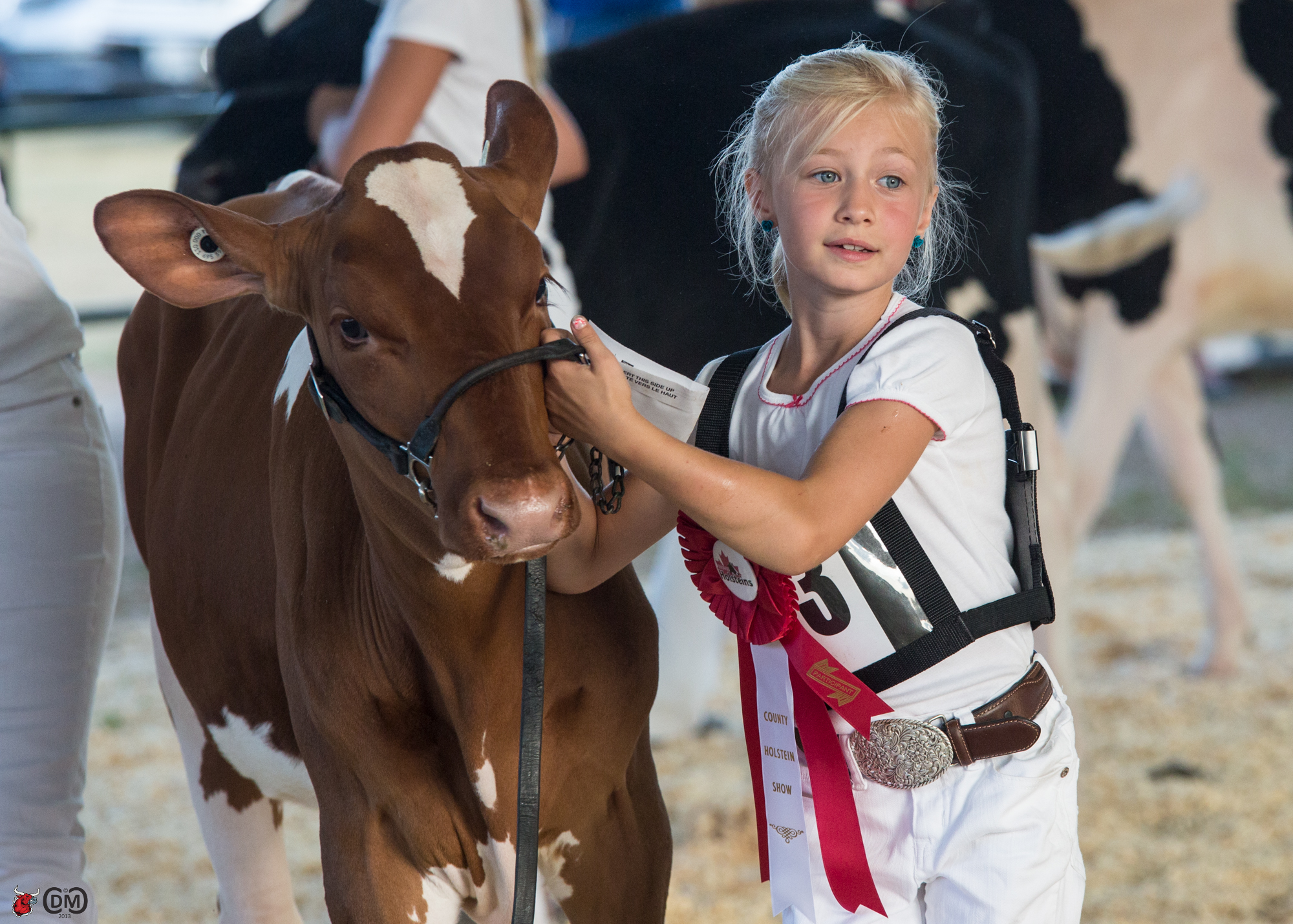
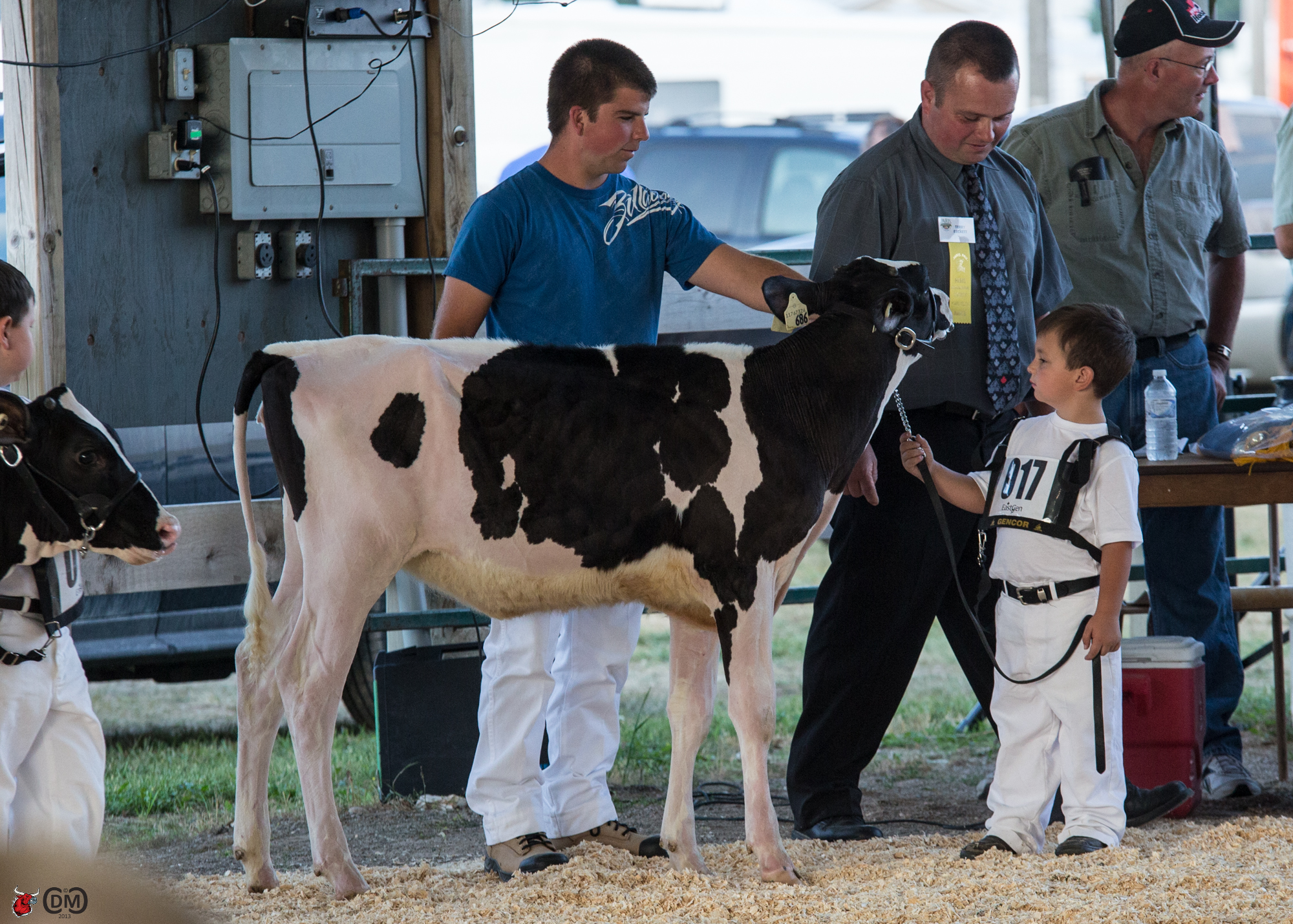
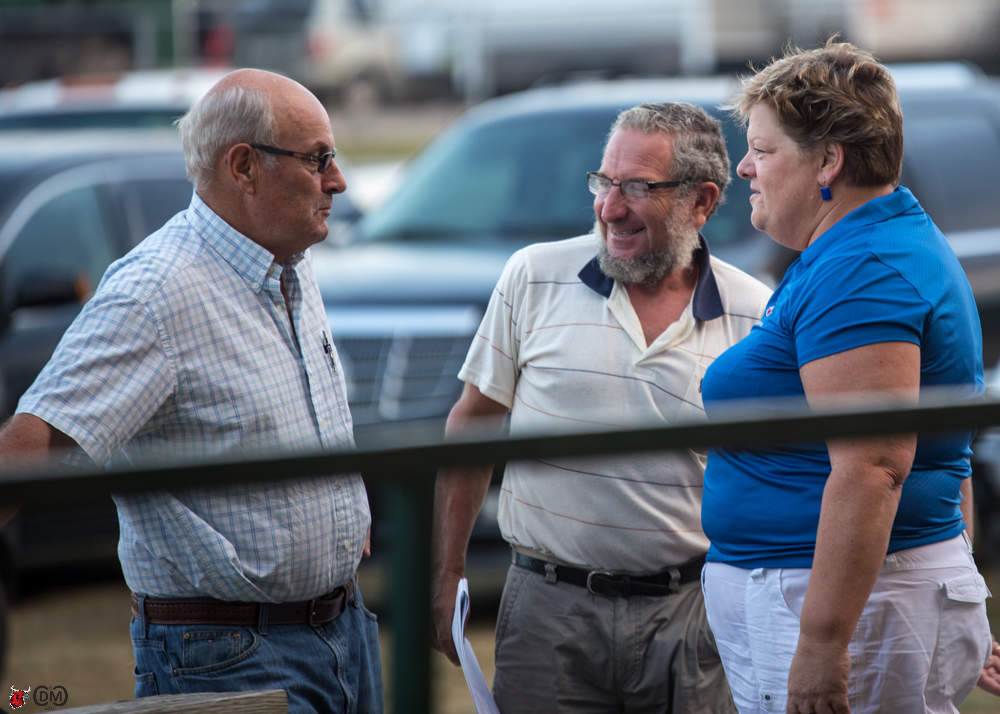
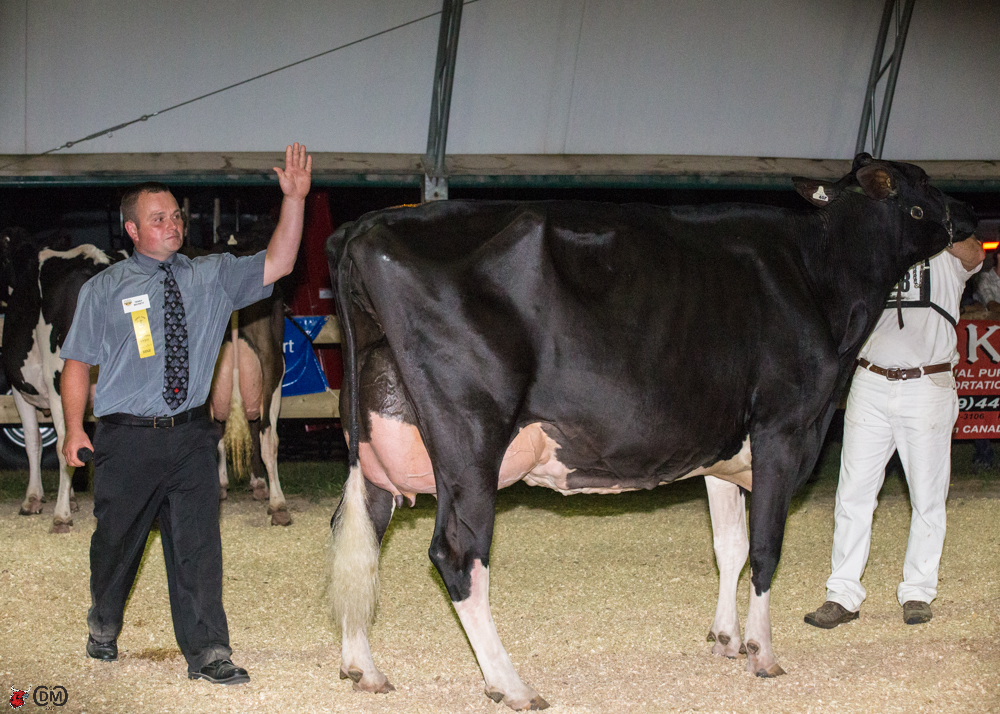

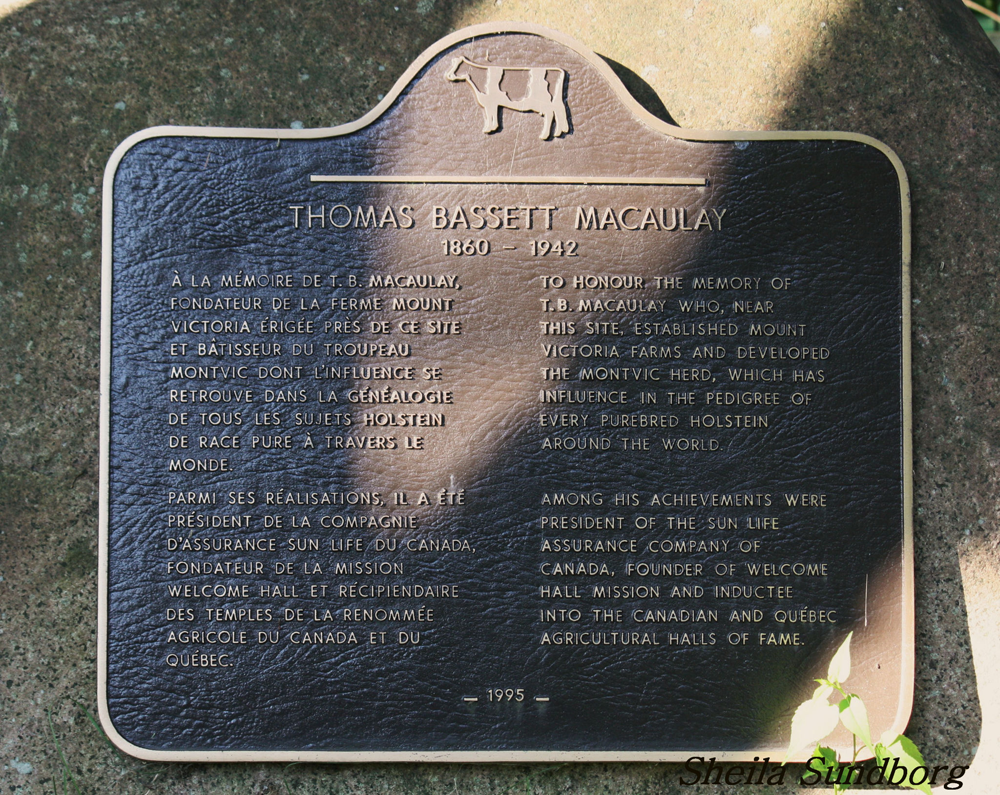
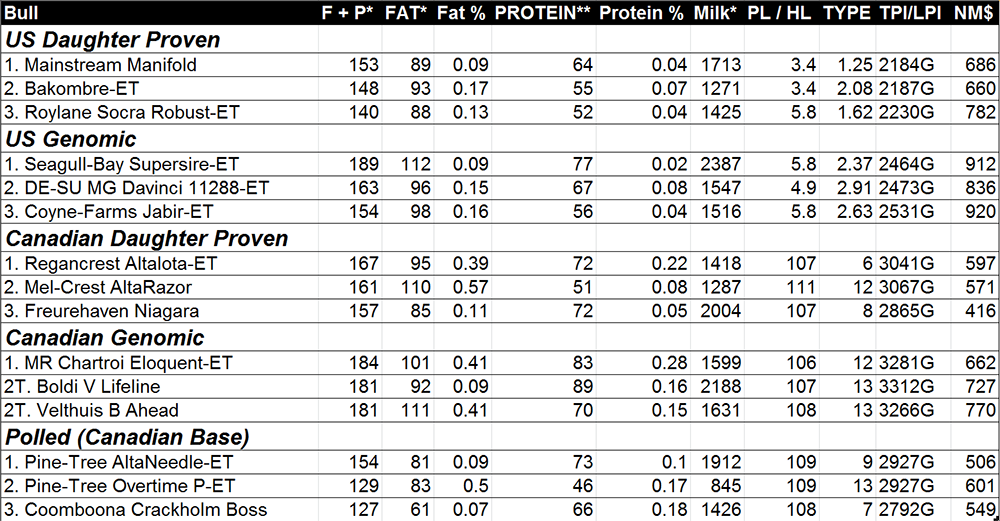
 From soap bubbles of the past to the milk moustaches of today, farming is putting stars in our eyes!
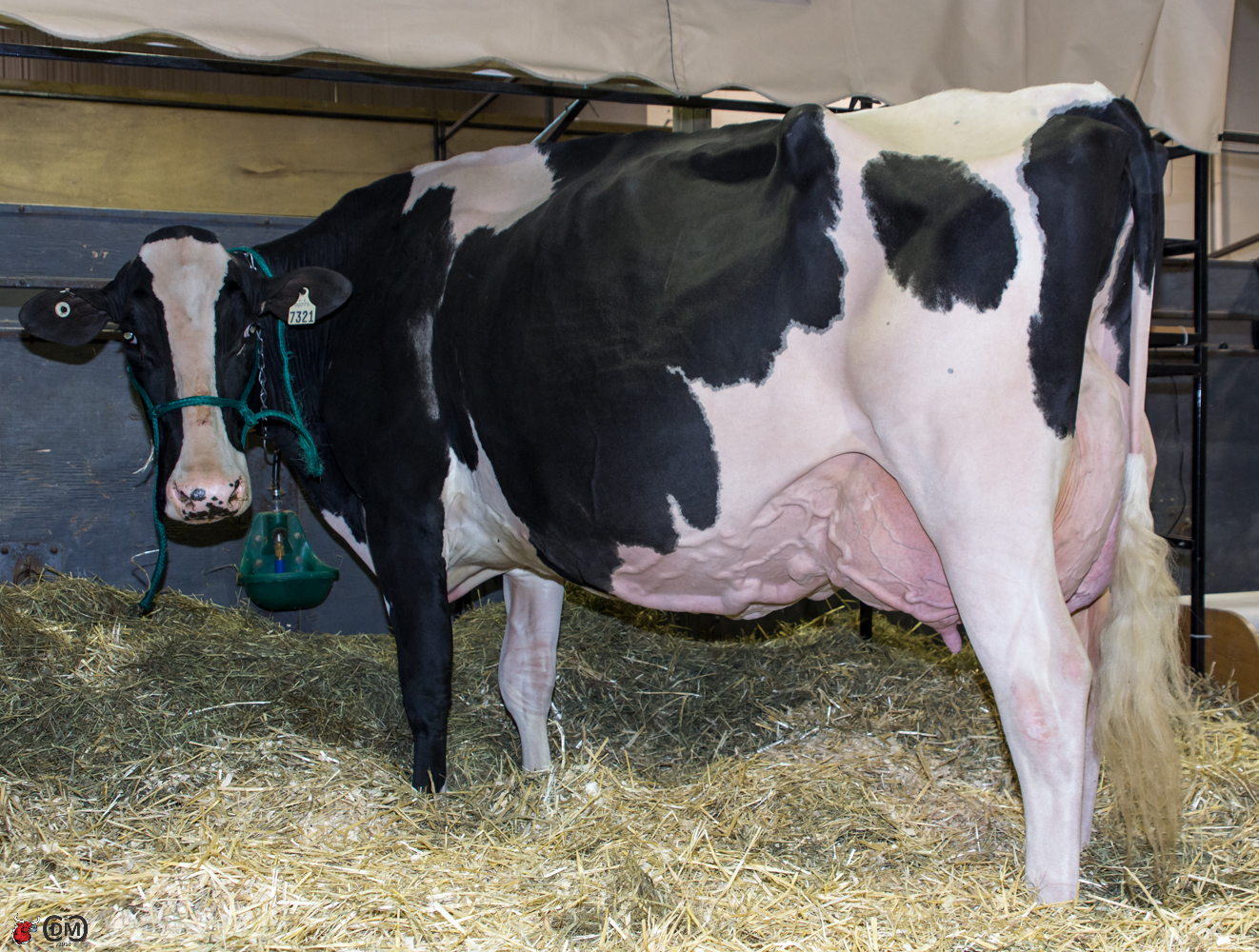
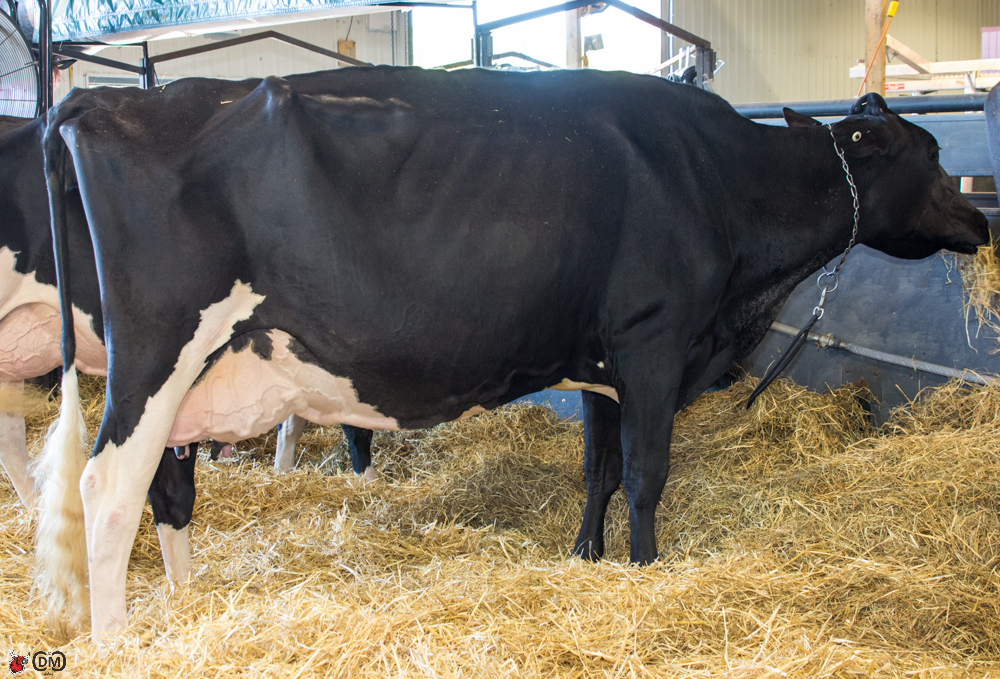
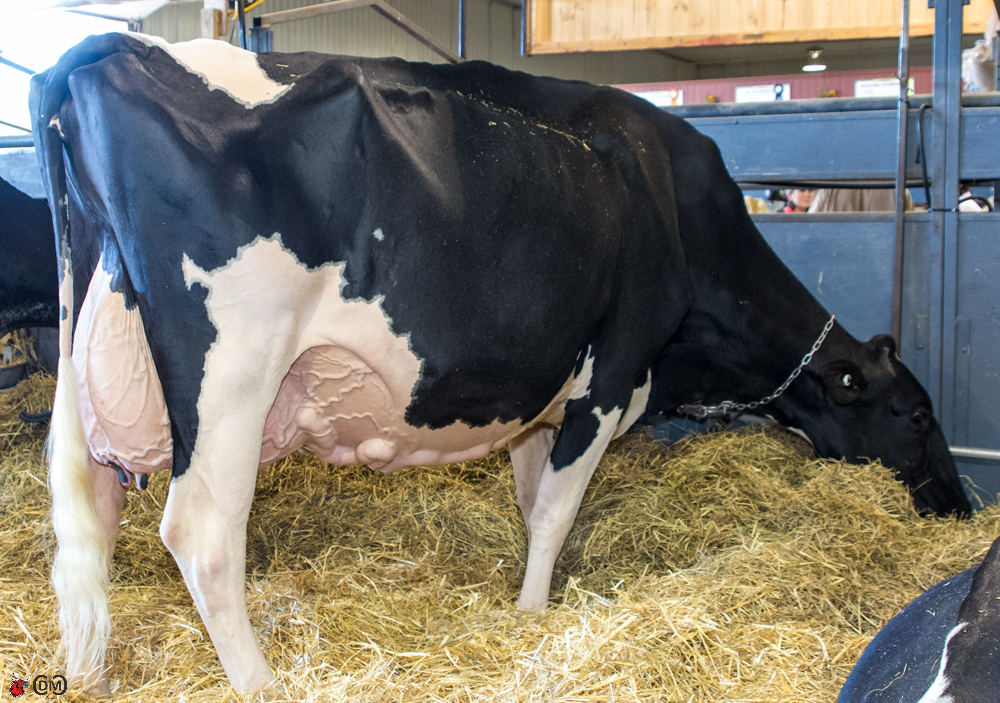

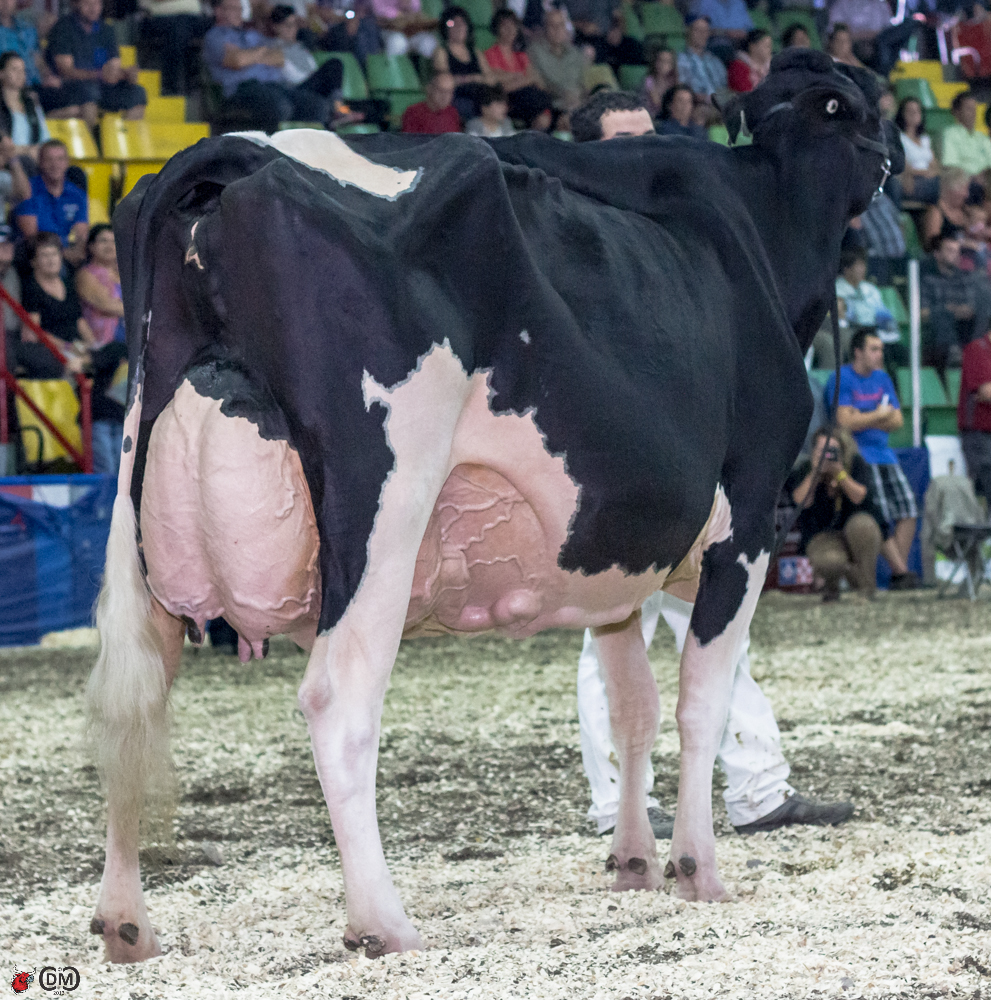
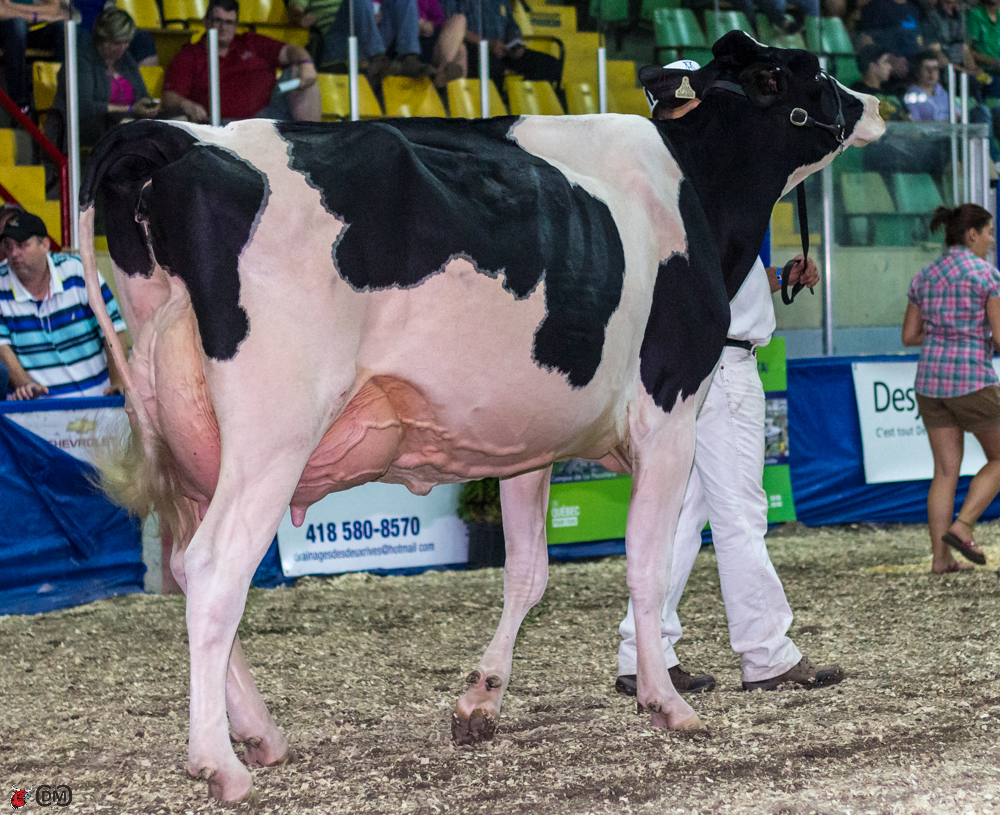
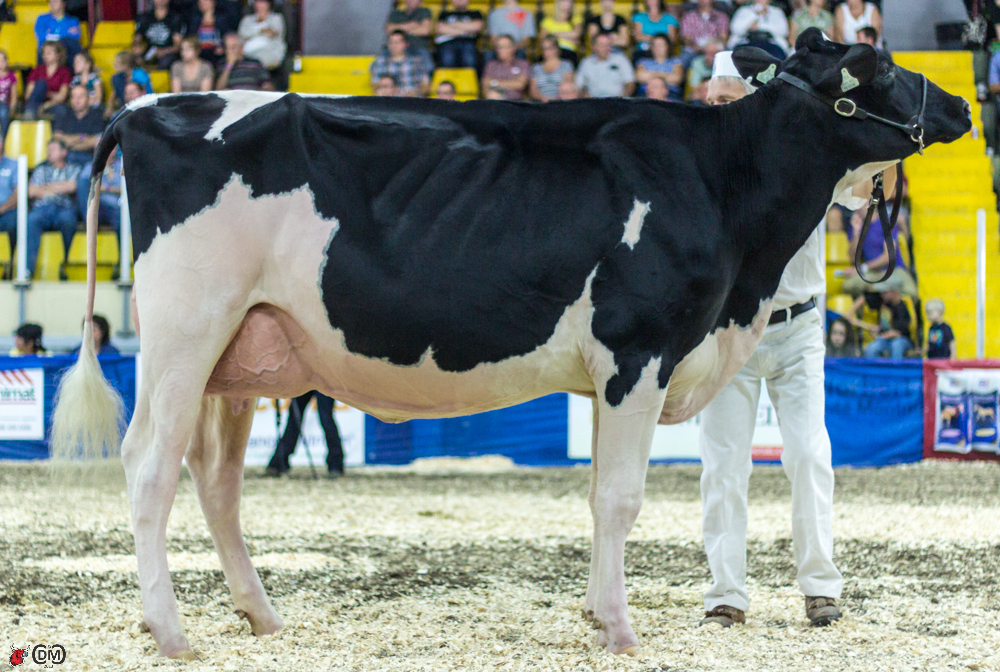
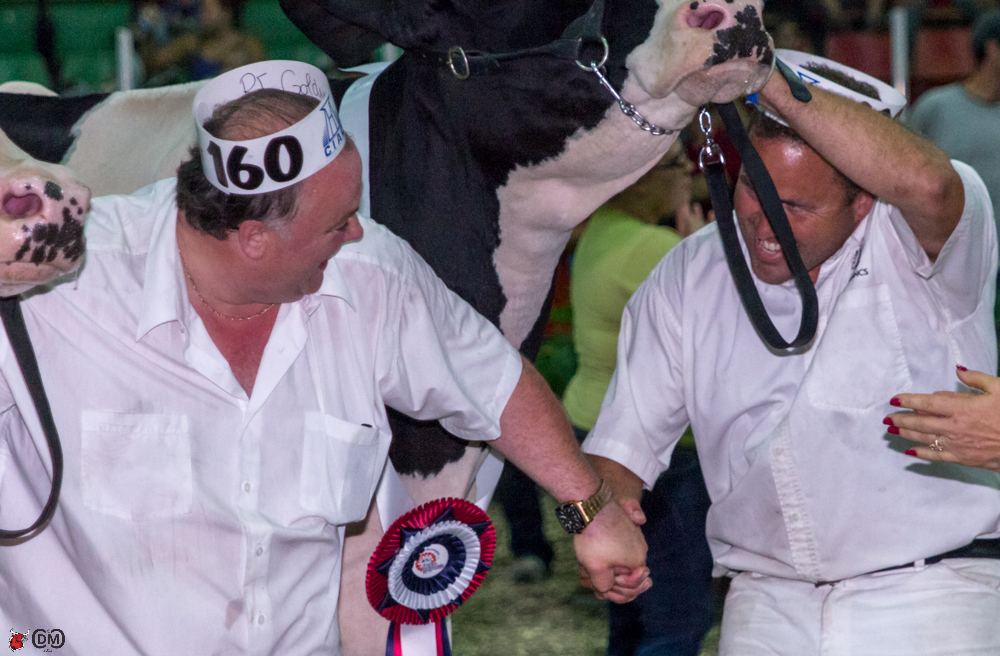
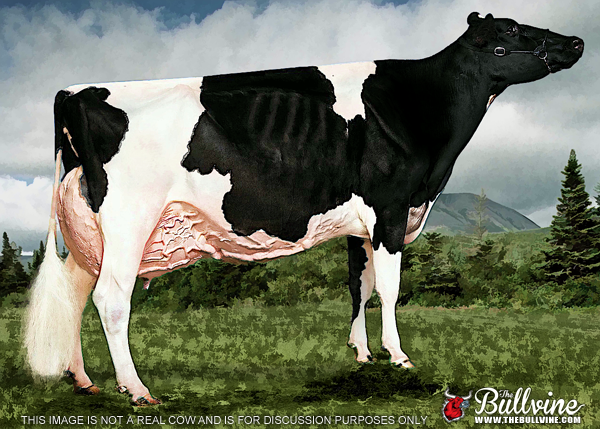
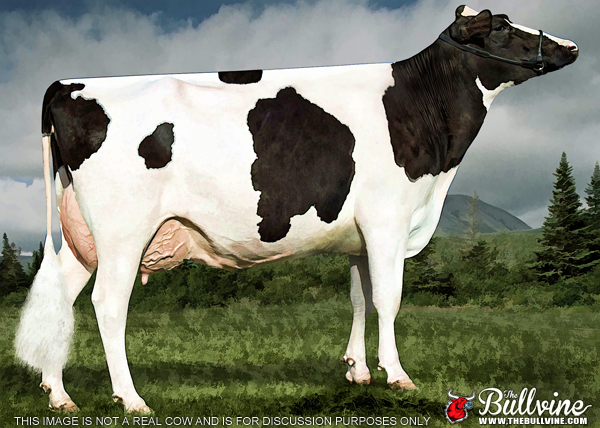

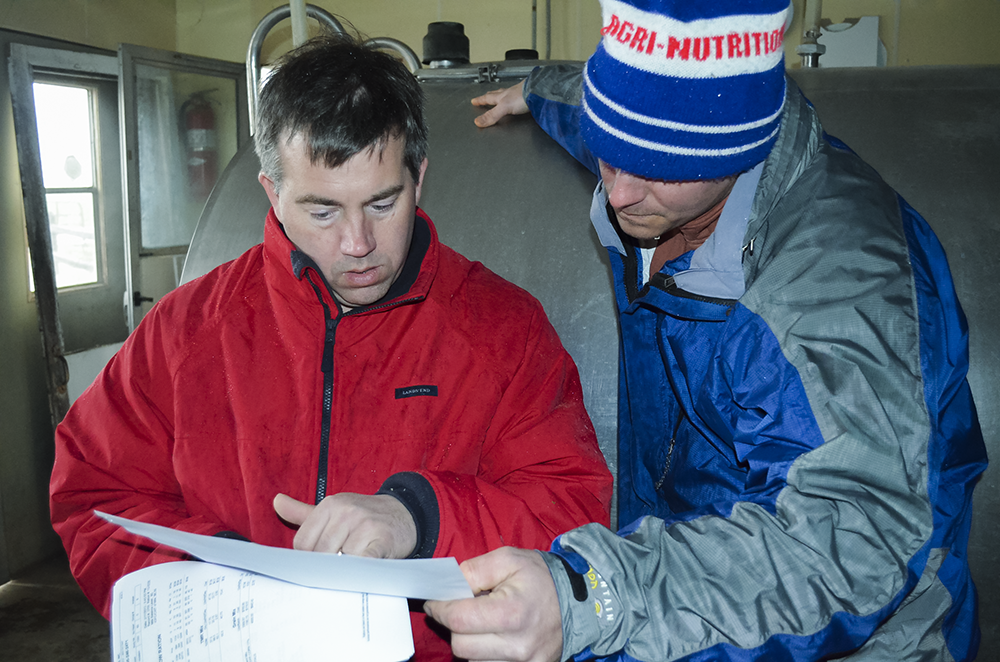
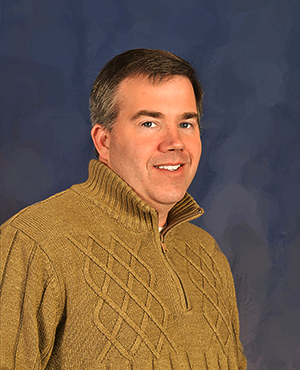 An effective nutrition consultant will investigate and analyze all the issues impacting your cows and thus impacting your success. The Bullvine went to Dr. Scott Bascom to get some insight on the value of working with a nutrition consultant. Dr. Bascom is the Director of Technical Services at
  From the Bunker to the Bank!
 Beyond the Basics to Practical and Personal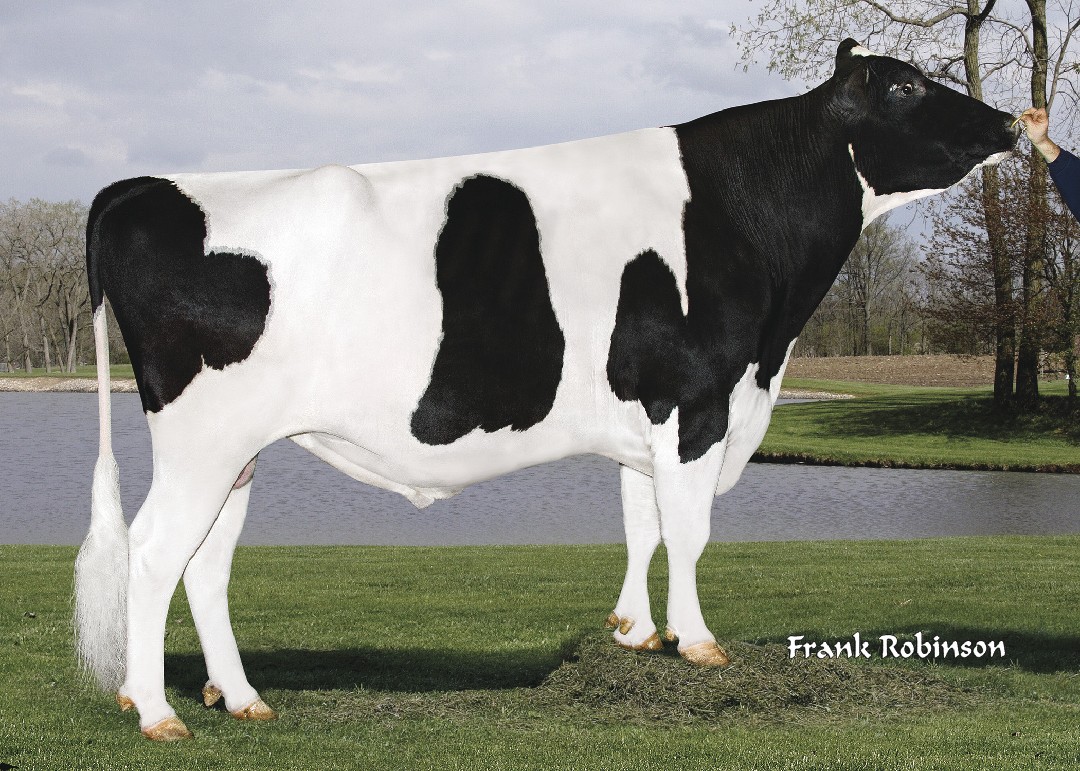
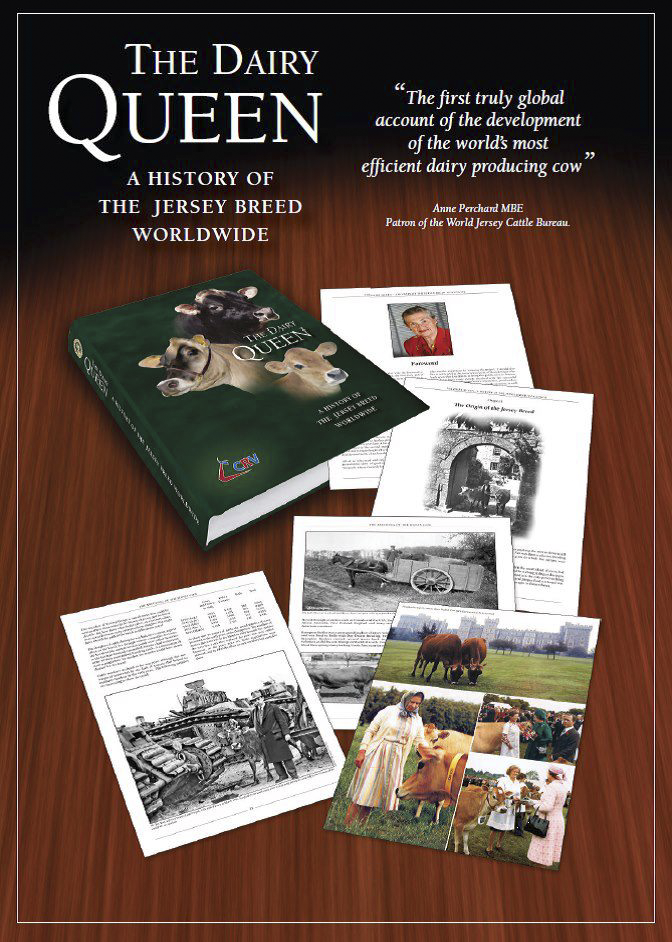
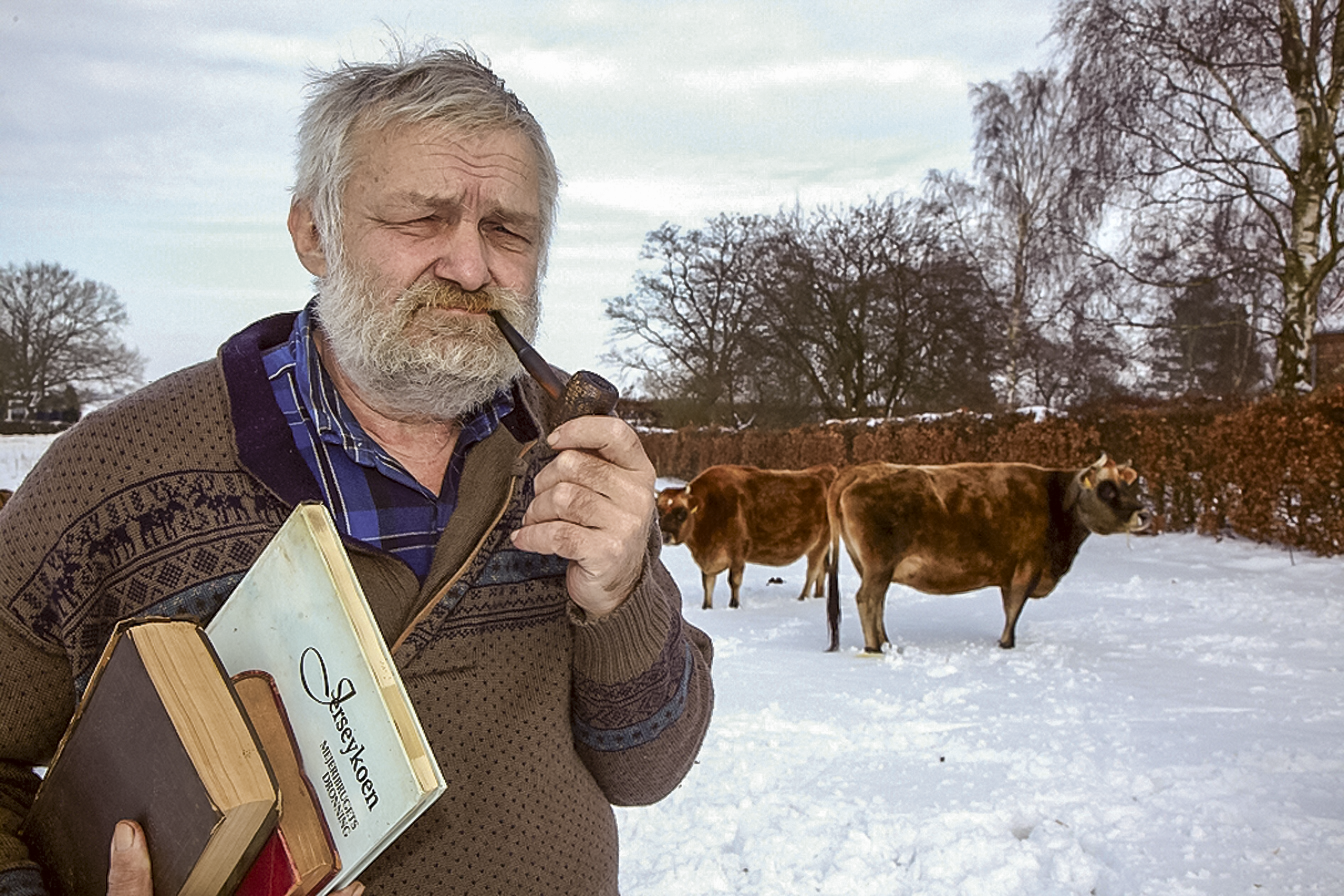
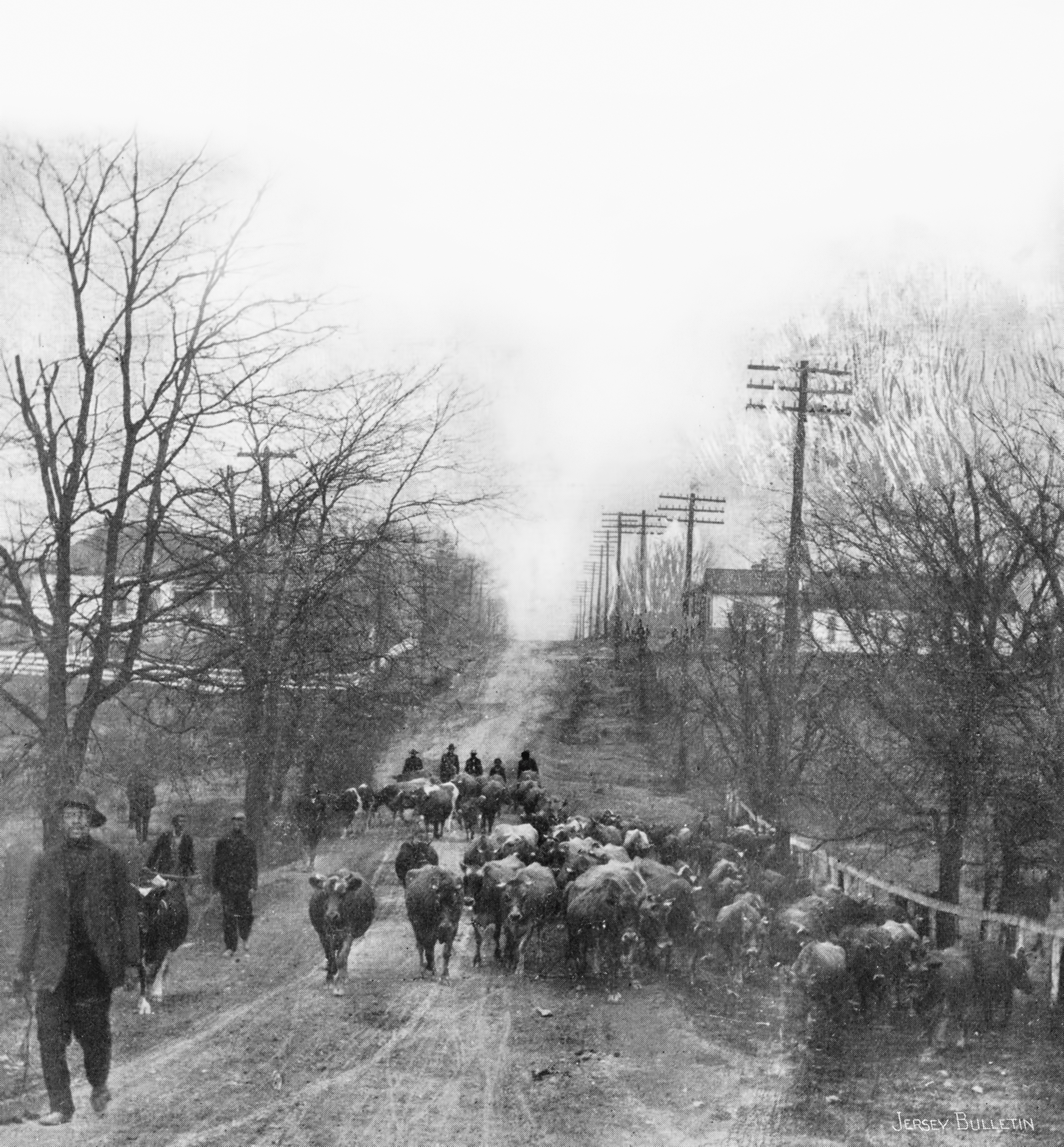 A book for anyone interested in dairy cattle, The Dairy Queen, is the first truly global account of the development of the world’s most efficient dairy producing cow. Derrick points out the unique features of this special book. “It tells the story from the early origins of the breed to modern times, throughout the world. It will appeal to all dairymen interested in cattle breeding and its 300-plus pages with over 700 pictures is a glorious presentation of the Jersey breed. The great cattle breeders and individuals who influenced the historical progress of the Jersey cow are well documented along with anecdotes of incidents that literally changed the progress of the breed. For example, the concerns of cattle breeders in the Island of Jersey in 1947 when dockworkers refused to load cattle onto ships for export – they were concerned about shortage of milk for island families following the five-year occupation by German forces in World War II.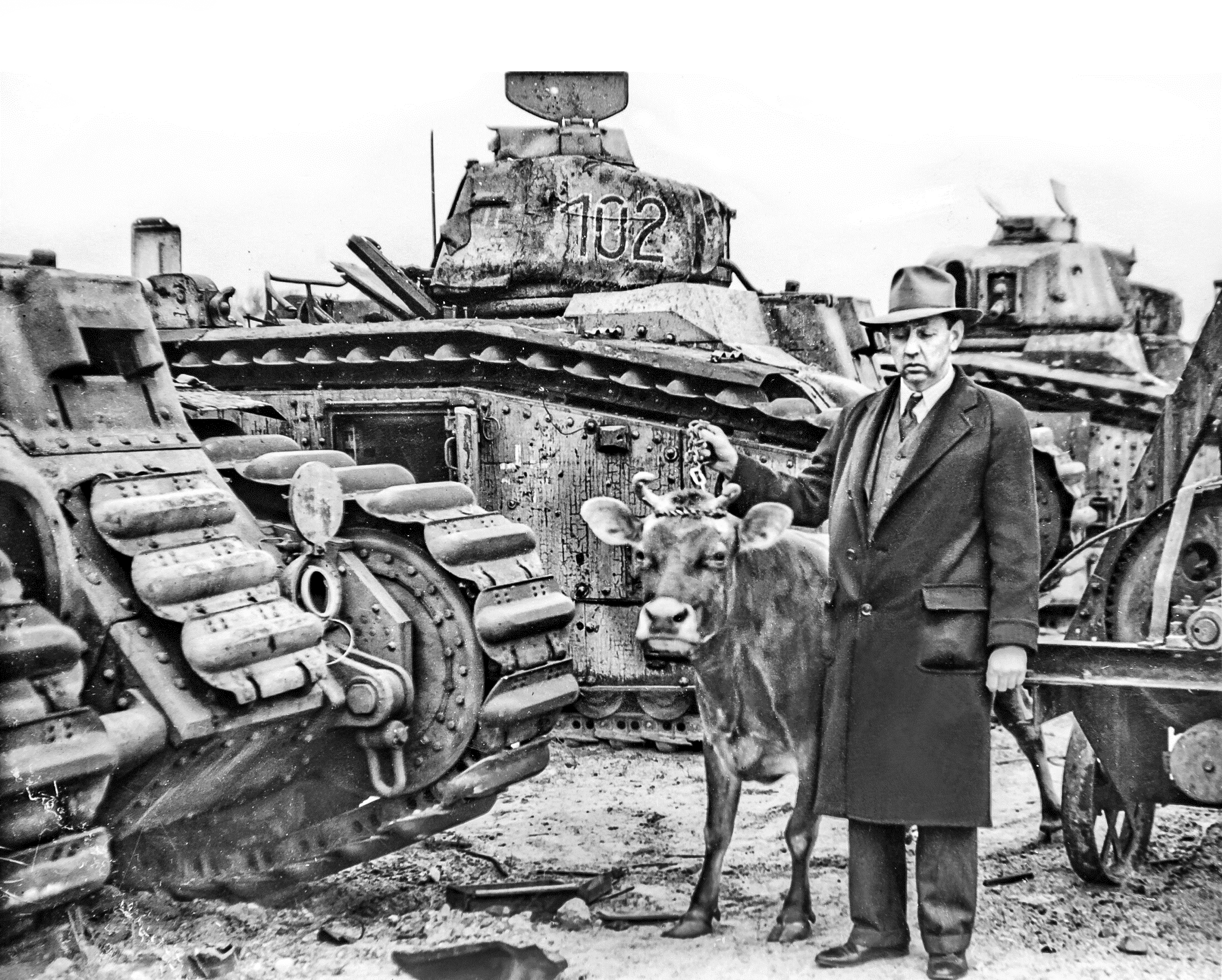
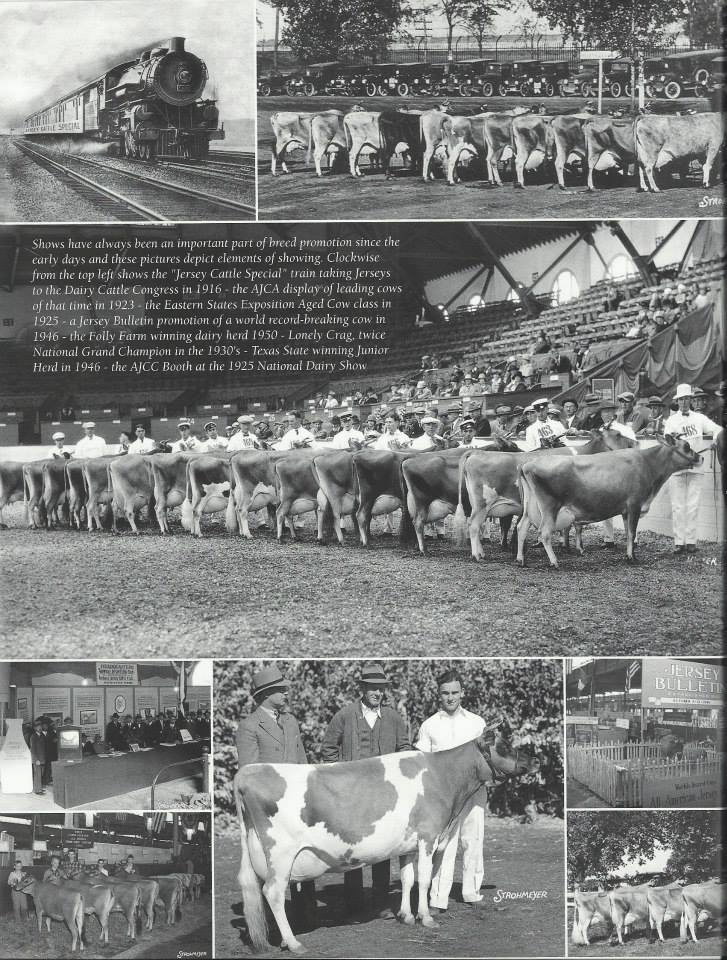
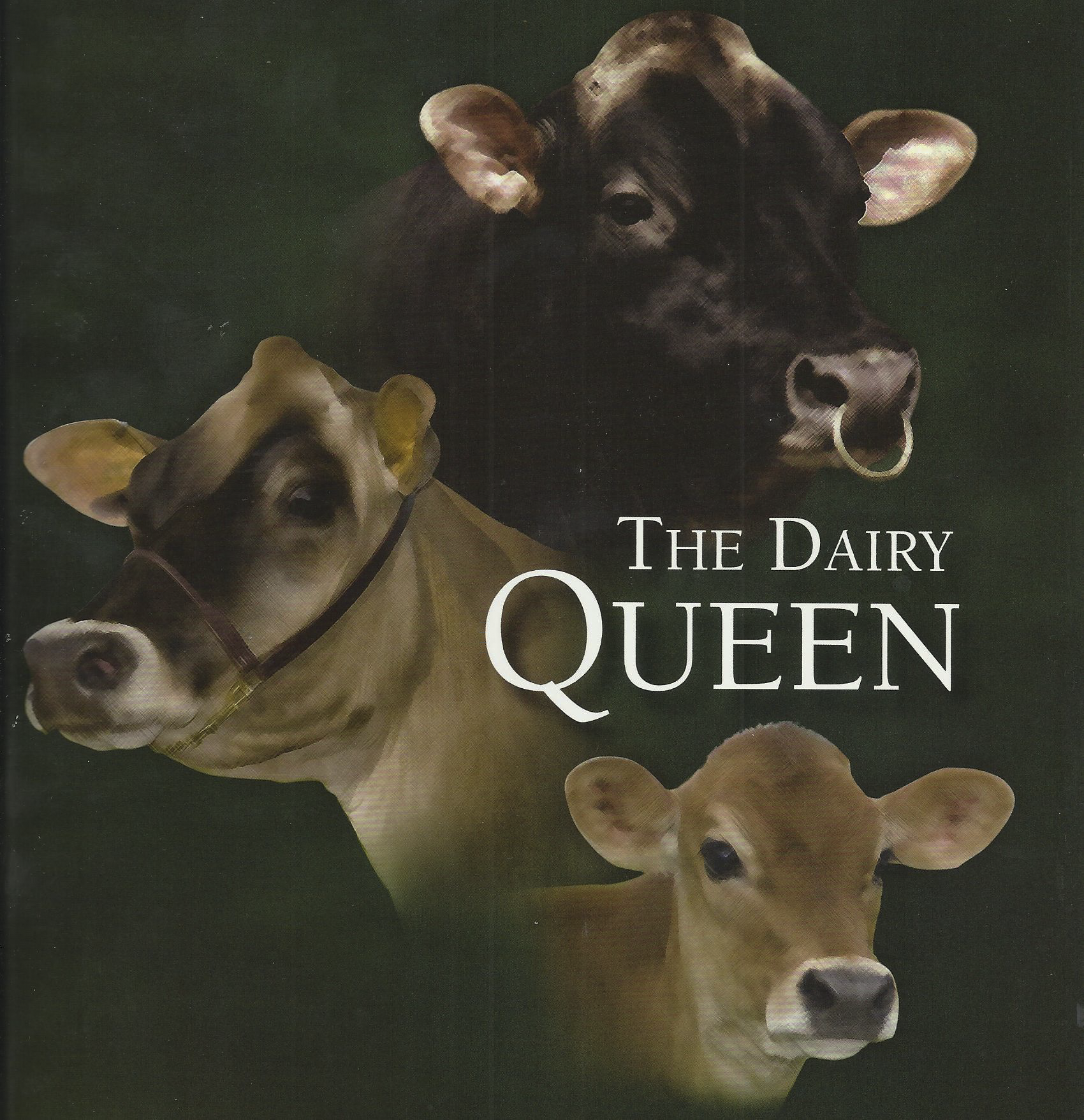
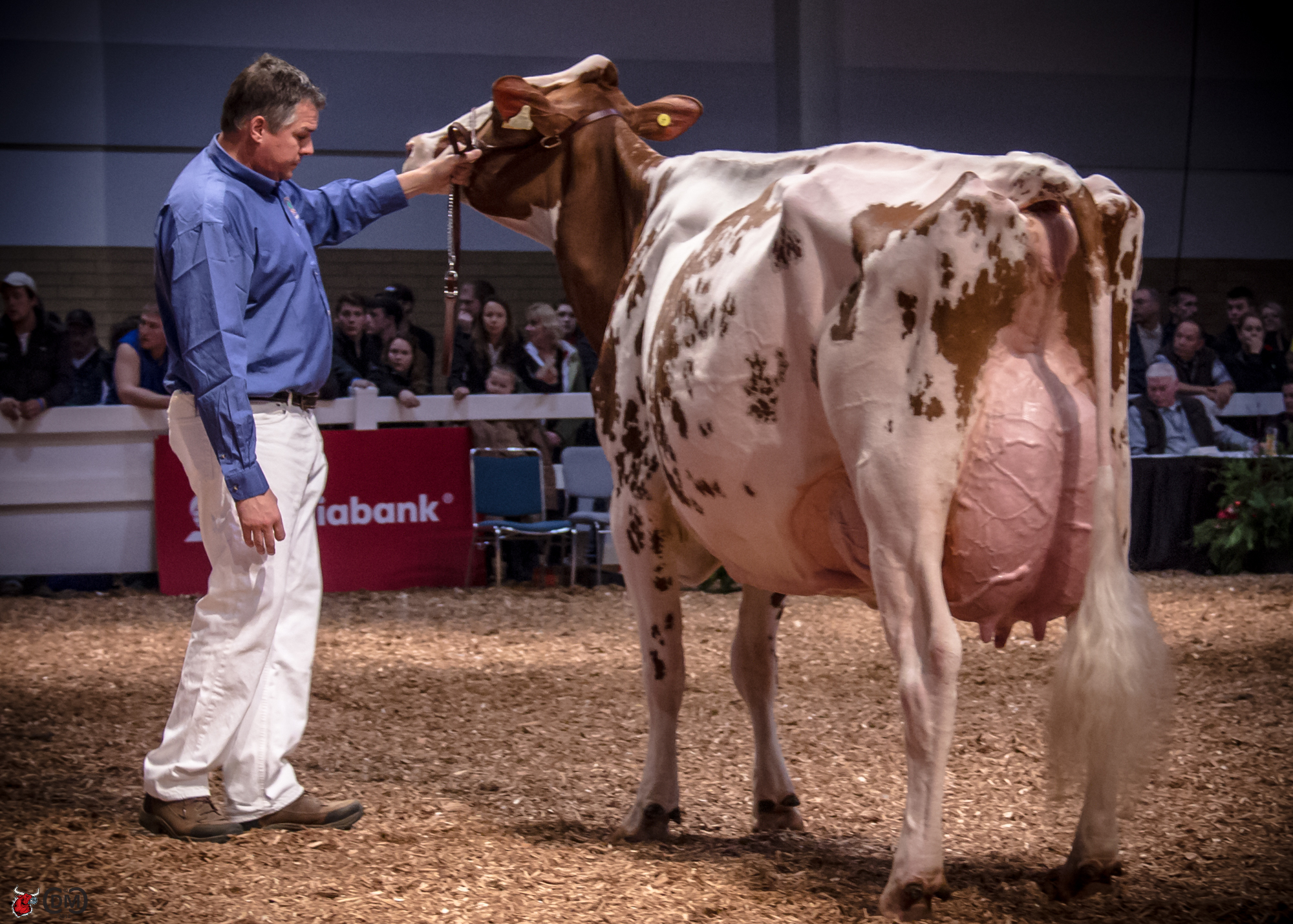
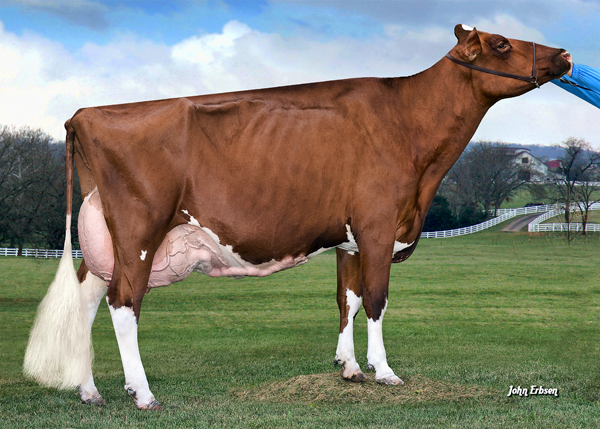
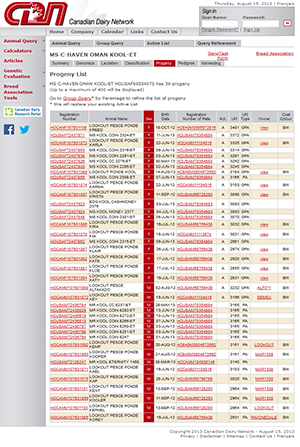 Step Three – Check Every Animal Detail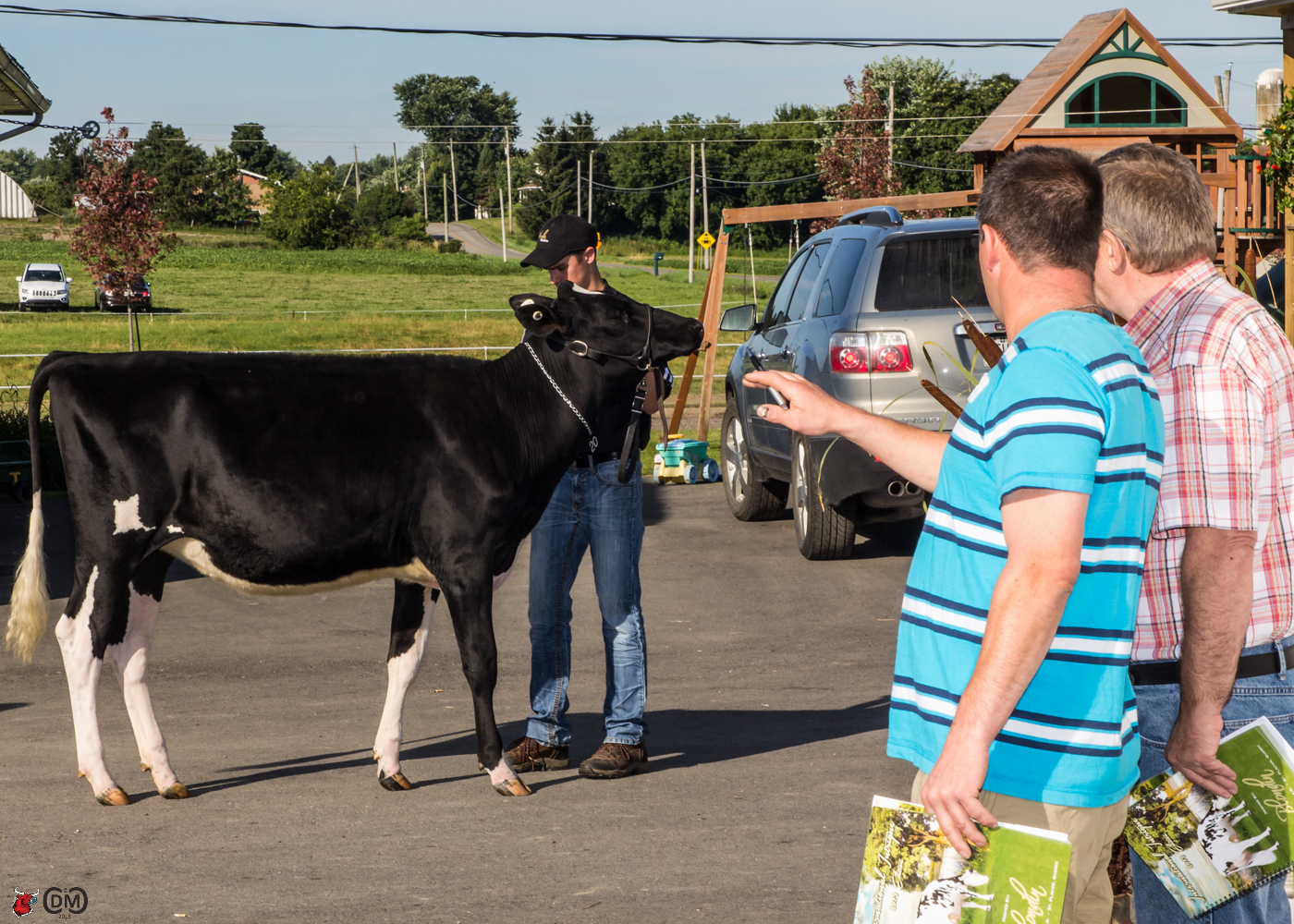
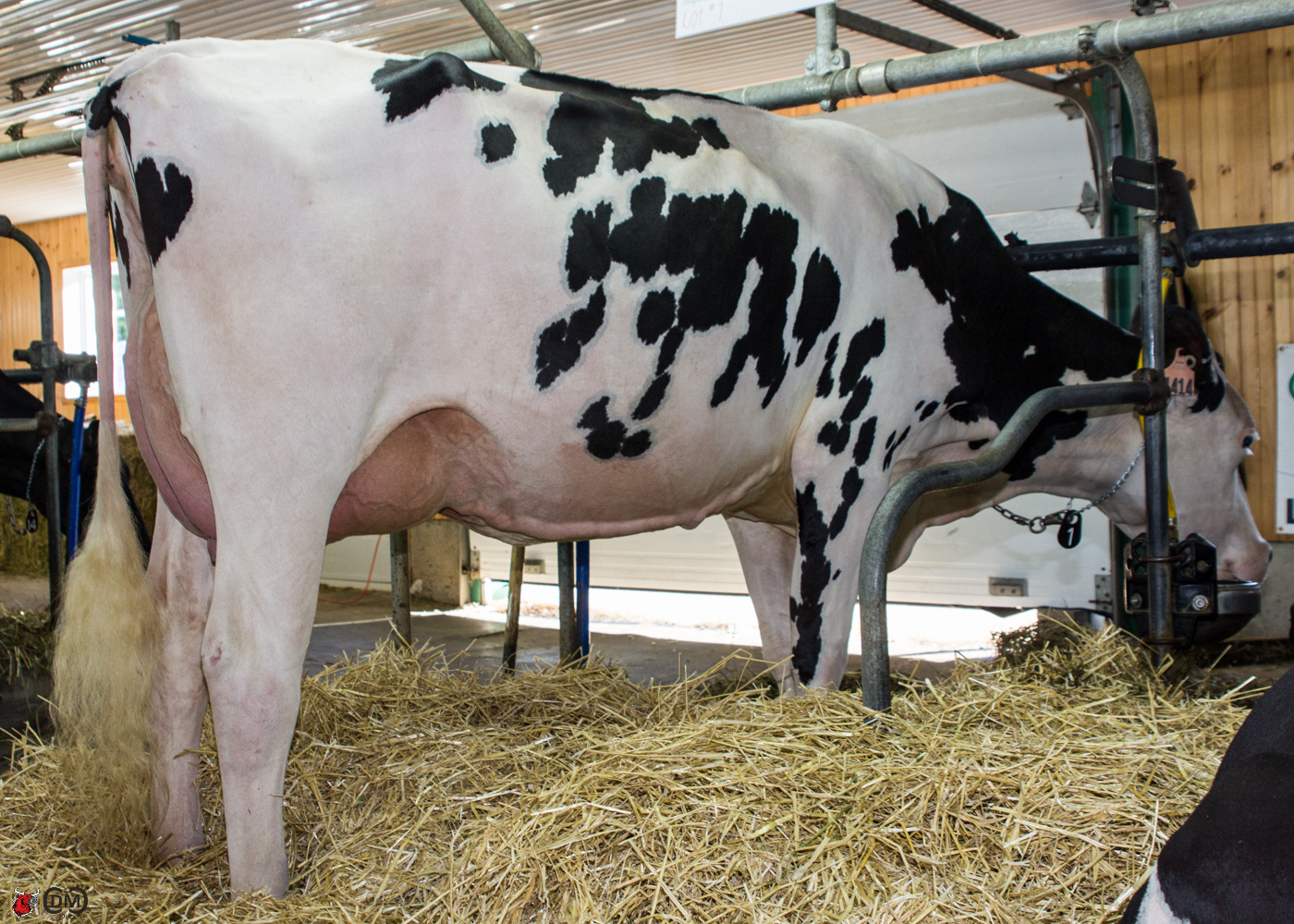
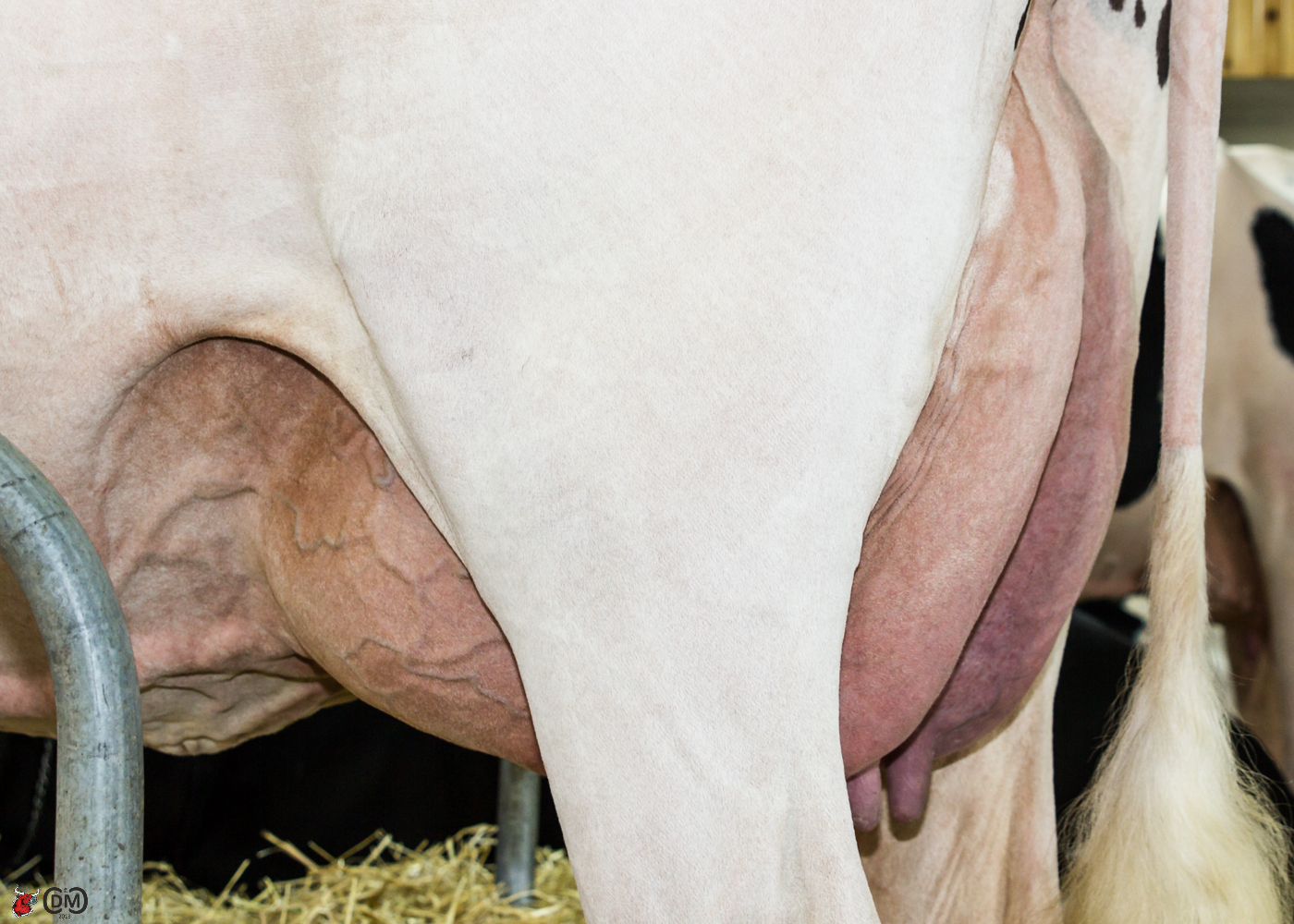
![USA_Flag_Vector_Celebrate_Memorial_Day_Clipart-1LG[1]](https://www.thebullvine.com/wp-content/uploads/2013/08/USA_Flag_Vector_Celebrate_Memorial_Day_Clipart-1LG1.png) USA
USA![canada[1]](https://www.thebullvine.com/wp-content/uploads/2013/08/canada1.gif) Canada
Canada![11949922401698189883netherlands.svg.hi[1]](https://www.thebullvine.com/wp-content/uploads/2013/08/11949922401698189883netherlands.svg_.hi1_.png) Netherlands
Netherlands![1195443428962446499germany_flag_blacker47_01.svg.hi[1]](https://www.thebullvine.com/wp-content/uploads/2013/08/1195443428962446499germany_flag_blacker47_01.svg_.hi1_.png) Germany
Germany![800px-Flag_of_Italy.svg[1]](https://www.thebullvine.com/wp-content/uploads/2013/08/800px-Flag_of_Italy.svg1_.png) Italian
Italian![1194989019702707184british_flag_felipescu_01r.svg.hi[1]](https://www.thebullvine.com/wp-content/uploads/2013/08/1194989019702707184british_flag_felipescu_01r.svg_.hi1_.png) United Kingdom
United Kingdom Other news from this area reports that a2 brand milk comes from cows specially selected to produce A2 beta-casein protein rather than A1. Most cow milk contains both types of beta-casein protein – A2 and A1. The A1 beta-casein protein has been linked with digestion and health issues so having more A2 is a plus.
 While not leading the consumption of flavored milk, North America is certainly not out of this tasteful picture. Just in time for birthday celebrations on Independence Day




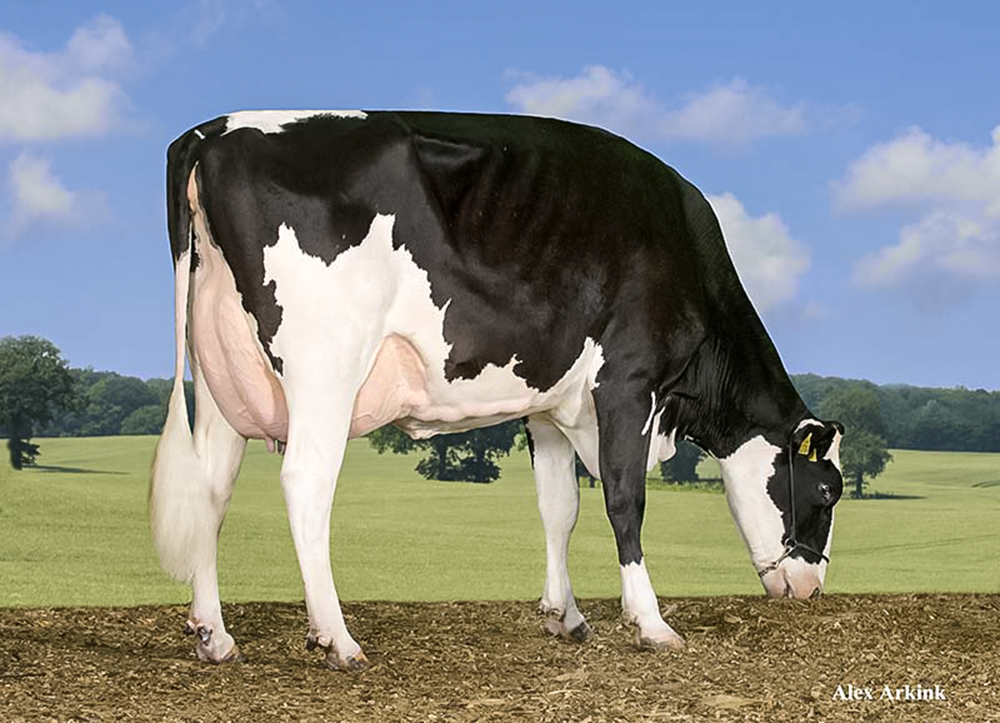
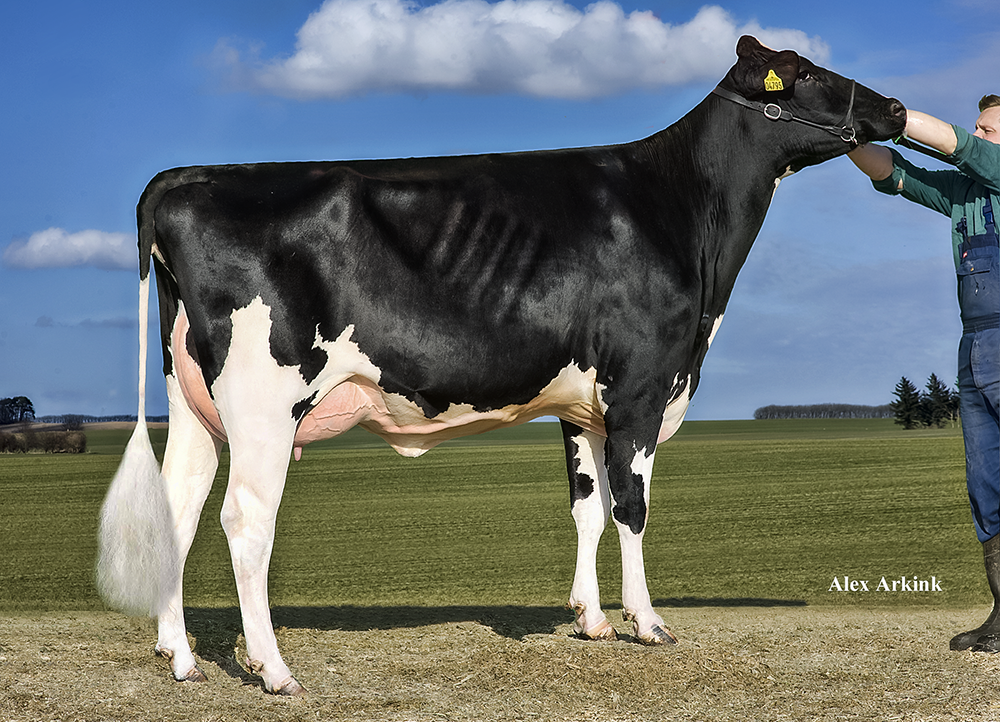
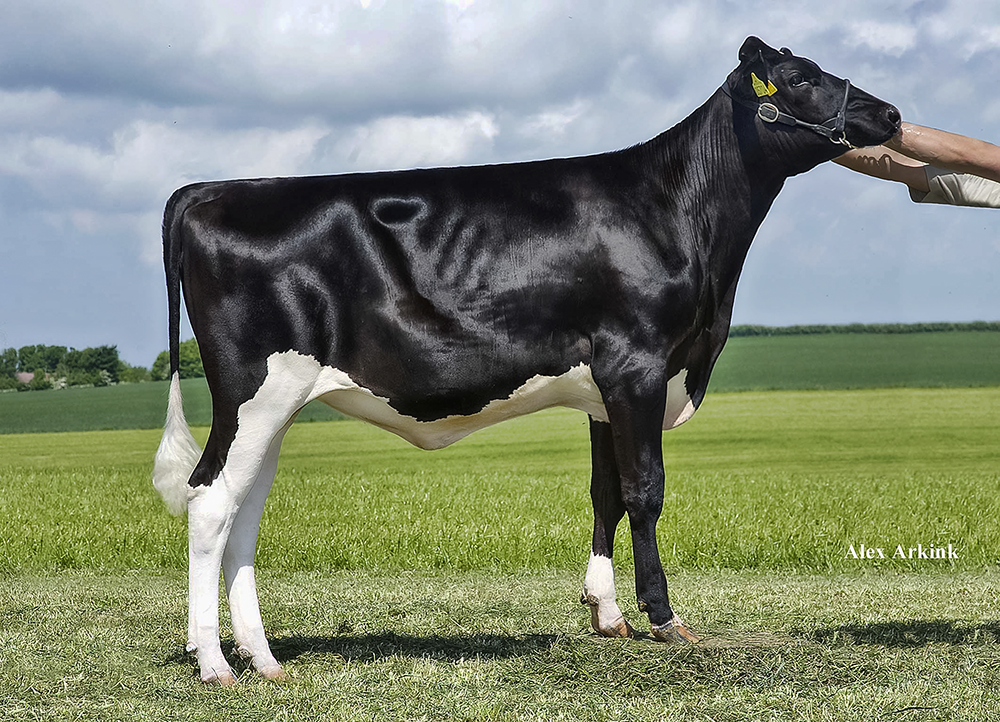
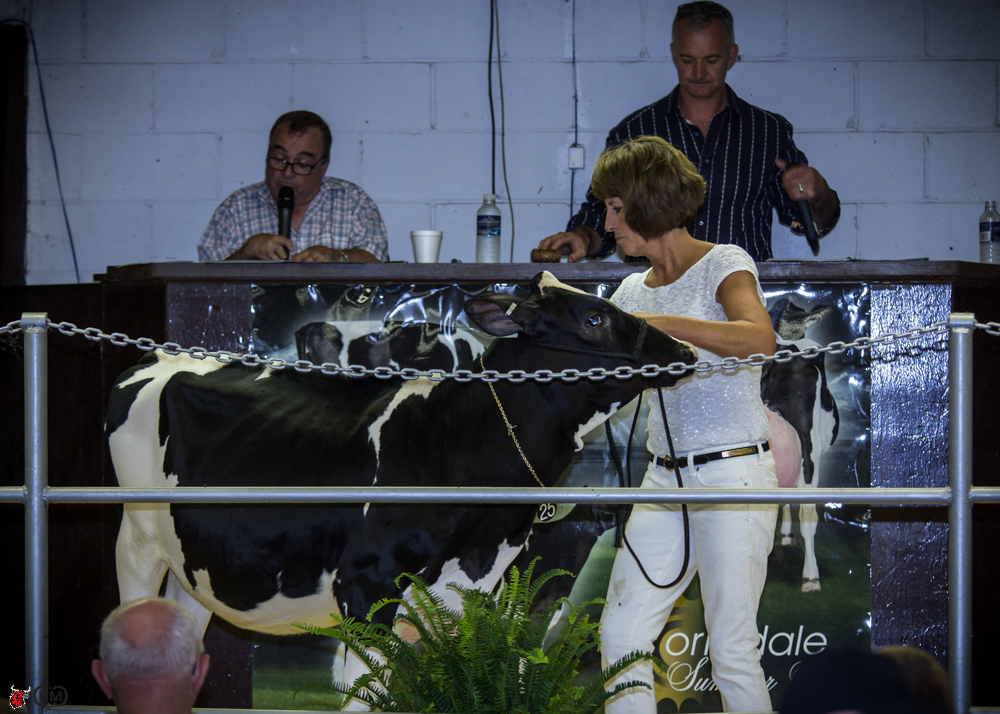
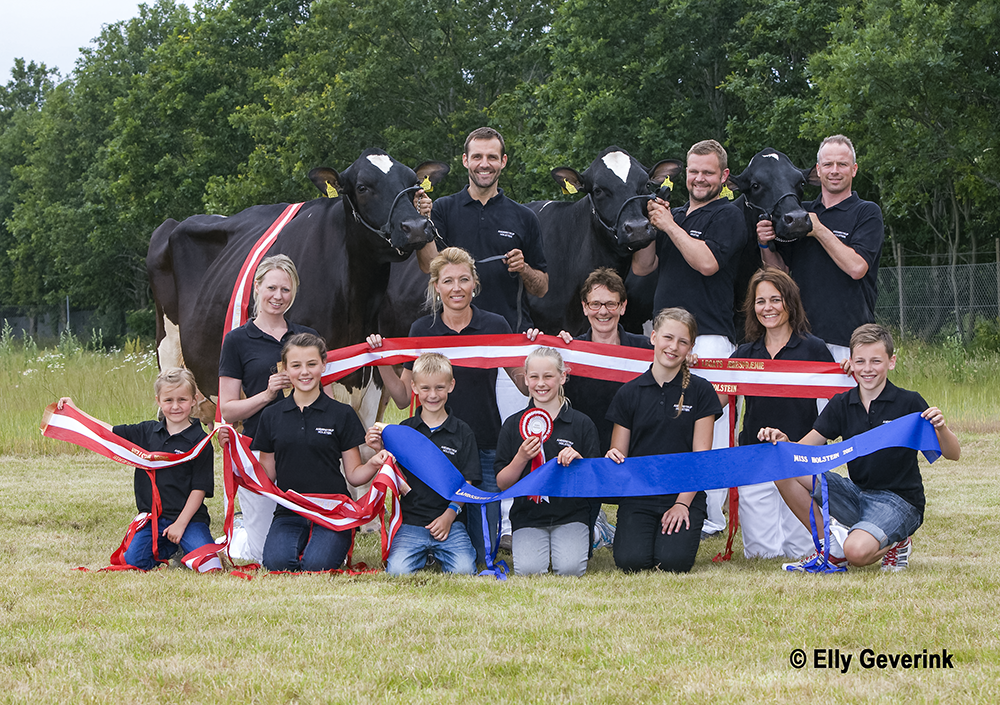
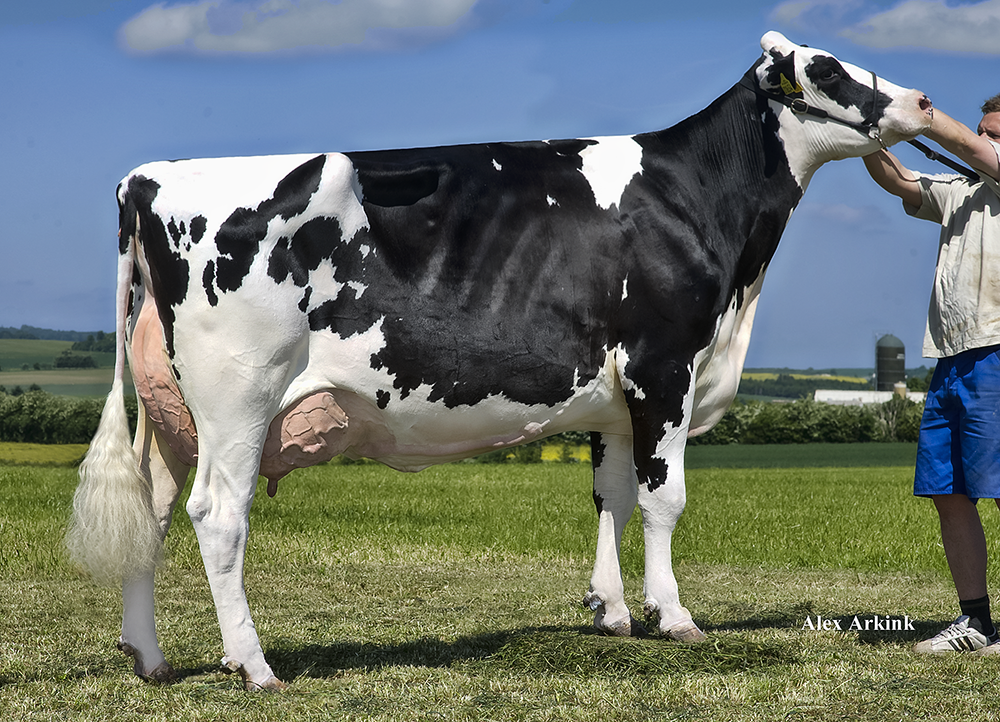
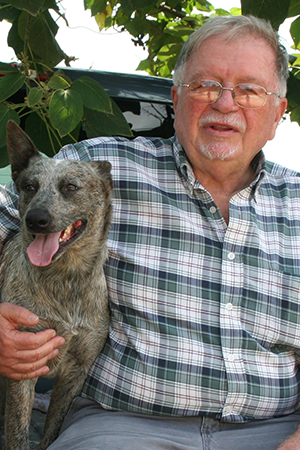

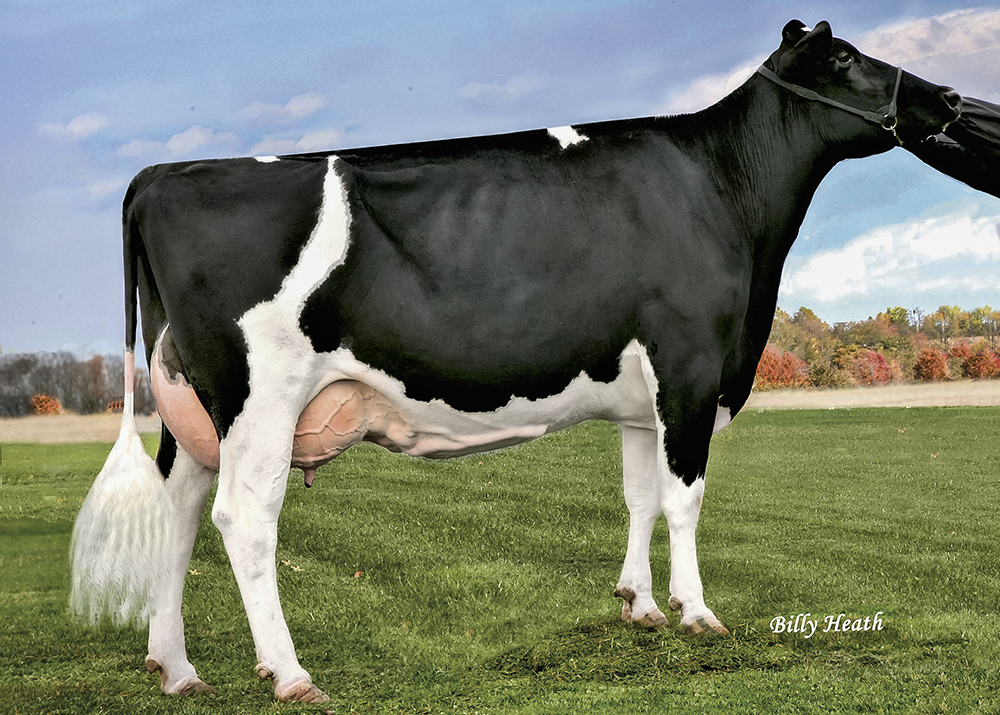
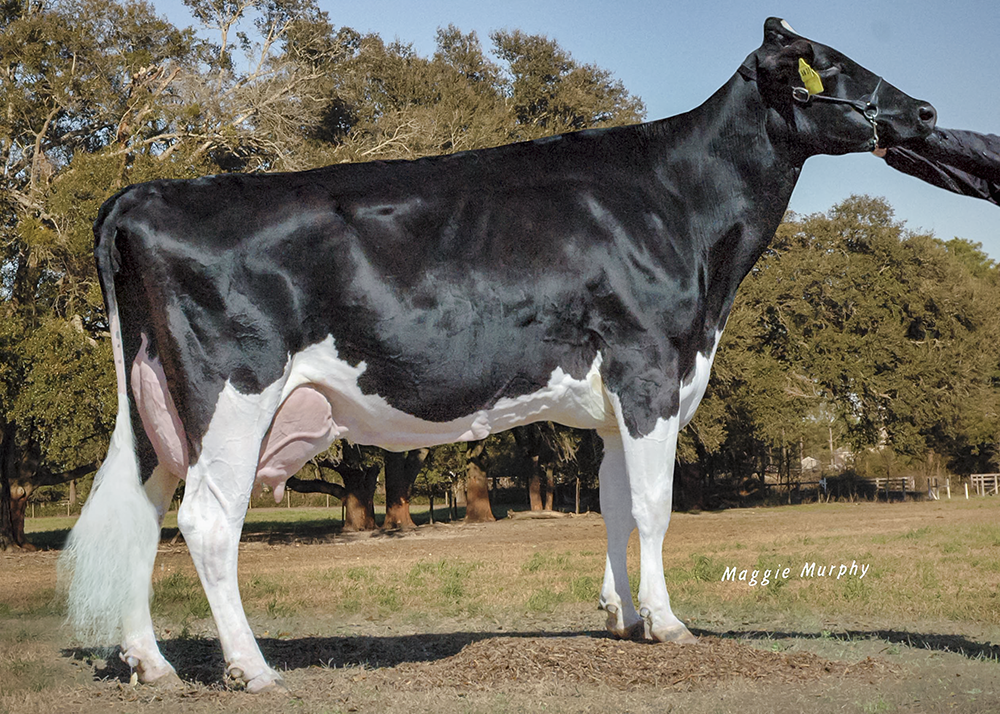
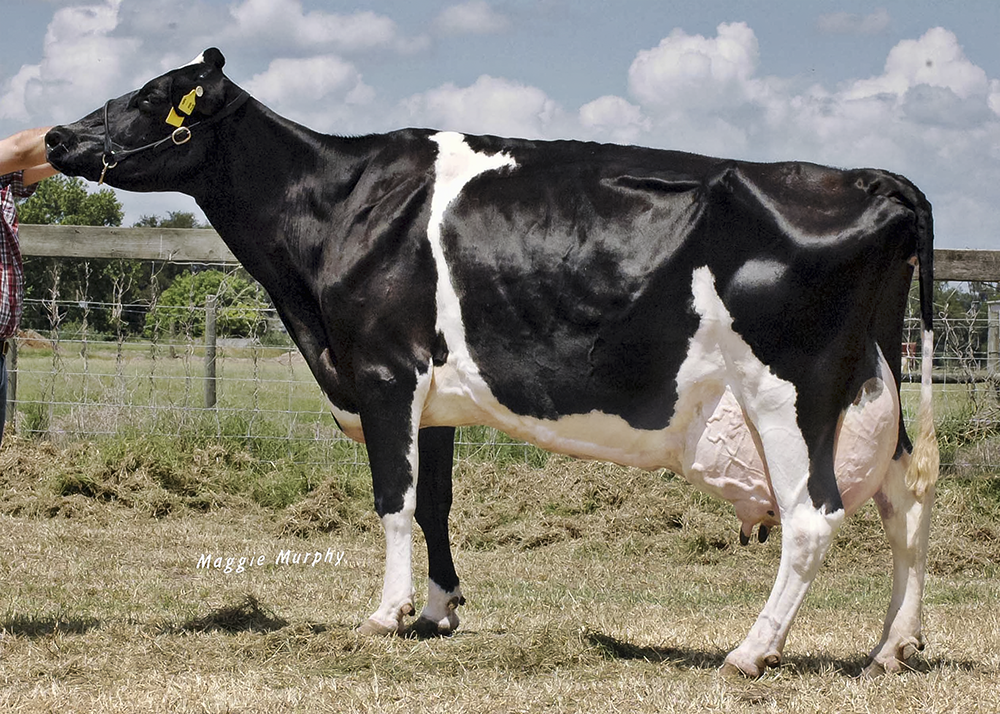
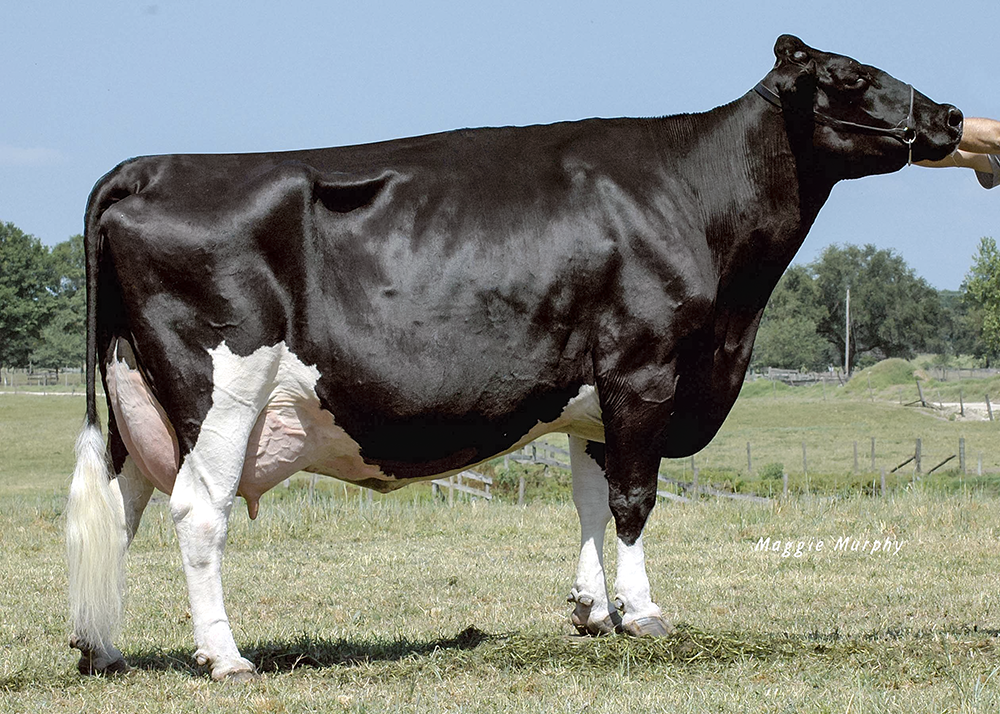
![VMSFullCow[1]](https://www.thebullvine.com/wp-content/uploads/2013/07/VMSFullCow1.png) Designed as the next tool for top herds
Designed as the next tool for top herds Multi-Purpose Tool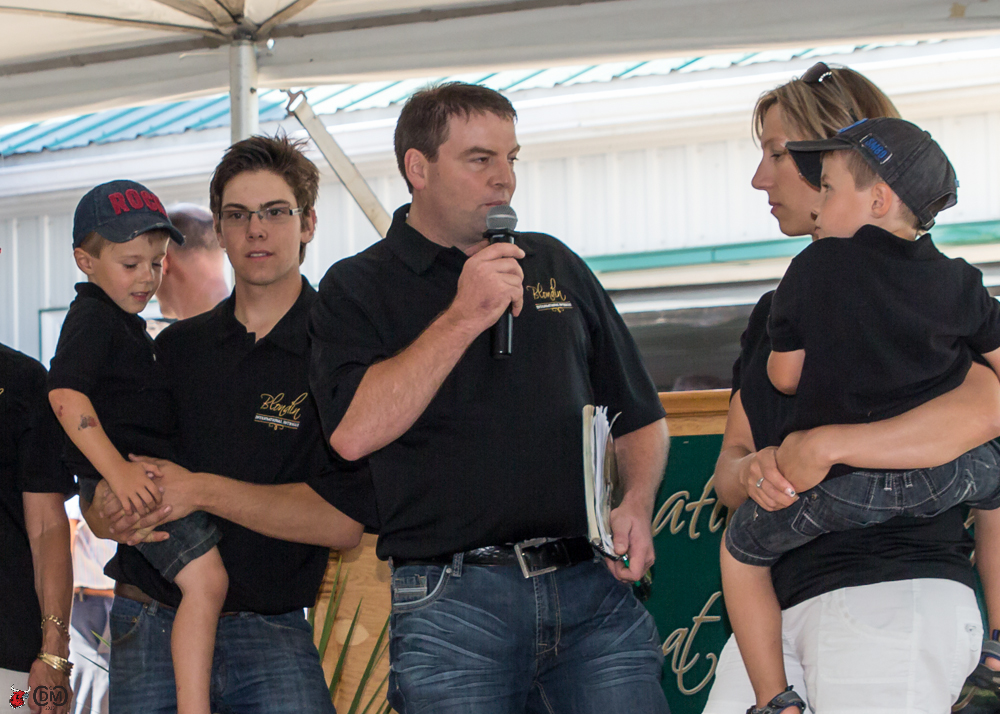
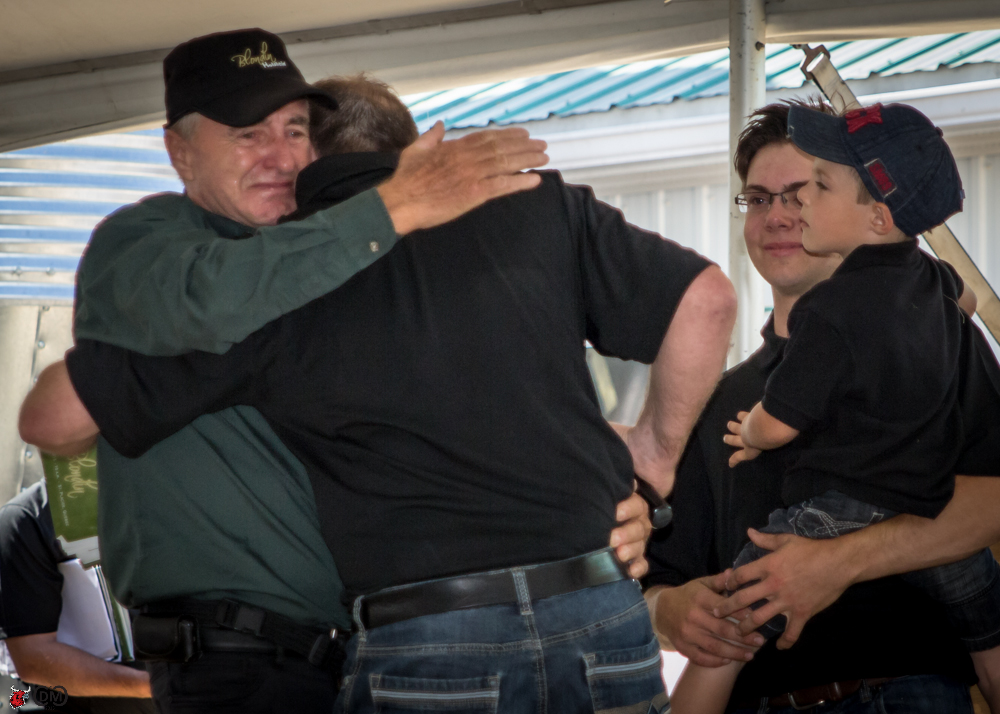
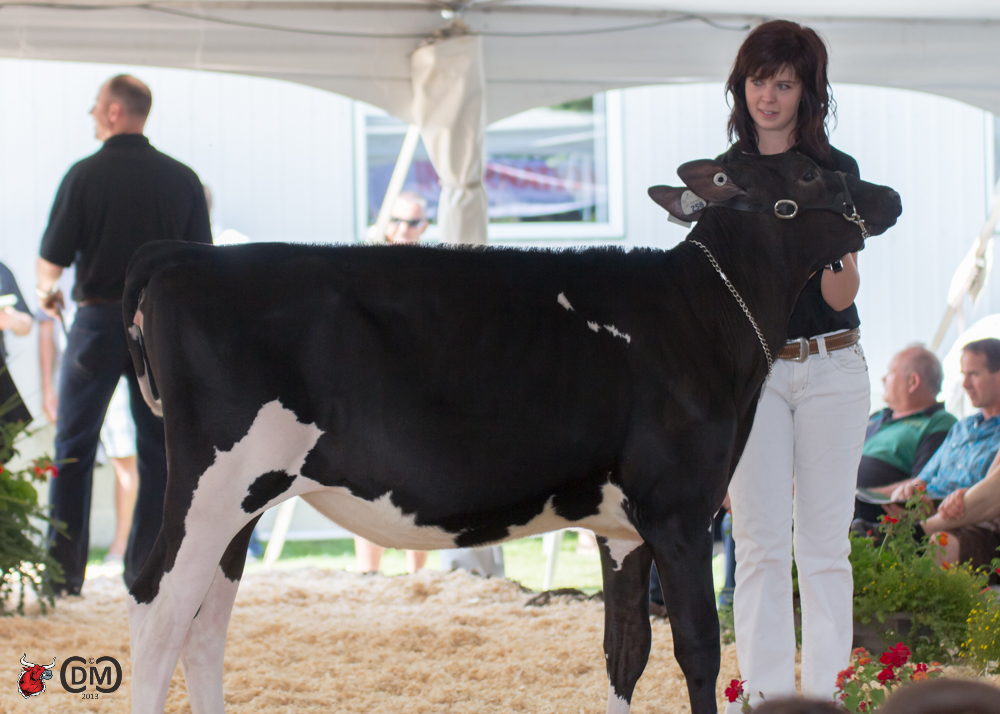
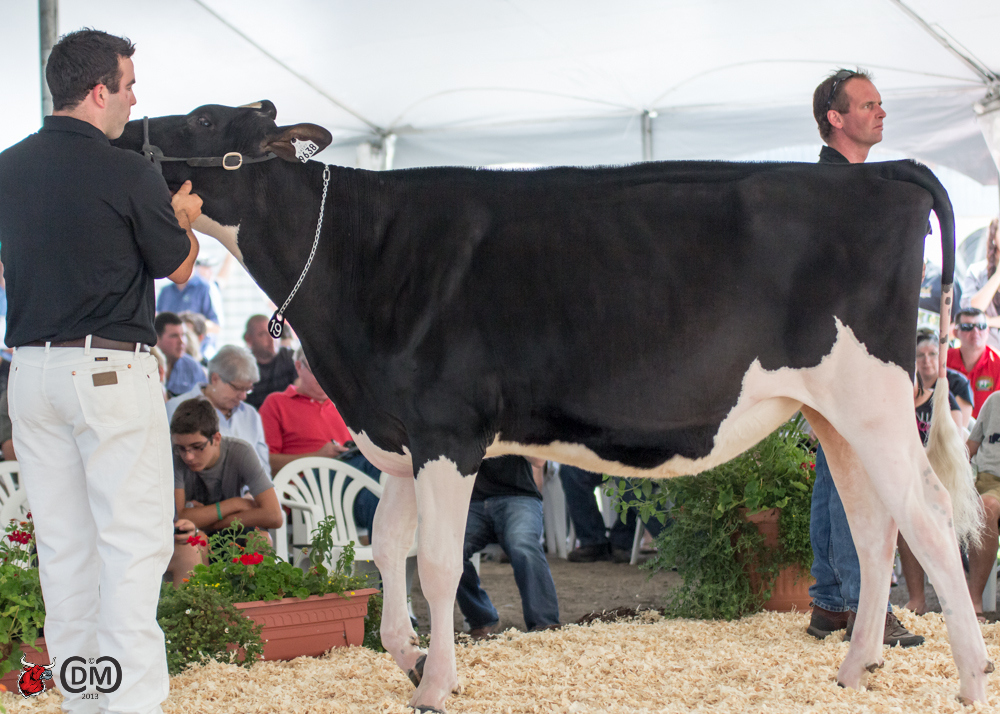

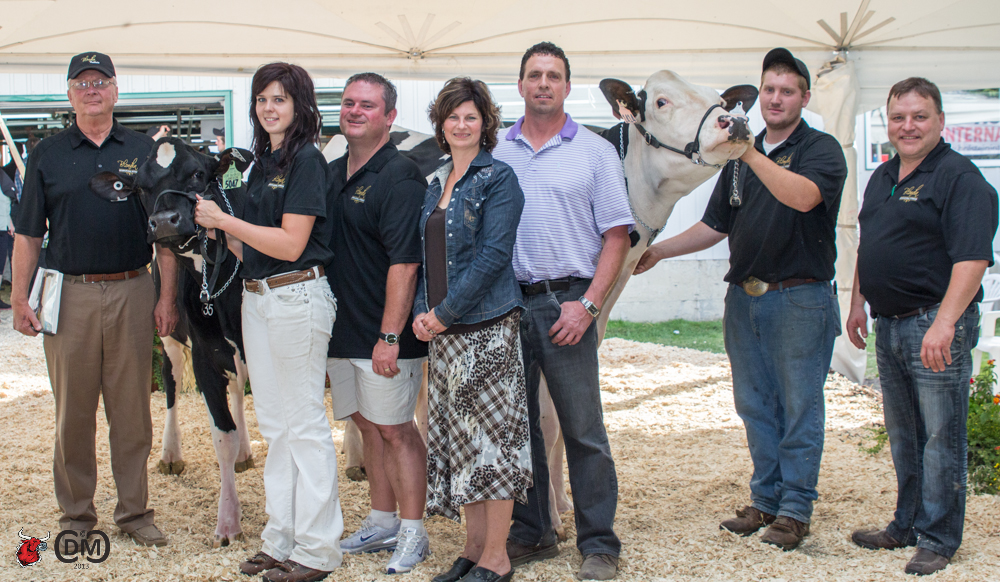

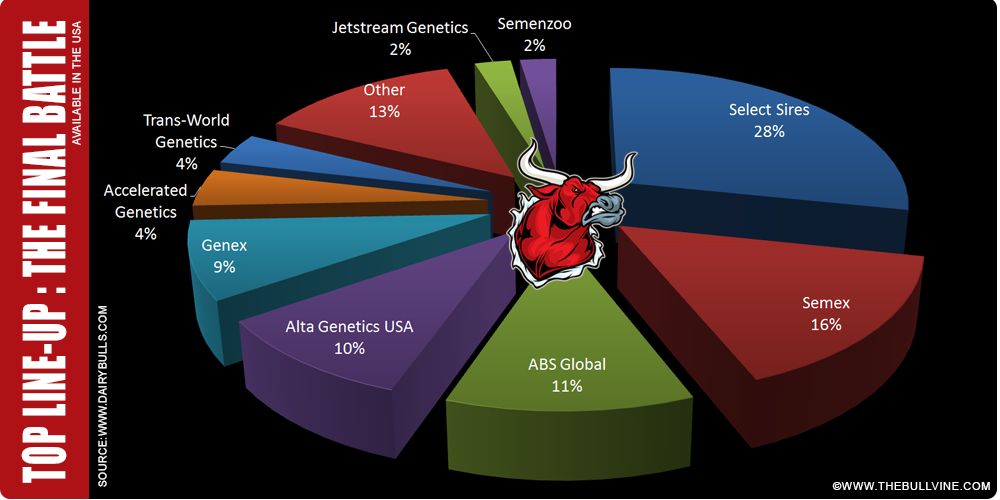
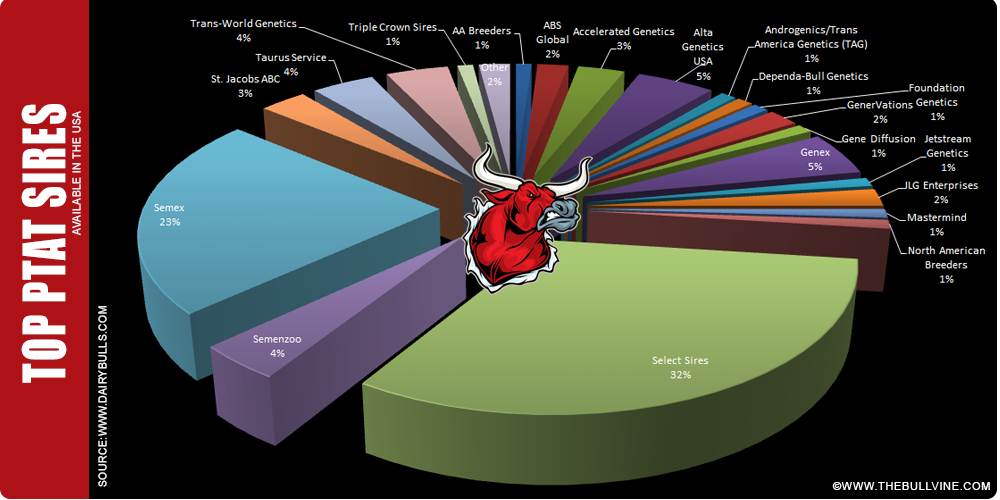
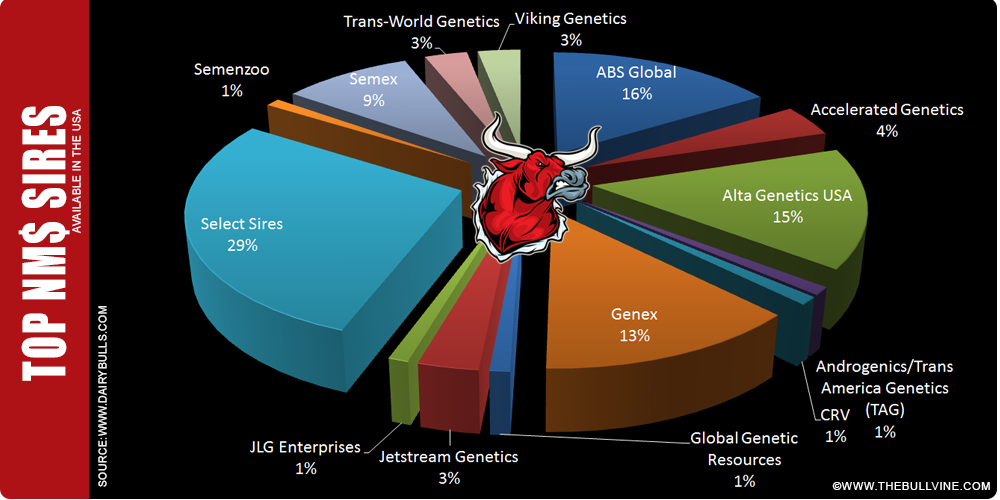
![image[1]](https://www.thebullvine.com/wp-content/uploads/2013/07/image1.jpg)
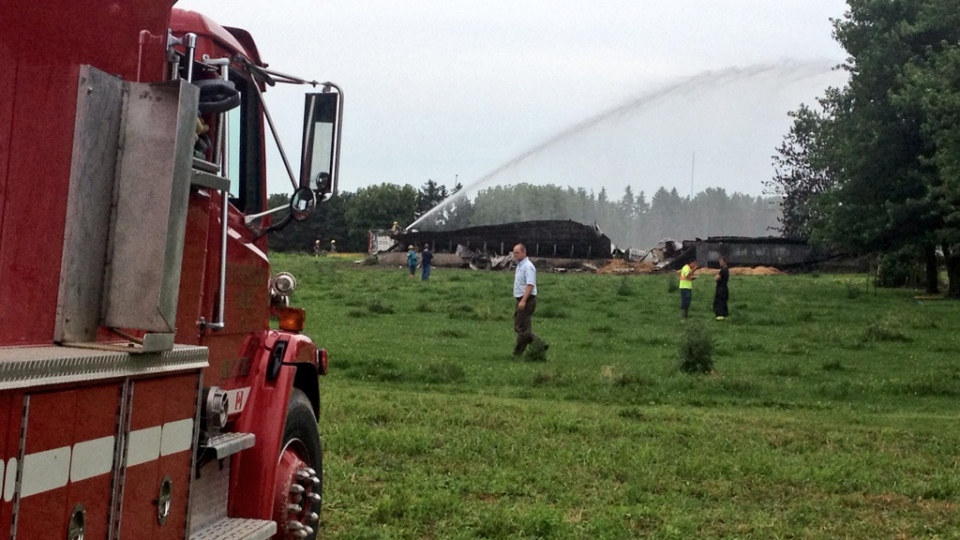
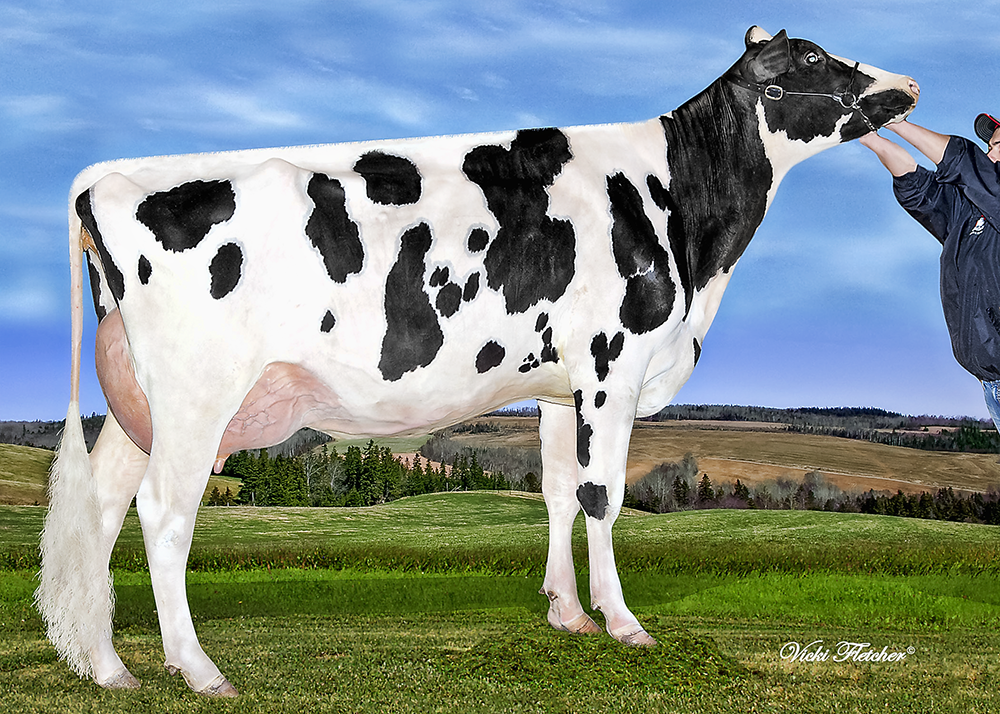
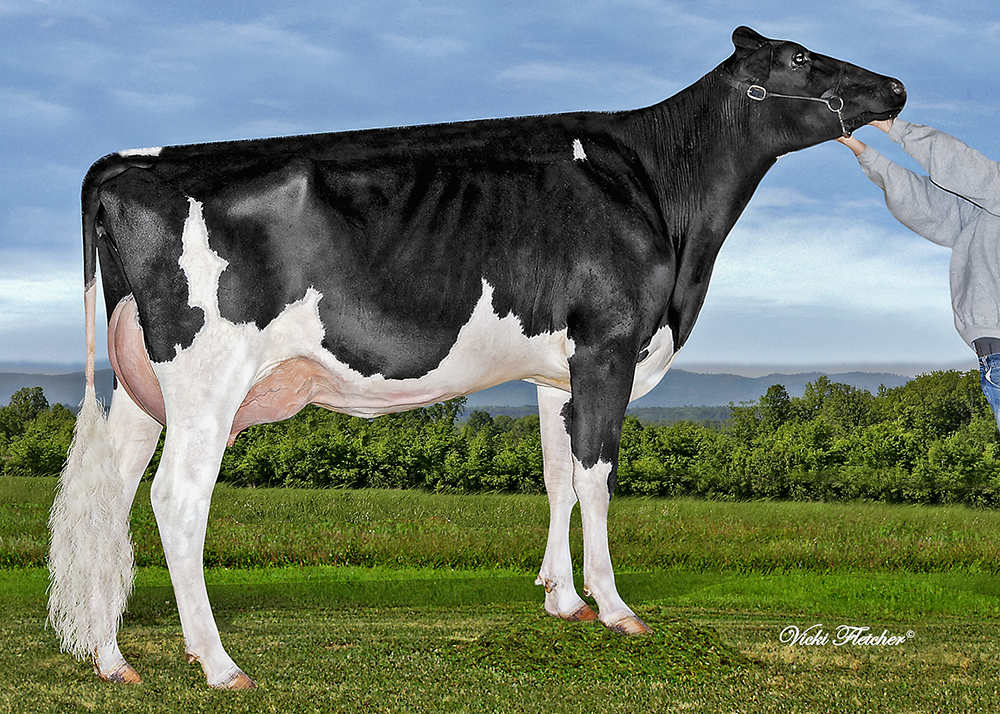
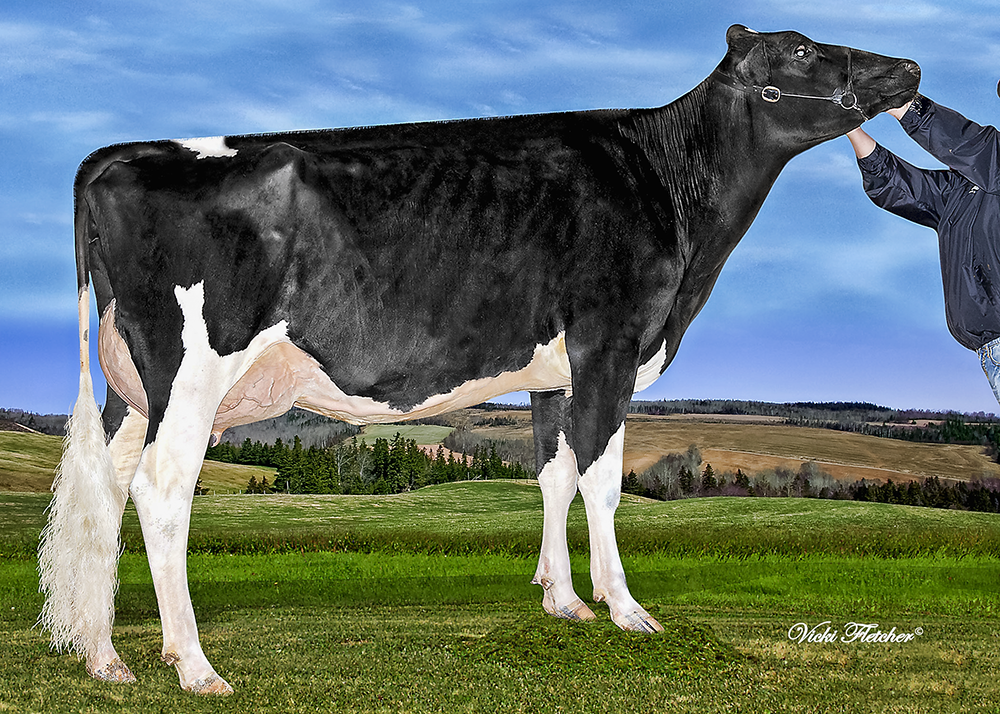
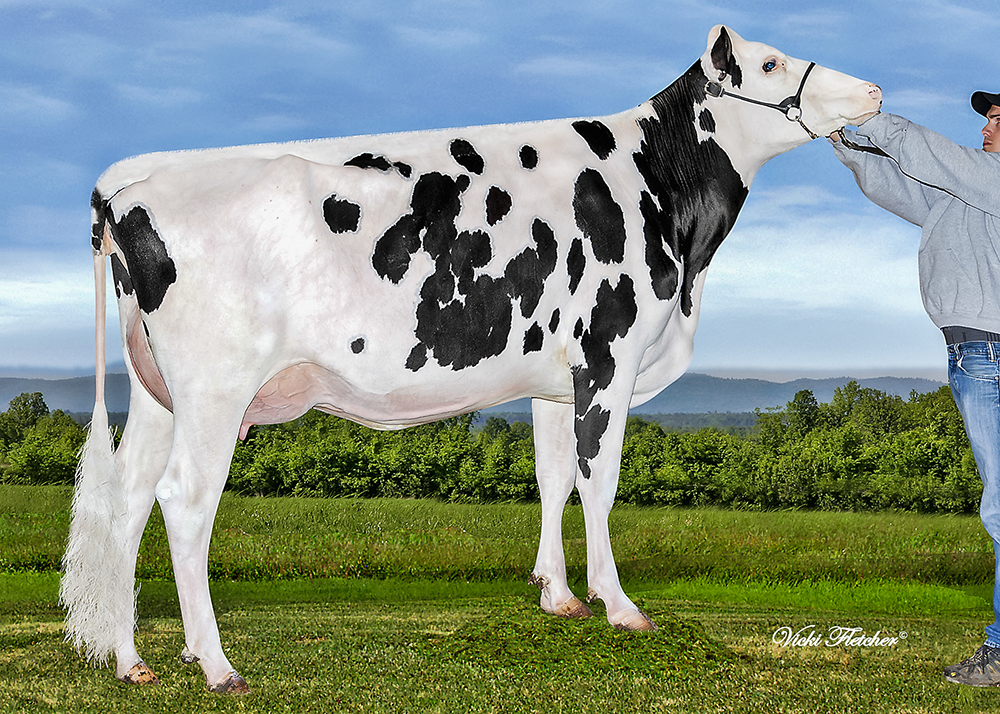
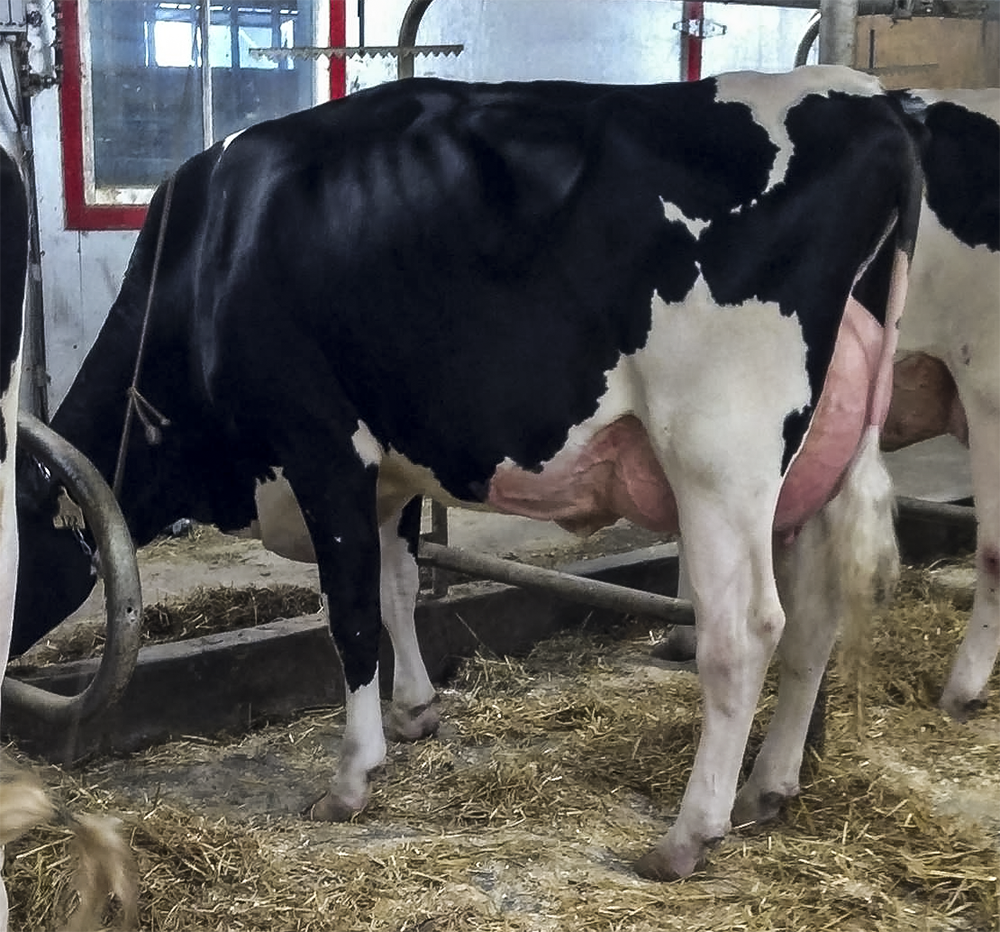

![International-Intrigue-2013_web750[1]](https://www.thebullvine.com/wp-content/uploads/2013/06/International-Intrigue-2013_web7501.jpg)
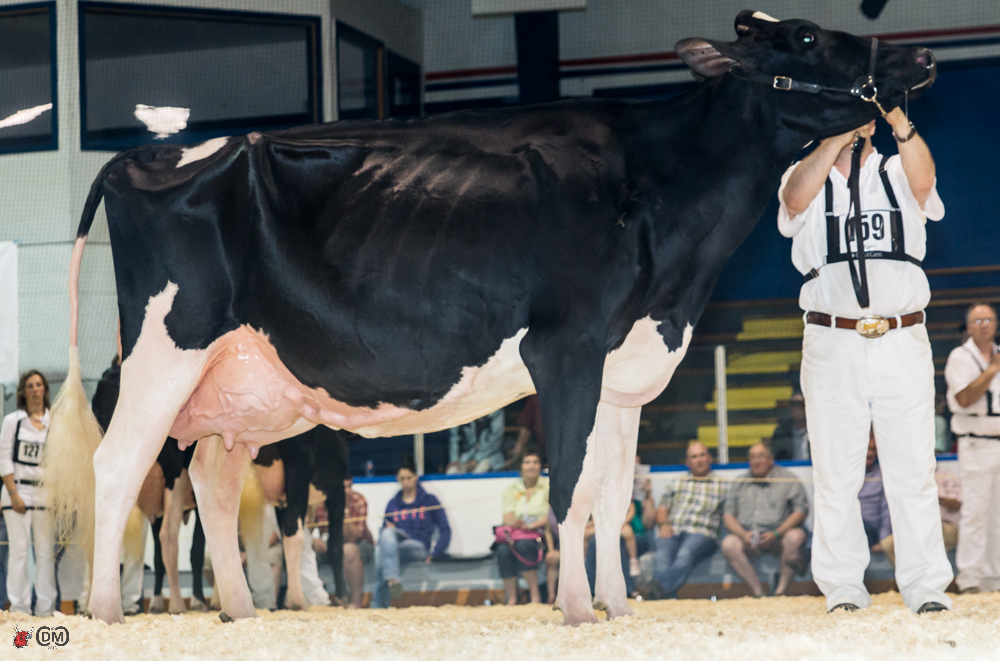
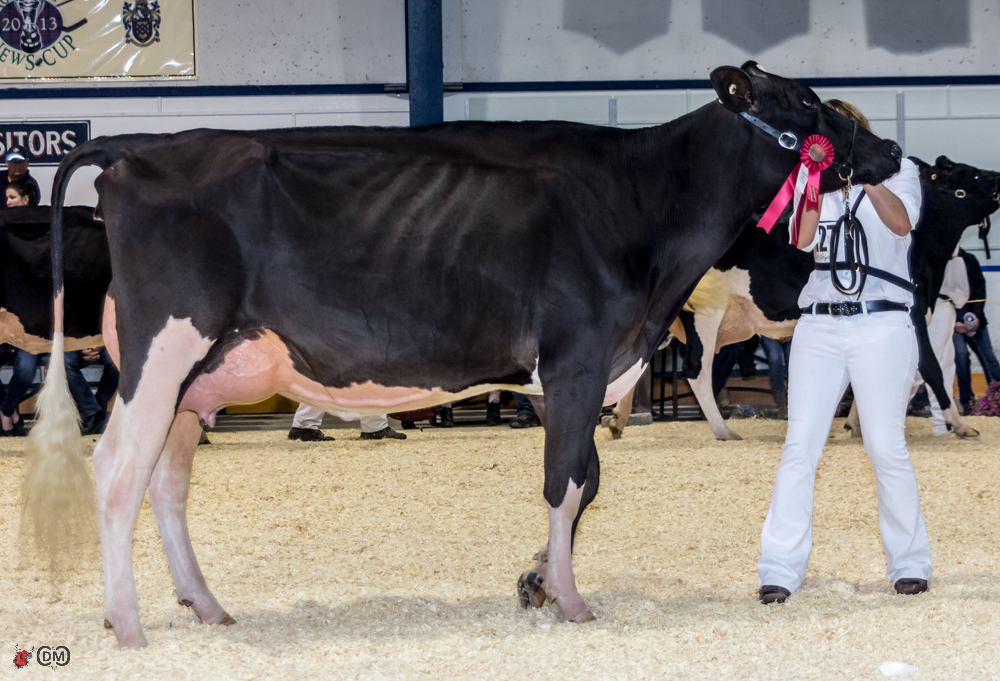
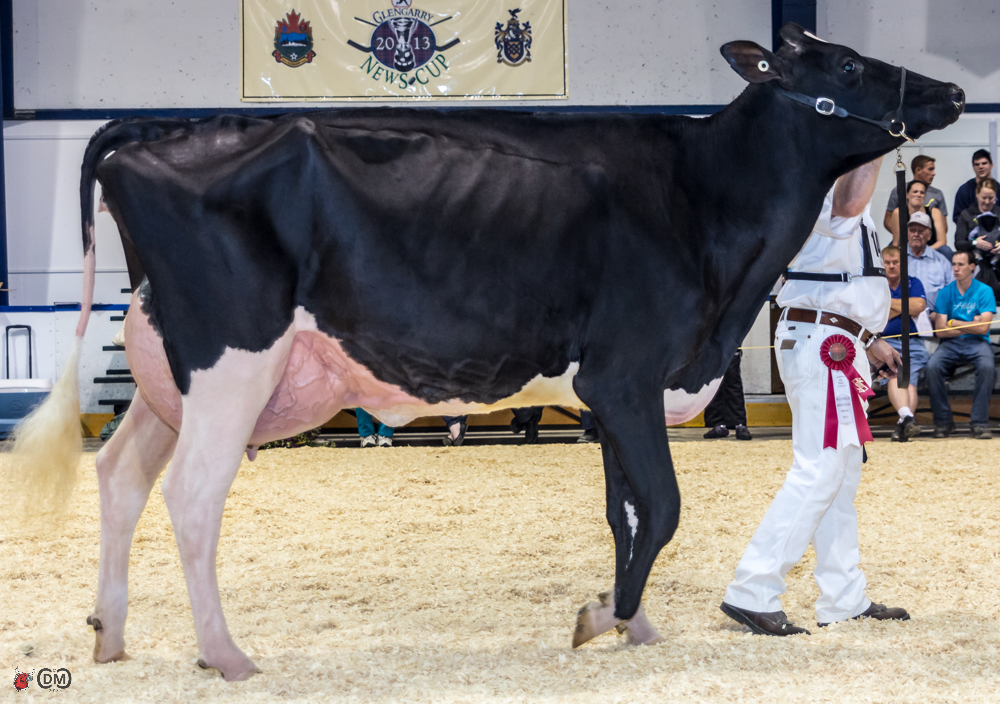
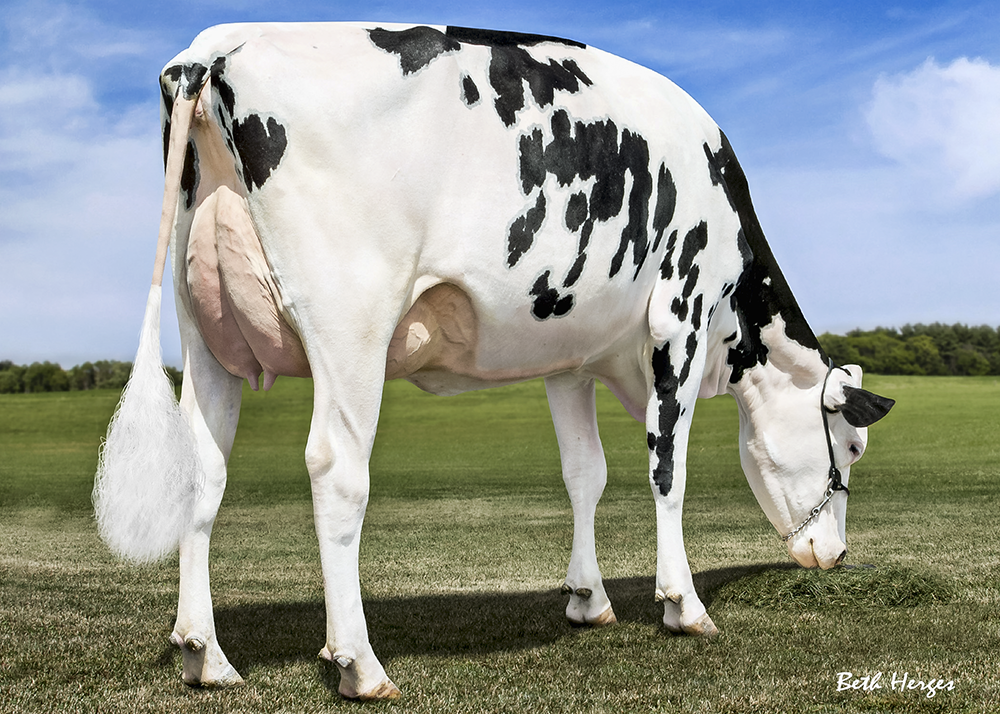
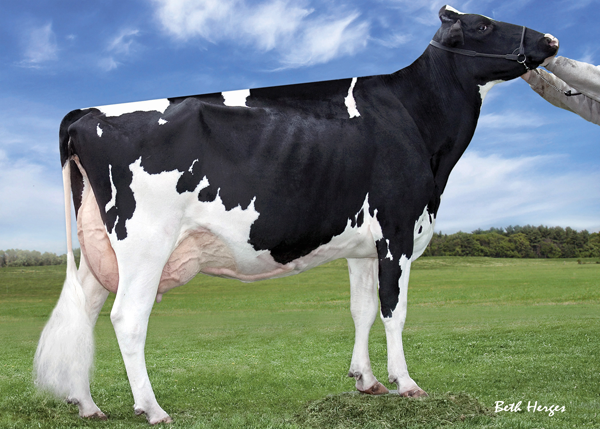
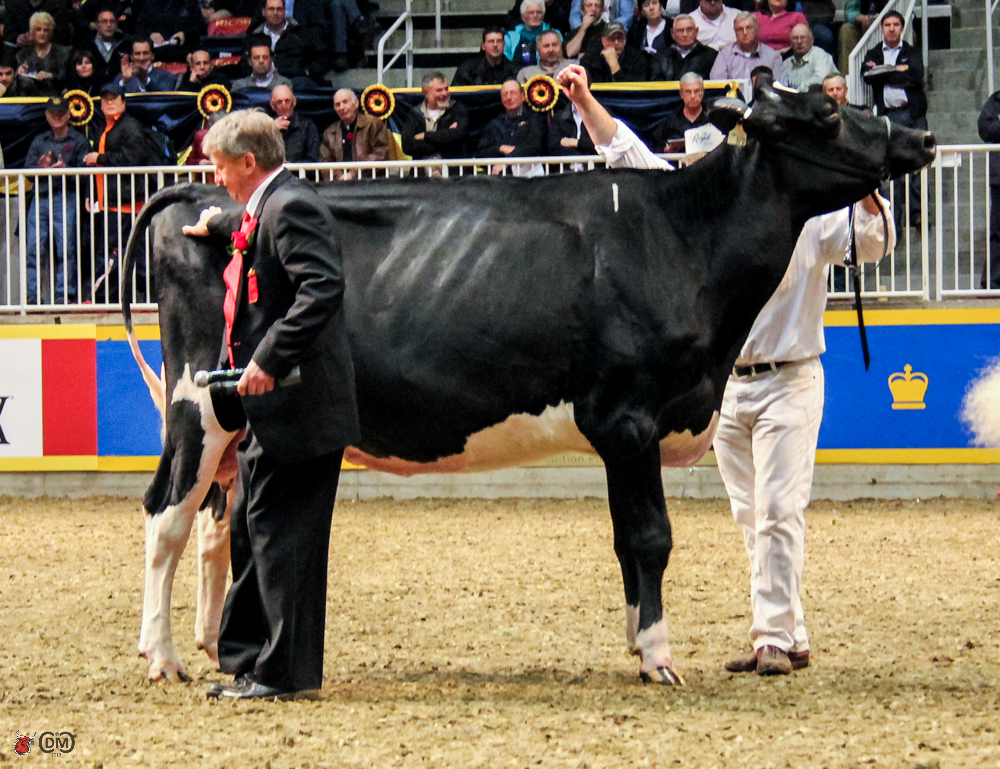
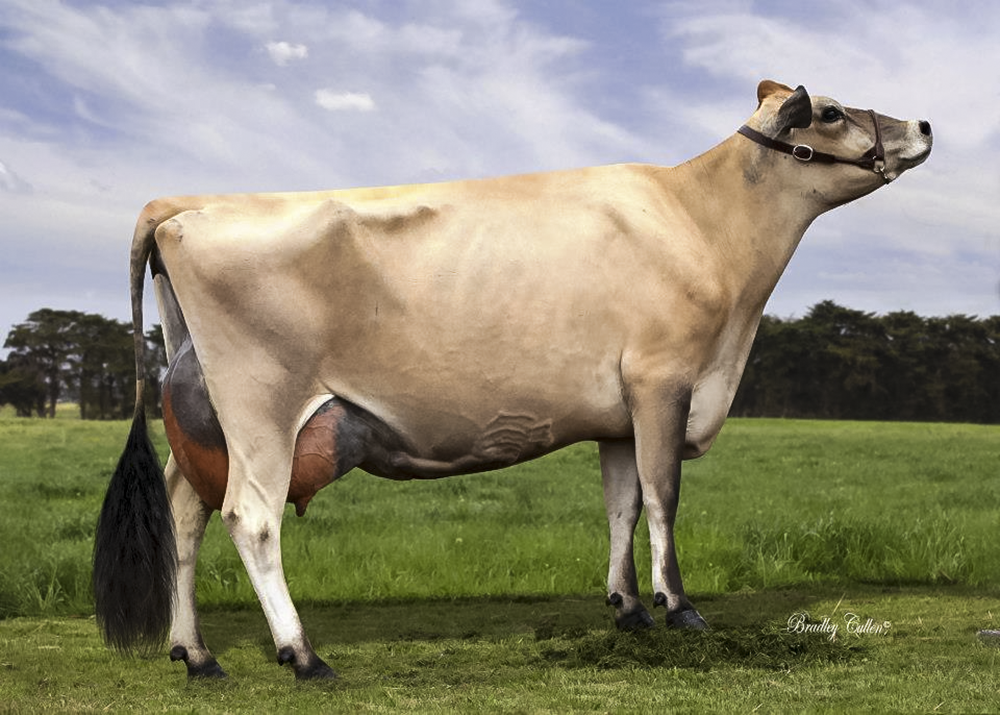
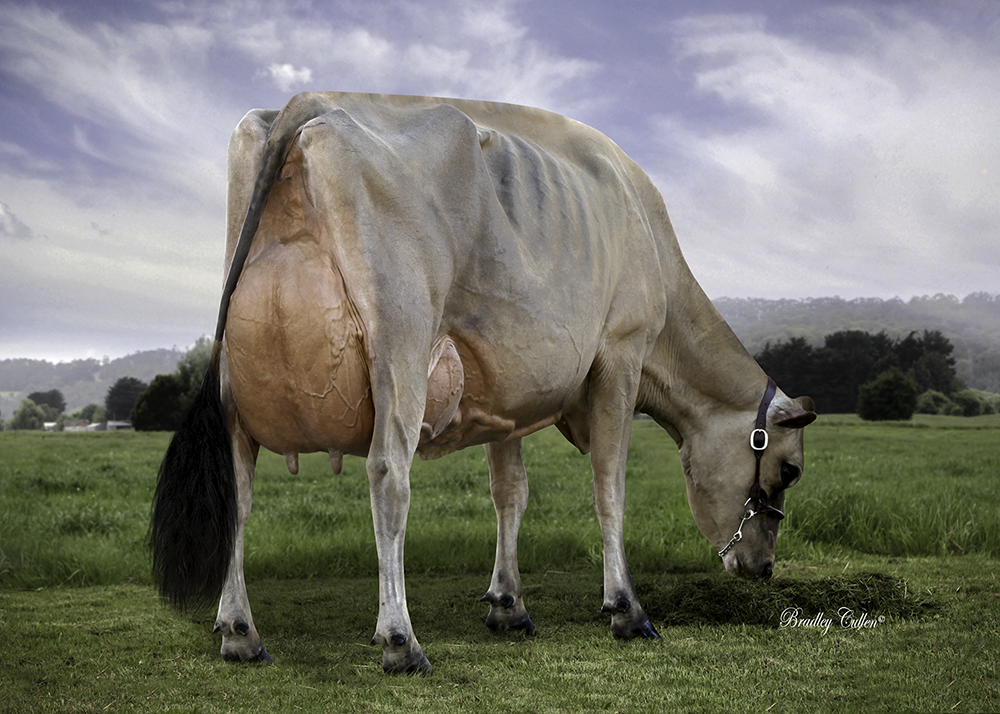

 Anyone looking from the outside in would find it hard to imagine getting as much done as Riverside did in the space of 10 years. Expanding the time period out to 15 years adds even more to their show ring success and, at the same time, shows that they maintained milk production. Their achievements make a fabulous “Bucket List” of accomplishments!
 Absolutely fabulous by any measure but nevertheless not what Karin and Corey consider their single biggest accomplishment. “Personally we believe and hope that is our family.” The Couch Family Five encircles: Brody (13), Jackson (12), Ella (10), Ruby (7) and Ethan (4). And more importantly Karin sums it up by taking it beyond just their immediate family “If there is one thing I hope we can do it is to inspire the generation behind us to go better, harder and lead the way!