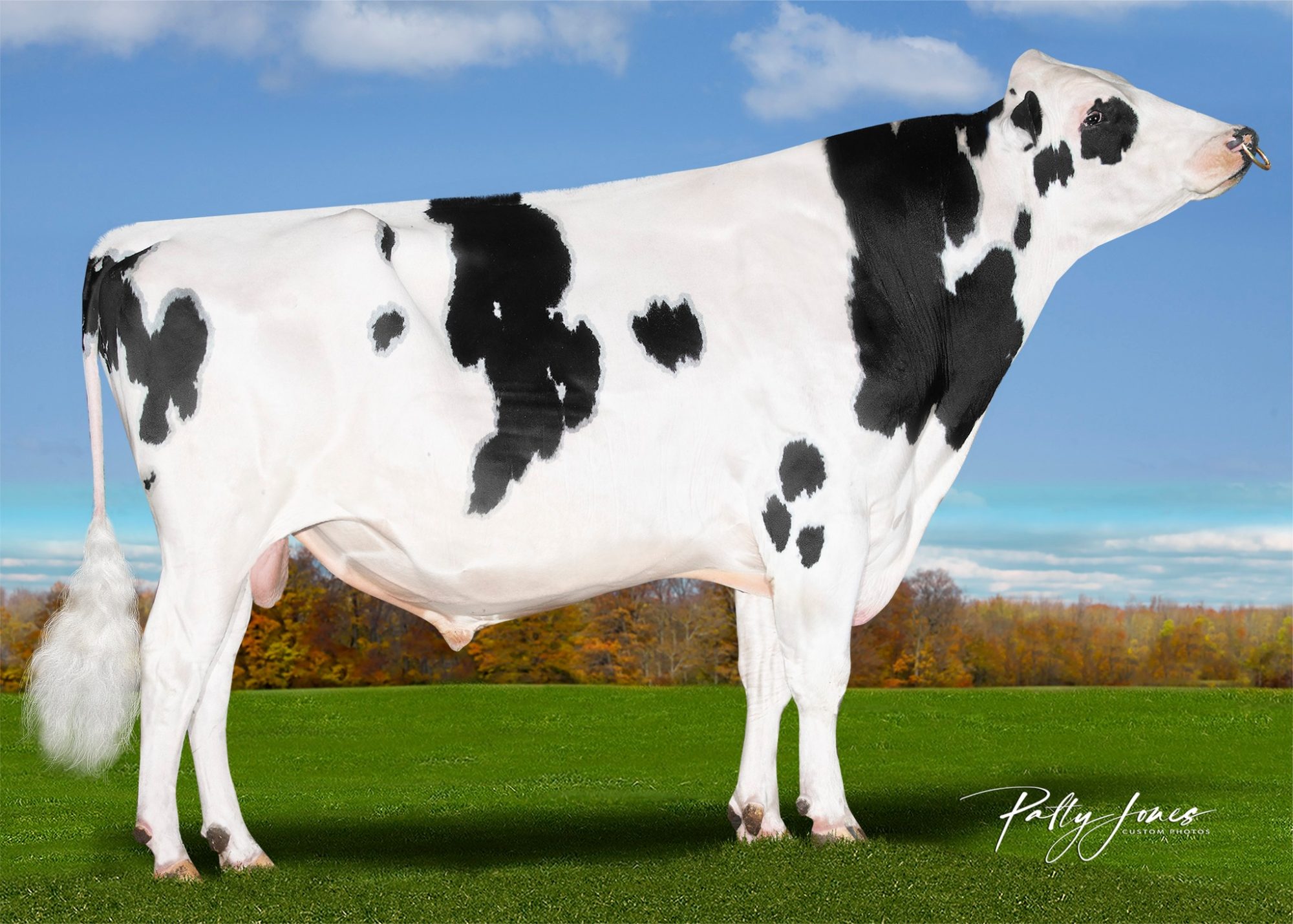


Summer 2005, Lylehaven Lila Z on the block, gavel falls at $1.15M — first Holstein past seven figures in 20 years. But the real disruption wasn’t the price. It was what that cow became, and why the Canadian co-op system had to adjust its playbook to keep up with the man who sold her.
Fall of 1981. A heifer named A Brookview Tony Charity is booked into the Designer Fashion Sale, and Peter Heffering walks up to take a look. One glance at the hock — swollen up like a grapefruit — and most buyers would’ve been halfway back to the truck. Not Albert Cormier. He’d already seen past the swelling to the cow underneath.
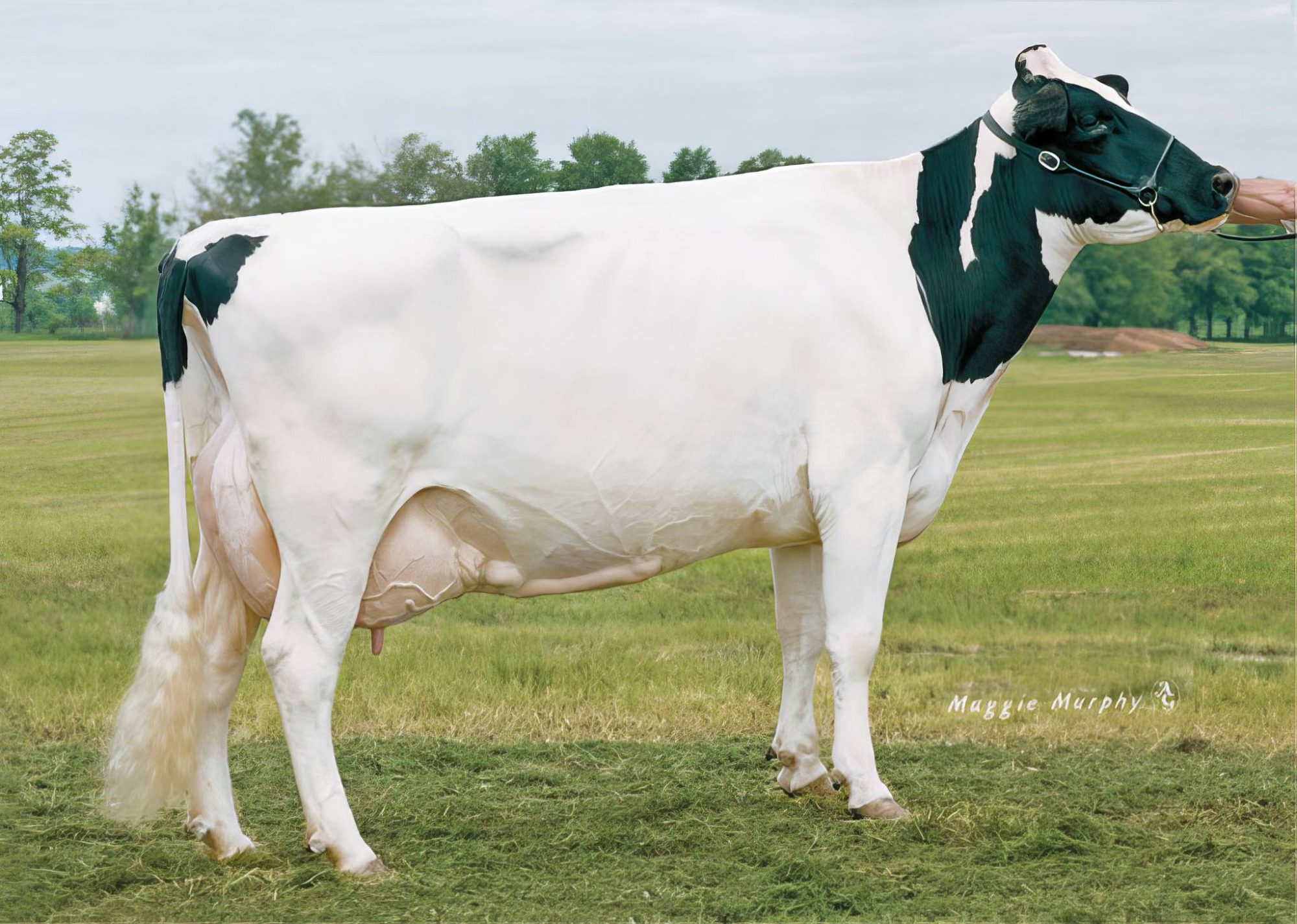
A few months later, out in a summer pasture, that swelling had melted clean away. The heifer looked — well, she looked like 1984’s Royal Winter Fair Grand Champion in waiting. Albert, half-teasing, half-serious, told Heffering he “might need to reconsider selling her.” Heffering, the story goes, nearly came unglued. That little moment — the eye that saw past the hock, the grin that knew exactly what it was holding — is pure Cormier. It’s where any honest conversation about the man who pried Canadian Holstein genetics open to the world has to start.
Four decades on, the two men who took the keys from him — Dave Eastman at GenerVations, Yvon Chabot at Cormdale Exports — don’t reach for business-school adjectives when you ask about Albert. They reach for something plainer. “Positive. Tackle things head on — good and bad. Ability to switch gears, refocus, fast. Adaptable. Also a pile of energy,” Eastman says. Chabot nods from Quebec: “He was always very positive, about the markets, about the future of a cow or a new business venture. He believed in the dairy business, and that always improving genetics was the key to success.”
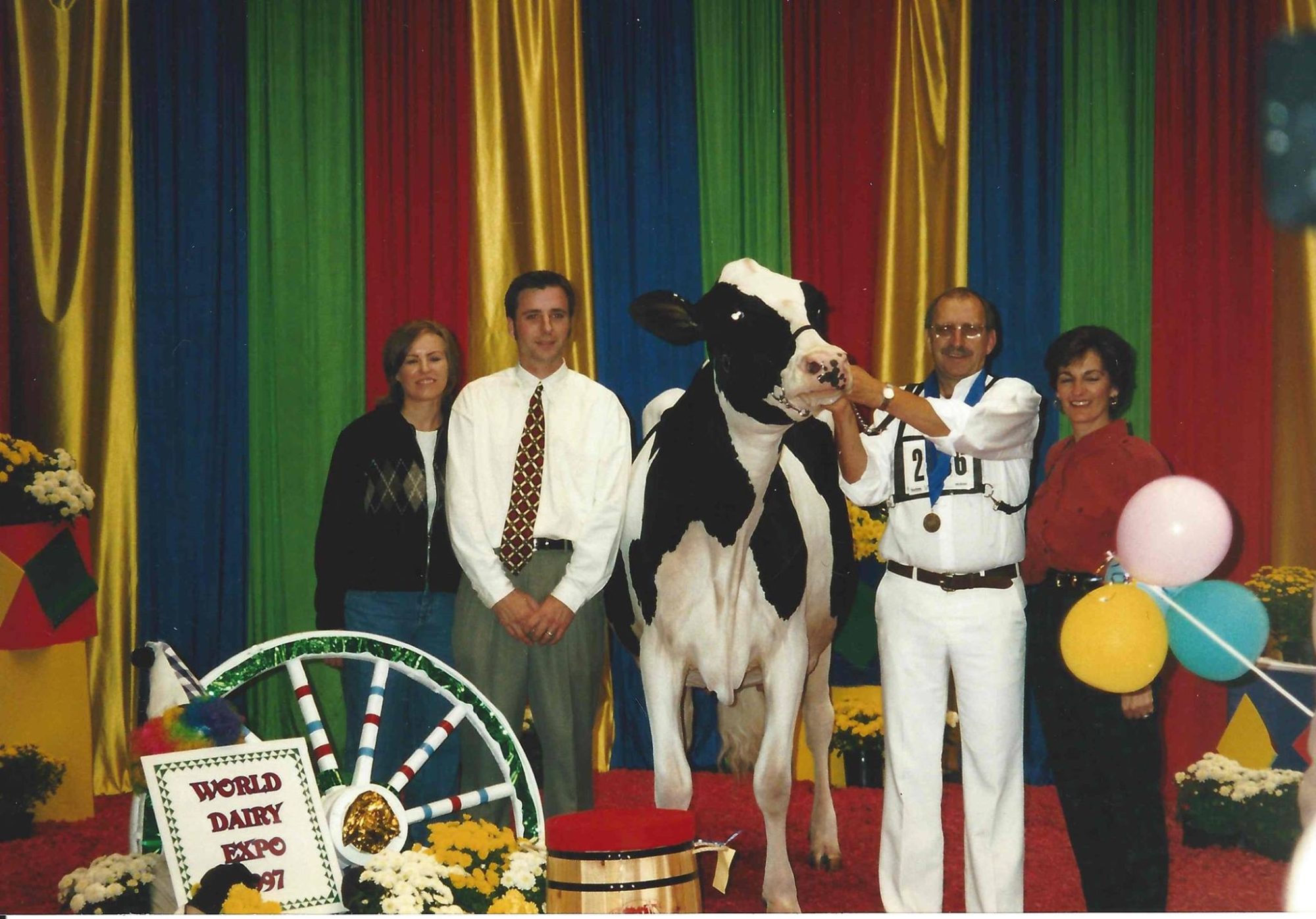
Honestly? If you want to understand how Canadian dairy got to where it is in 2026, you have to understand the P.E.I. kid with what his peers called “unmatched cow sense.” Albert refused to pick a lane between type and production. Between Ontario and Quebec. Between Canadian pride and European pedigrees. That refusal reshaped a whole breed.
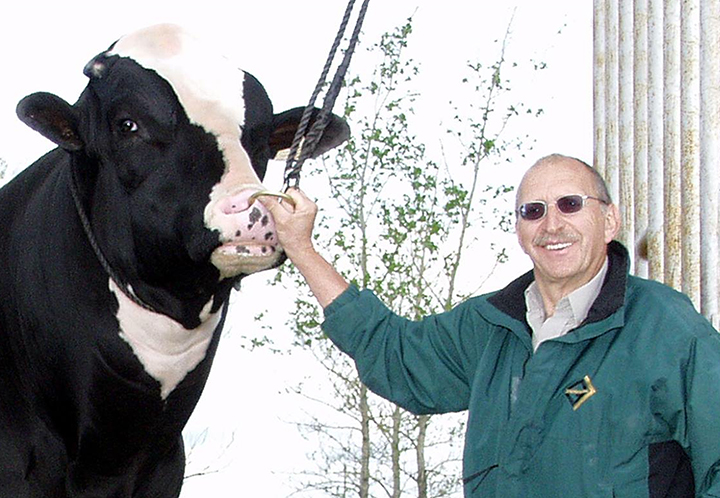
LEGACY AT A GLANCE
- A Brookview Tony Charity — 1984 Royal Winter Fair Grand Champion
- Calbrett-I HH Champion — #1 LPI sire in Canada, “Millionaire” sire status (2007)
- Lylehaven Lila Z — $1.15M in 2005, first seven-figure Holstein in 20+ years; granddam of Lexor and Lavaman, 5th dam of Lambda
- Calbrett Kingboy Miranda P — #1 heterozygous polled female for type and feet & legs in her era; the only cow ever named 2x Global Cow of the Year by Holstein International (and the first polled cow ever to take that honour), plus Polled Cow of the Year
- Master Breeder Shields for Calbrett — 2002 and 2018
- Certificate of Superior Accomplishment — Holstein Canada, 2017
- Businesses built: Cormdale Genetics, GenerVations, Sire Lodge, Cormdale Exports
- International footprint: OGER partnership (France — early ’90s); customer barns in Holland, Italy, Germany, UK, U.S.
Why 2026 matters to this story
We’re sitting inside a genomics-driven, semen-and-embryo-exporting industry juggling a lot at once. Lactanet’s Methane Efficiency index for Holsteins is bedding into breeder programs. Feed-efficiency evaluations are working their way into commercial proofs. North American A.I. consolidation is rolling through another wave. And the export side is eyeing shifting U.S. trade posture and tighter EU BTV-3 health certificate paperwork.
Here’s the thing. If Albert were in the barn today, he wouldn’t be fighting the Methane Efficiency index. He’d be figuring out which cow family transmitted it best before the first proof was even published. That’s the whole point of this piece.
The Belfast Kitchen Table
Spring of 1983. Young Yvon Chabot picks up the phone at the family farm in Belfast, Quebec. An Ontarian wants to drive down and see a Marshfield Elevation Tony daughter — interesting pedigree, he’s heard.
By the time the sun goes down, that Ontarian — Albert Cormier, driving fast, asking faster — has crossed the province, talked his way into two barns, and bought two cows he hadn’t laid eyes on that morning. Beaucoise Tempo Kimo had just won her 2-year-old class at the Quebec Spring Show over at Les Fermes Turmel; Chabot pointed the way. The Tony heifer was at Ormstown. Done and done, both on the same trip.
“Both cows have done very well for him,” Chabot says, with the understatement of a man who’s seen a lot of cattle move.
What Chabot might not have clocked that day was that he’d just auditioned for a job. A few years later, as Cormdale’s consulting arm grew, Albert called again — this time to hire him full-time. That’s how Albert worked. Fast. Positive. Decisive. Actually — scratch the adjectives. Let me show you.
The Man in the Barn
Ask Chabot what Albert was actually like working a barn and the answer comes quick. “Patience, willing to share his experience and respect for other people’s opinion. Recognize efforts and success of others. Trust people working with you.” That’s the character sketch in the man’s own words. The physical memory lines up with it — not a big voice, a quick one, and a French that slid into English mid-sentence whenever a conformation point got him fired up, which was often. He didn’t linger. He moved. Every five minutes felt like the start of a new trip. People who only met him at sales describe a man with a half-grin and a notebook. People who rode shotgun between farms describe someone who’d hang up from a client in Saint-Hyacinthe and take the next call from Herefordshire without missing a beat.
That restlessness shaped how he dealt, not just how he drove.
The Deal Maker
Why He Never Got Attached to a Pedigree
Ever wonder why the Cormdale barn was famous as a hard place to walk out of without writing a cheque? Chabot has your answer.
“He loved to do business,” he says. “I very often saw him buying a calf or a cow at a sale and selling her the same day for sometime a not so important profit and sometime a bigger profit. He always said the best time to sell is when you have someone interested in buying.”
Read that again. That’s not a tactic — that’s a worldview.
Most breeders get attached. You nurse a heifer through classifications, wait for the big day, brag a little at the coffee shop. Albert’s line, the one Eastman still quotes: “Life is too short to breed them up and never be afraid to sell them.”Cattle should move. Money should roll. Pedigrees should land with people who’d push them further. In a breed culture where some folks sit on a cow family for three generations waiting for the perfect mating… it was borderline radical.
That ethos shaped the whole operation. Cormdale’s on-farm sales became the kind of auctions where a young Quebec consignor could drop a heifer on the sale card, watch Albert’s network push the price, and walk home with his prefix suddenly known in France and Germany. “With the many sales organized at the farm, many breeders purchased foundation animals, or as consignors got their name and prefix exposed to the world,” Chabot says. “It got many nice Master Breeders started that way.”
And when a deal went sideways? No lawyers, no grudges. “If a client is not happy with his purchase, for any reason, try to see what the problem was and if needed, do something to keep good relationship.” In an era when every other month brings another sale-barn contract dispute hitting the trade press, that one-liner still holds up.
The Million-Dollar Moment
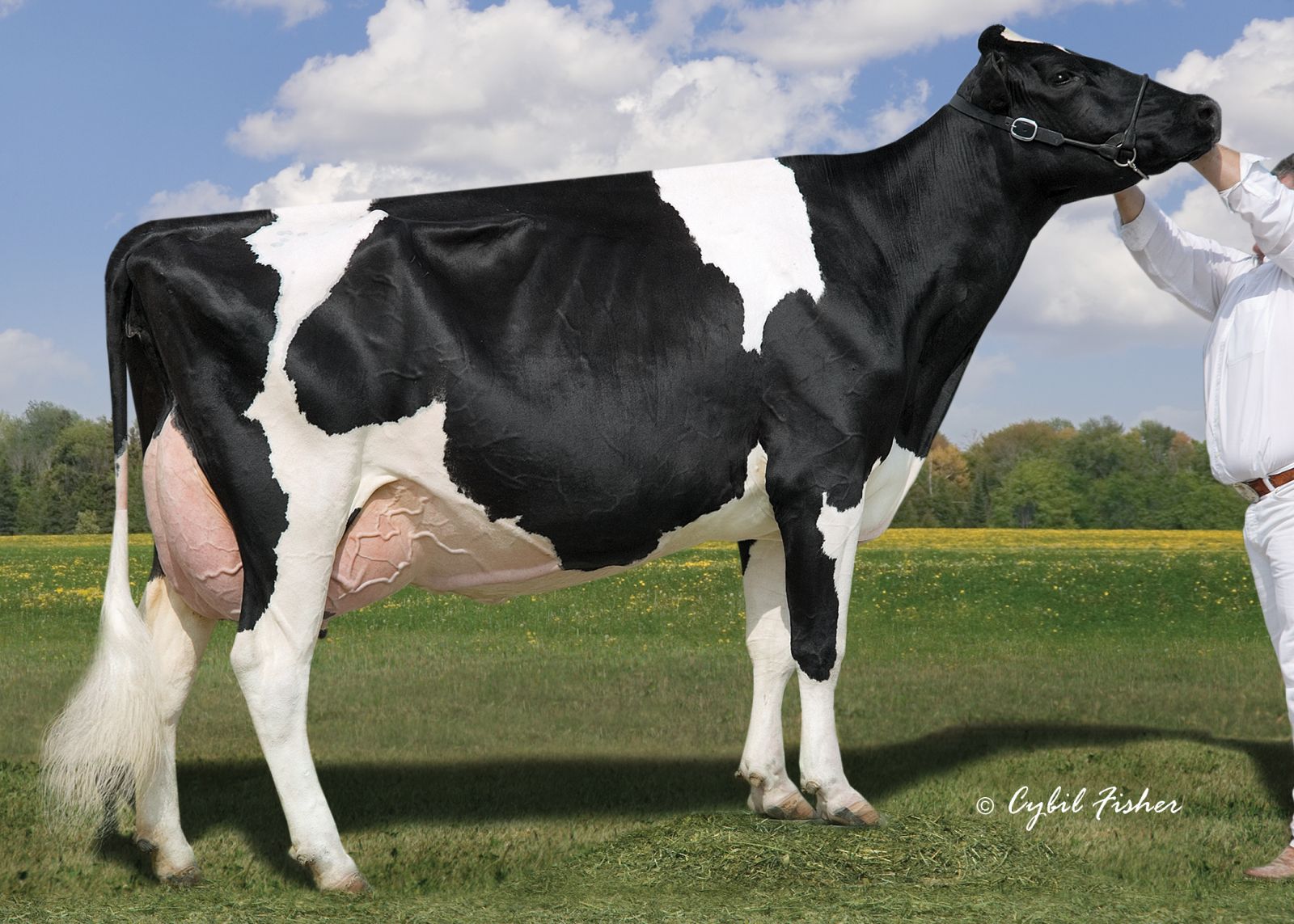
Summer 2005. The cow on the block is Lylehaven Lila Z. Albert and Dave had bought her two years earlier from a syndicate (Gen-I-Beq / Mary Inn & Yvon), picking her up as a Junior Yearling right after she took All-Canadian Junior Yearling in 2003. They brought her home, classified her VG-89 — the highest first- or second-lactation score available under Holstein Canada’s classification system at the time — and built a marketing campaign around her the way Madison Avenue builds one around a Super Bowl spot.
The bidding crawled, then sprinted. And then:
$1.15 MILLION — first Holstein past seven figures in over 20 years.
People in the room remember the hush first. Then the whistle. Then the handshakes that didn’t stop for 20 minutes.
Here’s what most retellings miss. Lila Z wasn’t a price. She was a thesis. Albert had been arguing for years that a cow could be a show-ring beauty and a genomic powerhouse at the same time. Lila Z proved it — she went on to become the granddam of Lexor and Lavaman, top genomic sires that anchored the GenerVations lineup for a decade, and she sits as the 5th dam of Lambda. Lexor became the #1 genomic LPI sire in Canada. Calbrett-I HH Champion had already taken the #1 LPI crown and hit “Millionaire” sire status in 2007. The price was news for one week. The genomic result reshaped proofs for a decade.
The Fortress, and the Man Who Walked Through the Gate
Here’s where Albert’s story gets interesting — not because he was shut out of the Canadian system (he wasn’t; he sold plenty of bulls into it over the years) but because he forced it to broaden.
Through the ’80s and into the ’90s, Canada acted like a genetic fortress. Our cows were the best in the world — full stop — and the cooperative A.I. system was built to protect that story. The fortress argument officially leaned on sanitary and disease-control grounds. Every importing country has a rational stake in bluetongue, IBR, BVD, and the rest of the watchlist — that’s real. But under the sanitary logic sat a much more commercial motive. The Canadian co-ops had spent decades building the “Canadian Holstein” as a premium export brand, and a private Canadian operator importing Dutch, Italian, French, German, and American genetics straight back into the domestic market didn’t fit the brand story. It widened what a Canadian dairy farmer could put in the tank.
So when Cormier started doing exactly that… a few people got, let’s say, less than thrilled.
“When he started promoting the use of genetic index in breeding decisions and selecting animals with high production potential, and using American bulls or importing US cows to diversify bloodlines, it wasn’t well received by many here in Canada,” Chabot says. “Also, importing semen from foreign countries to distribute in Canada — and later creating an AI company — made a few people not very happy.”
Eastman puts it bluntly — Cormdale was “really at the forefront of Holstein globalization at the time.”
The resistance
Chabot remembers the early reception being frosty enough to need its own fridge. The established co-ops weren’t shy about passing the message that their rep network and their preferred distributors were expected to stick to the domestic catalogue. Private importers learned fast that certain barns were closed doors if the co-op fieldman got there first. Cormdale’s workaround was the thing that made them dangerous — they built their own rep network, ran their own on-farm sales, and shipped directly to the breeders who wanted the imported bloodlines, while still working with the co-ops wherever the bull lineup fit.
And here’s the part that made the old structure stretch. The Canadian A.I. system through that era ran on provincial lines — Eastgen (then EBI / WOBI / United), Eastern Breeders, and CIAQ carving up the east; Western Breeders and BCIA the prairies. A bilingual operator from P.E.I. who could work a Quebec kitchen table in French on Tuesday and an Ontario sale ring in English on Wednesday wasn’t just selling cattle across a provincial border. He was selling across a structural seam that the co-op system had historically used to keep territories tidy. That fluency wasn’t a soft skill. It was a competitive weapon.
Chabot has a line that sticks about the reception Albert got abroad versus at home. Travelling with him was an education, he says: “You could see the respect that people had for him. He was also well respected among other people in the industry in Canada and US as well — even among people that did not agree with him.” Walk a barn in Normandy with Albert and watch a French buyer treat him like a visiting cousin. Land in the UK filling an order of commercial females and watch a British importer already recognize his bull lineup before the handshake.
Albert refused the binary. He was one of the first in Canada to really lean into genetic indexing — American TPI, Canadian LPI — to keep his cattle marketable to commercial dairies and A.I. companies at the same time.
“Cow families are extremely important,” Chabot says. “A Holstein cow should milk easily, so never neglect production and components when doing mating. Type and production can go together.”
Eastman has his own way of describing how Albert ran the sire side: “Fast to use new high-ranking bulls. Own and market from some of the highest daughters if possible. Advertise to create value and demand — great pictures.” And on the heifer side: “Started investing in females early on to better control, make bulls we wanted to sample — Lila Z, Oman Elita and her daughter Shottle Evett, examples of few.”
That short list is the whole strategy. Find the elite female, flush her early and often, stack her with the right mates, turn her sons into revenue, turn her daughters into the next elite females — and then do it all again.
“Life is too short to breed them up and never be afraid to sell them.” — Albert Cormier, via Dave Eastman
Here’s the part that lands hardest in 2026. Albert was an early, aggressive user of embryo transfer and IVF to multiply those elite females long before flushing was common practice. The whole industry’s current obsession — genetic-progress-per-cow, Lactanet’s methane-efficiency and feed-efficiency indexes, smaller herds producing more per head — sits on exactly the reproductive-tech foundation Albert was pushing when most Canadian breeders still thought IVF was exotic. When genomics hit in the late 2000s and the rest of the industry lurched into a new era, Cormier’s program didn’t lurch. It glided. Because he’d been obsessing over cow families, parent averages, and transmitting ability for twenty years. “When you have a cow family, you have genomics” was the operating theory. The data just confirmed what the pedigree already knew.
The Cliff Edges
GenerVations was never all smooth bidding floors and handshake deals. Eastman tells a story most people outside the boardroom never heard.
“Several times we lost close to 50% of our product line for semen from mergers, sales of companies,” he says. “Never lost reps. Key was distribution and motivated, loyal staff.”
The move that crystallized the whole operating model — and the one Albert would point to years later — was the OGER partnership in France in 1991 through Modern Sires. Picture Albert on one of those long flights out of Toronto. Sale book on his knee. A French phrasebook in the seat pocket he didn’t really need. By the time the wheels hit tarmac, he had a handshake deal to proof young sires simultaneously in Canada and France — effectively doubling the speed and reach of a young-sire program when no single Canadian co-op was structured to do it solo. A few years later he split the export and semen divisions, quietly laying the track for the succession that would change Eastman’s and Chabot’s lives.
Forty Miles of Gravel Road, Sixty Herds
Want to understand why Quebec breeders trusted Albert when plenty of Ontarians couldn’t find Trois-Rivières on a map? Look at 1988.
That’s the year Cormdale Consultant Ltd. went full steam, with Chabot and Ghyslain Coté running a consulting operation that at peak served over 60 Quebec herds — full-herd mating, classification, purchase advice, export sourcing. Sixty herds. Think about what that means in practice. Two guys in trucks, splitting the province, gravel roads in February, tourtière at the kitchen table, talking bull selections on fresh cows heading into their second lactation — and in between, filling orders for UK clients who wanted Canadian type grafted onto British herds.
Albert’s edge? He could sit at that kitchen table in either language. Truly bilingual. In an industry where Quebec is a massive slice of the elite Holstein market, where Anglo-Franco trust is earned one barn visit at a time, and where the co-op system itself had been built along provincial boundaries… that fluency wasn’t a soft skill. It was the whole ball game.
The Handshake Built to Last
Anyone who’s watched a private ag business change hands knows this — the succession is where legacy goes to die. Albert refused to let it.
Early 1997, he starts talking about slowing down. Picture one of those conversations you can almost smell — a Cormdale farm office, coffee going cold, sale-book pages fanned out across the desk, Albert leaning back and floating the word “partner” like he’s tossing a hay-hook onto a stack. Three businesses in play: the farm (Cormdale Genetics), the semen side (GenerVations and Sire Lodge), and the export arm (Cormdale Exports). Two lieutenants who’d earned something bigger. What he drew up was almost old-fashioned. A five-year buyout. No private-equity theatrics. No earn-out clawbacks. Partner up, work the plan, pay him out on schedule.
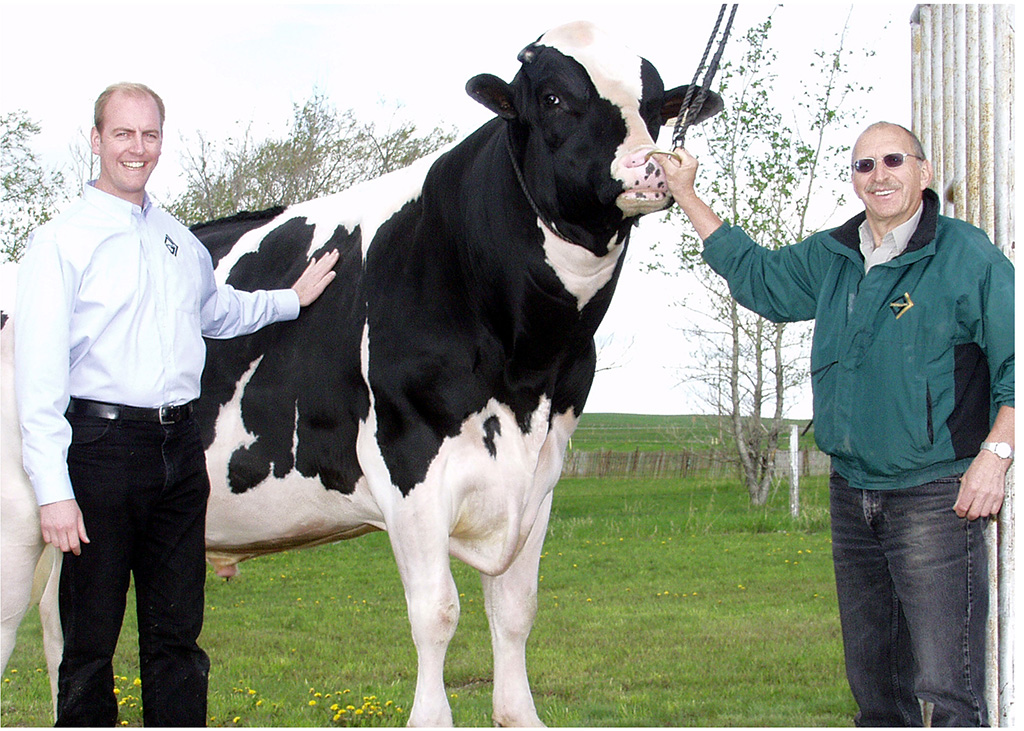
Eastman took the semen side. “Albert offered me chance to become partner in semen business, and that was when we started GenerVations together in 1999, with structure to buy him out over 5 years, which was in 2004,” he recalls. “At same time, Yvon Chabot offered same chance to take over export and embryo side of business as Cormdale Exports.”
Chabot’s version tracks: “I have been Albert’s partner for 5 years, the time I had repaid him in full for the complete control of it.”
“Smooth,” is how Eastman describes it. “I had worked with Cormdale Genetics before as sales manager, so easy transition.” That word undersells something important. What Albert built wasn’t an exit — it was a continuity machine. The reps stayed. The customers stayed. The international contacts kept taking the calls. Same year — 2004 — Albert and Eastman jointly bought Sire Lodge Inc. and expanded it into a 300-bull custom-housing facility in Cardston, Alberta, which became GenerVations’ production engine. Even in “retirement,” Albert was writing infrastructure cheques.
The operating principles both men carried forward are worth naming. Eastman, who’d worked inside several European and U.S. A.I. houses before Cormdale, came back with a conviction about flat organizations — “Key was involve reps in discussions, product, programs, as they were key to success. (Not sure it happens in many today).” Chabot boils his version down to four words: “Honesty and be loyal.” Then adds the rest — stand behind what you sell, give advice when asked, keep promises. Both cite the same mental model on tough calls: deal with it head-on, today, not next week. And both were pushed onto the world stage by a mentor who insisted on it. “Over the years he had given me confidence to meet people of the industry around the world and always encouraged me to pursue my judging career,” Chabot says. You can draw a line from that kind of mentorship straight to the next generation of marketers — Andrew Hunt, who founded The Bullvine, openly credits Albert and Dave for the “breeding ground” that shaped his instincts about how dairy cattle get sold to the world. Fair warning: a lot of the house style you’re reading right now has Cormdale DNA in it.
The Philosophy That Outlived His Voice
Here’s the single sentence that sums up Albert’s breeding worldview, courtesy of Chabot: “Type and production can go together.”
Sounds obvious today. Wasn’t then.
Through the ’80s and into the ’90s, Canadian Holstein breeders were sorted into two tribes — type breeders chasing Royal banners and production breeders chasing pounds of milk and butterfat numbers. Albert refused the split. He was one of the first in Canada to really lean into genetic indexing — American TPI, Canadian LPI — to keep his cattle marketable to commercial dairies and A.I. companies at the same time.
Sit with that a second. You’re running a private A.I. company through the Canadian A.I. consolidation era that built today’s Semex footprint, and partnerships keep rearranging underneath anyone not at the head of the biggest co-op. Half your product line evaporates overnight. The bulls you were distributing are suddenly flowing through your competitor’s pipes. What do you do Monday morning?
You pick up the phone. You call the reps — the ones who’ve been out in the trucks selling for you for ten years, the ones whose kids you know, the ones whose loyalty was never actually to the catalogue. You tell them straight: here’s what we lost, here’s what we’re re-sourcing, here’s what I need from you this week. Eastman says not one of them walked. That’s not luck. That’s what Albert had taught him about who the company actually was.
Product comes and goes, but the two things mergers can’t take are your distribution network and your sales force. Protect those. Everything else you rebuild. That instinct — ride the staff, re-source the product — is exactly what a lot of smaller A.I. outfits are grappling with right now as another wave of consolidation works its way across North American genetics.
The 2014 sale of GenerVations to Select Sires wasn’t a surrender. By then Eastman had been sole owner for a decade — he’d completed the buyout in 2004 — and the deal was a calculated exit that gave the GenerVations lineup the global distribution runway it needed. The roots of that lineup, though, traced straight back to the cow-family investments Albert had set in motion years earlier. The sale wasn’t the end of his influence. It was the export of it.
The Legacy Sale
The hardware caught up eventually — two Holstein Canada Master Breeder Shields for Calbrett, in 2002 and again in 2018, a rare double that bridged the classical and genomic eras, plus the 2017 Certificate of Superior Accomplishment citing his “unmatched cow sense” and his work with Tony Charity and Lila Z. Plaques are nice. What happened two years before the second Shield was bigger.
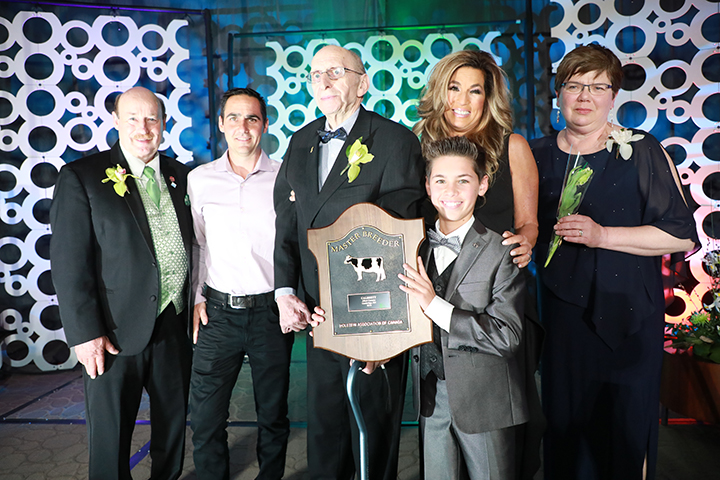
Cold day in 2015. Brubacher Sales Arena. The room fills up — Europeans, Americans, both Canadian coasts. A stroke had taken Albert’s speech by then, but not his stubbornness. The sale book was his autobiography written in pedigrees. The bidding was the industry’s way of saying thank you.
People who were there describe the same thing in different words. When Miranda P — that polled female Eastman calls one of the legacy’s finest achievements — went through the ring, the room got quiet in that specific way rooms get quiet when everyone realizes they just witnessed a handoff. Not a sale. A handoff. Someone coughed. Someone else wiped their eyes without pretending they weren’t. A couple of the French buyers in the front rows — men who’d built their herds on Cormdale embryos over two decades of OGER-era partnership — caught each other’s eyes and held the look a beat longer than usual. Albert watched from his seat. He couldn’t speak. He didn’t need to.
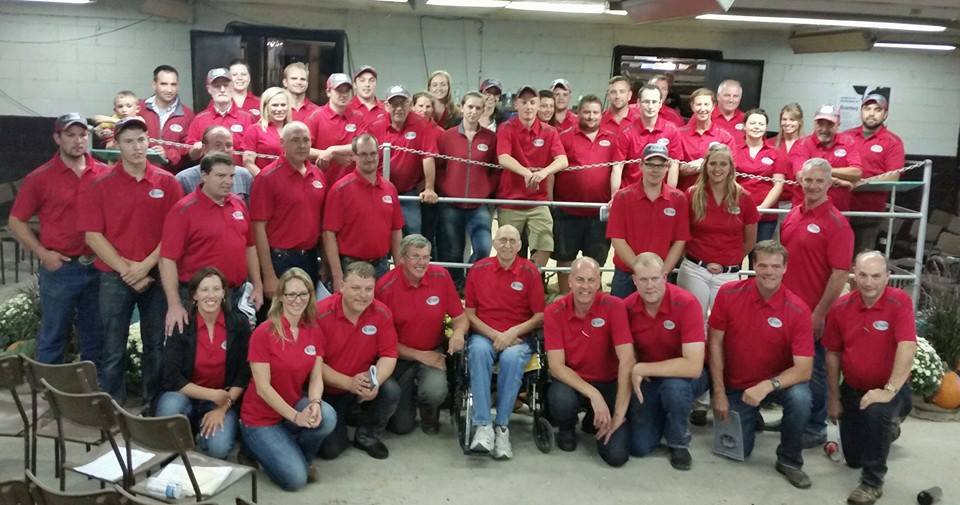
The Polled Bet, and Why It Matters More Now
Worth sitting with, because this one matters now more than it did then.
Albert was an early advocate for the polled (naturally hornless) gene in Holsteins, back when most of the industry treated polled animals as a novelty or a compromise. One of his crowning achievements there was Calbrett Kingboy Miranda P — the #1 heterozygous polled female for type and feet & legs in her era, and the only cow ever to be named Holstein International’s Global Cow of the Year twice. She was the first polled cow ever to take that honour, and she also claimed Polled Cow of the Year. Eastman flags her as one of the absolute highlights of the legacy: “Miranda would be one of best achievements. Sold in Legacy Sale in ’15, went on to do great things.”
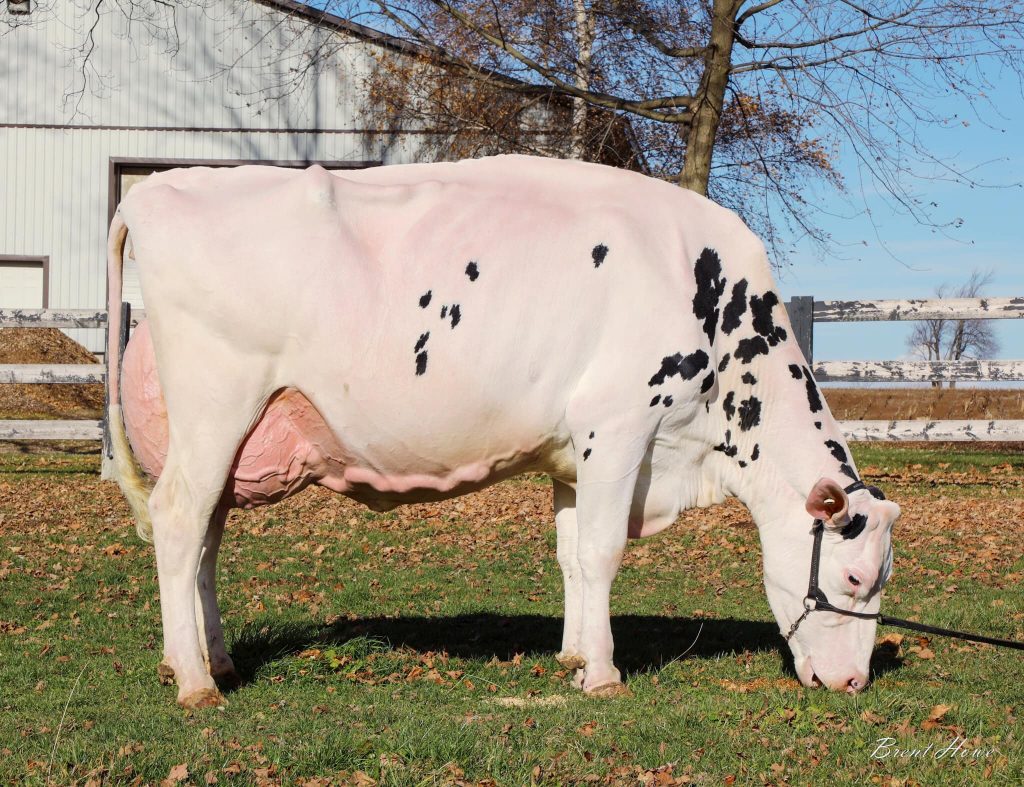
“Great things” isn’t just sentiment. Miranda P represented the kind of polled female that proved breeders didn’t have to choose — you could have polled genetics and elite type, components, and feet and legs in the same animal. That proof of concept mattered. Before Miranda P’s generation, the polled conversation was often dismissed with “yeah, but you give up type.” After her, that argument got a lot harder to make in front of a well-informed buyer.
So what’s the deal in 2026? The welfare conversation around dehorning isn’t quietly going away. Several European buyers we’ve spoken with — operators navigating their own retailer and cooperative welfare-audit requirements — are showing noticeably more interest in polled lines from proven type-and-production cow families. Canadian retailers are asking harder questions too. And the NFACC Code of Practice review cycle has the Canadian dairy community itself debating where disbudding standards should land. The debate’s as heated as you’d expect, and it should be. Breeders who invested in polled genetics 15 and 20 years ago aren’t the early adopters anymore. They’re the suppliers. If you’re a mid-size family operation trying to think three breeding decisions ahead, Albert’s polled bet isn’t a quirky side note. It’s a case study.
Chabot, still active in the Quebec dairy industry and spending his judging weeks watching where type-and-production balance is headed, has been pretty clear with the next generation: keep improving genetics using every tool available, stay open to changes, and don’t be afraid to buy and sell. That’s a 2026 voice delivering a 1983 philosophy. The math still works.
What to Do With This in 2026
Here’s the part that matters for whoever’s reading this with a barn boot still on.
If you’re sitting on an ET-eligible heifer from a solid cow family right now, Albert’s playbook is almost embarrassingly simple.
Get involved. Buy a great foundation — embryo, heifer, cow — and develop her. Keep improving with every tool science gives you: classification, milk testing, genomics, IVF, whatever comes next. And right now “next” looks like Lactanet’s Methane Efficiency index, feed-efficiency genomics moving into commercial proofs, and polled lines earning premium interest from European buyers worried about their own welfare audits. Stay flexible when the market shifts. It will shift, probably by next quarter — ask anyone who’s tried to book a June embryo shipment into Germany lately, or anyone watching Class 4a and CUSMA-era TRQ language getting reargued every few months. And don’t be afraid to sell. Keep cattle moving. Stagnation is the real killer.
Walk into a barn in Quebec, France, or southern Alberta today and the odds are real good you’re looking at a cow carrying some Calbrett or GenerVations somewhere in her pedigree. Not sentimentality. Math. But the bigger legacy isn’t in the ear tags. It’s in the posture of the whole Canadian Holstein industry toward the world — from defensive sanctuary to confident exporter, from type-vs-production tribalism to the complete-cow synthesis, from co-op monoculture to a marketplace where private innovators can build global brands alongside the co-ops, not against them.
The Grand Champion He Never Got to Hang
Chabot drops one unrealized dream into the record — the goal he says is still chasing the next generation: “to breed or own a Royal Winter Fair Grand Champion.”
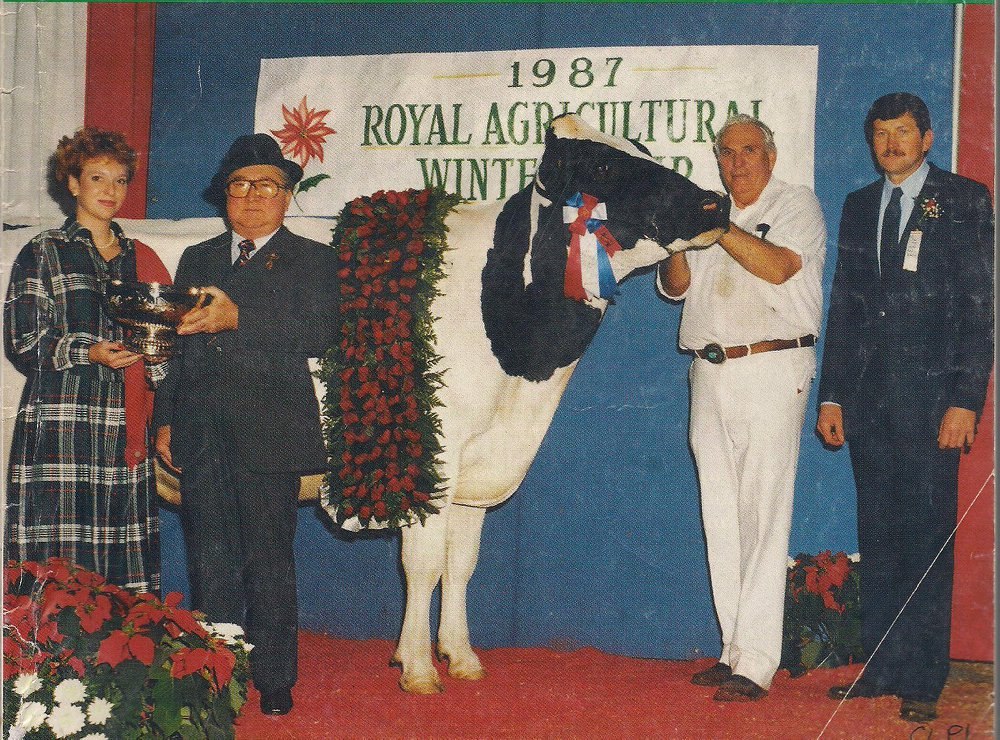
Tony Charity did it for Hanoverhill and Romdale in 1984. Forty-two years later, that Grand Champion banner is still the crown the old man never got to achieve. Somebody’s going to finish that sentence. Might as well be someone who learned from him.
The hum of milking parlours from Orton to Ormstown to the OGER barns in France still carries something of Albert Cormier in every pulse.
So — which Albert Cormier bet are you making in your barn today?
The polled one? The imported-semen one? The sell-her-the-same-day-you-bought-her one? The flush-her-early-and-often one? Or the quieter one — the decision to treat the first-time Quebec consignor and the big French A.I. house with the same level of show-up?
Let us know in the comments. The next chapter of this story is being written in real Canadian barns right now, and we want to hear whose cow family is going to finish the sentence.
Continue the Story
- From Show Ring Legend to Industry Innovator: The David Dyment Story — Dyment credits Albert Cormier with teaching him to “consider bloodlines others might overlook.” This is the story of another contrarian who wrestled with the same type-vs-production divide Albert refused to accept — and built AG3 Genetics on the other side of it.
- Dad at 80: How Murray Hunt Revolutionized Canadian Dairy Genetics — Before Albert pushed LPI-based selection into commercial practice, Murray Hunt built the Dollar Difference Formula that made index thinking possible. This is the intellectual landscape Albert was navigating — and the generation of thinkers who made his bet on numbers over ribbons a viable one.
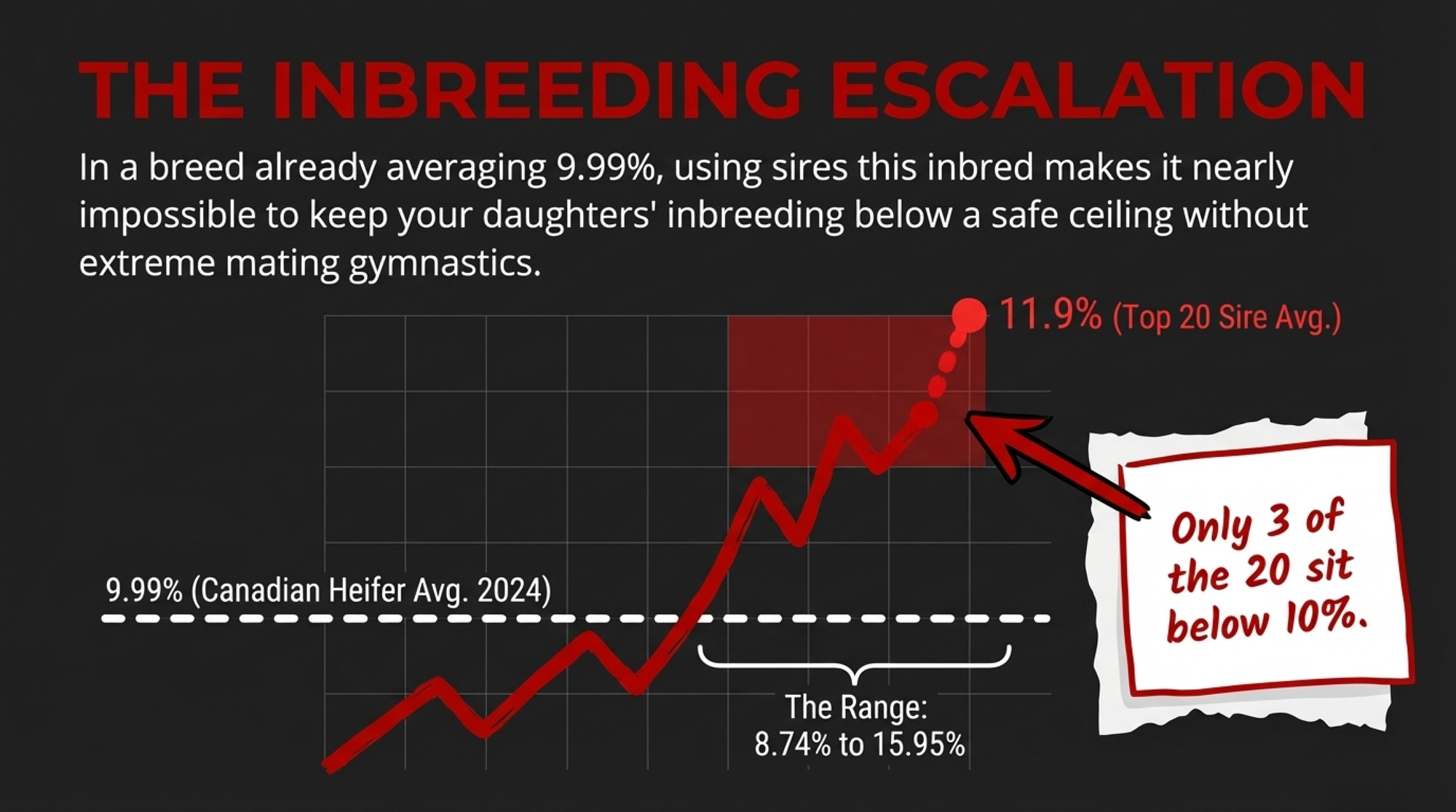
- 9.99% Inbreeding and Rising: How Blondin Sires Turned a Holstein Bottleneck into 75% Growth — Dann Brady and Simon Lalande couldn’t find the deep-pedigreed bulls they wanted in the big AI catalogues — so they built their own stud. A Quebec-rooted private AI company challenging the co-op establishment? That’s Albert’s playbook, updated for the genomic era, with Yvon Chabot’s Blondin name on the door.
 The Sunday Read Dairy Professionals Don’t Skip.
 The Sunday Read Dairy Professionals Don’t Skip.
Every week, thousands of producers, breeders, and industry insiders open Bullvine Weekly for genetics insights, market shifts, and profit strategies they won’t find anywhere else. One email. Five minutes. Smarter decisions all week.