One barrier failure diverts 2 kg of glucose per day to the immune system — and no ration fix claws it back while inflammation persists.
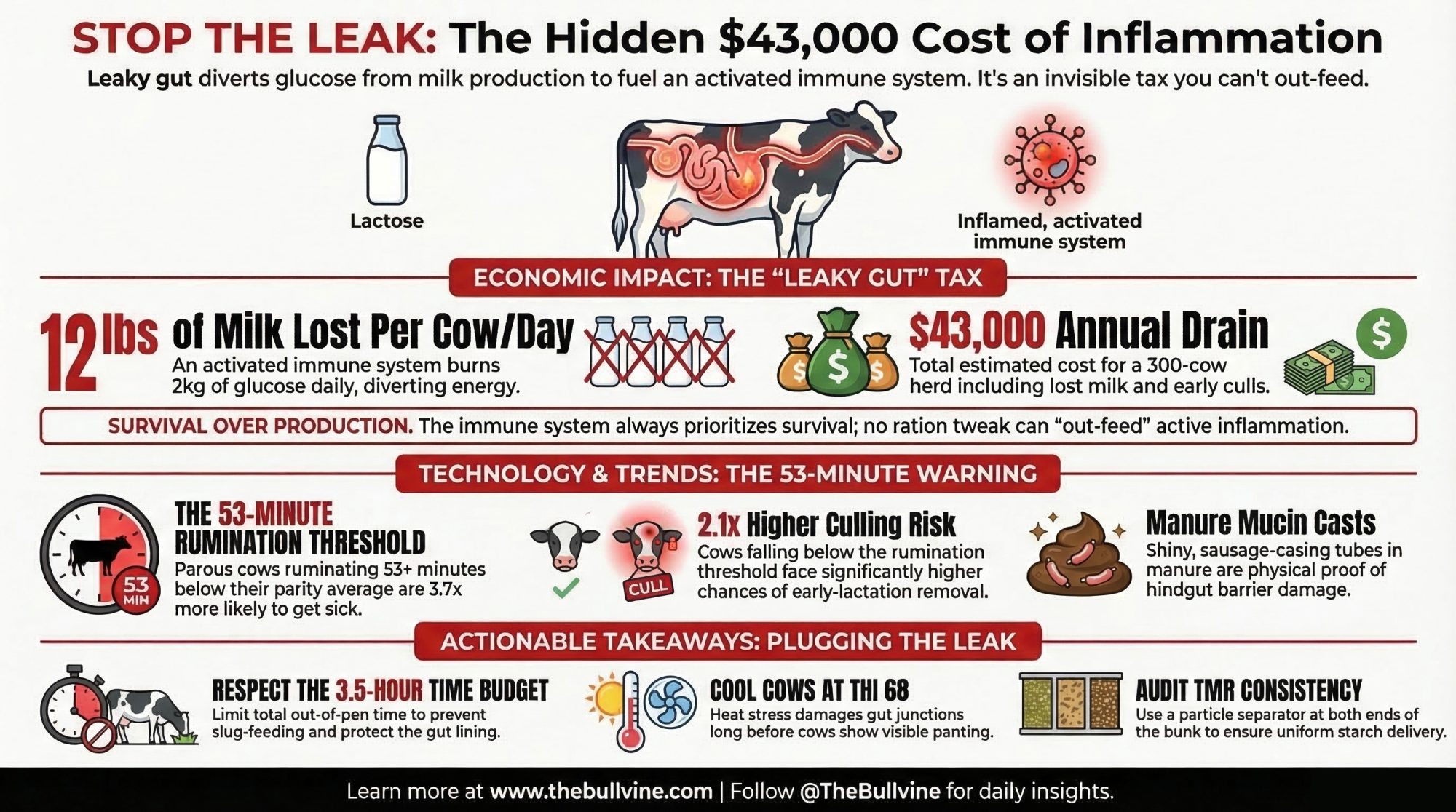
Executive Summary: You’re trying to survive on $18.95/cwt milk with costs around $19.14/cwt, and an activated immune system can quietly steal the energy for about 12 lb of milk per cow per day when the gut barrier leaks. Kvidera and Baumgard’s work shows that a full‑on immune response can burn roughly 2 kg of glucose a day, which the mammary gland would otherwise turn into lactose and milk volume. That “leaky‑gut tax” explains why some herds still wrestle with ketosis, hypocalcemia, and early culls even when DCAD and high‑starch diets look good on paper. Santos’ 2024 study on commercial herds gives you a simple trigger: parous cows ruminating 53 minutes below their parity average pre‑calving were 3.7× more likely to get sick, 2.1× more likely to be culled, and produced several pounds less milk per day. Add in albumin‑to‑globulin ratios one week before dry‑off and manure sieving for mucin casts, and you’ve got a practical on‑farm screen for inflammation risk, not just a lab concept. For a 300‑cow dairy, conservative barn math puts the annual cost of chronic low‑grade inflammation in the $32,000–$43,000 range once you include lost milk and replacement heifers at roughly $3,010/head.
When a cow’s gut barrier leaks, her immune system can grab about 2 kg (4.4 lb) of glucose a day — enough energy to make roughly 12 lb of milk — and no ration tweak will claw that back while inflammation stays switched on. In a year when USDA pegs U.S. all‑milk at about $18.95/cwt for 2026, that invisible leak is the difference between hanging on and sliding backward.
Dr. Megan Abeyta saw how fast this could go sideways long before it showed up in any spreadsheet. During her PhD at Iowa State with Dr. Lance Baumgard, she injected a healthy mid‑lactation Holstein with lipopolysaccharide (LPS) — the same endotoxin that slips into the bloodstream when the gut wall fails — and watched the cow go down with milk‑fever‑like symptoms almost immediately. The ration hadn’t changed. Calcium intake hadn’t changed. The immune system simply hijacked the cow’s glucose and calcium in seconds.
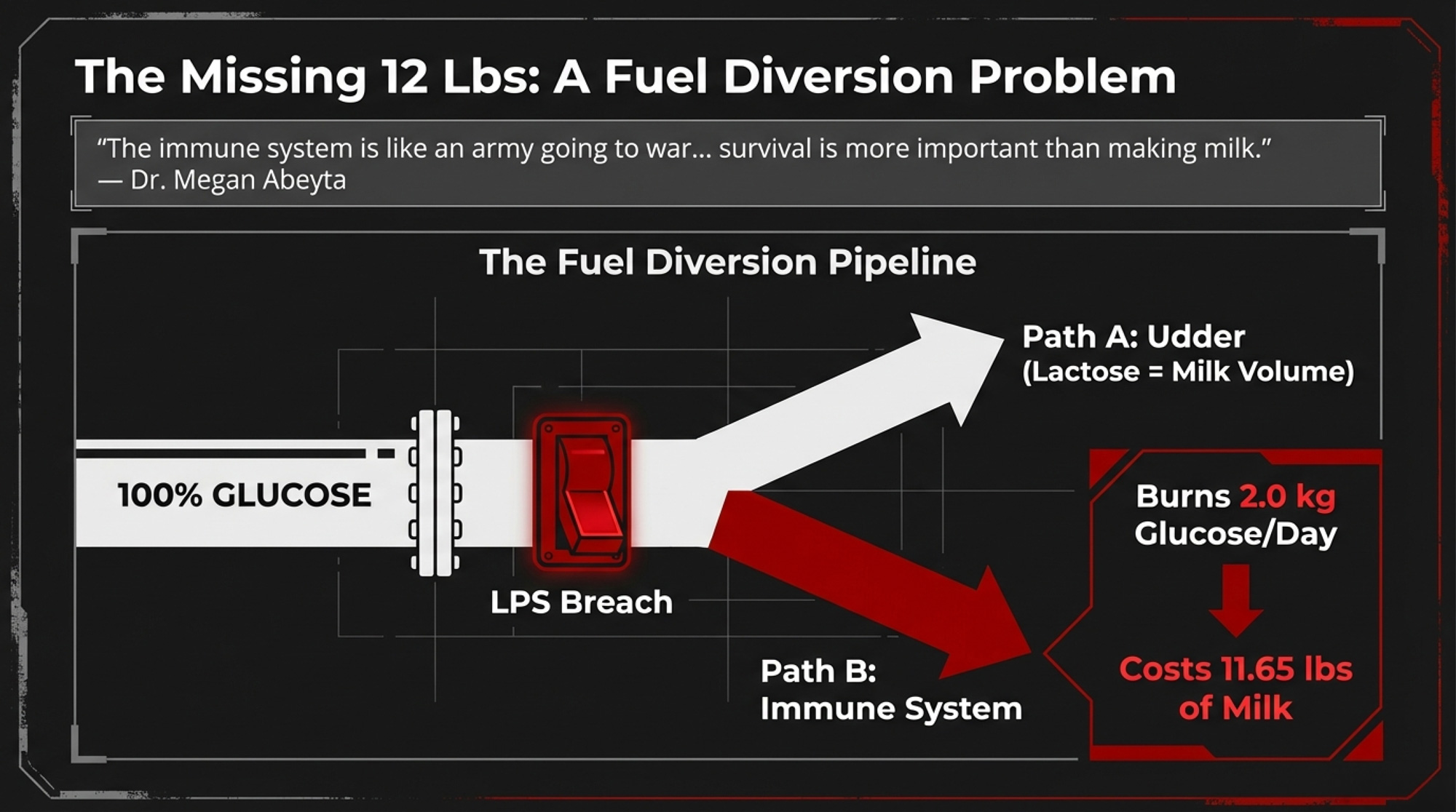
“You’ve got to remember, the immune system is very energetically expensive,” Abeyta says on the Dairy Nutrition Black Belt podcast. “I like to compare it to an army going to war… and in the hierarchy of functions, survival is more important than making milk.” That hierarchy sits right at the center of modern transition‑cow management.
What Actually Breaks — and Where
Think of your cow’s gut as a long, single‑brick wall between her and a hostile outside world. That “brick” is a one‑cell‑thick epithelium, stitched together by tight junction proteins like occludin, claudins, and the ZO‑family that decide what gets through. Their job is to let in amino acids, fatty acids, and sugars — and keep out LPS, bacteria, and other junk that would light the immune system on fire.
When stress hits hard enough, those tight junctions retract or break down. Microscopic gaps open, and endotoxins such as LPS enter the bloodstream from the gut. The immune system doesn’t shrug that off. It goes to war, pulls glucose and amino acids away from the udder, and you start paying for it in lost milk and weaker cows.
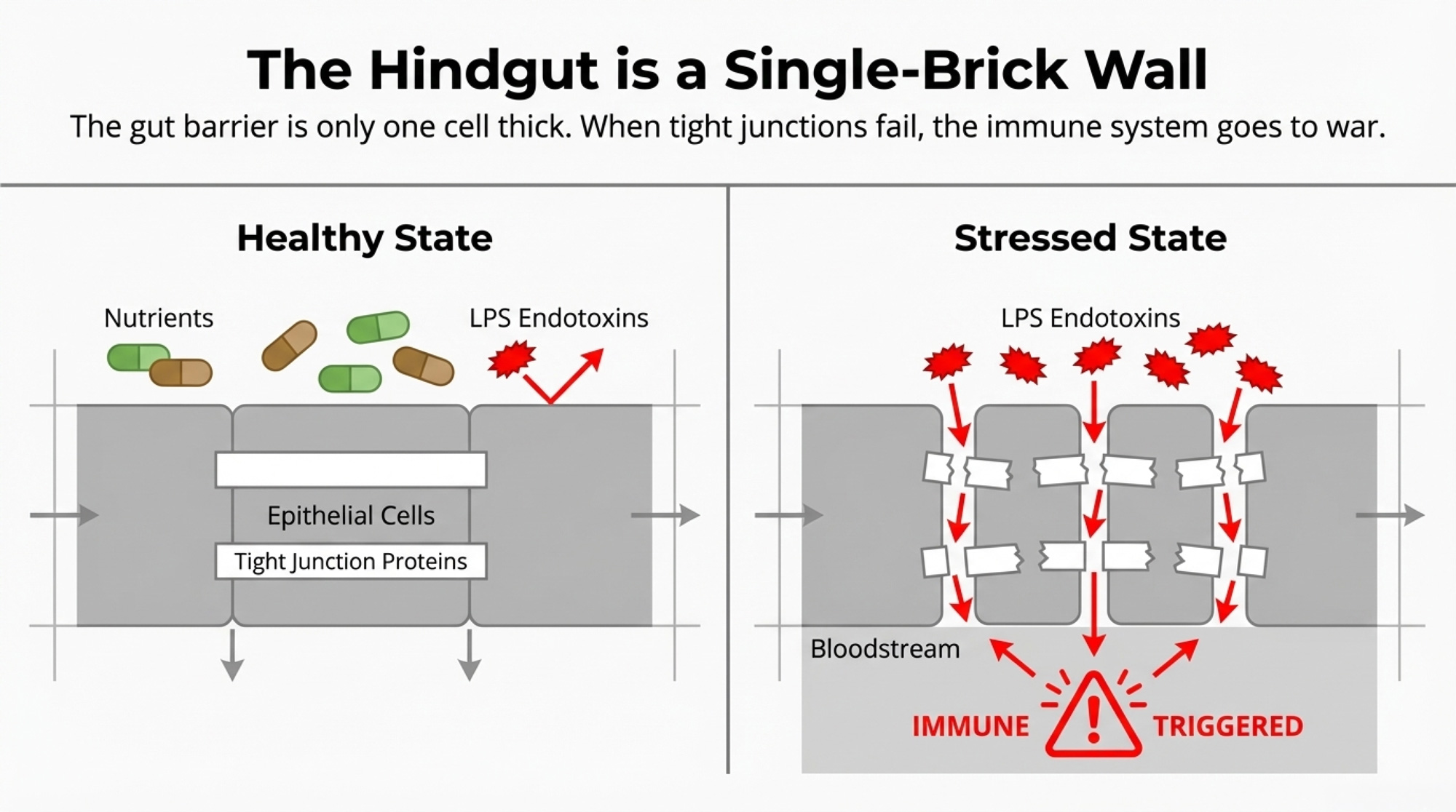
Most people instinctively point at the rumen when they hear “acidosis.” But the real soft underbelly here is the hindgut— the cecum and large intestine. The rumen enjoys a constant rain of salivary bicarbonate and phosphate. The hindgut doesn’t. When high‑producing cows on hot, high‑starch rations push too much starch past the rumen and small intestine, that starch ferments fast in the hindgut, pH falls below about 5.5, and the epithelial lining starts to slough.
If you’re seeing mucin casts in manure — shiny, sausage‑casing tubes in the strainer — that’s your cow trying to “bandage” damaged hindgut with fibrin and mucus. It’s not just a quirky finding. It’s physical evidence that the barrier has already taken a hit.
How Do Stressors Stack Into a Leaky‑Gut Crisis?
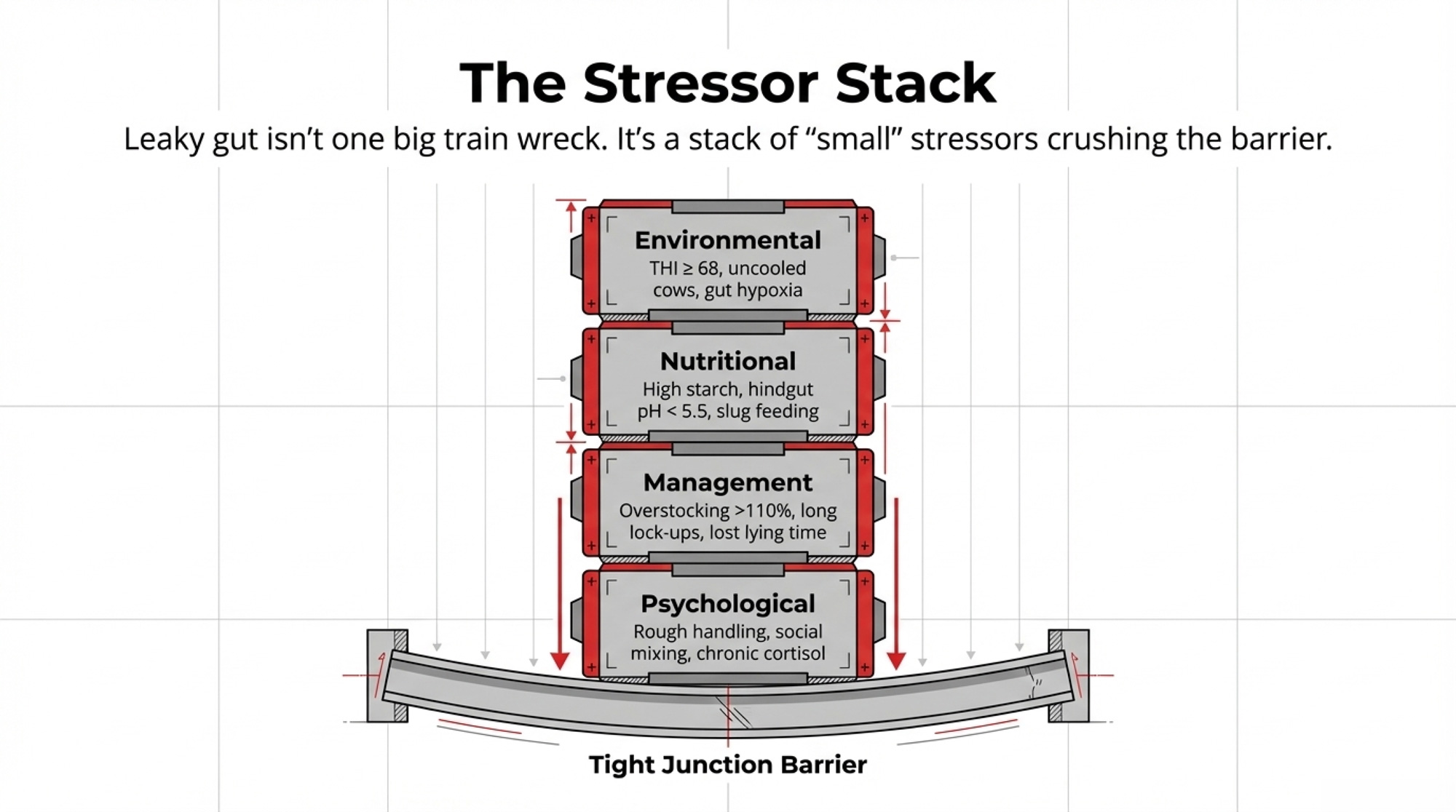
On most dairies, leaky gut isn’t caused by one big train wreck. It’s the result of a bunch of “small” stressors stacking until the barrier finally gives way.
Abeyta spends a lot of time walking pens and watching how those stressors line up. “The more small stressors those cows are exposed to, the more likely she’s going to have a worse inflammatory response,” she says.
On the ground, that stack usually looks like this:
- Heat stress starts to bite around a THI of 68 for uncooled cows, long before you see cows full‑on panting. To keep cool, the cow pulls blood away from the gut and toward the skin; that gut hypoxia and ischemia damage cells and tight junctions and can drive several‑fold increases in circulating LPS.
- Nutritional stress comes from SARA, hindgut acidosis, feed restriction, or inconsistent bunk management. High‑starch diets without tight feed management increase fermentable carbohydrate intake in the hindgut; feed restriction and erratic feeding times also stress the epithelium.
- Psychological/social stress — rough handling, frequent pen moves, mixing first‑lactation heifers with mature cows — keeps cortisol elevated. Chronic cortisol makes it harder for tight junction proteins to stay in place and lowers the threshold at which other insults cause leaks.
- Management stress — overstocked pens, bad stalls, long headlock time, lameness — chews up the time budget. Cows lose lying time, compress eating into fewer, bigger meals, then slug‑feed starch into both the rumen and hindgut.
You’ve seen versions of this. The cow that’s too lame to lie down. The close‑up group jammed to 130%. The holding pen is a sauna. The gut doesn’t care which one you blame. It just sees stress and starts to leak.
| Stress category | Typical farm triggers | What it does to the barrier |
| Environmental | THI ≥ 68, poor air movement, no cooling | Gut hypoxia/ischemia, oxidative damage, higher circulating LPS |
| Nutritional | High starch, SARA, hindgut acidosis, feed restriction | Hindgut pH < 5.5, epithelial sloughing, microbiome disruption |
| Psychological | Rough handling, social mixing, frequent pen moves | Chronic cortisol, impaired tight junction maintenance |
| Management | Overstocking >110%, long lock‑up, poor bedding, lameness | Lost lying time, slug feeding, more acidosis risk |
How Much Milk Does the Immune System Steal?
Here’s where the “army at war” analogy stops being cute and starts costing you real money.
When LPS slips through a leaky gut, immune cells like neutrophils and macrophages flip into high gear and become obligate glucose users. They’re not interested in fat or ketones. They burn glucose.
A 2017 study by Kvidera and colleagues at Iowa State used an LPS challenge plus a euglycemic clamp in mid‑lactation Holsteins to measure that fuel bill. The acutely activated immune system pulled more than 1 kg of glucose in just 12 hours. When you account for how that response tapers over a full day, Baumgard’s group estimates an active immune system can demand around 2.0 kg (4.4 lb) of glucose per cow per day.
You know where that glucose would normally go: lactose. Lactose pulls water into milk. Less glucose for lactose, less milk in the tank.
Using conservative energy values:
- Roughly 0.9 Mcal of NEL per lb of glucose equivalent in this context.
- Roughly 0.34 Mcal of NEL per lb of 3.5% fat‑corrected milk.
Quick barn math:
- 4.4 lb di glucosio × 0.9 Mcal NEL/lb ≈ 3.96 Mcal.
- 3.96 Mcal ÷ 0.34 Mcal/lb ≈ 11.65 lb of milk.
Call it about 12 lb of milk per cow per day, diverted from the bulk tank to the immune system when inflammation is active.
And you can’t just “feed that back.” As Abeyta puts it, survival sits at the top of the priority list. As long as the immune army is fighting, it will pull what it needs, no matter how much energy you stack into the ration.
On the protein side, the liver is busy producing acute‑phase proteins such as haptoglobin and serum amyloid A to fight the perceived threat. Those proteins are relatively rich in certain amino acids, so the cow cannibalizes muscle to supply them. Estimates suggest that for every 1 g of acute‑phase proteins synthesized, 1.5–2.0 g of muscle protein may have to be broken down. In a transition cow already in negative protein balance, that’s a fast road to weaker cows and higher early cull rates.
Is Leaky Gut Behind Your Transition‑Cow Failures?
Let’s talk about where this really hurts: the transition window. From roughly three weeks before calving to three weeks after, your cows are going through major hormonal shifts, diet changes, and immune activation around calving itself. Tight junctions are more fragile, the liver is overloaded, and she’s already short on energy and calcium.
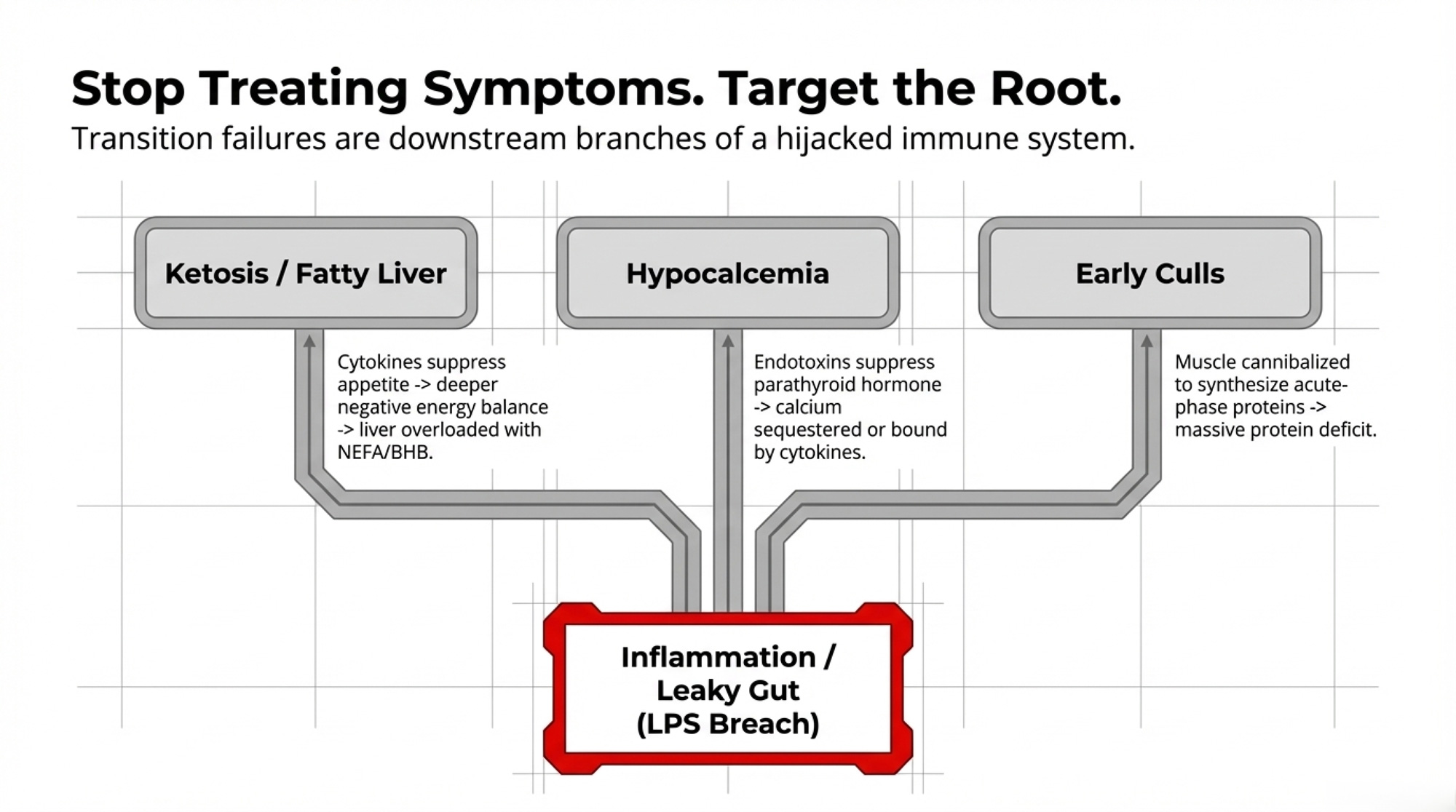
Two things keep showing up across research and on‑farm experience:
- Inflammation and ketosis are joined at the hip. Inflammation is hypophagic — pro‑inflammatory cytokines act on the brain, reducing dry-matter intake. That deepens negative energy balance, drives more NEFA and BHB, and makes it harder for the liver to process that fat load. Cows with elevated inflammatory markers postpartum are more likely to develop clinical and subclinical ketosis and fatty liver.
- Some cases of hypocalcemia are inflammation‑driven, not just mineral imbalances. The “Calci‑Inflammatory Network” framing says part of your hypocalcemia problem is rooted in endotoxin. When LPS enters the bloodstream, cytokines such as IL-1, IL-6, and TNF-α can suppress parathyroid hormone secretion, bind to or sequester ionized calcium, and disrupt calcium transporters in the gut and kidneys. That lines up with Abeyta’s own LPS injection experience — watching a previously healthy cow drop with milk‑fever‑like signs almost instantly.
Cows that never manage to shut down that inflammatory cascade are more likely to leave the herd early in lactation. If you’re routinely losing fresh cows before 60 DIM, you’re probably paying some of this bill already.
How Much Is This Leak Costing at Sub‑$19 Milk?
You’re not managing inflammation in a vacuum. You’re managing it in a year when USDA’s February 2026 outlook pegs all‑milk at around $18.95/cwt and ERS/Bullvine analysis puts average cost of production for larger U.S. herds right around $19.14/cwt. That’s a razor‑thin margin at best.
Let’s take a conservative example; you can adjust it with your own numbers.
- Herd size: 300 milking cows.
- At any given time in the first 60 DIM, assume 15% of cows — 45 head — are carrying some level of chronic, low‑grade inflammation.
- Instead of the full 12 lb/day loss, assume an average of 10 lb/day across that group, once you factor in varying severity.
Milk loss math:
- 45 cows × 10 lb/day × 60 days = 27,000 lb of milk.
- 27,000 lb = 270 cwt.
- At $18.95/cwt, that’s about $5,117 in lost revenue over that 60‑day window.
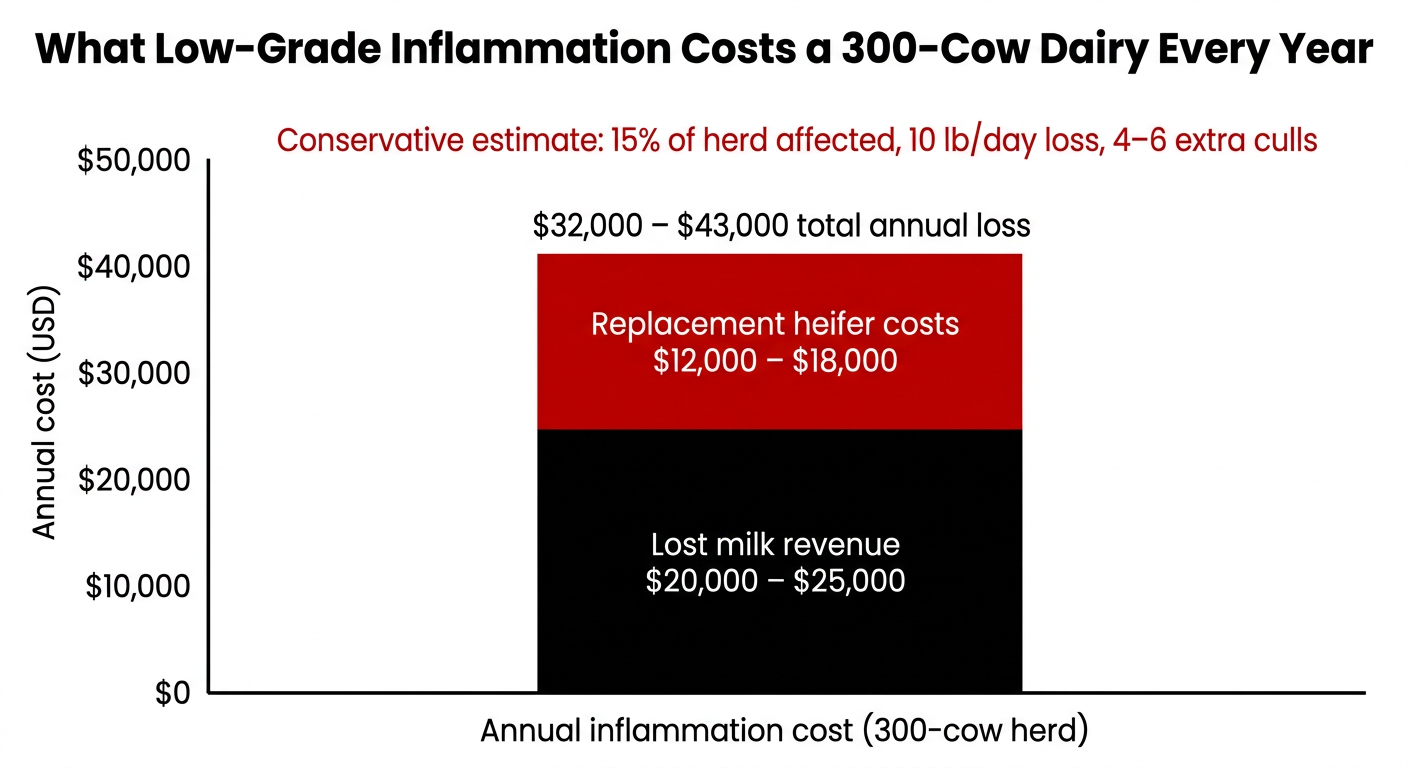
| Cost component | Amount (USD) |
|---|---|
| Lost milk revenue (4–5 transition cohorts/year) | $20,000 – $25,000 |
| Replacement heifer costs (4–6 extra culls) | $12,000 – $18,000 |
| Total annual inflammation tax | $32,000 – $43,000 |
Now stretch that across the year.
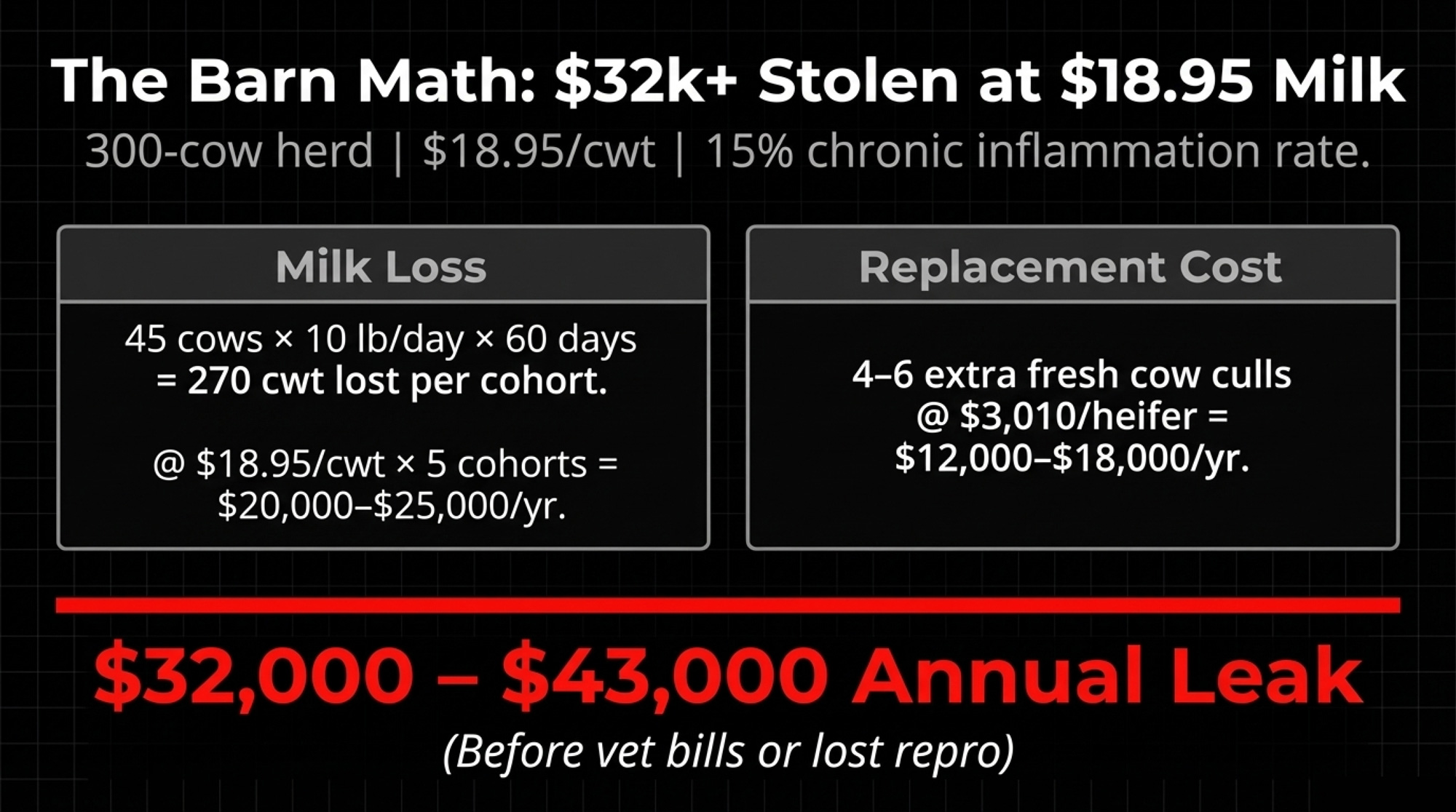
You don’t just have one transition group. If this pattern repeats across four to five transition cohorts annually, you’re staring at roughly $20,000–$25,000/year in milk revenue alone.
Layer in early‑lactation culls linked to unresolved inflammation.
If an extra 4–6 fresh cows leave the herd early because they never recover, and replacement heifers cost around $3,010/head in the current North American market, that’s another $12,000–$18,000/year.
Now you’re in the neighbourhood of $32,000–$43,000/year in a 300‑cow herd — before you count vet bills, lost repro, and the long‑term production drag on cows that stay but never hit their genetic peak.
Plug in your own numbers — herd size, transition‑pen cull rate, your local milk price — and see where you land.
Can Rumination Data Flag Transition‑Cow Inflammation Before You See It?
You don’t have a ketone‑style dipstick for inflammation. But if you’ve already invested in rumination collars or ear tags, you’re sitting on a powerful early‑warning tool. ppl-ai-file-upload.s3.amazonaws
A 2024 Journal of Dairy Science paper by Santos and colleagues looked at prepartum rumination time in commercial Holstein herds. Instead of chasing some magic “X minutes per day” number, they focused on how each cow deviated from her parity group’s average.
For parous cows, they found a clear threshold: animals ruminating 53 minutes per day less than their parity averagein late gestation were the ones that blew up postpartum.
Here’s what that below‑threshold parous group looked like:
| Outcome | Below‑threshold parous cows | Above‑threshold parous cows |
| Odds of postpartum clinical disease | 3.7× higher (adjusted odds ratio 3.7; 95% CI 2.1–6.4) | Baseline |
| NEFA postpartum | 0.38 mmol/L | 0.31 mmol/L |
| BHB postpartum | 0.53 mmol/L | 0.49 mmol/L |
| Milk yield | 46.3 kg/day | 48.5 kg/day (≈ 4.8 lb/day more) |
| Hazard of culling | 2.1× greater (95% CI 1.2–3.6) | Baseline |
| Probability pregnant by 210 DIM | 36% lower (hazard ratio 0.64) | Baseline |
For nulliparous heifers, the same rumination drop didn’t carry much predictive power — the AUC was essentially 0.51, i.e., no better than chance. So this is a parous‑cow tool, not a blanket rule for your whole prefresh group.
From a practical standpoint, that’s gold. You can:
- Pull prepartum rumination data for parous cows.
- Calculate the parity‑specific average for the last 7–10 days before calving.
- Flag any cow sitting 50+ minutes below that average.
- Tag those cows as high‑risk for inflammation‑linked problems and build them into your fresh‑cow checklists.
Abeyta’s excited about the direction this is headed. “More and more dairies are starting to monitor rumination on farm,” she says. “We have a lot more room to grow regarding identifying inflammatory risk on farms.”
How Should You Use A: G Ratios and Manure to Spot Trouble?
Rumination isn’t your only tool.
The albumin‑to‑globulin (A: G) ratio is a relatively inexpensive blood test that serves as a proxy for chronic inflammatory status. Albumin is a negative acute‑phase protein — its production falls during inflammation as the liver shifts resources to immune proteins. Globulins go the other way, rising.
Research led by Cattaneo and colleagues, published in the Journal of Dairy Science in 2021, looked at the A: G ratio one week before dry‑off. Cows with a higher A: G ratio before dry‑off showed lower inflammatory responses and better milk yield in the subsequent lactation. On‑farm, ratios below about 1.0–1.1 sit in the “worry about chronic inflammation or liver stress” zone.

Then there’s manure. A simple 1.6‑mm strainer can tell you a lot about how hard the hindgut is getting hammered:
- Mucin casts indicate that the large intestine is actively trying to patch the damage.
- Foam or bubbles indicate excessive hindgut fermentation.
- Fiber particles >0.5 inches scream that rumen retention and chewing are off.
- Obvious feed ingredients (green grass, bright citrus pulp, cottonseed with lint) tell you the feed is blowing through too fast.
If you’re seeing that package in your transition cows, you’re not just dealing with a “diet quirk.” You’re watching barrier damage in real time.
| Manure finding (1.6‑mm strainer) | What it signals | Immediate action |
|---|---|---|
| Mucin casts (shiny, sausage‑casing tubes) | Large intestine trying to “bandage” damaged hindgut with fibrin and mucus | Trigger ration & feed‑management review; check for hindgut acidosis |
| Foam or bubbles | Excessive hindgut fermentation; likely starch overload | Audit starch levels, TMR consistency, and feeding frequency |
| Fiber particles >0.5 inches | Rumen retention and chewing time are off; cud time too short | Check lying time, bunk access, particle size, effective fiber |
| Obvious undigested feed (green grass, bright citrus pulp, cottonseed with lint) | Feed is blowing through too fast; inadequate digestion time | Review feed push‑up schedule, slug feeding, and passage rate |
Options and Trade‑Offs for Farmers
Here’s where you turn this from scary biology into a plan. None of these paths is mutually exclusive, but each has a “best fit” and some real limits.
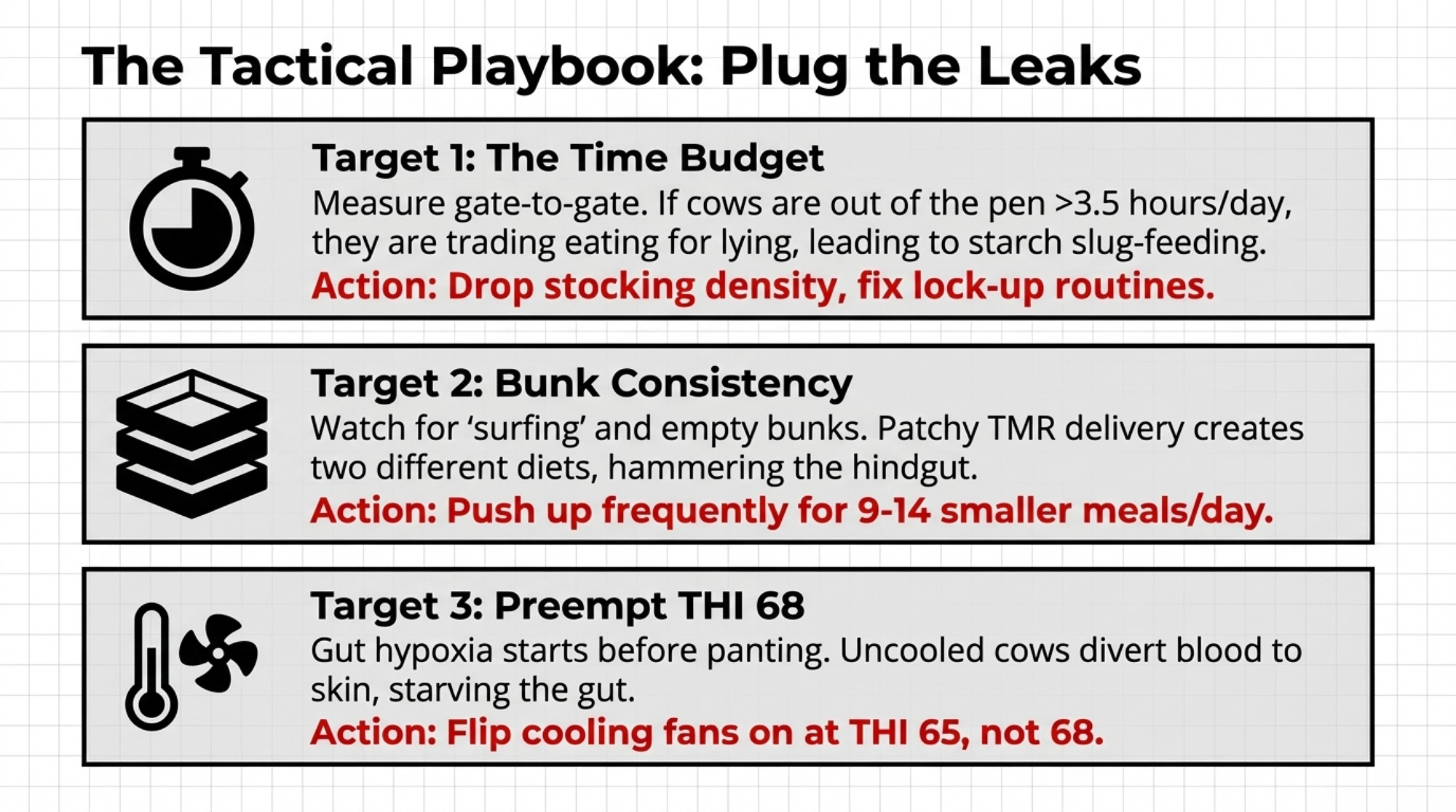
| Path | When it makes sense | Quick‑win timeline | Key trade‑off |
|---|---|---|---|
| Fix the time budget first | Overstocking >110%, long lock‑ups, short lying time | 30 days | May require dropping cow numbers or capital for more stalls |
| Audit TMR consistency & bunk management | Patchy manure, obvious sorting, cows “surfing” the bunk | 14–21 days | Requires mixer calibration, frequent push‑ups, tighter labor discipline |
| Use 53‑minute rumination threshold for fresh‑cow targeting | You already have rumination collars but only use them reactively | 7 days (report setup) | Only works for parous cows; requires consistent data pull & follow‑up |
| Get ahead of heat stress before THI hits 68 | Heading into summer, last year you were late on cooling | 30–60 days (pre‑season) | Higher power bills from running fans earlier; upfront equipment maintenance |
Path 1: Fix the Time Budget First (30‑Day Action)
When it makes sense: You’re over 110% stocking in key pens, lying time looks short, you’ve got long headlock/holding times, or you’re already seeing slug‑feeding behaviour.
High‑producing cows need roughly 12–14 hours of lying time per day, and they’ll sacrifice eating time to get it. Studies out of Miner Institute and others estimate that each additional hour of rest translates into about 2–3.5 lb more milk per cow per day. When lying time gets squeezed — by overcrowding, bad stalls, sore feet, or long parlor trips — cows spend more time standing in alleys and then hammer the bunk in a few big starch‑heavy meals.
Within the next 30 days:
- Time one close‑up or fresh‑cow pen from gate to gate: from the moment cows leave the pen for lock‑up or parlor until they’re back. If you’re over 3–3.5 hours/day out of the pen, you’ve got a problem.
- Stand in that same pen mid‑morning. If more than about 15% of cows are standing idle in alleys with nowhere comfy to lie, your resting time is probably too short.
Fixing this might mean dropping stocking density, fixing stalls, or changing lock‑up routines. It’s not cheap. But it’s the single most powerful move you can make to cut down on slug feeding and protect the gut.
Path 2: Audit TMR Consistency and Bunk Management
When it makes sense: You see patchy manure across the pen, obvious sorting, or cows “surfing” the bunk waiting for fresh feed.
Your ration can be beautiful on paper and still torch the hindgut if what hits the bunk isn’t consistent. If the front of the bunk gets a fiber‑rich TMR and the back gets a fine, starchy mess, you’ve effectively created two different diets.
Quick checks:
- Run a Penn State Particle Separator on TMR at both ends of the bunk right after feeding.
- Watch how often cows run out of feed. You want them cleaned up, not sitting empty for hours. Frequent push‑ups help spread intake into 9–14 smaller meals per day, which keeps pH more stable.
If you find big differences in particle distribution or see bunks going bare long before the next feeding, you’re giving the hindgut more work than it can handle.
Path 3: Use the 53‑Minute Rumination Threshold to Target Fresh‑Cow Checks
When it makes sense: You’ve already got rumination data but only use it for “sick cow” alerts.
Using Santos’ work, build a simple parity‑based report for your pre‑fresh cows:
- For parous cows, calculate the average prepartum rumination time over the last 7–10 days before calving.
- Flag any cow that’s 50+ minutes below that parity average.
- Put those cows on a high‑risk fresh‑cow list: extra temperature checks, earlier ketone testing, closer feed intake, and manure monitoring.
You’re not treating the number. You’re using it to decide which cows deserve more attention before they crash.
Path 4: Get Ahead of Heat Stress Before THI Hits 68
When it makes sense: You’re heading into summer, and last year you were “a little late” getting fans and soakers dialed in.
Heat stress is one of the cleanest ways to break the gut barrier. THI 68 is where uncooled cows start paying a price; for high‑producing herds, flipping cooling on around THI 65 is often justified.
Right now — not in July — is the time to:
- Check fan belts, soaker nozzles, controllers, and water supply.
- Make sure holding pens and return alleys actually get airflow, not just the freestall rows.
The extra power bill from running fans a bit early is almost always cheaper than a few weeks of heat‑driven leaky‑gut problems and the culls they create.
Key Takeaways
- If your parous cows are ruminating for 50+ minutes below their parity-average pre‑calving, expect them to be 3.7× more likely to get sick, 2.1× more likely to be culled, and to produce roughly 4.8 lb less milk per day. Build a report and start flagging them.
- If you’ve done the DCAD work and still fight subclinical hypocalcemia, assume inflammation might be part of the problem and talk with your vet about adding A: G ratio tests and other inflammatory markers pre‑dry‑off and early postpartum.
- If more than about 15% of cows in a pen are standing idle mid‑morning and out‑of‑pen time tops 3–3.5 hours/day, your cows are trading eating for lying — and likely slug‑feeding starch their hindgut can’t handle. Fix that time budget first.
- If you’re seeing mucin casts, foam, long fiber, or bright undigested feed in manure, treat it as confirmation of a hindgut problem and trigger a ration and feed‑management review — not just a “that’s interesting” moment.
The Bottom Line
You don’t have to turn your dairy into a research lab to get ahead of this. But you do have to decide whether you’re okay guessing about inflammation while milk sits under $19, or whether it’s time to use the data you already have — rumination, time budgets, simple bloodwork, manure — to plug the leaks.
Complete references and supporting documentation are available upon request by contacting the editorial team at editor@thebullvine.com.
Learn More
- The 15:1 ROI Protocol: How Anti-Inflammatory Treatment is Cutting Transition Disease in Half – Breaks down a high-return implementation guide for Monday morning. You’ll gain a tactical roadmap for using targeted anti-inflammatories to slash fresh cow disease by 50%, turning a $10 investment into massive milk-check gains.
- More Milk, Fewer Farms, $250K at Risk: The 2026 Numbers Every Dairy Needs to Run – Delivers the strategic foresight needed to survive the 2026 margin squeeze. It exposes the brutal gap between USDA forecasts and futures markets, arming you with the “stress-test” math to position your operation before the market shifts.
- Dairy’s Bold New Frontier: How Forward-Thinking Producers Are Redefining the Industry – Reveals the disruptive potential of “connected barns” and predictive AI. You’ll discover how to move beyond basic data collection to “decision intelligence,” using real-time sensor fusion to catch health crashes 72 hours before they happen.
 The Sunday Read Dairy Professionals Don’t Skip.
 The Sunday Read Dairy Professionals Don’t Skip.
Every week, thousands of producers, breeders, and industry insiders open Bullvine Weekly for genetics insights, market shifts, and profit strategies they won’t find anywhere else. One email. Five minutes. Smarter decisions all week.