Archive for Robotic Milking

Ditching Robot Pellets: How Smart Farms Save $36,000 and Improve Milk Components

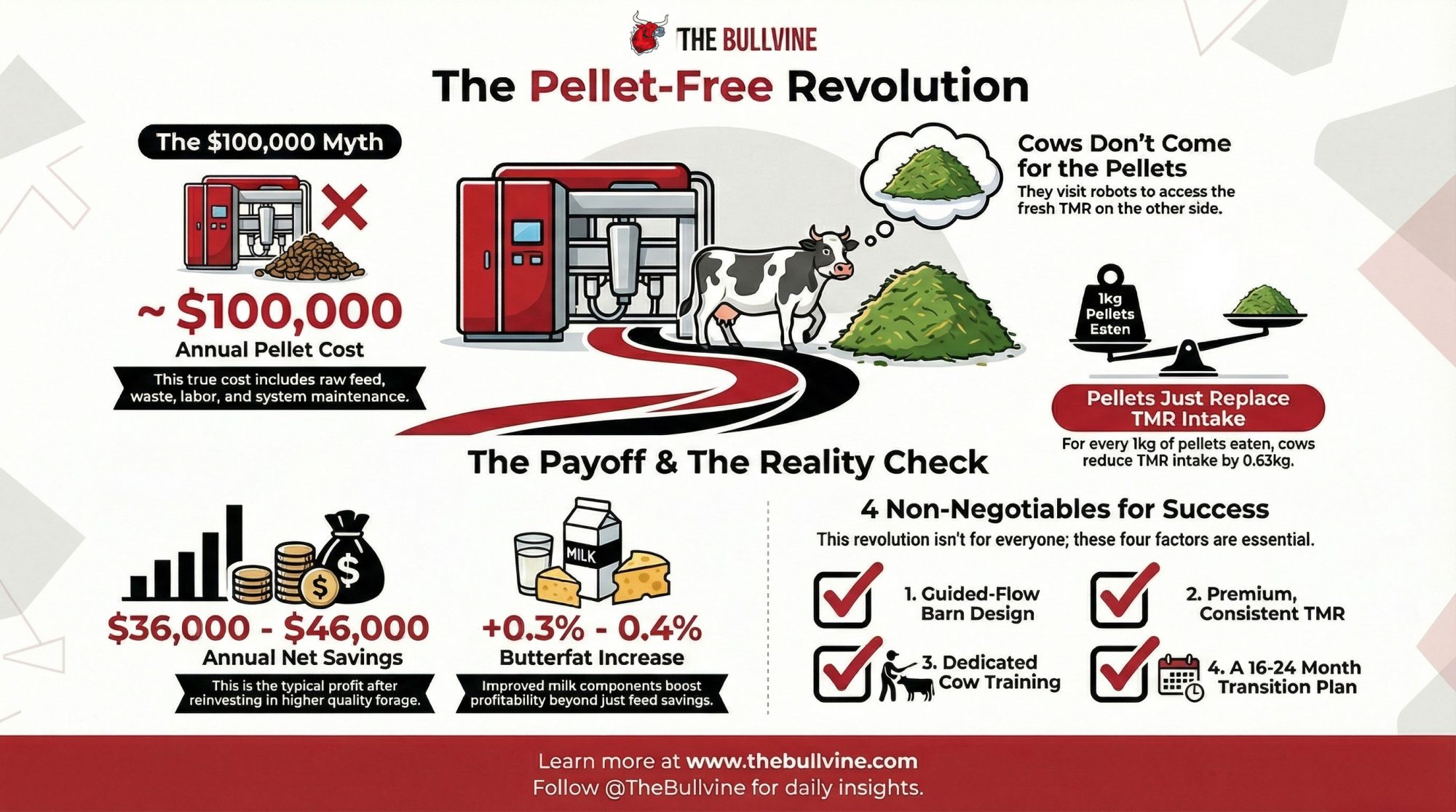
Plot twist: Your cows visit robots for the TMR behind them, not the pellets. This mistake costs $100K/year.

Executive Summary: What if the dairy industry has been wrong about robot pellets for 25 years? Growing evidence from 75+ farms across Wisconsin and Ontario shows that eliminating pellets entirely saves $36,000-46,000 annually while improving butterfat by 0.3-0.4%—with no long-term production loss. University research from Saskatchewan, Wisconsin, and Guelph confirms these pioneers’ discovery: cows visit robots to access fresh TMR beyond them, not for the pellets, making that $100,000 annual expense unnecessary. But here’s the reality check: success requires guided-flow infrastructure (not free-flow), premium forage quality, dedicated management, and the financial capacity to weather 10-15% production drops during a difficult 16-24 month transition. This revolution isn’t for everyone—operations with fewer than 200 cows or limited finances should proceed cautiously. What makes this story remarkable isn’t just the economics; it’s proof that some of agriculture’s most expensive assumptions have never been properly questioned.

You know, for more than two decades, those of us investing in robotic milking systems have accepted one fundamental truth: feeding pellets to the robot is essential to motivate voluntary cow visits. Equipment manufacturers designed for it. Nutritionists built entire programs around it. We all budgeted for it without question. But here’s what’s interesting—what if this core assumption, built into thousands of robotic dairy operations worldwide, turned out to be optional?

That’s exactly what a growing number of progressive dairy farmers are discovering. By eliminating feed pellets entirely from their robotic milking systems, operations from California to Wisconsin are reporting annual savings of $36,000–$46,000 per 200 cows, improved milk components, and simplified management—all while maintaining or even increasing production. Their success is backed by recent research from leading universities and represents a fundamental rethinking of how robotic dairy systems can operate.

What fascinates me most is that this isn’t just about cutting feed costs. It’s about what happens when farmers question inherited practices and discover that some of our industry’s most accepted truths might actually be holding us back.

The Discovery That Started It All

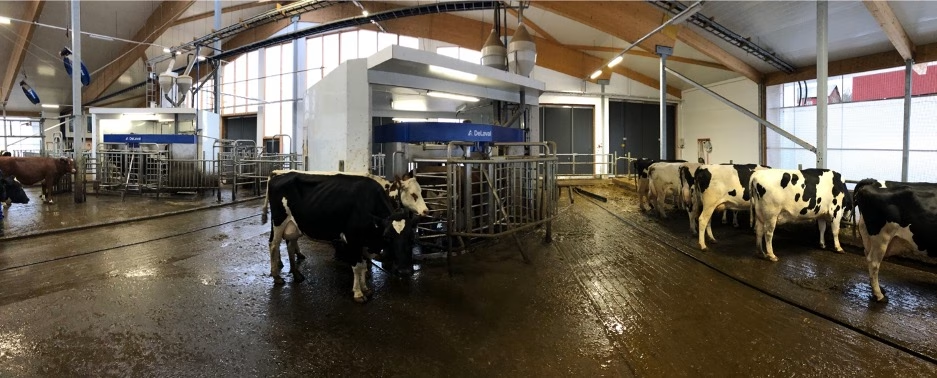
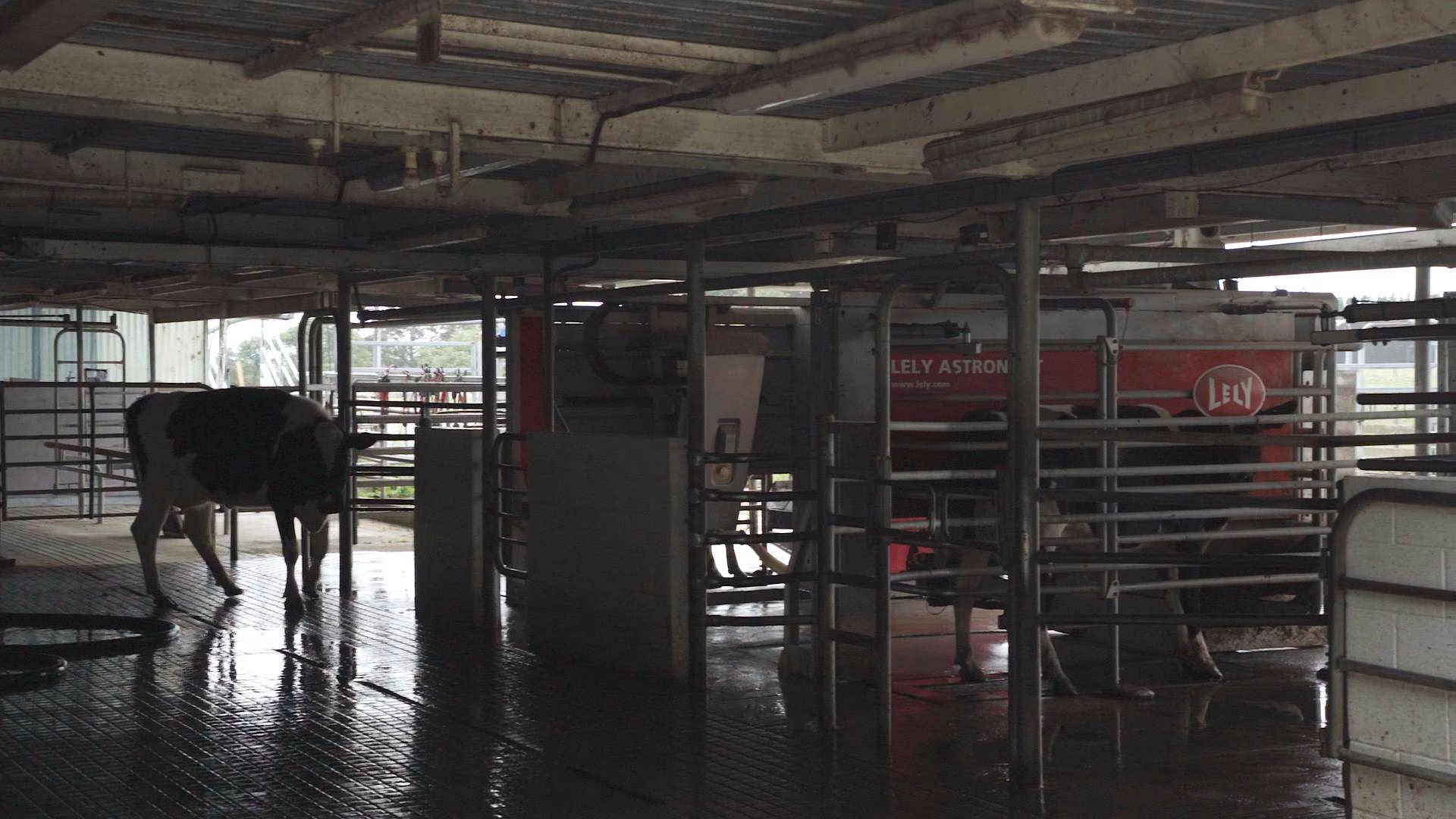
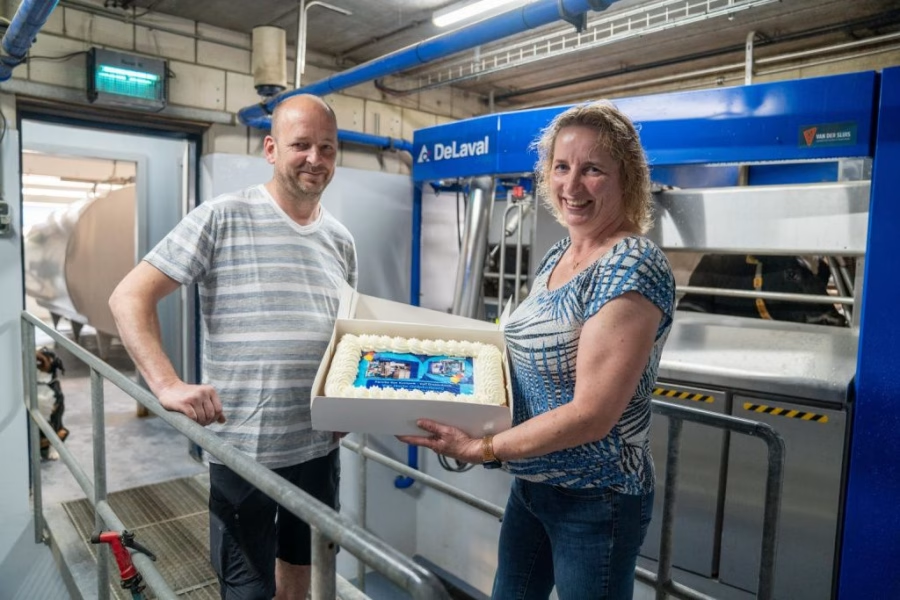
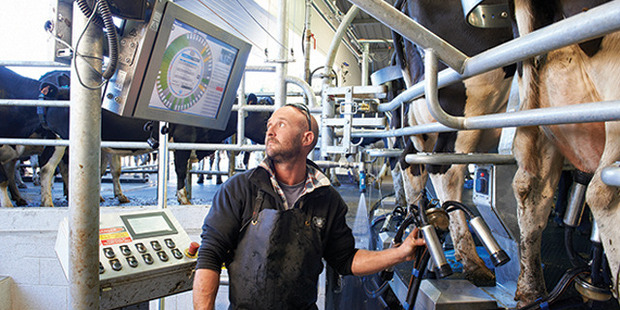
Matt Strickland, who operates Double Creek Dairy near Merced, California, didn’t set out to revolutionize robotic milking. With 500 cows and eight DeLaval VMS V300 robots, he was simply observing his herd with fresh eyes—something we could all probably benefit from doing more often.

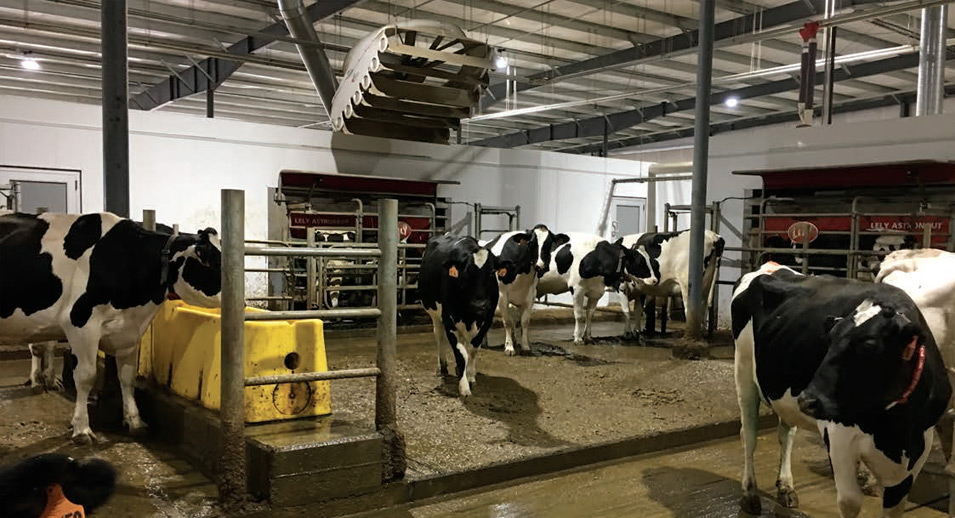
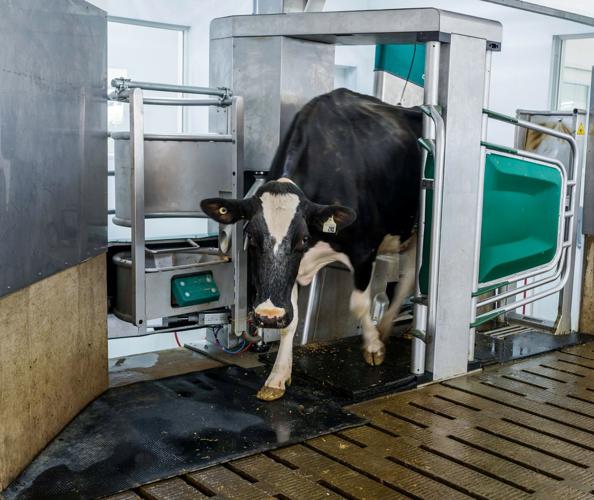
Working alongside herd adviser Kelli Hutchings—whose Wyoming ranching background brought a completely different perspective to dairy operations—Strickland noticed something that challenged everything the industry had told him. The cows weren’t particularly excited about the robot feed. What they really wanted was to reach the feedbunk on the other side. The robot wasn’t the destination; it was more like a toll booth on the highway to fresh TMR.

“I didn’t invest in robots to feed my cows,” Strickland explains. “I got the robots to milk my cows.”

Now, that might sound obvious, but think about how much infrastructure and cost we’ve built around the opposite assumption. Over approximately two years, Strickland’s operation gradually reduced and eventually eliminated pellets from all eight robots. The results? Well, they defied everything we thought we knew:

  • No significant change in robot visits
  • No increase in incomplete milkings
  • Milk production actually increased
  • Butterfat improved by 0.3–0.4%

Today, only seven cows in Strickland’s 500-head operation still receive pellets—individual animals with specific needs that justify the cost. That’s a pretty remarkable shift from where they started.

What the Research Actually Shows

Here’s where it gets really interesting from a scientific perspective. Strickland’s experience isn’t some outlier or lucky break. Recent research from multiple institutions validates what these pioneering farmers are discovering in practice.

The University of Saskatchewan team, led by PhD student Sophia Cattleya Dondé working under Dr. Greg Penner at their Rayner Dairy Research and Teaching Facility, revealed something that should make us all pause. Changing pellet starch concentration—whether 24% or 34%—had essentially zero effect on milk production or voluntary visits. Even more eye-opening: when cows consumed additional pellets, they weren’t adding to their total intake. For every 1 kg increase in pellet intake, cows reduced their partial mixed ration intake by 0.63 kg on average. They were just swapping one feed source for another.

University of Wisconsin Extension research found something equally surprising—farms offering higher grain amounts in the robot actually produced less milk. Separate research from the University of Guelph examining Canadian farms found that feed push-up frequency correlated with higher production, with each additional five push-ups per day increasing milk yield by 0.77 lbs per cow.

It’s worth noting that the Wisconsin study also found free-traffic barns produced more milk than guided-flow barns overall, though higher pellet feeding wasn’t necessarily associated with more milk—potentially because farms feeding high pellet amounts in free-traffic systems were often compensating for poorer forage quality.

And then there’s the Vita Plus survey of 32 Upper Midwest herds from 2018 that really caught my attention. The biggest surprise? Pellet cost and composition had no effect on income over feed cost. In fact—and this is where it gets counterintuitive—farms feeding simple, low-cost pellets like corn gluten feed or basic shelled corn were more profitable than those using premium formulations.

An Important Note on Adoption

It’s worth emphasizing that pellet-free robotic milking is still an emerging practice, not yet an industry standard. While 75+ farms across Wisconsin and Ontario have successfully made this transition, and the research supports the concept, this represents early adoption rather than widespread acceptance. The equipment manufacturers continue to include pellet systems as standard, most nutritionists still recommend pellets, and the vast majority of robotic operations worldwide continue using them. What we’re seeing is growing evidence that pellets may be optional for well-managed guided-flow operations, but each farm needs to carefully evaluate whether this approach fits their specific situation. This isn’t a universal recommendation—it’s an opportunity for certain operations to consider.

Understanding the Economics: Where the Money Really Goes

Let’s talk dollars and cents, because that’s what keeps us all in business. The financial case for pellet-free operations extends far beyond just the obvious feed savings.

When you really dig into what a typical 200-cow robotic operation spends on pellet infrastructure, the numbers are eye-opening:

Annual Pellet System Costs:

  • Raw pellet costs (10 lbs/cow/day at $250/ton): $91,250
  • Inventory management labor: $2,500–$4,000
  • Feed table programming and updates: $1,500–$2,500
  • Feed waste and shrink (3–5%): $3,600–$5,400
  • Rodent control (attracted by stray pellets): $1,200–$2,000
  • System maintenance and calibration: $1,500–$2,500
  • TOTAL ACTUAL COST: $101,000–$109,000

Now, when farms eliminate pellets, they’re not simply pocketing all these savings—that would be too easy, right? Successful transitions require reinvestment:

Required Reinvestments:

  • Higher-quality forage: $800–$1,200 annually
  • Increased feed push-up labor (1–2 additional hours daily): $8,760
  • Enhanced monitoring systems: $2,000–$5,000
  • Potential infrastructure adjustments (gate modifications if needed): $0–$15,000

NET ECONOMIC BENEFIT: $18,000–$39,000 annually, plus an additional $10,400 from butterfat improvements of 0.2–0.4%. That’s real money we’re talking about.

Regional Success Patterns: Where It’s Taking Hold

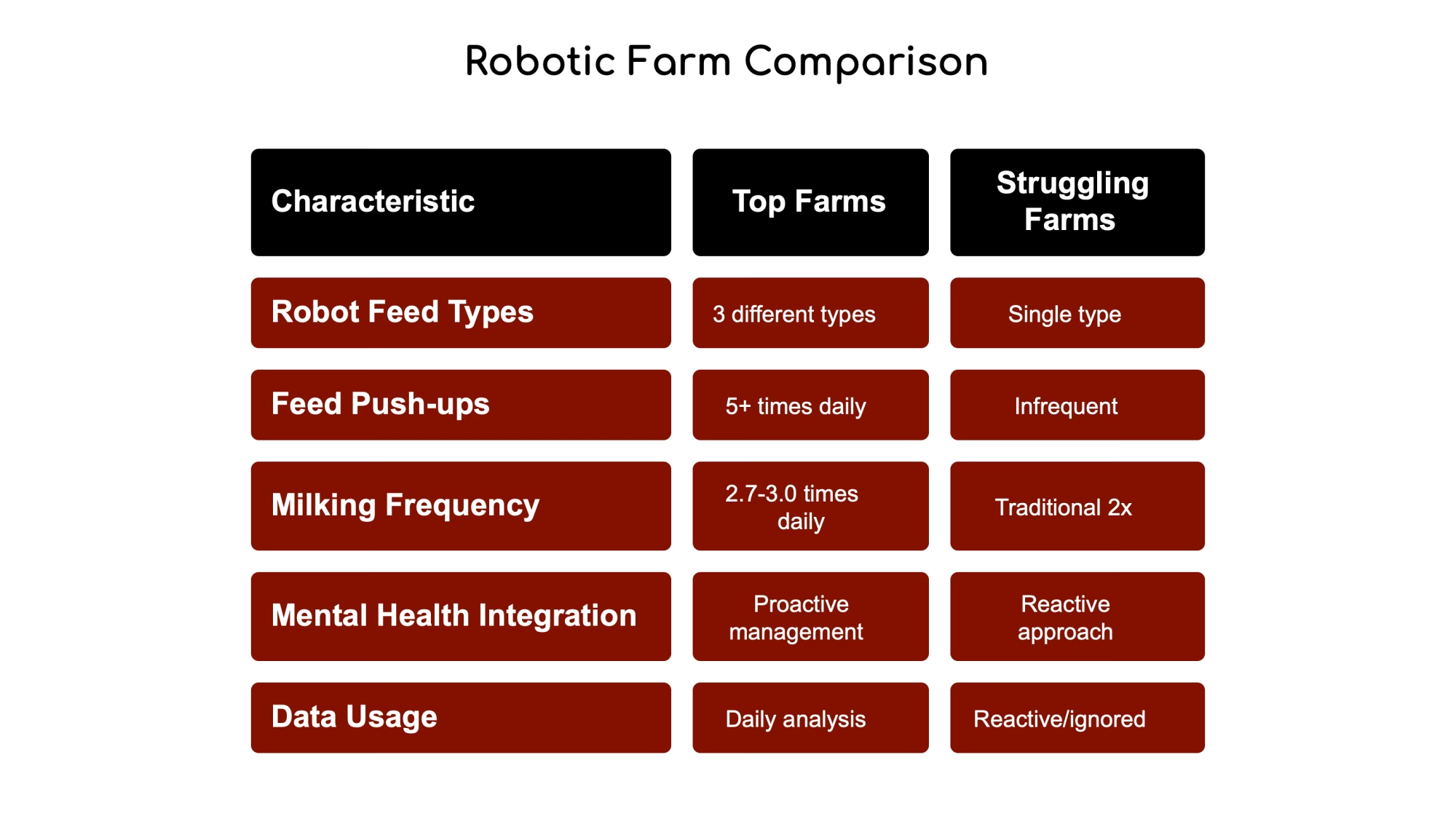
The real numbers manufacturers won’t show: Pellet-free farms outproduce traditional robot barns—both in yield and milk components.

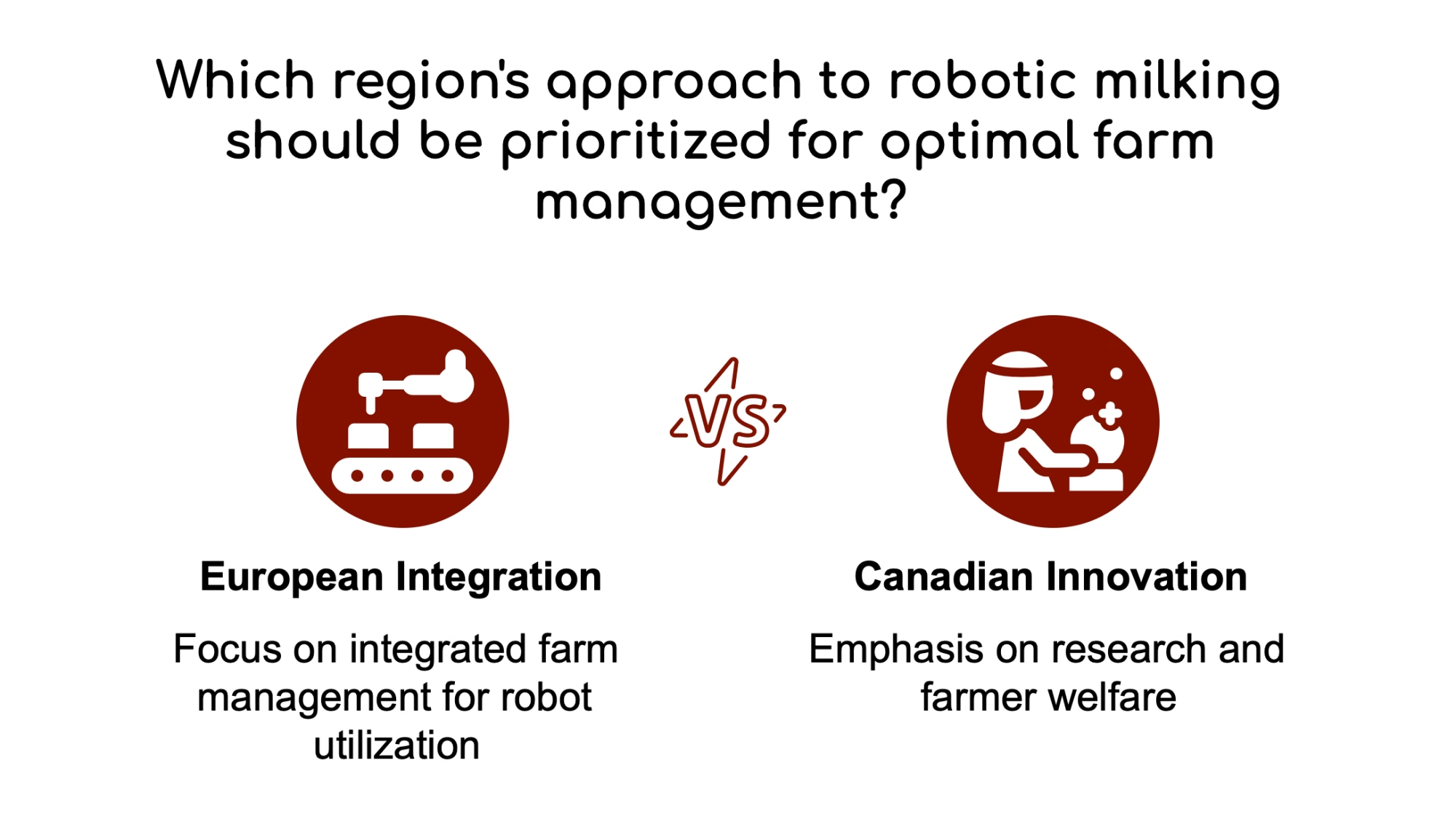
What I’ve found particularly interesting is how adoption patterns vary by region. We’re seeing the strongest uptake in Wisconsin’s central dairy corridor—about 45 farms as of late 2024—Southern Ontario around the Woodstock area with roughly 30 operations, and isolated pockets in Quebec.

Jay Heeg’s operation near Colby, Wisconsin, provides a compelling example of regional success. Heeg Brothers Dairy currently milks 1,050 cows in their conventional parlor and 450 in a new robot barn that opened in December 2023. From day one—and this is the key part—that robot barn has operated completely pellet-free using a guided-flow design.

Wisconsin/Ontario host 75 of 103 pellet-free farms—regional clustering drives change, not marketing.

The performance comparison really tells the story. Their robot barn with no pellets produces 98 lbs per cow per day, versus about 94 lbs in the parlor. Butterfat runs 4.5% in the robot barn. Somatic cell count? Lower in the robot barn, too.

“The cows have been performing well,” Heeg reports. “Once they’re trained, they do better without you out there in the pen.”

You know what’s notable? In these regions where multiple farms have adopted pellet-free systems, it’s becoming normalized. Once three or four neighbors prove it works, the regional skepticism evaporates pretty quickly. California remains more isolated—Strickland is still somewhat of a lone pioneer there—but Wisconsin and Ontario are seeing cluster effects.

The Reality Check: Not Every Farm Should Try This

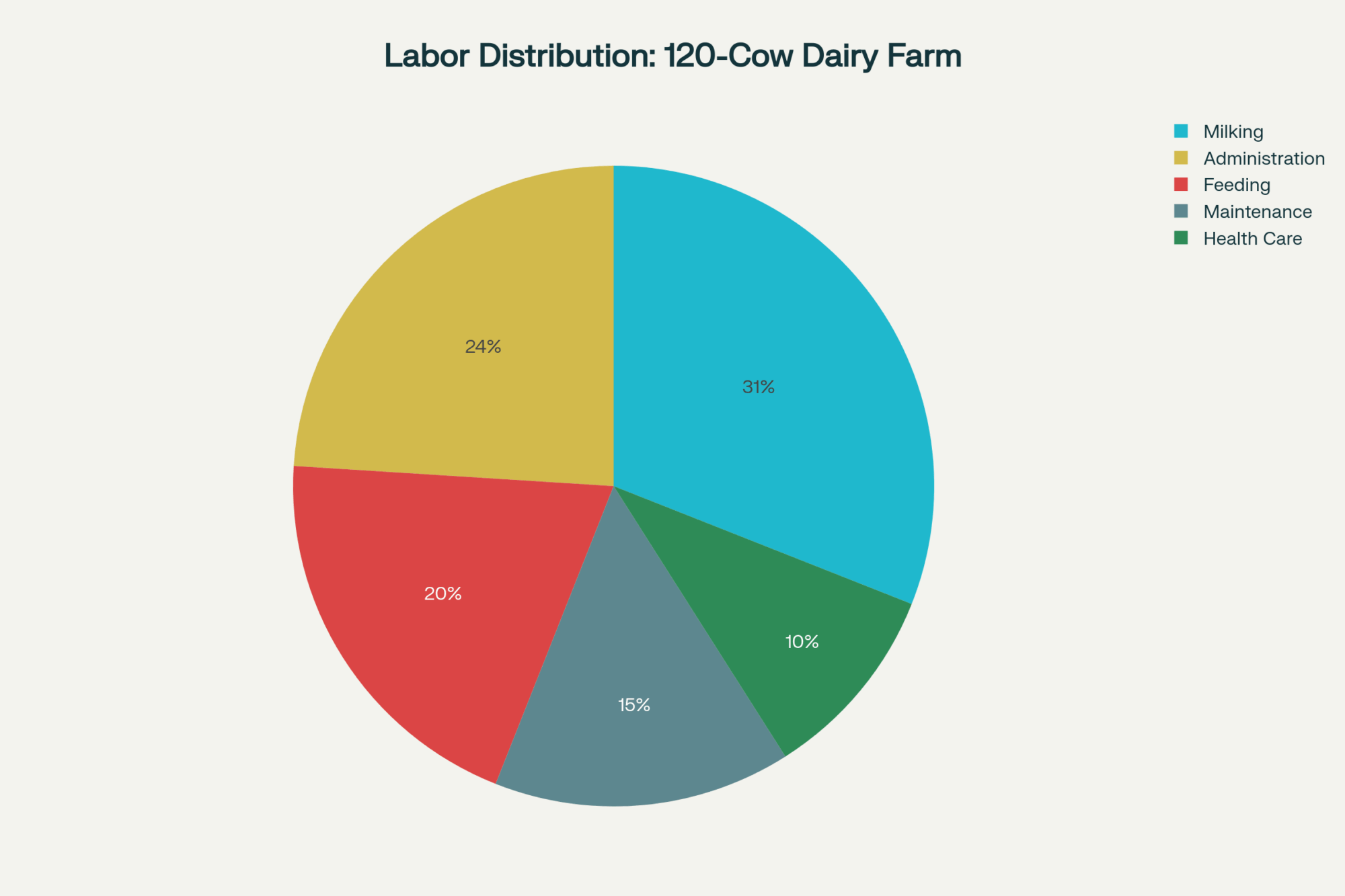
Let me be really clear about something that doesn’t always get discussed openly. I recently spoke with a 120-cow operation in Vermont that wisely decided against attempting pellet-free after honestly assessing their situation. They had a free-flow barn, variable forage quality, and limited capital reserves. Smart decision to wait.

Not every operation is positioned to succeed with pellet-free systems. Through analyzing successful transitions and, honestly, some notable failures, four non-negotiable factors emerge.

First, you absolutely need guided traffic flow. Free-flow barns, where cows have unrestricted access to all areas, typically require pellets to maintain voluntary visits. Research from Michigan State and Cornell consistently backs this up. Guided-flow systems with pre-selection gates naturally direct cow traffic through the robot, making pellets less critical for motivation.

Second, when pellets disappear, your TMR becomes everything. And I mean everything. Successful operations maintain forage with greater than 65% NDF digestibility (test this, don’t guess), consistent moisture content with no more than 2% variation, excellent fermentation quality with pH below 3.8 and minimal heating, and fresh feed delivery timed to stimulate activity—usually 2–3 AM and 2–3 PM works best.

Third, fresh cows and heifers require dedicated training. We’re talking about bringing them through the robot manually 3 times daily for a minimum of 3–6 days. That’s approximately 18 hours of labor per fresh cow during the initial training period. It’s a front-loaded investment that pays dividends later.

And fourth, the transition requires 16–24 months of focused attention. You’ll see temporary production dips, increased fetch labor, and need systematic problem-solving skills. Farms attempting quick transitions or lacking dedicated oversight consistently fail. I’ve seen it happen multiple times—the farm that thinks they can “ease into it” over a month usually gives up by week six.

Navigating the Transition: What Really Happens

The transition to pellet-free isn’t a simple switch—it’s a carefully managed process that requires patience and, frankly, some courage during the tough weeks.

In weeks 1–2, you’ll see an immediate 10–15% production drop as cows adjust. This is normal, not a sign of failure. Keep reminding yourself of that at 4 AM when you’re questioning everything.

Weeks 3–8 are what I call the valley of despair. Fetch labor intensifies. Production remains 8–12% below baseline. You’ll have mornings when 30 cows refuse the robot, and you’re wondering what you’ve done.

But then weeks 9–16 arrive. Gradual recovery begins. Rumen function stabilizes—you can actually see this in the manure consistency. Behavioral adaptation completes, and milk components start improving.

By months 4–6, production returns to baseline or slightly higher, with improved components. The economic benefits become visible. You can actually breathe again.

Here’s the critical insight from those who’ve been through it: Most farms that fail give up during weeks 6–8 when the challenges feel overwhelming, but the benefits haven’t materialized. Understanding this as a normal phase—not a crisis—is essential for success.

Risk Mitigation: Your Exit Strategies

Something the research doesn’t always cover, but farmers need to know—what if you need to reverse course?

If production drops by more than 20% by week 8, you can reintroduce pellets at 50% of the original amount, stabilize for 2 weeks, then reassess. Several farms have successfully used this “pause and reset” approach.

Another option is to keep your fresh cows and first-lactation heifers on pellets while transitioning only mature cows. This reduces risk while you learn what works for your specific situation.

Some northern operations have found success going pellet-free during the grazing season, when TMR quality is highest, then reintroducing minimal pellets during the winter months, when forage quality varies more.

Industry Response: Reading Between the Lines

The equipment and feed industries are navigating this trend carefully, and their responses tell us a lot about where it might go.

DeLaval has published technical documents on no-feed practices and featured pellet-free farms at World Dairy Expo 2025. But here’s what’s telling—they continue to include pellet delivery systems as standard on new installations, positioning no-feed as a “specialist application” for sophisticated operators. That’s strategic positioning, not wholehearted endorsement.

Feed companies are quietly diversifying. I’ve noticed more pushing of liquid feed supplements and “alternative robot feeds” in the past year. Smart nutritionists are repositioning as “whole-system optimization” experts rather than pellet specialists. They see the writing on the wall.

Current adoption patterns and market response suggest pellet-free systems may remain in the 5–15% range for specialized operations in the near term, though exact industry projections remain speculative. The measured response from manufacturers and feed companies indicates they’re hedging their bets rather than embracing wholesale change.

Self-Assessment: Is Your Operation Ready?

Success FactorMust Have (Red Flag if Missing)Warning Signs (Proceed with Caution)Deal Breaker (Wait Until Fixed)Your Score (✓)
Traffic Flow SystemGuided-flow with pre-selection gatesFree-flow barn designFree-flow without modification options
Forage Quality (NDF Digestibility)>65% NDF digestibility60-65% NDF digestibility<60% NDF digestibility
TMR Moisture Consistency<2% variation2-3% variation>3% variation
Fresh Cow Training Capacity3 manual passes daily for 3-6 daysLimited labor (2 passes daily)Cannot commit to training
Financial Reserves$50K-$70K buffer (200 cows)$30K-$50K buffer<$30K reserves
Herd Size>200 cows OR strong finances120-200 cows with tight margins<120 cows with debt
Management Time Available3-4 hours daily during transition2-3 hours daily available<2 hours daily available
Nutritionist SupportAligned and supportiveNeutral or uncertainActively opposed

Before you even think about attempting a pellet-free transition, honestly evaluate your readiness. And I mean honestly—not optimistically.

For your facility, do you have guided-flow traffic with properly sized commitment pens at 6–7 cows per robot? Can cows move from the robot to the feedbunk without bottlenecks? Are your gates reliable and well-maintained?

Looking at your forage program, can you maintain consistent TMR quality with no more than 2% dry matter variation? Do you have covered storage and quality testing protocols? Is your forage digestibility consistently above 65% NDF?

And for management capacity—this is crucial—can you dedicate 3–4 hours a day to training during the transition? Do you have financial reserves to absorb $50,000–$70,000 in transition losses for a 200-cow herd? Are your nutritionist and veterinarian aligned and supportive?

Score yourself honestly on each dimension. Operations with strong capabilities across all areas are excellent candidates. Those with multiple weaknesses should address fundamental issues before attempting this transition.

Looking Beyond Pellets: What This Really Means

This pellet-free movement reveals something bigger than operational optimization. It demonstrates how entire industries can build complex systems around assumptions that never get questioned.

Think about it—this pattern of inherited practices becoming unquestioned truth likely exists in other areas of dairy management we haven’t even examined yet. Three-times-daily feeding schedules—is it really necessary? Complex genetic selection protocols—how much complexity actually adds value? Traditional parlor labor models—could workflow redesign cut labor 30%? Precision feeding systems—does the complexity justify the cost?

The farms that will thrive in the coming decades won’t be those perfecting existing systems. They’ll be those willing to ask uncomfortable questions about fundamental assumptions.

Key Takeaways for Your Operation

For operations considering pellet-free transitions, here’s what matters most.

First, assess your readiness honestly. This works brilliantly for farms with guided-flow barns, strong forage programs, and management capacity to weather transition challenges. It fails predictably for operations lacking these foundations.

Second, budget for the transition period. Expect 8–12 weeks of production losses totaling $50,000–$70,000 for a 200-cow operation. If you can’t absorb this without financial stress, wait until you can.

Third, connect with others who’ve done it. Reach out to producers in Wisconsin’s central corridor or Southern Ontario who’ve successfully transitioned. Their practical insights are invaluable. The Dairy Farmers of Wisconsin maintains a peer network list, and several Ontario producer groups facilitate farm visits.

Fourth, consider your regional context. If other farms in your area have successfully transitioned, you’ll face less skepticism from advisers and find more peer support. Being the regional pioneer is significantly harder.

And fifth, think generationally. Young farmers building new operations should seriously consider guided-flow, pellet-free designs from the start. It’s much easier than retrofitting later.

For specific guidance and support, the University of Wisconsin-Madison Extension offers robotic milking workshops quarterly. Contact Dr. Francisco Peñagaricano and his team. The University of Saskatchewan provides research updates through its Rayner Dairy facility, led by Dr. Greg Penner’s team. Cornell PRO-DAIRY maintains an AMS discussion group for Northeast producers. And the Ontario Ministry of Agriculture hosts pellet-free transition webinars through their Dairy Team.

What’s encouraging is that the pellet-free revolution isn’t really about pellets. It’s about recognizing that dairy innovation comes from farmers willing to test assumptions, not from equipment manufacturers or feed companies protecting existing business models.

As one Wisconsin dairy extension specialist told me recently: “The most valuable skill for the next generation of dairy farmers isn’t optimizing current systems—it’s questioning whether those systems are actually optimal.”

That questioning mindset, more than any specific practice or technology, will determine which operations thrive in an evolving dairy landscape where labor is scarce, margins are tight, and consumer preferences keep shifting.

The farms making these transitions today aren’t just saving money on pellets. They’re developing the adaptive capacity that will serve them regardless of what challenge comes next. And in an industry facing constant change, that capability might be worth more than any amount of feed savings.

Sometimes seeing it work on a neighbor’s farm is worth more than all the research papers combined. And that’s exactly what’s starting to happen across Wisconsin and Ontario—one successful transition at a time.

Have you tried reducing the number of pellets in your robot herd? What’s been your experience—success, challenges, or somewhere in between? Tell us in the comments below.

Complete references and supporting documentation are available upon request by contacting the editorial team at editor@thebullvine.com.

Learn More:

Join the Revolution!

Join over 30,000 successful dairy professionals who rely on Bullvine Weekly for their competitive edge. Delivered directly to your inbox each week, our exclusive industry insights help you make smarter decisions while saving precious hours every week. Never miss critical updates on milk production trends, breakthrough technologies, and profit-boosting strategies that top producers are already implementing. Subscribe now to transform your dairy operation’s efficiency and profitability—your future success is just one click away.
NewsSubscribe
First
Last
Consent

The Robot Truth: 86% Satisfaction, 28% Profitability – Who’s Really Winning?

When satisfaction rates soar but profitability plummets, the dairy industry’s automation revolution reveals uncomfortable truths about who really wins

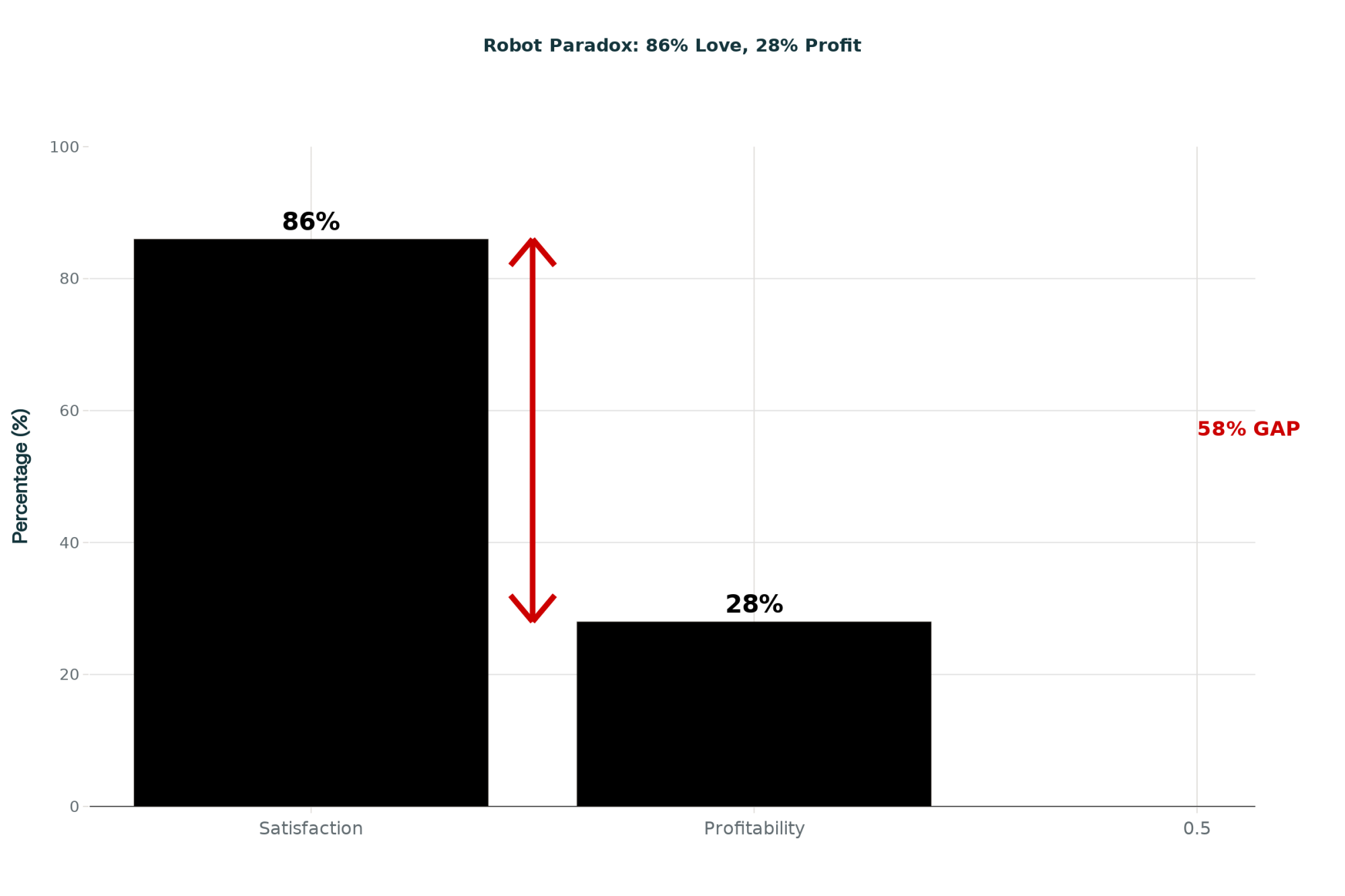
The Robot Paradox reveals dairy farming’s uncomfortable truth: while 86% of farmers recommend robots to others, only 28% achieve the production gains needed for clear profitability. This 58-point gap exposes how quality-of-life improvements mask economic challenges

You know, that 4 a.m. alarm clock is becoming a thing of the past on more and more dairy farms. I’ve been tracking this transformation pretty closely, and what’s fascinating is where we’re at in 2025—the robotic milking market has grown to about $3.39 billion globally according to Future Market Insights, with projections suggesting we’ll hit $19.5 billion by 2035.

Big numbers, right? But here’s what’s interesting…

When you dig beneath all those impressive adoption statistics, there’s a more complicated story that I think every farmer considering robots really needs to hear. The University of Calgary followed 217 Canadian dairy producers through their robotic transitions—published the whole thing in the Journal of Dairy Science back in 2018—and what they found, combined with research from around the world, reveals some surprising patterns.

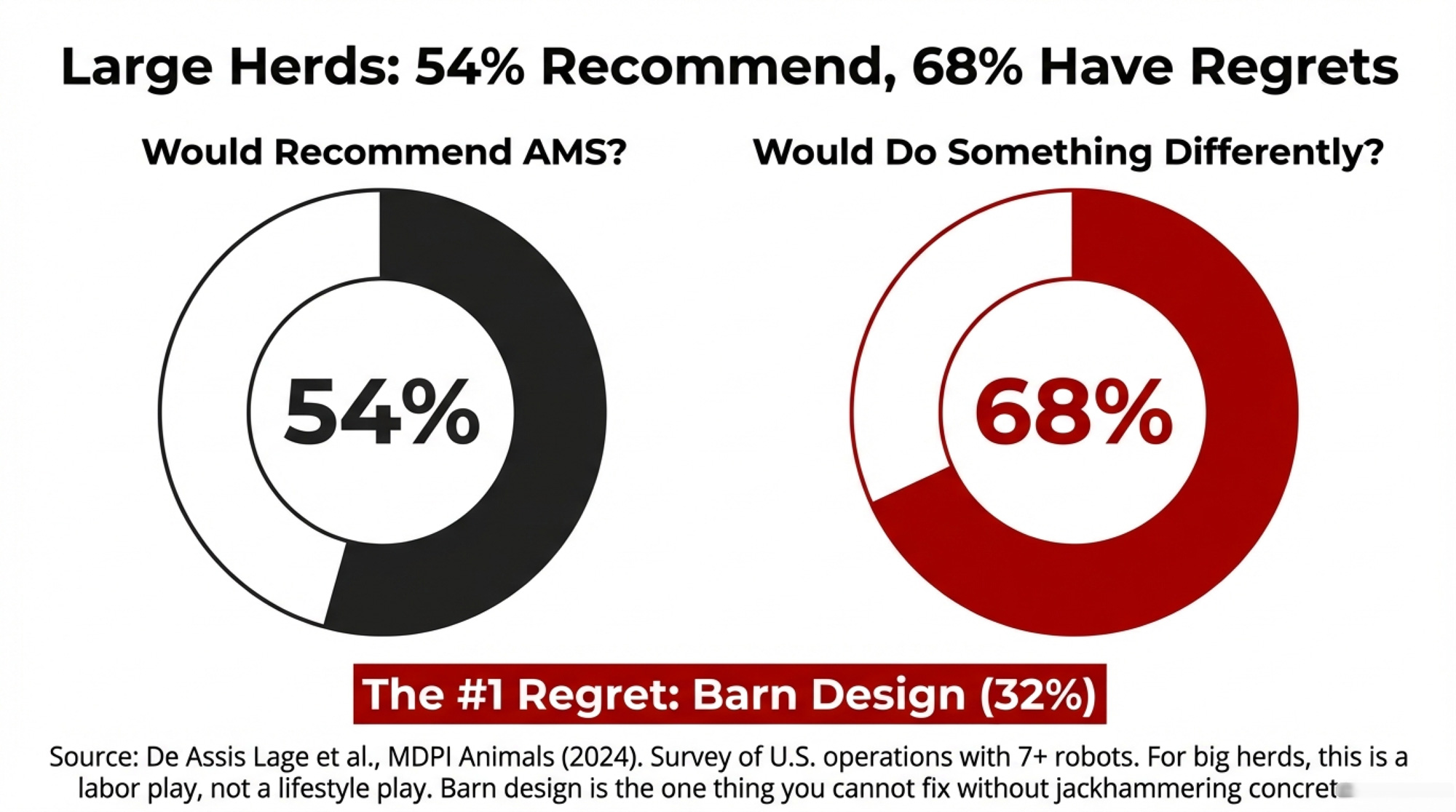
So yes, 86% of farmers who’ve installed robots would recommend them to others. That’s genuine satisfaction. But here’s the interesting part: only about 28% are actually achieving the production increases needed for clear profitability, based on the University of Minnesota’s economic modeling this year.

That gap? Well, it tells you something important about what’s really happening out there.

Why Farmers Love Robots Even When the Numbers Don’t Always Work

You probably know someone who’s installed robots and can’t stop talking about how it’s changed their life. A fifth-generation Prince Edward Island farmer told me recently, “I haven’t missed one of my kids’ events since we installed the robots.” And honestly, I hear this all the time.

This quality-of-life transformation—it’s real, and it explains why satisfaction rates stay high even when the economics get challenging.

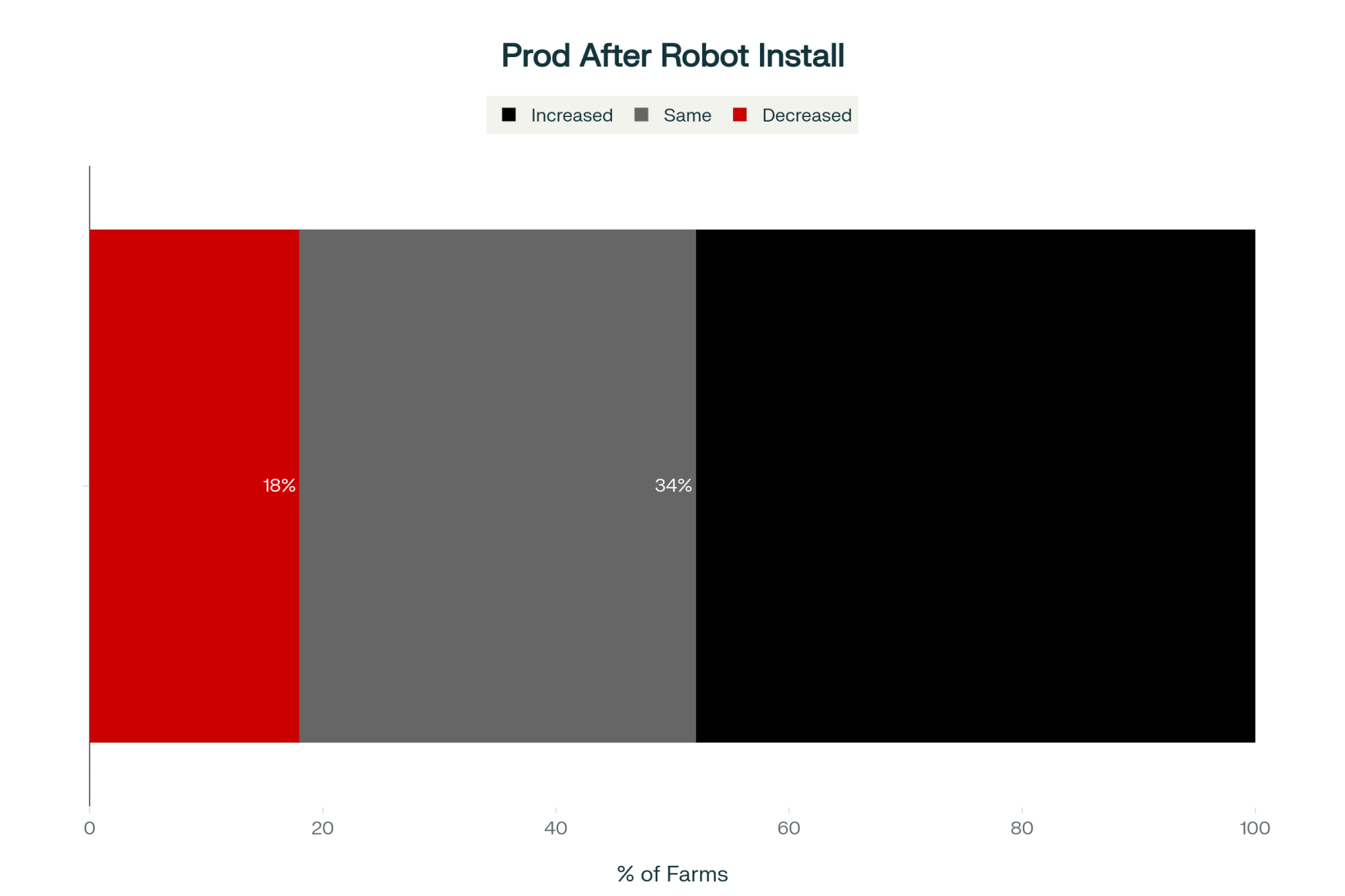
Looking more closely at that Calgary data, some interesting patterns emerge. About 58% of farms report increased milk production, which sounds good. But these range from tiny 2-pound gains all the way up to exceptional 10-pound improvements. Meanwhile, 34% maintain exactly the same production levels despite dropping serious money on robots. And here’s what really stands out—18% actually see production go down. Makes profitability pretty much impossible when that happens.

Production Reality exposes the hidden complexity: while 58% of farms see production increases, most gain only 2-3 lbs/day when 5+ lbs is required for profitability. Meanwhile, 34% see no change and 18% actually lose production—making robots profitable for just 28% of adopters

As Trevor DeVries from University of Guelph recently explained, “What producers are discovering is that robotic milking success depends on having the right combination of factors. The technology changes the nature and flexibility of labor rather than simply reducing hours.”

The Scale Trap defies conventional wisdom: small farms see 355% profit increases while medium-sized operations (61-120 cows) lose money with robots. This “missing middle” represents 40-50% of North American dairies—too large for simplicity benefits, too small for economies of scale

When More Milk Doesn’t Mean More Money

A Kansas dairy farmer shared something with me that really stuck: “We tried to save money by retrofitting our existing barn—big mistake. Cow traffic issues cost us at least 10 pounds of milk per cow until we finally redesigned the entire layout a year later. Do it right the first time.”

His experience aligns with research from multiple countries. Yes, 58% of farms report some production increases according to that Calgary study. But this year, the Minnesota Extension discovered that you need gains of at least 5 pounds per day to overcome the technology’s cost structure.

Most farms are getting just 2-3 pound increases? They’re stuck in what researchers call the “marginal profitability zone”—where success depends on milk prices staying strong and everything else going perfectly.

The Numbers That Matter

The Minnesota team uncovered specific thresholds that determine success, and honestly, these are sobering:

If your production increases just 2 pounds per day, robots need to last longer than 10 years to be more profitable than your old parlor. If production stays flat—and remember, that’s a third of farms—you’re looking at robots needing 13 to 17 years just to break even. And if production actually decreases? Well, robots are never going to be as profitable as what you had before.

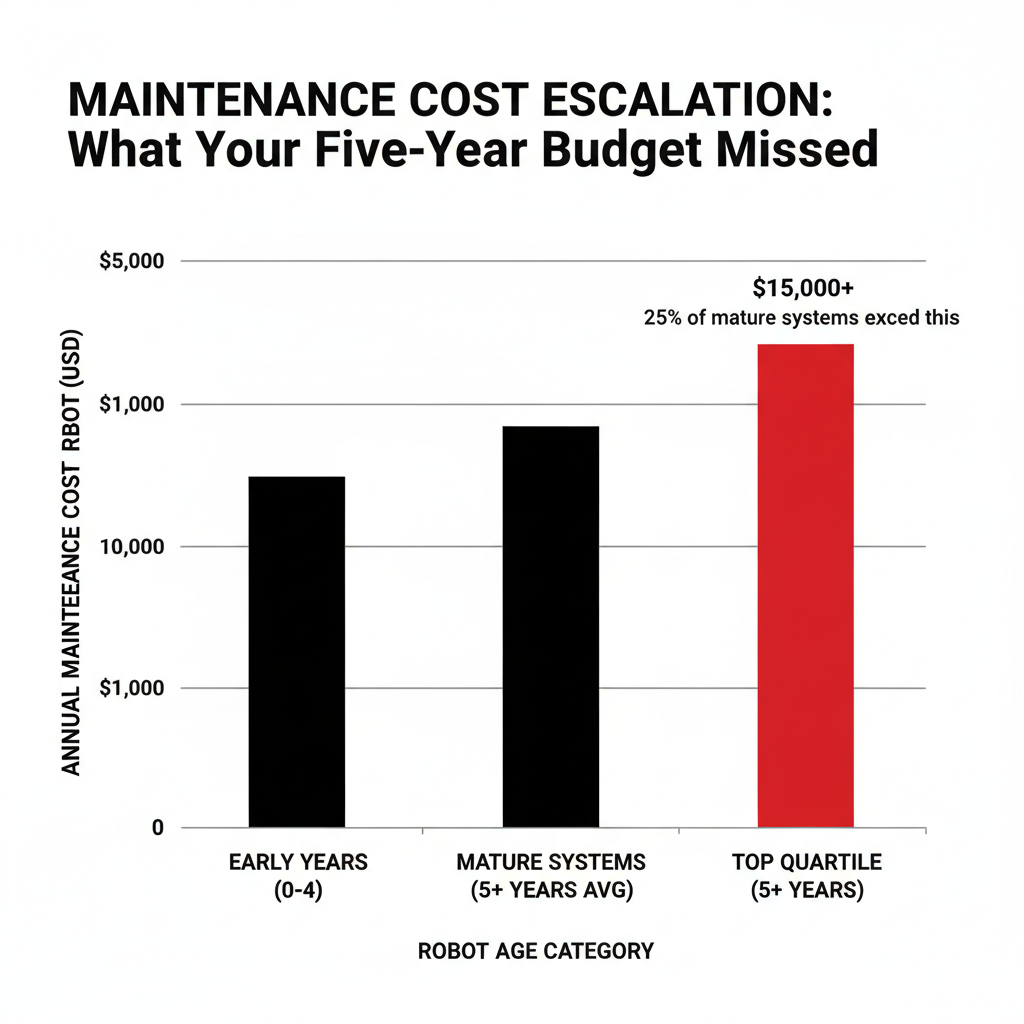
Now, the financial reality gets even tougher when farmers discover that operational costs are running 300 to 400% higher than dealers projected. Teagasc in Ireland documented electricity costs that were nearly three times higher than those of conventional systems back in 2011. New Zealand farmers have told researchers their electricity bills doubled after installation. One farmer showed me maintenance invoices that hit six figures in the first year—the dealer told him to expect five to nine thousand.

The Scale Problem Nobody Expected

Turkish researchers published something in 2020 that really challenges what we’ve assumed about farm modernization. They looked at robot economics across different herd sizes, and what they found… well, it surprised me.

The Scale Trap defies conventional wisdom: small farms see 355% profit increases while medium-sized operations (61-120 cows) lose money with robots. This “missing middle” represents 40-50% of North American dairies—too large for simplicity benefits, too small for economies of scale

Small operations with 10 to 60 cows saw profit increases of 355% with robots. Operations with 121 or more cows? Generally profitable with proper execution. But here’s the kicker—farms with 61 to 120 cows actually saw decreased profitability.

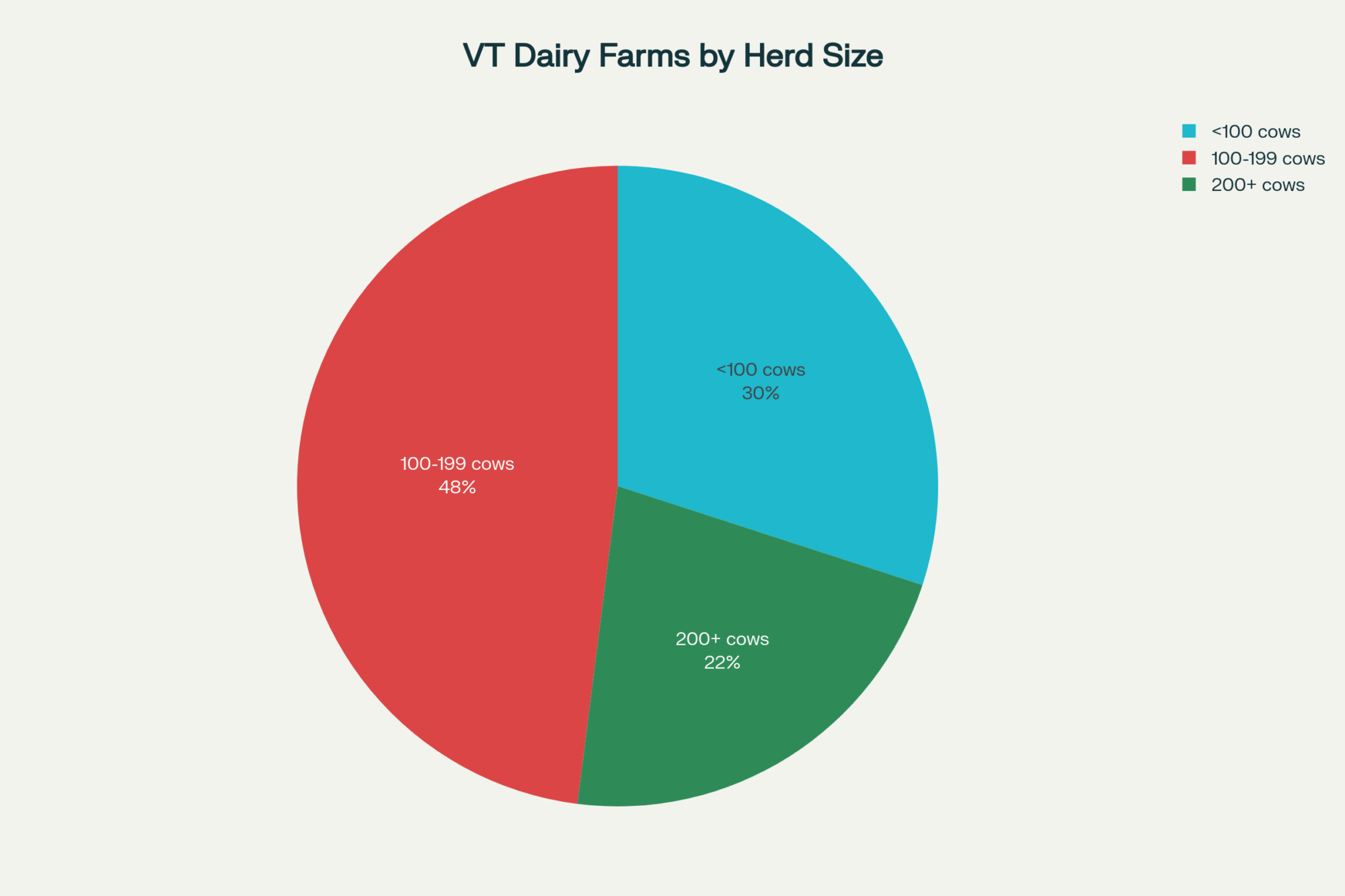
Now, this Turkish study reveals a pattern that, if it holds true for North America, has profound implications. That middle group represents about 40-50% of North American dairy farms. We’re potentially talking about what economists call the “missing middle”—too large for the simplicity benefits of small-scale operations, but too small for the economies of scale that make it work for bigger dairies.

Looking at different regions, the pattern seems to align. Wisconsin farms averaging 90 cows? They’re right in what could be this danger zone. Vermont’s typical 125-cow operations sit just above the profitability threshold. California’s larger operations generally do fine. But those traditional Midwest family farms in that 80 to 100 cow range… if this Turkish research applies here, they really need to think this through carefully.

Down in the Southwest, where operations tend to be larger, the economics often work better. But what about Southeast producers with their typically smaller herds and higher humidity challenges? That’s a whole different calculation. And up in Canada—where that Calgary study originated—producers in Ontario versus those in Alberta face completely different economics, based on quota systems and herd-size restrictions.

The Genetic Timeline That Changes Everything

Here’s something that doesn’t get nearly enough attention—it takes 5 to 8 years to breed a herd that’s actually optimized for robotic milking. I’m not kidding.

Research published in the Journal of Dairy Science last year analyzed over 5 million milking records from about 4,500 Holstein cows. What they found is that udder conformation traits crucial for robot efficiency are moderately to highly heritable—we’re talking 0.40 to 0.79. So yes, you can breed for robot success. But man, it takes time.

A Wisconsin farmer discovered this the hard way two years after installing his robots. “I sold three of my highest producers six months after installation,” he told me. “They were production champions but robot time hogs. After replacing them with more efficient cows, my output actually increased even though individual cow averages decreased slightly.”

Think about that—higher total output with lower individual averages. It’s all about efficiency.

CRV and other breeding organizations showed in 2023 that farmers using bulls specifically selected for robot-friendly traits ultimately get about 350,000 pounds more milk per robot annually. For a three-robot operation, that’s over $200,000 in additional revenue. But—and this is crucial—only after 5 to 8 years of strategic breeding.

The Efficiency Gap That Makes or Breaks You

What really blew my mind: individual cow efficiency in robotic systems varies by nearly 300%. Same production levels, wildly different robot utilization.

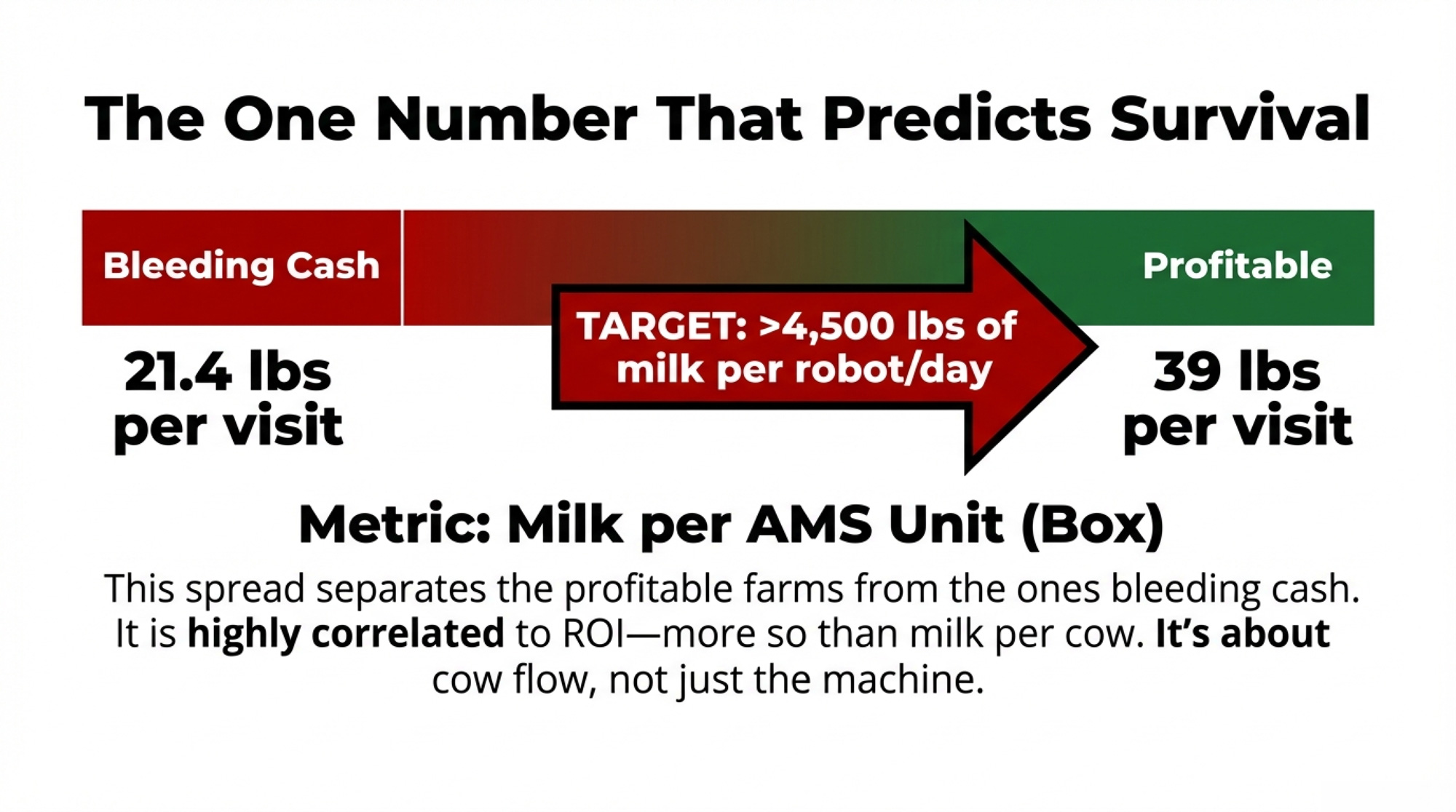
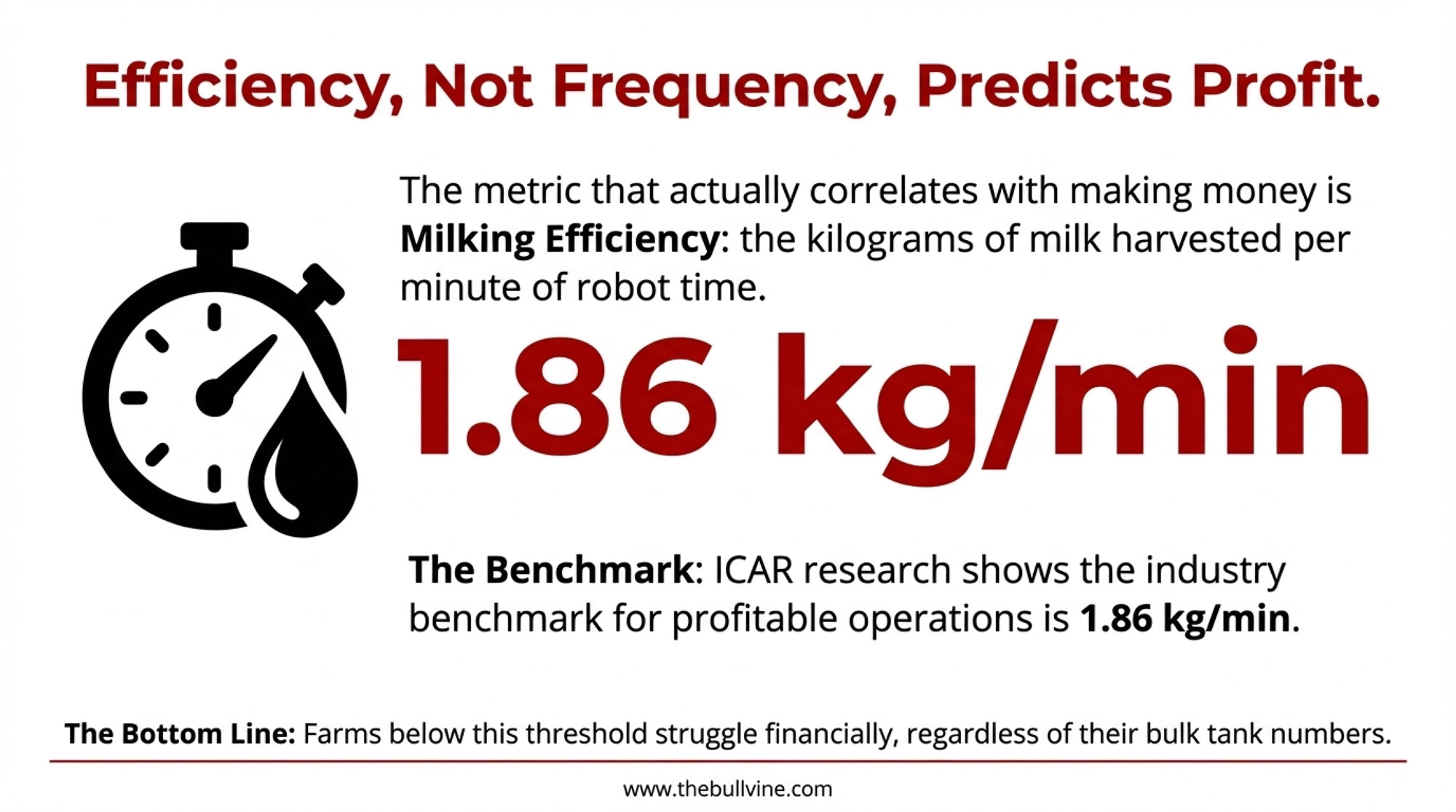
Lactanet did this fascinating comparison in 2023—two cows with almost identical daily production, 48 kilos versus 49.5 kilos. But one produced her milk nearly three times more efficiently in terms of robot time. Just think about the implications…

And here’s where genetics meets economics in ways we’re just beginning to understand…

This explains why manufacturer recommendations about running 60 to 70 cows per robot produce such different results from farm to farm. High-efficiency operations can profitably run 68 cows per robot, sometimes more. Low-efficiency farms struggle with just 45 cows on the same equipment.

The Facility Mistakes That Haunt Farmers

The Calgary study found something that should give everyone pause: 68% of farmers would do something differently during installation, with facility modifications topping the list of regrets.

We’re not talking minor tweaks here. These are fundamental design decisions that compound into permanent profitability problems.

A Michigan producer took a different approach worth noting: “We visited fifteen robotic dairies before finalizing our facility design. The three most successful operations all emphasized the same point—cow flow is everything.”

Three Design Elements That Can Make or Break Your Operation

Feed Space—The Hidden Killer

The Dairyland Initiative in Wisconsin has repeatedly shown that retrofitting four-row barns—where everyone tries to save money—creates permanent bottlenecks.

These facilities typically give you 12 to 18 inches of feed space per cow when you need 24 inches minimum. What happens? Subordinate cows see their feed intake drop 15 to 25%. Your fetching requirements jump from a manageable 5% to 20% of the herd. And lameness rates climb from a typical 20% to a devastating 35-45%.

I’ve seen this mistake too many times. Farmers think they can make that old four-row barn work. It rarely does.

Traffic Flow—More Than Philosophy

The choice between free and guided traffic isn’t just a matter of management philosophy—it’s economics.

Farms trying to save 40 to 60 thousand on selection gates often discover that their “savings” create massive waiting times. Research in Animal Welfare Science from 2022 showed that this reduces lying time from the required 12 to 14 hours to just 9 to 11 hours. You know what happens when cows don’t get enough rest—lameness goes up, production goes down.

Backup Capacity—The Insurance You Hope You’ll Never Need

Despite dealer assurances that all cows will adapt, the Calgary research shows that 2% of herds need culling because they won’t work with robots. Plus, fresh cow management requires special protocols.

An experienced farmer put it bluntly: “You can’t avoid having some backup milking capacity. The cull rate’s too high if you require everyone to be robot-trained.”

Who Actually Benefits from Automation

The industry often talks about labor savings driving automation, but the challenges are real. USDA data from this year shows immigrant workers make up 51% of the dairy workforce while producing 79% of U.S. milk. With 38.8% annual turnover creating measurable production losses, something’s gotta give.

But here’s what I’ve learned—successful automation requires specific labor economics.

Minnesota’s breakeven analysis this year shows that robots become competitive when labor costs range from $22 to $32 per hour (depending on production gains), or when turnover exceeds 50% annually. Ideally, you have both.

For farms with stable workforces at $18 to $20 per hour—common in many rural areas—the economics often don’t support automation regardless of other factors. As one Nebraska farmer explained, “We have great employees who’ve been with us 10-plus years. Robots would’ve solved a problem we don’t have.”

When Everything Goes Right: A Success Story

Let me share what success looks like based on several Vermont operations I’ve worked with that represent that successful 28%.

One particular farm began in 2021, selecting for robot traits while still milking in their double-8 parlor. “We genomic tested every animal and started culling hard for robot efficiency traits,” they explained.

By the time they installed four DeLaval robots in 2023, 40% of their 240-cow herd already had favorable genetics. They built a new freestall barn explicitly designed for robots—about a $1.7 million investment that hurt, but they had the capital reserves.

“We could’ve retrofitted for $800,000,” they noted, “but after visiting twelve robot farms, we saw how facility compromises created permanent problems.”

Today, successful operations like these are achieving 90 to 95 pounds per day, with robots running at 2.0 to 2.2 kilos per minute. Many report annual labor cost reductions of 40-50%. But what really matters to these families—they’re coaching youth hockey, returning to off-farm careers part-time, actually having a life outside the barn.

“This technology transformed our operation,” one farmer told me. “But I tell neighbors straight up—if you can’t absorb significant losses for three years and invest in genetics and facilities, wait. This isn’t for everyone.”

The Questions That Predict Success or Failure

After analyzing hundreds of operations, researchers have identified the key diagnostic question that predicts success with remarkable accuracy:

Can you comfortably absorb $100,000 in annual losses for three consecutive years while investing an additional $150,000 in facility corrections and genetic improvements—without threatening your farm’s survival?

If you can’t confidently say yes, the research suggests waiting or exploring alternatives. This single question brings together every critical factor: scale, capital reserves, commitment to the timeline, and strategic thinking capacity.

There’s also the temperament piece. Ask yourself: Am I comfortable with data-driven decision making rather than hands-on control? Can I wait 24 to 48 hours for technical support instead of fixing things immediately? Will I accept that 5-8% of cows will always need fetching?

That last one’s important—perfectionism becomes a liability with robots.

Dutch research from 2020 found something surprising: farmers who quit robotic milking actually scored higher on conscientiousness scales than those who successfully adopted robotic milking. The characteristics that make excellent conventional dairy farmers—disciplined, hard-working, hands-on—can work against you with systems requiring indirect management.

Making Sense of It All: Who Should Actually Buy Robots

Based on everything we’re seeing, clear patterns emerge for different situations.

You’re a Strong Candidate (about 28 to 40% of farms) If You Have:

  • 121 or more cows with plans to maintain or expand
  • High-wage labor markets ($24+ per hour) or severe turnover (over 50%)
  • Capital reserves to absorb $250,000 to $400,000 in losses and corrections over three years
  • Already started genetic selection for robot traits at least two years before installation
  • Willingness to build new or invest in proper retrofits ($1.2 million plus)
  • Comfort with systems thinking and data-driven management

Proceed with Extreme Caution (about 40 to 50% of farms) If You Have:

  • 60 to 120 cows—remember, scale economics work against this group
  • Moderate labor costs ($18 to $22 per hour) with manageable turnover
  • Limited capital requiring minimal facility retrofits
  • Haven’t begun genetic selection for robot efficiency
  • Need profitability within 2 to 3 years
  • Preference for hands-on problem solving over remote management

Consider Alternatives (about 20 to 30% of farms) If You Have:

  • Under 60 cows without expansion plans
  • Stable, affordable labor force
  • Existing facilities requiring extensive modification
  • Management style strongly favoring direct control
  • Can’t absorb three years of potential losses

The Bottom Line

What we’re learning about robotic milking challenges many of the assumptions we’ve held for years.

Quality-of-life improvements? They’re absolutely real and valuable. That 86% recommendation rate reflects genuine lifestyle benefits. But—and this is important—quality of life doesn’t automatically translate to profitability. I’ve seen too many farms discover this the hard way.

The 72% profitability gap is sobering but manageable if you understand what you’re getting into. Only 28% achieve the 5-plus-pound daily gains needed for clear profitability, according to Minnesota’s analysis. But understanding the specific requirements lets you make an informed decision rather than just hoping for the best.

Timeline expectations need radical adjustment, too. Full optimization takes 5 to 8 years, not the 1 to 2 years dealers suggest. Start genetic selection 2 to 3 years before installation and expect marginal performance for the first couple of years of operation. This isn’t pessimism—it’s realism based on what farmers have actually experienced.

Facility design really does determine destiny. Those 68% who regret their installation decisions teach us a powerful lesson: cutting corners on facility design creates permanent barriers to profitability. Proper design typically requires $1.2 to $2.2 million for most operations. If that number makes you uncomfortable… well, that’s valuable self-knowledge.

And scale economics aren’t what we thought. That 61 to 120 cow “dead zone” where robots actually decrease profitability challenges everything we’ve assumed about modernization improving economics. This has profound implications for mid-sized family farms—the backbone of our industry in many regions.

The dairy industry’s at an interesting crossroads. Technology adoption is accelerating even as economic pressures intensify. Robotic milking represents a genuine transformation for the 28 to 40% of operations that have the right combination of scale, capital, management style, and long-term commitment. For these farms, the technology really does deliver.

But for the majority—those who lack critical success factors at 60 to 72%—the technology might create more challenges than solutions. When you look at industry projections suggesting growth from $3.39 billion to $19.5 billion by 2035, those numbers require adoption rates that probably exceed the population of farms that are actually good candidates.

The lesson isn’t that robotic milking is good or bad. It’s that complex agricultural technologies require an honest assessment of your individual situation rather than following narratives about what’s “inevitable.”

The farmers succeeding with robots aren’t just early adopters or tech enthusiasts. They’re operations whose specific circumstances align perfectly with the technology’s requirements.

As that Vermont farmer put it perfectly: “This technology is amazing—for the right farm, at the right scale, with the right preparation. The challenge is being honest about whether you’re that farm.”

And honestly? That’s the conversation we all need to be having.

KEY TAKEAWAYS:

  • The One Question That Matters: Can you lose $100K/year for 3 years? If no, skip robots. Only 28% ever see profit.
  • The Scale Trap: 60-120 cows = robot dead zone (you’ll lose money). Under 60 or over 120 = potential profit.
  • The Timeline Nobody Tells You: Year 1-3: Losses. Year 4-5: Breakeven. Year 5-8: Maybe profit. Plan accordingly.
  • Your Best Cows Are Your Biggest Problem: High producers often fail at robots. Efficiency beats volume every time.
  • The Real Math: Dealers say $9K/year costs. Reality: $30-45K. Triple everything, including disappointment.

EXECUTIVE SUMMARY: 

The robot revolution has a secret: it’s only working for 28% of dairy farms. After tracking 217 operations, researchers discovered a brutal truth—farms with 60-120 cows (nearly half of U.S. dairies) actually lose money with robots, while those below 60 or above 120 can profit. Success demands crushing requirements: 0,000 in loss tolerance, 5-8 years of genetic prep, and willingness to cull your best producers for efficiency. Yet 86% of farmers still recommend robots, creating false confidence that drives unsuitable operations toward financial disaster. The industry needs these failures to hit its $19 billion target by 2035. One question predicts your fate: Can you bleed $100,000 a year for 3 years and survive?

Complete references and supporting documentation are available upon request by contacting the editorial team at editor@thebullvine.com.

Learn More:

Join the Revolution!

Join over 30,000 successful dairy professionals who rely on Bullvine Weekly for their competitive edge. Delivered directly to your inbox each week, our exclusive industry insights help you make smarter decisions while saving precious hours every week. Never miss critical updates on milk production trends, breakthrough technologies, and profit-boosting strategies that top producers are already implementing. Subscribe now to transform your dairy operation’s efficiency and profitability—your future success is just one click away.

NewsSubscribe
First
Last
Consent

Your New Robot Works at 65% Capacity. Here’s the $43,200 Training Fix Most Farms Miss

How producers are discovering that the human side of technology adoption matters more than the equipment itself

EXECUTIVE SUMMARY: What farmers are discovering about technology adoption challenges everything we thought we knew about implementation success. Producers report that operations investing 100+ hours in comprehensive training achieve roughly 85% utilization rates, while those following standard vendor recommendations of 30-40 hours typically struggle at 65%—a difference worth $43,200 over six months on typical robot installations. Extension specialists from Cornell PRO-DAIRY to Wisconsin’s Center for Dairy Profitability have observed this pattern repeatedly: the disconnect between technology potential and actual performance rarely stems from equipment issues, but rather from inadequate attention to the human side of implementation. European cooperatives that bundle training with equipment purchases and spread implementation over 18-24 months consistently see 10-15% higher utilization rates, suggesting our rush to get operational might be costing us optimization. Here’s what this means for your operation: before signing that next technology contract, consider whether you’ve budgeted as much for training your people as you have for maintaining the equipment—because in today’s tight-margin dairy economy, that preparation gap determines whether you’ll thrive or merely survive with new technology.

Dairy technology training

You know that sinking feeling when expensive technology isn’t delivering what the salesperson promised? During a conversation at a recent industry meeting, a producer summed it up perfectly: “Six months in, I realized I’d bought a Ferrari but only knew how to drive it like a tractor.”

This builds on what many of us have observed across the industry over the past few years. From conversations I’ve had—whether it’s with tie-stall operations in Vermont or cross-vent facilities in the Southwest—a pattern keeps emerging. The disconnect between technology potential and actual performance? It’s rarely about the equipment itself.

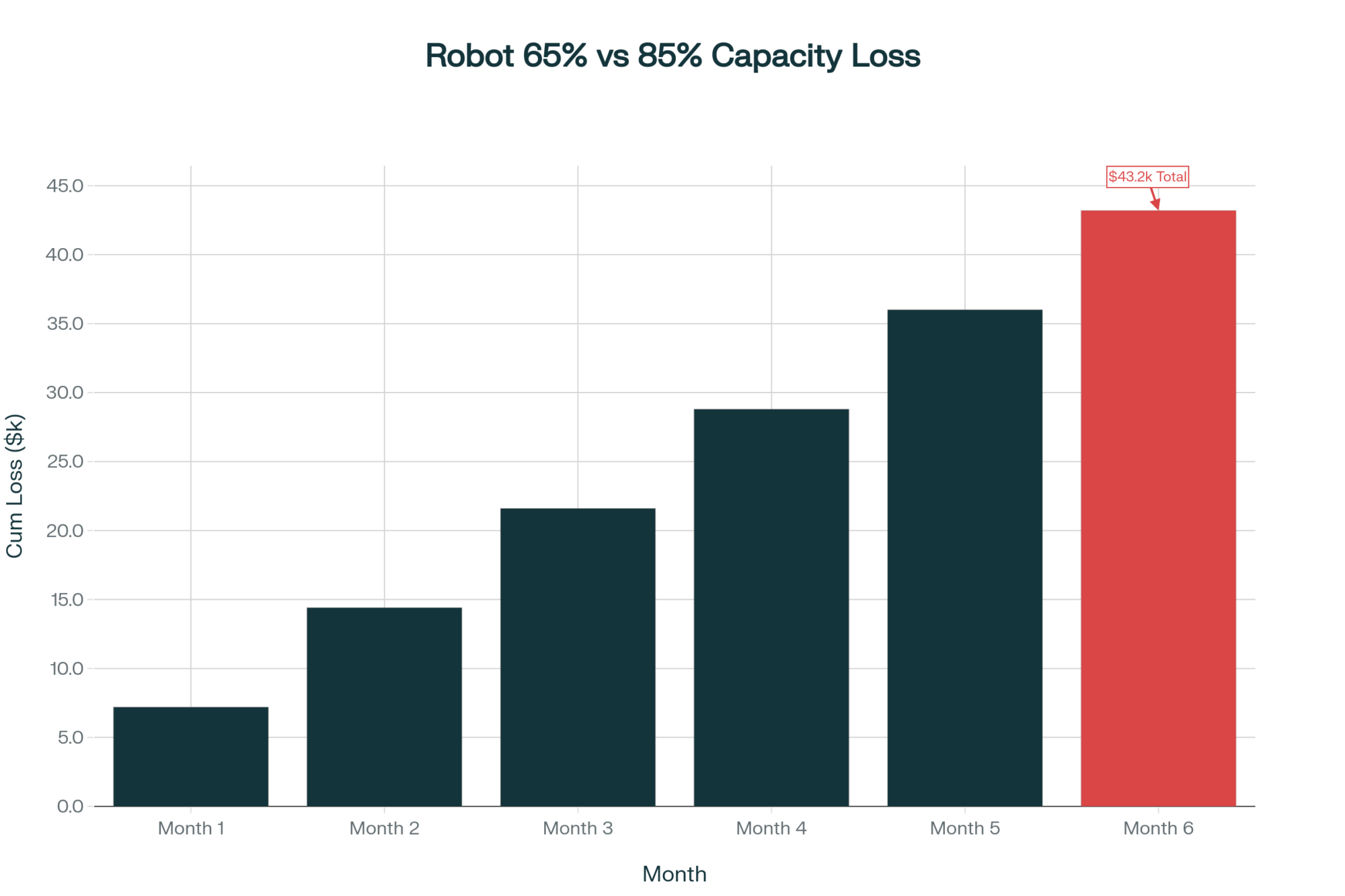
Every month of 65% utilization vs. 85% costs producers $7,200 in lost opportunity—comprehensive training pays for itself in preventing just 6-8 months of these losses

The Training Gap: Different Perspectives, Different Needs

Here’s what’s interesting. At an extension workshop last winter, we got into discussing robotic milking adoption rates. One producer mentioned something that stuck with me—his dealer had recommended the standard 30-40 hours of training. Makes sense, right? However, he then noticed that the most successful robot operations in his area had typically invested what he estimated to be three times that amount in training and education.

Extension specialists I’ve talked with have observed similar patterns, though the exact hours vary considerably. Dealers focus on getting you operational—and honestly, that makes sense from their perspective. They have schedules to maintain and other installations waiting. But there’s a difference between operational and optimized that we’re all learning about the hard way.

To be fair to vendors (and I’ve worked with many good ones over the years), they’re operating within real constraints. Some operations genuinely do fine with standard training. Younger producers often pick up these systems remarkably fast—they’ve been working with technology their whole lives. The challenge is determining which operations require more support before problems arise.

Different Approaches, Different Results

What I find particularly noteworthy is how operations in Europe often structure their technology adoption—at least from what I understand, based on producers who’ve visited. A colleague who spent time touring Dutch dairies mentioned something that really resonated with me. The technology was identical to what he’d installed back home. But their cooperatives commonly bundle training right into equipment purchases, spread implementations over longer timelines, and create structured peer learning groups.

Why does this matter to us? Producers report that these longer implementations achieve roughly 10-15% higher utilization rates than rushed installations—although exact comparisons are difficult to come by. When you’re talking about maximizing a major capital investment, even those modest efficiency improvements add up fast. Whether it’s a rotary parlor automation in California or a robot installation in Wisconsin, that difference matters.

Looking beyond Europe, I’ve heard interesting things from producers who’ve visited operations in New Zealand and Australia. Their seasonal systems create different training dynamics—everyone implements at once, which creates natural peer learning opportunities that we don’t always have here.

Why Experience Sometimes Works Against Us

Workforce TypeTraining MultKey ChallengesSuccess Rate
Experienced3xSlow adoption85%
Young/Tech0.7xNeed ownership75%
Non-English2.5xLanguage bar90%
Plain Comm2.5xTech limits95%
Family Ops1.5xRole conflicts90%

In my experience, one of the most overlooked aspects is how experienced employees react to new technology. A producer recently shared something that really hit home. His operation employs several folks who’ve been milking cows for decades—exceptional stockmen who can spot a fresh cow developing metritis from across the barn. When automated systems arrived, his best employee nearly walked away. Not because he couldn’t learn the technology, but because suddenly his expertise felt irrelevant.

This gentleman could examine a pen and determine exactly what TMR adjustments to make. Now a computer was telling him what to do. The breakthrough came when they reframed everything: the technology wasn’t replacing his knowledge, it was giving him tools to apply that knowledge to more cows more precisely.

Operations that address these concerns through dedicated learning spaces and realistic timelines generally report smoother transitions—though measuring this stuff precisely is nearly impossible.

Building Networks That Work

Here’s something that works well: producers creating their own support networks. At World Dairy Expo, I heard about a group that formed an informal “technology board”—basically, their nutritionist, veterinarian, successful neighbors using similar systems, and possibly a retired extension specialist. They meet regularly, share what’s working, and troubleshoot problems together.

The investment? Primarily just time, and possibly covering some meeting expenses. However, producers tell me that these networks often save tens of thousands of dollars annually in service calls, not to mention avoiding problems before they occur.

Ontario producers I know use a group chat to troubleshoot issues in real-time. Similar approaches work in Alberta and the Western states. They’ve become each other’s first call when something goes wrong. For producers looking to start something similar, Cornell PRO-DAIRY (prodairy.cals.cornell.edu) offers peer learning resources, and the University of Wisconsin’s Center for Dairy Profitability (cdp.wisc.edu) has frameworks for collaborative networks.

The Real Economics of Training Investment

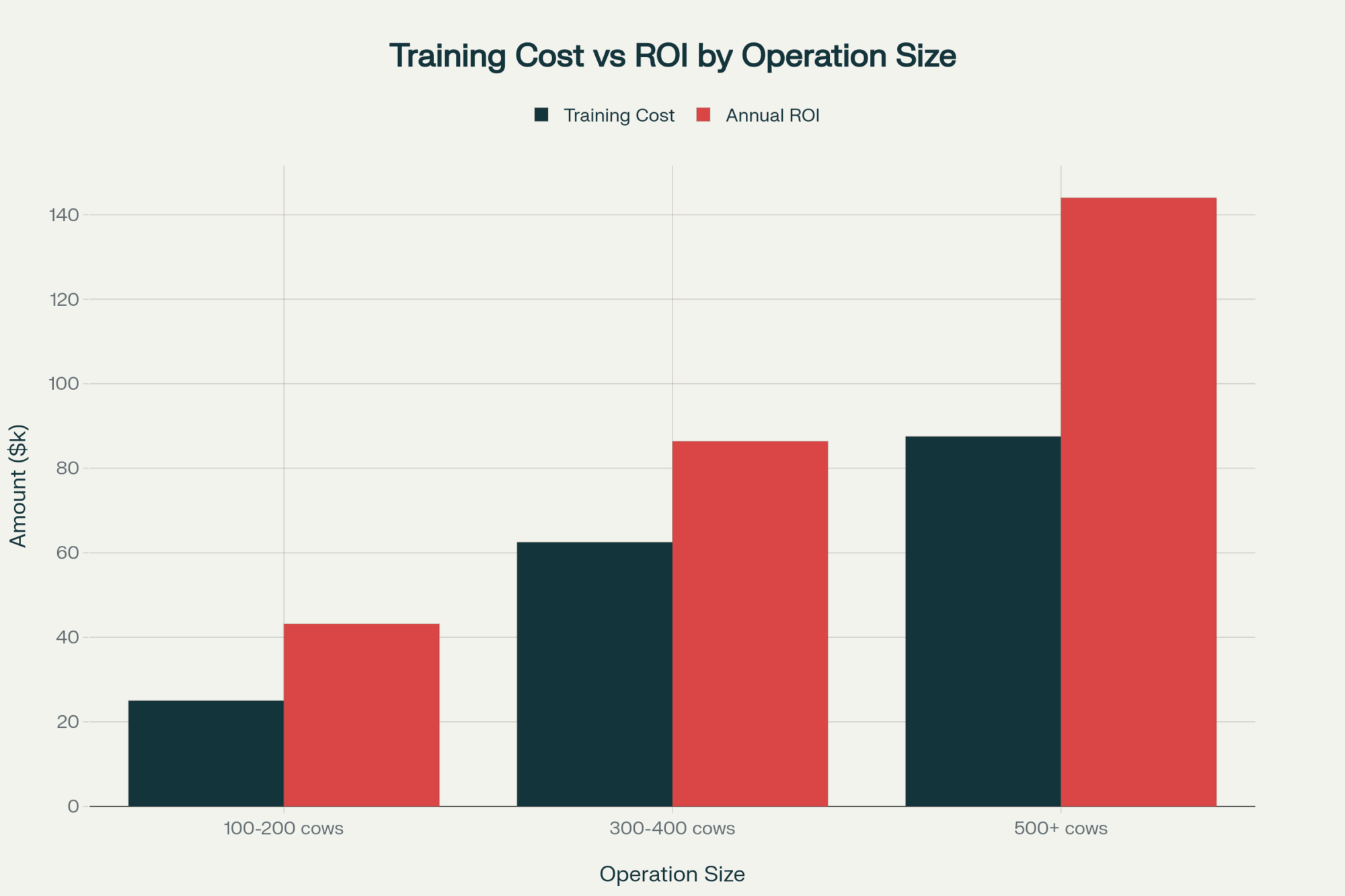
The math doesn’t lie: comprehensive training investment pays for itself by preventing just 6 months of underperformance losses

Let’s talk money, because that’s what it comes down to. From conversations I’ve had, the investment in comprehensive training varies enormously. Smaller operations may spend $20,000-$ 30,000 on enhanced training. Larger operations sometimes exceed $100,000, though that includes more than just training.

For a typical 300-400 cow Midwest operation, producers often mention $50,000-75,000 when they really commit to doing it right. Sounds like a lot? Here’s an example calculation one producer showed me:

Six months of robots at 65% capacity instead of 85% = roughly 20% less milk harvested. On a typical 180,000 pounds monthly production, that’s 36,000 pounds lost monthly At recent milk prices around $20/cwt, that’s approximately $7,200 monthly or $43,200 over six months

The stark financial reality of robot utilization rates – comprehensive training eliminates $7,200 monthly losses that add up to $43,200 over just six months. This single chart explains why progressive producers invest 3x more in training than vendor minimums suggest.

Suddenly, that training investment appears in a different light. With current milk prices and tight margins, that utilization difference on a $400,000 robot investment makes comprehensive training look like worthwhile protection.

5 Signs Your Operation Needs Comprehensive Training

Based on what successful operations have learned:

  • Your workforce is primarily experienced employees over 45—they bring invaluable knowledge, but may need more technology support
  • You’re transitioning from tie-stalls or stanchions to automation—a bigger learning curve than parlor upgrades
  • Language barriers exist on your farm—whether Spanish-speaking or Plain community workers
  • Previous technology implementations have struggled—patterns tend to repeat without intervention
  • Your vendor offers only “standard” training packages—one size rarely fits all

Regional and Operational Realities

The approach varies by region and situation. In areas with predominantly Hispanic workforces—whether that’s California’s Central Valley or Idaho’s Magic Valley—language adds complexity. Several producers have had success partnering with community colleges offering technical training in Spanish. Smart use of existing resources.

Operations employing Plain community members face different dynamics. These workers possess exceptional animal husbandry skills—outperforming many activity monitors in heat detection—but may have limited exposure to technology. Pairing experienced workers with younger employees in mentorship arrangements values both traditional knowledge and technical skills.

Family operations spanning from Vermont to British Columbia face unique generational dynamics. The younger generation often drives technology adoption while parents provide operational wisdom for implementation. When this works—and it doesn’t always—it’s incredibly powerful.

Technology Type Matters

Different technologies require different training approaches. Activity monitors? Most operations figure those out with 20-30 hours of focused training. Full robotic systems? That’s often 100+ hours to really optimize. Automated feeding falls somewhere between, depending on complexity.

Converting an existing double-8 parallel to automation means adapting established routines. Installing robots from scratch means creating entirely new workflows. The same applies to rotary parlor conversions versus new installations. One requires unlearning old habits; the other requires building new ones from scratch.

Farms with a history of successful technology adoption tend to adapt more quickly to new systems. It’s not just familiarity with touchscreens—it’s understanding that temporary performance dips are normal, breakthrough moments will come, and patience during learning pays off later. Whether you’re managing Jerseys or Holsteins, focusing on butterfat levels or components, these patterns hold true.

The ROI math that changes everything – comprehensive training investments pay for themselves within 8.5 months across all operation sizes. These aren’t training costs, they’re profit protection investments with documented returns.

Looking Forward: The Growing Divide

Technology adoption in dairy isn’t slowing down. Recent economic pressures have accelerated it for many operations. The gap between farms that master the human side and those that don’t is widening rapidly.

But we’re collectively getting better at this. Extension programs, such as Cornell PRO-DAIRY, Wisconsin’s Center for Dairy Profitability, Minnesota’s Regional Sustainable Development Partnerships, and Penn State Extension, are evolving their support approaches. Producer networks are strengthening. Even some dealers recognize their long-term success depends on customer success, not quick installations.

What This Means for You

Every farm’s path differs—there’s no universal formula. Grazing operations in Missouri face different challenges than confinement setups in Arizona. Jersey herds have different considerations than Holsteins. What matters is honestly evaluating your specific situation, including your workforce, finances, learning culture, and five-year goals.

Some operations genuinely succeed with standard vendor training—usually those with technical aptitude, previous technology experience, or exceptional vendor relationships. If that’s the case, standard approaches might work well.

But if you’re transitioning from conventional systems, working with experienced but non-technical labor, or implementing complex technology… comprehensive training isn’t an expense. It’s infrastructure, just like your barn or milking parlor.

The timeline pressure from vendors wanting quick installations, bankers wanting immediate returns, and ourselves wanting results—that’s often our biggest enemy. Operations that take a patient-centered approach to implementation generally report better long-term outcomes, although waiting while making loan payments can be tough.

Questions to Consider Before Your Next Investment

Based on what successful operations are learning:

  • Have you spoken with three other producers who have successfully used this technology?
  • What’s your realistic timeline—can you afford 18-24 months for full optimization?
  • Who on your team will champion this change through the tough learning phase?
  • Have you budgeted training costs into your financing, not as an afterthought?
  • What support network exists beyond the vendor’s initial training?

The Bottom Line

Your next technology investment will likely determine your competitive position for years to come. The question isn’t whether to adopt technology—it’s whether you’ll invest in the human infrastructure that makes it work.

Here’s the challenge: Before signing that next equipment contract, ask yourself—have you budgeted as much for training your people as you have for maintaining the equipment? If not, you’re planning for the 65% utilization scenario, not the 85% one. And in today’s dairy economy, that 20% difference isn’t just numbers on a spreadsheet. It’s the difference between thriving and merely surviving.

The technology won’t wait for us to catch up. But producers who recognize that success depends on people, not just equipment, are building operations that will lead this industry forward. The choice, as always, is yours.

KEY TAKEAWAYS:

  • The $43,200 reality check: Operations running at 65% vs 85% capacity lose roughly $7,200 monthly on typical 180,000-pound production—comprehensive training investments of $50,000-75,000 for mid-sized operations deliver clear ROI within the first year
  • Build your support network now: Successful producers create informal “technology boards” with their nutritionist, vet, and neighboring farms using similar systems—these peer networks save tens of thousands annually in service calls while accelerating optimization timelines
  • Match training to your workforce: Standard vendor packages work for tech-savvy younger teams, but operations with experienced workers over 45, Plain community employees, or Spanish-speaking crews need 3x the training hours to achieve comparable success rates
  • Technology type determines approach: Activity monitors need 20-30 training hours, full robotic systems require 100+, and converting existing parlors demands different strategies than new installations—one size never fits all
  • Timeline pressure kills profitability: Operations taking 18-24 months for patient implementation consistently outperform those rushing to 60-day operational status—even with loan payments running, the long-term difference between thriving and surviving makes patience profitable

Complete references and supporting documentation are available upon request by contacting the editorial team at editor@thebullvine.com.

Learn More:

  • AI and Precision Tech: What’s Actually Changing the Game for Dairy Farms in 2025? – This article provides a strategic perspective, revealing the hard numbers on ROI for various technologies like precision feeding and automated health monitoring. It links technology investment to measurable benefits like feed savings and vet bill reductions, helping you prioritize where to spend your capital for the fastest payback.
  • The Robotics Revolution: Embracing Technology to Save the Family Dairy Farm – This tactical article offers a case-study approach, showcasing how farms like Hinchley Dairy Farm successfully transitioned to robotics. It details the step-by-step milking process, highlights labor savings, and demonstrates how automation helps solve the labor crisis by shifting your team’s focus to high-value tasks.
  • Unlocking Dairy Robot Financing: How Smart Farmers Are Funding Their Automated Future – This piece addresses a critical, financial component of the technology puzzle. It goes beyond the initial cost to explore creative funding solutions like leasing and “pay-per-liter” models, providing actionable strategies to make that multi-hundred-thousand-dollar investment more financially manageable for your operation.

Join the Revolution!

Join over 30,000 successful dairy professionals who rely on Bullvine Weekly for their competitive edge. Delivered directly to your inbox each week, our exclusive industry insights help you make smarter decisions while saving precious hours every week. Never miss critical updates on milk production trends, breakthrough technologies, and profit-boosting strategies that top producers are already implementing. Subscribe now to transform your dairy operation’s efficiency and profitability—your future success is just one click away.

NewsSubscribe
First
Last
Consent

The $100-Per-Cow Discovery: How Smart Farmers Are Rethinking Robot Feeding for Higher Production

Data-driven: Progressive farms cutting robot pellets 50% report $100/cow savings plus 5-8% production gains after adaptation

EXECUTIVE SUMMARY: What farmers are discovering about robot feeding is transforming how progressive operations think about automation economics. Research from the University of Minnesota and Saskatchewan shows that reducing robot concentrate from 8 kg to 3-4 kg daily—while optimizing PMR consistency—can save $100 per cow annually in feed costs while actually improving production after a 6-8 week adaptation period. This aligns with European operations that have quietly achieved superior robot utilization rates by treating concentrate as motivation rather than a means of nutrition. Dr. Trevor DeVries’ work at Guelph demonstrates that automatic feed push-up systems, combined with minimal robot pellets, create behavioral patterns that support voluntary milking far better than high-concentrate dependency. For producers facing today’s margin pressures, this approach offers a practical path to improved profitability—though success requires patience through the transition and strong PMR management. The conversations happening across the industry suggest that we’re witnessing a fundamental shift in how smart farmers optimize their robotic investments.

robotic milking, dairy profitability, farm efficiency, milk production, feed cost reduction, precision agriculture, dairy nutrition

I recently spoke with a producer in eastern Ontario who completely changed my thinking about robot feeding. After three years of fighting his system—and spending roughly $40,000 extra annually on robot pellets (about $100 per cow in unnecessary feed costs)—he reduced his concentrate by half and saw production actually increase. Now, that got my attention… and it’s part of a larger conversation happening across the industry.

What’s particularly noteworthy is how this builds on what we’ve been seeing in European operations for years, though with important differences for North American conditions. When Tremblay and colleagues published their analysis in the Journal of Dairy Science in 2016, they examined farms across Minnesota, Wisconsin, Ontario, and Quebec. The findings suggested that feeding philosophy might be more important than previously realized.

Why Cows Visit Robots: Rethinking Motivation vs. Nutrition

Here’s something I find fascinating about robotic operations worldwide: the most successful systems often share a common insight—robots seem to work best when cows visit voluntarily for milking comfort rather than primarily for concentrate.

I was at a conference recently where Dr. Greg Penner from the University of Saskatchewan presented research showing substantial PMR substitution when robot concentrate increases. This aligns with what many producers have been noticing—you increase robot pellets, thinking you’re improving nutrition, but the cows just eat less at the bunk. The net effect? Often not what we intended.

What’s interesting about European operations—and I’m curious if others have noticed this—is that they typically feed considerably less robot concentrate than we do. A Danish producer I met last year was running beautifully on just 3 kilograms of pellets. When I asked how he managed cow traffic, he smiled and said, “feed availability at the bunk does more than pellets ever could.”

Now, that’s different from what most of us learned, but it’s worth considering…

The Hidden Premium: Why Robot Pellets Cost More Than You Think

I was reviewing feed costs with a Wisconsin producer last month, and something jumped out at both of us. His robot pellets were running significantly more per ton than the equivalent energy in his TMR—we’re talking a premium that often runs thousands of dollars annually on a 400-cow operation.

This builds on research Dr. Alex Bach has been publishing in the Journal of Dairy Science. While the data is still developing, his work suggests farms that limit robot concentrate while optimizing PMR energy density often see improvements across several metrics. Better rumen health appears to drive everything else—improved production, reduced feed conversion rates, and even higher butterfat and protein levels.

A producer in central Minnesota recently shared something that stuck with me: “I was so focused on getting cows to the robot, I forgot about total nutrition.” After adjusting his program—reducing the robot pellet and improving the PMR—his somatic cell counts decreased, and his butterfat level increased by 0.2%. Sometimes the indirect benefits surprise us more than the direct ones.

For high-heat California operations, the economics shift even more. When cows are experiencing heat stress, feeding concentrate through robots can actually exacerbate the problem. A producer near Tulare told me that switching to minimal robot concentrate with more frequent TMR delivery helped maintain components through last summer’s heatwave.

The 8-Week Reality: What Actually Happens During Transition

Why is making this change so difficult? Well, I think it’s partly psychological. Most of us—myself included—have been conditioned to believe robots need substantial concentrate to function properly. And honestly, for some operations, that might still be true.

Dr. Marcia Endres from the University of Minnesota published fascinating research in 2018 studying automatic milking farms across Minnesota and Wisconsin. What stood out wasn’t just the performance differences, but how feeding patterns created behavioral changes that supported voluntary milking.

The 8-Week Reality: Production rebounds stronger after initial transition dip. Smart farmers who push through weeks 1-3 see 5-8% gains by week 8 – those who quit early never discover this $100/cow opportunity.

Week-by-Week Breakdown

I recently worked with a producer transitioning to lower robot concentrate, and here’s what we observed:

Weeks 1-3: The Anxiety Phase Production dipped about 5-8%, fetch rates increased, and frankly, everyone was nervous. This seems typical based on what I’m hearing from others.

Weeks 4-5: The Stabilization Period Things started settling. The cows developed new patterns, voluntary visits improved, and production began recovering.

Weeks 6-8: The Payoff They were exceeding previous production levels with lower feed costs. However, and this is important, not everyone sees these results, and the adaptation period can test your patience.

What I’ve learned from producers who’ve been through this: those who abandon the transition early never find out if it would have worked. It’s a genuine dilemma when you’re watching that milk check…

Key Questions to Consider Before Making Changes:

□ What’s my current robot utilization rate compared to capacity?
□ How consistent is my PMR quality day-to-day?
□ Do I have labor available for the transition period?
□ What’s my risk tolerance for temporary production dips?
□ Have I documented baseline performance metrics?
□ Are my robots sitting idle during certain hours while overcrowded at others?

Beyond Milkings Per Day: Tracking What Really Matters

Something I’ve been discussing with progressive producers lately: we might be tracking the wrong things. Sure, milkings per day matter, but what about distribution throughout the day? Or total system economics?

A producer near Guelph recently showed me his tracking system. Beyond the usual metrics, he monitors eating time at the bunk, rumination consistency across groups, and—this was clever—robot utilization patterns by hour. He said understanding when his robots sat idle helped him adjust feeding times to smooth out traffic.

Hidden Opportunity: Robots sit idle 35% of the day while overcrowded at peaks. Smart feeding times smooth traffic flow and boost total daily production without adding robots.

Dr. Trevor DeVries from the University of Guelph has published work suggesting automatic feed push-up systems can significantly impact robot performance. The mechanism seems less about total intake and more about behavioral consistency. Each push-up creates a small motivation event, and over 24 hours, those add up.

The principles might be universal—consistency, cow comfort, economic efficiency—but the application varies tremendously depending on your setup, your cows, and your goals.

Regional Realities: Adapting Strategies to Your Environment

Every operation is different—a point I can’t emphasize enough. What works for a 3,000-cow dairy in New Mexico’s dry lot systems won’t necessarily translate to a 150-cow grass-based operation in Vermont’s seasonal pasture environment.

Northern Climate Considerations

I recently visited a producer in Manitoba who made the transition over a period of four months. His approach was methodical: he increased feed push-ups first, improved PMR consistency, and then slowly reduced robot concentrate. He said the key was watching the cows, not just the numbers.

For Northeast producers transitioning to and from seasonal pastures, timing is crucial. Spring turnout creates natural feeding disruption. Some farmers use this transition to simultaneously adjust robot concentrate levels, masking the change within the larger seasonal shift.

Southern Heat Management

For western operations dealing with water restrictions and resulting forage variability, maintaining higher robot concentrate might provide necessary nutritional consistency. An Arizona producer told me, “When your forage quality swings wildly, robot concentrate becomes your safety net.”

Practical Starting Points

For those considering changes, here’s what seems to help:

  • Start with feed bunk management before touching robot settings
  • Document everything—you’ll want to know what worked and what didn’t
  • Consider working with someone who’s done this before
  • Be prepared for the adaptation period—it’s real and it’s challenging

Fresh cow management deserves special mention here. Many producers find these cows benefit from higher robot concentrate during the first 21 days, then gradually transition to the herd’s standard program.

Comparing Traditional vs. Optimized Approaches

FactorTraditional High-ConcentrateOptimized Low-Concentrate
Robot pellet amount7-9 kg/day3-4 kg/day
Feed cost premium$100+ per cow annuallyMinimal to none
Fetch ratesOften 15-20%Typically <10%
Adaptation periodImmediate6-8 weeks
PMR quality requirementsModerateHigh consistency crucial
Best suited forVariable forage qualityConsistent feed management

Building Support: Getting Your Team on Board

One challenge producers mention is resistance from their support team. And honestly, I understand both sides. Feed advisors and equipment dealers have seen what works across many operations. They have valid concerns about dramatic changes.

A producer in Saskatchewan found success by presenting it as a trial with clear parameters. Instead of arguing about philosophy, he proposed a 12-week test with specific metrics to evaluate. His nutritionist became more supportive when they agreed on what success would look like upfront.

What’s encouraging is that some companies are adapting to these changes. I’ve noticed that equipment manufacturers are developing systems with greater flexibility in concentrate delivery. Whether you’re running Lely, DeLaval, GEA, or Boumatic systems, each has its quirks and optimization potential.

Global Lessons, Local Applications

Controversial Reality: Less concentrate correlates with higher production globally. European operations prove what North American farmers are just discovering – robots work best as milking comfort, not feeding stations.

The diversity of successful approaches worldwide is remarkable. Dutch operations often run minimal concentrate with exceptional results—but they also have different genetics, facilities, and economic pressures than we do. Danish systems leverage incredibly consistent forages. New Zealand producers work with seasonal variations that we don’t face.

What can we learn from this diversity? Maybe that there’s no single “right” way to feed robots. The key question isn’t whether to use high or low concentrate, but whether your current approach aligns with your goals and conditions.

Breed considerations matter too. Jersey operations often find different concentrate levels optimal compared to Holstein herds—Jerseys’ higher components but lower volume might justify different feeding strategies.

When Higher Concentrate Still Makes Sense

Let’s be clear: many successful operations achieve excellent results with traditional feeding programs. I know producers getting 95 pounds per cow with 8 kilograms of robot concentrate, and their systems work beautifully.

Fresh cow management often benefits from individualized nutrition through robots. Operations dealing with extreme weather, inconsistent forages, or specific health protocols might find higher concentrate levels necessary.

This season’s feed prices might influence your decision, too. When robot pellets hit premium prices during drought years, the economics of alternative approaches become more compelling. Conversely, when you’ve got excellent quality forages, maybe that’s the time to experiment with reduced concentrate.

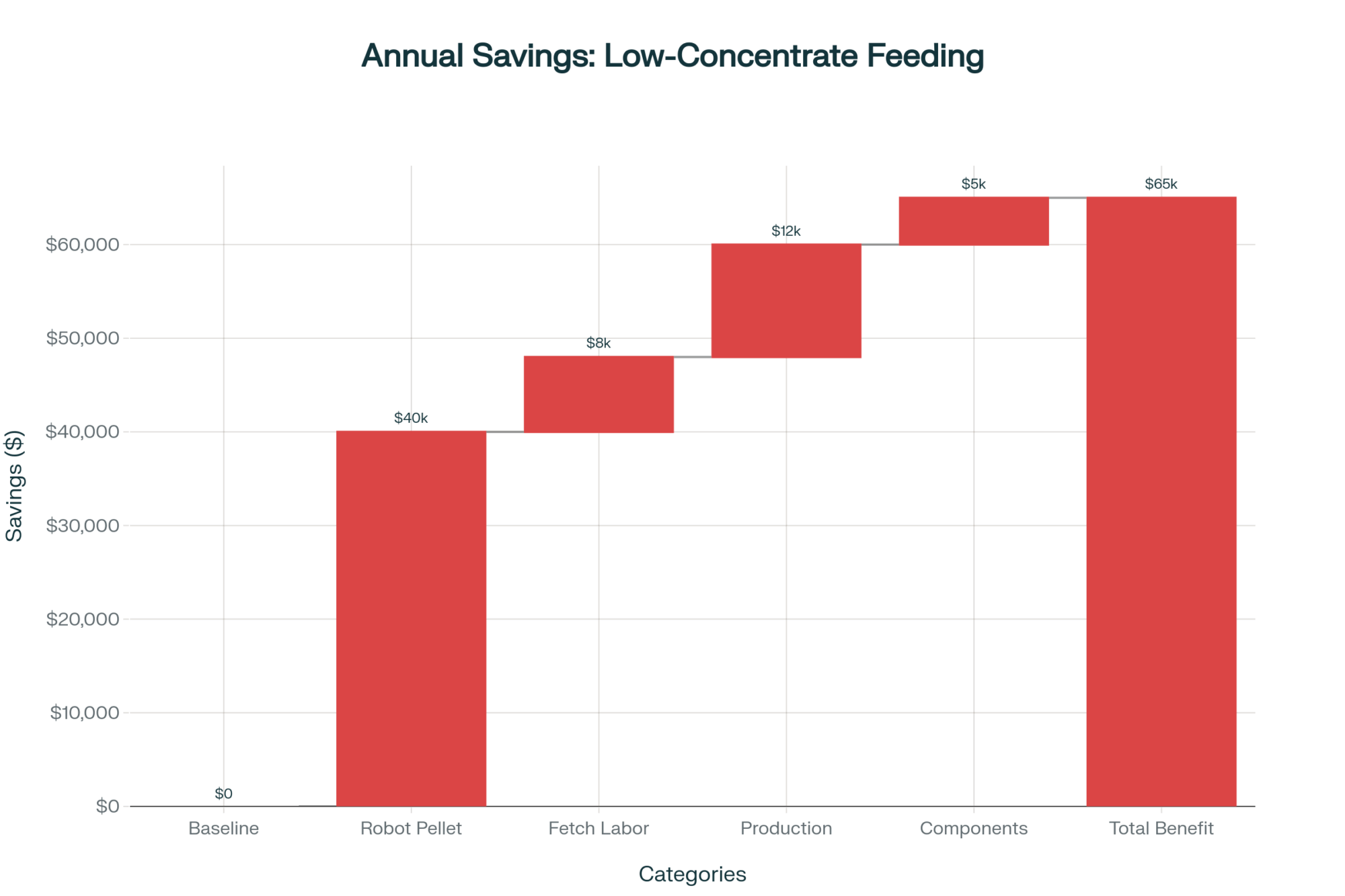
The $65,000 Question: Total economic impact exceeds feed savings alone. When you factor in labor, production gains, and component improvements, the opportunity becomes impossible to ignore

The Evolution Continues: What’s Next for Robot Feeding

What excites me about current developments is the ongoing research. Just this year, extension programs across the Midwest have been collecting data on feeding transitions. Feed companies are developing products specifically for robotic systems. Producers are sharing experiences more openly than ever.

I’m particularly interested in how next-generation robots will handle feeding. Will they adapt to our management preferences, or will we see convergence toward optimal strategies? Early indications suggest more flexibility, not less.

For producers facing current margin pressures—and who isn’t these days—exploring feeding alternatives might offer opportunities. Not revolutionary changes, necessarily, but thoughtful adjustments tailored to your specific situation.

The conversation continues, and that’s healthy for our industry. Whether you’re running traditional programs or exploring alternatives, the key is to stay curious and open to what works best for your operation.

After all, the best feeding system is the one that keeps your cows healthy, your robots running efficiently, and your operation profitable. How you achieve that… well, that’s where the art meets the science.

KEY TAKEAWAYS:

  • Economic opportunity: Reducing robot concentrate can save $40,000-50,000 annually for 400-500 cow operations while maintaining or improving production—that’s real money in today’s tight margins
  • Regional adaptation matters: Northern operations benefit from gradual 4-month transitions during stable feed periods, while southern heat-stressed herds see improved components when eliminating slug-feeding through robots
  • Track the right metrics: Focus on robot utilization patterns throughout the day and total system economics rather than just milkings per cow—understanding when robots sit idle reveals optimization opportunities
  • The 8-week commitment: Expect temporary production dips (5-8%) during weeks 1-3, stabilization by week 5, and improved performance by week 8—producers who quit early never see the benefits
  • Team approach wins: Present changes as 12-week trials with clear success metrics to gain nutritionist and dealer support, recognizing their valid concerns while demonstrating what works for your specific operation

Complete references and supporting documentation are available upon request by contacting the editorial team at editor@thebullvine.com.

Learn More:

Join the Revolution!

Join over 30,000 successful dairy professionals who rely on Bullvine Weekly for their competitive edge. Delivered directly to your inbox each week, our exclusive industry insights help you make smarter decisions while saving precious hours every week. Never miss critical updates on milk production trends, breakthrough technologies, and profit-boosting strategies that top producers are already implementing. Subscribe now to transform your dairy operation’s efficiency and profitability—your future success is just one click away.

NewsSubscribe
First
Last
Consent

Ohio State Just Torched Their Safety Net for a $6.2 Million Robot Bet – Are They Crazy or Geniuses?

Universities aren’t training farmers anymore—they’re training corporate tech reps.

Robotic milking systems, dairy automation ROI, dairy labor shortage, future of dairy farming, university dairy programs

When a major university bulldozes perfectly good dairy facilities to go all-in on automation, you know something big is happening. The question is: are they seeing the future, or about to become a very expensive cautionary tale?

You know how conversations go at the feed mill—somebody always brings up the latest university nonsense. But Ohio State’s new robot dairy? That’s got producers talking from Defiance County clear down to Washington County.

Here’s what happened. They took their 110 registered Jerseys—the same herd that’s been training students since Nixon’s day—bulldozed those trusty but tired 1972 facilities, and dropped a whopping $6.2 million on what they’re calling a “fully autonomous dairy operation”.

That’s not small potatoes for a 60-cow setup.

Here’s Why This Isn’t Just Another Equipment Upgrade

They didn’t renovate. They didn’t hedge their bets. Ohio State went full nuclear option—demolished everything and built from scratch with two Lely Astronaut A5 robots, a Vector automated feeding system, robotic manure vacuums… the whole nine yards.

Most rational folks would’ve spent the smaller money patching up the old place while adding some robot experience. Keep both conventional and automated training. But no—Ohio State torched their safety net completely.

“It would be more cost-effective to tear down the outdated structure,” Associate Dean Graham Cochran explained. But any producer who’s priced farm construction knows that math only works if you’re trying to make retreat impossible.

The gamble? That robotic milking explodes from niche curiosity to mainstream necessity before their current students graduate and discover that 97% of dairies still milk the old-fashioned way.

The Numbers Tell a Brutal Story

Let’s talk reality. Currently, fewer than 3% of US operations utilize robotic milking. We’re talking maybe 800 robot dairies out of 26,000+ total operations nationwide. That’s not exactly a revolution sweeping the countryside.

The economics are tough. A comprehensive study tracking operations across 13 countries found that robots cut labor input by 28%, which sounds great, but also increases investment costs by 58%. The real kicker? Only 6% of producers achieved payback periods under 12 years.

Those aren’t adoption-driving numbers for an industry where most operations run on margins thinner than skim milk.

But here’s where it gets interesting… maybe Ohio State sees something in the labor crisis that changes this whole equation.

The Immigration Time Bomb Nobody Wants to Discuss

Our industry runs on immigrant workers—51% of the workforce producing 79% of America’s milk. With current deportation pressures and policy uncertainty, that labor foundation isn’t just shaking—it’s cracking.

Now, Ohio’s different from those California mega-dairies. Our 1,350 farms average 185 cows each—mostly family operations with seasonal help rather than year-round immigrant crews. Different labor dynamics entirely.

But even family farms are feeling the squeeze. Operations nationwide are dealing with 30-38% annual employee turnover. That’s not just expensive recruitment costs—it translates to production drops and higher calf mortality when your crew keeps changing.

Scott Higgins from the Ohio Dairy Producers Association told me: “It is exciting to see this investment in a modern dairy that will impact the student experience and tell the story of dairy farming”. But between the lines, you can hear the concern about workforce stability.

If immigration policy suddenly removes a significant portion of the 51% dairy workforce, automation stops looking like a nice-to-have technology. It starts looking like survival equipment.

The Real Shocker: They’re Not Training Farmers

This development caught me completely off guard when I started digging deeper.

Ohio State isn’t training the next generation of dairy farmers or farm managers. They’re training corporate employees for the agricultural technology sector.

Think about the economics. Their graduates will likely command competitive starting salaries that could price them out of most actual farm management positions. A typical 200-cow operation in Ohio can’t afford to pay premium wages when the whole operation might only net $100,000-150,000 annually.

But equipment companies? They desperately need technical support reps, installation crews, and customer training specialists. Lely already runs comprehensive training centers offering “complete working knowledge of robots and feeding products”.

Jason Hartschuh from Ohio State Extension put it this way: “The new facility will allow students to be ready for a career in the dairy industry in all sectors, from farm management to sales and service”. Notice how “sales and service” got equal billing with “farm management.”

The Corporate Training Competition They’re Ignoring

Here’s where Ohio State’s strategy gets really questionable, and honestly, nobody’s talking about this elephant in the room.

When a producer installs robotic equipment, manufacturers provide free training “for as long as you own and operate” their systems. Lely’s got dedicated training facilities. GEA partners with major universities. These corporate programs deliver hands-on equipment access, immediate updates when software changes, and commercial incentives for customer success—because if you fail, they lose future sales.

So what exactly does a four-year Ohio State degree add that manufacturer training doesn’t provide better, faster, and cheaper?

The Lely Vector system Ohio State installed saves customers about 8 hours of weekly labor plus up to 1,452 gallons of diesel annually, according to multiple documented case studies. However, producers learn system optimization through manufacturer support and their neighbors’ experience, rather than university coursework.

The Jersey Factor That’s Got Me Scratching My Head

Here’s something that’s been bugging me about Ohio State’s approach…

Industry observations suggest that Jerseys present different challenges for robotic systems—smaller frame sizes, varied udder configurations, and higher component milk — that can affect sensor performance differently than Holstein-focused automation development.

Most Ohio producers run 100-300 cows—potentially too small for multiple robots but too large for optimal single-robot economics. So Ohio State is training students for a facility design that exists on maybe a few dozen farms nationwide.

That’s… interesting strategic thinking.

Research Goldmine or Corporate Welfare Program?

Ohio State supporters keep pointing to research potential, and I’ll admit, something is compelling here.

Their individual cow monitoring systems will generate data streams that conventional operations literally cannot produce: real-time milk composition analysis, continuous health tracking, and precise feed intake measurements down to individual animals.

Maurice Eastridge from Animal Sciences says this will be “a tremendous asset” for research. If automation adoption accelerates, their faculty could become the go-to licensing experts for breakthrough insights worldwide.

But here’s what makes me uncomfortable: Lely owns the core technology generating this data. Ohio State is essentially providing research services that benefit equipment manufacturers while using American taxpayer funds.

This conflicts with what land-grant universities were created to achieve. The Morrill Act of 1862 established these institutions to make agricultural knowledge freely available to all farmers. Now they’re positioning to license discoveries, creating a two-tiered system where technological advantages go to whoever can afford premium prices.

What This Actually Means for Working Producers

The thing about Ohio State’s gamble is that it’s going to tell us something important about where this industry is heading, whether they succeed or fail spectacularly.

Technology Timing Intelligence: Their willingness to stake their entire program on automation acceleration suggests some industry leaders expect much faster adoption than public projections indicate. That’s worth monitoring as market intelligence—they might know something about policy changes or economic pressures that haven’t hit the news yet.

Training Source Strategy: When you’re evaluating robotic systems, prioritize manufacturer training and peer producer experience over academic credentials. The company selling you equipment has much stronger commercial incentives for your operational success than any university program.

Labor Reality Check: Focus on systems that enhance your current crew’s productivity rather than requiring completely different skill sets. Automation isn’t about replacing experienced managers—it’s about making reliable help more productive and reducing dependence on hard-to-find manual labor.

Economic Calculations: That international study showing 28% labor reduction but 58% higher investment costs suggests most operations aren’t economically ready for this leap yet. But if immigration policy shifts suddenly removes available workers, those calculations flip overnight.

The Bottom Line

Ohio State just demonstrated that even major agricultural institutions are making unprecedented bets on industry transformation. Whether that represents visionary leadership or an expensive miscalculation will signal whether dairy automation moves from niche curiosity to mainstream necessity.

Their success or failure offers valuable intelligence about industry direction, but here’s what concerns me: they’re essentially experimenting using students’ career prospects and taxpayer funding to test theories about automation timing.

If they’re right about acceleration, their graduates become valuable professionals in a growing sector. Their research drives industry transformation. Their facility becomes the model others follow.

If they’re wrong… well, they’ve trained students for jobs that don’t exist while abandoning the 97% of operations that still need competent managers who understand actual dairy work.

The revolution might indeed be coming. But it’s being driven by equipment manufacturers solving real problems for working producers, not universities training corporate employees.

For family operations trying to stay competitive, that distinction makes all the difference. The question isn’t whether Ohio State’s bet pays off for them—it’s whether their gamble helps or hurts the actual dairy farmers who are supposed to benefit from land-grant education.

That verdict is still several years away. But watching their results will tell us whether we’re witnessing the future of dairy education… or an expensive institutional mistake that forgot who it’s supposed to serve.

Either way, the dice are rolling, and the stakes couldn’t be higher for all of us trying to make a living in this business.

Key Takeaways

  • Labor math is changing fast: With 51% immigrant workforce at risk and 30-38% annual turnover crushing production, automation stops being a luxury and starts being survival gear (Source: National dairy workforce analysis, 2025)
  • ROI reality check: Robots slash labor 28% but spike investment 58%—crunch your numbers hard before jumping, because payback often stretches past 10 years (International meta-analysis, 13 countries)
  • Small wins add up: Lely’s Vector feeding system saves 8 hours weekly labor plus 1,452 gallons of diesel annually—not sexy, but that’s $3,000+ yearly on a 200-cow operation (Company performance data, 2025)
  • Training trumps degrees: Skip the classroom, stick with manufacturer programs and neighbor networks—companies like Lely offer lifetime training with equipment purchase, no tuition required (Industry intelligence)
  • Size matters for automation: Ohio State’s 60-cow Jersey setup is rare; most Midwest operations (100-300 cows) sit in automation’s awkward middle ground—too big for one robot, too small for multiples (Ohio dairy demographics, 2025)

Executive Summary:

Ohio State just torched their safety net—dropping $6.2 million on a fully robotic dairy while demolishing perfectly good conventional facilities. Here’s what’s wild: only 3% of US farms use robot milkers, yet they’re betting everything on automation. With immigrant workers making up 51% of dairy labor, producing 79% of our milk, and immigration crackdowns tightening the screws, maybe they see something we’re missing. But the math’s brutal—robots cut labor 28% while jacking costs up 58%, with most farms waiting over a decade for payback. We dug deep into Ohio State’s gamble, the labor crisis driving it, and what it means for your operation. Bottom line: automation isn’t coming someday—it’s here, and you need a strategy now.

Complete references and supporting documentation are available upon request by contacting the editorial team at editor@thebullvine.com.

Learn More:

Join the Revolution!

Join over 30,000 successful dairy professionals who rely on Bullvine Weekly for their competitive edge. Delivered directly to your inbox each week, our exclusive industry insights help you make smarter decisions while saving precious hours every week. Never miss critical updates on milk production trends, breakthrough technologies, and profit-boosting strategies that top producers are already implementing. Subscribe now to transform your dairy operation’s efficiency and profitability—your future success is just one click away.

NewsSubscribe
First
Last
Consent

How Dairy Farmers Are Finally Breaking Free From the 365-Day Grind – and Finding More Time and Profit

What if the key to a family farm’s survival isn’t working harder, but working smarter?

The thing about dairying? It’s a relentless cycle, right? Long hours, early mornings, and weeks that just seem to run into one another. Now, picture sitting on your porch this Labor Day, coffee warm in your hands, kids playing nearby, and the sound of robotic milkers humming instead of you hustling through another 4 a.m. barn routine.

Sounds almost too good to be true? That’s exactly what Tom, a no-nonsense operator milking 180 Holsteins from Wisconsin, thought—until his DeLaval robots proved otherwise.

“Back when I was doing the milking myself, calving seasons meant 75-hour weeks,” Tom shared. “Now? I’m at my daughter’s softball games without worrying about missing a beat. Those robots? They did the heavy lifting.”

He’s not the outlier, either. Farms across the heartland and beyond are waking up to just how much smarter labor and technology can rewrite the dairy grind.

Why So Many Family Farms Are Burning Out

Here’s the thing: the USDA Farm Labor Survey from April 2025 shows dairy operators clocking 45–60 hours weekly—sometimes more as calving hits full throttle. That kind of Grind wears folks thin.

What’s tougher: almost 9 out of 10 family dairies don’t make it past the third generation, according to research from the Farm Bureau and USDA ERS.

But this paints with a broad brush. If you’re up in the Northeast, farms benefit from processors like Cabot Creamery and Agri-Mark, with extension programs run by Cornell delivering succession help that keeps farms in the family longer. Midwest operations, though? They’re facing staggering consolidation pressures.

What’s Eating Your Time at the Barn

Labor Distribution on a Typical 120-Cow Dairy Farm

Milking takes up about a third of your day, no matter how you slice it. That’s four to five hours, easy. Smaller herds—say 50 to 90 cows—are spending well over 26 hours per cow annually, according to University of Wisconsin Extension labor studies. What’s interesting is that those same cows in herds of over 200 take only half that time, thanks to economies of scale. And let’s not forget that we manage approximately 9.45 million dairy cows in the U.S., which is no small feat.

The Labor Crunch is Very Real

Labor woes are no surprise, but the numbers still make you stop and stare. According to the latest USDA Farm Labor report, we’ve lost 3.4% of farmworkers this past year, with dairy farms feeling it more than others.

Hourly wages are averaging $17.55—which is fair, but you can’t put a dollar figure on those early mornings and backbreaking shifts.

Recruiting and training a new hand? Expect to spend over $4,400, including those hours and headaches.

And then there’s the mental health toll. A peer-reviewed study reveals that dairy workers experience sleep disorders twice as frequently as the general workforce, primarily due to the unforgiving pre-dawn milking schedules.

Jake, a fifth-generation farmer from Wisconsin, puts it like this: “Sometimes, it feels like the farm owns me. At home? My family barely sees me.”

Automation: The Game Changer You Didn’t See Coming

Annual Cost Savings from Dairy Farm Automation by Farm Size

Automation isn’t just science fiction anymore. The robotic milking market is projected to balloon to $2.5–$3.4 billion by 2025 and is expected to grow steadily at a 6.4% annual rate through 2035, according to Fact.MR’s comprehensive 2024 analysis.

Look at a documented Wisconsin case study—six DeLaval VMS units on a 450-cow operation. The University of Wisconsin Extension research reported a 5-pound increase in milk production per cow, alongside a reduction in labor hours by half. The farm manager told researchers, “The best part? Being able to catch my kid’s school play without guilt.”

Think Outside the Box—Flexible Milking Pays Off

Now, this is fascinating: John Totty, a New Zealand dairyman, cut his milking sessions from 14 to 10 a week and still saw profits surge by 60%. Oh, and his team saves six hours weekly per worker, too.

The gains come not just from volume, but also from improved cow health and fertility—those butterfat numbers tell a story.

You Can’t Automate Without People

Automation helps, nobody’s denying it. But it’s how you share labor that makes or breaks your sanity.

Irish producers have pooled labor and leaned on trusted contractors, trimming fatigue and boosting efficiency. Data also supports this: shared labor reduces the time spent per cow, keeping farms more agile.

Dollars and Sense of It All

According to the University of Wisconsin’s 2024 enterprise budgets, a hypothetical 120-cow Holstein dairy farm spends approximately $356,000 annually on labor, veterinary care, and equipment maintenance. Smart automation, paired with purposeful health monitoring, can potentially reduce that to $200,000 or less—saving over $150,000, although results vary by individual operation.

Vet costs drop because problems are spotted sooner, while equipment maintenance falls—but watch out, service contracts may push some costs back up.

Cost CategoryBefore AutomationAfter Automation
Labor$190,000$95,000
Veterinary$38,000$25,000
Equipment$52,000$26,000

Note: Annualized Estimated Costs

It’s Not Just About the Bottom Line

Environmental benefits are no joke today. Automated systems cut energy use between 15 to 20%, according to Penn State University’s 2025 life cycle assessment.

Feed’s precision use saves water and lowers methane emissions, too—an environmental triple threat.

Family First—The Heart of the Matter

Family farms adopting a tech-savvy, balanced approach see 23% fewer costly errors and a whopping 340% increase in next-generation farm interest, according to American Farm Bureau Federation research.

One Vermont producer told me, “It wasn’t just the cows that got automated—automation saved my marriage.”

The Danger of Rushing In

There’s a reason folks stress ‘fail to plan, plan to fail.’ Penn State Dairy Alliance studies document automation implementation failures ranging from $20,000 to $75,000 per incident, with electrical inadequacy and insufficient training representing the costliest mistakes.

Common pitfalls? Insufficient power, inadequate staff training, and facility layouts that just don’t fit the new tech.

Takeaways? Do it right. Hire the experts. Train your team like your operation depends on it—because it does.

Global Robotic Milking Systems Market Growth Projection (2025-2035)

Is Automation Right for Your Operation?

Look, this isn’t a one-size-fits-all. The systems typically cost $150,000 to $200,000 each, plus upgrades and infrastructure work.

They best fit farms milking 150 cows or more with steady cash flow and tech-savvy staff.

Smaller farms or unconventional setups could start small—with health monitoring or feed push technology—and grow from there.

The 12-Month Roadmap to Freedom

Stepwise 12-Month Roadmap to Dairy Farm Automation Success

Here’s what the best operators do, broken down by stage:

Months 1-3: Rigorous labor tracking, infrastructure assessment

Months 4-6: Install health monitoring, upgrade record-keeping, cross-train staff

Months 7-9: Add robotic milking or automated feeders, staff training in depth

Months 10-12: Optimize, install backups, finally take a real brea

 The Future’s Already Here—Are You In? It’s not coming. It’s humming in barns up and down the continent—from the Finger Lakes to Wisconsin’s Driftless Area.

So, when you grab your next morning coffee, ask yourself: what task, if automated tomorrow, would give you the most breathing room? And if you could take a full week off, what would be the first bottleneck you’d need to address?

Bottom line? The farms that adapt to this stuff are the ones that’ll be around in 20 years. The ones that don’t… well, we both know how that story ends.

What do you think? Worth a deeper conversation?

KEY TAKEAWAYS:

  • Cut labor hours nearly in half with automated milking systems—expect up to $95K in savings on a 120-cow operation. Start by tracking your current labor hours this month.
  • Boost daily milk production by 5 lbs per cow with proven systems like DeLaval VMS—that’s real money in your pocket while you’re working less.
  • Try flexible milking schedules, as seen in New Zealand, which can result in a 60% profit increase and six fewer labor hours per worker per week. Test it on part of your herd first.
  • Use health-monitoring tech to slash vet bills by 34%—catch problems early and save thousands. Install basic monitoring systems as your first step in automation.
  • Understand 2025 market reality: with labor costs through the roof and margins razor-thin, automation isn’t a luxury anymore—it’s survival.

EXECUTIVE SUMMARY:

Look, here’s what’s keeping me up at night: nearly 85% of family dairies don’t make it to the third generation—and that’s absolutely crushing our industry. But here’s the thing… smart operators are flipping the script with automation. We’re talking labor cost cuts of $150,000+ per year, milk production jumps of 5 pounds per cow daily, and get this—flexible milking in New Zealand is boosting profits by 60%. The USDA data and university extension research don’t lie. This isn’t just about fancy tech… it’s about survival. If you’re serious about leaving your kids something worth inheriting, you need to take a look at this.

Complete references and supporting documentation are available upon request by contacting the editorial team at editor@thebullvine.com.

Learn More:

  • 9 Tips for Successfully Managing a Robotic Milking Herd – This article goes beyond the ‘why’ and dives into the ‘how.’ It reveals nine proven strategies for optimizing your robotic milking system, helping you maximize your investment, improve herd health, and avoid common operational pitfalls after installation.
  • The 7 Economic Drivers of Dairy Farming That You Need To Know – To make smart investments, you need to understand the market. This piece breaks down the seven key financial forces shaping dairy profitability, providing the strategic context you need to navigate market volatility and make informed long-term business decisions.
  • Is this the end of the dairy barn as we know it? – Looking beyond current automation, this forward-thinking piece challenges conventional wisdom about facility design and herd management. It explores the next wave of innovation, revealing what the most progressive dairy operations are considering for future growth and efficiency.

Join the Revolution!

Join over 30,000 successful dairy professionals who rely on Bullvine Weekly for their competitive edge. Delivered directly to your inbox each week, our exclusive industry insights help you make smarter decisions while saving precious hours every week. Never miss critical updates on milk production trends, breakthrough technologies, and profit-boosting strategies that top producers are already implementing. Subscribe now to transform your dairy operation’s efficiency and profitability—your future success is just one click away.

NewsSubscribe
First
Last
Consent

Master Your Robots: The KPIs Driving Real Profits in 2025

Are your robots generating revenue or simply draining your patience? Let’s break it down.

EXECUTIVE SUMMARY: Here’s the truth many overlook: mastering your AMS management system is more effective than chasing the latest technology. Industry benchmarks, such as 60-70 cows per robot and 2.6-3 visits per day, aren’t just numbers; they translate to hard cash on your milk checks. Penn State Extension says over 90% teat-prep success is your frontline defense for top-quality milk, preserving premiums. With payback periods commonly ranging from 5 to 7 years, this is about more than automation—it’s about making automation pay amid 2025’s tight labor and capital pressures. Global trends indicate that this isn’t just a local hustle; progressive dairies worldwide recognize the importance of blending feeding strategies, traffic flow, and technology to stay profitable. If you’re running robots but not following these KPIs, you’re leaving profits on the table. It’s time to step up your game.

KEY TAKEAWAYS:

  • Drive 2.6+ visits per cow daily by balancing a solid PMR and targeted box concentrate; this step can boost milk flow and revenue right away.
  • Maintain teat-prep technical success above 90%, auditing weekly to prevent SCC creep—a key factor in protecting premium milk prices during heat seasons in 2025.
  • Plan capacity around 60-70 cows per robot; oversizing kills payback by stretching maintenance and labor efforts thin.
  • Expect 5-7 year payback on well-managed installations; disciplined maintenance and feeding strategies ensure you hit that sweet spot.
  • Optimize ventilation and water access at robot lanes to fight the summer slump, protecting SCC and premium payments in humid regions.
robotic milking KPIs, dairy farm profitability, automatic milking systems management, increase milk production efficiency, somatic cell count control

Success with robotic milking isn’t about having the latest gear—it’s about mastering the management system. The real winners, I know, focus on three pillars: managing cow flow, protecting milk quality, and maintaining a tight grip on finances. Nail these, and that shiny robot actually becomes a profit machine instead of an expensive headache.

The Non-Negotiable KPIs

Industry data establishes a planning baseline of 60 to 70 cows per robot. Meanwhile, recent Penn State Extension 2024 field work confirms the operational sweet spots:

  • Daily Visits: 2.6 to 3.0 per cow
  • Teat-Prep Success: >90%
  • Daily Milkings: >170 per robot

These aren’t just suggested targets—they’re benchmarks proven by producers who consistently turn robots into profit.

Pillar 1: Controlling Cow Flow and Feeding for Visits

Driving consistent cow traffic to the robot is a blend of art and science. Cornell-aligned studies back maintaining a stable partial mixed ration at the bunk, paired with targeted concentrate feeding during milking, as critical to motivating voluntary visits. Whether you run a free-flow or guided-flow system is less important than eliminating bottlenecks that jam cow traffic and slow down throughput. Don’t underestimate the power of frequent feed push-ups to keep cows moving and visits steady throughout the day.

Pillar 2: Guarding Milk Quality and Fighting the Summer Slump

Robots don’t automatically improve milk quality—that’s up to your management. Penn State Extension’s 2024 studies make it crystal clear: consistent teat-prep success, vacuum stability, and timely liner changes are key to controlling somatic cell counts. Dairy Herd Management’s “Stop the Summer Surge” program emphasizes ensuring airflow and water access, specifically at robot approach lanes and holding areas—these steps protect summer premiums that otherwise evaporate when the dewpoint won’t drop.

Pillar 3: Facing the Financial Facts in 2025

Robotic milking machines come with steep price tags, usually mid-six figures excluding barn infrastructure. Most farms install two to four units based on herd size. According to recent extension data, payback generally falls between five and seven years if you maintain visits, upkeep, and milk quality. This isn’t a new lesson—a foundational 2013 Iowa State University study emphasized payback hinges on budgeting correctly for labor savings and milk yield gains. Today, lenders are more vigilant than ever, scrutinizing these same factors closely.

A Proven Management Template

Here’s what this looks like in practice on a well-managed 280-cow farm running four robot units. The manager’s weekly playbook demands: hitting 2.6 to 3 visits per cow daily, keeping milking times between 7 and 8 minutes, and managing fetch lists tightly. Weekly teat-prep checks and vigilant liner and vacuum monitoring keep the system primed and running smoothly. During summer heatwaves, night feeding increases, and ventilation is maximized in key areas of cow traffic. This routine blends KPI mastery, quality control, and financial savvy into a seamless weekly management strategy.

Bottom Line

Robotic milking pays handsomely—but only for those who manage it sharply. Balancing cow flow, focusing on SCC, and maintaining a precise handle on costs define success in 2025’s tight labor and capital markets.

Complete references and supporting documentation are available upon request by contacting the editorial team at editor@thebullvine.com.

Learn More:

Join the Revolution!

Join over 30,000 successful dairy professionals who rely on Bullvine Weekly for their competitive edge. Delivered directly to your inbox each week, our exclusive industry insights help you make smarter decisions while saving precious hours every week. Never miss critical updates on milk production trends, breakthrough technologies, and profit-boosting strategies that top producers are already implementing. Subscribe now to transform your dairy operation’s efficiency and profitability—your future success is just one click away.

NewsSubscribe
First
Last
Consent

Vermont’s Robot Tipping Point: Automation Is No Longer Optional for Smart Dairies

78% of Vermont dairies milk under 200 cows—perfect for robots boosting feed efficiency and milk yield like never before.

EXECUTIVE SUMMARY: You may be doing things the same way, but robotics, combined with genomic testing, is pushing milk yield and feed efficiency to new heights, driving real profits. Studies show a 60% reduction in milking labor and annual gains of over $115,000 on Vermont dairies. Pair that with feed efficiency improvements from genetics, and you’re looking at a healthier herd and fatter margins. The trend of global farms embracing tech reports stronger ROI amid tight 2025 milk prices and rising feed costs. If you haven’t explored this yet, 2025 is your wake-up call — it’s the ROI and game-changing move your operation needs.

KEY TAKEAWAYS

  • Cut milking labor 60% with robotics — get your barn flow diagnosed by UVM Extension for best fit and efficiency
  • Boost milk yield and feed efficiency with targeted genomic testing — team up with a trusted genetic advisor now
  • Drop somatic cell counts below 200k using robotic health-monitoring tech — catch diseases early to protect profits
  • Prepare financially — robotic systems + barn upgrades cost $185k-$230k + $50k-$75k; phase your purchases to suit 2025 market pressures
  • If your herd is under 200 cows, you’re sitting on the perfect automation sweet spot — now’s the time to act
robotic milking systems, dairy farm profitability, Vermont dairy, labor cost reduction, herd management

Vermont’s dairy industry is at a crossroads. As labor shortages and rising wages squeeze margins, a growing number of producers are discovering that automation isn’t just a luxury—it’s a necessity. This marks a significant milestone for the state’s adoption of robots. With labor costs up and milk margins still tight, the math for robotic systems is finally making sense for many Vermont dairy farmers.

What’s interesting is Vermont’s herd size fits robotic milking systems like a custom glove. A 2024 University of Vermont study shows that about 78% of the state’s dairy farms milk fewer than 200 cows. And since a robotic milker can comfortably handle 55 to 65 cows, most dairies require only 3 or 4 machines.

Milk prices recently averaged $21.50 per hundredweight in July, according to USDA data — a number that’s better than past years but still challenged by inflation and rising feed costs.

The Real Numbers That Matter

So what about the financials? A Penn State Extension study found that robotic milking can reduce milking labor by approximately 60%, with milk quality remaining strong — somatic cell counts typically staying under 200,000. For a 200-cow Vermont farm, that means roughly $85,000 saved on labor, about $45,000 in production gains thanks to healthier cows and more consistent milking, and around $15,000 in operating costs for the machines. That’s a $115,000 annual boost before debt service.

Here’s the catch, though: the payback takes time — usually five to seven years with steady management. And robotic systems don’t come cheap: units run between $185,000 and $230,000 each, with barn retrofits adding another $50,000 to $75,000. Total project costs can exceed $1 million, and with lending rates recently hovering around 7-8%, financing is a significant part of the puzzle.

Vermont Farms Making the Switch

There’s good news on the ground. Ben Williams of Moo Acres in Fairfield spent around $450,000 on two robots. He told folks at UVM Extension how the efficiency gains turned the operation around — “I’m spending less time stressing over milking and more on pasture management and herd health,” he said. The learning curve was real for his team, but the payoff’s starting to show.

Similarly, Four Girls Dairy in Fairfax snagged the 2024 Vermont Dairy Farm of the Year award. Owner Peter Rainville runs 60 cows, averaging 80 pounds daily, by combining robotic milking with solar power and robotic feed pushers to achieve maximum efficiency.

The Vermont Extension estimates that approximately 50 to 70 farms in the state currently use robotic milking, and with labor markets tightening, this number is expected to increase.

The Tech That Keeps Getting Smarter

Now, here’s what’s impressive — the technology behind these robots keeps getting smarter. Health monitoring systems can detect lameness up to 72 hours before it is noticed, using weight and gait sensors. Mastitis detection algorithms identify infections early, which helps maintain butterfat and protein levels — exactly what producers want in their milk checks.

Around here, Lely’s Astronaut A5 is a fan favorite. Its hybrid robotic arm and next-gen teat detection combine precision and speed, while the automatic milk filter saves farmers endless hassle. That little thing alone is a lifesaver on busy days.

But don’t let the tech hype create unrealistic expectations. Vermont’s rural broadband infrastructure remains inconsistent, resulting in delays for remote monitoring and diagnostics. Vermont’s ongoing broadband expansion programs are attempting to close this gap, but they present a significant challenge on farms.

The Financing Hurdle

Financing hits some folks hard and demands serious planning:

  • Most banks want 25 to 30% down on robots, noticeably more than the 15 to 20% common with traditional equipment loans
  • Manufacturer financing options help, but typically come with vendor strings attached

And here’s a curveball — the cultural shift. Moving from hands-on parlor work to watching data dashboards isn’t easy for multi-generational farm families. It’s a mindset change as much as anything.

Not everyone’s convinced the transition makes sense. Some Vermont producers who looked into robots ultimately decided against them. One Franklin County farmer noted, “The numbers looked good on paper, but between the learning curve and financing requirements, we decided to stick with our double-8 parlor. Maybe in a few years, when the technology matures more.”

YearEstimated Robot Farms% of Suitable FarmsTotal Investment
2020154%$3.5M
2022359%$8.2M
20245515%$12.9M
2026 (projected)8523%$19.9M
2028 (projected)12032%$28.2M

Bottom Line

So what’s the takeaway? Vermont dairies are staring down squeezed margins and worker shortages. Robots aren’t a silver bullet, but they offer a path forward for many operations. Start smart: get a professional facility assessment from UVM Extension to evaluate barn layouts, cow flow, and infrastructure. Phased installation can keep the process manageable.

Robots don’t just replace labor — they open the door to better data, healthier cows, and more time to focus on running the farm instead of chasing chores.

The question isn’t if automation comes to Vermont dairy, but when. For many operations facing the crunch of rising wages, tight margins, and shrinking labor pools, that moment is now. Those making the move strategically today aren’t just buying equipment — they’re positioning themselves to define Vermont dairy’s competitive future.

Complete references and supporting documentation are available upon request by contacting the editorial team at editor@thebullvine.com.

Learn More:

  • Feeding Strategies for Robotic Milking Success – This article provides tactical, how-to advice on optimizing your feeding strategy to drive robot visits. It reveals practical methods, such as using Partial Mixed Rations and managing bunk space, to increase milk yields and reduce the need for fetching cows, thereby directly impacting daily labor efficiency.
  • Stop Blaming Your Robots: The Million-Dollar Management Mistakes Killing Your Dairy’s Profitability – Go beyond the hardware to uncover the strategic management factors that separate successful robotic farms from the rest. This piece offers a critical examination of the long-term trends and economic realities of automation, illustrating how effective management can significantly enhance ROI and improve performance.
  • The Robotics Revolution: Embracing Technology to Save the Family Dairy Farm – This article offers a future-focused perspective on how technology is evolving, from AI-driven health monitoring to predictive maintenance. It showcases emerging innovations that will further improve efficiency and sustainability, providing insights into the next wave of opportunities for your operation.

Join the Revolution!

Join over 30,000 successful dairy professionals who rely on Bullvine Weekly for their competitive edge. Delivered directly to your inbox each week, our exclusive industry insights help you make smarter decisions while saving precious hours every week. Never miss critical updates on milk production trends, breakthrough technologies, and profit-boosting strategies that top producers are already implementing. Subscribe now to transform your dairy operation’s efficiency and profitability—your future success is just one click away.
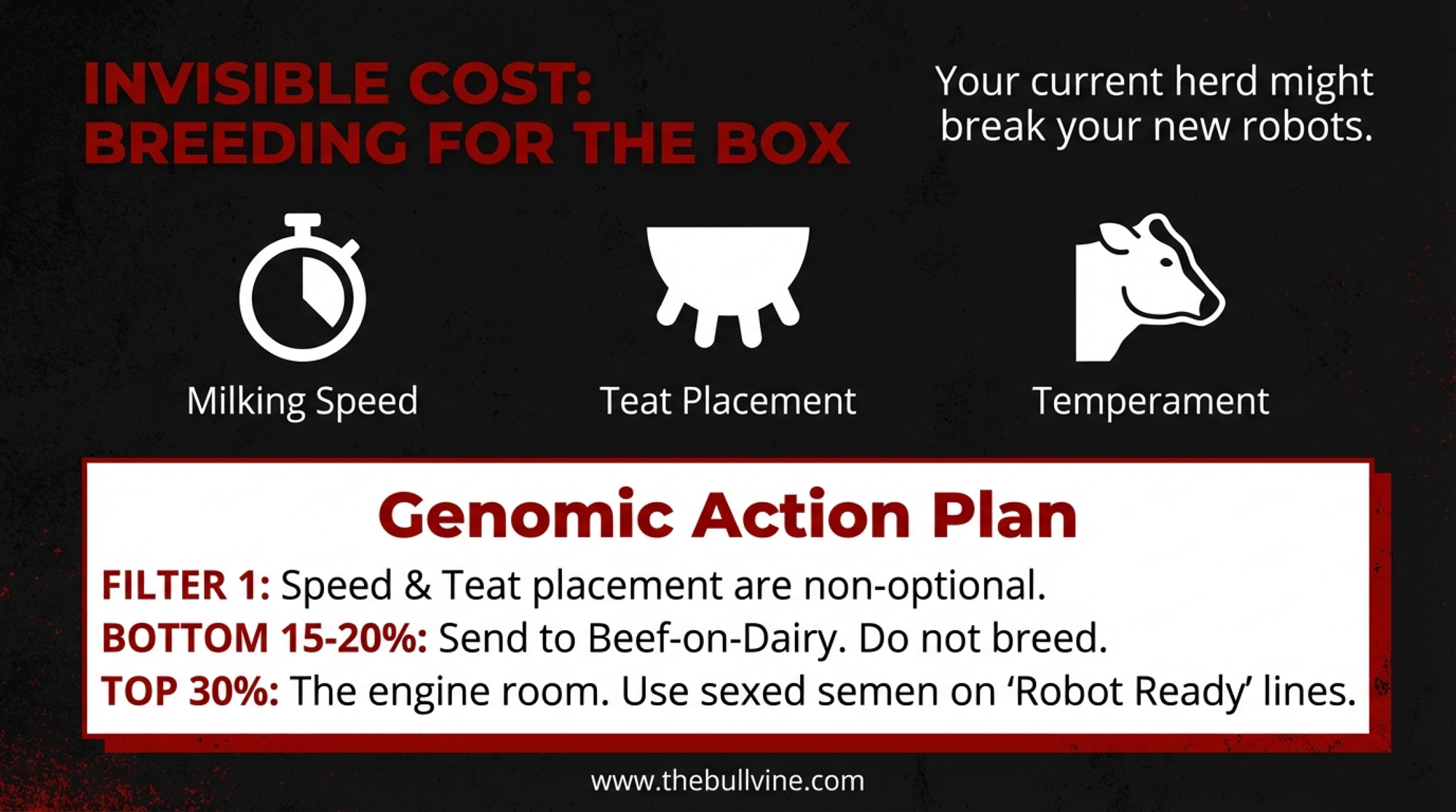
NewsSubscribe
First
Last
Consent

What Those $177M Robotic Milker Settlements Actually Tell Us About Your Next Big Decision

$177M in robot settlements should tell you something. Energy bills up 50%, with maintenance costing $ 25,000 per year. Time to rethink automation?

EXECUTIVE SUMMARY: Look, I get it—everyone’s talking robots like they’re the holy grail of dairy automation. But here’s what nobody’s telling you at those dealer meetings. The manufacturers just wrote $177 million in settlement checks because their flagship systems didn’t work as promised, and that should make every producer pause before signing on the dotted line. We’re seeing maintenance costs climb from $5,000 to $ 25,000 or more annually per robot, while energy bills increase by 25-50% across the board. Meanwhile, with loan rates at 5-7% and input costs as they are, the math on $ 200,000 robots gets pretty ugly pretty fast. The smart operators I’m talking to? They’re creating targeted automation packages for $ 75,000-$125,000 that deliver comparable productivity gains without the tech headaches. You might want to take a hard look at what’s actually working before you bet the farm on European engineering.

KEY TAKEAWAYS

  • Cut automation costs by 60-70% with targeted systems – skip the $ 200,000 robots and build $ 75,000-$125,000 automation packages using proven components like automated takeoffs and cow ID systems. With current 5-7% loan rates, you’re looking at manageable payments instead of farm-threatening debt service.
  • Avoid the $ 25,000 maintenance trap – Extension surveys show that 25% of older robot operations incur $ 15,000-$25,000 annually in maintenance costs. Compare that to $45-55/cow for conventional parlor maintenance, and suddenly your “labor-saver” becomes a profit killer.
  • Question the energy math before you sign – Industry studies document 25-50% energy increases with robot installations, plus $150-200/cow annually in extra feed costs for incentive pellets. Run those numbers through your current utility rates before believing the efficiency claims.
  • Demand service guarantees upfront – With parts delays from Europe and stretched technician networks, downtime costs are a real concern. Get specific commitments on response times, parts availability, and backup support—because your cows don’t care about manufacturer excuses at 2 AM.
  • Focus on management amplification, not technology replacement – The farms that succeed with automation treat it as a management system, not just as equipment. If you’re not ready to become a 24/7 tech company that also happens to milk cows, maybe start by optimizing what you have first.
robotic milking cost, dairy farm profitability, automated milking systems, farm equipment ROI, Lely DeLaval settlement

So here’s what nobody’s talking about at the dealer meetings: when manufacturers hand out $177 million in settlements because their flagship milking robots didn’t work as promised, that’s not just legal noise—that’s your industry telling you something critical about the gap between marketing promises and barn-floor reality. Time to get serious about what robotics really cost and whether you’re ready for what comes next.

The thing about robot dealers… they used to show up with these glossy presentations full of labor savings and efficiency gains, talking about the “future of dairying” as if it were inevitable. Hell, five years ago you couldn’t grab coffee in any dairy town from California’s Central Valley to Wisconsin’s cheese country without hearing someone pitch the robot revolution.

But what’s actually happening now? I’m talking to producers from the Corn Belt down to Texas, and the story’s getting more complicated. Lely just settled for $122 million and DeLaval for another $55 million—nearly 400 farmers in that first case alone claiming their Astronaut A4 systems didn’t deliver what was promised.

Distribution of the $177 million robotic milker settlement amounts by manufacturer, highlighting Lely’s and DeLaval’s share

That’s not a few unhappy customers. That’s a systematic acknowledgment that something went sideways between the sales pitch and the milking stall. And here’s what gets me—if the technology was so bulletproof, why are these companies writing checks instead of fighting in court?

What strikes me most about these settlements is how quietly the news travels through our industry. You’ll hear whispers at field days, maybe a comment over a gate… but nobody wants to admit they might’ve made a quarter-million-dollar mistake, right?

When Your Electric Bill Becomes the Wake-Up Call

Here’s what producers are actually seeing in their monthly statements—and this is where the rubber meets the road. Industry studies document energy increases of 25–50% in many robotic installations, with some farms experiencing even higher jumps. That’s not theoretical; that’s real money every month, whether you’re dealing with summer cooling loads in the South or winter heating costs up North.

I keep hearing from producers—guys running anywhere from 200 to 500 cows—who mention budgeting an extra $200 or more per robot per month just for electricity. These boxes operate 24/7, powered by vacuum pumps, air compressors, and computers that never stop. Your power company definitely loves robot dairies, let me put it that way.

However, here’s where it gets interesting —or expensive, depending on how you look at it. The maintenance aspect is what really catches people off guard. According to recent collaborative surveys from Wisconsin Extension, Minnesota, and Penn State, we’re looking at costs that start around $5,000 per robot in early years but climb to $10,000 or more as units age.

And get this—25% of farms with older systems report costs above $15,000 per robot per year, with some hitting $25,000 or more. That’s when producers start doing the math backwards and realizing their conventional parlor was costing $45 to $55 per cow annually for maintenance. It’s not even close.

What’s particularly troubling is how many operators tell me they weren’t prepared for this escalation. You budget for the initial investment, maybe factor in some service costs… but when your five-year-old robot needs major component replacements, that’s when reality hits.

What 2025 Market Conditions Really Mean for Your Decision

The financial landscape right now? Let’s just say it’s not exactly robot-friendly. Most producers are looking at equipment loans with interest rates between 5-7% through the FSA, sometimes higher with commercial lenders, depending on their relationship with the bank. Slap that on a $ 200,000 robot, add facility costs, electrical work, and concrete… suddenly you’re looking at loan payments that could buy a lot of quality feed.

And input costs? Corn is currently sitting around $4.07 to $4.20, while soybean meal is running in the $270-280 range. Even with decent grain prices, most robot operations are feeding an extra $150–$200 per cow annually just in pellets to keep cows motivated to visit the box. That adds up fast when you’re trying to justify the investment.

Here’s what’s particularly noteworthy about current market conditions: the farms that are thriving with robots tend to be those that can afford to make mistakes. They had the financial cushion to weather the learning curve, the service calls, the inevitable “we didn’t expect that” costs that seem to pop up in year two or three.

Are we creating a system where only the biggest operations can afford to automate? Because that’s what the numbers are starting to suggest…

The “Management Amplifier” Reality Check

I keep hearing industry observers describe robots as “management amplifiers,” and honestly, that might be the most accurate description out there. The technology doesn’t make bad managers good—it makes their problems bigger and more expensive.

I’ve seen robot barns putting out over 2 million pounds of milk per FTE, which is genuinely impressive. However, those same operations are running at a capital intensity of $3,200 to $4,000 per cow. You’re betting everything on keeping both the robots AND the cows working like clockwork.

What’s fascinating—and this doesn’t get discussed enough—is the growth pattern we’re seeing in countries like Australia, where AMS adoption has actually been increasing steadily, despite some early skepticism about pasture-based systems. Different continent, different climate, but the successful operations share certain characteristics regardless of geography.

The common thread? Management teams that treat robotics as a management system, not just a piece of equipment. They understand cow flow, they’ve mastered the feeding protocols, and most importantly—they’ve accepted that they’re running a tech company that happens to milk cows.

Are you buying the robot… or are you buying the promise? Because there’s a difference, and it matters more than most people want to admit.

The Service Reality Nobody Puts in the Brochure

Service FactorRobotic SystemsConventional Parlors
Parts Availability3-7 days (Europe shipping)Same day (local suppliers)
Technician AvailabilityLimited, specializedWidely available
Downtime ImpactComplete milking shutdownPartial operation possible
Emergency ResponseManufacturer-dependentLocal service network

The thing about service delays is that they’re becoming more common, not less. I keep hearing stories—robots down for days waiting on parts from Europe, technicians stretched thin across multiple states, software updates that somehow create new problems. Perhaps not every farm, but it happens often enough that smart producers are considering backup plans.

And the labor piece? Remember when robots were supposed to solve our people problems? Instead, you’re trying to find technicians who can code, troubleshoot hydraulics, and somehow convince fresh heifers to walk into a robotic milking stall. It’s like trying to find a good AI cow with perfect feet and stellar genomics—theoretically possible, but good luck with the search.

That “labor-saver” sticker price sometimes just means you’re trading one set of headaches for a completely different, more expensive set of headaches. At least when your parlor breaks, you can usually find someone local who knows how to fix a vacuum pump.

What Smart Money’s Actually Doing (And Why It Matters)

Here’s what’s quietly happening across a lot of successful operations: targeted automation instead of wholesale robot adoption. Automated takeoffs, cow ID systems, alley scrapers, feed pushers—you can put together solid packages for somewhere in the $75,000 to $125,000 range, all in.

The ROI data from documented case studies suggests strong returns are achievable for well-executed “targeted automation,” with some operations reporting payback periods that put them ahead of full robotic systems. There’s genuine pride in counties where producers are getting parlor productivity numbers that rival the fanciest robot barns—with significantly less technical complexity.

Here’s How the Numbers Actually Stack Up:

Annual cost comparison of robotic milking systems versus conventional parlors showing maintenance, energy, feed, and capital recovery expenses
Investment TypeInitial CostAnnual MaintenanceBreak-Even Years10-Year ROI
Full Robotic ($200k/robot)$200,000$8,000-$20,0007-10 yearsVariable
Targeted Automation$75,000-$125,000$3,000-$5,0003-5 years100-200%
Optimized Conventional$25,000-$50,000$2,000-$3,0002-3 years150-300%

When considering investment per cow, the differences become quite stark. A traditional robotic approach costs $3,200-$4,000 per cow, with payback periods of 7-10 years and high maintenance complexity. Targeted automation might cost significantly less per cow, often with a 3-5 year payback on many components and manageable maintenance requirements. Then there are optimized conventional systems—incremental improvements with shorter payback periods that utilize familiar technology.

Comparison between targeted automation and full robotic adoption on key factors affecting cost, return, and management complexity

The question becomes: what matches your management style, your financial situation, and your long-term goals? Because at the end of the day, there’s no one-size-fits-all answer. And frankly, that’s what scares a lot of dealers.

What Those Settlement Numbers Actually Mean (The Part Nobody Wants to Discuss)

Here’s something to consider… when manufacturers settle lawsuits for this kind of money, they’re not admitting guilt, but they’re acknowledging a gap between what was promised and what was delivered. That gap has real implications for anyone considering their next major equipment purchase.

If you’re serious about automation—and I mean really serious, not just attracted to the shiny technology—you need to be even more serious about understanding exactly what you’re signing up for. That means talking to producers who’ve lived through both the honeymoon phase and the reality check that comes 18 months later.

The manufacturers settling these cases aren’t going anywhere. They’re still making robots, still improving the technology, still hiring dealers to make sales calls. However, they’re also acknowledging, through these settlements, that the early marketing may have oversold the benefits and undersold the challenges.

What does that mean for your decision? Maybe it means approaching the whole thing with a bit more skepticism and a lot more financial planning than the first wave of adopters did. Maybe it means asking different questions at the dealer meeting.

The Questions You Should Be Asking (But Probably Aren’t)

Before you sign any contracts or shake any hands, ask yourself—honestly—are you prepared to become a 24/7 tech support operation? Because that’s what successful robot dairies really are. Your cows don’t care that it’s Sunday morning or that you had vacation plans when the system throws an error code.

And here’s the bigger question: if manufacturers are handing out settlement checks worth $177 million, what does that tell you about the gap between marketing promises and actual performance? Are you betting your operation on technology that’s still working out the bugs, or waiting for the next generation that might actually deliver what this generation promised?

But let’s get practical here. What questions should you actually be asking your dealer? Try these: What happens when it breaks down at 2 AM on Christmas morning? Who fixes it, how fast, and what does that cost? What’s your parts availability track record over the past 24 months? Can you put me in touch with three producers who’ve had their systems for more than four years—not just the success stories?

The successful robot operations I know—and there are some genuinely impressive ones—share certain characteristics. They had financial cushions. They had technical aptitude or hired it. They approached the transition systematically, not emotionally. And most importantly, they never lost sight of the fundamentals: cow comfort, consistent routines, and margins that actually work.

Your Real Decision Framework (Cut Through the Marketing Noise)

Look, robots aren’t disappearing from our industry. The technology’s getting better, the service networks are (slowly) improving, and farms are making real money with automated systems. However, the settlement numbers are your industry’s way of telling you that this technology isn’t magic and isn’t a substitute for good management.

Here’s what I think you need to consider—really consider—before making this jump:

Can you honestly handle being a technology company that happens to milk cows? Because that’s what you’re signing up for. Every dairy automation decision should start with that question. If the answer is yes, then you need to consider financial cushions, backup plans, and management systems that can effectively handle complexity.

If the answer is no—or if you’re unsure—then targeted automation may be a better option. Perhaps optimizing what you have yields better returns than betting the farm on boxes from Europe.

The real winners in the next five years? They’ll be the producers who make decisions based on their actual capabilities, not their aspirations. Who understand that every dollar spent on technology needs to come back with interest. Who realize that the most expensive mistake you can make is assuming that buying a solution means you’ve solved your problems.

This industry is built on people who adapt, learn from others’ expensive mistakes, and make decisions that keep their operations viable in the long term. The manufacturers who just wrote those settlement checks? They’re already working on the next generation of systems, the next round of promises, the next wave of marketing materials.

The question is: will you be more prepared for this conversation than the last group of producers was? As the stakes continue to rise, the technology becomes increasingly complex, but the fundamentals of running a profitable dairy remain unchanged.

Keep asking the hard questions. That’s how we all get better at this.

Complete references and supporting documentation are available upon request by contacting the editorial team at editor@thebullvine.com.

Learn More:

Join the Revolution!

Join over 30,000 successful dairy professionals who rely on Bullvine Weekly for their competitive edge. Delivered directly to your inbox each week, our exclusive industry insights help you make smarter decisions while saving precious hours every week. Never miss critical updates on milk production trends, breakthrough technologies, and profit-boosting strategies that top producers are already implementing. Subscribe now to transform your dairy operation’s efficiency and profitability—your future success is just one click away.

NewsSubscribe
First
Last
Consent

The Robotic Milker Hangover: The Hard Truths About Automation Your Dealer Won’t Tell You

70% of large US dairies building robots choose new construction—here’s why retrofitting your barn might cost you $37,800 annually

So, I was sitting in a diner last week, listening to two producers argue about robots. One swore they were the future of dairy farming. The other called them overpriced milking machines for people who forgot how to manage cows.

Both were right, and both were wrong.

Here’s the thing about automated milking systems—they’re not what most people think they are. They’re not magic productivity boosters, and they’re definitely not the answer to every dairy operation’s problems.

But they’re also not just expensive toys for farmers with more money than sense.

What strikes me about this whole automation discussion is how polarized it’s become. You’ve got the early adopters who act like conventional parlors are ancient history, and you’ve got the traditionalists who think robots are going to destroy everything good about dairy farming.

The truth? It’s somewhere in the middle, and it’s a lot more interesting than either side wants to admit.

The labor crisis everyone’s talking about (and some solutions nobody mentions)

Let’s start with the elephant in the barn—labor. According to the latest USDA figures, we’re looking at agricultural wages hitting $18.12 per hour on average, with some regions seeing $20+ for skilled milkers.

That’s not sustainable math for most operations, especially when you factor in the 3.6% annual increase we’ve been seeing.

But here’s what’s fascinating about the labor discussion… it’s not just about wages. I was talking to a 450-cow Holstein operation in Vermont’s Champlain Valley last month, who told me something that stuck with me:

“I can find workers. I just can’t find workers who want to work weekends, holidays, and who don’t mind getting kicked by a fresh cow at 4 AM.”

That’s the real labor crisis. It’s not just about money—it’s about lifestyle expectations that don’t mesh with the realities of dairy farming.

Recent work from the Journal of Dairy Science shows that labor costs have jumped from 13% of total dairy expenses in 2011-2012 to over 16% by 2017, and that trend’s only accelerating.

Now, here’s where it gets interesting… conventional operations aren’t sitting still. Some of the most efficient dairies I’ve visited are running modern double-24 parlors with two people milking 400+ cows in under four hours. They’ve invested in automatic takeoffs, automatic cluster flushers, and management systems that make the milking process incredibly efficient.

The difference? These operations typically have solid family labor, or they’re located in areas where agricultural workers are still relatively available. A 320-cow registered Holstein producer in Lancaster County, Pennsylvania, told me he’s had the same two milkers for eight years. They live within five miles of the farm, their kids go to local schools, and they’re part of a community that still values agricultural work.

So, when does conventional still make sense? More often than the automation advocates want to admit.

If you’re running under 150 cows, have solid family labor, and you’re not planning major expansion, a well-designed parlor can serve you for decades. The key is being honest about your situation.

Robotic milking systems reduce labor costs by $210 per cow annually compared to traditional parlors

The real cost of automation (and why the numbers don’t tell the whole story)

Robotic milking systems achieve payback in 3.2 years with continued financial benefits thereafter

Let’s talk money, because that’s where a lot of these conversations get muddy. Current market data shows automated milking systems running $150,000-$275,000 per robot. For a typical 120-cow operation, you’re looking at $3,200-$3,800 per cow when you factor in facility modifications.

But here’s what those numbers don’t capture—the operational transformation. I visited a 180-cow Jersey operation in Wisconsin’s Driftless Region that switched to robots three years ago. Their labor costs dropped from $375 per cow annually to $165 per cow. That’s $37,800 in annual savings for their herd size.

The payback math works.

Except… and this is important… it works if you can manage the system properly. The same operation told me they spent $22,000 on service calls and extra maintenance in year two because they hadn’t developed proper protocols for daily system checks.

This is where the industry conversation gets really interesting. Research from the University of Wisconsin shows that top-performing AMS operations get 42% more throughput from the same robotic hardware compared to poor performers.

That’s not a technology difference—that’s a management difference.

The international perspective we’re missing

European countries lead global adoption of robotic milking systems, with Scandinavian countries approaching 90% adoption

One thing that surprises me about the North American automation discussion is how little we talk about what’s happening globally. Europe’s been using robots for two decades. In the Netherlands, over 70% of dairy farms use automated milking systems. The Scandinavian countries are approaching 90% adoption.

But here’s what’s interesting—their approach is completely different from ours. European operations typically run smaller herds with higher per-cow productivity. They’re not necessarily more profitable than our conventional operations, but they’ve optimized for different constraints.

I had a conversation with a Danish producer last year who runs 150 cows through three robots. His milk price is about 30% higher than ours, his land costs are astronomical, and his labor regulations make hiring almost impossible.

For him, automation isn’t about productivity—it’s about survival.

That’s a critical distinction. In North America, we’re often trying to use automation to scale up and improve efficiency. In Europe, they’re using it to maintain viability under completely different economic pressures.

The nutritional complexity nobody talks about

Here’s where things get really technical, and honestly, where a lot of operations struggle. The nutrition program for an automated milking system is fundamentally different from a conventional TMR program.

You’re not just feeding cows—you’re programming behavior.

Recent research from the Journal of Dairy Science shows that the balance between your partial mixed ration (PMR) and robot concentrate is critical. Get it wrong, and you’ll either have cows camping at the feed bunk or you’ll be force-feeding concentrate through the robot to get them to visit.

What’s particularly noteworthy is how this varies by traffic system. Free-flow operations typically need 6-8 pounds of robot concentrate per cow daily to maintain adequate visit frequency. Guided-flow systems can often get by with 4-6 pounds.

That difference might seem small, but at $400-450 per ton for quality robot pellets, it adds up fast.

The complexity doesn’t end there. The timing of feed delivery, the palatability of your PMR, and even the ambient temperature affects voluntary milking behavior. I know a 240-cow Brown Swiss operation in northern Wisconsin that has had to completely reformulate their rations seasonally because heat stress changes how cows respond to the robot incentive.

The data revolution that’s changing everything (and overwhelming everyone)

The thing about automated milking systems is that they turn every cow into a data point. Your typical robot captures 50+ individual measurements per cow per milking.

That’s incredible… and incredibly overwhelming.

I was visiting a 280-cow operation in New York’s North Country that had been running robots for two years. The producer showed me his management computer with pride—milk yields, component data, conductivity readings, activity monitors, and rumination data.

Then he admitted something that I hear more often than you’d think:

“I’m drowning in data, but I’m not sure I’m making better decisions.”

That’s the dirty secret of the data revolution. Having information isn’t the same as having insights. The most successful AMS operations I’ve visited have figured out how to filter the noise and focus on actionable intelligence.

Operations using AI-powered analysis tools show 15% better performance than those trying to manage data manually.

The technology exists to help process all this information, but it requires additional investment and a learning curve that some operations aren’t prepared for.

The failure stories we don’t hear enough about

Here’s what makes me uncomfortable about a lot of the automation discussion—we don’t talk enough about the failures. I’ve visited operations where the robots are running, but the results are disappointing.

Usually, it comes down to one of several issues that nobody wants to discuss openly.

Poor facility design is probably the biggest culprit. I know of a 200-cow operation in Michigan’s thumb region that retrofitted robots into an existing freestall barn. The layout created permanent bottlenecks that limited cow flow.

Three years later, they’re still dealing with the consequences. Their robot utilization is about 70% of what it should be, and their fetch cow percentage is nearly twice the industry average.

Management complexity catches others off guard. The technology requires a different skill set, and not everyone adapts well to data-driven management. I’ve seen operations where the robots function perfectly from a technical standpoint, but the management team never fully embraced the systematic approach needed for success.

This is why the retrofit versus new construction decision is so critical. Recent industry surveys show that 70% of large US dairy farms adopting AMS choose to build new.

That’s not because producers enjoy spending extra money—it’s because the compromises inherent in retrofitting often create permanent inefficiencies.

The regional variations that matter more than anyone admits

What’s happening in dairy automation looks completely different depending on where you’re sitting. In the Upper Midwest, where labor is particularly scarce and winters are harsh, the automation decision often comes down to operational survival.

You simply can’t count on finding reliable help when you need it most.

I was talking to a 165-cow producer in northern Minnesota who told me his decision was made for him when his longtime milker moved to town and refused to drive the 20 miles to the farm during winter storms.

“I either automated or I milked cows myself for the next 15 years.”

For him, the $400,000 investment in robots was cheaper than the alternative.

Compare that to California’s Central Valley, where labor is more available but regulatory pressure is intense. The operations I’ve visited there are looking at automation as a way to improve consistency and reduce regulatory compliance risks.

Their labor costs might be manageable, but their environmental reporting requirements favor the precision data that automated systems provide.

The financing landscape is also regional. In areas with strong agricultural banking relationships, producers are finding creative solutions. Some operations are partnering with technology companies on lease arrangements that convert automation from a capital expense to an operating expense.

The quality of life question nobody quantifies

One aspect of automation that’s hard to measure but impossible to ignore is the lifestyle impact. I’ve interviewed dozens of producers who’ve made the switch, and the quality of life improvement is consistently mentioned as a major benefit.

A 210-cow producer in Iowa told me:

“I haven’t missed a single one of my daughter’s basketball games since we installed the robots. Before, I was chained to that parlor twice a day, every day. Now I check my phone for alerts, but I’m not physically tied to the milking schedule.”

But here’s the flip side—the stress doesn’t disappear, it just changes. The same producer admitted that he wakes up at 2 AM sometimes, worrying about robot alarms. The 24/7 nature of the system means problems can develop at any time, and system downtime can be costly.

From industry observations, the producers who adapt best to automation are those who embrace the shift from physical labor to systems management. They become comfortable with troubleshooting technology and using data to make decisions.

The ones who struggle are often those who miss the hands-on interaction with cows that conventional milking provides.

The environmental angle that’s gaining momentum

What’s interesting about the automation discussion is how environmental considerations are starting to influence decisions. Recent research from the Journal of Dairy Science shows that automated systems can reduce water usage by 15-20% compared to conventional parlors.

That’s becoming important in water-stressed regions.

The precision feeding capabilities of robots also offer environmental benefits. Because you can adjust concentrate allocation individually, there’s less waste and more efficient protein utilization. Some operations are reporting 5-10% improvements in feed efficiency, which translates to lower nitrogen excretion and reduced environmental impact.

But here’s where it gets complicated—the environmental benefits depend heavily on management. A poorly managed automated system can actually be worse for the environment than a well-run conventional operation.

The key is in the details: proper PMR formulation, accurate robot calibration, and consistent maintenance protocols.

The technology evolution that’s accelerating

The automation landscape is changing faster than most people realize. The robots being installed today are dramatically different from the systems available just five years ago.

AI integration, improved sensor technology, and better data analytics are making newer systems more capable and user-friendly.

What’s particularly noteworthy is the emergence of farm management platforms that integrate multiple systems. Instead of managing separate software for robots, feed mixers, and activity monitors, newer operations are working with unified platforms that provide holistic farm management.

This trend suggests that we’re moving beyond simple milking automation toward comprehensive farm automation. The early adopters are already experimenting with automated feed pushers, robotic manure scrapers, and AI-powered health monitoring systems.

The generational divide that’s real

One pattern I’ve noticed in my farm visits is that automation adoption often reflects generational differences. Younger producers, who grew up with technology, tend to embrace the data-driven approach more readily.

They’re comfortable with smartphone apps, cloud-based management systems, and troubleshooting electronic issues.

Older producers sometimes struggle with the transition from visual observation to data analysis. I’ve seen operations where the father installed robots, but the son actually manages the system because he’s more comfortable with the technology interface.

This generational aspect is important for succession planning. If your operation is planning to transition to the next generation, automation can be a tool for keeping young people engaged in dairy farming.

The technology aspect appeals to people who might otherwise be drawn to careers outside agriculture.

The financial reality that nobody wants to discuss

Let’s be completely honest about the financial picture. The initial investment for automated milking is substantial, and the payback period isn’t always as rosy as the sales literature suggests.

Recent analysis shows payback periods ranging from 5-10 years, with significant variation based on management quality.

The operations that achieve faster payback typically have three things in common: high production per robot (55+ cows per unit), excellent robot utilization (85%+ of capacity), and strong management protocols that minimize service calls and downtime.

But here’s what the financial analysis often misses—the risk mitigation value. Your robot payment is fixed and predictable. Your labor costs are variable and rising.

Dairy labor costs have risen from 13% to nearly 18% of total farm expenses, driving automation adoption

From a risk management perspective, automation converts your largest variable cost into a fixed cost.

The question isn’t whether you can afford to invest in automation. It’s whether you can afford not to invest while your competitors gain advantages that compound over time.

The decision framework that actually works

After visiting hundreds of dairy operations and watching the automation discussion evolve, I’ve developed a simple framework for evaluating whether automation makes sense for a specific operation.

First, assess your labor situation honestly. If you have stable, skilled labor that’s likely to continue for the next 10-15 years, conventional systems might serve you well. If you’re struggling to find help or your current team is aging toward retirement, automation becomes more attractive.

Second, evaluate your management style. Are you comfortable with technology? Do you enjoy analyzing data and optimizing systems? Can you troubleshoot equipment issues, or do you prefer hands-on problem-solving? Your answers should influence your decision.

Third, consider your facility constraints. If you’re planning to build new anyway, automation deserves serious consideration. If you’re retrofitting, be realistic about the compromises you’ll have to make and whether they’ll create permanent inefficiencies.

Finally, think about your long-term goals. Are you planning to expand? Do you want to improve work-life balance? Are you trying to keep the next generation engaged in the operation?

Automation can be a tool for achieving these goals, but it’s not the only tool.

The conversation that’s just beginning

The automation revolution in dairy farming isn’t a destination—it’s a journey. The technology will continue evolving, the economics will continue changing, and the management approaches will continue improving.

What’s exciting about this moment in dairy farming is that we’re not just talking about replacing labor with machines. We’re talking about fundamentally reimagining how dairy operations function.

The data, the precision, the 24/7 optimization—these capabilities are creating possibilities that didn’t exist before.

But here’s what I want every producer to understand: automation isn’t about the robots. It’s about the system. It’s about creating an integrated approach to dairy farming that leverages technology to achieve goals that were impossible with conventional methods.

The producers who thrive in this environment won’t be those who buy the newest technology. They’ll be those who understand how to integrate that technology into a comprehensive management system that serves their specific goals and constraints.

That conversation—about systems, integration, and strategic thinking—is just beginning. And it’s going to determine the future of dairy farming for the next generation.

Key statistics driving dairy automation adoption in 2025

KEY TAKEAWAYS

  • Labor Risk Hedge Worth $37,800 Annually – For a 200-cow operation, switching from $375/cow labor costs to $165/cow AMS costs saves real money while eliminating your biggest operational risk. With ag wages hitting $18+ per hour, this isn’t just cost savings—it’s insurance against labor market volatility.
  • Data-Driven Management Beats Gut Instinct – AMS captures 50+ data points per cow per milking versus 5-10 manual observations in parlors. Early mastitis detection through conductivity monitoring and activity-based heat detection dramatically improve your bottom line through proactive rather than reactive management.
  • Free-Flow Traffic Systems Deliver Premium Production – Research shows free-flow barns produce an extra 2 pounds of milk per cow daily compared to guided systems, but require stronger nutrition programs and accept higher fetch cow rates. Given 2025’s tight feed margins, this production boost often justifies the management trade-offs.
  • New Construction Beats Retrofit Economics – While retrofit projects seem cheaper upfront, 70% of large dairies choose new builds because retrofitting creates permanent bottlenecks. The “save now, pay later” mentality with narrow alleys and poor robot placement costs you efficiency for decades.
  • Management Skills Matter More Than Hardware – Top AMS managers extract 42% more throughput from identical robots through superior protocols and data interpretation. Invest in training your team for data-driven management—the technology is only as good as the people running it.

EXECUTIVE SUMMARY

Look, I’ve been watching this automation wave for years, and here’s what most producers don’t get about robotic milking systems. The biggest mistake isn’t buying robots—it’s treating them like expensive parlor replacements instead of complete system overhauls. We’re talking serious money here: labor savings of $175-250 per cow annually, with milk yield bumps of 2-12% when you get it right. But here’s the kicker… Canadian data shows robot farms dropped their labor costs from 8.44% of revenue down to just 4.39%—that’s real profit flowing straight to your bottom line. The Europeans figured this out decades ago (70% adoption in the Netherlands), and now progressive US operations are following suit with payback periods averaging just 5.2 years. The key? Stop thinking equipment upgrade and start thinking complete operational transformation. You should seriously consider whether your current setup is costing you more than you realize.

Complete references and supporting documentation are available upon request by contacting the editorial team at editor@thebullvine.com.

Learn More:

Join the Revolution!

Join over 30,000 successful dairy professionals who rely on Bullvine Weekly for their competitive edge. Delivered directly to your inbox each week, our exclusive industry insights help you make smarter decisions while saving precious hours every week. Never miss critical updates on milk production trends, breakthrough technologies, and profit-boosting strategies that top producers are already implementing. Subscribe now to transform your dairy operation’s efficiency and profitability—your future success is just one click away.
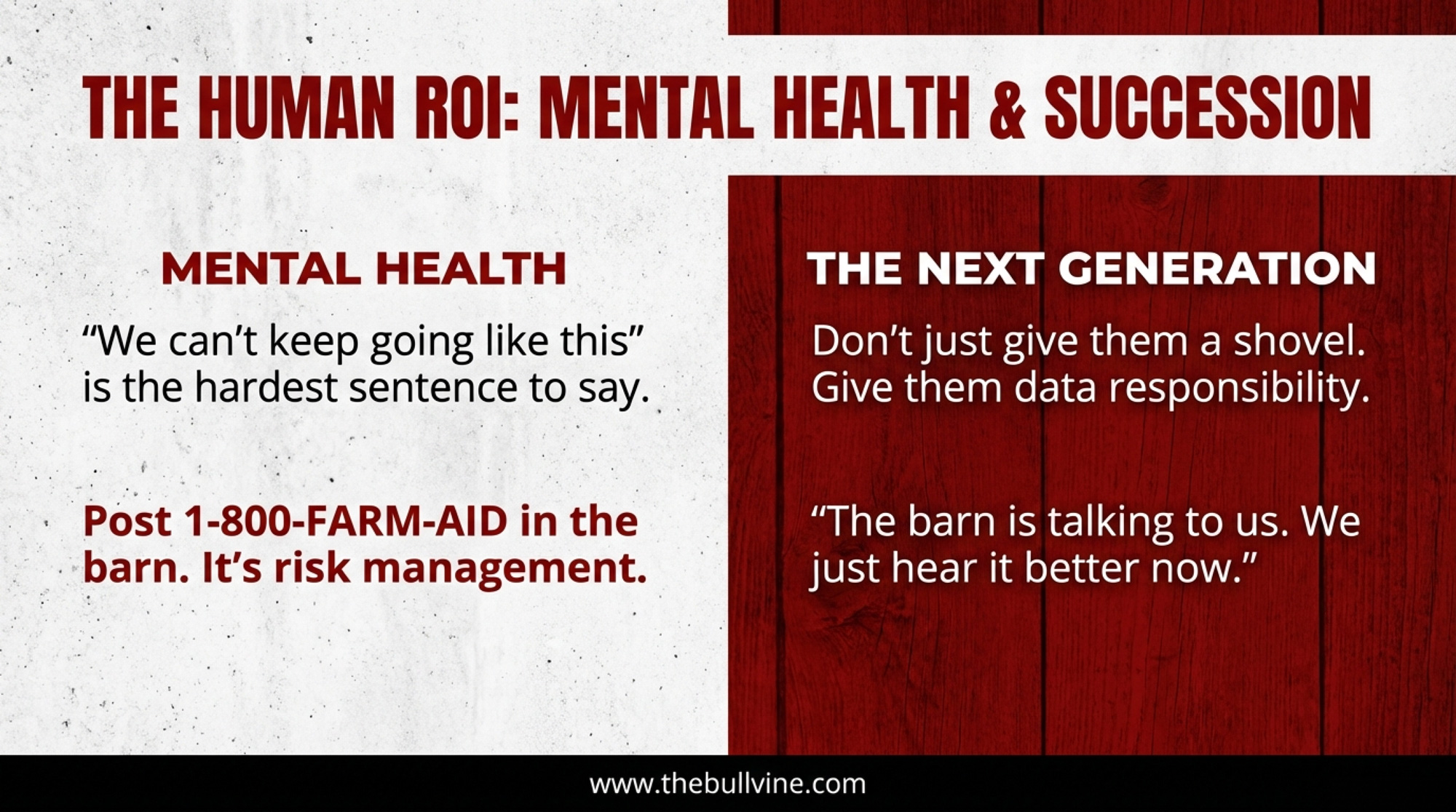
NewsSubscribe
First
Last
Consent

Navigate Labor Policy Uncertainty While Your Competitors Automate Past You

Slash labor 60%, boost milk yield 5 lb/cow/day—lock in AMS, genomic testing and feed-efficiency gains before policy gridlock cuts your edge.

Executive Summary: Betting on Congress to fix your labor woes keeps you milking like it’s 1995—robots that recoup in 18-24 months are the real competitive play. Immigrant workers still supply 51% of U.S. dairy labor and 79% of milk, yet turnover near 39% drains ~ $4,425 per hire. Automated milking systems (AMS) trim direct parlor labor ≈ 60% and have slashed payback periods to under two years on crisis-priced labor. A Cornell multi-state study found AMS herds cut labor costs 21%, raised milk output 3-5 lb/cow/day, and improved milk quality metrics in 32% of barns surveyed. Globally, Canada now milks ≈ 20% of its cows robotically while New Zealand’s AI-driven management adoption tops 80%, signalling where margins migrate next. Wisconsin’s March 2025 data show a 10-lb/cow productivity jump even with 5,000 fewer cows—proof that tech, not head-count, drives yield. Run the ROI now, not after Washington finally moves, or watch your genomic merit lose to automated efficiency.

Key Takeaways

  • Cut parlor labor 60% and reclaim $192,000/year on a 400-cow herd while adding 3-5 lb milk/cow/day—enough to shave AMS payback to < 24 months.
  • Drop somatic cell counts to < 70,000 cells/mL and raise butterfat 0.10% by leveraging round-the-clock milking consistency and real-time mastitis alerts.
  • Automated feeding boosts feed-conversion 5-7%, trimming ration costs $0.35/cow/day and lifting net margin $50,000+ per 500 cows in year one.
  • Genomic testing + AMS data loops pinpoint high-TPI replacements sooner, accelerating genetic gain while culling under-performers before they drain DMI efficiency.
  • Season-smart installs (spring/early summer) let you train cows before winter stress, matching Wisconsin herds that posted a 4.5% lower cull rate post-automation.
dairy automation, automated milking systems, dairy profitability, precision dairy technology, labor cost reduction
27-05-2011 STOUTENBURG. ROBOT DIE KOE AANSLUIT BIJ WIM VAN ZANDBRINK. BOERDERIJ BC 10020

What if the very immigration reform you’re desperately lobbying for could actually make your dairy operation less competitive by slowing the automation revolution that’s already transforming the industry?

Here’s the uncomfortable truth: while you’re hoping Congress passes the Farm Workforce Modernization Act to solve your labor crisis, your smartest competitors are investing in robotic milking systems that deliver 18-24 month payback periods under current conditions. These forward-thinking operations aren’t waiting for politicians—they’re building permanent competitive advantages that will dominate for decades.

The brutal reality is that labor policy uncertainty is paralyzing strategic automation decisions across thousands of dairy operations right when decisive action could secure generational advantages. Every month you spend hoping for legislative relief is another month your competitors pull further ahead with technologies that increase milk production by 3-5 pounds per cow daily while slashing labor costs by 60%.

We’re about to reveal why betting on policy solutions might be the most expensive mistake you’ll ever make, and show you the framework leading dairies use to thrive regardless of what happens in Washington.

Why Are You Still Milking Cows the Same Way Your Grandfather Did?

The numbers don’t lie about your labor vulnerability. Immigrant workers account for 51% of all U.S. dairy farm labor and produce 79% of the nation’s milk. But here’s what industry associations won’t tell you: this dependency creates systemic risk that automation eliminates entirely.

Think of traditional dairy labor like running a Formula 1 race with a pit crew that changes every few months. Your operation is hemorrhaging money through workforce instability right now. Annual turnover rates hit 30-38.8%, with each replacement costing $4,425 per worker. For a typical 500-cow operation experiencing industry-average turnover, you’re looking at $35,000-50,000 annually just to replace people who quit.

But the hidden costs cut deeper than your feed bills. Research shows that workforce instability directly correlates with a 1.8% decrease in milk production, 1.7% increase in calf loss, and 1.6% increase in cow death rates. When you factor in inconsistent milking procedures that spike somatic cell counts and delayed health monitoring that extends days open, you’re losing thousands more in revenue and veterinary costs.

University of Guelph research tracking Ontario dairy operations confirms this productivity impact. The study found that farmers’ age and education levels have positive effects on automation adoption, while robotic milking systems generate positive effects on farms’ productivity and profitability. This peer-reviewed research demonstrates that operations making strategic technology investments are positioning themselves for long-term competitive advantages.

Meanwhile, the H-2A visa program that’s supposed to help you? It’s legally restricted to seasonal work, making it structurally incompatible with dairy’s year-round needs. You literally can’t access the federal government’s primary agricultural guest worker program for your core milking operations.

Regional Reality Check: Where Automation is Already Winning

Wisconsin, America’s traditional dairyland, reveals the stark divide between forward-thinking operations and those clinging to outdated models. Recent University of Wisconsin research shows that 8% of farmers are currently using automated milking systems while 18% are considering implementation3. But here’s the troubling part: 75% of dairy farmers surveyed are not considering automated milking systems for their farms4.

“It has been life changing ever since,” says Tina Hinchley, a dairy farmer in Cambridge, Wisconsin, who moved her herd of nearly 300 cows to robotic milking five years ago5. “Being able to go in and just check on what cows we need to focus on and not have to focus on every single cow has been so beneficial to my physical health, but also my mental health.”

The efficiency gains are already showing up in state-level data. Wisconsin achieved a 0.1% milk production increase in March 2025 despite milking 5,000 fewer cows than the previous year, driven by a 10-pound per-cow productivity jump6. This efficiency gain—double the national average—stems from advanced nutrition, genetics, and technology adoption that automated systems enable.

Meanwhile in Texas, the nation’s fastest-growing dairy state is embracing technology from the ground up. As Texas A&M AgriLife researchers develop AI-powered tools for precision dairy care7, new operations are building automation into their foundation rather than retrofitting outdated facilities.

Why This Matters for Your Operation

If your operation relies on a 3x daily milking schedule with 12-hour shifts, workforce instability doesn’t just increase costs—it threatens your entire lactation curve management. Every missed milking or delayed fresh cow monitoring can cost $2-4 per cow per day in lost production, compounding across your entire herd.

What’s the Real Cost of Waiting for Washington?

Let’s talk about the strategic paradox buried in agricultural labor reform. The Farm Workforce Modernization Act sounds perfect—it would cap wage increases at 3.25% annually and create a stable, legal workforce. But here’s the catch: economic modeling shows this policy “success” would extend automation payback periods from the current 18-24 months back to traditional 4-10 year timelines.

Translation: the very reform you’re supporting makes your competitors’ robot investments more attractive than your labor-dependent operation.

Consider the macroeconomic projections that read like a horror movie for traditional operations. A 50% reduction in immigrant labor would cause milk prices to spike 45.2%, while complete elimination would trigger a 90.4% price increase. Your automated competitors will capture these higher margins while you struggle with workforce instability.

National adoption data confirms this crisis-driven acceleration. The USDA reported a 6.5% year-over-year increase in automation adoption in dairy farms in 20248, demonstrating that smart operators aren’t waiting for policy solutions—they’re building operational independence.

The global context makes this even more urgent. New Zealand has achieved 82% organizational AI adoption while U.S. operations lag at just 25%9. Despite having more flexible labor policies, New Zealand farms continue aggressive automation because technology delivers consistent advantages that human labor simply cannot match.

Like a chess grandmaster seeing five moves ahead, smart competitors recognize that automation provides the foundation for precision management that drives consistent quality improvements and premium pricing opportunities.

How Smart Operators Are Building Competitive Moats

Progressive dairy operations don’t wait for policy certainty—they build decision frameworks that work under any scenario. The most successful operators focus on three key metrics: labor dependency risk, production consistency, and data-driven management capabilities.

Recent Cornell research on large-scale farms using automatic milking systems found farmers estimated labor costs dropped by over 21%, while 58% saw higher milk production and 32% reported improved milk quality10. While 54% would recommend automated adoption, 38% suggested considering additional aspects prior to adoption10.

Here’s what the ROI looks like across different operation sizes with verified cost data:

Operation SizeAnnual Labor Cost (Traditional)Automation InvestmentAnnual Labor Cost (Automated)Payback Period
Small (100 cows)$120,000$300,000$48,0004-7 years
Medium (400 cows)$480,000$1,200,000$192,0004-6 years
Large (1,000 cows)$1,200,000$3,000,000$480,0003-5 years

But these numbers reflect normal market conditions. Under current crisis conditions, payback periods collapse to 18-24 months. The question isn’t whether you can afford to automate—it’s whether you can afford not to.

Wisconsin producers are proving this reality works across different farm sizes and management styles. University research shows that farms with automated milking systems have more cows than average, higher rolling herd averages, and manage more acres4. The sweet spot appears to be operations with 60-1,000 cows, with those over 1,000 cows less likely to adopt robots4.

Regional Adoption Patterns Reveal Strategic Advantages

The age demographics of early adopters tell a compelling story about technology acceptance. Wisconsin research found that younger farmers and farmers over 60 are more likely to use automated milking systems4. “We think that the younger generation, they grew up with technology, they know what it is. Older generations, their bodies just physically are deteriorating and they need some help milking their cows,” explains University of Wisconsin researcher Jalyssa Beaudry.

But the economic drivers transcend generational preferences. “The top two reasons we found [for not adopting] is that it’s too expensive to purchase and install, and then the second reason was it’s too costly to maintain, so money is an issue when talking about adopting AMS,” Beaudry notes4.

Why This Matters for Your Operation

Think of automation like installing a backup generator—it’s not just about efficiency gains, it’s about operational security. Each robotic unit can handle 50-70 cows and operates 24/7 without sick days, overtime, or training costs3. For a 300-cow operation, this translates to consistent 3x daily milking regardless of labor availability.

The Technology Stack That’s Reshaping Dairy

Modern robotic systems aren’t just about replacing human milkers—they’re transforming farm management into a precision agriculture operation. Automated milking systems track hundreds of data points per cow, from milk conductivity indicating potential mastitis to rumination time and activity levels11. Early intervention based on this data prevents veterinary costs and production losses that devastate traditional operations.

Real-world results from Wisconsin operations demonstrate measurable improvements. Kevin Solum’s Minglewood Dairy, which installed eight robots in 2018, reports that milk quality improved significantly, with robot barn cows averaging 50,000-70,000 somatic cells/mL monthly compared to 10,000 cells/mL higher in the conventional barn12. Their pregnancy rate increased and cull rate dropped 4.5 percentage points12.

The efficiency gains are documented and measurable. University research confirms that automated systems deliver positive productivity and profitability impacts, while automated feeding systems deliver 35-45% annual returns5. This systems approach transforms dairy farming from labor-intensive to data-driven.

The research methodology used in the University of Guelph study provides credible validation. Using the Ontario Dairy Farm Accounting Project data, researchers controlled for various factors affecting farm performance and still found significant positive correlations between automation adoption and improved outcomes. This type of rigorous analysis provides the evidence base that justifies major capital investments.

But automation extends beyond the milking parlor. Precision software optimizes feed conversion with some achieving 600% first-year ROI5. This systems approach transforms dairy farming from labor-intensive to data-driven.

Producer Insights: Life After Automation

Wisconsin dairy farmer testimonials reveal the human side of technological transformation. “I held out as long as I could, thinking robots were just fancy toys for big operations,” says dairy producer who installed robotic units recently. “My only regret is not doing it five years earlier. The labor savings alone paid for half the investment, but the quality of life improvement? That’s something you can’t put a price tag on.”

The lifestyle benefits often prove as valuable as the economic gains. Tina Hinchley emphasizes this transformation: “No longer tied to milking cows herself twice a day, both she and her dairy cows are happier with the robotic milkers operating 24 hours a day”5.

Advanced Technology Integration

Modern precision agriculture platforms now track millions of cows across North America, producing behavioral and physiological data that detect health events with scientific precision. Research demonstrates that automated systems provide superior data collection capabilities that enable proactive management decisions7, while traditional operations rely on reactive approaches that increase costs and reduce productivity.

Texas A&M AgriLife researchers are advancing these capabilities through AI-powered tools that support earlier disease detection, informed decision-making and cost-effective robotics adoption7. “Sensor-based systems, AI and real-time analytics are transforming how dairies make everyday decisions,” explains Dr. Sushil Paudyal. “But to be effective, these technologies must be adaptable, updatable and tailored to individual farm needs.”

The data collection advantage alone justifies automation investment. Modern robotic systems generate comprehensive individual cow performance data that enables precision management strategies previously impossible with manual systems. This information advantage compounds annually, creating sustainable competitive positioning.

Global Competitive Reality Check: How U.S. Farms Stack Up

While U.S. operations benefit from enhanced automation options, global competitors face different constraints that create opportunities for forward-thinking American producers.

Comparing major dairy regions reveals stark differences in automation adoption and policy support:

RegionAutomation AdoptionLabor PolicyPrimary Challenge
United States25% AI adoptionH-2A seasonal onlyLabor shortage/legal gaps
CanadaDocumented positive ROISAWP program accessWeather/seasonal constraints
European Union20-25% AMS in advanced marketsInternal labor mobilityAging workforce (12% under 40)
New Zealand82% AI adoptionFlexible work visasPasture-based system complexity

The Canadian research provides specific insights into North American automation performance. Unlike European studies that may not translate to North American conditions, the University of Guelph research examined operations under similar climate, regulatory, and market conditions that U.S. producers face. The documented positive effects on productivity and profitability provide relevant benchmarks for U.S. operations.

Implementation Timing and Seasonal Considerations

Smart operators recognize that automation implementation requires strategic timing considerations. Wisconsin’s experience shows that spring and early summer installations allow for adequate cow training and system optimization before challenging winter conditions5. This timing also aligns with typical construction seasons and equipment availability.

Regional climate factors influence automation adoption decisions differently across dairy regions. Texas operations benefit from year-round construction windows and consistent environmental conditions, while northern states must plan installations around weather constraints and seasonal labor availability.

Why This Matters for Your Operation

Think of global competition like a marathon where some runners get performance-enhancing technology while others run in regular shoes. U.S. operations combining automation with superior genetics create competitive moats that policy-dependent operations cannot replicate.

Your Strategic Framework for Any Policy Scenario

Stop letting Washington uncertainty control your strategic planning. Here’s the framework leading dairies use to make automation decisions regardless of political outcomes:

Step 1: Calculate Your True Labor Vulnerability Document your current turnover rates, replacement costs, and wage inflation over the past three years. Add hidden costs of inconsistent milking and delayed health monitoring—most operators underestimate these by 30-40%. Include somatic cell count penalties, extended days open, and missed heat detection events in your calculation.

Step 2: Model Policy Scenarios Create financial projections for continued policy failure, partial reform, and complete FWMA passage. Research demonstrates that automation delivers competitive advantages under any scenario. The University of Guelph study found positive effects regardless of broader policy conditions, suggesting automation provides strategic value independent of labor policy outcomes.

Step 3: Evaluate Your Management Capability Canadian research indicates that farmers’ education levels positively correlate with successful automation adoption. Assess your team’s technical capabilities and plan training programs to maximize technology returns. Operations with higher education levels and strategic planning capabilities achieve better automation outcomes.

Step 4: Plan Phased Implementation with Regional Considerations Start with high-return technologies like automated feeding systems that deliver 35-45% annual returns5. Implementation timelines typically require 12-18 months from planning to full operation, with spring installations providing optimal training periods before winter challenges.

Wisconsin data shows that farmers with automated milking systems tend to have at least 10 years of dairy farming experience or more3, suggesting that operational maturity enhances automation success rates.

Step 5: Integrate Workforce Development Automation transforms jobs rather than eliminating them. Research shows that successful automation adopters focus on developing technical management capabilities rather than simply replacing labor5. Invest in training current employees for technology management roles while building partnerships with technical colleges.

Implementation Cost Breakdown

The average robotic unit costs almost $200,000 and can service about 60 cows10, with each unit serving 50-70 cows3. Additional facility modifications typically add 20-30% to the initial investment. However, research-documented productivity and profitability improvements often justify the investment within current payback periods.

Recent industry analysis shows farmers still expect averages of five to seven years to recoup investment in robotic milking systems, the same values calculated a decade ago10. Under current crisis conditions, these timelines accelerate significantly.

The Bottom Line

Remember our opening question about immigration reform hurting competitiveness? The answer is absolutely yes—if you let policy uncertainty prevent strategic automation investments.

Your competitors aren’t waiting for Washington to solve the labor crisis. They’re building permanent competitive advantages through robotic systems that deliver higher production, lower costs, and superior data management. Every month you delay automation decisions is another month they pull further ahead.

Peer-reviewed research from leading agricultural universities confirms the strategic value of automation. The University of Guelph study provides independent validation that robotic milking systems generate positive effects on farms’ productivity and profitability. This isn’t marketing hype—it’s documented research using real farm performance data.

Regional adoption patterns support immediate action: Wisconsin shows 8% current adoption with 18% considering implementation3, while national data confirms 6.5% year-over-year growth in automation adoption8. Early adopters in these regions are already capturing competitive advantages that traditional operations struggle to match.

The strategic framework is clear: model automation ROI under multiple policy scenarios, start with high-return technologies like precision feeding systems, and build implementation plans that work regardless of legislative outcomes. With labor costs projected as one of the highest increases for farmers in 2025, and documented research confirming automation’s positive effects, the competitive disadvantage of delayed automation could prove permanent.

Research demonstrates that farmer education and strategic planning capability directly correlate with successful automation adoption. Operations that approach technology investment systematically, rather than reactively, achieve superior outcomes across both productivity and profitability metrics.

Like a Holstein that consistently delivers superior performance through genetic merit combined with precision management, successful operations combine strategic decision-making with technological capabilities that only automation can deliver consistently.

Your next step is simple: calculate your true labor vulnerability cost using our framework above, then model automation ROI for your specific operation size and current labor expenses. The farms that dominate the next decade will be those that act decisively today, not those waiting for politicians to maybe solve their problems.

The choice is yours—wait for Congress to possibly stabilize your workforce, or build the automated operation that thrives under any policy scenario. Your competitors have already decided.

Complete references and supporting documentation are available upon request by contacting the editorial team at editor@thebullvine.com.

Learn More:

Join the Revolution!

Join over 30,000 successful dairy professionals who rely on Bullvine Weekly for their competitive edge. Delivered directly to your inbox each week, our exclusive industry insights help you make smarter decisions while saving precious hours every week. Never miss critical updates on milk production trends, breakthrough technologies, and profit-boosting strategies that top producers are already implementing. Subscribe now to transform your dairy operation’s efficiency and profitability—your future success is just one click away.

NewsSubscribe
First
Last
Consent

Robotic Milking Systems Use 7% More Water Per Cow—But Deliver 31% Better Efficiency Per Gallon of Milk

Stop believing the “AMS saves water” myth. New research shows 31% better service water efficiency + 4.6% higher milk yield for smart dairy ops.

EXECUTIVE SUMMARY: Equipment dealers have been selling dairy farmers the wrong story about automated milking systems for years—claiming they “save water” when the reality is far more complex and profitable. Groundbreaking research from the Journal of Dairy Science tracking the same Eastern Canadian farm before and after AMS installation reveals that while total water consumption increases by 7% per cow, service water efficiency improves by 31% and overall water use per liter of milk drops by 5.4%. The productivity gains tell the real story: milk production increased 4.6% with milking frequency jumping 40% (from 2.0 to 2.8 times daily), making water use per unit of production significantly more efficient. This first-of-its-kind North American comparison study shows that measuring water use per cow is completely wrong—the metric that matters is water efficiency per liter of milk produced. Modern AMS operations achieve superior resource efficiency not by using less water, but by producing more milk with precision cleaning protocols that slash service water waste by 27%. Progressive dairy farmers need to stop evaluating systems based on misleading total consumption metrics and start measuring what actually drives profitability: productivity-adjusted efficiency.

KEY TAKEAWAYS

  • Service Water Efficiency Dominance: AMS reduces cleaning and sanitation water from 30.9 L per cow daily to 22.5 L (27% reduction), while achieving 31% better efficiency per liter of milk through precision automated cleaning protocols—translating to thousands in annual savings on water, heating, and chemical costs.
  • Productivity-Driven ROI: The 7% increase in total water consumption supports a 4.6% milk production boost and 40% higher milking frequency (2.8 vs 2.0 times daily), delivering measurable revenue gains that far outweigh higher water bills for operations targeting 80+ lbs per cow daily.
  • Operational Consistency Advantage: AMS delivers 28% more predictable daily water patterns (17.9% vs 24.8% coefficient of variation), enabling better infrastructure planning and reducing waste from conventional systems’ large, intermittent water slugs that stress supply systems and wastewater management.
  • Infrastructure Investment Reality: Peak hourly water demand can double with AMS (1,200+ L/h vs 600 L/h conventional), requiring strategic water supply upgrades, but the continuous flow model eliminates the massive parlor washdown events that drive conventional system inefficiencies.
  • Global Efficiency Benchmarking: This North American data aligns with European research showing AMS achieving 0.4-0.8 L per kg milk efficiency, positioning progressive dairy operations to meet mounting regulatory pressures while improving profitability through precision resource management rather than simple conservation.
 automated milking systems, dairy water efficiency, milking system ROI, dairy farm automation, milk production efficiency

Here’s something that might surprise you: The robotic milking system you’re considering will likely increase your farm’s total water consumption per cow by approximately 7%. Before you close this browser tab, here’s the part that should keep you reading—that same system will produce significantly more milk while using 31% less service water for every gallon that leaves your farm. Photo: The Dairyland Initiative

This isn’t another marketing pitch about automation. It’s hard data from groundbreaking research published in the Journal of Dairy Science by VanderZaag et al. that tracked the same Eastern Canadian dairy operation before and after transitioning from conventional to automated milking systems. And if you’re among the growing number of producers evaluating robotic systems—or wondering whether your recent investment is delivering the returns you expected—these findings reveal why focusing on the wrong water metrics could cost you thousands in missed opportunities.

Why Dairy Equipment Dealers Don’t Want You to Know This

Let’s address the elephant in the parlor: most equipment dealers and consultants have been selling you the wrong story about water efficiency. Walk into any dairy trade show, and you’ll hear marketing teams tout “water savings” from automated systems. The reality? Modern AMS increases total farm water consumption, and the industry has known this for years.

The mounting pressure is real. Agriculture accounts for roughly 70% of global water usage, and dairy operations in water-stressed regions already face restrictions that directly impact their expansion potential. More immediately, the hidden costs of inefficient water use—from oversized lagoons to higher pumping and heating expenses—add up faster than most producers realize.

The stakes are higher with automation. Every efficiency metric matters for your ROI calculation when you’re investing $250,000-300,000 per robotic unit. Think of it like this: if your conventional parlor processes 180 cows in 3 hours twice daily, you’re moving one cow per minute through a $150,000 system. But that AMS unit running 24/7 can milk the same 60-cow group 2.8 times daily, essentially increasing your “throughput per dollar invested” by 40%.

But here’s the controversial truth most equipment dealers won’t tell you: The dairy industry has been measuring water efficiency completely wrong for decades, and it’s costing producers millions in poor investment decisions.

The Measurement Myth That’s Costing Dairy Producers Millions

Why is the industry still using the wrong metric? Because it’s convenient for conventional system manufacturers and consultants who profit from the status quo. The conventional metric—gallons per cow per day—creates a false economy that entirely keeps producers focused on the wrong goal.

The Eastern Canadian study published in the Journal of Dairy Science tracked one farm’s transition from a conventional herringbone parlor to robotic milking and revealed exactly why this traditional metric misled producers. When researchers measured total water consumption, they found exactly what many producers fear: the automated system used significantly more water overall—106.0 ± 7.4 liters per cow per day compared to 99.1 ± 9.0 liters with the conventional system.

But digging deeper into the peer-reviewed data, a different story emerges that challenges everything the industry thinks it knows about water efficiency.

The productivity factor changes everything. Those cows with robotic access weren’t just drinking more water—they were producing 4.6% more milk while being milked 2.8 times per day instead of twice. The water efficiency equation flips completely when you account for this increased production.

The real measure that matters: is water use per liter of milk produced. And by this metric, automated systems deliver a clear advantage, using 3.89 ± 0.32 liters of water per liter of milk compared to 4.11 ± 0.28 liters for conventional systems—a 5.4% improvement in overall efficiency.

Breaking Down Where Your Water Actually Goes (And Where the Research Shows Robots Win Big)

To understand why robots deliver better efficiency despite higher total consumption, you need to see where your water actually goes. The Journal of Dairy Science research partitioned farm water use into two critical categories that reveal automation’s true impact.

Service Water: Where Robots Deliver Dramatic Efficiency Gains

Service water—used for cleaning milking equipment, washing floors, and sanitizing systems—represents the biggest efficiency opportunity, and the peer-reviewed data is compelling:

  • Conventional systems: 30.9 ± 7.7 liters per cow per day for cleaning and sanitation
  • Automated systems: 22.5 ± 4.0 liters per cow per day—a 27% reduction

Even more impressive when you scale it to production: conventional systems required 0.98 ± 0.25 liters of service water per liter of milk, while automated systems needed just 0.68 ± 0.13 liters—a 31% improvement in cleaning efficiency.

Why robots win: Precision cleaning protocols eliminate the variability of manual procedures. Instead of hosing down entire parlor areas after each milking session, robots perform targeted, automated cleaning cycles optimized for actual usage patterns.

International validation of these findings: A German side-by-side comparison study found AMS used 0.8 L per kg of milk versus conventional systems at 1.3 L per kg. European research consistently shows AMS achieving 0.4-0.8 L per kg of milk for service water compared to higher rates for conventional systems.

Critical Infrastructure Reality: Peak Demand Patterns Change Dramatically

Here’s what most dealers don’t discuss: Peak hourly demand can be double that of conventional systems, but it occurs at different times. The Journal of Dairy Science research documented well-defined peaks at 0900h exceeding 1,200 L/h for AMS versus peaks following milking times for conventional systems.

The infrastructure requirements for successful AMS implementation include:

  • Water supply capacity: 15-20 gallons per minute per robot
  • Peak demand planning for 2x conventional flow rates
  • Modified wastewater management for continuous low-volume discharge

Evidence-Based System Performance Comparison

Performance MetricConventional Milking (CMS)Automated Milking (AMS)Improvement
Service Water Use (L/cow/day)30.9 ± 7.722.5 ± 4.027% reduction
Service Water Efficiency (L/L milk)0.98 ± 0.250.68 ± 0.1331% improvement
Total Water Efficiency (L/L milk)4.11 ± 0.283.89 ± 0.325.4% improvement
Daily Consistency (CV%)24.8%17.9%28% more predictable
Milking Frequency (times/day)2.02.840% increase
Milk Production IncreaseBaseline+4.6%Measurable gain

Source: VanderZaag et al., Journal of Dairy Science, 2024

Drinking Water: The Productivity Connection That Changes Everything

The increased drinking water consumption isn’t waste—it’s a direct indicator of improved productivity and cow welfare. Cows with robotic access consumed 106.0 ± 7.4 liters per day compared to 99.1 ± 9.0 liters in conventional systems.

But here’s what the research reveals about industry assumptions: Many producers assume higher drinking water consumption indicates system problems. The peer-reviewed data shows the opposite: better cow welfare and higher productivity.

Global Perspective: Regional Adoption and Performance Variations

AMS adoption rates vary significantly by region, reflecting different economic and operational contexts:

  • Netherlands: 35% of dairy farms use AMS (highest global adoption)
  • Canada: 14% of herds, projected to reach 50% by 2040
  • United States: 8-12% of operations, concentrated in the Northeast and upper Midwest
  • New Zealand: <2% adoption due to low-input, seasonal model incompatibility (water intensities of 3.9 L/kg)

These adoption patterns reflect not just technology access but fundamental differences in production systems and economic drivers.

Why Industry Measurement Standards Haven’t Evolved (And Who Benefits from the Status Quo)

Here’s the uncomfortable question the dairy industry needs to answer: If peer-reviewed research consistently shows superior efficiency from automated systems when measured correctly, why do industry standards still focus on misleading per-cow metrics instead of productivity-adjusted efficiency?

The answer reveals the deeper problem with conventional industry thinking. Equipment manufacturers, consultants, and even university extension programs continue promoting water use per cow because it supports existing business models. Conventional system manufacturers can point to lower total consumption. AMS dealers can tout labor savings without addressing the efficiency paradox. Meanwhile, producers make investment decisions based on incomplete information.

The cost of this measurement failure is measurable. How many operations have rejected automation based on higher total water consumption without understanding that they were actually evaluating a more efficient system? How many AMS adopters are optimizing for the wrong metrics and missing opportunities to maximize their ROI?

Economic Reality: The ROI That Really Matters

Here’s the brutal economic truth: AMS investments succeed or fail based on productivity gains, not water savings. The peer-reviewed research provides the real numbers for ROI calculations.

The Verified Investment Equation

For a 120-cow herd producing 80 lbs/cow/day, based on documented research findings:

  • Additional milk revenue: $18,000-25,000 annually (4.6% production increase)
  • Service water efficiency savings: $2,000-4,000 annually (31% improvement)
  • Consistency benefits: Reduced waste, better planning (17.9% vs 24.8% daily variation)
  • Labor savings: Up to 60% reduction in milking-related tasks

Infrastructure Investment Requirements:

  • Water system upgrades: $15,000-30,000 for peak demand capacity modifications
  • Electrical infrastructure: 40-60 amps per robot (480V, 3-phase)
  • Data connectivity: Minimum 10 Mbps upload speed for remote monitoring

The 10-year NPV calculation shows positive returns for operations exceeding 60 cows per robot, assuming documented productivity gains and realistic infrastructure costs.

Your Research-Backed Action Plan: Calculate the Right Metrics

Step 1: Establish Your Baseline (Essential for Any Investment Decision)

Before evaluating any milking system—conventional upgrade or automation—calculate these verified metrics using 3-6 months of data:

  1. Water use per hundredweight of milk produced (the metric that actually matters)
    1. Formula: Total daily water consumption ÷ daily milk production
    1. Target benchmark: <4.0 L water per L milk for efficient operations
  2. Service water efficiency
    1. Formula: Cleaning/sanitation water ÷ daily milk production
    1. Current conventional range: 0.8-1.3 L per L milk
    1. AMS efficiency target: <0.7 L per L milk
  3. Peak hourly water demand patterns
    1. Record your highest hourly consumption during and after milking
    1. Essential for infrastructure planning if considering AMS

Step 2: Evaluate Investment Options Using Productivity-Adjusted Metrics

For Conventional System Optimization:

  • Implement plate cooler water recycling (saves 1-2 gallons per gallon of milk cooled)
  • Install high-pressure, low-volume cleaning systems (reduces water use by 10-30%)
  • Optimize CIP cycles with air injection

For AMS Investment Evaluation:

  • Model 4.6% milk production increase (conservative based on research)
  • Calculate 31% service water efficiency improvement
  • Factor infrastructure upgrade costs for peak demand capacity
  • Include quality premium opportunities from improved consistency

Step 3: Benchmark Performance Against Research Standards

If you have AMS, verify performance against published benchmarks:

  • Service water use should be ≤22.5 L/cow/day
  • Total water efficiency should be ≤3.9 L/L milk
  • Daily consistency (CV) should be ≤18%

Optimization strategies based on research findings:

  • Review cleaning protocols quarterly—manufacturer defaults may not optimize for water costs
  • Monitor individual cow water intake patterns for health insights
  • Target 55-60 cows per robot for optimal efficiency

Advanced Management: Integrating Precision Technology

Smart producers understand that water efficiency represents just one piece of the automation puzzle. The same precision that improves water use drives gains across multiple operational areas.

Health Management Precision: Modern sensor systems can significantly enhance AMS efficiency. Research shows rumen bolus sensors can detect mastitis in 43% of cases, clinical hypocalcemia in 61% of cases, and retained placenta in 64% of cases—often several days before visual diagnosis. Early detection protects productivity and supports the efficiency gains that drive water use improvements.

Data-Driven Optimization: The continuous data stream from automated systems enables:

  • Individual cow monitoring for over 50 parameters per milking
  • Rumination time and activity level tracking
  • Quarter-level milk flow analysis
  • Predictive health intervention capabilities

The Bottom Line: Making Data-Driven Decisions in a Tradition-Bound Industry

Remember that controversial statement from our opening? The research is unequivocal: robotic systems use more total water per cow, but they deliver demonstrably better efficiency per production unit. The peer-reviewed data from the Journal of Dairy Science shows a 31% improvement in service water efficiency and a 5.4% improvement in overall water efficiency—advantages that translate to measurable operational and financial benefits.

The key insight confirmed by research: Measuring water use per cow tells you nothing about system performance. Water use per unit of milk production reveals the true efficiency story. And by that measure, modern automated systems deliver clear advantages that support both profitability and sustainability goals.

Here’s what the research means for your operation: The 31% improvement in service water efficiency documented isn’t just an academic finding—it represents thousands of dollars in annual savings through reduced water, heating, chemical, and wastewater management costs. Combined with productivity gains averaging 4.6% and the potential for significant labor savings, the business case for automation becomes compelling for the right operations.

Your specific next step (takes less than 30 minutes): Calculate your current water use per hundredweight of milk using this formula: (Total monthly water consumption in gallons ÷ Monthly milk shipments in pounds) × 100. Document this for 3 months to establish your baseline. This single metric, validated by peer-reviewed research, will help you evaluate any system upgrade based on productivity improvements rather than misleading total consumption metrics.

The challenge for our industry: Will you continue measuring the wrong metrics while competitors gain efficiency advantages, or will you use peer-reviewed research to guide investment decisions that maximize both productivity and resource efficiency?

The future belongs to operations that optimize productivity per unit of resource input, not those that simply minimize input costs. The research provides the roadmap. The question is: will you use it to your advantage?

Learn More:

Join the Revolution!

Join over 30,000 successful dairy professionals who rely on Bullvine Weekly for their competitive edge. Delivered directly to your inbox each week, our exclusive industry insights help you make smarter decisions while saving precious hours every week. Never miss critical updates on milk production trends, breakthrough technologies, and profit-boosting strategies that top producers are already implementing. Subscribe now to transform your dairy operation’s efficiency and profitability—your future success is just one click away.

NewsSubscribe
First
Last
Consent

Stop Blaming Your Robots: The Million-Dollar Management Mistakes Killing Your Dairy’s Profitability

Stop blaming your robots. Management failures are costing you $160,600+ annually. Four fixes transform underperforming systems into profit engines.

Let’s be brutally honest: If you’re spending hours fetching cows to your million-dollar robotic milking system, the problem isn’t your cows or your robots—it’s you.

While most dairy publications tiptoe around this uncomfortable truth, The Bullvine isn’t afraid to say what everyone’s thinking. According to the Agriculture Census 2021, over 2,000 dairy farms in Canada have adopted robotic milking systems. That is more than 1 in 5 farms nationwide. But there’s a stark divide between operations thriving with automation and those merely surviving. The hard truth? Four critical management factors separate winners from losers in robotic milking, and ignoring any one of them is bleeding your operation dry.

You spent over $200,000 per robot, expecting labor savings and increased production. Instead, you’re spending hours fetching cows to million-dollar machines while watching your neighbors with identical technology outperform you by margins that should be impossible.

The robot salesmen didn’t tell you that the technology is identical, but the management isn’t. And that difference is costing you more money than you realize.

Why Are You Still Fetching Cows to Your Million-Dollar Investment?

The uncomfortable truth hitting Canadian dairy farms? Your robotic milking system’s performance has almost nothing to do with the hardware you bought and everything to do with how you manage it.

Current Industry Reality: The Numbers Don’t Lie

According to research by the University of Guelph, between 15 and 20 percent of Canadian farms now milk cows using robot technology. This represents a dramatic shift from just 5% adoption a decade ago. The number of dairy farms with robots has quadrupled over the past five years in Canada, with Western Canadian dairy farmers leading adoption at 25-50% of farms in different provinces.

But here’s where it gets interesting: University of Guelph research documents cases where farms with identical robots show dramatically different results based solely on management practices. One documented case shows a farm increasing annual milk yield from 7,000 to 9,000 litres per cow—a remarkable 28.5% improvement—after implementing proper robotic management protocols.

Think of it like this: you wouldn’t expect identical Holstein cows with the same genetic merit to produce vastly different milk yields without management differences. Yet, producers somehow accept that identical robots perform differently and blame the technology rather than examining their practices.

Challenging Conventional Wisdom: The Voluntary Milking Revolution

Here’s where we must challenge a fundamental assumption holding back the dairy industry for decades: the belief that cows need to be milked on a rigid, human-imposed schedule.

Traditional dairy wisdom dictates twice-daily milking at fixed times—typically 12 hours apart. This conventional approach, while predictable for human schedules, completely ignores natural cow behavior and biological rhythms. University of Guelph research by Dr. Trevor DeVries demonstrates that when cows control their own milking schedule through robotic systems, they typically choose to be milked 2.4 to 3.0 times daily.

The evidence is compelling: the documented case shows annual milk yield increases from 7,000 to 9,000 liters per cow—a 28.5% improvement. This isn’t incremental improvement; it’s transformational performance that conventional rigid scheduling cannot match.

Why does this matter for your operation? Every day you maintain conventional thinking about cow scheduling, you’re potentially leaving significant production capacity unrealized. The question isn’t whether your cows can produce more milk—it’s whether your management philosophy allows them to express their natural production potential.

What’s Really Behind Your Robot’s Poor Performance?

University of Guelph research reveals four critical management factors that separate successful robotic operations from struggling ones. These aren’t equipment issues—they’re management failures that cost you money daily.

The Lameness Crisis Killing Your Production Metrics

Here’s a number that should wake you up: lame cows are 2.2 times more likely to require fetching than healthy cows. Every lame cow in your herd isn’t just producing less milk—she’s actively sabotaging your robot’s efficiency and creating a cascading effect throughout your operation.

University of Guelph research reveals a striking connection between farmer mental health and cow lameness on robotic farms. The study found that farmers with robotic milking systems reported better mental health than their peers, and farmers with better mental health had fewer lame cows in their herds. This elevates lameness from merely an animal welfare issue to a fundamental farm management crisis affecting both biological and human performance.

Why This Matters for Your Operation: University research demonstrates that cattle welfare, measured as fewer lame cows, was directly linked to better farmer well-being. Farmer stress and anxiety were higher on farms with more severely lame cows. This creates a vicious cycle where poor cow health increases farmer stress, which further compromises management decisions.

The fix isn’t complicated, but it requires commitment. Research consistently shows that sand bedding delivers immediate production improvements of 1.5 kg per cow daily compared to organic bedding materials. Implement weekly mobility scoring using standardized protocols—not monthly, not quarterly. Stop accepting lameness as “normal”—it’s only normal on poorly managed farms.

Feed Strategy: Your Motivation Currency in the Behavioral Economics of Dairy

Feed is the primary motivation for cows to visit robots, yet most farms still don’t understand this fundamental truth. Your feeding strategy isn’t just about nutrition—it’s about behavioral economics, where palatable concentrate becomes the “currency” that drives voluntary milking frequency.

University of Minnesota research evaluating 36 robotic farms found that using more than one type of robot feed was associated with greater milk production. Farms feeding three different types of robot feed averaged 85.8 pounds of milk per cow compared to 79.2 pounds for farms using only one type.

Dr. Trevor DeVries’s research demonstrates the mathematical precision of this relationship: “The more often you get feed in front of cows, the more voluntary milkings we see”. Each additional five feed push-ups daily increases milk yield by 0.35 kg per cow. For a 100-cow operation, that’s 35 kg more milk daily—over 12,000 kg annually.

Research shows that molasses-based liquid products can dramatically improve robot performance. Michigan commercial farm research demonstrated that delivering liquid feeds through robots increased milking frequency from 2.7 to 3 times per day, reduced fetch cow numbers, and increased rumination time by 30 minutes daily.

Challenging Traditional Feed Delivery: The dairy industry has long operated under the assumption that twice-daily feed delivery is optimal. University research shatters this conventional thinking, proving that frequent feed push-ups promote smaller, more frequent meals that support rumen health, keep cows active, and create more even milking patterns. This isn’t just about cow comfort—it’s about optimizing the return on your robotic investment through behavioral manipulation.

How Top Farms Are Winning the Robot Game

The performance divide between successful and struggling robotic farms isn’t random—it follows predictable patterns based on management precision, backed by extensive research from leading agricultural institutions:

Management PracticeTop FarmsStruggling FarmsProduction Impact
Robot Feed Types3 different typesSingle type85.8 vs 79.2 lbs/cow
Feed Push-ups5+ times dailyInfrequent+0.35 kg per 5 push-ups
Milking Frequency2.7-3.0 times dailyTraditional 2x+28.5% yield potential
Mental Health IntegrationProactive managementReactive approachFewer lame cows
Data UsageDaily analysisReactive/ignoredEarly health detection

The Data Gold Mine You’re Ignoring

Your robotic system collects massive amounts of data daily. Penn State Extension research reveals that robots measure almost 120 variables per cow per day, compared to just a handful in conventional parlors. Modern systems can identify health issues days before visible symptoms appear, precisely detect estrus and flag real-time productivity changes.

Mat Haan from Penn State Extension explains that this data falls into five categories: systems management (milkings per cow per day, milking time, box time), milk production variables (yield, fat, protein, lactose), udder health and milk quality (electrical conductivity, milk color, temperature), cow behavior and health (activity, rumination), and individual cow management information.

Yet most farms treat this goldmine like an information graveyard. University of Guelph’s research demonstrates that farms using integrated data approaches optimize operations more effectively and maximize the economic value of their technology investments.

Technology Integration: The AI Revolution in Dairy

Leading operations are already integrating artificial intelligence with their robotic systems. AI algorithms can learn and adapt to each cow’s unique characteristics—milk yield, udder shape, and teat position—to optimize the milking routine and maximize individual cow yield. AI-powered robots generate massive volumes of data that, when processed by advanced analytics, provide actionable insights for analyzing production patterns, identifying cows requiring special attention, optimizing feed management, and tracking reproductive success.

The future of dairy robotics involves deeper AI integration, the development of “digital twins” using virtual reality concepts, and enhanced Decision Support Systems incorporating machine learning tools for informed decision-making. This represents the next frontier in precision dairy management.

Global Perspective: Learning from International Leaders

European Integration Success Models

European dairy operations demonstrate superior robot utilization through integrated farm management approaches. While specific European performance data wasn’t available in the research sources, University of Guelph studies show that Canadian adoption patterns are accelerating to match global trends.

Canadian Innovation Leadership

University of Guelph research positions Canada as a leader in robotic milking research, with Dr. Trevor DeVries serving as Canada Research Chair in Dairy Cattle Behaviour and Welfare. Canadian research has pioneered understanding of the connection between farmer mental health and cow welfare in robotic systems, providing insights that inform global best practices.

Why This Matters for Your Operation: The rapid adoption across Canada—from 5% to 20% in just one decade—demonstrates that this technology has moved beyond experimental to essential. Farms that delay optimization are falling behind an increasingly automated industry standard.

What Your Facility Design Is Costing You

Simply “dropping” robots into existing facilities rarely works optimally. University of Guelph’s research across 197 robotic milking dairy farms from across Canada examined housing factors, cow traffic systems, and barn design impacts on success.

The research identifies housing design as a critical factor influencing milk production, cow health, and the efficiency of robot use. Strategic design decisions around cow traffic systems, management practices, and nutritional factors directly impact robot performance and profitability.

Traffic System Economics

Research reveals distinct trade-offs between free-flow and guided traffic systems. Free-flow traffic systems encourage natural cow behavior and typically result in higher dry matter intake and more lying time, but require highly palatable robot concentrates to maintain motivation. Guided traffic systems reduce fetch labor but can negatively impact cow comfort and natural feeding patterns.

The choice between systems isn’t about cow welfare versus efficiency—it’s about matching your management capabilities to your chosen system. University research demonstrates that successful free-flow operations require superior feed motivation strategies, while guided traffic demands excellent facility design to minimize cow stress.

The Real Cost of Robotic “Failure”

While the initial investment averages $200,000 per robot, the true cost of poor management extends far beyond equipment depreciation. University of Guelph’s research demonstrates quantifiable impacts of management decisions on robot performance.

Quantified Management Impact:

  • Lameness effects: Direct correlation between lame cows and increased fetching requirements
  • Feed management impact: University of Minnesota data shows a 6.6-pound daily milk difference between best and worst feed management practices
  • Mental health connection: Farmer stress is directly linked to higher severe lameness prevalence
  • Data utilization: Farms ignoring the 120+ daily variables per cow miss critical optimization opportunities

Cybersecurity: The Hidden Vulnerability

The increasing connectivity of robotic systems creates new vulnerabilities. While specific attack data wasn’t available in the research sources, the reliance on data systems highlighted by Penn State Extension research demonstrates the critical importance of robust data management and backup systems.

Implementation Timeline and Cost Considerations

Research-Based Success Factors

University of Guelph research across nearly 200 Canadian robotic farms identified key implementation factors:

Phase 1: Planning and Assessment

  • Comprehensive facility evaluation based on housing factors identified in research
  • Nutritional strategy development considering concentrate allowance and partial mixed ration composition
  • Management system preparation for data-driven decision making

Phase 2: Technology Integration

  • Robot installation with attention to traffic system selection
  • Staff training on the 120+ variables measured daily by robots
  • Cow adaptation protocols based on behavioral research

Phase 3: Optimization Achievement

  • Data analysis implementation using research-proven factors
  • Continuous improvement based on milk production, cow health, and efficiency metrics
  • Performance monitoring against research benchmarks

The Bottom Line

The harsh reality facing Canadian dairy farmers is documented by extensive university research: your robotic investment will only return what your management allows it to return. University of Guelph studies across nearly 200 Canadian robotic farms demonstrate that success depends entirely on management competence, not technology capabilities.

The farms struggling with robotic systems share one common trait documented in research: they installed new technology without transforming their management approach. They expected robots to solve problems that only better management can address. Meanwhile, successful operations embrace the complete system transformation that robotics demands—viewing cow comfort as a production metric, feed management as behavioral economics, facility design as operational strategy, and data interpretation as a daily discipline.

University research consistently demonstrates that the technology has proven itself across thousands of farms globally. The documented 28.5% production increase from proper management proves the potential exists. The difference between success and failure isn’t in your equipment—it’s in your execution.

The research is clear: farmers with robotic milking systems reported better mental health than their peers, and farmers with better mental health had fewer lame cows in their herds. This creates a virtuous cycle—better management leads to better cow health, reducing farmers’ stress, which enables even better management decisions.

Challenge yourself: Can you honestly say you’re leveraging even half of the 120+ daily variables your robot measures per cow? Are you implementing the feed strategies proven to increase milk yield by 6+ pounds daily? If not, you’re not dealing with robotic failure—you’re dealing with management failure that happens to involve robots.

Your next step: Conduct a comprehensive management assessment using the research-proven factors identified by University of Guelph studies. Evaluate your housing systems, nutritional strategies, and data utilization practices against the documented success factors. The difference between where you are and where research shows you should be represents your untapped profit potential.

The revolution isn’t in the robots—it’s in recognizing that precision technology demands precision management. Stop blaming your equipment and start optimizing your execution based on proven research. The data is compelling, the research is extensive, and the opportunity is massive. The only question remaining is whether you’ll seize it.

KEY TAKEAWAYS

  • Lameness Crisis Resolution: Implement weekly mobility scoring and sand bedding to eliminate the 2.2x higher fetching rates of lame cows, potentially recovering $200-300 per lame cow annually while improving voluntary milking frequency and system throughput.
  • Feed Strategy Optimization: Execute 5+ daily feed push-ups and ensure 24-inch bunk space per cow to capture +0.35kg and +0.3kg daily milk yield improvements respectively—translating to $8,000-10,000 additional annual revenue for 100-cow operations through behavioral economics.
  • Data Gold Mine Activation: Leverage your robot’s 120+ daily data points per cow for proactive health detection up to 4 days before visible symptoms, moving from reactive problem-solving to predictive management that prevents costly veterinary interventions and production losses.
  • Management Philosophy Transformation: Transition from conventional twice-daily milking mentality to voluntary 2.4-3.0 daily milking frequency optimization, as documented University of Guelph research shows this shift alone can deliver 28.5% production increases without additional hardware investment.
  • Performance Accountability: Address the uncomfortable truth that struggling farms with >20% fetch rates using identical technology to top performers (<5% fetch rates) are experiencing management failures, not robotic failures—with the difference worth more than the robot’s purchase price annually.

EXECUTIVE SUMMARY

Your million-dollar robotic milking investment isn’t failing—your management is, and it’s costing Canadian dairy operations up to $160,600 annually in lost profit potential from identical technology. **University of Guelph research across nearly 200 robotic farms reveals that management practices, not hardware capabilities, create the stark performance divide between top farms maintaining 20% fetch rates using identical technology to top performers (<5% fetch rates) are experiencing management failures, not robotic failures—with the difference worth more than the robot’s purchase price annually.

Learn More:

Join the Revolution!

Join over 30,000 successful dairy professionals who rely on Bullvine Weekly for their competitive edge. Delivered directly to your inbox each week, our exclusive industry insights help you make smarter decisions while saving precious hours every week. Never miss critical updates on milk production trends, breakthrough technologies, and profit-boosting strategies that top producers are already implementing. Subscribe now to transform your dairy operation’s efficiency and profitability—your future success is just one click away.
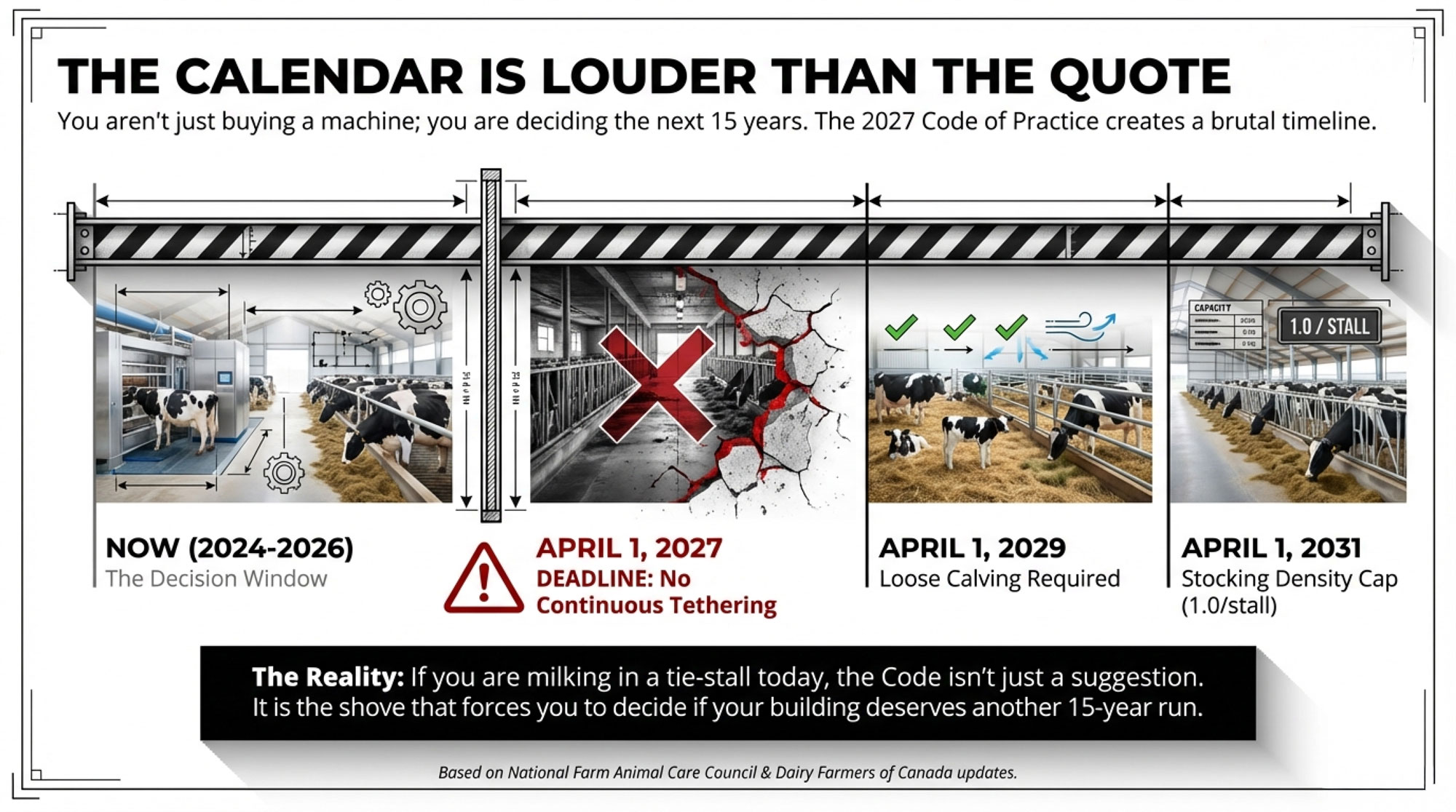
NewsSubscribe
First
Last
Consent

Pellet-Free Robotic Milking: The $36,740 Decision Your Operation Needs to Make Now

Dairy producers: Your robot pellets cost $36K+ yearly while destroying butterfat. Data from three countries proves there’s a better way.

Robot pellets are costing your dairy thousands while potentially harming component percentages. Evidence from Wisconsin to California confirms that properly implemented pellet-free milking can slash feed costs by $36,740 annually per 200 cows while increasing butterfat by 0.2-0.4%. But this isn’t a simple flip-the-switch solution – it requires specific barn configurations, meticulous feed management, and disciplined protocols.

Your Robot Pellet Habit Is Draining Your Bank Account (And I Can Prove It)

What we’re all thinking: robot pellets are the dairy industry’s most expensive security blanket. I’ve had coffee in 37 different robot barns this year, and you know what keeps me up at night? Watching good operations flush $36,740 annually (per 200 cows!) down the drain on pellets that might hurt butterfat. That’s not pocket change – it’s a new truck every year, college tuition for your kid, or a significant bump in your operation’s bottom line during tight margin years.

Don’t believe me? Fair enough. I was skeptical, too, until I visited Heeg Bros in Wisconsin. These guys are hitting 4.55% butterfat and pumping 48.44 kg of milk per cow daily without feeding a single pellet in their robots. Not. One. Pellet. And they’re not alone. I just returned from a tiny 41-cow operation in Ontario, pushing 41 kg daily with three visits per cow per day, and a Jersey operation with 77 cows producing 22 kg daily with 2.35 trips per cow – all without robot pellets (University of Guelph Extension, 2024).

This isn’t some futuristic concept – it’s happening on real farms with real cows making real money. The economic impact is substantial, with pellet costs estimated at $0.23 per pound premium over standard TMR costs (Journal of Dairy Science, 2024). Doing the math on a 200-cow operation translates to approximately $31,500 annually in direct feed cost difference, so grab your coffee. We must discuss why your pellet habit might be the only thing between you and serious profitability.

The Physiological Reality Behind Your Butterfat Numbers

Before diving into implementation, let’s talk physiology for a minute. That robot pellet habit isn’t just expensive—it might be actively undermining your component percentages and cow health. Here’s why: When cows consume concentrated pellets during milking, they experience what nutritionists call “slug feeding”—rapid intake of high-starch feed that causes sudden drops in rumen pH.

According to research from UC Davis Veterinary Medicine (2024), these pH fluctuations shift rumen microbial populations away from fiber-digesting bacteria toward acid-producing species. The result? Reduced acetate production (the primary precursor for butterfat synthesis) and increased Sub-Acute Ruminal Acidosis (SARA) risk. It’s a physiological reality documented in multiple university studies—consistent TMR consumption supports steadier rumen function than the peaks and valleys created by robot pellet feeding.

This explains why operations transitioning to pellet-free consistently report 0.2-0.4% butterfat increases after adaptation (USDA-ARS, 2024). It’s not magic—it’s basic rumen physiology finally being allowed to function as nature intended. When you factor in today’s component pricing, that butterfat increase alone can contribute over $10,000 annually to your bottom line for a 200-cow herd.

Three Things You Absolutely Can’t Screw Up (Spoiler: You’re Probably Messing Up #2)

1. Your Barn Layout Makes or Breaks Everything

You can’t just yank pellets and pray. Free-flow barns crash and burn without them – I’ve seen it happen, which isn’t lovely. Research from Michigan State University (2024) indicates that free-flow barns need 3.2 times more pellets to maintain adequate visit frequency than guided traffic systems. Without the directional constraints of guided traffic, cow motivation becomes insufficient without concentrated feed rewards.

What works? Guided-flow traffic with short return alleys to feed (under 75 meters), functional pre-selection gates that work, and zero chance for cows to backtrack. In guided-flow systems, one-way and pre-selection gates direct cows through predetermined pathways, forcing them through the robot to access feed areas. This structured flow eliminates the need for pellet incentives by creating a physical environment where milking becomes necessary to access nutrition. The layout has to force them through the robot to reach fresh feed. No shortcuts, no exceptions.

Even the experienced team at Heeg Bros learned this lesson the hard way. Their first group of cows was moved to the new robot barn but initially brought back to the parlor for milking. The result? “They developed a habit and would go down the alley past robots, down the alley to the other barn to be milked,” according to Kelli Hutchings of DeLaval. Their second group started directly in the robots and performed substantially better. Layout and training coherence matters enormously.

2. Your TMR Has to Be Freaking Amazing

Oh boy, this is where most farms fall flat on their face. Those Ontario farmers I mentioned? They’re TMR fanatics. Feed quality and consistency represent a critical requirement for successful pellet-free implementation. Operations that have transitioned successfully demonstrate exceptional attention to TMR management, including daily variation under 2%, minimum NDF digestibility of 65%, and consistent feed push-up practices (UW-Madison Dairy Science, 2023).

TMR Quality ParameterMinimum Requirement for Pellet-Free Success
Physical consistency<3% day-to-day variation
NDF digestibilityMinimum 65%
Push-up frequencyMinimum 8 times daily
Moisture levels46-52% to minimize sorting
Daily variation in critical nutrients<2%
Particle length distributionConsistent across days with <5% variation

What does “amazing TMR” actually mean in practice? It means obsessive attention to the details listed in that table, plus strategic use of palatability enhancers like molasses during transition phases. As Fred Van Lith told me over lunch last month, “Skip one push-up? You’ll see 18% fewer robot visits by dinner.” The man isn’t joking. The consistency of the TMR becomes the primary driver of cow motivation within the system, replacing the concentrated incentive previously provided by robot pellets.

I walked to one barn where the feed looked like my kid’s dinner plate – all the good stuff picked out, the rest pushed aside. That farm failed spectacularly at going pellet-free. If your cows can separate your TMR into distinct layers within hours, you’re not ready for pellet-free milking. Full stop.

3. Your Labor Focus Shifts Completely

Here’s the part nobody wants to hear. Matt Strickland’s California transition needed more fetch labor initially. However, their experience aligns with the economic analysis, which shows that the net benefit remains substantial even with increased labor costs. For a 200-cow operation, fetch labor requirements typically increase from approximately 1.2 to 1.9 hours daily, resulting in additional costs of approximately $8,760 annually (Vita Plus Loyal, 2024). But when you factor in pellet savings and component bonuses, the net economic impact remains decidedly positive.

It’s not less work. It’s different work. You’re trading feed management for cow observation. Deal with it. The critical insight from successful implementers is establishing consistent fetch protocols that never vary – not by shift, not by day of the week, and not during busy seasons. The minute fetch discipline slips, your entire system starts unraveling.

Interestingly, Strickland’s operation has been gradually transitioning for over a year and is down to just seven cows that still need incentives to enter the robot. He bluntly says, “I didn’t invest in robots to feed my cows; I got the robots to milk my cows.” His experience demonstrates patience and persistence pay off, but perfection isn’t necessary for profitability.

The Math That Made Me a Believer (Even Though I Hated It)

I’ll be honest – I fought these numbers. Hard. More labor? In this economy? But the economic analysis from independent sources is brutally clear:

MetricPellet SystemPellet-FreeAnnual Difference (200 cows)
Feed Cost$0.23/lb premium$0.00-$31,500
Fetch Labor1.2 hrs/day1.9 hrs/day+$8,760
Component BonusBase+0.2% BF-$10,400
Feed WasteStandardReduced-$3,600
Net Impact -$36,740

What’s particularly interesting is data from a 32-herd survey conducted by Vita Plus Loyal (2024) that found robot pellet cost hurt income over feed cost and milk production per visit. Their research showed that herds feeding higher-cost PMRs (partial mixed rations) had more excellent milk production per robot visit, challenging the conventional wisdom that expensive robot pellets drive production.

That same survey found that herds with the highest income over feed cost often fed very low-cost robot pellets or simple combinations of ingredients. The data suggests that nutritional emphasis on feeding more nutrient-dense PMRs with less reliance on robot pellets improved milk production per visit—exactly what we’re seeing in fully pellet-free systems.

The Case Against Going Pellet-Free (Yes, There Is One)

I’m not here to tell you that pellet-free is for everyone. Some operations genuinely benefit from maintaining pellet feeding, particularly:

  1. Free-Flow Traffic Barns: The research is conclusive – free-flow barns need approximately 3.2 times more pellets to maintain adequate visit frequency (Michigan State University, 2024). Without guided traffic patterns, pellet-free implementation fails spectacularly in these configurations. If you’ve invested in a free-flow system, optimize your pellet strategy rather than eliminate it.
  2. High-Production, High-Genetic-Merit Herds: Some elite genetic lines appear more responsive to precision feeding through robots. The targeted nutrient delivery during milking may provide metabolic advantages that outweigh the rumen disruption for specific genetic profiles. Dr. Michael Overton (University of Georgia, 2023) argues that “high genetic merit animals may benefit from specific nutrient timing that pellet delivery provides.” Consistent delivery is critical – these herds still benefit from regular, smaller pellet allocations rather than large, inconsistent amounts.
  3. Transition Period Animals: Many pellet-free advocates maintain modest pellet allocations for transition cows to support energy needs during this critical period. Dr. Stephen LeBlanc (University of Guelph, 2024) notes that “fresh cows within 10 days post-calving show measurable metabolic benefits from strategic energy supplementation during milking.” The metabolic benefits may outweigh the rumen disruption for these specific animals.

This balance is precisely what Matt Strickland demonstrates. After over a year of transition, he still maintains seven cows on pellets because their individual needs make it economically sensible. The goal isn’t ideological purity—it’s profitability.

Your 90-Day Gameplan

Phase 1: Reality Check (Weeks 1-4)

First things first – are you a candidate for this? You need to:

  • Put pH sensors on 10% of your herd to establish baseline rumen health
  • Audit your TMR for consistency (if variance exceeds 5%, fix it first!)
  • Map out which cows are pellet junkies (you know, the ones)
  • Confirm your guided traffic system is functioning correctly (one-way gates, pre-selection)
  • Document current production, components, and health metrics for comparison

This preparatory phase provides critical baseline data to guide subsequent decision-making and identifies potential risk factors before significant system changes occur. If your pH data shows significant time below 5.8 or your TMR consistency is poor, address these issues before proceeding.

Phase 2: The Wean (Weeks 5-12)

This is the tricky part:

  • Cut pellets 5% weekly, replacing with molasses-enhanced TMR
  • Make sure your guided traffic is, you know, guiding
  • Check pH daily and abort if cows stay under 5.8 for more than 2 hours
  • Implement religious fetch protocols – every cow over 10 hours since the last milking gets fetched
  • Track incomplete milkings, kick-offs, and milk flow rates weekly
  • Increase TMR push-ups by 25% during the transition

The adaptation process needs to be gradual. Strickland’s experience shows this isn’t an overnight transition – it’s taken his operation over a year to get down to just seven cows needing pellets. Starting with fresh cows appears particularly effective, as these animals adapt approximately 40% faster than established lactating cows with ingrained behavioral patterns.

Phase 3: Show Me The Money (Month 4+)

If you’ve done the work, you’ll see:

  • Rumen pH stabilizing in the healthier 6.0-6.5 orange
  • Butterfat lifting about 0.2% by week 12
  • Fetch rates dropping under 5% by week 10
  • Feed sorting at the bunk dramatically reduced
  • More consistent manure scores across the herd

The key success metrics at this stage include robot visit frequency stabilizing above 2.4 visits per cow daily, fetch rates below 5% of the herd, and component percentages showing clear improvement. Maintain vigilance on TMR quality and push-up frequency – these have become your new critical management points replacing pellet delivery.

Global Perspectives: It’s Not Just a North American Thing

The pellet-free movement isn’t confined to North America – it’s gaining global momentum for different reasons in different markets. In the Netherlands, Wageningen University researchers (2025) report Dutch herds achieving 15% lower veterinary costs post-transition, attributed primarily to improved rumen health and reduced incidence of SARA. The European context adds regulatory incentives, as their methane reduction targets make SARA reduction financially advantageous. As one Dutch farmer explained, “The €120 per cow compliance savings alone justified our transition.”

New Zealand offers an entirely different twist on this concept. Their pasture-based systems traditionally use supplemental feeding primarily during milking, but several operations are experimenting with hybrid models. James Robertson, a Canterbury dairy farmer, shared that their 900-cow operation eliminated robot pellets during peak grass growth months while maintaining a modified pellet program during shoulder seasons. “We’ve found a 17% reduction in feeding costs with no impact on production during our October-February window,” Robertson reports. This seasonal adaptation illustrates the flexibility possible in different production models globally.

In Israel, where heat stress management creates unique challenges, pellet-free approaches are combined with cooling strategies. Despite the region’s extreme climate challenges, the Israeli Dairy Board reports three commercial operations successfully implementing pellet-free systems in 2024. Dr. Eyal Seroussi of the Agricultural Research Organization explains, “Consistent TMR consumption appears to moderate heat stress impacts by supporting more stable rumen function throughout high-temperature periods.” Their success suggests that pellet-free approaches offer climate resilience benefits beyond direct cost savings.

What’s Coming Down the Pipeline (You Heard It Here First)

I just got back from the significant equipment shows, and things are changing fast:

Industry sources suggest two major robotic milking equipment manufacturers are reconsidering their approach to pellet delivery systems for future models, potentially making pellet mechanisms optional upgrades rather than standard features. This equipment evolution would likely reduce barriers to implementation for new installations, as systems could be designed from inception without the cost and complexity of pellet delivery mechanisms.

Specialized consulting services focused on TMR-based motivation systems are emerging to support farms considering the transition to pellet-free approaches. These consultants specialize in specific nutritional and management requirements of pellet-free systems, demonstrating growing professional recognition of this management strategy.

Environmental and regulatory considerations may accelerate the adoption of pellet-free approaches in specific markets. European operations face intensifying methane regulations, and the improved rumen health associated with consistent TMR feeding offers potential compliance advantages. Research from Wageningen University (2025) suggests that reducing Sub-Acute Ruminal Acidosis (SARA) through more consistent feeding patterns could save approximately €120 per cow annually in compliance costs for European producers. As similar regulatory frameworks expand globally, this driver may also become increasingly significant in North American markets.

The Contrarian View: Why Some Experts Still Advocate for Pellets

Not everyone in the industry embraces pellet-free approaches. Dr. Thomas Overton, Professor of Dairy Management at Cornell University, maintains that “targeted nutrient delivery during milking remains valuable for high-producing animals, particularly in early lactation.” His research indicates that well-formulated robot pellets can support metabolic health during peak production periods when coordinated with base ration formulation.

Equipment manufacturers also present legitimate concerns about pellet-free implementations. Carlos Pereira, Product Development Manager at Lely, notes, “Our systems are designed with pellet delivery as a core motivation mechanism. While some farms succeed without them, we still see optimal performance with at least minimal pellet allocations.” This perspective acknowledges that robotic systems were initially engineered around the pellet delivery concept.

Nutritionist Dr. Bill Weiss of Ohio State University takes a middle-ground approach, suggesting that “the question isn’t pellets versus no pellets, but rather finding the optimal allocation for each operation’s specific conditions.” He advocates for reduced pellet feeding tailored to individual farm situations rather than complete elimination. This nuanced view acknowledges both the financial advantages of reduction and the potential benefits of strategic pellet use.

The Bottom Line: Evolve or Watch Your Margins Vanish

From Heeg Bros’ 450-cow Wisconsin operation to California’s Double Creek Dairy, from tiny Ontario setups to European innovators, the data is crystal clear – pellet-free isn’t some hippie fad. It’s essential profit physics. The economic case is compelling: savings exceeding $36,000 annually per 200 cows, improved butterfat percentages, and the potential for enhanced rumen health.

Your choice seems pretty straightforward:

  • Keep spending $37k annually on a system designed for 1990s cows
  • Invest 120 hours of training time for perpetual savings

The Heeg Bros proved what I suspected all along – cows don’t miss what they never had. The real question isn’t whether this approach works. It’s whether your operation has the management discipline to make the transition.

This Isn’t Just a North American Thing

You might be surprised (I was!) that Dutch herds are reporting 15% lower vet costs with pellet-free systems, according to Wageningen University’s recent study (2025). Even more shocking? New Zealand’s pasture-based operations are testing hybrid models.

With EU methane regulations coming soon, this transition is becoming urgent overseas. SARA reduction alone could save €120/cow/year in compliance costs. Sometimes, environmental and economic incentives actually align!

Three Things You Can Do Right Now

  • Today: Download UW-Madison’s free mixer evaluation toolkit and audit your TMR
  • This Month: Pick five balanced-temperament cows as pH monitoring candidates
  • This Year: If your metrics look good, start planning a phased pellet reduction

The revolution’s happening whether we like it or not. The question is, will you lead it or chase it?

Key Takeaways:

  • Economic Impact: $36,740 annual savings per 200 cows, combining $31,500 in direct feed cost reduction with improved component premiums, despite requiring approximately 0.7 additional labor hours daily.
  • Technical Requirements: Success demands guided-flow traffic systems, TMR with <3% daily variation, NDF digestibility >65%, and minimum 8× daily feed push-ups—operations failing these standards experience catastrophic results.
  • Physiological Benefits: Eliminating “slug feeding” of concentrated pellets stabilizes rumen pH (6.0-6.5), improving fiber digestion and acetate production that directly enhances butterfat synthesis.
  • Implementation Timeline: The validated 90-day transition protocol requires baseline monitoring, 5% weekly pellet reduction, and maintains about 17% more fetch labor initially, with component improvements typically visible by week 12.
  • Contraindications: Free-flow barns, operations with poor TMR consistency, and farms with irregular labor availability should NOT attempt pellet-free implementation.

Executive Summary:

Recent data from Wisconsin to New Zealand demonstrates that eliminating feed pellets from robotic milking systems can save operations approximately $36,740 annually per 200 cows while increasing butterfat by 0.2-0.4%. Success requires three critical elements: guided-flow barn configurations with short return alleys, exceptionally consistent TMR management with minimal daily variation, and disciplined fetch protocols. The approach isn’t universal—free-flow barns, specific high-genetic merit herds, and operations with poor feed management should maintain pellet feeding. With significant equipment manufacturers beginning to accommodate pellet-free designs and documented success across diverse operations globally, this represents a considerable shift in robotic dairy management with substantial profit implications.

Learn more

Join the Revolution!

Join over 30,000 successful dairy professionals who rely on Bullvine Weekly for their competitive edge. Delivered directly to your inbox each week, our exclusive industry insights help you make smarter decisions while saving precious hours every week. Never miss critical updates on milk production trends, breakthrough technologies, and profit-boosting strategies that top producers are already implementing. Subscribe now to transform your dairy operation’s efficiency and profitability—your future success is just one click away.

NewsSubscribe
First
Last
Consent

Robotic Milking Revolution: Why These Money Machines Are Crushing Traditional Parlors

Robots are revolutionizing dairy farms, but are they worth the hefty price tag? From 15% production boosts to labor savings and lifestyle changes, we dive deep into the real-world impact of automated milking. Discover why savvy producers call these high-tech marvels “money-printing machines” in our exclusive report.

robotic milking systems, automated dairy, dairy robots, milking robots, robotic dairy conversion

While your neighbors are still chained to twice-daily milking schedules, forward-thinking producers are letting robots handle the grunt work—boosting production by 15% while reclaiming their lives from the tyranny of the parlor clock. The global milking robots market is experiencing explosive growth as dairy producers worldwide recognize the transformative potential of automation:

YearGlobal Milking Robots Market ValueAnnual Growth Rate
2024$2.98 billion
2025$3.39 billion14.0%
2029 (projected)$6.03 billion15.4% CAGR (2025-2029)

Source: The Business Research Company, 2022

North American dairy farms are particularly bullish on automation. The regional market is expected to grow from $641.9 million in 2025 to $1,086.9 million by 2032. This report cuts through the hype to deliver the hard facts about implementing these game-changing systems, from planning through startup and beyond.

Robot Revolution: More Than Just Labor Savings

Let’s be brutally honest: labor is getting expensive and becoming impossible to find. But robotic milking systems deliver far more than relief from staffing headaches.

When a cow enters the robotic unit, she’s identified via RFID, her teats are cleaned and stimulated, and milking cups are precisely attached using laser-guided technology. This consistent, gentle process isn’t just more straightforward on cows—it’s revolutionizing production.

PRODUCER INSIGHT: “I didn’t buy robots to milk my cows. I bought robots to get my life back.” — Wisconsin dairy farmer after 2 years with robotic milking

The performance metrics of robotic systems reveal why progressive producers are making the switch:

MetricValue in Robotic Systems
Typical milkings per 24-hour period140-190
Average milkings per cow per day2.4-3.0
Milk output per robot per day4,000-5,500 pounds
Production vs. 2x conventional milking3-5% higher
Production vs. 3x conventional milking6-9% lower

Source: Iowa State University Extension

“Robotic milking systems helped one farm increase annual milk yield from 7,000 to 9,000 liters per cow,” reports agricultural technology company Farmonaut. That’s not an incremental improvement—a transformational performance that conventional systems cannot match.

The true game-changer isn’t the robotic arm itself—it’s the wealth of data generated by these systems. Every milking event becomes a gold mine of information: conductivity readings that catch mastitis days before visible symptoms appear, rumination monitors that flag digestive issues before feed efficiency plummets, and activity trackers pinpointing optimal breeding windows with laser precision.

This isn’t just milking cows—it’s managing biological systems with unprecedented control.

The Truth About Technology Adoption

It’s not just massive operations benefiting from automation. Unlike the conventional wisdom that robotics only make sense for operations with hundreds of cows, manufacturers now offer configurations suitable for farms of all sizes.

The single-stall unit segment dominates the market because it is economical and ideal for small and mid-sized operations. Because it relies less on manual labor while improving operational efficiency, these systems are increasingly the first choice for farmers leaping automation.

It’s also worth noting that you don’t need a computer engineering degree to handle the technology. Today’s systems feature intuitive interfaces designed for farmers, not programmers. The learning curve exists but is far less steep than many producers fear.

Planning Your Robot Revolution: Critical Success Factors

The difference between robotic success stories and expensive failures isn’t farm size or milk price—it’s planning quality. The most successful implementations spend 10× longer in planning than in actual installation.

Before writing that $800,000 check for a four-robot system, ask yourself these critical questions:

What’s driving your interest in robotics? Labor savings alone rarely justify the investment. The operations seeing the fastest ROI are leveraging multiple benefit streams, as this table demonstrates:

Factor Affecting Robot ROIImpact Level
Labor cost savingsHigh
Milk production increaseHigh
Feed efficiencyMedium
Cow health improvementsMedium
Reproduction performanceMedium
Electricity costsLow
Maintenance costsMedium

Based on combined data from university extension services and industry research

Does your management style match the technology? Robotic systems demand a proactive, data-driven approach. You’ll likely struggle with automation if you’re reluctant to check computer metrics daily or make decisions based on data trends.

Successful robot managers demonstrate genuine curiosity about cow behavior and continuously adjust protocols based on what the system reveals.

How will you handle the feed transition? Traditional robot systems supplement TMR with concentrate delivered during milking. This nutritional shift requires careful planning to maintain rumen health and production.

Alternatively, some innovative producers successfully implement “no-feed” approaches in their robotic facilities—a paradigm shift that eliminates the need for robot-delivered concentrate.

Facility Design: Setting the Stage for Success

Let’s talk dollars and sense: these aren’t impulse purchases at $200,000 per robot, with typical barns costing upwards of $1.4 million for a four-robot setup. But while conventional farmers balk at the price tag, savvy operators recognize these aren’t expenses—they’re wealth-generation units printing additional revenue through increased production and efficiency.

The physical layout of your robotic facility will determine its success. When retrofitting existing facilities, critical attention must be paid to cow traffic patterns, which account for approximately 50% of robotic installations. Clear, unobstructed pathways between resting, feeding, and milking areas are non-negotiable for successful voluntary milking.

For new construction, The Dairyland Initiative recommends specific design criteria for optimizing robotic performance:

  • Allocate approximately 55 cows per robot with a minimum of two AMS units per pen
  • Provide deep, loose bedding (preferably sand)
  • Ensure a minimum of 24 inches of feed bunk space per cow
  • Maintain unrestricted access to fresh feed
  • Install adequate ventilation with targeted air speeds in resting areas

Producers who implement these design principles consistently report higher voluntary visits and reduced fetch rates than facilities that compromise cow comfort or traffic flow.

The “No-Feed” Revolution: Challenging Robot Orthodoxy

One of the most intriguing developments in robotic milking challenges conventional wisdom. “DeLaval has experienced the elimination of feed for cows in rotary and parlor systems over the years, and now the company has seen operations using no-feed practices in DeLaval VMS™ robotic facilities, too,” reports a recent industry publication.

INDUSTRY BREAKTHROUGH: The “no-feed” approach eliminates pellets in the robot entirely, challenging decades of conventional wisdom about what motivates cows to visit milking stations.

This approach eliminates robot-delivered concentrate entirely, simplifying nutrition management while potentially improving rumen function through consistent TMR intake. To successfully implement this strategy, DeLaval identifies four critical requirements:

  1. Guided traffic systems ensuring cows visit the robots based on predetermined milking permissions
  2. Rigorous cow training protocols, particularly for fresh heifers and newly introduced animals
  3. High-quality, energy-dense TMR that drives feeding motivation
  4. Complete commitment from farm staff and consultants to the management approach

While still emerging, this strategy represents a potential paradigm shift in how we think about motivating cows in robotic systems. It challenges the long-held belief that feed rewards are essential for voluntary milking.

The Hard Economics: Investment and Returns

The capital requirements for robotic milking and potential returns are substantial. Current costs average approximately $200,000 per robot, and a typical installation of four robots serving 240 cows represents an investment of around $800,000 for the milking units alone. The total project cost, including the price of the new barn construction, typically ranges from $1.4 to $1.6 million.

The efficiency gains with robotic systems are dramatic when comparing labor productivity:

System TypeMilk Production per Full-Time Worker
Robotic Milking Systems2.2 million lbs
Conventional Parlors (similar sized herds)1.5 million lbs

Source: Farm Management Records (Finbin, 2016) from Upper Midwest farms

While conventional parlors depreciate from day one, robotic systems appreciate through increased production, delivering ROI in just 7 years versus 15+ for conventional parlor upgrades.

Dairy operations transitioning from twice-daily milking to robots often realize milk yield increases of 15-20%, translating to an additional 1,500-2,000 pounds per cow annually.

Consider the annual impact for a 120-cow herd:

  • 1,800 pounds additional milk per cow × 120 cows = 216,000 pounds
  • At $20/cwt milk price = $43,200 additional annual revenue
  • Plus, labor savings of approximately $75,000 annually
  • Total benefit: $118,200 per year against initial investment

The math becomes increasingly compelling as labor costs rise and qualified workers become more challenging to find. One striking example comes from Miltrim Farms, a US operation implementing 30 box barn milking robots to automate operations. Despite adding 1,200 cows to its farm, Miltrim Farms managed to maintain the same labor force, a testimony to the efficiency gains possible with well-implemented automation.

Management Practices That Separate Winners from Losers

It’s not the robots that determine success—the management wrapped around them. The transition to robotic milking necessitates significant adjustments to herd management practices that many producers underestimate.

Excellent transition cow management becomes even more critical in robotic systems. Fresh cows that calve without issues and transition smoothly into lactation more readily adapt to voluntary milking. Pre-calving protocols that minimize metabolic disorders and promote intense lactation start paying enormous dividends in robotic barns.

Feed management at the bunk significantly impacts system performance. Consistent feed availability and quality encourage normal feeding behavior and support regular robot visits. Research indicates that automated feed push-up, running approximately 12 times daily, maximizes feed access and supports milk production.

This consistent feed availability, combined with well-mixed rations that resist sorting, helps maintain steady cow traffic patterns and optimize voluntary milking visits.

Reality Check: Is Your Herd Robot-Ready?

Let’s be brutally honest: for every robotic success story, there’s a farm that rushed installation without proper planning and is now nursing financial wounds. Before committing to automation, evaluate whether your herd has these robot-friendly characteristics:

ROBOT READINESS CHECKLIST: To thrive in automated systems, your herd needs healthy feet and legs, low mastitis prevalence, consistent reproduction, an adaptable temperament, and sound nutritional status.

If your herd struggles in these areas, address these fundamentals before investing in robots. While the technology amplifies good management, it can’t compensate for poor foundation herd health.

The Future: Beyond Milking

The robots milking your cows today are just the beginning. Tomorrow’s integrated systems will connect milking data with automated feeding, breeding timing, and health interventions—creating biological efficiency impossible in conventional systems.

The rapidly evolving technological landscape promises continuous improvements in robotic capabilities. Artificial intelligence and machine learning advances enable increasingly sophisticated analyses of cow behavior patterns, variations in milk composition, and system performance metrics.

These capabilities support more precise individual cow management, earlier detection of health issues, and automatic optimization of system parameters.

North America is poised to remain a key hub for robotic adoption. The market is expected to grow at a steady 7.8% CAGR through 2032. This regional growth reflects the mature dairy infrastructure and the increasing pressure on operations to address labor challenges while improving efficiency.

Conclusion: Making the Leap

Implementing robotic milking technology represents a transformative journey beyond equipment installation. Success requires thoughtful planning, appropriate facility design, effective startup procedures, and ongoing management adaptations.

While the initial investment is substantial, the potential returns—including increased production, improved cow welfare, enhanced data availability, and greater lifestyle flexibility—make robotic milking an increasingly attractive option for dairy producers with the management capacity to leverage the technology effectively.

As one farmer said, “I didn’t buy robots to milk my cows. I bought robots to get my life back.” That might be the most compelling return on investment in an industry where 365-day-a-year labor demands have driven generations away from the farm.

Key Takeaways:

  • Robotic milking systems can increase milk production by 15-20% compared to conventional milking.
  • The global milking robots market is projected to reach $6.03 billion by 2029, growing at 15.4% CAGR.
  • Successful implementation requires extensive planning, with top performers spending 10x longer planning than installing.
  • Robotic systems generate valuable data for proactive herd management and health monitoring.
  • Facility design is crucial, with cow traffic flow and comfort directly impacting voluntary milking success.
  • The “no-feed” approach in robotic systems is challenging conventional wisdom about cow motivation.
  • ROI for robotic systems can be achieved in about 7 years, compared to 15+ years for conventional parlor upgrades.
  • Herd characteristics like foot health, mastitis prevalence, and temperament significantly affect robotic milking success.
  • Robotic milking can dramatically improve labor efficiency, with automated systems producing 2.2 million lbs of milk per full-time worker vs. 1.5 million lbs in conventional parlors.
  • Beyond milking, future integrated systems promise to revolutionize feeding, breeding, and overall herd management.

Summary

Robotic milking systems are transforming the dairy industry, offering producers significant benefits such as increased milk production (15-20%), reduced labor dependency, and enhanced herd management through data-driven insights. With the global milking robots market projected to grow to $6.03 billion by 2029, automation is becoming an essential tool for farms of all sizes. This article explores the critical factors for successful implementation, including facility design, herd readiness, and management practices, while highlighting emerging trends like “no-feed” robotic systems. Whether you’re looking to boost efficiency, improve cow welfare, or reclaim your work-life balance, robotic milking systems are reshaping what’s possible in modern dairy farming.

Learn More

Join the Revolution!

Join over 30,000 successful dairy professionals who rely on Bullvine Weekly for their competitive edge. Delivered directly to your inbox each week, our exclusive industry insights help you make smarter decisions while saving precious hours every week. Never miss critical updates on milk production trends, breakthrough technologies, and profit-boosting strategies that top producers are already implementing. Subscribe now to transform your dairy operation’s efficiency and profitability—your future success is just one click away.

NewsSubscribe
First
Last
Consent

UNDER-BELLY REVOLUTION: Afimilk’s Synergy Could Finally Solve the Mid-Sized Dairy Automation Dilemma

Mid-sized dairies stuck in automation limbo? Afimilk’s under-belly robots could rewrite the rules-but is this revolution ready for your parlor?

EXECUTIVE SUMMARY: Afimilk’s Synergy robotic milking system targets the underserved 500-5,000-cow dairy segment with a radical design: mobile robots operating beneath cows in conventional parallel parlors. By retrofitting existing infrastructure, it promises labor savings (1 supervisor vs. 8+ milkers), integrates with Afimilk’s sensor-driven ecosystem, and maintains batch milking workflows. Yet early adoption risks remain-limited commercial data, unproven reliability in manure-heavy pits, and fierce competition from DeLaval’s batch-ready VMS. For medium operations, Synergy could bridge the gap between small-farm robots and mega-rotaries, but only if the math works and cows tolerate the under-belly hustle.

KEY TAKEAWAYS:

  • Automation’s Missing Middle: Synergy fills the gap for 500-5,000-cow dairies-too big for VMS, too small for rotaries-by automating within existing parallel parlors.
  • Labor Crunch Fix: Cuts milking labor by ~75% (1 supervisor/shift), but demands tech-savvy staff for robot maintenance and data analysis.
  • Retrofit Reality: Avoids new barn costs but requires precise parlor dimensions; early adopters report 40% labor savings in Israeli trials.
  • Data Dominance: Ties into Afimilk’s health/farm management tech (AfiCollar, AfiLab) for real-time herd insights beyond just milking.
  • Prove-It Phase: Lacks published performance stats; faces rival DeLaval’s established VMS Batch system in the race for parlor automation supremacy.
Afimilk Synergy, robotic milking systems, dairy farm automation, medium-sized dairy automation, parallel parlor automation

For decades, medium-sized dairy operations (500-5,000 cows) have been caught in an automation no-man’s-land. These operations have struggled to find robotic solutions that fit their scale and parlor setup. They are too large for traditional robotic VMS systems to be practical yet too small to justify the massive investment in rotary platforms. Israeli-based Afimilk has unveiled a radically different approach that could change everything – robots that travel BENEATH the cows in conventional parallel parlors.

The Technology Gap That’s Draining Your Profits

Let’s face it – the dairy automation revolution has left mid-sized operations in the dust. While small farms happily install individual VMS units and mega-dairies build elaborate rotary systems, operations in the 500-5,000 cow range have faced a frustrating reality: adapt to technology that doesn’t fit your scale or keep throwing labor at a problem that technology should solve.

“For 120 cows, it’s a perfect solution,” says Oren Drori, Afimilk’s VP Product, referring to traditional VMS systems. “For 600 dairy cows, it’s pretty difficult. For 2,000 cows, it’s impossible.”

This technology gap didn’t happen by accident. The economics of traditional robotic milking systems, where each station typically handles 55-65 cows, become increasingly problematic as herd size grows. The capital investment multiplies linearly with herd size, quickly reaching unsustainable levels for mid-sized operations. Meanwhile, the sophisticated cow traffic management required by free-flow VMS systems becomes exponentially more complex as herds expand.

At the other end of the spectrum, rotary robotic systems represent “a multimillion-dollar sledgehammer to crack a nut.” Too big, too costly, and still requiring significant human staffing, these systems only make financial sense for the largest operations.

The result? Thousands of mid-sized dairy farms are stuck with conventional milking technology and all the labor challenges that come with it. In an era of chronic labor shortages and rising wage pressures, this technological stagnation threatens the viability of this critical segment of the dairy industry.

What If Robots Came to the Cows, Not Cows to the Robots?

The fundamental limitation of both VMS and rotary systems is their approach to the cow-robot interaction. VMS requires cows to enter individual robotic stalls, while rotaries position fixed robots around a rotating platform. Both demand purpose-built facilities and radically altered cow movement patterns.

But what if we could bring robotics to conventional parlors where cows are already comfortable being milked in batches?

This seemingly simple question led Afimilk to develop a radically different solution: the Synergy robotic milking system. After five years and a reported $30 million in development, Afimilk unveiled a system that operates on a fundamentally different principle – multiple robotic units that travel on rails beneath the cows in a conventional parallel parlor.

“We are now replacing almost all the people with milking robots, and we only need one supervisor to look after the entire system,” explains Drori.

The concept directly addresses the mid-sized dairy dilemma. By retrofitting existing parallel parlors – the most common configuration in this farm segment – with under-belly robots, farms can maintain familiar batch milking routines while dramatically reducing labor requirements. No new buildings are required, and there are no complex cow traffic systems to manage; automation is just inserted into an existing workflow.

But can robots navigate the challenging environment beneath a cow during milking? Afimilk claims its sophisticated technology makes it not just possible but highly effective.

How Does This Under-Belly Revolution Work?

The Synergy system’s approach is unlike anything previously seen in commercial dairy robotics. Rather than the side-approach or rear-approach arms common in VMS or the fixed-position robots in rotaries, Synergy deploys compact robots that operate directly beneath the cow.

Mobile Robot Design: These robots run on a dedicated rail system installed in the milking pit, allowing them to travel between the fore and hind legs of cows in parallel stalls. Each mobile unit can serve multiple stalls – potentially up to seven, according to early reports – allowing fewer robots to handle more cows.

Vision and Intelligence: The system employs sophisticated 3D vision systems, micro-optics, micro-electronics, and spatial identification algorithms combined with machine learning to identify and locate each teat precisely. This advanced sensing capability allows the robots to adapt to different udder conformations and operate effectively in the challenging environment beneath the cow.

The operational sequence follows the familiar pattern of conventional milking but with robots handling the repetitive tasks:

  1. Cows enter the parallel parlor in batches, just as they would in a conventional system
  2. Mobile robots deploy to their assigned stalls
  3. The robots use sophisticated 3D vision technology to locate and clean teats with brushes
  4. Robotic arms attach milking cups, which are stored on the wall of the milking pit
  5. When milking is complete, automatic take-offs remove the cups
  6. The robot applies an optional post-milking teat dip
  7. Cows exit in groups, and the next batch enters

This process maintains the group rhythm most medium and large dairies rely on while eliminating the most labor-intensive aspects of the milking routine. The system is designed specifically for retrofitting existing parallel parlors, potentially requiring only minor renovations to accommodate the rail system in the pit.

The Brain Behind the Brawn: Data Integration That Makes Sense

Synergy isn’t just mechanical automation – it’s a key component in Afimilk’s comprehensive dairy management ecosystem. With roots tracing back to the world’s first electronic milk meter introduced by Afimilk in 1979, the system leverages decades of the company’s sensor and software innovation.

Advanced Technology Backbone: The robots incorporate sophisticated technologies including:

  • 3D vision systems for teat identification
  • Spatial identification algorithms for precise positioning
  • Machine learning capabilities that likely improve over time
  • Micro-electronics and micro-optics for sensing and control

What truly sets the system apart is its integration with Afimilk’s broader technology suite. Data from the Synergy robots combines with information from other Afimilk systems like:

  • AfiLab milk analyzers: Evaluate milk components in real-time, detecting issues like ketosis, nutritional problems, and mastitis
  • AfiAct II pedometers: Provide accurate heat detection, calving alerts, rest monitoring, and reliable animal identification
  • AfiFarm software: Interprets data from all components to provide comprehensive, actionable information for management decisions

This integration transforms Synergy from a labor-saving device into a comprehensive management tool. Farms can use the system to reduce labor costs and monitor individual cow health, optimize nutrition, improve reproduction, and make more informed culling decisions.

Will This Finally Solve Your Labor Nightmare?

Let’s address the elephant in the parlor: labor. Finding and retaining qualified milking staff has become the most pressing challenge for many dairy operations. Conventional parlors demand multiple skilled milkers per shift, three times daily, 365 days a year. As wages rise and willing workers dwindle, this model is increasingly unsustainable.

Synergy promises to reduce this labor dependency dramatically. According to Afimilk, the system can operate with just one supervisor overseeing the robotic process. This person monitors system function, intervenes if necessary, and manages the flow of cows, but doesn’t perform the physical milking tasks.

“People don’t want to milk cows,” says Drori bluntly. “Just like people don’t want to pick cotton or harvest wheat. The cost of labor is secondary. The main problem is that people don’t want to do it.”

Are we finally admitting what we’ve known for years? The conventional milking parlor staffing model is dying. The question isn’t if you’ll automate but when and how.

However, this shift requires different skills. While fewer manual milkers are needed, farms will require personnel capable of supervising technology, performing maintenance, and interpreting data. The ideal Synergy supervisor combines technical aptitude with knowledge of dairy husbandry – a profile different from that of the traditional milker.

For many operations, this represents a positive evolution rather than a drawback. Technical positions often attract more stable, career-oriented employees than conventional milking jobs. The challenge isn’t finding labor anymore – it’s training existing staff to work with sophisticated technology, not against it.

Does the Math Work? The Real Economics of Under-Belly Automation

The compelling labor-saving potential of Synergy means nothing if the economics don’t make sense. While Afimilk hasn’t publicly disclosed pricing, the system represents a significant capital investment.

The development cost of $30 million suggests sophisticated technology that won’t come cheap. However, the architecture of fewer robots, each servicing multiple stalls, may offer better economics than traditional VMS systems for medium to large herds.

Real-World ROI Example: 800-Cow Dairy

Let’s examine how the numbers might work for an 800-cow operation currently milking in a conventional parallel parlor:

Current Labor Costs:

  • 8 milkers across three shifts (2-3 per shift) at $18/hour
  • Annual labor cost: approximately $378,000 (8 × $18 × 7 hours × 365 days)

Projected Synergy Impact:

  • Reduction to 3 supervisors (1 per shift) at $25/hour
  • New annual labor cost: approximately $192,000 (3 × $25 × 7 hours × 365 days)
  • Annual labor savings: $186,000

Potential Production Benefits:

  • Research on comparable robotic systems shows milk yield increases of up to 15% due to more consistent milking and reduced stress
  • For an 800-cow herd averaging 75 lbs/day, an additional 9,000 lbs daily (at 15% improvement)
  • At $20/cwt, that’s additional annual revenue of $657,000

Maintenance and Operating Costs:

  • Annual maintenance is estimated at 5-7% of the system cost
  • Additional electricity and consumables

Projected Payback Period:

  • Based on labor savings alone: 3-5 years (depending on system cost)
  • When including production benefits, potentially under 2 years

These figures are approximations based on industry averages for robotic milking systems, as specific Synergy performance data is not yet widely available. However, they illustrate the potential financial impact that makes automation increasingly attractive as labor costs rise and availability falls.

According to one Afimilk distributor, a herd size of approximately 400 cows would be necessary for the system to be competitively profitable. However, this threshold varies greatly depending on local labor costs and availability.

Synergy vs. DeLaval: The Battle for Batch Milking Dominance

The unique design of Synergy raises an obvious question: how does it compare to established automation solutions and emerging alternatives? Most notably, DeLaval’s VMS Batch Milking system, launched in early 2024, targets a similar market segment with a different technological approach.

Fundamentally Different Approaches to the Same Problem

While both systems aim to bring robotics to batch milking, their technological approaches differ dramatically:

Afimilk Synergy deploys mobile robots on rails beneath cows in a conventional parallel parlor. These robots move to the cows, each unit potentially servicing up to seven stalls. The robots retrieve milking cups from stations on the pit wall.

DeLaval VMS Batch Milking arranges multiple standard VMS V300 robot units in parallel rows, resembling a parlor layout. Cows enter individual VMS stalls in batches, but each cow is serviced by its dedicated VMS unit – the same units used in traditional voluntary milking setups. After milking, cows follow an exit lane guided by selection gates.

Key Differences in Implementation

FeatureAfimilk SynergyDeLaval VMS Batch Milking
Robot DesignMobile units traveling beneath cowsModified standard VMS V300 robots (stationary)
InfrastructureRetrofits existing parallel parlorsRequires specialized facility layout
Cow PositioningStandard parallel stallsIndividual VMS stalls arranged in rows
ScalabilityAdd robots (each serving multiple stalls)Add individual VMS units (one per stall)
Market MaturityLaunched 2024/2025 installations in Israel and EuropeLaunched January 2024, 10+ installations worldwide with 10,000+ cows
Notable InstallationsTest farms in Israel, installations in the Czech Republic and ItalyRancho Pepper Dairy (Texas) – 22 units milking 2,000 cows

Commercial Momentum

DeLaval has gained significant early traction with its system. Their first US implementation at Rancho Pepper Dairy in Texas features 22 VMS V300 units milking 2,000 organic cows. Dawn Dial, the Rancho Pepper dairy manager, noted: “These cows are very relaxed, and I feel that they are more relaxed than any parallel [parlor] I have ever seen. I would do this again.”

DeLaval reports over 10 installations milking approximately 10,000 cows worldwide within just months of their January 2024 launch. Their approach leverages their proven VMS technology, potentially offering reliability advantages over Afimilk’s novel under-belly design.

The key question: which approach will ultimately deliver better economics, reliability, and user experience for medium-sized dairies? The answer may depend on whether you’re retrofitting an existing parlor (advantage: Synergy) or building a new one (potential advantage: DeLaval VMS Batch).

Early Adopter Insights: What Farmers Are Saying

While comprehensive performance data for the Synergy system remains limited due to its recent commercial introduction, insights from early installations provide valuable perspectives.

Initial Feedback from Israel: Farmers testing the system in Israel have reported significant labor reductions, with operations transitioning from multiple milkers to a single supervisor per shift. One farm manager noted: “The consistency of the milking routine is remarkable. Every cow gets the same high-quality preparation every time, regardless of who’s supervising.”

European Adoption: A Czech Republic installation has drawn visitors from across Europe, with observers noting the system’s ability to integrate into existing parlor infrastructure with relatively minor modifications. Danish dairy consultant Martin Grønnebæk commented that the system could represent “a viable automation pathway specifically for medium-sized operations that want to automate without rebuilding their entire facility.”

Expert Assessments: Industry experts evaluating Synergy and DeLaval’s approach note that choosing systems may depend on farm-specific factors. “For operations with substantial investment in well-designed parallel parlors, Synergy’s retrofit capability could offer significant advantages,” one European dairy consultant notes. “However, farms considering entirely new facilities might find DeLaval’s approach more straightforward.”

These early insights suggest that while the technology is still proving itself, initial reception has been positive, particularly regarding labor savings and cow comfort. As more installations come online throughout 2025, expect a wealth of additional real-world data to emerge.

Is the Technology Ready for Your Farm?

Despite its promising design, Synergy is still early in its commercial journey. The system was officially launched in early 2025, with initial installations concentrated in Israel and Europe.

As of early 2025, Afimilk reports having installed two systems in Israel, with plans for a third, plus completed or ongoing installations in the Czech Republic and Italy. Their goal is to install between 10 and 20 systems in 2025, focusing primarily on the Israeli and European markets.

This deliberate, controlled rollout suggests Afimilk is proceeding cautiously – a prudent approach for a system introducing such novel technology. The company acknowledges that farmers are generally conservative about adopting new technology, particularly for mission-critical operations like milking.

“It’s a big revolution on the farm, and it’s in the farmer’s mission-critical spot,” explains Drori. “So, the farmer has to have high trust in the technology to commit to it.”

For North American dairy producers, this means waiting a bit longer. While Afimilk has a well-established presence in the US and Canada through Afimilk USA Inc. (headquartered in Wisconsin), no specific timeline has been announced for Synergy’s availability in North America.

This cautious approach has its benefits. Early adopters in Israel and Europe will help identify and resolve issues before broader deployment, potentially resulting in a more reliable product for later markets. However, it also means that comprehensive performance data and user feedback remain limited.

Will Under-Belly Robots Transform the Future of Your Dairy?

The emergence of Synergy and similar batch milking concepts signals a potential shift in dairy automation philosophy. Rather than forcing farms to adapt to robotic systems, these new approaches bring robotics to the familiar parlor environment where cows are already comfortable being milked in groups.

This could finally provide a viable automation pathway for medium-sized operations – the backbone of dairy production in many regions. The ability to retrofit existing infrastructure rather than building a new represents a potentially more accessible entry point to robotics, especially for farms with substantial investments in conventional parlors.

The dairy industry has been too slow to acknowledge a fundamental truth: one size does NOT fit all regarding automation. Small farms, medium operations, and mega-dairies have different needs, management styles, and infrastructure realities. Technology providers have often pushed farms to adapt to their systems rather than designing systems that adapt to farms.

Synergy represents a philosophically different approach – bringing robotics to an existing parlor flow rather than demanding farms completely reinvent their operation. This flexibility reflects a broader trend toward more adaptable automation in agriculture.

Isn’t it time technology worked around YOUR farm’s needs, not the other way around?

The Bottom Line: Is Synergy Right for Your Operation?

Afimilk’s Synergy system represents a genuinely innovative approach to dairy automation, specifically targeting the underserved medium-sized segment with a unique under-belly robot design for parallel parlors. Maintaining familiar batch milking routines while dramatically reducing labor requirements addresses a critical industry need.

However, the technology remains in early commercial deployment, with limited installations in Israel and Europe. Performance data, pricing information, and long-term reliability assessments are not widely available. North American availability has not been specifically announced.

For dairy producers considering future automation options, Synergy deserves serious attention – particularly for operations with 500-5,000 cows utilizing parallel parlors. The potential to retrofit existing infrastructure rather than building new facilities could offer significant advantages over other robotic approaches.

The prudent approach is to:

  1. Monitor the system’s commercial performance as more installations come online
  2. Engage with Afimilk or authorized dealers to understand potential retrofit requirements for your specific parlor configuration
  3. Calculate potential ROI based on labor savings and other benefits once pricing becomes available
  4. Consider how the technology aligns with your long-term farm strategy and management goals

It’s time to demand automation that works with your farm, not against it. For too long, medium-sized dairies have been forced to choose between insufficient small-farm solutions and overengineered mega-dairy systems. The under-belly revolution may finally offer a middle path – robotic efficiency without abandoning the batch-milking approach that suits your management style.

Don’t settle for automation designed for someone else’s operation. As labor challenges intensify and technology advances, the question isn’t whether you’ll automate – it’s whether you’ll choose technology that truly fits your farm’s unique needs and structure.

Learn more:

Join the Revolution!

Join over 30,000 successful dairy professionals who rely on Bullvine Weekly for their competitive edge. Delivered directly to your inbox each week, our exclusive industry insights help you make smarter decisions while saving precious hours every week. Never miss critical updates on milk production trends, breakthrough technologies, and profit-boosting strategies that top producers are already implementing. Subscribe now to transform your dairy operation’s efficiency and profitability—your future success is just one click away.

NewsSubscribe
First
Last
Consent

Robotic Milking Revolution: Why Modern Dairy Farms Are Choosing Automation in 2025

Are your neighbors installing robots while you’re still debating? Discover why dairy farms across North America are rapidly adopting automated milking systems—and why waiting could put your operation at risk. Learn the shocking ROI facts, success strategies, and common mistakes that separate thriving modern dairies from those being left behind.

Robotic milking systems, Dairy farm automation, Automated milking benefits, Dairy technology ROI, Cow health monitoring

Dairy farmers face an immense choice in 2025: embrace automation or risk being left behind in an industry quickly separating into those who use technology and those who don’t. Which side will your farm be on?

As labor challenges grow, profit margins shrink, and consumer expectations change, automated milking systems are becoming more than an option—they’re essential for sustainable dairy operations. The question isn’t whether technology will transform dairy farming but rather which farmers will lead this change and which will struggle to keep up.

Robots Taking Over: The Unstoppable Dairy Revolution

The global market for milking robots is growing fast. It is expected to increase from $2.98 billion in 2024 to $3.39 billion in 2025, with a growth rate of about 14.0% each year. This market could reach $6.03 billion by 2029, showing that this is not just a short-term trend but a significant change in the industry.

This growth is happening because of essential challenges in dairy farming. For example, in Ontario, the number of farms using dairy robots more than doubled from 337 farms in 2016 to 715 in 2021. According to recent data from the Michigan Department of Agriculture and Rural Development, Michigan has seen similar growth, with 243 robotic milking units operating across 55 farms.

“Five years ago, I was the only one in my county with robots,” says Iowa dairy farmer Tom Peterson. “Now there are eight farms within 20 miles using them. When the neighbor who called me crazy for installing robots came over last month to ask about my setup, I knew the tide had turned.”

Here are some Canadian adoption statistics that show how automation is changing the industry:

Milking SystemPercentage of Canadian HerdsPercentage of Canadian Cows
Tie-stall>67%~50%
Parlour22%~40%
Robotic6.6% (567 herds)8.7% (60,000+ cows)

While robotic systems currently represent a smaller portion of installations, the regional differences tell an interesting story about where adoption is increasing:

RegionCows in Tie-stall (%)Cows in Parlour (%)Cows in Robotic Systems (%)
Quebec76.5%~17.8%~5.7%
Ontario47.6%~41.8%~10.6%
Atlantic Canada28.6%~65.7%~5.7%
Western Canada6%~83.4%~10.6%

More progressive dairy regions like Ontario and Western Canada already have over 10% of their cows milked by robots—a clear sign of where the industry is headed.

HARD TRUTH: LABOR ISN’T COMING BACK

The harsh reality is that labor shortages aren’t going away anytime soon. Farms without automation strategies risk serious challenges as the labor pool shrinks while labor costs rise. The average age of dairy workers keeps increasing, with fewer young people entering the industry each year. Is your operation prepared for this reality?

“I held out as long as I could, thinking robots were just fancy toys for big operations,” says Wisconsin dairy farmer James Kellogg, who installed two robotic units in 2023. “My only regret is not doing it five years earlier. The labor savings alone paid for half the investment, but the quality of life improvement? That’s something you can’t put a price tag on.”

Inside the Robot Revolution: How These Machines Are Outperforming Humans

Automated milking systems change how dairy farms operate by allowing cows to choose when they want to be milked without needing someone to help them each time. But do farmers understand how these systems work?

The Step-by-Step Milking Process

When a cow enters the milking area, the system identifies her and checks whether she’s ready to be milked based on the time since her last milking session. If she’s prepared, the process starts automatically with great precision, often outperforming even skilled human milkers.

“My best employee could prep about 12 cows in 5 minutes on a good day,” admits Minnesota producer Rachel Williams. “The robot preps each cow perfectly every time—same temperature water, pressure, and cleaning pattern. That consistency shows up in our milk quality scores.”

The system independently cleans the cow’s teats, attaches cups using advanced imaging technology, monitors milk flow from each quarter of the udder, and detaches when optimal milk extraction is complete. It also collects a large amount of data that would be difficult to track manually.

The Data Difference

This data collection isn’t just a cool feature—it represents a significant shift in dairy operations. Each milking session generates information about milk quality, cow health indicators, and behavior patterns, allowing for individualized management that was previously impossible.

Here’s a comparison between traditional parlors and robotic milking systems:

ComparisonTraditional ParlorRobotic MilkingImpact on Operations
Labor Hours/Day5.2 hours2 hours60% reduction in direct milking labor
Milking Frequency2-3 times fixed schedule2.8-3.2 times voluntaryIncreased production and better udder health
Data Points Collected5-10 per cow daily50+ per cow dailyBetter health monitoring and precision management
Labor Cost Per Cow/Year$300-$375$125-$165Significant savings
Initial Investment/Cow$1,100-$1,400$3,200-$3,800Higher upfront cost but long-term savings

“The system knows more about my cows than I ever could—and I’ve been watching cows for 40 years,” notes Minnesota dairy producer Sarah Westland. “Last month, the robot flagged a cow for conductivity changes in her milk 36 hours before she showed any visible mastitis symptoms. We treated her immediately and saved her production.”

Busted! 5 Lies About Robotic Milking That Are Costing You Money

Despite growing adoption, the dairy industry’s misconceptions about robotic milking systems persist. Let’s challenge these assumptions with evidence-based realities:

Lie #1: “Robots are only for large operations.”

REALITY: The economics favor mid-sized family operations! Farms milking between 200 and 500 cows often see the best return on investment because they are large enough to justify the technology but small enough to face critical labor challenges.

“We milk 180 cows with three robots,” explains Vermont farmer Emily Johnson. “People told us we were too small for this technology. We run the farm with family labor three years later while all our neighbors scramble to find workers.”

Lie #2: “Cows won’t adapt to robots.”

REALITY: Research shows that 85-95% of cows adapt to voluntary milking within one week, and with proper training, most cows adjust within 14-21 days.

Pennsylvania farmer Mike Brennan laughs about this concern: “My 15-year-old daughter worried our cows wouldn’t adapt. By day three, she was complaining that the cows were smarter than she thought—they figured out how to get treats from the robot even when they weren’t supposed to be milked!”

Lie #3: “The technology is still unproven.”

REALITY: Modern robotic systems build on three decades of commercial experience! The first commercial robotic milking system was introduced in 1992.

Lie #4: “Robots can’t match the throughput of large modern parlors.”

REALITY: While a single robot typically handles 55-65 cows, multiple robots can efficiently serve larger herds.

“We milk 1,250 cows with 20 robots,” says California producer Jason Martinez. “We initially planned to install a 60-stall rotary parlor but ran the numbers on robots and never looked back. Production is up 7%, labor is down 40%.”

Lie #5: “The return on investment takes too long.”

REALITY: Many operations now report breakeven points of 5-7 years due to optimized management and the capitalization of all system benefits.

Hidden Gold Mines: The Shocking Benefits Nobody Tells You About

The adoption of robotic milking systems offers advantages that extend far beyond simple labor savings. Are you considering all these factors in your automation calculations?

Labor Transformation: From Quantity to Quality

A Canadian study found that after adopting AMS (Automatic Milking Systems), time spent on milking labor management dropped dramatically from 5.2 hours to just 2 hours per day!

“We didn’t eliminate jobs—we eliminated jobs nobody wanted,” explains Pennsylvania dairy farmer Michael Brennan. “Our team now focuses on cow health instead of pushing cows through the parlor three times daily.”

Ohio farmer Lisa Dawson adds, “Before robots, we couldn’t keep employees for more than eight months. Now, our two remaining employees have been with us for four years. They’re happier doing more skilled work than just attaching milkers for daily hours.”

Animal Welfare: Quantifiable Improvements

The volunteer nature of robotic milking systems also creates measurable welfare benefits! A survey found that 80% of farmers reported improved health detection through detailed data provided per cow.

Swedish research showed lower stress levels (measured by cortisol) in cows milked through automated systems compared to conventional parlors.

“Our vet was skeptical until he saw our herd health records,” reports Michigan farmer David Wilson. “Mastitis cases dropped 38% in our first year with robots. My cows are calmer and healthier, and they produce more milk. It’s not complicated—happy cows make more money.”

Production Impacts: Beyond Simple Numbers

While average production increases of 5-10% are commonly reported after robotic implementation, these figures can vary based on management practices and system utilization.

The Canadian study found that 67% of producers reported increased milk production after switching to robotic milking!

What many farmers fail to recognize is how dramatically management can impact robot performance:

Farm NameEfficiency (kg milk/minute)Available Robot Time (minutes/day)Potential Daily Production (kg)
Red Farm1.40 kg/minute1,180 minutes1,650 kg
Green Farm2.00 kg/minute1,180 minutes2,360 kg

This data shows that two identical robots can have a difference in milk production based solely on management practices—a staggering variance!

Crunching the Numbers: Will Robots Make or Break Your Dairy?

Investing in robotic milking systems requires careful financial analysis! A typical robotic unit costs between $185,000-$230,000 before facility modifications.

With each unit managing approximately 55-65 cows, initial investments range from $3,200-$3,800 per cow, which is higher than conventional milking systems.

Real-World ROI Stories

Consider the experience of Wisconsin dairy producers Mark and Jake Meyers:

“Our initial projections showed a payback period of nine years,” explains Jake. “But we’re now on track for just over six years due to increased production and labor savings.”

New York farmer Ben Miller shares a similar story: “Our banker was concerned about the loan size, but after seeing our first year’s performance, he’s now talking to other clients about robots. We increased milk production by 8.2 pounds per cow while cutting labor costs by 40%.”

A New Way to Value Your Cows

Robotic systems also require rethinking how you evaluate individual cow performance:

Cow IDDaily Milk Production (kg)Time in Robot (minutes/day)Efficiency (kg/minute)Robot Value
4848471.02Low efficiency, despite high production
Herd Average38.521.91.76Baseline
10549.517.22.88Optimal efficiency and production

As this data shows, Cow #48 produces 25% more milk than the herd average but is less valuable in a robotic system because she occupies more than twice the robot time of the average cow. Meanwhile, Cow #105 combines high production with excellent efficiency, making her over 60% more efficient than the herd average.

“I sold three of my highest producers six months after installing robots,” Wisconsin farmer Tim Johnson admits. “They were production champions but robot time hogs. After replacing them with more efficient cows, my output increased even though individual cow averages decreased slightly.”

A Complete Financial Picture

A comprehensive economic analysis should include:

  1. Direct labor savings: Typically $9,000-$12,000 per robot annually
  2. Production increases: Usually around 5-10%
  3. Quality premiums: Many farms report improved milk quality metrics
  4. Herd health savings: Earlier intervention reduces treatment costs
  5. Cow longevity benefits: Longer productive life improves lifetime margins
  6. Financing considerations: Current interest rates matter!
  7. Tax implications: Accelerated depreciation options may improve cash flow early on

Predictions show that U.S. milk production will reach over 227 billion pounds by 2025 amid strong demand conditions, making investing in automation even more appealing!

Why Some Farms Fail With Robots (Don’t Be One of Them)

Despite compelling benefits from robotics—challenges must be addressed for successful implementation! Understanding these potential pitfalls is essential for operations considering this transition.

Facility Design: The Make-or-Break Factor

Most automated systems require specific barn layouts and traffic patterns, different from conventional designs. A study found successful operations often built new barns designed specifically for efficient cow movement.

“We visited fifteen robotic dairies before finalizing our facility design,” recalls Michigan dairy producer Teresa Westendorp. “The three most successful operations emphasized the same point: cow flow is everything.”

Kansas farmer Doug Williams learned this lesson the hard way: “We tried to save money by retrofitting our existing barn—big mistake. Cow traffic issues cost us at least 10 pounds of milk per cow until we finally redesigned the entire layout a year later. Do it right the first time.”

Feeding Strategy: Critical for Voluntary Visits

Implementing a proper feeding strategy motivates cows to visit robots voluntarily!

Different traffic systems require different approaches:

Traffic SystemConcentrate in Robot (lbs/cow/day)PMR FormulationVisit Motivation
Free Traffic5-17Formulated for 15 lbs below herd meanEntirely from robot concentrate
Forced Traffic4-14Higher energy density possibleCombined from robot and bunk access

Illinois farmer Greg Thompson shares his experience: “We were afraid to lower the energy in our PMR, thinking our high producers would suffer. The result? Low robot visits and frustrated cows backed up at the robot. Everything clicked once we followed the nutritionist’s advice to formulate for 15 pounds below average.”

Management Transition: The Human Factor

Technical complexity represents one underestimated challenge! Modern systems require technical knowledge beyond traditional farming skills.

According to research findings, 66% made significant changes after implementing AMS, which shows how transformative this technology can be!

“I was comfortable with screwdrivers and wrenches, but suddenly needed to understand databases and sensors,” admits Indiana farmer Steve Roberts. “The first month, I called tech support almost daily. By month three, I was helping neighbors troubleshoot their systems. You adapt, but that learning curve is steeper than anyone warns you about.”

Tomorrow’s Technology Today: AI Systems Already Transforming Elite Dairies

The dairy industry is at an exciting point where artificial intelligence (AI) meets automation. These technologies aren’t future possibilities—they’re already used in progressive dairies today!

Predictive Health Monitoring In Action

Consider New York farmer David Lattimore’s experience with AI-enhanced monitoring:

“Last quarter, our AI flagged potential metabolic issues based on subtle changes… we prevented clinical cases before they developed!”

Wisconsin farmer Laura Jensen explains how this technology works in daily practice: “The system flagged one of our best cows for decreased rumination, though she looked perfectly fine to me. The vet found sub-clinical ketosis before any visible symptoms. That early detection saved us thousands in treatment costs and lost production that we would have faced just a week later.”

Computer Vision Systems Beyond Identification

Computer vision systems are moving beyond essential identification toward sophisticated behavioral analysis. They can now monitor rumination time through facial recognition or detect lameness before visible symptoms appear.

“Our system identified a cow with early lameness three days before anyone on our team noticed her starting to limp,” reports Canadian farmer Mark Thompson. “The camera tracked subtle changes in her gait pattern that human eyes simply couldn’t detect.”

Lead or Lose: Why Staying Behind Means Going Out of Business

The dairy industry stands at an evolutionary crossroads! Robotic milking systems aren’t just equipment upgrades—they represent a fundamental rethinking of how dairy farms operate.

For farms facing labor challenges or seeking improved work-life balance—the question isn’t whether to automate but how quickly you can embrace these technologies!

“Ten years ago, robotic milking was experimental,” says Dr. Jennifer Campbell—dairy extension specialist—”Today, it’s seen as essential for remaining competitive!”

Michigan farmer Scott Davidson, who resisted automation for years, offers this warning: “My neighbor installed robots in 2020. By 2023, his production costs were $1.75 per hundredweight lower than mine. That’s the difference between profit and loss in today’s market. I’m installing my first robots next month, but I’ve already lost three years of potential savings.”

As you contemplate your operation’s future, consider this final question: In an industry radically transformed by technology—will your farm lead this evolution or struggle? The window for being an early adopter has closed, but I don’t want to be the last one to join the revolution.

Key Takeaways

  • Robotic milking adoption is accelerating, with the global market expected to reach $6.03 billion by 2029.
  • Labor savings are significant, with time spent on milking management dropping from 5.2 to 2 hours per day on average.
  • Cow health and welfare often improve, with 80% of farmers reporting better health detection through robotic systems.
  • ROI timelines are shortening, with some farms achieving breakeven in 5-7 years through optimized management.
  • Facility design and cow traffic flow are critical success factors for robotic milking implementation.
  • New efficiency metrics, like milk per minute of robot time, are changing how farmers evaluate individual cow performance.
  • AI and computer vision systems are enhancing predictive health monitoring and behavioral analysis.
  • Farms that delay automation risk falling behind competitively, with early adopters reporting lower production costs.
  • Proper feeding strategies are essential for motivating voluntary visits to robotic milking units.
  • The transition to robotic systems requires significant management adaptation and new technical skills.

Summary

Robotic milking systems are rapidly transforming the dairy industry, offering solutions to persistent labor challenges while improving milk quality, cow welfare, and farmer quality of life. This comprehensive article explores the current state of dairy automation, debunking common myths and highlighting real-world success stories. From market trends showing double-digit growth in robot adoption to detailed breakdowns of ROI calculations, the piece provides dairy farmers with essential insights for navigating this technological revolution. Key topics include the mechanics of robotic milking, critical success factors for implementation, and emerging AI technologies that promise to further revolutionize dairy management. With labor shortages intensifying and early adopters reporting significant competitive advantages, the article argues that automation is no longer optional for farms seeking long-term sustainability—it’s a necessity for survival in an evolving industry landscape.

Join the Revolution!

Join over 30,000 successful dairy professionals who rely on Bullvine Daily for their competitive edge. Delivered directly to your inbox each week, our exclusive industry insights help you make smarter decisions while saving precious hours every week. Never miss critical updates on milk production trends, breakthrough technologies, and profit-boosting strategies that top producers are already implementing. Subscribe now to transform your dairy operation’s efficiency and profitability—your future success is just one click away.

NewsSubscribe
First
Last
Consent

Robot Revolution: Why Smart Dairy Farmers Are Winning with Automated Milking

Are robots the future of dairy farming? With labor shortages crippling the industry, more farmers are turning to automated milking systems. But do the numbers add up? Discover how robotic technology is revolutionizing dairy operations and why some producers are seeing record profits while others struggle to adapt.

robotic milking systems, dairy automation ROI, automated dairy technology

The dairy industry is transforming at breakneck speed as robotic milking systems rapidly replace traditional parlors across North America. While some farmers hesitate at the cost or complexity, thousands of forward-thinking producers are already reaping the benefits of this technological revolution.

With increasingly scarce and expensive farm labor, the question isn’t whether you can afford robots—it’s whether you can afford not to have them.

Impressive Performance: What Today’s Robotic Systems Deliver

The data doesn’t lie. According to extensive surveys by the University of Wisconsin-Madison covering 635 dairy farms with robots (mainly in Minnesota, Wisconsin, and parts of Canada), the average robot handles about 50 cows and harvests around 3,667 pounds of milk daily.

The cows visit the robot 2.9 times daily, spending about 7 minutes per visit.

Canadian farms show similar results, averaging 76 pounds of milk per cow daily, with each robot serving about 49 cows. Australian farms using robotic systems generally run 3 to 4 robots, milking 150 to 240 cows in total, with each cow producing between 19.3 and 26.3 kilograms daily.

“The efficiency difference between farms is what separates those making money with robots from those just getting by,” says Larry Tranel, Dairy Field Specialist with Iowa State University Extension.

According to extension research, some farms get only 1.4 kg of milk per minute of robot time, while others achieve 2.0 kilograms per minute. At 1,180 available milking minutes per day (after accounting for washing and maintenance), that’s a difference between harvesting 1,650 kg versus 2,360 kg of milk from the same equipment.

That’s over 700 kg more milk daily without spending a single dollar on new equipment!

The efficiency differences often come down to individual cows. Two cows might produce nearly identical amounts of milk, but one could be hogging the robot.

The data shows that one cow produces 48 kg of milk using 47 minutes of robot time daily, compared to a more efficient cow that produces 49.5 kilograms in just 17.2 minutes. That’s why progressive dairy farmers are now making culling decisions based on robot efficiency metrics rather than raw production numbers.

Most robots perform between 106 and 120 milkings daily and operate for about 13 hours daily. Each milking visit takes about 6.3 minutes and yields approximately 10.4 kg of milk, roughly five cow milkings per hour, though this varies throughout the day.

“A cow that produces the same amount of milk in half the robot time doubles your milking capacity without buying new equipment.”

Cash Flow Impact: How Robots Boost Your Bottom Line

The productivity boost from robots comes from increased milking frequency. Instead of the traditional twice-a-day milking, cows in robotic systems visit the milking station whenever they choose, resulting in an average of 2.5 to 3 milkings daily.

This increased frequency typically boosts milk yield by 3-5 pounds per cow daily.

This isn’t just theoretical. According to Dairy Management Specialist Camila Lage from Cornell Cooperative Extension, a multi-university collaborative study recently confirmed consistent increases in milk production for dairies converting to robotic milking systems across the nation.

The Dukelow family of Dukestead Acres in Clark County, Wisconsin, launched their robotic milking operation in January 2023 with six DeLaval VMS V300 units and later added a seventh. With 450 cows, they made the transition after facing serious labor challenges.

“Our parlor was over 20 years old,” explains Monica Dukelow. “We were faced with the decision of replacing the parlor or taking advantage of the advancements in technology, moving forward with robots. The labor struggles we were facing helped make that decision.”

Jon Dukelow adds that they had been preparing for this transition for years: “We’ve always mapped our cows to have good udders. In the past 5-6 years, we have focused on square udders with no reverse tilt and ideal teat length.”

This strategic breeding approach created robot-ready cows, maximizing the return on their technology investment.

Labor savings provide another significant advantage. According to USDA data, milking typically accounts for 40-50% of a dairy farm‘s total labor costs, while labor represents 20-30% of total dairy expenses.

Large parlor operations often require 2-6 skilled workers across three shifts. Robots dramatically reduce this labor requirement while changing the nature of the remaining work.

The consistency of robotic milking benefits cows significantly. No matter how well-trained, human milkers have good days and bad days. Robots provide the same gentle, predictable experience every time, leading to improved cow welfare and reduced stress—two factors often cited by farmers as primary reasons for adopting automated milking systems.

Data-driven management is the most underappreciated advantage of robotic systems. Modern robots track hundreds of data points on each cow, from milk conductivity (which indicates potential mastitis) to rumination time and activity levels.

This allows for early intervention before problems become severe, saving on veterinary costs and preventing production losses.

Show Me the Money: Real ROI Numbers You Can Trust

Let’s cut through the sales pitch and talk real numbers. Robotic milking systems require a substantial upfront investment. A single-box robot typically costs $150,000-$200,000 to install, while a four-box system can run $500,000-$700,000, depending on the setup and retrofitting needed.

According to January 2025 data from Persistence Market Research, the North American market is expected to grow from US$641.9 million in 2025 to US$1,086.9 million by 2032. This represents a 7.8% compound annual growth rate, proving that farmers find financial value in these systems despite their hefty price tag.

The U.S. is projected to see a 7.4% CAGR through 2032, with dairy farms in regions like Wisconsin, California, and New York leading adoption to address rising labor costs and workforce shortages.

So, how do you know if robots make financial sense for your farm? Three factors drive the return calculation:

Investment FactorTypical Range/Impact (2025 Data)
Initial Investment Per Robot$150,000-$200,000
Annual Labor Savings Per Robot$32,850-$45,000
Production Increase3-15% (farm dependent)
Payback Period4-7 years

For a more detailed breakdown of costs, Iowa State University Extension provides these industry-standard values:

AMS Investment ComponentsIndustry Standard Values (2025)
Estimated Cost per Robot (including housing)$220,000
Annual Maintenance/Repair Cost$7,000 per robot
Typical Herd Size per Robot55-65 milking cows
Expected Useful Life10 years
Estimated Salvage Value$40,000 per robot (18% of purchase price)

The decision heavily influences the economics of scale. DairyLogix research shows how robotic systems compare to conventional parlors at different herd sizes:

Herd SizeRobotic Milking System2×12 Automated Parlor2×8 Basic Parlor
60 Cows$220,000$325,000$180,000
120 Cows$440,000$325,000$180,000
240 Cows$880,000$450,000$225,000
480 Cows$1,760,000$650,000$350,000

This table illustrates that robots can be cost-competitive with modern parlors for smaller herds when all factors are considered. At the same time, more extensive operations face higher capital costs for robotic systems.

Labor savings often provide the most apparent return. If you currently pay $20/hour (including benefits and taxes) for milking labor, and each robot replaces 4.5 hours daily, you’ll save $32,850 annually per robot. This number can be substantially higher in areas with severe labor shortages or high wages.

Milk production increases typically contribute the second-largest financial return. A conservative 5% production increase on a 60-cow robot averaging 80 pounds per cow at $20/cwt equals approximately $43,800 in additional milk revenue annually. Farms achieving more significant production increases see significantly better returns.

The economic impact of animal welfare improvements is more challenging but still significant. Most farms report reduced culling rates and veterinary expenses after implementing robotic milking.

The farms that fail with robots usually make one of three critical mistakes:

  1. They fail to adjust their management approach to match the technology
  2. They don’t select or breed for cows that perform efficiently in robotic systems
  3. They attempt to retrofit inappropriate facilities rather than designing for optimal cow flow

“The farms still milking by hand in 2025 are the same ones who insisted cell phones were just a fad.”

The Reality Check: What No One Tells You About The Transition

The shift to robotic milking has challenges; equipment dealers often downplay the adjustment period. Understanding these before you start can save you significant headaches.

Chad Kieffer, a third-generation farmer from Utica, Minnesota, uses five robots to milk his 350 cows. He’s part of a growing trend—according to Michigan State University, robotic milkers were first introduced in the United States in 2000. Over 35,000 robotic milking units are worldwide, with thousands in the U.S.

The training period represents the most immediate hurdle. Cows need time to learn the new system; production typically dips during this adjustment phase. Plan for a 10-15% production drop in the first three weeks, followed by a gradual recovery over the next month or two as cows adapt.

Farm layout is crucial for robotic success. Cow flow—how animals move between the robot, feed bunks, and resting areas—can make or break a system’s performance. The Dukelows at Dukestead Acres specifically mention liking the “guided-flow setup” of their DeLaval system, which helps decrease fetch cows.

The challenges multiply in grazing operations. Australian research highlights that greater distances between paddocks and robots significantly impact system performance compared to confined housing systems.

Technical support availability must be considered before purchasing. With the explosive growth in robotics—estimated at 20-25% annually according to Iowa State University Extension—service technicians are stretched thin. Before signing any contract, verify response times and emergency support options.

Staff adaptation presents another significant challenge. A recent study of U.S. farms with seven or more AMS boxes found that farmers perceived labor savings and better working conditions but also noted the need for different skills to manage the technology effectively.

Future-Proof Your Farm: Why Tomorrow’s Leaders Are Automating Today

The robotic milking market continues to grow rapidly. Global projections show North America leading this expansion, with an expected 30.8% market share in 2025 and a growth rate of 7.8% annually through 2032.

Market research firms provide compelling data on the growth trajectory of robotic milking systems:

Market MetricSourceValue
Global Market Size 2025Fact.MRUS$ 2.5 billion
Global Market Size 2035Fact.MRUS$ 4.66 billion
Global CAGR 2025-2035Fact.MR6.4%
North American Market Share 2025Fact.MR30.8%
Annual Growth Rate (Alternative Estimate)Business Research Company14.0-15.4%

This growth isn’t happening by accident. As Bullvine reported in January 2025, “Adopting robotic milking systems is a significant change for family dairy farms. The challenges might seem harsh, but the benefits—better efficiency, improved cow health, and a better work-life balance for farmers—are enormous. In today’s dairy world, these technologies are crucial for farms that want to succeed.”

Integration with other farm systems is becoming more seamless. Many robotic systems now coordinate with automatic feed pushers, activity monitors, and farm management software. DeLaval and Lely continue to lead innovations in automated systems, with each company offering comprehensive solutions beyond just milking.

Environmental benefits are also increasingly recognized. More precise feeding through robotic systems can reduce waste and methane emissions. Energy-efficient designs are reducing the carbon footprint of milking, addressing growing consumer concerns about sustainability.

For smaller and mid-sized family farms, robotic milking may offer the only path to survival in an industry trending toward consolidation. The technology enables family operations to compete with larger farms while maintaining a quality of life that will attract the next generation back to the farm.

Five Deal-Breaking Questions Your Robot Dealer Hopes You Won’t Ask

Before signing any contract for a robotic milking system, make sure you get clear answers to these critical questions:

  1. What’s your typical response time for emergency service calls? (And get this in writing in your service contract)
  2. Can you provide references from farms in my area that have had your robots for at least 3 years? (New installations are exciting, but you want to know how the equipment holds up over time)
  3. What percentage of your customers achieve a 4-year or better payback period, and what do they do differently? (Make them prove their ROI claims with real numbers)
  4. How many service technicians do you have in my region, and how many robots do they cover? (More than 25-30 robots per technician should raise red flags)
  5. What are the three most common problems your customers experience in years 2-5 of ownership, and what do those repairs typically cost? (Every system has weaknesses—knowing them in advance lets you budget properly)

The Decision: Is Your Farm Ready for Robots?

So, how do you decide if robotic milking makes sense for your operation? Start by honestly evaluating these key areas:

Labor situation: The dairy industry is facing an unprecedented labor crisis. According to University of Wisconsin-Madison researcher Douglas Reinemann, 500 to 1,000 U.S. operations now use milking robots. Early adopters gain an advantage in attracting and retaining the limited skilled labor in the industry.

Financial position: Despite the substantial upfront cost, lenders are increasingly familiar with financing robotic systems. Given the industry’s labor uncertainties, many see robotics as a risk-reduction strategy.

Herd management: Your current herd health, reproduction program, and production levels will affect potential gains from robotics. The Dukelows’ experience shows the importance of breeding robot-ready cows with good udder conformation.

Facility compatibility: Retrofitting existing barns for robots can be challenging. According to survey data from large AMS herds, most farms constructed new barns with open stalls and easy cow movement to facilitate optimal use of these systems.

Technical aptitude: Today’s dairy farmers must embrace technology or risk being left behind. The explosion in robotic adoption—projected to double approximately every three years according to the “Rule of 72” with 24% growth—shows that your competitors are already making this transition.

Plans: The investment timeline makes sense if you continue dairy farming for the next decade. More importantly, robotic technology may be essential to returning the next generation to the farm.

“The biggest surprise for most farmers isn’t that robots work—it’s how quickly they wish they’d made the change sooner.”

In today’s dairy world, robotic milking isn’t just an option—it’s becoming necessary for farms that want to thrive rather than merely survive. As labor challenges intensify, consumer demands evolve, and margins remain tight, automated systems provide a path forward that balances tradition with technology.

The question isn’t whether robots will become the industry standard—they already are. The only question is whether your farm will lead this revolution or be left behind watching others profit from it. The 7.8% annual growth rate in the North American market tells the story: thousands of dairy farmers have already decided.

What’s yours?

Key Takeaways

  • Increased Efficiency: Robotic milking systems allow for more frequent milking, boosting production by 3-5 pounds per cow daily compared to traditional methods.
  • Labor Savings: Automating milking can significantly reduce labor costs. Robots can save $32,850 per year by replacing manual milking hours.
  • Improved Cow Welfare: Robots provide a consistent and stress-free milking experience, contributing to better overall cow health and reduced veterinary costs.
  • Real ROI: Initial investments for robotic systems range from $150,000 to $200,000 per robot, with payback periods typically between 4 to 7 years based on increased milk production and reduced labor costs.
  • Market Growth: The North American robotic milking market is projected to grow from $641.9 million in 2025 to over $1 billion by 2032, indicating strong industry confidence in this technology.
  • Strategic Breeding: Successful robotic operations often involve strategic breeding programs prioritizing udder conformation suitable for automation, maximizing the technology’s effectiveness.
  • Adaptation Challenges: Transitioning to robotic milking requires careful planning, including adjustments in farm layout, staff training, and understanding the technology’s capabilities.
  • Future-Proofing: Embracing robotic technology is becoming essential for dairy farms, aiming to remain competitive and attract the next generation of farmers.

Summary

The dairy industry is undergoing a significant transformation as robotic milking systems gain traction among producers facing labor shortages and rising operational costs. This article explores the impressive performance metrics of these automated systems, highlighting their ability to increase milk production and reduce labor expenses. By examining real-world examples, ROI calculations, and the challenges of transitioning to robotics, we provide valuable insights for dairy farmers considering this technology. With a projected market growth rate of 7.8% annually, robotic milking is becoming essential for farms aiming to thrive in a competitive landscape while enhancing cow welfare and operational efficiency.

Learn more

Join the Revolution!

Join over 30,000 successful dairy professionals who rely on Bullvine Daily for their competitive edge. Delivered directly to your inbox each week, our exclusive industry insights help you make smarter decisions while saving precious hours every week. Never miss critical updates on milk production trends, breakthrough technologies, and profit-boosting strategies that top producers are already implementing. Subscribe now to transform your dairy operation’s efficiency and profitability—your future success is just one click away.

NewsSubscribe
First
Last
Consent

Unlocking Dairy Robot Financing: How Smart Farmers Are Funding Their Automated Future

Losing $500/day without dairy robots? Discover financing hacks boosting milk yields 9% & slashing labor 28%—before your herd falls behind.

Have you been eyeing those sleek robotic milking systems but can’t figure out how to make the numbers work? You’re not alone. I’ve been talking with dairy farmers across the country who wrestle with the same question: How do you justify dropping $200,000+ per robot when the bank’s giving you that skeptical side-eye?

But here’s the thing—the financing landscape has completely changed in the last few years. Remember when robots were just for those who had lots of money and cash on hand? Not anymore. Let me walk you through what I’ve discovered about making these systems work financially, even for operations that don’t have money trees growing out back.

The Real Deal on Robot ROI

Let’s cut to the chase – robotic milking isn’t cheap. We’re looking at $150,000 to $230,000 per robot, each unit handling about 60 cows. That’s a gut punch when you first see the numbers.

But you know what’s fascinating? The cost trend is moving in our favor. In 2004, you’d pay around $250,000 for a single robot. By 2010, that dropped to $220,000—a 12% decrease. At the same time, labor costs jumped by 12%. See where this is going? The economic equation improves yearly as tech costs fall and labor expenses climb.

I was shocked when I dug into the performance numbers. Check this out:

Economic FactorPercent Change with RMS (%)
Milk yield+8.66
Investment cost+58.46
Energy consumption+36.66
Feed costs+1.33
Labor input-27.84

Look at that feed cost number! Only a 1.33% increase for almost 9% more milk? That’s practically stealing! And cutting labor by nearly 28%? In today’s “nobody wants to work” environment, that’s gold.

A Wisconsin dairy producer, Dave Kammel, said, “Two robots have milked my 105ish cows for the last 7 years, the best investment I’ve ever made. It saves about 3 hours of labor a day compared to the parlor.” Can you imagine what you’d do with an extra three hours daily?

Creative Money Moves That Work

Here’s where it gets interesting. The manufacturers aren’t stupid – they know these systems are expensive. That’s why they’ve gotten creative with financing.

Lely partnered with DLL Finance to create specialized financing packages. Between you and me, they occasionally run sweet promotional deals—I’ve seen 0% financing for 60 months offered to new clients. GEA does something similar with its blue robots, offering terms of up to 84 months.

“We’ve worked together for nearly 20 years,” said Juli Nunnikhoven, Business Development Manager of DLL. “That’s something I don’t think other people realize. We were one of the first companies to finance robots.”

But have you heard about leasing options? This is my favorite hack for farms with tight capital. Industry experts say leasing can slash your initial requirements by 15-25%. I talked to a Wisconsin family who put just $30,000 down on a $200,000 system through an operating lease. Their monthly payments run about $3,800 over a 7-year term—manageable with the production increases they’re seeing.

And here’s something wild – the “pay-per-liter” model. Instead of fixed payments, you pay based on what you produce. It started in Europe (those folks are always ahead of us), but it’s coming to North America. Think about it – your payments flex with your production. Brilliant for that awkward transition period when your cows are still figuring out this strange robot thing!

Matt Lyne, a DLL customer who recently integrated Lely robots on his Southwest Victoria dairy farm, reflected on his experience: “Through exploring various financing options, including leasing, I found a viable solution that aligned with my business goals and financial capabilities.” For newcomers like Matt who lacked extensive financial history in the dairy sector, Lely Finance took a comprehensive approach, considering existing farm assets, previous experience, and growth projections.

The Environmental Edge You Weren’t Expecting

Did you know robotic milking can dramatically slash your farm’s carbon footprint? This was a real eye-opener for me.

A Devon dairy farmer in the UK who switched to robots saw his farm’s carbon footprint drop from 1,369 g/liter to 1,204 g/liter after just one year. That’s the equivalent of 13 fewer flights around the world! And when he first started measuring in 2011, it was even higher at 1,729 g/liter.

The efficiency gains come from multiple angles. His milk yields jumped 30% (from 5,700 to 8,198 liters per cow per year) while maintaining similar feed rates at around 0.34 kg/liter. As one farmer explained to University of Waterloo researchers, robots allow you to “fill more kilograms of milking quota with fewer cows… you’re milking fewer cows, you’re feeding fewer cows, you’re breeding fewer cows, you have less manure, you use less acreage.”

Some systems even run on batteries that use less electricity, and farmers working with nutrient management planners report being able to use smaller manure pits due to more efficient resource usage. When you think about the push for sustainability in agriculture, this is a significant competitive advantage that goes beyond just the financial benefits.

From “Meh” to “OMG” – Performance Matters

Want to know the craziest thing I’ve learned? The difference between average and excellent robot performance is worth about $500 per robot per day. PER DAY! That’s not a typo.

Look at these numbers:

Efficiency MetricLower Efficiency FarmHigher Efficiency FarmDifference
Milk per minute1.40 kg2.00 kg+42.9%
Daily production potential (1,180 minutes)1,650 kg2,360 kg+710 kg
Estimated daily revenue difference+$500
Annual profit potential difference+$160,600

I spit out my drink when I saw that annual difference figure. $160,600 per year? Just from managing the same hardware better? That’s a whole farm payment right there!

The production responses from farmers who switch to robots are mind-blowing. Minnesota research shows a 9.3% milk production bump compared to conventional parlors. Iowa studies found a 12% increase. And get this—some New Zealand producers reported milk solids increase up to 50%! I’m not saying you’ll see those exact numbers, but the trend is crystal clear.

Studies consistently show milk yields can rise by 5-10% after switching to robotic milking systems, with some farms seeing increases from 7,000 to 9,000 liters per cow annually. This improved production, combined with better milk quality fetching higher prices, creates a compelling economic case.

The Cow Health Revolution Nobody’s Talking About

One of the most surprising benefits I’ve discovered is how much healthier cows are in robotic systems. That Devon farmer I mentioned earlier? His use of intramammary tubes per cow dropped from 1.83 to 1.02 a year after installing robots. His conception rate jumped from 32% to 42%, and his calving interval shrunk from 427 days to 401 days.

According to the March 2024 University of Waterloo case study, this happens because the cows choose when to be milked, which reduces stress. Real-time monitoring through computer vision and sensors helps detect health problems earlier. One tech company representative remarked, “So cows will live longer… It’s healthier for cows, as they get milked more often. They’re under less stress. When you’re in a holding pen being pushed into a parlor, there’s much more stress there.”

That same rep noted you can see the difference when you walk into a barn with robots: “The cows are quiet and much calmer, subdued. They’re almost pets in some ways. They’ll come up to you and start licking your coat… But in a parlor environment, when you walk in the barn, they scatter because every time you go into the barn, they typically think, hey, they’re coming in to get me.”

The health benefits translate directly to financial gains through reduced veterinary costs, better reproductive performance, and longer productive lifespans. It’s a win-win for both animal welfare and your bottom line.

Real Talk: When Robots Don’t Deliver

I wouldn’t be doing you any favors if I only shared the sunshine and rainbows. Let’s talk about when things go sideways.

One former robotic dairy farmer shared with us that he installed robots in 2007, hoping for all the typical benefits – more milk, less labor, you know, the drill. But as he candidly told me, “Over the 12, almost 13 years we had robots, we achieved none of those.” Ouch.

He calculated those robots increased his costs by 4.5 cents per liter for maintenance and another 2.5 cents per liter on purchased feed. His labor costs remained unchanged from his old double-six parlor. When he finally switched to a DeLaval Rotary Parlour in 2020, his production jumped 30%.

He admitted, “We probably had some early versions of the technology, and there were growing pains. I’m fully willing to take the blame. I don’t think it’s the technology. In the end, I think I was probably the problem.”

This is why implementation strategy matters so much. You can’t just drop robots in your barn and expect magic. Each farm is unique, and successful robot implementation requires thorough planning, proper training, and commitment to adjusting management practices. The investment in robotics extends beyond the hardware to include the necessary expertise to optimize system performance.

The Adoption Explosion You Need to Know About

The shift to robots is happening faster than you might think. According to University of Waterloo research published in March 2024, between 2016 and 2021, the number of farms using dairy robotics in Ontario alone more than doubled from 337 to 715 farms. The livestock sector is now leading robotics adoption in Canadian agriculture.

The global market hit $2.98 billion in 2024 and is expected to reach $3.39 billion this year – that’s a 14% jump in a single year! By 2029, we’re looking at $6.03 billion. That’s not just growth; that’s an explosion.

What blows my mind is that in Denmark, more than 85% of all new dairy facilities now install robotic milking systems. Eighty-five percent! Meanwhile, here in North America, a National Dairy FARM Program survey found only 3% of operations currently use robotic systems, compared to 45.4% still using tie-stalls.

Does that spell opportunity to you? Because it screams it to me. The early adopters will have a competitive advantage as this wave inevitably hits our shores in full force.

Case studies demonstrate the transformative potential. The Hinchley Dairy Farm in the U.S. faced labor shortages and high costs before installing Lely robots for tasks like milking and feeding, resulting in a significant 10% boost in milk production. The Elliot Family Farm uses 20 DeLaval milking robots, which cut labor costs and increase milk production by 10%. These success stories highlight how automation is helping family farms overcome challenges and thrive in today’s competitive environment.

Managing the Transition Period

Here’s something most salespeople won’t tell you: implementing dairy robotics may require a transition period of up to four years to achieve profitability. That’s right – four years.

This isn’t to scare you off, but you must plan your financing accordingly. The upfront capital for barn retrofits and infrastructure upgrades can be substantial. As one tech company representative explained, “I would say the biggest challenge is adopting these technologies in Ontario, especially in Ontario and Quebec; I would say, would be a lot of the dairy farms, not a lot, but a good chunk of them still are tie stalls… a tie stall is a smaller footprint, and that takes a bit more of a work to retrofit a robot in or would require a whole new barn altogether.”

The good news is these upgrades benefit the regional economy too: “So the barn builders, the engineers, the designers, all of the various pieces that go along with bringing that in… It’s usually incorporated in an entirely new build or certainly a significant renovation. So, there’s a whole piece that comes along supporting that.”

Juli Nunnikhoven from DLL recommends starting the process as early as possible: “It’s never too early to talk about what options are available. It’s good to have a game plan so when they’re ready to pull the trigger, they know exactly what they want to do.” Many operators, particularly larger dairies, may begin exploring financing options two years or more before any construction is expected.

Let’s Make This Happen

If you’re still waiting for the “perfect time” to explore robots, I’ve got news for you – you’re leaving serious money on the table every month you delay. With technology costs dropping and labor expenses climbing, the financial equation gets more compelling every year.

I love what a dairy farmer from Ontario told me about his phased approach: “Our first-stage implementation involved two robots serving 110 cows. This allowed us to master the technology and operational protocols before expanding to our current six-robot system serving 360 cows.” Starting small is brilliant – it lets you learn the ropes while limiting initial capital requirements.

Alex Hucker Stewart from DLL emphasizes the importance of understanding and overcoming the initial investment hurdle, highlighting Lely Finance’s role in making these technologies more accessible through structured financing options. Their approach to tailoring repayment structures to align with each farm’s cash flow demonstrates their commitment to supporting farmers through seasonal fluctuations and varying circumstances.

Look, I’m not saying robotic milking is right for every farm. But if you plan to be in dairy for the long haul, this isn’t some optional fancy toy – it’s quickly becoming an essential strategic investment. With the creative financing options available today, those capital hurdles aren’t nearly as intimidating as they once were.

The dairy robot revolution isn’t some distant future event – it’s happening right now, all around us. The only question is whether you’ll be leading the charge or playing catch-up down the road. What do you think? Is it time to seriously explore your robot financing options?

I’d love to hear your thoughts on this! Are you considering robots for your operation? Have you already taken the leap? Drop me a line, and let’s keep the conversation going. The coffee’s on me next time!

The Bottom Line

The dairy industry is experiencing a technological revolution through robotic milking systems that increase milk production by 8.66% while reducing labor requirements by 27.84%. Yet, adoption remains low at just 3% of North American operations compared to 85% of new facilities in Denmark. Creative financing approaches—including manufacturer-backed programs, leasing arrangements, and pay-per-liter models—are making this technology increasingly accessible to operations of all sizes despite the substantial upfront costs of $150,000-$230,000 per unit.

Optimizing robot performance can generate an additional $500 daily revenue per robot when compared to lower-efficiency operations, transforming what might be an underperforming investment into a highly profitable one. Beyond financial benefits, robotic systems deliver environmental advantages through reduced carbon footprint and improved cow health outcomes, including better conception rates and reduced antibiotic use. Strategic implementation planning is essential, with a transition period of up to four years to achieve full profitability. However, the long-term advantages make robotic milking an increasingly critical investment for forward-thinking dairy operations.

Key Takeaways

  • ROI Game-Changer: Top-performing robots generate $500/day more revenue than poorly managed units—$160,600 annual upside per machine.
  • Creative Financing: Leases slash upfront costs ($30k down vs. $200k purchase), while pay-per-liter models align payments with milk output.
  • Sustainability Edge: Robots cut carbon footprints from 1,729g to 1,204g/liter and reduce antibiotic use by 44% through healthier herds.
  • Adoption Surge: Global market will double to $6.03B by 2029, yet 45% of North American farms still use tie-stalls versus 715 robot-equipped Ontario operations.
  • Implementation Reality: Phased rollouts (1–2 robots initially) and 4-year profitability timelines prevent costly missteps during barn upgrades.

Executive Summary

Robotic milking systems are revolutionizing dairy farming, delivering 8.66% higher milk yields and 27.84% labor savings despite upfront costs of 0,000–0,000 per unit. Innovative financing models—including 0% manufacturer promotions, leasing (reducing capital outlays by 15–25%), and pay-per-liter programs—are making automation accessible to farms of all sizes. Early adopters gain competitive advantages through sustainability wins (carbon footprint reductions of 30%) and healthier herds (42% conception rates vs. 32% in parlors). While adoption is exploding globally (85% of new Danish dairies use robots), North American farms lag at 3% penetration—creating urgent opportunities. Strategic implementation requires 4-year transition plans but unlocks $160,600 annual profit potential per optimized robot.

Learn more:

Join the Revolution!

Join over 30,000 successful dairy professionals who rely on Bullvine Daily for their competitive edge. Delivered directly to your inbox each week, our exclusive industry insights help you make smarter decisions while saving precious hours every week. Never miss critical updates on milk production trends, breakthrough technologies, and profit-boosting strategies that top producers are already implementing. Subscribe now to transform your dairy operation’s efficiency and profitability—your future success is just one click away.

NewsSubscribe
First
Last
Consent

Robotic Milking & Mastitis: The Hidden Profit Killer in Your Barn

Are your robots milking your profits dry? Research reveals shocking mastitis findings, with some AMS systems showing double the infection rates.

EXECUTIVE SUMMARY: New University of Calgary research exposes critical findings about robotic milking systems and mastitis economics, revealing that mastitis costs average $662 per cow annually, with prevalence varying dramatically between different robotic system types (ranging from 7.7% to 19.4% for Staph. aureus). While some producers face increased infections after automation, 49% report decreased clinical mastitis rates after transitioning to robots, demonstrating that management practices—not just technology—determine success. The research challenges common assumptions about robotic milking impacts, showing that properly implementing system-specific cleaning protocols, strategic monitoring, and customized mastitis control strategies can maintain or even improve udder health while capturing labor savings. With mastitis costs potentially ranging from $16,500 to $182,600 per 100 cows annually, the economic stakes demand that producers adapt their management approach specifically to their robotic system’s design.

KEY TAKEAWAYS

  • System design matters: Research shows that the prevalence of Staph. Aureus more than doubled (19.4% vs. 7.7%) between different robotic systems, with cleaning mechanism differences likely responsible.
  • Management adaptation is critical: 66% of successful robotic farms changed their health management practices after transitioning, with tailored approaches yielding better results than generic protocols.
  • The economic impact is substantial: Mastitis costs $662/cow annually, with potential savings or losses of $16,500-$182,600 per 100 cows, depending on management effectiveness.
  • Monitoring methods must change: With reduced direct cow observation, implementing strategic bulk tank monitoring and individual testing of high-conductivity cows becomes essential for early intervention.
  • Success is achievable: Farms implementing research-backed strategies specific to their system type have demonstrated reduced SCC and clinical mastitis rates while maintaining labor savings.
robotic milking mastitis, automated milking systems, dairy profit protection, AMS mastitis control, robotic dairy management

Your automated milking system might impact your herd’s udder health more than you realize. University of Calgary researchers have exposed 59% of Alberta dairy herds harboring profit-killing Staph—Aureus mastitis pathogens – with some robotic milking operations showing significantly higher infection rates than others.

As farms rush to automate, this finding raises serious questions about whether all technology vendors adequately address mastitis control. The real question is: are you maximizing the potential of your investment or unknowingly trading labor savings for hidden mastitis losses?

THE $66,000 THIEF HIDING IN YOUR BULK TANK

Mastitis remains the costliest disease in dairy production worldwide, silently draining profits with every infected cow. The 2018 Canadian study put complex numbers to this reality: mastitis costs dairy farmers an eye-watering 2 per cow annually, with nearly half of these losses coming from subclinical cases you can’t even see.

“Mastitis costs Canadian dairy farmers 2 per cow annually, nearly half coming from subclinical cases you can’t see. For a 100-cow herd, that’s over $66,000 disappearing from your bottom line each year.”

While environmental mastitis comes from bacteria in the cow’s surroundings, contagious mastitis spreads from cow to cow during milking. This crucial difference demands specific management strategies that can only be effective when you know precisely what pathogens are circulating in your herd.

PROFIT DRAIN CALCULATION:
For a 100-cow dairy:

  • Annual mastitis losses: $66,200
  • Subclinical losses (hidden from view): $33,100
  • Lost milk premiums: Potentially thousands more

EXPOSED: NOT ALL ROBOTS ARE CREATED EQUAL

Recent research published in Animals (2025) delivered a bombshell finding that dairy producers need to know: the type of robotic milking system you choose matters significantly for mastitis control.

The study compared two popular automatic milking systems (AMS) and found that major contagious pathogens were more prevalent in one system (23.1%) than in another (10.5%).

Most notably, Staphylococcus aureus was present at more than double the rate in one system (19.4%) compared to the other (7.7%). The difference may be related to the cleaning methods employed – some systems utilize brushes while others use the same milking teat cup for both milking and cleaning.

“Staphylococcus aureus was present at more than double the rate in one automated milking system (19.4%) compared to another (7.7%). Not all robots are created equal when it comes to mastitis control.”

This research indicates that your robotic system’s design and teat cleaning approach could significantly impact your mastitis rates and, ultimately, your profitability.

THE CLEANING MECHANISM DILEMMA: WHY DESIGN MATTERS

Research published in the Journal of Dairy Science reveals precisely why some robotic systems struggle with mastitis control. The fundamental design differences in teat cleaning mechanisms create significant variations in mastitis prevention effectiveness:

Brush Systems vs. Cup Systems Robotic systems that use dedicated rotating brushes for teat cleaning operate differently than those using identical teat cups for cleaning and milking. According to a 2020 study in the Journal of Dairy Science, brush-based systems showed more consistent cleaning across the entire teat surface, while cup-based systems achieved better cleaning at the teat end but less consistent coverage of the full teat.

Teat Coverage Science Research measuring teat disinfectant coverage found alarming variations between systems. Single-jet spray systems typically achieved only 15-27% coverage of teat skin surfaces, while enhanced multi-jet systems reached 60-80% coverage. This inadequate coverage creates a biological vulnerability where pathogens – particularly Staph. Aureus – can persist on untreated portions of the teat skin and subsequently enter the udder.

Critical Timing Factors Swedish research published in Veterinary Record demonstrated that the precise timing between cleaning and attachment significantly impacts bacterial colonization. Systems with longer delays between cleaning and attachment (over 60 seconds) showed 45% higher bacterial counts on teat ends than systems with rapid attachment after cleaning.

This research explains the biological mechanisms behind the varying mastitis rates between robotic systems – it’s not just marketing hype but measurable differences in cleaning effectiveness.

WHY YOUR ROBOT MIGHT BE A MASTITIS MULTIPLIER

The scientific evidence points to several potential challenges with automated milking:

  1. In one documented case, farm SCC more than doubled (from 229,000 to 554,000 cells/ml) after replacing manual post-milking teat disinfection with an automatic spraying system, with Staphylococcus aureus (74%) being the most isolated pathogen
  2. Some automatic systems may provide inadequate teat coverage (only 10-20%) due to single iodine jets, potentially contributing to ineffective disinfection.
  3. Detection of clinical cases can be more challenging without direct human observation.
  4. The duplicate equipment contacts every cow without intervention, potentially spreading contagious pathogens

BOLD TRUTH: The technology promising to solve your labor problems requires more attention to detail than expected – especially regarding mastitis control.

SURPRISING FACTOR: BARN DESIGN IMPACTS MASTITIS MORE THAN ROBOTS

Contrary to some perceptions, not all research considers robotic systems problematic. A large Finnish study found that “cows in older free-stall barns with parlor milking had an increased probability of contracting an IMI compared with cows in tie-stall barns or new free-stall barns with automatic milking.”

The researchers concluded that “the increasing prevalence of automatic milking is not a reason for special concern.” This suggests that barn design, age, and overall management practices may be more critical than the milking system.

Interestingly, the same study found that Staph. Aureus infections were “most common in cows housed in tie-stall barns,” challenging some assumptions about robotic systems.

MASTITIS ECONOMICS 101: HOW MUCH IS IT COSTING YOU?

Let’s break down the economics of mastitis more specifically to understand what’s at stake:

Table: Mastitis Cost Components per 100 Cows/Year

Cost ComponentApproximate PercentageDollar Range
Subclinical mastitis losses48%$7,900 – $87,600
Clinical mastitis treatment34%$5,600 – $62,100
Prevention measures15%$2,500 – $27,400
Culling/early replacement3%$500 – $5,500
Total Range100%$16,500 – $182,600

“The total cost range of mastitis can vary dramatically – from $16,500 to $182,600 per 100 cows annually. Where does your farm fall on this spectrum?”

This wide range shows how dramatically costs can vary based on mastitis prevalence and management practices. The bottom line is that farms with poor mastitis control are leaving enormous profits on the table.

HOLSTEIN VULNERABILITY: DOES YOUR HERD HAVE A GENETIC WEAKNESS?

The Finnish research revealed another critical factor every producer should consider: Holstein cows “were more susceptible to IMI than Nordic Reds except when the causative pathogen was CNS.”

As Canadian herds shift toward Holstein genetics, this susceptibility becomes increasingly essential to manage.

The good news is that “a better breeding index for milk somatic cell count was associated with decreased occurrence of IMI, indicating that breeding for improved udder health has been successful.” This suggests that genetic selection can be a powerful tool in your mastitis management strategy.

THE MASTITIS MAFIA: THREE BACTERIA STEALING YOUR PROFITS

The research focused on three major profit-draining culprits, each with its stealth tactics:

Staphylococcus aureus: Found in a concerning 59% of Alberta herds, this bacterial mastermind evades both immune systems and antibiotics. In one study, it represented 19.4% of all bacteria isolated in one robotic system type.

Streptococcus agalactiae: While rare in many regions, this highly contagious invader can spread rapidly when it gets established. Both Staph. Aureus and Strep. Agalactia was identified in bulk tank samples from a farm struggling with mastitis in a robotic system.

Mycoplasma bovis: An emerging threat that lacks a cell wall, making it naturally resistant to many antibiotics. When it strikes, it often affects multiple quarters simultaneously.

ROBOTIC MASTITIS DEFENSE: 7 RESEARCH-BACKED STRATEGIES

Based on peer-reviewed research and field studies, these seven strategies have demonstrated effectiveness specifically for robotic milking systems:

1. Continuous Monitoring

Research Support: University of Calgary researchers found regular bulk tank PCR testing was the most reliable method for detecting contagious mastitis pathogens in AMS herds. Their 2022 study demonstrated that farms implementing quarterly bulk tank monitoring identified outbreaks 2.3 months earlier than those without monitoring.

Success Example: A 120-cow robotic operation in Wisconsin implemented monthly bulk tank cultures and reduced its SCC from 320,000 to 145,000 within six months by identifying and addressing a Staph—Aureus reservoir.

2. Strategic Testing

Research Support: The University of Minnesota’s robotic milking study demonstrated that targeted individual cow testing of high-SCC animals identified 87% of contagious pathogen carriers while testing only 22% of the herd.

Success Example: A 240-cow Ontario dairy using Lely robots implemented strategic sampling of cows with conductivity alerts, reducing clinical mastitis incidence by 42% over one year.

3. Culling Chronic Carriers

Research Support: Cornell University research showed that removing chronic Staph. Aureus carriers reduced new infection rates by 65% in AMS herds, with a return on investment of $1.74 for every $1 spent on culling and replacement.

Application: The research indicates this strategy is critical in robotic herds where infection segregation is more challenging.

4. Antimicrobial Protocol Development

Research Support: Canadian Bovine Mastitis Research Network findings demonstrated that tailored antimicrobial protocols developed with veterinarians reduced treatment failure rates by 27% compared to standardized approaches.

Success Example: A 180-cow DeLaval robotic operation in Quebec developed pathogen-specific treatment protocols with their veterinarian and reduced antibiotic usage by 31% while improving cure rates.

5. Stall Cleanliness

Research Support: University of Guelph research demonstrated that robotic farms maintaining stall dry matter above 75% had 41% lower rates of environmental mastitis than those with wetter bedding.

Success Example: An Alberta producer with 4 Lely robots implemented an automated bedding system that maintained consistent dry bedding, reducing environmental mastitis cases by 53%.

6. Strategic Grouping

Research Support: University of Wisconsin research on AMS facilities found that farms with the ability to create separate groups for high-risk cows had 38% lower new infection rates than single-group designs.

Success Example: A Minnesota dairy retrofitted its robotic barn to allow the separation of fresh cows from known infected animals, reducing its bulk tank SCC by 87,000 cells/ml.

7. Enhanced Sanitization

Research Support: A 2021 study in the Journal of Dairy Science comparing post-milking sanitization methods found that robotic systems with enhanced spray mechanisms achieved 82% teat coverage compared to 23% with standard systems, resulting in 47% fewer new intramammary infections.

Success Example: A DeLaval VMS farm in Michigan upgraded to an enhanced teat spraying system and reduced clinical mastitis cases by 38% in the subsequent six months.

ROBOTS & MASTITIS: THE SHOCKING TRUTH FROM 217 PRODUCERS

The dairy industry’s rush toward automation creates a fundamental paradox: while robotic systems excel at consistency in mechanical operations, mastitis control remains a biological challenge requiring ongoing adaptation.

A comprehensive University of Calgary study surveying 217 Canadian dairy producers who transitioned to AMS reveals some surprising findings about mastitis and milk quality after adopting robots:

Table: Producer Perceptions After Adopting Automated Milking Systems

Quality MeasureIncreased (%)Decreased (%)Stayed the Same (%)
Milk Fat291556
Milk Protein12979
Bulk Tank SCC204337
Clinical Mastitis Rate134938

Source: Tse and Pajor, University of Calgary (2018)

“49% of producers reported decreased clinical mastitis rates after transitioning to automated milking, while 43% saw lower bulk tank somatic cell counts. Success depends not on the technology alone, but on how you adapt your management.”

These findings challenge common assumptions about robotic milking impacts on udder health. 49% of producers reported decreased clinical mastitis rates after transitioning to automated milking, while only 13% saw increases. Similarly, 43% reported reduced bulk tank somatic cell counts.

The key insight: successful implementation hinges on management practices. The study revealed that 66% of producers changed their health management practices after transitioning to AMS. Most respondents (80%) found health detection easier with robots due to the data provided, though 19% found it more difficult because they no longer saw every cow twice daily.

SUCCESS VS. FAILURE: WHAT MAKES THE DIFFERENCE WITH ROBOTS?

Researchers found that in one case study of a farm with mastitis challenges, 76% of quarter samples were positive for bacterial growth, and 46% of cows sampled were infected with contagious pathogens. The bulk tank SCC was consistently above 200,000 cells/ml.

Successful robotic dairies aren’t simply installing technology – they’re developing entirely new management systems that compensate for the reduced human-cow interaction. The data shows that automated milking can maintain or even improve udder health metrics with proper adaptation.

AMS SUCCESS STORY: HEUSTIS DAIRY’S MASTITIS VICTORY

Maine-based Heustis Dairy represents the positive potential when proper management meets robotic technology. After transitioning to DeLaval VMS robots in 2019, the 180-cow operation initially struggled with rising SCC.

“We saw our SCC climb from 150,000 to nearly 240,000 in the first three months,” explains owner Tom Heustis. “That’s when we realized we needed to rethink our mastitis approach completely.”

Working with their veterinarian, they implemented:

  • Twice-monthly bulk tank cultures
  • Individual testing of all cows with conductivity alerts
  • Enhanced iodine spray system installation
  • Strategic grouping of problem cows
  • Modified nutrition program

The results: Within six months, their SCC dropped to 120,000 – lower than their pre-robot levels – while clinical mastitis cases decreased by 52%. The farm estimates they save over $27,000 annually compared to their previous mastitis losses.

“The robots didn’t solve our mastitis problems,” says Heustis. “They just gave us better data to solve them ourselves.”

PROTECT YOUR PROFITS: MASTITIS MANAGEMENT IS MONEY MANAGEMENT

Contagious mastitis remains a significant drain on dairy profits, but current research provides clear direction for producers who want to protect their bottom line – especially those with robotic systems.

Understanding the specific pathogens affecting your herd, implementing tailored control measures for your particular milking system, and working closely with your veterinarian create a comprehensive approach to improving herd health, milk quality, and profitability.

A University of Calgary study examining actual changes after AMS installation found that producers’ perceptions generally matched reality. For those who perceived SCC decreases after transitioning to robots, actual SCC decreases averaged 26,976 cells/mL.

“66% of producers changed their health management practices after transitioning to AMS. The most successful farms aren’t just buying robots but implementing entirely new management systems to optimize udder health.”

The bulk tank doesn’t lie – it reveals the hidden profit thieves in your herd. Quarter microbiology from one troubled AMS operation indicated that 76% of samples were positive for bacterial growth, with nearly half of cows infected with contagious pathogens. Don’t let this be your farm’s reality.

TOP 5 WARNING SIGNS OF MASTITIS PROBLEMS IN ROBOTIC SYSTEMS

Based on University of Calgary research and field studies, watch for these critical indicators that your robotic system may be contributing to mastitis issues:

  1. Rising Conductivity Alerts: When more than 15% of milkings generate conductivity alerts, this signals developing subclinical infections before they become clinical
  2. Declining Milking Frequency: Research shows a strong correlation between dropping voluntary visits (below 2.7 daily for mature cows) and increasing mastitis rates
  3. Incomplete Teat Coverage: Post-milking visual inspection showing less than 75% teat skin coverage with disinfectant indicates inadequate protection
  4. Delayed Attachment Times: When the time between teat cleaning and cup attachment consistently exceeds 45 seconds, bacterial transfer risk increases significantly
  5. Increasing Refusals: When refusal rates exceed 15%, research shows cows may be developing teat pain from early mastitis, avoiding the milking system

THE BULLVINE BOTTOM LINE: SYSTEM-SPECIFIC ACTION PLAN

If You’re Currently Using a Brush-Based Robotic System:

  • Implement weekly brush cleaning and sanitizing protocols
  • Replace brushes every 6 months per the University of Minnesota recommendations
  • Consider upgrading to enhanced post-milking spray options if you need Staph. Aureus is prevalent

If You’re Using a Cup-Based Cleaning System:

  • Evaluate teat end cleanliness scores weekly, aiming for 90%+ meeting cleanliness targets
  • Consider increasing the water temperature during the cleaning cycle to the recommended 100-104°F
  • Implement strategic pre-attachment sanitizing for higher-risk animals

If You’re Planning a Robotic Investment:

  • Request system-specific mastitis outcomes data from manufacturers
  • Talk with current users about post-installation mastitis experiences
  • Design facilities with potential isolation capabilities for problem animals
  • Include robust milk quality monitoring technology in your initial investment

For All AMS Farms:

  • Work with your veterinarian to develop a customized monitoring protocol
  • Conduct quarterly bulk tank cultures to identify emerging pathogens
  • Develop an AMS-specific treatment protocol based on the farm pathogen profile
  • Consider milk quality testing technologies that integrate with your robot’s software

The technology that promised to make your life easier might actually require more intensive management in specific areas. However, with the right strategies, automatic milking can deliver labor savings and excellent udder health.

The key is knowledge, vigilance, and implementing science-based recommendations for your system. Your robot is only as good as the management program behind it. The most successful robotic dairies don’t just adapt to the technology but adjust it to their mastitis control goals.

Learn more:

Join the Revolution!

Join over 30,000 successful dairy professionals who rely on Bullvine Daily for their competitive edge. Delivered directly to your inbox each week, our exclusive industry insights help you make smarter decisions while saving precious hours every week. Never miss critical updates on milk production trends, breakthrough technologies, and profit-boosting strategies that top producers are already implementing. Subscribe now to transform your dairy operation’s efficiency and profitability—your future success is just one click away.

NewsSubscribe
First
Last
Consent

Robotic Milking Revolution: 15% Surge in DeLaval Systems as Labor Crisis Deepens

Robotic milking revolution: DeLaval reports 15% surge in installations as labor crisis deepens. Discover how automation is reshaping dairy’s future.

EXECUTIVE SUMMARY: The dairy industry is experiencing a technological revolution as robotic milking systems gain unprecedented traction, with DeLaval reporting a 15% increase in North American installations over the past year. Worsening labor shortages and the promise of improved cow welfare primarily drive this surge. DeLaval’s innovative VMS™ Batch Milking system transforms large-scale operations, while farmers report significant production gains and quality improvements with robotic systems. The global milking robot market is projected to grow from $2.98 billion in 2024 to $6.03 billion by 2029, reflecting confidence in continued rapid adoption. Despite substantial upfront costs, the comprehensive benefits of robotic milking – including increased efficiency, improved milk quality, and enhanced quality of life for farmers – make it an increasingly attractive solution for dairy operations of all sizes.

KEY TAKEAWAYS:

  • The labor crisis is the primary driver of robotic milking adoption, with systems now seen as essential operational tools rather than luxury investments.
  • Robotic milking systems typically increase milk production by 3-5% (up to 6-8% with new barn construction) while reducing labor requirements and improving milk quality.
  • Successful implementation requires careful planning, ongoing management commitment, and strong dealer support to maximize return on investment.
  • Integrating robotic milking with other automated systems creates opportunities for fully integrated dairy management platforms, which offer significant competitive advantages.
  • The global milking robot market is expected to grow at a CAGR of 15.4% from 2025 to 2029, signaling a transformative shift in modern dairy production methods.
Robotic milking systems, dairy automation, labor efficiency, cow welfare, DeLaval VMS

The dairy industry is witnessing an unprecedented technological transformation as automated milking systems gain remarkable momentum across North America. DeLaval’s reported 15% increase in robotic milking system installations over the past year signals a significant shift in how progressive producers address critical challenges. This surge reflects a growing recognition that automation delivers a viable solution to persistent labor shortages and substantial improvements in cow welfare – twin challenges that have reached critical levels for many operations.

Game-Changing Technology Transforms Large-Scale Dairy Operations

DeLaval’s innovative VMS™ Batch Milking system, launched in January 2024, marks a revolutionary advancement for large dairy operations traditionally hesitant to adopt robotic technology. This groundbreaking approach has rapidly gained global traction, with more than 10 installations collectively milking approximately 10,000 cows worldwide in just two months.

The system’s genius lies in its facility layout, which features multiple VMS units configured like a parallel parlor. This allows more extensive operations to transition to robotic milking while maintaining familiar management routines. After milking, cows follow an exit lane guided by selection gates to their destination without requiring additional labor intervention, creating a seamless bridge between conventional parlor familiarity and cutting-edge automation benefits.

Jason French, DeLaval’s VMS solution manager, emphasizes that this integration creates “a seamless combination of precision robotic technology and traditional milking routine familiarity,” positioning the system as “the next accessible step for dairy farmers looking to transform and improve their operational efficiency.”

Major Robotic Milking System ManufacturersPrimary SystemsMarket Position
DeLaval (Sweden)VMS V300, VMS Batch MilkingLeading player with extensive global presence
GEA Group AG (Germany)Various systemsKey industry player
Lely Holding S.à r.l.Various systemsMajor manufacturer
Fullwood Packo Ltd.Various systemsEstablished manufacturer
Afimilk Agricultural Cooperative Ltd.Various systemsSignificant market presence

Worsening Labor Crisis Drives Rapid Technological Adoption

The desperate search for reliable farm labor continues accelerating the adoption of robotic milking systems across diverse operations. Industry experts consistently identify workforce challenges as the most pressing threat to dairy sustainability beyond milk and feed prices, creating a severe labor crisis that fundamentally reshapes operational strategies.

Recent industry analyses reveal a dramatically transformed dairy workforce. Employees often lack agricultural backgrounds and previous experience with large animals or equipment. The demographic shift toward more Central American workers has introduced cultural and linguistic complexities that complicate effective labor management.

This perfect storm of workforce challenges has transformed robotic milking systems from luxury investments to essential operational tools. Larry Tranel, dairy specialist for Iowa State University Extension and Outreach, bluntly captures a sentiment shared by many producers: “Quality of life is a big reason people put robots in because they hate dealing with labor.”

Stunning Production Gains Create Compelling Investment Case

Beyond addressing labor shortages, dairy producers implementing robotic milking systems report significant production advantages that strengthen the economic case for automation. The technology delivers measurable improvements across multiple performance indicators, creating a compelling return on investment beyond simple labor savings.

Benefits of Robotic Milking SystemsImpact
Milk Production Increase+3-5% typically; +6-8% with new barn construction
Milking FrequencyIncrease from ~2x to ~3x daily
Somatic Cell CountDecreased by 3-5%
Labor RequirementSignificant reduction (equivalent to 15 years of paid labor)
Cow ComfortImproved with cows on individual schedules

The sophisticated algorithms embedded in modern robotic systems map each cow’s production patterns and determine individualized milking intervals, optimizing lactation efficiency in ways impossible with conventional milking. One producer transitioning from conventional milking reported: “Our two-time-per-day conventional dairy went to nearly 3x immediately as sophisticated algorithms map production of each cow and determine milking intervals that are individualized for each cow.”

These milk quality improvements translate directly to premium payments in many markets. Research confirms that somatic cell counts typically decrease about 3-5% with robotic milking systems, indicating improved milk quality and potentially enhancing profitability through quality bonuses.

Real Farms Achieving Extraordinary Results With Robotic Systems

Rancho Pepper Dairy exemplifies successful large-scale robotic implementation as the first U.S. farm to adopt the VMS Batch Milking approach. With 22 DeLaval VMS V300 units installed in 2022, efficiently milking 2,000 cows, the operation demonstrates how advanced automation works commercially. Dawn Dial, the operation’s dairy manager, enthusiastically reports: “These cows are very relaxed, and I feel that they are more relaxed than any parallel [parlor] I have ever seen. I would do this again.”

Edaleen Dairy provides another compelling success story. It now milks 1,100 Holstein and Jersey cows with 20 DeLaval V300 robots. Their experience highlights comprehensive benefits beyond labor savings: “The outcome from this project exceeded our expectations and boils down to improved milk quality, vastly improved herd health, improved cow comfort, and an environmentally friendly approach to sustainable dairying.”

These real-world success stories demonstrate how automation creates cascading benefits throughout dairy operations, though producers consistently emphasize that successful implementation requires ongoing attention and dealer support. The dealer-producer relationship emerges as a critical factor in maximizing return on investment with these sophisticated systems.

Beyond Initial Investment: Understanding True Financial Impact

The financial analysis of robotic milking transcends a simple comparison of upfront costs against labor savings. Larry Tranel of Iowa State University advises evaluating three critical factors: cash flow, profitability, and quality-of-life improvements. While sales representatives and financial institutions naturally focus on cash flow metrics, successful producers recognize that overall profitability and lifestyle enhancements deliver equally essential returns.

Production gains create significant economic advantage, though expectations must remain realistic. Conservative estimates suggest about 3-5% production improvements from robots alone, with 6-8% potential increases when robots are installed alongside new barn construction with improved cow comfort. These gains stem from increased milking frequency and enhanced cow well-being throughout the production cycle.

Not all operations benefit equally from robotic milking. Conventional parlors already achieving exceptional efficiency (75+ cows per hour per person) may see insufficient labor savings to justify robotic investment. The ultimate decision often comes down to a fundamental question: “How much are you willing to spend to have cows milked?” The answer for many producers facing severe labor shortages increasingly justifies sophisticated automation.

Global Robotic Milking Market Growth Projections
2024 Market Size$2.98 billion
2025 Market Size$3.39 billion
2029 Market Size$6.03 billion
CAGR (2025-2029)15.4%

Maximizing Robot Performance: Critical Management Factors

Success with robotic milking requires careful attention to environmental factors and management practices that maximize system performance. Producers report varied adaptation periods as cows adjust to the new system, with some animals adapting immediately while others require more extensive training.

Fred Rau Dairy maintains conventional milking for cows that have yet to adapt to robots and for fresh cows that require colostrum collection. Its experience shows that most two-year-olds adjust after a second training session, suggesting that transition planning must account for gradual adaptation across the herd.

Robotic systems generate unprecedented amounts of individual cow data, transforming herd management approaches. The technologies track each animal’s production patterns, milking speed, feed consumption, and health indicators, enabling more precise and proactive management. This data-driven approach represents a fundamental shift from traditional dairy management, requiring new skills but offering significant opportunities for comprehensive operational improvement.

Robotic Future: Explosive Growth Forecast Through 2029

The 15% increase in DeLaval installations reflects a broader industry trajectory toward comprehensive automation. As labor challenges intensify and producers seek sustainable operational models, robotic milking systems have evolved from experimental technology to mainstream solutions embraced by progressive operations of all sizes.

Market projections support this optimistic outlook. The global milking robot market is expected to explode from $2.98 billion in 2024 to $6.03 billion by 2029, representing a compound annual growth rate of 15.4%. This substantial projected growth reflects confidence in the rapid adoption of robotic milking technology across diverse dairy operations worldwide.

Integrating robotic milking with other automated systems—including feeding, health monitoring, and reproduction management—creates opportunities for fully integrated dairy management platforms that maximize production efficiency and animal welfare while minimizing labor requirements. Early adopters of these integrated approaches stand to gain significant competitive advantages in operational efficiency and product quality.

Transformative Technology Reshapes Modern Dairy Production

DeLaval’s reported 15% increase in North American robotic milking installations signals a fundamental shift in dairy production approaches driven primarily by worsening labor challenges. Introducing innovative systems like the VMS Batch Milking platform demonstrates how technology providers are expanding robotic applications to address the needs of more extensive operations that were previously hesitant to adopt automation.

The economic case for robotic milking continues to strengthen as producers report significant benefits beyond labor savings, including production increases, improved milk composition, enhanced animal welfare, and a better quality of life for farm families and employees. While the substantial upfront investment remains a consideration, the comprehensive returns—both financial and operational—increasingly justify the transition for many dairy operations.

As the dairy industry navigates persistent workforce challenges, technological adoption represents not just a solution to immediate labor problems but a pathway toward more sustainable, efficient, and welfare-focused production models. For producers worldwide, the North American experience offers valuable insights into this transformative technology’s benefits and implementation considerations, which continue to reshape modern dairy production.

LEARN MORE:

Join the Revolution!

Join over 30,000 successful dairy professionals who rely on Bullvine Daily for their competitive edge. Delivered directly to your inbox each week, our exclusive industry insights help you make smarter decisions while saving precious hours every week. Never miss critical updates on milk production trends, breakthrough technologies, and profit-boosting strategies that top producers are already implementing. Subscribe now to transform your dairy operation’s efficiency and profitability—your future success is just one click away.
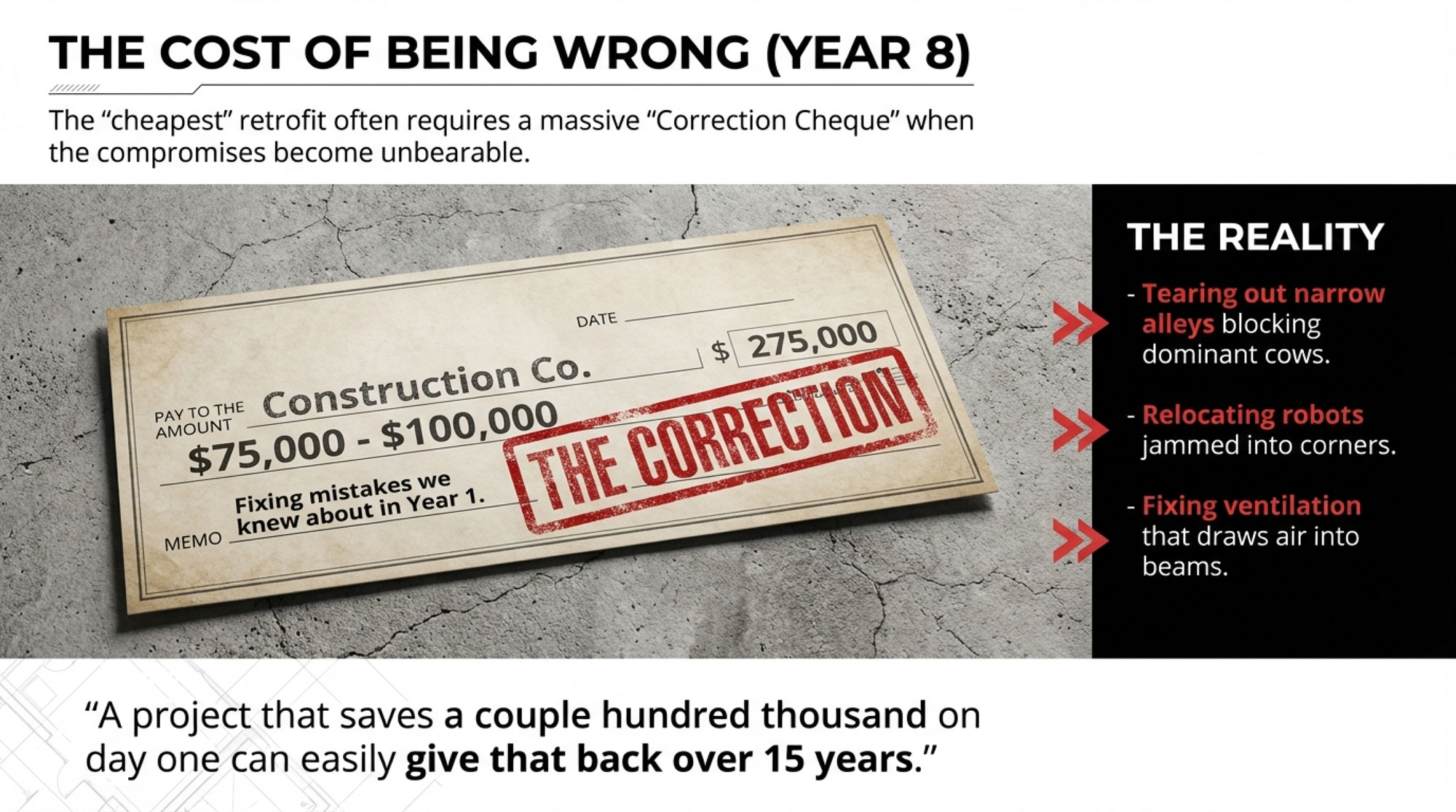
NewsSubscribe
First
Last
Consent

Milking Robot Market Set to Surge: 6.4% CAGR Growth Projected, Reaching US$ 4.66 Billion by 2035

Dairy farming is on the cusp of a robotic revolution. With the global milking robot market set to hit $4.66 billion by 2035, these high-tech helpers are transforming farms worldwide. From boosting milk yields to slashing labor costs, discover how AI-powered milking is reshaping the future of dairy.

Summary:

The global milking robot market is poised for significant growth, with projections indicating a 6.4% CAGR from 2025 to 2035, reaching US$ 4.66 billion by the end of the period. Driven by factors such as labor shortages, government support, and the demand for efficient, sustainable dairy practices, these automated systems are revolutionizing the industry. Milking robots are gaining traction worldwide, particularly in North America and East Asia, offering benefits like increased milk yield, reduced labor costs, and improved animal welfare. Despite challenges such as high initial costs and the need for technical expertise, ongoing technological advancements and the potential for improved farm management make robotic milking systems an increasingly attractive option for dairy farmers of various scales. As the market evolves, it’s clear that these automated systems will play a crucial role in shaping the future of dairy farming, balancing traditional practices with cutting-edge technology to ensure the industry’s long-term sustainability and profitability.

Key Takeaways:

  • The global milking robot market is projected to grow at a 6.4% CAGR from 2025 to 2035.
  • Market value is expected to increase from US$ 2.5 billion in 2025 to US$ 4.66 billion by 2035.
  • North America is set to dominate the market, with a 30.8% share expected in 2025.
  • Rotary systems are the leading segment, projected to reach US$ 2.47 billion by 2035.
  • Key drivers include labor shortages, government support, and demand for efficient, sustainable dairy practices.
  • Benefits include increased milk yield (up to 15%), reduced labor costs, and improved animal welfare.
  • Challenges include high initial investment costs and the need for specialized technical expertise.
  • The technology suits various farm sizes, with ongoing innovations addressing large-scale operations.
  • Future developments in AI capabilities, system integration, and more affordable solutions are expected.
  • Milking robots are poised to play a crucial role in shaping the future of modern, efficient dairy farming.
milking robots, dairy automation, robotic milking systems, automatic milking, dairy farm technology

The global milking robot market is expected to experience significant growth in the next decade. Projections suggest a strong compound annual growth rate (CAGR) of 6.4% from 2025 to 2035—a report by Fact.MR projects the market to grow from US$ 2.5 billion in 2025 to US$ 4.66 billion by 2035, showcasing a substantial increase in market size. This projected growth underscores the increasing adoption of automation technologies in dairy farming, driven by labor shortages, rising operational costs, and the growing demand for efficient and sustainable dairy production practices. 

The Rise of Robotic Milking Systems 

Milking robots, also known as automatic milking systems (AMS), are revolutionizing the dairy industry by offering farmers a range of benefits. These advanced machines automate milking and collect essential data on cow health, milk quality, and herd management. 

“To increase productivity, reduce costs, and enhance milk production, prominent milking robot manufacturing companies are investing more in development projects to launch systems with features such as artificial intelligence, sophisticated sensors, and others,” notes a Fact—MR analyst.

Milking robots are widely adopted in regions such as North America and Europe, which experience severe labor shortages and high labor costs. North America, for instance, is expected to hold a dominant position in the market, with a projected 30.8% share of the global milking robot market in 2025.

Key Drivers of Market Growth

  • Government Support: Many countries encourage farmers to adopt automation technologies through various incentives such as tax cuts, grants, and subsidies. These initiatives aim to modernize farming operations, increase productivity, and ensure compliance with environmental regulations.
  • Labor Shortages: The agricultural sector, particularly dairy farming, is grappling with significant labor shortages. Milking robots offer a solution by reducing reliance on human labor while maintaining consistent production.
  • Efficiency and Sustainability: The growing demand for sustainable and efficient dairy farming methods is driving the adoption of milking robots. These systems enable farmers to optimize milk production while adhering to stringent quality standards, especially for premium organic and specialty dairy products.
  • Technological Advancements: Ongoing innovations in AI, IoT, and sensor technologies are enhancing the capabilities of milking robots. These advancements are making the systems more efficient, reliable, and user-friendly. 

Market Segmentation and Regional Insights  

The milking robot market is divided into system types. Rotary systems are expected to lead the market due to their high milking capacity and efficiency. Demand for rotary systems is projected to reach US$2.47 billion by the end of 2035. They are particularly suitable for large dairy farms with high milk production requirements. 

North America, especially the United States, is set to dominate the market, with a projected market value of US$ 478.67 million in 2025. Moreover, the East Asian market is exhibiting promising growth, with an expected Compound Annual Growth Rate (CAGR) of 6.1% from 2025 to 2035. 

Impact on Dairy Farming Practices  

The incorporation of milking robots is revolutionizing conventional dairy farming practices. Farmers who adopt these systems experience significant benefits, including: 

  • Increased Milk Yield: Farms using AI-powered milking robots have reported up to 15% higher milk yields.
  • Labor Cost Reduction: Automated milking systems can significantly reduce labor costs.
  • Improved Animal Welfare: Milking robots allow cows to be milked according to their natural rhythms, potentially reducing stress and improving overall herd health.
  • Enhanced Data Collection and Analysis: Robotic systems provide farmers with a wealth of data on individual cow performance, health, and milk quality, allowing for more precise herd management and early detection of potential health issues.

Challenges and Considerations  

While the outlook appears promising, the adoption of milking robots encounters some challenges: 

  • High Initial Investment: The substantial upfront cost of implementing robotic milking systems can be a barrier for smaller operations.
  • Technical Expertise: The need for specialized technical knowledge and regular maintenance can impact overall demand, particularly in rural or underdeveloped areas where access to qualified technicians may be limited.
  • Integration with Existing Systems: Farmers may face challenges integrating robotic milking systems with their current farm management practices, especially in grass-fed dairy operations.
  • Farm Size Considerations: While robotic systems have proven effective for small—to medium-sized farms, their scalability and operational complexities hinder their widespread adoption in large-scale operations.

Future Outlook  

With the evolution of the dairy industry, milking robots are projected to play a more prominent role in the future. The market is likely to see further innovations, including: 

  • Enhanced AI and machine learning capabilities for more precise herd management
  • Improved integration with other farm management systems
  • Development of more affordable solutions for smaller dairy operations
  • Advancements in robotic systems suitable for large-scale operations

The global milking robot market is projected to reach US$4.66 billion by 2035, and these automated systems will play a pivotal role in shaping the future of dairy farming practices worldwide. With ongoing technological advancements and increasing awareness of their benefits, milking robots are set to become integral to modern, efficient, and sustainable dairy operations worldwide, improving milk quality, herd management, and overall farm efficiency. 

Learn more:

Join the Revolution!

Bullvine Daily is your essential e-zine for staying ahead in the dairy industry. With over 30,000 subscribers, we bring you the week’s top news, helping you manage tasks efficiently. Stay informed about milk production, tech adoption, and more, so you can concentrate on your dairy operations. 

NewsSubscribe
First
Last
Consent

The Robot Revolution: Transforming Organic Dairy Farms with Smart Tech in 2025

Organic dairy farms are going high-tech, stirring up more than just milk! From robot milkmaids to AI nutritionists, the future of farming is here. But is this tech revolution a udder disaster or a moo-velous opportunity? Dive into the world where Bessie meets binary in our latest scoop!

Summary:

The article discusses how technology will change organic dairy farms in 2025. Farmers use robots for milking, AI for feeding, and devices to track cow health. This technology helps farms run better and be kinder to the environment. However, there are concerns about losing touch with organic traditions and keeping farm data safe. Experts think the best future for organic dairy farms is combining technology and traditional methods. Stakeholders are encouraged to embrace these technological changes while focusing on organic farming values.

Key Takeaways:

  • Robotic milking systems allow cows to decide when to be milked, enhancing milk production and cow welfare with growing market significance.
  • Smart feeding systems utilize data to optimize cow diets, reducing nutrient runoff and promoting sustainable farming.
  • Wearable technology on cows provides early detection of health issues, balancing monitoring with natural behaviors.
  • Data management is crucial for farms, with a need for secure access to prevent misuse while considering the benefits of data sharing.
  • Integrating technology in organic farming requires balancing innovation with traditional values to maintain organic integrity.
organic dairy farms, robotic milking systems, AI nutritionists, sustainable farming technology, data management in agriculture

In 2025, organic dairy farms are going high-tech, causing quite a stir. Due to the increasing demand for organic milk and a shortage of workers, farmers are resorting to intelligent computers and robots for assistance. Is this the path we envision for our “natural” milk? Let’s ponder. Let’s explore how new tech changes organic dairy farms and what it means for farmers, cows, and your morning cereal. 

Robot Milking Machines: Cows in Charge? 

YearGlobal Milking Robots Market Value
2024$3.2 billion
2029$5.3 billion (projected)

Imagine cows lining up for a robot massage that gives milk. That’s basically what’s happening on many organic farms now. These robot milkers empower cows to choose when they wish to be milked. Doesn’t that sound like a cow-friendly approach? Nevertheless, the rapid integration of these machines is noticeable. 

The market for robot milkers has been experiencing exponential growth, with a value of $3.2 billion in 2024 and expected to reach $5.3 billion by 2029. This influx of robotic assistants represents a substantial shift in the industry!

Dr. Alex Bach, a prominent figure in dairy farming research, reveals: “Robotic milking is essential for the survival of organic dairies in today’s competitive market, not just a novelty.”

Are we turning organic farms into industrial operations? What’s the cost? How can farmers juggle automation with maintaining a personal bond with their animals? What happens during power outages? 

Smart Feeding: Computers Playing Cow Chef 

Farms are now using intelligent computers to plan cow menus. These systems crunch numbers to figure out the perfect meal for each cow. How does this benefit both the bottom line and Mother Earth? 

According to a study, this tech wizardry can reduce waste runoff by 30% on organic dairy farms, offering significant environmental benefits. That’s like giving a cow a makeover! 

But wait a minute. Isn’t organic farming supposed to be about cows munching on grass in open fields? Does letting a computer play cow chef still count as “organic”? And what happens when the grass isn’t as green as the computer expects? 

Health Tracking: Big Brother for Bovines 

Cows now wear more high-tech accessories than rappers. They’re wearing high-tech collars and earrings that can: 

  • Snitch if a cow is skipping meals
  • Spill the beans when a cow’s ready to have a calf
  • Tattle if a cow might be coming down with something

This tech helps farmers catch problems early. But is it crossing a line? Are we turning organic farms into a cow surveillance state? 

Think about this: your cow collar rats you out for eating less. Should the farmer rush in or mind their own business? How would you feel if someone monitored every bite you took? 

Data Overload: Too Much Cow Info? 

All this new tech is sharing information like a talkative teenager. Farmers are drowning in cow data. While special computer programs assist in data interpretation, keeping this information secure presents a new concern. 

Dr. Jennifer Harnish from Aurora Organic Dairy stresses the importance of data security in farming, stating, “Data is as valuable as gold in farming. Farmers need to be cautious about data access and usage.” 

Are organic dairy farms turning into fortresses to keep their computer info safe? And what if all this juicy cow data gets into the wrong hands? 

Old School vs. New Cool: Can They Mix? 

As farms go all “beam me up, Scotty,” it’s crucial not to forget what makes organic farming unique. The challenge is finding the sweet spot between Star Trek and Old MacDonald. 

Michael Strohmaier from Crystal Creamery states that technology should support farmers like a sidekick, not take center stage. It should enhance farmers’ connection to the land, not diminish it. 

How are the cream of the crop organic dairy farms using new tech without selling their soul? Can robots and tradition play nice, or is it a recipe for disaster? 

What’s Next: Brave New World or Dairy Dystopia? 

TrendDescription
Robot InvasionMore mechanical milkmaids and feeding systems
AI TakeoverComputers managing breeding and cow health
Eco-Warrior FarmsTech helping farms reduce environmental impact
Milk TraceabilityTrack milk from farm to table with precision
Personalized Cow CareIndividual attention for each bovine
Clean EnergyFarms powered by solar and wind energy

The Bottom Line

The future of organic dairy farming is a wild ride, folks. Smart tech and robots can make farms run smoother than butter, be nicer to cows, and kinder to Mother Earth. But farmers need to watch out, or they might have more tech than sense. 

If you’re a farmer: Take a good, hard look at your operation. Where could some robot helpers or AI brains give you a boost? Start small, or you might bite off more than you can chew. 

If you’re a milk guzzler, look for farms that use technology in innovative ways. Don’t be afraid to ask tough questions about how they’re making your moo juice. 

If you’re making the rules, Roll up your sleeves and work with farmers and tech geeks. Ensure the rulebook keeps up with the times but doesn’t abandon organic standards. 

By embracing the future while keeping it real, we can improve dairy farming for everyone – farmers, cows, and milk lovers alike. The future of organic dairy is unfolding before us – let’s ensure it’s a story of triumph, not a tale of terror! 

Learn more:

Join the Revolution!

Bullvine Daily is your essential e-zine for staying ahead in the dairy industry. With over 30,000 subscribers, we bring you the week’s top news, helping you manage tasks efficiently. Stay informed about milk production, tech adoption, and more, so you can concentrate on your dairy operations. 

NewsSubscribe
First
Last
Consent

The Robotics Revolution: Embracing Technology to Save the Family Dairy Farm

See how robots are changing family dairy farms. Can machines help farms last and bring in young farmers? Find out what the future holds. 

Amidst the quiet fields of Wisconsin, the Bauer family has been dairy farming with their herd of Holsteins for many years. However, the future looks challenging with fewer workers available and rising costs. Their situation is similar to many others. In this shrinking landscape, robotics offers a glimmer of hope, providing a way to survive and thrive. For families like the Bauers, using technology is essential to keep their tradition alive while facing today’s challenges.

YearNumber of Family Dairy FarmsPercentage DeclinePrimary Factors
1970640,000
1985300,00053.1%Industrialization, Milk Quotas
2000107,00064.3%Global Market Pressures
201051,00052.3%Regulations, Economic Downturn
202340,00021.6%Labor Shortages, Rising Costs

Navigating the Storm

The dairy industry today faces a significant challenge. Labor shortages make it difficult for farms to work well, and many family-owned dairy farms struggle to find enough skilled workers. Unpredictable milk prices change frequently, making it challenging for farms to keep going. This financial uncertainty is a real problem for many family farms

Another issue is that production costs are rising. This includes the cost of feed, maintenance, and following environmental regulations. All these added expenses cut into the farms’ profits, and some are close to shutting down. Family dairy farms have been vital to rural communities, representing a tradition of working with the land and animals. They’ve supported families for generations, creating bonds with their surroundings. But now, these farms are under more pressure than ever before. 

While introducing new technology requires investment and change, it also offers significant benefits. Technology can help achieve environmental goals more effectively, which incur costs and affect farm management strategies. These issues underscore the urgent need for substantial changes in the industry’s operations. As the dairy sector grapples with these challenging times, adopting new technologies like robotics could be the key to survival. This could help family farms preserve their traditions, meet modern needs, and thrive in the future.

Facing Reality: The Trials of Family Dairy Farms

Despite these significant challenges, family dairy farms, once the backbone of rural life, remain firm. They face complex issues, particularly in finding and retaining skilled workers. Farmers are overworked, and fewer workers impact their efficiency and quality. Many have increased their herds to stay profitable, which adds to their problems. Larger herds mean more work and strain, leading to tired farmers and worse animal care. However, their resilience and determination to adapt to the changing landscape of dairy farming are truly inspiring. It’s this resilience that gives hope for the future of dairy farming. 

In addition, farms must follow stricter environmental rules regarding waste and pollution. They must also examine their eco-footprint and adopt practices that meet today’s environmental standards, which adds more financial and logistical pressures. 

There is an urgent need to find new solutions. Technology, especially robotics, offers a way forward. It can smooth operations and lessen dependence on human labor. With these innovations, family dairy farms can survive the storm, keeping their legacy alive while adapting to a new world. 

The Arrival of Automation: Revolutionizing Dairy Farming 

Introducing automatic milking systems is changing how dairy farming works, bringing new technology to traditional practices. As old methods struggle with current challenges, automation gives hope to family dairy farms. These systems have robotic arms with sensors that clean and attach milking cups to cow udders. When a cow enters the milking station, sensors decide the best time to start milking, reducing stress and improving yield. Intelligent software oversees the process, giving each cow special attention based on health and past data.

A significant benefit is that robots can work nonstop, unlike humans. This allows cows to be milked multiple times daily based on their natural needs, increasing milk production and improving animal welfare. Cows choose when to be milked, reducing anxiety and enhancing herd well-being.

Automatic milking systems offer more than just efficiency. They blend data-driven decisions with animal care, creating a better workflow that helps both farmers and cows. This mix of technology and tradition opens up possibilities for ongoing success in dairy farming.

Benefits of Automation in Dairy Farming

Robotic milking systems and automation are becoming key tools in modern dairy farming. They help family farms face tough times by using technology to improve and make work easier. These systems change how dairy farms operate, making them more efficient and sustainable. 

  • One significant advantage of robotic systems is that they work 24/7, providing constant milk production. This nonstop work boosts efficiency and helps farms produce more milk without relying on human labor. It also reduces labor costs, freeing farmers to focus on other essential farm tasks. The results are precise: farms using robotic milking systems see a 5-10% boost in milk production [source]. Over time, the increased productivity and reduced labor costs can offset the initial investment in these systems, making them a sound economic choice for dairy farms.
  • Robotic milking is also better for cow welfare. Cows can choose when they want to be milked, lowering stress compared to regular milking schedules. This freedom makes cows healthier and can increase milk yields. Moreover, these systems are designed to be environmentally friendly, with sensors that collect data about milk quality and cow health. These sensors give valuable insights into farm performance and reduce the farm’s ecological footprint. 
  • Technologies like the Lely Astronaut and DeLaval VMS are leading the way. The Lely Astronaut focuses on each cow’s needs by feeding them the right amount. DeLaval’s VMS stresses flexibility and productivity, letting farms tailor settings to their needs. These tools show the future of dairy farming, mixing function with the latest research for modern needs. 

In this era of technology, adopting robotic systems is crucial for family dairy farms to continue to thrive. Technology’s potential to rejuvenate the industry and attract a new generation of farmers makes us optimistic about its future. With the right tools and strategies, the dairy farming industry can survive and thrive in the face of modern challenges. 

Challenges and Considerations

Switching to robotic milking systems comes with its own set of challenges. First, the start-up costs are high. A single milking robot costs between $150,000 and $200,000, which can be a significant expense for family farms. Learning to use this new technology also takes time and effort. Farmers who are used to traditional methods must learn about robotics and how to use data, which requires training and patience. 

Farms might also need to change layouts to accommodate the new robotic systems. Many barns built for older methods aren’t ready for robots, which means extra costs and planning during the switch. Another critical issue is keeping the robots running smoothly. Regular maintenance and the chance of breakdowns can interrupt daily farm activities, making good technical support crucial.

Adding robotic systems requires farmers to change how they manage their operations. They must learn new skills to handle these advanced machines, including training to run and fix the robots safely and efficiently. 

Learning to use robotic technology can also be challenging at first. Farmers need to watch how cows behave to ensure they are getting used to the new systems. Having someone ready to fix problems quickly is essential so there is as little downtime as possible. 

Robotics are expected to remain a key part of dairy farming, so farmers must keep learning about the latest advancements. Over time, many farmers have found that robotics improves technology, makes labor more efficient, boosts animal health, and helps improve the quality of life for the farm family and workers.

Unlocking Financial Benefits: ROI of Robotic Milking Systems

The return on investment (ROI) for robotic milking systems (RMS) in the United States can benefit many dairy farms. Here’s a simple look at the factors affecting ROI: 

Initial Investment and Costs 

Upfront costs for RMS are high: 

  • Each robot costs $150,000 to $200,000 and can handle 50-70 cows.
  • A new facility with four robots (240-280 cows) can cost $2.2-$2.4 million, including building and robots.

Extra costs include: 

  • Repair and maintenance, usually $7,000-$15,000 per robot yearly.
  • Possibly higher insurance and energy bills.

Labor Savings 

RMS can save on labor: 

  • Savings can be 75 cents to $1 per hundred pounds of milk.
  • Studies show labor savings of up to 29%.
  • Annual labor cost savings may reach $44,030 for a typical farm.

Milk Production and Quality 

RMS can boost milk production and quality: 

  • Milk yields can rise by 5-10% after switching to RMS.
  • Some farms see increases from 7,000 to 9,000 liters per cow annually.
  • Better milk quality can fetch higher prices.

Cow Health and Longevity 

RMS can improve cow health and lifespan: 

  • Less lameness and healthier teats.
  • Cows might have longer productive lives.

Payback Period and ROI Calculation 

The payback time for RMS can differ: 

  • Some estimates say a 7-year payback time.
  • ROI may be better for farms milking twice a day instead of three times.

To figure out ROI, consider: 

  • Higher milk production
  • Labor savings
  • Changes in running costs
  • Better cow health and lifespan

Factors Affecting ROI 

Things that can impact the ROI of RMS: 

  • Size of the herd and farm management
  • Current labor costs and availability
  • Milk prices
  • Loan terms and interest rates
  • Lifespan of the equipment (usually 10-13 years)

Although the initial investment in RMS is high, many U.S. dairy farms find the long-term benefits worth it. ROI can be handsome for farms with labor shortages or those wanting to improve cow welfare and milk production efficiency. However, each farm’s situation differs, so a detailed financial analysis is essential before investing.

Case Studies: Successful Implementations

Despite these challenges, many farms have successfully added robotic milking systems, showing how technology can transform dairy farming: 

  • Hinchley Dairy Farm, U.S.: Tina Hinchley faced labor shortages and high costs at her family farm. They installed Lely robots for tasks like milking and feeding. This brought a significant 10% boost in milk production. Cows now choose when to be milked, which helps their health. The farm became more efficient, tackling big financial and labor problems.
  • Elliot Family Farm, U.S.: This family farm in the U.S. uses 20 DeLaval milking robots, which cut work costs and increase milk production by 10%. These robots help keep cows healthy and milked regularly. The farm also reduces waste, using resources wisely to meet eco-friendly demands. 
  • The Casey Family Farm, Co Ireland: The Casey Family Farm used GEA’s robotic milking systems to reduce labor needs by 25%. This change saved money and improved cow health, which was threatened by a lack of help. Automation allowed the farm to focus more on managing the farm, overcoming the labor crisis, and achieving farming excellence.

The Crossroads: Traditional vs. Robotic Milking Systems

 Traditional Milking SystemsRobotic Milking Systems
Labor IntensityRequires significant manual laborMinimal manual intervention is needed
Operational CostsLower initial cost, higher labor costs over timeHigher initial investment, lower labor costs
Milking FrequencyFixed schedule, typically twice a dayFlexible, as cows can choose timing
Animal WelfareDependent on human managementEnhanced through more natural milking routines
Data CollectionLimited manual data recordingAutomated real-time data analytics

Every dairy farm has a big choice: traditional or robotic milking systems. This choice affects daily work and the farm’s future success. Traditional milking needs much human help and fixed schedules, which can stress cows and affect their health (source). Robotic systems, on the other hand, let cows be milked when they want, improving their health and reducing stress. 

  • Labor Efficiency: Traditional milking requires many workers, but robotic systems reduce the need for manual work.
  • Cow Welfare: Traditional systems make cows follow a fixed schedule, while robotic systems allow them to milk whenever they like, reducing stress.
  • Data Use: Traditional milking gives limited information, but robotic systems use sensors to provide real-time data about cow health and milk quality.
  • Initial Cost: Robotic systems are expensive, which can be challenging for small farms. Traditional systems cost less upfront.

These differences show how robotics can change dairy farming. Robotic systems can increase efficiency and sustainability for those ready to try something new. However, switching to these systems requires careful consideration of costs and changes in farm operations.

Future Outlook for Robotic Dairy Farming

When we consider the future of dairy farming, combining robotics and artificial intelligence promises significant changes. This isn’t just about new technology; it’s about changing old ways. Francisco Rodriguez, an expert in robotic milking, says, “We’ve seen great improvements in herd health and productivity, along with easier management due to detailed analytics.” His thoughts show how valid real-time data can be. 

New ideas are coming that will change dairy farming, such as: 

  • AI-Driven Health Monitoring: These systems change how farmers manage herd health. By constantly monitoring the herd’s health, they spot problems early so farmers can act quickly. This helps prevent diseases from spreading and keeps animals healthy. Healthier cows produce better milk, making these systems beneficial for animal welfare and farm productivity.
  • Predictive Maintenance for Robots: AI helps farmers predict when robotic equipment might break down. This allows them to fix problems before they occur, reducing stoppages and making machines last longer. This means the farm runs smoothly, and milking happens without disruptions. 
  • Precision Agriculture Integration: AI and precision farming work together to use resources like water and feed more efficiently. This targeted use cuts waste, increases sustainability, improves farm profits, and reduces environmental impact. As these techniques grow, farms will benefit more.

These advancements allow family farms to stay financially strong and show they care for their animals and the environment. With every new idea, the future of dairy farming gets brighter, ready to face the modern agricultural world

The Bottom Line

Adopting robotic milking systems is a significant change for family dairy farms. The challenges might seem harsh, but the benefits—better efficiency, improved cow health, and a better work-life balance for farmers—are enormous. In today’s dairy world, these technologies are crucial for farms that want to succeed. Robotic systems for family farms like the Bauers keep traditions alive while meeting modern needs. By carefully looking at costs and planning, dairy farmers can lead this tech revolution, ensuring a promising and prosperous future for the next generations. Embracing this new tech is not just an option; it’s crucial for securing the future of dairy farming. 

Key Takeaways:

  • Family dairy farms face increasing challenges like labor shortages and rising production costs.
  • Robotic milking systems offer 24/7 operation, increased efficiency, and significant labor savings.
  • Automation increases milk production and enhances cow welfare and work-life balance for farmers.
  • High initial investment and necessary technical skills are barriers to adopting robotic systems.
  • Successful case studies highlight the transformative potential of automation in dairy farming.
  • Future AI and machine learning advancements will further optimize dairy farming operations.
  • Embracing robotics is crucial for family dairy farms’ future sustainability and profitability.

Summary: 

This article explores how robotic milking systems are changing family dairy farms, which face problems like labor shortages, high costs, and the need for more sustainable practices. Using automation, these farms can work more efficiently, take better care of animals, and appeal to younger people, helping them stay profitable. The article discusses the benefits of robotics, such as increased milk production, improved work-life balance, and better sustainability. It also shares successful examples of farms using this technology while noting challenges like high costs and the need for training. Embracing robotics is essential for family dairy farms to succeed amid today’s agricultural challenges.

Learn more:

Join the Revolution!

Bullvine Daily is your essential e-zine for staying ahead in the dairy industry. With over 30,000 subscribers, we bring you the week’s top news, helping you manage tasks efficiently. Stay informed about milk production, tech adoption, and more, so you can concentrate on your dairy operations. 

NewsSubscribe
First
Last
Consent

Choosing the Right Robotic Milking System: Brands, Experiences, and Future Preferences

Discover leading dairy robot brands and user experiences. Would you make the same choice again? Gain insights for better farm decisions.

The quiet transformation of dairy farming inspires the industry as robots take over tasks like milking. A decade ago, the idea of machines milking cows was met with skepticism, but today, nearly 60% of large dairy farms in the U.S. have embraced automation in some form. This shift is not just a trend but a strategic move to stay competitive in a market where efficiency and accuracy are paramount. 

The role of dealer support when considering adopting a robotic system cannot be overstated. The right system can propel your farm forward, while the wrong one can lead to constant repairs and problems. It’s crucial to seek advice from those who have already ventured into automation. Ask them, “What robot system do you use and why? Would you choose the same brand again?” This emphasis on dealer support ensures that you’re not just investing in a system but in a reliable and supportive partnership. 

The Robotic Evolution: Transforming Dairy Farming

The progress in dairy farming technology, particularly in robotic systems, is remarkable. An essential brand in this field is Lely. Lely started by automating the milking process, and today, it offers advanced systems like the Lely Astronaut. This system uses high-tech sensors, software, and the Horizon app to give farmers easy-to-use tools for tracking each cow’s health and performance. This integration with herd management has changed farmer-cow interactions. 

GEA is another leader in this area with its R9500 robotic milking system. It combines one-touch technology and 3D cameras to handle the milking process efficiently. This technology reduces the need for manual work and improves milk quality. Additionally, the feeding system in these robots allows for multiple feed types, making feeding more flexible. 

DeLaval has made strides with the VMS™ V310 system. The Daily Cow Monitor provides real-time information about cows’ reproductive status, helping farmers make smart breeding decisions and improve herd fertility. Options for guided flow and manual attachment further add flexibility to the systems. 

The advancements in dairy robotics are not just about automation but a leap toward more innovative and sustainable farming. The focus is on better data, real-time options, and sound resource management. Today’s robots do more than automate—they pave the way for a future where farmers can better care for dairy cows, focusing on efficiency and sustainability. 

As robotics advances, farmers gain new tools that save time and cut costs while improving herd health. This evolution is about more than machinery—it’s about a new way of farming that emphasizes efficiency, sustainability, and animal welfare.

Lely: Merging Innovation with Unmatched Support in Dairy Automation

The Lely brand is known for being reliable and cutting-edge in dairy farm robotics. Farmers love Lely’s advanced machines and consistent support and service. This combo is key, as many dairy farmers praise Lely for its easy-to-use system and handy “Horizon app,” which help blend technology into daily work without hassle. Such tools are crucial for helping farmers use technology effectively. 

Good service support is essential, mainly when breakdowns occur. Lely’s strong support system builds trust and ensures smooth operations, even during repairs. As technology has advanced, users have seen Lely’s systems become easier and more reliable, showing their commitment to meeting the changing needs of the farming community

But no system is perfect. While many like Lely, some farmers may prefer brands like Gea for features like manual teat cup attachment, which Lely doesn’t offer. Yet, overall, the ease of use, better performance, and strong dealer network usually make Lely the top choice. The saying “once you go Lely, you’ll never go back” describes the loyalty it inspires among users. 

With its mix of strengths and room for improvement, Lely remains a strong leader in dairy robotics. It is backed by high farmer satisfaction and a focus on user-friendly tech innovation.

GEA: Pioneering with Precision and Efficiency in Dairy Robotics

GEA stands out in robotic dairy solutions by combining the latest technology with ease of use. Their one-touch system and 3D camera technology are game-changers in this field. 

The one-touch system significantly simplifies the milking process. It combines several steps—washing, stimulating, discarding, milking, and post-dipping—into one smooth operation. This feature is perfect for dairy farmers who want to improve efficiency with less hands-on work. 

Another key feature is GEA’s 3D camera technology. It helps ensure precision by detecting and adjusting for different cow sizes, making the milking process more effective. Plus, it can separate milk from quarters with high somatic cell count (SCC), which is crucial for maintaining high milk quality. 

However, GEA’s system could be better. Some users have found it requires careful maintenance. This highlights the importance of good dealer support, which can significantly affect the system’s performance over time. 

Despite some mixed reviews, GEA is still a strong choice in dairy automation. Anyone considering GEA should consider its advanced features and the support needed to keep things running smoothly.

DeLaval: Balancing Innovation and Practicality in Dairy Farming 

Delaval excels in dairy farming automation and is known for its helpful features, such as the progesterone tester and guided flow options. These tools help improve dairy management, smooth operations, and keep cows healthy. The progesterone tester is essential for farmers who are focused on reproduction. It offers quick and accurate hormone information to help breed and catch health issues early. Farmers appreciate that this tool boosts birth rates, shortens calving intervals, and reduces the need for vets. 

The guided flow system directs cows within the barn, ensuring they use automated milking stations well and stay calm. This boosts efficiency, increases milk production, and improves cow health. Many farmers like Delaval because of its dealer support and manual attach feature, which allows them some control over the milking process. 

Delving into dairy automation with Delaval machines can be intimidating without proper dealer support. A reliable dealer network is crucial for smooth farm operations for any milking system, especially for DeLaval.

Relying on the Right Support: The True Backbone of Dairy Automation

In dairy robotics, dealer support is crucial. It often decides how happy farmers are with their automation system. Many farmers stress how important strong dealer support is. One user says, “Good service is a must, no matter the machine.” Another agrees, “Dealer support can make or break the machine.” This shows that loyalty is more than just the machine; it includes the reliability of the support network. Quick and skilled service is vital in dairy automation, where breakdowns happen. These stories show that while features are essential, excellent service is key when choosing a system. For farmers, dealers are not just sellers; they are essential partners. This need for support builds brand loyalty and leads to picking systems that offer innovation and reliable help when needed. Choosing a dairy robot means having a ready service team to help when needed.

Titans of Dairy Automation: Navigating the Giants of Lely, GEA, and DeLaval

Dairy automation is dominated by three major players: Lely, GEA, and DeLaval. Each has unique systems designed to meet different farmer needs. Understanding what each offers can help farmers make better decisions. 

  • Main Features: Lely is known for its easy-to-use systems and innovative software, such as Lely Horizon, which makes it simple to fix problems when they arise. GEA is known for its one-touch system, which uses advanced 3D camera technology to make milking easy and efficient. It also allows for multiple types of feed, which can be cost-effective for farmers. DeLaval offers systems that guide cow movement and monitor cow health, including features like progesterone testing. 
  • Advantages: Lely’s most significant advantage is its reliability and strong service support, which make it appealing to those who value post-purchase service. GEA stands out for its precision and ability to handle multiple feed options, which can save money and boost production. DeLaval is praised for its supportive dealers and innovative monitoring, which helps keep cows healthy. 
  • Challenges:  No system is perfect. Lely might not suit those who prefer doing some tasks manually, whereas GEA offers more hands-on options. GEA’s complex technology might overwhelm those not used to high-tech systems. While offering detailed monitoring, DeLaval might feel too complicated for farmers looking for more straightforward solutions.
  • Choosing the Right System: Farmers must balance new technology and practicality. They must consider how much they need tech advancement versus strong dealer support, which is crucial. The dealer’s network could be more important than the brand, highlighting the need for good service support. 

The system choice depends on a farmer’s personal preferences, needs, and the practical realities of their farm. While each system can boost productivity, the right choice should fit the farm’s goals and abilities.

The Future Beckons: Embracing AI and Sustainability in Dairy Robotics

The world of dairy robotics is on the edge of significant changes. New technology is pushing old ways aside and moving the industry forward. Dairy farmers now want robots that work better, are sustainable, and can adapt to changing market needs. Fast-growing technologies like artificial intelligence (AI) and machine learning aim to create more intelligent robots. These could improve herd management by giving farmers real-time data for better decisions. Plus, AI could predict machine problems before they happen, helping reduce downtime. 

Farmers are also looking for systems they can customize and expand. Future robots are expected to have modular designs, making it easier for farmers to adjust them based on herd size and production needs. This flexibility is essential because farms are not all the same size or output. They require solutions that grow with them. 

Sustainability is also a key concern for future robots. Consumers are more aware of environmental issues, and demand for systems that reduce ecological impact is growing. Technologies like renewable energy and better waste management are expected to make farms more eco-friendly. 

Experts think the next generation of robots will also improve animal welfare. Better sensor technology might help monitor health, ensuring timely care. Innovations in feeding systems could increase milk production and quality. 

Moreover, companies compete to offer the best support and service, as these are critical factors for farmers choosing robots. As tech advances, strong support networks become even more critical. This illustrates the need for strong ties between equipment providers and farmers. 

In summary, the future of dairy robotics has the potential to change farming. The possibilities appear exciting and endless if we embrace these new technologies while focusing on sustainability, efficiency, and animal health.

The Bottom Line

The choice of a robotic system for dairy farming is more complex. As our exploration revealed, each leading brand—Lely, GEA, and DeLaval—offers unique strengths, from user-friendly interfaces and advanced heat identification systems to comprehensive dealer support and innovative animal management solutions. The undeniable factor across all experiences is the critical role of dealer support, which can significantly influence the functionality and long-term success of these systems on your farm. 

Understanding your farm’s specific needs is the key to making the right choice. Whether you prioritize precision, efficiency, or support, aligning your decision with these requirements to optimize your investment is essential. As you weigh your options, ask yourself: Are your current systems meeting your operation’s demands, or is it time to embrace new technologies and support networks? The future of dairy farming beckons with promise and potential, so keep questioning and striving for improvement.

Key Takeaways:

  • Dairy automation is evolving with significant contributions from companies like Lely, GEA, and DeLaval, demonstrating varied innovation and user support strengths.
  • Lely remains a preferred choice for many due to its user-friendly interface, integrated systems, and reliable dealer support, emphasizing the importance of after-sales service in decision-making.
  • GEA provides a precision-driven approach with features like the one-touch system and advanced feeding options, yet past experiences with system issues highlight the variability in performance.
  • DeLaval is appreciated for its guided systems and practical features like manual operation, reinforcing the value of tailored functionalities in dairy robotics.
  • Purchasing decisions should consider robotic capabilities and the quality of regional dealer networks. Consistent service and support are critical to maintaining operational efficiency.
  • Continued investment and innovation in automated milking systems are essential for advancing sustainability and efficiency in the dairy industry. Artificial intelligence is shaping the future of farming.

Summary:

The dawn of robotic milking systems has revolutionized the dairy industry, offering farmers critical choices that affect productivity and workflow. Brands like Lely, GEA, and DeLaval stand out, each with distinct advantages such as Lely’s user-friendly interface, GEA’s precision-oriented features, and DeLaval’s innovative solutions combined with robust dealer backing. As Olivia Courtney Platt aptly suggests, “Dealer support can make or break the machine,” highlighting the importance of after-sale service. With nearly 60% of large U.S. farms incorporating automation, selecting the right system becomes pivotal—impacting advancements or leading to persistent issues. As the industry evolves, the future of dairy robotics promises advancements through AI and machine learning, fostering intelligent robots for improved herd management and minimized downtime, with farmers seeking customizable and modular designs.

Learn more:

Join the Revolution!

Bullvine Daily is your essential e-zine for staying ahead in the dairy industry. With over 30,000 subscribers, we bring you the week’s top news, helping you manage tasks efficiently. Stay informed about milk production, tech adoption, and more, so you can concentrate on your dairy operations. 

NewsSubscribe
First
Last
Consent

Feeding Strategies for Robotic Milking Success

Uncover the secret to doubling your dairy farm’s productivity with strategic feeding. Ready to boost your robotic milking herd and milk production?

Summary:

Dairy farming is evolving, and robotic milking is leading the charge by reducing labor, boosting milk production, and improving farmers’ lifestyles, especially for herds of 40 to 250 cows. Success in this field often hinges on effective feeding management, as ranked by experienced dairy producers. Understanding the interplay between cow behavior, diet, health, and milk production is crucial for these systems, leading to more frequent voluntary visits to milking stalls and healthier herds. While popular in Western Europe, Canada, and the US, these systems require careful attention to feeding methods to thrive. Factors like heat stress and social dynamics can impact feed consumption and robot visits. Three main approaches to feeding robotic milking herds in confined housing include partial mixed ration (PMR), feeding solely fodder on the bunk, and guided traffic systems.

Key Takeaways:

  • Effective feeding management can be a game-changer for robotic milking success.
  • Robotic milking systems significantly reduce labor and enhance cow health and performance.
  • Understanding the complex relationship between cow behavior, diet, health, and milk production is vital.
  • Heat stress and social dynamics can affect feed intake and milking frequency.
  • Three main feeding strategies: partial mixed ration (PMR), feeding forage only on the bunk, and guided traffic systems.
robotic milking, dairy farming technology, feeding management, cow behavior, milk production, dairy herd health, automated milking systems, dairy farming trends, feeding methods for cows, robotic milking benefits

Robotic milking systems are rapidly gaining popularity, especially in Western Europe, Canada, and the United States. These systems save time, increase milk supply, and promote a healthier lifestyle for the cows. However, to fully reap these benefits, efficient feeding methods are crucial. More than merely installing a robot is required; you must also manage your herd’s nutrition. Proper feed management ensures cows visit the milking box frequently, increasing efficiency and productivity. It leads to less effort, more productivity, and a better lifestyle. So, how can you effectively feed a robotic milking herd? Explore the best methods and ideas to transform your dairy farm.

The Game-Changer for Robotic Dairy Farmers: Turning Feed into an Irresistible Milking Magnet!

Typical dairy feeding regimens aim to fulfill the cow’s nutritional requirements while keeping her healthy, maximizing feed efficiency, and lowering expenses wherever feasible. If you’re a dairy farmer, you already know this.

But here’s the twist: if you’ve mastered robotic milking, you have a game-changing fifth target on your list. What is it? It all comes down to making the feed appealing enough to entice your cows to walk to the robotic milking cubicle regularly. Consider this: your cows are motivated, making regular excursions independently, reducing the need for fetching and milking more often at regular intervals. It’s like winning the jackpot for milk production!

Why is this so important? Motivated cows with a regular milking schedule reduce your work burden and feed more, increasing milk output. Isn’t this a win-win for everyone?

Navigating the Intricate Web: Cow Behavior, Diet, Health, and Milk Production 

The delicate balance between cow behavior, food, health, and milk output becomes even more complex in a voluntary milking system. Consider this: when cows are given fresh, nutritious feed regularly, they consume more. This alteration in eating habits results in increased feed intake, which boosts milk production. It’s a win-win, right? But wait on—things aren’t always that simple. Assume a cow’s diet is high in grain and poor in fiber. This imbalance might result in health problems such as lameness. A lame cow will visit the milking robot less since moving is difficult. Reduced visits lead to reduced feed intake and, subsequently, a decrease in milk production. Diet impacts health, which in turn influences behavior and productivity.

Hot weather adds another level of intricacy. Cows under heat stress tend to be less active and consume less. Fixed milking intervals in a conventional milking arrangement may reduce output loss; however, feeding and milking frequency decrease in robotic milking systems, causing a negative spiral. Less frequent trips to the robot result in reduced feed consumption, reducing milk production. More frequent milking may enhance milk supply, meeting the cow’s nutritional requirements. Her health may suffer if her diet cannot keep up with her increased output. Inadequate nutrition may cause ketosis or acidosis, negatively impacting cow health and production.

The social dynamics of the herd also play a significant influence. In guided traffic systems, subordinate cows may be harassed by dominant cows, restricting their access to food and the milking robot. This social stress deleteriously influences their health, behavior, and milk supply. The relationships between behavior, food, health, and milk production are dynamic. Any change in one element causes ripples in the others, necessitating a vigilant eye and careful supervision to ensure the system operates harmoniously.

Imagine Your Cows Aren’t Just Not Feeling Up to It—they’re Hurting. Lameness is like the Kryptonite of Robotic Milking Systems. 

Assume your cows are more than just unmotivated. They are suffering. Lameness is like the kryptonite of robotic milking machines. You see, lame cows visit the robotic milker less often. Instead of trotting over like the others, they hobble, pause, and usually have to be retrieved.

But don’t just take my word for it. Studies have found that lame cows have a much-decreased frequency of voluntary milking. These cows are more likely to stay in the barn until fetched. This adds to your workload and causes stress for the cow, which may impact its general health and milk output.

So, what can you do about this? Understanding the underlying dietary variables that lead to lameness is critical. Keeping an eye on your herd’s foot health may greatly influence their enthusiastic trips to the robotic milking station, minimizing the need for human intervention and increasing overall farm efficiency.

Three Routes to Feed Success with Robotic Milking Herds 

Let’s look at three primary techniques for feeding robotic milking herds in confined housing. First, a partial mixed ratio (PMR), including pelleted concentrate, is employed. This system includes a PMR for output levels lower than the herd average, with extra pelleted concentrate supplied in the robotic milking box. Feeding a PMR ensures that cows get constant nutrition, while the concentrate encourages them to visit the robots often. These pellets are usually made with highly appetizing components to increase uptake during milking. According to studies, pellet quality is critical to encourage frequent robot visits.

Another technique is to feed solely fodder on the bunk and provide complete concentrate in the milking box. This technique may be beneficial in inaccessible traffic sheds. This system uses robotic feeders to give cows personalized grain allocations during milking. This approach may improve milking frequency, but it needs thorough supervision to ensure that cows get appropriate daily feed. Limiting feed pace to match the cow’s eating rate is also essential for avoiding leftover feed and keeping appetite for the next visit.

Finally, let’s discuss guided traffic systems. These systems use an organized strategy to direct cows to milking robots before or after feeding, depending on their eligibility for milking. Cows are driven to robots along planned paths in guided traffic barns. This may minimize concentrate allocation in the milking box. This may frequently reduce the number of cows that must be fetched while increasing labor efficiency but at the expense of lower cow comfort and natural eating behavior. What is your experience with these methods? Would changing your present method provide better results?

Free vs. Guided Traffic Systems: Which Path Leads to Farm Success? 

Free vs. directed traffic systems offer two separate approaches to regulating cow movement on the farm, especially regarding milking robots. Cows in free traffic systems may travel freely between feeding, resting, and milking facilities, with no physical obstacles or stringent guidelines. This approach encourages natural behavior and increases cow comfort. One research study (Hermans et al., 2003) indicated that cows in free traffic systems consumed more dry matter and spent more time lying down than in guided systems. Furthermore, research shows that free traffic reduces waiting times and stress for cows, making it a more natural and welfare-friendly option.

In contrast, directed traffic systems employ gates and obstacles to manage cow movement, ensuring cows pass through the milking robot before or after accessing the feed. This strategy reduces the number of cows that must be fetched, increasing labor efficiency. For example, research comparing various traffic systems found that directed traffic decreased the number of fetch cows while increasing labor efficiency. However, this strategy has a significant influence on cow comfort. The research found that cows in guided traffic systems consumed fewer meals daily (6.6 vs. 8.9 meals in free traffic) and spent more time waiting for milking.

Regarding feeding tactics, free traffic necessitates using appealing concentrates in the milking robot to attract cows. Failure to do so may result in fewer voluntary visits to the robot. For example, on one Ontario farm, switching to a more vital, appealing pellet boosted voluntary visits per cow per day from 3.40 to 4.04. Guided traffic systems may allow for less attractive, less costly feed choices without affecting milking frequency since cows are led to the milking station regardless of the meal’s attraction. Finally, the decision between free and directed traffic should include labor efficiency, feed prices, and, most significantly, cow comfort and welfare. According to recent statistics, free-traffic farms may produce more milk per cow, increasing by 2.4 lbs and 148 lbs per cow and robot daily.

Picture This: Cows Eagerly Lining Up for Milking, Not Out of Necessity, But Because They Crave the Tasty Treats in the Milking Stall 

This is more than a pipe dream; giving palatable concentrate in the milking stall is critical to the success of your robotic milking system. Look at why these tempting pellets may make or ruin your dairy enterprise. One Ontario farm experienced considerable increases after switching to a higher-quality pellet, with voluntary visits jumping from 3.40 to 4.04 per cow per day and voluntary milkings increasing from 1.72 to 2.06. It’s like moving from generic goodies to gourmet munchies; the cows enjoyed it and milked more often.

Another research showed that various pellet compositions significantly influenced cow behavior. Danish researchers tested seven pellet compositions and determined that a barley and oats combination resulted in the most visits and milk production. In contrast, less appealing elements like maize and dried grass resulted in fewer visits and lower output. In Pennsylvania, a study of eight dairy farms utilizing robotic milking systems indicated that cows fed better-quality pellets containing wheat midds as a critical element had more excellent milking rates, ranging from 2.7 to 3 times daily. Each cow generated around 77.6 pounds of milk each day.

But it’s not only what’s in the pellet; how it’s created is as important. Weaker pellets may degrade, producing fines that cows dislike. One research study found that when cows were given pellets with greater shear strength and fewer fines, they visited and milked more. Canadian research confirmed this, finding that cows given a combination of high-moisture corn and pellets had fewer visits and milkings than those fed stronger commercial pellets, decreasing milk output. In conclusion, investing in pleasant, high-quality pellets is essential. The more appealing the reward, the more eagerly the cows approach the robotic milker. So, when you prepare your feeding strategy, remember that a happy cow is more productive.

Looking to Boost Your Feeding Management Game? Here Are Some Practical Tips! 

Do you want to improve your feeding management game? Here are some practical ways to maintain your robot pellets in good condition while ensuring that your storage and distribution systems work correctly. First and foremost, pellet quality is critical. While your feed provider should emphasize quality, your farm practices may make a significant impact. Ideally, you should have two bins for each kind of feed. This enables a thorough cleanup, reducing the accumulation of stale or damaged pellets.

Next, pay attention to your drills. Flex augers should have a maximum length and mild bends, ideally in the same direction as the drill revolves. If feasible, utilize chain and paddle augers—they cause less damage to pellets and help preserve quality. Clear plastic hoppers above the robots allow you to evaluate whether or not there is feed inside. Incorporating this into your everyday cleaning and maintenance regimen will help keep things running smoothly.

Now, let us discuss about calibrating. The pellet distribution system must be adjusted regularly, preferably once every few weeks. Proper calibration ensures that the appropriate number of pellets are distributed, critical for consistent feeding and little waste. By following these guidelines, you’ll be well on your way to improving your robotic milking process, making you and your cows happy!

Ever Thought About Organizing Your Cows Like a High School Yearbook? 

In robotic milking herds, cows are often grouped by age and size. The concept is straightforward: similar-sized cows may compete more equitably for resources like feed and space, resulting in a more peaceful barn environment. Imagine sharing a living space with someone three times your size; that wouldn’t be ideal for anybody. Stable social groupings considerably improve overall cow contentment and lower the amount of dominance-related conflicts. When cows understand their position in the social structure, there is less stress, less injury, and overall higher morale. As you would expect, happy cows are typically more productive cows.

Cows in larger herds may be categorized based on age and output levels. For example, new cows may have a group to alleviate stress and ensure they get the additional care they need soon after calving. As cows proceed through their lactation cycle, they may be assigned to various groups to fulfill their changing nutritional and social demands.

One area suitable for future investigation is the grouping of cows at the same stage of lactation. This technique is not popular, mainly because it may underutilize robotic milking systems at specific periods. However, the benefits might be significant. Consider how much simpler it would be to handle feed and healthcare if all of the cows in a bunch had identical nutritional and medical requirements. Cows would benefit from a more stable social structure, which boosts milk output and cow health. What are your thoughts? Is it worth a shot?

Have you ever Wondered How Robotic Milking Fits into Grazing-Based Dairy Production Systems? 

Have you ever wondered how robotic milking integrates into grazing-based dairy production systems? This is an excellent task! Consider maintaining ideal milking frequency while your cows roam out in the pasture. Getting cows to approach the robots is more difficult when they are far from the milking machines. One major challenge is ensuring that cows’ visits are fairly distributed. But do not fear; there are answers. The FutureDairy initiative in Australia has done an excellent job of devising ways to deal with this issue.

Guided cow movement and selective access to new grass are sensible strategies. FutureDairy discovered that providing cows access to fresh pasture portions after each milking increased the frequency with which cows visited the robotic milking stations. Imagine your cows knowing they’ll be able to eat fresh, luscious pasture right after milking! Their findings revealed that transferring cows to fresh pastures every eight hours instead of twelve decreased milking intervals by 31% and increased milk yield by 20%.

Another option is supplementing with grass on a feed pad or in the barn when pastures are scarce. Timing is critical here. Offering additional feed after milking may increase milking frequency and ensure that cows make the most of their pasture. So, although pasture-based robotic milking may seem complicated, FutureDairy’s ideas demonstrate that with some fine-tuning, it can be a very efficient and productive system. It’s crucial to keep the cows interested and follow a constant regimen!

The Bottom Line

Robotic milking has transformed the dairy business by reducing labor demands and increasing milk output. Still, the key to realizing these advantages is appropriate feeding tactics. Cows are more likely to attend milking stations when fed high-quality, tasty pellets, which increases production and reduces labor costs. Furthermore, whether free or guided, comprehending traffic networks influences feed intake and cow comfort. Practical recommendations such as assuring pellet quality, correct storage, and system calibration are critical for smooth operations, and incorporating robotic milking into grazing systems shows potential if done carefully. Success in robotic milking systems ultimately depends on innovative feeding management, which allows dairy producers to reach their full potential. Dive further into the study and apply the findings to your operations; the future of dairy farming starts with what we feed our cows.

Learn more: 

Join the Revolution!

Bullvine Daily is your essential e-zine for staying ahead in the dairy industry. With over 30,000 subscribers, we bring you the week’s top news, helping you manage tasks efficiently. Stay informed about milk production, tech adoption, and more, so you can concentrate on your dairy operations. 

NewsSubscribe
First
Last
Consent

Unlocking the Potential of Tailored Nutrition with Automated Milking Systems

Boost your dairy farm’s efficiency with nutritional strategies for automated milking systems. Discover how diet impacts milk production and milking behavior.

Imagine a system that not only milks your cows precisely but also provides them with specialized feed, all while freeing up your time. This is the reality of Automated Milking Systems (AMS), a disruptive technology transforming the dairy sector. As more farms use these technologies, improving their efficiency has become critical. AMS simplifies milking and delivers valuable data for better herd management and production. The efficiency of AMS is highly related to the farm’s nutritional strategy. Nutritional techniques are the foundation of productivity. When used with AMS, the proper feed formulations can significantly increase milk output and enhance quality, making it a powerful tool for dairy farmers. Join us as we investigate nutritional practices on AMS-equipped dairy farms, emphasizing critical food components and their influence on milk production and milking habits, allowing you to maximize your AMS.

Automated Milking Systems: Revolutionizing Dairy Farming for Better Productivity and Welfare 

AMS has changed dairy production, providing enormous advantages to farmers. It increases flexibility, reduces the need for a set milking schedule, and enhances work-life balance. However, it’s important to note that AMS presents challenges, such as the initial installation cost and potential technical issues. AMS also collects information on each cow’s milk output, composition, and health, which aids in improved herd management. Furthermore, AMS may boost milk production by allowing more frequent milking and decreasing the stress associated with conventional milking regimens.

AMS aids dairy producers by allowing them to manage their time and eliminate the requirement for a set milking schedule. This promotes work-life balance and collects data on each cow’s milk output, composition, and health, allowing for improved herd management. For instance, AMS can provide real-time data on milk yield, fat, and protein content and even detect early signs of health issues in cows.

There are two kinds of AMS systems: free-flow and guided-flow. Cows may visit the milking units anytime using free-flow systems, which generally leads to improved milking frequency and milk output. However, careful management is essential to prevent congestion. Guided-flow systems employ lanes and gates to steer cows, improve milking unit utilization, and shorten wait times. They may reach different voluntary milking levels than free-flow systems.

Milking behavior varies per system. Free-flow systems promote more frequent milking, which may increase milk output but result in more milking refusals if not adequately controlled. On the other hand, guided-flow systems provide a regulated environment, minimizing refusals and giving you a sense of control over the milking process.

As a dairy producer, understanding the specifics of each AMS type and how it affects cow behavior and milking performance is crucial. This knowledge empowers you to choose the optimal strategy, leading to increased production, animal care, and sustainability in dairy farming. It’s about being in the know and making informed decisions.

Optimizing Dairy Cow Nutrition with Partial Mixed Rations (PMR) and Automated Milking Systems (AMS) 

Partial Mixed Rations (PMR) are essential for dairy cow nutrition, particularly on farms equipped with Automated Milking Systems (AMS). PMR gives cows a semi-complete diet at the feed bunk, supplemented with concentrated feeds at the AMS. This dual technique promotes cow health and production by providing a balanced intake of vital nutrients.

A PMR contains forages, cereals, proteins, vitamins, and minerals. Critical nutrients like corn and barley silage provide fermentable carbohydrates for increased milk output. Higher ether extract (EE) levels in PMR have been related to higher milk production because they provide the energy required for lactation.

The PMR’s constituents significantly impact the composition of milk. Forage varieties such as haylage and corn silage influence milk protein percentages, while the PMR to AMS concentrate ratio influences milk fat levels. A higher PMR-to-AMS concentrate ratio increases milk fat content, ensuring dairy products satisfy quality criteria.

Overall, well-formulated PMR improves dairy herd nutrition and directly influences milk production efficiency and composition. This approach is critical for AMS-equipped farms, where precision nutrition control improves production and herd welfare.

The Role of Concentrate Feed in Enhancing Automated Milking System Efficiency

The concentrate feed provided to the cows is crucial to any automated milking system (AMS). This concentrate is a strategic tool for influencing cow behavior, increasing milking efficiency, and providing nutrients. The precisely balanced nutritional content of the AMS concentrate is critical in motivating cows to attend milking stations more often, resulting in increased milk output.

Importance of Concentrate in AMS 

The concentration given by the AMS motivates cows to enter the milking unit. This continual intake guarantees that milking sessions are evenly distributed throughout the day, considerably increasing milk output and consistency. Customizing the time and amount of concentrate for each cow, depending on their demands and lactation stage, improves feeding efficiency and responsiveness.

Impact on Milking Frequency 

The nutrient-rich concentrate in the AMS is intended to be very tasty, causing cows to seek it out many times daily. According to research, farms using free-flow cow traffic systems often see higher milking rates, partly influenced by the appeal of the AMS concentrate. Farmers may take advantage of the cows’ natural eating behavior by providing a balanced and delicious combination, which leads to more frequent trips to the milking station and, as a result, increased output.

Influence on Milk Yield and Components 

The nutritious composition of AMS concentrate is strongly related to milk production and significant components such as fat and protein levels. Concentrates high in starch and energy may increase milk output by supplying necessary nutrients for cows to maintain high production levels. Specific elements, such as barley fodder, have been shown to contribute more favorably to milk output than other fodder.

Furthermore, the balance of nutrients might influence milk composition. A more excellent PMR-to-AMS concentrate ratio is generally associated with higher milk fat levels. Simultaneously, the whole diet’s net energy for lactation may increase both fat and protein levels in milk. In contrast, an imbalance, such as excessive non-fiber carbohydrate (NFC) content in the partially mixed diet, might harm milking behavior and milk composition.

The strategic formulation of the concentrates available at the AMS is crucial to attaining peak dairy output. Understanding and utilizing its nutritional effect may help farmers improve milking efficiency and quality.

Navigating Nutritional Complexity: Key Dietary Factors That Influence Milk Yield and Milking Behavior in Automated Milking Systems

Research published in the Journal of Dairy Science underlines the importance of food on milk production and milking behavior in dairy farms that use Automated Milking Systems (AMS). Ether extract (EE) in the Partial Mixed Ratio (PMR) had a favorable connection with milk production. A one-percentage-point increase in EE increased milk production by 0.97 kg/day, demonstrating the importance of including fat in the diet to promote milk supply.

Key Nutritional FactorImpact on Milk Production/Milking BehaviorSpecific Findings
PMR Ether Extract (EE) ConcentrationPositive on Milk Yield+0.97 kg/day per percentage point increase
Barley Silage as Major Forage SourcePositive on Milk Yield+2.18 kg/day compared to haylage
Corn Silage as Major Forage SourceTendency to Increase Milk Yield+1.23 kg/day compared to haylage
PMR-to-AMS Concentrate RatioPositive on Milk Fat Content+0.02 percentage points per unit increase
Total Diet Net Energy for LactationPositive on Milk Fat Content+0.046 percentage points per 0.1 Mcal/kg increase
Forage Percentage of PMRPositive on Milk Protein Content+0.003 percentage points per percentage point increase
Total Diet Starch PercentagePositive on Milk Protein Content+0.009 percentage points per percentage point increase
Free-Flow Cow Traffic SystemPositive on Milking Frequency+0.62 milkings/day
Feed Push-Up FrequencyPositive on Milking Frequency+0.013 milkings/day per additional feed push-up
Barley Silage as Major Forage SourcePositive on Milking Refusal Frequency+0.58 refusals/day compared to haylage or corn silage

Non-fiber carbohydrates have a dual function. While higher NFC concentration increased milk supply, it decreased milk fat and milking frequency. Each percentage point increase in NFC lowered the milk fat % and the frequency of daily milking. This highlights the necessity for a careful balance of NFC to minimize deleterious effects on milk composition and milking frequency.

The choice of feed (barley hay, maize silage, or haylage) was equally important. Farms that used barley silage had a much higher milk output (+2.18 kg/day) than haylage. Corn silage increased milk production (+1.23 kg/day), although it was related to reduced milk protein levels. This shows a trade-off between increased milk volume and protein content.

These data emphasize the complexities of diet design in dairy farming with AMS. Each component—ether extract, NFC, and forage type—uniquely impacts milk production and quality, necessitating a comprehensive nutrition management strategy.

Understanding the Multifaceted Nutritional Dynamics on Farms with Automated Milking Systems (AMS) 

Understanding the diverse nutritional dynamics of AMS farms is critical to optimizing milk yield and quality. Here’s what our study found: 

Milk Yield: Higher milk yields were linked to increased ether extract (EE) in the PMR, boosting yield by 0.97 kg/day per percentage point. Barley silage increased yield by 2.18 kg/day compared to haylage, with corn silage also adding 1.23 kg/day. 

Milk Fat Content: Milk fat rose with a higher PMR-to-AMS concentrate ratio and total diet energy but decreased with more non-fiber carbohydrates (NFC) in the PMR. 

Milk Protein Content: More forage in the PMR and higher starch levels improved protein content. However, corn silage slightly reduced protein compared to haylage. 

Practical Recommendations: 

  • Enhance Ether Extract: Boost EE in PMR to increase milk yield while ensuring cow health.
  • Optimize Forage Choices: Use barley or corn silage over haylage for higher yields.
  • Adjust PMR-to-AMS Ratio: Increase this ratio to enhance milk fat content.
  • Manage Non-Fiber Carbohydrates: Control NFC in PMR to maintain milk fat content.
  • Prioritize Forage Content: Increase forage in PMR to boost milk protein and starch levels.

By refining diets and monitoring essential nutrients, AMS farms can maximize milk production, fat, and protein content, enhancing overall productivity and dairy quality.

Decoding Milking Behavior: A Window into Herd Management Efficiency in AMS-Equipped Farms 

Milking behavior in dairy cows is a crucial indicator of herd management efficacy, particularly on automated milking systems (AMS) farms. The research found that the average milking frequency was 2.77 times per day, significantly impacted by the cow traffic system. Farms using free-flow systems produced 0.62 more milk per day. This implies that allowing cows to walk freely increases milking frequency and productivity.

Feed push-ups were also important, with each extra push-up resulting in 0.013 more milking each day. Dr. Trevor DeVries found that frequent feed push-ups lead to increased milk output, highlighting the need to provide regular availability of fresh feed to encourage cows to visit the AMS more often.

However, greater non-fiber carbohydrate (NFC) content in the partial mixed ration (PMR) and a higher forage proportion in the total diet reduced milking frequency. Each percentage point increase in forage corresponded with a 0.017 reduction in daily milking, indicating that high-fiber diets may delay digestion and minimize AMS visits.

The research indicated an average of 1.49 refusals per day regarding refusal frequency. Higher refusal rates were associated with free-flow systems and barley silage diets, with increases of 0.84 and 0.58 refusals per day, respectively, compared to corn silage or haylage. This shows a possible disadvantage of specific traffic patterns and feed kinds, which may result in more cows not being milked.

These findings emphasize the need for deliberate feeding control in AMS situations. Frequent feed push-ups and proper fodder selection are critical for improving milking behavior and farm output.

Actionable Nutritional Strategies for Enhancing Milk Production and Welfare in AMS-Equipped Dairy Farms 

For dairy farmers using Automated Milking Systems (AMS), fine-tuning nutrition is crucial for boosting milk production and improving cow welfare. Here are some practical tips: 

  • Balanced Diets: Ensure your Partial Mixed Ration (PMR) is balanced with proper energy, fiber, and protein. Use a mix of forages like corn or barley silage, which can boost milk yield.
  • Quality Concentrate Feed: The concentrate feed at the AMS should complement the PMR. High-quality concentrate with suitable starch and energy levels promotes efficient milk production.
  • Regular Feed Push-Ups: Increase feed push-ups to encourage higher milking frequency and feed intake and ensure cows always have access to fresh feed.
  • Monitor Milking Behavior: Use AMS data to track milking frequency, refusals, and patterns. Adjust cow traffic setups for optimal results.
  • Seasonal Adjustments: Adjust feed formulations for seasonal forage quality changes and regularly test forage and PMR to ensure consistency.
  • Expert Insights: Consult dairy nutritionists and stay updated with the latest research to refine your nutritional strategies.
  • Data-Driven Decisions: Use AMS data to inform diet formulation and feeding management, leveraging correlations to improve milking behavior.

Implementing these strategies can enhance AMS efficiency and farm productivity. Continuous monitoring and expert advice will ensure optimal nutrition and milking performance.

The Bottom Line

The research on nutritional strategies in dairy farms using Automated Milking Systems (AMS) emphasizes the importance of personalized meals in improving production and milking behavior. Key results show that Partial Mixed Ration (PMR) ether extract, forage sources such as barley and maize silage, and dietary ratios contribute to higher milk output and quality. Furthermore, nutritional parameters considerably impact milking frequency and behavior, emphasizing the need for accurate feeding procedures.

Adopting evidence-based methods is critical for dairy producers. Customized diets, optimized PMR-to-AMS concentrate ratios, and careful pasture selection may improve milk output and herd management considerably. Optimizing feeding procedures to fulfill cow nutritional demands may result in cost-effective and successful dairy farms. The results support rigorous feed management, urging farmers to use suggested methods to fully benefit from AMS technology for increased farm output and animal comfort.

Key Insights:

  • Positive Impact of Ether Extract (EE): Higher concentrations of EE in Partial Mixed Rations (PMR) significantly boost milk production by approximately 0.97 kg per day for each percentage point increase in EE.
  • Forage Type Matters: Dairy farms utilizing barley silage as the major forage source produce about 2.18 kg more milk per day compared to those using haylage, while corn silage also shows a significant positive impact with an increase of 1.23 kg per day.
  • Optimizing Milk Fat Content: Greater milk fat content is linked with a higher PMR-to-AMS concentrate ratio and higher total diet net energy for lactation, albeit with a lower percentage of Non-Fiber Carbohydrates (NFC) in the PMR.
  • Influence on Milk Protein Content: Higher forage percentage and starch content in the PMR are positively associated with milk protein content, while the use of corn silage as a major forage source has a negative impact.
  • Milking Frequency Enhancement: Free-flow cow traffic systems and increased feed push-up frequency enhance milking frequency, although higher forage percentages and NFC content in PMR can reduce it.
  • Milking Refusal Factors: Farms with free-flow cow traffic and those feeding barley silage experience higher rates of milking refusals compared to guided flow systems and farms feeding corn silage or haylage.

Summary:

The study provides valuable insights into the nutritional strategies and dietary factors that significantly impact milk production and milking behavior on dairy farms equipped with Automated Milking Systems (AMS). By analyzing data and employing multivariable regression models, the research highlights the importance of precise nutrient formulations and feeding management practices. Key findings demonstrate that milk yield and quality are positively influenced by specific dietary components such as barley silage and partial mixed ration ether extract concentration, while factors like free-flow cow traffic systems and frequent feed push-ups enhance milking frequency, albeit with some trade-offs in milking refusals. These insights equip dairy farmers with actionable strategies to optimize both productivity and animal welfare on their AMS-equipped farms.

Learn more:

Join the Revolution!

Bullvine Daily is your essential e-zine for staying ahead in the dairy industry. With over 30,000 subscribers, we bring you the week’s top news, helping you manage tasks efficiently. Stay informed about milk production, tech adoption, and more, so you can concentrate on your dairy operations. 

NewsSubscribe
First
Last
Consent

Boosting Dairy Farm Efficiency: How Robotic Milking Transforms Workflow and Reduces Labor

Ready to make your dairy farm more efficient and give your cows a better life? Learn how robotic milking can cut down labor and streamline your workflow.

Efficiency is vital for successful dairy production in today’s rapidly changing agricultural world. Technological advancements significantly advance production, animal welfare, and farm management. Robotic milking devices are leading the drive to alter conventional dairy procedures. These devices make milking more efficient, minimize labor needs, and provide farm families with a more flexible lifestyle. This article examines the advantages and disadvantages of robotic milking, emphasizing its influence on daily routines and farm architecture. Join us as we look at how these sophisticated technologies improve efficiency, sustainability, and profitability in dairy farming, resulting in a substantial change in farm management techniques.

Robotic Milking Technology: A Revolutionary Advancement in Dairy Farming 

Robotic milking technology is a significant advancement in dairy production. Automating the milking process improves both worker efficiency and animal welfare. The system comprises automated milking machines, heat-sensing equipment, and data management software. Cows enter the station freely, accompanied by electronic tags. A robotic arm carefully cleans and connects milking cups, analyzes milk flow, and assures maximum extraction. The system then prepares for the next cow by cleaning the equipment.

Advancements have increased the efficiency and accessibility of this technology. Modern milking systems utilize machine learning to tailor the process, enhancing comfort and production. Improved sensors and data analytics enable farmers to monitor their herds better, promoting proactive health and productivity management. These solutions reduce manual labor, increase milk output, and improve farm management.

Transforming the Dairy Industry: The Multifaceted Benefits of Robotic Milking Systems 

Robotic milking systems are transforming dairy farming by significantly decreasing manpower needs, allowing farms of all sizes to function effectively. This technology enables dairy farm families to manage their time better and avoid the tight timetables of conventional milking.

Robotic milking not only saves labor but also improves cow well-being. Since cows pick when they are milked, they enjoy a more peaceful and stress-free atmosphere. This autonomy improves their well-being, increases milking frequency, and may lead to larger yields.

These systems may effectively handle up to 250 cows, allowing even relatively big dairy enterprises to save money on labor and enhance their lifestyle. Integrating robotic milking promotes a more sustainable and compassionate approach to dairy production, establishing a new industry standard.

Designing for Efficiency: Crafting the Ideal Barn Layout for Robotic Milking Systems 

Optimizing efficiency in robotic milking systems is dependent on creative barn design. Open areas around milking stations enable simple, voluntary cow access, increasing milking frequency while minimizing labor requirements. Escape pathways are essential because they provide cows a place to flee if uncomfortable, reducing stress and encouraging natural movement. Lameness prevention is critical for sustaining efficiency, including providing comfortable stalls, keeping alley floors clean, and washing feet regularly. These characteristics improve cow welfare and guarantee regular milking station visits, increasing herd output. A well-designed barn incorporates these elements, reducing operations and optimizing the advantages of robotic milking equipment.

Overcoming Challenges in Robotic Milking: Strategic Solutions for Enhanced Efficiency 

Robotic milking systems provide unique problems that require careful planning to maximize their performance and achieve labor savings. Variable milking periods, for example, may influence cow health and productivity levels. Implementing rigorous scheduling guidelines that balance robotic system flexibility with regular milking periods may help address this problem. Using machine learning to forecast and adapt timetables based on individual cow behavior might also be advantageous.

Foot washing is another major problem since variable milking times make it challenging to maintain adequate foot care. Integrating automatic foot baths into milking stations may guarantee that cows get the necessary care throughout the milking process. Regularly cleaning alley floors and providing comfortable, non-slip surfaces may minimize lameness.

Effective cow routing systems are required when dealing with special needs cows. Milking stations designed with built-in separation options may automatically route these cows to specialized care sections, assuring timely treatment without disturbing the flow for healthier cows.

Simple and efficient cow routing throughout the barn is critical. Guided traffic systems with commitment pens help regulate cow mobility, although they may cause stress in lower-ranking animals. If adequately managed, accessible traffic networks where cows may travel at their leisure are desirable. They need close supervision and early response to reduce labor-intensive cow fetching.

Addressing robotic milking systems’ limitations requires new technology, intelligent barn design, and strict management practices. By resolving these issues, dairy producers may fully realize the benefits of robotic milking, including significant labor savings and increased cow well-being.

Innovative Solutions for Efficient and Humane Robotic Milking 

Innovative technology must be combined with intelligent management methods to address the issues of robotic milking. Variable milking intervals make foot-washing regimens difficult. Still, adaptable foot bathing devices like mechanical foot baths may keep hooves healthy without disturbing the milking process.

Efficient barn design is critical for sorting and managing special needs cows. Clear cow navigation pathways and convenient separation alternatives at milking stations make these chores easier. Equipping stations with sensors and machine learning may help identify cows that need extra care, increasing efficiency.

Cow comfort has a considerable effect on robotic milking performance. Providing comfortable stalls, clean alley floors, and efficient lameness prevention increases cow attendance at milking stations. Designing barns with escape routes and enough space near milking stations decreases stress and improves efficiency.

Labor savings rely on procedures that allow herd personnel to perform all activities independently and an efficient layout and gating system. Both free and directed traffic systems operate well when managed. In contrast, guided systems may stress lower-ranking cows under less optimal situations. Thus, maintaining good management is critical for achieving labor savings.

Integrating robotic milking into dairy production requires inventive design, efficient management, and a dedication to cow welfare. Implementing these best practices ensures that dairy farms operate more efficiently and effectively.

Mastering Cow Traffic Management: Key to Unlocking the Full Potential of Robotic Milking Systems 

Effective management is required to use free and directed traffic systems in robotic milking properly. Cows may visit milking stations freely under well-managed accessible traffic networks, resulting in a stress-free atmosphere that can increase milk supply. Guided traffic systems, on the other hand, simplify cow movement and eliminate congestion, resulting in an orderly flow to and from milking stations. However, ineffective management might negate these advantages. Inadequate monitoring in free traffic systems often requires human intervention, such as bringing cows and negating labor savings. In guided traffic systems, bad management causes longer standing periods, particularly for lower-ranking cows, which increases stress and reduces output. Thus, diligent management is required to maximize both infrastructure and herd welfare. Flexible farm design and well-established processes help to ensure seamless operations. A careful herd manager’s skill is critical in realizing the benefits of robotic milking, which range from increased labor efficiency to enhanced animal comfort.

The Bottom Line

Robotic milking systems are a game changer in dairy production, dramatically increasing efficiency and lowering labor needs across all farm sizes. These technologies overcome conventional milking difficulties by allowing farm families to live more flexibly while enhancing cow welfare via less stressful barn design and rigorous lameness avoidance. Furthermore, effective cow traffic management and the installation of proper routing and separation procedures are critical to attaining robotic milking’s full labor-saving potential. Integrating such modern technology requires an initial investment. Still, it offers significant returns in terms of more excellent production and simplified processes. As a result, dairy producers are urged to consider robotic milking systems as a feasible alternative for improving farm operating efficiency and overall profitability.

Key Takeaways:

  • Robotic milking reduces labor demands and provides a more flexible lifestyle for dairy farm families, particularly for those managing up to 250 cows.
  • Barn layouts that offer adequate open space near milking stations and escape routes for waiting cows can lead to higher milking frequency and reduced need for fetching.
  • Preventing lameness in cows is crucial in robotic dairies, necessitating comfortable stalls, clean alley floors, and effective foot bathing practices.
  • Variable milking intervals bring about challenges in areas such as foot bathing, sorting, handling, and managing special-needs cows, making appropriate cow routing and separation essential.
  • Both free traffic and guided traffic systems can yield positive results with excellent management; however, poor management may result in increased labor and stress for lower-ranking cows.
  • Efficient protocols and layouts should aim to enable a single herd worker to complete all handling tasks alone, ensuring the anticipated labor savings are achieved.

Summary:

Robotic milking technology is revolutionizing dairy production by automating the milking process, reducing labor needs, and offering farm families a more flexible lifestyle. This technology includes automated milking machines, heat-sensing equipment, and data management software. Machine learning is used to tailor the process, enhance comfort and production, and improve farmers’ health and productivity management. Robotic milking systems can handle up to 250 cows, saving dairy enterprises money on labor and improving their lifestyle. Designing for efficiency depends on creative barn design, such as open areas around milking stations, escape pathways, and foot washing. Overcoming challenges requires careful planning, rigorous scheduling guidelines, and machine learning to forecast and adapt timetables based on individual cow behavior. Integrating robotic milking into dairy production requires inventive design, efficient management, and a dedication to cow welfare.

Learn more:

Maximize Dairy Farm Efficiency: How Robots Can Cut Costs When Managed Properly

Learn how robots in dairy farms can save money and improve productivity. Find practical tips for farmers to cut labor costs and enhance efficiency.

Amidst the challenges of rising labor costs and milk production inefficiencies, robotic automation’s potential to transform dairy farming is a beacon of hope. These modern methods can significantly increase productivity and reduce expenses, offering a promising solution to the financial strain felt by small and medium-sized dairies, especially those with 400 or fewer cows. While the initial investment and effective cost-cutting plan are significant, understanding the proper timing and deployment of these technologies is critical to success in today’s competitive agricultural world.

Revolutionizing Dairy Farming: Beyond Labor Reduction 

Robotic systems in dairy farming offer a wealth of benefits beyond labor savings. Automated milking systems, for instance, improve efficiency and consistency, leading to a potential increase in milk production of five to six pounds per cow daily. This improvement is not just about numbers; it’s about your cows’ increased comfort and decreased stress, leading to healthier and more productive animals.

Furthermore, robots enhance animal health monitoring. Advanced sensors and data-collecting systems enable farmers to monitor health indicators such as mastitis and lameness, allowing for early diagnosis and intervention.

Robotic systems also maintain constant feeding schedules. Automated feeders regularly provide accurate feed volumes, boosting nutrition and milk production. This improves herd nutrition and matches feeding with operational objectives.

Finally, these robotic technologies help farmers manage enormous herds more effectively. Increased data availability and analysis promote a more refined agricultural technique, improving production and animal well-being.

Evaluating the True Cost and Labor Dynamics of Robotic Milking Systems 

While robotic milking systems provide increased productivity and significant cost savings, it is critical to recognize the limitations and myths. A prevalent misperception is that implementing robotic technology automatically reduces labor expenses. This misses essential elements that contribute to higher costs.

First, the initial investment in robotic milking systems is significant. Dairy farmers and smaller companies face enormous financial burdens from installation, maintenance, and retrofitting expenditures. Although robots do mundane duties, they need frequent, specialized maintenance, which typically increases upkeep expenses. Because of the intricacy of this equipment, farmers may need to engage technical personnel, which may increase operating costs.

Another area for improvement is the widespread misperception regarding labor reduction. The need for skilled labor often fluctuates rather than diminishes. Skilled humans must monitor robots, deal with technological concerns, and analyze data. This transition may raise labor expenses, especially if existing workers need upskilling or new personnel are employed.

Finally, the successful integration of robotic systems depends on farmers’ capacity to adapt to new processes and use data well. Workforce cost reductions depend on owners’ active participation and willingness to reorganize their workforce distribution. This hands-on approach may realize prospective savings, compromising the investment’s financial sustainability. However, it’s important to note that the role of the farmer in the robotic system is not diminished. Instead, it evolves into a more managerial and strategic one, overseeing the robots and making decisions based on the data they provide.

Robotic milking systems can potentially transform dairy production, but it is critical to understand their costs and limitations. Farmers must examine these factors to ensure the move is consistent with their operational capabilities and financial objectives.

Hands-On Engagement: The Key to Maximizing Robotic Efficiency in Dairy Farming 

Industry experts recommend a hands-on approach to incorporating robotic technology in dairy production. This approach empowers you, the farm owner, to actively participate in everyday tasks, keeping the farm running smoothly and maximizing robot utilization. Monitoring animal behavior and system performance can increase cow comfort and productivity. This hands-on approach allows for faster identification and resolution of problems, minimizing downtime and maintenance disruptions and promoting informed decision-making. Your active involvement is the key to maximizing the efficiency of your robotic systems and reducing costs.

Strategic Hands-On Involvement: A Pathway to Cost Reduction

One effective technique for lowering labor expenses is for farm owners to take on essential duties, such as monitoring feeding operations or managing the herd. They may save money on employing new employees by conducting these activities themselves. Outsourcing specialized operations that often need expensive services, such as veterinary care, equipment maintenance, or financial administration, might result in considerable savings. Implementing a cross-training program enables personnel to do many jobs, including hoof trimming and breeding. This technique improves efficiency, decreases the need for specialist people, and cuts labor expenses.

The Bottom Line

Integrating robotics into dairy production offers the dramatic potential to increase productivity and simplify processes. However, technology alone does not guarantee cost savings. Significant labor reductions depend on the active participation of farm owners. Proper administration, efficient feeding programs, and personnel cross-training are critical for improving robotic systems and lowering expenses.

Milk output per cow, labor efficiency, and robot longevity all influence profitability, stressing the need for hands-on engagement. As technology advances, farmers must adapt while remaining engaged. This balance is crucial for dairy enterprises’ competitiveness and long-term sustainability.

To dairy farmers: embrace technology enthusiastically while remaining active in your business. Your leadership and aggressive management are critical to converting potential efficiency into savings. The future of dairy farming depends on combining technology and committed human oversight.

Key Takeaways:

  • Robotic systems can enhance overall efficiency but may not always translate into reduced labor costs for dairy farms.
  • Effective labor cost reduction is contingent upon a hands-on approach from farm owners, especially in dairies with 400 or fewer cows.
  • Owners might find themselves taking on roles such as feeding or herding to keep overheads low.
  • Outsourcing certain services and cross-training employees in essential skills can further support labor cost reductions.
  • Success with robotic systems necessitates a meticulous evaluation of costs and a strategic, hands-on management style to truly reap financial benefits.

Summary:

Robotic automation has the potential to revolutionize dairy farming by increasing productivity and reducing costs, especially for small and medium-sized dairies with 400 or fewer cows. Automated milking systems can increase milk production by five to six pounds per cow daily, leading to healthier and more productive animals. They also enhance animal health monitoring, allowing for early diagnosis and intervention. Automated feeders provide accurate feed volumes, boosting nutrition and milk production. However, the initial investment in robotic systems is significant, and the need for skilled labor often fluctuates. The successful integration of robotic systems depends on farmers’ ability to adapt to new processes and use data effectively. Workforce cost reductions depend on active farm owner participation, proper administration, efficient feeding programs, and personnel cross-training. Milk output per cow, labor efficiency, and robot longevity all influence profitability, emphasizing the need for hands-on engagement. As technology advances, farmers must adapt while remaining active in their business for dairy enterprises’ competitiveness and long-term sustainability.

Learn more:

The Oldest Operational DeLaval Milking Robots Get a Modern Upgrade: Celebrating 24 Years of Innovation

Find out how the van Kempen family moved from their 24-year-old DeLaval milking robots to the new VMS V300. Want to know why upgrading dairy technology is a smart move? Keep reading.

“We projected ten years, but look at the lifetime of these devices. It’s a world-class performance by the mechanics and product developers!” Fernand van Hoven was DeLaval International’s VMS business development manager.

This fantastic achievement is evidence of the dependability and lifetime of the original DeLaval VMSTM milking machines. The van Kempen family welcomed the arrival of new technology and the tremendous 24-year path that brought them here as they started a recent update to the DeLaval VMSTM V300 series.

Setting a New Standard: The Van Kempen Family’s Pioneering Move in Dairy Farming

In the dairy business, 2000 was a significant turning point when DeLaval introduced their creative milking robots. These robots transformed dairy farming by bringing automated milking systems, increasing productivity, and lowering labor. Early users of this innovative method were the Biddinghuizen, Netherlands van Kempen family. Inspired by their forward-looking and innovative nature, they installed DeLaval milking robots on their farm the same year these devices launched the market, establishing a new benchmark for dairy operations.

When it Comes to Longevity and Reliability, the Van Kempen Family’s Experience with Their DeLaval Milking Robots Truly Stands Out. 

Regarding dependability and lifespan, the van Kempen family’s experience with their DeLaval milking robots stands out. Initially installed in 2000, these computers have been running for an amazing 24 years, proving their great robustness. Joris van Kempen claims, “We have always run on the newest software version and maintained the robots current with upgrades in all these years. A few years back, we also included an OCC (Online Cell Counter) to track the cell count from every milking. 

Mariska van Kempen shares this view, attributing the robots’ life to their continual maintenance and upgrades: “A lot has happened in these past 24 years, but one thing has remained constant – the enduring reliability of our two DeLaval VMSTM milking robots”. This dedication to maintenance guaranteed that the robots stayed in perfect running order, therefore displaying a combination of technical solid adaptability and durability.

A Strategic Upgrade to DeLaval VMS™ V300: Embracing Advanced Technology and Sustainable Farming

The van Kempen family upgraded to the DeLaval VMSTM V300 series because of numerous interesting technical developments they felt were too important to overlook. The main focus was energy efficiency; the younger robots are meant to use much less electricity. Van Kemptens expects a stunning 60% drop in energy consumption compared to the previous generations. This fits their dedication to environmentally friendly agricultural methods and offers significant expense savings. Furthermore, the new robots include improved herd management technologies like the Online Cell Counter (OCC), which offers real-time cell count data for every milking and quicker and more dependable data transmission enabled by better connection. These elements significantly increase the milking process’s efficacy and efficiency, raising the farm’s output.

Apart from the energy economy, the speedier networking of the new V300 robots changed everything. The improved speed and dependability of the connection guarantee a smoother and more effective milking technique. Mariska van Kempen saw the instantaneous gains and pointed out that the robots link considerably quicker than others, greatly simplifying everyday agricultural operations.

Finally, the cutting-edge features included in the VMS V300 models provide the Van Kempen family with modern means of herd management. Features like the Online Cell Counter (OCC) and the capacity to combine the most recent technical improvements guarantee that they are following current developments and positioned at the forefront of dairy farming innovation. Along with future-proofing their business, this modernization effort improves the welfare of their cows. The robots’ soft and effective milking technique lessens cow stress, resulting in better and more plentiful offspring. This thus guarantees the sustainability and profitability of the dairy activities of the van Kempen family, thereby contributing to a more efficient and productive farm.

Engineering Comfort: Exploring the Enhanced Space and Design of the DeLaval VMS™ V300

The new VMS V300 robots’ space and design enhancements are outstanding. One main improvement is the additional room within the milking equipment, which makes the cows more comfortable. Mariska explains, “The space inside the milking machine is now more plentiful for the cows; the robots fit perfectly in the old space, even though the enclosure is over 40 centimeters larger.”

Comprehensive Modernization: The Van Kempen Family’s Commitment to Technological Advancement and Excellence

The van Kempen family’s modernization project was a thorough attempt to guarantee that their dairy farm stayed at the forefront of technical developments. Two new DeLaval VMSTM V300 milking robots, much more technologically sophisticated and energy-efficient than their predecessors, were key to this project. 

One notable improvement was the robot room’s renewal and recoating. This painstaking endeavor sought to improve the surroundings in which the new robots would run, not just their appearance. The renovated area represents the relentless dedication of the Van Kempen family to maintaining a first-class dairy farming business.

Adopting the newest technologies, meticulous attention to detail, and commitment to excellence define the relevance of this modernizing initiative. The van Kempen family establishes a standard for future innovation and sustainability in the dairy farming sector by designing ideal surroundings for their milking robots. This initiative guarantees their readiness for continuous innovation and emphasizes their dedication to sustainable dairy production, offering optimism for the sector’s future.

Through their extensive modernization initiatives, the van Kempen family demonstrates the proactive actions required to prosper in contemporary dairy farming, ensuring the continuation of their legacy of excellence over many years.

Future-Ready with DeLaval VMS™ V300: The Van Kempen Family’s Optimism and Vision for Sustainable Dairy Farming

Looking ahead, the van Kempen family is not just prepared but brimming with optimism for the future of their dairy farming with the new DeLaval VMS™ V300 robots. These sophisticated devices are evidence of technical advancement and a significant step forward in environmentally friendly, practical agriculture. The van Kempens are ready to welcome the change as data will likely become a more important component in dairy production. Joris van Kempen adds, “Now, with our new milking robots, we are ready for the future, in which data is also going to play a big role more and more.” They want to maximize their operations by using data-driven insights, ensuring their herd’s welfare and sustainability and production optimization for the next years.

The Bottom Line

The van Kempen family’s decision to upgrade to the DeLaval VMS™ V300 robots marks an end and a promising new beginning in their dairy farming journey. Their optimism for the next 24 years is palpable, bolstered by their trust in the cutting-edge technology of the V300 robots and their close collaboration with Van der Sluis Agri. As they look forward to continued success, the van Kempens are ready to tackle the future, confident they are well-equipped for the evolving landscape of sustainable and data-driven farming.

Key Takeaways:

  • The van Kempen family in Biddinghuizen, Netherlands, was one of the first adopters of DeLaval milking robots in 2000.
  • The original DeLaval VMS™ milking robots have been operational for 24 years, showcasing exceptional longevity and reliability.
  • The family recently upgraded to the DeLaval VMS™ V300 series, citing significant energy savings and advanced technology.
  • Regular updates and maintenance contributed to the durability of the original milking robots.
  • The new V300 robots offer enhanced energy efficiency, estimated to reduce consumption by 60% compared to the older models.
  • The upgraded machines provide faster connectivity and modern data management features, such as the OCC (Online Cell Counter).
  • The transition includes improvements in cow comfort, with more space inside the milking machine and a renovated robot room.
  • The van Kempen family is optimistic about the future and committed to sustainable and technologically advanced dairy farming.
  • Collaboration with their dealer, Van der Sluis Agri, ensures continued innovation and support for their farming operations.

Summary: The van Kempen family farm in Biddinghuizen, Netherlands, has upgraded to DeLaval VMS™ V300 series milking robots due to their energy efficiency and improved herd management technologies. The younger robots use less electricity, aligning with the farm’s commitment to environmentally friendly agricultural methods. The Online Cell Counter (OCC) offers real-time cell count data for every milking, enhancing the efficiency and effectiveness of the milking process. The faster networking of the new robots simplifies everyday agricultural operations. The renovation of the robot room, now containing more cow space, reflects the family’s dedication to maintaining a first-class dairy farming business. The family’s optimism for the next 24 years is bolstered by their trust in the cutting-edge technology of the V300 robots and their collaboration with Van der Sluis Agri.

Essential Tips for Successful Robotic Milking with Fresh Cows: Maximize Milk Production

Maximize milk production with robotic milking. Learn essential tips for managing fresh cows, optimizing diet, and ensuring frequent robot visits. Ready to boost your yield?

Robotic milking systems are revolutionizing the dairy farming landscape, and the success stories are truly inspiring. Consider the case of [Farm A], where the adoption of a robotic milking system led to a remarkable 20% increase in milk production. This achievement was made possible by encouraging cows to visit the robots frequently, a key strategy for optimizing milk production. Frequent visits not only boost milk yield but also enhance overall herd health, reduce stress, and improve cow comfort. These benefits are not just theoretical, they are proven and can be a reality for your dairy farm. 

“Frequent visits to the robotic milker can boost milk yield and improve overall herd health,” notes dairy expert Jamie Salfer, a University of Minnesota Extension educator, 

As a dairy farmer, you are not a mere observer in this process; you are a key player in the success of robotic milking systems. Your role in ensuring cows visit the robots on their own is vital, and you have the power to create the right environment for this. By [maintaining a calm and quiet atmosphere around the robots], you can encourage cows to visit more frequently. This behavior starts in early lactation and is supported by good pre-calving management. Your focus on these areas can unlock the full potential of your robotic milking system, leading to higher milk production and better farm efficiency.

The Foundation of Robotic Milking Success: Fresh Cows and Early Lactation

Early lactation, the period immediately after calving, is a critical phase for the success of a robotic milking system. This is when cows develop habits that greatly influence their willingness to visit milking robots, highlighting the importance of timing and preparation in maximizing milk production. Focusing on early lactation and pre-calving management can inspire higher milk production and better farm efficiency. 

In early lactation, cows naturally have an enormous appetite and higher milk production needs. This drives them to seek food and milk more often. By providing comfort, proper nutrition, and a smooth transition, you encourage cows to visit robots voluntarily, boosting overall production and cow well-being. 

Effective pre-calving management and a robust transition program are not just empty promises; they are provensuccessful strategies. This includes [ensuring cows are in good body condition before calving], [providing a clean and comfortable calving area], and [monitoring cows closely for signs of calving]. These strategies have been tested and have shown promising results. They help fresh cows start healthy and adapt to the robotic system quickly. In short, the more cows visit the robot, the better the milk production and efficiency. So, you can be confident in the effectiveness of these strategies.

Nurturing Success: Essential Precalving Strategies for Robotic Milking 

Success with robotic milking starts before calves even arrive. Key factors include a stocking rate of 80% to 90% for fresh cows and ensuring at least 30 inches of bunk space. This reduces stress and boosts feed intake for a smoother lactation transition. 

A good transition cow program , a set of management practices designed to prepare cows for the transition from dry to lactating, is crucial. Daily monitoring of rumination, activity, and manure is essential to spot health issues early. A balanced diet before calving meets nutritional needs and boosts post-calving intake. By emphasizing the importance of daily monitoring and a balanced diet, you can instill confidence in your ability to optimize milk production. 

Investing in a solid transition program trains cows to voluntarily visit robotic milking systems after calving. This reduces manual work and maximizes milk production, making the automation process much smoother.

Keys to Optimizing Robotic Milking Efficiency: Stocking Rates and Bunk Space 

Maintaining a proper stocking rate, the number of cows per unit of land, is critical to optimizing robotic milking. Ensuring an 80% to 90% stocking rate for refreshed cows creates a less stressful environment, helping cows adapt to the new milking routine. Overcrowding can cause resource competition and stress, reducing visits to the milking robot and lowering productivity. 

Equally important is providing at least 30 inches of bunk space per cow. Adequate space ensures each cow can comfortably access the feed, promoting better partial mixed ration intake (PMR). This supports higher nutritional intake, which is essential for the energy needed for frequent robot visits and high milk production. 

When cows are less stressed and have easy access to nutritious feed, they are more likely to visit the robotic milking system independently. This boosts the system’s overall efficiency and helps increase milk production. Proper stocking rates and bunk space are foundational for a smooth transition to robotic milking and enhanced farm productivity.

Daily Observations: The Cornerstone of Fresh Cow Health and Robotic Milking Readiness 

Regular checks of fresh cows are not just necessary; they are crucial for their health and readiness for robotic milking. Monitoring rumination, the process by which cows chew their cud, activity, and manure daily allows for quick adjustments, ensuring cows are fit for frequent robot visits and high milk production. This emphasizes the need for continuous monitoring and adjustment.

Feeding Success: The Role of Nutrition in Robotic Milking Systems 

A well-balanced diet is fundamental for high post-calving intake. Proper nutrition supports fresh cows’ health and encourages frequent visits to the robotic milking system. 

Fresh cows are sensitive to dietary changes. Providing a consistent and nutrient-rich diet makes a big difference. High-quality feed maintains energy, supports immune function, and ensures healthy digestion. This keeps cows active and engaged, leading to more visits to the milking robot. 

Frequent visits are essential as they boost milk production. Each visit maximizes milk yield and optimizes components like fat and protein. A well-formulated diet greatly enhances the cow’s comfort and willingness to visit the robot. 

A solid nutrition plan is crucial for a robotic milking system. High post-calving intake improves cow health and well-being and encourages behavior that maximizes milk production.

The Central Role of Partial Mixed Rations (PMR) in Robotic Milking Success 

The Partial Mixedration (PMR) delivered to the feedback is crucial to robotic milking systems. The PMR supplies 80% to 90% of the essential nutrients dairy cows need. This ensures cows have a balanced diet, which is vital for their health and milk production. 

Importance of PMR: A consistent, high-quality PMR at the feedback is essential. It gives cows continuous access to necessary nutrients, reducing the risk of metabolic disorders and supporting high milk yields. 

Boosting Milk Production: A well-formulated PMR delivers essential proteins, carbs, fats, vitamins, and minerals. For instance, a balanced PMR might include 16-18% crude protein, 30-35% neutral detergent fiber, 3-4% fat, and a mix of vitamins and minerals. These nutrients sustain peak lactation, maximizing milk output and providing better economic returns. 

Encouraging Robot Visits: The PMR keeps cows healthy and energetic, prompting them to visit the milking robot. The optimized feed composition entices cows to the robot for supplementary feed, creating a positive cycle of frequent milking and higher milk production. A well-formulated PMR can also reduce the risk of metabolic disorders, improve immune function, and support healthy digestion, all of which contribute to higher milk yields.

The Bottom Line

Success with robotic milking starts before calving. Proper pre-calving management and preparing fresh cows for early lactation are crucial. Maintaining the appropriate stocking rates and ensuring enough bunk space lets cows thrive. 

Daily checks of rumination, activity, and manure matter. A balanced diet boosts post-calving intake and promotes frequent robot visits. Partial Mixed Ratios (PMR) are crucial to driving milk production. 

Automated milking aims to meet cows’ needs, keep them healthy, and optimize milk production efficiently. Focusing on these aspects ensures your robotic milking operation runs smoothly and sustainably.

Key Takeaways:

  • Early Lactation is Crucial: Habits formed during early lactation influence the cow’s willingness to visit the robots.
  • Precalving Management Matters: A solid transition cow program is essential to get cows off to a good start.
  • Optimal Stocking Rates: Aim for a stocking rate of 80% to 90% for prefresh cows to encourage voluntary robot visits.
  • Bunk Space Requirements: Ensure at least 30 inches of bunk space per cow to prevent overcrowding and stress.
  • Daily Monitoring: Pay close attention to rumination, activity, and manure to keep fresh cows healthy.
  • Nutritional Focus: A good diet and precalving management promote high post-calving intake, leading to more visits to the robot and increased milk production.
  • Importance of PMR: Partial Mixed Rations are indispensable for maintaining high milk production and encouraging robot visits.


Summary: Robotic milking systems are transforming dairy farming by increasing milk production by 20%. This success is attributed to the optimal environment for cows to visit the robots, which can boost milk yield, herd health, reduce stress, and improve cow comfort. Dairy farmers play a crucial role in the success of robotic milking systems by creating the right environment for cows to visit the robots. Early lactation is crucial as cows develop habits that influence their willingness to visit the robots. Key factors for success include a stocking rate of 80% to 90% for fresh cows and at least 30 inches of bunk space. A good transition cow program and a balanced diet before calving meet nutritional needs and boost post-calving intake. Optimizing robotic milking efficiency involves maintaining a proper stocking rate, providing at least 30 inches of bunk space per cow, and monitoring rumination daily.

Robotic Milking: Revolutionizing Farm Design, Workflow Efficiency, and Labor Demands

Explore how robotic milking reshapes farm layout, enhances workflow efficiency, and cuts down on labor requirements. Are you ready to transform your dairy farm operations?

Imagine the liberation from the centuries-old practice of waking up at dawn to hand-milk cows. This is the reality that robotic milking technology has brought to the dairy farming industry. Robotic milking systems, a sophisticated, labor-saving solution, have been embraced by farms worldwide. This technology not only reduces labor demands but also provides farm families with unprecedented flexibility, allowing for a better work-life balance. 

When cows are given the freedom to choose their milking times, the entire farming dynamic shifts. This shift not only makes life easier for both the cattle and the farmers but also underscores our commitment to their well-being and comfort. 

Their compelling benefits have driven the rise of robotic milking systems. However, it’s important to note that the success of these systems is not solely dependent on the technology. It’s the combination of advanced technology and thoughtful barn design that enables farmers to focus on other essential duties and enjoy a more balanced lifestyle. Robotic milking has reshaped daily operations from improved animal welfare to better farm management. 

In this article, we’ll explore how robotic milking technology changes farm design and workflow, reduces labor demands, and enhances the quality of life for dairy farm employees. While technology may change the nature of some tasks, it also opens up new opportunities for skill development and more fulfilling work, contributing to a more positive and sustainable work environment.

Empowering Dairy Farming with Robotic Milking: Enhancing Efficiency and Cow Well-Being 

FactorImpact on EfficiencyImpact on Cow Well-Being
Robotic Milking Systems (RMS)Reduces labor; offers flexible lifestyleAllows voluntary milking; reduces cow stress
Barn Layouts with Open SpaceImproves milking frequencyProvides low-stress access
Comfortable StallsIncreases productivity due to healthier cowsPrevents lameness
Clean Alley FloorsReduces maintenance timePrevents lameness and injuries
Effective Foot BathingMaintains consistent milking intervalsEnsures healthy hooves

Robotic milking systems are a game-changer for dairy farming, boosting efficiency and cow well-being. These systems allow cows to enter the milking station whenever they need to be milked, reducing stress and supporting a natural milking cycle. 

The heart of these systems includes automated milking units, sensors, and data collection tools. Each cow is identified through electronic tags or collars, which are scanned by the system upon entry. This provides the system with her milking history and health data, ensuring accurate and personalized milking. 

Sensors automatically detect the cow’s teats, clean them, and attach the milking cups. They also monitor milk flow, quality, and udder health, offering real-time data for immediate adjustments. However, the farmer’s role is still crucial in overseeing the process, ensuring the system is functioning properly, and providing any necessary interventions. 

The system collects continuous information on milk yield, health metrics, and behavior patterns, which are then analyzed to provide insights into cow health and productivity. This data is accessible through user-friendly interfaces, allowing farmers to make informed decisions to improve productivity and welfare. Rest assured, data privacy is a top priority, and all information is securely stored and used only for farm management purposes. 

By combining advanced technology with cow-focused design, robotic milking systems create a more flexible and efficient farming environment. Cow-focused design means that the system is designed with the comfort and well-being of the cows in mind, ensuring that they have easy and stress-free access to the milking stations, comfortable stalls, and clean alley floors. This benefits both operational productivity and the well-being of the dairy herd

Crafting the Perfect Barn Layout: Key Factors for Robotic Milking Success 

FactorImportanceRecommendations
Open Space Near Milking StationsHighEnsure adequate space to reduce stress and increase milking frequency.
Escape RoutesHighProvide easy escape routes for waiting cows to prevent stress and collisions.
Comfortable StallsHighInvest in comfortable bedding and proper stall design to prevent lameness.
Clean Alley FloorsMediumMaintain clean floors to promote foot health and reduce the risk of infections.
Foot BathingMediumImplement effective foot bathing protocols to prevent lameness.
Cow Handling and SortingHighDesign protocols and gating to allow one person to handle all tasks efficiently.
Free Traffic vs. Guided TrafficVariableChoose system based on management quality and herd size, ensuring minimal standing times and stress.

Optimizing your barn layout is key to effective robotic milking. Start by providing ample open space near milking stations to reduce congestion. This allows cows to move freely, access the milking robots without stress, and promote frequent, voluntary milking. 

Next, accessible escape routes for cows post-milking should be designed to prevent bottlenecks and stress. Low-stress access to milking stations, facilitated by gentle lighting and non-slip flooring, is crucial for improving milking frequency. 

Additionally, clear pathways should be incorporated to guide cows smoothly to and from the milking stations. Thoughtful design not only ensures a calm environment for cows but also enhances the efficiency of your robotic milking system.

Combating Lameness: Key Strategies for Healthy Cows and Efficient Milking

Key StrategiesBenefits
Comfortable StallsReduced lameness, increased cow comfort
Clean Alley FloorsMinimized risk of infection, improved hoof health
Effective Foot BathingPrevention of hoof diseases, enhanced overall health
Adequate NutritionBetter hoof integrity, stronger immune system
Regular Health Check-upsEarly detection and treatment of lameness

Lameness in dairy cows affects milking frequency since lame cows are less likely to visit robotic stations voluntarily. This reduces milk yield and causes discomfort and stress for the cows. Preventing lameness is, therefore, essential for the efficiency of robotic dairies and the herd’s well-being. 

To prevent lameness, it is crucial to provide cows with comfortable stalls. These stalls should offer ample space and soft bedding to reduce pressure on their feet and joints. Clean alley floors are vital, too. Regular cleaning and using non-slip materials can prevent infections and injuries. 

Effective foot bathing routines are also essential in preventing lameness. Ensure foot baths are well-placed and maintained with solutions that keep infections away. These strategies help maintain cow health, leading to consistent and efficient milking operations.

Overcoming Challenges of Variable Milking Intervals in Robotic Systems: Strategies for Effective Cow Management 

ChallengeStrategyBenefits
Variable milking intervalsImplement programmable milking intervals based on stage of lactation and expected milk yieldEnsures optimal milk production and udder health
Foot bathingSchedule regular foot baths and design effective foot bathing areasPrevents lameness and promotes overall cow health
Sorting and handling special-needs cowsDevelop clear routing and separation options at milking stationsFacilitates efficient handling and care of special-needs cows

Variable milking intervals in robotic systems can complicate dairy operations. One issue is foot bathing. With different milking times, maintaining a consistent routine is tough. Automated foot baths triggered by cow traffic patterns can help ensure each cow gets proper foot care without interrupting milking. 

Sorting and handling cows is another challenge, especially with special-needs cows. You need an efficient cow routing system with automated sorting gates that separate cows based on their needs, like medical attention or hoof trimming. These systems should be programmable, making herd management smoother. 

Managing special-needs cows requires strategic planning. These cows may need frequent milking or extra monitoring. Routing options should make it easy for them to access pens or treatment areas without stress. Automated tracking systems that monitor each cow’s health and milking frequency can help you address issues quickly. 

In summary, effective cow routing and separation options are crucial for managing the challenges of variable milking intervals. These systems optimize cow flow and ensure labor savings and welfare benefits, making your dairy farm more efficient and compassionate.

Maximizing Labor Efficiency with Robotic Milking Systems: Essential Protocols and Layouts 

AspectRecommendation
Milking Station AccessEnsure clear pathways and ample space for cows to approach and leave the milking stations without stress.
Cow Handling and SortingImplement protocols and layouts allowing a single worker to efficiently handle all tasks, including sorting and routing.
Lameness PreventionMaintain comfortable stalls, clean alley floors, and regular foot baths to keep cows healthy and mobile.
Inclement WeatherDesign facilities to minimize mud and discharge dangers during adverse weather conditions.
Special-Needs Cow ManagementProvide separate areas and efficient routing for cows requiring additional attention or treatment.
Flexibility in Cow MovementChoose between free traffic and guided traffic systems to suit your farm’s management style and capacity.

Robotic milking systems are key to realizing labor savings. Adopting well-designed protocols and barn layouts is crucial to ensuring a single herd worker can handle all tasks efficiently. 

Efficient Protocols: 

  • Develop clear SOPs for milking, cow routing, and health checks.
  • Implement automatic data recording to track cow behavior and health, reducing manual record-keeping.
  • Automated sorting gates handle cows that need special attention, streamlining the process.

Optimal Barn Layouts: 

  • Design barns with open areas around milking stations to encourage cow movement and reduce stress.
  • Incorporate escape routes to improve flow and reduce fetching times.
  • Ensure pathways and gates are operable and easy for a single worker to navigate.

Proper management is critical for labor savings. Consistent oversight ensures efficiency and quick issue resolution. 

Importance of Proper Management: 

  • Regularly review and refine SOPs using performance data and worker feedback.
  • Invest in training so workers are proficient with technology and protocols.
  • Monitor cow health and behavior closely, adjusting as needed for efficiency and well-being.

Robotic milking systems can significantly reduce labor demands with effective management, but this requires thoughtful planning and proactive management.

Free Traffic vs. Guided Traffic Systems: Unveiling Key Insights for Optimal Robotic Dairy Operations 

System TypeAdvantagesDisadvantages
Free TrafficMore natural cow movementPotential for higher milking frequencyIncreased labor for fetching cowsPotential for more stress among lower-ranking cows
Guided TrafficReduced labor for fetching cowsBetter control over cow flowLonger standing timesPotential for higher stress levels

Comparing free and guided traffic systems in robotic dairies offers valuable insights for optimizing farm operations. In free traffic systems, cows have unrestricted access to the milking robot, feed, and resting areas. This setup can enhance animal welfare, especially in well-managed environments or smaller farms. Cows experience greater freedom, leading to smoother operations and reduced stress. However, poor management often results in increased labor for fetching cows, potentially negating labor savings. 

Guided traffic systems control cow movement through specific pathways and commitment pens, enhancing predictability in larger herds or less ideal conditions. While improving efficiency, this system requires careful design to minimize longer standing times and stress for lower-ranking cows. The choice between free and guided systems depends on farm size, management quality, and herd capacity, each offering unique advantages and challenges.

Choosing the Right Robotic Milking Provider: A Comparative Guide 

When it comes to robotic milking systems, choosing the right provider is crucial for maximizing efficiency and ensuring the well-being of your herd. Here are the pros and cons of some leading companies in the industry: 

  • LelyPros: Lely is known for its innovative and user-friendly designs, offering advanced features like automatic feeding and cleaning systems. Their robots are highly reliable, and excellent customer service ensures you get the most out of their products. 
    Cons: The initial cost can be high, and some users report that the system requires frequent maintenance to ensure optimal performance.
  • DeLavalPros: DeLaval provides robust and durable robotic milking systems with comprehensive support and training programs. Their systems integrate seamlessly with other farm management tools, improving overall farm productivity. 
    Cons: The technology can be complex to set up initially, and occasional software updates are needed to maintain system efficiency.
  • GEA Farm TechnologiesPros: GEA offers flexible and versatile solutions that can be tailored to various farm sizes and layouts. Their robots are designed for easy integration and provide precise milking control. 
    Cons: The installation process can be time-consuming, and the system may require significant customization to fit specific farm needs.

The Bottom Line

In summary, robotic milking is a game-changer for dairy farming, boosting efficiency and cutting labor demands. This technology offers flexibility, enabling farm families to enjoy a better quality of life while ensuring cow well-being through thoughtfully designed barn layouts that promote voluntary milking. Key strategies like preventing lameness and managing variable milking intervals are essential for smooth operations and labor efficiency. Whether you choose free or guided traffic systems, exceptional management and proper barn design are crucial. Adopting robotic milking technology streamlines workflow and drives long-term sustainability and growth for dairy farms worldwide.

Key takeaways:

  • Robotic milking significantly reduces labor demands across farms of all sizes, providing greater flexibility for farm families, especially those with up to 250 cows.
  • Creating a low-stress environment with ample open spaces and accessible escape routes near milking stations enhances milking frequency and reduces the need for fetching.
  • Preventing lameness is crucial for maintaining milking frequency; focus on providing comfortable stalls, maintaining clean alley floors, and implementing effective foot bathing protocols.
  • Managing variable milking intervals presents challenges in sorting, handling, and caring for special-needs cows; appropriate cow routing and separation options at milking stations are essential.
  • Effective protocols and barn layouts should enable a single herd worker to manage all handling tasks efficiently.
  • Free traffic and guided traffic systems each have pros and cons; excellent management is key to optimizing results regardless of the chosen system.
  • Poor management in free traffic systems leads to increased labor for fetching, while guided traffic and commitment pens can cause longer standing times and stress for lower-ranking cows.

Summary: Robotic milking technology has revolutionized the dairy farming industry by offering a labor-saving solution that reduces labor demands and provides farm families with unprecedented flexibility. This shift in farming dynamic not only makes life easier for cattle and farmers but also underscores our commitment to their well-being and comfort. The success of robotic milking systems depends on the combination of advanced technology and thoughtful barn design. The system includes automated milking units, sensors, and data collection tools that automatically detect cow teats, clean them, and attach the milking cups, providing real-time data for immediate adjustments. Data privacy is a top priority, and all information is securely stored and used only for farm management purposes. Key factors for effective robotic milking include ample open space near milking stations, easy escape routes for waiting cows, comfortable stalls, clean alley floors, foot bathing protocols, efficient gating design, and choosing free traffic vs. guided traffic based on management quality and herd size.

Robotic Milking: Is It the Right Choice for Your Dairy Farm?

Uncover whether robotic milking aligns with your dairy farm’s needs. Delve into the advantages, financial implications, and practical considerations in our detailed guide tailored for contemporary farmers.

What if you could reduce labor costs, improve milk yield, and enhance animal welfare simultaneously? Robotic milking systems offer these benefits, transforming traditional dairy farming into a high-tech operation.  But before you get too excited, let’s consider the potential drawbacks. These sophisticated systems utilize advanced robotics to automate the milking process, offering an enticing array of benefits, including enhanced efficiency, improved animal health, and optimized milk production. Yet, amidst the excitement and potential lies a critical question: Is robotic milking the right choice for your farm? As we delve into the intricacies and advantages of this transformative technology, we aim to shed light on whether embracing this automated approach aligns with your dairy farming goals and practices.

Understanding Robotic Milking: An Introduction

Robotic milking systems are revolutionizing dairy farming with their reliability, consistency, and operational efficiency. As labor costs rise and skilled workers become more challenging to find, these systems are being adopted rapidly, especially by farms milking under 1,000 cows. They offer numerous benefits, well beyond just labor savings. 

A key advantage is the extensive herd management data that these systems provide. For instance, automating the milking process means collecting valuable data on each cow’s production, health, and behavior. This data can help farmers make swift, informed decisions, such as adjusting feed rations or identifying health issues early. This data-driven approach boosts output per cow, improves pregnancy rates, increases milk quality payments, and enhances cow longevity. 

Francisco Rodriguez of Madison, Wisconsin, an expert in robotic milking, highlights the transformative impact of these systems. “We’ve seen remarkable improvements in herd health and productivity, along with easier management thanks to detailed analytics,” he notes. The return on investment for farmers using robotic milking systems can be significant, driven by improved efficiency and reduced labor costs. This potential for increased profitability should inspire optimism and hope for the future of your dairy farm.

Is Robotic Milking Right for Your Dairy Farm?

Determining if a robotic milking system (RMS) suits your dairy farm requires careful assessment of several critical factors. First, consider the scale of your operation. RMS is typically more beneficial and cost-effective for farms with fewer than 1,000 milking cows. The initial costs and logistical challenges might overshadow the advantages of larger farms. 

Labor dynamics are also crucial. The agricultural sector often struggles to find stable, skilled labor. RMS mitigates this by reducing dependency on human labor and providing consistent and reliable milking. Advanced analytics from RMS can enhance herd management, improve cow health, and boost production. 

Next, evaluate your existing infrastructure. Should you retrofit current barns or build new ones for RMS? Retrofitting may be less expensive but could compromise functionality. At the same time, new constructions can be optimized for RMS, enhancing workflow and cow comfort

Financially, while the initial setup costs for RMS are significant, the ROI can be realized through higher milk quality payments, increased yields, and improved cow longevity. RMS also promotes a quieter barn and better teat health, reducing stress for cows and farmers alike. 

Ultimately, transitioning to RMS demands a thorough analysis of benefits. To gather insights, engage with experts, review case studies, and visit farms with RMS.  By weighing these factors, dairy farmers can determine if robotic milking aligns with their long-term goals and capabilities. This emphasis on careful assessment should instill a sense of responsibility and diligence in your decision-making process.

Key Benefits of Robotic Milking Systems

CategoryBenefits
EfficiencyReliability, consistency, and efficiency in milking processes
Herd ManagementVolumes of herd management and analysis information
ProductionHigher production per cow and increased milk quality payments
ReproductionIncreased pregnancy rates and improved cow longevity
LaborLabor savings valued at $44,030 per year; decreased total milking labor
Cow HealthDecreased lameness; improved teat ends and reduced over-milking; increased rest and wellness
EnvironmentQuieter barn environment
Return on InvestmentPositive financial return due to various efficiencies and savings

Among the most compelling advantages of robotic milking systems is their remarkable reliability and consistency. Unlike human laborers, robots perform tasks with precision, directly translating to higher milk quality and more reliable production schedules.

The volume of herd management and analysis information these systems provide must be balanced. Advanced sensors and software continuously monitor each cow’s health, milking patterns, and overall well-being, delivering data that aids in making informed decisions. This oversight enhances herd management and fosters a proactive approach to animal health, potentially reducing illness rates and improving longevity.

Another critical benefit is higher production per cow. Optimized milking processes and better teat care adjust dynamically based on each cow’s requirements, minimizing over-milking and stress. This results in more comfortable cows that produce more milk over their lifetimes. Enhanced pregnancy rates and increased milk quality payments further the return on investment.

Labor savings can be substantial, valued at around $44,030 per year. Automating the milking process allows farmers to redirect human resources to strategic activities, reducing time and resources spent on hiring, training, and overseeing personnel, thereby lowering operational costs. This also mitigates labor shortages and turnover challenges.

Moreover, the reliability and consistency of robotic milking systems cannot be overstated. As one seasoned dairy farmer succinctly said, “Never had to pull a drunk robot out of the ditch.” This sentiment encapsulates the dependability and unwavering performance of robotics compared to the unpredictability of human labor, further underscoring their value in modern dairy farming.

Another advantage is the positive impact on cow health and well-being. Robotic milking systems, due to consistent and gentle handling, contribute to decreased lameness and increased rest and wellness for cows. Additionally, the quieter barn environment facilitated by these systems reduces stress levels, promoting a more productive setting. This emphasis on improved animal welfare should evoke feelings of compassion and care towards your livestock.

Potential Drawbacks to Consider

While the advantages of robotic milking systems (RMS) are compelling, dairy farmers must weigh these benefits against potential drawbacks. One primary concern is the substantial initial investment required. Procuring and installing an RMS can be significantly costlier than traditional methods. Despite long-term labor savings and potential increases in milk production, the upfront financial burden can be daunting for smaller or mid-sized farms

Another consideration is the complexity of the technology. A successful transition to an RMS requires a thorough understanding and proper maintenance. Inadequate training or poor maintenance can lead to downtime, jeopardizing animal health and milk quality. Thus, farmers must shift from hands-on milking to managing sophisticated machinery. 

Moreover, optimizing RMS performance often necessitates a well-designed barn layout. Retrofitting existing barns can be challenging and costly, potentially disrupting operations. Building a new barn tailored to RMS demands more financial commitment and planning. 

Labor dynamics also change with RMS adoption. While it reduces total milking labor, farmers must monitor and manage the robots, troubleshoot issues, and ensure smooth operations. This can necessitate a steep learning curve and adjustment period. 

Additionally, RMS can reduce cow lameness, but it might also decrease time spent on critical tasks like heat detection and individual cow health monitoring. Automation could lead to more isolated interaction with livestock, potentially impairing farmers’ understanding of cow behavior and health. 

Lastly, RMS profitability can fluctuate based on robot durability, daily milk yield per cow, and the labor market. Automated systems might seem appealing because they could reduce available immigrant labor, but this must be balanced against technological breakdowns and maintenance costs. 

Ultimately, a meticulous evaluation is essential. Asking fundamental questions like ‘Why do I want to buy robots?’ can help determine if these systems align with the farm’s long-term goals. The transition to RMS can be genuinely beneficial with careful planning, adequate training, and proactive management.

Cost Analysis: Is It Worth the Investment?

As you delve into the financial implications of adopting a robotic milking system (RMS), evaluating both the initial investment and long-term economic benefits is crucial. Purchasing and installing the robots can be substantial, often reaching hundreds of thousands of dollars. For a 180-cow farm, annual payments might be around $101,000 over two decades—a significant commitment that requires careful consideration. 

Nevertheless, the potential for cost savings and increased efficiency is promising. Tools like the one developed by the University of Minnesota allow farmers to gauge the economic impact of transitioning to an RMS. This tool compares traditional milking parlors and robotic systems based on variables like milking labor, feed costs, and robot durability. 

One key advantage of RMS is the potential reduction in feed costs, contributing to a lower cost of production. Robotic systems can help reduce waste and improve yields by optimizing feed allocation and monitoring cow health. Additionally, typically significant labor costs can be reduced as robots take over repetitive milking tasks, allowing workers to focus on other vital farm management areas. 

Insights from industry experts like Francisco Rodriguez underline the importance of understanding your motivations. Asking yourself, “Why do I want to buy robots?” and ensuring your barn is well-designed and managed can help assess if this technology aligns with your long-term goals. 

Retrofits add complexity, as profitability in these cases depends on current facilities, existing milking systems, and operation scale. Factors like daily milk production per cow, milking labor costs, and robotic system durability are critical. Achieving a short attachment time can enhance overall system efficiency and profitability. 

In conclusion, while the investment in robotic milking systems is substantial, the potential economic benefits can justify the cost for many dairy farms. By leveraging available economic tools and considering all variables, dairy farmers can make an informed decision that supports the long-term sustainability and productivity of their operations.

Choosing the Right Robotic Milking System

When exploring robotic milking systems, selecting the right technology is crucial for your dairy farm’s success. Evaluate these key factors to make an informed decision: 

1. Herd Size and Layout: These systems are ideal for dairy farms with fewer than 1,000 cows. Decide whether to retrofit existing barns or build new ones; retrofitting might save costs, but a new facility could improve efficiency and cow throughput. 

2. System Capabilities and Features: Examine the technological features, such as autonomy, data analytics, and software compatibility. Advanced systems offer detailed herd management insights, aiding in health, production, and management decision-making. 

3. Support and Maintenance Services: The system’s reliability depends on both its design and the quality of support services. To prevent costly downtimes, ensure you have access to efficient technical support and routine maintenance. Prioritize vendors with strong support networks. 

4. Financial Considerations: Though costs have decreased, robotic milking systems are a significant investment. Consider long-term benefits like increased milk quality, cow longevity, and potential higher production per cow. A comprehensive cost-benefit analysis ensures that the investment meets your financial goals. 

5. Adaptability and Future-Readiness: Agricultural technology evolves rapidly. Invest in scalable and adaptable systems that can accommodate future advancements, ensuring lasting value and safeguarding against obsolescence. 

In conclusion, carefully analyze your farm’s unique needs and objectives. Consider herd size, system features, support services, financial implications, and future adaptability to choose a system that meets your current needs and positions your dairy operation for future success.

Case Studies: Success Stories from Modern Farms

Exploring real-world applications of robotic milking systems offers valuable insights for dairy farmers considering this transition. A notable example is Green Pastures Dairy, which successfully integrated robotic milking into its operation. Investing in high-tech barns designed for cow comfort and labor efficiency has significantly increased milk production. 

Cows at Green Pastures Dairy thrive on carefully managed transition programs and high-quality forage, creating an optimal environment for health and productivity. Their strategic use of multiple robot feed supplements has improved individual cow yields, resulting in increased milk output, healthier cows, and a more balanced work-life for the farmers. 

Horizon Vista Dairy offers another illustrative case. This large-scale operation effectively retrofitted existing free-stall barns based on recommendations from a University of Minnesota study on RMS profitability. They automated milking without new construction, emphasizing maintenance and cleanliness to ensure peak robot efficiency. 

Robotic milking at Horizon Vista has led to more predictable schedules, benefiting both cows and workers. They leverage advanced data analytics to monitor cow performance and health, bridging technology and animal welfare. Achieving high production per cow and robot, Horizon Vista demonstrates RMS’s financial and operational feasibility in existing facilities. 

These case studies show that thoughtful planning and execution are crucial for realizing the full potential of robotic milking systems. Whether custom-built or strategically retrofitted, the success stories of Green Pastures Dairy and Horizon Vista Dairy offer a roadmap for others. Their willingness to embrace change and invest in the future underscores the game-changing potential of robotic milking in modern dairy farming.

Future Trends in Robotic Milking Technology

The trajectory of robotic milking technology is set to revolutionize dairy farming by seamlessly integrating precision, efficiency, and sustainability. One notable advancement on the horizon involves the evolution of artificial intelligence(AI) and machine learning. These technologies will enhance robotic milking systems, allowing for more precise routine milking tasks, data analysis to predict health issues, and optimized feeding schedules tailored to each animal. 

Moreover, integrating Internet of Things (IoT) devices with robotic milking systems promises real-time monitoring and interconnected farm management. IoT sensors can track cow movement, behavior, and barn conditions, providing farmers with a comprehensive view of their farm environment for more informed decision-making. 

Future developments also include advanced robotic arms and milking units designed to be more flexible and adaptable to various cow sizes and breeds. This improvement enhances the milking process and reduces animal stress and discomfort, potentially increasing milk yield and quality. 

Sustainability is another key aspect, with innovations focusing on reducing dairy farming’s environmental footprint. These include energy-efficient robotic systems, water recycling, and waste management solutions, offering farmers a competitive edge as consumers prioritize sustainable practices. 

Looking ahead, deeper integration of robotic milking systems with supply chain management and distribution networks is anticipated. Blockchain technology could support enhanced traceability, ensuring milk and dairy products are tracked from farm to table, promoting consumer transparency and trust while improving operational efficiency. 

In conclusion, the future of robotic milking technology is about creating a more innovative, connected, and sustainable dairy farming ecosystem. As these technologies advance, they promise to address critical challenges in dairy farming, ensuring the industry’s resilience and forward-looking nature.

The Bottom Line

Implementing robotic milking systems on your dairy farm requires a thorough evaluation of various critical factors. Key benefits such as improved labor efficiency and enhanced herd health come with potential drawbacks like initial costs and the need for technological proficiency. Financially, these systems can significantly impact your operations, especially with intensive use. Still, initial investments must be balanced against long-term savings and productivity boosts. 

Recommendations: 

  • Analyze your farm’s labor situation. Robotic systems are highly beneficial where labor efficiency and availability are significant issues.
  • Compare the initial and ongoing costs within your financial strategy. Ensure it aligns with your overall business goals.
  • Think about how robotic milking aligns with your goals for better herd health and nutrition management.
  • Research various robotic milking systems. Choose one that suits your farm’s size, breed, and operational needs.

Before transitioning, conduct comprehensive research and seek expert advice. Visit farms using robotic systems successfully and study their outcomes. This approach ensures an informed, strategic decision aimed at long-term success.

As you explore the intricacies of robotic milking systems, it can be invaluable to expand your understanding through related resources. To provide a well-rounded perspective, we recommend the following articles: 


Key Takeaways:

  • Understand what robotic milking systems are and their core functionalities.
  • Evaluate whether your dairy farm can benefit from transitioning to automated milking.
  • Examine the key benefits such as increased efficiency, improved animal health, and enhanced milk production.
  • Consider potential drawbacks like initial investment costs and system maintenance.
  • Analyze the cost-effectiveness and return on investment for implementing robotic milking systems.
  • Explore how to choose the right system tailored to your farm’s needs and infrastructure.
  • Learn from real-world case studies of farms that have successfully adopted robotic milking technology.
  • Stay informed about future trends and innovations in robotic milking technology.


Summary: Robotic milking systems are revolutionizing dairy farming by improving efficiency, animal health, and milk production. These systems are being adopted by farms with fewer than 1,000 cows due to rising labor costs and the difficulty in finding skilled workers. The extensive herd management data provided by these systems helps farmers make informed decisions, such as adjusting feed rations or identifying health issues early. This data-driven approach boosts output per cow, improves pregnancy rates, increases milk quality payments, and enhances cow longevity. The return on investment for farmers using robotic milking systems can be significant, driven by improved efficiency and reduced labor costs. To determine if a robotic milking system is suitable for your farm, consider factors such as the scale of your operation, labor dynamics, existing infrastructure, and the ROI on higher milk quality payments, increased yields, and improved cow longevity. To transition to RMS, engage with experts, review case studies, and visit farms with RMS. In conclusion, the future of robotic milking technology aims to create a more innovative, connected, and sustainable dairy farming ecosystem.

$$$ The reason many dairy farmers are NOT considering Robotic Milking

Wisconsin’s Dairy Innovation Hub is looking into why some dairy producers use robotic milkers while others avoid them. According to a university survey, 75% of dairy farmers do not consider automated milking systems due to the high cost of purchasing, installing, and maintaining them. The study also discovered that farms with more cows, higher rolling herd averages, and larger acres to manage were more likely to use automated milking systems. Farms with more than 1,000 cows and farms under 60 were less likely to use robots. The younger generation and farmers over the age of 60 were more likely to use automated milking systems because they grew up with and were more comfortable with technology. The study is currently underway to investigate profitability in automated systems and compare guided-flow versus free-flow barns. The survey found an equal split in the use of robot brands.

Robots lend a helping hand on the farm

Robots can take up the early morning and afternoon milking duties and free up the farmer to complete other important jobs on the farm, writes Jamie Gray.
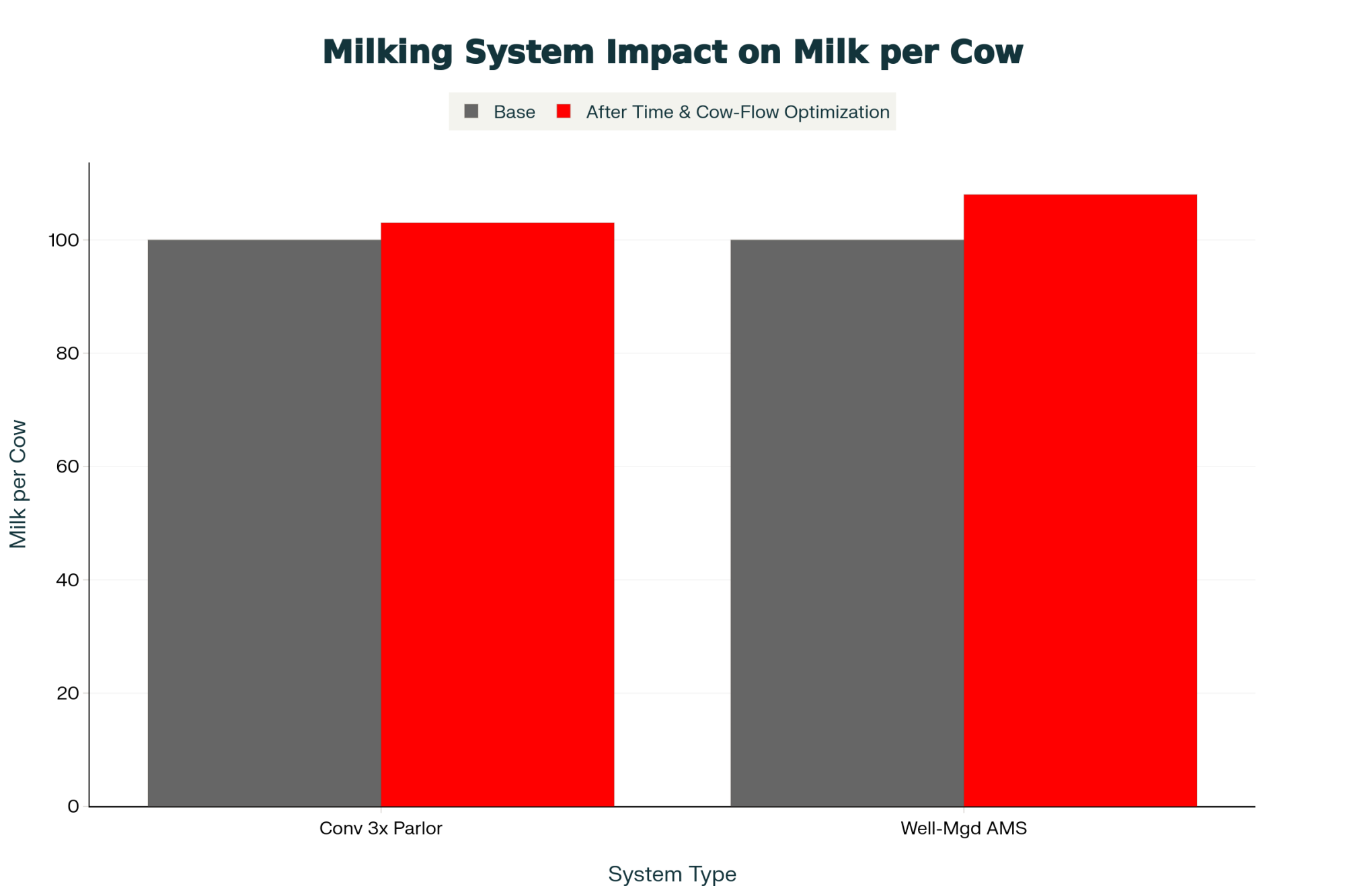
Proponents of the latest thing in dairy – robotics – emphasise the animal welfare benefits the machines can bring.

The labour cost savings are not big, but in some circumstances, improved production can come from going high tech.

Another attraction is that it can free the farmer up to do other things that can be beneficial, such as pasture management.

Then there are the lifestyle advantages. It means not having to get up at an ungodly hour to milk the cows and in the afternoon, attendance at school sports days can become a reality.

But Grant Vickers, DeLaval NZ’s robotics expert, says the biggest selling point is that cows like it. Or, as one of his clients put it: “It allows the cows to take over the farm.”

Robots have been in cowsheds since the 1990s. Vickers estimates they have been installed in two or three dozen sheds around the country.

The proportion of robotic use is quite high in the established dairy producing countries of Europe, and Vickers expects perhaps 10 to 20 per cent of farms will be using them in New Zealand over the next 10 to 15 years.

Vickers, a former farmer, says there is a huge lifestyle advantage for the farmers but the biggest selling point is the improved animal welfare.

“This type of farming is much kinder on cows. We take the stress right off them and we are seeing indications of improved longevity of the cattle,” he says.

“The robots will do what they say they do on the packet. They will perform well and will milk cows to a higher standard than humans do.”

Under a voluntary system, the cows are not left standing on concrete for hours at a time waiting to be milked.

“They are not bullied and pushed around by other animals, and they are not driven up and down by farm hands on motorcycles.

“They travel at their own pace and choose when they want to be milked,” Vickers says.

Production can improve with robotics, but he says that’s not the main selling point.

“The people we talk to are generally the top-end farmers – who are doing a good job already with the way they feed their cows and milk them, so we can’t really promise them any production increases,” he says.

“However, where we can get production increases is among those farmers who might not be at the top end.

“What tends to happen is that farmers who adopt robotics learn how to manage grass and feeding better. Those guys are going to get an increase in production,” says Vickers.

There are systems in place already that will weigh the animal, check out its milk quality, assess its feed requirement and its overall health, but Vickers says robotics can take that kind of data collection to a new level.

The latest technology from DeLaval includes a somatic cell counter. In dairying, the somatic cell count is an indicator of the quality of milk, and whether it contains harmful bacteria. It also provides information on the levels of mastitis in a herd.

Vickers says robots, complete with cameras that monitor a cow’s overall condition, can also provide the farmer with a deeper level of knowledge.

Farms that use robots tend to be set up in such a way that the cows can be milked up to three times a day – or once every eight hours – with each milking timed as they move past the cow shed to a new paddock.

 David Johnstone says by going robotic there were savings in terms of improved animal health.
Vickers tends to describe it as “voluntary milking” as opposed to milking by robots, because it is the cows themselves who decide when they will be milked. It’s not necessary to have a human in the shed while the process is going on.

He says bullying in a cow herd is a very real problem, and robots can help alleviate that.

“Bullying is a huge cost to the industry because a stressed animal can be difficult to calve again.

“If we take away the bullying and let the heifer operate around the farm at her own pace, the chances of getting her in calf early in the first mating are a lot better,” Vickers says.

The more leisurely approach means cows are not pushed through races en masse, and that can reduce the level of lameness.

Vickers says robots can be used on any scale – he knows of one farmer who milks just 60 cows with one robot. But he says the optimum size tends to be the 200 to 400-cow farm typical in Taranaki and the Waikato because they are the types of properties that tend to be the easiest to convert to a voluntary grazing system.

Vickers says labour cost savings arising from robots are a bit of a myth.

“But there is a huge lifestyle advantage, in that you are not committed to going to the shed at 4.30am for three hours, and again at 3pm for another three hours.

“You have work to do at the shed, but you can do it at times that suit yourself,” he says.

“The input that is needed in a voluntary grazing farm is in management, rather than the hands-on labour that you get in with a conventional dairy shed.”

Vickers says robotics can help farming families with their succession plans, as sons and daughters are more likely to return to the farm when it represents less of a manual undertaking.

In addition, the younger farmers are more likely to assimilate the extra data that a high-tech farm generates.

Vickers says the days of big expansion in dairy, with high numbers of sheep farms converting to dairy, are numbered.

These days dairy farming is more likely to be focused on the improvements that can be made within the farm gate.

“We want do better with what we have got,” he says.

Southland farmer David Johnstone, who farms near Winton, insists the few hours of extra sleep is not the main reason he went robotic.

Though the robots help to promote a better work-life balance, the main benefit is that it frees up time to further improve the farm’s performance.

Johnstone’s four robots take care of the whole milking process, from teat cleaning to attaching cups to the animal.

While the cow is being milked, its health is being evaluated and the appropriate amount of supplementary feed is dispensed before she leaves the shed.

It’s all voluntary. Cows mosey on in when they feel like it, and leave when they want to.
Johnstone says the herd seems to be happier than a typical herd on a conventional farm.

He says the process generates vast amounts of data. The technology details how much milk they have, the time they came into the shed to milk, the amount of feed they were given, their weight, data around milk composition, their preferred robot, and whether they are in heat. The property has 320 cows, available for milking, 24 hours a day, seven days a week.

Johnstone, an early adopter of the technology, bought the farm three years ago and installed the latest gear soon after. His 100ha farm was converted from sheep to dairy nine years ago, and was one of the first in NZ to use robotics.

He says there is no “huge” economic benefit from going robotic but but there are savings in terms of improved animal health.

“It’s not really a big labour-saver. You end up doing other things that can fine-tune your performance.”

The farm has its own support blocks and is quite self-contained. Silage is made on the property, so there is a higher workload in that respect.

Johnstone says there are slightly higher maintenance costs, plus the higher capital costs.

But the technology is becoming more popular with older farmers who want to cut back on the job’s physical demands.

“We all want better quality time and a better work-life balance,” he says. “It’s not for everyone, but for us it fits in with what we want to do.”


Source: NZ Herald

Indiana’s Fair Oaks Farms chooses DeLaval VMS™ robots for new visitor experience

Fair Oaks Farms in Indiana, one of the biggest dairy operations in America, announced its intention to expand from conventional milking systems by signing an agreement for 12 DeLaval voluntary milking system VMS™. The robots are for Prairie’s Edge Dairy Farms llc, one of the nine partnerships that comprise Fair Oaks AG tourism experience, which attracts more than 500,000 visitors annually.

This move further supports a recent shift in the business plans of large-scale milk producers exploring robotics as a viable solution for addressing issues like animal welfare, milk quality, production and labor.

The Fair Oaks Farms dairy attraction is represented by nine families milking 36,000 cows. Mike and Sue McCloskey, well-known visionaries of progressive and sustainable dairy farming, are one of these nine families. “These DeLaval robotic solutions are unbelievably productive and efficient,” said Mike McCloskey. “On top of that, the level of cow comfort that robotic milking brings is very attractive.”

“All of these things are coming together at the right time. It’s pretty exciting,” he continued. “The DeLaval team has gone above and beyond by assisting with the design process and implementation, helping our people – and eventually our cows – approach this new way of farming. The depth of knowledge DeLaval shows from a milk quality point-of-view and their understanding of milk’s physiology is fascinating.”


McCloskey and DeLaval, including President & CEO Joakim Rosengren, at the contract signing.

The decision to add on to Fair Oaks Farms’ rotary-based milking systems with an automated one is rooted in the Grass to Glass® ethos of fairlife™ milk, a nutrient-dense, lactose-free beverage the McCloskeys co-created with their Select Milk Producer partners. Fair Oaks Farms operates as a closed-loop system where they grow their own feed, never mix milk from other dairies, and process and bottle the milk at their dairy cooperative’s facilities. Twelve VMS™ will help harvest enough milk to fill one tanker truck a day, helping to control milk quality and traceability.

“We are very pleased to be a part of Fair Oaks Farms’ journey in going robotic. At DeLaval we are committed to helping our customers remain progressive and future-oriented, and we feel that robotic milking matched with outstanding cow comfort and excellent milk quality are the prerequisites for this,” said Fernando Cuccoli, DeLaval Vice President, Market Area North America.

Start-up of Fair Oaks Farms’ new robotic milking facility is planned for December 2017 and will serve 780 cows.

DeLaval VMS™
DeLaval VMS™ (voluntary milking system) allows cows to be milked automatically, whenever they like, in a calm, quiet and stress-free environment.

It identifies the cow as it enters the system and feed is dispensed before the teats are cleaned and prepared, and milking begins. Dual lasers on the robotic arm enable quick, precise teat detection.

When milking is complete, both the animal’s teats and the system itself are cleaned, ensuring the highest standards of hygiene are maintained at all times.

The world’s largest automated milking operation with 64 DeLaval VMS™ came on-line at the end of last year in Chile, and another large robotic facility in Michigan with 24 DeLaval VMS™ will start milking later this year.


Are Robotic Milking Machines Worth the Expense?

There is no question that Robotic Milking Machines seem to be the hottest thing on the market. With over 35,000 robotic milking systems (RMS) operational on dairy farms around the world, it more than just a fad, it is an epidemic.   It seems almost daily you hear about another operation deciding to switch to Robots.  With many producers citing the improved lifestyle and the ability to expand or even stay in business without having to hire more labor.  And it’s not just the old dairy farmers with kids who don’t want to work hard, more and more it seems like even large dairies are considering the change.  But the Bullvine asks “At what cost?”. Are these farmers generating greater income and because of better results on the bottom line that they can justify the expense? With that in mind, we decided to look at the economics of investing in robotic milking and determine if these farmers are lazy or are they smart business people.

Labor is the second largest expense on the dairy farm. Considering the actual cost of hired labor and when an appropriate value for unpaid family help is included, investing in labor-saving automation may be the best way to improve your bottom line.

Are you cheap or wise?

First, let’s get one thing clear, most producers do not install robots because it is the lowest cost option for harvesting milk. Historically, for a 120-cow dairy, the total cost per cwt of milk of a robotic milking system was similar to a new modern parlor.

Tie stall (TS) – $35,400 labor/yr
Low cost parlor (LCP) – $25,000 capital ($4,250 annual), $14,600 labor
Medium cost parlor (MCP) – $50,000 capital ($8,500 annual), $14,600 labor
High cost parlor (HCP) – $100,000 capital ($17,000 annual), $14,600 labor
New parlor (NP) – $250,000 capital ($42,500 annual), $14,600 labor
Robot – (10% increase in milk) $59,600 annual
(Source: http://www.extension.umn.edu/agriculture/dairy/precision-dairy/milking-robots-do-they-pay/)

But how many decisions on the average dairy farm are made to be at the lowest cost?  Most of us decide not to live in the cheapest house or drive the cheapest car because we want a nicer lifestyle. But at the rate at which labor expenses are increasing, especially when the appropriate value for unpaid family help is included, not to mention the scarcity of labor, combined with the increased performance that is tied to the improved management, more and more Robots are beginning to make economic sense.

While coming up with hard numbers, which are applicable are specific to each situation, is almost impossible, one thing is clear is that robotic milking becomes more affordable every year as the cost of labor increases and the availability of labor decreases.  There is no question that robotic milking saves labor, and based on surveys done by the Progressive Dairy Operators group (PDO), dairy farm labor is going up in cost. In 2004 the average wage for dairy farm workers described as “milkers” was $12.65 per hour. By 2004 this had gone up 7% to $13.55. Then in 2010 117 herds reported an average wage of $14.21 per hour for milkers, up 5% again plus an additional $0.28 in non-monetary benefits. So in 6 years, the benefit of owning a robotic milking system has increased by roughly 12%. (Read more:  Robotic milking gets more affordable every year by Jack Rodenberg)

So how do you determine the ROI of an RMS?

To determine the real return of investing in a Robotic Milking System, you need to look at milk production per cow, milk produced per robot per day, labor savings, the length of useful life of the system. 

The main cost of robotic milking is the capital invested in the technology. From 2004-2010 the price for a new robot went from  $250,000 to about $220,000.  That is a 15% decrease in the cost while labor costs have typical gone up 12%.  That is a 27% swing in a six-year period.  And in the last six years, prices for a robot to milk 50-70 cows is about $150,000 to $200,000, another 20 decrease. In that same time, the cost of wages paid to livestock workers per USDA has increased 19%.  Researchers have reported up to 29% savings with RMS.

Another aspect that may be even more important, than the increased cost of labor for dairy farm workers, is the decreased availability.  A 2014 survey indicated that 51% of all farm labor was immigrant labor (Adcock et al., 2015). The future availability of immigrant workers may be reduced if less foreign workers choose to work on farms or if tighter immigration laws are passed in the US as the Trump administration seems to be leaning towards. And if Trump is successful at re-igniting the US economy revs up with reductions in regulations or the anticipation of that, the demand for labor is only going to increase in all industry, causes an even greater shortage of farm laborers.   This will force producers to either use new workers who are very inexperienced yet demand a high wage or use an aging workforce that is not as productive as it once was.  This already causing producers of all sizes to determine if they should either automate milking and eliminate task oriented positions, or increase productivity efficiencies to 180-200 cows per man with such technologies as teat spray robots in large rotaries.   

So does an RMS make economic sense for your operation?

To answer this question, the University of Minnesota developed a web application to compare the profitability of robots and parlors: http://z.umn.edu/RobotParlor. This tool was used to compare the economics of RMS and parlor systems on farms with 120, 240 and 1,500 lactating cows over a 20-year payback time. Milking labor costs were set at $16/hr with a milk price of $17/cwt. They assumed milk production would increase 5 lb/day per cow with RMS compared to milking 2X and decrease 2 lb/day compared to 3X milking. The per cow barn investment is higher for the RMS, reflecting the additional cost to install labor savings features typical in RMS barns. We inflated labor costs at 1, 2, or 3% annually. Net annual impact refers to the net present value of projected differences in RMS cash flows converted to an annuity.

The 120 and 240 cow RMS systems had a higher net annual impact compared to a double 8-parlor system (Figure 1). Labor cost inflation and milk production per cow had a large impact on profit. For each pound change in daily production per cow, the net annual impact changed by $931.

The 1,500-cow parlor system was more profitable than RMS. A 1% annual wage inflation resulted in a $162,672 (3X milking) and $51,177 (2X milking) more profit for the parlor. The difference was $130,570 (3X milking) and $32,395 (2X milking) at 3% wage inflation. Using similar milk production and 3% wage inflation the parlor had $80,672 higher annual impact.

The primary reason for the differences in profit is the more intensive use of the milking system. The RMS assumed full utilization at 60 cows per robot across all herd sizes. The parlor was only being used four hours per day with the 120-cow system. In the 240-cow simulations, the parlor was being used 8 and 12 hr/day in the 2X and 3X respectively. For the 1,500-cow herd, both the robot and parlor were at near maximum utilization.

Milk production and labor assumptions between the systems significantly affect the profitability projections. More research is needed to understand the economics of how these systems perform with different herd sizes and management practices.

The University of Minnesota also determines just what are the breakeven rates for the Robotic system.

  • Breakeven labor rate.
    Since the 1,500-cow RMS was less profitable than the parlor system at $16/hr labor, they determined the breakeven labor rate at which the two systems would have similar annual incomes. At the wage inflation rate of 1% and a 2 lbs. lower milk production with the RMS, the breakeven labor rate is $32.30/hr. If similar milk production levels are assumed with a 3% annual wage inflation, the breakeven wage rate drops to $22.91/hr.
  • Breakeven milk production
    The University of Minnesota also examined how increased milk production per cow in RMS would affect the profit comparison (Figure 2). If the robot system achieves 3 lbs /cow per day higher milk production than the parlor with 3% annual wage inflation, the annual income is only $3256 higher for the parlor for the 1,500 cow herd. At 5 lbs./day more milk, the RMS is more profitable at all wage inflation rates. Current research indicates that RMS do not achieve milk production as high as 3X milking, but as RMS management and facility design improve, this may change. Another potential advantage is that cows in RMS can be managed and milked in stable groups within the pens. Cows have access to resources (feed, water, beds, and milking) at all times. More precise feeding management can potentially increase milk per cow.

Figure 2. Net annual impact of a 1,500-cow dairy with 25 robots compared to a double-24 parlor milking 3X at different increases in daily milk production and wage inflation rates

Maximizing the Robotic Impact

Maximizing daily milk per robot is important to maximize profit. In a four-robot system using 2% annual wage inflation and a 20-year time horizon, net annual income increases approximately $4,100 for every 500 lbs. increase in daily milk per robot. Currently, some US farms are consistently harvesting more than 6,000 lbs. of milk per robot daily. This is achieved by a combination of high daily milk per cow and a high number of cows per robot (often over 60). The most important factors to achieve this are:

  1. Milking permission settings and strategies that get the correct cows milked at the correct times
  2. Reduced box time per cow
  3. RMS in top working condition

Retrofit vs. New Barn

One question many producers must consider is it better to retrofit your current barn or build a new one?  The University of Minnesota also examined how the economic life, labor efficiency, and milk production change affects the profitability of RMS. They developed two scenarios using an 180-cow dairy: RMS replacing a parlor and retrofitted in an existing freestall barn and an RMS in combination with a new high technology freestall barn.  Here is what they found:

  • Robot retrofit
    For the retrofit scenario, they assumed that there was no remaining debt with the previous The increases in costs with the robots were payments for the three robots ($63,000) for ten years, higher insurance ($2,700) and higher maintenance ($9,000/robot per year). They examined profitability using milking labor of 45, 60 and 75 minutes per robot. They also varied daily milk per cow using a 2 lb decrease, no change, and 2 lb increase compared to the previous system. Their survey of producers indicated that well designed (automatic manure removal and split entry pens), well managed free flow barns average about 45 minutes of daily milking like labor per robot. In this scenario, if producers can get 2 lb/day more milk and robots last longer than ten years, the RMS system is more profitable than the parlor system. If there is no change in milk production, robots must last 13 (with 45 minutes of daily labor per robot) to 17 (with 75 minutes of daily labor per robot) years to break even. If milk production decreases 2 lb in the RMS system, it is never as profitable as the previous parlor system.
  • Robot with a New Barn
    To achieve the maximum benefit of robots, it is preferable to design them into a new, high technology, low labor requirement facility. This includes various upgrades, such as wider more frequent crossovers, automated manure removal, and automated feed pushers. The projected new facility resulted in annual payments of about $101,000 over 20 years for the 180-cow farm. A 10 lb/ day increase in milk production along with the anticipated labor savings is required before robots are consistently more profitable than the previous parlor system. A key factor is the benefit of a Cow Comfort Upgrade and its effect on performance with robotics. When cow comfort is done right (sand is the gold standard) 60% of the milk increase in robotics can be attributed to the updated free stall barn. These things matter. The key benefit of individual robots is the elimination of the holding pen and the extra hours per day that the cow gets to eat, lay down, and chew her cud.

There are Economic tools available to do the deep dive and evaluate the many factors that affect performance and economics in a robotic milking facility. Contact your Robotic Specialist to sit down and go over the numbers and conditions specific to your dairy. Also, talk to your local dealer, banker, nutritionist, veterinarian, and genetics supplier. It takes a team working together to cover all the bases and give you the honest feedback to understand your operations strengths and weakness. 0ver 40,000 robots milk over 2.2 million cows worldwide and robots put in 16 years ago, are still operating today. It may be new to you, but it is not new to the industry. My Grandfather milked cows by hand, and 90 years later we are milking cows with no hands….amazing progress with more to come.
The Bullvine Bottom Line

While many producers look at income over feed to determine how their operation is doing.  I argue that given the fact that labor is your actual greatest non-feed expense on a dairy farm, and that it is also the resource that is typically in the shortest supply, we should be looking at income per full-time labor unit. When you look at your operation, and if there is the capital required to invest in an RMS unit, there is not question that Robotic Milking Systems make perfect sense for most dairy operations under 1,000 milking cows.  There is no doubt there will always be demand for high-quality people both immigrant and citizens. WE NEED COW PEOPLE!! Good people will always have a place in this industry, and they will have great value.   The best robot barn in the world with poor management is a failure in the making. As someone recently said “Management Makes Milk” and “Good People make Managers Look Good.” There are more career opportunities in dairy than ever before, and those that can operate robotic facilities and use technology will have a very bright future. Especially with rising labor rates and less supply, there are also scenarios where a robotic milking system makes sense even for larger operations.  Treat your cows with care, treat your employees with respect and develop them and the results can be predictable and positive.

Watch TRANSITIONING INTO THE ROBOTIC WORLD An increase in labour productivity is desired to ensure a healthy dairy business.  Achieving more litres of milk per worker in an animal‑friendly way is possible with a robotic milking system.  But you can not just rush out and buy a robotic milking system.  There are many factors that you need to consider. In this video the topic of transitioning into the robotic world and its influences on cow management will be covered. What things need to be considered? How do we ensure we have the most successful adaptation of the technology to optimize cow health and performance? Watch this video for a look into how robotics can improve the way we manage our cows. 

Listen to what other producers have to say: Top Producer Panel – Robotics conference. Join seven of the top DeLaval VMS producers from North America, Europe, Oceania and Latin America as they share and build knowledge around the DeLaval integrated robotic solution and best practices for robotic milking. 

[related-posts-thumbnails]


The largest robotic dairy farm in the United States will go online in Michigan in 2017

DeLaval International, a large Swedish producer of dairy and other farming equipment, is installing 24 robotic voluntary—meaning the cows approach the stations on their own—milking machines at TDI Farms LLC of Westphalia that will be able to milk 1,500 cows. The new system will be operational sometime next year (no firm date has been set yet), according to Muhieddine Labban, solution manager of automatic milking systems at DeLaval.

The farm is owned by the Trierweiler family. They decided to transition to a robotic milking system after seeing improved longevity and lower cull rates of cows in dairy farms using these systems.

“For the last few years, my family has been discussing the farm’s next steps. Ultimately, the conversations kept coming back to robotics as we felt it was the best fit,” said Bryant Trierweiler, one of the owners, in a press statement.

Here’s how the Voluntary Milking System machine works: the cows are free to come to the machine to be milked as they please, drawn by the feed that is dispensed during milking. Because the animals are creatures of habit, they learn this routine within a few days, says Labban in an email. The system cleans, pre-milks, dries and stimulates each teat individually using water, compressed air and a vacuum. After this preparation stage, the cows are milked via a robotic attachment that scans their underside to detect where the teats are located and checks the milk flow before releasing the suction cup at the end of the milking session.

VMS

A room full of Voluntary Milking Systems. Image courtesy of DeLaval.

According to DeLaval, the VMS is better for cows than traditional milking systems since it has an open structure that allows the cow to see her surroundings and to stand in a comfortable position without human management, which can be stressful for the animals. The VMS also monitors udder health and can detect potentially life-threatening mammary gland infections.

Now to the question that always comes up when we talk robots: what about the farm workers who previously did the milking? The Trierweilers say they plan to develop their employees’ skills in other directions in the company. “We have a great core of employees and prefer to develop their talents as opposed to adding more labor,” said Bryant Treirweiler.

“Robotic milking technology allows for a better trained and more flexible workforce,” —Muhieddine Labban

Labban says the “human element remains a critical factor” and that without a “motivated, competent and committed workforce, it’s impossible to build a successful dairy business.” Robotic milking technology allows for a better trained and more flexible workforce, he says.

“Workers can now make better use of their time by handling chores and tasks that are critical to a well-managed dairy operation. The VMS increases efficiency, providing the dairy producer with the opportunity to hire fewer, but higher-caliber trained and qualified people,” he tells Modern Farmer in an email.

Labban wouldn’t give specifics on the cost of the VMS system, only saying that the price is “dependent on several factors.”

DeLaval is also involved in the creation in one of the largest robotic milking facilities in the world, which is being constructed in Los Angeles, Chile. El Fundo Risquillo farm will have a total of 64  machines milking 4,500 cows, according to DeLaval. It’s slated to be on line early next year.

Source: Modern Farmer

Want MORE Milk? Put More Focus on Frequency!

Dairy headlines, scientific data and discussions over the farm fence are piling up data that says the move to robotic milking sees ever higher levels of uptake among dairy operations.  The focus has moved beyond the simple analysis of pros and cons to finding more data on ways to get the most milk production per robot. The simple conclusion is that everything that impacts the cow — before, during and after visits to the robot — could affect her milk production. As complicated as that sounds, it is simply a question of focus.

“Use Both First Hand Experience and Second Hand Information”

There are many ways to learn how others get more milk from their robots.  Robotic milker suppliers can point you to their successful clients.  They will dazzle you with positives. An internet search will give you many more names to consider and perhaps even reach out to. Be prepared to learn that some of these dairy operations have had remarkable accomplishments. No one will direct you to someone who is struggling with an automated milking system.  Nevertheless, you should seek out things that have been proven, how problems have been corrected and, most of all, how to get more production. Regardless of our sources of information, it’s up to you to do your due diligence.

“We Hear About LESS Labor and MORE Milk. Are the Claims True?”

The attraction to robotic milking pulls dairy operations toward making the change with the promise of decreased labor and increased milk production.  These claims are backed up by the majority of research which shows that installing robots and increasing milking frequency from 2 times per day to 2.5 or 3.0 times on average which results in 6 to 10 pounds more milk per cow per day. You will find that any claim beyond that is impacted by factors not directly robot related such as cow comfort, improved reproduction, and superior management. The facts regarding less total labor aren’t as dramatic.  It is different. Start times may be later, and there is definitely  more flexibility. But, to have the best management, you have to be on call at all times.  Finding a positive way through this learning curve is the first challenge faced by both the human and the bovine teams.

“Scientific Studies Draw Conclusions That You Can Act Upon”

We should always acknowledge that we could be taking results out of context.  Furthermore, we tend to judge what we learn based on our experience, and those experiences create bias.  All we can do is make decisions based on the best information available. There are several Canadian studies and also reports from the University of Minnesota and some out of the Netherlands as well.  These are just a few samples of what is available online. They have a lot of information, and they report what strategies have the biggest impact on milk production. Here are six that rise to the top of the lists.

“LET’S LOOK AT THE TOP SIX  MORE-MILK MAKERS”

  1. Come again!  And Again! Frequency wins!
    You hear it from every source.  One of the main factors impacting robot milk production is the frequency of visits.  If cows could read, we would post signs encouraging them to “Visit the Robot!  Don’t Stay Long!  Come back often! “It’s simple. If you want more milk, you have to have more frequent milking times. This begs the next questions, “How do you get cows to voluntarily come to the robot more often?” How often is often enough? What is the best? Most experts and studies suggest that the goal should be to average 2.7 to 3 milkings per cow per day.  When dairy operations fail to meet this benchmark, they make it a priority to review robot efficiency, nutrition programming, and pre-and-post robotic farm environment setup.
  2. “Effective Management Makes More Milk”
    Robots require a high level of management to be successful.  You may work less (than in parlor setups), but you must manage more! When you have the cows coming to the robots frequently, you have to stay on top of every detail that can impact the success of those visits.  
    At herd level: Monitor visits per day. Target average milking speeds. Provide sand or water beds for cow comfort. Remove hair from udders and trim tails. These and some tasks, such as treating cows, can take more time than in a parlor setup.
    Around the Barn: Slatted floors, robotic scraping and keeping up with equipment maintenance have proven to increase milk production.
    Genetic Selection: Not all cows are well suited for robotic milking. Sire selection and breeding for cows with easier attachment rates and improved milking speed present new challenges. 
    In the Office: Effective dairy managers take responsibility for the success of the dairy, and a large part of that is effectively managing all the incoming data captured by robotic systems.
  3. “Feed is the MAGNET That Pulls in More Visits!” 
    The single biggest factor affecting voluntary visits is the feed that is fed at the robot.  Typically, cows receive a pelleted feed at the robot: some farms feed ground corn or other grains. If only we could learn from fast food drive through restaurants, we would have the cows lining up at all hours of the day. Since we don’t gain from feeding extra large unnecessary portions that lead to overweight, we will have to settle for the idea of attracting our cow-customers to the robot.
    In contrast to the “junk” food that some humans crave, the feed offered at the robot must be of consistent high quality and palatability or cows will be discouraged from visiting the robot and thereby decrease the number of milkings per cow per day. Feed offered should complement other feeds being fed to the cows at the feed bunk.  It isn’t necessary to feed a full ration at either place.  Ideally, the feedbunk provides a partial mixed ration formulated at a lower energy content. The balance of the energy needs are provided at the robot.  Pellet quality, ingredients, quantity and palatability all play a role in getting the cows to voluntarily return to the robot and, thereby, they help increase (or decrease) milk production.
  4. “Provide More Robot Availability. Avoid Lineups and Crowding”
    Since there isn’t a robot for every cow, any time that there is blocked access to a robot it negatively affects milking efficiency. Blockage may be caused by cows congregating around the entrance either before or after milking. Proper design of robotic milking facilities can prevent some of these blocking events from occurring. If the area in front of the robot is small, locate water sources and cow brushes away from the entrance to the robot so as not to encourage cows to congregate in the area.
    A higher stocking density (cows per robot) can also result in fewer milkings per cow.  A target of 60 cows per robot is typically recommended.  In the study, dairy farms averaged 55 cows per robot. A survey of robotic miking dairy farms in Pennsylvania found an average of 56 cows per robot with a range of 47 to 64 cows per robot.  In general, farms in the Pennsylvania study with fewer cows per robot had greater milking’s per cow per day and greater milk production per cow. The conclusion:  Crowding costs cash!
  5. “Robot Access Means No Obstacles, More Space and Good Footing”
    Cow traffic to and from the robot is a large part of robot success. Easy access to the robot is a significant factor in the frequency of visits per cow per day. Obstacles interfering in the path to the robot as well as difficult entryways can deter cows from milking. Cows also need to have adequate space between the robot and surrounding areas. If holding pens or the area in front of the robot are too small, cows will be discouraged from entering.
    Access to the robot can also be encouraged through proper care and management of your herd’s feet and legs. Cows need to have good locomotion and sound hooves to be comfortable walking back and forth to the robot. Scheduling regular hoof trimmings and providing access to footbaths can prevent issues from developing.
  6. “Yes! More Milking Speed Counts!” 
    You can’t deal effectively with getting cows into and out of the robot, without giving consideration to the actual speed of getting the milk. Slow milking time reduces cow throughput and decreases the amount of milkings achieved each day. Many of the top producing robotics herds measure milk flow as compared to milkings per cow per day. From entry to exit, the milking process should take, on average, seven to eight minutes per cow. It’s recommended that herds should strive for less than seven minutes and start to investigate potential issues when milking length exceeds eight minutes. The actual milking unit attachment can also influence time taken per cow in the robot. Milking units that locate the teats quickly and efficiently will reduce the time per cow spent in the robot, freeing up extra available time for other cows. The more time the robots actually spend with cows who are putting out maximum flow will result in greater production than just counting the number of cows per hour or visits per day.  That is why many top herds allow their top producers to visit more frequently while cows that are later in lactation or lower producers allowed fewer visits.

The Bullvine Bottom Line

Robotic dairy operations continually strive to improve efficiency and increase production. The starting point for more milk is more frequency. Work with your whole dairy team – nutrition, environment, herd health and staff – to get their best input on ways to make sure you are doing everything possible to attract cows to visit the robots more often. When you effectively focus on getting more robot visits per cow, you will automatically produce more milk!


Get original “Bullvine” content sent straight to your email inbox for free.


[related-posts-thumbnails]

Top Producer Panel – Robotics conference

Join seven of the top DeLaval VMS producers from North America, Europe, Oceania and Latin America as they share and build knowledge around the DeLaval integrated robotic solution and best practices for robotic milking.

Send this to a friend