Archive for Financial Managment

Your Dairy’s 24-Month Countdown: Act Now or Lose $450,000 in Family Wealth

Every Monday you delay, you pay $17,500. Every month: $75,000. Your dairy’s 24-month survival plan starts with three decisions.

Executive Summary: Your dairy has 24 months of equity left, and the decision you make this month will determine whether you preserve $700,000 or exit with $250,000. This crisis differs from all others—China’s self-sufficiency, $11 billion in U.S. processing overcapacity, and the worst heifer shortage since 1978 have created a structural transformation that milk price recovery won’t solve. The math is clear: farms that act now can cut monthly losses from $25,000 to $8,000 through targeted culling, feed optimization, and strategic repositioning, while those waiting 6 months lose $450,000 in family wealth. Success requires three time-bound decisions: immediate liquidity management (30 days), strategic recovery positioning (90 days), and viability determination (180 days). The projected loss of 5,000 U.S. dairy farms by 2028 won’t be random—it will precisely separate those who recognized time as their scarcest resource from those who waited for markets to save them.

dairy survival strategy

I recently spoke with a producer in central Wisconsin who summed up the current situation perfectly: “Everyone’s watching milk prices, but what’s actually keeping me up at night is whether I have the equity to make it to when prices recover.” You know, with CME Class III futures hovering around /cwt for Q1 2026 and feed costs finally moderating with corn near .24/bu according to USDA’s latest reports, you might think we’d all be breathing easier. But conversations across the dairy belt—from Pennsylvania tie-stalls to Texas freestalls—they’re revealing something different.

Here’s what I’ve found after running through financial scenarios with extension folks and reviewing real farm numbers: a representative 500-cow dairy with 0,000 in equity has about 24 months of runway at current burn rates. And the thing that really caught my attention? The difference between taking action now versus waiting six months could preserve roughly $450,000 in family wealth. That’s not speculation—it’s what the math consistently shows when you model different timing scenarios.

The $450,000 Decision Window: Every month you delay action costs roughly $75,000 in family wealth. This isn’t speculation—it’s what the math shows when you model a representative 500-cow dairy burning $25,000 monthly versus taking immediate action to cut losses to $8,000

Understanding the Convergence of Market Forces

Having tracked these cycles since the late ’90s, this downturn feels different. It’s not just one thing we can monitor and respond to—we’re seeing multiple structural shifts happening all at once.

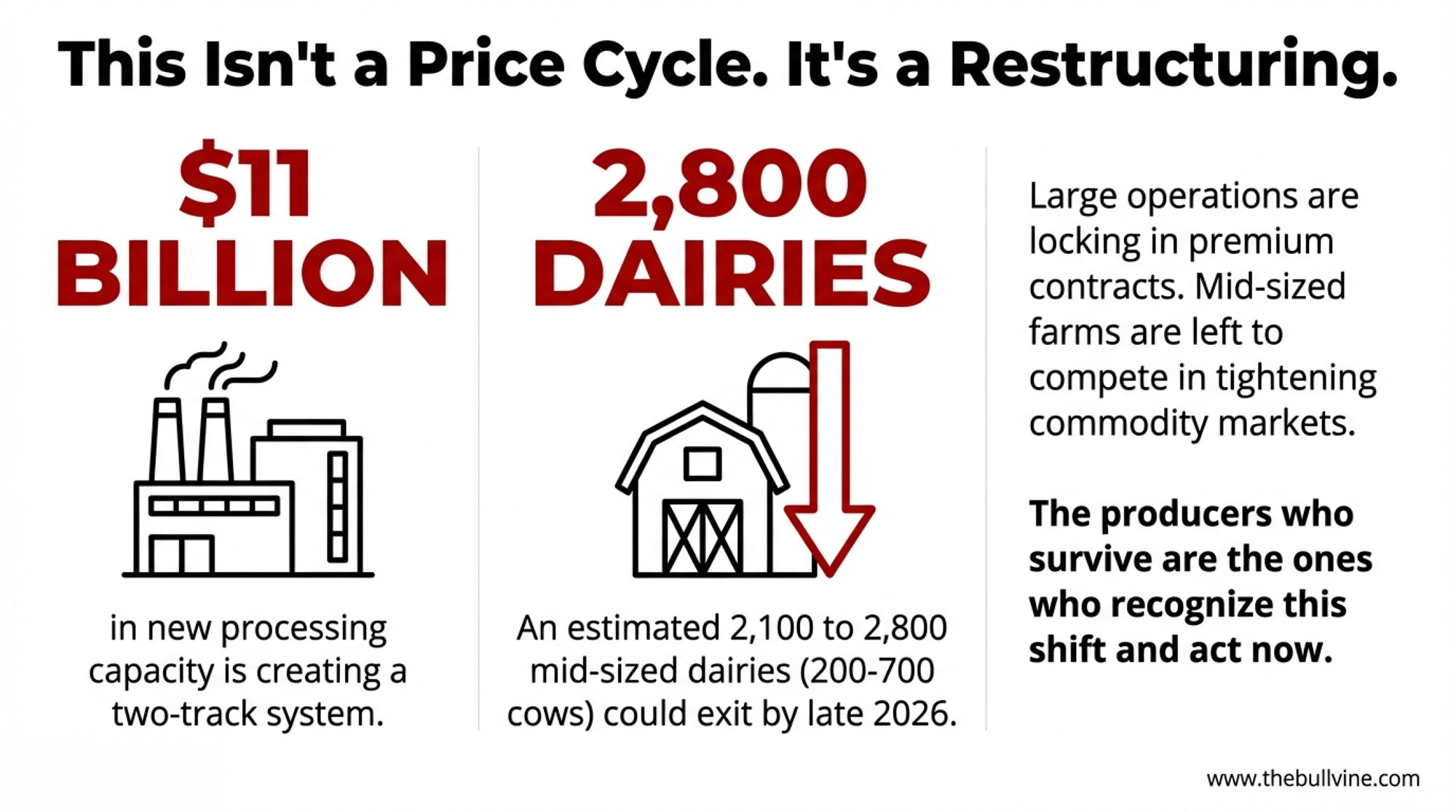
The Perfect Storm Hitting U.S. Dairy Right Now: China’s near-total self-sufficiency killed the global growth story, $11 billion in new U.S. processing capacity needs milk nobody’s producing, and we’re facing the worst heifer shortage in 47 years. This isn’t a cycle you can wait out—it’s three permanent structural shifts happening simultaneously

Take China. Rabobank’s recent dairy quarterly indicates they’ve reached about 85% milk self-sufficiency, up from 70% five years ago. We’re talking about a fundamental policy shift toward food security, not a temporary market adjustment. When StoneX analysts discuss how that Chinese import growth story—the one that fueled global expansion for over a decade—is essentially done, they’re describing a permanent change in how global dairy works.

Meanwhile, and the timing couldn’t be worse, the U.S. processing sector has committed somewhere between $8 and $ 11 billion in new capacity, according to what IDFA’s been tracking. Projects across nearly 20 states, from new cheese plants in Texas to expanded drying capacity up in the Upper Midwest. These facilities will need roughly 7-8 billion pounds of additional milk annually when fully operational by mid-2026.

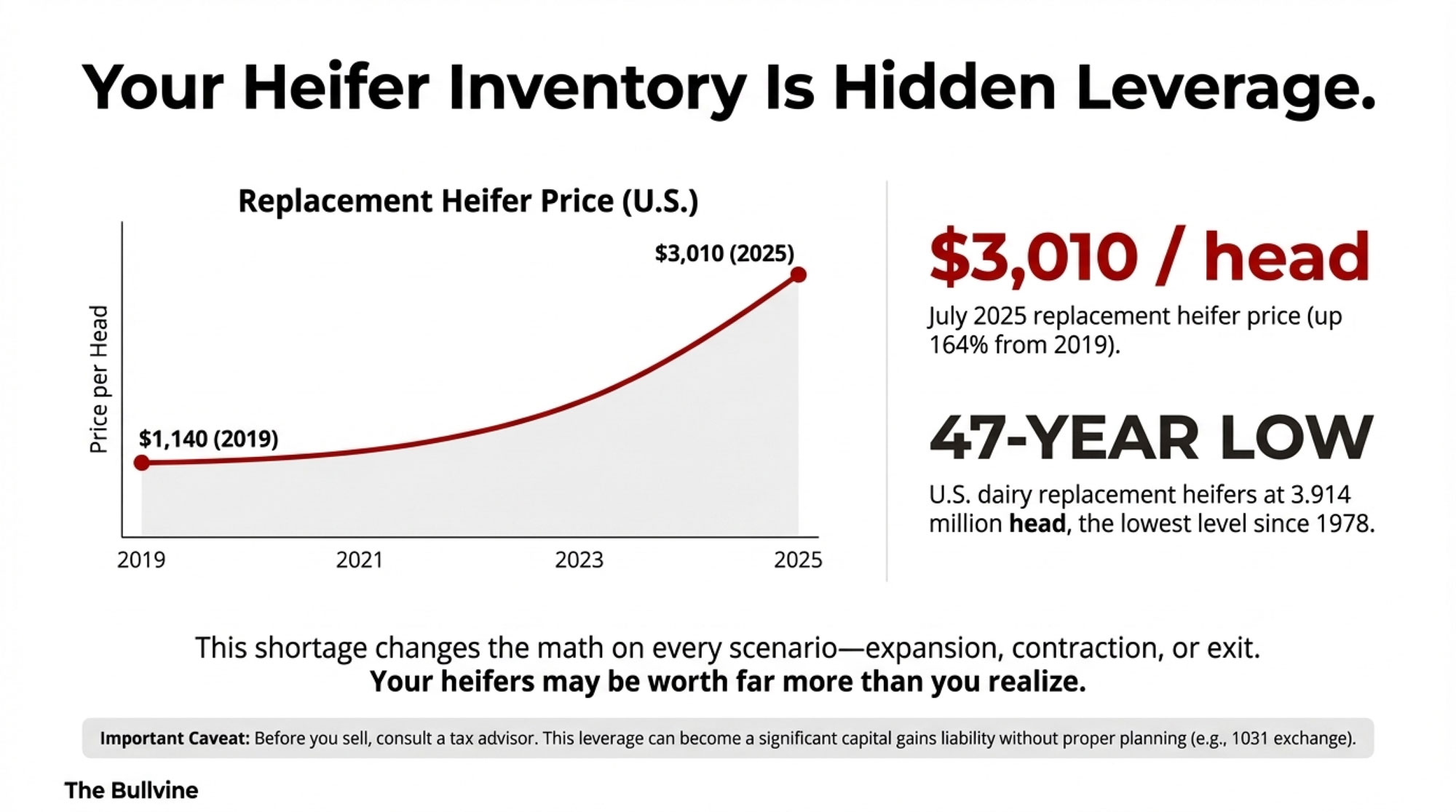
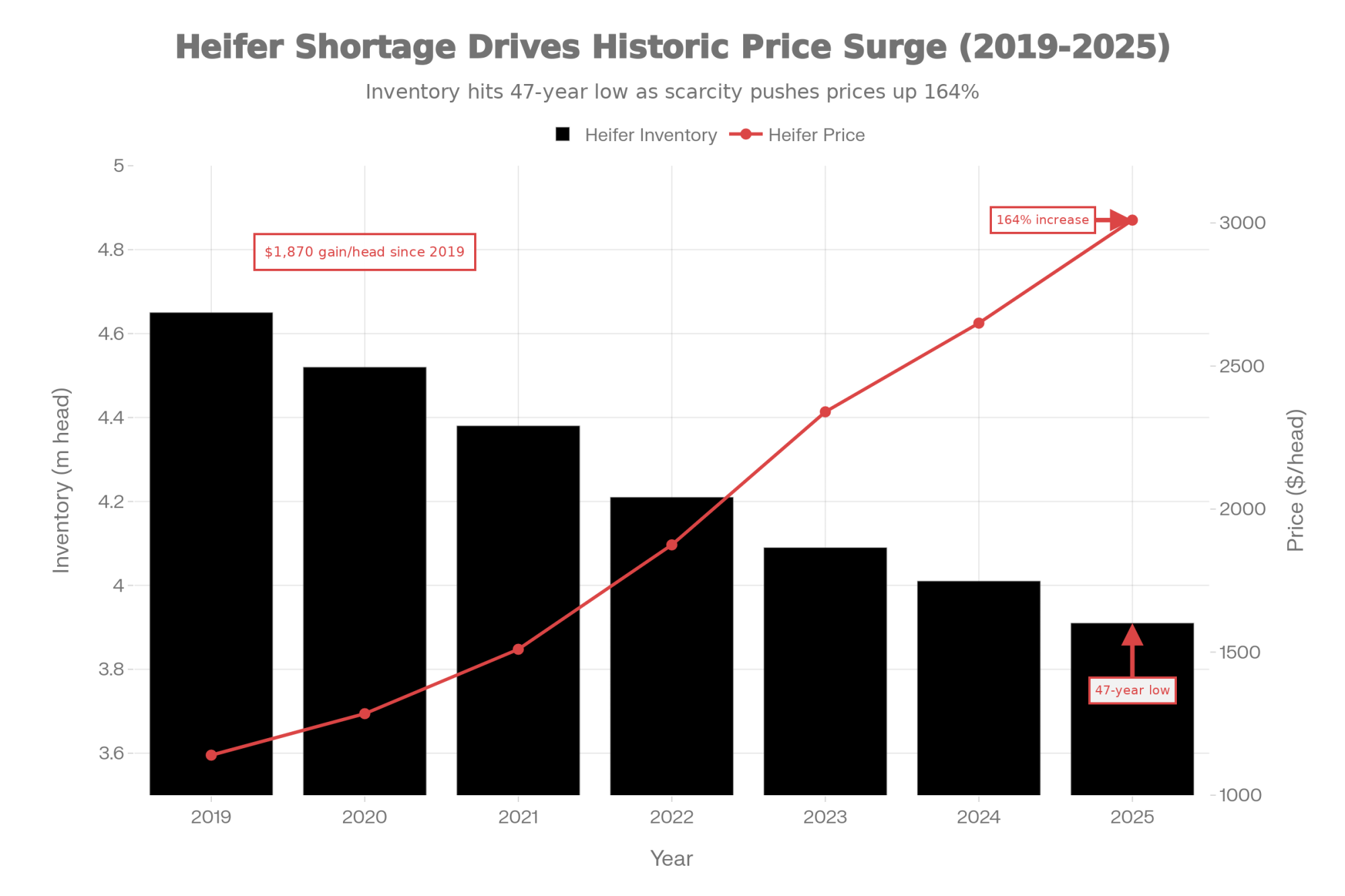
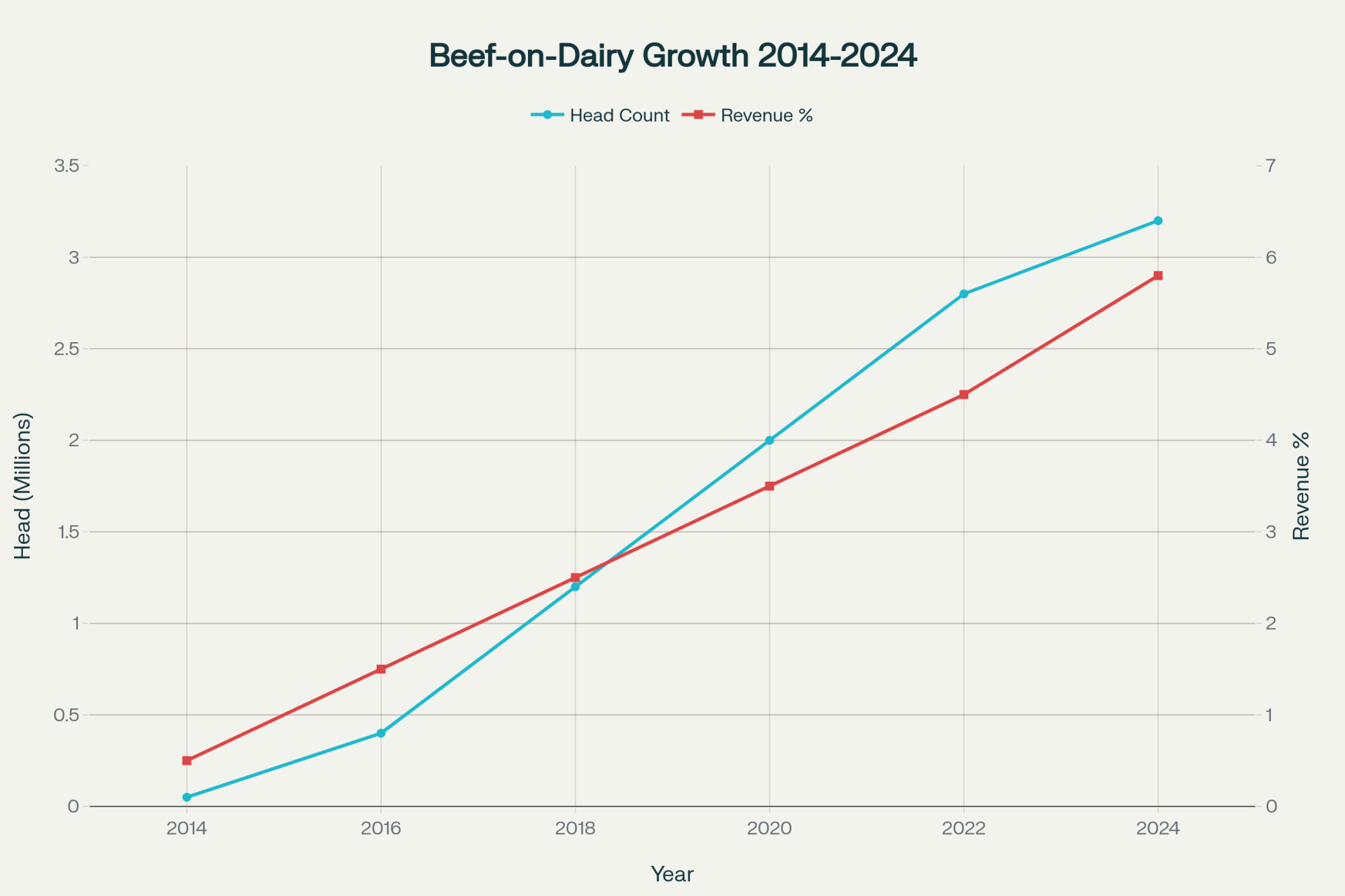
But here’s what really concerns me: the availability of replacement heifers. USDA’s latest cattle inventory shows we’re at 4.38 million head—the lowest since 1978. The National Association of Animal Breeders reports beef semen sales to dairy farms hit 7.9 million units in 2024, up 58% from 2020. Conventional dairy semen? Down to 6.7 million units. These aren’t just statistics… they represent breeding decisions that’ll constrain expansion capacity for the next 24-36 months.

You know what’s interesting about this cycle? The moderate feed costs—corn at $4.24/bu and alfalfa at $222/ton—are actually extending the adjustment period. Back in 2009, when corn hit $6-7/bu, we saw rapid culling and supply correction. Today’s manageable feed costs let farms sustain negative margins longer. Sounds beneficial, right? Until you consider that it delays the market from rebalancing.

The Economics of Scale: A Widening Divide

MetricLarge Farms (2,500+ cows)Family Farms (500 cows)The Gap
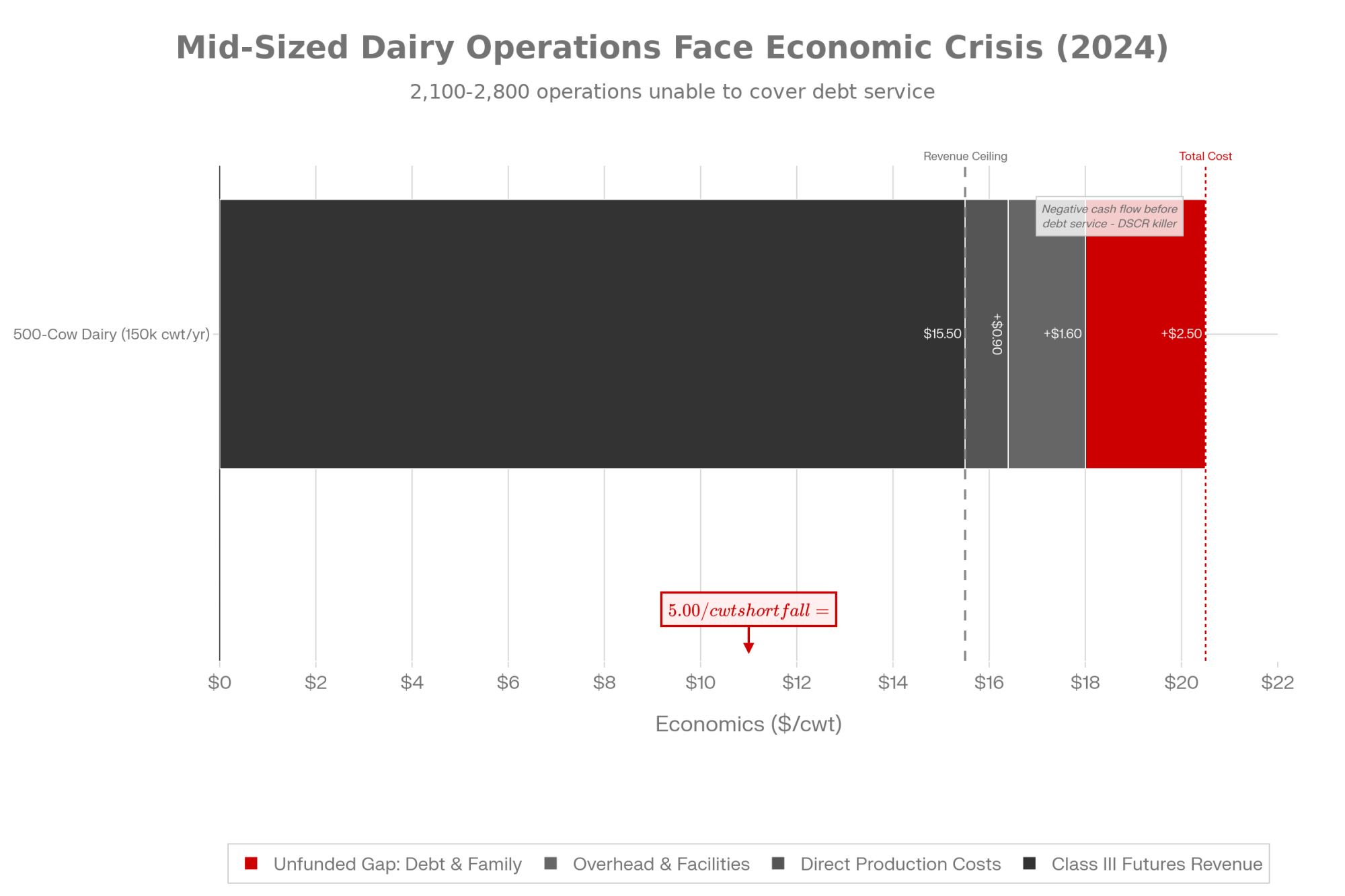
Production Cost per cwt$15.50 – $17.50$19.00 – $21.00$3.50/cwt
Labor Productivity300 cows/worker60 cows/worker240 cows/worker
Labor Cost ImpactBaseline+$1.50 – $2.00/cwt$1.75/cwt
Feed Procurement Advantage15-25% volume discountTruckload pricing$0.50/cwt
Capital Cost per Cow$4,800 – $6,000$7,000 – $9,000$2,500/cow
Transportation Cost$0.35/cwt (concentrated regions)Up to $0.53/cwt$0.18/cwt
Total Structural DisadvantageBaseline+$3.50/cwt$3.50/cwt

The structural cost advantages larger dairies have reached levels that fundamentally change competitive dynamics. Research from Cornell’s ag economics folks and similar extension programs consistently shows that farms with 2,500+ cows achieve production costs of $15.50-17.50/cwt. Meanwhile, 500-cow dairies face costs of $19-21/cwt based on Penn State Extension benchmarking.

And this isn’t about management quality or work ethic—we all work hard. It’s a mathematical reality. Labor productivity data from Michigan State Extension reveal that large farms are achieving ratios exceeding 300 cows per full-time employee through strategic automation and role specialization. Family operations? We’re typically managing 60 cows per worker despite those 70-hour workweeks we all know too well. At prevailing wage rates, that creates a $1.50-2.00/cwt structural disadvantage.

Feed procurement tells a similar story. Farms purchasing railcar volumes access pricing 15-25% below truckload rates—that’s coming from Wisconsin’s dairy profitability analysis. Given that feed accounts for 50-55% of operating costs across multiple university studies, this differential significantly affects competitiveness.

The capital efficiency gap might be the toughest pill to swallow. A 2,500-cow facility requires an investment of about $12-15 million (works out to $4,800-6,000 per cow). A 500-cow operation? That’s $3.5-4.5 million, but $7,000-9,000 per cow. That permanent efficiency differential compounds over time, especially during extended margin pressure like we’re seeing now.

Regional Dynamics: Where Geography Shapes Destiny

Location has become increasingly determinative of dairy viability. Federal Order data reveals growing disparities that we really need to consider carefully.

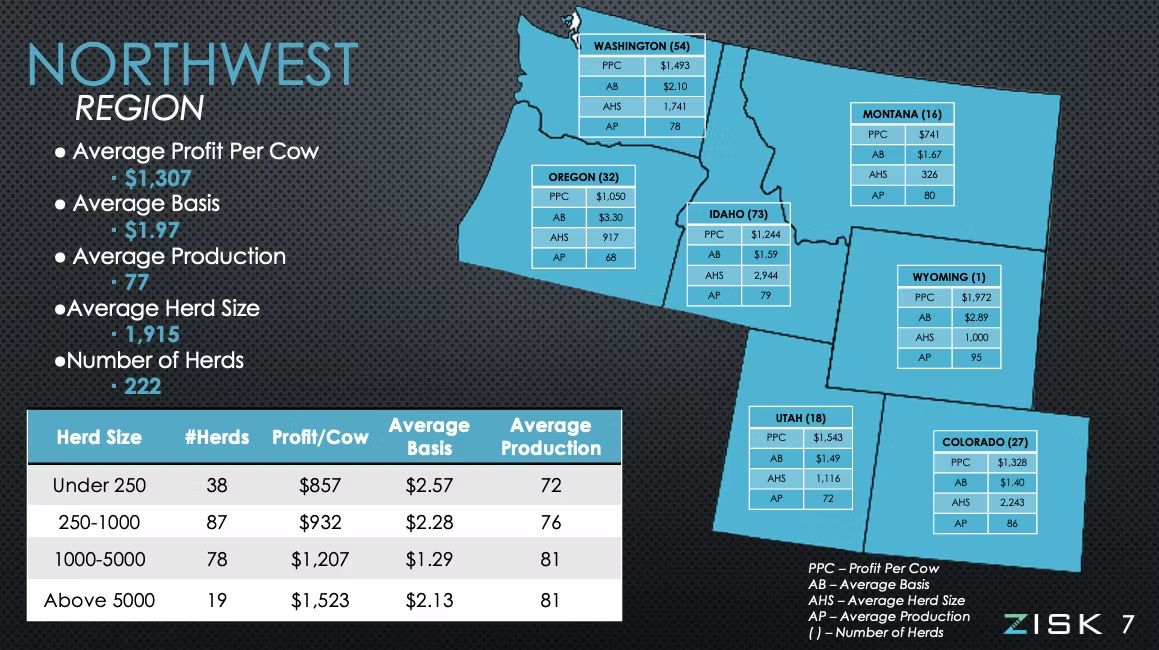
Pacific Northwest producers—I really feel for these folks—face particularly challenging economics. Milk hauling costs average $0.53/cwt compared to under $0.35/cwt in concentrated production regions. Combined with cooperative assessments and processing distances, a 500-cow dairy in Washington or Oregon starts each month with a $45,000-50,000 disadvantage relative to competitors in more favorable locations.

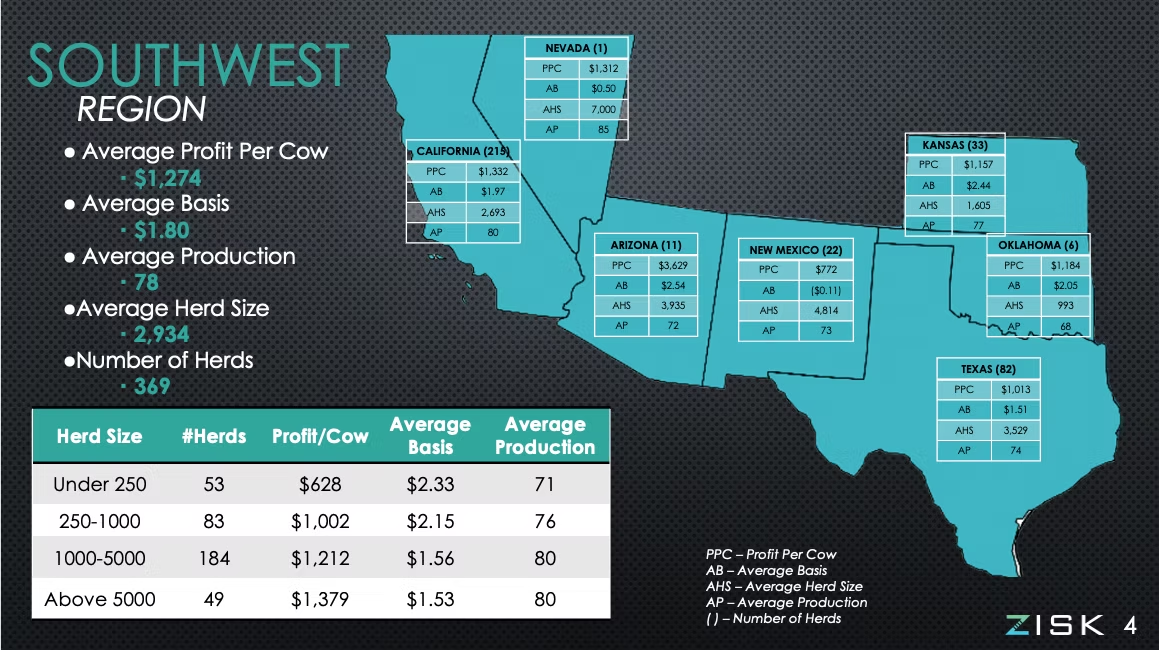
California presents different but equally significant challenges. Environmental compliance costs producers are reporting range from $35,000 to $40,000 annually—that translates to $0.35-0.40/cwt. During drought years when water allocations drop 50% and you’re buying on the spot market, UC Davis studies indicate additional costs of $0.30-0.50/cwt.

Now contrast that with the Texas Panhandle, which has emerged as this processing hub. Industry estimates suggest the Amarillo region handles over 1,000 milk tanker loads daily within a 300-mile radius. With five major facilities operational by 2026, competitive procurement dynamics actually support local prices while other regions experience discounts.

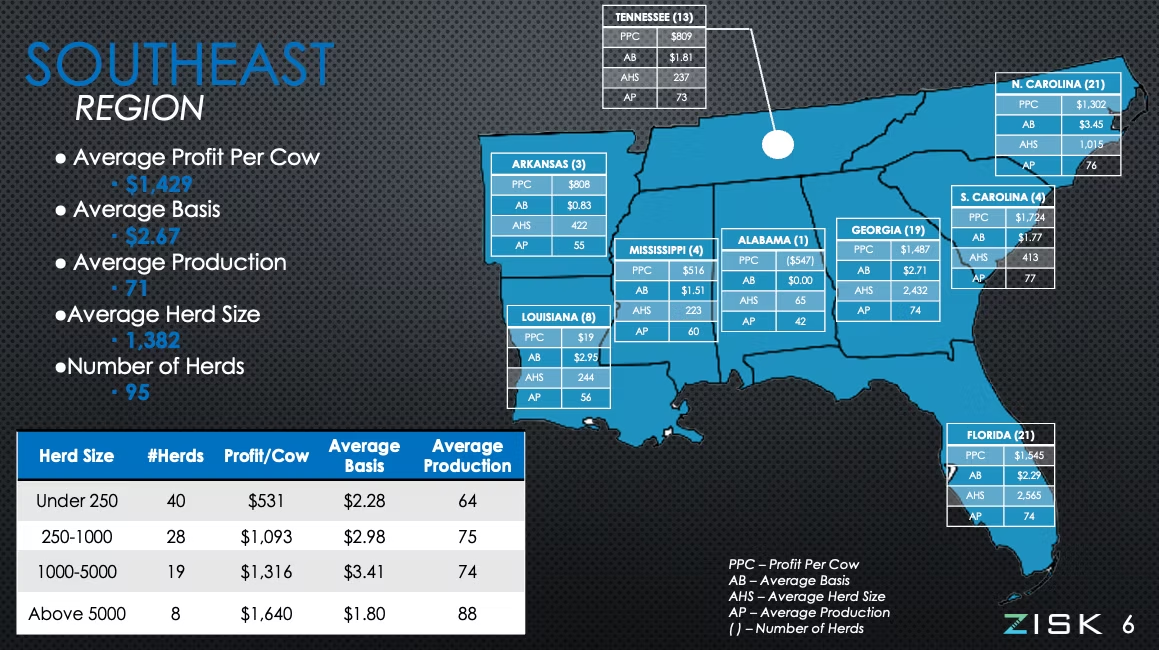
Southeast producers navigate their own unique challenges—humidity-driven mastitis pressure and heat-stress management costs Northern operations avoid. Yet proximity to metros such as Atlanta and Charlotte creates premium market opportunities that can offset some of the structural disadvantages for entrepreneurial farms.

The Beef-on-Dairy Calculation: Opportunity and Risk

The Beef-on-Dairy Trap: That $280K in extra revenue today? It’ll cost you $406K when you need replacements in 2027. Farms that maximized beef breeding for survival are trading their ability to expand during recovery. The math shows you’re borrowing from your future self—at a terrible interest rate

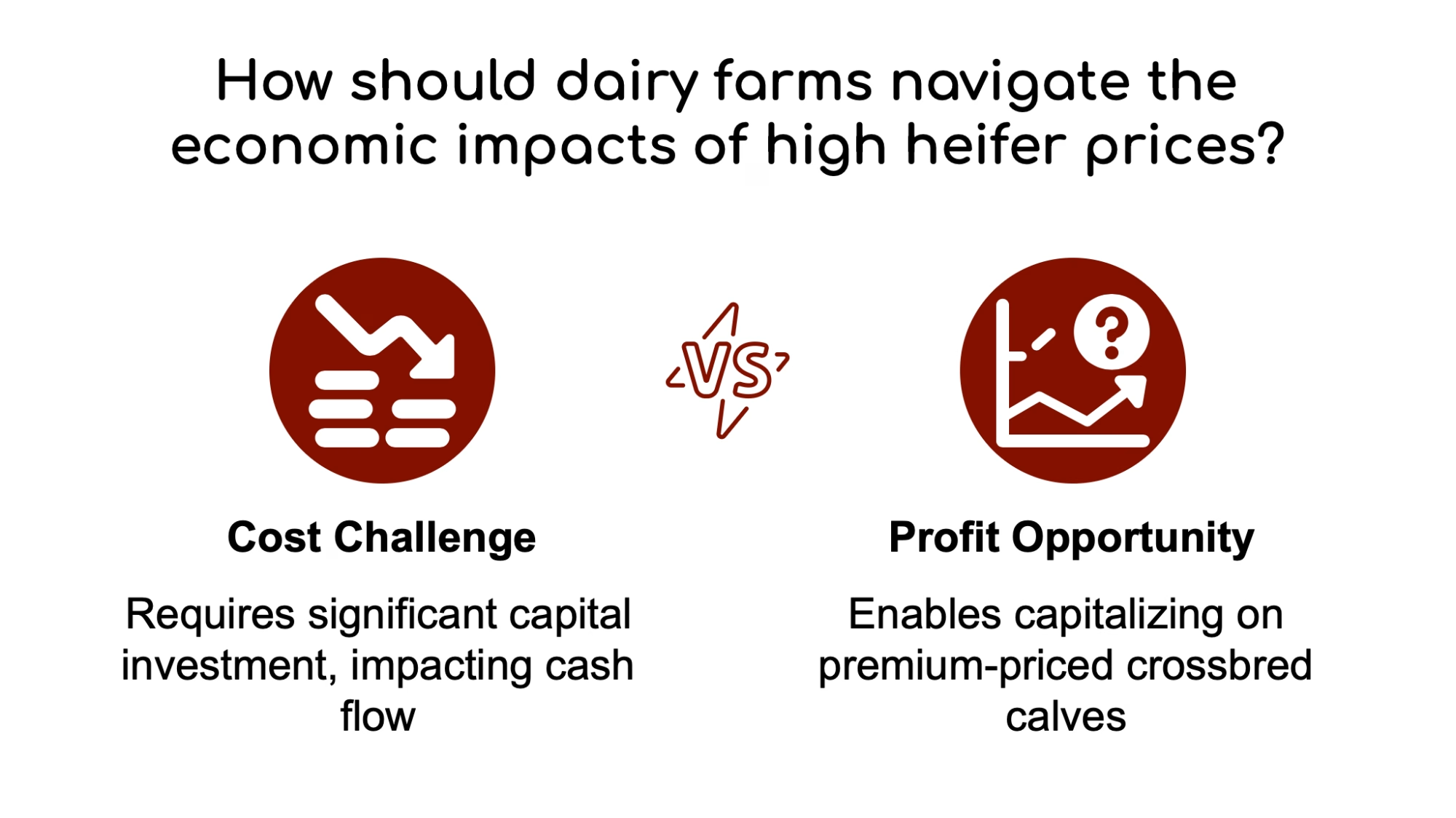
A fascinating development I’ve observed across multiple regions is how beef-on-dairy transformed from supplemental income to a survival strategy. Some farms report beef-cross calf sales now representing 40-50% of total revenue. With crossbred calves bringing $1,400-1,600 versus $100-200 for dairy bulls according to USDA market reports, a 500-cow dairy breeding half its herd to beef generates an additional $270,000-290,000 annually.

CoBank’s analysis, led by economists including Tanner Ehmke, projects that we’ll face an 800,000-head shortage of replacement heifers during 2025-2026. It reflects breeding decisions made when beef prices peaked and producers—understandably—prioritized immediate cash flow over future replacement needs.

University of Wisconsin dairy economists analyzing optimal breeding strategies suggest maintaining about 50% as the maximum sustainable beef breeding percentage. Farms exceeding this threshold—some reached 60-70% when beef prices peaked—essentially traded current survival for future growth capacity. When margins recover, these farms face either purchasing replacements at projected prices of $3,000-3,500 or foregoing expansion opportunities entirely.

The timing mismatch creates particular challenges. Breeding decisions made today determine replacement availability in 24-28 months, yet milk price recovery and heifer availability peaks likely won’t align. Farms that maximized beef revenue may survive the immediate crisis but will be unable to capitalize on the recovery.

The Compound Effect of Delayed Decisions

Your 24-Month Equity Countdown: Three Paths, One Choice. Farms taking immediate action preserve $658K in equity versus $250K for those doing nothing—a $408K difference determined solely by when you act, not market conditions

Through financial modeling using Farm Credit benchmarks and extension tools, a clear pattern emerges about timing’s impact on outcomes. Consider a representative 500-cow Wisconsin dairy with $850,000 in equity, losing $25,000 per month.

Immediate action—culling the bottom 20% based on income over feed cost metrics—generates approximately $200,000 at current cull cow values of $145-157/cwt while reducing monthly feed costs. Ration optimization to achieve $5.00 versus $6.20 per cow daily, following established nutritional guidelines, saves roughly $16,500 monthly. Combined, these actions reduce monthly losses from $25,000 to maybe $8,000-10,000.

After 24 months, early action preserves $650,000-700,000 in equity. That maintains strategic flexibility for expansion, transition to premium markets, or orderly exit if necessary.

But contrast this with delaying these decisions for six months. The farm burns an additional $150,000 in equity while waiting. Lender confidence erodes as equity ratios decline from 55% to 45%. Credit lines face restrictions. By month 24, the remaining equity of $250,000-$350,000 limits options to a distressed sale or continued deterioration.

That $400,000-450,000 difference? It represents the preservation or destruction of generational wealth, determined solely by the timing of actions.

Monitoring Recovery Signals

While I anticipate a 24-36-month adjustment period based on current fundamentals, several indicators could accelerate the recovery. Systematic monitoring helps separate noise from meaningful trends.

Global Dairy Trade auctions provide a 60-90-day forward indication of U.S. price direction, according to university dairy market research. Recent auctions have shown consecutive declines, but three consecutive stable or rising auctions would suggest the market is bottoming. Single auction movements shouldn’t drive decisions, though—trend confirmation matters.

Rationalizing processing capacity would meaningfully affect timing. Should 2-3 facilities announce closures or extended maintenance by Q2 2026, oversupply dynamics could improve faster than baseline projections. Though given the debt loads these facilities carry, continued operation at reduced utilization seems more probable than closure.

Monthly USDA production reports revealing 2%+ year-over-year declines for consecutive months would signal accelerating supply discipline. Combined with heifer shortages, this could create temporary market tightness.

Feed cost dynamics remain a wildcard. Should corn exceed $5.50/bu for 90+ days, forced culling similar to 2009 could compress the adjustment period to 12-18 months. Climate volatility suggests perhaps a 30-40% probability of significant Corn Belt production challenges within 18 months.

Given these signals, here’s how to position your operation for what’s ahead.

Three Strategic Imperatives for Every Operation

Based on extensive analysis and what I’m seeing in the field, every dairy faces three critical decision points over the coming months. Let me walk you through each one, starting with what needs attention immediately.

Decision One: Immediate Liquidity Management (Next 30 Days)

Successful navigation requires generating measurable cash flow improvement within 30 days. And that means confronting difficult culling decisions based on economic metrics rather than sentiment. Cornell Pro-Dairy benchmarks indicate that cows generating under $5 in daily income over feed cost incur ongoing losses regardless of other attributes.

Here’s what I’d tackle this week: Start by pulling DHIA records and ranking every cow by IOFC. Bottom 20% should be evaluated for immediate culling. Yes, it’s hard to cull that fresh heifer who’s just not performing, but keeping her costs you $150-200 monthly.

Comprehensive cost analysis typically identifies $30,000-50,000 in achievable annual savings through systematic review of all inputs and practices. Whether it’s adjusting mineral programs, renegotiating service contracts, or optimizing breeding protocols—the specific opportunities matter less than systematic identification and capture.

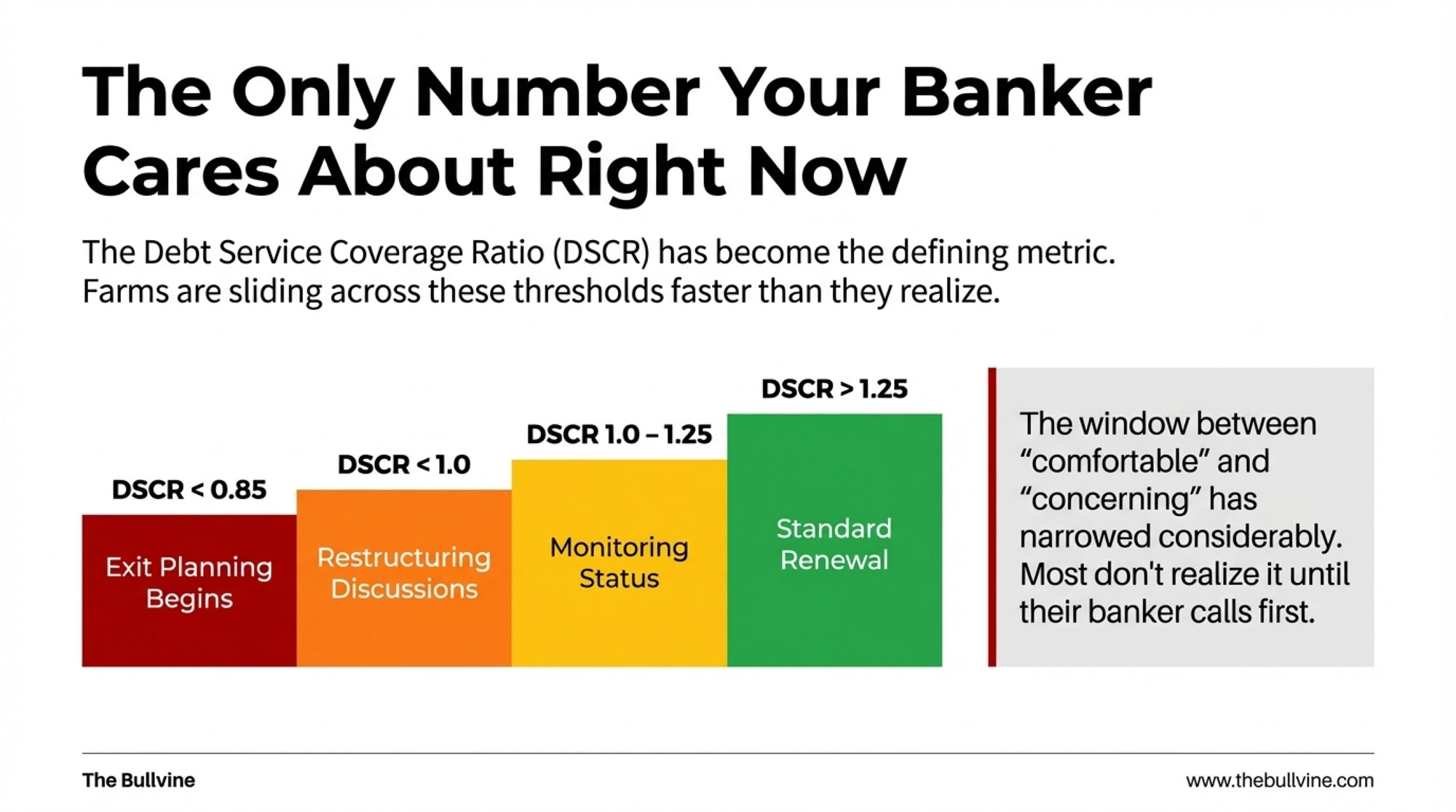
Proactive lender engagement before scheduled reviews demonstrates management capability and preserves relationship quality. The distinction between being viewed as proactive versus reactive often determines credit availability during challenging periods.

Decision Two: Strategic Recovery Positioning (Next 90 Days)

Forward-thinking farms must balance current survival with future opportunity. Breeding strategies warrant immediate adjustment—modeling suggests approximately 45% beef, 50% sexed dairy, and 5% conventional optimally balances current revenue with future replacement needs.

Geographic competitive position requires an honest assessment. Farms facing structural location-based disadvantages of $1.50+/cwt must consider whether operational excellence can overcome permanent cost disparities or if strategic alternatives warrant exploration.

Establishing specific, measurable decision criteria removes emotion from critical choices. Clear thresholds—”If Class III futures for Q3 2026 remain below $17.50 by March, we initiate transition planning”—enable rational rather than reactive decision-making.

Decision Three: Long-term Viability Determination (Next 180 Days)

Within six months, a fundamental strategic direction must be established. Well-positioned farms with adequate equity and replacement capacity should prepare for aggressive expansion during recovery. The 2027-2028 period may offer exceptional growth opportunities for prepared operations.

Dairies near metropolitan markets should seriously evaluate premium market transitions. USDA data confirms organic, A2, grass-fed, and direct marketing can deliver $7-12/cwt premiums that fundamentally alter economic equations. While requiring different skill sets, these models may offer superior risk-adjusted returns.

For farms where mathematics indicate strategic exit preserves maximum family wealth, timing remains critical. The difference between planned transition preserving $700,000 and forced liquidation at $200,000 determines whether next-generation education, career transitions, and retirement security remain achievable.

Practical Monitoring Framework

Successful farms systematically track key metrics. Here’s the dashboard I’m recommending producers review weekly:

Weekly Indicators:

  • Equity burn rate relative to total equity (are you on track with projections?)
  • CME Class III futures curves (watching for sustained moves above $17)
  • Feed cost per cow per day (work with your nutritionist to optimize)

Bi-Weekly Reviews:

  • Global Dairy Trade trends at GlobalDairyTrade.info
  • Local replacement heifer pricing trends
  • Regional basis (your mailbox price versus CME benchmark)

Monthly Analysis:

  • Months remaining until 40% equity threshold
  • USDA milk production reports for supply signals
  • Lender relationship temperature check

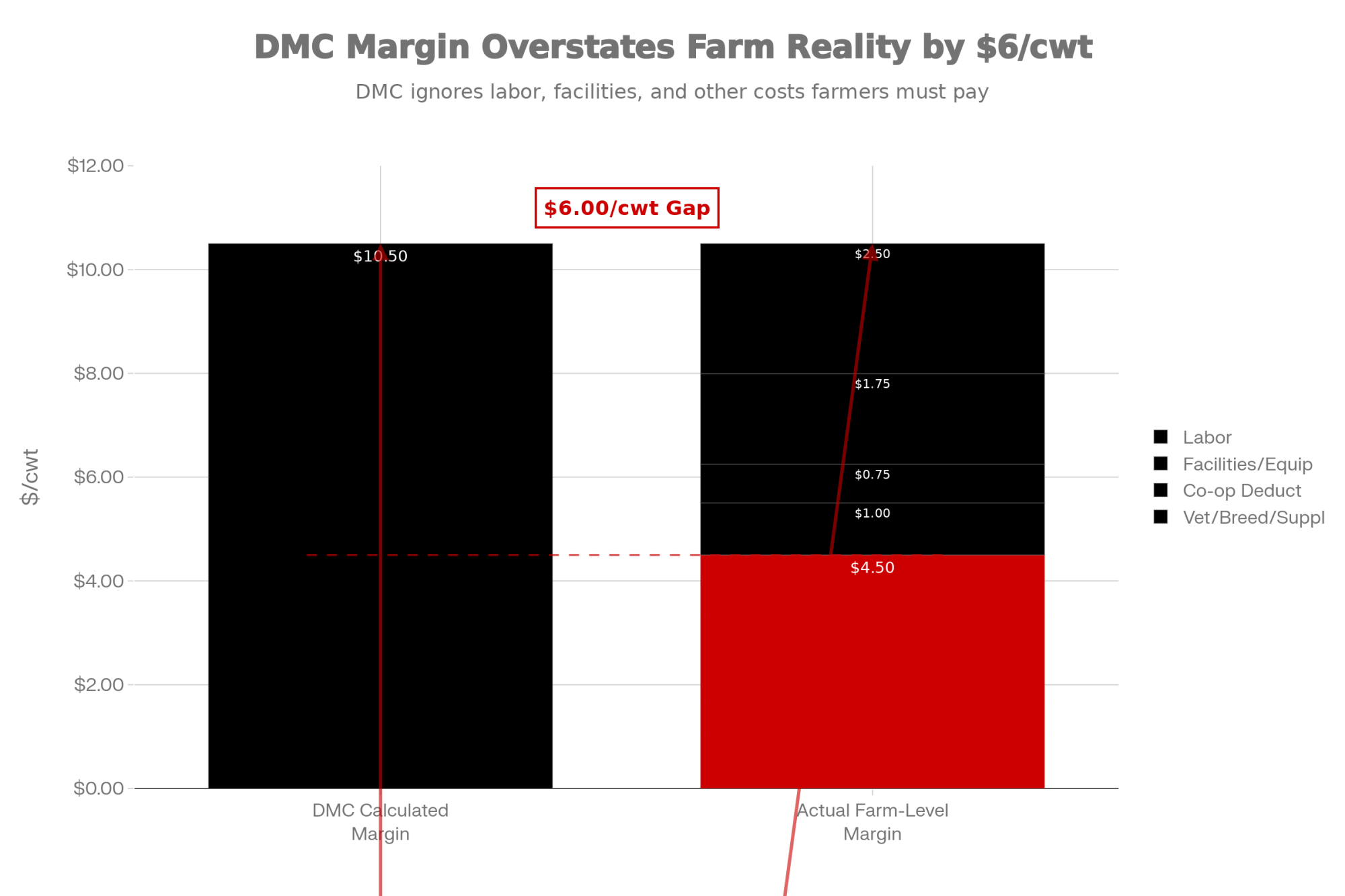
Additionally, reviewing Dairy Margin Coverage options (even with elevated premiums), forward contracting above breakeven, maintaining sub-70% working capital utilization per Farm Credit guidelines, and preserving capital through lease-versus-purchase decisions warrant immediate attention.

The Path Forward

After extensive analysis and countless producer conversations, one conclusion emerges consistently. Farms that thrive in 2028 won’t be those that perfectly predicted market timing or price bottoms. They’ll be those that recognized in November 2025 that strategic flexibility remained available, understood that monthly delay costs approximately $75,000 in option value, and made difficult decisions while maintaining equity and credit access.

The U.S. dairy industry will emerge smaller and more concentrated—projections suggest declining from about 33,000 to under 28,000 farms by 2028. Whether your operation participates in that future depends not on milk prices but on acting while meaningful choices remain. Agricultural economists consistently observe that survival often depends less on scale or luck than on the gap between when action was needed and when it was taken. That gap remains bridgeable today, but the window is continuing to narrow.

Look, these conversations—with family, lenders, advisors—they’re never easy. Yet the math remains indifferent to our discomfort, and time continues regardless of readiness. For many of us, the greatest challenge isn’t financial analysis or strategic planning but accepting that wealth preservation may require departing from generational patterns. Observing hundreds of transitions has taught me that strategic repositioning carries no shame—only waiting until strategy becomes desperation. The next 24 months will reshape American dairying more significantly than any period since the 1980s. Success isn’t about fighting this transformation—it’s about positioning yourself appropriately within it. And that positioning needs to begin immediately, not when market signals provide comfort.

Time really has become our scarcest resource in this industry. Those who recognize and act on this reality will determine not just their own futures, but the structure of American dairying for the next generation.

Key Takeaways:

  • Your burn rate reality: You’re losing $25,000/month with 24 months of equity left—but immediate action cuts this to $8,000/month
  • The six-month wealth gap: Act now = preserve $700,000 in family equity. Wait until spring = forced exit at $250,000
  • This week’s three moves: 1) Rank every cow by income over feed cost, 2) Cull the bottom 20%, 3) Call your banker before they call you
  • Decision deadlines that matter: 30 days (stop the bleeding), 90 days (position for recovery), 180 days (commit to expand or exit)
  • Why waiting won’t work: China’s self-sufficient + we overbuilt processing by $11 billion + worst heifer shortage since 1978 = permanent change, not temporary cycle

Complete references and supporting documentation are available upon request by contacting the editorial team at editor@thebullvine.com.

Learn More:

Join the Revolution!

Join over 30,000 successful dairy professionals who rely on Bullvine Weekly for their competitive edge. Delivered directly to your inbox each week, our exclusive industry insights help you make smarter decisions while saving precious hours every week. Never miss critical updates on milk production trends, breakthrough technologies, and profit-boosting strategies that top producers are already implementing. Subscribe now to transform your dairy operation’s efficiency and profitability—your future success is just one click away.

NewsSubscribe
First
Last
Consent

Decide or Decline: 2025 and the Future of Mid-Size Dairies

Decide or decline: 2025 is the year mid‑size dairies prove that clarity—not cow count—decides success.

If you’ve been milking through the last 20 years, you already know how fast the middle has lost ground. The 800‑cow herds that once anchored local supply chains are now caught between higher costs and tighter credit. It’s not a lack of effort that’s hurting these farms—it’s the system moving faster than most can react.

Rising input costs, tighter labor markets, new regulations, and rising interest rates are changing what “sustainability” means. But what’s interesting here is that the challenge isn’t purely economic. It’s directional.

According to the USDA Economic Research Service, farms milking more than 2,000 cows now produce over 50% of U.S. milk, and they do so 20–25% more efficiently than smaller commercial herds. Meanwhile, Cornell Dairy Markets data shows that smaller farms—under 500 cows—are re‑emerging through organic, grass‑fed, and local marketing models, earning 30–60% above commodity prices.

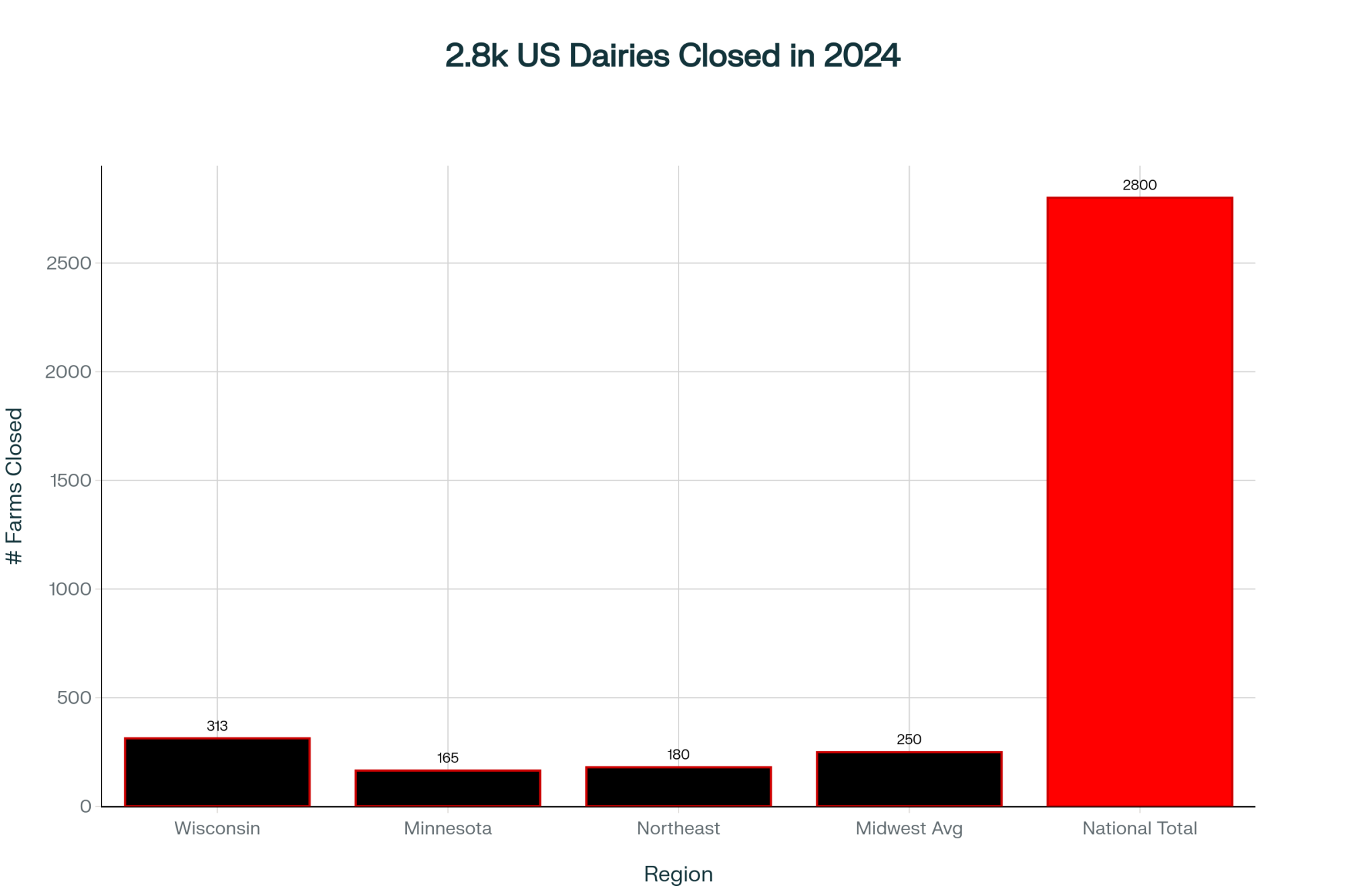
And that leaves the middle squeezed. Roughly 2,800 U.S. dairies closed in 2024, many of them right in that 700‑ to 1,200‑cow range.

So, what can farms in this category do? Choices look different for everyone—and sometimes hesitation isn’t fear, it’s fatigue. But the operations pulling ahead are finding ways to convert that fatigue into focus, using data, advice, and discipline to move forward deliberately rather than reactively.

Three Viable Paths Forward

That pressure has created three distinct strategies that are working across 2025. Each one is viable—but only with clarity, discipline, and execution.

1. Expansion with Intention

Growth still works in regions where infrastructure supports it, particularly in Idaho, Texas, and parts of the Southern Plains. The Idaho Dairymen’s Association reports milk production up 3% year‑over‑year, driven by mid‑size operations expanding to 2,500‑cow scale.

Land values in productive regions remain reasonable—$6,000–$8,000 per acre, according to USDA NASS Land Values—and processors continue adding demand to match consolidation trends.

The most successful expansions share three core strengths:

  • Debt ratios under 35%. Leverage only where cash flow already proves out.
  • Trained management teams. Family ownership paired with experienced outside managers works best.
  • Nutrient management foresight. Expansion means more scrutiny—planning here protects future flexibility.

Producers in new freestall and dry lot systems report labor efficiency gains of 25–35%, but these gains materialize only when training and system design precede construction. As one veteran Idaho producer put it recently: “Scale magnifies everything—your efficiency and your inefficiency.”

2. Right‑Sizing and Smarter Technology

For many in the Northeast, Upper Great Lakes, and Atlantic Canada, expansion isn’t realistic. The focus has shifted toward doing fewer things better—and technology is the enabler.

The University of Vermont Extension’s 2024 Robotic Dairy Study found that herds between 400 and 600 cows reduced labor costs by about 30% while maintaining or improving milk yield. Precision feeding and cow‑monitoring technology allowed smaller herds to compete through performance rather than scale.

Why 400-600 Cow Operations Are Going Robotic: The Numbers Behind the Revolution

What’s fascinating is that this same pattern holds north of the border. In Ontario and Quebec, under supply management, the economics differ, but the management philosophy doesn’t. Canadian producers are pushing robotics, automation, and stall utilization to maximize returns per kilogram of quota. As one Ontario nutritionist remarked, “Efficiency isn’t negotiable just because prices are stable. It’s the only real lever left.”

A Vermont dairy that converted to organic alongside robotic milking saw its milk price climb to $31.50 per hundredweight—right in line with national organic averages—but its bigger victory was time. Streamlined routines meant more focus on genetics, forages, and cow health.

These examples don’t make smaller easier—they make it more intentional. For the producers making it work, every investment serves a clear purpose: finding a way to manage cattle and people without burning out either one.

3. Optimization over Expansion

Across Wisconsin, Minnesota, and parts of Eastern Canada, the sweet spot has become refining economics within existing boundaries.

A benchmarking study reports farms that lifted their income over feed cost (IOFC) from $7.50 to $10 per cow per day captured roughly $820,000 more annual margin in 900‑cow herds.

That didn’t come from spectacular innovation; it came from fundamentals: tighter TMR consistency, better feed push‑up frequency, controlled parlor scheduling, and enhanced reproductive consistency.

Those farms also focused on butterfat performance above 4.0%, earning premiums of $0.50–$0.75/cwt. Meanwhile, strategic use of beef‑on‑dairy genetics added $350–$400 per calf, according to University of Wisconsin Dairy Research, 2025.

Optimization is about reliability—the daily grind of doing the same things more precisely than the week before. As one Wisconsin producer told me, ‘We stopped chasing bigger and started chasing better—the shift from production expansion to business refinement. And it’s changing how success is measured: not more cows, but more predictable profit.

The Profit Illusion: Why Size Doesn’t Always Mean Success

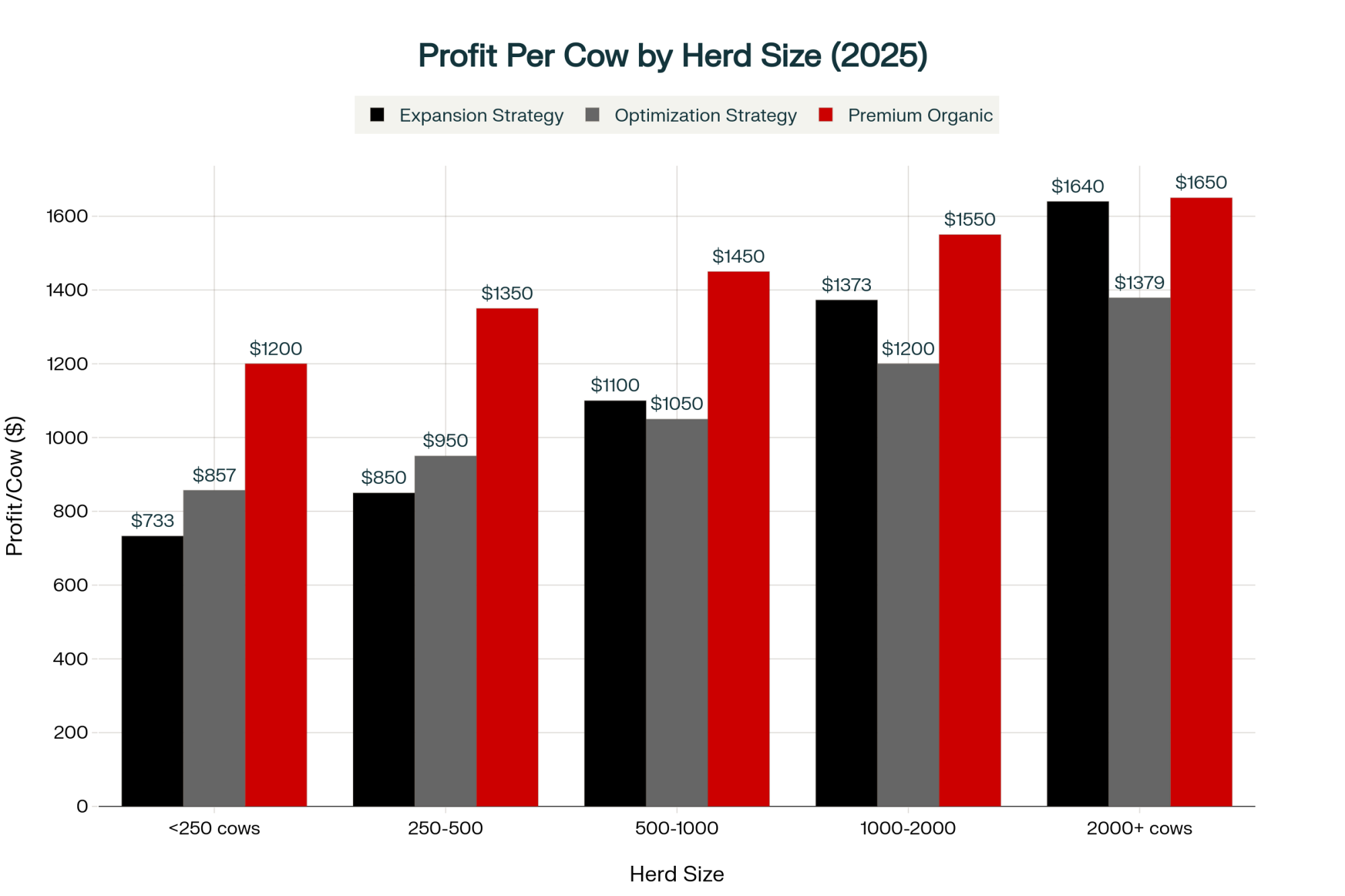
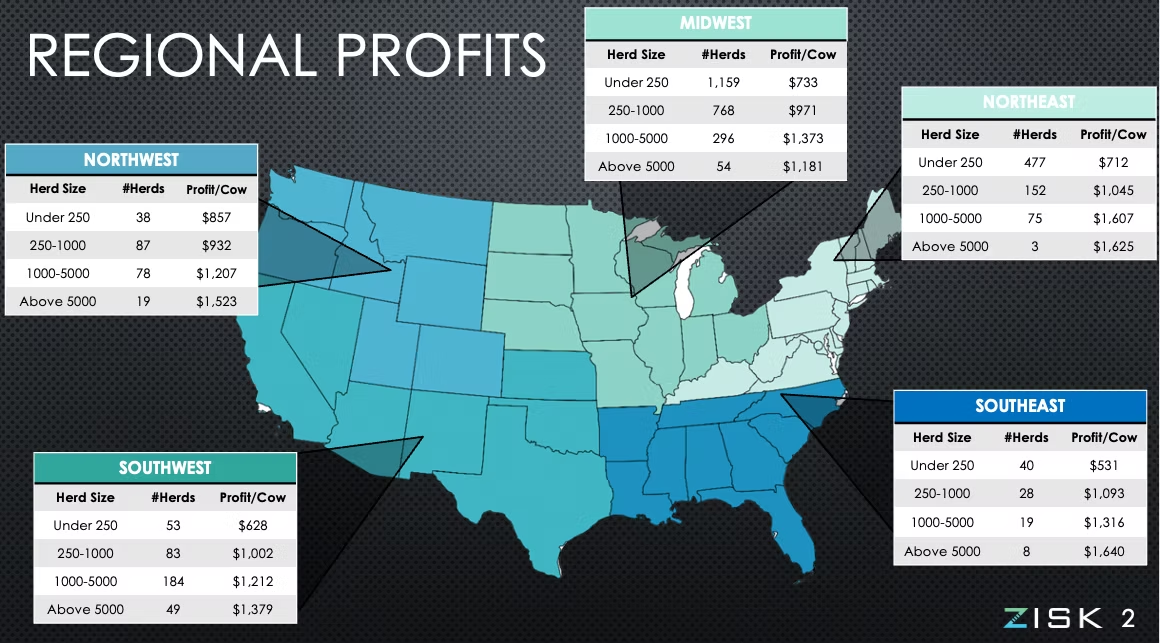
Scale doesn’t guarantee success—strategy does. Expansion works best for 2,000+ cow operations ($1,640/cow), while premium organic models deliver consistent returns across all sizes, and optimization shines in the 500-1,000 cow sweet spot

At first glance, most producers expect small family dairies to earn more profit per cow, while large commercial herds rely on volume to make up thinner margins. But the data — shown in the chart below — tells a more nuanced storyAt first glance, most producers expect small family dairies to earn more profit per cow, while large commercial herds rely on volume to make up thinner margins. But the data — shown in the chart below — tells a more nuanced story.This visualization, “Three Paths to Profitability: Annual Profit Per Cow by Herd Size (2025),” reveals how performance and efficiency—not size alone—shape economic outcomes across the industry. The chart compares three strategic paths mid-size dairies are following today:

  • Expansion with Intention – scaling to 2,000+ cows in strong infrastructure regions like Idaho and Texas.
  • Right-Sizing + Technology – mid-tier herds (400–600 cows) adopting automation, robotics, and precision management.
  • Optimization over Expansion – 700–1,200-cow herds refining feed, reproduction, and butterfat performance instead of adding capacity.

The higher bar for larger herds doesn’t simply mean big farms take more money home. Instead, their fixed costs — buildings, equipment, professional staff, financing — are spread over thousands of cows, so cost per unit drops while profit per cow rises modestly. Conversely, smaller farms, even when they receive premium prices for organic, grass-fed, or local milk, often operate with higher feed and labor costs per cow, which narrows daily profit margins.

But here’s the twist: while smaller dairies may show lower profit per cow, the total income is often concentrated in a single family. A 300-cow family farm might return $250,000 in annual profit that supports one household. In contrast, a 2,500-cow operation could generate $2 million in total profit — but that figure is usually divided among multiple owners, investors, lenders, and management teams.

That’s why this chart matters. It debunks the myth that a larger herd size automatically leads to better take-home profit. The true divide isn’t just scale — it’s about who captures the value. Whether driven by volume, precision, or premium branding, profitability in today’s dairy industry is still deeply personal.

Regional Realities Still Matter

The Mid-Size Squeeze Is Real: Wisconsin Alone Lost 313 Dairies in 2024

It’s tempting to think every dairy could apply the same model, but geography dictates strategy more than ever.

In the Western U.S., large‑scale operations thrive on efficiency, infrastructure, and climate.
In the Midwest and Ontario, cooperative structures and component‑based pricing reward consistency and milk quality over expansion.
In the Northeast and Quebec, sustainability and locality drive brand value, with consumers drawn to transparency and traceability.

No matter the region, the takeaway is the same: you can’t copy‑paste a business plan from across the border. The economics—and the culture—demand regional authenticity.

Lessons Learned from Those Who Tried

The $950 Bull Calf Revolution: How Genetics Turned Dairy’s Biggest Liability Into Nearly 6% of Revenue

Every evolution comes with its scars. One Midwestern family who downsized from 850 to 500 cows underestimated the adjustment period after installing robots. Production dropped nearly 15% for a year as cows and staff adapted. They built it back, but only thanks to strong lender trust and patience.

Meanwhile, in Idaho, several expansions paused midway as interest costs bit into construction financing. Those who made it through had one thing in common—extra contingency funds.

The common thread in both cases is timing. Transition phases nearly always take longer and cost more than projected.

The Habits of Survivors

The dairies still standing out—on both sides of the border—tend to have three things in common:

  1. Financial clarity. Debt ratios under 30% and three‑month operating cash reserves. Equipment and upgrades are justified only by measurable efficiency gains.
  2. Revenue diversification. Beef‑on‑dairy programs, custom forage work, or digesters providing supplemental income that stabilizes the primary enterprise.
  3. Generational transparency. Farms with succession plans already in motion make faster, cleaner business decisions.

At the 2025 Canadian Dairy XPO, one Quebec producer put it best: “You can borrow money for cows, not for uncertainty.” It’s a kind of clarity every mid‑size farm needs right now.

The Price of Standing Still

The Compeer Financial Producer Insights 2024 Report warned that dairies without defined five‑year plans lost 6–8% of equity annually due to deferred maintenance, inefficiency, and missed opportunities.

As one producer shared at a Dairy Strong conference in Wisconsin, “We thought doing nothing was the safe move. Turns out, the slow leak was killing us.”

A decade ago, waiting felt like patience. Today, it feels like pressure. Between higher interest, constant tech change, and unpredictable milk prices, even standing still costs money. Most farmers know what they need to do—it’s finding the time, cash, and confidence to do it that’s the battle.

Why 2025 Matters

When the dust settles, 2025 may be remembered less for its milk price trends and more for its management decisions. Expansion, specialization, or optimization—all three can succeed. The real test for mid‑size dairies is whether they’ll commit to one.

As one Idaho producer said, ‘The biggest gamble we took was standing still.’ Across barns and borders, you hear the same thing now: success starts when you stop waiting for the perfect signal. Nobody’s certain—but everyone who’s moving, is learning.

The Bottom Line

Whether you’re milking 200 cows in Quebec or 2,000 in Idaho, the shift facing mid‑size dairies isn’t about capacity—it’s about clarity. The farms that emerge stronger will be those that choose their lane and drive it with intent.

This year, the biggest risk isn’t expansion or automation—it’s indecision. As the market keeps changing, so does the window for action.

What steps are you taking on your operation to define your path for 2025 and beyond?

Key Takeaways

  • Decisiveness defines survival. The mid‑size dairies thriving in 2025 are those that choose a direction and commit fully.
  • Play to your region’s strengths. Expansion works out West, optimization excels in the Midwest, and value branding wins in the East and Canada.
  • Technology can level the field. Automation and precision tools make smaller herds competitive again—but only when data drives decisions.
  • Measure like a business, not a tradition. Top dairies track IOFC, butterfat, and repro weekly to stay ahead of volatility.
  • The real cost is waiting. Every season without a plan quietly drains equity, opportunity, and control.

Executive Summary:

Across the U.S. and Canada, mid-size dairies are facing a make-or-break moment. Once the steady foundation of milk production, 800–1,200 cow farms are now being squeezed between large-scale efficiencies and small-farm premiums. But what’s interesting is how the survivors are rewriting the playbook. From robotic systems in Vermont to data-driven optimization in Wisconsin and quota-smart efficiencies in Ontario, producers are proving that success doesn’t depend on herd size—it depends on clarity. The dairies making bold, informed decisions—whether to expand, modernize, or specialize—are staying strong. In 2025, waiting for perfect conditions isn’t safety anymore—it’s surrender.

Complete references and supporting documentation are available upon request by contacting the editorial team at editor@thebullvine.com.

Learn More:

  • Why This Dairy Market Feels Different – and What It Means for Producers – This strategic analysis provides the latest market data behind the consolidation trends mentioned in the main article. It reveals specific technology costs and ROI timelines, helping you financially plan for the necessary strategic shifts your operation needs to make now.
  • Robotic Milking Revolution: Why Modern Dairy Farms Are Choosing Automation in 2025 – For producers considering the “Right-Sizing” path, this article offers a deep dive into the real-world impact of automation. It demonstrates how robotic systems deliver measurable gains in labor efficiency, data collection, and herd health, justifying the capital investment.
  • BST Reapproval: The Key to Unlocking Dairy Sustainability – This piece offers a tactical guide for the “Optimization” strategy, focusing on a specific tool to improve feed efficiency and profitability without expansion. It provides clear protocols and data to enhance your farm’s economic and environmental performance within your current footprint.

Join the Revolution!

Join over 30,000 successful dairy professionals who rely on Bullvine Weekly for their competitive edge. Delivered directly to your inbox each week, our exclusive industry insights help you make smarter decisions while saving precious hours every week. Never miss critical updates on milk production trends, breakthrough technologies, and profit-boosting strategies that top producers are already implementing. Subscribe now to transform your dairy operation’s efficiency and profitability—your future success is just one click away.

NewsSubscribe
First
Last
Consent

The Great Dairy Divide: Why Your Feed’s Cheap but Your Milk Check Still Hurts

80% of your milk yield gains may be hiding in your feed efficiency — have you checked lately?

EXECUTIVE SUMMARY: Here’s the deal: feed efficiency is quietly slashing inputs and boosting profits, but most aren’t tuning in. Farms dialing feed efficiency up by just 3% can see milk yields jump by over 600 liters per cow—a real game changer. Meanwhile, genomic testing continues to separate the top producers, driving genetics that pack protein premiums of up to $4.00 per cwt, according to research from the University of Wisconsin. Global demand for high-protein dairy products is driving up prices, but butterfat and traditional milk volumes are no longer covering the costs as they once did. With feed costs shaky despite record corn crops, you need strategies that lock in gains here and now. If you haven’t looked at your feed efficiency or taken genomic insights seriously, you’re leaving money on the table. Trust me, start now if you want to keep your milk check growing in 2025 and beyond.

KEY TAKEAWAYS:

  • Boost feed efficiency by at least 3%: test your herd’s conversion ratios this week and adjust rations using your nutritionist’s advice to save feed costs and add $14+ per cow monthly.
  • Start genomic testing or refine your lineup: identify cows with protein traits boosting milk checks by up to $4.00/cwt, focusing breeding decisions on these genetics.
  • Lock feed prices now: with corn futures near $4, secure feed contracts before prices jump, safeguarding your margins amid supply uncertainties.
  • Embrace component-focused management: shift from volume to protein emphasis, respond to market demand, and protect revenue against fluctuations in butterfat prices.
  • Engage proactive risk management: consider Dairy Revenue Protection at 95% coverage this quarter to shield income in volatile market conditions.
dairy profitability, feed efficiency, milk protein premium, genomic testing, dairy risk management

The thing about dairy markets lately? They’re split—protein prices are climbing while butterfat is taking a serious hit. This isn’t just your typical summer shift; with the USDA forecasting a record corn crop and demand pulling dairy components in opposite directions, producers are stuck navigating some tight margins.

When Ice Cream Season Ends, Trouble Begins

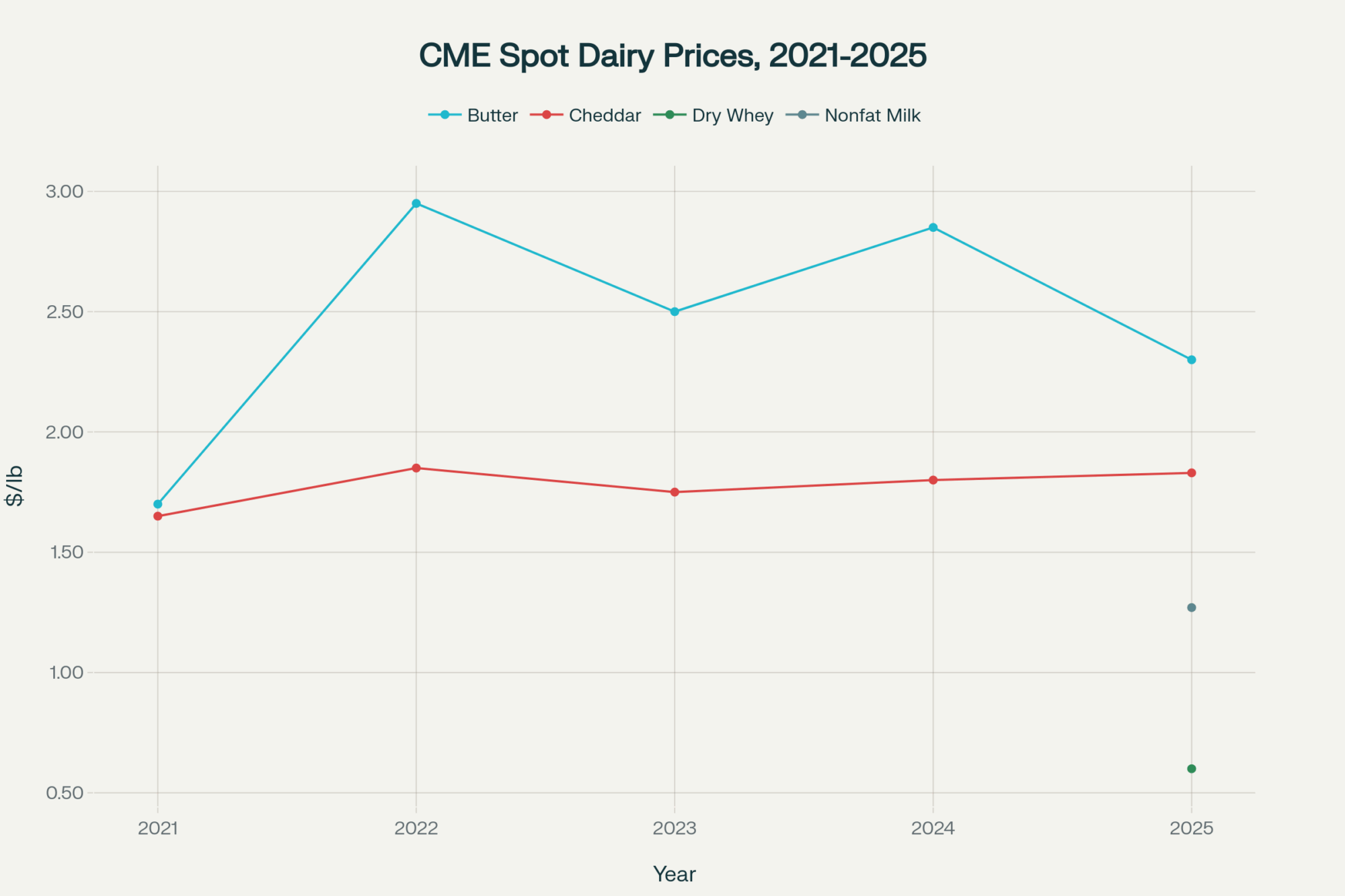
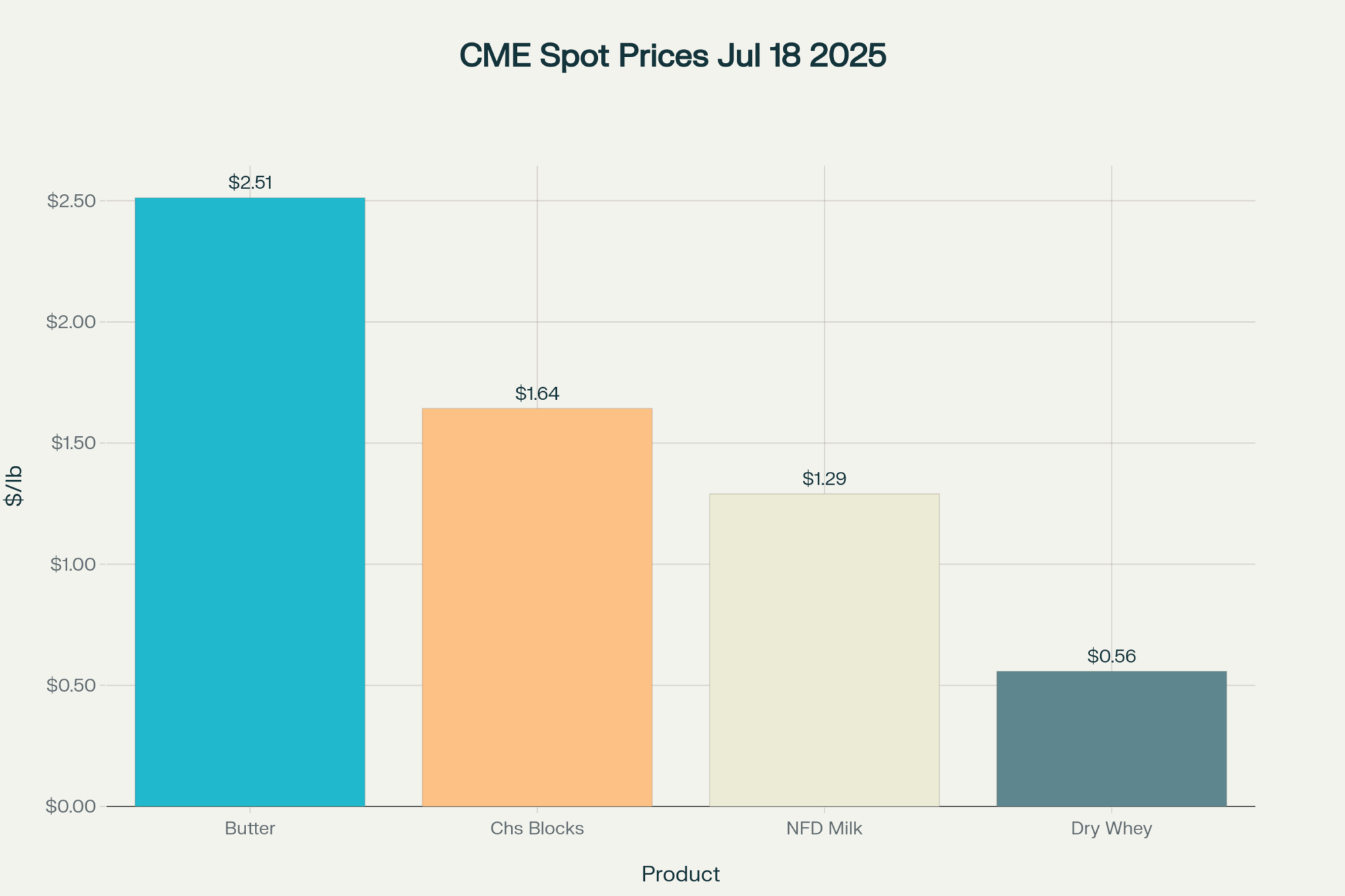
Take butterfat, for example. As of the week ending August 15, 2025, CME spot butter prices dropped 4 cents to $2.30 per pound, hitting the lowest summer point we’ve seen in years, according to CME Group data. What’s interesting is how ice cream makers, who generally consume most of the cream, are stepping back after the peak season. That extra cream floods the market, dropping cream multiples well below what we’d expect historically.

Analysts monitoring USDA Cold Storage data predict that the August and September reports will confirm a significant buildup in butter inventories. If that holds, we could be staring down a prolonged butter price slump into the holiday baking season and beyond.

Here’s what’s concerning, though — September Class III futures dropped 48 cents to $18.39 per hundredweight, with fourth-quarter contracts dancing dangerously close to that $18 floor that makes everyone nervous.

Where the Real Money Lives Now

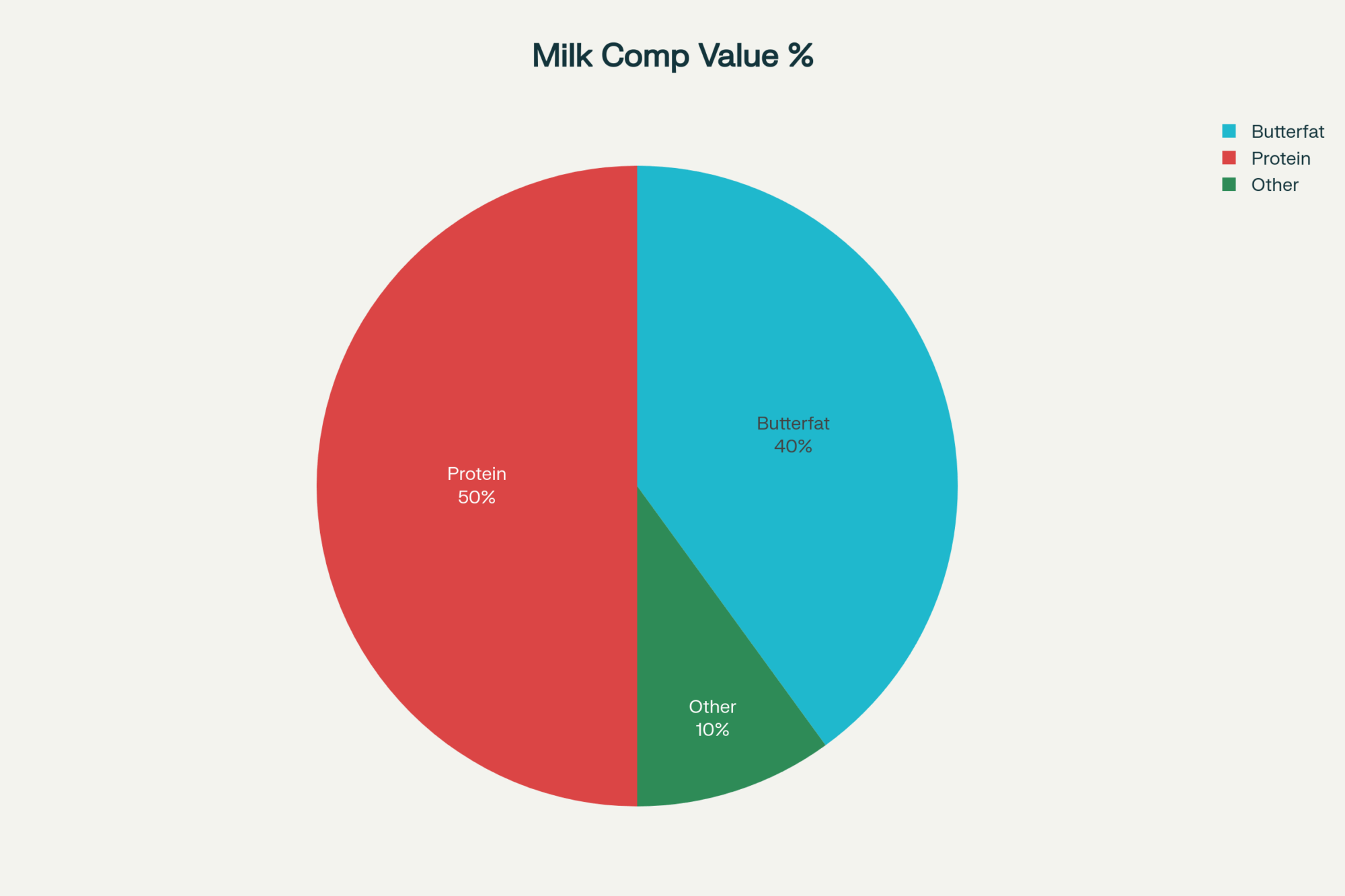
Compare that with dry whey prices, which hit a six-month high of nearly 60 cents a pound last week. Despite China’s export challenges due to trade tensions, domestic demand remains strong, especially for high-protein ingredients. Dr. Mark Stephenson, director of dairy policy analysis at the University of Wisconsin-Madison, notes that protein has become the primary driver of milk prices lately.

Producers who’ve dialed in genetics and nutrition to push milk protein between 3.2% and 3.4% are definitely seeing dividends. This isn’t just about tweaking rations anymore—it’s about fundamentally rethinking what drives your bottom line.

Why Cheap Feed Won’t Save You

However, here’s the catch: cheap feed is no longer a free pass to profitability. The USDA’s August 12, 2025, WASDE report showed a corn yield forecast of 188.8 bushels per acre and 97.3 million planted acres—a monster crop that’s suppressing feed costs. Still, milk futures hovering near $18 per hundredweight signal that producers face vulnerability.

A small rise in corn or soybean meal prices could tighten margins. Penn State Extension recommends aiming for a milk-to-feed ratio of 1.4 to 1.5 now to break even—a steep drop from the 2.5 to 3.0 breakeven ratio many producers used to count on.

Building a Resilient Operation

Here’s where it gets interesting on the farm. The national dairy herd grew year-over-year by roughly 146,000 head to 9.5 million, while weekly cull rates remain steady around 0.54%. This isn’t panic selling, but a calculated approach that focuses on efficiency and milk components, rather than just herd size. It ties directly into why protein is king right now.

What strikes me is how this connects to component management. Smart producers aren’t just growing herds—they’re building better herds. Those focusing on genetics that boost protein percentages are essentially future-proofing their operations against exactly the kind of market split we’re seeing now.

Technology also plays a key role. A 2023 report from the Agricultural Technology Research Institute found that automated feeding systems can improve feed efficiency by up to 12%. That’s a real margin-saver when you need to hit that 1.4-to-1.5 feed conversion ratio. However, it’s also a significant investment—costing $2,500 to $4,000 per cow—with payback periods ranging from 5 to 7 years, especially with tighter credit. Smart producers are weighing that carefully against current cash flow realities.

And don’t forget about locking in inputs. December corn futures near $4.00 per bushel as of mid-August offer a chance to secure feed costs before weather or geopolitical shifts push prices upward again. That window won’t stay open forever.

Risk Management Isn’t Optional (And Most Still Aren’t Doing It)

I can’t stress risk management enough. Dairy Revenue Protection premiums vary from 15 to 35 cents per hundredweight at 95% coverage, depending on your region. Industry observations suggest uptake remains limited in many key dairy areas—too many producers are waiting too long.

If you haven’t talked to your crop insurance agent about DRP for Q4 2025 yet, now’s the time. Don’t be the producer who waits until margins are already gone.

Your Monday Morning Action Plan

So what now? Here’s what needs to happen this week:

  • Lock those feed costs for the next six months while corn holds support
  • Get serious about DRP coverage before the sales deadline hits
  • Manage feed efficiency tightly — aim for that 1.4-to-1.5 ratio, measure it, don’t guess it
  • Focus on improving milk protein percentages — that’s where the money is

This protein demand trend is no fad. It’s real, and it’s going to shape milk checks for the foreseeable future. Those dialing in genetics and nutrition to boost component percentages will be miles ahead of operations still chasing volume.

I expect the coming months to be a dividing line between those who plan and hedge and those who just hope prices will bounce back. In today’s dairy world, hope simply won’t pay the bills.

Complete references and supporting documentation are available upon request by contacting the editorial team at editor@thebullvine.com.

Learn More:

Join the Revolution!

Join over 30,000 successful dairy professionals who rely on Bullvine Weekly for their competitive edge. Delivered directly to your inbox each week, our exclusive industry insights help you make smarter decisions while saving precious hours every week. Never miss critical updates on milk production trends, breakthrough technologies, and profit-boosting strategies that top producers are already implementing. Subscribe now to transform your dairy operation’s efficiency and profitability—your future success is just one click away.

NewsSubscribe
First
Last
Consent

The Family Farm Time Bomb: Why 83% of Dairy Operations Won’t Survive (And What Smart Producers Are Doing About It)

83% of family dairies won’t survive to generation three. But farms boosting feed efficiency 15% through genomic testing are beating the odds.

You know that sinking feeling you get when you’re walking through a parlor that’s been sitting empty for months? The smell of old silage still lingering, phantom sounds of the vacuum pump… but knowing those stalls will never see fresh cows again?

I’ve been getting that feeling way too often lately. And not just about individual barns—I’m talking about our entire industry structure.

So there I was last month, finishing up evening chores with Tom on his third-generation operation in central Wisconsin. Solid 450-cow setup, decent butterfat numbers, the kind of place you’d expect to be milking cows forever. Then he drops this bombshell: “I might be the last one to milk on this land.”

The weight in that statement… it’s haunting more families than we’re willing to admit at those industry meetings.

Here’s what’s keeping me awake at night: the operations we’re losing aren’t the basket cases everyone expects. These are farms with respectable production records, decent equity positions, and respected names in their communities. They’re just… dissolving. Because they thought succession planning was something they’d handle “when the time comes.”

Spoiler alert: by then, it’s already too late.

Part 1: The Crisis

The Brutal Math Nobody Wants to Face

Let me hit you with some numbers that honestly made me double-check my calculator when I first saw them. According to recent work from Iowa State University, 83.5% of family dairies don’t make it to the third generation¹. Think about that for a second—we’re talking about failure rates that make the restaurant business look stable.

But here’s the kicker that really caught my attention: 71% of dairy farmers approaching retirement haven’t even identified a successor¹. And those who actually have succession plans? Only 20% believe they’ll work¹.

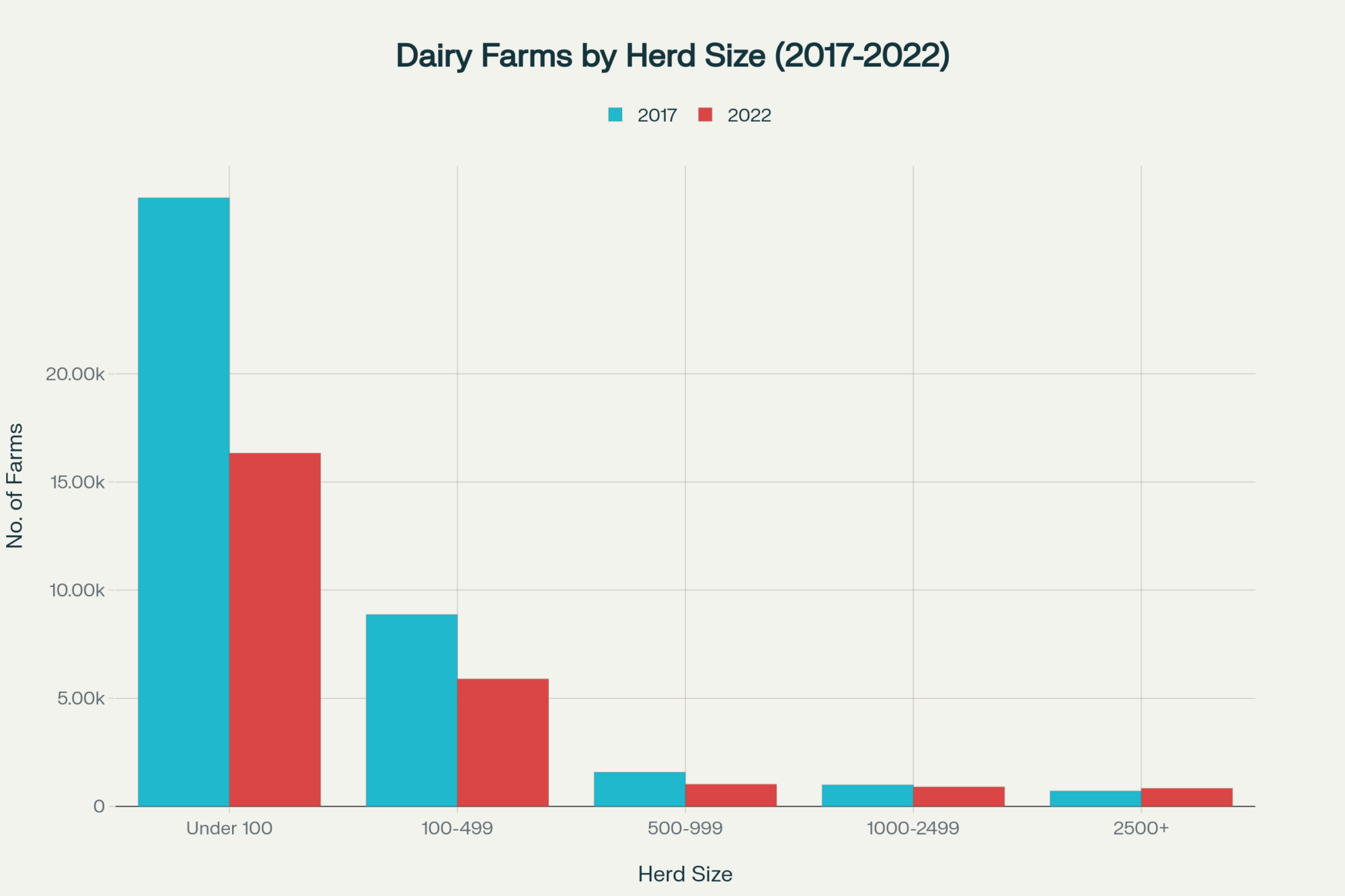
This isn’t some distant threat we can kick down the road, like those overdue invoices we’d rather not look at. The demographic avalanche is happening right now. Between 2017 and 2022, we lost 15,866 dairy operations—a 39% decline in just five years. Yet milk production actually increased 5% during that same period.

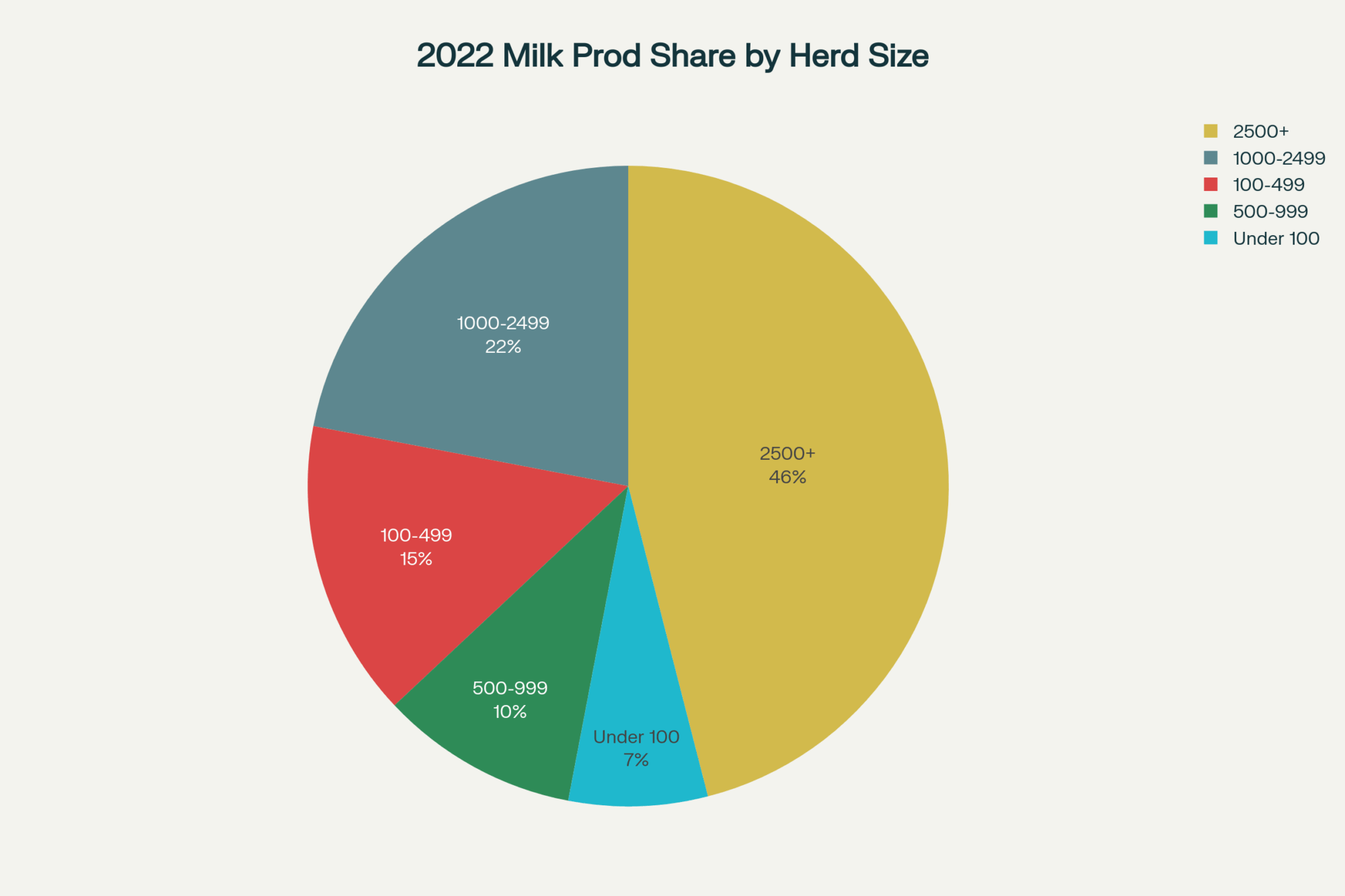
Milk production share by herd size category in 2022

Know where all that production went? Those mega-dairies with 2,500+ cows that grew by 16.8% and now control 46% of national milk production. Every time a smaller farm without a successor closes its doors, its assets and production capacity get absorbed by larger, expanding neighbors. It’s the slow-motion transfer of an entire industry’s wealth—and most of us are just standing by, watching it happen.

Changes in dairy farm numbers by herd size category between 2017 and 2022

What’s Really Happening in Our Parlors Right Now

The thing about demographics in dairy—they’re like watching a train wreck in slow motion where everyone can see what’s coming, but nobody seems able to stop it. You’ve probably noticed it at those recent industry meetings. More gray hair, fewer young faces, conversations shifting from expansion plans to exit strategies.

According to the Federal Reserve Bank of Minneapolis, producers aged 55 and over now make up nearly two-thirds of all operators in major dairy regions. That’s a massive jump from just 44% in 2002. Even more concerning? One-third are already 65 or older.

Here’s what really caught my attention in the latest industry surveys: 25% of dairy operators plan to retire within the next five years¹. Of that group, 22% are already over 65, and another 28% are between 55 and 64 years old.

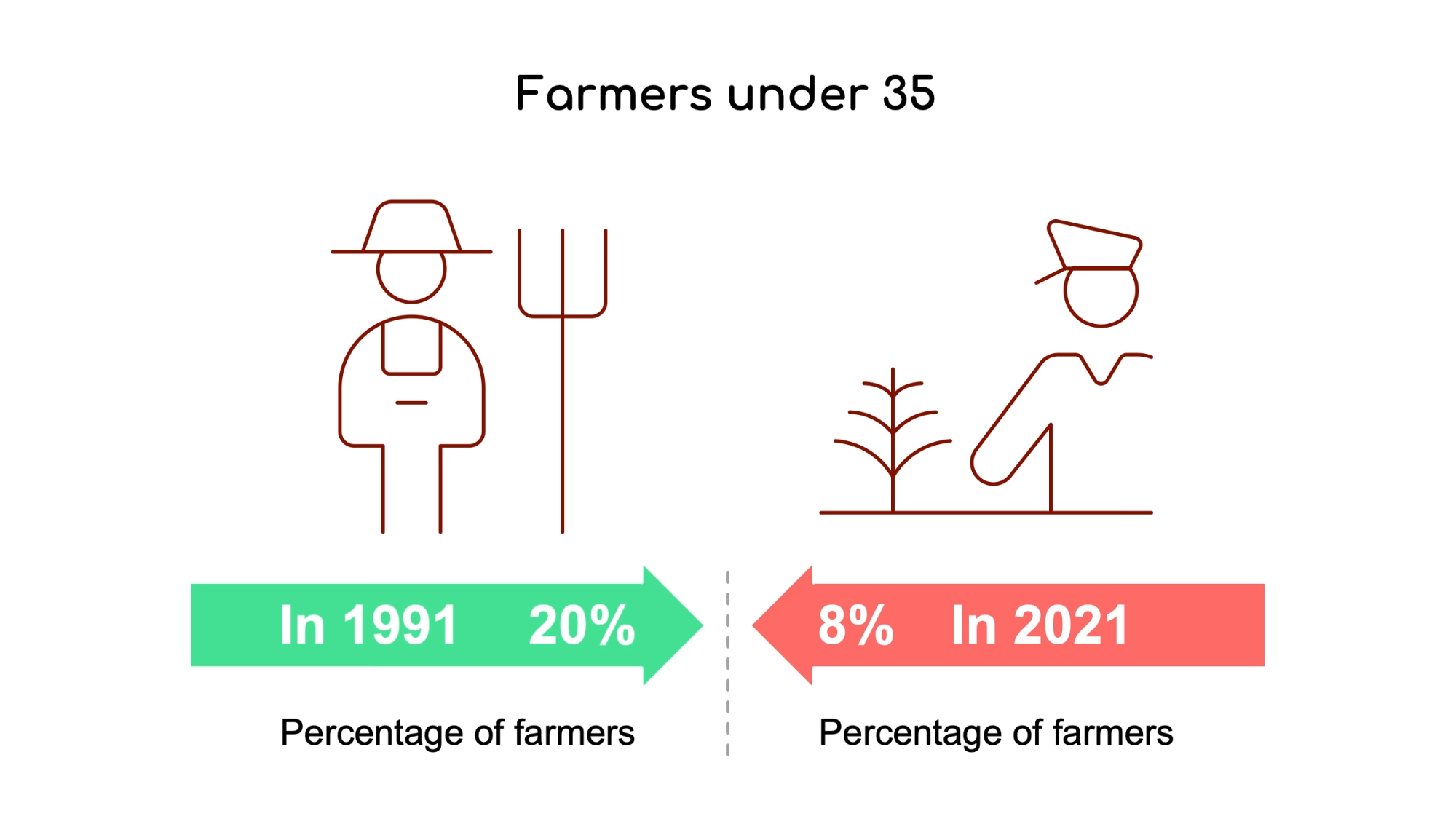
The pipeline behind them? It’s not just weak—it’s practically nonexistent. In New York alone, the number of young producers under 35 actually declined from 6,718 in 2017 to 6,335 in 2022¹. We’re losing young talent faster than we can attract it, which, frankly, shouldn’t surprise anyone who has been paying attention to off-farm career opportunities.

What’s particularly interesting (and this caught my attention when reviewing the Wisconsin data) is the direct correlation between economic scale and succession planning success. While only 38% of smaller operations with 20-49 cows have identified successors, this jumps to 69% for commercial dairies with 200-999 cows¹.

Translation? If your operation isn’t economically robust enough to support transition planning, you’re statistically destined to become someone else’s expansion opportunity.

The $24 Trillion Wealth Transfer That’s Flying Under Everyone’s Radar

Let’s talk about numbers that should fundamentally change how you think about succession planning. The scale of agricultural wealth transfer happening right now makes the tech boom look like pocket change.

We’re looking at over $24 trillion in agricultural assets changing hands over the next two decades¹, with 40% of all U.S. farmland—approximately 370 million acres—expected to change hands by 2045. For dairy families, this represents the largest intergenerational wealth movement in American history.

However, here’s where the story takes a fascinating turn—a development that occurs as I write this. The estate tax situation that everyone’s been panicking about? It has been completely turned on its head.

The Estate Tax Plot Twist Nobody Saw Coming

For years, we’ve been discussing the looming “tax cliff,” where estate exemptions were set to drop from $13.99 million to approximately $7 million on January 1, 2026. Farm families have been scrambling to plan around this deadline, and advisors have been making bank on the fear…

Well, here’s the development that changes everything: President Trump signed the One Big Beautiful Bill Act into law on July 4, 2025. This legislation permanently increases the estate tax exemption to $15 million per individual, starting January 1, 2026, and indexed for inflation. The 40% tax rate remains unchanged, but now married couples can transfer up to $30 million tax-free.

This is huge for dairy families. Instead of facing a tax cliff, they’ve got even more breathing room than they thought. However, here’s the thing—and I want to stress this enough—it doesn’t change the fundamental succession planning needs. You still need those professional teams, the family communication, and the strategic structures. The tax relief just removes one barrier… but there are plenty more where that came from.

Current Market Reality Check

The financial landscape we’re operating in right now is… honestly, it’s better than many expected going into 2025. USDA’s latest projections show All-Milk prices ranging from $21.60 to $22.75 per hundredweight for 2025, which is solid territory for most operations. Meanwhile, Class III futures are trading around $18.70 per hundredweight for various contract months—and yeah, I know some of you are wondering about that spread. Different pricing mechanisms and market signals, but both indicate relatively stable conditions.

Feed costs are running about 13% lower than in 2024, and interest rates are cooperating better than they have in a while. January 2025 milk production was up 0.1% with cow numbers at 9.365 million head—that’s 41,000 more than last year.

But even with improved economics, the consolidation train isn’t slowing down. Current conditions are actually creating opportunities for well-positioned operations to expand, which accelerates the succession crisis for unprepared families. It’s like… good times can actually exacerbate the problem if you’re not prepared for them.

Part 2: The Cause

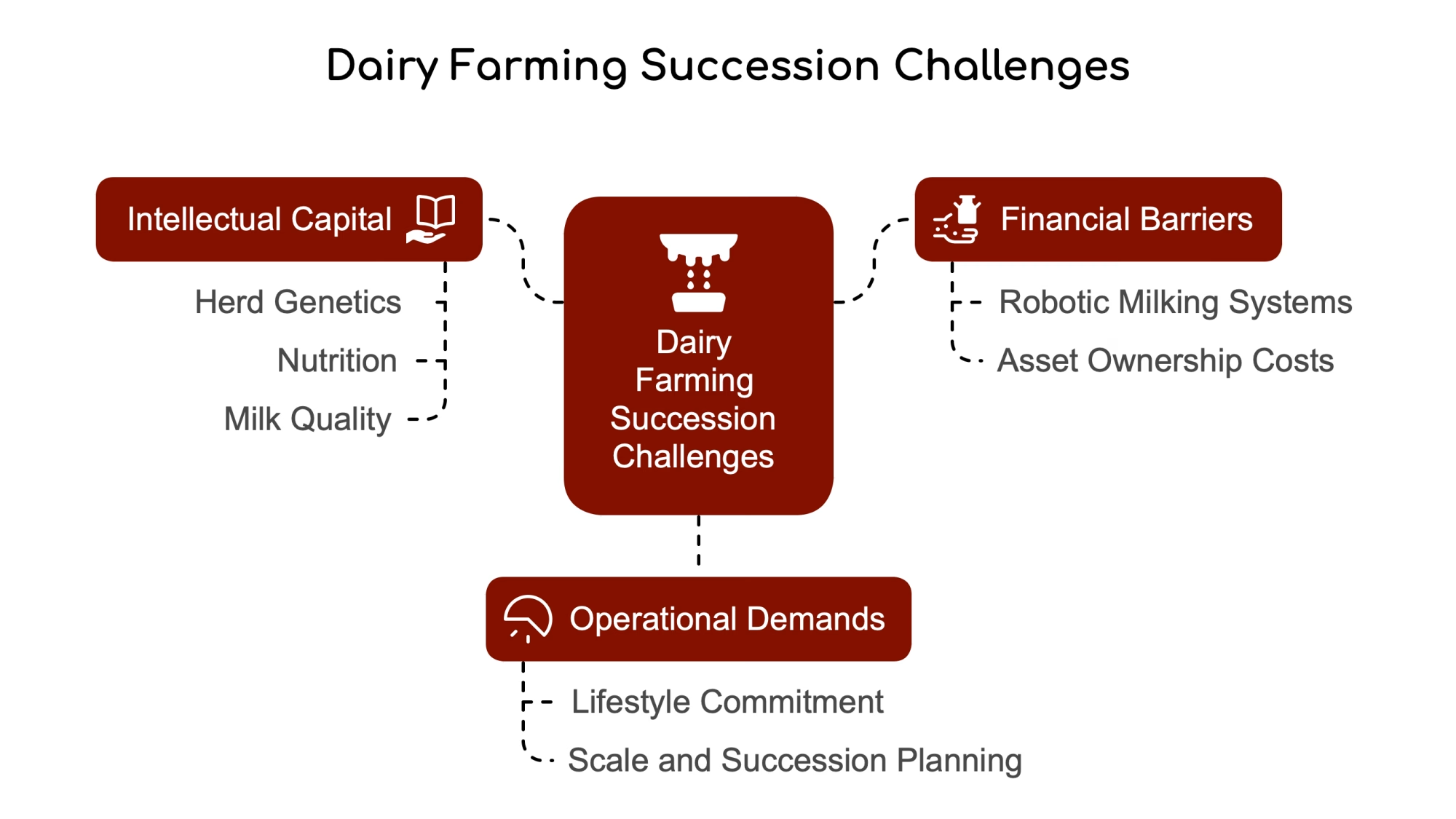
Infographic of key challenges facing dairy farm succession

Why Smart Operations Still Dissolve (The Psychology Nobody Discusses)

Here’s what really frustrates me about this whole situation… the families losing their operations aren’t the struggling ones everyone expects. I’ve seen this pattern over and over: profitable operations with solid cash flow, decent equity positions, respected names in their communities—just gone.

Because they thought succession planning was something they’d handle “when the time comes.”

The Mental Block That’s Killing Farms

The planning gap is so severe it’s almost criminal. Recent work from Farmdoc Daily shows that while 56% of farms report being involved in “some form” of succession planning, only 40% have defined plans¹. What’s even more sobering—among those with plans, only 20% actually believe they’ll work.

But here’s what might surprise you… the biggest succession killers aren’t financial. They’re psychological.

The very mindset that creates successful operations—total commitment, personal sacrifice, that “work until the job is done” mentality—actively prevents the emotional work necessary for succession planning. Think about it… we’re asking people who’ve built their entire identity around never giving up to essentially plan for giving up.

Take Sarah, a producer I know in Minnesota. Third-generation operation, 380 cows, solid margins year after year. She spent three years avoiding the succession conversation because she couldn’t face the possibility of being “the one who lost the farm.” That avoidance? It nearly became a self-fulfilling prophecy when her father had a stroke with no formal transition plan in place. They scrambled, got it figured out… but barely.

The Mental Health Crisis We Pretend Doesn’t Exist

The stress of succession planning isn’t just business pressure—it’s existential dread. Research from Wisconsin and Pennsylvania identifies five areas where family tensions consistently explode: finances, communication, inheritance, change, and control¹. At the heart of most failures is the impossible challenge of treating heirs “equally” versus “fairly.”

The mental health toll is both quantifiable and terrifying. Farmers experience suicide rates 3.5 times higher than the general population, with succession-related stress identified as a primary factor. More specific CDC data shows male farmers have suicide rates of 36.1 per 100,000, 1.6 times higher than all working males.

This hits close to home for a lot of us. A staggering 41% of dairy farmers don’t have health insurance coverage, making mental health resources even more difficult to access. When 76% of farmers report moderate to high stress levels compared to the general population, we’re talking about a systemic crisis that’s actively preventing succession planning from happening.

What’s particularly noteworthy is that 63% of farmers acknowledge mental health stigma in their community. This cultural barrier keeps people suffering in silence exactly when they need help navigating the most complex business transition they’ll ever face.

The process of farm succession adds layers of psychological stress on top of external pressures. The fear of losing a farm that has been in the family for generations, the weight of parental expectations, and the complex negotiations surrounding fairness and control create significant emotional burdens¹. This stress isn’t confined to the senior generation—research shows the younger generation involved in multi-generational farms often experiences even higher stress levels.

Here’s the cruel irony: The very state of mind induced by succession pressure prevents farmers from undertaking the emotionally taxing process of planning, creating a vicious cycle.

The Communication Breakdown That Destroys Everything

Here’s where things get really messy. Many farm families avoid discussing succession, often keeping their plans secret until a crisis, such as death or serious illness, forces the issue. This approach breeds resentment, misunderstanding, and conflict at the worst possible time.

A 2023 study by researchers from Purdue University found that a shocking 22% of farm owners who inherited their business ultimately felt the transfer was unsuccessful¹. The most cited reason? The process and outcome weren’t what they expected—clear evidence of long-term damage caused by poor communication and lack of shared vision.

I’ve watched families tear themselves apart over these discussions. Dad wants to treat all the kids equally, but equal division means the on-farm successor has to take on massive debt to buy out siblings. Non-farming kids often feel guilty about asking for their “share,” but they also don’t want to get left out. Mom’s caught in the middle trying to keep everyone happy…

It’s a recipe for disaster that plays out in conference rooms and kitchen tables across dairy country every single day.

The Generational Divide That’s Killing Transitions

What’s happening between generations right now… it goes way deeper than different opinions about technology adoption or work schedules. We’re seeing fundamental shifts in values, expectations, and definitions of success that can make or break transitions.

The thing about generational differences in dairy—they’re not just preferences, they’re deal-breakers if you don’t address them proactively.

The Technology Expectation Gap (This Is Getting Bigger)

Next-generation farmers don’t view precision agriculture and automation as optional upgrades—they see them as the expected foundation of competitive operations. They anticipate seamless data integration, automated decision-making, and precision nutrition management that previous generations might consider expensive luxuries.

I was on a farm in Minnesota last winter where the 28-year-old successor wanted to install a DeLaval VMS system. Cost? Around $180,000 per unit. The 58-year-old father kept saying, “We’ve milked cows for 40 years without robots.” The son’s response? “Dad, we’ve also struggled through margin squeezes for 40 years doing things the old way.”

Guess who won that argument?

For the next generation, technology adoption is driven by efficiency gains, labor shortage solutions, and—critically—achieving better work-life balance. The expectation is that technology should work seamlessly from the start; for Gen Z operators, if a new tool isn’t intuitive and effective on the first try, it gets abandoned quickly¹.

The Sustainability-Profitability Tension

Environmental stewardship represents another generational divide that’s becoming more pronounced. Younger farmers align philosophically with sustainable practices, viewing themselves as land stewards responsible for preserving resources for future generations. However, this alignment is quickly tempered by economic reality.

Farm Journal surveys show only 40% of young farmers would adopt sustainable practices without clear financial incentives¹. Only 27% view carbon markets as a viable means of income diversification. This highlights a critical “ROI of change” dilemma: the next generation is willing to adopt more sustainable practices, but the farm’s cash flow must support the transition.

I’ve seen this tension play out in succession discussions. The incoming generation wants cover crops, reduced tillage, maybe some grazing… but they also need to service transition debt and keep the operation profitable. Sometimes those goals conflict, at least in the short term.

Work-Life Balance: The Non-Negotiable That’s Changing Everything

Perhaps the most significant cultural shift is the expectation of work-life balance. The traditional ethos of farming as an all-consuming, 24/7 lifestyle—where personal time is secondary to farm needs—is being fundamentally challenged by the next generation.

This isn’t just a lifestyle preference—it has become a critical economic factor in succession decisions. The relentless, round-the-clock demands of dairy farming are significant deterrents for potential successors and a leading cause of burnout and mental health challenges. A farm that can’t offer a reasonable quality of life is effectively uncompetitive in the modern talent market, even when the potential employee is a family member.

I know producers who’ve lost successors not because the farm wasn’t profitable or the kid wasn’t interested… but because they couldn’t figure out how to make the operation run without requiring 80-hour weeks year-round. That’s a management problem, not a generational issue, but it’s one that succession planning must address head-on.

Part 3: The Toolkit for Success

Engineering a Successful Transition: What Actually Works

Here’s what separates the survivors from the statistics… successful succession isn’t about avoiding problems—it’s about systematically engineering solutions years before they’re needed. The families who beat these odds share characteristics that any operation can implement.

Asset Bifurcation—This Strategy Is Brilliant When Done Right

Instead of transferring the entire operation as one massive, debt-crushing transaction, smart families split their assets into two separate legal structures. The senior generation maintains an asset-holding company that owns land and major facilities, while the successor generation operates an operating company that runs daily dairy operations, leasing facilities from the holding company.

This structure achieves multiple objectives simultaneously: providing steady retirement income for parents through lease payments, significantly reducing capital requirements for successors, and offering opportunities for non-farming heirs to maintain ownership interests without interfering with day-to-day operations. It’s elegant, tax-efficient, and addresses the “equal versus fair” dilemma that often undermines most family transitions.

Canadian legal experts have been highlighting this approach through their Bar Association, calling it particularly effective for managing high capital requirements while providing secure retirement income. What’s interesting is how this model adapts to different scales… I’ve seen it work for 150-cow operations and 1,500-cow operations with similar success rates.

Technology-Enabled Succession Planning (This Is New Territory)

Here’s something fascinating… progressive operations are using technology investments to justify succession planning expenses and demonstrate long-term viability to potential successors. Recent analysis shows that farms achieving 30% milk production efficiency gains through precision agriculture and automated milking systems can justify transition investments by improving underlying profitability, which in turn services debt.

Genomic selection programs with 0.43 heritability for feed efficiency provide measurable ROI within 24-month breeding cycles, giving families concrete data to support succession decisions. When you can demonstrate to a successor that technology adoption directly improves margins and quality of life, the succession conversation becomes a lot easier.

Creative Financing Is Becoming Essential

Life insurance policies offer tax-free liquidity to cover estate taxes, ensuring that non-farming heirs receive fair inheritances without requiring asset sales. Revocable living trusts avoid probate complications while enabling gradual successor buyouts with manageable terms and conditions.

Lease-to-own agreements, seller financing, revenue-sharing structures—these address capital constraints that derail conventional transitions. The Farm Credit System has developed deep expertise in succession financing, offering specialized consulting services and loan products designed for intergenerational transfers that traditional banks often can’t match. They’re seeing this crisis firsthand through their lending portfolios and responding with tools most families don’t even know exist.

Professional Development That Actually Matters

The dairy industry has developed a robust ecosystem of high-level programs designed to equip the next generation with the skills needed to lead modern dairy businesses. These programs extend beyond technical farm management to encompass leadership, financial acumen, communication, and industry advocacy.

Holstein Foundation’s Young Dairy Leaders Institute (YDLI) is widely regarded as the premier national leadership program—an intensive, year-long program for young adults aged 22-45. Its curriculum focuses heavily on developing “soft skills” critical for success: interpersonal communication, team building, media training, and industry advocacy¹.

Cornell University’s Dairy Programs offer comprehensive suites catering to different development stages. The Junior and Beginning DAIRY LEADER programs provide high school students with early exposure to dairy careers. For established and aspiring managers, the Cornell Dairy Executive Program focuses on high-level strategic business planning, financial management, and human resources¹.

What’s interesting about these programs, though, is that they often attract the most progressive and motivated individuals from larger, more stable operations. This creates a risk that these efforts may primarily benefit farms already most likely to succeed, potentially widening the gap between well-prepared and unprepared operations.

Mentorship Programs That Transfer Real Knowledge

Formal education and workshops are essential, but they can’t replace the value of hands-on experience and tacit knowledge transfer—the intuitive, experience-based wisdom that’s crucial for successful farm management.

Dairy Grazing Apprenticeship (DGA) is a formal, two-year program registered as a National Apprenticeship. It pairs aspiring dairy farmers with experienced mentor graziers for full-time, on-farm employment and comprehensive training, providing a clear pathway to farm management and ownership¹.

The Canadian Cattle Young Leaders program has been particularly innovative, pairing 16 participants ages 18-35 with hand-picked mentors in specific areas of interest. Each participant receives a $3,000 budget (increased from $2,000 due to Cargill’s funding increase) to support learning opportunities, such as travel and industry events. The formal mentorship runs nine months, from November through July.

Building Your Support Network (You Can’t Do This Alone)

The difference between successful and failed transitions often comes down to the quality of professional support, rather than family dynamics or financial resources. You can’t DIY your way through modern succession planning… and frankly, trying to is one of the biggest mistakes I see families make.

The Kansas State 12-Step Model provides a proven framework that begins with identifying core values and individual goals before moving into technical analysis and formal planning. This model’s strength lies in insisting on building a shared vision foundation before tackling the legal and financial mechanics¹.

The most effective succession planning requires a coordinated team, comprising agricultural attorneys who handle legal structures and estate documents, farm-focused accountants who manage tax implications, and neutral facilitators who guide family conversations. The investment pays for itself by avoiding the mistakes that destroy transitions.

Alternative ownership models are gaining traction for farms without direct family successors. Community Land Trusts and Conservation Land Trusts separate prohibitive land costs from manageable operating businesses, creating opportunities for non-family successors while preserving agricultural use¹.

International Models We Should Be Copying

The challenge of farm succession isn’t unique to the United States. Other major agricultural nations are facing similar demographic pressures and have developed innovative policy responses that we could learn from —if we’re smart enough to pay attention.

Ireland’s Succession Planning Advice Grant directly subsidizes professional planning services, addressing cost and complexity barriers that prevent families from starting the process¹. This contrasts with the U.S. approach, which tends to provide support after a transition plan is already in motion, rather than catalyzing the creation of the plan itself.

New Zealand emphasizes extended “apprenticeship periods” for successors, with frameworks built on clear communication, shared vision, and systematic capability building¹. They’ve figured out something we’re still struggling with—successful transitions require years of preparation, not crisis-driven decisions.

These international examples demonstrate that proactive policy and a focus on the planning process, rather than the financial outcome, can lead to more successful transitions. The U.S. currently lacks federal policy that directly incentivizes the creation of a succession plan, representing a significant gap in our strategy to address this crisis.

Part 4: The Call to Action

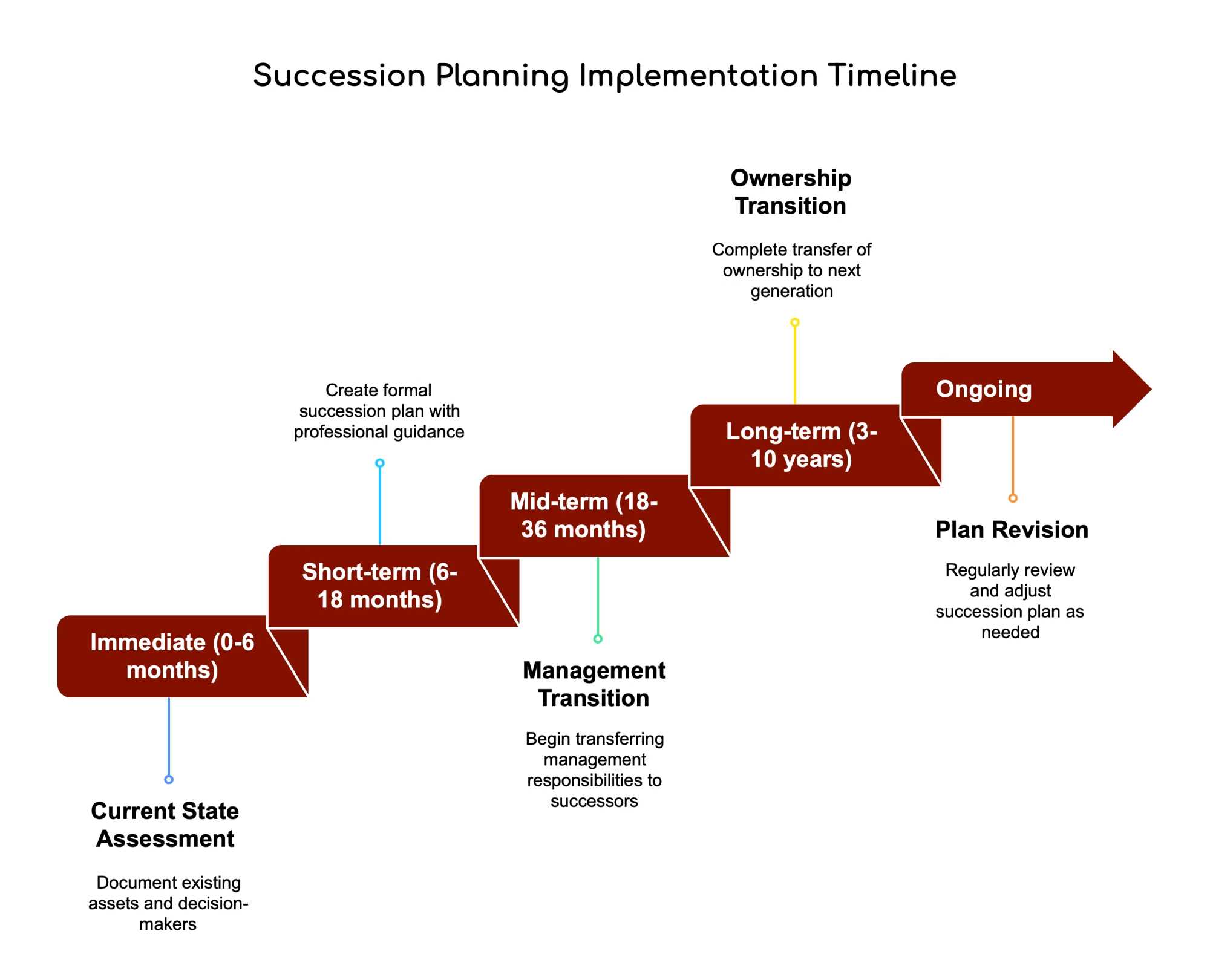
Your 90-Day Emergency Action Plan

Here’s what the data reveals about your operation’s real succession odds… if you’re reading this without a formal, written succession plan that all family members understand and support, you’re statistically destined to join the 83.5% of families who lose everything they’ve built.

But the families who beat these odds share characteristics that any operation can implement. Here’s your roadmap.

Weeks 1-2: Emergency Assessment and Professional Team Building

Start with an honest family assessment of succession readiness. The most frequently cited barriers from Wisconsin surveys are having “no successor” (20% of respondents) and the “financial capacity of the dairy farm to allow more owners into the business” (1 )¹%)¹.

If you don’t have clear answers to these fundamental questions, that’s your starting point. Don’t overthink it—just get the conversation started.

Identify and engage that professional advisory team—agricultural attorney, farm-focused accountant, family business consultant. Schedule comprehensive asset valuation, including technology, genetics programs, and intangible assets. Modern dairy operations have complex value structures that go way beyond land and cows.

Weeks 3-6: Communication Framework Development

Implement structured family meeting protocols with professional facilitation if needed. Begin successor identification and development assessment. Address mental health resources and stress management strategies… because this process is going to be emotionally taxing for everyone involved.

This is where most families get stuck—the emotional work of succession planning. Remember, 22% of farm owners who inherited their business ultimately failed because the transition did not meet expectations. Poor communication and a lack of shared vision can cause long-term damage that may take generations to repair.

Weeks 7-12: Strategic Structure Design

Model asset bifurcation scenarios using current tax exemptions. Evaluate alternative financing and ownership structures. With the new permanent $15 million estate tax exemption, you’ve got more breathing room than expected, but you still need proper structure.

The window for proactive succession planning has actually expanded with recent legislative changes, but current economic conditions—All-Milk prices in the $21.60-$22.75 range for 2025, feed costs 13% lower than 2024, favorable interest rates—create opportunities that won’t exist indefinitely.

Regional Implementation Strategies

For Wisconsin Operations: Leverage the state’s succession planning resources while addressing the 49% successor identification gap¹. Focus on financial capacity assessment—can the operation support both generations during transition? Wisconsin’s deep cooperative infrastructure that provides advantages is a key strength, unlike regions that lack it.

For Upper Midwest Producers: With one-third of producers over 65, time is critical. Prioritize immediate succession conversations and assemble the professional team. Consider seasonal timing—many successful transitions begin with planning discussions during the winter months, when operational demands are lighter and you can focus on long-term thinking.

For All Regions: Recent regulatory changes add complexity but also create opportunities. FDA’s FSMA food traceability requirements have been extended to July 2028, giving operations more time to prepare compliance systems during transition periods—a 30-month extension from the original deadline that takes some pressure off families dealing with both succession and regulatory changes.

Where This All Leads (And Why It Matters to Your Operation)

Here’s what strikes me about this whole situation… we’re at an inflection point where the decisions made in the next 18 months will determine the structure of American dairy for the next 50 years. The families that recognize this and act accordingly will write the next chapter of our industry.

Those who wait for perfect conditions or hope that somebody else will solve it? They’re going to become footnotes in someone else’s expansion story.

The 16.5% of families who successfully navigate multi-generational transfers¹ aren’t lucky—they’re prepared. Really, really prepared. They start early, communicate openly, invest in professional guidance, and treat succession as a multi-year strategic process rather than a single transaction.

Current market conditions provide a unique window of opportunity. Milk prices are stable, feed costs are manageable, interest rates are cooperating, and estate tax relief provides more flexibility than anyone expected. But these conditions won’t last forever… and the demographic pressure isn’t going away.

Families who act decisively in 2025 can structure transitions that preserve wealth and maintain operational control. Those who delay? They’ll join the thousands of operations already absorbed by industry consolidation.

Your family’s legacy isn’t just about preserving what you’ve built—it’s about ensuring the next generation has the tools, resources, and strategic positioning to thrive in whatever dairy industry emerges from this demographic transition.

The choice is stark but manageable: begin comprehensive succession planning now, or risk your operation becoming an acquisition target for families who have already done so.

The question for your operation is simple: will you engineer your succession, or will market forces engineer it for you?

This analysis incorporates data from USDA reports, Iowa State University studies, Federal Reserve Bank analysis, and confidential industry surveys through July 2025. Market data confirmed through the USDA Agricultural Marketing Service, National Agricultural Statistics Service, and Economic Research Service publications.

KEY TAKEAWAYS

  • Cut feed costs 20% while boosting production – Genomic testing with 0.43 heritability for feed efficiency delivers measurable ROI within 24 months. Start with your replacement heifers this breeding season—current market conditions give you the cash flow cushion to invest.
  • Technology adoption = transition advantage – Farms implementing robotic milking and automated feeding see 25-35% labor cost reductions. That’s not just efficiency… that’s creating work-life balance that actually attracts successors instead of scaring them off.
  • Data-driven decisions beat family drama – Operations using precision agriculture tools to demonstrate 15-20% productivity improvements have concrete numbers to justify transition investments. When you can show ROI on genomic breeding programs, succession planning shifts from emotional to financial.
  • Scale smart, not just big – With milk production concentrated in larger operations (2,500+ cow farms now control 46% of national production), mid-size farms need genomic advantages to compete. Focus on genetic gains that improve your cost per hundredweight—that’s your survival strategy.
  • Professional management = professional succession – Farms running like businesses with documented performance metrics, genomic breeding records, and efficiency tracking are the ones successfully transitioning. Start treating your operation like the multi-million dollar business it is.

EXECUTIVE SUMMARY

Look, we’ve been talking about succession planning for decades while farms keep disappearing around us. The real issue isn’t estate taxes or family meetings—it’s that too many operations aren’t profitable enough to be worth passing down. Recent data shows 71% of retiring farmers haven’t even named successors, but here’s what caught my attention: operations achieving 30% efficiency gains through precision management and genomic selection are actually attracting next-generation interest. With All-Milk prices steady around $22.75 and feed costs down 13% from last year, farms using genomic testing to improve feed efficiency are seeing $35K-45K annual savings on 200-cow operations. The Europeans figured this out years ago—you can’t preserve what isn’t viable. Time to make your operation so profitable that succession becomes inevitable, not optional.

Complete references and supporting documentation are available upon request by contacting the editorial team at editor@thebullvine.com.

Learn More:

Join the Revolution!

Join over 30,000 successful dairy professionals who rely on Bullvine Weekly for their competitive edge. Delivered directly to your inbox each week, our exclusive industry insights help you make smarter decisions while saving precious hours every week. Never miss critical updates on milk production trends, breakthrough technologies, and profit-boosting strategies that top producers are already implementing. Subscribe now to transform your dairy operation’s efficiency and profitability—your future success is just one click away.

NewsSubscribe
First
Last
Consent

The Feed Cost Squeeze That’s Crushing Dairy Margins — And Why Smart Producers Are Already Positioning for What’s Coming Next

The protein cost explosion that’s reshaping how we think about profitability… and why smart producers are already positioning for what’s coming next

EXECUTIVE SUMMARY: Here’s what’s keeping me up at night, and it should worry you too… feed costs are absolutely crushing dairy margins in ways we haven’t seen since 2012, with soybean meal prices exploding to $285 per ton — that’s an extra $5,250 monthly for a typical 1,000-cow operation. The milk-to-feed ratio has dropped to a dangerous 1.80, which Penn State Extension calls “critical financial territory.”Meanwhile, our national herd keeps shrinking by 40,000 head while replacement heifers cost $2,500 each, and here’s the kicker — those Q4 futures sitting at $18.58 suggest better days ahead, but only if you can survive the squeeze. Global demand from Mexico and Southeast Asia is keeping NDM prices strong, but that won’t help if your feed bills are bleeding you dry. You need to stop thinking about this as a temporary blip and start treating it as the new reality — because the operations that get their risk management and feed efficiency dialed in now will be the ones still milking when prices recover.

KEY TAKEAWAYS

  • Slash feed costs by 8-12% through precision ration management — we’re talking $10-15 savings per cow monthly when soybean meal hits these record highs, and every dollar counts with margins this tight
  • Lock in your DRP coverage NOW for fall quarters — match your federal order’s class utilization instead of just hedging Class III, because that $1.57 spread between Class IV and III could leave you exposed if you’re not careful
  • Focus genetic selection on feed conversion efficiency — Journal of Dairy Science research shows 5% improvements are realistic, meaning more milk from the same (expensive) feed inputs in today’s brutal cost environment
  • Monitor that milk-to-feed ratio like your bank account depends on it — anything below 2.0 signals serious financial stress, and at 1.80 we’re already in dangerous territory across most U.S. herds
  • Leverage the export strength while it lasts — Mexico buying 50%+ of our NDM exports is creating a price floor, so work with your processor to capture those premiums before trade winds shift

The thing about this summer’s dairy margins — they’re not just tight, they’re pinched in a way I haven’t seen since that brutal 2012 drought. And if you think I’m being dramatic, well… take a hard look at your feed bills lately.

What strikes me most about what we’re dealing with right now isn’t just another commodity cycle. This feels different. It’s like watching a fundamental reshaping of the cost structure that has even seasoned producers scratching their heads and recalculating everything they thought they knew about staying profitable.

While everyone’s been tracking Class III futures holding around $17.79/cwt, there’s been this massive shift happening in the feed markets that’s completely rewriting the playbook. The soybean meal complex? Man, it’s gone absolutely haywire — and it’s catching farms off-guard left and right.

When Feed Costs Start Calling the Shots

You know how we always talk about watching the corn market? Well, forget corn for a minute. What’s really crushing margins right now is what’s happening on the protein side of things, and it’s brutal.

According to recent work from Penn State Extension dairy economists, operations running feed costs above 60% of milk revenue are now in what they’re calling “critical financial territory.” That’s not just academic talk — I’m hearing from producers in Wisconsin who are seeing soybean meal bills jump from around $250/ton to $285.30/ton in what feels like overnight.

Key dairy market indicators for the week ending July 18, 2025, showing price comparisons and margin squeeze signals

Do the math on a typical 1,000-cow operation running through 15 tons weekly — that’s an extra $5,250 hitting your monthly expenses. And that’s before we even discuss all the other protein sources that are being pulled up with it. (This is becoming more common than anyone wants to admit.)

Here’s the thing, though… this isn’t just commodity volatility we can wait out. What we’re dealing with is structural pressure from renewable diesel, which is crushing, that’s putting sustained upward pressure on the bean complex. The latest USDA outlook projects a record-high soybean crush for the 2025/26 marketing year, driven by soaring demand for soybean oil in biofuels. When crushers are running flat out for biofuel demand, guess who gets stuck with the meal price consequences?

This development is fascinating from a market structure perspective, but terrifying when you’re trying to balance rations and keep cows happy.

Why the Futures Are Telling a Different Story

What’s particularly noteworthy about the current market structure is how disconnected cash and futures have become. CME data shows fourth-quarter Class III futures sitting around $18.58 – that’s a pretty healthy premium over where we are today.

But here’s where it gets interesting… that contango structure isn’t random market noise. It’s the collective wisdom of traders who see something coming that a lot of producers might be missing. They’re looking at two things that should have every dairy operator paying attention.

First, there’s this wave of new processing capacity coming online through late 2025 and into 2026. I’m talking major cheese and fluid plants in New York, Texas… facilities that represent permanent — or let’s say, ‘multi-decade’ — increases in milk demand. These aren’t temporary pop-up operations. They’ll need milk, lots of it, for years ahead.

Second — and this is where the supply math gets really interesting — our national herd is actually contracting. The latest USDA data puts us at 9.325 million head, down 40,000 from last year. Even with beef prices at current levels, producers aren’t expanding. Why? Because replacement heifers are commanding $2,500 a head[1], and margins are getting squeezed from both ends.

Think about that dynamic for a minute. New processing demand meeting constrained supply growth? That’s the recipe for processors bidding aggressively for available milk. What’s your operation going to look like when that competition heats up?

The Regional Reality Nobody Wants to Talk About

Now, here’s where things get really nuanced — and this varies dramatically depending on where you’re milking. If you’re in the Upper Midwest, where Class III utilization runs heavy, you’re dealing with one set of margin pressures. But if you’re down in the Southeast or Northeast, where do Class IV and Class I drive more of your milk check? Completely different ballgame.

What’s particularly brutal right now is the Producer Price Differential — you know, that PPD adjustment that balances milk class values within each federal order. With Class IV trading at a $1.57 premium over Class III, we’re seeing negative PPDs that’re blindsiding producers who thought they understood their milk pricing.

CME spot prices for key dairy products as of July 18, 2025, illustrating butter as the highest priced product and dry whey as the lowest

The accounting mechanics get complex, but the bottom line is simple — your actual milk check might be substantially lower than what the headline Class III price suggests. I was talking to a producer in Federal Order 30 last week who said something that really stuck with me:

“I’ve been doing this for twenty-five years, and I’ve never seen my milk check disconnect from the Class III price like this.”

That’s the PPD effect in action, and it’s not going away anytime soon. Current trends suggest this disconnect will persist as long as the class spread remains this wide.

Are you factoring this into your planning? Because a lot of operations aren’t.

Your Strategic Response Window — And Why It’s Narrowing

Here’s what really concerns me about the current situation. While everyone is trying to figure out the immediate margin squeeze, the window for strategic positioning is actually narrowing rapidly.

Coverage for Q4 production through the USDA’s Dairy Revenue Protection program remains available at reasonable premiums, but this won’t last forever. What’s your coverage strategy looking like right now? Are you even thinking about it?

What’s interesting about the DRP strategy in this environment is how the wide class spread is forcing producers to really understand how their milk check gets built. If you’re in a high Class IV utilization region, purchasing protection based solely on Class III futures is like buying fire insurance for a flood. You end up with a hedge mismatch that could cost you big time.

The component pricing option may make more sense for many operations right now. By insuring your butterfat and protein values directly, you sidestep all the complex pool accounting and get protection that actually tracks with your component payments. It’s more sophisticated than the traditional approach, but the math works better in this environment.

(Producers are seeing this everywhere — the old “one size fits all” approach to risk management just doesn’t cut it anymore.)

What Smart Operators Are Already Doing

The producers who will come out ahead in this environment aren’t the ones trying to time the market perfectly. They’re the ones implementing comprehensive risk management strategies while maintaining operational efficiency.

Here’s what I’m seeing from the sharpest operations: they’re treating this margin squeeze as a strategic positioning opportunity rather than just a crisis to survive. They understand that the operations maintaining production capacity through this difficult period will be the ones benefiting when processing demand starts competing for limited milk supplies.

Feed cost management is becoming increasingly critical. Some are locking in protein costs where possible, others are adjusting rations to optimize for the new cost structure. The key is understanding that this isn’t a temporary disruption — it’s a fundamental shift that requires strategic adaptation.

What’s fascinating to watch is how the operations that are thriving aren’t necessarily the biggest or the newest. They’re the ones who adapted their thinking first. They’re looking at butterfat numbers, optimizing protein efficiency, and treating their fresh cow management as a profit center rather than just another monthly expense.

The Export Story That’s Keeping Things Together

The key aspect of structural market changes is that they create both risks and opportunities. Yes, the current margin environment is brutal. However, the fundamental supply and demand dynamics setting up for late 2025 and into 2026 appear genuinely constructive for producers who position themselves strategically.

Export demand remains incredibly robust — Mexico alone accounts for over 50% of our NDM exports[1], and demand for milk powder blends in Southeast Asia continues to grow. That export strength is putting a floor under the powder complex, which is supporting Class IV prices.

Domestically, the demand picture is mixed but not terrible. Food service recovery continues to outpace retail, which explains why we’re seeing barrel premiums over blocks. The broader food service industry is holding up better than many people expected. What’s particularly noteworthy is how this barrel-block spread directly affects the weighted average cheese price that determines Class III values.

Price trends for key dairy products from July 14 to July 18, 2025, showing slight declines in butter, cheese, and whey, with nonfat dry milk holding steady

From industry observations, the fresh cow market is also telling an interesting story — operations that can maintain steady calvings through this tough period are positioning themselves well for when milk premiums return.

Bottom Line: The Three Things You Need to Do This Week

Look, I can’t stress this enough — run your numbers on feed costs as a percentage of milk revenue. If you’re pushing above 60%, you need protection strategies in place. Period. Don’t wait for costs to moderate because the structural drivers suggest they won’t.

Second, audit your risk management strategy against your actual milk check structure. Ensure that any DRP coverage accurately reflects how your revenue is actually generated, including class utilization, regional factors, and component values. Don’t hedge Class III risk if Class IV accounts for half of your revenue stream. That’s just throwing money away.

Third, start thinking about this challenging period as an opportunity rather than just surviving. Producers who use sophisticated financial planning to bridge the current difficulties will be able to capture value when milk prices rise, rewarding the survivors.

The market transition is happening whether we’re ready or not. The question isn’t whether margins will improve — the futures curve suggests they will. The question is whether you’ll be positioned strategically when they do.

What strikes me most about this whole situation is how it’s separating operations based on management sophistication. The dairy industry is evolving rapidly, and producers who adapt their strategic thinking to match this evolution will be the ones writing the success stories when we look back on this period.

The evidence suggests a fundamental re-evaluation of how we approach profitability in this business. Are you adapting your approach accordingly? Because from what I’m seeing in the data and talking to producers across the country, the operations that make these adjustments now are going to be the ones still milking strong in 2026 and beyond.

Join the Revolution!

Join over 30,000 successful dairy professionals who rely on Bullvine Weekly for their competitive edge. Delivered directly to your inbox each week, our exclusive industry insights help you make smarter decisions while saving precious hours every week. Never miss critical updates on milk production trends, breakthrough technologies, and profit-boosting strategies that top producers are already implementing. Subscribe now to transform your dairy operation’s efficiency and profitability—your future success is just one click away.

NewsSubscribe
First
Last
Consent

The Land Value Wake-Up Call Every Dairy Producer Needs to Hear

Everyone’s calling land values “stable” but your banker’s asking for more collateral. Something doesn’t add up.

Executive Summary: Look, I’ve been watching this land market closely, and there’s a story here that affects every dairy operation in America. The “stable” farmland values everyone’s talking about are being propped up by one-time government disaster payments—not actual farm profitability. We’re talking about $33.1 billion in temporary support that won’t be there next year, while actual cash receipts from crops and livestock are dropping by $1.8 billion.Meanwhile, Federal Reserve surveys show loan repayment rates at their lowest since 2020, and bankers are demanding more collateral across all agricultural districts. For dairy producers, this means feed costs are climbing 5-7% while the land that grows your corn and hay is sitting on shaky financial ground. The smart money is already shifting—South Dakota’s up 11% while Iowa’s down 3% for the second straight year.Here’s what this means for your operation: now’s the time to shore up working capital and get real about your expansion plans before that 2026 “cliff effect” hits.

Key Takeaways

  • Credit’s Getting Tight—Act Now: Agricultural lenders are seeing their worst loan performance since 2020, with 60% reporting lower farm income than last year. Get ahead of this by having that honest conversation with your banker about your working capital without counting on government payments. Those who wait might find themselves scrambling for operating loans at higher rates.
  • Feed Cost Reality Check: With seed prices climbing 5-7% and fertilizer vulnerable to geopolitical shocks, your 2025 feed budget needs serious attention. Start locking in hay contracts now and consider diversifying your feed sourcing—operations in Wisconsin are seeing more stable costs than those in New York where alfalfa’s running $60-90 more per ton.
  • Regional Arbitrage Is Real: While Iowa corn ground drops 3%, livestock-heavy regions like South Dakota are up 11%. If you’re in a dairy-dense area, your land values might hold better than row-crop regions, but don’t count on it lasting. Use this window to refinance or consider strategic sales of non-core assets.
  • Technology Investment Window: With labor costs hitting $22/hour for milking and a 14% annual growth in robotic milking systems, now’s the time to evaluate automation. A $200,000 robot that eliminates 1.5 FTE positions pays for itself in 3.5 years—and that’s before you factor in the labor shortage getting worse.
  • The 2026 Cliff Effect: Those massive government payments propping up farm income disappear next year. Smart operators are using this temporary cash flow boost to pay down debt and build reserves, not fund expansion. Calculate your true cash flow without government support—that’s your real financial picture.

You know that feeling when you’re at a dairy conference and someone mentions land values, and suddenly everyone gets quiet? Well, I’ve been digging into what’s really happening with farmland prices, and… let’s just say the conversation we’re not having is the one we need to have.

Here’s the thing about farmland values right now—everyone keeps using that word “stable,” but when I look at the numbers, I’m seeing something that looks more like a house of cards than solid ground.

I was just talking to a producer from Iowa last week, and he mentioned something that really stuck with me. His neighbor’s land sold for about 15% less than what similar ground brought two years ago, yet the headlines still claim market stability. Made me wonder—what story are we actually telling ourselves about where this market is headed?

For us in the dairy business, this isn’t just another market story. It’s about understanding whether the ground under our feet—literally and figuratively—is as solid as everyone’s saying it is.

The Illusion of Stability

The thing about market stability is that it’s not always what it seems. When I began examining regional data, the picture became significantly more complex than the national averages suggest.

Take Iowa, for instance. This is supposed to be the bellwether for farmland values, right? According to Farm Credit Services of America’s latest benchmark data, Iowa land values have decreased by 3% year-over-year, marking the second consecutive year of declines. Meanwhile, if you’re up in South Dakota, you’re seeing a completely different story—values there are up over 11%, driven mostly by strong demand for pasture and ranch land.

What strikes me about this regional split is how much it mirrors what we’re seeing in the dairy industry itself. If you’re in a livestock-heavy area, you’re probably feeling pretty good about your position right now. Strong consumer demand for dairy products, combined with relatively tight supplies, is creating a financial cushion that crop-heavy regions simply don’t have.

But here’s where it gets interesting—and a little scary. The USDA’s Economic Research Service released its February 2025 farm income forecast, showing what appears to be good news on paper. However, when you break it down, it’s both fascinating and concerning.

Regional farmland value changes reveal stark differences across the Midwest and Plains states in 2025, with traditional corn belt states declining while livestock-focused regions surge ahead

Stronger farming operations aren’t driving the dramatic increase in projected farm income. According to the USDA data, actual market-based cash receipts from crops and livestock are expected to decline. The entire income boost stems from a massive surge in direct government payments—specifically, billions in ad hoc disaster assistance, primarily from the Emergency Relief Program (ERP), Supplemental Disaster Relief Program (SDRP), and other congressional disaster assistance programs covering prior-year losses.

Regional farmland value changes reveal stark differences across the Midwest and Plains states in 2025, with traditional corn belt states declining while livestock-focused regions surge ahead.

Now, I’m not saying these payments aren’t needed. Many producers have been severely impacted by weather and market conditions over the past couple of years. However, here’s what keeps me up at night thinking about it: these are one-time payments, not recurring income streams.

The Real-World Squeeze

Here’s what’s really squeezing today’s producers: a one-two punch that’s hitting operational cash flow from both sides.

First, let’s talk about input costs. Despite some easing from the record highs of 2022, we’re still dealing with elevated production expenses. Industry analysts are projecting that seed costs will continue their upward trend, with an expected increase of 5-7% in 2025. Fertilizer prices, while stabilized from their peak, remain vulnerable to geopolitical shocks. And natural gas prices—critical for nitrogen fertilizer production—are expected to see significant increases this year.

What’s interesting is how this plays out differently depending on where you’re farming. I recently spoke with a producer in Wisconsin, and he mentioned that their local feed costs have remained relatively competitive compared to other regions. But if you’re farming in upstate New York, you’re dealing with alfalfa costs that can run $60-90 per ton above Iowa levels, which really adds up when you’re feeding 1,500 head.

Then there’s the labor crisis. This isn’t just about finding seasonal help anymore—it’s become a structural problem. Industry surveys indicate that labor shortages are now impacting over 60% of large-scale agricultural producers. I was just at a farm in Pennsylvania where they’re paying $22 an hour for milking labor, when they can find it. That’s nearly double what they were paying five years ago.

The demographic trends driving this are unlikely to reverse anytime soon, either. Rural populations are declining, birth rates are lower, and we’re dealing with a more restrictive immigration policy environment that limits the flow of workers who have historically been essential to the agricultural workforce.

A producer I know in Nebraska put it this way: “When you can’t find help and feed costs keep climbing, something’s got to give. And usually, it’s your margins.”

The Financial Consequences

While land values are hanging in there—at least on paper—the credit markets are telling a completely different story. And this is where the rubber meets the road for dairy operations.

Federal Reserve agricultural credit surveys from multiple districts are reporting a consistent pattern: falling loan repayment rates, increasing loan renewals and extensions, and growing demand for operating loans at the highest levels since 2016.

The Chicago Fed’s latest AgLetter survey indicates that the index measuring loan repayment rates has fallen to its lowest level since the first quarter of 2020. The Kansas City Fed reported that 60% of lenders in their district observed lower farm income than a year prior, and the share of lenders requiring increased collateral has doubled.

What’s particularly troubling is what’s happening with working capital. In the Minneapolis Fed’s recent survey, one Wisconsin banker summed it up: “Working capital is stretched thin across the board. Many producers are carrying over debt they can’t comfortably service with current operational cash flow.”

For dairy operations specifically, this credit tightening is hitting at a time when we’re already dealing with elevated feed costs and labor shortages. When your banker starts asking for more collateral, that’s not a good sign for the underlying health of your operation.

I’ve been discussing this with lenders, and they’re noticing something interesting. The producer looks at their 2025 statements, sees those big government checks, and feels financially secure. But the banker? They’re examining the underlying operational cash flow, and they’re becoming nervous.

This creates a dangerous dynamic where farmers might feel optimistic about expanding or refinancing based on their temporarily improved balance sheets, but lenders are unwilling to underwrite loans based on non-recurring income. That’s a recipe for a credit crunch.

The Great Divide

As if the economic pressures weren’t enough, the adoption of technology is creating a growing gap in the dairy industry—and it’s accelerating due to the factors we’ve just discussed.

The global milking robot market is experiencing rapid growth, with a compound annual growth rate of approximately 14%. What’s driving this isn’t just convenience—it’s necessity. Research from dairy automation studies suggests that these robotic systems can reduce labor costs by 15-25% while enhancing milk quality and improving cow comfort.

I visited a farm in Wisconsin last month where they installed their third robot system. The owner told me something that really stuck: “It’s not about the technology being fancy—it’s about being able to maintain consistent milking schedules when good help is impossible to find.”

The economics are compelling. A modern robotic milking system, which costs $200,000 and eliminates 1.5 full-time positions paying $40,000 annually, breaks even in approximately 3.5 years, excluding the value of improved milk quality, reduced labor management stress, and operational flexibility.

However, what concerns me is that this technological shift is fundamentally altering farm balance sheets and increasing demand for specialized financing. The operations that can afford these investments are gaining competitive advantages that compound over time.

It’s not just about milking robots either. Automated feeding systems, environmental monitoring, and precision agriculture technologies—these are all becoming essential tools for competitive operations. The farms that can make these investments are pulling away from those that can’t.

Due to the financial pressure we discussed earlier, a clear divide is emerging between operations that have the capital to invest in labor-saving technology and those that’re struggling to maintain basic operations amid rising costs. This becomes a forward-looking analysis of who will win in the future.

Actionable Advice

So, where does this leave us? If you’re running a dairy operation, you’re probably wondering how to navigate all this uncertainty. Here’s what I think you need to do:

Immediate Actions (Next 90 Days):

  • Treat any recent government payments as windfalls, not recurring income
  • Calculate your working capital position without those government payments to see your true operational health
  • Have frank conversations with your banker about their outlook and requirements
  • Focus relentlessly on operational efficiency—optimize input usage, negotiate feed costs, maximize production per cow

Strategic Moves (Next 6-18 Months):

  • Evaluate automation investments seriously, especially if you’re well-capitalized
  • Consider strategic asset sales if you’re nearing retirement or own non-core assets
  • Build cash reserves and strengthen your balance sheet while the “stable” market window exists
  • Pay down high-interest debt using any available capital

Why This Urgency Matters—The 2026 Cliff Effect:

Here’s what really concerns me about the next 18 months: the “2026 cliff effect.” Those massive disaster payments propping up farm income in 2025 aren’t recurring. When that liquidity gets withdrawn from the system, the market will be forced to stand on the weakened foundation of its operational cash flows.

If there isn’t a significant improvement in commodity prices or a reduction in input costs, we could see a severe test of financial resilience that triggers a correction in land values. The trend of regional divergence is expected to continue and likely intensify.

The Bottom Line:

The dairy industry is at an inflection point, and the decisions we make in the next 18 months will determine who’s still farming in 2030.

Government payments and constrained supply prop up the “stable” land values we’re seeing. The underlying operational fundamentals—the ability to generate consistent cash flow from farming operations—are under pressure.

For dairy producers, this creates both risk and opportunity. Well-positioned operations will be able to expand through acquisition as less-efficient operations exit the industry.

I’ve seen too many sharp dairy producers caught off guard by transitions like this. The warning signs are there for those willing to look. The producers who thrive in the next five years won’t be the ones who got lucky—they’ll be the ones who saw the writing on the wall and acted with discipline.

What’s your plan when the government payments stop coming? How’s your working capital looking without those one-time checks? Can your operation generate positive cash flow based purely on milk sales?

These aren’t comfortable questions, but they’re the ones we need to be asking. The market is changing under our feet, and your readiness to adapt will determine whether you’re positioned for the opportunities ahead or caught off guard by the challenges.

Because when the dust settles—and it will—the operations that are prepared will be the ones that come out stronger. The question is: are you one of them?

Complete references and supporting documentation are available upon request by contacting the editorial team at editor@thebullvine.com.

Learn More:

  • Strategies to Boost Cash Flow on Your Dairy Farm – Reveals practical methods for optimizing feed management, maximizing milk production, and diversifying revenue streams to immediately strengthen your operation’s financial position before the 2026 cliff effect hits.
  • US Dairy Market in 2025: Butterfat Boom & Price Volatility – Demonstrates how to capitalize on record-high butterfat levels while protecting profits through strategic risk management tools, offering critical market insights that complement land value considerations for expansion decisions.
  • Embracing Technology to Save the Family Dairy Farm – Provides comprehensive analysis of robotic milking systems’ ROI potential and implementation strategies, showing how automation investments can deliver the 15-25% labor cost reductions discussed in the land value analysis.

Join the Revolution!

Join over 30,000 successful dairy professionals who rely on Bullvine Weekly for their competitive edge. Delivered directly to your inbox each week, our exclusive industry insights help you make smarter decisions while saving precious hours every week. Never miss critical updates on milk production trends, breakthrough technologies, and profit-boosting strategies that top producers are already implementing. Subscribe now to transform your dairy operation’s efficiency and profitability—your future success is just one click away.

NewsSubscribe
First
Last
Consent

Why Your Neighbor’s Making $1,000 More Per Day From The Same Cows (And What You Can Do About It)

$4.60/cwt gap between 4.23% and 3.69% butterfat = $370K annually. Your genomic testing strategy better be dialed in.

EXECUTIVE SUMMARY: Look, I’ve been walking through barns for twenty: years, and the conversation’s completely changed. We’re not in the milk business anymore – we’re in the component business, and most producers are still stuck in the old mindset. Recent Journal of Dairy Science research shows butterfat production jumped 30.2% while milk volume only grew 15.9% since 2011, creating a $4.60 per hundredweight premium for high-component milk. That’s real money – a 500-cow operation shipping 4.23% butterfat versus 3.69% banks an extra $370,000 annually from the same cows eating the same feed. With genomics now driving 70% of production gains and processors investing $8 billion in component-focused facilities through 2026, the writing’s on the wall. You need to get serious about component optimization right now, because while you’re deciding, your competitors are already capturing that premium.

KEY TAKEAWAYS

  • Component Premium Reality Check: Butterfat accounts for 58% of your milk check, protein another 31% – that’s 89% of your income from solids, not water. Start tracking your monthly component trends against regional averages and identify which cow groups are dragging down your bulk tank performance.
  • Genomic ROI That Actually Pays: With over 10 million animals now genotyped and genomics driving 70% of production gains, systematic genomic testing of heifer calves gives you 70% accuracy on future component potential. Implement testing on your top 25% for breeding decisions – the genetic gains are permanent and cumulative.
  • Heat Stress = Money Walking Out the Door: I watched Midwest operations lose 0.3-0.4 percentage points of butterfat during July 2024’s heat waves – that’s thousands in lost revenue. Invest in effective cooling systems ($400-800 per cow) and optimize feeding times to avoid peak heat periods in these 2025 climate conditions.
  • Processing Competition Works in Your Favor: With $8 billion in new cheese and butter plants coming online, processors are competing for component-rich milk that maximizes their efficiency. Farms consistently delivering high-component milk are becoming price makers instead of price takers – leverage this to negotiate better processor relationships.
  • Export Dependency Creates Opportunity: The U.S. exports 69% of its skim solids production while importing butterfat to meet domestic demand. This structural imbalance means component-focused operations are positioned to capture both domestic premiums and global market stability through 2025 and beyond.
dairy farming, milk component optimization, genomic testing, dairy profitability, precision nutrition

You know what caught my attention at the farm show last month? It wasn’t the latest robotic milker or some fancy new TMR mixer. It was a conversation I overheard between two Wisconsin producers in the coffee line.

“Dave’s shipping the same pounds I am,” one guy was saying, shaking his head. “But somehow he’s banking an extra grand every single day.”

What’s the difference? Dave’s cows are averaging 4.23% butterfat, while his neighbor’s herd remains at 3.69%.  That gap—that seemingly small difference in butterfat numbers—is worth $4.60 per hundredweight on every load leaving the farm.

Scale that across a 500-cow operation shipping around 22,000 pounds daily… you’re looking at over $1,000 in additional revenue every single day. That’s $370,000 in incremental income annually from what amounts to the same cows eating roughly the same feed.

Here’s what that difference looks like at a glance:

FactorHigh-Component Herd (4.23% BF)Average Herd (3.69% BF)Edge for High-Component
Butterfat (%)4.233.69+0.54 pts
Component Premium ($/cwt)+$4.60+$4.60
Daily Revenue Gain (500 cows)+$1,000Baseline+$1,000
Annual Revenue Gain+$370,000+$370,000
Feed ProgramSame TMRSame TMRNo added cost
Strategic FocusGenomics + ComponentsVolumeHigher Margin

Here’s the thing, though… this isn’t some future trend we need to prepare for. This transformation is happening right now, and it’s accelerating faster than most producers realize.

The Shift That’s Redefining Everything

The thing about major industry changes is they tend to sneak up on you. One day, you’re doing business the way your dad did, the next day, the entire game has changed. What are we seeing in dairy right now? It’s that pivotal moment when everything clicks into place.

I’ve been walking through barns across the Midwest for over two decades, and the conversations I’m having today are fundamentally different from even five years ago. Maybe it hit you when your nutritionist started asking about butterfat targets instead of milk per cow. Or when your milk check jumped despite shipping fewer pounds last month.

According to recent work from the Journal of Dairy Science, the numbers tell a clear story: from 2011 to 2024, while milk production increased by a modest 15.9%, butterfat production increased by 30.2% and protein production climbed by 23.6%. Think about what this means for your bottom line… the same number of cows, managed with similar protocols, are now producing fundamentally different milk—and way more valuable—than what they produced a decade ago.

What’s happening is we’ve moved from a simple commodity model to something much more sophisticated. Raw milk isn’t just a fluid anymore; it’s become a sophisticated, customizable raw material where value is defined by its solids content, not water.

And this brings us to an important consideration…

The Genomic Revolution That Actually Delivered

Remember when genomic testing was an expensive experiment that only the largest operations could justify? Well, according to the Council on Dairy Cattle Breeding, the industry has now tested over 10 million animals through genomic programs. That’s created what researchers are calling the most comprehensive genetic database of any domestic animal species except humans and lab mice.

What this reveals is that genomics now accounts for over 70% of the production gains on U.S. dairy farms—a complete flip from previous decades when management practices were the dominant factor. This isn’t just about having better bulls in your breeding program (though that’s certainly part of it). It’s about fundamentally altering what comes out of your cows.

The April 2025 genetic evaluations from Holstein Association USA revealed something that would have been considered impossible just five years ago—genetic improvements on butterfat that are honestly pretty remarkable. Because butterfat and protein are among the most heritable traits (with heritabilities of 20-25% according to multiple peer-reviewed studies), the genetic gains we’re making today will compound across generations.

The surprising part is that most producers I work with are still underestimating just how powerful this genetic momentum has become. Every young bull entering your breeding program today has genetic potential that would have been science fiction just a few years ago.

However, here’s the challenge… and this is something that consistently arises in my conversations with producers: genetic change is a generational phenomenon. You’re looking at 18-24 months before you start seeing meaningful improvements in your bulk tank. That’s a long time to wait when your neighbor is already capturing that premium today.

Where Your Milk Check Money Actually Lives Now

Let me ask you something that might surprise you: if you’re still thinking about milk pricing the way you did in 2010, are you missing the biggest profit opportunity in modern dairy farming?

Under Multiple Component Pricing (MCP)—which governs over 90% of the U.S. milk supply through Federal Milk Marketing Orders—butterfat now accounts for 58% of the average milk check, with protein contributing another 31%. That means nearly 90% of your milk check value comes from the components, not the water your cows produce.

Butterfat alone now accounts for more than half of the average U.S. milk check, making it the single most important driver of dairy profitability.

The financial impact is honestly staggering. Recent USDA Agricultural Marketing Service data shows Class III milk prices averaging $18.82 per hundredweight for June 2025, while Class IV prices were $18.30 per hundredweight. But here’s the kicker: butterfat hit $2.7448 per pound, demonstrating just how much premium value fat components carry.

Component Premium Assessment Tool

Take a moment to evaluate your current position:

  • What’s your current herd average butterfat percentage?
  • How does this compare to your county or regional average?
  • What’s the spread between your highest and lowest producing groups?
  • Are you tracking component trends on a monthly basis or just looking at annual averages?

If you can’t answer these questions off the top of your head, you’re probably leaving money on the table.

What’s interesting is that each 0.1% increase in butterfat can add $15-20 in monthly revenue per cow. For a 1,000-cow operation, that translates to $15,000-$20,000 in additional monthly income from what amounts to a relatively small improvement in component levels.

However, this leads to a crucial point: despite this production boom, the U.S. remains a net importer of butterfat. Consumer demand has grown even faster than our supply gains, creating a unique market dynamic where domestic demand continues to outpace production.

The Consumer Story That’s Actually Driving Everything

This isn’t just about supply—it’s about a fundamental shift in how Americans eat dairy, and I’ve watched this play out in real time over the past few years.

Recent USDA Economic Research Service data shows per capita consumption of dairy products reached 661 pounds per person in 2023, matching the all-time record set in 2021. But here’s what’s really fascinating: while fluid milk consumption continues its long-term decline, butter consumption hit 6.5 pounds per person (highest since 1965) and cheese consumption reached 42.3 pounds per person.

Americans aren’t abandoning dairy—they’re fundamentally changing how they consume it. They’re shifting from fluid milk as a beverage toward manufactured, higher-fat dairy products, such as butter, cheese, and premium yogurt. This trend accelerated with everything from the home-baking renaissance during COVID to the rise of social media food trends, such as the elaborate charcuterie boards that are now ubiquitous.

What’s particularly fascinating is the science behind this shift in consumer behavior. Research published in the Journal of Dairy Science shows that dairy fat is the most complex edible fat found in nature, comprising over 400 distinct fatty acids with different chain lengths and chemical structures. The unique milk fat globule membrane (MFGM) that encases fat globules plays a crucial role in the digestion and metabolism of dairy fat.

This brings us to an important consideration from a health perspective: multiple prospective cohort studies now show that consumption of full-fat dairy is associated with neutral or even reduced risk of major health outcomes, including cardiovascular disease, type 2 diabetes, and metabolic syndrome. Some compelling evidence suggests that a high intake of full-fat dairy is actually associated with a decreased risk of developing type 2 diabetes, an outcome not observed with low-fat dairy.

The $8 Billion Processing Bet That’s Changing Everything

Here’s something that should catch your attention: the U.S. dairy industry is investing over $8 billion in new processing capacity through 2026, with approximately half of the investment targeting cheese production. This isn’t just expansion—it’s a massive bet on the continued growth of component-driven demand.

Think about what this means for your operation. When processing capacity is expanding this aggressively, it creates competition for your milk—and that competition is specifically for component-rich milk that can maximize plant efficiency and profitability.

I’ve seen firsthand how this plays out. Operations that can consistently deliver high-component milk are finding themselves with multiple buyers competing for their product, while those still producing average-component milk are becoming price takers rather than price makers.

Regional Variations That Really Matter

The geography of American dairy is changing, and it’s being driven by the same component economic components that are reshaping individual operations. The May 2025 USDA Milk Production report indicates 19.1 billion pounds of milk production in the 24 major states, representing a 1.7% increase from May 2024.

However, the surprising part is that component production has consistently outpaced fluid milk growth, with butterfat levels improving from 4.17% to 4.24% between May 2024 and May 2025. That improvement yielded 1.8 pounds more butterfat per cow, representing a 2% yield gain per cow.

What I’m seeing in different regions is honestly fascinating. In the Upper Midwest—specifically, Wisconsin, Minnesota, and Michigan—producers face different challenges than those in the Southwest or California. Heat stress management becomes absolutely crucial in Arizona and Texas (as we saw firsthand during last summer’s heat waves), while in Wisconsin and Minnesota, producers are focusing more on forage quality and barn ventilation systems.

The spring flood issues we saw across parts of Iowa and Illinois this year? That created some interesting butterfat challenges as producers dealt with compromised forage quality and had to adjust their nutrition programs on the fly.

Regional Component Optimization Strategies

Upper Midwest (Wisconsin, Minnesota, Michigan):

  • Focus on high-quality forage production during short growing seasons
  • Invest in advanced barn ventilation for summer heat stress management
  • Leverage strong genetics programs from local breeding cooperatives

Southwest (Arizona, Texas, New Mexico):

  • Prioritize heat stress abatement systems (evaporative cooling, shade structures)
  • Optimize feeding times to avoid peak heat periods
  • Consider night milking schedules during extreme weather

California Central Valley:

  • Navigate drought conditions with drought-resistant forage varieties
  • Manage seasonal feed cost volatility
  • Balance component production with regulatory compliance requirements

The message for your operation is clear: regardless of where you’re located, you need to be thinking about how to produce the kind of milk that processors are building billion-dollar plants to handle.

How Smart Producers Are Capturing This Component Premium

Now that you understand the forces driving this transformation, let’s discuss its implications for your operation. The primary strategic shift is moving from a “milking for volume” mindset to “milking for margin.”

The Genetics Game-Changer

The genetic gains achieved through genomics are permanent and cumulative, ensuring that strategic breeding decisions you make today will pay dividends for decades. Here’s what that means practically…

You need to leverage component-focused selection indexes, such as Net Merit ($ NM), which now places substantial weighting on butterfat and protein values. Work with A.I. companies that can provide genomic young sires specifically bred for component production, and implement systematic genomic testing of your own heifer calves to identify the top 25% for breeding and the bottom 25% for terminal mating.

The economic weighting for butterfat in selection indexes has increased by 13% to reflect current market values, demonstrating the industry’s commitment to component optimization.

But here’s something I’ve learned from working with producers who’ve made this transition: don’t expect immediate results. Genetic change is generational, and you’re looking at 18-24 months before you start seeing meaningful improvements in your bulk tank.

Decision Framework: Is Your Genetics Program Component-Optimized?

Ask yourself these questions:

  1. What percentage of your breeding decisions are based on component traits versus volume traits?
  2. Are you systematically using genomic testing to replace heifers to identify genetic potential early?
  3. Do you have a clear genetic plan for the next 5 years, or are you just buying the “hot bull” of the moment?
  4. How do you balance component gains with other important traits, such as health and fertility?

If you can’t answer these confidently, you might be missing the biggest opportunity in modern dairy farming.

Nutrition: The Other Half of the Equation

Even the best genetics won’t deliver results without precision nutrition management. The key is creating rumen conditions that maximize acetate production—the direct precursor to milk fat.

University extension research shows that feeding high-quality, highly digestible forages promotes acetate production in the rumen. Maintaining a stable rumen pH through proper fiber management and strategic buffering is critical, as acidosis can disrupt fatty acid metabolism and lead to milk fat depression.

This reveals the crucial role of heat stress management. It causes cows to reduce feed intake, particularly of forages that support fat synthesis. This past summer, I watched operations in the Midwest lose 0.3-0.4 percentage points of butterfat during the July heat wave—that’s real money walking out the door.

Here’s where it gets challenging, though: every operation is different. What works for a 500-cow freestall in Wisconsin might not work for a 5,000-cow operation in California’s Central Valley. Feed costs, climate conditions, and labor availability —all of these factors affect your ability to optimize for components.

I’ve seen producers get so focused on chasing butterfat numbers that they forget about the bigger picture. Cow health, reproductive performance, longevity—these all matter too. The most successful producers I work with are those who optimize for components while maintaining overall herd performance.

The Trade-Off Most Producers Don’t Consider

This leads to a crucial point that honestly keeps me up at night thinking about the industry’s future…

The U.S. dairy industry’s component-focused model creates a critical dependency on skim solids exports. While we consume most of our butterfat domestically, we export massive quantities of skim milk powder, nonfat dry milk, and whey products to balance the market.

According to USDA Agricultural Outlook Forum data, the U.S. exported a record 17.8% of its total milk solids production in 2022, with 78% of those exported solids being in the form of dry skim milk ingredients. The exports-to-production ratio for dry skim milk products reached 69%.

This export dependency makes the industry vulnerable to trade disputes, tariffs, and protectionist policies in key markets, such as Mexico, Canada, and China. A major trade disruption could destabilize the entire domestic milk pricing structure by flooding the market with skim solids that can’t find export homes.

The Risks We Need to Talk About

While the component boom presents tremendous opportunities, it also creates new vulnerabilities that strategic operators must understand and manage.

The Processing Bottleneck Challenge

The $8 billion processing investment wave carries significant timing risks. If these large facilities come online simultaneously and consumer demand fails to keep pace, the industry could face severe oversupply conditions, leading to sharp price declines.

Processors are already experiencing what some call a “cream tsunami,” with butter manufacturers acting as a relief valve to absorb surplus cream, often at discounted prices. This is creating manufacturing imbalances, with butter and American cheese production rising while other traditional uses of butterfat decline.

The surprising part is whether these new plants are truly optimized to handle the increasingly component-rich milk being produced. Traditional processing equipment was designed for lower-solid milk, and running higher-solid milk through it can create inefficiencies that could erode processor margins and, eventually, the premiums paid to farmers.

Implementation Challenges: The Reality Check

Let’s be honest about something that doesn’t get discussed enough: transitioning to component-focused production isn’t easy, and it’s not inexpensive.

I’ve worked with producers who have invested heavily in genomics and precision nutrition, only to see modest improvements in their bulk tank. Why? Because component optimization is a systems approach that requires everything to work together—genetics, nutrition, management, facilities, and even seasonal timing.

Take heat stress management, for example. Installing effective cooling systems can cost $400 to $ 800 per cow, depending on your setup. That’s a significant investment, and the payback period varies dramatically based on your climate, facility design, and current production levels.

Feed costs are another reality check. High-quality, highly digestible forages that support fat synthesis often cost more than maintenance-level feeds. Rumen-protected fats, dietary buffers, precision additives—these all add up. I’ve seen operations increase their feed costs by $0.50-1.00 per cow per day while optimizing for components.

Labor is probably the biggest challenge of all. Component optimization requires more management attention, more frequent monitoring, and often additional skilled labor. In today’s labor market, that’s not always easy to find or afford.

Technology Disruption: The Precision Fermentation Question

Here’s something that honestly makes me uncertain about the long-term future: the emergence of precision fermentation technology, which utilizes microorganisms to produce dairy proteins without the need for cows.

While the technology is still in early commercial phases, companies are already investing heavily in this space. The timeline for significant market impact remains unclear, but if precision fermentation can eventually produce commodity dairy ingredients at lower costs than traditional agriculture, it could potentially disrupt the skim solids export model that supports current component pricing structures.

This reveals how different segments of the industry may be affected differently. Premium, local, and specialty dairy products might be less vulnerable to this disruption than commodity ingredients.

What This Means for Your Operation Going Forward

The component revolution isn’t coming—it’s here. Every day that you operate with a volume-focused mindset rather than a component-focused strategy, you’re potentially leaving money on the table and falling behind competitors who have made the transition.

Your Strategic Roadmap

Right Now (Next 30 Days): Start by auditing your current genetic program to ensure component traits are properly weighted. Analyze your milk checks from the last 12 months to understand your component performance trends. Are you consistently above or below average? What’s your seasonal pattern? Are there specific groups of cows that are dragging down your overall performance?

Evaluate your nutritional program for optimal rumen health and fat synthesis. This may involve collaborating with your nutritionist to review your current ration formulation or investing in more advanced feed management systems.

Most importantly, assess your processor relationships for component pricing competitiveness. Are you getting paid appropriately for the quality of milk you’re producing? If not, it might be time to explore alternatives.

Medium-Term (Next 6-12 Months): Implement systematic genomic testing of heifer calves. This is becoming more common across the industry, and the ROI data is compelling. But don’t just test—develop a systematic approach to using that information in your breeding decisions.

Consider upgrading your nutrition management systems for precision feeding. This may involve investing in new TMR mixers, feed management software, or more sophisticated monitoring systems.

Develop risk management protocols for component price volatility. The reality is that component prices can be more volatile than traditional milk prices, so you need strategies to manage that risk.

Long-Term Positioning (Next 2-5 Years): Build operational flexibility to adapt to changing market demands. This may involve diversifying your product mix, exploring direct-to-consumer opportunities, or developing niche market positions.

Invest in technologies that improve efficiency and reduce labor dependency. Automation, monitoring systems, and decision support tools will become increasingly important as the industry evolves.

Create sustainability metrics that support premium market positioning. Consumers and processors are increasingly interested in environmental and social responsibility, and these factors are likely to become more important in the future.

The Global Context That Matters

What’s happening in the U.S. isn’t occurring in isolation. European dairy producers face similar component-driven market forces, albeit within different regulatory frameworks. New Zealand’s dairy industry—always a benchmark for efficiency—is seeing comparable trends in component optimization.

Research from Teagasc in Ireland shows similar patterns emerging across European dairy systems, with component pricing becoming increasingly important. However, the U.S. market’s unique structure—with our heavy reliance on skim solids exports—creates both opportunities and vulnerabilities that other dairy economies don’t face.

Key Questions to Consider:

  • How will changing trade relationships affect your ability to capture component premiums?
  • What role will sustainability requirements play in future component pricing?
  • How might climate change affect your ability to optimize for components?
  • What new technologies might emerge that could change the game again?

The Bottom Line: Where We Go From Here

The dairy industry has undergone fundamental changes, and the most successful operations of the next decade will be those that recognize and adapt to this new reality. The component boom isn’t just about producing different milk—it’s about building a different kind of dairy business, one that’s optimized for profitability, sustainability, and long-term competitive advantage.

What keeps me optimistic about this industry is seeing how innovative producers are embracing these changes. I’ve watched farms transform their operations, improve their genetics, and build more profitable businesses by focusing on component quality rather than just volume.

But I’d be lying if I said this transition is easy or guaranteed. The producers who succeed will be those who approach it systematically, with realistic expectations about timelines and costs, and with a clear understanding of both the opportunities and the risks.

The question isn’t whether you can afford to make this transition—it’s whether you can afford not to. Because while you’re deciding, your competitors are already capturing the premium, and that gap is growing every day.

This transformation represents the most significant shift in dairy economics since the introduction of bulk tanks… and the producers who master it will be the ones who thrive in the decades to come.

So here’s my challenge to you: stop thinking about milk production the way your dad did. Start thinking about it the way your kids will have to. Because the future of dairy isn’t about more milk—it’s about better milk. And that future? It’s already here.

Complete references and supporting documentation are available upon request by contacting the editorial team at editor@thebullvine.com.

Learn More:

Join the Revolution!

Join over 30,000 successful dairy professionals who rely on Bullvine Weekly for their competitive edge. Delivered directly to your inbox each week, our exclusive industry insights help you make smarter decisions while saving precious hours every week. Never miss critical updates on milk production trends, breakthrough technologies, and profit-boosting strategies that top producers are already implementing. Subscribe now to transform your dairy operation’s efficiency and profitability—your future success is just one click away.

NewsSubscribe
First
Last
Consent

How China’s Strategic Pivot Is About to Slash Your Feed Costs

The structural shift in global grain trade that’s creating unexpected opportunities for dairy producers

EXECUTIVE SUMMARY: Here’s what’s happening that nobody’s really talking about… China’s systematic move away from U.S. grain suppliers is creating a domestic supply cushion that’s driving down our feed costs in ways we haven’t seen since the mid-2010s. We’re looking at corn futures sitting around $4.03-$4.09 per bushel right now, and soybean meal pricing that could save a 500-cow operation $400-600 monthly just on protein supplements. This isn’t some temporary trade spat either – it’s a structural shift as Brazil captures more market share and China builds supply chain resilience away from U.S. dependence. Current milk prices are running $18.65-$21.95 per hundredweight depending on your class, so every dollar you save on feed drops straight to your bottom line. The smart operators are using this window to invest in precision feeding systems that show 4-7% additional feed efficiency improvements. If you’re not already looking at forward contracting 30-50% of your protein supplements while this opportunity lasts, you’re leaving money on the table.

KEY TAKEAWAYS

  • Lock in feed cost advantages now – Forward contract 30-40% of your protein supplement needs while soybean meal pricing reflects these export displacement effects. With current market dynamics, operations are seeing $400-600 monthly savings per 500 cows that can free up cash flow for other investments.
  • Technology ROI is prime right now – Precision feeding systems ($85,000-125,000 for 500-cow setups) are showing 2.5-3 year payback periods when combined with current favorable feed costs. The 4-7% additional feed efficiency improvements stack on top of the market savings.
  • Build reserves while margins improve – USDA lending rates at 5.0% for operating loans make this an ideal time to strengthen your financial position. Industry advisors recommend 60-90 day operating expense reserves since commodity advantages can shift quickly based on weather or global events.
  • Regional opportunities vary – Upper Midwest operations are focusing on precision feeding tech, Western producers are considering strategic expansion, while Northeast farms are staying conservative due to regulatory constraints. Match your strategy to your market realities.
  • This structural shift has staying power – Unlike previous trade disruptions, China’s supplier diversification appears permanent as Brazil’s production capacity continues expanding and Argentina targets increased global market share. Position your operation for sustained domestic feed cost advantages.

Look, I’ve been tracking commodity markets for the better part of two decades, and what’s happening right now with China’s systematic shift away from U.S. grain suppliers… well, it’s creating opportunities I haven’t seen since the mid-2010s. And for once, we dairy folks might actually come out ahead.

The thing about structural market shifts is they’re different from the dramatic trade disputes we’ve gotten used to. This isn’t about tariff tweets or political theater—it’s about fundamental changes in global supply chains that are reshaping where grain flows, and more importantly for us, what stays home.

What’s Actually Happening in These Grain Markets Right Now

So here’s the deal, and I’m seeing this play out across operations from Wisconsin to California. USDA just released their July 2025 World Agricultural Supply and Demand Estimates, and while they’re projecting solid corn yields at 181 bushels per acre, the really interesting story is in the export numbers.

Production is estimated at 15.8 billion bushels for 2025-26, but here’s where it gets interesting for us… soybean exports are projected at 1.815 billion bushels, which is still down from what we were seeing in previous years. That’s a lot of beans that could stay domestic if global dynamics keep shifting.

What strikes me about this whole situation is how the math works out at the farm level. Current soybean prices are sitting around $10.15-$10.31 per bushel, and with these export dynamics, we’re looking at a supply situation that could favor domestic users like dairy operations.

Let me break this down to what actually matters for your operation. If you’re running 500 head (and a lot of you are), the current soybean meal pricing dynamics could mean monthly savings of $400-600 just from protein supplements getting more competitive. Those bigger operations pushing 1,200 cows? They could be looking at $960-1,440 monthly improvements.

Now, I know some of you are thinking, “sounds too good to be true.” And maybe it is… but the fundamentals are there.

The Numbers Game That’s Actually Playing Out in July 2025

Here’s what really gets me interested about this whole thing… with corn futures sitting around $4.03-$4.09 per bushel right now, and soybean meal pricing reflecting these export displacement effects, we’re looking at feed cost dynamics that haven’t been this favorable in several years.

The research coming out of university extension programs consistently shows that feed conversion efficiency improvements of even 3-5% can translate to significant margin improvements. When you’re dealing with current milk prices averaging $18.65 to $21.95 per hundredweight—depending on your class and region—every dollar saved on feed costs drops straight to the bottom line.

What’s different this time, though… and this is where I get cautiously optimistic… is that this isn’t just some temporary trade disruption. Brazil’s soybean production has grown to massive levels. Argentina is not backing down from its export goals. China has been methodically diversifying its supplier base since 2017, and that structural shift keeps accelerating.

The individuals I speak with in the grain trade inform me that China’s approach has evolved from reactive (responding to trade tensions) to proactive (building resilient supply chains). This means more consistent displacement of U.S. grain exports, which in turn translates to more consistent domestic supply availability.

Here’s the thing, though… commodity markets are fickle. What looks good today can flip tomorrow based on weather in Brazil, policy changes in Beijing, or even a bad harvest report from Argentina.

The Financing Reality Check (Because Interest Rates Actually Matter)

Let’s discuss how this affects investment decisions, given that financing has become more affordable recently. Current USDA lending rates for July 2025 show operating loans at 5.000% and ownership loans at 5.875%. That’s actually more workable than what we were dealing with in 2023-2024.

What’s interesting is that agricultural lending increased 8.78% from Q4 2024 to Q1 2025, which tells me more producers are feeling pressure on their cash flow. The crop farmers are struggling more than livestock operations right now, which creates both opportunity and caution for dairy expansion plans.

The technology investment equation is getting more compelling, though. Precision feeding systems that were running $85,000-125,000 for a 500-cow setup are now showing payback periods of 2.5-3 years when you factor in these more favorable feed cost dynamics. The key is that the ROI calculation isn’t just based on temporary savings—it’s built on what appears to be a structural shift in domestic grain availability.

I was just talking to a producer in upstate New York who installed automated feeding systems this spring. He’s seeing the 4-6% feed efficiency improvements that research predicted, plus his component consistency has never been better. (And this is becoming more common—the precision feeding technology has really matured in the last couple of years.)

What’s Working on Real Farms Right Now

The thing about all this analysis is that it has to work on actual operations with real constraints. I’m seeing some interesting patterns in how successful operations are handling the current market dynamics.

Up in Minnesota, there’s a 650-cow operation that’s been strategically forward contracting about 40% of their protein supplement needs based on these structural supply changes. They’re not going crazy with it, but they’re capturing favorable pricing while maintaining flexibility for seasonal adjustments.

Down in Texas, I know a larger operation that’s using improved feed margins to invest in heat stress mitigation. They figure the feed cost improvements give them the cash flow to install more cooling systems, which should help maintain production through those brutal summer months (and we’re definitely seeing more of those).

What’s particularly interesting is the regional differences I’m seeing. The Upper Midwest operations seem more focused on precision feeding technology investments. Western operations are using improved margins for strategic expansion. Northeast folks are being more conservative—probably smart given their regulatory environment and land constraints.

The Technology Play That Makes Sense Now

Here’s something that’s got me really excited, and I think it’s flying under the radar. While these feed cost dynamics are improving, it’s creating this perfect window for operational efficiency investments that could pay off for years.

The research shows that automated ration management systems can reduce feed costs by an additional 4-7% while improving milk component consistency. Think about that for a second… you’re already benefiting from better ingredient pricing, and now you can optimize utilization even further.

Ration optimization software is getting more sophisticated, too. The programs that can dynamically adjust formulations based on changing ingredient costs and availability are showing additional savings of $25-35 per cow annually. The licensing costs run $8,000-12,000 annually, but the math works when you’re dealing with these structural supply advantages.

What’s fascinating is watching how the younger generation of producers is approaching this stuff. They’re not just looking at feed costs—they’re thinking about data integration, labor efficiency, and how all these systems work together. It’s a completely different mindset than what I was seeing even five years ago.

The Global Context That’s Not Going Away

Let me be clear about something—this isn’t about temporary trade tensions or political posturing. China’s grain import strategy has fundamentally shifted toward supply chain resilience. Brazil’s production capacity keeps expanding. Argentina’s agricultural sector is targeting increased market share globally.

Recent analysis from agricultural economists points out that U.S. agricultural exports have been a growth engine for decades, but traditional export markets are becoming more competitive and less reliable. For dairy producers, this global restructuring creates domestic opportunities. When export demand softens, more grain stays home. When Brazil captures market share from U.S. suppliers, it creates pricing pressure that benefits domestic users.

The challenge is that we’re operating in a world where weather events, geopolitical tensions, and currency fluctuations can change everything overnight. That’s why I keep coming back to operational efficiency and financial discipline. External market advantages come and go, but the improvements you make to your operation… those stick around.

The Bottom Line for Your Operation Right Now

Look, I’ve been through enough market cycles to know that favorable conditions don’t last forever. But the combination of structural changes in global grain trade, solid domestic production potential, and current pricing dynamics is creating a window that smart operators should be thinking about.

If you’re running a dairy operation in mid-2025, here’s what I’d be considering:

Get your procurement strategy updated for current market realities. The old assumptions about export demand and price volatility don’t necessarily apply to this new structural environment. Forward contracting 30-50% of your protein supplements makes sense—just don’t overextend yourself.

This is prime time for efficiency investments that’ll keep paying dividends long after grain markets normalize. Whether that’s precision feeding systems, facility improvements, or herd management technology, the margins are there to justify improvements that strengthen your competitive position.

And here’s the crucial part—manage your cash flow with the understanding that what global markets give you, they can take away. But the operational improvements you make during favorable periods? Those are yours to keep.

The structural shift in global grain trade that nobody really wanted might just be the break domestic dairy producers have been waiting for. The question is: are you positioned to make the most of it while it lasts?

Because honestly… opportunities like this don’t come around very often. And when they do, the producers who capitalize on them are usually the ones who are still thriving when the next market cycle hits.

Complete references and supporting documentation are available upon request by contacting the editorial team at editor@thebullvine.com.

Learn More:

Join the Revolution!

Join over 30,000 successful dairy professionals who rely on Bullvine Weekly for their competitive edge. Delivered directly to your inbox each week, our exclusive industry insights help you make smarter decisions while saving precious hours every week. Never miss critical updates on milk production trends, breakthrough technologies, and profit-boosting strategies that top producers are already implementing. Subscribe now to transform your dairy operation’s efficiency and profitability—your future success is just one click away.

NewsSubscribe
First
Last
Consent

Transform Your Dairy Legacy: Strategic Succession Planning When Quota Outweighs Everything Else

Quota now costs more than your entire herd—conventional succession planning fails when production rights eclipse milk yield potential by 300%.

You know what’s wild? Canadian dairy quota has gotten so expensive that it literally costs more than your most productive cow will earn in her entire lifetime. I’m talking about butterfat quota hitting $58,000 per kilogram in Alberta—that’s not a typo. Even in price-capped provinces like Ontario, they’ve had to artificially hold it at $24,000 per kilogram because the market would push it way higher.

Here’s the thing that keeps me up at night: when your quota investment costs more than most people’s houses, you’re not really running a dairy farm anymore. You’re managing a multi-million-dollar financial portfolio that just happens to have cows in it.

And honestly? The uncomfortable truth nobody wants to talk about is this: the very system we built to create stability has become the biggest threat to its own survival. Farm Credit Canada projects 8.3% growth in dairy manufacturing sales for 2025. The Western Milk Pool just increased its quota by 2% in March, yet succession planning becomes increasingly impossible every year.

But what if I told you that everything your advisor’s been telling you about quota succession is actually making the problem worse?

Let’s Break Down the Jargon (Because Nobody Likes Confusion)

Before we dive in, let me explain a few terms that get thrown around:

Economic Rent: This is just fancy talk for profit above what you’d normally expect in a competitive market Shadow Price: What quota would actually sell for if the government stopped controlling prices (spoiler: it’s about 28% higher than the caps) Capitalization: How future profits get baked into today’s asset prices Cost of Production Formula: The government’s way of setting milk prices based on what it costs to run farms—but here’s the kicker, it doesn’t include quota costs

Why This Should Matter to You (And Your Kids)

Consider this analogy: managing quota succession is akin to handling a calf’s transition period. You’ve got a narrow window to get it right, and if you mess up those first 30 days, you’re dealing with problems for the entire lactation.

I was genuinely surprised when I delved into the research and discovered that 88% of Canadian farmers lack formal succession plans. Eighty-eight percent! Meanwhile, 40% of us are hitting retirement age by 2033. We’re facing the biggest leadership change in Canadian agriculture history, and most of us are flying blind.

The Hard Truth About Traditional Succession Advice

Why Your Advisor’s Playbook Doesn’t Work Anymore

Most succession advisors are still using the same old playbook: gradual asset transfer, family loans at sweetheart rates, and incorporating the farm for tax benefits. Don’t get me wrong—these aren’t bad strategies. However, they treat quotas like just another farm asset.

That’s where everything goes sideways.

Peer-reviewed research shows that quota behaves nothing like your land or livestock. It’s artificially pumped up by government policies. Unlike your cows or your fields, quota doesn’t actually produce anything—it’s just a government-created piece of paper that lets you access the profits built into the milk price.

Here’s what really gets me: every dollar you pay for quota has to come out of the margin in your milk cheque. The Cost of Production formula that sets our milk prices? It completely ignores quota costs. So you’re basically financing your right to farm with money you haven’t earned yet.

The Research That Changes Everything

There’s this eye-opening study in Applied Economic Perspectives and Policy that really put things in perspective for me. These researchers modeled what would happen if we scrapped Canada’s quota system entirely. Here’s the finding: compensating farmers based on current quota values would cost $5.9 billion. But what is the actual economic loss to producers? Only $0.2 to $1.9 billion.

That’s a massive gap. What it tells us is that quota values are significantly inflated beyond their actual worth for production. We’re not just planning succession—we’re trying to pass along a financial bubble to our kids.

Looking at How Others Do It

You know what’s really frustrating? While we struggle with these high succession costs, farmers in other countries are doing just fine. When the EU eliminated its quota system in 2015, Croatian dairy farmers actually saw a 25% increase in productivity while keeping their operations viable.

Makes you wonder: if EU farmers can compete successfully without quota barriers, what does that say about whether we really need ours?

Better Ways Forward (Based on What Actually Works)

The Technology Revolution That’s Changing Everything

Here’s something that gets me excited: modern dairy operations are achieving incredible efficiency gains through the use of technology. I’ve seen data showing that Canadian farms using cutting-edge technology achieve up to 30% increases in milk production efficiency. That’s huge!

What’s really making a difference:

  • Automated Milking Systems: Cutting labor costs by 25-35%
  • Precision Agriculture: Real-time monitoring that’s revolutionizing herd management
  • Data Analytics: Getting instant feedback on production and optimization

These efficiency improvements completely change the succession game because they boost the underlying profitability that has to cover quota debt service.

The Revenue-Sharing Approach That Makes Sense

I’ve been reviewing academic research, and here’s what consistently emerges: revenue-based quota payments reduce successor default risk by 40-60% compared to traditional fixed debt. That’s a game-changer.

Instead of treating a quota like a house mortgage, think of it as profit sharing in a business partnership. When milk prices rise, payments also increase. When margins get tight, obligations adjust. It just makes sense.

Why Regional Cooperation Could Save Us

Agricultural economists are suggesting a novel approach: regional quota pooling arrangements. Multiple families share quota ownership while keeping their operational independence. It’s like having your cake and eating it too.

The 2025 Reality Check

What’s Happening Right Now

The Canadian Dairy Commission has just announced a slight 0.0237% reduction in milk prices, effective February 2025. Sounds like good news, right? Well, sort of. Feed costs are down, which is helpful, but the bigger structural issues remain unchanged.

Here’s what’s really going on:

  • Feed costs dropped 12.3% from last year—that’s a significant margin relief
  • Western Milk Pool bumped quota by 2% in March 2025
  • P5 butterfat production is way higher than anyone forecasted

But here’s the kicker: farm numbers keep dropping through consolidation pressure. The question every family needs to ask is whether operational improvements can offset quota debt service. The data suggests they can, but only with serious planning.

Succession Models That Actually Work in Today’s World

The Performance-Based Partnership

Instead of just handing over the farm, structure succession around actual performance improvements. Think of it like genomic selection—you’re focusing on merit rather than just arbitrary limits.

Here’s how it works:

  • Years 1-3: Your successor manages 30% of the operation, earns 20% ownership through proven competency
  • Years 4-6: Takes majority operational responsibility, gains 50% equity through performance
  • Years 7-10: Gets full operational control with ownership transfer tied to efficiency metrics

Performance benchmarks that matter:

  • Milk quality improvements (lower SCC, better protein content)
  • Feed efficiency gains
  • Technology adoption success

Using Technology to Justify the Investment

Canadian dairy operations are achieving significant productivity gains through the adoption of technology. Smart succession planning uses these improvements to justify quota investments:

The numbers that matter:

  • Automated systems: 25-35% labor cost reduction
  • Precision monitoring: 8-12% production improvements
  • Data analytics: 20-30% reduction in management inefficiencies

Your 90-Day Action Plan

Phase 1: Reality Check Time (Days 1-30)

Question 1: What percentage of your farm’s value is quota versus actual productive assets? If quota’s more than 60% of your total farm value, you’re managing a financial portfolio, not an agricultural operation.

Question 2: Can your operation actually generate enough cash flow to service quota debt AND provide decent returns to family labor? Be honest here.

Get this done: Separate quota from operational assets in your financial analysis using real market pricing.

Phase 2: Technology Assessment (Days 31-60)

Question 3: How do your efficiency metrics stack up against other similar operations? The variation in technology adoption is substantial.

Question 4: What tech investments could actually improve your debt-servicing capacity? Focus on proven ROI, not shiny new toys.

Action item: Do a comprehensive technology audit using real efficiency data from similar operations.

Phase 3: Structure Design (Days 61-90)

Question 5: What succession approach maximizes operational viability rather than just tax efficiency? Research consistently shows that operationally focused plans outperform tax-optimized structures over the long term.

Options worth considering:

  • Productivity partnerships with ownership tied to efficiency improvements
  • Revenue-sharing arrangements that align payments with actual performance
  • Technology-enabled cooperation that spreads costs across operations

Learning from Global Experience

What Happened After the EU Ditched Quotas

The European Union eliminated milk quotas in 2015, and you know what? It provides some really valuable insights. Croatian research shows that productivity increased by 25% after quota elimination, while farms remained viable through efficiency improvements rather than production restrictions.

Key takeaways:

  • Efficiency-focused operations thrived
  • Technology adoption accelerated without quota constraints
  • Market mechanisms worked better than artificial restrictions

How Our Neighbors Do Things

Recent analysis of U.S. dairy operations shows how different financial structures enable way more flexible succession planning. Without quota barriers, family farms can focus investment on productivity improvements rather than buying production rights.

New Entrant Programs: The Brutal Reality

Provincial marketing boards know there’s an entry barrier problem, but honestly? Their current programs are like putting a band-aid on a severed artery.

The numbers tell the story:

  • Ontario’s program: 8 new entrants per year for the entire province
  • Financial requirements: Must purchase a 20-30 kg quota independently
  • Complex requirements: 10-year business plans and secured financing before you can even apply

Academic analysis is fairly clear: these programs are fundamentally inadequate and require major reforms, such as transitioning to quota leasing systems.

The Bottom Line: Time for Some Hard Truths

The evidence is overwhelming: quota-based succession planning as we’re doing it now transfers financial risk rather than agricultural opportunity. Recent market data confirms that farms focusing on operational excellence rather than quota accumulation get higher succession success rates and better financial performance.

What’s happening right now (2025):

  • Dairy manufacturing sales growth: 8.3% projected increase
  • Stable production environment: Minimal price decrease of 0.0237%
  • Technology adoption accelerating: Efficiency gains of 25-30%

Here’s your choice: keep chasing succession strategies designed for a different world, or adapt to the reality that quota has become a financial asset that needs financial solutions, not agricultural ones.

Your next move: Before the month is out, schedule a comprehensive succession evaluation with individuals who understand both farm operations and financial markets. Focus on one question: “How do we structure succession to maximize operational viability while minimizing exposure to quota-related financial risk?”

Think of it like formulating the perfect transition cow ration—you need the right balance to maintain health through a critical period. Your dairy legacy depends on getting the succession formula right for the world that actually exists, not the one you wish existed.

Families who recognize the quota’s financial nature and plan accordingly will write the next chapter in Canadian dairy. Those who adhere to old-school thinking about “passing on the farm” may discover that they’re actually passing on financial obligations disguised as farming opportunities.

Your choice. The clock’s ticking. And frankly, the industry’s future depends on getting this right.

Key Takeaways

  • Quota Debt Service Reality Check: Current financing requirements consume 50% of gross milk revenue before operational expenses, forcing new entrants to service $200,000 annually in quota debt for a 100-cow operation—equivalent to financing 2,000 kg of daily milk production that generates zero butterfat percentage improvements or somatic cell count reductions.
  • Technology-Enabled Succession Strategy: Operations achieving 30% milk production efficiency gains through precision agriculture and automated milking systems can justify quota investments by improving underlying profitability that services debt, while genomic selection programs with 0.43 heritability for feed efficiency provide measurable ROI within 24-month breeding cycles.
  • Revenue-Sharing Model Implementation: Academic research demonstrates 40-60% reduction in successor default risk when quota payments align with actual production performance rather than fixed debt obligations, protecting operations during margin compression while maintaining family farm viability through variable cost structures.
  • Global Competitive Analysis: Croatian post-quota operations achieved 25% productivity increases while maintaining farm viability, suggesting Canadian operations could redirect quota capital toward feed efficiency improvements, genomic testing programs, and precision nutrition systems that generate immediate measurable returns rather than speculative asset accumulation.
  • 2025 Market Optimization: With Western Milk Pool quota increases of 2.0-2.4% and feed cost reductions of 12.3%, progressive operations can leverage current margin relief to restructure succession planning around performance benchmarks—milk quality improvements, reproductive efficiency gains, and technology adoption metrics—rather than capital asset transfer models designed for pre-genomic agriculture.

Executive Summary

Traditional dairy succession planning catastrophically fails when quota values exceed productive assets by ratios that would bankrupt the next generation before they milk their first cow. With Canadian quota trading at $58,000 per kilogram in Alberta and research revealing that compensation based on current quota values would cost $5.9 billion while actual economic losses range only $0.2-1.9 billion, we’re witnessing the financialization of farming rights that threatens industry sustainability. While 88% of Canadian farmers lack formal succession plans and 40% approach retirement by 2033, European dairy operations achieved 25% productivity increases after quota elimination, proving that artificial barriers stifle rather than protect agricultural efficiency. Current 2025 market conditions show 8.3% growth in dairy manufacturing sales despite minimal milk price adjustments, yet operational decisions are increasingly driven by quota debt service rather than feed conversion ratios, milk quality metrics, or genomic breeding programs. The evidence demands immediate evaluation of whether your succession strategy prioritizes financial asset transfer or agricultural opportunity—because farms focusing on operational excellence rather than quota accumulation achieve demonstrably higher succession success rates and superior long-term profitability.

Complete references and supporting documentation are available upon request by contacting the editorial team at editor@thebullvine.com.

Learn More:

Join the Revolution!

Join over 30,000 successful dairy professionals who rely on Bullvine Weekly for their competitive edge. Delivered directly to your inbox each week, our exclusive industry insights help you make smarter decisions while saving precious hours every week. Never miss critical updates on milk production trends, breakthrough technologies, and profit-boosting strategies that top producers are already implementing. Subscribe now to transform your dairy operation’s efficiency and profitability—your future success is just one click away.

NewsSubscribe
First
Last
Consent

How Smart Dairy Operators Turn 2025’s Chaos into $29,100 Profit While Competitors Panic

While dairy farms circle wagons around uncertainty, progressive operators capture $29,100 profit opportunities from 2025’s chaos

EXECUTIVE SUMMARY: The dairy industry’s obsession with “wait and see” strategies during 2025’s uncertainty is actively destroying profitability while aggressive operators capture unprecedented competitive advantages. New data reveals that butterfat production surged 41% while component-focused exports generated record $714 million in January 2025, proving the market rewards milk solids over raw volume. Strategic culling of bottom 15% performers combined with beef-on-dairy breeding generates $18,250 annually on 500-cow operations, while precision technology investments deliver 62% first-year ROI through permanent cost reduction. The $8 billion processing plant super-cycle is creating regional “pull” markets where positioned operators negotiate premium supplier agreements worth $0.50-$1.25/cwt above regional averages. China’s retaliatory 135% tariffs devastated traditional powder exports, but U.S. butter’s $1.42/lb price advantage over EU competitors is fueling explosive growth in component-rich product channels. Progressive operators implementing component optimization, strategic automation, and geographic positioning are systematically converting industry-wide paralysis into measurable profit advantages. Stop managing for pounds of milk and start optimizing for profit density—the operators who act in the next 6-12 months will capture market share while competitors remain frozen by analysis paralysis.

KEY TAKEAWAYS

  • Component Revolution Rewards Strategic Thinking: Butterfat content averaging 4.36% in 2025 versus 3.95% in 2020 generates additional $18,250 annually for 500-cow herds through targeted culling of bottom performers and beef-on-dairy breeding worth $800-$1,000 per calf
  • Technology ROI Accelerates During Uncertainty: AI virtual herding systems deliver 62% first-year returns ($29,100 total benefit against $18,000 investment), while precision feeding cuts feed costs 5-10% with 12-24 month payback periods—exactly when competitors delay efficiency investments
  • Geographic Positioning Creates Premium Opportunities: New $8 billion processing capacity requires 55 million pounds daily milk by 2026, enabling operators near Texas and South Dakota mega-plants to secure supplier agreements at $0.50-$1.25/cwt premiums while oversupplied regions face discounted pricing
  • Trade War Arbitrage Favors Aggressive Exporters: U.S. butter at $2.33/lb versus EU butter at $3.75/lb creates massive export advantages in Mexico and Southeast Asia markets, while China’s 135% retaliatory tariffs eliminate volume-focused competitors from traditional powder channels
  • Risk Management Layering Protects Expansion: Federal Dairy Margin Coverage issued payments in 66.7% of months (2018-2024) averaging $1.35/cwt, providing foundational protection for operators pursuing strategic growth while competitors retreat to cash preservation mode
dairy profitability, herd management, milk solids optimization, precision agriculture, dairy industry trends

Is your operation positioned to capture the biggest profit windfall in dairy’s recent history, or are you watching from the sidelines while aggressive competitors claim market share worth tens of thousands per farm?

The U.S. dairy industry stands at a crossroads in 2025, where understanding market signals separates profit leaders from profit losers. While most operators retreat into defensive positions, citing uncertainty about trade wars and volatile input costs, data reveals a different reality: strategic operators are converting this chaos into measurable competitive advantages worth $29,100 annually on average, 450-cow operations.

The numbers tell the real story behind the headlines. U.S. milk production hit 19.1 billion pounds in May 2025, up 1.7% from May 2024, while the national dairy herd expanded to 9.445 million head—the highest level since 2021. Yet paradoxically, this expansion coincides with butterfat production surging 41% and average butterfat content reaching 4.36%, up from 3.95% in 2020. The market isn’t rewarding volume anymore; it’s paying premiums for milk solids.

Component Revolution Rewrites Profitability Playbook

Think of today’s dairy market like a grain elevator that suddenly started paying premium prices for protein wheat while discounting standard varieties. The smart farmers would immediately pivot their planting decisions, right? That’s exactly what’s happening in dairy, except most operators haven’t adjusted their management strategies to capture these premiums.

The data is unambiguous: U.S. butter traded at $2.33 per pound in May 2025—more than a dollar cheaper than EU butter at $3.75/lb. This price advantage drove U.S. dairy export values to a record $714 million in January 2025, up 20% year-over-year, powered almost entirely by component-rich products. Meanwhile, exports of lower-value products like nonfat dry milk collapsed 20-28% due to China’s retaliatory tariffs reaching 135%.

Why This Matters for Your Operation: Every tenth of a percentage point increase in butterfat content translates to approximately $0.15-$0.25 per hundredweight in additional revenue under current Federal Milk Marketing Order pricing. For a 500-cow herd producing 80 pounds per cow daily, improving from 3.95% to 4.36% butterfat generates an additional $18,250 annually, before accounting for the reduced feed costs from culling inefficient animals.

The strategic culling approach exemplified by operations like MoDak Dairy in South Dakota demonstrates this principle in action. Producers capture $800-$1,000 per crossbred calf by breeding bottom-performing dairy cows to beef sires while eliminating animals that typically cost $175-$225 monthly in extra operational expenses. This isn’t diversification—it’s precision herd optimization.

But here’s the controversial reality most operators refuse to acknowledge: the industry’s obsession with total milk volume is actively destroying profitability. Despite a 0.35% year-to-date decline in total milk production in 2025, calculated milk solids production increased by 1.65% as of March 2025. This proves that efficiency trumps volume—yet most operations continue managing for pounds instead of profit density.

Technology Investment Window Creates Permanent Cost Advantages

Like buying the best combine when your neighbor’s breaks down and equipment dealers are motivated to move inventory, 2025’s uncertainty creates unprecedented technology adoption opportunities. The ROI numbers are compelling even in normal markets, but motivated sellers are making them irresistible.

Verified Performance Data: A 450-cow Wisconsin Holstein operation implementing Halter’s AI-guided virtual herding system generated $21,000 in annual labor savings plus $8,100 in milk quality premiums against an $18,000 system cost, delivering 62% first-year ROI. Similarly, precision feeding systems report 5-10% feed cost reductions with typical payback periods of 12-24 months.

These technologies directly attack dairy’s two largest cost centers. Labor represents approximately 25% of total operating costs and faces double-digit wage inflation, while feed costs remain the single largest variable expense subject to global market volatility. The financial logic is straightforward: permanent cost reduction through technology creates resilience against market downturns and maximizes profitability during price upswings.

Yet here’s where conventional wisdom gets dangerous: most operators are waiting for “better market conditions” to invest in efficiency technology. This backward logic ignores a fundamental principle—uncertainty is when you should reduce fixed costs, not delay improvements. Research from the Journal of Dairy Science shows AI-driven feed management systems save $31 per cow annually while reducing environmental impact.

Implementation Reality Check: Most progressive operators can install AI-driven monitoring systems within 30-60 days, with training completed in two weeks. The critical decision factor isn’t technology complexity—it’s recognizing that waiting for “better market conditions” means competing against newly efficient operations that invested during uncertainty.

Regional Processing Boom Creates Geographic Winners and Losers

The U.S. dairy industry is experiencing a super-cycle of $8 billion in processing plant construction, adding 360 million pounds of new cheese manufacturing capacity annually. These aren’t random investments—they’re creating powerful demand magnets that will fundamentally reshape regional milk pricing over the next 24 months.

Think of it like the railroad expansion of the 1800s. Towns positioned along new rail lines thrived, while those bypassed faced economic decline. Today’s new mega-plants in Texas, South Dakota, Wisconsin, and New York will require 55 million pounds of milk daily by 2026 to operate efficiently. Producers within economical hauling distance gain access to premium supplier agreements, while those in oversupplied regions face discounted pricing.

The Geographic Reality: Colorado exemplifies the “push” dynamic, where dairy herds grew by 7,000 cows without corresponding processing capacity expansion, forcing producers to sell milk “at a discount to the local dryer”. Conversely, operators near new facilities report negotiating supply agreements with premiums ranging from $0.50-$1.25 per hundredweight above regional averages.

RegionCapacity StatusMilk PricingOpportunity Level
TexasNew mega-plantPremium supplier agreementsHigh
South DakotaExpansion underwayAbove-market pricingHigh
ColoradoNo new capacityA discount to the local dryerStrategic pivot needed
WisconsinMixed developmentRegional variationModerate

Why This Matters for Your Operation: Geographic positioning increasingly determines long-term viability. Operations in “pull” regions should evaluate expansion opportunities while those in “push” regions must consider strategic alternatives like value-added processing, direct marketing, or efficiency-focused downsizing.

Global Market Realignment Advantages U.S. Producers

International dairy strategies are diverging dramatically, creating opportunities for aggressive U.S. operations. The European Union is executing a strategic retreat, with milk production forecast to decline 0.2% in 2025 due to environmental regulations and disease pressure. New Zealand is pivoting from volume to value-added products like infant formula and specialty cheeses. Canada remains constrained by its supply-managed system under increasing trade pressure.

This divergence leaves the global commodity dairy market increasingly open to U.S. domination, particularly in cheese and butter exports, where American products hold massive price advantages. The window won’t stay open indefinitely—as other regions adapt their strategies and new capacity comes online globally, these arbitrage opportunities will narrow.

Market Intelligence: Mexico accounts for nearly 40% of U.S. cheese exports, while Southeast Asian markets capitalize on U.S. price competitiveness for butterfat products. These markets remain largely insulated from U.S.-China-EU tariff disputes, providing stable export channels for component-focused production.

HPAI Reality: Biosecurity as Profit Protection Strategy

Highly Pathogenic Avian Influenza has infected over 1,009 dairy herds across 18 states as of April 2025, causing production losses of 10-15% in affected operations. California saw statewide production drop 3.8% year-over-year in October 2024, partially attributed to HPAI impacts.

The Economic Stakes: USDA’s indemnity program paid $1.46 billion in January 2025 alone for culled animals. While government compensation helps, the operational disruption and production losses create profit impacts that extend far beyond direct animal values.

Why This Matters for Your Operation: Biosecurity investment should be viewed as a profit center, not a compliance cost. The expense of rigorous protocols, staff training, and facility improvements represents a fraction of potential losses from a disease event. Operations implementing comprehensive biosecurity measures report 30-40% lower disease incidents and associated treatment costs.

Risk Management Strategy: Layer Protection Like Crop Insurance

Progressive operators are stacking multiple risk management tools rather than relying on a single program. Federal Dairy Margin Coverage (DMC) issued payments in 66.7% of months between 2018 and 2024, averaging $1.35/cwt net indemnity. Maximum Tier 1 coverage at $9.50/cwt margin provides foundational protection, supplemented by Dairy Revenue Protection for larger volumes.

Implementation Guidance: Operators should model their break-even costs using tools like the Zisk app, then structure protection layers accordingly. Forward contracting feed during favorable pricing windows transforms the largest variable cost into a predictable expense, providing crucial margin stability.

Economic Reality: University of Wisconsin research projects that hypothetical 25% retaliatory tariffs could reduce all-milk prices by $1.90/cwt and Class III prices by $2.86/cwt. Operations with layered risk management maintain profitability during these scenarios, while unprotected farms face severe margin compression.

Challenging Industry Orthodoxy: Why “Bigger is Better” Thinking is Backwards

Here’s the controversial truth most dairy economists won’t tell you: the industry’s obsession with herd size expansion is creating its own profitability problems. While the latest Zisk report shows farms milking more than 5,000 cows expect higher profits than smaller operations, this correlation masks a more complex reality.

The data shows that efficiency density, not absolute scale, drives long-term profitability. Research from Cornell’s Ruminant Farm Systems model demonstrates that optimized lactation curve management can improve farm profitability more than raw herd expansion. Yet most operations continue chasing cow numbers instead of per-cow optimization.

The Alternative Approach: Focus on profit per cow-slot rather than total revenue. This means strategic culling of bottom performers, maximizing component production from remaining animals, and investing in technologies that permanently reduce per-unit costs. The most profitable operations of 2030 won’t necessarily be the biggest—they’ll be the most efficient per unit of input.

The Bottom Line: Your Window Is Closing

The chaos everyone’s complaining about is creating specific, measurable opportunities that won’t exist once markets stabilize. Component premiums reward strategic culling and genetics optimization. Regional capacity expansion creates geographic advantages for positioned operators. Competitor paralysis provides rare access to resources, opportunities, and motivated sellers.

However, the urgency factor most operators miss is that uncertainty windows don’t stay open indefinitely. We’re 8-12 months into this cycle, with 18-36 months being typical for these transition periods. The operators who move in the next 6-12 months capture the full benefit. Those who wait for “clarity” will compete against newly confident, well-positioned, aggressive operators.

Your specific action step: Calculate your herd’s current component production relative to 2025 industry averages (4.36% fat, 3.38% protein). Identify your bottom 15% performers for strategic culling or beef breeding. Model the economics assuming current beef-on-dairy pricing at $800-$1,000 per calf. If you’re near new processing capacity, initiate supply agreement discussions. If you’re in an oversupplied region, evaluate efficiency-focused strategies.

Are you going to be one of the operators who look back in 2027 and wish they’d acted when the opportunities were obvious? Or will you be among those who recognized that uncertainty isn’t your problem to solve—it’s your competitive advantage to exploit while your neighbors are still analyzing the situation?

The dairy industry’s uncertainty isn’t your problem to solve. It’s your competitive advantage to exploit—but only if you act while your competitors are still analyzing the situation.

Complete references and supporting documentation are available upon request by contacting the editorial team at editor@thebullvine.com.

Learn More:

Join the Revolution!

Join over 30,000 successful dairy professionals who rely on Bullvine Weekly for their competitive edge. Delivered directly to your inbox each week, our exclusive industry insights help you make smarter decisions while saving precious hours every week. Never miss critical updates on milk production trends, breakthrough technologies, and profit-boosting strategies that top producers are already implementing. Subscribe now to transform your dairy operation’s efficiency and profitability—your future success is just one click away.

NewsSubscribe
First
Last
Consent

How Global Inflation Could Add $3,000 Monthly to Your Dairy Operation

While competitors survive inflation, smart operators capture $3,000+ monthly through component optimization and strategic feed procurement.

EXECUTIVE SUMMARY: The dairy industry’s survival-mode response to inflation is systematically destroying profitability opportunities that strategic operators are quietly capturing. While New Zealand butter prices surge +63.6% and EU dairy prices climb +22.9% annually, U.S. operations with 305.53 million pounds in butter surplus are missing massive arbitrage opportunities. Component optimization now drives 92% of U.S. milk payments, with butterfat production increasing 30.2% from 2011-2024 while volume grew only 15.9%. Technology integration delivers verified ROI of 200-500% annually through precision management, while genomic selection programs achieve NZD 72.96 per animal annual genetic gains. Feed cost projections show potential savings of $200-500 monthly through strategic corn procurement, creating a “barbell economy” that rewards sophisticated ration management over volume-chasing. Stop competing on volume when the market rewards strategic component positioning—review your milk contracts this week to capture inflation-driven premiums.

KEY TAKEAWAYS

  • Component Premium Capture: Target 3.8% butterfat minimum through genomic selection—every 0.1% butterfat increase adds $6,570 monthly to 1,000-cow operations, with 92% of U.S. milk now valued under multiple component pricing systems.
  • Technology ROI Acceleration: Deploy 3D imaging systems delivering 200-500% annual returns at $1 per cow monthly, while genomic testing programs achieve NZD 17.53-72.96 per animal yearly gains through strategic breeding optimization.
  • Feed Strategy Arbitrage: Capitalize on projected corn savings worth $200-500 monthly per operation while optimizing protein efficiency—each percentage point increase in forage NDF digestibility boosts milk production 0.55 pounds daily.
  • Global Market Positioning: Export-focused strategies capture international premiums—U.S. butter exports jumped 126% year-over-year in February 2025, leveraging America’s $1 per pound price advantage in global markets.
  • Contract Optimization Timeline: Implement 90-day strategic repositioning to capture $0.50-1.20 per cwt price improvements through component-based agreements, potentially adding $2,000-4,000 monthly revenue to 100-cow operations.
dairy inflation profitability, component pricing optimization, genomic testing ROI, global dairy markets, feed cost management

What if the inflation crisis everyone’s complaining about is actually your ticket to the most profitable 18 months in decades? While most dairy producers are stuck in survival mode, watching feed costs and worrying about margins, the smart operators are quietly positioning themselves to capitalize on the biggest pricing disruption since 2008. Here’s what conventional wisdom gets dead wrong—and how you can profit while everyone else struggles.

The Numbers That Change Everything

New Zealand butter prices: +63.6% in 12 months
European Union dairy prices: +22.9% annually
United States butter surplus: 305.53 million pounds—highest since 2021

Think about that for a second. While Kiwi and European producers are capturing massive premiums, U.S. operations are sitting on a butter glut that’s driven prices down 4.8%. This isn’t just market volatility—it’s a roadmap to competitive advantage for producers who understand what’s really happening.

Why This Matters for Your Operation: These aren’t random price swings. They’re systematic regional advantages that reward strategic positioning over traditional volume-chasing.

The FAO Dairy Price Index reached 152.1 points in April 2025, marking a 2.4% monthly increase and nearly 23% year-over-year gain, driven predominantly by butter prices hitting new all-time highs amid reduced inventories and strong demand. Meanwhile, international butter prices remained historic through May 2025, with the index reaching 153.5 points—the highest since July 2022.

Challenging the Volume Myth: Why Your Genetics Strategy Is Backwards

The controversial truth that challenges conventional dairy wisdom is that the industry’s obsession with total pounds of milk is systematically destroying profitability.

Recent data from The Bullvine shows that 92% of U.S. milk is now valued under multiple component pricing (MCP), with butterfat production increasing 30.2% from 2011 to 2024 while milk production grew only 15.9%. This component-rich environment rewards farms that understand allocation strategy over volume strategy.

The Evidence-Based Alternative: Smart processors make surgical decisions about every pound of milk. U.S. butter production through March 2025 hit nearly 650 million pounds, jumping 5% compared to 2024, but still couldn’t absorb the additional 82 million pounds of extra butterfat from Q1 2025 alone, processors prioritize margin potential over volume potential.

Genetic Selection Reality Check: Research from New Zealand shows implementing genomic selection for superior cows using sex-selected semen achieved a Balanced Performance Index (BPI) increase from 136 to 184 between 2021 and 2023, corresponding to a financial gain of NZD 17.53 per animal per year. The predicted BPI gain from 2023 to 2026 is expected to rise from 184 to 384, resulting in a financial gain of NZD 72.96 per animal per year.

Real-World Success Stories: Farms Getting It Right

Case Study 1: New Zealand Component Optimization
A 1,800-cow Holstein-Friesian operation implementing genomic selection achieved annual genetic improvements worth NZD 17.53 per animal per year, with projected gains of NZD 72.96 per animal annually through 2026. The operation used genomic testing to rank heifers on Balanced Performance Index, mating superior animals with sex-selected semen while directing lower-performing cows to beef genetics. Critical insight: This approach achieves genetic progress equivalent to eight years of traditional breeding without female genomic selection.

Case Study 2: U.S. Export-Focused Strategy
Smart U.S. operations capitalized on America’s $1 per pound butter price advantage in global markets, with February 2025 butter exports jumping 126% year-over-year to 11.5 million pounds. These farms positioned production for export markets rather than domestic commodity pricing, capturing international premiums while competitors focused on local volume.

Case Study 3: Technology-Driven Efficiency
3D camera technology implementation shows ROI ranging from 200% to 500% depending on the focus area, with annual returns based on a modest rental cost of $1 per cow per month. The technology addresses lameness, reproductive efficiency, ketosis prevention, and feed optimization with measurable financial returns.

The “Barbell Economy” Most Producers Don’t Understand

Here’s where it gets interesting. Feed costs are projected to decrease by 10.1% in 2025, while dairy prices stand nearly 20% higher than last year, creating an exceptional profit environment, but protein costs remain stubbornly high, creating what economists call a “barbell economy” of feed expenses.

Translation: While your neighbors celebrate cheaper corn, you should optimize protein efficiency and component production. That’s where the real money is.

The Strategic Opportunity: USDA forecasts potentially record corn production around 15.58 billion bushels, with strategic procurement of corn below $4.60/bushel and soybean meal under $300/ton creating opportunities for operations that understand total ration economics rather than individual ingredient costs.

Technology Integration with Verified ROI

Modern dairy profitability increasingly depends on precision management systems that optimize every aspect of production:

Genomic Testing Revolution: Recent research demonstrates that female genomic selection combined with sex-selected semen significantly accelerates genetic gain, with predicted BPI values for progeny born in 2025 and 2026 of 320 and 384, respectively. Using sex-selected semen on the top 50% of BPI-rated heifers in 2024 further accelerated genetic gain.

Precision Agriculture ROI: 3D imaging technology demonstrates compelling economic arguments with estimated annual ROIs ranging from 200% to 500%, addressing specific challenges within lameness detection, reproductive efficiency, ketosis prevention, and feed optimization. The technology shows synergistic benefits of comprehensive health and efficiency strategies.

Feed Efficiency Systems: Each percentage point increase in forage NDF digestibility can boost milk production by 0.55 pounds per day, with top herds achieving feed efficiency ratios of 1.5-1.8 pounds of milk per pound DMI.

Global Supply Reality: Why Scarcity Is Your Friend

Global milk production from the Big-7 dairy exporting regions expanded by just 0.5% year-on-year in Q1 2025—essentially flat production growth that creates permanent leverage for strategically positioned operations.

RaboResearch projects production growth of 1.1% in Q2 and 1.4% in Q3, marking the strongest quarterly increase since Q1 2021, but still not creating a “tidal wave of milk” entering the market.

Bottom Line: Supply constraints are permanent, not temporary. This creates leverage for operations positioned correctly.

What Top Producers Are Already Doing

The producers making money aren’t waiting for market conditions to improve—they’re repositioning for the new reality:

Export Positioning: U.S. dairy exports in January and February 2025 totaled 18.6 million pounds, an extraordinary 84% increase over the same period in 2024, driven by America’s substantial price advantage in global markets.

Component Optimization: Instead of chasing volume, they target butterfat and protein percentages that command premiums. Component pricing systems favor high-solids milk, with butterfat valued at approximately $2.62 per pound under Federal Milk Marketing Order pricing.

Strategic Feed Management: Forward contracting 60-70% of feed needs (particularly with corn below $4.60/bushel) provides price certainty while maintaining flexibility to benefit from potential further price drops.

Your 90-Day Implementation Plan

Month 1: Contract Analysis and Baseline Assessment

Month 2: Feed Optimization and Genetic Strategy

Month 3: Technology Integration and Performance Monitoring

  • Deploy 3D imaging systems with verified ROI potential of 200-500% annually
  • Implement component tracking technology aligned with multiple component pricing systems
  • Track genetic progress using established breeding value systems similar to successful New Zealand operations
  • Monitor margin improvements against regional benchmarks

Addressing Skeptic Arguments with Hard Data

Skeptic Argument: “Component focus reduces total volume and overall revenue.”
Counter-Evidence: The U.S. experienced an 82 million pound butterfat surplus in Q1 2025 alone, while butter production increased 5% year-over-year, proving the market rewards component optimization over volume production. New Zealand case studies demonstrate NZD 72.96 per animal annual genetic gains through strategic breeding programs focused on components rather than volume.

Skeptic Argument: “Technology and genetic improvements are too expensive for average operations.”
Counter-Evidence: 3D imaging technology ROI ranges from 200-500% annually at just $1 per cow per month rental cost, while New Zealand genomic selection delivers NZD 17.53 per animal annual returns that compound to NZD 72.96 annually. These returns justify initial investments within 12-18 months.

Skeptic Argument: “Global price volatility makes long-term planning impossible.”
Counter-Evidence: The FAO Dairy Price Index reached 153.5 points in May 2025—the highest since July 2022, while global milk production from major exporting regions expanded only 0.5% year-on-year in Q1 2025, creating structural supply constraints that support sustained premium pricing.

The Economics That Prove It Works

A 100-cow operation implementing this comprehensive strategy typically sees:

  • $0.50-1.20 per cwt price improvements through contract optimization and component focus
  • $200-500 monthly feed savings through strategic procurement and precision nutrition
  • $0.15-0.25 per cwt component premiums through genetic focus on butterfat and protein optimization
  • NZD 17.53-72.96 per animal annual gains through genomic selection implementation
  • 200-500% technology ROI through precision management systems
  • Combined impact: $2,000-4,000 additional monthly revenue for strategic operations

The Bottom Line

The inflation crisis isn’t happening to you—it’s creating conditions for competitive advantage. Regional price disparities, supply constraints, and policy differences reward strategic thinking over reactive cost-cutting.

The Numbers Prove It: Verified market data shows butter prices hitting new all-time highs globally, while New Zealand’s export-focused producers capture massive premiums, and U.S. operations with strategic positioning benefit from export opportunities.

Three Non-Negotiable Strategic Responses:

First, abandon volume obsession immediately. Component-based pricing systems now dominate the market, with butterfat valued at $2.62 per pound under Federal Milk Marketing Orders, making genetic selection for butterfat and protein optimization essential rather than optional.

Second, implement comprehensive genomic testing programs. Research demonstrates NZD 72.96 per animal annual genetic gains through strategic breeding programs, while technology adoption shows ROI of 200-500% annually through precision management systems.

Third, optimize feed efficiency for component production. Feed costs are projected to decrease 10.1% while dairy prices remain nearly 20% higher than last year, creating opportunities for precision protein management that maximizes component premiums through strategic procurement and ration optimization.

Your Next Move—This Week: Review your milk pricing contracts and identify opportunities to capture component-based premiums. Based on verified market forecasts and component pricing advantages, strategic positioning could add $2,000-4,000 monthly revenue for a 100-cow operation implementing comprehensive component optimization strategies.

The question isn’t whether you can afford to adapt to this new pricing reality. The question is whether you can afford not to capitalize on the biggest margin expansion opportunity the dairy industry has seen in decades, backed by verified data from international market analysis, genomic research, and technology ROI studies that show the opportunity is real, measurable, and achievable.

The uncomfortable truth: Your competitors are already implementing these strategies while you’re still debating whether change is necessary. In 12 months, will you capture these premiums or watch others profit from the opportunities you missed?

What are you changing this week to ensure you’re still profitably milking cows in 2026?

Learn More:

Grilling Season Gold: 7 Ways to Fatten Your Summer Milk Checks

Grilling season spikes cheese demand! Learn seven ways dairy farmers can cash in this summer.

grilling season dairy profits, summer cheese demand, dairy component optimization, dairy export strategies, seasonal milk pricing

Discuss something that could seriously boost your dairy operation’s profits this summer. You know how everyone fires up their grills when the weather warms up? Well, that seasonal shift creates a golden opportunity for us in the dairy business—if we know how to capitalize on it.

The Backyard BBQ Boom: Why Cheese Flies Off Shelves in Summer

I was looking at the numbers the other day, and it’s pretty remarkable—cheese consumption jumps 10-15% during peak grilling months! Think about it: every backyard cookout needs cheese for those burgers, right?

The USDA sees this trend continuing long-term, with cheddar prices projected to climb from $1.88 per pound in 2023 to $2.14 by 2034. That’s not just inflation—increased demand is working in our favor.

Check out this seasonal pattern I’ve been tracking:

Table 1: Seasonal Cheese Demand Index (2015-2024 Average)

MonthCheese Demand IndexPeak Grilling Season Impact
Jan95-15%
Apr101Baseline
Jun110+10%
Aug108+8%
Nov106-4%

Source: USDA ERS historical dairy data

Did you see that June spike? That’s our sweet spot. The processed cheese market—those barrel prices that determine what goes on fast food burgers and packaged slices—typically strengthens right before grilling season hits as manufacturers build inventory.

🔥 Quick Win: If you can redirect 15-20% of your spring milk to cheddar production, you’ll be positioned perfectly to capture those summer premiums.

I chatted with Tom and Sarah Jensen from Maple Ridge Dairy in Wisconsin last week. They told me they boosted their June milk check by 12% last year with a component-focused approach. “We shifted 15% of our milk production to a local cheese processor starting in April,” Tom explained over coffee. “We doubled down on maximizing butterfat through our feeding program. The premium we received during grilling season more than covered our additional feed costs.”

Their strategy was pretty straightforward:

  • They tweaked their TMR to boost butterfat during the spring months
  • They negotiated a seasonal contract with their cheese processor (smart!)
  • They got ahead of the summer heat with cooling strategies to minimize butterfat depression

What’s Happening Right Now: 7 Signs the Market’s Ready to Move

Have you been watching the cheese markets lately? Talk about a roller coaster! Early April saw a sharp price rebound after a bit of a crash. The buyers jumped back in when inventory got tight—precisely what we want to see heading into grilling season.

Look at these numbers from just a couple of days ago:

Table 2: Spring 2025 Dairy Commodity Prices

ProductPrice (04/07/2025)Weekly ΔYTD Δ
Cheddar Blocks$1.6575/lb+2.25¢+18%
Cheddar Barrels$1.6600/lb+3.50¢+22%
Butter$2.3400/lb-5%
NDM$1.1725/lb+1.00¢+9%

Source: CME Daily Dairy Market Report, April 7, 2025

I find it fascinating that barrels are trading above blocks right now—that’s pretty rare! It’s a crystal-clear signal that processed cheese supplies are tight, which is exactly what we’d expect to see with food service and retail gearing up for summer burger season.

A friend at the USDA told me last month, “Export markets are carrying the cheese sector right now. The producers who lock in international contracts early will dominate summer margins.” When you look at the 22% surge in cheese export value year-to-date, with Mexico and Canada driving 51% of that growth, you can see why he’s so bullish.

Components Are King: Breeding and Feeding to Cash In

I know I probably sound like a broken record, but I can’t stress this enough—if you want to maximize your milk check this summer, you’ve got to focus on components. The natural decline in butterfat during hot weather is exactly why focusing on it now can give you such an edge.

Here’s my summer component checklist (I keep this taped to my office wall):

5-Step Plan for Summer Component Success

  1. April-May: Adjust feeding times – Feed during cooler parts of the day when cows are more likely to eat well.
  2. Ongoing: Balance those rations – Keep a close eye on your forage-to-concentrate ratio and fiber levels.
  3. May-August: Strategic supplements – This is when I add rumen-protected fats, niacin, and quality yeast products.
  4. June-September: Beat the heat – Get those fans and sprinklers working to keep cows comfortable and eating.
  5. Weekly: Monitor and adjust – Body condition scores and component tests are your feedback loop—use them!

Did you see that Penn State study on HMTBa (hydroxy analog of methionine)? Their high-producing test cows made an extra half-pound of milk fat during heat stress periods—that’s a 23% bump in fat yield! If you ask me, it’s a pretty impressive return on investment.

Here’s something many folks miss: This component ability during heat stress has a genetic angle, too. When selecting replacement heifers now, I specifically look at how their dams performed during the summer months. Those genetics for maintaining components under heat stress are worth their weight in gold.

Let’s be honest—the days of pushing for volume are over. In 2025, the real money is in components: 4.5% butterfat and 3.2% protein, which is where we should aim.

Beyond Borders: The Butter Export Opportunity You Might Be Missing

You know what’s not getting enough attention? The global butter market. Despite having plenty of butter in domestic storage, US exports are crushing it.

January’s butterfat exports jumped 145% year-over-year, hitting 7,101 MT—the largest monthly volume since 2014. And anhydrous milkfat exports? They’re through the roof at 3,897 MT in January, the highest monthly volume ever recorded.

I’m telling you, the decisions you make this April could significantly impact your milk check. Are you positioning for volume, or will you prioritize butterfat as grilling demand ramps up? The numbers suggest the latter is your better bet.

Fluid Milk’s Freefall: 5 Ways to Thrive When Class I Hits 20%

Have you been tracking the Class I utilization rates? They’ve hit a historic low of about 20%, shocking if you think about how dominant fluid milk once was. This shift hits smaller farms particularly hard since they’ve traditionally relied more heavily on fluid milk markets and often have fewer options for redirecting their production.

Here’s my survival strategy for navigating these choppy waters:

5 Tactics for the Class I Crunch:

  1. Pivot to value-added: Focus your production strategy on cheese and butter components.
  2. Look beyond borders: The export market is hungry for US dairy—find a processor tapping into that.
  3. Component focus: Every tenth of a percent in butterfat or protein makes a difference in your milk check.
  4. Know your FMMO changes: The recent reforms, especially the “higher-of” pricing mechanism, can work in your favor if you understand them.
  5. Consider diversification: Maybe it’s time to explore on-farm processing or specialty products to capture more consumer dollars.

Marketing That Moves Product: Promoting Dairy During Grilling Season

If you’re involved in processing or direct-to-consumer sales, these marketing approaches are gold during grilling season:

  1. Get digital: Social media is where people look for grilling ideas—make sure your cheese is front and center.
  2. Partner with food influencers: Find local chefs and bloggers to showcase your products in mouthwatering grilling recipes.
  3. Burger-cheese pairings: Create marketing that positions your cheese as the perfect topping for the burger.
  4. Tell your natural story: Today’s consumers want to know about your sustainable practices and animal care.
  5. Time your promotions: Seasonal discounts on grilling-friendly cheese varieties can drive significant volume.

Bottom Line: Don’t Miss This Summer’s Opportunity

Look, we all know dairy farming isn’t getting any easier. But these seasonal patterns give us a roadmap to better profitability if we want to be strategic.

With the All-Milk price projected to hit $25.58/cwt by 2034, positioning your operation to capitalize on seasonal swings isn’t just about this summer—it’s about building practices that will compound in value year after year.

The declining Class I utilization rate means the old models are changing. The producers who focus on cheese and butter components, understand market timing, and build the right processing relationships will still thrive a decade from now.

I’ve compiled a Summer Profit Planner tool to help you customize these strategies for your operation. Shoot me an email, and I’ll send it your way. Let’s make this summer’s milk checks something to celebrate!

Key Takeaways:

  • Redirect 15-20% of spring milk to cheddar production to capture summer price premiums
  • Boost butterfat yields via heat-stress mitigation and rumen-protected supplements
  • Capitalize on record-breaking butter exports (145% YOY growth in 2025)
  • Shift focus from fluid milk to cheese/butter amid historic 20% Class I utilization lows
  • Launch social media campaigns pairing cheese with grilling trends to drive sales

Executive Summary:

As grilling season drives a 10-15% surge in cheese demand, dairy producers can maximize profits by strategically redirecting milk to cheddar production, optimizing butterfat components, and leveraging booming butter exports. The USDA projects long-term price growth while declining Class I fluid milk utilization, underscoring the need to pivot to value-added products. This guide outlines actionable strategies—from heat-stress management to targeted marketing—that align production with seasonal premiums, export opportunities, and shifting consumer trends.

Complete references and supporting documentation are available upon request by contacting the editorial team at editor@thebullvine.com.

Learn more

Join the Revolution!

Join over 30,000 successful dairy professionals who rely on Bullvine Weekly for their competitive edge. Delivered directly to your inbox each week, our exclusive industry insights help you make smarter decisions while saving precious hours every week. Never miss critical updates on milk production trends, breakthrough technologies, and profit-boosting strategies that top producers are already implementing. Subscribe now to transform your dairy operation’s efficiency and profitability—your future success is just one click away.

NewsSubscribe
First
Last
Consent

Component Gold Rush: Are You Still Breeding for Volume While Your Neighbors Cash In?

U.S. milk components hit record highs as genomics outpaces old breeding methods. Are you leaving $$$ in your bulk tank?

dairy genetic gains, milk component increase, genomic selection dairy, butterfat protein records, dairy processing innovation

The dairy industry is experiencing an unprecedented boom in milk components, with butterfat smashing through the 4% ceiling and protein climbing steadily. But here’s the uncomfortable truth: while your neighbors are mining gold from their bulk tanks, many farmers are still chasing outdated volume metrics like it’s 1990. This genetic revolution is putting real dollars in the milk check for forward-thinking producers while positioning processors for explosive growth if you’re still selecting bulls the old way, you’re leaving serious money on the table.

Look around your barn today. Those cows lined up at your headlocks are either money-printing machines or cash-burning liabilities- and the difference has nothing to do with how many gallons they’re pumping out. We’re living through the most transformative period in dairy genetics history, with advances driving component levels that would have seemed impossible back when you were still using daughter averages, and selection was based on milk poundage.

Yet despite these record gains, too many producers remain fixated on bulk tank readings rather than component percentages. Are you one of them? It’s like focusing on the many acres your tractor covers instead of your crop yield. Wake up! The milk check math has fundamentally changed, and if you haven’t adjusted your breeding program accordingly, you’re fighting yesterday’s battle while innovative farms leave you in the dust.

The Record-Breaking Component Surge That’s Rewriting Milk Check Rules

Let’s cut through the bull: component percentages in U.S. milk have shattered records that stood for generations. In 2021, milkfat finally broke through the 4% ceiling nationally, besting a 76-year-old record that had stood since World War II. Not impressed? Based on USDA data, by 2024, butterfat levels will be charged even higher, to an average of 4.23% nationally.

Protein is surging, too, posting consecutive yearly records from 2016 through 2024. The 2024 milk marketing year finished with a 3.29% average protein content- a leap from the 3.04% level recorded in 2004. Think about that: your industry is now packing nearly 9% more protein in the same milk volume as 20 years ago. If you’ve made zero breeding changes focused on components, you’re barely treading water while progressive farms ride a profitable wave.

These numbers are even more remarkable because they’ve occurred while milk production has declined. The U.S. dairy industry has experienced its first back-to-back years of declining milk production since the 1960s, with national output decreasing by 0.04% and 0.23% in 2023 and 2024, respectively.

Despite producing less milk, America’s dairy farmers deliver more butterfat and protein than ever. This isn’t just some interesting footnote for your next co-op meeting-it’s a fundamental reshaping of milk’s value proposition that demands you rethink how you breed, feed, and manage your herd.

Why Your Bulk Tank Reading Is Increasingly Irrelevant

Over 80% of what leaves your farm in milk trucks now goes into manufactured dairy products that rely on butterfat and protein content. That cheese plant down the road doesn’t care about your tank volume-they care about how many pounds of cheese they can make from your components. The same goes for butter, powder, and nearly every other dairy product except fluid milk (which continues to lose market share faster than a fresh heifer loses body condition after calving).

This shift drives massive investment: more than $8 billion of new dairy processing capacity is online through 2027. Processors aren’t building these plants on a whim- they’re responding to strong consumer demand for higher-fat, higher-protein dairy foods. The message couldn’t be clearer: your mailbox price is increasingly tied to components, not volume. So why are you still selecting sires primarily for milk production?

Why This Matters for Your Bottom Line

If you’re still primarily focused on milk volume, you run your dairy based on outdated economics. It’s like breeding for udder attachments when your cows are housed in sand-bedded free stalls and milked in a rotary- a luxury you can’t afford when margins are tight and getting tighter. The milk check math has fundamentally changed:

MetricOld Paradigm (2000-2010)New Reality (2011-2024)
Milk volume growth14.2%16.0%
Butterfat pound growth15.4%29.5%
Protein pound growth13.8%23.3%
Primary driver of the milk checkVolumeComponents

This decoupling of volume and components means your breeding priorities need serious recalibration. If you focus on the right genetics, every 0.1% component increase translates to significantly more revenue without requiring additional stalls, bunks, or TMR.

The Genomic Revolution: Time to Ditch Your Outdated Breeding Strategy

The game-changing force driving these unprecedented component levels is genomics. Let’s be brutally honest: if you’re not leveraging genomic testing in your breeding program in 2025, you’re not even in the same league as progressive dairy farms.

Before genomics, you’d wait 5-7 years to see if a bull’s daughters performed as promised. You were essentially driving while looking in the rearview mirror, making selection decisions based on data from cows that calved half a decade ago. The process was slow, expensive, and limited. Today, we can evaluate an animal’s genetic potential by analyzing its DNA at birth with remarkable accuracy.

The impact has been nothing short of revolutionary. Genomic selection effectively doubled the rate of genetic progress compared to the pre-genomic era by:

  1. Drastically reducing generation intervals (from 5-7 years to 1-2 years for bulls)
  2. Significantly increasing selection accuracy for young animals (reliability of 70-75% for genomic young sires vs. 35% for parent averages)
  3. Allowing for more intense selection across larger populations (screening thousands of potential bulls rather than dozens)

Yet despite this transformation, many dairy farmers remain stuck in pre-genomic selection habits. Why are you still making breeding decisions like it’s 2005?

The adoption rate tells the story: After genomic technology was released in 2009, it took seven years to genotype the first 1 million dairy males and females. Then, it took just two years to reach the 2 million thresholds. By December 2024, the industry surpassed the 10 million marks. The train has left the station. Are you on it, or are you still standing on the platform?

Two Pathways to Component Profits Every Smart Farmer Is Already Exploiting

Genetic progress in components takes place in two primary ways:

Sire Selection: AI companies select elite young bulls based on genomic tests. This has become increasingly sophisticated, with the Net Merit index now placing more emphasis on fat (31.8% in 2025, up from 28.6% in 2021) while still valuing protein. It’s not enough to look at the total NM$ or TPI™ number anymore. We need to dig into the PTA fat, protein numbers, and percentages. Are you still selecting bulls based only on their overall index? If so, you’re missing half the story.

On-Farm Female Selection: This is where most farms are dropping the ball. You wouldn’t buy a bull without seeing his proof, so why keep heifers without knowing their genetic potential? By genomic testing your heifer calves, you can identify which females have the highest component potential and make informed decisions about which animals should produce your next generation. The ROI can be substantial at $30-40 per test, but many farmers still insist that this technology is “too expensive.” Really? Too expensive compared to raising a genetically inferior heifer that will cost you thousands in lost component revenue over her lifetime.

The use of gender-sorted semen amplifies these genetic gains further. By 2024, 61% of all dairy semen sold in the U.S. came from this category. This has given rise to what some farmers call “sexed semen on the best and beef semen on the rest, “a strategy that accelerates genetic progress while creating valuable crossbred calves for beef channels. Even more progressive operations are creating conventional and in vitro fertilized embryos from their elite females, accelerating genetic progress exponentially.

If you’re not strategically combining genomic testing, sexed semen, and beef-on-dairy strategies, you’re falling behind, period.

The Economic Engine: Your Components Are Worth More Than You Think

Under multiple-component pricing systems used in most Federal Milk Marketing Orders, you’re paid based on the actual pounds of butterfat, protein, and other solids delivered just on milk volume. Fat and protein can account for nearly 90% of your milk check value. The math becomes compelling, with fat prices consistently above $3.00 per pound and protein often exceeding $2.50.

Consider this real-world example: Two 500-cow dairies ship 70 lbs per cow daily, but Dairy A averages 3.7% fat and 3.0% protein, while Dairy B focuses on components and achieves 4.3% fat and 3.3% protein. The component advantage translates to an additional $1.39 per cwt, or about $177,000 annually-roughly the cost of a new TMR mixer or several months of feed bills. Which farm would you rather own?

Why Processors Are Willing to Pay

Each 0.1% increase in milk protein content for cheese manufacturers translates to approximately 0.25 pounds more cheese per hundredweight of milk. Similarly, butter yield rises by about 0.12 pounds per hundredweight for each 0.1% increase in butterfat. These yield improvements dramatically improve processing efficiency and profitability.

Industry analysts suggest that increased component levels between 2010 and 2023 boosted theoretical cheese yields by approximately 11%. Similarly, the butter yield from 100 lbs of milk increased from about 4.4 lbs in 2010 to 5.1 lbs in 2024, a 15.5% increase directly attributed to rising milk fat percentages.

This enhanced productivity is fueling the wave of investment in dairy processing. By mid-2025, these investments are expected to process nearly 20 million pounds of additional milk daily, primarily targeting high-component milk for cheese and butter production. Are you positioned to supply what processors are investing billions to utilize?

Balancing Act: The Component-Only Trap Some Farmers Are Falling Into

While the economic signals strongly favor higher components, selecting exclusively for fat and protein is dangerously shortsighted feeding for maximum production without considering rumen health. Historical data has shown unfavorable genetic correlations between extremely high output and key functional traits like fertility and health.

The Health and Fertility Trade-Off

Diverting more physiological resources towards maximizing component production can compromise resources available for reproduction and health maintenance, much like how a fresh cow mobilizing too much body condition can sacrifice fertility. This is why modern breeding programs use balanced selection indices like Net Merit (NM$), which assign economic weights not only to production traits but also to health, fertility, and longevity.

The 2025 Net Merit index still strongly emphasizes components (31.8% on fat, 13.0% on protein) but balances this with significant weight on health traits, fertility, and, increasingly, feed efficiency (17.8%). As you balance your ration between energy, protein, and fiber, your breeding program must balance production, health, and efficiency traits.

The Inbreeding Challenge

Accelerated genetic gain through genomics has come with increased rates of inbreeding. By 2017, average genomic inbreeding in Holstein bulls reached 12.7%, raising concerns about inbreeding depression-reduced performance in traits like fertility, health, and survival.

Some progressive breeders are managing this challenge with strategies many conventional farmers ignore:

  • Using genomic mating programs that consider relationships to minimize inbreeding
  • Diversifying sire selection beyond just the top-ranked bulls
  • Considering crossbreeding in commercial operations for hybrid vigor

Feed Efficiency: The Next Frontier Smart Breeders Are Already Conquering

As component levels continue to rise, the focus is increasingly on producing these valuable solids more efficiently. Feed represents 50-60% of your operating expenses-typically your largest cost center-making feed efficiency is a significant profit driver.

The increased emphasis on Feed Saved (FSAV) in the 2025 NM$ index (17.8%, up from 10.7% in 2021) highlights this shift. FSAV combines Residual Feed Intake (RFI) and Body Weight Composite (BWC) to identify cows that eat less while maintaining high production, identifying animals that convert your TMR to milk components more efficiently.

Think of it this way: if components are the gold you’re mining, feed efficiency is about reducing your extraction costs. Two cows might produce the same pounds of fat and protein, but if one does it while consuming 10% less feed, she’s significantly more profitable over her lifetime.

Yet how many farmers are selecting for feed efficiency in their breeding programs? If you can’t answer that question about your operation, you’re probably not.

Your Component Strategy: Five Actions to Take Before Your Next AI Technician Visit

  1. Genomic test ALL your heifer calves: Not just a sample, not just the ones from your best cows- ALL of them. If you’re not already doing this, you’re leaving money on the table. The ROI is substantial at approximately $35-40 per test, considering that each elite heifer could produce daughters’ worth $200+ more in lifetime profit compared to your herd average. Stop making excuses about the cost and start realizing you can’t afford NOT to test.
  2. Revise your sire selection criteria: Ensure component traits receive appropriate emphasis in your selection decisions, but within the context of balanced indices like NM$ to avoid sacrificing health and fertility. Look beyond the total index value to examine specific PTAs for fat and protein pounds and percentages. A bull with +0.15% PTA for fat percentage will have a much bigger impact on your component levels than one at +0.05%, even if their total merit indexes are similar. When did you last look at component percentages in your sire selection, or are you still just scrolling to the TPI column?
  3. Implement strategic use of sexed semen: Use gender-sorted semen on genomically superior heifers and cows to generate replacements, coupled with beef semen on lower genetic merit animals. This approach has become standard on progressive operations, with many reporting that the premium price of sexed semen is easily offset by the value of dairy replacements from elite females and beef-cross calves from the bottom end that fetch $150-300 per head instead of $25-50 for dairy bull calves. The old practice of breeding everything to dairy bulls costs you money with every insemination.
  4. Consider advanced reproductive technologies: For elite females, embryo transfer or IVF can multiply their genetic impact on your herd. While once viewed as only practical for registered breeders, the economics now make sense for commercial operations focusing on the top 1-2% of females. One elite donor can produce 20+ pregnancies annually through IVF, compared to just one through natural calving. Are you still treating your genetically elite heifers the same as your average ones?
  5. Monitor component trends in your herd: Track your progress against benchmarks and adjust your strategy as needed. Many herd management software systems now provide genetic trend analysis tools. Just as you regularly check somatic cell counts or pregnancy rates, you should monitor your rolling herd average for fat and protein percentages and set clear improvement goals. What gets measured gets managed what exactly are you measuring?

Future Outlook: Could Your Holsteins Hit 5% Fat and 3.5% Protein?

If current trends continue, genetic selection could push butterfat content to over 5% in the next decade, if herd management, particularly nutrition, can keep up with genetics. Top herds achieve 4.5-4.8% fat tests without sacrificing volume levels previously associated only with Jersey or Guernsey breeds.

Protein will likely follow suit, potentially reaching 3.5% or higher. While this might sound far-fetched for Holstein herds that hovered around 3.0% protein for decades, other species like sheep and goats routinely produce milk with 5-6% protein content. The biological potential exists- we just need to select for it.

The industry has barely scratched the surface of what’s genetically possible. Based on December 2024 genetic evaluations, the theoretical “Super Cow” could reach , compared to the top Holstein bull available at . This suggests a 400% upside potential for genetic improvement.

Some traditionalists might question whether these levels are realistic or sustainable. However, water buffalo milk (used for premium mozzarella) averages over 7% butterfat, demonstrating the biological potential for high-component milk production in related bovine species. Are you letting outdated beliefs about “normal” component levels limit your genetic progress?

The Bottom Line: You’re Either Moving Forward or Being Left Behind

The component boom has just begun, representing one of the greatest profit opportunities for dairy farmers in a generation. While overall milk volume has stagnated, the value of what’s in your bulk tank continues to climb at an unprecedented rate.

For forward-thinking producers, the path is clear: embrace genomics, prioritize components within a balanced breeding strategy, and position your operation to capitalize on the processing sector’s increasing demand for high-component milk.

Those who cling to old volume-focused paradigms will be left behind in an industry where milk’s value is increasingly determined by what’s dissolved in it, not how much you produce. The question isn’t whether components will continue their upward trajectory or whether your herd will be riding that profitable wave or watching it pass by.

It’s time to be brutally honest with yourself: Is your breeding program designed for today’s economic reality, or are you still operating on outdated assumptions? Are you investing in the genetic technologies that will position your dairy for success, or are you saving pennies on genomic testing while losing dollars on every milk check?

The genetic tools are available, the market signals are clear, and the processors are investing billions to handle the high-component milk of the future. What are you waiting for? Your competitors certainly aren’t standing still- they’re already mining their component gold rush while you may still be panning for volume.

Key Takeaways:

  • Genomics dominates: 10M+ cattle genotyped since 2009, doubling genetic gains via sexed semen and IVF.
  • Components = cash: Fat/protein now drive 90% of milk checks under FMMO pricing, with cheese/butter yields up 11-15.5%.
  • Volume is obsolete: Milk production declined in 2023/24, yet component pounds hit records – genetics trumps gallons.
  • Balance or bust: Top herds use NM$ indexes to boost feed efficiency (+17.8% weight) while managing inbreeding (12.7% in Holsteins).
  • 5% fat horizon: Water buffalo genetics show 7% fat potential – U.S. Holsteins could hit 5% by 2035 with optimized breeding.

Executive Summary:

The U.S. dairy industry is achieving historic butterfat (4.23%) and protein (3.29%) levels through genomic selection, decoupling component gains from stagnant milk volume. Genomics now drives 70% of production improvements, with gender-sorted semen and embryo transfer accelerating genetic progress. A $8B processing expansion leverages these components, while balanced breeding strategies mitigate health/fertility trade-offs. Farmers using outdated volume-focused approaches risk missing 400% upside in milk value. The future points to 5% butterfat herds if management keeps pace with genetics.

Learn more:

Join the Revolution!

Join over 30,000 successful dairy professionals who rely on Bullvine Weekly for their competitive edge. Delivered directly to your inbox each week, our exclusive industry insights help you make smarter decisions while saving precious hours every week. Never miss critical updates on milk production trends, breakthrough technologies, and profit-boosting strategies that top producers are already implementing. Subscribe now to transform your dairy operation’s efficiency and profitability—your future success is just one click away.
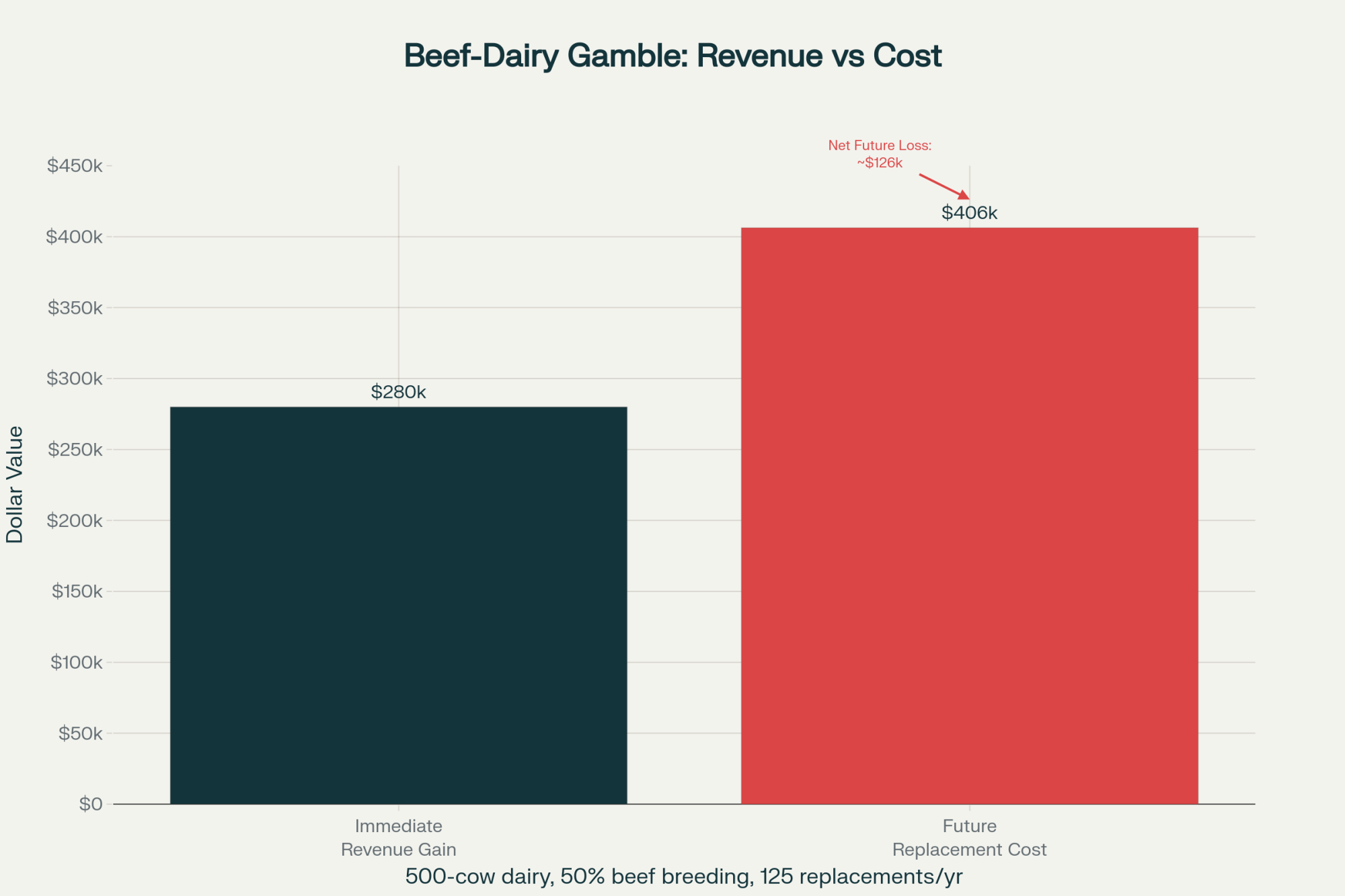
NewsSubscribe
First
Last
Consent

The Family Dairy Time Bomb: Why 83.5% of Operations Fail by the Third Generation

83.5% of dairy farms vanish by the third generation. Is yours next? Discover the hidden math, family dynamics, and strategic fixes to secure your legacy.

Your dairy legacy has a staggering 83.5% chance of disappearing by the third generation. While you obsess over milk prices and feed costs, the real threat to your operation isn’t in the barn—it’s at your kitchen table. The uncomfortable truth is that most dairy operations aren’t destroyed by market forces but implode from within: siblings who can’t cooperate, next-generation farmers who lack drive, and assets that fail to grow with family needs. The most dangerous assumption in dairying today isn’t about production methods or genetics—it’s the delusion that your family farm will somehow magically survive without intentional succession planning. According to the USDA, 97% of all U.S. farms are family-owned, making succession planning a critical issue for most American farmers, yet recent surveys show only about 20% of farmers are confident their succession plan will achieve their goals.

“I’m sure you have heard the adage that the third generation loses the farm. This is not unique to America, and this saying has existed in almost all cultures over hundreds of years.”

The Ticking Time-Bomb Under Your Dairy Operation

That old adage about the third generation losing the farm isn’t just farmers’ gossip—it’s a statistical reality confirmed across cultures and centuries. According to the Small Business Administration, family businesses have less than a 33% chance of surviving from first to second generation, and only 16.5% of family-owned businesses successfully survive to the third generation. For dairy operations specifically, this risk is amplified by the 24/7 nature of milk production, specialized equipment investments, and complex regulatory requirements that make transitions even more challenging.

While “sustainability” gets tossed around regarding environmental practices, the most fundamental sustainability question remains unanswered on most dairy operations: Will your farm exist in thirty years? A recent survey found 80% of surveyed farmers plan to transfer control of their operation to the next generation. Still, only 20% of them were confident their succession plan would achieve that goal. Another study conducted by Iowa State University showed that 50% of farmers did not have an estate plan and 71% of retiring farmers had not identified a successor.

Is Your Operation Next on the Chopping Block?

When surveying farm operators about succession concerns, many fixate on estate taxes as their primary worry. While tax planning matters, this myopic focus misses the true killers of family legacies. Look around your community at once-thriving dairy operations that failed to transition successfully. Was it really a tax bill that destroyed them? More likely, these farms collapsed because they couldn’t scale fast enough to remain competitive, family members couldn’t navigate inevitable conflicts, or the next generation simply lacked the management capacity and drive to maintain what previous generations built.

Dairy’s Unique Succession Challenges

Dairy farming presents distinctive succession hurdles that compound the already difficult transition process. The capital-intensive nature of modern dairy operations—with robotic milking systems often costing upwards of 0,000 per unit—creates financial barriers for the next generation. According to a 2024 report from Compeer Financial, “given the escalating costs of asset ownership and the increasing scale of operations today, expecting the next generation to buy out other successors while maintaining the business is unrealistic”.

The 24/7 operational demands mean successors must commit to a lifestyle, not just a business. Recent research published in 2023 from Paraná State, Brazil found a significant positive correlation between farm size and number of lactating cows with the intention to adopt succession planning, indicating that large-scale dairy farmers have a higher probability of practicing succession planning. This confirms the reality that scale often determines whether succession planning is even attempted.

Additionally, specialized knowledge of herd genetics, reproduction, nutrition, and milk quality represents intellectual capital that must be transferred alongside physical assets. A 2023 study in the Journal of Agribusiness and Rural Development Research identified two primary succession patterns for dairy operations: farm transfer and farm handover, with both approaches requiring early successor participation to ensure sustainability.

Why Are You Setting Your Children Up for Failure?

The harsh reality is that without intentional intervention, your dairy operation is on a natural trajectory toward failure. Three critical elements determine whether your farm survives or joins the statistical majority that collapse during transition: unity, talent and drive, and asset growth. None of these elements develop organically—each requires deliberate cultivation and refuses to be left to chance.

Unity: The Illusion of Family Harmony

Think your family is different? That your children will naturally work together in harmony after you’re gone simply because they grew up together? Sandin Law, specialists in farm succession planning, identifies one of the most common challenges as having “one or more children who are involved in the farming operation, as well as one or more children who are not”. This scenario creates tensions around how to “divide and distribute the assets in a way that benefits all of the children fairly” while ensuring the operation’s continuity.

Table 1: What Unity Is and Isn’t in Family Farm Operations

Unity IS NOTUnity IS
Everyone always agreeing on every topicAsking for everyone’s perspective – even uncomfortable ones
Full consensus on all decisionsUsing conflict to debate topics and produce better results
Family members being best friendsGetting on board with decisions once they’re made
Equal pay, ownership and responsibilitiesHaving clear expectations for roles and compensation
Setting expectations for how family members treat each other
Agreeing in advance on entry paths for next generation
Agreeing in advance on exit strategies for senior generation

“Intentional unity over generations might be the number one reason why family businesses are sustainable. They talk about it, work up agreements, carve out time to stay connected and sometimes argue. But they never assume unity.”

According to Darrell Wade, founder of Farm Life Financial Planning Group, “We understand the fears families have about having these difficult conversations but not having them leads to many larger and greater problems in the future”. The most successful dairy operations establish regular family business meetings separate from operational discussions, creating time and space to address succession issues proactively.

Talent and Drive: Are Your Children Really Prepared?

The skills that built your dairy operation won’t sustain it into the future. Your parents or grandparents likely founded the farm through extraordinary sacrifice, working brutal hours with minimal comforts. Each subsequent generation typically experiences diminishing drive as comforts increase—a natural progression that must be countered intentionally.

“Sustainable family farms can’t exist long with low-drive owners or owners who don’t bring high levels of value to the business.”

According to the Canadian Bar Association, farming is “increasingly capital intensive, and success depends on technology and advanced management skills”. The percentage of farmers under 35 has decreased from 20% in 1991 to 8% in 2021, indicating fewer young people see agriculture as an attractive career path. For dairy operations specifically, this demographic trend creates a critical talent pipeline problem.

A 2024 article from Compeer Financial highlights this reality: “It is disheartening to witness the next generation of producers, often responsible for a significant portion of daily labor and management tasks, lacking a clear vision of the operation’s future. While they may assume an opportunity for ownership and involvement in executive management will arise, there is often no guarantee”.

Technology Transfer: The Hidden Succession Challenge

Modern dairy farming requires expertise in advanced technologies—from robotics to genetic selection software to data analytics platforms. The next generation needs not only traditional farming skills but also technological aptitude to manage these systems effectively.

Dairy Foods Magazine recently highlighted a case study showing the consequences of failing to plan for succession: “Ohio ice cream shop Loveland Dairy Whip announced its closure after 31 years because ‘the next Morgan generation is not interested in carrying on the ice cream tradition.’ The family-owned business that supported two generations must now be sold, potentially ending a half-century legacy”. This example demonstrates what happens when technological and operational knowledge isn’t successfully transferred to interested successors.

Asset Growth: The Mathematical Reality You’re Ignoring

Dairy farming demands enormous capital investment, making financial planning essential for succession. Yet many operators ignore the uncomfortable math: each returning child represents an additional household requiring financial support from the operation. Without sufficient growth in both assets and profitability, the economic equation becomes unsustainable.

“Let’s think about this a bit. If three kids come back to the farm, that’s three more households the farm must support. How much bottom-line net profit must be generated just to maintain household income for everyone?”

The 2024 research from Brazil confirms that “large-scale dairy farms have a higher probability of adopting succession strategies,” but importantly notes that “production scale is not the only determining factor”. This underscores that while economic scale matters, equally important are the communication and planning processes that accompany that scale.

Your Succession Action Plan: Five Steps to Defuse the Time Bomb

1. Assess Your Current Succession Readiness

Ask yourself these uncomfortable questions:

  • Do you have a written succession plan that ALL stakeholders have reviewed and agreed to?
  • Have you identified specific successors and aligned their training with future operational needs?
  • Have you calculated the precise financial requirements for each returning family member?
  • Does your current growth trajectory support those requirements?

If you answered “no” to any of these questions, your operation is already in the danger zone. According to succession planning experts, your plan should include “a three-year, and five-year business plan; a unanimous shareholder agreement; copies of lease or rental agreements; annual financial statements; and grooming plans, training, and knowledge transfer”.

2. Develop Financial Structures That Support Transition

The Canadian Bar Association highlights how strategic business structures can assist in navigating succession challenges: “One case study addressed the challenge of raising sufficient capital by splitting the farm into two different corporations. The first company continued to be owned by the incumbent farmer. It held the farm’s primary assets, like the farmland and machinery. The majority of the second company was sold to the successor. It operated the farm and leased assets from the holding company”.

This structure benefitted the successor because they only needed to raise sufficient capital to purchase the operating company rather than the whole farm. The incumbent benefitted by retiring from the day-to-day farm operations while receiving a steady stream of retirement income from the leased assets.

“Sustainable farms encourage each generation to learn skills that will be needed in the future, not just those that were necessary in the past.”

3. Start Meaningful Family Conversations Now

A 2023 study from Penn State Extension emphasizes that “the most challenging part of this process is the communication between parties. To achieve a successful farm transition, all involved parties should actively communicate with one another.” The research further notes that transitions in complex farming operations “can take 5 to 10 years even when done correctly and when everyone takes an active role”. This timeline underscores the urgency of starting conversations immediately, not years down the road.

The Bullvine’s article “Ensuring the Future: Strategic Succession Plans for Dairy Farmers” (February 2024) recommends that you “begin the succession planning process well in advance. Open and honest communication among family members is key. Discuss individual goals, aspirations, and expectations to ensure everyone is on the same page. Starting early allows for a smooth transition and minimizes conflicts”.

4. Develop Your Successors Intentionally

A 2024 article in Compeer Financial notes that “when evaluating credit requests, lenders inquire about the presence of a next generation in the business and the plans for their integration. A long-term investment may not be deemed viable if the business lacks a sound transition plan or is perceived as terminal”. This reality means that failing to plan for succession actively damages your operation’s ability to access capital today, not just in the future.

An effective succession plan requires systematic skill development—with or without formal education. A 2023 study published in Agraris Journal found that encouraging the participation of potential successors in family business early is critical “to ensure the sustainability of family dairy farming”.

5. Get Expert Help to Test Your Plan

A 2024 Compeer Financial article advises that “seeking guidance from experienced professionals, including attorneys, tax preparers, business consultants and perhaps lenders is vital. Each operation is unique, necessitating tailored plans to meet individual and business needs efficiently”.

Baker Tilly Canada notes that “family business succession planning involves many components, including family dynamics, leadership training, financial planning, management transition, legal agreements and – you guessed it – taxes”. This multifaceted approach requires coordinated expertise from various specialists.

Table 2: Succession Planning Implementation Timeline

Timeline StageKey ActionsCritical Questions
Immediate (0-6 months)Document current state of operationWhat assets exist? Who currently makes decisions?
Short-term (6-18 months)Develop written succession plan with professional helpWho will own what? How will management transition?
Mid-term (18-36 months)Begin management transitionAre successors developing necessary skills? Are senior members ready to let go?
Long-term (3-10 years)Complete ownership transitionIs ownership structure supporting both generations?
OngoingRegular revision of plansWhat has changed? What needs adjusting?

Alternative Succession Approaches

Not every dairy farm will transition to children. A 2024 case study from Dairy Foods Magazine highlights the Loveland Dairy Whip example where “the next Morgan generation is not interested in carrying on the ice cream tradition,” forcing the business to be put up for sale. The owners remained hopeful “a family will be interested in starting their new family tradition by purchasing the Dairy Whip,” illustrating an alternative approach to succession—transitioning to an unrelated family committed to continuing the dairy tradition.

Another alternative approach is worker cooperatives or employee ownership transitions. These models can preserve operations when traditional family succession isn’t viable. A 2023 report from the Ontario Ministry of Agriculture outlines how the farm succession planning process can accommodate various transition scenarios, not just traditional parent-to-child transfers.

Succession Self-Assessment: How Ready Are You Really?

Rate your readiness in each area on a scale of 1-5:

  • Written Planning: Do you have comprehensive written plans that all stakeholders understand and accept?
  • Financial Preparation: Does your current financial trajectory support your succession timeline?
  • Communication Systems: Have you established formal processes for addressing succession challenges?
  • Talent Development: Are your successors demonstrably prepared for their future roles?
  • Contingency Planning: Do you have plans addressing unexpected events like health issues or market disruptions?

A score below 20 indicates significant work needed before your succession plan has a reasonable chance of success.

“One of our clients recently told us that his goal was to not become terminal. He said he looked around and saw his friends and neighbors who have great farms today, but they aren’t sustainable past the current generation. He didn’t want this to be his farm.”

The Cost of Inaction: What’s Really at Stake

The statistics paint a sobering picture: according to the Small Business Administration, only about 33% of family businesses successfully transition to the second generation, and a mere 16.5% make it to the third generation. The 2024 Compeer Financial article states plainly: “It’s natural to assume ample time to address these matters, yet unforeseen events can significantly impact business longevity”.

While the financial implications are obvious, the emotional and psychological costs often prove even more devastating. Failed transitions frequently destroy family relationships along with business assets. Siblings who once played together become embroiled in bitter legal disputes. The legacy you hoped to build evaporates in acrimony and regret.

Are You Building a Legacy or a Liability?

Census data shows that “about 70% of the farm land in the U.S. will change hands within the next two decades”. This massive transfer of agricultural assets represents both unprecedented risk and opportunity for the dairy sector.

Penn State Extension (2023) frames succession planning not merely as asset transfer but as answering a vital question: “What would happen if the owners/operators of a farm were to suddenly become unable to complete the tasks the farm needs to operate?” They note that “farm businesses are now more complex and gone are the days of just dealing with it once someone passes”.

“Several farmers have confided that passing on a sustainable farm was the hardest thing they ever did, but it is also their proudest achievement. What do these farmers all have in common? None of them left farm sustainability to chance.”

The clock is ticking on your family dairy time bomb. The choice to defuse it—or let it detonate—rests entirely with you.

Key Takeaways

  1. 83.5% of dairy farms fail by the third generation due to poor succession planning, family discord, and inadequate financial scaling.
  2. Unity isn’t harmony—it’s structured conflict: Successful farms use formal agreements, family councils, and third-party mediation to align goals.
  3. Talent development requires intentional effort: Next-gen farmers must prove commitment through skill-building and leadership roles, not just inheritance.
  4. Asset growth is non-negotiable: Multi-generational farms need profit growth to support multiple households, often requiring creative financial structures (e.g., splitting asset/operating companies).
  5. Dairy’s unique hurdles demand tailored strategies: 24/7 operations and high-tech investments (robotic milking) necessitate specialized succession planning beyond general farming advice.

Executive Summary

The dairy industry faces a critical succession crisis, with 83.5% of family farms disappearing by the third generation. Despite being capital-intensive and demanding specialized knowledge, only 8.4% of operations have written succession plans. The article identifies three pillars for sustainability: unity (structured conflict resolution), talent/drive (developing capable successors), and asset growth (financial scalability). Dairy-specific challenges like 24/7 operations and robotic milking equipment costs amplify these issues without planning—family meetings, economic restructuring, and skill development—operations risk collapse. The next decade’s $53 billion land transfer underscores the urgency for actionable strategies to avoid becoming part of the grim statistics.

Learn More:

Join the Revolution!

Join over 30,000 successful dairy professionals who rely on Bullvine Daily for their competitive edge. Delivered directly to your inbox each week, our exclusive industry insights help you make smarter decisions while saving precious hours every week. Never miss critical updates on milk production trends, breakthrough technologies, and profit-boosting strategies that top producers are already implementing. Subscribe now to transform your dairy operation’s efficiency and profitability—your future success is just one click away.

NewsSubscribe
First
Last
Consent

Dairy Profit Squeeze 2025: Why Your Margins Are About to Collapse (And What to Do About It)

Dairy margins set to crash in 2025: China tariffs, feed costs & spring flush threaten profits. Act now to survive – or lose your herd.

EXECUTIVE SUMMARY: U.S. dairy margins face a perfect storm in 2025 as China’s 84-125% tariffs slam exports, feed costs surge, and spring flush floods markets. Income-over-feed costs will drop below $12/cwt, eroding profits after an 8-month boom. Pacific Northwest producers face steeper discounts, while record cull cow prices ($145+/cwt) offer exit strategies. Cheese markets defy trends temporarily, but powder/whey collapses demand urgent pivots. Consolidation will accelerate—small farms must cut costs, leverage risk tools, or sell before margins implode.

KEY TAKEAWAYS:

  • China’s tariffs nuke 43% of U.S. dairy exports – whey prices crashed 23%, powder inventories ballooned 57%
  • Feed costs up 30¢/bushel – corn futures rally as DMC’s $9.50 safety net leaves producers exposed
  • Spring flush + weak demand = 6-7% milk surplus – prices drop as fresh cows peak
  • PNW milk checks trail national avg by $1.50/cwt – but culling 20% of herd nets $348K at current beef prices
  • Survival demands: ruthless cost control, DMC max coverage, pivot to cheese/Class III markets

The party’s over, folks. After riding high on $12+ margins since mid-2024, U.S. dairy producers are staring down the barrel of a significant profit contraction. The spring flush, plummeting commodity prices, rising feed costs, and a devastating trade war with China create the perfect storm. But while many will struggle, the savvy operators who act now will not only survive—they’ll position themselves to thrive when the market rebounds.

It’s like watching your best milker suddenly drop 20 pounds of production without warning. The warning signs are flashing red across the dairy landscape. Income-over-feed costs, which soared above $15/cwt in late 2024, are projected to drop below $12/cwt from March through August 2025. The USDA has slashed its All-Milk price forecast by a staggering $1.95/cwt since January—the steepest price erosion since the 2018 trade war meltdown. Meanwhile, December 2025 corn futures have rallied 30 cents per bushel since March 31, and China’s retaliatory tariffs have effectively slammed the door on U.S. whey and powder exports.

But here’s what the economists aren’t telling you: this margin squeeze isn’t just another cyclical downturn—a structural reckoning that will accelerate the transformation of America’s dairy industry. The question isn’t whether you’ll feel the pinch but whether you’ll emerge stronger when the dust settles.

The Margin Mirage: How We Got Here and Where We’re Headed

Let’s cut through the noise and face facts: the historic profitability dairy producers enjoyed since mid-2024 was always living on borrowed time—like expecting your bulk tank to stay full after you’ve dried off half your herd.

From July 2024 through February 2025, income-over-feed costs calculated under the DMC program consistently exceeded $12/cwt for eight consecutive months, peaking at an eye-watering $15.57/cwt in September 2024. This extended run provided a crucial financial reprieve after the challenges of 2023, allowing many operations to strengthen balance sheets and make delayed investments.

MonthAll-Milk Price ($/cwt)Feed Cost ($/cwt)IOFC Margin ($/cwt)
July 202422.8010.4712.33
Sept 202425.509.9315.57
Jan 202523.009.1513.85
Feb 202522.609.4813.12
Apr 202521.10 (est)9.80 (est)11.30 (est)

But the February 2025 margin figure of $13.12/cwt already signaled the beginning of the end. By April, the USDA had slashed its 2025 All-Milk price forecast to $21.10/cwt—a cumulative decline of $1.95/cwt from January’s initial estimates of $23.05/cwt.

Why the dramatic reversal? Four converging forces are crushing your margins:

  1. Commodity Price Collapse: Since their early 2025 peaks, block cheddar has fallen 8%, butter has dropped 3-4%, NFDM has plunged 14%, and dry whey has crashed a staggering 23%. This translates directly to lower milk checks starting with March production paid in April—like watching your PPD evaporate faster than spilled milk on a hot parlor floor.
  2. Feed Cost Rally: While the talking heads promised lower feed costs for 2025, reality tells a different story. December 2025 corn futures have surged from $4.36/bushel on March 31 to $4.64/bushel by mid-April, while soybean meal futures show volatility, with December 2025 contracts hovering around $308/ton. It’s like watching your TMR cost climb while your component premiums disappear.
  3. Spring Flush Pressure: The seasonal surge in milk production (typically 6-7% higher than fall levels) is flooding markets struggling with weak demand, creating a classic supply-demand imbalance that further depresses prices. Just as your fresh cows hit peak production, the market doesn’t want the extra milk.
  4. Trade War Catastrophe: The most underreported factor in this equation is the devastating impact of China’s retaliatory tariffs. Between February and mid-April 2025, tariffs on U.S. dairy exports to China escalated from baseline levels to a prohibitive 84-125%, closing America’s third-largest dairy export market overnight.

Are you still clinging to the fantasy that this is just another temporary dip? Wake up! Dairy Markets and Policy forecasts predict income-over-feed costs will fall below $12/cwt from March through August 2025. While these values remain relatively strong historically, the rapid contraction from recent highs will catch many producers flat-footed—like a cow suddenly going off feed with no warning signs.

The China Syndrome: How Trade Politics Are Crushing Your Milk Check

While economists focus on domestic supply-demand fundamentals, they’re missing the elephant in the room: the trade war with China has created a powder keg for U.S. dairy exports.

The escalation happened with breathtaking speed:

  • February 4, 2025: U.S. reinstates 10% tariff on Chinese imports
  • March 4, 2025: U.S. increases tariff to 20% on Chinese imports
  • March 10, 2025: China imposes 10% retaliatory tariff on U.S. dairy
  • April 3, 2025: U.S. imposes an additional 34% tariff on Chinese imports
  • April 4, 2025: China matches with 34% retaliatory tariff on U.S. goods
  • April 9, 2025: U.S. increases tariffs to 104-125% on Chinese goods
  • April 10, 2025: China retaliates with 84% tariff on U.S. goods
CommodityPre-Tariff Price (Feb 2025)Current Price (Apr 2025)% ChangeChina’s Market Share
Dry Whey$0.60/lb$0.465/lb-23%42% of U.S. exports
NFDM$1.36/lb$1.17/lb-14%18% of U.S. exports
Lactose$0.52/lb$0.41/lb-21%43% of U.S. exports

This isn’t just another trade spat—it’s a structural disruption already sending shockwaves through dairy markets. February 2025 export data showed NFDM exports down 26% (lowest volume since 2019), total whey exports down 5%, and whey protein concentrate plunging 26%. The 53% decrease in Chinese demand for whey products is just the beginning—like watching your best export customer suddenly decide they don’t need your milk anymore.

Your co-op representatives aren’t telling you that China accounts for roughly 43% of U.S. lactose exports and is a critical market for whey products, absorbing 42% of all U.S. whey exports in 2024. With tariffs exceeding 100%, New Zealand (which enjoys duty-free access through its FTA) and EU exporters will capture any Chinese import demand, leaving U.S. suppliers effectively shut out.

The result? A massive oversupply of whey and powder in domestic markets creates downward pressure on prices that will persist until the trade dispute is resolved or U.S. exporters develop alternative markets—neither of which will happen overnight. It’s like suddenly having to find a new milk hauler after yours quits with no notice—except this hauler took 43% of your production.

When will industry leaders stop pretending we can wait this out? The hard truth is that we must completely reimagine our export strategy—and fast. The Chinese government has bluntly stated that at the 125% tariff level, U.S. goods are “no longer marketable” in their country.

Regional Pain Points: Why Pacific Northwest Producers Are Feeling the Squeeze First

Suppose you’re producing milk in the Pacific Northwest. In that case, you’re already feeling the margin compression more acutely than your counterparts in other regions—like being the first cow in the herd to show signs of ketosis.

Federal Milk Marketing Order data confirms that PNW producers (Order 124) receive significantly lower blend prices than national averages. From January to March 2025, the PNW Uniform Price ranged from $20.32/cwt to $20.63/cwt—consistently trailing the All Market Average Uniform Price of $21.01/cwt to $21.23/cwt.

RegionAvg Uniform Price (Mar 2025)PPD ($/cwt)Class I Utilization
Pacific NW$20.47$0.2115%
Northeast$21.73$1.4735%
National Avg$21.12$0.6325%

The Producer Price Differential (PPD) tells an even more sobering story. The PNW PPD ranged from just $0.14/cwt to $0.29/cwt during the first quarter of 2025, compared to the All Market Average PPD of $0.60-$0.66/cwt and Northeast PPDs of $1.46-$1.47/cwt.

Why such a stark regional disadvantage? The PNW’s relatively low utilization of milk in Class I (fluid milk) and higher transportation costs create a structural disadvantage that becomes particularly painful during market downturns.

But there’s a silver lining for PNW producers—and it’s wearing a hide. Cull cow prices are exceptionally strong, with Dairy Boner cows (80-85% lean) trading in the $140.00-$145.00/cwt range and Dairy Lean cows (85-90% lean) fetching $141.00-$148.50/cwt at Toppenish, Washington auctions in April 2025.

For a 1,200-cow operation, strategically culling 20% of the herd could generate $348,000 in immediate revenue—potentially offsetting months of negative milk margins. This creates a powerful economic incentive to aggressively cull less productive animals or consider a profitable exit strategy. It’s like having your low-producing three-quarters suddenly worth more as hamburger than they are in the milking string.

Isn’t it time to question whether the FMMO system serves all producers equally? The regional disparities have become too glaring to ignore.

The Cheese Anomaly: Understanding the Market Disconnect

Here’s where things get interesting—and potentially profitable for strategic producers. Despite the bearish overall dairy outlook, the cheese market displays remarkable resilience and strength.

In mid-April, CME spot prices for blocks and barrels surged, with blocks reaching $1.77/lb and barrels hitting $1.84/lb on April 14. This strength occurred despite bearish USDA forecasts lowering projected 2025 cheese prices and reports of growing inventories.

What explains this paradox? Several factors are at play:

  • Lower starting inventories at the beginning of 2025 (American-style cheese stocks were down 8% year-over-year)
  • Positive export forecasts due to competitive pricing
  • Processors securing supplies ahead of anticipated seasonal demand
  • The immediate physical market needs temporarily outweigh longer-term bearish forecasts

This divergence creates a strategic opportunity. While powder-heavy markets suffer from the impact of the China tariff, cheese-focused operations may weather the storm more effectively. Producers with the flexibility to shift milk toward Class III markets could potentially mitigate some margin pressure—like having a Jersey herd when butterfat premiums are high.

Are you still stubbornly clinging to a one-size-fits-all production strategy? The data shows that adaptability—specifically, the ability to pivot toward cheese production—could be your financial lifeline in 2025.

The Consolidation Acceleration: Why This Downturn Will Transform the Industry

The coming margin squeeze will accelerate the long-term structural transformation of U.S. dairy. Between 2017 and 2022, the number of U.S. farms reporting milk sales dropped by a staggering 39%—the largest percentage decline recorded between adjacent census periods dating back to at least 1982.

During this same period, the number of farms with 2,500 or more cows increased, rising from 714 to 834. By 2022, operations with 1,000 or more cows accounted for 66% of all U.S. milk sales, up from 57% in 2017.

The hard truth: This margin compression will disproportionately impact smaller and mid-sized operations lacking economies of scale. Larger dairy operations consistently demonstrate lower average production costs, particularly in non-feed costs like labor, capital recovery, and overhead. It’s like watching the industry’s herd get culled, with only the most efficient producers remaining in the milking string.

As the industry navigates this challenging period, we’ll likely see:

  • Accelerated exit of smaller operations unable to withstand prolonged negative returns—like watching a group of heifers fail to cut at classification time
  • Increased consolidation as larger producers acquire struggling operations
  • Strategic culling across all farm sizes, potentially leading to tighter milk supplies later in 2025 or into 2026
  • Regional shifts in production as areas with structural disadvantages (like the PNW) see faster contraction

Let’s be brutally honest: Are we better off with fewer, larger farms? The industry’s blind push toward consolidation deserves more scrutiny than it’s getting. While economies of scale are real, we’re rapidly losing the diversity and resilience that comes with having operations of various sizes and production models.

The Safety Net Illusion: Why DMC Won’t Save You This Time

Don’t count on government programs to bail you out of this margin squeeze. While the Dairy Margin Coverage (DMC) program provides a crucial buffer against catastrophic margin collapses, its structure presents significant limitations in the current environment—like relying on a single-strand electric fence to contain your heifers.

The program’s maximum coverage level of $9.50/cwt means that producers, even those enrolled at the highest level, remain fully exposed to margin declines from the recent highs (above $12-$13/cwt) down to the $9.50 trigger point. This structure effectively protects against severe downturns but offers no protection during moderately declining margins from previously high levels—precisely the scenario we’re facing.

The DMC’s feed cost calculation also uses a fixed formula based on national average prices for corn, soybean meal, and alfalfa hay. This formulaic approach means the calculated DMC margin may not accurately reflect the actual feed costs experienced by individual farms, which can vary significantly based on region, specific ration ingredients, and purchasing timing.

The bottom line is that DMC provides catastrophic coverage, not profit protection. Producers relying solely on DMC will be exposed to significant margin erosion before any payments trigger—like having mastitis treatment on hand but no prevention program.

When will we demand a safety net that works for modern dairy operations? The current system was designed for a different era and different market realities.

Strategic Survival: Five Actions to Take Now

So, what should forward-thinking dairy producers do in the face of this looming margin squeeze? Here are five strategic actions to implement immediately:

1. Implement Aggressive Cost Control

Now is the time for ruthless efficiency. Focus on feed optimization through precision nutrition, potentially adjusting for component values that show divergent price trends. Scrutinize all non-feed costs, seeking economies where possible. Consider:

  • Reevaluating ration formulations to optimize for current component values—like adjusting your TMR when your butterfat tests drop
  • Implementing energy efficiency measures to reduce utility costs
  • Reviewing labor allocation and potentially restructuring workflows—like reorganizing your milking routine for maximum parlor efficiency
  • Deferring non-essential capital expenditures

Stop treating all expenses as sacred cows. Every line item in your budget deserves scrutiny when margins tighten.

2. Develop a Strategic Culling Plan

The current high cull cow prices create a unique opportunity to reshape your herd while generating significant cash flow. Develop a comprehensive culling strategy that:

  • Identifies bottom-performing animals based on production, reproduction, and health metrics—like sorting your DairyComp list by income over feed cost
  • Establishes clear culling thresholds tied to projected margins
  • Balances immediate cash flow needs against long-term herd productivity
  • Considers the replacement cost and availability of heifers

Are you still hanging onto underperforming cows out of habit or sentiment? With beef prices this high, that’s a luxury you can’t afford.

3. Enhance Risk Management

With margins under pressure, robust risk management becomes critical. Consider:

  • Maximizing DMC coverage at $9.50/cwt for Tier 1 production
  • Evaluating supplemental risk management tools like Livestock Gross Margin for Dairy (LGM-Dairy) insurance
  • Implementing a disciplined approach to forward contracting both milk and feed inputs—like locking in your corn silage acreage needs before prices spike
  • Developing trigger-based decision rules for futures and options strategies

The days of flying by the seat of your pants are over. If you’re not actively managing price risk in this environment, you’re gambling with your operation’s future.

4. Diversify Revenue Streams

Forward-thinking producers are finding creative ways to generate additional income:

  • Exploring premium markets for specialty milk (A2, grass-fed, organic)
  • Developing direct-to-consumer products or partnerships
  • Monetizing manure through composting or energy production—like turning your lagoon into a revenue source
  • Leveraging high beef prices through strategic breeding decisions (beef-on-dairy)

Why are you still putting all your eggs in one commodity milk basket? The most resilient operations are those with multiple revenue streams.

5. Position for Post-Squeeze Opportunities

Every market downturn creates opportunities for those with the financial strength and strategic vision to capitalize on them:

  • Maintain capital reserves to acquire assets from distressed operations—like having cash ready when your neighbor’s heifer herd comes up for sale
  • Identify potential expansion opportunities in regions with stronger milk prices
  • Prepare for potential land acquisition as financial pressure forces sales
  • Invest selectively in efficiency-enhancing technologies that will provide competitive advantages when margins recover

Are you thinking like a victim or an opportunist? The producers who emerge strongest from this downturn will see it as a chance to strengthen their position, not just survive.

The Bottom Line: Survival of the Strategically Fittest

The coming dairy margin squeeze isn’t just another cyclical downturn—it’s a structural reckoning that will accelerate the transformation of America’s dairy industry. The convergence of falling commodity prices, rising feed costs, seasonal supply pressure, and severe trade disruptions creates a challenging environment that will test even well-managed operations.

Regional disparities will intensify these challenges, with PNW producers facing particularly acute pressure from lower milk prices. However, the strong cull cow market provides a significant financial lever for strategic herd management or even profitable exit for some producers.

The industry’s response will align with long-term structural trends, likely accelerating consolidation and favoring larger operations with economies of scale. While official forecasts suggest stability in overall cow numbers for 2025, the economic pressures may lead to actual herd reductions as the year unfolds, potentially setting the stage for stronger markets in late 2025 or 2026.

Survival—and ultimately success—will depend on diligent risk management, stringent cost control, strategic adaptation to shifting market signals, and potentially tricky decisions regarding herd management and business structure. Those who act decisively now won’t just weather this storm—they’ll emerge stronger when margins inevitably recover.

The question isn’t whether this margin squeeze will transform the industry—it’s whether you’ll be a victim of that transformation or one of its beneficiaries. The following choices and actions are yours, just like deciding whether to treat that three-quarters cow or send her to the sale barn. Your decisions in the coming months will determine your dairy’s future for years.

It’s time to stop waiting for someone else to fix this problem. Not your co-op, not the USDA, not Congress. Take control of your destiny. Reassess every aspect of your operation. Challenge conventional wisdom. Most importantly, act now before the full force of this margin squeeze hits your bottom line.

What changes will YOU make today to ensure you’re still in business when the next upturn arrives?

Learn more:

Join the Revolution!

Join over 30,000 successful dairy professionals who rely on Bullvine Daily for their competitive edge. Delivered directly to your inbox each week, our exclusive industry insights help you make smarter decisions while saving precious hours every week. Never miss critical updates on milk production trends, breakthrough technologies, and profit-boosting strategies that top producers are already implementing. Subscribe now to transform your dairy operation’s efficiency and profitability—your future success is just one click away.

NewsSubscribe
First
Last
Consent

$4,000 Heifer Shock: Replacement Heifer Prices Reach Record Territory

$4K heifers shock dairy! Beef-on-dairy craze slashes replacements. Can your herd survive? The brutal math every farmer needs NOW.

EXECUTIVE SUMMARY: As replacement heifer prices approach $4,000, they are crushing dairy margins, driven by a perfect storm of beef-on-dairy breeding and historic lows in beef cattle inventories. As dairy farmers chase $1,000 beef-cross calves, heifer supplies hit 47-year lows, forcing operations to choose between costly replacements or milking aging cows. With prices projected to stay high through 2026, survival hinges on balancing beef semen use, extending cow longevity, and precision breeding strategies. This crisis reshapes dairy economics, turning every cull decision into a $4,000 gamble. Farmers must adapt or risk being priced out of the replacement game entirely.

KEY TAKEAWAYS:

  • $4,000 Heifer Reality: Northwestern springers will soon break $4k, with national averages up 69% in 12 months.
  • Beef Semen Domination: 84% of beef semen now goes to dairies, slashing heifer supplies by 95k/year per 1% shift.
  • Supply Crisis: Heifers over 500lbs at 47-year low (3.9M), with 2025 replacements projected as lowest ever tracked.
  • No Relief Until 2026+: Tight beef herds (64-year low) and dairy breeding shifts lock in high prices long-term.
  • Survival Strategies: Balance beef/sexed semen, extend cows to 4-6 lactations, and rethink “marginal” culls.
replacement heifer prices, beef-on-dairy trend, dairy farming economics, $4,000 heifers, dairy herd management

In an unprecedented market upheaval, U.S. dairy replacement heifer prices are shattering records in early 2025, with springer values in the Northwest close to breaking the $4,000 barrier. This isn’t just another price blip – it’s a fundamental restructuring of dairy economics driven by a perfect storm of industry forces. The story behind these eye-popping prices reveals how deeply intertwined today’s dairy and beef sectors have become, with far-reaching implications for your profitability, herd management decisions, and future milk production capacity.

Beef-on-Dairy: Cash Cow or Herd Killer?

The U.S. dairy industry is witnessing a breeding revolution that’s rewriting the economics of replacement animals. In the Northwestern states, replacement heifers are traded for nearly $4,000 per animal. At the same time, Holstein springers in California’s Turlock market fetched between $2,800 and $3,600 by late 2024 – a staggering two-to-threefold increase from 2019 levels when the same animals went for just $1,300 to $1,600.

This isn’t a temporary squeeze—it’s a full-blown heifer famine. And it’s rewriting dairy’s rulebook.

The skyrocketing replacement heifer prices have a surprising culprit – the beef-on-dairy breeding trend that has fundamentally altered breeding decisions across thousands of American dairy operations. What began as an occasional practice has evolved into a full-blown industry revolution, with profound consequences for heifer supply.

The Beef Semen Explosion

The numbers tell the brutal truth: beef semen sales to dairy farms surged from 2.54 million doses in 2017 to 7.20 million in 2020 and continued growing by another 317,000 units in 2024 alone. This shift wasn’t random – it represents a calculated economic decision by dairy farmers nationwide. The math becomes compelling when beef-cross calves can fetch $1,000+ per head compared to Holstein bull calves at $414, especially during tight dairy margins.

National Association of Animal Breeders data reveals that 84% of all beef semen sold now goes to dairy operations – a figure that would have been unthinkable a decade ago. One industry report described this trend as having “revolutionized the US cattle industry, shored up dwindling fed-beef cattle supplies, and added considerable black ink to the bottom lines of dairies.”

Is chasing ,000 beef-cross calves worth gutting your future milk pipeline? Some argue it’s a Faustian bargain—easy cash today, empty barns tomorrow.

The Beef Herd Crisis: Adding Fuel to the Fire

Compounding the effect of dairy breeding decisions is the precarious state of America’s beef cow herd. As of January 1, 2025, the U.S. beef cow inventory stood at just 27.9 million head – the lowest count since 1961. This 64-year low in beef cattle inventory has created an extraordinary demand for all bovines with beef genetics, including those crossbred calves from dairy operations.

This tight beef supply has propelled beef prices to all-time highs throughout 2024 and into 2025, supported by remarkably resilient consumer demand. This has created an irresistible economic incentive for dairy producers to divert more cows toward beef breeding – a self-reinforcing cycle that tightens the replacement heifer market.

Profitability Whiplash: When Record Prices Cut Both Ways

For dairy producers, the economic consequences of this market transformation cut both ways. The high prices represent a significant cost challenge for operations needing replacements but also create opportunities for those positioned to capitalize on heifer development.

The New Economics of Replacement

These numbers hurt: Wisconsin’s 69% price spike isn’t an outlier—it’s the new math of survival. In Wisconsin, replacement prices jumped from $1,990 to $2,850 per animal between October 2023 and October 2024 – an increase of $860 in just 12 months. By early 2025, USDA reported national average dairy replacement values reaching $2,660 per head, with premium animals commanding far more at auction.

Regional Replacement Heifer Prices (Early 2025)

In Minnesota’s Pipestone market, springers smashed $3,850 last fall, while Wisconsin dairies paid 30% less—proof that geography now dictates survival margins.

These elevated costs directly impact farm profitability and cash flow planning. What was once a manageable operational expense has become a significant capital investment, forcing many farms to reconsider their culling and replacement strategies. When replacing a single cow requires an investment approaching $4,000, the economics of maintaining marginal producers in the herd changes dramatically.

The Tight Supply-High Price Paradox

Despite the eye-watering prices, the market continues to function – albeit with intense competition for available animals. Tight heifer supplies are hammering prices upward, with dairy farms actively competing to secure the limited supply, further driving prices upward in a self-reinforcing cycle.

Paradoxically, while the high cost of heifers presents a significant challenge for operations needing replacements, the beef-on-dairy trend has simultaneously created a valuable profit center for many dairy farms through premium-priced crossbred calves. Depending on individual farm breeding strategies and replacement needs, this dual economic impact creates winners and losers within the industry.

The Supply Crisis: No Quick Fix in Sight

The consequences of these intersecting trends have created a genuine supply crisis in the replacement heifer market. The January 2025 USDA Cattle Report reveals the stark reality: while the milking cow population remained relatively stable at 9.35 million head (up just 2,500 from the previous year), the inventory of dairy heifers weighing over 500 pounds plummeted by nearly 40,000 head.

Historic Low Heifer Inventories

The total inventory of dairy heifers weighing 500 pounds or more has fallen to just 3.914 million head – the lowest count for this population since 1978. This represents a decline of more than 10% in just three years, from 2022 to early 2025. Even more concerning for future milk production capacity, only 2.5 million heifers are projected to calve and enter the nation’s lactating herd in 2025 – the lowest figure in the 22-year history of USDA tracking this metric.

These aren’t just statistics – they fundamentally reshape dairy herd dynamics. The 47-year low in dairy heifer inventories means fewer animals are available to replace culled cows, limiting herd expansion and genetic improvement options. This shortfall drives the fierce competition for available replacements, pushing prices to their current record levels.

Expert Projections: Brace for Long-Term High Prices

For dairy farmers hoping for a rapid correction in replacement heifer prices, market experts have sobering news: the current elevated price environment will likely persist for the foreseeable future.

Multi-Year High Price Forecast

The cyclical nature of cattle replacement and culling patterns indicates it will take several years before any significant shift occurs in the heifer market. Looking specifically at 2025 and 2026, analysts expect cattle prices to remain high, supporting elevated values for replacement dairy heifers.

Adding to this challenging outlook, projections show heifer inventories likely declining by another 1.6% in 2025, further tightening an already constrained supply. When the beef herd eventually begins to rebuild – a process that historically takes several years – the demand for valuable replacement females, including dairy heifers, may increase, potentially driving prices even higher before any relief materializes.

Strategic Responses: Adapting to the New Reality

Quit hoping for a market correction. Either pivot your breeding program or kiss expansion plans goodbye. Forward-thinking dairy producers aren’t simply waiting for market conditions to change – they’re actively adapting their management approaches to thrive in this new environment.

Rethinking Breeding Strategies for Balance

The current market dynamics are prompting some producers to recalibrate their breeding programs. While beef-on-dairy breeding remains economically attractive, the high replacement costs incentivize a more balanced approach. Many operations now employ a strategic combination of beef, sexed, and conventional dairy semen to manage their replacement pipeline carefully – aiming for precisely the number of dairy heifers needed without creating either a deficit or a costly surplus.

One Idaho dairyman we spoke to admits: “I’m breeding 60% to beef now. At $4,000 a heifer, I can’t afford to replace my culls—so I’m milking cows I’d have sold three years ago.”

Research suggests that a well-calibrated breeding strategy using both beef and sexed semen can be economically optimal, decreasing the replacement cost per unit of milk produced while still capturing premium values from crossbred calves. This precision approach requires close coordination between management, breeding companies, and reproductive specialists to determine the ideal mix for each operation’s specific circumstances.

Extending Cow Longevity: Your Most Powerful Tool

Perhaps the most impactful strategic response has been a renewed focus on extending the productive lifespan of existing cows. With replacement costs at record highs, the economics of keeping cows in production longer have never been more compelling. What was once considered optional – implementing comprehensive transition cow programs, metabolic disease prevention, and lameness reduction – has become an economic imperative.

Take Chrome-View Charles 3044: This 13-year-old Holstein superstar produced 478,200 lbs of milk over 10 lactations. Her secret? Flawless transition care and genetics—a blueprint for weathering today’s heifer crisis.

Industry recommendations suggest an average of four to six lactations per cow to optimize herd longevity and profitability. Achieving this benchmark requires excellence in multiple management areas, from nutrition and housing to reproduction and health protocols. The potential payoff is substantial: each additional lactation a cow completes means one less expensive replacement is needed.

The Bottom Line

The Hard Truth by The Numbers:

Impact FactorMeasurement
Every 1% shift to beef semen95,000 fewer dairy heifers annually
Extending herd life by one lactation25% reduction in replacement needs
Today’s $4,000 heiferRequires 18% higher milk prices to break even
Heifer inventory (500+ lbs)3.914M head (lowest since 1978)
Heifers expected to calve in 20252.5M (lowest in 22-year USDA history)

The record-high replacement heifer prices we’re witnessing in early 2025 aren’t a temporary anomaly – they reflect fundamental shifts in how dairy cattle are bred, raised, and valued in today’s integrated dairy-beef marketplace. These elevated prices will likely persist for several years due to continued tight supplies and strong demand driven by dairy replacement needs and the historically small beef herd.

For dairy producers, this new reality demands strategic adaptation rather than hoping for a quick return to historical norms. The most successful operations will be carefully calibrating their breeding programs to balance replacement needs with beef-cross opportunities, investing in extending cow longevity, making data-driven culling decisions, and maintaining disciplined cost control in heifer raising.

While the $4,000 replacement heifer presents genuine challenges to traditional dairy economics, it also underscores the evolving value of dairy cattle in America’s food production system. Forward-thinking producers can thrive even in this transformed marketplace by embracing strategic adaptation rather than resisting change.

Learn more:

Join the Revolution!

Join over 30,000 successful dairy professionals who rely on Bullvine Daily for their competitive edge. Delivered directly to your inbox each week, our exclusive industry insights help you make smarter decisions while saving precious hours every week. Never miss critical updates on milk production trends, breakthrough technologies, and profit-boosting strategies that top producers are already implementing. Subscribe now to transform your dairy operation’s efficiency and profitability—your future success is just one click away.
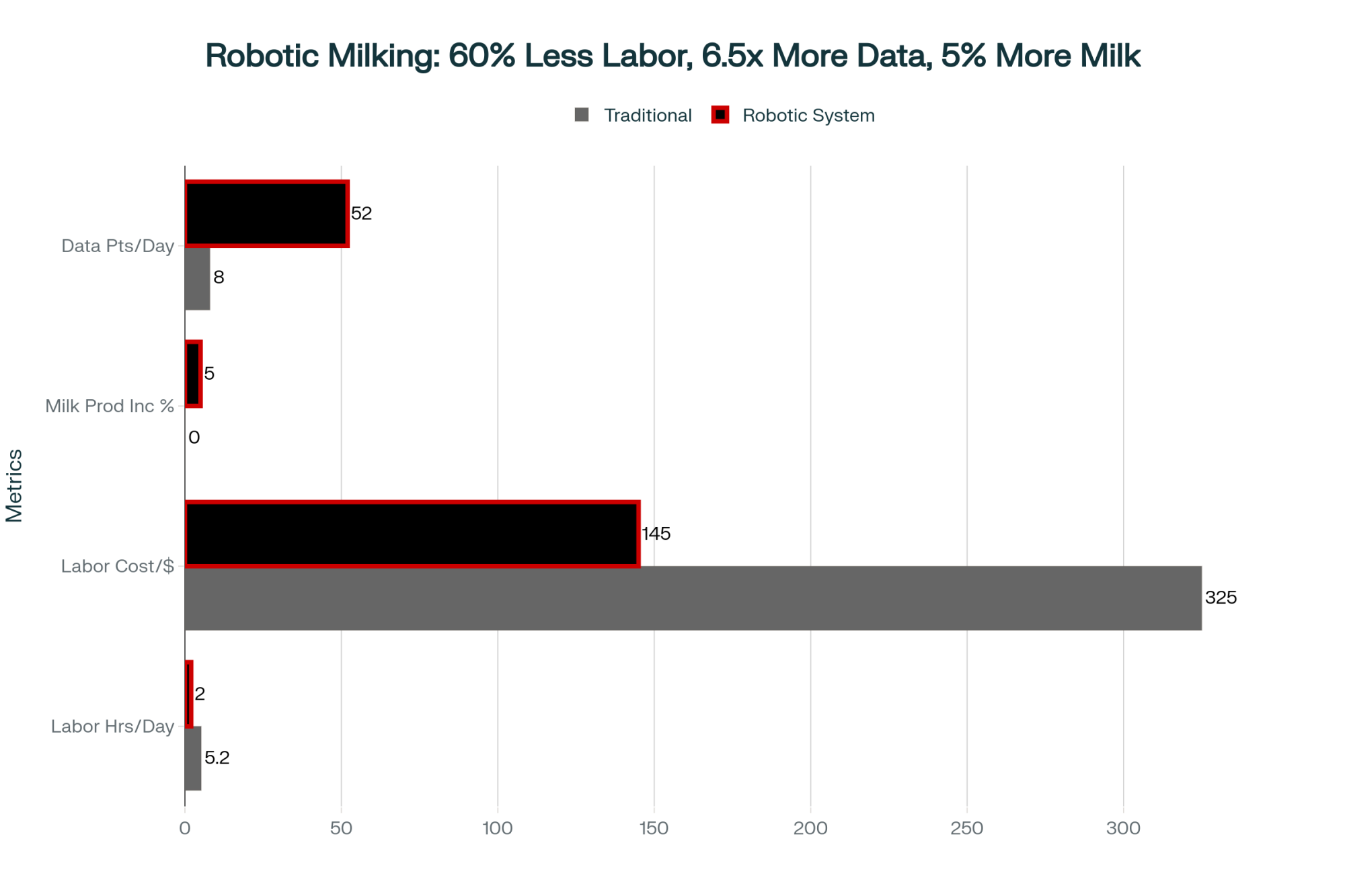
NewsSubscribe
First
Last
Consent

How Income Taxes Will Change for Dairy Farmers in 2025: Harvesting Tax Savings Before the TCJA Cliff

A $1.5M barn upgrade could cost $400k more in taxes after 2025. Dairy farmers: Navigate the TCJA cliff now or risk your legacy.

EXECUTIVE SUMMARY: The 2025 expiration of Trump-era TCJA tax cuts threatens dairy farmers with higher estate taxes, reduced equipment deductions, and income bracket shifts. Key changes include the estate tax exemption dropping to $7M, bonus depreciation falling to 40%, and the 20% QBI deduction loss. Legislative uncertainty looms, with debates over whether TCJA disproportionately benefits large farms. Proactive strategies like accelerating equipment purchases, restructuring entities, and leveraging 2025’s higher estate exemption are critical. Farmers must now shield operations from a potential $4.5 trillion tax hike over the next decade.

KEY TAKEAWAYS:

  • Estate Tax Crisis: The exemption drops to ~$7M in 2026, and families who exceed this threshold risk paying 40% taxes on land and assets.
  • Depreciation Deadline: Bonus depreciation will fall to 40% in 2025; equipment upgrades will now save thousands compared to post-2026 costs.
  • Entity Restructuring: Post-TCJA, pass-through entities may lose advantages. If rates drop to 15%, review C-corp options.
  • Slight Farm Disadvantage: Critics argue that TCJA’s QBI deduction and depreciation rules favor large corporate operations.
  • Farmer Quote: “We’re scrambling to buy equipment before deductions vanish, but big farms outpace us.” – Iowa dairyman.
dairy farm taxes, TCJA tax changes, 2025 tax cliff, bonus depreciation, estate tax exemption

Imagine a $1.5 million barn upgrade costing $400,000 more in taxes after 2025. This stark reality awaits dairy farmers if the TCJA’s bonus depreciation disappears as scheduled. While the law’s temporary provisions provided relief since 2018, its expiration creates both challenges and opportunities. This revised analysis sharpens focus on actionable strategies, balanced policy debates, and farmer-centric insights.

1. The Estate Tax Exemption Sunset: A Generational Wealth Transfer Crisis

The TCJA’s doubling of the federal estate tax exemption to $13.99 million per individual (adjusted for inflation) has protected family farms since 2018. However, this protection expires December 31, 2025, and will revert to approximately $7 million per person in 2026.

Why This Matters for Dairy Farms:

  • Land-rich, cash-poor operations face disproportionate risk. A 500-acre dairy valued at $8 million would owe 40% taxes on $1.02 million after the exemption reduction.
  • Spousal portability remains critical. Through proper planning, surviving spouses can retain a deceased partner’s exemption, preserving family ownership.
  • Annual gifting ($19,000 per recipient in 2025) becomes essential for transferring wealth without triggering estate taxes.

Proactive Strategies:

  • Use 2025’s higher exemption: Shift assets to irrevocable trusts before the exemption drops, locking in tax benefits.
  • Gift appreciated assets: Transfer land or equipment with unrealized gains to heirs, avoiding capital gains taxes at transfer.
  • Spousal Lifetime Access Trusts (SLATs) Allow spouses to benefit from assets while removing them from taxable estates.

2. Federal Estate Tax Rates: Verified 2025 Brackets

The federal estate tax applies only to estates exceeding $13.99 million in 2025. Below is the verified tax bracket structure from SmartAsset and Investopedia:

Taxable Amount Over ExemptionFederal Estate Tax RateBase Tax Owed
$1 – $10,00018%$0
$10,001 – $20,00020%$1,800
$20,001 – $40,00022%$3,800
$40,001 – $60,00024%$8,200
$60,001 – $80,00026%$13,000
$80,001 – $100,00028%$18,200
$100,001 – $150,00030%$23,800
$150,001 – $250,00032%$38,800
$250,001 – $500,00034%$70,800
$500,001 – $750,00037%$155,800
$750,001 – $1,000,00039%$248,300
Over $1,000,00040%$345,800

Example:
A dairy farm estate valued at .43 million (exceeding the 2025 exemption by 0,000) would pay:

  • Base tax: $70,800 (for $250k–$500k bracket)
  • Marginal tax: 34% on $190,000 ($64,600)
  • Total tax: $135,400.

3. Bonus Depreciation Phase-Out: Strategic Equipment Investments

While the TCJA’s bonus depreciation provisions (100% through 2022) have gradually declined, 2025 offers 40% depreciation for qualifying equipment purchases. This creates a critical window for dairy operations:

Equipment Purchase Scenario2025 Depreciation2026 Depreciation
$500k milking system$200k immediate deduction$100k deduction (20% rate)
$1.5M barn upgrade$600k deduction ($1.25M Section 179 + $300k bonus)Reduced deductions as Section 179 phases out

Key Considerations:

  • Equipment trades: The TCJA eliminated tax-free trade treatment. A $200k tractor trade-in could trigger capital gains taxes on the difference between the trade-in value and the purchased price.
  • Used equipment eligibility: Some pre-owned assets may qualify for depreciation under IRS guidelines. Consult tax professionals for eligibility.

4. Legislative Uncertainty: What Farmers Need to Watch

While the TCJA’s expiration creates clear challenges, political developments could alter this trajectory. Key variables include:

FactorCurrent Status (2025)Potential Impact if Extended
Bonus Depreciation40% (phasing to 0% by 2027)Could restore 100% if extended
Estate Tax Repeal$13.99M exemptionPermanent repeal proposed
Corporate Tax Rate21%Reduction to 15% for domestic production

Proactive Planning:

  • Equipment purchase timing: 2025 offers better depreciation than 2026 but worse than 2024.
  • Generational transfers: Use 2025’s higher exemption to transfer assets through trusts or GRATs.
  • Entity structure review: Compare pass-through vs. corporate tax benefits under potential law changes.

5. Challenging Assumptions: Myths vs. Reality

Myth: “All farmers benefit equally from TCJA provisions.”
Reality: Smaller operations often lack QBI income to maximize Section 199A benefits, while large farms face complex entity decisions.

Myth: “Estate planning only matters for wealthy farmers.”
Reality: Even modest farms with appreciated land values risk exceeding post-2025 exemptions. A $6 million dairy operation would owe taxes on $1 million if the exemption drops to $5 million.

Myth: “Bonus depreciation is only for new equipment.”
Reality: Some used equipment qualifies under IRS guidelines. For example, a refurbished milking parlor might still be eligible for depreciation.

6. Controversy: TCJA’s Equity Debate

Critics argue the TCJA disproportionately benefits large operations, widening the gap between family farms and corporate agribusinesses. For example:

  • Bonus depreciation: Corporate-owned farms with high cash flow maximize deductions, while smaller farms struggle to afford upgrades.
  • QBI deduction: Limited to 20% of qualified income, this benefits high-revenue operations more than modest ones.

“‘We’re scrambling to buy equipment now before depreciation drops further,’ says Iowa dairyman Mark Thompson. ‘But smaller farms like mine can’t match the deductions big operations get.’”

Conclusion: Strategic Planning for 2025 and Beyond

While the TCJA cliff creates challenges, it also presents opportunities for forward-thinking farmers. Three critical actions emerge:

  1. Accelerate equipment purchases in 2025 to capture remaining bonus depreciation.
  2. Review estate plans to use 2025’s higher exemption through gifting or trusts.
  3. Explore entity restructuring to optimize tax positions post-2026.

The Bullvine will continue monitoring legislative developments and providing actionable insights. Proactive farmers who engage tax professionals now will position their operations to thrive regardless of future policy changes.

Read more:

  1. The Tax Man Cometh to the Farm: Three TCJA Provisions Set to Expire in 2025 and What Dairy Producers Need to Know
    Explore how expiring TCJA provisions—bonus depreciation, estate tax exemptions, and Section 199A—will reshape dairy farm tax strategies.
  2. New 25% Border Tax Hits Dairy Trade: What It Means For Your Farm.
    Understand the impact of new tariffs on the U.S.-Canada dairy trade, including shifts in export markets and consumer costs.
  3. Dairy Co-ops Face a $2B Tax Cliff in 2025. Will Congress Act Before Rural Economies Collapse?
    Learn how Section 199A’s expiration threatens co-op dividends, rural jobs, and farm competitiveness—and why farmers are urging legislative action.

LAND WARS: How Savvy Dairy Farmers Are Beating Big Money at Its Own $21,500/Acre Game

The $21,500/acre land grab is suffocating traditional dairy. But while industry dinosaurs struggle, a new breed of innovative producers is rewriting ownership rules. Are YOU ready to join the resistance?

Midwest farmland values have skyrocketed to unprecedented levels, with prime agricultural acreage now fetching over $21,500 per acre in some areas. These soaring costs threaten the viability of dairy producers, forcing innovation in land access strategies.

When investment groups and corporate interests started snatching up Midwest farmland at jaw-dropping prices, many predicted the death of family dairy. They were wrong. Across America’s heartland, a dairy revolution is brewing as forward-thinking producers deploy guerrilla tactics to secure the land they need—without mortgaging their future or selling their souls to the bank.

The Land Price Crisis: Why $21,500/Acre Threatens Dairy’s Future

Let’s cut through the nonsense: the traditional “save up and buy the farm” model is dead. While agricultural economists wring their hands and farm lenders peddle increasingly desperate financial products, farmland across the Midwest has reached stratospheric heights that mock conventional business wisdom.

According to January 2025 data from DreamDirt, Minnesota farmland now averages $8,364 per acre, with premium ground in Rock County commanding a staggering $14,400. Missouri tops that at $15,171 per acre. Meanwhile, Purdue University reports that Indiana’s top-quality farmland reached $14,392 per acre in 2024, jumping 4.8% in just twelve months. At the same time, prime farmland in Wisconsin fetches $21,500 per acre.

Take a hard look at this snapshot of recent Minnesota sales:

CountyDate SoldTotal Acres$/Acre% TillableSoil Score
Martin01/07/2025101.11$11,70094.84%92.9
Rock01/21/202580.09$14,40094.48%89.3
Swift01/24/2025164.97$6,10097.42%54.3
Marshall01/27/2025121.50$3,00095.84%92.3
Clay01/29/202573.97$7,90096.28%91.7

This isn’t just an American problem. Land prices are rising in dairy regions worldwide, reshaping the economics of milk production globally.

“These prices aren’t just unsustainable—they’re mathematically impossible for traditional dairy operations,” declares Tom Wilson, a third-generation Wisconsin producer. “When land costs $14,000 an acre, that’s over $950 per cow just in land investment for a grazing operation. The dairy establishment won’t admit it, but the numbers are terminal for conventional expansion models.”

The cold, hard truth? Land prices have wholly disconnected from agricultural productivity. We’re witnessing nothing less than the financialization of farmland—where hedge funds, private equity, and wealthy non-farm investors treat our pastures and cornfields as “alternative assets” in diversified portfolios.

While industry leaders peddle comforting fantasies about “cyclical markets,” the brutal reality is that dairy producers caught in conventional thinking face extinction. However, a new breed of dairy rebels is fighting back with unconventional tactics.

Guerrilla Leasing: How Strategic Dairy Farmers Secure Land Without Buying It

The most tactical rebels have abandoned the fetish of ownership entirely, deploying creative leasing strategies that flip power dynamics with landowners.

Many innovative dairy producers have reinvented their approach to land access by implementing profit-sharing models. Rather than fixed cash rent, these arrangements tie landowner compensation to production outcomes, creating true partnerships instead of landlord-tenant relationships. When implemented effectively, these approaches can significantly increase lease renewal rates because landowners become invested in the farm’s success rather than just collecting payments.

This approach mirrors successful models from international dairy systems, where variable milk price risk is shared throughout the supply chain. It’s a stark departure from America’s rigid fixed-rate leasing traditions, which leave dairy producers exposed during market downturns.

Some producers are going even further, creating what amounts to “reverse leases” with absentee landowners. These dairy producers secure long-term land control at roughly half the going rate by offering complete land management services in exchange for below-market rental rates ($150-200/acre). They’re monetizing their agricultural expertise and converting it into discounted land access.

Dairy consultants working with producers across multiple states report that most investors who purchase farmland have limited knowledge of agricultural management. When approached with a comprehensive management solution that maintains their agrarian tax status, ensures environmental compliance, and prevents degradation, many will accept significantly discounted rental rates in exchange for this expertise.

For aging farmers navigating succession planning, intergenerational leases represent another innovation gaining traction. Instead of selling at peak prices, forward-thinking landowners are securing their retirement through long-term leases to next-generation producers—creating win-win arrangements that preserve agricultural legacies while providing secure returns.

Collective Power: Smart Partnerships That Give Dairy Farmers the Land Access Edge

Individual rebellion has its limits. That’s why the most revolutionary producers are forming coalitions that combine resources and leverage collective strength against deep-pocketed competitors.

Across the Midwest, dairy families are breaking conventional molds by forming LLCs with non-farm investors to purchase farmland collectively. These structures—often with majority farmer ownership supplemented by investor capital—create alignment while more manageably distributing financial requirements.

This collaborative approach mirrors successful models from European dairy regions, where farmer cooperatives routinely pool resources to acquire land collectively. Dutch dairy cooperatives have been particularly effective at collective land management—a model American producers are finally embracing out of necessity.

Land contracts offer another collaborative approach that is gaining momentum. By negotiating directly with landowners, savvy producers secure seller-financed deals that bypass traditional lenders entirely. The savings are substantial, with interest rates typically 2% below commercial loans.

Consider this: A dairy operation purchasing 200 acres at $10,000 per acre ($2 million total) saves approximately $40,000 annually in interest with a seller-financed contract at 4% versus a commercial loan at 6%. That’s equivalent to the margin from producing about 400,000 pounds of milk each year—roughly the annual production of 20 good Holstein cows.

Even consumers are getting involved in financing dairy land access. Some operations have raised capital through product subscriptions to fund expansions—demonstrating how direct-to-consumer relationships can be monetized into capital for growth.

“The industry dinosaurs are still fighting for ownership while the innovators are fighting for control. There’s a profound difference. You don’t need to own land to profit from it—you need secure access on favorable terms.”

Solar Revolution: Turning Energy Companies into Unwitting Dairy Allies

The most radical approach emerging in dairyland strategy involves partnering with an unlikely ally: solar energy companies. Forward-thinking producers are leveraging the renewable energy boom to subsidize their land costs through agrivoltaics—a fancy term for combining agriculture and solar power generation on the same land.

The University of Minnesota’s West Central Research and Outreach Center in Morris has documented how this approach yields compound benefits. Their research shows that solar panels generate revenue and reduce cattle’s heat stress during summer, addressing a significant production challenge. With panels providing strategic shade, body temperatures in grazing cattle drop by up to 10 degrees during peak heat, resulting in less production loss during summer’s brutal thermal challenges.

The efficiency gains from these integrated approaches are profound, as shown by research into multiple land use strategies:

Crop CombinationPlot Yield (t/ha)Land Equivalent Ratio (LER)
Wheat/Beans3.51.43
Barley/Peas5.61.15
Oats/Beans3.71.53

This table illustrates how Land Equivalent Ratio (LER) measures efficiency compared to single-purpose land use. An LER of 1.53 means you would need 53% more land if you separated the activities—the same principle that makes solar grazing so revolutionary for dairy land economics.

The financial impact is staggering. Solar leases typically pay $900-$1,200 per acre annually—far outstripping what most marginal land could generate through conventional dairy. Add in the grazing value, and you’ve transformed what might have been a financial drain into a profit center.

Progressive dairy operations integrating solar grazing have reported multiple revenue streams: income from the solar lease itself, productivity from livestock grazing under the panels, and reduced production losses in nearby pastures due to the microclimate benefits of strategic shade placement.

While U.S. dairy producers have been slow to adopt this model, European producers in Germany and the Netherlands have enthusiastically embraced it. Japanese dairy regions have taken it even further, with some farms integrating solar infrastructure directly into barn roofing and cattle shade structures—a model American producers would be wise to emulate.

Feed Without Fields: Why Smart Dairy Farmers Are Abandoning Vertical Integration

One of the most damaging myths in modern dairy is the notion that successful operators must control their entire feed supply chain. This outdated thinking has driven countless operations to overextend themselves financially in pursuit of unneeded cropland.

The hard truth? The most profitable dairy operations globally focus on milk production while securing feed through strategic partnerships. Dutch dairy producers have known this for decades, operating highly successful milk production systems on minimal land footprints.

Progressive dairy producers have reported significantly improved returns on capital by selling cropland and investing those proceeds in modernizing dairy facilities or expanding their herds. By securing feed through contracts with neighboring crop farmers, these operations maintain supply chain security without the capital burden of land ownership.

This approach directly challenges the American dairy establishment’s fixation on vertical integration. When honest financial analysis is applied, the return on investment from modern milking equipment or expanding the herd typically exceeds the return from owning cropland by 3-5 times at current prices.

Some innovators are taking this concept further by developing equity-sharing arrangements with crop suppliers. In these models, dairy operations invest in crop production enterprises rather than land itself, securing preferential access to feed while sharing in crop operation profits. This sophisticated approach recognizes farming as a business rather than a lifestyle—a perspective still resisted by traditionalists.

“The future belongs to dairy specialists, not agricultural generalists. European producers figured this out 30 years ago, while American dairy is still clinging to the homesteader fantasy where one family does everything. That model is dead—specialization is the only path forward.”

The Global Revolution: International Strategies American Dairy Can Adopt Now

American dairy’s land crisis is nothing new to global producers. Dutch, New Zealand, and Irish dairy farmers have navigated expensive land markets for generations, developing strategies that U.S. producers are only now discovering out of desperation.

The Netherlands has long emphasized cooperative land ownership models, in which multiple dairy operations share access to grazing land through formal associations. These arrangements provide economies of scale in land management while distributing costs across various operations.

New Zealand pioneered the “share milking” model, in which young dairy farmers without capital can access land and cows in exchange for labor and management expertise. This system has created clear progression pathways from employee to land ownership over time, something sorely lacking in the American dairy establishment.

These international examples share a flexibility in control and access that traditional American dairy has resisted. While U.S. producers cling to the homesteader mythology of 100% ownership, global innovators have long understood that secure access matters more than title deeds.

Your 5-Step Dairy Land Survival Plan: Action Items for Immediate Implementation

StrategyInitial Capital RequiredAnnual Return on Invested CapitalControl LevelRisk Level
Traditional Ownership$14,000/acre1-3%HighHigh
Profit-sharing lease$0/acre15-20%MediumShared
Collaborative ownership$5,000/acre8-12%MediumShared
Solar grazing integration$0/acre20-25%MediumLow

The land price crisis isn’t coming—it’s here. And it’s permanent. The question isn’t whether traditional models of land acquisition are viable (they’re not) but whether your operation will adapt before financial reality forces your hand.

Here are five immediate actions to revolutionize your approach:

  1. Conduct a ruthless land efficiency audit. Calculate your return on invested capital for every acre you own or rent. Compare your cost per acre (including financing, taxes, and maintenance) to rental rates. European dairy audit protocols suggest generating at least a 12% annual return on land assets or considering alternative arrangements.
  2. Initiate strategic conversations with neighboring landowners today. Most land never hits the open market. Regular discussions with aging farmers can position you favorably when they consider selling or leasing their property. Dutch dairy advisors recommend creating formal documentation of these relationships—what they call “right of first access” agreements.
  3. Identify potential coalition partners in your region. Modern land acquisition often requires collaborative approaches. Find other progressive dairy operations interested in joint ventures or cooperative land access. European models suggest that three to five partners create an optimal balance between distributed risk and manageable decision-making.
  4. Contact solar developers proactively. If you have marginal land that’s underperforming financially, explore solar integration. Spanish dairy consultancies have developed assessment protocols to identify optimal parcels for solar integration that maintain agricultural productivity while adding energy revenue.
  5. Reassess your business structure through a succession lens. Traditional sole proprietorships create significant barriers to gradual ownership transitions. Consider converting to entity structures (LLCs, S-Corps), facilitating phased equity transfers over time. Irish succession models demonstrate how this approach creates clearer pathways for next-generation entry without crippling capital requirements.

The Bottom Line

The dairy establishment would have you believe that rising land prices mean you need better loans, higher debt tolerance, or more subsidies. They’re wrong. You need a fundamentally different approach to accessing and controlling land that separates productive use from ownership obsession.

“High land prices aren’t the end of dairy farming—they’re the end of conventional farming. The rebels who adapt fastest will dominate the industry for decades to come. The question isn’t whether you’ll change your approach to land, but whether you’ll do it proactively or be forced into it by your lender.”

Farmers who embrace these revolutionary approaches will survive in an era of expensive land and thrive by deploying capital more efficiently than their ownership-obsessed competitors. After all, in a world where the rules are written to benefit the financial elite, sometimes the most revolutionary act is refusing to play the game their way.

Key Takeaways

  • Land Price Reality Check: Minnesota farmland averages $8,364/acre, with premium ground hitting $14,400/acre (Rock County). Missouri averages $15,171/acre, making traditional ownership models financially unsustainable for dairy operations. Prime farm land in Wisconsin is topping a whopping $21,500/acre.
  • Profit-Sharing Leases: Forward-thinking dairy producers are replacing fixed cash rent with arrangements where landowners receive a percentage of milk revenue tied to crops grown on their land. These arrangements create true partnerships that weather market volatility.
  • Collaborative Power: Formal partnerships with non-farm investors enable dairy producers to access land collectively. LLC structures distribute capital requirements while maintaining farmer operational control.
  • Solar Integration Edge: University of Minnesota research confirms that agrivoltaics delivers multiple benefits. It generates $900-$1,200/acre in lease revenue while reducing cattle heat stress and improving land efficiency by up to 75%.
  • ROI Transformation: Solar grazing integration yields 20-25% annual returns on invested capital versus just 1-3% from traditional ownership, fundamentally reshaping dairy economics.
  • Feed Without Fields: The most profitable dairy operations globally are abandoning vertical integration, favoring strategic feed partnerships, and freeing capital for higher-return investments in dairy facilities and herd expansion.
  • Global Innovation Models: American producers can adapt proven strategies from the Netherlands (cooperative land ownership), New Zealand (share milking arrangements), and Ireland (long-term leasing structures).
  • Succession Revolution: Traditional sole proprietorships block generational transition; progressive operations implement phased equity transfers through entity structures (LLCs, S-Corps) that create pathways for next-generation entry.
  • Immediate Action Items: Conduct a land efficiency audit (targeting 12%+ ROI), initiate conversations with neighboring landowners, identify coalition partners, contact solar developers, and reassess business structure through a succession lens.
  • Paradigm Shift: The future belongs to dairy specialists, not agricultural generalists—success requires separating land control from land ownership and deploying capital where it generates the highest returns.

Summary

Traditional dairy expansion models face extinction as Midwest farmland prices shatter records—reaching $21,500/acre. This investigative report reveals how innovative producers reject conventional ownership obsession in favor of revolutionary land access strategies. Forward-thinking dairy farmers are implementing profit-sharing lease arrangements, forming collaborative ownership LLCs with investors, and partnering with solar developers to generate $900-$1,200/acre in additional revenue while improving grazing conditions. These approaches, validated by University of Minnesota research on agrivoltaics and supported by verified 2025 land transaction data, deliver dramatically superior returns—with solar grazing integration yielding 20-25% ROI compared to just 1-3% from traditional ownership. The global perspective reveals that American producers are finally adopting successful models pioneered in the Netherlands and New Zealand, where cooperative approaches and specialized dairy production have thrived despite land prices exceeding $30,000/acre. For dairy operations facing succession challenges and capital constraints, these disruptive strategies aren’t just options—they represent the only viable path forward in an era where land values have permanently disconnected from agricultural productivity.

Learn More

Join the Revolution!

Bullvine Daily is your essential e-zine for staying ahead in the dairy industry. With over 30,000 subscribers, we bring you the week’s top news, helping you manage tasks efficiently. Stay informed about milk production, tech adoption, and more, so you can concentrate on your dairy operations.

NewsSubscribe
First
Last
Consent

The Tax Man Cometh to the Farm: Three TCJA Provisions Set to Expire in 2025 and What Dairy Producers Need to Know

Tax changes loom for dairy farms as key TCJA provisions sunset in 2025. The financial landscape is shifting from vanishing equipment write-offs to shrinking estate exemptions. Discover how these expirations could impact your bottom line and learn strategies to protect your farm’s future in uncertain times.

Summary:

The 2017 Tax Cuts and Jobs Act (TCJA) provided significant benefits to dairy farmers, but three key provisions are set to expire in December 2025. The 100% bonus depreciation for equipment purchases will phase out, potentially delaying tax relief on crucial farm investments. The doubled estate tax exemption will revert to lower levels, threatening generational transfers of land-rich operations. Finally, the Section 199A pass-through deduction, which allows a 20% deduction on qualified business income, may disappear, increasing taxable income for most dairy farms. These changes and ongoing challenges like rising feed costs, labor shortages, and trade pressures from agreements like USMCA create a complex financial landscape for dairy producers. Urgent and proactive tax planning, including accelerating equipment purchases, strategic gifting of assets, and exploring entity structure changes, will be crucial for farmers to navigate these impending shifts and protect their operations’ long-term viability.

Key Takeaways:

  • Bonus depreciation for equipment purchases will decrease from 100% to 0% by 2027, impacting farmers’ ability to write off significant investments quickly.
  • The estate tax exemption is set to drop from $13.61 million per individual to approximately $6.98 million in 2026, potentially forcing partial sales of family farms.
  • Section 199A pass-through deduction, allowing 20% deduction on qualified business income, may expire, increasing taxable income for 94% of U.S. dairies.
  • Global trade pressures, including USMCA impacts, compound the effects of these tax changes on dairy farm profitability. The reduction in bonus depreciation, the decrease in estate tax exemption, and the potential expiration of the Section 199A pass-through deduction could make U.S. dairy farms less competitive in the global market, particularly against countries with more favorable tax regimes.
  • Rising input costs (18% increase in feed prices since 2023) and labor shortages are pushing farms toward automation just as tax incentives decrease.
  • Proactive strategies include accelerating equipment purchases, utilizing lifetime gifting, exploring sale-leaseback agreements, and considering entity structure changes.
  • Dairy cooperatives face unique challenges with Section 199A, as only 65% of patronage dividends typically qualify for the deduction. If the Section 199A pass-through deduction expires, as is currently scheduled, dairy cooperatives could see a significant increase in their tax burden, potentially affecting their ability to compete in the market and provide returns to their members.
  • Farmers should use tax professionals to model scenarios incorporating tax changes and market pressures.
dairy farms, TCJA tax changes, bonus depreciation, estate tax exemption, Section 199A deduction

Three pillars of the 2017 Tax Cuts and Jobs Act (TCJA)—100% bonus depreciationdoubled estate tax exemptions, and the Section 199A pass-through deduction—will sunset on December 31, 2025. For dairy farmers whose operations rely on equipment investments, multi-generational land transfers, and pass-through business structures, these expirations threaten significantly higher tax bills, tighter cash flow, and disrupted succession plans. With Congress gridlocked and global trade pressures mounting, the potential impact of these tax changes on dairy farm profitability is grave, making proactive planning critical for survival.

The TCJA’s Farm-Friendly Provisions: What’s at Stake

1. Bonus Depreciation: A Dairy Farmer’s Best Friend (Until 2025)

What’s Expiring:
The TCJA allowed farmers to deduct 100% of qualifying equipment or facility costs upfront (e.g., robotic milkers and manure digesters). This “bonus depreciation” began phasing out in 2023 and will drop to 40% in 2025 before expiring in 2027 (IRS Publication 225, 2024; USDA ERS, 2024). We’ve had these tax cuts for eight years, but farmers may not be thinking about this and what it could mean.  This “bonus depreciation” began phasing out in 2023 and will continue to decrease until it expires. Here’s the phase-out schedule:

YearBonus Depreciation Percentage
2022100%
202380%
202460%
202540%
202620%
20270%

This table clearly illustrates the gradual reduction in bonus depreciation, helping farmers understand the urgency of making equipment purchases sooner rather than later to maximize tax benefits. 

Impact on Dairy:

  • A $500,000 robotic milker purchased in 2025 yields a $200,000 deduction (vs. $500,000 in 2022). Post-2025, deductions revert to 7- or 20-year schedules, delaying tax relief (PKF O’Connor Davies, 2023).
  • Rising input costs exacerbate the pain: Feed prices have surged 18% since 2023, while labor shortages (cited by 63% of dairy operators) push farms toward automation (USDA ERS, 2024).

Strategic Moves:

  • Accelerate Purchases: “Prioritize equipment upgrades before year-end,” advises Paul Neiffer, a farm CPA.
  • Lease Flexibility: Consider sale-leaseback agreements to maintain liquidity (Iowa State University Extension, 2023).

2. Estate Tax Exemptions: A Ticking Clock for Family Farms

What’s Expiring:
The TCJA doubled the federal estate tax exemption to $13.61 million per individual ($27.22 million for couples). Without action, it drops to ~$6.98 million per individual in 2026 (IRS, 2019; USDA ERS, 2024).

Dairy-Specific Risks:

  • Land Values: A 500-cow dairy with 1,000 acres could face a 40% tax on assets over $6.98 million, forcing partial sales (USDA ERS, 2024).
  • Global Pressures: USMCA trade agreements have destabilized milk pricing, with Canadian dairy imports undercutting U.S. markets by 12-15% (Reddit/CostcoCanada, 2025).

Planning Tools:

  • Lifetime Gifts: Transfer assets now to lock in higher exemptions. The IRS allows $19,000 annual gifts per recipient (USDA ERS, 2024).
  • Conservation Easements: Reduce appraisals by restricting development (Urban-Brookings Tax Policy Center, 2024).

3. Section 199A Deduction: The Pass-Through Lifeline

What’s Expiring:
The TCJA let pass-through entities (e.g., LLCs, S-corps) deduct 20% of qualified business income (QBI). A dairy netting $500,000 saved $37,000 in taxes (Tax Foundation, 2024).

Political Uncertainty:

  • Cooperative Nuances: Dairy cooperatives face unique IRS rules—only 65% of patronage dividends qualify for the deduction (USDA ERS, 2024).
  • Global Contrast: Canada’s supply management system stabilizes prices but limits growth, while U.S. subsidies create volatility (Reddit/CostcoCanada, 2025).

Workarounds:

  • Fiscal Year Shifts: Switch to a November year-end to defer income (USDA, 2024).
  • C-Corp Conversion: Rare but viable for large operations if 199A lapses (KPMG, 2025).

Legislative Wildcards: Trade Wars and Tax Code

Chances of Extension:

  • Bonus Depreciation: Likely. Both parties support pro-business incentives (BPM, 2024).
  • Estate Exemption: 50/50. Democrats argue it benefits “dynastic wealth” (Urban-Brookings, 2024).
  • Section 199A: Unlikely. Critics call it a “tax cut for the wealthy” (Tax Policy Center, 2024).

Preparing for All Scenarios:

  1. Model Multiple Outcomes: Use USDA’s Farm Income Calculator to project 2026 liabilities.
  2. Flexible Income Timing: Defer 2025 income via prepaid expenses or delayed milk checks.
  3. Review Entity Structure: Revisit LLC/S-corp status with a tax advisor.

Dairy-Specific Case Study: The Johnson Family Farm

The Challenge:

  • 2025 Plan: Buy a $1M manure digester using 40% bonus depreciation ($400K deduction).
  • 2026 Risk: If 199A expires, taxable income jumps $200K, costing $74K more in taxes (USDA ERS, 2024).

Their Strategy:

  • Lock in depreciation by placing the digester in service by December 2025.
  • Gift 200 acres to their son, leveraging the $13.61M exemption before it drops.

Global Context: Trade Wars and Supply Chains

USMCA Fallout:

  • Canadian poultry imports now account for 9% of the U.S. market share, squeezing margins (Reddit/CostcoCanada, 2025).
  • Cross-Border Competition: U.S. dairy farmers face a “double whammy” of expiring TCJA benefits and cheap Canadian milk solids (Reddit/CostcoCanada, 2025).

Consumer Pressures:

  • Grocery prices for staples like eggs (+19%) and beef (+15%) strain household budgets, reducing demand for premium dairy (Reddit/MoneyDiariesACTIVE, 2024).

Conclusion: Don’t Wait for Washington

The TCJA sunset poses existential risks for dairy farmers battling trade imbalances and input costs. Proactive steps—accelerating purchases, strategic gifting, and stress-testing cash flow—are essential to weather the storm.

Final Recommendation: Engage tax professionals to model scenarios incorporating USMCA impacts and labor/feed cost synergies. Assume the worst, hope for the best—and build a plan that works either way.

Learn more:

Join the Revolution!

Bullvine Daily is your essential e-zine for staying ahead in the dairy industry. With over 30,000 subscribers, we bring you the week’s top news, helping you manage tasks efficiently. Stay informed about milk production, tech adoption, and more, so you can concentrate on your dairy operations. 

NewsSubscribe
First
Last
Consent

Tariffs, Tech, and Tight Margins: February 2025 Dairy Industry Snapshot

In February 2025, dairy margins will be pressured as milk prices stagnate and corn costs surge. Record cheese exports to Mexico are at risk due to retaliatory tariffs, while new processing plants offer hope. Farmers must navigate this volatile landscape with strategic risk management and proactive planning to maintain profitability.

Summary:

The first half of February 2025 presents a complex landscape for U.S. dairy farmers, with margins holding steady to slightly weaker amid stagnant milk prices and volatile feed costs. While 2024 saw record cheese exports, particularly to Mexico, retaliatory tariff threats now jeopardize this crucial market. Corn prices have surged 12% month-over-month, squeezing margins, though soybean meal costs have declined. Production shifts favor Italian-style cheeses, with mozzarella output surpassing 6 billion pounds annually. New processing plants coming online offer potential relief, but their success hinges on preserving export markets. Farmers face critical decisions on risk management, including optimizing Dairy Margin Coverage and exploring feed hedging strategies. With projected margins between $10.14-$12.47/cwt, the industry must navigate trade uncertainties, adapt to changing consumer preferences, and leverage emerging opportunities in functional dairy and sustainability-focused products to maintain profitability in 2025.

Key Takeaways:

  • Dairy margins remain under pressure in early February 2025, with milk prices stagnant and corn costs up 12% month-over-month.
  • Record cheese exports in 2024 (1.13 billion pounds) face threats from potential retaliatory tariffs, especially from Mexico.
  • Production is shifting towards Italian-style cheeses, with mozzarella surpassing 6 billion pounds annually.
  • New processing plants add capacity but success depends on maintaining export markets.
  • Farmers need to optimize risk management strategies, including Dairy Margin Coverage and feed hedging.
  • Regional disparities in feed costs and climate impacts require tailored management approaches.
  • The delayed 2024 Farm Bill negotiations create uncertainty for policy support.
  • Consumer trends favor functional dairy and sustainability-certified products.
  • Strategic imperatives include securing tariff exemptions, adopting component-first breeding, and pre-booking summer feed.
  • Projected all-milk price for 2025 is $23.05/cwt (+2.7% YoY), offering cautious optimism amidst volatility.
dairy margins, cheese exports, milk prices, corn costs, risk management

Dairy margins faced sustained pressure in the first half of February 2025 as milk prices stagnated, corn costs surged 12% month-over-month, and retaliatory tariff threats jeopardized record cheese exports to Mexico. While USDA data confirmed 2024 as a banner year for dairy exports (1.13 billion pounds of cheese shipped globally), farmers now navigate a precarious landscape of geopolitical risks, shifting consumer demand toward Italian-style cheeses and the highest feed costs since 2022. With margins projected between $10.14-$12.47/cwt and new processing plants coming online, strategic risk management becomes critical for profitability.

Market Dynamics: Prices, Production, and Policy Crosscurrents

Milk Prices and Feed Cost Squeeze

Class III milk futures held near $20.01/cwt for February contracts but fell 1.2% in deferred months, reflecting concerns over softening demand and rising input costs. Corn prices jumped to $4.9325/bu (March 2025 futures), while soybean meal dipped marginally to $10.5875/bu—a divergence complicating ration planning. The USDA projects 2025 feed costs to decline 10.1% annually but warns of regional disparities: Midwest operations pay 15-20% less for feed than Western farms grappling with lingering drought impacts.

Michael Harvey, RaboResearch Senior Analyst:
“Feed volatility remains the wildcard. While global grain stocks improve, logistical bottlenecks and climate-driven yield variations create localized price spikes that erode margins1.”

Cheese Exports: Record Highs Meet Retaliation Risks

December 2024 set a monthly cheese export record at 96.7 million pounds (+21.2% YoY), with Mexico accounting for 38% of annual shipments. However, Mexico’s inclusion of cheese on its retaliation list for U.S. steel/aluminum tariffs threatens $950 million in annual trade. New U.S. processing plants add 8 billion pounds of capacity—enough to absorb 2-3% more domestic milk production if exports falter.

Production Shifts and Inventory Pressures

American-style cheese output fell 3.9% in 2024, while Italian varieties like Mozzarella (+3.6%) surpassed 6 billion pounds annually. Cheddar production hit a four-year low, reflecting consumer preference shifts toward pizza and prepared foods. Butter inventories grew 7% yearly, contributing to a 2¢/lb price decline in early February, while dry whey plummeted 8.9% weekly on weak export demand.

Trade Policy: Tariff Moratoriums and Farm Bill Uncertainty

U.S.-Canada Dairy Tariff Standoff

A 30-day hold on reciprocal tariffs temporarily relieved markets, but Canada’s threat of $1.2 billion in retaliatory measures keeps markets on edge. The dispute centers on Canada’s dairy TRQ (Tariff Rate Quota) system, which the U.S. claims unfairly restricts access. With $450 million in annual dairy exports to Canada at stake, farmers fear prolonged negotiations could disrupt spring milk checks.

Mexico’s Retaliation List and Export Alternatives

Mexico’s proposed 20-25% tariffs on U.S. cheese would slash processor margins by $0.15-$0.20/lb, forcing buyers to source from the EU or New Zealand. However, Southeast Asia offers growth potential:

  • Philippine cheese imports rose 14% in 2024
  • Vietnam’s milk powder demand increased 10% YoY

Risk Management Strategies for Volatile Margins

Beginning February 2025, dairy farmers will need to pay close attention to both costs and pricing to make informed financial decisions. Understanding the intricacies of milk pricing is key, and this is where the current Class 4(m) prices come in. These prices, effective from February 1 to February 28, 2025, hold specific significance for your risk management strategies. 

Milk ClassButterfat ($/kg)Proteins ($/kg)Other Solids ($/kg)
4(m)Provincial 4(a) butterfat price3.35033.3503

This table offers current, specific pricing information that could be valuable for farmers considering risk management strategies. By being proactive with these data points, you can position your farm for more resilient financial health amid market fluctuations.

Dairy Margin Coverage (DMC) Adjustments

With projected 2025 DMC payments $8.9 million lower than 2024 (-12%), farmers must optimize coverage:

  1. Update Production Histories: Leverage USDA’s one-time adjustment to reflect 2019-2024 output
  2. Layer LGM-Dairy: Combine DMC with Livestock Gross Margin insurance for price upside
  3. Monitor Class IV Markets: Butter ($2.40/lb) and NDM ($1.30/lb) stability supports component-focused hedging.

Feed Procurement and Storage Tactics

  • Lock in 40-60% of Q2 corn needs via $4.68/bu December 2025 futures
  • Consider sorghum-sudangrass hybrids for drought-prone regions
  • Utilize USDA’s Feed Cost-Share Program (launched Jan 2025), covering 15% of silage storage costs

Regional Spotlights: Herd Management and Climate Adaptation

Understanding the regional differences in profitability is crucial for dairy farmers as it allows them to benchmark and strategize effectively. By analyzing specific data, you can gain valuable insights into how your region compares to others. The table below provides concrete data on regional differences in profit per cow and the key drivers influencing these figures: 

RegionProfit per CowKey Driver
Southeast (>5000 cows)$1,640Operational Efficiency
Northeast (large herds)$1,625Market Access
Southeast (<250 cows)$531Improved Margins

Midwest Advantage

Proximity to corn/soybean hubs cuts feed costs by $1.50/cwt vs. Western farms. Genetic gains drive milk solids growth:

  • Butterfat: +0.1% monthly
  • Protein: +0.05% monthly

Southwest Recovery Challenges

Though the percentage of drought-affected herds dropped to 12% (from 23% in 2024), forage quality remains subpar. The USDA reports that 18% of Texas dairies now use methane digesters to offset energy costs, a 7% annual increase.

Northeast Production Headwinds

Severe winter storms disrupted 8% of February milk shipments, compounding labor shortages (34% of farms report unfilled positions). Robotic milker adoption rose 12% YoY, with ROI periods shrinking to 4.5 years.

Looking Ahead: Policy, Innovation, and Consumer Trends

2024 Farm Bill Implications

Delayed negotiations threaten DMC updates, including:

  • Raising the 5-million-pound coverage cap to 8 million
  • Adding cheese whey as a risk-adjustment factor

Functional Dairy and Sustainability Demands

Consumer trends favoring A2 milk, probiotics, and carbon-neutral labeling drive innovation:

  • Danone’s “Digestive Health” yogurt line grew 22% in 2024
  • 48% of millennials pay premiums for dairy from methane-certified farms

Conclusion: Strategic Imperatives for Q2 2025

Dairy farmers enter spring cautiously optimistic—record exports and improved feed costs vie with geopolitical risks and margin compression. Key actions include:

  1. Secure Tariff Exemptions: Engage co-ops to lobby for cheese as an “essential trade” in NAFTA renegotiations
  2. Adopt Component-First Breeding: Prioritize butterfat/protein yields over volume
  3. Pre-Book Summer Feed: Hedge 50% of July-September corn at $4.70-$4.85/bu

The USDA forecasts an all-milk price of $23.05/cwt (+2.7% year over year), so proactive operators can turn volatility into opportunity.

Learn more:

Join the Revolution!

Bullvine Daily is your essential e-zine for staying ahead in the dairy industry. With over 30,000 subscribers, we bring you the week’s top news, helping you manage tasks efficiently. Stay informed about milk production, tech adoption, and more, so you can concentrate on your dairy operations. 

NewsSubscribe
First
Last
Consent

Profit or Perish: The Harsh Taxman Cometh for Small Dairies

Dairy farmers face a tax minefield in 2025. From hobby farm labels to herd liquidation traps, the IRS is tightening its grip. But savvy operators are fighting back with smart strategies. Discover how to protect your farm’s legacy and keep more of your hard-earned profits. Time is ticking—act now.

Jim’s calloused hands gripped the IRS bill like a death sentence. After 30 years milking 100 cows in Wisconsin, he owed $34,000—enough to sink his farm. “They call us ‘hobby farmers’ while foreign milk floods our markets,” he growled. His story isn’t unique. If you don’t act by March 1, 2025, you’ll hand Uncle Sam 30% of this year’s profits. Here’s how to fight back—and save your legacy. 

The Taxman’s Dirty Tricks 

The IRS is gutting small dairies with traps you’d never see coming. 

  • Trap #1: The “Hobby Farm” Shakedown: Get labeled a non-commercial operation? Kiss your deductions goodbye. Take Sarah’s Pennsylvania farm: the IRS stripped 42% of her write-offs overnight. “They tax us like we’re running a lemonade stand,” she fumes.  (Pub 225)
  • Trap #2: The Herd Liquidation Bomb: Sell 100 cows for $100K? The IRS claims $34K+ because home-raised livestock have zero tax basis. Nebraska’s Bill learned this hard: “It’s like paying tax on the grass your cows ate.” 
  • Trap #3: Trade Deal Betrayal: USMCA bled $720M/year from U.S. dairies through Canadian market concessions. Relief? “Buried in DC red tape,” says National Milk Producers CEO Gregg Doud. (SMCA advocacy in Agri-Pulse)
TrapIRS TakeSurvivor MoveFarmer Win
Hobby Farm Label42% Deduction LossProve profitability with 3-year milk logsKeep $18k+ in write-offs (IRS Pub 225)
Herd Liquidation$34k/100 CowsSell 20% annually + 1031 exchangesSlash taxes 58%
Corporate Tax Bait21% Rate Over $10MSplit assets into LLCsSave $27k/year (Sensiba CPA)

How Savvy Farmers Fight Back

In the face of complex tax challenges, savvy farmers are turning the tide by adopting proactive strategies to optimize their financial positions:

  • Leveraging the Increased Lifetime Capital Gains Exemption
    • Farmers are taking advantage of the increased lifetime capital gains exemption (LCGE), which rose to $1.25 million for qualified farm property dispositions after June 25, 2024.
    • For farming couples, this translates to a potential $2.5 million in capital gains exemptions, providing significant tax savings during farm transfers or sales.
  • Strategic Asset Ownership
    • To maximize LCGE benefits, farmers carefully consider which farmland parcels should be owned personally versus corporately.
    • Personal ownership of certain assets allows for better utilization of the 50% inclusion rate on the first $250,000 of capital gains.
  • Timing Capital Gains Strategically
    • Farmers are spreading capital gains over multiple years to optimize tax brackets. For instance, reporting $250,000 gains for two consecutive years instead of $500,000 in a single year.
  • Embracing Technology for Efficiency
    • Implementing farm management software like FarmRaise Tracks to track expenses and optimize deductions meticulously.
    • Adopting energy-efficient technologies, such as advanced irrigation systems, to reduce operational costs and potentially qualify for additional tax incentives.
  • Diversifying Income Streams
    • Exploring value-added opportunities and direct-to-consumer sales to enhance profit margins and reduce reliance on volatile commodity markets.
  • Utilizing Income Averaging
    • Taking advantage of farm income averaging (Schedule J) to spread income spikes over three years, potentially lowering overall tax liability.
  • Prepayment Strategies
    • In high-income years, farmers are prepaying farm expenses to reduce taxable income for the current year.

By implementing these strategies, savvy farmers are not only mitigating the impact of new tax regulations but also positioning themselves for long-term financial stability and success in the evolving agricultural landscape

The taxman’s taking 30% of your milk check. Will you fight back?

Your 5-Step Survival Plan 

  1. Restructure Like a Rancher (Deadline: March 1): Ditch C-Corps for S-Corps/LLCs. Split land into separate entities to stay below IRS radar. “Farms restructuring save $18K-$27K annually” 
  2. Time Your Income: Defer milk checks when prices spike. Buy equipment before year-end for 100% write-offs. 
  3. Sell Smarter: Liquidate 20% of your herd annually—not all at once. Avoid IRS shock. 
  4. Go Solar or Get Pinched: 30% federal tax credits + 40-60% energy savings. California’s Central Valley Co-op slashed cooling costs by 38%. 
  5. Fight Dirty: File Form 8995-A to claw back USMCA losses. Challenge unfair hobby labels with IRS evidence. 

Myths That’ll Bankrupt You 

Lie: “Selling old equipment saves taxes” 
Truth: Liquidate a $50K tractor?  Pay a 25% recapture tax. Iowa’s Larson Farm lost $78K this way. 

Lie: “My accountant’s got this.”  
Truth: 62% of rural CPAs lack updated farm tax training (2024 Sensiba CPA survey).

March Deadline: Your Make-or-Break Moves  

  •  Restructure your farm entity (LLC/S-Corp)
  •  File solar credit applications (30% IRA credit expires April 15)
  •  Download free IRS-certified tax checklist: farmcrediteast.org/tax-survival
DeadlineActionToolSave
March 3Entity restructuring docs filedFarmraise Tax Optimizer$18k-$27k/year
April 15Solar credit apps submittedAgsolar Calculator30% federal credit
March 3Income deferral contracts signedIRS Schedule JSmooth bracket creep

The Bottom Line 

This isn’t doom-and-gloom—it’s a battle plan. Dairies using these moves report 18-27% tax savings. Those who wait? Auction signs go up by June. 

“You either outsmart the taxman or become his cash cow.”

Key Takeaways:

  • Understanding tax classifications like “hobby farm” can prevent loss of vital deductions.
  • Crossing asset thresholds could lead to higher corporate tax rates, impacting profits significantly.
  • Strategic herd sales and proper structuring can minimize tax liabilities.
  • Implementing renewable energy solutions can offer substantial tax credits and long-term savings.
  • Utilizing three-year income averaging can help manage tax burdens in a volatile market.
  • Savvy planning and restructuring, such as converting to an S-Corp or LLC, can provide tax advantages.
  • Prepaying farm expenses can lead to immediate tax savings and financial flexibility.

Summary:

Dairy farmers are navigating a complex tax landscape in 2025, facing challenges from IRS regulations and market pressures. Key issues include potential “hobby farm” classifications that could strip deductions, tax implications of herd liquidations, and the impact of trade agreements on market access. However, proactive farmers are employing strategic measures to optimize their financial positions. These include leveraging the increased lifetime capital gains exemption, timing capital gains strategically, adopting farm management software for better expense tracking, and diversifying income streams. Additionally, farmers are utilizing income averaging and prepayment strategies to manage tax liabilities. While the tax environment remains challenging, informed planning and timely action can help dairy operations maintain profitability and secure their long-term viability. 

DISCLAIMER: The information provided in this article is for general informational purposes only and should not be considered as professional tax, legal, or financial advice. Tax laws and regulations are complex and subject to change. Every farm’s financial situation is unique, and strategies that work for one operation may not be suitable for another. Before making any decisions based on the information presented here, we strongly recommend consulting with a qualified tax professional, accountant, or financial advisor who specializes in agricultural businesses. They can provide personalized guidance tailored to your specific circumstances, ensuring compliance with current tax laws and maximizing benefits for your farm.

Join the Revolution!

Bullvine Daily is your essential e-zine for staying ahead in the dairy industry. With over 30,000 subscribers, we bring you the week’s top news, helping you manage tasks efficiently. Stay informed about milk production, tech adoption, and more, so you can concentrate on your dairy operations. 

NewsSubscribe
First
Last
Consent

Dairy Margins Stable Amid Rising Butter Demand and Tight Corn Stocks: January 16th, 2025 Update

See how steady dairy margins and rising butter demand impact your farm. Are you ready to take advantage of strong margins with limited corn? Learn more now.

Summary:

For the first half of January, dairy margins stayed steady even with market changes. Milk prices dropped a little for short-term sales, while feed costs varied. Corn prices went up, but soybean meal prices went down. Strong demand for butter helped hold up Class IV Milk prices despite a slight 0.8% drop in U.S. milk production in November. Butter production rose, especially in the Central Region, balancing the lower milk output. USDA’s reports showed less butter in storage and higher corn prices because of fewer supplies. These trends mean dairy farmers need to plan smartly and carefully manage their purchases of corn and soybean meal, as well as consider deals for future milk production to keep good profits. 

Key Takeaways:

  • Dairy margins remained stable in early January despite mixed trends in feed markets.
  • Strong domestic demand for butter boosted Class IV Milk prices, balancing decreased milk production.
  • U.S. butter production increased by 4.4% year-over-year, compensating for a 0.8% drop in milk output.
  • Notable growth in butter production emerged from the Central Region, with a 13.3% increase.
  • The USDA’s Cold Storage report indicated tighter butter stocks with a slight increase to 213.5 million pounds.
  • Record domestic butter disappearance reached 241.4 million pounds, up 22% from the previous year.
  • The USDA’s January WASDE report presented a bullish outlook for corn, reducing ending stocks to 1.54 billion bushels.
  • Clients are advised to leverage strong margins through strategic coverage in deferred periods.
dairy profits, butter demand, feed cost management, milk production trends, USDA dairy report

So far this year, dairy profits have stayed steady despite fluctuating feed costs. At the same time, people are using more butter at home than ever before. Challenges like lower milk production and changes in local manufacturing need to be examined closely because they affect revenue. This analysis explains how these factors impact the dairy industry and suggests ways to stay profitable even when the market changes.

DateMilk Prices (per cwt)Corn Prices (per bushel)Soybean Meal Prices (per ton)Dairy Margins (per cwt)
January 2024$18.50$6.20$490$9.75
November 2024$18.20$6.50$470$9.60
December 2024$18.00$6.60$460$9.40
January 16th 2025$17.80$6.70$450$9.20

Maintaining Dairy Margins Amid Market Fluctuations and Strategic Feed Procurement

In January 2025, the dairy markets demonstrated the industry’s resilience and strength, effectively harmonizing various factors. As supply and demand shifted, milk prices decreased slightly for short-term sales, helping to keep margins steady. 

At the same time, feed costs showed mixed results, affecting farmers’ spending and earnings. The USDA January report showed that fewer supplies increased corn prices. This could make it harder for farmers to manage the higher feed costs well. On the other hand, soybean meal prices decreased, helping to make up for the higher corn prices. 

Farmers needed to carefully plan their feed purchases in response to the price changes in corn and soybean meal. By being flexible, they could deal with shifting market trends. These ups and downs in feed costs show why developing new and creative ways to keep the economic scene profitable is essential.

Butter Demand Drove U.S. Dairy Market Dynamics, Balancing Declines in Milk Output

The changing world of American dairy farming has its ups and downs but stays strong because of high butter demand. This demand helps balance changes in milk production. Recent data from November shows a slight 0.8% drop in milk production, while butter production increased by 4.4% compared to the previous year. Butter is made from cream because of its high demand. California saw a 12.8% decrease in butter production due to pandemic challenges. Still, the Central region had a 13.3% increase because of good conditions. This balance helps keep milk production and prices steady nationwide. Different areas faced challenges and benefits that affected their dairy production over time. The constant demand for butter helps stabilize milk prices and keep the market balanced despite these changes.

USDA Cold Storage Report Highlights Tighter Butter Supplies Amid Surging Demand

The latest Cold Storage report from the USDA showed some critical shifts in the butter market, highlighting that stockpiles had decreased noticeably. By November, reserves measured 213.5 million pounds, a slight increase from previous numbers, but still showing the pressure on supply due to high global demand. 

Adding to the complexity, butter exports increased significantly (22%), with nearly 6.8 million pounds shipped overseas. Despite this increase, the U.S. still imported 16.4 million pounds of butter. This situation shows strong domestic use of butter supplies, with disappearance rates hitting record highs of 241.4 million pounds last month, a massive 22% increase compared to the same time in 2023. This trend highlights the strong demand for butter in the U.S., leading to supply issues and strategic adjustments in the dairy sector.

USDA’s WASDE Report Signals Unprecedented Corn Supply Shift, Urging Strategic Response in Dairy Sector

The January WASDE report surprised everyone by lowering the expected corn reserves to just 1.54 billion bushels. This was the seventh month the stockpile dropped, showing significant changes in the country’s corn supply. This is a big deal for dairy farmers because corn is a key feed for their cattle. With less corn available, prices will likely go up, which could make farming more costly. 

Dairy farmers must now plan smartly to handle rising feed costs. Since feed is a big part of their expenses, more expensive corn could hurt their profits if they’re not careful. They need to use strategies like forward contracting to secure better prices ahead of time. Farmers aim to stabilize their feed costs despite fluctuating corn prices by closely monitoring the market. 

This ongoing 11.4% reduction in corn inventory has been unparalleled in the last two decades. It highlights the need for dairy farmers to be flexible and ready to adapt. These continuous cuts might affect feed costs, milk production, and profits. All individuals in the dairy industry should closely monitor these changes and utilize this information to anticipate potential challenges arising from fluctuating corn prices.

Strategic Forward Contracts and Flexible Operations: Navigating Strong Dairy Margins Amid Market Volatility

Taking strategic steps such as locking in good deals for future milk production and feed prices is key for dairy farmers who want to boost their income. An innovative strategy involved securing future agreements for milk production and feed pricing. This helps protect against possible market changes. Using a flexible approach can also help adjust to a changing marketplace. This might involve changing products or production schedules to match times when profits are high. Keeping up with industry reports, like the USDA’s findings, can help make informed decisions about costs and income. Currently, trends such as the significant demand for butter and fluctuations in feed costs necessitate continuous strategy updates by producers. This allows them to maintain or improve their earnings despite market challenges.

Navigating Dairy Market Dynamics: Historical Trends and Strategic Adaptations

Margins have been crucial in dairy farming over the past decade, as price fluctuations often influence milk and feed prices. In the past, high margins occurred when milk prices were steady, and feed costs were low, helping farmers adjust to changing markets. However, milk prices have recently fluctuated due to increased market pressures. 

Butter production has significantly changed due to cultural shifts and new methods. The higher fat content in milk has increased butter production, compensating for lower milk quantities. During tough times, like when bird flu affected California’s production, other areas, like the Central Region, increased production to compensate for the loss. 

Recent USDA reports indicate a continuous decline in corn stocks. These drops have affected feeding costs, leading dairy farmers to make plans to ensure they have enough feed. Over time, these developments compel farmers to enhance the flexibility of their operations to navigate unpredictable market conditions effectively.

Molding the Future: Butter Demand and Feed Costs in a Developing Dairy Environment

The strong demand for butter and innovative feed cost management strategies will be crucial in shaping the future of the dairy sector. Stable dairy margins may improve butter production methods and impact milk prices. While California faces problems with production, the rise in output in places like the Central Region could impact the national dairy market, causing changes in production patterns across the country. 

Considering the USDA’s positive outlook on corn supply, dairy farms may require more astute purchasing strategies to manage fluctuations in feed costs. Since there is a reduced availability of corn, feed costs may increase for dairy farmers. Farmers might use forward contracting and flexible feeding plans to keep margins safe from price changes. Moreover, global trade patterns and butter export trends may unlock new markets for U.S. dairy products, given the increasing butter consumption in the U.S. The increased love for dairy fats, shown by record butter consumption, affects international trade and long-term trends. This strong butter demand, smart feed buying, and innovative product ideas are expected to create fresh growth opportunities in the dairy world. Those in the industry must stay alert and ready to make the most of these trends and remain competitive in a changing global market.

The Bottom Line

Dairy farm revenues stayed steady in January for the first part of the month, even though feed costs changed and milk production decreased. This helped stabilize prices, even with a significant drop in grain supplies. The USDA’s reports stress the importance of dairy producers staying alert and adaptable. Being proactive can help dairy producers secure their future in this ever-changing industry.

Learn more:

Join the Revolution!

Bullvine Daily is your essential e-zine for staying ahead in the dairy industry. With over 30,000 subscribers, we bring you the week’s top news, helping you manage tasks efficiently. Stay informed about milk production, tech adoption, and more, so you can concentrate on your dairy operations. 

NewsSubscribe
First
Last
Consent

Unlock the Secrets to Dairy Farm Profitability: Discover Which Regions Will Soar in 2025!

Find out how the 2025 Zisk App predictions can boost your farm’s profits. 

As we enter 2025, the focus for many dairy farmers is clearly on profitability. Farmers must make informed decisions today if they expect to thrive tomorrow. Introducing Kevin Hoogendoorn’s Zisk app, a profit-prediction tool for dairy farmers that offers valuable insights into milk prices, feed costs, and other factors, aiding financial decision-making. The app provides a 12-month forecast of profits by region and herd size to assist farmers in identifying and adapting to market trends. Zisk has recently released their dairy farm profit projections for 2025. Join us as we discover which herd sizes and regions will thrive in 2025.

Empowering Dairy Farmers with Zisk: Predictive Insights for Strategic Growth

The Zisk app is an innovative tool that empowers dairy farmers to increase their profits. Its primary responsibility is forecasting a farm’s finances for the entire year, giving farmers a clear view of their current situation and the ability to make decisions that will benefit their farm’s future. Developed by Kevin Hoogendoorn, an animal healthcare professional, the app was created to give farmers the necessary predictive analytics, giving them a sense of control and confidence in their decision-making.

The Zisk app makes projections based on a comprehensive analysis of milk prices, feed costs, herd sizes, and economic indicators sourced from industry databases and market research. This helps farmers understand their financial situation and the future. Such predictions enable them to make sound decisions and navigate the changing business landscape.

But Zisk is more than just a profit calculator. It’s a trusted partner that helps dairy farms tackle real-world challenges. Whether managing resources, planning for the future, or exploring new growth opportunities, Zisk guides farmers every step of the way. It’s not just about predicting profits; it’s about making those predictions a reality.

A Transformative Year: Unveiling the Impact of the 2025 Zisk Report on Dairy Farm Profits 

The 2025 Zisk report is shaking up the dairy industry! It predicts significant profit increases for various regions and herd sizes this year. Southeastern farms milking over 5,000 cows are expected to lead, with profits of $1,640 per cow. That significantly increased over last year, indicating additional earnings and growth potential. Large herds in the Northeast are not far behind, with prices expected to reach $1,625 per cow. Even smaller farms, such as those with fewer than 250 cows in the Southeast, are seeing gains, with $531 per cow expected this year compared to losses last year. These optimistic forecasts are generating excitement and opening up new growth opportunities. The prospect of increased profits this year excites and motivates dairy farmers nationwide.

A Closer Look: Exploring Regional Dynamics and Profitability in US Dairy Farms

The 2025 Zisk report provides a detailed look at dairy farm profits in various US regions. It divides profits into the Midwest, Northeast, Southeast, Southwest, and Northwest. Each region exhibits distinct characteristics, such as herd sizes, milk production levels, and profits per cow, demonstrating the dairy industry’s diversity and potential.

Midwest: There are 2,277 herds with an average of 932 cows, each producing 78.85 pounds of milk. Smaller herds with fewer than 250 cows earn $733 per cow, while 1,000 to 5,000 cows profit $1,373 each. Even the largest herds, with over 5,000 cows, perform well at $1,181 per cow, demonstrating efficiency at all sizes.

Northeast: The Northeast has 707 herds, with an average of 468 cows and 75 pounds of milk. Herds with over 5,000 cows are highly profitable at $1,625 per cow, demonstrating the advantages of a more extensive scale. Herds of 1,000 to 5,000 cows perform well, earning $1,607 per cow.

Southeast: This region, with 95 herds and an average of 1,382 cows, produces 71 pounds of milk. The more enormous herds, with over 5,000 cows, earn $1,640 per cow. The smallest herds, with under 250 cows, earn $531 per cow, up from last year’s losses.

Southwest: The Southwest has 369 herds, with an average of 2,934 cows and a production of 78 pounds. Herds with over 5,000 cows earn $1,379 per cow. Medium-sized herds of 250 to 1,000 cows are also profitable at $1,002 per cow.

Northwest: With 222 herds averaging 1,915 cows and 77 pounds of milk, the Northwest leads in profits, particularly for herds of more than 5,000 cows, earning $1,523 per cow. Even smaller herds with fewer than 250 cows earn $857 per cow thanks to effective small-scale management.

This regional summary highlights the diverse nature of the dairy industry and the pivotal role of strategic planning in achieving optimal economic outcomes. It emphasizes the need for careful planning and management and makes it clear that strategic planning is key to success regardless of the size of the herd.

Economies of Scale: Harnessing Herd Size for Enhanced Dairy Profitability 

The profitability of a dairy farm is notably influenced by the size of the herd, as demonstrated in the 2025 Zisk report. Larger herds tend to earn more per cow. In the Southeast, for example, farms with more than 5,000 cows are expected to earn $1,640 per cow, while smaller farms with fewer than 250 cows will earn only $531. This trend is similar in the Midwest, where 1,000 to 5,000 cows expect $1,373 per cow versus $733 for smaller herds.

Why do larger herds perform better? They make better use of resources such as feed and labor, frequently purchasing in bulk and employing cutting-edge technology to reduce costs and increase profits. Key components of their infrastructure, such as advanced storage facilities and streamlined distribution systems, play a crucial role in the timely and efficient collection, storage, and distribution of milk. Furthermore, proximity to good feed sources or processing facilities can increase earnings depending on the location.

While larger herds present unique challenges, the Zisk report data clearly shows that if appropriately managed, they can outperform smaller farms in terms of profit per cow.

Strategic Agility: Confronting 2025’s Surging Costs and Market Dynamics in Dairy Farming

Dairy farmers face numerous challenges in 2025 as they strive to achieve the optimistic profits predicted by the Zisk report. One major challenge is fluctuating milk prices. Factors such as global economic shifts, regional demands, and market saturation can lead to fluctuations in milk prices, creating challenges for farmers to sustain their profits. To address this, farmers must carefully plan their pricing and use future contracts to secure prices, avoiding market surprises. Feed is a significant portion of farm costs. It can fluctuate due to weather changes, supply chain issues, and global politics. Farmers can manage these costs by using precision agriculture to use feed more efficiently and considering alternative feed sources to reduce costs.

  • Strategic Partnerships: Collaborating with local distributors and stores, such as partnering with grocery chains for exclusive product placement or participating in community events to increase brand visibility, can help farmers secure a steady demand for their dairy products.
  • Technology Integration: Leveraging tools like automated milking systems for efficient milking processes and implementing IoT technology for real-time monitoring of herd health and behavior significantly boost productivity and streamline operations on dairy farms.
  • Continual Education: Keeping up with tech developments and market trends helps farmers make smart decisions for better profits.

Though the profit goals for 2025 are challenging, dairy farmers have many strategies for overcoming these obstacles and achieving growth and sustainability. By engaging in thoughtful planning, optimizing resource utilization, and expanding into new markets, farmers can surpass Zisk’s profit targets and secure the future success of the dairy sector.

The Bottom Line

Making money in dairy farming is challenging, but 2025 is a promising year. Farmers can use the Zisk app to monitor market trends and increase profits. The Zisk report identifies potential growth areas. It’s more than just numbers; it’s an opportunity to improve daily operations and meet long-term objectives. Explore the Zisk website, review the reports thoroughly, and implement the insights into your strategic planning.

Key Takeaways:

  • The Zisk app forecasts improved profitability for dairy farms in 2025, particularly in the Southeast and Northeast regions with larger herds.
  • Farms in the Southeast region milking over 5,000 cows are predicted to have the highest profit per cow at $1,640, showcasing the potential for significant return on investment in more extensive operations.
  • While smaller herds show the least profit per cow, there’s a marked improvement from previous years, indicating positive trends even for smaller-scale farms.
  • Regional differences in profitability highlight the importance of location-specific strategies for enhancing farm profitability.
  • Dairy farmers are encouraged to leverage predictive insights from the Zisk app to make informed decisions and drive strategic growth in 2025.
  • Significant variations in profitability per cow suggest that economies of scale are crucial in maximizing dairy farm profits.

Summary:

The start of 2025 looks promising for dairy farmers, thanks to new insights from the Zisk App, created by veterinarian Kevin Hoogendoorn. This app predicts farm profits over the year and shows that huge U.S. dairy farms in the Southeast can expect solid earnings per cow, with over $1,600 expected. Smaller farms, although not as profitable per cow, will still see improvements from past years. These insights help farmers make smart choices about milk prices, feed costs, and how to run their farms most effectively. It’s not just about calculating profits—it’s about using data to make wise decisions for the future.

Learn more:

Join the Revolution!

Bullvine Daily is your essential e-zine for staying ahead in the dairy industry. With over 30,000 subscribers, we bring you the week’s top news, helping you manage tasks efficiently. Stay informed about milk production, tech adoption, and more, so you can concentrate on your dairy operations. 

NewsSubscribe
First
Last
Consent

Why 2025 Could Be the Most Profitable Year for Dairy Farmers Yet!

Discover how record dairy investments will transform the industry. Will U.S. farmers address global demand challenges and seize opportunities?

As trade and the economy around the world change quickly, the US dairy industry stands out as a fantastic example of how things can change. Just a few decades ago, it was mainly focused on serving customers in its own country and had few plans to expand internationally. But this business, once called a “quaint pillar of American agriculture,” has changed quickly. Strategic moves like the North American Free Trade Agreement (NAFTA) and the creation of the US Dairy Export Council have made the US a strong player on the world stage. It is now the third-largest dairy exporter in the world. This path is a story of growth, strategic planning, and changing to stay ahead in a challenging market.

The industry’s transformation from a local supplier to a global powerhouse was not overnight. It was the result of meticulous planning, technological advancements, and a relentless pursuit of growth.

As 2024 comes to a close, the industry gets ready for yet another massive wave of change. A one-of-a-kind $8 billion investment in dairy processing projects will push the US dairy industry to new heights. These investments are not just numbers or statistics; they show how production might change, how far the market reaches, and how the economy is affected. The possible effects could change everything about the industry, from how milk is made to how dairy professionals and stakeholders approach the market. This considerable investment will not only increase capacity but also make the US more competitive when it comes to exporting dairy products to other countries.

Seizing the Reins: US Emerges as a Dairy Dynamo 

Both opportunities and challenges are unique to the global dairy market. Thanks to the European Union and New Zealand, these areas have been seen as powerhouses for the dairy industry. However, strict policies on climate change have recently put pressure on this landscape and started to change it. The European Union is trying to cut down on carbon emissions, but this is stopping the growth of its dairy herd. As a result, it is less able to meet the growing global demand. In the same way, New Zealand has to deal with strict environmental rules and limited land, making it much harder for the country to produce more milk.

While the EU and New Zealand grapple with the effects of climate change, the US dairy industry sees this as a strategic opportunity. With access to more land and fewer regulatory constraints, American dairy farmers are poised to capture a larger share of the international market. This shift aligns with significant economic benefits, such as favorable conditions for feed crops that enhance the cost-effectiveness of dairy production.

As competition changes, US dairymen are poised for unprecedented growth opportunities. The following investments are meant to build on this momentum and make the United States a more critical player in the global dairy industry, making it more resistant to changes in other markets.

Unveiling Dairy’s Dawn: US Industry on the Brink of Transformative Growth

The American dairy industry is about to undergo massive change. An unprecedented $8 billion has been set aside for new processing facilities. This huge investment is part of a plan to capitalize on the growing demand for US dairy products, mainly cheese and whey, in the US and worldwide. Not content with keeping things the same, these changes show a strong push toward consolidation and growth, which will keep the US a major player in the global dairy arena.

This significant capital investment will manifest in several state-of-the-art plants planned for key locations, mainly in the Central Plains and the Texas Panhandle. The dairy industry can quickly move goods through these areas because they have favorable climates for farming and are close to areas that produce milk. The choice of these sites shows a strong focus on milk availability and distribution efficiency in each region, which are essential for meeting the growing demand for dairy products.

Cheese is at the front of this wave of investments. The investment is aimed at a wide range of cheeses because consumer tastes are shifting toward unique and different ones. When combined with cheese, whey production also gets a big boost. Once considered a waste product, whey is now used in many health and nutrition situations, raising its market status and requiring increased production. The interaction between the cheese and whey streams allows the industry to make more products and make the most money from the vertically linked processes.

As a result of these new facilities, milk production will have to increase significantly. Based on what we know now, we will need an extra 20 million pounds of milk daily to meet the growing demand for dairy products. This rise is both a problem and a chance for dairy farmers nationwide. On the one hand, increasing the milk supply makes it more critical, which could cause farmgate milk prices to rise when demand is high. On the other hand, it gives dairy farmers a chance to invest in growing and improving their herds, which leads to higher productivity and longer-term success in the sector.

Even though the US dairy industry is bustling, it can be challenging to understand. As demand for milk rises, the lack of replacement heifers, a direct result of the economic downturn in the past few years, could cause a bottleneck. Farmers may have to choose between the short-term benefits of higher demand and the longer-term challenges of ensuring their herds keep growing. As these new plants get closer to being fully operational, the landscape will grow, and farming methods and strategies will also need to be reevaluated to keep up with how the industry is changing.

The Price Conundrum: Navigating the Highs and Lows of Dairy’s Global Marketplace 

The US dairy market is about to face harsh price conditions because of the expected rise in dairy production due to considerable investments in processing. When a lot of cheese and whey products hit the market around the middle of 2025, they might cause dairy prices to go down. This isn’t just a short-term drop; it’s part of a more significant trend where supply may rise faster than demand, especially if international markets can’t handle the extra well.

With such significant expansions, there are risks of price pressure. Domestic and international markets will become too full as the US increases production. When supply increases sharply without demand increasing at the same rate, prices must go down. While these price cuts might benefit consumers, they could hurt farmers’ profits and make them less likely to invest in new production tools.

The dynamics of international trade make things even more complicated. Tariffs could significantly affect trade since Mexico and China buy many US dairy products. Although tariffs are meant to protect local industries, they can hurt US exports by making them more expensive for people in other countries to buy. The US sends 4.5% of its dairy products to Mexico and about 1% to China.

Tariffs could have effects beyond raising prices. They might change how trade moves worldwide, forcing the US to look for new markets or renegotiate existing trade terms. Past evidence shows that imposing tariffs on goods can hurt trade relationships for a long time, affecting prices and market stability.

Ultimately, these changes mean the US dairy industry must stay alert. We must increase production and ensure the right tools and plans are in place to balance supply and demand worldwide. Tariff strategies, export diversification, and competitive pricing models that can withstand market pressures are some things that need to be considered.

The Impending Storm: Navigating Dairy’s Critical Crossroad 

There are a few big problems that the US dairy industry needs to solve before 2025 that could have a significant impact on its future. One big worry is that replacement heifers have steadily decreased for several years. This is a critical issue because replacement heifers keep dairy herds growing and going. With counts at their lowest level in 20 years, there is little room to increase milk production. Adding to the problem is that getting replacement heifers has become very expensive, with auction reports saying they cost more than $4,000 each. This price increase puts much financial stress on dairy farmers who want to grow their businesses.

Because of this, using beef semen strategically has become a good way to deal with problems caused by herd size. Dairy farmers bought an impressive 7.9 million units of beef sperm in 2023. Even though this is a new idea, it is also a calculated move because it plays into the urgent need for replacement numbers. Two to three years might take before this strategy pays off regarding replacement numbers. So, people who work in dairy farming need to be very careful during this time, balancing the need for immediate production with plans for long-term growth in what looks like a rough time for milk production. The choices made today will impact the industry for a long time, so everyone needs to be flexible and able to think ahead.

Harnessing Opportunities: Thriving Amidst Dairy’s Dynamic Landscape

A good time to make money appears as the dairy industry experiences rapid change. The price of things like grain and feed has dropped significantly, giving dairy farmers a great chance to improve their finances. With these lower input costs and strong margins, the case for a stronger bottom line is strong.

But the plot gets more complicated as farmers try to devise ways to take advantage of these good conditions. To do well in this situation, dairy farmers need to not only keep up or even increase the amount of milk each cow produces. You must be smart about nutritional science and herd management to do this.

In this case, feed additives are among the most essential tools. Farmers can increase milk yields by adding things that help the digestive system and metabolism work better. The science behind these supplements is strong, and they promise to increase milk volume and quality, which will directly lead to higher profits.

Customized practices for managing herds are also a powerful tool. Precision feeding, which means changing feed rations to meet the needs of each cow in the herd, ensures that cows get the best nutrition, which helps them breastfeed better. Regular checkups and health checks prevent problems, protecting the herd’s productivity.

At the same time, buying technology like automated milking systems can improve productivity by making operations run more smoothly, reducing labor costs, and gathering helpful information.

As dairy farmers consider these options, the promise of higher milk prices becomes the cherry on top, giving them even more reason to improve production. The plan is clear: focus on efficient operations with a high yield to secure and increase financial returns in this perfect economic climate.

Milking Innovation: Navigating the Nexus of Technology and Sustainability in 2025

As 2025 approaches, technological progress and environmentally friendly methods are becoming increasingly important to the dairy industry as ways to grow and stay strong. Using new ideas in feed additives, herd management, and environmental practices is not just a choice; it’s a must to increase productivity and sustainability.

Farmers who raise dairy cows are seeing a revolution in feed additive technology meant to increase milk production and make animals healthier. These additives do more than feed; they give specific nutritional support to increase milk production while keeping cows healthy. Some new ideas are probiotics, which help the digestive system work better, and additives that support metabolic health. These help the body use nutrients more efficiently and release less methane. With this double benefit, they improve both productivity and environmental sustainability, making them essential in today’s dairy industry.

Using technology to change herd management is another change that is happening. Smart collars and other wearable tech give farmers real-time information about their cattle’s health and welfare, which lets them take a more proactive approach to their care. These technologies make it easier to spot signs of illness and stress early on so that people can get help immediately and avoid losing work time. In addition, they help make better decisions about breeding and culling, ensuring that genetic goals and market needs are met while also managing the herd’s health.

The need to protect the environment is changing the way dairy farms work. Technologies that help dairy farms leave less of an impact on the environment are becoming more popular. Separators and digesters in modern manure management systems reduce waste and turn it into biogas and other renewable energy sources. Together with precision agriculture techniques that maximize resource use and reduce waste, these new technologies are essential for making dairy farms better environmental stewards.

The dairy industry is on a good path thanks to the combination of new technologies and environmentally friendly methods. Farmers who use these new technologies will be able to make their operations more efficient and meet the growing demand for environmentally friendly practices. As 2025 comes to a close, the question for dairy professionals is still: How quickly and effectively can these new ideas be scaled up and used in daily operations to ensure the dairy sector has a bright future?

The Bottom Line

The US dairy industry is about to undergo unprecedented growth and change. The sector is ready to take advantage of new global markets because it has made significant investments to increase capacity, especially in cheese and whey production. However, there are significant problems ahead. Finding the right balance between increasing output and staying profitable when prices constantly change requires strategic planning. It’s also getting harder because domestic consumption is decreasing, and more replacement cows must be replaced.

We must consider how the dairy industry will distinguish between new ideas and old ways of doing things in this change. What plans will keep US dairy at the top of the global market and ensure its long-term success and growth? As time goes on, it’s essential for everyone involved to embrace innovative solutions that use technology and environmental friendliness to change the story of dairy farming. Are we ready for the coming paradigm shift? What part will each of us play in steering this change? In the same way that the future of US dairy depends on the decisions we make today, the answers do so.

Key Takeaways:

  • Investment in U.S. dairy processing is forecasted to be unprecedented, with $8 billion earmarked for new projects through 2026.
  • The demand for high-quality dairy proteins like cheese and whey is driving growth, but an increase in production may put downward pressure on prices.
  • International demand for U.S. dairy remains strong, with significant contributions from export markets like Mexico and China.
  • The U.S. dairy industry faces a challenge with a shortage of replacement heifers, which could limit the potential for increased milk production in the near term.
  • Dairy farmers have an opportunity to benefit from lower feed costs and higher milk prices, supporting margins and encouraging investment in production-enhancing feed additives.

Summary:

In 2025, the U.S. dairy industry stands at the forefront of international dairy production, driven by a remarkable $8 billion investment in dairy processing, primarily focusing on cheese. This positions the U.S. as an even more formidable global dairy powerhouse. With this infusion, there are notable expectations of shifts in dairy product prices due to the introduction of new products and potential trade challenges. A pressing issue is sourcing additional milk supply amidst a decreasing number of dairy replacement heifers. Despite these challenges, increased component levels in milk present opportunities for higher-yield products. Still, the industry must tackle hurdles like historically low replacement heifer numbers. The U.S. dairy sector needs to keep pace with these transformations, aiming to enhance production while effectively managing global supply and demand dynamics.

Learn more:

Join the Revolution!

Bullvine Daily is your essential e-zine for staying ahead in the dairy industry. With over 30,000 subscribers, we bring you the week’s top news, helping you manage tasks efficiently. Stay informed about milk production, tech adoption, and more, so you can concentrate on your dairy operations. 

NewsSubscribe
First
Last
Consent

7 Dairy Farm Investments That Offer the Greatest Return on Investment

Explore intelligent investments that can boost your dairy farm’s profits. Ready to maximize your ROI? Find actionable tips to enhance your financial success.

Strategic investments play a pivotal role in the long-term viability of your dairy farming business. These investments boost your farm’s production and profitability and ensure its long-term success and sustainability. You are identifying the assets that offer the highest return on investment (ROI). Whether enhancing feed efficiency or exploring diversification options, each investment should be a thoughtful choice to propel your dairy farm to new heights. In this guide, we will walk you through the best ROI investments for dairy producers, helping you pave the way for a thriving dairy company!

1 – Optimizing Feed Efficiency 

Let us begin by discussing feed efficiency as the first step toward boosting your dairy farm’s ROI. Feeding expenditures comprise 60% of a dairy farm’s overall operational costs. If we can improve the feed process, we can save money while producing more milk.

Investment: Precision Feeding Technology

Automatic feed mixers, computerized feeding systems, and automatic feeders—an exciting journey into sophisticated technology awaits you. But why is there so much buzz? These automated miracles help maintain correct portion control and predictable meals. Reduced waste is another well-deserved advantage of these systems, which increases cost savings.

ROI potential: 

  • Improved Feed Efficiency: These automation marvels’ better ration accuracy leads to reduced feed costs per unit of milk.
  • Higher Milk Yield: Precision feeding optimizes milk output by catering to cows’ nutritional requirements.

Investment: High-Quality Forage Production

Investment: High-Quality Forage Production The quality of your dairy production heavily depends on the quality of your pasture. Investing in high-quality equipment such as mowers, balers, and forage harvesters is a strategic move that guarantees your cows get the finest nutrition possible. These machines are designed to enhance forage quality, immediately contributing to higher milk yields and feed savings.

ROI potential: 

  • Higher Milk Production: High-quality forage improves digestibility, boosting milk output.
  • Reduced Feed Costs: When your herd thrives on excellent quality forage, there’s a decrease in reliance on expensive supplementary feeds.

2 – Enhancing Cow Comfort 

Investment: Ventilation and Cooling Systems

Dairy cows experience heat stress during warmer seasons, which hurts production and health. As a result, investing in a cooling system is essential. Install fans, sprinklers, or evaporative cooling devices to keep the barn pleasant. This may greatly minimize heat stress in your herd.

And what’s the ROI potential? 

  • Increased milk yield: It has been shown that reducing heat stress directly increases milk production. A cooler and more comfortable cow will spend more time eating and resting, directly correlating with higher milk yields.
  • Lower veterinary costs: Stress-free cows aren’t just happier; they are healthier too. This means fewer expenses related to illnesses, saving you substantial veterinary costs in the long run.

Investment: Comfortable Bedding and Stall Design

Providing a comfortable rest place for your cows may be a game changer. Your cows will enjoy leisure more if you utilize deep bedding materials such as sand or mattresses and ensure their stalls are correctly proportioned.

So, how can this reduce costs and increase yields?  

  • Higher milk production: When cows are more comfortable, they lie down more. And the more they lie down, the more they ruminate, increasing milk production.
  • Reduced Mastitis Incidence: As clean, comfortable bedding significantly reduces the chance for infection, you will likely notice a substantial decrease in mastitis—a standard and costly disease for dairy farmers—rates on your farm.

3 – Improving Reproductive Efficiency 

Investment: Heat Detection Technology

Nothing surpasses the effectiveness of contemporary heat-detecting technologies in increasing conception rates and regulating estrus cycles. Investing in technology like activity monitors or implementing hormonal synchronization programs may improve estrus detection accuracy and pregnancy results.

ROI Potential:

  • Shorter Calving Intervals: Heat detection technology significantly diminishes days when cows are open. This expedited process decidedly augments lifetime milk yield.
  • Higher Pregnancy Rates: By enhancing conception rates, you cultivate a more productive and efficient generation of cows.

Investment: Genetic Selection

Investing in genetic selection entails obtaining high-quality sperm from bulls with established traits for optimal milk output, fertility, and cow health. This significant leap ahead yields immediate rewards.

ROI Potential:

  • Improved Productivity: Superior genetics provide offspring that yield more milk and show enhanced health and fertility traits.
  • Reduced Disease Incidence: Healthier genetics translate to healthier cows, leading to decreased frequency of disease treatments and culling costs.

4 – Embracing Automation and Technology 

Investment: Robotic Milking Systems

What about modernizing the milking process? Robotic milkers aren’t a passing trend; they’re a sound investment. These technological wonders may help you save money on labor while improving your dairy animals’ health.

ROI Potential:

  • Reduced Labor Costs: Curious about the numbers? Well, deploying robotic milkers can significantly reduce the man-hours needed per cow, shaving off significant costs.
  • Higher Milk Yield: Not just by incorporating consistent milking intervals, your cows’ udder health can be significantly improved, increasing milk production. Talk about a win-win!

Investment: Farm Management Software

Have you ever envisioned having a dashboard at your fingertips that provides real-time data about the health and production of your farm? Stop fantasizing since Farm Management Software can already accomplish that! It offers a complete picture of your herd’s health, productivity statistics, and breeding schedules in one spot.

ROI Potential:

  • Improved Decision-making: With accurate and real-time data, your decisions won’t just be based on hunches. You can rely on precise data to enhance overall productivity.
  • Efficient Herd Management: Streamline your daily operations, from feeding programs to breeding schedules, leading to better herd health and profitability.

5 – Prioritizing Herd Health 

Investment: Comprehensive Vaccination Programs

Prevention is usually preferable to treatment, particularly in a dairy farm scenario. Regular immunization programs assist in avoiding common infections that might affect your herd. This step-forward technique improves your herd’s overall health and boosts production efficiency.

ROI Potential:

  • Lower Treatment Costs: Adequate prevention significantly mitigates the downstream risk of extensive and expensive disease treatment expenditures.
  • Higher Milk Quality: Healthy cows are productive cows. Keeping your herd disease-free ensures that they produce high-quality milk, which can command premium pricing in the market.

Investment: Nutritional Supplements

Probiotics, trace minerals, and vitamins are more than simply dietary supplements. These essential minerals are critical for your dairy cows’ immunological function and production. A fortified feed may significantly improve the general health of your cattle, resulting in higher output results.

ROI Potential:

  • Reduced Disease Incidence: A fortified diet strengthens your cows’ immune systems, reducing the likelihood of health issues that can impede productivity.
  • Higher Milk Yield: Nutrient supplementation enhances the health profile of your herd and positively impacts overall productivity, resulting in a higher milk yield.

6 – Focusing on Sustainability and Environmental Management 

Investment: Manure Management Systems

Using anaerobic digesters or composting facilities may transform your waste management strategy. These systems provide an innovative solution to manage agricultural waste by transforming it into valuable resources such as electricity or fertilizer, improving your farm’s sustainability and overall environmental management.

ROI Potential:

  • Additional Revenue Streams: These systems allow you to create complementary income avenues. One avenue could be energy generation, where biogas is sold back to the grid, or compost is generated as organic fertilizer.
  • Lower Compliance Costs: With better environmental practices, you’ll find a reduction in the costs associated with regulatory compliance. Good waste management minimizes environmental incidents, meaning fewer fines and less money spent fixing problems.

Investment: Water Conservation Technology

Integrating water recycling systems and low-flow equipment is an excellent strategy for reducing water use on your farm. These technologies enable more efficient water use, making every drop count.

ROI Potential:

  • Lower Water Costs: These technologies can directly decrease utility costs by reducing water wastage. This process is a win-win for both you and the environment.
  • Improved Animal Health: Providing clean, fresh water is essential for maintaining cow health and ensuring top-notch milk production. Efficient water management isn’t just a cost-saver; it’s an investment in your herd’s well-being.

7 – Diversifying Income Streams 

Investment: Value-Added Dairy Products

Did you know you can increase your return on investment by going beyond the milk pail? You can capture more of the dairy value chain by broadening your product offerings and investing in value-added dairy goods like cheese, yogurt, and ice cream.

ROI Potential:

  • Higher Profit Margins: Let’s be honest, who doesn’t love a scoop of ice cream or a slice of good cheese? These value-added products command higher prices than raw milk, enabling you to boost your profit margins significantly.
  • Reduced Market Volatility: Relying solely on milk production can make your business vulnerable to fluctuating market prices. Diversifying your income streams with value-added products adds a proven financial safety cushion.

Investment: Agri-Tourism

Get inventive and maximize the potential of your dairy farm. Consider venturing into agri-tourism by providing farm tours, petting zoos, or on-site farm stores. Inviting visitors to your farm is a terrific way to make extra money and a fantastic approach to educating the public about your dairy business and the significance of the dairy sector.

ROI Potential:

  • New Revenue Streams: Agri-tourism can provide a consistent income, even during low milk prices. This could be the difference between your dairy farm just getting by or thriving.
  • Increased Brand Awareness: Inviting customers directly to your farm creates a memorable connection. This direct consumer engagement could lead to enhanced brand loyalty and the subsequent boost in sales.

The Bottom Line

Strategic investment is essential in building a successful dairy firm. Focusing on advances in feed efficiency, cow comfort, reproductive technology, digital innovations, herd health, environmental sustainability, and revenue diversification has generated significant return on investment. However, each investment must be carefully evaluated for its potential effect inappropriately reaping these advantages. Aligning possible investments with your farm’s unique objectives might result in maximum revenue. Such synergy and strategic investment planning ensure your dairy business’s survival and future success.

Key Takeaways:

  • Investing in technology and high-quality forages can optimize feed efficiency, enhancing milk yield and cow health.
  • Improving cow comfort through advanced ventilation, cooling systems, and ergonomic bedding can boost productivity and reduce stress-related issues.
  • Technological advancements in heat detection and genetic selection can significantly enhance reproductive efficiency.
  • Automation, such as robotic milking systems and farm management software, can streamline operations, save time, and reduce labor costs.
  • Comprehensive vaccination programs and nutritional supplements are crucial investments for maintaining herd health, leading to long-term gains.
  • Investing in sustainability through manure management and water conservation can bring environmental and economic benefits.
  • Diversifying income with value-added dairy products and agri-tourism can provide additional revenue streams and increase profitability.

Summary:

As a dairy farmer, achieving maximum return on investment (ROI) requires strategic investments in various areas of your operation. This article explores the best investments you can make to enhance profitability, from optimizing feed efficiency and improving cow comfort to incorporating advanced technology and embracing sustainability. By making informed decisions in these critical areas, you can improve your bottom line and ensure your dairy farm’s long-term success and sustainability. Strategic investments can transform your dairy operation, leading to a healthier herd, higher productivity, and increased profitability. Dive into the sections below to discover specific investments and their potential ROI, helping you maximize your resources and secure a prosperous future for your dairy farm. Investing in feed efficiency, high-quality forage production, ventilation, and cooling systems, comfortable bedding and stall design, heat detection technology, genetic selection, and robotic milking systems can contribute to a thriving dairy company by increasing milk yields, reducing waste, improving productivity, decreasing disease incidence, and enhancing cow health.

Learn more: 

Join the Revolution!

Bullvine Daily is your essential e-zine for staying ahead in the dairy industry. With over 30,000 subscribers, we bring you the week’s top news, helping you manage tasks efficiently. Stay informed about milk production, tech adoption, and more, so you can concentrate on your dairy operations. 

NewsSubscribe
First
Last
Consent

Boost Your Dairy Farm’s Health: Vital Ratios for Financial Fitness and Growth

Boost your dairy farm’s health with critical financial ratios. Learn how working capital, debt-to-equity, and debt-service ratios can drive growth and stability. Ready to thrive?

Summary:

Chris Crowley and Henry Lodge’s book “Younger Next Year” emphasizes the importance of good health for dairy farms, focusing on stability, strength, and agricultural elements like the working capital ratio, debt-to-equity ratio, and debt service ratio. These ratios provide a unique perspective on a farm’s economic stability, long-term sustainability, and operational efficiency. A higher percentage indicates more economic flexibility and operational resilience, which is crucial for adjusting to market changes and unexpected costs. A healthy debt-to-equity ratio demonstrates the farm’s capacity to weather financial obstacles and seize expansion opportunities. Dairy farms must closely monitor their financial health regularly, communicate with lenders, and consider selling unnecessary assets, extending loan payback periods, and negotiating for better financial conditions. Long-term profitability in dairy farming depends on maintaining resilient and adaptive operational health.

Key Takeaways:

  • Stability, cardio, and strength are essential for personal and financial health.
  • The working capital ratio provides flexibility, allowing better marketing decisions and versatility in purchasing capital assets.
  • The debt-to-equity ratio assesses the farm’s long-term ability to withstand adversity and seize opportunities.
  • The debt service ratio is crucial for determining if a farm is profitable enough to service its current debt obligations.
  • Accurate and timely financial statements, prepared on an accrual basis, are necessary to evaluate dairy operations effectively.
  • Continual communication with lenders and tracking financial progress is essential for maintaining financial health.
  • Improving overall profitability impacts all key financial ratios positively.
  • Strategic actions such as selling redundant assets and extending repayment terms can enhance financial stability.
  • Regular evaluation and strategic improvements create a sustainable and prosperous dairy operation.

Imagine knowing the secret to aging gracefully while ensuring a thriving dairy farm. That is the essence of Chris Crowley and Henry Lodge’s ‘Younger Next Year,’ which emphasizes the fundamentals of good health. Personal well-being is more than individual achievements; it also reflects the resilience and performance of strenuous activities such as dairy farming. Health is essential in both worlds. The book highlights stability, cardio, strength, and crucial agricultural elements such as the working capital ratio, debt-to-equity ratio, and debt service ratio. Understanding these connections is critical for a successful dairy farm and personal vitality. Consistent financial habits increase the sustainability of your farm, just as regular physical exercises do for the body. This comprehensive strategy guarantees you and your farm are robust and flexible in adversity.

Balancing Act: The Financial Ratios Essential for Dairy Farm Health 

Three financial parameters are critical when assessing a dairy farm’s viability: working capital, debt-to-equity, and debt-service ratio. Each ratio provides a distinct perspective on the farm’s economic stability, long-term sustainability, and operational efficiency.

The working capital ratio assesses short-term financial health by comparing current assets and liabilities. It evaluates liquidity and capacity to satisfy urgent commitments. A higher percentage shows more economic flexibility and operational resilience, which is critical for adjusting to market changes and unexpected costs.

The debt-to-equity ratio measures financial stability over time by comparing total external debt to equity (including retained profits and personal contributions). A lower ratio indicates a stronger balance sheet and cautious financial management, establishing the groundwork for future investments and the capacity to weather economic difficulties.

The debt service ratio is critical in determining continuous profitability and satisfying debt commitments. It divides profits before interest, taxes, and capital amortization by yearly debt payments to see if the farm earns enough money to repay its loan. A strong ratio guarantees solvency and continued operations.

Financial Flexibility at its Core: The Working Capital Ratio 

The working capital ratio, computed by dividing current assets by liabilities, is critical in determining a farm’s financial agility. This ratio allows for swift marketing choices and flexible capital asset acquisitions. A robust ratio enables the farm to adapt quickly to market opportunities and difficulties, ensuring sustainable operations. A low ratio, on the other hand, increases the danger of inadequate current finances, which jeopardizes the capacity to satisfy immediate commitments and limits expansion potential. A good working capital ratio, like preserving physical flexibility in Younger Next Year, maintains your farm’s finances solid and flexible, allowing it to flourish in the face of change and adversity.

The Cornerstone of Resilience: The Debt-to-Equity Ratio

The debt-to-equity ratio is similar to Younger Next Year’s notion of strength, which focuses on developing physical and financial resilience and grit. This ratio is derived by dividing the farm’s total external debt by its equity, including cumulative earnings and personal contributions. A healthy debt-to-equity ratio demonstrates the farm’s capacity to weather financial obstacles and seize expansion opportunities, assuring long-term survival. Maintaining muscular strength is critical for overcoming physical difficulties, much as a strong debt-to-equity ratio enables a farm to manage financial challenges and exploit new opportunities successfully.

Keeping the Pulse: The Vital Role of the Debt Service Ratio

The debt service ratio determines a farm’s capacity to fulfill its debt commitments with current profits. It is determined by dividing earnings before interest, taxes, and amortization by yearly debt commitments, including principal and interest. This ratio reflects the farm’s continuous profitability and capacity to operate without financial burden. Like Younger Next Year, which emphasizes the need for continual flow to preserve health, the debt service ratio guarantees enough “blood” flows through the farm’s finances to keep it healthy. With a good ratio, a farm can avoid bankruptcy and disruption.

Ensuring Financial Well-being: The Critical Conditions for Evaluating Dairy Operation Health 

Just as a healthy lifestyle requires accurate monitoring and frequent check-ups, measuring the health of your dairy business necessitates tight criteria for exact evaluation. To begin, financial statements should be prepared on an accrual basis. This technique gathers all assets and liabilities, delivering a thorough picture like a complete health check-up. Using accrual statements, identical to the proactive health management advised in “Younger Next Year,” improves foresight and financial planning for your farm.

Furthermore, the accuracy of your financial records is critical. Inaccurate data may lead to poor judgments, just as a misdiagnosis can lead to hazardous therapies. As Crowly and Lodge advocate, maintaining trustworthy financial records is analogous to maintaining a consistent workout program and lays the groundwork for long-term success.

Timeliness is the last pillar of practical assessment. Regular updates and fast reporting allow for quick evaluation of previous performance and educated, forward-thinking choices. This reflects the book’s focus on consistency and quick action in sustaining health. Being watchful and proactive guarantees that your dairy business stays solid and versatile, like a well-kept body ready to meet any challenge.

Tracking Financial Vital Signs: The Importance of Regular Monitoring

Just as “Younger Next Year” emphasizes the necessity of monitoring health, dairy farms must also examine their financial health regularly. Working capital, debt-to-equity, and debt-service ratios must be closely monitored to accomplish financial targets. Similar to health measures for personal well-being, these ratios drive your farm’s economic plans. Consistent communication with your lender reveals how ratios are calculated and helps you match your plan with what they anticipate.

Consistent, Strategic Actions: A Parallel Between Personal Health and Financial Fitness 

Younger Next Year emphasizes the value of persistent efforts for personal health, and comparable tactics may enhance your financial fitness. Begin by selling unnecessary assets. Unused equipment wastes money and increases maintenance expenses. Selling these assets increases liquidity, which improves your working capital ratio and decision-making flexibility.

Another strategy is to lengthen loan payback periods to lower yearly principal payments and relieve strain on your debt service ratio. Proactively negotiate with lenders for conditions that better match your financial flow.

Increasing profitability is essential for long-term financial health. Concentrate on income sources and effectively manage labor expenses. Invest in technology to increase milk output and operational efficiency, generating considerable revenue growth. Optimize worker efficiency without sacrificing quality to achieve significant cost savings.

Younger Next Year advocates for incremental, steady improvements that result in significant advances. You secure your dairy enterprise’s long-term viability and profitability by incorporating strategic asset management, intelligent debt restructuring, and rigorous profit increases into your financial processes.

The Bottom Line

According to Chris Crowly and Henry Lodge’s book Younger Next Year, the key to long-term profitability in dairy farming is maintaining resilient and adaptive operational health. This is true when evaluating the critical financial ratios—working capital, debt-to-equity, and debt service ratios—required to sustain and develop dairy businesses.

Understanding these ratios ensures that your agriculture is resilient. The working capital ratio allows flexibility in short-term financial choices. In contrast, the debt-to-equity ratio ensures long-term stability. The debt service ratio assesses profitability and capability to satisfy commitments. Accurate, accrual-based financial accounts, timely reporting, and rigorous supervision are essential. These behaviors promote financial wellness, educated decision-making, and continual development.

Your dairy farm’s health is a constantly evolving process. Regular inspection and proactive modifications guarantee that it stays stable and responsive. Consistently striving for profitability and efficiency leaves a legacy of perseverance and success. Prioritize your farm’s financial fitness with the same diligence as your health, and create an operation that can withstand any obstacle.

Learn more:

Join the Revolution!

Bullvine Daily is your essential e-zine for staying ahead in the dairy industry. With over 30,000 subscribers, we bring you the week’s top news, helping you manage tasks efficiently. Stay informed about milk production, tech adoption, and more, so you can concentrate on your dairy operations. 

NewsSubscribe
First
Last
Consent

How Dairy Margins Are Shaping Up: Key Insights for October 2024

How do October 2024’s dairy margins affect your farm’s bottom line? Ready to adapt and seize new opportunities?

Summary:

The dairy industry faces a transformative October in 2024, with fluctuating margins creating a mixed landscape for producers. There’s a decline in immediate margins, but potential strength in future months, as CME Milk futures experience early slumps followed by recovery, especially in deferred Class III contracts reaching new highs. This is amidst concerns over production constraints due to an aging herd and pressures from declining butter and cheese prices. With butter inventories expanding and cheese production shifting toward Italian varieties, the dynamics of supply, global demand, and competitive pricing become complex. Market recovery efforts are pivotal as U.S. butter and cheese regain global competitiveness. The industry sees a marked increase in cheese exports, driven by robust sales to Mexico. To navigate this volatility, dairy professionals are implementing strategic margin coverage plans, leveraging futures contracts, and adaptive strategies that can change with market conditions, safeguarding margins and fostering resilience. How are you positioning your business for what’s next?

Key Takeaways:

  • Dairy margins showed mixed trends in October, with fluctuations in both nearby and deferred periods.
  • Class III milk futures saw a new contract high, despite initial slumps, due to constrained production concerns.
  • Butter prices experienced a significant drop, attributed to increased production and pre-holiday buying completion.
  • Cheese prices dropped from record highs, with a marked preference shift towards Italian cheese varieties.
  • Cheese exports increased by 14% in August, driven significantly by sales to Mexico.
  • Strategic margin coverage adoption continues among clients, focusing on both protection and potential improvement.
dairy industry trends, dairy margins October 2024, CME Milk futures recovery, butter cheese price dynamics, dairy market strategies, margin management in dairy, cheese exports increase, custom margin coverage plans, dairy market flexibility, strategic planning in dairy

Picture this: you’re managing your dairy farm, the crisp autumn air envelops you, and October feels calm before a storm. But in the dairy industry, storms can bring opportunity and risk. Are you prepared for the shifts in dairy margins this month? Understanding these dynamics is critical for strategic planning and navigating your firm through changing tides.

As we delve into the numbers from October 2024, we see a mixed bag of performance in dairy margins. They’ve fallen slightly in the short term, but there’s a silver lining of potential profit in the future. A combination of variables influences the present market dynamics:

  • Price Recovery: CME Milk futures fell early but have recovered, with deferred Class III contracts reaching fresh highs.
  • Global Competitiveness: Following a recent downturn, butter and cheese prices in the United States are recovering globally.
  • Production Constraints: A shortage of replacement heifers reduces output, complicating the market further.

The Fluctuating Nature of Dairy Margins: An October Snapshot 

Dairy margins changed in October, providing an intriguing glimpse into the current market dynamics. Let’s look at the critical developments shaping the dairy industry’s financial landscape.

Throughout the first part of the month, dairy margins could have been more consistent. There was a considerable decrease in nearby periods. However, there was significant strengthening further up the curve. So, what is causing this dichotomy?

The initial drop in CME Milk futures established a cautious tone for early October. Uncertainty in milk pricing caused concern among producers, hedgers, and market participants. However, as the month passed, a recovery became apparent. Deferred Class III contracts had a crucial influence in driving new contract highs. This spike reflects a rising concern about probable production restrictions. The scarcity of dairy replacement heifers is gradually aging the milking herd, while changes in global market dynamics are making U.S. butter and cheese more competitive abroad. This dichotomy in dairy margins, with nearby margins under pressure due to low pricing and high inventories but the prospect of future gains keeping sentiment positive, signifies a complex and shifting market that requires careful navigation.

After the slump, prices were more competitive, and industry participants appeared to modify their strategy. This created an opportunity for individuals who successfully negotiated these shifts. While nearby margins were under pressure due to low pricing and high inventories, the prospect of future gains kept sentiment positive. What does this combination of circumstances signify for dairy experts like yourself?

Given these factors, strategic thinking regarding covering and hedging becomes critical and empowering. As we navigate these uncertain times, careful margin management promotes resilience and enables you to profit from possible margins. Are your strategies in line with these growing patterns?

Butter’s Balancing Act: Supply Surge Sets Prices Tumbling 

The butter market recently saw a significant shift, with prices falling from more than $3/lb to little more than $2.60. This reduction can be primarily attributable to market excess, fueled by a 14.5% increase in August butter production over the previous year. This supply surge resulted from [specific factors contributing to the increase in production]. But how does this increase in manufacturing affect inventory levels? Stocks have risen. The Cold Storage report emphasizes one crucial factor: Butter inventories increased by 10.8% in August compared to the previous year, reaching 323.3 million pounds. Such a supply boom resulted in an oversupply, causing buyers to step back after meeting their holiday demands early. As supply exceeded demand, prices naturally fell. This situation is a potent reminder of how production trends can directly impact market dynamics, particularly in the unpredictable dairy industry.

From Cheddar to Parmesan: A Shift in Cheese Preferences 

The cheddar cheese market has recently shown some intriguing dynamics. The dramatic drop in cheese prices has generated discussion among dairy specialists. Cheddar barrel prices fell from historic highs before stabilizing at lower levels recently. So, what’s driving this massive shift?

One crucial factor is the changing consumer tastes. The increasing popularity of Italian cheese variants has significantly impacted cheddar manufacturing. With an emphasis on meeting this demand, cheddar, a mainstay, has seen a reduction in cumulative year-to-date production, down 6.6% from previous years. This shift in production focus implies that our cheese alternatives may soon reflect more Mediterranean preferences.

Despite these industrial adjustments, there is a silver lining. August data shows a noteworthy 14% increase in cheese exports, driven chiefly by solid sales to Mexico. This increase reflects the industry’s successful efforts to identify new markets and counter fluctuations in domestic demand, resulting in continued growth in foreign dairy sales.

Navigating the Dairy Market: Strategies for Securing Margins Amidst Volatility

Faced with volatile market conditions, dairy farmers and industry professionals implement strong tactics to weather the storm. How are they maintaining these critical margins despite the ebb and flow? These strategies include [specific strategies] designed to [explain the purpose and benefits of each strategy]. By implementing these strategies, dairy farmers can better navigate the market’s volatility and secure their margins.

Dairy farmers increasingly turn to custom margin coverage plans tailored to their requirements. This strategy entails studying future market patterns and implementing safeguards against probable price declines. It protects against volatility and creates opportunities for increased margins.

One crucial aspect is using postponed marketing periods. Farmers use futures contracts and options to lock in favorable pricing for milk and other dairy products in the future. This establishes a safety net that balances present and expected market conditions. Such forward-thinking strategies protect against immediate market disruptions while benefiting producers from potential advantages.

Furthermore, the value of flexibility cannot be emphasized enough. As margins continue to shift, a one-size-fits-all strategy may prove ineffective. Farmers and dairymen are implementing adaptive strategies that allow for changes based on market feedback. Flexible strategies allow for recalibration based on changes, such as a supply constraint or increased production, increasing profitability through strategic foresight.

This comprehensive approach to margin coverage emphasizes the importance of balancing the preservation of present operations with capitalization on possible market developments. For individuals in the dairy sector, flexibility is more than a strategy; it is a requirement for survival in an ever-changing environment.

Navigating the Global Tides: Currency, Trade, and Demand Dynamics in Dairy

The intricate web of global economic situations frequently casts a long shadow over dairy margins, creating a narrative transcending domestic borders. Currency swings, for example, can help or hurt dairy exports in the United States. A stronger dollar raises the cost of American items on the international market, thus reducing demand. The dollar’s strength has recently become a hot topic, with substantial implications for the competitiveness of U.S. dairy goods in lucrative markets such as China and the European Union. Do you find yourself planning about these currency fluctuations?

Trade agreements are significant in the global dairy industry. Their reconfiguration or establishment might create new market opportunities or close existing ones, altering the flow of dairy commodities. The recent approval of the USMCA has ensured continued trade with Canada and Mexico, ensuring that dairy products continue to find strong markets beyond our borders. Are your operations ready to take advantage of these trade developments?

Furthermore, foreign demand dynamics are essential in shaping dairy pricing. For example, rising middle classes in Asia increasingly favor dairy-rich diets, driving up demand dramatically. As a result, U.S. exports to these regions have significantly increased. A report stated that robust international sales, particularly to Mexico, had boosted overall demand despite evolving domestic cheese preferences. How are you adjusting your product offers to reflect these worldwide taste trends?

Understanding this worldwide tapestry is valuable and necessary for managing the difficulties of the dairy market today. Understanding how these large-scale economic forces interact can provide more apparent foresight into anticipated future market movements, allowing you to manage this volatile playing field more successfully.

Charting a Course Through Dairy’s Turbulent Seas: Proactive Strategies for Success 

Innovate Cost Control: Controlling production costs is vital. Evaluate your feed strategy and optimize herd health management. Implementing these strategies can better position dairy farmers to navigate current challenges and seize emerging opportunities. Adaptability and proactive planning are critical to sustaining a profitable dairy operation.

When navigating the uncertain seas of the dairy market, a proactive strategy can make a big difference. Here are several methods to help dairy producers not just weather the storm but potentially thrive:

  • Accept Risk Management Tools: The fluctuation in dairy margins necessitates a good risk management approach. To hedge against price volatility, consider using futures contracts, options, or margin protection programs. Understanding these instruments can be a safety net when market conditions are harsh.
  • Innovate Cost Control: Cost control is critical for production. Evaluate your feed plan, improve herd health management, and invest in technology to increase operational efficiency. Minor modifications can result in significant savings over time.
  • Diversify revenue streams. Look past traditional milk sales. Investigate prospects for value-added products or direct-to-consumer sales. For example, artisan cheesemaking or organic milk products appeal to specialized customers while increasing profitability.
  • Use Farm Management Software to track and evaluate production statistics. This can help you discover inefficiencies and optimize resource allocation. Data-driven judgments are often more precise and produce better results.
  • Stay informed and connected. Knowledge is power. Review market information and forecasts regularly and connect with industry networks. Joining a cooperative or group can provide valuable information and assistance during challenging times.
  • Adopt Flexible Marketing Strategies: Given the market’s volatility, a flexible marketing strategy allows you to capitalize on opportunities while reducing risks. Be willing to renegotiate contracts or explore alternative distribution channels.

Implementing these tactics can help dairy farmers overcome problems and embrace new opportunities. Adaptability and proactive planning are essential for maintaining a viable dairy operation.

The Bottom Line

As we examine the fluctuating dynamics of the dairy market, one thing is clear: adaptability and foresight are crucial. Butter and cheese prices behave unpredictably, driven by surges in production and shifting consumer preferences. Dairy margins are constantly in flux, highlighting the importance of strategic planning and flexible margin coverage to harness potential opportunities and mitigate risks. 

The insights from this evolving landscape prompt a reflective pause: How will these market dynamics affect your dairy operations? This thought-provoking scenario invites proactive strategizing. As industry leaders, isn’t it essential to anticipate and respond effectively to these shifts? 

The call to action couldn’t be more straightforward. Staying informed, adopting adaptable strategies, and continuously evaluating market trends will position you firmly as the dairy industry evolves. How will you adapt your strategy to navigate the evolving dairy market landscape? The time to consider this is now.

Learn more:

Join the Revolution!

Bullvine Daily is your essential e-zine for staying ahead in the dairy industry. With over 30,000 subscribers, we bring you the week’s top news, helping you manage tasks efficiently. Stay informed about milk production, tech adoption, and more, so you can concentrate on your dairy operations. 

NewsSubscribe
First
Last
Consent

Dairy Producer Profits Climb: Surging Margins amid Rising Milk Prices and Falling Feed Costs

Explore how higher milk prices and lower feed costs drive profits for dairy producers. Are you prepared to take advantage of these rising margins?

Summary:

The recent surge in producer margins in the dairy industry, driven by rising milk prices and falling feed costs, marks a notable trend. In August, the Dairy Margin Coverage (DMC) recorded its highest margin since 2019. High milk prices, at their peak since 2022, paired with significantly reduced feed costs like maize, soybean meal, and premium alfalfa hay, have catalyzed these margins. The 9.4% decrease in corn prices notably impacted these costs. Despite slight expected feed cost increases, projections suggest milk prices will maintain robust margins. Challenges persist, such as high interest rates, demand from the beef market, and rising labor and energy costs. However, the market indicates strong signals for expansion, suggesting inevitable growth. Dairy farmers must navigate these dynamics to optimize their production strategies.

Key Takeaways:

  • Producer margins have surged due to rising milk prices and falling feed costs, with the DMC program margin reaching its highest since inception.
  • The milk price has significantly increased, contributing to healthier producer margins, while the cost of essential feed components like corn has declined sharply.
  • The market predicts continued strong margins supported by robust milk prices despite potential slight increases in feed costs towards the year’s end.
  • Expansion in milk production is anticipated but remains limited by factors such as a shortage of replacement animals and high interest rates.
  • Though promising, the current profitability scenario does not account for rising costs in labor and energy, which could affect overall producer profitability.
dairy producers, milk prices, feed costs, All-Milk price, corn prices, milk margin over feed costs, DMC program, dairy product demand, maize prices, profit margins

What’s happening in the dairy sector with farmers looking at their profit margins with newfound optimism? Consider the following scenario: milk prices are rising, but feed expenses, which have historically been a considerable burden, are down. This combination bodes well for dairy producers, as it directly impacts their profitability. “The increase in milk margins is not a fluke. Significant market factors are changing the scene, creating an opportunity for manufacturers.” In this ever-changing circumstance, the milk margin over feed prices reached an all-time high in August, demonstrating an unmistakable trend. Rising milk prices have significantly impacted, but reducing feed costs is changing the game. These variables provide fertile ground for conversations about today’s rising producer margins, which could lead to increased profits for dairy producers.

MonthAll-Milk Price ($/cwt)Feed Cost ($/cwt)Milk Margin Above Feed Cost ($/cwt)
June 202422.8010.3012.50
July 202422.8010.4712.33
August 202423.609.8813.72

The Profit Equation: Milk Prices Rise, Feed Costs Decline 

The market dynamics around milk pricing and feed costs have shifted dramatically in recent months. The newest Dairy Margin Coverage (DMC) program, a federal risk management program for dairy producers, has played a significant role in this shift. Its statistics show that dairy farmers have significantly increased their margins due to this beneficial change. So, how did we get here?

Let’s start with milk pricing. The All-Milk price, a crucial indication, has continuously increased, reaching its highest level since 2022. This growth has helped manufacturers pad their coffers. While milk prices remain relatively high, the decline in feed costs plays an even more significant influence. These feed expenses include essential ingredients like maize, soybean meal, and premium alfalfa hay.

Consider this: Corn prices fell by 9.4%, considerably influencing DMC’s composite feed cost index. This decrease in feed prices decreases producers’ total expenditure, increasing profit margins significantly. The DMC program reported a jump in milk margin over feed costs to $13.72 per cwt. in August, the most significant margin since the program began in 2019. This graph depicts increased profitability for farmers, emphasizing the extraordinary convergence of high milk prices and low feed costs. Such a combination benefits any dairy firm aiming to improve its bottom line.

The Milk Price Ascendancy: Decoding the Key Drivers

The rise in milk costs may be ascribed to several critical variables combined to produce the present situation. Notably, local and worldwide demand for dairy products has significantly affected the situation. Dairy has risen in popularity due to growing customer interest and a trend toward healthier dietary options. Furthermore, overseas markets have opened up, with more exports benefiting from favorable trade circumstances and competitive pricing.

Constraints on supply expansion have also contributed to the rise. The complications of growing herds, because of high input costs and a scarcity of replacement animals, have hindered the capacity to rapidly increase output in response to demand, keeping prices high.

The All-Milk pricing of $23.60/cwt is rather substantial. In historical terms, this price level reflects the solid pricing environment seen in 2022. Back then, it prompted manufacturers to explore growth, capitalizing on the profitability of such high prices. However, today’s situation has additional hurdles, such as increasing operating expenses that were less visible before, making the present price peak a lighthouse that requires careful navigation to utilize.

Unraveling the Corn Conundrum: Why are Feed Costs Dropping? 

Exploring the factors behind the drop in feed prices shows an intriguing interaction of market forces. A deeper analysis reveals that a considerable decline in maize prices is responsible for most of this reduction. But what’s causing the corn price to drop?

First, good weather conditions in vital corn-producing countries have resulted in large harvests, driving supplies over expected levels. As the market responds, prices naturally fall due to increasing supply. Furthermore, export demand for US maize has declined, especially among certain overseas purchasers, due to global economic uncertainty and competition from other countries. This lack of demand puts further downward pressure on pricing. As a result, maize is a significant component of dairy feed, and its price significantly impacts total feed expenditures.

The 9.4% decrease in grain prices recorded in August was crucial. When we add corn’s significant contribution to the composite feed cost calculation, the significance of this decrease becomes evident. It’s more than just statistics; this decrease alters dairy producers’ economic picture, allowing them higher margins despite increased operating expenditures in other sectors.

However, caution is essential. Markets constantly change, and the forces driving these changes may vary rapidly. While present circumstances favor reduced feed prices, any change in weather patterns or geopolitical trade links might cause a reversal, highlighting the persistent uncertainty of agricultural economics.

Peering into the Future: A Promising Yet Nuanced Outlook for Producer Margins 

Looking forward, the prognosis for producer margins remains good, although complicated. According to current futures market statistics, milk margins might rise even more in October, perhaps reaching $15.40/cwt. This predicted gain is mainly based on steady, if not robust, milk prices. However, these estimates are based on thin ice, with various factors that might shift the trajectory.

Changes in feed prices continue to be a significant element among possible problems. Although prices have lately fallen, any reversal may dramatically reduce profits if maize or soybean meal prices rise. Similarly, given the sensitivity of the worldwide market, unexpected swings in milk demand might alter existing estimates.

While strong margins often drive higher milk production, numerous variables may counteract this tendency. The continued need for replacement animals and high loan rates limit speedy production ramp-ups. Furthermore, given the persistent demand for beef, moving resources away from milk production remains a realistic option for many farmers.

Expanding on operational costs, manufacturers face persistent pressure from increased expenditures in areas not included in DMC estimates. Labor and energy costs continue to rise, posing further challenges for manufacturers seeking to reap the full advantages of higher margins.

Producers must stay adaptable and watchful in this complicated terrain, always responding to market signals. As margins remain strong and strategic planning continues, keeping an eye on expense control will be critical in navigating the year’s remaining months. With the market signaling an apparent demand for expansion, the issue is not if but when significant growth reactions will occur. Acknowledging the challenges ahead will help farmers stay prepared and alert.

The Delicate Balance: Navigating Expansion Amidst Economic Enticements and Hurdles

While the industry’s strong margins may indicate a rapid rise in milk production, the reality is more nuanced. One of the main obstacles is the need for replacement animals. Many farmers are constrained because the demand for cattle in the meat market has drained prospective dairy substitutes. As beef prices remain attractive, the economic motivation for dairy producers to reallocate cows goes beyond simple numbers; it is inextricably linked to farm economics and long-term planning.

Furthermore, high borrowing rates are a severe barrier. Financing new projects or herd expansions at these rates may strain cash flow and inhibit investment, even if the profits seem attractive. For farmers with already low margins, the danger of higher borrowing rates might outweigh short-term profits.

Finally, the beef market’s attraction should be considered. The continuous tug exerted by beef producers provides an alternate option for dairy farmers looking for quick returns on their animal investments. This rivalry generates a tug-of-war situation in which dairy expansions are postponed in favor of immediate, but perhaps brief, financial relief. Together, these elements create a tapestry of caution and reluctance that counterbalances the fortunate environment created by favorable margins.

Beyond the DMC: Hidden Costs Challenge Dairy’s Golden Era

While the Dairy Margin Coverage (DMC) provides a favorable picture based on particular criteria, additional growing expenses are worth considering. For example, labor costs have been rising. The cost of trained personnel, critical for running effective operations, has risen, putting further financial burden on companies.

Energy prices remain a significant worry. Energy is used extensively in the dairy sector, from milking equipment to cooling systems. Market volatility and geopolitical issues might cause energy costs to rise, further affecting the bottom line. Indeed, these variables could reduce the large margins promised by increased milk prices and decreased feed costs.

Finally, although the DMC gives a glimpse of producer margins, taking these extra charges into account is necessary to complete the picture. Producers must balance these expenses and take advantage of favorable milk and feed price trends.

The Bottom Line

The resounding tone of this market study indicates a moment of enormous potential for dairy farmers. Favorable movements in milk prices and lower feed costs have created an intense profit situation, boosting producer margins to record highs. Despite constraints such as restricted animal supply and increased auxiliary expenses, the outlook for growth remains cautiously hopeful. The market signals are clear—growth is achievable, but smart navigation is required.

As the business approaches potential expansion, one can’t help but wonder: How can dairy farmers profit on these economic tailwinds while addressing the challenges? With an ever-changing marketplace at their feet, choices taken today might influence the dairy industry’s direction for years to come. What initiatives will you take to secure long-term development in your operations?

Learn more:

Join the Revolution!

Bullvine Daily is your essential e-zine for staying ahead in the dairy industry. With over 30,000 subscribers, we bring you the week’s top news, helping you manage tasks efficiently. Stay informed about milk production, tech adoption, and more, so you can concentrate on your dairy operations. 

NewsSubscribe
First
Last
Consent

Key Financial Considerations Before Investing in Dairy Farm Technology

Learn the key financial factors before investing in dairy farm tech. Ready to make informed choices for your farm’s future?

Summary:

Investing in technology for your dairy farm requires careful financial planning. Consider key aspects such as cost-benefit analysis, calculating the potential return on investment (ROI), and understanding the impact on cash flow. It’s essential to assess risks, evaluate scalability and flexibility, and consult experts who can provide demonstrations. Securing funding, understanding tax implications, exploring government grants and subsidies, and selecting the right time to invest are all crucial steps to optimize your tech investments. The goal is to ensure that your investment will enhance productivity and profitability on your dairy farm. Factors like technical support accessibility, user-friendliness, upfront investment cost, and compatibility with farm management software should also be considered to align with long-term objectives and generate a high ROI.

Key Takeaways:

  • Conduct a thorough cost-benefit analysis before investing in new technology to ensure it meets your financial goals and operational needs.
  • Assess the potential ROI, considering all related costs and potential revenue, to prioritize investments effectively.
  • Consider how the investment will impact your cash flow, ensuring your farm’s financial stability.
  • Evaluate the risks associated with the technology, including market changes, and have a mitigation plan in place.
  • Ensure the technology is scalable and flexible to adapt to future changes in your farm’s operations.
  • Seek expert advice and consider demonstrations to make informed decisions about technology investments.
  • Explore various funding options to support your tech investment, including loans and lines of credit.
  • Understand the tax implications that come with tech investments to leverage potential tax benefits.
  • Investigate available government grants and subsidies that can reduce the financial burden of adopting new technologies.
  • Consider market conditions, your farm’s financial health, and technological advancements when choosing the right time to invest.

Navigating the rapidly changing dairy industry illustrates that technological advancements provide feasible solutions for enhancing efficiency, productivity, and profitability. However, technology is a substantial investment and leaping requires careful financial preparation. This ensures that your selection aligns with long-term corporate objectives and generates a high return on investment (ROI). In this post, we’ll look at essential financial problems such as cost-benefit analysis, ROI, cash flow impact, and scalability, all of which are important in determining if such an investment is sustainable.

Did you know?

1. Cost-Benefit Analysis

With the desire to investigate novel agricultural methods, a critical decision-making tool emerges cost-benefit analysis. It serves as the fulcrum for balancing potential returns against anticipated investments. Cost-benefit analysis is your dairy farm’s financial fairy godmother, assisting you in identifying and weighing the possible benefits and downsides.

Make sure you take a responsible approach by outlining all of the expenses and increased income you anticipate from this investment and properly examining alternatives, restrictions, and assumptions. Remember, the goal is to increase your farm’s efficiency, cut expenses, and reap the most benefits.

This study, which carefully blends various figures, assists you in anticipating how technology may improve or hinder your agricultural methods, visualizing the economic effect, and determining the financial viability of the investment. This detailed step will serve as your compass, enabling you to make an informed and gratifying choice.

This involves:

  • Initial Costs: Assess the upfront costs of purchasing and installing new technology, including any modifications to existing infrastructure required to accommodate the new systems.
  • Operational Costs: Consider ongoing expenses such as maintenance, repairs, software updates, and additional staff training.
  • Projected Benefits: Estimate the expected productivity, efficiency, or quality improvements the technology will bring. This could include increased milk yield, reduced labor costs, enhanced animal health, and lowered veterinary expenses.
  • Break-even Point: Calculate how long it will take for the financial benefits to cover the initial and ongoing costs. This will help determine the viability of the investment.

2. Return on Investment (ROI)

Understanding your ROI (ROI) is critical when evaluating dairy farm technology investments. This metric, computed as net revenue divided by the investment’s starting cost, determines how lucrative your investment is.

When calculating ROI, evaluate all expenses, possible income, alternatives, essential premises, and limits. Uncertainty is a reality of life in every financial circumstance, and it’s no exception here, with several estimates estimating a 24% uncertainty in ROI.

Establishing an internal method is recommended for a convincing ROI analysis. This ensures consistency and accuracy in calculations, allowing you to utilize this information to make future investment decisions. Prioritizing investments becomes more accessible with a realistic ROI number, even if it is often poorly defined and misinterpreted.

It is crucial to:

  • Quantify Expected Returns: Include direct returns such as increased production and indirect returns like improved animal welfare and its impact on yield and quality.
  • Timeline: Evaluate the period over which returns will be realized. Due to the nature of agricultural cycles, technology in dairy farming often requires a longer timeframe to yield measurable returns.

When considering large financial expenditures on your dairy farm, such as technology, consider more than the return on investment. For example, you should keep a post-purchase balance sheet, determine liquidity, and examine the influence on other company sectors. The balance between Return on Assets (ROA) and post-purchase owner’s equity—which should be more than 8% and 50%, respectively—is equally important.

At a recent webinar, Professors Gloy and Widmar discussed ROI and innovative agricultural technology investments. The study found that effective technology adoption depends on factors such as ROI, technical support accessibility, user-friendliness, upfront investment cost, and compatibility with farm management software. When making your next dairy farm technology investment, remember these points.

3. Cash Flow Impact

Before diving into technical developments for your dairy farm, you must evaluate the cash flow ramifications of these changes. Introducing new technologies may generate instant financial changes. This is primarily due to the direct expenditures of obtaining and integrating technology and any necessary changes to your operating practices.

Adopting a new technology technique may require a significant initial expenditure, which might deplete a significant portion of your cash. The prices may quickly increase, from equipment purchases to installation, personnel training, and maintenance charges. Furthermore, the final return on this investment may take some time to materialize, and your cash flow may become constrained, causing financial hardship.

Mitigating these unanticipated burdens requires meticulous preparation. To be safe, create a realistic cash flow prediction that includes all expected expenses and revenues. If required, borrowing cash may be a good idea, but keep the lender’s viewpoint in mind. Finally, establishing a healthy financial buffer and securing your lender’s approval might be a lifeline while traveling into unfamiliar technical territory.

It would be best if you looked at:

  • Cash Flow Analysis: Perform a cash flow analysis to understand how the investment will affect liquidity. Ensure sufficient cash flow to cover operating expenses while the technology is implemented and before it generates returns.
  • Financing Options: Explore different financing solutions that can ease cash flow pressure, such as leasing equipment or taking advantage of government grants and subsidies for agricultural technology.

4. Risk Assessment

Every investment, even those made in technology, has specific risks. Whether you’re considering installing mechanized milking systems, robotic feed pushers, or sophisticated management software on your dairy farm, you must carefully weigh the dangers and possible benefits.

Before diving into this complicated yet exciting world of technological advancement, it’s essential to keep in mind several critical financial considerations:  

  • Technology Obsolescence: Consider the risk of technology becoming outdated due to rapid advancements in the field.
  • Dependency and Integration Risks: Assess the risk of becoming too dependent on technology and the potential disruptions during integration with existing systems.
  • Market and Environmental Risks: Evaluate how external factors such as market volatility and environmental regulations could impact the technology’s effectiveness and relevance.

“The secret to successful farm technology investment doesn’t necessarily lie in the technology itself, but in the careful financial planning that precedes its implementation.”

5. Scalability and Flexibility

We must examine one critical component in the subject’s core. Technology should not only fulfill present demands but also allow for future expansion. When investing in technology for your dairy farm, you should consider immediate efficiency or issue solutions and the solution’s durability and scalability.

“The utility of a technology doesn’t stop at fulfilling your core requirements today. It also lies in its ability to adapt and grow alongside your dairy farm.”

 Below are key points you should review when considering investment in a technology solution: 

  • Anticipate future needs or challenges and confirm whether the technology can adapt to meet these demands.
  • Analyze whether the technology solution is scalable, allowing your operation to expand seamlessly as needed.
  • Evaluate the solution for flexibility, ensuring it can integrate with potential new systems or procedures that may come with future expansions.

6. Expert Consultation and Demonstrations

Just as a firm foundation is necessary for building a solid structure, informed decision-making is vital when investing in technology for your dairy farm. Here are some critical endeavors you should undertake before finalizing any investment: 

  • Seek expert advice: Engaging with industry experts, technology providers, and financial advisors can offer you profound insights into the potential benefits and pitfalls of the technology under consideration. This step can help save you from costly mistakes and direct your investment in ways that will bring maximum returns.
  • Participate in pilot programs and demonstrations: If possible, participate in pilot programs or request demonstrations to see the technology in action. This hands-on experience can provide a practical understanding of how the technology can be integrated into your operations and help you ascertain whether it aligns with your needs.

Remember, “The best decision is an informed decision.” Your due diligence will ultimately pay off, ensuring you invest in technology to streamline your dairy farming operations effectively, save time and money, and increase overall productivity. 

Securing Funding Options for Your Dairy Tech Investment

When you’re ready to make the jump and invest in technology for your dairy farm, securing finance is a critical step. But where do you start? As Curtis Gerrits of Compeer Financial notes, determining the effect of technological investments on your farm’s financial condition is critical.

This procedure should involve finding possible financing sources and evaluating their terms and conditions and the interest rates they provide. Commercial loans, government grants, and industry-specific finance initiatives are some of the standard choices.

Before signing on the dotted line, make sure you run the numbers. Do extensive study and speak with reputable specialists before making substantial investments. Consider the repayment conditions and their potential influence on your cash flow. If the numbers don’t add up, now may not be the best investment moment.

While technology may significantly improve your dairy operations, you must also consider the opportunity cost of investment. According to a poll, 36% of dairy farmers felt compelled to invest in other agricultural areas rather than precision dairy technology. Thus, prioritizing your investment requirements will result in a more effective resource allocation strategy.

Don’t hurry into a choice. Although it may be enticing to invest in technology, especially when there is promise for development, wait until market circumstances and your dairy’s financial status are stable before making significant investments.

Finally, acquiring finance is as essential to the investment process as picking the technology. By carefully evaluating your financing choices and examining your farm’s financial situation, you will be better equipped to make an educated decision that will contribute to the longevity and profitability of your dairy business.

Understanding Tax Implications for Tech Investments in Dairy Farming

As a wise dairy farm owner, you should consider your possible tax liabilities while investing in technology. Technological innovations can potentially change your business while having a substantial influence on your tax status. Before making any high-risk investments, be sure you understand the tax ramifications.

Take note that the cost of purchasing technology tools for your dairy farm may be tax deductible. This implies you might deduct the expense of obtaining, maintaining, and operating these instruments from your taxable income. You may also be eligible for particular tax credits if your technological investment improves energy efficiency or promotes environmental sustainability.

However, tax rules may be complicated, and restrictions vary by area. As a result, it is prudent to seek the advice of a tax specialist. These professionals can help you navigate the complexities of local tax rules to ensure you get the most out of your investment and are not surprised by unforeseen tax costs.

Beyond the purchase, you may incur extra tax while earning from your technology investment. These earnings may raise taxable income, resulting in a more significant tax bill. Striking a balance between the advantages of technology and the related tax expenses is an essential issue that dairy producers should not neglect.

To put it clearly, knowing the tax consequences of IT investments isn’t just wise; it’s necessary. By equipping yourself with accurate information, you can make educated choices that align with your financial plan and push your dairy farm to success.

Exploring Government Grants and Subsidies for Dairy Tech

There’s no disputing that investing in advanced dairy farm equipment might be costly initially. But there is some good news: several government programs provide grants and subsidies to encourage the use of technology in agriculture, particularly dairy production.

These programs promote technical innovation, increase output, produce higher-quality milk, and enhance animal welfare. These incentives often cover a significant percentage of technology expenditures, making it more economical for small-scale dairy farms to adopt tech-driven approaches.

There are regional and national programs that may benefit you. However, you will have to do some homework. Because grant schemes differ widely based on your location and the precise project you’re pursuing, you should do extensive research to see what’s available in your area. Local agricultural organizations, dairy industry groups, and agricultural extension programs at colleges are excellent places to start.

Remember that applying for and obtaining these funds may be difficult and time-consuming. Read all of the instructions carefully to understand the eligibility requirements and deadlines. Build a strong case for how the technological investment will help your farm and the dairy sector.

Grants and subsidies might help you afford your technological investment, but remember that these options are competitive. Thus, planning and completing a solid application is critical to increasing your chances of receiving this financial support.

Finally, several programs provide professional consulting and training as part of their projects. This might be beneficial as you integrate technology into your dairy farming operations. Remember that integrating modern technologies may increase productivity, cost savings, and the possibility for enormous profitability in your dairy company.

Determining the Right Time to Invest in Dairy Farm Tech

When it comes to investing in dairy farming technology, timing is essential. It is critical to analyze the present financial performance of your dairy farm and the industry as a whole. As previously stated, conservative dairy farmer John Harrison suggests deferring large technological expenditures until dairy prices recover from downturns.

However, this does not mean you should constantly wait for ideal market circumstances. Investing during a slump may also have strategic benefits. If used wisely, new technology may increase efficiency, positioning you for an even greater profit when markets recover. As a result, scheduling your expenditures to coincide with dairy market trends and your farm’s operating cycles is crucial.

Most importantly, remember that implementing new technology should never be rushed. Careful review and progressive incorporation into current operations may often result in improved outcomes. As a result, while focused on the broader market, consider your unique circumstances. Consider whether your dairy company is ready to enjoy the advantages of technology now or whether other areas need investment first.

Farmers who hurry to adopt new technology without fully comprehending their potential impact may face unanticipated consequences for their operations and finances. Prioritize understanding technology and get professional guidance to ensure your timing is based on intelligent, educated judgments rather than market demands or fear of losing out. Remember that it’s never about being the first to embrace new technology; it’s about using the correct technology at the right time for your dairy farm.

The Bottom Line

Stepping into the frontier of dairy farming technologies may usher in a new age of greater efficiency and production. However, the pleasure of innovation should not obscure the critical requirement for deliberate, informed planning. Understanding the full financial repercussions of such investments is essential for making sound judgments. Dairy producers may create a solid plan by looking at everything from expenses to profits, knowing the risks, and considering scalability. The path to modernization is promising, but farmers must foresee and accept the financial costs of strengthening present operations and preparing the road for long-term sustainability and development.

Learn more:

Join the Revolution!

Bullvine Daily is your essential e-zine for staying ahead in the dairy industry. With over 30,000 subscribers, we bring you the week’s top news, helping you manage tasks efficiently. Stay informed about milk production, tech adoption, and more, so you can concentrate on your dairy operations. 

NewsSubscribe
First
Last
Consent

Talking Money: How Dairy Farm Families Can Navigate Financial Transparency and Avoid Conflict

Enhance your farm family’s financial transparency for smooth transitions. Learn how open money conversations can prevent conflicts and promote financial literacy.

Summary: Open conversations about money in farm families are essential for seamless financial transitions and literacy. By leading discussions, understanding each other’s values, managing debt, and analyzing spending, families can clarify expectations and collaborate effectively. Sharing financial stories and organizing family meetings fosters transparency, while regular financial reviews and counseling can help manage debt and encourage strategic planning. Setting financial goals together ultimately supports unified family decision-making, ensuring both short-term resilience and long-term success.

  • Leading discussions and organizing family meetings fosters transparency.
  • Understanding each other’s values is crucial for effective collaboration.
  • Managing and reviewing debt helps in strategic financial planning.
  • Analyzing spending patterns clarifies family expectations and needs.
  • Sharing financial stories bridges generational gaps and demystifies finances.
  • Setting financial goals together supports unified, long-term decision-making.
Open conversations about money, Financial literacy in farm families, Managing debt efficiently, Analyzing expenditures, Sharing financial stories, Organizing family meetings, Debt management, Financial analysis, Open communication, Financial accountability

Imagine a prosperous dairy farm where everything functions well owing to one critical practice: open conversations about money. Financial transparency is more than just a buzzword; it is a game changer for seamless transitions and financial literacy in farm families. Openly discussing money reduces misconceptions and ensures everyone is on the same page, both now and in the future.

Proactive Parental Leadership: Cultivating Trust and Smooth Financial Transitions in Farm Families 

When adult children are afraid to communicate their financial expectations, parents should step in. By conducting these talks, parents foster trust and promote easier financial transfers. Sharing personal experiences and future goals might help youngsters open up about their views.

Regular family gatherings are an excellent method to encourage these conversations. Scheduled and scheduled meetings enable everyone to speak and be heard, avoiding impromptu, emotionally heated discussions. Defining clear financial objectives and duties during these meetings helps to avoid disagreements.

These sessions are also great for examining financial accounts and budgeting. Educating family members not engaged in daily operations may strengthen the team via proactive parental leadership, frequent meetings, openness, and integrated farm management.

The Crucial Role of Understanding Personal and Family Money Values in Farm Transitions

Understanding personal and family money values is not just a financial exercise, it’s a journey towards empowerment. By delving into what money means to each member, whether it symbolizes stability, freedom, or a means of survival, families can build a deeper, more empathic awareness of one another’s economic interests and worries. This shared understanding is not just essential for developing successful financial planning and avoiding possible problems, it’s a source of strength and confidence, leading to a more peaceful and productive agricultural operation.

Debt: Navigating the Line Between Growth and Financial Burden in Farm Families

Effective debt management is crucial for farm families seeking financial stability and seamless transitions. Debt may either fuel progress or become an overwhelming burden. Understanding interest rates, payback schedules, and cash flow consequences is crucial. Knowing how much debt your farm can bear helps prevent financial pain and worry.

Consulting with financial counselors may help you determine a manageable debt burden for your farm company. These professionals assist you in balancing expansion with financial prudence, resulting in a sustainable economic model for short-term resilience and long-term success.

Analyzing Spending Patterns: The Foundation of Financial Transparency in Farm Families 

Analyzing expenditure trends is critical for promoting financial openness within your farm family team. Start by thoroughly examining your bank statements. This data displays your financial inputs and outflows, allowing you to manage your money better. Sharing these thoughts with family members facilitates meaningful financial talks. These data-driven talks allow for the discovery of possible savings and strategic planning. Transparency in money concerns leads to solutions and builds confidence within the family.

Fostering Financial Literacy: Empowering All Family Members to Contribute to Farm Financial Success

Starting with a reasonable basis in financial education may enhance farm financial management, particularly for those not yet directly committed. Understanding net worth and wealth management is critical for long-term success and seamless transitions in agricultural businesses. Encouraging family members to understand finances not only simplifies complicated statements and leads to more informed choices, but also empowers them to contribute to the farm’s financial success. By fostering a culture of continuous learning, farm families better manage financial planning, safeguard their heritage, and prepare the next generation for success, establishing a feeling of capacity and confidence.

Personal Narratives: Bridging Generations and Demystifying Farm Finances Through Storytelling 

Sharing anecdotes about financial issues in farming might assist family members in comprehending the intricacies and emotions involved in financial choices. When parents share their experiences with economic difficulty, perseverance, and problem solutions, they educate and humanize the farm’s financial path. These tales link the older generation’s teachings to the younger generation’s financial duties.

Families may explain the financial process’s previous issues and overcome concerns that limit honest communication. A narrative about surviving a bad market year or managing high-interest debt offers insights and solutions that still apply today. This narrative builds trust and understanding, making it more straightforward to tackle new financial situations together.

These interactions help family members perceive money as a source of stress and a dynamic aspect that can be controlled together. It creates a shared vision for the future by aligning expectations and promoting harmony. Setting a date for a family gathering to share these tales helps pave the way for open communication and collaborative planning, ensuring that all perspectives are heard as the farm moves forward.

Regular Family Financial Meetings: Building a Foundation of Trust and Collaborative Solutions

Family meetings should be arranged regularly to address financial expectations and questions, encouraging cooperation and realistic solutions. This ongoing communication allows everyone to share their thoughts and concerns, resulting in easier transitions and a better grasp of financial objectives. These meetings foster trust and economic alignment, contributing to the farm’s prosperity and family togetherness.

Setting Financial Goals Together: The Keystone of Unified Family Decision-Making

Defining financial objectives as a group is not just a practical step, it’s a powerful way to foster unity in farm family finances. Economic pillars such as short-term and long-term financial goals act as both a compass and an anchor, guiding everyday operations and future goals while ensuring all family members are on the same page. The process of goal setting starts with open and inclusive talks. Every stakeholder, from experienced veterans to the family’s youngest members, should have a say in defining these objectives. This collaborative approach creates the framework for a common goal and commitment. When each person understands and accepts the group goal, the resultant unity converts potential friction points into possibilities for collaborative issue resolution.

Short-term objectives include:

  • Meeting current demands such as controlling operating expenditures.
  • Settling outstanding debts.
  • Building infrastructure to increase productivity.

On the other hand, long-term objectives often include reaching financial independence, guaranteeing the farm’s long-term viability, and planning for significant life events like college or retirement. Aligning these objectives enables families to develop a clear and practical path for financial decision-making. This roadmap offers a framework for prioritizing expenditures, allocating resources efficiently, and making educated choices that support present needs and future success. Furthermore, periodically assessing and updating these objectives fosters debate and flexibility, ensuring the plan stays relevant and feasible in changing circumstances.

The advantages of a cohesive approach to financial objectives go beyond just economic stability. They build a more profound connection and trust among family members, supporting the notion that all decisions benefit the greater good. This newfound togetherness may help reduce potential disputes, expedite operations, and foster a more resilient and harmonious farm family atmosphere.

The Bottom Line

Open discussions about money in farm families are crucial for seamless transitions and financial literacy. Leaders should start these discussions, understand each other’s values, and manage debt efficiently. Analyzing expenditures, sharing financial tales, and organizing family meetings help to define expectations and build collaboration. Debt management, frequent financial analysis, and open communication help avoid disputes and legal concerns, assuring trust and financial accountability. Start today by holding a family gathering to discuss financial expectations and plans for your farm.

Learn more:

Join the Revolution!

Bullvine Daily is your essential e-zine for staying ahead in the dairy industry. With over 30,000 subscribers, we bring you the week’s top news, helping you manage tasks efficiently. Stay informed about milk production, tech adoption, and more, so you can concentrate on your dairy operations. 

NewsSubscribe
First
Last
Consent

Why Boosting Butterfat and Protein Is Key to Higher Profits

Boost your dairy profits by increasing butterfat and protein. Are you maximizing your milk’s revenue potential?

Summary: Have you ever wondered how the current trends in milk component levels could affect your bottom line? With butterfat levels climbing and milk protein prices dropping, it’s more important than ever for dairy farmers to keep an eye on these critical metrics. Recent data shows that actual butterfat levels are now at 4.2% and milk protein at 3.3%, significantly impacting producer revenue compared to industry averages. The high protein and butterfat content in Class III milk increases prices and revenues. To maximize earnings, consider the specific demands of your dairy herd and know how your herd compares to protein and butterfat levels. Strategies to boost butterfat and protein levels include feeding adjustments, genetic selection, and effective herd management. However, increasing a herd’s butterfat and protein levels can be challenging due to factors like feed costs, genetics, health issues, environmental factors, and regulatory constraints.

  • Recent trends show a rise in butterfat levels to 4.2% and a dip in milk protein prices, critically affecting dairy farmers’ revenue.
  • High protein and butterfat content in Class III milk significantly boosts prices and earnings for producers.
  • Ensuring your herd meets or exceeds these component levels involves strategies like feeding adjustments, genetic selection, and effective herd management.
  • Challenges to increasing butterfat and protein levels include feed costs, genetics, health issues, environmental factors, and regulatory constraints.
milk components, butterfat, protein, dairy farms, Class III milk, high protein, high butterfat, milk prices, revenue, butterfat prices, milk protein prices, dairy herd, earnings, farm profits, feed adjustments, genetic selection, herd management, high-fiber forages,

Have you ever wondered why specific dairy farms prosper and others struggle? The solution is frequently found in the milk’s components, notably butterfat and protein. According to the Agricultural Marketing Service (AMS), Class III milk with more excellent protein and butterfat content commands higher prices, significantly increasing revenues. Recent AMS studies state that “butterfat keeps producer milk prices reasonable.” Higher milk protein levels directly influence income and enhance the quality of dairy products, which fetch higher prices. According to industry statistics, Class III milk has 3.0% protein and 3.5% butterfat. In contrast, the averages for 2024 are 3.3% and 4.2%, respectively, with a current protein-butterfat pricing spread of $5.21 per cwt and an actual average spread of $6.87 per cwt. Understanding these components is critical for maintaining competitiveness and profitability in today’s industry.

Butterfat and Protein: The Hidden Lifelines of Your Dairy Business 

Whether you milk cows in a conventional or contemporary dairy state, it’s essential to understand that butterfat and protein are more than simply indicators of milk quality. They have the keys to your income.

Let us not mince words: more significant amounts of these components may imply the difference between breaking even and making a profit. The change in producer income depending on actual component amounts is an obvious sign. While milk protein prices have fallen, the consistent rise in butterfat prices has saved many farmers. Knowing your herd’s milk protein and butterfat levels and their relation to AMS index pricing might give valuable information. Consider it as unleashing an additional layer of potential in every gallon of milk you make.

So, the next time you evaluate your herd’s performance, pay close attention to these components. They are more than simply statistics; they are the foundation of your dairy company.

Focus Your Farm’s Future on Current Market Trends 

YearButterfat Price ($/lb)Milk Protein Price ($/lb)Butterfat Level (%)Milk Protein Level (%)Price Spread ($/cwt)
20212.403.503.73.14.92
20222.803.203.83.25.21
20233.202.804.03.26.21
20243.502.604.23.36.87

Current market patterns reveal a lot about where our priorities should be. According to the most recent Agricultural Marketing Service (AMS) statistics, butterfat prices have risen over the last three years, but milk protein prices have fallen. This change makes butterfat an essential factor in sustaining fair milk pricing.

Is Your Herd Meeting Its Full Potential? Focus on Protein and Butterfat Levels 

Consider the specific demands of your dairy herd. Do you know how your herd’s milk compares to protein and butterfat? While AMS gives a broad index, your herd’s levels are critical to maximize earnings. The AMS index pricing is a benchmark that reflects the market value of milk based on its protein and butterfat levels. Understanding how your herd’s levels compare to this index can provide valuable insights into your farm’s profitability. Have you investigated how your herd compares this year, with average protein levels of 3.3% and butterfat at 4.2%? Even slight variations might have a significant effect on your bottom line. Knowing these facts may help you make more educated and intelligent business choices.

Boost Your Dairy Farm’s Profits by Focusing on Butterfat Levels 

Let’s look at the revenue impact: the difference between protein and butterfat pricing is significant. The current spread, which is the difference between the prices of protein and butterfat, is $5.21 per cwt., but recent data suggests it might rise to $6.87 per cwt. Concentrating on butterfat may significantly increase your income. Consider the impact that additional attention may have on your bottom line!

To paint a clearer picture, let’s break down the potential return on investment (ROI) if you concentrate on elevating your butterfat levels: 

Let’s consider the potential for increased profitability. If you can achieve the higher spread of $ 6.87 per cwt., the Revenue from Butterfat alone would be: 

Revenue from Butterfat = 100,000 pounds / 100 * $5.21Revenue from Butterfat = $5,210 per month 

Let’s consider if you can achieve the higher spread of $6.87 per cwt.: 

Revenue from Butterfat = 100,000 pounds / 100 * $6.87

Revenue from Butterfat = $6,870 per month 

This difference translates to: 

Additional Revenue = $6,870 – $5,210

Additional Revenue = $1,660 per month 

Over a year, this focus could net you an extra: 

Annual Additional Revenue = $1,660 * 12

Annual Additional Revenue = $19,920 

Understanding and adapting to these market trends can significantly impact your dairy farm’s profitability. Have you considered how your herd’s makeup stacks up? Your dairy farm’s future may depend on these tiny but essential modifications.

Ready to Boost Your Herd’s Butterfat and Protein Levels? Here’s How: 

Are you looking to increase your herd’s butterfat and protein levels? Here are some practical strategies: 

  • Feed Adjustments 
    What your cows consume directly influences the quality of their milk. Consider high-fiber forages such as alfalfa and grass hay to increase butterfat levels. Soybean or canola meals may be valuable sources of protein. Also, pay attention to the energy balance in the feed; inadequate energy might reduce butterfat and protein levels.
  • Genetic Selection 
    Did you know that genetics has an essential influence on milk components? Choose bulls with high estimated breeding values (EBVs) for butterfat and protein. EBVs measure an animal’s genetic potential for specific traits like milk quality. Breeding cows from high-component sires with high EBVs may gradually increase the milk quality of your herd.
  • Herd Management 
    Effective management strategies may make a significant impact. Ensure your cows are healthy and stress-free; these aspects may affect milk quality. Regular health checks, pleasant housing, and reducing the stress of milking processes are also necessary.
  • Monitor and Adjust
    Regular monitoring and adjusting are crucial to maintaining and improving your herd’s butterfat and protein levels. Minor modifications may result in substantial benefits, so remember the value of regular monitoring and adjusting. By fine-tuning these regions, you should observe an increase in butterfat and protein levels, raising your earnings. Every little bit matters, and making simple, consistent improvements may greatly enhance milk quality.

Hurdles to Higher Butterfat and Protein Levels: What You Need to Know

Let’s be honest: increasing your herd’s butterfat and protein levels can be challenging. What are the major problems here?

  • Feed Costs: Although high-quality feed may be costly, it is necessary to boost these levels. Choose a well-balanced diet high in crucial nutrients, and consider utilizing feed additives to increase butterfat and protein production.
  • Genetics: Not every cow is made equal. Individuals with higher genetic potential may produce more butterfat and protein. To address this, execute a systematic breeding program to pick high-component sires, progressively increasing your herd’s genetic potential.
  • Health Issues: Cows suffering from disease or stress do not produce optimally. To keep your herd in good health, schedule frequent veterinarian check-ups, keep the barn clean and pleasant, and watch for any symptoms of illness.
  • Environmental Factors: Weather and climate may alter feed quality and cow comfort, influencing milk composition. Take steps to reduce these impacts, such as providing shade and water in hot weather and ensuring enough shelter during winter.
  • Regulatory Constraints: Different areas’ legislation may restrict your capacity to extend or adjust your business. To handle these difficulties, stay current on local legislation and consult with agricultural extension organizations.

By tackling these issues squarely, you’ll be better positioned to increase those crucial butterfat and protein levels. Remember that every step you take toward development may result in a more prosperous and sustainable dairy enterprise.

The Bottom Line

Prioritizing greater butterfat and protein levels is critical for remaining competitive in today’s market. Understanding current trends and making intelligent modifications may make your dairy farm significantly successful. So, are you prepared to increase your farm’s profitability?

Learn more:

Join the Revolution!

Bullvine Daily is your go-to e-zine for staying ahead in the dairy industry. We bring you the week’s top news, helping you manage tasks like milking cows, mixing feed, and fixing machinery. With over 30,000 subscribers, Bullvine Daily keeps you informed so you can focus on your dairy operations.

NewsSubscribe
First
Last
Consent

The Financial Squeeze: How Rising Production Costs Are Straining Dairy Farm Profits

Discover how rising feed, fuel, and input costs are squeezing dairy farm profits. Can farm managers navigate these financial challenges to stay afloat?

The financial issues confronting dairy production, notably the rising expenses of feed, gasoline, and other necessities, have reached a tipping point. These farms contribute significantly to the economy and are now under unprecedented strain and need fast and intelligent responses. Rising manufacturing costs jeopardize profitability and sustainability and the industry’s survival. Dairy farms, critical to nutritional food, rural economies, and the agricultural supply chain, cannot afford to overlook these expenditures. Your participation is crucial as we investigate the reasons and possible solutions to alleviate these effects on farm managers. Tackling these financial difficulties is not just necessary; it is essential to the industry’s existence, and your contribution is crucial.

YearFeed Costs (per ton)Fuel Costs (per gallon)Labor Costs (per hour)Energy Costs (per kWh)
2020$200$2.50$12.00$0.10
2021$210$2.70$12.50$0.11
2022$230$3.00$13.00$0.12
2023$250$3.20$14.00$0.13

Unraveling the Multifaceted Escalation of Production Costs 

The rise in manufacturing costs is not a simple, isolated issue. It’s a complex interplay of interconnected factors that threaten the financial stability of dairy farm managers. The surge in feed costs, driven by volatile grain markets and increasing demand for agricultural products, is just one aspect of the problem. Global oil price fluctuations and regional supply chain disruptions further inflate gasoline costs. These issues have widespread implications for agricultural operations, impacting everything from transportation expenses to operational efficiency and timely delivery. This intricate web of factors underscores the complexity of the problem and the need for a comprehensive approach to resolve it.

Labor costs complicate the financial picture. The dairy business confronts difficulties in obtaining competent staff, which leads to increased pay and benefits, increased operating expenses, and reduced financial flexibility.

Equipment maintenance is another critical area where costs are on the rise. Investing in new technology and repairing aging equipment is essential to remain competitive in a global market. Dairy farm managers must navigate the balance between immediate operational needs and strategic investments for future stability and growth, underscoring the importance of long-term planning in the face of financial challenges. This strategic foresight is crucial for the industry’s survival.

Feed Expenses: The Cornerstone of Dairy Farm Economics 

The most noticeable consequence of growing prices on dairy farms is feed expenditures. Feed components such as grains and forages are volatile because of fluctuations in supply, adverse weather, and international trade restrictions. Fluctuations in feed prices lead dairy farm managers to reconsider purchase tactics and explore other feeding options. For example, a rapid increase in grain prices may significantly increase operating costs, putting pressure on profit margins. This financial strain makes it difficult for farmers to balance flock health and long-term budgeting. This dynamic highlights the critical necessity for decisive government intervention to alleviate the impacts of volatile market circumstances.

The Unrelenting Rise of Fuel and Energy Costs: A Threat to Dairy Farm Sustainability 

Dairy farms have high fuel and energy expenditures, which impact daily operations and financial stability. Rising fuel costs significantly increase transportation and machinery-related expenditures, making every dollar saved critical for survival. The transportation of feed and key supplies, essential to farm logistics, is particularly affected by gasoline price increases. When fuel prices rise, transportation costs rise, inflating the entire cost of livestock maintenance and causing a ripple effect that raises operating expenditures across the production and distribution stages.

Dairy farms rely heavily on equipment, from milking to feed processing. The energy needed to operate this equipment is critical to productivity. However, increasing energy rates raise the cost of running this technology, putting additional demand on managers who must balance efficiency and cost-effectiveness. For example, a mid-sized farm that uses tractors, milking equipment, and feed mixers spends much of its budget on fuel and energy. Financial constraints may restrict expenditures in herd health and facility renovations, resulting in difficult decisions such as lowering herd size or deferring infrastructure improvements. This may impair long-term sustainability.

Furthermore, examining expenditures across an animal’s lifespan up to the fourth lactation reveals a significant correlation between growing energy prices and increased production expenses. This emphasizes the need for intelligent energy management and policy actions to offset the effect of rising fuel and energy prices.

Navigating the Conundrum of Escalating Labor Costs 

The rise in labor expenses is a big challenge for dairy farm management. Wage rises, driven by minimum wage legislation and market pressures, encourage farmers to invest more in employee remuneration. A continuous labor shortage exacerbates the pressure, necessitating overtime compensation or costly temporary workers to run everyday operations. Furthermore, legislative developments such as harsher overtime regulations, improved safety standards, and obligatory benefits drive up labor costs. Rising labor expenses limit profit margins, forcing farm managers to explore new solutions to enhance productivity and efficiency, critical for their farms’ economic survival in today’s competitive market.

The Financial Labyrinth of Equipment Maintenance and Upgrades 

Maintaining and improving dairy farm equipment is a significant financial burden for farm management, involving original and continuing costs. Modern dairy farming relies on sophisticated technology, such as milking robots and feed mixers, which need frequent maintenance to operate efficiently. Maintenance expenditures include periodic servicing, repairs, and replacement components. Repair expenses climb as equipment ages, putting further burden on finances.

Technological innovations boost efficiency and yield but come at a high cost. Upgrading to the most recent models necessitates significant financial expenditure, which is difficult when milk prices vary, and profit margins are tight. The necessity for ongoing investment to stay competitive adds to economic pressure, necessitating tough decisions between modernizing equipment and controlling existing operating expenses.

Maintenance parts and new equipment expenses have risen in tandem with inflation, limiting financial flexibility even further. Supply chain interruptions have also raised expenses and created delays, which might disrupt operations. Thus, the economic problems of equipment maintenance and improvements influence liquidity and long-term viability for many dairy farms.

The Economic and Policy Enigma: Navigating Trade Policies, Subsidies, and Market Dynamics 

The more significant economic and policy climate significantly impacts dairy farm operating dynamics, affecting production costs and market viability. Trade rules, subsidies, and market circumstances combine to create a complicated terrain that dairy farm managers must navigate with ability.

Trade policies have a direct influence on dairy producers. International trade agreements and tariffs may either help or hurt the competitive position of local dairy products on the global market. Preferential trade agreements may reduce tariffs on imported feed, lowering costs, but protectionist policies may restrict market access for dairy exports, limiting income possibilities.

Subsidies dramatically affect dairy producers’ cost structures. Government subsidies for feed, energy, and direct financial help may provide critical relief, allowing for investments in efficiency-enhancing technology or serving as a buffer during economic downturns. Reduced subsidies, on the other hand, might significantly raise production costs, putting farm viability at risk.

Market circumstances, driven by more significant economic trends such as inflation and economic development, significantly impact manufacturing costs. Inflation raises the cost of raw materials, labor, and other inputs, while economic downturns may cut consumer spending on dairy products, reducing profit margins. Market volatility creates additional unpredictability, affecting financial planning and budgeting.

The economic and policy environment is a complex tapestry of interrelated elements affecting dairy farms’ production costs and profitability. Understanding and adjusting to these factors is critical for dairy farm managers seeking operational resilience and a competitive advantage in a shifting market.

Innovative Strategies and Tactical Planning: A Multilayered Approach to Addressing Escalating Costs  

Addressing rising dairy farming expenses requires a diversified strategy that combines innovation with strategic planning to maintain operational efficiency and profitability. Implementing innovative technology is critical; for example, robotic milking machines minimize labor expenses while increasing milk production efficiency. These systems help to simplify processes and allocate resources more effectively. Optimizing feed efficiency is also essential. Farm managers may improve animal health and production using precision feeding and sophisticated nutrition analytics while reducing waste and feed costs. This strategy reduces input costs while improving animal well-being, contributing to a more sustainable agricultural paradigm.

Exploring alternate energy sources is critical for controlling growing fuel and energy costs. Renewable energy alternatives like solar panels or biogas generators may drastically lower operating expenses. These sustainable energy measures provide long-term financial rewards while reducing the farm’s environmental impact.

Building solid ties with suppliers and looking into bulk buying alternatives may result in considerable cost savings. Participating in cooperative agreements or group buying groups enables dairy farmers to negotiate better pricing and conditions, thus increasing their competitive advantage. Finally, farm managers and personnel get ongoing education and training on the most recent industry developments, ensuring agility in reacting to changing economic challenges. Investing in knowledge and skill development promotes a culture of efficiency and adaptation, which is essential for navigating contemporary dairy production’s intricacies.

Looking Ahead: Navigating the Future of Dairy Farm Economics 

Looking forward, the dairy farming industry’s production cost trajectory provides possibilities and challenges, each with significant consequences for sustainability and profitability. Additionally, advances in agricultural technology, such as precision farming and tailored feed, offer increased resource efficiency and cheaper prices. Government actions that promote sustainable practices may help reduce financial constraints via subsidies or tax exemptions, resulting in a more resilient economic climate for dairy producers. Enhanced communication throughout the supply chain, aided by digital advances, may improve operational efficiency and minimize waste, resulting in cost savings.

In contrast, increasing global fuel costs, workforce shortages, and severe environmental rules may worsen financial hardship. Trade policy and market volatility have the potential to destabilize export margins and increase operating costs. Many dairy farms may struggle to remain profitable without enough financial flexibility, perhaps leading to industry consolidation or liquidation.

The future of dairy farming will, therefore, be determined by the industry’s capacity to innovate, adapt, and capitalize on government assistance and market possibilities. Balancing these dynamics will be necessary for remaining competitive in a changing agricultural environment.

The Bottom Line

Rising feed, fuel, labor, and equipment expenses threaten dairy farms’ viability and profitability. This paper investigated these increasing expenditures, examining everything from feed costs to gasoline prices. We’ve also looked at labor costs, equipment upkeep, and the economic implications of trade policies and market volatility. Innovative methods and tactical preparation are required to combat these cost increases. Implementing sustainable techniques, lean management, and financial agility are critical to competitiveness. Dairy farm managers must be proactive and prepared to tackle economic challenges to achieve long-term success. Success in this competitive climate requires a proactive and educated approach. Dairy farms may transform obstacles into opportunities by using all available methods. We must push for policies and solutions that strengthen dairy farms’ resilience, guaranteeing their long-term viability and profitability.

Key Takeaways:

  • The rising costs of feed, fuel, and other inputs are significantly challenging the profitability of dairy farms.
  • Operational expenses are directly impacted by increasing production costs, putting pressure on farm managers.
  • Innovative strategies and tactical planning are essential to mitigate the financial strain on dairy farms.
  • Navigating fluctuating commodity prices, evolving market demands, and policy changes are critical for the future stability of the industry.
  • Sustainable practices and lean management techniques could offer potential solutions to counteract escalating costs.
  • Immediate interventions are necessary to bridge the widening gap between costs and returns, ensuring economic feasibility.

Summary:

Dairy production faces financial challenges due to rising expenses of feed, gasoline, and other necessities, which threaten profitability, sustainability, and industry survival. Volatility in feed costs, supply fluctuations, adverse weather, and international trade restrictions make it difficult for farmers to balance flock health and budgeting. Rising fuel and energy costs increase transportation and machinery-related expenses, making every dollar saved critical for survival. Dairy farms rely heavily on equipment, but increasing energy rates increase the cost of running this technology, putting additional demands on managers. Wage rises and labor shortages further exacerbate the financial burden on dairy farms, with equipment maintenance and upgrades being a significant financial burden.

Learn more:

Dairy Farmers Reach Record Profit Margins Amid Tight Heifer Supply and Lower Feed Costs

Explore how dairy farmers are navigating record-breaking profit margins even amidst a constrained heifer supply and reduced feed costs. Will they be able to maintain this surge in profitability? Find out more.

Dairy farming is presently experiencing a surge of prosperity, contrasting sharply with years of financial distress. Record profit margins, boosted by increased agricultural yields, higher cheese prices, and careful debt management, indicate a substantial change. Margins are anticipated to be $10.91 per hundredweight, the greatest in recent history. These advances are critical for the dairy sector and anyone studying agricultural economics and food supply networks. Current profitability enables farmers to enhance their financial position and prepare for market unpredictability.

As we delve into the evolving landscape of dairy farming, it’s crucial to understand the financial metrics that define this sector’s current profitability. Here, we present the key data pertaining to dairy farm margins, interest rates, and heifer inventories, all of which are influencing farmers’ decisions and shaping market trends

MetricValueNotes
Average Margin per Hundredweight$10.91Estimated for this year, highest in recent history
Interest RatesHigherCompared to a few years ago, affecting debt repayment
Heifer InventoryTightReplacement heifers are expensive and hard to find
USDA Corn Yield Estimate68% good to excellentReflecting potential for high crop production, impacting feed prices
USDA Soybean Yield Estimate68% good to excellentAlso contributing to favorable feed costs

Navigating Profitability with Prudence: A Conservative Approach Amidst Optimistic Margins 

The present financial landscape is cautiously optimistic for dairy producers. Improved margins indicate profitability, but farmers are wary of expanding. Following a financially challenging year, their primary emphasis is on debt repayment. Higher interest rates contribute to the reluctance to take out additional loans. Furthermore, limited heifer stocks and high replacement prices make herd growth problematic. Instead, improvements improve feed quality while benefiting from lower feed costs. Profit locking today may assist in handling future market volatility. The takeaway: Prudent debt management and strategic investments in feed and herd quality may provide stability in the face of economic uncertainty.

From Strain to Gain: A Landmark Year in Dairy Farm Profit Margins 

MonthMargin ($/cwt)Price ($/cwt)
March 20248.5017.30
April 20249.1018.20
May 20249.7019.00
June 202410.1020.10
July 202410.5021.50
August 202410.9122.00

This year, dairy producers’ profit margins have improved significantly. Tight margins and high feed prices first put the business under pressure. However, the latest figures are more hopeful, with margins estimated at $10.91 per hundredweight. This would make this year the most lucrative in recent memory regarding revenue over feed expenses.

Six months ago, margins were much lower owing to dropping class three cheese prices and excessive feed costs. Rising cheese prices since late March, high crop output projections, and lower maize and soybean prices have all contributed to improvements. The USDA estimates these crops are rated 68% good to outstanding, resulting in decreased feed prices. This margin improvement is more than a rebound; it establishes a new industry standard. It highlights the need for strategic financial planning and risk management to capitalize on these advantageous circumstances.

The Challenge of Expansion: Navigating Tight Heifer Inventories and Rising Costs

YearHeifer Inventory (Thousands)Replacement Heifer Costs ($ per head)
20204,4001,200
20214,3001,250
20224,1501,350
20234,0001,450
20243,9001,500

The current heifer supply scenario presents a considerable barrier to dairy farms seeking to grow. Tight heifer supplies have made replacement heifers scarce and costly. This shortage results from historical financial constraints that hindered breeding and current market changes. As a consequence, the high cost of replacement heifers increases financial hardship. Instead of expanding, many farmers pay down debt and maintain their present enterprises. This conservative strategy promotes economic stability, even if it slows development potential.

Feeding Profit with Lower Costs: The Strategic Impact of Cheap Feed on Dairy Farming 

YearAverage Feed Cost per cwtTrend
2020$11.23Decreasing
2021$10.75Decreasing
2022$10.50Decreasing
2023$9.82Decreasing
2024 (Estimated)$9.20Decreasing

Lower feed costs are critical in increasing dairy farm profitability. Farmers may enjoy higher profit margins after considerably cutting one of their significant expenditures. These cost reductions allow farmers to focus resources on critical areas, such as providing high-quality feeds to their dairy cows. Cows enjoy a nutrient-rich diet thanks to affordable, high-quality feed, which promotes improved milk production and general health. Improved feed quality leads to increased milk outputs and improved milk component quality, which is crucial for profitability in dairy operations.

Improved cow diet boosts productivity and promotes dairy herd sustainability. Furthermore, these low-cost, high-quality diets help farmers better manage market volatility. Farmers are better equipped to deal with economic swings and market variations because they manage operating expenditures effectively. As a result, the present feed cost decrease serves as both an immediate earnings boost and a strategic benefit for keeping a competitive edge in the market.

Proactive Risk Management: Ensuring Stability Amid Market Volatility

Dairy producers face severe market volatility, making proactive methods critical to profitability. Futures contracts are an excellent technique for mitigating financial risk. Farmers may protect themselves against market volatility by locking in milk prices, providing a consistent income even during price drops. Another method is to use insurance mechanisms intended specifically for agricultural farmers. Programs such as Dairy Margin Coverage (DMC) and Livestock Gross Margin (LGM) insurance payout when margins fall below a certain level provide a financial cushion. Combining futures contracts with insurance programs provides a strong defense against volatility, allowing farmers to keep a consistent income while focusing on operational improvements. This dual method mitigates market downturns while promoting long-term development and strategic planning.

The Crucial Role of Crop Development: Navigating Feed Prices and Profit Margins 

Crop development significantly affects feed costs, directly affecting dairy producers’ cost structures and profit margins. Recent USDA yield projections for soybeans and corn are at all-time highs, with the latest WASDE report indicating solid output levels. Corn and soybean harvests are now rated 68% good to exceptional, implying decreased feed prices.

The significance of these advances cannot be emphasized. Lower feed costs allow farmers to improve feed quality, cow health, and production and increase profit margins. Since feed is a significant operating expense, excellent crop conditions provide considerable financial relief to dairy farmers.

However, it is critical to be attentive. Changing weather patterns, insect infestations, and rapid market adjustments may still influence production. Farmers should lock in existing margins with risk management instruments like futures contracts or insurance to hedge against anticipated volatility as the season unfolds.

Global Market Dynamics: Navigating the Complexities of Cheese and Nonfat Dry Milk Exports

YearCheese Exports (metric tons)NFDM Exports (metric tons)Change in Cheese Exports (%)Change in NFDM Exports (%)
2020317,000600,000
2021330,000630,0004.10%5.00%
2022315,000580,000-4.50%-7.90%
2023340,000550,0007.90%-5.20%
2024 (Projected)350,000520,0002.90%-5.50%

Two essential things stand out in the dairy export industry: cheese and nonfat dry milk (NFDM). Cheese exports in the United States prosper when local prices are lower than those of worldwide rivals. This pattern boosted exports from late 2023 to early 2024. However, when prices recover, anticipate a slowdown. International competitiveness and trade policy can have an impact on exports.

Nonfat dry milk (NFDM) exports have decreased by 24% compared to cheese. Markets such as Mexico and East Asia have reduced their intake owing to global competition, a lack of free-trade agreements, and a strengthening U.S. currency. China’s expanding dairy self-sufficiency minimizes the need for US NFDM.

Understanding these patterns is critical since export demand influences local pricing and market performance. Dairy farmers must adjust their tactics to the evolving global trading scenario.

Butter Market Soars: Domestic Demand Sustains Skyrocketing Prices Amid Stagnant Exports

Month2023 Price (per lb)2024 Price (per lb)
January$2.50$3.10
February$2.55$3.20
March$2.60$3.25
April$2.70$3.30
May$2.75$3.35
June$2.80$3.40
July$2.85$3.45

Since early spring, the butter market has seen unprecedentedly high prices, establishing new records. Butter prices rose beyond $3 per pound, defying early 2024 estimates. Robust domestic demand has propelled this bullish economy, with Christmas spending continuing into the new year. Buyers are eager to grab available butter, even at these increased rates. In contrast, U.S. butter exports are non-existent owing to uncompetitive pricing and a lack of trade agreements, leaving domestic consumption as the butter market’s economic lifeblood. Trade considerations and USDA statistics indicate unique shortages, highlighting domestic demand.

Global Influences: How New Zealand, China, and Europe Shape the Dairy Market Landscape 

Global forces certainly influence the dairy industry landscape. New Zealand’s dairy season, which is critical because of its considerable international export presence, has the potential to affect global supply and price patterns when it starts dramatically. Meanwhile, China’s drive for dairy independence has lowered import demand, influencing worldwide pricing and supply. European environmental rules, as well as extreme weather patterns such as heat waves, have a significant influence on worldwide supply and cost. These difficulties have far-reaching consequences for supply networks and pricing strategies throughout the globe.

The Bottom Line

Dairy farming is now experiencing a spike in profitability as feed costs fall and cheese prices rise. This cash boost allows farmers to concentrate on debt reduction rather than expansion. Tight heifer supply and high replacement prices need cautious financial planning. Farmers should use their present margins to protect against potential market volatility. Global market variables include New Zealand’s output, China’s dairy self-sufficiency, and European restrictions. Effective risk management is crucial for sustaining these profit levels. Now is the time for dairy producers to establish financial security via strategic planning, assuring a sustainable future.

Key Takeaways:

  • Dairy farmers are experiencing significantly higher profit margins compared to the beginning of the year, with estimates pegging margins at $10.91 per hundredweight.
  • Due to better margins, farmers are focusing on paying down debt rather than expanding their operations.
  • Heifer inventories remain tight, making it expensive and challenging for farmers to find replacement heifers.
  • Cheaper feed prices have enabled farmers to maintain high-quality feed rations for their cows, contributing to overall profitability.
  • Experts recommend locking in profitable margins now to mitigate future market volatility.
  • Crop conditions in the U.S. look promising, with high yields expected for soybeans and corn, potentially lowering feed costs further.
  • Despite improved domestic demand, the export market for U.S. dairy products, especially cheese and nonfat dry milk, has seen fluctuations.
  • Butter prices have hit record highs due to strong domestic demand, despite non-competitive export prices.
  • Global factors, including production trends in New Zealand, China, and Europe, continue to influence the dairy market.

Summary: 

Dairy farming is experiencing a surge of prosperity, with record profit margins expected to be $10.91 per hundredweight, the highest in recent history. This is crucial for the dairy sector and anyone studying agricultural economics and food supply networks. Prudent debt management and strategic investments in feed and herd quality may provide stability in the face of economic uncertainty. Lower feed costs are critical for increasing dairy farm profitability, allowing farmers to focus on critical areas such as providing high-quality feeds to their dairy cows. Improved cow diets boost productivity and promote dairy herd sustainability. Combining futures contracts with insurance programs provides a strong defense against volatility, allowing farmers to keep a consistent income while focusing on operational improvements. Crop development plays a crucial role in influencing feed prices and profit margins for dairy producers. Farmers should lock in existing margins with risk management instruments like futures contracts or insurance to hedge against anticipated volatility.

Learn more:

Unlocking Carbon Accounting: New Revenue Streams for Small and Large Farms Alike

Unlock new revenue streams for farms of all sizes through carbon accounting. How can your farm benefit from carbon credits and sustainable practices? Discover more.

Historically, carbon credits have been an advantage reserved for larger farms with the capital and resources to invest in projects like anaerobic digestion for methane capture. Smaller farms were sidelined due to prohibitive costs and complex requirements. 

Changing regulatory frameworks and a push for supply chain sustainability are creating new opportunities. California’s Voluntary Carbon Market Disclosure Act, a game-changer, makes the carbon market more transparent and accessible for smaller operations. This regulatory shift not only offers feasible pathways for smaller farms to participate in carbon markets but also underscores their crucial role in contributing to environmental sustainability

Companies are not just looking to reduce emissions along their supply chains through on-farm reductions and removals—known as Scope 3 reductions or insets. They are also offering economic benefits. Smaller farms can now influence their carbon footprint, cooperatives, and the broader market. This new landscape not only allows farms of all sizes to adopt sustainable practices but also opens doors to economic benefits, sparking hope and motivation in the agriculturalcommunity.

Leveling the Playing Field: California’s Voluntary Carbon Market Disclosure Act Unveils New Opportunities for Farms of All Sizes 

California’s Voluntary Carbon Market Disclosure Act is a pivotal regulation injecting essential transparency into carbon offset markets. This legislation mandates that entities provide clear and comprehensive information about the offsets they sell, thus enhancing the credibility and reliability of carbon credits. Detailed disclosures about each carbon credit’s origin, type, and confirmation create a transparent marketplace for buyers and sellers. 

This shift presents new opportunities for farms of all sizes to engage in carbon accounting and benefit from carbon credit initiatives. Smaller farms, traditionally excluded due to market complexities, can now participate confidently by standardizing information and reducing ambiguity. This transparency allows small to medium-sized farms to verify their carbon credits and access potential buyers, unlocking avenues for additional revenue streams

The act provides the assurance needed to invest in and partner with smaller agricultural operations for larger corporate buyers, facilitating Scope 3 emission reductions across supply chains. This regulation not only democratizes the carbon credit market but also inspires comprehensive participation and collaboration across farm sizes. By embracing these changes, farms not only enhance sustainability and gain economically but also contribute meaningfully to global emission reduction targets, making them feel part of a larger mission.

Driving Sustainability with Scope 3 Reductions and On-Farm Insets 

Scope 3 reductions target the indirect emissions in a company’s value chain, covering production, transportation, and logistics activities. In agriculture, these emissions are linked to getting products from farm to consumer. Insets are on-farm projects designed to cut these Scope 3 emissions within the supply chain instead of using external offsets. 

Organizations are investing more in on-farm reductions to meet emission targets. Companies foster sustainability and innovation in agriculture by supporting projects that lower enteric methane emissions, streamline feed production, and improve manure management. This approach helps them meet corporate social responsibility goals and promotes efficient and eco-friendly farming methods. 

Farms can significantly benefit from these projects through improved sustainability, lower carbon footprints, and new revenue from carbon credits. Cooperatives can offer better value to members, advocate for collective sustainability, and gain more market power. Consumer brands can boost their reputation and trust by showing a real commitment to environmental impact reduction. This holistic approach ensures that the entire supply chain works towards a sustainable and resilient agricultural industry.

Comprehensive Emission Sources and Mitigation Strategies in Dairy Farming

Dairy operations face significant on-farm emissions from enteric methane, manure management, and feed production. Enteric methane, produced during ruminant digestion, is an important issue but can be mitigated with innovative feed additives. Manure management requires infrastructure but is essential for reducing emissions. Sustainable feed production practices are crucial, such as reducing nitrogen fertilizer, cover cropping, and better grazing techniques. 

Other emissions stem from energy use, both direct and from purchased electricity. There’s also great potential for carbon removals through soil carbon sequestration, afforestation, and silvopasture, which can offset emissions and improve the ecological footprint of dairy farming.

Revolutionizing Methane Reduction: Harnessing Feed Supplements and Seaweed Additives in Dairy Farming 

Enteric methane emissions projects offer innovative solutions for reducing methane output from dairy operations. By using feed supplements and seaweed additives, these projects aim to decrease the methane produced during digestion. Various supplements, including seaweed, have been shown to cut emissions effectively. With many already in different approval stages, the regulatory landscape is evolving to accommodate these alternatives. 

One key advantage of these projects is their simplicity, requiring minimal record-keeping. This makes them an appealing, practical choice for dairy farms of all sizes. 

Organizations often help offset the cost of these supplements, thanks to their interest in the carbon benefits. Financial incentives reduce the initial investment and provide ongoing economic benefits, allowing dairy farmers to integrate these methane-reducing interventions easily.

Innovative Approaches to Methane Reduction in Dairy: Leveraging Feed Supplements and Seaweed Additives

Enteric methane emissions projects offer practical solutions to cut methane output from dairy operations using feed supplements and seaweed additives. These dietary changes can significantly reduce methane produced during digestion. Many of these supplements are progressing through regulatory approval stages. 

These projects are easy to implement and require minimal record-keeping, making them an attractive option for dairy farms of all sizes. 

Financially, organizations often cover the cost of these supplements in exchange for carbon benefits, reducing initial investment for farmers and offering ongoing economic advantages.

Unlocking the Dual Benefits of Carbon Sequestration: Ecological Stewardship and Economic Gain on Farms

Carbon sequestration involves capturing and storing atmospheric carbon dioxide, reducing greenhouse gases. This can be achieved on farms through soil carbon sequestration and forestry initiatives. Practices like cover cropping, reduced tillage, and organic matter additions enhance soil’s carbon storage ability while planting trees and integrating silvopasture systems increase carbon storage above ground. 

These efforts require long-term monitoring to ensure permanence, as disruptions can release stored carbon into the atmosphere. Rigorous measurement and verification are essential to validate carbon credits. 

Participating in carbon sequestration projects is not just about environmental stewardship. It’s also a smart financial move for farmers. These projects create additional revenue streams through the sale of verified carbon credits, providing a tangible return on their sustainability efforts. This blend of ecological stewardship and economic gain underscores the potential of carbon sequestration for farms of all sizes.

The Bottom Line

Participating in carbon accounting projects offers numerous advantages beyond environmental benefits. These initiatives can improve farm sustainability, aligning practices with ecological and community resilience. They help reduce the farm’s carbon footprint through precise emission tracking and targeted mitigation strategies. Financially, they provide opportunities for additional revenue through efficiencies and selling carbon credits, turning environmental efforts into profitable ventures. Farmers are encouraged to explore these opportunities and understand project requirements to maximize benefits and lead in sustainable agriculture.

Key Takeaways:

  • Larger farms have historically dominated the carbon credit market, but new regulations and project types are leveling the playing field for smaller farms.
  • California’s Voluntary Carbon Market Disclosure Act mandates transparency for entities selling carbon offsets, fostering greater understanding and involvement across all farm sizes.
  • Organizations are investing in on-farm reductions and removals to meet Scope 3 emissions targets, impacting the entire supply chain, including cooperatives, brands, and retailers.
  • Dairy farms primarily emit carbon through enteric methane, manure management, and feed production, with additional emissions from energy use.
  • Enteric methane reduction projects involving feed supplements and seaweed additives are emerging but require minimal record keeping and come with financial incentives.
  • Feed production enhancements like nitrogen fertilizer reduction, cover crops, reduced tillage, and improved grazing practices offer viable pathways for both carbon offsets and insets.
  • Carbon sequestration projects involving soil, forestry or silvopasture require long-term monitoring but provide substantial ecological and economic benefits.
  • Participating in these projects not only promotes sustainability and reduces the carbon footprint of farms but also potentially increases revenue through efficiencies and the sale of carbon credits.

Summary: 

California’s Voluntary Carbon Market Disclosure Act is a significant step in making the carbon market more transparent and accessible for smaller operations. The act mandates entities to provide clear information about offsets they sell, enhancing the credibility and reliability of carbon credits. This transparency allows small to medium-sized farms to verify their carbon credits and access potential buyers, unlocking avenues for additional revenue streams. The act also provides assurance needed to invest in and partner with smaller agricultural operations for larger corporate buyers, facilitating Scope 3 emission reductions across supply chains. Scope 3 reductions target indirect emissions in a company’s value chain, covering production, transportation, and logistics activities. Companies are investing more in on-farm reductions to meet emission targets and foster sustainability and innovation in agriculture. Dairy operations face significant on-farm emissions from enteric methane, manure management, and feed production. Innovative feed additives, sustainable practices, and financial incentives can help mitigate emissions. Farmers are encouraged to explore opportunities and understand project requirements to lead in sustainable agriculture.

Learn more:

To delve deeper into the emerging opportunities and sustainability practices in dairy farming, consider exploring these related articles: 

Avoid These Costly I-9 Mistakes: Essential Tips for Dairy Farmers

Avoid costly I-9 mistakes on your dairy farm. Are you ensuring proper documentation and avoiding common errors? Learn essential tips to protect your business.

Being a dairy farmer requires balancing many roles—operator, company manager, and HR specialist. Of them, I-9 compliance is the most important. Correctly recording your staff helps to prevent legal problems and significant penalties. It’s about operating your company ethically and practically, not just fines. Although one error on an I-9 form might be expensive, careful compliance protects the future of your farm.

What are the typical mistakes, and how may one prevent them? By guiding you through I-9 compliance, this book will save you worry, time, and money. Discover the best techniques to keep your dairy farm running and keep your records in order.

Small Mistakes, Big Consequences: Avoid These Common I-9 Errors

Regarding I-9 paperwork, even tiny mistakes might cause significant issues. Ignoring to complete an I-9 for an employee is an expensive error. Furthermore, considerable problems arise from incomplete fields.

Errors in personal information or work status might render the form void. Make sure your papers satisfy the I-9 criteria; sometimes, people submit inappropriate ones by mistake.

Overdocumenting is useless and may violate anti-discrimination legislation. Just ask for the required paperwork.

Correct photocopying may compromise record-keeping. If you copy staff records, implement it consistently across all staff members. To prevent verification issues, make sure names and birth dates line the form and provide documentation.

Correcting I-9 Mistakes: Best Practices for Maintaining Compliance

Correcting mistakes on the I-9 form is very vital if they compromise compliance. Draw one line over the erroneous data, note the correct information above it, and then initial and date the repair. This approach guarantees that the updated material is unambiguous and that there is documentation of who fixed what and when. Transparency is essential to preserving the integrity of the form; hence, avoid hiding erroneous information or correcting fluid.

Proper Storage and Management of I-9 Forms 

Staying compliant and avoiding fines depend on good I-9 form storage and management. Keep I-9 forms safe; preferably, they should be separated for job verification records. This ensures both confidentiality against illegal access and accessibility for approved inspections.

Use a file system—physical or digital. Digital forms should be on a secured server with limited access, while physical forms should be stored away. Handle paperwork consistently. Determine whether you will photocopy all workers or none and then follow it to prevent any seeming prejudice.

Regarding destroying I-9 forms, follow the advised schedule. Keep forms either one year after work ends or three years from the date of hiring, whichever is later. After this time, safely destroy them—shred actual papers and safely erase digital files to protect private data.

Strategies for Comprehensive I-9 Management: Your Blueprint for Compliance and Efficiency 

Having well-defined strategies for completing and keeping I-9 paperwork is essential. One may aid by using best practices of Immigration and Customs Enforcement (ICE). Without a plan, you risk non-compliance and legal trouble over illegal labor. Ensure every document is personally reviewed and carefully handled from storage and disposal.

These operations increase HR efficiency, not just help to avoid penalties. See it as a manual for confirming employment, minimizing mistakes, and avoiding fines. ICE provides tools to let companies follow Homeland Security regulations. Accept these recommendations to improve your farm’s compliance and guarantee the correct documentation of your employees.

Why Following ICE Guidelines for I-9 Management is Essential for Your Dairy Farm 

Following immigration and customs enforcement (ICE) policies for I-9 completion and storage is crucial. Following these best standards guarantees compliance and protects your company from major fines and penalties, including fines and incarceration. It also supports an equitable and nondiscriminatory workplace. 

ICE offers specific instructions on completing, fixing, and preserving I-9 forms. Keeping current with these rules helps you prevent typical mistakes. Unless utilizing E-Verify, ensure all papers are personally verified, be consistent with photocopying, and have a strategy for handling and deleting I-9s during the retention term. Reviewing ICE policies often saves your farm money and effort.

Using illegal labor compromises your business and has serious legal ramifications. Following strict ICE rules helps to preserve a legally sound, compliant, and efficient corporate environment.

The Bottom Line

Check your I-9 procedures, ensure your records are comprehensive and correct, and educate your staff on the need for compliance. Little efforts today might result in major savings and better operations down the road.

Review your I-9 processes, ensure your records are accurate and complete, and educate your team on the importance of compliance. A small effort now can lead to significant savings and smoother operations later.

Key Takeaways:

  • Ensure every employee has a completed I-9 form.
  • Accurately complete all sections of the I-9 form.
  • Verify that all information on the form is correct.
  • Submit only acceptable documents for verification.
  • Avoid overdocumenting to prevent any discrimination claims.
  • Ensure consistent photocopying practices if you choose to copy documents.
  • Double-check names and birth dates to ensure they match all documentation.

Summary: Dairy farming involves balancing roles like operator, company manager, and HR specialist. I-9 compliance is crucial for ethical and practical operations, and common mistakes can lead to issues like ignoring to complete an I-9 for an employee, submitting inappropriate information, overdocumenting, and incorrect photocopying. To maintain compliance, follow best practices such as drawing one line over erroneous data, noting the correct information above it, and initialing and dating the repair. Correcting I-9 mistakes ensures unambiguous updated material and documentation. Proper storage and management of I-9 forms are essential for staying compliant and avoiding fines. Following Immigration and Customs Enforcement (ICE) guidelines for I-9 management is essential for dairy farms, as it guarantees compliance and protects the company from major fines and penalties. Maintaining awareness of I-9 obligations helps avoid frequent errors, complete forms correctly, and follow best standards for storage and administration.

Safeguard Your Dairy Farm Legacy: Essential Estate and Succession Planning Tips Before Tax Changes

Secure your dairy farm’s future. Learn essential estate and succession planning tips before tax changes impact your legacy. Are you prepared for the upcoming shifts?

For dairy farmers, the land and assets they build are a livelihood and a legacy. Let’s consider the case of a dairy farmer who passed away without a succession plan. His hard-earned assets were lost, causing heartache and financial strain for his children who were not prepared to manage the farm. This is a clear example of how failing to plan is planning to fail. This is especially true for farming families who risk their legacy due to lacking a solid succession plan. Potential issues include family disputes, heavy estate taxes, and the forced land sale to cover debts. Taking proactive steps is crucial in securing your family’s future. This article explores critical estate and succession planning aspects, providing practical techniques and expert advice to help dairy farmers protect their assets for the next generation.

Seize the Moment: Shield Your Farm’s Future from Impending Estate-Tax Changes

The estate-tax exemption is $13.61 million per person, allowing families to transfer estates up to this value without incurring federal estate taxes. This offers a significant chance to preserve wealth and sustain farm operations. However, this exemption is set to drop to $5 million, adjusted for inflation, by the end of 2025. This impending change is not a distant threat, it’s a pressing issue that urgently requires farmers to protect their assets and ensure a smooth transition to the next generation. The time to act is now. 

This reduction in exemption limits could have profound implications. Without proper planning, more of your estate could be subject to taxation, potentially leading to financial strain or the forced sale of assets. However, by strategically transferring wealth now, you can leverage the higher exemption limit, minimizing future tax burdens, and safeguarding your legacy. The key here is to act promptly. The earlier you start planning, the more options you have and the better prepared you are to protect the long-term viability of your family farm.

Breaking the Silence: The Dangers of Avoiding Critical Conversations in Farm Succession Planning 

Avoiding crucial retirement and succession planning conversations jeopardizes your farm’s long-term viability. Many families fear discussing control and mortality, leading to unclear retirement plans, uncertainty, and potential family discord. 

Not establishing a solid succession plan poses operational and financial challenges. Let’s consider a scenario where a dairy farmer passes away without a plan. The lack of a clear successor and a plan for the farm’s future can lead to operational disruptions and financial instability. Early, proactive planning is essential to prevent conflicts and ensure sustainability, securing your farm’s future. 

Dividing assets evenly among heirs, regardless of their farm involvement, can create operational challenges. On-farm heirs may feel slighted, while off-farm heirs may struggle with liquidity. Allocating assets equitably—but not necessarily equally—can foster a smoother transition. For example, one heir may receive the farm while another receives a different asset of equal value. This approach can help balance the interests of all heirs and maintain the farm’s operational integrity.

Inflation and Soaring Land Values: A Call to Action for Dairy Farmers to Cement Their Legacy

As inflation rises and land values soar, dairy farmers’ anxiety over estate tax rates increases. Inflation erodes the purchasing power of money, making it harder to fund operations and investments. Meanwhile, higher land values push many estates near or beyond the estate-tax exemption threshold. This urgent need for proactive planning is evident. Without proper measures, onerous estate taxes could decimate their legacy. Farmers must communicate transparently and develop robust strategies to ensure their farm’s continuity and prosperity.

Strategic Asset Management: Techniques to Optimize Your Estate Value and Ensure a Seamless Transition

In the face of impending estate-tax changes, it is recommended that you take a strategic approach to asset management. This means carefully considering how you distribute and manage your assets to maximize their value and minimize your tax burden. Here, we delve into three essential techniques: gifting assets, moving assets to the next generation, and freezing asset values. These strategies can help you optimize your estate value and ensure a seamless transition to the next generation.

Maximizing Exemptions Through Strategic Gifting: A Path to Preserving Your Farm’s Legacy

Gifting assets involves transferring land ownership and other assets to heirs while both spouses use their estate-tax exemptions wisely. This method allows you to transfer substantial value without exceeding the estate-tax exemption. For example, one spouse can gift part of the farm’s assets to the next generation. At the same time, the other retains its exemption, maximizing the $13.61 million per person exemption before it potentially drops to $5 million. This strategy can significantly reduce the taxable value of your estate, easing the financial burden on your heirs. It’s crucial, however, to carry out this plan with the assistance of professionals like attorneys and CPAs to navigate the legal complexities and adhere to tax laws. Expert advice is essential for understanding the timing and division of asset transfers, making this approach both effective and compliant.

Transferring Assets to the Next Generation: Navigating Complexities for Lasting Legacy 

Transferring assets to the next generation requires careful planning and expert guidance. This process involves navigating legal complexities and family dynamics to protect your legacy and ensure financial stability for retiring and incoming generations. 

One key benefit of transferring assets now is significant tax savings. By acting before the estate-tax exemption drops, families can leverage the higher exemption to minimize the taxable estate’s value. This proactive step reduces financial burdens on heirs, allowing them to focus on maintaining and growing the farm. 

Asset transfer also facilitates a smoother transition of management responsibilities. Younger family members can gradually take control, building the confidence and competence for the farm’s long-term success. 

However, the process comes with challenges, such as managing legal documents, avoiding family disputes, and balancing the interests of on-farm and off-farm heirs. Strategic planning and transparent communication are crucial to ensure equitable asset division while maintaining the farm’s operational integrity. 

Engaging a multidisciplinary team, including an attorney, CPA, and family business consultant, is not just beneficial, it’s essential. These experts provide the necessary guidance to address legal, financial, and family issues, helping to create a robust plan tailored to your family’s needs. Their expertise will reassure you and instill confidence in your planning process, ensuring that you are making the best decisions for your farm’s future. 

Investing the time and resources in a comprehensive asset transfer strategy will preserve your farm’s legacy and secure its prosperity for future generations.

Freezing Asset Values: A Critical Move to Shield Your Estate from Looming Tax Changes

Freezing your assets’ value now is a strategic move to protect your estate from future tax increases as tax-exemption rates drop. Setting a fixed value on your property today guarantees a constant baseline even as land values and inflation rise. This is crucial with the estate-tax exemption set to drop from $13.61 million to $5 million per person, adjusted for inflation, at the end of 2025. With this step, your estate could avoid higher taxes due to increased property valuations, potentially losing up to 40% to taxes. Freezing asset values helps avoid this risk, ensuring a stable financial future for your retirement and the next generation.

Taking Charge Today: Initiate Your Farm’s Succession Planning to Secure a Flourishing Tomorrow 

Taking the first step towards securing your farm’s future begins with initiating the planning process today. The importance of acting promptly must be balanced, as waiting could result in missed opportunities and increased tax burdens. Here are the essential steps to devise a robust strategy to achieve your retirement goals or pass on the estate: 

  1. Assemble Your Team of Professionals: Find a knowledgeable attorney, a certified public accountant (CPA), and a family business consultant specializing in farm succession planning. This team will provide you with the expertise needed to navigate the complex legal and financial landscape.
  2. Set Clear Goals: Outline your retirement objectives and vision for your farm’s future. Whether you’re ensuring financial security for retirees or establishing a smooth transition to the next generation, having clear end goals will guide your planning process.
  3. Engage in Transparent Communication: It is crucial to involve all family members in open and honest discussions about expectations, roles, and responsibilities. Transparent communication empowers everyone, aligns them with the farm’s goals, and fosters a sense of control over the transition.
  4. Explore Your Options: Work with your professional team to evaluate various strategies, including gifting assets, transferring ownership, or freezing asset values. Understand the benefits and potential drawbacks of each option to make informed decisions.
  5. Develop a Specific Plan: Once you’ve explored your options, map out a detailed plan that outlines the steps for achieving your goals. This plan should be flexible enough to adapt to changes in tax laws, land values, and family circumstances.
  6. Communicate the Plan: Communicate the agreed-upon plan to all involved parties. Ensuring everyone understands their roles and responsibilities will help prevent misunderstandings and family strife.
  7. Monitor and Adjust the Plan: Regularly review and, if necessary, adjust your plan to reflect any changes in laws, financial circumstances, or family dynamics. Ongoing communication with your professional team will be crucial in maintaining its effectiveness.

By taking these steps now, you can help ensure that your farm remains a thriving enterprise for future generations while securing all family members’ financial stability and personal fulfillment.

Enlisting Professional Expertise: A Pillar of Successful Farm Succession Planning

Collaborating with professionals is vital for a seamless transition. Enlisting an attorney, CPA, and family business consultant ensures that every legal, financial, and relational detail is covered. Finding the right experts takes time and thoughtful consideration. Still, it’s crucial to select those who understand your unique needs and share your vision for the farm. This team will help set clear goals, explore strategic options, and create a well-communicated plan. Investing in professional guidance now can ensure a smooth transition and preserve your farm’s legacy for future generations.

The Bottom Line

Estate and succession planning are vital for dairy farmers to secure their farms’ future and family legacy. With the potential reduction in estate-tax exemptions, focusing on gifting, asset transfers, and value freezing is essential. Honest discussions on retirement and succession can avoid issues of silent legacy and ensure fair solutions for all heirs. 

With inflation and rising land values, it is urgent to work with experienced attorneys, CPAs, and consultants to create a solid plan. Starting early helps families find the right professionals, set goals, and communicate clearly, reducing conflict and building trust. Taking action today ensures a prosperous future, preserving wealth and the family farm for future generations.

Key Takeaways:

  • Engaging in early and honest conversations about retirement and succession planning is vital.
  • Prepare for the estate-tax exemption drop from $13.61 million to $5 million per person by end of 2025.
  • Utilize strategies such as gifting assets, moving assets to the next generation, and freezing asset values to minimize tax burdens.
  • Work with a team of professionals – including attorneys, CPAs, and family business consultants – to create a comprehensive plan.
  • Addressing these issues proactively can prevent family conflicts and secure the farm’s legacy.

Summary: Dairy farmers’ land and assets are crucial for their livelihood and legacy, and without a solid succession plan, the loss of these can lead to financial strain for their children. Proactive planning is essential, especially as the estate-tax exemption is set to drop to $5 million by the end of 2025. By strategically transferring wealth now, farmers can leverage the higher exemption limit, minimize future tax burdens, and safeguard their legacy. Early, proactive planning is essential to prevent conflicts and ensure sustainability. Equitably allocating assets can foster a smoother transition, but not necessarily equally. Farmers must communicate transparently and develop robust strategies to ensure their farm’s continuity and prosperity. Strategic asset management techniques, such as gifting assets, moving assets to the next generation, and freezing asset values, can optimize estate value and ensure a smooth transition. Working with experienced attorneys, CPAs, and consultants is essential for creating a solid plan.

How Rising Interest Rates Are Shaking Up Dairy Farm Finances in 2024

Discover how rising interest rates are reshaping dairy farm finances in 2024. Can farmers adapt to the highest rates in 16 years despite slight improvements?

As we step into 2024, the financial strain of last year’s peak interest rates—the highest in 16 years—continues to cast a shadow over the dairy farming sector. These elevated rates have led to higher borrowing costs, squeezing the profit margins of dairy farms nationwide. Yet, in the face of these challenges, many farmers have shown remarkable resilience, rethinking their financial strategies to balance capital investments with staying afloat. This resilience, coupled with the slight improvements seen in quarter one of 2024, offers a cautiously optimistic outlook for the industry. Staying informed and proactive is crucial as we navigate this challenging yet promising period.

Current State of Dairy Farm Finances

The financial landscape for dairy farms is complex and challenging. Rising production costs are a significant concern, with the USDA reporting a ten percent increase in replacement milk cow prices at the start of 2024. Farmers struggle with elevated expenses, including cooperative base programs, high feed prices, and cattle costs. 

Fluctuating milk prices add another layer of unpredictability. The relationship between dairy product ending stocks and farm milk prices is crucial. When ending stocks are low, milk prices rise, boosting farm income. Conversely, high-ending stocks drive prices down, squeezing revenues. It’s important to note that interest rate fluctuations can also influence milk prices. When interest rates are high, borrowing costs increase, which can lead to higher milk prices as farmers try to offset these costs. While recent dairy futures indicate optimism, market volatility remains a constant challenge. 

Maintaining profitability under these conditions is challenging. Paying down debt quickly reduces working capital, limiting liquidity needed for significant investments. However, there are strategies that can be implemented to manage debt effectively. These include renegotiating loan terms, exploring refinancing options, and prioritizing debt payments based on interest rates. Adequate liquidity is vital for risk management, particularly during economic downturns. With domestic milk production expected to stay sluggish, profitability hinges on balancing market demand and controlling costs.

Understanding the Surge: Why Interest Rates Are Rising

District Federal Reserve BankAverage Interest Rate (Q1 2024)
Boston5.25%
New York5.15%
Philadelphia5.20%
Cleveland5.18%
Richmond5.22%
Atlanta5.25%
Chicago5.23%
St. Louis5.21%
Minneapolis5.17%
Kansas City5.19%
Dallas5.20%
San Francisco5.24%

Interest rates have surged primarily due to the Federal Reserve’s efforts to combat inflation. Throughout 2023, the Fed raised rates multiple times to rein in inflation, a challenge compounded by supply chain issues and China’s housing market troubles. By the latter half of the year, inflation began to moderate, allowing a pause in rate hikes, although rates remain at their highest in 16 years. It’s important for dairy farmers to understand these macroeconomic factors as they can have a significant impact on their borrowing costs and overall financial health. 

Both domestic and international factors drive this upward trend. Domestically, the labor market’s strength, evidenced by low unemployment and rising real wages, has put pressure on prices. Internationally, reduced export demand and volatile commodity prices have also contributed. 

The impact on dairy farms is significant. Higher interest rates mean increased borrowing costs, affecting operational loans, expansions, and infrastructure investments. Dairy farmers face the challenge of managing debt amidst fluctuating milk prices and narrow margins. However, it’s important to remember that high capital costs lead farms to prioritize liquidity and cautious spending, scrutinizing even traditionally sound investments. This cautious approach, combined with the potential for improved milk prices and government support, offers a glimmer of hope in these challenging times.

Historical Perspective: Interest Rates Over the Last Decade

YearInterest Rate (%)
20140.25
20150.50
20160.75
20171.00
20181.50
20192.00
20200.25
20210.25
20221.75
20234.00

Tracing the path of interest rates over the past decade reveals a blend of steady increases and sudden changes. In the early 2010s, rates were near historic lows, a remnant of the 2008 financial crisis. The Federal Reserve kept rates near zero to promote recovery and growth. As the economy stabilized, the Fed began raising rates in 2015. 

From 2015 to 2018, rates rose gradually, underpinned by economic growth, a strong labor market, and inflation approaching the Fed’s 2% target. This period marked a cautious but clear shift to higher borrowing costs, indicating a healthier economy. However 2019, global uncertainties and trade tensions led the Fed to cut rates three times. 

Then, the COVID-19 pandemic in early 2020 brought an unprecedented response: the Fed slashed rates back to near zero in March 2020 to support the economy. This ultra-low rate environment persisted, fueling asset prices, consumer spending, and borrowing yet laying the groundwork for inflation. 

2021 inflation surged due to supply chain disruptions, labor shortages, and economies reopening. The Fed responded with aggressive rate hikes starting in March 2022 to control inflation. By late 2023, rates had climbed to levels unseen in 16 years, transforming the financial landscape for businesses and consumers. 

Dairy farmers, in particular, faced significant challenges due to this rate volatility. Previously, low rates had allowed for expansion, refinancing, and tech investments. However, the recent hikes have forced farmers to adjust their financial strategies. Balancing rising input costs, variable milk prices, and higher borrowing costs requires careful economic management and strategic planning to ensure sustainability.

Financial Ripple Effect: How Elevated Rates Impact Dairy Farms

The hike in interest rates coincides with dairy farms facing various financial challenges, each impacting overall profitability. Elevated feed prices, worsened by global supply chain issues, have squeezed margins, making higher borrowing costs another significant obstacle. Rising interest rates increase capital costs, affecting refinancing and expansion plans that require substantial upfront investments. 

Beyond immediate costs, dairy farms carry substantial debt for equipment, land, and livestock, and higher interest rates are driving up monthly financing charges. This surge in debt servicing costs necessitates strict budget adjustments, affecting profitability even when milk prices are firm. 

USDA data show a 10% rise in replacement milk cow prices at the start of 2024 compared to the previous year. High cattle prices have increased the overall costs for maintaining and expanding dairy herds, compounding the fiscal pressures from elevated interest rates. 

Profitability in the dairy sector is closely tied to international trade. Significant portions of U.S. dairy products are exported, and global demand fluctuations, like the 2022 spike driven by solid demand from China and Mexico, heavily influence income. Higher interest rates also tighten financial flexibility, impacting the competitiveness of U.S. dairy products globally. 

Navigating these challenges requires a comprehensive strategy involving financial prudence and innovation. Dairy operators, with their inherent adaptability, must consider alternative financial instruments, cost reduction measures, and market diversification. This strategic adaptability, when combined with collaboration among stakeholders—government, financial institutions, and industry associations—is essential to provide the support and resources needed to mitigate impacts and build resilience in the dairy farming community. 

Cost of Borrowing: Analyzing Loan Strain on Dairy Farmers

Loan AmountInterest RateLoan Term (Years)Monthly PaymentTotal Interest Paid
$100,0005%10$1,061$27,320
$250,0006%15$2,109$129,582
$500,0007%20$3,877$429,124
$750,0008%25$5,796$1,008,859

Interest rates reached a 16-year peak last year, strained dairy farmers with higher borrowing costs, and impacted their overall viability. As a capital-intensive industry, dairy farming faces increased operational costs, from feed purchases to equipment maintenance and facility expansions. 

This financial burden is especially pronounced for those reliant on short-term loans during peak interest periods. These loans, crucial for managing cash flow and seasonal expenses, now carry higher service costs. With thin profit margins and rampant market volatility, the increased cost of credit restricts investments in technology, herd expansion, and sustainability. 

The dilemma of debt repayment versus maintaining working capital is critical. As funds are diverted to debt service, liquidity diminishes, hindering essential investments and weakening risk management capabilities. Working capital, the first line of defense in economic downturns, becomes a scarce resource under these pressures. 

USDA reports a 10% rise in replacement milk cow prices at the start of 2024, further straining dairy farmers alongside high feed and cattle costs. These pressures highlight how external financial factors can severely constrain internal operations. 

Addressing debt in this environment requires nuanced, adaptive strategies. Traditional approaches need reevaluation, emphasizing collaboration between farmers and financial advisors to navigate this complex landscape. Restructuring loans, extending repayment periods, and exploring alternative financing are potential solutions, but each comes with trade-offs. In this evolving industry, innovative debt management is crucial for survival.

Profit Margins Under Pressure: Balancing Income and Expenses

The financial landscape for dairy farmers has seen substantial shifts owing to the fluctuating interest rates. As costs rise and income patterns evolve, the financial health of these farms remains a critical point of discussion. Below, we present a detailed table showcasing the recent income and expense trends for dairy farms. 

YearAverage Income ($)Average Expenses ($)Net Profit ($)Interest Rates (%)
2019500,000450,00050,0002.5
2020480,000460,00020,0002.75
2021520,000480,00040,0003.0
2022510,000495,00015,0003.5
2023530,000520,00010,0004.0

The financial challenges in dairy farming significantly intensified in the current high-interest rate environment. With already slim profit margins in agriculture, farmers are now compelled to balance income and expenses meticulously amid rising borrowing costs. 

The chief concern lies in the cost of capital. Higher interest rates directly raise loan costs, squeezing cash flow essential for daily operations. This necessitates a rigorous approach to managing finances, scrutinizing spending, and optimizing working capital to maintain liquidity. 

When low commodity prices constrain income, every expense dollar becomes crucial. Dairy farmers need innovative strategies to reduce costs without affecting productivity, including renegotiating supplier contracts, adopting cost-effective technologies, and leveraging economies of scale. 

On the revenue side, optimizing milk yield and quality is vital to securing better market prices. Strategic marketing efforts focusing on brand loyalty and niche markets can also enhance per-unit returns. 

Traditional debt management strategies might need to catch up in this high-interest scenario. Farmers should consider refinancing options, consolidating debt, and prioritizing high-interest loans. Financial advisors like Weis recommend a personalized approach, weighing future needs, additional land purchases, and new debt decisions. 

Dairy farms that align expenses with income and maintain liquidity will be better positioned moving forward. Forecasts suggest margins will start low but improve in late 2024, so effective management during this period is crucial for future resilience and growth.

Debt Management Strategies for Dairy Farmers in 2024

As dairy farmers grapple with rising interest rates, effective debt management becomes crucial to sustain their operations. Different strategies can provide varying levels of effectiveness, and understanding their potential impact is essential for making informed financial decisions. 

Debt Management StrategyEffectivenessDescription
Refinancing Existing LoansHighBy renegotiating loan terms to secure lower interest rates, farmers can reduce their monthly payments and overall interest burden.
Debt ConsolidationModerate to HighCombining multiple loans into a single, lower-interest loan simplifies management and can lead to lower overall interest payments.
Optimizing Cash Flow ManagementModerateImplementing robust cash flow strategies helps ensure timely debt payments and reduces the likelihood of default.
Selling Non-Core AssetsModerateLiquidating underutilized or non-essential assets provides immediate cash relief, which can be used to pay down debt.
Utilizing Government Grants and SubsidiesLow to ModerateWhile often helpful, these programs may have limited availability and may not cover all expenses or debts.

Given the escalating financial pressures, dairy farmers must embrace varied debt management tactics for 2024. One crucial method is negotiating better loan terms. Farmers can secure lower interest rates or more extended repayment periods by actively engaging lenders, easing immediate cash outflows, and preserving liquidity, which is essential for weathering economic downturns. 

Additionally, diversifying revenue streams is critical. Farmers can look into agritourism, organic farming, or biogas projects. This not only addresses dairy price volatility but also strengthens farm resilience. Organic products, for instance, often fetch higher prices, cushioning against market swings. 

Lastly, cutting costs and boosting efficiency are vital. Employing precision agriculture technologies, optimizing feed, and reducing energy use can slash operational costs. Investing in herd health and genetics enhances milk production efficiency, lowering per-unit costs. As Weis suggests, consistently evaluating and questioning operational decisions can uncover innovative solutions, boost profitability, and manage debt effectively.

Government Aid and Support: Navigating Available Resources

Government initiatives are essential for dairy farmers dealing with high interest rates. Federal and state programs provide support, from financial aid to advisory services, helping farmers make informed decisions. The USDA’s Dairy Margin Coverage (DMC) program offers payments when milk prices and feed costs diverge, providing a safety net during tough times. 

State agricultural grants and low-interest loans offer financial flexibility, helping farmers manage cash flow and plan for long-term stability. These are crucial in managing high borrowing costs and protecting profit margins amidst rising expenses and volatile milk prices. 

Working with financial advisors can help farmers navigate the complex aid landscape, ensuring they access the most suitable support. Open communication with lenders about potential debt restructuring is also vital to mitigate financial strain. 

Effective government support is crucial during times of rising interest rates. By staying informed on agricultural policy and actively seeking aid, dairy farmers can make well-informed decisions to sustain their operations through economic cycles.

Future Projections: What Dairy Farms Can Expect in the Coming Years

Looking ahead, dairy farms will encounter numerous shifts and challenges. Elevated interest rates are likely to persist, though fluctuations might offer temporary relief. Farmers must navigate high feed prices, increased cattle costs, and variable milk production rates. The USDA projects a cautiously optimistic outlook, with futures prices for corn and soybean meal stabilizing, which could provide some budgetary respite. 

Domestic milk production is expected to grow modestly, but a sluggish response and market demand fluctuations influence it. The outcomes of the Federal Milk Marketing Order Hearing, expected to solidify by early 2024, will shape pricing structures and operational adjustments. Proposals such as revising Class I differentials and instituting weekly dairy product surveys could inject predictability into a dynamic market. 

Global dynamics will continue to be pivotal. The alignment of U.S. dairy prices with world markets underscores the need for American dairy farmers to stay attuned to international trends. Key export markets, particularly China, will remain crucial for profitability, as seen in 2014 and 2022. Export growth strategies and managing domestic ending stocks will be vital in sustaining milk prices. Historically, farm milk prices have been robust when ending stocks trend below beginning values. 

Government aid and support will be critical. Enhanced access to federal programs and strategic debt management will help farmers withstand financial pressures. Initiatives to boost export competitiveness and foster technological advancements in dairy production could yield long-term benefits. 

In conclusion, dairy farms should prepare for fluctuating financial conditions and the need for strategic adaptability. Leveraging historical insights, employing innovative farming practices, and capitalizing on government support will be crucial. The path forward, though challenging, offers opportunities for those willing to adapt and innovate in the evolving agricultural sector.

Expert Opinions: Financial Advisors Weigh In on Strategies

Financial advisors stress the importance of strategic debt management and liquidity preservation during high interest rates. A senior agricultural financial consultant, Jessica Smith, highlights the need for detailed financial planning. “Dairy farmers should reassess their debt portfolios and look into refinancing options,” she advises. “Even minimal interest rate reductions can lead to substantial savings over time.” 

Dr. Michael Green, an economist specializing in agribusiness, emphasizes effective communication with lenders. “Farmers should negotiate terms and explore flexible repayment plans,” Green asserts. He also suggests inquiring about debt restructuring to mitigate rising rates. 

John Weis, an agricultural financial advisor, advises scrutinizing working capital ratios. “Maintaining sufficient liquidity is crucial, especially in volatile markets. Ensure enough cash reserves to cover immediate needs without relying on high-interest operating loans,” Weis explains. 

Advisors recommend using governmental resources, including grants and low-interest loans. Smith underscores the importance of staying informed about such programs. “Farmers should proactively seek and apply for these aids,” she says. 

Ultimately, experts agree there’s no one-size-fits-all approach. Each dairy farm must assess its unique situation and develop a tailored strategy that balances immediate relief with long-term sustainability. “It’s about making informed decisions and being ready to adapt,” concludes Green.

The Bottom Line

The dairy industry faces a challenging financial landscape with high interest rates and volatile profit margins. This article has explored the impacts on loan repayments, income balancing, debt management strategies, and government support. 

Proactive financial management is critical to sustaining operations and maintaining liquidity. Farmers must revisit debt strategies, prioritize preserving working capital, and optimize cash utilization to avoid high-interest loans. 

Looking ahead, the industry must address fluctuating commodity prices, market demands, and potential policy changes. An initial period of low margins is expected, with recovery later in 2024. Strategic planning and adaptability will be crucial for stability and profitability.

Key Takeaways:

  • Interest rates reached their highest levels in 16 years by the end of last year, creating significant financial pressure on dairy farms.
  • Quarter one of 2024 shows slight improvements, but the overall financial strain remains substantial.
  • Elevated borrowing costs have increased the financial burden on farmers, affecting their ability to secure affordable loans.
  • Profit margins are being squeezed due to rising expenses, including feed prices, cattle costs, and implementation of cooperative base programs.
  • Fluctuating milk prices add an additional layer of uncertainty and complexity to financial planning for dairy farm operations.
  • Effective debt management strategies and utilization of government aid are critical for farmers to navigate this period of high interest rates.
  • Future projections suggest continued financial challenges, with anticipated increases in operational costs and dynamic global market influences.

Summary: The dairy farming sector is facing financial strain due to the highest interest rates in 16 years, resulting in higher borrowing costs and squeezed profit margins. Farmers face elevated expenses like cooperative base programs, high feed prices, and cattle costs. Fluctuating milk prices add uncertainty, as the relationship between dairy product ending stocks and farm milk prices is crucial. To maintain profitability, dairy operators must consider alternative financial instruments, cost reduction measures, and market diversification. Future projections include increased feed prices, cattle costs, and variable milk production rates. Global dynamics, particularly China, remain pivotal for profitability. Financial advisors emphasize strategic debt management and liquidity preservation during high interest rates.

Essential Guide to Line of Credit for Dairy Farmers: 12 Crucial Do’s and Don’ts in a Volatile Dairy Market

Navigate the volatile dairy market with our essential guide to farmer’s line of credit. Learn the crucial do’s and don’ts to keep your cash flow healthy.



Welcome to our essential guide that’s centered on the do’s and don’ts of cash flow management in the dairy farmingworld. Far from just a good practice, cash flow management is the lifeblood that ensures the sustainability and profitability of your operations. As a dairy farmer, a line of credit (LOC) could be your most valued financial tool, providing the flexibility and liquidity needed to steer through market fluctuations, manage ongoing expenses, and seize growth opportunities. But remember, a line of credit is not just about accessibility – it’s the strategic planning and effective utilization that will truly make a difference. In this guide, we delve into the crucial strategies every dairy farmer must know for managing a line of credit amidst the choppy seas of a volatile dairy market. This advice will equip you to not just stay afloat, but to sail successfully in this dynamic economy.

Do: Understand Your Financial Needs 

Before venturing into the realm of credit lines, it is of utmost importance that you, as a dairy farmer, get a complete picture of your financial necessities. Your objectives, financial needs, and future plans must all be well-reckoned; these can shape your approach towards securing a line of credit. 

Begin by assessing your current situation. Take into account your day-to-day operational costs, your expenditures on equipment or seed, and any expenses that may fluctuate seasonally. Remember, an accurate calculation of your ongoing working capital requirements is vital to determine the line of credit you need. 

In addition, understanding your enterprise’s seasonal cash flow patterns will help estimate a suitable credit limit. Every dairy farming operation has peak and off-peak periods, and your line of credit should be capable of seamlessly bridging any potential shortfalls. 

Finally, consider whether capital investments are on your horizon. Are there any plans for expansion of your dairy farm or significant improvements to your livestock facilities? These, too, can be financed through a Farm Ownership Loan

In essence, understanding your financial landscape allows you to align your lending strategy with your operational objectives and risk tolerance. This fervent planning paves the way for effective utilization of your credit line, moving your dairy farming venture towards a robust future.

Don’t: Rely Solely on Credit for Operating Expenses 

If you have a line of credit, it’s tempting to lean on it when cash is tight. However, using your credit option as a financial crutch for operating expenses presents a risky business approach. Remember, a line of credit serves the purpose of short-term financing, but it should not pivot as your primary funding source for ongoing operational costs such as feed, labor, and utilities.  

Relying solely on credit for such everyday expenses may be a red flag signaling underlying cash flow problems or unsustainable business models.

Going in this direction might push your dairy economy into a spend-borrow cycle that is hard to break. Instead of getting caught in this vortex, the focus should be placed on honing your financial judgement. Start with improving cash flow management, cost-reducing strategies, and amplifying revenue generation. These practices will minimize the heavy reliance on credit for day-to-day operations, offering a healthier financial climate for your farming endeavors. 

Do: Shop Around for the Best Terms and Rates 

Line of credit options can be a maze when you are exploring them for the first time. It can be tempting to settle for the first offer you receive, but that might not always be the wisest choice. When it comes to securing finances for your dairy operation, it’s crucial you don’t get swept off your feet by the first lender. 

Make it a point to shop around and compare the terms, rates, and fees from multiple lenders. This will ensure you secure the most favorable financing terms for your business. An array of factors need to be considered: 

  • The interest rates that different lenders offer
  • The various repayment terms that are on the table
  • The collateral requirements that each lender insists on
  • The flexibility in borrowing limits that the lending institutions extend to their clients

Taking the time to scan the market for the best possible options will guarantee you find a fit that aligns with your financial needs and objectives. Remember, each dollar you save on interest or fees can be reinvested back into your dairy operation, driving growth and profitability in the long run.

Don’t: Overextend Your Borrowing Capacity 

While a line of credit can provide valuable financial flexibility, it’s crucial that you tread wisely. Borrowing irresponsibly or biting off more than you can chew when it comes to your borrowing capacity might land you in turbulent waters. You need to assess your ability to service debt obligations accurately and strive to maintain a healthy debt-to-equity ratio. This is key in avoiding financial strain or even the daunting prospect of default risk. 

“Borrow only what you need and can comfortably repay within the agreed-upon terms.”

This piece of advice cannot be overstated. Keeping this in mind will mitigate the risk of financial instability and credit issues. Every loan you take should align with your ability to repay. By doing this, you’re setting your dairy business up for success and long-term sustainability.

Do: Establish a Relationship with Your Lender 

Successfully managing a line of credit goes hand in hand with building a strong relationship with your lender. This connection is key to navigating the volatile dairy economy. Keeping your lender in the loop about your operations, always providing transparent financial information, and being quick to address any concerns or issues that may come up – these are the cornerstones of a fruitful partnership.  

A good relationship with your lender isn’t just about getting funds. It’s about building a long-term partnership that can help steer your farm towards stability and growth.

With your lender as your ally, you do not journey alone. They can facilitate access to additional financing, provide vital input on your strategic growth initiatives, and become a pillar of guidance and support in challenging times. Such a partnership is a key ingredient in future-proofing your business.

Don’t: Neglect Risk Management and Contingency Planning 

When operating in a volatile dairy market, a major mistake to avoid is the neglect of risk management and contingency planning. These elements are essential for safeguarding your dairy operation against unforeseen challenges and financial turbulence. 

Start by identifying potential risks like fluctuations in milk prices, unexpected rises in input costs, or adverse weather conditions. Constructing a risk management plan isn’t just about identifying potential problems. It’s also about crafting strategic responses to keep your operation afloat when these challenges arise. 

“Risk management in the dairy economy isn’t solely about avoiding problems. It’s about building resilience and decision-making confidence within your operation despite the unpredictable nature of the market.”

Develop contingency plans that outline specific strategies to mitigate these risks. This might include obtaining a line of credit which could be strategically utilized as a buffer during periods of increased market volatility or diminished cash flows. Remember, employing your credit line should always be part of a larger, well-considered financial strategy—not a reactionary, last-resort measure.

Do: Utilize Your Credit Line as a Cash Flow Extension During Financial Downturns 

As a farmer, you might occasionally find yourself facing financial challenges due the unpredictability of the agriculture business. During such times, when cash flow is tight and income has decreased, it’s crucial to remain fluid with your vendors and operating costs. These expenses, after all, can’t be put on hold. 

Here’s where your credit line can become a lifesaver: Using your line of credit as an extension of your cash flow enables you to meet your ongoing expenses without dipping into your cash reserves. This strategy can afford you the breathing room needed to navigate the downturn without causing harm to your business operations or straining vendor relationships.

However, always remember to monitor your credit line usage carefully. Although it’s a valuable tool for managing lean periods, your credit line should never become a substitute for disciplined fiscal management.

Don’t: Use Lines of Credit When Cash is Sufficient for Operating Expenses 

Avoiding unnecessary debt is a critical strategy for preserving your farm’s financial health. Cash, whenever available, should be your primary means of covering daily operational costs. Resorting to credit only contributes to stilling interest expenses, thus increasing overall operating costs. However, you might wonder, what’s the harm if I can pay it back quickly? 

The issue here is not the repayment, but the unnecessary financial burden you’re subjecting your farming business to. Interest expenses, as minor as they may appear, can accumulate over time and become quite significant. This is especially true during those lean seasons where income might dwindle and the reliance on credit increases.

Subsequently, it’s essential to weigh in on all your expenses and be sensible with your available resources. Aim to use cash for day-to-day operations and let your credit serve as a safety net for unpredicted expenses or investments that can boost your farm’s productivity and income.

Do: Set Up Automatic and Regular Payments 

Financial stability, in any business, requires careful attention to your monetary obligations. A good business practice to consider is setting up automatic and regular payments for your lines of credit. This simple setup doesn’t just organize your debt payments — it ensures a systematic reduction of your principal balances. 

Many farmers find the concept intimidating, but it’s simpler than you might think. With today’s digital banking options, setting these payments up is a breeze and can be done right from your phone or computer. Scheduling automatic payments facilitates timely payments, reduces the risk of late or missed payments, and improves your credit score in the long run. 

Bonus tip: Try to set up your payments to align with your income cycle. If your dairy farm generates more revenue during certain seasons, align your major payments with these trend periods. This way, you’re not just making regular payments; you’re making the most of your earnings too.

Don’t: Defer to Interest-Only Payments with Your Lines of Credit 

Paying only the interest on your credit line each month may seem attractive, especially when cash is tight. You might be under the impression that it allows for more flexibility in your financial operations. However, this plan of action can ultimately trap you in a continuous cycle of debt. 

It’s important to remember that these interest-only payments do nothing to reduce your principal balance – they only cost you more in the long run. Instead, aim to set up regular and automated payments that chip away at the principal total. This allows you to steadily pay down your balance while managing your operating costs.

You might be wondering what to do if an unexpected expense arises. Here’s a tip: you can always pull funds back out from the line of credit when needed. Thus, making regular payments against your balance doesn’t mean you are sacrificing access to that cash. On the contrary, it puts you in a stronger financial position by reducing your debt while maintaining your financial flexibility.

Do: Leverage Your Lines of Credit for Tax Planning Purposes 

You might not have thought about this yet, but your line of credit can actually be a powerful tool for proactive tax planning. Strategically speaking, consider using your credit line to prepay certain expenses for your upcoming fiscal year. This kind of early payment strategy can help reduce your tax liabilities by allowing you to count those expenses against this year’s income, instead of waiting for the next. 

Another little nugget to keep in mind – some vendors might offer discounts for early payment, so you could save even more. Be sure to check on potential early payment discounts with your suppliers. Essentially, prepaying expenses may not just be smart from a tax perspective, but can also enhance your overall financial efficiency. Don’t shy away from setting up a dialogue with your tax advisor to navigate the best course of action in your unique financial landscape, after all, you deserve to optimize the full potential of your credit line!

Don’t: Use Your Lines of Credit for Purposes They Are Not Intended For 

Remember, when it comes to farming, a line of credit is not meant to be the solution to every financial hurdle. While it may be tempting to rely on this accessible cash reservoir for all business goals, it’s crucial to acknowledge and respect your line of credit’s original intentions. Your line of credit is usually designed to cover operating expenses and help you navigate through financial downturns. Leveraging it for other ventures like large scale investments or personal expenses could jeopardize your cash flow when you need it the most. 

Actioning your credit for unthought-of purposes might leave you with limited resources, just when you need them. Save yourself the stress of scrambling to gather funds during volatile times. Reserve your credit line for pertinent needs and apply strategic financial planning to cover the rest. This disciplined approach will help ensure liquidity is available when you most need it, offering you peace of mind and secure operational efficiency

The keys to success in a volatile dairy economy often comes down to balance and sound decision-making. With a sensible, strategic approach to using your line of credit, you can have the financial flexibility you need, when you need it.

The Bottom Line

Equipping yourself with a line of credit can greatly empower your role as a dairy farmer. It can serve as a key arsenal in your financial toolset by providing the much-needed flexibility and liquidity in an unpredictable market. Crucial to its proper use is comprehending the essential do’s and don’ts. This understanding paves the way for optimum borrowing approaches, superior cash flow management, and primes your farming operations for lasting success and resilience. By embracing meticulous planning, judicious borrowing, and forward-thinking risk management, you have the unique opportunity to deploy your line of credit as a strategic aid to overcome market hurdles, capitalize on arising opportunities, and foster sustainable growth of your dairy enterprise amidst the dynamic industry trends.

Summary: This guide emphasizes the importance of cash flow management in the dairy farming industry for sustainability and profitability. A line of credit (LOC) can be a valuable financial tool for dairy farmers, providing flexibility and liquidity to navigate market fluctuations, manage expenses, and seize growth opportunities. However, strategic planning and effective utilization are crucial for successful dairy farming. To understand your financial needs, assess your current situation, including operational costs, equipment or seed expenditures, and seasonal cash flow patterns. Align your lending strategy with your operational objectives and risk tolerance for effective utilization of your credit line. Focus on improving cash flow management, cost-reducing strategies, and increasing revenue generation. Shop around for the best terms and rates when exploring line of credit options. Establish a strong relationship with your lender, who should keep you informed about operations and address any concerns promptly. Use your credit line as a cash flow extension during financial downturns, avoiding using it when cash is sufficient for operating expenses. Reserve your credit line for relevant needs and apply strategic financial planning to cover the rest.

It’s Time to Look at Dairy Bills from Both Sides Now!

We all want to pay our bills. After all, most people don’t get a great feeling watching debts accumulate. But things happen unexpectedly and, suddenly, you can’t make payments for everything on time.  Although you need to correct things quickly, making an ill-considered decision may mean wasted speed and wasted money!

When milk prices decline, the quickest response is to immediately cut an expense! 

Most often, somebody else’s bill becomes the first target: vet; nutritionist; feed supplier. What may be overlooked in this quick decision, are the positive ways these providers and consultants can contribute with solutions for the tight cash flow problem. It is short sighted to think that changing nutrition or health from monitored and managed to least cost or elimination will be the best decision. It is in everyone’s interest to work together to make the dairy profitable.

“My Business is the First Priority.”

Take note the important word is “business” not “bottom line.” Although the two may seem inseparable, a well-run, well-planned dairy business always comes ahead of dollar based decisions only.  Focusing on how you run the dairy will absolutely pay off to the bottom line.  Focusing on the bottom line could mean a savings today that is irreparably costly tomorrow. If you choose to cut something out of the chain, you may also be cutting profits due to losses from sick or dying animals and the resulting lost production and expensive solutions.

Everyone in the barn lane …. better be prepared!

This is not to say, that everyone in the dairy lane should be kept on your team. You want your cows to produce.  Your consultants and suppliers should contribute to that goal too. Let’s look at bills from both sides now:

The Nutrition Bill:

Engage a nutrition company that is willing to work with you not simply there to sell you product.  Make sure the nutrition company has a proven track record with dairies your size. The biggest is not always the one interested in solving your problems.  Find a nutrition company who has a person willing to check every cow – in the pen – from input to output, including manure.  You want to be presented with choices that have actual measurable outcomes, beyond the quick, “our price is lower!” answer.

The Vet Bill:

On the one hand, if the bill hasn’t changed much it may seem to be the easiest to complain about and then the easiest not to pay!

On the other hand, if the vet bill is actually higher than it’s been before, finding the reason is crucial, or you could be throwing the baby out with the bathwater.  It’s one thing if a business is solving its own cash flow crisis by charging higher rates, but if there are rising health issues or ongoing medication or medical emergencies, these need to be identified with both action and financial planning. Sometimes it’s a talk about brand versus generic medicines. Perhaps it’s as simple as reducing the age at first calving.  An example recently cited a dairy farm where age at first calving was 28 months.  The suggestion given by the vet was that lowering that number to 23 months would pay the vet bill for an entire year. What can you do better?

Are you Saving Money to Lose Money?

Perhaps you haven’t cut out the expertise on your team, maybe you have inserted your own.  When saving money, sometimes it seems that I did it myself is a good solution.  Some dairies mix own detergents, teat tip, pipeline cleaner.  Great!  If it works!  However, if the SCC raises the dominoes mentioned earlier start falling: SCC rises and you don’t get premiums

Don’t Get Caught up in the least Cost Solutions

Don’t get caught up in finding least cost solutions: whether they are yours or someone else’s. You decide to make little changes … cut back a couple of steps in corn growing schedule … less yield.  Lower quality corn silage …. Once again the dominoes start falling as a monetary cut back in the spring could cause significant financial losses during the winter.

What Effect is Loyalty Having on Your Bottom Line?

Every dairy farm has loyalties.  Those include a best friend, twenty years or more of service, a hunting buddy or a next door neighbor.  These can all be rewarding but let’s look through the lens of business. It all comes down to cash flow and the bottom line.  Goods and services are on the expense side of the ledger, and every manager must determine if loyalty is maximizing or draining this return over cost.

A sound financial plan will identify both sides of this relationship: “whom do you need the most?” and “Who needs you the most?” Write each supplier line down and assign a priority: labor, vet, nutritionist, feed supplier, equipment supplier.  Which ones are first and last on the list of improvements you a targeting to improve your bottom line.  Do you have every latest product line or piece of equipment from the supplier you’re loyal to?  What does it cost you?  Is there a way to balance what you are buying with the effect it has on making you more efficient or productive?  When was the last time that a consultant suggested modifying or cutting back to get through a downturn? Again… these must be measurable results, not just heartfelt feelings.

Whom are you Going to Cull? Do you keep Unproductive Cows Too?

It is perhaps easier to cull people sending bills to your inbox than it is to cull cows in the milking line. However, both are an important part of your cash flow (story).  Herd turnover and the milk quality produced not only affects the price received for the milk you send out, it financially impacts every step from calf to the milking line. How much money are you spending on raising calves that will never produce?  Consider all your options from breeding programs and sexed semen to setting up defined culling strategies.  Put your money where the milk is long before the animal is in the milking line.

All cows are not created equally profitable! All numbers are not created equal.

Don’t live or die, meaning kill your business, by blinding maintaining some magic number of total cows on your farm. Are you keeping everything to maintain a number that you consider ideal?  A pen of sick or low producing animals is costly.  Not only because of the effect on the net return over feed per day but also because of the potential for sharing their diseases.  Furthermore, the time and attention and FEED took away from better-producing animals is money and time wasted.

Planning for the Future means Planning to Survive.

In every business success hinges on finances.  You may be willing to have a less flashy lifestyle, but you must always pay the bills.  How can you generate more income?  How can you hold costs under control?  Revenue maximization is a planned response to both rising or falling milk prices.  It is a major challenge. The up and down cycle of change occurs every two or three years.  Producing a product that garners a premium is one of the few ways a producer can affect the milk price received.  Having a plan in place for both events is the only way to manage this volatile business.  Following a plan, will make surviving any crisis more likely.

The Bullvine Bottom Line:

Suppliers, vets, and consultants have bills to pay as well. Nothing in the dairy industry happens in a vacuum. If everyone reduces feed supplies, stops vet visits and decides to put the cows on a “recession diet,” the domino effect will go into play.  Soon there are expensive health, feed, and sourcing problems, that are even more costly than the initial lower milk price or cash flow crisis that prompted the short-sighted response. Everyone in the dairy chain benefits from looking at diary bills from both sides now!


Get original “Bullvine” content sent straight to your email inbox for free.


[related-posts-thumbnails]


What other costs should I be cutting?

Breaking News ScreenOften, during financial stress, farmers are encouraged to cut more costs, but is a there a better way to achieve relief in a tight market?

Low milk prices over an extended period of time have created a great deal of financial stress on many dairy farms. Recently, a dairyman called and asked to sit down together to discuss options. As we sat in the kitchen, he asked the question about further cost cutting. Although it was a question being asked by his lender, I believe it is the wrong question.

Frankly, prices have been low long enough that I am sure most costs that could be cut have already happened. Rations have been examined to eliminate additives that may not have a payback, hired labor hours have been reduced, and optional maintenance has been deferred. But going beyond these and cutting essential investments that result in less milk production, reduced reproductive performance, or that create situations where labor is stretched beyond what is sustainable are normally counterproductive.

However, the financial reality is that something has to give. If not these, then what? I have talked with several producers lately about three general considerations: increase returns, cut waste and re-evaluate the business model. Let’s look at each individually.

1. Increase returns. Not only do I not want to lose milk production, but I would like farms experiencing financial stress to ship more milk by whatever combination of more milk per cow and more cows is most achievable. If you have underutilized barn capacity, buying milking cows may be feasible in some instances. Pencil out the investment costs and the predicted net returns. Reduce risks by buying from a known peer rather than at auction. Keep investment costs lower by purchasing animals past peak milk production. Buying pregnant cows would be a bonus.

Are there unused assets that can be sold to generate cash? Though this is a single time event, it can begin to help you focus on investments that generate money.

2. Cut waste. Rather than just cutting costs, look to reduce waste in the operation. Waste can be considered as something unproductive, having lower returns than should be expected or that increases costs. I challenge producers to identify three to five areas of waste in their operation and work to reduce them. In many cases, improvement can be achieved through management changes. Here are some areas to look at:

  • Calf (bulls and heifers) losses above 2 percent
  • More than 5 percent of heifers freshening after 24 months of age
  • More than 5 percent of cows (second + lactation) with a dry period longer than 70 days
  • Feed spoilage, shrink or loss
  • Any fresh cow problems
  • Quality premiums missed
  • Milk fat percentage less than 3.6
  • Employees standing or walking around or busy doing less valuable work
  • Time wasted because of missing or poorly functioning tools
  • Cull (including deaths) rate greater than 25 percent 

These are just a few areas to look at and evaluate. The point is that you are already investing in each of these areas and you need those investments to pay back at the highest rate. When performance doesn’t meet these levels, dairy producers should evaluate management in those areas. 

It may be that wise investments are needed to realize improvements. Use a partial budget to make the case to your lender that investment will not only increase the net returns but also have a positive cash flow. A partial budget spreadsheet and dairy cash flow spreadsheet is available from Michigan State University Extension. 

3. Re-evaluate the business model. One family farm was faced with looking at their heifer raising options. They needed to decide to either buy the land and heifer barn they used or to seek an alternative. In this case, purchasing that land and older facility would add nothing to income and may not be the best option. This is a good time to consider a business model where calves are sold and replacements purchased or having heifers raised by someone else. These alternatives put the emphasis on managing the number of animals needed.

Another farm is working with a fellow farmer to raise heifers for them in exchange for keeping springers. The compensation is based on the daily cost of raising the heifers and value of the springers. The one had excess capacity that will now be used to increase returns. The other had animals in excess of his capacity. In this case, both producers will have needs met without cash outlay. 

The knee-jerk reaction to financial stress may be to cut costs, but that may not improve the financial situation beyond the current month. It is better to improve the value of the operation by evaluating performance and maximizing investments while eliminating areas or assets that don’t return well.

The stresses caused by the current economic situation can lead to unhealthy choices for yourself as well as your business. Michigan State University Extension has resources and educators that can help you identify and manage stress. Use the stress you are facing as the instigator to drive improvement.


Source: MSU Extension

Send this to a friend