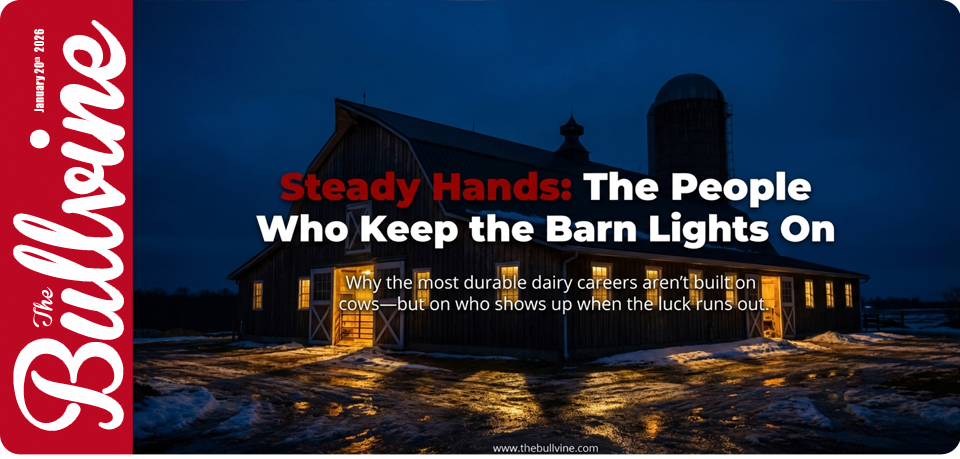





That was a sad day when those eight cows didn’t come in the barn in the morning, and you go out and… yeah
It was late fall at the Waterloo, Iowa fairgrounds in the late 1940s when a young Pennsylvania farm kid named Don Seipt followed his judging coach up the lane to an old farmhouse on the edge of the grounds. His Penn State dairy judging team had just finished fourth in the national contest. They’d done their job. The easy thing would’ve been to grab their coats, get on the bus, and head back east to chores waiting at home.
Instead, his coach, Max Dowdy, suggested they stop by before heading home.
Inside, the kind of scene you’d expect at any gathering of dairy people—coats on chairs, coffee going, the smell of the barn not far behind. An early planning session for what would become the National Dairy Shrine was underway. Don stepped into a room full of people he’d only known from the pages of Holstein World and other breed magazines—Dean H.H. Kildee, Gene Meyers, Bill Knox, Joe Eves. To a young man who still smelled like the barn, these were the names that lived in show reports and sire directories.
“That was a big deal for a young kid from Pennsylvania,” Don said in his Pioneer interview. “Max was so proud of his team… he wanted us to meet the leaders in the industry. And it has paid off, I guess.”
Most of you reading this know that feeling. One coach, one neighbour, one quiet “come along with me,” and suddenly the dairy community feels a little smaller and a lot more welcoming.
This story follows four National Dairy Shrine Pioneers—Dr. William Hansel, Dr. Loris “Bud” Schultz, Don himself, and Peter Vail. But really, it’s about the people around them. Wives, sons, neighbours, students, office crews, 4‑H kids, local leaders, and the wider dairy community. It’s about how, through good years and bad ones, through storms and dry spells, people kept showing up so the barn lights could stay on.
When Family Is the First Barn Crew
The neighbour’s text doesn’t always come before sunrise. Sometimes the first “we’ll figure it out” is the person rolling out of bed beside you, pulling on coveralls, and heading into the dark without a word.
On the Keystone farm in Pennsylvania, that person was often a little girl who grew into a woman named Jerry.
She grew up on that farm. Don said she started feeding calves when she was about four. By the time most kids were just learning to ride a bike, she was out in the barn with a pail and a bottle, keeping skinny calves alive through damp spring mornings and raw winter winds. Anyone who’s fed calves in a January wind knows that kind of cold, and knows it takes a stubborn sort of love to keep going back out there.
As the Keystone herd grew, Jerry became far more than “the calf lady.” She was the one who kept the paper side of the herd as solid as the cow side. She registered calves, tracked service sires and birth dates, and knew which family line ran through which cow long before a classifier or fieldman pulled into the lane. When the DHIA tester rolled in late on a slick winter night, headlights cutting across the yard and clipboard in hand, Jerry knew exactly what was in the book and what was in the barn.
She was also the herd’s nurse. When mastitis flared up in a good udder, Jerry was the one with the patience to stand there, milking out carefully, fussing with treatments, checking that quarter again and again. “She was a great nurse of cows… she had the most patience I ever saw,” Don said. The local vet knew that if he left a treatment plan at Keystone, Jerry would follow it through to the last barn check.
While Don headed off to Holstein conventions, Dairy Shrine meetings, and association boardrooms, those Keystone barn lights still came on before dawn and stayed on late. Kids needed to get to school. Calves needed their bottles. Cows needed their rations, their hooves trimmed, and their problems noticed. From the outside, people saw Don as a leader in the Holstein world—he’d go on to serve as president of both Holstein Association USA and National Dairy Shrine. Inside the lane, the cows saw Jerry every single day.

Today, when dairy families talk about the quiet, essential role of women in dairy—the wives, daughters, and grandmothers who hold farms, committees, and youth programs together—they’re talking about people like Jerry.
Up in Wisconsin, a similar quiet strength was at work for Bud Schultz.
Bud met his wife, Myra, at the University of Wisconsin. She’d grown up on a dairy in northern Wisconsin and had once been recognized as the healthiest 4‑H girl in the state. That kind of honour says a lot about early mornings, long days, and a strong 4‑H club and community behind you.
When Bud’s career took them to Minnesota, then to Cornell in New York, and later back to Wisconsin, Myra kept resetting the family’s roots. Three sons. New schools. New churches. New neighbours. New barns and research farms. Graduate students rotating through the house. She sat at more than a few kitchen tables in more than a few towns, talking about cow health and school projects in the same breath.
Then there’s the woman who married into Peter Vail’s story.
Peter grew up on a busy, multi‑site commercial dairy in eastern New York. There were three barns a couple of miles apart, milk in cans, and enough work to go around. In the early 1960s, after college, his dad told him what a lot of parents quietly wrestle with now: “You don’t need to be here on this farm. Go make your own way.”
So Peter went north. He bought a farm and a small herd of Brown Swiss with borrowed money. Every dollar came from the bank. He and his wife moved into a new community, far from where either set of parents could just drop in.
Then the rain just stopped coming.
“We hit drought for three years in a row,” Peter said in his Pioneer interview. “So we didn’t have crops. And it got to be pretty bad.”
Anyone who’s watched their corn roll up, and their pastures go brown knows that “pretty bad” covers a lot—feed bills, fuel bills, the kind of quiet conversations farm families know too well. Three years in a row starts to feel personal.
By February 1964, the feed was thin, and options were thinner. In the bitter cold, they held a dispersal. Cows, machinery, a way of life, walking through the sale ring. Neighbours pulled in with trailers and pickups, some with kids along just to see. Some bought. Some just stood there with their hands in their pockets, because that’s what you do.
When every cheque was added up and every lender was paid, Peter was still short.
“I thought that was really good for that time of year,” he said, half laughing, half serious.
His wife had walked every step of that with him. Later, when both her parents passed away, some of the inheritance helped them take a new kind of risk—buying into fertilizer plants and starting again. New town. New church. New coffee shop crew. Another place where they had to learn the names and find where they fit.
Those decisions don’t make headlines, but they’re the backbone of every story that does.
The Morning the Cows Didn’t Come
Anyone who’s worked on a dairy knows there are mornings when something feels wrong before you even step out to the yard.
For Don, one of those mornings came not long after one of his proudest days.
He’d always wanted to breed and show a grand champion at the big state show in Harrisburg. One year, he got close. Keystone had the Reserve Grand with a four‑year‑old cow. That kind of success carries you through a lot of cold chores and late barn checks. You see her in your mind when you’re scraping alleys with a stiff back.
About six weeks later, a storm rolled in over the pasture.
“There were some wild grapes along the stone wall,” Don remembered. “She happened to be lying down along the wall. The bolt of lightning followed that wire fence, and…”
He didn’t finish the sentence.
“That was a sad day when those eight cows didn’t come in the barn in the morning, and you go out and… yeah.”
Most of you know that “yeah.” It’s there when a barn fire takes more than anyone thought it would. When a calving goes sideways. When the vet’s truck pulls in for the third time in a week and stays too long. You keep walking, but a part of you would rather not know what you’re going to find.
Eight cows gone. Not eight numbers on a page, but eight personalities. Eight stories. One of them was a cow that had just carried the Keystone name into the ring at Harrisburg.
Talk with people who’ve lived through days like this, and you hear stories that rhyme. A neighbour showing up with a casserole and no need for small talk. A breeder calling that night to say, “If you need a heifer or two to fill a row, we’ll figure something out.” Someone at the local diner was quietly passing a hat at the coffee corner, just to help with a feed bill. On a farm like Keystone, those sorts of things wouldn’t have been unusual, even if the specifics have faded with time. What people who’ve been through loss will tell you is that it’s not the big gestures they remember most. It’s how quietly others showed up.
Back in the barn, the cows that were left still needed to be milked. Jerry still had calves to feed and records to keep up. The boys still had chores and school. As any dairy family knows, grief doesn’t take the milking off the schedule. It just makes each step a little heavier for a while.
Over time, the Keystone herd rebuilt. Out of that long, steady work came Keystone Potter, a bull that went on to sell over a million units of semen and left behind daughters with the kind of udders and durability Don called “wearing well.” He wasn’t a flashy show bull, but his daughters stuck around and did their job.
You can’t draw a straight line from lightning in a pasture to a million‑dose bull. Life isn’t that tidy. But you can say that patience, stubbornness, and the kind of support dairy communities often give—sometimes without being asked—gave that family the room to keep breeding for another day.
And in little ways, relationships shifted. The neighbours who had come by in the weeks after the strike weren’t just “other farms up the road” anymore. They were the people you’d call first if the barn roof started to groan or a calf needed a second set of hands at two in the morning. That’s how it works. Barn lights stay on because somebody else’s barn lights stayed on for you first.
Fifty Christmas Cards and the Art of Checking In
Sometimes, the clearest sign of what someone values isn’t in a big speech or a big sale. It’s in the quiet habits nobody ever puts in a press release.
For Bud, one of those habits was his December card stack.
“I just filled out some Christmas cards,” he said in his Pioneer interview. “We sent out about 50 of them, and a lot of them are my grad students, whom we have kept in contact with over all these years. It’s very pleasing to hear from them every year.”
This is a man who started out milking cows by hand under a lantern in a little Wisconsin barn, waiting for electricity to come down the road. He went to the University of Wisconsin, served on a destroyer in the Pacific during the war, came home and finished grad school, then spent decades at Cornell and back at Wisconsin, digging into ketosis, mastitis, fatty liver, milking rate, and more.
Along the way, he worked with more than 60 graduate students and postdocs. Together they produced dozens of theses and well over a hundred papers. His students went on to chair departments, lead extension programs, and work with producers from Ohio to Florida to Illinois. Ask around in dairy science circles, and you’ll find that “Bud’s students” are still scattered all over.
“Overall, I had 60 post docs and graduate students,” he said. “They actually did most of the work… and I’m very proud of them.”
Those fifty Christmas cards weren’t about nostalgia. They were his way of saying, “I still care how you’re doing.” It was a deliberate neighbour‑support habit, just with a different kind of barn. Today, with more producers than ever talking about isolation and mental health on the farm, Bud’s simple habit looks a lot like the kind of regular check-in that everyone says we need more of—and that almost nobody makes time for.

These days, most of us aren’t licking that many envelopes. Out on small Ontario tie‑stalls, big Midwest freestalls, and tight‑knit Quebec valleys, staying in touch looks more like:
- A text on a Sunday night while you’re waiting at the parts counter: “How’s your week looking? Need anything?”
- A quick call on the drive home from a co‑op or milk board meeting: “Heard you had a rough herd check. You okay?”
- A message to a former employee or 4‑H kid who’s gone off to college: “We miss seeing you in the barn. How’s school?”
Producers talk more and more about rural mental health and burnout these days, sometimes in formal meetings, more often over coffee or along the lane. Group chats, Facebook groups, and late‑night messages have become another version of those Christmas cards—different tools, same heart. Those simple habits matter more than we sometimes admit. They don’t fix milk price or make the bank easier to deal with. But they can cut into the loneliness that creeps in when you’re the only one walking the barn at 10:30 p.m.
Not every community has a retired professor sending fifty cards. But most have at least one person who makes a point of checking in, even when life is busy. Bud just happened to do it with a pen and an address book.
When the Drought Just Won’t Quit
Nobody forgets the years when the rain doesn’t come.
Peter grew up on that busy operation in eastern New York. There were three barns within a couple of miles, milk was shipped in cans, and his grandfather had put in a nine‑hole golf course and some lakeside cabins on the side. It was a patchwork of milk, tourism, and hustle.
After college, his father gave him the same nudge a lot of parents are wrestling with now: “You don’t need to be here on this farm. Go make your own way.”
So Peter went north. He bought a farm and a herd of Brown Swiss with borrowed money and dove in. New pastures. New neighbours. New co‑op meetings and new faces at the local coffee shop.
Then, three years in a row, the sky stayed stingy.
“We hit drought for three years in a row,” he said. “So we didn’t have crops. And it got to be pretty bad.”
Anyone who’s been through even one dry year knows the feeling: watching the radar like a hawk, counting bales before they’re even off the field, doing math you don’t want to do. Three drought years in a row wears on more than your fields. It wears on marriages, on kids, on sleep.
By February 1964, there just wasn’t much left to do. They scheduled a dispersal. Snowbanks against the fencelines. Neighbours driving in with and without trailers. The local auctioneer was doing his job the way he always had—calling out bids, waiting that extra beat, giving one more chance to raise a hand.
When the dust settled and every bill was paid, Peter was still short.
“I thought that was really good for that time of year,” he said.
That’s the kind of line you hear from someone who’s standing in the middle of loss and still chooses to find something to be grateful for. He could’ve let it break him. Instead, he set out to find the next path.
He went to work for an International Harvester dealer and a feed company. Instead of pushing up feed in his own barn, he was now talking with producers in theirs, seeing different ways people were managing drought, debt, and hope. He crossed paths with bankers who took the time to talk things through and co‑op folks who knew what it meant when a good customer suddenly needed more time. Later, he took on fertilizer plants, then a regional management role. That meant long drives through farm country, walking into co‑op offices and plant yards, talking crop plans and markets with producers who were living their own versions of hard years.
Years later, when corporate decisions far away meant his regional office would be shut down, Peter was the one in a position to either look out for himself or for the people around him.
He called his 13 staff into the office and told them the truth.
“We’re going to be the first office to close up,” he said. “Go find jobs while we’re still paying you. I’m not going till you all have jobs.”
Over the next few weeks, those 13 people landed at Farm Credit, co‑ops, and other agribusinesses. Nobody could fix the decision that closed the office. But Peter could make sure nobody was left completely adrift.
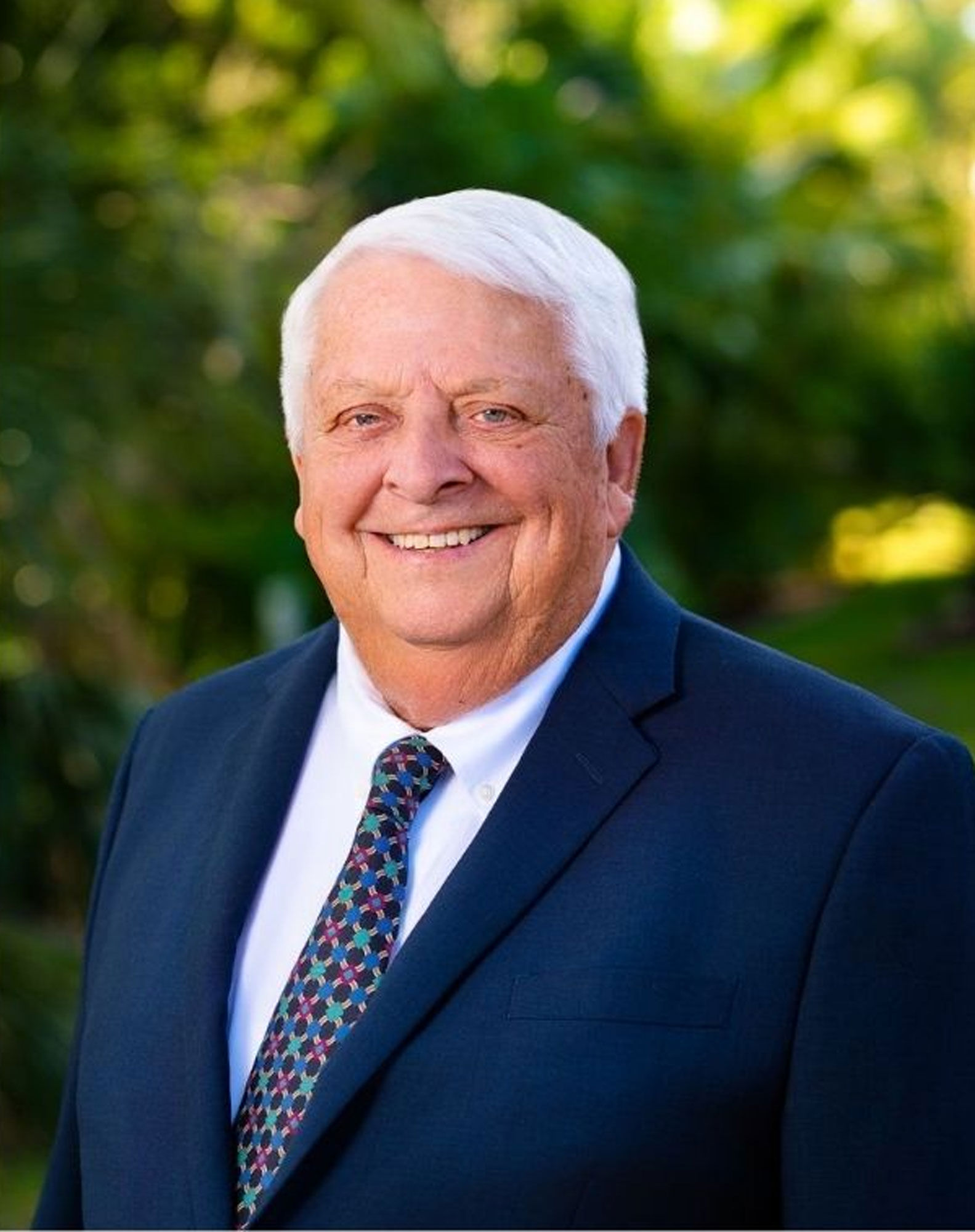
Some of those former staff still call him, according to his Pioneer interview. They trade crop updates and grandkid stories, and every once in a while, one of them will say, “You know, that day in the office made all the difference.” What started as a crisis turned into a web of people spread across the countryside, still connected by a shared story of how they got through it together.
In the late 1970s, he and a partner took another leap. They put their own money on the line, borrowed more, bought old fertilizer plants and equipment, and started what became Carolina Eastern Vail. Over time, that family business grew into a significant fertilizer supplier, with his son now serving as president and grandchildren working there today.
It wasn’t smooth or simple. There were still tight months, long days, and pressure from both markets and family expectations. But the way Peter treated his people—especially when things got hard—grew directly out of what drought and dispersal had taught him.
From Ten Cows and a Two‑Mile Walk to 4,000 Head
Bill Hansel used to milk ten cows by hand before walking two miles to school in western Maryland. No pipeline. No parlour. No A.I. Just pails, stools, and bulls in the yard.
The Great Depression hit when he was 11. Money was scarce. Then brucellosis came through and wiped out his father’s herd. It was the kind of financial blow that families talk about in lowered voices for years afterward.
Bill went to the University of Maryland, then into General Patton’s Third Army in World War II. He saw combat, was wounded, and came home with more questions than answers. One of the questions he carried was still about cows.
He went on to Cornell, completed his graduate work in 1949, and remained on the faculty there for more than 40 years. At Cornell, he and his colleagues developed methods to measure reproductive hormones across the estrous cycle and applied that knowledge to improve breeding programs. Those early discoveries helped pave the way for synchronization protocols and more precise A.I.—tools many of you now use every day, whether you’re milking 40 cows in a tie‑stall or 4,000 in a rotary. The research didn’t happen in isolation; it built on work shared across universities, conversations at industry meetings, and the constant back-and-forth between lab and barn that still drives dairy science today.
On his way to World Dairy Expo one year, Bill met a former student in the hallway. The man’s name was Don Benck. He’d taken Bill’s course back in the 1960s and was now the managing partner of a 4,000‑cow dairy in Florida.
“The technology of handling that many cows is almost beyond my imagination,” Bill said in his Pioneer interview. “A young man who at one time milked 10 cows… talking with someone who was milking and managing 4,000 cows.”
That hallway conversation is a pretty good picture of how knowledge and community ripple through our industry. A kid milking ten cows by hand uses the GI Bill, takes classes, asks questions, and helps build tools that later support someone running a 4,000‑cow operation in a completely different climate. In between, there are vets, A.I. techs, nutritionists, DHIA staff, and local advisors translating those ideas into on‑farm practice.
Then, late in life, Bill’s work and his personal world collided in a hard way.
In 1997, his wife died of ovarian cancer. The clinicians who had cared for her knew his history with reproductive hormones and encouraged him to see if any of his knowledge might be useful in cancer research.
He could have said, “I’m done.” Instead, he walked back into the lab.
Partnering with chemists, he worked on small protein compounds—lytic peptides—linked to a hormone he understood well. The hope was that the hormone would bind to specific cancer cells and that the peptide would damage them.
“Everybody said it wouldn’t work,” he remembered. “We persisted. We tried it. And it did work.”
Not every story ends that way. Not every treatment works. Not every research path leads to something that helps a neighbour’s daughter or a farmer’s wife. But this one did, and it came from the same habits that have always kept dairy people going: ask questions, try again, hang on longer than seems reasonable, and lean on others when you can’t see the next step clearly.
Raising Kids, Cows, and Community
Don got a reminder one day that succession is less about titles and more about trust while watching his sons handle chores as he got ready to head for the airport.
An AI rep pulled into the yard, saw Don leaving, and said to the boys, “I see you’re one short today.”
“You’re wrong,” one of them answered. “When Dad’s here, we have one extra.”
It was a quick line, but it said a lot.
After Jerry’s father started the Keystone herd back in 1921 and registered it in the ’30s, and after Don had spent decades improving both type and production, both Doug and Don Jr. went off for their education and chose to come back. Like a lot of families today, they had to figure out what it meant to have more than one household depending on the same herd.
“I thought this would be great,” Don said. “Now I’d have more time.”
Most of you know how that turns out. To feed more families, the herd had to grow. More cows. More borrowed money. More chores. More people whose schedules suddenly included milking shifts, kid drop‑offs, 4‑H meetings, off‑farm jobs for benefits, and the odd Junior Holstein show in between.
There would’ve been tension about how fast to expand, who made which decisions, and how to balance the needs of kids, grandparents, and cows. That’s normal. That’s real. Today, with so many farm families navigating succession plans—or avoiding the conversation altogether—Don’s honest “I thought I’d have more time” might be the most relatable line in this whole story.
But that exchange—”When Dad’s here, we have one extra”—shows a kind of turning point. The sons weren’t just labour. They’d stepped into true responsibility. Don had moved, at least in part, into a new role: extra hands rather than the only pair. That kind of generational shift is part of every farm family’s legacy—sometimes smooth, sometimes rough, but always shaping who stays, who goes, and how the herd moves forward.
Over in the fertilizer world, Peter’s family was having similar conversations. After he and his partner built Carolina Eastern Vail from old plants and used equipment, his son moved into leadership. His grandson and granddaughter joined the business. They still had to juggle kids’ sports, community commitments, and peak fertilizer seasons. It wasn’t just about making money. It was about what kind of business they wanted to be for both family and customers.
You see that same dance on farms everywhere. A daughter is taking over feeding fresh cows while her mom works nights at the hospital for the benefits. A son coming home after college and sitting down with his parents, spreadsheets spread out, trying to see if there’s room in the numbers for another household. A grandfather letting go of the parlour keys a little at a time, trusting the next generation but still wandering out to the barn after supper, just to “check the doors.”
Nobody in these stories got everything perfect. None of us will either. But they kept showing up for each other, kept talking, and kept asking, “How do we make this work for all of us?”
What They’re Paying Forward Now
In 2005, not long after open‑heart surgery, Peter was in a restaurant in Hillsdale, New York, when his phone buzzed. On the other end was cattle broker Nap Holtz.
Nap had a Jersey cow in mind. A good one.
Peter bought her over the phone. When he set the phone down, he asked himself, “Now what am I going to do with her?”
Nap already had a thought. There was a young couple in Lomira, Wisconsin, building Budjon Farms. They were working hard, starting to build a name in the Jersey breed, but, like many young families, they didn’t have the cash to tie up in a cow at that level.
So that cow went west. Out of that partnership—and Peter’s later involvement with the Elite Dairy and Cutting Edge show programs—came multiple grand champions at World Dairy Expo and cow families that still show up in pedigrees today.
When you strip away the big numbers, it looks a lot like what many of you have seen before: someone who’s been helped along the way choosing to pay it forward instead of hoarding the opportunity.
You see versions of that all over:
- A breeder lending a good cow to a 4‑H kid for a summer of shows and hauling her to every fair on the trailer, just like someone once did for their own kids.
- A vet cutting a break—or just listening, stethoscope still around their neck—after a tough run of herd problems.
- A bank manager taking an extra half‑hour to walk through options, not just drop off bad news and leave.
On a smaller scale, that same spirit shows up when someone helps a young family get to a show by hauling their animals along with their own, or when an older breeder mentors a new couple through their first classification or embryo sale.
You hear from 4‑H leaders who still remember the breeder who lent them a heifer and hauled it to every fair when their family had nothing halter‑broke. Now, when they see a shy twelve‑year‑old walk into the barn with borrowed boots and no show whites, they think, “This is my chance to be that person for them.” Young couples in many regions tell similar stories about neighbours who dropped off straw and diesel during their first ugly milk‑price year and refused to take a cheque. Years later, they’re the ones who quietly show up when someone else’s year goes sideways.
Looking back, Peter doesn’t point to the auction ring as the turning point. It was that day in the office with 13 employees, and later that phone call. The realization that what kept them going wasn’t just the cows—it was the people around them.
What This Means for All of Us
In a lot of dairy communities today, it feels like there are more dispersal ads in the local paper and more “for sale” signs at the ends of lanes than there used to be. Thousands of U.S. dairy operations close every year, and the pattern shows no sign of slowing. At co‑op meetings and around coffee tables in rural diners, talk about milk price and input costs often blends into conversations about neighbour support and rural mental health—burnout, anxiety, and the weight of feeling like your barn’s future is on your shoulders.
Not every town responds in the same way. Some are held together by strong 4‑H clubs and Junior Holstein programs where older members coach younger ones, even when show numbers are tight, and volunteers are tired. Others lean heavily on church groups, coffee shop crews, or vets and nutritionists who’ve quietly become informal counsellors, turning herd‑check mornings and farm calls into honest conversations about more than just cows. In more and more barns and boardrooms, it’s women in dairy—daughters, wives, and grandmothers—who are holding families, committees, and youth programs together, sometimes while the rest of the world just sees the cows.
Looking at the way Don, Jerry, Bud, Myra, Bill, Peter, and the people around them lived, there are some simple, realistic habits any of us could adapt, even when time and money are tight:
- Make introductions on purpose. Like Max walking that judging team into the Dairy Shrine planning session. At your next co‑op meeting, milk committee night, 4‑H achievement day, fair, or barn open house, take ten seconds to connect a younger person with someone who’s been around. “This is Emma—she’s just starting with Jerseys.” “This is Mark—he’s figuring out robots.” You never know what that handshake will spark.
- Build one routine for checking in. Bud had his December card list—fifty cards, every year, for decades. You might decide that every Sunday night, while you’re waiting in line at the parts counter or driving home from youth practice, you’ll text or call one neighbour, a former employee, or a 4‑H member. “How’s your week looking?” “How are you holding up?” It doesn’t have to be deep every time. It just has to be steady. And if you’re the one having a rough week, it’s okay to be the person who sends, “Got a minute?”
- Share what you can spare. Peter sent a top Jersey to a young couple. Most of us don’t have that kind of cow sitting in the pasture. But maybe you’ve got an extra show halter, a spare trailer slot on the way to a fair, a calf that would make a good 4‑H project, or a couple of hours you can lend when a neighbour’s pipeline freezes, and they finally pick up the phone to say, “We can’t keep up, can you come?” It doesn’t have to be big. A bag of calf milk replacer, a ride to a meeting, and an hour of your time.
- Look after your own crew like they’re neighbours. When Peter’s office closed, he made sure his 13 employees found jobs before he walked away. On a family dairy farm, that might look like being honest with family and hired help about what’s coming, giving as much notice as you can if big changes are ahead, and helping people connect with other opportunities if you can’t keep everyone on. Sometimes it’s as simple as saying, “If you ever need a reference, you call me,” and meaning it.
- Keep showing up—even when you’re tired. Don kept going to Dairy Shrine meetings and Holstein events year after year—from that early planning session in the farmhouse, to the 25th anniversary at Harrisburg, to the 50th at Fort Atkinson. You may not want a seat on a national board, but you can still show up at the county dairy banquet, help run the ring at the 4‑H show, sit on a local milk committee, bring a pan of squares to the church supper after a neighbour’s dispersal, or park along the road with your flashers on at a neighbour’s sale. Those things quietly say, “We’re still in this together.”
Nobody can do all of this all the time. Dairy life doesn’t leave many empty squares on the calendar. But even one text a week, one introduction at a meeting, one trailer slot shared on the way to a fair can change how connected a community feels.
None of this guarantees that every farm will survive. There are families in every region who’ve already sold their cows, and their grief doesn’t stop when the last load of cattle goes down the road. Communities still have work to do to support them—inviting them to stay involved in fairs and boards, checking in long after the sale, and making sure their experience and wisdom aren’t lost just because the parlour’s been shut down.
And honestly, even the people who are doing the most for others get tired. The 4‑H leader who always hauls an extra heifer. The vet who never seems to say no to one more after‑hours call. The mom who juggles night shifts, homework, and hospital appointments with morning milking. Part of building a strong dairy community is making sure those folks know it’s okay to say, “I need a hand this time,” too.
If you’re reading this thinking, “I don’t really have that kind of community,”—you might be surprised who’s one introduction away. It has to start somewhere. Sometimes it starts with you being the one who shows up first.
Who’s on your own mental list—the person you’d call, or the young producer you know you should be checking in on? If your barn had a day like the ones in this story, who would you hope to see pulling into your yard? And whose lane might you need to turn into when their day comes?
The Bottom Line
We may not be able to fix the milk price or the weather. We can’t make the clock slow down or make the bank softer. But we can keep showing up for each other.
The text from the neighbour that comes before sunrise.
The vet who lingers in the yard, notebook still in hand, because he can see something in your face.
The 4‑H leader who gives a kid one more chance in the ring because they know how hard that calf was to halter break.
The coffee shop crew that quietly passes the hat when someone gets sick.
What kept these families going wasn’t just good cows or good luck. It was the people around them—and their own willingness to keep being that kind of person for others.
As Don said later in life, “I’ve been very fortunate. I was at the right place at the right time, and you can’t beat that.”
There’s truth in that. Weather, markets, timing—none of us control those.
But anyone who’s driven home after dark, seeing barn lights glowing up and down the road, knows there’s more to it.
Luck might bring the rain or the drought.
It’s the people who keep the lights on.
Key Takeaways:
- One introduction can change a life. Max Dowdy’s “come along with me” led Don Seipt to sixty years of Dairy Shrine leadership. Small doors open long hallways.
- The barn lights stay on because someone never leaves. Jerry Seipt started feeding calves at four and held Keystone together for decades. The one who stays deserves the story, too.
- Fifty cards. Forty years. Bud Schultz mailed Christmas cards to former students every December for four decades. Checking in doesn’t have to be fancy—it just has to be steady.
- How you act when it all falls apart is your legacy. Peter Vail lost his herd to drought. Years later, facing layoffs, he told his staff: “I’m not leaving till you all have jobs.”
- Grief doesn’t take the milking off the schedule. It just makes each step heavier for a while. The communities that last are the ones where people show up anyway.
This article draws on National Dairy Shrine Pioneer interviews, public records, and industry documentation. The Bullvine thanks the families of Don Seipt, Bud Schultz, Bill Hansel, and Peter Vail for their contributions to dairy’s living history.
Continue the Story
- THE MASTER’S TOUCH: David Houck – The Man Behind the Romandale Magic – David Houck wrestled with the same questions of genetics and grit as our Pioneers, proving that a master’s touch isn’t just about breeding—it’s about the resilience required to weather the storms that come for every great herd.
- NATIONAL DAIRY SHRINE: Honoring the Past, Inspiring the Future – This look at the Shrine’s roots returns us to that Iowa farmhouse, providing the context for the cultural shift that sought to honor the human spirit alongside the pedigrees, ensuring no legacy was ever left in the dark.
- BUDJON FARMS: The Magic Behind the Masterpiece – Carrying forward the story of the cow Peter Vail bought over the phone, this look at Budjon Farms shows how a veteran’s trust in a young couple evolved into one of the most decorated programs in dairy history.
 Join the Revolution!
 Join the Revolution!
Join over 30,000 successful dairy professionals who rely on Bullvine Weekly for their competitive edge. Delivered directly to your inbox each week, our exclusive industry insights help you make smarter decisions while saving precious hours every week. Never miss critical updates on milk production trends, breakthrough technologies, and profit-boosting strategies that top producers are already implementing. Subscribe now to transform your dairy operation’s efficiency and profitability—your future success is just one click away.