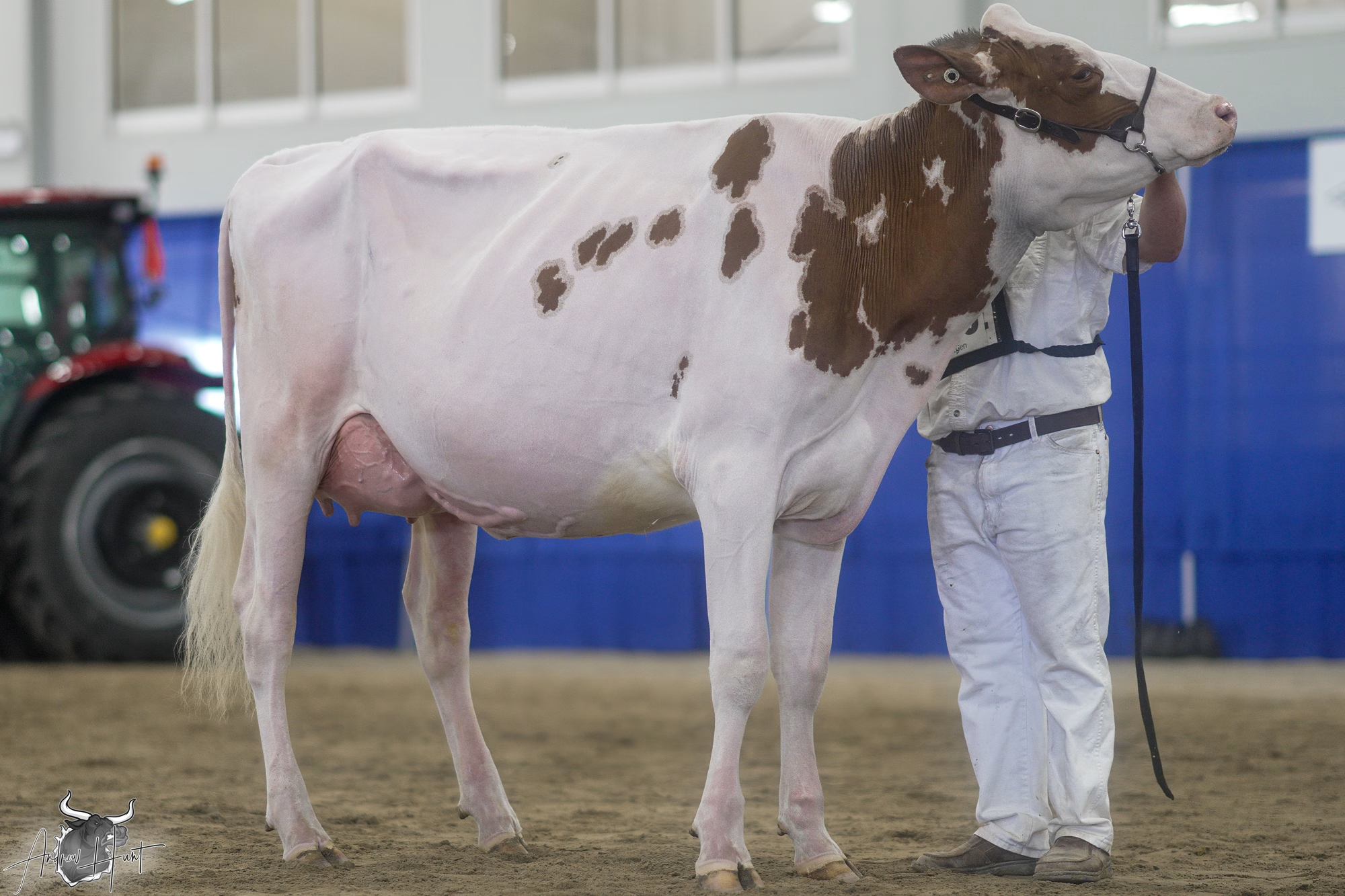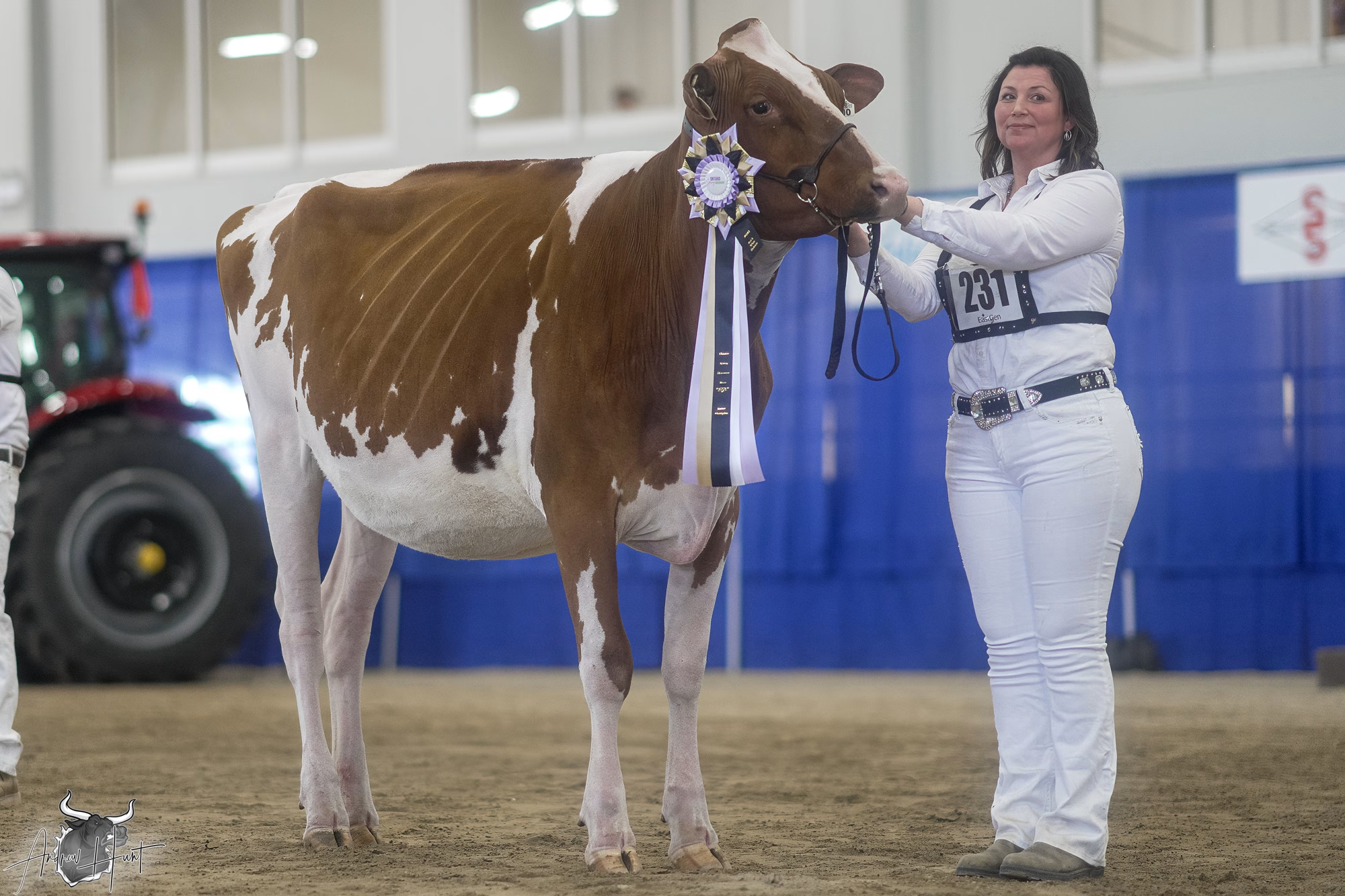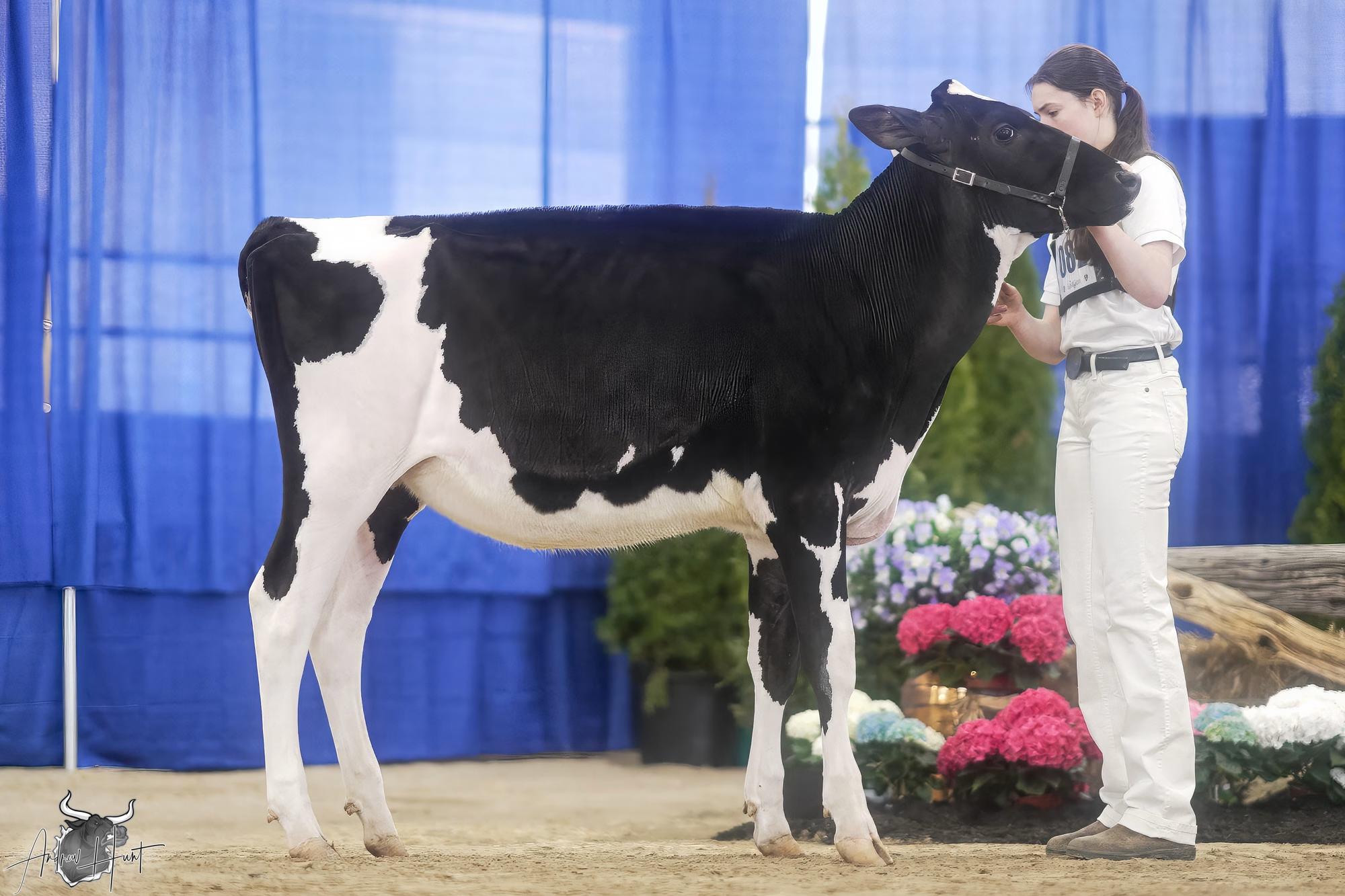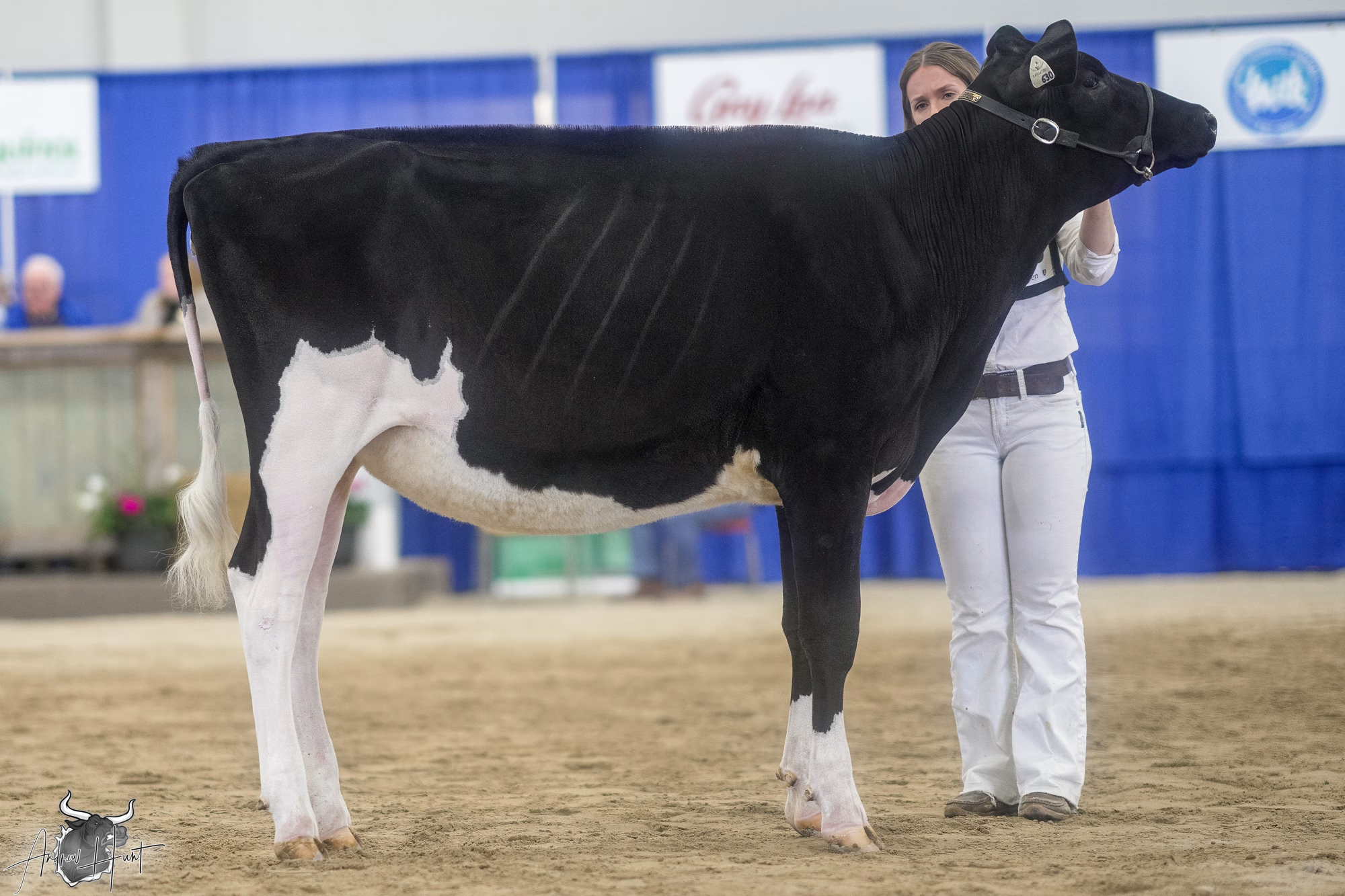


Archive – Page 6

Replacement Economics: Why Raising Your Heifers Just Became Profitable Again

Heifer prices hit record highs! Discover why raising your own replacements is now 54% cheaper than buying.

The North American dairy industry is witnessing a dramatic shift in replacement heifer economics. With market prices at historic highs and inventory at a 47-year low, the traditional “buy versus raise” equation has fundamentally changed. This comprehensive analysis reveals why 2025 has become the pivotal year when raising your replacements has regained its economic advantage for forward-thinking producers.

The Perfect Storm: Record Prices Meet Vanishing Supply

The current replacement heifer market is experiencing unprecedented pressure from multiple directions. Recent auction data from Ontario reveals the staggering reality: replacement heifers weighing over 900 pounds are commanding between $326.50 and $328.00 per hundredweight (cwt), averaging $326.92. Lighter replacement heifers in the 800-899 pound category fetch even higher prices, ranging from $372.00 to $383.00/cwt, while those in the 700-799 pound range are selling for $356.07 to $407.11/cwt, with peaks reaching $412.00.

These aren’t just numbers—they represent a financial barrier reshaping dairy farm economics. A single 900-pound replacement heifer costs approximately $2,942, making the purchase option increasingly prohibitive for many operations.

37,000 Heifers Vanished: Why Your Replacement Pipeline Is Drying Up

This price surge stems directly from a dramatic contraction in heifer availability. As of January 1, 2025, dairy heifers expected to calve totaled just 2.5 million head, down 0.4% from the previous year and representing the lowest level since USDA began tracking this metric. The broader category of dairy heifers weighing 500 pounds or more totaled merely 3.914 million head—a decline of 0.9% year-over-year and the smallest inventory since 1978.

What’s particularly alarming is that these official figures understate the actual severity of the shortage. USDA has made significant downward revisions to previous years’ inventory numbers. Between January 2023 and January 2024, the agency revised dairy replacement numbers by a staggering 371,600 head—an 8.6% reduction that wasn’t initially reported.

“We’re seeing the beef-semen-on-dairy-cow trend taking hold like shoppers looking to grab deals on a Black Friday shopping spree,” notes James Wilson, a dairy market analyst with AgriTrends. “With beef cattle numbers in retreat nationwide, this trend shows no signs of slowing.”

Unlock Hidden Profits: The True Economics of Home-Raised Replacements

While market prices for purchased heifers have skyrocketed, the cost structure for raising heifers on-farm offers a compelling alternative for producers who can manage their expenses effectively.

According to data from the Canadian Cow-calf Cost of Production Network, the average cost of raising a replacement heifer in 2023 was estimated at $2,904. This comprehensive figure includes opportunity costs, feed, labor, housing, and health management expenses.

“When we adjusted for a 10% open rate, the cost for each bred heifer was $2,382, assuming bred heifers will bear the cost of developing the opens,” explains Dr. Sarah Johnson, extension specialist at the University of Guelph. “That’s a significant savings compared to current purchase prices.”

The most significant component—approximately 60%—is attributed to the opportunity cost of not selling the heifer calf at weaning. Other significant expenses include labor (9%), feed (6%), machinery (6%), land (5%), and various smaller cost categories such as veterinary medicine, fuel, and building maintenance.

Labor Efficiency: The Make-or-Break Factor in Heifer Economics

Labor represents a critical component in the raise-versus-buy equation. Research from the Canadian Cow-calf Cost of Production Network reveals that labor intensity averages 15 hours per cow but varies dramatically based on operation size and management practices.

“The most profitable operations demonstrate significantly greater labor efficiency,” says Michael Thompson, who manages a 300-cow dairy in eastern Ontario. “We’ve cut labor costs by 40% by implementing automated feeding systems and strategic grouping. It’s made raising our replacements financially viable again.”

High-profit farms average 8.8 hours per cow compared to 23.9 hours in low-profit operations. This efficiency translates directly to the bottom line, with labor costs averaging $327 per cow and accounting for 18% of total production costs.

Genomics: The Game-Changer That Purchased Heifers Can’t Match

The most compelling reason to raise your replacements in 2025 isn’t just about avoiding high purchase prices—it’s about capturing the unprecedented value of genetic selection that purchased animals simply can’t match.

“Genomics cut our heifer losses by 40%—it’s not just for mega-dairies,” reports David Williams, who operates a 120-cow dairy near Woodstock, Ontario. “We’re seeing conception rates above 65% in our genomically-selected heifers compared to 52% in our conventionally-selected animals.”

Modern genomic testing has revolutionized replacement selection. The Replacement Heifer Profit Index (RHPI) places 80% emphasis on hybrid vigor score and 20% on seven traits associated with efficiency, growth, fertility, and longevity.

The results are remarkable: heifers with above-average RHPI scores demonstrated significantly lower open rates (13.7%) than below-average heifers (23.4%). This 9.7 percentage point difference resulted in nine more calves per 100 replacement heifers—a productivity improvement that no AI company can match regarding ROI.

Genomic Selection ROI Comparison

RHPI Score TierConception RateAvg LactationsLifetime Revenue Premium
Top 25%86.3%4.7+$2,810
Bottom 25%76.6%3.1Baseline

3 Questions Every Dairy Breeder Should Ask Before Buying Heifers

  1. What’s the true genetic potential? Purchased heifers often represent someone else’s genetic culls, while raising your own lets you implement your specific genetic strategy.
  2. What’s your labor efficiency? If you’re averaging more than 15 hours per cow annually, focus on improving labor efficiency before committing to raising replacements.
  3. What’s your feed cost advantage? Operations with homegrown forage typically save 30-40% on feed costs compared to purchased feed operations.

Critical Benchmarks That Determine Your Heifer Program’s Success

Producers should track several key benchmarks that provide insights into both short-term costs and long-term returns to evaluate the financial sustainability of an on-farm heifer-raising program.

The payback period—the years required for a replacement heifer to recover her development costs—is a critical benchmark for financial sustainability. Analysis of Canadian benchmark farms revealed that depending on the total cost of raising a replacement heifer, the payback period ranged from 5 years for low-cost operations to 7 years for medium-cost operations.

“We’ve found that operations with lower development costs not only achieve shorter payback periods but also maintain greater flexibility to adapt to changing market conditions,” explains Dr. Robert Chen, agricultural economist at the University of Manitoba. “The most successful operations maintain replacement costs under $2,400 per heifer.”

From a whole-herd perspective, the total cost of replacements distributed across the entire cow herd provides a valuable benchmark for comparing different operations. Canadian research indicates that the average replacement cost per cow was approximately $139 in 2023, ranging from $50 to $272 per cow, depending on the replacement rate and the cost of developing each heifer.

Cost Breakdown for Raising Dairy Heifers (2025 Projections)

Cost Component% of Total$/HeiferKey Drivers
Opportunity Cost60%1,742Record calf prices
Labor9%261$23.50/hr avg wage
Feed6%174Lower 2025 grain costs
Veterinary4%116Vaccine price increases

Why Mega-Dairies Are Hoarding Heifers (And What It Means For You)

The current heifer shortage isn’t just a market anomaly—it’s a strategic play by the industry’s largest operations. As milk production becomes increasingly concentrated among fewer, larger dairies, these operations have recognized the strategic advantage of controlling their replacement pipeline.

“The top 5% of producers are securing their genetic future while smaller operations struggle to maintain herd size,” warns industry consultant Jennifer Martinez. “They’re creating a genetic firewall that will widen the productivity gap over the next decade.”

With milk margins expected to remain above historical levels at $13.37/cwt in 2025, these mega-dairies are positioning themselves for expansion while smaller operations struggle to maintain herd size. The result is a self-reinforcing cycle: larger operations secure their replacement needs, driving prices higher for everyone else and further challenging smaller producers.

Health Management: Turning Science Into Survival

Implementing comprehensive health management protocols is essential for minimizing losses in replacement heifers and maximizing the return on investment in an on-farm raising program.

A well-structured vaccination program protects against common bovine diseases affecting heifer development and future productivity. Key vaccines include those for infectious bovine rhinotracheitis (IBR), bovine viral diarrhea (BVD), bovine respiratory syncytial virus (BRSV), parainfluenza-3 (PI3), and clostridial diseases.

Optimal vaccination timing generally includes initial immunization at about 4 months of age, with boosters administered 4-5 weeks before weaning, at pre-breeding (13-16 months), and 40-60 days before calving. This comprehensive approach helps ensure that heifers develop strong immunity to key pathogens at critical stages of development.

While feed prices dip in 2025, labor costs now eat 15% of heifer budgets—making robotic feeders and automated health monitoring systems increasingly essential rather than optional for competitive operations.

Long-Term Planning: Securing Your Herd’s Future Against Rising Costs

The ideal replacement rate varies depending on herd goals, but research indicates that most efficient operations maintain replacement rates between 10% and 14% annually. Data from Canadian benchmark farms showed that low-cost operations averaged a 10.4% replacement rate, medium-cost operations averaged 12.5%, and high-cost operations averaged 13.7%.

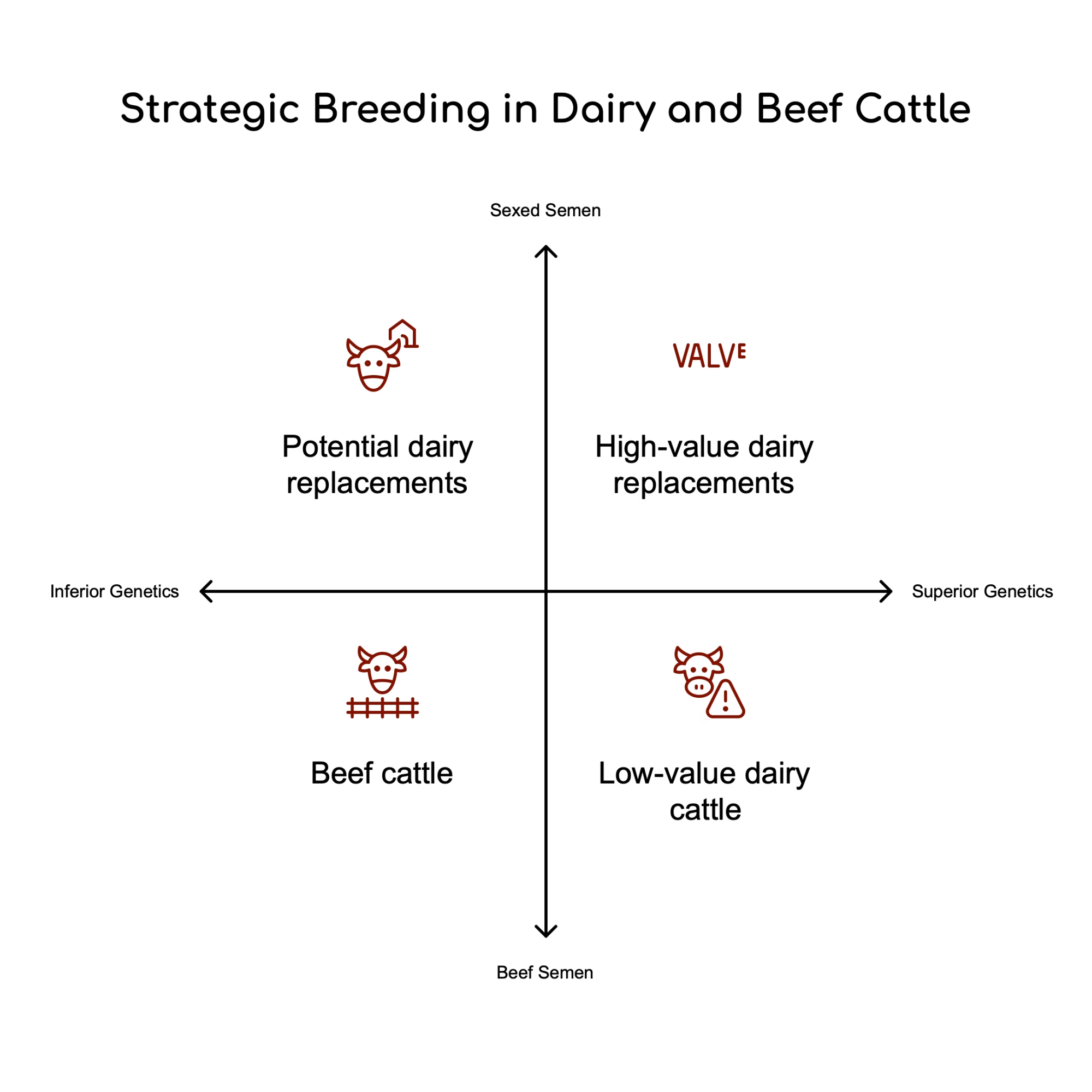
Modern reproductive technologies can help producers optimize their replacement strategies. Using sexed semen for genetically superior animals can increase the number of potential replacement heifers from the best cows in the herd. Conversely, using beef semen on lower genetic merit cows can reduce the number of dairy heifer calves while producing valuable beef-cross calves that generally command higher prices in the market.

This strategic approach to breeding allows producers to precisely manage their replacement pipeline while maximizing the value of all calves produced, whether destined to become herd replacements or marketed for other purposes.

The Bottom Line: 2025’s Replacement Reality

The current market dynamics, characterized by record-high heifer prices and reduced inventories, have created a favorable economic environment for raising replacement heifers on many operations. While purchasing replacements remain viable for some producers, particularly those facing resource constraints or seeking rapid genetic change, the financial advantages of raising replacements have become increasingly compelling in 2025.

Several factors contribute to this shift in the economic equation. The substantial gap between market prices for purchased heifers and the cost of raising replacements on efficient operations provides a direct financial incentive for on-farm development. The ability to implement targeted genetic selection programs enhances this advantage by improving the productivity and longevity of home-raised animals.

That “bargain” $3,000 heifer? She’ll need to birth 24 calves just to break even compared to the genetically superior animal you could raise yourself. The real question isn’t whether you can afford to raise replacements—it’s whether you can afford not to when your competitors are already breeding tomorrow’s profit engines today.

Key Takeaways:

  • 54% Savings: Raising replacements beats buying at 2025’s record prices (700-799 lb heifers: $388.81/cwt).
  • Genomic ROI: Top 25% RHPI-scored heifers deliver +$2,810 lifetime revenue via 86.3% conception rates.
  • Automation Wins: Robotic feeders cut labor costs by 40%, saving $261/heifer annually.
  • Ideal Rates: Maintain 10-14% replacement rates for herd sustainability.
  • Toolkit: Use the BCRC Calculator to model break-even points and genetic ROI.

Executive Summary:

In 2025, soaring heifer prices and shrinking supply have flipped the economics of herd replacements. Raising heifers on-farm now offers up to 54% cost savings over purchasing, driven by genomic tools that slash infertility rates by 41% and labor strategies saving $261/heifer. The article provides a roadmap for dairy producers, including critical benchmarks (10-14% replacement rates), real-world case studies, and the BCRC Replacement Heifer Calculator to optimize decisions. With mega-dairies strategically hoarding replacements, smaller operations must leverage these insights to remain competitive.

Learn more:

Join the Revolution!

Join over 30,000 successful dairy professionals who rely on Bullvine Daily for their competitive edge. Delivered directly to your inbox each week, our exclusive industry insights help you make smarter decisions while saving precious hours every week. Never miss critical updates on milk production trends, breakthrough technologies, and profit-boosting strategies that top producers are already implementing. Subscribe now to transform your dairy operation’s efficiency and profitability—your future success is just one click away.

NewsSubscribe
First
Last
Consent

The Family Dairy Time Bomb: Why 83.5% of Operations Fail by the Third Generation

83.5% of dairy farms vanish by the third generation. Is yours next? Discover the hidden math, family dynamics, and strategic fixes to secure your legacy.

Your dairy legacy has a staggering 83.5% chance of disappearing by the third generation. While you obsess over milk prices and feed costs, the real threat to your operation isn’t in the barn—it’s at your kitchen table. The uncomfortable truth is that most dairy operations aren’t destroyed by market forces but implode from within: siblings who can’t cooperate, next-generation farmers who lack drive, and assets that fail to grow with family needs. The most dangerous assumption in dairying today isn’t about production methods or genetics—it’s the delusion that your family farm will somehow magically survive without intentional succession planning. According to the USDA, 97% of all U.S. farms are family-owned, making succession planning a critical issue for most American farmers, yet recent surveys show only about 20% of farmers are confident their succession plan will achieve their goals.

“I’m sure you have heard the adage that the third generation loses the farm. This is not unique to America, and this saying has existed in almost all cultures over hundreds of years.”

The Ticking Time-Bomb Under Your Dairy Operation

That old adage about the third generation losing the farm isn’t just farmers’ gossip—it’s a statistical reality confirmed across cultures and centuries. According to the Small Business Administration, family businesses have less than a 33% chance of surviving from first to second generation, and only 16.5% of family-owned businesses successfully survive to the third generation. For dairy operations specifically, this risk is amplified by the 24/7 nature of milk production, specialized equipment investments, and complex regulatory requirements that make transitions even more challenging.

While “sustainability” gets tossed around regarding environmental practices, the most fundamental sustainability question remains unanswered on most dairy operations: Will your farm exist in thirty years? A recent survey found 80% of surveyed farmers plan to transfer control of their operation to the next generation. Still, only 20% of them were confident their succession plan would achieve that goal. Another study conducted by Iowa State University showed that 50% of farmers did not have an estate plan and 71% of retiring farmers had not identified a successor.

Is Your Operation Next on the Chopping Block?

When surveying farm operators about succession concerns, many fixate on estate taxes as their primary worry. While tax planning matters, this myopic focus misses the true killers of family legacies. Look around your community at once-thriving dairy operations that failed to transition successfully. Was it really a tax bill that destroyed them? More likely, these farms collapsed because they couldn’t scale fast enough to remain competitive, family members couldn’t navigate inevitable conflicts, or the next generation simply lacked the management capacity and drive to maintain what previous generations built.

Dairy’s Unique Succession Challenges

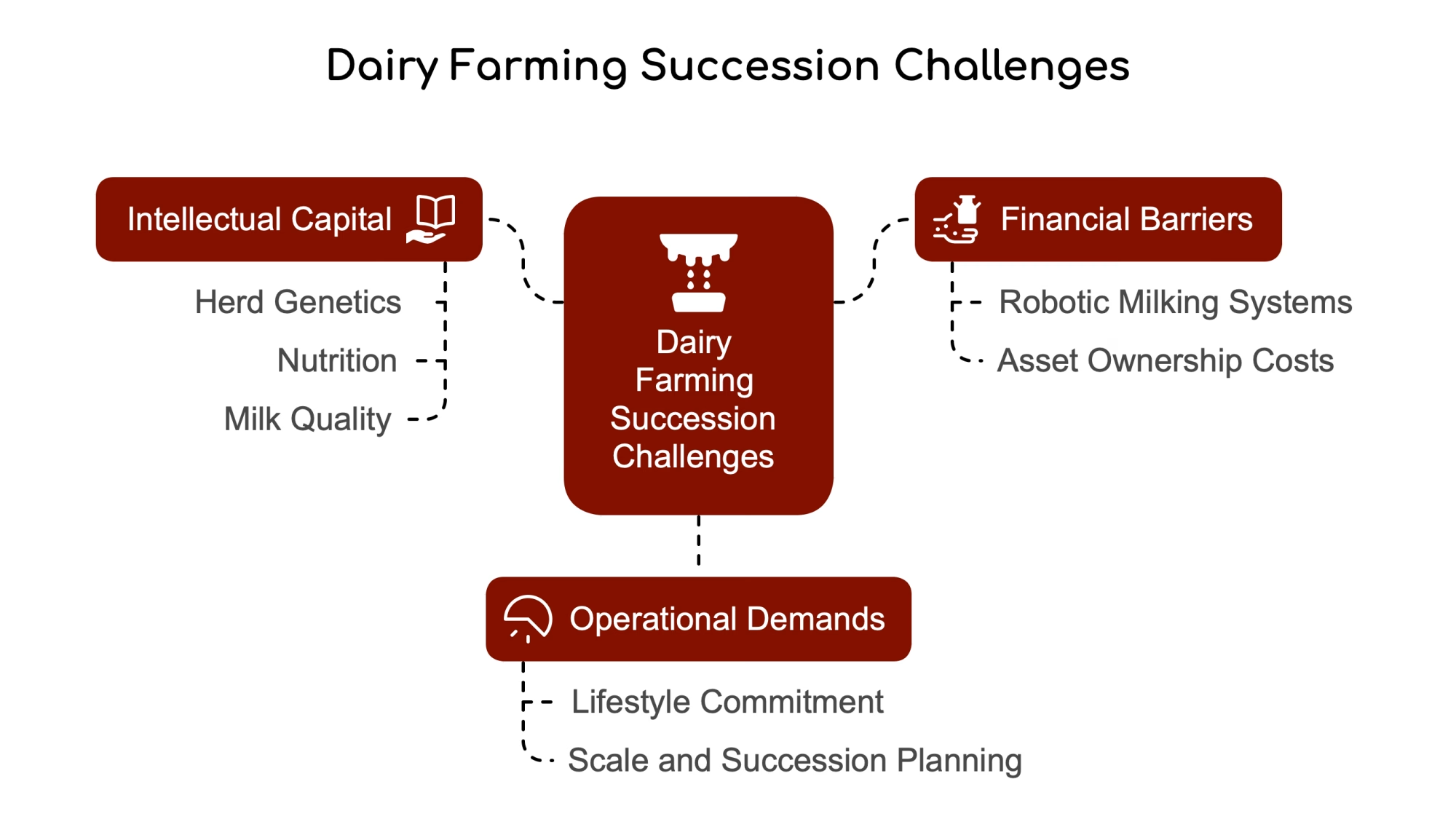
Dairy farming presents distinctive succession hurdles that compound the already difficult transition process. The capital-intensive nature of modern dairy operations—with robotic milking systems often costing upwards of 0,000 per unit—creates financial barriers for the next generation. According to a 2024 report from Compeer Financial, “given the escalating costs of asset ownership and the increasing scale of operations today, expecting the next generation to buy out other successors while maintaining the business is unrealistic”.

The 24/7 operational demands mean successors must commit to a lifestyle, not just a business. Recent research published in 2023 from Paraná State, Brazil found a significant positive correlation between farm size and number of lactating cows with the intention to adopt succession planning, indicating that large-scale dairy farmers have a higher probability of practicing succession planning. This confirms the reality that scale often determines whether succession planning is even attempted.

Additionally, specialized knowledge of herd genetics, reproduction, nutrition, and milk quality represents intellectual capital that must be transferred alongside physical assets. A 2023 study in the Journal of Agribusiness and Rural Development Research identified two primary succession patterns for dairy operations: farm transfer and farm handover, with both approaches requiring early successor participation to ensure sustainability.

Why Are You Setting Your Children Up for Failure?

The harsh reality is that without intentional intervention, your dairy operation is on a natural trajectory toward failure. Three critical elements determine whether your farm survives or joins the statistical majority that collapse during transition: unity, talent and drive, and asset growth. None of these elements develop organically—each requires deliberate cultivation and refuses to be left to chance.

Unity: The Illusion of Family Harmony

Think your family is different? That your children will naturally work together in harmony after you’re gone simply because they grew up together? Sandin Law, specialists in farm succession planning, identifies one of the most common challenges as having “one or more children who are involved in the farming operation, as well as one or more children who are not”. This scenario creates tensions around how to “divide and distribute the assets in a way that benefits all of the children fairly” while ensuring the operation’s continuity.

Table 1: What Unity Is and Isn’t in Family Farm Operations

Unity IS NOTUnity IS
Everyone always agreeing on every topicAsking for everyone’s perspective – even uncomfortable ones
Full consensus on all decisionsUsing conflict to debate topics and produce better results
Family members being best friendsGetting on board with decisions once they’re made
Equal pay, ownership and responsibilitiesHaving clear expectations for roles and compensation
Setting expectations for how family members treat each other
Agreeing in advance on entry paths for next generation
Agreeing in advance on exit strategies for senior generation

“Intentional unity over generations might be the number one reason why family businesses are sustainable. They talk about it, work up agreements, carve out time to stay connected and sometimes argue. But they never assume unity.”

According to Darrell Wade, founder of Farm Life Financial Planning Group, “We understand the fears families have about having these difficult conversations but not having them leads to many larger and greater problems in the future”. The most successful dairy operations establish regular family business meetings separate from operational discussions, creating time and space to address succession issues proactively.

Talent and Drive: Are Your Children Really Prepared?

The skills that built your dairy operation won’t sustain it into the future. Your parents or grandparents likely founded the farm through extraordinary sacrifice, working brutal hours with minimal comforts. Each subsequent generation typically experiences diminishing drive as comforts increase—a natural progression that must be countered intentionally.

“Sustainable family farms can’t exist long with low-drive owners or owners who don’t bring high levels of value to the business.”

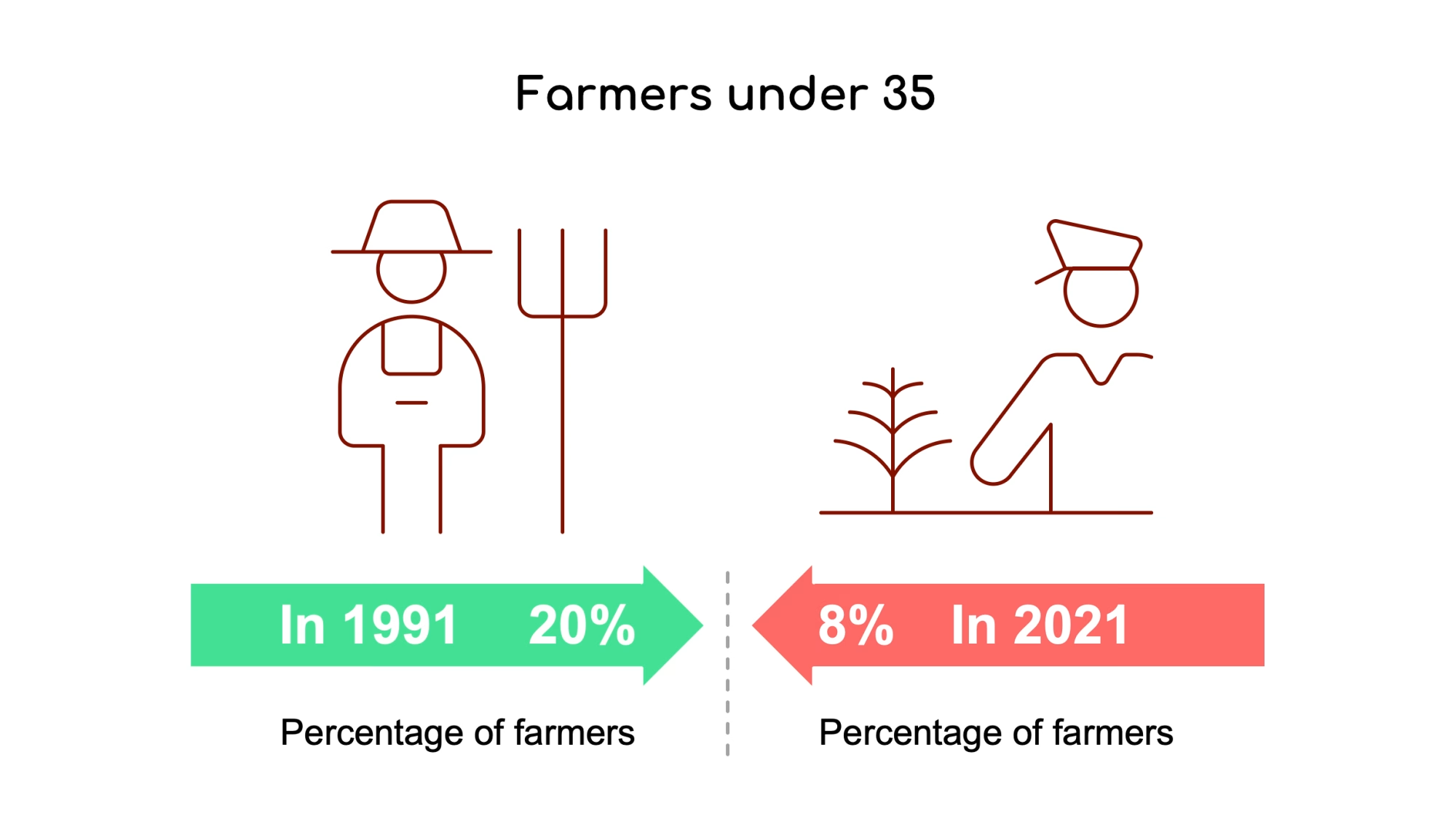
According to the Canadian Bar Association, farming is “increasingly capital intensive, and success depends on technology and advanced management skills”. The percentage of farmers under 35 has decreased from 20% in 1991 to 8% in 2021, indicating fewer young people see agriculture as an attractive career path. For dairy operations specifically, this demographic trend creates a critical talent pipeline problem.

A 2024 article from Compeer Financial highlights this reality: “It is disheartening to witness the next generation of producers, often responsible for a significant portion of daily labor and management tasks, lacking a clear vision of the operation’s future. While they may assume an opportunity for ownership and involvement in executive management will arise, there is often no guarantee”.

Technology Transfer: The Hidden Succession Challenge

Modern dairy farming requires expertise in advanced technologies—from robotics to genetic selection software to data analytics platforms. The next generation needs not only traditional farming skills but also technological aptitude to manage these systems effectively.

Dairy Foods Magazine recently highlighted a case study showing the consequences of failing to plan for succession: “Ohio ice cream shop Loveland Dairy Whip announced its closure after 31 years because ‘the next Morgan generation is not interested in carrying on the ice cream tradition.’ The family-owned business that supported two generations must now be sold, potentially ending a half-century legacy”. This example demonstrates what happens when technological and operational knowledge isn’t successfully transferred to interested successors.

Asset Growth: The Mathematical Reality You’re Ignoring

Dairy farming demands enormous capital investment, making financial planning essential for succession. Yet many operators ignore the uncomfortable math: each returning child represents an additional household requiring financial support from the operation. Without sufficient growth in both assets and profitability, the economic equation becomes unsustainable.

“Let’s think about this a bit. If three kids come back to the farm, that’s three more households the farm must support. How much bottom-line net profit must be generated just to maintain household income for everyone?”

The 2024 research from Brazil confirms that “large-scale dairy farms have a higher probability of adopting succession strategies,” but importantly notes that “production scale is not the only determining factor”. This underscores that while economic scale matters, equally important are the communication and planning processes that accompany that scale.

Your Succession Action Plan: Five Steps to Defuse the Time Bomb

1. Assess Your Current Succession Readiness

Ask yourself these uncomfortable questions:

  • Do you have a written succession plan that ALL stakeholders have reviewed and agreed to?
  • Have you identified specific successors and aligned their training with future operational needs?
  • Have you calculated the precise financial requirements for each returning family member?
  • Does your current growth trajectory support those requirements?

If you answered “no” to any of these questions, your operation is already in the danger zone. According to succession planning experts, your plan should include “a three-year, and five-year business plan; a unanimous shareholder agreement; copies of lease or rental agreements; annual financial statements; and grooming plans, training, and knowledge transfer”.

2. Develop Financial Structures That Support Transition

The Canadian Bar Association highlights how strategic business structures can assist in navigating succession challenges: “One case study addressed the challenge of raising sufficient capital by splitting the farm into two different corporations. The first company continued to be owned by the incumbent farmer. It held the farm’s primary assets, like the farmland and machinery. The majority of the second company was sold to the successor. It operated the farm and leased assets from the holding company”.

This structure benefitted the successor because they only needed to raise sufficient capital to purchase the operating company rather than the whole farm. The incumbent benefitted by retiring from the day-to-day farm operations while receiving a steady stream of retirement income from the leased assets.

“Sustainable farms encourage each generation to learn skills that will be needed in the future, not just those that were necessary in the past.”

3. Start Meaningful Family Conversations Now

A 2023 study from Penn State Extension emphasizes that “the most challenging part of this process is the communication between parties. To achieve a successful farm transition, all involved parties should actively communicate with one another.” The research further notes that transitions in complex farming operations “can take 5 to 10 years even when done correctly and when everyone takes an active role”. This timeline underscores the urgency of starting conversations immediately, not years down the road.

The Bullvine’s article “Ensuring the Future: Strategic Succession Plans for Dairy Farmers” (February 2024) recommends that you “begin the succession planning process well in advance. Open and honest communication among family members is key. Discuss individual goals, aspirations, and expectations to ensure everyone is on the same page. Starting early allows for a smooth transition and minimizes conflicts”.

4. Develop Your Successors Intentionally

A 2024 article in Compeer Financial notes that “when evaluating credit requests, lenders inquire about the presence of a next generation in the business and the plans for their integration. A long-term investment may not be deemed viable if the business lacks a sound transition plan or is perceived as terminal”. This reality means that failing to plan for succession actively damages your operation’s ability to access capital today, not just in the future.

An effective succession plan requires systematic skill development—with or without formal education. A 2023 study published in Agraris Journal found that encouraging the participation of potential successors in family business early is critical “to ensure the sustainability of family dairy farming”.

5. Get Expert Help to Test Your Plan

A 2024 Compeer Financial article advises that “seeking guidance from experienced professionals, including attorneys, tax preparers, business consultants and perhaps lenders is vital. Each operation is unique, necessitating tailored plans to meet individual and business needs efficiently”.

Baker Tilly Canada notes that “family business succession planning involves many components, including family dynamics, leadership training, financial planning, management transition, legal agreements and – you guessed it – taxes”. This multifaceted approach requires coordinated expertise from various specialists.

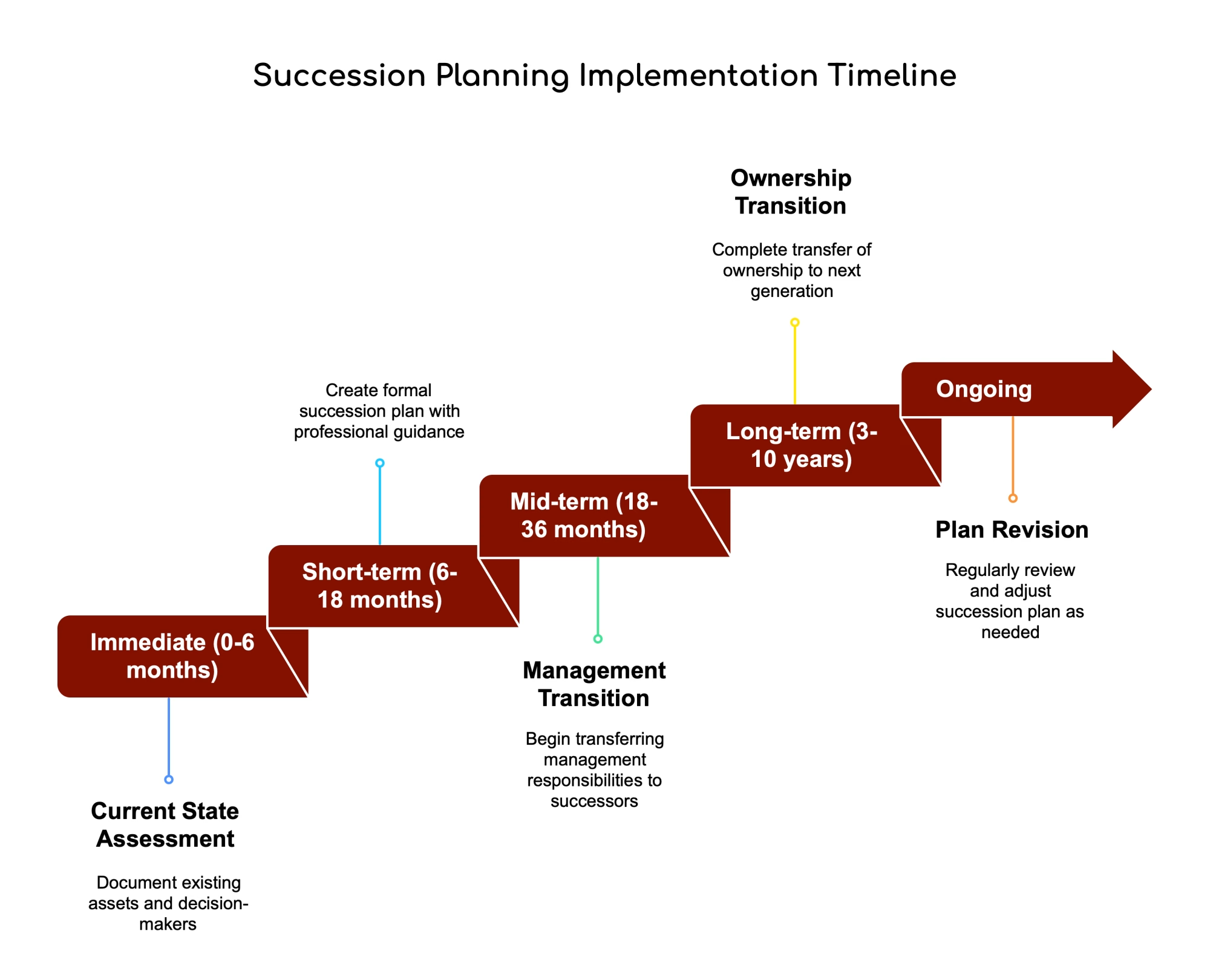
Table 2: Succession Planning Implementation Timeline

Timeline StageKey ActionsCritical Questions
Immediate (0-6 months)Document current state of operationWhat assets exist? Who currently makes decisions?
Short-term (6-18 months)Develop written succession plan with professional helpWho will own what? How will management transition?
Mid-term (18-36 months)Begin management transitionAre successors developing necessary skills? Are senior members ready to let go?
Long-term (3-10 years)Complete ownership transitionIs ownership structure supporting both generations?
OngoingRegular revision of plansWhat has changed? What needs adjusting?

Alternative Succession Approaches

Not every dairy farm will transition to children. A 2024 case study from Dairy Foods Magazine highlights the Loveland Dairy Whip example where “the next Morgan generation is not interested in carrying on the ice cream tradition,” forcing the business to be put up for sale. The owners remained hopeful “a family will be interested in starting their new family tradition by purchasing the Dairy Whip,” illustrating an alternative approach to succession—transitioning to an unrelated family committed to continuing the dairy tradition.

Another alternative approach is worker cooperatives or employee ownership transitions. These models can preserve operations when traditional family succession isn’t viable. A 2023 report from the Ontario Ministry of Agriculture outlines how the farm succession planning process can accommodate various transition scenarios, not just traditional parent-to-child transfers.

Succession Self-Assessment: How Ready Are You Really?

Rate your readiness in each area on a scale of 1-5:

  • Written Planning: Do you have comprehensive written plans that all stakeholders understand and accept?
  • Financial Preparation: Does your current financial trajectory support your succession timeline?
  • Communication Systems: Have you established formal processes for addressing succession challenges?
  • Talent Development: Are your successors demonstrably prepared for their future roles?
  • Contingency Planning: Do you have plans addressing unexpected events like health issues or market disruptions?

A score below 20 indicates significant work needed before your succession plan has a reasonable chance of success.

“One of our clients recently told us that his goal was to not become terminal. He said he looked around and saw his friends and neighbors who have great farms today, but they aren’t sustainable past the current generation. He didn’t want this to be his farm.”

The Cost of Inaction: What’s Really at Stake

The statistics paint a sobering picture: according to the Small Business Administration, only about 33% of family businesses successfully transition to the second generation, and a mere 16.5% make it to the third generation. The 2024 Compeer Financial article states plainly: “It’s natural to assume ample time to address these matters, yet unforeseen events can significantly impact business longevity”.

While the financial implications are obvious, the emotional and psychological costs often prove even more devastating. Failed transitions frequently destroy family relationships along with business assets. Siblings who once played together become embroiled in bitter legal disputes. The legacy you hoped to build evaporates in acrimony and regret.

Are You Building a Legacy or a Liability?

Census data shows that “about 70% of the farm land in the U.S. will change hands within the next two decades”. This massive transfer of agricultural assets represents both unprecedented risk and opportunity for the dairy sector.

Penn State Extension (2023) frames succession planning not merely as asset transfer but as answering a vital question: “What would happen if the owners/operators of a farm were to suddenly become unable to complete the tasks the farm needs to operate?” They note that “farm businesses are now more complex and gone are the days of just dealing with it once someone passes”.

“Several farmers have confided that passing on a sustainable farm was the hardest thing they ever did, but it is also their proudest achievement. What do these farmers all have in common? None of them left farm sustainability to chance.”

The clock is ticking on your family dairy time bomb. The choice to defuse it—or let it detonate—rests entirely with you.

Key Takeaways

  1. 83.5% of dairy farms fail by the third generation due to poor succession planning, family discord, and inadequate financial scaling.
  2. Unity isn’t harmony—it’s structured conflict: Successful farms use formal agreements, family councils, and third-party mediation to align goals.
  3. Talent development requires intentional effort: Next-gen farmers must prove commitment through skill-building and leadership roles, not just inheritance.
  4. Asset growth is non-negotiable: Multi-generational farms need profit growth to support multiple households, often requiring creative financial structures (e.g., splitting asset/operating companies).
  5. Dairy’s unique hurdles demand tailored strategies: 24/7 operations and high-tech investments (robotic milking) necessitate specialized succession planning beyond general farming advice.

Executive Summary

The dairy industry faces a critical succession crisis, with 83.5% of family farms disappearing by the third generation. Despite being capital-intensive and demanding specialized knowledge, only 8.4% of operations have written succession plans. The article identifies three pillars for sustainability: unity (structured conflict resolution), talent/drive (developing capable successors), and asset growth (financial scalability). Dairy-specific challenges like 24/7 operations and robotic milking equipment costs amplify these issues without planning—family meetings, economic restructuring, and skill development—operations risk collapse. The next decade’s $53 billion land transfer underscores the urgency for actionable strategies to avoid becoming part of the grim statistics.

Learn More:

Join the Revolution!

Join over 30,000 successful dairy professionals who rely on Bullvine Daily for their competitive edge. Delivered directly to your inbox each week, our exclusive industry insights help you make smarter decisions while saving precious hours every week. Never miss critical updates on milk production trends, breakthrough technologies, and profit-boosting strategies that top producers are already implementing. Subscribe now to transform your dairy operation’s efficiency and profitability—your future success is just one click away.
NewsSubscribe
First
Last
Consent

Roy Ormiston: The Holstein Man’s Holstein Man Who Revolutionized Modern Breeding

How one man’s $750 gamble on a white cow created a Holstein dynasty that reshaped global dairy genetics and continues to influence breeding decisions today.

In the heart of Holstein history: Roy Ormiston at his Roybrook Farm office, surrounded by the trophies and images of the cattle that made him 'The Holstein Man's Holstein Man.' The iconic Roybrook logo and Holstein models on his desk represent a breeding program that transformed global dairy genetics through his visionary approach to cow families and balanced selection principles.
In the heart of Holstein history: Roy Ormiston at his Roybrook Farm office, surrounded by the trophies and images of the cattle that made him ‘The Holstein Man’s Holstein Man.’ The iconic Roybrook logo and Holstein models on his desk represent a breeding program that transformed global dairy genetics through his visionary approach to cow families and balanced selection principles.

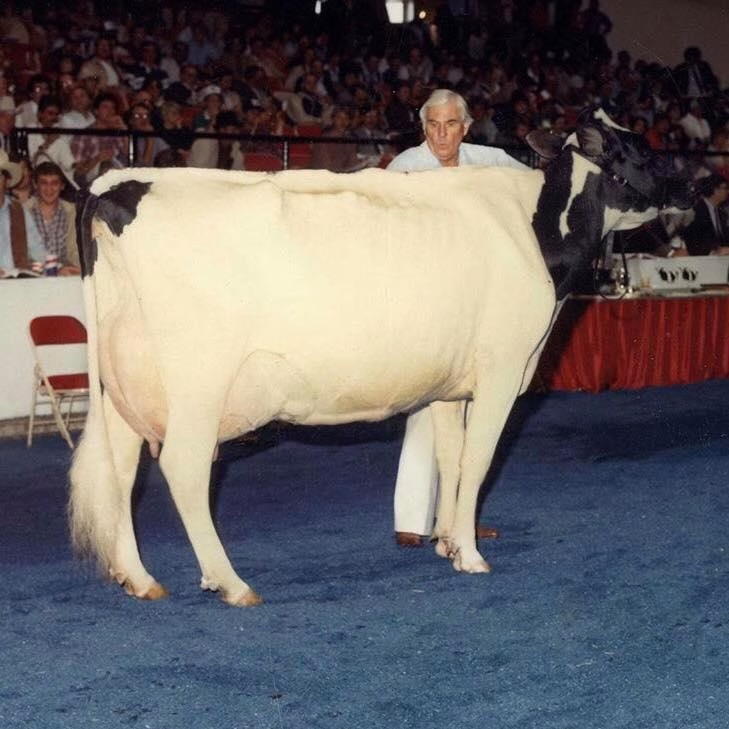
The spotlights at Toronto’s Royal Winter Fair cut through the crisp November air of 1956, illuminating a magnificent white Holstein as she glided across the tanbark with the grace of a dancer. The crowd fell silent as the judge’s hand finally extended toward her, declaring her champion of the aged cow class and awarding the Best Udder trophy. A quiet revolution in Holstein breeding was born.

In the stands, Frederick Roy Ormiston watched with the measured satisfaction of a man who had glimpsed greatness where others saw merely a good cow. Just months earlier, this five-year-old beauty had been standing in Ben Brown’s modest Bowmanville barn, valued at a mere $750-a sum Ormiston had secured her for only after promising an additional $50 should her butterfat test exceed 3.6%. Now, as “The White Cow” claimed her crown, few could have imagined that this singular animal would become the cornerstone of a breeding empire that would reshape Holstein genetics for generations.

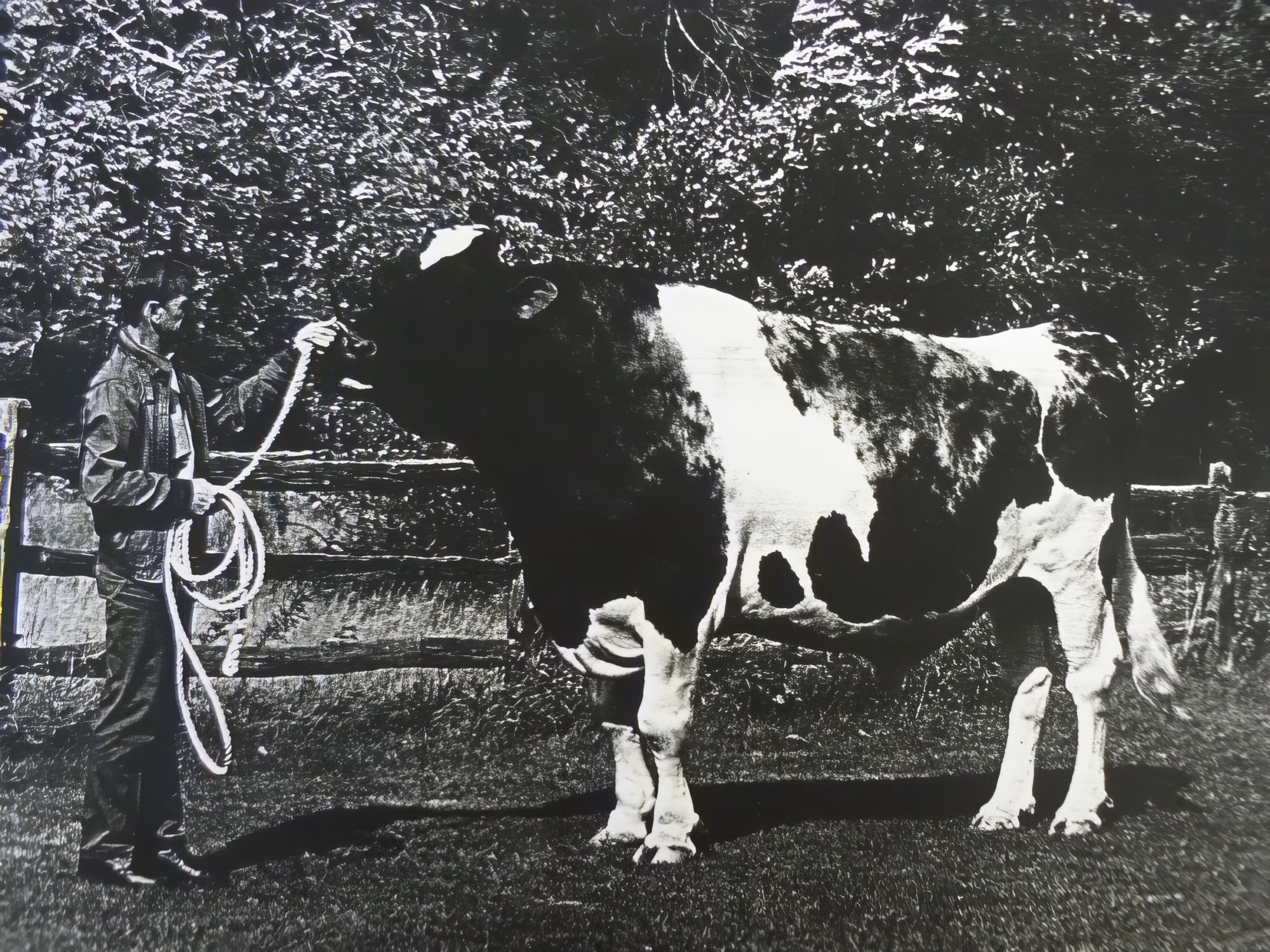
This historic image captures the moment when Roybrook's influence reached the highest levels of Canadian society. Prime Minister Pierre Trudeau examines Roybrook Starlite EX-Extra, one of Roy Ormiston's most influential sires and a cornerstone of the Roybrook breeding program. Proven at United Breeders Inc., Starlite would go on to become one of Canada's most formidable production sires, leading the national list of Honor List producers three times. This photograph documents not just a political visit but a significant moment in Canadian agricultural history, highlighting how Ormiston's breeding program had become recognized as a national asset worthy of prime ministerial attention. The presence of Starlite at this official opening underscores the bull's importance in advancing Canadian Holstein genetics during a pivotal era of dairy cattle improvement.
This historic image captures the moment when Roybrook’s influence reached the highest levels of Canadian society. Prime Minister Pierre Trudeau examines Roybrook Starlite EX-Extra, one of Roy Ormiston’s most influential sires and a cornerstone of the Roybrook breeding program. Proven at United Breeders Inc., Starlite would go on to become one of Canada’s most formidable production sires, leading the national list of Honor List producers three times. This photograph documents not just a political visit but a significant moment in Canadian agricultural history, highlighting how Ormiston’s breeding program had become recognized as a national asset worthy of prime ministerial attention. The presence of Starlite at this official opening underscores the bull’s importance in advancing Canadian Holstein genetics during a pivotal era of dairy cattle improvement.

The Making of a Master Breeder

Born into Holstein heritage as the son of pioneering breeder Fred Ormiston, young Roy’s destiny seemed intertwined with black and white cattle. The family farm south of Brooklin, Ontario, became his first classroom, and even at sixteen, his extraordinary eye for cattle revealed itself when he led his father’s herd to the Royal Winter Fair, capturing second prize in senior get of sire.

Ormiston didn’t just inherit his father’s passion- he forged his path, first as a respected fieldman for the Holstein Association of Canada, succeeding the esteemed Bob Holtby in East-Central Ontario. This seven-year apprenticeship provided an unparalleled education, exposing him to the finest animals and breeding approaches across the province, sharpening the instincts that would later distinguish him as “The Holstein Man’s Holstein Man.”

When he established Roybrook Farm in 1951, the postwar dairy landscape was transforming rapidly. The artificial insemination industry emerged from experimental infancy to commercial application, creating tension between traditional breeding wisdom and statistical approaches. Ontario County had emerged as hallowed ground for Holstein genetics, with legendary bulls like Montvic Hiemke Pietje Posch Extra and Hawkherst Emperor Pathfinder B. leaving their mark on the breed.

As Ormiston assembled his foundation cattle, he drew from this rich genetic well, incorporating elements from W.J. Seymour’s Springdale herd and building around key females like Segis Posch Lochinvar and Baroness Hawkherst Pathfinder B. Yet the architect awaited the cornerstone to transform his genetic blueprint from ambitious to legendary.

The White Cow Dynasty: Lightning Captured

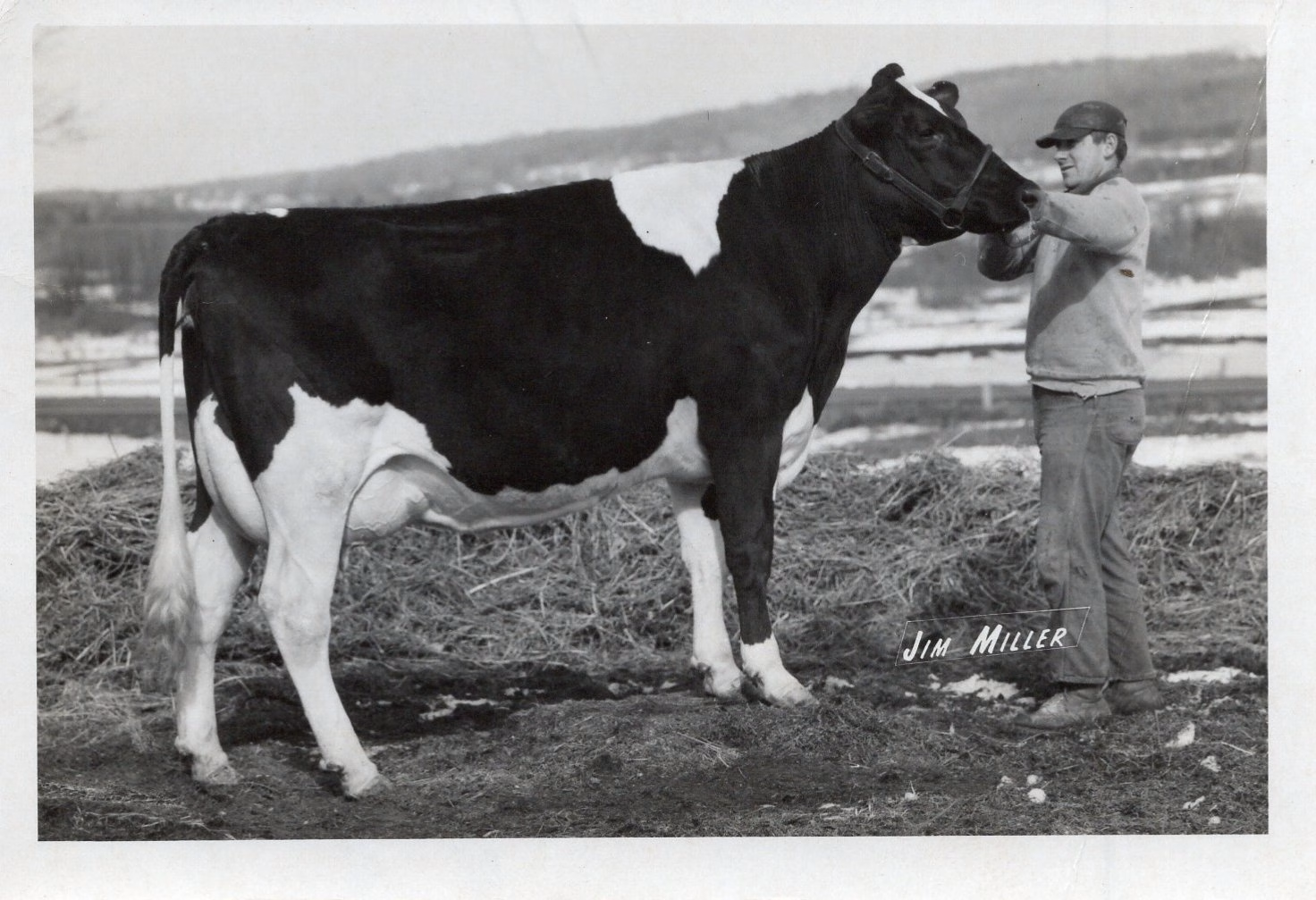
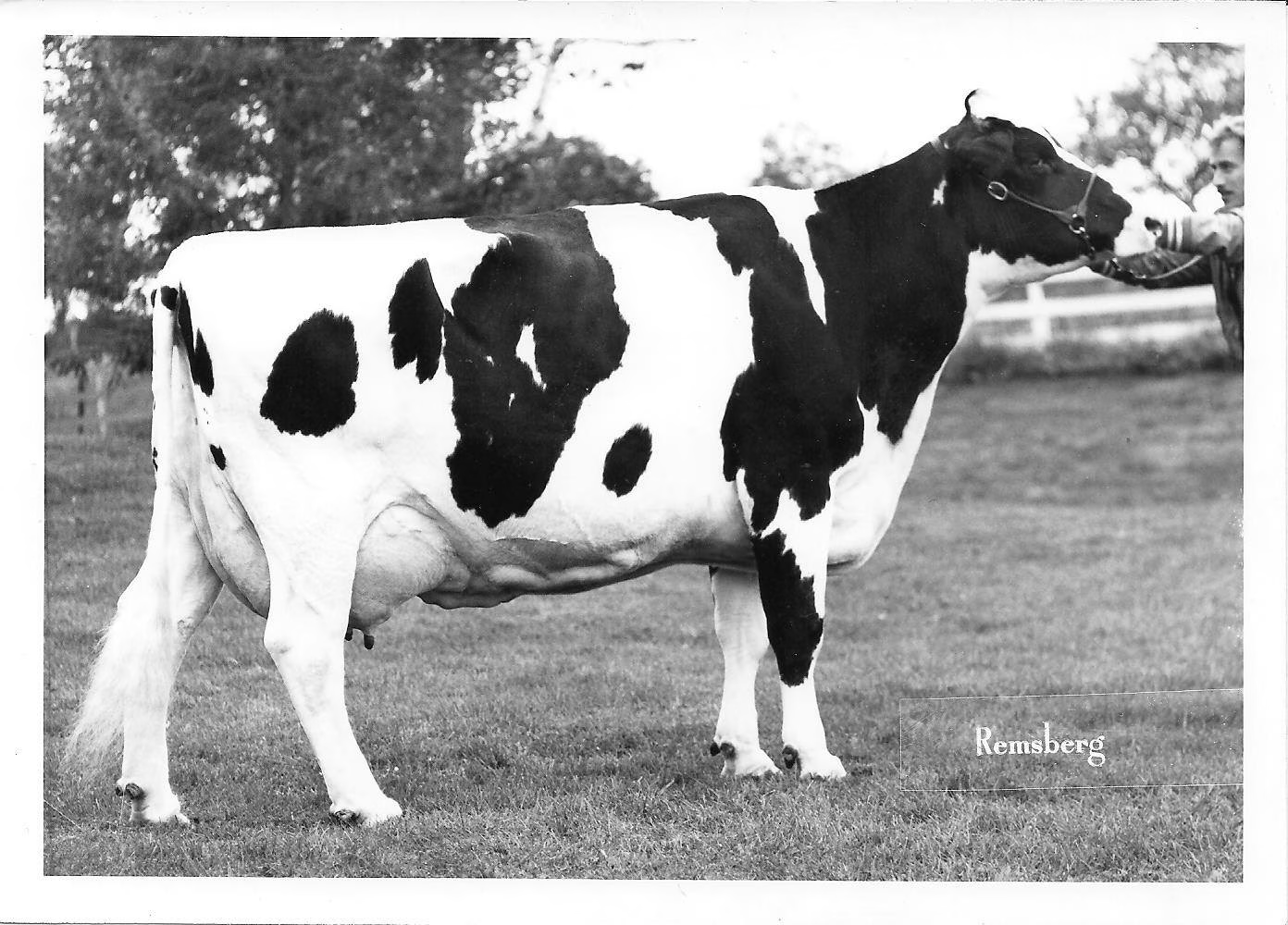
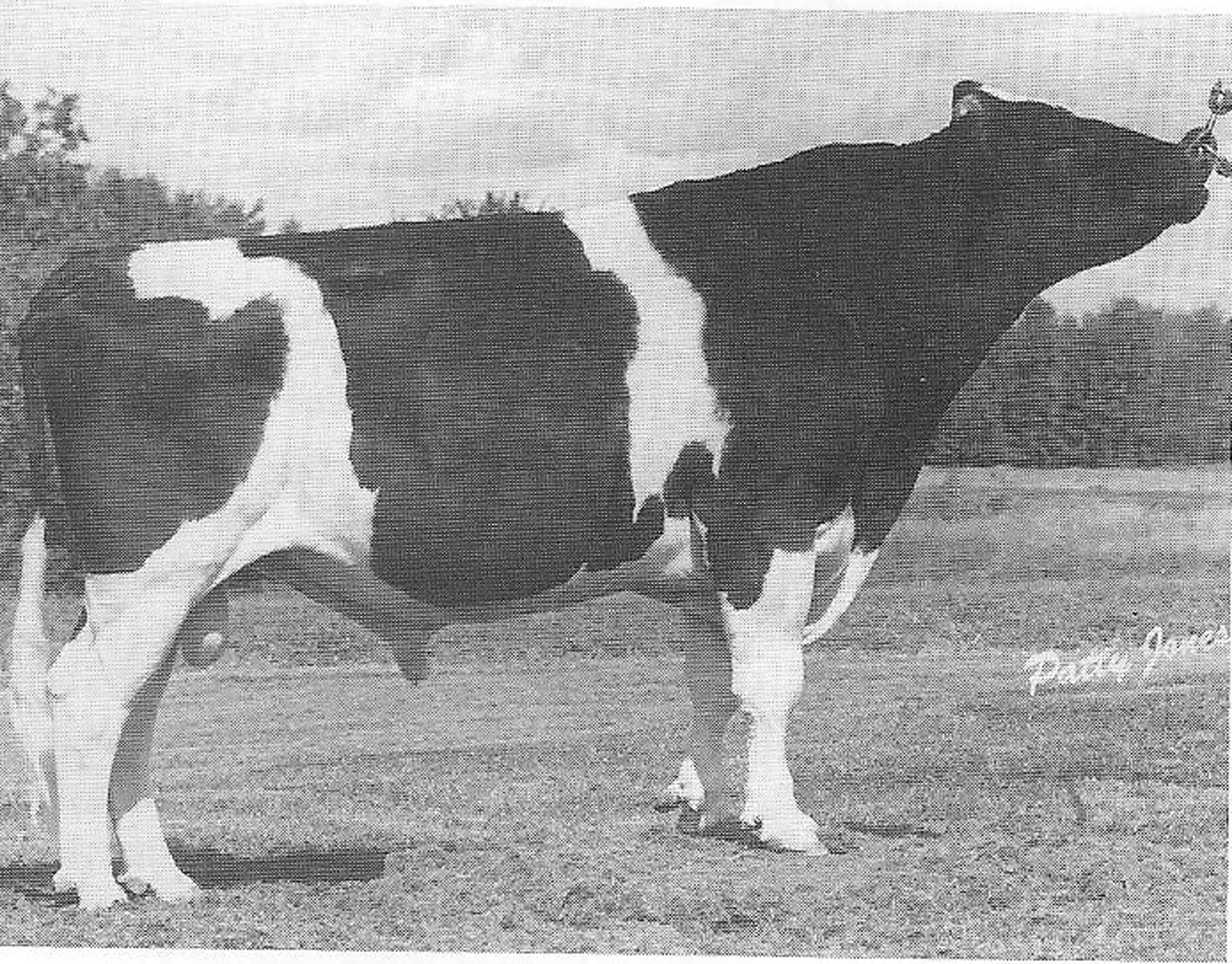
Balsam Brae Pluto Sovereign ("The White Cow"), photographed circa 1956. This extraordinary Holstein, purchased by Roy Ormiston for just $750, became the cornerstone of the Roybrook breeding dynasty. Her remarkable ability to transmit excellence to her progeny regardless of sire led Ormiston to develop his revolutionary linebreeding program. Grand champion at Peterborough shows four times and nominated for All-Canadian honors six consecutive years, she produced 185,327 pounds of milk in her lifetime and established a maternal line that would transform Holstein genetics worldwide.
Balsam Brae Pluto Sovereign (“The White Cow”), photographed circa 1956. This extraordinary Holstein, purchased by Roy Ormiston for just $750, became the cornerstone of the Roybrook breeding dynasty. Her remarkable ability to transmit excellence to her progeny regardless of sire led Ormiston to develop his revolutionary linebreeding program. Grand champion at Peterborough shows four times and nominated for All-Canadian honors six consecutive years, she produced 185,327 pounds of milk in her lifetime and established a maternal line that would transform Holstein genetics worldwide.

The pivotal chapter in the Roybrook saga began in the summer of 1956 with a decision that would alter Holstein history. The circumstances around Ormiston’s acquisition of Balsam Brae Pluto Sovereign reveal much about his visionary eye and business acumen.

As Walter Baron, a New York cattle dealer, later recounted, he and Max Heidt had offered Ben Brown $700 for the cow- a bid Brown declined. When Ormiston visited shortly thereafter, he proposed $750 contingent on the cow testing at least 3.6% butterfat. This shrewd negotiation secured the animal who would become simply “The White Cow,” a name that would echo through breeding barns across continents for decades.

Her royal lineage proved worthy of her future impact. Sired by Hainescrest Sovereign Tycoon EX-ST-himself a son of the legendary Jean Pabst Rag Apple EX-4, a cow that had produced an astounding 193,474 pounds of milk in nine lactations-the White Cow’s maternal ancestry traced back to Brema, imported from Friesland in 1884. This was no ordinary pedigree but a careful convergence of superior genetics waiting to be unleashed.

Under Ormiston’s stewardship, the White Cow flourished spectacularly. Grand champion at Peterborough shows four times between 1956 and 1960, she earned All-Canadian nominations for six consecutive years. Though her first three lactations went unrecorded, she achieved impressive lifetime totals: 185,327 pounds of milk with 3.9% test and 7,254 pounds of fat.

But the White Cow’s true power lay not in her impressive accomplishments but in her extraordinary ability to transmit excellence regardless of the sire. This quality was underscored by Ormiston’s persistent attempts to acquire one of her daughters left at Brown’s farm- a cow many considered exceptional. Brown steadfastly refused to sell, warning that the price would be “a damn sight more than the $500 Roy had paid for her dam”.

This daughter-Balsam Brae Pluto Governor-tragically died after accessing the feed room during an emergency. Still, her quality, combined with the excellence of the White Cow’s other progeny, convinced Ormiston that linebreeding on this family would be prudent and revolutionary.

“Having seen the Governor daughter at Brown’s, and then Royal Delight came along, sired by a non-descript Elderslie bull, and then came Roybrook Model Lady, the White Cow’s daughter by Roybrook Model-it was then I realized that no matter what she was bred to, the White Cow would always produce a good daughter. That’s when I knew I could line breed on her,” Ormiston explained.

Her progeny became the architects of the Roybrook empire. Royal Delight EX-7, carried to Roybrook in dam, made history alongside her mother as the only dam-daughter pair to win best udder classes at the Royal Winter Fair. In ten lactations, she produced 179,519 pounds of 3.97% milk.

Another daughter, Roybrook Model Lady EX-3, won her class three times at the Royal Winter Fair and reached the Honour List with records exceeding 25,000 pounds of milk. Her twelve lactations yielded 243,799 pounds of milk with a 4.09% test and 9,969 pounds of fat, which would impress even today’s high-production era.

These remarkable females and the White Cow’s son, Roybrook Ace EX-ST, became the genetic architects of a dynasty unlike any other. Ormiston’s linebreeding concentrated on these closely related animals, often breeding maternal half-siblings together. This genetic concentration reached its zenith when Royal Delight was bred to Roybrook Model, producing Roybrook Model Lass EX-15, a cow destined to become the mother of bulls that would reshape global Holstein genetics.

The Global Roybrook Revolution: Telstar, Starlite, and Tempo

Roybrook Telstar EX-Extra-born of Roybrook Ace and Model Lass-emerges as a global Holstein icon. As a six-month-old, Telstar topped the 1964 National Sale at $25,000, then quickly proved himself as one of the breed’s most influential sires for both type and production. His legacy reached far beyond Canada, culminating in a life-size bronze statue in Japan, and his genetic impact endures in Holstein pedigrees worldwide.

In 1964, the Roybrook influence exploded onto the international stage when a six-month-old bull calf named Roybrook Telstar commanded $25,000 at the National Sale. This wasn’t just any calf-he represented three generations of Ormiston’s careful linebreeding, being the son of Roybrook Ace and Roybrook Model Lass.

Named after the revolutionary communications satellite launched in 1962, Telstar became aptly symbolic of Roybrook’s global reach. One of the youngest bulls to reach a Class Extra rating, his 739 classified daughters were 83% Good Plus or better, earning him a +31 rating for type while simultaneously proving +6 for milk production.

Before receiving his full proof, Telstar was sold to Japan’s Federation of Agricultural Societies at a record price for a Canadian Holstein. His influence in Japan was so profound that in 1978, Ormiston traveled there to unveil a life-size bronze statue erected in the bull’s honor, a testament to how far the genetics from a modest Ontario farm had traveled.

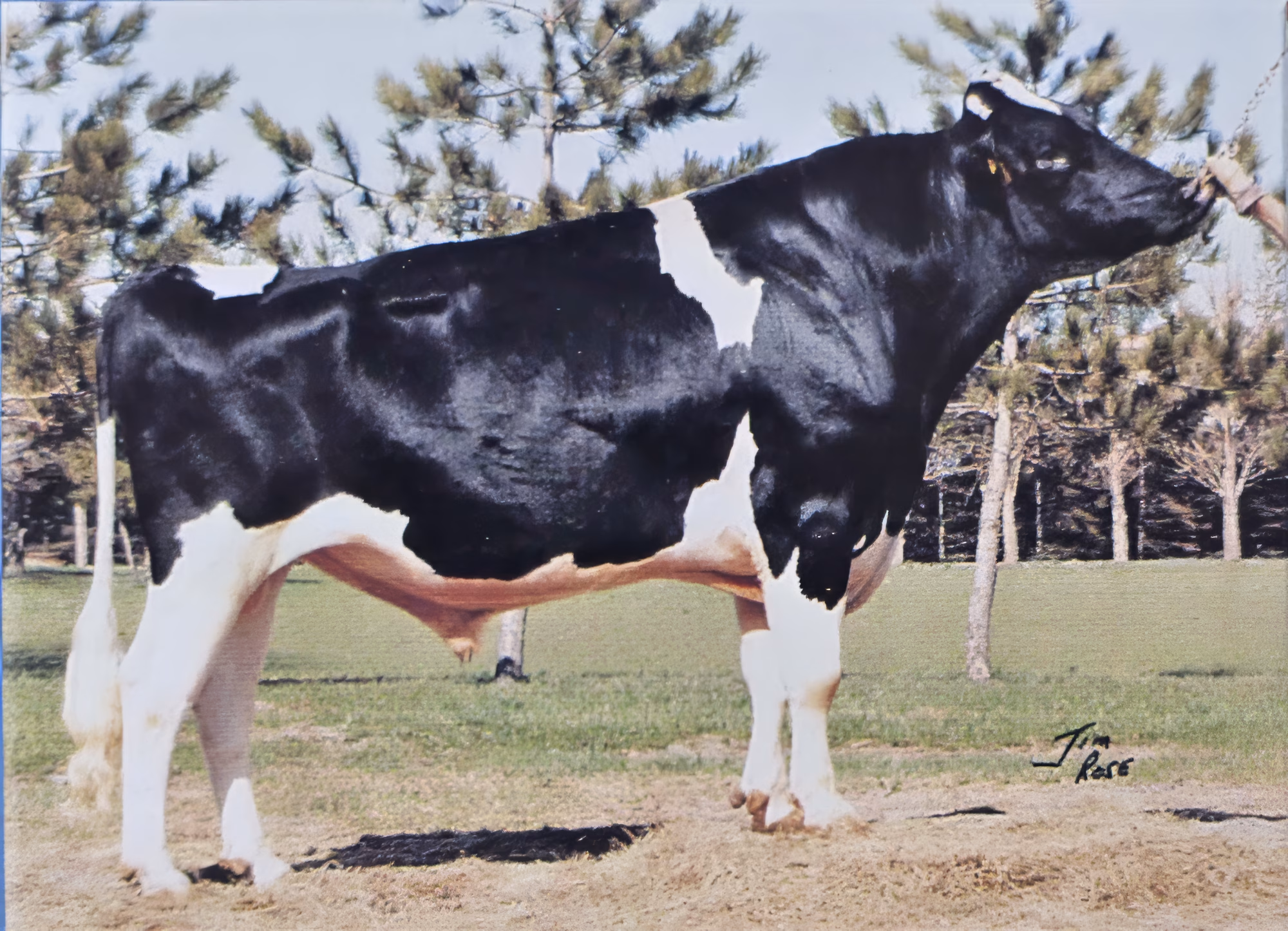
Roybrook Starlite EX-Extra-one of the breed’s most influential production sires. Starlite’s daughters and sons, the result of Roybrook’s signature linebreeding, set new standards for both milk and fat yields worldwide, cementing his legacy as a cornerstone of the Telstar-Starlite-Tempo trifecta that propelled Roybrook genetics onto the global stage.

Following Telstar came Roybrook Starlite EX-Extra, a son of Seiling Rockman EX-Extra and Roybrook Model Lass. Proven at United Breeders Inc., Starlite became one of Canada’s most formidable production sires, leading the national list of Honor List producers three times. His daughter Grasshill Starlite Madge VG made history as the first junior two-year-old in Canada to produce 1,000 pounds of fat.

Roybrook Tempo, the culmination of Ormiston’s legendary linebreeding, became a globally influential sire whose daughters and sons carried the Roybrook stamp for production, type, and longevity to herds around the world.

The triumvirate was completed by Roybrook Tempo EX-Extra, a son of Starlite out of Briarwood Melissa, a Telstar daughter Ormiston had purchased at the 1968 Sale of Stars for $7,000. This linebreeding masterpiece-essentially breeding the son of Model Lass (Starlite) to the granddaughter of Model Lass (Melissa)-produced a bull that earned an Extra rating in 1979 and was used extensively worldwide.

“The Telstar-Starlite cross showed the strength of the Roybrook line breeding program,” industry observers noted. The results were undeniable: cows like Roybrook Vale EX, with two Honor List records and six lactations exceeding 1,000 pounds of fat, and Roybrook Harriet EX, with five records surpassing 1,000 pounds of fat.

As Roybrook’s reputation soared, the unassuming Ontario farm became a global mecca. International visitors regularly made pilgrimages, especially during the Royal Winter Fair, to witness the source of genetics transforming herds across continents. By the late 1980s, Holstein World readers voted Ormiston “North America’s most admired breeder,” British Holstein expert Richard Beard described him as “a twentieth-century Merlin” for his seemingly magical breeding consistency.

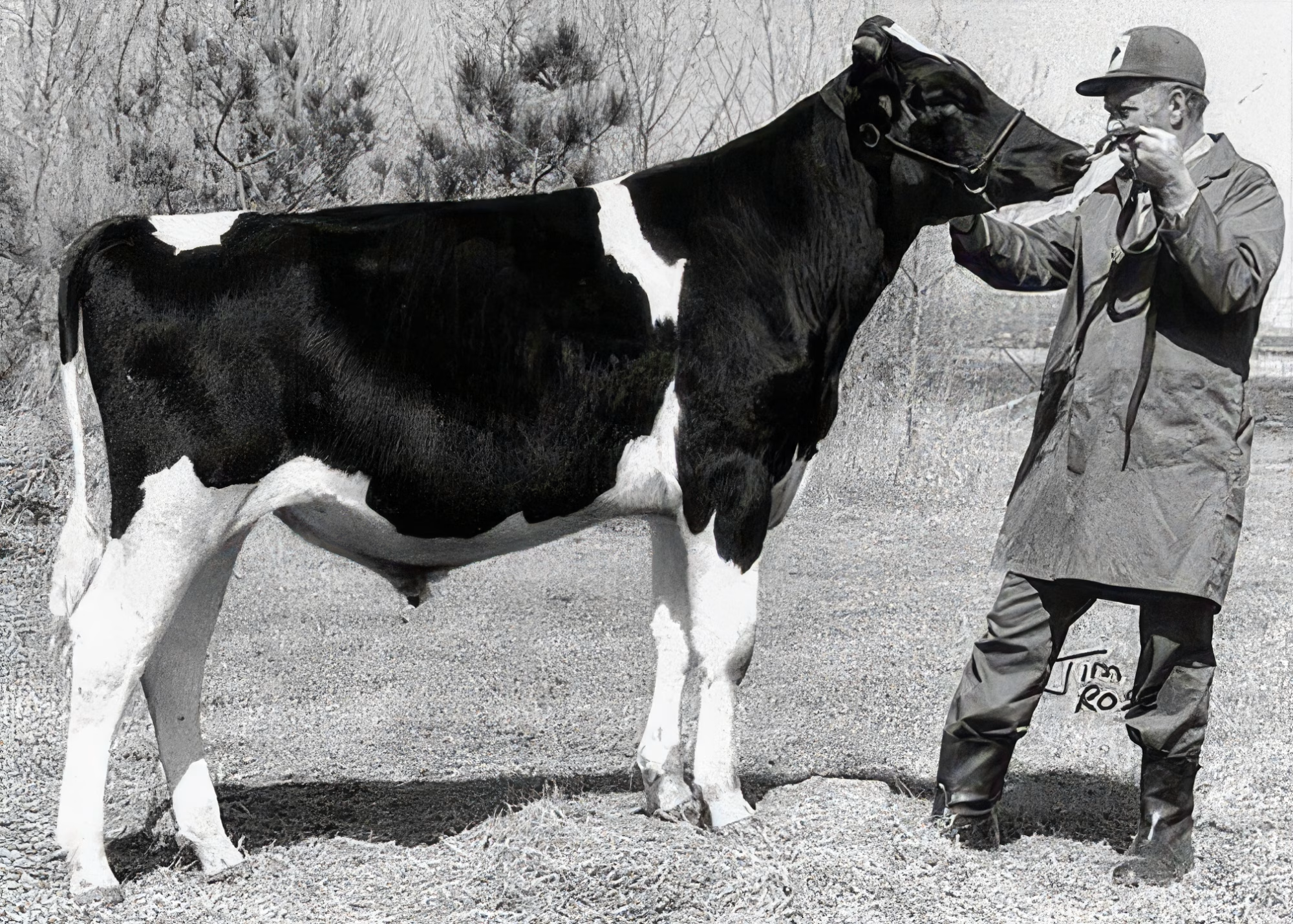
This remarkable historical photograph captures Roybrook Valiant (VG-GM) alongside his famous sire, Roybrook Starlite (EX-Extra), at United Breeders in Guelph, Ontario, in May 1977. The two Holstein bulls represent key components of Roy Ormiston's influential breeding program that transformed Holstein genetics worldwide.

Roybrook Starlite, a son of Seiling Rockman EX-Extra and Roybrook Model Lass, was proven at United Breeders Inc. and became one of Canada's most formidable production sires, leading the national list of Honor List producers three times. As part of the legendary Telstar-Starlite-Tempo triumvirate, Starlite's genetics contributed to Ormiston's reputation as "North America's most admired breeder."

This image represents the living embodiment of Ormiston's linebreeding philosophy that concentrated on superior maternal lines from his famous "White Cow" foundation. The father-son pair shown here carried those genetics to herds around the world, helping establish Roybrook's global influence in Holstein cattle breeding.
Roybrook Valiant (VG-GM) alongside his famous sire, Roybrook Starlite (EX-Extra), at United Breeders in Guelph, Ontario, in May 1977. The two Holstein bulls represent key components of Roy Ormiston’s influential breeding program that transformed Holstein genetics worldwide. This image represents the living embodiment of Ormiston’s linebreeding philosophy that concentrated on superior maternal lines from his famous “White Cow” foundation. The father-son pair shown here carried those genetics to herds around the world, helping establish Roybrook’s global influence in Holstein cattle breeding.

The Ormiston Method: Breeding Philosophy for the Ages

Behind Roybrook’s spectacular success lay a breeding philosophy that was elegant in simplicity and profound in its insight. Roy Ormiston’s approach, refined through decades of careful observation and disciplined selection, offers striking parallels to challenges facing Holstein breeders in today’s genomic era.

“I like to compare a dairy cow to a building,” Ormiston once observed. “If you don’t have a very good foundation, then it isn’t going to stand up too long, especially in a storm, and that is heavy production.” This fundamental insight-that genetic selection must balance productive capacity with structural integrity remains as relevant in the age of genomics as it was during the era of visual appraisal.

Ormiston built his program on several enduring principles:

First came his unwavering focus on cow families. “I always believed in cow families,” Ormiston emphasized. “But when the best cows in the herd traced back to this one cow, you kept those. It got to the point where maybe two or three other cows weren’t of that bloodline, and then I had to decide. It wasn’t hard to make. The next best brood cow had a few progenies but didn’t breed as well as the White Cow. So, they eliminated themselves through culling”.

This ruthless concentration on superior maternal lines has a modern parallel in genomic breeding programs identifying elite cow families and exploiting them intensively. The difference is that Ormiston accomplished this through direct observation rather than genotyping.

He carefully distinguished his approach from close inbreeding: “It was line-breeding-not inbreeding. We never inbred”. He aimed to intensify the White Cow’s desirable traits without sacrificing vigor. Modern genomic tools now allow breeders to manage inbreeding at the molecular level, but Ormiston achieved similar objectives through careful pedigree analysis and deep knowledge of his cow families.

While critical of the industry’s overreliance on statistics, Ormiston maintained a remarkably balanced selection approach. He simultaneously improved udder conformation, component percentages, and productive efficiency- a holistic perspective that today’s genomic indices attempt to capture through complex economic weightings.

In an era when the average productive life of Holstein cows has declined despite genetic progress, Ormiston’s emphasis on breeding cows that remained trouble-free and productive for many lactations seems prescient. The Roybrook herd boasted cows routinely completing 8-12 lactations with exceptional production. Lady’s twelve lactations produce 243,799 pounds of milk, and Royal Delight’s ten lactations, yielding 179,519 pounds, demonstrate this focus on longevity.

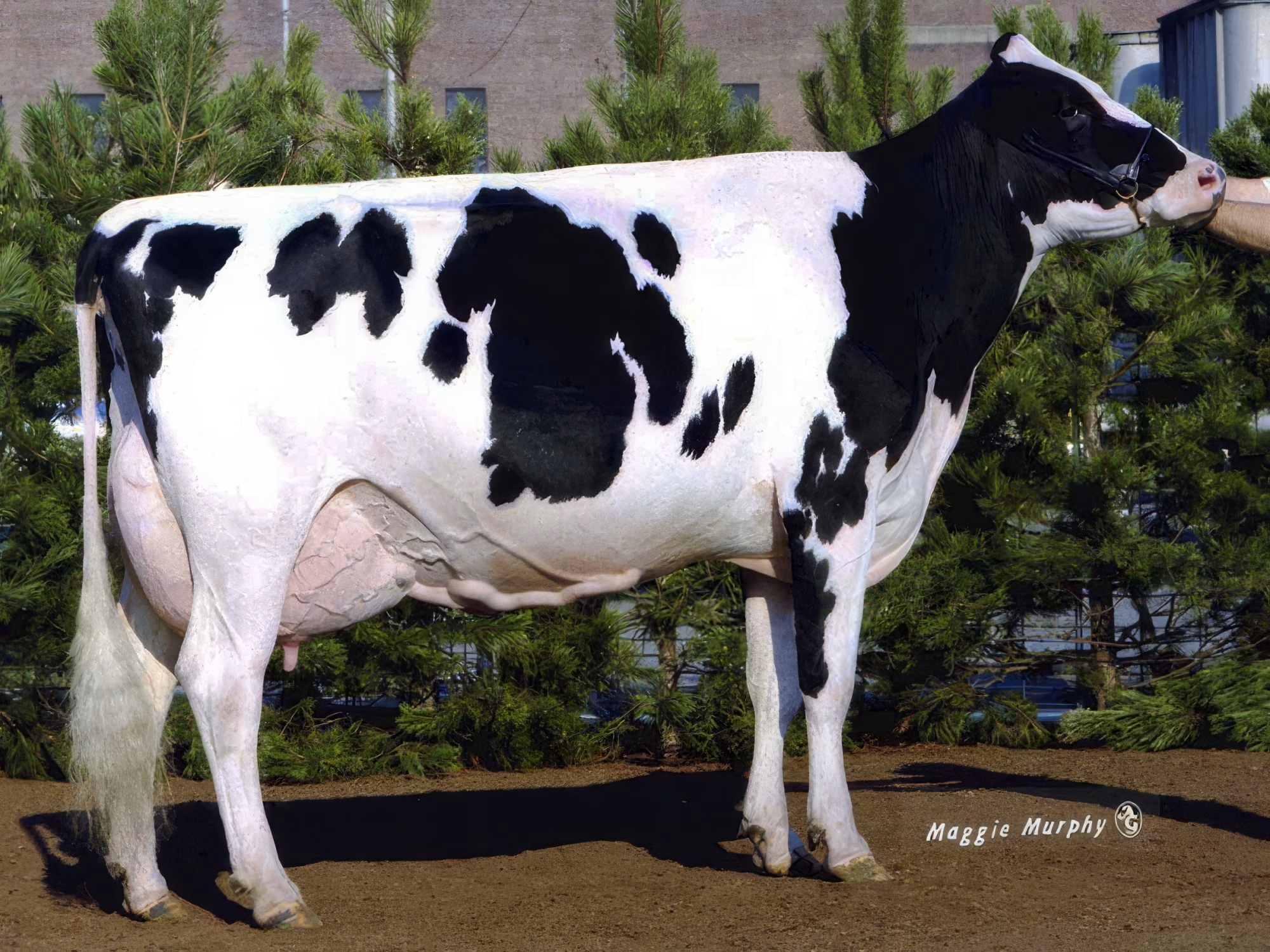
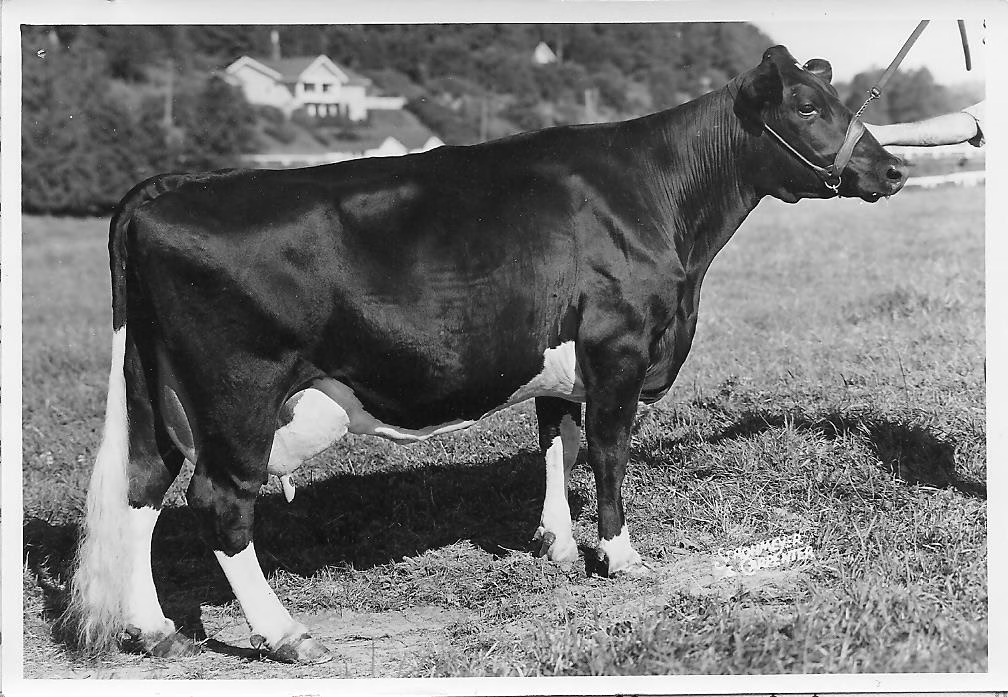
Rainyridge Tony Beauty EX-5E 9*, pictured here in her prime, exemplifies Roy Ormiston's enduring genetic influence in modern Holstein breeding. This exceptional daughter of Marshfield Elevation Tony from a Roybrook Tempo dam demonstrates how Ormiston's emphasis on balanced conformation, productive capacity, and maternal strength continues to shape superior Holstein lines decades after Roybrook's dispersal. Her multiple "Excellent" classifications and proven ability to transmit excellence to her nine starred daughters illustrates the lasting relevance of Ormiston's breeding principles in today's genomic era. With her powerful frame and dairy strength combined with maternal traits, she represents the type of "balanced cow" that Ormiston championed throughout his career-a living testament to his visionary approach.
Rainyridge Tony Beauty EX-5E 9*, exemplifies Roy Ormiston’s enduring genetic influence in modern Holstein breeding. This exceptional daughter of Marshfield Elevation Tony from a Roybrook Tempo dam demonstrates how Ormiston’s emphasis on balanced conformation, productive capacity, and maternal strength continues to shape superior Holstein lines decades after Roybrook’s dispersal.

Modern Relevance: Ormiston’s Vision in the Genomic Age

As Ormiston’s active breeding career concluded with the 1990 dispersal sale, the Holstein industry stood on the threshold of a technological revolution. The genomic era, which would begin in earnest two decades later, would bring capabilities that even a visionary like Ormiston could not have fully anticipated.

Yet, many of his breeding principles have found validation in the genomic age. The modern emphasis on balanced breeding values like Net Merit $ or the Balanced Performance Index (BPI) echoes Ormiston’s insistence on improving type, production, and longevity. The industry’s growing focus on feed efficiency and health traits reflects his emphasis on trouble-free cows that efficiently convert roughage to milk.

Perhaps most significantly, Ormiston’s skepticism about overreliance on statistical evaluation offers a valuable counterbalance to potential pitfalls of genomic selection. In the last days of the twentieth century, he “deplored the artificial insemination industry’s increasing reliance on statistics at the expense of common sense, describing some of the material that the geneticists were placing before the Holstein public as an insult to the human race.”

This perspective finds renewed relevance as some breeders express concern about the potential overemphasis on genomic indices at the expense of careful observation. The most successful modern breeding programs often combine genomic data with traditional functional type evaluation, precisely the balance Ormiston advocated.

The international chapter of Roybrook’s direct breeding program concluded with the herd’s dispersal on October 1, 1990. Dubbed the “Roybrook Retirement Party,” the event drew over 3,000 attendees worldwide. The 74 lots averaged an impressive $14,094.59, with 64% selling to international buyers. The sale topper was a Walkway Chief Mark, son of Roybrook Vale, purchased for $140,000 by K.K. Tokachi A.I. Centre in Japan.

Though the dispersal ended Ormiston’s active breeding, it accelerated the global dissemination of his genetics. Today, many Holstein cows trace their pedigrees back to Roybrook bloodlines, particularly through the widespread use of the Telstar-Starlite-Tempo sire trio and their descendants.

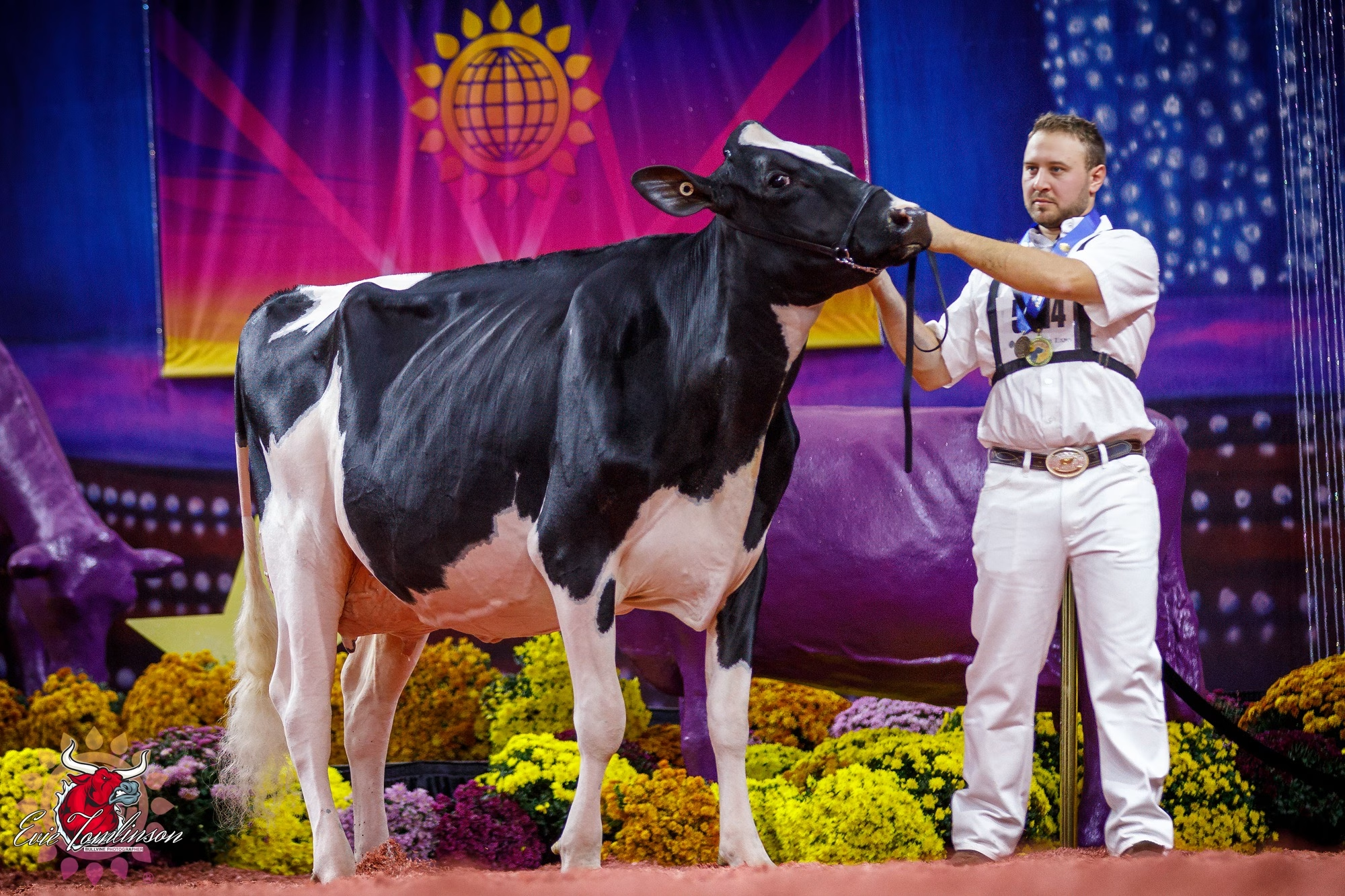
the 2014 World Dairy Expo, Lovhill Goldwyn Katrysha strikes the perfect pose as Reserve Grand Champion. This exceptional EX-96 Holstein exemplifies the modern ideal of balanced type and production, <a href='https://www.thebullvine.com/news/supporting-dairy-cattle-immune-system-demonstrates-improved-health-production/'>demonstrating tremendous dairy strength and an extraordinary mammary system</a>.

Sired by the legendary Braedale Goldwyn, Katrysha’s impressive pedigree traces through five generations of remarkable cow families, including Indianhead Encounter, Hanoverhill Inspiration, and ultimately back to Roybrook genetics. Her distant ancestor, Roybrook Starlite, was part of Roy Ormiston’s influential sire triumvirate that transformed global Holstein genetics-a living testament to how deep pedigrees built on balanced breeding philosophies continue to produce excellence decades later.” class=”wp-image-485241″/><figcaption class=The 2015 World Dairy Expo Supreme Champion, Lovhill Goldwyn Katrysha. This exceptional EX-96 Holstein exemplifies the modern ideal of balanced type and production, demonstrating tremendous dairy strength and an extraordinary mammary system. Sired by the legendary Braedale Goldwyn, Katrysha’s impressive pedigree traces through five generations of remarkable cow families, including Indianhead Encounter, Hanoverhill Inspiration, and ultimately back to Roybrook genetics. Her distant ancestor, Roybrook Starlite, was part of Roy Ormiston’s influential sire triumvirate that transformed global Holstein genetics-a living testament to how deep pedigrees built on balanced breeding philosophies continue to produce excellence decades later.

The Legacy Continues: Beyond Pedigrees and Production Records

Frederick Roy Ormiston passed away in December 2015 at the remarkable age of 100, having witnessed the transformation of Holstein breeding from the art he practiced to the data-driven science it has essentially become. His many honors included Master Breeder shields in 1963 and 1988, the U.S. Dairy Shrine’s Distinguished Cattle Breeder Award in 1989, and induction into the Canadian Agricultural Hall of Fame in 1999.

Yet Ormiston’s legacy extends far beyond these accolades. His influence continues through thousands of animals worldwide that trace back to Roybrook bloodlines. He championed balanced selection, emphasis on cow families, and breeding for lifetime performance, which are foundational to successful dairy breeding in any technological era.

His legacy is also evident in his community of Brooklin, Ontario, where roads bear the names of his famous herd and where he generously donated 25 acres of land for a new hospital-physical reminders of his breeding achievements and character.

“I don’t think at first I had any definite plan,” Ormiston once reflected. “I was interested in Holsteins, and when you are interested in something, you want to breed the best.” Rather than chasing trends, this focus on fundamental excellence helped create animals that excelled not just in the showring or on production tests but in the broader measure of a lifetime contribution to the breed.

As genomic technology continues evolving, Ormiston’s career reminds us that behind every SNP chip and genomic evaluation lies the fundamental goal he pursued throughout his life: breeding trouble-free cows that efficiently convert feed to quality milk, generation after generation.

Roy Ormiston’s enduring contribution was the elegant balance he achieved between progressive innovation and timeless principles of genetic ballet choreographed by a master breeder whose work continues to influence Holstein cattle worldwide. In an industry constantly pursuing the next breakthrough, Ormiston reminds us that sometimes the most revolutionary approach is maintaining an unwavering focus on fundamental excellence across generations.

Key Takeaways

  • Ormiston’s greatest insight was recognizing the White Cow’s extraordinary ability to transmit excellence regardless of sire, leading to his successful linebreeding strategy
  • His balanced selection approach-improving udder conformation, component percentages, and productive efficiency simultaneously-created cows that thrived for 8-12 lactations with exceptional production
  • Ormiston’s skepticism of purely statistical evaluation offers valuable perspective in today’s genomic era, reminding breeders that behind every index lies the fundamental goal of breeding trouble-free, productive cows
  • The global influence of Roybrook genetics demonstrates how a focused breeding program from a modest farm can transform an entire breed through clear vision and disciplined selection
  • His philosophy-“I like to compare a dairy cow to a building. If you don’t have a very good foundation, then it isn’t going to stand up too long”-remains foundational to successful dairy breeding in any technological era

Executive Summary

Frederick Roy Ormiston revolutionized Holstein breeding through his visionary approach centered around a single remarkable cow-“The White Cow”-acquired for $750 in 1956. Through strategic linebreeding on this exceptional animal’s family, he created a dynasty that produced influential sires like Telstar, Starlite, and Tempo, whose genetics spread to six continents. Ormiston’s breeding philosophy balanced type with production while emphasizing longevity, rejecting the industry’s growing reliance on statistics in favor of deep cow family knowledge and careful observation. His principles of breeding trouble-free, efficient cows with sound structure and high components proved remarkably prescient, earning him recognition as “North America’s most admired breeder.” Though his active program ended with the 1990 dispersal sale, Ormiston’s genetic legacy and balanced approach remain profoundly relevant in today’s genomic era.

Learn more:

Join the Revolution!

Join over 30,000 successful dairy professionals who rely on Bullvine Daily for their competitive edge. Delivered directly to your inbox each week, our exclusive industry insights help you make smarter decisions while saving precious hours every week. Never miss critical updates on milk production trends, breakthrough technologies, and profit-boosting strategies that top producers are already implementing. Subscribe now to transform your dairy operation’s efficiency and profitability—your future success is just one click away.
NewsSubscribe
First
Last
Consent

Cash from Cow Burps: How Dairy Farmers Are Turning Climate Challenges Into $1,200/Head Profit

Dairy farmers slash methane emissions & boost profits by $1,200/head. Discover how climate action drives dairy’s sustainable future.

The dairy industry stands at a critical crossroads in 2025. While facing mounting pressure to reduce greenhouse gas emissions, forward-thinking producers are discovering that environmental stewardship and profitability aren’t mutually exclusive. The question isn’t whether to address emissions—how to leverage this challenge into a competitive advantage that puts real money in your pocket.

The global conversation around climate change has placed dairy farming squarely in the spotlight, with a significant focus on methane emissions from livestock production. For dairy farmers, this isn’t just an environmental issue—it’s a business reality that affects everything from operational decisions to market access and farm viability.

What’s remarkable is how rapidly the industry has evolved. Canadian dairy farmers have reduced their carbon footprint by 22% per liter of milk produced since 2011, demonstrating that progress is not only possible but already underway. Yet the journey toward sustainability is far from complete, with ambitious industry goals such as commitments to net-zero greenhouse gas emissions by 2050 setting a clear direction for the future.

“We implemented covered manure storage last year and saw a 65% reduction in methane emissions from that source alone,” says Martin Brodeur, a 120-cow dairy producer from Quebec. “The $85,000 investment is paying for itself through reduced odor complaints, improved nutrient retention in our manure, and a premium from our processor’s sustainability program.”

The Methane Math, They Don’t Want You to See: Dairy’s True Climate Impact

Let’s cut through the bull: Dairy farming contributes to greenhouse gas emissions, primarily through methane from cow digestion and manure storage. But here’s the truth activists don’t want you to hear – cutting every dairy herd’s emission by 50% would equal just a fraction of national GHG output. Only 10% of greenhouse gas emissions come from crop and livestock production combined.

According to Dalhousie University research using NASA and European Space Agency satellite data, a typical 100-cow dairy farm emits about 11,500 kg of methane in winter alone. That’s equivalent to 74 cars driven for a year. But context matters. Methane also comes from natural wetlands, fossil fuel extraction, and landfills. Nitrous oxide has multiple sources beyond agriculture.

For dairy farmers, understanding your specific emission sources is crucial:

  • Enteric methane (cow digestion): 40-60% of farm emissions
  • Manure methane: 20-35%
  • Nitrous oxide (manure and fertilizer): 10-20%
  • Carbon dioxide (energy use): 5-15%

Turning Methane into Money: The $1,200/Head Opportunity

Forget carbon credits—the real monies in your manure. University of Guelph data proves low-emission herds bank an extra $1,200 per head compared to high-emission operations. Here’s how to claim your share:

Methane Mitigation Roadmap

TimelineStrategyEmissions CutROI Considerations
ImmediateIncrease dietary lipids5-15%Low-cost; boosts milk fat
1-3 YearsCovered manure storage50-80%$85K investment; odor reduction benefits
5+ YearsMethane vaccines30-60%Pending CFIA approval

The Bullvine Bottom Line: Start with feed strategies for quick wins while planning for larger infrastructure investments with proven payback periods.

Feed Additives: The Low-Hanging Fruit

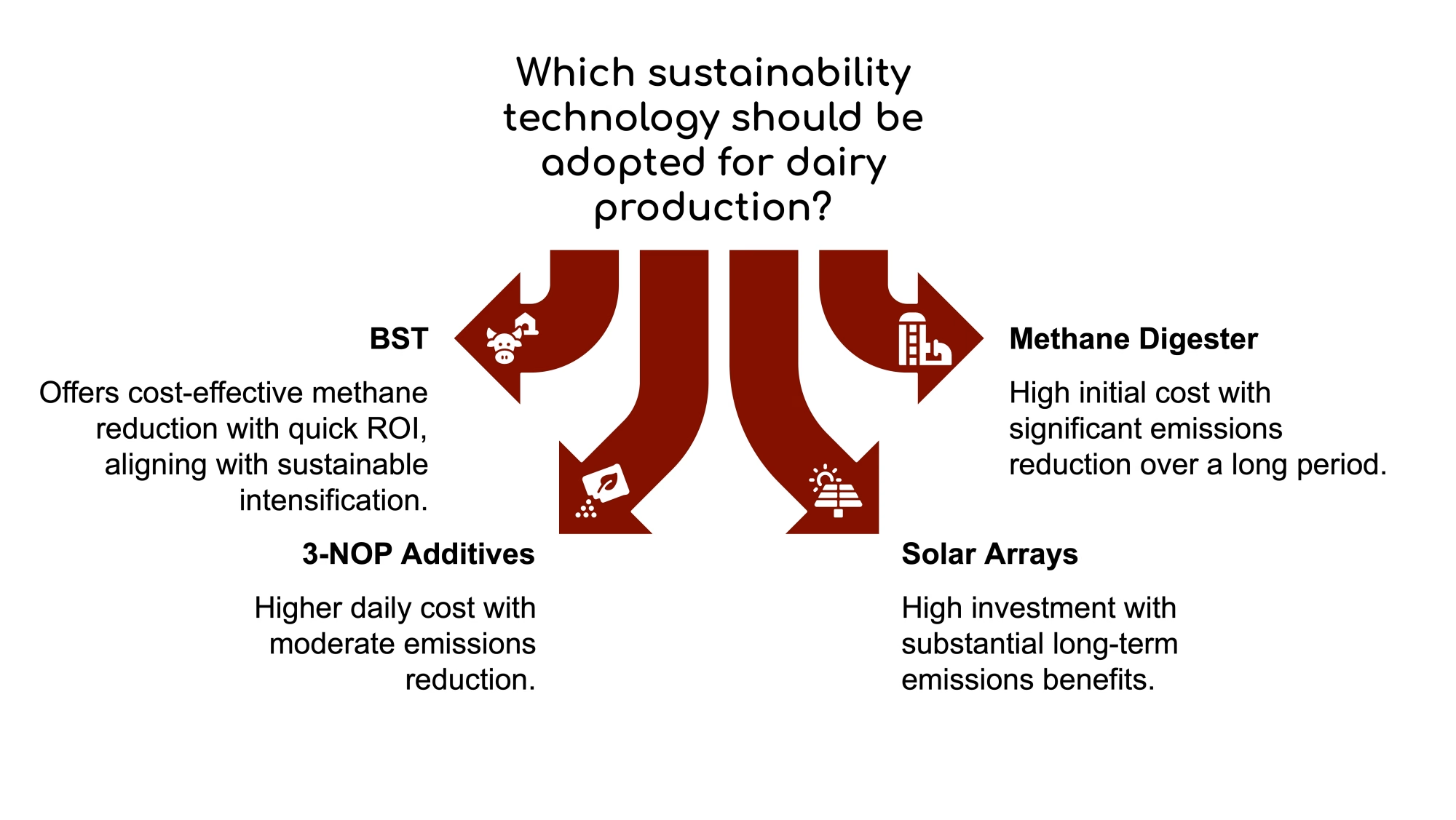
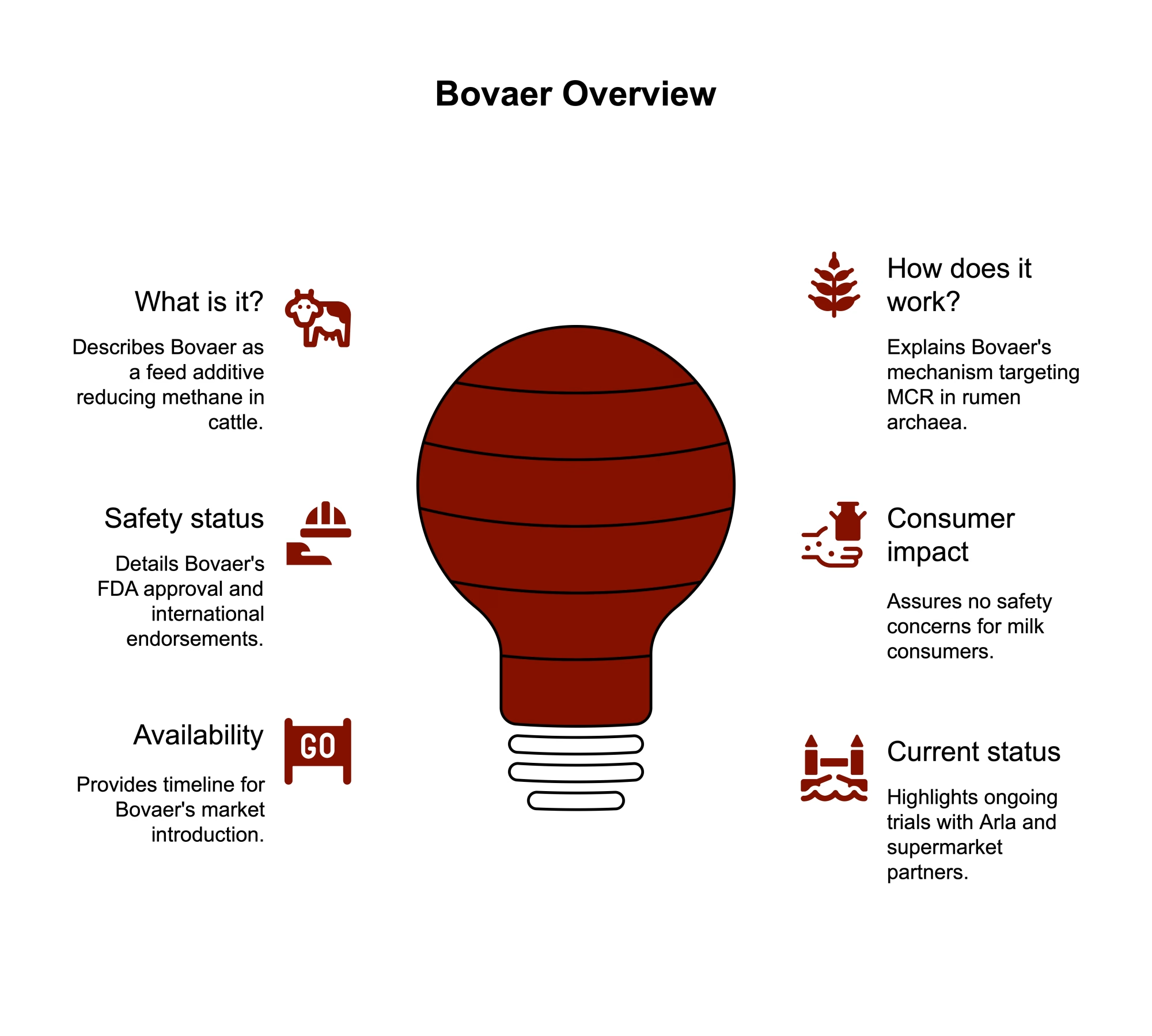
3-nitrooxypropanol (3-NOP), marketed as Bovaer, can slash methane by 20-40%. Has been approved, making it available to Canadian producers. While it may slightly reduce dry matter intake and milk yield, the economic analysis shows promising results, especially for larger operations.

“We started using Bovaer in our Total Mixed Ration (TMR) system in March, and we’re seeing about a 25% drop in methane with minimal impact on production,” reports Sarah Jennings, who milks 200 cows in Ontario. “The processor premium of $0.08 per liter more than covers the additive cost.”

Grazing for Green: Pasture Power

Emerging research shows that enteric methane emissions from cows fed fresh grass on pasture are 20-28% lower than silage-fed indoor herds. This underscore grazing as a potentially lower-cost approach to methane reduction.

Genetics: Breeding a Lower-Emission Herd

A University of Guelph innovation using genetic selection to reduce methane emissions in dairy cattle won the University’s Innovation of the Year Award for 2023. Semex is already developing genetic rankings to help producers select for lower methane genetics.

Methane Money Calculator

Herd SizeTechnologyInitial InvestmentAnnual Savings/RevenuePayback Period
50-100 cowsFeed additives (3-NOP)$8,000-15,000/year$12,000-22,000Immediate
100-200 cowsCovered manure storage$75,000-120,000$15,000-30,0004-5 years
200+ cowsAnaerobic digester$500,000+$50,000-100,000+5-10 years

Based on University of Guelph research and farm case studies. Actual results will vary based on specific farm conditions, management practices, and available incentives.

Beyond Emissions: Dairy’s Secret Weapon in the Climate Fight

When the emissions debate heats up, remember dairy’s unique superpowers:

Upcycling Champions: Turning Trash into Nutritional Treasure

Dairy cows are nature’s ultimate upcyclers, converting inedible byproducts into high-quality human food. Your herd transforms:

  • Distillers’ grains from ethanol production
  • Brewers’ grains from beer-making
  • Beet pulp from sugar processing
  • Canola and soybean meal after oil extraction
  • Wheat middlings and bran from flour milling

This isn’t just waste management; it’s resource efficiency at its finest.

“Our ration includes about 30% byproducts that would otherwise go to waste,” explains Jean-Pierre Lavoie, a Quebec dairy farmer with 150 cows. “We’re turning food processing waste into high-quality protein and essential nutrients. Try doing that with a soybean.”

Nutrient Density: More Bang for Your Environmental Buck

Dairy packs a serious nutritional punch. Milk shines when evaluating foods based on emissions per unit of nutrient delivered. It’s a concentrated source of:

  • Calcium: Essential for bone health and in low global supply
  • Vitamin D: Crucial for calcium absorption and immune function
  • Vitamin B12: Necessary for red blood cell formation and neurological function
  • High-quality protein, riboflavin, phosphorus, and potassium

The Dairy Farmer’s Cheat Sheet: 5 Immediate Actions to Boost Profits and Cut Emissions

  1. Test Bovaer on 10% of your herd today: This feed additive can reduce methane by 20-40% with minimal production impact.
  2. Improve forage quality: Better digestibility means less methane per liter of milk and better feed efficiency.
  3. Consider part-time grazing: Research shows 20-28% lower methane from cows on pasture versus those fed silage indoors.
  4. Upgrade manure management: Even simple covers can reduce methane emissions by 50-80%.
  5. Select for lower-emission genetics: New tools from Semex and Lactanet make it easier to breed for reduced methane production.

The Bottom Line: Turning Climate Challenges into Dairy Dominance

Stop apologizing for methane. Start monetizing it. Your cows aren’t the problem—they’re the solution. Now, turn that manure into money.

The most successful dairy producers will be those who view emission reduction not as a regulatory burden but as a catalyst for innovation and improvement. By focusing on strategies that align with environmental and economic goals, you can position your farm for long-term success in an increasingly carbon-conscious marketplace.

The industry has already demonstrated remarkable progress, with significant reductions in emissions per unit of milk over recent decades. This track record of continuous improvement provides a strong foundation for meeting ambitious targets like net-zero emissions by 2050.

As the global food system evolves, dairy’s unique contributions—from upcycling inedible materials to providing essential nutrients—will remain valuable. By addressing emissions while highlighting these benefits, the industry can strengthen its position as an essential part of sustainable food production.

For individual farmers, the path forward involves finding farm-specific solutions that reduce emissions while maintaining economically viable operations. This isn’t about choosing between profitability and sustainability—it’s about discovering how these goals can reinforce each other.

The dairy farmers who proactively engage with this challenge—finding their own “right balance” between environmental impact and nutritional contribution—will be best positioned to thrive in the decades ahead. Don’t just survive the climate conversation—use it to build a more profitable, resilient, and sustainable dairy operation for generations to come.

Key Takeaways:

  • Profit + Planet: Low-emission herds yield $1,200+/head via feed additives, manure tech, and genetics.
  • Methane Mitigation Roadmap: Immediate gains from improved forage, mid-term wins with covered manure, long-term solutions via vaccines.
  • Nutritional Powerhouse: Dairy delivers irreplaceable micronutrients (calcium, B12) while upcycling 30% of diets from food/ag byproducts.
  • Balance is Key: Emissions reduction isn’t about eliminating cows but optimizing their ecological niche for sustainable food systems.

Executive Summary:

Dairy farmers are proving environmental stewardship and profitability go hand-in-hand, with low-emission herds earning $1,200 more per cow. While methane from digestion and manure remains a challenge, innovations like methane-reducing feed additives (e.g., Bovaer), genetic selection, and grazing management offer practical solutions. Dairy’s unique role in upcycling agricultural byproducts and delivering essential nutrients like calcium and Vitamin D underscores its irreplaceable value. With industry commitments to net-zero by 2050 and tools like anaerobic digesters, farmers are balancing emissions reduction with economic viability. The future lies in leveraging efficiency gains and policy support to transform climate pressures into profitable opportunities.

Learn more:

Join the Revolution!

Join over 30,000 successful dairy professionals who rely on Bullvine Daily for their competitive edge. Delivered directly to your inbox each week, our exclusive industry insights help you make smarter decisions while saving precious hours every week. Never miss critical updates on milk production trends, breakthrough technologies, and profit-boosting strategies that top producers are already implementing. Subscribe now to transform your dairy operation’s efficiency and profitability—your future success is just one click away.

NewsSubscribe
First
Last
Consent

Ontario Spring Discovery Holstein Show 2025

April 23rd, 2025 @ Ancaster Ontario
Judge: Aaron Eaton, NY USA

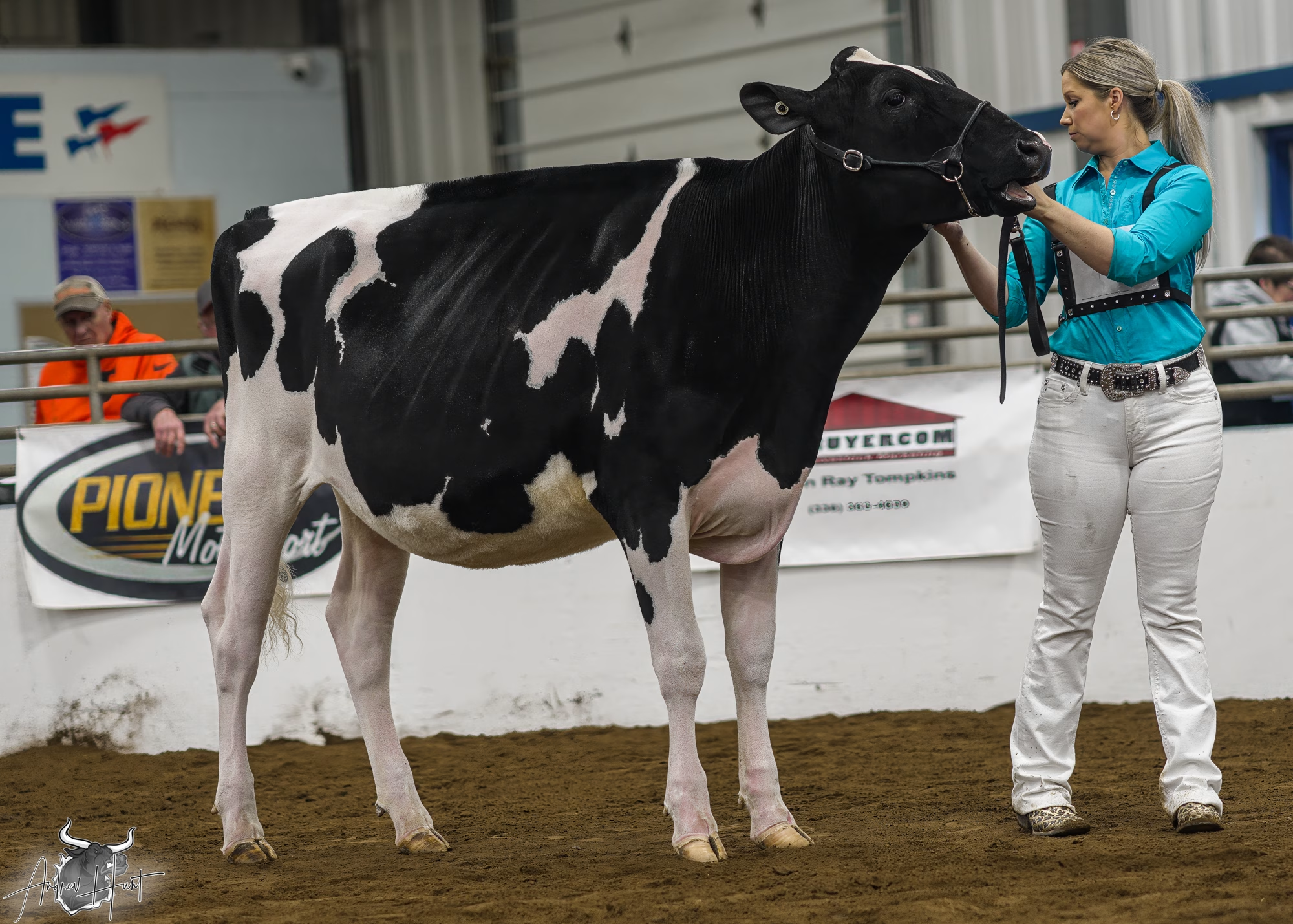
The Ontario Holstein Spring Show featured exceptional quality across all divisions, with judge Aaron Eaton consistently emphasizing balanced frames, dairy strength, and structural correctness throughout his evaluations. UP-RIDGE ALLEYOOP FREEZIE from Up-Ridge Holsteins of Embro emerged as the show’s Grand Champion and Best Udder, praised for her “brilliant udder system” and “beautiful dairy quality from one end to the other.” The junior division saw ECHO GLEN MASTER IVY from Ronald Grandy of Oshawa claim Junior Champion honors, while GOLDENFLO LAMBDA DOMINATE from Hodglynn Holsteins of Kincardine secured both Intermediate Champion and Reserve Grand Champion. In the colored division, GOLDEN-OAKS ALEXIS-RED-ET exhibited by Hodglynn Holsteins claimed Red & White Grand Champion.

The show demonstrated remarkable depth with several exhibitors garnering multiple top placings. Ronald Grandy of Oshawa presented several class winners and champions, while Hodglynn Holsteins, Clarkvalley Holsteins, and Ferme Blondin all showcased multiple top animals. Judge Eaton’s commentary consistently highlighted the importance of “balanced” frames, “open ribs,” “dairy strength,” and superior “mammary systems” that blend “smoothly into the body wall.” Throughout his evaluations, Eaton demonstrated appreciation for both promising young animals and proven mature cows, emphasizing the dedication required to develop championship-caliber cattle “365 days a year.”

Grand Champion

Up-Ridge Alleyoop Freezie
Grand Champion
Ontario Spring Discovery Holstein Show 2025 
Up-Ridge Holsteins, Embro, ON
Up-Ridge Alleyoop Freezie Grand Champion Ontario Spring Discovery Holstein Show 2025 
Up-Ridge Holsteins, Embro, ON

The Grand Champion selection judged by Aaron Eaton represented the culmination of what the judge described as “a first class event,” bringing together class winners that exemplified exceptional dairy strength, udder quality, and overall balance. UP-RIDGE ALLEYOOP FREEZIE (Alleyoop), the first-place four-year-old exhibited by Up-Ridge Holsteins of Embro, Ontario, claimed both Grand Champion and Best Udder of Show honors with what Eaton described as a “brilliant udder system.” Standing as Reserve Grand Champion was GOLDENFLO LAMBDA DOMINATE (Delta-Lambda), the first-place winter two-year-old from Hodglynn Holsteins of Kincardine, a “beautiful, beautiful cow” that impressed the judge as “going to the next level,” particularly notable for competing so successfully as a young cow. Completing the championship lineup with Honorable Mention was GENDARRA DEMPSEY HOPSCOTCH (Dempsey), the first-place mature cow from Gendarra Farm of Bailieboro, a six-calver demonstrating “so much power, so much balance” that exemplified the judge’s appreciation for longevity in the breed. The championship selection highlighted exceptional quality across age divisions, with Eaton praising all exhibitors for their dedication to these outstanding animals “365 days a year.”

Grand Champion & Best Udder of Show: Up-Ridge Alleyoop Freezie (Alleyoop), 1st 4-year-old, Up-Ridge Holsteins, Embro, ON
Reserve Grand Champion: Goldenflo Lambda Dominate (Delta-Lambda), 1st winter 2-year-old, Hodglynn Holsteins, Kincardine, ON
Honorable Mention Grand Champion: Gendarra Dempsey Hopscotch (Dempsey), 1st mature cow, Gendarra Farm, Bailieboro, ON

Red & White Holstein Grand Champion

Golden-Oaks Alexis-Red
Red & White Grand Champion
Ontario Spring Discovery Holstein Show 2025 
Hodglynn Holsteins & Raymond Smygwaty, Kincardine, ON
Golden-Oaks Alexis-Red
Red & White Grand Champion
Ontario Spring Discovery Holstein Show 2025 

Hodglynn Holsteins & Raymond Smygwaty, Kincardine, ON

GOLDEN-OAKS ALEXIS-RED-ET (Unstopabull), exhibited by Hodglynn Holsteins and Raymond Smygwaty of Kincardine, Ontario, claimed the Grand Champion banner, having previously stood as the first-place Red & White in the four-year-old class. Standing as Reserve Grand Champion was PATIENCE MIRAND DAFFODIL (Mirand) from Parallel Genetics and Patience Holsteins of East Garafraxa, the first-place Red & White in the five-year-old division. Completing the championship lineup with Honorable Mention was the younger HODGLYNN UNSTOPABULL VENICE (Unstopabull), the sixth-place spring two-year-old exhibited by Clarkvalley Holsteins of Woodville who had earlier claimed the Red & White Intermediate Champion title. The championship class highlighted the exceptional quality of Red & White Holsteins present at this show, demonstrating the impressive progress breeders have made in developing colored animals that can compete at the highest levels of the breed.

Red & White Holstein Grand Champion: Golden-Oaks Alexis-Red-ET (Unstopabull), Hodglynn Holsteins & Raymond Smygwaty, Kincardine, ON
Red & White Holstein Reserve Grand Champion: Patience Mirand Daffodil (Mirand), Parallel Genetics & Patience Holsteins, East Garafraxa, ON
Red & White Holstein Honorable Mention Grand Champion: Hodglynn Unstopabull Venice (Unstopabull), 6th spring 2-year-old, Clarkvalley Holsteins, Woodville, ON

Intermediate Champion

GOLDENFLO LAMBDA DOMINATE 1st place Winter Two Year Old Ontario Spring Discovery Holstein Show 2025 
HODGLYNN HOLSTEINS, KINCARDINE, ON
GOLDENFLO LAMBDA DOMINATE
Intermediate Champion
Ontario Spring Discovery Holstein Show 2025 

HODGLYNN HOLSTEINS, KINCARDINE, ON

GOLDENFLO LAMBDA DOMINATE (Delta-Lambda) from Hodglynn Holsteins of Kincardine, Ontario, claimed the Intermediate Champion banner, impressing the judge noted her advantage of being “a little more up to the front,” suggesting superior fore udder attachment or front-end extension compared to her competitors. Standing as Reserve Intermediate Champion was LYSEM MASTER ANGEL (Master) from Ronald Grandy of Oshawa, Ontario, a cow that earned praise for her “beautiful balanced” udder, indicating exceptional symmetry and attachment in her mammary system. LYSEM LOYALL AUDE (Loyall) from Blondin Sires and Ferme Blondin of Saint-Placide, Quebec, completed the championship lineup with Honorable Mention, contributing to what the judge acknowledged as a class with “three tremendous deserving winners.” The championship class highlighted the exceptional quality of intermediate-aged cows presented at this show, with each animal demonstrating the balance of dairy strength and udder development that defines elite show cattle.

Intermediate Champion: Goldenflo Lambda Dominate (Delta-Lambda), 1st winter 2-year-old, Hodglynn Holsteins, Kincardine, ON
Reserve Intermediate Champion: Lysem Master Angel (Master), 1st spring 2-year-old, Ronald Grandy, Oshawa, ON
Honorable Mention Intermediate Champion: Lysem Loyall Aude (Loyall), 2nd spring 2-year-old, Blondin Sires, Ferme Blondin, Saint-Placide, QC

Red & White Holstein Intermediate Champion

Hodglynn Unstopabull Venice 
Intermediate Champion Red and White 
Ontario Spring Discovery Holstein Show 2025 
Clarkvalley Holsteins, Woodville, ON
Hodglynn Unstopabull Venice
Intermediate Champion Red and White
Ontario Spring Discovery Holstein Show 2025 
Clarkvalley Holsteins, Woodville, ON

HODGLYNN UNSTOPABULL VENICE (Unstopabull), the sixth-place spring two-year-old exhibited by Clarkvalley Holsteins of Woodville, Ontario, claimed the Intermediate Champion banner with what Eaton described as a “more balanced fore udder” and “nicer spring to that rib.” He particularly praised her “tremendous mammary system” and noted her advantage in being “more refined in bone” compared to her competitors. Standing as Reserve Intermediate Champion was UP-RIDGE ANALYST MAGNIFICENT (Analyst), the third-place junior three-year-old from Up-Ridge Holsteins of Embro, Ontario, impressing as a “big, straight line three-year-old” with superior qualities in her rear udder, showing “more height and width” with “nicer definition.” Completing the championship lineup with Honorable Mention was JACOBS UNSTOPABULL LISA-RED (Unstopabull), the fourth-place fall two-year-old from Fraeland Farms of Fergus, Ontario, a “beautiful balance” cow that the judge noted has a “bright future” ahead of her. The class demonstrated the impressive quality of the Red & White Holstein program at this show, with Eaton emphasizing the potential of these young cows.

Red & White Holstein Intermediate Champion: Hodglynn Unstopabull Venice (Unstopabull), 6th spring 2-year-old, Clarkvalley Holsteins, Woodville, ON
Red & White Holstein Reserve Intermediate Champion: Up-Ridge Analyst Magnificent (Analyst), 3rd junior 3-year-old, Up-Ridge Holsteins, Embro, ON
Red & White Holstein Honorable Mention Intermediate Champion: Jacobs Unstopabull Lisa-Red (Unstoppabull), 4th fall 2-year-old, Fraeland Farms, Fergus, ON

Junior Champion

ECHO GLEN MASTER IVY
Junior Champion
Ontario Spring Discovery Holstein Show 2025 
RONALD GRANDY, OSHAWA, ON
ECHO GLEN MASTER IVY Junior Champion Ontario Spring Discovery Holstein Show 2025 
RONALD GRANDY, OSHAWA, ON

The championship class showcased remarkable balance, dairy strength, and exceptional feet and leg structure throughout, with Eaton noting that all contestants were “beautiful legged heifers” who demonstrated impressive structural correctness and dairy character. ECHO GLEN MASTER IVY (Master), the first-place winter yearling exhibited by Ronald Grandy of Oshawa, Ontario, claimed the Junior Champion banner with what Eaton described as “everything I look for in a heifer” featuring a “beautiful balance and combination of dairy strength and tremendous leg.” Her “crisp” frame and superior “angle” gave her the advantage over the Reserve Champion. Standing as Reserve Junior Champion was MILKSOURCE A TIERNEY-RED-ET (Architect), the first-place fall yearling exhibited by Adam Clark, Jeff & Jim Butler, and Pierre Boulet of Woodville, who impressed with her “maturity” advantage and how she “blends out of her shoulder just a little bit nicer.” Completing the championship lineup with Honorable Mention was DARLING MASTER FREEZIE (Master), the first-place summer yearling from Coxlyn Farms Ltd. and Darling Holsteins of Uxbridge, a heifer that “really grabs when she walks in the ring” and is “so balanced and dairy from one end to the other.” The judge emphasized that all three champions were exceptional, describing them as “flawless” with “hard tops” and “exceptional sets of feet and legs.”

Junior Champion: Echo Glen Master Ivy (Master), 1st winter yearling, Ronald Grandy, Oshawa, ON
Reserve Junior Champion: Milksource A Tierney-Red-ET (Architect), 1st fall yearling, Adam Clark, Jeff & Jim Butler and Pierre Boulet, Woodville, ON
Honorable mention Junior Champion: Darling Master Freezie (Master), 1st summer yearling, Coxlyn Farms Ltd & Darling Holsteins, Uxbridge, ON

Red & White Holstein Junior Champion

MILKSOURCE A TIERNEY-RED
Junior Champion Red & White
Ontario Spring Discovery Holstein Show 2025
ADAM CLARK, JEFF & JIM BUTLER, PIERRE BOULET, WOODVILLE, ON
MILKSOURCE A TIERNEY-RED Junior Champion Red & White Ontario Spring Discovery Holstein Show 2025 ADAM CLARK, JEFF & JIM BUTLER, PIERRE BOULET, WOODVILLE, ON

MILKSOURCE A TIERNEY-RED-ET (Architect), the first-place fall yearling exhibited by Adam Clark, Jeff & Jim Butler, and Pierre Boulet of Woodville, ON, claimed the Junior Champion banner as a heifer that displayed exceptional “balance all the way through” and was “hard topped.” Eaton particularly admired her for having “tremendous sets of feet and legs” that complemented her overall dairy strength. Standing as Reserve Junior Champion was BOBMUR ALPHA NYLA (Alpha) from Bobmur Farms of Listowel, ON, another fall yearling that the judge praised for similar qualities, noting how both champion heifers showed “more openness” compared to other contenders. SANEXA ILLUST RED LAVENDER (Illustrator-P), owned by Kenneth Empey Jr. of Dorchester, ON, earned Honorable Mention honors, rounding out what the judge described as “three tremendous heifers.” Throughout his evaluation, Eaton emphasized how the top animals displayed exceptional “dairy quality all the way through” with “big open ribs” and were “quality from one end to the other.”

Red & White Holstein Junior Champion: Milksource A Tierney-Red-ET (Architect), 1st fall yearling, Adam Clark, Jeff & Jim Butler and Pierre Boulet, Woodville, ON
Red & White Holstein Reserve Junior Champion: Bobmur Alpha Nyla (Alpha), 3rd fall yearling, Bobmur Farms, Listowel, ON
Red & White Holstein Honorable Mention Junior Champion: Sanexa Illust Red Lavender (Illustrator-P), 11th fall yearling, Kenneth Empey Jr, Dorchester, ON

Winter Heifer

Born December 1st, 2024 to February 28th, 2025

REDCARPET DM CABRERA
1st place Winter Calf
Ontario Spring Discovery Holstein Show 2025 
CERTIFIED HOLSTEINS, CLARKVALLEY HOLSTEINS, TRISTAN RAE
REDCARPET DM CABRERA 1st place Winter Calf Ontario Spring Discovery Holstein Show 2025 
CERTIFIED HOLSTEINS, CLARKVALLEY HOLSTEINS, TRISTAN RAE

The Winter Calf class at the Ontario Holstein Spring Show featured an impressive lineup of young animals, with judge Aaron Eaton highlighting exceptional style and dairy character throughout the class. REDCARPET DM CABRERA-ET, exhibited by Certified Holsteins, Clarkvalley Holsteins, and Tristan Rae, claimed the championship ribbon with her exceptional balance and openness throughout her frame. Eaton praised her for “beautiful style and presence as she moves around the ring” and her superior dairyness through the front end. Standing in second was FRICOSONS MAJOR ALCOHOLIC from Fricosons Holsteins of Newcastle, Ontario, impressing with her “width all the way through” and “beautiful sweep to her rib,” demonstrating more substance throughout her frame compared to those placed below her. Completing the top three was ROBERTHAVEN MASTER DESIGN, owned by Jeremy Robertson and Keaton Phoenix of Elmvale, displaying outstanding “length of frame” and “bareness” along with being exceptionally “clean up through her head and neck”. KARNVIEW ENERGY MAJESTIC from Karnview Farms Inc. earned fourth place, distinguished by her dairy quality throughout and tracking more squarely on her rear legs compared to the “big body calf” KARNVIEW ACTIONMAN JEWEL in fifth position.

  1. REDCARPET DM CABRERA-ET, 3279784895
    CERTIFIED HOLSTEINS, CLARKVALLEY HOLSTEINS, TRISTAN RAE
  2. FRICOSONS MAJOR ALCOHOLIC, HOCANF15166385
    Bred & Owned sponsored by Unique Designs
    FRICOSONS HOLSTEINS, NEWCASTLE, ON
  3. ROBERTHAVEN MASTER DESIGN, HOCANF14624823
    JEREMY ROBERTSON, KEATON PHOENIX, ELMVALE, ON
  4. KARNVIEW ENERGY MAJESTIC, HOCANF15198976
    KARNVIEW FARMS INC, WOODSTOCK, ON
  5. KARNVIEW ACTIONMAN JEWEL, HOCANF15198974
    BROCK SICKAFOOSE, ALBION, IN
  6. WINRIGHT ALLIGATOR EVITA, HOCANF15179461
    BRIAN JOSEPH ENRIGHT, WINCHESTER, ON
  7. WCG UNIX COPYCAT, HOCANF14897994
    WILLOWCREEK GENETICS, HAGERSVILLE, ON
  8. MARTIN-VIEW BULLSEYE SYLVIE, HOCANF15218623
    RIVERDOWN HOLSTEINS, METCALFE, ON
  9. CHARBEND MASTER DESIREE, HOCANF15096601
    H. KEITH CHARLTON & CO, BRANTFORD, ON
  10. KAWARTHA JOHNNY MISSY-RED, HOCANF15047820
    1st place – Red & White
    CARL PHOENIX & FAMILY, KAWARTHA HOLSTEINS, SUNDERLAND, ON
  11. MORNINGSKY MASTER SHOWCRUSH, HOCANF15237176
    BECKRIDGE HOLSTEINS, QUALITY HOLSTEINS
  12. FRICOSONS ALLIGATOR ALLIE, HOCANF15166387
    BRIAN JOSEPH ENRIGHT, WINCHESTER, ON
  13. CLOVIS MASTER REINE, HOCANF121690666
    CLARKVALLEY HOLSTEINS, PIERRE BOULET, WOODVILLE, ON
  14. DELCREEK THE DARKSIDE, HOCANF15260166
    DELCREEK HOLSTEINS, WINCHESTER, ON
  15. MARFLOACRES MAJOR LIONA, HOCANF15136637
    CLARKVALLEY HOLSTEINS, WOODVILLE, ON
  16. CNOSSOME MAJOR PASSION, HOCANF15007861
    CNOSSOME HOLSTEINS, BRUNNER, ON
  17. FRICOSONS BULLSEYE HANNAH, HOCANF15166386
    BECKRIDGE HOLSTEINS, QUALITY HOLSTEINS, KESWICK, ON
  18. ECHO GLEN MASTER INOLA, HOCANF15064023
    ECHO GLEN FARM, DORCHESTER, ON
  19. DANDYLAND MAJOR AUGUSTA, HOCANF15052774
    DANDYLAND FARM, SCHOMBERG, ON
  20. KAROLSTEIN BROUILLY ANAHITA, HOCANF121541435
    SOURETH HOLSTEINS, NETHERLANDS
  21. BRIDGEVIEW RANDALL ALLEY, HOCANF15192839
    BRIDGEVIEW FARMS, BRANTFORD, ON
  22. KAWARTHA PH SALUTE PATRIOT, HOCANF15061534
    CARL PHOENIX & FAMILY, KAWARTHA HOLSTEINS, SUNDERLAND, ON
  23. SIEMERS-I DEVOUR TAQUITOS, HOCANF15196271
    STORY BOOK HOLSTEINS, OWEN SOUND, ON
  24. JACOBS CAPITAL GAIN BRILLONS, HOCANF15196270
    STORY BOOK HOLSTEINS, OWEN SOUND, ON

Fall Heifer

Born September 1st, 2024 to November 30th, 2024

ELITELANE RCG RAY LEWIS
1st place Fall Calf
Ontario Spring Discovery Holstein Show 2025 
WOODHILL HOLSTEINS, CLARKSBURG, ON
ELITELANE RCG RAY LEWIS 1st place Fall Calf Ontario Spring Discovery Holstein Show 2025 
WOODHILL HOLSTEINS, CLARKSBURG, ON

Taking the blue ribbon was ELITELANE RCG RAY LEWIS-ET from Woodhill Holsteins of Clarksburg, Ontario, a calf that impressed with exceptional “dairiness, angularity, and length of frame all the way through”. Eaton particularly noted how this calf “stands more squarely on front and rear legs,” giving her the edge over the second-place entry. Standing in reserve was KARNVIEW BRAEMAR MASTER AZTEC, exhibited by Keith Beer of Berne, Indiana, drawing praise for its tremendous “capacity, open ribs in the midsection,” and “balance and width all the way through”. KARNVIEW ENERGY MIDNIGHT, the Bred & Owned entry from Karnview Farms of Woodstock, completed the top three, with Eaton highlighting this “high style calf” for its “exceptional set of feet and legs” and “more width through the hooks”. The fourth-place VALE-O-SKENE MASTER BRYNN from Vale-O-Skene Holsteins of Little Britain displayed remarkable “style” and “length of frame” with a “beautiful dairy open rib”, standing a “rib longer” than the fifth-place CHARBEND HANIKO SAGE from H. Keith Charlton & Co., which demonstrated excellent “balance and correctness of parts” throughout its frame.

  1. ELITELANE RCG RAY LEWIS-ET, HO840F3279784867
    WOODHILL HOLSTEINS, CLARKSBURG, ON
  2. KARNVIEW BRAEMAR MASTER AZTEC, HOCANF15047200
    KEITH BEER, BERNE, IN
  3. KARNVIEW ENERGY MIDNIGHT, HOCANF15198960
    Bred & Owned sponsored by Unique Designs
    KARNVIEW FARMS INC, WOODSTOCK, ON
  4. VALE-O-SKENE MASTER BRYNN, HOCANF15196412
    VALE-O-SKENE HOLSTEINS, LITTLE BRITAIN, ON
  5. CHARBEND HANIKO SAGE, HOCANF15096596
    H. KEITH CHARLTON & CO, BRANTFORD, ON
  6. MILIBRO MASTER MOUSSELYN, HOCANF121956810
    BUTLERVIEW FARM, CHEBANSE, IL
  7. KARNVIEW BRAEMAR MAJOR AMERICA, HOCANF15047201
    BRAEMAR HOLSTEINS, KARNVIEW FARMS INC, ST. MARYS, ON
  8. GENDARRA LOYALL FIREBIRD, HOCANF14532928
    GENDARRA FARM, KEATON PHOENIX, BAILIEBORO, ON
  9. FRAELAND ALPHA PRECIOUS, HOCANF14505554
    PARALLEL GENETICS, EAST GARAFRAXA, ON
  10. KINGSWAY TARMAC RIPCORD, HOCANF14798995
    BECKRIDGE HOLSTEINS, QUALITY HOLSTEINS, KESWICK, ON
  11. ECHO GLEN MASTER IZZY, HOCANF15064022
    ECHO GLEN FARM, DORCHESTER, ON
  12. QUALITY SIDEKICK DONNIE DOODLE, HOCANF14788649
    DELCREEK HOLSTEINS, QUALITY HOLSTEINS, BECKRIDGE HOLSTEINS, WINCHESTER, ON
  13. HARVESTACRE RAISE THE ROOF, HOCANF122071663
    FRANKHAVEN HOLSTEINS, MASON BUCKLEY, INGERSOLL, ON
  14. PERRINRIDGE MASTER HEIDI, HOCANF14982803
    PERRINRIDGE FARMS LTD, AYR, ON
  15. KARNVIEW ALPHA MAPLELEAF-RED, HOCANF15047198
    1st place – Red & White
    KEITH BEER, BERNE, IN
  16. KARNVIEW ACTIONMAN ABLISS, HOCANF15047197
    KARNVIEW FARMS INC, WOODSTOCK, ON
  17. ELECTRAS ELECTRIC ENERGY, HO840F3286494378
    NEW MORNING HOLSTEINS, MONKTON, ON
  18. KARNVIEW ACTIONMAN ABLUSH, HOCANF15047206
    CARL PHOENIX & FAMILY, KAWARTHA HOLSTEINS, SUNDERLAND, ON
  19. VALE-O-SKENE MASTER IRONIC, HOCANF15196410
    PROSPECT HOLSTEINS, VALE-O-SKENE HOLSTEINS, PORT PERRY, ON
  20. HARVESTACRE MAGIC POTION, HOCANF122071661
    MORNINGSKY HOLSTEINS, MILBANK, ON
  21. REDSHIFT DROPBOX HAVANNAH, HOCANF14860272
    NATHANAEL KROESBERGEN, BRANTFORD, ON
  22. CEDARPATCH EYE CANDY JULIET, HOCANF15011370
    CEDARPATCH HOLSTEINS, EVAN BLANCHARD, MILDMAY, ON
  23. KAYMANOR ALPHA APEROL, HOCANF14869834
    2nd place – Red & White
    RED ROOTS, SPRINGFIELD, ON
  24. HC15137331 CRUSHING LADIES, HOCANF15096926
    PLEASANT NOOK FARM, AYR, ON
  25. JACOBS CAPITAL GAIN BRITCOIN, HOCANF14992048
    LORMARR LEA HOLSTEINS, STORY BOOK HOLSTEINS, OWEN SOUND, ON
  26. BROOKTURN ILLUSTRATOR-P LISBON, HOCANF15159661
    BROOKTURN HOLSTEINS, ST. ANNS, ON
  27. LOYALYN ANAHITA PHILADELPHIA, HOCANF14714655
    ROB & ALICE BUMSTEAD, OWEN SOUND, ON
  28. POTLUCK ALPHA WHITE ARROW, HOCANF40051194
    KAYMANOR HOLSTEINS, STRATFORD, ON
  29. GLENBERT DELTA LAMBDA SKYZELLA, HOCANF15127131
    GLENBERT HOLSTEINS, EMBRO, ON
  30. MILLEN LAMBDA ALLEGRA, HOCANF15100123
    MISTY GLEN FARMS LTD, BELMONT, ON
  31. WILLOWLANE BULLSEYE SPARKS, HOCANF15178461
    BRIAN SLAUGHTER, WARWICK TWP, ON
  32. BRANDERLEA MASTER KRAFT, HOCANF14293472
    BRANDERLEA FARMS, ROCKWOOD, ON
  33. WILLOWLANE MASTER BRINLEY, HOCANF15178458
    BRIAN SLAUGHTER, WARWICK TWP, ON

Summer Yearling

Born June 1st, 2024 to August 31st, 2024

DARLING MASTER FREEZIE
1st place Summer Yearling
Ontario Spring Discovery Holstein Show 2025
COXLYN FARMS LTD, DARLING HOLSTEINS, UXBRIDGE, ON
DARLING MASTER FREEZIE 1st place Summer Yearling Ontario Spring Discovery Holstein Show 2025 COXLYN FARMS LTD, DARLING HOLSTEINS, UXBRIDGE, ON

Leading the impressive class was DARLING MASTER FREEZIE, a Bred & Owned entry from Coxlyn Farms Ltd. and Darling Holsteins of Uxbridge, Ontario. Eaton praised this balanced heifer for her “beautiful capacity all the way through midsection” and exceptional “width up through her chest” that continued “all the way back through,” giving her the edge over the second-place entry. PATIENCE BRAYDEN CINDY-LOU, exhibited by Bill Gibson, Parallel Genetics, and Patience Holsteins Ltd. of Stayner, claimed the second spot with her “high style,” superior “length of frame,” and “dairyness up through her head and neck,” showing “more angularity all the way through” compared to lower placings. Completing the top three was ECHO GLEN CHIEF PHYLLIS from Echo Glen Farm of Dorchester, a “well-balanced heifer” that “doesn’t have a lot of holes” with “beautiful” leg structure and a “more desirable set to her legs” than those placed below her. CNOSSOME MASTER BUTTERTART from Cnossome Holsteins secured fourth place, standing out for her “nicer blending up through that shoulder,” appearing “more natural all the way through” with “flatter bone in her hock” compared to the “real strong square heifer” KARNVIEW BULLSEYE ABOOM in fifth position.

  1. DARLING MASTER FREEZIE, HOCANF14404720
    Bred & Owned sponsored by Unique Designs
    COXLYN FARMS LTD, DARLING HOLSTEINS, UXBRIDGE, ON
  2. PATIENCE BRAYDEN CINDY-LOU, HOCANF14954052
    BILL GIBSON, PARALLEL GENETICS, PATIENCE HOLSTEINS LTD, STAYNER, ON
  3. ECHO GLEN CHIEF PHYLLIS, HOCANF15064012
    ECHO GLEN FARM, DORCHESTER, ON
  4. CNOSSOME MASTER BUTTERTART, HOCANF15007834
    CNOSSOME HOLSTEINS, BRUNNER, ON
  5. KARNVIEW BULLSEYE ABOOM, HOCANF15047173
    CHAD & TIM EGOLF, CHURUBUSCO, IN
  6. FRICOSONS DENVER AVALANCHE, HOCANF14925618
    FRICOSONS HOLSTEINS, KEATON PHOENIX, NEWCASTLE, ON
  7. DELCREEK LOYALL TO YOU, HOCANF14788639
    BECKRIDGE HOLSTEINS, JENNA MASTERSON, PARALLEL GENETICS, QUALITY HOLSTEINS, KESWICK, ON
  8. BEAVERBROCK CRUSHABULL LENNON, HOCANF14404721
    BEAVERBROCK FARMS, DARLING HOLSTEINS, CANNINGTON, ON
  9. KARNVIEW MASTER JUKEBOX, HOCANF15047182
    KARNVIEW FARMS INC, WOODSTOCK, ON
  10. RED-VIOLET KICK OFF-ET, HO840F3279784811
    GRAYCON HOLSTEINS, ELMVALE, ON
  11. SANEXA ILLUST RED LAVENDER, HOCANF121242001
    1st place – Red & White
    KENNETH R. EMPEY, JR, DORCHESTER, ON
  12. CROVALLEY SPEEDUP P SHOWOFF, HOCANF13961016
    KAWARTHA HOLSTEINS , CARL PHOENIX & FAMILY, REABORO, ON
  13. KINGSWAY LAMBDA BONES, HOCANF14798939
    KINGSWAY FARMS, HASTINGS, ON
  14. QUALITY BECKRIDGE MAJ HARMONY, HOCANF14627427
    AGRIBER SOCIETA AGRICOLA SRL, BECKRIDGE HOLSTEINS, QUALITY HOLSTEINS
  15. RED-VIOLET GOING SOLO-ET, HO840F3279784821
    STORY BOOK HOLSTEINS, OWEN SOUND, ON
  16. KENNEBEC LEMAGIC NETBOOK, HOCANF121609787
    ANDREW DEN HAAN, DEVIN MARTIN, PLUM VALLEY HOLSTEINS, FERGUS, ON
  17. KARNVIEW ILLUSTRATOR ALOHA-RED, HOCANF15047192
    2nd place – Red & White
    CADEN FINLEY, J DOWSWELL FARMS LTD, KARNVIEW FARMS INC, WOODVILLE, ON
  18. CERTIFIED CV GOLD BREEZE, HOCANF14966901
    CERTIFIED HOLSTEINS, CLARKVALLEY HOLSTEINS, HOWE HOLSTEINS INC, STRATHROY, ON
  19. KARNVIEW MASTER JUBILEE, HOCANF15047183
    COLIN & KAREN LEACH, LINDSAY, ON
  20. MAPLEKEYS HANDSOME IZLA, HOCANF14905688
    MAPLEKEYS FARMS, AYLMER, ON
  21. SEL045 ACTIONMAN SALSA, HOCANF14985162
    FRANKHAVEN HOLSTEINS, INGERSOLL, ON
  22. WILLOWLANE COURAGE CONNIE, HOCANF14989434
    BRIAN SLAUGHTER, KYLE SLAUGHTER, WARWICK TWP, ON
  23. BWFW DELTA-LAMBDA CASSIE-ET, HO840F3286233256
    NEW MORNING HOLSTEINS, MONKTON, ON
  24. ORANGEVIEW MAJOR LOVER, HOCANF14933082
    ORANGEVIEW HOLSTEINS, MONO, ON
  25. MAPLEVUE TATOO UR TATAS, HOCANF14733887
    MAPLEVUE FARMS, LISTOWEL, ON
  26. VALE-O-SKENE ROBIN DORA, HOCANF14887617
    3rd place – Red & White
    DIAMOND HILL FARMS, VALE-O-SKENE HOLSTEINS, CORNWALL, PE
  27. SPARKSVIEW LEMAGIC LAST CALL, HOCANF13856414
    SPARKSVIEW GENETICS, WOODSTOCK, ON

Spring Yearling

Born March 1st, 2024 to May 31st, 2024

SILVERDREAM MAJOR TOOTSIE
1st place Spring Yearling
Ontario Spring Discovery Holstein Show 2025 
RONALD GRANDY, OSHAWA, ON
SILVERDREAM MAJOR TOOTSIE 1st place Spring Yearling Ontario Spring Discovery Holstein Show 2025 
RONALD GRANDY, OSHAWA, ON

Taking the blue ribbon was SILVERDREAM MAJOR TOOTSIE from Ronald Grandy of Oshawa, Ontario, a heifer that truly “minimizes balance from one end to the other” with “precise movements around the ring.” Eaton particularly highlighted her “long-frame” and “beautiful balance to her midsection,” noting that she earned her advantage over second place by striding “a little nicer” with “a more desirable set to those rear legs right down through her hawk.” MARFLOACRES MAJOR JUMBLE, exhibited by Keaton Phoenix of Stanhowe, secured second place with her “style and balance” and “beautiful dairy strength all the way through,” striking “more fluently on those high legs” compared to lower placings. Completing the top three was ECHO GLEN TATOO EDDIE, the Bred & Owned entry from Echo Glen Farm of Dorchester, described as a “very striking big rib” heifer. She claimed her position over fourth place through her superior “overall length of frame,” greater “extension up through her head and neck,” and enhanced “dairyness up through her front end.” ECHO GLEN HH ALPHA POPPY from Echo Glen Farm and Howe Holsteins Inc. earned fourth place with her “beautiful legged, very balanced” appearance, showing more “dairyness” with a “beautiful sweet” rib that “breaks a little tighter up through her shoulder” compared to the “powerful” fifth-place KARNVIEW ENERGY ABRAKAZAM from Karnview Farms Inc. of Woodstock.

  1. SILVERDREAM MAJOR TOOTSIE, HOCANF14672770
    RONALD GRANDY, OSHAWA, ON
  2. MARFLOACRES MAJOR JUMBLE, HOCANF14931480
    KEATON PHOENIX, STANHOWE
  3. ECHO GLEN TATOO EDDIE, HOCANF14804605
    Bred & Owned sponsored by Unique Designs
    ECHO GLEN FARM, DORCHESTER, ON
  4. ECHO GLEN HH ALPHA POPPY, HOCANF14804604
    ECHO GLEN FARM, HOWE HOLSTEINS INC, DORCHESTER, ON
  5. KARNVIEW ENERGY ABRAKAZAM, HOCANF14767428
    KARNVIEW FARMS INC, WOODSTOCK, ON
  6. KAWARTHA BULLSEYE REBA, HOCANF14654470
    CARL PHOENIX & FAMILY, KAWARTHA HOLSTEINS, SUNDERLAND, ON
  7. RADOMERE MASTER MINAJ, HOCANF14759846
    GLENBERT HOLSTEINS, EMBRO, ON
  8. KARNVIEW EYE CANDY ANTIGUA, HOCANF14767432
    KARNVIEW FARMS INC, WOODSTOCK, ON
  9. KARNVIEW LEMAGIC REVOLVE, HOCANF15047155
    KARNVIEW FARMS INC, WOODSTOCK, ON
  10. EXCELERANT REAL HOT-RED-ET, HO840F3213061648
    1st place – Red & White
    ALLARWAY HOLSTEINS, SUNNY TERRACE HOLSTEINS, BRANTFORD, ON
  11. CHAKELBURG ALPHA SALTEE, HOCANF12463489
    CHAKELBURG HOLSTEINS, JEFF & CHELSEY STEPHENS, MILDMAY, ON
  12. PERRINRIDGE MASTER HOPE, HOCANF14982780
    PERRINRIDGE FARMS LTD, AYR, ON
  13. ELDERSLIE DEALMAKER MEDALIST, HOCANF14925105
    ETHAN BLOOMFIELD, KEATON PHOENIX, ILDERTON, ON
  14. CRESTOMERE MASTER LYRIC, HOCANF14836207
    K S F HOLSTEINS, OTTAWA, ON
  15. HEADWATER EYE LASHES-ET, HO840F3285292252
    CARL PHOENIX & FAMILY, KAWARTHA HOLSTEINS, SUNDERLAND, ON
  16. BECKRIDGE MASTER LOOK AT ME, HOCANF14841658
    BECKRIDGE HOLSTEINS, KESWICK, ON
  17. MAPLEKEYS ALPHA ASTEROID, HOCANF14905637
    MAPLEKEYS FARMS, AYLMER, ON
  18. RANWAY EYECANDY RICOTTA, HO840F3284913299
    BRIAN JOSEPH ENRIGHT, DANDYLAND FARM, JAQUEMET HOLSTEINS, WINCHESTER, ON
  19. DELCREEK FATALLY FAMOUS, HOCANF14788627
    BECKRIDGE HOLSTEINS, QUALITY HOLSTEINS, KESWICK, ON
  20. H-BRIDGE IMPACT JATA P RED, HOCANF14746585
    2nd place – Red & White
    PARALLEL GENETICS, PATIENCE HOLSTEINS LTD, SILVERCAP HOLSTEINS, SMITHDEN HOLSTEINS INC, EAST GARAFRAXA, ON
  21. COBEQUID ILLUSTRATOR DERICA, HOCANF14858521
    CERTIFIED HOLSTEINS, HOWE HOLSTEINS INC, STRATHROY, ON
  22. KARNVIEW CHIEF APEACH, HOCANF14767429
    KARNVIEW FARMS INC, WOODSTOCK, ON
  23. HOFF IMPACT-P LUCIA, HOCANF14840268
    PARALLEL GENETICS, VECTOR GENETICS, EAST GARAFRAXA, ON
  24. MORNINGSKY MASTER TIFFANY, HOCANF14906235
    MORNINGSKY HOLSTEINS, MILBANK, ON
  25. WILLOWLANE MASTER KRISHELL, HOCANF14989419
    BRIAN SLAUGHTER, WARWICK TWP, ON
  26. FOREST LEE DOORMAN PEARABEAU, HOCANF15075568
    FOREST LEE FARMS LTD, SPRINGFIELD, ON
  27. VALE-O-SKENE SK HAPPY HOUR, HOCANF14887605
    VALE-O-SKENE HOLSTEINS, LITTLE BRITAIN, ON
  28. HIDDENVIEW MASTER BRADY, HOCANF14958426
    CAMERON GARCIA, DONOVAN MARTIN, CALEDON, ON
  29. MAPLEVUE ALLEYOOP MAGIC, HOCANF14733884
    MAPLEVUE FARMS, LISTOWEL, ON

Winter Yearling

Born December 1st, 2023 to February 29th, 2024

ECHO GLEN MASTER IVY
1st place Winter Yearling
Ontario Spring Discovery Holstein Show 2025 
RONALD GRANDY, OSHAWA, ON
ECHO GLEN MASTER IVY 1st place Winter Yearling Ontario Spring Discovery Holstein Show 2025 
RONALD GRANDY, OSHAWA, ON

Leading the class with commanding presence was ECHO GLEN MASTER IVY from Ronald Grandy of Oshawa, Ontario, a heifer that “puts it all together” with “so much balance” and “angularity” throughout her frame. Eaton specifically praised her for being “straight as a string” with “beautiful openness and dairy strength,” noting she “tracks out on the best set of feet and legs in the class,” which ultimately gave her the advantage over her closest competitor. The Bred & Owned KARNVIEW MASTER MAGICIAN from Karnview Farms Inc. of Woodstock secured second place, drawing admiration for her “sweep to that rib,” impressive “angularity throughout her frame,” and superior “overall balance of midsection” with excellent “drop to her forward rear rib.” BUTLERVIEW ANLYST FIONA-RED, the first-place Red & White entry exhibited by Allarway Holsteins and Kaymanor Holsteins of Brantford, claimed third position with her “very straight line” and “long body,” displaying superior “length of frame” and “dairy character up through her head and neck” compared to lower placings. Completing the top four was MS TANG EC A THOUSAND-ET from Beckridge Holsteins and Jenna Masterson of Keswick, a “well balanced heifer” noted for her “cleanliness all the way through” and “precise feet and legs” with “beautiful clean bone.”

  1. ECHO GLEN MASTER IVY, HOCANF14804601
    RONALD GRANDY, OSHAWA, ON
  2. KARNVIEW MASTER MAGICIAN, HOCANF14767414
    Bred & Owned sponsored by Unique Designs
    KARNVIEW FARMS INC, WOODSTOCK, ON
  3. BUTLERVIEW ANLYST FIONA-RED, HO840F3280656203
    1st place – Red & White
    ALLARWAY HOLSTEINS, KAYMANOR HOLSTEINS, BRANTFORD, ON
  4. MS TANG EC A THOUSAND-ET, HO840F3269425894
    BECKRIDGE HOLSTEINS, JENNA MASTERSON, KESWICK, ON
  5. MAPLEKEYS MASTER PINKY, HOCANF14905590
    MAPLEKEYS FARMS, AYLMER, ON
  6. ALLARWAY REALISTS ROMANO, HOCANF12764958
    2nd place – Red & White
    BECKRIDGE HOLSTEINS, QUALITY HOLSTEINS, KESWICK, ON
  7. ALLARWAY REALISTS RAMIREZ, HOCANF12764959
    3rd place – Red & White
    ANDERSON ACRES, SUNNY TERRACE HOLSTEINS, RIDGETOWN, ON
  8. BRIDGEVIEW FUEL ICE, HOCANF14927147
    BRIDGEVIEW FARMS, BRANTFORD, ON
  9. DESDION ADVANCER NOMIE, HOCANF121542924
    4th place – Red & White
    ANDREW & JOEL MCOUAT, KEATON PHOENIX, MATTHEW MCOUAT, ST. ANDRE D’ARGENTEUIL, QC
  10. MAPLEVUE CHIEF HENNESSY, HOCANF14733881
    MAPLEVUE FARMS, LISTOWEL, ON

Fall Yearling

Born September 1st, 2023 to November 30th, 2023

MILKSOURCE A TIERNEY-RED
1st place Fall Yearling
Ontario Spring Discovery Holstein Show 2025 
ADAM CLARK, JEFF & JIM BUTLER, PIERRE BOULET, WOODVILLE, ON
MILKSOURCE A TIERNEY-RED 1st place Fall Yearling Ontario Spring Discovery Holstein Show 2025 
ADAM CLARK, JEFF & JIM BUTLER, PIERRE BOULET, WOODVILLE, ON

Leading the class with commanding presence was MILKSOURCE A TIERNEY-RED-ET, the first-place Red & White entry exhibited by Adam Clark, Jeff & Jim Butler, and Pierre Boulet of Woodville. Eaton praised this heifer for her exceptional “openness to her frame” and “beautiful combination of balance and dairy strength all the way through,” giving her the advantage through superior “length through her frame” and enhanced “extension up through her front end and head and neck.” The Bred & Owned KAWARTHA CHIEF BAILEY from Carl Phoenix & Family’s Kawartha Holsteins of Sunderland secured second place, impressing as a “beautifully balanced heifer” that stood “cleaner all the way through” with “more dairyness up through that head and neck” and notably “cleaner bone down through her hock.” BOBMUR ALPHA NYLA from Bobmur Farms of Listowel, the second-place Red & White entry, claimed third position overall as a “really well balanced heifer” that excelled in feet and leg structure, “striding a bit nicer” and putting “her feet down a little more comfortable.” Completing the top four was GOLDENFLO MASTER DRAGON from Beckridge Holsteins, Lily Beckett, and Quality Holsteins of Keswick, a “big powerful heifer” with “so much balance and sweep to that rump” and impressive “depth of both forward and rear rib,” prompting Eaton to note that “from her hips forward, she may be the winner in the class.”

  1. MILKSOURCE A TIERNEY-RED-ET, HO840F3247751030
    1st place – Red & White
    ADAM CLARK, JEFF & JIM BUTLER, PIERRE BOULET, WOODVILLE, ON
  2. KAWARTHA CHIEF BAILEY, HOCANF14654449
    Bred & Owned sponsored by Unique Designs
    CARL PHOENIX & FAMILY, KAWARTHA HOLSTEINS, SUNDERLAND, ON
  3. BOBMUR ALPHA NYLA, HOCANF14652033
    2nd place – Red & White
    BOBMUR FARMS, LISTOWEL, ON
  4. GOLDENFLO MASTER DRAGON, HOCANF14827516
    BECKRIDGE HOLSTEINS, LILY BECKETT, QUALITY HOLSTEINS, KESWICK, ON
  5. KAWARTHA MASTER VIOLET, HOCANF14654452
    CARL PHOENIX & FAMILY, KAWARTHA HOLSTEINS, SUNDERLAND, ON
  6. SUGAR-C LN EX AND OS-RED-ET, HO840F3264174598
    3rd place – Red & White
    BECKRIDGE HOLSTEINS, PATIENCE HOLSTEINS LTD, QUALITY HOLSTEINS, KESWICK, ON
  7. PERRINRIDGE MASTER HADDIE, HOCANF14804360
    PERRINRIDGE FARMS LTD, AYR, ON
  8. HARVESTACRE HONEY IM HOME, HOCANF121420112
    ANDREW & JOEL MCOUAT, ST. ANDRE D’ARGENTEUIL, QC
  9. TWINCOUNTRY DAFFODIL-RED-ET, HO840F3263452338
    4th place – Red & White
    BECKRIDGE HOLSTEINS, QUALITY HOLSTEINS, KESWICK, ON
  10. VALE-O-SKENE KINGDOC SHIMMER, HOCANF14887594
    VALE-O-SKENE HOLSTEINS, LITTLE BRITAIN, ON

Junior Exhibitor

  1. KARNVIEW FARMS INC
    WOODSTOCK, ON
  2. CARL PHOENIX & FAMILY, KAWARTHA HOLSTEINS
    SUNDERLAND, ON
  3. RONALD GRANDY
    OSHAWA, ON

Junior Breeder

  1. KARNVIEW FARMS INC (KARNVIEW)
    WOODSTOCK, ON
  2. ECHO GLEN FARM (ECHO GLEN)
    DORCHESTER, ON
  3. KAWARTHA HOLSTEINS (KAWARTHA)
    REABORO, ON

Junior Premier Sire

  1. GOLDEN-OAKS MASTER-ET
  2. ROBELLA MAJOR
  3. BLONDIN ENERGY

Summer 2 Year Old

Born June 1st, 2023 to August 31st, 2023

MILLEN MASTER MEMPHIS
1st place Summer Two Year Old
Ontario Spring Discovery Holstein Show 2025 
CLARKVALLEY HOLSTEINS, WOODVILLE, ON
MILLEN MASTER MEMPHIS 1st place Summer Two Year Old Ontario Spring Discovery Holstein Show 2025 
CLARKVALLEY HOLSTEINS, WOODVILLE, ON

Taking the blue ribbon was MILLEN MASTER MEMPHIS, the Bred & Owned entry from Clarkvalley Holsteins of Woodville, Ontario, who also earned Best Udder honors. Eaton praised this young cow for her “more open-ended” structure and superior “dairy sharp character up through her front end.” Her mobility particularly impressed the judge as she “strides a little nicer” and effectively “flexes her hocks” when moving. Memphis secured her victory through her exceptional mammary system, displaying “higher, wider tension on every runner” with an udder that sits “more low on the udder floor.” Standing in reserve was RALSTON DLAMBDA FAMOUS from Ferme Ralston S.E.N.C. of Coaticook, Quebec, a cow that demonstrated impressive “straightness of lines” and “collect of frame,” with Eaton noting her excellent potential as a “focus of a great future.” Both animals exemplified the exceptional quality present in the show ring on this day.

  1. MILLEN MASTER MEMPHIS, HOCANF14725786
    Bred & Owned sponsored by Unique Designs
    Best Udder
    CLARKVALLEY HOLSTEINS, WOODVILLE, ON
  2. RALSTON DLAMBDA FAMOUS, HOCANF121225708
    FERME RALSTON S.E.N.C, COATICOOK, QC

Spring 2 Year Old

Born March 1st, 2023 to May 31st, 2023

LYSEM MASTER ANGEL
1st place Spring Two Year Old
Ontario Spring Discovery Holstein Show 2025 
RONALD GRANDY, OSHAWA, ON
LYSEM MASTER ANGEL
1st place Spring Two Year Old
Ontario Spring Discovery Holstein Show 2025 

RONALD GRANDY, OSHAWA, ON

Taking the blue ribbon and Best Udder honors was LYSEM MASTER ANGEL from Ronald Grandy of Oshawa, Ontario, a cow that impressed as being “most my kind in her frame” with Eaton praising her for being “so balanced, so open, with so much dairy strength.” He particularly highlighted her advantage in being “deeper up through that chest fore” with “more openness to that rib structure” and superior “balance through the midsection,” while also preferring “the size and shape of the attachment on her fore udder.” Standing in second place was LYSEM LOYALL AUDE from Blondin Sires and Ferme Blondin of Saint-Placide, Quebec, a “beautiful long framed heifer” with exceptional “straightness of lines” and a “beautiful hard top,” showing impressive “symmetry to increase upper rear udder.” Completing the top three was the Bred & Owned entry PHOENIXHOLM DESTINY CINDY from Carl Phoenix & Family of Sunderland, Ontario, a recently fresh April heifer that Eaton noted was “moving a bit more comfortable out on the move” while “holding her top a bit more comfortable” compared to lower placings. MABEL LAMBDA LOVE STORY secured fourth place with her “real square frame” and superior “quality to that system,” appearing “cleaner of hide all the way through” with greater cleanliness “up through her head and neck.”

  1. LYSEM MASTER ANGEL, HOCANF121178304
    Best Udder
    RONALD GRANDY, OSHAWA, ON
  2. LYSEM LOYALL AUDE, HOCANF121178302
    BLONDIN SIRES, FERME BLONDIN, SAINT-PLACIDE, QC
  3. PHOENIXHOLM DESTINY CINDY, HOCANF14314751
    Bred & Owned sponsored by Unique Designs
    CARL PHOENIX & FAMILY, SUNDERLAND, ON
  4. MABEL LAMBDA LOVE STORY, HOCANF121299057
    FERME BLONDIN, FERME YVON SICARD, JEAN-PHILIPPE PROULX, SAINT-PLACIDE, QC
  5. QUALITY BECKRIDGE MASTER RUFI, HOCANF14199143
    AGRIBER SOCIETA AGRICOLA SRL, BECKRIDGE HOLSTEINS, QUALITY HOLSTEINS
  6. HODGLYNN UNSTOPABULL VENICE, HOCANF121318190
    1st place – Red & White
    CLARKVALLEY HOLSTEINS, WOODVILLE, ON
  7. GLEANN LAMBDA QUALIFY, HOCANF14659753
    HODGLYNN HOLSTEINS, KINCARDINE, ON
  8. ULMAR SIDEKICK ENTENSITY, HOCANF14502968
    BECKRIDGE HOLSTEINS, PFISTER DAIRY, QUALITY HOLSTEINS, KESWICK, ON
  9. KARNVIEW CHIEF LOVESTORY, HOCANF14510145
    KARNVIEW FARMS INC, WOODSTOCK, ON
  10. RALSTON SIDEKICK FIORIS, HOCANF121225767
    FERME RALSTON S.E.N.C, COATICOOK, QC
  11. FRICOSONS MASTER ATHENS, HOCANF14497910
    FRICOSONS HOLSTEINS, NEWCASTLE, ON
  12. KINGSWAY CRUSHABULL CATCH ME, HOCANF14262510
    FRICOSONS HOLSTEINS, SIKMADALE HOLSTEINS, NEWCASTLE, ON
  13. KARNVIEW CHIEF ABBRA, HOCANF14510136
    KARNVIEW FARMS INC, WOODSTOCK, ON
  14. MAPLEKEYS ENERGY JOJO, HOCANF14632348
    MAPLEKEYS FARMS, AYLMER, ON
  15. DELCREEK PUCKAROO, HOCANF14580313
    RONALD GRANDY, OSHAWA, ON
  16. PLUM VALLEY VICTOR BRIE, HOCANF14486076
    ANDREW DEN HAAN, MOUNT KOLB FARM, PLUM VALLEY HOLSTEINS, FERGUS, ON

Winter 2 Year Old

Born December 1st, 2022 to February 28th, 2023

GOLDENFLO LAMBDA DOMINATE
1st place Winter Two Year Old
Ontario Spring Discovery Holstein Show 2025 
HODGLYNN HOLSTEINS, KINCARDINE, ON
GOLDENFLO LAMBDA DOMINATE
1st place Winter Two Year Old
Ontario Spring Discovery Holstein Show 2025 

HODGLYNN HOLSTEINS, KINCARDINE, ON

Taking the blue ribbon and Best Udder honors was LYSEM MASTER ANGEL from Ronald Grandy of Oshawa, Ontario, a cow that impressed with her exceptional “length of frame” and “balance all the way through.” Eaton particularly highlighted her as a “beautiful, very open-ribbed” animal that “walks out on a beautiful set of feet and legs,” noting she “wears the best udder in the class” with an advantage in being “more symmetrical” with “nicer inner quarter.” Standing in second place was LYSEM LOYALL AUDE from Blondin Sires and Ferme Blondin of Saint-Placide, Quebec, a “beautifully balanced young cow” displaying superior “natural dairiness all the way through” with a “more desirable slope from hooks to pins” and an udder that “blends more smugly” with “nicer shape and turn to her rear udder.” Completing the top three was the Bred & Owned entry PHOENIXHOLM DESTINY CINDY from Carl Phoenix & Family of Sunderland, a “long frame” cow that appeared “airier” and “cleaner all the way through her frame” with “more dairiness all the way through” compared to lower placings. MABEL LAMBDA LOVE STORY secured fourth position with her “beautiful rear udder” showing “more height and width” with “more crease all the way right up to the top,” while also moving “a little freer” around the ring compared to the “beautiful dairy framed” fifth-place QUALITY BECKRIDGE MASTER RUFI.

  1. GOLDENFLO LAMBDA DOMINATE, HOCANF14592225
    Best Udder
    HODGLYNN HOLSTEINS, KINCARDINE, ON
  2. CNOSSOME ENERGY AVALYNN, HOCANF14470253
    BLONDIN SIRES, FERME BLONDIN, SAINT-PLACIDE, QC
  3. BLONDIN ENERGY SATELLITE, HOCANF121135191
    RONALD GRANDY, OSHAWA, ON
  4. GLEN ISLAY WV BAMBOOZLE, HOCANF14486066
    Bred & Owned sponsored by Unique Designs
    ANDREW DEN HAAN, MOUNT KOLB FARM, PLUM VALLEY HOLSTEINS, FERGUS, ON
  5. KARNVIEW ATHOLME MASTER DENALI, HOCANF14510119
    KARNVIEW FARMS INC, MEGAN ATKINSON, WOODSTOCK, ON
  6. NEWMORNING WARROIR SHARON RED, HOCANF14578347
    1st place – Red & White
    NEW MORNING HOLSTEINS, MONKTON, ON

Fall 2 Year Old

Born September 1st, 2022 to November 30th, 2022

LYN-VALE JUST BELIEVE IN ME
1st place Fall Two Year Old
Ontario Spring Discovery Holstein Show 2025 
AGRIBER SOCIETA AGRICOLA SRL, BECKRIDGE HOLSTEINS, QUALITY HOLSTEINS
LYN-VALE JUST BELIEVE IN ME
1st place Fall Two Year Old
Ontario Spring Discovery Holstein Show 2025 
AGRIBER SOCIETA AGRICOLA SRL, BECKRIDGE HOLSTEINS, QUALITY HOLSTEINS

The Fall Two Year Old class judged by Aaron Eaton featured diverse entries at various stages of lactation, with notable differences in frame, udder quality, and overall balance.

Claiming the blue ribbon and Best Udder honors was LYN-VALE JUST BELIEVE IN ME, exhibited by Agriber Societa Agricola SRL, Beckridge Holsteins, and Quality Holsteins. This cow distinguished herself with superior frame balance and “master of midsection” with “overall balance all the way through,” wearing what Eaton described as “the best udder in her class.” Standing in second place was the Bred & Owned entry BLONDIN ALPHA CALLIE from Blondin Sires and Ferme Blondin of Saint-Placide, Quebec, a “long body” heifer showing advantages in udder symmetry with “more fullness to those four quarters” throughout her mammary system. K S F OREO MCFLURRY from K S F Holsteins of Ottawa secured third position with her quality mammary system, displaying “more dairy quality all the way through” with well-formed “quarters all the way to the top.” Completing the top four was JACOBS UNSTOPABULL LISA-RED from Fraeland Farms of Fergus, Ontario, the first-place Red & White entry, described as a “beautiful balanced” cow with a quality mammary system showing “more bloom” throughout her udder structure compared to the “long body” fifth-place KNONAUDALE CREME CARAMEL.

  1. LYN-VALE JUST BELIEVE IN ME, HO840F3251621407
    Best Udder
    AGRIBER SOCIETA AGRICOLA SRL, BECKRIDGE HOLSTEINS, QUALITY HOLSTEINS
  2. BLONDIN ALPHA CALLIE, HOCANF121174743
    Bred & Owned sponsored by Unique Designs
    BLONDIN SIRES, FERME BLONDIN, SAINT-PLACIDE, QC
  3. K S F OREO MCFLURRY, HOCANF121123867
    K S F HOLSTEINS, OTTAWA, ON
  4. JACOBS UNSTOPABULL LISA-RED, HOCANF120983091
    1st place – Red & White
    FRAELAND FARMS, FERGUS, ON
  5. KNONAUDALE CREME CARAMEL, HOCANF14593935
    DALTON J. FARIS, EAST GWILLIMBURY, ON
  6. CHARWILL WARRIOR RED RUSTICO, HOCANF14235166
    2nd place – Red & White
    BECKRIDGE HOLSTEINS, QUALITY HOLSTEINS, KESWICK, ON
  7. HULSDALE A2P2 MAYBELL PP, HOCANF14391610
    BRAD HULSHOF, HULSDALE FARMS, STOUFFVILLE, ON
  8. BRIDGEVIEW CRUSHABULL KIRBY, HOCANF14566096
    BRIDGEVIEW FARMS, BRANTFORD, ON
  9. MADARD ALONGSIDE KNOBBERS, HOCANF14426388
    MADARD FARMS, PHELPSTON, ON

Junior 3 Year Old

Born March 1st, 2022 to August 31st, 2022

LYSEM AVENGER HARPE
1st place Junior Three Year Old
Ontario Spring Discovery Holstein Show 2025 
FERME LEVASSEUR, FERME LYSEM S.E.N.C, GHYSLAIN DEMERS, TROIS-RIVIERES, QC
LYSEM AVENGER HARPE
1st place Junior Three Year Old
Ontario Spring Discovery Holstein Show 2025 
FERME LEVASSEUR, FERME LYSEM S.E.N.C, GHYSLAIN DEMERS, TROIS-RIVIERES, QC

LYSEM AVENGER HARPE, the Bred & Owned entry from Ferme Levasseur, Ferme Lysem S.E.N.C, and Ghyslain Demers of Trois-Rivieres, Quebec, secured the blue ribbon and Best Udder honors. This recently fresh second-calver impressed with “steeper heel” and superior handling of her “hind pasterns,” while showing “more power all the way through her frame” and standing “more square on the front leg” compared to her competitors. FRAELAND BECKRIDGE BOASTFUL from Beckridge Holsteins and Fraeland Farms of Keswick claimed second place, standing out for her “balance in the floor of her udder” with “more quality, openness and natural dairy” throughout her “rib structure” despite being approximately 11 months fresh on her first calf. Completing the top three was UP-RIDGE ANALYST MAGNIFICENT from Up-Ridge Holsteins of Embro, the first-place Red & White entry, described as a “long-bodied rib cow” that appeared “cleaner all the way through her frame” and “cleaner down through the bone in that hock” with superior “quality of that mammary system” compared to lower placings. MILLEN UNIQUE ALTITUDE CRIMSON from Fraeland Farms of Fergus secured fourth position as a “big powerful” recently fresh cow displaying impressive “power all the way through” with exceptional “width all the way through.”

  1. LYSEM AVENGER HARPE, HOCANF120786250
    Bred & Owned sponsored by Unique Designs
    Best Udder
    FERME LEVASSEUR, FERME LYSEM S.E.N.C, GHYSLAIN DEMERS, TROIS-RIVIERES, QC
  2. FRAELAND BECKRIDGE BOASTFUL, HOCANF13757897
    BECKRIDGE HOLSTEINS, FRAELAND FARMS, KESWICK, ON
  3. UP-RIDGE ANALYST MAGNIFICENT, HOCANF14145233
    1st place – Red & White
    UP-RIDGE HOLSTEINS, EMBRO, ON
  4. MILLEN UNIQUE ALTITUDE CRIMSON, HOCANF14282350
    2nd place – Red & White
    FRAELAND FARMS, FERGUS, ON
  5. FRAELAND BECKRIDGE LIL BUTTER, HOCANF13757890
    BECKRIDGE HOLSTEINS, FRAELAND FARMS, KESWICK, ON

Senior 3 Year Old

Born September 1st, 2021 to February 28th, 2022

BUCKLAND BRAVE FLOWERCHILD
1st place Senior Three Year Old
Ontario Spring Discovery Holstein Show 2025 
CLARKVALLEY HOLSTEINS AND DUANE COLE, WEST SALEM, OH
BUCKLAND BRAVE FLOWERCHILD
1st place Senior Three Year Old
Ontario Spring Discovery Holstein Show 2025 

CLARKVALLEY HOLSTEINS AND DUANE COLE, WEST SALEM, OH

BUCKLAND BRAVE FLOWERCHILD from Clarkvalley Holsteins and Duane Cole of West Salem, Ohio, claimed the blue ribbon and Best Udder honors, impressing as she “moves around the ring with a bit more ease” showing “more power up through that front end” compared to her competitors. Standing in reserve was ANDREANE LAMBDA JAVA from Clarkvalley Holsteins of Woodville, Ontario, a cow just “fresh 20 days” that still displayed a “beautiful mammary system in her own right” with exceptional “length of dairiness to her frame” and “tremendous height and width through her rear udder.” Eaton particularly praised her for the “symmetry quality” and impressive “height and width through the top of her rear udder.” FAMIPAGE LEGEND BARABAS from Blondin Sires and Ferme Blondin of Saint-Placide, Quebec, secured third position as a “beautiful dairy cow” displaying “more dairy quality all the way through” with a preferred “slope angle from hips to pins” and “more quality all the way through her mammary system” compared to lower placings. Completing the top four was MILKWORTH KD ADELINE from Beckridge Holsteins and Quality Holsteins of Keswick, described as a “big open rib dairy cow” with a “more subtly attached” udder and “more power up through that front end of chest” than the fifth-place entry.

  1. BUCKLAND BRAVE FLOWERCHILD, HOCANF120839072
    Best Udder
    CLARKVALLEY HOLSTEINS AND DUANE COLE, WEST SALEM, OH
  2. ANDREANE LAMBDA JAVA, HOCANF120890663
    CLARKVALLEY HOLSTEINS, WOODVILLE, ON
  3. FAMIPAGE LEGEND BARABAS, HOCANF120922735
    BLONDIN SIRES, FERME BLONDIN, SAINT-PLACIDE, QC
  4. MILKWORTH KD ADELINE, HO840F3215231645
    BECKRIDGE HOLSTEINS, QUALITY HOLSTEINS, KESWICK, ON
  5. KINGSWAY LAMBDA JUSTICE, HOCANF13694504
    KARNVIEW FARMS INC, WOODSTOCK, ON
  6. MILLEN ASHBY BUTTERNUT, HOCANF14189217
    Bred & Owned sponsored by Unique Designs
    GENDARRA FARM, MILLEN FARMS, BAILIEBORO, ON
  7. ARWAY SIDEKICK LEIGHTON, HOCANF14248558
    ARWAY FARMS, ELMVALE, ON
  8. MAPLEKEYS EMILIO OMEEMEE, HOCANF14065291
    MAPLEKEYS FARMS, AYLMER, ON
  9. LILYKING R LAMBDA JAZLYN, HOCANF13597059
    AGRIBER SOCIETA AGRICOLA SRL, BECKRIDGE HOLSTEINS, BONNECHERE HOLSTEINS, LILYKING FARM, OSCAR & ERIC DUPASQUIER, QUALITY HOLSTEINS, RIPPLEBROOK FARM
  10. DOWNIEBROOK LORETTA CHIP, HOCANF13944228
    RENSIEM HOLSTEINS, TARTEN INN HOLSTEINS, WILMONT, ON
  11. BRIDGEVIEW SIDEKICK KAYA, HOCANF14273665
    BRIDGEVIEW FARMS, BRANTFORD, ON
  12. UP-RIDGE ALLIGATOR LUMINATE, HOCANF14145223
    UP-RIDGE HOLSTEINS, EMBRO, ON
  13. ROYAL-K LATE TEASE-P-RED-ET, HO840F3237710585
    1st place – Red & White
    PARALLEL GENETICS, EAST GARAFRAXA, ON
  14. GLENIRVINE DROPKICK HEADSCOUT, HOCANF11973941
    GLENIRVINE FARMS, FERGUS, ON
  15. BRISMER ALTITUDE JOYRIDE, HOCANF120791876
    2nd place – Red & White
    JASON MARTIN, NORTH POLLED GENETICS, PLUM VALLEY HOLSTEINS, ELMIRA, ON

4 Year Old

Born September 1st, 2020 to August 31st, 2021

UP-RIDGE ALLEYOOP FREEZIE
1st place Four Year Old
Ontario Spring Discovery Holstein Show 2025 
UP-RIDGE HOLSTEINS, EMBRO, ON
UP-RIDGE ALLEYOOP FREEZIE
1st place Four Year Old
Ontario Spring Discovery Holstein Show 2025 

UP-RIDGE HOLSTEINS, EMBRO, ON

Leading the impressive class with commanding presence was UP-RIDGE ALLEYOOP FREEZIE, the Bred & Owned entry from Up-Ridge Holsteins of Embro, Ontario, who swept the honors by earning Best Udder, Grand Champion, and Champion Holstein. Eaton praised this exceptional cow for being “extremely balanced” with “beautiful dairy quality from one end to the other.” He specifically highlighted her advantage through superior “silkiness” and cleanliness “up through that head and neck” with “nicer bone right down through the hock,” while noting she “wears the best udder in the class.” Standing in second position was GLEANN AVALANCHE GAEL from Ronald Grandy of Oshawa, a “big powerful cow” displaying impressive “straightness of the lines” and exceptional “openness to rib,” appearing “square all the way through” with “more length to that fore udder.” FRAELAND CRUSHABULL ANASTASIA from Fraeland Farms of Fergus claimed third despite being “recently fresh,” demonstrating greater “dairiness all the way through,” showing more depth “about her chest floor” and carrying “that flank back a little nicer” with “more bloom to that rear udder.” Completing the top four was GOLDEN-OAKS ALEXIS-RED-ET, the first-place Red & White and Grand Champion Red & White entry from Hodglynn Holsteins and Raymond J. Smygwaty of Kincardine, a “long body red cow” that “moves out on a nicer set of feet and legs” and appears “more comfortable as she moves around the ring.”

  1. UP-RIDGE ALLEYOOP FREEZIE, HOCANF13908811
    Bred & Owned sponsored by Unique Designs
    Best Udder
    Grand Champion
    Champion Holstein Best Udder
    UP-RIDGE HOLSTEINS, EMBRO, ON
  2. GLEANN AVALANCHE GAEL, HOCANF13862308
    RONALD GRANDY, OSHAWA, ON
  3. FRAELAND CRUSHABULL ANASTASIA, HOCANF13757803
    FRAELAND FARMS, FERGUS, ON
  4. GOLDEN-OAKS ALEXIS-RED-ET, HO840F3227771211
    1st place – Red & White
    Grand Champion Red & White
    HODGLYNN HOLSTEINS, RAYMOND J. SMYGWATY, KINCARDINE, ON
  5. ARWAY TATOO MONIQUE, HOCANF13879629
    ARWAY FARMS, ELMVALE, ON
  6. FRICOSONS S AWESOME ADVENTURE, HOCANF13963711
    2nd place – Red & White
    FRICOSONS HOLSTEINS, SIKMADALE HOLSTEINS, NEWCASTLE, ON

5 Year Old

Born September 1st, 2019 to August 31st, 2020

GLEANN DB GLORY, the Bred & Owned entry from Bruce Thomson of Antigonish, claimed the blue ribbon and Best Udder honors, impressing as a cow that’s “so balanced and open in her frame” with “beautiful depth and dairy strength up through her front end.” Eaton particularly highlighted her “tremendous width and dairyness all the way through,” noting her udder advantage as being “a little higher and wider” with “more bloom about that udder system” and “more drop to the udder floor.” Standing in second position was C V F KING DOC SUNSET from Dalton J. Faris of East Gwillimbury, a cow that has “been milking over a year” yet still excelled in “mobility,” as she “moves around the ring with ease” on “beautiful feet and legs” while remaining “long and dairy in her frame.” RALSTON UNIX CALL-ME from Ferme Ralston S.E.N.C of Coaticook secured third place, described as a “beautiful black dairy cow” showing superior udder qualities with “more bloom with that mammary system” that appeared “more symmetrical on the floor of her udder” and “higher and wider about that rear udder attachment” compared to lower placings. Completing the top four was PATIENCE MIRAND DAFFODIL from Parallel Genetics and Patience Holsteins Ltd. of East Garafraxa, the first-place Red & White and Reserve Grand Champion Red & White, standing out as a “balanced red cow” with superior mobility demonstrated through exceptional “flex and stride on those rear legs.”

  1. GLEANN DB GLORY, HOCANF13862301
    Bred & Owned sponsored by Unique Designs
    Best Udder
    BRUCE THOMSON, ANTIGONISH, NS, AB
  2. C V F KING DOC SUNSET, HOCANF13267436
    DALTON J. FARIS, EAST GWILLIMBURY, ON
  3. RALSTON UNIX CALL-ME, HOCANF120254017
    FERME RALSTON S.E.N.C, COATICOOK, QC
  4. PATIENCE MIRAND DAFFODIL, HOCANF13755695
    1st place – Red & White
    Grand Champion Red & White – Reserve
    PARALLEL GENETICS, PATIENCE HOLSTEINS LTD, EAST GARAFRAXA, ON
  5. BRIDGEVIEW DENVER ICE CUBE, HOCANF13524605
    BRIDGEVIEW FARMS, BRANTFORD, ON

Mature Cow

Born prior to September 1st, 2019 , in milk.

GENDARRA DEMPSEY HOPSCOTCH
1st place Mature Cow
Ontario Spring Discovery Holstein Show 2025 
GENDARRA FARM, BAILIEBORO, ON
GENDARRA DEMPSEY HOPSCOTCH
1st place Mature Cow
Ontario Spring Discovery Holstein Show 2025 
GENDARRA FARM, BAILIEBORO, ON

The Mature Cow class judged by Aaron Eaton showcased what he described as “a beautiful group of cows” demonstrating exceptional dairy strength, udder quality, and structural correctness. GENDARRA DEMPSEY HOPSCOTCH from Gendarra Farm of Bailieboro, Ontario, swept the honors as Best Udder, Bred & Owned, and Honorable Mention Grand Champion, impressing as a six-calver that’s been “milking since last fall.” Eaton specifically praised her for exceptional “power, dairy strength, and width all the way through” with “beautiful openness” throughout her frame. He noted her advantage in being “more level on her udder floor” with “more balance and width all the way through that midsection” while “moving with ease around the ring.” Standing in second place was SICY IMPRESSION GABE, exhibited by Ferme Blondin, Jean-Philippe Proulx, JM Valley Holstein, and Pierre Boulet of Saint-Placide, Quebec, a five-calver “recently fresh in the spring” that demonstrated qualities of a “beautiful-legged cow” with superior udder floor levelness. CARLETON BAD TO THE BONE from Hodglynn Holsteins of Kincardine secured third position, drawing praise as a cow with “beautiful balance all the way through” and “beautiful width all the way through,” described as a “beautiful front-ended cow” that “moves with ease.” The fourth-place BIRKENTREE DOORMAN BRITTA from Ronald Grandy of Oshawa demonstrated “more dairiness and openness to her frame” with “more height at the top of the rear” compared to lower placings.

  1. GENDARRA DEMPSEY HOPSCOTCH, HOCANF12231900
    Best Udder
    Bred & Owned sponsored by Unique Designs
    Grand Champion – Honourable Mention
    GENDARRA FARM, BAILIEBORO, ON
  2. SICY IMPRESSION GABE, HOCANF110897892
    FERME BLONDIN, JEAN-PHILIPPE PROULX, JM VALLEY HOLSTEIN, PIERRE BOULET, SAINT-PLACIDE, QC
  3. CARLETON BAD TO THE BONE, HOCANF13097129
    HODGLYNN HOLSTEINS, KINCARDINE, ON
  4. BIRKENTREE DOORMAN BRITTA, HOCANF13282368
    RONALD GRANDY, OSHAWA, ON
  5. FRICOSONS AVALANCHE ADORE, HOCANF12930753
    FRICOSONS HOLSTEINS, SIKMADALE HOLSTEINS, NEWCASTLE, ON

Longtime Production: 70,000 kg

OLORTINE WINDBROOK JOLENE
1st place Production Cow
Ontario Spring Discovery Holstein Show 2025 
FERME RALSTON S.E.N.C, COATICOOK, QC
OLORTINE WINDBROOK JOLENE 1st place Production Cow Ontario Spring Discovery Holstein Show 2025 
FERME RALSTON S.E.N.C, COATICOOK, QC

OLORTINE WINDBROOK JOLENE from Ferme Ralston S.E.N.C. of Coaticook, Quebec, claimed the blue ribbon and Best Udder honors as a “big massive frame cow” with exceptional “capacity through frame.” Eaton particularly noted her “snugger attachments” and how she was “showing us a little more udder today,” with the added advantage of “carrying her things just a little nicer.” Standing in second place was the Bred & Owned entry GLENBERT DUALANE DOORMN SKYLAR from Glenbert Holsteins of Embro, Ontario, an “extreme dairy cow” displaying “so much dairy strength” and “quality all the way through,” moving “around a little freer and easier” than lower placings. Completing the impressive lineup was PLEASANT NOOK GOLD TIARA from Pleasant Nook Farm of Ayr, Ontario, a remarkable nine-calver that was “recently fresh” yet still presented a “tremendous dairy system” that earned the judge’s admiration, prompting him to comment that she is “a tremendous dairy cow in her own right.” All three cows demonstrated the exceptional longevity, productivity, and structural correctness that define elite production cows.

  1. OLORTINE WINDBROOK JOLENE, HOCANF12474115
    Best Udder
    FERME RALSTON S.E.N.C, COATICOOK, QC
  2. GLENBERT DUALANE DOORMN SKYLAR, HOCANF12225767
    Bred & Owned sponsored by Unique Designs
    GLENBERT HOLSTEINS, EMBRO, ON
  3. PLEASANT NOOK GOLD TIARA, HOCANF12328379
    PLEASANT NOOK FARM, AYR, ON

Senior Breeder Herd

  1. Steven Fraser, Fergus, ON
  2. Joe Russwurm, East Garafraxa, ON
  3. Michael Lupton, Embro, ON

Ontario Spring Discovery Jersey Show 2025

April 23rd, 2025 @ Ancaster Ontario
Judge Blair Weeks

INTENSE JOEL OME 
Grand Champion
Ontario Spring Discovery Jersey Show 2025 
C DESROSIERS, J & C SICARD, P BOULET, QC
INTENSE JOEL OME Grand Champion Ontario Spring Discovery Jersey Show 2025 
C DESROSIERS, J & C SICARD, P BOULET, QC

Grand Champion: Intense Joel Ome-ET (Joel), 1st 5-year-old, C Desrosiers, J & C Sicard and P Boulet, QC
Reserve Grand Champion: Kaymanor Victorious Buttergate (Victorious), 1st senior 2-year-old, Forestell Holsteins, Trent Valley & Jason Mell, ON
Honorable Mention Grand Champion: Willow Creek Flame Schantel (Flamethrower), 2nd senior 2-year-old, Willow Creek Jerseys, Hagersville, ON

Kaymanor Victorious Buttergate
Intermediate Champion
Ontario Spring Discovery Jersey Show 2025 
Forestell Holsteins, Trent Valley & Jason Mell, ON
Kaymanor Victorious Buttergate Intermediate Champion Ontario Spring Discovery Jersey Show 2025 
Forestell Holsteins, Trent Valley & Jason Mell, ON

Intermediate Champion: Kaymanor Victorious Buttergate (Victorious), 1st senior 2-year-old, Forestell Holsteins, Trent Valley & Jason Mell, ON
Reserve Intermediate Champion: Willow Creek Flame Schantel (Flamethrower), 2nd senior 2-year-old, Willow Creek Jerseys, Hagersville, ON
Honorable Mention Intermediate Champion: Bridon Video Rollin (Video), 1st spring 2-year-old, Bridon Farms, Paris, ON

BRIDON ACC DANDY
Junior Champion
Ontario Spring Discovery Jersey Show 2025 
BRIDON FARMS INC, PARIS, ON
BRIDON ACC DANDY Junior Champion Ontario Spring Discovery Jersey Show 2025 
BRIDON FARMS INC, PARIS, ON

Junior Champion: Bridon ACC Dandy (Chocochip), 1st fall calf, Bridon Farms Inc, Paris, ON
Reserve Junior Champion: Maker Gigawatt Rainfall-P (Gigawatt), 1st summer yearling, Maker Farms Inc & ENM Genetics, Rockwood, ON
Honorable Mention Junior Champion: Bridon ACC Silver (Chocochip), 1st winter calf, Bridon Farms Inc, Paris, ON

Winter Heifer

Born December 1st, 2024 to February 28th, 2025

BRIDON ACC SLIVER,
1st Place Winter Calf
Ontario Spring Discovery Jersey Show 2025 
BRIDON FARMS INC, PARIS, ON
BRIDON ACC SLIVER, 1st Place Winter Calf Ontario Spring Discovery Jersey Show 2025 
BRIDON FARMS INC, PARIS, ON
  1. BRIDON ACC SLIVER, JECANF15223417
    Bred & Owned sponsored by Unique Designs
    BRIDON FARMS INC, PARIS, ON
  2. LIBERTY GEN CHOCOLATE MOUSSE ET, JECANF15221236
    GRANHAVEN JERSEYS, OSHAWA, ON
  3. KRULLCREST RCG DELIVERANCE ET -JE840F 3279784900-, JE840F3279784900
    BOBMUR FARMS, LISTOWEL, ON
  4. MAKER SIDESHOW RUBY RED, JECANF15080282
    MAKER FARMS INC & ENM GENETICS, ON
  5. OAKRIVER VICTORIOUS BILLIE EILISH, JECANF121981723
    CLARKVALLEY HOLSTEINS, ON
  6. WILLOW CREEK VIP YETI, JECANF14897992
    WILLOW CREEK JERSEYS, HAGERSVILLE, ON
  7. ALEXVALE GALLOPING GERTIE, JECANF14668860
    JAMES ALEXANDER & VALE-O-SKENE, ON
  8. GALAXY CMT JACKIE, JECANF15164780
    ALEX & ANGELA DOLSON, ROCKWOOD, ON
  9. PERENNIAL EDUCATED GUESS ELOISE, JECANF15183826
    MAPLE LEAF JERSEYS, TAVISTOCK, ON
  10. SUNNY TERRACE CT VIZZY, JECANF15096600
    ALICIA WANK & SUNNY TERRACE JERSEYS, ON

Fall Heifer

Born September 1st, 2024 to November 30th, 2024

BRIDON ACC DANDY
1st Place Fall Calf
Ontario Spring Discovery Jersey Show 2025 
BRIDON FARMS INC, PARIS, ON
BRIDON ACC DANDY 1st Place Fall Calf Ontario Spring Discovery Jersey Show 2025 
BRIDON FARMS INC, PARIS, ON
  1. BRIDON ACC DANDY, JECANF14769272
    Bred & Owned sponsored by Unique Designs
    BRIDON FARMS INC, PARIS, ON
  2. GOLDEN HERMAN MIRANDA, JECANF15011378
    GOLDEN JERSEYS, MILDMAY, ON
  3. BRIDON ACC EGG ROLL, JECANF14769257
    BRIDON FARMS INC, PARIS, ON
  4. MAKER KNOX VIVA, JECANF15080275
    MAKER FARMS INC & ENM GENETICS, ON
  5. GLENHOLME VIDEO AFTERSHOCK, JECANF14187487
    GLENHOLME JERSEYS INC., TAVISTOCK, ON
  6. GOLDEN CC MILEY, JECANF15011381
    KADIE PETTIT & MISTY GLEN FARMS LTD, BELMONT, ON
  7. PLEASANT NOOK KID DANGER, 15096931
    Pleasant Nook Farm Pleasant Nook Farm, Ayr, ON
  8. PLEASANT NOOK KID DRAMA, 15096930
    Pleasant Nook Farm Pleasant Nook Farm, Ayr, ON
  9. GLENHOLME CLASSIC ASSUMPTION, JECANF14943047
    GLENHOLME JERSEYS INC., TAVISTOCK, ON
  10. MAKER RECKLESS SHIVERS, JECANF15080278
    MAKER FARMS INC, ROCKWOOD, ON
  11. GLENHOLME FRANCREST TAKE A TURN, JECANF14943046
    CURTIS RUTA & ADRIAN FRANKEN, ON
  12. CHARLYN VICTORIOUS NOBLE, JECANF15080970
    CHARLYN JERSEYS, WARWICK TWP, ON
  13. CHARBEND CC ELDERBERRY, JECANF14799540
    JENNIFER CHARLTON, ON
  14. ALEXVALE JORDAN GAMEON, JECANF14668858
    SUNNYHOLM DAIRY FARMS LTD & JAMES ALEXANDER, ON
  15. ALEXVALE GOGO GLITTER, JECANF14841683
    JAMES ALEXANDER/GRACE BECKETT/BECKRIDGE HOLSTEINS, ON
  16. MIXIN MOOS SKYFALL ROCKSTAR ET, JECANF14982721
    JENNA ELLIOTT, ON
  17. CLARKVALLEY TM SWOOSH, JECANF14841672
    QUALITY HOLSTEINS AND BECKRIDGE HOLSTEINS, ON
  18. BOBMUR THOR CHARITY, JECANF15068594
    BOBMUR FARMS & JORDAN HAWTHORNE, ON
  19. HILLVIEW MARSBAR TW, JECANF15283658
    BEN PAGET, BROWNSVILLE, ON
  20. FRESH START KNOX GINGER SNAP, JECANF15063538
    BLAIRE BAUMAN, ON

Summer Yearling

Born June 1st, 2024 to August 31st, 2024

MAKER GIGAWATT RAINFALL -P
1st place Summer Yearling
Ontario Spring Discovery Holstein Show 2025 
MAKER FARMS INC & ENM GENETICS, ON
MAKER GIGAWATT RAINFALL -P 1st place Summer Yearling Ontario Spring Discovery Holstein Show 2025 
MAKER FARMS INC & ENM GENETICS, ON
  1. MAKER GIGAWATT RAINFALL -P, JECANF15080272
    Bred & Owned sponsored by Unique Designs
    MAKER FARMS INC & ENM GENETICS, ON
  2. GOLDEN TS EXQUISITE, JECANF15011367
    GOLDEN JERSEYS, MILDMAY, ON
  3. KARNELLE GETAWAY YETI, JECANF15024235
    WES HAGGINS, CURTIS RUTA, BRENT SAYLES, ON
  4. HEAVENLY CC EXCITE, JECANF15122149
    CLAIRE SWALE & VELTHUIS FARM LTD, ON
  5. PERENNIAL GERONIMO SLUSHIE, JECANF14944987
    C MCCALLUM,M FORD,N ALLARDYCE &J MELIA, ON
  6. DRENTEX GETAWAY CHANEL, JECANF121736793
    FERME ROGGUA ENR AND MICHAEL & MONIQUE BOLS, QC
  7. MIXIN MOOS VIP ELOISE, JECANF14982720
    JENNA ELLIOTT, ON
  8. BECKRIDGE VIDEO MELANIE, JECANF14841666
    BECKRIDGE HOLSTEINS & QUALITY HOLSTEINS, ON
  9. PAULLYN RECHARGE LAVENDER, JECANF14989738
    WILLOW CREEK JERSEYS, AYTON, ON
  10. LIBERTY GEN NS VIDEO VANNA, JECANF15047511
    MARKUS & BRENDA LOTHMANN, EAST GARAFRAXA, ON
  11. GOLDEN VIDEO ETERNITY, JECANF15011361
    GOLDEN JERSEYS, MILDMAY, ON
  12. TRAILBLAZER MAKER GC CLEMENTINE, JECANF15080269
    MAKER FARMS INC & TRAILBLAZERS JERSEYS, ON
  13. GOLDEN LIGHTS OUT, JECANF15011364
    GOLDEN JERSEYS, MILDMAY, ON
  14. Lost-Brooke CF Kid Rock Flossie-ET, JEUSAF3215000939
    HIDDEN CREEK FARMS, 754 ZION RD, STIRLING, ON
  15. PLEASANT NOOK CAPTAIN DEMAND, JECANF15096915
    PLEASANT NOOK JERSEYS, AYR, ON
  16. MISS FERDINAND VINE -JE840F 3285250976-, JE840F3285250976
    MAKER FARMS INC. AND MARIJKE BOEREFYN, OH, USA
  17. GLENHOLME EXCITING VENUE, JECANF14943031
    GLENHOLME JERSEYS INC., TAVISTOCK, ON
  18. HILLVIEW VICTORIOUS DIAMOND, JECANF14724501
    BEN PAGET, BROWNSVILLE, ON
  19. CHARLYN PERENNIAL V I P NINJA, JECANF15080965
    CHARLYN JERSEYS & BRYAN WELDRICK, ON
  20. BRANDERS VIDEO PERSEPHONE, JECANF14293466
    TYLER & DEBBIE BRANDER, ROCKWOOD, ON
  21. BRANDERLEA VICTORIOUS JUBILEE, JECANF14293467
    TYLER & DEBBIE BRANDER, ROCKWOOD, ON

Spring Yearling

Born March 1st, 2024 to May 31st, 2024

MAKER GENTRY HOLLIE
1st Place Spring Yearling
Ontario Spring Discovery Jersey Show 2025 
MAKER FARMS INC & ENM GENETICS, ON
MAKER GENTRY HOLLIE 1st Place Spring Yearling Ontario Spring Discovery Jersey Show 2025 
MAKER FARMS INC & ENM GENETICS, ON
  1. MAKER GENTRY HOLLIE, JECANF14920128
    Bred & Owned sponsored by Unique Designs
    MAKER FARMS INC & ENM GENETICS, ON
  2. BRAEVIEW TBF PINK PANTHER, JECANF14885255
    GOLDEN JERSEYS, MILDMAY, ON
  3. MM JOEL REBEL ET -JE840F 3285512966-, JE840F3285512966
    QUALITY HOLSTEINS AND BECKRIDGE HOLSTEINS, ON
  4. KAYMANOR DTB BELLINI ET, JECANF14869820
    EAST RIVER HOLSTEINS & PARALLEL GENETICS, ON
  5. EDGELEA GLENHOLME VICTORIOUS VALKYRIE, JECANF14221009
    CAROL RUTA & JOEL BAGG, ON
  6. CHARLYN VIDEO SPECIAL, JECANF15080957
    CHARLYN JERSEYS, WARWICK TWP, ON
  7. LOTHMANN VIC LYNDY, JECANF15047122
    MARKUS & BRENDA LOTHMANN, EAST GARAFRAXA, ON
  8. AVONLEA CANADIAN CLUB FRENZY, JECANF15022220
    MELISSA HIRSCHFELD, CHELMSFORD, ON
  9. MIXIN MOOS KNOX ELSA ET, JECANF14531498
    JENNA ELLIOTT, ON
  10. HILLVIEW VICTORIOUS VERONICA, JECANF14724496
    BEN PAGET, BROWNSVILLE, ON
  11. SLEEGERHOLM CLASSIC VICTORY, JECANF40020854
    MIKE SLEEGERS, BELMONT, ON

Winter Yearling

Born December 1st, 2023 to February 29th, 2024

SHADY LANE VIDEO MARMALADE
1st Place Winter Yearling
Ontario Spring Discovery Jersey Show 2025 
SCOTT & LORI-JANE TAMLIN, WOODVILLE, ON
SHADY LANE VIDEO MARMALADE 1st Place Winter Yearling Ontario Spring Discovery Jersey Show 2025 
SCOTT & LORI-JANE TAMLIN, WOODVILLE, ON
  1. SHADY LANE VIDEO MARMALADE, JECANF14982476
    Bred & Owned sponsored by Unique Designs
    SCOTT & LORI-JANE TAMLIN, WOODVILLE, ON
  2. BRIDON VIRTUOSO VIBE, JECANF14769201
    BRIDON FARMS INC, PARIS, ON
  3. DRENTEX VICTORIOUS CRYSTAL, JECANF14234133
    MICHAEL & MONIQUE BOLS, RUSSELL, ON
  4. WILLOW CREEK GETAWAY GRACE, JECANF14897954
    WILLOW CREEK JERSEYS, HAGERSVILLE, ON
  5. CHARLYN PERENNIAL GET NOISY, JECANF14718499
    CHARLYN JERSEYS & BRYAN WELDRICK, ON
  6. MAKER TRAIN STATION SASSOPHY, JECANF14920126
    MAKER FARMS INC, ROCKWOOD, ON
  7. KNONAUDALE CHIPS LOVE SHACK ET, JECANF14594025
    MIKE SLEEGERS, BELMONT, ON

Fall Yearling

Born September 1st, 2023 to November 30th, 2023

MIXIN MOOS GETAWAY EMMA 
1st Place Fall Yearling
Ontario Spring Discovery Jersey Show 2025 
JENNA ELLIOTT, ON
MIXIN MOOS GETAWAY EMMA 1st Place Fall Yearling Ontario Spring Discovery Jersey Show 2025 
JENNA ELLIOTT, ON
  1. MIXIN MOOS GETAWAY EMMA ET, JECANF14531490
    Bred & Owned sponsored by Unique Designs
    JENNA ELLIOTT, ON
  2. MAKER GENTRY AURORA ET, JECANF14700083
    MAKER FARMS INC & ENM GENETICS, ON
  3. RAPID BAY DOWNTOWN GENEVA, JECANF121542304
    MIKE BOLS & JOEL BAGG, ON
  4. PAULLYN GETAWAY BRINA, JECANF14733821
    JEFF STEPHENS & CRANHOLME, ON
  5. PERENNIAL MAVERICK KASS, JECANF14660131
    SANDY MACGILLIVARY, ON
  6. BOBMUR CHIP SANGRIA, JECANF14652031
    BOBMUR FARMS, LISTOWEL, ON
  7. KAWARTHA CANADIAN JAYLA, JECANF14654447
    MAKER FARMS INC & VANESSA BIRT, ON
  8. ALEXVALE CC GOGO GIZMO, JECANF14668857
    JAMES ALEXANDER/GRACE BECKETT/BECKRIDGE HOLSTEINS, ON

Junior Exhibitor

  1. MAKER FARMS INC & ENM GENETICS
    ON
  2. BRIDON FARMS INC
    PARIS, ON
  3. GOLDEN JERSEYS
    MILDMAY, ON

Junior Breeder

  1. MAKER FARMS INC (MAKER)
    ROCKWOOD, ON
  2. BRIDON FARMS INC (BRIDON)
    PARIS, ON
  3. GOLDEN JERSEYS (GOLDEN)
    MILDMAY, ON

Junior Premier Sire

  1. AVONLEA CHOCOCHIP ET
  2. RAPID BAY GETAWAY ET
  3. RIVER VALLEY VICTORIOUS ET -JE840M 3126479524-

Summer 2 Year Old

Born June 1st, 2023 to August 31st, 2023

MORNINGMIST JOEL IRIS
1st place Summer Two Year old
Ontario Spring Discovery Jersey Show 2025 
JAMES & CATHY MASON, WOODSTOCK, ON
MORNINGMIST JOEL IRIS
1st place Summer Two Year old
Ontario Spring Discovery Jersey Show 2025 

JAMES & CATHY MASON, WOODSTOCK, ON
  1. MORNINGMIST JOEL IRIS ET, JECANF14755474
    Bred & Owned sponsored by Unique Designs
    Best Udder
    JAMES & CATHY MASON, WOODSTOCK, ON
  2. BRIDON ACC EXPERT ET, JECANF14769163
    BRIDGEVIEW FARM, BRANTFORD, ON

Spring 2 Year Old

Born March 1st, 2023 to May 31st, 2023

BRIDON VIDEO ROLLIN
1st place Spring Two Year old
Ontario Spring Discovery Jersey Show 2025 
BRIDON FARMS INC, PARIS, ON
BRIDON VIDEO ROLLIN
1st place Spring Two Year old
Ontario Spring Discovery Jersey Show 2025 

BRIDON FARMS INC, PARIS, ON
  1. BRIDON VIDEO ROLLIN, JECANF14179419
    Bred & Owned sponsored by Unique Designs
    Best Udder
    BRIDON FARMS INC, PARIS, ON
  2. GLENHOLME V GINGER-SKY, JECANF14602415
    GLENHOLME JERSEYS INC., TAVISTOCK, ON
  3. BRIDON V GIGI, JECANF14769155
    BRIDON FARMS INC, PARIS, ON
  4. PLEASANT NOOK VICTORIOUS JADE, JECANF14649269
    PLEASANT NOOK JERSEYS, AYR, ON
  5. CHARLYN ASKN FOR SOME SUGAR, JECANF14718480
    CHARLYN JERSEYS, WARWICK TWP, ON
  6. R-A COLTON VIGARO ET, JECANF14703103
    RIVERDOWN/ALLARWAY, ON
  7. SIKMAS JOEL SHOT OF SHAME ET, JECANF14497918
    HOWARD SIKMA, NEWCASTLE, ON

Senior 2 Year Old

Born September 1st, 2022 to February 28th, 2023

KAYMANOR VICTORIOUS BUTTERGATE
1st place Senior Two Year old
Ontario Spring Discovery Jersey Show 2025 
FORESTELL HOLSTEINS/TRENT VALLEY/JASON MELL, ON
KAYMANOR VICTORIOUS BUTTERGATE
1st place Senior Two Year old
Ontario Spring Discovery Jersey Show 2025 

FORESTELL HOLSTEINS/TRENT VALLEY/JASON MELL, ON
  1. KAYMANOR VICTORIOUS BUTTERGATE, JECANF14207319
    Best Udder
    FORESTELL HOLSTEINS/TRENT VALLEY/JASON MELL, ON
  2. WILLOW CREEK FLAME SCHANTEL, JECANF13930727
    Bred & Owned sponsored by Unique Designs
    WILLOW CREEK JERSEYS, HAGERSVILLE, ON
  3. LONE PINE VIDEO BLASTED, JECANF14315950
    JAMES & CATHY MASON, WOODSTOCK, ON
  4. GLENHOLME VICTORIOUS THRILL, JECANF14602403
    GLENHOLME JERSEYS INC., TAVISTOCK, ON
  5. PLEASANT NOOK V I P VIBING, JECANF14649265
    PLEASANT NOOK JERSEYS, AYR, ON
  6. KAYMANOR CHOCOCHIP MVP JUDGE ET, JECANF14207308
    RIVERDOWN, ALLARWAY & SUNNY TERRACE, ON
  7. CHARLYN GETAWAY SANTANA, JECANF14376054
    CHARLYN JERSEYS, WARWICK TWP, ON

Junior 3 Year Old

Born March 1st, 2022 to August 31st, 2022

BRIDON L CHILL
1st place Junior Three Year old
Ontario Spring Discovery Jersey Show 2025 
BRIDON FARMS INC, PARIS, ON
BRIDON L CHILL
1st place Junior Three Year old
Ontario Spring Discovery Jersey Show 2025
BRIDON FARMS INC, PARIS, ON
  1. BRIDON L CHILL, JECANF14179394
    Bred & Owned sponsored by Unique Designs
    Best Udder
    BRIDON FARMS INC, PARIS, ON
  2. BRIDGEVIEW CC BETH, JECANF14566082
    BRIDGEVIEW FARM, BRANTFORD, ON

Senior 3 Year Old

Born September 1st, 2021 to February 28th, 2022

WILLOW CREEK GETAWAY VALENTIA
1st place Senior Three Year old
Ontario Spring Discovery Jersey Show 2025 
WILLOW CREEK JERSEYS, ON
WILLOW CREEK GETAWAY VALENTIA
1st place Senior Three Year old
Ontario Spring Discovery Jersey Show 2025
WILLOW CREEK JERSEYS, ON
  1. WILLOW CREEK GETAWAY VALENTIA, JECANF13930707
    Bred & Owned sponsored by Unique Designs
    Best Udder
    WILLOW CREEK JERSEYS, ON

4 Year Old

Born September 1st, 2020 to August 31st, 2021

BRENBE ANDREAS ABBA
1st place Four Year Old
Ontario Spring Discovery Jersey Show 2025 
FERME RALSTON, COMPTON, QC
BRENBE ANDREAS ABBA
1st place Four Year Old
Ontario Spring Discovery Jersey Show 2025
FERME RALSTON, COMPTON, QC
  1. BRENBE ANDREAS ABBA, JECANF13751335
    Best Udder
    FERME RALSTON, COMPTON, QC
  2. GLENHOLME GUNMAN ALEXA TW, JECANF13527675
    Bred & Owned sponsored by Unique Designs
    GLENHOLME JERSEYS INC., TAVISTOCK, ON
  3. GOLDEN JOYRIDE DANIKA, JECANF13998677
    GOLDEN JERSEYS, MILDMAY, ON
  4. JL VIRAL STORMI, JECANF13377769
    JORDAN & LUCAS RAYMER, ON
  5. BRIDON COALTRAIN ENTERTAIN ET, JECANF13571604
    BRIDON FARMS INC, PARIS, ON
  6. PLEASANT NOOK BON DODO, JECANF14123737
    PLEASANT NOOK JERSEYS, AYR, ON
  7. WILLOW CREEK VICTORIOUS RAINY, JECANF13930660
    WILLOW CREEK JERSEYS, HAGERSVILLE, ON
  8. GOLDEN JOYRIDE KARMA, JECANF13998660
    GOLDEN JERSEYS, MILDMAY, ON
  9. JL CHROME SARA, JECANF13377767
    JORDAN & LUCAS RAYMER, ON
  10. GALAXY JOYRIDE FIESTA, JECANF14047792
    ALEX & ANGELA DOLSON, ROCKWOOD, ON

5 Year Old

Born September 1st, 2019 to August 31st, 2020

INTENSE JOEL OME 
1st place Five Year Old
Ontario Spring Discovery Jersey Show 2025 
C DESROSIERS, J & C SICARD, P BOULET, QC
INTENSE JOEL OME
1st place Five Year Old
Ontario Spring Discovery Jersey Show 2025
C DESROSIERS, J & C SICARD, P BOULET, QC
  1. INTENSE JOEL OME ET, JECANF120032498
    Best Udder
    Grand Champion
    C DESROSIERS, J & C SICARD, P BOULET, QC

Mature Cow

Born prior to September 1st, 2019 , in milk.

BRIDON BARCELONA EXTRA
1st place Mature Cows
Ontario Spring Discovery Jersey Show 2025 
BRIDON FARMS INC, PARIS, ON
BRIDON BARCELONA EXTRA
1st place Mature Cows
Ontario Spring Discovery Jersey Show 2025
BRIDON FARMS INC, PARIS, ON
  1. BRIDON BARCELONA EXTRA, JECANF13088618
    Bred & Owned sponsored by Unique Designs
    Best Udder
    BRIDON FARMS INC, PARIS, ON
  2. CHARLYN GETAWAY VACAY, JECANF13427631
    CHARLYN JERSEYS & LEE SIMANTON, ON

Senior Breeder Herd

  1. Brent Sayles, Paris, ON

From Show Ring Legend to Industry Innovator: The David Dyment Story

David Dyment’s evolution from reluctant showman to AG3‘s “consistency over unpredictability” philosophy reveals dairy’s contrarian innovator.

When a seven-year-old David Dyment found himself face-down in the dirt on the family farm during his first foray into showing, nobody could have predicted he’d become one of the dairy industry’s most influential innovators. His journey from reluctant young showman to genetic revolutionary reveals powerful lessons about challenging conventions, recognizing hidden opportunities, and continuously reinventing yourself in an industry resistant to change.

Have you ever wondered what separates those who merely participate in the dairy industry from those who transform it? In David Dyment’s case, it wasn’t just talent—it was his uncanny ability to spot the flaws in “accepted wisdom” and take the industry to the next level.

“I wasn’t interested in doing things the traditional way just because that’s how they’d always been done,” Dyment recalls with characteristic directness. When everyone zigged, he zagged. While competitors celebrated flashy genomic numbers, he doubled down on proven cow families. As AI companies chased TPI rankings, he focused on breeding cattle with purpose and longevity. And when industry consolidation threatened to stifle innovation, he helped create entirely new organizational structures that would reshape the Canadian dairy landscape.

What makes Dyment’s story particularly relevant for today’s progressive dairy producers isn’t just his success but the contrarian thinking behind it. At every critical juncture—from the show ring to the boardroom to his latest venture with AG3 —his willingness to challenge established practices opened doors others couldn’t see.

“Transformation is my greatest achievement,” he states plainly. But for those paying attention, his real achievement might be demonstrating that in dairy breeding, the most profitable path often lies precisely where conventional wisdom says not to look.

The Making of a Maverick: Early Beginnings

Future Maverick: Seven-year-old David Dyment with one of his first show calves at Glen Drummond Farm. These early experiences, where Betty Dyment instilled her ‘Never give up’ philosophy, laid the foundation for David’s resilient approach to both showmanship and business innovation. What began in these snowy farmyards would eventually transform the Canadian dairy landscape through AG3 and beyond.”

Family Foundations at Glen Drummond

The determination defining David Dyment’s career began the first time he held a halter when that runaway heifer got the better of him. His mother, Betty, offered no sympathy. She instilled a principle that would become his guiding star: “Never give up.” This wasn’t just casual advice but a fundamental lesson at the Dyment family’s Glen Drummond farm, where resilience wasn’t taught but lived daily.

Betty’s wisdom often proved transformative. When the family faced what seemed like a crisis after their prized cow, Aero Flower, failed export tests to Japan, representing a potential $100,000 loss in 1991—Betty remained unfazed. “There’s an easy and hard way,” she announced with characteristic clarity. “We’ll make more money the hard way.” The family sold 500 of Aeroflower’s (along with her mother Shower’s and sister Lyia’s embryos), at an average of $1000 each, converting what seemed like a disaster into an impressive business opportunity. This early lesson in finding alternative solutions when facing obstacles would become a recurring theme throughout Dyment’s career, teaching him that setbacks often contain hidden opportunities for those willing to adapt their approach.

GLEN DRUMMOND AERO FLOWER VG-88-3YR-CAN 18*

GLEN DRUMMOND AERO FLOWER VG-88-3YR-CAN 18*

Meanwhile, David’s father, Roger, cultivated a deep appreciation for pedigrees, partnering with respected breeders like Shore Holsteins in the Pride Barb syndicate. Roger’s extensive leadership on industry boards represented a pivotal dimension of his career that profoundly influenced his professional development and the trajectory of the Canadian dairy industry. His journey into industry governance began with his election to the Hamilton Cattle Breeders Association, which would later become part of the larger amalgamation that formed Western Ontario Breeders Inc. (WOBI). David describes his father as “a great board member, a good people person, and a good pedigree person,” who developed a reputation for being “highly respected on boards as someone articulate, someone who could stand up and had a strong stance.”

The board environment gave Roger unprecedented access to a remarkable cohort of industry leaders, including Jimmy Walker of Walkerbrae Farms, Wellington Shively of Forest Lee Farms, Gordon Innis, MPP, Cityview Holsteins, and Bob Brown from Downalane Farms. This collection of forward-thinking breeders formed a particularly impactful group during a critical era of Canadian dairy development. Their collaborative work on sire committees, with Bruce Amos serving as sire analyst, created an intellectual environment where progressive ideas could flourish. David explains: “The time that my dad spent with those people on the road and sire committees… rubbing shoulders with many great breeders” provided invaluable learning opportunities that shaped his perspective on cattle breeding and genetics. 

Learning from both his parents, David hit the ground running.

The Show Ring Evolution

Dyment initially entered the competitive ring through parental encouragement as a somewhat reluctant 4-H participant. A defining moment occurred at the London Championship Show that would reshape his professional trajectory. After dedicating a week to preparing a heifer for competition, he stood exhausted and unnoticed while handlers in pristine clothing received the accolades. “No one acknowledged my contribution,” he recalls. “The presentable person in clean attire received all the recognition. I decided if I was doing the difficult preparatory work, I wanted appropriate recognition too.”

While his brother Jamie established himself as the family’s premier fitter, David developed a different approach based on instinct rather than technical precision. During a show in Syracuse, David remembers a prominent showperson approaching him when his colleagues were dining elsewhere, making dismissive comments about his ambitions. This interaction solidified his determination. “I aspired to the top showman role —but without the condescension,” Dyment notes. This marked his transition from behind-the-scenes preparation to center-ring presentation. “Fitting was artistry, but leading? That was performance art. And I learned to master animal presentation.” “With certain animals, the moment I handle the halter, I think, “This will be challenging.” Others communicate readiness for presentation.” This intuitive connection distinguishes exceptional presenters from competent handlers and represents a skill that can only be developed through extensive experience and genuine connection with the animals.

David Dyment leads Harvue Roy Frosty to Grand Champion honors at the 2010 World Dairy Expo, demonstrating the intuitive showmanship that would become his trademark. While competitors relied on formula, Dyment's ability to "read" each animal and adapt his presentation accordingly elevated him from technician to master in the show ring.
David Dyment leads Harvue Roy Frosty to Grand Champion honors at the 2010 World Dairy Expo, demonstrating the intuitive showmanship that would become his trademark. While competitors relied on formula, Dyment’s ability to “read” each animal and adapt his presentation accordingly elevated him from technician to master in the show ring.

Dyment’s journey from background technician to showring headliner highlights the importance of recognizing the complete value chain in cattle presentation. For today’s exhibitors, his story demonstrates that technical excellence must be paired with strategic positioning and personal branding to achieve lasting industry impact. Understanding the preparation and presentation aspects creates a more complete showperson who can navigate the competitive landscape with greater versatility and recognition. Dyment challenges the perception that exceptional showpeople rely exclusively on perfect animals. “Some assume. ”He presents superior cattle. They don’t recognize the challenges being managed.” His career demonstrates the ability to transform imperfection into advantage. “You present authentic qualities. Transform “adequate” into “exceptional.” This perspective offers hope and practical direction for exhibitors working with less-than-perfect animals but aiming for competitive success.

The image captures a meaningful moment between dairy innovator David Dyment (left) and Adrian Dee of Clydevale Holsteins (right) sharing a spontaneous toast during Dyment's visit to Australia. Despite never having met before this encounter, the two dairy professionals formed an immediate connection when Adrian discovered Dyment's appreciation for scotch and suggested "a quick one" before his departure. This authentic moment of camaraderie—taking place against the backdrop of the Clydevale operation after Dyment toured the farm with Adrian's sons—exemplifies the global relationships that define the dairy industry, where shared passions extend beyond cattle to create lasting personal connections.
The image captures a meaningful moment between dairy innovator David Dyment (left) and Adrian Dee of Clydevale Holsteins (right) sharing a spontaneous toast during Dyment’s visit to Australia. Despite never having met before this encounter, the two dairy professionals formed an immediate connection when Adrian discovered Dyment’s appreciation for scotch and suggested “a quick one” before his departure. This authentic moment of camaraderie—taking place against the backdrop of the Clydevale operation after Dyment toured the farm with Adrian’s sons—exemplifies the global relationships that define the dairy industry, where shared passions extend beyond cattle to create lasting personal connections.

Building a Commercial Empire

What began at Glen Drummond Farm evolved into a significant commercial sales enterprise by 1998. The farm’s strategic location made it ideal for transporting cattle southward to American markets. The initial shipment—a favor for Michael Heath involving three heifers destined for Texas rancher Nate Goldenberg—quickly expanded into a substantial business operation. Dyment developed expertise in trading Ontario calves with remarkable efficiency, turning a side activity into a significant revenue stream through strategic partnerships and logistical excellence.

Building champions: Kingsway Delta Lambda Julep (EX-92) competes to a 4th place finish in the 2024 Senior 3-Year-Old Class at the International Holstein Show. This Delta-Lambda daughter represents the elite genetics program at Howard-View Holsteins
David Dyment showing Kingsway Delta Lambda Julep (EX-92) to a 4th place finish in the 2024 Senior 3-Year-Old Class at the International Holstein Show. For a long time, friend and business partner Jamie Howard and Howardview Holsteins.

His partnership with Jamie Howard of Kentucky strengthened his southern distribution capabilities. “Jamie wasn’t someone who relied solely on phone communication,” Dyment explains. “He would visit personally and purchase cattle alongside me. We shared the same practical understanding of the industry.” Their business philosophy prioritized volume over maximizing individual transactions. “I wasn’t interested in negotiating extensively for minor amounts,” Dyment explains. “We focused on scale. Moving seventy animals rather than seven.” Starting from a very meager beginning, it quickly grew to be more business than he had ever imagined – until trade restrictions related to BSE temporarily closed the US-Canada border.

What This Means for Your Operation

Dyment’s approach to building his cattle export business offers valuable insights for today’s dairy entrepreneurs. His focus on volume over margin maximization demonstrates that scaling operations can often be more profitable than optimizing individual transactions. Additionally, his emphasis on building genuine relationships with business partners reminds us that successful commerce in the dairy industry still depends heavily on trust and mutual understanding. Consider how these principles affect your operation’s growth strategy and business relationships.

Boardroom Strategy: The Genesis of Gencor

Suppose cattle operations taught Dyment about volume business; boardroom experiences provided lessons in strategic leadership. At thirty, he joined WOBI’s board—a relative newcomer surrounded by industry veterans like Howard Cornwell and Jim Jenkins. “Howard managed a hundred-cow operation when that represented significant scale,” Dyment remembers. “He didn’t dismiss my input. He provided mentorship.” During Ontario’s artificial insemination cooperative consolidation discussions, Jenkins offered perspective: “You’re not considering all dimensions of the situation.” Dyment absorbed these insights, which would shape his future decision-making approaches.

The creation of Gencor emerged from challenging circumstances. After Eastern Breeders declined a three-co-op unification proposal, Dyment and three colleagues processed their disappointment over refreshments. During this informal gathering, inspiration emerged. “Let’s take a different approach,” someone suggested. We’ll begin by merging UBI and WOBI’s administrative functions.” This practical compromise led to Gencor’s establishment, which was conceived through necessity, determination, and collaborative problem-solving.

Significant challenges followed. From the beginning, David encountered resistance on Semex’s board. When a determined administrator from Quebec attempted to control Semex’s leadership direction, Dyment maintained his position. “That’s unacceptable,” he insisted, recruiting Harvey Wood, a banking professional willing to implement necessary operational efficiencies. “Harvey wasn’t appointed to maintain the status quo. He was there to implement essential changes.” When staff and distributors expressed concerns about restructuring, Dyment responded directly: “Your continued employment exists because we implemented necessary changes.” Next was his position as Chair of the Semex Genetics Advisory Board, providing valuable insight and lessons.

Throughout these transitions, Dyment maintained his core philosophy: “Transformation is my greatest achievement.” From his early days traveling to purchase fresh cows to his later work analyzing performance metrics, he continuously reinvented his approach—each calculated adjustment building on previous experience.

What This Means for Your Operation

Dyment’s boardroom experiences demonstrate the importance of strategic thinking when facing industry consolidation. For today’s dairy professionals, his willingness to pursue unconventional solutions offers valuable lessons in navigating complex organizational changes while maintaining focus on farmer interests. When facing resistance to necessary change, remember that sometimes the most beneficial solutions emerge from unexpected sources and informal discussions—provided you remain open to new approaches.

AG3 Sires: Challenging Industry Conventions

A Fresh Breeding Philosophy

Rather than pursuing retirement and leisure activities, David Dyment established AG3 with a clear purpose and vision. The concept materialized during the Oxford County Show in 2018, where Dyment evaluated McCutchen Summer, a cow valued at $100,000. “I contacted Jeff Stephens,” he recounts, “and inquired about her udder’s ability to compete at Madison.” Upon receiving confirmation, Dyment promptly contacted potential partners Michael Heath and Sebastian Dion with a straightforward proposition: “We’re not marketing reproductive material. We’re offering genetic legacy.”

Industry visionaries David Dyment (left) and Michael Heath discuss ringside strategy at the 2015 World Dairy Expo, where Heath served as official Holstein Show judge with Dyment as his associate. Their partnership extended beyond the show ring to pioneering breeding approaches that balanced high genomic merit with proven cow families—a philosophy that would later become the cornerstone of AG3 Genetics' 'consistency over unpredictability' approach to dairy cattle breeding.
Industry visionaries David Dyment (right) and Michael Heath (left) discuss ringside strategy at the 2015 World Dairy Expo. Their partnership extended beyond the show ring to pioneering breeding approaches that balanced high genomic merit with proven cow families—a philosophy that would later become the cornerstone of AG3′ ‘consistency over unpredictability’ approach to dairy cattle breeding.

AG3’s foundation embodied a challenge to conventional approaches. Following a period where genomic excitement resulted in extensive use of numerous unproven pedigrees, Dyment emphasized that cow families demonstrate consistent performance. His guiding principle, “Consistency over unpredictability,” crystallized during an evening discussion with Heath. They invested in heifers like the mother of LateNite—heifers/genetics that were not on any AI executives’ radar. “Genomics without performance verification is speculation compounded by more speculation.”

His breeding philosophy developed into a comprehensive approach, offering bulls from cow families demonstrating reliability and functional purpose.

David Dyment (center), President of AG3 and dairy genetics innovator, passionately discusses industry trends with Jack Melia and a fellow dairy professional at a major industry event. Always on the move between top dairy gatherings, Dyment transforms these conversations into opportunities—gathering producer needs, connecting with AG3's distributor network, and studying which genetics are delivering results in today's competitive landscape. For Dyment, these face-to-face interactions are more than networking; they're the intelligence-gathering missions that have helped propel AG3's reputation for delivering the "breeder satisfaction kind" of genetics that combine proven cow families with modern performance.
David Dyment (center), President of AG3 and dairy genetics innovator, passionately discusses industry trends with Jack Melia and a fellow dairy professional at a major industry event. Always on the move between top dairy gatherings, Dyment transforms these conversations into opportunities—gathering producer needs, connecting with AG3’s distributor network, and studying which genetics are delivering results in today’s competitive landscape. For Dyment, these face-to-face interactions are more than networking; they’re the intelligence-gathering missions that have helped propel AG3’s reputation for delivering the “breeder satisfaction kind” of genetics that combine proven cow families with modern performance.

Navigating Modern Marketing Challenges

AG3’s emergence encountered an industry that was sometimes resistant to innovation. Dyment’s initial efforts to work directly with farmers rather than exclusively through distributors created some resistance, but he remained committed to innovation. He launched AG3.ca with a streamlined business model, offering genetics online, selective distribution partnerships, and minimal sales personnel to maintain operational efficiency. Kathleen O’Keefe, Content Manager at Cowsmopolitan, recently offered some good advice: “You’re like the Wizard of Oz operating behind these outstanding cows and bulls. Either increase your visibility or accept diminishing recognition.” After consideration, Dyment agreed and is now taking a more prominent public role in the industry, which he has helped shape from behind the scenes for decades.

Showmanship Mastery: Intuition and Strategic Excellence

David Dyment’s approach to showmanship centers on one essential capability: intuitive understanding. “Some presenters simply showcase the animal,” he emphasizes. “With certain animals, the moment I handle the halter, I think, ‘This will be challenging.’ Others communicate readiness for presentation.” This intuitive connection distinguishes exceptional presenters from competent handlers and represents a skill that can only be developed through extensive experience and genuine connection with the animals.

Champions behind champions: David Dyment (top) and Ernie Kueffner (bottom) celebrate at the 2005 New York International Holstein Show. This dynamic duo represents one of the dairy industry's most successful partnerships, with Dyment's exceptional showmanship skills perfectly complementing Kueffner's breeding expertise. Their collaborative approach to developing and presenting elite cattle reached its pinnacle when Dyment led Hillcroft Leader Melanie EX-96 to Supreme Champion honors at the 2004 World Dairy Expo. Melanie, part of Kueffner's program at Arethusa Farm, exemplified their shared philosophy of functional type combined with production excellence, posting lifetime records including 46,890 pounds of milk with 4.7% butterfat in a single lactation. The purple ribbons displayed here represent just one chapter in their ongoing legacy of dairy excellence that has influenced breeding programs worldwide
Champions behind champions: David Dyment (left) and Ernie Kueffner (right) celebrate at the 2005 New York International Holstein Show. This dynamic duo represents one of the dairy industry’s most successful partnerships, with Dyment’s exceptional showmanship skills perfectly complementing Kueffner’s breeding and management expertise.
heir collaborative approach to developing and presenting elite cattle reached its pinnacle when Dyment led Hillcroft Leader Melanie EX-96 to Supreme Champion honors at the 2004 World Dairy Expo. Melanie, part of Kueffner's program at Arethusa Farm
Their collaborative approach to developing and presenting elite cattle reached its pinnacle when Dyment led Hillcroft Leader Melanie EX-96 to Supreme Champion honors at the 2004 World Dairy Expo. Melanie, part of Kueffner’s program at Arethusa Farm.

Reading the Ring: David’s Dance with Champion Cows

You know what’s funny about David in the show ring? He’s not one of those showmen who can only show perfectly trained animals. I’ve watched him lead countless animals over the years, and what strikes me is how differently he handles each one.

“I’ve been lucky to work with some amazing cows,” he told me once, shrugging off his reputation with characteristic modesty. “Some of those girls? They practically lead themselves. They’re born for the spotlight. My job with them is simple – don’t mess up what nature already perfected.”

But that’s only half the story. What makes David special isn’t just knowing when to step back – it’s recognizing when a cow needs something more. Have you ever watched him mid-class, making those tiny adjustments that suddenly transform an animal’s presence? It’s almost like watching a dance where he’s constantly reading his partner’s next move.

“Not every day is a winner,” he admitted with a laugh. “Man, I’ve had some shows where things went sideways fast. Cows have bad days just like people do.” Those mishaps taught him to read not just the animal but everything around them – the judge’s preferences, the competition, even how the lighting hits certain features.

I remember asking him about his strategy once after a particularly impressive win. He just smiled and said, “It’s never about what I want in that ring. It’s about what the cow needs and what the owner deserves.”

That’s classic David – he doesn’t overthink the philosophy of it all. To him, leading cattle isn’t some complex science – it’s about paying attention and adapting. One minute he’s barely touching the halter, letting a natural champion own the spotlight. The next, he’s making quick decisions to highlight strengths or minimize challenges no one else even noticed.

Commanding the spotlight, David Dyment expertly presents Harvue Roy Frosty—2010 World Dairy Expo Supreme Champion—owned in partnership with Ducket Holsteins. This iconic moment captures Dyment’s showmanship mastery and strategic intuition, bringing out the very best in a true legend of the ring.
Commanding the spotlight, David Dyment expertly presents Harvue Roy Frosty—2010 World Dairy Expo Supreme Champion—owned by Ducket Holsteins. This iconic moment captures Dyment’s showmanship mastery and strategic intuition, bringing out the very best in a true legend of the ring.

What I find most telling? The way owners seek him out. These aren’t just any cows he’s leading – they’re someone’s pride and joy, often representing years of breeding decisions and hopes. When you hand your lead to David, you’re trusting him to read the situation and make split-second judgment calls that could make or break your animal’s showing career.

Isn’t that what great showmanship coming down to? Not just technical skill, but the instinct to know exactly what’s needed in each unique moment. In a world where so many try to force animals into their preferred style, David’s approach is refreshingly humble – he adapts to the cow, not the other way around.

A triumphant moment in dairy history: David Dyment presents Oakfield Solomon Footloose-ET during her crowning achievement as 2022 World Dairy Expo Grand and Supreme Champion. In this powerful scene, Dyment showcases the exceptional Holstein that made history as the first granddaughter of a two-time Supreme Champion (Harvue Roy Frosty) to achieve Supreme honors herself on the colored shavings. Valued at $355,000 and owned in partnership with Duckett Holsteins and Vierra Dairy, Footloose continues the legacy of her legendary grandmother while cementing her own place in show ring royalty with her EX-97 classification and multiple championship titles.
A triumphant moment in dairy history: David Dyment presents Oakfield Solomon Footloose-ET during her crowning achievement as 2022 World Dairy Expo Grand and Supreme Champion. In this powerful scene, Dyment showcases the exceptional Holstein that made history as the first granddaughter of a two-time Supreme Champion (Harvue Roy Frosty) to achieve Supreme honors herself on the colored shavings. Owned in partnership with Duckett Holsteins and Vierra Dairy.

Mentorship & Legacy Building

Influential Relationships: Hardy Shore & Albert Cormier

One of David Dyment’s formative mentors was Hardy Shore, widely regarded as “among the most talented individuals in dairy industry history.” The renowned auctioneer-turned-mentor significantly influenced Dyment’s development. “Hardy treated me as a colleague when I was still in 4-H,” Dyment remembers. Shore could have maintained professional distance when circumstances required him to collaborate with Dyment for a Colombian buyer. Instead, he generously shared his expertise with the younger Dyment and demonstrated his mastery of the profession.

Albert Cormier provided another influential relationship. Cormier was an innovative breeder-marketer who invested in American genetics. He taught me to consider bloodlines others might overlook.” Cormier demonstrated marketing excellence, and Dyment learned from him to embrace calculated risks and innovative thinking when making breeding decisions that might contradict the status quo.

Other Ventures

Master showman David Dyment presents D2 LAMBDA EYES ON THE PRIZE in perfect form, showcasing the "consistency over unpredictability" philosophy that drives AG3 Genetics. This exceptional cow, co-bred by Dyment himself, demonstrates the proven cow family approach that has become his trademark. As the dam of AG3's rising star sire EPIPHANY, she represents the functional purpose and genetic legacy that Dyment prioritizes over flashy genomic numbers – embodying the breeding principles that have made him one of the dairy industry's most influential innovators.
Master showman David Dyment showing D2 LAMBDA EYES ON THE PRIZE, the nominated All-American Summer 2 Year Old, and daughter of LADYROSE CAUGHT YOUR EYE EX-95
3X ALL-AMERICAN IN MILKING FORM. Showcasing the “consistency over unpredictability” philosophy that drives AG3, this exceptional cow, co-bred by Dyment himself, demonstrates the proven cow family approach that has become his trademark. As the dam of AG3’s rising star sire EPIPHANY, she represents the functional purpose and genetic legacy that Dyment prioritizes over flashy genomic numbers, embodying the breeding principles that have made him one of the dairy industry’s most influential innovators.

Dyment mentions that he feels that all of his business journeys and connections forged help present him with opportunities to have been part of ownership groups of animals such as Apple, Chassity, Planet Silk, Summer, and Caught Your Eye, and also to have been a Co-breeder of Bulls like Absolute, Avalanche, Gold Chip, Sympatico, Bullseye, Eye Candy, and Caught Up.

Genetic Futures was a Recipient Operation/IVF facility, another venture that further expanded his business horizons in Wisconsin with two partners. From start-up to development and eventual sale, it helped fund one of the best investments of his life—a lakeside retreat in Muskoka.

The Continuing Journey

Family foundations: David Dyment with his family at daughter Samantha's wedding celebration. While his professional achievements span showmanship, genetics, and business innovation, Dyment credits his 40+ years of partnership with wife Joanne as foundational to his success, enabling the extensive travel and business development that defined his career while now balancing industry leadership with the joys of family and grandparenthood.
Family foundations: David Dyment with his family. While his professional achievements span showmanship, genetics, and business innovation, Dyment credits his 40+ years of partnership with wife Joanne as foundational to his success, enabling the extensive travel and business development that defined his career while now balancing industry leadership with the joys of family and grandparenthood.

At 62, this lakeside cottage in Muskoka that he fully enjoys with his wife and business partner of 40-plus years, Joanne, serves as a second residence and a strategic planning center. Dyment notes that without the strong support from Joanne “in the background,” he would not have been able to travel as extensively as he did to further their business and pursue his goals.  Between reviewing AG3’s performance data and enjoying quality time with his granddaughter, daughters, and partners, Dyment isn’t yet focused on defining his legacy. Regarding AG3, he describes it as “just one phase of the journey,” suggesting future ventures may lie ahead still. The joys of grandparenthood have added a new perspective to his professional intensity without diminishing his drive to continue innovating within the industry.

The Bottom Line

When you strip away the show ring victories, boardroom battles, and genetic innovations, what remains of David Dyment’s remarkable journey through the dairy industry is something far more valuable—a masterclass in strategic transformation. In an industry often resistant to change, Dyment didn’t just participate; he consistently rewrote the rules of engagement. His career spans every critical facet of the modern dairy business: mastering show ring presentation, orchestrating multi-million-dollar industry consolidations, pioneering international cattle marketing, and challenging genomic orthodoxy with AG3.

What makes Dyment’s contributions exceptional isn’t just their breadth and interconnectedness. Each reinvention built upon previous experiences—show ring intuition informed boardroom negotiations, commercial trading insights shaped breeding decisions, and industry politics provided the foundation for entrepreneurial ventures. While others specialized in isolated corners of the industry, Dyment’s mastery of its entire ecosystem allowed him to identify opportunities invisible to those with narrower perspectives.

“Transformation is my greatest achievement,” Dyment states with characteristic directness—but this understates the case. His true legacy is demonstrating that the dairy industry rewards not those who follow established practices but those bold enough to challenge them at precisely the right moment. When everyone chased the same genomic profiles, he bet on proven cow families. When AI companies prioritized total merit index rankings over function, he focused on productive longevity, aka cows with a purpose. When boardroom debates stalled progress, he created alternative paths forward.

As the dairy landscape continues evolving, Dyment’s career offers a roadmap for what to achieve and how to think. His willingness to abandon comfortable certainties for calculated risks, to navigate both spotlight and shadow with equal effectiveness, and to continuously reinvent himself stands as his most valuable lesson. Long after specific bulls, boardroom decisions, and show ring victories fade from memory, his fundamental approach—the courage to see industry “truths” as merely temporary consensus—will continue inspiring those who understand that in dairy breeding, yesterday’s revolutionary idea becomes tomorrow’s conventional wisdom.

The greatest compliment to Dyment’s impact isn’t found in championship banners or genetic evaluations, but in the quiet revolution, his thinking has sparked across the industry. In board rooms, breeding programs, and show preparations throughout North America, his influence lives on—not just in what farmers do but in how they think about what’s possible. Perhaps more than any individual achievement, that is what transforms an accomplished career into an enduring legacy.

Key Takeaways

  • Challenge conventional wisdom: Dyment’s success came from questioning established practices and finding opportunities in areas others overlooked, demonstrating that innovation often requires going against industry trends.
  • Value consistency over hype: While the industry chased genomic numbers, Dyment focused on proven cow families and functional traits, showing that reliable performance trumps flashy statistics.
  • Scale strategically: His commercial success came from prioritizing volume and relationships over maximizing margins on individual transactions—a lesson in building sustainable growth.
  • Master intuitive understanding: Whether in the show ring adapting to each animal’s needs or in the boardroom navigating consolidation, Dyment’s success stemmed from deep intuitive knowledge of his domain.
  • Continuously reinvent yourself: Throughout his career, Dyment transformed from reluctant showman to commercial trader to organizational leader to genetic innovator, proving that strategic evolution creates lasting industry impact.

Executive Summary

David Dyment transformed the dairy industry through contrarian thinking and innovation, challenging established breeding and business norms at every critical juncture. From his early resilience at Glen Drummond farm to his masterful showmanship, commercial cattle enterprises, and pivotal role in creating Gencor, Dyment continuously reinvented himself across multiple industry domains. While competitors chased flashy genomic numbers and TPI rankings, he doubled down on proven cow families, longevity, and functional purpose—a philosophy that culminated in founding AG3 with its guiding principle of “consistency over unpredictability.” His intuitive approach to business and breeding demonstrates that in dairy, the most profitable path often lies precisely where conventional wisdom says not to look. Dyment’s legacy extends beyond specific achievements to influencing how industry professionals think about what’s possible in breeding and business strategy.

Join the Revolution!

Join over 30,000 successful dairy professionals who rely on Bullvine Daily for their competitive edge. Delivered directly to your inbox each week, our exclusive industry insights help you make smarter decisions while saving precious hours every week. Never miss critical updates on milk production trends, breakthrough technologies, and profit-boosting strategies that top producers are already implementing. Subscribe now to transform your dairy operation’s efficiency and profitability—your future success is just one click away.

NewsSubscribe
First
Last
Consent

Expo-Printemps 2025 – Ayrshire

April 18th, 2025 @ Victoriaville QC

BAVAROISE PREDATOR RILEY
Grand Champion
Quebec Spring Ayrshire Show 2025
AMÉLIE HARDY-DEMERS & MARTIN POIRIER, STE-CÉCILE DE LÉVRARD, QC
BAVAROISE PREDATOR RILEY Grand Champion Quebec Spring Ayrshire Show 2025 AMÉLIE HARDY-DEMERS & MARTIN POIRIER, STE-CÉCILE DE LÉVRARD, QC
DREAM RIDGE WILLA RAE -ET
Intermediate Champion
Quebec Spring Ayrshire Show 2025
DREAM RIDGE, BLACKADDAR, HURONHOLM & GLENEIL, ON
DREAM RIDGE WILLA RAE -ET Intermediate Champion Quebec Spring Ayrshire Show 2025 DREAM RIDGE, BLACKADDAR, HURONHOLM & GLENEIL, ON
BAVAROISE STANLEY ALLIVIA
Junior Champion
Quebec Spring Ayrshire Show 2025
AMÉLIE HARDY-DEMERS & MARTIN POIRIER, STE-CÉCILE DE LÉVRARD, QC
BAVAROISE STANLEY ALLIVIA
Junior Champion Quebec Spring Ayrshire Show 2025 AMÉLIE HARDY-DEMERS & MARTIN POIRIER, STE-CÉCILE DE LÉVRARD, QC

Winter Calf

BRIXHAM RINGER LUST
1st place Winter Calf
Quebec Spring Ayrshire Show 2025
WINDARRA FARMS, UPPER RAWDON, NS
BRIXHAM RINGER LUST
1st place Winter Calf Quebec Spring Ayrshire Show 2025 WINDARRA FARMS, UPPER RAWDON, NS

Née entre le 1er décembre 2024 et le 28 février 2025

  1. BRIXHAM RINGER LUST, AYCANF14729455
    Propriété-élevée
    WINDARRA FARMS, UPPER RAWDON, NS
  2. DES ERABLES SAIGON MARIELLA, AYCANF122013176
    TY-D HOLSTEINS, SAINT-BASILE, QC
  3. BAVAROISE STANLEY RAELYN, AYCANF121663304
    FERME MARGOT ENR, STE-PERPÉTUE, QC
  4. DALE VISTA PARADE, AYCANF122068739
    DALE VISTA FARMS SENC, BRIGHAM, QC
  5. DES PRAIRIES BERTHE, AYCANF121891114
    FERME FRANÇOIS BEAUDRY INC, GRANBY, QC
  6. DREAM RIDGE PRANCER, AYCANF13863756
    DAVE & BONNIE BERGERON & GLENEIL FARMS, ON
  7. DES PRAIRIES GAELLE, AYCANF121891117
    FERME FRANÇOIS BEAUDRY INC, GRANBY, QC
  8. MONEY MAKING LUCKY CHARM -ET, AYCANF121976272
    MONEY MAKING AYRSHIRES, HOWICK, QC

Fall Calf

BAVAROISE STANLEY ALLIVIA
1st place Fall Calf
Quebec Spring Ayrshire Show 2025
AMÉLIE HARDY-DEMERS & MARTIN POIRIER, STE-CÉCILE DE LÉVRARD, QC
BAVAROISE STANLEY ALLIVIA
1st place Fall Calf Quebec Spring Ayrshire Show 2025 AMÉLIE HARDY-DEMERS & MARTIN POIRIER, STE-CÉCILE DE LÉVRARD, QC

Née entre le 1er septembre 2024 et le 30 novembre 2024

  1. BAVAROISE STANLEY ALLIVIA, AYCANF121478131
    Propriété-élevée
    Championne Junior
    AMÉLIE HARDY-DEMERS & MARTIN POIRIER, STE-CÉCILE DE LÉVRARD, QC
  2. DALE VISTA LUCKY ROXY, AYCANF121899373
    Mention Honorable Junior
    DALE VISTA FARMS SENC, BRIGHAM, QC
  3. BAVAROISE M RIESLING -ET, AYCANF121663297
    AMÉLIE HARDY-DEMERS & MARTIN POIRIER, STE-CÉCILE DE LÉVRARD, QC
  4. DOLLHAT CATALYST STARLA, AYCANF121868252
    FERME BERNARDA, STANSTEAD, QC
  5. MONEY MAKING SAIGNON MAOWIE, AYCANF121976251
    FERME DE LA PLAINE
  6. CHALUKA XÉFIR, AYCANF121833488
    FERME FRANÇOIS BEAUDRY INC, GRANBY, QC
  7. MARBRAE MELINA -ET, AYCANF121899378
    DALE VISTA FARMS SENC, BRIGHAM, QC
  8. MONEY MAKING MAGELLAN MANATEE -ET, AYCANF121976254
    MONEY MAKING AYRSHIRES, HOWICK, QC
  9. DES PRAIRIES GLADIS, AYCANF121269985
    FERME FRANÇOIS BEAUDRY INC, GRANBY, QC
  10. LADY IN RED STANLEY PARIS, AYCANF121565685
    FERME LADY IN RED AYRSHIRE INC., ISSOUDUN, QC
  11. DES PRAIRIES IWANNA, AYCANF121269986
    FERME FRANÇOIS BEAUDRY INC, GRANBY, QC
  12. MONEY MAKING HUNTER LOVE ME, AYCANF121976253
    HUDZEN GRATTON-MILLER, CASSELMAN, ON
  13. CYN LORR CHARM -ET, AYCANF15315270
    PATRICK DAOUST, FINCH, ON

Summer Yearling

BRIXHAM AUTOGRAPH TYPHOON
1st place Summer Yearling
Quebec Spring Ayrshire Show 2025
WINDARRA FARMS, UPPER RAWDON, NS
BRIXHAM AUTOGRAPH TYPHOON
1st place Summer Yearling Quebec Spring Ayrshire Show 2025 WINDARRA FARMS, UPPER RAWDON, NS

Née entre le 1er juin 2024 et le 31 août 2024

  1. BRIXHAM AUTOGRAPH TYPHOON, AYCANF14729442
    Propriété-élevée
    WINDARRA FARMS, UPPER RAWDON, NS
  2. MARGOT SMOOTHIE, AYCANF121633587
    FERME MARGOT ENR, STE-PERPÉTUE, QC
  3. SUCCESS BOLSONARO SO FLIRTY, AYCANF121573905
    A. CLAVET & V. BILODEAU & LP HUDON, QC
  4. MARGOT CARMELLA, AYCANF121633594
    FERME MARGOT ENR, STE-PERPÉTUE, QC
  5. DALE VISTA LIANA, AYCANF121772205
    DALE VISTA FARMS SENC, BRIGHAM, QC
  6. BRAEFIELD GEARBOX, AYCANF121810375
    MONEY MAKING AYRSHIRES, HOWICK, QC
  7. CHALUKA STANLEY BANQUISE, AYCANF121833479
    FERME CHAREST (2001) INC., ST-ALEXANDRE DE KAMOURASKA, QC

Spring Yearling

DALE VISTA REAGAN ATHENA
1st place Spring Yearling
Quebec Spring Ayrshire Show 2025
DALE VISTA FARMS SENC, BRIGHAM, QC
DALE VISTA REAGAN ATHENA
1st place Spring Yearling Quebec Spring Ayrshire Show 2025 DALE VISTA FARMS SENC, BRIGHAM, QC

Née entre le 1er mars 2024 et le 31 mai 2024

  1. DALE VISTA REAGAN ATHENA, AYCANF121772190
    Propriété-élevée
    DALE VISTA FARMS SENC, BRIGHAM, QC
  2. DES COTEAUX MAGELLAN PERLE, AYCANF121782688
    ANDRÉ CLAVET, RIMOUSKI, QC
  3. LADY IN RED REYNOLDS PITA, AYCANF121565672
    FERME LADY IN RED AYRSHIRE INC., ISSOUDUN, QC
  4. LADY IN RED AUTOGRAPH PISTACHE, AYCANF121565675
    FERME LADY IN RED AYRSHIRE INC., ISSOUDUN, QC

Winter Yearling

BRIXHAM AMARULA STARDOM
1st place Winter Yearling
Quebec Spring Ayrshire Show 2025
WINDARRA FARMS, UPPER RAWDON, NS
BRIXHAM AMARULA STARDOM
1st place Winter Yearling Quebec Spring Ayrshire Show 2025 WINDARRA FARMS, UPPER RAWDON, NS

Née entre le 1er décembre 2023 et le 29 février 2024

  1. BRIXHAM AMARULA STARDOM, AYCANF14729427
    Propriété-élevée
    Championne Junior de réserve
    WINDARRA FARMS, UPPER RAWDON, NS
  2. MARILIE REAGAN MAY-LEE, AYCANF121639764
    DEMERS, M. POIRIER, Y. POIRIER & COUNTRY HOLSTEINS, QC
  3. MONEY MAKING MANDY -ET, AYCANF121638185
    MONEY MAKING AYRSHIRES, HOWICK, QC
  4. DES PRAIRIES TOFINO, AYCANF121269978
    FERME FRANÇOIS BEAUDRY INC, GRANBY, QC

Junior Herd

  1. Elwyn Smethurst, Upper Rawdon, NS
  2. Amélie Hardy Demers, Sainte-Cécile-de-Lévrard, QC
  3. Andrew Shufelt, Brigham, QC
  4. Melissa Sylvestre, Howick, QC
  5. Joannie Bilodeau, Issoudun, QC

Junior Two Year Old

BAVAROISE REAGAN BAILEYS
1st place Junior Two Year Old
Quebec Spring Ayrshire Show 2025
GOODNESS FARM INC.
BAVAROISE REAGAN BAILEYS
1st place Junior Two Year Old Quebec Spring Ayrshire Show 2025 GOODNESS FARM INC.

Née entre le 1er mars 2023 et le 31 mai 2023

  1. BAVAROISE REAGAN BAILEYS, AYCANF121173186
    Propriété-élevée
    Meilleur Pis
    Championne Intermédiaire de réserve
    GOODNESS FARM INC.

Senior Two Year Old

DREAM RIDGE WILLA RAE -ET
1st place Senior Two Year Old
Quebec Spring Ayrshire Show 2025
DREAM RIDGE, BLACKADDAR, HURONHOLM & GLENEIL, ON
DREAM RIDGE WILLA RAE -ET
1st place Senior Two Year Old Quebec Spring Ayrshire Show 2025 DREAM RIDGE, BLACKADDAR, HURONHOLM & GLENEIL, ON

Née entre le 1er septembre 2022 et le 28 février 2023

  1. DREAM RIDGE WILLA RAE -ET, AYCANF13863746
    Propriété-élevée
    Championne Intermédiaire
    DREAM RIDGE, BLACKADDAR, HURONHOLM & GLENEIL, ON
  2. MARGOT COQUILLE, AYCANF121141789
    Meilleur Pis
    Mention Honorable Intermédiaire
    FERME MARGOT ENR, STE-PERPÉTUE, QC
  3. BAVAROISE AUTOGRAPH DIAMOND, AYCANF112301109
    CORNELIA KUNZ, STE-CÉCILE DE LÉVRARD, QC
  4. BELLEVUE DU LAC AMARULA ENJOY, AYCANF121152165
    FERME BELLEVUE DU LAC S.E.N.C., LAMBTON, QC
  5. DALE VISTA REGAL ARETHA, AYCANF121054258
    DALE VISTA FARMS SENC, BRIGHAM, QC

Junior Three Year Old

MONEY MAKING HUNTER MIGUELLE
1st place Junior Three Year Old
Quebec Spring Ayrshire Show 2025
MONEY MAKING AYRSHIRES, HOWICK, QC
MONEY MAKING HUNTER MIGUELLE
1st place Junior Three Year Old
Quebec Spring Ayrshire Show 2025
MONEY MAKING AYRSHIRES, HOWICK, QC

Née entre le 1er mars 2022 et le 31 août 2022

  1. MONEY MAKING HUNTER MIGUELLE -ET, AYCANF121130872
    Propriété-élevée
    Meilleur Pis
    MONEY MAKING AYRSHIRES, HOWICK, QC
  2. SAMERAY HIGHGEAR EVE, AYCANF120353167
    FERME SAMERAY INC, ST-PASCAL, QC

Four Year Old

Née entre le 1er septembre 2020 et le 31 août 2021

BAVAROISE PREDATOR RILEY
1st place Four Year Old
Quebec Spring Ayrshire Show 2025
AMÉLIE HARDY-DEMERS & MARTIN POIRIER, STE-CÉCILE DE LÉVRARD, QC
BAVAROISE PREDATOR RILEY 1st place Four Year Old Quebec Spring Ayrshire Show 2025 AMÉLIE HARDY-DEMERS & MARTIN POIRIER, STE-CÉCILE DE LÉVRARD, QC
  1. BAVAROISE PREDATOR RILEY, AYCANF120796370
    Propriété-élevée
    Meilleur Pis
    Grande Championne
    AMÉLIE HARDY-DEMERS & MARTIN POIRIER, STE-CÉCILE DE LÉVRARD, QC
  2. MARGOT KAMPALA P, AYCANF120507478
    Grande Championne de réserve
    FERME MARGOT ENR, STE-PERPÉTUE, QC

Five Year Old

Née entre le 1er septembre 2019 et le 31 août 2020

MARGOT CAPLAN
1st place Five Year Old
Quebec Spring Ayrshire Show 2025
FERME MARGOT ENR, STE-PERPÉTUE, QC
MARGOT CAPLAN
1st place Five Year Old Quebec Spring Ayrshire Show 2025 FERME MARGOT ENR, STE-PERPÉTUE, QC
  1. MARGOT CAPLAN, AYCANF120139237
    Propriété-élevée
    Meilleur Pis
    Mention Honorable
    FERME MARGOT ENR, STE-PERPÉTUE, QC

Adult Cow

Née avant le 1er septembre 2019

CHALUKA BIGTIME XÉNITA -ET
1st place Adult Cow
Quebec Spring Ayrshire Show 2025
FERME CHAREST (2001) INC & MARC FOURNIER, QC
CHALUKA BIGTIME XÉNITA -ET
1st place Adult Cow Quebec Spring Ayrshire Show 2025 FERME CHAREST (2001) INC & MARC FOURNIER, QC
  1. CHALUKA BIGTIME XÉNITA -ET, AYCANF110821233
    Meilleur Pis
    Propriété-élevée
    FERME CHAREST (2001) INC & MARC FOURNIER, QC

Progéniture de mère

  1. BAVAROISE DBL BARREL REESE, AYCANF111421902
    AMÉLIE HARDY-DEMERS & MARTIN POIRIER, STE-CÉCILE DE LÉVRARD, QC
  2. MONEY MAKING RUBICOM MANGUEL, AYCANF110445444
    MONEY MAKING AYRSHIRES, HOWICK, QC

Dam Daughter

  1. Amélie Hardy Demers, Sainte-Cécile-de-Lévrard, QC
  2. Philippe Grandjean, Ste Perpétue, QC

Breeders Herd

  1. DALE VISTA FARMS SENC
    BRIGHAM, QC
  2. WINDARRA FARMS
    UPPER RAWDON, NS
  3. FERME MARGOT ENR
    STE-PERPÉTUE, QC
  4. FERME FRANÇOIS BEAUDRY INC
    GRANBY, QC

Premier Breeder

  1. DALE VISTA FARMS SENC (DALE VISTA)
    BRIGHAM, QC
  2. WINDARRA FARMS (BRIXHAM)
    UPPER RAWDON, NS
  3. AMÉLIE HARDY DEMERS ET MARTIN POIRIER / AMÉLIE HARDY DEMERS (BAVAROISE)
    SAINTE-CÉCILE-DE-LÉVRARD, QC

Premier Exhibitor

  1. FERME MARGOT ENR
    STE-PERPÉTUE, QC
  2. DALE VISTA FARMS SENC
    BRIGHAM, QC
  3. MONEY MAKING AYRSHIRES
    HOWICK, QC

Premier Exhibitor

  1. AMÉLIE HARDY-DEMERS & MARTIN POIRIER (BAVAROISE)
    STE-CÉCILE DE LÉVRARD, QC
  2. FERME MARGOT / FREDERIC GRANDJEAN (MARGOT)
    STE PERPÉTUE, QC
  3. DALE VISTA FARMS SENC (DALE VISTA)
    BRIGHAM, QC

Expo-Printemps 2025 – Jersey

April 18th, 2025 @ Victoriaville QC

JOLICHUTES VICTORIOUS BERLINGOT
Grand Champion
Quebec Spring Jersey Show 2025
JOHNY JACOBS, JAYDEN DOIRON & BRENT SAYLES, QC
JOLICHUTES VICTORIOUS BERLINGOT
Grand Champion Quebec Spring Jersey Show 2025 JOHNY JACOBS, JAYDEN DOIRON & BRENT SAYLES, QC
JOLICHUTES VICTORIOUS BERLINGOT
Intermediate Champion
Quebec Spring Jersey Show 2025
JOHNY JACOBS, JAYDEN DOIRON & BRENT SAYLES, QC
JOLICHUTES VICTORIOUS BERLINGOT
Intermediate Champion Quebec Spring Jersey Show 2025 JOHNY JACOBS, JAYDEN DOIRON & BRENT SAYLES, QC
VIERRA VIDEO STAR ET 
Junior Champion
Quebec Spring Jersey Show 2025
JM VALLEY, QC
VIERRA VIDEO STAR ET 
Junior Champion Quebec Spring Jersey Show 2025 JM VALLEY, QC

Winter Calf

LAHETRIERE GHOST SIMONE, JECANF121999508
1st place Winter Calf
Quebec Spring Jersey Show 2025
FERME DE L’HÉTRIERE INC, ST-CHARLES-DE-BELLECHASSE, QC
LAHETRIERE GHOST SIMONE, JECANF121999508
1st place Winter Calf Quebec Spring Jersey Show 2025 FERME DE L’HÉTRIERE INC, ST-CHARLES-DE-BELLECHASSE, QC

Née entre le 1er décembre 2024 et le 28 février 2025

  1. LAHETRIERE GHOST SIMONE, JECANF121999508
    Propriété-élevée
    FERME DE L’HÉTRIERE INC, ST-CHARLES-DE-BELLECHASSE, QC
  2. CHALUKA VIDEO AMELIA, JECANF121833490
    FERME CHAREST (2001) INC, QC
  3. INTUITION MAVERICK VIVA LA VIDA, JECANF122020768
    JOSIANE CHABOT, ST-FRANCOIS, QC
  4. MADY MAVERICK AUREKA, JECANF122042841
    FERME MADY INC, ST-VALERIEN DE MILTON, QC
  5. DULET GOLDORAK SASHA, JECANF121536337
    FERME DULET INC, ST. PASCAL, QC
  6. TENSLOTTE VICTORIOUS TWISTER, JECANF15232508
    CHRIS & JENNIFER VERSTEEG, STANCHEL, PE
  7. ELEGANCE GOLDORAK VICKY, JECANF121984185
    FERME BARD INC. & FERME TOMSHIPE, QC
  8. 3RIDGE SKYFALL RAIN, JECANF15199270
    ANNE BARON LASALLE, ST-AUBERT, QC

Fall Calf

ELEGANCE MR BRIGHT PINTEREST
1st place Fall Calf
Quebec Spring Jersey Show 2025
FERME CERPOLAIT SENC, ST-AIMÉ, QC
ELEGANCE MR BRIGHT PINTEREST
1st place Fall Calf Quebec Spring Jersey Show 2025 FERME CERPOLAIT SENC, ST-AIMÉ, QC

Née entre le 1er septembre 2024 et le 30 novembre 2024

  1. ELEGANCE MR BRIGHT PINTEREST, JECANF121921792
    FERME CERPOLAIT SENC, ST-AIMÉ, QC
  2. INTUITION VICTORIOUS VIOLET, JECANF121958929
    Propriété-élevée
    JOSIANE CHABOT, ST-FRANCOIS, QC
  3. DULET GHOST GINA, JECANF121536312
    FERME DULET INC, ST. PASCAL, QC
  4. DULET GOLDORAK SALTY, JECANF121536316
    FERME DULET INC, ST. PASCAL, QC
  5. LAHETRIERE LIGHTNING SHANNA, JECANF121899448
    FERME DE L’HÉTRIERE INC, ST-CHARLES-DE-BELLECHASSE, QC
  6. MADY MAVERICK SCOOBYDOO, JECANF120962847
    INTUITION ET A.J GENETICS, QC
  7. GODSTAR SIA KNOX, JECANF121992897
    FERME GODSTAR JERSEY, SAINT-AIMÉ, QC
  8. SPARKS KAYMANOR KR DELAWARE ET, JECANF14869836
    FLEURY HOLSTEIN, QC
  9. OAKRIVER VICTORIOUS HAWK, JECANF121449004
    KAYMANOR HOLSTEINS, QC
  10. TOP GENE DUBELMONT KENDRA, JECANF121494470
    S. MARCEAU, M. ST-CYR & MARIE CLAIRE GIROD, QC
  11. MADY MAVERICK CATFISH, JECANF120962842
    FERME MADY INC, ST-VALERIEN DE MILTON, QC
  12. BERGICEL CLASSIC MIMOSA, JECANF121335075
    KARINE SAVARD, ST-ANTOINE DE TILLY, QC
  13. BESLEA HURRICANE MEESE, JECANF14907738
    BESLEA FARMS LTD, YARKER, ON

Summer Yearling

KNONAUDALE BOOMERANG POKERCHIP ET
1st place Summer Yearling
Quebec Spring Jersey Show 2025
KNONAUDALE FARMS INC., CRYSLER, ON
KNONAUDALE BOOMERANG POKERCHIP ET
1st place Summer Yearling Quebec Spring Jersey Show 2025 KNONAUDALE FARMS INC., CRYSLER, ON

Née entre le 1er juin 2024 et le 31 août 2024

  1. KNONAUDALE BOOMERANG POKERCHIP ET, JECANF15042383
    Propriété-élevée
    KNONAUDALE FARMS INC., CRYSLER, ON
  2. DULET BRIGHT GHANA, JECANF121536303
    FERME DULET INC, ST. PASCAL, QC
  3. LAHETRIERE MR BRIGHT VICKY, JECANF121759346
    FERME DE L’HÉTRIERE INC, ST-CHARLES-DE-BELLECHASSE, QC
  4. TENSLOTTE CLASSIC COCO CARMELA, JECANF14894907
    CHRIS & JENNIFER VERSTEEG, STANCHEL, PE
  5. VERJATIN GHOST LEEZAHI, JECANF121744512
    BEN MASEMORE, ST GERVAIS, QC
  6. BESLEA CHOCOCHIP GUPPY, JECANF14907735
    BESLEA FARMS LTD, YARKER, ON
  7. J.P.L. VICTORIOUS ADELAIDE, JECANF121723576
    FERME J P L SENC, WARWICK, QC
  8. LAHETRIERE MR BRIGHT CRYSTAL, JECANF121759345
    FERME DE L’HÉTRIERE INC, ST-CHARLES-DE-BELLECHASSE, QC
  9. LAHETRIERE BOOMERANG VANNY, JECANF121759343
    FERME POLAND INC, LA POCATIERE, QC
  10. VERONA CLASSIC FOOTLOOSE, JECANF121624003
    MARYSE, MARIE-EVE & MARTIN VERONNEAU, LÉVIS, QC
  11. GLENHOLME STING EVEREST, JECANF121831454
    CHRIS & JENNIFER VERSTEEG
  12. MADY CHANNING CATHERINA, JECANF120962841
    FERME MADY INC, ST-VALERIEN DE MILTON, QC
  13. MADY CHANNING KAREN, JECANF120962840
    FERME MADY INC, ST-VALERIEN DE MILTON, QC

Spring Yearling

DU SILLON ES FAMOUS FANCY
1st place Spring Yearling
Quebec Spring Jersey Show 2025
CHRIS & JENNIFER VERSTEEG, STANCHEL, PE
DU SILLON ES FAMOUS FANCY
1st place Spring Yearling
Quebec Spring Jersey Show 2025
CHRIS & JENNIFER VERSTEEG, STANCHEL, PE

Née entre le 1er mars 2024 et le 31 mai 2024

  1. DU SILLON ES FAMOUS FANCY, JECANF121660485
    CHRIS & JENNIFER VERSTEEG, STANCHEL, PE
  2. BESLEA STRATHBURN EFFERVESCENT ET, JECANF14907694
    Propriété-élevée
    BESLEA AND STRATHBURN, ON
  3. ALSUM JORDAN BUBBLE GUM, JECANF121298870
    FERME ALSUM SENC, CLEVELAND, QC
  4. ROXY TOBEFAMOUS BELLE ET, JECANF121305229
    NORMLUCK CATTLE & INTUITION, QC
  5. DUVERGER CANDYMAN LIVIA, JECANF121643854
    FERME DE L’HÉTRIERE INC, ST-CHARLES-DE-BELLECHASSE, QC
  6. TENSLOTTE RYDER SHE’S SWEET ET, JECANF14894900
    CHRIS & JENNIFER VERSTEEG, STANCHEL, PE
  7. DULET SKYFALL BEAUTY ET, JECANF121080842
    FERME DULET INC, ST. PASCAL, QC
  8. FDL BOWLERS CALORRITA, JECANF121354548
    ANNE BARON LASALLE, ST-AUBERT, QC

Winter Yearling

TENSLOTTE BOOMERANG SHOOTER
1st place Winter Yearling
Quebec Spring Jersey Show 2025
CHRIS & JENNIFER VERSTEEG, STANCHEL, PE
TENSLOTTE BOOMERANG SHOOTER
1st place Winter Yearling Quebec Spring Jersey Show 2025 CHRIS & JENNIFER VERSTEEG, STANCHEL, PE

Née entre le 1er décembre 2023 et le 29 février 2024

  1. TENSLOTTE BOOMERANG SHOOTER, JECANF14894894
    Propriété-élevée
    Mention Honorable Junior
    CHRIS & JENNIFER VERSTEEG, STANCHEL, PE
  2. BOBMUR CHIP AGGIE, JECANF14652035
    AJ GENETICS AND INTUITION, ON
  3. VELTHUIS VICTORIOUS EXCEPTION ET, JECANF14860234
    VELTHUIS FARMS LTD & DAN HOVDEN, ON
  4. ALSUM TOBEFAMOUS SOMEDAY, JECANF121298862
    FERME ALSUM SENC, CLEVELAND, QC
  5. LAHETRIERE BOWLERS SANDY, JECANF121643840
    FERME DE L’HÉTRIERE INC, ST-CHARLES-DE-BELLECHASSE, QC
  6. BERGICEL TOBEFAMOUS JUDY, JECANF121335025
    KARINE SAVARD, ST-ANTOINE DE TILLY, QC
  7. ALSUM LIGHTNING SKYLAR, JECANF121298861
    FERME ALSUM SENC, CLEVELAND, QC

Fall Yearling

VIERRA VIDEO STAR ET
1st place Fall Yearling
Quebec Spring Jersey Show 2025
JM VALLEY, QC
VIERRA VIDEO STAR ET 1st place Fall Yearling Quebec Spring Jersey Show 2025 JM VALLEY, QC

Née entre le 1er septembre 2023 et le 30 novembre 2023

  1. VIERRA VIDEO STAR ET -JE840F 3269949190-, JE840F3269949190
    Propriété-élevée
    Championne Junior
    JM VALLEY, QC
  2. HOMERIDGE WEBCAM BUTTONS 2, JECANF121342548
    Championne Junior de réserve
    VERENAHOLME & DAYBREAK FARM, ON
  3. ELEGANCE CHOCOCHIP PRETTY, JECANF121533985
    D. FOSSAERT/MARIE-CLAIRE GIROD/FERME ELEGANCE, QC
  4. ELEGANCE TOBEFAMOUS PORTO, JECANF121533979
    FERME BARD INC., SAINTE-ANNE-DE-LA-POCATIÈRE, QC
  5. VIERRA JOEL SUNSET ET, JE840F3269949138
    CHRIS & JENNIFER VERSTEEG, STANCHEL, PE
  6. FRANKSTYLE WEBCAM KLARA ET, JECANF121645334
    FERME CERPOLAIT SENC , PIERRE BOULET , FERME FORTALE, QC
  7. TOP GENE DUBELMONT KELSEY, JECANF121494451
    FERME YVON SICARD, QC
  8. LENCREST VIRTUOSO BRIE, JECANF121411087
    CHRIS & JENNIFER VERSTEEG, STANCHEL, PE
  9. J.P.L. TEKASHI MARIA, JECANF121491174
    FERME JPL SENC & LOUIS BERGERON, QC
  10. AVONLEA VICTORIOUS VIOLETTE, JECANF121385778
    FERME DE L’HÉTRIERE INC, ST-CHARLES-DE-BELLECHASSE, QC
  11. MADY BOOMERANG CATHLEEN ET, JECANF120962828
    FERME MADY INC, ST-VALERIEN DE MILTON, QC

Junior Herd

  1. Ferme Elegance, Saint-Gervais, QC
  2. Jennifer Versteeg, Stanchel, PE
  3. Ferme Dulet Inc., Saint-Pascal, QC
  4. Gabriel Boutin, Saint-Charles-de-Bellechasse, QC
  5. Chris & Brianne Brown, Yarker, ON
  6. Summer Mason, Cleveland, QC
  7. Magguy Benoit, Saint-Valérien-de-Milton, QC

Summer Two Year Old

HOMERIDGE VICTORIOUS CANDY
1st place Summer Two Year old
Quebec Spring Jersey Show 2025
FERME DAY BREAK SENC, ST-FELIX-DE-KINGSEY, QC
HOMERIDGE VICTORIOUS CANDY
1st place Summer Two Year old Quebec Spring Jersey Show 2025 FERME DAY BREAK SENC, ST-FELIX-DE-KINGSEY, QC

Née entre le 1er juin 2023 et le 31 août 2023

  1. HOMERIDGE VICTORIOUS CANDY, JECANF121342528
    Meilleur Pis
    Propriété-élevée
    Mention Honorable Intermédiaire
    FERME DAY BREAK SENC, ST-FELIX-DE-KINGSEY, QC
  2. LEIGHSIDE CHOCOCHIP BUMBLEBEE, JECANF14778230
    MACBEATH FARMS LTD, MARSHFIELD, PE
  3. JM VALLEY V I P KELLY, JECANF121115398
    MORASTAR JERSEY & COLE YUILL, QC

Spring Two Year Old

HOMERIDGE CHOCOCHIP LISA
1st place Spring Two Year old
Quebec Spring Jersey Show 2025
FERME DAY BREAK SENC, ST-FELIX-DE-KINGSEY, QC
HOMERIDGE CHOCOCHIP LISA
1st place Spring Two Year old Quebec Spring Jersey Show 2025 FERME DAY BREAK SENC, ST-FELIX-DE-KINGSEY, QC

Née entre le 1er mars 2023 et le 31 mai 2023

  1. HOMERIDGE CHOCOCHIP LISA, JECANF121342516
    Propriété-élevée
    Meilleur Pis
    FERME DAY BREAK SENC, ST-FELIX-DE-KINGSEY, QC
  2. RICAGRI VICTORIOUS VASELINE, JECANF121352991
    FERME RICAGRI INC., LECLERCVILLE, QC
  3. TOP GENE CHIPS BROWNIES, JECANF120856133
    STEPHANE MARCEAU & MARIE ST-CYR, ROXTON POND, QC
  4. FDL VIRTUOSO VALENCE, JECANF120898154
    FERME LA FOUGERE INC, COATICOOK, QC

Winter Two Year Old

HOMERIDGE CHANNING BUTTONS 4
1st place Winter Two Year Old
Quebec Spring Jersey Show 2025
FERME DAY BREAK SENC, ST-FELIX-DE-KINGSEY, QC
HOMERIDGE CHANNING BUTTONS 4
1st place Winter Two Year Old Quebec Spring Jersey Show 2025 FERME DAY BREAK SENC, ST-FELIX-DE-KINGSEY, QC

Née entre le 1er décembre 2022 et le 28 février 2023

  1. HOMERIDGE CHANNING BUTTONS 4, JECANF120824845
    Meilleur Pis
    Propriété-élevée
    Championne Intermédiaire de réserve
    FERME DAY BREAK SENC, ST-FELIX-DE-KINGSEY, QC
  2. TOP GENE DUBELMONT KAYLA, JECANF120856131
    STEPHANE MARCEAU & MARIE ST-CYR, ROXTON POND, QC
  3. MASONRISE TOBEFAMOUS AMARI, JECANF121197139
    LEVI MASON AND CATHERINE JONES, MELBOURNE, QC
  4. LENCREST FAMOUS BECKY, JECANF121256090
    FERME GODSTAR JERSEY, SAINT-AIMÉ, QC

Fall Two Year Old

HOMERIDGE MATT VIV 3
1st place Fall Two Year Old
Quebec Spring Jersey Show 2025
FERME DAY BREAK SENC, ST-FELIX-DE-KINGSEY, QC
HOMERIDGE MATT VIV 3 1st place Fall Two Year Old Quebec Spring Jersey Show 2025 FERME DAY BREAK SENC, ST-FELIX-DE-KINGSEY, QC

Née entre le 1er septembre 2022 et le 30 novembre 2022

  1. HOMERIDGE MATT VIV 3, JECANF120824832
    Meilleur Pis
    Propriété-élevée
    FERME DAY BREAK SENC, ST-FELIX-DE-KINGSEY, QC
  2. MASONRISE VIRTUOSO IDA, JECANF121197144
    LEVI MASON AND CATHERINE JONES, MELBOURNE, QC

Junior Three Year Old

HOMERIDGE CHANNING VAL
1st place Junior Three Year olds
Quebec Spring Jersey Show 2025
FERME DAY BREAK SENC, ST-FELIX-DE-KINGSEY, QC
HOMERIDGE CHANNING VAL
1st place Junior Three Year olds
Quebec Spring Jersey Show 2025
FERME DAY BREAK SENC, ST-FELIX-DE-KINGSEY, QC

Née entre le 1er mars 2022 et le 31 août 2022

  1. HOMERIDGE CHANNING VAL, JECANF120824807
    Propriété-élevée
    Meilleur Pis
    FERME DAY BREAK SENC, ST-FELIX-DE-KINGSEY, QC
  2. BRI-LIN VICTORIOUS SNAPS, JECANF14280917
    FERME GODSTAR JERSEY, QC
  3. PERENNIAL VIDEO FLIRT, JECANF14260735
    ANNE BARON LASALLE, ST-AUBERT, QC

Senior Three Year Old

JOLICHUTES VICTORIOUS BERLINGOT
1st place Senior Three Year olds
Quebec Spring Jersey Show 2025
JOHNY JACOBS, JAYDEN DOIRON & BRENT SAYLES, QC
JOLICHUTES VICTORIOUS BERLINGOT
1st place Senior Three Year olds Quebec Spring Jersey Show 2025 JOHNY JACOBS, JAYDEN DOIRON & BRENT SAYLES, QC

Née entre le 1er septembre 2021 et le 28 février 2022

  1. JOLICHUTES VICTORIOUS BERLINGOT, JECANF120523290
    Meilleur Pis
    Championne Intermédiaire
    Grande Championne
    JOHNY JACOBS, JAYDEN DOIRON & BRENT SAYLES, QC
  2. BERGICEL JORDAN BELLINA, JECANF120696970
    Propriété-élevée
    KARINE SAVARD, ST-ANTOINE DE TILLY, QC
  3. TOP GENE FRANK CHELSEA, JECANF120856122
    FERME MADY INC, QC
  4. REDVIEW JOEL MIMI, JECANF14136935
    FERME DAY BREAK SENC, ST-FELIX-DE-KINGSEY, QC
  5. LENCREST COCO’S CHRISTMAS STAR ET, JECANF120888103
    GARY & MAUREEN BOWERS & LENCREST DE LA VALLÉE, COATICOOK, QC
  6. PAULLYN DISCO MIKAH, JECANF14236026
    FERME PIERRE BOULET INC, MONTMAGNY, QC
  7. MASONRISE RESPECT SCOTTY, JECANF120908599
    LEVI MASON AND CATHERINE JONES, MELBOURNE, QC

Four Year Old

MASONRISE MATT CHUCKY
1st place Four Year Old
Quebec Spring Jersey Show 2025
LEVI MASON AND CATHERINE JONES, MELBOURNE, QC
MASONRISE MATT CHUCKY 1st place Four Year Old Quebec Spring Jersey Show 2025 LEVI MASON AND CATHERINE JONES, MELBOURNE, QC

Née entre le 1er septembre 2020 et le 31 août 2021

  1. MASONRISE MATT CHUCKY, JECANF120270270
    Meilleur Pis
    Propriété-élevée
    LEVI MASON AND CATHERINE JONES, MELBOURNE, QC
  2. MSM JERSEYS WEBCAM REGAL, JECANF120824752
    FERME DAY BREAK SENC, ST-FELIX-DE-KINGSEY, QC
  3. HOMERIDGE WEBCAM BUTTONS, JECANF120294222
    FERME DAY BREAK SENC, ST-FELIX-DE-KINGSEY, QC
  4. BERGICEL POLLEN VENT, JECANF120117250
    KARINE SAVARD, ST-ANTOINE DE TILLY, QC

Five Year Olds

TOP GENE DUBELMONT KANDJU
1st place Five Year Old
Quebec Spring Jersey Show 2025
S. MARCEAU, M. ST-CYR & MARIE CLAIRE GIROD, QC
TOP GENE DUBELMONT KANDJU
1st place Five Year Old Quebec Spring Jersey Show 2025 S. MARCEAU, M. ST-CYR & MARIE CLAIRE GIROD, QC

Née entre le 1er septembre 2019 et le 31 août 2020

  1. TOP GENE DUBELMONT KANDJU, JECANF120039998
    Meilleur Pis
    Propriété-élevée
    S. MARCEAU, M. ST-CYR & MARIE CLAIRE GIROD, QC
  2. INTENSE JOEL OME ET, JECANF120032498
    C DESROSIERS, J & C SICARD, P BOULET, QC
  3. BERGICEL VIDEO RESCAPÉ, JECANF120117220
    KARINE SAVARD, ST-ANTOINE DE TILLY, QC
  4. MSM JERSEYS MATT PETITE, JECANF111304995
    FERME DAY BREAK SENC, ST-FELIX-DE-KINGSEY, QC

Adult Cows

HOMERIDGE JOEL BUTTONS
1st place Mature Cow
Quebec Spring Jersey Show 2025
FERME DAY BREAK SENC, ST-FELIX-DE-KINGSEY, QC

Née avant le 1er septembre 2019

  1. HOMERIDGE JOEL BUTTONS, JECANF111548956
    Propriété-élevée
    Meilleur Pis
    Grande Championne de réserve
    FERME DAY BREAK SENC, ST-FELIX-DE-KINGSEY, QC
  2. VERONA JOYRIDE SOFIA, JECANF111135776
    Mention Honorable
    STEPHANE MARCEAU, MARIE ST-CYR & FERME MIBELSON, QC
  3. MASONVALE BARCELONA LIBERTY, JECANF111275717
    LEVI MASON AND CATHERINE JONES, MELBOURNE, QC
  4. BERGICEL BLACK APPLE JULIE, JECANF111339087
    KARINE SAVARD, ST-ANTOINE DE TILLY, QC

Junior Exhibitor

  1. CHRIS & JENNIFER VERSTEEG
    STANCHEL, PE
  2. FERME DE L’HÉTRIERE INC
    ST-CHARLES-DE-BELLECHASSE, QC
  3. FERME DULET INC
    ST. PASCAL, QC

Junior Breeder

  1. SUZANNE OUELLET ET FRANCIS DUMAIS / FERME DULET INC. (DULET)
    SAINT-PASCAL, QC
  2. FERME DE L’HÉTRIERE INC (LAHETRIERE)
    ST-CHARLES-DE-BELLECHASSE, QC
  3. ELEGANCE

Premier Exhibitor

  1. FERME DAY BREAK SENC
    ST-FELIX-DE-KINGSEY, QC
  2. LEVI MASON AND CATHERINE JONES
    MELBOURNE, QC
  3. KARINE SAVARD
    ST-ANTOINE DE TILLY, QC

Premier Breeder

  1. FERME DAY BREAK SENC (HOMERIDGE)
    ST-FELIX-DE-KINGSEY, QC
  2. BERGICEL / KARINE & MARTIN SAVARD/BERGERON (BERGICEL)
    ST-ANTOINE DE TILLY, QC
  3. LEVI MASON AND CATHERINE JONES (MASONRISE)
    MELBOURNE, QC

Expo-Printemps 2025 – Holstein

April 17th, 2025 @ Victoriaville QC

Grand Champion

PIERSTEIN DEVOUR ROSHA
Grand Champion
Quebec Spring Holstein Show 2025
PIERRE BOULET, MONTMAGNY, QC
PIERSTEIN DEVOUR ROSHA Grand Champion Quebec Spring Holstein Show 2025 PIERRE BOULET, MONTMAGNY, QC

Grand – PIERSTEIN DEVOUR ROSHA – PIERRE BOULET, MONTMAGNY, QC
Reserve – JACOBS UNIX CARFUL –  FERME JACOBS INC, CAP SANTE, QC
HM – SICY IMPRESSION GABE –  FERME BLONDIN, JEAN-PHILIPPE PROULX, JM VALLEY HOLSTEIN, PIERRE BOULET, SAINT-PLACIDE, QC

Intermediate Champion 

FORTALE LAMBDA LOA
Intermediate Champion
Quebec Spring Holstein Show 2025
FERME FORTALE HOLSTEIN INC, SAINT-CHRISTOPHE-D’ARTHABASKA, QC
FORTALE LAMBDA LOA Intermediate Champion Quebec Spring Holstein Show 2025 FERME FORTALE HOLSTEIN INC, SAINT-CHRISTOPHE-D’ARTHABASKA, QC

Intermediate: FORTALE LAMBDA LOA – FERME FORTALE HOLSTEIN INC, SAINT-CHRISTOPHE-D’ARTHABASKA, QC
Reserve: BELFAST BELIEVE FANNY – BELFAST HOLSTEIN ENR, SAINT-PATRICE-DE-BEAURIVAGE, QC
HM: LYSEM LOYALL AUDE,  BLONDIN SIRES, FERME BLONDIN, SAINT-PLACIDE, QC

Junior Champion

Junior: REPA DRH JEMMA TATOO – FERME BEAUDOIN, MELANIE PARENTEAU, DURHAM-SUD, QC
Reserve:  DUHIBOU EYE CANDY FANCY, – FERME DUHIBOU INC, ST. LAMBERT DE LAUZON, QC
HM: JM VALLEY SALUTE FIOLA – JM VALLEY HOLSTEIN, AMQUI, QC

Winter Calf

MILIBRO DETECTIVE ROSELEYLAH
1st place Winter Calf
Quebec Spring Holstein Show 2025
FERME MILIBRO INC, LOUISE BLANCHET, MATHIEU BLANCHET, TINGWICK, QC
MILIBRO DETECTIVE ROSELEYLAH
1st place Winter Calf
Quebec Spring Holstein Show 2025
FERME MILIBRO INC, LOUISE BLANCHET, MATHIEU BLANCHET, TINGWICK, QC

Née entre le 1er décembre 2024 et le 28 février 2025

  1. MILIBRO DETECTIVE ROSELEYLAH, HOCANF121956815
    Propriété élevée
    FERME MILIBRO INC, LOUISE BLANCHET, MATHIEU BLANCHET, TINGWICK, QC
  2. CLOVIS MASTER REINE, HOCANF121690666
    CLOVIS HOLSTEIN INC, SAINT-ALEXANDRE-DE-KAMOURASKA, QC
  3. KINGSWAY LAMBDA HAPPY, HOCANF14799026
    FERME JEAN-PAUL PETITCLERC & FILS INC, ST. BASILE, QC
  4. BLONDIN ARMOUR LAUREATE, HOCANF121802185
    BLONDIN SIRES, FERME BLONDIN, SAINT-PLACIDE, QC
  5. FORTOISE ALTITUDE JESSY-RED, HOCANF121950298
    FERME FORTOISE INC, SAINT-PIERRE-BAPTISTE, QC
  6. LETARTE ROBERTA, HOCANF121806446
    LETARTE HOLSTEIN, MIDDELBURG HOLSTEINS, SAINT-MICHEL-DE-BELLECHASSE, QC
  7. KENNEBEC AMBROSE MCCAFÉ, HOCANF122019944
    FERME SS KENNEBEC, SAINT-THÉOPHILE, QC
  8. BLONDIN MASTER PILAR, HOCANF122060805
    BLONDIN SIRES, FERME BLONDIN, SAINT-PLACIDE, QC
  9. JM VALLEY AHSBY JAMAÏQUE, HOCANF122106054
    JM VALLEY HOLSTEIN, AMQUI, QC
  10. BARD ALLIGATOR ROMY, HOCANF121984182
    FERME BARD INC, SAINTE-ANNE-DE-LA-POCATIÈRE, QC
  11. PAYS BRULE BELLACIAO ALCOVE, HOCANF121892360
    FERME PAYS BRULE INC, BAIE-DU-FEBVRE, QC
  12. MICHDALE CAPTAIN PAMELA, HOCANF121989113
    MICHAEL LEDUC, SAINT-JULIEN, QC
  13. KENNEBEC BRUINS MOONLIGHT, HOCANF121804110
    FERME SS KENNEBEC, SAINT-THÉOPHILE, QC
  14. KENNEBEC LAMBDA ALASKA, HOCANF122019948
    FERME LENIQUE INC, FERME VAL D’ESPOIR INC, SAINT-DENIS-DE-LA-BOUTEILLERIE, QC

Fall Calf

Née entre le 1er septembre 2024 et le 30 novembre 2024

M VALLEY SALUTE FIOLA
1st place Fall Calf
Quebec Spring Holstein Show 2025
JM VALLEY HOLSTEIN, AMQUI, QC

See more at https://www.thebullvine.com/show-reports/expo-printemps-2025-holstein/
JM VALLEY SALUTE FIOLA
1st place Fall Calf
Quebec Spring Holstein Show 2025
JM VALLEY HOLSTEIN, AMQUI, QC
  1. JM VALLEY SALUTE FIOLA, HOCANF121873550
    Propriété-élevée
    JM VALLEY HOLSTEIN, AMQUI, QC
  2. REPA MARICO JEMMY ASHBY, HOCANF121755254
    MARCO RODRIGUE & MARIE-CLAUDE MARCOUX, MELANIE PARENTEAU, SAINT-SIMON-LES-MINES, QC
  3. FIREBURGER ARROW MAGESTEE, HOCANF121761127
    FERME MILIBRO INC, FERME MYNAVIA, FREDERIC DUBOIS, TINGWICK, QC
  4. JM VALLEY LAMBDA LIXIE, HOCANF121873551
    ALEXANDRE GALLARD, ANTOINE BRACNAT, JM VALLEY HOLSTEIN
  5. BARD MATCHLESS JOLEINE, HOCANF121646896
    FERME BARD INC, SAINTE-ANNE-DE-LA-POCATIÈRE, QC
  6. PREROSS ALLIGATOR LUCILLE, HOCANF121359562
    FERME VERT D’OR INC, STE. HELENE, QC
  7. PETITCLERC AMBROSE KASHMIR, HOCANF121919616
    FERME JACOBS INC, CAP SANTE, QC
  8. SELEXIE CASSY WARRIOR, HOCANF121971889
    FERME SELEXIE, HAM-NORD, QC
  9. LETARTE BUY ME A BOAT, HOCANF121806441
    LETARTE HOLSTEIN, SAINT-MICHEL-DE-BELLECHASSE, QC
  10. ELIANE LAMBDA ROCHE, HOCANF121426929
    ANDRE DION, LÉVIS, QC
  11. JM VALLEY SALUTE JACKIE, HOCANF121873549
    FERME GILARO, JONQUIERE, QC
  12. KARNVIEW MASTER JOLENE, HOCANF15047204
    AJ GENETICS, EMBRUN, ON
  13. JACOBS MAXIMUM LASH, HOCANF121808930
    FERME JACOBS INC, CAP SANTE, QC
  14. ELIANE AMBROSE FYDGIE, HOCANF121426927
    ANDRE DION, LÉVIS, QC
  15. KENNEBEC LOYALL DOOLY’S, HOCANF121609814
    FERME SS KENNEBEC, SAINT-THÉOPHILE, QC
  16. CHALUKA SIDEKICK KATARINA, HOCANF121833487
    FERME CHAREST 2001 INC, SAINT-ALEXANDRE-DE-KAMOURASKA, QC
  17. TIMICK HEARTLAND LARAMIE, HOCANF121712920
    TIMICK HOLSTEIN, SAINT-RÉMI-DE-TINGWICK, QC
  18. DREAMRIDGE SWEETART, HOCANF13863753
    BLACKADDAR FARMS, DAVE & BONNIE BERGERON, IAN DINGWALL, CHARLOTTETOWN, PE
  19. BAY MASTER CRANBERRY, HOCANF121826491
    FERME GILARO, JONQUIERE, QC
  20. NELSONDALE EYE CANDY VANILLA, HOCANF121777768
    NELSONDALE FARM S.E.N.C, MELBOURNE, QC

Summer Yearling

BLONDIN DRAX HORIZON
1st place Summer Yearling
Quebec Spring Holstein Show 2025
BLONDIN SIRES, FERME BLONDIN, SAINT-PLACIDE, QC
BLONDIN DRAX HORIZON
1st place Summer Yearling
Quebec Spring Holstein Show 2025
BLONDIN SIRES, FERME BLONDIN, SAINT-PLACIDE, QC

Née entre le 1er juin 2024 et le 31 août 2024

  1. BLONDIN DRAX HORIZON, HOCANF121802099
    Propriété élevée
    BLONDIN SIRES, FERME BLONDIN, SAINT-PLACIDE, QC
  2. SELEXIE MARISOLA GRINCH, HOCANF121694508
    FERME SELEXIE, HAM-NORD, QC
  3. JANGIE MASTER KOKODIA, HOCANF121799938
    FERME JANGIE 2016 INC, SAINTE-CHRISTINE, QC
  4. ELIANE BREAKSHOT LORNA, HOCANF121426926
    ANDRE DION, LÉVIS, QC
  5. BLONDIN DRAX LAKAI, HOCANF121802075
    BLONDIN SIRES, FERME BLONDIN, SAINT-PLACIDE, QC
  6. ROTALY DREAM COLLETTE, HOCANF121544234
    BLONDIN SIRES, FERME BLONDIN, FLEURY HOLSTEIN, SAINT-PLACIDE, QC
  7. JACOBS ALLIGATOR LOVER, HOCANF14836942
    FERME GILLETTE INC, FERME JACOBS INC, T-WAVE HOLSTEINS, EMBRUN, ON
  8. MILIBRO PARFECT PRESTIGIEUSE, HOCANF121761122
    FERME MILIBRO INC, TINGWICK, QC
  9. SUCCESS SALUTE HYPE, HOCANF121573919
    LOUIS-PHILIPPE HUDON & VIRGINIE BILODEAU, SAINT-HENRI-DE-LÉVIS, QC
  10. SELEXIE CLARA DIRECT, HOCANF121694513
    FERME SELEXIE, HAM-NORD, QC
  11. BESLEA KINGBOY LET ER RIP, HOCANF14907719
    SKIPWELL FARMS INC, AYLMER, ON
  12. LETARTE DIRECT HADLEY, HOCANF121806424
    LETARTE HOLSTEIN, SAINT-MICHEL-DE-BELLECHASSE, QC
  13. PETITCLERC TATOO BROOK, HOCANF121778396
    FERME MARICAN INC, SAINTE-HÉNÉDINE, QC
  14. VERTDOR ALPHA MITZY, HOCANF121359526
    FERME VERT D’OR INC, STE. HELENE, QC
  15. PETITCLERC BREAKSHOT TUNA, HOCANF121778397
    HEDWAY FARMS, KNONAUDALE FARMS INC, BEACHBURG, ON
  16. HUBELLE ALLIGATOR SAMANTHA, HOCANF121853312
    RAEBURN HOLSTEINS, RAECROFT FARM G.P., HOWICK, QC
  17. DURHAM LAMBDA CARAMILK, HOCANF121344767
    FERME MARICAN INC, FERME STEEV LAROSE INC, SAINTE-HÉNÉDINE, QC

Spring Yearling

Née entre le 1er mars 2024 et le 31 mai 2024

  1. KARNVIEW EYE CANDY ANASTASIA, HOCANF15047151
    AJ GENETICS, EMBRUN, ON
  2. LANORMANDE D-LAMBDA CORALIE, HOCANF121282610
    Propriété-élevée
    FERME LANORMANDE INC, VICTORIAVILLE, QC
  3. VELTHUIS BULLSEYE ONEIDA, HOCANF14860268
    VELTHUIS FARMS LTD, OSGOODE, ON
  4. BAY MASTER HIGH TIDE, HOCANF15042506
    BAY HOLSTEINS, MAURANNE HEBERT, MURRAY SIDING, NS
  5. ELIANE JORDY RYNA, HOCANF121426921
    ANDRE DION, LÉVIS, QC
  6. RICAGRI F ARROW AYOYE, HOCANF121671734
    FERME RICAGRI INC, FREDERIC DUBOIS, LECLERCVILLE, QC
  7. BLONDIN CHEERFUL LUST-RED, HOCANF121589114
    BLONDIN SIRES, FERME BLONDIN, SAINT-PLACIDE, QC
  8. COBEQUID WARRIOR RAE, HOCANF15042493
    PIERRE BOULET, MONTMAGNY, QC
  9. JACOBS TARMAC CONSTANCE, HOCANF121468252
    FERME JACOBS INC, CAP SANTE, QC
  10. JACOBS ALPHA CANAM, HOCANF121468236
    FERME JACOBS INC, CAP SANTE, QC
  11. LETARTE MASTER YUZU, HOCANF121347989
    LETARTE HOLSTEIN, SAINT-MICHEL-DE-BELLECHASSE, QC
  12. KENNEBEC TATOO NORA, HOCANF121609769
    FERME SS KENNEBEC, SAINT-THÉOPHILE, QC
  13. SELEXIE BEAUTY MAXIMUM, HOCANF121694499
    FERME SELEXIE, HAM-NORD, QC
  14. PANDA LAMBDA DAISY, HOCANF121649731
    FERME PANDA INC, WARWICK, QC
  15. PETITCLERC CHIEF TEXAS, HOCANF121778381
    CLOVIS HOLSTEIN INC, FERME CHAREST 2001 INC, FERME VERT D’OR INC, SAINT-ALEXANDRE-DE-KAMOURASKA, QC
  16. TIMICK PURSUIT DAYTONA, HOCANF121712912
    TIMICK HOLSTEIN, SAINT-RÉMI-DE-TINGWICK, QC

Winter Yearling

Née entre le 1er décembre 2023 et le 29 février 2024

  1. DUHIBOU EYE CANDY FANCY, HOCANF121623781
    Propriété élevée
    FERME DUHIBOU INC, ST. LAMBERT DE LAUZON, QC
  2. GENO ARMADA KILLIAN, HOCANF121642085
    FERME GENO INC, SAINT-MARC-DES-CARRIÈRES, QC
  3. D-RAY VANGUARD ZOEGARDE, HOCANF121535389
    D-RAY HOLSTEIN, FERME MILIBRO INC, VICTORIAVILLE, QC
  4. ROCHELET SIDEKICK POMKOU, HOCANF121125234
    FERME PANDA INC, FERME ROCHELET INC, WARWICK, QC
  5. ELIANE AIRCRAFT RAMY, HOCANF121426919
    ANDRE DION, LÉVIS, QC
  6. REPA JOURNEY LEGEND, HOCANF120266108
    MELANIE PARENTEAU, SAINT-JEAN-BAPTISTE, QC
  7. SELEXIE BRITNEY WINTER, HOCANF121694474
    FERME SELEXIE, HAM-NORD, QC
  8. VELTHUIS BULLSEYE OCEANIA, HOCANF14860226
    VELTHUIS FARMS LTD, OSGOODE, ON
  9. COBEQUID ALTITUDE DELPHI, HOCANF14858504
    COBEQUID HOLSTEINS, LOWER DEBERT, NS
  10. KENNEBEC MASTER BETTY, HOCANF121609774
    FERME SS KENNEBEC, SAINT-THÉOPHILE, QC
  11. PETITCHENE LEMAGIC RAYONNANTE, HOCANF121305670
    FERME DU PETIT CHENE, SAINT-IGNACE-DE-LOYOLA, QC

Fall Yearling

Née entre le 1er septembre 2023 et le 30 novembre 2023

  1. REPA DRH JEMMA TATOO, HOCANF120266103
    Propriété-élevée
    FERME BEAUDOIN, MELANIE PARENTEAU, DURHAM-SUD, QC
  2. DUHIBOU EYE CANDY FULLKY, HOCANF121456252
    FERME DUHIBOU INC, ST. LAMBERT DE LAUZON, QC
  3. CERPOLAIT HANIKO SUGAR, HOCANF121545564
    FERME CERPOLAIT S.E.N.C, SAINT-AIMÉ, QC
  4. SELEXIE ROSALINA MASTER, HOCANF121444980
    FERME SELEXIE, HAM-NORD, QC
  5. SELEXIE CARAMELDORÉ DETECTIVE, HOCANF121444983
    FERME SELEXIE, HAM-NORD, QC
  6. SELEXIE CIBELLA DETECTIVE, HOCANF121444971
    FERME SELEXIE, HAM-NORD, QC
  7. MILIBRO MASTER ROSELOLA, HOCANF121535377
    FERME MILIBRO INC, LOUISE BLANCHET, MATHIEU BLANCHET, TINGWICK, QC
  8. GOLDEN-OAKS-I ALTITUDE IREINE, HOCANF120723541
    STEVE BOULET, SAINTE-BRIGIDE-D’IBERVILLE, QC
  9. LEHOUX ALLIGATOR JAKARTA, HOCANF121281651
    B. LEHOUX & FILS INC, SAINT-ELZÉAR, QC
  10. REPA MARICO JENNYABEL ASHBY, HOCANF121397131
    MARCO RODRIGUE & MARIE-CLAUDE MARCOUX, MELANIE PARENTEAU, SAINT-SIMON-LES-MINES, QC
  11. BARD DROPBOX JOLYGOLD, HOCANF121646848
    FERME BARD INC, SAINTE-ANNE-DE-LA-POCATIÈRE, QC
  12. ELIANE APERO RYANNA, HOCANF121426914
    ANDRE DION, LÉVIS, QC
  13. MARICAN EYE CANDY SANDRIA, HOCANF121566460
    FERME MARICAN INC, SAINTE-HÉNÉDINE, QC
  14. RAEBURN LADY HAS IT ALL, HOCANF121096703
    RAECROFT FARM G.P., HOWICK, QC

Junior Breeder

  1. FERME SELEXIE
    HAM-NORD, QC
  2. BLONDIN SIRES, FERME BLONDIN
    SAINT-PLACIDE, QC
  3. ANDRE DION
    LÉVIS, QC

Junior Exhibitor

  1. SELEXIE / FRANCE OUELLET (SELEXIE)
    HAM-NORD, QC
  2. FERME BLONDIN (BLONDIN)
    SAINT-PLACIDE, QC
  3. REPA HOLSTEINS ET MÉLANIE PARENTEAU / MÉLANIE PARENTEAU (REPA)
    ST-JEAN-BAPTISTE, QC

Summer Two Year Old

BLONDIN EYE CANDY SALANA
1st place Summer Two Year Old
Quebec Spring Holstein Show 2025
BLONDIN SIRES, FERME BLONDIN, SAINT-PLACIDE, QC
BLONDIN EYE CANDY SALANA 1st place Summer Two Year Old Quebec Spring Holstein Show 2025 BLONDIN SIRES, FERME BLONDIN, SAINT-PLACIDE, QC

Née entre le 1er juin 2023 et le 31 août 2023

  1. BLONDIN EYE CANDY SALANA, HOCANF121397068
    Propriété-élevée
    Meilleur Pis
    BLONDIN SIRES, FERME BLONDIN, SAINT-PLACIDE, QC
  2. KNONAUDALE MYSTIC DREAM, HOCANF14593984
    KNONAUDALE FARMS INC, CRYSLER, ON

Spring Two Year Old

Née entre le 1er mars 2023 et le 31 mai 2023

LYSEM LOYALL AUDE
1st place Spring Two Year Old
Quebec Spring Holstein Show 2025
BLONDIN SIRES, FERME BLONDIN, SAINT-PLACIDE, QC
LYSEM LOYALL AUDE 1st place Spring Two Year Old Quebec Spring Holstein Show 2025 BLONDIN SIRES, FERME BLONDIN, SAINT-PLACIDE, QC
  1. LYSEM LOYALL AUDE, HOCANF121178302
    Meilleur Pis
    BLONDIN SIRES, FERME BLONDIN, SAINT-PLACIDE, QC
  2. SELEXIE LAURIZE MASTER, HOCANF121444936
    Propriété-élevée
    FERME SELEXIE, HAM-NORD, QC
  3. MABEL LAMBDA LOVE STORY, HOCANF121299057
    FERME YVON SICARD, SAINT-JUSTIN, QC
  4. ROYALWATER CAMARO OLIVIA, HOCANF14540482
    FERME BLONDIN, JEAN-PHILIPPE PROULX, JM VALLEY HOLSTEIN, SAINT-PLACIDE, QC
  5. JACOBS VICTOR VIOLETTE, HOCANF121251460
    CRACKHOLM HOLSTEINS, RICHMOND, QC
  6. MAGOLAIT ALPHA MADISON, HOCANF121226055
    FERME MAGOLAIT INC, MAGOG, QC
  7. ROTALY MASTER CREED, HOCANF121154915
    HY-HAVEN GENETIQUE INC, SAINTE-HÉLÈNE-DE-KAMOURASKA, QC
  8. JACOBS ASHTON BREE, HOCANF14476568
    CRACKHOLM HOLSTEINS, RICHMOND, QC
  9. SICY LAMBDA ANGE, HOCANF121395970
    FERME BLONDIN, FERME GLAUSER & FILS INC, FERME YVON SICARD, SAINT-PLACIDE, QC
  10. BLONDIN LAMBDA LAZERBEAM, HOCANF121397008
    BLONDIN SIRES, FERME BLONDIN, SAINT-PLACIDE, QC
  11. DELCREEK BANGARANG, HOCANF14580316
    BLONDIN SIRES, FERME BLONDIN, SAINT-PLACIDE, QC
  12. LESPEREE PARFECT SUZIE, HOCANF121386841
    FERME L’ESPEREE INC, SAINT-HENRI-DE-LÉVIS, QC
  13. KMC DESTINATION LIA-LIANE, HOCANF121250588
    FERME KMC, VAL-BRILLANT, QC
  14. PREMIUM TATOO ANABELLE, HOCANF121425545
    FRANCIS MORNEAU, MELBOURNE, QC
  15. MELBORO ETESIAN ROXSTAR, HOCANF121425550
    FRANCIS MORNEAU, MELBOURNE, QC
  16. CERPOLAIT HANIKO TASTY, HOCANF120918784
    CRACKHOLM HOLSTEINS, RICHMOND, QC
  17. LESBERTRAND LEMAGIC BILING, HOCANF121959798
    GEORGES BERTRAND, SAINT-POLYCARPE, QC
  18. FAMIPAGE BRYSON P LIV, HOCANF121162967
    FERME FAMIPAGE INC, SAINT-LOUIS-DE-GONZAGUE, QC
  19. BONACCUEIL CHARME LAMBDA, HOCANF121341942
    A. & R. BOULET INC, ST-FRANÇOIS-DE-LA-RIVIÈRE-DU-SUD, QC

Winter Two Year Old

Née entre le 1er décembre 2022 et le 28 février 2023

PIERSTEIN LAMBDA GINAMARIA
1st place Fall Two Year Old
Quebec Spring Holstein Show 2025
PIERRE BOULET, MONTMAGNY, QC
PIERSTEIN LAMBDA GINAMARIA 1st place Fall Two Year Old Quebec Spring Holstein Show 2025 PIERRE BOULET, MONTMAGNY, QC
  1. JACREST DOC LISA, HOCANF14642475
    Championne meilleur pis
    BLONDIN SIRES, FERME BLONDIN, SAINT-PLACIDE, QC
  2. GOLDENFLO LEIGHSIDE CHEERFUL, HOCANF14592219
    FERME BLONDIN, JEAN-PHILIPPE PROULX, JM VALLEY HOLSTEIN, LONDON DAIRY FARMS, SAINT-PLACIDE, QC
  3. PIERSTEIN LAMBDA MICKEY, HOCANF121217310
    Propriété élevée
    PIERRE BOULET, MONTMAGNY, QC
  4. BENJO DYNAMITE DOLLARSTAR, HOCANF120334978
    FERME BENJO 2003 INC, ST. ZEPHIRIN, QC
  5. CNOSSOME ENERGY AVALYNN, HOCANF14470253
    BLONDIN SIRES, FERME BLONDIN, SAINT-PLACIDE, QC
  6. KNONAUDALE MIRANDA LAMBERT, HOCANF14593941
    KNONAUDALE FARMS INC, CRYSLER, ON
  7. FAMIPAGE ALPHA POPCORN, HOCANF121162963
    FERME FAMIPAGE INC, SAINT-LOUIS-DE-GONZAGUE, QC
  8. BESLEA ALLYN HG LAMBDA CAVIAR, HOCANF14456573
    BESLEA FARMS LTD, YARKER, ON
  9. KMC LAMBDA JAKE, HOCANF121250584
    FERME KMC, VAL-BRILLANT, QC
  10. MADY DESTINATION DARLENE, HOCANF120962811
    FERME MADY INC, ST-VALÉRIEN, QC
  11. ROSBLAIS TATOO MARCELLE CLARA, HOCANF121273888
    FERME ROSAIRE BLAIS ET FILS INC, ST. ISIDORE VILLAGE, QC

Fall Two Year Old

Née entre le 1er septembre 2022 et le 30 novembre 2022

PIERSTEIN LAMBDA GINAMARIA
1st place Fall Two Year Old
Quebec Spring Holstein Show 2025
PIERRE BOULET, MONTMAGNY, QC
PIERSTEIN LAMBDA GINAMARIA 1st place Fall Two Year Old Quebec Spring Holstein Show 2025 PIERRE BOULET, MONTMAGNY, QC
  1. PIERSTEIN LAMBDA GINAMARIA, HOCANF121217355
    Propriété élevée
    PIERRE BOULET, MONTMAGNY, QC
  2. JACOBS TATOO BRANELLE, HOCANF120983093
    Meilleur Pis
    HY-HAVEN GENETIQUE INC, SAINTE-HÉLÈNE-DE-KAMOURASKA, QC
  3. BLONDIN ALPHA CALLIE, HOCANF121174743
    BLONDIN SIRES, FERME BLONDIN, SAINT-PLACIDE, QC
  4. MILIBRO PERENNIAL KELLYA, HOCANF121257031
    FERME MILIBRO INC, TINGWICK, QC
  5. KNONAUDALE TOXIC, HOCANF14593938
    KNONAUDALE FARMS INC, CRYSLER, ON
  6. KNONAUDALE MEGAHOT, HOCANF14593936
    BLONDIN SIRES, FERME BLONDIN, SAINT-PLACIDE, QC
  7. CLOVIS KING DOC BIANCA, HOCANF121065901
    CLOVIS HOLSTEIN INC, SAINT-ALEXANDRE-DE-KAMOURASKA, QC
  8. PIERSTEIN ALTITUDE AUSTRALIA, HOCANF121217328
    PIERRE BOULET, MONTMAGNY, QC
  9. BONACCUEIL MARBY FUEL, HOCANF121264577
    A. & R. BOULET INC, ST-FRANÇOIS-DE-LA-RIVIÈRE-DU-SUD, QC
  10. PETITCHENE CHIEF LAURA, HOCANF121305630
    FERME DU PETIT CHENE, SAINT-IGNACE-DE-LOYOLA, QC
  11. DREAMRIDGE EUPHORIA, HOCANF13863752
    DAVE & BONNIE BERGERON, STRAITSIDE HOLSTEINS, HAMMOND, ON

Junior Three Year Old

Née entre le 1er mars 2022 et le 31 août 2022

PIERSTEIN LAMBDA GINELLE
1st place Junior Three Year Old
Quebec Spring Holstein Show 2025
PIERRE BOULET, MONTMAGNY, QC
PIERSTEIN LAMBDA GINELLE 1st place Junior Three Year Old Quebec Spring Holstein Show 2025 PIERRE BOULET, MONTMAGNY, QC
  1. PIERSTEIN LAMBDA GINELLE, HOCANF121217353
    Propriété-élevée
    Meilleur Pis
    PIERRE BOULET, MONTMAGNY, QC
  2. BONACCUEIL ALIBI LAMBDA, HOCANF120729352
    A. & R. BOULET INC, ST-FRANÇOIS-DE-LA-RIVIÈRE-DU-SUD, QC
  3. WINRIGHT DOORMAN BELLAGIO, HOCANF14341947
    KAYMANOR HOLSTEINS, STRATFORD, ON
  4. LYSEM AVENGER HARPE, HOCANF120786250
    FERME LEVASSEUR, FERME LYSEM S.E.N.C, GHYSLAIN DEMERS, TROIS-RIVIERES, QC

Senior Three Year Old

Née entre le 1er septembre 2021 et le 28 février 2022

FORTALE LAMBDA LOA
1st place Senior Three Year Old
Quebec Spring Holstein Show 2025
FERME FORTALE HOLSTEIN INC, SAINT-CHRISTOPHE-D’ARTHABASKA, QC
FORTALE LAMBDA LOA 1st place Senior Three Year Old Quebec Spring Holstein Show 2025 FERME FORTALE HOLSTEIN INC, SAINT-CHRISTOPHE-D’ARTHABASKA, QC
  1. FORTALE LAMBDA LOA, HOCANF120844848
    Propriété élevée
    Meilleur Pis
    Championne Intermédiaire Propriété-Élevée
    Championne Intermédiaire
    FERME FORTALE HOLSTEIN INC, SAINT-CHRISTOPHE-D’ARTHABASKA, QC
  2. BELFAST BELIEVE FANNY, HOCANF120793719
    Championne Intermédiaire de réserve
    BELFAST HOLSTEIN ENR, SAINT-PATRICE-DE-BEAURIVAGE, QC
  3. DESNETTE LOUISE CRUSH, HOCANF120941218
    DESNETTE HOLSTEIN, WARWICK, QC
  4. REDBRIDGE DOC WILMA, HOCANF13691182
    PIERRE BOULET, MONTMAGNY, QC
  5. FAMIPAGE LEGEND BARABAS, HOCANF120922735
    BLONDIN SIRES, FERME BLONDIN, SAINT-PLACIDE, QC
  6. BONACCUEIL ROSEMARIE DOC, HOCANF120729247
    A. & R. BOULET INC, ST-FRANÇOIS-DE-LA-RIVIÈRE-DU-SUD, QC
  7. JACOBS BAROLO CAZA, HOCANF120600974
    FERME JACOBS INC, CAP SANTE, QC
  8. JACOBS LAMBDA VACCIN, HOCANF120601012
    FERME JACOBS INC, CAP SANTE, QC
  9. KINGSWAY LAMBDA JASME, HOCANF120538996
    B. LEHOUX & FILS INC, SAINT-ELZÉAR, QC
  10. DESPERLE TITO DOC, HOCANF120601892
    FERME LAPERLE ENRG, COATICOOK, QC
  11. SICY SIDEKICK ALLO, HOCANF120886298
    FERME YVON SICARD, GHYSLAIN DEMERS, SAINT-JUSTIN, QC
  12. COMBALLES RITZI TORNADE, HOCANF120722791
    FERME BLONDIN, FERME YVON SICARD, JEAN-PHILIPPE PROULX, SAINT-PLACIDE, QC
  13. ROSBLAIS SIDEKICK GIFTE, HOCANF120713920
    FERME ROSAIRE BLAIS ET FILS INC, ST. ISIDORE VILLAGE, QC
  14. FAMIPAGE AVENGER MUSCADE, HOCANF120922743
    FERME FAMIPAGE INC, SAINT-LOUIS-DE-GONZAGUE, QC
  15. SWEETVIEW CHIEF HEART OF GOLD, HOCANF120664942
    SWEETVIEW HOLSTEIN, AYER’S CLIFF, QC
  16. MILIBRO LAMBDA KELLYANNY, HOCANF120807525
    FERME MILIBRO INC, TINGWICK, QC
  17. BERGITTE LAMBDA CUBA, HOCANF120660636
    FERME PAQUETIERE INC, AMQUI, QC

Four Year Old

Née entre le 1er septembre 2020 et le 31 août 2021

PIERSTEIN DEVOUR ROSHA
1st place Four Year Old
Quebec Spring Holstein Show 2025
PIERRE BOULET, MONTMAGNY, QC
PIERSTEIN DEVOUR ROSHA 1st place Four Year Old Quebec Spring Holstein Show 2025 PIERRE BOULET, MONTMAGNY, QC
  1. PIERSTEIN DEVOUR ROSHA, HOCANF120446696
    Propriété-élevée
    Meilleur Pis
    PIERRE BOULET, MONTMAGNY, QC
  2. JACOBS UNIX CARFUL, HOCANF120262310
    FERME JACOBS INC, CAP SANTE, QC
  3. LESPEREE LAMBDA SUMARA, HOCANF120731466
    FERME L’ESPEREE INC, SAINT-HENRI-DE-LÉVIS, QC
  4. SWEETVIEW KING DOC GELLO, HOCANF120403868
    SWEETVIEW HOLSTEIN, AYER’S CLIFF, QC
  5. HODGLYNN UNIX DIOR, HOCANF13742720
    CRACKHOLM HOLSTEINS, FERME JACOBS INC, RICHMOND, QC
  6. JACOBS LAMBDA RESCUE, HOCANF120684427
    A. & R. BOULET INC, ST-FRANÇOIS-DE-LA-RIVIÈRE-DU-SUD, QC
  7. COBEQUID DEVOUR SURI, HOCANF13810862
    BAY HOLSTEINS, COBEQUID HOLSTEINS, MURRAY SIDING, NS
  8. ROTALY ASHBY CAFE, HOCANF120300943
    HY-HAVEN GENETIQUE INC, SAINTE-HÉLÈNE-DE-KAMOURASKA, QC
  9. BONACCUEIL LIBIA RANDALL, HOCANF120131882
    A. & R. BOULET INC, ST-FRANÇOIS-DE-LA-RIVIÈRE-DU-SUD, QC
  10. LESFAUCHER ASHBY ROXY, HOCANF120177770
    FERME JEAN-GUY FAUCHER & FILS INC, SAINTE-MARIE, QC

Five Year Old

Née entre le 1er septembre 2019 et le 31 août 2020

JACOBS EXCALIBUR BAHAMAS
1st place Five Year Old
Quebec Spring Holstein Show 2025
FERME JACOBS INC, CAP SANTE, QC
JACOBS EXCALIBUR BAHAMAS 1st place Five Year Old Quebec Spring Holstein Show 2025 FERME JACOBS INC, CAP SANTE, QC
  1. JACOBS EXCALIBUR BAHAMAS, HOCANF111576115
    Propriété élevée
    Meilleur Pis
    FERME JACOBS INC, CAP SANTE, QC
  2. BONACCUEIL CHITA SIDEKICK, HOCANF120131826
    A. & R. BOULET INC, ST-FRANÇOIS-DE-LA-RIVIÈRE-DU-SUD, QC
  3. LESBERTRAND CRUSHABULL BIKI, HOCANF120427925
    GEORGES BERTRAND, SAINT-POLYCARPE, QC
  4. MACTALLA SIDEKICK RAYBAN, HOCANF13347397
    CRACKHOLM HOLSTEINS, RICHMOND, QC
  5. BULLSBROW H O BLATANT, HOCANF13657188
    LOUIS-PHILIPPE HUDON & VIRGINIE BILODEAU, PIERRE BOULET, SAINT-HENRI-DE-LÉVIS, QC
  6. JM VALLEY TROPIC LOUNA, HOCANF120317080
    JM VALLEY HOLSTEIN, AMQUI, QC
  7. VERTDOR ALLIGATOR MICKEY, HOCANF120073036
    FERME VERT D’OR INC, STE. HELENE, QC
  8. ROSBLAIS ATTORNEY CHRISTMAS, HOCANF111391796
    FERME ROSAIRE BLAIS ET FILS INC, ST. ISIDORE VILLAGE, QC

Adult Cow

SICY IMPRESSION GABE 1st place Adult Year Old Quebec Spring Holstein Show 2025 FERME BLONDIN, JEAN-PHILIPPE PROULX, JM VALLEY HOLSTEIN, PIERRE BOULET, SAINT-PLACIDE, QC

Née avant le 1er septembre 2019

  1. SICY IMPRESSION GABE, HOCANF110897892
    Championne meilleur pis
    FERME BLONDIN, JEAN-PHILIPPE PROULX, JM VALLEY HOLSTEIN, PIERRE BOULET, SAINT-PLACIDE, QC
  2. ELM BEND GOOSE BUMP, HOCANF13309848
    BLONDIN SIRES, FERME BLONDIN, SAINT-PLACIDE, QC
  3. SWEETVIEW SIDEKICK VIPER, HOCANF111392201
    Propriété élevée
    SWEETVIEW HOLSTEIN, AYER’S CLIFF, QC
  4. BELFAST SIDEKICK FANTASIA, HOCANF111244013
    BELFAST HOLSTEIN ENR, SAINT-PATRICE-DE-BEAURIVAGE, QC
  5. BONACCUEIL MOLY DEVOUR, HOCANF110284527
    A. & R. BOULET INC, ST-FRANÇOIS-DE-LA-RIVIÈRE-DU-SUD, QC
  6. MILIBRO DEVOUR LOVELY, HOCANF110538413
    FERME MILIBRO INC, TINGWICK, QC

Production Cow

SILVERMAPLE AWESOME FRANCE
1st place Production Cow
Quebec Spring Holstein Show 2025
A. & R. BOULET INC, PIERRE BOULET, ST-FRANÇOIS-DE-LA-RIVIÈRE-DU-SUD, QC
SILVERMAPLE AWESOME FRANCE 1st place Production Cow Quebec Spring Holstein Show 2025 A. & R. BOULET INC, PIERRE BOULET, ST-FRANÇOIS-DE-LA-RIVIÈRE-DU-SUD, QC
  1. SILVERMAPLE AWESOME FRANCE, HOCANF12647124
    Championne meilleur pis
    A. & R. BOULET INC, PIERRE BOULET, ST-FRANÇOIS-DE-LA-RIVIÈRE-DU-SUD, QC
  2. MILIBRO UNIX PRISSILLA, HOCANF111111464
    Propriété élevée
    FERME MILIBRO INC, TINGWICK, QC

Expo-Printemps 2025 – Red & White Holstein

April 17th, 2025 @ Victoriaville QC

STONEHAVEN BELIEVE JASPER
Grand Champion
Quebec Spring Red & White Holstein Show 2025
CEDARHOLME HOLSTEINS, PAUL HARRIS, MOUNT FOREST, ON
STONEHAVEN BELIEVE JASPER
Grand Champion Quebec Spring Red & White Holstein Show 2025 CEDARHOLME HOLSTEINS, PAUL HARRIS, MOUNT FOREST, ON
GOLDEN-OAKS-I ALTITUDE IREINE
Junior Champion
Quebec Spring Red & White Holstein Show 2025
BILL MAYO, EDMOND PETIT, IRASBURG, VT
GOLDEN-OAKS-I ALTITUDE IREINE
Junior Champion Quebec Spring Red & White Holstein Show 2025 BILL MAYO, EDMOND PETIT, IRASBURG, VT

Winter Calf

FORTOISE ALTITUDE JESSY-RED 1st place Winter Calf Quebec Spring Red & White Holstein Show 2025 FERME FORTOISE INC, SAINT-PIERRE-BAPTISTE, QC

Née entre le 1er décembre 2024 et le 28 février 2025

  1. FORTOISE ALTITUDE JESSY-RED, HOCANF121950298
    Propriété-élevée
    FERME FORTOISE INC, SAINT-PIERRE-BAPTISTE, QC
  2. MALIC ALTITUDE DESTINY-RED, HOCANF121853806
    FERME MALIC, PONDEROSA HOLSTEINS, LÉVIS, QC

Fall Calf

MALIC ALTITUDE ADÈLE
1st place Fall Calf
Quebec Spring Red & White Holstein Show 2025
FERME MALIC, PONDEROSA HOLSTEINS, LÉVIS, QC

See more at https://www.thebullvine.com/show-reports/expo-printemps-2025-red-white-holstein/
MALIC ALTITUDE ADÈLE 1st place Fall Calf Quebec Spring Red & White Holstein Show 2025 FERME MALIC, PONDEROSA HOLSTEINS, LÉVIS, QC

Née entre le 1er septembre 2024 et le 30 novembre 2024

  1. MALIC ALTITUDE ADÈLE, HOCANF121853796
    Propriété-élevée
    Mention Honorable Junior
    FERME MALIC, PONDEROSA HOLSTEINS, LÉVIS, QC
  2. KAROBERT ILLUSTRATOR MEGAN FOX, HOCANF121804104
    FERME MB VALLIER ENR, LETARTE HOLSTEIN, SAINT-VALLIER, QC
  3. INTENSE ALPHA GALLY, HOCANF121831462
    FERME CERPOLAIT S.E.N.C, FERME INTENSE INC, SAINT-AIMÉ, QC
  4. ELIANE IMPACT RED WRANGLER, HOCANF121426928
    ANDRE DION, LÉVIS, QC
  5. REJO SKONE HULU-RED, HOCANF121787907
    FERME REJO S.E.N.C, WOTTON, QC
  6. BARD ILLUSTRATOR SMILE, HOCANF121984174
    FERME BARD INC, SAINTE-ANNE-DE-LA-POCATIÈRE, QC
  7. MALIC ALTITUDE ANNE-LILI, HOCANF121853799
    FERME MALIC, PONDEROSA HOLSTEINS, LÉVIS, QC
  8. MALIC ALTITUDE ANNE-LOLO, HOCANF121853795
    FERME MALIC, PONDEROSA HOLSTEINS, LÉVIS, QC
  9. LORIVALE ROMPEN TD, HOCANF15093008
    LORIVALE FARMS, MARMORA, ON

Summer Yearling

Née entre le 1er juin 2024 et le 31 août 2024

REJO GIANNA HULU-RED
1st place Summer Yearling
Quebec Spring Red & White Holstein Show 2025
FERME REJO S.E.N.C, WOTTON, QC
REJO GIANNA HULU-RED 1st place Summer Yearling Quebec Spring Red & White Holstein Show 2025 FERME REJO S.E.N.C, WOTTON, QC
  1. REJO GIANNA HULU-RED, HOCANF121787905
    Propriété-élevée
    FERME REJO S.E.N.C, WOTTON, QC
  2. REJO GLOSSIP HULU RED, HOCANF121787904
    FERME REJO S.E.N.C, WOTTON, QC
  3. REJO AMOS IPSOS P RED, HOCANF121787890
    FERME REJO S.E.N.C, WOTTON, QC
  4. JACOBS UNSTOPABULL LIBERTY-RED, HOCANF121808881
    FERME JACOBS INC, CAP SANTE, QC
  5. MALIC ALTITUDE DOUA, HOCANF121513724
    FERME MALIC, PONDEROSA HOLSTEINS, LÉVIS, QC
  6. MALIC ALTITUDE DORITOS, HOCANF121513729
    FERME MALIC, PONDEROSA HOLSTEINS, LÉVIS, QC

Spring Yearling

ELIANE JORDY RYNA
1st place Spring Yearling
Quebec Spring Red & White Holstein Show 2025
ANDRE DION, LÉVIS, QC
ELIANE JORDY RYNA 1st place Spring Yearling Quebec Spring Red & White Holstein Show 2025 ANDRE DION, LÉVIS, QC

Née entre le 1er mars 2024 et le 31 mai 2024

  1. ELIANE JORDY RYNA, HOCANF121426921
    Propriété-élevée
    ANDRE DION, LÉVIS, QC
  2. BLONDIN CHEERFUL LUST-RED, HOCANF121589114
    BLONDIN SIRES, FERME BLONDIN, SAINT-PLACIDE, QC
  3. MACAJO ALTITUDE-RED FIESTA, HOCANF121538297
    MACAJO HOLSTEINS, CAPLAN, QC
  4. MALIC PONDE DARLANE, HOCANF121513714
    FERME MALIC, PONDEROSA HOLSTEINS, LÉVIS, QC
  5. STEVIO ACETYLENE FRANCESKA, HOCANF120723543
    STEVE BOULET, SAINTE-BRIGIDE-D’IBERVILLE, QC
  6. MALIC PONDE DIAMOND, HOCANF121513713
    FERME MALIC, PONDEROSA HOLSTEINS, LÉVIS, QC
  7. LYSEM ALPHA SWIFFER, HOCANF121587154
    FERME MADY INC, ST-VALÉRIEN, QC

Winter Yearling

Née entre le 1er décembre 2023 et le 29 février 2024

  1. ELIANE AIRCRAFT RAMY, HOCANF121426919
    Propriété-élevée
    ANDRE DION, LÉVIS, QC
  2. ELIANE IMPACT RALLY, HOCANF121426917
    ANDRE DION, LÉVIS, QC
  3. REJO GIGOTTE IPSOS P, HOCANF121517751
    FERME REJO S.E.N.C, WOTTON, QC

Fall Yearling

GOLDEN-OAKS-I ALTITUDE IREINE
1st place Fall Yearling
Quebec Spring Red & White Holstein Show 2025
BILL MAYO, EDMOND PETIT, IRASBURG, VT
GOLDEN-OAKS-I ALTITUDE IREINE
1st place Fall Yearling Quebec Spring Red & White Holstein Show 2025 BILL MAYO, EDMOND PETIT, IRASBURG, VT

Née entre le 1er septembre 2023 et le 30 novembre 2023

  1. GOLDEN-OAKS-I ALTITUDE IREINE, HOCANF120723541
    Propriété-élevée
    Championne Junior
    BILL MAYO, EDMOND PETIT, IRASBURG, VT
  2. MALIC ALTITUDE DAMIA, HOCANF121513690
    Championne Junior de Réserve
    FERME MALIC, PONDEROSA HOLSTEINS, LÉVIS, QC
  3. CERPOLAIT WARRIOR DOORDASH, HOCANF121545563
    FERME CERPOLAIT S.E.N.C, SAINT-AIMÉ, QC
  4. GOLDEN-OAKS-I ALTITUDE IREINE, HOCANF120723541
    BILL MAYO, EDMOND PETIT, IRASBURG, VT

Junior Herd

  1. Andre Dion, Levis, QC
  2. Ferme Rejo senc, Wotton, QC

Winter Two Year Old

FAMIPAGE ALPHA POPCORN
1st place Winter Two Year Old
Quebec Spring Red & White Holstein Show 2025
FERME FAMIPAGE INC, SAINT-LOUIS-DE-GONZAGUE, QC
FAMIPAGE ALPHA POPCORN
1st place Winter Two Year Old Quebec Spring Red & White Holstein Show 2025 FERME FAMIPAGE INC, SAINT-LOUIS-DE-GONZAGUE, QC

Née entre le 1er décembre 2022 et le 28 février 2023

  1. FAMIPAGE ALPHA POPCORN, HOCANF121162963
    Meilleur Pis
    Propriété-élevée
    FERME FAMIPAGE INC, SAINT-LOUIS-DE-GONZAGUE, QC

Senior Three Year Old

STONEHAVEN BELIEVE JASPER
1st place Senior Three Year Old
Quebec Spring Red & White Holstein Show 2025
CEDARHOLME HOLSTEINS, PAUL HARRIS, MOUNT FOREST, ON
STONEHAVEN BELIEVE JASPER
1st place Senior Three Year Old Quebec Spring Red & White Holstein Show 2025 CEDARHOLME HOLSTEINS, PAUL HARRIS, MOUNT FOREST, ON

Née entre le 1er septembre 2021 et le 28 février 2022

  1. STONEHAVEN BELIEVE JASPER, HOCANF14330423
    Meilleur Pis
    Grande Championne
    CEDARHOLME HOLSTEINS, PAUL HARRIS, MOUNT FOREST, ON

Four Year Old

LAFORSTAR TRUDY UNSTOPABULL
1st place Four Year Old
Quebec Spring Red & White Holstein Show 2025
LAFORCE HOLSTEIN INC, ST. ELPHEGE, QC
LAFORSTAR TRUDY UNSTOPABULL
1st place Four Year Old Quebec Spring Red & White Holstein Show 2025 LAFORCE HOLSTEIN INC, ST. ELPHEGE, QC

Née entre le 1er septembre 2020 et le 31 août 2021

  1. LAFORSTAR TRUDY UNSTOPABULL, HOCANF120081987
    Meilleur Pis
    Propriété-élevée
    Grande Championne de Réserve
    LAFORCE HOLSTEIN INC, ST. ELPHEGE, QC
  2. PIERSTEIN SUNSET-RED-ET, HO840F3234661610
    Mention Honorable
    PIERRE BOULET, MONTMAGNY, QC

Adult Cow

MILIBRO DEVOUR LOVELY
1st place Aged Cow
Quebec Spring Red & White Holstein Show 2025
FERME MILIBRO INC, TINGWICK, QC
MILIBRO DEVOUR LOVELY
1st place Aged Cow Quebec Spring Red & White Holstein Show 2025 FERME MILIBRO INC, TINGWICK, QC

Née avant le 1er septembre 2019

  1. MILIBRO DEVOUR LOVELY, HOCANF110538413
    Meilleur Pis
    Propriété-élevée
    Beauté-utilité
    FERME MILIBRO INC, TINGWICK, QC

Junior Herd

  1. FERME REJO S.E.N.C
    WOTTON, QC
  2. FERME MALIC, PONDEROSA HOLSTEINS
    LÉVIS, QC
  3. ANDRE DION
    LÉVIS, QC
  4. BILL MAYO, EDMOND PETIT
    IRASBURG, VT

Junior Exhibitor

  1. FERME REJO SENC / FRANÇOIS GAGNON (REJO)
    WOTTON, QC
  2. FERME MALIC (MALIC)
    LÉVIS, QC
  3. ANDRE DION (ELIANE)
    LÉVIS, QC
  4. GOLDEN-OAKS

Premier Exhibitor

  1. FERME MALIC, PONDEROSA HOLSTEINS
    LÉVIS, QC
  2. FERME REJO S.E.N.C
    WOTTON, QC
  3. ANDRE DION
    LÉVIS, QC

Premier Herd

  1. FERME MALIC (MALIC)
    LÉVIS, QC
  2. FERME REJO SENC / FRANÇOIS GAGNON (REJO)
    WOTTON, QC
  3. ANDRE DION (ELIANE)
    LÉVIS, QC

Hearts of the Heartland: Young Dairy Farm Girls’ Extraordinary Battles for Life

Young dairy farm girls Lexi, Reese & Sydni defy death through transplants, fire recovery & paralysis—proving resilience rooted in rural communities and dairy cattle bonds.

When discussing strength in the dairy industry, the focus often centers on weathering market volatility or recovering from natural disasters. Yet sometimes, the most profound displays of strength emerge not in the milking parlor but in hospital rooms where young members of the dairy community fight battles that make even the toughest farm challenges seem trivial by comparison.

Growing up on a dairy farm—with predawn alarms, the steady rhythm of milking routines, and the tangible connection to land and animals—instills a unique resilience. But what happens when life delivers blows that are so devastating they threaten not just livelihoods but also lives themselves?

The stories of three remarkable young women from America’s dairy country—Lexi Anderson, Reese Burdette, and Sydni Mell—reveal individual courage, the extraordinary character forged growing up on a dairy farm, and the powerful bonds of rural communities that rally around their own when crisis strikes.

When a Heart Fails: Lexi Anderson’s Journey

Lexi Anderson stood out in the show ring in Cumberland, Wisconsin. Even before her diagnosis, there was something special about this young Jersey enthusiast. The granddaughter of Roger and Darice Riebe of Meadow-Ridge Jersey Farm, Lexi seemed born to the rhythm of dairy life, handling her animals with quiet confidence beyond her years.

No one could have predicted how dramatically her world would change.

What began as minor episodes of dizziness during basketball games in late 2023—initially dismissed as possible dehydration—proved far more serious. At just 11 years old, Lexi received a diagnosis that would shake her family to its core: restrictive cardiomyopathy (RCM), an exceptionally rare and aggressive form of heart failure affecting perhaps only 1 in 5 million children annually.

“During a game last November, she experienced a concerning episode,” her mother Tamala recounted, her voice still carrying the weight of that memory. After preliminary examinations revealed concerning findings, the family met with specialists at Marshfield Medical Center on December 15, 2023.

The prognosis was stark—some children diagnosed with RCM face a life expectancy of only a year and a half without intervention. The condition involves hardening the heart muscle, progressively inhibiting its ability to pump blood effectively. The irony was almost too cruel to bear for a young girl whose heart had been so passionate about her Jersey cattle.

Yet even as her physical heart failed, Lexi’s spirit and determination remained undiminished.

A Community’s Heart Responds

News of Lexi’s diagnosis rippled through the dairy community with the speed and force of a summer storm. Friends quickly established the “Love for Lexi” campaign, creating a website with a Caring Bridge connection to share updates and channel support for the anticipated medical expenses.

But at the Barron County Fair in July 2024, the true magnitude of community support became visible in a way that brings tears to the eyes when recalled.

When Lexi’s market lambs narrowly missed qualifying for the fair’s auction sale, fellow young exhibitor Holly Hargrave, just 13 years old, made a decision that exemplifies the very best of rural America. Holly donated her prize lamb—expected to be the grand champion—to be sold for Lexi’s benefit.

Something extraordinary happened when the auctioneer announced the proceeds would go to Lexi’s heart transplant fund. The lamb was purchased, donated back, and resold. Then it happened again. And again. And again. The same lamb changed hands four times in succession, raising more funds for Lexi each time.

When the final gavel fell, Holly’s single lamb had raised an incredible $27,000—far exceeding the typical $700-$1,000 price for such an animal. Holly and her sister Hattie didn’t stop there, splitting the proceeds from their other two lambs to contribute even more to Lexi’s fund.

This wasn’t just fundraising; it was a powerful demonstration of peer-to-peer empathy and the collective investment of a community rallying around one of its own.

The Gift of a New Beat

As Lexi’s condition deteriorated, the family lived in anxious anticipation, bags packed, waiting for the life-saving call. Finally, on Monday, January 20, 2025, it came: a donor heart was available.

The transplant surgery occurred at Children’s Hospital of Milwaukee the next day. By 10:15 p.m. that night, Lexi’s new heart was beating strongly. A pacemaker initially placed as a precaution proved unnecessary and was quickly disconnected.

What followed was nothing short of miraculous. The day after surgery, her breathing tube was removed. By the second day, she sat up with assistance and brushed her teeth. On day three, she took her first steps. Her mother, Tamala, expressed confidence that after a recovery period of about three months, Lexi would “be able to do everything she wants to do.”

While the transplant offered Lexi a second chance at life, it also introduced a “new normal.” She now faces a demanding regimen of anti-rejection medications to prevent her body from attacking the donor organ. Her immune system remains suppressed, requiring extreme caution to avoid infections. Regular monitoring, including initially frequent heart biopsies, will become a permanent part of her life.

However, for a girl raised in the disciplined environment of a dairy farm, where twice-daily milking and meticulous animal care are non-negotiable, such challenging regimens are manageable. The farm life that shaped her character may well be what helps her thrive in her new reality. (Read more: Love for Lexi: A Heartfelt Journey of Courage, Community, and Hope for a Young Dairy Farm Kid and Wisconsin Dairy Farm Girl’s Heart Transplant Sparks Hope and Unity)

Forged in Fire: Reese Burdette’s Remarkable Recovery

If Lexi’s story demonstrates the power of community support and medical intervention, Reese Burdette’s journey reveals the extraordinary resilience that can emerge when a young person faces unimaginable trauma.

Reese’s life began deeply rooted in the world of high-caliber dairy farming. Her family operates Windy Knoll View Farm in Mercersburg, Pennsylvania, an operation well-regarded within the Holstein breeding community for its excellent genetics and show ring success, having bred over 150 Excellent-rated cows and earned prestigious awards like the World Dairy Expo Premier Breeder title.

Like many farm kids, Reese embraced the showing tradition early, stepping into the ring by herself at local and state competitions by age five. Her future in the dairy world seemed bright and confident.

Then came Memorial Day weekend in 2014.

The Night Everything Changed

While staying at her grandparents’ home, a fire, believed to have started from an electrical cord, erupted in seven-year-old Reese’s bedroom. Awakened by the flames, Reese called out to her grandmother, Patricia Stiles.

What followed was an act of heroism that would save Reese’s life but leave both grandmother and granddaughter fighting for survival. Patricia raced through the fire to rescue Reese, suffering extensive burns and lung damage in the process. Reese sustained burns over 35 percent of her body and severe damage to her heart and lungs from smoke inhalation.

The severity of their conditions necessitated immediate, specialized care, leading to a logistical and emotional nightmare for the family: Reese was airlifted to Johns Hopkins Hospital in Baltimore, while Patricia was taken to MedStar Washington Hospital Center in Washington, D.C.

This separation, placing mother and daughter in different hospitals in different cities during the most critical initial phase, added an immense layer of strain for Reese’s parents, Justin and Claire, as they navigated the immediate aftermath.

662 Days: A Marathon of Survival

The fire marked only the beginning of Reese’s harrowing ordeal. She would spend the next 662 days—nearly two full years—fighting for her life in the Pediatric Intensive Care Unit at Johns Hopkins.

Her journey was fraught with terrifying setbacks that went far beyond the initial burn injuries. She endured a medically induced coma lasting almost four months. She suffered five or six cardiac arrests, faced collapsed lungs, battled internal bleeding, and required daily blood transfusions (totaling over 500).

Her lungs needed profound support, leading doctors to utilize extracorporeal membrane oxygenation (ECMO)—a complex form of life support that oxygenates blood outside the body—for an extended period. She also spent a record amount of time with ventricular assistance machines supporting her heart.

These interventions, while life-saving, carried risks. Complications with blood flow, likely related to the ECMO support, forced her parents and doctors into the agonizing decision to amputate her leg. She also experienced total hearing loss in one ear and partial loss in the other.

Throughout this cascade of medical crises, Reese displayed what her family described as “fierce determination” and incredible strength. Her parents maintained a constant vigil, ensuring a family member was always by her side, drawing strength from their faith and relationships with hospital staff.

Doctors worried about potential brain damage from the cardiac arrests, but Reese defied expectations, leading her medical team to call her a “miracle child.” A successful open-heart surgery in December (likely 2015) marked a significant turning point in her long recovery.

The Power of Pantene: How a Holstein Heifer Helped Heal

Amidst the hospital’s clinical environment, a powerful symbol of Reese’s pre-fire life emerged as a key motivator: her special Holstein heifer, Pantene.

Recognizing this deep connection, an extraordinary event was arranged. Pantene was carefully transported from the farm in Pennsylvania to the grounds of Johns Hopkins Hospital in Baltimore for a visit. This occurred at a pivotal moment when Reese worked hard in therapy, just learning to stand again after months of immobility.

Seeing her beloved cow provided a tangible, deeply personal incentive that clinical exercises alone might not have achieved. Claire Burdette noted, “When we started talking about the possibility that Reese could see her cow again, that was all she needed.”

The visit was more than just a morale booster for Reese; it also offered the dedicated hospital staff a glimpse into the agricultural lifestyle Reese was fighting so hard to return to, contextualizing their young patient’s fierce determination.

Even from her hospital bed, Reese stayed connected, watching Pantene compete in a show via FaceTime and eagerly anticipating seeing the cow—who had since had a calf—upon her return home. Pantene became a living symbol of hope, recovery, and the therapeutic power of the human-animal bond deeply ingrained in Reese’s farm upbringing.

Homecoming and New Hurdles

After 662 unimaginably long days, the moment Reese and her family had prayed for arrived. In March 2016, just shy of her 9th birthday, Reese Burdette came home.

Her small town of Mercersburg welcomed her with open arms, lining the streets decorated with purple ribbons and balloons as a fire department escort brought her through town, past her elementary school, and finally back to Windy Knoll View Farm. Seeing Pantene again was one of the first things she did.

While joyous, the transition home presented its challenges after two years of constant medical supervision. And Reese’s journey was far from over.

The immense physical trauma and intensive treatments, including hundreds of blood transfusions, had taken a toll on her body. In September 2017, about a year and a half after returning home, bloodwork revealed her kidneys were failing.

Finding a compatible donor proved extremely difficult due to antibodies developed from the numerous transfusions. After a challenging search, a match was found in Alyssa Hussey, a 32-year-old special education teacher from Virginia, who felt compelled to help after learning Reese’s story. Reese received a life-saving kidney transplant in January 2018.

Her recovery continued with further milestones: the eventual removal of her tracheostomy tube significantly improved her quality of life. In 2022, she underwent leg revision surgery to enhance the fit and function of her prosthetic leg (affectionately named “Lego”), improving her mobility and reducing pain.

Back in the Ring: Reese Today

Today, Reese Burdette is not just surviving; she is thriving, refusing to be defined by the fire that nearly claimed her life. Her determination to return to the show ring became a reality. Initially competing with the support of a wheelchair, she progressed to walking confidently through the sawdust on her prosthetic leg.

Her skill and hard work have yielded impressive results; in 2022, she placed fifth out of nearly 140 skilled young competitors in showmanship at the prestigious All-American Dairy Show in Harrisburg—a venue holding many of her favorite childhood memories.

Now 17 years old, she is actively involved in both the Conococheague FFA chapter and 4-H, embracing the opportunities these organizations offer. Shaped by her immense support, Reese strongly desires to give back, attend community events, and embody the FFA motto “Living to Serve” by sharing her story to inspire others facing challenges.

Looking ahead, she envisions a future that includes college (though her parents hope she stays within a three-hour radius). She continues her connection to agriculture through working with the cows at Windy Knoll View and exploring a newfound interest in horticulture. (Read more: Reese Burdette: An Inspirational Little Girl and a Medical Miracle is Going Home, Reese Burdette – One Year Later and Reese Burdette – Unstoppable Determination leads to Amazing Inspiration)

Finding Solid Ground: Sydni Mell’s Journey After Paralysis

While Lexi and Reese battled medical conditions that struck from within or without, Sydni Mell’s story reminds us of the inherent risks of agricultural life and the remarkable resilience that can emerge when facing its consequences.

Sydni grew up on her family’s 200-cow dairy farm in Waunakee, Wisconsin, experiencing the quintessential farm kid life: daily chores before and after school, feeding calves, and absorbing the inherent lessons of hard work, responsibility, and resilience.

This upbringing wasn’t just a backdrop; it actively shaped her character. Her connection to the farm remained strong even after she left for college; pursuing a degree in dairy science at the University of Wisconsin-Madison, she would return home during breaks to lend a hand with chores, demonstrating a deep and abiding commitment to her family’s way of life.

A Split Second Changes Everything

During her Easter break in April 2022, while home from college, a farm accident violently altered Sydni’s life trajectory. Working alongside her brother, Sam, to uncover plastic sheeting on a silage bunker—a routine task on many dairy farms—she slipped on a concrete sidewall and fell into the empty bunker below.

The fall resulted in a catastrophic injury: a complete spinal cord injury, leaving her paralyzed from the waist down. The fact that her brother was present and witnessed the immediate aftermath added a layer of shared trauma for the family.

Unlike the insidious onset of illness or an external event like a fire, Sydni’s injury stemmed directly from the inherent physical risks associated with agricultural work, even tasks performed countless times before. It’s a stark reminder of the dangers that lurk in the daily routines of farm life—dangers sometimes forgotten precisely because of their familiarity.

Redefining Goals, Retaining Hope

Faced with a life-altering diagnosis, Sydni initially focused on the goal of walking again, advocating strongly for a transfer to the renowned Shirley Ryan AbilityLab in Chicago for intensive rehabilitation.

However, upon fully understanding the permanence and severity of her spinal cord injury, she demonstrated remarkable maturity and resilience. While holding onto hope for future medical advancements, she pivoted her immediate focus towards adapting to life in a wheelchair and reclaiming her independence.

Crucially, she refused to let the accident derail her academic aspirations. She was determined to return to her dairy science studies at UW-Madison and rejoin her supportive network of friends in the Association of Women in Agriculture (AWA).

Navigating a large university campus presented new obstacles, but equipped with a high-powered wheelchair provided through workers’ compensation, she successfully resumed her education. This ability to realistically adjust immediate goals (from walking to wheelchair mastery and academic continuation) without abandoning her core identity or long-term aspirations showcased profound inner strength and adaptability.

Finding Purpose Through Advocacy

Rather than solely focusing inward on her recovery, Sydni channeled her experience into positive action for others within the agricultural community. She actively fundraised for AgrAbility of Wisconsin, an organization she credits giving her “so much hope,” ultimately raising over $3,000 to support their work helping farmers and farm families living with injuries or disabilities.

Her personal experience also gave her a powerful platform to speak about farm safety. She reflected on how familiarity with farm tasks can lead to decreased awareness of potential dangers, acknowledging that performing a task repeatedly had made her less mindful of the inherent risks involved in working on the bunker.

Her accident served as a stark reminder of the inherent dangers of farming. Significantly, her brother Sam also shared that the incident fundamentally changed his perspective, making him far more conscious of potential risks on the farm.

By transforming her tragedy into advocacy and awareness, Sydni found a powerful purpose, working to prevent similar accidents and support others facing challenges in the agricultural world.

A Future Still Focused on the Farm

Despite the profound physical changes brought by her injury—challenges that might understandably steer someone away from the physically demanding nature of agriculture—Sydni Mell’s commitment to a future in dairy farming remains resolute.

Upon graduating with her dairy science degree, she plans to return to the family farm in Waunakee. She doesn’t just plan to be present; she intends to actively assist in operations, bringing her university knowledge to bear by implementing modern practices like robotic milking.

Her goals also include maintaining the farm’s elite Holstein herd and continuing her participation in cattle shows. This forward-thinking approach demonstrates a sophisticated adaptation, leveraging her knowledge and passion while accommodating her physical reality.

She finds solace and a sense of normality in working with animals, noting perceptively that the calves responded to her the same way they always had, regardless of her being in a wheelchair. While acknowledging the daily struggles with tasks requiring physical strength, like lifting heavy milk replacer bags, her positive attitude and focus on the future remain undimmed.

The Common Threads: What These Stories Teach Us

Reflecting on the journeys of Lexi, Reese, and Sydni, several powerful themes emerge that resonate far beyond their circumstances.

The Unique Resilience of Farm Kids

All three young women were born into the demanding yet rewarding world of dairy farming. This shared heritage likely instilled foundational qualities crucial for facing adversity: a strong work ethic, a sense of responsibility from a young age, and perhaps a practical, resilient outlook often forged through the daily realities of agricultural life.

Their identities were deeply connected to their family farms and the rhythms of raising and caring for dairy cattle. This grounding may have provided a crucial anchor during the turbulent waters of their respective crises.

The farm environment teaches early lessons about life and death, perseverance through difficulty, and the necessity of moving forward despite challenges. These lessons, absorbed through daily living rather than explicit instruction, may have equipped these young women with an emotional toolkit that served them well when facing life-threatening circumstances.

The Extraordinary Power of Agricultural Communities

A striking parallel across all three narratives is the extraordinary outpouring of support from their communities. This support often felt uniquely tailored to their agricultural context.

For Lexi, it manifested in the symbolic and financially significant lamb auction, driven by peers within the showing community. For Reese, it included intensely practical help with farm chores from neighbors who understood the unrelenting demands of a dairy operation, alongside broader industry fundraising and global encouragement. For Sydni, community support included offers of farm help and crucial acceptance from her peers in collegiate agriculture.

This pattern suggests that agricultural communities possess distinct values and mechanisms for mutual aid rooted in shared understanding and practical necessity. When crisis strikes a farm family, the response isn’t just emotional support or financial assistance (though both are crucial); it’s also the tangible help of keeping the operation running—feeding animals, milking cows, planting crops—because these tasks cannot wait for crisis to pass.

Different Paths to Finding Meaning

While all three demonstrated immense resilience, their primary drivers differed subtly, reflecting their personalities and circumstances.

Lexi’s resilience seemed tied to maintaining her identity and a sense of normality through her passion for showing, even while critically ill. Reese’s journey was powerfully fueled by specific, tangible goals—returning home, reuniting with her beloved cow Pantene, and returning to the show ring. Sydni’s resilience manifested in her mature adaptation to a new physical reality, unwavering commitment to her education and farm future, and finding purpose through advocacy for others.

Each found strength in different ways—through passion, specific goals, faith, or purpose—but all refused to be defined by their adversity. This diversity of coping mechanisms reminds us that there is no single “right way” to face life’s greatest challenges.

The Healing Power of Animals

A particularly poignant thread running through these stories is the animals’ unique role in the healing process. Reese’s connection to Pantene was therapeutic and motivational, providing a tangible goal during grueling rehabilitation. For Lexi, continuing to show provided continuity and purpose during treatment. Sydni’s desire to return to the farm and work with animals fuels her plans, offering both purpose and solace.

The farm, representing their past and future, served as an anchor and source of enduring identity. This highlights something many in the agricultural community intuitively understand: the profound therapeutic potential of human-animal bonds, particularly in times of crisis.

The Bottom Line: Lessons for Our Industry

As members of the dairy community, these stories should give us pause for reflection. They remind us of several crucial truths:

Farm safety must remain paramount. Sydni’s story, in particular, serves as a powerful reminder that even routine tasks carry risks. Her advocacy work highlights the need for ongoing safety awareness and education, even—perhaps especially—for tasks performed hundreds of times before.

Our community’s strength is extraordinary. The response to these crises demonstrates the unique power of agricultural communities to rally around their members in times of need. This is something to celebrate and preserve as rural demographics and farm structures change.

The human-animal bond has healing power. The role that dairy animals played in the recovery journeys of these young women suggests potential for more formal recognition of animal-assisted therapy in agricultural contexts.

Resilience can be cultivated. While these young women demonstrated exceptional strength, their stories suggest that the agricultural lifestyle may help develop resilience that serves well in crisis. This value is worth explicitly recognizing and nurturing in the next generation of dairy farmers.

Organ donation saves dairy lives, too. Both Lexi’s heart transplant and Reese’s kidney transplant highlight the life-saving importance of organ donation. This issue transcends any industry or community but has directly touched our own.

As of April 2025, Lexi Anderson is still in the early stages of recovery from her January heart transplant. Reese Burdette, now 16, continues to thrive and inspire others with her story. Sydni Mell is likely completing her dairy science degree and preparing to return to her family’s operation with new perspectives and innovations.

Their journeys continue, as does the collective responsibility to learn from their experiences and support others facing similar battles. In an industry often defined by production metrics, genetic advances, and market fluctuations, these stories remind us that the greatest assets are the people—particularly the young—who will carry dairy traditions forward.

Their hearts—whether physically challenged like Lexi’s, tested by trauma like Reese’s, or emotionally resilient like Sydni’s—beat with strength and determination that should inspire us all. They are, truly, the hearts of the heartland.

Learn more:

Join the Revolution!

Join over 30,000 successful dairy professionals who rely on Bullvine Daily for their competitive edge. Delivered directly to your inbox each week, our exclusive industry insights help you make smarter decisions while saving precious hours every week. Never miss critical updates on milk production trends, breakthrough technologies, and profit-boosting strategies that top producers are already implementing. Subscribe now to transform your dairy operation’s efficiency and profitability—your future success is just one click away.

NewsSubscribe
First
Last
Consent

5 Powerful Stress-Busting Techniques Every Dairy Farmer Needs This Spring

Beat spring burnout! 5 science-backed strategies dairy farmers use to survive calving season and thrive. Mental health = farm health.

Spring brings more than just new growth to your dairy operation—it delivers a perfect storm of stressors that can break even the toughest operators. As daylight extends and workloads explode, the mental toll on dairy farmers intensifies dramatically. With calving season, field preparation, and unpredictable weather all converging, it’s no wonder studies show dairy producers often operate at stress levels that far exceed those of the general population.

As Mental Health Awareness Month approaches in May, let’s get real about protecting your most valuable farm asset—your mental wellbeing. These five battle-tested strategies from fellow producers and mental health experts won’t just help you survive spring—they’ll help you thrive when pressure peaks.

THE SHOCKING PRICE TAG OF FARMER BURNOUT: WHAT’S REALLY AT STAKE

Before diving into solutions, let’s face some hard truths about what’s at stake. Agriculture isn’t just physically dangerous—it’s mentally punishing. The rate of suicide among farmers is 3.5 times higher than the general population. A recent University of Guelph study found that 76% of farmers reported experiencing moderate or high stress levels, with mental health metrics worse than the general population in almost every category measured.

For dairy operations specifically, the numbers tell a sobering story. During peak seasonal workloads like spring calving, dairy farmers face compounding pressures from both operational demands and economic uncertainty. Studies show that stress-related errors and impaired management decisions cost dairy operations thousands in lost productivity annually.

Mental Health IndicatorFarmersGeneral Population
Depression (moderate+)~60%17-18%
Anxiety disorder55% (adults)~18%
Suicide ideation2x higherBaseline
Reported life “not worth living”25%Significantly lower

Source: University of Guelph research, 2022

Adding to these mental health challenges, climate change has introduced new stressors. Spring temperatures have increased by about 2°F (1.2°C) compared to historical norms, extending heat stress risks earlier in the production season. This creates a direct financial threat, as heat stress alone costs the dairy industry approximately .5 billion annually through reduced milk yields, reproductive losses, and increased animal mortality.

THE 5-MINUTE BRAIN RESET: NATURE’S POWERFUL STRESS ANTIDOTE

“Spring is a great time to step outside and take in the sights and sounds of nature,” notes rural mental health specialist Monica McConkey. This simple act delivers powerful neurological benefits that directly counteract stress hormones.

Research shows that even brief nature exposures significantly reduce cortisol (the primary stress hormone), lower blood pressure, and improve cognitive function. For dairy farmers already working outdoors, the difference is intention—deliberately shifting from task-focus to mindful awareness for even a few minutes.

How to implement it:

Try the “5-5-5 Reset” between farm tasks: take five deep breaths, identify five things you can see in your surroundings, and spend five minutes physically disconnecting from work equipment. These microbreaks interrupt the stress cycle and allow your nervous system to reset. Many dairy producers report that these short nature pauses actually improve productivity by enhancing focus and preventing decision fatigue.

One Pennsylvania dairy farmer who implemented scheduled outdoor breaks saw a 22% reduction in self-reported stress levels and noticed fewer handling errors with his herd. As he put it: “I thought I couldn’t afford to take breaks. Turns out I couldn’t afford not to.”

ISOLATION KILLS: HOW CONVERSATION PREVENTS COSTLY MENTAL BREAKDOWNS

“We get busy, overwhelmed, and sometimes even frustrated by the things weighing us down. We don’t stop and take in the sunset, or take a long walk with a friend, or have meaningful conversations with our kids,” observes Jayne Sebright from the Center of Dairy Excellence.

This isolation isn’t just personally painful—it’s professionally dangerous. Research from University of Illinois reveals that farm stress affects entire families, with about 60% of both adults and adolescents meeting criteria for at least mild depression. The strong correlation between adult depression and adolescent depression underscores the importance of creating support systems for the entire farm family.

How to make it work:

Create “connection checkpoints” throughout your day. Schedule short, meaningful exchanges with family members, employees, or fellow producers—even brief interactions can break the isolation cycle.

One effective approach: the “daily debrief.” Pennsylvania dairy farmer Kendra Nissley explains how a 10-minute evening conversation with her spouse about non-farm topics helps mentally close the workday. “These conversations aren’t luxuries—they’re maintenance, like changing the oil in your tractor. Skip them, and eventually, something breaks down.”

YOUR FAMILY IS YOUR BEST INVESTMENT: THE SHOCKING ROI OF WORK-LIFE BALANCE

“Over the years, we’ve been able to start hiring some help [on the farm]. It was an intentional investment, but it was scary because it does affect our bottom line,” explains Pennsylvania dairy farmer Kendra Nissley.

What appeared to be a purely personal decision delivered surprising business benefits: “Our marriage is healthier, our individual lives look healthier, our family time has increased, and our children are happier. It’s a price we’re willing to pay.”

This approach reflects growing evidence that family stability directly impacts farm productivity. Operations with structured family time show better employee retention and fewer workplace accidents. When owners take regular breaks, research shows fewer workplace incidents and better cow health outcomes.

Heat Stress ImpactEconomic CostProduction Effect
Industry-wide annual cost$1.5 billionReduced profitability
Milk yield reductionVariableUp to 10 lb/day average
Generational impactSignificantHeat-stressed offspring produce 4.9-5.1 lb/day less milk
Peak milk reductionMeasurable8.6 pounds lower in affected animals

Source: The Bullvine, 2024

Strategic implementation:

Start with deliberate scheduling. Block protected family time even during busy seasons—whether it’s one meal together daily or a weekly non-negotiable family activity. For operations unable to hire additional help, explore other options:

  • Task-sharing arrangements with neighboring farms
  • Automating routine jobs that consume time without requiring skilled judgment
  • Implementing time-saving technologies for monitoring and management

Prioritizing family time isn’t just emotionally satisfying—it’s financially sound. As Nissley noted, “Our employees are what’s making it possible for us to continue farming—and continue to prioritize family and then business.”

UNLOCK THE POWER OF PURPOSE: HOW PRIDE PROTECTS YOUR MENTAL HEALTH

“Farming is an opportunity for my family to connect deeper with each other because we are out in the barns and the fields working together. For that, I am proud,” reflects Amy B., a Pennsylvania dairy farmer.

This perspective shift transforms daily challenges from burdens into meaningful contributions. Research in occupational psychology confirms that finding purpose in work significantly increases resilience to stress. When tasks connect to deeper values—like family legacy, environmental stewardship, or feeding communities—the same workload feels less overwhelming.

A concerning statistic from Australian research shows that about 55% of dairy farmers surveyed did not express satisfaction with dairy farming, with rising operational costs, labor shortages and poor work-life balance among their primary concerns. This dissatisfaction correlates strongly with declining mental health, making purpose-finding exercises especially crucial.

Practical application:

Create visible reminders of your operation’s achievements and contributions. Australian dairy farms implementing this approach developed “farm story” boards showing generations of family photos alongside herd improvements and production milestones. These visual anchors provide perspective during challenging periods.

Here’s the truth: when you’re knee-deep in manure and mechanical breakdowns, it’s easy to lose sight of the bigger picture. That’s exactly when you need to step back and recognize what your daily efforts make possible.

As Amy notes, “This is hard work, and some days are even harder than you could imagine. I am thankful for the strength that we can get up the next day and continue to nurture and grow our animals, crops, and relationships.”

THE DOPAMINE ADVANTAGE: WHY CELEBRATING SMALL WINS TRANSFORMS YOUR FARM

“Springtime brings new life and the promises of growth. Celebrate small successes, like the first sprout of a new crop or the arrival of a new animal,” advises mental health specialist Monica McConkey.

This approach counters what psychologists call “completion bias” (the tendency to focus only on finished tasks). In dairy farming, where work is cyclical and never truly “done,” this bias can create perpetual dissatisfaction. Research shows that recognizing incremental progress triggers dopamine release, providing motivation and energy precisely when farmers need it most.

Implementation strategy:

Create a deliberate “wins log” where you record small achievements daily. West Coast dairy operations implementing this practice reported significant improvements in team morale and reduced stress responses. Examples might include:

  • A smooth calving
  • Successful equipment repair
  • Higher components in the milk test
  • Finding a solution to a nagging problem
  • Completing field preparations ahead of schedule

Taking time to recognize these moments isn’t just feel-good fluff—it’s neurologically sound. When we acknowledge progress, our brains release chemicals that directly counteract stress hormones and boost energy.

“BUT I DON’T HAVE TIME FOR THIS”: WHY THAT THINKING COSTS YOU THOUSANDS

I can hear some of you already: “Mental health breaks sound nice, but cows don’t milk themselves.”

You’re right—and that’s exactly why protecting your mental capacity is non-negotiable. When chronic stress impairs judgment or causes accidents, suddenly those “time-saving” shortcuts become exponentially costly.

Consider this: A University of Guelph study found that among farmers who reported suicidal thoughts, one in four reported their life was not worth living, wished they were dead, or had thought of taking their own life in the past 12 months. These aren’t just statistics—they represent real people facing overwhelming challenges without adequate support.

The bottom line? You can’t afford NOT to manage stress. The financial cost of poor decisions made under extreme stress far outweighs the time investment required for effective stress management.

YOUR 30-DAY STRESS MANAGEMENT BLUEPRINT: START HERE

Implementing all five strategies simultaneously might feel overwhelming during an already busy season. Instead, start with one approach that addresses your most immediate challenge:

If you’re feeling isolated: Schedule one 10-minute meaningful conversation daily If you’re mentally exhausted: Implement three 5-minute outdoor resets throughout your workday If you’re missing family connections: Establish one protected family activity weekly If you’re losing perspective: Create a visible record of your farm‘s purpose and achievements If you’re feeling overwhelmed: Begin logging small daily wins

The Center for Dairy Excellence offers additional resources specifically designed for dairy farmers, including hotlines, articles, and materials for your farm team. Visit www.centerfordairyexcellence.org/stress to access these supports.

THE BULLVINE BOTTOM LINE: PROTECT THE FARM BY PROTECTING YOURSELF FIRST

Spring will always bring challenges to dairy operations, but implementing these strategies transforms how you experience the season. By protecting your mental wellbeing, you’re not just investing in yourself—you’re securing your farm’s future.

Studies show that producers who implement systematic stress management maintain better herd health, make more accurate breeding decisions, and ultimately create operations better equipped to weather both literal and financial storms.

As one veteran dairy producer put it: “You can’t pour from an empty cup. Taking care of yourself isn’t selfish—it’s the smartest business decision you’ll make this spring.”

Key Takeaways:

  • Nature resets stress: 5-minute outdoor pauses slash cortisol 22% and cut handling errors.
  • Talk to thrive: Daily 10-minute conversations reduce isolation-linked depression by 60%.
  • Invest in family time: Structured breaks lower workplace accidents and improve herd health.
  • Pride fuels resilience: Farmers who connect work to purpose report 34% lower anxiety.
  • Small wins matter: Logging daily victories triggers dopamine, countering burnout’s mental toll.

Executive Summary:

Spring’s relentless demands push dairy farmers to their limits, with stress costing the industry $1.5B annually and suicide rates 3.5x higher than average. This actionable guide reveals five proven techniques to combat burnout: mindful outdoor breaks, purposeful family time, strategic social connection, pride-driven resilience, and celebrating small wins. Backed by farmer testimonials and data, it emphasizes how protecting mental health isn’t a luxury—it’s a financial necessity. From reducing cortisol with nature breaks to boosting productivity through dopamine-triggering victories, these strategies help farmers safeguard their wellbeing while securing their farm’s future.

Final note: Stress management isn’t self-care—it’s a survival strategy. Protect your mind to protect your livelihood.

Join the Revolution!

Join over 30,000 successful dairy professionals who rely on Bullvine Daily for their competitive edge. Delivered directly to your inbox each week, our exclusive industry insights help you make smarter decisions while saving precious hours every week. Never miss critical updates on milk production trends, breakthrough technologies, and profit-boosting strategies that top producers are already implementing. Subscribe now to transform your dairy operation’s efficiency and profitability—your future success is just one click away.
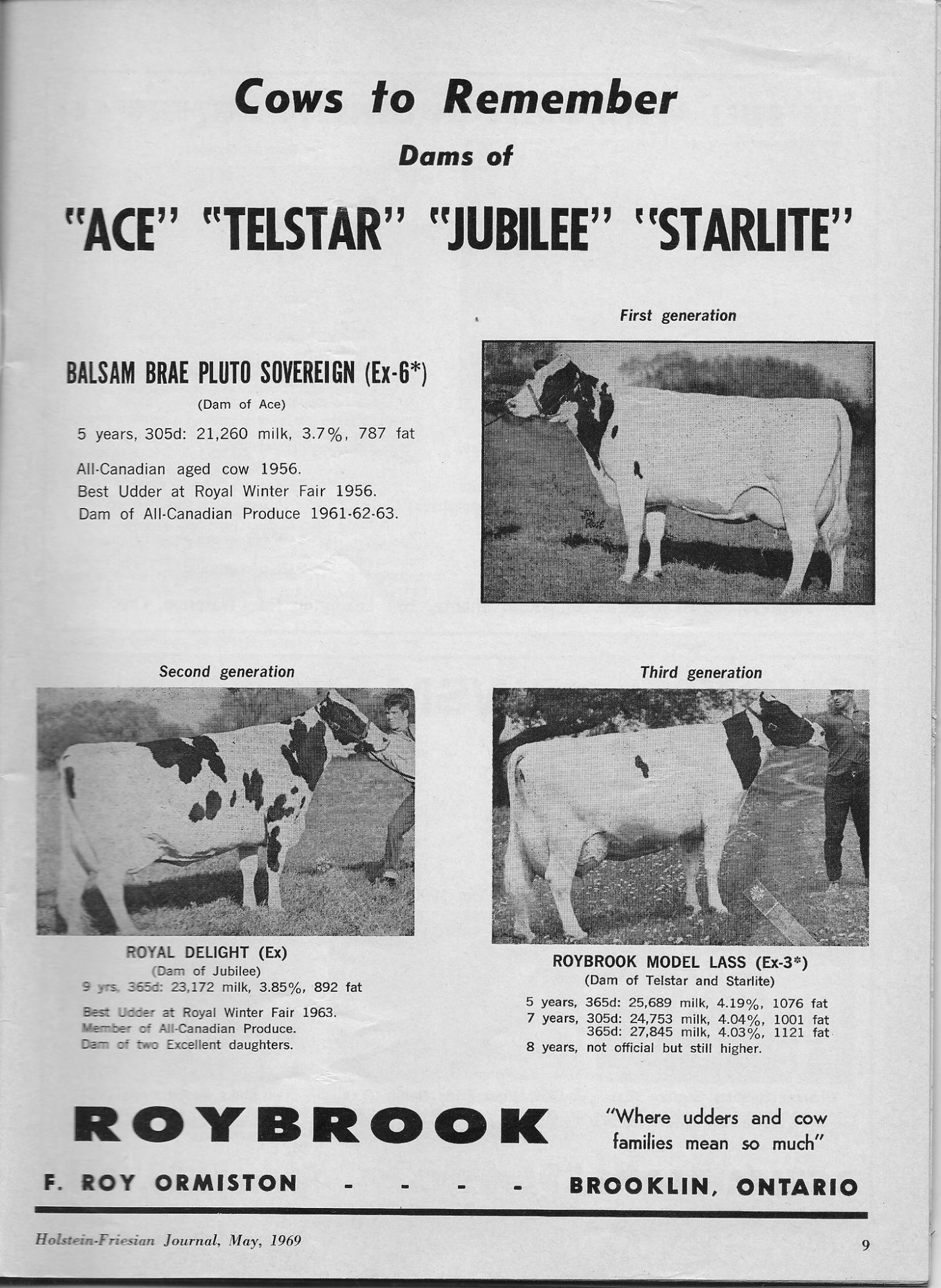
NewsSubscribe
First
Last
Consent

MANURE TO MONEY: How Smart Dairy Farmers Are Turning Waste into Serious Profits

Dairy farmers are flushing away $15,000 per 100 cows annually. Discover how savvy producers are turning manure into a goldmine through strategic composting.

While your neighbors complain about your farm’s smell and regulators circle with new runoff restrictions, you’re flushing profits down the drain. That pile of manure you’re paying to dispose of? It’s worth thousands in untapped revenue. According to data from the University of Wisconsin-Extension nutrient management program, the average 100-cow dairy operation flushes away $15,000 annually in potential soil amendment products. That’s money forward-thinking farmers are now pocketing through strategic composting. Here’s how the waste you’re treating as a liability is your farm’s hidden gold mine.

THE ECONOMIC REVOLUTION IN YOUR MANURE PILE

Let’s cut the crap and talk dollars: composting transforms manure from a cost center into a profit machine. A 2012 study of 250 Wisconsin farms conducted by the University of Wisconsin-Extension Nutrient Management Program found a staggering 69% saved money, with average savings of approximately $18 per acre. That’s real money staying in farmers’ pockets.

“That pile of manure you’re paying to dispose of? It’s worth thousands in untapped revenue. The average 100-cow dairy flushes away $15,000 annually in potential soil amendments.”

From Expense to Income Stream

Bill McPhee of McPhee Farms in Michigan isn’t just saving money—he’s making it. After initially implementing a composting system to comply with CAFO regulations, he now sells surplus composted manure to other farmers for $20 per ton, as documented in the Michigan State University Extension case study on livestock waste management. What was once a disposal headache has become a marketable product with eager buyers.

“Animal manure is our base fertilizer, and the other fertilizers are our supplements,” says Joe Loehr, a fifth-generation Wisconsin dairy farmer managing 1,000 acres, who’s slashed his commercial fertilizer bills through strategic composting. Two-thirds of farms with proper nutrient management decreased nitrogen applications by 54 pounds per acre. In comparison, half decreased phosphorus applications by 32 pounds per acre—all without sacrificing yield, according to the Journal of Environmental Quality’s 2019 comprehensive review of nutrient management practices.

The math is simple: less money spent on commercial fertilizers and potential income from selling excess compost equals thousands in annual savings and revenue that most farms leave on the table.

BEATING REGULATORS AT THEIR OWN GAME

While other farmers waste energy fighting inevitable regulations, innovative producers are turning these environmental demands into competitive advantages. When regulators knock (and they will), you’ll either scramble to comply or already count the profits from your solution.

Turning Regulations into Opportunities

Innovative farmers are using composting to stay ahead of increasingly stringent environmental laws. With nutrients leaving farm fields through wind and water erosion a significant contributing factor to water quality problems, those who manage nutrients efficiently aren’t just saving money and staying ahead of regulatory enforcement.

“I was thrilled when environmental officials found sensitive fish species thriving in the stream cutting through our farm. I don’t know what better proof there is that we’re not allowing nutrients to escape.” — Joe Loehr, Wisconsin Dairy Farmer.

Wisconsin dairy farmer Joe Loehr experienced a decisive moment when state environmental officials found sensitive fish species thriving in the stream running through his farm. That kind of ecological win also keeps regulators off your back.

“While these technologies often aren’t affordable to smaller farm operations, the industry is working collaboratively with partners to explore possible means to make the economics more favorable,” according to Karen Scanlon, EVP of environmental stewardship at the Innovation Center for U.S. Dairy. The message is clear: embrace these changes now or get left behind.

FROM NEIGHBORHOOD VILLAIN TO COMMUNITY HERO

Let’s face it—your neighbors hate your manure. But what if that could change?

Transforming Community Relations

One of the most immediate benefits McPhee Farms experienced was a dramatic reduction in odor, significantly improving relations with their neighbors. The composting process naturally eliminates many volatile compounds responsible for unpleasant smells that prompt angry phone calls and uncomfortable community meetings.

Composting transforms your farm‘s public image from environmental villain to sustainability champion. The high temperatures generated during proper composting—between 120°F and 140°F at McPhee Farms—kill pathogens and weed seeds, resulting in a clean, sterile end product that neighbors can appreciate.

COMPOSTING 101: EVEN YOUR TEENAGER COULD DO THIS

Composting is a biological process where beneficial microorganisms transform raw manure into a stable, valuable soil amendment. The process generates heat that kills pathogens and weed seeds while breaking down odor-causing compounds.

“The idea of leaving roots in the soil every day of the year possible is just the easiest way to participate in the nutrient recycling that’s nature’s way. Plants and animals working together make that happen.” — Joe Loehr, Wisconsin Dairy Farmer.

Loehr’s secret weapon? His creative cropping practices keep living roots in the soil year-round. He uses wheat as a cover crop and other crops harvested for livestock feed, creating richer soils that drain water well and provide a bigger window for manure application.

NutrientConcentration
Nitrogen1.8%
Phosphorus0.9%
Potassium1.5%
Calcium3.2%
Magnesium0.9%
C:N ratio13.3:1
pH8.0

REAL-WORLD SUCCESS: McPHEE FARMS SHOWS THE WAY

Bill McPhee didn’t start composting to save the planet—he started because regulations forced his hand. But the benefits were so substantial that he expanded his composting operation.

The farm collects manure and bedding materials such as leaves and straw, piles them into windrows, and turns them regularly to provide oxygen for the microorganisms that break down the materials. This process has reduced their manure volume by at least 60%, making handling much more efficient.

Beyond using composted manure in their fields, McPhee Farms sells surplus to other farmers. It even uses its composting unit to dry bedding packs in corrals and pastures, improving animal comfort and hygiene. Bill is now considering using some of the compost as bedding material, citing its comfort as similar to sawdust.

Housing SystemProduction RateTotal NPhosphorus
Tie-stall/Stanchion50 kg/day/animal4,100-6,900 mg/L3,800-6,900 mg/L
Free-stall68 kg/day/animal3,000-5,800 mg/L2,500-5,400 mg/L

CLEARING THE HURDLES: COMMON COMPOSTING CHALLENGES

Like any profit-boosting system, composting has its challenges. “Getting the moisture right was our biggest learning curve,” admits McPhee in the Michigan State University case study. Too wet, and it gets anaerobic and smelly; too dry, and decomposition slows to a crawl.”

Weather can also interfere with the biological process. Heavy rains can saturate uncovered piles, while extended freezing temperatures slow the biological process considerably. Cornell University’s Waste Management Institute notes that in northern climates, decomposition can slow by 50-75% during winter. Competent operators build weather considerations into their management plans.

Equipment maintenance is another reality. “We learned pretty quickly that preventative maintenance on our turner saved us thousands in repairs,” says Loehr. “It’s like any farm equipment—ignore it, and you’ll pay later.”

Space can become a limitation as operations scale up. Pennsylvania State University’s Agricultural Research Center states that a proper composting operation requires approximately 1.5-2 square feet per cow for active composting, plus additional curing and storage area.

CUTTING-EDGE INNOVATIONS TAKING COMPOSTING TO THE NEXT LEVEL

The industry isn’t standing still. Revolutionary new approaches push the boundaries of what’s possible with manure management.

Biochar: The Game-Changing Addition

Recent research published in the Journal of Environmental Management by scientists at Cornell University has found that adding biochar to the composting process can reduce methane emissions by a significant 58% (±22%). But that’s not all – the same study showed dramatic reductions in harmful air pollutants: hydrogen sulfide (H2S) emissions dropped by 67% (±24%), volatile organic compounds (VOCs) by 61% (±19%), and nitrogen oxides (NOx) by 70% (±22%).

“Adding biochar to composting manure slashes methane emissions by 58%, hydrogen sulfide by 67%, and nitrogen oxides by a whopping 70% — that’s $66,000 in environmental impact savings per farm annually.”

What is the science behind these impressive results? Researchers attribute these reductions to improved oxygen diffusion through the porous biochar structure and the adsorption of gas precursors directly to the biochar surface.

This isn’t just good for the environment—it potentially positions dairy farmers to earn carbon credits in emerging markets. The Cornell researchers calculated that biochar-composting of dairy manure would reduce the social cost of methane, ammonia, and nitrous oxide emissions from a single farm by over ,000 annually, based on EPA’s social cost of greenhouse gas estimates. If you’re looking for the next level of composting performance, biochar represents one of the most promising innovations available today.

Anaerobic Digestion: Another Arrow in Your Quiver

Anaerobic digestion offers another approach to manure management for more extensive operations. These systems heat manure to produce methane and capture it as a renewable fuel source.

“Managing manure on the farm through storage and innovation minimizes the emissions from that manure and creates different manure-based products to be fed back to the soil,” says Karen Scanlon, EVP of environmental stewardship at the Innovation Center for U.S. Dairy.

WHAT’S THE UPFRONT INVESTMENT?

Let’s talk dollars and sense. A basic windrow composting system for a 200-cow dairy typically requires:

  • Initial equipment cost: $20,000-45,000 for a quality compost turner, according to Penn State Extension’s Agricultural Equipment Cost Estimates
  • Site preparation: $5,000-10,000 for proper drainage and containment
  • Monitoring equipment: $500-1,000 for temperature probes and moisture meters

A 2020 University of Minnesota Extension Service analysis found that most operations see complete ROI within 2-3 years, and equipment often lasts 10+ years with proper maintenance. For smaller operations, consider starting with lower-cost options like partnering with neighbors on equipment purchases or using modified existing machinery for initial turning.

McPhee Farms started with a modest investment of $30,000 for their complete composting system. They calculated a break-even point at 18 months based on reduced handling costs and fertilizer savings alone—before counting any revenue from compost sales.

FIVE STEPS TO STOP FLUSHING YOUR PROFITS AWAY

Ready to stop flushing money down the drain? Here’s your step-by-step action plan:

  1. Assess your current situation: Document your manure production volume, current handling costs, and regulatory requirements
  2. Start with soil and manure testing: Understanding your nutrient profile is essential for developing an effective plan.
  3. Build your expert team by Connecting with certified crop advisors, soil and water offices, and other farmers already composting.
  4. Design your system: Determine the equipment, space, and processes required based on your farm’s needs.
  5. Track your results: Monitor the compost quality and the financial impact on your operation.
ItemDetails
Savings per acre$18/acre
Total acres600 acres
Annual fertilizer savings$10,800
Reduction in manure handling costs60%
Potential revenue from excess compost$20/ton
Reduction in environmental impact costs$66,000
Total potential annual impactOver $100K

THE BOTTOM LINE: ARE YOU LEAVING MONEY ON THE TABLE?

“The question isn’t whether you can afford to compost—it’s whether you can afford NOT to. With $18/acre in fertilizer savings and $20/ton potential revenue, your manure pile is worth its weight in gold.”

The evidence is overwhelming: composting manure isn’t just an environmental nice-to-have—it’s a financial imperative for modern dairy operations. With average savings of $18 per acre, potential new revenue streams of $20 per ton for finished compost, and the ability to reduce commercial fertilizer applications by 30-50%, the question isn’t whether you can afford to compost—it’s whether you can afford not to.

As regulations tighten and consumers demand more sustainable production methods, composting positions your dairy operation ahead of the curve. The technology is proven, the economics work and early adopters are already reaping the rewards.

Your farm’s hidden gold mine is the manure you treat as a liability. The only question is: will you be the one to cash in, or will you watch as your more innovative neighbors capitalize on this opportunity?

The choice and the potential profits are yours. Ready to get started? Contact your local extension office today to schedule a manure management consultation and take the first step toward turning your waste into wealth.

Key Takeaways:

  • Composting manure can save dairy farms $18/acre in fertilizer costs and generate $20/ton in compost sales.
  • Adding biochar to compost reduces methane emissions by 58% and could save $66,000 annually in environmental impact costs per farm.
  • Initial investment for a 200-cow composting system ranges from $25,500 to $56,000, with ROI typically achieved in 2-3 years.
  • Composting addresses regulatory pressures, improves community relations, and positions farms for future carbon credit opportunities.
  • Challenges include moisture management, weather impacts, and equipment maintenance, but are outweighed by financial and environmental benefits.

Executive Summary:

Dairy farmers are transforming manure management from an environmental burden into a profitable venture through composting. This article reveals how composting not only saves an average of $18 per acre in fertilizer costs but also creates a marketable product selling for $20 per ton. Innovative techniques like biochar addition are slashing harmful emissions while potentially earning carbon credits. With proper implementation, a 500-cow dairy could see over $100,000 in annual impact through reduced costs, new revenue streams, and environmental benefits. Despite challenges like weather and equipment maintenance, the ROI for composting systems typically occurs within 2-3 years. As regulations tighten, composting offers a proactive solution that improves neighbor relations, soil health, and the bottom line.

Learn more:

Join the Revolution!

Join over 30,000 successful dairy professionals who rely on Bullvine Daily for their competitive edge. Delivered directly to your inbox each week, our exclusive industry insights help you make smarter decisions while saving precious hours every week. Never miss critical updates on milk production trends, breakthrough technologies, and profit-boosting strategies that top producers are already implementing. Subscribe now to transform your dairy operation’s efficiency and profitability—your future success is just one click away.
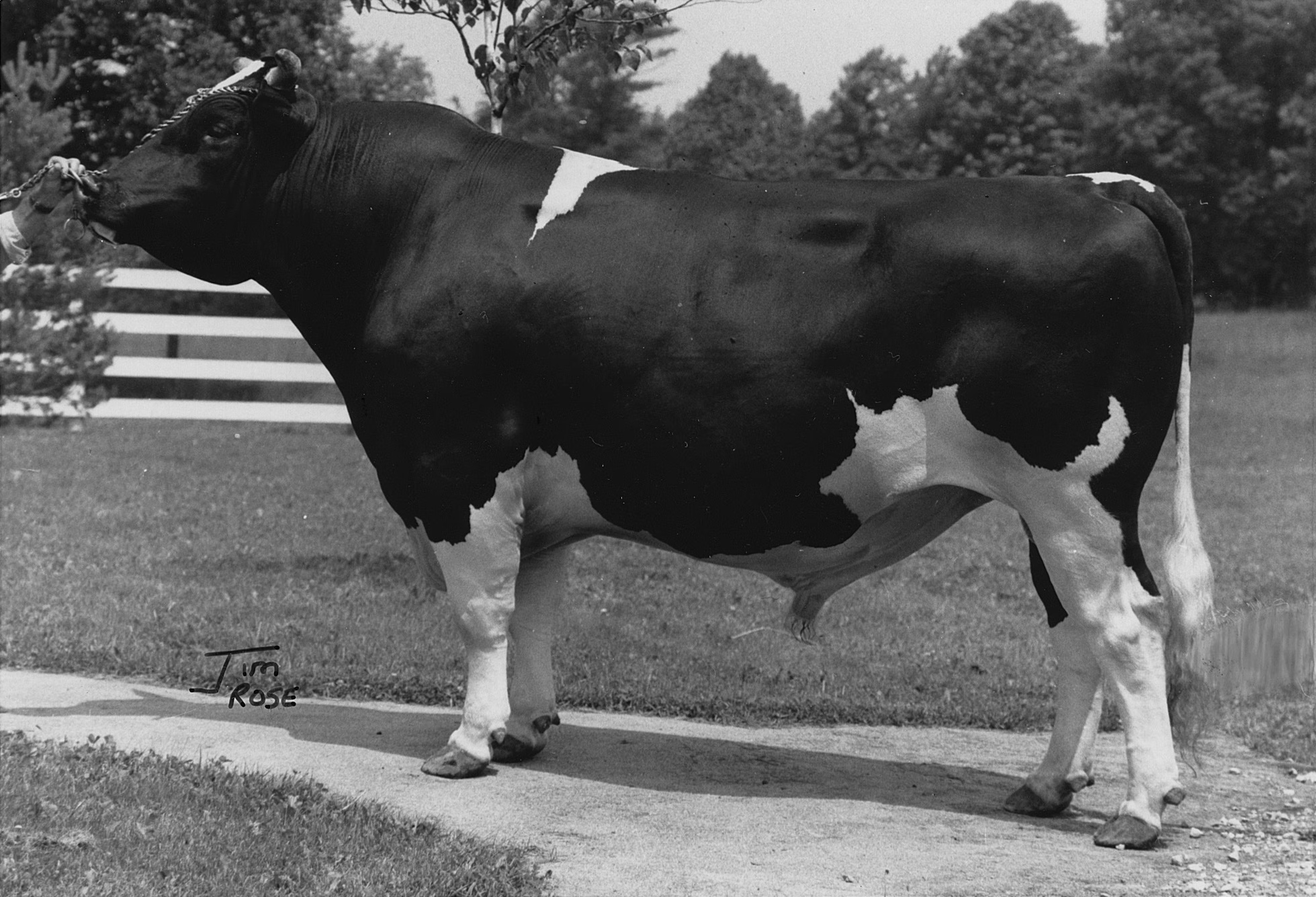
NewsSubscribe
First
Last
Consent

Hanoverhill Starbuck’s DNA Dynasty: The Holstein Legend Bridging 20th-Century Breeding to Genomic Futures

From $2,500 calf to genetic revolution: How one bull’s DNA reshaped global dairy farming and still whispers in 83% of Holsteins today.

The legendary Hanoverhill Starbuck, pictured here at 5 years old by photographer Jim Rose, stands as a monument to genetic excellence. Measuring an impressive 73½ inches (1.87m) at the shoulder and weighing 2,580 lbs (1,173 kg), his powerful frame supported by what many consider the finest feet and legs ever seen on a Holstein bull. This photograph captures the quiet confidence of a sire whose genes would transform global dairy breeding, father over 200,000 daughters across 45 countries, and generate $25 million in semen sales after being purchased for just $2,500. Behind that steady gaze lies the architecture of modern Holstein genetics – a living blueprint whose DNA still flows through 83% of North America's black and white dairy cows. The $2,500 bull who became a billion-dollar genetic revolution.
The legendary Hanoverhill Starbuck, pictured here at 5 years old by photographer Jim Rose, stands as a monument to genetic excellence. Measuring an impressive 73½ inches (1.87m) at the shoulder and weighing 2,580 lbs (1,173 kg), his powerful frame supported by what many consider the finest feet and legs ever seen on a Holstein bull. This photograph captures the quiet confidence of a sire whose genes would transform global dairy breeding, father over 200,000 daughters across 45 countries, and generate $25 million in semen sales after being purchased for just $2,500. Behind that steady gaze lies the architecture of modern Holstein genetics – a living blueprint whose DNA still flows through 83% of North America’s black and white dairy cows. The $2,500 bull who became a billion-dollar genetic revolution.

Picture this: A crisp Ontario morning in 1979, dew still clinging to the pastures. Two men Robert Chicoine and Harley Nicholson from Quebec’s CIAQ—walk into Peter Heffering’s barn at Hanover Hill Holsteins. They’d been trudging through Central Ontario for days, looking at bull after bull, hoping to find something special, then one night after running into Peter at Hagens Chicken Restaurant.

And then they saw him.

“I remember the first time I laid eyes on Starbuck,” shares Chicoine. “He wasn’t just good—he had that look. You know the one. The kind that makes your jaw drop.”

Just a 45-day-old calf, standing there with what I can only describe as bovine confidence. That starburst blaze on his forehead like nature’s own brand. Those wide-set eyes tracking the men as if he knew his destiny. The physical traits practically shouted genetic gold to those who could read them—squared hip promising easy calving, springy pasterns suggesting longevity, and that perfect forearm-to-stifle ratio whispered of milk production to come.

But what sealed the deal? That uncanny “prepotent aura”—the mysterious quality that tells experienced breeders this animal will stamp his traits onto generation after generation. CIAQ took a $2,500 gamble on that calf. A gamble that would return $25 million in semen sales and rewrite Holstein genetics worldwide.

Pictured here at just 11 months old during his young sire program, Hanoverhill Starbuck already displayed the promise of greatness. Standing tall with balanced proportions and a striking black-and-white coat, this future supersire was destined to reshape Holstein genetics worldwide. Even at this age, his physical traits hinted at the prepotency that would define his legacy—strong feet and legs, a robust frame, and an unmistakable presence. Starbuck’s journey from this moment to global dominance began with the vision of breeders who recognized his potential to revolutionize dairy farming.

By the mid-80s, Starbuck’s daughters—200,000 strong—were dominating Quebec milking parlors. Their protein yields hit that sweet 3.2% mark when the cheese market was booming, and their udders? Show-ring perfect. An astonishing 70% scored “Good Plus” or better for conformation. His semen crossed oceans to 45 countries, and those 27 Premier Sire titles between ’86 and ’95? Unheard of. We started calling him agriculture’s first “supersire,” and it wasn’t hyperbole.

But here’s where the story gets complicated, young one. The same genetics that boosted global milk production by 12% also narrowed the breed’s diversity. By 2000, about 95% of Quebec Holsteins were related to Starbuck. It’s the classic dairy farmer’s dilemma—how do you balance genetic ambition with long-term sustainability?

Today, with all our fancy CRISPR technology and genomic tools, Starbuck’s DNA still flows through 83% of sequenced North American Holsteins. His clone might have failed, but his lesson endures: In every Holstein heifer that steps into your milking parlor, there walks a bull who proved one animal could reshape an entire industry—drop by drop, gene by gene.

Johanna Rag Apple Pabst, affectionately called 'Old Joe,' stands immortalized as a life-size sculpture on the site of the historic Mount Victoria farm in Hudson Heights, Quebec. Born on January 24, 1921, this legendary sire appears no less than 45 times in Hanoverhill Starbuck's pedigree, cementing his foundational influence on modern Holstein genetics. With 64 Montvic animals also contributing to Starbuck’s lineage, 'Old Joe' remains a cornerstone of Canadian dairy breeding history. Pictured here in the summer of 2021, his legacy continues to inspire breeders worldwide.
Johanna Rag Apple Pabst, affectionately called ‘Old Joe,’ stands immortalized as a life-size sculpture on the site of the historic Mount Victoria farm in Hudson Heights, Quebec. Born on January 24, 1921, this legendary sire appears no less than 45 times in Hanoverhill Starbuck’s pedigree, cementing his foundational influence on modern Holstein genetics. With 64 Montvic animals also contributing to Starbuck’s lineage, ‘Old Joe’ remains a cornerstone of Canadian dairy breeding history. Pictured here in the summer of 2021, his legacy continues to inspire breeders worldwide.

The 1970s: Setting the Stage for a Genetic Revolution

You’ve got to understand the world Starbuck was born into to appreciate his impact. The 1970s were a time of reckoning in Holstein breeding. Post-war industrialization had pushed milk production to new heights—from about 2,000 kg per cow in the 1920s to over 6,800 kg by the 70s. But the industry was split down the middle.

Commercial dairies wanted efficient milk machines, often at the expense of longevity. Meanwhile, pedigree breeders chased those angular frames, deep ribs, and picture-perfect udders that won ribbons but sometimes left cows broken down before their time.

“It was like two different breeds sharing the same hide,” my old mentor used to say. “Show-ring Holsteins versus working Holsteins.”

Artificial insemination had already transformed the landscape—75% of Canadian herds were using AI by ’75. But this created problems. Elite sires like Round Oak Rag Apple Elevation (Starbuck’s daddy) dominated the catalogs, creating what we now recognize as genetic bottlenecks. Would you believe 99% of Holstein Y chromosomes are traced to just two bulls from the 1960s? Talk about putting all your eggs in one basket!

Round Oak Rag Apple Elevation (1965–1979), hailed as "Bull of the Century," revolutionized Holstein breeding with his unmatched ability to transmit both milk production and flawless conformation. As the sire of Hanoverhill Starbuck, Elevation's genetic legacy continues to shape global dairy herds, ensuring his influence remains unparalleled in modern pedigrees.
Round Oak Rag Apple Elevation (1965–1979), hailed as “Bull of the Century,” revolutionized Holstein breeding with his unmatched ability to transmit both milk production and flawless conformation. As the sire of Hanoverhill Starbuck, Elevation’s genetic legacy continues to shape global dairy herds, ensuring his influence remains unparalleled in modern pedigrees.

The data side was even messier. Only about a third of herds participated in milk recording programs. Sire proofs were patchy at best, and many breeding decisions came down to reputation rather than hard numbers. As Jacques Leclerc told me once, “We were flying half-blind. You trusted names like Elevation because the data wasn’t there to prove otherwise.”

Meanwhile, the market was shifting. The cheese and yogurt boom created demand for protein-rich milk. Holsteins lagged Jerseys in solids (3.2% protein versus 3.8%), but their sheer volume made them the breed of choice for industrial dairies.

Health issues were becoming impossible to ignore. Cows with those pendulous udders faced 84% higher mastitis rates. Poor leg structure was cutting productive lifespans by more than a lactation. Forward-thinking breeders like Peter Heffering started talking about “functional type”—the radical notion that a cow should look good AND last.

This was the world Starbuck entered—a breed at a crossroads, needing a sire who could bridge the divide between show ring and milk tank, between pedigree prestige and commercial practicality. And boy, did he deliver.

In this historic 1994 photograph, the legendary Holstein sire Hanoverhill Starbuck stands at Mount Victoria Farm in Hudson Heights, Québec—the same hallowed ground where his ancestor Johanna Rag Apple Pabst was photographed in 1928. The mature bull, then 15 years old and still in active service at CIAQ, displays the powerful frame and distinctive markings that helped him sire over 200,000 daughters worldwide. This image captures a profound moment of Holstein breeding continuity, connecting Starbuck's revolutionary genetic impact (685,000 semen doses sold across 45 countries) with the pioneering work of T.B. Macaulay's breeding program that began nearly seven decades earlier, symbolizing how thoughtful selection across generations transformed global dairy genetics.
In this historic 1994 photograph, the legendary Holstein sire Hanoverhill Starbuck with Carl Saucier at the halter stands at Mount Victoria Farm in Hudson Heights, Québec—the same hallowed ground where his ancestor Johanna Rag Apple Pabst was photographed in 1928. The mature bull, then 15 years old and still in active service at CIAQ, displays the powerful frame and distinctive markings that helped him sire over 200,000 daughters worldwide. This image captures a profound moment of Holstein breeding continuity, connecting Starbuck’s revolutionary genetic impact (685,000 semen doses sold across 45 countries) with the pioneering work of T.B. Macaulay’s breeding program that began nearly seven decades earlier, symbolizing how thoughtful selection across generations transformed global dairy genetics.

The Perfect Genetic Storm

What made Starbuck special wasn’t just one trait—it was the perfect convergence of elite genetics. His sire, Round Oak Rag Apple Elevation (EX-96), was already legendary for transmitting milk volume and style. Those daughters averaged 29,500 pounds per lactation, with the iconic “Elevation udder”—high, wide, and tightly attached.

His dam, Anacres Astronaut Ivanhoe (VG-88 GMD), was no slouch either. Her 365-day record of 28,677 pounds of milk at 4.2% fat put her among Canada’s elite. Through her grandsire, she contributed exceptional mammary traits and longevity genes.

Anacres Astronaut Ivanhoe VG-88 GMD, the dam of Hanoverhill Starbuck, stands tall in this historical photo, embodying the traits that made her a cornerstone of Holstein breeding. Bred by Dick and Bill Anderson of Jamestown, NY, Ivanhoe was a production powerhouse with a lifetime record of 134,809 lbs of milk at 4.2% fat. She set New York State milk and fat records during her first lactation before being purchased by Peter Heffering for Hanover Hill Holsteins. Her most famous calf, Hanoverhill Starbuck, born in 1979, went on to sire over 200,000 daughters globally and become one of the most influential bulls in Holstein history.

But Starbuck’s true magic was his consistency. Where other bulls might excel in one area, he transmitted a complete package:

“I remember walking through a barn full of his daughters in ’87,” an old Quebec breeder told me. “It was like seeing the same cow repeatedly—those perfect rear udders 12% deeper than average, protein at 3.2% when that meant premium checks, and 82% with textbook leg angles. We’d never seen anything like it.”

This prepotency came from a rare genetic alignment. Elevation contributed dominant alleles for milk synthesis on chromosome 14, while Ivanhoe’s lineage provided favorable SNPs for udder attachment and efficiency. The result? Breeders called him a “genetic photocopier”—94% of his daughters shared his signature broad chest and upright teat placement.

By 1990, his Lifetime Profit Index hit +1,500, combining +2,100 kg milk, +75 kg combined fat/protein, and high conformation. He was the first bull to rank in the top 1% for production and type—something only 0.3% of today’s genomic sires achieve. That year, 38% of Canadian Holstein inseminations used Starbuck semen.

As the British Holstein Journal put it: “The sire that attracts endless superlatives—one of a kind, the greatest, phenomenal, the king, Mr. Excitement, or… ‘Simply the Best’.”

From Quebec to the World

CIAQ knew they had gold in their tanks. By 1998, they’d sold 685,000 semen doses across 45 countries—enough to fill 1,370 liters—generating $25 million in revenue (that’s over $45 million in today’s money).

His daughters thrived everywhere they landed:

  • In Bavaria, they averaged 8,900 kg milk over 305 days—12% above German averages
  • In Ukraine’s Sumy region, his descendants still constitute 21.9–40.3% of the breeding stock
  • In South Africa’s heat, they maintained production where other genetics faltered

But it was in the show ring where Starbuck truly became a brand. Between 1986 and 1995, he earned 27 Premier Sire titles at major North American shows. His daughters, like Hanoverhill S Alicia (EX-97), collected 82 All-American nominations and 130 All-Canadian honors.

“Seeing a Starbuck heifer stride into the ring was like watching royalty enter,” one Quebec farmer told me. “You knew she’d win.”

CIAQ’s windfall wasn’t just profit—it transformed the AI industry. They funded young sire testing for 500+ bulls annually by 1995, invested in early BLUP models that laid the groundwork for today’s genomics, and established distribution hubs across continents.

Their 1987 catalog summed it up perfectly: “Why gamble on untested genetics when Starbuck delivers?” His proven track record convinced even skeptical farmers to embrace AI, pushing Canadian adoption rates to 89% by 1990.

Pictured here is Comestar Outside, one of Canada’s most iconic Holstein sires, celebrated for achieving over 1,000 Excellent-classified daughters—a milestone surpassed only by Braedale Goldwyn. A Prelude son out of Comestar L Or Black VG-87, Outside carries the genetic influence of Hanoverhill Starbuck through his grandsire Prelude, cementing his place in the lineage of dairy greatness. His prepotency for transmitting exceptional type and conformation continues to shape elite herds worldwide.

The Double-Edged Sword

By 2000, Starbucks’s influence had reached levels we’d never seen before—and we hope never to see again. His 200,000+ daughters spanned 45 countries, with 62,000 in Canada alone. In Quebec, 95% of Holsteins carried his genetics, creating both a triumph and a ticking time bomb.

His 209 proven sons, including standouts like Hanoverhill Raider with his +0.07% protein transmission, extended this dynasty into a third generation. The global footprint became staggering—from Japan’s northern island to Brazil’s dairy regions, Starbuck’s genes were reshaping the Holstein breed.

But this dominance came at a cost. By 2000, inbreeding coefficients in Quebec herds hit 6.8%. His daughters, while productive, showed lower numbers for fertility—a stark reminder that genetic concentration has consequences. Their extreme dairy character, while beautiful, correlated with 18% higher culling rates for metabolic disorders compared to outcrossed herds.

Smart breeders adapted. The Danes started crossing Starbuck-line cows with VikingRed cattle to improve hoof health. AI centers eventually limited his lineage to 5% of catalogs, using SNP-guided mating to reduce inbreeding risks. Modern evaluations now actually penalize Starbuck-line bulls for those fertility deficits.

As Lactanet’s 2024 report shows, Holstein inbreeding rates have stabilized around 9.61% in 2023 births. However, the annual increase of +0.25% remains the highest among major dairy breeds—a lingering echo of the Starbuck era.

This rare left-side photo of Hanoverhill Starbuck, taken in the early 1990s at Mount Victoria Farms, captures the legendary Holstein sire in his prime. Posing for CIAQ’s commemorative shoot, Starbuck’s commanding presence reflects the genetic excellence that made him a global icon, reshaping dairy breeding for generations.

The Twilight Years and Beyond

Starbuck’s career spanned an extraordinary 19 years (1979–1998)—most bulls retire by 12. He remained fertile until his death on September 17, 1998, in Saint-Hyacinthe, Quebec. His frozen semen from the early years continued producing daughters well into the 2000s, with a Michigan dairy reporting a 2005-born daughter yielding 18,300 kg milk at 3.7% protein.

Then came the clone. In 2000, scientists at Université de Montréal and L’Alliance Boviteq created Starbuck II using somatic cells frozen before his death. Born September 7, 2000, weighing 54.2 kg, the calf initially showed promise. But mitochondrial DNA discrepancies—his nuclear DNA matched Starbuck at 99.8%, but his mitochondrial DNA came from the host oocyte—led regulators to block commercial use.

The cloning process took 64 attempts initially, though Dr. Lawrence Smith’s team later improved success rates to 1 in 17. Despite the technical achievement, by 2010, genomic selection had made cloning obsolete. Starbuck II was cremated—a symbolic end to an ambitious chapter.

“Cloning taught us precision—but also humility,” Dr. Smith noted. “Nature’s blueprint resists shortcuts.”

Starbuck’s influence extended beyond agriculture. The 2011 Québécois film Starbuck and its Hollywood remake Delivery Man (2013) humorously explored the ethics of mass genetic contribution. More importantly, his story forced the industry to confront inbreeding risks, leading to today’s Optimal Contribution Selection protocols.

In death, he remains both icon and cautionary tale—a bull whose legacy lives not in clones but in the DNA of herds worldwide and the hard-won wisdom of breeders navigating genetic frontiers.

Legacy Through Offspring

Hanoverhill Starbuck’s legacy is profoundly shaped by his extensive and influential offspring, who cemented his status as a Holstein legend and continue to impact the breed today. Starbuck was an exceptional individual and a prepotent sire who consistently transmitted desirable traits to his progeny.

Aitkenbrae Starbuck Ada (1986-?): The legendary Holstein matriarch whose exceptional conformation earned her Unanimous All-American Senior Three-Year-Old honors in 1990, but whose true legacy lives on through her daughters Alicia and Adeen, whose descendants continue to revolutionize Holstein genetics worldwide. Her remarkable balance of show ring excellence and genetic prepotency bridged the divide between type and production, establishing a dynasty that remains influential in modern genomic breeding. Photo: Maggie Murphy
Aitkenbrae Starbuck Ada: The legendary Holstein matriarch whose exceptional conformation earned her Unanimous All-American Senior Three-Year-Old honors in 1990, but whose true legacy lives on through her daughters Alicia and Adeen, whose descendants continue to revolutionize Holstein genetics worldwide. Her remarkable balance of show ring excellence and genetic prepotency bridged the divide between type and production, establishing a dynasty that remains influential in modern genomic breeding. Photo: Maggie Murphy

Starbuck’s daughters achieved remarkable success in various aspects, contributing significantly to his legacy. They were highly regarded for production and conformation, often excelling in show rings and becoming high-producing milk cows.

  • Many of his daughters achieved high classification scores, with 70% scoring Good Plus or better in Canada.
  • He sired more milking-age All-American daughters (10) than any other sire in history. His daughters collectively earned numerous All-Canadian (35) and All-American (42) honors.
  • Notable daughters, such as Hanoverhill S Alicia (EX-97), Dupasquier Starb Winnie (EX-3E-8*), Merkley Starbuck Whitney, and Acme Star Lily (EX), became show-ring champions and iconic figures.
  • Beyond show success, many Starbuck daughters were influential brood cows, such as Aitkenbrae Starbuck Ada (EX), who produced other All-American and All-Canadian winners, and Thiersant Lili Starbuck (E2X-4-94), whose extensive offspring became the “face of Lylehaven” and are ancestors of modern sires like Farnear Delta-Lambda. Hanoverhill Star Lulu (EX) fetched a record price of $635,000.
Madawaska Aerostar (EX-Extra-GM) emerged as one of Hanoverhill Starbuck’s most influential sons, blending production prowess with genetic consistency. Bred by Allan Boese of Renfrew, Ontario, Aerostar topped Canada’s first Lifetime Profit Index in 1991, driven by his ability to transmit high protein yields (+64 kg) and exceptional conformation (+5). His daughters and sons, including Startmore Rudolph and Maughlin Storm, carried his legacy into modern pedigrees, influencing Holstein genetics globally. Aerostar’s impact remains visible in renowned sires like Braedale Goldwyn, ensuring his place as a cornerstone of Holstein breeding history.

Starbuck was also an exceptional sire of sons, extending his genetic influence and shaping the future of the Holstein breed.

  • By January 1994, 25% of Canada’s active AI sires were Starbuck sons.
  • His sons and grandsons consistently topped the index lists in Canada from 1991 to 1998.
  • Influential sons like Madawaska Aerostar (EX-Extra-GM) became a dominant force in production, particularly for protein yield, and sired numerous influential sons themselves, such as Startmore Rudolph and Maughlin Storm.
  • Ronnybrook Prelude (GP-GM-Extra), despite some fluctuations in his proof, also became a significant sire, responsible for notable descendants like Comestar Outside and the sire of Picston Shottle.
  • Duregal Astre Starbuck (EX-Extra) achieved international recognition, with his semen exported to 40 countries. His son STBVQ Rubens significantly impacted the Red & White Holstein breed.
  • Hanoverhill Raider (EX-Extra) was highly regarded by his breeders and sired influential sons like Comestar Lee.

The impact of Starbuck’s genes extends through multiple generations. His grandchildren and great-grandchildren have continued to be prominent in production and type, demonstrating the lasting power of his genetic contribution. For instance, Picston Shottle is described as a “genuine Starbuck ambassador” as both his sire and dam’s sire were Starbuck grandsons. The pedigree of modern influential sires like Farnear Delta-Lambda also shows significant traces of Starbuck’s lineage. By 2000, Starbuck’s influence was so widespread that 95% of Quebec Holsteins carried his genetics. Today, his DNA still flows through 83% of sequenced North American Holsteins, and 35% of the world’s top GTPI females trace back to him.

Hanoverhill Starbuck’s legacy through his offspring is one of unprecedented genetic impact, transforming the Holstein breed globally through his high-performing and phenotypically superior daughters and influential sons. While his prepotency achieved remarkable genetic progress, it also underscored the importance of maintaining genetic diversity for the long-term health and sustainability of the breed. His story is a powerful lesson in balancing genetic ambition and responsible breeding practices.

Show Ring Success

Dupasquier Starb Winnie EX-3E 8*, born October 13, 1986, was sired by Hanoverhill Starbuck and out of Allangrove AA Winnie VG-85 4*. Bred by Oscar Dupasquier of Guelph, Ontario, Winnie had an illustrious show career, earning Grand Champion titles at the Royal Winter Fair and the International Holstein Show in the late 80s and early 90s. She produced Excellent daughters by Boulet Charles and Duregal Starbuck Astre, continuing her legacy through Dupasquier Blac Winnie VG-88. Her exceptional genetics and show-ring dominance cemented her place as one of the era's most influential Holstein brood cows.
Dupasquier Starb Winnie EX-3E 8*, born October 13, 1986, was sired by Hanoverhill Starbuck and out of Allangrove AA Winnie VG-85 4*. Bred by Oscar Dupasquier of Guelph, Ontario, Winnie had an illustrious show career, earning Grand Champion titles at the Royal Winter Fair and the International Holstein Show in the late 80s and early 90s. She produced Excellent daughters by Boulet Charles and Duregal Starbuck Astre, continuing her legacy through Dupasquier Blac Winnie VG-88. Her exceptional genetics and show-ring dominance cemented her place as one of the era’s most influential Holstein brood cows.

Hanoverhill Starbuck’s show ring success, primarily achieved through his progeny, was a crucial element of his widespread acclaim and lasting legacy. The exceptional conformation of his offspring, which translated into significant victories and recognition in major shows.

Starbuck himself was recognized as a Premier Sire at major North American shows 27 times between 1986 and 1995. This indicates his remarkable ability to consistently sire offspring with the desired traits for show ring success.

However, it was his daughters who truly shone in the show ring, solidifying his reputation.

  • An astonishing 70% of his Canadian daughters scored “Good Plus” or better for conformation.
  • He sired more milking-age All-American daughters (10) than any other sire in history.
  • His daughters collected 82 All-American nominations and 130 All-Canadian honors. He sired 32 progeny who earned 42 All-American and 24 Reserve awards, and 41 offspring who won 35 All-Canadian and 27 Reserve awards.
  • Numerous individual Starbuck daughters became show ring champions and iconic figures. Examples include:
    • Dupasquier Starb Winnie (EX-3E-8)*, an All-American aged cow in 1993 and 1994 and a Grand Champion at the Royal Winter Fair and International Holstein Show.
    • Merkley Starbuck Whitney, an All-American junior 3, 4, and 5-year-old in 1991-93.
    • Acme Star Lily (EX), an All-American four and five-year-old in 1997-98.
    • Hanoverhill Star Lulu (EX), All-American senior two-year-old of 1988 and his highest selling offspring at $635,000.
    • Aitkenbrae Starbuck Ada (EX), All-American senior three-year-old in 1990.

Starbuck’s sons also contributed to his show ring legacy, both through their own desirable traits and their ability to sire high-conformation offspring.

  • Madawaska Aerostar (EX-Extra-GM), while primarily known for protein production, also transmitted exceptional conformation (+5 LPI).
  • Duregal Astre Starbuck (EX-Extra) was also Premier Sire at the Royal Winter Fair in 1999, and Reserve in 1997 and 1998.
  • Hanoverhill Raider (EX-Extra) sired Glenridge Raider Cinema (2X-95), noted as the youngest cow to score 95 points in the UK.
  • Marcrest Encore (EX-96-GM) was often advertised as the highest type son of Starbuck.
  • Hanoverhill Skybuck (EX-ST) was known as a sire of show type, siring Llleeta Skybuck Lucy (EX), grand champion at Madison in 2007.
  • Ronnybrook Prelude (GP-GM-Extra) is noted for adding strength and substance to his offspring.

The show ring success of Starbuck’s progeny was integral to his overall impact and commercial appeal. Their victories not only demonstrated his ability to transmit desirable conformation traits but also significantly increased the demand and value of his semen and offspring. The phrase “functional type,” which Peter Heffering emphasized, highlighted the importance of cows that could both perform in the show ring and be productive, long-lasting members of the herd. Starbuck embodied this ideal, bridging the gap between “show-ring Holsteins” and “working Holsteins”.

Furthermore, the influence of Starbuck’s show-winning daughters extended into future generations, as many became influential brood cows, producing more champions and high-quality offspring. For example, Aitkenbrae Starbuck Ada was the dam of Shoremar S Alicia, a Royal Winter Fair grand champion. Thiersant Lili Starbuck became the “face of Lylehaven” due to her extensive and high-scoring offspring. Kingsway Dempsey Nora EX-95, a more modern example, traces her distinguished pedigree back to Starbuck through her maternal line, showcasing the lasting impact of his conformation genetics.

In conclusion, Starbuck’s show ring success, primarily through his remarkably consistent and high-achieving daughters, was a cornerstone of his legendary status. It demonstrated his ability to transmit exceptional conformation, increased his commercial value, and established a lineage of show-winning and influential breeding animals that continue to impact the Holstein breed today. His ability to sire both high-producing and high-conformation offspring was a key reason for his widespread adoption and his place as a truly transformative figure in Holstein history.

Sunnylodge Prelude Spottie VG-87-18*, the iconic daughter of Ronnybrook Prelude—a Starbuck son—helped cement Sunnylodge Farms' legacy. Named Holstein Canada’s "Cow of the Year" in 1998, Spottie produced 14 sons in AI, including Sunnylodge Linjet EX-ST, and a lineage of exceptional daughters that shaped global Holstein genetics. Her transmitting ability to produce high-LPI cows, show winners, and AI bull mothers made her a cornerstone of modern breeding programs.
Sunnylodge Prelude Spottie VG-87-18*, the iconic daughter of Ronnybrook Prelude—a Starbuck son—helped cement Sunnylodge Farms’ legacy. Named Holstein Canada’s “Cow of the Year” in 1998, Spottie produced 14 sons in AI, including Sunnylodge Linjet EX-ST, and a lineage of exceptional daughters that shaped global Holstein genetics. Her transmitting ability to produce high index cows, show winners, and AI bull mothers made her a cornerstone of modern breeding programs.

From Phenotype to Genome: Starbuck’s Modern Legacy

The contrast between Starbuck’s era and today’s breeding methods couldn’t be starker. When Chicoine and Nicholson selected him, they relied on visual assessment and pedigree. Today’s breeders use 50K SNP chips to decode DNA, predicting traits like methane efficiency (-55.8 €/kg DM/day) and feed intake before a calf takes its first breath.

Where Starbuck’s proof required years of daughter testing, genomic evaluations now achieve 85% reliability in calves, cutting generation intervals by 40%. His daughters met 1980s needs for protein and volume; today’s indices prioritize Feed Saved (reducing dry matter intake by 1.2 kg/day) and Methane Efficiency, measured through mid-infrared spectroscopy and SNP markers.

Lactanet Canada’s 2023 methane-adjusted breeding values exemplify this shift, enabling selection for cows producing 20% less methane without sacrificing yield. It’s a different world, focused on efficiency and sustainability rather than just production.

Modern breeding also addresses Starbuck’s greatest weakness—genetic concentration. Optimal Contribution Selection caps single-sire influence at 5% of AI catalogs. SNP-guided mating using 13,250 markers reduces inbreeding by 22%, even in regions like Ukraine, where his descendants remain dominant.

CRISPR trials now target specific genes like ANKS1B and CCSER1 to enhance reproduction and milk yield simultaneously, addressing the fertility deficits his line introduced. Meanwhile, k-means clustering of SNP data helps breeders balance productivity with genetic diversity.

Starbuck’s legacy endures not in clones but in lessons learned. His era’s pursuit of prepotency paved the way for today’s sustainability-driven genomics, where each SNP tells a story of progress and caution—a billion-dollar bull’s blueprint refined for a greener future.

Acme Star Lily 2E-EX-94, a remarkable Holstein female born May 5, 1993. This profile showcases her exceptional dairy character, deep barrel, and strong mammary system that earned her multiple Excellent classifications. Lily represents the pinnacle of her bloodline, being sired by Willowholme Mark Anthony out of a VG-88 dam, with her maternal granddam being a VG-85 Puget-Sound Sheik.
Acme Star Lily 2E-EX-94, a remarkable Starbuck daughter born May 5, 1993. This profile showcases her exceptional dairy character, deep barrel, and strong mammary system that earned her multiple Excellent classifications. Lily represents the pinnacle of her bloodline, being sired by Willowholme Mark Anthony out of a VG-88 dam, with her maternal granddam being a VG-85 Puget-Sound Sheik.

The Man Behind the Bull: Peter Heffering’s Vision

You can’t talk about Starbuck without acknowledging the breeder who created it. Peter Heffering and Ken Trevena built Hanover Hill Holsteins on a revolutionary premise: “Functional type isn’t just about show rings—it’s about cows that last.”

He rejected the false choice between volume and vitality, selecting deep ribs (feed capacity), correct leg angles (longevity), and udders that could withstand high production without breaking down. His mantra—”Breed the best, and the rest will follow”—guided a program that would reshape global genetics.

Brookview Tony Charity: Her Legacy Lives On!
Grand Champion at the Royal Winter Fair four times and just as often the Supreme Champion in Madison. In 1987 for Hanover Hill Holsteins and Romandale Farms, Brookview Tony Charity became the unparalleled Grand Champion.
Brookview Tony Charity – Grand Champion at the Royal Winter Fair four times and just as often the Supreme Champion in Madison. In 1987 for Hanover Hill Holsteins and Romandale Farms, Brookview Tony Charity became the unparalleled Grand Champion.

Heffering’s philosophy crystallized in 1983 with the $1.45 million sale of Brookview Tony Charity, another son of Elevation. “Tony proved that show-stoppers could also be barn survivors,” Heffering once reflected. The sale funded Hanover Hill’s expansion into embryo transfer, allowing him to multiply his best cow families.

His toolkit blended old and new approaches:

  • Regular classification scoring ensured every animal met his standards
  • Embryo transfer accelerated genetic gains while maintaining diversity
  • Strategic outcrossing prevented overreliance on any single-line

Despite Starbucks’ success, Heffering avoided putting all his eggs in one basket, often pairing Starbucks daughters with descendants of Wis Ideal to reinforce rump width and hoof health.

His humility belied his ambition: “We didn’t set out to create a dynasty—we aimed to breed the best.” And: “A cow’s value isn’t in her pedigree; it’s in her ability to outlast the mortgage.”

By 1995, 92% of Canadian heifers carried Hanover Hill genetics, while German breeders praised Starbuck daughters for thriving in free-stall barns—a testament to Heffering’s focus on adaptability. His vision proved that excellence need not sacrifice sustainability, creating a blueprint for today’s breeders.

Raypien Lambda Adou, the 1st place Summer Two-Year-Old at the 2024 International Holstein Show, embodies elite genetics rooted in dairy royalty. Sired by Lambda, a descendant of Pawnee Farm Arlinda Chief, Adou traces her lineage back to Hanoverhill Starbuck through Thiersant Lili Starbuck, showcasing the enduring influence of one of Holstein breeding’s most iconic sires. Her victory is a testament to the power of carefully curated genetics and the legacy of excellence passed down through generations.

Lessons for Today’s Breeders

Starbuck’s story offers timeless wisdom for anyone working with livestock genetics. His dominance—95% of Quebec Holsteins related to him by 2000—revealed the power and peril of genetic concentration.

Today’s tools, like Optimal Contribution Selection, mitigate these risks by limiting individual sire contributions to 5% of breeding programs. Lactanet’s 2025 framework penalizes bulls with high kinship scores to prevent history from repeating itself. With Holstein inbreeding rates at 9.61% (2023 data), Starbuck’s legacy reminds us that genetic progress without diversity is a short-lived triumph.

His success also teaches market responsiveness. Starbuck met the 1980s demand for high-protein milk (3.2%)—just as today’s breeders adapt to new priorities:

  • A2 β-casein (New Zealand now produces 86% A2 milk)
  • Environmental metrics (Canada’s 2025 LPI update includes methane efficiency)
  • Feed efficiency (U.S. Net Merit $ index now prioritizes residual feed intake)

As one Danish breeder put it: “We’re not just selecting cows—we’re curating supply chains.”

The bottom line? Starbuck’s genome is both foundation and warning. Progress without preservation risks extinction. His daughters’ protein yields-built empires, but their fertility struggles revealed the cost of imbalance. Modern tools now let us honor his legacy while avoiding its pitfalls.

Remember, young breeder: “Genetic greatness isn’t measured in semen doses sold, but in herds that thrive across generations.”

The Hoofprint of History

Starbuck’s legacy is etched into the very DNA of modern dairy farming. He redefined what a single bull could achieve, from his 200,000+ daughters to his 27 Premier Sire titles. His story embodies dairy breeding’s central paradoxes: unifying global priorities while narrowing diversity to attain commercial success and raising ethical questions.

His genetic penetration remains unmatched—95% of Quebec Holsteins carried his lineage by 2000, and today, 35% of the world’s top GTPI females still trace to his pedigree. His show ring daughters, like EX-97 Hanoverhill S Alicia, proved that style and substance could coexist, bridging the divide between pedigree prestige and commercial practicality.

Yet his greatest contribution may be the lessons learned from his shortcomings. The fertility deficit and inbreeding spikes forced breeders to confront the cost of unchecked genetic ambition. Today’s approaches—Optimal Contribution Selection, methane efficiency indices, and CRISPR-edited traits—blend his production prowess with ecological stewardship.

As Holsteins face climate mandates and ethical scrutiny, Starbuck’s influence persists: in the udder structure of a champion heifer, the protein yield of a commercial herd, and the algorithms parsing genomic data. His story isn’t just about breeding better cows and building resilient agricultural systems.

In every modern Holstein’s stride, Starbuck’s DNA whispers—a testament to how one bull’s blueprint can milk the future, for better and sometimes for worse, but always with lessons that transcend generations.

Key Takeaways

  • Genetic Influence: Starbuck’s DNA persists in 83% of North American Holsteins, demonstrating how a single exceptional animal can transform an entire industry through consistently transmitting economically valuable traits.
  • Paradoxical Legacy: While Starbuck improved milk production worldwide, his dominance led to inbreeding challenges (6.8% coefficient in Quebec herds), teaching breeders that “genetic progress without diversity is a short-lived triumph.”
  • Market Adaptability: Starbuck’s success coincided perfectly with the 1980s demand for protein-rich milk, highlighting how aligning breeding goals with market trends creates commercial value. This principle continues with today’s focus on A2 milk and methane efficiency.
  • Technological Evolution: His career spans breeding’s transformation from visual selection to genomic science, with his 2000 cloning (Starbuck II) bridging traditional methods and modern techniques that now use 50K SNP chips and CRISPR editing.
  • Ethical Framework: Modern breeding programs directly respond to Starbuck’s overwhelming influence through Optimal Contribution Selection, limiting individual sires to 5% of breeding programs – ensuring today’s genetic progress maintains diversity and sustainability.

Executive Summary

Hanoverhill Starbuck, a Holstein bull born in 1979 and purchased by CIAQ for $2,500, became one of the most influential dairy sires in modern history, generating $25 million through 685,000 semen doses sold across 45 countries. His exceptional genetic “prepotency” consistently passed along superior traits for milk production (+1,200 kg over contemporaries), protein content (3.2%), and udder conformation (70% of daughters scored “Good Plus” or better), creating over 200,000 daughters worldwide and reshaping Holstein genetics to the point where 95% of Quebec Holsteins carried his lineage by 2000. While his contributions dramatically increased global milk productivity and quality, his dominance created genetic bottlenecks that modern breeding programs now carefully manage through genomic selection techniques and diversity preservation strategies. Starbucks’ legacy endures not just in the DNA of today’s dairy cows but also in the fundamental lessons he taught the industry about balancing genetic progress with sustainability.

Join the Revolution!

Join over 30,000 successful dairy professionals who rely on Bullvine Daily for their competitive edge. Delivered directly to your inbox each week, our exclusive industry insights help you make smarter decisions while saving precious hours every week. Never miss critical updates on milk production trends, breakthrough technologies, and profit-boosting strategies that top producers are already implementing. Subscribe now to transform your dairy operation’s efficiency and profitability—your future success is just one click away.

NewsSubscribe
First
Last
Consent

Revolutionary Colostrum Protocol Adding $500 Per Heifer to Your Bottom Line

Are you discarding liquid gold? Discover how extended colostrum feeding adds $500 per heifer while slashing treatment costs and boosting lifetime milk.

Your current calf feeding program may be limiting your profitability by up to $500 per heifer. Discover how leading producers are capitalizing on the untapped potential of extended colostrum feeding.

Traditional calf feeding approaches that transition quickly from colostrum to milk replacer could be limiting your herd’s genetic potential and reducing your operation’s future revenue. Recent research challenges conventional wisdom about colostrum feeding and reveals significant economic opportunities.

Groundbreaking research from Dr. Michael Steele at the University of Guelph is transforming our understanding of how early nutrition impacts lifetime performance and profitability in dairy cattle.

While many producers still follow traditional colostrum protocols and early weaning schedules, forward-thinking dairy farmers are implementing science-backed feeding strategies that maximize lifetime performance and profitability.

“Think of a calf as a ball rolling down a hill. The nutrition and management decisions made in those first weeks determine the trajectory of that animal’s entire productive life,” explains Dr. Michael Steele, University of Guelph.

YOUR COLOSTRUM PROGRAM HOLDS UNTAPPED POTENTIAL

The dairy industry is moving beyond viewing colostrum as simply a one-time immunology booster. Progressive producers recognize that traditional approaches have limited their operations’ potential for decades.

“Many farms feed one or two servings of colostrum and then switch calves over to whole milk or milk replacer at 12 hours or 24 hours of age,” notes Dr. Michael Steele from the University of Guelph. “But this approach overlooks the additional benefits available in that valuable first milk”.

The science is clear: colostrum contains peptides, carbohydrates, and fatty acids that are unique compared to whole milk. These components benefit the calf in multiple ways.

Colostrum also provides immune system modulators, cytokines, hormones, and a rich supply of vitamins and minerals critical for gut health, function, and development. These bioactive compounds support the developing calf beyond basic nutrition, setting the foundation for lifetime performance.

THE VALUABLE RESOURCE YOU MIGHT BE DISCARDING

The composition of milk changes dramatically across the first four milkings, highlighting why transition milk remains valuable beyond just the first colostrum feeding:

ComponentColostrum (Milking 1)Milking 2Milking 3Milking 4
Total solid26.7%18.3%14.8%13.8%
Fat5.7%4.6%4.0%3.7%
Protein15.7%8.6%5.4%4.8%
IgG94.1 g/L39.3 g/L13.9 g/L6.1 g/L
Lactose2.4%3.7%4.1%4.1%
Milk yield5.9 kg7.7 kg9.7 kg12.3 kg

“Many producers discard transition milk, which is essentially a valuable resource. The second milking contains nearly 40g/L of immunoglobulins—nutrition that’s often not being utilized,” notes Dr. Alex Bach, ICREA Research Professor.

Even the second milking contains 39.3 g/L of IgG—still 6.5 times higher than conventional milk. These valuable proteins and solids continue outperforming conventional milk through the fourth milking.

THE EXTENDED FEEDING ADVANTAGE

Research conducted at the University of Guelph under Dr. Steele’s supervision has demonstrated that replacing part of the milk diet with either 50% colostrum for 2 days or 10% colostrum for 14 days reduced the incidence of diarrhea and mortality while improving growth at specific time points.

This extended colostrum feeding approach also reduced gut permeability and positively impacted insulin metabolism in the developing calves.

Multiple studies confirm these benefits. Calves fed a mixture of 50% whole milk and 50% colostrum on Day 2 and Day 3 showed better intestinal development, higher immunoglobulin levels, and lower mortality risk than calves that received only whole milk.

In another study, calves fed a mixture of 90% milk and 10% colostrum replacer from Days 2 to 14 had higher body weight, greater average daily gain, and reduced mortality risk.

KEY TERMS TO UNDERSTAND

IgG (Immunoglobulin G): The primary antibody in colostrum that provides passive immunity to calves. Calves with blood serum IgG concentrations >10 g/L have successful passive transfer, significantly lowering disease and mortality risk.

Transition Milk: Milk collected from the 2nd through 8th milkings post-calving. It contains higher levels of beneficial compounds than regular milk but less than first-milking colostrum.

Bioactive Compounds: Non-nutritive elements in colostrum, including growth factors, antimicrobial peptides, and oligosaccharides that support gut development and immune function beyond essential nutrition.

FPCM (Fat and Protein Corrected Milk): A standardized measure of milk production adjusted to 4.0% fat and 3.3% protein, allowing for more accurate comparisons between different feeding protocols.

COLOSTRUM AS A NATURAL HEALTH SUPPORT

Research from the University of Guelph demonstrates the potential of colostrum as a therapeutic intervention for calves experiencing digestive challenges.

In one controlled study, calves with diarrhea were divided into three treatment groups: a control group, a group receiving a mixture of 50% milk replacer and 50% colostrum replacer for two days (four meals), and a group receiving the same mix for four days (eight meals).

The results were compelling: calves receiving the extended colostrum therapy for four days resolved their diarrhea cases more quickly than other calves and demonstrated higher average daily gain.

“Our data shows that extended colostrum therapy resolved diarrhea cases faster than conventional treatments while supporting continued growth. This isn’t just about treating disease—it’s about maintaining growth trajectories during health challenges,” explains Dr. Michael Steele, University of Guelph.

This finding is further supported by a large-scale study involving 144 heifer calves, which found that diarrhea was significantly more prevalent in calves fed only milk compared to those receiving colostrum supplements.

Calves receiving 700g of colostrum in 5kg of milk daily for 14 days had greater weaning weight, final body weight, enhanced feed efficiency, and superior average daily gain. They also experienced fewer days with elevated rectal temperature, poor general appearance, diarrhea, and pneumonia.

ADDRESSING COMMON MISCONCEPTIONS

MISCONCEPTION #1: “Extended colostrum feeding is too expensive.”

REALITY: Research from Cornell University demonstrates every invested in improved calf nutrition returns in increased lifetime milk production and reduced health costs. The colostrum you’re currently not fully utilizing already represents a resource—using it more effectively captures potential value.

MISCONCEPTION #2: “I don’t have time to implement a more comprehensive feeding protocol.”

REALITY: Extended colostrum feeding requires minimal additional labor. Progressive producers report 5-10 minutes of extra daily time to prepare colostrum supplements, while treating a sick calf requires 30+ minutes per day plus medication costs.

MISCONCEPTION #3: “The results aren’t measurable enough to justify changing.”

REALITY: Data from multiple university studies shows quantifiable improvements: reduced treatment costs ($15-25 per calf), reduced mortality (5-7% improvement), improved average daily gain (80-150g/day), and increased first lactation milk (500-1,000 pounds). These are measurable returns.

MISCONCEPTION #4: “It’s impractical to store that much colostrum.”

REALITY: Economic analysis shows that even small operations can justify dedicated freezer storage for this purpose. A standard chest freezer (15 cu. ft.) costs approximately $500 and can store enough colostrum to support 30-40 calves—a one-time investment that delivers returns with each calf raised.

WEANING TIMING: A CRITICAL DECISION POINT

An important factor that impacts profitability is weaning timing. “The number one factor to remember is that weaning later is better,” emphasizes Dr. Steele, challenging the conventional rush to solid feeds.

“We consistently see producers weaning calves at 6 weeks when their starter intake is nowhere near adequate. That’s like taking the training wheels off a bicycle while the child is still learning to pedal,” explains Dr. Michael Steele, University of Guelph.

The economic reality is that calves under 8 weeks of age often aren’t physiologically ready for complete weaning, especially those receiving higher levels of nutrition. Their digestive systems are still developing, their starter intake may be inconsistent, and premature weaning can trigger growth slumps that affect long-term performance.

Progressive producers understand that timing weaning based on starter intake—not an arbitrary calendar date—ensures each animal maintains its growth trajectory. When your heifers enter the milking herd 22-24 months later, this approach pays dividends that outweigh the short-term feed savings from early weaning.

IMPLEMENTING EXTENDED COLOSTRUM FEEDING: PRACTICAL GUIDE

Before implementing extended colostrum feeding, understand the options and ensure proper preservation. The term “extended colostrum feeding” can apply to:

  1. Transition milk feeding (from the second to eighth milkings postpartum)
  2. Addition of true first-milking colostrum to milk replacer or whole milk
  3. Incorporating commercial colostrum replacer into the liquid diet

Each approach can be practical, but implementation requires proper planning. Colostrum may be preserved for extended feeding using low temperatures or potassium sorbate.

ADDRESSING PRACTICAL IMPLEMENTATION CHALLENGES

While the science is compelling, practical implementation requires addressing several real-world challenges:

CHALLENGE: Colostrum Collection & Storage Logistics

SOLUTION: Implement a color-coded labeling system for different milkings. According to the University of Minnesota Extension, colostrum can be refrigerated for up to one week or frozen for up to one year when stored correctly in one or two-quart containers. Commercial colostrum preservatives containing potassium sorbate extend refrigerated shelf life to two weeks.

CHALLENGE: Labor Management During Feeding

SOLUTION: Penn State research suggests batch preparation of colostrum supplements. For a 10% inclusion rate, mix 1 part colostrum with nine parts milk replacer in a dedicated container each morning, then use this pre-mixed solution for all feedings that day. This requires just 5-10 minutes of additional preparation time.

CHALLENGE: Disease Transmission Risk

SOLUTION: When using pooled colostrum in herds with known disease concerns, heat treatment at 60°C (140°F) for 60 minutes significantly reduces pathogen concentration while preserving IgG functionality. Commercial colostrum replacers provide a viable alternative for high-risk herds.

BIOSECURITY CONSIDERATIONS

Assess your herd’s disease status before implementing extended colostrum feeding. When pooling colostrum, pathogens like Johne’s, Mycoplasma, and Salmonella pose transmission risks.

Progressive operations mitigate this through pasteurization (60°C for 60 minutes), while others opt for commercial colostrum replacers as a biosecurity measure.

THE LIFETIME RETURNS ON INVESTMENT

Many producers still view the pre-weaning period as maintenance rather than the critical developmental window that sets lifetime performance trajectories.

The science is clear: higher planes of nutrition during the first 8 weeks directly correlate with enhanced milk production in the first lactation.

“If you are not feeding high levels of milk the first four weeks of life, you are missing out on growth potential,” Dr. Steele states.

Research consistently shows that increased average daily gain during this critical period positively impacts future milk production.

EVIDENCE-BASED RESULTS

Recent research from Trouw Nutrition provides evidence of this lifetime impact. Their LifeStart program study followed two groups of Holstein dairy calves from birth through their productive lives, with one group receiving a higher plane of nutrition (8 liters daily vs. 4 liters for controls).

The pre-weaning average daily gain was 155 g/day higher in the LifeStart group. Here’s what happened when these animals reached lactation:

First Lactation Results:

MeasureLifeStartConventionalp-value
Milk production (FPCM), kg/d30.829.90.01
Fat, g/d12961213<0.05
Protein, g/d9959960.95
Lactose, g/d136313680.86

Second Lactation Results:

MeasureLifeStartConventionalp-value
Milk production (FPCM), kg/d36.835.50.12
Fat, g/d15361464<0.05

These aren’t minor differences—they represent competitive advantages that compound with each animal in your herd. The LifeStart calves produced nearly a kilogram more fat-corrected milk per day in the first lactation, with benefits continuing into the second lactation.

CASE STUDY: TRANSFORMATION AT RIVERVIEW DAIRY

When Ed Malecha at Riverview Dairy in Minnesota implemented extended colostrum feeding in 2022, he was initially skeptical about the return on investment. “We were already getting good results with our calves compared to industry averages,” says Malecha. “I wasn’t convinced this change would make a significant difference”.

One year after implementing a 14-day colostrum supplementation protocol, the results were clear:

  • Treatment rates for scours decreased from 23% to 8% of calves
  • Average daily gain increased by 0.24 pounds per day
  • Treatment costs dropped by $18.50 per calf
  • Labor requirements for treating sick calves decreased by 1.2 hours per calf

“The most surprising benefit was how quickly we recouped our investment,” notes Malecha. “The dedicated freezer for colostrum storage cost $650, but we recovered that within the first month through reduced treatment costs alone”.

Riverview now extends the protocol to include colostrum therapy for any calf showing early signs of scours. “We’ve significantly reduced the need for antibiotics in our pre-weaning calves,” says Malecha. “That’s better for the calves and our bottom line”.

YOUR 5-STEP ACTION PLAN

If you’re still considering your calf program primarily as a cost center rather than an investment opportunity, here’s a science-backed action plan:

  1. MAXIMIZE FIRST COLOSTRUM IMPACT Ensure colostrum feeding of 10% to 12-15% of body weight within the first 12 hours. This adjustment dramatically improves immunity and development.
  2. IMPLEMENT EXTENDED COLOSTRUM FEEDING Choose a 50% colostrum mix for days 2-3 or a 10% colostrum inclusion for 14 days. Research from the University of Guelph confirms both approaches reduce diarrhea risk and mortality while boosting growth.
  3. CONSIDER COLOSTRUM THERAPY FOR DIGESTIVE CHALLENGES A 50/50 milk-colostrum mix fed for four days (eight meals) helps resolve diarrhea while supporting continued growth.
  4. INDIVIDUALIZE WEANING DECISIONS Delay weaning until calves consistently consume adequate starter. Let individual calf development guide your weaning timing, not calendar dates.
  5. PRESERVE COLOSTRUM PROPERLY Use refrigeration, freezing, or approved preservatives like potassium sorbate to maintain colostrum quality for extended feeding.

The economic implications of these changes are substantial. Studies consistently show that calves receiving adequate colostrum and proper nutrition during the pre-weaning period experience improved growth rates, reduced morbidity and mortality, and fewer treatments than calves with inadequate passive transfer or nutrition.

“The most expensive feed you’ll ever give a calf is the feed you don’t give them in those first two months of life. Every kilogram of growth not achieved pre-weaning costs three times more to achieve post-weaning,” notes Dr. Jud Heinrichs, Penn State University.

START TODAY: THREE IMMEDIATE STEPS

Don’t wait to begin capturing these economic benefits. Here are three actions you can implement immediately:

THIS MORNING: Order colostrum storage supplies. Basic supplies needed: chest freezer (if not already available), 1-quart storage bags, permanent markers, and labels. Total investment: approximately $600-800, depending on freezer size.

TOMORROW: Begin collecting and storing transition milk. Label milk from the first eight milkings post-calving and refrigerate rather than discard. Even without a complete protocol, this transitional step begins capturing value immediately.

THIS WEEK: Schedule a protocol development meeting. Include your veterinarian, nutritionist, and calf manager to customize an extended colostrum protocol for your specific operation.

IMPLEMENTATION TIMELINE

WeekPriority ActionKey Focus
1Set up collection & storage systemCreate protocols for properly identifying, testing, and storing colostrum
2-3Begin first-phase implementationStart with colostrum feeding for days 2-3 (easier to implement than 14-day protocol)
4-6Add colostrum therapy for calves with challengesTrain staff to identify early signs and implement colostrum treatment
7-12Expand to full 14-day protocolGradually transition to complete implementation
12+Analyze results & optimizeEvaluate health records, growth data, and financial metrics to fine-tune protocol

LOOKING FORWARD: INNOVATION IN CALF NUTRITION

The science of calf nutrition continues to evolve beyond traditional practices. The choice is clear: embrace research-backed protocols that maximize lifetime performance or risk falling behind as competitors gain these advantages.

Dr. Steele aptly compares a calf to “a ball rolling down a hill,” where early feeding decisions determine its future trajectory. The investment in higher planes of nutrition, extended colostrum feeding, and individualized weaning isn’t just about raising better calves—it’s about securing your operation’s financial future in an increasingly competitive dairy landscape.

Research from the University of Guelph and other institutions provides evidence that enhanced feeding protocols deliver measurable improvements in health outcomes, growth efficiency, and long-term productivity.

Progressive producers are already implementing these protocols and seeing the returns on their investment.

Key Takeaways

  • Transition milk value: Even second-milking colostrum contains 39.3 g/L of IgG—6.5 times higher than conventional milk—yet most farms discard this valuable resource after the first feeding.
  • Protocol options: Producers can choose either 50% colostrum for days 2-3 (simpler implementation) or 10% colostrum for 14 days (maximum benefit), with both approaches scientifically proven to reduce disease and boost growth.
  • Disease management: Extended colostrum feeding serves as both prevention and treatment—a 50/50 milk-colostrum mix fed for four days resolves diarrhea cases more effectively than antibiotics while supporting continued growth.
  • Implementation simplicity: Basic infrastructure (freezer storage, proper labeling system) and 5-10 minutes of daily preparation time can transform calf raising from a cost center into a high-return investment.
  • Long-term profitability: The investment delivers measurable improvements in first and second lactation performance, with studies showing nearly a kilogram more fat-corrected milk per day from properly fed calves.

Executive Summary

Research from the University of Guelph reveals that traditional calf feeding practices substantially limit dairy operations’ profitability through missed growth opportunities and increased health challenges. By implementing extended colostrum feeding protocols—either using 50% colostrum for 2-3 days after birth or incorporating 10% colostrum for 14 days—producers can significantly reduce disease incidence, improve daily weight gain by 80-150g, and increase first lactation milk production by 500-1,000 pounds. Implementation requires minimal additional labor (just 5-10 minutes daily) while delivering approximately $4 return for every $1 invested. The economic impact is substantial, with case studies showing treatment rates for scours dropping from 23% to 8% and average daily gain increasing by 0.24 pounds per day, ultimately adding around $500 per heifer to the operation’s bottom line.

Learn more:

Join the Revolution!

Join over 30,000 successful dairy professionals who rely on Bullvine Daily for their competitive edge. Delivered directly to your inbox each week, our exclusive industry insights help you make smarter decisions while saving precious hours every week. Never miss critical updates on milk production trends, breakthrough technologies, and profit-boosting strategies that top producers are already implementing. Subscribe now to transform your dairy operation’s efficiency and profitability—your future success is just one click away.
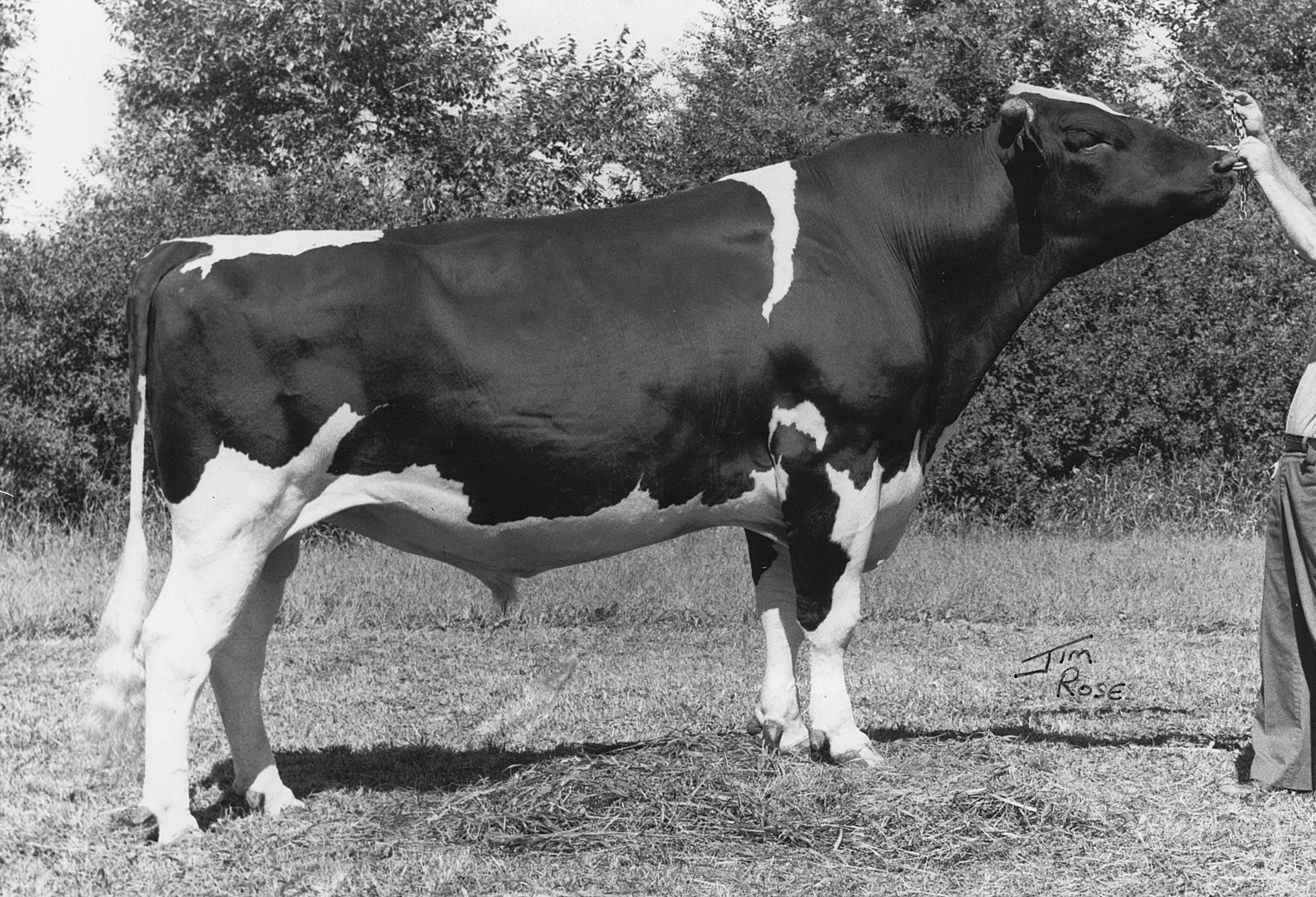
NewsSubscribe
First
Last
Consent

2024 Holstein Canada Master Breeders: Excellence in Balance, Breeding, and Legacy

19 Canadian dairy farms earn elite 2024 Master Breeder status—discover the secrets behind their balanced breeding success!

The Holstein Canada Master Breeder shield represents the pinnacle of achievement in dairy cattle breeding – a symbol of decades dedicated to developing exceptional cattle that balance production, conformation, health, fertility, and longevity. Since 1929, this prestigious award has recognized Canadian breeders who have mastered the complex art and science of breeding profitable, sustainable dairy cows. In 2024, Holstein Canada welcomed 19 new recipients into this elite fraternity, each embodying the breeding excellence that keeps Canadian Holsteins respected worldwide.

The Class of 2024: A Nationwide Showcase of Excellence

This year’s winners represent a cross-section of Canadian dairy expertise from coast to coast. Quebec leads with nine recipients, followed closely by Ontario with eight, while Saskatchewan and British Columbia each contributed one outstanding breeder to the 2024 class. The diversity of operations – from traditional tie-stall barns to modern robotic facilities, from multi-generational family farms to relatively recent establishments – demonstrates that breeding excellence takes many forms but shares standard foundations.

What makes this year’s class particularly notable is the mix of first-time recipients (13) alongside those earning their second shield (5) and even fourth shield (2). This blend of new and repeated excellence highlights the continuous emergence of new breeding talent and the remarkable consistency established programs achieve.

Quebec’s Genetic Architects: Nine Masters of Balance

Quebec’s nine Master Breeder recipients exemplify the province’s focus on breeding cows with excellent health and robust genetics, often leveraging genomics and astute management decisions to propel their herds forward.

Rotaly: Excellence Personified Through Allegria

Rock Hebert and Nathalie Dumais of Sainte-Hélène-de-Kamouraska earned their second Master Breeder shield, powered significantly by the remarkable Rotaly Goldwyn Allegria EX-96 5E 5*. This exceptional cow was crowned the 2024 Holstein Canada Cow of the Year, boasting lifetime production exceeding 103,500 kg milk, a flawless EX-96 type score (including 97 points for udder), and profound generational impact through high-performing daughters. Rotaly’s philosophy rejects sacrificing conformation for production, embracing instead a balanced approach that Allegria perfectly embodies.

Quecy: Family-Focused Excellence

Jacques Roy and his sons at Ferme Quecy in Saint-Isidore-de-Dorchester received their second shield, validating a breeding approach built-in 1987 when Jacques started with just six cows. Their philosophy emphasizes exceptional cow care to promote longevity and focuses on cow families that age well. The farm prioritizes conformation while strategically incorporating health traits into their sire selection process, creating a holistic breeding program that has now twice achieved the industry’s highest recognition.

Belfau: Building Excellence From Scratch

The Hudon family of Rivière-Ouelle, including Anne-Marie Bélanger, who joined in 2011, represents an inspiring journey built literally from zero in 2006 to Master Breeder status in 2024. Family involvement is central to their success, with Anne-Marie handling calf care and paperwork while her partner focuses on maintenance and milking. The next generation already shows promise, with their son Théo demonstrating a keen interest in classification and what makes a superior cow. Their achievement proves that excellence can be built relatively quickly when guided by clear breeding goals and family dedication.

Mebeck: Perseverance Rewarded

Simon Ménard and Yvonne Becker’s Ferme Mebeck earned its first Master Breeder shield, a recognition built on years of persistence and dedication. Their program has consistently produced high-classifying animals, with numerous Excellent and Very Good cows carrying the Mebeck prefix regularly appearing in classification reports. Their achievement represents the culmination of a long-term commitment to excellence in the Saint-Hyacinthe region.

Gaelande: Generational Success Takes Root

Benoît Gosselin and Katy Boutin’s first Master Breeder shield marks a significant milestone for their family operation in Plessisville. Benoît took over approximately two decades ago as a third-generation farmer, with Katy joining as co-owner more recently. Their operation, milking around 70 cows with a production quota of 125 kg/day, demonstrates how focused breeding can achieve elite recognition even at a moderate scale. The farm has previously ranked highly in Holstein Quebec’s “Honneur aux mérites” based on production and classification, indicating their consistent commitment to balanced breeding excellence.

Sartigan: Performance Index Champions

Martin and Renaud Boutin secured their first shield, building on a foundation of exceptional herd management. Ferme Sartigan has consistently ranked among Canada’s top herds for Lactanet’s Herd Performance Index (HPI), placing #13 in 2021 and an impressive #2 in 2018. This consistent high performance across multiple management indicators—milk value, udder health, age at first calving, herd efficiency, longevity, and calving interval—demonstrates a comprehensive commitment to the underlying factors that drive balanced breeding success.

Fleole: Portneuf Pride

As first-time recipients from the Portneuf club, Ferme Fleole demonstrates Holstein breeding prowess in their specific region of Quebec. Their success aligns with the broader Quebec trend among this year’s winners: leveraging genomics and informed decision-making to cultivate herds excelling in health and genetic potential.

Drahoka: Management Excellence Leads to Dual Honors

Francis and Sylvain Drapeau’s first Master Breeder shield came on the heels of another significant accomplishment: ranking #1 in Canada for the Herd Performance Index (HPI) in 2023. Their breeding philosophy focuses on “beaucoup de lait puis avoir des belles vaches” (lots of milk and beautiful cows) and continuous improvement. A key investment was a bedded pack for dry cows, which they credit for significantly improving cow health, calving ease, and longevity. This targeted improvement directly contributed the points needed to secure their top HPI ranking and Master Breeder recognition, showcasing how strategic management decisions can yield multiple national accolades.

Lactomont: Successful Generational Transition

Earning their second shield (the first came in 2003), Ferme Lactomont demonstrates enduring excellence across generations. Established in 1900, the farm recently transitioned to the sixth generation, brothers Benoît and Ghislain Montpetit, who took over from parents Daniel Montpetit and Jane Nieuwenhof. This transition coincided with modernization, including a free-stall barn with four robots. The brothers described the award timing as “bittersweet” but acknowledge it as a testament to their parents’ foundational work. Their philosophy focuses on building upon this legacy while leveraging strong genetics and genomics to advance quickly, concentrating on developing the herd’s best animals.

Ontario’s Powerhouses: Eight Pillars of Production and Type

Ontario’s winners are distinguished by success in breeding herds known for high milk production, strong body structure, excellent reproductive performance, and exceptional longevity.

Quality Holsteins: A Dynasty Continues

Achieving their fourth Master Breeder shield places Quality Holsteins in genuinely rarefied air, representing decades of sustained breeding brilliance. Founded in 1980 by the legendary Paul Ekstein and now involving his son Ari, Quality has become synonymous with elite type and show ring success. Paul Ekstein’s philosophy, “Attention to every minor detail can lead to major success,” combined with a blend of art, science, and a “good eye for cattle,” built the farm’s international reputation.

The purchase of Plushanski Valiant Fran established a cornerstone family, leading to numerous high-impact descendants like Quality BC Frantisco EX-96 (2005 Cow of the Year) and Quality Carlton Pam EX-97 (Canada’s first 97-point B&W cow). With accolades including the 2013 McKown Master Breeder Award for Paul, induction into the Canadian Ag Hall of Fame, eight All-Canadian Breeder’s Herd titles, four RAWF Premier Breeder banners, and nearly 300 Excellent cows bred, Quality’s fourth shield underscores their position as a global Holstein breeding powerhouse.

Heather Holme: Four Generations, Four Shields

Like Quality, Heather Holme also received its fourth Master Breeder shield, marking another incredible story of generational consistency. The farm, now operated by third-generation Curtis McNeil with his wife Cathy and parents Glen and Vanda, traces its roots to the 1930s. Integral to their success is herdsman Greg Seagan, who has had an astounding 43 years of service at the farm.

The Heather Holme herd is homebred and was Canada’s first CHAH Leucosis-free herd. Their breeding philosophy centers on functional traits – “Breeding the kind dairyman like to milk worldwide” – with focused attention on udders, feet and legs, high components, and milk volume. This practical approach echoes the balanced breeding strategy practiced by Curtis’s grandfather, Cliff McNeil, decades ago, who wisely alternated generational focus between milk and type to create long-term balance. Having bred over 130 Excellent cows while maintaining high production averages, Heather Holme demonstrates that a consistent, possibly closed-herd philosophy emphasizing generational balance is a remarkably successful path to repeated Master Breeder recognition.

Erbcrest: Fundamental Excellence at Moderate Scale

Dan and Ruthann Erb received their second Master Breeder shield, attributing their success to the foundational teachings of Dan’s parents, Delmer and Mary. Starting with purebreds in 1971, the Milverton farm focuses on good stewardship and “looking after the little things” – fundamental good husbandry that’s proven successful for decades.

Milking 50 cows in a tie-stall barn, Erbcrest demonstrates that elite breeding success is achievable without adopting large-scale operations or the latest housing systems. Breeding over 100 Excellent cows and achieving this second shield while maintaining a smaller herd size highlights that core principles of dedicated management and consistent breeding decisions remain paramount, regardless of scale. Their success extends beyond the farm gate, with co-owned animals like Erbcrest Doc Marilou making their mark in the show ring.

Kentville: A Dynasty Within a Dynasty

This second Master Breeder shield for Kentville Holsteins is deeply embedded in the family legacy. Representing the fourth and fifth generations, Kevin McGriskin and his family are part of a wider McGriskin Holstein dynasty that now boasts an incredible 10 Master Breeder shields among extended family members, including Kevin’s father (1995) and grandfather (two shields).

Recognized in 2023 for 100 consecutive years of Holstein registration, the farm embodies Holstein breeding as a multi-generational tradition. The passion for great cattle continues to flow through the generations, with Kevin and his wife passing their love of showing onto their children involved in 4-H. Their story highlights how shared knowledge, values, and potential genetics within a dedicated family network can create a powerful environment for sustained breeding excellence spanning over a century.

Cherry Crest: The Resilience Champions

Securing their third Master Breeder shield is a remarkable feat for the Johnston family, especially considering the farm has undergone three complete herd dispersals in its past. Operated by Don Johnston and Nancy Beerwort, with son Kevin and wife Tammy now taking leadership roles, the farm milks around 135 cows.

Their philosophy prioritizes animal well-being, balanced breeding, and community involvement. Don Johnston finds particular satisfaction in the shield as validation for making the “right decisions” throughout their breeding program. Achieving a third shield despite multiple dispersals demonstrates an exceptional, inherent ability within the family to identify superior genetics, rebuild effectively, and consistently apply a winning breeding strategy – showcasing remarkable resilience and cow sense that transcends physical herd continuity.

Oconnors: Genetic Legacy Extends Beyond Dispersal

Winning their first Master Breeder shield after dispersing their milking herd underscores the lasting impact of a breeding program’s genetic footprint. The award recognizes the cumulative performance of cows bred under the Oconnors prefix, wherever they may be now.

A key contributor to their success was the Oconnor’s Planet Lucia family; Lucia herself was Canada’s #1 genomic cow in 2013, achieving a rare combination of high type and production considered “unheard of back then.” The family expressed pride in the shield and ensuring their cows transitioned to other dairy herds rather than beef upon dispersal, preserving their genetic progress. Their genetic legacy continues to influence the breed, as evidenced by recent show entries that still carry the distinctive Oconnors prefix.

Aveline: From Unconventional Origins to Breeding Excellence

Tony and Char Martin and their sons celebrate their first Master Breeder shield, an achievement they’ve been striving towards for years. Milking in a 74-cow tie-stall barn, their philosophy emphasizes longevity, recognizing that later lactations are often the most profitable.

A cornerstone of their program, Aveline Master Amanda EX-93 5E 6*, remarkably descended from a “barnyard bull” yet became highly influential in the herd. This highlights that exceptional female lines and astute breeder judgment in developing them, even from unconventional origins, remain critical pathways to genetic progress and top-tier recognition like the Master Breeder Award.

Dutchdale: Huron County Excellence

As first-time recipients, Dutchdale Farms adds to the strong showing from the Huron County Holstein Club this year. Their success reflects the Ontario winners’ collective focus on breeding for high production, durable conformation, reliable reproduction, and cow longevity. Their achievement further solidifies the high breeding expertise concentrated within the Huron region.

Western Champions: Saskatchewan and British Columbia Show Their Strength

The winners are two exceptional herds from Canada’s western provinces, demonstrating that Holstein breeding excellence extends coast to coast.

Mil-En-Roy: Prairie Pioneer Reaches the Summit

This first Master Breeder shield marks a milestone in the Saskatchewan prairie’s long and storied family history. Lyle Pretty represents the second generation operating under the Mil-En-Roy prefix (established by parents Roy and Mildred), while the family homestead dates back to 1900.

From post-WWII cream shipping to the early adoption of electricity and purebred Holsteins in the 1950s, showing cattle since 1951, and now achieving Master Breeder status, Mil-En-Roy embodies the resilience, adaptation, and enduring “passion and love for dairy cattle” required for multi-generational success on the prairies. Having bred over 120 Excellent cows, their achievement brings well-deserved pride to Saskatchewan’s Holstein community.

Frueh: Island Excellence

The Frueh family operation earns its first Master Breeder shield, representing Vancouver Island with distinction. Their philosophy acknowledges the practical side of achieving the award: consciously managing cows to “reach thresholds” for production and classification points while implementing a breeding strategy that saw the Frueh Chesapeake Candy family contribute significantly through its many descendants.

They also emphasize the importance of the local club community, especially vital in smaller dairy regions like Vancouver Island, with only about 30 producers. Their love for the entire scope of dairy farming – embracing cows, crops, business, family, and lifestyle – reflects the holistic passion needed for sustained breeding success.

The Common Threads in Master Breeder Success

While each farm has its unique story, several common themes emerge from the Class of 2024 that provide valuable insights for all breeders aspiring to excellence:

The Bedrock of Balance

Almost universally, these breeders prioritize a balanced approach, refusing to chase extremes in either production or type alone. They seek synergy between conformation, yield, health, and longevity, recognizing this as the path to sustainable profitability. This isn’t merely about meeting award criteria; it’s a core principle from historical wisdom to modern practice.

The success of herds like Rotaly with Allegria, Heather Holme with its functional approach, and others underscores the power of this balanced vision. While different farms may emphasize specific traits to match their market and management, none sacrifice the fundamental balance needed for long-term success.

Generational Passion & The Family Farm

The prevalence of multi-generational farms is striking within this year‘s class (Kentville/McGriskin, Mil-En-Roy/Pretty, Lactomont/Montpetit, Heather Holme/McNeil, Erbcrest/Erb, Cherry Crest/Johnston, Gaelande/Gosselin). This structure nurtures the long-term vision, knowledge transfer, and deep-seated passion often required for breeding excellence.

The pride in family legacy and hope for future generations are palpable in many of these stories. Even when farms are not multi-generational, strong partnerships and mentorship relationships appear to foster similar environments for breeding success, suggesting that the transfer of knowledge and shared vision may be more important than bloodlines alone.

The Power of Cow Families & Longevity

Identifying and cultivating strong, long-lasting cow families provides a genetic bedrock for successful breeding programs. Examples like the Fran family at Quality, Allegria at Rotaly, Amanda at Aveline, Lucia at Oconnors, and Candy at Frueh demonstrate how exceptional maternal lines can consistently transmit the desired balance of traits, multiplying a herd’s potential over time.

Longevity isn’t merely survival; it’s extended productivity and breeding influence, a key component explicitly valued by these breeders and the award itself. The ability to identify females with the genetic capacity for longevity – and then manage them to realize that potential – emerges as a critical skill shared by these Master Breeders.

Adapting and Innovating While Honoring Tradition

While grounded in tradition, these top breeders strategically embrace innovation. The adoption of genomics (especially noted in Quebec operations and Lactomont), data management tools, targeted facility improvements (like Drahoka’s bedded pack), and robotics (Lactomont) demonstrates a forward-thinking approach.

Significantly, these tools aren’t replacing core breeding skills but enhancing the ability to achieve goals related to health, efficiency, and genetic progress. The most successful breeders appear to integrate new technologies within their established breeding philosophy rather than chasing trends that might divert from their core values.

The Torch of Holstein Excellence Burns Bright

The 19 herds honored as 2024 Holstein Canada Master Breeders represent the pinnacle of Canadian dairy cattle breeding achievement. Their success, spanning diverse regions and operational styles, is a testament to unwavering dedication, skillful management, and a profound understanding of the Holstein cow.

Collectively, they reinforce the high standards associated with Canadian Holsteins globally – a commitment to balanced performance, longevity, robust health, and efficient production. They embody the successful integration of time-honored breeding principles with modern tools like genomics and data analysis, paving the way for the breed’s future.

As these Master Breeders continue their journey of excellence, they not only elevate their operations but strengthen the entire Canadian Holstein industry through their genetic contributions, mentorship, and example. Congratulations to the Class of 2024 – true Masters of the Craft, carrying the torch of Holstein excellence with pride and distinction.

Key Takeaways:

  • Balance is king: Winners refused to prioritize production over conformation, instead focusing on synergy between health, longevity, and efficiency.
  • Generational wisdom matters: Over half the recipients were multi-generational farms, leveraging decades of knowledge transfer and long-term vision.
  • Innovation fuels progress: Genomics, robotics, and targeted facility upgrades (e.g., bedded packs for dry cows) complemented traditional breeding skills.
  • Regional diversity shines: Quebec’s health-focused herds and Ontario’s production powerhouses highlighted Canada’s geographic breeding strengths.
  • Cow families leave legacies: Standout maternal lines like Rotaly’s Allegria and Quality’s Fran family drove genetic impact across generations.

Executive Summary:

Holstein Canada honored 19 dairy farms as 2024 Master Breeders, recognizing decades of excellence in breeding Holsteins that balance production, conformation, health, and longevity. Quebec and Ontario dominated the list, with winners showcasing generational expertise, strategic use of genomics, and robust cow families. Key themes included prioritizing longevity, multi-generational farm management, and blending tradition with innovation like robotics and data analytics. First-time recipients highlighted rising talent, while fourth-time winners like Quality Holsteins and Heather Holme underscored sustained excellence. These breeders exemplify Canada’s global leadership in Holstein genetics, proving that balanced breeding and adaptability drive enduring success.

Learn more:

Join the Revolution!

Join over 30,000 successful dairy professionals who rely on Bullvine Daily for their competitive edge. Delivered directly to your inbox each week, our exclusive industry insights help you make smarter decisions while saving precious hours every week. Never miss critical updates on milk production trends, breakthrough technologies, and profit-boosting strategies that top producers are already implementing. Subscribe now to transform your dairy operation’s efficiency and profitability—your future success is just one click away.

NewsSubscribe
First
Last
Consent

Dad at 80: How Murray Hunt Revolutionized Canadian Dairy Genetics

At 80, Murray Hunt’s dairy genetics innovations still shape global herds—meet the visionary who made science the farmer’s ally.

My father Murray Hunt at 80: The quiet visionary who transformed Canadian dairy breeding with scientific precision and practical wisdom. Behind those thoughtful eyes lies decades of innovation—from developing the Dollar Difference Formula to revolutionizing Type Classification systems—that helped position Canadian Holstein genetics as world leaders. Dad's methodical approach always balanced rigorous analysis with farm-level practicality, a philosophy that guided not only his professional contributions but also his approach to mentorship and family. As we celebrate his birthday today, his forward-thinking legacy continues to shape both our family and the global dairy industry.
My father Murray Hunt at 80: The quiet visionary who transformed Canadian dairy breeding with scientific precision and practical wisdom. Behind those thoughtful eyes lies decades of innovation—from developing the Dollar Difference Formula to revolutionizing Type Classification systems—that helped position Canadian Holstein genetics as world leaders. Dad’s methodical approach always balanced rigorous analysis with farm-level practicality, a philosophy that guided not only his professional contributions but also his approach to mentorship and family. As we celebrate his birthday today, his forward-thinking legacy continues to shape both our family and the global dairy industry.

Today, on April 9, 2025, as my father, Murray Hunt, celebrates his 80th birthday, I want to share the story of a man who shaped my life and transformed an entire industry. Growing up as Murray’s son, I witnessed firsthand his methodical approach to breeding and evaluation systems that fundamentally changed how farmers select and develop their herds. Dad never sought the spotlight, but his creation of the Dollar Difference Formula and leadership in redesigning classification systems represented watershed moments for Canadian dairy genetics. As his son, I’ve had the privilege of watching him connect research institutions with farmers across Canada, creating a legacy of innovation that continues to shape dairy breeding worldwide.

The Huntsdale Beginnings: Where It All Started

Legacy in Action: Sterling and Irene Hunt intently review the program at Rockton World's Fair, watching the Huntsdale cattle they worked tirelessly to develop. The yellow jacket and red shawl stand out against the barn backdrop—much like how this farming couple stood out in their community, transforming a struggling 22-cow operation into a respected Holstein breeding program that would inspire their son Murray's groundbreaking career in dairy genetics.
Legacy in Action: Sterling and Irene Hunt intently review the program at Rockton World’s Fair, watching the Huntsdale cattle they worked tirelessly to develop. The yellow jacket and red shawl stand out against the barn backdrop—much like how this farming couple stood out in their community, transforming a struggling 22-cow operation into a respected Holstein breeding program that would inspire their son Murray’s groundbreaking career in dairy genetics.

The story begins at Huntsdale Farm, where my grandparents Sterling and Irene took over a struggling operation on April 1, 1960. Dad has told me countless times about those early days – just 22 cows shipping 450 pounds of milk daily to Royal Oak in Hamilton, with worn-out facilities and equipment that desperately needed updating.

Before my grandparents took over, Huntsdale was just a 25-acre market garden farm with 2-3 milking Ayrshires used primarily for cream production. Grandpa Sterling worked at the local Co-op feed mill with limited career prospects ahead of him. But they knew they needed more to provide for their children’s education.

The early 1960s were transformative years at Huntsdale. I’ve heard many stories about how the barn was renovated in 1961, new equipment was installed, and improved fertilization techniques revolutionized production. Grandpa Sterling brought expertise in specialty crops and nutrition, while Grandma Irene handled milking gardening and served as the family taxi driver and their connection to the community.

Dad often reminisces that by 1965, they had expanded to 30 cows, producing 2,000 pounds of milk daily, and were selling breeding stock to buyers in Canada and the United States. When the Ontario Milk Marketing Board started that year, they could finally buy quota. By 1967, they had paid off the farm entirely through sheer productivity and efficiency.

What amazes me most is that in 1960, at a relatively young age, Dad was responsible for animal recording and breeding programs – a task that would ultimately shape his entire career. He implemented the Record of Performance (ROP) system in 1962, began using artificial insemination that same year, and adopted Type Classification in 1963. I can still picture him as a teenager, meticulously recording data in the barn, laying the groundwork for his future innovations.

Outside farm work, Dad was busy with 4H programs in dairy, potato, grain, tractor maintenance, soils, and public speaking. He played softball and participated in various clubs at Glendale Park Secondary School, including volleyball, Junior Kiwanis Club, and math club. Dad rarely talks about it, but in 1961, he dislocated his right shoulder in a farm accident – an injury that would recur five more times by 1965.

This physical limitation prompted Grandma Irene to redirect Dad’s life with words that would change everything: “You MUST get a college education. You won’t be able to farm with that shoulder.” So, in September 1965, Dad enrolled at the University of Guelph’s Ontario Agricultural College with initial aspirations of veterinary medicine. By 1967, however, he had decided to pursue a Bachelor of Science in Agriculture and a Master’s degree, temporarily dimming the “Huntsdale dream.”

Dad specialized in animal science, genetics, and computer applications during his university years. However, the most important event of those years had nothing to do with academics. In August 1967, he met my mother, Karen, at a centennial dance. They married in 1969, beginning a partnership that Dad still considers his most significant legacy: “Karen &Murray’s legacy will be the great things that our families achieve. I have been BLESSED to have Karen as my life partner.”

Under Murray Hunt’s meticulous direction, Huntsdale Farms achieved the pinnacle of Canadian dairy breeding excellence by securing the coveted Holstein Canada Master Breeder Shield in 1984. This achievement represented the culmination of decades of strategic breeding decisions dating back to when Murray worked alongside his grandfather Allen Humphrey and parents Sterling and Irene Hunt. Through his scientific approach to dairy breeding combined with hands-on farming knowledge, Murray established Huntsdale’s reputation for superior genetics, sending multiple sires to AI organizations in Canada and abroad, particularly excelling with the development of the Gypsy Grand cow family that became a foundation of the herd’s continued success.

Growing up, I witnessed how Dad always acknowledged the mentors who shaped him. He often spoke of Osborne and Jeanetta Sager, Moe Freeman (who led 4H in Wentworth and later became a University of Guelph professor and Semex General Manager), and senior 4H members Roger Dyment and Doug Wingrove. Later influences included George Clemons, Bob Lang, and Harley Nicholson – each contributing to Dad’s evolving vision for scientific dairy breeding.

Partners in life and legacy: Karen and Murray Hunt share a moment in the greenery they love. Since meeting at a centennial dance in 1967, this dynamic duo has shaped not only a family legacy with three children and eight grandchildren, but also influenced generations of dairy farmers through Murray's pioneering work in Holstein genetics. As Murray celebrates his 80th birthday, his most treasured achievement remains clear: 'I have been BLESSED to have K as my life partner.
Partners in life and legacy: Karen and Murray Hunt share a moment in the greenery they love. Since meeting at a centennial dance in 1967, this dynamic duo has shaped not only a family legacy with three children and eight grandchildren, but also influenced generations of dairy farmers through Murray’s pioneering work in Holstein genetics. As Murray celebrates his 80th birthday, his most treasured achievement remains clear: ‘I have been BLESSED to have Karen as my life partner.

From Master’s Thesis to Industry Revolution

Dad’s formal entry into the dairy genetics world began with his Master’s thesis in 1970. Though he rarely boasts about it, this wasn’t just an academic exercise—it became a blueprint that reshaped Canadian breeding strategies for decades.

Through computer simulation (cutting-edge technology back then), Dad recommended sampling four times the number of young sires with significantly increased emphasis on production traits. One of his more radical suggestions was for an “all-young bull stud” with stored semen so the next generation could be sired by proven elite bulls. This approach was considered too extreme then, but Dad loves pointing out that it closely resembles today’s genomic selection practices. He’s particularly proud that Canadian A.I. organizations followed his plan, allowing Canada, with less than 2% of global cows, to achieve 25% of global Holstein semen sales.

A byproduct of his Master’s work was the creation of the Dollar Difference Formula. This revolutionary approach calculated the value of revenue generation minus production costs for a bull’s daughters. This was essentially a Total Merit Index before such indices became industry standard in the late 1980s. The formula gained strong support from the Ontario Ministry of Agriculture, Food and Rural Affairs (OMAFRA) staff, though breed associations initially resisted, preferring systems that emphasized conformation traits.

Dad’s first professional position from 1970-1973 placed him with OMAFRA’s Dairy Herd Improvement (DHI) program, overseeing 70 field staff, 20 laboratory technicians, and eight office/data personnel. One achievement he’s particularly proud of from this period was having DHI records accepted by Holstein Canada – an early example of the data integration he would champion throughout his career.

In June 1973, Dad moved to Holstein, Canada, where his influence would grow exponentially. He arrived at a time when the organization almost exclusively published and used phenotypic information, mainly ignoring the genetic evaluation methods he had studied. Agricultural Canada produced milk and fat bull proofs, but purebred breeders generally overlooked these in favor of show-ring results.

I remember as a child how Dad would come home from work frustrated yet determined to introduce science-based evaluation systems to an industry steeped in traditional selection methods. Working alongside researchers at the University of Guelph, particularly E.B. Burnside and associates who were developing best linear unbiased prediction (BLUP) methods to replace raw breed average comparisons, Dad began shifting industry perspectives. Or when Dad first brought home the first handheld device for classification, which Dalton Hodgins affectionately named FRED (F***ING R*****ED ELECTRONIC DEVICE).

Perhaps Dad’s most significant contribution at Holstein Canada was leading a complete overhaul of the Type Classification system, culminating in the implementation the BLUP Animal Model in the early 1980s. Under his leadership, the Type Classification program expanded eightfold between 1973 and 1990, eventually gaining international adoption in Japan, Australia, the UK, Mexico, Italy, and Spain.

Huntsdale Legacy: Sprucelynn Rudolph Marcie VG-86-2YR 3*, one of the foundation females whose genetic influence spread worldwide through her many sons and grandsons in AI. Her combination of production and conformation exemplifies Murray Hunt's methodical approach to breeding—selecting for balanced traits that deliver both profitability and longevity. Standing proudly before the iconic Huntsdale farmhouse with its distinctive red roof, Marcie represents the practical application of scientific breeding principles that Murray championed throughout his influential career in Canadian dairy genetics.
Huntsdale Legacy: Sprucelynn Rudolph Marcie VG-86-2YR 3*, one of the foundation females whose genetic influence spread worldwide through her many sons and grandsons in AI. Her combination of production and conformation exemplifies Murray Hunt’s methodical approach to breeding—selecting for balanced traits that deliver both profitability and longevity. Standing proudly before the iconic Huntsdale farmhouse with its distinctive red roof, Marcie represents the practical application of scientific breeding principles that Murray championed throughout his influential career in Canadian dairy genetics.

The Dollar Difference Formula: Changing How Value Was Measured

Growing up, I heard countless dinner conversations about the Dollar Difference Formula. Dad created this during his Master’s studies, fundamentally transforming how bull selection decisions were made across North America.

Until then, sire selection had primarily emphasized physical traits valued in the show ring. Dad’s formula quantified the actual dollar value of using different sires by calculating expected revenue from daughters’ production minus their production costs – essentially creating what he calls “a TMI [Total Merit Index] before TMI came about in the late 1980s.”

Government officials recognized the formula’s innovation, and OMAFRA staff, including the livestock commissioner and dairy cattle specialists, strongly supported its implementation. The DDGuide, as it became known, spread beyond Ontario to other Canadian provinces. However, it faced resistance from breed associations that “did not accept like DDG as it did not emphasize high type.”

Dad also led a comprehensive reimagining of the Type Classification system at Holstein Canada. When he arrived in 1973, the organization was almost exclusively focused on phenotypic information – what animals looked like – rather than their genetic potential. Drawing on his statistical training, Dad led a “total re-write of TC culminating [in] BLUP (Animal Model) in the early 1980’s.”

The modernized classification system required uniform standards among classifiers to ensure bull proofs would be accurate. Dad secured Holstein Canada Board of Directors support with policy and budget approvals, while Holstein field representatives held meetings to explain and promote the updated program. The results were dramatic – the Type Classification program expanded eightfold between 1973 and 1990.

Standing proudly in the spotlight, Shottle Crusade EX 95 3E represents the pinnacle of balanced dairy breeding—a living testament to Murray Hunt's philosophy of developing "sound productive females" rather than simply chasing market trends. This remarkable Holstein, bred at Huntsdale Farm, exemplifies the perfect union of exceptional production and outstanding conformation that Murray championed throughout his career.

With an impressive lifetime production of 118,000 kg of milk, three Superior Production Awards, and a Super 3 Award, Shottle Crusade proved her efficiency in the barn. Yet her EX 95 classification and impressive show ring accomplishments—including Honourable Mention All Canadian, nominations for All American honors, and multiple Reserve All Western Cow titles—demonstrate that functionality and beauty can indeed coexist in the modern dairy cow.

As Saskatchewan Cow of the Year and a Nasco International Type and Production Award winner, Shottle Crusade embodies the forward-thinking, data-driven breeding approach that made Canadian Holstein genetics world leaders under Murray Hunt's guidance.
Standing proudly in the spotlight, Shottle Crusade EX 95 3E represents the pinnacle of balanced dairy breeding—a living testament to Murray Hunt’s philosophy of developing “sound productive females” rather than simply chasing market trends. This remarkable Holstein, bred at Huntsdale Farm, exemplifies the perfect union of exceptional production and outstanding conformation that Murray championed throughout his career. With an impressive lifetime production of 118,000 kg of milk, three Superior Production Awards, and a Super 3 Award, Shottle Crusade proved her efficiency in the barn. Yet her EX 95 classification and impressive show ring accomplishments—including Honourable Mention All Canadian, nominations for All American honors, and multiple Reserve All Western Cow titles—demonstrate that functionality and beauty can indeed coexist in the modern dairy cow. As Saskatchewan Cow of the Year and a Nasco International Type and Production Award winner, Shottle Crusade embodies the forward-thinking, data-driven breeding approach that made Canadian Holstein genetics world leaders under Murray Hunt’s guidance.

From Show Ring to Science: Dad’s View on Breeding Evolution

Dad’s career spans a transformative period in Holstein breeding, during which selection priorities shifted dramatically from show-ring aesthetics to farm profitability and sustainability. Having witnessed this evolution firsthand, I’ve heard him speak passionately about both the progress and the remaining challenges.

When Dad began his career in the early 1970s, Holstein Canada was almost exclusively focused on phenotypic information. Breed associations were reluctant to embrace production-focused selection tools like his Dollar Difference Guide. Agricultural Canada produced milk and fat bull proofs, which were “largely ignored by purebred breeders” who preferred visual assessment and pedigree analysis.

The transition to science-based breeding strategies faced significant resistance. Dad often recalls that “it took a few years for BLUP production bull indexes to gain usage by breeders, although A.I.’s adopted quickly.” This disconnect between scientific evaluation and breeder acceptance represented a fundamental challenge Dad worked to overcome throughout his career. The breakthrough came through more accurate assessment, expanded data collection, and generational change, as “young people coming home (1970+) to dairy farm brought with them the acceptance of genetic evaluation results.”

Artificial insemination played a critical role in this transformation. Dad notes that “90% of genetic gain in a population comes from the sires used,” highlighting the outsized impact of bull selection decisions. His Master’s thesis had recommended expanding young sire sampling programs while increasing emphasis on production traits – a strategy eventually adopted by Canadian A.I. organizations with remarkable results. Dad notes with pride that “CA (<2% global cows) achieved 25% global Holstein semen sales” by following this approach.

Passing on the Legacy: Murray Hunt shares his lifelong passion for Holstein genetics with the next generation of dairy enthusiasts—his grandchildren. With the same patient guidance that helped transform Canadian dairy breeding, Murray introduces these young minds to the fundamentals of dairy cattle evaluation. His grandchildren's eager engagement with the Holstein calves reflects how Murray's influence extends beyond industry innovations to family values. This moment captures the essence of Murray's greatest pride: not just his revolutionary contributions to dairy genetics, but the knowledge and appreciation he instills in his family, ensuring his passion for quality dairy cattle continues for generations to come.
Passing on the Legacy: Murray Hunt shares his lifelong passion for Holstein genetics with the next generation of dairy enthusiasts—his grandchildren. With the same patient guidance that helped transform Canadian dairy breeding, Murray introduces these young minds to the fundamentals of dairy cattle evaluation. His grandchildren’s eager engagement with the Holstein calves reflects how Murray’s influence extends beyond industry innovations to family values. This moment captures the essence of Murray’s greatest pride: not just his revolutionary contributions to dairy genetics, but the knowledge and appreciation he instills in his family, ensuring his passion for quality dairy cattle continues for generations to come.

Dad’s Leadership Philosophy: Building Bridges Across the Industry

Beyond his technical innovations, I’ve always admired Dad’s leadership philosophy and vision for the industry. Though he’s never been one to seek the spotlight, his influence extends far beyond his official roles.

Dad’s approach emphasizes collaboration across organizational boundaries. Despite the competitive nature of the artificial insemination industry, he worked effectively within the Canadian Association of Animal Breeders to foster cooperation on research and national development initiatives. He understood that industry-wide progress required organizations to work together while allowing for healthy marketing competition.

As a mentor, Dad emphasizes forward-thinking and vision. He believes that “a mentor is not an honest mentor if all they do is encourage mentees to repeat the past that no longer applies.” Instead, he tries “to make sure a mentee thinks both progressively and proactively,” recognizing that “visioning is not a universal trait possessed by people” and often “makes the majority of people uncomfortable.”

Growing up, I watched Dad implement this methodical approach to industry challenges: “1. Get the industry to describe the problem/challenge 2. Invite all organizations that want to be part of the future to support/fund an independent task force. 3. Name only open-minded visionary people in the task force. 4. Circulate findings/recommendation/proposed plan 5. Bring industry together to accept.” This structured yet inclusive approach characterizes his leadership style.

Throughout his career, Dad demonstrated the ability to identify emerging needs and respond proactively. He led the privatization of milk recording and genetic evaluations when government agencies withdrew support, ensuring these critical services continued under industry management. Similarly, he helped establish the Genetic Evaluation Board and supported the creation and funding of the Centre for Genetic Improvement of Livestock, building infrastructure for ongoing industry advancement.

Here stands the last two-year-old to achieve the coveted Very Good classification before the herd dispersal, with Murray Hunt attentively holding her as she enjoys her grain. This young Holstein embodies the <a href='https://www.thebullvine.com/management/beat-heat-dairy-cattle-breeding-milk-production-challenges-caused-heat-stress/'>breeding philosophy Murray championed throughout his career – balancing production</a> efficiency with strong conformation. After decades of methodical genetic selection that earned Huntsdale the Master Breeder Shield in 1984, this promising heifer marks the closing chapter of direct farm operations while continuing Murray’s legacy of excellence in Canadian dairy genetics. Her clean dairy quality and balanced frame reflect the rigorous classification standards Murray helped develop during his influential career at Holstein Canada.” class=”wp-image-484393″/><figcaption class=Here stands the last two-year-old to achieve the coveted Very Good classification before the herd dispersal, with Murray Hunt attentively holding her as she enjoys her grain. This young Holstein embodies the breeding philosophy Murray championed throughout his career – balancing production efficiency with strong conformation. After decades of methodical genetic selection that earned Huntsdale the Master Breeder Shield in 1984, this promising heifer marks the closing chapter of direct farm operations while continuing Murray’s legacy of excellence in Canadian dairy genetics. Her clean dairy quality and balanced frame reflect the rigorous classification standards Murray helped develop during his influential career at Holstein Canada.

Dad’s Vision for Dairy’s Future

As Dad turns 80 today, his forward-looking perspective remains as sharp as ever. When reflecting on his life’s work, he demonstrates the same clear-eyed pragmatism that characterized his professional contributions.

Rather than highlighting specific career achievements, Dad identifies his family as his most significant accomplishment: “K&M’s legacy will be the great things that our families achieve.” This sentiment reflects his partnership with Mom and their pride in raising “three outstanding/accomplished children and now eight great grands.”

Looking toward the future of dairy breeding, Dad advocates for a more comprehensive approach that moves beyond the current emphasis on total merit indexes. He expresses concern that “the over-use of TMI’s (TPI, LPI, NM$ etc)” without eliminating animals that are below average for health, mobility, fertility, and other functional traits is “holding breeding back in developing the animals needed for 2050.”

Dad envisions breeding programs that more effectively incorporate adaptability, disease resistance, and other functional traits. When asked if breeding programs should include these characteristics, his response is emphatic: “For sure, YES. Cannot happen soon enough.”

On the question of genetic diversity, Dad offers a provocative perspective. He suggests “that we are currently chasing the wrong tool – inbreeding. We need more information on the genetic makeups that cause problems and not just on common ancestry. The commonality of future offspring not about common ancestors.”

Dad acknowledges the structural challenges facing small-scale dairy producers. With “75% US milk com[ing] form herds of 1000+ cows,” he recognizes that “small scale breeders <100 cows must have a novel, unique specialty.” With characteristic directness, he states that “future milk production, like-it-or-not, depends on technology, scale (marketing, buying, costs,..) is a must, automation… Time waits for no one.”

To address future industry challenges, Dad advocates a comprehensive, multi-disciplinary approach. He notes there is “too much individual silo work/approached” and argues that “farmers/industry needs a wide-scoped approach.” This holistic vision challenges the tendency toward specialization and compartmentalization that can impede progress on complex issues.

The Hunt family legacy in dairy excellence captured in this multi-generational gathering. Seated in the center, Murray and Karen Hunt are surrounded by their accomplished children and grandchildren. The photo showcases the remarkable family Murray proudly references as his most significant legacy. His three children have each made extraordinary contributions to agriculture: Paul (CEO of URUS, the world's largest dairy genetics company), Heather (a leading animal nutritionist), and Andrew (founder of The Bullvine). This family portrait beautifully illustrates Murray's belief that "K&M's legacy will be the great things that our families achieve" - a promise fulfilled through their collective impact on the global dairy industry.
The Hunt family legacy in dairy excellence captured in this multi-generational gathering. Seated in the center, Murray and Karen Hunt are surrounded by their accomplished children and grandchildren. The photo showcases the remarkable family Murray proudly references as his most significant legacy. His three children have each made extraordinary contributions to agriculture: Paul (CEO of URUS, the world’s largest dairy genetics company), Heather (a leading animal nutritionist), and Andrew (founder of The Bullvine). This family portrait beautifully illustrates Murray’s belief that “Karen &Murray’s legacy will be the great things that our families achieve” – a promise fulfilled through their collective impact on the global dairy industry.

The Legacy of My Father at 80

As we celebrate Dad’s 80th birthday today, I’m struck by how his contributions to Canadian dairy genetics represent an extraordinary blend of scientific rigor, practical application, and forward-thinking leadership. From his early days of responsibility at Huntsdale Farm to his transformative work at Holstein Canada and beyond, Dad consistently bridged the gap between research institutions and working farms, translating complex genetic principles into practical selection tools that farmers could use.

Dad’s development of the Dollar Difference Formula and his leadership in modernizing Type Classification programs fundamentally changed how dairy cattle are evaluated and selected. By emphasizing economic measures and implementing sophisticated statistical methodologies, he helped shift the industry from subjective visual assessment toward data-driven decision-making. The dramatic expansion of Canadian Holstein genetics in international markets – achieving 25% of global Holstein semen sales with just 2% of the world’s Holstein cows – is a testament to the effectiveness of the approaches he championed.

Beyond his technical innovations, Dad’s collaborative leadership style created frameworks for industry cooperation that continue to benefit Canadian agriculture. His ability to work across organizational boundaries, engage stakeholders, and build consensus around complex issues enabled transformative change that might otherwise have stalled amid competing interests.

Perhaps most significantly, Dad has consistently challenged the industry to look forward rather than backward. As he notes when describing effective mentorship, “A mentor is not an honest mentor if all they do is encourage mentees to repeat the past that no longer applies.” This progressive orientation sometimes made him a contrarian voice, willing to question established practices when they impeded advancement.

While Dad’s professional achievements are substantial, he identifies his family – Mom, my siblings, and I – as his most significant legacy. This personal priority has not diminished his impact on the dairy industry but enriched it, grounding his scientific work in the practical realities of family farming and generational sustainability.

Today, as we celebrate Dad’s 80th birthday, I’m profoundly grateful for the industry leader and the father he has been. His methodical, science-based, and holistic approach to genetic improvement provides a professional and personal legacy – teaching us to balance progress with pragmatism, innovation with sustainability, and ambition with humility. Happy 80th birthday, Dad. Your legacy continues to grow with each generation you’ve touched – in our family and throughout the dairy world.

Key Takeaways:

  • Revolutionized bull selection with the Dollar Difference Formula, prioritizing economic value over show-ring traits decades before industry standards.
  • Pioneered data-driven breeding by modernizing cattle evaluation systems, increasing Type Classification participation eightfold.
  • Bridged science and farming through collaborative leadership, making Canadian genetics a global powerhouse.
  • Championed future-ready breeding advocating for health, fertility, and adaptability alongside production metrics.
  • Legacy of mentorship and family—proving innovation thrives when grounded in community and generational wisdom.

Executive Summary:

On his 80th birthday, Murray Hunt’s legacy as a dairy genetics pioneer shines through his transformative work developing the Dollar Difference Formula and modernizing cattle evaluation systems. As told by his son Andrew, Hunt’s career at Holstein Canada blended rigorous science with practical farming insights, shifting industry focus from show-ring aesthetics to economic efficiency. His leadership in implementing BLUP statistical models and expanding Type Classification programs positioned Canadian genetics as global leaders. Beyond technical innovations, Hunt fostered industry collaboration and mentored future leaders while prioritizing family as his greatest achievement. This profile reveals how one man’s vision reshaped dairy breeding through data-driven strategies and unwavering commitment to progress.

Learn more:

Join the Revolution!

Join over 30,000 successful dairy professionals who rely on Bullvine Daily for their competitive edge. Delivered directly to your inbox each week, our exclusive industry insights help you make smarter decisions while saving precious hours every week. Never miss critical updates on milk production trends, breakthrough technologies, and profit-boosting strategies that top producers are already implementing. Subscribe now to transform your dairy operation’s efficiency and profitability—your future success is just one click away.

NewsSubscribe
First
Last
Consent

BLACK HIDE BLINDNESS: Why Breeding Only for Color is Destroying Your Dairy-Beef Profits

Black hide obsession is costing you thousands. Those cheap Angus straws? Economic suicide. Discover why color alone won’t save your beef-on-dairy profits.

You’re riding a fading trend, and your bottom line will pay the price. Since 2017, US beef semen sales have skyrocketed by 6.5 million units, while Holstein semen sales plummeted by 6.3 million units.

This massive shift has created a temporary market advantage, but those cheap black-hided beef semen straws aren’t the bargain you think they are.

While you’re patting yourself on the back for those black calves in the pen, the harsh truth remains: beef-on-dairy crosses that don’t deliver performance are just “Holstein steers in disguise,” and the premium you’re enjoying today could vanish faster than milk prices during a surplus.

MARKET REALITY: The Beef-on-Dairy Premium You’re About to Lose

The beef-on-dairy breeding trend exploded when three primary packers quit harvesting Holstein steers in 2017-2018, drastically devaluing the Holstein steer market.

From 2017 to 2022, beef-on-dairy cross calves replaced 70% of Holstein steers in the fed cattle harvest mix. Like moths to a flame, dairy producers flocked to what seemed easy money—breed for black calves and collect premium checks.

“It’s not likely you tell your semen rep, ‘Just give me Holstein semen that’s cheap,’ yet that’s what’s happening with a lot of beef-on-dairy breeding right now. We need to aim for more than just a black calf.”

Market Value Comparison (2023-2024 Data)

Calf TypeNewborn ValueFeeder Value (500-600 lbs)Discount vs. Beef
Holstein Bull$25-50$40/cwt below beef$200-240/head
Generic Black Cross$150-200$15-20/cwt below beef$75-120/head
Premium Beef Cross$225-250$5-12/cwt below beef$25-72/head

This stark economic reality shows why crossbred genetics matter. Holstein bull calves sell for little compared to beef-on-dairy cross calves, which can fetch four to six times more—up to $250 per head.

At 500-600 pounds feeder weights, beef-on-dairy crosses sell at only $12-15/cwt below straight beef calves, while Holstein steers lag far behind at $40/cwt below comparable weights.

The global market reflects this reality, too, with European auction data from 2021-2023 showing that beef × dairy calves are valued at 50%–200% more per kilogram than purebred Holstein or Brown Swiss calves.

“We love those calves. Their genetics have improved considerably in the past few years. They grade well and are a consistent, steady feeder cattle supply.”

Note: Market values fluctuate seasonally and regionally. Check with your local livestock markets for current pricing in your area.

HEALTH & WELFARE CONSIDERATIONS: Beyond Just Genetics

While this article focuses primarily on genetic selection, it’s critical to understand that quality beef-dairy crosses need proper health management to reach their potential. Respiratory disease is the second leading cause of death in beef-dairy calves during the first 60 days and the leading cause after 60 days.

“Just one respiratory episode can potentially damage a young calf’s lung capacity for life. Research by the beef industry shows these calves with lung damage have a lower carcass finished weight and quality grades than their non-affected pen mates.”

The increasing focus on beef-on-dairy breeding brings welfare considerations worth noting. A 2023 scientific review published in PMC found that certain beef breeds used on dairy cows can increase gestation length, dystocia (difficult calving), and stillbirth rates.

Recent research examining 75,256 lactations across 10 dairy herds from 2010-2023 found that calves sired by crossbred beef bulls had a higher probability of stillbirth (5%) than Holstein-sired calves (2%). All beef-sired calves increased gestation length compared to Holstein-sired (277 days), with Limousin (282 days) and Wagyu-sired calves (285 days) resulting in the most prolonged gestations.

These factors highlight why sire selection must go beyond black hide color to include calving ease traits, especially when breeding heifers.

THE PERFORMANCE GAP: Your Black Calves vs. True Beef Crossbreds

Let’s get brutally honest: many of today’s dairy-beef crosses are essentially “black Holsteins” with dairy frame characteristics that feedlots and packers don’t want.

The research doesn’t lie—dairy-type cattle typically have reduced feed efficiency, muscling, and dressing percentage compared to beef-type cattle. The premium crossbreds command exists because properly selected crosses dramatically outperform straight Holsteins:

“If you’re going to breed just for color, you might as well produce Holstein steers because at least there is a specific market for them. The tall, black crossbreds don’t fit well into any production or marketing system.”

Performance TraitHolstein BaselineQuality Beef CrossbredsEconomic Impact
Average Daily Gain1.40-1.50 kg/d1.62-1.76 kg/d8-25% improvement
Days on FeedBaseline5-26 fewer days$3.50/day/head savings
Dressing Percentage*<60%>61%Improved red meat yield
Feed EfficiencyBaselineSignificantly betterLower cost of gain
Grading PerformanceLower15-25% higher Prime/ChoiceSubstantial premium

*Dressing percentage: The percentage of carcass weight relative to the live animal weight, directly affecting the value packers receive from each animal.

These aren’t minor differences—they’re profit multipliers throughout the production chain.

Dairy-type carcasses receive more discounts than beef-type steers due to their reduced red meat yield. Your black calves might look different on the outside, but they need the right genetics underneath to deliver these performance gains.

BREED SELECTION: Choosing Bulls That Deliver Real Performance

When selecting beef genetics for your dairy herd, the data shows dramatic performance differences between breeds:

Beef Sire BreedAverage Daily GainDays on FeedDressing %Key Considerations
Angus1.76 kg/dFewest>61%Excellent marbling, moderate frame
Charolais1.73 kg/dLow>61%Superior muscling, larger frame
Simmental1.68 kg/dLow>61%Good growth, moderate frame
Limousin1.65 kg/dModerate>61%Excellent muscling, longest gestation

Research from Penn State University published in the Journal of Animal Science confirms that Angus-, Charolais-, and Simmental-sired beef-Holstein steers demonstrated the most significant average daily gain and spent the fewest days on feed compared to other crosses.

Recent scientific studies indicate that while all beef sires increase gestation length compared to Holstein-sired calves, Limousin crosses had among the most extended gestation periods, potentially increasing economic losses by $3-5 per day of extended gestation.

These aren’t theoretical numbers—they’re your profit potential in black and white.

“This is an amazing challenge to produce, in the F1 generation, progeny that meets the Certified Angus Beef standards. That’s a huge challenge in one generation.”

NEW RESEARCH: Data-Driven Breeding Decisions for Maximum Returns

Are you aware that groundbreaking research is being conducted that could reshape your breeding strategy right now?

The Iowa Beef Industry Council funded a comprehensive three-part project through the Iowa Beef Center that’s directly addressing the beef-on-dairy knowledge gap.

This project isn’t just theoretical—it’s tracking real animals from birth to harvest:

“The cattle portion of this project involves feeding three groups of beef x dairy calves from birth to harvest through the Iowa State Feed Intake Monitoring System by recording daily intakes, measuring growth and performance, and collecting carcass data,” explains the research team.

“Beef on dairy is such a new space, and we constantly learn new things. This resource will allow us to quickly provide the best and most current information to producers and allied industry as it becomes available.”

The first group of calves has already reached the finishing stage at the Armstrong Research Farm and should be marketed by now (as of March 2025), with two more groups in the pipeline for summer and fall harvest.

Meanwhile, other countries are developing specialized breeding indexes specifically for beef-on-dairy selection. Ireland has created a BoD index that ranks breeding bulls based on economic output from calves, emphasizing calving difficulty and carcass characteristics. Similarly, Scandinavian countries (Denmark, Sweden, and Finland) have introduced the Nordic Beef-on-Dairy Index (NBDI), which includes seven traits focused on calving difficulty, stillbirth, and carcass traits.

BALANCING COMPLEXITY: When Simpler Approaches Make Sense

While comprehensive genetic selection delivers optimal results, more straightforward approaches may work in specific situations:

When Just Color Works: For operations with minimal time/resources to evaluate complex genetic criteria, selecting reputable Angus genetics with essential calving ease is better than random black-hided bulls.

For Smaller Herds: If you’re breeding fewer than 25 cows to beef sires annually, the investment return in detailed genetic analysis may be limited. Focus on 2-3 key traits with a single, well-proven bull source.

Implementation Budget Reality: Comprehensive genetic strategies typically require $5-15 more per straw than budget black-hided options. For operations with severe cash flow limitations, phasing in better genetics gradually may make economic sense.

“We started small, breeding just our bottom quartile Holsteins to beef. Initially, we just used whatever Angus straws were on sale. The premium over straight Holsteins was nice, but when we switched to selecting specifically for moderate frame and superior muscling, our feeder calf prices jumped another $35-45 per head. The return on that $8 premium per straw is a no-brainer.”

PROFIT STRATEGIES: How Forward-Thinking Producers Are Winning

Knowledge Is Profit

Innovative producers are turning to new resources created explicitly for beef-on-dairy crossbreeding. The Iowa Beef Industry Council funded a comprehensive web resource library, now available through the Iowa Beef Center and Iowa State University Dairy Team websites.

Unlike generic breeding advice, “this resource list is specific to the beef on dairy crossbred and includes everything from simple fact sheets to major research results from all across the country,” according to Denise Schwab.

Expert Selection Criteria

Instead of asking your semen rep for “anything black and cheap,” demand genetic packages that address the following:

Genetic Selection Criteria for Beef-on-Dairy Sires

Selection TraitTarget EPD/PercentileImpact on Crossbred Calves
Calving EaseTop 30-50%Reduces calving difficulties
Birth WeightBottom 50%Manages calf size at birth
Weaning/Yearling WtTop 40-60%Balanced growth without excess frame
Ribeye AreaTop 25%Improves muscling & yield grade
MarblingTop 20-25%Enhances quality grade potential
BackfatModerate to lowReduces yield grade discounts

EPDs (Expected Progeny Differences): Genetic predictions estimate how a bull’s future calves will perform for specific traits compared to other animals in the same breed.

This table provides specific, actionable selection criteria that producers can immediately apply when purchasing semen. It transforms general advice into concrete targets while explaining why each trait matters economically.

GENETIC SELECTION TERMINOLOGY SIMPLIFIED

Key Terms for Beef-on-Dairy Success:

  • Frame Score: Numerical measurement (1-9) of skeletal size. Lower numbers (4-6) are preferable for beef-dairy crosses to avoid excessively tall animals.
  • Ribeye Area (REA): Measurement of the ribeye muscle between the 12th and 13th ribs. A larger REA indicates better muscling and meat yield.
  • Marbling Score: Measure of intramuscular fat that determines quality grade (Select, Choice, Prime). Higher marbling increases value.
  • Yield Grade: USDA system (1-5) measuring the amount of usable meat. Lower numbers (1-3) indicate higher yield and less waste.
  • Dressing Percentage: The carcass weight is divided by live weight and expressed as a percentage. Higher percentages mean more saleable meat per animal.
  • Dystocia: Difficult calving that may require assistance increases health risks for dams and calves.

GLOBAL TRENDS: International Lessons for Higher Crossbred Value

This isn’t just a North American trend. European dairy sectors show auction records from Italy with beef × dairy calves valued 50%–200% more per kilogram than purebred Holstein or Brown Swiss calves.

Meanwhile, New Zealand and Australian dairies have developed advanced genomic selection systems integrating beef breeding decisions with overall herd improvement strategies.

Canadian auction data indicate beef × dairy bull calves sold for $140 more than various dairy breed bull calves, depending on the dairy breed.

This international market alignment suggests robust regional demand transcending border differences, creating consistent marketing opportunities regardless of location.

A 2023 scientific review in PMC confirms that “meat from BoD crossbreds can be marketed along with meat from traditional beef breeds due to similar aesthetic and eating qualities.” The same study found that BoD animals produce “slightly less marketable meat quantity than beef breeds but were significantly higher than dairy animals.”

ADDRESSING HEALTH AND MARKETING CHALLENGES

Beyond Genetics: Health Considerations
Maximizing the potential of beef-dairy crosses requires excellent health management. Research shows that respiratory disease is the second leading cause of death in the first 60 days and the number one cause after 60 days. To protect your investment, focus on quality colostrum delivery, proper nutrition, and appropriate vaccination protocols.

“If anybody needs good quality colostrum, the calves leave the dairy. They’re the ones that will be the most challenged by respiratory disease and other potential health problems.”

“It’s too complicated.”
The learning curve may seem steep, but the economic benefit is substantial. Start with the essential selection criteria table and expand your knowledge gradually. Most major AI companies now offer specific beef-on-dairy genetic packages that have done the selection work for you.

“The premium semen costs too much.”
Consider the lifetime value difference when comparing a $15 random black bull straw versus a $25-30 straw for superior beef-on-dairy genetics. With a potential $35-75 premium per finished animal, the ROI on that extra $10-15 investment is substantial.

“My current program works fine.”
Current premiums for generic black calves may seem adequate, but market signals show increasing buyer sophistication. As more poor-quality crosses flood the market, price differentiation between generic black calves and premium crosses will widen further.

YOUR DECISION: Strategic Breeding or Shrinking Premiums?

The data is precise: from 2017 to 2022, beef-on-dairy cross calves replaced 70% of Holstein steers in the fed cattle harvest mix. This isn’t just a trend—it’s a fundamental market shift.

You can continue the shortsighted approach of breeding solely for black calves and watch your premiums gradually disappear, or you can implement comprehensive genetic selection strategies that create truly valuable crossbreds.

The research shows crossbred animals with the right genetics can achieve:

  • 8-25% improvement in average daily gain
  • 5-26 fewer days on feed
  • Significantly better dressing percentages
  • 15-25% higher quality grades than straight Holsteins

These aren’t minor differences—they’re the foundation of sustainable profit in the beef-on-dairy space.

Disclaimer: Market premiums for beef-on-dairy crosses vary by region and are subject to market fluctuations. While the general trend shows sustained premium values for quality crosses, producers should monitor local market conditions and adjust breeding strategies accordingly.

Ask yourself: Are you producing the next generation of problem calves that nobody wants, or are you creating crossbreds that will command premiums for years to come?

The semen catalog is open, and your next breeding decision will answer that question. Choose wisely—your future profitability depends on it.

Key Takeaways

  • Genetic selection matters: Quality beef crosses achieve 8-25% better daily gain, 5-26 fewer days on feed, and 15-25% higher quality grades than generic black crosses.
  • Target specific traits: Select beef sires in the top 25% for ribeye area, top 20-25% for marbling, and with moderate frame scores to maximize crossbred value
  • Health management is critical. Respiratory disease is the leading cause of death after 60 days, and quality colostrum and proper vaccination are essential for realizing genetic potential.
  • Economic reality: An additional $10-15 investment per straw for premium genetics can return $35-75 per animal in improved market value
  • Market evolution: As more poor-quality crosses flood the market, the price gap between generic black calves and premium crosses will continue to widen

Executive Summary

The widespread “black calf syndrome” — where dairy farmers select beef sires based solely on hide color — creates a generation of poor-performing crossbreds that threaten current market premiums. While properly selected beef-on-dairy crosses can command $175-200 more than Holstein calves, generic “black Holsteins” significantly underperform in crucial metrics like daily gain (8-25% less), feed efficiency, and dressing percentage. Performance data confirms that strategic sire selection focusing on moderate frame size, superior muscling, and carcass traits delivers substantial economic advantages throughout the production chain. International markets show similar patterns, with premium crosses commanding 50-200% higher values than dairy calves. As buyer sophistication increases, dairy farmers must transition from simplistic color-based selection to comprehensive genetic strategies to maintain long-term profitability in the beef-on-dairy space.


Download “The Ultimate Dairy Breeders Guide to Beef on Dairy Integration” Now!

Are you eager to discover the benefits of integrating beef genetics into your dairy herd? “The Ultimate Dairy Breeders Guide to Beef on Dairy Integration” is your key to enhancing productivity and profitability. This guide is explicitly designed for progressive dairy breeders, from choosing the best beef breeds for dairy integration to advanced genetic selection tips. Get practical management practices to elevate your breeding program. Understand the use of proven beef sires, from selection to offspring performance. Gain actionable insights through expert advice and real-world case studies. Learn about marketing, financial planning, and market assessment to maximize profitability. Dive into the world of beef-on-dairy integration. Leverage the latest genetic tools and technologies to enhance your livestock quality. By the end of this guide, you’ll make informed decisions, boost farm efficiency, and effectively diversify your business. Embark on this journey with us and unlock the full potential of your dairy herd with beef-on-dairy integration. Get Started!

Learn more

Join the Revolution!

Join over 30,000 successful dairy professionals who rely on Bullvine Daily for their competitive edge. Delivered directly to your inbox each week, our exclusive industry insights help you make smarter decisions while saving precious hours every week. Never miss critical updates on milk production trends, breakthrough technologies, and profit-boosting strategies that top producers are already implementing. Subscribe now to transform your dairy operation’s efficiency and profitability—your future success is just one click away.

NewsSubscribe
First
Last
Consent

Stud Wars: April 2025 – The Genetic Force Awakens

Sexing Tech’s 40% NM$ empire vs ABS’s 68% polled coup – the dairy genetics galaxy will never be the same.

The battle for Holstein genetic supremacy rages on in a galaxy not so far away. As we unveil the April 2025 sire share analysis, prepare to embark on an epic journey through the stars of bovine excellence. From the rise of a new empire to the resilience of the Rebel Alliance, our tale is one of innovation, strategy, and the relentless pursuit of genetic perfection. So, grab your lightsabers or your iPhone and join us as we explore the forces reshaping the Holstein universe.

Methodology: Expanding the Genetic Battlefield

In our analysis of the Holstein genetic landscape, we deliberately expanded our battlefield to include the top 200 sires for TPI, NM$, and PTAT rankings. This methodological choice reflects the incredibly tight competition at the elite level of Holstein genetics in 2025. As our data reveals, merely 31 NM$ points separate the 100th from the 200th ranked bull, with even smaller gaps between consecutive rankings further down the list. These minimal differences represent mere “parsecs” in the vast genetic universe, yet they can significantly impact how market dominance is measured. By widening our scope to 200 sires per category, we capture a more comprehensive and accurate representation of each stud’s true genetic firepower, preventing the distortion that would occur if we limited our analysis to a smaller elite force. This expanded approach better reflects the practical reality faced by dairy farmers, who often select beyond the top 100 to find bulls with the specific trait combinations best suited for their herds. For R&W PTAT and Polled NM$ are still just top 100, as the variance in those lists is much greater. (All sires must be over 1 year of age and have a NAAB code as active)

The TPI Saga: A New Empire Rises

Genomic TPI: The Force Awakens

StudSire Share (%)
Sexing Technologies39.5%
Select Sires21.5%
Semex Alliance15.0%
GENEX8.0%
Others16.0%

In a stunning display of genetic prowess, Sexing Technologies has emerged as the new Galactic Empire of genomic TPI, increasing its sire share from 20% in June 2024 to an impressive 39.5% in April 2025. This 19.5% surge represents a seismic shift in the balance of power. The once-dominant Select Sires has seen its influence wane, dropping from 32% to 21.5%, while Semex Alliance’s share has contracted from 24% to 15%. GENEX has entered the fray as a new contender, capturing 8% of the sires.

Proven TPI: The Old Guard Stands Firm

StudSire Share (%)
Sexing Technologies25.5%
Select Sires18.0%
Alta Genetics13.5%
Semex Alliance13.0%
Others30.0%

The proven TPI battlefield shows Sexing Technologies consolidating its power, increasing from 20% to 25.5%. Select Sires maintains a strong position, while Alta Genetics has emerged as a formidable new player, capturing 13.5% of the sires. The “Others” category, representing the diverse rebel forces, still holds a 33.5% share of sires.

Total TPI: The New Balance of Power

StudSire Share (%)
Sexing Technologies32.5%
Select Sires19.8%
Semex Alliance14.0%
Alta Genetics9.0%
Others24.7%

The combined TPI rankings reveal Sexing Technologies’ ascendancy to the throne, with their share skyrocketing from 21% to 32.5%. Once the ruling dyad, Select Sires and Semex Alliance are now in a pitched battle for second place. Alta Genetics has joined the fray as a significant force, while the “Others” have seen their collective influence diminish.

The NM$ Chronicles: Economic Battles in the Genetic Galaxy

Genomic NM$: The Imperial Takeover

StudSire Share (%)
Sexing Technologies53.5%
GENEX11.5%
ABS Global11.0%
Semex Alliance8.0%
Others16.0%

In a move that would make Emperor Palpatine proud, Sexing Technologies has seized control of the genomic NM$ sector, their share of sires exploding from 20% to an overwhelming 53.5%. This 33.5% increase represents the most dramatic power grab in our saga. Semex Alliance, once a significant power, has seen its influence plummet from 34% to a mere 8%. GENEX and ABS Global have emerged as new contenders in this economically crucial battleground.

Total NM$: The New Economic Order

StudSire Share (%)
Sexing Technologies26.5
ABS Global16.5%
Alta Genetics12.0%
GENEX11.5%
Others33.5%

The total NM$ rankings show Sexing Technologies’ dominance extending across the economic landscape, with their share holding steady at 26%. ABS Global has staged a remarkable comeback, rising from obscurity at 2.5% to claim 16.5% of the sires. Alta Genetics and GENEX have also secured strong positions in this vital index.

Total NM$ – The Economic Theater

StudSire Share (%)
Sexing Technologies40.0%
Alta Genetics11.8%
ABS Global11.5%
GENEX11.5%
Others25.2%

In the economic theater of the Stud Wars, Sexing Technologies has executed a Death Star-level takeover of the NM$ galaxy, crushing rivals to claim 40% share of sires—a stunning 14% surge since 2024. ABS Global emerges as the rebellion’s surprise hero, blasting from 2.5% to 11.5% dominance, while Alta Genetics (11.8%) and GENEX (11.5%) form a fragile alliance to hold the line. The “Others” faction—scattered rebel forces—clings to 25.2% territory, their dwindling influence underscoring the Empire’s tightening grip on profit-driven genetics. For dairy commanders, this consolidation signals a new era: choose your fleet wisely, for the NM$ arms race determines galactic profitability.

The PTAT Rebellion: Diversity in the Face of Empire

Genomic PTAT: A New Hope for the Alliance

StudSire Share (%)
Semex Alliance21.0%
ASCOL13.5%
Blondin Sires12.5%
Select Sires10.0%
Others48.5%

In a twist worthy of a Jedi mind trick, Semex Alliance has strengthened its position in genomic PTAT, increasing from 12% to 21%. ASCOL has emerged as a new power with a 13.5% share of sires. Sexing Technologies’ influence has waned in this sector, dropping from 24% to 7%. The “Others” category controls nearly half the sires, representing the diverse rebel forces.

Proven PTAT: The Rise of Unexpected Heroes

StudSire Share (%)
Blondin Sires, Inc.15.5%
ASCOL10.0%
Alta Genetics9.0%
Sexing Technologies8.0%
Others57.5%

In a plot twist rivaling the revelation of Luke’s parentage, Blondin Sires, Inc. has emerged from obscurity to lead the proven PTAT category with a 15.5% share of sires. Sexing Technologies has dramatically reduced its influence from 24% to 8%. The “Others” category, representing the diverse rebel alliance, controls 57.5% of the market.

Total PTAT Share: The Rebel Alliance Strikes Back

StudSire Share (%)
Blondin Sires, Inc.14.0%
Semex Alliance13.0%
ASCOL12.0%
Select Sires9%
Others52%

In the conformation galaxy’s last stand against genetic consolidation, Blondin Sires, Inc. (14%) emerges as the Luke Skywalker of type traits, leading a ragtag alliance with Semex Alliance (13%) and ASCOL (12%) against the Empire’s homogenizing forces. The “Others” faction dominates 52%—the largest rebel territory—proving PTAT remains the Hoth of diversity, where niche studs wield lightsabers of specialized genetics. This starkly contrasts with NM$’s imperial rule, offering dairy commanders a strategic dilemma: join the rebellion’s type-trait insurgency or succumb to the Dark Side of economic consolidation.

Specialty Forces: Niche Battles in the Genetic Galaxy

Red & White PTAT: The Colored Rebellion

StudSire Share (%)
Semex Alliance38.0%
Select Sires18.5%
ABS Global11.0%
Sexing Technologies7.5%
Others25.0%

Semex Alliance has significantly strengthened its hold on the Red & White PTAT sector, increasing from 21% to 38%. This 17% surge represents a significant shift in this specialized battleground. Select Sires has seen its influence decrease from 27% to 18.5%, while ABS Global and Sexing Technologies maintain smaller but significant footholds.

Polled NM$: The Horn-Free Revolution

StudSire Share (%)
ABS Global68.5%
Select Sires9.0%
Sexing Technologies7.5%
Semex Alliance4.0%
Others11.0%

In a move that would make even the Death Star envious, ABS Global has seized control of the Polled NM$ sector, their sire share skyrocketing from 22% to an overwhelming 68.5%. This 46.5% increase represents our entire saga’s most dramatic power grab. Semex Alliance has seen its influence in this sector nearly obliterated, dropping from 22% to 4%.

The Final Frontier: Overall Sire Dominance

Total Genomic Sires: The Clone Army’s Last Stand

StudSire Share (%)
Sexing Technologies23.0%
ABS Global19.7%
Semex Alliance17.2%
Select Sires13.1%
Others26.9%

In the genomic theater of the Stud Wars, Sexing Technologies’ clone army (23%, 230 sires) faces a blitzkrieg from ABS Global’s 19.7% surge (197 sires) – a Vader-esque power grab since 2024. The Rebel Alliance, led by Semex Alliance (17.2%, 172 sires) and Select Sires (13.1%, 131 sires), battles alongside scattered resistance (26.9%, 268 sires), while mid-tier factions like GENEX (4.2%) exploit cracks in the Empire’s armor. Yet Sexing’s genomic grip pales against their Death Star-level 53% NM$ dominance, revealing a strategic vulnerability: will rebels seize this opening, or will the Empire’s SNP chips crush all resistance? The fate of genetic diversity hangs in hyperspace.

Total Proven Sires: The Rebellion’s Hidden Fleet

StudSire Share (%)
Sexing Technologies20.0%
Alta Genetics13.0%
Select Sires12.3%
Semex Alliance9.3%
Others45.4%

While Sexing Technologies commands 20% of proven genetics (120 sires), their Death Star-like genomic dominance cracks here—Alta Genetics (13%, 78) and Select Sires (12.3%, 74) lead a rebel stronghold, flanked by Semex Alliance (9.3%, 56). The real threat to imperial forces? A fragmented “Others” armada (45.4%, 273 sires) comprising 28 studs—ABS Global (8%, 48) and GENEX (6.7%, 40) lurk as sleeper cells, Blondin Sires (5.3%, 32) deploy stealth specialists in PTAT skirmishes, and CRV (4.3%, 26) operates a European foreign legion. For dairy rebels, this sector offers hope: JLG (3.5%, 21) and ASCOL (3.3%, 20) prove small forces matter. But beware—Sexing’s 20% beachhead signals genomic tactics invading proven territory. The rebellion must rally or face assimilation.

Total Overall Share of Sires

StudSire Share (%)
Sexing Technologies22%
ABS Global15%
Semex Alliance14%
Select Sires13%
Others36%

A new order has emerged as the dust settles on this latest chapter of the Galactic Stud Wars. Sexing Technologies has become the dominant force, maintaining its overall share of sires from 22%. ABS Global has staged a remarkable comeback, surging from 9% to 15% share of sires. The once-dominant Select Sires has seen its influence wane but remains a significant player.

The Bottom Line: The Force Awakens in Holstein Genetics

As we conclude this epic tale of genetic warfare, one thing is clear: the force of progress is stronger than ever. The dramatic shifts we’ve witnessed – from Sexing Technologies’ ascension to galactic dominance to ABS Global’s mastery of polled genetics – herald a new era in dairy breeding.

For the Jedi Masters of dairy cattle breeding and the Padawans of genomic matings alike, these changes offer both challenges and opportunities. Consolidating power among the top AI companies may seem daunting, but remember: even a small farm can strike a mighty blow for progress in genetics.

As we look to the future, one can’t help but wonder what the next episode will bring. Will we see the return of the “Others,” striking back against the genetic empires? Or will new alliances form, creating even more potent combinations of traits and technologies?

Whatever lies ahead, one thing is sure: the saga of Holstein genetics is far from over. May the Force be with you as you navigate these exciting times in dairy breeding. And remember, in the immortal words of Master Yoda, “Do or do not. There is no try” – especially when building the perfect herd.

Key Takeaways

  • Sexing Tech’s genomic NM$ dominance (+33.5%) reshapes profit genetics
  • ABS Global’s polled coup (+46.5%) creates near-monopoly in horn-free sires
  • PTAT remains rebellion territory (51.7% “Others”) favoring specialty studs
  • Market consolidation crushes small players (“Others outside the top 5” shrinks from 30% → 12.8%)
  • Strategic breeding now requires balancing genomic powerhouses vs niche specialists

Executive Summary

The April 2025 Holstein genetics showdown reveals seismic power shifts: Sexing Technologies dominates genomic sire lists (53.5% NM$), while ABS Global conquers polled genetics with 68.5% control. Traditional leaders like Select Sires face decline, while niche players thrive in PTAT’s fragmented battlefield (45% “Others”). Market consolidation accelerates, with top 4 companies now controlling 87% of sire influence. Dairy producers must navigate this new galactic order where genomic prowess battles proven reliability.

Learn more

Join the Revolution!

Join over 30,000 successful dairy professionals who rely on Bullvine Daily for their competitive edge. Delivered directly to your inbox each week, our exclusive industry insights help you make smarter decisions while saving precious hours every week. Never miss critical updates on milk production trends, breakthrough technologies, and profit-boosting strategies that top producers are already implementing. Subscribe now to transform your dairy operation’s efficiency and profitability—your future success is just one click away.

NewsSubscribe
First
Last
Consent

From Show Ring to Genomic Legacy: The Transformative Impact of Aitkenbrae Starbuck Ada on Holstein Breeding

How one unassuming cow born in rural Ontario revolutionized Holstein genetics worldwide, bridging show ring glamour with genomic science.

Do you know what amazes me about the dairy world? How a single cow can change everything. That’s exactly what Aitkenbrae Starbuck Ada did. Born in 1986, this remarkable cow didn’t just win ribbons—she created an entire dynasty that’s still shaping Holstein genetics worldwide. I’ve always been fascinated by how one exceptional animal can transform an entire breed’s trajectory. Ada’s story perfectly exemplifies this—bridging old-school showring excellence with today’s cutting-edge genomics.

Aitkenbrae Starbuck Ada (1986-?): The legendary Holstein matriarch whose exceptional conformation earned her Unanimous All-American Senior Three-Year-Old honors in 1990, but whose true legacy lives on through her daughters Alicia and Adeen, whose descendants continue to revolutionize Holstein genetics worldwide. Her remarkable balance of show ring excellence and genetic prepotency bridged the divide between type and production, establishing a dynasty that remains influential in modern genomic breeding. Photo: Maggie Murphy
Aitkenbrae Starbuck Ada: The legendary Holstein matriarch whose exceptional conformation earned her Unanimous All-American Senior Three-Year-Old honors in 1990, but whose true legacy lives on through her daughters Alicia and Adeen, whose descendants continue to revolutionize Holstein genetics worldwide. Her remarkable balance of show ring excellence and genetic prepotency bridged the divide between type and production, establishing a dynasty that remains influential in modern genomic breeding. Photo: Maggie Murphy

The Holstein Landscape of the Mid-1980s

The 1980s were a weird time for dairy breeding. Remember that period everyone calls “The Great Divide Between Type and Production”? The industry was at this fascinating crossroads. Since the mid-60s, all this genetic evaluation data had been pouring in, especially for milk output and fat content. Meanwhile, AI organizations were pushing young sire sampling programs.

This created this massive philosophical split. You had your traditional display herds stubbornly focused on type traits—making sure their cows looked gorgeous in the showring. Then you had these forward-thinking farmer-breeders embracing genetic indexes and production metrics. Two completely different approaches to breeding! Honestly, the type-focused herds were gradually losing influence as those production-oriented operations started showing better economic returns.

Ada walked into this changing landscape where the pendulum was swinging away from pure conformation toward a more balanced approach. The industry analysts noted how “leadership in genetic improvement started to shift from breeds and prominent herds to artificial insemination organizations.” Little did anyone know that Ada’s descendants would eventually bridge these competing priorities through their incredible dual excellence in type and production.

The Birth of a Legend

So here’s where it all begins. September 13, 1986—Aitkenbrae Starbuck Ada is born at the Aitkenbrae farm in Holstein, Ontario. Her pedigree? A fascinating combination: sired by the legendary Hanoverhill Starbuck out of Aikenbrae Sheik Arlene (Good Plus-80-2YR-CAN). This genetic cocktail would prove transformative for the Holstein breed.

But Ada’s story starts much earlier. Her lineage traces back to the 1940s with Banostine Dutchland Clothilde, who set a world fat record as a senior two-year-old in 1948 with 623 pounds of fat from 16,272 pounds of 3.8% milk. Tom Hayden, who established the Banella prefix (combining names from his foundation cows Banostine and Ella), bred Banostine to Spring Farm Sovereign Supreme. The resulting heifer, Banella Sovereign Supreme Delight, was disappointingly poor—so much so that Hayden sold her cheaply to his friend Cecil Barber.

Barber, however, saw potential in Delight and bred her to Lifloc Re-Echo Voyageur, producing Sheila Voyageur. When bred to Pabst Walker Ollie, Sheila produced C-Bar Ollie Belle, born May 1, 1959. In the mid-1960s, Walter Aitken, looking to improve his herd, purchased the five-year-old Ollie Belle through cattle dealer Bill Sniveley.

Aitkenbrae Farm wasn’t just any dairy operation. It was run by the partnership of Morley Aitken and Don Lantz, who started working together in 1978. They developed a superior herd under the Aitkenbrae prefix, regularly winning Premier Breeder and Exhibitor banners at Grey County Black & White Day. Their breeding expertise earned them two Master Breeder shields, a prestigious recognition in the Holstein world.

Don Lantz’s connection to the farm began in childhood. When his father died in 1962, Don was just six years old, and his uncle Walter Aitken took him under his wing. Don spent his weekends and summer holidays at Aitkenbrae Farm, developing a deep love for farming and Holstein cattle. This attachment lasted through his youth, and when he came of age, Don went straight to his uncle for his first job. When Walter retired, he was farming in partnership with his son Morley, and recognizing Don’s talent and work ethic, Walter offered to sell his nephew his share of the business.

Despite Ollie Belle’s apparent lack of maternal instinct (her first two calves at Aitkens died at birth), one daughter did survive—Aitkenbrae Radar Olive. Through several generations of strategic breeding, this line eventually produced Aitkenbrae Sheik Arlene, who bred to Hanoverhill Starbuck and gave birth to Aitkenbrae Starbuck Ada on September 13, 1986.

When Ada calved in 1988, Brian Carscadden, first noticed something special about her. At the time, he was working as a fitter and attending school but also wheeling and dealing with cattle. He and Ken Empey were regulars at the Aitkenbrae barn, having bought animals from them before. As Lantz recalled, “When Ada calved in 1988, Brian Carscadden was first to notice her. He was wheeling and dealing in cattle while fitting and attending school. He and Ken Empey were always in and out of Aitkenbrae. Aitkenbrae had sold cattle to both. There was some consultation between Carscadden and Empey about Ada. Empey ended up buying her.

Don Lantz had this practical philosophy about their breeding program: “Morley and I were always willing to let a good one go. We were trying to cash flow with a 50-cow herd and realized that for a cow to get a full opportunity, she would need to get out of here, into the hands of a good promoter.”

The Early Career: From Ontario to the American Show Ring

After Ken Empey purchased Ada, her journey was just beginning. An Ohio investment group, Hygerian Associates, including Robert Binger and William Atkins, was looking to invest in Holsteins. They contacted Empey, who took them to see Ada when she was two months fresh and looking fantastic. They bought the heifer and took her to Ohio, where she completed her impressive two-year-old record: 25,000 pounds of milk with 908 pounds of fat at 3.6% and 798 pounds of protein at 3.2%.

During this lactation, Binger and Atkins and a new partner named Lawson Bennett took Ada to the Michigan State Fair in the summer of 1989. There, she won the senior two-year-old class and was named grand champion. Her next stop was Madison, where, with Howard Binder judging, she 2nd and later moved to third after the milk out behind Dupasquier Stab Winnie and Comestar Laurie Sheik.

At Madison, Ada caught the attention of Douglas King of Kingstead Farms in Damascus, Maryland, and Grey Wilcom of Ijamsville, Maryland. King initially considered Ada “a little on the small side but very correct.” He was impressed enough that he and Wilcom approached Hygerian to buy her, which they did in December 1989.

Under King and Wilcom’s ownership, Ada grew taller and was prepared for the 1990 show season. This would prove to be her breakout year. She won the three-year-old class and was named Supreme Champion at the Eastern National Show. She continued her winning streak by placing first with the best udder in class at Madison. These impressive showings culminated in her being named the Unanimous All-American Senior Three-Year-Old of 1990.

The Shore Connection: Strategic Breeding Decisions

At the close of the 1990 show season, Hardy Shore, Jr., principal of Shoremar, Inc., purchased a half-interest in Ada. Shore had previously worked as a hoof trimmer and was particularly impressed by Ada’s feet and legs. He described her as the best “footed” cow he had ever seen. This appreciation for functional conformation would influence his breeding decisions with Ada.

When the Shoremar herd was dispersed in 1991, Ada sold for $71,000—the sale’s second-highest price—returning to the ownership of Kingstead and Wilcom, who dissolved their partnership with Shore.

During his ownership period, Shore made a critical breeding decision that would shape Holstein history. He flushed Ada to several bulls, including Donnandale Skychief (EX-Extra). Shore admired Skychief but recognized that the bull needed improvement in feet, an area where Ada excelled. This strategic pairing would produce the daughters establishing Ada’s legacy as a brood cow.

Charlie McEvoy, a respected figure in the dairy industry with decades of experience, singles out Ada as “one of my favorite young cows of all time.” He emphasizes her lasting importance, noting, “Her descendants, whether male or female, have changed our barns and show strings forever.” This endorsement from an industry veteran underscores the significance of Ada beyond her accomplishments.

The Skychief Sisters: Building the Ada Empire

The flush to Donnandale Skychief produced two daughters who would become legends in their own right: Shoremar S Alicia and MS Kingstead Chief Adeen.

Shoremar S Alicia EX-97 3E 7*: Daughter of Aitkenbrae Starbuck Ada and one of only 35 registered Holsteins in North America to achieve the coveted Excellent-97 classification. This remarkable cow was nominated All-American five times, crowned Supreme Champion at the 2000 Royal Winter Fair, and established herself as an exceptional brood cow with more than a dozen Excellent daughters. Her legacy continues through descendants that dominate show rings and breeding programs worldwide. Photo: Maggie Murphy

All-American Alicia: Extending Excellence

Shoremar S Alicia, born in 1995, elevated the family’s status to unprecedented heights. Classified Excellent-97, Alicia joined an elite group of only 35 registered Holsteins in North America to achieve this near-perfect score. Her show career eclipsed even her dam’s impressive record, as she was nominated All-American five times in milking form and crowned Supreme Champion of the Royal Winter Fair in 2000.

The story of how Alicia came to be involves another key figure in Holstein breeding. David Innes of the City-View herd at Woodstock, Ontario, met Hardy Shore at a show and inquired about buying embryos. Ada had just produced a great flush to Skychief, so a deal was made for two embryos. The two resulting calves were jointly owned by Shore and Innes, one of them being Shoremar Alicia, who would become a World Champion.

Under the ownership of Jeff Butler, Howard Binder, and Kingstead, Alicia topped the five-year-old class at Madison and won the grand championship at the Royal Winter Fair in 2000. These accomplishments made her the unanimous choice for All-American and All-Canadian 5-year-old that year. After winning the 125,000-lb. cow class and the grand championship at the Eastern National Show in 2003, she was voted All-American aged cow. She continued her show ring success with a Reserve All-American nomination in 2004 and High Honorable Mention in 2005.

Beyond her show ring dominance, Alicia firmly established herself as a brood cow in her own right. With more than a dozen Excellent daughters from various sires, she continued Ada’s pattern of reliably transmitting elite type. Her influence branched primarily through her Startmore Rudolph daughter, Cityview R Alicia (Excellent-92-CAN 23*), and her Durham daughters BKB Abby (Excellent-95 3E DOM) and BKB Amanda (Excellent-92 GMD DOM).

MS Kingstead Chief Adeen EX-94 2E DOM (1997-2011): The extraordinary daughter of Aitkenbrae Starbuck Ada who left an indelible mark on Holstein breeding with 51 Excellent daughters worldwide—ranking her second all-time for most EX offspring. This influential matriarch established a genetic dynasty through sons including Atwood, Atlantic, and Aftershock, while demonstrating the rare ability to transmit both superior type and genomic excellence across generations. Her profound impact continues through descendants winning championships globally, cementing her legacy as one of the most consequential brood cows in modern Holstein history. Photo: Cybil Fisher

All-American Adeen: Expanding the Influence

The second Skychief daughter, MS Kingstead Chief Adeen, born in 1997, proved equally influential but through different channels. Described as a “foundation cow for several herds,” Adeen established connections to names that would become Holstein royalty: Atwood, Atlee, Ariel, and Autumn.

Adeen’s story takes an interesting turn. In 1997, Kingstead sold their herd to three Maryland breeders. By the flip of a coin, one of the buyers, Cranberry Meadows Farm, owned by Gary and Crystal Dell of Westminster, acquired the two-week-old Chief Adeen. When the time came, she was flushed to Maughlin Storm, resulting in five heifers that all classified Very Good as two-year-olds. One of these was MD-Delight Storm Amberlee-ET, who would play a crucial role in extending the family’s influence.

Adeen was later sold as a two-year-old to a syndicate of Billy and Mike Heath, Gerald Todd, and Amlaird Callum McKinven. During the six months she was in their ownership, she was flushed successfully to Comestar Lee. The star of this flush was Amlaird Lee Alice, the first Junior 2-year-old at the World Dairy Expo in 2003 and named All-American.

In 2000, the Shoremar S Alicia and MS Kingstead Chief Adeen duo reached their pinnacle in the show ring. They were the unanimous choice for All-American Produce of Dam. Chief Adeen was nominated All-American as a junior 3-year-old in 2000 for Jeff Butler and Lance and Amy Ruppert, producing over 30,000 pounds of 4% milk that year.

Adeen then sold to Jeff Butler, Lance, and Amy Ruppert. At the World Dairy Expo 2000, Adeen stood 6th in the Junior-3 class and paired with her older sister Alicia to win the Produce of Dam class. Shortly afterward, Kingstead bought out Ruppert’s share, and from that time onwards, all progeny were registered with the BVK prefix for Butlerview and Kingstead.

Jeff Butler of Butlerview Farms, who owned Chief Adeen from 1999 until she passed away in 2011 at age 14, described her as “one of the most influential and one of the only cows in the breed with offspring over +2500 on genomics and All-American progeny.” This dual achievement—excelling in traditional show type and modern genomic metrics—foreshadowed the family’s future significance, bridging these two worlds.

Adeen’s reproductive career was remarkable by any standard. She left behind 51 Excellent daughters classified worldwide, ranking her second only to Ashlyn for the most Excellent daughters of all time. This prolific production of high-quality offspring established her as an “industry elite” and exponentially expanded the Ada family’s influence.

Douglas King reflected on working with these remarkable cows: “It was the thrill of a lifetime to work with those two great cows, Adeen and Alicia. I’ve often thought how special it would be to assemble all the daughters of Adeen and Alicia in one barn. What a sensational barn full of cows you would have!”

From Show Ring to Genomic Revolution

MD-Delight Durham Atlee EX-92-4YR-USA DOM GMD 2*: The pivotal Holstein matriarch whose Goldwyn sons revolutionized type breeding worldwide. After catching Michael Heath's eye as a young heifer and selling for $20,000, she achieved Reserve Intermediate Champion at the 2005 International Holstein Show. Though her life was cut short by cancer in 2008, her legendary "golden flush" to Braedale Goldwyn produced six sons with Superior Type credentials, including the influential Atwood, Atlantic, and Aftershock. As a granddaughter of Aitkenbrae Starbuck Ada through MS Kingstead Chief Adeen, Atlee represents the perfect bridge between show ring excellence and genomic merit in modern Holstein breeding. Photo: Cybil Fisher
MD-Delight Durham Atlee EX-92-4YR-USA DOM GMD 2*: The pivotal Holstein matriarch whose Goldwyn sons revolutionized type breeding worldwide. After catching Michael Heath’s eye as a young heifer and selling for $20,000, she achieved Reserve Intermediate Champion at the 2005 International Holstein Show. Though her life was cut short by cancer in 2008, her legendary “golden flush” to Braedale Goldwyn produced six sons with Superior Type credentials, including the influential Atwood, Atlantic, and Aftershock. As a granddaughter of Aitkenbrae Starbuck Ada through MS Kingstead Chief Adeen, Atlee represents the perfect bridge between show ring excellence and genomic merit in modern Holstein breeding. Photo: Cybil Fisher

The Durham-Atlee Connection: A Critical Genetic Branch

While many breeding decisions contributed to the Ada family’s expansion, perhaps none proved more consequential than those involving Adeen’s granddaughter, Durham Atlee. On September 11, 2001, MD-Delight Storm Amberlee gave birth to MD-Delight Durham Atlee-ET, sired by Regancrest Elton Durham. Michael Heath of Heath Holsteins, Rick, Shannon Allyn, and Jason Lloyd purchased Atlee as a bred heifer from the Dells.

Heath’s decision to buy Atlee came with some hesitation. He was working his last sale as a professional fitter, the Maryland Convention Sale, when he first noticed Atlee. “Where we had the fitting chute set up, Atlee was tied just six feet away. I kept looking at the calf, liking the calf, looking at the calf, liking the calf, but she was small for her age,” Heath shared. About a year later, Heath traveled to North Carolina to Foster’s, who had bought Atlee at the Maryland Convention Sale. Priced at $20,000 as a springing heifer, Heath took a chance on her. He liked her pedigree and thought she could make money selling embryos if she classified at least Very Good-85 as a two-year-old.

Heath’s gamble paid off spectacularly. Atlee was trucked from North Carolina to Massachusetts for their state show on one of the hottest summer days, but she pulled it together and won her class the following day. She later placed 15th in the senior two-year-old class at the World Dairy Expo.

As a senior three-year-old, Atlee was supposed to be due September 1, but they had the wrong breeding date. She ended up calving mid-September, and the partners weren’t sure if she would be ready for the show. Heath convinced them to send her anyway, figuring they had nothing to lose. Less than a week later, MD-Delight Durham Atlee was named Reserve Intermediate Champion of the 2005 International Holstein Show.

Heath reflected, “She is worldwide known by name, and I don’t know how big of name she would have been if she hadn’t gone to Madison.” This observation highlights the continued importance of show ring exposure in building a cow family’s reputation, even as the industry moved toward more data-driven breeding decisions.

Whittier-Farms Jasper Atlanta VG-85-CH 2YR: This striking young cow exemplifies the global impact of the Ada family's genetic excellence, earning 2nd place honors at the prestigious Swiss Expo 2014. As a granddaughter of MD-Delight Durham Atlee EX-92-USA, she represents a critical branch in the Ada dynasty, connecting directly to the influential maternal line that produced industry-changing sires Atwood, Golden Dreams, Delete, Amazing, and Aftershock. Her dairy strength, angularity, and overall style showcase the consistent type transmission that has made this cow family so valuable to Holstein breeders worldwide. Atlanta's international success further validates the Ada family's remarkable ability to produce superior animals across continents and generations, continuing a legacy of excellence that began with Aitkenbrae Starbuck Ada. Photo: Wolfhard Schulze
Whittier-Farms Jasper Atlanta VG-85-CH 2YR: This striking cow exemplifies the global impact of the Ada family’s genetic excellence, earning 2nd place honors at the prestigious Swiss Expo 2014. As a granddaughter of MD-Delight Durham Atlee EX-92-USA, she represents a critical branch in the Ada dynasty, connecting directly to the influential maternal line that produced industry-changing sires Atwood, Golden Dreams, Delete, Amazing, and Aftershock. Her dairy strength, angularity, and overall style showcase the consistent type transmission that has made this cow family so valuable to Holstein breeders worldwide. Atlanta’s international success further validates the Ada family’s remarkable ability to produce superior animals across continents and generations, continuing a legacy of excellence that began with Aitkenbrae Starbuck Ada. Photo: Wolfhard Schulze

The Golden Flush: Birth of a Genomic Giant

The truly transformative moment for the Ada family’s international impact came through what has become known as the “golden flush”—the breeding of Durham Atlee to Braedale Goldwyn. In 2007, this mating produced several sons who would become influential sires: Maple-Downs-I GW Atwood, Allyndale-I Attic, Allyndale-I Atticus, Maple-Downs-I GW Atlantic, Allyndale-I GW Arden, and Mr. Atlees Altaamazing.

These bulls were distributed among major AI organizations: Atwood, Arden, and Atlantic went to Select Sires, Attic, and Atticus to Semex, and Altaamazing to AltaGenetics Inc. In the same year, MS Atlees SHT Aftershock, Atlee’s Shottle son, was purchased by St. Jacobs A.B.C.

GALYS-VRAY EX-94-CH EX-95-MS: This exceptional Atwood daughter exemplifies the enduring legacy of Aitkenbrae Starbuck Ada. Grand Champion at the 2016 European Show in Colmar and Swiss Expo, GALYS-VRAY showcases the perfect blend of show ring excellence and production prowess that defines the Ada family. Her achievements, including multiple Grand Champion titles at Expo Bulle, cement her status as one of the most influential cows in modern Holstein breeding, bridging continents and generations with her remarkable genetic impact. Photo: Wolfhard Schulze

Steve Velthuis of Velthuis Farms purchased embryos from this flush, resulting in three heifers and five bulls. In a twist of fate that demonstrates the sometimes unpredictable nature of breeding, Velthuis shared that Atwood was initially “the one left that no one wanted” when other AI organizations made their selections. “He was right at the time of genomics, and the other brothers were high enough that they didn’t need to test Atwood. We collected him before we got his genomics,” shared Velthuis.

Through a conversation between Velthuis and Ed Fellers, a syndicate was formed for Atwood that enabled his sampling program. The results would exceed all expectations, as Atwood emerged as the leader with soaring demand. As Velthuis noted, “Most people can’t get Goldwyn semen, so Atwood is a good replacement for those that want Goldwyn blood.”

Charwill Attic Marcy: The triumphant 2015 Royal Winter Fair Grand Champion represents the culmination of the Ada legacy through her sire Attic, a son of Durham Atlee. This exceptional female validated Tim Abbott's claim about Atlee's extraordinary type transmission, completing an undefeated show season by capturing grand championships at both Madison and the Royal. Her victory under judge Michael Heath—who had earlier recognized Atlee's potential—demonstrates how the Ada family continues to dominate show rings worldwide, extending the dynasty's influence into yet another generation of Holstein excellence. Photo: Royal Winter Fair
Charwill Attic Marcy: The triumphant 2015 Royal Winter Fair Grand Champion represents the culmination of the Ada legacy through her sire Attic, a son of Durham Atlee. This exceptional female validated Tim Abbott’s claim about Atlee’s extraordinary type transmission, completing an undefeated show season by capturing grand championships at both Madison and the Royal. Her victory under judge Michael Heath—who had earlier recognized Atlee’s potential—demonstrates how the Ada family continues to dominate show rings worldwide, extending the dynasty’s influence into yet another generation of Holstein excellence. Photo: The Bullvine

By the end of 2013, Atlee’s six proven sons had all earned Superior Type credentials; five were in the top 10 for type. This remarkable achievement prompted Tim Abbott to claim that “Atlee’s ability to transmit type appears to be as strong as any cow in breed history.” This assessment was validated in the fall of 2015 when Charwill Attic Marcy (EX-95-USA), a daughter of Allyndale-I Attic owned by MilkSource, Kaukauna, Wisconsin, ended an undefeated show season by winning the grand championships at both the Royal Winter Fair and International Holstein Show.

The same flush also produced MS Atlees Goldwyn Ariel-ET (VG-89), Reserve All-American junior 2-year-old 2009. She was later purchased for $1.5 million by a Canadian syndicate, further cementing the family’s economic impact on the breed.

Ruegruet High Octane ALLYSON VG-86-2YR CH: The sixth-generation descendant of Aitkenbrae Starbuck Ada exemplifies the enduring legacy of this extraordinary Holstein family. With her balanced dairy form and strong mammary system, ALLYSON showcases the genetic excellence that has defined the Ada lineage for over three decades. As a Very Good-86 two-year-old, she continues the tradition of superior type and production that flows through her impressive maternal line—from her dam Whittier-Farms Jasper ATLANTA EX-91-3E (2nd place Swiss Expo Lausanne 2014) back to the legendary foundation dam Ada. ALLYSON represents the global reach of the Ada influence, with her success in European show rings demonstrating how strategic breeding decisions continue to produce exceptional animals across generations and continents. Photo: Wolfhard Schulze

The Ada Legacy in Modern Holstein Breeding

Bridging Breeding Philosophies

The evolution of the Ada family parallels the broader transformation of dairy cattle breeding over the past four decades. From the mid-1960s through 1980, the industry experienced what has been described as “The Great Divide Between Type and Production,” where traditional display herds focused exclusively on conformation while progressive farmer-breeders embraced genetic indexes for production traits.

Their ability to excel across this divide makes the Ada family remarkable. This family has maintained relevance through every phase of the industry’s development, beginning with Ada’s show ring success, continuing through Alicia and Adeen’s exceptional type transmission, and culminating with Atwood’s emergence as a genomic giant.

In today’s breeding landscape, “DNA indexes have become the starting point in animal selection decisions for breeders regardless of their trait priority: type, production, fertility, health, or functionality.” The Ada family’s success in adapting to this paradigm shift demonstrates the rare ability to combine traditional type excellence with modern genetic merit.

Mario Park Goldwyn Alicia EX-93-3E 8*: The 2018 Holstein Australia Cow of the Year exemplifies the global impact of the Ada family legacy. Descending from world-renowned Aitkenbrae Starbuck Ada through Shoremar S Alicia EX-97-3E, this exceptional Goldwyn daughter combines remarkable production (lifetime exceeding 80,000 liters) with superior type traits, including an EX-95 score for dairy strength. Owned by Murray and Jane Polson, she's established herself as one of Australia's most influential brood cows, with her progeny consistently excelling in both show rings and production records. Her extraordinary fertility, production persistence, and ability to transmit superior type to her offspring demonstrate how the Ada genetics continue to shape Holstein breeding excellence worldwide. Photo: Bradley Cullen
Mario Park Goldwyn Alicia EX-93-3E 8*: The 2018 Holstein Australia Cow of the Year exemplifies the global impact of the Ada family legacy. Descending from world-renowned Aitkenbrae Starbuck Ada through Shoremar S Alicia EX-97-3E, this exceptional Goldwyn daughter combines remarkable production (lifetime exceeding 80,000 liters) with superior type traits, including an EX-95 score for dairy strength. Owned by Murray and Jane Polson, she’s established herself as one of Australia’s most influential brood cows, with her progeny consistently excelling in both show rings and production records. Her extraordinary fertility, production persistence, and ability to transmit superior type to her offspring demonstrate how the Ada genetics continue to shape Holstein breeding excellence worldwide. Photo: Bradley Cullen

Global Impact Through Multiple Generations

The influence of the Ada family extends far beyond North America. Their descendants have succeeded in show rings and breeding programs worldwide, demonstrating the family’s genetic prepotency across diverse environments and management systems.

In Japan, for example, TMR Adeen Dundee Chief-ET, a Dundee daughter of Chief Adeen, was named first place senior three-year-old and grand champion at the Hokkaido Black and White Show, described as “the biggest spring show in Japan.”

Blondin T&L Avalanche Angela VG-87-2YR (Max): This exceptional junior two-year-old has made an impressive show ring debut, claiming 1st place, Best Udder, and the $250 Jack Pot at the 2020 Fall Invitational Show. Exemplifying the continuing excellence of the Ada family, she traces directly back to the influential MS Kingstead Chief Adeen-EX-94-11*. Her maximum VG-87 score as a two-year-old highlights her outstanding conformation and dairy quality, continuing the legacy of elite type that defines descendants of Aitkenbrae Starbuck Ada. Exhibited proudly by Ferme Blondin of Saint-Placide, Quebec, she represents the global reach and enduring impact of the Ada maternal line in modern Holstein breeding. Photo: Summer Invitational Show
Blondin T&L Avalanche Angela VG-87-2YR (Max): Exemplifying the continuing excellence of the Ada family, she traces directly back to the influential MS Kingstead Chief Adeen-EX-94-11*. Her maximum VG-87 score as a two-year-old highlights her outstanding conformation and dairy quality, continuing the legacy of elite type that defines descendants of Aitkenbrae Starbuck Ada. Exhibited proudly by Ferme Blondin of Saint-Placide, Quebec, she represents the enduring impact of the Ada maternal line in modern Holstein breeding. Photo: The Bullvine

Lessons for Modern Breeders

If there’s one thing the Ada family teaches us, it’s the value of strategic mating decisions. From Ada’s original mating to Donnandale Skychief that produced Alicia and Adeen to the “golden flush” of Durham Atlee to Braedale Goldwyn that produced Atwood, key breeding decisions amplified the family’s influence exponentially.

In today’s era of genomic selection, where 70% of dairy breed pregnancies come from high-index genomic bulls, the principles demonstrated by the Ada family remain relevant. The most successful breeding programs still balance genetic data with visual assessment and family history.

The Ada family shows us how to balance tradition and innovation. While modern dairy breeding has embraced genomic selection and advanced reproductive technologies, the fundamental principles of identifying and propagating superior genetics haven’t changed.

Want to see the impact of this approach? Just look at the production statistics. Holstein cows in 1920 produced about 2000 kg of milk annually. Today’s Holsteins average over 10,000 kg annually with the same solids content. That’s not just progress—that’s transformation.

The commercial success of the Ada family demonstrates the economic potential of elite genetics. The “Impact of Ada Sale” averaged an estimated $6,200 on 103 head, all from a single bloodline. This premium has only increased in the genomic era, exemplified by the $1.5 million price tag for MS Atlees Goldwyn Ariel.

MS GOLDWYN ALANA EX-96-2E (97MAM): The epitome of Holstein excellence as captured at her Grande Championne victory at the 2015 Quebec Spring Show. This extraordinary Goldwyn daughter exemplifies the continuing legacy of Aitkenbrae Starbuck Ada through her dam line, descending from the legendary Shormar BKB S Alicia. Her near-perfect classification score, including an exceptional 97 points for mammary system, reflects the superior genetic transmission that has defined the Ada family for generations. With multiple championship titles including Reserve Grand at the 2015 Royal Winter Fair, ALANA showcases the remarkable balance of dairy strength, angularity, and udder quality that has made descendants of Ada so influential in both show rings and breeding programs worldwide. Her commanding presence continues to validate the remarkable prepotency of the Ada maternal line across four generations of Holstein breeding excellence. Photo: Vicki Fletcher

The Future of Holstein Breeding: Building on Ada’s Legacy

The Holstein breed continues to evolve, with genomic selection accelerating improvement. The Ada family’s ability to maintain relevance through these technological shifts provides a blueprint for breeders seeking sustained success.

As the dairy industry evolves, the challenge for breeders will be maintaining Holstein’s distinctive characteristics while advancing performance across multiple traits. The Ada family shows how the elite type can coexist with production efficiency and genetic merit.

Remember, the modern Holstein results from centuries of selective breeding, dating back to the crossing of black “Batavians” with white “Friesians” 2000 years ago in The Netherlands. The breed has continuously adapted to changing agricultural needs throughout this long history while maintaining its core identity.

Conclusion: The Enduring Significance of Aitkenbrae Starbuck Ada

Isn’t it amazing how one cow born in Ontario in 1986 could reshape an entire breed globally? Through her daughters Alicia and Adeen, her granddaughter Atlee, and descendants like Atwood, the Ada family has maintained relevance across multiple eras of dairy breeding—from the show-focused 1980s through the production-driven 1990s and into today’s genomic age.

As Charlie McEvoy perfectly put it, her descendants “have changed our barns and show strings forever.” This transformation extends beyond the show ring to commercial dairy operations worldwide.

For modern breeders navigating an increasingly complex landscape, the Ada family offers an inspiring example—a reminder that behind all the genomic data and reproductive technologies, the art of identifying and propagating exceptional individuals remains at the heart of successful dairy breeding.

The final chapter of Aitkenbrae Starbuck Ada’s story is still being written. But one thing’s for sure—her influence will continue to shape the Holstein breed for generations.

Key Takeaways

  • Ada’s story exemplifies how a single exceptional individual can transform an entire breed through thoughtful breeding decisions and genetic prepotency
  • The Ada family’s rare ability to excel in both show ring type and modern genomic metrics provides a blueprint for breeders seeking to balance tradition with innovation
  • Strategic matings—particularly Ada to Skychief and later Atlee to Goldwyn—demonstrate how complementary genetic pairings can exponentially amplify desirable traits
  • The economic value of elite genetics is highlighted by the commercial success of Ada’s descendants, including the $1.5 million sale of MS Atlees Goldwyn Ariel
  • The continued relevance of the Ada family across multiple eras of dairy breeding underscores how fundamental breed quality maintains value even as selection technology evolves

Executive Summary

Born in 1986 at Aitkenbrae farm in Ontario, Aitkenbrae Starbuck Ada transformed from promising show cow to Holstein dynasty matriarch through strategic breeding decisions that amplified her genetic influence across generations. After being crowned Unanimous All-American Senior Three-Year-Old in 1990, Ada’s true legacy emerged through her two exceptional Donnandale Skychief daughters—Shoremar S Alicia and MS Kingstead Chief Adeen—who produced dozens of excellent offspring and established Ada’s family as genetic royalty. This lineage reached its pinnacle with the “golden flush” breeding of Ada’s granddaughter Durham Atlee to Braedale Goldwyn, producing the globally influential bull Atwood and other superior sires. Ada’s family uniquely bridged the historical divide between show ring conformation and production traits, creating a genetic pathway that continues influencing modern Holstein breeding across all continents.

Join the Revolution!

Join over 30,000 successful dairy professionals who rely on Bullvine Daily for their competitive edge. Delivered directly to your inbox each week, our exclusive industry insights help you make smarter decisions while saving precious hours every week. Never miss critical updates on milk production trends, breakthrough technologies, and profit-boosting strategies that top producers are already implementing. Subscribe now to transform your dairy operation’s efficiency and profitability—your future success is just one click away.

NewsSubscribe
First
Last
Consent

Spring Pasture Powerplay: Balancing Grazing Efficiency with Milk Component Goals

Spring pastures can slash profits—discover how to protect your milk check with innovative grazing strategies.

So, we’re heading into that critical time of year again when dairy farmers across the Northern Hemisphere face one of their biggest seasonal challenges. You know what I’m talking about – that tricky transition from winter housing to spring pastures. It’s fascinating how about 63% of grazing farms are scrambling to adjust their feeding programs. And while there is tons of advice for barn-feeding systems, what about the 41% of dairy farms running grass-based operations?

The stakes are pretty high, too. I was shocked when I learned that milk component depression during this period can cost between $0.18 and $0.32 per hundredweight in quality premiums. That’s real money walking out the door during what should be your most profitable season!

Spring Pasture Pitfalls: Why Your Herd’s Profitability Is Bleeding

The spring transition typically hits in April and May, though timing varies depending on where you are and what Mother Nature decides to throw at us this year. Some lucky folks in drier regions might start early in February, while organic operations often kick off around mid-April when conditions look decent.

Young spring forage differs from winter rations; it’s a metabolic minefield! With lower structural fiber and higher sugar concentrations, this lush grass creates faster digestion rates that can wreck your cows’ rumen pH—Have you ever seen what happens when those elevated levels of unsaturated fats interfere with normal rumen biohydrogenation? It’s not pretty. These fatty acid intermediates actively block milk fat synthesis, and before you know it, your butterfat yield is down by up to 50%. It’s not just a nuisance – it’s a profit vampire sucking your milk check dry.

And don’t get me started on the moisture content! Early spring pastures often hit 75-85% moisture, limiting dry matter intake and creating nutritional chaos. This perfect storm of high moisture, high sugars, and low fiber increases the risk of sub-acute rumen acidosis – what I call “stealth rumen burnout” – that cripples production and decimates both protein and butterfat.

You might wonder – is your spring grazing plan funding your vet’s vacation home? Those lush pastures often pack elevated levels of rumen degradable protein that, when not efficiently utilized, spikes blood urea nitrogen levels. Next thing you know, you’re dealing with body condition issues, fertility problems, and hoof health nightmares. And don’t forget the mineral imbalances! Spring forages are typically potassium-rich but magnesium-poor, setting your herd up for grass tetany risks.

5 Proven Grazing Strategies That Work

Successfully balancing grazing efficiency with milk component goals starts with a gradual transition. Give your cows 2-3 weeks to adapt – think of it as retooling a factory. Skip this step, and your cows’ gut microbes go on strike! Start with just a few hours of daily grazing while offering dry hay. This provides adequate fiber to keep those rumen bugs happy until they adjust to the new menu.

Implementing rotational grazing isn’t just a good idea – it’s a game-changer. I’ve seen farms divide pastures into smaller paddocks and move cows every 12-24 hours with excellent results. This approach increases grass utilization by about 20% compared to continuous grazing. That’s a free feed! For early spring, graze cool-season pastures relatively closely, leaving about 2 inches of stubble to encourage tillering. Those side shoots will significantly boost your forage availability later in the season.

Do This Now: Walk your pastures tomorrow—if residuals are below 4 cm, slam the brakes on grazing and buffer-feed STAT.

Table: Optimal Grazing Heights for Pasture Health

Forage TypeBegin Grazing HeightPost-Grazing ResidualKey Benefit
Perennial Ryegrass8-10 cm (3-4″)4-5 cm (1.5-2″)Maintains tillering & regrowth
Tall Fescue15-20 cm (6-8″)5-7 cm (2-3″)Prevents stem dominance
Legume Mixes15-25 cm (6-10″)7-10 cm (3-4″)Protects crown for regrowth

You’ll also want to maintain appropriate pre-grazing covers, especially during that second grazing round. Research shows a minimum threshold of 1600kg of dry matter per hectare ensures your cows have access to nutrient-rich sward that supports high dry matter intake. And whatever you do, don’t over-fertilize young grass in spring – you’ll just make the milk fat depression risk worse by creating even lower-fiber, faster-digesting forage.

Myth: Taller grass = better nutrition. Reality: Lush grass over 6 inches tall is a sugar bomb—it’ll crater your rumen pH faster than a Netflix binge.

Unlock Hidden Profits with Regenerative Grazing Approaches

Regenerative grazing isn’t some hippie trend – it’s a profit multiplier! I like to think of soil as your retirement account: diverse roots equal compound interest for your forage. The core principles focus on building soil health and enhancing ecosystem resilience, ultimately improving forage quality and quantity.

I’ve seen excellent results when farms implement rotational grazing with extended rest periods, allowing for complete plant regeneration and more profound root development. Plant diversity within pastures is crucial – different species have varying root depths and nutrient uptake abilities, creating more balanced nutrient cycling in the soil. These diverse root structures improve soil structure and porosity, enhancing water infiltration when needed most in spring.

A buddy of mine in Wisconsin told me, “Rotational grazing cut my feed costs by 30%—it’s like printing money in your paddocks.” And he’s not exaggerating!

Table: Regenerative Grazing Impact on Milk Components

PracticeMilk Fat ChangeMilk Protein ChangeFeed Cost ReductionStudy Duration
10-12 Day Rotations+0.22%+0.12%18-22%2-Year Trial
Diverse Species Mix+0.35%+0.18%25-30%3-Year Study
Strategic Rest Periods+0.15%+0.10%15-20%5-Year Analysis

Regenerative practices positively influence dry matter intake through several mechanisms. Grazing forages at their mid-stage maturity offers the optimal balance of protein, energy, and mineralization to support milk fat synthesis. The improved health and nutrient density of forage from regenerative systems enhances palatability, so cows simply eat more voluntarily.

The research I’ve seen suggests that milk from cows grazing on diverse, regeneratively managed pastures contains higher concentrations of beneficial fatty acids and antioxidants. At Winrock International, studies show that implementing regenerative grazing can boost milk production per cow by 40 to 65% through improved forage digestibility. That’s not incremental improvement – that’s transformational!

4 Supplement Strategies That Rescue Milk Components Fast

Let’s be clear – supplementation isn’t just an expense; it’s an investment with measurable returns during the spring transition. Given the wild variability in spring pasture nutrition, strategic supplementation bridges those gaps and ensures a more consistent diet. Early spring grass is protein-rich but typically provides insufficient energy and fiber for high-producing cows, creating imbalances that smart supplementation can fix.

Rumen-protected amino acids (RPAAs) are my go-to targeted strategy for grazing dairy cows. Methionine and lysine are usually the first limiting amino acids in pasture-based diets. Even with adequate protein intake, deficiencies in these specific amino acids can limit milk production and component synthesis. RPAAs bypass rumen degradation and deliver these essential nutrients directly to the small intestine, with numerous studies showing improvements in milk protein synthesis, overall yield, and often enhanced milk fat content.

Table: Rumen-Protected Fat ROI Analysis (2025 Data)

Supplement TypeMilk Yield IncreaseFat % IncreaseROI at 35pplBreak-Even Period
High-C16 (Mega-Fat 88)1.8 L/day+0.25%49%63 Days
Calcium Salts (Megalac)2.1 L/day+0.35%83%42 Days
Ground Corn1.2 L/day-0.10%28%85 Days

Field observations from European dairy farms show that implementing feeding strategies to minimize milk fat depression can increase milk fat content by 0.14 to 0.40 percentage points. That translates to additional income between 0.28 and 1.07 € per cow daily. For a 100-cow herd over a two-month spring transition period, we’re talking about additional profit ranging from 1664 € to over 6000 €. This isn’t pocket change—serious money left in the field!

Balancing energy and protein intake is critical when supplementing grazing dairy cows during spring. With early spring grass containing high protein but low structural fiber, you need adequate energy supplementation to optimize rumen fermentation. Interestingly, simple energy supplements like ground corn can sometimes be more economically efficient than fancy high-protein commercial concentrates, mainly when your pasture already provides plenty of protein.

Revolutionary Drone Technology That Transforms Pasture Management

Pasture monitoring drones aren’t just fancy toys—they’re profit-maximizing tools that transform guesswork into precision management. I was skeptical initially, but now I’m a convert after seeing them in action! Drones with various sensors provide high-throughput imagery that estimates canopy cover across your entire grazing area. This aerial perspective lets you determine forage utilization patterns that would take hours to assess on foot.

One of the most remarkable applications is getting real-time estimates of pasture dry matter. Drones with high-resolution RGB and multispectral sensors capture detailed images that specialized software converts into pasture height, density, and biomass estimates. Different analytical methods convert this imagery into dry matter estimations, including NDVI calculations and sophisticated machine learning models. The accuracy is impressive – some studies report coefficients of determination (R²) as high as 0.94!

The practical benefits extend beyond simple pasture assessment. The real-time data enables more informed decisions about when to move cattle to new paddocks or whether supplemental feeding is necessary. Drones can also help with herd inspection, locating strays, monitoring estrus signs, observing calving, and checking water sources. All tasks become more challenging when cows transition from winter housing to expansive spring pastures.

8 Spring Pasture Profit Commandments Every Dairy Farmer Must Follow

  1. Transition Gradually: Implement a 2-3 week adaptation period, starting with 2-3 hours of daily grazing while offering dry hay.
  2. Rotate Aggressively: Divide pastures into paddocks and move cows every 12-24 hours in early spring to prevent overgrazing and maintain forage quality.
  3. Monitor Components Daily: Track milk fat and protein percentages as your early warning system—a 0.2% drop in fat should trigger immediate intervention.
  4. Buffer Feed Strategically: Provide 3-5 pounds of adequate fiber (long-stem hay) before turnout to stabilize rumen pH and prevent acidosis.
  5. Supplement Smart: Add rumen-protected methionine at 15-20 grams per cow daily to support milk fat synthesis during the first 4-6 weeks of spring grazing.
  6. Measure Pasture Weekly: Use a rising plate meter or drone technology to quantify available dry matter and adjust rotation schedules accordingly.
  7. Diversify Pastures: Incorporate legumes and deep-rooted forbs to improve nutrient cycling, drought resistance, and overall forage quality.
  8. Manage Minerals: Supplement magnesium at 50-60 grams per cow daily to prevent grass tetany during the first month of spring grazing.

The Ultimate Spring Grazing Decision: Profit or Loss?

Successfully navigating the spring pasture transition is one of the biggest challenges we face as dairy farmers trying to balance grazing efficiency with milk component goals. Everything we’ve covered points to the need for a holistic approach that integrates careful grazing management, strategic nutrition, and innovative technology adoption.

The economic implications are enormous. Milk component depression costs between $0.18 and $0.32 per hundredweight in quality premiums. But flip that around – well-managed pasture-based systems can achieve economic efficiency that rivals or exceeds confinement operations through lower feed costs and optimized resource utilization.

So, here’s my question: Will you keep hemorrhaging milk solids or pivot to profit? The clock’s ticking—spring waits for no farmer.

Takeaway Toolkit: Implement These Actions Today

  • Measure pasture DM daily—if it’s under 20%, supplement with 3 lbs. starch/cow
  • Track milk components twice weekly—respond immediately to any downward trend
  • Implement 12-hour paddock moves during the first 3 weeks of spring grazing
  • Supplement magnesium oxide at 2 oz/cow/day during the first month on pasture
  • Maintain post-grazing residual of 4-6 cm to optimize regrowth quality
  • Consider drone technology for more precise pasture management decisions

Executive Summary

Spring pasture transition poses significant challenges for dairy farmers, with milk component depression risking $0.18–$0.32/cwt in lost premiums. Rapidly growing, nutrient-imbalanced grass disrupts rumen health, slashing up to 50% of butterfat yields. Success hinges on gradual herd adaptation (2–3 weeks), rotational grazing to boost forage use by 20%, and strategic supplements like rumen-protected amino acids to rescue milk components. Regenerative practices enhance soil health and milk quality, while drones provide real-time pasture data for precision decisions. Farmers can turn spring’s risks into profitable opportunities by balancing these strategies.

Key Takeaways

  • Gradual transition (2–3 weeks) prevents rumen shock and maintains milk fat/protein levels
  • Rotational grazing boosts pasture yield by 20% and extends grazing seasons through strategic paddock management
  • Targeted supplements (e.g., methionine/lysine) increase milk fat by 0.14–0.40%—adding €1,664–6,000/100 cows over 2 months
  • Regenerative grazing diversifies pastures, cuts feed costs by 15–30%, and improves milk’s nutritional profile
  • Drone tech delivers 94% accurate biomass data, enabling smarter grazing rotations and healthier herds

Learn more:

Join the Revolution!

Join over 30,000 successful dairy professionals who rely on Bullvine Daily for their competitive edge. Delivered directly to your inbox each week, our exclusive industry insights help you make smarter decisions while saving precious hours every week. Never miss critical updates on milk production trends, breakthrough technologies, and profit-boosting strategies that top producers are already implementing. Subscribe now to transform your dairy operation’s efficiency and profitability—your future success is just one click away.

NewsSubscribe
First
Last
Consent

Unlocking Dairy Robot Financing: How Smart Farmers Are Funding Their Automated Future

Losing $500/day without dairy robots? Discover financing hacks boosting milk yields 9% & slashing labor 28%—before your herd falls behind.

Have you been eyeing those sleek robotic milking systems but can’t figure out how to make the numbers work? You’re not alone. I’ve been talking with dairy farmers across the country who wrestle with the same question: How do you justify dropping $200,000+ per robot when the bank’s giving you that skeptical side-eye?

But here’s the thing—the financing landscape has completely changed in the last few years. Remember when robots were just for those who had lots of money and cash on hand? Not anymore. Let me walk you through what I’ve discovered about making these systems work financially, even for operations that don’t have money trees growing out back.

The Real Deal on Robot ROI

Let’s cut to the chase – robotic milking isn’t cheap. We’re looking at $150,000 to $230,000 per robot, each unit handling about 60 cows. That’s a gut punch when you first see the numbers.

But you know what’s fascinating? The cost trend is moving in our favor. In 2004, you’d pay around $250,000 for a single robot. By 2010, that dropped to $220,000—a 12% decrease. At the same time, labor costs jumped by 12%. See where this is going? The economic equation improves yearly as tech costs fall and labor expenses climb.

I was shocked when I dug into the performance numbers. Check this out:

Economic FactorPercent Change with RMS (%)
Milk yield+8.66
Investment cost+58.46
Energy consumption+36.66
Feed costs+1.33
Labor input-27.84

Look at that feed cost number! Only a 1.33% increase for almost 9% more milk? That’s practically stealing! And cutting labor by nearly 28%? In today’s “nobody wants to work” environment, that’s gold.

A Wisconsin dairy producer, Dave Kammel, said, “Two robots have milked my 105ish cows for the last 7 years, the best investment I’ve ever made. It saves about 3 hours of labor a day compared to the parlor.” Can you imagine what you’d do with an extra three hours daily?

Creative Money Moves That Work

Here’s where it gets interesting. The manufacturers aren’t stupid – they know these systems are expensive. That’s why they’ve gotten creative with financing.

Lely partnered with DLL Finance to create specialized financing packages. Between you and me, they occasionally run sweet promotional deals—I’ve seen 0% financing for 60 months offered to new clients. GEA does something similar with its blue robots, offering terms of up to 84 months.

“We’ve worked together for nearly 20 years,” said Juli Nunnikhoven, Business Development Manager of DLL. “That’s something I don’t think other people realize. We were one of the first companies to finance robots.”

But have you heard about leasing options? This is my favorite hack for farms with tight capital. Industry experts say leasing can slash your initial requirements by 15-25%. I talked to a Wisconsin family who put just $30,000 down on a $200,000 system through an operating lease. Their monthly payments run about $3,800 over a 7-year term—manageable with the production increases they’re seeing.

And here’s something wild – the “pay-per-liter” model. Instead of fixed payments, you pay based on what you produce. It started in Europe (those folks are always ahead of us), but it’s coming to North America. Think about it – your payments flex with your production. Brilliant for that awkward transition period when your cows are still figuring out this strange robot thing!

Matt Lyne, a DLL customer who recently integrated Lely robots on his Southwest Victoria dairy farm, reflected on his experience: “Through exploring various financing options, including leasing, I found a viable solution that aligned with my business goals and financial capabilities.” For newcomers like Matt who lacked extensive financial history in the dairy sector, Lely Finance took a comprehensive approach, considering existing farm assets, previous experience, and growth projections.

The Environmental Edge You Weren’t Expecting

Did you know robotic milking can dramatically slash your farm’s carbon footprint? This was a real eye-opener for me.

A Devon dairy farmer in the UK who switched to robots saw his farm’s carbon footprint drop from 1,369 g/liter to 1,204 g/liter after just one year. That’s the equivalent of 13 fewer flights around the world! And when he first started measuring in 2011, it was even higher at 1,729 g/liter.

The efficiency gains come from multiple angles. His milk yields jumped 30% (from 5,700 to 8,198 liters per cow per year) while maintaining similar feed rates at around 0.34 kg/liter. As one farmer explained to University of Waterloo researchers, robots allow you to “fill more kilograms of milking quota with fewer cows… you’re milking fewer cows, you’re feeding fewer cows, you’re breeding fewer cows, you have less manure, you use less acreage.”

Some systems even run on batteries that use less electricity, and farmers working with nutrient management planners report being able to use smaller manure pits due to more efficient resource usage. When you think about the push for sustainability in agriculture, this is a significant competitive advantage that goes beyond just the financial benefits.

From “Meh” to “OMG” – Performance Matters

Want to know the craziest thing I’ve learned? The difference between average and excellent robot performance is worth about $500 per robot per day. PER DAY! That’s not a typo.

Look at these numbers:

Efficiency MetricLower Efficiency FarmHigher Efficiency FarmDifference
Milk per minute1.40 kg2.00 kg+42.9%
Daily production potential (1,180 minutes)1,650 kg2,360 kg+710 kg
Estimated daily revenue difference+$500
Annual profit potential difference+$160,600

I spit out my drink when I saw that annual difference figure. $160,600 per year? Just from managing the same hardware better? That’s a whole farm payment right there!

The production responses from farmers who switch to robots are mind-blowing. Minnesota research shows a 9.3% milk production bump compared to conventional parlors. Iowa studies found a 12% increase. And get this—some New Zealand producers reported milk solids increase up to 50%! I’m not saying you’ll see those exact numbers, but the trend is crystal clear.

Studies consistently show milk yields can rise by 5-10% after switching to robotic milking systems, with some farms seeing increases from 7,000 to 9,000 liters per cow annually. This improved production, combined with better milk quality fetching higher prices, creates a compelling economic case.

The Cow Health Revolution Nobody’s Talking About

One of the most surprising benefits I’ve discovered is how much healthier cows are in robotic systems. That Devon farmer I mentioned earlier? His use of intramammary tubes per cow dropped from 1.83 to 1.02 a year after installing robots. His conception rate jumped from 32% to 42%, and his calving interval shrunk from 427 days to 401 days.

According to the March 2024 University of Waterloo case study, this happens because the cows choose when to be milked, which reduces stress. Real-time monitoring through computer vision and sensors helps detect health problems earlier. One tech company representative remarked, “So cows will live longer… It’s healthier for cows, as they get milked more often. They’re under less stress. When you’re in a holding pen being pushed into a parlor, there’s much more stress there.”

That same rep noted you can see the difference when you walk into a barn with robots: “The cows are quiet and much calmer, subdued. They’re almost pets in some ways. They’ll come up to you and start licking your coat… But in a parlor environment, when you walk in the barn, they scatter because every time you go into the barn, they typically think, hey, they’re coming in to get me.”

The health benefits translate directly to financial gains through reduced veterinary costs, better reproductive performance, and longer productive lifespans. It’s a win-win for both animal welfare and your bottom line.

Real Talk: When Robots Don’t Deliver

I wouldn’t be doing you any favors if I only shared the sunshine and rainbows. Let’s talk about when things go sideways.

One former robotic dairy farmer shared with us that he installed robots in 2007, hoping for all the typical benefits – more milk, less labor, you know, the drill. But as he candidly told me, “Over the 12, almost 13 years we had robots, we achieved none of those.” Ouch.

He calculated those robots increased his costs by 4.5 cents per liter for maintenance and another 2.5 cents per liter on purchased feed. His labor costs remained unchanged from his old double-six parlor. When he finally switched to a DeLaval Rotary Parlour in 2020, his production jumped 30%.

He admitted, “We probably had some early versions of the technology, and there were growing pains. I’m fully willing to take the blame. I don’t think it’s the technology. In the end, I think I was probably the problem.”

This is why implementation strategy matters so much. You can’t just drop robots in your barn and expect magic. Each farm is unique, and successful robot implementation requires thorough planning, proper training, and commitment to adjusting management practices. The investment in robotics extends beyond the hardware to include the necessary expertise to optimize system performance.

The Adoption Explosion You Need to Know About

The shift to robots is happening faster than you might think. According to University of Waterloo research published in March 2024, between 2016 and 2021, the number of farms using dairy robotics in Ontario alone more than doubled from 337 to 715 farms. The livestock sector is now leading robotics adoption in Canadian agriculture.

The global market hit $2.98 billion in 2024 and is expected to reach $3.39 billion this year – that’s a 14% jump in a single year! By 2029, we’re looking at $6.03 billion. That’s not just growth; that’s an explosion.

What blows my mind is that in Denmark, more than 85% of all new dairy facilities now install robotic milking systems. Eighty-five percent! Meanwhile, here in North America, a National Dairy FARM Program survey found only 3% of operations currently use robotic systems, compared to 45.4% still using tie-stalls.

Does that spell opportunity to you? Because it screams it to me. The early adopters will have a competitive advantage as this wave inevitably hits our shores in full force.

Case studies demonstrate the transformative potential. The Hinchley Dairy Farm in the U.S. faced labor shortages and high costs before installing Lely robots for tasks like milking and feeding, resulting in a significant 10% boost in milk production. The Elliot Family Farm uses 20 DeLaval milking robots, which cut labor costs and increase milk production by 10%. These success stories highlight how automation is helping family farms overcome challenges and thrive in today’s competitive environment.

Managing the Transition Period

Here’s something most salespeople won’t tell you: implementing dairy robotics may require a transition period of up to four years to achieve profitability. That’s right – four years.

This isn’t to scare you off, but you must plan your financing accordingly. The upfront capital for barn retrofits and infrastructure upgrades can be substantial. As one tech company representative explained, “I would say the biggest challenge is adopting these technologies in Ontario, especially in Ontario and Quebec; I would say, would be a lot of the dairy farms, not a lot, but a good chunk of them still are tie stalls… a tie stall is a smaller footprint, and that takes a bit more of a work to retrofit a robot in or would require a whole new barn altogether.”

The good news is these upgrades benefit the regional economy too: “So the barn builders, the engineers, the designers, all of the various pieces that go along with bringing that in… It’s usually incorporated in an entirely new build or certainly a significant renovation. So, there’s a whole piece that comes along supporting that.”

Juli Nunnikhoven from DLL recommends starting the process as early as possible: “It’s never too early to talk about what options are available. It’s good to have a game plan so when they’re ready to pull the trigger, they know exactly what they want to do.” Many operators, particularly larger dairies, may begin exploring financing options two years or more before any construction is expected.

Let’s Make This Happen

If you’re still waiting for the “perfect time” to explore robots, I’ve got news for you – you’re leaving serious money on the table every month you delay. With technology costs dropping and labor expenses climbing, the financial equation gets more compelling every year.

I love what a dairy farmer from Ontario told me about his phased approach: “Our first-stage implementation involved two robots serving 110 cows. This allowed us to master the technology and operational protocols before expanding to our current six-robot system serving 360 cows.” Starting small is brilliant – it lets you learn the ropes while limiting initial capital requirements.

Alex Hucker Stewart from DLL emphasizes the importance of understanding and overcoming the initial investment hurdle, highlighting Lely Finance’s role in making these technologies more accessible through structured financing options. Their approach to tailoring repayment structures to align with each farm’s cash flow demonstrates their commitment to supporting farmers through seasonal fluctuations and varying circumstances.

Look, I’m not saying robotic milking is right for every farm. But if you plan to be in dairy for the long haul, this isn’t some optional fancy toy – it’s quickly becoming an essential strategic investment. With the creative financing options available today, those capital hurdles aren’t nearly as intimidating as they once were.

The dairy robot revolution isn’t some distant future event – it’s happening right now, all around us. The only question is whether you’ll be leading the charge or playing catch-up down the road. What do you think? Is it time to seriously explore your robot financing options?

I’d love to hear your thoughts on this! Are you considering robots for your operation? Have you already taken the leap? Drop me a line, and let’s keep the conversation going. The coffee’s on me next time!

The Bottom Line

The dairy industry is experiencing a technological revolution through robotic milking systems that increase milk production by 8.66% while reducing labor requirements by 27.84%. Yet, adoption remains low at just 3% of North American operations compared to 85% of new facilities in Denmark. Creative financing approaches—including manufacturer-backed programs, leasing arrangements, and pay-per-liter models—are making this technology increasingly accessible to operations of all sizes despite the substantial upfront costs of $150,000-$230,000 per unit.

Optimizing robot performance can generate an additional $500 daily revenue per robot when compared to lower-efficiency operations, transforming what might be an underperforming investment into a highly profitable one. Beyond financial benefits, robotic systems deliver environmental advantages through reduced carbon footprint and improved cow health outcomes, including better conception rates and reduced antibiotic use. Strategic implementation planning is essential, with a transition period of up to four years to achieve full profitability. However, the long-term advantages make robotic milking an increasingly critical investment for forward-thinking dairy operations.

Key Takeaways

  • ROI Game-Changer: Top-performing robots generate $500/day more revenue than poorly managed units—$160,600 annual upside per machine.
  • Creative Financing: Leases slash upfront costs ($30k down vs. $200k purchase), while pay-per-liter models align payments with milk output.
  • Sustainability Edge: Robots cut carbon footprints from 1,729g to 1,204g/liter and reduce antibiotic use by 44% through healthier herds.
  • Adoption Surge: Global market will double to $6.03B by 2029, yet 45% of North American farms still use tie-stalls versus 715 robot-equipped Ontario operations.
  • Implementation Reality: Phased rollouts (1–2 robots initially) and 4-year profitability timelines prevent costly missteps during barn upgrades.

Executive Summary

Robotic milking systems are revolutionizing dairy farming, delivering 8.66% higher milk yields and 27.84% labor savings despite upfront costs of 0,000–0,000 per unit. Innovative financing models—including 0% manufacturer promotions, leasing (reducing capital outlays by 15–25%), and pay-per-liter programs—are making automation accessible to farms of all sizes. Early adopters gain competitive advantages through sustainability wins (carbon footprint reductions of 30%) and healthier herds (42% conception rates vs. 32% in parlors). While adoption is exploding globally (85% of new Danish dairies use robots), North American farms lag at 3% penetration—creating urgent opportunities. Strategic implementation requires 4-year transition plans but unlocks $160,600 annual profit potential per optimized robot.

Learn more:

Join the Revolution!

Join over 30,000 successful dairy professionals who rely on Bullvine Daily for their competitive edge. Delivered directly to your inbox each week, our exclusive industry insights help you make smarter decisions while saving precious hours every week. Never miss critical updates on milk production trends, breakthrough technologies, and profit-boosting strategies that top producers are already implementing. Subscribe now to transform your dairy operation’s efficiency and profitability—your future success is just one click away.

NewsSubscribe
First
Last
Consent

April 2025 Global Holstein Evaluations: New Leaders Emerge as Genetic Progress Accelerates Worldwide

Historic US genetic base shift meets global polled revolution in April 2025 Holstein rankings – discover new leaders reshaping dairy genetics.

The April 2025 genetic evaluations for Holstein cattle have arrived, revealing significant movements across major dairy breeding nations. These latest rankings showcase remarkable genetic progress, with several standout performers emerging across genomic and proven categories. Balance remains a key theme, with top bulls demonstrating impressive credentials for production, health, and conformation traits, while reliability enhancements provide breeders with greater confidence in their selection decisions.

US Holstein Evaluations: Historic Genetic Base Change Reshapes the Landscape

The April 2025 US Holstein evaluations represent a watershed moment in dairy genetics with the implementation of the most significant genetic base change in history. This five-year recalibration has reset values to 2020-born cows, resulting in dramatic numerical shifts across all trait categories while generally maintaining the relative positions of elite bulls.

These changes are substantial, with production PTAs for Holsteins decreasing by approximately 750 lbs of milk, 45 lbs of fat, and 30 lbs of protein. Despite these numerical reductions, elite bulls like GENOSOURCE CAPTAIN maintain their dominant positions through relative genetic merit rather than absolute values.

RIPCORD leads with an impressive 3537 TPI in the genomic TPI rankings, maintaining his December 2024 #1 position. He’s followed closely by newcomers ABAY (3526) and JZ (3506), with DARTH VADR (3504) and WATCHMAN (3499) rounding out the top five. These elite bulls showcase exceptional genetic balance across production, health, and conformation traits.

DARTH VADR tops the Net Merit rankings at $1270 for commercial producers focused on profitability, followed by RIPCORD ($1239) and ENDURANCE ($1222). These economic powerhouses combine exceptional production with strong health traits, demonstrating that the new economic indices prioritize component values and longevity.

The base change has also highlighted the impact of accelerated inbreeding, with Holstein PTA shifts amplified by 28% higher inbreeding rates since 2015. This raises important considerations for genetic diversity management as breeders navigate the new evaluation landscape.

One notable aspect of the April evaluations is that calving traits remain in flux until August, pending recalculations. Breeders are advised to avoid major decisions in this category until the fall update provides more stable data.

The Red & White segment continues its rapid advancement with several bulls exceeding 3200 TPI. Papaya-Red leads with a TPI of 3285 and exceptional type values, followed by Morris-Red (3216 TPI) and Pegasus-Red (3162 TPI), demonstrating that colored genetics no longer require sacrificing genetic merit.

For breeders navigating these changes, the key recommendation is to focus on relative rankings rather than absolute numbers, recalibrate selection thresholds to account for the base change and maintain a balanced approach to trait selection that aligns with specific breeding objectives.

Canadian Evaluations Showcase Balanced Genetic Progress

The Canadian April 2025 evaluations reveal impressive gains across genomic and daughter-proven Holstein sire lists. OCD MONKEY leads the GLPI Genomic Bulls list with an outstanding GLPI of 4079, showcasing exceptional production traits (+1267 kg Milk, +134 kg Fat, +74 kg Protein) alongside strong conformation scores (Mammary System +11, Dairy Strength +12).

PROGENESIS IMPULSE follows closely at 4078 GLPI, excelling particularly in fat production (+132 kg) and daughter fertility. The top five are rounded out by ADAWAY BEYOND FITNESS (4062), OCD MILAN (4059), and PROGENESIS MELNIK (4038), all demonstrating the balanced breeding approach favored in the Canadian system.

On the daughter-proven side, S-S-I PR RENEGADE maintains his dominance with an LPI of 3850, supported by outstanding production (+1154 kg Milk, +98 kg Fat, +67 kg Protein) and impressive feet and legs (+14). Data from 1509 daughters across 457 herds bolster his reliability.

The conformation-focused lists reveal WALNUTLAWN PG BRIGHTSTAR leading the Genomic Bulls with an exceptional score of +20, while BLONDIN ENERGY tops the daughter-proven conformation specialists with a score of +17, excelling particularly in the mammary system (+13) and feet and legs (+13).

Notable newcomers include FRAHOLME VEC TRITON-PP, ranking 30th with a GLPI of 3952. This polled sire offers exceptional production credentials (+940 kg Milk, +105 kg Fat, +63 kg Protein) and impressive component deviations (+0.58% fat and +0.25% protein).

Canadian breeders have multiple options for genetic improvement across all trait categories. The April evaluations demonstrate the industry’s continued commitment to balanced genetic progress that enhances production efficiency and cow longevity.

German Holstein Evaluations Revolutionized by Single-Step Method

The April 2025 German Holstein evaluations introduce a fundamental shift in breeding value estimation by implementing the Single-Step method. This approach represents a significant advancement over the previous multi-step methodology, processing all available information simultaneously for more accurate genetic predictions.

In the Black & White genomic rankings, Picard’ son Pennywise tops the list with an impressive +165 RZG, showing a notable 4-point improvement since December. Real Syn’ son Rise Up follows closely at +164 RZG, with several outstanding bulls sharing third position at +162 RZG: Pirelli, Argentum, Pick Up, Alaska, Vino P *RC, and Topchamp.

The Red & White genomic rankings showcase the growing influence of polled genetics, with Cardiff P leading at +162 RZG. Three exceptional sires, Maksim P, Schach, and Malaga Red, share the second position at +161 RZG, further demonstrating the competitive performance of polled genetics.

Ginger continues to lead with 148 RZG among proven sires, showing a 3-point improvement from December. The top five proven sires all demonstrated positive movement, including Safari Red (142 RZG, +2), Ghost Red (140 RZG, +2), Sandro P (140 RZG, +1), and Symbol Red (139 RZG, +2).

Dr. Christin Schmidtmann from Vit explains the significance: “The switch to Single-Step is a significant step forward for German Holstein breeding and enables even better breeding for high-production and healthy dairy cows.” This enhanced reliability translates to more stable breeding values, more accurate predictions for functional traits, and more significant potential for genetic progress at both herd and population levels.

Swiss Holstein Rankings Show Significant Shifts

The Swiss Holstein evaluations for April 2025 reveal substantial movement among both proven and genomic sires. In the proven rankings, since December evaluations, Sous-Moron BOSTON has emerged as the standout performer with a remarkable +80-point jump in the Total Performance Index (TPI). His combination of production efficiency and improved daughter fertility makes him an ideal choice for commercial operations focused on profitability.

“BOSTON’s combination of production efficiency and improved daughter fertility metrics positions him as an ideal choice for commercial dairy operations focused on profitability,” notes the Swiss Holstein Association’s evaluation director.

Cookiecutter HADLEY continues to impress with his exceptional longevity transmission, climbing three positions while demonstrating improved protein components. His daughters’ performance confirms his ability to produce productive cows even in challenging commercial environments. Swissgen ENRICO and EMPIRE have also made notable advances, with ENRICO distinguished by superior protein transmission (+70 TPI points since December) and EMPIRE showing remarkable improvements in health trait indexes.

The genomic young sire list witnessed even more dramatic shifts, with TGD-Holstein BEAUTYMAN debuting near the top. This young sire combines elite production potential with exceptional conformation scores that have caught the attention of progressive breeders. Several sons of Cookiecutter HADLEY have also entered the genomic rankings, suggesting his genetic influence will extend well into the next generation.

The April 2025 Swiss evaluations highlight several key trends: increased focus on longevity, enhanced protein efficiency, advancements in udder health, and a more balanced breeding approach than in previous years. These genetic advancements align perfectly with the industry’s sustainability goals. Swiss Holstein Association officials note that cows with enhanced longevity, improved health, and efficient production represent the ideal profile for environmentally conscious dairy production.

Global Genetic Trends Across Borders

Several consistent patterns are emerging in the April 2025 evaluations across multiple countries. The balanced breeding approach continues to gain momentum globally, with elite bulls demonstrating impressive credentials that span production, conformation, and functional traits.

Polled genetics are making remarkable inroads into the highest rankings worldwide. In Canada, polled sires like FRAHOLME VEC TRITON-PP have entered elite genomic lists, offering exceptional production credentials (+940 kg Milk, +105 kg Fat, +63 kg Protein) alongside impressive component deviations (+0.58% fat and +0.25% protein). Similarly, Germany’s Red & White genomic rankings are now dominated by polled genetics, with Cardiff P leading at +162 RZG and other polled sires like Maksim P sharing second position at +161 RZG.

Enhanced reliability in genomic evaluations represents another global advancement, with Germany’s implementation of the Single-Step method representing a revolutionary change in breeding value estimation. This approach simultaneously processes all available information—pedigree, phenotypes, and genotypes—in one comprehensive calculation, delivering substantial improvements in reliability, particularly for functional traits where increases of up to 14% are expected.

Health and fitness traits continue to receive increased emphasis across all evaluation systems. Top bulls worldwide demonstrate improved metrics for daughter fertility, productive life, and udder health, reflecting the industry’s recognition that longevity and health directly impact lifetime profitability.

Implications for Global Dairy Breeders

The April 2025 genetic evaluations provide dairy breeders worldwide with valuable insights for making informed breeding decisions. Several key takeaways emerge from this global analysis:

First, the balanced breeding focus continues to gain momentum across all evaluation systems. Top bulls worldwide demonstrate strong credentials in production, conformation, and health traits, reflecting the industry’s movement away from single-trait selection toward a more holistic approach.

Second, polled genetics have achieved elite status across multiple countries. These welfare-friendly genetics allow breeders to incorporate polled traits without sacrificing genetic progress in economically essential characteristics, as evidenced by the performance of bulls like Cardiff P in Germany and FRAHOLME VEC TRITON-PP in Canada.

Third, health and longevity traits remain critical selection criteria worldwide. Enhanced focus on fitness traits is evident across all evaluation systems, with top bulls demonstrating improved metrics for daughter fertility, productive life, and udder health. This reflects the industry’s recognition that longevity directly impacts lifetime profitability.

Fourth, production efficiency increasingly emphasizes components rather than volume alone. Bulls combining high component yields with positive deviations are particularly valued, reflecting the industry’s focus on component-based payment systems. Swiss evaluations especially highlight improved protein percentages as a priority, with top bulls demonstrating the ability to transmit enhanced components without sacrificing volume.

Finally, enhanced reliability improves confidence in breeding decisions. Advancements in evaluation methodologies, particularly Germany’s Single-Step approach, deliver more reliable breeding values that enable more precise selection decisions. This is especially valuable for functional traits that traditionally had lower reliability values.

Conclusion

The April 2025 global Holstein evaluations demonstrate remarkable genetic progress across multiple countries and trait categories. The consistency in breeding goals across nations reflects the global dairy industry’s shared commitment to developing more efficient, healthy, and profitable cows.

For progressive dairy breeders, these evaluations offer numerous opportunities to enhance herd genetics across multiple trait categories. The balance between production, conformation, and health traits evident in top bulls provides options for addressing specific herd needs while maintaining progress in overall genetic merit.

As reliability continues to improve and polled, genetics reach elite status; breeders have greater confidence than ever in their selection decisions. The continued genetic advancement demonstrated in these April 2025 evaluations highlights the global dairy industry’s commitment to breeding more sustainable, efficient, and profitable cows for future generations.
Key Takeaways:

  • US base change resets expectations: -750 lb milk PTAs demand focus on relative rankings over absolute values.
  • Polled genetics reach elite status: Top Canadian/German bulls prove welfare traits no longer sacrifice performance.
  • Germany’s Single-Step revolution: 14% reliability gains for health traits redefine precision breeding.
  • Balanced breeding dominates: Leading sires globally combine production merit with improved fertility and longevity.
  • Commercial sustainability focus: Swiss evaluations prioritize protein efficiency and udder health for eco-conscious herds.

Executive Summary:

The April 2025 global Holstein evaluations reveal transformative shifts across key breeding nations. The US implemented its largest-ever genetic base adjustment, recalibrating PTAs while maintaining elite bulls’ dominance. Canada showcased balanced progress through sires excelling in production, conformation, and fertility. Germany introduced a groundbreaking Single-Step evaluation method, boosting reliability for health traits. Switzerland saw dramatic TPI jumps for commercial-focused sires, while polled genetics broke into elite tiers globally. Advancements in genomic reliability and emphasis on longevity-driven breeding underscore a unified industry push toward sustainable, efficient cows.

Learn more:

Join the Revolution!

Join over 30,000 successful dairy professionals who rely on Bullvine Daily for their competitive edge. Delivered directly to your inbox each week, our exclusive industry insights help you make smarter decisions while saving precious hours every week. Never miss critical updates on milk production trends, breakthrough technologies, and profit-boosting strategies that top producers are already implementing. Subscribe now to transform your dairy operation’s efficiency and profitability—your future success is just one click away.

NewsSubscribe
First
Last
Consent

Northeast Spring National Holstein Show 2025

March 31st, 2025 @ Hamburg, NY

The New York Spring Holstein Show, judged by Ryan Krohlow, showcased exceptional dairy cattle across multiple age divisions. The competition featured remarkable depth of quality throughout, with Krohlow consistently emphasizing structural correctness, mobility, dairy character, and mammary system quality in his evaluations.

In the heifer classes, Butlerview Farm claimed both Junior Champion and Reserve Junior Champion with WINRIGHT SK CREME BRULEE (SIDEKICK) and MAPLEBROUGH IPASS P RHONWYN (IPASS-P), respectively, from the Winter Yearling class. The judge praised CREME BRULEE for her exceptional width throughout and “drop to the first rib,” while RHONWYN impressed with her “style, angularity, dairiness.” Butlerview’s MILKSOURCE A TIERNEY-RED (ARCHITECT) earned Honorable Mention after winning the Fall Yearling class with her “incredible balance” and free movement.

The Grand & Senior Champion banner went to LOVHILL SIDEKICK KANDY CANE (SIDEKICK), exhibited by Alicia & Jonathan Lamb, who dominated the Five-Year-Old class with her “unbelievable udder” featuring exceptional “symmetry, texture, veination, quality, and definition of the seam.” UNDERGROUND ADELINE (AWESOME), a remarkable ten-year-old from Glamourview & Eaton Holsteins, secured Reserve Senior Champion after winning the Lifetime Production class, while JACOBS AVALANCHE BRADLY (AVALANCHE), also from Glamourview, received Honorable Mention after topping the Aged Cow class. The Intermediate Champion title went to DONACIN DELTA-LAMBDA RAIN (DELTA-LAMBDA), exhibited by Austin, Adam & Terrance Yoder, who impressed with her “square frame” and exceptional mammary system.

Grand Champion

LOVHILL SIDEKICK KANDY CANE
Grand Champion - Northeast Spring National Holstein Show 2025
S: SIDEKICK 
E: LOVHILL SIDEKICK KANDY CANE (SIDEKICK), 1ST 5-YEAR-OLD, ALICIA & JONATHAN LAMB, OAKFIELD, NY

LOVHILL SIDEKICK KANDY CANE

Grand Champion – Northeast Spring National Holstein Show 2025

S: SIDEKICK 

E: ALICIA & JONATHAN LAMB, OAKFIELD, NY


The Grand Champion parade was an “absolutely unbelievable” lineup of mature cows that the judge predicted would “compete at the highest and highest levels” throughout the show season. In what Krohlow described as an “extremely extremely close” decision for Grand Champion, LOVHILL SIDEKICK KANDY CANE, sired by SIDEKICK and exhibited by Alicia & Jonathan Lamb of Oakfield, NY, emerged as the Grand Champion and Best Udder of Show winner after previously topping the Five-Year-Old class. Krohlow was effusive in his praise for the champion, describing her as “on the money” with a dairy appearance that “amazes me.” He highlighted her exceptional dairy character, noting she’s “dairy, long, and feminine yet has so much chest” while walking “so free” with a “perfect” and “symmetric” udder. UNDERGROUND ADELINE, sired by AWESOME and exhibited by Glamourview & Eaton Holsteins of Marietta, NY, secured Reserve Grand Champion honors after winning the Lifetime Production Cow class. The judge acknowledged this “beautiful cow” for her impressive longevity, being “that’s she is 10 years old” with “beautiful” udder attachments. JACOBS AVALANCHE BRADLY, sired by AVALANCHE and exhibited by Glamourview, Currie Holsteins & Eaton Holsteins of Marietta, NY, received Honorable Mention after winning the Aged Cow class, with the judge describing her as a “silky, dairy black cow” though lacking the “width all the way through” compared to the Reserve Champion.

GRAND CHAMPION & BEST UDDER OF SHOW: LOVHILL SIDEKICK KANDY CANE (SIDEKICK), 1ST 5-YEAR-OLD, ALICIA & JONATHAN LAMB, OAKFIELD, NY

RESERVE GRAND CHAMPION: UNDERGROUND ADELINE (AWESOME), 1ST LIFETIME PRODUCTION COW, GLAMOURVIEW & EATON HOLSTEINS, MARIETTA, NY

HONORABLE MENTION GRAND CHAMPION: JACOBS AVALANCHE BRADLY (AVALANCHE), 1ST AGED COW, GLAMOURVIEW, CURRIE HOLSTEINS & EATON HOLSTEINS, MARIETTA, NY

CHAMPION BRED & OWNED COW: OAKFIELD SOLOMON SUNSET-ET (SOLOMON), 3RD AGED COW, ALICIA & JONATHAN LAMB, OAKFIELD, NY

Intermediate Champion

DONACIN DELTA-LAMBDA RAIN 
Intermediate Champion - Northeast Spring National Holstein Show 2025
 S: DELTA-LAMBDA 
E: AUSTIN, ADAM & TERRANCE YODER, MONTEZUMA, GA (BU)
DONACIN DELTA-LAMBDA RAIN 

Intermediate Champion – Northeast Spring National Holstein Show 2025

S: DELTA-LAMBDA 

E: AUSTIN, ADAM & TERRANCE YODER, MONTEZUMA, GA (BU)

The Intermediate Champion was an exceptional lineup of cows that exemplified the judge’s ideal for dairy cattle. Krohlow emphasized his preference for “cows that are square frame, cows that are balanced and hard top, cows that walk out extremely comfortable front and rear,” and those with “tremendous udders, quality, texture, and symmetry. DONACIN DELTA-LAMBDA RAIN, sired by DELTA-LAMBDA and exhibited by Austin, Adam & Terrance Yoder of Montezuma, GA, claimed the Intermediate Champion title. Previously the first-place Senior Three-Year-Old, this cow impressed the judge with her “unbelievable future” potential. Krohlow praised her as being “so square in her frame” and noted how she “walks so free both front and rear,” with a “welled on udder.” LOYALYN BAROLO JUNIPER, sired by BAROLO and exhibited by Pierre Boulet & Cedar Lane Farm LLC of Montmagny, QC, secured the Reserve Intermediate Champion honors after placing second in the Senior Three-Year-Old class. AROLENE SIDEKICK ELDA, sired by SIDEKICK and exhibited by Elmvue Farm of Johnstown, NY, rounded out the top three with Honorable Mention. As the first-place Winter Senior Two-Year-Old, Krohlow highlighted her as a “February heifer just moving 20 days out of being a junior two-year-old,” emphasizing her exceptional development and “tremendous future” potential.

INTERMEDIATE CHAMPION: DONACIN DELTA-LAMBDA RAIN (DELTA-LAMBDA), 1ST SENIOR 3-YEAR-OLD, AUSTIN, ADAM & TERRANCE YODER, MONTEZUMA, GA

RESERVE INTERMEDIATE CHAMPION: LOYALYN BAROLO JUNIPER (BAROLO), 2ND SENIOR 3-YEAR-OLD, PIERRE BOULET & CEDAR LANE FARM LLC, MONTMAGNY, QC

HONORABLE MENTION INTERMEDIATE CHAMPION: AROLENE SIDEKICK ELDA (SIDEKICK), 1ST WINTER SENIOR 2-YEAR-OLD, ELMVUE FARM, JOHNSTOWN, NY

Junior Champion

WINRIGHT SK CREME BRULEE
Junior Champion - Northeast Spring National Holstein Show 2025
S: SIDEKICK 
E: BUTLERVIEW FARM, CHEBANSE, IL
WINRIGHT SK CREME BRULEE
Junior Champion – Northeast Spring National Holstein Show 2025
S: SIDEKICK 

E: BUTLERVIEW FARM, CHEBANSE, IL

The Junior Champion class, judged by Ryan Krohlow, showcased an impressive lineup of heifers that the judge described as “nothing short of impressive” despite the early spring conditions. Krohlow emphasized his preference for heifers that are “extremely comfortable in their locomotion” with “quality from end to end” that “track straight both front and rear feet.” After selecting his five favorites, he noted they “exactly” represented what he was looking for in a championship lineup. WINRIGHT SK CREME BRULEE, sired by SIDEKICK and exhibited by Butlerview Farm of Chebanse, IL, captured the Junior Champion banner after previously winning the Winter Yearling class. In an “extremely, extremely close” decision between the top pair, Krohlow noted this heifer had “a tad more drop of rib.” MAPLEBROUGH IPASS P RHONWYN, also from Butlerview Farm and sired by IPASS-P, earned Reserve Junior Champion honors after placing second in the Winter Yearling class. The judge acknowledged her as part of the “beautiful, beautiful balance” exhibited by the top animals. Rounding out the championship lineup was MILKSOURCE A TIERNEY-RED, sired by ARCHITECT and exhibited by Butlerview Farm, who received Honorable Mention after winning the Fall Yearling class. Krohlow recognized her “incredible balance” and how she “blends all the parts” while walking “really free,” though she couldn’t quite match the “open or drop to that first rib” displayed by the champion.

JUNIOR CHAMPION: WINRIGHT SK CREME BRULEE (SIDEKICK), 1ST WINTER YEARLING, BUTLERVIEW FARM, CHEBANSE, IL

RESERVE JUNIOR CHAMPION: MAPLEBROUGH IPASS P RHONWYN (IPASS-P), 2ND WINTER YEARLING, BUTLERVIEW FARM, CHEBANSE, IL

HONORABLE MENTION JUNIOR CHAMPION: MILKSOURCE A TIERNEY-RED (ARCHITECT), 1ST FALL YEARLING, BUTLERVIEW FARM, CHEBANSE, IL

CHAMPION BRED & OWNED HEIFER: RIVERDOWN LAMBDA DIVINITY (DELTA-LAMBA), 1ST WINTER CALF, JUSTIN VELTHUIS, METCALFE, ON

WINTER CALF (11)

RIVERDOWN LAMBDA DIVINITY
1st place Winter Calf
Northeast Spring National Holstein Show 2025
S: DELTA-LAMBA
E: JUSTIN VELTHUIS, METCALFE, ON
RIVERDOWN LAMBDA DIVINITY
1st place Winter Calf Northeast Spring National Holstein Show 2025
S: DELTA-LAMBA
E: JUSTIN VELTHUIS, METCALFE, ON

The Winter Calf class, judged by Ryan Krohlow, showcased an impressive lineup of young animals with a clear top pair that distinguished themselves from the competition. Krohlow emphasized his preference for “extremely correct calves” that can “walk extremely freely and comfortably,” setting the tone for his evaluation. RIVERDOWN LAMBDA DIVINITY, sired by DELTA-LAMBDA and exhibited by Justin Velthuis of Metcalfe, ON, emerged as the “handy winner” of the class. This exceptional calf impressed the judge with her completeness, balance, and smooth blending of parts. Krohlow particularly noted her “extreme length” and superior “spring and openness all the way to her barrel,” along with “more depth right up in that fore rib” compared to her competitors. In second place was ROGUE HULU RIPTIDE-ET, sired by HULU and exhibited by A, W & M Reynolds, Elmo Holsteins & Fly Higher from Corfu, NY. Despite being described as a “really, really balanced stylish calf,” she couldn’t match the winner’s exceptional rib structure and depth. The third-place CURR-VALE-AE ARC LOVELY-ET, sired by ARCHITECT and exhibited by Larry & Beanie Hill of Vive Valley Farms in Tully, NY, was praised as “silky stylish” but lacked the chest floor width of the second-place calf. CURR-VALE AE DIRECT EDGE-ET rounded out the top four, with the judge noting her freedom of movement about the hips and legs, though she couldn’t match the spring and openness of rib structure displayed by the third-place animal. The class featured strong depth throughout, with Krohlow acknowledging the quality extending through the lineup.

  1. RIVERDOWN LAMBDA DIVINITY S: DELTA-LAMBA E: JUSTIN VELTHUIS, METCALFE, ON (1ST JR B&O)
  2. ROGUE HULU RIPTIDE-ET S: HULU E: A, W & M REYNOLDS, ELMO HOLSTEINS & FLY HIGHER, CORFU, NY
  3. CURR-VALE-AE ARC LOVELY-ET S: ARCHITECT E: LARRY & BEANIE HILL, VIVE VALLEY FARMS, TULLY, NY
  4. CURR-VALE AE DIRECT EDGE-ET S: DIRECT E: GLAMOURVIEW, CLEAR SPRING, MD
  5. BRAXCO SYNERGY RADIANT S: SYNERGY E: KATIE DARNELL, SALVISA, KY
  6. BUDJON BUD SELTZER-ET S: DROPBOX E: REYNCREST FARM, CORFU, NY
  7. KOZY KOUNTRY BADDIE-ET S: DENVER E: CHARLIE CLARK, SPRINGVILLE, PA
  8. VALLEY-FOLTS JANALEE-RED S: JORDY E: ISAAC FOLTS & JANNALEE COLEMAN, NORTH COLLINS, NY
  9. MCWILLIAMS SYN MADISON S: SYNERGY E: SAM MCWILLIAMS, SOMERSET, PA
  10. WINRIGHT SIDEKICK ESCORT S: SIDEKICK E: KENSINGTON COUCH, WINCHESTER, ON

FALL CALF (37)

BLACKLILLY BLLSEYE LEONA-ET 
1st place Fall Calf - Northeast Spring National Holstein Show 2025
S: BULLSEYE 
E: BUTLERVIEW FARMS, CHEBANSE, IL
BLACKLILLY BLLSEYE LEONA-ET
1st place Fall Calf – Northeast Spring National Holstein Show 2025
S: BULLSEYE 

E: BUTLERVIEW FARMS, CHEBANSE, IL

The Fall Heifer Calf class, judged by Ryan Krohlow, showcased exceptional quality from “end to end,” with the top five or six entries particularly impressing the judge. BLACKLILLY BLLSEYE LEONA-ET, sired by BULLSEYE and exhibited by Butlerview Farms of Chebanse, IL, emerged as the clear winner. Krohlow praised her as “so complete” and “balanced,” highlighting her precise tracking on both front and rear feet. Her comfortable and sweet locomotion set her apart from the competition, demonstrating the judge’s emphasis on structural correctness and mobility. In second place, CURR-VALE ENERGY PREMIER-ET, sired by ENERGY and exhibited by Blondin, Clark View & Butlerview of Chebanse, IL, was described as a “really, really high style” heifer. She impressed with her “dairiness” and “length all the way through her midsection,” showcasing more “silk” throughout compared to the third-place animal. MB-LUCKY-LADY-I CATCHARIDE, sired by ALLIGATOR and exhibited by Reyncrest Farm of Corfu, NY, secured third place with her “super balanced” frame and “wide rump.” The fourth-place heifer, MS MILKSOURCE SUNDAY-ET, sired by TATOO and exhibited by Adam Liddle of Pitcher, NY, stood out for her “beautiful” side profile and exceptional length “from end to end.” Krohlow particularly noted her “long, clean” head and neck, though he wanted to see more precise foot placement to challenge for a higher position.

  1. BLACKLILLY BLLSEYE LEONA-ET S: BULLSEYE E: BUTLERVIEW FARMS, CHEBANSE, IL
  2. CURR-VALE ENERGY PREMIER-ET S: ENERGY E: BLONDIN, CLARK VIEW & BUTLERVIEW, CHEBANSE, IL
  3. MB-LUCKY-LADY-I CATCHARIDE S: ALLIGATOR E: REYNCREST FARM, CORFU, NY
  4. MS MILKSOURCE SUNDAY-ET S: TATOO E: ADAM LIDDLE, PITCHER, NY
  5. MS CABOS COCODRIL S: ALLIGATOR E: K & B ZIEMBA, J & A HIPPEN AND RETSO HOLSTEINS, DURHAMVILLE, NY (1ST JR B&O)
  6. MS ANALYST AMARETTO-ET S: ANALYST E: HAYDEN WEAVER, EPHRATA, PA
  7. WINRIGHT LOYAL ADRENALINE S: LOYALL E: JAQUEMET WINRIGHT, WINCHESTER, ON
  8. WINRIGHT UNIX MARTINI S: UNIX E: KEL WADE PHILIPS, WINCHESTER, ON
  9. MB-LUCKY-LADY-I EYEOFTHETIGER S: ALLIGATOR E: JUSTIN VELTHUIS, METCALFE, ON
  10. RIVERDOWN DL PRINCESS DIANA S: DELTA-LAMBDA E: JUSTIN VELTHUIS, METCALFE, ON

SUMMER YEARLING (26)

CURR-VALE ALL ABOUT ME-ET
1st place Summer Yearling - Northeast Spring National Holstein Show 2025
S: ALLIGATOR
E: ALPHIE STOLTZFUS, CLEAR SPRING, MD
CURR-VALE ALL ABOUT ME-ET
1st place Summer Yearling – Northeast Spring National Holstein Show 2025
S: ALLIGATOR
E: ALPHIE STOLTZFUS, CLEAR SPRING, MD

The Summer Yearling class, showcased “beautiful quality” from “end to end” with five or six entries at the top that particularly impressed the judge as “my kind of heifers.” CURR-VALE ALL ABOUT ME-ET, sired by ALLIGATOR and exhibited by Alphie Stoltzfus of Clear Spring, MD, emerged as the clear winner. Krohlow praised her as “so complete” and “balanced,” highlighting her precise tracking on both front and rear feet. Her comfortable locomotion set her apart from the competition, with the judge noting how she “steps down just a little bit more comfortably in her locomotion.” In second place, JACHER OCD MAXIMUM-ET, sired by MAXIMUM-RED and exhibited by Kaylee Byma of Ilion, NY, was described as a “really, really high style” heifer. She impressed with her “dairiness” and “length all the way through her midsection,” showcasing more “silk” throughout compared to the third-place animal. ML-CREEK ALPHA SADIE-ET, sired by ALPHA and exhibited by Adam Liddle of Argyle, NY, secured third place with her “super balanced” frame and “wide rump.” The fourth-place heifer, KAROLSTEIN CONNECTION DIRECT, sired by DIRECT and exhibited by Clark Valley Holsteins of Beaverton, ON, stood out for her “beautiful” side profile and exceptional length “from end to end.” Krohlow particularly noted her “length to her frame, the length to her barrel, the length up and cleanliness through that head and neck,” though he wanted to see more precise foot placement to challenge for a higher position.

  1. CURR-VALE ALL ABOUT ME-ET S: ALLIGATOR E: ALPHIE STOLTZFUS, CLEAR SPRING, MD
  2. JACHER OCD MAXIMUM-ET S: MAXIMUM-RED E: KAYLEE BYMA, ILION, NY
  3. ML-CREEK ALPHA SADIE-ET S: ALPHA E: ADAM LIDDLE, ARGYLE, NY
  4. KAROLSTEIN CONNECTION DIRECT S: DIRECT E: CLARK VALLEY HOLSTEINS, BEAVERTON, ON (B&O)
  5. HC-RADER UNIX HAZEL S: UNIX E: SHELBY RADER, CONNEAUT LAKE, PA
  6. AROLENE CRUSHABULL ELIROSE S: CRUSHABULL E: CHLOE & CLAIRE LAMB, OAKFIELD, NY
  7. MS UBERCREST CANDY APPLE S: EYE CANDY E: COLTON UBER AND LANDREE & DAKOTA FRALEY, ADAMSVILLE, PA
  8. DIAMOND-VL SUMMER SAIL S: SUMMERFEST E: DIAMOND VALLEY DAIRY, MYERSTOWN, PA
  9. MAC-MARA ALPHA ANNIE S: ALPHA E: DON MCEVOY, MARATHON, NY
  10. MIKELHOLM EYECANDY BRAT S: EYE CANDY E: MIKELHOLM HOLSTEINS, STAFFORD, NY

SPRING YEARLING (24)

ARMCREST SELECT BANDANA
1st place Summer Yearling - Northeast Spring National Holstein Show 2025
S: MASTER 
E: BUTLERVIEW FARM, CHEBANSE, IL
ARMCREST SELECT BANDANA
1st place Spring Yearling – Northeast Spring National Holstein Show 2025
S: MASTER 

E: BUTLERVIEW FARM, CHEBANSE, IL

The Spring Yearling class showcased exceptional quality and depth of competition. ARMCREST SELECT BANDANA, sired by MASTER and exhibited by Butlerview Farm of Chebanse, IL, emerged as the clear winner with her remarkable openness and style on the move. Krohlow particularly admired her “long and clean” neck, “silky” hide.” Her rib structure was described as “beautiful,” with the judge emphasizing her advantage in being “open about her barrel” and having more “open rear rib” than her competitors. In second place was MCGARR-FARMS UNX RAINBOW-ET, sired by UNIX and exhibited by McGarr Farms LLC of King Ferry, NY. This “exceptional” heifer impressed with her feet and legs, which the judge noted “track so comfortably, so straight” on both front and rear. REYNCREST HAN LIMONCELLO, sired by HANANS and exhibited by Reyncrest Farm of Corfu, NY, secured third place with a “frame good enough to win the class” despite some concerns about her mobility. Krohlow highlighted her advantage in width, noting “she shows me so much more with flatness and levelness right through that rump structure through those hips and pins” compared to the fourth-place animal. WSC DIAMOND MEMORIES, sired by DIAMONDBACK and exhibited by Robb Hart, Jordan Dee & Diane Mosher of Ephrata, PA, rounded out the top four with her “ultra silky dairy” quality, demonstrating the exceptional depth in this “beautiful class of spring yearlings.”

  1. ARMCREST SELECT BANDANA S: MASTER E: BUTLERVIEW FARM, CHEBANSE, IL
  2. MCGARR-FARMS UNX RAINBOW-ET S: UNIX E: MCGARR FARMS LLC, KING FERRY, NY (B&O)
  3. REYNCREST HAN LIMONCELLO S: HANANS E: REYNCREST FARM, CORFU, NY
  4. WSC DIAMOND MEMORIES S: DIAMONDBACK E: ROBB HART, JORDAN DEE & DIANE MOSHER, EPHRATA, PA
  5. PETITCLERC MASTER CHOICE S: MASTER E: GLAMOURVIEW – IAGER & WALTON, WALKERSVILLE, MD
  6. RANWAY EYECANDY RICOTTA S: EYE CANDY E: MATTHEW RICHENBERG, MARION, NY
  7. PEACE&PLENTY S JUBTOWIN5-ET S: SYNERGY E: LUNCREST FARM LLC, GRANVILLE, NY
  8. WINRIGHT RD DRMN LEMONADE S: DOORMAN E: WINRIGHT, RIVERDOWN & BORBA, WINCHESTER, ON
  9. OAKFIELD HANC ANITA-ETS S: HANCOCK E: ALICIA & JONATHAN LAMB, OAKFIELD, NY
  10. J-FOLTS ALTITUDE JAZZ-ET S: ALTITUDE E: JESS HART, PAVILION, NY

WINTER YEARLING (19)

WINRIGHT SK CREME BRULEE 
1st place Winter Yearling - Northeast Spring National Holstein Show 2025
S: SIDEKICK 
E: BUTLERVIEW FARM, CHEBANSE, IL
WINRIGHT SK CREME BRULEE
1st place Winter Yearling – Northeast Spring National Holstein Show 2025
S: SIDEKICK
E: BUTLERVIEW FARM, CHEBANSE, IL

The Winter Yearling class showcased “unbelievable quality top to bottom” with the judge emphasizing that even animals placing tenth or lower would likely compete for Junior Champion at many shows. Krohlow particularly highlighted the top three heifers as being “in a whole other level,” describing them as “completely balanced” and “well-made” animals that “blend so smoothly on all their parts.” WINRIGHT SK CREME BRULEE, sired by SIDEKICK and exhibited by Butlerview Farm of Chebanse, IL, secured the top position with her exceptional width throughout. Krohlow noted she was “wider in the muzzle” and “wider in her barrel,” with a “wider, flatter” rump structure compared to the second-place animal. Her tailhead was described as sitting “just ever so slightly, a little bit neater” with “neater pins.” MAPLEBROUGH IPASS P RHONWYN, also exhibited by Butlerview Farm and sired by IPASS P, claimed second place with her “style, angularity, dairiness” and smooth blending throughout, though lacking the overall width of the class winner. The third-place MYTOWN-JK TIMBER, sired by DENVER and exhibited by Gavin Bewley & Avery Best of Susquehanna, PA, was described as “silky” with an “ultra very deep rib.” REYNCREST MASTER GILLY-ET, sired by MASTER and exhibited by Reyncrest Farm of Corfu, NY, rounded out the top four, with the judge highlighting her “spring and openness all the way through her barrel” and depth “right after that chest floor.”

  1. WINRIGHT SK CREME BRULEE S: SIDEKICK E: BUTLERVIEW FARM, CHEBANSE, IL
  2. MAPLEBROUGH IPASS P RHONWYN S: IPASS P E: BUTLERVIEW FARM, CHEBANSE, IL
  3. MYTOWN-JK TIMBER S: DENVER E: GAVIN BEWLEY & AVERY BEST, SUSQUEHANNA, PA
  4. REYNCREST MASTER GILLY-ET S: MASTER E: REYNCREST FARM, CORFU, NY (B&O)
  5. REYNCREST MASTER LENIENT S: MASTER E: ADAM, ANTHONY & KENNEDY LIDDLE, ARGYLE, NY
  6. CURR-VALE MASTER PANAMA-ET S: MASTER E: GLAMOURVIEW – IAGER & WALTON, WALKERSVILLE, MD
  7. DIAMOND-VL ENERGY PURSUIT S: ENERGY E: DIAMOND VALLEY DAIRY, MYERSTOWN, PA
  8. FARNEAR ALLEYESONME-RED S: ARCHITECT E: ZIEMBA, HOCKETT, WRIGHT & HIPPEN, DURHAMSVILLE, NY
  9. KARNVIEW WARRIOR BELL-RED S: WARRIOR E: T, E & M UBER, J & A LONDON & C TANIS, ADAMSVILLE, PA
  10. WINRIGHT SIDEKICK CHAMPAGNE S: SIDEKICK E: WINRIGHT, BORBA & ALMEIDA, WINCHESTER, ON

FALL YEARLING (12)

MILKSOURCE A TIERNEY-RED 
1st place Fall Yearling - Northeast Spring National Holstein Show 2025
S: ARCHITECT 
E: BUTLERVIEW FARM, CHEBANSE, IL
MILKSOURCE A TIERNEY-RED
1st place Fall Yearling – Northeast Spring National Holstein Show 2025
S: ARCHITECT 

E: BUTLERVIEW FARM, CHEBANSE, IL

The Fall Yearling class showcased a “really, really nice group top to bottom” with a standout winner that distinguished herself from the competition. MILKSOURCE A TIERNEY-RED, sired by ARCHITECT and exhibited by Butlerview Farm of Chebanse, IL, emerged as the “most complete” and “well balanced” heifer in the class. Krohlow particularly praised her free movement in her locomotion, noting this advantage as key factor in placing her over the second-place animal. In second place, CRAVE CBULL LOMAY-ET, sired by CRUSHABULL and exhibited by Reyncrest Farm of Corfu, NY, impressed with her “neat rib” structure, “dairiness,” “silkiness,” and overall “quality.” The judge highlighted her advantage in “bloom through her loin” and how she “will floor up to the crops.” MERRILLEA ALT CATAWBA-ET, sired by ALTITUDE and exhibited by Merrillea Holsteins of Fayette, NY, secured third place with her “wide, long frame.” Krohlow noted how she “steps out on those rear feet” compared to the fourth-place animal. RANWAY CRUSHABULL LOVE-ETS, sired by CRUSHABULL and exhibited by Alexis Schultz of Marion, NY, completed the top four with her “hard top” and “stylish” appearance, though she couldn’t match the third-place heifer’s mobility. The class featured impressive depth throughout, with Krohlow describing it as “a wonderful class from top to bottom” with a “handy winner.”

  1. MILKSOURCE A TIERNEY-RED S: ARCHITECT E: BUTLERVIEW FARM, CHEBANSE, IL
  2. CRAVE CBULL LOMAY-ET S: CRUSHABULL E: REYNCREST FARM, CORFU, NY
  3. MERRILLEA ALT CATAWBA-ET S: ALTITUDE E: MERRILLEA HOLSTEINS, FAYETTE, NY (B&O)
  4. RANWAY CRUSHABULL LOVE-ETS S: CRUSHABULL E: ALEXIS SCHULTZ, MARION, NY
  5. J-FOLTS LUNA SIDEKICK S: SIDEKICK E: ISAAC FOLTS & JANNALEE COLEMAN, NORTH COLLINS, NY
  6. MCWILLIAMS ALPHA SHANIA S: ALPHA E: SAM MCWILLIAMS, SOMERSET, PA
  7. MILEY DOORMAN GLAZE-ET S: DOORMAN E: MAPLE DOWNS FARMS II & PETER VAIL, MIDDLEBURGH, NY
  8. GRACE-LEIGH W SLEEZY-RED S: WARRIOR E: J LORA, J COUCH, T & E UBER, ADAMSVILLE, PA
  9. PEACE&STONE HN JUB2HASH S: HANANS E: K & B ZIEMBA AND M HOCKETT, DURHAMSVILLE, NY
  10. LADYS HANIKO LUCEE S: HANIKO E: K & B ZIEMBA, A & J HIPPEN, M HOCKETT AND GENOSOURCE, DURHAMSVILLE, NY

SPRING JUNIOR 2-YEAR-OLD (10)

WALNUTLAWN BULLSEYE SADIE 
1st place Spring Junior Two Year Old - Northeast Spring National Holstein Show 2025
S: BULLSEYE
E: BUTLERVIEW FARM, CHEBANSE, IL
WALNUTLAWN BULLSEYE SADIE
1st place Spring Junior Two Year Old – Northeast Spring National Holstein Show 2025
S: BULLSEYE

E: BUTLERVIEW FARM, CHEBANSE, IL

The Spring Junior Two Year Old class showcased “really, really quality” entries from top to bottom, with the judge identifying a “pretty handy winner” that stood out from the competition. WALNUTLAWN BULLSEYE SADIE, sired by BULLSEYE and exhibited by Butlerview Farm of Chebanse, IL, claimed the top position with her exceptional flatness and width throughout. Krohlow particularly praised her “spring and openness through her midsection” and “length all the way from end to end” that set her apart from her competitors. In second place was ROSBLAIS TATOO MADISSON, sired by TATOO and exhibited by Glamourview – Iager & Walton of Walkersville, MD, described as a “really, really tight udder cow.” She earned her placement over the third-place animal through her “dairiness,” being “silkier” and “more open about that rib structure,” with a “longer and cleaner” head and neck. KINGS-RANSOM DL EPICRUN-TW, sired by DELTA-LAMBDA and exhibited by Lauren, Nate & Hannah King of Schuylerville, NY, secured third place with her “beautiful udder.” Krohlow admired the “symmetry” and “squareness she carries from bottom to bottom in that rear udder attachment” along with her “longer fore udder attachment.” LUNCREST HANIKO MANIKO-2643, sired by HANIKO and exhibited by Adam Liddle & Cookiecutter Holsteins of Argyle, NY, rounded out the top four with her “balanced wide rear-udder,” though the judge noted she wanted “more quality and texture” in the fore udder to move her up in the class. The entire class demonstrated exceptional quality, with Krohlow describing it as “beautiful from top to bottom.”

  1. WALNUTLAWN BULLSEYE SADIE S: BULLSEYE E: BUTLERVIEW FARM, CHEBANSE, IL
  2. ROSBLAIS TATOO MADISSON S: TATOO E: GLAMOURVIEW – IAGER & WALTON, WALKERSVILLE, MD
  3. KINGS-RANSOM DL EPICRUN-TW S: DELTA-LAMBDA E: LAUREN, NATE & HANNAH KING, SCHUYLERVILLE, NY (BU, B&O)
  4. LUNCREST HANIKO MANIKO-2643 S: HANIKO E: ADAM LIDDLE & COOKIECUTTER HOLSTEINS, ARGYLE, NY
  5. JMZ LUSTER ANDEE S: LUSTER-P E: JASON & KAILA ZIMMERMAN, AVON, NY
  6. MCWILLIAMS THUNDER BRAZIL S: THUNDER STORM E: SAM MCWILLIAMS, SOMERSET, PA
  7. FRAELAND STARS MALIBU S: STARS E: MOUNT ELGIN DAIRY FARMS, GUELPH, ON
  8. GARAY LAMBDA BELLILAS S: DELTA-LAMBDA E: BREAMONT FARMS & MOUNT ELGIN DAIRY FARMS, GUELPH, ON
  9. ROANCO DOC LEILANI S: KING DOC E: RORY CORNELL, MARATHON, NY
  10. ERIN-KINE CADILLAC CAPTAIN S: CADILLAC E: JOSHUA GRASER, EAST OTTO, NY

WINTER SENIOR 2-YEAR-OLD (10)

AROLENE SIDEKICK ELDA
1st place Winter Two Year Old - Northeast Spring National Holstein Show 2025
S: SIDEKICK
E: ELMVUE FARM, JOHNSTOWN, NY
AROLENE SIDEKICK ELDA
1st place Winter Two Year Old – Northeast Spring National Holstein Show 2025
S: SIDEKICK
E: ELMVUE FARM, JOHNSTOWN, NY

The Winter Two Year Old class featured a “beautiful group of two-year-olds” with an “extremely, extremely close” competition at the top. Krohlow noted the top animals represented “different totally different types of cows,” yet each demonstrated exceptional quality in their own right. AROLENE SIDEKICK ELDA, sired by SIDEKICK and exhibited by Elmvue Farm of Johnstown, NY, emerged as the winner by being “a little square up through that chest” with “more width all the way through.” The judge particularly appreciated how she “blends with that pelvic bone right back through that tail end” and her “more level” topline. Her mobility was highlighted as “more free-flowing” on her exceptional feet and legs. In second place was MICHERET SOUTH BELIEVE, sired by BELIEVE-P and exhibited by Butlerview Farm of Chebanse, IL. Krohlow described her as a cow with “tremendous texture, tremendous width all the way through” with an udder carried “a touch higher.” The second-place cow earned her position over the third-place animal by being “more cow all the way throughout,” with greater length “through her barrel” and “more level about the other floor.” RAYPIEN ALPHA MILLY, sired by ALPHA and exhibited by Currie Holsteins of Tully, NY, secured third place over DIAMOND-VL PARTY GIRL with “more definition to see on the back of that rear udder” and “more seam, all the way at the bottom of that udder.” The fourth-place DIAMOND-VL PARTY GIRL, sired by CHIEF and exhibited by Diamond Valley Dairy of Myerstown, PA, impressed with an “unbelievable udder” featuring exceptional “attachments,” though lacking the “definition of seem” of the third-place animal.

  1. AROLENE SIDEKICK ELDA S: SIDEKICK E: ELMVUE FARM, JOHNSTOWN, NY
  2. MICHERET SOUTH BELIEVE S: BELIEVE-P E: BUTLERVIEW FARM, CHEBANSE, IL (BU)
  3. RAYPIEN ALPHA MILLY S: ALPHA E: CURRIE HOLSTEINS, TULLY, NY
  4. DIAMOND-VL PARTY GIRL S: CHIEF E: DIAMOND VALLEY DAIRY, MYERSTOWN, PA (B&O)
  5. SHOW-MAR EVELYN RC S: HUNDRED BUCKS E: MARK BRANTNER, SEAGERTOWN, PA
  6. PETITCLERC LAMBDA SPRING-ET S: DELTA-LAMBDA E: OLIVIA VANEVERA, COBLESKILL, NY
  7. LIDDLEHOLME ANALYST MYRA S: ANALYST E: ADAM LIDDLE, ARGYLE, NY
  8. BYMA TATTOO RAVEN S: TATOO E: LUKE BYMA, BURLINGTON FLATS, NY
  9. MCWILLIAMS UNSTOPABL SUE-ET S: UNSTOPABULL E: GENETICS LINK, SOMERSET, PA
  10. MS BIG-GUNS ANALYST ZARA-ET S: ANALYST E: EMILY BUTTON, RUSHVILLE, NY

FALL SENIOR 2-YEAR-OLD (6)

KINGS-RANSOM PRFCT CREED-TW 
1st place Fall Two Year Old - Northeast Spring National Holstein Show 2025
S: PARFECT 
E: LAUREN, NATE & HANNAH KING, SCHUYLERVILLE, NY (BU, B&O)
KINGS-RANSOM PRFCT CREED-TW
1st place Fall Two Year Old – Northeast Spring National Holstein Show 2025

S: PARFECT 

E: LAUREN, NATE & HANNAH KING, SCHUYLERVILLE, NY (BU, B&O)

The Fall Two Year Old class, judge Krohlow commented about six “really, really nice cows” with a clear division between the top three and bottom three. KINGS-RANSOM PRFCT CREED-TW, sired by PARFECT and exhibited by Lauren, Nate & Hannah King of Schuylerville, NY, emerged as the “fairly handy” winner. Krohlow admired her style, describing her as “extremely dairy” with a long frame. He highlighted her “tremendous dairy strength and quality all the way through,” along with a “beautiful udder” that’s “high and wide” with “really symmetric” quarters. EASTSIDE HANLEY LENNON, sired by HANLEY and exhibited by Isaac Folts, Janalee Coleman & Cameron Garcia of North Collins, NY, secured second place. The judge noted she was “a little bit more cow all the way throughout” compared to the third-place animal, with “more spring and openness” to her barrel. LUNCREST LADYBUG-2584, sired by CHALLENGER and exhibited by Luncrest Farm LLC of Granville, NY, rounded out the top three. Krohlow praised her “tremendous udder” and noted she showed “more volume all the way through” compared to the fourth-place cow. He also preferred her “quality all the way down through her hocks” over the “square frame” of the fourth-place animal, BRAXCO CHIEF RALEIGH.

  1. KINGS-RANSOM PRFCT CREED-TW S: PARFECT E: LAUREN, NATE & HANNAH KING, SCHUYLERVILLE, NY (BU, B&O)
  2. EASTSIDE HANLEY LENNON S: HANLEY E: ISAAC FOLTS, JANALEE COLEMAN & CAMERON GARCIA, NORTH COLLINS, NY
  3. LUNCREST LADYBUG-2584 S: CHALLENGER E: LUNCREST FARM LLC, GRANVILLE, NY
  4. BRAXCO CHIEF RALEIGH S: CHIEF E: KATIE DARNELL, SALVISA, KY
  5. KBSM CADILLAC AMERICA S: CADILLAC E: SAM MCWILLIAMS & KATIE KUTSCHER, SOMERSET, PA
  6. MISS LAMBDA VEGAS-ET S: DELTA-LAMBDA E: ELMVUE FARM, JOHNSTOWN, NY

JUNIOR 3-YEAR-OLD (2)

COUNTRY AYRE PARSLY 7239 
1st place Junior Three Year Old - Northeast Spring National Holstein Show 2025
S: PARSLY 
E: COUNTRY AYRE FARMS, DEWITTVILLE, NY (BU, B&O)
COUNTRY AYRE PARSLY 7239 

1st place Junior Three Year Old – Northeast Spring National Holstein Show 2025

S: PARSLY 

E: COUNTRY AYRE FARMS, DEWITTVILLE, NY (BU, B&O)

The Junior Three-Year-Old class was small but had some “really nice cows” with a “close” competition. Despite the small class size, the quality of the animals was evident, with the judge noting the “beautiful pair of cows” that led the competition. COUNTRY AYRE PARSLY 7239, sired by PARSLY and exhibited by Country Ayre Farms of Dewittville, NY, emerged as the winner with her superior fore udder. Krohlow praised her for being “a little longer in the fore udder”. Her mobility was also highlighted as a deciding factor, as she “tracks just so much better on those front feet and legs” and displayed “more width through that chest” compared to her competitor. TOPP-VIEW B RB CHEERIO-ET, sired by BURGUNDY-RED and exhibited by Genetics Link of Somerset, PA, secured second place, with the judge acknowledging her as a “high-style cow” that contributed to making this a competitive class worthy of “congratulations.”

  1. COUNTRY AYRE PARSLY 7239 S: PARSLY E: COUNTRY AYRE FARMS, DEWITTVILLE, NY (BU, B&O)
  2. TOPP-VIEW B RB CHEERIO-ET S: BURGUNDY-RED E: GENETICS LINK, SOMERSET, PA

SENIOR 3-YEAR-OLD (10)

DONACIN DELTA-LAMBDA RAIN 
1st place Senior Three-Year-Old - Northeast Spring National Holstein Show 2025
 S: DELTA-LAMBDA 
E: AUSTIN, ADAM & TERRANCE YODER, MONTEZUMA, GA (BU)
DONACIN DELTA-LAMBDA RAIN 

1st place Senior Three-Year-Old – Northeast Spring National Holstein Show 2025

S: DELTA-LAMBDA 

E: AUSTIN, ADAM & TERRANCE YODER, MONTEZUMA, GA (BU)

The Senior Three Year Old was a “beautiful class of animals all the way down,” with particular emphasis on the quality of the six animals in the final lineup. The top pair were described as fitting together “perfectly,” with both exhibiting exceptional dairyness and quality while maintaining “tremendous balance.” DONACIN DELTA-LAMBDA RAIN, sired by DELTA-LAMBDA and exhibited by Austin, Adam & Terrance Yoder of Montezuma, GA, secured the top position with her superior mammary system. Krohlow particularly praised the “tightness right at the top of the rear udder attachment” and the “veination and quality all the way through her mammary system,” along with slightly better “teat size and shape” compared to the second-place animal. LOYALYN BAROLO JUNIPER, sired by BAROLO and exhibited by Pierre Boulet & Cedar Lane Farm LLC of Montmagny, QC, claimed second place with her “beautiful silky dairy” quality. The judge noted her “overall silkiness” and “quality from end to end,” describing her as “silkier about her hide” with better “bone and flatness right down in the hock.” GRACE-LEIGH BEAUTIFUL-ET, sired by MOOVIN and exhibited by Eoghan McGarr of King Ferry, NY, rounded out the top three with her “beautiful udder” that showed “so much width, top to bottom.” Krohlow emphasized her exceptional width throughout, noting she’s “wider in chest floor, brisket” and “wider all the way through midsection” compared to the fourth-place LIDDLEHOLME KINGDOC MORGAN, which still impressed as a “silky white cow” with strong dairy character.

  1. DONACIN DELTA-LAMBDA RAIN S: DELTA-LAMBDA E: AUSTIN, ADAM & TERRANCE YODER, MONTEZUMA, GA (BU)
  2. LOYALYN BAROLO JUNIPER S: BAROLO E: PIERRE BOULET & CEDAR LANE FARM LLC, MONTMAGNY, QC
  3. GRACE-LEIGH BEAUTIFUL-ET S: MOOVIN E: EOGHAN MCGARR, KING FERRY, NY
  4. LIDDLEHOLME KINGDOC MORGAN S: KING DOC E: JOSEPH OSINGA, HICO, TX
  5. BENRISE MASTER BETTE MIDDLER S: MASTER E: ELMVUE FARM, JOHNSTOWN, NY
  6. KINGS-RANSOM HANANS CRAZYB S: HANANS E: NATE KING, SCHUYLERVILLE, NY
  7. OAKFIELD DLAMBDA ZANETA-ET S: DELTA-LAMBDA E: MAPLE DOWNS FARMS II & PETER VAIL, MIDDLEBURGH, NY
  8. LANTLAND CHIPS ELITE S: CHIPS-RED E: JACOB MENZI, HORSEHEADS, NY
  9. MITHVA TROPIC DAWN S: TROPIC E: ABIGAIL HIRT, NEW WOODSTOCK, NY
  10. DUCKETT DOC GINGER S: KING DOC E: GENETICS LINK, SOMERSET, PA

4-YEAR-OLD (10)

ELM BEND GAPSTER 
1st place Four Year Old - Northeast Spring National Holstein Show 2025
S: MASTER 
E: ELMVUE FARM, JOHNSTOWN, NY (BU)


ELM BEND GAPSTER 

1st place Four Year Old – Northeast Spring National Holstein Show 2025

S: MASTER 

E: ELMVUE FARM, JOHNSTOWN, NY (BU)


The Four Year Old class highlighted a diverse lineup of cows in “different stages of lactation” and “different mixed models,” making it “not the easiest class to line up.” Despite these challenges, the quality throughout the class was impressive, with the judge noting “really, really nice” animals from top to bottom. ELM BEND GAPSTER, sired by MASTER and exhibited by Elmvue Farm of Johnstown, NY, emerged as the clear winner. Krohlow described her as a “laser cow” with “so much width power and chest” and the “complete package of dairy strength.” In her third lactation, this cow particularly impressed with her “tremendous mammary”. MCWILLIAMS LAMBDA WIZARD, sired by DELTA-LAMBDA and exhibited by Pappys Farm of North Lewisburg, OH, secured second place with her “extremely balanced” frame and “tremendous attached mammary system.” Krohlow admired her “definition,” “quality,” and “veination and texture,” though noting she had “lower definition of seam on the back of the udder” compared to the class winner. JM VALLEY SIDEKICK JACUZZI, sired by SIDEKICK and exhibited by Pierre Boulet & Butlerview Farm of Montmagny, QC, rounded out the top three as a “really powerful” cow with “so much width all the way throughout.” While her udder wasn’t “quite square from the left to the right side” in the rear, the judge still recognized her as a “tremendous individual.” WARGO-ACRES DOC 3707 IRIS, sired by KING DOC and also exhibited by Elmvue Farm, placed fourth with her “free-flowing”.

  1. ELM BEND GAPSTER S: MASTER E: ELMVUE FARM, JOHNSTOWN, NY (BU)
  2. MCWILLIAMS LAMBDA WIZARD S: DELTA-LAMBDA E: PAPPYS FARM, NORTH LEWISBURG, OH
  3. JM VALLEY SIDEKICK JACUZZI S: SIDEKICK E: PIERRE BOULET & BUTLERVIEW FARM, MONTMAGNY, QC
  4. WARGO-ACRES DOC 3707 IRIS S: KING DOC E: ELMVUE FARM, JOHNSTOWN, NY
  5. CORNEREST DBACK LAURDIE S: DIAMONDBACK E: REYNCREST FARM & LUNCREST FARM, CORFU, NY
  6. KUPERUS ALTITUD RUBY-RED-ET S: ALTITUDE E: LUNCREST FARM & MATT KUPERUS, GRANVILLE, NY
  7. SMYGWATYS ALLIGATOR RAINDROP S: ALLIGATOR E: ELMVUE FARM, JOHNSTOWN, NY
  8. SIMPSONS GENO SNICKERS S: GENO E: SIMPSONS HOLSTEINS, BUTLER, PA (B&O)
  9. RETSO-RIDGE MSTR SHERRY-ET S: MASTER E: KIRT MENZI JR & AVERIE BROWN, HORSEHEADS, NY
  10. HOBBY-ACRES SIDEKICK GLIMPY S: SIDEKICK E: EMILY BUTTON, RUSHVILLE, NY

5-YEAR-OLD (6)

LOVHILL SIDEKICK KANDY CANE 
1st place Five Year Old - Northeast Spring National Holstein Show 2025
S: SIDEKICK 
E: ALICIA & JONATHAN LAMB, OAKFIELD, NY (BU)


LOVHILL SIDEKICK KANDY CANE 

1st place Five Year Old – Northeast Spring National Holstein Show 2025

S: SIDEKICK 

E: ALICIA & JONATHAN LAMB, OAKFIELD, NY (BU)


The Five-Year-Old class was a “good class” with a standout winner that “handily walks away with this class.” LOVHILL SIDEKICK KANDY CANE, sired by SIDEKICK and exhibited by Alicia & Jonathan Lamb of Oakfield, NY, impressed the judge as a cow that’s “long neck,” “dairy,” and “wide-chested” with a “beautiful spring mirror barrel.” Krohlow particularly admired her graceful movement and “unbelievable udder” with “symmetry,” “texture,” “veination,” “quality,” and “definition of the seam.” In second place was MS T-TRIPLE-T TL FAME-RED, sired by UNSTOPABULL and exhibited by Oakfield Corners Dairy of Oakfield, NY, described as a “beautiful balance” cow that you “really can’t find a hole in.” Though recently fresh, her udder was praised as “well attached” and “wide from top to bottom” with “smugness of attachment” at “the top of the rear udder.” WELCOME HANCOCK CAMILAN-ET, sired by HANCOCK and exhibited by Brock Liddle of Fort Edward, NY, secured third place with her “quality from end to end” and “dairy strength.” Krohlow admired the “quality of veination, texture to her udder” and “squareness from top to bottom in her rear udder.” MAC-MARA DE WHITE LIGHTNING, sired by DEVOUR and exhibited by Rory & Nathan Cornell of Marathon, NY, rounded out the top four with “so much more mass all the way through” and “more spring openness all the way through her barrel.” The class featured “tremendous quality” throughout, demonstrating the exceptional caliber of the five-year-old competition.

  1. LOVHILL SIDEKICK KANDY CANE S: SIDEKICK E: ALICIA & JONATHAN LAMB, OAKFIELD, NY (BU)
  2. MS T-TRIPLE-T TL FAME-RED S: UNSTOPABULL E: OAKFIELD CORNERS DAIRY, OAKFIELD, NY
  3. WELCOME HANCOCK CAMILAN-ET S: HANCOCK E: BROCK LIDDLE, FORT EDWARD, NY
  4. MAC-MARA DE WHITE LIGHTNING S: DEVOUR E: RORY & NATHAN CORNELL, MARATHON, NY
  5. COUNTRY-AYRE HANCOCK 6454 S: HANCOCK E: EVIE WOODS, DEWITTVILLE, NY (B&O)
  6. MCWILLIAMS WARRIOR RAINE-ET S: WARRIOR E: KATIE DARNELL, SALVISA, KY

AGED COW (9)

JACOBS AVALANCHE BRADLY 
1st place Aged Cow- Northeast Spring National Holstein Show 2025
S: AVALANCHE 
E: GLAMOURVIEW, CURRIE HOLSTEINS & EATON HOLSTEINS, MARIETTA, NY (BU)


JACOBS AVALANCHE BRADLY 

1st place Aged Cow- Northeast Spring National Holstein Show 2025

S: AVALANCHE 

E: GLAMOURVIEW, CURRIE HOLSTEINS & EATON HOLSTEINS, MARIETTA, NY (BU)


The Aged Cow class showcased exceptional quality throughout the lineup, with the judge noting “every single one of these cows in this class” demonstrated impressive attributes. JACOBS AVALANCHE BRADLY, sired by AVALANCHE and exhibited by Glamourview, Currie Holsteins & Eaton Holsteins of Marietta, NY, emerged as the cow that “handily walks away with the class” as a “beautiful, beautiful dairy cow.” Krohlow particularly admired her “quality, dairiness” and how she displayed “more spring openness through her barrel” with “more pop and snap right at the top of the rear udder attachment.” In second place was KINGSWAY DEMPSEY NORA, sired by DEMPSEY and exhibited by Elmvue Farm of Johnstown, NY, described as a “beautiful balanced cow” with a “tremendous udder.” The judge noted how she “blends so nicely all the way throughout” and placed her over the third-place animal due to her “length of frame” being “longer from end to end” with “more width right at the top of that rear udder attachment.” OAKFIELD SOLOMON SUNSET-ET, sired by SOLOMON and exhibited by Alicia & Jonathan Lamb of Oakfield, NY, secured third place as a “tremendous udder cow” with “beautiful balance from end to end.” EXTRAMILE INTENSE DOORMAN, sired by DOORMAN and exhibited by Mount Elgin Dairy Farms of Guelph, ON, rounded out the top four with her “silkiness,” “dairyness,” and “angularity.” The entire class represented what Krohlow called “a beautiful class of aged cows from top to bottom.”

  1. JACOBS AVALANCHE BRADLY S: AVALANCHE E: GLAMOURVIEW, CURRIE HOLSTEINS & EATON HOLSTEINS, MARIETTA, NY (BU)
  2. KINGSWAY DEMPSEY NORA S: DEMPSEY E: ELMVUE FARM, JOHNSTOWN, NY
  3. OAKFIELD SOLOMON SUNSET-ET S: SOLOMON E: ALICIA & JONATHAN LAMB, OAKFIELD, NY (B&O)
  4. EXTRAMILE INTENSE DOORMAN S: DOORMAN E: MOUNT ELGIN DAIRY FARMS, GUELPH, ON
  5. OAKFIELD GOLD LUCK-ET S: GOLDWYN E: OAKFIELD CORNERS DAIRY, OAKFIELD, NY
  6. LUCK-E DIAMOND TONTO-RED S: DIAMONDBACK E: JACOB MENZI, HORSEHEADS, NY
  7. MCWILLIAMS POWER-ET S: UNDENIED E: SAM MCWILLIAMS, SOMERSET, PA
  8. REYNCREST DIAMNBK CICI-RED S: DIAMONDBACK E: KELLY REYNOLDS & TYLER REYNOLDS, CORFU, NY
  9. AMERADA BRYANT S-GRETA S: BRYANT E: OWEN KIMBALL, GROVELAND, NY

LIFETIME PRODUCTION COW (5)

UNDERGROUND ADELINE
1st place Production Cow- Northeast Spring National Holstein Show 2025
S: AWESOME
E: GLAMOURVIEW & EATON HOLSTEINS, MARIETTA, NY (BU)
UNDERGROUND ADELINE
1st place Production Cow- Northeast Spring National Holstein Show 2025
S: AWESOME
E: GLAMOURVIEW & EATON HOLSTEINS, MARIETTA, NY (BU)

The Lifetime Production Cow class had five exceptional cows with remarkable longevity and sustained production capabilities. UNDERGROUND ADELINE, sired by AWESOME and exhibited by Glamourview & Eaton Holsteins of Marietta, NY, emerged as the “tremendous winner” at “ten years old.” Krohlow praised her youthful appearance and balance, noting her “tremendous width through out” and “unbelievable mammary system.” The judge particularly admired her udder’s “snugness” and “quality of veination” throughout, highlighting the “more bloom right at the top of that rear udder attachment” that separated her from the second-place cow. TUSC-VU AVALANCHE CALI-ET, sired by AVALANCHE and exhibited by Isaac Folts of North Collins, NY, secured second place as a cow that’s “really, really close to being number one.” While she demonstrated impressive dairy strength “throughout,” she couldn’t match the winner’s rear udder attachment. PIERSTEIN CICERO TIME OUT-ET, sired by CICERO and exhibited by Elmvue Farm of Johnstown, NY, placed third with “more pop” and “more veination in rear udder.” SHO MAR CRUSH EVERYONE, sired by CRUSH and exhibited by Mark Brantner of Seagertown, PA, rounded out the top four with her “beautiful udder” that wasn’t quite as “bloomy” as the higher-placed animals. The judge noted her advantage in “overall frame” being “deeper all the way throughout” with a “fuller fore udder,” demonstrating the exceptional quality throughout this “beautiful class of five cows.”

  1. UNDERGROUND ADELINE S: AWESOME E: GLAMOURVIEW & EATON HOLSTEINS, MARIETTA, NY (BU)
  2. TUSC-VU AVALANCHE CALI-ET S: AVALANCHE E: ISAAC FOLTS, NORTH COLLINS, NY
  3. PIERSTEIN CICERO TIME OUT-ET S: CICERO E: ELMVUE FARM, JOHNSTOWN, NY
  4. SHO MAR CRUSH EVERYONE S: CRUSH E: MARK BRANTNER, SEAGERTOWN, PA (B&O)
  5. MCWILLIAMS CAPITAL Z SUSAN S: CAPITAL Z E: SAM MCWILLIAMS, SOMERSET, PA

When Cows Were Kings: Revisiting Carnation’s Golden Age of Dairy Breeding

How the 1900s ‘contented cows’ sparked a dairy revolution: Carnation Farms blended animal welfare with cutting-edge science to create genetics that still shape modern herds.

A Pastoral Legacy: Holstein dairy cattle graze peacefully on Carnation Farms’ expansive pastures in Washington’s Snoqualmie Valley, with the farm’s impressive complex of barns and buildings nestled against the forested hillside. This historic image captures the essence of E.A. Stuart’s “contented cow” philosophy that revolutionized dairy breeding in the early 20th century, where scientific breeding practices merged with compassionate animal care to create one of America’s most influential dairy operations.

Elbridge Amos Stuart’s vision transformed a patch of Washington farmland into a dairy empire. 1908, he planted Carnation Milk Farms, a pioneering operation that reshaped Holstein dairy cattle genetics worldwide. Carnation Farms bred superior Holstein bloodlines for nearly a century, shattering milk production records and leaving an indelible mark on the dairy industry. Their “contented cow” philosophy wasn’t just clever marketing—it was a revolutionary approach that paired scientific breeding with compassionate animal care.

“The RULE to be observed in this stable at all times, toward the young and old cattle, is that of patience and kindness… Treat each cow as a mother should be treated.”

The Vision of E.A. Stuart: Founding and Early Years

Elbridge Amos Stuart (1856-1944): Visionary founder of the Carnation Company and pioneer of modern dairy farming. This formal portrait captures the determined gaze of the entrepreneur who transformed a bankrupt condensery into a global dairy empire. In 1908, Stuart established Carnation Farms in Washington’s Snoqualmie Valley, where he revolutionized Holstein breeding while championing his famous “contented cow” philosophy—believing that humane treatment of animals improved milk production. His innovative approaches to both marketing and animal husbandry created a lasting legacy that continues to influence dairy practices more than a century later.

E.A. Stuart took a leap of faith in 1908. He bought 360 acres of Snoqualmie Valley farmland sight unseen, banking on a tip from his childhood buddy Sam Hill about an upcoming railroad connection. Stuart, who’d already founded the Pacific Coast Condensed Milk Company (later Carnation Milk), faced a milk supply crisis. He needed more cows to produce more milk and fast.

Stuart’s solution? Create his dairy wonderland. By 1910, he’d expanded to 750 acres and established Carnation Stock Farms as a showcase facility. He spared no expense, bringing in top-notch Holstein-Friesian cattle and hiring the cream of the crop in animal husbandry experts.

What set Stuart’s approach apart was his unique blend of science and compassion. While he meticulously tracked bloodlines and started a selective breeding program, he also developed a radical philosophy about animal treatment. Stuart firmly believed that happy cows were productive cows—a notion that would become the cornerstone of Carnation’s breeding program and brand identity.

This was the birth of an operation that would grow to 1,400 acres and turn the dairy world on its head.

Historic Transport to Carnation’s Dairy Empire: This rare photograph from circa 1910 captures a cable ferry crossing the Snoqualmie River, the lifeline for E.A. Stuart’s fledgling Carnation Farms. Before railroads reached the valley in 1911, boats and ferries provided the only connection between Stuart’s ambitious dairy operation and the outside world. Milk produced at the farm traveled by river to processing facilities, while livestock and supplies made the reverse journey. The surrounding landscape shows the partially cleared wilderness that greeted Stuart when he purchased the property sight unseen in 1908—a purchase he initially called “a disgrace for a Stuart to be connected with.” This ferry crossing marked the beginning of what would become one of America’s most famous agricultural enterprises, home to record-breaking “Contented Cows” and revolutionary breeding practices that transformed dairy farming worldwide.

The “Contented Cow” Philosophy: More Than Just Marketing

Carnation’s iconic “Contented Cows” slogan was born in a lightbulb moment during a 1906 Chicago marketing meeting. As Stuart waxed poetic about his cows’ royal treatment, someone quipped that “they must be very contented cows.” Little did they know, they’d just coined one of history’s most memorable agricultural taglines.

But this wasn’t just clever wordplay. Stuart put his money where his mouth was, instituting concrete policies ahead of their time. In the main barn’s breezeway, a sign still hangs today, laying out the farm’s animal welfare guidelines:

“The RULE to be observed in this stable at all times, toward the young and old cattle, is that of patience and kindness… Remember that this is the home of mothers. Each cow should be treated as a mother should be treated. Giving milk is a function of motherhood; rough treatment lessens the flow. That injures me as well as the cow. Always keep these ideas in mind when dealing with my cattle.”

Workers were even banned from cursing at the cows. This wasn’t just about being nice—Stuart understood that stress could seriously dampen milk production, a connection that modern dairy science would later confirm.

This philosophy became Carnation’s secret sauce, making humane treatment an integral part of genetic improvement—a surprisingly progressive stance for the early 20th century.

The Science of Stress-Free Milking

Why Contented Cows Produced More

  • Modern studies back up Stuart’s hunch: stress hormones can put the squeeze on milk production
  • Carnation’s 6x/day milking schedule for champion cows hit the sweet spot for optimal production.
  • Their approach was decades ahead of the curve in dairy welfare practices
Holstein History in the Spotlight: E.A. Stuart proudly stands with his dual National Dairy Show champions at Syracuse, NY in 1923. On the left is Tillamook Daisy Butter King DeKol, the highest-producing cow ever to win the National championship with her remarkable 4-year-old record of 32,488 pounds of milk and 1,247 pounds of butterfat. On the right stands Carnation Matador Adelina Segis, Junior Champion female and daughter of the influential Matador Segis Walker bull. This historic photograph captures a pivotal moment in Holstein breeding history, showcasing Carnation Farms’ rising dominance in both show ring excellence and production records that would help establish their “contented cow” breeding program as one of the most influential in American dairy farming.

Breeding Program Development and Methodology

Carnation’s breeding program was a game-changer in the dairy world. Stuart zeroed in on purebred Holstein cattle, investing big bucks in premium breeding stock and top-tier personnel.

The goal? Crank up milk production through selective breeding. Carnation attacked this challenge with scientific precision, keeping meticulous records of bloodlines, production data, and offspring performance to guide their breeding decisions.

What set Carnation apart was its commitment to research. By the 1950s, it had built a million-dollar research lab dedicated to cracking the code of cow contentment and productivity. This scientific approach to breeding went hand in hand with its focus on animal care and nutrition.

But Carnation didn’t keep their genetic gold to themselves. They actively spread the wealth by crossbreeding their prize Holstein bulls with independent dairymen’s stock, increasing milk production efficiency throughout the industry.

The results spoke for themselves: Carnation became America’s undisputed champion of prize-winning Holstein cows, consistently raising the bar for milk production and butterfat content.

“Many of today’s Holsteins carry ‘Carnation genetics’—a living testament to their century-long pursuit of excellence.”

Historic Dairy Milestone: Carnation King Sylvia’s Celebrated Tour (1918). This remarkable photograph captures the fanfare surrounding Carnation King Sylvia, the Holstein bull calf that shocked the dairy world when E.A. Stuart paid an unprecedented $106,000 (equivalent to $1.9 million today) for him at the National Holstein Sale in Milwaukee. The crowd of cheering men, raising their hats in celebration beneath the “CARNATION STOCK FARMS” banner, demonstrates the celebrity status this purchase created. Stuart brilliantly transformed this acquisition into a nationwide marketing campaign, parading the valuable calf at whistle-stops across America during its train journey to Washington. This carefully orchestrated publicity tour not only promoted Carnation’s “Contented Cows” philosophy but established the farm as a serious player in elite Holstein breeding circles. The investment would pay dividends far beyond publicity—King Sylvia’s genetics would help shape Carnation’s superior Holstein bloodlines, contributing to their record-breaking milk production achievements in subsequent decades and cementing Stuart’s reputation as a visionary in dairy cattle breeding.

Record-Breaking Champions: Notable Cows and Bulls

Carnation’s breeding program produced some real bovine superstars. They churned out more prize-winning Holstein cows than any other U.S. breeder, with several achieving legendary status in dairy breeding history.

The cream of the crop was Segis Pietertje Prospect, affectionately known as “Possum Sweetheart.” She embodied everything Carnation’s breeding philosophy aimed for. With skilled milker Carl Gockerell, who milked her six times daily like clockwork, Segis Pietertje Prospect shattered production records.

MetricSegis Pietertje Prospect (1920)Average Cow (1920)Modern Holstein (2017)
Annual Milk Production37,381 lbs4,000 lbs77,480 lbs (record)
Milking Frequency6x daily2-3x daily2-3x daily
Production vs. Body WeightProduced her weight in milk every ~3 weeksN/AN/A

Segis Pietertje Prospect’s production was off the charts—nearly ten times that of an average cow in 1920. She became a global sensation, with newspapers worldwide singing her praises. Even celebrities got in on the action, with heavyweight champ Jack Dempsey and French General Marshal Joffre stopping by to pay their respects.

When Segis Pietertje Prospect passed away in 1925 at the ripe old age of 12, both Stuart and Gockerell were heartbroken. In 1928, they erected a monument in her honor at the entrance to Carnation Farms—believed to be the world’s first statue dedicated to an individual Holstein cow. You can still see this tribute to bovine excellence at the farm today.

Monument to Milk Majesty: The statue of Segis Pietertje Prospect (“Possum Sweetheart”) stands proudly at Carnation Farms, immortalizing the Holstein cow who shattered production records on December 19, 1920. Her unprecedented yield of 37,381 pounds of milk in 365 days—nearly tenfold the era’s average—revolutionized dairy breeding and cemented Carnation’s reputation for elite genetics. This bronze tribute honors not just an individual cow, but the enduring legacy of E.A. Stuart’s “contented cow” philosophy, which paired humane care with scientific rigor to redefine global dairy standards. Visitors today still marvel at her story, a testament to how one extraordinary animal helped shape modern agriculture.

While Segis Pietertje Prospect’s record was mind-blowing for her time, dairy genetics have come a long way. In 2017, a Wisconsin Holstein named Ever-Green-View My Gold-ET set a new national milk production record of 77,480 pounds in 365 days—more than double Segis Pietertje Prospect’s achievement and triple the 2015 U.S. Holstein average of 24,958 pounds.

Carnation’s Record Holders

Cow NameProduction Record (lbs)YearAchievement
Segis Pietertje Prospect37,381 milk1920First world record
Carnation Ormsby Butter King38,607 milk, 1,402 fat1936First 38,000-lb milk record
Carnation Ormsby Madcap Fayne41,943 milk1942First 20-ton milk record
Carnation Homestead Daisy Madcap36,414 milk, 1,511 fat1951First 1,500-lb fat record
Holstein Excellence on Display: This historic photograph showcases the Get of Carnation Madcap Butter Boy (EX-96-SMT), a premier Carnation Farms sire born in 1951. This impressive group earned Reserve All-American Get of Sire honors in 1958, exemplifying the elite breeding program that made Carnation Farms a dominant force in Holstein genetics. The cow nearest the camera is Carnation Sally Lola Princess (EX), who herself earned All-American Three-Year-Old recognition that same year. These daughters demonstrate the consistent type, dairy strength, and production capacity that characterized the Madcap family—one of Carnation’s most influential bloodlines. This quartet represents a pivotal moment in Holstein history, when breeding emphasized both show ring excellence and production capabilities, helping establish standards that would influence dairy cattle genetics for generations.

Research and Innovation: Beyond Traditional Breeding

Carnation’s success wasn’t just about traditional breeding methods—they poured serious cash into research and innovation. By mid-century, they’d unveiled a state-of-the-art, million-dollar research laboratory in Van Nuys, California, dedicated to pushing the boundaries of dairy science.

Their research went beyond breeding, diving into nutrition, welfare, and management practices. One standout innovation was Calf Manna, a specialized livestock feed cooked by nutritionists from Albers Milling (a Carnation subsidiary) at Carnation Stock Farms. Introduced in the early 1930s, this wonder feed boosted animal consumption and productivity, starting with dairy cows but eventually benefiting all livestock.

Elbridge Hadley Stuart, the founder’s son and Carnation’s president, was dead set on keeping the company at the cutting edge of dairy science. This drive for innovation created a culture where pushing boundaries was the norm.

This approach showed a remarkably modern understanding that milk production is a complex dance of genetics, nutrition, welfare, and management—all requiring scientific study. A holistic view put Carnation far ahead of many operations stuck in their ways.

A Vision Takes Root: Carnation Farms, 1907. This remarkable photograph by Lester Rounds captures Carnation Farms in its formative years, showcasing E.A. Stuart’s ambitious dairy enterprise nestled against the forested hillsides of Washington’s Snoqualmie Valley. Holstein cattle—the cornerstone of Stuart’s breeding revolution—graze contentedly within meticulously maintained white-fenced pastures, embodying the farm’s famous “contented cow” philosophy before it became a marketing phenomenon. In the background, the impressive complex of barns, housing facilities, and processing buildings demonstrates the scale of Stuart’s investment, transforming wilderness into what would become America’s most influential dairy breeding operation. This rare image documents the pastoral beginnings of an agricultural enterprise that would fundamentally reshape dairy genetics worldwide and establish breeding practices still influential in today’s industry.

Global Impact: Spreading Genetic Excellence Worldwide

Carnation’s influence spread like wildfire, reshaping dairy genetics across the globe. Their cows became hot commodities worldwide, with many of today’s dairy cattle tracing their family trees back to Carnation bloodlines. This wasn’t by accident—Carnation made a concerted effort to share their genetic gold with the broader industry.

One key strategy was crossbreeding their purebred Holstein bulls with independent dairymen’s stock. This supercharged the productivity of dairy herds far beyond Carnation’s fences, spreading superior genetics throughout the industry. The results were game-changing: dairy farmers worldwide could get more milk from fewer cows, boosting food security, cutting labor needs, and shrinking the environmental hoofprint per gallon of milk.

DecadeCanadian Milk Production (hl)% Change vs. 1920sNotable Events
1920s54,405,972BaselineSegis Pietertje Prospect’s record (1920)
1950s70,434,711+29.5%Peak of Carnation’s breeding influence
1980s73,618,046+35.3%Post-Carnation sale to Nestlé (1985)
2020s95,125,258+74.8%Modern genomic-era production

Using Canadian milk production data (which mirrors broader North American trends), this table shows a significant jump in milk production between the 1920s and 1950s. This perfectly contrasts with the period when Carnation’s Holstein genetics spread like wildfire. The upward trend continued in later decades, showcasing the lasting impact of improved dairy genetics.

The numbers tell a compelling story. When Carnation started its breeding program in the early 1900s, the average cow pumped a modest 1,500-1,900 pounds of milk annually. Production levels skyrocketed through selective breeding and improved management, with Carnation’s elite animals producing many times this amount. This efficiency revolution turned the economics of dairy farming on its head, allowing producers to maintain or boost milk supply with smaller herds.

Carnation’s breeding achievements also left their mark on Holstein breed standards internationally, helping shape the characteristics of the modern Holstein cow. Their focus on high production combined with functional conformation created a template for breeding objectives that still sway today.

Carnation Heilo Violet: A Holstein Legacy on Display. This striking Holstein cow exemplifies the meticulous breeding program that made Carnation Milk Farms a world leader in dairy genetics. Photographed at the farm’s picturesque Snoqualmie Valley location, Heilo Violet showcases the ideal dairy conformation prized in Carnation’s selective breeding program. With her strong topline, deep body capacity, and well-attached udder, she represents the physical traits that supported exceptional milk production—the hallmark of the farm’s Holstein breeding success. Developed under E.A. Stuart’s famous “contented cow” philosophy, Carnation’s Holstein breeding lines produced numerous champions whose genetics continue to influence modern dairy herds worldwide. This classic black and white portrait captures not just a prize animal, but a living testament to the revolutionary approach to dairy breeding that transformed milk production efficiency throughout the 20th century.

Business Evolution and Corporate Context

You can’t tell the story of Carnation Milk Farms without understanding its role in the more prominent Carnation Company. The farm started to support Stuart’s evaporated milk business, addressing the chronic milk shortage plaguing his processing plants.

But it quickly became much more than a supplier. It evolved into a corporate showpiece, a cutting-edge research center, and a powerful marketing tool that brought the “contented cow” slogan to life. Stuart spared no expense, turning the farm into a showcase by acquiring top-notch Holstein-Friesian cattle and recruiting the best animal husbandry experts money could buy.

“If we somehow stumbled on a hair tonic that worked, Carnation would sell it.” – E.H. Stuart.

The relationship between Carnation Milk Farms and its parent company evolved. Carnation Company expanded far beyond evaporated milk, diversifying through strategic acquisitions. In 1929, they scooped up Albers Milling Company, allowing them to dip their toes into the cereals and animal feed market. This move supercharged their research capabilities, leading to nutritional studies for a menagerie of animals, with companion animals eventually becoming a significant focus. This research spawned consumer products, including the Friskies brand.

This diversification reflected the research-driven culture established at Carnation Farms. Their entrepreneurial spirit led to products like Friskies dog food, which, in 1934, grew directly out of the company’s dairy nutrition research.

The Carnation Company remained a Stuart family affair until 1985, when it was sold to Nestlé. In 2008, the original farm was sold to a nonprofit, and eight years later, the Stuart family established a new nonprofit called Carnation Farms on the historic site.

From Cows to Kibble

Carnation’s Unexpected Legacy

  • 1934: Friskies dog food developed from cattle nutrition research
  • 1950: Albers Milling (acquired 1929) becomes the top US animal feed producer
  • 1985: Nestlé buys Carnation for $3 billion, seeking both dairy and pet food operations
Holstein Excellence Personified: C GRILLSDALE ROZ COUNSELOR EX-95, pictured here in her prime, represents the pinnacle of Carnation Farms’ genetic influence through her sire, Carnation Counselor-ET. This magnificent Holstein achieved 1st Aged Cow and Honorable Mention Grand Champion at the 1999 World Dairy Expo. Born December 9, 1991, she exemplifies the balanced type and production characteristics prized in Holstein breeding. Her deep maternal line through Grillsdale Heidi Tim 2E-EX showcases multi-generational excellence extending back to VG-86 Nelacres Johanna Senator. Bred by Clifford Grills of Campbellford, Ontario, and later owned by Larry Mohrfield of Pleasant Plain, Ohio, this cow demonstrates how Carnation Farms’ bloodlines continued to impact elite show rings decades after the farm’s golden era. Her powerful frame, exceptional mammary system, and overall dairy strength illustrate the enduring legacy of strategic Holstein breeding.

Legacy and Lasting Influence

Carnation Milk Farms’ legacy continues to shape modern dairy breeding and production. Their nearly century-long quest for genetic excellence created bloodlines that still run through dairy herds worldwide, with many contemporary Holsteins tracing their ancestry to Carnation-bred animals.

“Possum Sweetheart’s 1920 output wouldn’t make today’s top 100—but her genetic legacy does.”

Beyond genetics, Carnation’s dual focus on scientific breeding and animal welfare established principles that have become mainstream in modern dairy farming. Their “contented cow” philosophy was decades ahead of its time, anticipating the contemporary understanding of how animal welfare impacts productivity. This approach has shaped industry attitudes about dairy cattle management ever since.

Their methodical approach to genetic improvement through selection, record-keeping, and progeny testing laid the groundwork for practices that still inform breeding programs today. While contemporary dairy breeding now incorporates genomic selection—analyzing DNA directly rather than waiting for production records—the fundamental goal of identifying superior genetics for productivity remains unchanged from Carnation’s heyday.

The physical legacy of Carnation Milk Farms lives on, too. Visitors to the original farm in Carnation, Washington, can still see the historic barn with its famous kindness sign and the statue honoring Segis Pietertje Prospect. These artifacts preserve the tangible history of an operation that revolutionized dairy breeding while embodying values that continue to resonate with dairy professionals and the public.

Championship Lineage: PRICE-VIEW ANNIE EX-94. This striking professional portrait by renowned dairy photographer Maggie Murphy showcases PRICE-VIEW ANNIE (EX-94), born March 15, 1995—a testament to Carnation breeding’s enduring genetic influence. Sired by Carnation Counselor and out of GLENALCOMB BROKER ANN EX-92, Annie’s exceptional dairy conformation earned her ALL-AMERICAN Junior 3-Year-Old honors in 1998 while representing Carrousel Farms of Wisconsin. Her beautifully balanced body structure, capacity, and well-attached mammary system exemplify the traits dairy breeders strive for in modern Holsteins. Annie’s pedigree demonstrates how Carnation’s breeding philosophy continued to shape elite show ring winners decades after the farm’s heyday, with her maternal lineage tracing to the influential Hanoverhill Starbuck. This image represents the pinnacle of Holstein breeding excellence—a harmonious blend of production capacity and show ring style.
Championship Lineage: PRICE-VIEW ANNIE (EX-94), born March 15, 1995—a testament to Carnation breeding’s enduring genetic influence. Sired by Carnation Counselor and out of GLENALCOMB BROKER ANN EX-92, Annie’s exceptional dairy conformation earned her ALL-AMERICAN Junior 3-Year-Old honors in 1998 while representing Carrousel Farms of Wisconsin. Her beautifully balanced body structure, capacity, and well-attached mammary system exemplify the traits dairy breeders strive for in modern Holsteins. Annie’s pedigree demonstrates how Carnation’s breeding philosophy continued to shape elite show ring winners decades after the farm’s heyday, with her maternal lineage tracing to the influential Hanoverhill Starbuck. This image represents the pinnacle of Holstein breeding excellence—a harmonious blend of production capacity and show ring style.

Connecting Past to Present: The Evolution of Dairy Breeding Principles

Carnation Milk Farms’ pioneering work in the early 20th century laid the groundwork for modern dairy breeding, bridging hands-on husbandry and today’s genomic revolution. While the tools have changed dramatically, the core principles of selective breeding, animal welfare, and data-driven decisions continue to steer the industry—proving that some strategies stand the test of time even as new challenges emerge.

From Eye-Appraisal to Algorithms: The Tools of the Trade

In the 1920s, Carnation’s breeders played a high-stakes game of genetic guesswork. They selected bulls based on pedigree records, milk yield of female relatives, and physical traits like udder conformation. Fast-forward to 2025, and farmers use genomic predictions to screen embryos for 50+ traits before implantation. What once took 5–7 years (waiting for a bull’s daughters to lactate) now takes months, with AI and embryo transfer accelerating genetic gains by 400%.

Timeless Principle:
“Measure what matters”—whether tracking butterfat in ledger books or analyzing SNP markers, successful breeding hinges on robust data.

Solving Tomorrow’s Problems with Yesterday’s Wisdom

Modern dairy farming faces a double-edged sword: the need to slash methane emissions by 30% by 2030 while meeting skyrocketing global demand. Here’s where Carnation’s legacy offers unexpected solutions:

  1. The “Contented Cow” 2.0
    Carnation’s stress-reduction ethos (think: no swearing near cows) aligns with genomic insights linking cortisol levels to 20% lower milk letdown. Today, wearable sensors monitor real-time stress in herds—a high-tech twist on Stuart’s philosophy.
  2. Efficiency as Sustainability
    While 1944’s cows produced 2,074 kg/year versus 9,193 kg in 2007, modern Holsteins now exceed 12,000 kilograms. Yet Carnation’s focus on efficient production (more milk per feed unit) remains critical—today’s dairy sector uses 35% less water and 23% less feed per liter than in 1944.
  3. Genetic Diversity Dilemma
    The push for hyper-productive Holsteins has narrowed gene pools, risking inbreeding. Carnation’s strategy of crossbreeding bulls with diverse herds offers a blueprint to reintroduce hardy traits without sacrificing yield.

The Hybrid Future: Marrying Old & New

As climate change intensifies, the industry is returning to pasture-based systems—but with a genomic edge. Studies show pasture-raised cows have 30% lower hoof disease rates, while CRISPR-edited heat-tolerant embryos thrive in warm climates. It’s a full-circle moment: Carnation’s holistic care meets 21st-century precision.

The ghosts of Carnation’s contented cows still walk modern barns. Their legacy reminds us that the next agricultural revolution won’t come from tech alone—but from blending innovation with timeless respect for animals and land.

Breeding Metrics: 1920 vs. 2025

MetricCarnation Era (1920s)Modern Practice (2020s)Improvement
Annual Milk Yield4,000–8,000 lbs22,000–26,000 lbs450%
Breeding Cycle5–7 years1–2 years70% faster
Key Selection CriteriaUdder shape, milk fat %Hoof health, methane efficiencyHolistic focus
GHG Emissions/Liter2.4 kg CO₂e0.9 kg CO₂e63% reduction
Cow Lifespan10–12 years3–5 yearsWelfare concern

Sources:[1] Weller et al. 2021; Capper et al. 2009; Schaeffer 2006; The Bullvine 2024;PMC 2022

This table underscores a critical tension: while modern breeding achieves staggering efficiency, the halving of cow lifespans clashes with consumer demands for ethical treatment. The path forward may lie in Carnation’s forgotten metric—longevity—now being revisited through genomics to identify durable, climate-resilient cows.

Banners of Breeding Excellence: This remarkable collection showcases Carnation Farms’ show ring dominance from 1921-1926, a testament to E.A. Stuart’s revolutionary Holstein breeding program. These prestigious awards—including Grand Champion Holstein honors from the Pacific International Livestock Expositions (1922-1923) and multiple Premier Breeder banners from National Dairy Expositions—represent the pinnacle of dairy achievement during this golden era. Each fringed banner displays Carnation’s unrivaled success at America’s most respected cattle shows in Minnesota, New York, Detroit, and Waterloo, Iowa. These accolades weren’t merely decorative; they validated the farm’s “contented cow” philosophy and scientific breeding approach that was transforming milk production efficiency nationwide. The collection represents a dynasty in the making, as Carnation’s genetics would soon influence Holstein bloodlines throughout North America and beyond.

The Bottom Line

Carnation Milk Farms stands as a testament to how scientific advancement and compassionate animal care can work together to revolutionize an industry. From E.A. Stuart’s initial vision in 1908 to its enduring legacy today, the farm proved that genetic improvement and animal welfare aren’t competing priorities—they’re two sides of the same coin.

Through selective breeding of Holstein cattle, Carnation developed bloodlines that dramatically boosted milk production efficiency worldwide. Their approach allowed dairy farmers to produce more milk with fewer cows, changing the game in dairy production. Their record-breaking champions like Segis Pietertje Prospect pushed the boundaries of what was thought possible in dairy production. At the same time, their research deepened our understanding of the complex factors affecting milk yield.

Carnation’s approach—blending genetic selection with top-notch nutrition and humane treatment—created a blueprint for productive and ethical dairy farming that’s still relevant in today’s sustainability-focused agricultural landscape. The lasting influence of their breeding program on Holstein genetics worldwide is a living tribute to E.A. Stuart’s vision and the excellence of the operation he built over a century ago.

Key Takeaways:

  • Compassion as Strategy: Carnation’s “contented cow” philosophy (no swearing near cows, 6x daily milkings) increased yields by reducing stress—a practice validated by modern cortisol studies.
  • Genetic Gold Standard: Their Holstein breeding program produced record-breaking cows like Possum Sweetheart (37,381 lbs milk/year in 1920), whose descendants still dominate herds.
  • Sustainability Blueprint: Carnation’s focus on efficient milk-per-feed ratios (1,900s) aligns with today’s push to cut dairy’s carbon hoofprint by 30% by 2030.
  • Corporate Evolution: What began as an evaporated milk supplier became a research powerhouse, spinning off innovations like Friskies dog food via nutrition studies.
  • Legacy in Stone: The original farm’s barn signs and cow statues remain pilgrimage sites for dairy professionals, symbolizing agriculture’s humane-tech balance.

Executive Summary:

In 1908, Washington’s Carnation Milk Farms revolutionized dairy breeding through a unique blend of compassionate animal care and rigorous genetics. By treating cows as “mothers” deserving of patience, founder E.A. Stuart boosted milk yields while pioneering humane practices—his prize Holstein Segis Pietertje Prospect (“Possum Sweetheart”) produced 10x the era’s average. Carnation’s data-driven breeding and stress-reduction strategies predated modern welfare science, creating genetics that underpin 30% of North American herds. Their legacy—spanning corporate evolution into pet food giant Friskies—proves ethical farming and productivity aren’t mutually exclusive, offering lessons for today’s climate-smart dairies.

Learn more:

Join the Revolution!

Join over 30,000 successful dairy professionals who rely on Bullvine Daily for their competitive edge. Delivered directly to your inbox each week, our exclusive industry insights help you make smarter decisions while saving precious hours every week. Never miss critical updates on milk production trends, breakthrough technologies, and profit-boosting strategies that top producers are already implementing. Subscribe now to transform your dairy operation’s efficiency and profitability—your future success is just one click away.

NewsSubscribe
First
Last
Consent

BEEF-ON-DAIRY REVOLUTION: Former Dairy Farmers Finding Gold in the Beef Market Corporate Giants Overlooked

While mega-dairies grabbed headlines, small farmers quietly hijacked beef genetics – creating a stealth revolution corporate giants never saw coming.

The dairy establishment missed it completely. While industry leaders were busy building mega-dairies and multinational processing plants, America’s dairy farmers quietly changed the genetic foundation of their industry. In just five years, beef-on-dairy has exploded to 7.9 million semen units annually – now breathing down the neck of gender-selected dairy semen as the dominant breeding choice in U.S. dairy herds. This isn’t just a breeding trend; it’s an agricultural insurgency creating an unexpected lifeline for the family farms that industry consolidation was supposed to eliminate.

BREEDING BOMBSHELL: 7.9 Million Reasons Small Farmers Are Winning

The scale of this transformation is undeniable. According to the National Association of Animal Breeders (NAAB), domestic beef semen sales hit a new high of 9.4 million in 2023, marking the sixth year of record sales. Of those, 7.9 million units were used in dairy herds – up nearly 1 million from the previous year.

“In just five years, beef-on-dairy has exploded from a niche practice to 7.9 million semen units annually – representing a fundamental shift in how America’s dairy farmers approach breeding decisions.”

This represents a complete reshaping of dairy breeding practices.

Semen Category2023 Units (millions)Market PositionTrend
Gender-Selected Dairy8.4#1 PositionStable leader
Beef-on-Dairy7.9#2 Position↑ 1 million units from previous year
Conventional Dairy7.0#3 PositionDeclining
Heterospermic Beef*1.8 (1.3 domestic)#2 Among beef breedsEmerging category

*Second largest ‘breed’ of beef semen sold, following only Angus

Gender-selected dairy semen now leads with 8.4 million units, followed closely by beef-on-dairy at 7.9 million units, with conventional dairy semen falling to third place at 7 million units. Less than a decade ago, in 2015, the all-time high for beef semen sales was just 2.5 million units.

Perhaps most telling is the emergence of heterospermic beef products – a mixture of multiple sires in a single straw – which has become the second largest “breed” of beef semen sold at 1.8 million units (with 1.3 million domestic sales), trailing only Angus. This innovative approach allows producers to maximize genetic diversity while maintaining the beef-on-dairy advantage.

FROM PARLOR TO PROFIT: The Edenfield Family’s Successful Transition

Logan Edenfield knows firsthand the challenges and opportunities of transitioning from dairy to beef. He grew up on a 50-cow dairy operation in Ohio that successfully made the switch to beef production. Edenfield now shares his expertise with Equity Livestock in Stratford.

“Farmers exiting dairy and going into beef must change their thinking,” Edenfield explains. His family’s approach focused on strategic breeding decisions that maximized calf value while creating a clear timeline for the transition. “Those still milking cows and looking to retire should breed everything to an Angus bull, which will result in black-hided calves that tend to be worth the most,” he advises. “Then, you automatically have put a date on when you won’t have replacement heifers. It gives you a deadline and, in the meantime, gets you more value out of the calves you are selling.”

The Edenfield family discovered that timing is everything. “Sell those calves at 3 to 5 days of age to reap the most benefit,” Logan recommends based on his family’s experience. This approach minimizes input costs while capitalizing on the significant price premium for beef-cross calves. While conventional Holstein bull calves might bring just $60 at the market, black beef-cross calves from Holstein dams can command $100 to $300 – a value proposition transforming his family’s operation during the transition period.

SMALL FARM REVENGE: Outflanking Corporate Giants With Crossbred Efficiency

The performance metrics of beef-on-dairy crosses create the perfect foundation for former dairy farmers to establish profitable, small-scale finishing operations. Texas Tech University research confirms that the average daily gain and feed-to-gain ratio of crossbreds is significantly better than that of Holsteins and is similar to that of conventional beef cattle.

For small-scale producers, these efficiency gains translate directly to profitability. Crossbred finishing times are about 20% faster than Holsteins, which means these animals produce the same beef in a shorter timeframe and on less total feed. This efficiency creates the perfect scenario for former dairy farmers with limited facilities and labor.

“Crossbred finishing times that are about 20% faster than Holsteins create the perfect scenario for former dairy farmers with limited facilities and labor – delivering the same beef in less time with lower input costs.”

What makes these crossbreds particularly suited for minor operations is their temperament. Having been bottle-raised in the dairy system, beef-on-dairy calves are typically docile and easy to handle – eliminating the need for extensive handling facilities or specialized equipment. For retired farmers or those balancing off-farm employment with farming, this management reality is dramatically different from conventional beef production.

ECONOMIC REALITY CHECK: The Numbers Behind The Transition

Understanding the financial implications is essential for dairy farmers considering a transition to beef production. A comparative analysis of continuing dairy production versus transitioning to beef-on-dairy reveals compelling differences:

FactorStaying in DairyTransitioning to Beef-on-Dairy
Initial InvestmentOngoing facility upgrades ($500-1,500 per stall)Minimal conversion costs ($100-300 per head capacity)
Labor Requirements40-60 hours/week (50-cow herd)10-15 hours/week (same facilities)
Return TimelineImmediate but thin margins12-18 months to first finished cattle
Profit Margin Potential$1.50-$2.50/cwt milk$300-$600/head (direct marketed)

According to farm financial consultants at Cornell PRO-DAIRY program, transitioning dairy facilities to beef production typically requires minimal investment when existing infrastructure is utilized. Their analysis suggests that the decreased labor requirements alone can make the transition attractive for farmers nearing retirement or seeking off-farm employment.

The University of Wisconsin Center for Dairy Profitability notes that while dairy provides immediate cash flow, beef production offers significantly reduced stress levels and labor flexibility that many former dairy farmers find equally valuable. Their research indicates that the lower input costs and facilities investment required for beef production can deliver higher returns on assets, particularly for small-scale operations that develop direct marketing channels.

EXTENSION EXPERTISE: What The Specialists Are Saying

The growing interest in beef-on-dairy has caught the attention of agricultural extension services. Ryan Sterry, UW-Extension agriculture agent for St. Croix County, has observed the trend firsthand. “It’s getting to be a more popular topic for us,” Sterry notes, pointing to increasing attendance at workshops titled “So You Want to Raise Beef?” in dairy-heavy regions.

Scott Ellevold of NorthStar Select Sires, who also raises beef cattle north of New Richmond, has witnessed this shift from the genetic supplier side. “Not only are more people breeding their whole herd over to beef as they exit dairy altogether, but many dairy farmers are breeding their best cows with sexed semen to increase their odds of getting heifer calves that will grow into replacement animals and their lower-end cows to beef bulls,” Ellevold explains.

This strategic approach – using genomic testing to identify superior heifers for dairy replacements while applying beef semen to genetically inferior animals – maximizes the value of each pregnancy. It contradicts traditional advice but accelerates genetic progress by ensuring only top genomic animals produce dairy replacements.

PROFIT PIPELINE: How Small Producers Cut Out Middlemen

While large industry players chase incremental efficiency improvements, former dairy farmers around urban centers sell beef directly to consumers at premiums that would make a corporate accountant’s head spin. These producers aren’t competing on efficiency but on story, transparency, and relationship.

The direct-marketing model typically involves consumers purchasing a whole, half, or quarter animal, which is then processed at a small local slaughterhouse. This approach eliminates multiple intermediaries, allowing producers to capture a significantly higher percentage of the end consumer dollar while delivering what consumers increasingly demand: knowing exactly how their food was raised.

This vertical integration model – from calf to consumer – represents the antithesis of the industry’s push toward specialized, fragmented production models. Family farmers are discovering they can generate higher margins with fewer animals by controlling more of the value chain.

REGIONAL OPPORTUNITIES: Location Matters In The Beef-on-Dairy Game

The beef-on-dairy opportunity isn’t distributed equally across all regions. According to data from the USDA’s Economic Research Service and the Niche Meat Processor Assistance Network, certain areas offer distinct advantages for farmers pursuing this transition:

Northeast & Mid-Atlantic

These regions benefit from the country’s highest concentration of small USDA-inspected processors, with New York, Pennsylvania, and Vermont leading in facilities per capita. Additionally, the Northeast features densely populated urban areas with high consumer incomes and strong interest in local food, creating premium direct marketing opportunities. According to Cornell Cooperative Extension research, direct-marketed beef commands 15-30% higher prices in this region than conventional channels.

Upper Midwest

Wisconsin, Minnesota, and Michigan combine strong processing infrastructure with dairy farming expertise. The University of Wisconsin Center for Dairy Profitability highlights that these states have maintained more small to mid-sized slaughter facilities than other regions. The Wisconsin Farmers Union notes that the cultural heritage of meat processing in these areas creates infrastructure and consumer awareness advantages for small-scale beef producers.

Challenges in Other Regions

Western and Plains states face significant processing bottlenecks, with USDA data showing fewer small-scale processors per cattle producer. According to University of Georgia research, Southern states generally have lower direct marketing premiums, though urban markets like Atlanta, Nashville, and Charlotte buck this trend with strong local food movements.

PREMIUM ADVANTAGE: The Quality Edge Big Beef Can’t Match

Initial research by Texas Tech University indicates hybrid cattle produce more and higher-quality beef products without impacting milk production efficiency compared to purebred dairy calves. This quality advantage creates a compelling narrative for direct marketing: premium eating experiences from small-scale, locally raised animals.

Lisa Pederson, North Dakota State University beef quality assurance specialist, notes that “dairy steers are well known for their ability to produce the highest quality grades of beef (Prime and High Choice).” This quality potential gives former dairy farmers a significant marketing advantage when positioning their beef-on-dairy crosses in premium direct markets.

These aren’t just marketing claims – beef-on-dairy crosses deliver superior meat quality in critical consumer metrics. The research shows these crossbreds appear to inherit their Holstein ancestors’ marbling capability but finish faster, creating the perfect foundation for premium marketing messages that small producers can leverage in direct-to-consumer channels.

DAVID VS. GOLIATH: The Economic Numbers Don’t Lie

For former dairy farmers, the economics present a stark contrast to conventional commodity production:

Production ModelAdvantagesEconomic Impact
Conventional CommodityScale efficiencyThin margins, high volume required
Beef-on-Dairy Direct20% faster finishing
Lower capital requirements
Premium direct marketing
Higher margins
Viable at smaller scale
Control of value chain

When marketed directly to consumers, these producers can capture premiums that commodity channels cannot match. This approach transforms a marginal enterprise in conventional marketing channels into a highly profitable specialty business.

CORPORATE SCRAMBLE: Industry Giants Playing Catch-Up

The remarkable success of this grassroots movement hasn’t gone unnoticed forever. Industry giants scramble to understand and capitalize on what small producers have already discovered. Cargill has launched a three-year “Dairy Beef Accelerator” program in collaboration with industry partners, including Nestlé, to research the benefits of cattle crossbreeding.

Initial research from this corporate-led initiative confirms what small producers already know: “beef on dairy” calves exhibit greater feed efficiency, which lowers greenhouse gas emissions while producing more and higher-quality beef products.

“Achieving the most from the valuable resources used in beef production is a key part of Cargill’s BeefUp Sustainability initiative,” notes the company – an implicit acknowledgment that this model represents a fundamental shift in how beef production can be structured.

The question is whether small producers can establish their market position before corporate interests attempt to scale and commoditize the approach.

“While corporate agriculture spent decades telling small farmers to ‘get big or get out,’ those same farmers discovered a market opportunity that big players missed entirely – and now industry giants are scrambling to understand what small producers already know.”

NAVIGATING REAL CHALLENGES: Beyond The Hype

Despite its promise, this model faces several significant challenges that farmers must address:

1. Processing Access Bottleneck

Small-scale beef producers face a critical infrastructure challenge: limited access to USDA-inspected slaughter facilities. The consolidation of meat processing has left many rural areas without local plants capable of handling direct-to-consumer orders. This bottleneck can create scheduling delays of 6-12 months at some facilities, making consistent supply difficult for producers selling directly to consumers.

2. Residue Management Requires Vigilance

Lisa Pederson of North Dakota State University warns that residue management requires particular attention when transitioning dairy animals to beef production. “Dairy cows had a residue violation rate nine times higher than beef cows,” she notes, highlighting that about 20% of violating dairy carcasses tested positive for more than one product residue. Former dairy farmers must implement strict withdrawal protocols and maintain meticulous records to avoid costly violations.

3. Market Saturation Concerns

As more dairy operations adopt beef-on-dairy breeding strategies, the market could become saturated with crossbred animals. This potential oversupply could erode the price advantage enjoyed by beef-cross calves, which Edenfield noted was $100-300 versus just $60 for straight Holstein calves. Producers entering this space must develop marketing strategies differentiating their product beyond simply being a beef-dairy cross.

4. Consumer Price Sensitivity

While direct marketing offers premium prices, consumer willingness to pay these premiums may fluctuate with economic conditions. Direct marketers must constantly demonstrate value through quality, storytelling, and relationship-building to maintain price points that make their business model viable. This requires marketing skills and customer service that differ significantly from conventional dairy production.

5. Capital Requirements For Transition

Adapting existing dairy facilities for beef finishing often requires capital investments at a time when many existing dairy farmers face financial constraints. Strategic phasing of the transition and carefully selecting which modifications to prioritize are essential for managing this challenge.

SUSTAINABILITY DOUBLE WIN: Economic and Environmental Gains

Recent research on beef-on-dairy systems reveals a compelling sustainability story beyond economics. A 2024 case study published in Semantic Scholar titled “Beef on dairy: A case study of sustainable animal protein production” highlights how these production systems provide both economic sustainability for producers and environmental benefits for society.

“Human society has evolved over thousands of years, but in the last 35 years, we have gained access to multiple advanced technologies that can change how animal protein is produced,” the researchers note. “For the producers of animal protein, it is the economic sustainability of the farmer producers. For the consumers of animal proteins, it is the production of that protein in a manner that derives in a highly nutritious product produced in an environmentally friendly system.”

This dual sustainability – supporting farmer livelihoods while improving environmental performance – creates a powerful narrative for positioning beef-on-dairy products in today’s values-driven marketplace.

THE TIME IS NOW: Your Roadmap to Beef-on-Dairy Success

The beef-on-dairy revolution is happening with or without you. For former dairy farmers or those considering an exit from dairy production, the window of opportunity won’t remain open indefinitely. Here’s how to determine if this path is right for your operation and how to get started:

Action Steps for Dairy Farmers:

  • Contact your regional extension office about beef production workshops – University extension services across dairy states are responding to increased interest with targeted education programs
  • Research local processing options and their waitlists – Secure processing access before investing in finishing facilities by contacting USDA-inspected processors in your area
  • Consider genomic testing to identify lowest-merit dairy animals – Strategically apply beef semen to animals with lower genetic merit for dairy traits.
  • Connect with direct marketing networks in your region – Resources like the National Farmers Market Directory can help identify local marketing opportunities.
  • Investigate USDA Value-Added Producer Grants – These programs fund farmers transitioning to value-added enterprises like direct-marketed beef.

Questions to Ask Before You Start:

  1. Processing Access: Are USDA-inspected facilities available within a reasonable distance?
  2. Market Potential: Is there sufficient local demand for direct-marketed beef?
  3. Facility Adaptability: How easily can existing dairy facilities be adapted for beef production?
  4. Cash Flow Bridge: Can you manage the transition period before beef income begins?
  5. Marketing Skills: Do you have the skills or partnerships needed for direct marketing?

The rise of beef-on-dairy represents more than just a profitable niche – it’s a potential pathway to resurrect thousands of small family farms pushed out of dairy production by consolidation. While industry giants fixate on massive production systems, the humble crossbred steer quietly creates an alternative path that leverages America’s former dairy farmers’ knowledge, facilities, and grit.

The question isn’t whether this model works – the data clearly shows it does. The question is whether enough former dairy farmers will seize the opportunity before corporate interests attempt to scale and commoditize the approach. For those who do, it represents perhaps the most promising pathway to resurrect small-scale livestock production in an era of relentless consolidation – and reclaim their place in an industry that once left them behind.

Key Takeaways

  • Strategic breeding decisions create clear transition paths – breeding lower-genetic-merit dairy animals to beef bulls captures immediate calf value premiums ($100-300 vs $60 for Holstein bulls) while establishing a timeline for a complete transition out of dairy.
  • Regional advantages matter. The Northeast and Upper Midwest regions offer superior processing infrastructure and stronger direct-marketing opportunities, with processing access being the critical factor in a successful transition.
  • Minimal investment, maximum leverage – Existing dairy facilities can be adapted for beef production at 1/5 the cost of new construction, with labor requirements reduced from 40-60 hours weekly to just 10-15 hours for comparable herd sizes.
  • Docility creates management advantages – Beef-on-dairy crosses retain the temperament of bottle-raised dairy calves, eliminating the need for specialized handling equipment while providing quality grades that frequently reach Prime and High Choice.
  • Direct marketing captures the premium – By selling directly to consumers through whole, half, or quarter animal purchases, former dairy farmers can maintain viable margins on smaller herds while telling a compelling local food story.

Executive Summary

America’s dairy farmers have orchestrated a remarkable shift in breeding practices, with beef-on-dairy semen usage skyrocketing to 7.9 million units annually and becoming the second most common breeding choice in U.S. dairy herds. This transition offers former dairy farmers a unique opportunity to leverage existing facilities and expertise with minimal modifications while benefiting from crossbreds that finish 20% faster than purebred Holsteins and produce higher-quality beef. By selling directly to consumers, small producers can capture premium prices that commodity channels cannot match, particularly in regions with strong processing infrastructure like the Northeast and Upper Midwest. The economic advantages are compelling – reduced labor requirements, lower capital investment, and potentially higher margins than conventional dairy – but the window of opportunity may narrow as corporate interests catch up to what small farmers discovered first. For dairy farmers considering exit strategies or diversification, beef-on-dairy represents a proven pathway to resurrect small family farms pushed aside by industry consolidation.


Download “The Ultimate Dairy Breeders Guide to Beef on Dairy Integration” Now!

Are you eager to discover the benefits of integrating beef genetics into your dairy herd? “The Ultimate Dairy Breeders Guide to Beef on Dairy Integration” is your key to enhancing productivity and profitability.  This guide is explicitly designed for progressive dairy breeders, from choosing the best beef breeds for dairy integration to advanced genetic selection tips. Get practical management practices to elevate your breeding program.  Understand the use of proven beef sires, from selection to offspring performance. Gain actionable insights through expert advice and real-world case studies. Learn about marketing, financial planning, and market assessment to maximize profitability.  Dive into the world of beef-on-dairy integration. Leverage the latest genetic tools and technologies to enhance your livestock quality. By the end of this guide, you’ll make informed decisions, boost farm efficiency, and effectively diversify your business.  Embark on this journey with us and unlock the full potential of your dairy herd with beef-on-dairy integration. Get Started!

Learn More

Join the Revolution!

Join over 30,000 successful dairy professionals who rely on Bullvine Daily for their competitive edge. Delivered directly to your inbox each week, our exclusive industry insights help you make smarter decisions while saving precious hours every week. Never miss critical updates on milk production trends, breakthrough technologies, and profit-boosting strategies that top producers are already implementing. Subscribe now to transform your dairy operation’s efficiency and profitability—your future success is just one click away.

NewsSubscribe
First
Last
Consent

BST Reapproval: The Key to Unlocking Dairy Sustainability

BST: Dairy’s Controversial Climate Hero? Discover how this taboo tech slashes emissions and boosts efficiency—plus why the industry’s sustainability future hinges on embracing it.

The future of dairy farming is facing a critical moment. The industry stands at a crossroads between environmental demands and economic survival. Bovine somatotropin (BST), an overlooked solution for decades, could significantly improve sustainability metrics while keeping farms profitable. Let’s examine why this technology deserves a second look in today’s climate-conscious world.

The Sustainability Trap: How Regulators Set You Up to Fail

The numbers tell a sobering story. Dairy contributes approximately 2% of U.S. greenhouse gas emissions, primarily methane—a greenhouse gas 25 times more potent than carbon dioxide. With global climate agreements pushing for net-zero emissions by 2050, dairy farmers face mounting pressure to reduce their environmental footprint.

I recently spoke with a third-generation dairy farmer from Wisconsin who articulated the challenge perfectly: “They want us to hit these ambitious climate targets, but the approved solutions cost more than many of us make in a year.”

He’s not exaggerating. Consider the current sustainability options available to dairy producers:

  • Anaerobic digesters: $1.2 million per installation
  • Solar arrays: $4,500 per cow equivalent
  • Precision feeding systems: $10,000+ for monitoring equipment
  • Carbon consultancy services: $450 per hour

Meanwhile, milk prices hover around $20 per hundredweight, creating a nearly impossible economic equation for many family farms. The return on investment for these approved technologies often stretches beyond a decade—assuming the farm survives that long.

What if there were a more efficient approach? What if we could reduce methane emissions by 7.3% per gallon of milk produced while improving farm economics? This is where BST enters the conversation—and why it deserves serious reconsideration.

BST: The Biological Efficiency Hack You’re Missing

Bovine somatotropin isn’t some Frankenstein chemical but a naturally occurring protein hormone that cows produce. The supplemental form (recombinant BST or rBST) is structurally identical to what cows naturally produce.

The science behind BST is fascinating. It works through what researchers call the “dilution of maintenance” effect. Every dairy cow uses approximately 35% of its feed energy to maintain essential bodily functions—breathing, circulation, and temperature regulation—energy not directed toward milk production. BST optimizes this energy partition by directing more nutrients toward milk synthesis. (Read more: Invited Review: Somatotropin and Lactation Biology)

At the cellular level, BST binds to receptors in the mammary gland that signal cells to extend their productive lifespan, effectively prolonging peak lactation by up to 41%. The results are remarkable:

  • Maintenance energy requirements drop from 35% to 28% of the total intake
  • Feed efficiency improves by 14%—equivalent to getting 1.4 free meals per day
  • Milk production increases by 6-15 pounds daily without proportional increases in feed consumption

Many assume BST was banned due to safety concerns, but this isn’t accurate—at least not in the United States. The FDA approved BST in 1993 after a comprehensive 12-year review process. Their conclusion was unequivocal: milk from BST-treated cows is indistinguishable from milk produced by untreated cows.

A combination of early implementation challenges and effective activism sidelined BST. Initial trials in the 1990s showed a temporary 53% increase in mastitis (udder infections) during the adaptation period. This data point became the centerpiece of opposition campaigns, leading to widespread “rBST-free” marketing and retailer boycotts.

What This Means For Your Operation

For a typical 500-cow dairy, implementing BST means:

  • Feed cost savings: Approximately $120,000 annually
  • Additional milk revenue: Around $59,000 per year
  • Net profit margin improvement: 3.5 percentage points (from 8.6% to 12.1%)

These aren’t theoretical numbers—they’re based on real-world implementation data from farms that continued using BST after the marketing backlash. That’s enough to purchase a robotic milker every two years without additional debt.

The Environmental Math Your Carbon Consultant Won’t Show You

The environmental benefits of BST are supported by extensive peer-reviewed research. A comprehensive lifecycle assessment found that BST supplementation results in:

  • 8.1% reduction in total feed requirements per kilogram of milk produced
  • 7.3% reduction in methane emissions per unit of milk
  • 6.8% reduction in manure output per unit of milk
  • 9.1% and 11.8% reductions in nitrogen and phosphorus excretion, respectively
  • 219,000 fewer hectares needed per million cows—an area larger than New York City

To put these numbers in perspective, if implemented across the entire U.S. dairy herd, the methane reduction alone would be equivalent to removing 1.2 million gasoline-powered vehicles from the road annually. The land spared could grow enough food to feed 5-7 million people.

These metrics are particularly compelling because they represent improvements over both conventional and organic production systems. Consider this comparative analysis from a German study examining environmental impacts across different production methods:

MetricConventionalOrganicBST-Enhanced
Methane/gallon100%112%92.7%
Land Use/gallon100%130%81.9%
Synthetic Fertilizer100%0%84%

These figures challenge the assumption that organic production is inherently more environmentally friendly. While organic systems eliminate synthetic fertilizers, they typically require more land and generate more methane per unit of production due to:

  1. Lower productivity requires approximately 25% more cows to produce equivalent milk volumes
  2. Forage-based diets that can increase enteric methane emissions by about 12% per cow
  3. Carbon sequestration benefits that offset only about half of the higher emissions from increased herd sizes

The “Natural” Myth That’s Costing You Money

Let’s be honest: there’s nothing “natural” about modern dairy production. We’ve been selectively breeding cows for centuries to produce far more milk than their wild ancestors. We synchronize breeding with hormones, manipulate lighting to affect production cycles and feed carefully formulated rations designed by nutritionists.

So why do we draw an arbitrary line at BST?

The truth is, BST offers a different approach—optimizing biological efficiency to produce more milk with fewer resources and lower emissions. This solution aligns perfectly with the concept of sustainable intensification: producing more with less environmental impact.

When comparing BST to other sustainability technologies, the economic advantage becomes even more explicit:

TechnologyCost/CowROI HorizonEmissions Reduction
BST$0.47/day6 months7.3% methane
Methane Digester$1,20011 years12%
3-NOP Additives$2.10/day1 year11%
Solar Arrays$4,5008 years15%

BST delivers nearly two-thirds of the methane reduction of much more expensive technologies while paying for itself in just six months. Even the widely praised 3-NOP feed additives cost 4.4 times more per cow daily with only marginally better emissions reductions.

These economics matter tremendously for an industry operating on thin margins. BST represents a rare win-win: environmental improvement that strengthens rather than undermines farm viability.

“But What About the Cows?” The Welfare Question You Should Be Asking

Animal welfare concerns have been central to BST opposition, so examining what current research indicates is essential. The picture that emerges from countries where BST remains in use challenges many common assumptions.

Longevity data from Israeli dairy operations show BST-treated herds averaging 3.2 lactations per cow compared to 2.9 in European organic systems and 2.8 in conventional U.S. operations. This suggests that when properly managed, BST does not reduce productive lifespan—it may actually extend it.

Dutch researchers studying herds using BST analogs documented something unexpected: treated cows exhibited 14.3% higher play behavior scores and more frequent interaction with enrichment devices. The biological explanation makes sense—BST helps cows maintain a more stable metabolism by optimizing energy utilization, potentially reducing physiological stress.

Modern BST implementation protocols have addressed many early concerns through:

  • Advanced teat sealants ($45/cow/month) that prevent mastitis infections
  • Automated health monitoring systems that detect early signs of discomfort
  • High-RUP (rumen-undegraded protein) diets that support immune function
  • Adjusted dosing schedules that prevent metabolic stress

A veterinarian with experience across both BST and non-BST herds summarized it well: “The presence or absence of BST isn’t what determines cow welfare—it’s the overall management system. A well-managed BST herd consistently outperforms a poorly managed conventional or organic operation in welfare metrics.”

This perspective aligns with Positive Animal Welfare (PAW), which focuses on providing animals with opportunities for positive experiences rather than simply avoiding negative ones. BST’s ability to optimize metabolism supports PAW goals by allowing cows to allocate more energy to immune function and natural behaviors.

Global Success Stories: What Brazil and Israel Know That We Don’t

While North America debates BST, several countries have continued using it with impressive results. Their experiences offer valuable insights into practical implementation strategies.

Brazil: Combining BST with Precision Nutrition

Brazilian dairy operations in Minas Gerais have developed a model that pairs BST with high-RUP diets (18% rumen-undegraded protein), achieving remarkable results:

  • Milk yield: 9,450 kg per lactation (15.2% above conventional systems)
  • Methane intensity: 0.38 kg per kg milk (15.5% below traditional systems)
  • Profitability: $3,400 per hectare (62% higher than conventional operations)

Their approach includes BST supplementation every 14 days and precision feeding to maximize efficiency. Real-time methane monitoring during milking provides continuous verification of environmental benefits.

A farm manager from São Paulo explained their philosophy: “We’re not choosing between environmental performance and economics—we’re optimizing both simultaneously. BST is the tool that makes this possible.”

Israel: Integrating BST with Advanced Technology

Israeli kibbutz dairies have taken integration further, combining BST with artificial intelligence and sensor technologies. Their comprehensive monitoring systems track:

  • Methane emissions (287 ppm per eructation versus 312 ppm in non-BST herds)
  • Feed efficiency (21.4 kg milk/cow/day—37% above European averages)
  • Behavioral indicators of welfare and comfort

What’s particularly noteworthy is their approach to transparency. Rather than concealing BST use, they highlight it through QR-coded labels that allow consumers to access real-time emissions data. Their messaging focuses on “Climate-Smart Dairy” rather than production technology.

The economic results speak for themselves: robot milker ROI in 3.1 years versus 4.7 years without BST, and land sparing of 219 hectares per 1,000 cows—land they’ve repurposed for biodiversity initiatives, including pollinator habitats.

The Regulatory Absurdity Hurting Your Bottom Line

The regulatory history of BST varies significantly by region. Canada banned BST in 1999, citing cow welfare concerns rather than human safety issues. The European Union followed with similar restrictions. The United States never formally banned BST, but market pressures have achieved nearly the same effect.

This regulatory divergence has created some paradoxical situations. Canada, for instance, now imports U.S. dairy products that may come from BST-treated herds while simultaneously preventing its own farmers from using the technology. Meanwhile, it faces potential losses of $2.1 billion if herd reductions become necessary to meet climate targets.

In the U.S., state-level approaches to BST labeling have varied considerably. Ohio attempted to restrict “rBST-free” labels in 2008, arguing they mislead consumers by implying safety differences. Pennsylvania took a more moderate approach, allowing such labels but requiring the disclaimer: “No significant difference has been shown between milk derived from rBST-treated and non-rBST-treated cows.”

The scientific consensus from regulatory bodies worldwide remains consistent:

  • The FDA, after extensive review, found “no biologically meaningful differences” in milk from BST-treated cows
  • The World Health Organization concluded BST “does not present a hazard to human health.”
  • The American Medical Association supports the safety of dairy products from BST-supplemented cows

As climate regulations tighten across North America, there’s an opportunity to revisit BST regulations through an environmental lens. The technology’s documented benefits in reducing greenhouse gas emissions, land use, and resource consumption align perfectly with current sustainability priorities.

Your Five-Step Plan to Implement BST Successfully

What would it take to reintegrate BST into your dairy operation? Based on successful international models, here’s a comprehensive approach:

1. Update Your Protocols

  • Implement current best practices: 500mg/100kg body weight every 14 days
  • Pair with high-RUP diets to maximize methane reduction potential (up to 12.7%)
  • Integrate with monitoring technologies to ensure optimal welfare outcomes

2. Build Transparency Into Your Brand

  • Develop “Climate-Smart Dairy” certification highlighting verified emissions reductions
  • Implement QR code systems allowing consumers to access real-time environmental data
  • Establish third-party verification of welfare outcomes in your BST-utilizing herd

3. Create Industry Alliances

  • Form implementation working groups to gather North American-specific data
  • Partner with complementary technology providers (robotic milking systems show 41% faster ROI with BST)
  • Engage with carbon markets to monetize methane reductions

4. Prepare for Regulatory Engagement

  • Document your environmental performance improvements
  • Challenge labeling restrictions on ecological grounds
  • Propose phased implementation beginning with climate-vulnerable regions

5. Communicate Benefits Effectively

  • Shift terminology from “growth hormone” to “metabolic optimizer”
  • Focus messaging on environmental benefits rather than production increases
  • Position BST as a climate solution rather than a productivity technology

This approach acknowledges the scientific case for BST and the importance of consumer confidence. It addresses the primary concerns that sidelined BST by emphasizing transparency and environmental benefits.

Why This Matters Beyond Your Farm Gate

The BST conversation extends beyond dairy farming—it reflects how we approach the intersection of technology, sustainability, and food production more broadly. Three key considerations make this discussion particularly relevant:

1. The False Dichotomy of “Natural vs. Technological”

We often frame agricultural choices as binary: natural or technological, traditional or modern. BST challenges this dichotomy by optimizing a biological process that already exists. It’s not about replacing nature but working with it more efficiently.

This perspective applies to many sustainability challenges. The most effective solutions often combine biological understanding with technological application—precision fermentation, CRISPR crop improvements, or optimized animal metabolism.

2. The Economic Reality of Sustainability

Environmental improvements that bankrupt farmers aren’t sustainable in any meaningful sense. Climate solutions must be economically viable for them to succeed. BST represents a rare case where environmental benefits align with economic advantages.

As one dairy economist noted, “We can’t expect farmers to implement practices that put them out of business in the name of sustainability. The solutions that will scale strengthen rather than undermine farm viability.”

3. The Urgency of Climate-Smart Agriculture

With global food demand projected to increase 50% by 2050 while climate change threatens agricultural productivity, we need all available tools to produce more with less environmental impact. BST’s documented benefits in reducing resource use and emissions make it a valuable component of climate-smart agriculture.

The metrics are compelling: 7.3% less methane, 8.1% less feed, and 219,000 hectares spared per million cows. Multiplied across global dairy production, these improvements could significantly contribute to agricultural climate goals.

The Bottom Line: Act Now or Get Left Behind

The dairy industry faces unprecedented challenges: tightening environmental regulations, changing consumer expectations, and economic pressures threatening multi-generational family farms. Meeting these challenges requires innovation and a willingness to reconsider past decisions in light of new information.

BST represents a scientifically validated tool that could help your operation navigate this complex landscape. Its documented benefits in reducing environmental impact while improving economic outcomes make it worthy of serious reconsideration.

The path forward isn’t about returning to the past but applying what we’ve learned over three decades to implement BST more effectively. Modern protocols, advanced monitoring, and transparent communication can address the legitimate concerns that emerged during early adoption.

For dairy farmers caught between sustainability mandates and economic survival, BST offers a potential lifeline—a way to reduce environmental impact while maintaining viability. For consumers concerned about planetary health and local food systems, it presents an opportunity to support truly sustainable production.

As we look toward a net-zero future for dairy, let’s ensure that science rather than perception guides our decisions. The stakes—for farmers, rural communities, and our climate—are too high for anything less.

What’s your next move? Will you continue investing in expensive technologies with decade-long payback periods, or is it time to reconsider BST as part of your sustainability strategy? The choice is yours, but the clock is ticking on both climate targets and farm profitability.

Key Takeaways

  1. Climate Impact: BST cuts emissions equivalent to 400,000 cars annually when used on 1 million cows.
  2. Farm-Level Gains: Producers like Mike Peterson report $73k/year savings and improved herd health with proper management.
  3. Regulatory Shifts: Canada and Walmart now embrace BST for emissions reduction, while the EU faces mounting pressure to reconsider bans.
  4. Tech Synergy: Pairing BST with seaweed feed or AI collars maximizes efficiency and minimizes environmental footprint.
  5. Consumer Dilemma: 68% demand “BST-free” milk, yet most can’t define the term—highlighting a gap between perception and science.

Executive Summary

BST—a hormone supplement vilified for decades—emerges as a potent climate tool for dairy. Research reveals it cuts emissions by 7.5% per gallon, reduces land use by 9%, and saves water by 10% when scaled. Real-world farms like Wisconsin’s Peterson operation prove it: fewer cows, higher profits, and healthier herds. Yet, debates rage—organic advocates argue for “natural” methods, while regulators and brands like Walmart now back BST for meeting climate targets. Pairing it with methane-reducing feed or AI monitoring amplifies benefits, but adoption hinges on balancing efficiency, welfare, and consumer trust. The verdict? BST isn’t a silver bullet but a critical lever in dairy’s sustainability arsenal.

Read more:

  1. Beyond BST: Cutting-Edge Feed Additives That Slash Dairy’s Methane Footprint
    Explore how seaweed-based supplements and 3-NOP are revolutionizing emission reductions—without hormone controversies.
  2. The Genomics Revolution: Breeding Cows for Climate Resilience and Milk Efficiency
    Discover how genetic selection is creating herds that thrive in warming climates while boosting output per cow.
  3. Navigating the “Natural” Label: How Dairy Farmers Can Bridge the Perception-Reality Gap
    Actionable strategies for communicating sustainable practices to skeptical consumers and retailers.

Join the Revolution!

Join over 30,000 successful dairy professionals who rely on Bullvine Daily for their competitive edge. Delivered directly to your inbox each week, our exclusive industry insights help you make smarter decisions while saving precious hours every week. Never miss critical updates on milk production trends, breakthrough technologies, and profit-boosting strategies that top producers are already implementing. Subscribe now to transform your dairy operation’s efficiency and profitability—your future success is just one click away.

NewsSubscribe
First
Last
Consent

Round Oak Rag Apple Elevation: The Bull That Changed Everything

Born from an unlikely mating, one bull revolutionized global dairy breeding with genetics so powerful they still dominate herds 60 years later.

Round Oak Rag Apple Elevation (1965-1979), the legendary Holstein sire dubbed “Bull of the Century,” photographed in his prime at Select Sires. This unassuming black and white bull from Virginia transformed global dairy genetics with his exceptional ability to transmit production, conformation, and longevity traits simultaneously. Note his balanced frame, strong topline, and characteristic Elevation profile—physical traits that would be passed to over 8.8 million descendants worldwide. While unremarkable by today’s extreme standards, this bull’s genetic blueprint revolutionized Holstein breeding and continues to influence elite dairy cattle six decades later. His balanced genetics remain the gold standard for functional type: not too tall, not too extreme, but built to last. Photo: Remsberg.

Do you know how some legends never fade? Well, in the dairy world, there’s one name that still makes breeders sit up straighter when mentioned – Round Oak Rag Apple Elevation. I can’t tell you how often I’ve heard old-timers at cattle shows talk about this bull with a reverence usually reserved for religious figures. And honestly, they’re not wrong.

Born in 1965 on a modest Virginia farm, this unassuming black-and-white calf would become the most significant genetic influencer Holstein breeding has ever seen. Can you believe his bloodline now runs through nearly 9 million descendants? That’s right – almost every glass of milk you’ve ever enjoyed likely came from a cow with some connection to this legendary sire.

What made Elevation so special? He delivered both, unlike most bulls that give you either production OR pretty cows. His daughters pumped an incredible 29,500 pounds of milk during their first lactations – beating their peers by 15%! – while sporting those picture-perfect udders that look like they were crafted by a sculptor with an obsession for symmetry. You’ve gotta appreciate a bull that refuses to compromise.

I’ve always found it fascinating that his story began with what you might call a questionable mating. His sire had fertility issues, and his dam was considered too slow-maturing for the fast-paced dairy world. This pairing might never have happened in today’s era of genomic testing and algorithm-driven breeding programs. Kinda makes you wonder what other genetic gold mines we’re potentially missing by being too reliant on numbers.

The Unlikely Star: How Elevation Came to Be

George Miller, a pivotal figure in Holstein breeding history and cousin to Ronald Hope Sr., photographed during his tenure as marketing manager at Select Sires. Growing up on his uncle’s Round Oak Farm in Virginia, Miller was instrumental in planning the legendary mating that produced Round Oak Rag Apple Elevation. After earning degrees in dairy science from Virginia Polytechnic Institute, Miller’s career spanned from managing Virginia Artificial Breeders Association to joining Select Sires in 1973, where former general manager Dick Chichester praised him as “honest” and committed to “doing things right.” Miller’s passionate advocacy for balanced genetics and his foresight regarding ELEVATION’s potential helped transform dairy breeding practices worldwide. Following his passing in February 2021 at age 94, Select Sires established the George Miller Memorial Scholarship Fund to honor his legacy. Photo courtesy of Select Sires Archives.

So here’s the backstory that sounds more like a feel-good movie than real life. Two cousins, Ronald Hope Sr. and George Miller, had spent a quarter-century meticulously layering Burke and Ivanhoe bloodlines into their herd at Round Oak Farm. Talk about playing the long game! These guys weren’t chasing quick wins but building something meant to last.

In 1965, they made a decision that probably raised some eyebrows. They bred Tidy Burke Elevation (a bull with questionable fertility) to Round Oak Ivanhoe Eve (a cow relegated to the farm‘s “B-team” because she matured too slowly). It wasn’t exactly a match made in bovine heaven, at least on paper.

But man, did that gamble pay off! This unlikely coupling created a genetic alchemy that would transform dairy farming forever. Elevation inherited the milk-producing magic from his sire’s Burke lineage while getting structural soundness and mammary excellence from his dam’s Ivanhoe connections. The result? A genetic unicorn whose DNA contained a rare chromosome 6 haplotype that optimized fat-to-protein ratios – something we didn’t even have the technology to identify until decades later!

You might be surprised to learn that Elevation wasn’t an instant sensation. His progeny consistently came in second place at early shows – never first. Judges didn’t know what to make of his balanced but unspectacular offspring. They weren’t the tallest, broadest, or most extreme in any category. They were just… good at everything. Talk about being ahead of your time!

Ironically and fitting, this “runner-up” status would eventually prove prophetic. While more specialized, flashier bloodlines came and went, Elevation’s descendants ultimately dominated milking parlors and show rings worldwide. Their versatility outlasted everything else.

Five Qualities That Made Elevation a Legend

If you’ve spent time around dairy farms, you know that most bulls have one standout trait – maybe great production or fancy udders. But Elevation? This guy was the complete package. He redefined Holstein’s breeding through five key characteristics that created what I like to call the “genetic royal flush.”

First up: production. His daughters weren’t just good milkers – they were milk-making machines. Averaging 29,500 pounds in their first lactations during the 1970s put them 15% ahead of their contemporaries. And unlike bulls that give you quantity at the expense of quality, Elevation’s daughters maintained excellent butterfat and protein percentages. You couldn’t ask for more!

Then there were those udders – my goodness, those udders! Charlie Will, who knew these cows better than most, described them as having “high and wide rear udders with exceptional shape and symmetry.” This wasn’t just pretty – it was functional. These udders stayed attached 2-3 lactations longer than average, translating to an extra $1,200 profit per cow back in the 70s. Not too shabby!

Mobility might not be the sexiest trait to discuss over coffee, but it’s a game-changer on the farm. Elevation’s girls showed up with “straight legs, healthy hocks, and strong loins” – dull on paper, maybe, but pure gold in practice. These cows stayed sound even on concrete floors (the bane of many dairy cows’ existence), allowing them to keep producing at high levels for 5-7 lactations when most cows were burning out after 3.

Fertility might be the most underrated of Elevation’s gifts. His daughters rebred 14 days faster than their herd mates – two weeks might not sound like much, but multiply that across thousands of cows and millions of lactations, and you’re talking serious money. Plus, this reproductive efficiency helped his genetics spread like wildfire.

Finally, there’s longevity – the crown jewel. While the industry average was 2.8 lactations per cow in the 1970s, Elevation’s daughters stuck around for 4.2. That’s a 50% increase in productive life! Herds with his bloodlines reported 22% lower replacement costs. For farmers operating on tight margins, this was revolutionary.

What sets Elevation apart wasn’t excelling in any category – it was his “genetic coherence,” the ability to transmit ALL these qualities simultaneously without trade-offs. It’s like getting a sports car with excellent gas mileage or a delicious and healthy dessert. Usually, you don’t get both, but with Elevation, you did!

OLMAR ELEVATION DAZZLING STAR (EX-94 GMD), photographed in her prime, exemplifies the exceptional type and production balance that made Elevation daughters legendary. Her strong, well-attached mammary system and correct dairy structure showcase the genetic superiority that earned her both an Excellent classification and Gold Medal Dam status—hallmark achievements reflecting Elevation’s ability to produce daughters who excelled in both the show ring and milking parlor. Note her combination of dairy strength, angularity, and impressive udder capacity—traits that contributed to extended productive life and the “genetic coherence” discussed in our article. Photo: Pete’s Photo

How One Bull Transformed an Industry

You know what’s crazy? Elevation didn’t just change individual herds—it reshaped entire organizations and industry practices. I’ve talked with folks who worked at Select Sires during that era, and they’ll tell you straight up: “Elevation put Select Sires on the map.”

In the ’60s, Select Sires struggled to establish itself as a newly formed federation of regional breeding organizations. Then this bull came with his perfect combination of production and type, and suddenly, everyone wanted Select Sires’ genetics. The revenue from Elevation semen sales built the company’s infrastructure. George Miller said it best: “It’s been said that Elevation built the barns at Sire Power and Select Sires.”

Think about that impact for a minute. One Bull’s genetics were so sought-after that they funded buildings, grew market share, created brand identity, and helped merge 18 state-level organizations into a cohesive national presence. That’s not just breeding success – that’s business transformation!

His influence spread well beyond American borders, too. Elevation’s semen was shipped to 45 countries, fundamentally reshaping global Holstein breeding. He served as a Holstein ambassador, making friends for American genetics worldwide. In Canada, his impact was especially pronounced through his son Hanoverhill Starbuck, who became the cornerstone of Canadian breeding programs. European dairy industries in France, Italy, and the Netherlands incorporated his bloodlines to improve their national herds. Elevation descendants eventually made up 70% of the Holstein population in some countries, like France!

Developing dairy nations used Elevation genetics to rapidly modernize their herds, while emerging dairy industries in Asia used their bloodlines to establish foundation herds adapted to local conditions. He created a genetic standardization that connected Holstein populations worldwide –bovine globalization, if you will!

A poignant moment in dairy breeding history: Mr. and Mrs. Ronald Hope of Purcelville, Virginia (far left) receive a painted portrait of Round Oak Rag Apple Elevation at his memorial dedication ceremony on August 1, 1979. The group stands behind Elevation’s permanent gravestone at Select Sires headquarters, which marks his life from August 30, 1965, to April 25, 1979. The ceremony honored the bull that transformed the Holstein breed and financially secured Select Sires’ future. Also pictured are Robert Rumler of Holstein Association, Dick Chichester and George Miller of Select Sires—the latter being Hope’s cousin who suggested the legendary mating that produced Elevation. The memorial site, positioned by the reflecting pond at Select Sires’ main entrance, remains a pilgrimage destination for dairy breeding enthusiasts worldwide. Photo: Johnson/Select Sires Archives.

The Family Tree That Changed Everything

Want to know what cemented Elevation’s legacy? His sons – over 10,000 of them became registered AI sires! That’s an army of genetic influence that’s almost impossible to comprehend. Some of his most influential sons include Sweet-Haven Tradition, Rockalli Son of Bova, Marshfield Elevation Tony, Ocean-View Sexation, and Straight-Pine Elevation Pete. Charlie Will also highlights Mars Tony and Lime Hollow Mars as influential Elevation sons.

Straight-Pine Elevation Pete, one of Round Oak Rag Apple Elevation’s most influential sons, photographed in the early 1970s. Pete carried forward his sire’s exceptional genetic traits for production and conformation, helping to establish the Elevation bloodline throughout North American Holstein herds. Note his balanced frame, strong topline, and dairy character—hallmarks of the structural soundness that made Elevation progeny legendary for their longevity and productive life. Photo credit: Remsberg.

But if we’re talking about Elevation’s sons, we’ve got to spotlight Hanoverhill Starbucks. If Elevation were the king, Starbucks would have been the crown prince who expanded the dynasty. His impact on global Holstein genetics was profound, especially in Canada. Starbucks sons like Madawaska Aerostar, Besne Buck, Fatal, and Sabbiona Bookie carried Elevation’s genes into another generation with even more significant influence.

Hanoverhill Starbuck, one of the most influential Holstein sires in dairy history, captured here at 5 years old by photographer Jim Rose. Standing an impressive 73½ inches at the shoulder (1.87m) and weighing 2,580 lbs (1,173 kg), Starbuck’s exceptional feet and leg quality—evident in this profile—became his trademark and a key factor in his global genetic impact. Born in 1979 and sired by the legendary Round Oak Rag Apple Elevation, Starbuck went on to father over 200,000 daughters and 209 proven sons across 45 countries, earning the “Premier Sire” title 27 times at major Holstein shows. His balanced frame, perfect leg set, and overall structural correctness revolutionized Holstein breeding, with an estimated 93% of Canadian Holsteins born between 2003-2005 tracing back to this remarkable bull. The Canadian Holstein Association eventually dubbed him “Simply the Best”—a title that begins to explain why his genetics remain influential in dairy herds worldwide nearly three decades after his passing in 1998. Photo: Jim Rose.

The Starbucks line shows the power of Elevation’s genetics—they didn’t dilute over generations; they often amplified! Madawaska Aerostar became one of the first bulls to sell one million doses of frozen semen. His sons in Canada included Maughlin Storm and the Millionaire Sires Startmore Rudolph and Oliveholme Aeroline. Meanwhile, Besne Buck’s son, Jocko Besn, became so influential in France that he sired more than 50% of French Holstein cattle!

Northcroft Ella Elevation (EX-97 GMD DOM), one of Round Oak Rag Apple Elevation’s most celebrated daughters, photographed in her prime. Born February 26, 1974, Ella exemplifies the genetic perfection that made Elevation’s progeny legendary. Her flawless dairy structure, exceptional mammary system, and balanced frame earned her Supreme Champion honors at World Dairy Expo in 1980, where judges declared her “the new ideal Holstein cow.” This breeding masterpiece—out of an EX-91 GMD DOM Pawnee Farm Arlinda Chief dam—later received All-Time All-American Aged Cow recognition in 1984, cementing her place among the greatest show cows in Holstein history. Ella represents the pinnacle of Elevation’s ability to transmit both exceptional type and production traits simultaneously, embodying the “genetic coherence” that made her sire the Bull of the Century. Photo credit: Jack Remsberg.

It wasn’t just Elevation’s sons making history, either. His daughters were equally remarkable. He once led the list for the most Excellent daughters and daughters, scoring 95, 96, and 97 points – the cream of the crop in classification terms. Stars like Ella and Twinkie (both EX-97 All-Time All-Americans), Cora (EX-GMD, dam of Carnation Counselor), and Lindy (EX-GMD, dam of Townson Lindy) didn’t just win in the show ring – they produced sons and grandsons that became influential sires themselves.

Elevation was considered the bull with the most descendants in the United States. It has been found that the two most influential bulls to Holstein US sires were Round Oak Rag Apple Elevation (Elevation) and Pawnee Farm Arlinda Chief (Chief)—up to 99% of AI bulls born after 2010 can be traced back to these animals. There’s something almost poetic about how his genetics have persisted through generation after generation, creating a legacy that continues to shape the Holstein breed today.

Clinton-Camp Majesty (EX-EXTRA), a pivotal son of Round Oak Rag Apple Elevation, photographed in his prime. Though modern genomic metrics undervalue his production (-2,366 lbs milk), Majesty inherited his sire’s structural strengths—including exceptional body strength (+0.97) and sound feet—while passing on key longevity traits to daughters. His genetic profile embodies the Elevation paradox: foundational yet penalized by the same breed progress he enabled. Photo: ST Genetics
Clinton-Camp Majesty (EX-EXTRA), a pivotal son of Round Oak Rag Apple Elevation, photographed in his prime. Though modern genomic metrics undervalue his production, Majesty inherited his sire’s structural strengths—including exceptional body strength and sound feet—while passing on key longevity traits to daughters. His genetic profile embodies the Elevation paradox: foundational yet penalized by the same breed progress he enabled.

A Legacy That Defies Time

You know what’s truly mind-blowing? Six decades after Elevation’s birth, his DNA still runs through 14.5% of active proven Holstein sires. In a world where genetic trends come and go faster than fashion styles, that staying power is nothing short of miraculous.

If you look at Elevation’s current CDCB genomic summary, you might wonder what all the fuss is about. It shows a Net Merit (NM$) of -821 and negative milk production traits (-2,483 lbs milk, -87 lbs fat). But these numbers don’t tell the real story – they’re comparing him to a modern Holstein population he helped create! It’s like penalizing your grandfather for not knowing how to use an iPhone when he helped invent the telephone.

Charlie Will, Holstein Program Manager at Select Sires, speaking at an industry event in his trademark red and black cooperative jacket. With over 45 <a href='https://www.thebullvine.com/a-i-industry/celebrating-50-years-of-semex-a-symbol-of-genetic-progress-and-technological-innovation/'>years of experience shaping Holstein genetics,</a> Will worked extensively with Elevation bloodlines and their descendants. He famously described Elevation’s daughters as having “high and wide rear udders with exceptional shape and symmetry” and noted that “Elevation’s genes form the baseline against which we measure progress.” Will’s expertise in identifying genetically superior sires helped transform Select Sires into a global genetics leader, a journey that began with Elevation’s remarkable impact. ” class=”wp-image-483617″ style=”width:840px;height:auto”/><figcaption class=Charlie Will, Holstein Program Manager (Retired) at Select Sires, speaking at an industry event in his trademark red and black cooperative jacket. With over 45 years of experience shaping Holstein genetics, Will worked extensively with Elevation bloodlines and their descendants. He famously described Elevation’s daughters as having “high and wide rear udders with exceptional shape and symmetry” and noted that “Elevation’s genes form the baseline against which we measure progress.” Will’s expertise in identifying genetically superior sires helped transform Select Sires into a global genetics leader, a journey that began with Elevation’s remarkable impact.

Charlie Will of Select Sires put it perfectly: “Elevation’s genes form the baseline against which we measure progress—you can’t delete the foundation of a skyscraper and expect it to stand.”

What’s fascinating is how specific Elevation traits continue to persist in elite modern genetics:

  • His signature high, wide rear udders (linked to mammary system haplotypes on chromosome 6) remain prevalent in 78% of bulls with >2,000 GTPI.
  • In current evaluations, his descendants inherit body condition scoring alleles associated with +1.1 Livability and +4.5 Daughter Pregnancy Rate.
  • The “Elevation fertility cluster” on chromosome 18 still appears in 63% of high-fertility sires today.

These traits contribute to what breeders call the “Elevation Effect” – cows that maintain production across multiple lactations despite increasing herd turnover rates. His descendants show 18% lower involuntary culling rates than non-elevation lines, making them ideal for pasture-based and robotic milking systems.

Here’s another mind-bender: Elevation’s DNA makes up 8.3% of the CDCB’s genomic reference population. This creates a fascinating paradox where modern genetic evaluations compare new bulls against a baseline that Elevation helped establish. No wonder 80% of elite genomic young sires carry at least one major Elevation haplotype!

Why Elevation Still Matters Today

Today’s breeding programs face a critical choice: preserve Elevation’s durability traits or chase marginal production gains. I’ve talked with farmers who’ve taken the balanced approach, maintaining 12-15% Elevation-derived genetics in their herds. They report some impressive results: 22% lower vet costs, +0.8 lactations per cow, and 3.2% higher lifetime profit than herds chasing the highest genomic numbers.

Elevation’s story paralleled critical advances in reproductive technology, creating a perfect storm of genetic proliferation. His career aligned with breakthroughs in semen freezing and storage that extended viable preservation from days to decades. As AI adoption accelerated worldwide in the 1970s, Elevation’s superior genetics rode this wave of technological diffusion. His career also coincided with the development of computerized progeny testing and record keeping, allowing his impact to be measured more precisely than any bull before him.

If there’s a lesson in Elevation’s story, actual genetic progress isn’t always about extremes – it’s about balance. In an era when genomic selection sometimes emphasizes single traits at the expense of others, Elevation reminds us that the most valuable cattle excel across multiple dimensions. They may not be the most extreme in any category, but they last longer, stay healthier, and ultimately make more money for their owners.

Final Thoughts on a Legend

Elevation’s story isn’t just about genetics – it’s about vision. It’s about two cousins looking beyond immediate results to create something lasting. It’s about recognizing that the most transformative influences sometimes come from unexpected places.

Elevation’s DNA still courses through 14.5% of active Holstein sires six decades later, defying modern genomic evaluations that might dismiss his contribution. While contemporary metrics chase hyperspecialization, his balanced genetic blueprint remains fundamental to functional dairy cattle worldwide.

The contradiction he represents is fascinating: modern genomic models may penalize his alleles for “low” production while simultaneously relying on his chromosome 6 haplotypes as reference points for udder health and efficiency. His descendants continue to excel in diverse systems, showing 18% lower involuntary culling rates and thriving in high-tech robotic facilities and grass-based operations.

As Holstein breeders confront sustainability challenges, Elevation’s legacy offers valuable insights. His balanced genetics align perfectly with modern demands for efficient, lower-carbon dairy systems. Studies show his metabolic efficiency alleles correlate with 4.2% reduced methane output – proving that sometimes old genetics solve new problems!

Ultimately, Round Oak Rag Apple Elevation reminds us that genetic progress isn’t about chasing extremes but finding balance. Elevation didn’t just lift the breed; he gave it wings.

And that, my friend, is the kind of legacy to which we can all raise a glass of milk.

Key Takeaways

  • Elevation’s success demonstrates that transformative genetics often emerge from partnerships that challenge short-term breeding trends, offering lessons for today’s genomic-focused selection methods.
  • His five signature traits formed a “genetic symphony” rarely found in combination—most bulls excel in either production or conformation, while Elevation delivered both without compromise.
  • Beyond individual herds, Elevation reshaped entire breeding organizations. His semen sales helped build Select Sires into a global AI powerhouse, and his genetics standardized Holstein traits across 45 countries.
  • Despite modern genomic evaluations rating him negatively, his chromosome 6 haplotypes remain essential reference points for udder health and efficiency, creating a paradox where his genes form the baseline against which progress is measured.
  • His most enduring legacy may be economic efficiency—herds retaining 12-15% Elevation-derived genetics report 22% lower veterinary costs and longer productive lives than those chasing extreme production traits.

Executive Summary

Round Oak Rag Apple Elevation, born in 1965 on a modest Virginia farm, transformed the dairy industry through his unparalleled genetic transmission of five critical traits: production, udder quality, mobility, fertility, and longevity. Dubbed the “Bull of the Century,” Elevation defied conventional breeding wisdom by emerging from an improbable mating between a questionable sire and a slow-maturing dam. His extraordinary ability to elevate mediocre genetics produced daughters averaging 29,500 pounds of milk (15% above contemporaries) while maintaining exceptional udder structure and extended productive lives. With over 10,000 registered sons and an estimated 8.8 million descendants worldwide, his genetic influence continues six decades later, with his DNA present in 14.5% of active Holstein sires despite the genomics revolution that followed him.

Join the Revolution!

Join over 30,000 successful dairy professionals who rely on Bullvine Daily for their competitive edge. Delivered directly to your inbox each week, our exclusive industry insights help you make smarter decisions while saving precious hours every week. Never miss critical updates on milk production trends, breakthrough technologies, and profit-boosting strategies that top producers are already implementing. Subscribe now to transform your dairy operation’s efficiency and profitability—your future success is just one click away.

NewsSubscribe
First
Last
Consent

Cottonseed Showdown: How This Controversial Feed Could Boost Your Milk Check by 15%

Controversial feed boosts milk checks by 15%? New research reveals how whole cottonseed could be your dairy profit game-changer!

Forget what you’ve heard about cottonseed risks—new research published in the Journal of Dairy Science shows strategic WCS feeding can add $2.50/cow/day through smarter milk component management. We break down the real costs, benefits, and implementation secrets your nutritionist isn’t telling you.

The Whole Cottonseed Renaissance: Why Now?

Let’s cut through the barnyard gossip. Whole cottonseed (WCS) has long been the redheaded stepchild of dairy rations, dismissed over gossypol fears and storage hassles. But 2025’s razor-thin margins demand we rethink every input—including this underdog ingredient. A 2025 University of Minnesota trial reveals WCS isn’t just safe at 15% inclusion—it’s a profit rocket when leveraged correctly.

Take Wisconsin’s Schlitzer Dairy, where swapping 5 lbs of soybean meal for WCS last quarter boosted milk fat by 0.3 percentage points. “That’s an extra $1,200 daily on 800 cows,” says owner Greg Schlitzer. “We’re talking life-changing margins in this market.”

But here’s where most farmers stumble: WCS isn’t a magic bullet. It’s a precision tool requiring strategic use. Feed it blindly, and you’ll waste money. Deploy it smarter than your neighbors? That’s how you fund next year’s equipment upgrades.

Why This Matters

Dairy’s current economic landscape demands ruthless efficiency. With milk prices averaging $18/cwt, farmers can’t afford to ignore any edge. WCS’s ability to boost milk fat—often the most lucrative component in value-based pricing systems—transforms it from a fringe feed into a financial weapon.

Key Nutritional Profile:

  • 21% fiber: Provides effective fiber without overloading rations.
  • 17% fat: Slowly released in the rumen, minimizing biohydrogenation risks.
  • 24% protein: A cost-effective protein source compared to soybean meal.

The Money Math: WCS vs. Traditional Inputs

Let’s geek out on numbers. The 2025 University of Minnesota trial compared 15% WCS diets against standard rations using cottonseed hulls + soybean meal. Results?

MetricWCS DietControl DietDifference
Milk Fat Yield1,210 g/day1,100 g/day+10%
Feed Cost/Ton$315$298+$17
Income Over Feed Cost$6.42/cow/day$5.88/cow/day+$0.54
Labor Efficiency8 min/day12 min/day-33%

Data from 2025 University of Minnesota trial with 480 lactating Holsteins

Here’s the kicker: While WCS diets cost $17/ton more, the $0.54/cow/day IOFC gain compounds fast. For a 500-cow herd, that’s $98,000 annualized—enough to install a robotic feeder or hire two full-time employees.

But wait—there’s a plot twist. “Farmers fixate on milk price per hundredweight,” says Dr. Linda McMullen, lead researcher. “Smart operators chase components. WCS shifts your milk profile toward what processors actually want.”

What This Means For Your Operation

If your co-op pays premium for fat, WCS becomes a no-brainer. But even in flat-pricing systems, the feed efficiency gains (as seen in FCM/DMI improvements) create hidden value through reduced waste and better resource allocation.

Critical Caveat: Some processors penalize high-fat milk. Check your contract terms before implementation.

Beyond the Hype: Making WCS Work for Your Herd

Storage Hacks for Real Farms

Yes, WCS can heat up faster than a bull in breeding season. But Indiana’s TenHarmsel Farms cracked the code using repurposed grain bins with aeration systems. “We treat it like high-moisture corn,” says manager Kyle TenHarmsel. “Turn the fans on for 30 minutes twice daily—zero spoilage since 2023.”

Pro Tips from Industry Experts:

  1. Commodity Shed Essentials: Use walking floor systems and dump trucks for easier loading.
  2. Climate Adaptations: In humid regions, consider coated or pelleted WCS to prevent mold.
  3. Moisture Monitoring: Install automated sensors in bulk silos to track humidity levels.

Mixing Mastery: Preventing the Sorting Headache

WCS’s irregular shape makes it prone to sorting in TMR mixers. Here’s how top producers are tackling this:

  1. Pre-mix Strategy: Blend WCS with a small-grain component like ground corn before adding to the main mix.
  2. Vertical Mixer Magic: If you’re running a vertical mixer, add WCS last and limit mixing time to 3-5 minutes post-addition.
  3. Liquid Liaison: Some innovators are experimenting with adding molasses or whey permeate to “glue” WCS to other ration components.

The Gossypol Myth Busted

Anti-WCS lore claims gossypol risks trump benefits. Bloodwork from the 2025 trial tells a different story:

  • Plasma gossypol levels: 4.2 μmol/L (WCS group) vs. 1.1 μmol/L (control)
  • Toxic threshold: 25 μmol/L

Translation: You’d need to feed 35% WCS daily to hit danger zones. At 15%, it’s safer than your teenager’s TikTok habits.

Why This Matters
Gossypol’s bad rap stems from outdated studies on cottonseed meal (not whole seed). WCS’s slow fat release in the rumen minimizes absorption—a critical distinction lost on many nutritionists. Recent University of Georgia research confirms modern cottonseed varieties have lower gossypol levels and smaller seeds, further reducing risks.

Global Playbook: What We Can Learn from International WCS Innovators

While U.S. farmers debate WCS, Israel’s top dairies run 18% inclusions year-round. “Our arid climate simplifies storage,” says Moshe Ben-David of Arava Dairy. “But the real secret? Pairing WCS with rumen-protected lysine. We’ve hit 4.1% milk fat consistently.”

Let’s break down global WCS strategies:

CountryWCS InclusionKey Innovation
Israel18%Rumen-protected lysine pairing
Brazil20%Pelletized WCS for easier handling
Australia15%Automated moisture sensors in storage

Lessons for U.S. Dairies

  1. Climate-Specific Storage: Adapt Israeli dry-storage techniques for arid regions; use Brazilian pelletization in humid areas.
  2. Nutrient Synergies: Explore rumen-protected amino acid pairings to maximize WCS benefits.
  3. Tech Integration: Implement Australian moisture-monitoring systems for large-scale operations.

Environmental Considerations: The Methane Myth

Despite the hypothesis that WCS’s unsaturated fatty acids would reduce methane emissions, the 2025 trial found no significant effect. For farmers looking to reduce their carbon footprint, this feeding strategy may not provide the environmental benefits initially expected.

However, the lack of negative impacts on production, combined with improved feed efficiency, suggests WCS can be part of an economically and environmentally sustainable feeding program.

The Carbon Calculation
While WCS doesn’t directly cut methane, its efficiency gains indirectly reduce your farm’s carbon footprint:

  1. Less Feed, Same Milk: Higher feed efficiency means fewer resources used per cwt of milk produced.
  2. Transport Savings: Local WCS sourcing can slash your feed’s transportation emissions.
  3. Waste Reduction: Improved storage techniques minimize spoilage, cutting down on wasted resources.

Practical Implementation: Your 90-Day WCS Roadmap

Ready to jump on the WCS bandwagon? Here’s your action plan:

Week 1-2: Baseline and Sourcing

  • Establish current milk component baselines
  • Source WCS from reputable suppliers (aim for 16% fat, 21% protein)
  • Set up storage infrastructure using commodity sheds or repurposed grain bins

Week 3-4: Introduction Phase

  • Start at 5% WCS inclusion
  • Monitor intake closely
  • Conduct weekly milk tests

Week 5-8: Ramp-Up

  • Gradually increase to 10% inclusion
  • Adjust other ration components as needed
  • Continue weekly milk tests

Week 9-12: Full Implementation

  • Push to 15% inclusion if all metrics remain positive
  • Fine-tune mixing protocol to prevent sorting
  • Analyze IOFC changes

Post-Implementation

  • Conduct a full economic analysis
  • Adjust storage and handling based on farm-specific challenges
  • Share results with your local dairy community

The Bottom Line: Is WCS Your Next Profit Driver?

Feeding whole cottonseed at 15% of the diet isn’t just safe—it’s a financial lifesaver in today’s $18/cwt milk market. But success demands:

  1. Precision Storage: No more dumping it in the back forty. Treat WCS like the premium ingredient it is.
  2. Component Tracking: If your co-op doesn’t pay for fat, this play isn’t for you (yet).
  3. Global Inspiration: Steal storage solutions from Israel, mixing strategies from Brazil.

Critical Considerations

  • Processor Policies: Verify fat premiums before implementing.
  • Bull Fertility: While the 2023 Auburn study showed no negative impacts on bull semen quality, WCS isn’t universally recommended for breeding programs.
  • Regional Variability: Cotton residue grazing (common in Southern cow-calf operations) doesn’t translate directly to dairy systems.

Still skeptical? Run a 50-cow trial. Measure components weekly. Crunch the numbers yourself. Because in 2025’s dairy economy, the difference between red ink and black just might be sitting in a cotton gin’s byproduct pile.

Key Takeaways:

  1. Profit Boost: WCS at 15% increases milk fat yield by 10% and IOFC by $0.54/cow/day.
  2. Myth Busted: Gossypol risks are negligible at 15% inclusion, with plasma levels far below toxic thresholds.
  3. Global Strategies: Adopt storage innovations (e.g., aeration, pellets) and nutrient synergies from Israel/Brazil.
  4. Action Plan: Start at 5% inclusion, monitor components, and scale to 15% with proper mixing/storage.
  5. Critical Check: Confirm processor fat policies—premiums dictate WCS’s profitability.

Executive Summary:

Whole cottonseed (WCS) at 15% inclusion isn’t just safe—it’s a financial powerhouse. Recent University of Minnesota research shows WCS boosts milk fat yield by 10%, translating to $0.54/cow/day in income over feed costs. By replacing soybean meal and cottonseed hulls, WCS delivers fat, protein, and fiber in one ingredient, reducing storage and mixing hassles. Gossypol risks are minimal at 15% inclusion, with plasma levels well below toxicity thresholds. Global dairy leaders in Israel and Brazil leverage WCS through climate-specific storage (e.g., aeration systems, pellets) and nutrient pairings. However, farmers must verify if their processors reward fat premiums. Implementing WCS requires phased introduction, precise storage, and monitoring—but the payoff could transform thin margins into sustainable profits.

Learn more:

Join the Revolution!

Join over 30,000 successful dairy professionals who rely on Bullvine Daily for their competitive edge. Delivered directly to your inbox each week, our exclusive industry insights help you make smarter decisions while saving precious hours every week. Never miss critical updates on milk production trends, breakthrough technologies, and profit-boosting strategies that top producers are already implementing. Subscribe now to transform your dairy operation’s efficiency and profitability—your future success is just one click away.

NewsSubscribe
First
Last
Consent

Michael Heath’s Enduring Legacy: How One Man’s Passion Redefined Dairy Excellence

Two years gone, but his legacy thrives: How Michael Heath’s unparalleled eye for cattle and generous spirit continue to shape the dairy industry today.

It’s hard to believe it’s been two years since we lost him. I can’t help but reflect on the enormous void Michael Patrick Heath left in our dairy community when he passed away in 2023. You know, Michael was just a day shy of his 59th birthday when that terrible farm accident happened at his family’s Spring Valley Jersey Farm in Maryland. Born on March 24, 1964, in Gettysburg, PA, he packed more passion and influence into his years than most could in several lifetimes.

What made Michael so special wasn’t just his incredible eye for cattle—though that was legendary. It was how generously he shared everything he knew. The way his face would light up when mentoring young fitters. That infectious laugh could be heard across the barn. Anyone who spent even five minutes with him felt his enthusiasm for this industry we love. His spirit lives on two years later through the Michael Heath Overall Fitter Award at the World Dairy Expo. Still, honestly, his fingerprints are all over modern dairy cattle breeding, showing, and judging worldwide.

Michael Heath captured in his element at the Rendezvous at River Valley sale, sporting a warm smile that perfectly reflects the excitement of the day. Wearing his signature Rendezvous polo, Michael helped guide this extraordinary event where dairy history was made with the sale of the highest-priced heifer and bull (Craze) in breed history at that time. His genuine enthusiasm and passion for exceptional cattle shine through in this moment—standing at the ring, auction tool in hand, doing exactly what he loved. This image beautifully captures not just a record-setting industry milestone, but the joy Michael brought to every event he touched, making each one unforgettable through his knowledge, personality, and love for the dairy community.
Michael Heath was captured in his element at the Rendezvous at River Valley sale, sporting a warm smile that perfectly reflects the day’s excitement. Wearing his signature Rendezvous polo, Michael helped guide this extraordinary event where dairy history was made with the sale of the highest-priced heifer and bull (Craze) in breed history. His genuine enthusiasm and passion for exceptional cattle shine through in this moment—standing at the ring, auction tool in hand, doing precisely what he loved. This image beautifully captures not just a record-setting industry milestone but the joy Michael brought to every event he touched, making each one unforgettable through his knowledge, personality, and love for the dairy community.

The Multifaceted Legacy of Michael Heath

You couldn’t put Michael in a box. Trust me, I tried! The man wore so many hats in our industry that it sometimes made your head spin. Fitter, showman, sales manager, judge, mentor—he excelled at all of them in ways that redefined excellence.

As a fitter, Michael could transform any animal into a showpiece. I’ve watched him work his magic countless times, turning good cows into great ones with those skilled hands and that patient approach. His fitting techniques became the gold standard everyone—veterans and rookies—tried to copy. But you know what? Those excellent fitting skills that first put him on the map were the beginning of what made Michael special.

He brought an almost artistic sensibility to fitting. It wasn’t just about winning for him (though he certainly did plenty of that). Michael believed presentation was about showing respect—respect for the animal, respect for the breeder, respect for the entire industry. “If you’re going to do it,” he’d often say with that sideways grin, “why not do it right?”

Regarding sales management, Michael had this sixth sense about matching the right animal with the right buyer. Have you ever seen someone who could walk into a barn, glance at a heifer, and immediately know who would want her and why? That was Michael. Sales weren’t just transactions to him—they were celebrations, opportunities to strengthen the community bonds that make our industry unique.

I remember watching him work at a sales event. He’d have the entire crowd energized, laughing, and engaged. Buyers who came intending to sit on their hands would raise their bidding cards because Michael made them see the potential in front of them. He understood the science of genetics and the very human preferences of individual breeders, which made him such a force in advancing the breeds he loved.

In this powerful image from World Dairy Expo, Michael Heath commands the ring with his characteristic pointing gesture—a moment that captures the essence of his distinguished judging career. Dressed impeccably in his dark suit with gold tie, Heath demonstrates the focused concentration and authoritative presence that made him one of the most respected cattle evaluators in the industry. Serving as official judge for both the International Holstein Show in 2012 and the International Red & White Show in 2013, Heath was renowned for transforming technical evaluation into theatrical moments that captivated audiences across the colored shavings.
This photograph perfectly captures what Heath’s colleagues often described—his distinctive style of communication in the ring, frequently seen “with his head tilted to one side, pointing a finger in the air” while discussing exceptional cattle. His judging career took him across the globe, but it was at World Dairy Expo where many of his most memorable assessments occurred, including his famous “Bing, Bang, Boom” speech that became part of dairy show folklore.
As we approach the second anniversary of his passing in March 2023, Heath’s legacy continues through the Michael Heath Overall Fitter Award, which has become a prestigious recognition presented annually at World Dairy Expo. This image preserves a moment of Heath doing what he loved most—applying his encyclopedic knowledge of cattle, exercising his exceptional eye for quality, and elevating the art of dairy cattle evaluation for appreciative audiences around the world.
In this powerful image from the World Dairy Expo, Michael Heath commands the ring with his characteristic pointing gesture—a moment that captures the essence of his distinguished judging career. Dressed impeccably in his dark suit with gold tie, Heath demonstrates the focused concentration and authoritative presence that made him one of the most respected cattle evaluators in the industry. Serving as official judge for both the International Holstein Show in 2012 and the International Red & White Show in 2013, Heath was renowned for transforming technical evaluation into theatrical moments that captivated audiences across the colored shavings.
This photograph perfectly captures what Heath’s colleagues often described—his distinctive style of communication in the ring, frequently seen “with his head tilted to one side, pointing a finger in the air” while discussing exceptional cattle. His judging career took him across the globe, but it was at World Dairy Expo where many of his most memorable assessments occurred, including his famous “Bing, Bang, Boom” speech that became part of dairy show folklore.
As we remember the second anniversary of his passing in March 2023, Heath’s legacy continues through the Michael Heath Overall Fitter Award, which has become a prestigious recognition presented annually at the World Dairy Expo. This image preserves a moment of Heath doing what he loved most—applying his encyclopedic knowledge of cattle, exercising his exceptional eye for quality, and elevating the art of dairy cattle evaluation for appreciative audiences worldwide.

The Showman and Judge

Have you ever seen someone who belongs in the show ring? That was Michael. The man collected championship ribbons like some people collect stamps. Show rings across North America and around the world became his second home, and it wasn’t just luck—it was skill and knowledge that got him there time after time.

What amazed me most about Michael was his memory. The guy was like a walking, talking cattle database! He didn’t just know animals; he knew their grandmothers, great-grandmothers, and distant cousins twice removed… you name it. I watched him recite five generations of a heifer’s pedigree at a sale once without glancing at the catalog. Mind you, not as a party trick, but because that knowledge helped him develop exceptional cow families and influential bulls. He’d spot promising traits that most of us would walk right past, identifying future champions while they were still awkward youngsters.

When Michael stepped into the ring as a judge, something magical happened. The entire barn seemed to hold its breath. His judging passport had more stamps than most people’s regular passports—Canada, Brazil, Australia, Mexico, Switzerland… the list goes on. But it wasn’t just where he judged but how he considered it that made him special.

You might think, “How exciting can cattle judging be?” Well, in Michael’s hands, very! He turned technical evaluation into theater. He’d have spectators on his every word with his creative explanations and dramatic championship announcements. Remember his famous “Bing, Bang, Boom” speech at the World Dairy Expo? People still talk about it! Only Michael could make the detailed assessment of dairy cattle’s structural traits sound like the most exciting story you’d ever heard.

This powerful image captures a deeply meaningful moment between two dairy industry legends on the colored shavings—Michael Heath (in formal judging attire with purple vest) congratulating Callum McKinven after naming Callum’s animal as Champion Bred and Owned. The genuine emotion visible in their handshake perfectly illustrates the unique bond these respected judges shared throughout their careers.
The image takes on profound significance given Callum’s reflections while traveling to Michael’s funeral: “I never have known anyone with passion like Michael when it came to judging cows, he absolutely loved it and was great at it. He loved all breeds no matter which one he was judging.” Their friendship, <a href='https://www.thebullvine.com/management/discover-immigration-solutions-to-strengthen-your-dairy-farm-team/'>strengthened through countless show rings and farm</a> visits, included unforgettable moments like their January 2014 road trip near Victoriaville, Quebec, when all three traveling companions—Michael, Callum, and Nathan—received calls from World Dairy Expo on the same day appointing them to judge different international shows.
This photograph preserves more than just a championship moment—it captures the mutual respect, shared passion, and genuine friendship between two celebrated cattle evaluators whose influence shaped breeding decisions and show ring standards for generations. As we approach the second anniversary of Michael’s passing, images like this remind us of the meaningful connections that give the dairy industry its heart and soul.” class=”wp-image-483479″ style=”width:840px;height:auto”/><figcaption class=This powerful image captures a deeply meaningful moment between two dairy industry legends on the colored shavings: Michael Heath (in formal judging attire with a purple vest) congratulating Callum McKinven after naming Callum’s animal Champion Bred and Owned. The genuine emotion in their handshake perfectly illustrates the unique bond these respected judges shared throughout their careers.
The image takes on profound significance given Callum’s reflections while traveling to Michael’s funeral: “I never have known anyone with passion like Michael when it came to judging cows, he absolutely loved it and was great at it. He loved all breeds no matter which one he was judging.” Their friendship, strengthened through countless show rings and farm visits, included unforgettable moments like their January 2014 road trip near Victoriaville, Quebec, when all three traveling companions—Michael, Callum, and Nathan—received calls from World Dairy Expo on the same day appointing them to judge different international shows.
This photograph preserves more than just a championship moment—it captures the mutual respect, shared passion, and genuine friendship between two celebrated cattle evaluators whose influence shaped breeding decisions and show ring standards for generations. As we approach the second anniversary of Michael’s passing, images like this remind us of the meaningful connections that give the dairy industry its heart and soul.

A Mentor and Friend to All

If you asked a hundred people in the dairy world what made Michael truly special, I bet ninety-nine of them would say the same thing: it wasn’t just what he knew—it was how generously he shared it.

Michael never met a stranger, just friends he hadn’t made yet. And boy, did he make a lot of them! He had this incredible gift for connecting with people, especially young people just finding their way in the industry. Got a question about fitting? Michael would drop everything to show you his technique. Are you struggling with selecting your next herd sire? He’d pull up a chair and talk genetics with you for hours. Need someone to believe in you when you’re having doubts? That was Michael, too.

What struck me most about his mentorship style was how personal it felt. He didn’t have a one-size-fits-all approach. Instead, he’d take the time to understand what made you tick, your goals, and your strengths. Then, he’d tailor his guidance specifically for you. I can’t tell you how many young dairy enthusiasts told me, “Michael was the first person who saw what I could become.”

Can I share something that still makes me smile? Michael kept this worn yellow legal pad with him everywhere he went. He’d randomly stop at farms he was passing—farms where he didn’t know a soul—to look at their cattle. He’d jot down notes about animals that caught his eye, regardless of breed. Through these spontaneous farm visits, he turned strangers into lifelong friends.

His impact went beyond casual advice. Michael often partnered with promising young exhibitors who couldn’t afford top-quality show animals. These partnerships gave kids opportunities they’d never have had otherwise—chances to raise and show exceptional animals while learning directly from one of the best in the business. Many of today’s leading dairy professionals started because Michael Heath decided to take a chance on them.

A Life of Passion and Purpose

“He’s never actually worked a day in his life—every single day of his life, he has done exactly what he loves, and he died doing what he loved.”

Those words from one of Michael’s closest friends have stuck with me since his passing. How many of us can say that about our lives? Michael never viewed what he did as “work”—it was simply who he was. The barn wasn’t his office; it was his playground. The showring wasn’t his job; it was his stage. The cattle weren’t his business; they were his passion.

In a world where so many people count the minutes until retirement, Michael gave us a different model—find what lights you up inside and build your life around it. His success wasn’t measured in bank accounts or trophies (though he earned plenty of the latter). It came from the alignment between who he was and what he did daily. Knowing that even on his last day, he was immersed in what brought him joy is profoundly comforting.

I wasn’t surprised to learn that Michael was an organ donor. Even in death, he found a way to give to others. That final act of generosity—allowing parts of himself to live on in others who needed them—perfectly Michael. It wasn’t just a box checked on a driver’s license form; it was the culmination of a lifetime spent freely giving himself his knowledge, time, encouragement, and friendship.

Sometimes, I think about the strangers out there walking around with Michael’s gifts inside them. I wonder if they somehow feel his enthusiasm for life and generous spirit. I like to think they do.

This beautiful collage captures the essence of Michael Heath’s extraordinary journey through the dairy industry. At its center, Michael stands confidently with one of his beloved Jersey cows—a fitting focal point for a man whose life revolved around exceptional cattle. Surrounding this image are dozens of moments that tell the story of a life fully lived: Michael at prestigious shows, working with youth, celebrating championships, judging in formal attire, laughing with friends, and doing what he loved every single day.
The collage’s centerpiece phrase—“Dream the unbelievable” ~ MPH—perfectly encapsulates Michael’s philosophy. He didn’t just dream big; he showed others how to transform seemingly impossible aspirations into reality. From Spring Valley & Heath Jerseys to show rings across the globe, Michael’s infectious passion touched countless lives and elevated entire herds.
As we commemorate the second anniversary of his passing, this visual tapestry reminds us that Michael’s legacy lives on in every person he mentored, every animal he improved, and every corner of the dairy world he touched with his extraordinary knowledge, generosity, and joy. His was truly a life that embodied his own advice—to dream beyond boundaries and pursue those dreams with unwavering passion.
This beautiful collage captures the essence of Michael Heath’s extraordinary journey through the dairy industry. At its center, Michael stands confidently with one of his beloved Jersey cows—a fitting focal point for a man whose life revolved around exceptional cattle. Surrounding this image are dozens of moments that tell the story of a life fully lived: Michael at prestigious shows, working with youth, celebrating championships, judging in formal attire, laughing with friends, and doing what he loved every single day.
The collage’s centerpiece phrase—“Dream the unbelievable” ~ MPH—perfectly encapsulates Michael’s philosophy. He didn’t just dream big; he showed others how to transform seemingly impossible aspirations into reality. From Spring Valley & Heath Jerseys to show rings across the globe, Michael’s infectious passion touched countless lives and elevated entire herds.
As we commemorate the second anniversary of his passing, this visual tapestry reminds us that Michael’s legacy lives on in every person he mentored, every animal he improved, and every corner of the dairy world he touched with his extraordinary knowledge, generosity, and joy. His was truly a life that embodied his own advice—to dream beyond boundaries and pursue those dreams with unwavering passion.

Continuing the Legacy: The Michael Heath Overall Fitter Award

It’s incredible how quickly the dairy community rallies around its own. After Michael’s tragic accident in March 2023, friends and family barely had time to process their grief before they started asking, “How do we make sure his legacy lives on?”

The answer came in the form of the Michael Heath Overall Fitter Award. Could there be a more perfect tribute? Fitting was where Michael first made his mark, after all. Establishing this award at the World Dairy Expo—dairy’s biggest stage—just felt right. The Expo had been home to many of Michael’s most significant moments, his most memorable championships, and his famous “Bing, Bang, Boom” speech. It’s where his presence had loomed most important for decades.

I was at the 2023 Expo when Savannah Crack from Quebec received the first-ever Michael Heath Overall Fitter Award. Talk about emotions! Along with the $500 prize came this decisive moment of recognition that linked a promising young fitter to the legendary Michael Heath. You could feel how meaningful it was for Savannah and everyone who had known and loved Michael.

For 2024, they’ve expanded the award. The winner now receives $1,000, a beautiful commemorative plaque, and—this is the part that gets me—their name inscribed on a permanent award displayed at World Dairy Expo headquarters. That permanence matters. Decades from now, young fitters who have never met Michael will see that plaque, ask about the man behind the name, and hear stories about his extraordinary contributions to our industry.

Isn’t that how the best legacies work? They keep inspiring new generations to reach for excellence.

In this powerful image from World Dairy Expo, we see Michael Heath in his element—focused, discerning, and commanding respect as he evaluates cattle on the colored shavings. Dressed in a formal dark suit with his official judge’s badge and ribbon, Heath stands with arms crossed in his characteristic stance, demonstrating the intense concentration that made him a sought-after judge across North America and internationally.
This moment captures what made Heath legendary in the dairy industry—his extraordinary ability to assess cattle with unmatched precision while maintaining an approachable demeanor with exhibitors. As a frequent judge at World Dairy Expo for breeds including Holstein and Red & White, Heath brought what colleagues described as “creative reasons” and “dramatic championship announcements” that transformed technical evaluation into memorable showring moments.
Known for his encyclopedic knowledge of pedigrees and his “exceptional capacity to detect potential and quality,” Heath approached judging with both scientific rigor and genuine passion. His presence in the ring represented the highest standard of cattle evaluation—a standard that continues to influence the industry even after his passing in 2023, now commemorated through the Michael Heath Overall Fitter Award presented annually at World Dairy Expo.
In this powerful image from the World Dairy Expo, we see Michael Heath in his element—focused, discerning, and commanding respect as he evaluates cattle on the colored shavings. Dressed in a formal dark suit with his official judge’s badge and ribbon, Heath stands with arms crossed in his characteristic stance, demonstrating the intense concentration that made him a sought-after judge across North America and internationally.
This moment captures what made Heath legendary in the dairy industry—his extraordinary ability to assess cattle with unmatched precision while maintaining an approachable demeanor with exhibitors. As a frequent judge at World Dairy Expo for breeds including Holstein and Red & White, Heath brought what colleagues described as “creative reasons” and “dramatic championship announcements” that transformed technical evaluation into memorable showring moments.
Known for his encyclopedic knowledge of pedigrees and his “exceptional capacity to detect potential and quality,” Heath approached judging with both scientific rigor and genuine passion. His presence in the ring represented the highest standard of cattle evaluation—a standard that continues to influence the industry even after his passing in 2023, now commemorated through the Michael Heath Overall Fitter Award presented annually at World Dairy Expo.

Beyond the Award: A Living Legacy

The Michael Heath Overall Fitter Award isn’t just a trophy or check. At its heart, it’s about carrying forward what Michael stood for—excellence in craft and the spirit of generosity and community that made him so beloved.

Watching the award presentation, I’m struck by how it encourages precisely the qualities that made Michael special. Sure, it rewards technical skill—those meticulous fitting techniques that transform good animals into great ones. However, it also celebrates Michael’s hallmarks, mentorship, and community-building. The award especially highlights young competitors, which feels so right when you remember how much time Michael devoted to developing the next generation of dairy enthusiasts.

Every time someone visits World Dairy Expo headquarters and sees that permanent display, they reconnect with Michael’s standard of excellence. It’s like he’s still challenging us all: “Is that the best you can do? Because I know you’ve got more in you.”

The dairy world didn’t stop with just one tribute, either. If you’ve been to the International Jersey Show lately, you’ve seen the special rosettes presented to the best-bred and owned entries—another nod to Michael’s profound impact on the Jersey breed. I love that these recognitions span different aspects of the industry, just as Michael’s contributions did.

Do you know what these tributes show? Our community doesn’t just want to remember Michael Heath as a person (though we certainly do). We want to preserve and propagate the values he lived by—his unyielding commitment to excellence, generous mentorship, and collaborative spirit. Those are his real legacy, and they continue to shape our industry in countless ways.

At the 2022 National Jersey Jug Futurity in Louisville, Kentucky, Michael Heath (center) stands proudly as the 20th recipient of the prestigious Max Gordon Recognition Award. This honor, presented annually to exhibitors who exemplify outstanding sportsmanship, ethics, professionalism, ability, and promotion of the Jersey cow, recognized Heath’s lifetime dedication to the Jersey breed. The award ceremony on November 6, 2022, celebrated Heath’s remarkable reputation as a “walking encyclopedia of cows and pedigrees” and his extraordinary talent for developing exceptional animals. Just months before his untimely passing in March 2023, this moment captured Heath receiving one of the dairy industry’s highest honors, standing alongside fellow industry leaders with the iconic Max Gordon trophy—a fitting tribute to a man who dedicated his life to advancing the Jersey breed through his marketing expertise, mentorship, and genuine passion for quality cattle.

Remembrances from the Dairy Community

Sometimes, the best way to understand someone’s impact is through the words of those who knew them best. The tributes pouring in after Michael’s passing paint a picture more vivid than any formal biography.

Nathan Thomas of Triple T Holsteins and Jerseys, who worked alongside Michael for years, put it beautifully when he called Michael “the kind of friend who comes along once in a lifetime.” He wrote, “Your knowledge and eye for cattle were unparalleled,” and reflected on their shared adventures: “We had the honor of owning some great ones with you and putting together first-class sales.” What struck me in Nathan’s remembrance was his observation that “farmers and breeders all over the world” sought Michael’s opinions on cattle. Think about that—from small family farms to massive operations across continents, people valued what Michael had to say.

I loved photographer Cybil Fisher’s perspective, too. “It’s hard to think of anyone in this current industry that had more drive and passion for cattle than Michael,” she noted. Fisher pointed out something I’ve thought about often: “Nobody visited more herds in a year and saw more ‘potential’ in cattle AND people than MPH did.” That’s an important insight—Michael didn’t just evaluate animals; he saw potential in people. He could spot promise in a shy teenager at their first cattle show just as quickly as he could identify a future champion heifer in a group of calves.

Personal Connections and Lasting Impressions

What stays with me most about Michael—and I hear this from practically everyone who knew him—was his remarkable ability to connect with people from all walks of daily life. It didn’t matter if you were a renowned breeder with generations of champions or a nervous kid at your first 4-H show—Michael treated you with the same genuine interest and respect.

He’d remember your name. He’d ask about that heifer you were so proud of last year. He’d follow up on the breeding recommendation he’d made six months earlier. These weren’t just professional courtesies; they reflected who Michael indeed was. He cared. That universal approachability broke down barriers in an industry that can sometimes feel hierarchical. He was simultaneously a friend, colleague, and mentor to people of all ages and experience levels.

I still catch myself looking for him at daily events. I’m not alone in that. One longtime industry observer put it perfectly: “I haven’t been to a dairy cattle event that I didn’t still expect to see him come around the corner with his head tilted to one side, pointing a finger in the air and talking with a friend about the good one he’d seen.” Can’t you picture that? That slight head tilt, the enthusiastic finger point, the animated conversation about some promising animal he’d spotted?

The void his absence created is undeniable. But here’s the thing about people like Michael—their influence outlives them. Every time someone applies a fitting technique he taught them, every time a young fitter remembers his encouragement and decides to stick with it when things get tough, every time a breeder makes a mating decision influenced by his philosophy—Michael’s legacy grows.

Formal tributes like the Overall Fitter Award matter enormously. But equally important are these countless informal moments when his wisdom and example continue to shape our industry’s future. That’s a different kind of immortality.

A beautiful candid moment capturing friendship and laughter at the Royal Jersey Show. This heartwarming image shows genuine joy and camaraderie among dairy industry colleagues enjoying each other’s company in the stands. The natural laughter and connection between these friends speaks volumes about the special bonds formed through years of shared passion for Jersey cattle.
This beautiful candid moment captures Micahel and close friends David Jordan and Russell Gammon sharing laughter at the Royal Jersey Show. Michael and his friends’ natural laughter and connection speak volumes about the special bonds formed through years of shared passion for Jersey cattle.

Conclusion

Two years. It seems both like yesterday and forever since we lost Michael Heath. I reflect not just on what he accomplished—though that list is extraordinary—but on how he accomplished it with that unmistakable blend of expertise, passion, and generosity that was uniquely his.

Of course, Michael Heath’s name lives on through the Michael Heath Overall Fitter Award. But his true legacy is in the form of people—the countless individuals whose lives and careers took shape under his influence. Michael’s fingerprints are everywhere in our daily world, from industry veterans to that kid who just showed her first heifer.

What strikes me most about Michael’s story is how it reminds us that a meaningful legacy isn’t built through accomplishments alone. The ribbons fade. The sale prices get forgotten. The records eventually get broken. But the relationships formed? The knowledge shared? The moments of inspiration that change someone’s direction? Those endure.

Remember what his friend said? “He died doing what he loved.” There’s profound wisdom in that observation. Michael lived authentically, aligned with his passions, and was generous with his gifts. In a world that often pushes us toward what’s profitable rather than what’s purposeful, his example stands as a powerful alternative.

As our dairy community continues to evolve—facing new challenges, embracing new technologies, and adapting to changing markets—the principles Michael embodied offer a sort of compass. Technical expertise matters enormously, yes. However, Michael showed us that expertise has the most significant impact when paired with genuine passion and generous mentorship.

So, as we remember Michael Heath two years after his passing, let’s honor what he contributed to our industry and how he contributed it—with his whole heart, his extraordinary soul, and that unwavering commitment to excellence that inspired everyone around him. The best tribute we can offer isn’t just remembering him—it’s living a little more like him.

Key Takeaways

  • Michael Heath embodied the rare combination of technical mastery and generous mentorship that elevated individual careers and the entire dairy industry standard of excellence.
  • Heath’s approach to life—doing what he loved daily with authentic passion—provides a powerful model for finding purpose and joy in agricultural careers.
  • The relationships he built across all levels of the industry demonstrate how breaking down hierarchical barriers through genuine connection strengthens the entire dairy community.
  • Heath’s legacy continues most powerfully through the people he mentors, proving that knowledge-sharing and developing others creates an impact that outlasts any individual achievement.t
  • The Michael Heath Overall Fitter Award ensures future generations will connect with his values of technical excellence, mentorship, and community building, extending his influence for decades to come.

Executive Summary

Michael Heath’s profound impact on the dairy industry continues to resonate worldwide. From his legendary cattle fitting skills to his unmatched eye for quality, Heath excelled in multiple roles—showman, sales manager, judge, and mentor—transforming each through his authentic passion and expertise. What genuinely distinguished Heath was his extraordinary generosity with knowledge, particularly toward youth, creating a ripple effect of mentorship that still shapes careers today. His memory is known through the Michael Heath Overall Fitter Award at the World Dairy Expo. Still, his true legacy endures through countless individuals he touched with his contagious enthusiasm and genuine interest in cattle and people alike. The dairy world lost not just a master craftsman but a once-in-a-generation connector who showed that excellence achieves its most significant impact when paired with genuine passion and generous spirit.

Learn more

Join the Revolution!

Join over 30,000 successful dairy professionals who rely on Bullvine Daily for their competitive edge. Delivered directly to your inbox each week, our exclusive industry insights help you make smarter decisions while saving precious hours every week. Never miss critical updates on milk production trends, breakthrough technologies, and profit-boosting strategies that top producers are already implementing. Subscribe now to transform your dairy operation’s efficiency and profitability—your future success is just one click away.

NewsSubscribe
First
Last
Consent

How Smart Dairy Farmers Are Slashing Methane While Boosting Profits

Climate zealots call your cows climate criminals, but savvy dairy farmers are turning methane reduction into cold, hard cash. Here’s how they’re doing it.

The climate crusaders have dairy in their crosshairs, but savvy farmers aren’t waiting for the regulatory hammer to drop.

While environmental zealots paint cows as climate criminals, innovative producers are discovering that fighting methane isn’t just about appeasing the green lobby—it’s about boosting efficiency and padding the bottom line.

The FDA’s approval of Bovaer on May 28, 2024, a feed additive that slashes methane emissions by 30%, has sparked excitement and controversy. Farmers face a critical question as Arla Foods rolls out trials with supermarket partners: Can these methane-busting technologies deliver profits while silencing the critics, or are they just another expensive hoop for struggling producers to jump through?

What is it? 3-Nitrooxypropanol (3-NOP), a feed additive that reduces methane production in cattle
How does it work? Targets methyl-coenzyme M reductase (MCR) in rumen archaea to reduce methane formation.
Safety status: Approved by FDA (May 2024) and approved in Great Britain, EU, Australia, and Canada.
Consumer impact: There are no safety concerns for milk consumers—”The cows metabolize the additive so it does not pass into the milk.”
Availability: Expected in the U.S. market by the third quarter of 2024
Current status: In trials with Arla and supermarket partners in Great Britain

Dairy Diet Revolution: When Your Cow’s Feed Becomes Political

Bovaer Battles: Science vs. Social Media

The latest flashpoint in dairy’s climate wars isn’t happening in Parliament—it’s happening at your local grocery store and on social media.

Arla’s rollout of Bovaer has triggered a social media firestorm. Some TikTok users post videos of pouring milk down the sink, claiming they want to prevent Arla from profiting from their purchases.

“It’s essentially another anti-vaccine campaign,” says one online commenter. “People claim this feed additive is unsafe for humans when the science is clear. Bovaer has undergone extensive safety evaluations and received regulatory approval for use in dairy cattle.”

Bovaer (3-nitrooxypropanol or “3-NOP”) works by targeting methyl-coenzyme M reductase (MCR) in rumen archaea, effectively reducing methane production in the cow’s digestive system. According to Elanco Animal Health data, this equals approximately 1.2 metric tons of CO2e reduced annually per cow.

“Milk from cows given Bovaer, a feed additive used to reduce methane emissions, is safe to drink. The cows metabolize the additive so it does not pass into the milk.” — Food Standards Agency.

Despite thorough safety assessments by the FSA that concluded “there are no safety concerns when Bovaer is used at the approved dose,” concerns have been amplified by questionable social media content, with some posts attempting to link the additive to Bill Gates—a familiar tactic in anti-science campaigns.

“The term ‘additive’ has been associated with negativity for years,” explains one industry commentator. “When consumers hear chemicals and cows in the same sentence, they panic—even though milk naturally contains thousands of chemical compounds.”

According to extensive testing reviewed by the European Food Safety Authority, 3-NOP is not detectable in a cow’s plasma, milk, or other edible tissues because the animal’s stomach rapidly breaks it down into metabolites—primarily 1,3-propanediol—which is mainly exhaled as carbon dioxide.

Silage Strategy: The Quiet Methane Fighter

While Bovaer grabs headlines, innovative farmers quietly slash emissions with a less controversial approach: upgrading their silage game.

Higher digestibility forage means less fermentation time in the rumen, which translates to fewer burps and more milk per ton of feed.

It’s about energy efficiency as much as environmental impact. Every methane molecule represents lost energy that could have gone into milk production.

“Protein content is the whole ballgame,” explains nutrition specialist Tom Wilson, a Yorkshire dairy farmer participating in emission reduction trials. “Young grass with high digestibility can dramatically reduce methane output, but you’ve got to balance the nutrition carefully.”

Better Breeding: Engineering Tomorrow’s Low-Emission Cow

Third-generation Wisconsin dairy farmer Pete Larson used to select bulls based solely on milk components and conformation. Today, he’s pioneering a different approach: breeding cows that naturally produce less methane.

“We’ve identified significantly more gas-efficient bloodlines,” Larson explains, showing off his sleek, compact Holsteins. “Smaller frame, same production, less feed, less methane—it’s not rocket science, it’s just smart breeding.”

Larson’s 350-cow operation has been working with his genetics provider on selecting bulls that produce daughters with better feed efficiency. “After implementing targeted breeding strategies for four years, our feed costs have dropped approximately 8% while maintaining milk production. The methane reduction is a bonus positioning us well for future market requirements.”

Researchers from the University of Pennsylvania School of Veterinary Medicine have confirmed what innovative farmers discovered through trial and error—low-emitting cows tend to be smaller and house different microbial communities, and these differences were not associated with reduced milk production.

“Low methane emitters are more efficient cows,” said Dr. Dipti Pitta, associate professor at the University of Pennsylvania School of Veterinary Medicine. “Methane formation is an energy-inefficient process, so reducing methane production gives that energy back to the cow for metabolic activities including improved growth rate and milk production.”

“We’re taking control of the narrative. Instead of waiting for regulations to crush us, we’re solving the problem ourselves and making more profitable cows.” — Pete Larson, Wisconsin dairy farmer.

Overcoming Obstacles: Real-World Implementation Challenges

Despite the promising potential of methane reduction technologies, dairy farmers face legitimate hurdles in implementation.

“The upfront costs of feed additives like Bovaer remain a concern for many producers,” explains Dr. Frank Mitloehner, Professor and Air Quality Extension Specialist at UC Davis. “Without processor premiums or carbon market access, producers must carefully evaluate the return on investment.”

Industry analysts point to several common barriers:

  1. Initial implementation costs without immediate financial returns
  2. Integration complexities with existing feeding systems
  3. Market uncertainty around carbon credit pricing
  4. Consumer acceptance of new technologies

The good news? Early adopters are finding these barriers surmountable. “We started with a small test group to minimize upfront costs,” explains Larson. “This allowed us to document benefits before scaling up. The key is starting small and expanding as you see results.”

Processor Power: How Milk Buyers Are Driving Change

Cooperatives and processors are quickly becoming key players in the methane reduction ecosystem. As Nestlé, Danone, and other major dairy buyers set ambitious carbon reduction targets, they’re developing incentive programs for producers.

Dairy Farmers of America (DFA), the largest U.S. dairy cooperative, has launched sustainability programs to help its 12,500 family farm owners reduce environmental impact while improving profitability.

“We’re working with partners across the value chain to develop incentives and support systems for our members who implement climate-smart practices,” explains Jackie Klippenstein, Senior Vice President of Government, Industry and Community Relations at DFA. “Our Gold Standard Dairy Program helps producers document their sustainability efforts and prepare for future market opportunities.”

Processors are increasingly linking sustainability to market access. Land O’Lakes’ Truterra sustainability program connects farmers with buyers willing to pay premiums for verified sustainable practices, creating financial incentives for methane reduction.

Methane Reduction Arsenal – Battle-Tested Solutions

StrategyMethane ReductionImplementation TimelineAdditional Benefits
Feed Additives
Bovaer (3-NOP)Up to 30%Available Q3 20241.2 metric tons CO2e/cow/year
Diet Management
Young/Digestible GrassUp to 30%Seasonal/ImmediateImproved feed efficiency
Maize Silage Increase5-10%Next harvestImproved nitrogen efficiency
Breeding Approaches
Methane-Focused GeneticsUp to 22%Long-term/Requires programMaintains production levels
Safety Assurance
Bovaer in milk/meat“No residues detected in milk or tissues”“Additive is metabolized by cows”“No safety concerns”

Natural Solutions: Alternative Approaches to Methane Reduction

While synthetic additives like Bovaer face consumer resistance, other interventions are gaining traction among organic producers looking for natural approaches to emission reduction.

“It’s a potential marketing win,” says Oregon organic dairy owner Melissa Chambers. “We’re reducing our carbon footprint while improving cow health with management practices consumers understand. There’s less pushback when the approach seems natural.”

Show Me The Money: The Economics of Low-Methane Milk

The economic reality is that methane-reduction strategies require investment. Farmers have significant support through USDA programs for Bovaer implementation. For fiscal year 2023, the department awarded more than $90 million to dairy farmer-owned cooperatives and partner organizations for innovative feed management under the Regional Conservation Partnership Program.

“Innovations such as Bovaer will help U.S. dairy farmers remain globally competitive and maintain their role as leaders in more sustainable dairy production.” — Gregg Doud, President and CEO, National Milk Producers Federation.

The financial rewards come through multiple channels. Elanco has developed a platform that helps producers connect with carbon markets, providing “an opportunity for a diversified income stream that’s not dependent on milk markets.”

Innovative producers are finding economic solutions through these emerging carbon markets. Some dairy operations sell carbon credits from documented methane reductions, generating additional revenue. Others leverage sustainability grants to modernize feed systems while cutting emissions.

“This isn’t charity,” Larson insists. “Every methane molecule we eliminate represents energy that stays in our production system. The climate benefit is just a bonus.”

Methane Math: Why Cutting Cow Gas Makes Business Sense

Methane is the second-most plentiful and potent greenhouse gas, packing a punch in the short term. When cows produce methane through their digestive process, it’s not just an environmental concern—it represents an energy loss and reduction in feed efficiency.

“Methane is 25 times more potent greenhouse gas than carbon dioxide over 100 years. Every molecule lost is wasted feed energy that could have gone into milk.”

This explains why focusing on methane reduction makes business sense: if we can keep that energy in the animal instead of losing it as gas, we may see significant efficiency gains. It’s the same reason car manufacturers work to eliminate wasted fuel as exhaust.

Getting Started: Implementation Steps for Dairy Producers

Your Methane Reduction Roadmap

1. Assess your current emissions baseline

  • Connect with your cooperative or processor about carbon measurement tools
  • Consider working with Elanco’s UpLook sustainability insights engine

2. Explore funding options

  • USDA Regional Conservation Partnership Program: $90+ million available
  • Contact your local NRCS office for application guidance
  • Explore processor sustainability incentive programs

3. Choose your strategy

  • Feed additives (Bovaer): Available Q3 2024 through Elanco
  • Breeding: Work with genetics providers on methane-efficient bloodlines
  • Feed management: Consult with a nutritionist on silage optimization

4. Monetize your reductions

  • Carbon credit verification through third parties like Athian or Truterra
  • Potential premium market access through sustainable milk programs

Expert Q&A: Straight Talk on Methane Reduction

Q: Is methane reduction economically viable for small and mid-sized dairies?

A: “Absolutely. While large operations may have more resources for implementation, smaller farms often have greater flexibility to adapt quickly. The key is choosing the right strategy for your operation size. Feed management improvements typically have the fastest ROI for smaller farms, while genetics provide long-term benefits for all herd sizes.” — Dr. Frank Mitloehner, UC Davis

Q: How soon can farmers expect to see results from methane reduction efforts?

A: “Feed additives can reduce emissions almost immediately while breeding approaches take longer—typically several years to see significant herd-wide changes. The feed efficiency benefits often appear before the full climate benefits are realized, which helps offset implementation costs.” — Dr. Dipti Pitta, University of Pennsylvania

Q: Where can producers go for implementation support?

A: “Start with your cooperative or processor, as many have sustainability teams dedicated to helping members. The Innovation Center for U.S. Dairy (www.usdairy.com) offers excellent resources, and your local extension office can connect you with regional experts.” — Jackie Klippenstein, Dairy Farmers of America

The Bullvine Bottom Line: Climate Compliance = Competitive Edge

The battle for dairy’s climate future won’t be won by government edicts or activist pressure. It will be decided by farmers who recognize that emission reduction isn’t just an environmental imperative—it’s a competitive advantage.

“The early innovators in methane reduction won’t just be climate heroes—they’ll be the ones still in business when others can’t afford to comply with inevitable regulations.”

As methane-reducing innovations move from university labs to farm feed bunks, the producers outcompeting their neighbors won’t be those who resist change but those who harness it strategically.

“Consumers worldwide demand lower-carbon foods,” notes National Milk Producers Federation CEO Gregg Doud. “Innovations like Bovaer will help U.S. dairy farmers remain globally competitive and maintain their role as leaders in more sustainable dairy production.”

Whether through breeding, feeding, or advanced additives, tomorrow’s dairy leaders will cut gas while pumping up profits today.

The climate critics don’t want you to know the truth: dairy farmers aren’t the problem. They’re pioneering the solution—one burp-free cow at a time.

Key Takeaways

  • Multiple reduction strategies exist – from immediate-impact feed additives to long-term breeding approaches, giving farmers flexibility based on their operation size and management style
  • Economic returns come through multiple channels: improved feed efficiency (8% in documented cases), access to premium markets, and carbon credit opportunities worth $20+ per cow annually.
  • Start small and document results – successful implementers recommend testing technologies on subgroups before full-scale adoption to minimize upfront costs and prove ROI
  • Cooperatives and processors are becoming gatekeepers to implementation resources and premium markets, making relationships with these partners increasingly valuable.
  • Regulations are coming either way. Early adopters will have systems in place, and costs amortized before compliance becomes mandatory, creating a competitive edge.

Executive Summary

As environmental pressure on dairy intensifies, innovative producers discover that methane reduction technologies offer substantial profit opportunities beyond climate compliance. The FDA’s recent approval of Bovaer, which cuts cow methane by 30%, joins breeding strategies and feed management approaches as tools farmers use to boost efficiency while slashing emissions. Though implementation barriers exist—from upfront costs to consumer acceptance—early adopters like Wisconsin’s Pete Larson are reporting 8% feed cost reductions while maintaining production. With processors like DFA creating market incentives and USDA offering $90+ million in support programs, methane reduction is evolving from a regulatory burden to a competitive advantage, positioning innovative farmers for long-term success in a carbon-conscious marketplace.

Learn More

Join the Revolution!

Join over 30,000 successful dairy professionals who rely on Bullvine Daily for their competitive edge. Delivered directly to your inbox each week, our exclusive industry insights help you make smarter decisions while saving precious hours every week. Never miss critical updates on milk production trends, breakthrough technologies, and profit-boosting strategies that top producers are already implementing. Subscribe now to transform your dairy operation’s efficiency and profitability—your future success is just one click away.

NewsSubscribe
First
Last
Consent

The Cow That Built an Empire: Comestar Laurie Sheik’s Unstoppable Genetic Legacy

How an unassuming cow built a global dairy empire. Discover how Laurie Sheik’s genetics dominate barns worldwide—40 years later.

This historic image captures a pivotal moment in Holstein history as a young Comestar Laurie Sheik VG-88 23* claims first place in the Senior 2-Year-Old class at Expo Victoriaville. The trophy being presented was sponsored by Edgar Comtois, father of Marc Comtois, creating a meaningful family connection as Laurie Sheik began her remarkable show career. What makes this moment especially significant is that this unassuming cow would go on to become one of the most influential matriarchs in Holstein history, producing four millionaire bulls and establishing a genetic dynasty that continues to influence dairy breeding worldwide today. This early show ring success hinted at the extraordinary genetic potential that would eventually extend to 51 countries and span multiple generations of elite Holstein breeding.
A pivotal moment in Holstein history as a young Comestar Laurie Sheik VG-88 23* claims second place in the Senior 2-Year-Old class at World Dairy Expo. What makes this moment especially significant is that this unassuming cow would go on to become one of the most influential matriarchs in Holstein history, producing four millionaire bulls and establishing a genetic dynasty that continues to influence dairy breeding worldwide today. This early show ring success hinted at the extraordinary genetic potential that would eventually extend to 51 countries and span multiple generations of elite Holstein breeding.

Do you know how people talk about game-changers in sports or tech visionaries who transform industries overnight? In the dairy cattle breeding world, we also have our legends. And honestly, they don’t come much more significant than Comestar Laurie Sheik.

Picture this: It’s a chilly autumn day in 1989, and the buzz at the first-ever Comestar Sale in Quebec is reaching a fever pitch. Nobody expected much from this modest-looking, more white-than-black cow from Victoriaville when she entered the ring. But when the gavel finally dropped? A staggering $45,000 price, with the Pussemier family from Belgium joining Comestar to take a gamble that would reshape Holstein breeding worldwide.

This pivotal black and white photograph captures Comestar Laurie Sheik VG-88 23* at the first-ever Comestar Sale in 1989, where she commanded an extraordinary $45,000 as the event’s top seller—more than eight times the sale average of $5,605. This historic transaction marked the beginning of the Belgistar Union, as 50% ownership went to Belgian investors who recognized her exceptional genetic potential. With 80 head changing hands that day, nobody could have predicted that this unassuming cow standing calmly in the Comestar spotlight would go on to produce four millionaire bulls and reshape Holstein breeding across 51 countries. This image captures the exact moment when a genetic dynasty was born, forever changing the course of dairy cattle breeding worldwide.
Comestar Laurie Sheik VG-88 23* at the first-ever Comestar Sale in 1989, where she commanded an extraordinary $45,000 as the event’s top seller—more than eight times the sale average of $5,605. This historic transaction marked the beginning of the Belgistar Union, as 50% ownership went to Belgian investors who recognized her exceptional genetic potential. With 80 head changing hands that day, nobody could have predicted that this unassuming cow standing calmly in the Comestar spotlight would go on to produce four millionaire bulls and reshape Holstein breeding across 51 countries. This image captures the exact moment when a genetic dynasty was born, forever changing the course of dairy cattle breeding worldwide.

Talk about an underdog story! This unassuming cow would go on to rewrite the genetic playbook for the next four decades. And I’m not exaggerating when I say her influence is still being felt today in barns across 51 countries.

WHY ONE COW CHANGED EVERYTHING (AND WHY YOU SHOULD CARE)

This historic image captures Comestar Laurie Sheik VG-88 23* alongside her 1995 “La Vache de l’Année” (Cow of the Year) award - the inaugural recipient of Holstein Canada’s most prestigious individual honor. The regal backdrop and elegant trophy presentation befit her status as dairy royalty. Beyond her striking appearance, this unassuming cow from Victoriaville, Quebec would establish one of the most influential maternal bloodlines in Holstein history, producing four millionaire bulls and creating a genetic dynasty that continues to dominate Holstein breeding worldwide. Her selection as Canada’s first Cow of the Year recognized not just her individual excellence, but the extraordinary genetic potential that would transform dairy cattle breeding for generations to come.
Comestar Laurie Sheik VG-88 23* alongside her 1995 “La Vache de l’Année” (Cow of the Year) award – the inaugural recipient of Holstein Canada’s most prestigious individual honor. The regal backdrop and elegant trophy presentation befit her status as dairy royalty. Beyond her striking appearance, this unassuming cow from Victoriaville, Quebec would establish one of the most influential maternal bloodlines in Holstein history, producing four millionaire bulls and creating a genetic dynasty that continues to dominate Holstein breeding worldwide. Her selection as Canada’s first Cow of the Year recognized not just her individual excellence, but the extraordinary genetic potential that would transform dairy cattle breeding for generations to come.

Even if you’re not a Holstein fanatic (though if you’re reading The Bullvine, chances are you might be!), Laurie Sheik’s accomplishments will make anyone’s jaw drop:

  • She produced FOUR millionaire bulls – Leader, Lee, Lheros, and Outside. Can you imagine having just ONE bull reach that status from your breeding program? She gave our industry FOUR.
  • Her maternal line is ridiculous – 23 brood cow stars for Laurie Sheik herself, and her daughter Laura Black topped her with 24. That’s like having a Hall of Fame player whose kid becomes an even bigger star.
  • She bookended Holstein Canada’s Cow of the Year award by winning the inaugural honor in 1995 and having her descendant Lamadona grab the same title in 2022. That’s 27 years of genetic dominance!
  • Her genes are EVERYWHERE – 51 countries have her bloodlines, and at Bois Seigneur Holstein in Belgium, about 70% of their herd traces back to her. That’s not influence; that’s a takeover.

And get this – her descendants are still crushing it in both old-school tie-stall barns AND cutting-edge robotic milking systems. Talk about standing the test of time!

FROM FARM KID TO VISIONARY: THE MAN BEHIND THE LEGEND

I’ve always loved the human stories behind great breeding programs. Marc Comtois wasn’t some corporate genetic wizard with fancy degrees – he was a farm kid who loved cows so much he quit school at 15 to work with them. By 18, he’d already bought his farm in Princeville, Quebec.

Demonstrating his commitment to the industry, Marc became an official Holstein Canada member on February 14, 1977 – a Valentine’s Day dedication to dairy breeding. Just months later, on April 23, 1977, he married France Comtois, forging a personal and professional partnership that would shape Holstein history.
Starting with 44 grade animals, the newlyweds quickly transitioned to purebred Holsteins, setting the foundation for what would become a breeding program of global significance. This rapid progression – from farm purchase to industry membership to marriage – within just 14 months showcased Marc’s relentless drive. The couple’s shared vision would soon give birth to a genetic revolution.

Marc Comtois’ pivotal 1985 purchase of Elysa Anthony Léa EX 15* set the stage for Holstein history. This exceptional daughter of Willowholme Mark Anthony would become the dam of Comestar Laurie Sheik VG-88 23*, founding one of the most influential maternal lines in modern dairy breeding. Her impressive 15 brood cow stars demonstrated extraordinary genetic transmission that would become the hallmark of her daughter’s legacy. The purchase of this remarkable cow represents the foundation decision that ultimately led to four millionaire bulls and a genetic footprint spanning 51 countries worldwide.

The pivotal moment? When he spotted Elysa Anthony Lea EX-15* in 1985. Something about her caught his eye.

“I’ve always believed that exceptional cows build exceptional herds,” Comtois once said. “When I saw Elysa Anthony Lea, I recognized a cow that could be the foundation for something special. But even I couldn’t have predicted just how special her daughter would become.”

That daughter, born in December 1986, was Comestar Laurie Sheik ET VG-88-23*. And man, what a cow she turned out to be!

Historic moment... 1989 WDE, when Starbuck Winnie won the sr 2-yr-old class, and Laurie Sheik got 3rd and after milking got switch second and best udder over Starbuck Ada... and the 3 later became bull mother and Extraordinaire Brood Cows. Same year Norm Nabholz won the Klussendorf Trophe and also Roy Ormiston won as the first Canadian the Dairy Shrine Award.
Historic moment… 1989 WDE, when Starbuck Winnie won the sr 2-yr-old class, and Laurie Sheik got 3rd and after milking got switch second and best udder over Starbuck Ada… and the 3 later became bull mother and Extraordinaire Brood Cows. Same year Norm Nabholz won the Klussendorf Trophe and also Roy Ormiston won as the first Canadian the Dairy Shrine Award.

THE BREEDING DECISION THAT BROKE ALL THE RULES

You might think Laurie Sheik came from her time’s trendiest, most fashionable genetics. Nope. Not even close.

Her sire, Puget-Sound Sheik, wasn’t exactly a household name. Born in 1972 and classified VG-85, he brought valuable genetics through his Washington State bloodline sire, Provin Mtn Ivanhoe Jewel, but he wasn’t the “it bull” of his time.

While exceptional, her dam, Elysa Anthony Lea, EX-15*represented Marc’s independent thinking rather than following the crowd. He wasn’t breeding to what was hot; he was breeding what he believed would work.

And boy, did it work! This unconventional pairing created a genetic perfect storm that would redefine what was possible in Holstein breeding.

Comestar Lautamie Titanic becoming the first cow to win both the prestigious #1 IPV (Lifetime Production Index) ranking and a championship at the Royal Winter Fair in Toronto. Shown here claiming the Reserve All-Canadian Junior 2-Year-Old honors at the 2006 Royal, this Laurie Sheik descendant exemplifies the family’s remarkable ability to combine show ring excellence with production superiority. The multiple images showcase her exceptional dairy form from various angles as she competes under the bright lights of Canada’s most prestigious dairy showcase. This unprecedented achievement—winning the Junior 2-Year-Old class while simultaneously holding the nation’s top production ranking—perfectly illustrates the balanced breeding philosophy that has made the Comestar program legendary, proving that elite genetics can excel in both the show ring and the milking parlor.

THE THREE SISTERS WHO MULTIPLIED THE MAGIC

Here’s where the story gets fascinating. Laurie Sheik had 18 Very Good daughters (impressive enough), but three in particular – all sired by Tomar Blackstar – became the genetic highways that spread her influence globally:

Laura Black VG-87-CAN 24* gave us Lee and Lheros – bulls that combined production punch with dairy strength that commercial farmers loved.

L Or Black VG-87-CAN 16* produced Outside, who completely transformed how we think about udders in modern Holsteins. Before Outside, we struggled with udders that couldn’t hold up through multiple lactations. His daughters changed that forever.

Lausan Black VG-87-CAN 23* gave us Stormatic, creating a line that uniquely excels in both genomic rankings AND show rings. My friend who judges major shows likes to say, “They look as good as they test, and they test as good as they look.” That’s rare!

A Quebec farmer friend who milks several Laura Black descendants put it best: “When you milk these cows, you can hear the milk hitting the bucket. They’re not just pretty cows—they’re profit machines.” I can’t argue with that!

THE BELGIAN BREAKTHROUGH THAT NOBODY SAW COMING

four daughters of the legendary Comestar Laurie Sheik grazing peacefully in the pastures of Bois Seigneur Holstein in Belgium. When crossed with Tomar Blackstar, these exceptional females ignited what became known as “Blackstar Mania” across European Holstein breeding circles. This strategic cross revolutionized the Pussemier family’s breeding program, producing influential brood cows like Blacklaure de Bois Seigneur, who achieved lifetime production exceeding 100,000 kg of milk while also claiming championship honors in the show ring. Through these remarkable females, Laurie Sheik’s genetics spread throughout Europe, transforming Bois Seigneur Holstein’s herd (where approximately 70% of today’s animals trace back to this lineage) and establishing a legacy of exceptional milk production combined with show-winning type that continues to influence Holstein breeding worldwide today.
Four daughters of the legendary Comestar Laurie Sheik grazing peacefully in the pastures of Bois Seigneur Holstein in Belgium. When crossed with Tomar Blackstar, these exceptional females ignited what became known as “Blackstar Mania” across European Holstein breeding circles. This strategic cross revolutionized the Pussemier family’s breeding program, producing influential brood cows like Blacklaure de Bois Seigneur, who achieved lifetime production exceeding 100,000 kg of milk while also claiming championship honors in the show ring. Through these remarkable females, Laurie Sheik’s genetics spread throughout Europe, transforming Bois Seigneur Holstein’s herd (where approximately 70% of today’s animals trace back to this lineage) and establishing a legacy of exceptional milk production combined with show-winning type that continues to influence Holstein breeding worldwide today.

I’ve always been fascinated by the international side of this story. When the Pussemier family spotted Laurie Sheik’s potential at that 1989 sale, they faced a significant roadblock: Belgian regulations wouldn’t let them import live cattle from Canada.

So, what did they do? Got creative! They bought partial ownership of Laurie Sheik herself and imported her embryos instead. Talk about thinking outside the box!

The 1989 sale of Laurie Sheik to Belgium marked a groundbreaking moment in international genetics trade, achieved against significant logistical odds. At the time, no formal embryo export agreements existed between Canada and Belgium, forcing Marc and France Comtois to pioneer new bureaucratic pathways. Every document – health certificates, ownership transfers, and customs declarations – required painstaking manual processing without today’s digital tools. In an era before routine computer use, the couple relied on paper records, international phone calls, and the emerging technology of fax machines to coordinate this unprecedented transaction. Their success in navigating these analog-era hurdles not only secured Laurie Sheik’s Belgian partnership but laid the groundwork for modern global embryo trade protocols.

This workaround triggered what became known as “Blackstar Mania” at Bois Seigneur Holstein. They crossed Laurie Sheik with Tomar Blackstar and struck genetic gold. The resulting offspring included standouts like Blacklaure de Bois Seigneur, who produced over 100,000 kg of milk in her lifetime – showcasing this lineage’s remarkable productivity and longevity.

Jonas Pussemier, who now runs the operation his parents started, told me: “What we could never have anticipated was how completely this one genetic investment would reshape our entire breeding program. Today, about 70% of our herd traces back to Laurie Sheik. That single decision in 1989 determined the direction of our breeding program for generations.” (Read more: From Laurie Sheik to Robotic Milking: Bois Seigneur Holstein’s Journey of Innovation)

Isn’t it amazing how one smart purchase can completely transform a herd’s future?

GENERATIONAL EXCELLENCE: THE LAURIE SHEIK GENETIC PROGRESSION

Comestar Lautamie Titanic VG-89 33* grazing peacefully at the renowned Comestar Holstein farm in Quebec. A testament to the extraordinary Laurie Sheik maternal line, this remarkable cow dominated Canadian genetic evaluations by holding the #1 IPV (Lifetime Production Index) position for an unprecedented three consecutive years (2006-2007-2008). Her impressive 33 brood cow stars and VG-89 classification exemplify the perfect balance of production excellence and physical conformation that has made the Comestar program legendary. The iconic Comestar sign in the background represents the breeding philosophy that transformed a Quebec dairy operation into a global genetic powerhouse. Photographer Patty Jones beautifully captured this quiet moment with one of Canada’s most influential Holsteins, whose descendants continue to shape dairy breeding worldwide.

The remarkable consistency of the Laurie Sheik lineage becomes clear when tracking key metrics across generations. While most families show regression toward breed average over time, this extraordinary maternal line has maintained—and often improved upon—elite performance across nearly four decades.

Maternal Line Classification Progression:

  • Elysa Anthony Lea (Dam): EX-15*
  • Laurie Sheik: VG-88-23*
  • Blackstar Daughters: All three key daughters classified VG-87
  • Modern descendant Lamadona: EX-94-2E 21*

Brood Cow Star Progression:

  • Elysa Anthony Lea: 15* (Exceptional for her era)
  • Laurie Sheik: 23* (Near-record achievement)
  • Laura Black: 24* (Exceeded her dam’s remarkable total)
  • Lausan Black: 23* (Matched her dam’s excellence)
  • L Or Black: 16* (Still extraordinary by industry standards)
  • Lamadona: 21* (Continuing the family tradition of elite status)

Genetic Impact Distribution: The influence expanded exponentially through each generation:

  • First generation: Comestar herd improvement
  • Second generation: National impact through Canadian genetics program
  • Third generation: International reach through Semex to 51 countries
  • Current generation: Global distribution plus concentration in specialized herds

This multi-generation excellence isn’t accidental. It represents the extraordinary genetic transmission capacity that makes the Laurie Sheik family the most influential maternal line in modern Holstein history. Notably, the * (brood cow star) designation applies exclusively to animals born in Canada – a testament to her domestic impact. If her global descendants were included, spanning the 51 countries where her genetics took root, Laurie Sheik’s legacy would shine even brighter. From Belgian barns to Brazilian pastures, her uncounted international daughters and granddaughters continue to amplify her unmatched influence.

This striking black and white Holstein dairy cow, likely Maxima de Bois Seigneur (Chief), exemplifies excellent dairy conformation with her strong frame, well-attached udder, and balanced proportions. Photographed on the traditional cobblestone courtyard of Bois Seigneur Holstein in Belgium, she represents the farm’s commitment to quality genetics. The classic brick farmhouse in the background showcases the European architectural heritage of this renowned breeding operation, where approximately 70% of the herd traces back to the influential Comestar Laurie Sheik lineage.

Production Excellence Markers: While specific metrics evolved over generations, the family consistently ranked among the elite. This legacy continues with modern descendants at Bois Seigneur Holstein, where exceptional performers like Maxima de Bois Seigneur (Chief) EX-94 set a farm record of 80 kg milk in 24 hours at just 47 days in milk. Lamadona’s impressive production records (5-09 2x 365d 56,799 lbs milk, 4.9% fat, 3.7% protein) represent the continuation of this family’s excellence.

a historic moment for the Comtois family as they receive Holstein Canada’s most prestigious individual honor for Comestar Lamadona Doorman EX-94-2E 27*. The presentation marks a remarkable full-circle achievement, as Lamadona becomes the 2022 Cow of the Year exactly 27 years after her ancestor, Comestar Laurie Sheik, received the inaugural award in 1995. Standing proudly before the Holstein Canada backdrop, the family displays a commissioned portrait of this extraordinary cow who combines exceptional type (EX-94) with remarkable genetic transmission (27 brood stars). Lamadona continues the Laurie Sheik dynasty through her influence on modern breeding programs, with sons like LEMAGIC (Semex), LOYALL (Blondin Sires), LATAYO (Semex) and BARLOT (Semex) carrying her genetics forward. This moment represents not just an individual achievement, but the validation of a breeding philosophy focused on maternal lines that has shaped Holstein breeding across four decades and 51 countries worldwide.
A historic moment for the Comtois family as they receive Holstein Canada’s most prestigious individual honor for Comestar Lamadona Doorman EX-94-2E 27*. The presentation marks a remarkable full-circle achievement, as Lamadona becomes the 2022 Cow of the Year exactly 27 years after her ancestor, Comestar Laurie Sheik, received the inaugural award in 1995. Standing proudly before the Holstein Canada backdrop, the family displays a commissioned portrait of this extraordinary cow who combines exceptional type (EX-94) with remarkable genetic transmission (27 brood stars). Lamadona continues the Laurie Sheik dynasty through her influence on modern breeding programs, with sons like LEMAGIC (Semex), LOYALL (Blondin Sires), LATAYO (Semex) and BARLOT (Semex) carrying her genetics forward. This moment represents not just an individual achievement, but the validation of a breeding philosophy focused on maternal lines that has shaped Holstein breeding across four decades and 51 countries worldwide.

Adaptability Across Systems: Perhaps most impressive is how this family has maintained superiority through:

  • The classification-focused 1980s
  • The production index era of the 1990s
  • The balanced LPI/TPI approach of the 2000s
  • Today’s genomic evaluation systems

This multi-generation excellence isn’t accidental. It represents the extraordinary genetic transmission capacity that makes the Laurie Sheik family the most influential maternal line in modern Holstein history.

THE MILLION-DOLLAR CLUB: THE SONS THAT CHANGED EVERYTHING

Marc Comtois of Comestar Holsteins stands proudly at the Semex display honoring his breeding program’s extraordinary achievement—producing multiple millionaire bulls. The display showcases models of Lee and Leader, two of Comestar Laurie Sheik’s descendants who achieved the coveted millionaire status, signifying over $1 million in semen sales. This remarkable accomplishment would later expand to include Stormatic and Lheros by 2008, making Comestar the only breeding program in the world to produce four millionaire bulls from a single cow family. This unprecedented genetic success story underscores the extraordinary impact of the Laurie Sheik maternal line, whose influence continues to shape Holstein breeding worldwide. The Semex backdrop represents the global partnership that helped distribute these game-changing genetics to 51 countries and established Comestar as one of the most influential breeding operations in dairy history.

Let’s talk money. Breeding great cows is rewarding, but it doesn’t hurt when they make you a fortune, too! Comestar did something unprecedented by producing FOUR millionaire bulls from the same cow family:

Comestar Leader – Laurie Sheik’s son brought solid production and components. Comestar Lee – Laura Black’s son who dominated Canadian LPI rankings. Comestar Lheros – another Laura Black son known for balance and longevity Comestar Outside – L Or Black’s famous son who revolutionized udder conformation.

I’ve visited herds worldwide where these bulls’ influence is still clearly visible generations later. Their genetic fingerprints are everywhere!

Calbrett Goldwyn Layla proudly displaying her championship ribbons after claiming First Place in the Adult Cow class at the Royal Winter Fair - Canada’s most prestigious dairy cattle exhibition. The striking Holstein stands poised in the spotlight, her exceptional dairy character and balanced conformation on full display as her handler presents her to the appreciative audience. The distinctive red and white championship rosette signifies her elite status among the nation’s finest Holsteins. This championship moment at “The Royal” represents the pinnacle of show ring achievement in Canadian dairy circles, where only the most exceptional animals earn recognition under the critical eyes of international judges. The packed arena and professional presentation highlight the significance of this victory at North America’s premier dairy showcase.
Calbrett Goldwyn Layla proudly displaying her championship ribbons after claiming First Place in the Adult Cow class at the Royal Winter Fair – Canada’s most prestigious dairy cattle exhibition. The striking Holstein stands poised in the spotlight, her exceptional dairy character and balanced conformation on full display as her handler presents her to the appreciative audience. The distinctive red and white championship rosette signifies her elite status among the nation’s finest Holsteins. This championship moment at “The Royal” represents the pinnacle of show ring achievement in Canadian dairy circles, where only the most exceptional animals earn recognition under the critical eyes of international judges. The packed arena and professional presentation highlight the significance of this victory at North America’s premier dairy showcase.

FROM 1995 TO 2022: A DYNASTY THAT WON’T QUIT

Do you want proof that Laurie Sheik’s genetics have staying power? Consider this incredible bookend to her story:

In 1995, Holstein Canada created its prestigious “Cow of the Year” award, and Laurie Sheik herself was the inaugural winner. Fast-forward to 2022 – 27 years later—and her descendant Comestar Lamadona Doorman EX-94-2E 21* won the same award.

Think about that. Laurie Sheik’s family has remained elite for nearly three decades in the rapidly evolving Holstein breeding industry, where genetic trends come faster than smartphone models.

Lamadona is a beast in her own right – EX-94 classification, 21 brood cow stars, and those impressive production records I mentioned earlier. Marc Comtois says she’s “well-known internationally for her numerous exploits at shows and for her milk production records.”

She’s also passing it on through sons, grandsons, and great-grandsons like LEMAGIC (Semex), LOYALL (Blondin Sires), LATAYO (Semex), and BARLOT (Semex).

The dynasty just won’t quit!

Marc and Steve Comtois proudly stand beside the promotional banner for Comestar LOYALL, the latest elite sire from their legendary breeding program being marketed by Blondin Sires. This impressive banner highlights LOYALL’s exceptional pedigree “FROM THE HEART OF THE LAURIE SHEIKS WITH OVER 170 BROOD STARS!” – underscoring his connection to the most influential Holstein maternal line in modern breeding history. The father-son team, wearing their distinctive Comestar jackets, represent multiple generations of breeding excellence that parallel the genetic dynasty they’ve created. LOYALL continues the Laurie Sheik legacy through his dam Comestar Lamadona Doorman EX-94-2E (the 2022 Holstein Canada Cow of the Year), making him part of the remarkable family that has produced four millionaire bulls and influenced Holstein breeding across 51 countries worldwide.

GENOMIC ERA BLUEPRINT: APPLYING LAURIE SHEIK PRINCIPLES IN TODAY’S BREEDING WORLD

You might wonder if breeding lessons from the 1980s still apply in our genomic selection era. They do – maybe now more than ever.

Laurie Sheik’s success offers a framework that works beautifully alongside modern genomic tools. Here’s how today’s breeders can apply her principles:

Look beyond the numbers for maternal strength. While genomic indexes give us incredible prediction power, they don’t tell the whole story of maternal potential. When evaluating potential brood cows, pay special attention to:

  • Family consistency across generations: Like Laurie Sheik’s family, look for maternal lines showing stable transmission of key traits. The best genomic numbers mean little if they disappear in the next generation.
  • Balanced trait profiles: Laurie Sheik wasn’t extreme in any trait – her power came from combining suitable components, functional type, and production longevity. In genomic selection, prioritize females with balanced profiles over single-trait wonders.
  • Cross-system performance: The Laurie Sheik family thrived as evaluation systems evolved from classification to production indexes to genomics. Look for families that maintain excellence regardless of how they’re measured.

Practical application tip: Create a maternal scorecard that tracks genetic transmission strength across three generations of any potential foundation female. A prepotent maternal line will show consistency in trait expression regardless of what sires were used.

Bois Seigneur Holstein exemplifies this approach, masterfully blending traditional maternal evaluation with modern genomic tools. As noted in The Bullvine’s coverage, they’ve incorporated tried-and-true methods alongside advanced genetics while focusing on the Laurie Sheik lineage.

Their breeding decisions reflect this balance. While using genomic testing, they value good mothering more than high production numbers. Rather than focusing solely on genomic rankings, they select for traits and bloodlines proven to work rather than relying on a single bull. According to The Bullvine, Chief and Lambda are their plan’s top sires. Their breeding goals integrate milk production excellence and show competition success – precisely the kind of balanced approach that made the Laurie Sheik line so successful.

Remember: genomic indexes are potent tools, but they work best when paired with the time-tested maternal selection principles Laurie Sheik’s legacy demonstrates.

This stunning image by Carl Saucier captures Comestar Lamagic Impression Ex-93 grazing peacefully against the backdrop of modern dairy facilities. As the dam of influential sire Comestar Lemagic marketed by Semex, she represents the continuing excellence of the legendary Laurie Sheik maternal line. Her exceptional dairy strength, balanced frame, and remarkable mammary system that earned her the Excellent-93 classification are beautifully showcased in this professional side profile. Lamagic Impression’s own dam, Comestar Lamadona Doorman Ex-94-2E-19*, was the 2022 Holstein Canada Cow of the Year, demonstrating the multi-generational excellence that has made the Laurie Sheik family one of the most influential breeding lines in modern Holstein history. This image perfectly illustrates how the Comestar program continues to produce elite females that combine show-quality type with the ability to transmit excellence to the next generation.

OLD GENETICS, NEW TECHNOLOGY: WHY LAURIE SHEIK STILL MATTERS

As dairy farming evolves through the technological revolution, Laurie Sheik’s descendants continue demonstrating remarkable adaptability. Bois Seigneur Holstein exemplifies this, as Jonas Pussemier has successfully integrated these genetics into a modern, progressive operation.

This striking image by Carl Saucier captures the feeding area of Comestar Holstein’s state-of-the-art robotic dairy facility in Victoriaville, Quebec. Completed in 2020 as part of a major technological transition, this 100,000+ square foot facility features 7 DeLaval VMS V300 robots that allow the 400+ cows to choose when they want to be milked. The modern barn utilizes corrosion-resistant galvanized steel construction, advanced ventilation systems (visible overhead), and was designed to optimize both production efficiency and animal welfare. This technological evolution represents the next chapter for the world-renowned Comestar breeding program, famous for Comestar Laurie Sheik and her descendants, as they blend their legendary genetics with cutting-edge dairy automation. The precision alignment of these Holstein cows - many likely carrying the influential Laurie Sheik bloodline - perfectly symbolizes how this operation continues to balance tradition with innovation.
This striking image by Carl Saucier captures the feeding area of Comestar Holstein’s state-of-the-art robotic dairy facility in Victoriaville, Quebec. Completed in 2020 as part of a major technological transition, this 100,000+ square foot facility features 7 DeLaval VMS V300 robots that allow the 400+ cows to choose when they want to be milked. The modern barn utilizes corrosion-resistant galvanized steel construction, advanced ventilation systems (visible overhead), and was designed to optimize both production efficiency and animal welfare. This technological evolution represents the next chapter for the world-renowned Comestar breeding program, famous for Comestar Laurie Sheik and her descendants, as they blend their legendary genetics with cutting-edge dairy automation. The precision alignment of these Holstein cows – many likely carrying the influential Laurie Sheik bloodline – perfectly symbolizes how this operation continues to balance tradition with innovation.

Comestar has embraced the future, transitioning to robotic milking in 2020 with 7 Delaval V300 robots. Laurie Sheik’s descendants are adapting beautifully to being milked by robots instead of human hands. A plus for Comestar will be that the robots will capture additional information that The Comtois Family can use to take the Laurie Sheik family to even greater heights.

What’s most impressive about these genetics is how they’ve maintained their excellence through dramatic changes in evaluation systems and management practices. This cow family has consistently remained at the forefront, from tie-stall barns to robotic milking, from classification to genomics.

FOUR BREEDING LESSONS THAT STILL APPLY TODAY

So, what can today’s breeders learn from the Laurie Sheik phenomenon? Here’s my take:

  1. Focus on females, not just fancy bulls – Marc Comtois built a dynasty by identifying exceptional brood cows rather than chasing the hottest sires. The maternal side matters – a lot.
  2. Sometimes, your best partners are oceans away—the Belgium connection supercharged Laurie Sheik’s impact. Don’t be afraid to look globally for collaboration.
  3. Breed for adaptability, not trends – Laurie Sheik’s family has thrived through multiple evaluation systems and management styles. That’s more valuable than being temporarily “hot” under one system.
  4. Genetic transmission is everything – Those 23 brood cow stars represent extraordinary prepotency. Look for animals that reliably pass their traits to the next generation, not just ones that look good themselves.

WHY I’M STILL FASCINATED BY THIS COW

This poignant memorial at Comestar Holsteins marks the final resting place of Comestar Laurie Sheik VG-88 23* (December 1, 1986 - April 30, 2004). The simple bronze plaque, weathered by Quebec seasons, commemorates “a unique cow whose genetic impact on the Holstein breed internationally, proved to last for generations.” What strikes me most about this memorial isn’t just its permanence, but how rare it is for a dairy cow to be honored this way—with a dedicated marker typically reserved for influential humans or champion racehorses. Standing before this stone, visitors can reflect on how an unassuming <a href='https://www.thebullvine.com/technology/artificial-intelligence-transforming-dairy-farming-for-healthier-cows-and-higher-yields/'>cow from Victoriaville transformed</a> Holstein breeding across five continents, her influence continuing to grow long after her passing. Unlike the fleeting recognition of show ring victories or production records, this understated monument represents what truly matters in breeding: creating a legacy that outlives us all.
This poignant memorial at Comestar Holsteins marks the final resting place of Comestar Laurie Sheik VG-88 23* (December 1, 1986 – April 30, 2004). The simple bronze plaque, weathered by Quebec seasons, commemorates “a unique cow whose genetic impact on the Holstein breed internationally, proved to last for generations.” What strikes me most about this memorial isn’t just its permanence, but how rare it is for a dairy cow to be honored this way—with a dedicated marker typically reserved for influential humans or champion racehorses. Standing before this stone, visitors can reflect on how an unassuming cow from Victoriaville transformed Holstein breeding across five continents, her influence continuing to grow long after her passing. Unlike the fleeting recognition of show ring victories or production records, this understated monument represents what truly matters in breeding: creating a legacy that outlives us all.

When Laurie Sheik passed away on April 30, 2004, she left behind more than just an impressive résumé —she created a genetic legacy that continues to evolve and adapt two decades later.

What fascinates me most about her story is how it challenges our assumptions about what makes a breed-defining cow. She wasn’t the highest classifier or the top producer of her time. She didn’t dominate the show ring or top the genomic lists (which didn’t exist yet).

She consistently produced offspring that improved the breed in meaningful ways. Her legacy wasn’t about flash or hype but about fundamental quality that stood the test of time.

Laurie Sheik may offer the most valuable lesson in our industry’s relentless pursuit of the next big thing: true genetic excellence isn’t measured in the momentary spotlight but in generational impact.

Her story isn’t over. Not by a long shot! And that might be the most remarkable thing about the unassuming, more white-than-black cow from Victoriaville who changed Holstein’s breeding forever.

Key Takeaways:

  • Maternal lines matter most: Laurie Sheik’s 23 brood stars and her daughters’ success prove prepotent cows outlast trendy sires.
  • Adaptability = longevity: Her genetics excelled through classification (1980s), production indexes (1990s), and genomics (today).
  • Global collaboration pays: Belgian embryo imports in 1989 spread her influence to 70% of Bois Seigneur Holstein’s herd.
  • Balance beats extremes: Her descendants succeed in robotic milking systems and show rings by prioritizing balanced traits over single metrics.
  • Legacy over trends: Four decades later, her family still claims top honors—a masterclass in breeding for generational impact.

Executive Summary:

This riveting deep dive traces how Marc Comtois’ 1986 breeding gamble on Comestar Laurie Sheik VG-88-23* reshaped Holstein genetics globally. From her record 23 brood stars to producing four millionaire bulls (Leader, Lee, Lheros, Outside), her lineage thrives in 51 countries. The article reveals how strategic partnerships with Belgian breeders and adaptability across eras—from classification systems to robotic milking—cement her as history’s most influential cow. Modern descendants like 2022 Cow of the Year Lamadona prove her genetics remain elite, offering breeders timeless lessons in maternal selection and genetic prepotency.

Bird Flu Bombshell: Dairy Cows Losing a Full Ton of Milk with No Recovery

Bird flu bombshell: One cow loses 900kg milk, never recovers, costs $950. Cornell’s study reveals that 76% of infections are invisible. Is your herd next?

The dairy industry just got hit with cold, hard proof of what smart producers have feared all along: bird flu isn’t just another disease—it’s a financial wrecking ball that obliterates production and profits alike.

Cornell researchers have confirmed the nightmare scenario: cows lose a shocking 900kg of milk over just two months with absolutely no sign of recovery. While industry “experts” have been downplaying the impact, the real number is a staggering $950 lost per cow—and that’s likely just the tip of the iceberg.

As this virus rampages through herds, with 76% of infections lurking silently, it’s time to face facts: this could be the most significant production threat you’ll face this decade, and most operations aren’t prepared.

CORNELL DROPS A BOMB ON INDUSTRY ASSUMPTIONS

The just-released Cornell University study examining an Ohio dairy operation has blown the lid off industry platitudes about H5N1’s impact. Their meticulous analysis of a 3,900-cow herd over 67 days from March to April 2024 paints a financial horror story that should have every producer’s attention.

“Within five days of receiving the samples, we identified HPAI in association with this outbreak in dairy cows.”

— Dr. Diego Diel, Cornell University.

The numbers are staggering. When the virus tore through this operation, it infected 20% of the herd—that’s 777 animals hammered by a disease we’re still learning how to manage.

But here’s the terrifying part: 76% of infected cows showed no symptoms while still spreading the virus. Think about that. Three of four infected animals in your herd could be silently spreading disease while showing nothing abnormal to the naked eye.

The future wasn’t bright for those animals unlucky enough to show clinical signs. These cows were 3.6 times more likely to be culled from the herd, creating a devastating ripple effect of lost genetics and replacement costs on top of the immediate production losses.

ONE COW DESTROYS PRODUCTION

The most sobering revelation? This entire catastrophe was traced back to a single healthy cow from Texas. Just 13 days after introduction, the first clinical case appeared, followed by new cases every day for three weeks.

Let’s cut through the bull—when was the last time you evaluated your herd’s biosecurity protocols? Last week? Last month? Last year? Because one breakdown could cost you everything.

The disease spread like wildfire through the operation. Seroprevalence testing revealed that nearly 90% of the 637 animals present during the clinical phase showed positive antibodies, demonstrating how efficiently this virus transmits from cow to cow.

Even more concerning, antibodies appeared in 17 of 42 dry cows, proving that non-lactating animals aren’t safe from infection and can serve as viral reservoirs.

REAL FARM EXPERIENCE: “WE CAUGHT IT EARLY AND STILL GOT HAMMERED”

“We noticed a 5% drop in milk production across the herd about a week before any clinical signs appeared. Our rumination monitoring system flagged 27 cows with decreased activity. When we separated those animals, testing confirmed H5N1 in 19 of them. Even with immediate action, our total losses still reached $175,000 across our 500-cow operation.”

— James Wentworth, Sunshine Dairy, California.

Wentworth’s experience mirrors what Cornell researchers documented—early detection through technology helped limit the spread, but the economic impact remained substantial. His operation’s extensive use of rumination collars provided the crucial early warning that helped contain what could have been an even worse scenario.

THE PRODUCTION MASSACRE: NUMBERS THAT WILL KEEP YOU UP AT NIGHT

If you think mastitis hits your milk check hard, bird flu will make those losses look like pocket change. Two weeks post-infection, affected cows saw milk production collapse by nearly three-fourths (73%)—plummeting from a respectable 35kg daily to a pathetic 10 kilograms.

H5N1 MAKES MASTITIS LOOK LIKE A PAPER CUT

Impact MeasureH5N1 Bird FluSevere Mastitis
Peak Production Loss35kg per dayUp to 18kg per day
Recovery TimeNo recovery after 60+ daysTypically 2-3 weeks
Total Milk Loss901.2kg over 2 months100-200kg typical
Financial Impact$950 per cow$200-300 per case

Unlike mastitis, which typically causes losses up to 18kg, H5N1 slashes production by double that amount. Even worse, these animals never bounced back—showing no return to pre-infection production levels even after 60 days of observation.

The total production loss per cow? A jaw-dropping 901.2kg over the two months.

The Cornell team’s findings utterly contradict industry messaging, suggesting infected cows typically lose 10-20% of production for just 7-10 days. The reality is far grimmer and longer-lasting, with impacts that will wreck your bottom line long after the acute phase of the outbreak has passed.

WARNING SIGNALS YOUR TEAM MIGHT MISS

Here’s where investing in rumination tags and parlor automation pays off. The Cornell team documented that rumination time and milk production began declining approximately five days before clinical diagnosis was possible.

Without sophisticated monitoring systems tracking individual cows, these early warning signs go unnoticed until the disease firmly establishes itself in your herd.

“The cows in Texas weren’t producing as much milk, and milk consistency was very different. The cows had mild respiratory signs, weren’t eating well, and some had short-term, low-grade fevers.” — Dr. Elisha Frye, Assistant Professor of Practice, Cornell University

When symptoms finally do appear, the main clinical signs include:

  • Thickened, abnormal milk
  • Decreased feed intake
  • Lethargy and low-grade fever
  • Mild respiratory signs
  • Occasionally diarrhea

Unlike in poultry, where bird flu causes devastating mortality, cattle generally recover from the virus—but the production losses linger for months.

YOUR MILK CHECK SLAUGHTERED: THE FINANCIAL CARNAGE

When the Cornell team crunched the numbers, they calculated losses of approximately $950 per affected cow, with total farm losses reaching a staggering $737,500 over the observation period. That’s three-quarters of a million dollars evaporating from one operation in just over two months.

And that’s likely a conservative estimate. The researchers emphasized that the actual cost could be substantially higher when accounting for reproductive disruptions, labor complications, medical interventions, enhanced biosecurity measures, and other operational impacts.

These additional factors suggest many operations could face seven-figure losses from severe outbreaks.

THE MATH DOESN’T LIE: WHAT THIS MEANS FOR YOUR OPERATION

Here’s the reality no one wants to talk about—what happens when bird flu hits your farm:

Herd SizeIf 20% InfectedEstimated Financial Loss
200 cows40 cows$38,000
500 cows100 cows$95,000
1,000 cows200 cows$190,000
3,900 cows (like study herd)777 cows$737,500

Your herd’s production is hanging by a thread if you’re unprepared for this financial impact.

IS YOUR INSURANCE READY FOR THIS?

Most standard farm insurance policies do not specifically cover disease outbreaks, creating a dangerous gap in protection. According to National Cattlemen’s Beef Association insurance specialists, traditional business interruption coverage typically excludes infectious disease losses unless specifically endorsed.

According to dairy risk management consultant David Kohl from Virginia Tech, specialized business interruption policies that cover disease outbreaks exist but remain uncommon in the dairy sector. “Fewer than 10% of operations have adequate protection against a severe outbreak like H5N1,” Kohl noted in a January 2025 industry assessment.

The USDA’s Animal and Plant Health Inspection Service (APHIS) offers limited indemnity payments only for animals that must be destroyed, not for production losses—leaving most farms exposed to the full financial impact of H5N1.

YOUR BEST PRODUCERS ARE MOST AT RISK

Adding insult to injury, your highest-producing multiparous cows face the most significant risk of clinical disease. The Cornell study documented significantly higher vulnerability among these animals than first-lactation or dry cows.

This observation has also appeared in other studies, suggesting a possible link between cumulative exposure to the milking process and clinical disease susceptibility.

Scientists have discovered why this happens: H5N1 has a predilection for the udder due to specific receptors in the mammary gland. This targeting results in massive amounts of infectious virus excreted directly in milk.

In plain language, the virus doesn’t just happen to affect milk production—it deliberately targets the udder because the mammary tissue contains the exact cellular machinery the virus needs to replicate efficiently. This explains why your best milk producers get hit the hardest—their actively producing mammary tissue provides the perfect environment for viral replication.

Regarding H5N1, your best cows have targets on their backs.

NEW STRAINS CHANGING THE GAME

Here’s what’s keeping scientists up at night: bird flu isn’t standing still. While the original dairy cattle outbreaks starting in March 2024 were caused by H5N1 clade 2.3.4.4b, genotype B3.13, a new threat emerged in 2025.

“When there is a spillover of HPAI to a new species, especially to mammals, it is always concerning, as the virus may adapt and gain the ability to transmit between animals.”

— Dr. Diego Diel, Associate Professor of Virology, Cornell University.

On January 31, 2025, the USDA confirmed the first detection of a different strain—H5N1 clade 2.3.4.4b, genotype D1.1—in dairy cattle in Nevada. This represents an entirely new spillover from wild birds to cattle.

By early February, Arizona had also reported D1.1 in dairy cattle, confirming the virus is actively finding new pathways into herds.

This is concerning because the D1.1 strain includes mutations that may help the virus infect mammals more efficiently. Scientists have identified a PB2 D701N mutation in some D1.1 sequences and a PB2 E627K mutation in a B3.13 sequence. Both mutations improve the virus’s ability to replicate in mammalian cells.

What does this mean in practical terms? These mutations are like installing a better key in a lock—they allow the virus to “unlock” mammalian cells more efficiently, leading to faster replication and potentially more severe disease. Every time the virus jumps to a new mammalian host, it gets another opportunity to develop these adaptations.

Is your operation ready for not just one but multiple strains of this devastating virus?

HOW THEY’RE FINDING IT: NATIONAL TESTING STRATEGY

The good news? The USDA’s National Milk Testing Strategy began in December 2024 and actively identifies outbreaks. The program collects raw milk samples from processing facility silos across 45 states, allowing detection of the virus before clinical signs appear in many cases.

The D1.1 outbreaks in Nevada and Arizona were both identified through this silo testing program.

As of January 3, 2025, the USDA had reported influenza A(H5N1) in a staggering 915 dairy herds across 16 states, with California bearing the brunt of the crisis with 699 affected herds. This isn’t a minor issue—it’s an industry-defining crisis that’s still expanding.

CONSUMER SAFETY: AT LEAST SOMETHING’S WORKING

While the production situation looks bleak, there is one silver lining. The FDA has conducted extensive testing of retail dairy products and found them consistently negative for viable H5N1 virus.

Their sampling included pasteurized milk, cheese, butter, ice cream, and even aged raw milk cheese products. All pasteurized samples tested negative for viable virus.

Product TypeNumber TestedResults for Viable H5N1Testing Method
Pasteurized MilkMultiple samples from 464 totalAll NegativeqRT-PCR + egg inoculation
CheeseMultiple samples from 464 totalAll NegativeqRT-PCR + egg inoculation
ButterMultiple samples from 464 totalAll NegativeqRT-PCR + egg inoculation
Ice CreamMultiple samples from 464 totalAll NegativeqRT-PCR + egg inoculation
Aged Raw Milk CheeseIncluded in 297 retail samplesAll NegativeqRT-PCR + egg inoculation

This confirms that the established pasteurization process eliminates the virus from retail dairy products, protecting consumer safety even as the industry grapples with the production crisis.

According to a UW-Madison study, pasteurization is 99.99 percent effective in inactivating the H5N1 virus in milk, supporting the belief that the commercial milk supply remains safe.

The virus may be wrecking your production, but at least it’s not triggering consumer panic about milk safety.

QUESTIONS TO ASK YOUR MILK BUYER TODAY

With H5N1 spreading rapidly, don’t wait for your processor to come to you. Ask these questions now:

  1. What protocols have you established for milk from confirmed positive herds?
  2. Will you continue accepting milk from my operation if we have confirmed cases?
  3. What testing procedures are being implemented beyond the USDA silo sampling?
  4. Is there any premium or incentive program for operations implementing enhanced biosecurity?
  5. What documentation will you require if my operation has confirmed cases?

Clarifying these issues before an outbreak hits your operation gives you valuable time to prepare alternative strategies.

RAW VS. PASTEURIZED: A STAGGERING RISK DIFFERENCE

Here it is if you need another reason to avoid raw milk consumption. Cornell University’s quantitative risk assessment paints a shocking picture of the safety difference:

Milk TypeProbability of H5N1 Infection per 240mL ServingRelative Risk
Pasteurized Milk5.68E-15 (0.00000000000000568)Virtually Zero
Farm-Store Raw Milk1.13E-03 (0.00113)198,943,661,972× Higher

That’s not a typo. The risk from raw milk is nearly 200 TRILLION times higher than pasteurized milk.

The FDA’s longstanding position is that unpasteurized raw milk can harbor dangerous microorganisms that pose serious health risks, and they’re reminding consumers of these risks in light of the H5N1 detections.

REGULATORY RESPONSE: STATES TAKING ACTION

Regulatory agencies aren’t sitting idle. Starting July 22, 2024, Colorado became the first state to mandate weekly testing for all licensed dairy farms. Though pasteurization has proven highly effective in inactivating the H5N1 virus, Colorado leads the nation in human cases of H5N1, including several new cases in poultry farm workers.

The FDA has also issued guidance letters to state, territorial, and tribal partners offering recommendations regarding the sale and consumption of raw milk amid the outbreak.

Additionally, they’ve launched a new sampling assignment specifically for aged raw cow’s milk cheese, which began December 23, 2024, and is expected to yield results by the end of March 2025.

WHAT SMART PRODUCERS ARE DOING RIGHT NOW

The Cornell findings make it clear: this isn’t just another disease to shrug off. Competent dairy operators are implementing aggressive countermeasures:

  1. Locking down biosecurity: Given that one infected animal introduced from Texas triggered this entire disaster, reinforcing isolation protocols for new arrivals is no longer optional.
  2. Investing in monitoring technology: Systems tracking rumination and individual milk production can catch infections 5 days before clinical signs appear, potentially enabling earlier isolation of affected animals.
  3. Financial contingency planning: With losses potentially exceeding $950 per affected cow and lasting at least 60 days, operations need financial buffers to weather extended production crashes.
  4. Enhanced surveillance for multiparous cows: Since these animals face higher risk, prioritizing monitoring of your established producers could enable faster interventions.
  5. Looking beyond bulk tank metrics, the researchers noted that “persistent milk loss could be overlooked when only examining herd-level milk production.” Individual cow monitoring is essential to capturing the full economic impact.

SUCCESS STORY: EARLY DETECTION SAVED MILLIONS

Horizon Dairy in Wisconsin demonstrates the benefits of effective monitoring. In November 2024, when its rumination monitoring system flagged a 12% decrease in rumination time across a group of 60 cows, it immediately isolated the group and tested for H5N1.

“By catching it early, we limited the spread to just 97 of our 2,800 cows,” explains operations manager Sarah Jensen. “We estimate this early detection saved us over $1.2 million in potential losses.”

Jensen credits their success to three key factors: 24-hour rumination monitoring with automated alerts, a dedicated isolation protocol that could be implemented within hours, and regular staff training on H5N1 warning signs.

ADAPT OR DIE: FIVE ACTIONS TO TAKE THIS WEEK

While this Cornell study focused on a single operation, it examined a typical total-mixed-ration-fed, free-stall herd representing many commercial dairies.

The researchers emphasized that while “differences in farm style, geographic region, or management practices may result in higher or lower economic losses,” their findings “highlight the high impact of influenza A H5N1 virus to the US dairy industry, as the virus continues to circulate and cause economic losses to dairy producers”.

“We will study how HPAI spilled into dairy cows to understand why this outbreak happened. Several fundamental questions about its source and the risk of transmission to other animals and humans need to be addressed.”

— Dr. Diego Diel, Cornell University.

With H5N1 now established in the national dairy herd and multiple genotypes actively spreading, every producer needs to treat this as a permanent threat requiring ongoing vigilance.

The combination of silent spread, devastating production impacts, and prolonged recovery periods makes this disease unlike anything the industry has faced before. Those who adapt quickly will survive; those who don’t might not be in business next year.

Don’t wait another day. Take these five concrete actions THIS WEEK:

  1. Implement a 21-day isolation protocol for all new animals – Based on the Cornell study, clinical signs appeared 13 days after introduction, with an entire three-week spread period. Visit the USDA APHIS website (www.aphis.usda.gov/animal-health/hpai/dairy) for their updated isolation protocol template.
  2. Contact your monitoring system provider about H5N1 early warning settings – Most modern rumination monitoring systems can be configured with specific alerts for the pattern of decline seen in H5N1 cases. Ask specifically about the 5-day pre-clinical detection window identified by Cornell.
  3. Review your insurance coverage specifically for disease outbreaks – Most standard policies exclude these losses. Contact your agent about specialized Business Interruption coverage with explicit infectious disease inclusion.
  4. Develop a written H5N1 response plan with your veterinarian – The American Association of Bovine Practitioners (www.aabp.org) has published a template specifically for dairy operations.
  5. Schedule H5N1 training for all employees – Even part-time staff need to recognize early warning signs. The National Milk Producers Federation offers free training materials in multiple languages at www.nmpf.org/biosecurity-resources.

Is your operation ready for the bird flu reality? Because ready or not, it’s coming.

Key Takeaways

  • Production devastation: H5N1 causes 73% milk production collapse (35kg to 10kg daily) with no recovery after 60 days, totaling 900 kilograms lost per cow—nearly five times worse than severe mastitis
  • Silent spread threat: 76% of infections show no symptoms, allowing undetected transmission throughout herds, with new virus strains (including D1.1 genotype) emerging with enhanced mammalian adaptations
  • Early warning potential: Monitoring systems can detect infection 5 days before clinical signs through decreased rumination and production, enabling crucial early isolation
  • Financial catastrophe: Losses average $950 per affected cow, with average operations facing $95,000-$190,000 in damages that most insurance policies exclude
  • Immediate action required: Implement 21-day isolation protocols for new animals, configure monitoring systems for early detection, review insurance coverage, develop response plans with veterinarians, and train all staff on warning signs

Executive Summary

Cornell University researchers have documented devastating impacts from H5N1 bird flu in dairy cattle, with infected cows losing a staggering 900kg of milk over just two months and showing no signs of recovery even after 60 days. The study revealed that three-quarters of infected cows display no symptoms, allowing silent spread throughout herds before detection, with high-producing multiparous cows at the most significant risk. Economic losses average $950 per affected cow, with one operation losing $737,500, vastly exceeding previous industry estimates of $100-200 per case. Early detection is possible through monitoring systems that identify decreased rumination and production five days before clinical signs appear, potentially saving operations millions through rapid isolation protocols. With multiple virus strains circulating in U.S. dairy herds across 16 states, immediate implementation of enhanced biosecurity, monitoring technology, and response planning is critical for operational survival.

Learn more:

Join the Revolution!

Join over 30,000 successful dairy professionals who rely on Bullvine Daily for their competitive edge. Delivered directly to your inbox each week, our exclusive industry insights help you make smarter decisions while saving precious hours every week. Never miss critical updates on milk production trends, breakthrough technologies, and profit-boosting strategies that top producers are already implementing. Subscribe now to transform your dairy operation’s efficiency and profitability—your future success is just one click away.

NewsSubscribe
First
Last
Consent

GENETIC GIANTS DETHRONED: How Dairy Farmers and Beef Upstarts Hijacked 75% of the Beef-on-Dairy Gold Rush

Traditional genetics companies are caught sleeping while dairy farmers and beef upstarts steal 75% of the booming beef-on-dairy market. Who’s winning?

The titans of dairy genetics have been caught with their pants down, and they’re scrambling to cover up as a new breed of competitors eats their lunch. While most of the big dairy genetics companies were busy selling premium dairy semen and collecting awards for high TPI bulls, an entirely new market emerged right under their noses. Today, beef-on-dairy inseminations represent a staggering portion of the US market, with traditional genetics companies controlling only about 25% of this booming segment. The real winners? It was a scrappy collection of non-traditional players who saw an opportunity while the industry giants were asleep at the wheel. This massive market disruption has forced established dairy genetics providers  into multiple layoffs as they desperately try to adapt to a shifting landscape beneath their feet.

The Market Upheaval Traditional Companies Never Saw Coming

Let’s be brutally honest: the established genetics companies missed the boat. They spent decades perfecting their dairy genetic evaluation systems, building elaborate genomic indexes, and commanding premium prices while assuming their market dominance was untouchable. Meanwhile, innovative dairy producers and beef-focused upstarts quietly created a parallel genetic supply chain to capture three-quarters of the explosive beef-on-dairy market.

The shift happened with breathtaking speed. According to peer-reviewed research published in January 2023, the contribution of dairy steers to the U.S.-fed beef supply has increased from 6.9% to 16.3% over the last two decades. This dramatic rise is attributed partly to declining beef cow numbers and the increased use of sexed dairy semen to produce genetically superior replacement heifers from the best dairy cows. What was once a secondary market has become the primary breeding strategy for millions of dairy cows.

The economic drivers behind this transformation are clear. In 2016, Holstein bull calves had almost no value, and significant U.S. beef packers actively rejected Holstein-fed animals. Facing this economic reality, dairy farmers were forced to seek alternatives – beef semen provided the perfect solution.

The New Breed of Genetic Providers

While the genetics establishment was busy calculating genomic indexes and marketing premium dairy sires, a diverse group of entrepreneurs seized the beef-on-dairy opportunity.

Grimmius Cattle Company: From Cattle Feeder to Genetic Powerhouse

Once known primarily as a cattle-feeding operation that handled dairy steers and heifers since the 1960s, Grimmius has transformed itself into a genetic force by aggressively acquiring premium Angus genetics. Their strategy? Purchase high-selling bulls from elite breeders, including Hoover Angus Farm, Spring Cove Ranch, and Gardner Angus Ranch. Rather than trying to build a genomic program from scratch, they’ve gone straight to proven genetics that delivers in the feedlot—something they understand better than most dairy-focused genetic companies ever could.

Dairy Producers Turn Genetics Suppliers

The boldest move in this market revolution comes from giant dairy operations like Riverview and Faria that have completely bypassed traditional genetics providers. With thousands of cows under management, these operations have determined it’s more economical to develop their semen production facilities than to purchase from established companies.

Faria now produces all its beef semen, leveraging its massive scale to justify the investment in collection facilities and bull maintenance. The economics are simple and devastating for traditional dairy genetics providers: at a sufficient scale, in-house production eliminates markup, allows customized genetic selection, and creates potential for additional revenue by selling excess inventory to neighboring operations.

The Economic Bloodbath for Traditional Companies

The financial consequences for established genetics companies have been severe and are getting worse. As beef-on-dairy breeding has exploded, the market for conventional dairy semen has contracted significantly. This market evaporation coincided with inflationary pressures that increased operational costs.

The math doesn’t work for companies structured around high-volume sales with substantial overhead. Their business model was built around a specific blend of sales and volumes that the beef-on-dairy revolution has wholly undermined.

The brutal reality? Traditional genetics companies now face higher per-unit costs for dairy semen production because their fixed expenses must be spread across fewer units sold. Meanwhile, their beef programs lack the specialized expertise and market connections that give focused beef genetics providers their competitive edge.

The Fundamental Disconnect Fueling the Revolution

This market transformation is fascinating because of the vast disconnect between dairy and beef producers’ evaluation of genetic merit. Dairy producers have traditionally selected which cows to breed to beef based primarily on reproductive performance, lactation number, and milk production.

For many producers, the criteria for selecting beef semen are remarkably straightforward: cost, conception rate, calving ease, and solid black hair coat. This “black calf syndrome” represents both a market failure and an enormous opportunity.

Many dairy producers don’t fully appreciate the significant differences between dairy and beef cattle carcasses. Scientific research shows that dairy steers have lower dressing percentages and yield 2%—12% less red meat than beef steers due to a better ratio of bone to muscle, internal fat, organ size, and gastrointestinal tract weight. Also, Holstein carcasses are more extended, while Jersey carcasses are typically lighter than beef breeds.

Does this create unique challenges in the beef packing industry? Well-designed beef × dairy crossbreeding strategies can address these. Well-designed crossbreeding can improve feed efficiency (gain-to-feed ratio) and red meat yield from dairy-origin animals.

The Angus Association attempted to address this by developing specific indexes for beef-on-dairy. In contrast, a joint venture between the Holstein Association USA and the American Simmental Association has developed the HOLSim index for selecting Simmental, and Angus crossed bulls for use on Holstein females. These indexes emphasize calving ease, marbling, muscle conformation, and appropriate carcass length.

However, adoption has been limited as “dairy people don’t think like beef people.” This fundamental disconnect creates inefficiencies and opportunities for providers who can bridge this knowledge gap.

The Future Belongs to the Specialists

The genetics marketplace is undergoing a fundamental restructuring that traditional companies cannot ignore. Most beef-on-dairy crosses reported use Angus semen, demonstrating how concentrated this market has become.

For traditional genetics companies to survive, they must either dramatically downsize their operations or develop specialized beef genetics divisions that can compete with focused providers. Major genetics companies have already moved in this direction by expanding their beef operations, but they’re playing catch-up in a market where specialist providers have established significant advantages.

Meanwhile, innovative dairy producers will continue moving toward vertical integration for their dairy and beef genetics supply. The economics are too compelling to ignore – why pay premium prices for genetics when you can produce custom-tailored semen in-house at a fraction of the cost?

The opportunity is enormous for specialized beef genetics providers. By focusing exclusively on the beef-on-dairy segment and developing products optimized for this specific market niche, they can deliver superior economic outcomes compared to generic “black calf” programs. The real innovation will come from providers bringing dairy-style genomic evaluation to beef-on-dairy breeding decisions.

Understanding the Economics: Dairy vs. Beef Carcass Differences

CharacteristicDairy SteersBeef SteersPotential Improvement with Optimized Beef × Dairy Breeding
Dressing PercentageLowerHigher2-5% improvement
Red Meat Yield2-12% lessBaseline3-8% improvement
Carcass LengthLonger (Holstein)StandardCan be addressed with proper sire selection
Carcass WeightLighter (Jersey)StandardCan be addressed with proper sire selection
Quality GradeMore desirable on averageVariableMaintains advantage with proper genetics
Performance PredictabilityHigh uniformityMore variableMaintains advantage with proper genetics

Source: Based on peer-reviewed research published January 2023

Looking Ahead: Winners and Losers in the New Genetics Landscape

As this market transformation accelerates, clear winners and losers are emerging. The winners? Nimble, specialized beef genetics providers who understand both dairy production systems and beef quality requirements. These providers are both large dairy operations with sufficient scale to justify in-house semen production and innovative crossbreed specialists who can optimize results for both dairy and beef traits.

The losers are traditional genetics companies that fail to adapt quickly enough. The market share they’ve already lost is likely gone forever—the only question is whether they can stabilize their position or continue losing ground.

This transformation creates both opportunities and challenges for dairy producers. The proliferation of genetic sources provides more options but requires a more sophisticated evaluation of potential partners. Those who approach beef-on-dairy breeding with the same analytical rigor they apply to their dairy breeding program will capture significantly more value than those settling for commodity black calves.

5 Questions Dairy Farmers Should Ask When Evaluating Beef Genetics Providers

  1. Beyond black hide and calving ease, what specific genetic traits does your program select that will maximize my calves’ value in the beef chain?
  2. What data can you provide on feedlot performance and carcass characteristics of your sires’ progeny?
  3. When selecting bulls, do you use specific beef-on-dairy indexes like $AxH or HOLSim?
  4. What price premiums are your beef-on-dairy calves averaging compared to generic black calves?

Can you provide references from dairy producers who’ve seen measurable economic benefits from using your genetics?

Conclusion: The Revolution is Permanent

The beef-on-dairy revolution has permanently altered the genetics landscape. What was once a market dominated by a handful of large genetics companies has transformed into a diverse ecosystem where specialized providers and vertically integrated dairy operations play increasingly important roles.

The established genetic providers have been caught flat-footed by this transformation. While they’ve begun adjusting their strategies, the question remains whether they can adapt quickly enough to capture market share from the upstarts who first recognized this opportunity.

For The Bullvine readers, the message is clear: the genetic marketplace is more competitive and diverse than ever before. Whether you’re a large-scale operator considering vertical integration or a medium-sized producer evaluating breeding options, the days of defaulting to traditional genetics providers are likely over. The genetics industry has been disrupted, and innovative producers will leverage this disruption to capture more value from every breeding decision.

Key Takeaways

  • Beef-on-dairy has grown dramatically, with dairy steers increasing from 6.9% to 16.3% of the U.S.-fed beef supply over two decades.
  • Traditional genetics companies were caught unprepared for this market shift and now control only a minority share of the beef-on-dairy market.
  • Large-scale dairy operations like Riverview and Faria have vertically integrated by producing their beef semen, bypassing traditional providers entirely.
  • Many dairy producers select beef sires based primarily on simple criteria (black coat, calving ease) rather than comprehensive genetic merit that would maximize calf value.
  • Asking targeted questions about specific genetic traits, feedlot performance data, and specialized beef-on-dairy indexes can help producers capture significantly more value from crossbreeding programs.

Executive Summary

The dairy genetics industry is experiencing a seismic shift as beef-on-dairy breeding has exploded to approximately 40% of all dairy inseminations. Still, surprisingly, traditional genetics companies control only about 25% of this rapidly growing segment. While established players focused on high-value dairy genetics, innovative dairy operations and specialized beef providers recognized the opportunity and created alternative supply chains that now dominate the market. This transformation has permanently altered the competitive landscape, with large dairy operations developing semen production capabilities and specialized beef genetics providers delivering targeted solutions. This disruption means more options for dairy producers but requires more sophisticated evaluation when selecting genetic partners to maximize the value of beef-on-dairy crossbred calves.


Download “The Ultimate Dairy Breeders Guide to Beef on Dairy Integration” Now!

Are you eager to discover the benefits of integrating beef genetics into your dairy herd? “The Ultimate Dairy Breeders Guide to Beef on Dairy Integration” is your key to enhancing productivity and profitability. This guide is explicitly designed for progressive dairy breeders, from choosing the best beef breeds for dairy integration to advanced genetic selection tips. Get practical management practices to elevate your breeding program. Understand the use of proven beef sires, from selection to offspring performance. Gain actionable insights through expert advice and real-world case studies. Learn about marketing, financial planning, and market assessment to maximize profitability. Dive into the world of beef-on-dairy integration. Leverage the latest genetic tools and technologies to enhance your livestock quality. By the end of this guide, you’ll make informed decisions, boost farm efficiency, and effectively diversify your business. Embark on this journey with us and unlock the full potential of your dairy herd with beef-on-dairy integration. Get Started!

Learn more

Join the Revolution!

Join over 30,000 successful dairy professionals who rely on Bullvine Daily for their competitive edge. Delivered directly to your inbox each week, our exclusive industry insights help you make smarter decisions while saving precious hours every week. Never miss critical updates on milk production trends, breakthrough technologies, and profit-boosting strategies that top producers are already implementing. Subscribe now to transform your dairy operation’s efficiency and profitability—your future success is just one click away.

NewsSubscribe
First
Last
Consent

Bull in a China Shop: How Juan Moreno Turned the Dairy World Upside Down

This Colombian farm kid didn’t just enter dairy’s china shop—he deliberately smashed outdated breeding practices and rebuilt the entire industry.

Juan Moreno, CEO of STgenetics, stands at the forefront of his company’s facilities where revolutionary genetic technologies are developed. Under his visionary leadership, Moreno has transformed the dairy breeding industry through innovations in sexed semen technology and genomic testing that have fundamentally changed how farmers approach herd genetics worldwide.

Have you ever met someone who completely transformed an entire industry? Let me tell you about Juan Moreno – he’s the Steve Jobs of dairy genetics, and honestly, I’m not even exaggerating. This guy looked at traditional breeding practices and said, “Nope, we can do better,” and then actually went ahead and did it!

From his early days on a Colombian cattle farm to becoming this year’s World Dairy Expo International Person of the Year, Moreno has charged through the dairy industry like – you guessed it – a bull in a china shop. But unlike the destructive image his saying usually brings, he’s been deliberately breaking outdated systems to build something infinitely more valuable. His work with sex-sorted semen and genomic testing hasn’t just changed breeding practices; it’s revolutionized them. STgenetics now employs over 1,800 people across 16 countries, and you can bet those folks aren’t just pushing papers – they’re reshaping global food production one gene at a time.

From Colombian Pastures to Global Innovation

You might wonder how a kid from Colombia changed the face of dairy genetics worldwide. It’s a fascinating story.

Moreno’s journey began with his family’s cattle operation in Colombia. “It all started on my family’s cattle operation, where an early fondness for animal husbandry took root,” Moreno recalls. “Those early experiences shaped my understanding of the daily practical challenges farmers face.”

Instead of accepting how things had always been done, Moreno had this incredible knack for questioning everything. Why do things work this way? Could they work better? That curiosity eventually led him to Ohio State University, where he earned his Bachelor of Science in Dairy Science.

While at Ohio State, he wasn’t just hitting the books – he jumped into the OSU Dairy Judging Team activities. If you’ve ever been around the judging circuit, you know that’s where you develop that critical eye for what makes a great cow. That experience gave him insights that classroom learning alone could never provide.

But Moreno wasn’t done learning. He headed to Texas A&M for graduate work in Reproductive Physiology. Talk about setting yourself up for success! That specialized knowledge became the foundation for everything that followed.

Taking the Leap into Entrepreneurship

After his education, Moreno made the gutsy move that changed everything – founding Sexing Technologies (ST) with Maurice Rosenstein. It wasn’t exactly a safe bet at the time. Can you imagine telling investors you will revolutionize cattle breeding by sorting sperm cells? I’d love to have been a fly on the wall for some of those early pitches!

What started with a single licensed technology has become something no one could have predicted. But the path wasn’t always smooth. Like any entrepreneur, Moreno faced skeptics and setbacks, but his vision and persistence kept pushing things forward. That’s the thing about true innovators – they see possibilities where others see obstacles.

Juan Moreno presents his vision for the future of dairy genetics at an industry conference, sharing insights gained from his journey from Colombian cattle farms to global innovation. His passionate speaking style and practical knowledge reflect the unique combination of academic training and hands-on experience that has made him one of the dairy industry’s most influential voices in reproductive technology and genetic improvement.

Shattering Traditional Breeding Paradigms

Let’s talk about the game-changer – Moreno’s work with gender-sorted semen. Before this technology, dairy farmers were flipping a coin with every breeding. Would they get a valuable heifer calf or a less valuable bull calf? It was a 50/50 proposition that wasted tremendous resources.

Moreno changed all that by pioneering a technology that could predetermine offspring sex with over 90% accuracy. Can you even imagine the impact? Suddenly, dairy farmers could reliably produce the female calves they needed without wasting resources on bull calves that wouldn’t contribute to milk production.

The Science Behind the Magic

I’m always fascinated by how this technology works. Moreno’s team figured out how to separate X-chromosome-bearing sperm (which produce females) from Y-chromosome-bearing sperm (which produce males) using flow cytometry. It sounds simple when I say that, but the bioengineering challenges were enormous.

And Moreno didn’t stop at “good enough.” His team developed Ultraplus™, which achieved industry-leading conception rates for gender-sorted semen. This was crucial because one of the initial drawbacks associated with sexed semen was lower fertility rates compared to conventional semen.

When asked about challenges in developing these technologies, Moreno is refreshingly honest: “We’ve been investing in these projects for years, testing both beef and dairy animals. It’s a long-term commitment that requires patience and persistence. Not every farmer immediately sees the value, and communicating that value effectively has been one of our biggest hurdles.”

Beyond Gender Sorting

You’d think revolutionizing gender selection in breeding would be enough for one career, right? Not for Moreno. He’s like that friend who can’t sit still – always looking for the next challenge.

He expanded ST’s services to include genomic testing, whole genome sequencing, bioinformatics, and bioelectronics. Each of these fields could be a company unto itself, but Moreno saw how they interconnected to create a comprehensive approach to genetic improvement.

STgenetics CEO Juan Moreno and Dr. Jocelyn Johnson, Livestock and Sustainability Manager, accepting the prestigious IDF Dairy Innovation Award for Climate Action for the EcoFeed® program at the World Dairy Summit in Paris on October 18, 2024. The groundbreaking genetic selection index identifies cattle with superior feed efficiency, helping farmers reduce feed costs and methane emissions while maintaining productivity.

His recent EcoFeed™ innovation tackles feed efficiency and environmental impact. “Feed is essentially 55% of the cost to operate a dairy,” Moreno explains, “so if you can save 10% of feed costs through feed efficiency, you are saving a substantial amount of money, and what’s more, EcoFeed is a heritable trait.” I love Moreno’s approach – he finds both environmentally responsible and economically beneficial solutions.

“So What Does This Mean for My Farm?” – Practical Applications

If you’re a dairy producer, you probably wonder how all this high-tech stuff translates to your day-to-day operations. Fair question!

“In the U.S., about 30% of dairy producers are now using genomic testing to make early decisions about whether a female will be productive long-term,” Moreno points out. “The figures show us that we get 76% accuracy on that genomic prediction.”

Let me break down the economics because this is where it gets exciting. “For the first 60 days of life, a calf on milk costs about $5.00 per day. After that, it might cost $2.00 daily for feed,” Moreno explains. “So in two years, the question becomes, why should a dairy farmer wait to find if a heifer’s genetic value and performance is below average after putting in $1400-1500 in feed costs to bring her to calving? If they can spend $30 as a calf and know her genetic value sooner, that $30 investment will save dairy producers $2800-3000 in total costs associated with rearing every herd replacement.” The money saved from rearing inferior heifers can be money available to cover other costs or in enterprise development.

When he puts it that way, it’s a no-brainer.

Getting Started with These Technologies

Suppose you’re thinking about implementing these technologies on your farm. In that case, Moreno suggests starting with genomic testing: “Most people look at genomic testing in terms of genetic gain, and while there is a lot of value in genetic gain, there is a lot of money to be saved in not having to raise animals that are not going to perform. What genomics does is it allows farmers to select traits that are most important to them.”

I love that Moreno doesn’t push a one-size-fits-all approach. He gets that different operations have different needs: “I don’t believe in the concept of a super cow. Farmers will have different priorities depending on their location and markets. For example, in one part of the UK, it might be more important to breed a cow that excels at grazing; in another, it might be milk solids; and in a third, it might be how that cow looks. There is not one trait that fits all.”

Building a Global Genetic Powerhouse

Mr. Mogul Delta 1427-ET, pictured at the STgenetics facility, was a cornerstone sire who revolutionized the industry as one of the first elite bulls offered exclusively with gender-sorted semen technology. With over 58,000 daughters across 2,000+ herds worldwide, Delta’s consistent, reliable genetics helped establish STgenetics as a global powerhouse while demonstrating the commercial viability of sex-sorted semen that would become an industry standard.

It’s one thing to have a breakthrough technology but another to build a global enterprise. Moreno has done both. Under his leadership, Sexing Technologies has become a comprehensive genetic improvement company with a worldwide footprint.

Get this – they operate about 60 sperm-sorting facilities worldwide. Eight are in the USA, and over 50 are spread across 19 other countries. That’s not just global expansion; that’s global domination! And it means farmers around the world can access these game-changing technologies.

ST doesn’t stop at the lab, either. They manage seven bull stud farms: four in the USA, one in Canada, one in Italy, and one in the UK. These facilities house the elite genetics that make everything possible. It’s a perfect marriage of cutting-edge technology and premium genetics.

Strategic Growth Through Smart Acquisitions

What’s fascinating about Moreno’s business strategy is his growth through carefully chosen acquisitions and partnerships. ST has acquired several strategic companies, including Trans-World Genetics, Taurus, TAG, Cogent, and Inseme.

Key executives pictured at the TAG acquisition by Sexing Technologies in 2015 (from left to right): Patrice Simard (President of TAG), Juan Moreno (Co-CEO of Sexing Technologies), Natalia Rodrigues (TAG executive), and Maurice Rosenstein (ST executive). The newly formed “TAG by ST” maintained its Quebec headquarters while gaining access to ST’s revolutionary sexed semen technology.

When I heard about the Cogent acquisition, I was curious about his thinking. Moreno didn’t disappoint: “It was a very fortunate situation for us to be able to purchase Cogent. We’re excited about all the opportunities this brings STgenetics. We house many bulls and genetics in the UK and see it as the launching pad for many parts of the world. We will continue investing heavily in Cogent in the UK to make it bigger and greater than ever.”

In 2015, Moreno took things further by launching STgenetics with Maurice Rosenstein to focus on developing livestock genetics and sales. This vertical integration was brilliant – offering both breeding technology and superior genetics directly to producers.

Another masterful move was the impending merger with Select Sires. This partnership will combine ST’s advanced reproductive technologies with Select Sires’ established market presence and distribution network. Talk about a power couple!

Revolutionary Impact on the Global Dairy Industry

It’s hard to overstate just how profoundly Moreno has changed dairy farming. Around 30% of all semen sold worldwide now uses ST’s sex-sorted technology. That’s not just market share – it is transforming an entire industry’s standard practices.

The ability to produce predominantly female calves has accelerated genetic progress in dairy herds, increased production efficiency, and boosted farm profitability. Reducing the number of male dairy calves with limited economic value is also better for animal welfare.

Feeding a Growing World – Sustainably

Moreno’s work extends far beyond dairy operations. His innovations address some of the biggest challenges in global food security. With the world population growing, we must produce more food with fewer resources. Moreno’s technologies help make that possible.

“STgenetics’s main goal is to partner with producers and bring new technologies to the marketplace to help the farmer,” Moreno emphasizes. “If farmers are profitable, they are more likely to do business with us; if not, companies like ours won’t be around. We want to develop the genetics that will make the farmer profitable and the end product something consumers want to buy.”

It is refreshing that Moreno directly links his company’s success to farmers’ success. It’s not just talk—his company now employs over 1,815 people across 16 countries, creating economic opportunities while advancing agricultural productivity.

Balancing Progress with Consumer Concerns

One thing I respect about Moreno is his awareness of environmental issues and consumer perceptions. “We are very concerned about the environmental issues as a company and as an industry,” he states. “We are also concerned about some of the general public’s wrong perceptions about animals in agriculture. We believe that not only can we make progress with some of the environmental traits so that the public feels comfortable buying our product in their grocery store, but it can also greatly benefit farmers.”

His EcoFeed innovation reflects this balanced approach. “To take the impact of this trait even further, at the same time, you are saving money by feeding a more sustainable cow, you are producing less methane as the cows are eating less, and if you are buying less feed, there is less machinery working and less diesel being used,” Moreno explains. “With EcoFeed, at the end of the day, you are saving on the environmental side, and it is one of the few traits that is a win-win proposition for the producer and consumer.”

This forward-thinking approach earned STgenetics the Innovation in Climate Action category award from the International Dairy Federation in 2024. Well-deserved recognition, if you ask me!

The Man Behind the Innovation

Beyond the boardroom and laboratories, Juan Moreno enjoys family time, which grounds his innovative thinking and business philosophy. Here, Moreno shares a moment with his family, whose support has been instrumental throughout his journey from Colombian cattle farms to revolutionizing global dairy genetics. Balancing his roles as visionary industry leader and family man reflects the values that have guided his approach to building STgenetics into a company that prioritizes both scientific advancement and personal connection.

Do you know what makes Moreno stand out? His leadership style. Behind the incredible business success is a philosophy centered on openness, innovation, and talent development.

Unlike many CEOs who hide in corner offices, Moreno maintains an “open-door policy” that encourages employees at all levels to share ideas directly with leadership. This creates a corporate culture where creativity flourishes. Walking into one of their facilities is like entering an ideas factory!

Always Learning, Always Growing

Moreno has maintained this excellent curiosity and drive to learn throughout his career. He’s constantly seeking new knowledge and approaches, which keeps him at the cutting edge of reproductive technologies and genomics.

He’s also remarkably hands-on, often visiting farms and attending industry events. This keeps him connected to the day-to-day realities of farming and ensures his innovations address actual needs rather than theoretical problems.

Moreno’s perspective on genetic diversity shows his nuanced thinking: “I see an opposite effect; with the technologies we have today, we can expand and increase our diversity. In the past, many farmers were breeding for similar things and using the same bulls; we were narrowing the gene base with less diversity. Today, bull studs have different bloodlines and can invest in multiple bloodlines, bringing the outcross option in, even within the same company.”

Recognition Well Deserved

With all these achievements, it’s no surprise that Moreno has received numerous accolades. In 2013, Colombian President Juan Manuel Santos named him one of the “100 COLOMBIANOS” and received the “PIECE” Award for International Excellence.

In 2022, he received the CFAES Distinguished Alumni Award from Ohio State University. And now, in 2025, he’s recognized as the World Dairy Expo International Person of the Year. It’s about time if you ask me!

Perhaps the most impressive testament to his innovative spirit is the 78 patents granted to him throughout his career. Each patent represents a unique contribution to advancing animal reproductive technologies and genomics. Can you imagine having 78 patents? I can barely come up with one original idea before breakfast!

Juan Moreno celebrates life beyond business with his wife and daughter at Philadelphia’s iconic Rocky statue. Like the legendary underdog boxer, Moreno’s journey from Colombian cattle farms to receiving 78 patents and international recognition as a dairy genetics pioneer exemplifies perseverance and triumph. The family moment captures the personal foundation supporting his professional achievements that culminated in the 2025 World Dairy Expo International Person of the Year award.

What’s Next for Livestock Genetics?

Even with all his success, Moreno keeps pushing boundaries. His recent initiatives focus on critical issues in global food security and environmental sustainability. The EcoFeed® technology is just one example of his forward-thinking approach.

Moreno maintains clear ethical boundaries when discussing genetic advancements: “We make genetic decisions to bring the best, most elite individuals into our lineup to offer to a worldwide market. Part of that is through embryo selection, but we will not get involved in artificial genetic modifications for commercial production. STgenetics is here to advance what nature has provided and will not get involved in genetic modification.”

I find his reasoning compelling: “Roughly around 87% of the consumers live in large cities and have a total disconnect with farm production, and if they don’t want to go any further with genetic modification, why on earth would we get involved with it as an industry? We’re playing with fire by doing that; we’re playing with the single most important thing to this industry, the end consumer and the polling shows they don’t want us to do genetic manipulation in animals. We stand by that decision and do what we can with what we have.”
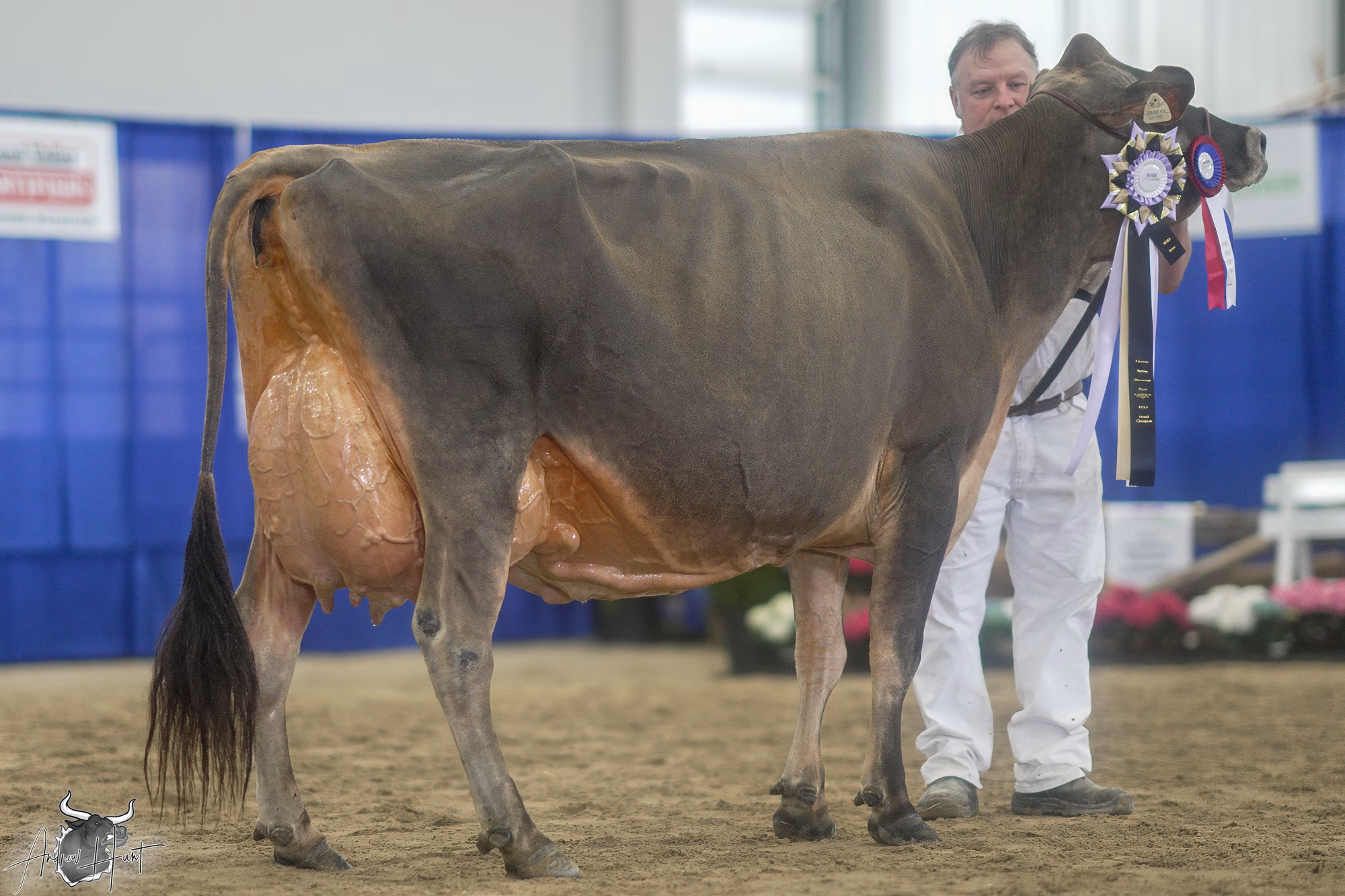
This thoughtful approach to innovation – working with nature rather than against it – might be the most critical lesson from Moreno’s career.

Redefining the Bull in the China Shop

I keep returning to this “bull in a china shop” metaphor because it’s perfect for Moreno. He’s wholly transformed what that image means. Instead of accidental destruction, Moreno represents purposeful disruption and creation. He’s like a bull that’s learned to navigate the china shop precisely – charging through established patterns not to break things carelessly but to dismantle outdated approaches and create something better deliberately.

His journey from a Colombian cattle farm to global influence shows what happens when vision, perseverance, and innovation come together. By pioneering gender-sorted semen technology, advancing genomic testing, and creating an international enterprise that bridges science and practical agriculture, Moreno has forever changed how dairy farmers approach breeding decisions.

As the 2025 World Dairy Expo International Person of the Year, Juan Moreno, proves that sometimes the most valuable thing in agriculture is someone willing to break with tradition. Juan Moreno has shown that sometimes it takes a bull to create something beautiful in the delicate china shop of traditional farming.

Don’t you think it’s time we celebrated the bulls who know precisely which china needs breaking?

Key Takeaways

  • Economic Impact: Genomic testing costs just $30 per calf but can save farmers approximately $1,400 by identifying low-genetic-merit animals early, dramatically improving herd investment decisions.
  • Customized Breeding Solutions: Unlike one-size-fits-all approaches, Moreno emphasizes tailoring genetic selection to each farm’s specific priorities—whether grazing efficiency, milk solids, or conformation—based on location and market needs.
  • Environmental Innovation: Moreno’s EcoFeed technology creates a rare win-win by reducing feed costs (typically 55% of operational expenses) while decreasing agriculture’s ecological footprint through improved feed conversion efficiency.
  • Ethical Innovation Framework: Despite pushing technological boundaries, Moreno maintains clear moral principles, advancing what nature provides through selection rather than pursuing genetic modification that might alienate consumers.
  • Leadership Legacy: With 78 patents and operations across 60 facilities worldwide, Moreno has demonstrated how vision and persistence can transform an entire industry, reimagining what it means to be a “bull in a china shop.”

Executive Summary

Juan Moreno has transformed global dairy breeding from his roots on a Colombian cattle farm to becoming a revolutionary force in agricultural biotechnology. His pioneering work with gender-sorted semen technology—now used in 30% of worldwide semen sales—allows farmers to predetermine calf gender with over 90% accuracy, dramatically improving profitability by eliminating resources wasted on unwanted bull calves. Through STgenetics, Moreno has expanded beyond reproductive technologies into genomic testing and feed efficiency innovations, building a global enterprise operating in 16 countries while earning recognition as the 2025 World Dairy Expo International Person of the Year. His approach balances cutting-edge innovation with practical economic benefits for farmers, demonstrating how purposeful disruption can create extraordinary value throughout the agricultural supply chain.

Learn more:

Join the Revolution!

Join over 30,000 successful dairy professionals who rely on Bullvine Daily for their competitive edge. Delivered directly to your inbox each week, our exclusive industry insights help you make smarter decisions while saving precious hours every week. Never miss critical updates on milk production trends, breakthrough technologies, and profit-boosting strategies that top producers are already implementing. Subscribe now to transform your dairy operation’s efficiency and profitability—your future success is just one click away.

NewsSubscribe
First
Last
Consent

Transform Your Dairy Economics: How Beef-on-Dairy Crossbreeding Delivers 200% ROI

Turn bull calves into profit: Beef-on-dairy crossbreeding delivers 200%+ ROI through strategic breeding. Capitalize on historic cattle shortages now!

With 72% of progressive dairies now strategically breeding beef sires and crossbred calves commanding premiums of $350-$700 per head, your breeding program represents a massive untapped profit center in today’s market. As U.S. cattle inventory sits at a 73-year low and beef prices maintain historic strength, implementing a data-driven crossbreeding strategy could be your operation’s financial game-changer in 2025.

Why Most Dairy Farmers Are Leaving Money on the Table

For decades, many have viewed male dairy calves as unfortunate by-products rather than profit opportunities. The collective sigh when another bull calf hits the ground has been practically an industry ritual. But that outdated thinking is costing your operation thousands in potential revenue.

The dairy landscape has fundamentally changed. With U.S. cattle inventory at its lowest level in 73 years and replacement dairy heifer numbers plummeting to levels not seen since 1978, the market dynamics couldn’t be more favorable for strategic beef-on-dairy programs. Yet most producers make the same critical mistake — jumping into crossbreeding without calculating their specific operation’s precise return on investment.

I’ve watched countless dairy farmers smile when selling their first load of crossbred calves — that feeling when the check is double or triple what you expected is pretty hard to beat. But those initial wins are just scratching the surface of what’s possible with a data-driven approach. The difference between a mediocre and exceptional beef-on-dairy program often comes down to precision in both planning and execution.

What percentage of your herd is earning its genetic keep? When was the last time you calculated the lifetime contribution of your bottom quartile cows? These questions reveal the untapped potential sitting in your breeding program right now.

How Conventional ROI Calculations Undervalue Crossbreeding Potential

The standard approach to beef-on-dairy economics — simply multiplying crossbred calves by the price premium — drastically undervalues the true financial impact. This simplistic math ignores multiple profit centers and operational efficiencies that compound over time.

A comprehensive ROI calculator must capture three interdependent financial impact categories most farmers overlook. Each category represents a distinct profit center with measurable returns that compound across your operation, creating synergies that transform your dairy’s economics far beyond simple calf sale premiums.

Why Your Breeding Program Impacts Every Aspect of Your Operation

Crossbreeding economics begin with fundamental management decisions that ripple throughout your operation. Most calculators consider only the percentage of your herd designated for beef semen (typically 30-70% in successful programs) and semen costs. This barely scratches the surface of the actual economic impact.

Are you accounting for the reproductive performance differences between beef and dairy semen in your lower-fertility cow groups? Research from the Journal of Dairy Science consistently shows improved conception rates when using beef semen on specific cow segments, particularly those struggling with heat stress or aging reproductive tracts. This improvement alone can substantially impact your breeding program efficiency.

What about calving interval impacts? University extension data demonstrates that some operations report 5-15 day reductions in days open when strategically matching certain beef sires with specific cow groups. For a 1,000-cow dairy, even a modest 5-day improvement in calving interval translates to $17,500 in annual savings ($3.50 per cow per day open). Are you capturing this value in your crossbreeding calculations?

Most critically, your calculator must dynamically adjust to your herd’s unique age structure, culling rate, and genetic advancement goals. The optimal beef-on-dairy ratio isn’t a static number — it’s a moving target influenced by milk prices, replacement costs, and your genetic strategy.

The Global Market Transformation Driving Beef-on-Dairy Economics

The current market dynamics couldn’t be more favorable for beef-on-dairy programs. With U.S. cattle inventory reaching a 73-year low and 2025 beef production forecast to drop 6% from 2024 to 25.12 billion pounds (the lowest since 2015), beef prices remain strong while demand for quality carcasses continues to grow. Simultaneously, dairy producers face persistent margin challenges, making additional revenue streams attractive and necessary for long-term viability.

YearBeef-on-Dairy Crossbred Production (head)Domestic Beef Semen Sales (million units)% Used in Dairy Cattle
201450,0003.765%
20191.5 million6.478%
20232.92 million9.084%
20243.22 million (projected)9.484% (7.9 million units)

This dramatic growth, documented by CattleFax and industry sources, reflects how quickly beef-on-dairy has transformed from an experimental concept to an industry standard. What’s driving this explosive adoption? Economics is pure and simple.

The trend extends far beyond North America. European dairy sectors are experiencing a similar transformation, with auction records from Italy showing beef × dairy calves valued 50%–200% more per kilogram than purebred Holstein or Brown Swiss calves. This price differential reflects the global recognition of crossbred value. Meanwhile, New Zealand and Australian dairies have developed advanced genomic selection systems that integrate beef breeding decisions with overall herd improvement strategies, creating models that North American producers can adapt with regional modifications.

Canadian auction data indicates beef × dairy bull calves sold for $30-CAD 140 more than various dairy breed bull calves, depending on the dairy breed. This North American market alignment suggests robust regional demand that transcends border differences, creating consistent marketing opportunities regardless of your proximity to significant beef production regions.

The economic benefits extend far beyond simple calf sale premiums. Research from the Journal of Animal Science consistently demonstrates that crossbred beef × dairy cattle achieve more significant average daily gains and convert feed to gain more efficiently than dairy steers. A Penn State University study published in the Journal of Dairy Science found that Angus-, Charolais-, and Simmental-sired beef-Holstein steers had the most significant average daily gain (ADG) and spent the fewest days on feed compared to other crosses. When your calculator correctly accounts for these efficiency gains, the ROI picture changes dramatically.

The Performance Metrics That Drive Crossbred Value Throughout the Supply Chain

The value proposition of beef-on-dairy crosses extends far beyond simple sale price premiums. Your calculator must quantify multiple revenue streams throughout the production chain to capture the full economic impact of your breeding decisions.

Performance TraitHolstein BaselineCommon Beef CrossbredsEconomic Impact
Average Daily Gain1.40-1.50 kg/d1.62-1.76 kg/d8-25% improvement
Days on FeedBaseline5-26 fewer days$3.50/day/head savings
Dressing Percentage<60%>61%Improved red meat yield
Feed EfficiencyBaselineSignificantly betterLower environmental footprint
Grading PerformanceLower15-25% higher Prime/ChoiceSubstantial premium

This performance differential, documented in multiple peer-reviewed studies, creates cascading value throughout the beef production chain. Each performance metric represents an abstract improvement and translates directly to the economic value that sophisticated marketing programs can capture.

Market access and buyer relationships dramatically influence calf premiums. According to a 2024 Purina survey, 80% of dairy farmers receive significant premiums for beef-on-dairy calves, with some reporting additional revenues of $350-$700 per head compared to straight dairy calves. What’s your premium target, and have you developed the marketing relationships to achieve it?

Are you measuring health outcomes and early vigor? Penn State University research indicates crossbred calves often demonstrate improved disease resistance, with most beef-dairy hybrid calves displaying heartier constitutions than purebreds. This translates to reduced mortality rates of 2-4% for crossbred calves — a financial gain that compounds with every calf crop.

For those retaining ownership through finishing, the financial implications multiply. Research published in the Journal of Animal Science found that crossbred animals consistently achieve 15-25% higher Prime/Choice grading rates, commanding significant premiums at harvest. Texas Tech University researchers found that “beef-on-dairy cattle produce carcasses with greater red meat yield than conventional Holstein steers and high-yielding beef-on-dairy cattle can yield as high or higher than conventional beef cattle.” Have you calculated how these downstream quality improvements could transform your revenue model?

The Economic Interconnections Beyond Calf Prices

A superficial ROI calculation looks only at the immediate calf sale premium. A comprehensive calculator captures broader financial impacts that transform your entire operation’s economics through interconnected systems and capital allocation opportunities.

Are you accounting for the current replacement heifer market? With Holstein springers now reaching up to $2,300 per head during this 47-year low in replacement heifer numbers, the opportunity cost of producing replacement heifers versus crossbred beef calves has dramatically shifted. When breeding decisions release capital from heifer raising, where else could you deploy those resources?

How does your calculator handle the complex interplay between culling decisions and crossbreeding strategy? Strategic crossbreeding allows genetically inferior mature cows that still produce at profitable levels to remain in the herd longer. At the same time, their crossbred offspring bring premium prices compared to straight dairy calves. This creates a compounding financial benefit that most calculators miss entirely.

Environmental sustainability metrics are also a factor in modern ROI calculations. Research from the University of California-Davis demonstrates that beef-on-dairy crossbreeding can reduce the ecological footprint per pound of beef produced by leveraging the efficiency of the dairy system for part of the production cycle. This environmental efficiency increasingly translates to market premiums as consumers and processors prioritize sustainability credentials.

The Comprehensive ROI Formula That Changes Everything

When we integrate these multilayered financial impacts, the true ROI picture emerges. Here’s the formula that captures the full spectrum of crossbreeding economics:

Net Profit = (Additional Revenue + Operational Savings + Opportunity Gains) – Implementation Costs

Let’s break this down with concrete numbers based on verified industry data from university extension services and peer-reviewed research:

The Revenue Drivers Transforming Dairy Economics

The primary revenue boost comes from direct calf premiums. According to National Association of Animal Breeders data, domestic beef semen sales have skyrocketed from 3.7 million units in 2014 to 9.4 million units in 2024, indicating that the market has clearly recognized this value. A 1,000-cow dairy with 30% of the herd bred to beef bulls and a conservative $300 per calf premium generates $90,000 in additional annual revenue.

Enhancing carcass quality creates another revenue stream for operations that retain ownership through finishing. Crossbreds achieving higher Prime/Choice grading rates on 800 lb carcasses based on USDA quality grade data add approximately $120 per head to your bottom line. Are you capturing this downstream value?

The Operational Efficiencies Creating Compound Returns

The improved conception rates with beef semen (particularly in heat-stressed or lower-fertility cows) mean fewer semen doses and breeding interventions. According to University of Wisconsin-Madison Dairy Science Department calculations, even a modest 5% conception rate improvement on 300 cows (30% of a 1,000-cow herd) saves approximately $4,500 annually in breeding costs and labor.

Health savings represent another significant benefit. Penn State researchers published in the Journal of Dairy Science that “crossbred beef-dairy calves display heartier constitutions than purebreds.” With average calf treatment costs running $42 per episode according to the USDA and crossbreds showing 10-15% lower morbidity rates based on field studies, this adds another $1,260-$1,890 to your bottom line.

Strategic Capital Redeployment: The Hidden ROI Multiplier

Here’s where traditional ROI calculations fail. By strategically breeding 30% of your herd to beef sires, you redirect resources from heifer raising to more profitable enterprises.

With the cost to raise a heifer to calve exceeding $2,000 according to Cornell University’s PRO-DAIRY program, a 1,000-cow dairy breeding 30% to beef sires liberates $600,000 in capital over a complete replacement cycle. Deployed elsewhere in your operation at even a modest 8% return, this creates $48,000 in annual opportunity gains completely missed by simplistic ROI models.

Strategic Implementation: Transforming Concept to Profitable Reality

A strategic beef-on-dairy program can deliver first-year ROIs exceeding 150% while advancing your dairy genetics when adequately implemented. However, successful implementation requires precision across multiple areas that most farmers overlook.

Genetic Selection Science: The Foundation of Crossbreeding Success

Not all beef genetics perform equally in crossbreeding programs. Your selection strategy must prioritize calving ease (particularly for heifers), early growth traits, carcass quality, and feed efficiency. The most successful programs use different beef bulls for various segments of the dairy herd based on genetic merit and production status.

Beef Sire BreedAverage Daily GainDays on FeedDressing %Key Considerations
Angus1.76 kg/dFewest>61%Excellent marbling, moderate frame
Charolais1.73 kg/dLow>61%Superior muscling, larger frame
Simmental1.68 kg/dLow>61%Good growth, moderate frame
Limousin1.55 kg/dModerate>61%Excellent muscling, feed efficient
Red Angus1.62 kg/dModerate>61%Good marbling, moderate frame
Wagyu1.39 kg/d5-26 more>61%Superior marbling, slower growth

This breed comparison is based on Penn State University’s multi-year feedlot study published in the Journal of Animal Science, which investigated the optimal genetics for beef-on-dairy crossbreds. Angus, Charolais, and Simmental-sired steers consistently demonstrated superior average daily gain and spent fewer days on feed, directly impacting feedlot profitability.

Here’s what your implementation timeline should look like:

MonthImplementation StepKey Actions
1Establish BaselineDocument current breeding costs, conception rates, and calf values
2Genetic SegmentationAnalyze genomic data to identify ideal candidates for beef breeding
3Sire SelectionChoose appropriate beef sires for different cow segments
4Marketing DevelopmentEstablish buyer relationships and value documentation systems
5Program LaunchImplement strategic breeding with consistent documentation
6First Calf Crop EvaluationAnalyze birth data, calf vigor, and market premiums

This structured approach ensures your program builds on solid foundations with continuous improvement through data-driven decision-making.

Genomic Integration: Accelerating Genetic Progress While Producing Crossbreds

The most sophisticated operations integrate genomic testing to drive beef-on-dairy decisions. This approach, supported by American Dairy Science Association research, allows you to identify genetically superior heifers and cows for dairy replacements, use sexed semen on top genetic merit animals, and apply beef semen on genetically inferior animals to maximize crossbred value.

Despite what traditional advisors might tell you, breeding fewer replacement heifers often accelerates genetic progress. When only your top genomic animals produce replacements (using sexed semen), you can increase your herd’s genetic merit while producing fewer total heifers. This counterintuitive finding, supported by research published in the Journal of Dairy Science, transforms how we think about replacement strategies.

A Danish model published in the Journal of Dairy Science demonstrated that the proportion of beef semen incorporated into dairy mating programs increased—from 0% to 33%, from 33% to 60%, and from 60% to 70%—the net return per cow increased accordingly. The same study found that net returns increased as the cost of raising heifers increased, making the economics even more compelling in today’s high-cost environment.

Marketing Strategy Development: Creating Premium Value Perception

The premium you receive depends mainly on established marketing relationships. According to USDA Market News Service data, the difference between “commodity” and “premium” crossbred calves can exceed $100 per head—a difference directly attributable to the marketing approach.

Consider building direct relationships with calf raisers or feedlots, participating in verified source programs, creating consistent calf groups through synchronized breeding, and documenting health protocols to enhance buyer confidence. Your ROI calculator should quantify the financial impact of different marketing strategies to guide these decisions.

Implementation Strategies Compared: From Basic to Advanced

Let’s examine how different implementation approaches translate to real-world outcomes through three operation profiles based on data compiled from university extension services and field trials:

Economic FactorBasic ImplementationStrategic ImplementationAdvanced Program
Herd Size500500500
% Bred to Beef20% (100 cows)35% (175 cows)50% (250 cows)
Breeding StrategyRandom lower producersGenomic-guided selectionIntegrated genomic + sexed strategy
Calf Premium$200/head$350/head$500/head
Marketing ApproachSale barnDirect buyer relationshipValue-added program
Annual Additional Revenue$20,000$61,250$125,000
Reproductive Savings$1,900$4,725$7,500
Health & Efficiency Gains$3,000$6,650$11,250
First-Year ROI97%167%201%

These examples demonstrate that implementation strategy dramatically influences returns, even for identically sized operations. The difference between basic and advanced implementation represents over $100,000 in annual revenue — money left without strategic planning.

What separates the highest-performing operations is their systematic approach to implementation, continuous refinement based on performance data, and integration of the beef-on-dairy program with an overall herd improvement strategy rather than treating it as a separate enterprise.

Three Critical Implementation Errors Undermining Your Potential Returns

After working with hundreds of dairies implementing crossbreeding programs, I’ve identified three critical mistakes that consistently undermine potential returns:

Are You Breeding the Wrong Cows to Beef Sires?

Random selection of cows for beef breeding destroys potential genetic progress and limits revenue. Instead, genomic testing should identify precisely which animals should produce replacements and terminal crossbreds. This data-driven approach optimizes both genetic advancement and crossbred revenue.

The highest-performing operations use sophisticated genetic selection indices that incorporate production traits and economic weights to identify optimal candidates for beef breeding. Research from the Journal of Dairy Science demonstrates that this approach can simultaneously increase genetic progress in the dairy herd while maximizing crossbred calf value.

Have You Developed Direct Marketing Relationships Yet?

Selling crossbred calves through traditional auction channels captures only a fraction of their potential value. Direct relationships with specific calf raisers or feedlots who understand the value proposition of your genetics can increase premiums by 30-50%, according to USDA Market News data. Documentation of health protocols, genetic background, and consistent groups adds significant value most producers never capture.

Progressive operations implement sophisticated marketing programs that include detailed documentation, consistent group formation, and continuous communication with buyers about genetic improvements and health protocols. This marketing sophistication transforms commodity calves into branded, premium products.

What’s Your Strategy for Mitigating Genetic Risks?

Not all beef-on-dairy crosses deliver positive outcomes. Research from the Journal of Dairy Science indicates that the strategy can lead to unintentional negative impacts, including increased gestation length, dystocia, and stillbirth rates if sires are improperly selected. Your calculator must account for these potential downsides and guide selection to minimize risks.

Leading operations implement genetic risk management strategies, including calving ease sire selection for heifers, avoidance of high birth weight bulls, and continuous monitoring of calving performance metrics to refine sire selection criteria based on actual performance in their specific herds.

Cross-Regional Applications: Adapting Global Best Practices

The beef-on-dairy revolution is global, with innovations emerging across major dairy regions. New Zealand has pioneered integrated genomic selection models that simultaneously optimize dairy genetic progress and beef crossbred value. European producers have developed sophisticated marketing cooperatives that capture premium values through coordinated group marketing of consistent, high-quality crossbred calves.

These international approaches can be adapted for North American implementation with appropriate modifications for market differences and production systems. The core principles—genomic selection, targeted breeding, and value-based marketing—translate effectively across borders and create opportunities to accelerate program development through international knowledge exchange.

The Bottom Line: Your Action Plan for Crossbreeding Success

The beef-on-dairy revolution has rapidly evolved from an innovative concept to an industry standard, with 72% of dairy farms now incorporating beef genetics into their breeding programs. However, the standard doesn’t mean standardized—the financial outcomes vary dramatically based on the implementation strategy.

With the USDA reporting replacement dairy heifer numbers at a 47-year low, Holstein springers reaching historical highs, and domestic beef semen sales exceeding 9.4 million units, the market fundamentals supporting beef-on-dairy strategies have never been stronger. With 2025 beef production projected to drop 6% from 2024 levels, reaching the lowest point since 2015, these favorable market conditions appear positioned to continue.

Are you breeding your entire herd for replacements despite only needing 25-30% to maintain herd size? Are you making breeding decisions without genomic data to guide which animals should produce replacements versus terminal crosses? Are you selling calves without the documentation and relationships needed to capture whole market premiums?

The question isn’t whether to adopt beef-on-dairy strategies — you’re likely already there. The real question is whether you maximize returns through precise implementation based on data-driven decisions. A comprehensive ROI calculator allows you to shift this industry from a general trend to a tailored profit center custom-fitted to your operation’s unique circumstances. Because in today’s dairy industry, with cattle inventory at 73-year lows and replacement heifer numbers falling to levels not seen since 1978, every breeding decision must be measured in genetic progress and in dollars and cents.

Key Takeaways

  • 200% ROI Potential: Crossbred calves command $350-$700 premiums plus savings from improved conception rates and reduced heifer costs
  • Data-Driven Breeding: Genomic testing identifies optimal cows for beef breeding while accelerating dairy genetic progress
  • Market Smarter: Direct buyer relationships and documentation boost premiums by 30-50% vs auction sales
  • Avoid Pitfalls: Poor sire selection risks calving difficulties; balance Angus benefits with continental breeds’ efficiency
  • Global Playbook: Adapt strategies from EU marketing cooperatives and NZ’s integrated genomic models

Executive Summary

With U.S. cattle inventory at a 73-year low and replacement heifer costs soaring, dairy farmers are transforming “break-even” bull calves into premium revenue streams through beef crossbreeding. This article reveals how strategic breeding programs leveraging genomic data and targeted sire selection can unlock 150-200% ROI by capturing $350-$700/head calf premiums, improving feed efficiency, and redirecting heifer-raising capital. Backed by verified market trends and global case studies, it provides actionable implementation steps—from genetic risk management to direct marketing relationships—while warning of critical mistakes like improper sire selection. The data-driven ROI calculator enables producers to turn industry disruption into tailored profitability.


Download “The Ultimate Dairy Breeders Guide to Beef on Dairy Integration” Now!

Are you eager to discover the benefits of integrating beef genetics into your dairy herd? “The Ultimate Dairy Breeders Guide to Beef on Dairy Integration” is your key to enhancing productivity and profitability. This guide is explicitly designed for progressive dairy breeders, from choosing the best beef breeds for dairy integration to advanced genetic selection tips. Get practical management practices to elevate your breeding program. Understand the use of proven beef sires, from selection to offspring performance. Gain actionable insights through expert advice and real-world case studies. Learn about marketing, financial planning, and market assessment to maximize profitability. Dive into the world of beef-on-dairy integration. Leverage the latest genetic tools and technologies to enhance your livestock quality. By the end of this guide, you’ll make informed decisions, boost farm efficiency, and effectively diversify your business. Embark on this journey with us and unlock the full potential of your dairy herd with beef-on-dairy integration. Get Started!

Learn more:

Join the Revolution!

Join over 30,000 successful dairy professionals who rely on Bullvine Daily for their competitive edge. Delivered directly to your inbox each week, our exclusive industry insights help you make smarter decisions while saving precious hours every week. Never miss critical updates on milk production trends, breakthrough technologies, and profit-boosting strategies that top producers are already implementing. Subscribe now to transform your dairy operation’s efficiency and profitability—your future success is just one click away.

NewsSubscribe
First
Last
Consent

The $3.5 Million Buffer Bombshell: How Rumen pH Management Is Revolutionizing Dairy Profits in 2025

Is heat stress draining your dairy profits? Discover how strategic buffer solutions are helping producers combat this challenge while improving animal welfare. Your competitors are already implementing this science—are you?

While you are watching your feed costs and milk prices, a silent profit killer lurks in your cows’ rumens, potentially costing your operation significant revenue over time; heat stress is not just making your cows pant—it is decimating your bottom line by crashing rumen pH and setting off a cascade of metabolic disasters that your competitors have already figured out how to mitigate. The solution? It is not expensive robots or fancy genetics—it is a strategic approach to buffer supplementation that could significantly improve your operation’s performance during challenging heat conditions. Still skeptical? Then, you are about to discover why the dairy down the road might be outperforming you during every summer slump.

Your Herd’s Hidden Brewery: Where Profit Ferments or Fails

Let us discuss what is happening inside your cows when temperatures climb. Their rumens are not just digestive organs—they are sophisticated fermentation systems that house trillions of microorganisms converting feed into energy. This biological brewery generates volatile fatty acids (VFAs), providing 70-80% of a dairy cow’s energy requirements. However, one wrong move and this productive brewery turns into a metabolic dumpster fire.

“A cow’s rumen is like a brewery—too much acid and the entire operation shuts down. Buffers? They are the bouncers keeping the microbial mosh pit in check.” — Dr. Mark Johnson, UW Dairy Science.

For optimal performance, rumen pH must stay between 6.2 and 6.8—the sweet spot where fiber-digesting bacteria thrive. When pH drops below 5.8 for extended periods, your cows develop subacute ruminal acidosis (SARA), silently sabotaging feed efficiency and profitability.

Your cow’s rumen is not just fermenting feed—it is maintaining a delicate ecosystem where over 200 microbial species compete for resources. When acid-loving bacteria dominate during pH crashes, they not only change digestion but trigger systemic inflammation that compromises everything from hoof health to reproductive performance.

The Triple Threat of Heat Stress

When the Temperature-Humidity Index (THI) exceeds 68, your cows are not just uncomfortable—they are fighting a biochemical war on three fronts:

  1. Saliva Shutdown: Heat stress slashes saliva production up to 40%, dramatically reducing the cow’s natural buffering capacity.
  2. Respiratory Bicarbonate Loss: Those heaving sides are not just dramatic—your cows are hemorrhaging bicarbonate with every pant, depleting their pH defense system.
  3. Feed Behavior Sabotage: Heat-stressed cattle consume less forage and more concentrates, creating a perfect storm for acidosis. Research shows feed intake typically drops by 8-12% or more during heat stress, altering rumen composition and reducing milk production.

USDA research shows climate change-induced heat stress could lower U.S. milk production by 0.6-1.3 percent by 2030. The financial damage is substantial, as the dairy sector bears over half of the costs of current heat stress to the livestock industry.

The Buffer Arsenal: Weapons for Your Profit War

Not all buffers are created equal. The difference between mediocre and masterful buffer strategies can mean thousands in your pocket—or someone else’s.

Sodium Bicarbonate: Your Front-Line Defense

This is not just your grandmother’s baking soda. Sodium bicarbonate (NaHCO₃) accounts for approximately 65% of global buffer usage in dairy nutrition, according to Dairy Global (2024). Upon entering the rumen, it rapidly dissociates into sodium and bicarbonate ions, neutralizing excess hydrogen ions and stabilizing pH.

When properly implemented, sodium bicarbonate supplementation increases acetate production by 12% and boosts milk fat percentage by 0.14% on average, as demonstrated in research by Harrison et al. (2024). What is the recommended inclusion rate? Between 0.8% and 1.2% of dietary dry matter—push beyond 1.5%, and you risk sodium overload.

Potassium Carbonate: Your Heat Stress Secret Weapon

While your competitors struggle through summer, savvy producers are deploying potassium carbonate (K₂CO₃) as a buffer and crucial electrolyte replacement. According to USDA-ARS research (2024), heat-stressed cattle can lose up to 59% of their potassium reserves through altered perspiration and urination patterns.

Herds supplemented with K₂CO₃ during periods when THI exceeds 72 show remarkable resilience, as documented by Zhang et al. (2024):

  • 30% reduction in respiration rates
  • 0.3% increase in milk fat percentage
  • Improved dry matter intake during heat waves

Calcium and Magnesium Compounds: Your Supporting Cast

While less prominent than sodium and potassium buffers, calcium carbonate (CaCO₃) and magnesium oxide (MgO) play valuable supporting roles:

  • Calcium carbonate: Provides moderate buffering above pH 6.0 while supporting calcium requirements
  • Magnesium oxide: Functions as both a buffer and ruminal modifier, though inclusion should be limited to 0.4% of dietary dry matter to prevent adverse impacts on fiber digestion, as shown by Mertens (2024)
Buffer TypeOptimal Inclusion RatePrimary BenefitsBest Application
Sodium Bicarbonate0.8–1.2% DMRapid pH stabilization, 12% more acetate, 0.14% milk fat increaseHigh-concentrate diets, everyday use
Potassium Carbonate0.5–0.7% DMElectrolyte replacement, 30% reduced respiration rates, 0.3% milk fat increaseSummer heat stress (THI > 72)
Magnesium Oxide0.2–0.4% DMRuminal modifier, supports magnesium requirementsLimit to 0.4% DM to avoid negative impacts
Sodium Sesquicarbonate0.25–0.50% DMCombines bicarbonate + carbonate benefitsAlternative to sodium bicarbonate
Biochar (Organic)~0.15 lbs/cow/day18% increase in butyrate productionBudget-conscious or organic operations

DCAD: The Electrolyte Equation That Enhances Profitability

The real pros are not just throwing buffers at the problem—they are strategically manipulating Dietary Cation-Anion Difference (DCAD) to maximize returns. This is not just scientific jargon but a formula that top producers are already exploiting.

“It is like asking the cow to run a marathon while breathing through a straw. DCAD management? That is the oxygen mask.” — Luiz Fernandez, Brazilian Dairy Consultant

The DCAD equation—(Na⁺ + K⁺) − (Cl⁻ + S²⁻)—provides the framework for electrolyte management during heat challenges. Research shows that increasing DCAD from standard levels (+250 mEq/kg DM) to elevated levels (+400 mEq/kg DM) during heat stress can produce substantial performance benefits:

  • Dry matter intake increases
  • Milk yield improvements
  • Reduced inflammation markers

The industry’s obsession with genetic solutions has sometimes overshadowed metabolic management as an important profit lever. While your neighbor spends on genetic improvements yielding modest milk gains, you could invest in buffer strategies that could potentially deliver more significant production increases during heat stress periods.

THI RangePhysiological ResponseProduction ImpactRecommended Buffer Strategy
65-68Initial panting, slight DMI decreaseMilk yield drops beginning at 2.2 kg/dayBasic sodium bicarbonate (0.8% DM)
68-72Respiratory rate 60-80/min, reduced rumination5-12% milk yield reductionAdd potassium carbonate (0.5% DM)
72-78Respiratory rate 80-120/min, 25% saliva reduction10-25% milk yield reduction, 0.2-0.4% milk fat depressionFull buffer protocol with DCAD +350-400 mEq/kg DM
>78Severe panting (>120/min), 40% saliva reduction>25% milk yield reduction, possible mortalityMaximum buffer rates + cooling interventions

Show Me the Money: The Economic Benefits of Buffer Strategies

Let us cut through the science and get to what matters—your bottom line. The financial case for strategic buffer implementation is compelling.

The Buffer Math Your Banker Will Love

Herd SizeDaily Buffer CostPotential Production BenefitsPossible Daily Returns
100 cows$48Improved production and componentsSignificant ROI during heat stress periods
500 cows$240Enhanced milk output and healthMultiplied returns with scale
1,000 cows$480Reduced heat stress impacts across herdSubstantial operation-wide benefits

Buffer skeptics argue that implementation costs are prohibitive for smaller operations. However, even smaller dairies can see meaningful returns—potentially enough to cover buffer expenses in a relatively short period during heat stress conditions.

“Buffers stabilize rumen health and optimize microbial growth.” — Dr. Michael Hutjens, Professor Emeritus, University of Illinois

Most dairy interventions deliver single-digit ROI percentages. Facility improvements? 3-8%. Genetic selections? 5-12%. Advanced reproduction protocols? 10-18%. Compare that to buffer strategies that can deliver significant returns during heat stress, and the question becomes not whether you can afford to implement them but whether you can afford not to.

Farm ScenarioDaily Buffer InvestmentPotential ReturnsPossible Benefits
100-cow herd during moderate heat stress (THI 70-75)$48/day ($0.48/cow)Improved milk production and componentsPotentially significant ROI
100-cow herd during severe heat stress (THI >78)$72/day ($0.72/cow)Enhanced production and reduced vet costsEven greater potential returns
500-cow organic dairy using alternative buffers$112/day ($0.22/cow)Production improvements with organic premiumAppealing economics for specialty markets
Year-round buffer program (seasonal adjustments)Varies by season and herd sizeConsistent year-round benefitsLong-term operational improvements

It is like giving the cows antacids and Gatorade in one, where implementing a potassium carbonate-focused buffer strategy during extreme heat (THI 78) can transform your operation:

MetricBefore ImplementationAfter Implementation
Dry Matter Intake22.4 kg/day26.6 kg/day
Milk Fat Percentage3.5%3.9%
Monthly Veterinary Costs$8,200$6,724

These results demonstrate benefits extending beyond milk production to herd health and reduced veterinary expenses. That is not just profit enhancement—it is comprehensive business improvement.

Implementation Without Headaches: Your Action Plan

Forget complex theories. Your straightforward buffer battle plan works even when labor and margins are tighter.

Step 1: Mix Buffers Like a Profit-Maximizing Chef

For maximum returns during heat stress, blend:

  • Sodium bicarbonate: 0.8–1.2% DM (approximately 1.6–2.4 lbs per cow daily)
  • Potassium carbonate: 0.5–0.7% DM (approximately 1–1.4 kg per cow daily)

This combination provides rapid pH stabilization from sodium bicarbonate while addressing electrolyte losses through potassium carbonate.

“It is like giving the cows antacids and Gatorade in one.” — Jake Thompson, Herd Manager, Sunshine State Farms.

Step 2: Leverage Forage for Maximum Effect

Buffer effectiveness significantly increases when paired with adequate, physically effective fiber. Target forage with ≥30% NDF to promote chewing activity and natural saliva production. This approach is confirmed by research showing that high-quality forage reduces the adverse effects of heat stress by requiring less intake to maintain a balanced ratio while never reducing fiber levels below 18%.

Step 3: Monitor Like Your Mortgage Depends On It

Track these three metrics consistently:

  1. Rumen pH: Target range of 6.0–6.5, ideally measured with bolus sensors
  2. Milk Fat Percentage: 3.8–4.2% indicates proper rumen function
  3. Urine pH: 7.0–8.0 confirms appropriate DCAD levels

The Future Is Already Here: Tech That Makes Buffers Work Harder

While some producers are still measuring buffers with coffee cans, forward-thinking producers are deploying precision technology that enhances buffer effectiveness.

Rumen Temperature Monitoring: The Early Warning System

New research demonstrates that rumen temperature boluses can effectively identify and predict heat stress events in dairy cattle. These systems can use machine learning algorithms to predict heat stress before visible symptoms appear, enabling proactive rather than reactive buffer management.

“The success of this approach is encouraging, as the scale and variable nature of farming outdoors in temperate climates has, to date, limited the development of our understanding and management of thermal stress among dairy cattle in these systems.” — 2024 Rumen Temperature Monitoring Research Study

Automated Buffer Systems: Labor-Saving Profit Machines

With many U.S. dairy operations facing labor shortages, automated buffer delivery systems are not just convenient—they are essential. Advanced systems can:

  • Reduce labor requirements significantly
  • Improve measurement accuracy
  • Substantially reduce buffer waste

Consumer Value: Turning Buffer Strategies Into Premium Pricing

Today’s dairy consumers are not just buying milk—they are buying values. According to a survey commissioned by the ASPCA, approximately 70% of U.S. consumers pay attention to labels indicating how animals were raised, and 78% believe there should be an objective third party to ensure farm animal welfare.

Implementing comprehensive buffer strategies produces measurable welfare improvements that translate directly to marketable benefits:

  • Reduced lameness rates
  • Decreased early lactation culling
  • Potential for welfare-focused marketing claims

Research shows that consumers would be willing to pay 32-48% premiums for products with trustworthy welfare certifications. This willingness to pay more for welfare-certified products spans all demographics—regardless of where they live, what stores they shop at, or their household income.

Three-fourths of consumers noted that they would likely switch to products with labels that offered more assurance about higher animal welfare. This represents a significant opportunity for dairy producers to implement welfare-improving strategies like buffer management.

Your Next Move: Stop Leaving Money on the Table

The evidence is clear: implementing strategic rumen buffer programs represents a valuable investment for modern dairy operations. While your competition complains about heat stress cutting profits, you could improve your herd health and production during challenging conditions.

Three immediate action steps for forward-thinking producers:

  1. Implement baseline buffer protocols with regular monitoring of key pH indicators
  2. Consult with your nutritionist this week to optimize DCAD levels for current and projected conditions
  3. Investigate emerging buffer technologies that can enhance effectiveness while reducing labor requirements

In the increasingly competitive dairy landscape, effective buffer management is not just a nice-to-have supplement—it is the difference between operations that barely survive and those that thrive despite environmental challenges.

Are you ready to stop allowing heat stress to compromise your operation’s potential? The time to act is now because your competition is already making the move while you read this.

Key Takeaways

  • Target rumen pH between 6.2-6.8 using sodium bicarbonate (0.8-1.2% DM) for everyday use and potassium carbonate (0.5-0.7% DM) during heat stress periods when THI exceeds 72
  • Monitor three critical metrics consistently: rumen pH (6.0-6.5), milk fat percentage (3.8-4.2%), and urine pH (7.0-8.0) to ensure your buffer strategy is effectively maintaining rumen health.
  • Pair buffers with adequate physically effective fiber (≥30% NDF) to promote natural saliva production and enhance buffer effectiveness while never reducing fiber levels below 18%
  • Increase DCAD levels to +350-400 mEq/kg DM during heat stress periods to support electrolyte balance and counteract respiratory bicarbonate losses.
  • Leverage consumer trends by marketing the welfare benefits of buffer strategies, as research shows approximately 70% of consumers pay attention to animal welfare labels and would pay 32-48% premiums for welfare-certified products.

Executive Summary

Modern dairy operations face a significant yet often overlooked threat from heat-induced ruminal acidosis, which compromises the industry’s production, health, and profitability. Strategic implementation of rumen buffers—particularly sodium bicarbonate and potassium carbonate—can stabilize pH levels during heat stress by counteracting reduced saliva production and respiratory bicarbonate loss while supporting proper DCAD (Dietary Cation-Anion Difference) levels for optimal rumen function. When implemented correctly with inclusion rates of 0.8-1.2% DM for sodium bicarbonate and 0.5-0.7% DM for potassium carbonate during heat events, these buffers can maintain milk production and components while reducing veterinary costs. Beyond direct production benefits, buffer strategies create potential premium pricing opportunities through animal welfare improvements that consumers are increasingly conscious of and will pay more for. Proper buffer selection, adequate fiber integration, and consistent monitoring of key health indicators represent some of the most economically sound investments available to dairy producers facing increasingly challenging climate conditions.

Learn more:

Join the Revolution!

Join over 30,000 successful dairy professionals who rely on Bullvine Daily for their competitive edge. Delivered directly to your inbox each week, our exclusive industry insights help you make smarter decisions while saving precious hours every week. Never miss critical updates on milk production trends, breakthrough technologies, and profit-boosting strategies that top producers are already implementing. Subscribe now to transform your dairy operation’s efficiency and profitability—your future success is just one click away.

NewsSubscribe
First
Last
Consent

The Maternal Mastermind: How Douglas Dunton’s Breeding Philosophy Revolutionized Holstein Genetics

How did one Canadian farmer’s obsession with “breeding warm” create maternal lines so powerful they still dominate Holstein genetics eight decades later?

Douglas Dunton (center) with sons Earl (left) and Ralph (right) at Glenvue Farm in Brampton, Ontario. This multi-generational partnership earned their second Master Breeder shield in 1964 as D.S. Dunton & Sons, exemplifying the family commitment to developing influential Holstein maternal lines that would shape the breed worldwide.

Douglas Dunton wasn’t just another successful Holstein breeder—he was a genetic architect who developed extraordinary maternal lines that revolutionized dairy cattle breeding worldwide. His methodical linebreeding approach and emphasis on balanced traits created cow families that anchored some of the most influential sires in Holstein history, including Pawnee Farm Arlinda Chief and Round Oak Rag Apple Elevation. His breeding philosophy offers valuable lessons for today’s dairy producers navigating genomic selection and seeking to build profitable, sustainable herds.

If you’re milking Holsteins today, you benefit from Douglas Dunton’s work, whether you realize it or not. While browsing pedigrees at a recent dairy show, I noticed “Glenvue” appearing repeatedly in the deep ancestry of today’s elite animals. This sent me investigating the man behind those genetics, and what I discovered was eye-opening.

Dunton wasn’t just another successful Canadian Holstein breeder—he was a visionary who developed transmitting maternal lines so potent that the late Dave Morrow of Holstein-Friesian World called him “Canada’s greatest breeder of brood cows.” Many would extend this designation further, considering him perhaps the most excellent breeder of transmitting dams in Holstein’s history.

What makes Dunton’s story especially relevant today isn’t just his historical significance. His approach to linebreeding, his patience with developing cow families, and his focus on balanced traits offer valuable lessons for modern breeders navigating genomic selection and seeking to build sustainable genetic programs. Let’s explore how this mid-20th-century breeder created a foundation that still influences dairy profitability today.

Glenvue Farm residence in Brampton, Ontario, home of Douglas Stewart Dunton and his family. This historic property, established when Dunton’s grandfather James arrived in Canada in 1828, became the birthplace of some of Holstein breeding’s most influential maternal lines. From this farmhouse, Dunton developed cow families that would impact dairy genetics worldwide through legendary sires like Pawnee Farm Arlinda Chief and Round Oak Rag Apple Elevation.

BUILDING GREATNESS: DUNTON’S JOURNEY FROM SHORTHORNS TO HOLSTEIN LEGENDS

Douglas Dunton’s Holstein journey began in 1920 when he enrolled in a dairy short course by the Ontario Department of Agriculture. Until then, he and his father had been cross-breeding with Dual Purpose Shorthorns with limited success on their family farm, established in 1828 when Dunton’s grandfather James arrived in Canada as a United Empire Loyalist.

During the course, Dunton visited several impressive Holstein herds that inspired him to purchase his first Holstein cow. He was convinced when she produced 80 pounds of milk daily—twice what his Shorthorns gave. This dramatic production difference prompted Dunton and his father to purchase four more Holsteins, with three coming from Lorne Davidson’s Bruach Farm at Meadowvale. Two of these cows—Bruach Noelle and Bruach Luella Acme—became the foundation for what would become the legendary Glenvue herd.

You have to appreciate what breeding success meant in that era. When Dunton began breeding Holsteins, there was no classification system, genomic testing, or production indices—none of the tools you rely on today. Without seeing an animal’s ancestors directly to evaluate type and transmission patterns, breeders were essentially working blind. Yet despite these limitations, Dunton developed a remarkably effective system for selecting breeding stock through careful observation and strategic matings.

The Dunton family’s commitment to Holstein breeding spanned generations. When sons Ralph and Earl joined as partners in the 1950s, they earned their second Master Breeder shield in 1964 as D.S. Dunton & Sons. Urban sprawl forced the dispersal of the original herd in 1966, but Ralph and their son Jim retained the Glenvue prefix and relocated to Inglewood, Ontario. Starting with a new foundation, they earned a third Master Breeder shield in 1987—a record matched only by the Shivelys of Forest Lee Farm. Has your family achieved similar multi-generational breeding success? It’s worth considering what principles allow such sustained excellence across decades.

MASTERING “BREEDING WARM”: WHY DUNTON’S LINEBREEDING STRATEGY STILL MATTERS

At the heart of Dunton’s approach was his unwavering belief in what he called “breeding warm”—strategic linebreeding that stands in fascinating contrast to the outcross mentality that often dominates commercial breeding today. From the outset, he focused intensely on the King Tortilla Acme bloodline, combining it with Rag Apple genetics to create intriguing genetic patterns throughout his herd.

This approach parallels modern genomic mating programs that use relationship matrices to balance genetic progress with inbreeding management, though Dunton accomplished this through phenotypic selection rather than SNP markers. When asked about outcrossing, Dunton famously stated that he had tried an outcross bull only once, and while “he didn’t do much harm, neither did he do much good.” That pragmatic assessment still resonates with breeders evaluating complementary matings today.

Table 1: Dunton’s Historical Breeding Approach vs. Modern Methods

Breeding AspectDunton’s Approach (1930s-1960s)Modern Equivalent (2025)
Genetic Selection“Breeding warm” – strategic linebreeding focused on King Toitilla Acme and Rag Apple bloodlinesGenomic mating programs using SNP markers to optimize genetic gain while controlling inbreeding at molecular level
Type vs. Production Balance“It takes longer to breed type than production, but once you get type, it is not so difficult to get higher production”Balanced breeding indexes (TPI, LPI, NM$) weighting both type and production traits
Selection TimelinePatient development of females; two-year-olds not pushed (1,000 lbs milk monthly considered satisfactory)Accelerated generation intervals with genomic selection of young animals
Beyond-Pedigree TraitsEmphasized temperament, milking ease, and longevity – “factors not mentioned in pedigrees”Comprehensive genomic evaluations for health, fertility, and functional traits

Perhaps most revolutionary for his era was Dunton’s emphasis on type overproduction at a time when many breeders pursued milk records at all costs. His conviction that “it takes longer to breed type than production, but once you get type, it is not so difficult to get higher production” reveals his understanding of the genetic architecture underlying these traits. This philosophy anticipated today’s balanced breeding approach using comprehensive merit indices.
Beyond classification traits, Dunton prioritized three practical factors often overlooked in pedigrees of his era: temperament, milking ease, and longevity. Does this sound familiar? These are precisely the functional traits modern breeding programs value for lifetime profitability! Dunton was selected for cow comfort, milk ability, and productive life decades before these became formalized traits in our evaluation systems.

THE FANTASTIC FOUR: THE COW FAMILIES THAT CHANGED HOLSTEIN HISTORY

Every great breeding program starts with exceptional foundation females, and Dunton’s was centered around four extraordinary cows: A.B.C. Inka May EX, Glenvue Nettie Jemima EX-13, Glenvue Noelle Inka EX-4, and Glenvue Jean Inka B VG-2. These weren’t just show winners—they were genetic powerhouses whose influence continues reverberating through Holstein breeding today.

Table 2: Influential Glenvue Foundation Females

FemaleClassificationNotable OffspringKey Contribution to Breed
A.B.C. Inka MayEXA.B.C. Reflection Sovereign EX-ExtraDam of influential sire for both type and production; All-Canadian four-year-old (1947); Record: 24,141 lbs milk, 1,128 lbs fat
Glenvue Nettie JemimaEX-13Rosafe Citation R. EX-Extra, Rosafe Centurion EX-Extra, Rosafe Magician EX-GM, Rosafe Signet EX-ST, Rosafe Magic EX-STAll-Canadian aged cow (1954); Dam of six Excellent offspring; Maternal connection to Round Oak Rag Apple Elevation
Glenvue Noelle InkaEX-4Elmcroft Voyageur M. VGRoyal grand champion (1947); All-Canadian and All-American aged cow (1947)
Glenvue Jean Inka B.VG-2A.B.C. Bonnie Renown VG-4, Rosafe Shamrock Rosamond VG-4Maternal line connection to Pawnee Farm Arlinda Chief through offspring

What’s remarkable is that all four descended from those initial purchases from Lorne Davidson. Talk about maximizing your investment! These foundation females became some of Holstein’s most influential brood cows, demonstrating Dunton’s knack for identifying, developing, and transmitting maternal lines.

A.B.C. Inka May: The $400 Twist of Fate

A.B.C. Inka May (EX), photographed after becoming All-Canadian four-year-old in 1947. This remarkable daughter of Inka Supreme Reflection exemplifies Dunton’s breeding genius despite never residing in his herd. Bred by Dunton but born at A.B.C. Farms following the sale of her pregnant dam for $400, she produced 1,128 lbs of butterfat as a four-year-old. Her greatest contribution came through her son A.B.C. Reflection Sovereign (EX), considered by many to be one of the most influential sires in Holstein history. A.B.C. Inka May demonstrates how Dunton’s genetic influence sometimes traveled through unexpected channels to reshape the breed.

The story of A.B.C. Inka May reads like a dairy cattle soap opera! In March 1943, Dunton purchased Temple Farm May VG-2 from R.S. MacKinnon. While Dunton was changing clothes, Elgin Armstrong of A.B.C. Farm stopped by Glenvue with his herdsman Cliff Chant and Jack Fraser. Fraser spotted the pregnant May in a box stall and quickly purchased her from Dunton for $400, selling her to Armstrong before the day ended.

Dunton agreed to keep the cow through her calving, and on March 10, 1943, she delivered a heifer calf by Inka Supreme Reflection. Since Armstrong now owned May, the calf was registered as A.B.C. Inka May under A.B.C. Farms’ prefix. This “one that got away” became an All-Canadian four-year-old in 1947 and produced 24,141 lbs of milk with 1,128 lbs of fat that same year.

Her most significant contribution was her son A.B.C. Reflection Sovereign EX-Extra by Montvic Rag Apple Sovereign, who became one of the most influential sires of all time for both type and production. Have you ever sold an animal that went on to greatness elsewhere? Dunton’s experience shows that your breeding program’s most significant impact is sometimes through unexpected channels.

The Get of Inka Supreme Reflection (EX), Honourable Mention All-Canadian, 1947. From left: Glenvue Inka Rose Marie (VG), Glenvue Noelle Inka (EX), Glenvue Carrie Inka (GP), and A.B.C. Inka May (EX). These daughters of Dunton’s cornerstone herd sire demonstrate his skill in developing consistently superior maternal lines. Two of these females—Glenvue Noelle Inka and A.B.C. Inka May—would become foundation cows whose genetic influence through sons like A.B.C. Reflection Sovereign and Elmcroft Voyageur M. continues to shape modern Holstein breeding eight decades later.

Glenvue Nettie Jemima: The Ultimate Brood Cow

Glenvue Nettie Jemima (EX-13*), photographed after being named All-Canadian aged cow in 1954. This daughter of Strathaven Top Grade (VG) from the Bruach Noelle family epitomizes Dunton’s breeding genius, producing over 200,000 lbs of milk in her lifetime. As one of the breed’s most influential brood cows, she produced six Excellent offspring, including sons Rosafe Magician, Rosafe Centurion, Rosafe Signet, and Rosafe Citation R. – all bulls of “universal impact.” Through her son Centurion, Nettie created the genetic pathway to Round Oak Rag Apple Elevation, demonstrating how Dunton’s maternal lines shaped Holstein genetics for generations to come.

If you’re looking for the ultimate brood cow, Glenvue Nettie Jemima EX-13 deserves her own Hall of Fame wing. A daughter of Strathaven Top Grade VG from Glenvue Nancy Palmyra VG-2 (tracing back to Bruach Noelle), she wasn’t just good—she was spectacular. Nettie became an All-Canadian-aged cow in 1954, but her real legacy came through her offspring.

She produced six Excellent offspring, including perhaps the most illustrious list of sons in Holstein history: Rosafe Citation R. EX-Extra, Rosafe Centurion EX-Extra, Rosafe Magician EX-GM, Rosafe Signet EX-ST, and Rosafe Magic EX-ST. That’s not lucky breeding—that’s a cow that consistently stamped her offspring with superior genetics.

Through her son Rosafe Centurion, Nettie’s bloodline reached Round Oak Rag Apple Elevation. Centurion sired Glenafton Gaiety, who sired the maternal grand-dam of Elevation. This shows how great maternal genetics can travel through multiple generations without losing potency—a lesson worth considering when evaluating female lines in your herd.

Round Oak Rag Apple Elevation (EX-GM), photographed in 1965, stands as one of the most influential Holstein sires of the 20th century. His genetic pathway traces back to Douglas Dunton’s breeding program through Rosafe Centurion, who sired Glenafton Gaiety, the bull that sired Elevation’s maternal granddam. Together with Pawnee Farm Arlinda Chief, Elevation’s genetics revolutionized Holstein breeding worldwide, primarily through his son Hanoverhill Starbuck. His balanced conformation and strong transmitting ability exemplify the “breeding warm” philosophy that made Dunton’s Glenvue program so influential across generations.

CONNECTING TO GREATNESS: HOW DUNTON’S BREEDING SHAPED LEGENDARY SIRES

The most concrete testimony to Dunton’s breeding genius lies in his connection to two transformational Holstein sires of the 20th century: Pawnee Farm Arlinda Chief and Round Oak Rag Apple Elevation. These iconic bulls, whose genetics pervade virtually every modern Holstein pedigree, trace significant genetic influence through Dunton’s breeding program.

Table 3: Genetic Pathways from Glenvue to Industry-Changing Sires

Influential SireDirect Dunton ConnectionPathway to Industry Impact
Pawnee Farm Arlinda ChiefGlenvue Clipper VG (bred by Dunton)Glenvue Clipper → Pawnee Farm Glenvue Beauty EX → Pawnee Farm Arlinda Chief EX-GM → S-W-D Valiant EX-GM and Walkway Chief Mark VG-GM
Round Oak Rag Apple ElevationRosafe Centurion EX-Extra (from Glenvue Nettie Jemima)Rosafe Centurion → Glenafton Gaiety → (maternal granddam of) Round Oak Rag Apple Elevation EX-GM → Hanoverhill Starbuck EX-Extra

Chief Connection: From Nebraska to Breed-Wide Impact

Pawnee Farm Arlinda Chief (EX-GM), photographed in his prime. Born May 9, 1962, this legendary bull became one of the most influential production sires in Holstein history with his first proof showing +1982 pounds of milk. His maternal lineage traces directly to Douglas Dunton’s breeding program through his dam Pawnee Farm Glenvue Beauty EX, who was sired by Dunton’s bull Glenvue Clipper. Chief’s genetics spread worldwide through sons like Walkway Chief Mark and S-W-D Valiant, demonstrating how Dunton’s focus on maternal line development created multi-generational impact. His descendants appear in virtually every modern Holstein pedigree, making him one of the most significant bulls of the 20th century.

The pathway from Glenvue to Chief is straightforward and illustrates the sometimes serendipitous nature of genetic influence. Dunton bred Glenvue Clipper VG, a son of Rosafe Prefect EX and Glenvue Colleen Monogram GP, who would go on to sire Pawnee Farm Glenvue Beauty EX, who became the dam of Pawnee Farm Arlinda Chief EX-GM when bred to Pawnee Farm Reflection Admiral.

The story of how Clipper’s genetics reached Chief shows how breeding decisions can have unexpected consequences. Lester Fishler, a Nebraska breeder focused on “strictly Rag Apple” genetics, purchased Clipper from Dunton in 1956. Despite Clipper’s impressive physical stature—he eventually weighed a massive 2,880 pounds at slaughter, so tall that “his head touched the ground from the slaughterhouse rail”—Fishler eventually sent him to slaughter because “his daughters were low testers.”

Table 4: Glenvue Clipper’s Production Impact on Daughters

Animal GroupMilk Production (lbs)Butterfat %Butterfat (lbs)Net Change
Clipper Daughters (average of 8)18,5043.40%629+3,101 lbs milk, -0.26% butterfat, +64 lbs fat
Dams of Clipper Daughters15,4033.66%565Baseline

Looking at this data, would you have kept Clipper in your breeding program? While his daughters showed a substantial milk increase of 3,101 pounds, their butterfat percentage dropped enough to make him undesirable to AI organizations in an era obsessed with component percentages. Today’s more comprehensive economic indices likely would have valued Clipper’s milk volume boost and the structural correctness he transmitted.

Despite Clipper’s fate, his genetic legacy continued through an exceptional daughter, Pawnee Farm Glenvue Beauty EX, out of Pawnee Farm Man-O-War Betty GP-84. When Fishler dispersed his herd in 1962, Beauty was pregnant to Pawnee Farm Reflection Admiral and was purchased for $4,300 by Wally Lindskoog of Arlinda Farms in California. The resulting calf, born May 9, 1962, was Pawnee Farm Arlinda Chief, who would become one of the most influential production sires in Holstein history, with his first summary showing a remarkable +1982 pounds of milk, +79 pounds of fat and +0.61 type.

Chief’s influence spread through sons such as Walkway Chief Mark, S-W-D Valiant, Glendell Arlinda Chief, and Milu Betty Ivanhoe Chief, creating a genetic legacy that continues to influence modern bloodlines through descendants like Donnandale Skychief, described as “one of the most highly acclaimed North American sires” at the turn of the century with eleven A.B.C. crosses in his pedigree.

FROM DUNTON TO COMESTAR: MATERNAL LINE MASTERS ACROSS GENERATIONS

Marc Comtois (far right) and the Comestar family accepting the 2022 Cow of the Year award for Comestar Lamadona Doorman EX-94 at the Holstein Canada convention. This prestigious recognition highlights the continued excellence of the Laurie Sheik maternal line, exemplifying how Comestar’s balanced breeding approach—like Dunton’s maternal line focus generations earlier—creates lasting genetic impact. Lamadona represents the 12th generation of this remarkable cow family, which has produced multiple millionaire sires and continues to influence Holstein populations worldwide through sons like Comestar Lemagic.
Marc Comtois (center back row) and the Comestar family accepting the 2023 Cow of the Year award for Comestar Lamadona Doorman EX-94 at the Holstein Quebec convention. This prestigious recognition highlights the continued excellence of the Laurie Sheik maternal line, exemplifying how Comestar’s balanced breeding approach—like Dunton’s maternal line focus generations earlier—creates lasting genetic impact. Lamadona represents the 12th generation of this remarkable cow family, which has produced multiple millionaire sires and continues to influence Holstein populations worldwide through sons like Comestar Lemagic.

When discussing extraordinary maternal line builders in Holstein history, a fascinating parallel emerges between Douglas Dunton’s mid-century achievements and the more contemporary success of Marc Comtois and Comestar Holsteins. Though separated by decades, these two Canadian breeders share a remarkably similar approach to developing influential cow families—albeit with distinct applications reflecting their respective eras.

Like Dunton, Marc Comtois built his program around exceptional foundation females, most notably Comestar Laurie Sheik VG-88 27*. The parallels between these two breeders’ approaches are striking. Both demonstrated an uncanny ability to identify foundation females with extraordinary transmitting power. Just as Dunton’s quartet of foundation cows (A.B.C. Inka May, Glenvue Nettie Jemima, Glenvue Noelle Inka, and Glenvue Jean Inka B) revolutionized the breed through their descendants, Laurie Sheik’s influence has been equally profound since her birth in 1986.

Marc and France Comtois have always been firmly committed to a philosophy of logical, balanced breeding. This echoes Dunton’s balanced approach to selection, with both breeders prioritizing conformation while maintaining production—though their methodologies reflect their different eras.

Contrasting Breeding Approaches: Linebreeding vs. Strategic Outcrossing

A key difference emerges in their approaches to genetic concentration. While Dunton was a staunch advocate of strategic linebreeding—his “breeding warm” philosophy—Comtois has taken a different approach with the Laurie Sheik family. Rather than intensifying specific bloodlines, Comestar has excelled at identifying complementary crosses that enhance the family’s strengths while introducing new genetic diversity.

Their “golden cross” moment came when Comtois bred Laurie Sheik to Blackstar, the number one bull in the U.S. at the time. This produced multiple exceptional animals, including Comestar L’or Black (dam of Outside), Comestar Laura Black (dam of Lee and Lheros), and Comestar Lausan Black (dam of Stormatic). This approach of seeking complementary outcrosses differs from Dunton’s methodology but achieves similar results regarding influential progeny.

“A trademark of these bulls was that they had strong conformation and good vitality with Leader, Lee, Lheros, and Outside each producing over a million doses of semen! Four millionaire sires from the same family certainly distinguish the Laurie Sheiks!”. This parallels the impact of Dunton’s breeding program, which similarly produced influential sires that reshaped the breed.

Multi-Generational Influence: The Common Thread

The most striking similarity between these breeders is the remarkable staying power of their maternal lines. Just as Glenvue genetics continue to “bubble” through elite Holstein pedigrees decades after Dunton’s original breeding work, the Laurie Sheik family remains at the forefront of the breed nearly four decades after her birth.

Comestar Lamadona Doorman EX-94, Canada’s Cow of the Year 2022, represents the Laurie Sheik family’s continuing evolution and influence. Now, the grandsons and great-grandsons are creating a new surge of excitement. Bulls like Comestar Lemagic (Chief x Impression) exemplify the family’s continued relevance in today’s genomic era—12 generations after Laurie Sheik herself.

This generational persistence mirrors what we’ve seen with Dunton’s influence. However, Comestar has had the advantage of modern breeding technologies, marketing opportunities, and global embryo distribution channels that weren’t available during Dunton’s era. Indeed, the spread of Laurie Sheik genetics to leading herds worldwide, including developing a European branch through the Pussemier family in Belgium, showcases how modern reproductive technologies have expanded the potential reach of exceptional maternal lines.

Different Eras, Similar Principles

If Dunton were breeding today, he might appreciate the Comestar approach. Both breeders have shown a commitment to long-term vision and balanced breeding goals. Both recognized that chasing the latest trends or highest numbers isn’t sufficient for creating lasting impact. And both have demonstrated remarkable skill in identifying and developing the kinds of maternal lines that breed actual generation after generation.

Marc Comtois, reflecting the needs of the modern era, has placed greater emphasis on showcasing his genetics through the show ring and high-profile marketing than Dunton did in his time. The success of animals like Comestar Lautamie Titanic (2nd Jr. 2-Year-Old at the Royal Winter Fair and Canada’s #1 LPI cow) demonstrates how Comestar has balanced index merit with show ring appeal—something that wasn’t as critical in Dunton’s era before the global marketing of genetics became so sophisticated.

Yet despite these differences, both breeders share a fundamental understanding that great maternal lines are the cornerstone of breed improvement. Whether through Dunton’s strategic linebreeding or Comtois’s complementary outcrossing, both have demonstrated exceptional skill in developing cow families that reliably transmit their superior qualities across generations.

For today’s breeders, these parallel success stories across different eras reinforce a timeless truth: regardless of the technological tools available, identifying and developing superior maternal lines remains the surest path to lasting influence in Holstein breeding. The legacies of both Dunton and Comtois challenge us to look beyond individual animals to consider how we build families that will influence the breed for future generations.

APPLYING DUNTON’S PRINCIPLES TODAY: WHAT THIS MEANS FOR YOUR BREEDING PROGRAM

How might Douglas Dunton approach breeding in today’s genomic era, and what lessons can you extract from his methodical approach? While the technological landscape has transformed dramatically since Dunton’s time, the fundamental genetic principles he intuitively understood remain unchanged.

Balance Technical Tools with Breeder Intuition

Dunton’s emphasis on linebreeding—carefully concentrating desirable genetics while managing inbreeding—finds modern expression in genomic mating programs that use SNP markers to optimize genetic gain while controlling inbreeding at the molecular level. The analytical tools have changed, but the genetic principles remain remarkably similar.

Are you balancing the power of genomic data with breeder observation in your herd? Consider how Dunton would approach today’s breeding landscape—he’d likely embrace genomics while maintaining his focus on seeing the whole animal and understanding family patterns.

Value Development Time for Young Animals

Dunton’s patience in developing his program, allowing slower-maturing animals time to express their full genetic potential, offers a valuable counterbalance to the acceleration of generation intervals in the genomic era. His two-year-olds were never pushed—if they produced 1,000 pounds of milk monthly, that satisfied him.

Are you giving promising young animals enough time to develop or making culling decisions too quickly based on first-lactation performance in your operation? Dunton’s success suggests there’s value in patience with genetically promising animals that may need time to express their full potential.

Building Maternal Power Remains Essential

Perhaps most relevant to your breeding strategy is Dunton’s focus on building extraordinary maternal lines rather than chasing individual phenotypes. While genomic evaluations can identify elite individuals early in life, developing consistently transmitting maternal families still requires the same patient, multi-generational approach that characterized Dunton’s program.

His success challenges you to look beyond individual genomic numbers to consider how animals perform as part of genetic lineages. Are you identifying and developing your best cow families or focusing solely on individual animal metrics? The Glenvue legacy suggests that building strong maternal lines remains fundamental to sustainable genetic progress, even in the genomic era.

THE BOTTOM LINE: LESSONS FROM A MASTER BREEDER FOR TODAY’S DAIRY PRODUCERS

Douglas Dunton’s breeding career offers valuable insights for your Holstein breeding program. His success derived not from chasing individual records or following fashionable bloodlines but from systematically building maternal families with consistent transmitting ability across generations. This focus on genetic foundations created a legacy that influenced Holstein’s breeding worldwide.

What can you apply from Dunton’s approach today?

  1. Develop a clear breeding philosophy and stick with it. Dunton’s consistent application of linebreeding principles, emphasis on balanced traits, and focus on maternal families created a coherent genetic direction that amplified his influence far beyond the size of his operation.
  2. Look beyond genomic numbers to evaluate family patterns. While genomics provides unprecedented insights into genetic potential, building sustainable genetic progress still requires attention to how genetics express themselves across generations.
  3. Balance type and production in your selection decisions. Dunton’s insight that “it takes longer to breed type than production, but once you get type, it is not so difficult to get higher production” remains relevant in an era of comprehensive selection indices.
  4. Value the practical traits that drive profitability. Dunton stressed temperament, milking ease, and longevity—factors directly impacting your bottom line through reduced labor, improved efficiency, and extended productive life.
  5. Be patient with promising genetic lines. Dunton recognized that genetic expression takes time and was willing to allow promising animals to develop fully.

As you navigate the complexities of genomic selection and evolving market demands, Dunton’s methodical, patient approach to breeding offers a valuable framework for building a sustainable, profitable herd. The Glenvue legacy, still evident in Holstein pedigrees worldwide, is testimony to the enduring power of thoughtful breeding built on fundamental genetic principles.

What would Douglas Dunton think about today’s dairy breeding landscape? He’d likely appreciate our technological advances while reminding us that the foundation of excellent breeding remains unchanged: identify exceptional cow families, concentrate their best genetics through strategic matings, and select for balanced traits that create profitable, functional dairy cows. Some wisdom never goes out of style.

Is your breeding program building the maternal strength that will influence the breed for generations to come? That’s the accurate measure of breeding success that Douglas Dunton’s legacy challenges us to achieve.

Key Takeaways

  • Linebreeding with purpose works: Dunton’s strategic “breeding warm” approach concentrated desirable genetics while managing inbreeding, showing that thoughtful linebreeding can be more effective than indiscriminate outcrossing when building consistent family traits.
  • Maternal power outweighs individual merit: The most enduring genetic contributions come through families, not individuals. Dunton’s focus on developing and transmitting maternal lines created a multi-generational impact that continues eight decades later—a blueprint for sustainable breeding programs.
  • Balance traits for lasting influence: Dunton prioritized balanced trait selection, believing “it takes longer to breed type than production, but once you get type, it is not so difficult to get higher production”—a philosophy that anticipated today’s comprehensive selection indices.
  • Patience yields greater rewards: Dunton never pushed young animals, allowing two-year-olds producing just 1,000 pounds monthly to remain in his program. This patience with promising genetics offers a valuable counterbalance to the accelerated generation intervals of the genomic era.
  • Clear breeding philosophy creates coherent results: Whether through Dunton’s linebreeding or Comestar’s complementary outcrossing, successful breeders develop and consistently apply a clear breeding philosophy rather than chasing trends.

Executive Summary

Douglas Dunton revolutionized Holstein breeding through his methodical development of extraordinary maternal lines that anchored legendary sires like Pawnee Farm Arlinda Chief and Round Oak Rag Apple Elevation. His “breeding warm” philosophy—strategic linebreeding focused on balanced traits—created cow families whose influence continues to pervade modern Holstein pedigrees worldwide. Unlike many contemporaries who chased milk records, Dunton prioritized type, temperament, milking ease, and longevity, anticipating today’s comprehensive merit indices decades before they existed. This patient, family-focused approach starkly contrasts the rapid-turnover mentality of the genomic era yet offers valuable counterbalance for today’s breeders seeking sustainable genetic progress. Comparing Dunton with Marc Comtois of Comestar Holsteins reveals how foundational breeding principles transcend technological eras while demonstrating that strong maternal lines remain the cornerstone of lasting breed impact.

Join the Revolution!

Join over 30,000 successful dairy professionals who rely on Bullvine Daily for their competitive edge. Delivered directly to your inbox each week, our exclusive industry insights help you make smarter decisions while saving precious hours every week. Never miss critical updates on milk production trends, breakthrough technologies, and profit-boosting strategies that top producers are already implementing. Subscribe now to transform your dairy operation’s efficiency and profitability—your future success is just one click away.

NewsSubscribe
First
Last
Consent

Transforming Dairy Fertility: Machine Learning Isn’t Just the Future—It’s Here Now

Dairy’s AI revolution is here: Learn how machine learning doubles conception rates, slashes hormone use, and transforms farm profitability.

Look, I’m going to cut right to the chase. If you still rely on visual heat detection alone in 2025, you’re leaving money on the table. The numbers don’t lie—automated monitoring systems powered by back-propagation neural networks deliver 21-day pregnancy rates above 30% in progressive herds while slashing hormone use by 75%. This isn’t just incremental improvement—it’s a reproductive revolution changing the economics of dairy farming.

Why We’re Still Getting Reproduction Wrong (And It’s Costing You)

I’ll be honest—it drives me crazy to see so many good operations still stuck in outdated reproductive management approaches. National surveys show that 51% of dairy farms rely primarily on visual observation for heat detection. Fifty-one percent! Despite overwhelming evidence, visual observation misses more than half of all standing heats.

Think about that for a second. Would you accept a milking system that leaves half your milk in the cow? Of course not! Yet, regarding reproduction, we’re surprisingly willing to take massive inefficiency.

“Reproductive efficiency is a key driver on the economics of a farm,” says Ricardo Chebel from the University of Florida. Captain Obvious statement, right? But here’s what most people miss—poor reproductive performance creates this nasty ripple effect through your entire operation. It’s not just about pregnancy rates. It’s about lactation persistence, peak milk in the next lactation, lifetime production, replacement decisions… the whole economic picture gets warped.
Do you want some numbers that’ll make your coffee taste bitter? For a 500-cow operation, each additional day of average days open costs you about $2,500 in lost profit. If your days open are pushing 140+ days (and let’s be honest, many herds are), you’re talking about $100,000+ annually compared to herds hitting 110-day averages. And that’s not even counting increased culling, replacement costs, and suboptimal genetic advancement.

Here’s the kicker—most dairy accounting systems don’t capture these costs because they don’t connect production, replacement, and genetic opportunity costs. The impact of suboptimal reproductive performance is probably 30-50% higher than you currently estimate. Quickly calculate your average days open beyond 110 by $5 per cow per day. That’s the minimum annual profit you’re leaving on the table.

The Machine Learning Revolution Isn’t Coming—It’s Already Here

Remember when activity monitors first came out? Those glorified pedometers that counted steps? That’s ancient history now. Today’s systems use sophisticated machine learning algorithms that transform behavioral data into unimaginable insights even five years ago.

The real question isn’t whether automated monitoring can improve performance—it’s why we’re still accepting mediocre reproductive results when the technology to enhance dramatically exists.

Modern systems leverage multiple artificial intelligence approaches, but they’re not all created equal. Get this—algorithm performance metrics range from 73.3% to 99.4% for sensitivity, 50% to 85.7% for specificity, and 72.7% to 95.4% for accuracy. The back-propagation neural network (BPNN) algorithm with a 0.5-hour time window consistently outperforms everything else for predicting estrus in dairy cows.

What makes cutting-edge monitoring systems so powerful is their comprehensive data integration. They’re tracking twelve distinct behavioral parameters simultaneously: how long cows stand, lie, walk, feed, and drink, how often they switch between activities, step counts, displacement, velocity, and frequencies of various behaviors; when you run all that through advanced machine learning algorithms, you get reproductive patterns that even your most experienced herdsperson couldn’t detect with 24/7 observation.

While traditional visual observation might—at best—catch obvious standing heats, these systems detect subtle behavioral shifts 12-24 hours earlier. That dramatically expands your effective breeding window, which is especially valuable in high-producing herds where estrus duration has gotten shorter and shorter.

When shopping for technology, don’t evaluate automated monitoring as a single category. The specific machine learning approach makes a massive difference. Request published validation data comparing sensitivity, specificity, and accuracy metrics. Back-propagation neural networks consistently outperform other methods, especially when using 0.5-hour time windows rather than more extended intervals.

Algorithm TypeSensitivity (%)Specificity (%)Precision (%)Accuracy (%)F1 Score (%)Optimal Time Window
Back-propagation Neural Network (BPNN)99.485.795.895.497.50.5-hour
K-nearest Neighbor (KNN)91.378.389.587.690.41.0-hour
Linear Discriminant Analysis (LDA)85.271.484.681.884.91.0-hour
Classification and Regression Tree (CART)73.350.077.872.778.61.5-hour

Are You Treating All Your Cows the Same? What’s Your First Mistake

Can I rant for a minute? The dairy industry’s one-size-fits-all approach to reproductive management is wasting millions on unnecessary hormonal interventions. We’re stuck in this weird time warp where we acknowledge that cows are individuals for milk production, health, and nutrition—but then we treat them identically for reproduction.

Why are we still treating high-fertility cows the same as their struggling herd mates when we have the technology to tell them apart?

Automated monitoring enables a fundamental shift from blanket protocols to targeted reproductive management. Instead of treating every cow the same, you use individual cow data to determine the optimal protocol for each animal. The systems identify cows resuming cyclicity sooner after calving and displaying more intense estrus—characteristics strongly associated with higher fertility and lower health issues.

Chebel explains, “The goal of our lab and other labs with targeted reproductive management was, ‘Well, we have the same pool of cows, but because we have automated systems, we can identify the cows that resume cyclicity and have high-density estrus. We believe that these are the cows that have greater pregnancy rates and lower morbidity. So we tend to believe that these cows are more fertile.'”

The results are excellent. In cows with intense estrus, researchers reduced hormone injections from nine to about two per cow—a 78% reduction! Beyond the obvious cost savings, this approach addresses growing consumer concerns about pharmaceutical use in agriculture.

The economics go beyond just hormone costs. You’re also reducing labor for treatments, decreasing stress on animals from fewer handlings, and identifying problem breeders earlier for intervention or culling decisions. Most importantly, you’re focusing your breeding resources on the animals most likely to conceive, which improves your overall reproductive efficiency.

Want to see what this means for your operation? Calculate your current annual hormone expenditure (multiply total doses by per-dose cost), then estimate a potential 50-75% reduction. Add labor savings from reduced treatment time (typically 1-2 minutes per cow per treatment). For a 500-cow herd using synchronization protocols averaging seven hormone doses per pregnancy at $3 per dose with five labor minutes per treatment at $15/hour, the annual savings exceed $13,000 in direct costs alone—before considering improved conception rates and earlier pregnancies.

When Do These Systems Pay Off? Let’s Run the Numbers

I know what you’re thinking—will automated monitoring deliver ROI on my operation? That’s the right question; the answer isn’t a simple yes or no.

A Dutch research study provides some fascinating insights. They used stochastic dynamic simulation modeling (a fancy way of saying sophisticated economic analysis) to compare visual detection (50% estrus detection rate, 100% specificity) with automated detection (80% detection rate, 95% specificity) for a 130-cow herd.

The results? Visual detection yielded a 419-day average calving interval and 1,032,278 kg of annual milk production. Automated detection reduced the calving interval to 403 days and increased annual production to 1,043,398 kg. That’s an 11,120 kg production difference (approximately 85 kilograms per cow). Significant revenue improvement, but you must weigh it against the initial €17,728 investment (roughly $136 per cow).

Economic modeling consistently shows that artificial insemination approaches outperform natural services economically because they achieve similar or better reproductive performance at lower implementation costs. Within AI programs, approaches combining timed AI for the first service and automated detection for repeat services often deliver optimal economic performance by balancing intervention costs with reproductive efficiency.

The ROI calculation varies dramatically based on your operation’s starting point. If your estrus detection rates are below 60%, either timed AI protocols or automated monitoring can substantially improve reproductive performance and reduce cost per pregnancy. But if you’re already achieving excellent estrus detection rates above 70%, the economic justification must consider additional benefits beyond heat detection.

Before investing, benchmark your current reproductive performance against these key metrics:

  1. Current 21-day pregnancy rate (target: >21%)
  2. Accuracy of heat detection (target: >65%)
  3. Percentage of cows pregnant by 150 DIM (target: >80%)
  4. Average days open (target: <130 days)
Performance LevelCurrent 21-day Pregnancy RatePrimary Benefit of AutomationExpected ROI Timeframe
Poor<15%Dramatic improvement in submission rates12-18 months
Average15-21%Improved timing precision and health monitoring18-24 months
Excellent>21%Labor savings and early health detection24-36 months

Your Highest-Producing Cows Are Your Biggest Fertility Challenge

Have you noticed your highest-producing cows are getting harder and harder to catch in heat? It’s not your imagination—it’s biology working against you. Chebel’s research clearly shows that production levels dramatically affect estrus expression. When a cow has low milk production, the probability of detecting estrus ranges from 70% to 100%. But for high-producing cows? That drops to just 20% to 60%.

Isn’t that ironic? Your genetically superior, highest-value animals are your most challenging reproductive management candidates. As production increases, estrus events become shorter and less intense, making them increasingly difficult to catch through visual observation. “It’s obvious that the high production would complicate the detection of estrus by visual aid,” Chebel notes.

This creates a real challenge for traditional fixed-time AI protocols, too. They treat all cows identically despite dramatic differences in reproductive physiology and behavior. Look at conception outcomes across production strata, and you’ll see conception rates consistently declining as production increases, regardless of the synchronization approach.

Automated detection systems help overcome this challenge by identifying subtle behavioral changes in high-producing cows. They compensate for reduced expression by detecting more nuanced behavioral signatures. However, technology selection becomes increasingly critical as production rises—systems using back-propagation neural networks demonstrate superior performance in high-producing herds.

Calculate your herd’s production stratification—what percentage of your cows produce above 100 pounds daily? Automated monitoring delivers significantly higher value for herds, with more than 40% of animals in high-production categories. If your highest-producing cows show conception rates more than 10 percentage points below your lowest quartile, you have a significant opportunity for improvement.

Production LevelEstrus Detection Probability (%)What This Means For Management
Low (<70 lbs/day)70-100You can detect these cows pretty easily with traditional methods
Moderate (70-90 lbs/day)50-75You’ll benefit from technology but might catch many visually
High (90-110 lbs/day)35-60Technology provides substantial advantage—you’re missing many heats
Elite (>110 lbs/day)20-40Without technology, you’re likely missing most heats in these cows

Connecting the Dots: Why Data Integration Multiplies Your ROI

Let me ask you something—are you collecting data that never becomes actionable information? The future isn’t about isolated systems for individual management areas. It’s about comprehensive data integration that transforms all those numbers into insights you can use.

The most progressive operations implement comprehensive strategies connecting reproductive, health, nutrition, and production information. This integration creates powerful new management capabilities because reproductive data becomes exponentially more valuable when combined with production records, health events, and genetic information.

Modern precision livestock farming approaches leverage artificial intelligence to transform sensor data into actionable management insights. As Penn State Extension explains, “Producers use PLF to make informed management decisions because of the capability behind machine learning algorithms and artificial intelligence.” This data-driven approach represents a fundamental shift from traditional management based primarily on observation and experience.

The integration of reproductive monitoring with health monitoring creates particularly valuable synergies. These systems can detect disease states through behavioral changes days before clinical symptoms appear. Chebel notes one case where “the system detected a drop in rumination a few days before a diagnosis.” That early detection capability can significantly reduce treatment costs and production losses.

Take inventory of your current data collection systems and identify integration gaps. Where are you collecting valuable information that never connects with other management areas? For most operations, reproductive data remains particularly isolated. Prioritize systems with open API capabilities that enable data sharing between platforms. The value of your reproductive data multiplies when connected with health events, production records, and genetic information.

Should Your Genetic Selection Strategy Change With Technology?

Here’s a question worth pondering—how should genetic selection evolve when automated monitoring changes your reproductive management approach? This intersection between reproductive technology and genetic advancement creates fascinating opportunities.

Traditional genetic selection for reproductive traits focused heavily on daughter pregnancy rate (DPR) and cow conception rate (CCR). However, automated monitoring enables more nuanced selection focusing on specific reproductive characteristics like estrus intensity, cyclicity resumption, and behavioral expression during fertility windows.

Integrating genetic selection with automated monitoring creates a powerful feedback loop that enhances both areas. Genetic selection for fertility traits positively affects follicular growth, resumption of ovarian cycles, body condition maintenance, insulin-like growth factor 1 concentration, and intensity of estrus. These improvements collectively enhance reproductive performance while simultaneously making automated monitoring more effective by creating more detectable estrus events.

Scientists are applying machine learning approaches to large breeding datasets to predict pregnancy outcomes and identify animals with high reproductive potential. This research could eventually enable more precise selection decisions, beginning with genomic testing of young calves.

Review your genetic selection criteria to ensure alignment with your reproductive management approach. If implementing automated monitoring, increase selection emphasis on traits associated with strong estrus expression and early cyclicity resumption. Consider allocating 5-10% additional selection emphasis to fertility traits, particularly for herds with high production levels where fertility-production tradeoffs are most pronounced.

Implementation Success: Why Some Farms Get Amazing Results and Others Don’t

I’ve seen this countless times—similar technologies delivering dramatically different results across operations. Why? Because implementation ultimately determines whether technology delivers transformative results or becomes an expensive disappointment.

Several critical success factors consistently differentiate high-performing implementations:

1. Comprehensive Staff Training and Buy-In Technology alone can’t improve reproduction—it requires people who understand and use the information effectively. The most successful implementations involve dedicated training for all staff, clear protocols for reviewing and acting on system alerts, regular team meetings to discuss performance, and consistent follow-through on recommendations.

2. Integration with Existing Workflows The technology must complement rather than disrupt established management routines. Successful operations establish specific daily times for reviewing system alerts, create clear decision trees for different alert types, assign specific monitoring and response responsibilities, and integrate system information into existing management meetings.

3. Veterinary Collaboration Engaging your veterinarian in system implementation dramatically improves outcomes. The most effective approaches involve veterinarians during system selection and setup, developing customized protocols aligned with system capabilities, regularly reviewing performance metrics with veterinary input, and using system data to inform veterinary recommendations.

4. Performance Monitoring and Refinement Continuous evaluation and adjustment maximize long-term value. Leading implementations establish weekly reviews of key performance indicators, monthly comparisons of system recommendations with actual outcomes, quarterly assessments of economic impact, and annual comprehensive reviews and protocol adjustments.

5. Realistic Expectations and Timeline Understanding the typical adoption curve prevents premature disappointment. Successful implementations typically see an initial adjustment period (1-2 months) with limited performance improvement, followed by gradual improvement (3-6 months) as protocols and responses are optimized, and finally, breakthrough performance (6-12 months) once the system is fully integrated.

Before implementation, designate a specific “technology champion” with primary responsibility for system oversight and performance monitoring. Allocate 2-4 hours weekly for this role during initial implementation, transitioning to 1-2 hours weekly for ongoing management. Establish clear performance targets and evaluation timeframes—most operations should expect observable improvements within 3-4 months and significant performance enhancements within 6-8 months.

The Bottom Line: Five Action Steps for Reproductive Transformation

Let’s not sugarcoat it—the evidence is clear. Automated reproductive monitoring systems powered by sophisticated machine learning algorithms can fundamentally transform your operation’s reproductive performance. But technology alone doesn’t guarantee success—implementation quality ultimately determines whether you achieve breakthrough results or disappointing returns.

Your reproductive management approach impacts your bottom line more than any other operational area. The hidden costs of suboptimal reproduction likely exceed your current estimates by 40-60% when accounting for production effects, replacement impacts, and genetic opportunity costs. For most operations, each one-point improvement in the 21-day pregnancy rate represents approximately $35-50 per cow annually in additional profit.

Ready to take action? Here are five specific steps to revolutionize your reproductive performance:

  1. Start with an honest performance assessment. Calculate your current reproductive metrics, including 21-day pregnancy rate, conception rate, submission rate, and days to first service. Compare these with industry benchmarks to identify your specific improvement opportunities.
  2. Quantify your complete economic picture. Go beyond basic reproduction costs to calculate the actual financial impact of your current performance. To estimate the minimum profit opportunity, multiply your average days open beyond 110 by $5 per cow daily.
  3. Select technology aligned with your specific challenges. Choose systems using back-propagation neural networks for superior performance, particularly in high-producing herds. Prioritize comprehensive solutions that integrate health and production monitoring rather than standalone reproductive tools.
  4. Implement targeted reproductive protocols. Develop dual-track approaches using technology to identify animals suitable for natural service versus those requiring hormonal intervention. This targeted approach reduces hormone use by 50-75%, improving overall performance.
  5. Establish clear evaluation metrics and timelines. Set specific performance targets and evaluation points at 3, 6, and 12 months post-implementation. Expect gradual improvement rather than immediate transformation.

The operations that will thrive through the rest of this decade effectively combine technological capabilities with sound management fundamentals. Automated monitoring won’t replace good reproductive management—but it will dramatically amplify your ability to execute your strategy with unprecedented precision.

Isn’t it time your reproductive management strategy evolved beyond approaches that waste money while leaving significant genetic and economic potential untapped? Your reproductive efficiency directly impacts your bottom line—and today’s technology offers unprecedented opportunities to maximize that critical driver of dairy profitability.

Key takeaways:

  • Automated monitoring systems using back-propagation neural networks consistently outperform traditional heat detection methods, with up to 99.4% accuracy rates.
  • High-producing cows benefit most from this technology, as their estrus events are shorter and less intense, making visual detection increasingly unreliable.
  • These systems enable targeted reproductive management, which can reduce hormone use by 50-75% while improving overall herd fertility.
  • Successful implementation requires comprehensive staff training, veterinary collaboration, and integration with existing farm workflows.
  • The economic impact of improved reproductive performance is often underestimated—for a 500-cow operation, each day, a reduction in average days open can represent $2,500 in additional profit.

Executive summary:

Machine learning technologies are revolutionizing dairy reproduction, delivering 21-day pregnancy rates above 30% while reducing hormone use by up to 75%. These automated systems, powered by back-propagation neural networks, detect subtle behavioral changes 12-24 hours before visible estrus, dramatically expanding breeding windows. The technology is particularly valuable for high-producing cows, where traditional methods often fail. While implementation requires careful planning and staff training, the economic benefits are substantial – each one-point improvement in the 21-day pregnancy rate can yield -50 per cow annually. For most farms, the hidden costs of suboptimal reproduction exceed current estimates by 40-60%, making this technological shift a critical driver of future profitability.
Learn more

Join the Revolution!
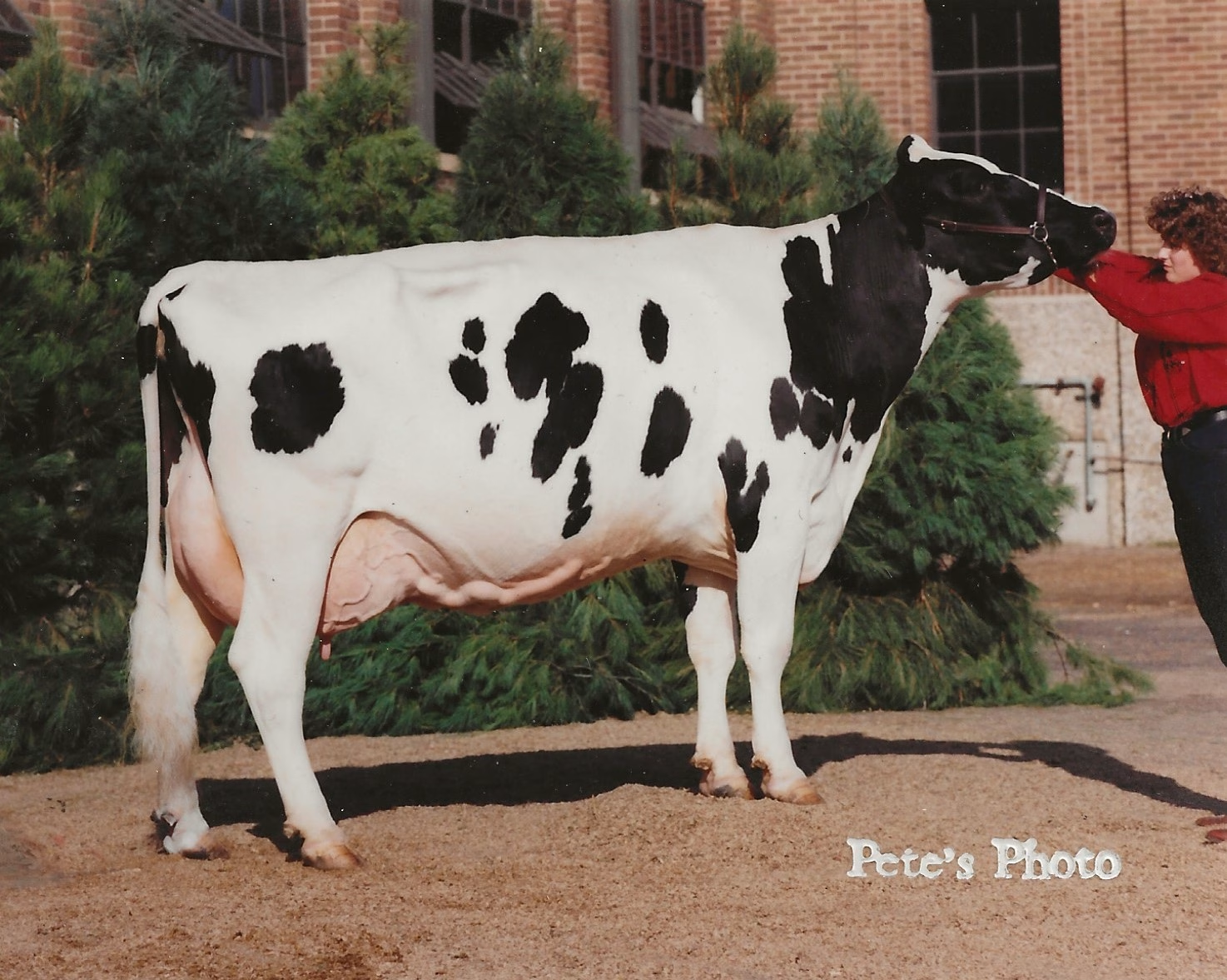
Join over 30,000 successful dairy professionals who rely on Bullvine Daily for their competitive edge. Delivered directly to your inbox each week, our exclusive industry insights help you make smarter decisions while saving precious hours every week. Never miss critical updates on milk production trends, breakthrough technologies, and profit-boosting strategies that top producers are already implementing. Subscribe now to transform your dairy operation’s efficiency and profitability—your future success is just one click away.
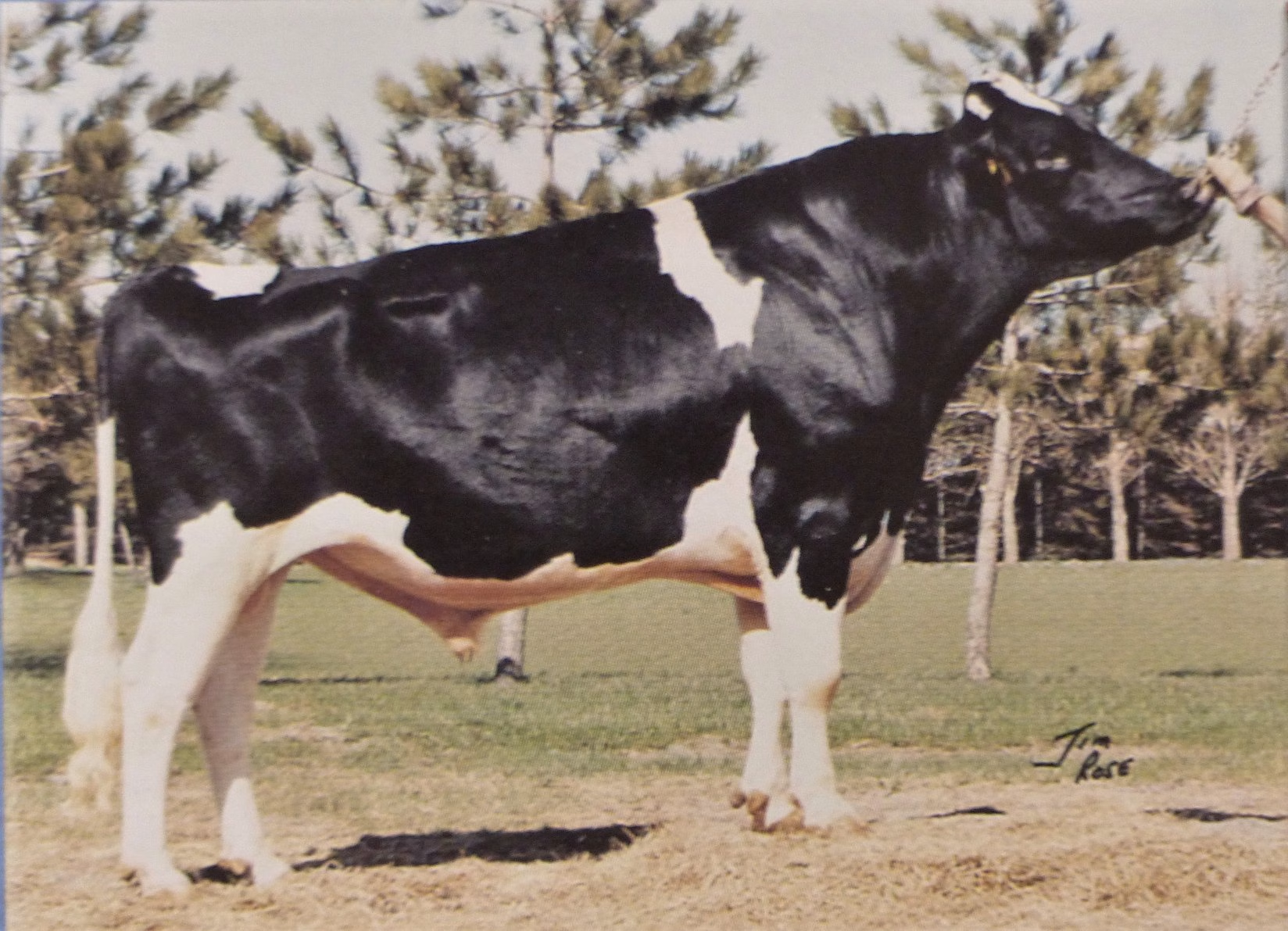
NewsSubscribe
First
Last
Consent
Google Circle
Join my Circle on Google+

Plugin by Social Author Bio

Send this to a friend