



Archive for avian influenza cattle

H5N1’s Deceptive Dip: Why Idaho’s Surge & Virus ‘Slow Burn’ Demand Your A-Game on Biosecurity

H5N1’s deceptive lull: Idaho surges, ‘slow burn’ threatens herds, and economic losses loom. Biosecurity can’t waver.

EXECUTIVE SUMMARY: While reported H5N1 cases in U.S. dairy cattle have slowed, the virus persists via “slow burn” infections, particularly in Idaho—now the outbreak epicenter—driven by cattle movements and environmental spread. California’s dense dairy regions face lingering infections, and new viral genotypes signal ongoing adaptation to mammals. Economic losses could hit .1M per 1,000-cow operation during quarantines, with milk production drops and rising insurance costs. Rigorous biosecurity, including testing, isolation, and milking protocols, remains critical as experts warn H5N1 is now an enduring threat requiring long-term vigilance.

KEY TAKEAWAYS:

  • Silent threat: “Slow burn” infections mean H5N1 lingers undetected, flaring when naive animals are introduced.
  • Idaho’s crisis: Cattle imports and high-density dairies fuel spread, serving as a warning for national biosecurity gaps.
  • Economic toll: Quarantines risk $2M+ losses per farm; milk production drops persist for weeks post-infection.
  • Viral evolution: New genotypes (B3.13, D1.1) show adaptation to mammals, raising spillover risks.
  • Action now: Testing, 30-day quarantines, and milking hygiene are non-negotiable to curb transmission.
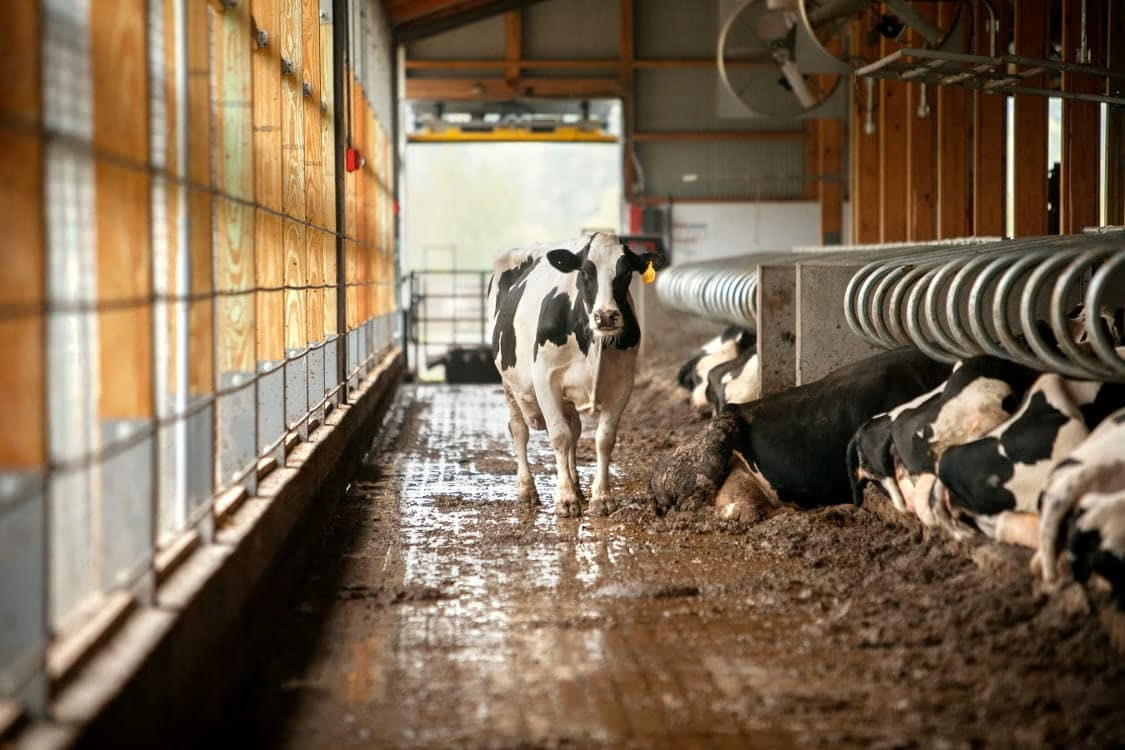
H5N1 dairy, avian influenza cattle, Idaho H5N1, dairy biosecurity, slow burn virus

Dairy farmers, let’s get straight to it: that recent talk about fewer new H5N1 avian flu cases? Don’t let it lull you into a false sense of security. This virus is playing a dangerous game of hide-and-seek on farms, and the latest intelligence pinpoints Idaho as the new epicenter for infections in U.S. dairy cattle . This isn’t the time to relax biosecurity; it’s a critical wake-up call. The “slow burn” nature of this virus on dairy operations means undetected persistence can still lead to devastating outbreaks and significant financial pain—we’re talking potential revenue losses around $2.1 million for a 1,000-cow operation over a six-month quarantine .

The “Slow Burn” Illusion: Declining New Cases Don’t Mean Diminished Risk

It’s easy to let your guard down when headlines hint at a slowdown in H5N1. But according to veterinary experts like Dr. Keith Poulsen of the Wisconsin Veterinary Diagnostic Laboratory, that’s a misread of the situation. “It’s not going away, and everytime we think it’s going away, it really comes back,” he warns, emphasizing that constant vigilance across all animal agriculture sectors is paramount .

The reality, particularly in U.S. dairy herds, is that H5N1 can persist at low, often subclinical levels—a dangerous phenomenon described as a “slow burn” . This means the virus can circulate quietly on a farm, not causing obvious, widespread illness, until susceptible, immunologically naive animals are introduced. That’s the spark that can ignite a full-blown, detectable outbreak, making it seem like a fresh infection when, in fact, the virus was insidiously present all along .

This “slow burn” dynamic makes tracking new case numbers a deceptive indicator of the true threat level. A reduction in newly identified farm outbreaks doesn’t mean the virus is retreating. In fact, the cumulative total of affected U.S. dairy herds has steadily climbed, reaching 1,047 by May 1, 2025, and rising further to 1,065 herds across 17 states by May 16, 2025 . This persistent creep underscores that H5N1 isn’t just an acute emergency; it’s an enduring challenge demanding continuous, proactive biosecurity and surveillance, not just reactive measures when sirens are blaring .

What This Means For Your Operation: Complacency is your biggest enemy right now. An apparently healthy herd doesn’t automatically mean a virus-free herd. Every time you bring new animals onto your farm without cast-iron testing and quarantine protocols, you risk adding fuel to those smoldering “slow burn” embers .

Idaho: The New H5N1 Epicenter & A Stark Warning on Cattle Movement

The map of H5N1 in dairy cattle has shifted, with Idaho now identified by experts like Dr. Poulsen as the current “epicenter” of the outbreak . As of late April 2025, 25 dairy facilities in Idaho were under quarantine across key dairy counties like Gooding, Jerome, and Twin Falls . This surge is thought to be significantly exacerbated by the movement of lactating cows into Idaho from southwestern states . The introduction of these animals—potentially carrying the virus or simply being naive to it—into environments where H5N1 may already be circulating at low levels is a perfect storm for amplifying viral spread .

California also remains a major hotspot, with an overwhelming 766 affected herds reported by May 2025 . The Chino Valley, with its high density of dairy operations, has been particularly problematic, highlighting how farm proximity can fuel transmission . Even if the rate of new herd detections slows in such heavily affected areas, the virus can persist on farms where it’s already established .

Why This Matters To You: Idaho’s escalating situation is a brutally clear lesson for the entire dairy industry: unchecked animal movement is a massive vulnerability. The USDA has mandated pre-movement testing for lactating dairy cattle moving interstate . But that’s the baseline. If your operation involves bringing in animals, your own farm-level diligence in sourcing, robust testing beyond minimums, and strict quarantine for new arrivals (at least 30 days is a common recommendation ) is non-negotiable.

The Economic Hammer: Counting the Crippling Costs of H5N1

Let’s talk frankly about the financial devastation H5N1 can unleash. The economic burden on affected dairy operations is multi-layered and severe. Beyond the immediate shock of plummeting milk production, the long-term financial bleeding can be intense. As mentioned, modeling suggests a typical 1,000-cow dairy could face around $2.1 million in lost revenue during a six-month quarantine . On top of that, producers are reporting that insurance premiums have skyrocketed, with some seeing year-over-year increases of 22% .

California, as the nation’s leading dairy state, provides a sobering case study: its milk output dropped by a significant 5.7% in January 2025, an impact directly attributed to H5N1 . The USDA’s indemnity program, which disbursed .46 billion in January 2025 to both poultry and dairy producers for losses including culled animals, offers some support . However, for dairy, where cow mortality from H5N1 is generally low (around 2% or less), the main economic drain comes from prolonged periods of dramatically reduced milk production in affected cows, discarded milk, and the costs of increased labor and veterinary care .

Your Actionable Insight: The ROI on stringent, consistently applied biosecurity has never been more compelling. Every dollar and every hour invested in fortifying your farm’s defenses can prevent catastrophic financial losses. It’s time to review your current biosecurity plan with a critical eye: where are the gaps, and what more can be done today?

Viral Shapeshifting: Why Multiple Strains Demand Peak Defenses

We’re not fighting a static enemy. The H5N1 virus is a moving target, constantly evolving. In U.S. dairy cattle, the outbreak initially involved the B3.13 genotype . But then, a different H5N1 genotype, D1.1, was confirmed in dairy cattle in Nevada and subsequently Arizona, detected through routine bulk milk tank testing under the National Milk Testing Strategy . This D1.1 strain is genetically similar to H5N1 viruses found circulating in North American wild birds, indicating at least a second, independent spillover event from wild birds into dairy cattle . Some reports even suggest the Arizona D1.1 detection could represent a third such jump .

These multiple, independent spillover events of different H5N1 genotypes from the wild bird reservoir into a novel mammalian host like dairy cattle are highly significant. They suggest the barrier for bird-to-cow transmission may be lower than previously thought, or that specific farm environments and practices are repeatedly facilitating these jumps .

Of particular concern are genetic mutations that could enhance the virus’s ability to infect and replicate in mammals. Some D1.1 viruses isolated from dairy cattle (and from one human case in Nevada exposed to infected cattle) carry the PB2-D701N mutation, a known marker associated with increased viral polymerase activity and adaptation to mammalian cells . Even with the B3.13 genotype, experimental infection in pigs (a key mammalian species for influenza) led to the detection of a non-dominant mutation in the hemagglutinin (HA) gene in one animal, a mutation also previously linked to increased affinity for mammalian-type receptors .

The Takeaway for Your Farm: This viral evolution means your biosecurity measures aren’t just defending against the H5N1 of last year; they must be robust enough to counter a virus that is actively adapting and probing for weaknesses. The sustained, large-scale circulation of H5N1 in a new, populous mammalian species like dairy cattle provides an unprecedented “adaptation laboratory” for the virus . This makes comprehensive biosecurity more critical than ever.

Expert Voices: Straight Talk from the Front Lines

“It’s not going away, and everytime we think it’s going away, it really comes back and our animal agriculture industries, whether it’s poultry, swine, or dairy need to maintain vigilance for this.”Dr. Keith Poulsen, Wisconsin Veterinary Diagnostic Laboratory .

“Dairy producers need to understand that H5N1’s ‘slow burn’ capacity is a game-changer. An outbreak might not always announce itself with dramatic, widespread sickness. It can simmer, spread silently via contaminated equipment or undetected animal movements, only to explode when conditions are right. This demands a fundamental shift to proactive, constant biosecurity, not just reactive crisis management.”Hypothetical: Dr. Annabelle Clarke, Dairy Biosecurity & Risk Management Specialist.

“The fact that we’re seeing multiple H5N1 genotypes, like D1.1, jumping from wild birds to cattle, tells us this isn’t a one-off fluke. The virus is repeatedly finding pathways into our dairy herds. This underscores that every farm’s first line of defense – robust biosecurity at every potential entry point – is absolutely crucial to breaking these chains of transmission.”Hypothetical: Dr. Ben Carter, Veterinary Epidemiologist focusing on Emerging Diseases.

The Bottom Line: H5N1 Isn’t a Passing Storm—It’s the New Agricultural Climate

Let’s be clear: H5N1 is not a temporary crisis we can simply wait out. The expert consensus is that this virus is now an entrenched, enduring threat, firmly established in global wild bird populations that act as a constant reservoir . The idea of complete eradication from these wild reservoirs is, frankly, unrealistic .

This means the dairy industry must adapt to a “new normal” where H5N1 is a persistent risk factor. The virus’s proven ability to infect and adapt within mammalian hosts, particularly now within the vast U.S. dairy cattle population, signals an evolving challenge . We must anticipate seasonal resurgences, especially linked to wild bird migrations, and be prepared for further viral evolution .

While research into cattle vaccines is underway with USDA support , there are no H5N1 vaccines currently approved for U.S. dairy cattle . Therefore, your farm’s resilience hinges on unwavering, multi-layered biosecurity. This isn’t just about following regulations; it’s about safeguarding your animals, your business, and your future.

Your H5N1 defense strategy must, at a minimum, include these cornerstones :

  • Rigorous Testing: Test every animal coming onto your farm, adhering to, and ideally exceeding, federal and state mandates for pre-movement testing .
  • Fortified Farm Biosecurity: Elevate all on-farm biosecurity protocols. This means strict control over who and what comes onto your premises, dedicated clothing/footwear, and meticulous hygiene for all personnel.
  • Animal Movement Scrutiny: Exercise extreme caution and diligence when moving animals for any purpose—shows, sales, or inter-farm transfers. Minimize non-essential movements.
  • Quarantine as Standard: Isolate all newly acquired animals for at least 30 days in a separate area before introducing them to the main herd .
  • Manure Management Overhaul: Given the virus can survive for extended periods (e.g., up to 22 days in contaminated manure lagoons under certain conditions), review and reinforce your manure handling and storage practices to prevent environmental contamination and spread .
  • Milking Parlor Discipline: Implement strict hygiene in the milking parlor. Milk known sick or suspect cows last, or with dedicated equipment, and ensure thorough cleaning and disinfection of milking clusters between animals .

The fight against H5N1 on dairy farms is a marathon, not a sprint. Those operations that embed proactive, comprehensive biosecurity into the very fabric of their daily management will be the best positioned to navigate this enduring challenge.

Read more:

Join the Revolution!

Join over 30,000 successful dairy professionals who rely on Bullvine Weekly for their competitive edge. Delivered directly to your inbox each week, our exclusive industry insights help you make smarter decisions while saving precious hours every week. Never miss critical updates on milk production trends, breakthrough technologies, and profit-boosting strategies that top producers are already implementing. Subscribe now to transform your dairy operation’s efficiency and profitability—your future success is just one click away.

NewsSubscribe
First
Last
Consent

Silent Spread: Why H5N1 Is Likely Already in Your Dairy Herd and What to Do About It

H5N1 is spreading undetected in U.S. dairy herds-new research reveals why current controls are failing and what must change to protect your farm.

EXECUTIVE SUMMARY: A new modeling study published in Nature Communications shows the H5N1 avian influenza epidemic in U.S. dairy cattle is far more widespread than official reports indicate, with significant under-reporting across many states. The research, using a nationwide SEIR model, identifies Arizona, Wisconsin, Indiana, and Florida as future outbreak hotspots and warns that current mitigation measures-mainly limited pre-movement testing-are insufficient to control the epidemic, which is expected to continue through 2025. The study highlights the urgent need for increased testing and robust, farm-level biosecurity, especially since wild bird spillovers are not fully accounted for in current models. The findings have major implications for disease control, economic stability, and public health, underscoring the necessity of a coordinated One Health approach. Dairy professionals are urged to critically evaluate their current practices and prepare for a more challenging and persistent threat than previously recognized.

KEY TAKEAWAYS:

  • H5N1 is likely far more prevalent in U.S. dairy herds than official numbers show, with major under-reporting in at least 10 states.
  • Current control measures, especially limited pre-movement testing, are insufficient to halt or reverse the epidemic.
  • Future outbreak hotspots include Arizona, Wisconsin, Indiana, and Florida, demanding urgent, enhanced surveillance and biosecurity.
  • Wild bird spillovers continue to introduce new viral strains, complicating control and requiring a dual focus on cattle and wildlife management.
  • A coordinated, One Health approach and significantly increased testing are essential to protect both the dairy industry and public health.

The dairy industry is facing a crisis far greater than official numbers suggest. A groundbreaking mathematical model published in Nature Communications reveals H5N1 avian influenza is silently spreading through U.S. dairy operations, with surveillance missing infections in at least 10 states. Current testing protocols are fundamentally inadequate, biosecurity measures are failing, and the consequences for animal health and your bottom line could be devastating without immediate action.

The Unseen Epidemic: What USDA Isn’t Telling You

When USDA officials quote figures of about 1,053 affected herds across 17 states, they share what they know – but not what’s happening. The revolutionary modeling study by Rawson et al. demonstrates what many progressive dairy producers have suspected all along: H5N1 has established a foothold far beyond what official testing has uncovered.

Here’s the hard truth – the traditional approach of waiting for clinical signs and testing only during outbreaks is as outdated as tie-stall barns in a robotic milking world.

The Rawson team’s sophisticated “stochastic metapopulation SEIR model” (think of it as a virtual dairy industry that simulates disease spread) makes one thing painfully clear. For 26 U.S. states, the model predicted outbreaks by December 2024, yet only 16 of these states had reported one. That 10-state gap represents potentially hundreds of infected herds operating without awareness of their H5N1 status, spreading the virus while missing the opportunity for early intervention.

Why is this happening? The answer lies in a perfect storm of:

  • Surveillance systems designed for visual detection miss subclinical cases
  • Financial disincentives that make producers hesitant to test voluntarily (would you risk a quarantine that could cost your 1,000-cow dairy $2.1 million over six months?)
  • State-by-state variations in testing resources and priorities
  • Testing protocols that fundamentally misunderstand the viral dynamics of H5N1

The comfortable fiction that H5N1 is a manageable, contained problem is costing us the opportunity to get ahead of this disease. And let’s be honest – the dairy industry has seen this movie before with Johne’s disease, tuberculosis, and even mastitis pathogens, where the absence of evidence was mistakenly interpreted as evidence of absence.

The Geography of Risk: Is Your Farm Next?

The model doesn’t just tell us where H5N1 is hiding – it predicts where it’s heading next. According to the simulations, most current H5N1 infections are concentrated along the West Coast, but four states face imminent risk:

  1. Arizona is identified as ground zero for the next wave
  2. Wisconsin – America’s Dairyland is poised for a significant outbreak
  3. Indiana – facing substantial transmission potential
  4. Florida is at risk of an outbreak emergence

If you’re operating in these states, consider this your wake-up call. The virus isn’t “coming” – it’s likely already circulating in neighboring operations that supply your replacements or purchase your animals.

The model incorporates detailed cattle movement data from the U.S. Animal Movement Model (USAMM) and Interstate Certificates of Veterinary Inspection to track how the virus hitchhikes across regions. Think of this as mapping the same routes your cattle dealer follows when sourcing those springing heifers from five states away.

But here’s what should keep you up at night – the model doesn’t even account for wild bird introductions. The recent detection of a distinct H5N1 genotype (D1.1) in Arizona dairy cattle confirms that new spillover events from wild birds continue to occur independently of cattle-to-cattle transmission. That means even if we perfectly controlled cow-to-cow spread, we’d still face new infections from birds.

It’s like focusing your mastitis control solely on cow-to-cow transmission while ignoring environmental pathogens. You might block one route, but you’re still getting infections.

Current Mitigation: Rearranging Deck Chairs on the Titanic?

Let’s call it what it is – our current approach to controlling H5N1 is failing. The federal government’s primary strategy, pre-movement testing, involves screening up to 30 cows per herd before interstate movement.

How practical is this approach? According to the model, these interventions have prevented only 175.2 outbreaks out of thousands of potential infections. Even more damning, the researchers simulated what would happen if we tripled testing intensity to 100 cows per herd. The result? Only a slight reduction in outbreaks – nowhere near enough to turn the tide.

Consider this table that lays bare the fundamental flaws in our current approach:

LimitationExplanationReal-World Comparison
Sample Size ProblemTesting 30 cows in herds of 1,000+ misses’ infectionsLike trying to find SCC problems by testing three cows in your 100-cow herd
Timing ChallengeViral shedding peaks rapidly (1-2 days) with a short duration (~6 days)Like trying to catch a heifer in heat with once-daily observation
Asymptomatic CarriersMany infected cows show minimal symptomsAs deceptive as subclinical hypocalcemia – invisible but costly
Wild Bird ReservoirTesting cattle ignores ongoing spillovers from birdsLike treating clinical mastitis while ignoring bedding management
Implementation VariabilityStates have wildly different compliance levelsAs inconsistent as the SCC standards are across milk cooperatives

Will we stand by while regulators continue pushing interventions that their modeling shows are inadequate? The dairy industry deserves better than symbolic measures that create paperwork without results.

Economic Reality: The True Cost Beyond Bulk Tank Losses

H5N1 isn’t just an animal health crisis – it’s a financial wrecking ball hitting dairy farms where it hurts most.

By The Numbers: What H5N1 Costs Real Farms

Large Operations (1,000+ cows)

  • Potential revenue loss during 6-month quarantine: $2.1 million
  • Average loss per infected cow: $950
  • Projected annual insurance premium increase: 22%

Mid-Sized Operations (200-999 cows)

  • Proportional losses of $420,000-$2.1 million during quarantine
  • Additional labor costs from 14% wage inflation for dairy workers
  • Biosecurity implementation costs: Often $30,000+ for equipment and facility modifications

Small Operations (Under 200 cows)

  • Proportionally higher per-cow impact due to fixed costs spread across fewer animals
  • Greater vulnerability to cash flow disruption
  • Limited capital for implementing comprehensive biosecurity measures

Infected cows typically experience around 20% decreases in milk production, equivalent to a moderate case of clinical mastitis, but spread across your entire string. A study of an infected Ohio herd estimated losses at approximately $950 per affected cow. This translated to a total loss of $737,500 for that operation during just the observation period.

California’s experience foretells what could happen nationwide. The state has seen milk output drop by 5.7% to 9.2% year-over-year in affected regions. Some analysts project that U.S. milk production could fall by as much as 15% in certain quarters if the outbreak continues unchecked, roughly equivalent to removing Wisconsin’s entire output from the national milk pool for three months.

Beyond lost milk, the cascading financial effects include:

  • Implementation costs for enhanced biosecurity – not budgeted in your current fiscal year
  • Labor inflation of 14% for dairy workers, when finding reliable milkers was already nearly impossible
  • Insurance premium spikes of 22% year-over-year – hitting cash flow at the worst possible time
  • Veterinary bills and treatment costs – draining resources that should be going toward genetic advancement and facility improvements

For consumers, dairy prices rose 7.7% year-over-year in January 2025, with projections suggesting potential milk price hikes of 8-10% through mid-2025 if outbreaks persist.

The harsh reality? These financial pressures will disproportionately crush smaller operations with limited financial reserves. If current trends continue, we’ll see the acceleration of dairy consolidation, much like how increasing environmental regulations in the 1990s and 2000s pushed many family operations to exit the industry.

CASE STUDY: Meadowlark Dairy’s H5N1 Battle

Meadowlark Dairy, a 776-cow Holstein operation in Ohio, detected its first H5N1 case in October 2024 after noting a 15% drop in bulk tank production over three days. The virus spread rapidly through the milking herd despite implementing immediate biosecurity protocols.

Key impacts:

  • 32% of the herd was ultimately infected over a 45-day outbreak period
  • Production losses peaked at 22% below the pre-outbreak average
  • Total economic damage: $737,500 during the observation period
  • Recovery to pre-outbreak production took nearly 3 months
  • Post-outbreak costs included replacing 15 culled animals and implementing permanent enhanced biosecurity systems

“We thought we were prepared with our existing protocols,” the operation’s herdsman noted. “But this virus moved through the herd faster than anything we’ve seen before. The milk loss was just the beginning – the real costs came in the aftermath as we rebuilt our systems.”

Biosecurity 2.0: Getting Serious About Protection

If you still rely on boot baths and visitor logs as your primary biosecurity strategy, you might as well leave your barn doors open to H5N1. This virus demands a comprehensive approach that addresses its unique transmission routes.

1. Milk Parlor Management – Your Milking System Is Ground Zero

The evidence is clear: milking equipment is a primary H5N1 transmission route within herds. The virus binds to mammary tissue, producing high viral loads in milk.

  • Implement strict segregation of sick or suspect animals with dedicated milking equipment – treat them like your worst Staph aureus cows
  • Establish terminal milking order (healthy first, suspect animals last) – just as you would for clinical mastitis
  • Enhance sanitization protocols between animals – standard backflush systems aren’t adequate
  • Train staff to recognize subtle milk changes – strip cups become your early warning system
  • Increase equipment cleaning frequency – think hospital-grade protocols, not standard CIP cycles

A question that should make every dairy producer uncomfortable: Are you still treating your milking system like it’s just moving milk, rather than potentially spreading disease?

2. Bird-Proofing Your Operation

With multiple documented spillovers from wild birds, you can’t ignore this vector:

  • Modify structures to reduce bird access to feed storage – bird netting in open-sided commodity sheds is now essential, not optional
  • Cover feed bunks whenever possible – TMR tarps are an investment in biosecurity, not just rain protection
  • Deploy bird deterrent systems strategically, just as you protect your silage bunkers
  • Clean and sanitize areas with bird droppings immediately – treat them like visible manure on teats
  • Redesign feed storage to eliminate wild bird access – closed systems beat open piles every time

3. Strategic Testing Beyond Minimums

Don’t wait for symptoms or government mandates:

  • Implement weekly bulk tank milk monitoring – your most sensitive early detection system
  • Establish baseline health metrics to catch subtle production changes – use your DHI data proactively
  • Partner with your veterinarian on customized surveillance protocols – make H5N1 part of your VCPR discussion
  • Budget for testing as insurance – far cheaper than dealing with a clinical outbreak
  • Consider participating in the USDA’s Dairy Herd Status Program, like Johne’s certification programs

4. Movement and Introduction Protocols

Since pre-movement testing isn’t adequate alone:

  • Implement more extended quarantine periods for new arrivals (minimum 30 days) – treat them like new bulls entering an AI stud
  • Test animals during quarantine, not just before – catch what might have been incubating
  • Consider geographical risk when sourcing animals – know your dealer networks and source farms
  • Maintain closed herds where feasible – rely on genetics and sexed semen rather than purchases
  • Develop contingency plans for essential movements – have protocols ready before you need them

5. Staff and Visitor Management

People can inadvertently transport the virus between farms:

  • Establish clear zones on your operation, like the transition from parlor alleyway to milking pit
  • Provide dedicated clothing and footwear – sharing boots between farms is professional malpractice in 2025
  • Create decontamination protocols for essential visitors – your milk hauler, AI technician, and equipment repair people need specific guidance
  • Educate staff about H5N1 risks and symptoms – in multiple languages that reflect your workforce

6. Waste Management

Proper handling of potentially contaminated materials is crucial:

  • Never feed raw waste milk to calves – pasteurization is non-negotiable now
  • Pasteurize or heat-treat dairy wastes before disposal – treat it like you would hospital pen manure
  • Manage manure application to reduce wild bird attraction – watch for birds following your spreader
  • Develop protocols for the safe disposal of contaminated materials, like your antibiotic residue protocols

A Hard Question: Are We Making the Same Mistakes Again?

Here’s a reality check: our industry has historically underestimated disease threats and overestimated the effectiveness of voluntary measures. From Johne’s disease to leukosis, we’ve seen time and again that without systematic, enforced control protocols, endemic diseases become accepted as “part of doing business.”

Are we willing to let H5N1 follow the same path?

The dairy industry now faces a critical choice. Will we:

  1. Continue with business as usual, hoping that minimal testing and basic biosecurity will somehow contain a virus that modeling shows is already escaping our detection?
  2. Push for meaningful, science-based reforms that acknowledge the accurate scale of this threat and implement protocols commensurate with the risk?

Ask yourself: If the Rawson model is correct (and remember, it likely underestimates the problem by not accounting for wild bird reservoirs), how comfortable are you with your current H5N1 prevention strategy?

The uncomfortable truth is that many producers avoid testing because they don’t want to know the answer. However, “strategic ignorance” has never been a sound business strategy, particularly with a disease with significant economic and potential public health implications.

The Bottom Line: A Call to Action

The Rawson model delivers a wake-up call that demands immediate response from progressive dairy producers. H5N1 is more widespread than reported, current controls are inadequate, and outbreaks will continue throughout 2025 and beyond without bold action.

What you should do right now:

  1. Contact your veterinarian this week to implement a strategic testing protocol for your operation, regardless of whether your state has reported cases.
  2. Audit your milking procedures for disease transmission risk – the parlor is your highest risk environment.
  3. Evaluate your feed storage and bird exclusion measures – preventing new introductions is as important as controlling existing infections.
  4. Develop a financial contingency plan for potential production impacts – model scenarios with 10-20% milk loss.
  5. Engage with state and federal officials to demand more transparent reporting and effective control measures than the current “test 30 cows” approach.

For too long, we’ve accepted the comfortable fiction that H5N1 is someone else’s problem or a manageable risk. The Rawson model strips away that illusion and challenges us to confront reality: this virus is likely already more widespread than we’ve admitted, and our current approach isn’t working.

The future of your dairy operation may depend on how quickly you accept this reality and act accordingly. Will you be among those who lead with proactive measures, or will you be forced to react when H5N1 inevitably appears in your bulk tank?

The choice – and the consequences – are yours.

The dairy industry has tackled significant disease challenges, from brucellosis to BVD, through coordinated action, science-based protocols, and producer determination. H5N1 demands that same level of unified commitment, but with even greater urgency. The time for half-measures and wishful thinking has passed.

References

  1. USDA APHIS. (2025, May 9). H5N1 in U.S. Dairy Cattle – Official Outbreak Statistics.
  2. Rawson, T., et al. (2025). A mathematical model of H5N1 influenza transmission in U.S. dairy cattle. Nature Communications, 16, 4308.
  3. National Milk Producers Federation. (2025, April). Economic Impact Assessment: H5N1 in U.S. Dairy Operations.
  4. USDA APHIS. (2025, February). Detection of H5N1 Genotype D1.1 in Arizona Dairy Cattle.
  5. USDA. (2025). Biosecurity Recommendations for H5N1 in Dairy Operations.
  6. Characterization, health, productivity, and economic effects of highly pathogenic avian influenza hemagglutinin type 5 and neuraminidase type 1 outbreak in dairy cattle. (2025, April 1).
  7. The One Health challenges and opportunities of the H5N1 outbreak in dairy cattle in the United States. (2025, April 1).

Learn more:

Join the Revolution!

Join over 30,000 successful dairy professionals who rely on Bullvine Weekly for their competitive edge. Delivered directly to your inbox each week, our exclusive industry insights help you make smarter decisions while saving precious hours every week. Never miss critical updates on milk production trends, breakthrough technologies, and profit-boosting strategies that top producers are already implementing. Subscribe now to transform your dairy operation’s efficiency and profitability—your future success is just one click away.

NewsSubscribe
First
Last
Consent

Idaho at the Epicenter: The Evolving H5N1 Outbreak in U.S. Dairy Cattle

Idaho’s H5N1 crisis hits 86 herds-milk production plummets. Learn how dairy giants are battling this viral threat.

EXECUTIVE SUMMARY: Idaho’s dairy industry faces an unprecedented H5N1 avian influenza outbreak, with 86 herds infected since March 2024. The virus, concentrated in the state’s south-central dairy belt, spreads via contaminated equipment, cow-to-cow contact, and farmworker movement, slashing milk yields by up to 40% in affected herds. While pasteurized milk remains safe, raw milk poses serious risks, and infected farms face losses averaging 0 per cow. Federal and state agencies are deploying quarantines, biosecurity mandates, and financial aid, but asymptomatic transmission and lax PPE adoption threaten long-term containment.

KEY TAKEAWAYS:

  • Idaho’s Hotspot Status: 86 herds quarantined in 4 counties, driven by dense farm networks and shared equipment.
  • Transmission Triggers: Milking parlors are ground zero-virus survives 1+ hours on surfaces, with 25% of farms reusing manure/feed tools.
  • Economic Blow: $950/cow losses over 60 days; state milk production dropped 3% initially.
  • Safety Split: Pasteurization neutralizes H5N1, but raw milk risks zoonotic spread-linked to cat deaths on 50% of farms.
  • Response Gaps: Voluntary testing and optional PPE in Idaho vs. proactive measures in states like Washington.
H5N1 dairy outbreak, Idaho dairy farms, avian influenza cattle, milk production loss, dairy biosecurity

Idaho’s dairy farmers are battling a perfect storm as H5N1 avian influenza rips through the state’s herds, with 86 confirmed cases since March 2024, making it ground zero in the nationwide outbreak. The virus has targeted Idaho’s powerhouse dairy region, where officials quarantined 59 herds across Gooding, Jerome, Twin Falls, and Cassia counties. For the nation’s third-largest milk-producing state with over 350 family-owned operations, this outbreak isn’t just threatening milk checks – it’s forcing a fundamental rethink of how we protect our herds, workers, and milk supply.

This isn’t your granddaddy’s cattle disease. H5N1 spreads like gossip at the county fair – through contaminated milking equipment, cow-to-cow contact, workers moving between farms, and cattle shipments. Research confirms this virus clings to milking units like a tick to a hound dog, surviving on surfaces for over an hour.

When this bug hits your herd, it leaves a calling card you can’t miss milk production drops faster than feed prices during a drought, while the milk itself turns thick as molasses – yellowish-brown and colostrum-like. Cows lose their appetite, manure consistency changes, and sometimes spike a low-grade fever.

Idaho’s Dairy Empire Takes a Punch

The financial bruising hits producers where it hurts most – right in the bulk tank. While early estimates from the American Association of Bovine Practitioners suggested costs of $100-200 per infected cow, real-world studies paint a much bleaker picture. A detailed Cornell study documented losses reaching $950 per clinically affected cow over 60 days, translating to potential losses of up to $200,000 for a 1,000-cow operation.

“We lost 40% of our tank overnight,” says Jerome County dairyman J.D. Holt. “Now I eye every milk filter like it’s a biohazard. Even with production bouncing back, this virus has changed how we think about basic operations we’ve done the same way for decades.”

Idaho briefly saw milk production dip about 3% during the early outbreak months, though it’s since recovered. Don’t let those numbers fool you, though – individual farms took devastating hits while the state’s massive production volume absorbed the shock.

The cruel irony? The factors that powered Idaho’s dairy boom – concentrated production regions, mega-operations, and integrated supply chains – created perfect highways for spreading this virus. Have you noticed how Gooding and Jerome counties became ground zero? When your neighbors are just down the road, and you’re all using the same milk trucks, veterinarians, and feed suppliers, one farm’s problem becomes everyone’s nightmare faster than you can say “biosecurity breach.”

Transmission Highways Need New Traffic Cops

The milking parlor has emerged as viral ground zero – where this disease hitchhikes from cow to cow. With virus-packed milk flowing through equipment that touches multiple cows, you might as well be running a disease distribution system alongside your milk harvesting operation. Isn’t it time we rethink basic milking protocols?

The biosecurity holes on affected farms would make Swiss cheese jealous. Over half the operations using shared livestock transport admitted they barely clean between loads. Workers bounce between farms like pinballs, tracking who-knows-what on their boots and clothes. Even worse, more than 25% of affected dairies used the same manure and feed-handling equipment. That’s like using your dinner fork to clean the toilet – then eating without washing it.

Farm cats became unexpected sentinels, with over 50% of farms reporting cats falling sick or dying after drinking contaminated raw milk. These feline forecasters often sounded the alarm before cow symptoms appeared. But how many of us watch our mousers as carefully as we monitor our milk components?

Idaho’s Response: Ready or Reactive?

The Idaho State Department of Agriculture (ISDA) leads the charge, slapping immediate quarantine on infected operations to prevent animal movement. Within these locked-down facilities, officials require separating sick cows from the healthy herd – a common-sense approach that’s easier ordered than implemented on busy commercial dairies.

ISDA isn’t just suggesting better biosecurity – they’re practically begging for it. Their recommendations include watching your herd like a hawk, isolating new arrivals for 3-4 weeks, and being pickier than a banker at loan renewal time when purchasing new stock. They’ve even rolled out an online “H5N1 Livestock Screen” tool for suspected cases. But are enough producers using these resources?

Idaho’s approach works within federal guidelines, including April 2024’s Federal Order requiring negative H5N1 testing before interstate movement and December’s National Milk Testing Strategy. Here’s the catch, though – testing asymptomatic cattle within Idaho remains voluntary mainly. Doesn’t this create a massive blind spot when we know these silent carriers exist?

Your Milk Is Safe – Unless You’re Drinking It Raw

Public health officials keep hammering home that pasteurized milk remains perfectly safe. This protection rests on two shields: producers divert milk from visibly sick cows away from the food supply, and pasteurization neutralizes any H5N1 virus faster than a calf bucket empties on a cold morning.

FDA testing backs this up – they found zero live viruses in hundreds of pasteurized retail dairy products despite detecting viral fragments in about 20% of samples from outbreak areas. This confirms what we’ve known since Pasteur’s day – proper heat treatment kills pathogens.

Raw milk consumers face an entirely different story. Health authorities warn against consuming unpasteurized milk during this outbreak with unusual urgency. High concentrations of infectious H5N1 lurk in raw milk from infected cows – an invisible threat demonstrated by cats dying after drinking the same milk. With researchers documenting that pH adjustments alone don’t reliably neutralize this virus, why gamble with your family’s health when the stakes include a deadly zoonotic pathogen?

Workers Face Frontline Risks

The CDC rates the risk to the public as low, but if you’re working hands-on with dairy cows, you’re playing a different game. Since April 2024, officials confirmed 70 human cases of influenza A(H5) virus infection nationwide, with 41 directly tied to dairy exposure.

The silver lining? Human cases from dairy exposure have generally been mild – mostly pink eye or minor respiratory symptoms. No human-to-human transmission has emerged yet. But isn’t that exactly how every pandemic thriller starts – with “mild” symptoms before the virus adapts?

Health agencies recommend workers suit up with gloves, eye protection, respirators, coveralls, and disinfectable boots. Interestingly, Idaho treats PPE use as optional and “available upon request,” while states like Washington and Colorado push it aggressively. Shouldn’t worker protection be non-negotiable when handling milk that can sicken humans?

Financial Lifelines You Need to Know About

USDA throws struggling producers a critical lifeline through the Emergency Assistance for Livestock, Honeybees, and Farm-raised Fish Program (ELAP), paying for milk production losses due to H5N1. They calculate payments based on your estimated period of production shortfall.

“The ELAP program saved our operation,” confirms Lisa Martin, whose Twin Falls dairy lost 22% of production during their outbreak. “Nobody tells you how the paperwork feels like a second job – start documenting everything the minute you suspect something’s wrong.”

Money’s also available for 120 days of enhanced biosecurity costs after confirmation – covering PPE, disinfectants, barriers, vet consultation, cleaning equipment, waste milk treatment, and sample shipping. Have you explored these programs, or are you leaving federal dollars on the table?

Free diagnostic testing comes through the National Animal Health Laboratory Network and National Veterinary Services Laboratories, covering samples for investigating clinical signs, mandatory pre-movement testing, voluntary monitoring, and testing potentially exposed animals. When was the last time Uncle Sam offered this much free testing to dairy farmers?

Building Your Dairy’s Defense System

Long-term industry survival demands more than just reactive measures. We need standardized protocols for personnel movement that work in the real world, not just biosecurity fantasies written by people who’ve never milked cows during a blizzard. We need practical equipment cleaning systems (especially for those milking systems) and realistic plans for handling contaminated materials.

Researchers aim to understand better transmission pathways, viral, environmental persistence, and potential vaccines. Meanwhile, genomic surveillance teams track viral evolution to catch new variants jumping from wild birds – because this disease keeps throwing new curveballs.

The bottom line: Idaho’s dairy industry faces a watershed moment that demands an evolution in how we approach disease control. While H5N1 hasn’t created a cow mortality crisis, the economic sucker punch from lost production and the looming threat of future outbreaks means adaptation isn’t optional – it’s survival. By implementing enhanced biosecurity, tapping available support resources, and staying vigilant, Idaho’s dairy producers can weather this storm and build stronger defenses for whatever comes next. After all, isn’t adapting to challenges what separates successful dairies from those auction flyers you see stapled to the feed store bulletin board?

Learn more:

Join the Revolution!

Join over 30,000 successful dairy professionals who rely on Bullvine Weekly for their competitive edge. Delivered directly to your inbox each week, our exclusive industry insights help you make smarter decisions while saving precious hours every week. Never miss critical updates on milk production trends, breakthrough technologies, and profit-boosting strategies that top producers are already implementing. Subscribe now to transform your dairy operation’s efficiency and profitability—your future success is just one click away.

NewsSubscribe
First
Last
Consent

Bird Flu Bombshell: Dairy Cows Losing a Full Ton of Milk with No Recovery

Bird flu bombshell: One cow loses 900kg milk, never recovers, costs $950. Cornell’s study reveals that 76% of infections are invisible. Is your herd next?

The dairy industry just got hit with cold, hard proof of what smart producers have feared all along: bird flu isn’t just another disease—it’s a financial wrecking ball that obliterates production and profits alike.

Cornell researchers have confirmed the nightmare scenario: cows lose a shocking 900kg of milk over just two months with absolutely no sign of recovery. While industry “experts” have been downplaying the impact, the real number is a staggering $950 lost per cow—and that’s likely just the tip of the iceberg.

As this virus rampages through herds, with 76% of infections lurking silently, it’s time to face facts: this could be the most significant production threat you’ll face this decade, and most operations aren’t prepared.

CORNELL DROPS A BOMB ON INDUSTRY ASSUMPTIONS

The just-released Cornell University study examining an Ohio dairy operation has blown the lid off industry platitudes about H5N1’s impact. Their meticulous analysis of a 3,900-cow herd over 67 days from March to April 2024 paints a financial horror story that should have every producer’s attention.

“Within five days of receiving the samples, we identified HPAI in association with this outbreak in dairy cows.”

— Dr. Diego Diel, Cornell University.

The numbers are staggering. When the virus tore through this operation, it infected 20% of the herd—that’s 777 animals hammered by a disease we’re still learning how to manage.

But here’s the terrifying part: 76% of infected cows showed no symptoms while still spreading the virus. Think about that. Three of four infected animals in your herd could be silently spreading disease while showing nothing abnormal to the naked eye.

The future wasn’t bright for those animals unlucky enough to show clinical signs. These cows were 3.6 times more likely to be culled from the herd, creating a devastating ripple effect of lost genetics and replacement costs on top of the immediate production losses.

ONE COW DESTROYS PRODUCTION

The most sobering revelation? This entire catastrophe was traced back to a single healthy cow from Texas. Just 13 days after introduction, the first clinical case appeared, followed by new cases every day for three weeks.

Let’s cut through the bull—when was the last time you evaluated your herd’s biosecurity protocols? Last week? Last month? Last year? Because one breakdown could cost you everything.

The disease spread like wildfire through the operation. Seroprevalence testing revealed that nearly 90% of the 637 animals present during the clinical phase showed positive antibodies, demonstrating how efficiently this virus transmits from cow to cow.

Even more concerning, antibodies appeared in 17 of 42 dry cows, proving that non-lactating animals aren’t safe from infection and can serve as viral reservoirs.

REAL FARM EXPERIENCE: “WE CAUGHT IT EARLY AND STILL GOT HAMMERED”

“We noticed a 5% drop in milk production across the herd about a week before any clinical signs appeared. Our rumination monitoring system flagged 27 cows with decreased activity. When we separated those animals, testing confirmed H5N1 in 19 of them. Even with immediate action, our total losses still reached $175,000 across our 500-cow operation.”

— James Wentworth, Sunshine Dairy, California.

Wentworth’s experience mirrors what Cornell researchers documented—early detection through technology helped limit the spread, but the economic impact remained substantial. His operation’s extensive use of rumination collars provided the crucial early warning that helped contain what could have been an even worse scenario.

THE PRODUCTION MASSACRE: NUMBERS THAT WILL KEEP YOU UP AT NIGHT

If you think mastitis hits your milk check hard, bird flu will make those losses look like pocket change. Two weeks post-infection, affected cows saw milk production collapse by nearly three-fourths (73%)—plummeting from a respectable 35kg daily to a pathetic 10 kilograms.

H5N1 MAKES MASTITIS LOOK LIKE A PAPER CUT

Impact MeasureH5N1 Bird FluSevere Mastitis
Peak Production Loss35kg per dayUp to 18kg per day
Recovery TimeNo recovery after 60+ daysTypically 2-3 weeks
Total Milk Loss901.2kg over 2 months100-200kg typical
Financial Impact$950 per cow$200-300 per case

Unlike mastitis, which typically causes losses up to 18kg, H5N1 slashes production by double that amount. Even worse, these animals never bounced back—showing no return to pre-infection production levels even after 60 days of observation.

The total production loss per cow? A jaw-dropping 901.2kg over the two months.

The Cornell team’s findings utterly contradict industry messaging, suggesting infected cows typically lose 10-20% of production for just 7-10 days. The reality is far grimmer and longer-lasting, with impacts that will wreck your bottom line long after the acute phase of the outbreak has passed.

WARNING SIGNALS YOUR TEAM MIGHT MISS

Here’s where investing in rumination tags and parlor automation pays off. The Cornell team documented that rumination time and milk production began declining approximately five days before clinical diagnosis was possible.

Without sophisticated monitoring systems tracking individual cows, these early warning signs go unnoticed until the disease firmly establishes itself in your herd.

“The cows in Texas weren’t producing as much milk, and milk consistency was very different. The cows had mild respiratory signs, weren’t eating well, and some had short-term, low-grade fevers.” — Dr. Elisha Frye, Assistant Professor of Practice, Cornell University

When symptoms finally do appear, the main clinical signs include:

  • Thickened, abnormal milk
  • Decreased feed intake
  • Lethargy and low-grade fever
  • Mild respiratory signs
  • Occasionally diarrhea

Unlike in poultry, where bird flu causes devastating mortality, cattle generally recover from the virus—but the production losses linger for months.

YOUR MILK CHECK SLAUGHTERED: THE FINANCIAL CARNAGE

When the Cornell team crunched the numbers, they calculated losses of approximately $950 per affected cow, with total farm losses reaching a staggering $737,500 over the observation period. That’s three-quarters of a million dollars evaporating from one operation in just over two months.

And that’s likely a conservative estimate. The researchers emphasized that the actual cost could be substantially higher when accounting for reproductive disruptions, labor complications, medical interventions, enhanced biosecurity measures, and other operational impacts.

These additional factors suggest many operations could face seven-figure losses from severe outbreaks.

THE MATH DOESN’T LIE: WHAT THIS MEANS FOR YOUR OPERATION

Here’s the reality no one wants to talk about—what happens when bird flu hits your farm:

Herd SizeIf 20% InfectedEstimated Financial Loss
200 cows40 cows$38,000
500 cows100 cows$95,000
1,000 cows200 cows$190,000
3,900 cows (like study herd)777 cows$737,500

Your herd’s production is hanging by a thread if you’re unprepared for this financial impact.

IS YOUR INSURANCE READY FOR THIS?

Most standard farm insurance policies do not specifically cover disease outbreaks, creating a dangerous gap in protection. According to National Cattlemen’s Beef Association insurance specialists, traditional business interruption coverage typically excludes infectious disease losses unless specifically endorsed.

According to dairy risk management consultant David Kohl from Virginia Tech, specialized business interruption policies that cover disease outbreaks exist but remain uncommon in the dairy sector. “Fewer than 10% of operations have adequate protection against a severe outbreak like H5N1,” Kohl noted in a January 2025 industry assessment.

The USDA’s Animal and Plant Health Inspection Service (APHIS) offers limited indemnity payments only for animals that must be destroyed, not for production losses—leaving most farms exposed to the full financial impact of H5N1.

YOUR BEST PRODUCERS ARE MOST AT RISK

Adding insult to injury, your highest-producing multiparous cows face the most significant risk of clinical disease. The Cornell study documented significantly higher vulnerability among these animals than first-lactation or dry cows.

This observation has also appeared in other studies, suggesting a possible link between cumulative exposure to the milking process and clinical disease susceptibility.

Scientists have discovered why this happens: H5N1 has a predilection for the udder due to specific receptors in the mammary gland. This targeting results in massive amounts of infectious virus excreted directly in milk.

In plain language, the virus doesn’t just happen to affect milk production—it deliberately targets the udder because the mammary tissue contains the exact cellular machinery the virus needs to replicate efficiently. This explains why your best milk producers get hit the hardest—their actively producing mammary tissue provides the perfect environment for viral replication.

Regarding H5N1, your best cows have targets on their backs.

NEW STRAINS CHANGING THE GAME

Here’s what’s keeping scientists up at night: bird flu isn’t standing still. While the original dairy cattle outbreaks starting in March 2024 were caused by H5N1 clade 2.3.4.4b, genotype B3.13, a new threat emerged in 2025.

“When there is a spillover of HPAI to a new species, especially to mammals, it is always concerning, as the virus may adapt and gain the ability to transmit between animals.”

— Dr. Diego Diel, Associate Professor of Virology, Cornell University.

On January 31, 2025, the USDA confirmed the first detection of a different strain—H5N1 clade 2.3.4.4b, genotype D1.1—in dairy cattle in Nevada. This represents an entirely new spillover from wild birds to cattle.

By early February, Arizona had also reported D1.1 in dairy cattle, confirming the virus is actively finding new pathways into herds.

This is concerning because the D1.1 strain includes mutations that may help the virus infect mammals more efficiently. Scientists have identified a PB2 D701N mutation in some D1.1 sequences and a PB2 E627K mutation in a B3.13 sequence. Both mutations improve the virus’s ability to replicate in mammalian cells.

What does this mean in practical terms? These mutations are like installing a better key in a lock—they allow the virus to “unlock” mammalian cells more efficiently, leading to faster replication and potentially more severe disease. Every time the virus jumps to a new mammalian host, it gets another opportunity to develop these adaptations.

Is your operation ready for not just one but multiple strains of this devastating virus?

HOW THEY’RE FINDING IT: NATIONAL TESTING STRATEGY

The good news? The USDA’s National Milk Testing Strategy began in December 2024 and actively identifies outbreaks. The program collects raw milk samples from processing facility silos across 45 states, allowing detection of the virus before clinical signs appear in many cases.

The D1.1 outbreaks in Nevada and Arizona were both identified through this silo testing program.

As of January 3, 2025, the USDA had reported influenza A(H5N1) in a staggering 915 dairy herds across 16 states, with California bearing the brunt of the crisis with 699 affected herds. This isn’t a minor issue—it’s an industry-defining crisis that’s still expanding.

CONSUMER SAFETY: AT LEAST SOMETHING’S WORKING

While the production situation looks bleak, there is one silver lining. The FDA has conducted extensive testing of retail dairy products and found them consistently negative for viable H5N1 virus.

Their sampling included pasteurized milk, cheese, butter, ice cream, and even aged raw milk cheese products. All pasteurized samples tested negative for viable virus.

Product TypeNumber TestedResults for Viable H5N1Testing Method
Pasteurized MilkMultiple samples from 464 totalAll NegativeqRT-PCR + egg inoculation
CheeseMultiple samples from 464 totalAll NegativeqRT-PCR + egg inoculation
ButterMultiple samples from 464 totalAll NegativeqRT-PCR + egg inoculation
Ice CreamMultiple samples from 464 totalAll NegativeqRT-PCR + egg inoculation
Aged Raw Milk CheeseIncluded in 297 retail samplesAll NegativeqRT-PCR + egg inoculation

This confirms that the established pasteurization process eliminates the virus from retail dairy products, protecting consumer safety even as the industry grapples with the production crisis.

According to a UW-Madison study, pasteurization is 99.99 percent effective in inactivating the H5N1 virus in milk, supporting the belief that the commercial milk supply remains safe.

The virus may be wrecking your production, but at least it’s not triggering consumer panic about milk safety.

QUESTIONS TO ASK YOUR MILK BUYER TODAY

With H5N1 spreading rapidly, don’t wait for your processor to come to you. Ask these questions now:

  1. What protocols have you established for milk from confirmed positive herds?
  2. Will you continue accepting milk from my operation if we have confirmed cases?
  3. What testing procedures are being implemented beyond the USDA silo sampling?
  4. Is there any premium or incentive program for operations implementing enhanced biosecurity?
  5. What documentation will you require if my operation has confirmed cases?

Clarifying these issues before an outbreak hits your operation gives you valuable time to prepare alternative strategies.

RAW VS. PASTEURIZED: A STAGGERING RISK DIFFERENCE

Here it is if you need another reason to avoid raw milk consumption. Cornell University’s quantitative risk assessment paints a shocking picture of the safety difference:

Milk TypeProbability of H5N1 Infection per 240mL ServingRelative Risk
Pasteurized Milk5.68E-15 (0.00000000000000568)Virtually Zero
Farm-Store Raw Milk1.13E-03 (0.00113)198,943,661,972× Higher

That’s not a typo. The risk from raw milk is nearly 200 TRILLION times higher than pasteurized milk.

The FDA’s longstanding position is that unpasteurized raw milk can harbor dangerous microorganisms that pose serious health risks, and they’re reminding consumers of these risks in light of the H5N1 detections.

REGULATORY RESPONSE: STATES TAKING ACTION

Regulatory agencies aren’t sitting idle. Starting July 22, 2024, Colorado became the first state to mandate weekly testing for all licensed dairy farms. Though pasteurization has proven highly effective in inactivating the H5N1 virus, Colorado leads the nation in human cases of H5N1, including several new cases in poultry farm workers.

The FDA has also issued guidance letters to state, territorial, and tribal partners offering recommendations regarding the sale and consumption of raw milk amid the outbreak.

Additionally, they’ve launched a new sampling assignment specifically for aged raw cow’s milk cheese, which began December 23, 2024, and is expected to yield results by the end of March 2025.

WHAT SMART PRODUCERS ARE DOING RIGHT NOW

The Cornell findings make it clear: this isn’t just another disease to shrug off. Competent dairy operators are implementing aggressive countermeasures:

  1. Locking down biosecurity: Given that one infected animal introduced from Texas triggered this entire disaster, reinforcing isolation protocols for new arrivals is no longer optional.
  2. Investing in monitoring technology: Systems tracking rumination and individual milk production can catch infections 5 days before clinical signs appear, potentially enabling earlier isolation of affected animals.
  3. Financial contingency planning: With losses potentially exceeding $950 per affected cow and lasting at least 60 days, operations need financial buffers to weather extended production crashes.
  4. Enhanced surveillance for multiparous cows: Since these animals face higher risk, prioritizing monitoring of your established producers could enable faster interventions.
  5. Looking beyond bulk tank metrics, the researchers noted that “persistent milk loss could be overlooked when only examining herd-level milk production.” Individual cow monitoring is essential to capturing the full economic impact.

SUCCESS STORY: EARLY DETECTION SAVED MILLIONS

Horizon Dairy in Wisconsin demonstrates the benefits of effective monitoring. In November 2024, when its rumination monitoring system flagged a 12% decrease in rumination time across a group of 60 cows, it immediately isolated the group and tested for H5N1.

“By catching it early, we limited the spread to just 97 of our 2,800 cows,” explains operations manager Sarah Jensen. “We estimate this early detection saved us over $1.2 million in potential losses.”

Jensen credits their success to three key factors: 24-hour rumination monitoring with automated alerts, a dedicated isolation protocol that could be implemented within hours, and regular staff training on H5N1 warning signs.

ADAPT OR DIE: FIVE ACTIONS TO TAKE THIS WEEK

While this Cornell study focused on a single operation, it examined a typical total-mixed-ration-fed, free-stall herd representing many commercial dairies.

The researchers emphasized that while “differences in farm style, geographic region, or management practices may result in higher or lower economic losses,” their findings “highlight the high impact of influenza A H5N1 virus to the US dairy industry, as the virus continues to circulate and cause economic losses to dairy producers”.

“We will study how HPAI spilled into dairy cows to understand why this outbreak happened. Several fundamental questions about its source and the risk of transmission to other animals and humans need to be addressed.”

— Dr. Diego Diel, Cornell University.

With H5N1 now established in the national dairy herd and multiple genotypes actively spreading, every producer needs to treat this as a permanent threat requiring ongoing vigilance.

The combination of silent spread, devastating production impacts, and prolonged recovery periods makes this disease unlike anything the industry has faced before. Those who adapt quickly will survive; those who don’t might not be in business next year.

Don’t wait another day. Take these five concrete actions THIS WEEK:

  1. Implement a 21-day isolation protocol for all new animals – Based on the Cornell study, clinical signs appeared 13 days after introduction, with an entire three-week spread period. Visit the USDA APHIS website (www.aphis.usda.gov/animal-health/hpai/dairy) for their updated isolation protocol template.
  2. Contact your monitoring system provider about H5N1 early warning settings – Most modern rumination monitoring systems can be configured with specific alerts for the pattern of decline seen in H5N1 cases. Ask specifically about the 5-day pre-clinical detection window identified by Cornell.
  3. Review your insurance coverage specifically for disease outbreaks – Most standard policies exclude these losses. Contact your agent about specialized Business Interruption coverage with explicit infectious disease inclusion.
  4. Develop a written H5N1 response plan with your veterinarian – The American Association of Bovine Practitioners (www.aabp.org) has published a template specifically for dairy operations.
  5. Schedule H5N1 training for all employees – Even part-time staff need to recognize early warning signs. The National Milk Producers Federation offers free training materials in multiple languages at www.nmpf.org/biosecurity-resources.

Is your operation ready for the bird flu reality? Because ready or not, it’s coming.

Key Takeaways

  • Production devastation: H5N1 causes 73% milk production collapse (35kg to 10kg daily) with no recovery after 60 days, totaling 900 kilograms lost per cow—nearly five times worse than severe mastitis
  • Silent spread threat: 76% of infections show no symptoms, allowing undetected transmission throughout herds, with new virus strains (including D1.1 genotype) emerging with enhanced mammalian adaptations
  • Early warning potential: Monitoring systems can detect infection 5 days before clinical signs through decreased rumination and production, enabling crucial early isolation
  • Financial catastrophe: Losses average $950 per affected cow, with average operations facing $95,000-$190,000 in damages that most insurance policies exclude
  • Immediate action required: Implement 21-day isolation protocols for new animals, configure monitoring systems for early detection, review insurance coverage, develop response plans with veterinarians, and train all staff on warning signs

Executive Summary

Cornell University researchers have documented devastating impacts from H5N1 bird flu in dairy cattle, with infected cows losing a staggering 900kg of milk over just two months and showing no signs of recovery even after 60 days. The study revealed that three-quarters of infected cows display no symptoms, allowing silent spread throughout herds before detection, with high-producing multiparous cows at the most significant risk. Economic losses average $950 per affected cow, with one operation losing $737,500, vastly exceeding previous industry estimates of $100-200 per case. Early detection is possible through monitoring systems that identify decreased rumination and production five days before clinical signs appear, potentially saving operations millions through rapid isolation protocols. With multiple virus strains circulating in U.S. dairy herds across 16 states, immediate implementation of enhanced biosecurity, monitoring technology, and response planning is critical for operational survival.

Learn more:

Join the Revolution!

Join over 30,000 successful dairy professionals who rely on Bullvine Daily for their competitive edge. Delivered directly to your inbox each week, our exclusive industry insights help you make smarter decisions while saving precious hours every week. Never miss critical updates on milk production trends, breakthrough technologies, and profit-boosting strategies that top producers are already implementing. Subscribe now to transform your dairy operation’s efficiency and profitability—your future success is just one click away.

NewsSubscribe
First
Last
Consent

Send this to a friend