I cannot tell you the number of times that I have heard dairy farmers from many countries refer to dairy farming as a way of life. But more and more I am noticing a transition from dairying being about the way of life and becoming a discussion focused on strategic business planning. This shift from “How do we live?” to “How are we profitable?” has forced many to decide to leave the industry.
The US Situation
The US dairy industry and agriculture industry has faced the problem of overproduction for the past 100 years. Improvements in equipment and machinery, better genetics, better feed, have made US dairy farmers more successful at what they do. Well, successful at everything except for making money. And while many dairy operators support trying to keep overall production lower in order to increase prices, none have been willing to cap their own production in order to do so.
Just as small industrial enterprises might seek to boost profits by becoming bigger and more efficient, American dairy farmers for the most part have gotten larger and larger and consolidated their operations to become more efficient and increase margins. Let’s look at the facts. They tell you that the average herd size in the US is currently 115 cows and that 74% of dairy farms have fewer than 100 cows. But the key stat to take not of is that farms with more than 100 cows produce 85 percent of the milk. This means that a mere 26% of the producers account for the majority of the milk production in the US.
Furthermore, today’s larger operations are not typically the family run operations that we usually associate with “The way of life” phrase that we all love to pass around. While, there are exceptions, many large dairy herd operations are more often owned by huge conglomerates, multinational firms or absentee stockholders. In 1900, half of the labor force were farmers, but by the end of the century only 2 percent worked on farms. Nearly 60 percent of the farmers at the end of the century worked only part-time on farms; they held other, non-farm jobs to supplement their farm income. Today, only about 6 percent of all farmers are under the age of 35. The high cost of capital investment — in land and equipment — makes entry into full-time farming extremely difficult for most potential farmers
Sadly, less than 25 percent of all farms in America bring in gross revenues in excess of $50,000. It has been estimated that living expenses for the average farm family in the US exceed $47,000 per year. Clearly, many farms that meet the U.S. Census’ definition would not produce sufficient income to meet farm family living expenses. In fact, fewer than 1 in 4 of the farms can cover living expenses. As a result between 1970 and today the United States has lost 88 percent of its dairy farms.
As these numbers demonstrate, the American “family farm”, rooted firmly in the nation’s history and celebrated in the myth of the sturdy yeoman, faces powerful economic challenges. Urban and suburban Americans continue to rhapsodize about the neat barns and cultivated fields of the traditional rural landscape, but it remains uncertain whether they are willing to pay the price — either in higher food prices or government subsidies to farmers — of preserving the family farm in such a picturesque form.
The Canadian Story
In Canada the story is a little different. Supply management has helped control the overall milk price so that smaller dairy farmers can be profitable enough to support the “way of life” that everyone dreams about. But there are other challenges that have come with supply management. The cost of entry is so high that it is an impossible hurdle for many of the next generation.
It’s a situation we have all experienced in our own families. The next generation has worked years on the family farm, while the spouse has worked part time off the farm as well as the done the majority of the work raising the children. In many case, the challenge is they did not build up enough equity/capital in order for a bank to be willing to loan them the millions of dollars needed to purchase the farm and the quota. As a result the multi-generational family farm has is sold, and the dairy industry loses another passionate young breeder due to economic circumstances.
Sure a good farm succession plan would have helped (Read more: Farm Succession: Which Exit Is Yours? And Farm Succession: Kicking the Hornet’s Nest?). However, most young people these days are not too eager to choose dairy farming as a career. A lot of young adults that grew up on family dairy farms have decided that investing millions of dollars in a business that requires you to work 12 hours or more per day most of the year for very meager wages is simply not worth it.
The Bullvine Bottom Line
There is no question that the face of dairy farming and agriculture as a whole is changing. While a small few (in relation to production) still work at trying to preserve the “family farm”, dairy farming as a whole has become big business focused on margins and sustainability. In order to compete with these corporate farms, many farm families need to run their operations more as a business than a way of life. (Read more: What’s the Plan?) If they don’t, they will go the way of the dodo bird. Nothing more than a vague memory from the past.
We often encourage youth to seek results that are good for everybody involved and, therefore, to create a win-win situation. Virginia Tech freshman Cara Woloohojian and her six year old aged cow, Spider Clara Bell, conducted a master class at both ends of the halter as they walked away from the Guernsey spotlight at the 47th World Dairy Expo with a win-win-win, win-win-win title. An unparalleled six firsts certainly puts these two in a class by themselves.
Epic Experience
Cara Woloohojian started her epic experience by showing Wee Acres Spider Clara Bell to first place in her class. Then the pair rang the bell again by winning Senior Champion. Cara and Clara Bell were delighted to top off their winning performances when their names were called for Grand Champion of the Junior Show (best Guernsey cow in the US owned by a youth). But the two were destined to stroll the red carpet another three times. Cara was proudly on the halter representing herself and sister Lauren as Wee Acres Spider Clara Bell paraded first in her class, then as Senior Champion and then as Grand Champion of the Open Guernsey Show.
“Parade of Champions is the Chance of A Lifetime”
Being able to take part in the Parade of Champions at World Dairy Expo is something that not many people can say they have done. Cara appreciates how special it was. “Winning Grand Champion of both the Open and Junior Guernsey Show at World Dairy Expo against so many great cows has been my greatest accomplishment so far. I am especially grateful for having the chance to participate in both the Open and Junior Supreme Champion parades and while I was only 18 years old. I hope that I will be able to have more great accomplishments with my future calves, embryos and Clara Bell’s bull, Cactus, and I hope to be able to start my own great cow family.”
Sisters Teamwork Foreshadows Guernsey Show Ring Success
With the polish and focus that took Cara to the top of the International Guernsey Show there was also grace and sincere affection when the announcers included her thanks to her best friend, mentor and sister Lauren Woloohojian. Indeed, the story of Wee Acres Spider Clara Bell started with the enthusiasm shown by both girls at an early age. “I first got started in dairy cattle because, while at a 4-H meeting 13 years ago, my 4-H leader asked ‘Who wants to start a dairy project?’ and, without any hesitation, my sister Lauren and I raised our hands. Once my sister and I decided we wanted Guernseys, we began our search for them. Many people told us that we would never find a Guernsey and they laughed at us, but looking back 13 years I will never regret my decision to get Guernseys.”
Cara and her sister Lauren at the All-American Dairy Show where Clara Bell was Reserve Grand Champion.
From Calving Pen Pick to Parade of Champions Selection
The search for the “right” Guernsey could indeed have been difficult but in fact this part of the story is as unique as the success that would eventually be recognized in the spotlights of World Dairy Expo. “Since Clara Bell is bred and owned we did not have to search through sale catalogs or talk to people to find her. We literally found Clara Bell in the calving pen with Clover, one of our original cows from Lois Whitcomb from Maine.” For Cara the history shared with Clara Bell makes this already unique story even more extraordinary. “I think Wee Acres Spider Clara Bell is exceptional because she is bred and owned and she is out of one of our original three Guernsey’s, Clover. I also believe that Clara Bell is special because we raised her and were able to bring her to a high level of competition. She represents our breed so well and has been honored as one of the best Guernseys in the country.”
“Take Pride in Walking the Colored Shavings”
With this rare double-win at both the Junior and Senior level, Cara is put in the position of mentor to others who are considering entering the dairy show ring. “My advice to other young people would be that it takes time but you never know which calf can grow to become that next great champion cow. Pick a breed, stay with it, get as much advice as you can both good and bad, weigh the options, make good decisions, and reach out to all levels of expertise in your breed. It is important to be a part of your breed association. Finding yourself a mentor is key too. If you are a youth, don’t be afraid to show your cow against adults at national shows. Although it is scary the first time out on the colored shavings, you do not want to regret not showing your own cow. I am so thrilled that I was on the halter when Clara Bell was named Grand Champion!”
FAMILY: Small Herd. Big Encouragement. Strong Support.
The Woloohojian family have a small family herd of Guernseys and Ayrshires in Rhode Island. Cara and Lauren’s parents feel strongly about cattle ownership as their mother explains. “I think owning and caring for an animal teaches the greatest lessons. It teaches many life lessons including responsibility, how to deal with success and failure, decision making and how to follow your own instincts. Sharing a common bond, it helps establish many long term friendships.” Of course, having children with cows is not a short term commitment and so the Woloohojian parents outline what it has meant. “When Cara wanted to get cows we said, “Sure, why not?” When she wanted to show at every local fair, we packed everything up and spent the summer at almost every dairy show we could find. We took her to watch shows to learn about showmanship and judging, to dairy camp and spent hours learning quiz bowl! Christmas and birthday presents always included fitting supplies, clippers, blades and topline scissors. We always encouraged her to do her best and tried to support her as best we could.”
In Good Hands with Guidance from Special Family and Friends
There were probably many times on Cara’s journey when she had to push her comfort zone, however, she is confident that she always had great input to inspire her. “The biggest influences on me I would have to say are my family, my sister, Lauren Woloohojian, Craig Hawksley, Pamella Jeffrey, Kyle Thygesen and Seth Johnson. They have all been influential to me in their own way. My family has been very influential to me because we began this project together knowing very little about cows and farming. My parents never let that get in the way or deter us. I have always looked up to my sister, Lauren. She was always the one to beat in showmanship which inspired me to get better. Craig Hawksley and Pam Jeffrey from Rhode Island have been influential because of their passion for animals. Craig’s success with Sweet – Pepper Black Francesca has always inspired me. (Read more: The Magic of Francesca) Pam was my 4-H dairy club leader and she was always supportive of me and helped teach me about showing. Kyle Thygesen, of Farmstead Genetics in Tunbridge, Vermont, provided the expertise and care which prepared Clara Bell for show. Seth Johnson supported us when this 4-H family with no dairy experience settled on the Guernsey breed. He has answered numerous questions, directed us to sales and has provided much guidance along the way.”
“We are so incredibly happy for her! She is a hard worker and never gives up!”
Cara’s mother puts this latest success into Wee Acres perspective. “We have a small family herd of Guernseys and Ayrshires. We currently farm 70 acres and recently purchased a 356 acre farm in Addison, Vermont, where we would like to continue to build our herd with the emphasis on breeding good foundation cows.” She characterizes the growing success with a mixture of pride and humor. We like to think of it as a 4-H project gone haywire! That keeps it fun!!” was Cara’s dad’s, Jim Woloohojian favorite quote.
The Bullvine Bottom Line. Now That’s Remarkable!
Those with a passion for dairy cattle and the show ring are used to the well-rounded resumes belonging to more senior members of the show ring circuit. It therefore comes as no surprise that, even though she is young, Cara excels outside the ring too. “In addition to her success at World Dairy Expo, we are so impressed by how she always helps others with their dairy projects. Whether it was giving up a run for our state fair’s princess contest so she could work with 4-Hers in NY or spending an afternoon working with new dairy project members, her passion for dairy is remarkable.” Remarkable effort! Remarkable results! That’s the essence of the Cara Woloohojian win-win situation! Congratulations Cara.
No one is ever truly prepared for massive peer recognition such as that experienced by Richard Caverly when his name was announced at the 2013 recipient of the Klussendorf-Mackenzie Award at The 47th World Dairy Expo. (Read more: Maine Native Wins Klussendorf-Mackenzie Award) It was obvious that Richard was deeply moved. “This honor to me is so humbling. The generation I competed with is an amazing group! There is no way to compare yourself to the likes of Mark Reuth, Joel Kietzman, Ken McEvoy, Paul Petriffer, Scott Hussey, Barrie Potter and the list goes on! (Read more: Charlie McEvoy: As Good as Gold) This is a generation who competed with dedication and passion! They were not at the show to try to sell you their cow, they were there to win, and every cow was special to them! This generation learned from the generation before them and learned early how to do it all. They are specialists, only they specialized in every aspect of the show. The wheelbarrow is as familiar to them as a pair of clippers.” Richard sums up his admiration with this unforgettable phrase.
“They would make a hummingbird look like it had no work ethic!”
Now that’s a picture to keep in your mind’s eye from now on, whenever you think of those men and women who have the perfect touch when it comes to working with cattle. The ability to lift each animal they are focused on to a whole new level. As Richard Caverly heard the applause which signified that he had earned a special place among dairy industry peers, we wonder which came first for him– the passion? Or the perfection? Richard himself would humbly divert the attention and tell you that he owes most to the people themselves– his wife, family, friends, dairy co-workers and mentors.
Caverly’s Love Cows and Produce Champions
Richard’s passion lifelong passion for cows began young and began at home. “My start with cattle came at an early age, as my father “E.C.”, along with his two brothers Frank and “Pudge”, were owners of Caverly Farms in Clinton, Maine. They started their Ayrshire herd as a 4-H project that was their own responsibility, as their father was the head of the highway commission and constantly “On the road”! They received help from my great Uncle Edgar – my wife Beverly’s Deer Hill herd resides on his farm today. The brothers bred and developed many All-American and All Canadian cattle, including the a Royal Junior Champion in the ‘60’s and 1978 Madison Grand Champion and Reserve Junior Champions. The farm is unique in that along with these dairy champions my cousins have had National Champion with their Beef Shorthorn cattle as well.” Richard appreciates these strong family ties. “I am blessed with amazing family support, all the way from my Uncle Frank to my youngest sister, Leah.” He then zeroes in on the one who means so much to him.
“Of everyone in my life, my wife Beverly Donovan is my biggest hero.”
It isn’t surprising that Richard and Beverly share a common vision for what they believe in. He proudly identifies the strengths of his soul mate. “Her passion for success and her dedication to making sure her animals get their due is unmatched! Commitment should be her middle name as she truly puts the Ladies of Deer Hill at the top of her life. She is thankful for those who have helped her, and she is free with her help to others.”
Picking a Winner – “It Starts with Seeing the Potential”
When someone becomes exceptional at what they do, we want to credit it to some extra special gene that propels their performance. Laying no claim to special powers Richard feels success is simply a process. “For me, I enjoy watching an animal reach her potential. You need to identify what you can do to help her reach it. Then it is very special to watch a cow rise above and get to the level that you envisioned. There is an extreme amount of trust given to any individual blessed with the care of an animal. Most important is the trust of the animal. It takes a lot of dedication to properly care for and handle them. I have many tired friends who share the passion; their dedication wakes them up on cold damp mornings and it is their commitment that makes them stand out in such a demanding industry!”
Richard’s Role Models “They believe vacation is a place where they can take their animals!”
Richard has learned from those he admires. “My Uncle Frank at 72 is still the hardest worker I have ever known along with the biggest supporter of my endeavors! Craig Hawksley the breeder of Sweet Pepper Black Francesca is a man I idolized as a kid. Craig is perhaps one of the most under-the-radar people I know as his passion for breeding is unmatched!”
Richard’s Dairy Tale “Follow the Bread Crumbs”
The stories of those who have led Richard on his journey are many and important to him. “Steve Briggs and his family developed a friendship with my family before my time. Then they trusted me when I was young, helping me every step along the way. Steve has the “Hansel and Gretel” approach as he feeds you one bread crumb of knowledge at a time yet allows you to learn so much through patience and dedication. “Richard has been accompanied by fine dairy teachers and teammates too. “Ernest Kueffner and Terri Packard are the most attention-to-detail, micro-managing team that I know! Rick Allyn – I remember when we were kids and he put up a topline on an Ayrshire yearling heifer I held for him. That was a thousand heifers ago for him! Ralph Gushee went to shows with my Uncle Pudge throughout North America and luckily he took me on many trips with him throughout life! Jim Strout is a very dear friend who along with son Jamie and friend Wayne Schofield have taken countless hours and invested them on the road and at home with the Deer Hill ladies as well.”
“When Talking Cows, Every Word from Nabholz Counts!”
Perhaps the secret to Richard’s success not only has to do with how hard he works at his craft but at how hard he listens and learns from those around him. He appreciates even the smallest daily input. “Bill Taylor is always good for an early morning text to check on me while he is mixing feed.” and values words from his heroes. “Norman Nabholz, with his wisdom and intellect, five words can inspire!” (Read more: HALTER, PEN and GAVEL. That’s Just the Norm) Steve White and Mike Duckett took time from their own endeavors to help with Francesca. David Wallace, who shared a friendship with my family, allowed me into his own family and always encouraged me.” Some of Richard’s mentors were the silent type. “Gary Bowers is perhaps the quietest achiever in the industry.” No matter how they have shared their expertise with Richard, he is convinced that they also share a special skill. “All of these people get 26 hours out of a 24 hour day and take advantage of all 8760 hours a year gives you! “ Above and beyond that they have inspired Richard to the realization that “The friends you make along the way truly are always priceless!”
The Caverly Cavalcade of Firsts!
With justifiable pride this Maine native looks back on dairy cattle that he has sent to bask in national and international spotlights. “Glenamore Gold Prize makes me smile even today. So many times I was seen as “The guy who clips Prize”. She had about as much hair as an eel, yet her success made people think I had magic clipper blades!” And the list goes on. “Oak Ridge Bruis Helga she was the first cow to have an Allen Hetts Memorial Trophy come to Maine. Moy-Ayr Bell Beladina at 97.1 is North America’s highest classified cow ever. This massive cow spent countless hours being paraded around by my cousin Vanessa who barely came to her knees.” His hard work earned him some fantastic memories. “Nadine’s first championship while still owned by Potwell is something I shall never forget. She made Peter Stern proud being named Supreme in Ohio and later I would work with her again with Patrice Simard at World Dairy Expo – that cow made two good friends proud!”
Richard’s Recollections – The Stuff Legends are Made of!
There have been times when this behind-the-scenes star maker is thankful for that old adage about a picture being worth a thousand words. One of Richard’s most awesome experiences has been preserved for posterity. “Ashlyn, Tobi, and Delilah were part of the US tandem that took the Royal by storm and Han Hopman took a priceless photo of the three with Legends Dyment, Frasier, and Brown on the straps and Empey making his final decision!” (Read more: Han Hopman: Shooting Straight at Holstein International) For Richard, that was the shot of shots and goes into Caverly history along with this story of international success that he had a part in making. “I’ll never forget Butch Crack on the strap of Crackholm CV Roview the 2x Brasillian National Champion for the Morro Aguido herd of Claudio Mente.” And the love list goes on. “Veronica and Melanie. One trip to Ontario and two legends are acquired.”
Iconic photo by Han Hopman of Ashlyn, Tobi, and Delilah. Three cows Richard had the pleasure of working with in his career.
Sweet Talk. Bitter Sweet Memories.
Whenever stories are told — and there will be many, many of them — Richards thoughts will always turn to one particular cow . “Of course that is Sweet Pepper Black Francesca, four consecutive years as National Champion to her name!” Once again it goes beyond the winning. “Most important of all Francesca made the dreams of so many people I love come true. Francesca and Beverly showed the world that no matter who you are, or where you come from, with passion and dedication you too can achieve your dreams!” (Read more: The Magic of Francesca)
“The Passion Too Strong to Resist!”
The 23rd Duncan Mackenzie Award winner is philosophical about the future. “Countless things change in life. New opportunities arise. Great things from the past remain just that, in the past. Each generation finds its own way eventually, as it is the job of the preceding generation to help with the progress of the next.” And helping with the next generation is where Richard is focusing his talents next. “The decision has been made to work with George and Michael Liberty developing the Juniper Elite Holsteins, while continuing with wife Beverly and her Deer Hill Ayrshires as well. George is an enthusiastic young man at the age of 19 with a dream and passion for the Holstein industry driven to take his father’s love for Juniper Farm to high levels. It means leaving a job working with a wonderful family the Flood’s who I shall miss, yet the opportunity to work with great genetics both Ayrshire and Holstein is a passion too strong to resist.”
The Bullvine Bottom Line
The dairy industry moves forward with those like Richard Caverly who can inspire each of us with his passion, perfection, persistence and hard work. To Richard we say, “Well done!” and thanks for sharing the spotlight with all those you care about. They are a special part of your story. We at the Bullvine and your friends, family and hummingbirds salute you as you take a well-deserved place beside the exceptional examples of dairy industry character, sportsmanship, ability and endeavor exemplified by the Klussendorf-Mackenzie Award. Congratulations Richard Caverly!
Investing in dairy cattle can seem risky to many breeders. Doing so, when prices are setting new records, can scare even the most confident among us. However, more recently, prices have taken a downward trend and now could be the time to ask, “Am I in this for the long haul? Or do I prefer to sit on the sidelines?”
With many sales coming up throughout North America, there are certainly going to be lots of animals to choose from. For the first time in recent years, supply might be greater than demand. There are two main reasons for this. First, so many of the top cattle have been on extensive IVF programs that the owners of these cattle have way more daughters than their breeding program needs. (Read more: FAST TRACK GENETICS: More Results in Less Time and IVF: Boom or Bust for the Dairy Industry) Considering the significant investment that IVF requires, these breeders are looking to recoup their expenses as soon as possible. Also typically these calves are most valuable at as young an age as possible, so that their indexes are as high relative to the rest of the breed as possible (Read more: Informed Heifer Buying – Are you fully prepared?)
The second reason that prices may be the lowest we have seen in years is that it appears that we have passed the investor bubble that funded massive investment and high prices over the past few years. Many early investors are now realizing that there were more expenses associated with running their genetic programs than they first anticipated (i.e. IVF, recipients, feed etc.) and are starting to wonder if it was a wise investment after all. Most were thinking their investment have a short-term 2-3 year payout and not take longer than that. Perhaps they didn’t account for three specific things:
Flush history of the animals they were purchasing.
Even with IVF there is no comparison on the return of a family that flushes well compared to one that only produces 4-5 eggs even on IVF. IVF may give more progeny than you would have had using traditional flush methods, but it also incurs more expense.
Cost of recipients
One area many breeders/investors do not account for when first purchasing is recipient costs. From that purchase to, feeding and then adding on implanting expenses, the investment in recipients can often outweigh the cost of the actual donor animal. After multiple years of flushing and then starting to flush the progeny of the original donor, these costs can skyrocket.
True return on investment
First things first. I know many investors invested without even having a clear plan. “They just wanted to make big money.” In addition, thought that ROI would happen quickly. Many perceptive and knowledgeable investors would have realized that a significant return would have to come from semen sales and not from live animal sales. The problem with building your program around semen sales is that you first need to be in the top .1 percent of the breed and secondly it takes many years to actually see this payoff.
Having said all that, now just may be the wise time to invest. You see the initial whoosh has passed and prices are now dropping on many great animals. Over the past few months I have seen animals that are within the top .2 percent of the breed selling for less than $5,000, sometimes even less than $3,000. (Read more: Where did the money go?) Many naysayers would say this is the price these animals should be selling for anyway. Those who are willing to do their homework, invest their time and not just their money, are now able to pick up some great animals that can significantly advance their breeding programs. Even if you have no interest in doing IVF on them, at those prices they can make their return with just traditional flushing techniques, or even just breeding them normally.
The Bullvine Bottom Line
There is no question that any marketplace is going to have its highs and lows. It’s those with the perception to understand when the highs are and when the lows are that are going to make the most return on their investment. In the dairy genetics marketplace there is no question we are currently entering a down period. The thing many wise investors will realize is that it takes two years of planning in advance to know when it’s the time to invest and when it’s the time to sell. Just now, if we look two years out, it looks pretty safe to say that prices will be higher. That is simply market economics. Therefore, those with the cash flow to invest in some additions to their herd may find that “Now!” is the exactly right time for them to buy.
Like many Bullvine readers I grew up on a small dairy farm, took part in 4H clubs and fell in love with a breed of cows. I attended college and studied animal agriculture. I graduated during the Green Revolution, not green like we know it today, but green in the fact that the developed countries felt that they could ramp up production and feed the world without the need for developing countries to produce their own food. And since that time animal agriculture has focused on animals producing more and more. Well the truth is that both of these models where animals produce more and more and where only developed countries need to produce food are broken. We ignored factors such as a country needing a strong agricultural base to be successful and more and more milk per cow leading to poor and poorer reproduction rates. Furthermore the idea that the majority of the world’s population growth would occur in the developing nations never even crossed our radar screens back then. How could we have been so wrong in our thinking? Are we thinking any clearer in 2013, when it comes to dairy feeding people in the years ahead?
Today’s Dairy World
Few of us are aware that India is the country that has the most cows (48 million) kept for milk production purposes. The production of India’s cows is low (1,200 lbs per year) but through improved husbandry there is great potential. China’s rapid growth as an importer of dry milk powders (whole and skimmed) is predicted to grow in 2013 by 12% and 18%. The USA in 2013 is exporting the equivalent of 15% of its annual production where just a few years ago it was thought that USA milk prices were too high for significant exportation to take place. USA cheese exports in 2013 will be double the exports in 2008 and that will make it the largest single exporting country for cheese. Cheese is the darling child of milk products when it comes to exports and EU countries which export almost half of the cheese globally are looking for new customers. To say the least, the world is hungry for dairy products. The demand for dairy is expected to increase at a rate faster than the world’s population growth. (Read more: “Got Milk” is becoming “Got More” and MILK MARKETING: How “Got Milk?” BECAME “Got Lost”)
Tomorrow’s World
We have all seen the prediction that there will be 9 billion people by 2050. That is a 25% increase. If dairy is to fill more of the average global diet the world will need 30 to 35% more milk to be produced in 2050 than there is produced today. The rapidly expanding middle classes in China and India will consume more milk products as will consumers in Africa, SE Asia and Russia. At the processing industry level, expect new products (including low lactose and ingredient enriched milk products) and more uses for milk. At the farm level the rate of applying technology will be at an ever increasing rate. But the dairy industry does not exist on a vacuum.
Feeding the growing world population, the application of technology, the elimination of duplication and waste and the best use of all resources will be on every country’s agenda. Are these issues too big or too far away? We lose if dairy is replaced in the diet. All things dairy lose if we think too small, only nationally or only about self preservation. All dairy agendas are inter-related.
Tear Down the Silos. Ramp Up the Herd.
It is paradigm shift time. The big picture question is how can more milk be efficiently produced to feed a hungry world?
Are farmers, their organizations, their service providers, the milk processors and the global traders thinking in terms of mutual (collective) benefit or individual benefit? The survivors will be in supply chains that can provide a quality product at a price that consumers are willing to pay. Quality is the watchword. For those that are not prepared to work with others it will not be Who Moved My Cheese but who replaced my cheese with their product.
What will that look like? At the farm level the list of changes needed will be extensive but in the immediate future it is likely to include larger herds to take advantage of technology, information and critical mass. At the industry level our organization leaders will need to dismantle and re-create new organizations and structures to provide the best and most relevant services dairy farmers will need. If you are looking for an example read the announcement in the Bullvine last week to merge Dairylea Cooperative Inc. and the Dairy Farmers of America in the USA (Rad more: Dairylea announces proposed merger with DFA).
The Bullvine Bottom Line
Everyone in the dairy world will need to think collectively and globally. The rewards will go to those that can adapt, adopt and act. Cattle breeders in just ten years will be using technology and information that is hardly on the researcher’s bench just now. If you are looking for an example we need only to remember back five years to 2008 when we asked each other how to pronounce genomics. Today it is an important tool in breeding dairy cattle for the future. Will you and your farm be part of dairy’s future or part of its history?
Rumors, slander and outright lies have been flying around our industry lately. What large genetic operation has had “changes” in their make-up? What A.I. company is about to hit the news? It’s shocking the number of rumors that come across my desk hoping we will fuel the fires that they are afraid to face. Everyone loves to hear gossip (especially about someone else), but few are willing to take a public stand. That is why I commend those that do put their money where their mouth is. There is no question that “The Spineless Will Be Forgotten.”
Since starting the Bullvine, we have been accused of many things and have had rumors about us run rampant through the dairy industry. Sometimes I laugh. Sometimes I snap. Sometimes I “rip someone a new one.” (Read more: Genomics – Lies, Miss-Truths and False Publications! and The Weak Never Forgive) One thing is certain. , We have never been afraid to take a stand. Of course that means that we have taken heat for some of our tactics. But you know what? No one can accuse us of ducking for cover and being spineless.
If You Can’t Take the Heat Get Out of the Kitchen
Everyone wants to be everyone’s friend or, at least publically, appear that way. However, when the chips are down and it’s time to be counted, where are they? I find it disappointing that some of the individuals who have the most to say and proclaim their dairy industry wisdom to anyone listening on the sidelines run for the hills when it comes time to support what is right and perhaps take some heat for it.
“As an industry the only way we are going to move forward is by taking bold positions.” Many want to become “legends” but are unwilling to put their butts on the line in order to do so. The truth is that boldness is the very trait that made great industry leaders like Peter Heffering. (Read more: Hanover Hill Holsteins: Peter Heffering 1931-2012) The fact was that they were willing to take the risk and stand up for and act upon what they believed in.
When I first started the Bullvine, I said that within one year we would be the largest digital dairy magazine in the world. The strange thing is that by choosing to take the harder road, that is exactly what happened. I look at some other publications that started over 10 years ago and see that they have become stagnant. Sure they party with the show guys and they kiss the right butts, but obviously that isn’t what it takes to be truly successful in today’s information age. For us, we decided to talk about issues that others fear to address (Read more: Dairy Marketing Code of Conduct, Ethics and Drugs ) We risk trying new things that others won`t even attempt (Read more: Fantasy Exhibitor and Breeder’s Choice Awards). By taking the hard road we have achieved exactly what others can only dream of.
The Higher they Rise the Harder the Fall
They say “The road to the top is easy, it’s the fall that will kill you.” That thought probably scares the crap out of most people. Our road to becoming the largest daily digital dairy readership has not been what you would call smooth, so I can only imagine what the fall could be like. But you know what? Bring it on! “Attitude determines altitude!” That motto has been successful for us so far. It will help us continue to be successful in the future. We are not willing to sit back and rest on our laurels. Instead we always push the envelope. We will always look for new and different ways to bring you insights into the dairy genetics world.
The Bullvine Bottom Line
There are always two choices. Two paths to take. One is easy. And the only reward is that it’s easy. The other is hard. You must know who you are and what you stand for. You must know where you want to go and why you want to get there. Great dairy industry leaders did this and that is why we remember them. When you have to make a choice and don’t make it, that is also a choice. Be courageous because “The Spineless Will Be Forgotten.”
Marriage is an age-old sacred union between two people. We are all familiar with the romantic progression from “First comes love then comes marriage.” For Bryn Quick and Mark Hornbostel, World Dairy Expo 2013 rewrote that romantic timestamp to “First comes cows then comes vows!”
“Aisle” Be Seeing You at Expo 2010
Bryn was at World Dairy Expo exhibiting for the first time with her sister and two friends. Mark was there, also for the first time, helping a breeder friend haul tack and show his Guernsey’s for the week. They set the scene for us. “We were tied up in the center aisle of Barn 1” and “Being the social event that Expo is, we began talking and hanging out and doing night line together.” Neither one of them had anticipated romance at Dairy Expo. Bryn says, “I never once thought that I would meet someone at Expo. I went there to show and socialize with friends and that was all that I really intended to do. So I surprised myself when I found a guy whom I bonded with instantly. It’s funny when I think about it now because my friend, Stephanie Lemay, kept asking me that whole week if I had a crush on Mark and if I would date him. I thought that she was being ridiculous. There was no way that I would jump into dating a guy I had just met that week and would probably never see again—after all, he lived seven hours away in another state.” Mark reports that they spent a few months connecting through Facebook and phone calls and then their relationship changed somewhat. “Just before Christmas I received a card from Mark and that was when I knew there was something different about this guy.”
Right girl. Right time. Right place.
A marriage proposal is a big step in everyone’s life and for Mark it was both exciting and stressful. “I guess you could say I have been thinking about it for quite some time. I knew that if I was ever going to ask her it would have to be at Expo, there was just no other place that seemed so perfect for us. But I guess you could say that I really committed to it late this summer when I went and bought the ring and really started planning exactly how I was going to do it and how I wanted it to all play out.” He provides details. “I have to give credit to Bryn’s twin sister Allison. She was the only one that knew how it was all going to play out. She did an amazing job at keeping it a secret and doing what I needed her to do to make it all happen.“
Parental Blessing
From the outset, Mark wanted to make sure that his plans for getting hitched would go off without a hitch. I asked Bryn’s father for his blessing. Given the fact that we are seven hours apart that is by far a conversation to have face to face. I was forced to do it just a few days prior to proposing. I have to thank her sister Allison for keeping Bryn distracted at school while I was out with her father having dinner and asking for his blessing.”
Expo “Knee Mail” From Her One True Love
Mark describes how his plan went into action. “When I had asked Bryn to show one of my cows that morning she had no idea that while she was in the ring I was getting her ring and getting everyone in to the position that they needed to be to make it all happen. “ He continues speaking from his successful experience. “As you can imagine her reaction was like most women when they see the man they love get down on one knee. She was surprised and her hands went instantly to her mouth and she was crying before I could even open the ring box. And between the crying/laughing she couldn’t even say the word yes after I asked, all she could do was shake her head yes.” Bryn confirms that it was very exciting. “I think that the video my friend captured of the moment really answers this question well. I was ready to get back to the barn after the show but instead we made an unexpected pit stop to a grassy area where Mark told me that he had a question to ask. I was so beyond confused at that point…that is until he knelt down on one knee. We had talked about engagement in the past and he hinted on a time period that it may occur and I always figured that Expo would be the perfect place for it but I never thought too in depth about when and I sure wasn’t imagining it this year.”
Expo 2013 Becomes the Centre of the Dairy-Marry-Me Universe
Mark always knew where this special moment would take place. “Like I said earlier, in my mind there couldn’t be a better place than Expo to propose to her. It was where we met and ultimately where everything all started. It was a place that we shared a love of something and a place that meant a lot to both of us. We have always said “Thank God for Expo” because if it wasn’t for Expo I don’t know that I would have met the love of my life!”
First You Propose. Then Everyone Knows!
When you propose in public at a dairy show billed as the “Centre of the Dairy Universe,” in front of people that you might think care more about cows than romance, you might be as surprised as Mark and Bryn were at the results. “Not for a second did I think that our special moment would go viral. I thought it was normal for couples to have their engagement documented by friends and family but today’s social media takes that to a whole new level. I barely had a chance to call family before it was all over Facebook! It spread like wildfire and I can’t help but laugh every time I hear that Mark and I are on another page or someone else has shared it. It’s unbelievable. We have done nothing to deserve such attention but, believe me; we appreciate every bit of it.” Mark sums it up for both of them, “It is the greatest thing that has ever happened to me in my life and it is exciting to see that so many people are so excited for us.”
She said, “Yes!”
In books, movies and advice from already married friends they always say something that proved true for Mark. “They say that you just know when you meet the person that you are meant to spend your life with and honestly I didn’t believe that until I met Bryn. She is smart, funny, beautiful, caring and loving and everything I had ever imagined in a woman. I guess the biggest things that I fell in love with the most was that she had the same dreams I have and she loves this life style and everything that comes with it. And the major thing that I think I fell in love with the most is her understanding of this life style, you know in the job things don’t always work out the way we plan them, things go wrong and you don’t always make it to the things you want and you may not make it there on time and with us being so far apart it gets tough sometimes for us to see each other and yet through all of that she has been so understanding of it all and I can never express to her just how much that all means to me. So I guess you could say there are a lot of things that were just right with her and there just wasn’t a doubt in my mind that she was the one for me.”
He is “The One!”
Bryn too knew that Mark was very special. “He has Brown Swiss! How could a girl not be attracted to that? But seriously, we share the same love for cows and the dairy industry and the same urge to make a difference in this field. His integrity is absolutely amazing. He is a true sweetheart and is so beyond thoughtful (thus the perfect proposal). I never considered a long distance relationship but he made me change my mind completely. I connected better with him than the “city-boys” at home. He was worth getting to know. I thank God for Expo every day.”
BOTTOM LINE: REAL life REAL LOVE
We have heard much about the passion and engagement that is necessary to build success in the dairy business today. Bryn and Mark have taken “engagement” to a whole new level. Congratulations to this lovely couple. Stay tuned to see if they go from tied up across the Dairy Expo aisle to tying the knot at World Dairy Expo! All you need is love!
In the heat of an auction buyers need to be well aware of the genetic merit of the animal they are bidding on. Sales managers make every effort to make sure that the numbers in the sales catalogues are accurate and complete, however there is frequently added information that potential buyers did not have when they closely reviewed the catalogue before the sale. Additionally at times buyers may not be aware if the animal in the sales ring is of elite genetic merit.
In an attempt to give buyers interested in purchasing an elite young female to add to their breeding or marketing program from future sales this fall, the Bullvine has analyzed the heifers born and registered in the herd books in North America from March 2012 to August 2013. This group of females was chosen as they are likely to be the ages of heifers that will go through sales auctions over the next two months. The information from the CDN files was used as it is the animal information that is available free of charge.
Breed Toppers
Buyers are advised to have at their fingertips the total merit indexes for the very best animals so that they can value an animal that they are considering buying. The following table lists the averages for the top twenty-five heifers.
Figure 1.0 Top Twenty-Five North American Heifers (Born March 2012 to August 2013)
RANK
NAME
# OF DAUGHTERS
1
ATWOOD X DUNDEE
6
1
SANCHEZ X GOLDWYN
6
3
FEVER X DURHAM
5
3
GOLDWYN X DUNDEE
5
5
GOLDWYN X ASPEN
4
5
GOLDWYN X DAMION
4
5
PICOLO X ADVENT
4
8
BRAXTON X GOLDWYN
3
8
CONTENDER X ADVENT
3
8
DUNDEE X GOLDWYN
3
8
JASPER X GOLDWYN
3
8
SANCHEZ X DUNDEE
3
8
SPIRTE X ALLEGIANCE
3
Some points worthy of note from this table are: i) do not compare the Holstein and Jersey LPI values as the formulae differ; ii) the top 25 Holstein heifers are a very elite group with the DGV LPIs exceeding the gLPIs by 161 points; iii) Red Carrier Holsteins heifers have made considerable improvement in the last couple of years by the use of top BW sires on RC or Red females; iv) Polled Holsteins heifers have and are likely to continue to make rapid advancement again by the use of top horned BW sires on polled females; and v) the values listed for the Red Holstein heifers are parent averages as only two of the top twenty five heifers were genomically tested.
Use these benchmarks as you review the sales catalogues either on-line or using a hard copy of the catalogue.
Top Values
Often buyers wish to know benchmark numbers beyond the LPI value. The average index for the top five heifers for each trait in each animal category are as follows:
Remember these are the averages for the very best five animals in the various categories.
Sires of the Heifers
Buyers often want to know the sires of the top heifers. Knowing the sires of the top twenty-five heifers gives an indication of who the competition will be when you are marketing in the future from your purchases.
Sires with more that two daughters in the various categories are listed below. Each category has twenty five heifers. The bracketed number is the number of daughters the sire has on the list.
Holstein
Seagull-Bay Supersire (8)
De-Su BKM McCutchen (5)
RC Holstein
De-Su BKM McCutchen (6)
Seagull-Bay Supersire (5)
Mountfield SSI Dorcy Mogul (4)
Polled Holstein
Sea-Gull Bay Supersire (9)
Da-So-Burn MOM Earnhardt P (5)
Red Holstein
Dymentholm S Sympatico (8)
Curr-Vale Destined (5)
Tiger-Lily Ladd P-Red (5)
Jersey
Sunset Canyon Dimension (5)
All Lynns Valentino Marvel (4)
Health & Fertility
In the Holstein breed many breeders are starting to place increased emphasis on the Health and Fertility rating that CDN assigns animals. The value assigned can be found by looking up the animal on the CDN website. Factors used in calculating the H&F index include: Herd Life; SCS; Daughter Fertility; Milking Speed; and some other correlated traits.
The top five Holstein heifers in the various categories had average DGV Health and Fertility ratings as follows: Holstein 465; RC Holstein 413; Polled Holstein 423. Clearly an animal over 375 to 400 for H&F is at the top of the breed. An H%F value is not available for Red Holstein as so few of them are genomically tested.
The Bullvine Bottom Line
It is important to know the genetic superiority of an animal when purchasing or using them in your breeding or marketing program. It is the Bullvine’s hope that the above statistics will assist. Wise investment should give you a leg up on moving your herd forward.
Recently I read the most disturbing Letter to the Editor that I have read in a long time. It was produced by lr Gerard Scheepens. The concerning part was that it was written by someone working for an A.I. company (K.I. Samen) and was published by a dairy publication (Holstein World) trying to pander to those who spend the most money with them instead of thinking about how accurate the letter was. In typical Bullvine fashion we decided to dispel the lies, miss-truths and false publications, so that you, the dedicated breeder, can see through the BS and understand what is actually happening.
Accurate Prediction or Wishing on a dream
In the article they make the following comment “Looking at the results of the genomic bulls with daughters in production you can see a devastating truth; nearly all of the bulls drop and drop a lot.” The funny part, but not surprising is that they don’t back up this “devastating truth” with numbers. Having painted a bleak picture, they just provide generalities and expect you to accept them as truth. As the Bullvine has published several times in the past (Read more: How Much Can You Trust Genomic Young Sires? and The Truth About Genomic Indexes – “show me” that they work!), genomically evaluated bulls with 65% reliable gLPIs, breeders can expect 95% of the time that their official proof will be within 670 LPI points (within about 18-20%) (Please note that with change in Canadian LPI formula this number is more like 400 LPI points). This means that we can be 95% sure that the current top gLPI sire, SILVERRIDGE V EXTREME, will be higher than +3173 LPI, once he has his official progeny proven index that is over 90% reliable and that would make him the highest active proven sire in Canada. Yes genomic young sires do on average drop below their original predicted values, but, they are on average still higher than the proven sires of that time. This clearly means that they are a better option than the proven bulls available at that time. It’s called genetic advancement.
Columbus disease
Didn’t Christopher Columbus colonize the new world? Wouldn’t America have been different if Columbus had not dared to try new things? If bold thinkers like Columbus had not set out to explore and try new things the world would still be reported to the editor as flat? You see in order to advance we have to try new things. The benefits of a technology such as genomics is that there are educated risks. They are not sure fire guaranteed, they are educated risks. Even using a 99% reliable sire will not give you the same exact result every time. Fear mongers who are afraid of change like to throw out things like bulls’ proofs dropping. Well, guess what people, so do proven bulls’ proofs. Those proofs just don’t get noticed as much and no one is using it to put fear into breeders for no reason other than personal profit. Mother always said that upon hearing outrageous criticism, “Always consider where it’s coming from!”
Equations
I don’t profess to be a mathematician or a geneticist, though there is one fact I know for sure. The more accurate the information you have to work from the more accurate the result. Genomics is not a perfect science, but it is more accurate than just parent averages alone. You think bull’s proofs drop now. Look what used to happen before the introduction of genomics. (Read more: Has Genomics Knocked Out the Hot House Herds? And The Hot House Effect on Sire Sampling). If someone runs a person over with a car, who is to blame? Is it the car manufacturer’s fault for making a machine that can go faster than we can walk and larger than a bike? Or is it the driver’s fault for using the machine in other than the intended way. You see genomics in itself is not solely to blame when the resulting calf does not live up to expectations. (Read more: Who’s to Blame? Why is there a lack of accountability in the Dairy Genetics Marketplace)
Real change is needed
In the published letter to the editor the author highlights the issue of inbreeding, something that has been an issue for a very long time. The thing is you need to put inbreeding into perspective. First data from the US reported that the current cost of inbreeding over an average cow’s lifetime was US$24. (Read more: INBREEDING: Does Genomics Affect the Balancing Act?) That means that a 1% reduction in progeny inbreeding (valued at around $5 per cow). But what if the genetics of that animal also means that their production will drop $10? Inbreeding needs to be kept in perspective. Inbreeding is only an issue when you don’t manage and account for it. (Read more: 6 Steps to Understanding & Managing Inbreeding in Your Herd and Twenty Things Every Dairy Breeder Should Know About Inbreeding) There are times when certain levels of inbreeding can work well. You just need to understand all the factors.
Sire and son
In the article it makes the point that “O Man has 253 sons with daughters tested in the US and only 5 of them score higher than him on Net Merit.” It is funny that for any point you can find one single stat that you might think (or hope) proves your point. In actual fact you need to look at performance over a whole population not case by case. It’s like saying 2% of the population died from the use of penicillin, what about the 98% of the population who are still living as a result of its use?
“150% more progress in what? for whom?”
The number of times the author of this article shows an inability to understand bull proofs is a major concern. In the article he makes the following comments “The top 10 NM bulls from August 2009 with daughters had an average of 702 NM. The top 10 NM genomic bulls without daughters had an average of 814. The genomic bulls without daughters had a 14% lead. In April 2013 the average of the bulls with daughter group dropped to 607 around 13.5%. However the genomic group fell to 515 NM which leads to a drop of 37%. Furthermore, the proven group, which was 106 NM behind now leads with 92 points NM. Where is the speed, and where is the progress?” Again there are two main issues here. First can I introduce you to something that is called a base change? Secondly, the author is again using a selective group versus the whole population. There are published results from across the whole population that shows that the actual rate of genetics advancement has increased rapidly with the use of genomics.
Cows are not pigs
Can pigs fly? The author’s point about how cows are not pigs is almost as irrelevant as the price of eggs in Winnipeg. Yes in pigs the female has a larger role in genetic advancement than the female in cattle (Though the use of IVF on top females in dairy cows is quickly changing that). The point the author makes is about how cows need to also reproduce in addition to produce. That is why we have traits like daughter fertility, calving ability, daughter calving ability, calving ease, maternal calving ease, daughter pregnancy rate, sire still birth and daughter still birth. This has nothing to do with genomics. It has to do with which traits we use to evaluate animals.
Variation is essential
“The new major impact bull always has an original pedigree”, according to the author of the letter. Really? Was Durham that unique (Elton x Chief Mark)? Shottle (Mtoto x Aerostar)? Goldwyn (James x Storm)? Man-O-Man (Justice x Aaron)? I think more time, research and education should be taken by the author. It is much needed before making comments that have no facts to back them up.
Reliability or accuracy?!?
For about 30 seconds I almost agreed with the author on this one point…then they fell off the rails and I was back to how off the mark this individual is. Yes bias is an issue (Read more: Preferential Treatment – The Bull Proof Killer). But then the author’s points fall off the train when he says “The accuracy of the breeding is way too low to take that kind of chance. Accuracy of the proof will become more important than the reliability of the proof.” That logic would then say that we never use an un-proven sire ever again. Then where would our genetic advancement be?
How to stop a runaway train?
And then the author himself slams the brakes on his own runaway line of reasoning! The author categorically states that as an industry we should “spend the money by improving the animal model, spend on better evaluations, less costly and more effectively.” The simple reply: Isn’t that exactly what genomics is designed to do? And is doing?
The Bullvine Bottom Line
Since launching the Bullvine we learned one thing, it’s not wise to spread falsehoods or inaccurate information. That is why whenever possible we have always put facts behind our points or when there are no facts available, such as in the case of dairy cattle pictures, we have gone to the effort ourselves so show how things are working. We don’t believe in treating our readers as if they have no brains by publishing falsehoods or misinformation. Instead we believe an educated breeder is the most valuable asset the dairy industry must have at this time. That is why each day we source, write and share the most educational content in the dairy industry. And we back it up with facts!
Not sure what all this hype about genomics is all about?
Want to learn what it is and what it means to your breeding program?
I thoroughly enjoyed sitting at ringside at 2013 World Dairy Expo in Madison, Wisconsin and applauded the Judges as they expertly placed the lineups. As 2500 dairy cattle were being placed it became obvious that the difference between the winners and the also rans often has a lot to do with the udders. At every dairy show, the Judges’ comments waxed eloquent about “mammary systems”. Spectators too were impressed. More than once I overheard, “I would be delighted to take the bottom three in that class home to my milking string!”
For an Ontario girl travelling with the Bullvine team, the challenge wasn’t whether I could place the classes or accurately rhyme off the pedigrees of the cattle in the ring. No. For me the challenge is to come back to the table with a bigger, better, brighter story than my two geneticist and perfectionist cow men. As I watched those milking classes and thought of the practical side of dairy operations, I was inspired to take the opportunity to take a closer look at the more than 400 commercial exhibits that bring their displays, videos, brochures and energetic sales teams to World Dairy Expo.
Imagine my delight when I discovered well-informed enthusiasts who shared their passion for the dairy business from a slightly different perspective than the show ring. It didn’t take too long for me to confirm a simple truth that I already knew. While all of us cannot achieve the udders that place 1 to 20 at World Dairy Expo, every dairy operation succeeds or fails on the quality and quantity of the milk produced every day and thus, by extension, the health and quality of the udder itself. Thus I set out to find out what is new relating to udders and what specifically can I learn that I can share with others who seeking improvement.
Cross-Over Technology
Two companies that stand out looking back on my WDE experience, are Qscout (Advanced Animal Diagnostics) and Vi-Cor. Both use the non-agricultural expertise, to provide solutions for dairy related issues. Too often we as an industry can be blamed for trying to reinvent the wheel. With so many similarities to human health, reproduction and even environmental issues, years are wasted when dairy solutions could leap forward on a parallel path.
Catch the Symptoms Before Mastitis Catches You
Dairy operations have many recurring issues to deal with, but one for the most frustrating and costly is mastitis. By the time it’s obvious, you are already losing money and days of delayed milk shipment due to the time required by commonly used current tests. Although there are effective treatments on the market, it is exciting to consider faster less costly options.
In April 2013 Advanced Animal Diagnostics (AAD), a developer of rapid on farm diagnostics closed a $6 million dollar venture capital financing from Intersouth Partners, Novartis Venture Funds and private investors to launch Qscout™ MLD. Looking slightly larger than a car battery, the Qscout™ MLD is an easily portable unit which is used for more accurate detection of subclinical mastitis in individual quarters. With very simple, ergonomically designed operation the Qscout was a crossover envisioned from human health diagnostics by 2001 AAD founder Rudy Rodriguez
Each test on the market or in development at AAD will be processed by the Qscout™ automated reader, so producers will be able to run multiple tests on the same instrument.
The first test marketed by AAD is the Qscout™ MLD. The benefits of minimizing subclinical mastitis in the fresh cow have long been documented through increased milk yield and quality and improved reproduction. A recent study showed detecting subclinical mastitis with the Qscout MLD and treating only infected cows at dry-off also has benefits. Antibiotic use was cut by 47% without an increase in infection rates 10 days after calving when compared to more costly traditional blanket antibiotic treatment. According to AAD, funds will also be used to study use of the Qscout MLD test at other times during lactation.
Gary Winter shares his enthusiasm for Qscout. “ It is new breed of technology that sees infection long before symptoms occur. It’s a brand new way to detect mastitis. More accurate than CMT and SCC, and providing more rapid results than culture.” He backed up the claims with financial figures. “Mastitis costs the U.S. dairy industry $2 billion annually – that’s $200 per cow. With reliable early detection made possible by QScout MLD, you can reduce that cost and generate an extra $50 per cow.” Most convincing for me was that all four quarters are individually tested and not the more common averaging which could let a cow slip below the early detection radar. An average is not nearly as useful as 4 specific tests, which is what you get with a differential cell count by quarter. Secondly, the testing takes just 3 minutes (on average) per cow. At approximately, $15,000 this technology is not cheap unless or until you accurately add up current costs incurred by Mastitis across staff time, withheld milk, medication costs and, most importantly, the effect on the healthy growth, development and reproduction of the milking herd.
Water, Water Everywhere… it’s more than just a drink
Water touches the dairy operation in countless ways from the obvious use for drinking to countless cleaning applications, not only for the cows, but for the facility, equipment and mixing into feed and medication. In fact, any applications that water have for human health, apply also to bovine health. We are all recognize how crucial a safe water supply is to our town water systems. Bou-Matic is currently working on dairy farm applications that derive from that well-established, well-tested, statistically effective supply of water. In speaking with Tony Spaeth he outlined how test farms in the north east, north west, Florida and New Mexico are gathering results. “Phase one will focus on water supply, parlor hoses and pre-dip. The next phases will look at hoof issues and post dip treatments.” There are four sizes of this system, ranging from $20,000 to $85,000. Once again, the value comes from working out the savings earned from vastly improved SCC counts, healthier teat ends, and improved skin condition and the corresponding savings in reduced medication, improved health and the bottom line effect of improved herd health.
Mastitis … How Are Your Cows Behaving?
Once early detection of mastitis becomes a priority in your dairy management program, you will be attracted to leading edge technologies such as those developed by AfiMilk. With data and trials and satisfied customers backing up their claims, their tool is another that has great potential. Attachment times, flow rates, milking curves and milking times are gathered by AfiFlo and processed by AfiMilk herd management software in the computer. This data is extremely helpful in analyzing herd health and parlor efficiency. AfiFlo, combined with the AfiMilk system can detect mastitis at a very early stage. This factor alone makes AfiFlo extremely economical.
Of particular interest, is the foot monitor that by monitoring activity, including resting periods, is proving to be a valuable tool in monitoring herd health.
Udder Health — From the Inside Out
Once the subject of udder health comes into focus, you have to start looking for ways to learn more. I had a brief but intriguing conversation with Mario Flores of ViCOR. He described the Udder Dissection seminars that they have been conducting. Too often he feels that we treat the udder from an outside-in, end of the teat method. He explained the physiology of the udder and that by dissecting the udder everyone gets a practical understanding of what a healthy udder looks like and the best practices for maintaining udder health.
The Bullvine Bottom Line
Standing at the bottom of the line in the show ring at World Dairy Expo still sets you in the top percentile of show winning dairy breeders.
Placing at the bottom of the line in the milking line means you are less than exceptional. It also means that your profitability and sustainability is negatively affected.
Udder health must be the #1 priority. New technology is responding with innovative solutions to these issues. What are you doing to be udderly exceptional?
Every year we wonder if this year`s Expo will be able to surpass benchmarks set in the past.. This year was no different. Coming into Expo, there was perhaps a little less optimism. No one could foresee that a former Expo Champion would add to her already great legacy or that a new legend was set to begin. Unexpected. Yes. But that is exactly what happened.
A Living Legend Makes and Appearance
We arrived late to the show, after trying to juggle multiple companies in very different industries. This meant that the first show that I got to see was the Brown Swiss Show. Looking back, this show set the tone for the rest of my week as I witnessed and recorded one the greatest colored breed show cows of all time, OLD MILL E SNICKERDOODLE OCS EX-4E-94-USA, who made an appearance. (Read more: The 12 Greatest North American Colored Breed Show Cattle of All-Time). While Snickerdoodle did not add to her record 7 Grand Champion awards at Expo, as she was showing in the dry cow class, she did win her class and the hearts of all in the building who raised the roof with their applause. (Read more: Elite Dairy Has Banner Day at International Brown Swiss Show).
The living legend, OLD MILL E SNICKERDOODLE OCS EX-4E-94-USA
Apple Takes Things to Whole New Heights
If Snickerdoodle gave us a glimpse into the past, KHW Regiment Apple-Red gave us a look into the past, present and the future. Sure she looked amazing and was named Reserve Grand Champion. She showed off her trademark depth, angularity and balance but that was not enough for the living legend. Apple-Red was able to take things to a level that might never be able to be repeated ever again. Her clone, KHW Regiment Apple 3-Red-ETN who is the spitting image of a younger Apple-Red was the only cow that was able to beat her on this day. Yes you could say she was beaten by herself. And to add to the growing legend, her daughter MS Candy Apple-Red-ET was named Honorable Mention Grand Champion. (Read more: KHW Regiment Apple-Red – Beauty, performance, and even more record accomplishments and History Made At the 2013 International Red & White Show). Watching Apple, Apple clone and her daughter sweep the Red & White Show will be a memory I will never forget. Having the honor to be right there and taking the pictures to preserve that memory was priceless.
KHW Regiment Apple-Red Adding to her legacy
Paul Ekstein – Grumpy Old Man? I think NOT!
There is no shortage of awards given out during World Dairy Expo. Two of the biggest are the Robert “Whitey” McKown Master Breeder Award and the Klussendorf-Mackenzie Award. Coming into the show, I was well aware that Paul Ekstein would be receiving the much deserved McKown Master Breeder Award. (Read more: Ekstein Named Fifth Robert “Whitey” McKown Master Breeder Award Winner and PAUL EKSTEIN – 2013 Recipient of the Prestigious McKown Master Award). I have had the pleasure of knowing Paul my whole life. First it was by a reputation that might have you thinking of Walter Matthau from Grumpy Old Men. However, since starting the Bullvine, I have had the pleasure to get to know Paul on a whole new level. The biggest thing that touches me is just how much he cares. When I suffered my heart attack or have had to deal with the challenges that come with running the Bullvine, Paul and his son Ari have been amazing supporters and good friends. So when Bert Stewart, lifelong friend of Paul’s and university classmate presented him with his award, my heart was overflowing and my trigger finger was snapping pictures as fast as I could. I knew family and friends would want as many pictures as possible to preserve this moment of well-deserved recognition.
Paul Ekstein receiving the Robert “Whitey” McKown Master Breeder Award from life long friend Bert Stewart
Grumpier old men?
Speaking of someone who appears grumpy on the outside but is golden on the inside, Richard Caverly winning the Klussendorf-Mackenzie Award surprised me. (Read more: Maine Native Wins Klussendorf-Mackenzie Award) Not because he was not a very deserving winner. He is. In fact Richard’s list of accomplishments and the cattle he has worked with reads like a Who’s Who of the show ring greats – Gold Prize, Nadine, Melanie, Delilah, Ashlyn, Victoria, Veronica and Frannie. It’s the cow on the end of that list that stands out for me. Sweet-Pepper Black Francesca was last year’s Grand Champion of the Ayrshire show for the 2nd time. In wanting to learn more about this cow, I started chatting with Richard more and more and found that the story behind this cow is truly amazing. (Read more: The Magic of Francesca) What I learned was that, not only was this cow an amazing show cow, but she did something even more magical. Francesca changed the lives of Richard and his wife Beverly, in a way that no other cow possibly could. United by their passion for great cattle, Richard and Beverly are two of the most amazing people I know. That is why when I learned of Frannie’s passing the tears started to fall. Watching the Ayrshire show this year was tough for me, as I knew that, for those in the ring, there would be moments of extreme happiness, but for Richard and Beverly, the memories of “Frannie” would come back again.
Richard Caverly winning the Klussendorf-Mackenzie Award
A Picture is Worth Twenty-Thousand Words
Over the years I have had the opportunity to attend Expo many times. But this year would be a first for me. This year I would be in the ring taking pictures. I think I must have annoyed the heck out of the Expo staff prior to the show. I was repeatedly checking to make sure that I would be able to take pictures in the ring. For me it meant that I would be experiencing a dream come true.
You see I have been able to experience the show as a fitter, as a showman, but never have I been able to sit right there and get the same exact view the judge gets and see who is the best of the best. Last year at Expo I sat in the stands and took pictures from there. This year I wanted to take things to a completely new level. Since last year’s show I took the opportunity to take pictures at as many shows as I could. I pretty much forced my father to go to every show with me, 19 in all. Many required that we drive all night to get to the show, spend the whole day taking pictures, and then drive all night to make it back in time to attend meetings for my main company the next day.
In preparation for this amazing opportunity I also took more than 60 hours of training on the technical side of photography. You see I am not a photographer by trade. I learned graphic design as a must when I started Elite Breeders back in University. When I started that company I didn’t even own a computer of my own and then I was presented with the opportunity to market Calbrett-I H H Champion, the #1 LPI sire in the world, for GenerVations. I had to get a loan from my grandfather, buy a Mac, and Photoshop and do a catalogue and ads for them, all while even learning the basics of how to use the programs. This time I was going to be prepared. Sure none of the video companies could even imagine shooting under these conditions. The show ring combines two of the most challenging circumstances a photographer can encounter, low light and action. In order to be able to get the pictures that would preserve the memories I have had to invest over $20,000 in camera equipment alone. No small investment for a digital magazine that until this point has had no revenue sources at all and is driven by the passion of our team.
Armed with this insight and the camera equipment to get the pictures, I was ready to get to work. Since last year’s World Dairy Expo our readership has grown to over 10,000 readers on a daily basis, the largest in the industry. So I knew that people would be watching. But man I could have never expected the results that we have had. Pictures such as the naming of the Junior Champion and Grand Champion went viral. In the past week since the show, the pictures that we shared have been seen by over 1,000,000 people and liked or shared by over 10,000 people. That is more than all the other Dairy publications combined. Scary to think for a magazine that is just over 18 months old.
Junior Champion Female honours went to the 1st place Spring Yearling Calf, Cameron Ridge Atwood Beauty exhibited by Gene Iager and Chris & Jennifer Hill, Thurmont, Md.
For me it’s a humbling experience to have our hard work be rewarded the way has been. The team here at The Bullvine has put in many long hours to put out four unique articles a week. That is 16 articles a month. When you consider that the average magazine does about four a month you understand the amount of work that goes into producing The Bullvine. On a daily basis we are always looking for new and different ways to add engagement to what we do. This was highlighted by our recent Fantasy Exhibitor contest which received over 5,000 entries and was seen by over 50,000 people on our website alone. (Read more: Fantasy Exhibitor – World Dairy Expo 2013 Edition – The Results!). For the Bullvine team being at Expo was amazing. Having so many people from all walks of the dairy industry come up to us and tell us just how much they appreciate what we do was inspiring. It’s moments like these that drive us on a daily basis to do better.
Bonaccueil Maya Goldwyn, exhibited and owned by Ty-D Holsteins, Drolet & Fils, Ferme Jacobs, A. & R. Boulet, Inc, who was crowned Grand and Senior Champion of the 2013 International Holstein Show.
Here are some of the over 4,000 pictures I took during my 3 days at World Dairy Expo 2013.
The Bullvine Bottom Line
Just like each of my children (who are my first love) every World Dairy Expo is different and unique in its own way. The 2013 Edition will certainly be an extremely memorable one for me. Expo is where legends are made. This year we saw two great legends add to their story and new legends, Bonaccueil Maya Goldwyn and the amazing team at Ferme Jacobs emerge. From all of us here at The Bullvine, we want to say thanks to you the exhibitors and breeders who, with commitment and passion, make these awesome memories turn from dreams to reality!
What’s next for us here at the Bullvine? Well today we will all be at the Rockton World’s fairy where my children, Drew (6), Ethan (4) and Zabrina (3) will be showing for the first time.
Throughout my education and my career in livestock improvement I have heard learned people say ‘the fields of nutrition, reproduction, management and genetics are independent of each other’. As recently as last week I had a nutritionist tell me that what geneticists do is secondary to what a nutritionist can do when it comes to on-farm profit. Well today I wish to challenge that theory of no inter-relationships.
Although I do not want to get into a back-and-forth between genetics and other disciplines, the purpose for this article is to challenge our thinking and see if there are in fact ways that genetics can be complimentary to nutrition, reproduction and management. It takes all disciplines working collaboratively to enhance on-farm profits thereby providing consumers with the dairy products they wish to consume.
If a stranger walked into your facilities and told you that you are wasting 20% of the feedstuffs you produce or that 20% of your daily labor could be eliminated would you throw them off the farm? Or would you stop and listen and consider taking action? If that stranger was your genetic supplier would you continue to consider their advice or would you scoff at them saying that “the genetics you use can not reduce your costs or increase your revenue”.
The following are areas that have a genetic component to them that deserve consideration:
Reproduction
Heifers not calving before 24 months or cows with an extra month or two in the dry pens each lactation take feed and labor at the rate of $2 to $4 (avg $3) per day. A heifer that does not calve until 27 months and takes an extra 45 days per lactation in the dry pen has costs an unnecessary $675 by the time she starts her fourth lactation at 69 months of age. By that time that heifer should be half way thru her fourth lactation. She not only costs an extra $675 but has lost $3000 in milk and progeny revenue by 69 months of age. The dollars lost add up quickly.
Genetically consider using only sires that are well above average for DPR +1.0 / DF 105, cull heifers and cows with below average fertility ratings either their genetic rating or actual performance, and do not use bulls or retain females that are below 100 for Body Conditioning Score.If you are buying embryos or replacement females be sure to look at the genetic fertility ratings. Making excuses for buying below average animals or embryos is false economy. Another factor that is not a genetic rating, but has a direct bearing on reproduction is Sire Conception Rating. Remember that for each 21 days (one cycle) a female is open it costs $63 and that does not consider increased semen and insemination costs.
Productive Life / Herd Life
Improving just one year of herd life, from a herd average of three to four lactations, can markedly improve the revenue a cow will generate in her lifetime. An extra 26,000 pound or 12,000 kgs per cow per lifetime also reduces the number of heifers that need to be raised or purchased. In a 300 milking cow herd the total of added revenue and reduced heifer costs can be as much as $300 net per cow per year. As heifer rearing is no longer a major profit centre, like it once was, why incur the feed and labor costs of extra heifers?
Using sires that are at least PL +4.5 or HL 110 is strongly recommended. Females should not be retained for breeding or replacement or purchased as embryos where the cow family members do not make it to third lactation.
Production
The volume of fat and protein produced by each cow each day is a key factor for revenue generation (Read more: Is too much water milking your profits? and 5 things you must consider when breeding for milk production). When that can be done with a lesser volume of water it means less strain on the cow and less water to transport to the milk processor. High output of components means fewer cows needing to be fed and milked to produce a given quantity of fat and protein. If daily yields are only moderate then feed is wasted feeding too many cows. At the processor more concentrated milk means less water needs to be removed and disposed of. It is a win–win for both the producer and the processor.
To achieve high fat plus protein yields requires that the sires used need to be ranked high genetically for total solids yield. In sire proofs that equates to bulls with 90 kgs fat + protein in Canada and 75 lbs in the USA. Cows should be culled for low total fat + protein yields per day not on volume of milk produced. When purchasing embryos make sure that the genetic merit for fat + protein yield is high.
Udder Health
On a continual basis the requirement for the maximum number of somatic cells in milk is lowered. It is estimated that each case of mastitis costs at least $300 in lost production and drugs. Add to that the extra labor required and the total cost, to all dairy farmers, associated with mastitis is huge. Sometimes we forgive cows and bulls with poor SCS rating because they have a high rating for a single other trait. That is false economy when you factor in the cost of feed, labour and lost milk revenue. We need to be paying more attention to milk quality in the future than we have in the past.
Animals above 3.00 for SCS should not be used in your breeding program. Better still would be to aim for using bulls that are 2.80 and lower for SCS. Of note is the fact that as of December 2013 CDN will be producing sire indexes for Mastitis Resistance (Read more: Official Genetic Evaluation for Mastitis Resistance).
Calving Ease
Producers have placed emphasis on calving ease over the past decade. It is now at the point where concern relative to calving difficulty is only mentioned for first calving heifers. Labor is saved with unassisted calvings. As well the dam and calf both get off to better starts. Less drug usage and quicker breeding back of the dam add up to major dollars saved no matter what the herd size.
Bulls receive indexes for both the ease with which their calves are born and for the ease with which their daughters give birth. It is advised to not use bulls that are rated below average for both direct and maternal calving ease.
Other Factors
Feet and Legs: Cows without mobility problems save on labor, lost feed and lost revenue. Use sires that are average or above average for both heel depth and rear legs rear view. Calves and heifers with feet and leg problems seldom get better with age. (Read more: Cow Mobility: One Step Forward or Two Steps Back?)
Feed Conversion: In all livestock there are genetic differences in the ability to convert feed to end product. As yet we do not know those genetic differences in dairy cattle but we will know them in time. (Read more: Feed Efficiency: The Money Saver and 30 Sires that will produce Feed Efficient Cows) In is a fact that big cows, producing similar volumes to a medium sized cow, can not be as efficient as they must eat feed to maintain their larger body mass. Some (New Zealand, Ireland, NMS formula,…) already have a negative weighting for body size in their total index formula In the future breeders need to be prepared to select for feed efficiency and likely re-think the ideal cow size. Stay tuned. Research is already underway on feed conversion in dairy cattle.
Milking Speed: Slow milking cows were once tolerated in tie stall barns even though they required more labor. Now with parlour, rotary and even robotic systems, cows that slow down the parlour process or that mean fewer cows per robot are not tolerated. Sire indexes for milking speed are available on all bulls in Canada and are often available from bull studs in other countries. Avoid using bulls that leave slow milkers.
Polled: Labor required and animal set backs after dehorning are negatives at the farm level. For consumers animal treatment/care is often a concern that may affect milk product consumption. Polled is not just trendy it will be the norm in the future. (Read more: Why Is Everyone So Horny For Polled?, From the Sidelines to the Headlines, Polled is Going Mainline! and Polled Genetics: Way of the Future or Passing Fad?), Genetic tests are now available that accurate identify animals as homozygous or heterozygous for polled. With each passing month the genetic merit for top polled animals for total merit (TPI, LPI NM$,..) is increasing. Producers need to decide when they will start to breed for polled.
The Bullvine Bottom Line
Every discipline is important to improving on-farm profits. Research at CDN showed that improved genetics accounted for, at least, 40% of the increase in on-farm profitability. Genetics can help reduce the two biggest on-farm cost – feed and labor. As well it can help drive up revenue per cow. Conclusion: Genetics can save on feed and labor costs. And Genetics can help generate more profit.
No matter how you slice it, dairy history was made in Madison Wisconsin last weekend. Many of the cattle who paraded around that showcase ring have long resumes of wins behind them. KHW Regiment Apple-Red is no different. In 2006 she was the unanimous All-American Jr 2 year old. In 2010 she was the World Champion R&W Cow (Holstein International). In 2011 she was the unanimous All-American R&W Aged Cow. But on October 5th 2013, at the appropriately themed Centre of the Dairy Universe, Apple-Red made an entry in the history books that will be hard for her peers to top! (For complete Red and White Show Results)
KHW Regiment Apple 3-Red-ETN Grand Champion International Red & White Show 2013 Reserve Supreme Champion World Dairy Expo 2013 Clone to Apple
KHW Regiment Apple-Red Reserve Grand Champion World Dairy Expo 2013
MS Candy Apple-Red-ET Honorable Mention Grand Champion International Red & White Show 2013 Daughter of Apple-Red
Side by side – three Apples — had their shining moment in the spotlight at World Dairy Expo 2013 and set new benchmarks at the top of the ladder of show ring success. Never before was the red carpet so gloriously Red and dominated by a single family! While the crowd roared their approval of the final placings assigned by Judge Michael Heath, the record books took note that for the first time ever one special cow not only earned Reserve Grand Champion but was flanked on each side by the Grand Champion, her clone, and, on the other side by her daughter, the Honorable Mention Grand Champion. From every angle it was a sight to see. These three cows are almost identical! They are tall, angular, cherry red and with outstanding rear udders. It is almost impossible to tell them apart. Of course, this apple picking would not be complete without recognizing that Apple-Red’s brother, Advent-Red was Premier Sire of the Red and White Show. To top it all off Apple 3 went on to be named the Reserve Supreme Champion at WDE 2013! You will need a bunch of hampers for the awards, if you choose Reds for your dairy breeding bucket list. Is it any wonder that, for the crowd that witnessed these moments live, that lineup of three will be the stuff of expo-show-and-tell for years to come?
Apple Hits The Bucket of Wins List
It was over seven years ago that Mike Deaver, Edgerton, Wisconsin, picked a cherry red apple to bring to the show ring. The momentum has been building ever since. In truth the exceptional characteristics of the family had started well before Mike saw the Apple of his eye. Apple-Red is backed by no less than six direct dams that are Excellent, all with Multiple E’s. Her sire is Carrousel Regiment-Red-ET a plus proven Rubens son out of the very popular Stelbro Renita Ranger EX94 8*.
KHW Regiment Apple-3-Red-ETN is owned by Westcoast Holsteins of Chilliwack, BC. Reserve Grand Champion Apple-Red-ET is owned and exhibited by Apple Partners of Edgerton, Wisconsin. Honorable Mention Grand MS Candy Apple-Red-ET was shown by Frank and Carol Borba and Frank and Diane Borba of California. They went home with full baskets thanks to the prizes earned by their Apples.
It was also a thrilling show for spectators to watch, as Judge Michael Heath of Westminster, Md., and Associate Judge Mike Berry of Albany, Ore., placed a total of 250 Red and White Holsteins in the rank and file behind these top three. “The quality is visible from one end of the line to the other!” was an oft repeated declaration from an enthusiastic Michael Heath.
Apple Fills the Pail As Well
Often when we hear about show cows, we see that they excel for type but seldom do we see a cow that shows, flushes and then also produces almost 72,000 kgs of milk in four lactations and that milk is 4.8%F and 3.8%P. This is exactly what Apple-Red-ET does. These high component tests not only go far back in Apple’s pedigree but her daughters also are carrying on that tradition. Her show winning daughter Candy has produced 50,000 lbs of milk, 4.5%F & 3.8% P in her first two lactations. Apple herself has an outstanding +0.96%F (MACE CDN).
Apple Has a Taste for Genomics Too
As you might expect Apple has been flushed to many great sires. Her top genomic tested daughter is MS Apples Uno Armana DGV LPI +3276 (+0.53%F, +0.29%P, +18 CONF, Herd Life119 & Daughter Fertility 107) and her top genomically tested son is MR Apples Armani (Goldwyn) DGV LPI +2975 (+0.89%F, +0.39%P % +15 CONF). Uno has been a great mate for Apple with seven of her top ten genomically tested daughters sired by him. However the story is not complete. Apple has many young progeny that have yet to have their genomic numbers published.
Apple Also Shines Around the World
Since red color is popular throughout the dairy world, we can likely expect to see Apple’s influence expand exponentially as her genomically tested sons get purchased by AI and get used. The polish on this Apple family is likely just beginning. For example, in Australia Bluechip Holsteins and their partners have had sale topping Apple daughters and granddaughters. (Read more: Dean and Dianna Malcolm: Gobsmacked in Australia and Dean and Dianna Malcolm: Forward in Five Gears!) Dean Malcolm of Bluechip provides his perspective “She‘s not just red, she’s cherry red. She’s out of a Durham, she transmits rear udders, she’s from an amazing family and she has the numbers.” Dean goes on “Everyone who bought into the Apple family is enjoying the ride because their owners / managers, in the USA, are doing such a super job. It’s proof that if you buy good families from good cow men who continue to market, a lot of the work is already done for everyone”.
Francisco Rodriguez of Colganados in Columbia/USA reports how emotional his parents where when they watched Apple-Red’s accomplishments at Expo. They could not believe they have genetics from this great cow. Rodriguez own another clone to Apple, KHW Regiment Apple A1-Red-ETN (Read more: Francisco Rodriguez: Passion with a Purpose). They also own Apple’s daughter by Redburst Miss Apple Snapple-RED (Owned with Erbsen, IL and Muriel) who placed 5th in the Spring Heifer Class.
The Bullvine Bottom Line
Many people are putting the genes of this cherry red Apple into their herds and for good reason. The Apples are appealing to the eye, have productivity in the milk pail and are mothers of progeny with great potential. The Apple family are an investor’s dream – already proving that they are capable of bushels of success.
The sales and marketing strategies that worked a decade ago are no longer viable. When our family was young there was a battle for the Holstein Journal … and the winner locked his or her self in the washroom to fend off contenders. Today’s reach goes far beyond the throne room. Whenever the family gathers, there are several (never less than one) handheld devices in the room. This guarantees that the most familiar view that we get to see of spouses, offspring and grandchildren is the top of their heads!
Obviously, if you are reading this you know how to connect to the Internet. Perhaps you are also following The Bullvine on Facebook and Twitter. Perhaps one of your new pastimes is Pinterest. If these social media applications have made it to your house, they should also be making it into your marketing plan for selling your dairy cattle or dairy goods and services.
Here Are 9 Ways The Dairy Marketplace Has Changed And How We Can Stay Relevant Today!
Don’t Waste Your Money! Everyone is watching their money these days. The days of high spending and quick cash from international sales of bred heifers have gone the way of the dial telephone. Everyone is careful. Everyone is informed (or should be). For many dairy operations, cash flow is tighter than it has been and they are looking to stretch their resources by purchasing less, but higher quality genetics, cattle and services.
Get More Bang for Your Buck! Dairy breeders are looking to get the biggest bang for their buck. When they decide to buy dairy genetics they are looking for cost savings or added value benefits. They seek to buy animals that will move them closer to achieving the goals they have set for their herd. Breeders must have “buy in” before they “shell out”. They want to be sure that the genetics, the production numbers or the conformation are going to move them ahead before they tap their resources.
Go Where the Action Is Social media, social networking and the dominance of the internet in our everyday lives means you are now fighting for attention in a very “noisy” marketplace. If you choose to avoid the very visible interaction of social media, you are choosing to be invisible to the most dynamic and growing part of the modern dairy industry. At the very least, not choosing social media, means not impacting the young breeders which are the future of the industry.
Have Something to Say It isn’t enough to be seen … you must also be heard! In order to be heard, your content needs to be creative, dynamic and engaging. Okay doesn’t cut it. You might as well surrender now if you have decided to simply move your same-as-everybody-else pictures from hard copy ads in breed magazines to social media sites. Others will put in the time and resources it takes to create great content which will be shared and gain new life across the web. We are seeing live videos and you tube clips giving streaming pictures. Anything less will soon become another murmur that gets drowned out by the voices that are bold enough to stand out.
Sharing is Caring It may sound childlike but sharing really is caring in our social savvy, hyper-connected marketplace. Word of mouth has always been important in how you and your cattle are known but today through social media that word is spreading to your friends, and their friends, family and social connections. Today, followers share your content on Face book, tweet their positive, and yes, negative experiences on Twitter and refer you through reviews on Yelp and Amazon. They will send instant photos of your cows, heifers and calves and share your fan page and blog posts with their networks, which can have a reach of thousands. It`s important to make your content easily sharable. There are many tools that can help, but the key is to ensure that sharing is easy for them.
The Social Media Farm lane is a TWO-WAY Street To miss out on testimonials and word of mouth that social sharing provides is a sure-fire strategy to sink into dairy obscurity. Your most successful competitors are facilitating social sharing, 24 hours a day 7 days a week. The Internet doesn`t sleep. Take advantage of your audience`s interests in sharing what’s happening in your herd with their networks.
Go Mobile You have to meet your dairy customers where they are with messages that are relevant to them. It`s not enough to blanket traditional marketing channels with generic messages. Today`s cattle buyers spend less time reading ads in magazines and newspapers. Traditional advertising is getting bypassed. Even when your target audience is watching their favorite shows today, they are using their DVR to bypass the commercials or using the commercial breaks to browse the Internet or flip through their iPads. To grab their attention you have to meet them where they are. On their mobile devices. If your website is not optimized for mobile, you are doing your web marketing a severe disservice. If you are not spending time on Facebook, Twitter and Pinterest, then your potential customers, who are getting their fill of social interaction on these sites, all day long, are finding other dairy genetics providers to interact with.
Are You Listening to Me? And if you`re failing to listen as much as you are taking on these social sites, then you are ignoring an opportunity to mine valuable research on what your target consumers are interested in, what motivates them, and what they are looking for. Track your analytics and listen to what people are saying about you, and to you, on your social sites. You can`t gather information that is more relevant and useful than customer feedback freely provided online.
One of the quickest ways to gain the attention of buyers of dairy genetics is to listen to them. Consumers want to be heard. It’s no longer enough to push out your message, no matter how well-crafted and attention getting your message may be. Today’s marketing has to be a two-way conversation between you and the buyer. Engagement is the best way to make an impact. Increase awareness of who you are and what you’re offering and you win the loyalty of those you are targeting. Dairy breeders are passionate. Social sites are essential in creating that bond and ultimately the trust that is built on your care and shared interest in them, their dairy business and their feedback.
THE BULLVINE BOTTOM LINE“Are you still marketing to last decade’s customer?”
As many contestants found out you could not simply check in and pick all the favorites. You had to be on the ball to stay under the allotted $1,500,000 budget. It also took an individual who had the smarts to know what cows would be attending and showing in the Holstein Show and not the Red & White Show.
Junior 2 year olds
Belfast Goldwyn Lasenza
In the Junior 2 year old class one of the early favorites, Belfast Goldwyn Lasenza, proved to be well worth her pre-billing, as she earned top honors in the class and also offered the greatest value in the class. This class had many animals that had not yet shown at other shows as they may not have calved yet. It took a keen eye to know just what ones would be at Expo and which ones could stand at the top of the class. For many of the finalists it was how they placed the two 2 year old classes that determined their final ranking.
Senior 2 year olds
Charwill Attic Marcy
With the favorites in the Senior 2 class Duckett D Layla not at the show and Claquato-RH Elicit who placed 3rd, it was those who took slight underdogs Charwill Attic Marcy and Jacobs Duplex Anna that got the greatest value for the points their choices earned. Many of the top finalists took value picks here in order to stay under budget.
Junior 3 year olds
Jacobs Knowledge Harpe
With the Junior 3 year old winner Ehrhardt Gold Beauty not even on our list, this class really had some interesting results. Many of the top finalists found it challenging to pick a winner in this class so most just went for a value pick. Ultimately, the greatest value in this class was Jacobs Knowledge Harpe. Although she placed 4th at the show, at $100,000 she was indeed a great value pick.
Senior 3 year olds
Butz-Butler Gold Barbara
In the Senior 3 Class those that thought Butz-Butler Gold Barbara could bounce back from her defeat at the All-American show were well rewarded. While she was one the favorites coming in to Expo, her win as Intermediate Champion and the bonus points that came with that certainly made her a great value pick. A sneakier pick that very few contestants caught was the ultimate Reserve Intermediate Champion, BKB Goldwyn Amenda who also offered one of the top 5 value picks in the whole competition.
4 year olds
Robrook Goldwyn Cameron
The 4-year-old class seemed to be the class that really help sorted out the winners in this contest from those that finished further down the line. While many had picked Cookview Goldwyn Monique to win, and she did, and thus also earned many extra points for being Reserve Grand Champion, it was those that went with the unbelievable value pick Robrook Goldwyn Cameron that ultimately rose to the top. At only $150,000 and earning 27 points, Cameron was the greatest value pick in the whole contest.
5 year olds
If the 4yr year old class helped sort this out, there is no question that the 5-year-old class was a must to earn high ranking. In the end, all the top 20 contestants selected Rosedale Lexington. Even though she was not at any shows this year, the fact that there had not been any dominant 5yr old this year and with the extra promotion by her breeders, Lexington was a must pick in order to contend in the finals.
Mature Cows
Bonaccueil Maya Goldwyn
With Eastside Lewisdale Goldwyn Missy not getting on the truck to head to Madison, it was ultimately those that chose co-favorite Bonaccueil Maya Goldwyn that reaped the most reward. While Maya came with a hefty $400,000 price tag as we had picked her to win it all, the shear amount of points she earned made her a value pick. Some budget conscious exhibitors went with Whitaker Stormatic Rae and Savage-Leigh Leona who also offered some great value as they earned top points in their respective classes.
The Dream Team
It’s always easy to play armchair quarterback after the competition is over. But it is also fun to do so while the competition is still up for grabs. The maximum scoring team would have been, Belfast Goldwyn Lasenza, Charwill Attic Marcy, Jacobs Knowledge Harpe, Butz-Butler Gold Barbara, Robrook Goldwyn Cameron, Rosedale Lexington, and Bonaccueil Maya Goldwyn. This team would have earned an outstanding 186 points and would have come in under budget ($1,315,000).
The Winners are
Tina Culbertson
Colin Meulendyk
Jessica Telgmann
Ian Crosbie
Ben Willenborg
Marie-Christine Parent
Josiane Chabot
Johanne Gravel
Kevin Jacobs
Travis Syme
Kent Underwood
Luke Mclellan
Jordan Konkel
Ysabel Jacobs
Brett Woker
Shannon Endvick
Hilton Ribeiro
Mathieu Jalbert
Cowcrazy Crew Genetics
Sam Wake
Flavio Junqueira Costa
John Werry
Alexandre G. Vincent
Kevin Sundborg
Tyler Buckley
Olimar Rupli
Ray Adams
Cole Theede
Christopher Burne
Izzy Whittaker
Martin Belmare
Andrew Holliday
Jerry Mclaughlin Sr.
Kyle Reid
Jerry Mclaughlin
Jerome Fillion
Matthew Evangelo
Sylvain Cormier
JP Lamontagne
Austen Schmidt
Sylvain Carbonneau
Max Petitclerc
Jon Raymond Dykstra
Steven Fincutter
Scott Davenport
Colin Uecker
Aaron Eaton
Donovan Hollingsworth
Tim Mclaughlin
Steve Pavelski
Matthew Iager
Janelle Hoffman
Mike Iager
Scott Brown
Kevin Krejci
Tyler Otte
Sandy Cole
Darlene Zehr
Joe Nash
Jamie Black
Tom Pearce
Brent Carmichael
Randy Paul
Blake Zehr
Blake Sheeley
Max Davies
Darrel Barkman
Matt Forestell
Turner Swartz
Olivier Corriveau
Dave Johnston
Dusty Young
Kasilyn Meadows
Frederic Dubois
Don Simpson
Britney Hill
Aimee Woolf
Jeronimo Ribeiro
Donald Dubois
Sean Murray
Franceois Vermette
Ed Facer
Jason Ness
Arjan Van Der Vlis
Edward O’Connor
Craig Betcher
Martin Jean-Yves
Chad Popp
Matthew Keffer
Anthony Kessler
Ian Cole
Stefen Robinson
Augie Muesegades
Dylan Reed
Austin Yoder
Brady Core
Justin Velthuis
Sarah Poulin
Marco Vanzetti
Yohan Decarite
Tina Culbertson had a winning team of Belfast Goldwyn Lasenza, Claquato-RH Elicit, Roquet Jasmine Sanchez, Butz-Butler Gold Barbara, Robrook Goldwyn Cameron, Rosedale Lexington and Bonaccueil Maya Goldwyn that earned her 172 out of a possible 186 points.
Calculate Your Own Score
The following are the official values for each cow in the contest.
Rank
Name
Sire Stack
GPA-LPI
Cow Family
Owner
1
Claynook Dawnette Hunter
HUNTER x PLANET x ELEGANT
3643
Windsor-Manor Rud Zip
Claynook Farms Ltd.
2
Velthuis Fernand Leola
FERNAND x PLANET x SHOTTLE
3614
Lylehaven Lila Z
Velthus Farms Ltd and Boldi Inc.
3
Boldi V Sudan Alecto
SUDAN x MAN-O-MAN x GOLDWYN
3599
Ms Kingstead Chief Adeen-ET
Velthus Farms Ltd and Boldi Inc.
4
Stantons Lexor Eva
LEXOR x FREDDIE x SHOTTLE
3484
Whittier-Farms Lead Mae-ET
Stanton Bros Ltd.
5
Benner Fernand Jora
FERNAND x PLANET x GOLDWYN
3472
Benner Luke Jean
Benner Holsteins Ltd.
6
Calbrett Brewmaster Sassy
BREWMASTER x MAN-O-MAN x SHOTTLE
3454
Glen Drummond Splendor
Cormdale Genetics Inc.
7
La Seigneurie Emryse Lexor
LEXOR x BRONCO x BAXTER
3408
Whittier-Farms Lead Mae-ET
Ferme Jolicap Inc and Ferme Seigneuriale Gagne Inc
On behalf of the whole team here at the Bullvine, we want to thank each and every one of you who participated. This contest far outperformed our wildest expectations. We will for sure be doing it again at the Royal. Congratulations to our winner, Tina Culbertson!!!
They called it “The Center of the Dairy Universe” and for this past week Madison Wisconsin was just that. The largest Dairy Show in the World put on a show that did not disappoint. Justin Burdette, of Mercersburg, Pa., with the help of Associate Judge Gus Schwartzbeck, of Union Bridge, Md., placed a total of 412 animals.
As we anticipated, the stars rose to the top (Read more: World Dairy Expo 2013 Holstein Show Preview – Everything You Need To Know To Get Ready For the Show). The biggest star on this day was Bonaccueil Maya Goldwyn, exhibited and owned by Ty-D Holsteins, Drolet & Fils, Ferme Jacobs, A. & R. Boulet, Inc, who was crowned Grand and Senior Champion of the 2013 International Holstein Show. Maya was the winner of the Six-Year-Old & Older Cow class, as well as the Champion Bred and Owned cow and received the Udder Comfort $1,000 Cash Award.
Maya’s biggest challenge came from last year’s Intermediate Champion, Cookview Goldwyn Monique who this year received the Reserve Grand Champion honors for the second consecutive year at the International Holstein Show. Monique was exhibited by Jeff Butler, Joe & Amber Price, of Chebanse, Ill. Monique also took home the title of Reserve Senior Champion and Four-Year-Old class winner.
Showing that her upset at the All-American show was just a blip was Butz-Butler Gold Barbara-ET, Dr. Owned by Matt Iager, Ernest Kueffner, River Valley Dairy & St. Jacobs, Boonsboro, Md. Barbara was named 1st Senior Three Year old and Intermediate Champion. Reserve Intermediate Champion Female was the 2nd place Senior Three Year old BKB Goldwyn Amenda exhibited by Westcoast Holsteins, Chilliwack, British Columbia.
Junior Champion Female honours went to the 1st place Spring Yearling Calf, Cameron Ridge Atwood Beauty exhibited by Gene Iager and Chris & Jennifer Hill, Thurmont, Md. This extremely open deep ribbed heifer was followed by the 1st place Fall Yearling Female, Fanico Reginald Marty, exhibited by Co-Vale, A. Eaton, S. Morrill, Conroy, Pasada, Garcia, Preble, N.Y.
Ferme Jacobs of Cap-Sante, Quebec takes home the honor of Premier Breeder for the third year in a row, and won titles for Best Three Females for both the Junior and Open classes. Milksource Genetics of Kaukauna, Wis. has been awarded the honor of Premier Exhibitor. Braedale Goldwyn was named Premier Sire for the 2013 International Holstein Show, his sixth consecutive year of receiving this honor.
History was made in the 2013 International Red and White Show when Judge Michael Heath, named KHW Regiment Apple-3-Red-ETN, owned by Westcoast Holsteins of Chilliwack, British Columbia, the 2013 International Red & White Show Grand Champion. Apple-3-Red ETN was the third clone of Reserve Grand and Reserve Senior Grand Champion, KHW Regiment Apple-Red-ET, and the winning cow of the Four-Year-Old class – receiving the Udder Comfort $1,000 Grand Champion Cash Award. She was not only the original Apple-Red, but was also the dam of the Honorable Mention cow. Standing out above the others, she took home the blue ribbon in 125,000 lbs. Cow Class. History was made this year at the International Red & White Show as all three champions hailed from the same cow, KHW Regiment Apple-Red-ET.
The 2013 World Dairy Expo culminated with the Supreme Champion Ceremony where Bonaccueil Maya Goldwyn, received the top honor. KHW Regiment Apple-3-ETN, took home the honor of Reserve Supreme Champion for 2013.
Spring Heifer Calf
Godin Bliss Windbrook
Pl
B&O
Entry
Name
Owner
Location
B&O
1
2915
Godin Bliss Windbrook
Kevin Ehrhardt & Gene Iager
Baldwin, MD
N
2
1
2921
Ren-Bow Anigma Lady Bug
Doeberiener and Lindsay & Alyssa Bowen
West Salem, OH
Y
3
2903
Sco-Lo-Coons Atti Banshe-ET
Doeberiener & Bowen & Michael Heath
West Salem, OH
N
4
2919
Mapel Wood Windhammer Elegance
Mapel Wood
Jerseyville, ON
Y
5
2908
Crovalley Atwood Patricia
Crovalley Holsteins
Hastings, ON
Y
6
2927
Jacobs Charlie Drayo
Nelson Eduardo Ziehlsdorff, Claudio Aragon et Ferme Jacobs
Congratulations to Paul Ekstein of Quality Holsteins, Vaughan, Ontario for being selected by the Klussendorf Association as the fifth Robert `Whitey`McKown Master Breeder Award winner!
“This award recognizes a well-managed breeder herd that has been successful at showing and judging and emphasizes all qualities of the Klussendorf Award, including ability, character, endeavor and sportsmanship.”
Paul Ekstein has earned his place alongside these masters of dairy cattle breeding. Paul has bred 200 Excellents: 163 females and 37 males. He has received three Holstein Canada Master Breeder awards. Quality Holsteins has been honored with the title of All-Canadian Breeder’s Herd eight times in the last 23 years. Paul’s Quality Holsteins exhibit has earned Premier Breeder at the Royal Winter Fair four times. (Read more: Quality Holsteins – Well-deserved Congratulations and Quality Cattle Look Good Every Day)
Through his multi-faceted dairy breeding career, Paul has embodied the passion and originality that it takes to be exceptional in this business.
Paul and his son, Ari.
Ari Ekstein, Paul’s son, is proud of his father. “There is no doubt in my mind that he is a deserving recipient of this award. There are very few men in this business that have the passion to breed great cows like my dad. His desire and work ethic have been incredible and it shows through the “Quality” cows that have gone through our barn in the last 30 years.” Don and Linda Schwartz who have worked with Paul throughout those years confirm. “There is no one who has bred and developed cow families like Paul has. This award ideally suits what he has accomplished in his career that spans almost 60 years.” Family, friends and peers agree on what makes Ekstein unique. “Every day is spent on how he can develop the herd even further to his own standards.” Paul has shown that with hard work and dedication anything is possible. He truly understands the Holstein dairy cow. Ari has learned much about breeding success from his father. “The biggest lesson he has taught me is to never give up on any animal, if you believe in the cow family and its potential.”
Paul Ekstein will be presented with the McKown Master Breeder Award during the Calf Classes at World Dairy Expo. He joins an exceptional list of recipients.
2009 Jim Burdette
2010 Bernetta Gable
2011 Vernice and Dan Moon
2012 Jason and Donna Myers
The Robert “Whitey” McKown Memorial Breeder Award was made possible by the family and friends of the 1997 Honorary Klussendorf honoree. Whitey joined the Holstein World staff in 1956 and became widely respected as he traveled nationally and internationally, reporting on shows, sales, meetings and other Holstein events. The 1987 National Dairy Shrine president also developed MooKown Holsteins in Belleville, N.Y. Whitey had great admiration for the farmer breeder.
Paul and wife Nili
There are a number of milestones that have contributed to the breeding success that qualifies Paul Ekstein for this award. Son Ari points out two that are at the top of that list. “Number one, the most special, was his induction into the Canadian Agricultural Hall of Fame. Then, secondly, winning the Supreme Grand Champion at the Royal Agricultural Winter Fair two years in a row.” All agree that there is now another highlight as Don Schwartz says. “The McKown Award suits what Paul’s whole life has been about.” (Read more: DON SCHWARTZ: “Love what you do and do the best you can!”)
The Quality story began in 1980 founded upon all of Paul’s hard work with his company Quality Seeds. Currently the Quality Herd, situated on 60 acres of land which is part of the Greater Toronto Area, is 95 percent homebred. Art, science and having a “good eye for cattle” have all come together in Paul Ekstein who has the ability to pick a winner. The purchase of Plushanski Valiant Fran led to seven Excellent and 29 Very Good daughters, and five Excellent and 10 Very Good sons. Fran earned 35 stars and the title of the highest Star Brood cow in Canada for many years.
Ari, Paul and Quality B C Frantisco (Ex-96-3E-19*
From Fran came Quality B C Frantisco (Ex-96-3E-19*), and Frantisco’s granddaughter, Quality Goldwyn Flansco (Ex-95), Canada’s first and only third generation Excellent-95 homebred cow.
2002 Cow of the year award presentation
Paul has certainly developed a long list of fine dairy cattle including the bull Quality Ultimate who sired many show winners. Over the years Paul feels his success has been founded on a simple philosophy. “It is imperative to love what you do and to work hard to succeed. Attention to every minor detail can lead to major success.” This is a key lesson Ari Ekstein learned from his father and he also shares this insight. “My dad is a man that has never been afraid to speak his mind. You always know where you stand with him and because of this some might have taken him the wrong way. As tough as he seems on the outside, he has a heart of gold on the inside.”
Don Schwartz agrees based on his many years of experience working at Quality Holsteins. He points out that Paul has shown and participated at 59 consecutive Royal Winter Fairs and consistently exhibits at every major show in Ontario. “A lot of people see Paul at cattle shows and misinterpret his drive and how excited he would get in the moment.” That passion is there every single day. “The cows have been a huge part of his life and he only ever wants the best to come from all the effort he and everyone at the farm puts into those cows on a daily basis. If they could only see the love and passion he has back at the farm, they would see a wonderful atmosphere which makes every day a learning experience. You don’t have a main core of 3 men each working for you for over 25 years if they don’t respect your values.”
Ekstein, who immigrated to Canada as a child has built a dairy breeding legacy with Quality Holsteins. There is no doubt that there will be more to come as the likes of Quality Carlton Pam, Canada’s first 97-point bred and owned cow leave their mark on Holstein genetics.
It is truly a pleasure to invite you to join in congratulating Paul Ekstein the 2013 recipient of the McKown Master Breeder Award.
I would NOT! However, it has nothing to do with her pedigree, because I don’t even know her pedigree. The reason I would not buy genetics from this heifer is simply because I cannot trust that what I see in the picture is what I will actually get. You see this heifer, who looks for the most part to be a pretty decent heifer, actually has some major flaws that the current ethical standards of many photographers are more than willing to cover up. The most major flaw that is blatant to the eye, when actually beside this heifer, is how weak loined she is.
Think about it. When was the last time you saw a dairy cow picture where the animal had a weak loin? It doesn’t happen anymore. In talking with a few photographers, they all say A) Is it really that bad? and B) ‘If I don’t do it`, breeders will not call me to take their pictures anymore.” The answer to both these questions is “Do You Really Think I am That Stupid?”
“Is it really that bad?”
First, compare the two pictures below. They are identical shots. The only thing changed in the bottom picture is that she has had about 6 inches of hair added to the middle of her topline. This is something that the show ring does not even find acceptable anymore. Yes. I know you are going to say that this heifer is an extreme case. But also think about all the heifer pictures you see these days. When was that last time you saw one with a weak loined animal? Has the breed advanced so far that there is no longer an issue with loin strength? Should all sires be ranked 7+ for loin strength? I don’t think so. Another question I ask is when was the last time you saw a 6+ month old calf that stands uphill? And yet, you do see that in all their pictures that are taken these days.
“If I don’t do it breeders will not call me to take their pictures anymore.”
So I think most of you can see that it is pretty obvious how blatant this issue is. So then why do you continue to support those that are working very hard to deceive you? Each time you hire a photographer that finds this practice acceptable, or buy semen from a stud that supports these photographers, you are in a sense saying, “I am okay with being lied to.”
While I was taking these pictures the other day, I discovered many new issues with current photography practices. The biggest one is just plain old laziness. They are too lazy to do it right. “Photoshop saved careers.” they say. I say “Photoshop has made you lazy.” Now many photographers are not even bothering to take the effort to put up lights anymore. That is photography 101. Always control the light. Otherwise the quality of the image you get is crap. These are all little things that the human eye catches but you don’t see in most of the dairy cattle photography anymore. That is because they are just too lazy to do it right.
It Is Possible To Do It Right
Now some would say, “Hey Andrew, if you think it is that easy, show me that you can do it?” So I did. I went to the effort to take the picture of three nice heifers that were by no means big time show heifers. They are just good quality heifers that needed a good quality picture. (Please note – Although I have been on the team prepping hundreds of cattle for pictures, this is only the second time in my life of me actually taking the side shots. The last time was over 10 years ago).
The interesting part was that in doing these pictures I found that I actually had to take more hair off than I had to add. I could have done it with the clippers before the photo-shoot, but chose not to as these are also 4-H calves and they have their achievement day in two weeks’ time. The other part I noticed is, you don’t need to jack their front ends up 2 feet and wrench their necks like a chicken. Simply put a small block under their front legs and away you go. So you say, “It’s easier to do it the way they are currently doing it.” I say it’s easier to put up a couple of lights and away you go. You get a better quality picture that the viewers can appreciate and more importantly trust.
The Bullvine Bottom Line
What I am saying is not new. We all have known it to be true for years. The problem is, instead of taking action to make change, we are all comfortable to sit back and be lied to. Well guess what? I am tired of being lied to. I am tired of being slapped in the face every time one of the photographers thinks they are pulling a “fast one” on everyone and being lazy to boot. Instead of compromising your ethics, I say get off your “butt” and do it right. Because “Do You Really Think That We Are All That Stupid?”
Ryan Lancaster grew up on his parents Jersey farm, Family Hill Farm in Ferndale, Washington. Freynie Lancaster grew up on her grandparents Guernsey farm in Tillamook, Oregon. Both Ryan and Freynie were involved with showing cattle from an early age. They were both members of their collegiate judging teams. Ryan graduated from Ohio State University in Dairy Science, while Freynie graduated from Oregon State University in Agricultural Business Management. Ryan outlines the logistics of their dairy operation. “We purchased our farm in Tillamook, Oregon in October, 2010. We farm 45 acres, milk 50 cows and have about 50 young stock. Our goal is show excellence, longevity and high components. We do most all the work ourselves, with one part time guy and help from Freynie’s dad.” Their family is growing right along with their dairy operation. Ryan and Freynie have 3 children, son Logan (7) and daughters Tatum (5) and Harper (1).
The Next Great One
Harper and 15 year old Pleasant Nook Berretta Felice EX 95.
Living up to a regal prefix can be a challenge in itself but Freynie quotes Ryan’s breeding philosophy. “Big timers that last” And then she points out exactly what is his goal each time. “He swings for the fence with every mating! Pretty much he tries to make the next great one with every mating, while also concentrating on components and milk production. We love show cows that also milk well and have high components. It’s very important to build strong families, like our “F” family.”
Royalty Ridge Crown Jewels and an Heir to the Throne
Indeed the royal lineup at Royalty Ridge is the “F” family and the crown jewel of them all is Pleasant Nook F Prize Circus EX 97. “She is the greatest cow that Ryan has ever bred and owned. Circus was 2x National Champion in 2003 & 2006.” She is indeed a worthy queen to found Ryan and Freynie’s Royalty Ridge family.
Pleasant Nook F Prize Circus EX 97 National Grand Champion 2003 & 2006
Of course, it is gratifying to have this breeding and show ring success. “We have more AI interest in our operation all the time.” Freynie and Ryan report and add. “Semex just released Royalty Ridge Firepower. Firepower is a Tequila son out of Family Hill Comerica Firefly EX 93. Granddam is Family Hill Avery Fire EX 95.”
Family Hill Comerica Firefly EX 93 (max score) Dam: Family Hill Avery Fire EX 95 Firefly’s Tequila son, Royalty Ridge RF Firepower is at Semex
Royalty Ridge Bull Picks
The Lancasters take specific care in choosing the bulls they use. “We are using Steinhauers Iatola Applejack and Hawarden Impuls Premier for our milk, component and udder bull. For our type bulls we are continuing to use are Tower Vue Prime Tequila and Bridon Remake Comerica. We use Tequila for size and stature. Comerica makes the most well balanced cows for us. Ryan’s program is based on having a purpose for each bull.”
Family Hill SD Favorite EX 95 All American Jr. 3 year old & Res Int Champion 2004 Res All American 4 year old and Premier Preformance Winner 2005 Dam is Pleasant Nook Berretta Felice EX 9
And The Royalty Line Continues
Although their Royalty Ridge operation is young, the Lancasters have worked with quite a regal lineup which includes:
Family Hill MB Action Funny EX 93 (max),
Governor Angel of Family Hill EX 94 (max),
Family Hill Comerica Firefly EX 93 (max),
Family Hill Comerica Gwen EX 93 (max),
Family Hill Sultan Foxy EX 94 (max),
Family Hill Comerica Firework EX 91 (max) is an exciting part of Royalty Ridge.
Family Hill Socrates Flynn EX 90 was 3rd Jr. 2 at the All American, 2011. Her dam is Pleasant Nook Berretta Felice EX 95. “Flynn is owned with Lee Mahovlic, Derrick Frigot and James Cross. She is one of our 4 year olds out this year.”
Family Hill Sultan Foxy EX 94 (max score) Reserve All American Aged Cow, 2012 5th 5 yer old All Amerian, 2011 5th 4 year old All American, 2010 3rd Junior 2 All American, 2008 Dam: Family Hill HR Fashion EX 93 Gdam: Goldcrest Mr X Fashion EX 91 Owned by Frigot, Lancaster & Mahovlic
The Latest Word from Royalty Ridge
Royalty Ridge believes in marketing every day. “Royalty Ridge has a Facebook page that helps connect us with potential clients all over the world and recently we started using Twitter. Both can be found under Royalty Ridge. We have flyers made by Karen Bohnert that we take with us to the shows that showcase our cows for that particular year.”
Family Hill MB Action Funny EX 93 (max) 1st 4, Senior and Grand Champion, Western National, 2013 Best Bred and Owned, Western National, 2013 Honorable Mention ABA All American Sr. 3, 2012 3rd Senior 3 All American 2012 Dam: Family Hill Ren Fun EX 91 Gdam: Pleasant Nook Berretta Felice EX 95 3 more EX dams follow.
Royalty Ridge Early Training
Circus and Ryan
A good foundation is what great breeding families and cow families are built on. Ryan and Freynie appreciate the growing demand for the Jersey cow and, as well, both Lancasters appreciate their own roots and mentors. “Our parents taught us the value of hard work, dedication and responsibility. After college, Ryan had the opportunity to farm with Pleasant Nook Jerseys in Ontario, Canada. Bill Fletcher taught Ryan the history of cow families, Jersey bloodlines and taking care of show cattle. Working with the Fletcher family was an invaluable experience for Ryan.”
Royalty Ridge Headlines
Royalty Ridge has majestic experiences to support their regal prefix. At the top of that list has to be breeding and owning National Grand Champion Cow Pleasant Nook F Prize Circus EX 97. And that wasn’t a one crowning says Freynie. “We also owned World Dairy Expo Grand Champion Gloamin Ren Libby EX 96. No less than 7 All Americans were homebred by Ryan who has bred eleven EX 95 cows and 1 EX 97 point cow.” The stately history of Royalty Ridge Breeder of the only trio of sisters that are all scored EX 95. Also, breeder of the first cow in breed history to be third generation EX 95 with Family Hill Connection Faith EX 95.
Gloamin Ren Libby EX 96 Grand Champion WDE, 2001 3rd Aged Cow, 2003 All American Reserve All American Aged Cow 2005 & 2007 Dam of 6 EX and 2 VG daughters Owned with Aaron Lancaster and Buster Goff
Maintaining Royalty Family Lines
Continually improving your breeding herd and show records is hard work even when you’re name is Royalty Ridge. Ryan and Freynie have a key piece of advice for breeding success. “Buy into great cow families versus buying into a great cow to breed from and start your herd. Great cow families are the foundation of Royalty Ridge.” For example, Royalty Ridge currently has had high success with flushing using sexed semen. Despite some people thinking that flushing is near impossible using sexed semen, they report considerable success. “ We have 55 embryos all made with sexed semen out of cows from the “F” family, Circus’ Vindication daughter and the dam to 2nd place Jr. At WDE 2013 Family Hill Tequila Ruby EX 91 (max). We just started working with AMS Genetics to start marketing these.”
Governor Angel of Family Hill EX-94 (MAX) 1st Sr 2, Intermediate Champ & Res Grand Champ Western National, 2010 2010 All American Senior 2 1st Sr. 3 Western National, 2011 3rd Sr. 3 All American, 2011 1st 4 year old Western National, 2012 5th 4 year old All American, 2012 3-03 305d 2x 18,450M 5.5% 1,006F 3.7% 684P Dam: Family Hill First Noel EX 91 Gdam: Family Hill Lester Allison EX 92 3rd dam: Leaning Acres Samson Angle EX 95 Angel is owned with Ahnie Seaholm, Tillamook, OR
The Bottom Line
Never losing focus on great cow families as their base, the Lancasters look to the future. “We plan to continue to breed and develop more show cattle. As well, we will increase genomic testing in order to market more bulls to studs. We have marketed embryos internationally for the last 5 years and will continue to market domestically and internationally.”
We wish Ryan and Freynie Lancaster well and congratulate and encourage them on their dedication and commitment to Royalty Ridge. “Reign on!”
It’s that time of year again. That time when over 70,000 people from 95 countries make the pilgrimage to World Dairy Expo – the “Center of the Dairy Universe.” They are here to check out more than 5 miles of trade show exhibits from over 850 companies. Having said that, what they really come to see is the 2,500 plus head of dairy cattle that will be exhibited in eight different championship shows. The greatest show cows from North America have already made their way to Madison for the 2013 World Dairy Expo (Day 1, Day 2, Day 3). But wait. Things are a little different this year. For the first time in a long time, we will not have a returning Grand Champion. We will not have one cow that arrives at Expo having dominated all the championship shows. What we do have is the most wide open field that we have seen in years.
The Judges
This year’s International Holstein Show Judge is Justin Burdette. Justin Burdette and his wife, Claire, are partners with his parents, James and Nina Burdette of Windy Knoll View Farm in Mercersburg, Pa. These are the first people he called after finding out he would be the 2013 WDE Holstein Show Judge. Known for their outstanding breeding program, they have bred more than 150 Excellent Holsteins carrying the Windy Knoll View prefix, including two 96-point, four 95-point and twelve 94-point animals. Their farm has won numerous Premier Breeder and Premier Exhibitor awards, including the 2006 World Dairy Expo Premier Breeder Award. Justin has served as official judge for the 2011 International Ayrshire Show, 2012 European National Holstein Show in Italy, 2012 International Red & White Show and 2013 Mexican Holstein Show in Leon.
Justin feels that an associate judge should be a person that is capable of handling the same responsibilities that he has. He wants an associate that knows good cattle and appreciates them and, most importantly, someone that you get along well with and who has the backbone to step up and give you an honest opinion. Those are the qualities he has found in Gus Schwartzbeck, from Union Bridge MD. Gus Schwartzbeck owns and operates Peace and Plenty Farms LLC. with his parents, Nona and Joe, and wife, Lisa. He has judged major Holstein shows in Pennsylvania, Kentucky, Ohio and Utah. Earlier this year he judged the Holsteins at the Western Spring National Show in Richmond, Utah.
Justin Burdette, the 2013 International Holstein Show Judge, would like to thank his parents and of course his wife Claire, who has been his best supporter and encourages him to judge a show whenever he has the chance, not to mention picking up a lot of the slack at home while he is gone. Justin would also like to thank Chris Hill who gave him the opportunity a few years back to be his associate and appreciates how that has opened countless doors for him.
When asked “What is the biggest thing you want breeders to say after the show?” Judge Burdette replied “I want the breeders and exhibitors to feel that each of their animals got the look that they deserved no matter where they placed. It takes a countless amount of time and money to exhibit that one animal for 45 minutes and I feel everyone needs to be treated fairly. Most importantly I want people to feel that the best animal won the class. That’s why I feel a pattern should be set and that’s how I like to place them.”
Trading places with Justin who judged the Red & White show last year, is Michael “Air” Heath, who judged the Holstein show last year and will judge the Red & White Show this year. Michael really needs no introduction as he has judged extensively for about 25 years at state fairs, spring shows and other notables such as the Quebec International Fall Holstein Show and the Mexican National Holstein Show. Michael judged the 2012 International Holstein Show, where his 3-inch vertical earned him the title of “Air Heath.” Joining Michael will be Mike Berry from Albany, OR. Mike Berry, a cattle fitter since 1992, owns a herd of 150 Holsteins and Jerseys. His judging resume includes state fairs in Utah, Maryland and Washington, as well as the Western Spring National Junior Show in Utah in 2010.
Judging the 2013 International Junior Holstein Show will be Pat Conroy of Angola, IN. The funny thing is that, at the time Pat found out that he would be the judge he was on the phone with Justin Burdette, the 2013 Holstein Show Judge. Pat Conroy is a full-time dairy cattle fitter who also markets purebred dairy cattle. He has fitted show cattle from coast to coast and in Canada, Mexico, Columbia, Argentina, Ecuador, Brazil, Australia, France, Germany and Switzerland. Pat’s previous judging experience includes the Kentucky State Holstein Show, California State Fair Holstein and Jersey Shows, and county shows in Pennsylvania and Minnesota. He is also part owner of the greatest show cow outside North America Decrausaz Iron O’Kalibra (Read more: Decrausaz Iron O’Kalibra – Simply The Best). Pat sends a big thanks out to his wife. “I’m gone roughly 300 days a year and she is the one who keeps things going at home so I can do what I do.”
Junior Classes
Much as they were last year, the junior classes are wide open. Coming into last year’s show there had been one pretty dominant heifer at most of the shows. Md-Dun-Loafin Lauth Elly was not at Expo last year because her owners were the judges. Notables include Winright Sid Elegance (Winter Yearling), who has been Jr Champion at Ontario Spring Show and the Ontario Summer Show as well as Res. Junior Champion at Maxville Spring Show. As well as a couple of spring yearlings ; MS LuLu Fever Legacy (Junior Champion New York Spring Show) and Cameron Ridge Atwood Beauty (Junior Champion All-American Holstein Show). Getting a lot of attention in the springtime was Pierstein Goldchip Rockstar, when she topped the taste of Ontario Convention Sale and won her class at the Quebec Spring Show, the Midwest Spring Nationals and the Illinois State Fair. Another animal to watch for is last year’s first place Fall Calf, Fanico Reginald Marty.
Riding a big wave into Madison, after winning the Quebec Champion Show is Belfast Goldwyn Lasenza. The Reserve All-Canadian Summer Yearling from 2012 has calved in well and has everyone talking. But don’t expect Lasenza to simply walk away with it. Others to watch for include Brookview American Girl, winner at the Mid-East Summer National, and Budjon-JK Snchz Exchange, winner at NY Spring Show and North East Fall National. Another young cow getting a lot of attention is Morsan Atwood Burka, winner at the Midwest Fall National. There could be many surprises in this class, as many of the top heifers from last year are calving just in time for this show and have not been out to any other shows yet.
Belfast Goldwyn Lasenza
Senior 2 Year Olds
With R-E-W Happy Go Lucky, the extremely popular Milking Fall Yearling from last year, not calving back for this year’s show, this class has really opened up. Front runners include Claquato-RH Elicit the winner at the All-American show and Duckett D Layla winner at the Western Fall National (Please note: This heifer is R&W and may not be in the B&W show, although, given the chance to contend in the B&W show, they may just put her in the big dance). Other cows to watch for in this class include Jacobs Duplex Anna, winner at the Quebec Championship Show, Charwill Attic Marcy who is fresh again and who beat Go Lucky at the NY Spring Show and the much talked about Crovalley Knowledge Akika. As in the Junior 2 year old class, there are also many headliners, such as Lafontaine Aftershock Arrie and Kingsway Sanchez Magician, that may also be at the show and could add some spice to an already tough class.
Claquato-RH Elicit
Junior 3 Year Olds
After her big Grand Champion win over RF Goldwyn Hailey at the Quebec Championship Show, Roquet Jasmine Sanchez is riding a tidal wave into World Dairy Expo. Expectations are high on Jasmine and competition is stiff. The full sisters BVK Atwood Abrianna and BVK Atwood Andrea are going to give her every ounce of competition that she can handle and, maybe, a little more. Others to watch for include Lookout Goldwyn Casea (winner at Ontario Summer Show), Cityview Goldwyn Ace (winner at All-American Show) and the very popular Joleanna Gold Pourinrain.
Roquet Jasmine Sanchez
Senior 3 Year Olds
The absence of the show winning Valleyville Rae Lynn has made the Senior 3 year olds, another wide open class. After their battle at the All-American show, the very popular Butz-Butler Gold Barbara will again have to go head to head with Cowtown Durham Grasshopper (who won at All-American) as well as her former herd mate East River Gold Deb 850 winner at the NY Spring National and the Midwest Spring National. Also in the running will be Raivue Sanchez Pamela, who gave Rae Lynn a good run for her money at the Ontario Summer Show. Some others to watch for in this class include Garay Alexander Destiny, Desnette Alexia Roseplex, Crater Indiana Goldwyn, Vedderlea Goldwyn Esther and Ernest-Anthony Allure.
Cowtown Durham Grasshopper and Butz-Butler Gold Barbara
This year’s 4-year-old class could be the most wide open milking cow class of the day. To be honest, this is the class that I have seen and heard the least about. The two front runners in the class, Silvermaple Damion Camomile and Rosedale Lexington, have not seen a lot of action this year. It’s hard to say just which one should be the favorite coming into the show. Both cows have been very impressive in previous years. However, without seeing them in show form this year, it’s hard to give the edge to either one. Other cows to watch for include Rayon Dor Goldwyn Adonial, Ruann Lassiter Anna-70651 and J&K Vue Goldwyn Glamour.
Every year you wonder if this year’s World Dairy Expo could possibly surpass last year’s show? Every year it seems to do exactly that. While there may not be any previous Grand Champions coming back, there will certainly be some of the best classes we have ever seen. For me, I think it’s going to come down to two cows, Cooksview Goldwyn Monique and Bonaccueil Maya Goldwyn. I cannot choose between the two, so I am not going to try. Well not until Friday. After seeing them both at World Dairy Expo, I will cap off my trip by picking the one that I think should be Grand.
Last year we took a lot of heat for putting a list of mostly Genomic test sires out as the bulls that would sire the next World Dairy Expo Champion (Read more: 7 Sires to Use in Order to Breed the Next World Dairy Expo Champion). The funny thing was that, as this past year unfolded, you started seeing more and more of the sires from our list – Atwood, Bradnick, and Brokaw heifers – were winning shows at the county and championship level. Therefore, this year we thought we would take another look at just what sires, proven or genomic, stand the best chance of siring the next show winner.
#7 GIBBS-I CLAYNOOK DUDE
Atwood x Bolton x Shottle
Making the list for the 2nd year in a row is Dude. Not to be confused with the Facebook sensation (He is One Ugly Dude). Dude’s numbers are just too high to refuse. Even if, or should I say “when”, his numbers drop, they are just too high to ignore. This Atwood son from SONNEK BLT DOUBLE DIPPED VG-85-2YR-CAN has unbelievable genomic values for all major conformation traits, well above his expected parent averages. Expect Dude to sire breed leading mammary system improvement and loads of dairy strength, though he will need to be protected on high pins.
#6 CANYON-BREEZE AT AIRLIFT
Atwood x Shottle x Morty x Bellwood
Dropping from his #2 ranking last year to #6 this year is Airlift. Like we said last year, while the female side of this cow family may not have won any major shows, they do have generation after generation of outstanding strength, frames and feet and legs, tracing back to the same bloodlines as the great CANYON-BREEZE ALLEN. Combine that with Atwood’s udders and you have the potential for greatness. Expect Airlift to sire extreme feet and leg improvement as well as rumps. For the line breeding fans out there, Airlift would make a great cross with your Goldwyns. He brings the needed rump and dairy strength improvement many Goldwyn’s need. However, much like Allen, you may not want to use him on cattle that are extremely straight legged. Airlift also makes a great option for those looking to sire show-winning calves as Airlift is almost over 4 points on all major type traits outside of mammary system.
#5 SILVERRIDGE AVALANCHE
Meridian x Man-O-Man x Goldwyn
New to the list, Avalanche is a kind of a sneaky sire. His sire Meridian and maternal grand sire Man-O-Man, don’t say show type. However, go one generation back from that and you have the Goldwyn sister to Atwood and Aftershock, Allyndale-I Goldwyn Albany-ET VG-87-2YR-CAN 1* from the great D-Delight Durham Atlee-ET EX-92 GMD DOM. While some might be skeptical of the Meridian part in the equation, Avalanche has a DGV of +17 for conformation and excels in udders and dairy strength. Combine that with the great feet and legs of Man-O-Man and back it up with a Goldwyn x Atlee cross and you start to see why this sire is worth your consideration.
#4 HEAVENLY GOLDEN DREAMS
Goldwyn x Durham x Storm
A newcomer to our list, but a sire that should get a lot of attention, is Golden Dreams. The reason for that is he is the full brother to Atwood. However, he actually has higher genomic tests for all the major conformation traits than Atwood, especially in rumps, an area that if I was going to fault Atwood is an area that I would protect him on, though Golden Dreams daughters may not be as deep. The daughter pictures I have seen have them looking pretty similar to Atwood, so if you cannot get any Atwood semen, or want to protect your mating on rumps a little more, Golden Dreams may be the option for you.
#3 MR ATWOOD BROKAW
Atwood x Mac x Durham x Juror
Another returnee from last year’s list is Brokaw. The early Brokaw calves are pretty impressive. Now he has dropped from his #1 rank from last year. But what do you expect? New genetics are coming out every day. It’s only natural for a bull to drop in rank after a whole year has passed. In Brokaw you combine the two greatest type families in the breed today. On the paternal side you have Atwood and his dam MD-DELIGHT DURHAM ATLEE EX-92-4YR-USA DOM GMD 2*, 2012 Golden Dam finalist and Reserve Intermediate Champion at Madison in 2005 followed by her grand dam MS Kingstead Chief Adeen EX-94. On the maternal side you have REGANCREST MAC BIKASA VG-87-2YR-USA who is the daughter of REGANCREST-PR BARBIE EX-92-7YR-USA DOM GMD 3*, also a 2012 Golden Dam Finalist. Watch for Brokaw to be extremely tall and have the necessary frame, dairyness and bolted on udders to get the job done. While his rumps may not be ideal for classification, expect them to be bang on when it comes to the show ring, demonstrating the necessary width and boxcar rumps that judges love so much.
#2 MR LOOKOUT PESCE ALTA5G
AltaKool x Atwood x Shottle
The number one genomic type sire in the world comes in at number two on our list (CDN DGV Conformation). As we all know there can be a big difference between a high conformation score and a sire that can sire show winners. While Alta5G does have a high stature rating, it is his lack of body depth that has him not at the top of our list. He will give you outstanding udders with great feet and legs. That makes him the ideal mating for that big deep old brood cow you have that needs to be cleaned up in the legs and snugged up in the udders. You also will need to protect him on his rump angle as he is high even for the show ring. Like Dude, Alta5G’s numbers are just too high to not take a look at, even if it’s for limited use.
#1 MAPLE-DOWNS-I G W ATWOOD
Goldwyn x Durham x Storm
Over the past year I have had the opportunity to go to many shows and see daughters from many different sires. While Goldwyn’s still dominate in the older cow classes, if I had to choose a sire that would get the job done, outside of Goldwyn, it would be Atwood. First you have the magic Goldwyn on Durham cross, then you add in his dam who is the exceptional MD-DELIGHT DURHAM ATLEE EX-92-4YR-USA DOM GMD 2*. Atlee also has extreme conformation herself, winning Reserve Intermediate Champion at Madison in 2005, and going on to be named unanimous ALL-AMERICAN SR.3-YR that year. She comes by it naturally with her grand dam being MS Kingstead Chief Adeen EX-94. Combine that with the greatest type sire of the past half-decade, Goldwyn, and you have yourself an unbeatable show-winning package. Atwood offers the great mammary systems his pedigree would indicate but needs to be protected for flat loins and high pins, much like his sire. While he may not pass his sire in accomplishments, there is no question that Atwood is establishing himself as the heir apparent.
Again a Note on Goldwyn
Yes, I acknowledge that Goldwyn has been the most dominant show ring sire of the past decade. Moreover, he has done so like no other ever before him. But there comes a point where you have to use something on your Goldwyn’s. That means you can either line-breed as some of the greats have done in the past and use sires like Atwood and his sons, or you can corrective mate and go with sires like Alta5G or Avalanche.
While attending a local monthly dairy cow sale this week I was approached by a young dairyman who said to me You need to write (in the Bullvine) about our dairy cows getting too tall and too narrow. This dairyman in explaining his position, that today’s cows are too extreme in stature and width, shared with me that he sees all the cows going through this monthly sale as he helps receive, pen, number and milk the cows as they are received the morning of the sale or a day or two previous to the sale. As I drove home from the sale I pondered his question.
My first recollection of thinking about the width of cows goes back to my 4H training. My three dedicated 4H leaders were three very different people. One was an educator, one a very successful farmer-milk producer and one a prominent show judge who had judged national shows in a number of breeds. The educator did not care about what a cow looked like, but did care about preparing me for life. The milk producer wanted his cows to be good converts of his high quality feed into large volumes of 4% fat milk. And the show judge wanted Holstein cows to be taller but was satisfied with the stature of the cows in the other dairy breeds. Each leader helped me in different ways and I think back now to the trend, that started half a century ago, to taller and taller Holsteins. That trend may not have had much science associated with it.
As I drove on Tuesday, my mind fast forwarded to my early days in managing Holstein Canada’s Type Classification program. (Read more: Murray Hunt: Perspective from Both Sides of the Fence) There was a requirement that a cow had to be 56 inches tall to be eligible for Excellent. By the way she also had to have calved at least three times and have an Excellent mammary system. Annually the classifiers and breeder advisory board meet and the first meeting I attended of that group discussed why Excellent cows needed to be 56 inches (140 cm) tall. The discussion came around to a well known show cow that was excellent in every way but she only stood 55 inches at the hip. You can well imagine the points put forward. “Holsteins need to be taller so their udders clear the ground more so you can get a milking machine under her properly”. All the way to ”if she’s good enough then stature should not matter”. In the end those saying Holstein cows needed to be taller won out.
Over the past forty years I have watched the Holstein breed as heifers and cows increased in stature to the point where first lactation cows in the show ring need to be over 62 inches in stature to place at the top of the class. But with that added 8 to 10 inches in stature comes calves that are larger at birth, animals that are narrower between their front legs and first lactation cows that appear to have less width to their rump and birth channel. Oh, yes today’s first lactation cows are capable of producing much more milk out of much wider and more tightly attached udders. The question is has the pendulum swung too far to the side of Holsteins being too tall and lacking width of body and width of rump?
Judge Michael Heath (Right) and associate David Dyment (Left) at the 2012 World Dairy Expo
The matter of width and stature in Holsteins was on my mind, last year, as I watched Michael Heath judge the Holsteins at World Dairy Expo (Read more: World Dairy Expo 2012 Holstein Show – A Battle for the Ages) and Callum McKinven judge the Holsteins at the Royal. Both judges (Read more: The 2012 Royal Winter Fair Holstein Show – One of the greatest stories ever told), in my opinion, placed less emphasis on stature than judges in the past have done. Both emphasised the cows that were closest to the ideal cow. Finding the tallest animals and placing them first was not their guiding force. Interesting to me is the fact that both Michael and Callum also breed and judge Jerseys that are a foot shorter in height than Holsteins but the milking machines easily attach and milk Jerseys. Which may beg the question “if Holsteins were the same size as Jerseys would that be okay?”.
Judge Callum McKinven and associate Bruce Mode discuss a tough placing at the 2012 Royal Winter Fair
This brought my mind to thinking about Don Bennink’s (Read more: North Florida Holsteins: Aggressive, Progressive and Profitable) comment that show Jerseys can go to shows and go home to frees stall barns and do just fine yet today’s show Holsteins cannot. Is Don right? Do we need to get off the tall Holsteins bandwagon and have cows that have body mass and an ability to function in large group housing?
The Bullvine Bottom Line
The conformation scorecard for dairy cows placed 70% of the points on udders and feet and legs. With less than approximately 12-15% of the emphasis on body size why do we need mature Holstein cows that are over 60 inches at the hips? Too tall or too narrow, why don’t we let form follow function and let the cow that returns the most lifetime profit be our ideal?
Today’s dairy cattle breeders live in exciting times. The information and tools available are expanding at lightning fast speed. Traditional methods for improving herds and generating revenue from the sale of breeding stock have gone by the wayside. (Read more: Is There Still Going To Be A Market For Purebred Cattle In 10 Years? and Which Is Your Most Profitable Cow?) The breeding of elite animals rests in fewer hands every year.
What’s In the Future for Breeders
Until five years ago breeders limited the traits they selected for to those for which data was captured by DHI and Type Classification Programs. The future will be different.
Cow Efficiency Will Be Key With milk producers getting a smaller and smaller portion of the consumers’ dollar spent on milk, breeders need to supply breeding stock that are more efficient. Feed and labor account for about 70% of cost at the farm level. Genetic indexing for feed conversion and labor efficiency hold out great promise as areas where breeding could help. To date capturing feeding and labor data at the farm level is not happening. Some research is underway on feed efficiency. Stay tuned as researchers study these areas. However no longer will longevity be #1. Cows will need to be efficient every day of their productive lives. (Read more: North Florida Holsteins: Aggressive, Progressive and Profitable, 30 Sires that will produce Feed Efficient Cows and Feed Efficiency: The Money Saver)
Food Safety Will Be a Must Have Higher and higher demands will be put on the quality of milk coming off farms. Even moderate levels of mastitis will not be tolerated. It is very interesting to see that CDN has just announced that, effective December 2013, it will publish an Official Genetic Evaluation for Mastitis Resistance. This report is well worth the review by discerning breeders. Information like the fact that for the best sires 6% of their daughters get mastitis whereas for the worst sires 22% of their daughters get mastitis. These evaluations will be significantly more accurate that using SCS alone. Now that’s news breeders want to hear. Additionally it is quite exciting to read that in the future CDN plans to publish genetic rankings for other disease resistance traits.
Island Mentality Won’t Work Breeding dairy cattle will be just like running any sustainable business. You need all the information and you need KPI’s (Key Performance Indicators). Breeders will need all the details which include the relationship of a trait to all other traits when making breeding decisions. Think about it. How much more valuable is it to know all of the performance, nutrition, rumination, estrus, body temperature, health, DNA, classification, financial and other management information. Selecting for only a few traits will become a thing of the past. On-farm data capture systems will be much more extensive in even just a few years from now and it will be stored in the cloud. Are you ready for on-farm testing for fat, protein, CLAs, protein fractions, and hormone levels? That list will grow quickly. Breeders will need 24-7 access to data and information. Data storage systems by breed societies and DHI’s will likely be a thing of the past. (Read more: Why Dairy Farmers Need To Know Their Key Performance Indicators)
Get Used to Global
The world of dairy cattle breeding has gone totally global. The current Interbull system for ranking bulls will be a thing of the past. Consider the fact that Scandinavia has had cow and heifer health data recording for many years now. Think how useful it would have been to use that data to develop genomic indexes for health traits for the world. The best animals in the world will not be limited to a few countries. Can you imagine only implanting sexed female embryos that are genomically tested and in the top 5% globally? (Read more: Who Really Has The Best Dairy Cattle Genetics In The World?)
Less Instinct More Facts We often hear about the art versus the science of breeding cattle. Well get ready for the art of applying the science. So much will be known about the genetic make-up of our animals that the breeder instinct will be replaced by programs that analyse and give recommendations to breeders.
It has Already Started
Over the past few years, the breeding of dairy cattle has gone viral. Communication by hard copy is dying quickly. Communities of breeders around the world talk every day without even leaving their office or picking up the phone. (Read more: The Shocking Speed of Social Media and the Dairy Industry) No one owns the patent on improving dairy cattle. It is a shared opportunity taken by those who want to breed improved cattle and generate income from owning the elite. Oocyte recovery will be possible from cows and heifers no matter where they are located. And new technology and information will be available daily or weekly not every four months as is now the case with genetic evaluation releases.
The Bullvine Bottom Line
Now is the time for more global collaboration. Thinking beyond the present is a must. When it comes to breeding the ideal cow for 2020 or beyond she will need to be more complete than she has ever been before. (Read more: The Perfect Holstein Cow) If you haven’t considered one or more of the above changes you may already be in danger of falling behind.
Predetermined sex in offspring is the brass ring that dairy breeders seek in managing in the ever more competitive marketplace. Most definitely this control is becoming more achievable. Sexed semen end user price has dropped to one third of the price it was when it was first introduced.
Sexing Technologies (ST) is a well known, worldwide provider of sexed semen and embryos. Juan Moreno, who is co-owner of ST with Maurice Rosenstein, outlines the business that has been built by this company.
THE STORY BEHIND SEXED SORTED SEMEN
Sexing Technologies owes its origin to a company called Genetic Resources International (GRI) which got started 22 years ago as a Custom Semen and Embryo collection facility and Genetics Exporter servicing the Southern US. While considering expansion into the IVF world 12 years ago. They discovered that sexed semen, although technologically possible, was not commercially available because it was consider too expensive and of lower fertility and therefore did not have commercial viability. He outlines the steps taken in forming Sexing Technologies. “The partners in the business 11 years ago went heavily into debt to obtain a license from XY Inc., additional partners came into the business and Sexing Technologies started its commercial sexed semen production 10 years ago having Select Sires as its first large commercial customer.”
AT YOUR SERVICE: The Rising Tide of Technology
“Our philosophy is to generate value for the end user.” Explains COCEO Moreno, who is excited about the growing possibilities. “High genetic level bulls are available now. For example the #1 Proven Jersey bull in the world is available in sexed semen. There is every reason for the same to be available in Holsteins. Producers are using sexed semen in both heifers and cows. Sexed semen has become part of modern management strategies on the farm.” Today ST sexed semen is in every day use on thousands of farms (both beef and dairy) in 15 countries around the world confirms Sexing Technologies COCEO. “ It is being produced by more than 25 bull studs. Our production is estimated at 10 million straws annually and over 30 million calves have been born.” The ST co-owner lists five of the many services it provides to breeder customers:
As a commercial service we are one of the largest exporters of dairy heifers having shipped over 40,000 animals in two years.
We offer custom semen collection services for both conventional and sexed semen and reproductive services in Embryo Transfer and IVF.
We process sexed semen in Deer, Elk, Sheep, Goats and soon in Horses and Pigs.
We service the industry by progeny testing Holstein, Jersey and Brown Swiss bulls.
SEXING TECHNOLOGIES – TEAMWORK and ADDED VALUE for EVERYBODY
Juan speaks with both pride and humility when sharing the growth of Sexing Technologies. “ Today more than 28 families have ownership in Sexing Technologies and the ST family team of over 500 men and women proudly services an industry that feeds the world. We are very thankful to our customers and to the ST team that has provided us with the support to improve the fertility of the product and reduce the cost to the end user.” What he feels in unique about this undertaking is that the entire team has a common goal. “We believe in team effort and being part of an industry that includes, breeders, farmers, bull studs, breed associations, testing services, researchers and others, all working for a common effort of producing in milk, a nutritious quality product, at a fair price that the end consumer can enjoy.”
TECHNOLOGY and the SEX STARVED MARKETPLACE
Potential users of sexing technology are always hungry for advice from those who have experience. Moreno shares his viewpoint. “ The technology has changed dramatically, especially in the last 5 years. A considerable amount of resources and time has gone into developing new generations of equipment, changing procedures, media improvements and user awareness. For example in the last 5 years we have gone through 5 different new models of sperm sorters, each one an improvement on the previous one. Thus production efficiency has improved considerably and the end user has benefitted by seeing a significant price reduction in the cost for their sexed semen since ST introduced it in the market place 10 years ago.”
TECH TACTICS: SELECTIVE SEX AND THE DAIRY FARM
It’s important to use sexed semen as part of an overall management strategy on the dairy farm. It facilitates the allocation of resources by allowing for the selection of higher quality replacement females. It allows you to significantly reduce calving difficulties. It allows for greater income by marketing extra heifers or even introducing cross breeding with beef bulls to produce a product of a higher value in the market and, most importantly, fertility is improving. We are expecting the publication of several articles on large trials ran by independent researchers in different countries corroborating the improved fertility. It’s time to use it for first service in cows.”
“What`s In It For Me?”
With any leading edge tool that requires adapting to change, breeders are concerned about how it can work for them. “That is a tough question.” Asserts Juan Moreno. “Markets are always changing and unpredictable. My crystal ball has failed me many times in the past. However, I do believe that many technologies are coming together at this point” As Moreno looks to the best impact of sexing technologies, he points out 3 specifically.
Sexed semen can be used to generate female only embryos 99% of buyers don’t really care about having bulls. Only bull studs care about the bulls, most breeders would like to improve their female base. Making embryos with conventional semen makes 50% of the resulting product (bulls) non marketable. Produce for the 99% not the 1%.
Genomic testing allows targeting embryo production for different niche makers like higher protein, A2 milk, Show, Polled, Color, Milk, Fertility or Net Merit or TPI.
New Technologies will drive the market to the selection for traits such as fertility, health, feed efficiency, robot adaptability, etc.
DO THE IVF MATH
A full consideration of sexing technologies must not overlook InVitro Feriliaztion. Moreno provides particularly interesting statistics and suggestions for their use.
30% of the donors make 80% of the embryos. Don’t keep on trying with low embryo producers.
make an assessment of the marketability or value within your own herd of the resulting offspring 24 months down the road. Don’t measure today expecting to forecast tomorrow.
Producing 90%-95% females gives you a much better chance of maximizing your investment . Almost all females from top donors will have a place in your herd. Only 1% or less of the bulls born will ever find a home. Therefore the investment does not compensate the return if you continue producing 50% bulls.
IVF PERSPECTIVE on ELITE
According to Juan Moreno, it’s not the technology that floods the market, it’s the users that choose to produce embryos from a higher number of donors. “I believe the success of IVF provides the opportunity to be more selective as to the genetic quality of donors being used. Technologies such as IVF provide the greatest benefit when used only on elite cattle. Maybe the excitement of Genomics has lead to a definition of “Elite” that is too relaxed.”
THINKING THROUGH IVF PROCESS:
Moreno suggests definite steps in using IVF. “First and foremost the genetic value of the animal today and a year down the road needs to be evaluated. The statistical possibility of that donor generating an offspring that will have market viability 18 to 24 months down the road must also be forecasted. Secondly animals must go through a very thorough schedule of vaccinations and heath testing. Donors are then placed on optimized nutritional regimens based on age and reproductive status. Thirdly reproductive examinations and evaluations on the animal are performed prior to her start in the donor program and they are continued through her life as a donor. The most important fourth step is that the animal must be evaluated after the first three aspirations to determine her ability to produce sufficient number of oocytes and embryos to compensate the investment.” Moreno concludes with a key statistic. “Breeders must always keep in mind that 30% of the donors produce 80% of the embryos.”
IVF RESULTS
ST confirms that IVF results are influenced by breed, age of the donor, reproductive status of the donor, aspiration frequency, nutritional status and hormonal treatments. “We favor a more natural and conservative approach with no hormonal treatments. This approach benefits the long term well being of the animal. In Bos Indiscus breeds like Brahman we average over 7 embryos per aspiration and on Holstein cows 3.3 embryos per aspiration, dropping to 2.2 embryos in heifers. Embryo pregnancies depending on the time of the year range from 43% to 55%.”
IVF LABS and IMPROVEMENTS
ST has been doing IVF for more than 10 years and embryo transfer since the original company was created 20 years ago. ST operates 2 IVF labs in Brazil and 4 in the United States. Two of the US labs are operated as Research and Development laboratories which have been fundamental in testing procedures for sexed semen, leading to a series of improvements in the process that have lead to increased fertility in sexed semen.
CONTINUOUS GENETIC PROGRESS
“We dedicate a considerable amount of funds and resources to Research and Development in Animal Reproduction from heat detection devices, estrus synchronization technology, sexed semen, in vitro fertilization and genetic development programs.” reports Moreno adding that, “ A great deal of emphasis is being dedicated to genetic advancement programs researching new economically significant traits for which prior genetic pressure has not been applied.”
COMBINING TECHNOLOGIES CAN DELIVER EVEN BETTER RESULTS
Once again as breeders, we are being urged to recognized that putting different technology tools together can provide advantages that they couldn’t deliver alone. Moreno says the list is long on the technologies and we should look at in combination. “Some of the technologies have been around for a long time but they will become more relevant in the future because, when paired with new technologies, they lead to greater value. For example: Genomics, Embryo Transfer, IVF, Sexed Semen, Robot Milkers, compliance data systems, Universal Animal Identification, Gene identification , they all have to lead to milk being produced in a more efficient manner so that dairying can be a profitable business for generations to come.”
THE BULLVINE BOTTOM LINE
Technology is not a tool that you can choose to do without. As is always the case with technology driven evolution those who choose to ignore it may be ignoring their own sustainable business. Sexing Technologies is on the leading edge. At the end of the dairy day, those who readily and effectively adapt to the “new world” will succeed and those who don’t won’t!
Everyone has heard of or participated in Fantasy Football, Baseball or Hockey games. Now the Bullvine is bringing that excitement to the dairy show ring. No longer will you simply be rooting for the favorite in each class, you will also have the added thrill of watching how your team, the show string you have selected, performs. This added excitement is, no doubt, going to be the greatest thing to happen to the show ring since the introduction of Supreme Champion.
Contest Details
The rules are pretty simple. You have $1,500,000 dollars to spend and you must pick an animal from each of our seven milking Holstein classes. The animals in each class have been given dollar values based on their past performance and momentum heading into the 2013 World Dairy Expo. (Please note this is not an actual estimated sale price value, as this fantasy value is purely based on predicted ability to win the show in relation to others in the class).
Yes we know there are cows we will miss. And yes we know there are cows on the list that may not be at the show. We here at the Bullvine have done our best in trying to handicap each class. We have taken some cows off of the list that we have confirmed are not attending. But with so many top cows not hitting the shows already this season, it’s hard to tell who will be there and who will not. For that reason and plus the fact that we have not been to every show there is, we have limited it to 12 animals to choose from in each class. If you feel that we have underscored a cow (meaning too low a dollar value in relation to the other cows in the class), that is all the more reason to have this “great buy” in your string. Remember that you have a limited number of dollars to spend, so you are as much looking for the cows that offer the greatest value as you are trying to predict who will win the class.
The Deadline
The entry deadline will be midnight Thursday October 3rd. There will also be a 2 point bonus for each day you submit your entries prior to that. For example, if you submitted your “string” on September 23rd you would receive a 20 point bonus. Also make sure that you don’t spend more than $1,500,000 as any exhibitor string that spends more than $1,500,000 will be removed from the competition. Winners will be announced on Monday October 7th, 2013.
The Reward
The grand prize winner will receive a one of a kind Bullvine Fantasy Exhibitor Champion Jacket. All ties will be broken by date of entry, if submitted on the same day, tie will be broken by total dollars spent.
The Bullvine Bottom Line
At The Bullvine we have tired of the way most magazines cover show events. “Here is the list of the results with a few pictures.” Boring!!!! That is why we first introduced the Breeders Choice Awards (Read more: The Winners of the 2012 Breeder’s Choice Awards are… and The 2012 Breeder’s Choice Awards – The Tanbark Trail Edition) and now we are pleased to introduce our Fantasy Exhibitor Game. This is your chance to show the world your ability to pick the winners and to do it on a budget. Anyone can pick out a favorite in each class and then say that they are the best judge of cattle (Read more: (Read more: Who’s Next? World Dairy Expo 2012 Holstein Show Preview). Judges place a whole class! Great judges can pick that diamond in the rough, that one that is flying under the radar and that comes out on show day and surprises everyone!
As I was watching the Morsan 300 Sale this week (Full results here), a recurring question kept bouncing around in my head, “Where did all the money go?”
Eastside Lewisdale Gold Missy – Grand Champion WDE and Royal ’11
What I mean is that here you have a family that pretty much funded the high-end dairy genetics marketplace since the turn of the century. For at least the last 10 years, you would not run a sale without making sure that Morris Thalen was coming. Morris would buy at pretty much all levels and all types of cattle. Morsan invested in top pedigree cattle, index cattle and even unique special offer animals such as variant red and polled. He was everyone’s dream buyer. On top of that Morris is a great person to deal with: very pleasant, modest and appreciative of everyone in the industry. Therefore, that is why watching the Morsan 300 Sale raised my concerns. Here is a family that has invested heavily and was presenting many animals with outstanding pedigrees. Nevertheless, most of them were selling for under $4,000 and the sale averaged just over $6,023. This is but a fraction of what the sale results would have been in the past. Not for a minute am I suggesting any error on the part of Morsan Farms. I actually am very impressed with the work they have done over the years (Read more: Morsan Farms – Money Well Spent). They have had a World Dairy Expo Grand and Supreme Champion, as well as a Red & White Champion. They have also managed to breed high index into these cow families. Great work by a great family.
What I do think has happened is that the industry has changed, Furthermore, Morsan themselves are great examples of this very change. Before Morsan was a household name for winning shows and buying top cattle, they were a well-run commercial operation. In 1998 they milked 200 commercial grade cows and today they have grown to milk 1600 to 1800 cows (80% purebred).
You see it was not the genetics market that Morris started out in. As said previously, he actually started out in the commercial market and grew into the high-end genetics market. I think that is something many people forget but it is key to what has happened to the industry as a whole over the past 14 years. You see, while we watched all this money flying around at the high-end genetics sales, it was actually the evolving commercial market that was funding it.
Commercial Producers – The backbone of the high end genetics marketplace
This same phenomenon is happening in barns all around the world every day. Commercial producers have been looking to accelerate the improvement of the cattle they milk and using high-end bulls was not doing it quickly enough. So, with a strong US dollar and high milk price, even commercial producers were out buying better cattle. Sure they were not buying your $100,000 show cow, but they were buying your $3,000+ fresh heifer with a nice pedigree. In turn the breeder of that heifer was then buying your $20,000 to $30,000 dollar nice pedigree potential EX cow from some of your higher end seed stock producers. Seed stock producers would, in turn, buy your $100,000 big time show winner or high index animal. And hence you have what I like to call the “Dairy Genetics Circle of Life.”
The problem is that this lucrative model fell apart and now the circle of life is on life support. This isn’t because the high-end genetics market is not as good as it once was. Genetic advancement is faster and the prices for very top animals are actually better than ever. Genomics has brought a completely new level of breeder confidence, and bull sale prices have gone through the roof (Read more: How Much Can You Trust Genomic Young Sires?)
The problem comes at the other end of the equation. Milk prices around the world (except in supply-managed countries like Canada) have plummeted and so has the US dollar. This has caused the commercial market for fresh heifers to all but dry up. Hence the rivers of cash that used to flow into the system are gone. Commercial producer actions have caused two major changed in the marketplace. First, years of buying these better quality cattle has greatly accelerated the genetics in their herds. Secondly, they have become better herd managers, particularly for longevity. No longer are their cows seen as a 1-2 year investment. They are looking to get multiple lactations out of these animals and, as a result, this has decreased the demand for replacement animals.
The Bullvine Bottom Line
With the funding model broken, we now find those breeders that dealt in the high-end genetics marketplace having to find new business models. Some are getting out of the high-end genetics marketplace altogether saying “It was a great ride while it lasted.” Others are finding new markets and services aiming at commercial producers or to supply AI studs with recipients for their new genetic programs. Then there are those who are left in limbo. They love working with these high end cattle and want to keep pushing the envelope on genetic advancement but, more and more. they are finding it hard to fund this passion. They are not sure what to do now that the money is gone.
To these seed stock producers I say look for new ways to fund your model. Is it through bull sales since female sales are a lot less than they used to be? (Read more: Investing in Dairy Cattle Genetics – Think Outside the Box, Stop the Sale! Genomics, Chocolate and the Future of the Dairy Breeding Industry and How Genomics is Killing the Dairy Cattle Breeding Industry) Or is it through developing a product (bloodline) that you can sell directly to the commercial producer? Any way you look at it commercial producer dollars are what fund the high-end genetics marketplace. When the river runs dry always look at the source. For the high end genetics marketplace the source is the commercial producer. As the commercial producer goes so goes the rest of the industry. Are you ready to go with the flow?
Do you freak out when you hear the words farm succession? Do your palms sweat and does your heart pound when you look toward the future? Do you self-medicate with Tums and an entire quart of Chocolate Ice Cream? Family farm succession has the potential to be not just a nightmare but a nightmare that can result in serious anxiety, fights, financial loss, betrayal, and even litigation. The Bullvine article, “Farm Succession: Which Exit is Yours?” looked at this subject and started a considerable buzz. Today we consider how much sting this subject holds for today’s families.
ARE YOU READY TO KICK THE HORNET’S NEST?
Many times the decisions on how to hand down a family farm gets completely stopped at the very first questions. Which child will ultimately take over? How do you fairly divide the dairy operation when one child works day-to-day in the business and others do not? Can you maintain good family relationships with the entire brood while working closely with just one or two? Can children achieve healthy independent lives while each side has TMI (too much information) about each other’s personal lives and wallets?
FIVE STINGERS THAT YOU WANT TO AVOID
Having identified that farm succession can be a hornet’s nest of complications, there is still the opportunity to manage through it without getting stung. Here are potential stingers to avoid.
STINGER #1: “Show Me the Money” A family business can be a great thing, but being saddled with debt or the need to fix a mismanaged situation can be tough for those inheriting dairy operation. It is important to get a good handle on what is the real value a buyer might pay you for your business today. Both the current and the future generation need to close the gap between that number and what one side needs for retirement (realistically) and what the other side needs (realistically) to move forward. With those numbers known (and accepted) then you have plenty of time to work on ways to build transferrable value in the dairy operation before selling it.
STINGER #2: “You Have the Right to Remain Silent”
In most families everybody feels that their voice is a given right in all matters affecting one or more family members. Sibling rivalry, bothersome brothers and the ongoing beat of sister acts is only slightly less harmful than that ever popular pastime of pitting Mom against Dad. Regardless of the source any squabbling based on the emotional immaturity and family role playing is an immediate red flag warning that succession plans are heading for trouble. As little children we often fight back when faced with something we don’t want to do with that never effective shout “You’re Not the Boss of Me!” Then and now it merely signifies that time wasn’t taken to groom all the individuals for the job at hand. Anything said in the heat of emotion expresses far more about the shouter’s maturity level than it does about their target of wrath. Emphatic is good. A spirited discussion can be extremely productive. But if a dialogue can’t happen in a spirit of productivity, you’re better off to hold off until you’re sure that it can. Unfortunately after the first confrontation the tendency is to hold off too long!
STINGER #3: “Hands-On and Hands-Out?” This is where potential hurt raises ugly welts. In family dairy operations there are children who expect to own the business and parents who expect to retire. Unfortunately neither position in a well-run business comes with these entitlements. They must be worked for. Having said that, there is an entire legal and financial industry set up for the purpose of transferring farms as a “gift” to children. Now that is a huge mistake that brings with it too many stings to cover in one article. Simply stated a family business needs “buy in” from all parties. As well a successful business needs “work” input from all parties. As an owner of a family business, do you have rules, both financial and work, in place that your children have to follow if they join the business? Do you have rules for lessened work load and responsibilities for those leaving? “I am your child” or “I am the parent” is the worst possible justification. Much better is an actual record of the revenue or new revenue streams being produced or improved. In other words, everyone involved in the succession should be able to point to what they bring to the table that will allow the dairy operation to continue successfully.
STINGER #4: “You OWE Me More than This!” No matter when someone shouts this classic argument, it leaves little doubt that the negotiations are in trouble. Children raised on dairy farms who inherit the business can think that they are entitled to exactly the wealth and lifestyle their parents currently have. In the worst case scenarios they don’t even do the most basic math: If the farm is inherited by more than one child, by definition they will 50% or less of what Mom and Dad have. Unrealistic expectations can be powerful enough to destroy good farm operations that could otherwise continue or be sold at a decent price.
STINGER #5: You Can’t Handle This!”
Dairy farmers must decide: Does the family serve the business, or does the business serve the family? If parents take the attitude that blood is thicker than ability when choosing a successor, chances are the business won’t be around long enough to serve anybody. Even in successful family farms, it’s tough to leave entrenched emotional patterns in the parking lot.
Old attitudes and arguments surface. Parents may feel strange consulting with their children as equals. Kids fret that their bosses during childhood are still their bosses in the workplace
Different viewpoints can clash. If added to that there is perceived lack of respect or a tendency not to take (new) ideas seriously. The roles and power struggle have to flex to meet the needs of the business.
THREE BUZZ CUTS YOU NEVER WANT TO BE PART OF
As much as we might hope to get through farm succession discussions painlessly, it is probably unlikely that you are so well prepared that it will happen that way. Regardless, you must still keep a sharp eye for three particular dangers that could completely derail both the succession plan and your family. These are the Buzz Cuts that are both harmful and hurtful.
BUZZ CUT #1: The Prince Charles Syndrome.
Parents who treat succession plans like living wills—to be carried out only in the case of death or incapacitation—undercut their offspring’s authority, stifle their opportunities to lead, and provoke justifiable resentment. “I will die in harness” is a declaration that makes the next generation cringe. It doesn’t matter if the work is getting done. This divine rule will definitely prevent the next generation from developing skills that move the farm forward. It completely cuts off the opportunity for younger family to leave their personal mark on the business that nevertheless will consume their entire working life. Self-esteem is a two way farm lane.
BUZZ CUT #2: Stay, stray or Grow? While it is valuable to learn the dairy operation from the ground up, being forever kept in low level jobs builds zero credibility with farming peers and customers. Regardless of the business you are in it is valuable to test your mettle where reviews, compensation, and feedback are not colored by family relationships. By the time succession happens you need to have the confidence and experience that is needed. Returning from outside work experiences brings the maturity and perspective gained during time away and helps all sides to appreciate each other’s strengths.
BUZZ CUT #3: The LONG HAUL or THE BIG HOLE? The major goal for succession is the determination of the viability of the dairy business for the next generation… out 20 plus years. Assumptions that were prudent in planning and forecast when previous generations took over the farm are now mostly irrelevant. Unfortunately, most of those in the farm succession consulting professions such as accountants, financial planners and attorneys get stuck in the tools of legal and financial succession. Far too many family members and their advisers assume “perpetual farm viability” and start their plans from the erroneous assumption that the next generation can simply assume business viability for another 20 years. Just because you are related and recognize that family farms require dedication to “the long haul” it still doesn’t mean that you must accept a “big hole” simply because you are the next one in line.
THE BULLVINE BOTTOM LINE
It is far better for everyone to determine with all the tools available whether or not there is a window of opportunity for the dairy operation or whether it has already closed. Regardless of what your dairy operation is buzzing about always try to keep it positive. A dysfunctional family farm can “sting like hell” but when a dairy succession works “everything and everyone hums right along”.
The Bullvine has produced many articles on investing in genetics using genomic information including our early article 6 Ways to invest $50,000 in Dairy Cattle Genetics. Other Bullvine articles included Craswell Common Sense – Go For the Total Package, Mapel Wood Farms – Invest in the Best Forget the Rest, The Judge’s Choice – Investment Advice from Tim Abbott, and the Bullvine’s frequent articles on top picks in upcoming sales (Read more: Dairy Cattle Investment Advice). All these articles deal with finding and investing in the very top genetic animals. Today these investments are usually virgin heifers. Specifically, they are the ones that everyone sees in the press, in on-line sales catalogues or on Facebook. These young females usually sell for over $20,000 to $25,000. But what does a beginning breeder do? With limited capital what options are there if you want to kick-start the genetic level of his herd or start a new cow families? You need to think outside the box.
Invest Your Time
The term ‘sweat equity’ is often used when a person takes on a project themselves rather than hiring an outside expert. Well the sweat equity when it comes to buying top genetics is the time that you will need to invest in researching and finding animals. This is not meant to say that your time is worth little. What it does mean is that breeders, taking this approach, will need to search, search, search,…study, study, study,… and above all exercise patience until they find the right one(s).
At every sale there will be some good buys. It just takes time to do your homework to know which ones are good and which ones you will regret.
The Concept
A concept that bottom line focused beginning breeder might consider is to buy a top heifer for $6,000 or less. Flush the heifer and put embryos in your low genetic merit animals. The heifer will need to have a Net Merit of $775, a gTPI™ of 2400 or a DVG LPI of +3200.
Some folks may ask why invest in a heifer and not in embryos. Well it comes down to economics. Embryos from top cows sell for $1500 to $2000. It takes five unsexed embryos to get a live heifer. Then you must factor in that perhaps only one in four heifers will have high enough genomic numbers to be near the top and you can have $30,000 invested in getting a top daughter. It is more cost effective to buy a heifer about which you already know the genomic numbers.
So the challenge or opportunity, depending on how you look at it, is to find and buy a heifer that does not top the charts but is close to the top and that will give you progeny whose genomic indexes exceed, by a considerable amount, their parent average and that is also an animal that does not cost an arm and a leg to buy.
Know Your Focus
As most breeders do not attend or participate in showing, the focus for breeders early in their careers will be cow families, high lifetime yields, fertility and ability to stay in the herd and not be culled. In the future that check list is likely to include feed and labor efficiency. Above all when you’re starting out establish your focus. It will change over time but searching for show genetics one week, protein yield the next week and then before the month is out five other traits is not likely to get you to where you need to be. This is especially true if you are working with only a couple of heifers at any given time. Unlike breeders with a larger program who can likely cover a number of breeding fronts at one time.
Don’t let the excitement of the sale get the better of you. Keep your focus and know your criteria, your price may be different than someone elses, that’s ok. You have to do what works for your plan.
Purchase Criteria
Breeding chart topping heifers and bulls can not be achieved by starting with animals that are only moderately above average (for example gTPI™ of 2000 to 2200 or gLPI of +2800 to +3000). You need to be starting with animals that are 95% Rank or higher at least for the major traits you are breeding for. Starting any lower will mean that you are two to three generations away from having chart toppers. The Bullvine polled a number of people who have had success in topping the charts and they provided the following necessary ingredients for success:
Cow Families – success is much more likely if you purchase heifers from cow families that have high genomic values
Sire Stack – make sure the sires behind the heifer are high indexing and that the sires’ indexes compliment your objectives
Ability to Flush – you need to get 6+ embryos per flush and there are differences between families in how they flush (Read more: What Comes First The Chicken Or The Egg)
The Heifer will need to produce well, for milk fat and protein, and classify GP83 or higher in her first lactation. Eventually she will need to score VG.
The heifer’s genomic indexes (DGVs) will need to be within 200 for gTPI™ or 300 for gLPI of the very best heifers on the lists
A cow with many daughters with very high genomic indexes is a family you should be buying from
Likely the heifer you will be able to afford will be the third ranking full sister by a high genomic evaluated bull. It is how she will breed that will be important not that she’s third ranked.
What are the Facts
Knowing that the our readers like to see the actual facts, the Bullvine did an analysis on the top one hundred indexing heifers born and registered from January to June (inclusive) in 2013 in North America. The sources of the data for this study was CDN as it is the only source where breeders are not charged for look-ups. Here is what we found:
All but three of the top one hundred indexing heifers are sired by bulls with only a genomic index. Those three are sired by bulls on the top ten International gTPI™ list.
Females with a DGV LPI below +3200 can produce top daughters when mated to the best bulls available. The dams of the top one hundred heifers with DGV LPIs below +3200 broke out as follows: 2 have daughters in the top ten; 18 in the top fifty and 35 in the top one hundred.
As we would expect the top 20 heifers are a very superior group. i) All are from well known high indexing cow families. ii) All are over +3500 for their gLPI averaging + 3568; iii) Their DGV LPIs exceed their gLPIs by 338 on average. iv) Seven are sired by Seagull-Bay Supersire, five by De-Su BKM McCutchen and eight by six other high genomic bulls. v) These twenty heifers make the top of the list because they are exceptionally high for traits like fat yield, protein yield, herd life, SCS, daughter fertility and mammary system. vi) Worthy of note in the fact that only one of the twenty does not have positive indexes for %F and %P.
One dam MISS OCD ROBST DELICIOUS-ET has seven daughters that make the top one hundred list. Her Butz-Butler Shotglass daughter tops the list at +3682 gLPI and her DGV LPI is a very high + 3909; that DVG LPI is 401 over the DVG LPI average of her parents. The Crocket-Acres Elita Family has three heifers in the top twenty.
One heifer, S-S-I Zeus Mae 9096-ET, stands out as far exceeding (by 640 LPI) her parents in DVG LPI. Her sire De-Su Robust Zeus 11009-ET (DVG LPI +3301) and dam S-S-I Observ Manteca 7197-ET (DGV LPI + 3020) are not list toppers in their own right but together they produced this #6 heifer.
The Short Story
It is possible to get top progeny (daughters and sons) from females that may not quite be at the top of the indexing lists, provided, you use complimentary mating (Read more: Let’s Talk Mating Strategies) and the very best sires available on those females.
The Bullvine Bottom Line
Innovative forward thinking breeders have been and will always be the people who move dairy cattle breeding ahead. They are not satisfied to only think within the box. They use the approach that work for them. That’s always the best alternative.
“When you choose to stand up for a good cause you have to believe that you can make a difference.” Too many of us become discouraged with the negative picture of agriculture that is portrayed in the media. Even more disillusioning is the misinformation shared by friends and non-agricultural neighbors. Thus it is refreshing and reinvigorating to meet agvocate, Michele Payn-Knoper who has the courage and commitment to read, write and speak up for agriculture.
Passion, Energy and Connections With Holsteins
Born and raised on a dairy farm in southern Michigan, Michele explains that her passion for agriculture started early. “I bought my first registered Holstein when I was nine, invested in a $7000 heifer when I was 12, and the rest is history. This agriculture agvocate, entrepreneur and farm and food connector started has shown cattle, developed Paynacres Holsteins, and judged all through 4-H and Michigan State. These dairy experiences are where Michele started seeing what activists said about agriculturists. With 12 years as a sought-after speaker and five years as “Gate to Plate” blogger and “No More Food Fights” author, Michele still manages to keep her Holstein roots close by. “Descendants of Mobilecrest SWD Perfect-ET GMD are roaming my front yard today.”
How Michele Got the BLOG Rolling
Michele started the Gate to Plate blog to help connect farm gate to the food plate and give a voice to people who feed the world. She points to others who are active in agvocating as a source of inspiration and, in particular, The AgChat Foundation. Initially the blog was added resource for use by Michele`s speaking audiences. Today it has evolved into materials that challenge people around the plate to connect with each other. She has been joined by many others. “Over 50 people have contributed to my blog, many of which ended up as contributors to my book No More Food Fights! I’m constantly humbled and inspired by the passion others bring to moving the food and farm conversation closer together.” This covers a variety of topics. “Thought leadership for the discussion around food and farm is the umbrella which guides the blog. This covers anything related to advocacy, a personal look at agriculture (such as the Lessons Learned on a Show Halter), information for dietitians, challenges for farmers, how to have the conversation, or response to misinformation that makes me mad!”
Agvocacy. Write On! Hang on! Hold On!
It isn’t surprising to hear that Michele lists “Finding enough time in the day!” as her biggest challenge. She reports that it’s tough to not drown in the information overload or get bogged down in the incredibly contentious discussions around farming. Some are very close to her heart. “My family losing our farm was unquestionably the greatest dairy challenge I’ve faced – and there are lessons in that experience I try to share with every audience I touch. And it makes me so thankful for my friends next door that house my cows and help me with our heifers.”
Michele’s Message: STAND Up! Reach Out!
If the Ag community is going to stem the tide of negative perceptions we have to take a stand urges Michele. “Ultimately, it’s about protecting your right to farm as you best see fit. Only 1.5% of the U.S. population is on a farm, so if we’re not talking about what we do – we need to understand that the conversation is happening without a firsthand farm perspective. Is it always easy? NO! One of the last pieces I added to No More Food Fights!(MPK’s new book) was a story about a downed cow. It wasn’t pretty, nor was it easy to write. However, sharing our real experiences on the farm provide people off the farm a different reference point – and makes us trustworthy. How can we expect people who are 3-4 generations removed from the farm understand robots, embryo transfer or calf care if we never share what’s happening in our barns? If we can change the reference point by offering a glimpse of what farmers really do – in advance of the next HSUS claim, we establish trust rather than operating in defense mode.”
The Agvocacy Two Step: Speak Out! Speak UP!
When faced with a challenge that seems to put us on the defensive from the outset, Michele has an absolutely simple starting point. “Talk.” For this dynamo who has been known to get her audiences on their feet and boxing to represent the fight agriculture is in she says talking is the starting point. “It really is that simple. We have a tendency to be modest, stubborn and independent – and extraordinarily busy milking cows, putting up hay and taking care of business. However, telling your story is a business practice today! It’s all about the conversation – whether it’s having a conversation in the church parking lot, putting a photo with a quick explanation on Facebook, tweeting out some dairy goodness, talking with an elementary school classroom or visiting with an elected official. Once you take the initial step to connect with people off the farm, spend some time listening (bite your tongue) and learn what they think about milk, animal care, and farmers. Try to connect with what’s important to them – not just shove science, facts and research in their faces – rather, relate to them as a human first.”
Sometimes you Shake it Up! Sometimes you Shake it OFF!
It is human nature to hear the negative even when there are obviously great successes. Despite tremendous response from agriculture, audiences and readers, there are occasions when Michele is subject to negative voices including claims that she is a paid corporate hack. She stands proudly on her record. “Anyone who has heard me speak over the last 12 years knows how shy I am about stating my opinions, especially as it relates to agricultural advocacy (heavy sarcasm). I consider it a blessing to able to serve a cause that is much bigger than me and have learned to shake the rest off.” Unquestionably, the posts about animal rights and those that are deeply personal seem to be the most popular. However, Michele sends a special message to Bullvine readers. “I will caution your readers about evaluating influence based upon numbers only. If only five people read a post and all of them took action, I consider that to be more successful than a post that was shared 500 times. It’s not only the reach – it’s the touch of people’s heads and hearts – which in turn, incites action.” Well said.
Follow your Dream … Model your Mentors .
Michele Payn-Knoper finds inspiration for her creativity in many places and envisions conversations that could stoke the fires of her enthusiasm. “I would talk to MSU basketball coach Tom Izzo because he’s brilliant in his ability to extract leadership from people and, in turn, motivates them to work together to be the best (yes I’m a proud Spartan!). I also wouldn’t mind learning innovation from Steve Jobs or talking global agriculture with Bill Gates – or I’d like to learn to paint with water colors. Too many choices! I see life as an opportunity every day if we choose to watch, listen and learn. “
The Bullvine Bottom Line “Walk the Talk”
When it comes to daily goal setting, once again Agvocate Michele keeps focus on her personal muses. “My daughter inspires me every day to build a better future.” And then she looks to cows. “Because they keep us sane and make ice cream!” Let’s learn from Michele Payn-Knoper. Start talking agriculture. Start talking today!
Recently the Bullvine posted a judging contest on Facebook to see how breeders would place these six animals based on their pictures alone (Read more: Facebook image, entry form). The results were very interesting and raised the question “How well can you judge an animal from their picture?”
Of course we all know that No Cow is Perfect – Not Even in Pictures. What we are trying to figure out, is if these animals would place differently with pictures as compared to how they would place if they were judged side by side. The results were very interesting. Most people placed the class C-F-A-D-B-E and our official placing was F-C-D-A-E-B. F and C were a very very close placing, with only a slight split between them. They were followed closely by A, and then there was a decent split to D. The bottom pair of B and E could go either way.
The pictured placings were not too different, until you compare how these animals would place if you actually had them side by side. In that case, you would see a very different result F-D-C-A-E-B. F would take the class handily. You see F is Valleyville Rae Lynn, and C is Desnette Alexia Roseplex. These two cows have faced each other several times with the most recent time being at Ontario Summer Show (Read more: Ontario Summer Show Holstein Results and The Shocking Speed of Social Media and the Dairy Industry) where Rae Lynn won the class and went on to be Intermediate and Reserve Grand Champion and Roseplex was 3rd in that class. In the picture, Roseplex looks much deeper and more open of the rib. In real life she may be pretty close, but there are two things that you greatly miss in the picture that you can only see in real life. First is that Rae Lynn is just as deep and long. Since the leadsman of Roseplex is standing beside the cow instead of in front of her during this shot, we were able to crop in and so the cow appears that much larger. The other factor that you cannot see in just a side shot compared to being able to have the cows side by side is that Rae Lynn possesses much more width throughout. She is a much longer cow (another reason the pictures look different) and has a higher and wider rear udder.
Valleyville Rae Lynn It’s interesting to see just how cropping of a picture can change the way the animal looks.
The placing of D over C is where many may start to wonder what happened. We admit that in the pictures this is an easy placing of C over D, but if you had these in animals in the same ring at the same time, two factors would come into play. First that D, Eastriver Gold Deb 850, is again wider of the chest, higher of the rear udder and cleaner throughout. The second is that D would type in better with F (the class winner) and then would naturally follow her in the class. Similar to how Raivue Sanchez Pamela did at Ontario Summer Show and hence Roseplex (C) was placed 3rd at Summer Show (Read more: Ontario Summer Show Holstein Results). Something that you are not able to tell when judging pictures is also the stage of lactation. In this picture Deb 850 is fairly fresh where Roseplex is in mid lactation.
The other thing you would not realize in pictures, that you do when you see these cows, is that there is a size difference. This comes to play in our next placing of C over A. A, originally identified as Crater Indiana Goldwyn is actually Debeau Jasper December, she is a very balanced dairy cow but, with a live view, you would realize that she is not as much overall cow as the three above her. Also her rump, slope to hooks to pins, as well as width of rear udder would limit her from placing higher in this class.
Huntshaven Deb Narobi Red It’s amazing how much getting a lower perspective can change the appearance in a photograph.
The last two cows (E and B) also bring some interest to the class and not just because they are red. In this case, the difference is actually the quality of the picture. In both pictures the cows are not set up perfectly or looking their best. That was by design for this class. You see we have better pictures of E, Huntshaven Deb Narobi Red, and B Deslacs Ritzy Greedy Red. But what we wanted to point out here is just how animals can look very different depending on who is taking their photo. Both these cows are much better than their pictures would indicate. However, for me it is an easy placing putting E over B on the dairyness throughout and the quality of her fore udder. Yes Rizty Greedy Red is a very deep opened ribbed cow, but Narobi, is cleaner of the leg, smoother of the fore udder and longer throughout. The challenge you have with Narobi’s picture is that it is slightly over exposed here and so you cannot see her ribs as well as in Rizty Greedy Red’s picture. We intentionally used a slightly darker picture of Rizty Greedy Red and a slightly over exposed picture of Narobi to prove our point about what over exposing pictures does (Read more: Dairy Cattle Photography – Over Exposed).
The Bullvine Bottom Line
Let’s sit back and think about how often we don’t get to see many of the great cows in the world in person. Unless you are someone like Han Hopman (Read more: Han Hopman: Shooting Straight at Holstein International) or a select few that get the opportunity to get to the major shows around the world, you would never really be able to pick out exactly how all these great cows compare to each other. For example take Decrausaz Iron O’Kalibra *RC EX-96-SW (Read more: DECRAUSAZ IRON O’KALIBRA: Simply the Best). Many who have seen her as well as the top cows in North America admit that she is an extremely balanced cow and that her udder is amazing, though they wonder would she be enough cow to contend with the likes of Hailey on the North American show circuit. For those looking at both of them in pictures you could certainly go either way. O’Kalibra takes amazing photos and it can sometimes be hard to get as good a picture of Hailey as she looks in real life. And so the bottom line tells us it takes more than a picture to judge a cow.
I’ve been known to be random. Quite random in fact. Anyone who reads the Bullvine will find that sometimes there will be articles that seem to come out of nowhere. This is because my mind seems wander all over the place sometimes and then all of sudden I get an idea and a thought for a new article or topic of discussion comes out of the blue. The other day I was looking through my Facebook news stream and saw a picture of a turkey wrapped in bacon, which I shared of course because, in my unbiased opinion, there is nothing better than turkey and bacon together. Nevertheless this is not a naturally occurring combination. And, while delicious, it is definitely selectively controlled. This spurred the thought about the need to be random in sire sampling and how our young sire programs have gone from being random to totally controlled.
The Evolution of Genetic Evaluations
Prior to the introduction of Genomics, a young sire who was selectively sampled, say regionally, would have never been touched as breeders would have limited confidence in this sire’s ability to transmit when used in other herd environments. That is because in order to get an accurate genetic evaluation of a young sire you needed to have young bulls sampled in many different herd environments where their daughters’ performance could be compared with contemporaries under a range of different circumstances. This is the very foundation that our “Animal Model” is built on.
Over the years the way we look at sires has changed drastically. First we looked at how their daughters’ average performance compared to other sires, with no regard for herd mate performance. A method I see some old school breeders still using today. In the 1970’s came the Modified Contemporary Comparison (MCC), which started to incorporate the performance of herd mates into evaluating sires. This system was further improved to incorporate more information from relatives and resulted in the introduction of the full (cow and bull) Animal Model in 1989.
It is interesting to see that if you look at the rate of genetic gain prior to 1974 (prior to the introduction of the MCC), you see that the rate has greatly increased since.
The five key factors that are considered in the animal model are:
The cow’s management group
The cow’s genetic merit
The cow’s permanent environment
The common environment of paternal-half sisters
Other unexplained random environment
Where the problem lies is with that fifth factor” other unexplained random environment.” Typically, that is meant to refer to the differences that still exist among cows’ records that haven’t been explained by other factors in the model. In the past this was temporary as it does not affect a cow’s transmitting ability, as in the case of decline in milk yield due to mastitis flare-up. The problem is this still assumed that everything thing was being done on a random basis with no herd and no selective sampling.
The Genomic Era – Not Random
The simplest way for the Animal Model to account for all things that cannot be explained is as a random event. When spread over a large enough sample size, those random events will average out and we will be left with the true genetic merit of those animals we are evaluating. That all worked just fine, prior to the introduction of genomics, when young sires where randomly sampled over many different herd environments, and a wide variety of dams with different degrees of genetic merit. But with the introduction of genomics, no longer are young sires being sampled on just average cows. They are now being selectively used on some of the highest genetic merit cattle in the world. This is totally kicking that random principle out the window.
Young sires are no longer randomly sampled. In today’s genomic age, a lot of the systems and controls are gone. Yes, many of the sires are still offered to all breeders (well at least they say they are), but these high-ranking young sires are sold at a much higher price, and marketed much heavier. In addition often the first release semen is only used on contract matings on extremely high index, carefully selected mates. This results in anything but random sampling and in reality is almost the perfect method for receiving an inflated proof. It isn’t just because of the actual mates they are being used on but also because of the care the resulting calves will receive.
Sure you can say that the Animal Model is supposed to account for this. See bullet number 2 in factors considered by the animal model. But is it doing so accurately? Of even more concern is the bias resulting from the preferential treatment that offspring of the highest genomics sires receive (Read more: Preferential Treatment – The Bull Proof Killer). It’s only natural for these animals to receive this preferential treatment. The problem is that the Animal Model does not account for it.
This is not a new problem. It’s just being amplified. In the past this happened very frequently. Just look at second country proofs of some elite daughter proven sires, Shottle, Planet, Man-O-Man, preferential treatment and selective use had these sire skyrocket to the top of the lists, only to settle back down once more random sampling occurred. This is something we have already seen with Observer, His initial proof had him #1 in the US for TPI then once more daughters were added he settled to a respectable #8 among 99% reliable sires (Read more: Genomics at Work – August 2013).
One way this was dealt with in the past was to increase the minimum level of reliability for foreign bulls to receive domestic proofs. In general this strategy was sufficient in the pre-genomic era, but even the centers that produce the genetic evaluations, such as CDN, are no longer finding this works in the current animal model.
The Bullvine Bottom Line
At the Bullvine we would love to say we know the solution. The challenge is we don’t. Furthermore, I am not sure even those responsible for solving this problem have a clear grip on how to handle this. Sure we could up the requirement for sires to receive their first proof, but is that really going to solve the problem? What I do know is that time is of the essence. Within the next 12 months many of the sires that heavily promoted and selectively used post the introduction of genomics will be receiving progeny proofs in 2014. If we don’t find a solution to this problem soon, we are all going to look as manufactured as bacon wrapped turkeys.
Not sure what all this hype about genomics is all about?
Want to learn what it is and what it means to your breeding program?
Whenever two or more breeders get together they talk ‘bulls’. Which ones are you using? Why? What results are you seeing? Do your results match what his proof says he will do? More recently talk has been about genomic indexes and if, when proven, bulls’ proof will match the genomic index. So why is this talk so important? Today half the semen being sold is from genomically evaluated bulls. And quite simply it is because 90% of the improvement in herd comes from the sires used in a herd or a population. Some may disagree saying that cow families are extremely important. However in the majority of herds a cow has one to two heifers and not all of those heifers will calve at least once in the herd. So which sires and how they are used will make the difference between genetic progress or genetic backsliding.
Before Bull Proofs
Before Bull proofs, well in fact before BLUP bull proofs, genetic progress was limited at best. Breeders used cow families to select their bulls from. often crossing cow families to get the result they wanted. In the history books we read about the successes but there were in fact more failures than successes. BLUP indexes (1970’s) were the first accurate genetic measurements available and they started the upward climb genetically. Today we take for granted that proven bulls will do what the proofs say they will do. How fortunate we are that the animal breeding industry has dedicated researchers that made the study and application of cattle breeding their careers. We no longer need to hope that the bull we choose will click with our herd. We have the facts to base our decisions on.
Mating Programs
A.I. organizations for many years now have provided services to interested breeders on which sires should be used in a herd or on which cows a sire will work best. As we all know many breeders use these services, at least as a guide, while other breeders wish to retain sire selection to their own system.
One key factor in mating programs, no matter who offers it or if a breeder has his own is what results a breeder wishes to achieve. Breeding is not simply using top ranked sires. It is about taking the cows in your herd and mating them to a sire to achieve your goals. Even the very elite sires have limitations. Doubling up their limitations with cows will the same limitations is not progress.
How Accurate
Until heifers and cows had genomic results, breeders often selected bulls based on their genetic indexes and females on their phenotypic information (yields and classification). Now with genomic values breeders know with 65-70% accuracy a female’s genetic merit and that plus their phenotypic information, if a breeder wants to use it, represent the female side. For bulls their genetic indexes are the most accurate information to use. The only difference between genomic indexes and a daughter proven bull in addition to the genomic index is the accuracy / reliability of the information 70% vs 90+%.
Corrective Mating
Breeders need to ask themselves if they want a solid herd for the traits of importance to them. In which cases using a corrective mating strategy is likely the way to go. Most A.I. mating services are based on this strategy. You take each cow or group of cows and you determine their limiting factors. Traits like low milk yield, low %F, high SCS and weak fore attachment. The program searches for the bull or bulls that correct the limitations that the females have. By breeding this way breeders wanting a uniform herd with reasonably high genetic merit for most traits can be achieved within 5-6 generations of females.
An example of corrective mating would be if you have a typical Baxter daughter you would look for a bull that would, at least, improve %P, wide front teats and daughter fertility. Most breeders whose major income source is the milk check would be satisfied to achieve those corrections.
Complimentary Mating
There are breeders that take a different approach to improving their herd. These breeders are not so concerned about having a very uniform herd. They want to have a herd that excels for certain traits. Traits like show type, fat & protein yield and longevity. Breeders practicing this strategy will first off select bulls that sire daughters that build upon the breeder’s priority areas. The example where we often see this practiced by breeders are those who participate in showing. They always make sure the bulls they use leave daughters with style and stature. But there are other examples. For instance breeders that have the goal of having a least half their cows complete five lactations and 125,000 lbs of milk. These breeders are willing to give up on items of lesser importance to them to achieve their big ticket traits.
An example of complementary mating would be if you have a typical Baxter daughter you would look for a bull that would build on Baxter’s genetic strengths in milk yield, fat yield, median suspensory, heel depth and herd life. Breeders planning to derive significant income from the sale of breeding stock will want to have available for sale stock that excel above average.
Plan for Improvement
So many traits and various methods of expressing indexes can make the job of reading and understanding a challenging one. The Bullvine provides the following table to show where indexes are relative to the cows in North America:
It is important to use bulls that are significant improvers if a breeder wishes to make advancement. For cows or heifers that already have high indexes it takes a significant improver bull to even holder these females at their current indexes. Remember that if a cow is -0.5 for Daughter Pregnancy Rate (in Canada 95 for Daughter Fertility) it takes using a bull that is +1.5 (110 in Canada) to even get the resulting calf to be above average.
The Bullvine Bottom Line
First know what you want to achieve from the matings in your herd. Make sure that you or your advisors base sire selection on corrective mating to limit faults. Use complimentary mating to enhance the strengths already present in your females. Every journey has a starting point and an end point. The route to get to the end is the breeder’s choice.
Not sure what all this hype about genomics is all about?
Want to learn what it is and what it means to your breeding program?
The most successful family dairy operations have strong values that are deeply rooted in shared goals and memories. Every generation looks back fondly on that special purchase, special ribbon or memorable record or classification score! These are the underpinnings of the decisions that are made every day at Vieux Saule Holsteins were the family roots have physical representation in the 100 year old willow tree that inspired the farm prefix.
The Perreault Family Farm: Around the Ring to Around the World
Lynda, Mario and Jimmy Perreault operate a 200 acre family farm in Saint-Esprit, in the Lanaudière region of Quebec. This Master Breeder herd milks 44 cows and grows seed corn, silage corn, hay and oats. In 2009 they built a new barn.
Show Winning Inspiration
Everyone has a vision of what they would like their dairy breeding success to look like. For Jimmy Perreault it was the first taste of success in the show ring that reinforced the passion he shares with his father, Mario who is his biggest mentor. “In 1993 I first showed Vieux Saule Prelude Josiane (great grand dam of Vieux Saule Malicieux EX, #6 TPI bull in 2008). I started in the 4H and always washed, walked and clipped heifers from our family farm back them. The dream started when in 2003 I went for the first time at Hays Classic Royal Toronto (now known as Canadian Dairy Classic) and showed Vieux Allen Dragonfly. When Dragonfly finished 2nd in a class of 91 spring yearlings, I was on a cloud. After in 2008 I went with Vieux Saule Dolman Shaina (Dolman x Dragonfly) I finished 3rd and 5th in the open Royal show. It gave me the taste of showing and meeting people.” Today they emphasize, “We love to show at the Royal and Madison.” And, like their family generations, one success begets another one, “We export to 26 countries.”
The Speed of Genetic Change
Having been bitten by the show bug, Jimmy was also bitten with the passion for breeding exceptional cattle. This too presents challenges and opportunities. He recognizes that show winners have their value but to put it simply, “If you don’t have a bit of genomics, it is hard to sell.” Having said that there are challenges in changing your breeding approach. “To adjust your breeding program quickly and see results can be time consuming. Now, with genomics, we ask ourselves, what do we choose, gLPI or gTPI? Personally I like both systems even though I still have questions. Which system will produce the cow the world would like to milk?” If only all winners were easily identified. Jimmy looks back on his favorites. “Three bulls that I respect the most are Comestar Outside, Sandy Valley Bolton and Badger-Bluff Fanny Freddie. I love what they bring to the breed. Although very different, what I like is how they have changed the breed and the way they are consistent.”
Vieux Saule Genomics:
In 2008 when genomics arrived is when it all started for Vieux Saule. “We tested 60 offspring in the Dragonfly family and we were surprised at the high results and consistent offspring. Dragonfly had 4 daughters by Toystory 2 went 85 2yr and 2 86 2yr we didn’t know which one to flush so we flushed them all.”
Hail to Haley
Genomics is still a new learning curve for many and that also happened for Vieux Saule. “The one that tested higher wasn’t the fanciest one but we discovered that she was our hidden card in 2013. Her name is Toystory Haley she starts her legacy with one 86 2yr Freddie, one 85 2yr Freddie, one Man o Man (at Bryhill),one Freddie and super are 83. We expect two 86 2yr next week (2 other Freddies). Haley has more than 200 embryos produced sold in 11 countries and has 7 Bulls in AI. She transmits her health trait very strongly. Now we work with her daughters to make numbers and show ring. Freddie Isabella NC finished fourth junior 2 at Rive Nord Show 2013. She has daughters by Shamrock, Freddie, Super, Sid, Atwood in the barn we can count 56 females!!
Hurrah for Halia
Jimmy emphasizes that Halia VG 87 2yr must not be left out of the success story. “This beautiful Bolton daughter transmits genomics on both side of the border. So far she has one 86 2yr Bogart, 2VG Freddies, one 83 Freddie. We expect 3 more VG x Freddie next week. Halia sold for 72 000 in the Sale of Stars in 2009. Her offspring sold very well last year now the third generation from Halia are well known all around the globe with August new sensation Vieux Saule Flame (Uno x Freddie Felicia). One of our favorite bull is out of Freddie Cynthia her Mogul son is Vieux Saule Madden over 3450 DGV +15Conf 16MS 114 HL (was 2434 GTPI in April) no Goldwyn, no Shottle, no Planet and no Man o Man which is very rare these days. Madden is born in November. His Brother x Lexor (Vieuxsaule Cynique) is at GenerVations over 3300DGV +15 conf +16 MS and 400health and fertility
VIEUXSAULE FREDDIE FELICIA VG-2YR GPA LPI 2973 DGV 2991 GTPI 2286 Her son Vieuxsaule Flame is the #1 GTPI Genomic Young Sire at + 2561
Seeing Red at Vieux Saule
On the Red side Vieux Saule has sold 2 Red bulls Vieux Saule Lucas Red (Shaquille x Salto Rouquine Ex 91- 1*) and Vieux Saule Toppi (Mr Top x Salto Rouquine Ex 91- 1*) same family as Prelude Josian and Vieux Saule Malicieux. Vieux Saule Toppi is very popular +16conf +16 MS DGV and Red (August proof). Toppi sold to Browndale sires. Jimmy points out that they also have a notable red carrier cow. “One cow that we put a lot of emphasis on is Vieux Saule Destry Dreamy RC VG 87 2yr 88MS she is 2024GTPI and 2.84Type + she is the #1 GLPI and Type Destry in Canada.”
Vieuxsoule Salto Rouquine Ex 91- 1* Dam of Toppi at Browndale Sires
Moving with the Times
Polled is coming at Vieux Saule we have a Dolo P brother to Flame that will be tested in September. We have several pregnancies x Venture Freddie Maria P RC #5GLPI polled cow in Canada (around 1900GTPI). Her Red and polled Ladd daughter is at 2180GTPI and over 2800 GLPI.” Sometimes the most special attributes a cow can have are because of what she is missing. “We love her. She has no Lawnboy, Colt, Magna, Mitey, Goldwyn, Man o Man, Planet or Shottle in her pedigree.”
While they firmly move with the marketplace of today, they also look ahead to the future. “We work currently with Freddie daughters from Haley and Halia and also Lexor daughters out of Freddie Cynthia. Later we will work with Day x Seagull Bay Planet Pauline and Determine and Shan x Freddie Felicia.”
At Vieux Saule the main bull lineup is as follows:Vieux Saule Toppi, O Style, Long P, Vieux Saule Madden, Vieux Saule Flame, Atwood, Aftershock, Goldwyn, Sid and Destry
As they look toward the future Jimmy sees changes in the marketplace. “ I see less players for genomics but more competition probably more investors and I see also that all breeders in the world will play an important role and the AI will have to adjust to buy those superstar bulls.”
Planning: Based on Parents, Partnerships and Programs
“We have partnerships and investors and we try to diversify our revenue streams by providing good cow families that are outcross or different. We work both the show side and genomics.” This family operation is entering its third generation and Jimmy gives credit to his father Mario for his support and encouragement. “My dad is the one who had the biggest influence on me. He challenged me every day. He let me buy sell and he let me travel in Europe and US so I could learn from the best ambassadors of the breed.” Jimmy also learns from the advice of others in the breeding business. “Several AI persons, mainly from Semex, Genex, ABS and TAG, have helped me make decisions.” For those new to the industry he advises, “Listen to the mentors. Analyze your options. Then make it happen.” But he cautions that staying grounded is important. “Most of all, even if you finish first at the Royal or breed that great bull, always stay simple and be yourself.”
The You Tube Point of View
Vieux Saule put videos on YouTube. When their videos hit more than 40,000 visits, Jimmy reports with classic understatement. “That is pretty cool I think.” Cool indeed. When considering Vieux Saule achievements he goes back to their vision. “Our show successes with genomics combined have been quite an accomplishment I think.” Jimmy sums it up his personal feelings this way. “To have Mary Sol at 14 years of age in December and 12 Year old Dragonfly watching their progenies having success is pretty exciting.”
The Bullvine Bottom Line
The pace of change is a challenge for everyone but Jimmy Perreault shares his best Vieux Saule advice.”Try to be in the show market and Genomics and make room for family values even though this world moves fast and makes less and less time for family farms. I still believe Family is first and Cows second, but it is a drug and it’s hard to walk away from it — even for the new generation.” Whether it’s cow families or farm families, at Vieux Saule the family tree is the focus that keeps them successfully rooted and growing their dairy business.
This week there is a great dairy event going on in Harrisburg Pennsylvania. It is the 50th All-American Dairy Show and I find myself wondering whether it is worth going or not?
The Cattle
When I am deciding if it is worth going to the show, I first look at what cattle are going to be there. There have been times I have driven 10 hours just to go to a small show because I knew that show would have some great cattle. There are other times that I have not gone to a show that was under an hour’s drive away.
Supreme Champion entries during the 2012 All-American Dairy Show in Harrisburg, pictured from left to right: Brown Swiss entry Dublin-Hills Treats exhibited by Kyle Barton, Copake Falls, N.Y.; Red & White entry MS Glad Ray Morefun -Red exhibited by Jarrod Duepengiesser of Nunda, N.Y.; Milking Shorthorn entry Mi-Sans Acres O Lust-ET exhibited by Mark Riley of Williamsfield, Ohio.; owner Gene Iager; Jersey entry Cascadia Iatola Puzzle exhibited by Emily Thornburg, Pleasant Plain, Ohio; Ayrshire entry Sunny Acres Rattler’s Kacie exhibited by Andrew Evans of Georgetown, N.Y.; Guernsey entry Walnut Ridge Russ Noper exhibited by Kaitlin G. Moser of Middletown, Del.; and Holstein entry Savage-Leigh Leona-ET exhibited by Chip Savage of Copake Falls, N.Y. (Photo by All-American Dairy Show)
This week in Harrisburg there will be five breed shows as well as junior shows and showmanship classes. It will be a great event to get to see many breeders. But for me it’s not the numbers it’s the quality. And while the All-American Show carries a title that would have you think that it is fully representative of cattle across the US, unfortunately due to it’s location and timing, less than a month from World Dairy Expo, many breeders have to choose between the two shows, and except for Jersey’s many of the other breed shows are missing the headliners that will go on to be All-American.
In talking with the owners and cattlemen responsible for looking after the headliners for World Dairy Expo, they all admit that they would love to go to the show this week. It’s a great show that the Pennsylvania department of agriculture does a great job supporting. However, there comes a point that you just cannot take these great cows to many more shows. By the time you hit the county, state and spring shows you have already put a fair bit of strain on these animals. To add another whole show, that for most requires a long ride, may be too much for these cows that still need to look their best less than a month later at World Dairy Expo. Though if you happen to be judging at World Dairy Expo and have an All-American nomination level animal, this show becomes very important.
The Reserve Grand and Senior Holstein Champion is Witaker Stormatic Rae owned by Craig Walton and Gene Iager, Iager is at the halter. Savage-Leigh Leona-ET was the 2012 Grand Champion and Senior Champion Holstein exhibited by Christopher and Isha Savage, pictured with sons Chase and Connor. Holding the Champion Banner is Pennsylvania Alternate Dairy Princess, Deidra Bollinger. (Photo by All-American Dairy Show)
Having said that, there is one headliner that I know is going to the show, Butz-Butler Gold Barbara EX-92. Gold Barbara, the unanimous All-American and All-Canadian in 2013, has calved again and is now owned by Kueffner Holsteins, St. Jacobs, Dr. Matt Iager and River Valley Dairy. (Read more: Sold- All-Canadian & Unanimous All-American Senior 2 year old from 2012 to Keuffner, St. Jacobs, Dr. Matt Iager and River Valley) Here is a cow that from reports I have heard since she calved may be worth the trip in her own right.
Butz-Butler Gold Barbara EX-92 (Max) (Goldwyn x Regancrest Brasilia EX-92 x PR Barbie EX-92 x Brina EX-92) All-Canadian & Unanimous All-American Senior 2 Year Old 2012 1st Senior 2 Year Old & HM Intermediate Champion Royal Winter Fair 2012 1st Senior 2 Year Old WDE 2012 Reserve Intermediate Champion WDE 2012
The Coverage
In this digital age, it’s amazing the coverage we get on all events. With many publications desperate for content, the All-American show is a great opportunity to cover all audiences. With all the major breeders and juniors there, there is certainly a strong readership among seed stock producers who would be interested in the results.
Supreme Champion lineup for the 10th annual Premier National Jr. Events at the 2013 All-American Dairy Show in Harrisburg. (L-R): Pennsylvania FFA President Christopher Toevs; Agriculture Secretary George Greig; Red & White Grand Champion and exhibitor Cyrus Conrad of Sharon Springs, N.Y.; Milking Shorthorn Grand Champion and exhibitor Treven Andrews, Mansfield, Pa.; Jersey Grand Champion and exhibitor Patrick Youse, Ridgely, Md.; Supreme Champion, the Holstein, and exhibitor Chase Savage, Union Bridge, Md.; Grand Champion Guernsey and exhibitor Marshall Overholt, Big Prarie, Ohio; Grand Champion Brown Swiss and exhibitor Jesse Hargrave, Heuvelton, N.Y.; Grand Champion Ayrshire and exhibitor Jordan Helsley, Roaring Spring, Pa.; PA Dairy Princess Maria Jo Noble, Gillette, Bradford Co.; and Maryland FFA Vice-President Maegan Olson. (Photo by All-American Dairy Show)
It truly is a perplexing decision. I am sure there will many great breeders to chat with, and, with Barbara and the many other cattle that will be there. There will undoubtedly be some great cattle to see. However, with many of the headliners not there and such a long drive, it has us thinking about not attending…Stay tuned for our final decision.
Each new dairy generation adds a chapter to the “home farm’ story. Mistyglen Holsteins, a 42 head tie stall herd, was started by Murray and Betty Pettit in Elgin County, near Belmont, Ontario. Today the 265 acre dairy farm is run by their children Suzanne and Tom. The brother sister dairy operation not only continues the Pettit family story, they’ve got it documented as well! Although it isn’t showing on Reality TV or at your local cinema (yet), Mistyglen has had the foresight to capture their story for posterity in YouTube clips and pictures!
Sibling Makeover at Mistyglen: Responsibility and Review
The move from one generation to another on any farm is something that presents a lot of challenges – personal, logistical and financial. For the Pettit’s each step was given careful consideration and obviously began long before the two offspring came home after finishing their educations. Suzanne picks up the story, “When we graduated from Ridgetown College in 1999, we began the process of assuming responsibility for day-to-day operations.”
Responsibility and then Review were the first priorities.
“Simply put, we were out of room. Dry cows were being forced to stay in a small barn with anything from yearlings on up. Making quota in the summer without swinging cows was difficult on pasture, dealing with the heat and the environment. After returning from college, we added a high moisture corn Harvestore and a silo for haylage but dry hay/pasture in the summer and corn silage comprised most of our feed.” These changes and others brought them to the same conclusion. “Although we made many changes in feed and management, we had reached the maximum potential of that system.”
From Family Ties to Robots in the Family
It’s one thing to know that change is needed. It’s another thing entirely to know how to carry it out. The Pettits were thorough. “We looked at everything. Initially, we thought about expanding the existing tie stall barn. Taking into account the expense of having to alter our manure management, and the fact we’d still be limited in our feeding options, it didn’t make financial sense to add on to the old barn. We then considered building a new tie stall and visited several in the area. Although that was appealing to us for the ability to see and interact personally with the animals, it seemed like we wouldn’t be taking a step forward. Then we thought about a parlor, but having been involved in tie-stalls all our lives, it wasn’t an attractive option.” Both Pettits are open about their learning curve. “Robotic milking was something we mocked early on in the process, but as we began exploring and researching, we found it held a lot of positive attributes for our particular situation.”
Siblings Push the Robotic Button
When it comes to pushing each other`s buttons, Suzanne and Tom have taken it to a whole new non-sibling-rivalry level. The buttons they push are robotic. “On May 15, 2012, we started milking in a 70 ft by 240 ft, 3-row freestall barn with a DeLaval VMS robot. It is a free traffic system, with 67 freestalls, and box stall space for dry cows and calving pens. It is cross ventilated with climate controlling curtains, three 24 foot fans, automated alley scrapers, a hanging brush and a built-in footbath. The stalls have Legend mats and are covered with chopped straw. The old tie stall barn has been converted into heifer pens.”
Pettit’s Choice Awards
Before committing to the exact robotic system they would use, Suzanne and Tom did their homework. “Given our size, we only required a single robot, so Lely and DeLaval were our main options at the time. We went to Open Houses and then did a tour of several DeLaval units. We eventually decided on the DeLaval because a) our tie stall equipment had been handled by Norwell Dairy Systems as well and we were very happy with their service, and b) it was possible (at the time) to purchase a used model that was fully upgradable. The robot met our needs for a number of reasons. Tom’s wife Kris works full-time and with two young daughters (Madison, 8 and Kadie, 5), he wanted more freedom to attend their activities that inevitably occurred during milking. We were also intrigued by the prospect of getting more milkings per day and the potential increased production.”
The next generation at Mistyglen showing at Aylmer Fair
Mistyglen Gives A Whole New Meaning to “It’s Show Time”
It’s easier than you would think for people interested in the Mistyglen robotic experience to see the “big picture” so to speak. Not only are they using technology to milk their cows they use it to talk about them. “Social media has played an interesting role in our development.” says Suzanne and goes on to explain. “We created a Facebook page mainly to have a place to track the progress of construction of the barn for our own purposes, and found that many people were curious about our plans and the changes we were making. It’s a great way to interact with other breeders and people who are in the same position we were in a couple years ago, and we’re happy to assist anyone looking for advice or ideas. We documented the building process in pictures from the ground up so anyone can scroll through our old albums. While we’re not famous for our cows (yet), we have created a much greater following than we would have anticipated and it’s a fun aspect of the journey.”
Robotics Zoom In on Production
At the end of the day everyone wants to know how robotics actually perform for Mistyglen. Suzanne reports. “Numerically, the changes have been astounding. Our BCA in May 2012 was 213-202-214 with a standard milk of 32.6 kg. 15 months later, we are now at 246-292-251 with a standard milk of 40.1 kg. Our pregnancy rate has increased, I believe due to activity monitoring and the consistency in environment and diet. The cows are generally less stressed milking an average of 2.7 times/day. During the hottest week of this summer, our cows actually climbed a kg/cow. With the ventilation and big fans, the heat of summer is now a non-factor.”
Mistyglen Feed and Feedback
Change is an ongoing phenomenon at Mistyglen says these dairy managers. “The other major change we were able to make was to switch to a TMR. We now know our cows are getting a much more balanced and consistent feed, which has helped production tremendously. We added an OCC (online cell counter) to our robot and it is a tool we recommend. Knowing SCCs after every milking is very useful and allows us to be proactive about mastitis and possible sickness.”
The Sibling Outlook at Mistyglen
Of course, it’s clear that the status quo will never be the option of choice for these two. Suzanne outlines their aspirations. “Our goal is to eventually reach Master Breeder status. It’s still a ways off but we are slowly developing some homebred cow families. We generally breed for type first, preferring cows with good width and depth of rib, strong udder attachments and good mobility with an increasing eye on health traits.” Tom rounds out the current picture. “Very little has changed in our breeding philosophy since making the move. We pay more attention to Rear Teat Placement and Teat Length, but other than that, criteria remains quite similar.
Mistyglen Jetta Blockbuster and Mistyglen Kweens Throne, the morning they both moved to EX-4E.
Moo-Vie Stars from Mistyglen
Of course, the real stars of any dairy story are the cows. Suzanne talks of favorites. “Probably the best cow we’ve ever bred is Mistyglen Jetta Blockbuster (EX-92-4E). Tom Byers made her our first ever Excellent in May 2009. She was recently raised to 92 points and was the 2nd place mature cow in this year’s Elgin County Breeder’s Cup. Her sire, Cityview Blockbuster, is a Leduc son of the great Shoremar S Alicia (EX-97) that we used as a young sire. While he didn’t return to service, he left us with a beautiful foundation cow. Jetta has daughters by “Dempsey”, “Throne”, “ReDesign” and “Marino”, as well as “Goldwyn” embryos due in the fall. She is nearing 70000 kgs for lifetime production and is bred back to “Dorcy”.”
Siblings Stick Together to Make a Difference
Youth is on their side and the Pettits keep a balanced eye on the future. “Being 35 and 33, we feel our career is just getting started, but the shift from tie-stalls to robotics, and the growing divide between “commercial” dairymen and “breeders” has been evident over the last 15 years. We are trying to enjoy the best of both worlds.”. “In the dairy industry, we aspire to the consistency of herds like Quality and Ebyholme (Read more: Quality Holsteins – Well-deserved Congratulations, Quality Cattle Look Good Every Day and Ebyholme – The End of an Era) To carry out that process, Suzanne and Tom have purchased foundation animals from both these herds with a view to achieving Mistyglen’s goals. “There is still room in this industry for breeding long-lasting, true breeding families that can produce in any environment.”
Pettits See the Future – Precision Management
With their picture- documentary recording their experience of converting to robotics, the Pettits are enthusiastic about the future of this technology. “Robotics is going to continue to expand and be integrated into more milking systems. Advancements like the Herd Navigator will continue to increase the amount of information available to a producer as farming becomes less and less physically demanding and more about management.” Both Suzanne and Tom enthusiastically encourage others go this route. “If you are considering a robot, talk to as many robotic farmers as you can and get out there and see different barns. Robots seem to be most effective in new construction, so look carefully at your barn design and ensure it fits your needs now and in the future. Be aware of the costs of operation and the potential pitfalls. If you think because you have a robot you can ignore your cows, DO NOT get a robot. Management is crucial to success with this technology.”
Making Moos, Moves and Movies – Show and Tell!
From camera updates, to regular robotic monitoring the Pettits find that things are clicking right along at Mistyglen. “Jumping into this transition to robotic milking may be our greatest accomplishment (so far) because we believe it will lead us to many of our goals. It was a great financial risk, but one that is slowly but surely paying off. We are purchasing quota every month, and we will eventually have this barn at capacity of 55-60 cows.”
The Bullvine Bottom Line
The final cut of Mistyglen story is far in the future for these enthusiastic dairy producers. “There is still much room for improvement in production, and many tweaks to be made to increase feed efficiency and visits to the robot, and breeding goals to accomplish.” Nevertheless, for Suzanne and Tom Pettit Mistyglen is always ready for, “Lights, camera, action!”
“This cow is being stolen!” cries out Horace Backus, from the auctioneer’s box at the US National Convention sale. ‘A beautiful Jasper daughter with such a magnificent pedigree gets such a low offer – that is pure robbery!” adds Backus. Pounding his fists onto the podium, Backus has a point, since they are getting less than $5,000 for a very productive cow and moments earlier a very young calf sired by a genomic young sire sold for over $20,000. Here you have an animal already proving her profitability versus a calf that has nothing more to show for herself then a simple little test? I ask you ”Does the marketplace have it all wrong?”
Last week I was at our local county show (Read more: For Love of the Ring) and was talking with Doug Brown, owner of Browndale Specialty Sires. I have known Doug for over 30 years and have huge respect for him. One point that Doug made was related to the fact that at BSS they have 3 bulls in the top 100 LPI. This is a huge success for a breeding program that samples just a handful of bulls every year. And yet the conundrum, Doug says, is that they would be lucky if the three sires sold as much semen as the latest hot genomic sire. Again here we have a well proven and profitable commodity being outsold by a relatively unknown entity.
Can you have too much of a good thing?
Is genomics kind of like chocolate? Sure it’s great in small amounts when used correctly and it’s a great antioxidant. However regularly over-indulging in chocolate can result in significant weight gain, sugar complications and kidney problems from the high potassium.
Many times I have had the opportunity to talk with Ari Eckstein of Quality Holsteins (Read more: Quality Holsteins – Well-deserved Congratulations and Quality Cattle Look Good Every Day) and Ari has always reminded me that “Yes Andrew!” genomics is a useful tool and at Quality they do use high genomic test type sires, However, he reminds us “There is still a need to look at all the tools available when making breeding decisions that will result in generation after generation of proven cow families.” At Quality they use genomics kind of like a great pastry chef uses chocolate. It’s not the only thing tool they use and they use it as one ingredient. In other words, genomics should be only one part of many factors used to make complete a great breeding recipe.
The Bullvine Bottom Line
I think many breeders have emptied the kitchen cupboards and thrown out all the other ingredients, or tools, that they used to use when making their breeding and purchasing decisions and now are only using one. Even the likes of dark chocolate or Alba white truffles ($9,300 per kilo) are only great when they are used to enhance the tasting experience. Great breeding decisions come when we stop using just one tool and find the best way to apply specific strengths to specific goals. . When it comes to better breeding and the tools you use, genomics shouldn’t be the only one you use or be used as an all-in-one but it is definitely one to be reckoned with! Genomics for chocolate. Now that’s sweet!!
Not sure what all this hype about genomics is all about?
Want to learn what it is and what it means to your breeding program?
Handing down the family farm is not a simple event like hosting a twilight meeting or an occasional herd reduction sale. No. Farm succession is a journey that happens over time. Putting that time in, sooner rather than later, is an investment that could not only save your dairy farm legacy but your family relationships as well.
A Head Start Now Prevents Heart Break Later!
Unfortunately passing on the farm business is not something you can practice like training calves, improving milking procedures or modifying your feeding program. Most of us will be involved in this hand-off only twice – and at that — it will be from opposite sides of the bargaining table: coming in and going out! While each position provides a learning experience, it isn’t likely something you will do often enough to become good at it. In fact, each trip to this turning point loads each of us down with baggage which may or may not have an effect on whether the farm moves from “A” to “B” without upsets.
Having said that, we could all sit around the living room and discuss grapevine tales of the horrors, nightmares (and occasional successes) of families who have tried handing off their dairy business to the next in line. The reason we don’t have as many successes to bandy about is because the very fact that the successes were probably handled seamlessly makes them less of a community talking point.
The passion for dairy farming can start at a young age, but with out a good succession plan, that passion can quickly be lost.
Un-Spoken EQUALS Un-Successful
It only makes sense that something a family has felt passionate about doing for more than two generations is going to be a passionate issue when it comes to discussing successful succession. It’s the successful part that is the crunch. When you look at the timeline of a dairy farmer – he or she quite often will have invested forty or more years in the business. A gold watch and a farewell dinner aren’t going to cut it, when it’s time to make changes at the top. Long before the fond farewells the family has to talk – not only about who’s in charge and when — but about expectations for income both pre and post “retirement” and the realistic sustainability of the dairy operation. Get talking. And use the word retirement often. I can’t imagine any dairy farmer who ever accepts full retirement. While some of the perks (travel, hobbies) beckon, they never really see themselves retired! And therein lies the rub!
Dairy Farming is a Living Legacy
If you were the one who taught your offspring how to properly hook on the milking machine, along with a thousand other chores that they struggled with at first, you may be reluctant to get out of the driver’s seat for this young upstart. But that’s exactly what you have to plan for. If you’re going to be that one dairy farmer in ten that sees grandchildren take over your farm, you’ve got to be able to step aside and let the next generation learn – and fail — and learn some more! Don’t leave the planning until it’s too late to meet the needs of those depending on the business. (Read more: What’s the plan?, Flukes and Pukes – What Happens When You Don’t Have a Plan and Are you a hobby farmer or a dairy business?) When it comes to expectations about your dairy farm legacy both sides have to be open and up front about what they’re hoping and dreaming about. If you assume that one generation will just fall into place — as it did in the past — you’re setting yourself up for that ass-of-you-and-me situation.
In order for your legacy to continue you need to feed that passion, and good succession plan can help you do that.
LATE Expectations!
You can’t just decide one afternoon that you’re ready to quit dairying. If you’re lucky, any decisions about farm succession will not be forced upon you by illness, financial pressures or any of the numerous dysfunctions that introduce cracks into the apparently firm foundations of the family farm business. We all recognize that maintenance is key whether it’s farm buildings, fields or dairy cattle … but we live in denial when it comes to realistic assessments of physical ability, revenue streams and long-term financial planning.
Start Early to Celebrate the Strengths of Your Particular Family
For years you have both benefited from the economies of scale and shared passion that are more beneficial than each family member owning their own operation. After all, that’s one of the reasons you’re in this situation to begin with. Likewise, there are all the benefits of the dairy lifestyle that have made your family memories rich. Favourite cattle, records achieved, shared work ethic and the ups and downs of a business affected by the vagaries of weather, markets and politics. And you can’t overlook the benefits of being your own boss, or the boss’s kid, 24-7! Seriously. The time to plan for the future is before you NEED to!
Who’s The Boss?
The most familiar cog in the wheel of farm turnover happens when those at the front aren’t ready for change. Speaking personally, I will always be of sound mind and body and therefore planning ahead is redundant in my particular situation. Of course, there are those who are quite convinced that they are the only ones who could run their particular dairy operation. Making all the decisions, doesn’t prepare you or your successor for the future. No wonder our “kids” (even though they too are middle-aged) are considering mandatory retirement as an option. Our fear is that these upstarts aren’t willing to put in the 70 hour workweeks that we did. “Our heels are dug in.” “Our minds are made up.” “Don’t try to confuse us with facts!” It’s hard to tell which generation is talking isn’t it?
Share the Health BEFORE You Siphon the Wealth
There are two occasions in the business lifetime of a dairy operation that are challenging. The first is at setting up and the second is when it’s time to transition down. Unfortunately, when it comes to farm succession these two often contrary events are happening simultaneously for those involved. It stands to reason that these changes and the acceptance of them can be difficult. Both sides perceive the other as suddenly unreasonable. Too few families looked ahead while they are in the smooth middle years where everything was chugging along and made plans for ways to keep the farm providing the lifestyle to which everybody had become accustomed or at least comfortable with.
The Time to Get “Buy In” Is BEFORE You Have to “Sell Out”!
Even more frustrating is the situation, becoming more familiar today, where the dairy farm is not at its highest performance level. Financial constraints may be throwing the entire future of the operation into question and here comes one or more family members looking for a deserved break. Advance planning would provide a way to get money out of the dairy operation without causing cash flow problems. The goal should be to use a combination of methods, insurance, wages and share purchases to name a few, to provide for those who are transitioning out, without creating a huge debt load for the next generation. The goal is for the family to continue to embrace the future in a way that is achievable and sustainable.
It’s never too early to start your succession plan.
The Bullvine Bottom Line – Don’t Leave Trust in the Dust
At the end of the day, the family is more important than the money. If everyone involved keeps their eyes on maintaining the relationships, everything else will fall into place. There are many advisors, consultants and financial planners that can assist you. Their help is valuable but getting them up to speed is another challenge in an already challenging situation. All in all, when it comes to planning your dairy legacy you can always recognize success. A successful succession plan saves THE FARM AND THE FAMILY!
As long as there have been organized herd books (about one and a half centuries) there has been the question of why breeders should register their purebred animals in them. The reasons as to ‘why register’ had undergone many changes and we can expect the reasons to continue to change over time.
In the Beginning
The first herd books were in Europe and were local or regional in nature. One breeder took on the job of recording the births based on the details supplied by his fellow breeders. Documentation was provided listing the birth, parents and a description of the animal. As the systems became more organized registration numbers were allocated. Since the proportion of the cows that were registered was small compared to the unregistered and because the animals that were registered were selected they commanded a premium price. Grade breeders wanting to garner some of the increased price would purchase a registered bull for use on their grade cows. Quite often a breeder would own a bull that his neighbours could use for a fee. Cattle were on display or exhibited at local fairs and class winners or their offspring brought a premium price.
Cattle to America
The initial animals brought to America were multi-purpose – draught, beef and milk. Their value to their owners were likely in that order of importance. The Dual Purpose Shorthorns was common and popular in the later part of the 19th Century. From about 1875 onwards breeds maintained in Europe primarily for milk production purposes were imported into North America. Again regional herd books sprung up and dairy cattle registration mirrored the systems in Europe. Purity and in Holsteins color or color pattern were key to eligibility for registry.
Improvement Introduced
Early in the 20th Century groups to measure milk production were started. In Canada in 1905 selected cows were measured for the pounds of butterfat that they could produce in a seven day period. That added value to the sons and daughters of top cows and bulls. This was followed by recording for an entire lactation using DHI clubs and DHIR (Breed recognized) in the USA and ROP in Canada. And it moved, over time, from selected animals to all cows in a herd being milk and fat recorded. The cows on these yield improvement programs were required to be registered in the herd book, which by this time had become national in scope. There was real financial value in terms of performance and animal sales from having registered cattle even though it required record keeping and verification by a third party authority.
In the 1920’s North American breeders with foresight saw the need to add longevity to their dairy cattle and they started conformation evaluation programs for registered animals. Animals with high conformation scores, authenticated by approved evaluators, commanded higher prices.
Mainly because of the use of A. I. which required that the bulls standing in stud be registered and their ancestors performance tested, the entire population of dairy cattle improved for their productive ability. It got to the stage where many unregistered animals were capable of matching or even exceeding the performance of some of the average or lower end registered cattle. For registered cattle to maintain their value breeders were put in the position to accept entry into the herd book of animals originating from unregistered background. They could be entered into the herd book provided proof could be shown for the use of registered sires in their pedigree. This increased the proportion of the total dairy cattle population that were registered. These new entries into the herd book came from breeders that were using milk recording. This put in place a three tier value system. The top was high quality registered performance tested purebreds followed, in order, by graded-up cattle with performance records and then by registered purebreds that were not performance tested. The mould was broken. Simple registration of lineage no longer always meant a premium. Some breeders fought the move to include graded-up animals but in the end they were included. So it became not just registry but also performance that set an animal’s value.
Dairy Cattle Move Global
For about sixty years following WW II, dairy cattle moved first from Europe and North America and then Oceania to all regions of the globe. First bulls and then heifers moved and were used as the basis for establishing dairy cattle farming in their new homes. However the biggest change in these countries came through the use of high quality A.I. proven sires. All these moves re-enforced the value of registered and recorded animals. Breeders in the countries of origin benefited because they had invested in registration, milk recording and type classification. As the 20th Century closed and the cost of transporting animals increased the sale of embryos began to replace live female sales.
The Pace Quickens
Nothing lasts for ever. Starting around the turn to the 21st century and with some outbreaks of animal diseases and the move for increased food safety, disease testing became necessary and so all animals had to be permanently identified and their movement tracked. State and national data bases became necessary for all dairy animals. In Canada the purebred registry societies saw the light and expanded their databases (herd books) to include all dairy animals. Every country has or is now establishing identification and animal tracking systems. It is not a “maybe” any longer. Farms producing milk must guarantee the health of the animals producing it. Registering animals which started as optional and a way to garner more income (cattle sales) from a dairy farm is or will soon be the law everywhere.
Time Waits for No One
So far in the 21st Century two advancements have changed the scene in a major way for the value of registration. First there was sexed semen, leading to more heifers being available. Then in 2008 genomic testing arrived. The combination of these two technologies resulted in a lowering of the premium for good quality registered recorded animals. Young full pedigreed above average conformation cows worth $4,000 to $10,000 a decade ago are now only $200 to $500 over replacement milk cow values. There is still a premium for registered and recorded females but not a farm revenue center like it once was. Only elite genomically evaluated animals garner a large premium. But it does not stop there. Accurate evaluation (genomics) of the genetic merit of young animals has placed the premium on young superior animals at the expense of milking females.
What Does the Future Hold?
None of us can exactly predict the future for the registered recorded evaluated dairy cattle populations. We can expect the pace of change to increase. Consumers’ needs (high quality safe food) and demands (polled) will expand (Read more: MILK MARKETING: How “Got Milk?” BECAME “Got Lost” and Why the Future of the North American Dairy Industry Depends On Supply And Demand and “Got Milk” is becoming “Got More”). More and more information on the genetic make-up of animals will become available using DNA analysis. IVF will move from being only available at specialized centers to a service available on-farm. Automation and computers will be universally used. Data services will be web based covering all aspects of dairy farming.
And those items only cover what we currently know and not what will come as a result of both research and development in genetics, reproduction, health, nutrition and management. Can you see the day when cows will be monitored and recorded 24-7 and the results stored on the information ‘cloud”? Definitely every farm will need a breeding plan (Read more: What’s the plan?, Flukes and Pukes – What Happens When You Don’t Have a Plan and Are you a hobby farmer or a dairy business?). We live in exciting times.
The Bullvine Bottom Line
A century ago registration was new and novel. Today registration is a vital first step in the information gathering process. For progressive breeders registration will continue to be an investment opportunity and not a cost.
Dave Burket receiving the Red and White Master Breeder Award from Elmer Carpenter in 2000.
With so many choices to make when facing breeding decisions, the results we achieve inevitably brand us. For third generation dairy farm, Burket Falls Holsteins, the label “rebel” goes back to ten years after the farm transitioned from Guernseys to Holsteins in the 1950s.
Father Dave and son John Burket give us a summary of the breeding philosophy at Burket Falls Holsteins, “We have always strived to breed eye-appealing, profitable, and long living dairy cattle. Solid cow families were always preferred over jumping on the latest breeding fad.” Some would describe it as ironic that the 80%+ naturally polled herd is right in the thick of today’s latest breeding trend. However, having focused on polled for more than 50 years, the Burket’s definitely move out of the follower column and hold top spot on the visionary list. Dave gives us a glimpse of how it all started.
The Oft Polled Tale
“Our first polled animal was born on the farm in 1960. That cow, Princess Fayne Houtwje, produced seven consecutive records of 1100 pounds of fat in the late 60’s and early 70’s. It was the unique combination of no horns and high production that got our attention that we indeed had a special cow.” Princess traced back 21 generations to Holland.
All Told They’re Polled
Many things in breeding serve to focus our goals and provide a foundation for our breeding plans. For some it’s production. For others it is show winners. For Dave Burket who took over the farm from his father, Frank, after graduating from high school in 1950, it was that productive, horn free purchase of Princess that clarified his breeding vision. Today Burket Falls Holsteins includes approx. 500 acres of corn, alfalfa, and alfalfa/grass mix. They still pasture quite a bit. But there ends the familiar part of their resume. For this farm located in south central Pennsylvania that started with l1 registered Holsteins now milks 100 Registered Holsteins. The herd is 80%+ naturally polled and about 3/4 are red or red factor.”
“Do what you do best… and let someone else do the rest”
We hear the above quotation many times when seeking advice from the elite breeders in the dairy industry. Burket Falls Holsteins has followed this motto for three generations and today
Dave and John and their families are involved in executing that vision every day. “Whatever type of cattle you desire, strive to breed that kind and don’t try to appeal to all markets.” Advises Dave. He emphasizes, “The breeders who have stayed focused with a particular goal, seem to be the most successful.”
On a Roll with Polled
We all feel justified when the breeding decisions we have made bear results. Such is the case with Burket Falls Holsteins. Developing a herd of predominantly polled Holsteins has attraction national attention and international appeal. The focused approach, combined with red, has yielded animals that have competed at the national show level and produced large amounts of milk. They are sought after in the market place. A good plan is invaluable and takes daily commitment. Additionally, Burket Falls Holsteins feels they have been fortunate in breeding good cows due to advice from a very special mentor. “Bill Weeks, the founder of aAa, (Animal Analysis Associates) has had probably the biggest impact. We were fortunate enough to have Bill as a friend and visitor to our farm. It was Bill’s genius over 40+ years that has made the biggest impact.”
Burket Falls Elevation Sophia EX93 4E GMD DOM
Polled is Gold Generation after Generation
At Burket Falls Holstein they have stayed loyal to their founding family. “We are working with descendants of Burket Falls Elevation Sophia EX93 4E GMD DOM. They now have more than eight generations of polled from Sophia. Sophia’s lifetime production is 241,000 and 4.1% fat. She is a polled Elevation daughter that was a granddaughter of the original polled cow, Princess. Dave Burket enumerates her successes. “Sophia now has over 150 Excellent descendants in our herd alone and countless others around the world. She is the foundation of the only “all polled” five generation, GMD DOM, all VG or EX, all over 130,000 4.0% lifetime pedigree.” Additionally, Sophia was recently voted one of seven of Pennsylvania’s Favorite Cows by the membership of the Pennsylvania Holstein Association in recognition of their 100 Year Celebration.
Burket-Falls Sizzle-Red EX-93-2E Lifetime to date: Over 180,000m 4.2%f 3.2%p Dam: Burket-Falls Conv Saphira-RC-PC EX-92-2E EX-MS 2nd Dam: Burket-Falls PP Shine-Red-PC VG-86 3rd Dam: Burket-Falls BS Savina-ET-RC EX-91-2E GMD DOM 4th Dam: Burket-Falls Shania-Red-ET VG-85 GMD DOM 5th Dam: Burket-Falls Ca-Lil Silver-ET VG-86 GMD DOM 6th Dam: Burket-Falls Elevation Sophia EX-93-4E GMD DOM
Genomics, Polled and the Value-Added Proposition
The Burkets feel fortunate that in today’s marketplace where the spotlight is on genomics, polled is considered of “added value”. John notes, “Genomics has made the majority of our herd worth less money. Unless you have the very cutting edge of genomics, or the high show ring type, most registered cattle today are worth commercial price.” Although they are aware of the swing of the marketplace, they remain committed to their original vision when choosing sires. Dave confirms.” We continue to try to use the best sires available to incorporate into our polled and red breeding programs. We use many of our own polled sires, plus a few of the top genomic sires from solid maternal lines”
The Future is Polled
Looking ahead both Burkets see much that is positive in dairy breeding. “The industry has finally accepted that the future will be polled.” John explains their reasoning “This is primarily because of the demand in the market place and prices that polled animals have been commanding.” This is gratifying for the Burket Falls Holsteins breeding program but they see that there are other challenges that polled breeding can provide answers to. “We know that the animal welfare issues are not going to go away. As an industry, we (polled breeders) can be proactive in eliminating an undesirable routine on the farm. “Realistically Dave and John see that changes are coming in all directions. “For breeding we think some of the most beneficial aspects will be disease resistance and feed efficiency. Right today we are in the genomic bubble, but the pendulum will again swing back to a more balanced approach.”
The Bullvine Bottom Line
There are many variables beyond the control of our dairy breeding programs and, while we should definitely be aware of them, we can learn from the Burket Falls Holsteins example. “Our breeding goals have never changed. We have always strived to breed eye-appealing, profitable and long living dairy cattle. Solid cow families were always preferred over jumping on the latest breeding fad.” With heartfelt commitment they see their vision being achieved. “We are not sure what the color of the dairy cow of the future will be…But we are sure that she will be POLLED!”
I have heard it said many times that farming is a way of life. I get that. Nevertheless, I don’t think enough dairy farmers understand that dairy farming is also a business NOT A HOBBY FARM.
There is no question that dairy farming is all about passion. Why else would they tie up all the equity they have in the world on an investment that provides what many would consider limited returns. Think about it, if you’re in dairy farming for the money, you would be better to purchase a McDonald’s franchise. The return on investment would be higher and the work hours shorter.
This past weekend the dairy industry lost a great member, Ken Rose of Rosayre Ayrshires (Read more: Ken Rose – Rosayre Ayrshires – Passed Away) at the age of 50. Ken was one of the most passionate breeders I have ever met in my life. He was also a great cattleman, exhibiting many prize winning Ayrshires. Yes, I said Ayrshires. That breed that for many are considered to be for “Hobbyists.” That got me thinking, “Is it a hobby or is it a business?”
The Difference between Dairy Breeders and Dairy Businesses
Over the years I have met countless passionate dairy breeders but I have met far fewer great businessmen. Many times there is a big difference between the two. Just because you have a Master Breeder herd does not mean that you run a great business. Also just because you milk 1,000 head, does not mean you have rivers of cash. Passion doesn’t make payroll and profits.
The difference between those who are good breeders and those who are great business people starts with a mindset. While there is no question most will work hard, it’s those that think hard about their business that are the ones who get ahead. They are willing to take personal responsibility for the success of their business. They don’t blame it on the weather, milk price or the dog. They think things through ahead of time and have a plan (Read more: What’s the plan?) about exactly how they are going to make a good margin.
Do You Have A Sound Financial Plan?
No I am not asking how you think you are going to make money. I am asking do you have a detailed budget plan about how you are going to grow sales and cut costs? In my work with many technology start ups, this is what makes the difference between those that thrive and those that dive. It’s not who has the best idea or who is the most charismatic leader. It’s those that have a well thought out plan. Sounds simple and it’s true. The same is goes for many dairy breeders. Those that thrive are not the ones that get the most publicity, spend the most money, or breed the best cows. It’s the ones the have a sound plan that thrive the most. Sure all of those other things can help, but they are just part of the plan not the whole plan itself.
The Importance of a Plan
As a dairy breeder it is very tempting to neglect planning altogether, especially if you are the only person in the business. After all, planning can be a time consuming process, when there is so much work to be done. But there is no question that the benefits of good planning will far outweigh any of the work that you are currently doing.
The great thing about a business plan is that it can provide a reference point for you to return to at any point. Just looking at a plan and seeing how far you have come is a great motivational tool. It can help you determine whether you have drifted too far away from your original vision and whether you need to get back on track again. It’s also important to review the plan from time to time. As circumstances change, your plan needs to change with it.
Writing a business plan will also help you to think more analytically. It will help you to see correlations between the different parts of your business. Perhaps decreasing the cost of a particular process will affect your overall profit margin. Maybe it will reveal that increasing your investment in your breeding program can actually decrease your cost of production.
The value of a business plan cannot be overstated. Putting ideas and concepts down on paper is invaluable and the act of researching and compiling data about your dairy business (notice I did not say farm) and the current market you operate in, will prove to be very useful in the years to come.
The 10 Steps to Working Smarter Not Harder
Assess everything that needs to be done. Before you plunge into something headfirst, remember that enthusiasm needs to be tempered with wisdom. Look over every aspect of the job and allow yourself ample “pondering time” so that you can be sure that every detail is accomplished on time and accurately.
Make an outline. Whether it’s in your head or on paper, you should have a checklist in mind and follow it in order. You don’t want to repeat steps, duplicate the efforts of others, make mistakes or forget anything.
Learn to say no. Avoid over-scheduling yourself and be realistic about what you can accomplish in a single day. Sometimes you just have to cut yourself off because there is almost always something that could be done.
Limit your goals. Try to avoid multi-tasking because you often get less done since your brain is switching back and forth between tasks. Pick one thing to work on and put your best effort into that until it is accomplished.
Consider your materials. Don’t take shortcuts on the quality of your materials. Cheap materials or tools are harder to work with because they aren’t as sturdy or nice. Trying to save a few bucks, but spending an extra hour or two because those cheap things didn’t install properly doesn’t make any sense.
Evaluate your methods.
You want them to be as efficient as possible. Do your work when you have no distractions surrounding you. Try to do things in batches rather than one at a time. You want your efficiency to be maximized as much as possible.
Delegate to the right people at the right times. Often the difference between a hobby farm and a dairy business comes down to the team. Make sure your team is well-ordered. If one person is faster, put him or her on the part of your task that will take longest. If one person is more skilled and accurate, put him or her on the part of the task that is most critical.
Be flexible. Your day will not always go as planned. Be open to trying new methods and doing new things.
Rest. You should ideally be getting eight hours of sleep every night. You can certainly pull continuous 12 hour farm days, but it’s not sustainable. After a certain point, your body becomes tired and your mind wears down, leading to more frequent lapses in concentration and careless mistakes.
Recognize the point of ‘diminishing returns.’ The above steps do not imply that you should work yourself to the point of exhaustion. You need to protect your health and the integrity of your business. Constantly working yourself to a frazzle makes you prone to mistakes. When you’re so tired that you realize it’s taking you twice or three times longer to do a job than normal, you need to call it a day. Rest at least a few hours and come back fresher, so that you can be strong at the end of the job. Learn how to power nap.
The Bullvine Bottom Line
Being a great dairy business is not about who works harder it’s about who works smarter. The difference between being a hobby farmer and a dairy business, is not who has thought of a better strategy, it’s who has a sound business plan to implement that strategy.
Andrew grew up on a dairy farm in southern Ontario — which means he learned about herd management, hard work, and tight margins long before it became a career. He went on to build an animal genetics marketing company, running campaigns that actually moved the needle in a notoriously tough-to-reach industry. Today he channels that background into The Bullvine, where he writes about genetics, farm business, and the decisions that separate profitable operations from struggling ones. He doesn’t pull punches, and dairy farmers seem to appreciate that.
To provide the best experiences, we use technologies like cookies to store and/or access device information. Consenting to these technologies will allow us to process data such as browsing behavior or unique IDs on this site. Not consenting or withdrawing consent, may adversely affect certain features and functions.
Functional
Always active
The technical storage or access is strictly necessary for the legitimate purpose of enabling the use of a specific service explicitly requested by the subscriber or user, or for the sole purpose of carrying out the transmission of a communication over an electronic communications network.
Preferences
The technical storage or access is necessary for the legitimate purpose of storing preferences that are not requested by the subscriber or user.
Statistics
The technical storage or access that is used exclusively for statistical purposes.The technical storage or access that is used exclusively for anonymous statistical purposes. Without a subpoena, voluntary compliance on the part of your Internet Service Provider, or additional records from a third party, information stored or retrieved for this purpose alone cannot usually be used to identify you.
Marketing
The technical storage or access is required to create user profiles to send advertising, or to track the user on a website or across several websites for similar marketing purposes.
To provide the best experiences, we and our partners use technologies like cookies to store and/or access device information. Consenting to these technologies will allow us and our partners to process personal data such as browsing behavior or unique IDs on this site and show (non-) personalized ads. Not consenting or withdrawing consent, may adversely affect certain features and functions.
Click below to consent to the above or make granular choices. Your choices will be applied to this site only. You can change your settings at any time, including withdrawing your consent, by using the toggles on the Cookie Policy, or by clicking on the manage consent button at the bottom of the screen.
Functional
Always active
The technical storage or access is strictly necessary for the legitimate purpose of enabling the use of a specific service explicitly requested by the subscriber or user, or for the sole purpose of carrying out the transmission of a communication over an electronic communications network.
Preferences
The technical storage or access is necessary for the legitimate purpose of storing preferences that are not requested by the subscriber or user.
Statistics
The technical storage or access that is used exclusively for statistical purposes.The technical storage or access that is used exclusively for anonymous statistical purposes. Without a subpoena, voluntary compliance on the part of your Internet Service Provider, or additional records from a third party, information stored or retrieved for this purpose alone cannot usually be used to identify you.
Marketing
The technical storage or access is required to create user profiles to send advertising, or to track the user on a website or across several websites for similar marketing purposes.







 The US Situation
 The US Situation
 The Canadian Story
 The Canadian Story
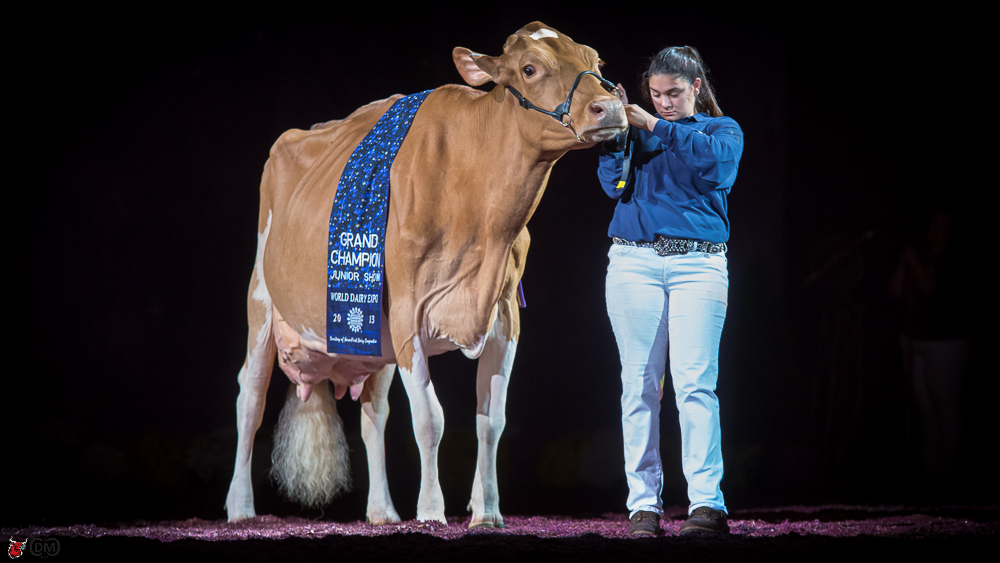
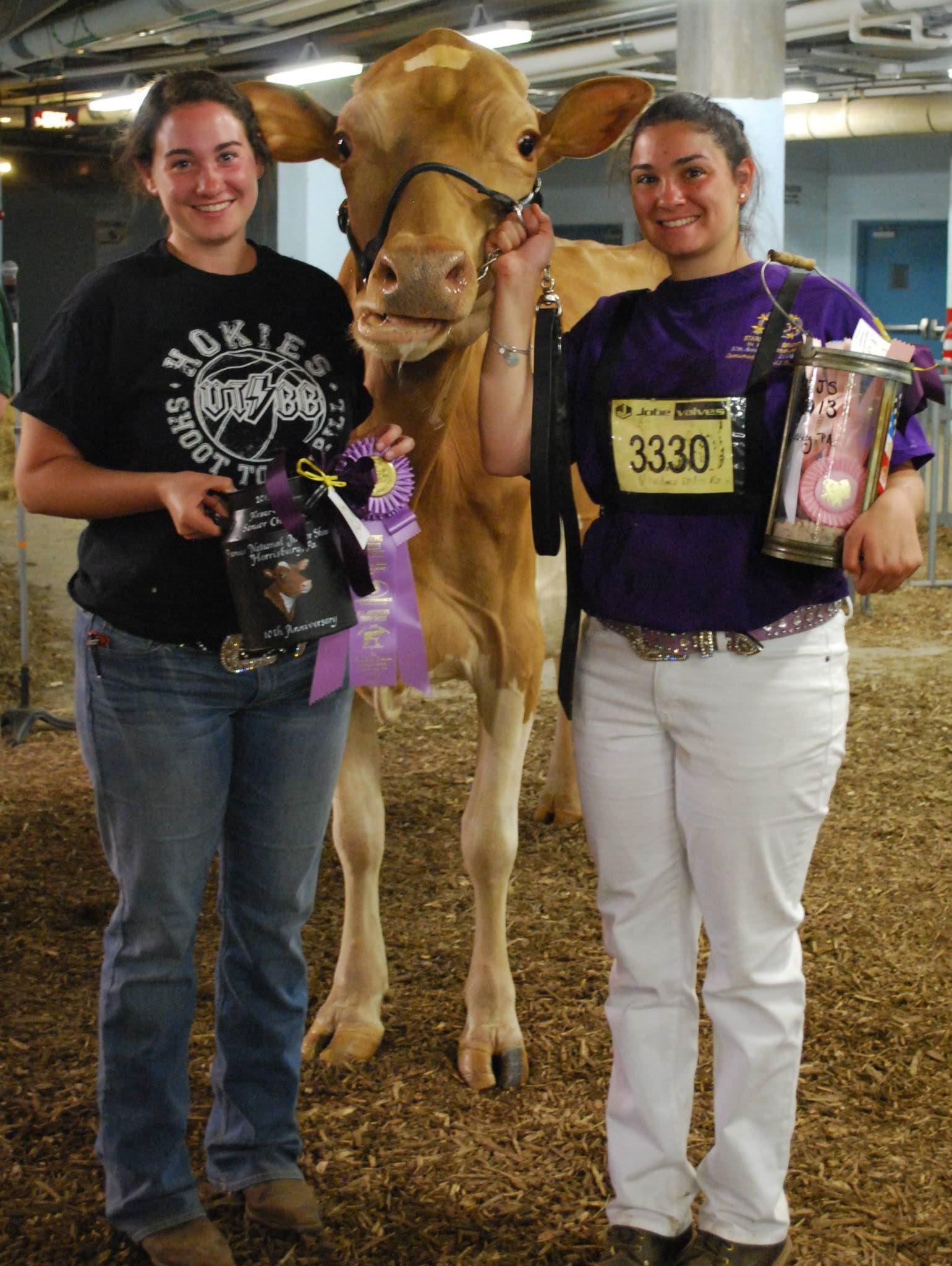
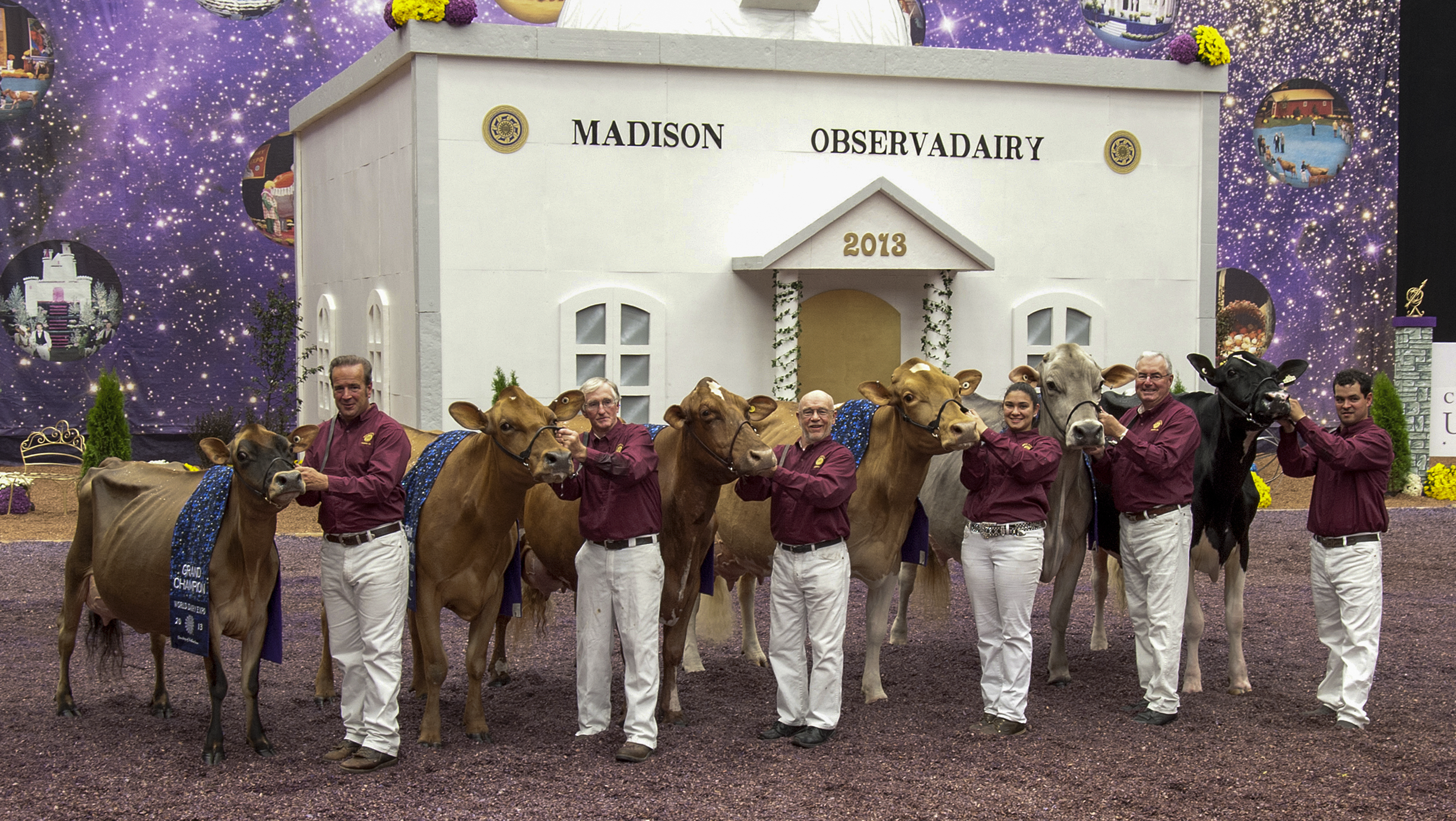
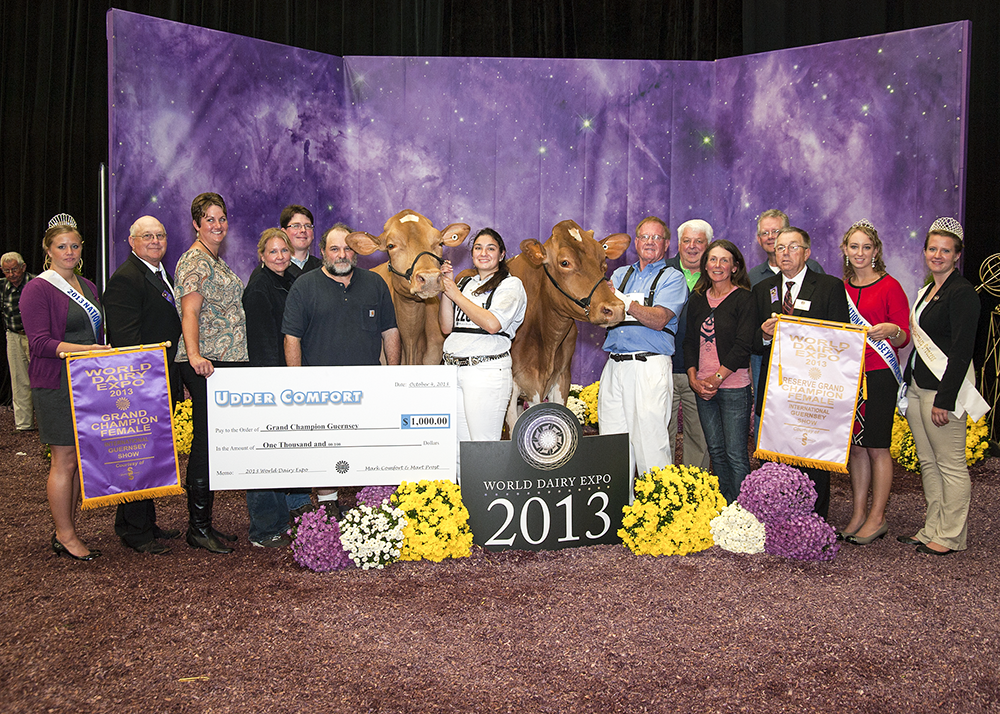
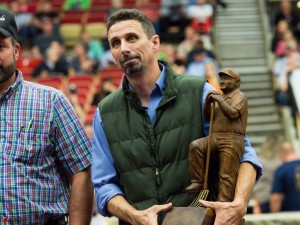 No one is ever truly prepared for massive peer recognition such as that experienced by Richard Caverly when his name was announced at the 2013 recipient of the Klussendorf-Mackenzie Award at The 47th World Dairy Expo. (Read more: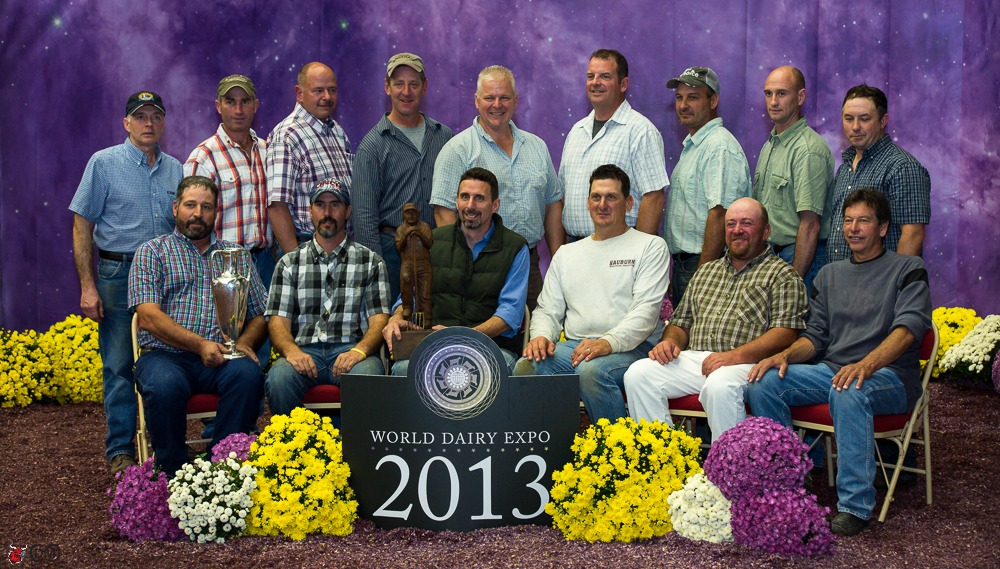
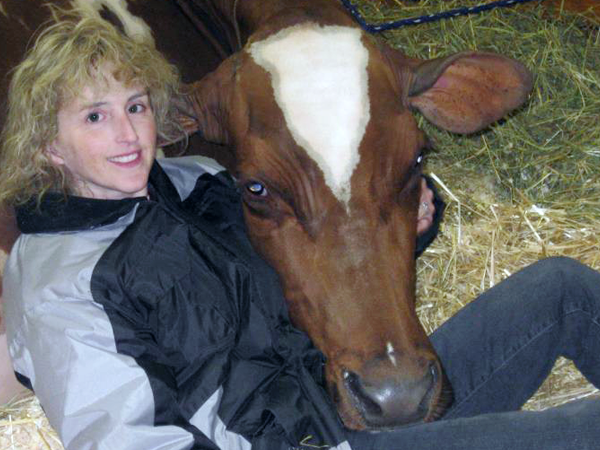 “Of everyone in my life, my wife Beverly Donovan is my biggest hero.”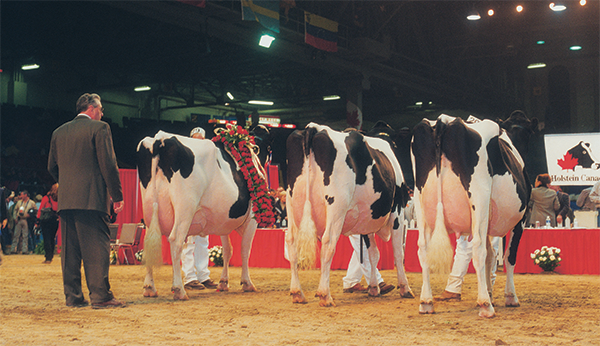
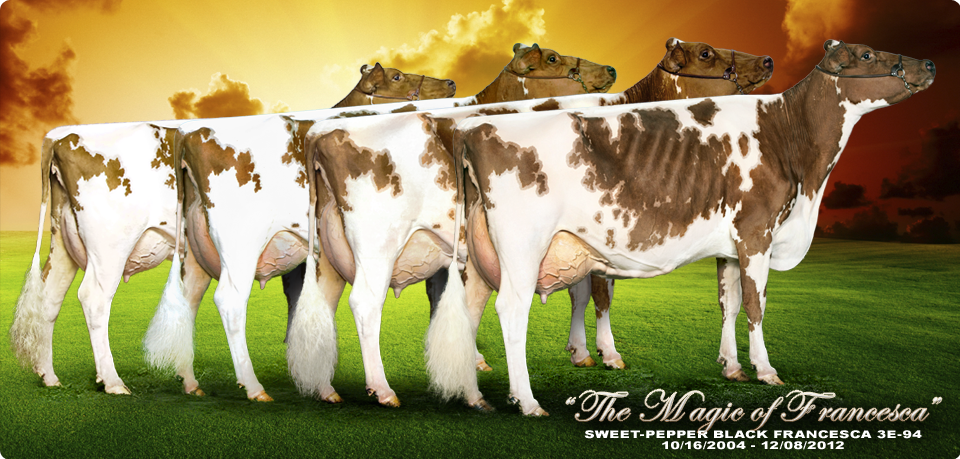



![284204_2269431664071_3315262_n[1]](https://www.thebullvine.com/wp-content/uploads/2013/10/284204_2269431664071_3315262_n1.jpg)
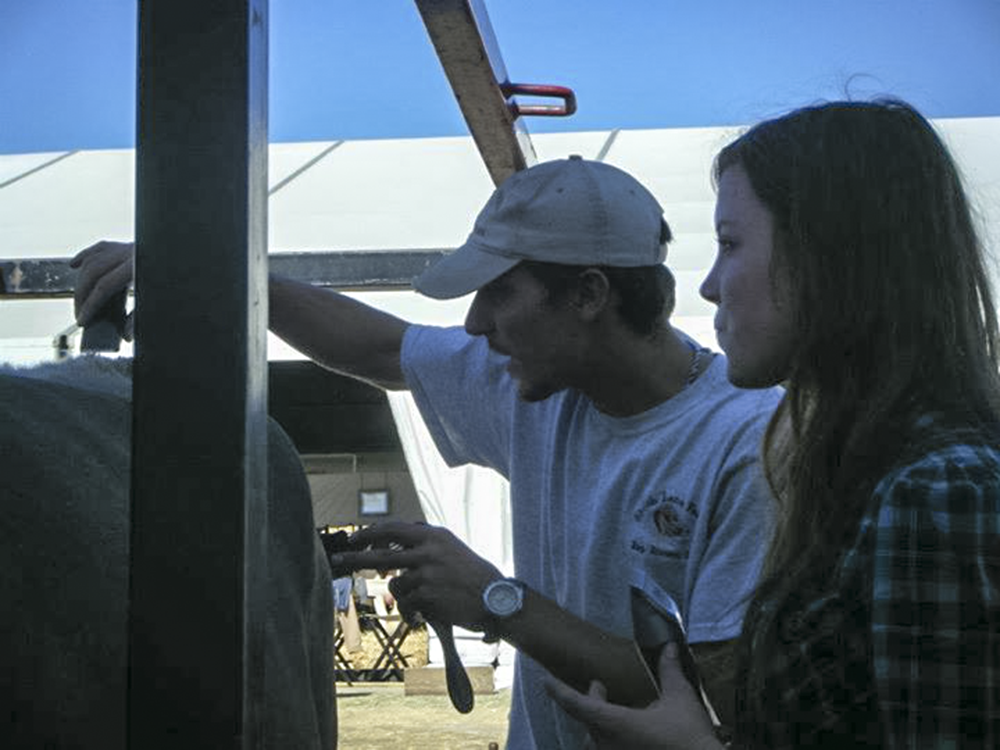
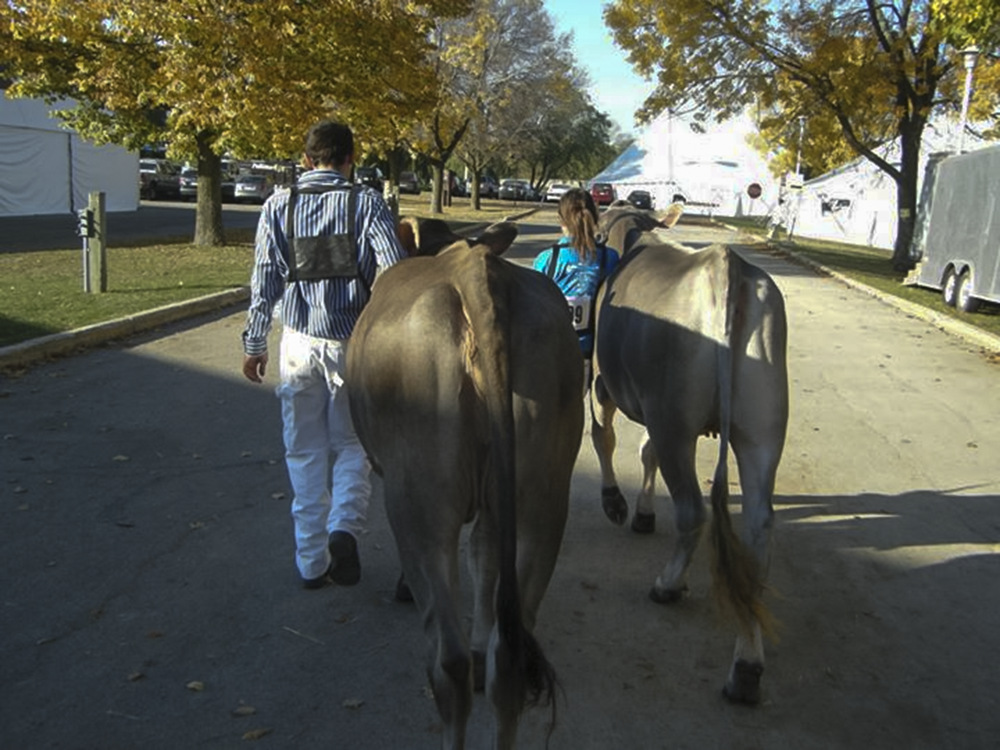
![1383511_10202053974292412_1813451385_n[1]](https://www.thebullvine.com/wp-content/uploads/2013/10/1383511_10202053974292412_1813451385_n1.jpg) Expo 2013 Becomes the Centre of the Dairy-Marry-Me Universe
Expo 2013 Becomes the Centre of the Dairy-Marry-Me Universe She said, “Yes!”
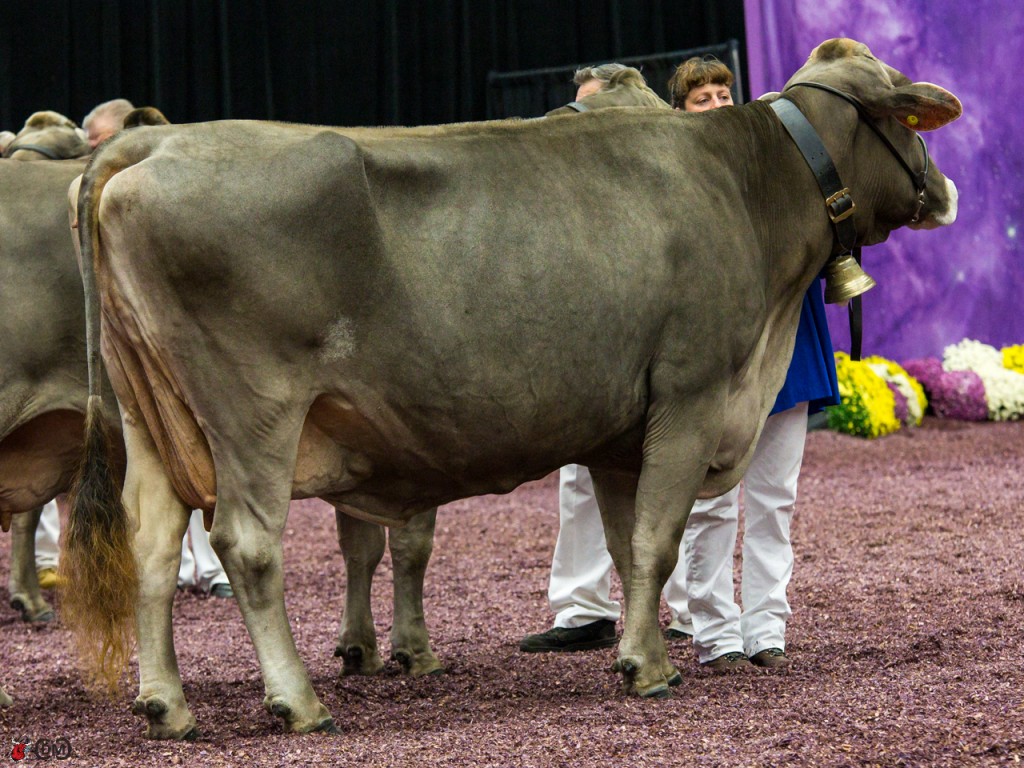
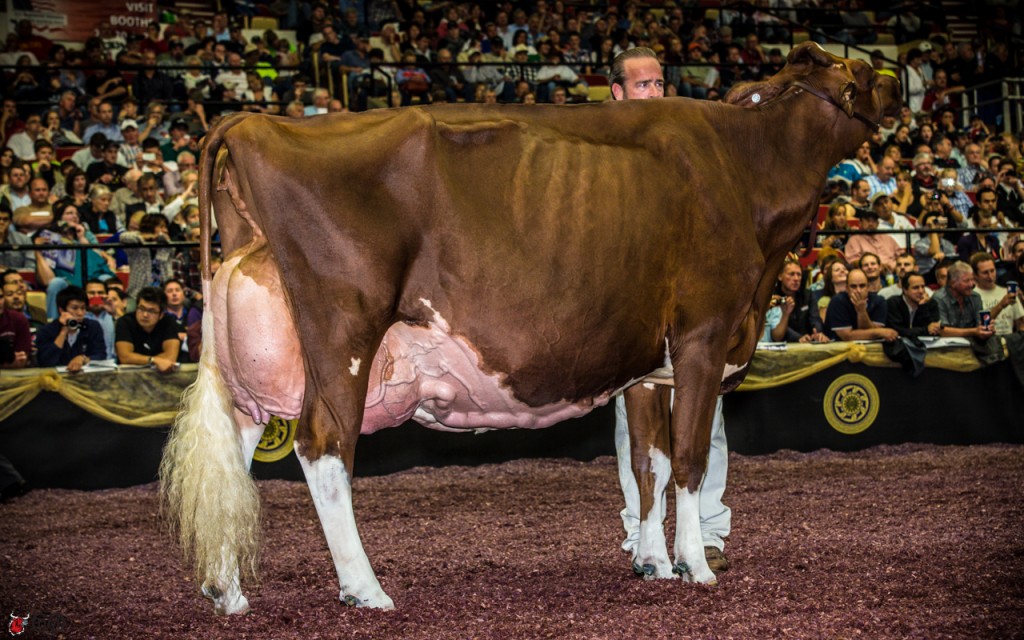
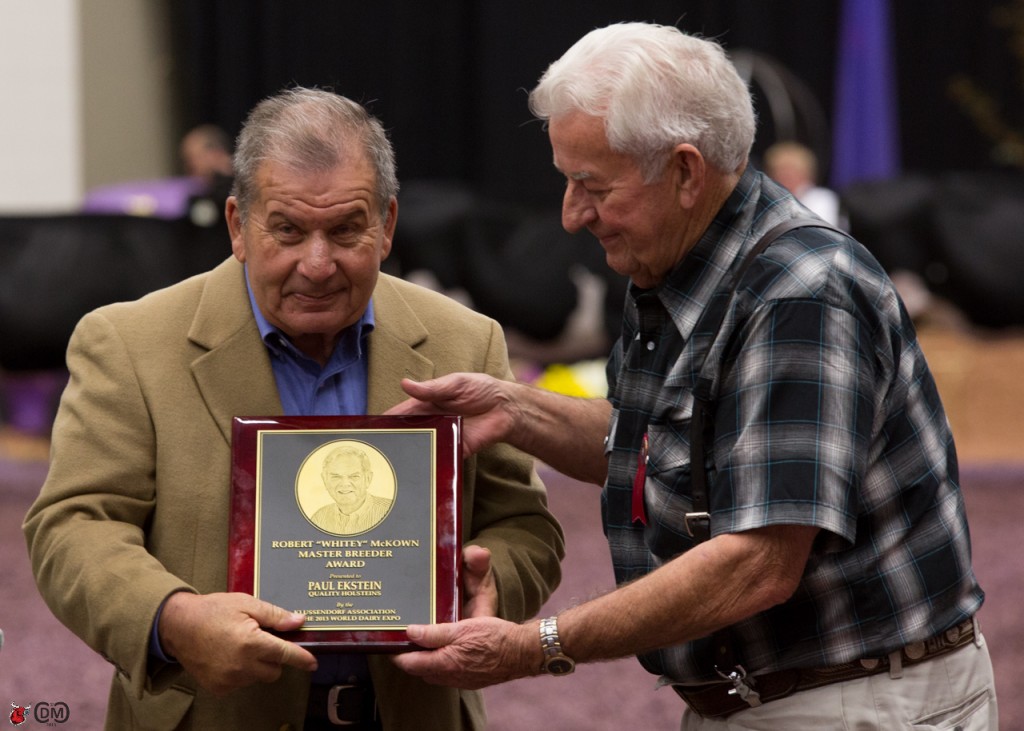
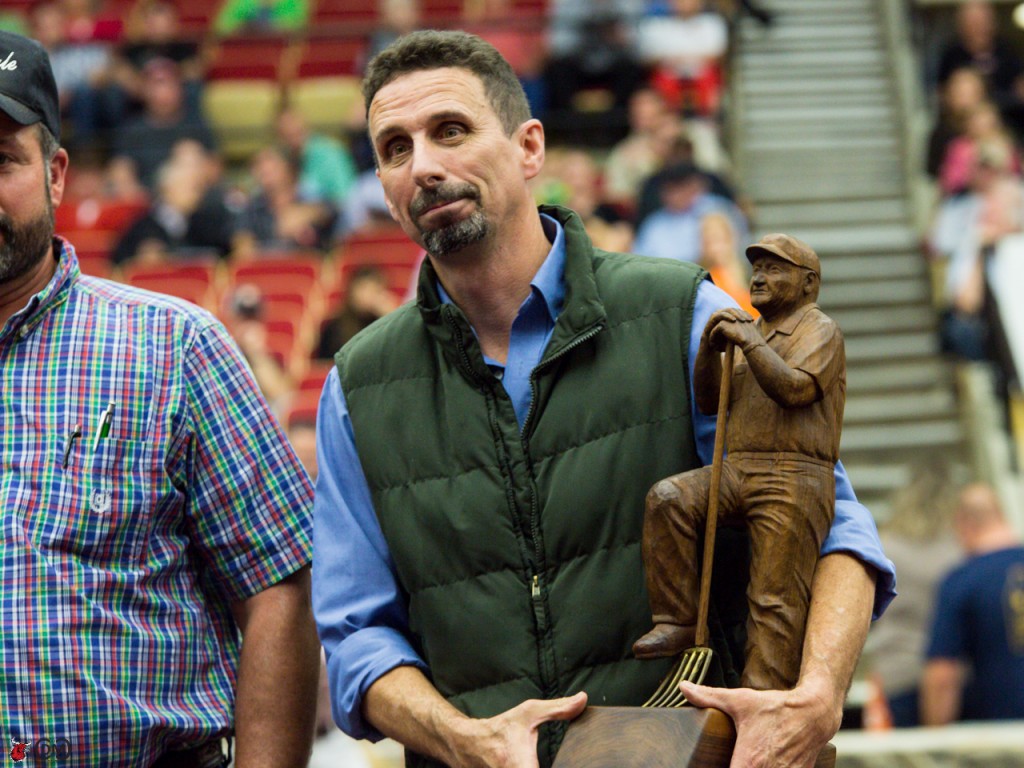
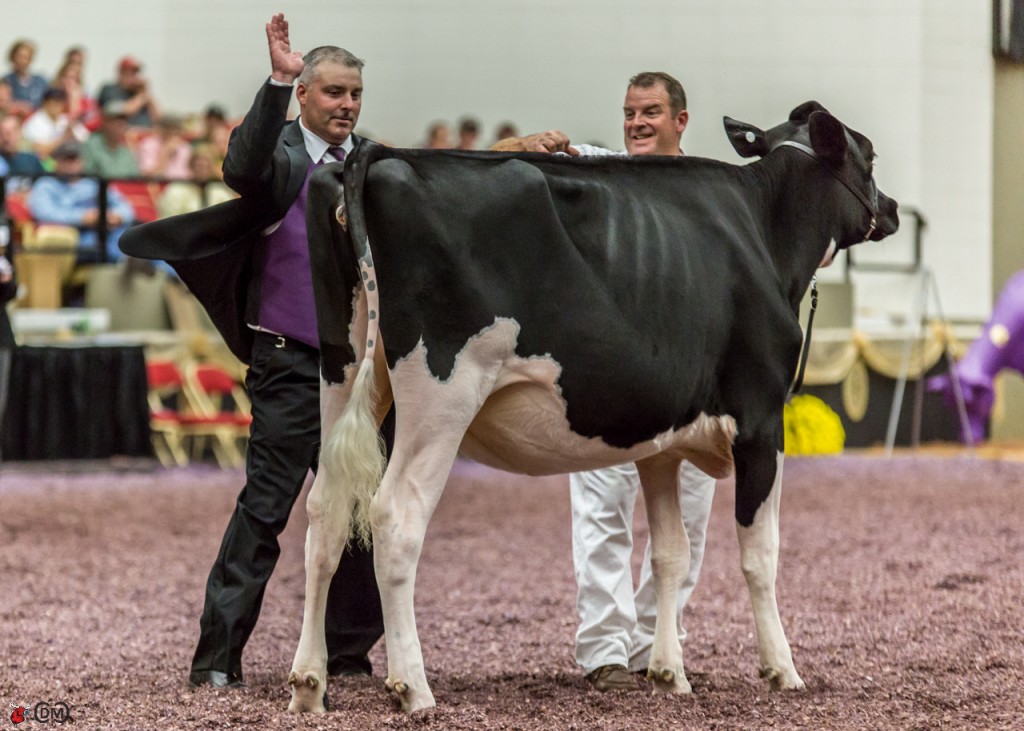
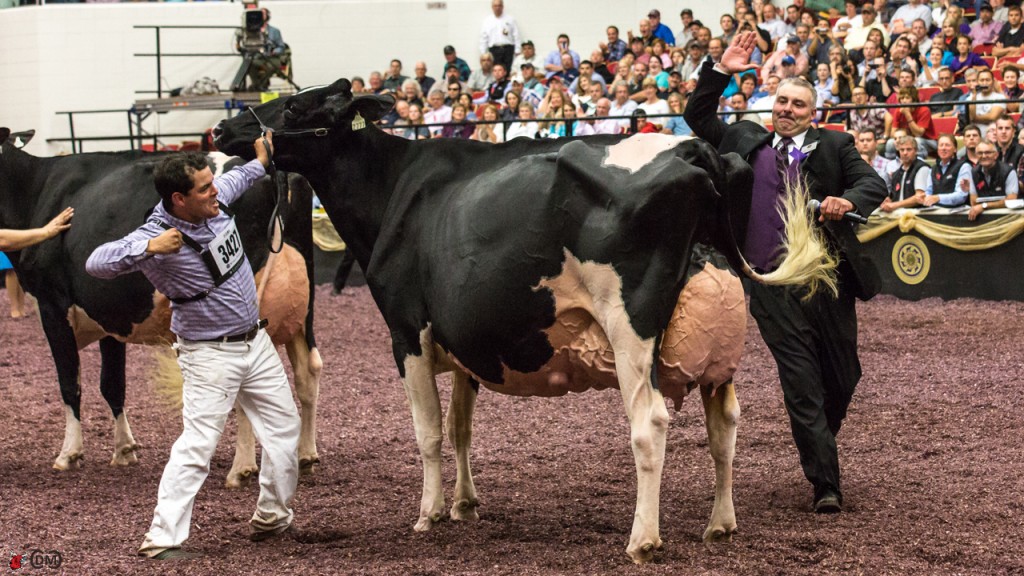

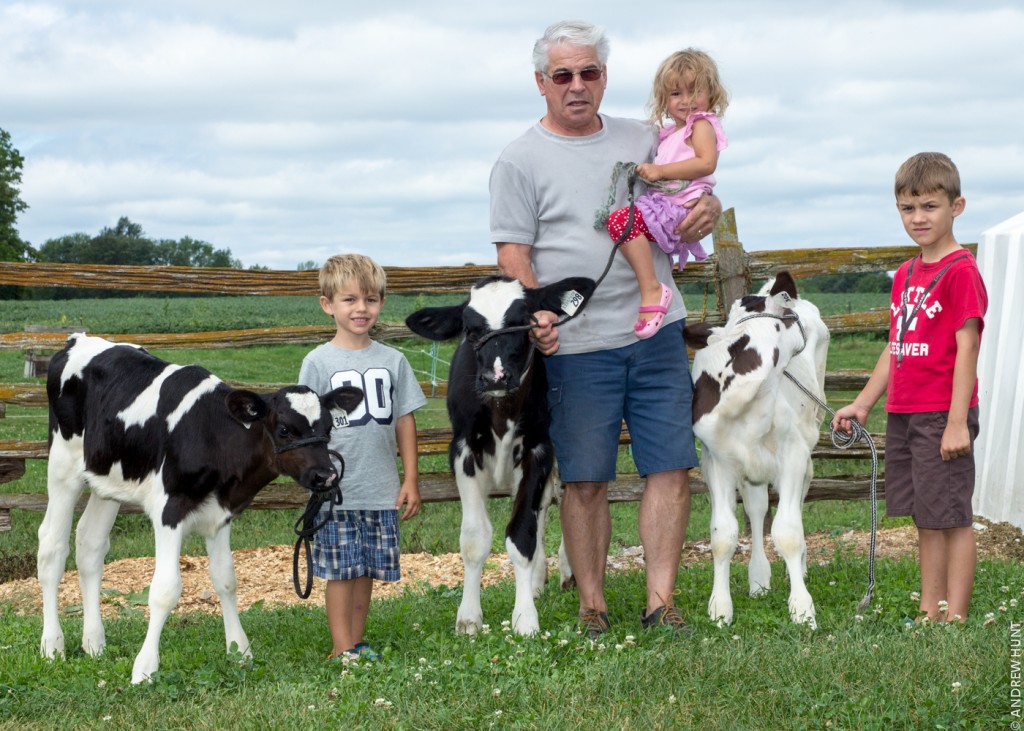
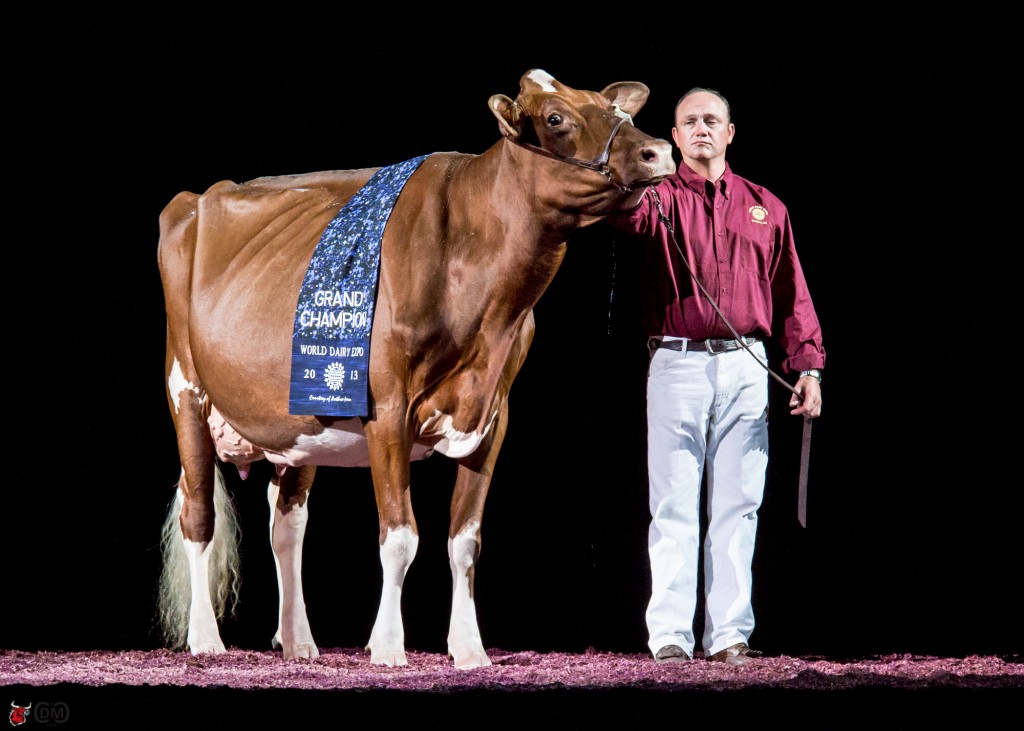
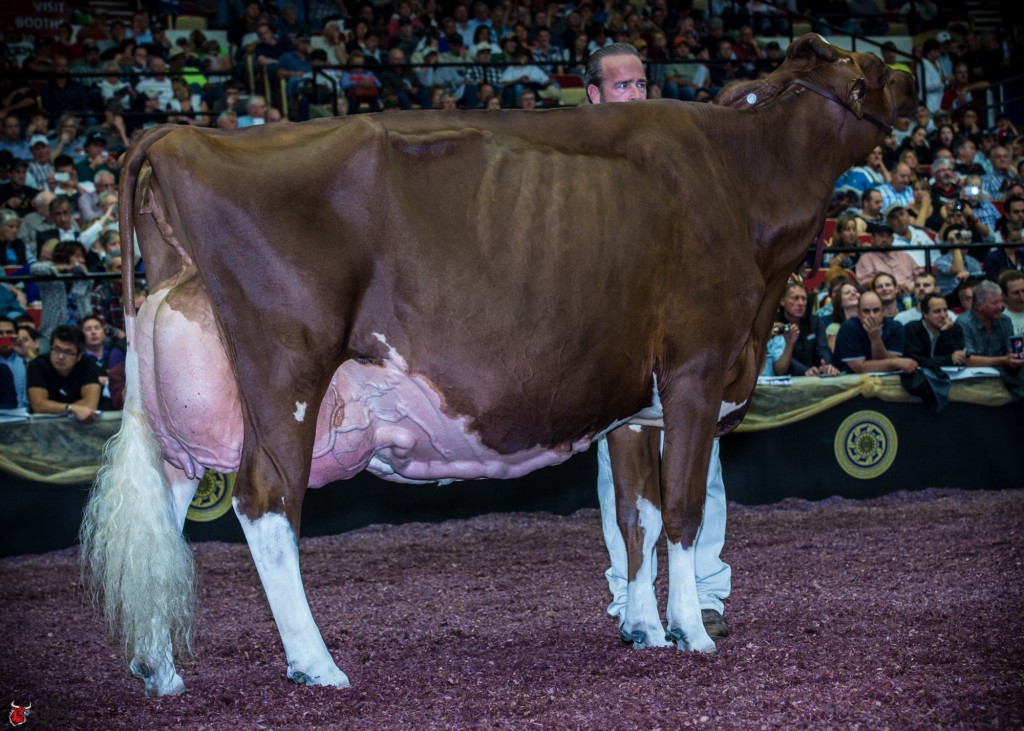
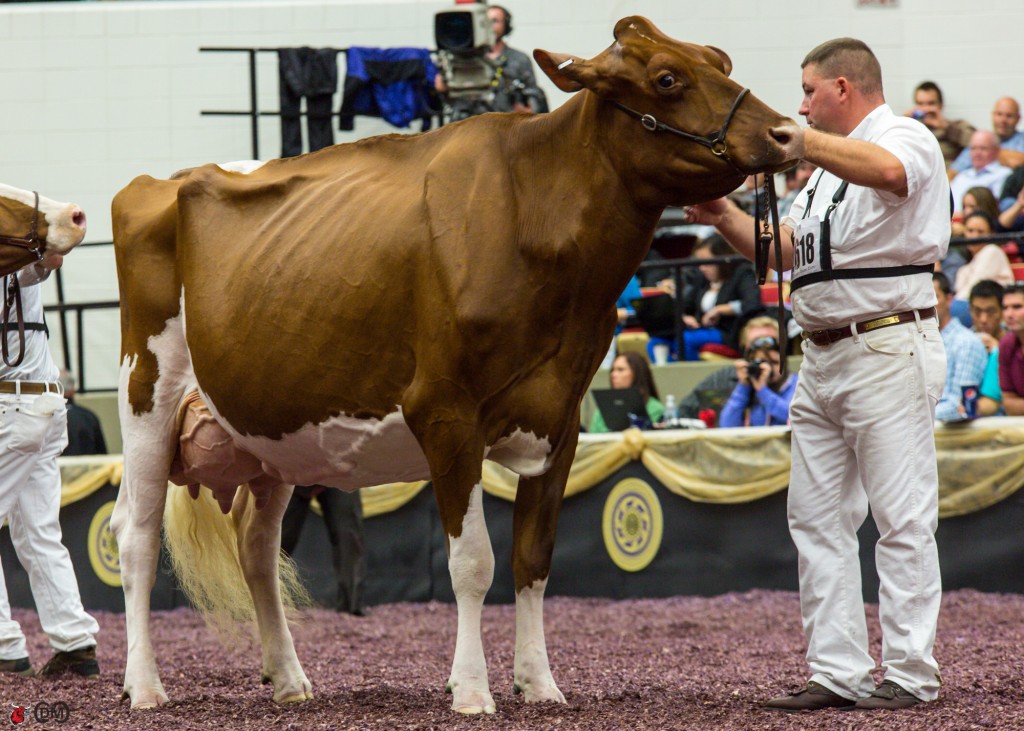


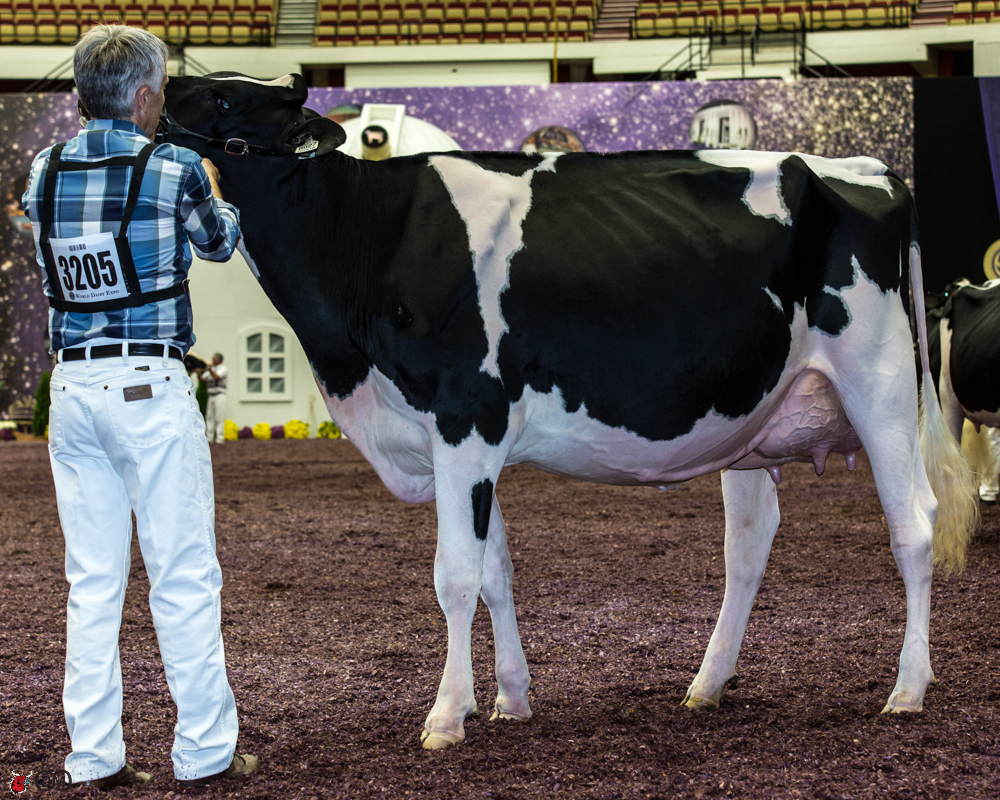
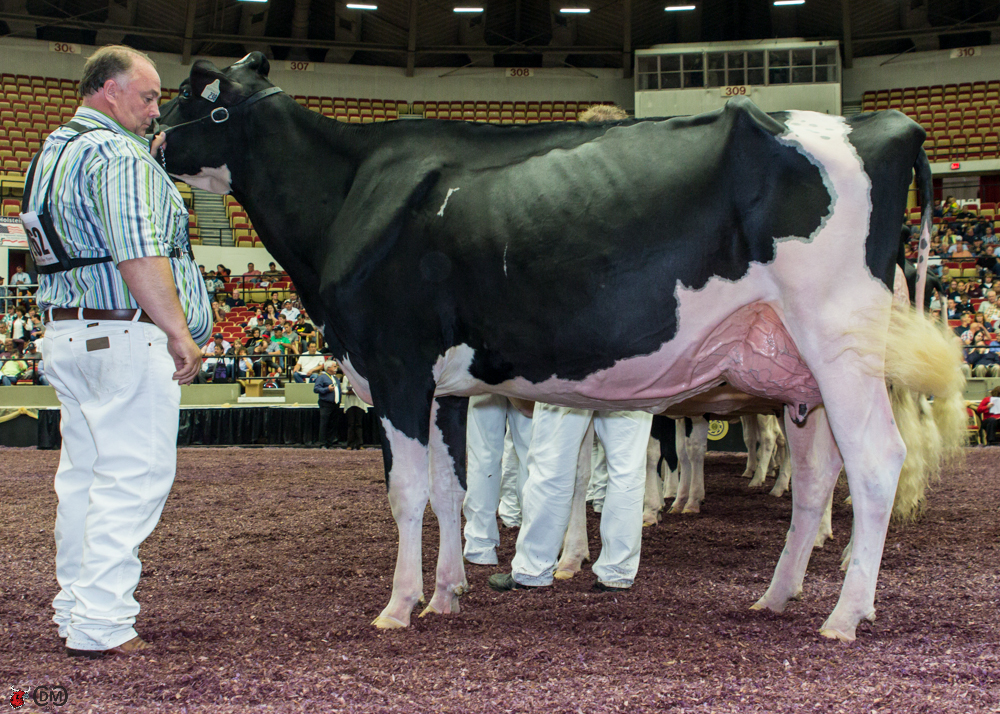
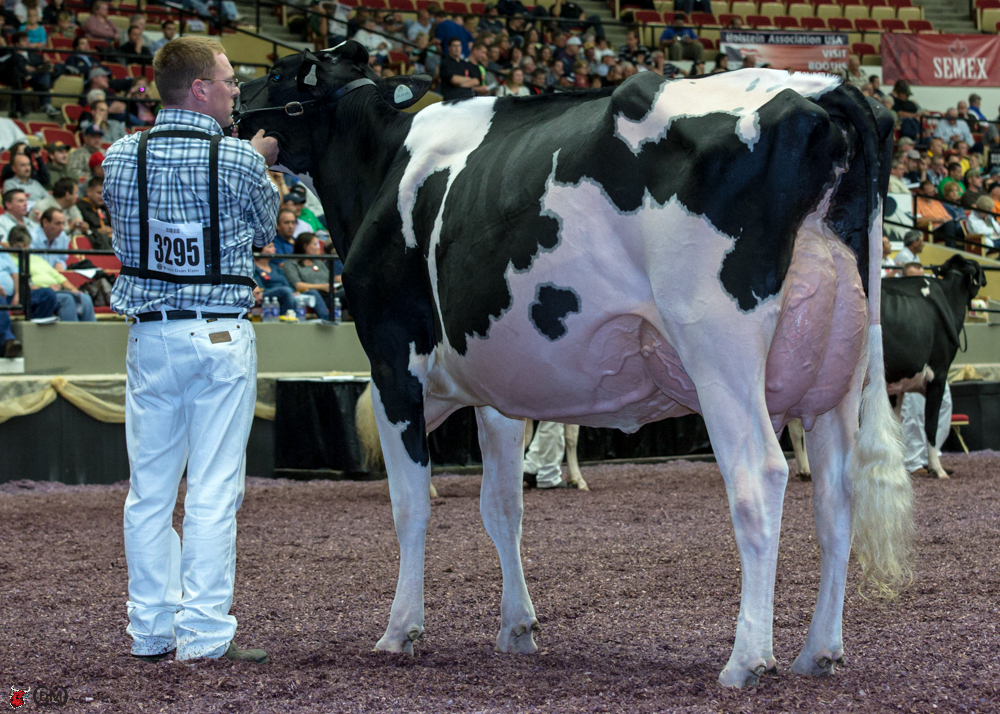
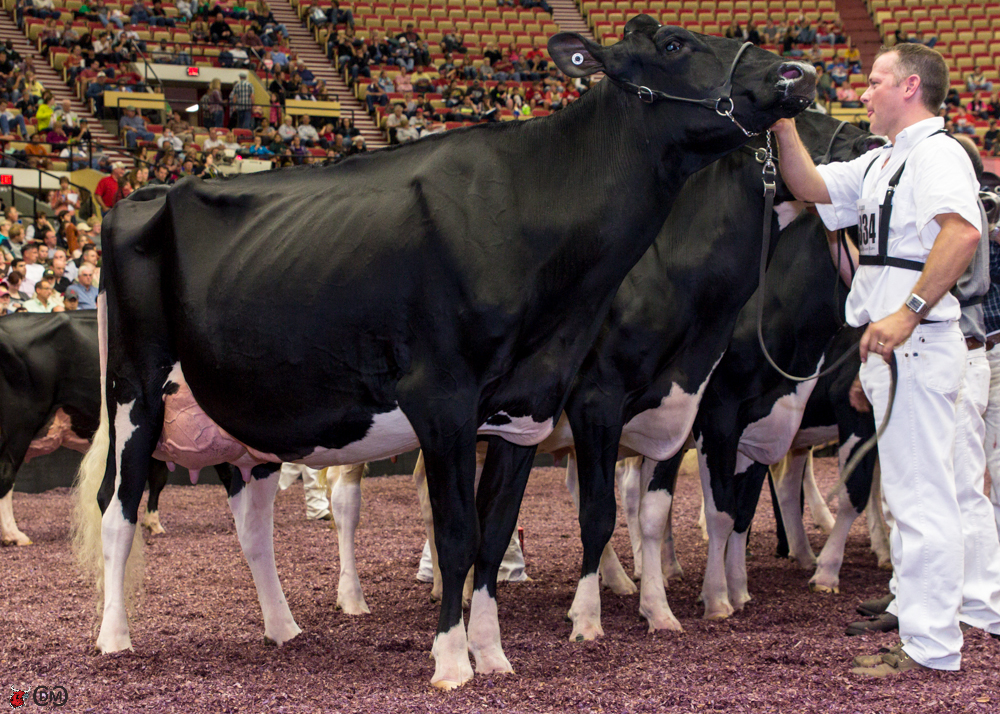
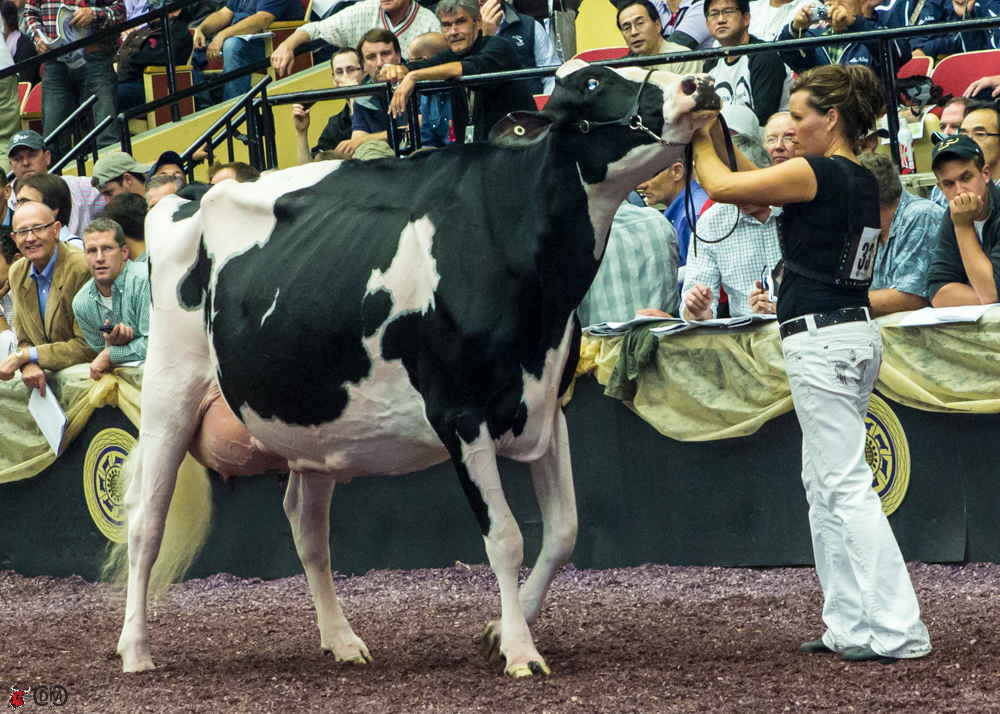
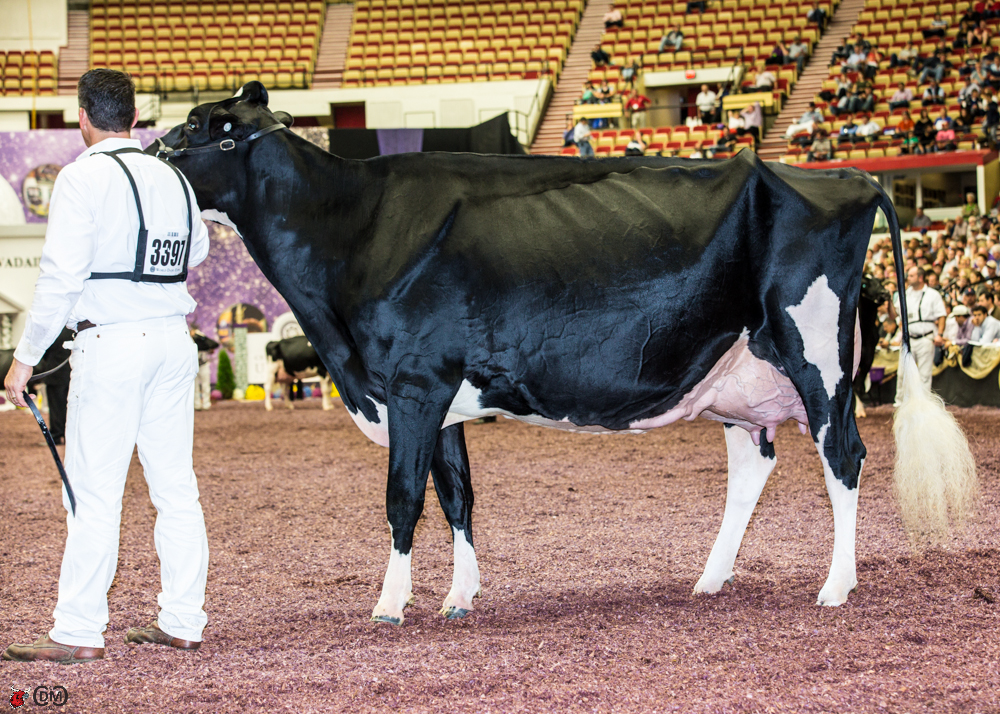
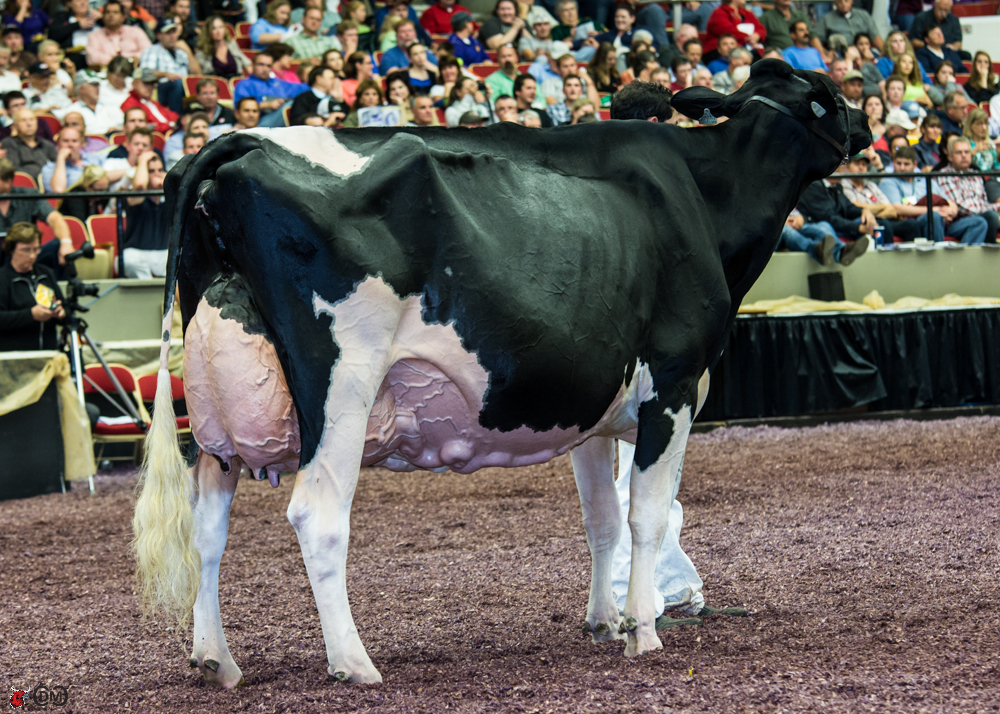
 Tina Culbertson had a winning team of Belfast Goldwyn Lasenza, Claquato-RH Elicit, Roquet Jasmine Sanchez, Butz-Butler Gold Barbara, Robrook Goldwyn Cameron, Rosedale Lexington and Bonaccueil Maya Goldwyn that earned her 172 out of a possible 186 points.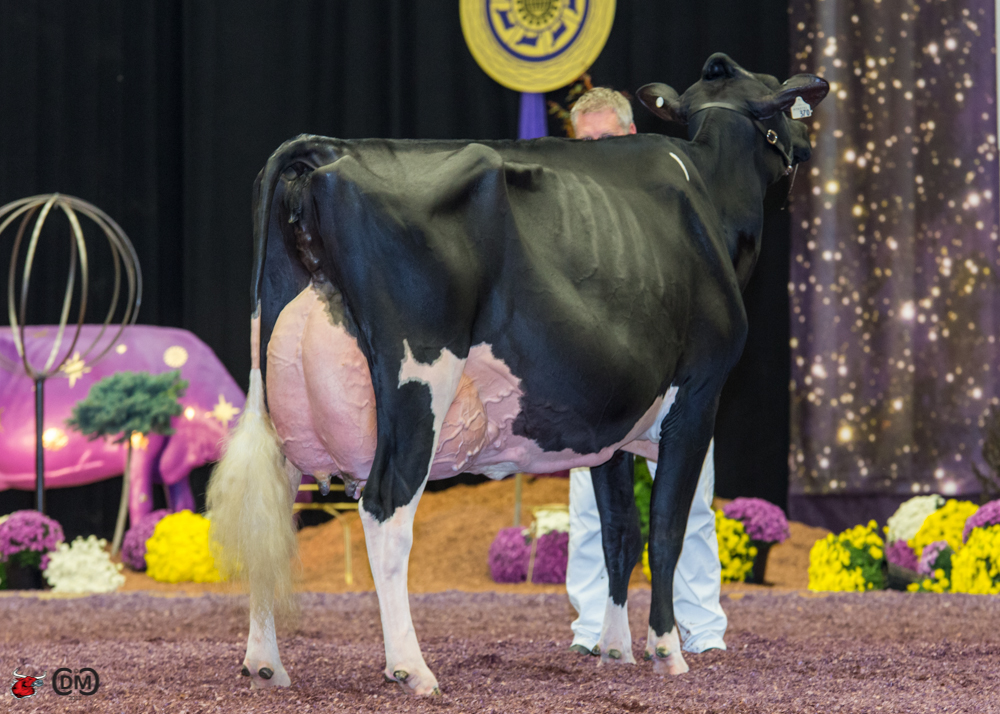
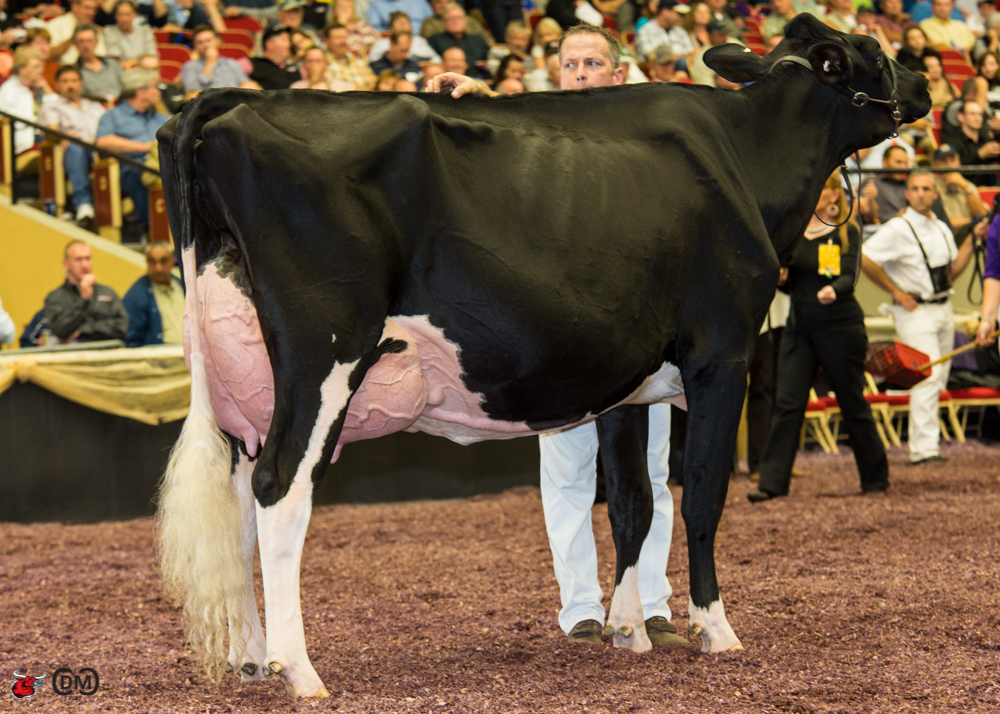
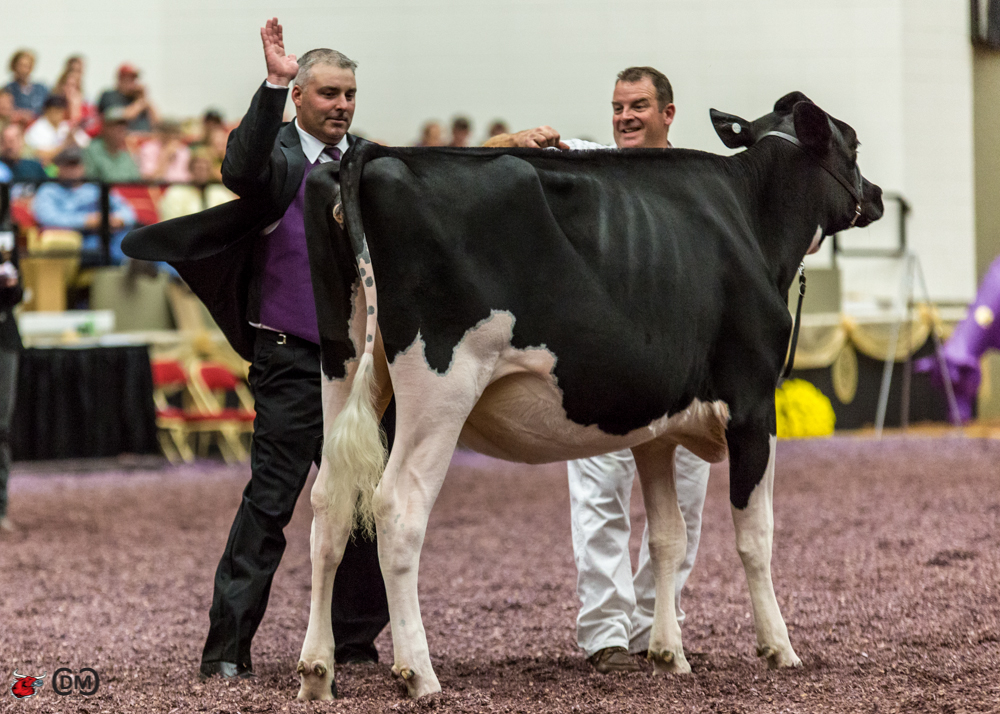
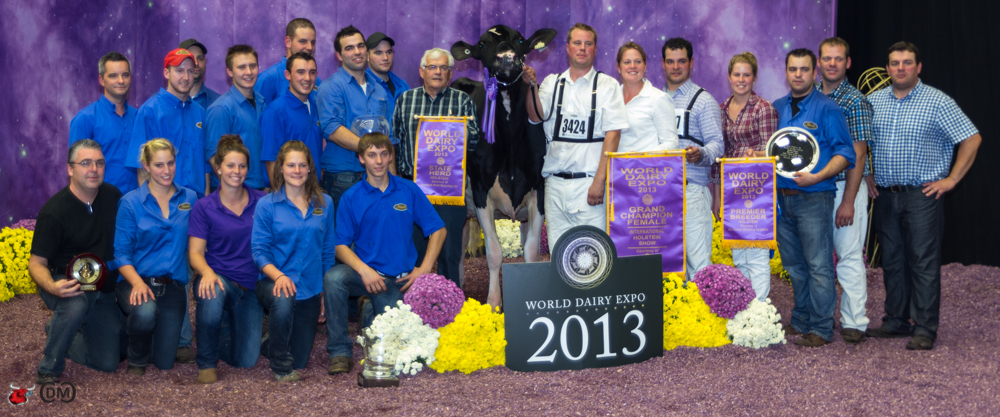
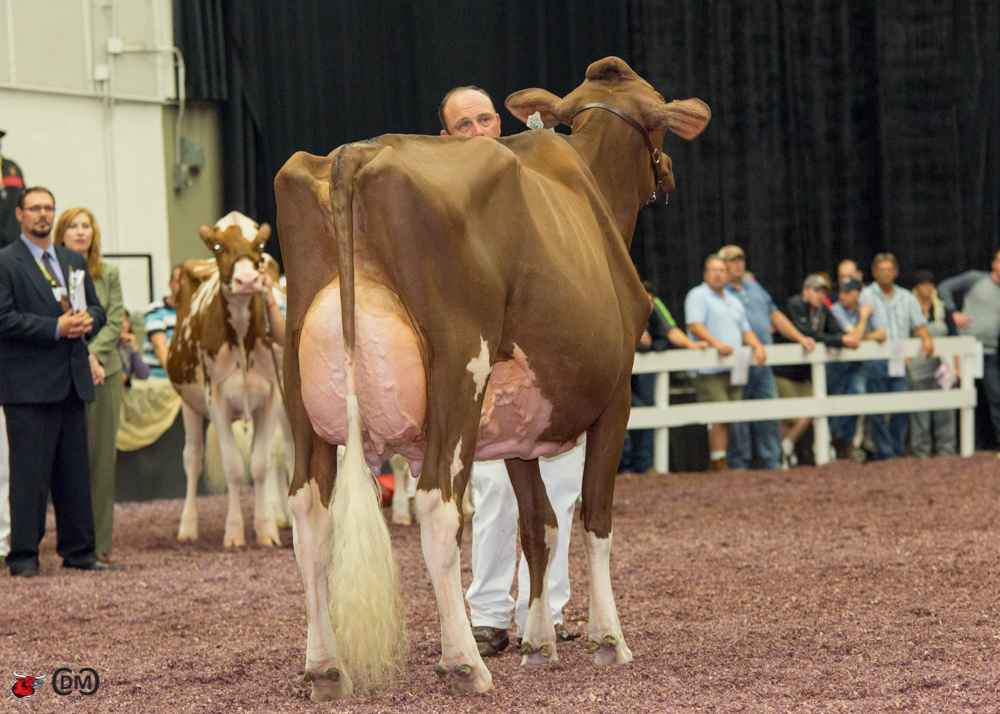
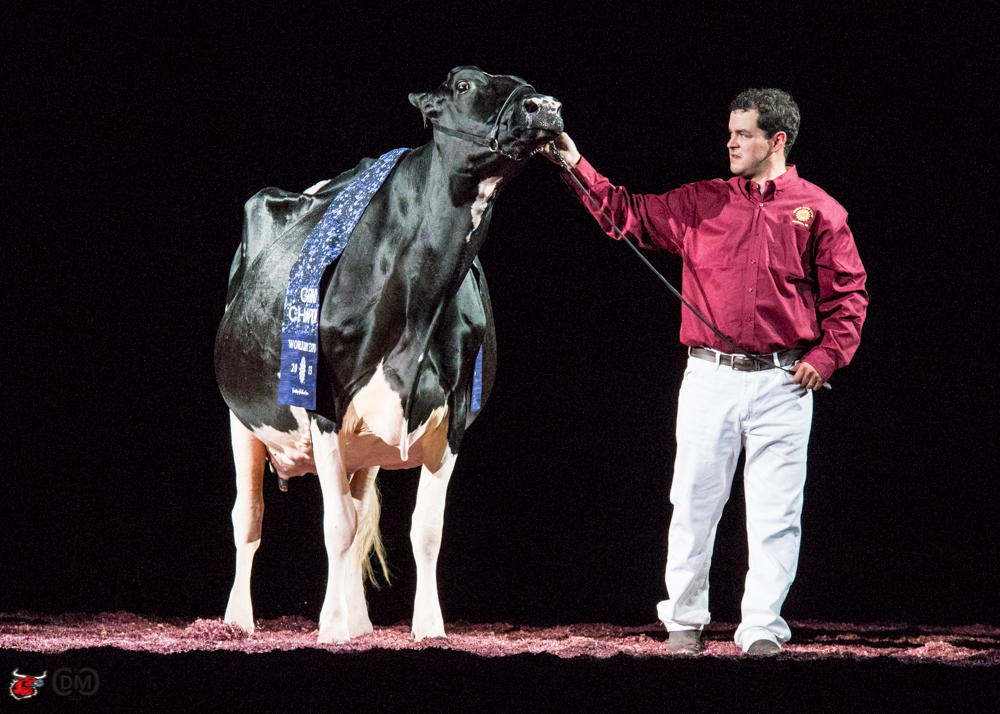
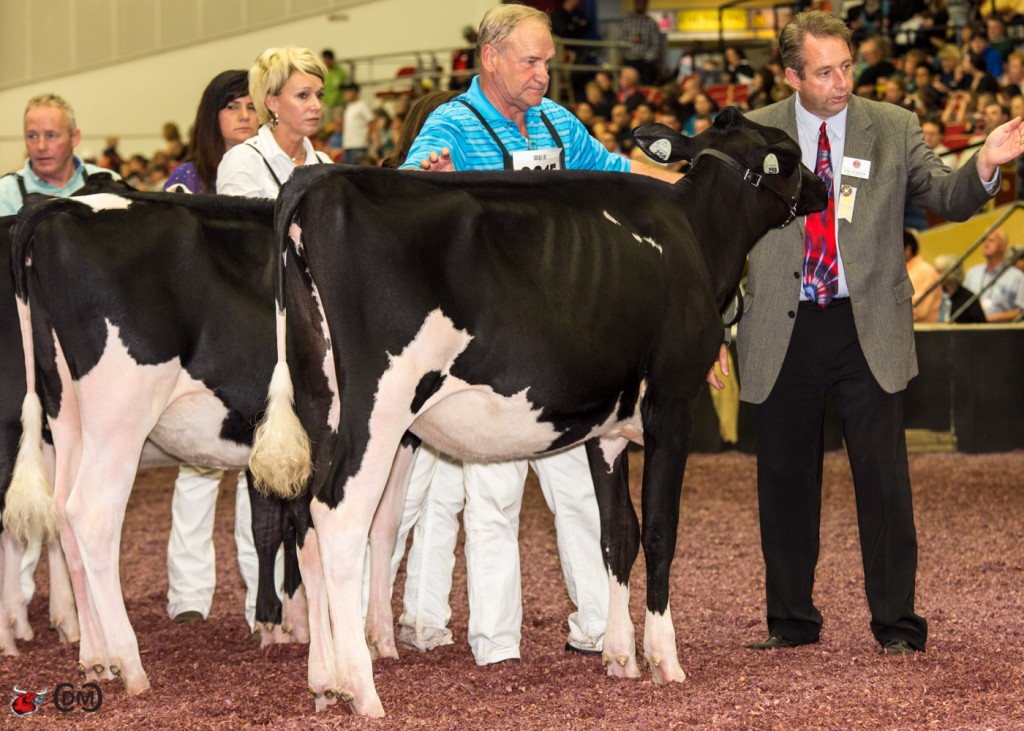
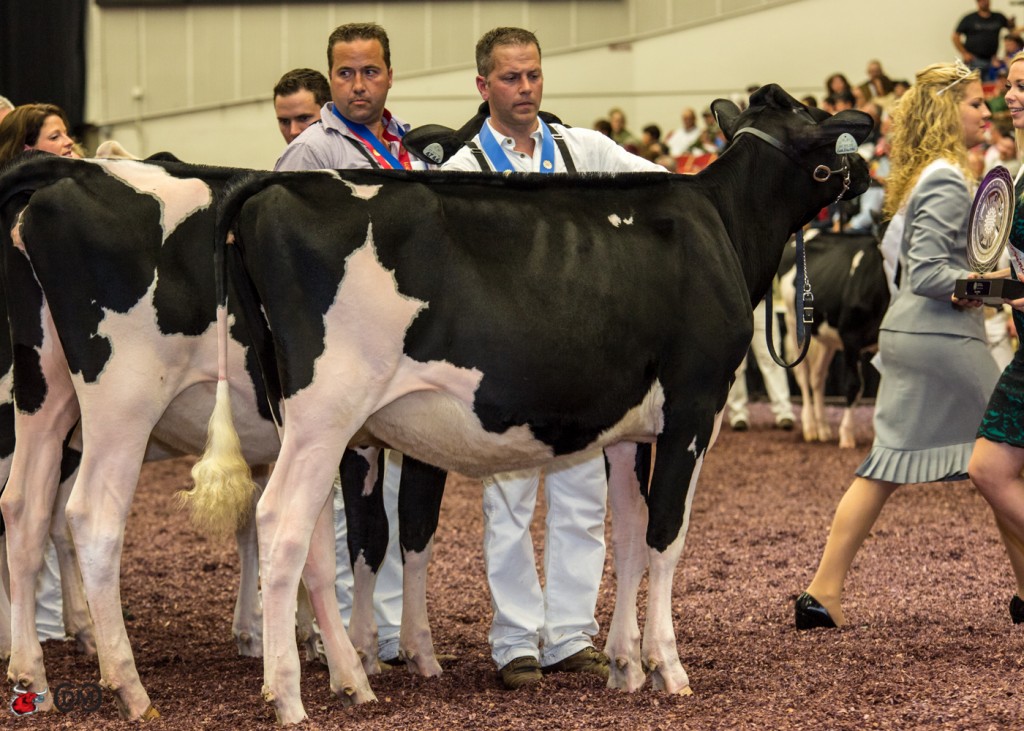
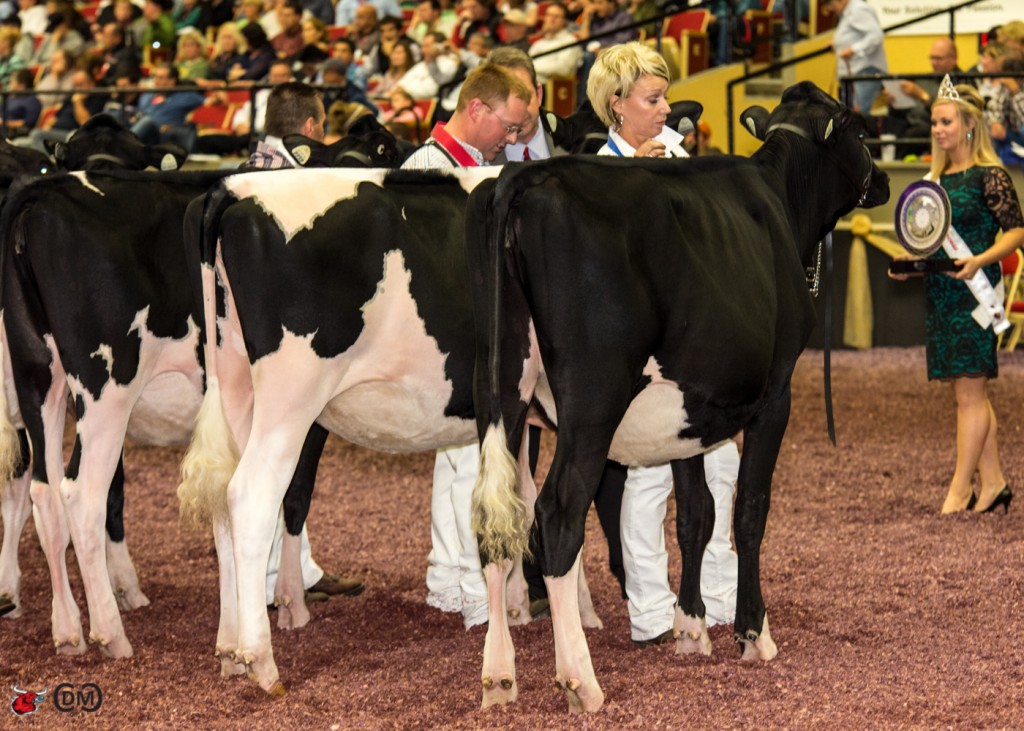
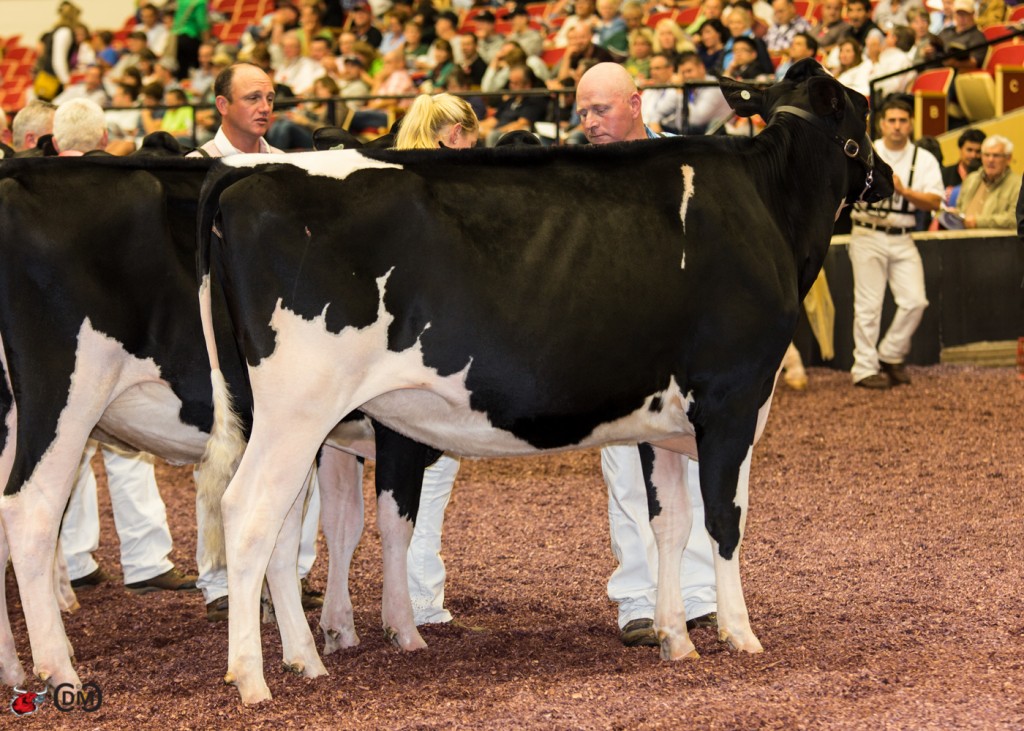
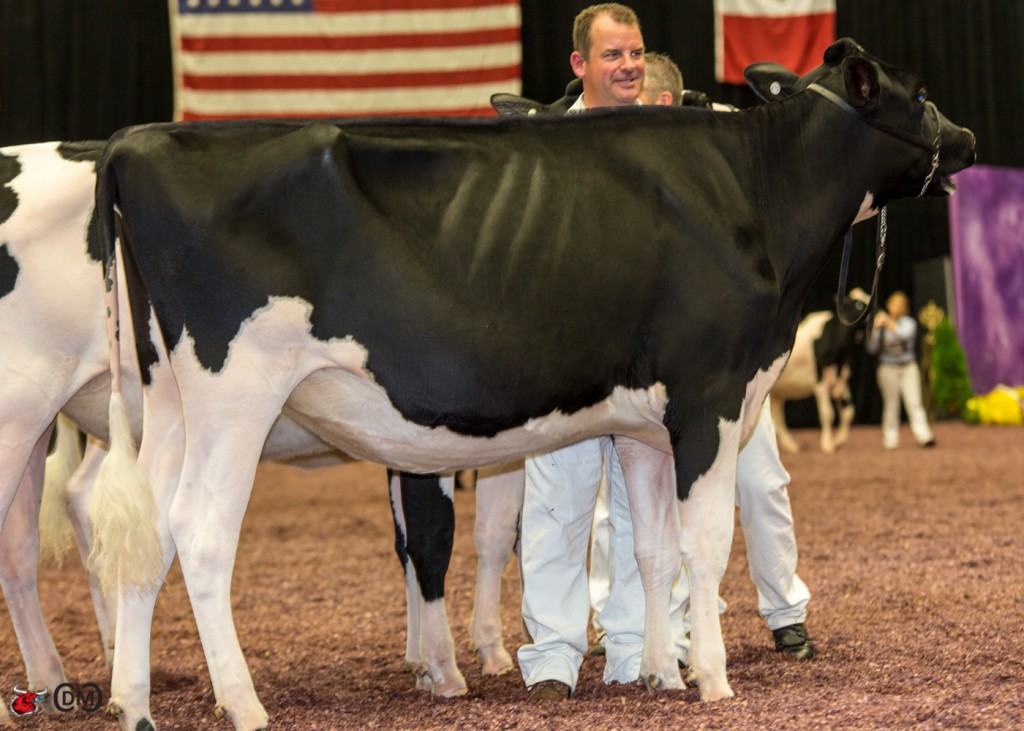
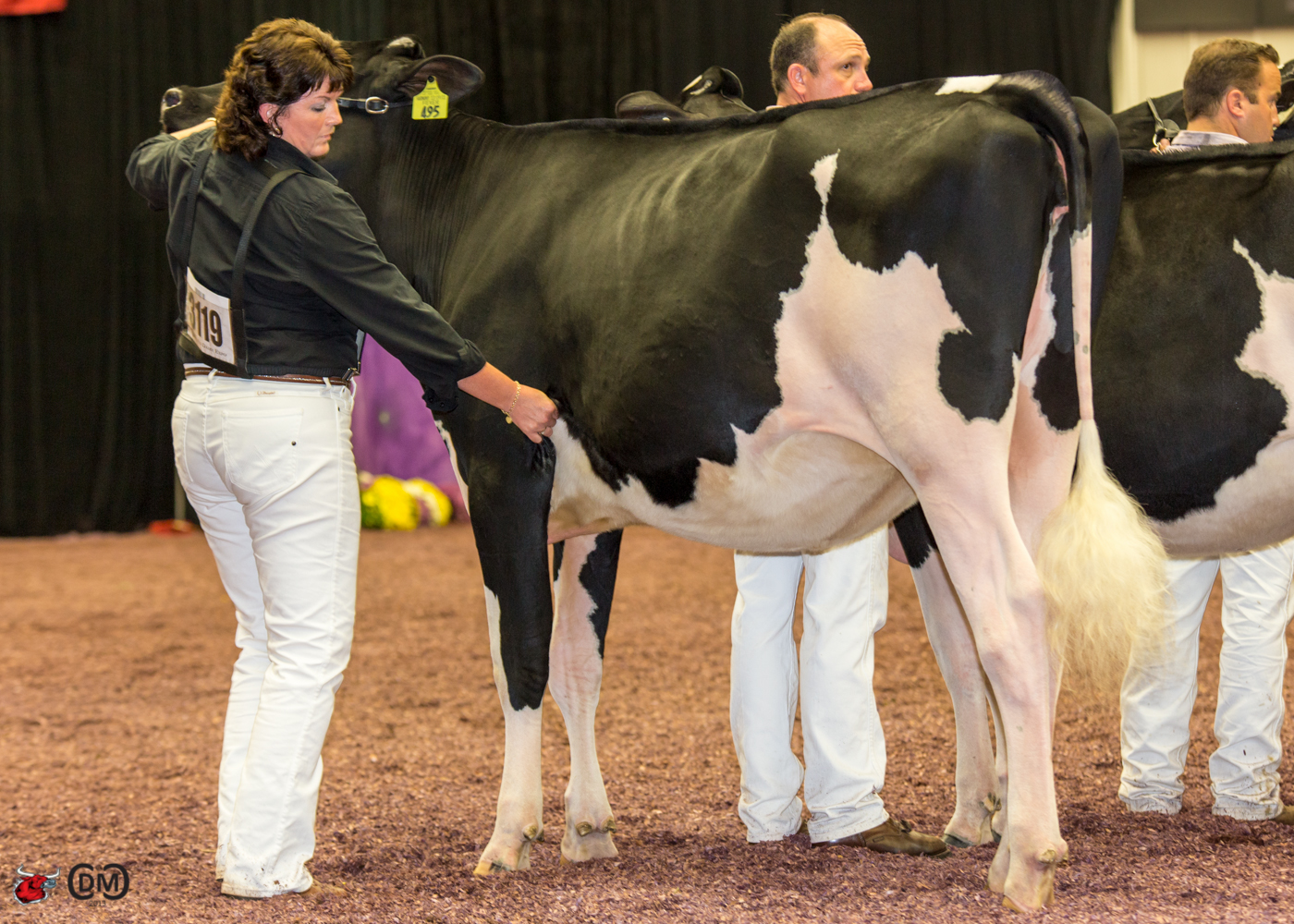
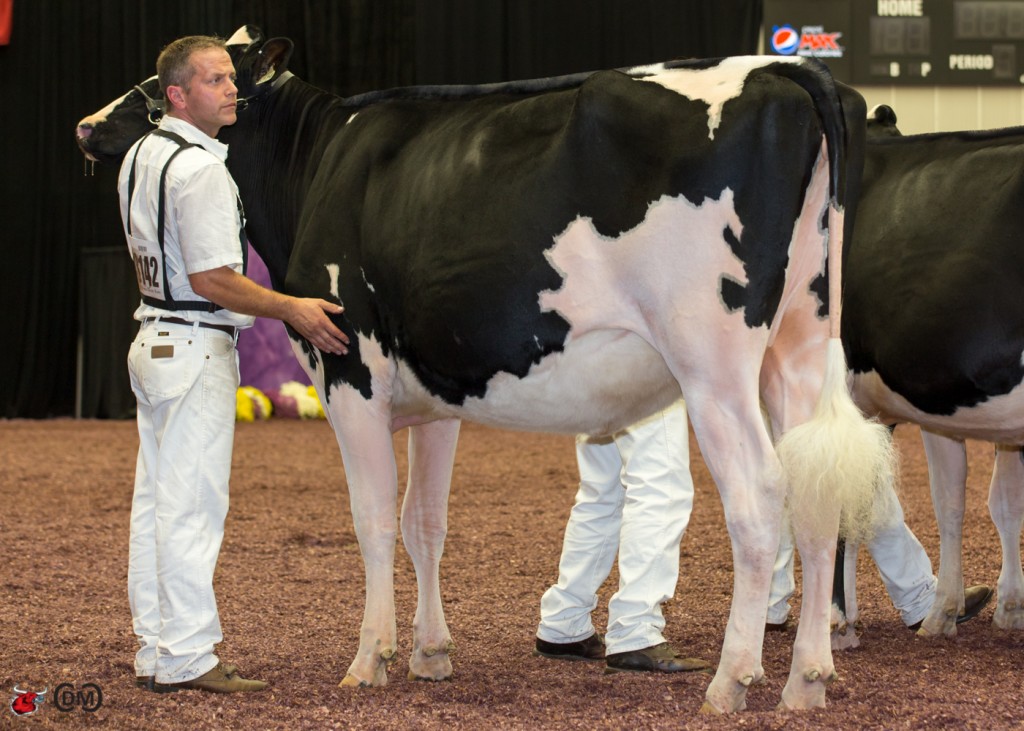
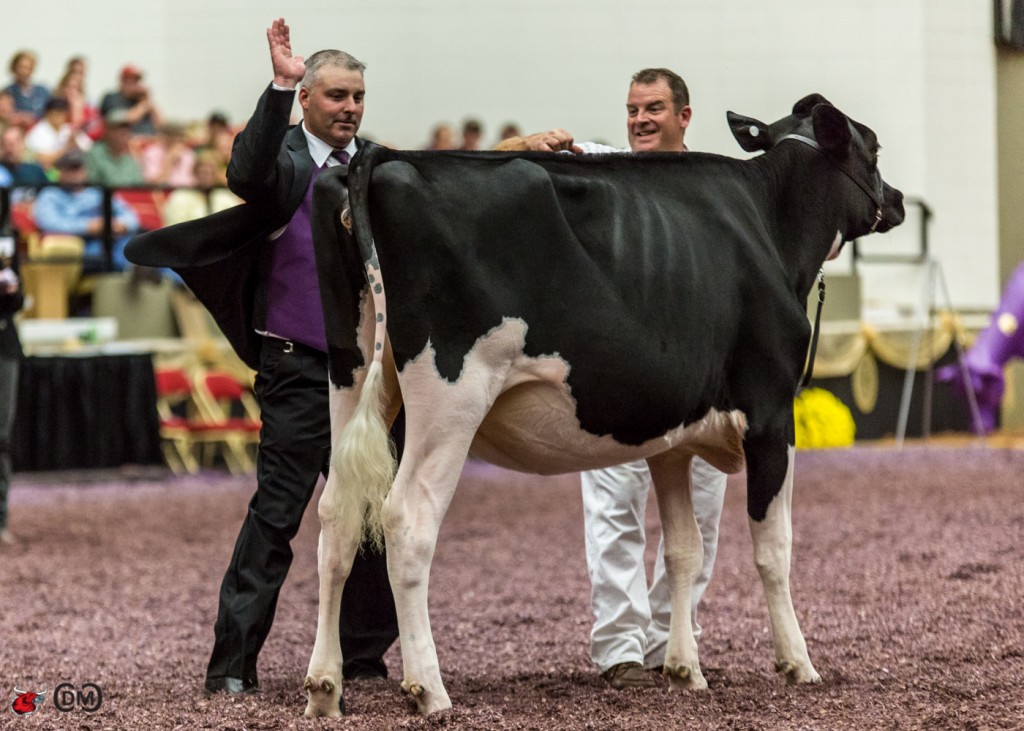
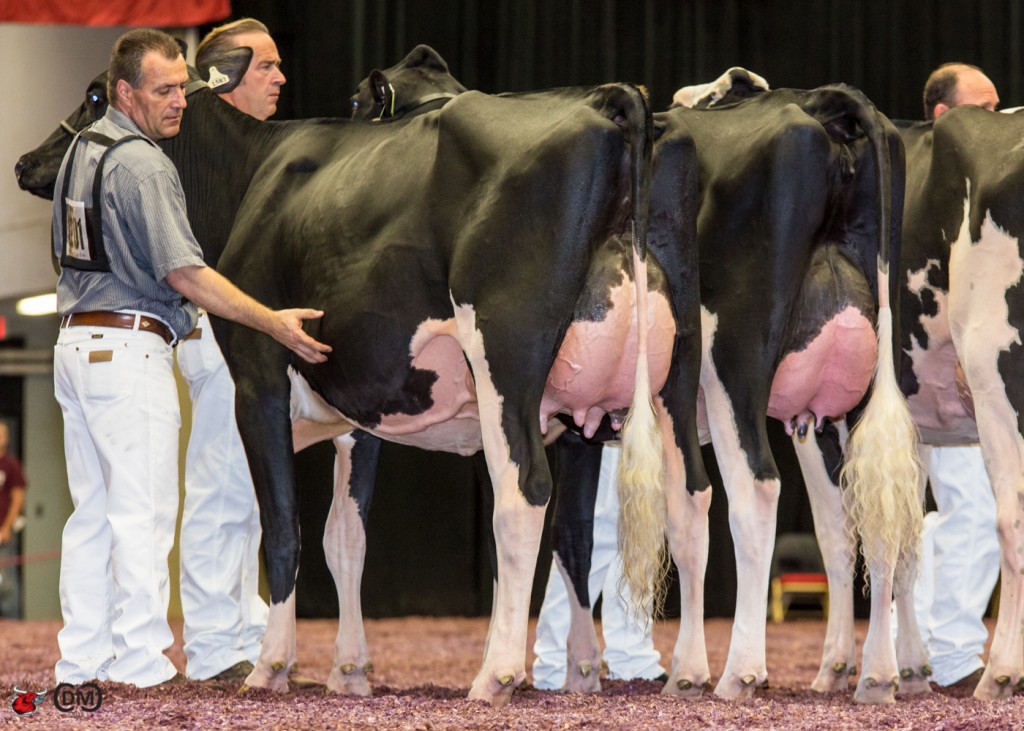
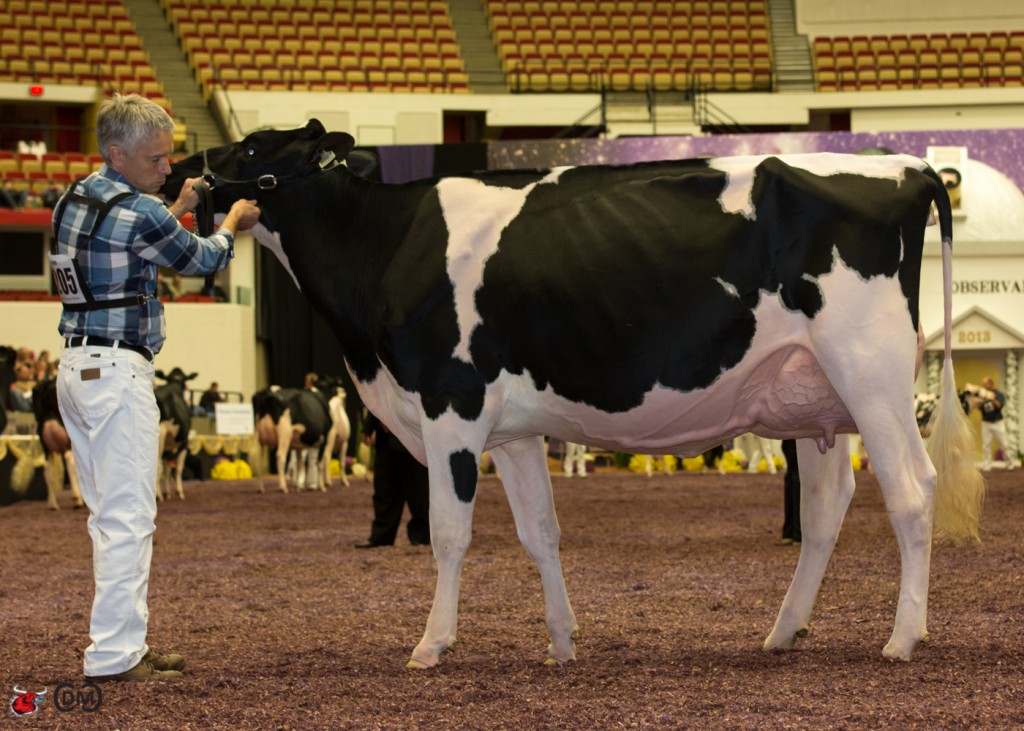
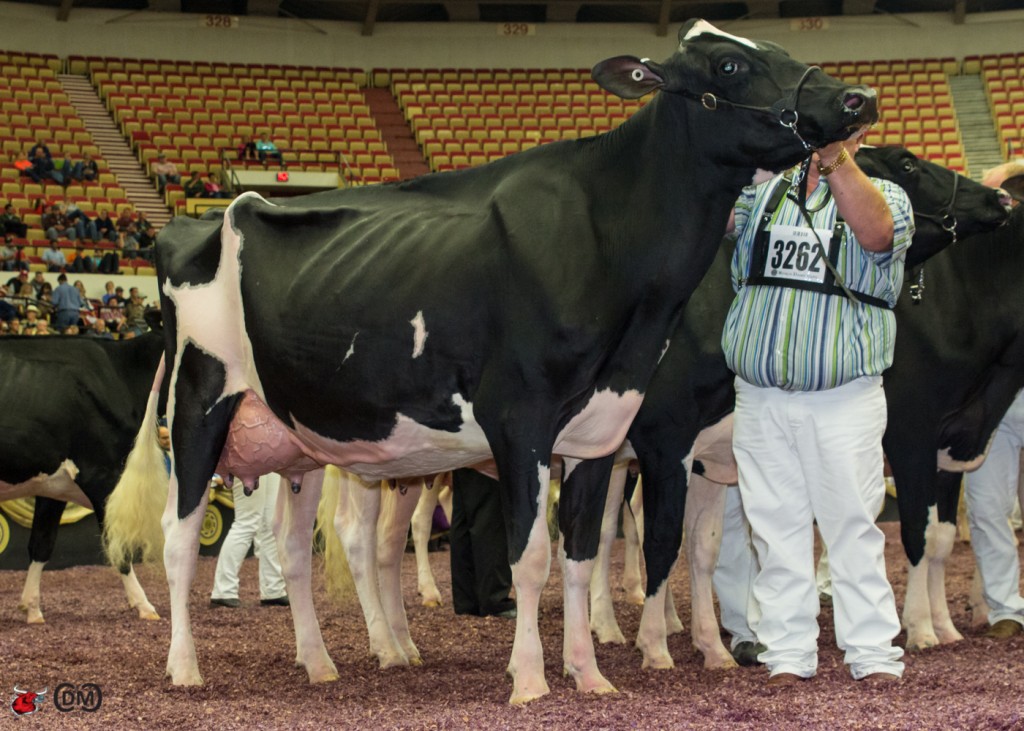
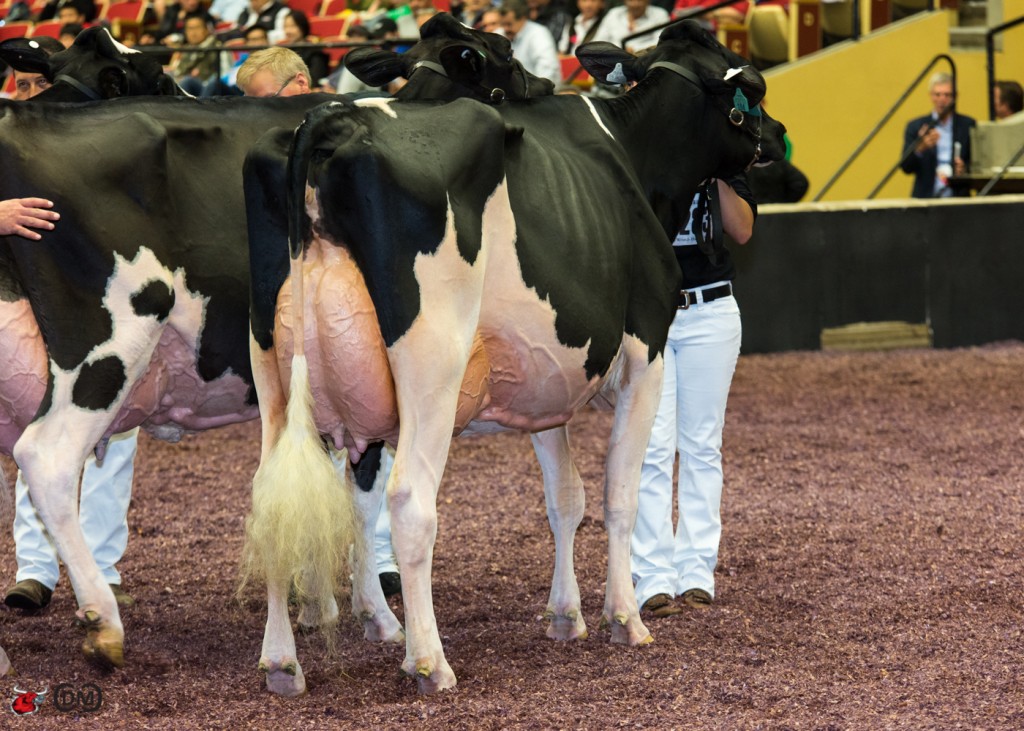
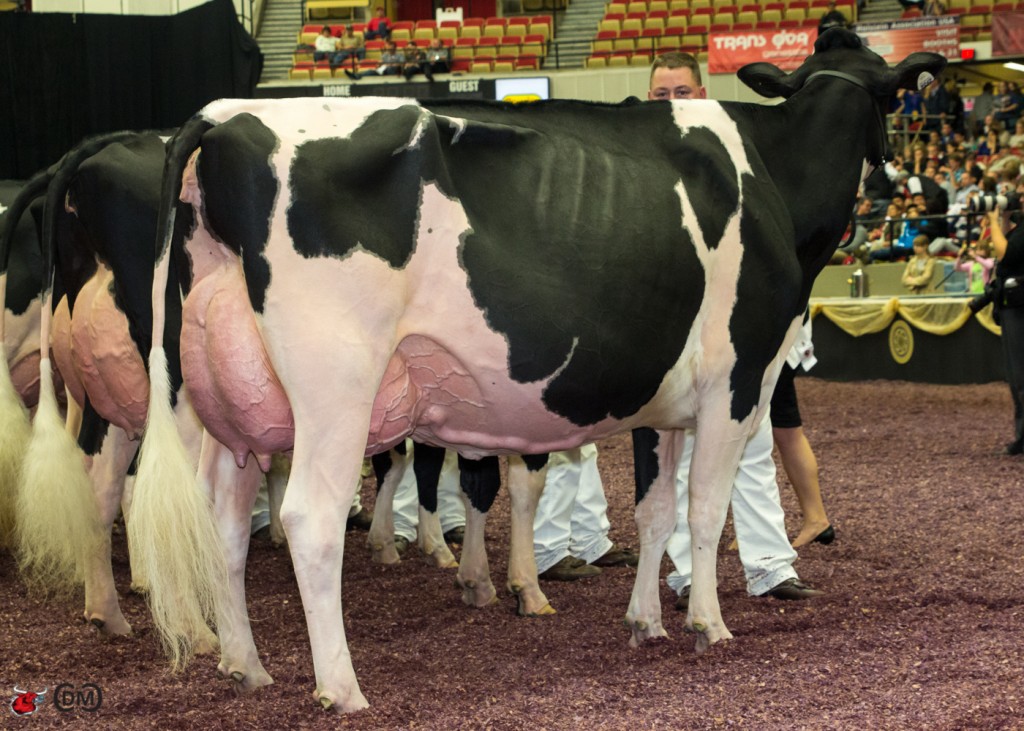
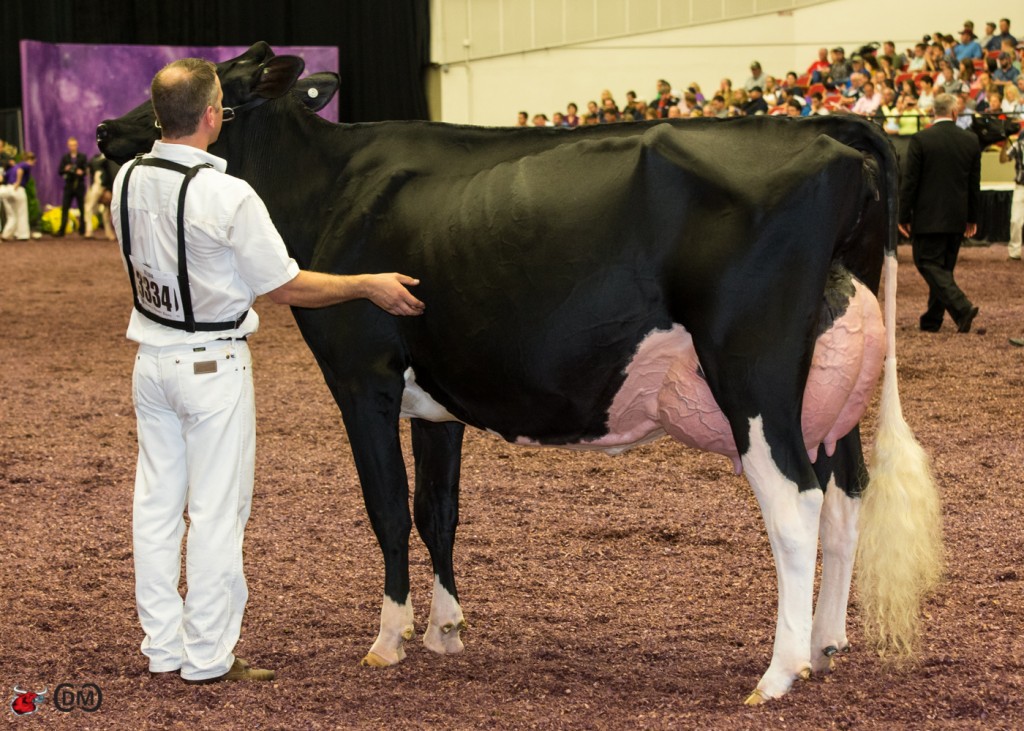
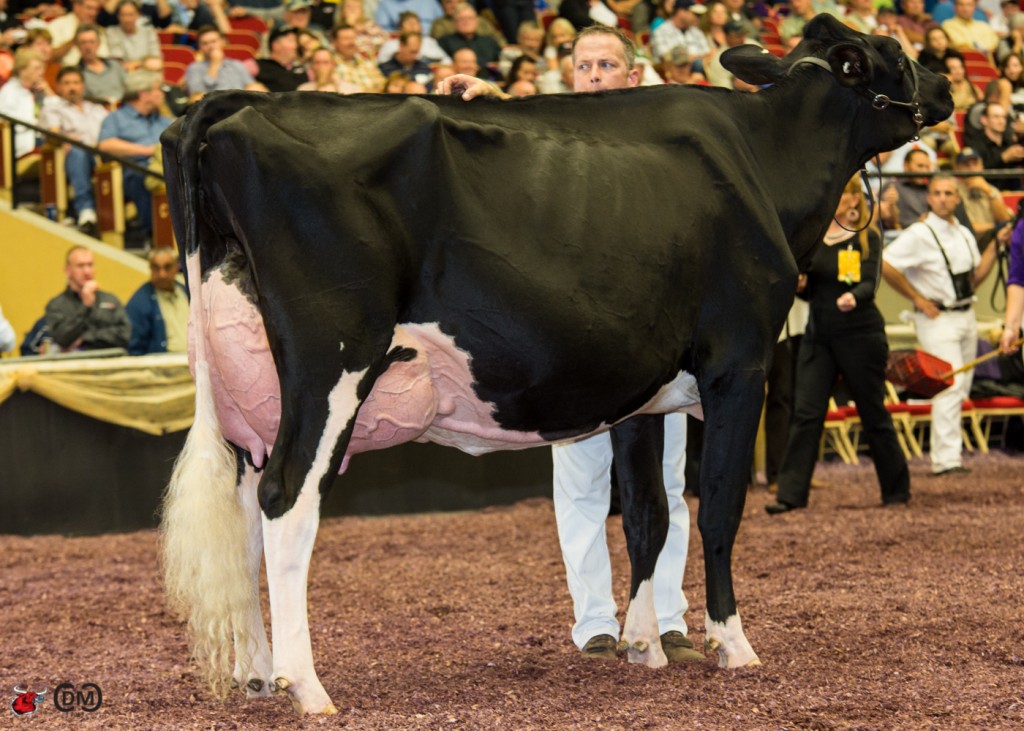
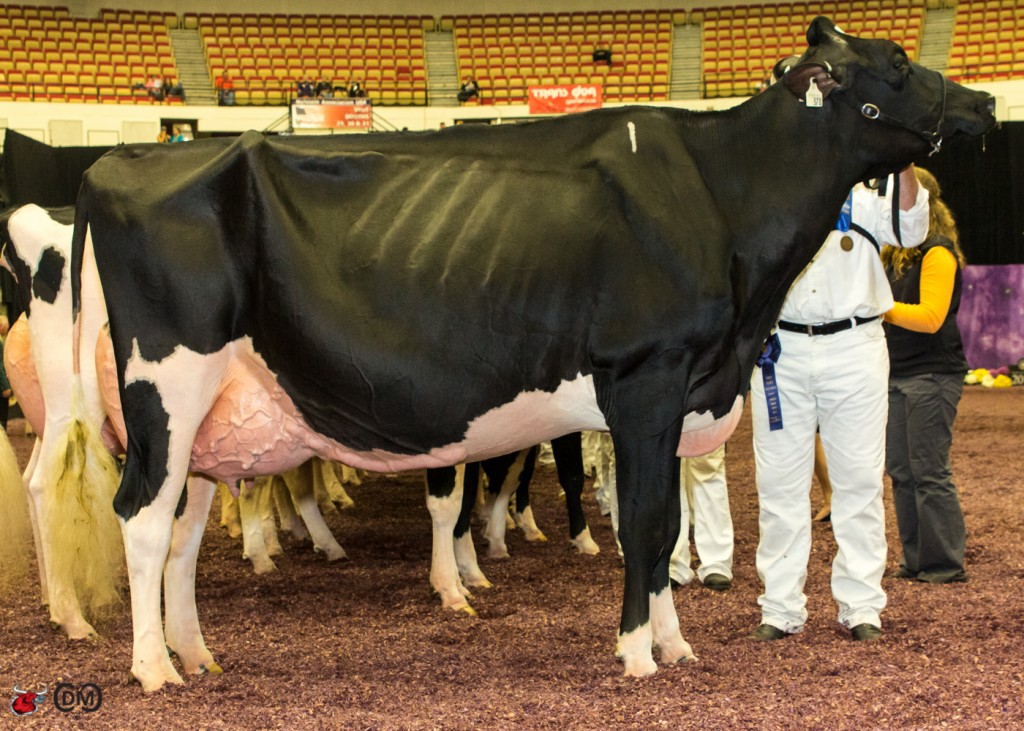
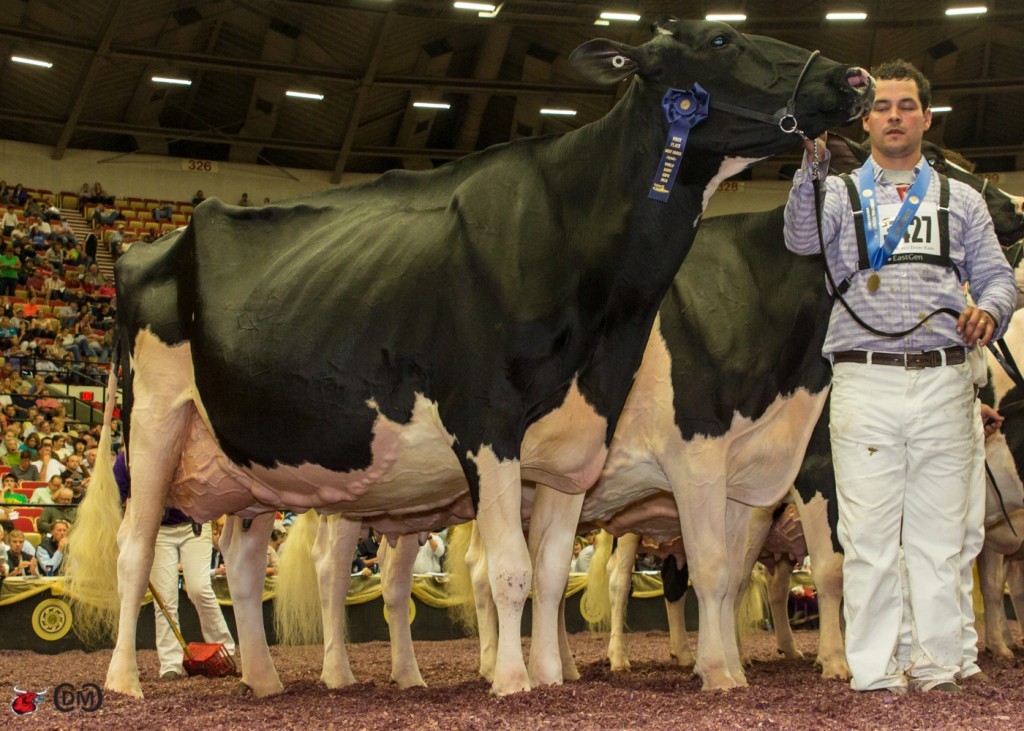
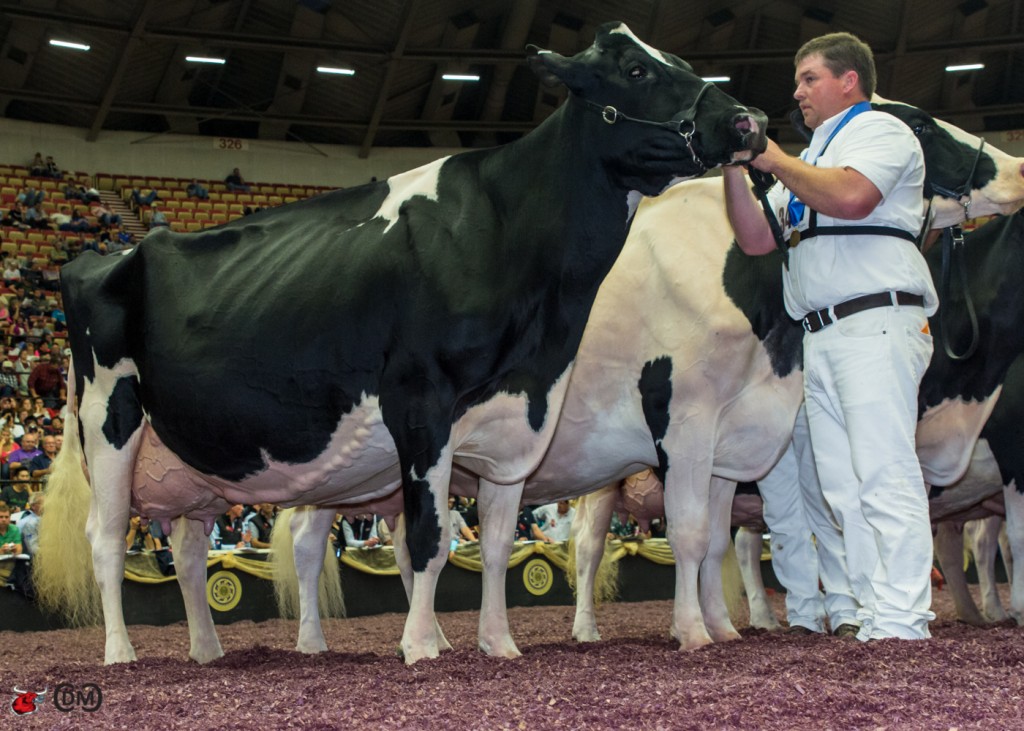
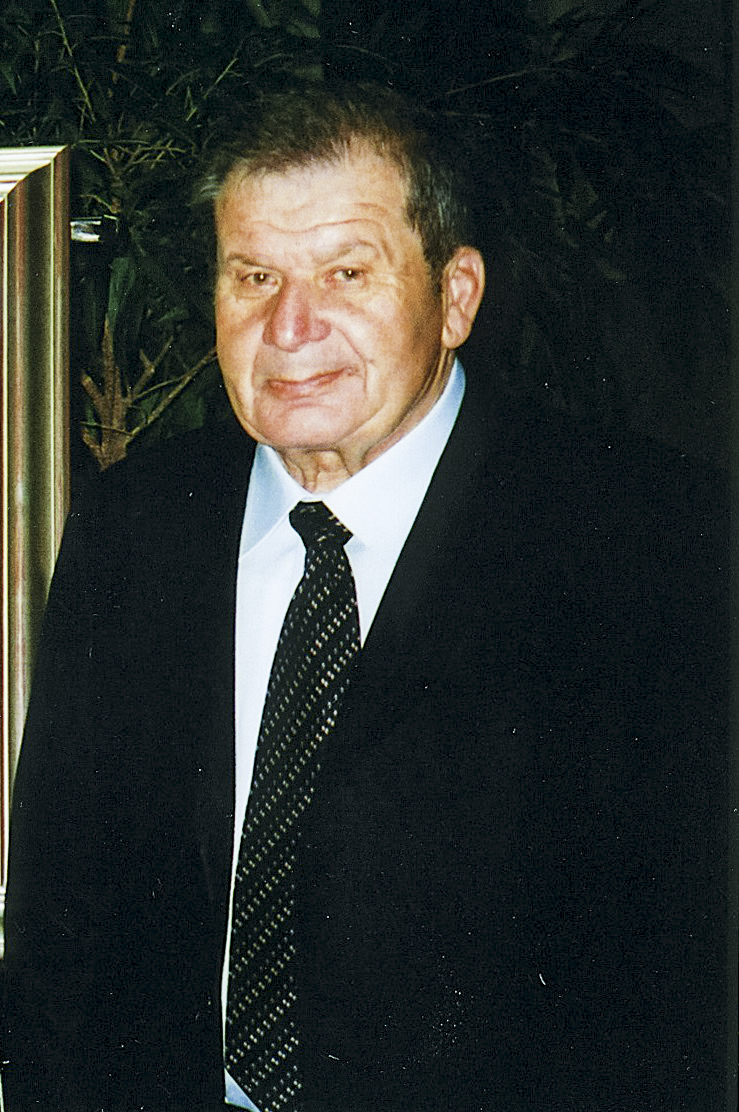 Congratulations to Paul Ekstein of Quality Holsteins, Vaughan, Ontario for being selected by the Klussendorf Association as the fifth Robert `Whitey`McKown Master Breeder Award winner!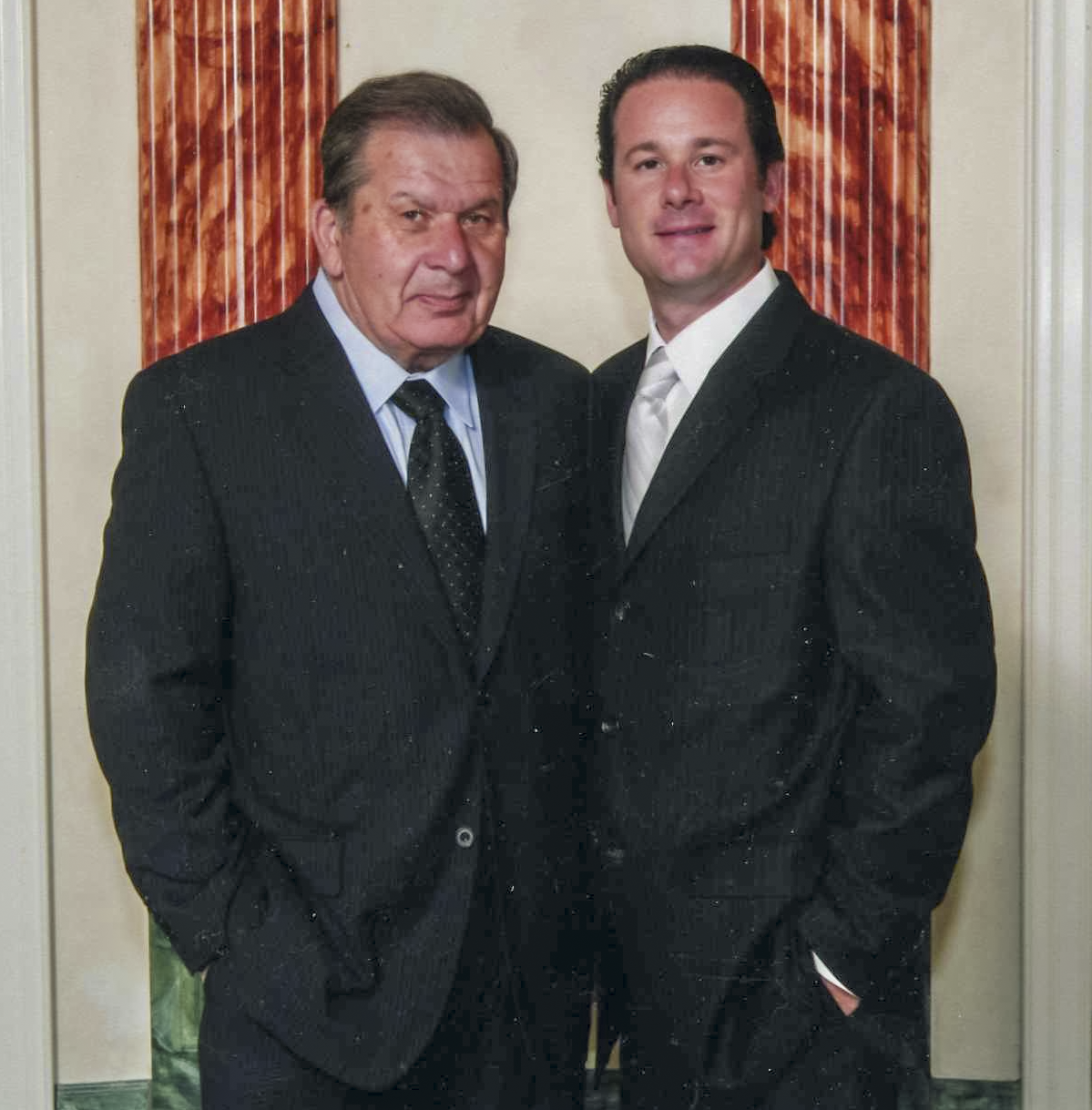
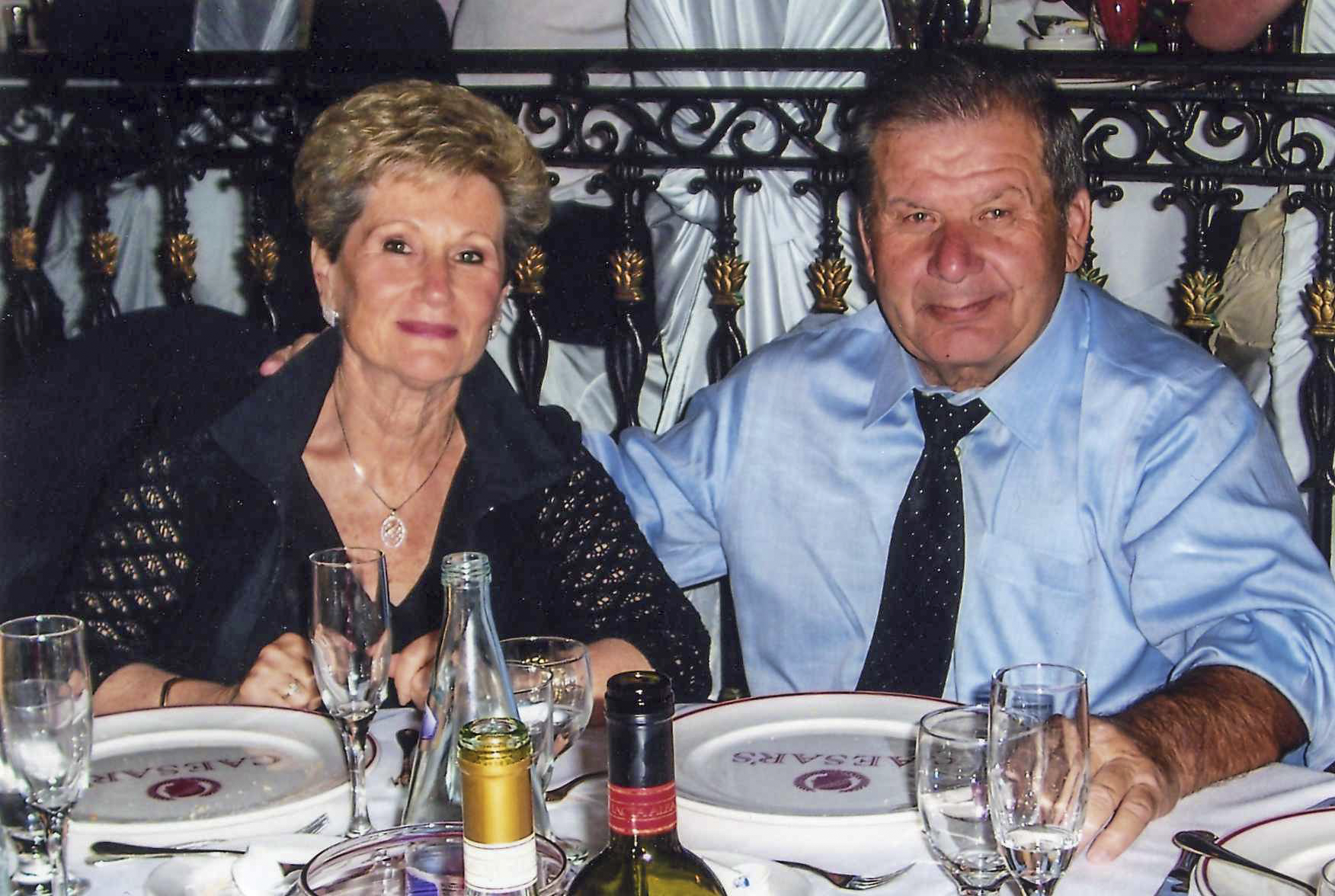
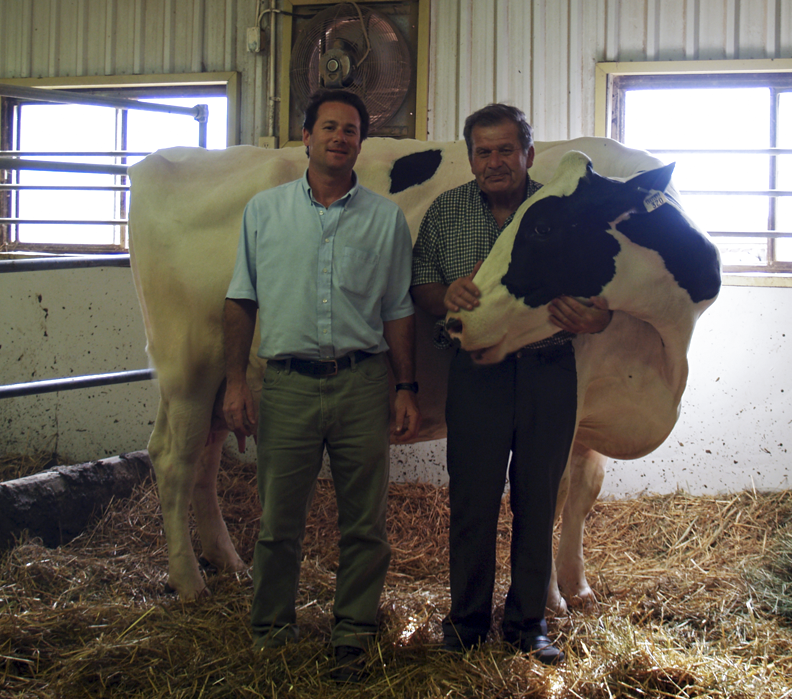
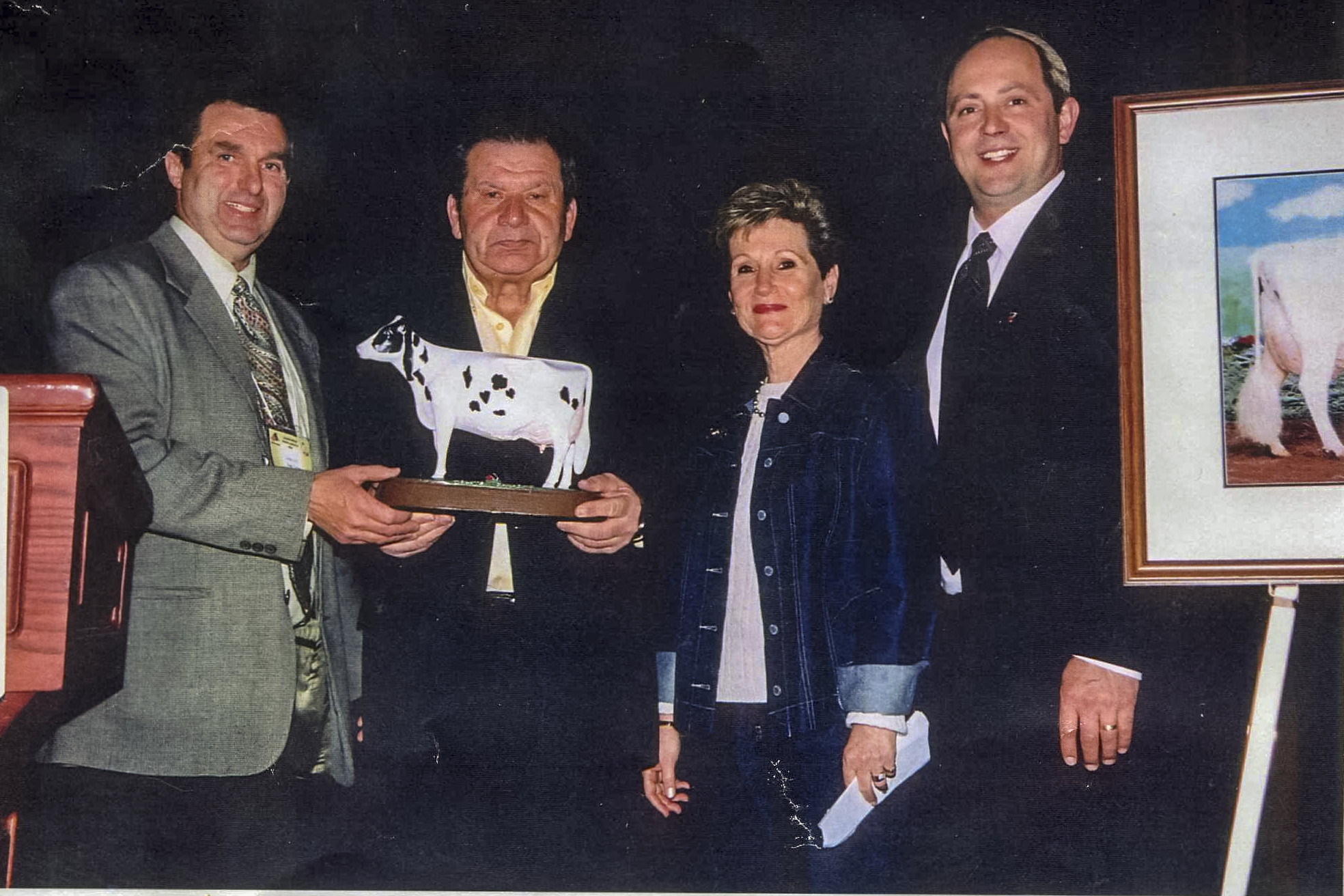
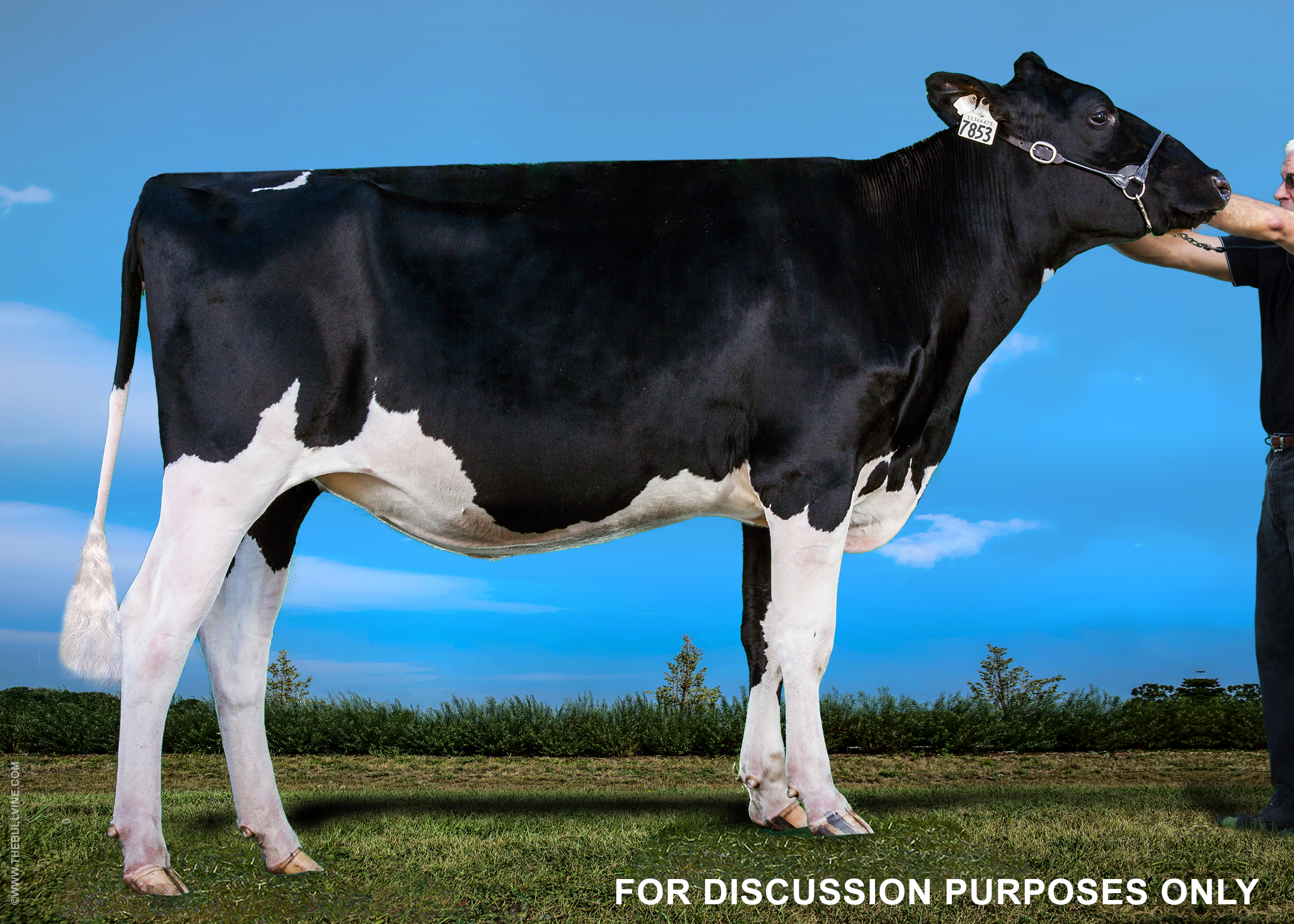

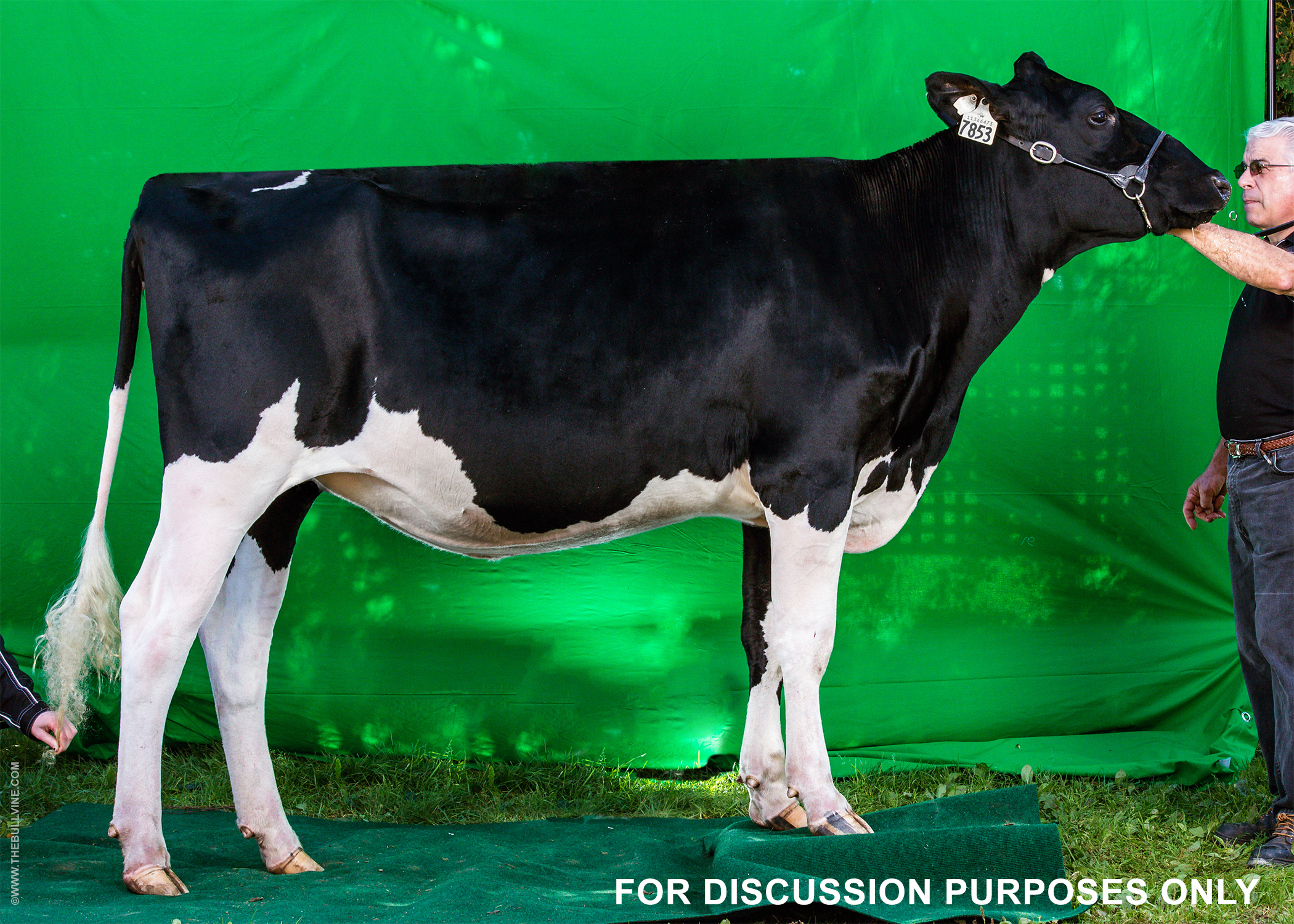
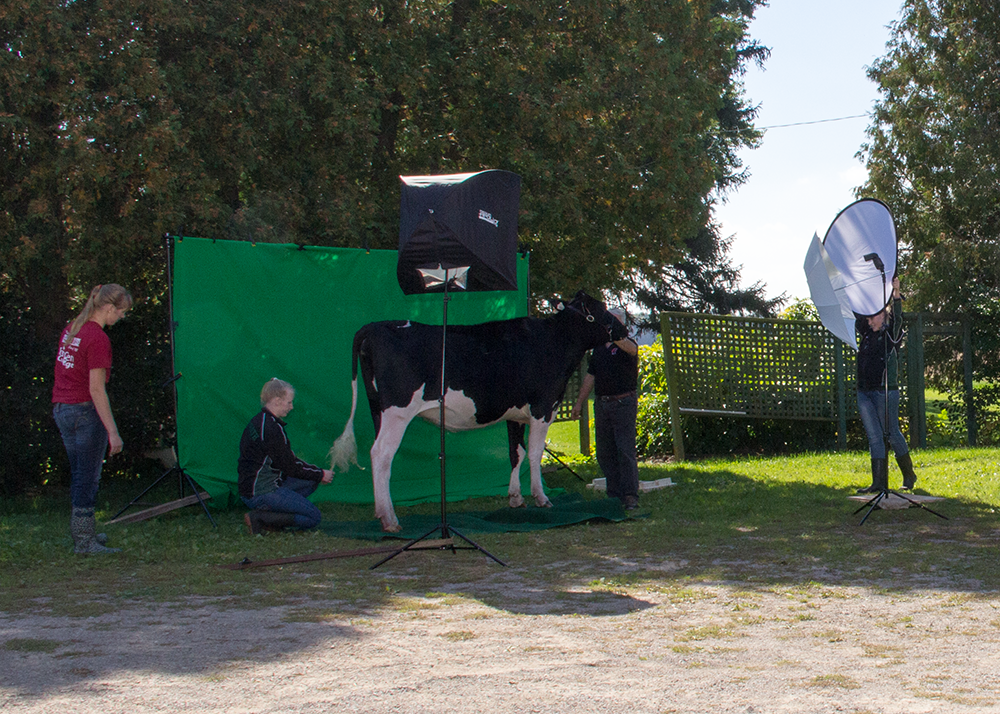
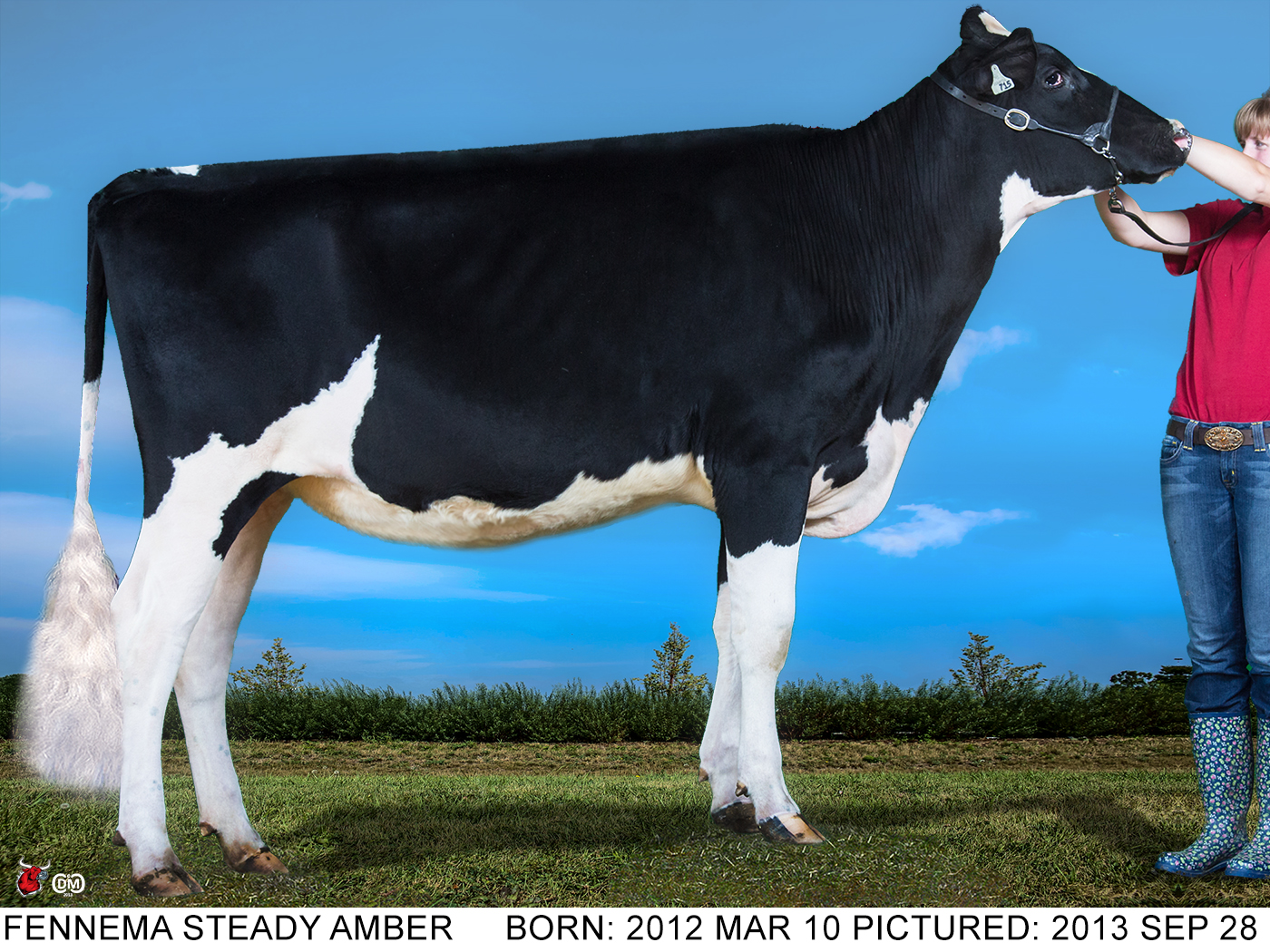
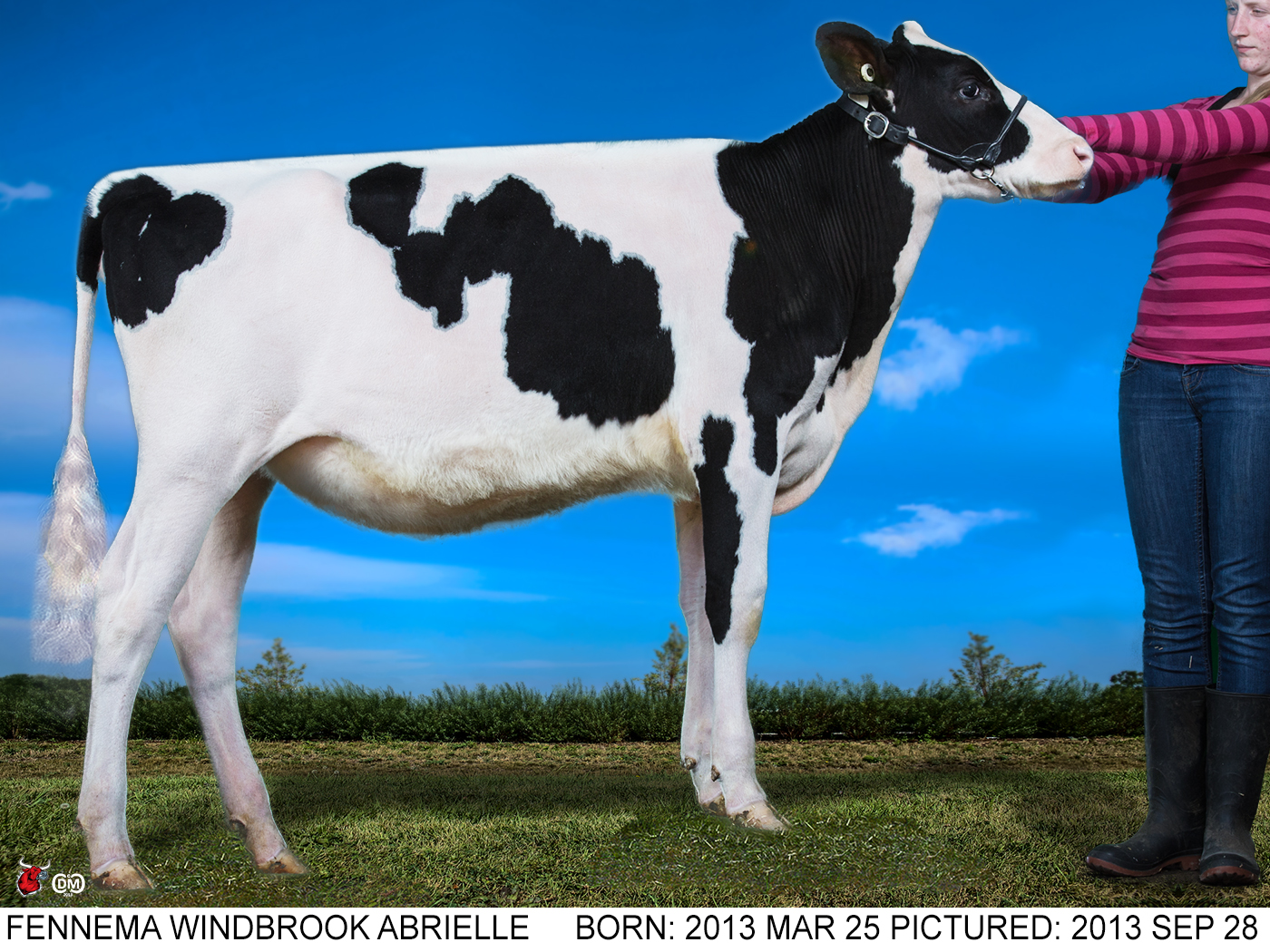
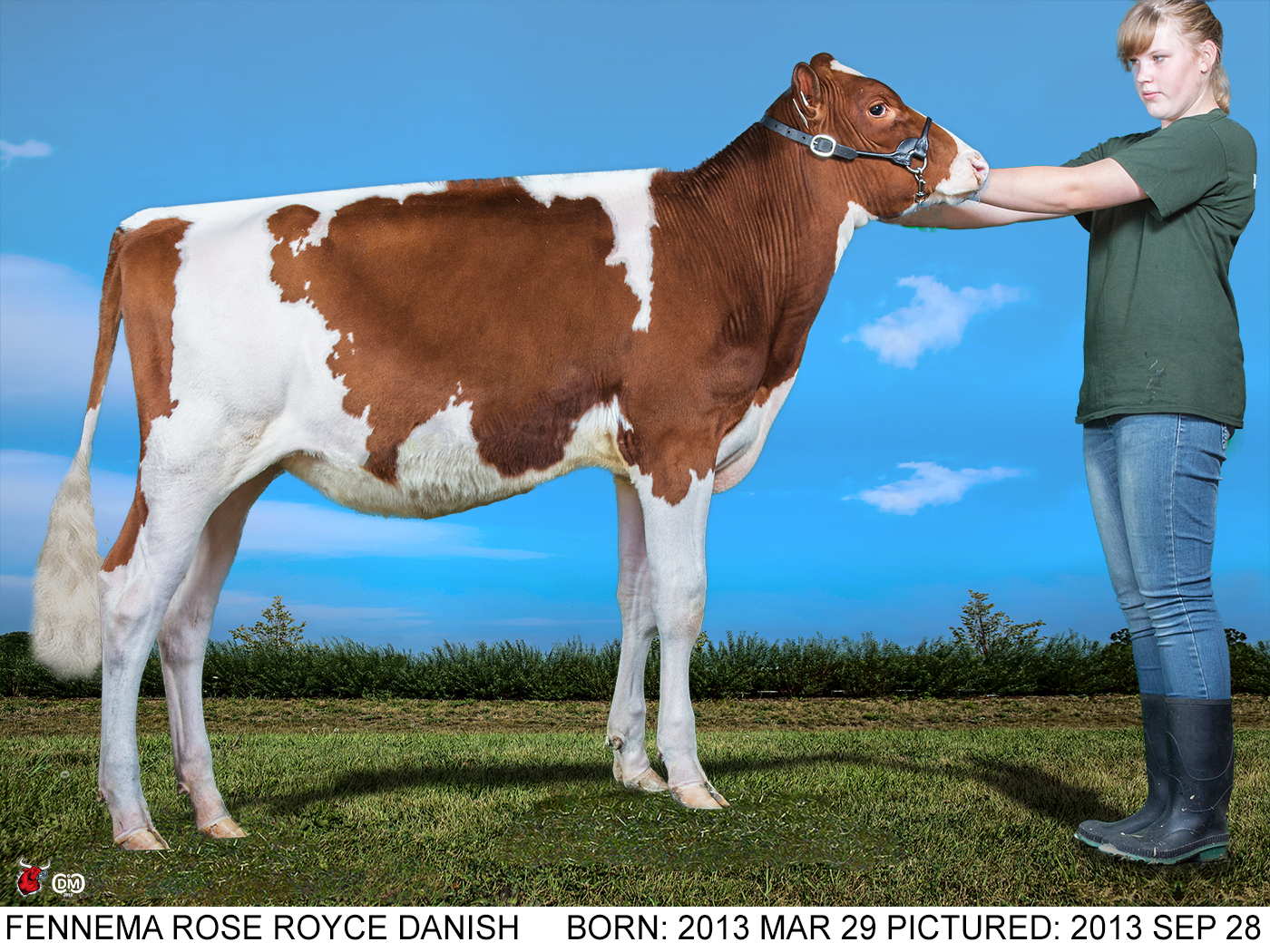
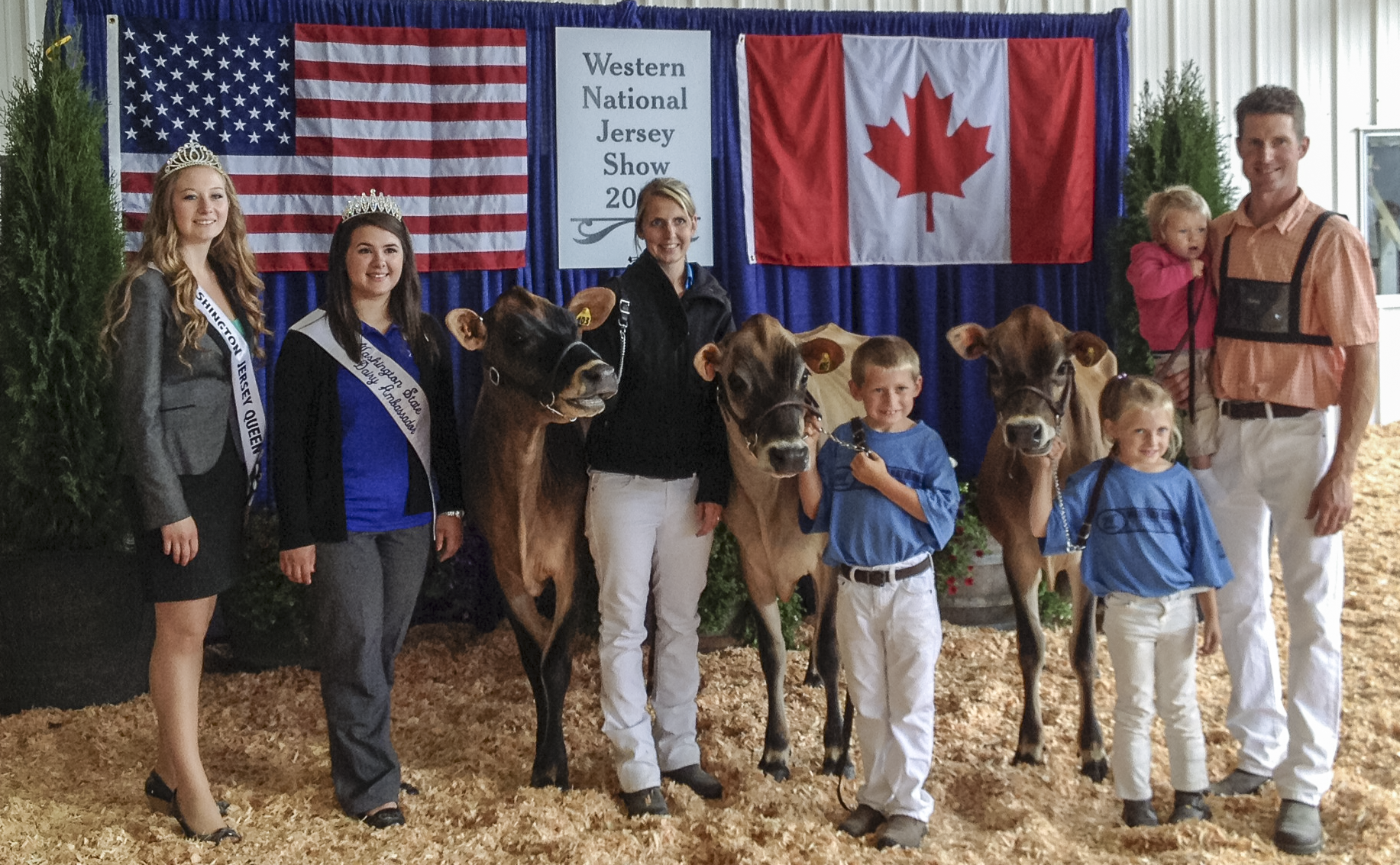
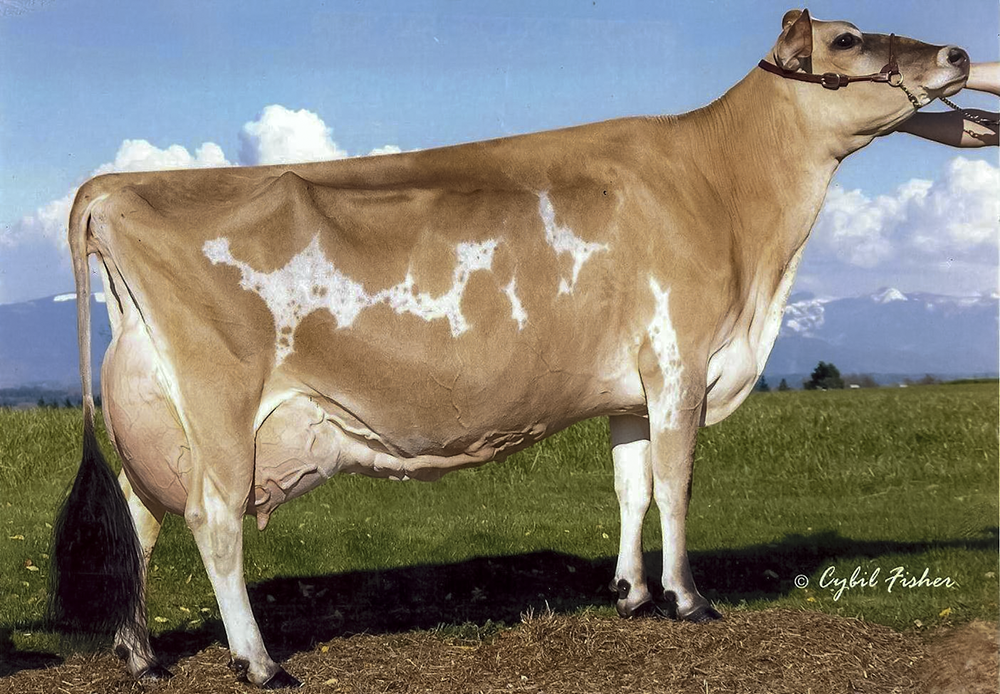
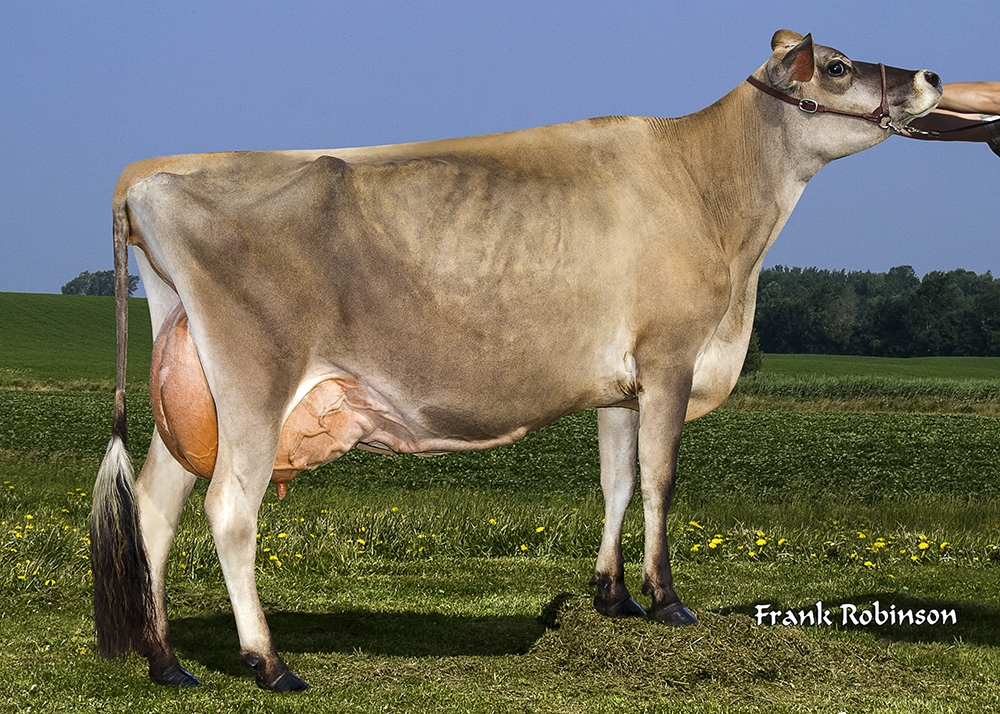
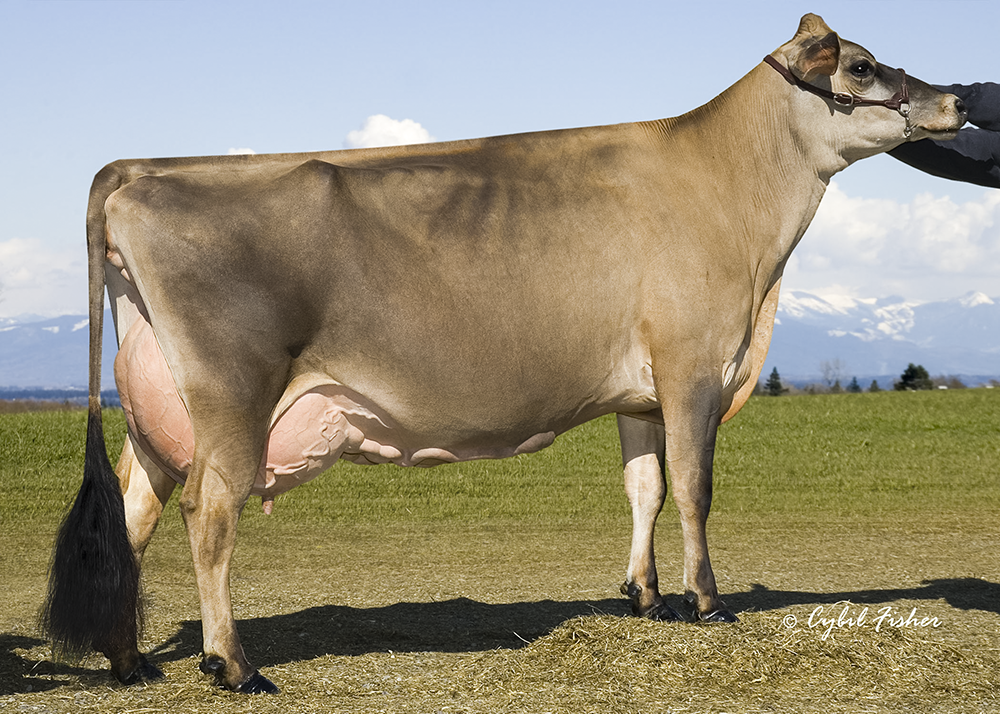
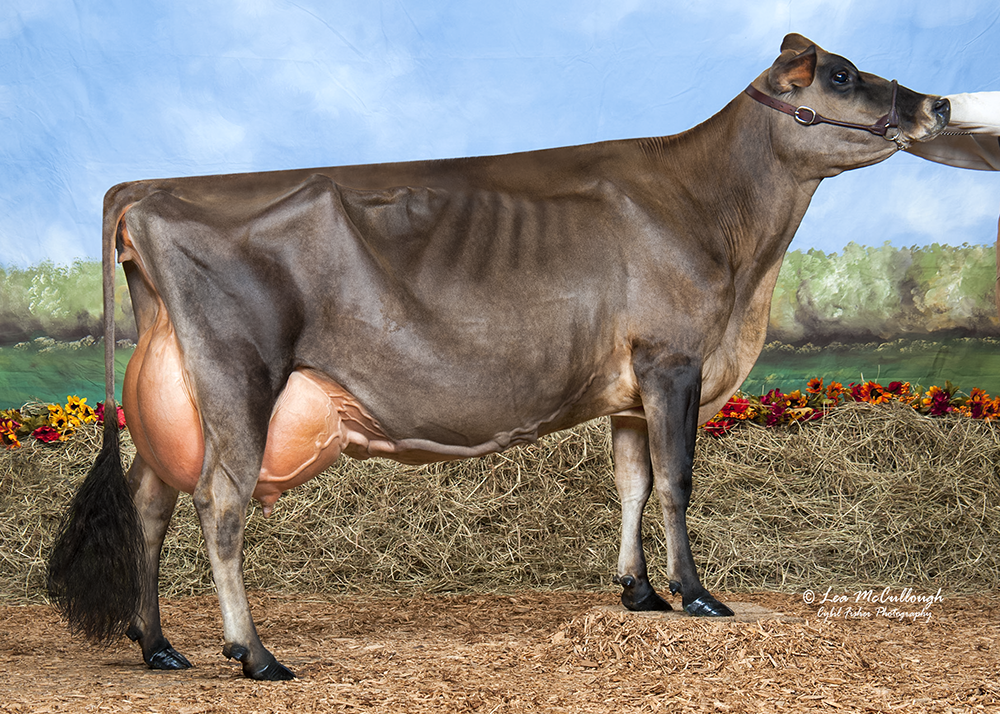
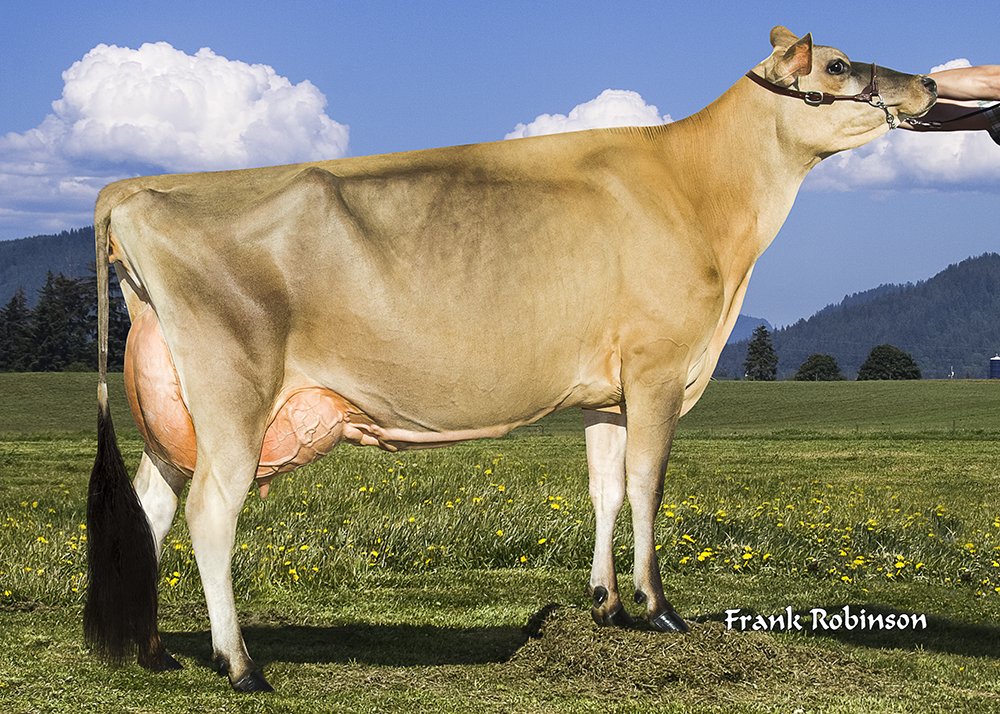
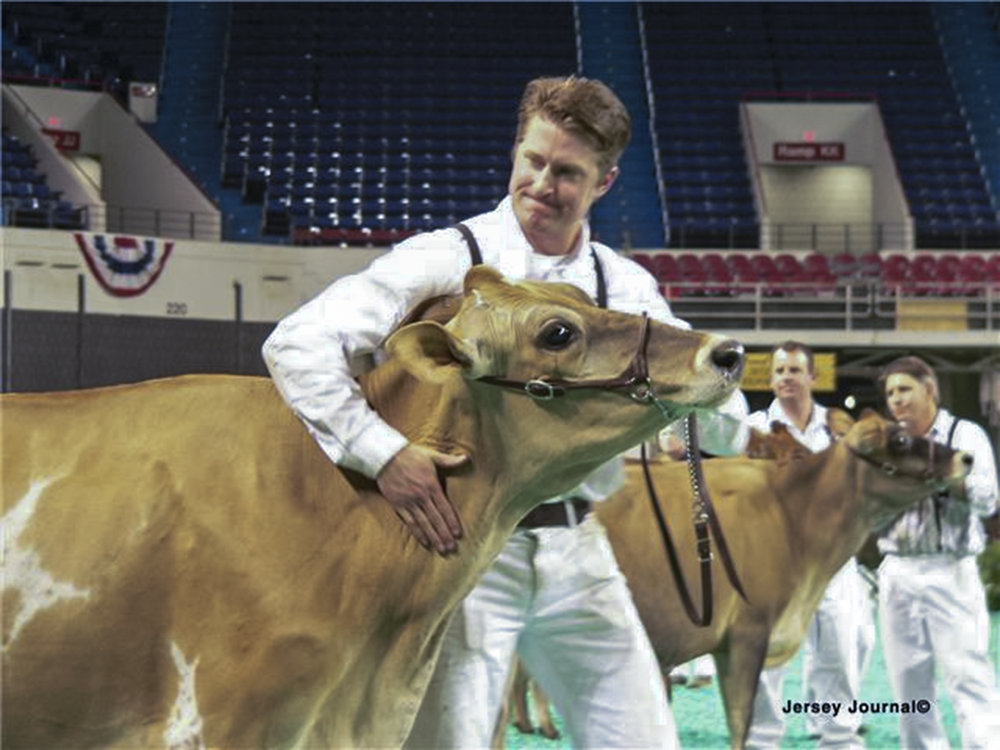
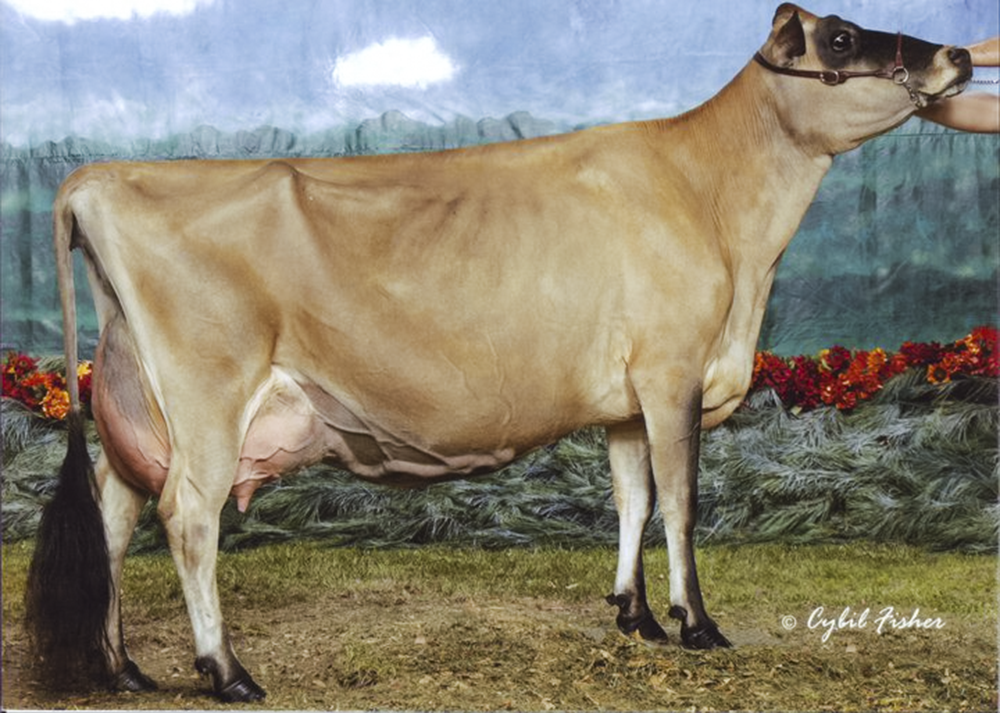
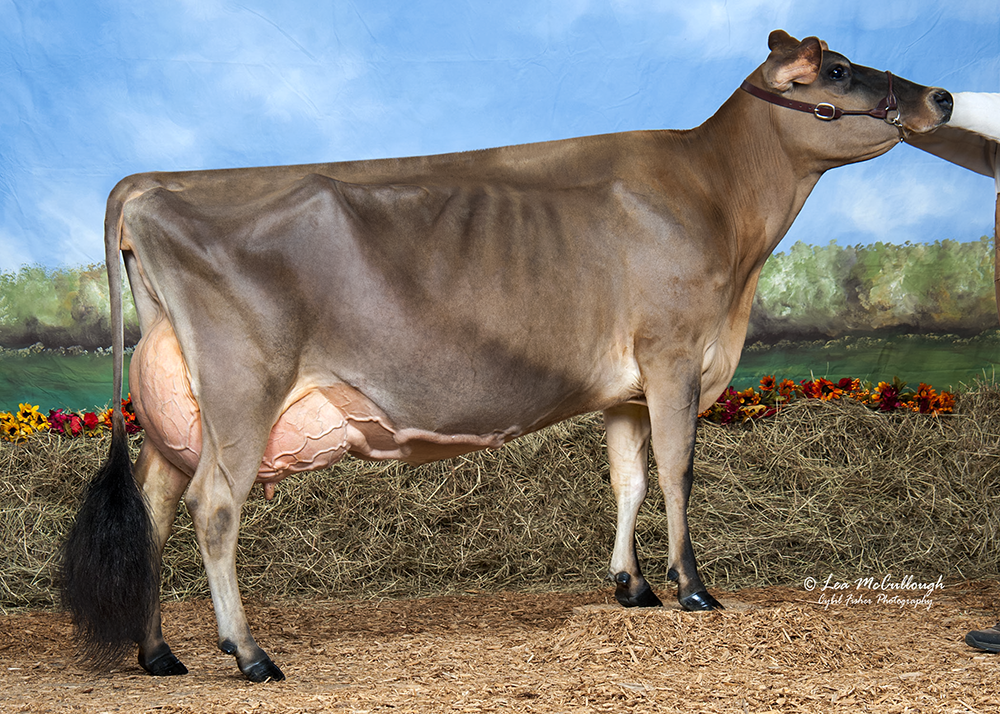
 This year’s International Holstein Show Judge is Justin Burdette. Justin Burdette and his wife, Claire, are partners with his parents, James and Nina Burdette of Windy Knoll View Farm in Mercersburg, Pa. These are the first people he called after finding out he would be the 2013 WDE Holstein Show Judge. Known for their outstanding breeding program, they have bred more than 150 Excellent Holsteins carrying the Windy Knoll View prefix, including two 96-point, four 95-point and twelve 94-point animals. Their farm has won numerous Premier Breeder and Premier Exhibitor awards, including the 2006 World Dairy Expo Premier Breeder Award. Justin has served as official judge for the 2011 International Ayrshire Show, 2012 European National Holstein Show in Italy, 2012 International Red & White Show and 2013 Mexican Holstein Show in Leon.
 Trading places with Justin who judged the Red & White show last year, is Michael “Air” Heath, who judged the Holstein show last year and will judge the Red & White Show this year. Michael really needs no introduction as he has judged extensively for about 25 years at state fairs, spring shows and other notables such as the Quebec International Fall Holstein Show and the Mexican National Holstein Show. Michael judged the 2012 International Holstein Show, where his 3-inch vertical earned him the title of “Air Heath.” Joining Michael will be Mike Berry from Albany, OR. Mike Berry, a cattle fitter since 1992, owns a herd of 150 Holsteins and Jerseys. His judging resume includes state fairs in Utah, Maryland and Washington, as well as the Western Spring National Junior Show in Utah in 2010.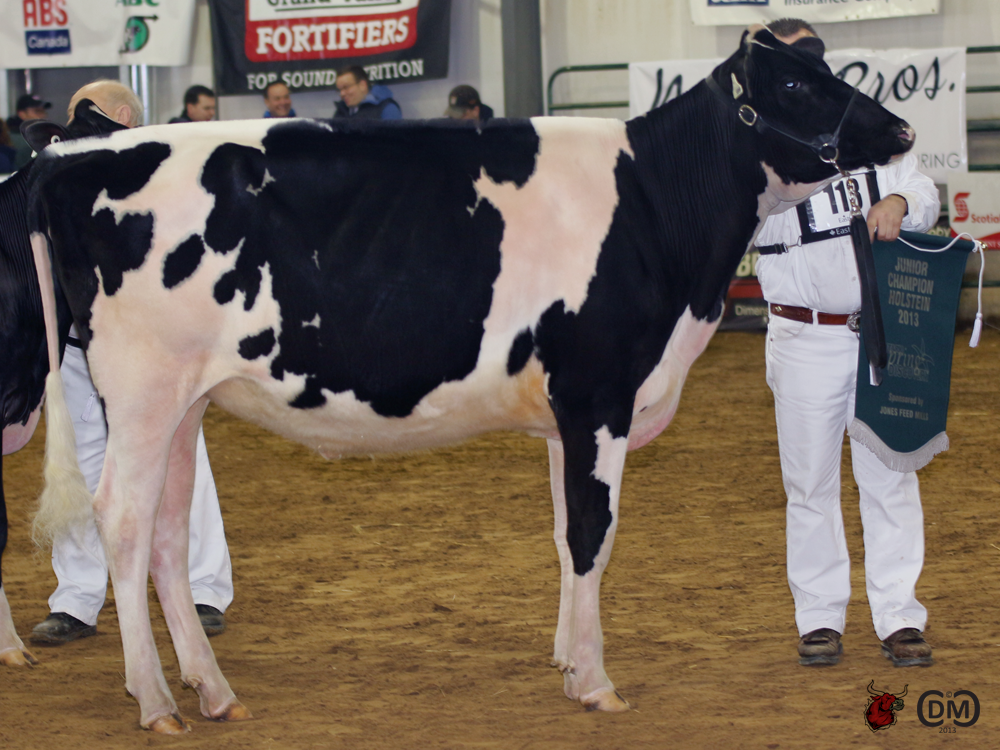

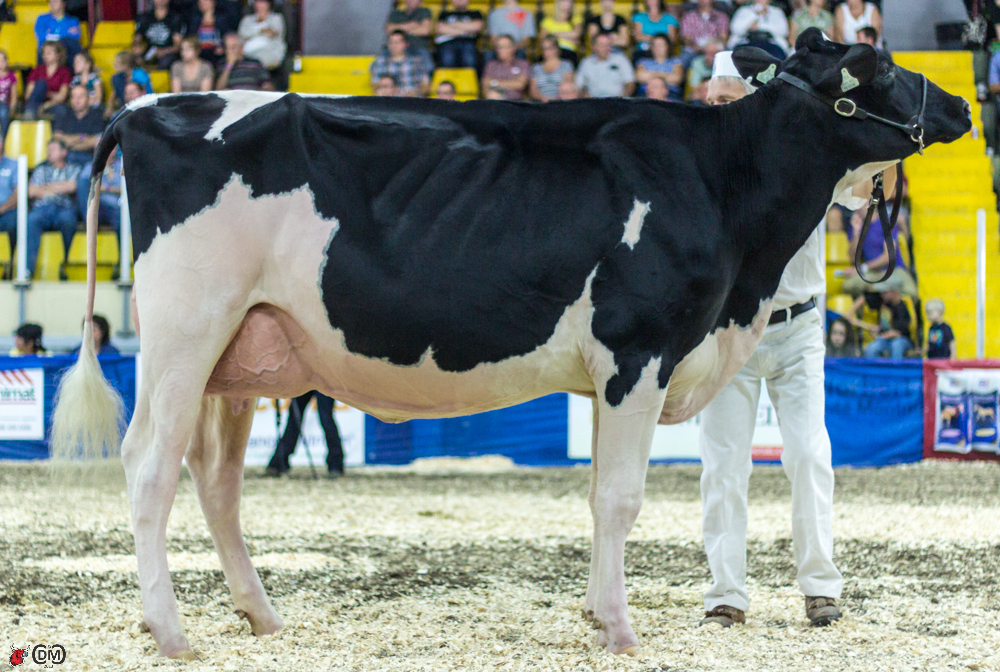
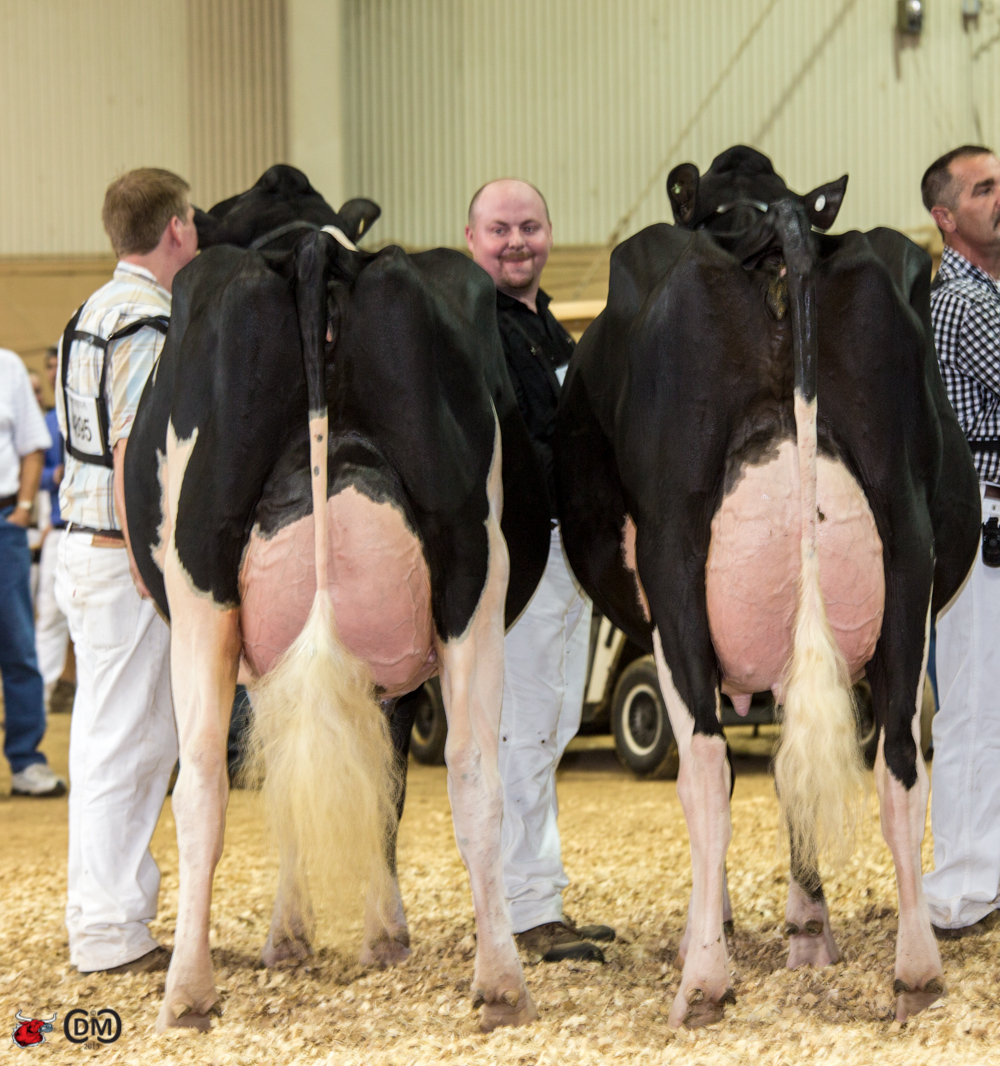
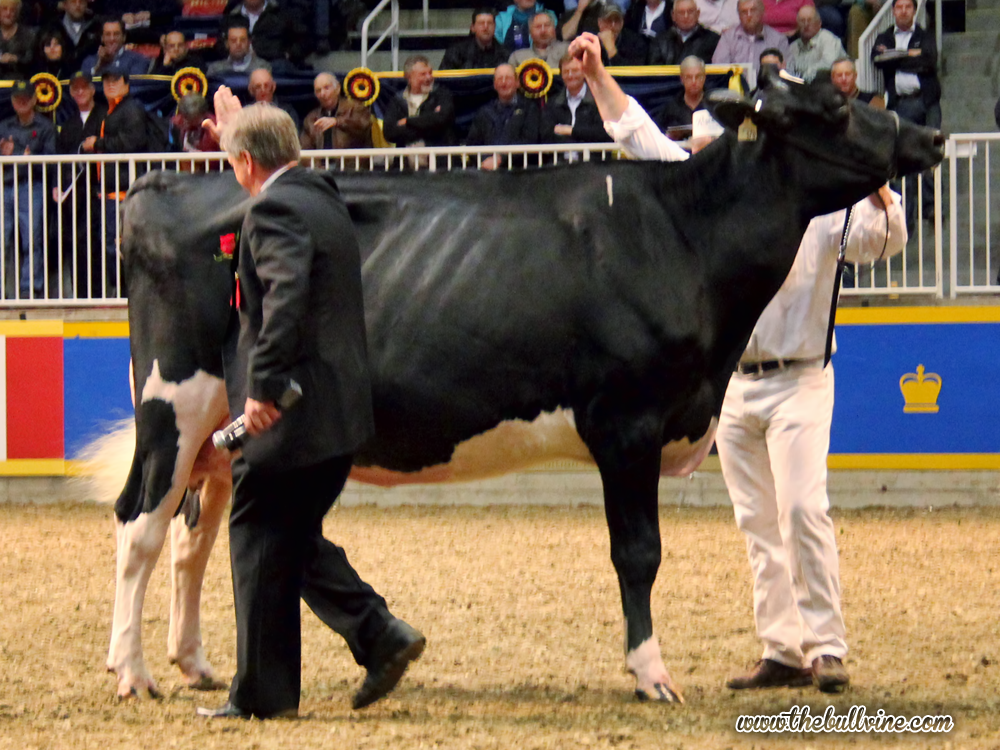
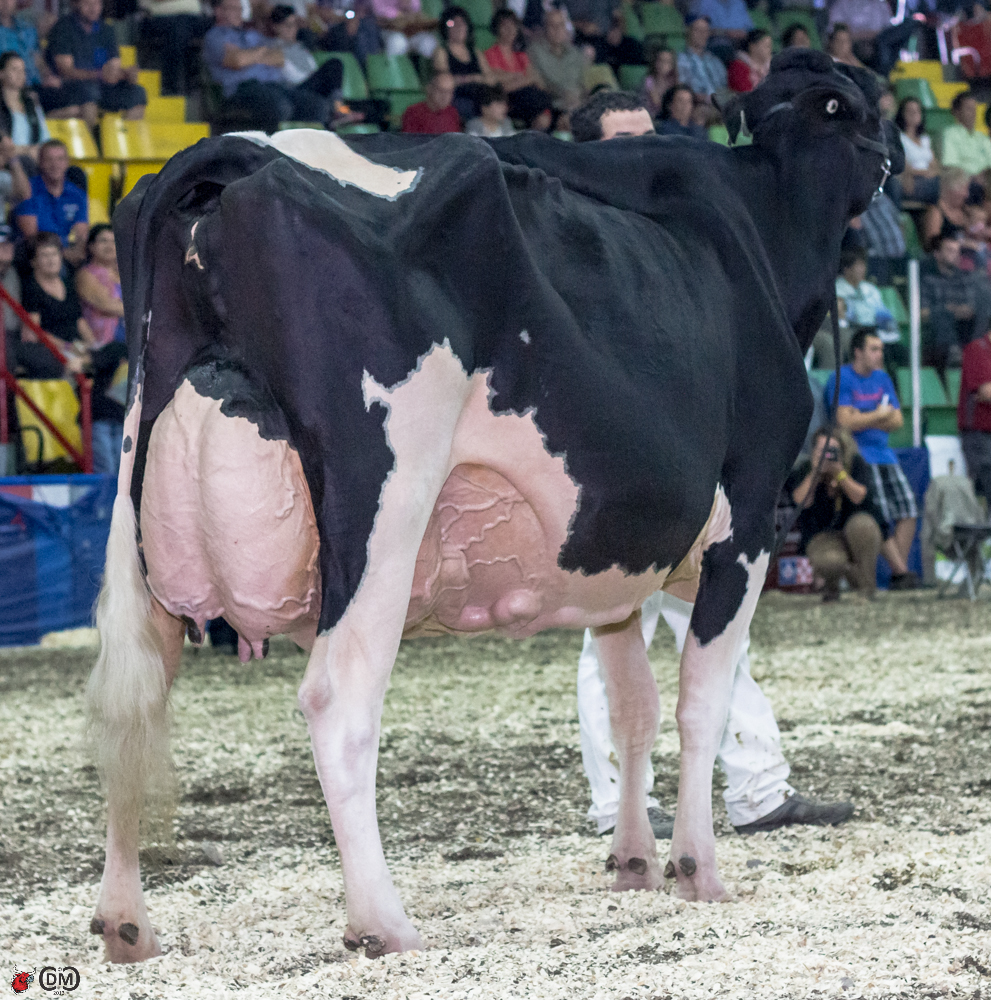


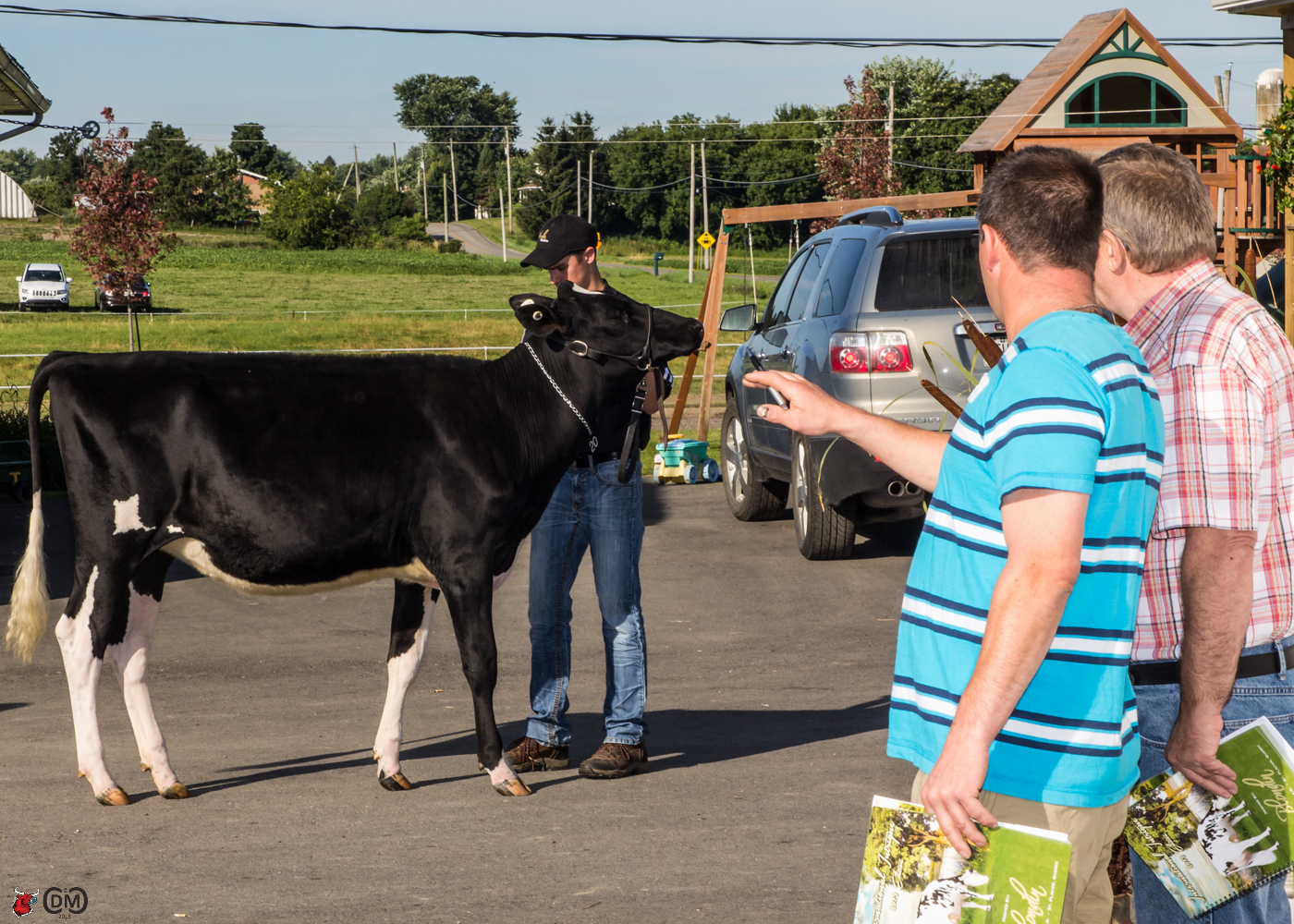
![512[1]](https://www.thebullvine.com/wp-content/uploads/2013/09/5121.jpg) “When you choose to stand up for a good cause you have to believe that you can make a difference.” Too many of us become discouraged with the negative picture of agriculture that is portrayed in the media. Even more disillusioning is the misinformation shared by friends and non-agricultural neighbors. Thus it is refreshing and reinvigorating to meet agvocate, Michele Payn-Knoper who has the courage and commitment to read, write and speak up for agriculture.
“When you choose to stand up for a good cause you have to believe that you can make a difference.” Too many of us become discouraged with the negative picture of agriculture that is portrayed in the media. Even more disillusioning is the misinformation shared by friends and non-agricultural neighbors. Thus it is refreshing and reinvigorating to meet agvocate, Michele Payn-Knoper who has the courage and commitment to read, write and speak up for agriculture.
![859223_10151728798897786_1264329335_o[1]](https://www.thebullvine.com/wp-content/uploads/2013/09/859223_10151728798897786_1264329335_o1.jpg)


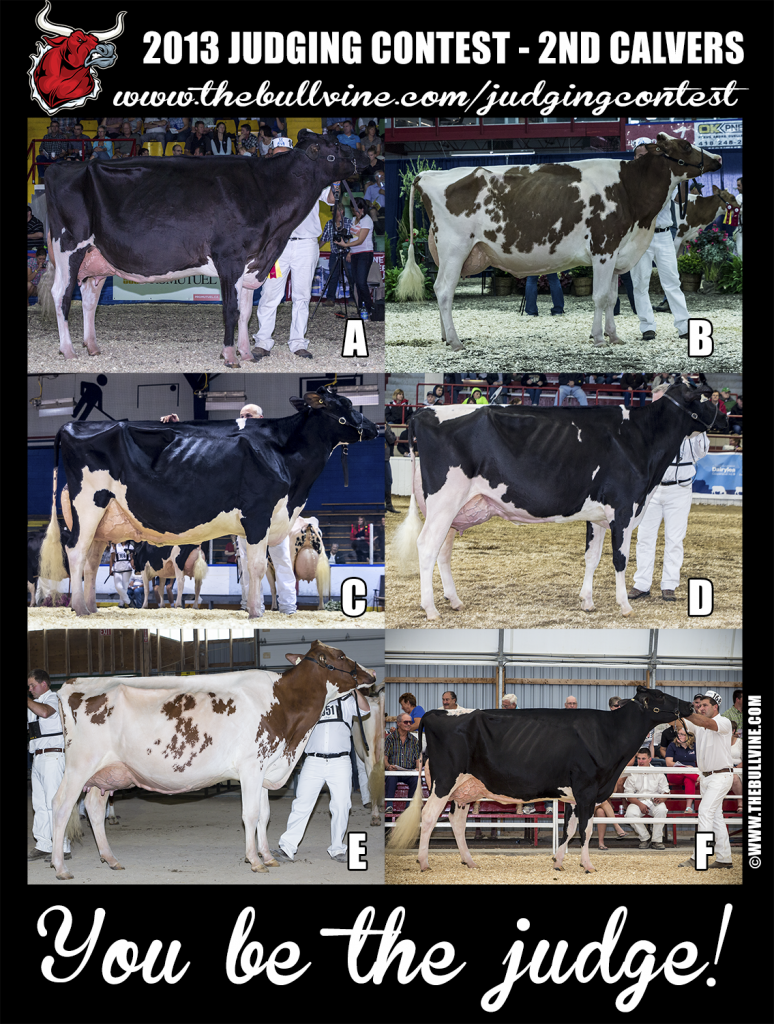
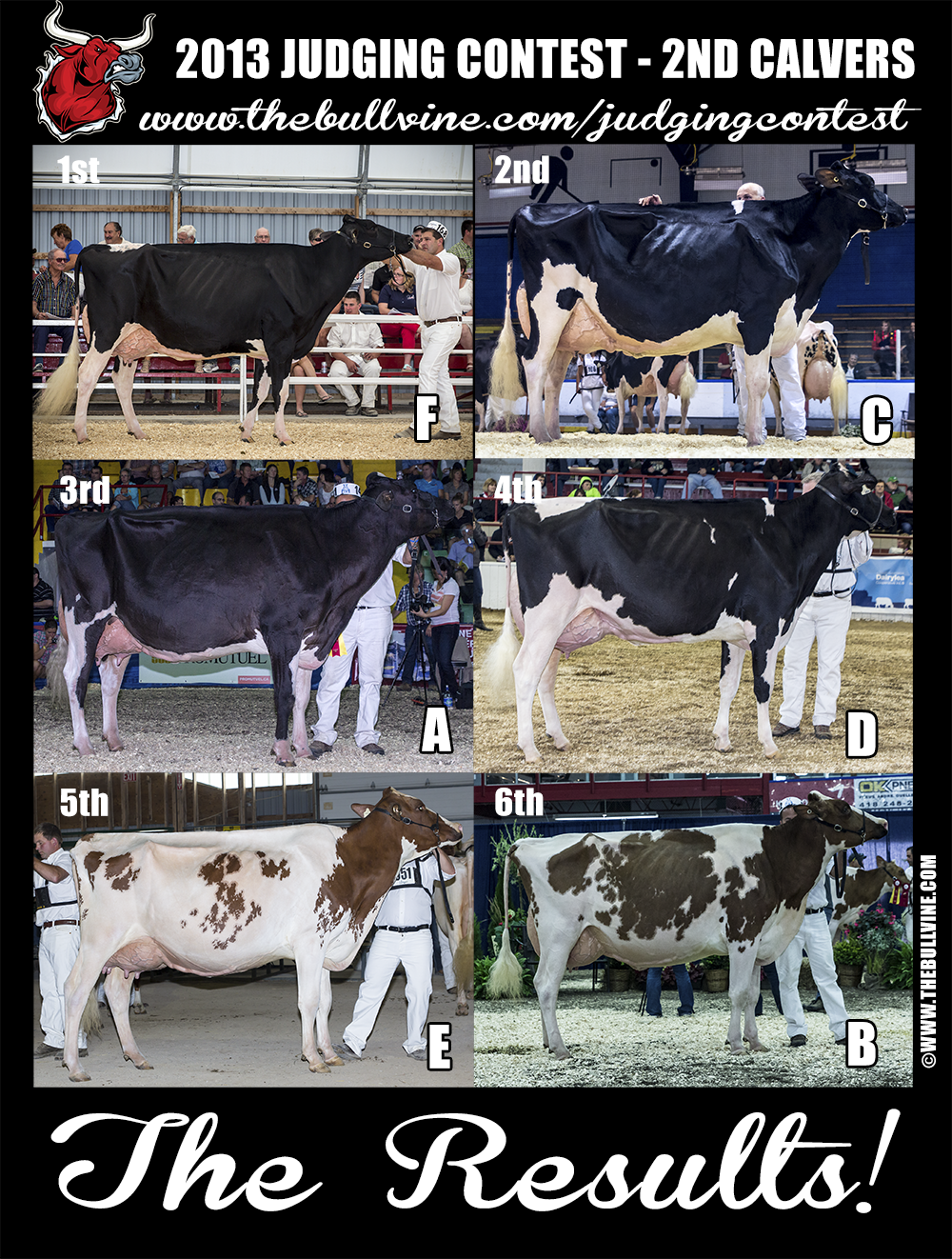
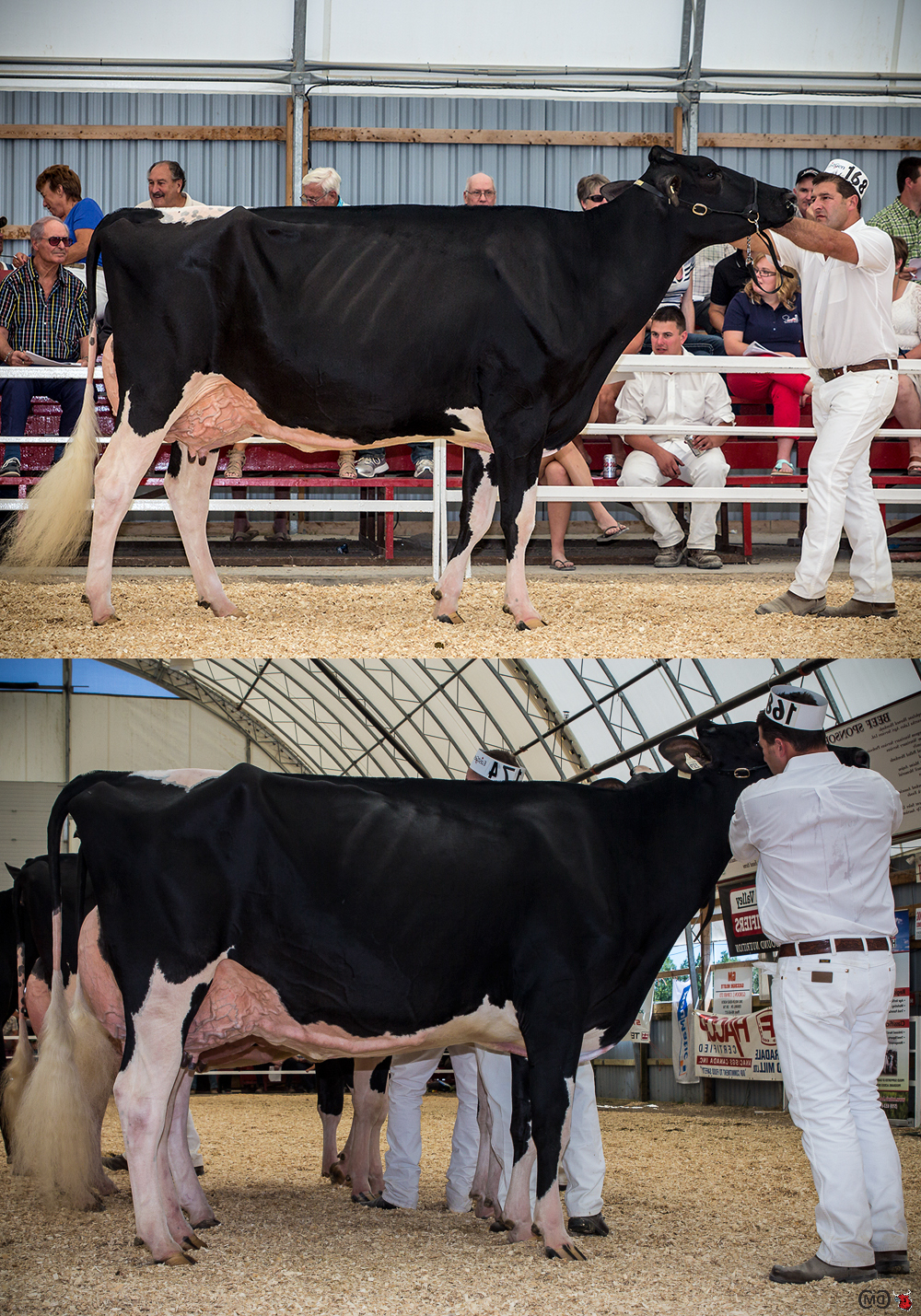
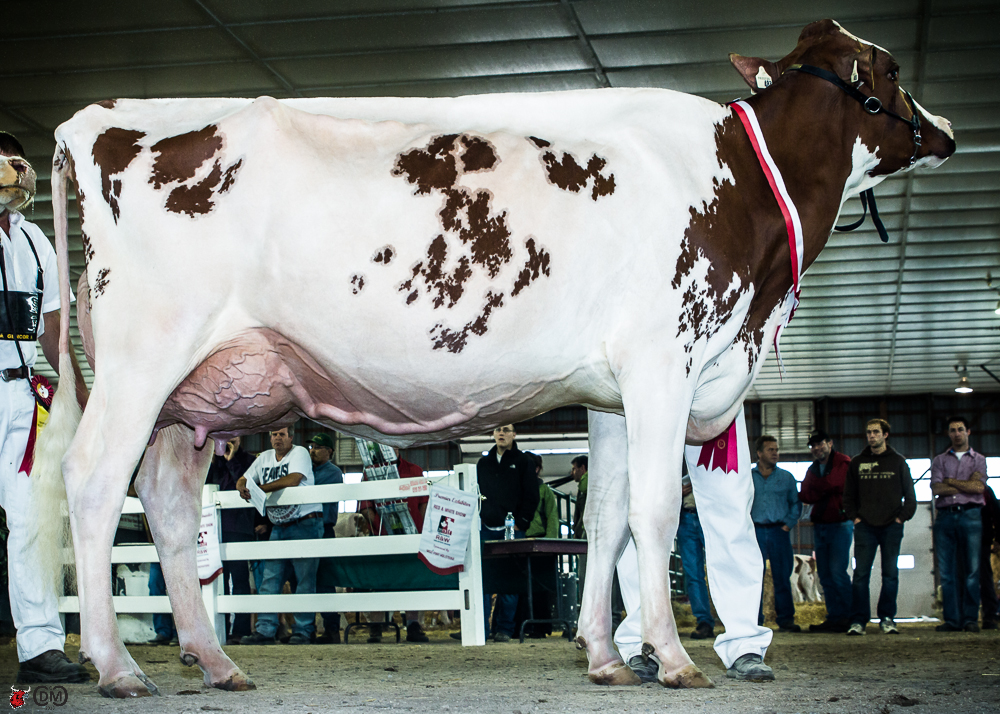
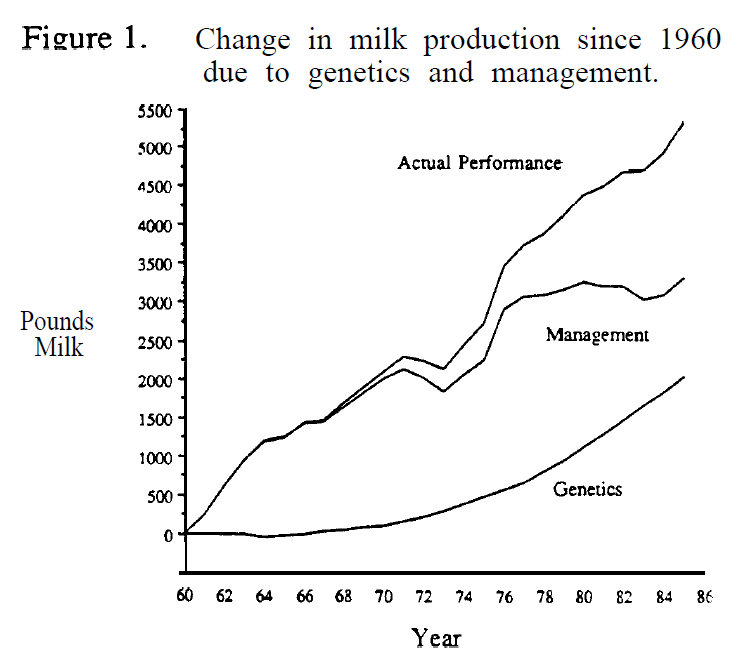
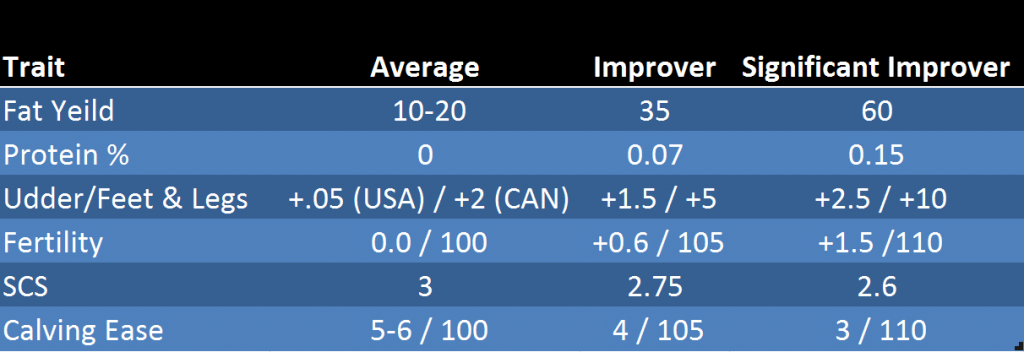
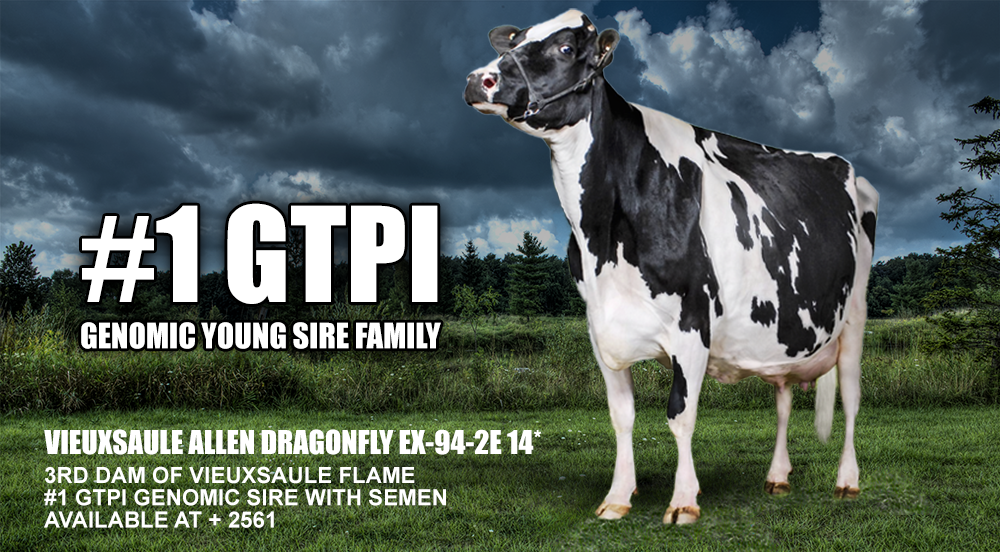
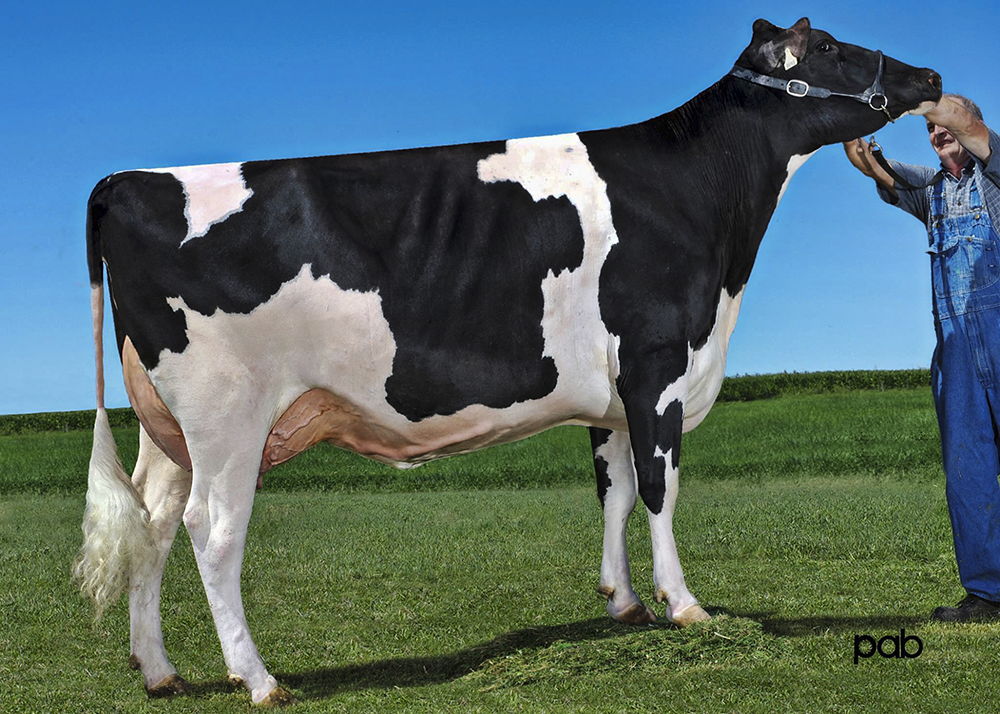
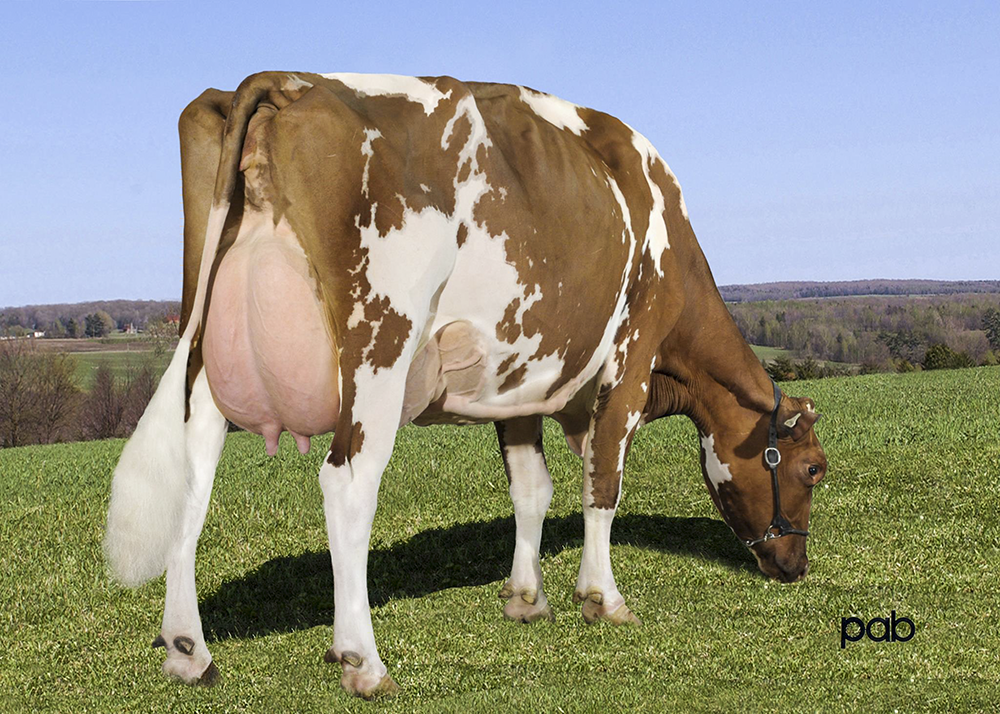
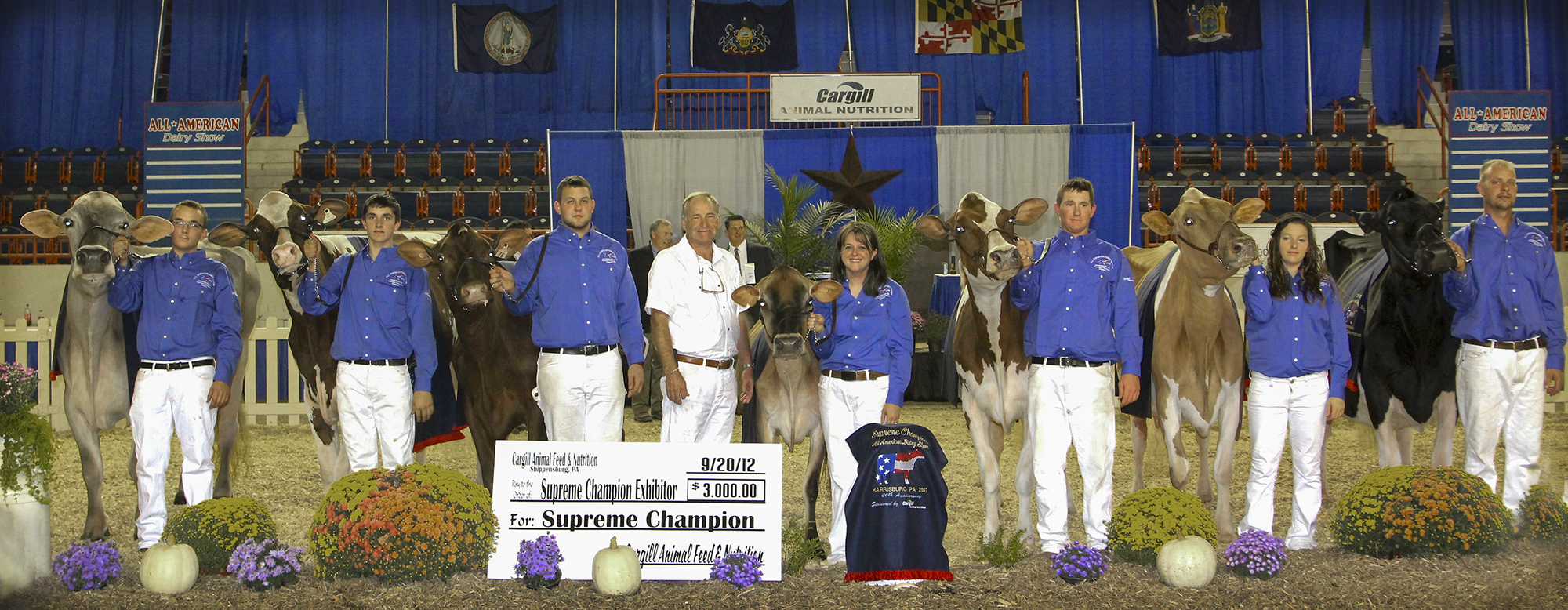
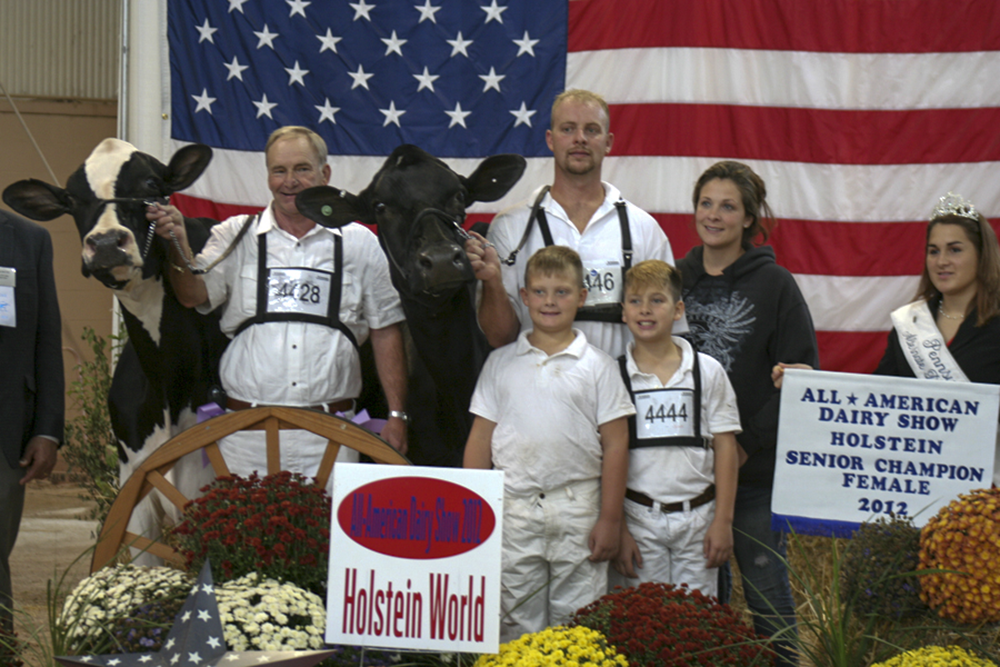
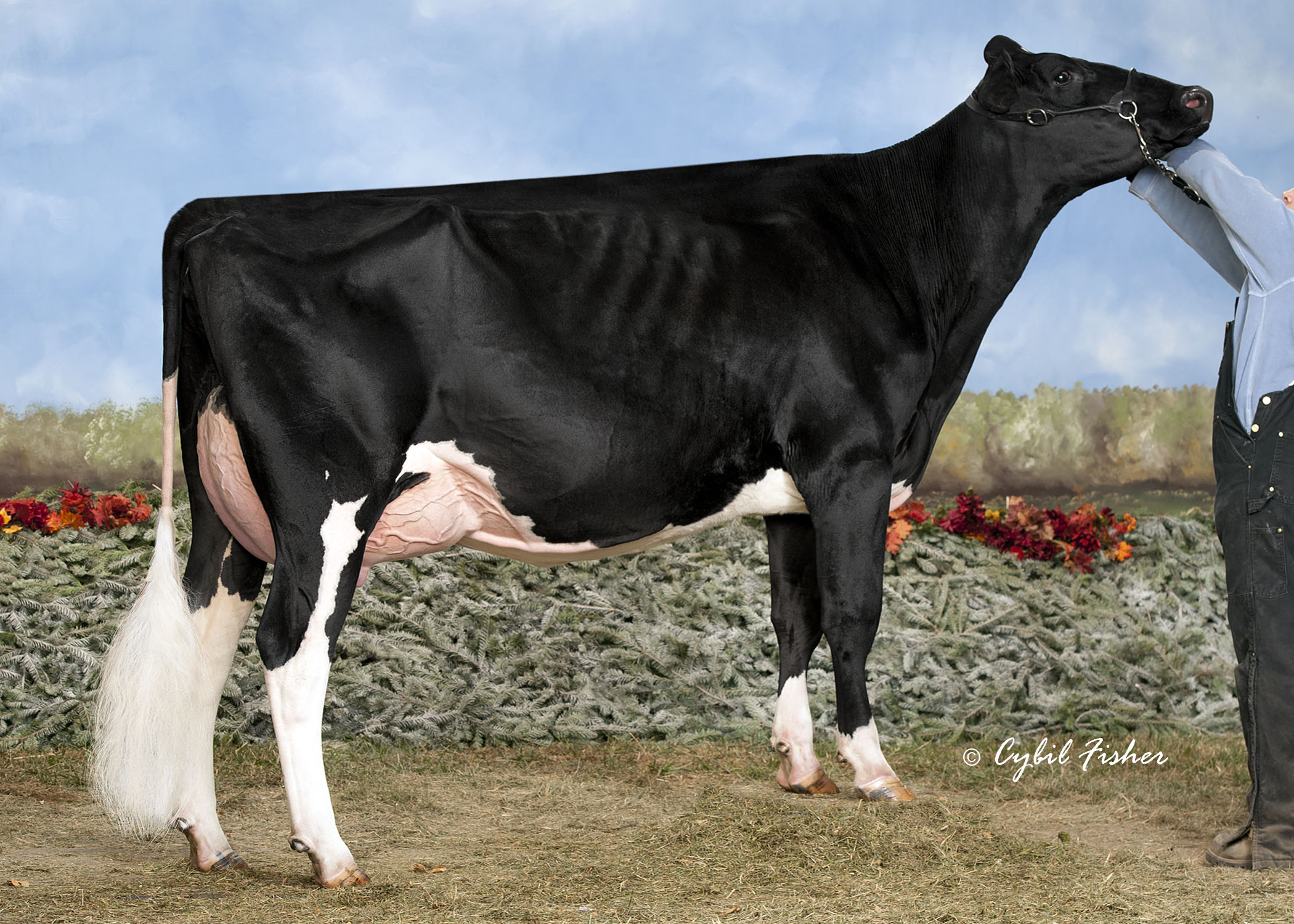

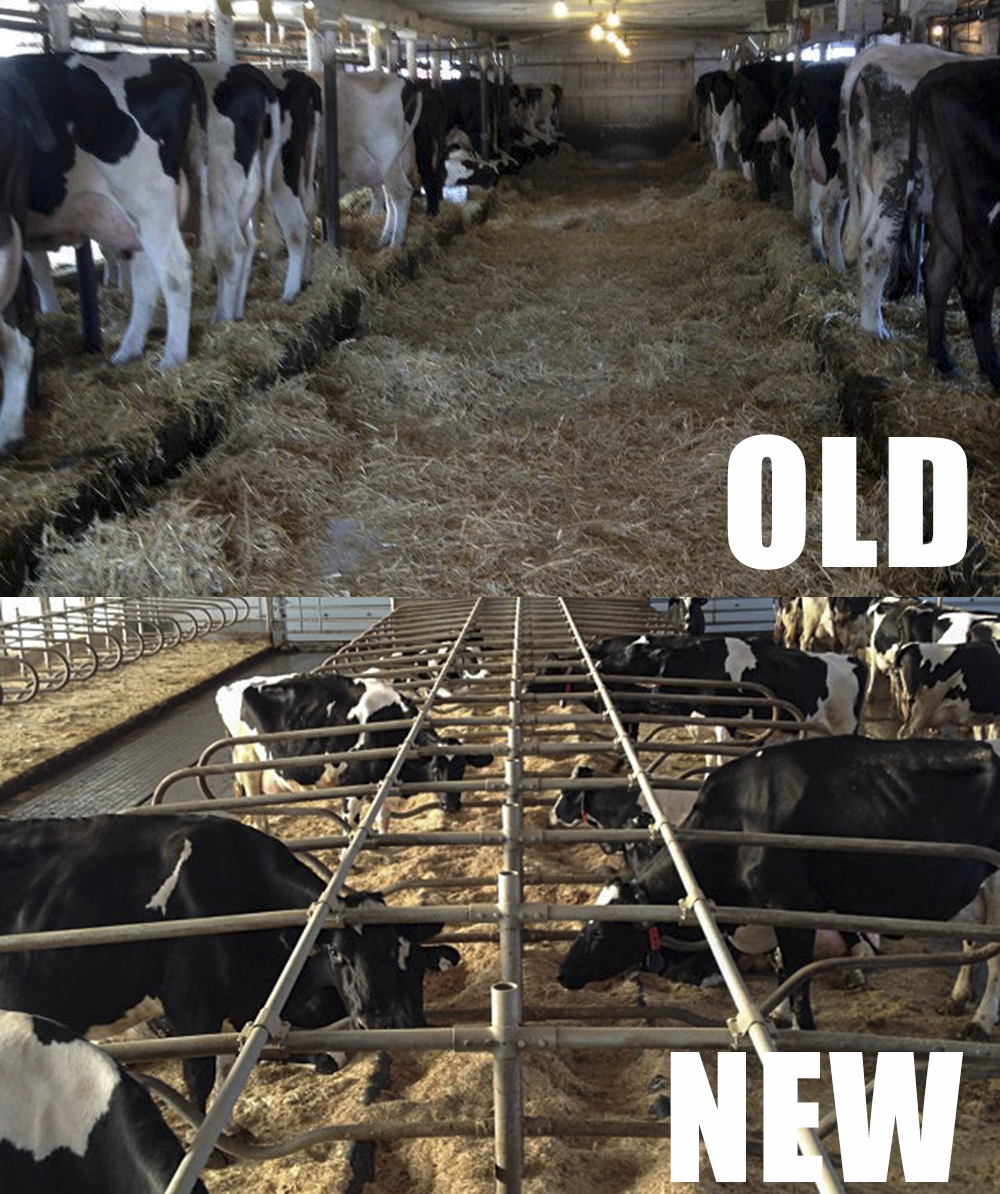 Responsibility and then Review were the first priorities.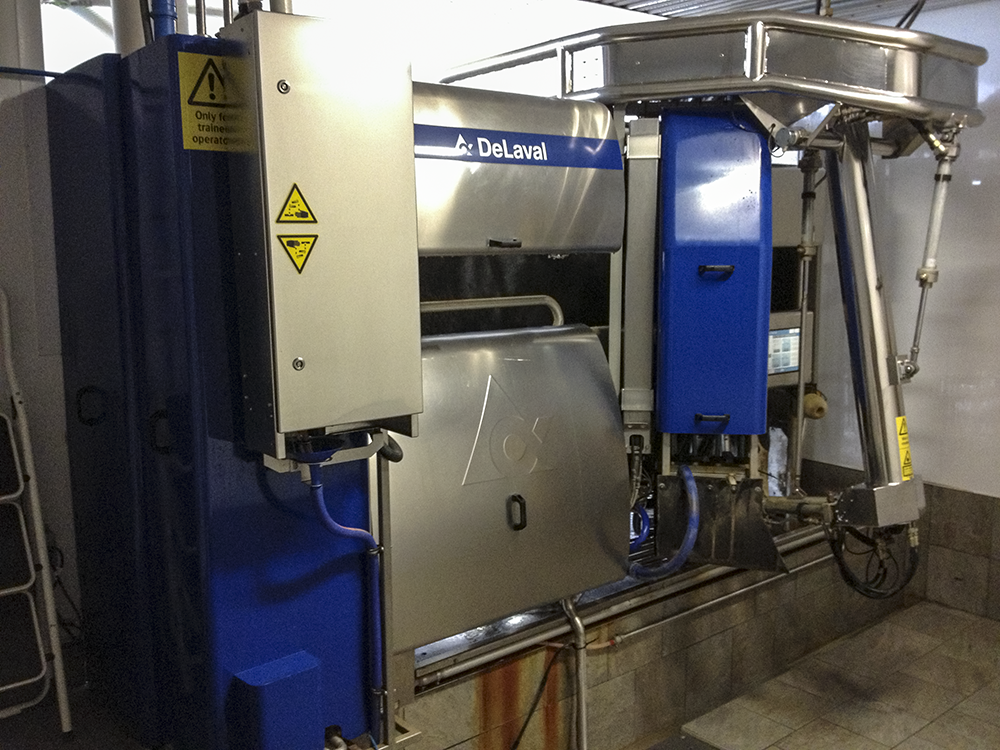
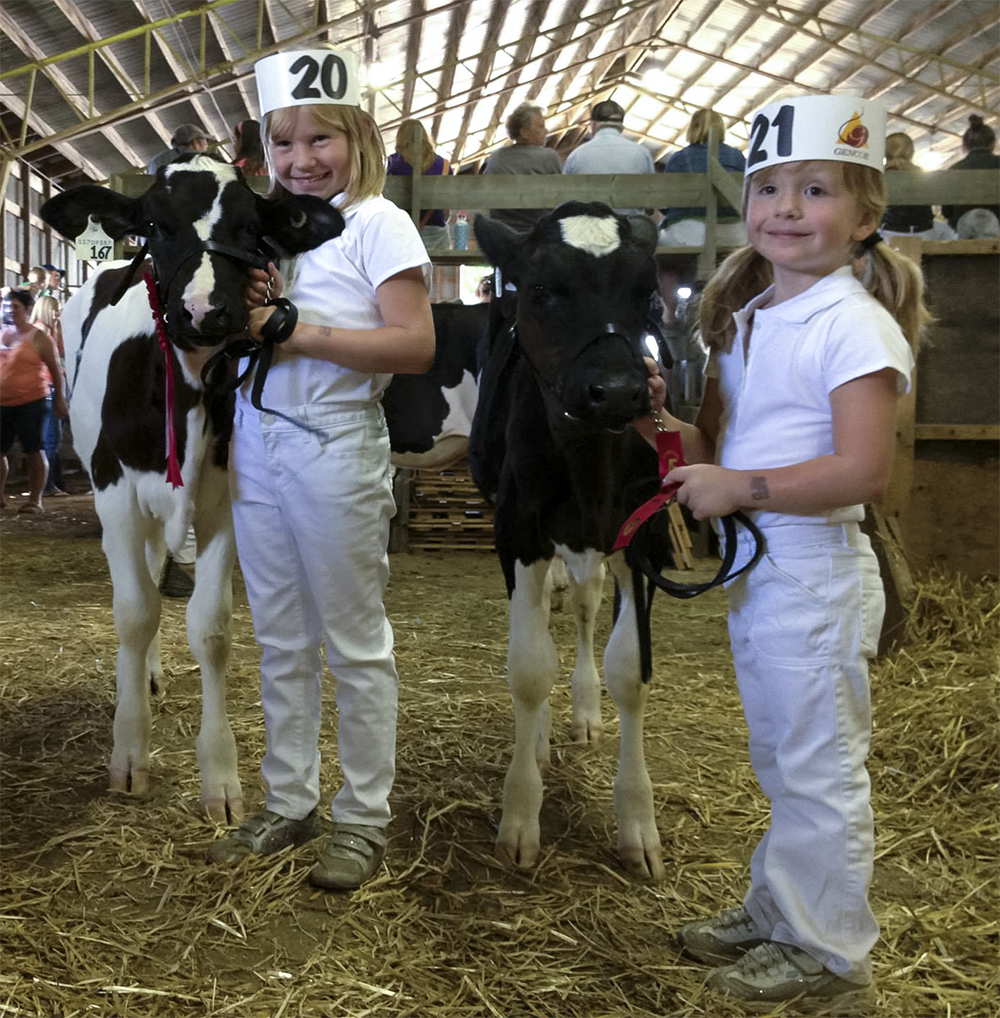
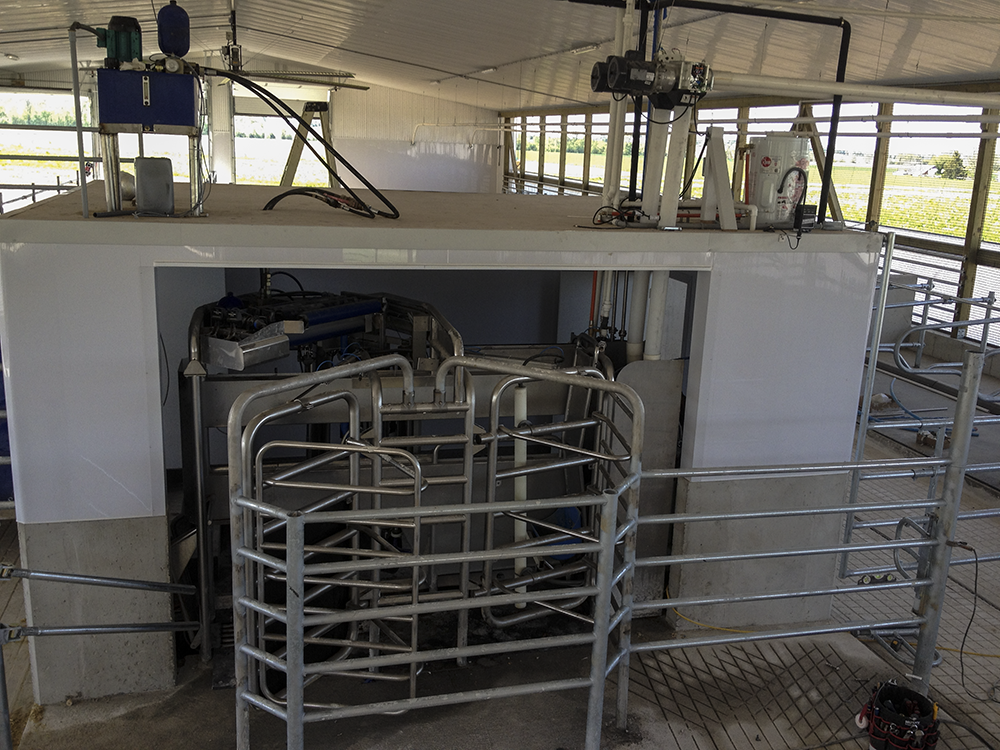
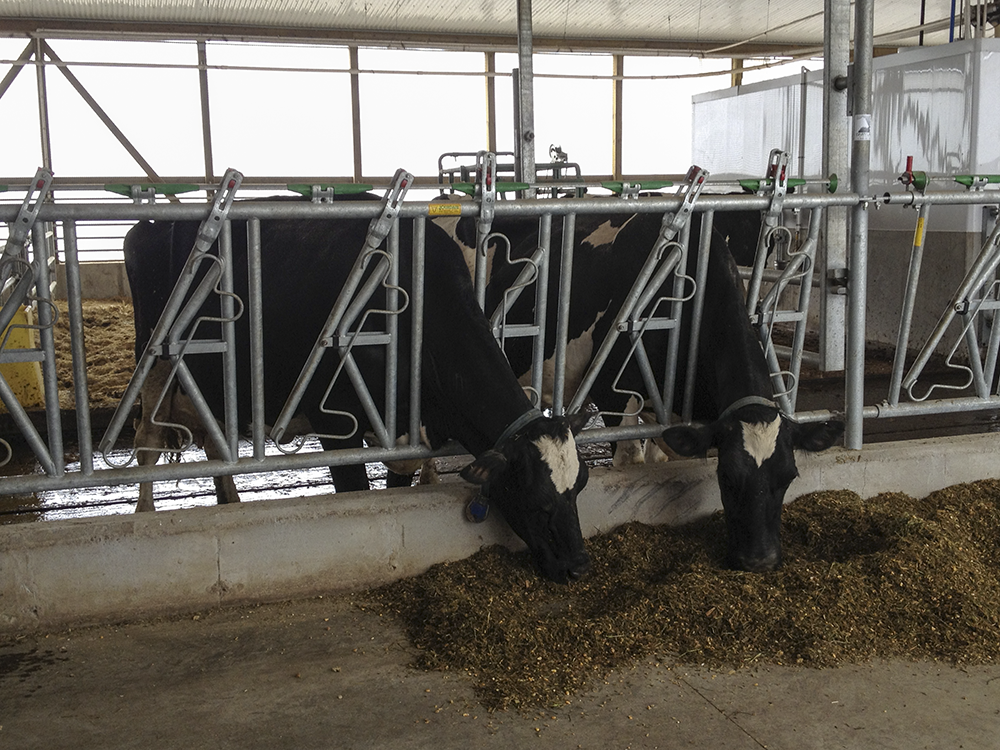
 Pettits See the Future – Precision Management
 “This cow is being stolen!” cries out Horace Backus, from the auctioneer’s box at the US National Convention sale. ‘A beautiful Jasper daughter with such a magnificent pedigree gets such a low offer – that is pure robbery!” adds Backus. Pounding his fists onto the podium, Backus has a point, since they are getting less than $5,000 for a very productive cow and moments earlier a very young calf sired by a genomic young sire sold for over $20,000. Here you have an animal already proving her profitability versus a calf that has nothing more to show for herself then a simple little test? I ask you ”Does the marketplace have it all wrong?”